
The Twin Jet Nebula, or PN M2-9, is a striking example of a bipolar planetary nebula. Bipolar planetary nebulae are formed when the central object is not a single star, but a binary system, Studies have shown that the nebula’s size increases with time, and measurements of this rate of increase suggest that the stellar outburst that formed the lobes occurred just 1200 years ago.
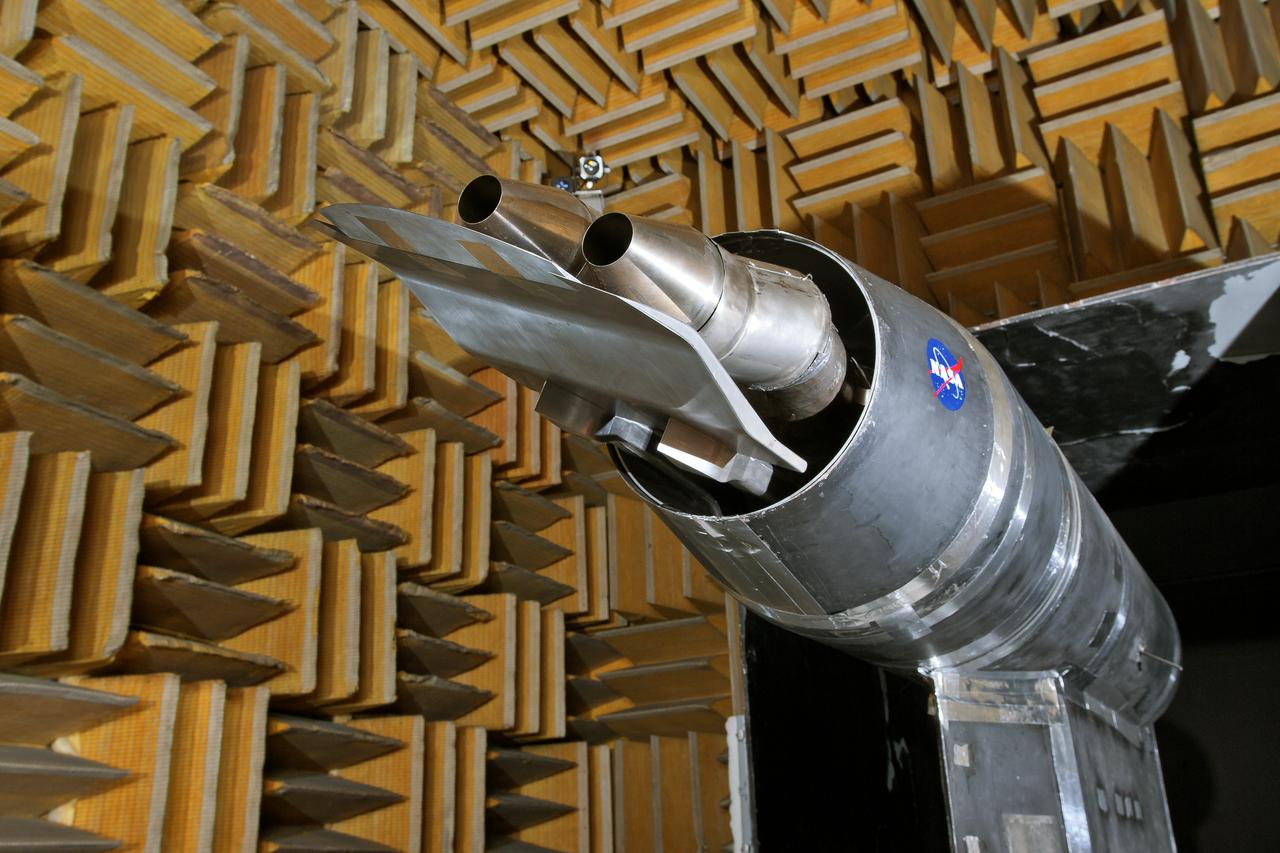
LSAWT\Twin Jet Test with HWB Model\JEDA Measurements Low Speed Aeroacoustic Wind Tunnel\Twin Jet Model System \Hybrid Wing Model Installed\ Measurement Technique: Jet Directional Array (JEDA)
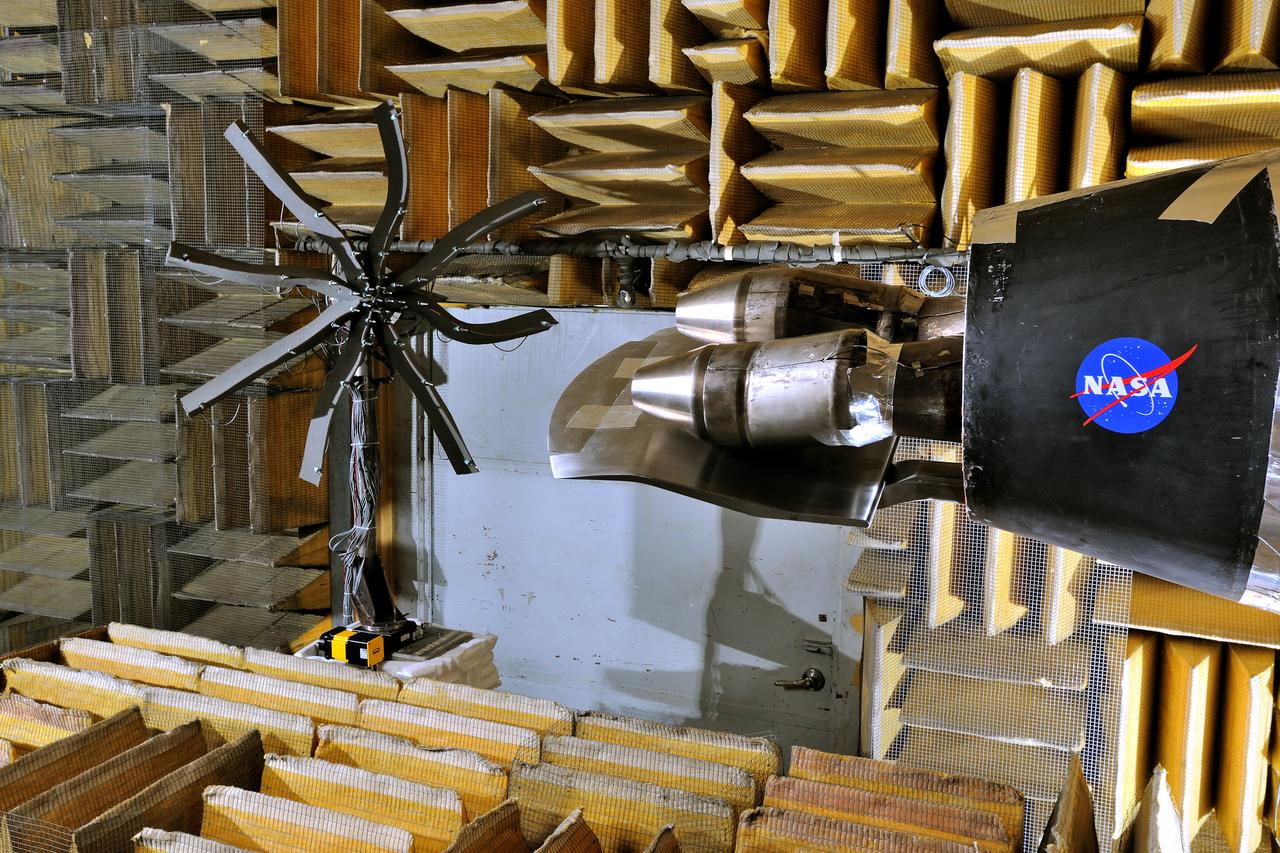
LSAWT\Twin Jet Test with HWB Model\JEDA Measurements Low Speed Aeroacoustic Wind Tunnel\Twin Jet Model System \Hybrid Wing Model Installed\ Measurement Technique: Jet Directional Array (JEDA)
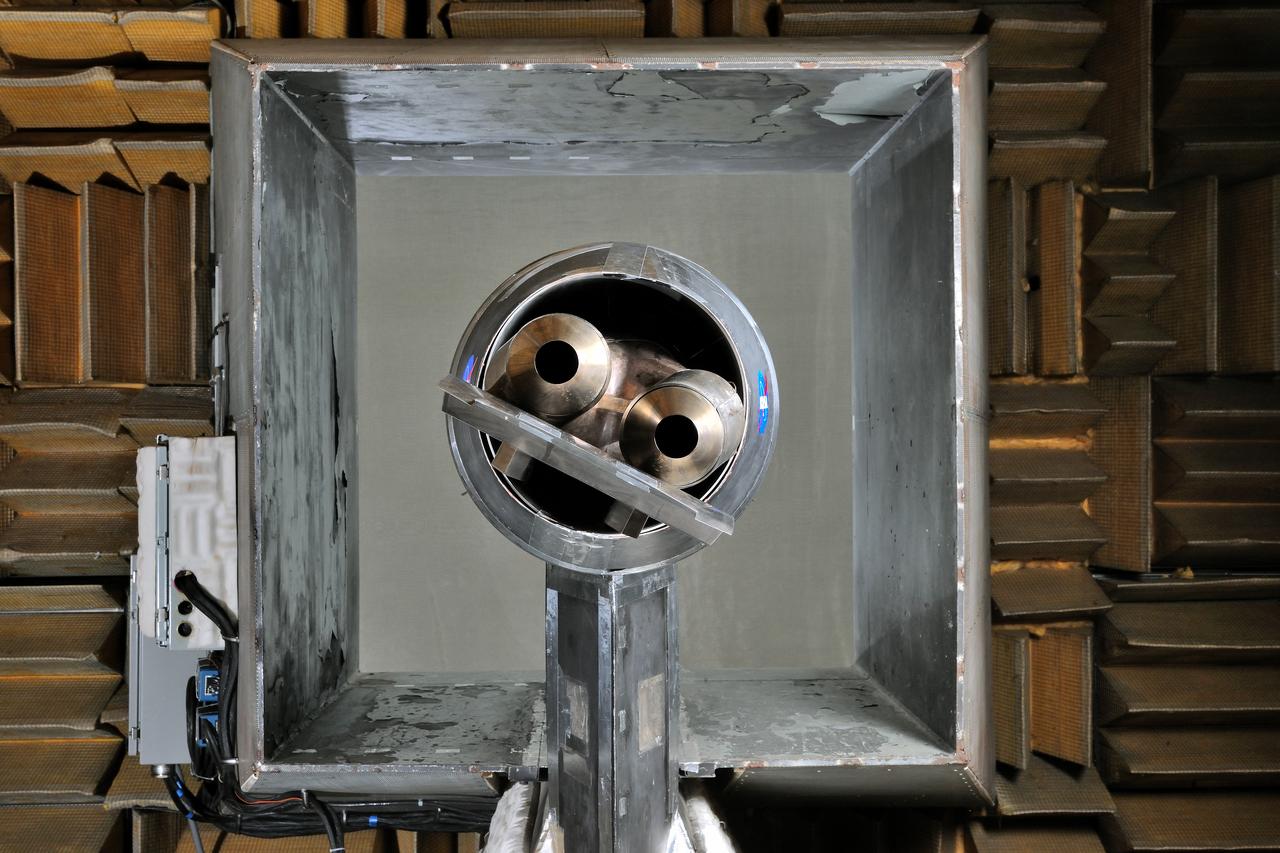
LSAWT\Twin Jet Test with HWB Model\JEDA Measurements Low Speed Aeroacoustic Wind Tunnel\Twin Jet Model System \Hybrid Wing Model Installed\ Measurement Technique: Jet Directional Array (JEDA)
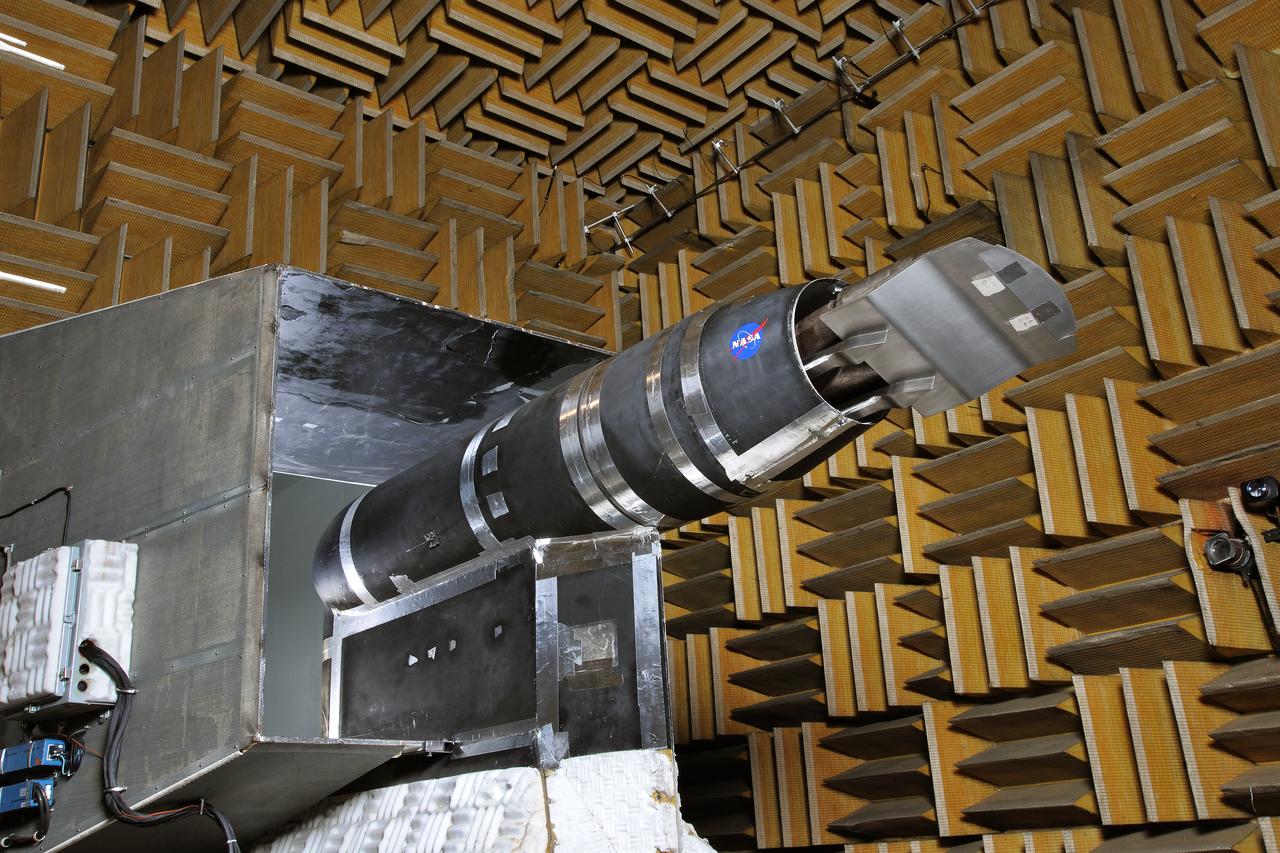
LSAWT\Twin Jet Test with HWB Model\JEDA Measurements Low Speed Aeroacoustic Wind Tunnel\Twin Jet Model System \Hybrid Wing Model Installed\ Measurement Technique: Jet Directional Array (JEDA)

The shimmering colors visible in this NASA/ESA Hubble Space Telescope image show off the remarkable complexity of the Twin Jet Nebula. The new image highlights the nebula’s shells and its knots of expanding gas in striking detail. Two iridescent lobes of material stretch outwards from a central star system. Within these lobes two huge jets of gas are streaming from the star system at speeds in excess of one million kilometers (621,400 miles) per hour. Read more: <a href="http://go.nasa.gov/1hGASfl" rel="nofollow">go.nasa.gov/1hGASfl</a> Credit: ESA/Hubble & NASA, Acknowledgement: Judy Schmidt <b><a href="http://www.nasa.gov/audience/formedia/features/MP_Photo_Guidelines.html" rel="nofollow">NASA image use policy.</a></b> <b><a href="http://www.nasa.gov/centers/goddard/home/index.html" rel="nofollow">NASA Goddard Space Flight Center</a></b> enables NASA’s mission through four scientific endeavors: Earth Science, Heliophysics, Solar System Exploration, and Astrophysics. Goddard plays a leading role in NASA’s accomplishments by contributing compelling scientific knowledge to advance the Agency’s mission. <b>Follow us on <a href="http://twitter.com/NASAGoddardPix" rel="nofollow">Twitter</a></b> <b>Like us on <a href="http://www.facebook.com/pages/Greenbelt-MD/NASA-Goddard/395013845897?ref=tsd" rel="nofollow">Facebook</a></b> <b>Find us on <a href="http://instagrid.me/nasagoddard/?vm=grid" rel="nofollow">Instagram</a></b>

In the center of this image from the Hubble Space Telescope, partially obscured by a dark cloud of dust, a newborn star shoots twin jets out into space as a sort of birth announcement to the universe.
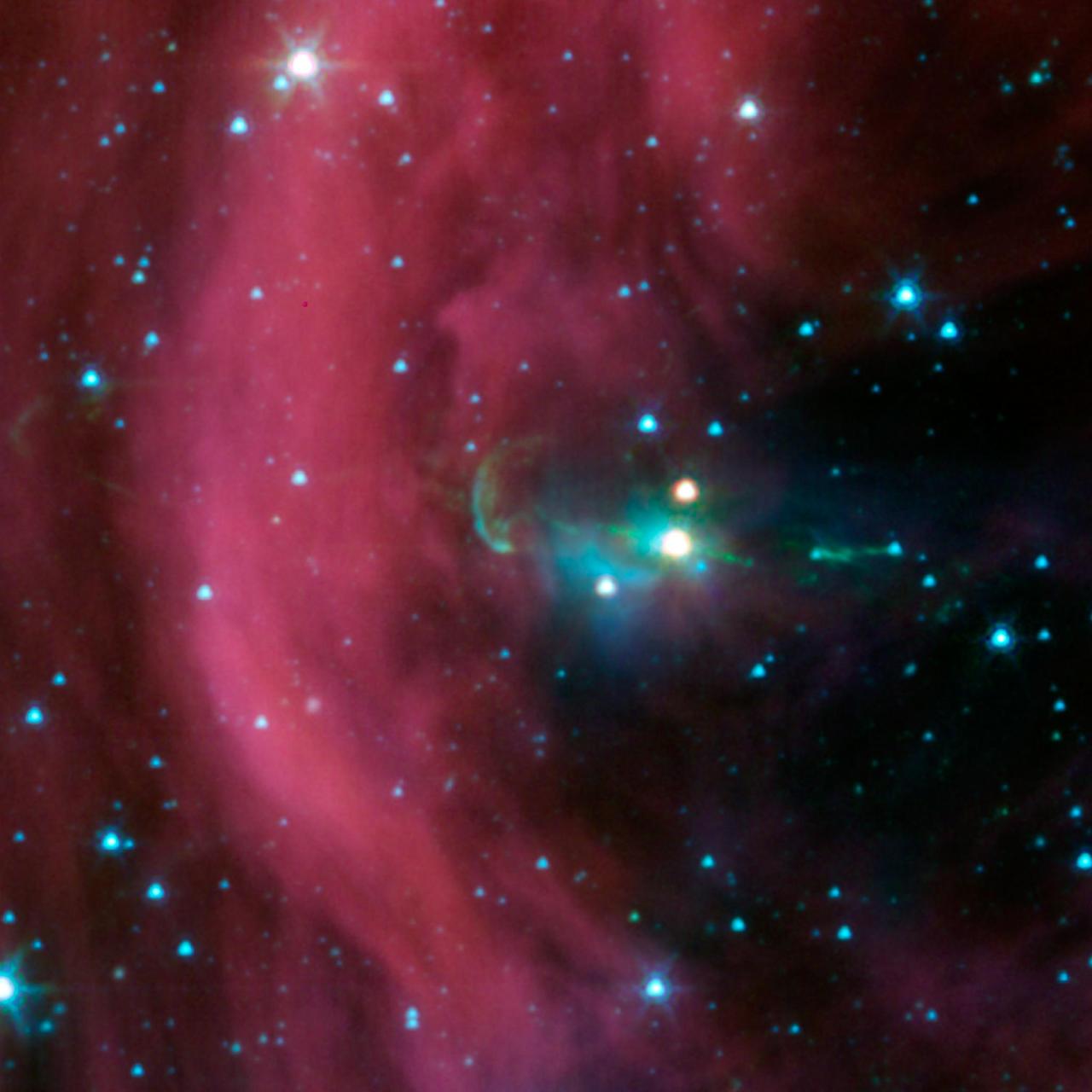
NASA Spitzer Space Telescope took this image of a baby star sprouting two identical jets green lines emanating from fuzzy star. The left jet was hidden behind a dark cloud, which Spitzer can see through.
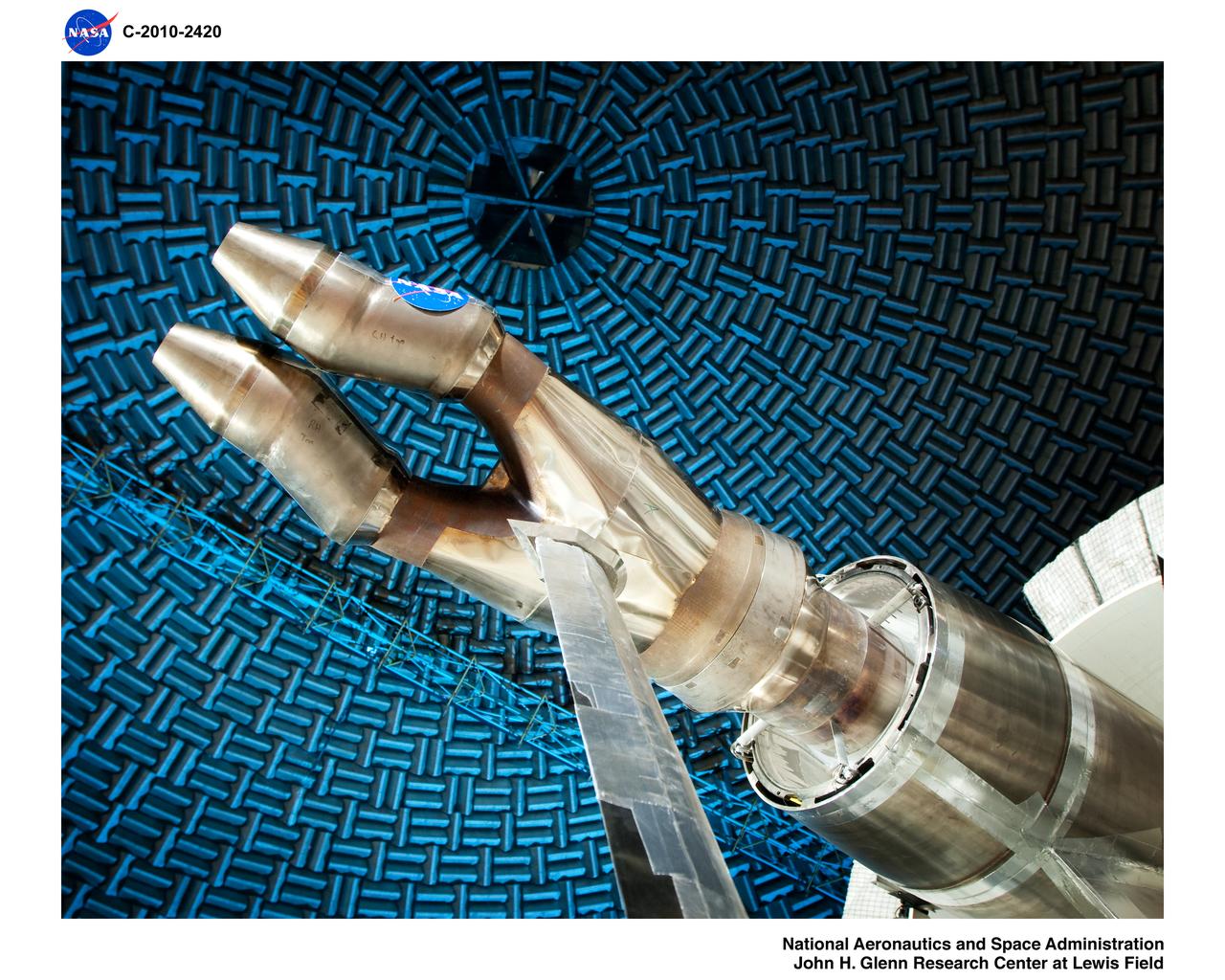
Twin Jet Hardware in the Nozzle Acoustical Test Rig, NATR
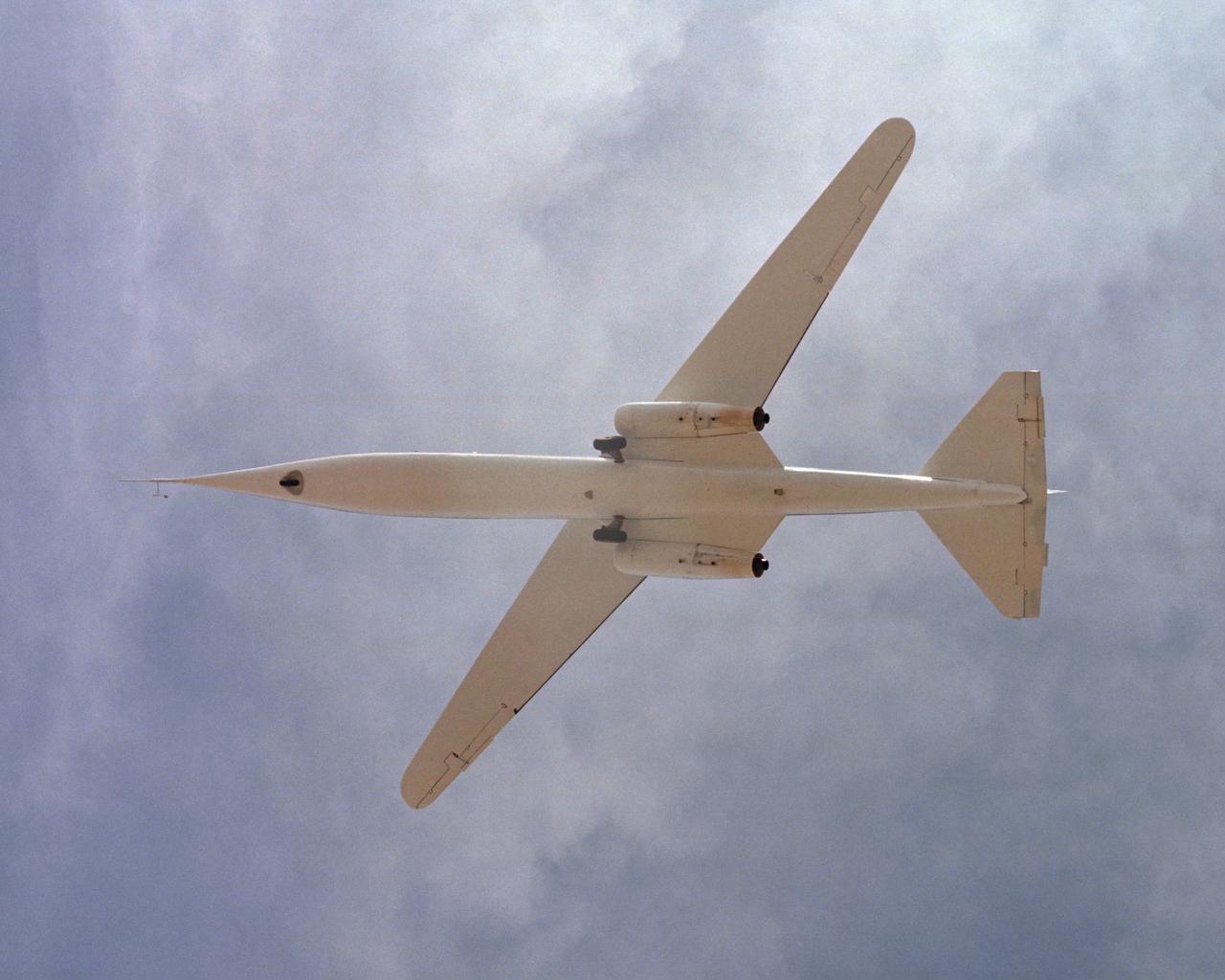
The AD-1 aircraft with its wing swept. Visible are the twin jet engines that powered the aircraft and the fixed landing gear.

Twin Jet Model, Nozzle Acoustic Test Rig, NATR, Aeroacoustic Propulsion Laboratory, AAPL
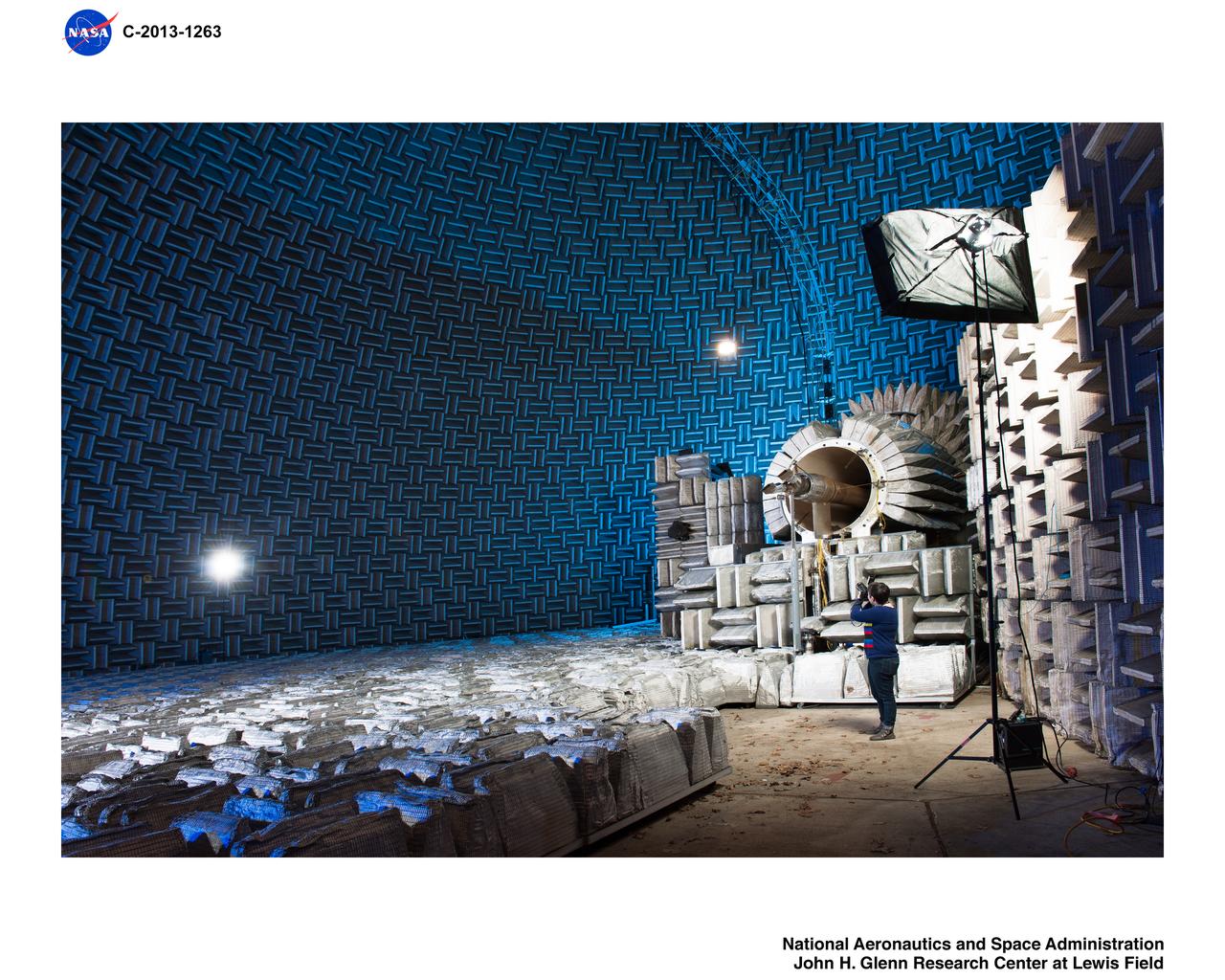
Twin Jet Model, Nozzle Acoustic Test Rig, NATR, Aeroacoustic Propulsion Laboratory, AAPL
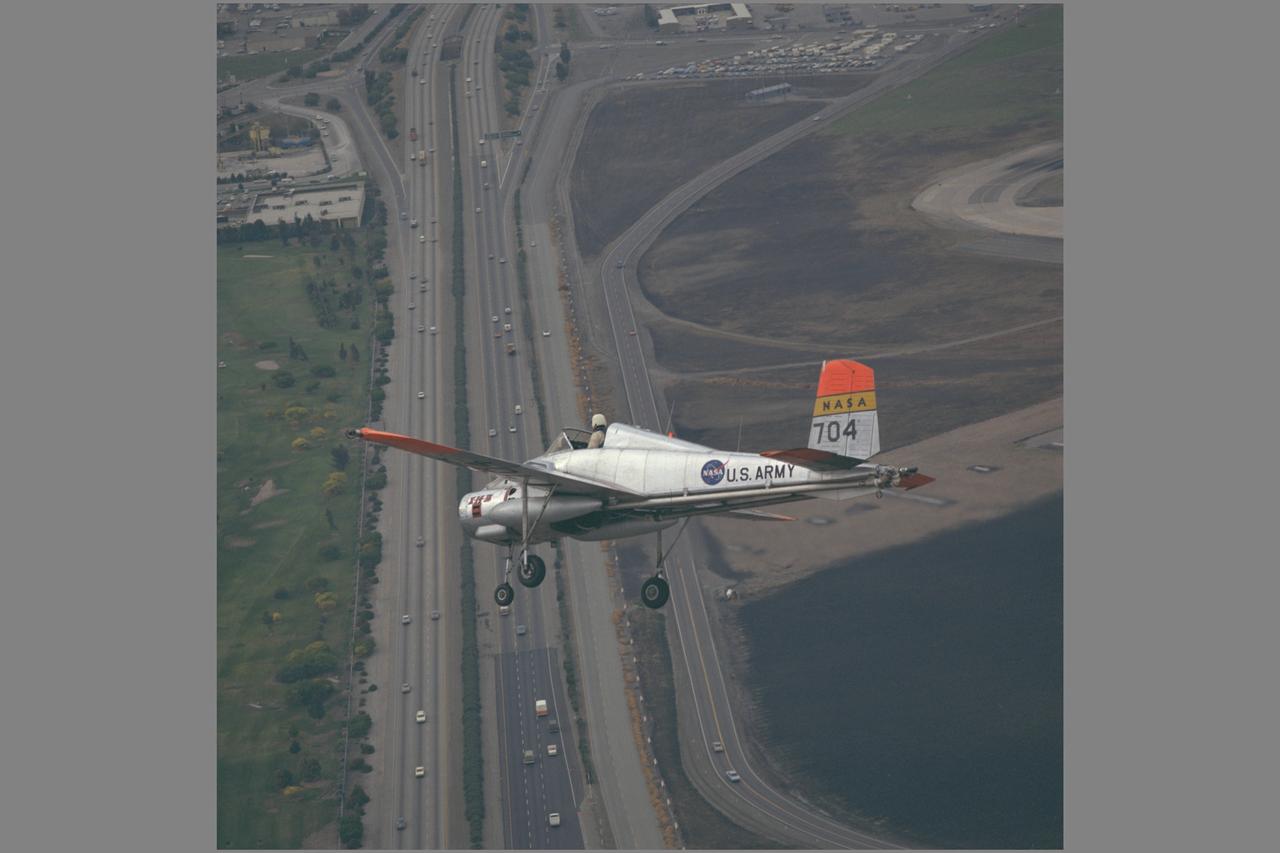
X-14B NASA-704: A Bell single-place, open cockpit, twin-engine, jet-lift VTOL aircraft over Highway 101 in approach to Moffett Field, California. The X-14 was used by NASA Ames Research Center to advance state-of-the-art jet-powered VTOL aircraft.
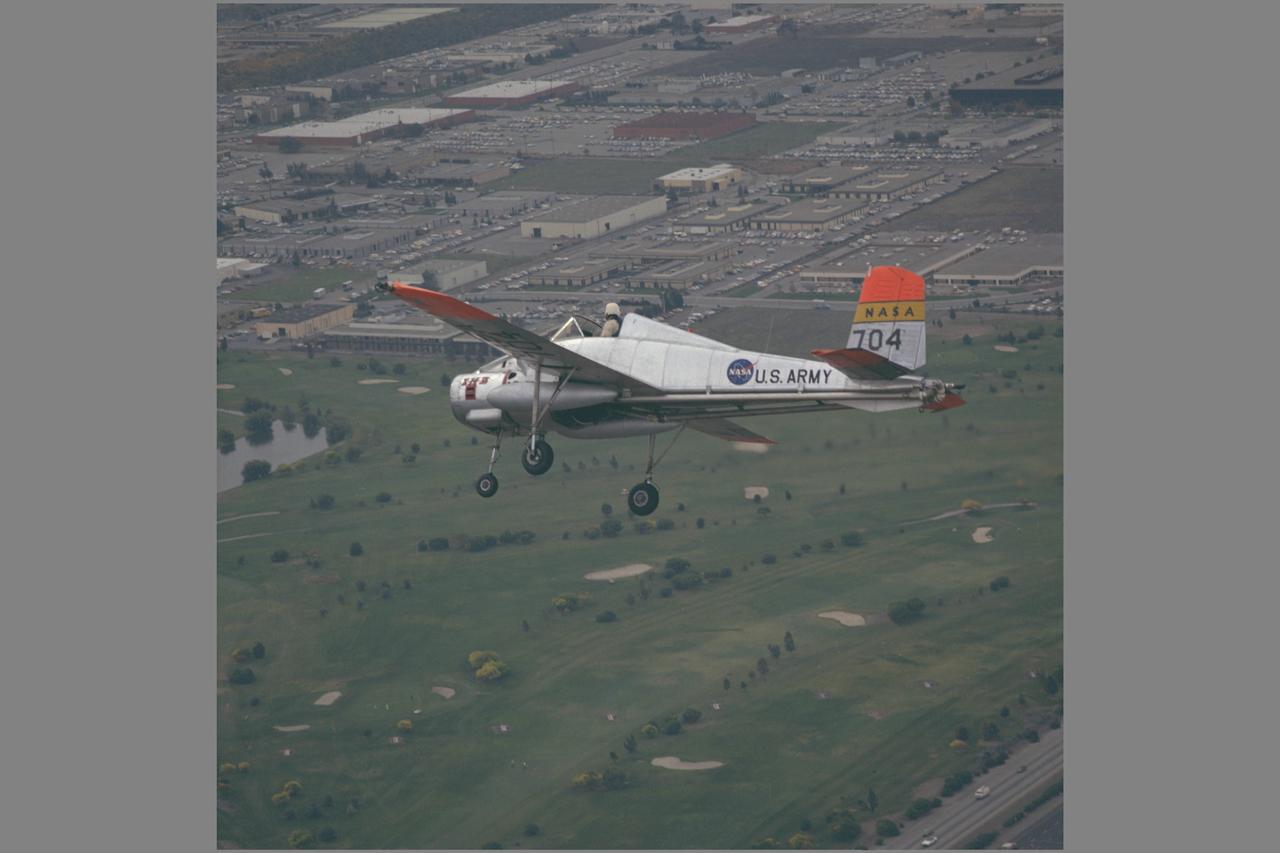
X-14B NASA-704: A Bell single-place, open cockpit, twin-engine, jet-lift VTOL aircraft in flight over Sunnyvale golf course. The X-14 was used by NASA Ames Research Center to advance state-of-the-art jet-powered VTOL aircraft.
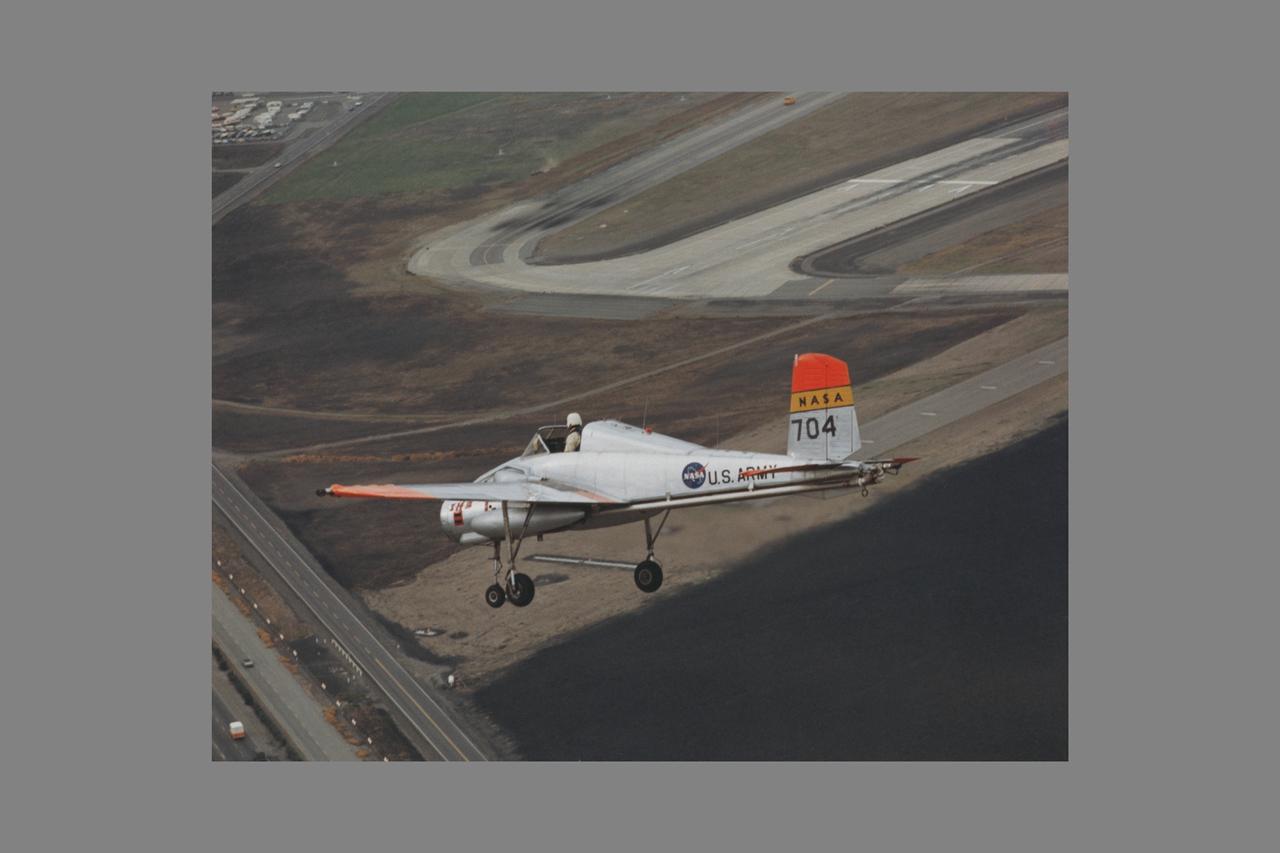
X-14B NASA-704: A Bell single-place, open cockpit, twin-engine, jet-lift VTOL aircraft over Highway 101 in approach to Moffett Field, California. The X-14 was used by NASA Ames Research Center to advance state-of-the-art jet-powered VTOL aircraft.
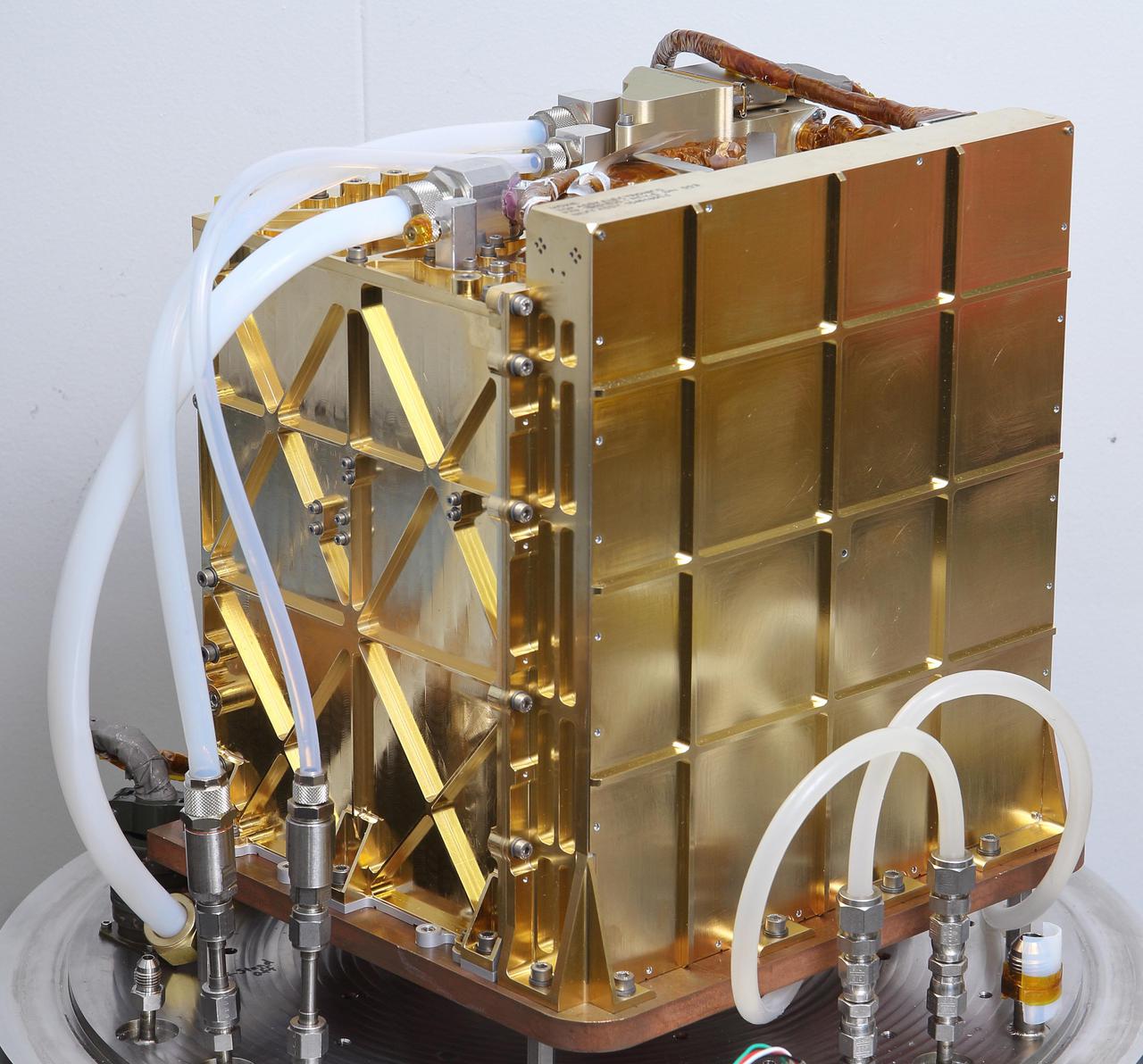
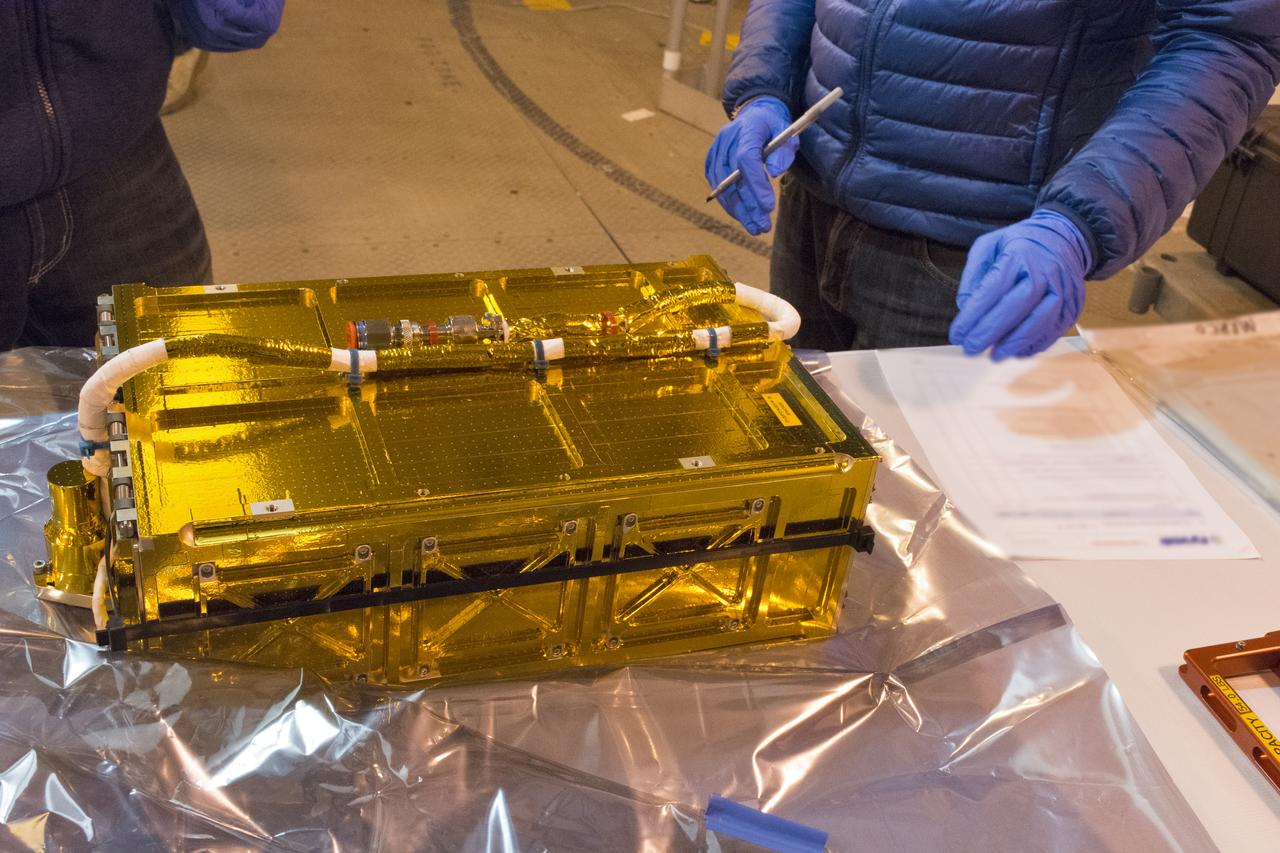
The engineering model (EM), an almost identical twin of MOXIE, is used for testing in the lab at NASA's Jet Propulsion Laboratory in Pasadena, California. Inside this gold-plated aluminum box is the Solid Oxide Electrolysis unit, or SOXE, the heart of MOXIE. Using an electrochemical process called electrolysis, SOXE takes in the carbon dioxide gas and splits it into carbon monoxide and oxygen, which is measured for purity, filtered, and then released back into the Mars atmosphere. Tubes to take in the Mars atmosphere and vent oxygen and carbon monoxide produced by the EM are connected at the top of the EM. The electronics needed to run this complex machine are housed inside the larger sidewall seen on the right. https://photojournal.jpl.nasa.gov/catalog/PIA24201
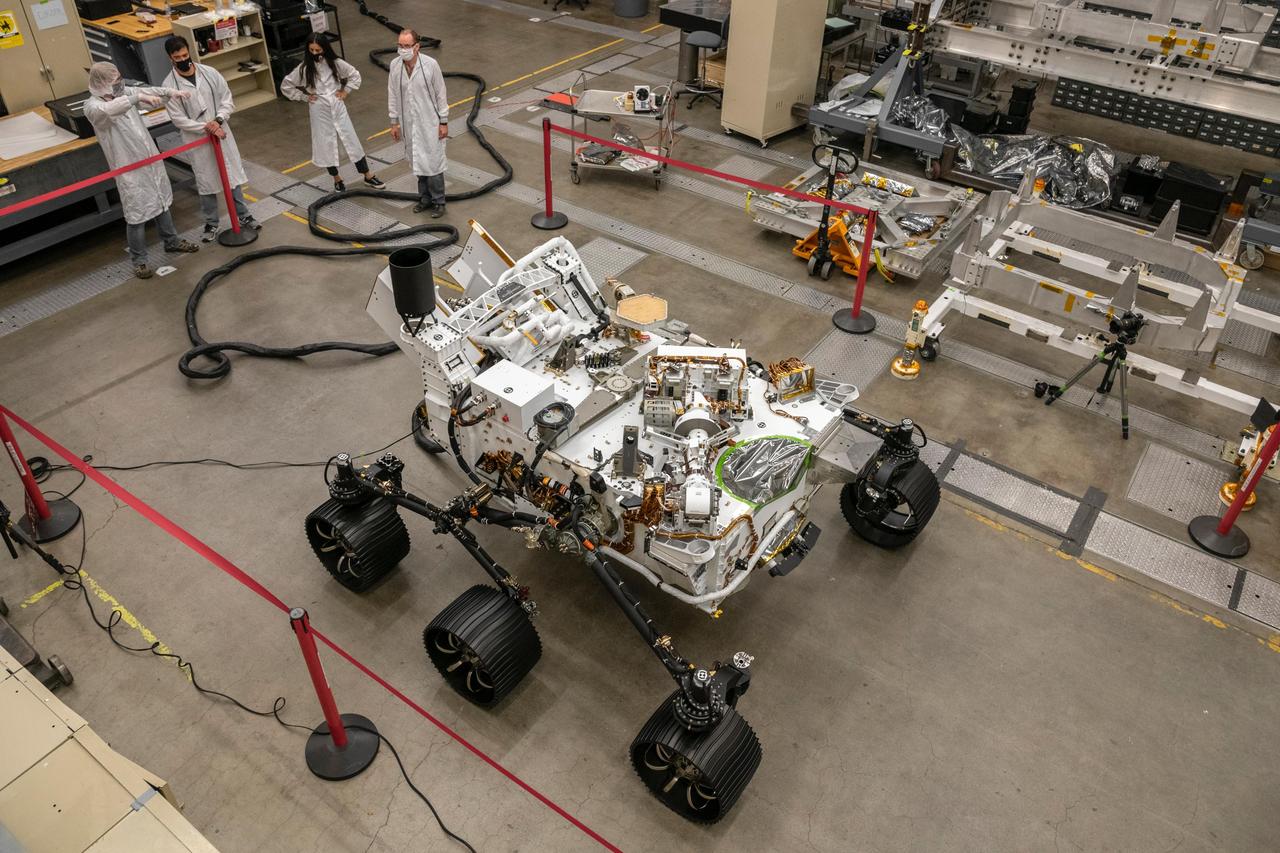
Engineers test drive the Earth-bound twin of NASA's Perseverance Mars rover for the first time in a warehouselike assembly room at the agency's Jet Propulsion Laboratory in Southern California on Sept. 1, 2020. This full-scale engineering version of Perseverance helps the mission team gauge how hardware and software will perform before they transmit commands to the real rover on Mars. This vehicle system test bed (VSTB) rover is also known as OPTIMISM (Operational Perseverance Twin for Integration of Mechanisms and Instruments Sent to Mars). The Mars 2020 Perseverance astrobiology mission is part of America's larger Moon to Mars exploration approach that includes missions to the Moon as a way to prepare for human exploration of the Red Planet. Charged with sending the first woman and next man to the Moon by 2024, NASA will establish a sustained human presence on and around the Moon by 2028 through NASA's Artemis program. https://photojournal.jpl.nasa.gov/catalog/PIA23964
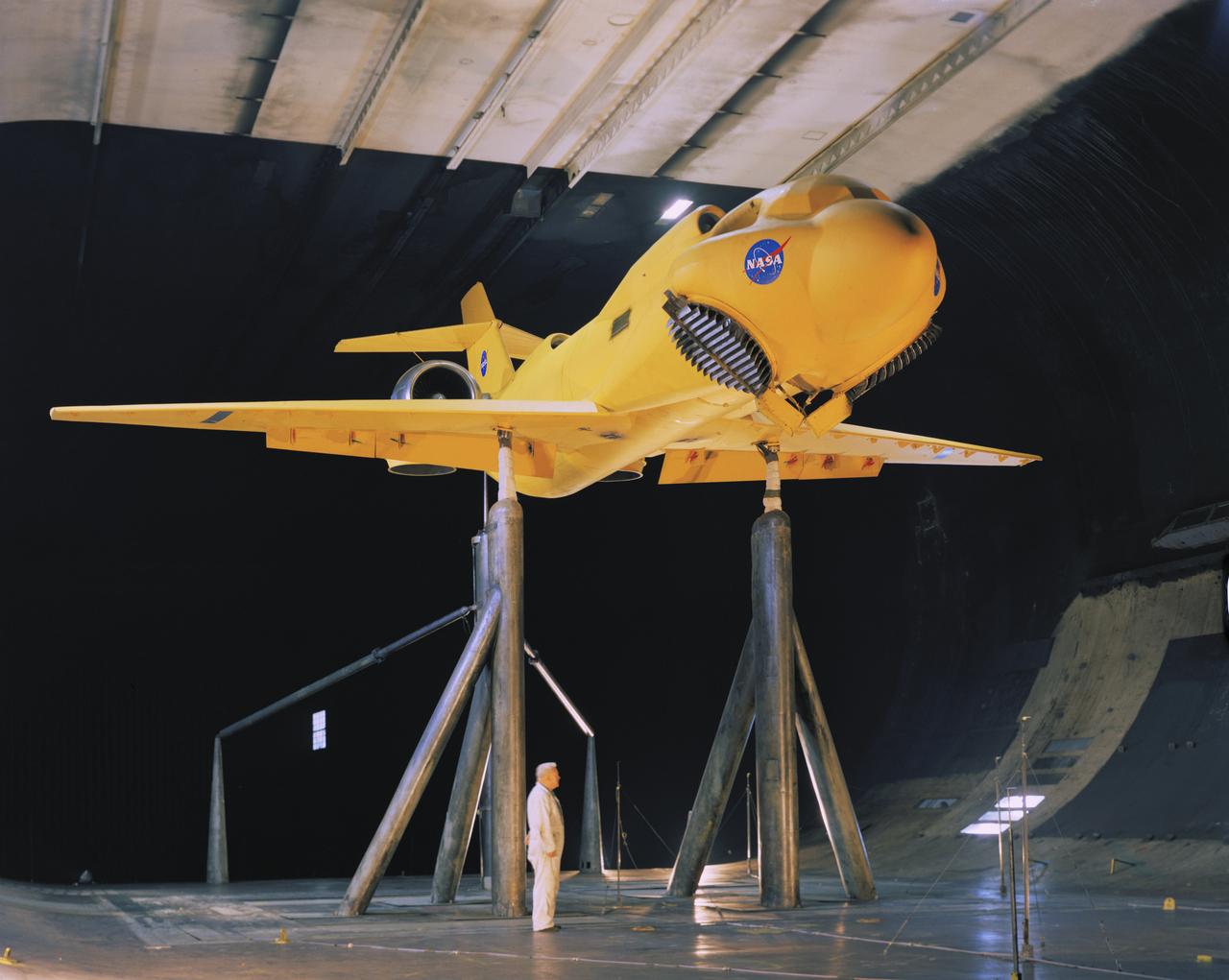
3/4 front view of McDonnell-Douglas Large-Scale lift fan, vertical and/or short take-off and landing (V/STOL), transport model. Francis Malerick in photograph. The McDonnell Douglas DC-9 (initially known as the Douglas DC-9) is a twin-engine, single-aisle jet airliner.

Suzy Dodd, Voyager project manager, NASA's Jet Propulsion Laboratory, speaks at an event to celebrate the 40th Anniversary of the launch of the Voyager 1 and 2 missions, Tuesday, September 5, 2017 at Smithsonian's National Air and Space Museum in Washington. Voyager 1 was launched September 5, 1977, with a mission to study Jupiter and Saturn, but now the twin Voyager spacecrafts are on a journey into interstellar space to search for the heliopause, a region never reached by any other spacecraft. Photo Credit: (NASA/Aubrey Gemignani)

Morgan Cable, researcher, NASA's Jet Propulsion Laboratory, speaks at an event to celebrate the 40th Anniversary of the launch of the Voyager 1 and 2 missions, Tuesday, September 5, 2017 at Smithsonian's National Air and Space Museum in Washington. Voyager 1 was launched September 5, 1977, with a mission to study Jupiter and Saturn, but now the twin Voyager spacecrafts are on a journey into interstellar space to search for the heliopause, a region never reached by any other spacecraft. Photo Credit: (NASA/Aubrey
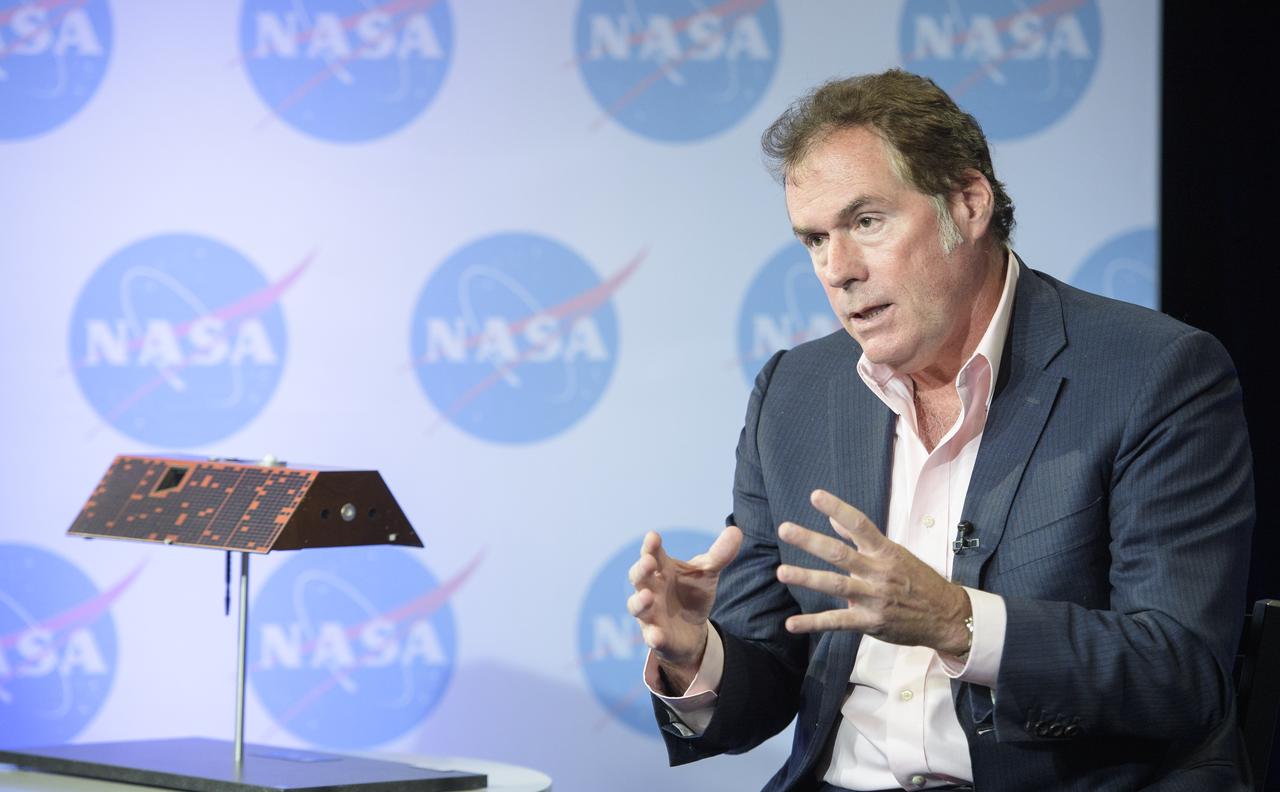
Michael Watkins, GRACE-FO science lead and director of NASA's Jet Propulsion Laboratory, discusses the upcoming launch of the Gravity Recovery and Climate Experiment Follow-On (GRACE-FO) mission, Monday, April 30, 2018 at NASA Headquarters in Washington. The twin GRACE-FO spacecraft will measure and monitor monthly changes in how mass is redistributed within and among Earth's atmosphere, oceans, land and ice sheets, as well as within Earth itself. Photo Credit: (NASA/Joel Kowsky)

Michael Watkins, GRACE-FO science lead and director of NASA's Jet Propulsion Laboratory, discusses the upcoming launch of the Gravity Recovery and Climate Experiment Follow-On (GRACE-FO) mission, Monday, April 30, 2018 at NASA Headquarters in Washington. The twin GRACE-FO spacecraft will measure and monitor monthly changes in how mass is redistributed within and among Earth's atmosphere, oceans, land and ice sheets, as well as within Earth itself. Photo Credit: (NASA/Joel Kowsky)
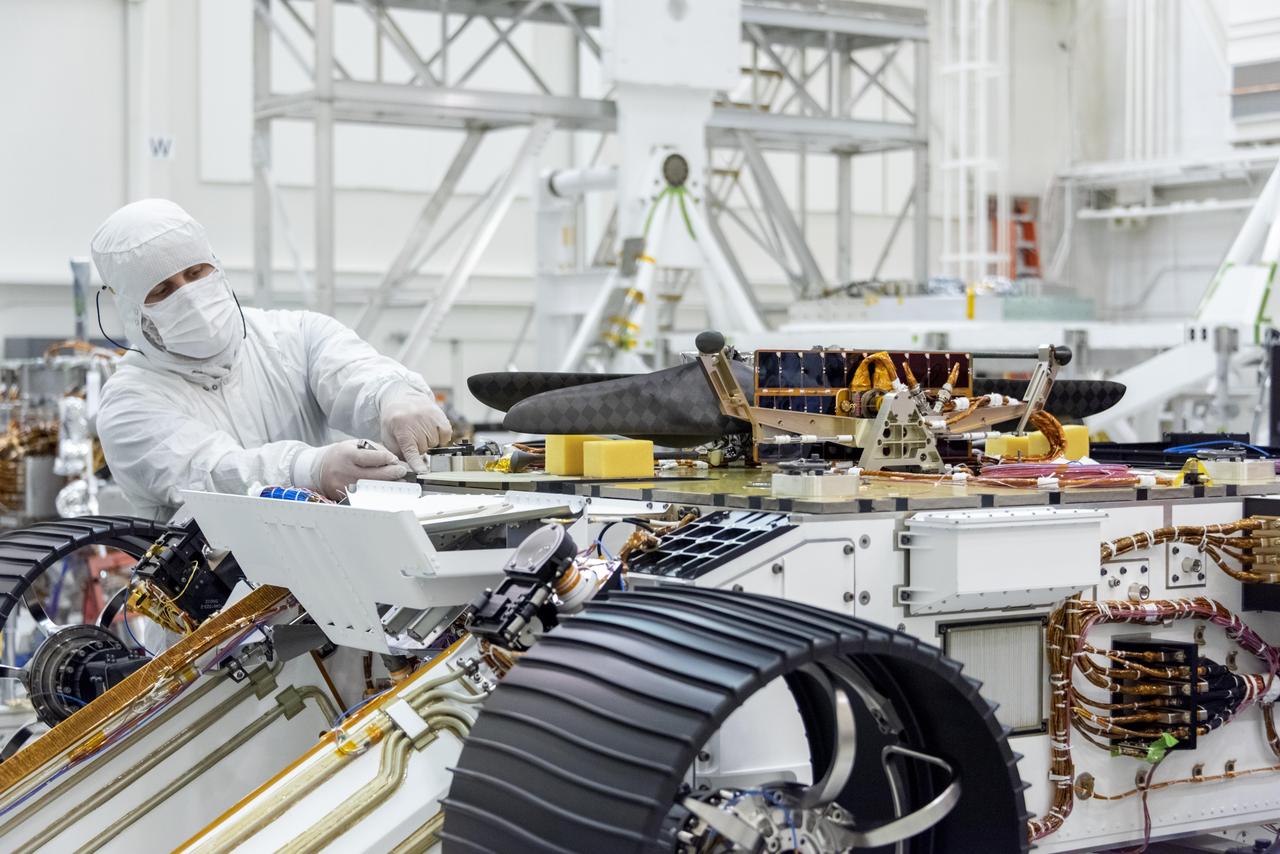
An engineer works on attaching NASA's Mars Helicopter to the belly of the Mars 2020 rover — which has been flipped over for that purpose — on Aug. 28, 2019, at the Jet Propulsion Laboratory in Pasadena, California. The twin-rotor, solar-powered helicopter was mechanically connected, along with the Mars Helicopter Delivery System, to a plate on the rover's belly that includes a cover to shield the helicopter from debris during entry, descent and landing. The helicopter will remain encapsulated after landing, deploying to the surface once a suitable area to conduct test flights is found at Jezero Crater, the rover's destination. https://photojournal.jpl.nasa.gov/catalog/PIA23372
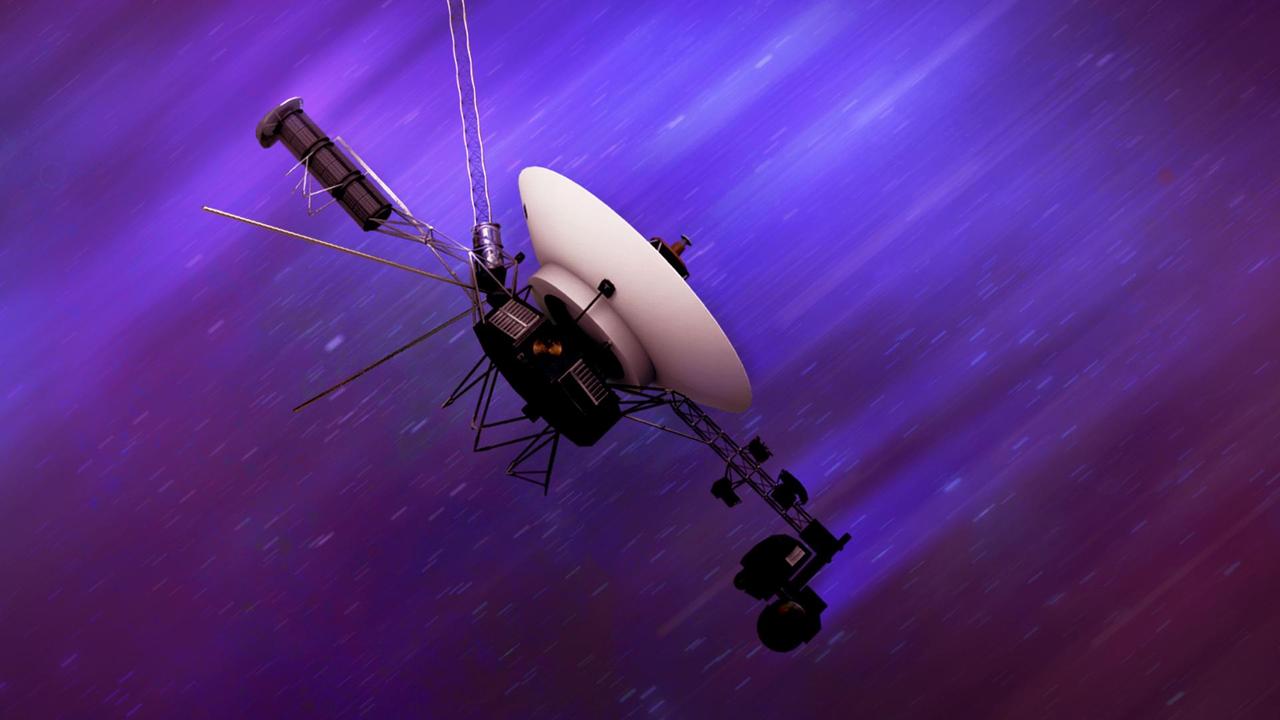
NASA's twin Voyager spacecraft, launched in 1977, are traveling through interstellar space at around 35,000 mph (56,000 kph). This artist's concept depicts one of the probes speeding away. The Voyager spacecraft were built by NASA's Jet Propulsion Laboratory, which continues to operate both. JPL is a division of Caltech in Pasadena, California. The Voyager missions are a part of the NASA Heliophysics System Observatory, sponsored by the Heliophysics Division of the agency's Science Mission Directorate in Washington. For more information about the Voyager spacecraft, visit https://science.nasa.gov/mission/voyager/. https://photojournal.jpl.nasa.gov/catalog/PIA26353
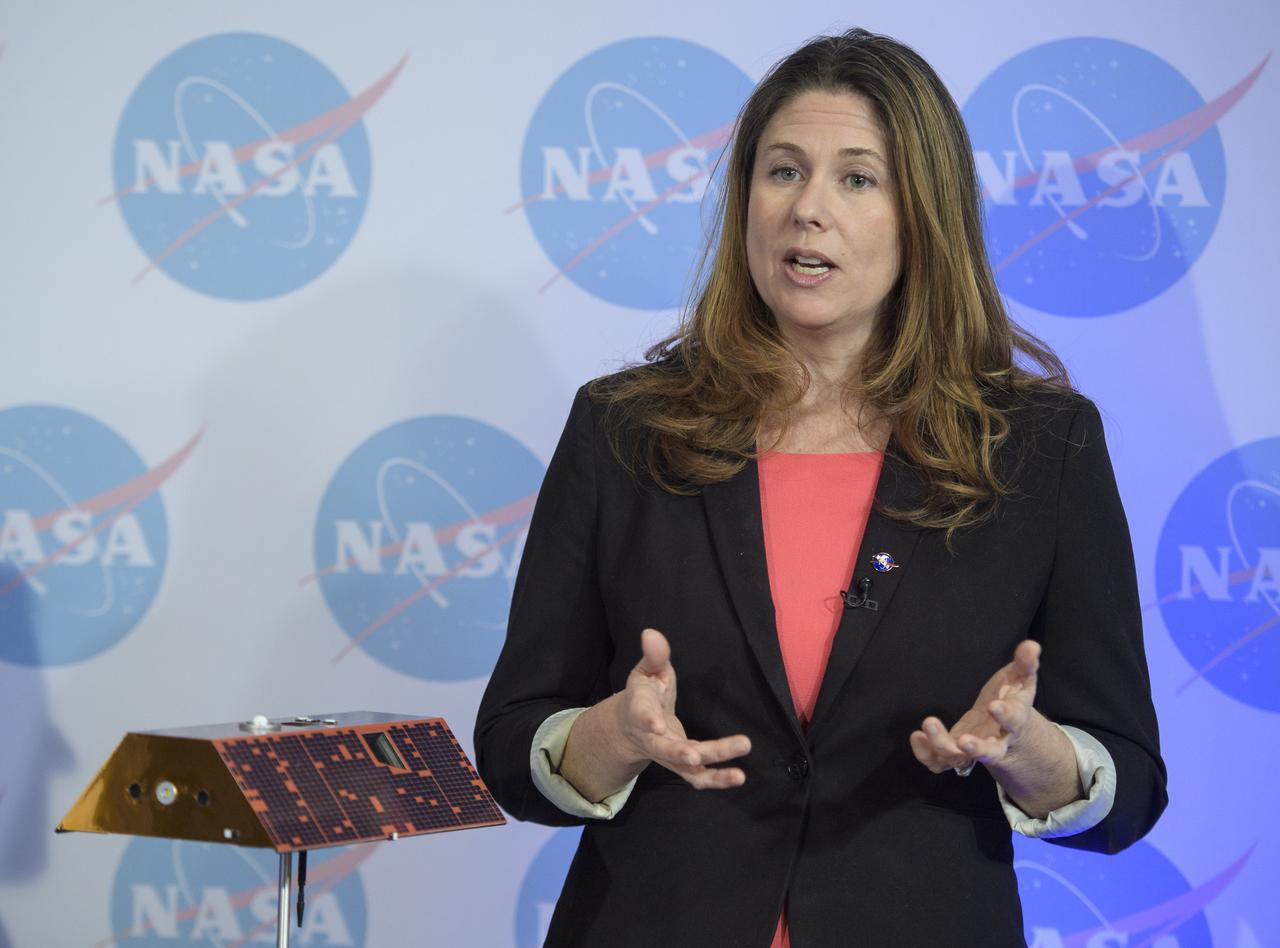
Karen Fox, of NASA's Office of Communications, introduces Michael Watkins, GRACE-FO science lead and director of NASA's Jet Propulsion Laboratory and Frank Webb, GRACE-FO project scientist at JPL, during a briefing on the upcoming launch of the Gravity Recovery and Climate Experiment Follow-On (GRACE-FO) mission, Monday, April 30, 2018 at NASA Headquarters in Washington. The twin GRACE-FO spacecraft will measure and monitor monthly changes in how mass is redistributed within and among Earth's atmosphere, oceans, land and ice sheets, as well as within Earth itself. Photo Credit: (NASA/Joel Kowsky)
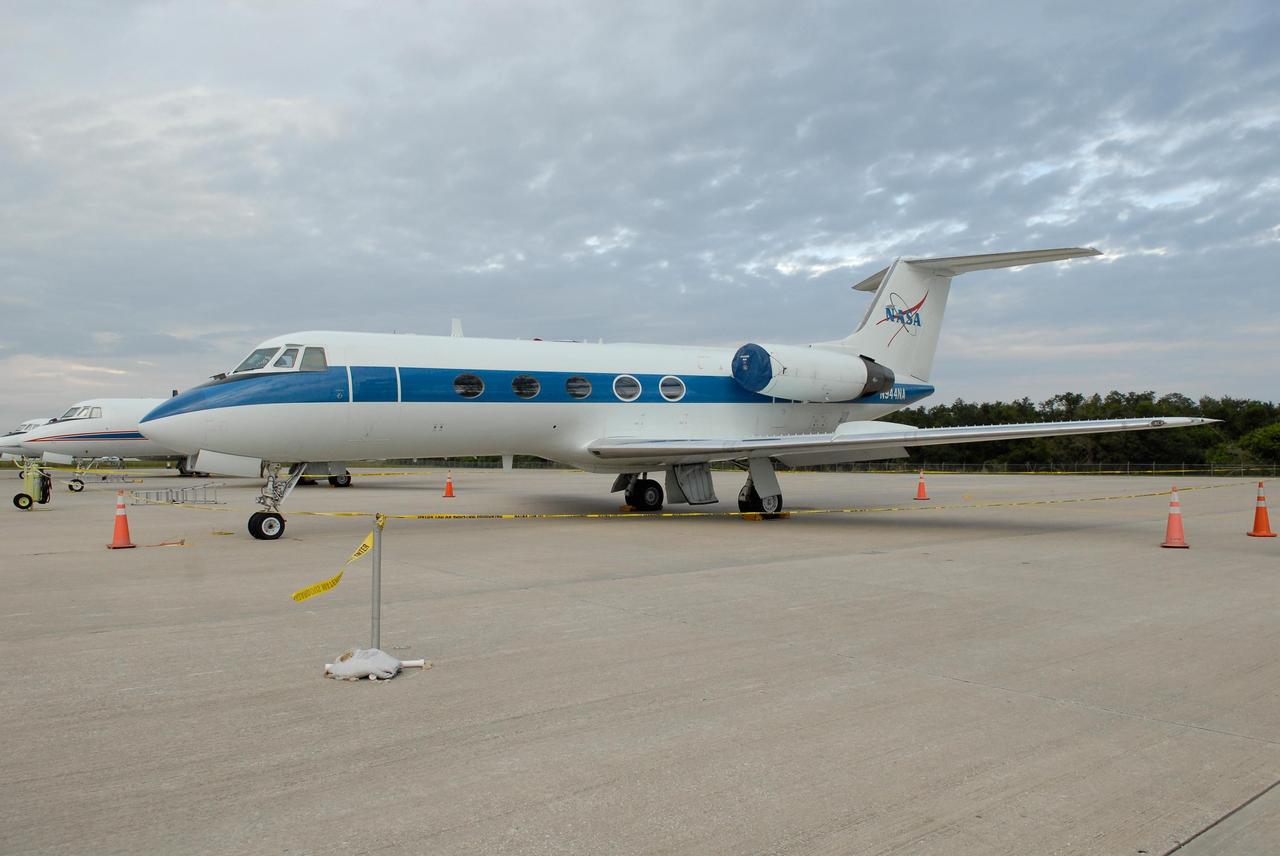
KENNEDY SPACE CENTER, FLA. -- The left position light, strobe light and wing tip of one of NASA's Shuttle Training Aircraft, or STAs, sustained minor damage from apparent contact with a tree near Kennedy Space Center's Shuttle Landing Facility. The incident occurred during landing about 6:30 p.m. EDT Oct. 19 following a training session. An STA flight instructor was piloting the aircraft. The flight crew was unaware of any contact with the tree, and there were no injuries. Thunderstorms were in the area at the time of the incident, which is under investigation. The STA is a twin-engine Gulfstream II jet that was modified to simulate a space shuttle during landing. Photo credit: NASA/Kim Shiflett
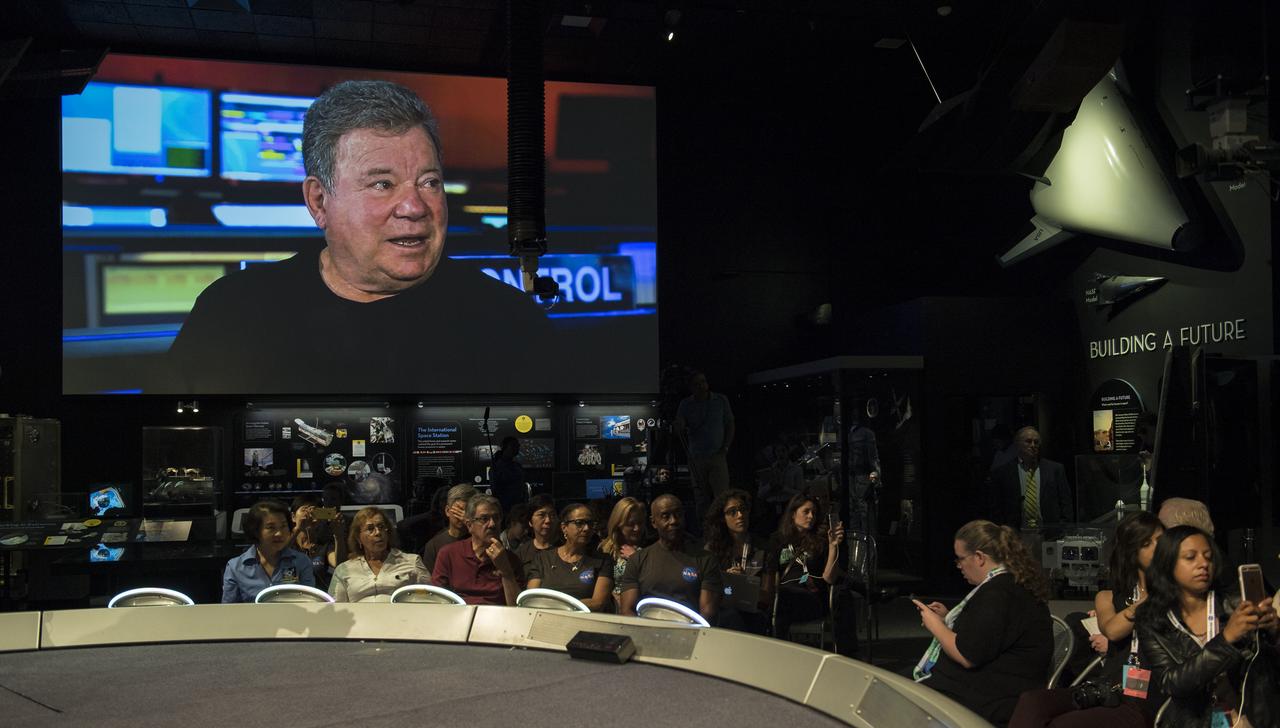
William Shatner of Star Trek, is seen on a live feed from NASA's Jet Propulsion Laboratory, giving the order to send a message into deep space, during an event to celebrate the 40th Anniversary of the launch of the Voyager 1 and 2 missions, Tuesday, September 5, 2017 at Smithsonian's National Air and Space Museum in Washington. Voyager 1 was launched September 5, 1977, with a mission to study Jupiter and Saturn, but now the twin Voyager spacecrafts are on a journey into interstellar space to search for the heliopause, a region never reached by any other spacecraft. Photo Credit: (NASA/Aubrey
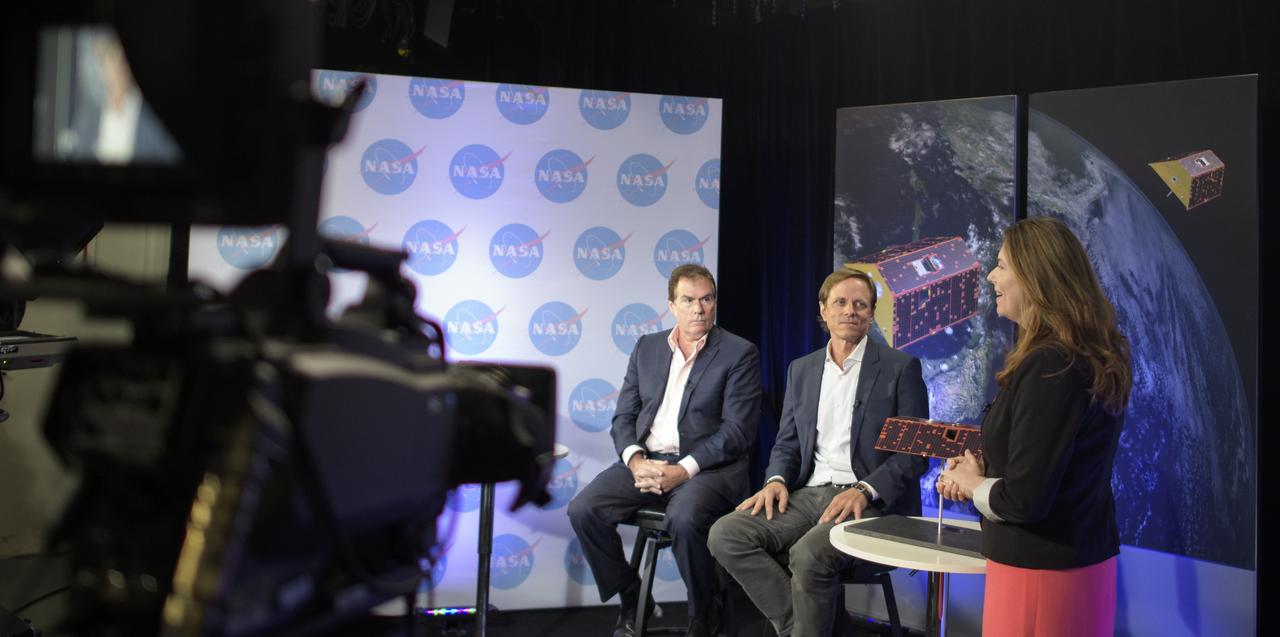
Karen Fox, of NASA's Office of Communications, right, discusses the upcoming launch of the Gravity Recovery and Climate Experiment Follow-On (GRACE-FO) mission with Michael Watkins, GRACE-FO science lead and director of NASA's Jet Propulsion Laboratory, left, and Frank Webb, GRACE-FO project scientist at JPL, Monday, April 30, 2018 at NASA Headquarters in Washington. The twin GRACE-FO spacecraft will measure and monitor monthly changes in how mass is redistributed within and among Earth's atmosphere, oceans, land and ice sheets, as well as within Earth itself. Photo Credit: (NASA/Joel Kowsky)
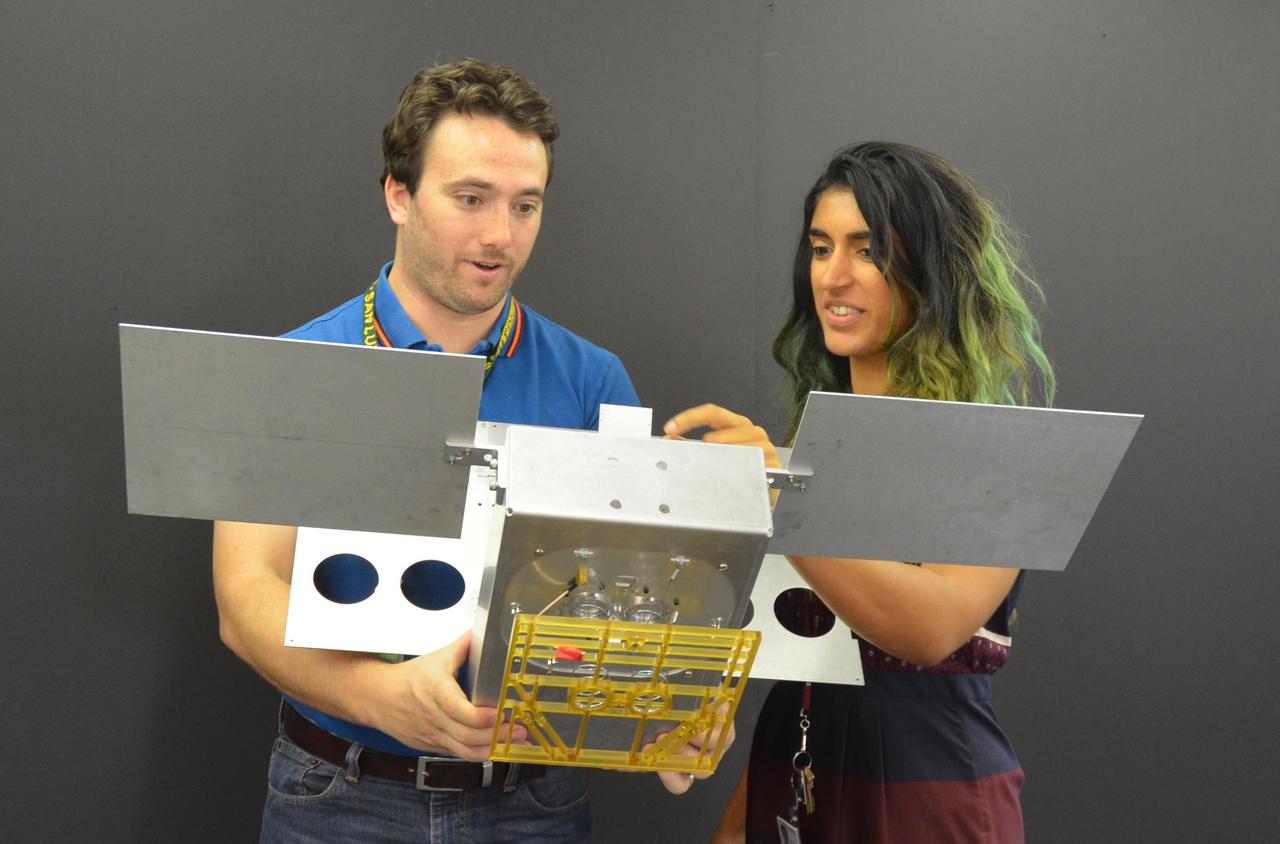
Engineers for NASA's MarCO technology demonstration display a full-scale mechanical mock-up of the small craft in development as part of NASA's next mission to Mars. Mechanical engineer Joel Steinkraus and systems engineer Farah Alibay are on the team at NASA's Jet Propulsion Laboratory, Pasadena, California, preparing twin MarCO (Mars Cube One) CubeSats for a March 2016 launch. MarCO is the first interplanetary mission using CubeSat technologies for small spacecraft. The briefcase-size MarCO twins will ride along on an Atlas V launch vehicle lifting off from Vandenberg Air Force Base, California, with NASA's next Mars lander, InSight. The mock-up in the photo is in a configuration to show the deployed position of components that correspond to MarCO's two solar panels and two antennas. During launch, those components will be stowed for a total vehicle size of about 14.4 inches (36.6 centimeters) by 9.5 inches (24.3 centimeters) by 4.6 inches (11.8 centimeters). After launch, the two MarCO CubeSats and InSight will be navigated separately to Mars. The MarCO twins will fly past the planet in September 2016 just as InSight is descending through the atmosphere and landing on the surface. MarCO is a technology demonstration mission to relay communications from InSight to Earth during InSight's descent and landing. InSight communications during that critical period will also be recorded by NASA's Mars Reconnaissance Orbiter for delayed transmission to Earth. InSight -- an acronym for Interior Exploration using Seismic Investigations, Geodesy and Heat Transport -- will study the interior of Mars to improve understanding of the processes that formed and shaped rocky planets, including Earth. After launch, the MarCO twins and InSight will be navigated separately to Mars. Note: After thorough examination, NASA managers have decided to suspend the planned March 2016 launch of the Interior Exploration using Seismic Investigations Geodesy and Heat Transport (InSight) mission. The decision follows unsuccessful attempts to repair a leak in a section of the prime instrument in the science payload. http://photojournal.jpl.nasa.gov/catalog/PIA19389
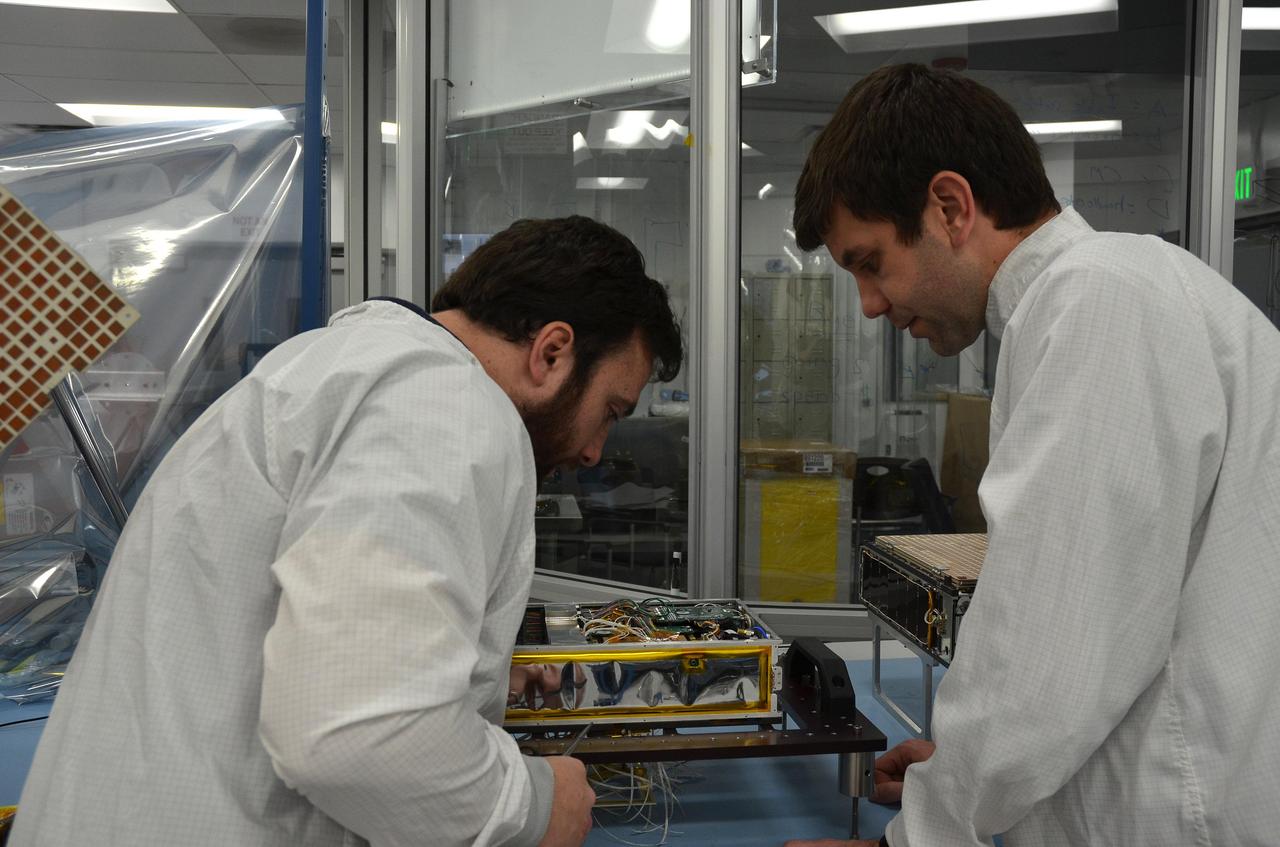
Engineers for NASA's MarCO (Mars Cube One) technology demonstration inspect one of the two MarCO CubeSats. Joel Steinkraus, MarCO lead mechanical engineer, left, and Andy Klesh, MarCO chief engineer, are on the team at NASA's Jet Propulsion Laboratory, Pasadena, California, preparing twin MarCO CubeSats. The briefcase-size MarCO twins were designed to ride along with NASA's next Mars lander, InSight. Its planned March 2016 launch was suspended. InSight -- an acronym for Interior Exploration using Seismic Investigations, Geodesy and Heat Transport -- will study the interior of Mars to improve understanding of the processes that formed and shaped rocky planets, including Earth. Note: After thorough examination, NASA managers have decided to suspend the planned March 2016 launch of the Interior Exploration using Seismic Investigations Geodesy and Heat Transport (InSight) mission. The decision follows unsuccessful attempts to repair a leak in a section of the prime instrument in the science payload. http://photojournal.jpl.nasa.gov/catalog/PIA20343
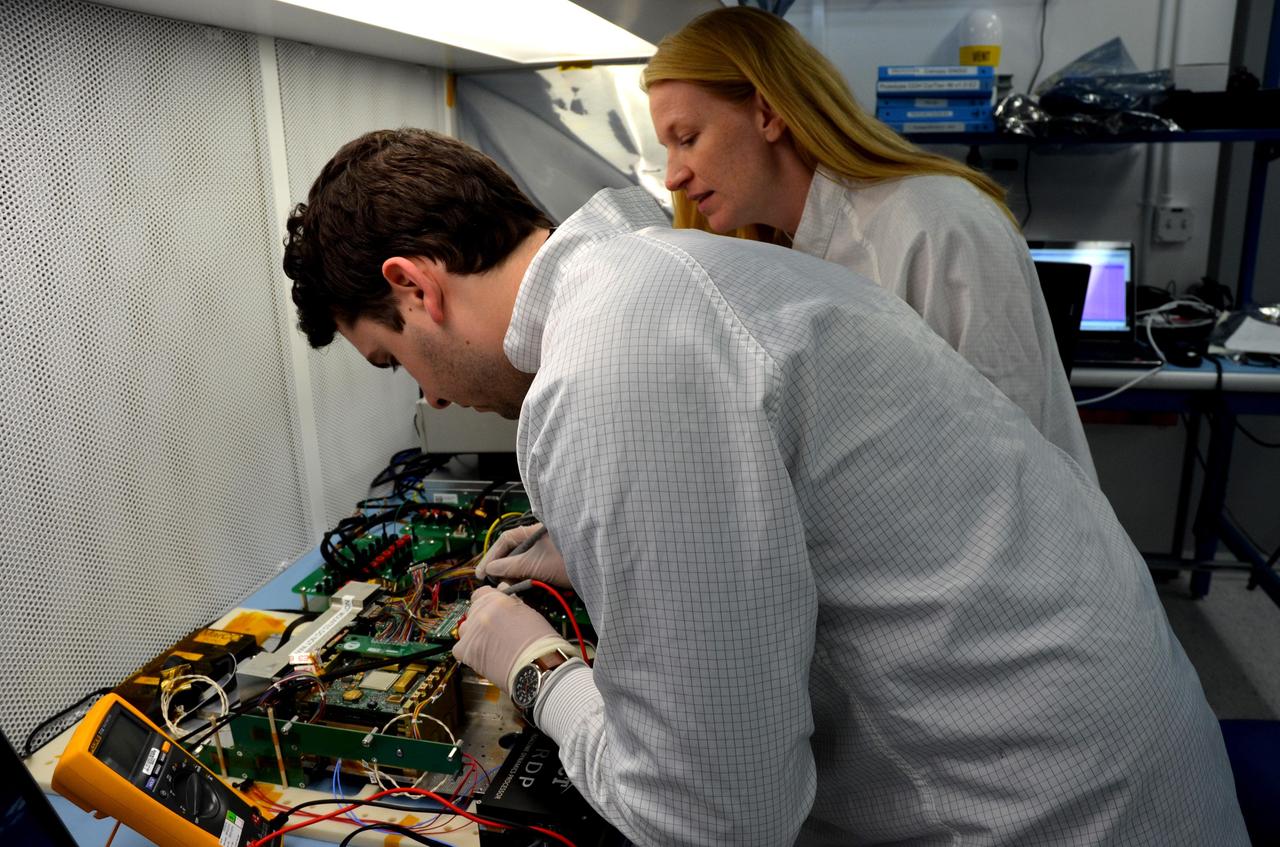
Engineers for NASA's MarCO (Mars Cube One) technology demonstration inspect the MarCO test bed, which contains components that are identical to those built for a flight to Mars. Cody Colley, left, MarCO integration and test deputy, and Shannon Statham, MarCO integration and test lead, are on the team at NASA's Jet Propulsion Laboratory, Pasadena, California, preparing twin MarCO CubeSats. The briefcase-size MarCO twins were designed to ride along with NASA's next Mars lander, InSight. Its planned March 2016 launch was suspended. InSight -- an acronym for Interior Exploration using Seismic Investigations, Geodesy and Heat Transport -- will study the interior of Mars to improve understanding of the processes that formed and shaped rocky planets, including Earth. Note: After thorough examination, NASA managers have decided to suspend the planned March 2016 launch of the Interior Exploration using Seismic Investigations Geodesy and Heat Transport (InSight) mission. The decision follows unsuccessful attempts to repair a leak in a section of the prime instrument in the science payload. http://photojournal.jpl.nasa.gov/catalog/PIA20341
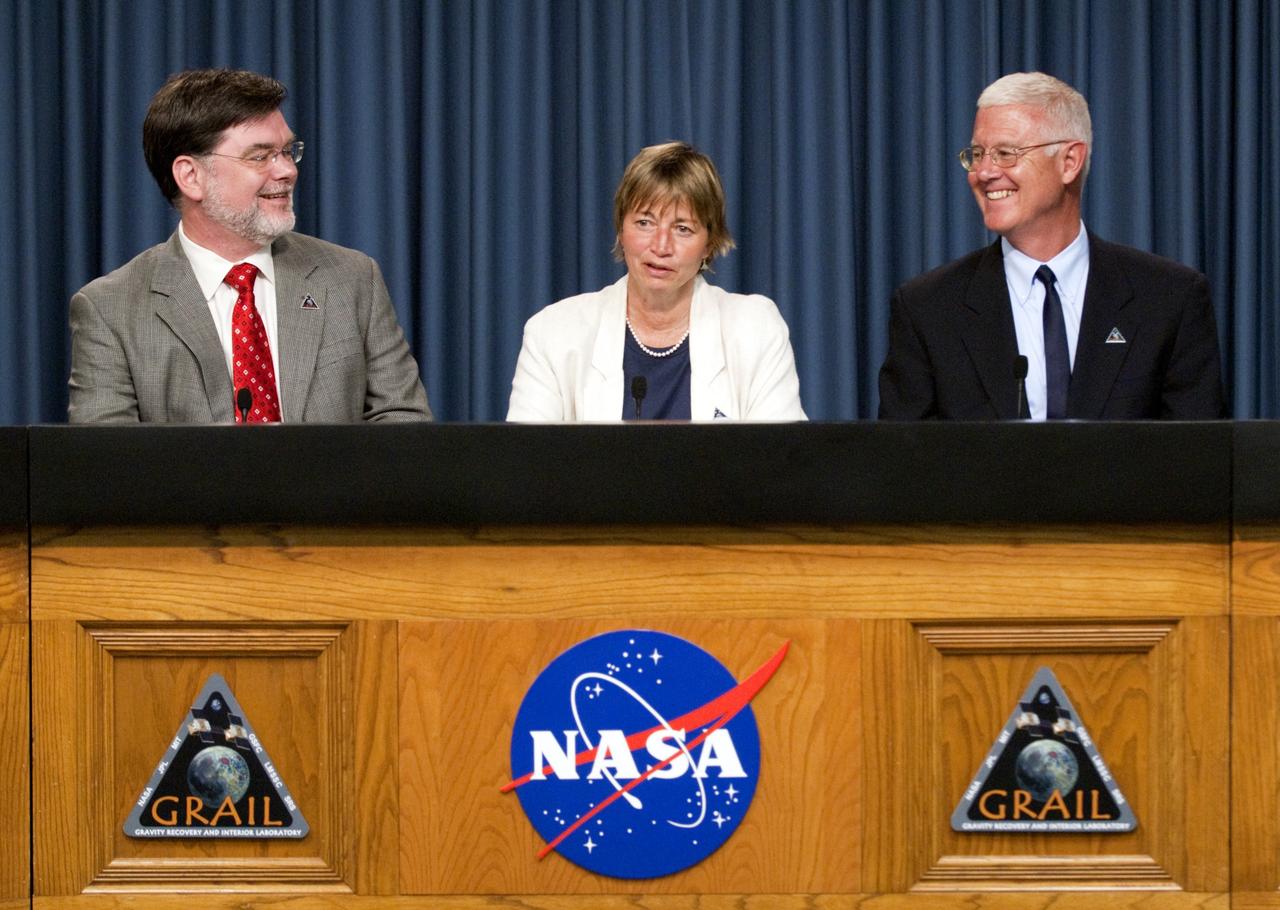
CAPE CANAVERAL, Fla. – Managers of NASA’s Gravity Recovery and Interior Laboratory (GRAIL) mission participate in a post-launch news conference in the Press Site television auditorium at NASA's Kennedy Space Center in Florida. From left are Jim Adams, deputy director, Planetary Science Division, NASA's Science Mission Directorate; Maria Zuber, GRAIL principal investigator, Massachusetts Institute of Technology; and David Lehman, GRAIL project manager, Jet Propulsion Laboratory. Liftoff of the twin GRAIL spacecraft aboard a United Launch Alliance Delta II Heavy rocket was at 9:08:52 EDT Sept. 10 from Space Launch Complex 17B on Cape Canaveral Air Force Station in Florida. The spacecraft are embarking on a three-month journey to reach the moon. GRAIL will fly twin spacecraft in tandem around the moon to precisely measure and map variations in the moon's gravitational field. The mission will provide the most accurate global gravity field to date for any planet, including Earth. For more information, visit http://www.nasa.gov/grail. Photo credit: NASA/Kim Shiflett
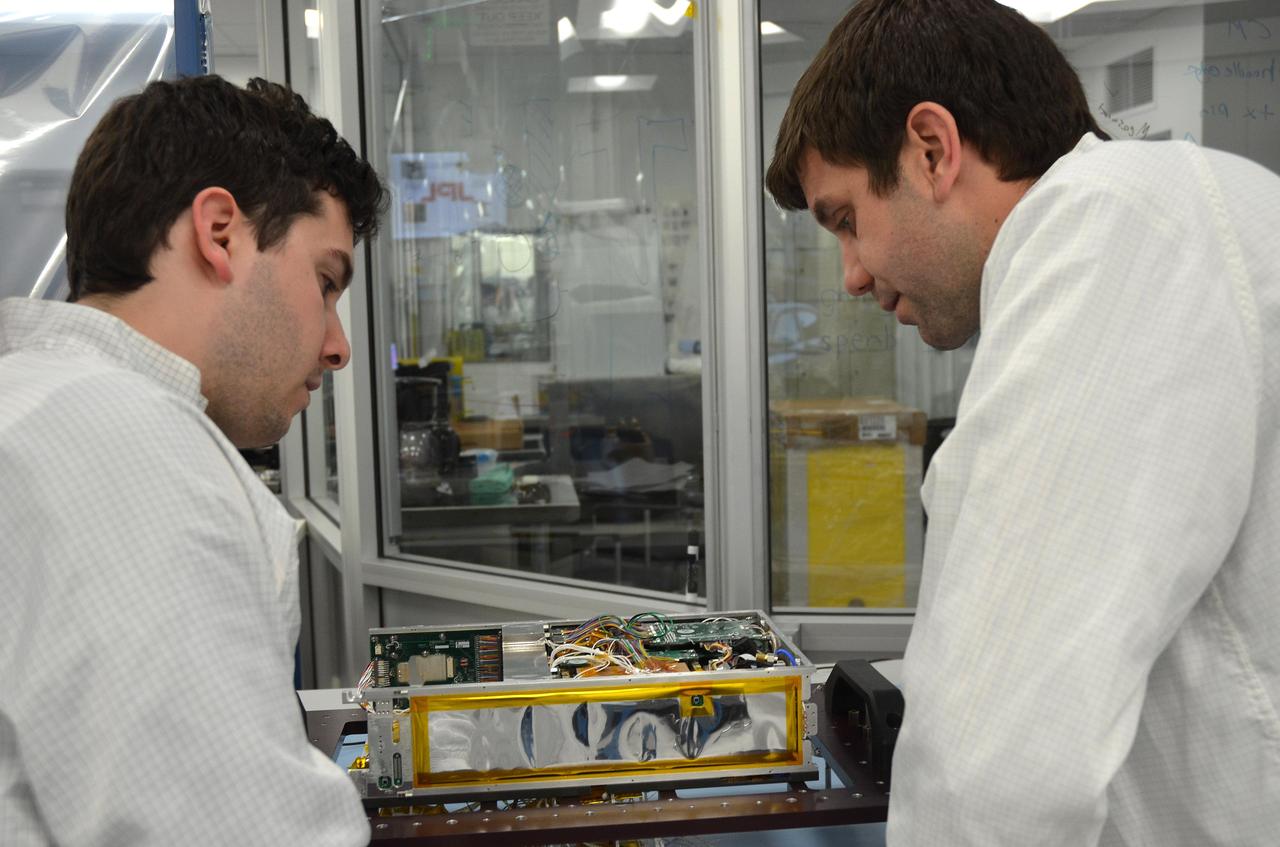
Engineers for NASA's MarCO (Mars Cube One) technology demonstration inspect one of the two MarCO CubeSats. Cody Colley, MarCO integration and test deputy, left, and Andy Klesh, MarCO chief engineer, are on the team at NASA's Jet Propulsion Laboratory, Pasadena, California, preparing twin MarCO CubeSats. The briefcase-size MarCO twins were designed to ride along with NASA's next Mars lander, InSight. Its planned March 2016 launch was suspended. InSight -- an acronym for Interior Exploration using Seismic Investigations, Geodesy and Heat Transport -- will study the interior of Mars to improve understanding of the processes that formed and shaped rocky planets, including Earth. Note: After thorough examination, NASA managers have decided to suspend the planned March 2016 launch of the Interior Exploration using Seismic Investigations Geodesy and Heat Transport (InSight) mission. The decision follows unsuccessful attempts to repair a leak in a section of the prime instrument in the science payload. http://photojournal.jpl.nasa.gov/catalog/PIA20342

NASA image release July 3, 2012 Caption: Resembling a Fourth of July skyrocket, Herbig-Haro 110 is a geyser of hot gas from a newborn star that splashes up against and ricochets off the dense core of a cloud of molecular hydrogen. Although the plumes of gas look like whiffs of smoke, they are actually billions of times less dense than the smoke from a July 4 firework. This Hubble Space Telescope photo shows the integrated light from plumes, which are light-years across. -- Herbig-Haro (HH) objects come in a wide array of shapes, but the basic configuration stays the same. Twin jets of heated gas, ejected in opposite directions away from a forming star, stream through interstellar space. Astronomers suspect that these outflows are fueled by gas accreting onto a young star surrounded by a disk of dust and gas. The disk is the "fuel tank," the star is the gravitational engine, and the jets are the exhaust. When these energetic jets slam into colder gas, the collision plays out like a traffic jam on the interstate. Gas within the shock front slows to a crawl, but more gas continues to pile up as the jet keeps slamming into the shock from behind. Temperatures climb sharply, and this curving, flared region starts to glow. These "bow shocks" are so named because they resemble the waves that form at the front of a boat. In the case of the single HH 110 jet, astronomers observe a spectacular and unusual permutation on this basic model. Careful study has repeatedly failed to find the source star driving HH 110, and there may be good reason for this: perhaps the HH 110 outflow is itself generated by another jet. Astronomers now believe that the nearby HH 270 jet grazes an immovable obstacle - a much denser, colder cloud core - and gets diverted off at about a 60-degree angle. The jet goes dark and then reemerges, having reinvented itself as HH 110. The jet shows that these energetic flows are like the erratic outbursts from a Roman candle. As fast-moving blobs of gas catch up and collide with slower blobs, new shocks arise along the jet's interior. The light emitted from excited gas in these hot blue ridges marks the boundaries of these interior collisions. By measuring the current velocity and positions of different blobs and hot ridges along the chain within the jet, astronomers can effectively "rewind" the outflow, extrapolating the blobs back to the moment when they were emitted. This technique can be used to gain insight into the source star's history of mass accretion. This image is a composite of data taken with Hubble's Advanced Camera for Surveys in 2004 and 2005 and the Wide Field Camera 3 in April 2011. Credit: NASA, ESA, and the Hubble Heritage Team (STScI/AURA) <b><a href="http://www.nasa.gov/audience/formedia/features/MP_Photo_Guidelines.html" rel="nofollow">NASA image use policy.</a></b> <b><a href="http://www.nasa.gov/centers/goddard/home/index.html" rel="nofollow">NASA Goddard Space Flight Center</a></b> enables NASA’s mission through four scientific endeavors: Earth Science, Heliophysics, Solar System Exploration, and Astrophysics. Goddard plays a leading role in NASA’s accomplishments by contributing compelling scientific knowledge to advance the Agency’s mission. <b>Follow us on <a href="http://twitter.com/NASA_GoddardPix" rel="nofollow">Twitter</a></b> <b>Like us on <a href="http://www.facebook.com/pages/Greenbelt-MD/NASA-Goddard/395013845897?ref=tsd" rel="nofollow">Facebook</a></b> <b>Find us on <a href="http://instagrid.me/nasagoddard/?vm=grid" rel="nofollow">Instagram</a></b>
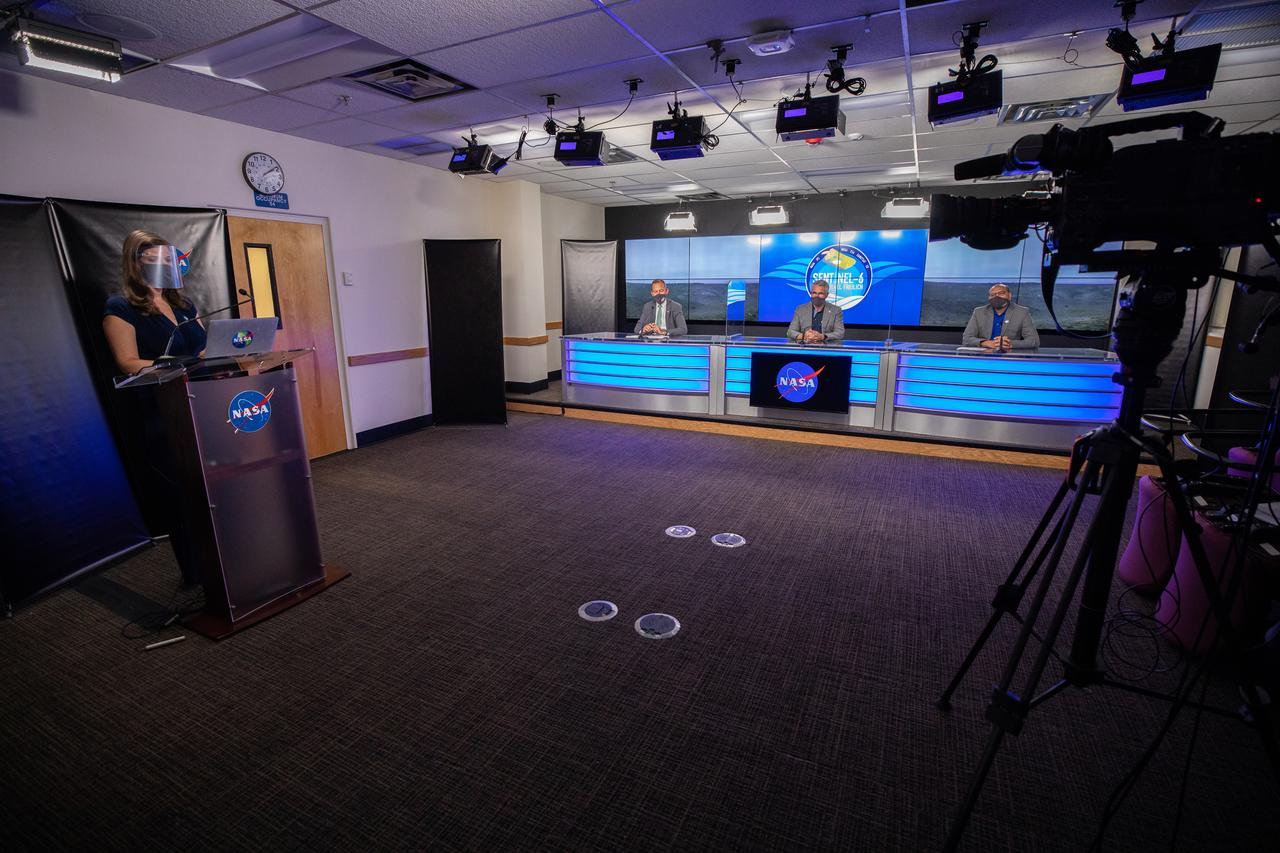
Mission and launch officials participate in a prelaunch news conference for the Sentinel-6 Michael Freilich mission at Vandenberg Air Force Base in California on Nov. 20, 2020. From left are Marina Jurica of NASA’s Jet Propulsion Laboratory in Pasadena; Thomas Zurbuchen, associate administrator for Science Mission Directorate at NASA Headquarters; Pierrik Vuilleumier, project manager, European Space Agency (ESA); and Parag Vaze, project manager, NASA’s Jet Propulsion Laboratory in Pasadena. The Sentinel-6/Jason-CS (Continuity of Service) mission consists of the Sentinel-6 Michael Freilich satellite, which will be followed by its twin, the Sentinel-6B satellite, in 2025. The Sentinel-6/Jason-CS mission is part of Copernicus, the European Union’s Earth observation program, managed by the European Commission. Continuing the legacy of the Jason series missions, Sentinel-6/Jason-CS will extend the records of sea level into their fourth decade, collecting accurate measurements of sea surface height for more than 90% of the world’s seas, and providing crucial information for operational oceanography, marine meteorology, and climate studies. Sentinel-6 Michael Freilich launched Nov. 21, 2020, at 9:17 PST (12:17 EST). NASA’s Launch Services Program at Kennedy Space Center was responsible for launch management.
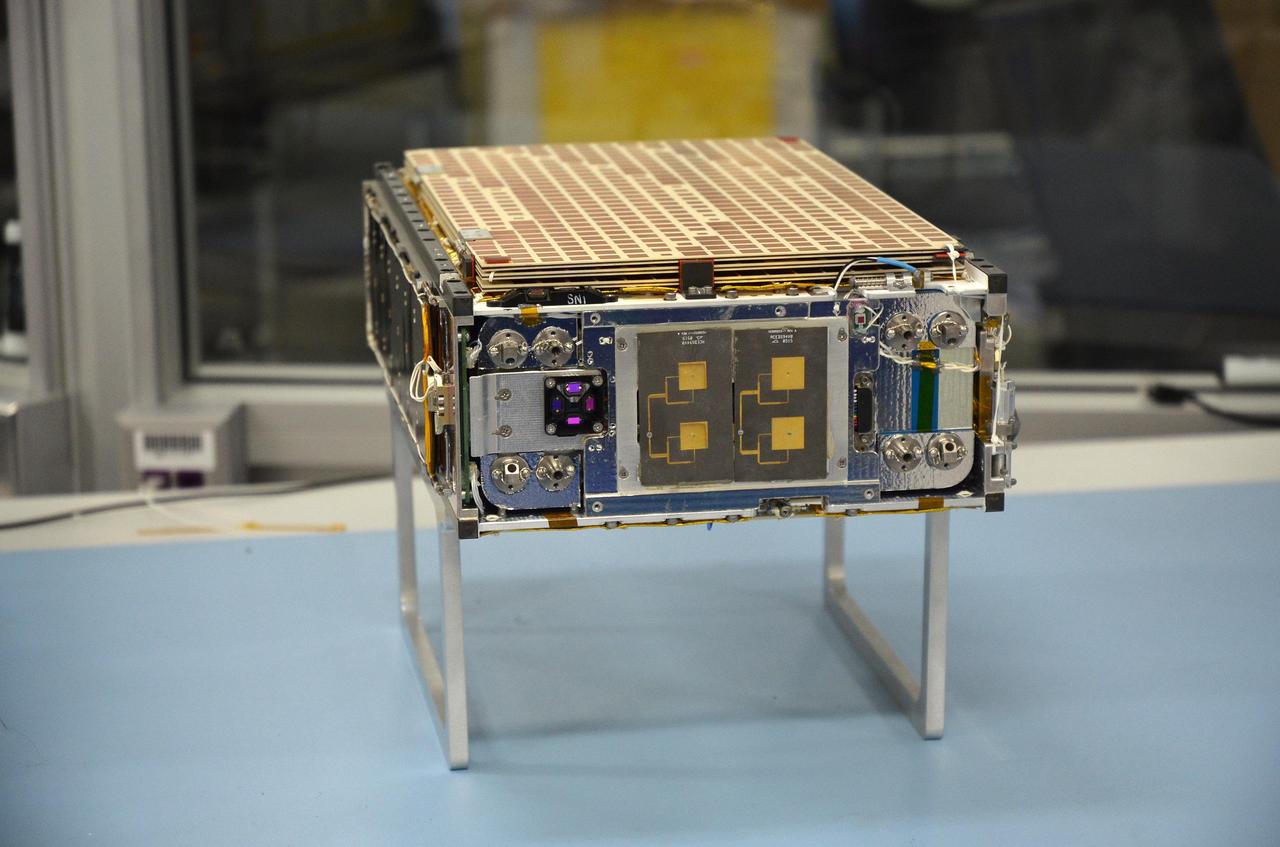
One of the two MarCO (Mars Cube One) CubeSat spacecraft is seen at NASA's Jet Propulsion Laboratory, Pasadena, California. The briefcase-size MarCO twins were designed to ride along with NASA's next Mars lander, InSight. Its planned March 2016 launch was suspended. InSight -- an acronym for Interior Exploration using Seismic Investigations, Geodesy and Heat Transport -- will study the interior of Mars to improve understanding of the processes that formed and shaped rocky planets, including Earth. Note: After thorough examination, NASA managers have decided to suspend the planned March 2016 launch of the Interior Exploration using Seismic Investigations Geodesy and Heat Transport (InSight) mission. The decision follows unsuccessful attempts to repair a leak in a section of the prime instrument in the science payload. http://photojournal.jpl.nasa.gov/catalog/PIA20346
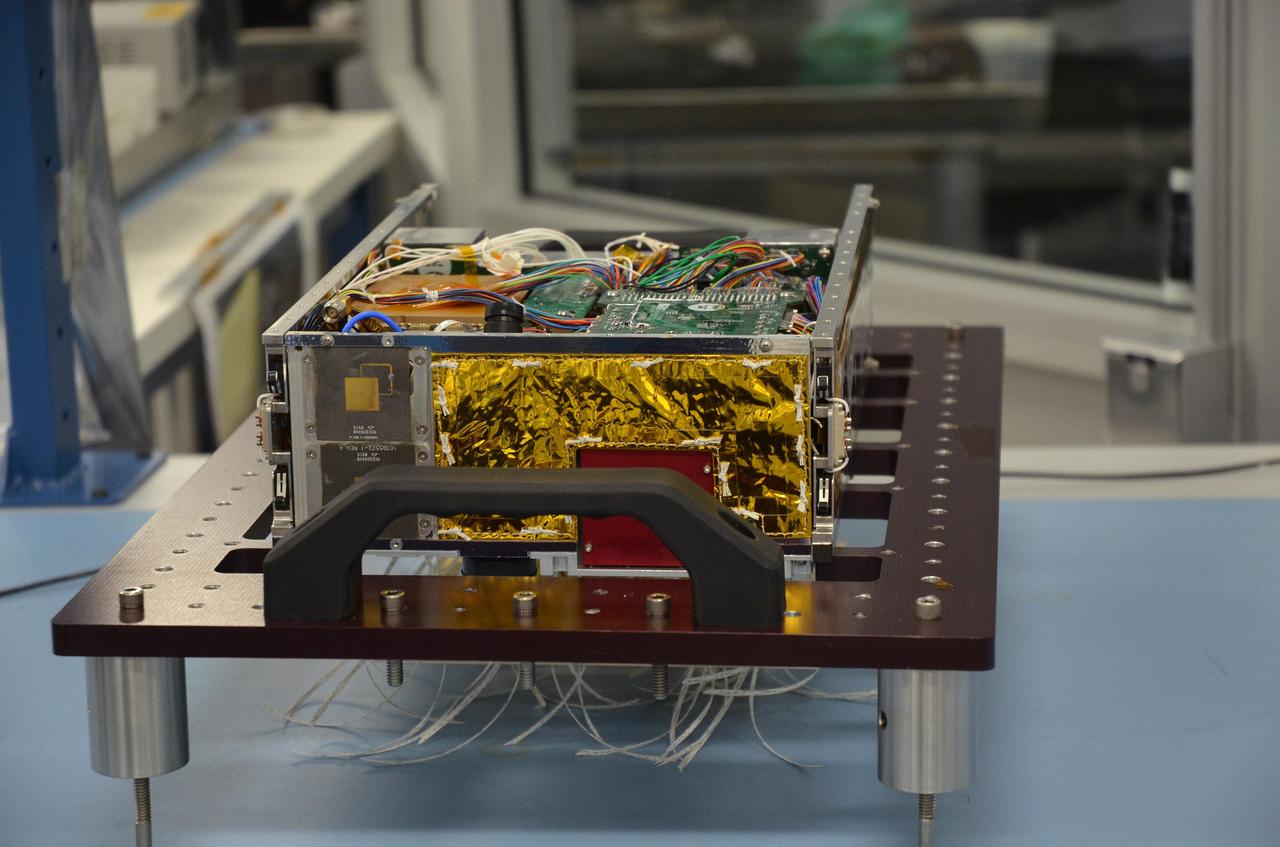
One of the two MarCO (Mars Cube One) CubeSat spacecraft, with its insides displayed, is seen at NASA's Jet Propulsion Laboratory, Pasadena, California. The briefcase-size MarCO twins were designed to ride along with NASA's next Mars lander, InSight. Its planned March 2016 launch was suspended. InSight -- an acronym for Interior Exploration using Seismic Investigations, Geodesy and Heat Transport -- will study the interior of Mars to improve understanding of the processes that formed and shaped rocky planets, including Earth. Note: After thorough examination, NASA managers have decided to suspend the planned March 2016 launch of the Interior Exploration using Seismic Investigations Geodesy and Heat Transport (InSight) mission. The decision follows unsuccessful attempts to repair a leak in a section of the prime instrument in the science payload. http://photojournal.jpl.nasa.gov/catalog/PIA20345
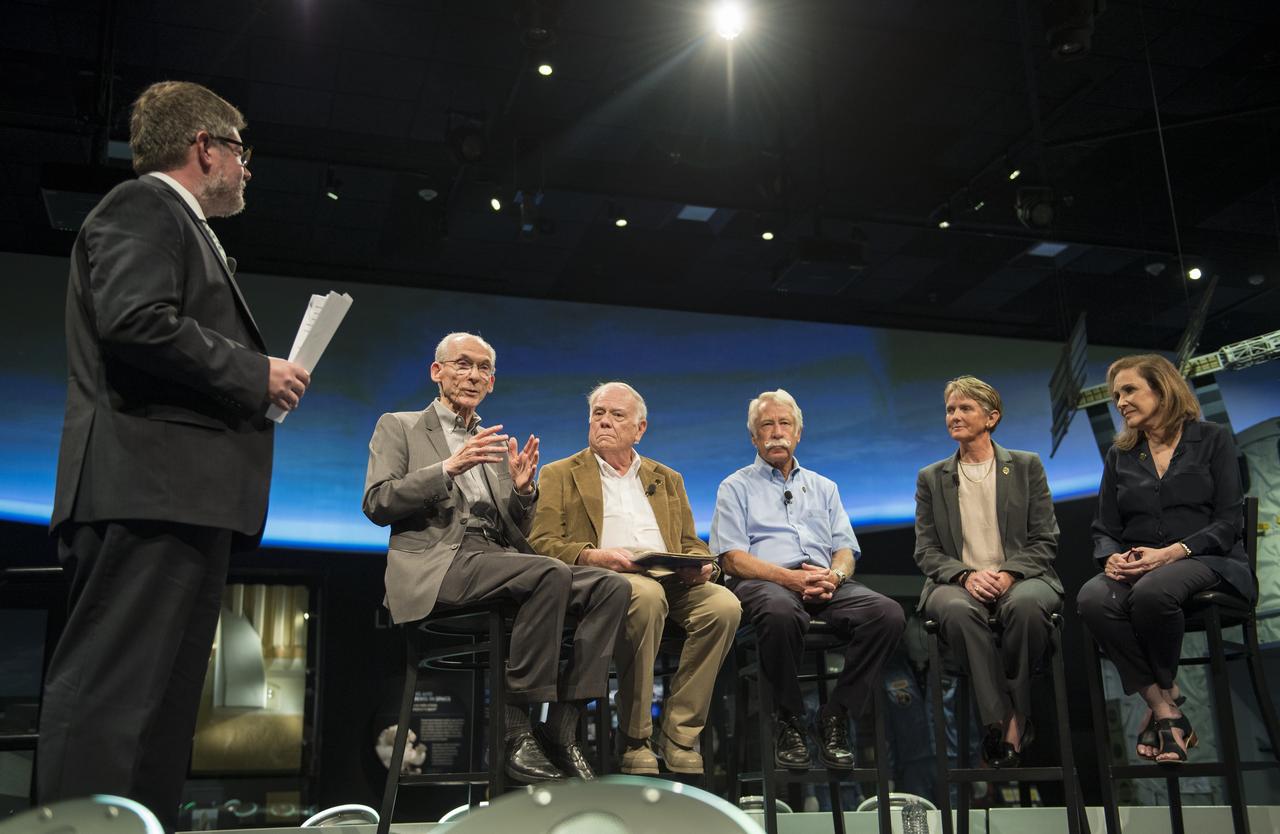
Matthew Shindell, curator, Smithsonian National Air and Space Museum (NASM), far left, moderates a panel including, from left to right, Ed Stone, Voyager project scientist; Gary Flandro, Voyager mission grand tour creator; Alan Cummings, Voyager researcher; Suzy Dodd, Voyager project manager, NASA's Jet Propulsion Laboratory; and Ann Druyan, writer/producer, Golden Record Visionary during a celebration of the 40th Anniversary of the launch of the Voyager 1 and 2 missions, Tuesday, September 5, 2017 at NASM in Washington. Voyager 1 was launched September 5, 1977, with a mission to study Jupiter and Saturn, but now the twin Voyager spacecrafts are on a journey into interstellar space to search for the heliopause, a region never reached by any other spacecraft. Photo Credit: (NASA/Aubrey Gemignani)
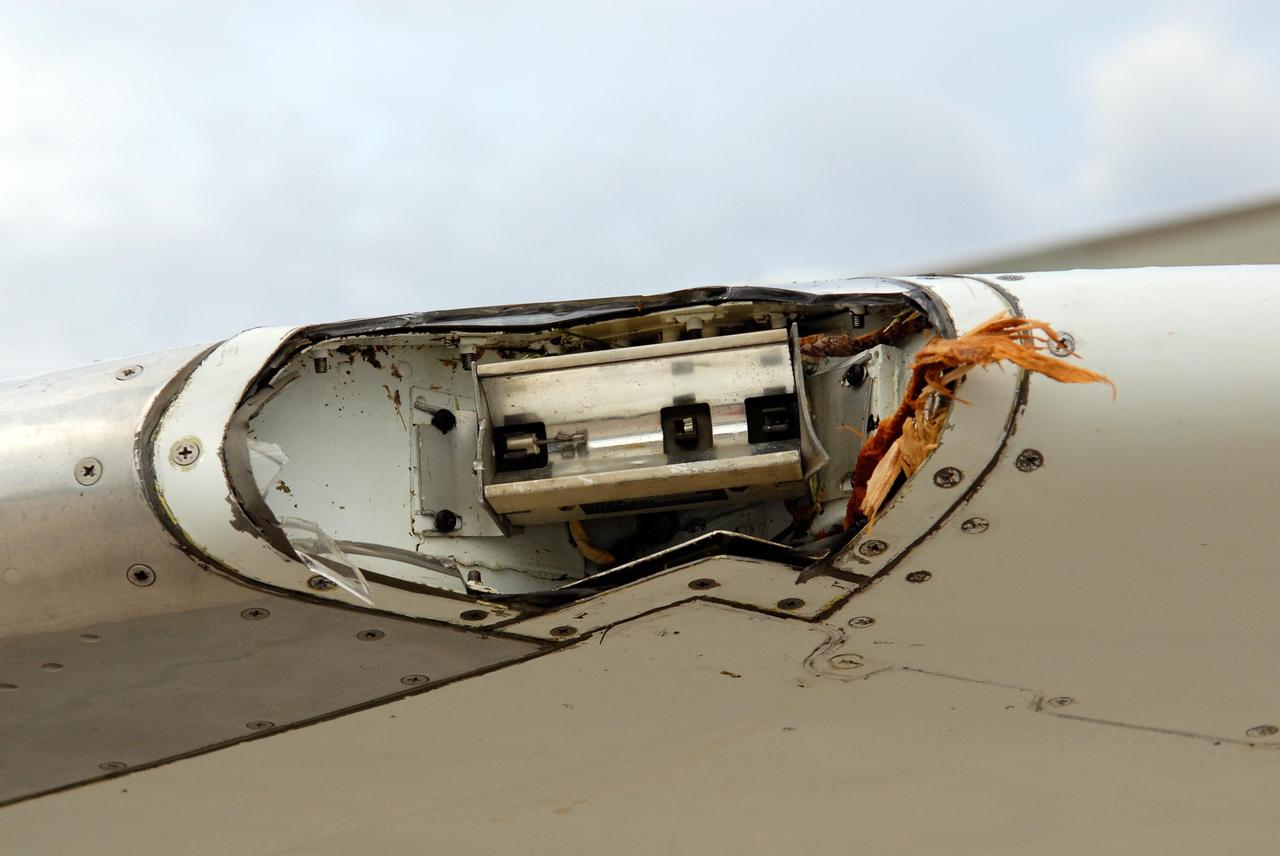
KENNEDY SPACE CENTER, FLA. -- Debris from apparent contact with a tree near Kennedy Space Center's Shuttle Landing Facility can be seen in the position light cavity on the left side of one of NASA's Shuttle Training Aircraft, or STA. The left strobe light and wing tip also received minor damage. The incident occurred during landing about 6:30 p.m. EDT Oct. 19 following a training session. An STA flight instructor was piloting the aircraft. The flight crew was unaware of any contact with the tree, and there were no injuries. Thunderstorms were in the area at the time of the incident, which is under investigation. The STA is a twin-engine Gulfstream II jet that was modified to simulate a space shuttle during landing. Photo credit: NASA/Kim Shiflett
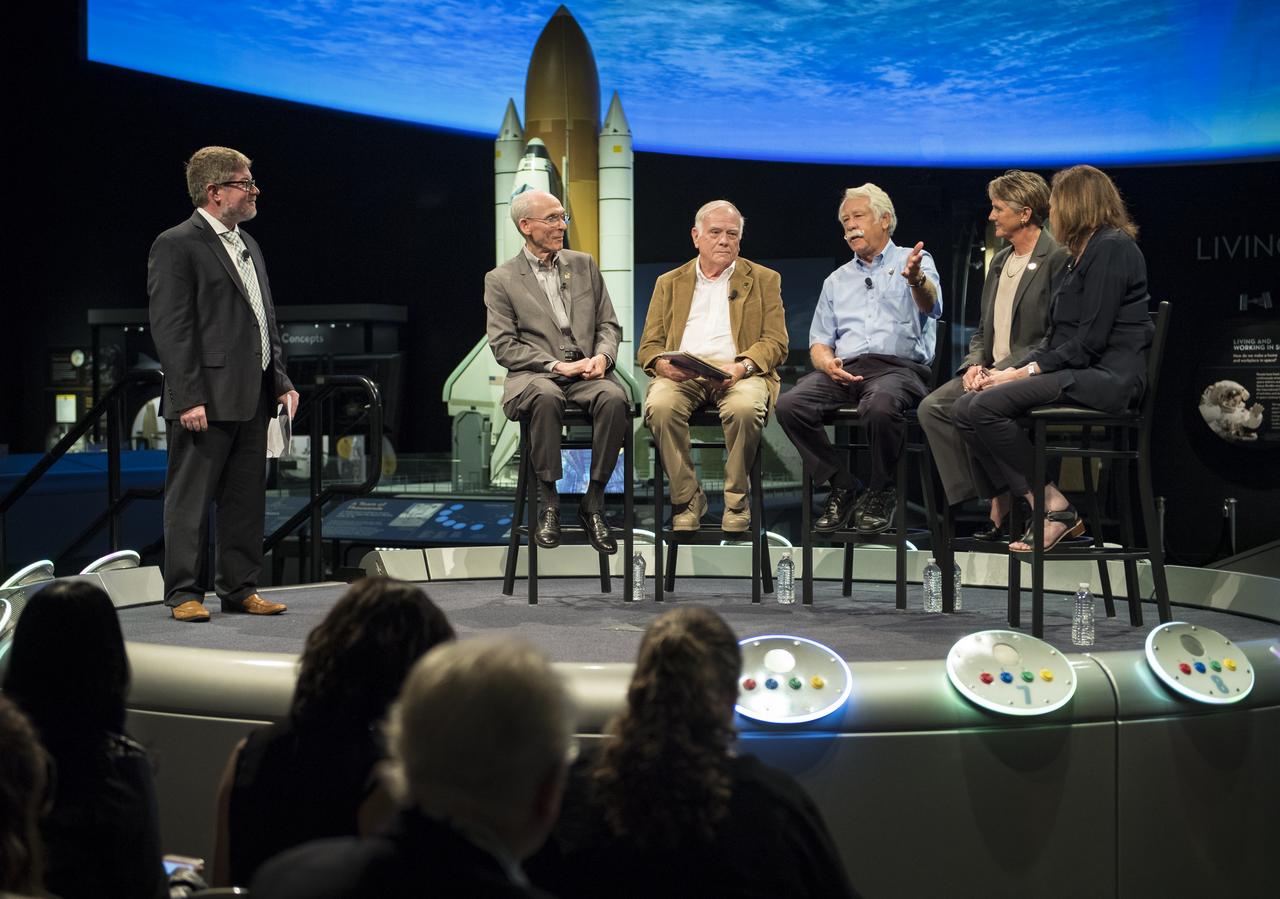
Matthew Shindell, curator, Smithsonian National Air and Space Museum (NASM), far left, moderates a panel including, from left to right, Ed Stone, Voyager project scientist; Gary Flandro, Voyager mission grand tour creator; Alan Cummings, Voyager researcher; Suzy Dodd, Voyager project manager, NASA's Jet Propulsion Laboratory; and Ann Druyan, writer/producer, Golden Record Visionary during a celebration of the 40th Anniversary of the launch of the Voyager 1 and 2 missions, Tuesday, September 5, 2017 at NASM in Washington. Voyager 1 was launched September 5, 1977, with a mission to study Jupiter and Saturn, but now the twin Voyager spacecrafts are on a journey into interstellar space to search for the heliopause, a region never reached by any other spacecraft. Photo Credit: (NASA/Aubrey Gemignani)
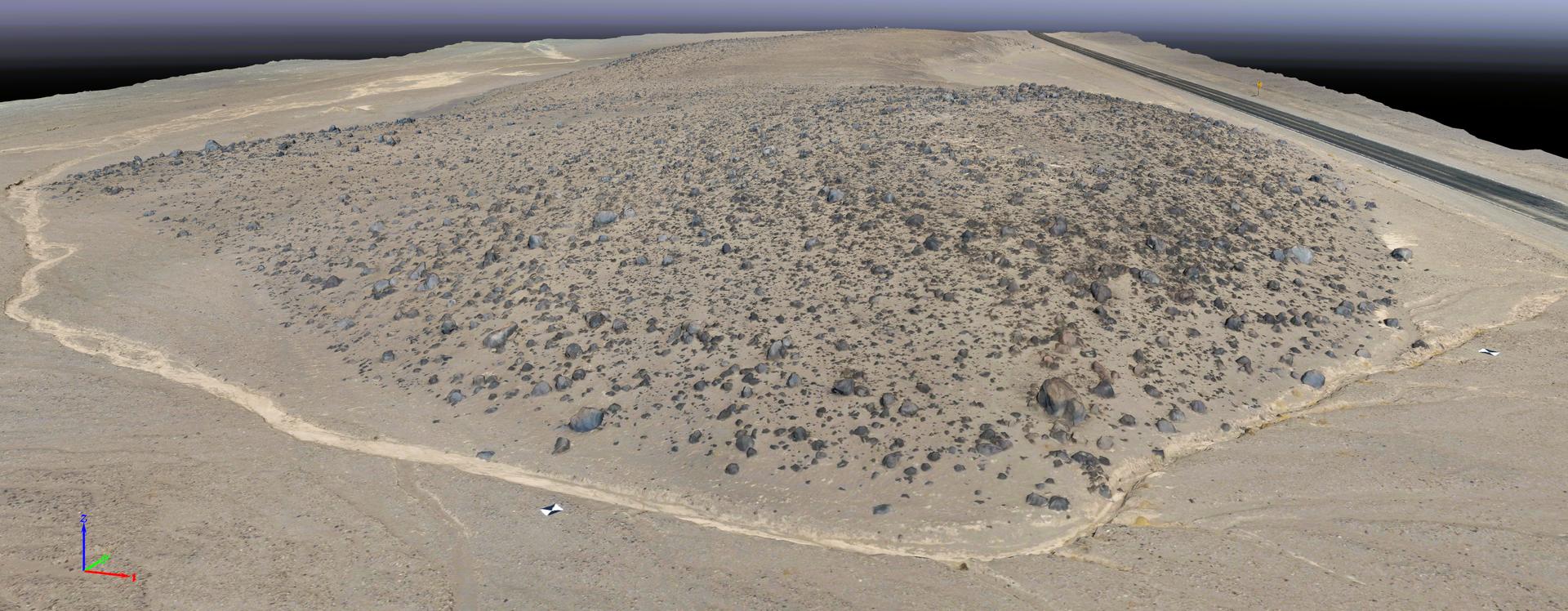
This rendering was created by research drones flying over Mars Hill, a region of Death Valley National Park that has been used by NASA’s Mars researchers since the 1970s, when the agency was preparing to land the twin Viking spacecraft. The hill’s rubbly, volcanic rock resembles the kind of inhospitable terrain that Mars rovers must navigate around and which posed a landing hazard for the Ingenuity Mars Helicopter. In September 2025, researchers from NASA’s Jet Propulsion Laboratory in Southern California flew research drones over Mars Hill as part of a test campaign to develop navigation software for future Mars rotorcraft. Being able to precisely land between rocks like those seen here is a critical capability to access similar Martian terrain in the future.
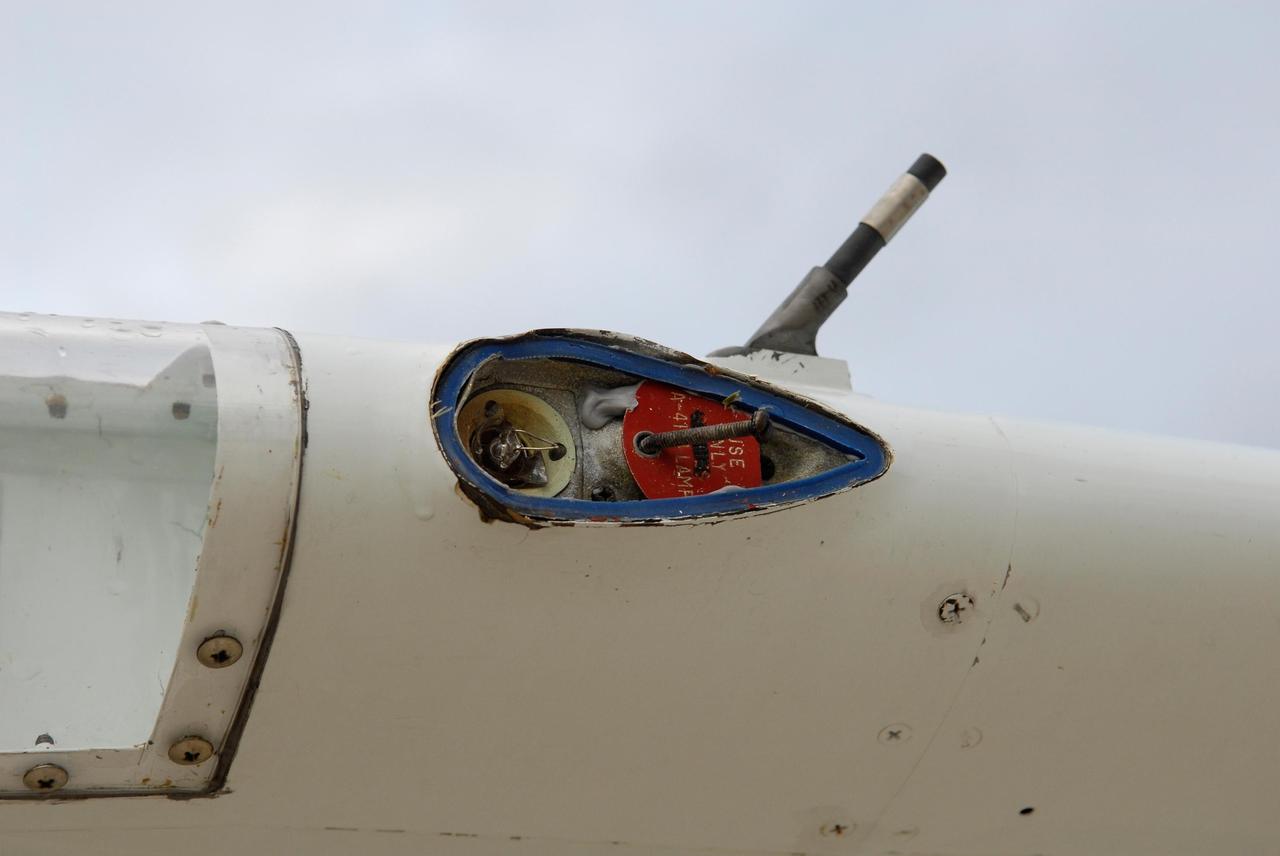
KENNEDY SPACE CENTER, FLA. -- Debris from apparent contact with a tree near Kennedy Space Center's Shuttle Landing Facility can be seen in the strobe light cavity on the left side of one of NASA's Shuttle Training Aircraft, or STA. The left position light and wing tip also received minor damage. The incident occurred during landing about 6:30 p.m. EDT Oct. 19 following a training session. An STA flight instructor was piloting the aircraft. The flight crew was unaware of any contact with the tree, and there were no injuries. Thunderstorms were in the area at the time of the incident, which is under investigation. The STA is a twin-engine Gulfstream II jet that was modified to simulate a space shuttle during landing. Photo credit: NASA/Kim Shiflett
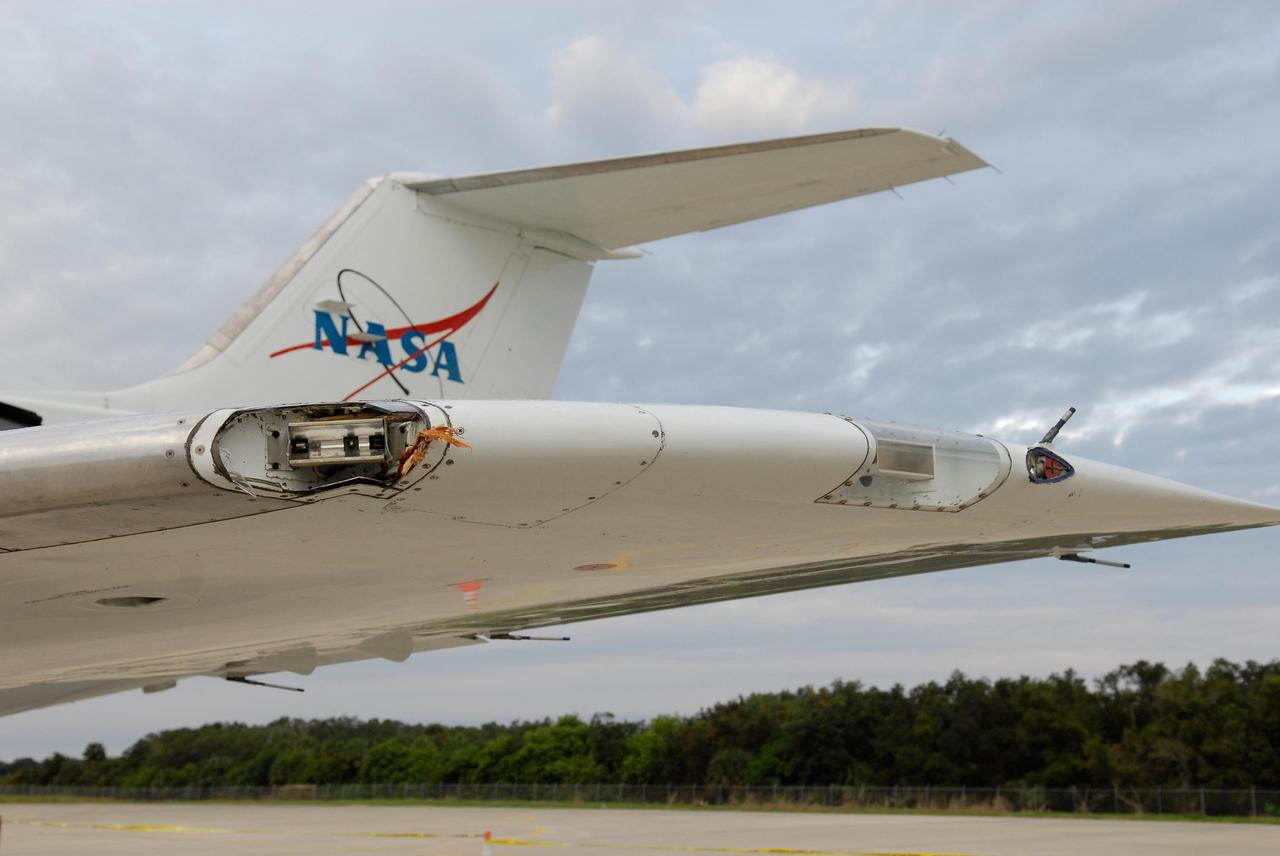
KENNEDY SPACE CENTER, FLA. -- The left position light, strobe light and wing tip of one of NASA's Shuttle Training Aircraft, or STA, show signs of minor damage from apparent contact with a tree near Kennedy Space Center's Shuttle Landing Facility. The incident occurred during landing about 6:30 p.m. EDT Oct. 19 following a training session. An STA flight instructor was piloting the aircraft. The flight crew was unaware of any contact with the tree, and there were no injuries. Thunderstorms were in the area at the time of the incident, which is under investigation. The STA is a twin-engine Gulfstream II jet that was modified to simulate a space shuttle during landing. Photo credit: NASA/Kim Shiflett
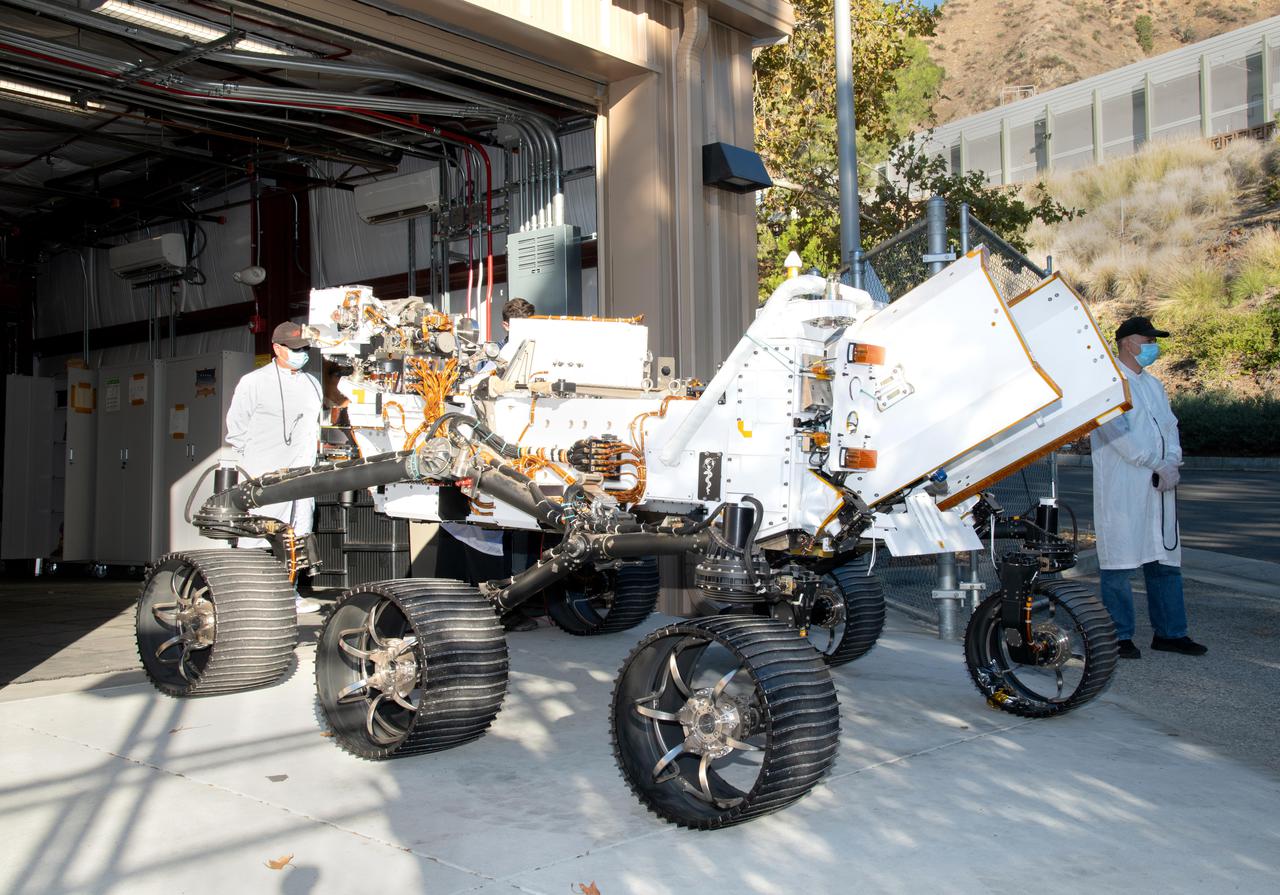
Updated with new features, including additional mobility software and the bulk of the sample caching system, the Earthly twin of NASA's Perseverance Mars rover arrives at the Mars Yard garage at the agency's Jet Propulsion Laboratory on Oct. 29, 2021. The vehicle is generically referred to as a vehicle system test bed but goes by the name OPTIMISM (short for Operational Perseverance Twin for Integration of Mechanisms and Instruments Sent to Mars). As with vehicle system test beds for other Mars rovers, OPTIMISM is used to test moves and scenarios in the Mars Yard's simulated Red Planet landscape to help ensure that its twin on Mars can safely execute the commands sent by Earth-bound controllers. The tests could also potentially reveal unexpected problems Perseverance might encounter. With longer drives in Perseverance's near future, another job for OPTIMISM will involve presenting new challenges to the rover's autonomous navigation system, or AutoNav. A key objective for Perseverance's mission on Mars is astrobiology, including the search for signs of ancient microbial life. The rover will characterize the planet's geology and past climate, pave the way for human exploration of the Red Planet, and be the first mission to collect and cache Martian rock and regolith (broken rock and dust). Subsequent NASA missions, in cooperation with ESA (European Space Agency), would send spacecraft to Mars to collect these sealed samples from the surface and return them to Earth for in-depth analysis. The Mars 2020 Perseverance mission is part of NASA's Moon to Mars exploration approach, which includes Artemis missions to the Moon that will help prepare for human exploration of the Red Planet. https://photojournal.jpl.nasa.gov/catalog/PIA24528

Marina Jurica of NASA’s Jet Propulsion Laboratory in Pasadena moderates a science briefing for the Sentinel-6 Michael Freilich mission at Vandenberg Air Force Base in California on Nov. 20, 2020. The Sentinel-6/Jason-CS (Continuity of Service) mission consists of the Sentinel-6 Michael Freilich satellite, which will be followed by its twin, the Sentinel-6B satellite, in 2025. The Sentinel-6/Jason-CS mission is part of Copernicus, the European Union’s Earth observation program, managed by the European Commission. Continuing the legacy of the Jason series missions, Sentinel-6/Jason-CS will extend the records of sea level into their fourth decade, collecting accurate measurements of sea surface height for more than 90% of the world’s seas, and providing crucial information for operational oceanography, marine meteorology, and climate studies. Sentinel-6 Michael Freilich launched Nov. 21, 2020, at 9:17 PST (12:17 EST). NASA’s Launch Services Program at Kennedy Space Center was responsible for launch management.
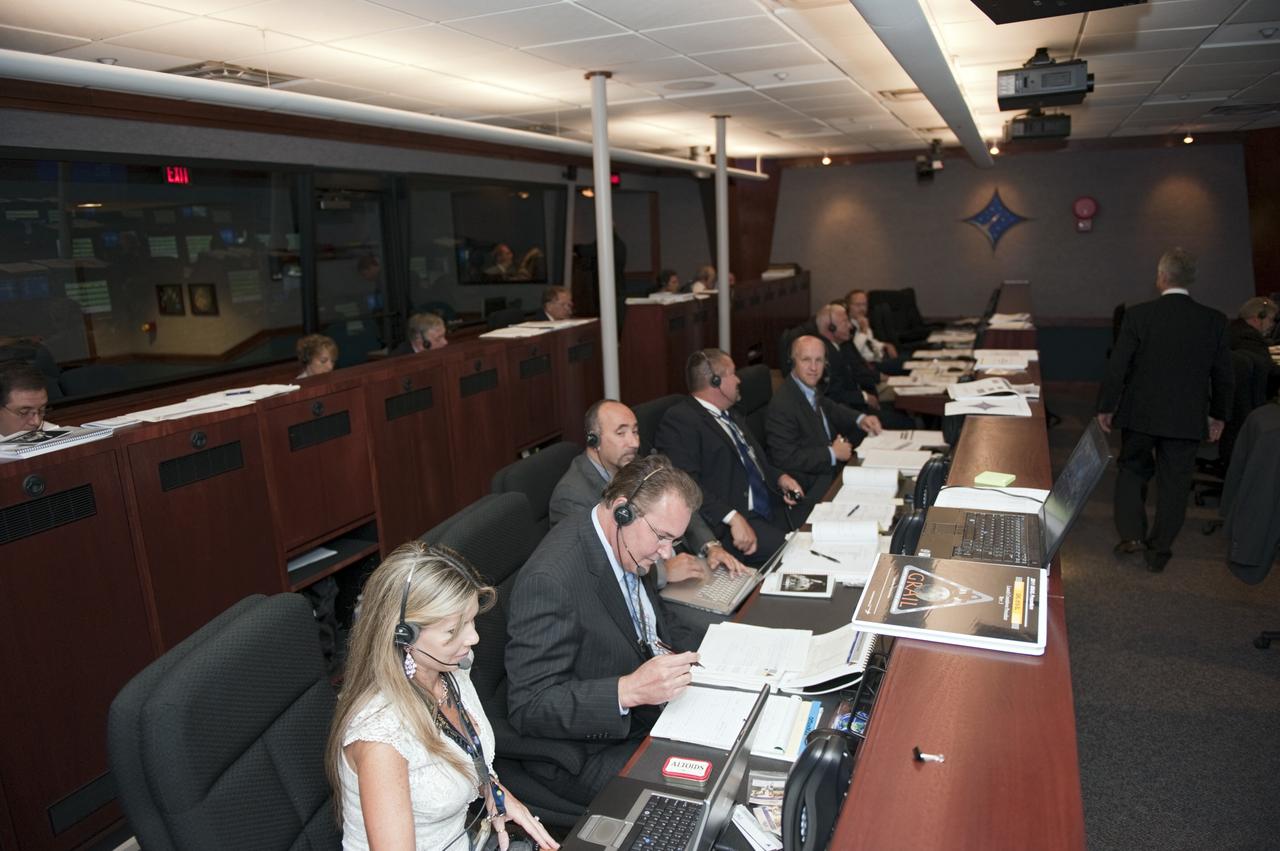
CAPE CANAVERAL, Fla. -- On Cape Canaveral Air Force Station in Florida, members of NASA's Gravity Recovery and Interior Laboratory (GRAIL) launch team monitor GRAIL's launch countdown from the Mission Directors Center in Hangar AE. From left are Dana Grieco, launch operations manager, Analex, NASA's Launch Services Program (LSP); Bruce Reid, GRAIL mission manager, LSP; Al Sierra, manager of the Flight Project Office, LSP; Omar Baez, GRAIL assistant launch director, LSP; and Tim Dunn, GRAIL launch director, LSP; David Lehman, spacecraft mission director and GRAIL project manager, NASA's Jet Propulsion Laboratory (JPL); and John Henk, GRAIL program manager, Lockheed Martin Space Systems. Launch is scheduled for 8:37:06 a.m. EDT Sept. 8 from Space Launch Complex 17B on Cape Canaveral Air Force Station. GRAIL will fly twin spacecraft in tandem around the moon to precisely measure and map variations in the moon's gravitational field. The mission will provide the most accurate global gravity field to date for any planet, including Earth. For more information, visit http://www.nasa.gov/grail. Photo credit: NASA/Kim Shiflett
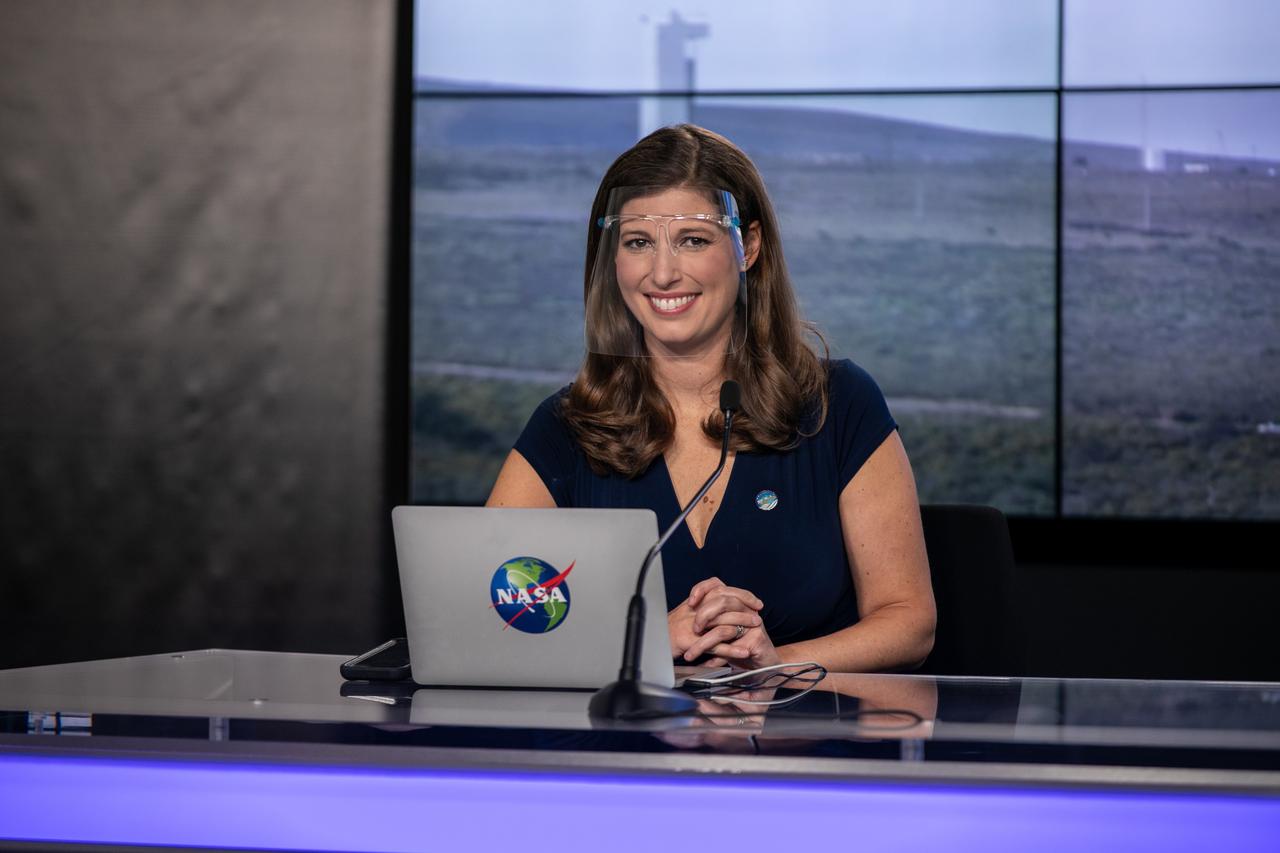
Marina Jurica of NASA’s Jet Propulsion Laboratory in Pasadena moderates a science briefing for the Sentinel-6 Michael Freilich mission at Vandenberg Air Force Base in California on Nov. 20, 2020. The Sentinel-6/Jason-CS (Continuity of Service) mission consists of the Sentinel-6 Michael Freilich satellite, which will be followed by its twin, the Sentinel-6B satellite, in 2025. The Sentinel-6/Jason-CS mission is part of Copernicus, the European Union’s Earth observation program, managed by the European Commission. Continuing the legacy of the Jason series missions, Sentinel-6/Jason-CS will extend the records of sea level into their fourth decade, collecting accurate measurements of sea surface height for more than 90% of the world’s seas, and providing crucial information for operational oceanography, marine meteorology, and climate studies. Sentinel-6 Michael Freilich launched Nov. 21, 2020, at 9:17 PST (12:17 EST). NASA’s Launch Services Program at Kennedy Space Center was responsible for launch management.
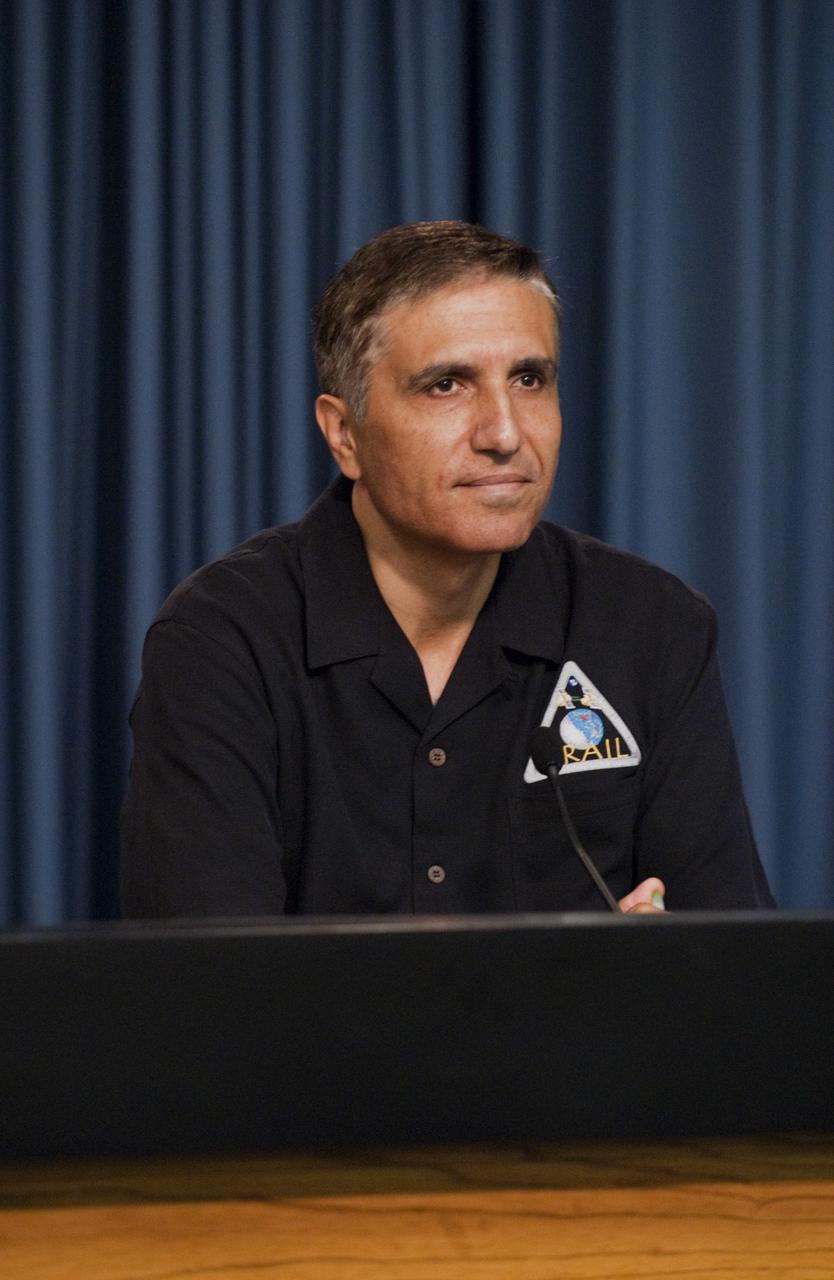
CAPE CANAVERAL, Fla. – – Sami Asmar, GRAIL deputy project scientist, NASA’s Jet Propulsion Laboratory, participates in the Gravity Recovery and Interior Laboratory (GRAIL) mission science briefing in the NASA Press Site auditorium at NASA's Kennedy Space Center in Florida. GRAIL is scheduled to launch Sept. 8 aboard a United Launch Alliance Delta II Heavy rocket from Cape Canaveral Air Force Station in Florida. GRAIL will fly twin spacecraft in tandem around the moon to precisely measure and map variations in the moon's gravitational field. The mission will provide the most accurate global gravity field to date for any planet, including Earth. This detailed information will reveal differences in the density of the moon's crust and mantle and will help answer fundamental questions about the moon's internal structure, thermal evolution, and history of collisions with asteroids. The aim is to map the moon's gravity field so completely that future moon vehicles can safely navigate anywhere on the moon’s surface. For more information, visit http://www.nasa.gov/grail. Photo credit: NASA/Kim Shiflett
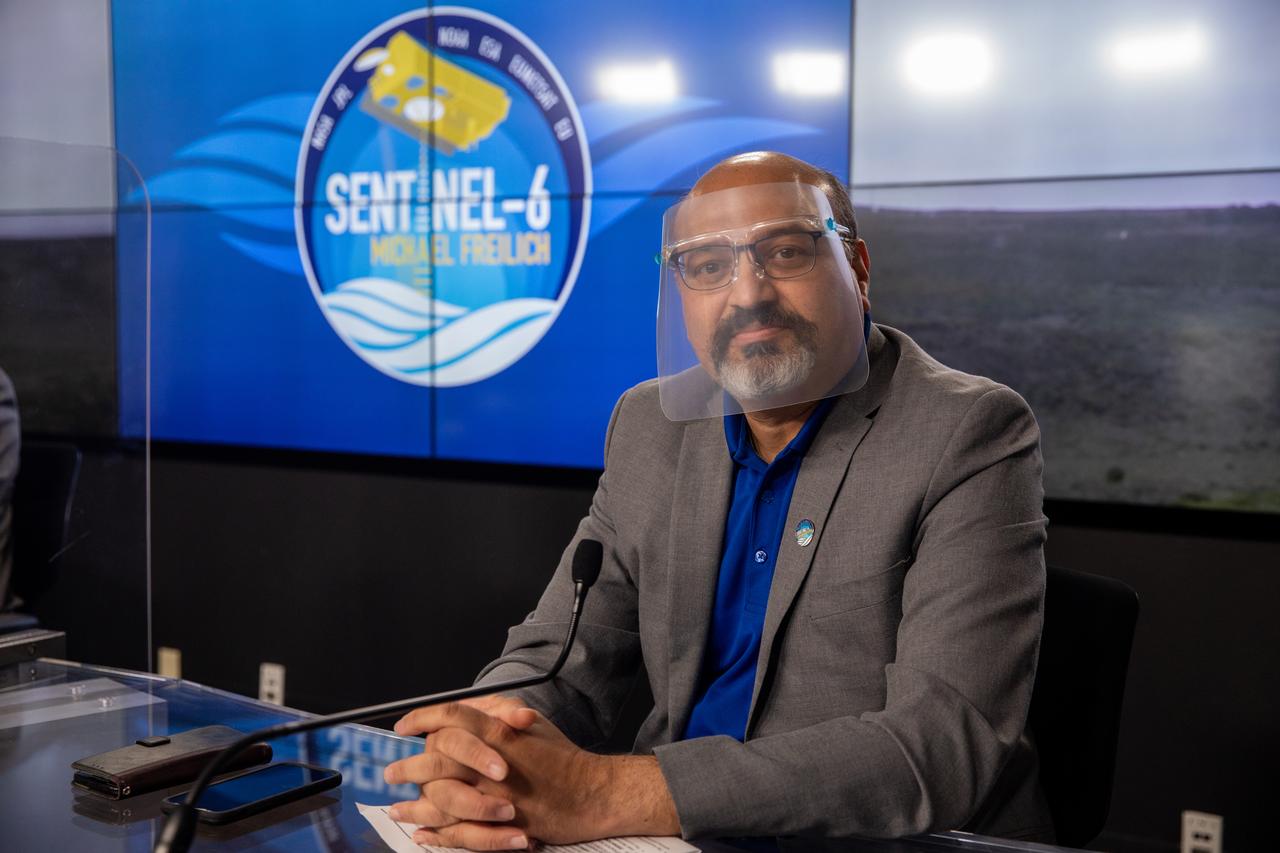
Parag Vaze, project manager, NASA’s Jet Propulsion Laboratory in Pasadena, participates in a prelaunch news conference for the Sentinel-6 Michael Freilich mission at Vandenberg Air Force Base in California on Nov. 20, 2020. The Sentinel-6/Jason-CS (Continuity of Service) mission consists of the Sentinel-6 Michael Freilich satellite, which will be followed by its twin, the Sentinel-6B satellite, in 2025. The Sentinel-6/Jason-CS mission is part of Copernicus, the European Union’s Earth observation program, managed by the European Commission. Continuing the legacy of the Jason series missions, Sentinel-6/Jason-CS will extend the records of sea level into their fourth decade, collecting accurate measurements of sea surface height for more than 90% of the world’s seas, and providing crucial information for operational oceanography, marine meteorology, and climate studies. Sentinel-6 Michael Freilich launched Nov. 21, 2020, at 9:17 PST (12:17 EST). NASA’s Launch Services Program at Kennedy Space Center was responsible for launch management.
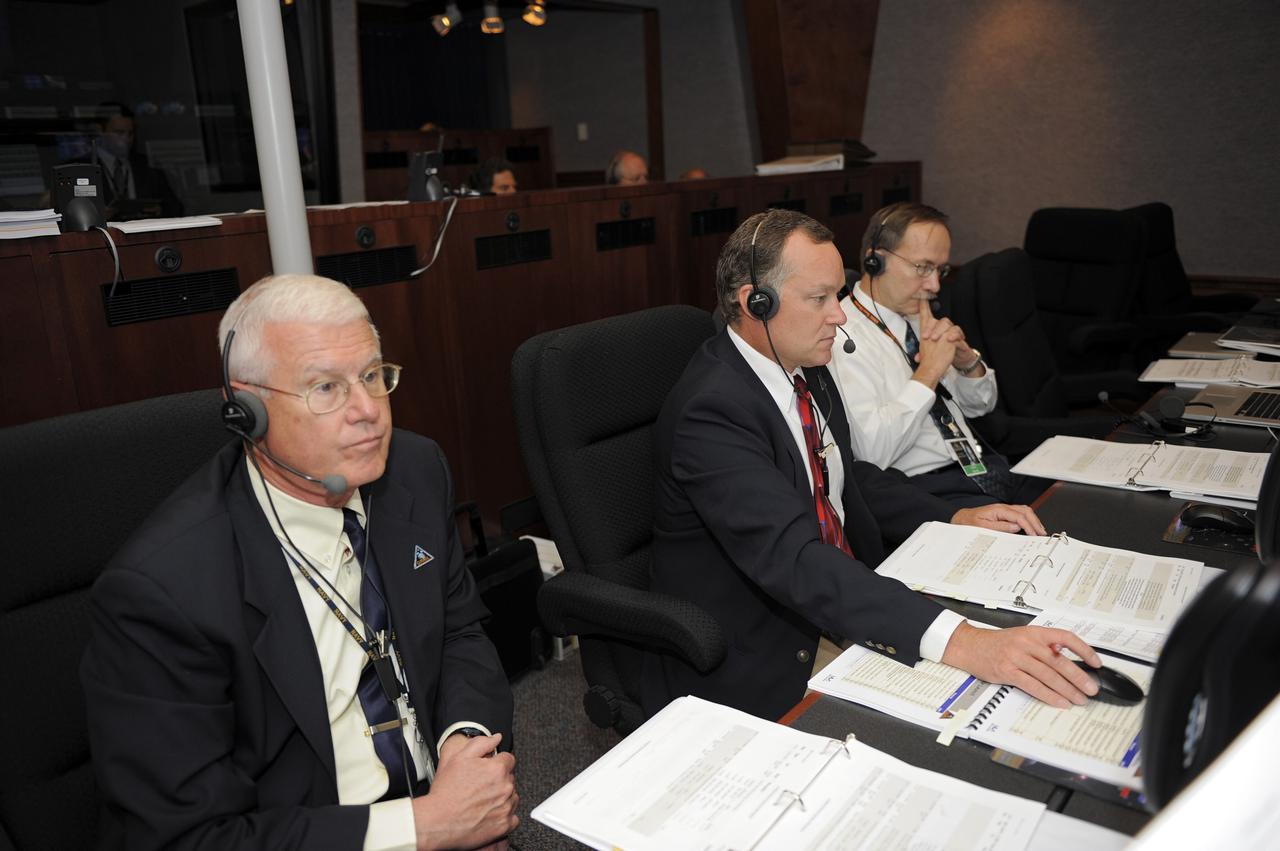
CAPE CANAVERAL, Fla. -- On Cape Canaveral Air Force Station in Florida, members of NASA's Gravity Recovery and Interior Laboratory (GRAIL) launch team monitor GRAIL's launch countdown from the Mission Directors Center in Hangar AE. From left are David Lehman, spacecraft mission director and GRAIL project manager, NASA's Jet Propulsion Laboratory (JPL); Tom Hoffman, deputy spacecraft mission director, JPL; and John Henk, GRAIL program manager, Lockheed Martin Space Systems. Launch is scheduled for 8:37:06 a.m. EDT Sept. 8 from Space Launch Complex 17B on Cape Canaveral Air Force Station. GRAIL will fly twin spacecraft in tandem around the moon to precisely measure and map variations in the moon's gravitational field. The mission will provide the most accurate global gravity field to date for any planet, including Earth. For more information, visit http://www.nasa.gov/grail. Photo credit: NASA/Kim Shiflett
![“When I was a kid, I had a Lego set of one of the twin rovers, Spirit and Opportunity. It was like a Lego rover that could fold up the same way that the actual rover did. It’s crazy because I had that when I was like ten — and now, some of my current coworkers actually worked on that launch. So when I walked into my launch director’s office a couple of years ago, I saw that same Lego set sitting next to the people at Jet Propulsion Laboratory who actually built the rover. “Just being able to see it and touch it [as a kid] helps you impart your own imagination onto it. It’s really exciting. I wasn’t an action figure type of kid — but when I had stuff that seemed real, I really enjoyed putting it together. The project of putting it together was the thing that made my parents think that I was going to be a good engineer. Having it in front of you makes it real. So when you see it on TV, it’s like: ‘I know what that is. I know how that instrument works.’ There’s a connection there.” — Phillip Hargrove, Aerospace Engineer, Kennedy Space Center Interviewer: NASA / Thalia Patrinos](https://images-assets.nasa.gov/image/KSC-20210209-PH-KLS02_0030/KSC-20210209-PH-KLS02_0030~medium.jpg)
“When I was a kid, I had a Lego set of one of the twin rovers, Spirit and Opportunity. It was like a Lego rover that could fold up the same way that the actual rover did. It’s crazy because I had that when I was like ten — and now, some of my current coworkers actually worked on that launch. So when I walked into my launch director’s office a couple of years ago, I saw that same Lego set sitting next to the people at Jet Propulsion Laboratory who actually built the rover. “Just being able to see it and touch it [as a kid] helps you impart your own imagination onto it. It’s really exciting. I wasn’t an action figure type of kid — but when I had stuff that seemed real, I really enjoyed putting it together. The project of putting it together was the thing that made my parents think that I was going to be a good engineer. Having it in front of you makes it real. So when you see it on TV, it’s like: ‘I know what that is. I know how that instrument works.’ There’s a connection there.” — Phillip Hargrove, Aerospace Engineer, Kennedy Space Center Interviewer: NASA / Thalia Patrinos
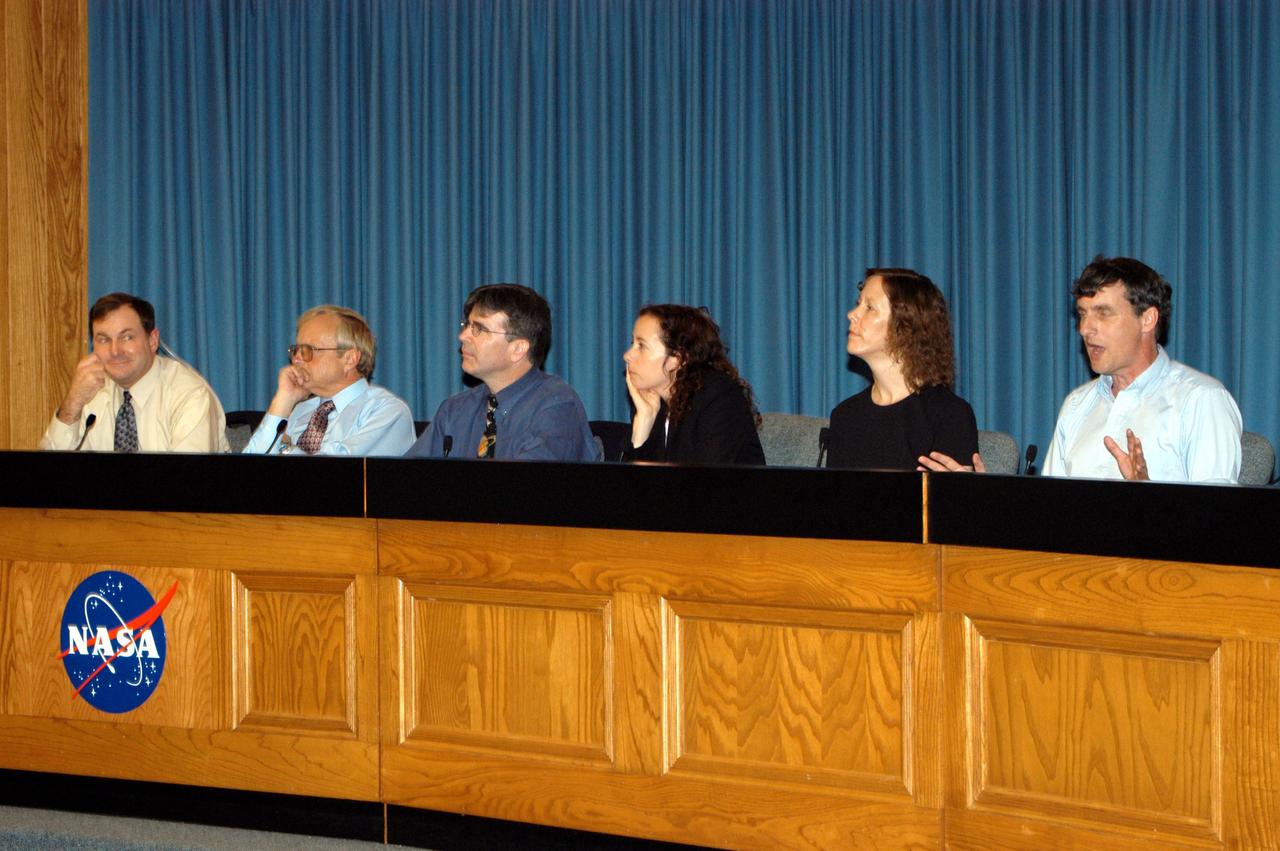
KENNEDY SPACE CENTER, FLA. - A science briefing on the Mars Exploration Rover (MER) missions is held for the media at Kennedy Space Center. From left, the participants are Donald Savage, NASA Public Information Officer; Dr. Ed Weiler, Associate Administrator for Space Science, NASA Headquarters; Dr. Jim Garvin, Mars lead scientist, NASA Headquarters; Dr. Cathy Weitz, MER program scientist, NASA Headquarters; Dr. Joy Crisp, MER project scientist, Jet Propulsion Laboratory; and Dr. Steve Squyres, Mer principal investigator, Cornell Univeristy, Ithaca, N.Y. NASA's twin Mars Exploration Rovers are designed to study the history of water on Mars. These robotic geologists are equipped with a robotic arm, a drilling tool, three spectrometers, and four pairs of cameras that allow them to have a human-like, 3D view of the terrain. Each rover could travel as far as 100 meters in one day to act as Mars scientists' eyes and hands, exploring an environment where humans are not yet able to go. MER-A is scheduled to launch on June 8 at 2:06 p.m. EDT, with two launch opportunities each day during a launch period that closes on June 24.
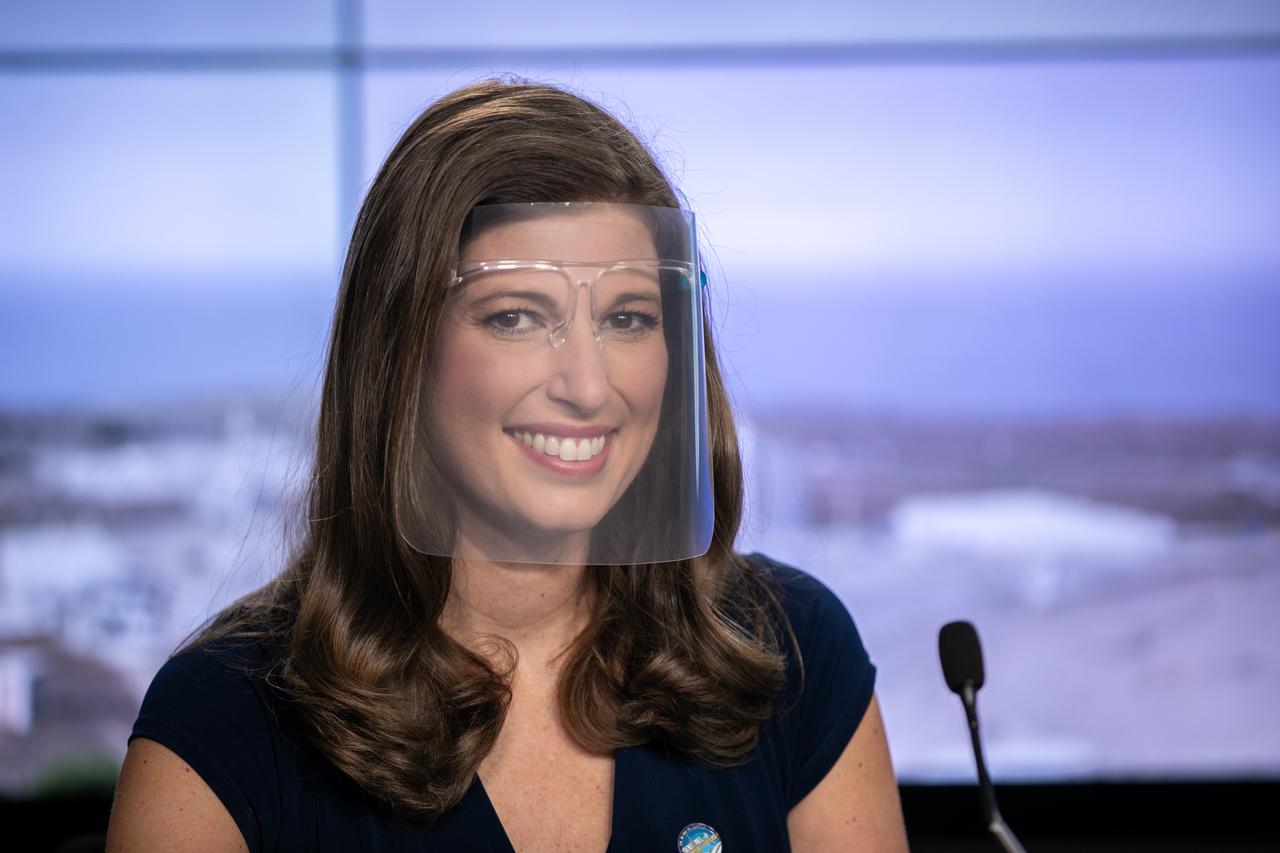
Marina Jurica of NASA’s Jet Propulsion Laboratory in Pasadena moderates a science briefing for the Sentinel-6 Michael Freilich mission at Vandenberg Air Force Base in California on Nov. 20, 2020. The Sentinel-6/Jason-CS (Continuity of Service) mission consists of the Sentinel-6 Michael Freilich satellite, which will be followed by its twin, the Sentinel-6B satellite, in 2025. The Sentinel-6/Jason-CS mission is part of Copernicus, the European Union’s Earth observation program, managed by the European Commission. Continuing the legacy of the Jason series missions, Sentinel-6/Jason-CS will extend the records of sea level into their fourth decade, collecting accurate measurements of sea surface height for more than 90% of the world’s seas, and providing crucial information for operational oceanography, marine meteorology, and climate studies. Sentinel-6 Michael Freilich launched Nov. 21, 2020, at 9:17 PST (12:17 EST). NASA’s Launch Services Program at Kennedy Space Center was responsible for launch management.
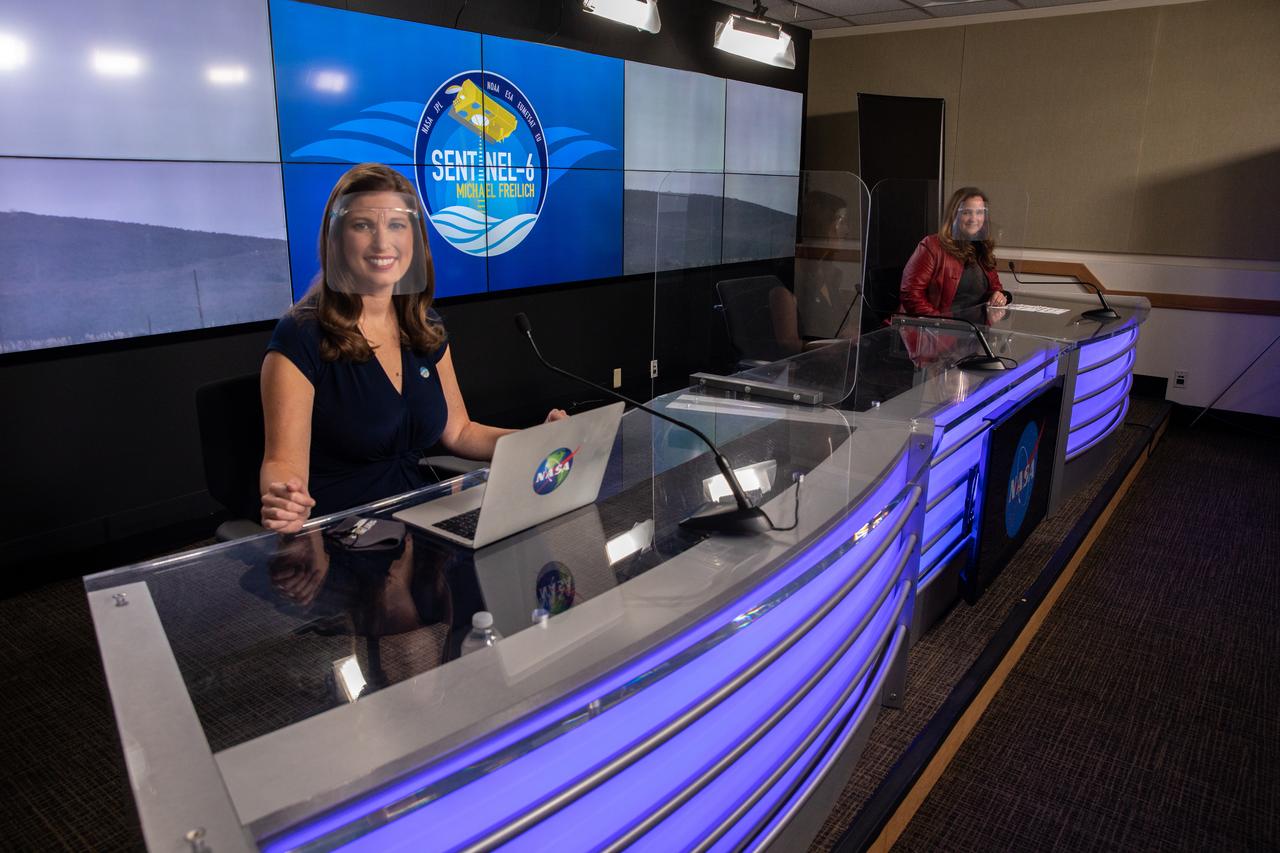
Marina Jurica of NASA’s Jet Propulsion Laboratory in Pasadena, foreground, and Karen St. Germain, director of the agency’s Earth Science Division, participate in a science briefing for the Sentinel-6 Michael Freilich mission at Vandenberg Air Force Base in California on Nov. 20, 2020. The Sentinel-6/Jason-CS (Continuity of Service) mission consists of the Sentinel-6 Michael Freilich satellite, which will be followed by its twin, the Sentinel-6B satellite, in 2025. The Sentinel-6/Jason-CS mission is part of Copernicus, the European Union’s Earth observation program, managed by the European Commission. Continuing the legacy of the Jason series missions, Sentinel-6/Jason-CS will extend the records of sea level into their fourth decade, collecting accurate measurements of sea surface height for more than 90% of the world’s seas, and providing crucial information for operational oceanography, marine meteorology, and climate studies. Sentinel-6 Michael Freilich launched Nov. 21, 2020, at 9:17 PST (12:17 EST). NASA’s Launch Services Program at Kennedy Space Center was responsible for launch management.
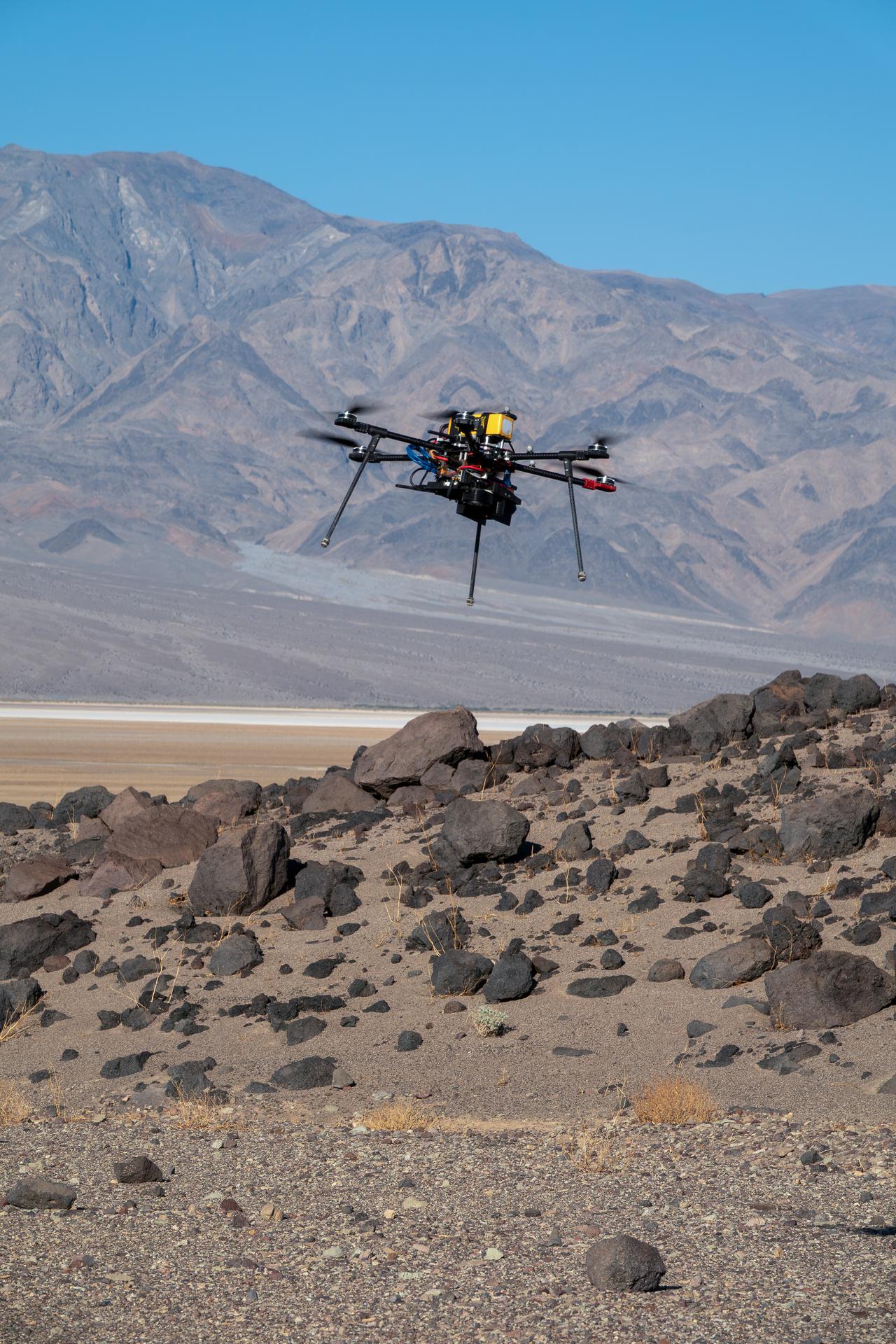
One of three drones used in recent tests by NASA’s Jet Propulsion Laboratory in Southern California flies over Mars Hill, a region of Death Valley National Park, in September 2025. The region’s rubbly, volcanic rocks have served as a Mars-like testing area and analog site for scientists since the 1970s, when NASA was preparing to land the twin Viking spacecraft on the Red Planet. The drone research — tests of navigation software for the Martian surface — was one of 25 projects funded by NASA’s Mars Exploration Program this past year to push the limits of future technologies. Sand dunes confused the navigation algorithm of the Ingenuity Mars helicopter during several of its last flights, including its 72nd and final flight on the Red Planet in January 2024. The navigation software in development would help future rotorcraft to track the surface of especially bland, featureless terrain similar to the barren sand dunes seen in parts of Death Valley and in the Mojave Desert and to land safely in cluttered environments like Mars Hill.
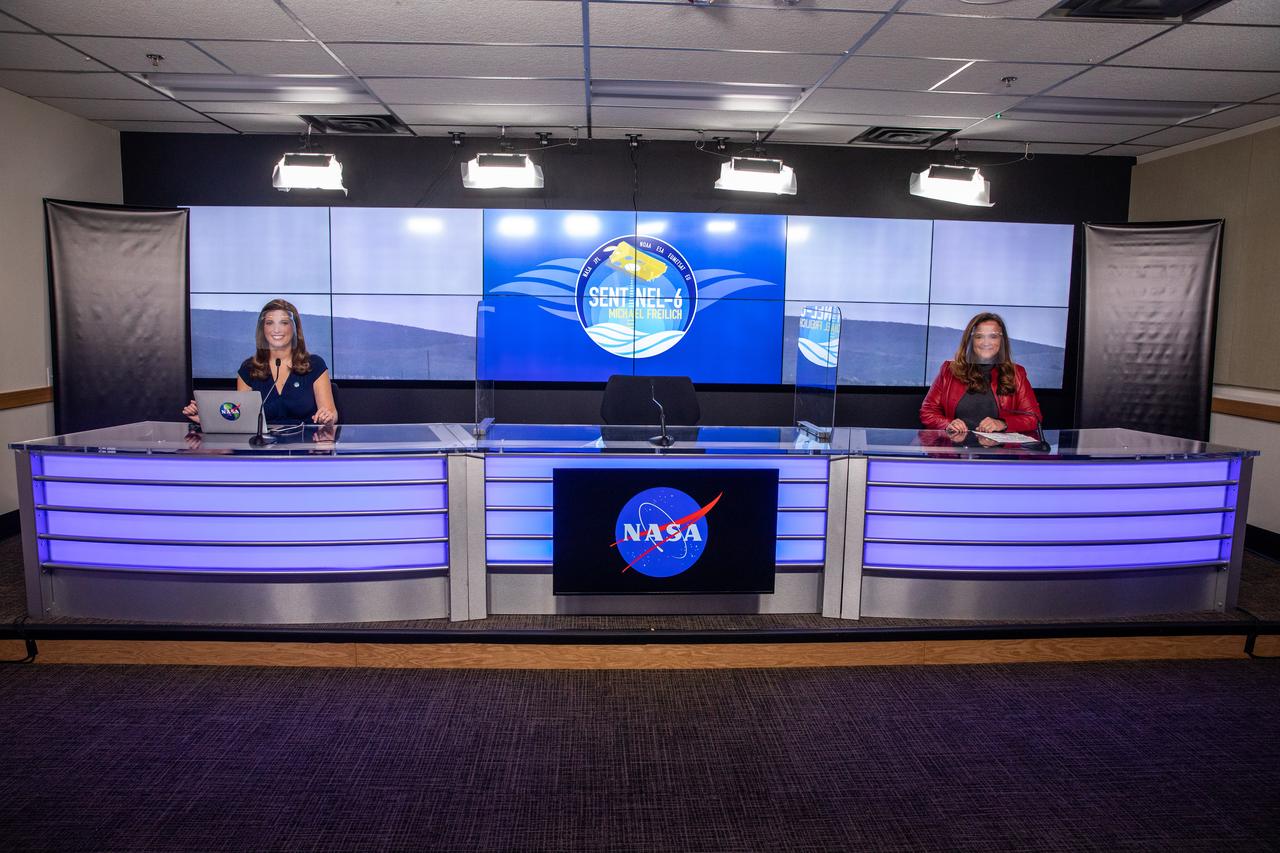
Marina Jurica of NASA’s Jet Propulsion Laboratory in Pasadena, left, and Karen St. Germain, director of the agency’s Earth Science Division, participate in a science briefing for the Sentinel-6 Michael Freilich mission at Vandenberg Air Force Base in California on Nov. 20, 2020. The Sentinel-6/Jason-CS (Continuity of Service) mission consists of the Sentinel-6 Michael Freilich satellite, which will be followed by its twin, the Sentinel-6B satellite, in 2025. The Sentinel-6/Jason-CS mission is part of Copernicus, the European Union’s Earth observation program, managed by the European Commission. Continuing the legacy of the Jason series missions, Sentinel-6/Jason-CS will extend the records of sea level into their fourth decade, collecting accurate measurements of sea surface height for more than 90% of the world’s seas, and providing crucial information for operational oceanography, marine meteorology, and climate studies. Sentinel-6 Michael Freilich launched Nov. 21, 2020, at 9:17 PST (12:17 EST). NASA’s Launch Services Program at Kennedy Space Center was responsible for launch management.
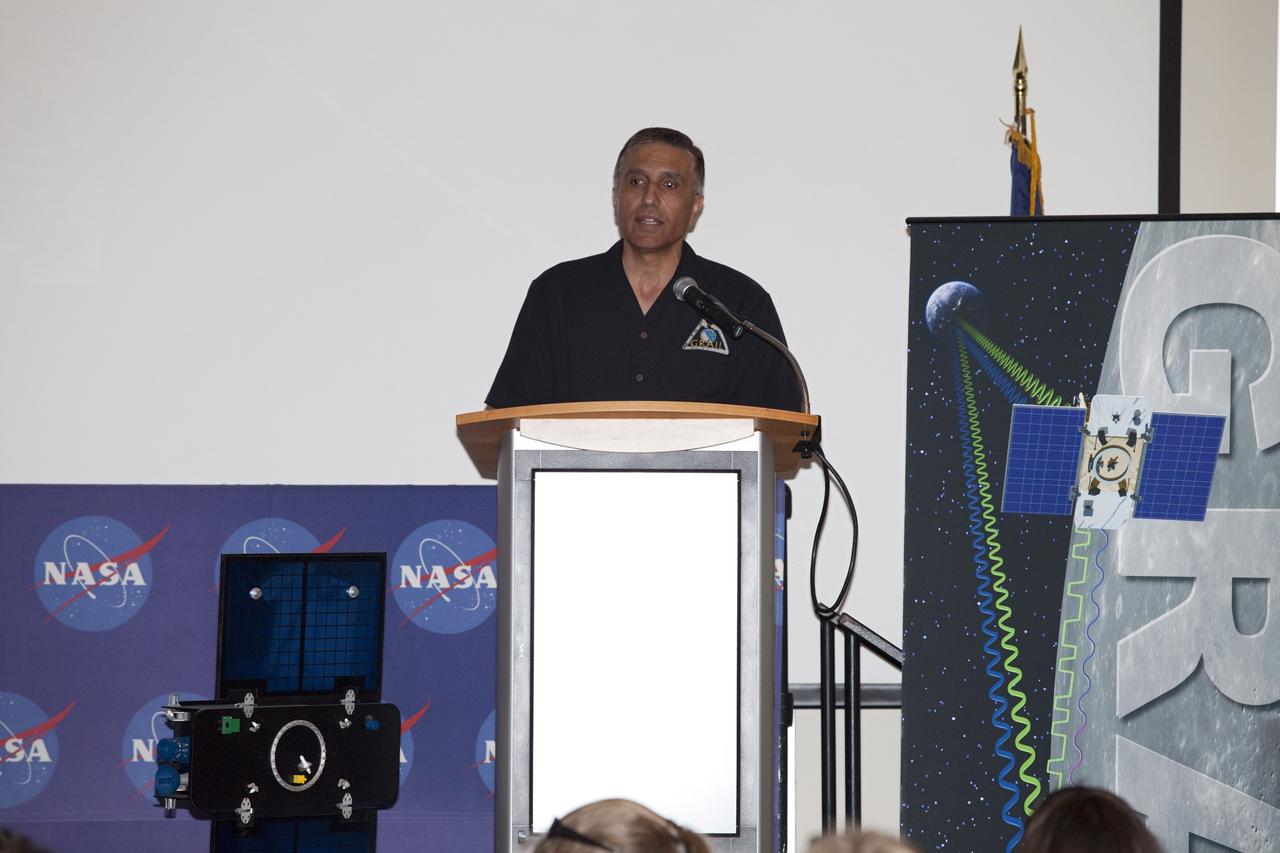
CAPE CANAVERAL, Fla. – Sami Asmar, GRAIL deputy project scientist at NASA’s Jet Propulsion Laboratory in Pasadena, Calif., speaks to a group of Tweetup participants at the Kennedy Space Center Visitor Complex in Florida during prelaunch activities for the agency’s Gravity Recovery and Interior Laboratory (GRAIL) mission. Participants toured NASA’s Kennedy Space Center and got a close-up view of Space Launch Complex 17B at Cape Canaveral Air Force Station. The tweeters will share their experiences with followers through the social networking site Twitter. GRAIL will fly twin spacecraft in tandem around the moon to precisely measure and map variations in the moon’s gravitational field. The mission will provide the most accurate global gravity field to date for any planet, including Earth. This detailed information will reveal differences in the density of the moon’s crust and mantle and will help answer fundamental questions about the moon’s internal structure, thermal evolution, and history of collisions with asteroids. The aim is to map the moon’s gravity field so completely that future lunar vehicles can safely navigate anywhere on the moon’s surface. Launch is scheduled for 8:37:06 a.m. EDT Sept. 8. For more information, visit http://www.nasa.gov/grail. Photo credit: NASA/Gianni Woods
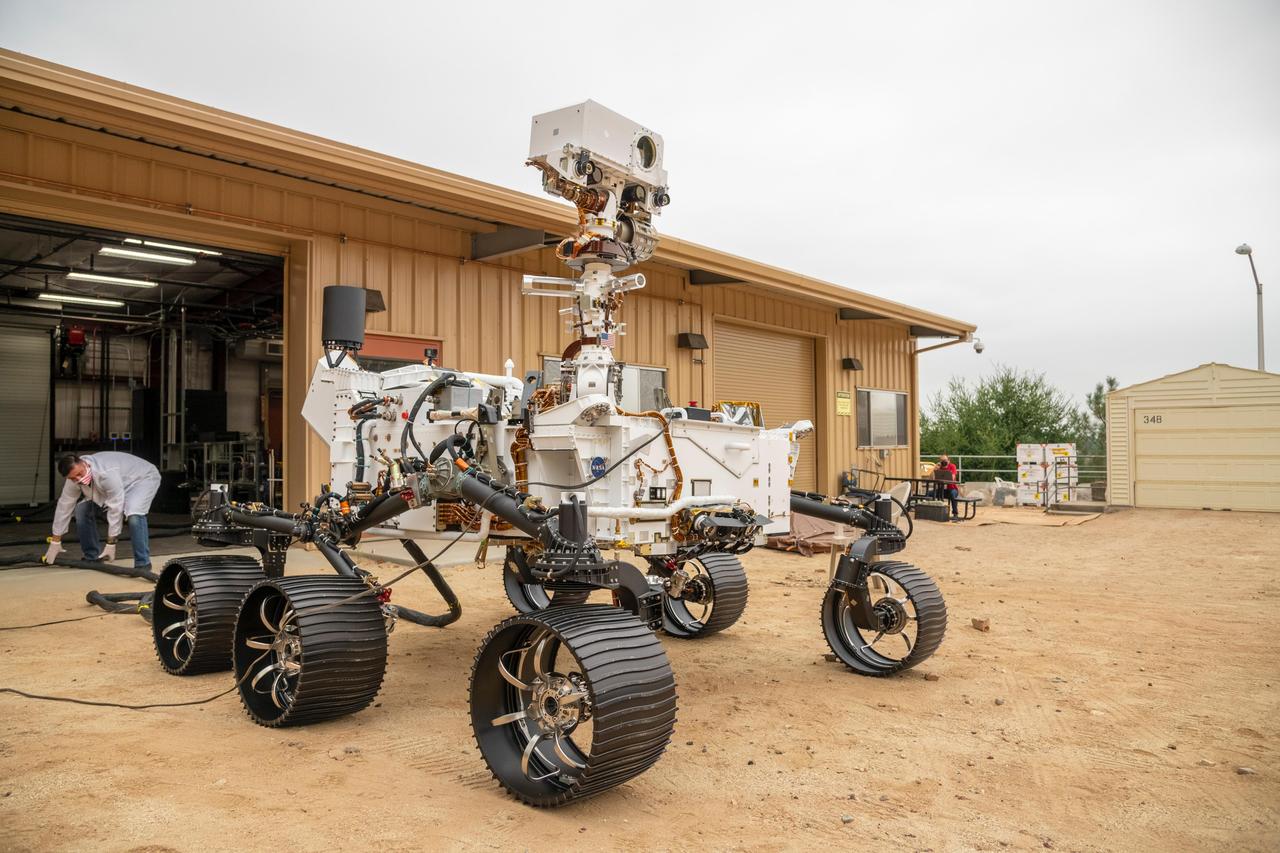
The full-scale engineering model of NASA's Perseverance rover has put some dirt on its wheels. This vehicle system test bed (VSTB) rover moved into its home — a garage facing the Mars Yard at NASA's Jet Propulsion Laboratory in Southern California — on Sept. 4, 2020. It drove onto simulated Martian surface of the Mars Yard — a dirt field at JPL studded with rocks and other obstacles — for the first time on Sept. 8. The VSTB rover is also known as OPTIMISM (Operational Perseverance Twin for Integration of Mechanisms and Instruments Sent to Mars). A key objective for Perseverance's mission on Mars is astrobiology, including the search for signs of ancient microbial life. The rover will also characterize the planet's climate and geology, pave the way for human exploration of the Red Planet, and be the first planetary spacecraft to collect and cache Martian rock and regolith (broken rock and dust). Subsequent missions, currently under consideration by NASA in cooperation with the European Space Agency, would send spacecraft to Mars to collect these cached samples from the surface and return them to Earth for in-depth analysis. The Mars 2020 mission is part of a larger program that includes missions to the Moon as a way to prepare for human exploration of the Red Planet. Charged with returning astronauts to the Moon by 2024, NASA will establish a sustained human presence on and around the Moon by 2028 through NASA's Artemis lunar exploration plans. https://photojournal.jpl.nasa.gov/catalog/PIA23966
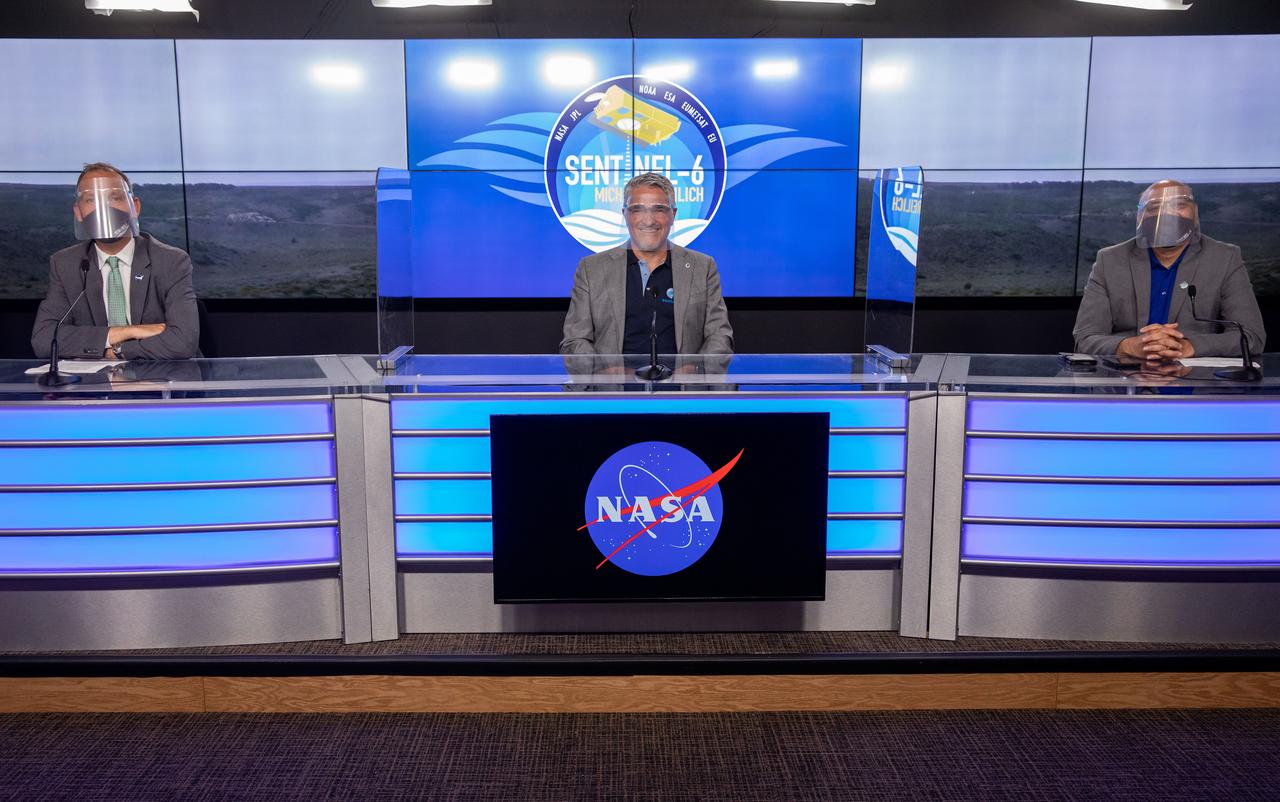
Mission and launch officials participate in a prelaunch news conference for the Sentinel-6 Michael Freilich mission at Vandenberg Air Force Base in California on Nov. 20, 2020. From left are Thomas Zurbuchen, associate administrator for Science Mission Directorate at NASA Headquarters; Pierrik Vuilleumier, project manager, European Space Agency (ESA); and Parag Vaze, project manager, NASA’s Jet Propulsion Laboratory in Pasadena. The Sentinel-6/Jason-CS (Continuity of Service) mission consists of the Sentinel-6 Michael Freilich satellite, which will be followed by its twin, the Sentinel-6B satellite, in 2025. The Sentinel-6/Jason-CS mission is part of Copernicus, the European Union’s Earth observation program, managed by the European Commission. Continuing the legacy of the Jason series missions, Sentinel-6/Jason-CS will extend the records of sea level into their fourth decade, collecting accurate measurements of sea surface height for more than 90% of the world’s seas, and providing crucial information for operational oceanography, marine meteorology, and climate studies. Sentinel-6 Michael Freilich launched Nov. 21, 2020, at 9:17 PST (12:17 EST). NASA’s Launch Services Program at Kennedy Space Center was responsible for launch management.
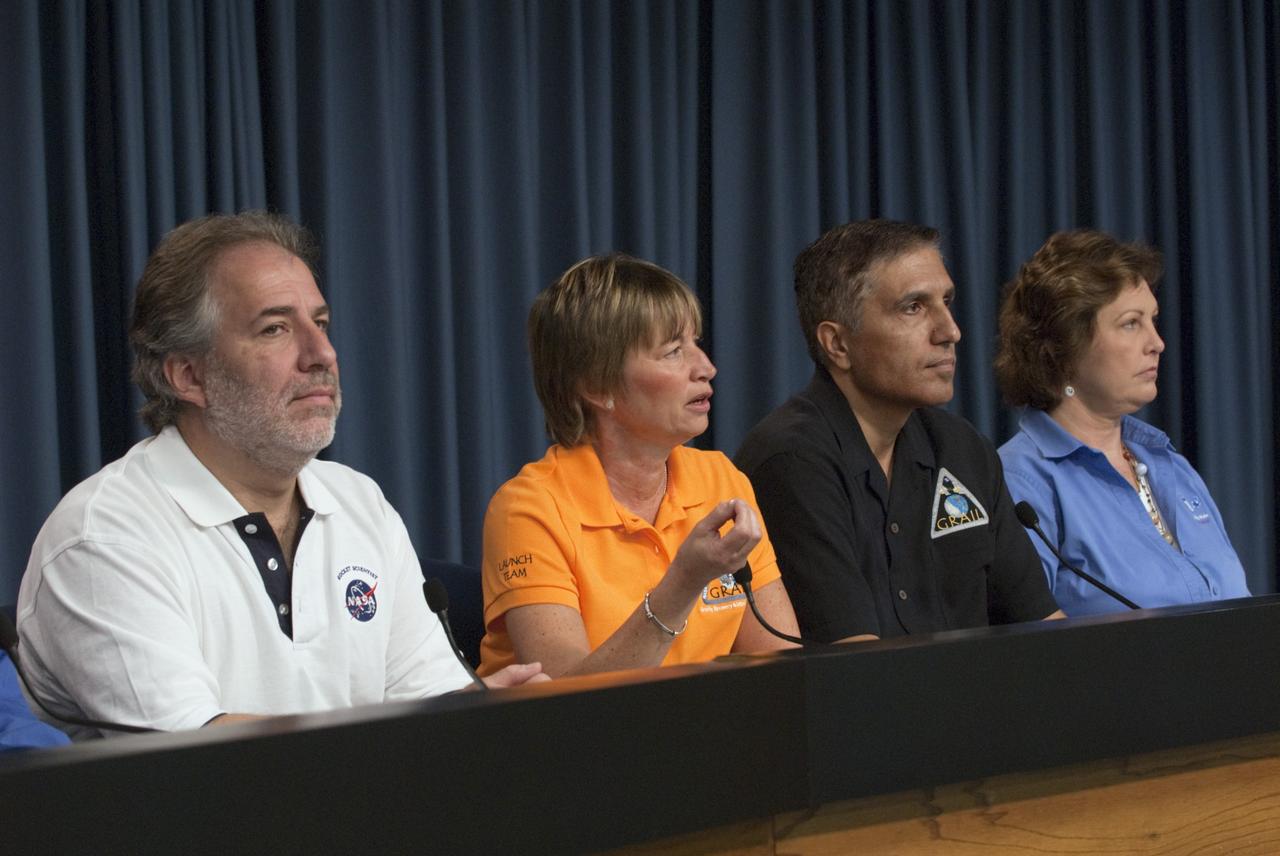
CAPE CANAVERAL, Fla. – – A Gravity Recovery and Interior Laboratory (GRAIL) mission science briefing is held in the NASA Press Site auditorium at NASA's Kennedy Space Center in Florida. From left are Robert Fogel, NASA’s GRAIL program scientist; Maria Zuber, GRAIL principal investigator with the Massachusetts Institute of Technology; Sami Asmar, GRAIL deputy project scientist, NASA’s Jet Propulsion Laboratory; and Leesa Hubbard, teacher in residence, Sally Ride Science, San Diego. GRAIL is scheduled to launch Sept. 8 aboard a United Launch Alliance Delta II Heavy rocket from Cape Canaveral Air Force Station in Florida. GRAIL will fly twin spacecraft in tandem around the moon to precisely measure and map variations in the moon's gravitational field. The mission will provide the most accurate global gravity field to date for any planet, including Earth. This detailed information will reveal differences in the density of the moon's crust and mantle and will help answer fundamental questions about the moon's internal structure, thermal evolution, and history of collisions with asteroids. The aim is to map the moon's gravity field so completely that future moon vehicles can safely navigate anywhere on the moon’s surface. For more information, visit http://www.nasa.gov/grail. Photo credit: NASA/Kim Shiflett

CAPE CANAVERAL, Fla. – David Lehman, GRAIL project manager, NASA’s Jet Propulsion Laboratory, participates in the Gravity Recovery and Interior Laboratory (GRAIL) prelaunch news conference in the NASA Press Site auditorium at NASA's Kennedy Space Center in Florida. GRAIL is scheduled to launch Sept. 8 aboard a United Launch Alliance Delta II Heavy rocket from Cape Canaveral Air Force Station in Florida. GRAIL will fly twin spacecraft in tandem around the moon to precisely measure and map variations in the moon's gravitational field. The mission will provide the most accurate global gravity field to date for any planet, including Earth. This detailed information will reveal differences in the density of the moon's crust and mantle and will help answer fundamental questions about the moon's internal structure, thermal evolution, and history of collisions with asteroids. The aim is to map the moon's gravity field so completely that future moon vehicles can safely navigate anywhere on the moon’s surface. For more information, visit http://www.nasa.gov/grail. Photo credit: NASA/Kim Shiflett
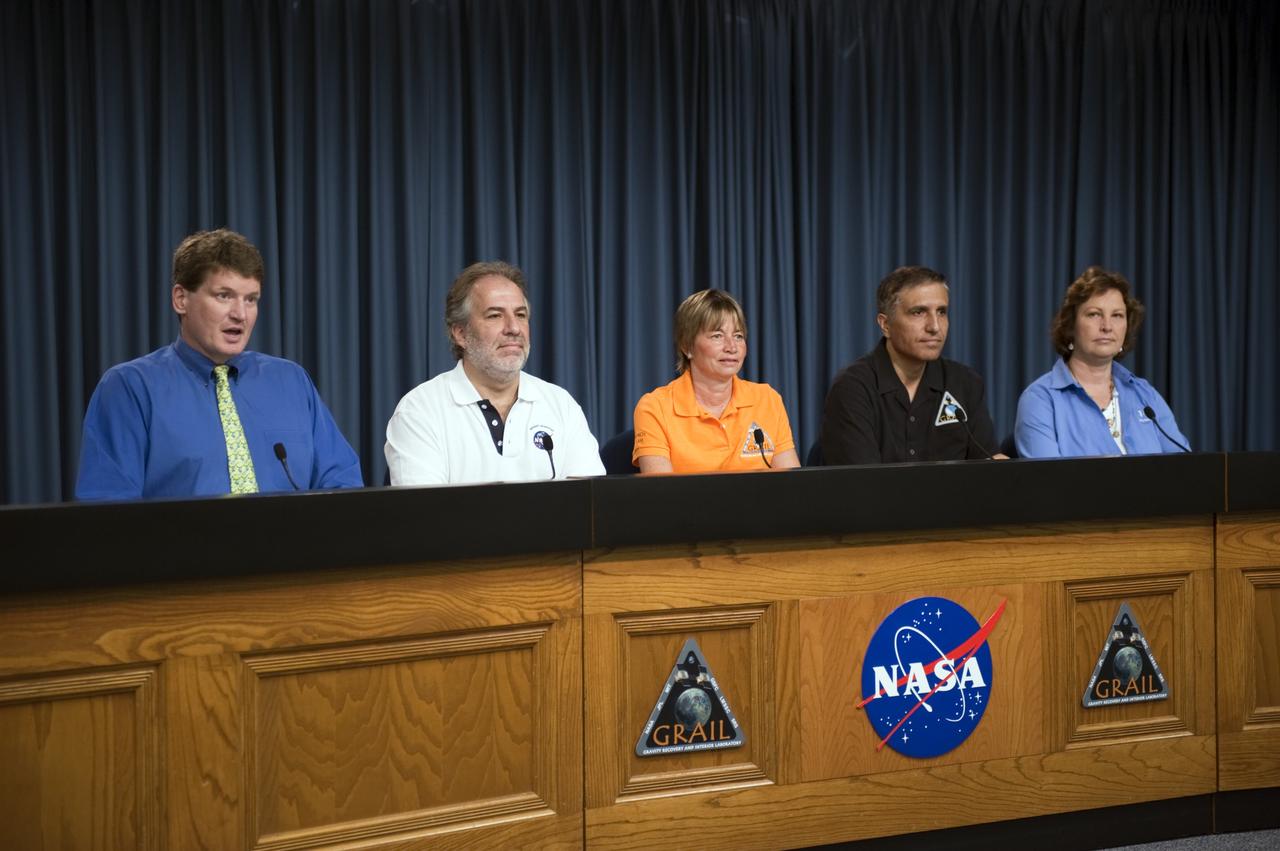
CAPE CANAVERAL, Fla. – – A Gravity Recovery and Interior Laboratory (GRAIL) mission science briefing is held in the NASA Press Site auditorium at NASA's Kennedy Space Center in Florida. From left are DC Agle, NASA Public Affairs; Robert Fogel, NASA’s GRAIL program scientist; Maria Zuber, GRAIL principal investigator with the Massachusetts Institute of Technology; Sami Asmar, GRAIL deputy project scientist, NASA’s Jet Propulsion Laboratory; and Leesa Hubbard, teacher in residence, Sally Ride Science, San Diego. GRAIL is scheduled to launch Sept. 8 aboard a United Launch Alliance Delta II Heavy rocket from Cape Canaveral Air Force Station in Florida. GRAIL will fly twin spacecraft in tandem around the moon to precisely measure and map variations in the moon's gravitational field. The mission will provide the most accurate global gravity field to date for any planet, including Earth. This detailed information will reveal differences in the density of the moon's crust and mantle and will help answer fundamental questions about the moon's internal structure, thermal evolution, and history of collisions with asteroids. The aim is to map the moon's gravity field so completely that future moon vehicles can safely navigate anywhere on the moon’s surface. For more information, visit http://www.nasa.gov/grail. Photo credit: NASA/Kim Shiflett
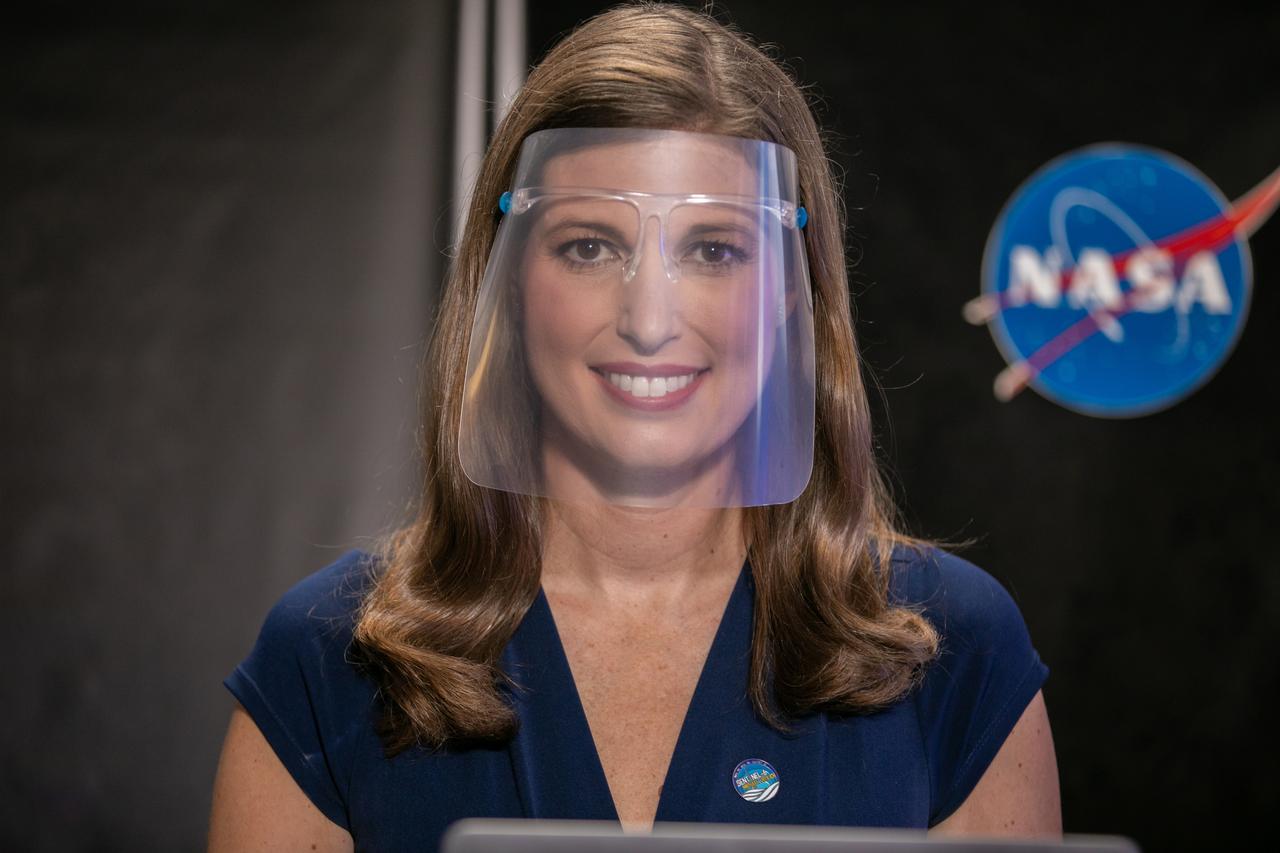
Marina Jurica of NASA’s Jet Propulsion Laboratory in Pasadena moderates a prelaunch news conference for the Sentinel-6 Michael Freilich mission at Vandenberg Air Force Base in California on Nov. 20, 2020. The Sentinel-6/Jason-CS (Continuity of Service) mission consists of the Sentinel-6 Michael Freilich satellite, which will be followed by its twin, the Sentinel-6B satellite, in 2025. The Sentinel-6/Jason-CS mission is part of Copernicus, the European Union’s Earth observation program, managed by the European Commission. Continuing the legacy of the Jason series missions, Sentinel-6/Jason-CS will extend the records of sea level into their fourth decade, collecting accurate measurements of sea surface height for more than 90% of the world’s seas, and providing crucial information for operational oceanography, marine meteorology, and climate studies. Sentinel-6 Michael Freilich launched Nov. 21, 2020, at 9:17 PST (12:17 EST). NASA’s Launch Services Program at Kennedy Space Center was responsible for launch management.
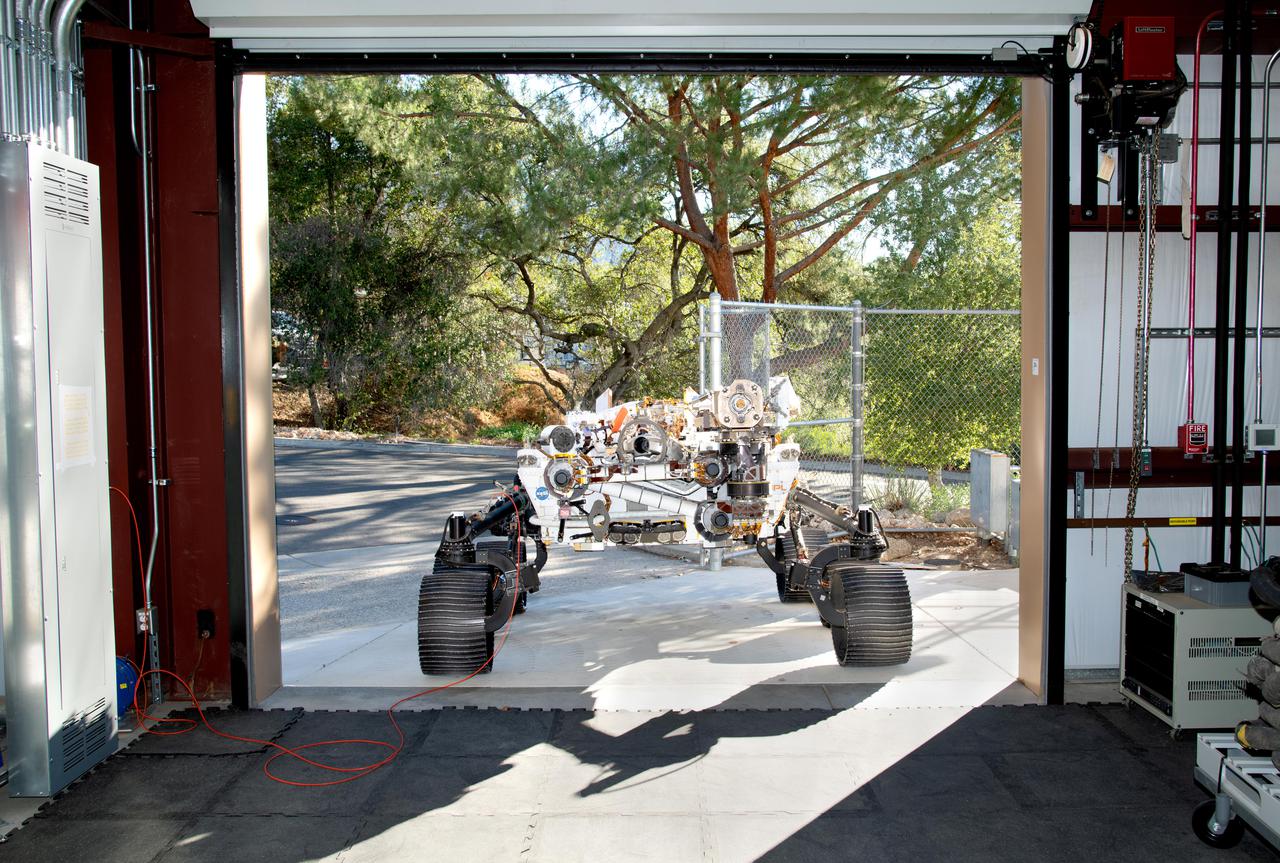
Short for Operational Perseverance Twin for Integration of Mechanisms and Instruments Sent to Mars, OPTIMISM faces a doorway of the Mars Yard garage at NASA's Jet Propulsion Laboratory on Oct. 29, 2021. Referred to generically as a vehicle system test bed, OPTIMISM was recently updated with additional mobility software and the bulk of the complex sample caching system. As with vehicle system test beds for other Mars rovers, OPTIMISM is used to test moves and scenarios in the Mars Yard's simulated Red Planet landscape to help ensure that its twin on Mars can safely execute the commands sent by Earth-bound controllers. The tests could also potentially reveal unexpected problems Perseverance might encounter. With longer drives in Perseverance's near future, another job for OPTIMISM will involve presenting new challenges to the rover's autonomous navigation system, or AutoNav. A key objective for Perseverance's mission on Mars is astrobiology, including the search for signs of ancient microbial life. The rover will characterize the planet's geology and past climate, pave the way for human exploration of the Red Planet, and be the first mission to collect and cache Martian rock and regolith (broken rock and dust). Subsequent NASA missions, in cooperation with ESA (European Space Agency), would send spacecraft to Mars to collect these sealed samples from the surface and return them to Earth for in-depth analysis. The Mars 2020 Perseverance mission is part of NASA's Moon to Mars exploration approach, which includes Artemis missions to the Moon that will help prepare for human exploration of the Red Planet. https://photojournal.jpl.nasa.gov/catalog/PIA24527
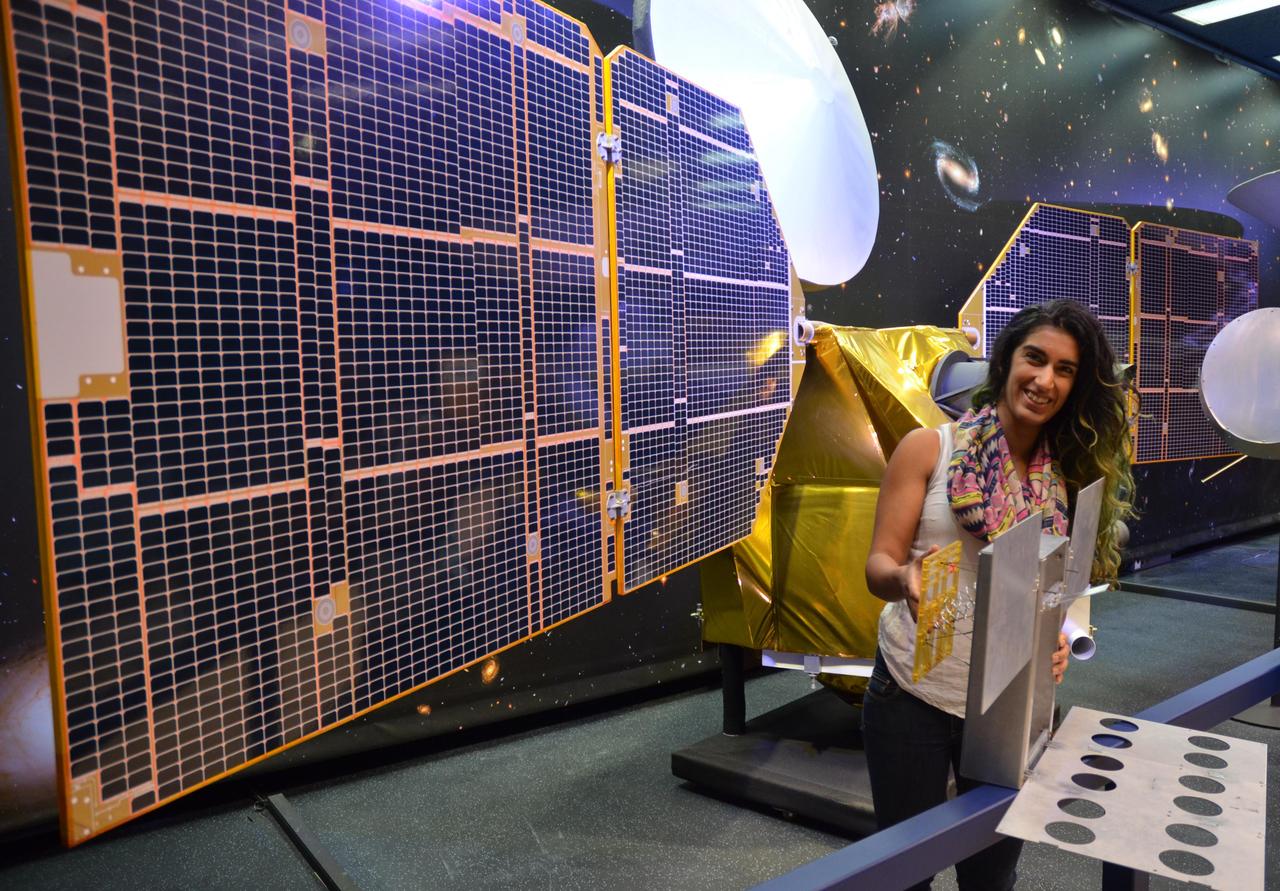
The full-scale mock-up of NASA's MarCO CubeSat held by Farah Alibay, a systems engineer at NASA's Jet Propulsion Laboratory, is dwarfed by the one-half-scale model of NASA's Mars Reconnaissance Orbiter behind her. MarCO, short for Mars Cube One, is the first interplanetary use of CubeSat technologies for small spacecraft. JPL is preparing two MarCO twins for launch in March 2016. They will ride along on an Atlas V launch vehicle lifting off from Vandenberg Air Force Base, California, with NASA's next Mars lander, InSight. MarCO is a technology demonstration aspect of the InSight mission. The mock-up in the photo is in a configuration to show the deployed position of components that correspond to MarCO's two solar panels and two antennas. During launch, those components will be stowed for a total vehicle size of about 14.4 inches (36.6 centimeters) by 9.5 inches (24.3 centimeters) by 4.6 inches (11.8 centimeters). After launch, the two MarCO CubeSats and InSight will be navigated separately to Mars. The MarCO twins will fly past the planet in September 2016 just as InSight is descending through the atmosphere and landing on the surface. MarCO is a technology demonstration to relay communications from InSight to Earth during InSight's descent and landing. InSight communications during that critical period will also be recorded by NASA's Mars Reconnaissance Orbiter for delayed transmission to Earth. InSight -- an acronym for Interior Exploration using Seismic Investigations, Geodesy and Heat Transport -- will study the interior of Mars to improve understanding of the processes that formed and shaped rocky planets, including Earth. Note: After thorough examination, NASA managers have decided to suspend the planned March 2016 launch of the Interior Exploration using Seismic Investigations Geodesy and Heat Transport (InSight) mission. The decision follows unsuccessful attempts to repair a leak in a section of the prime instrument in the science payload. http://photojournal.jpl.nasa.gov/catalog/PIA19671
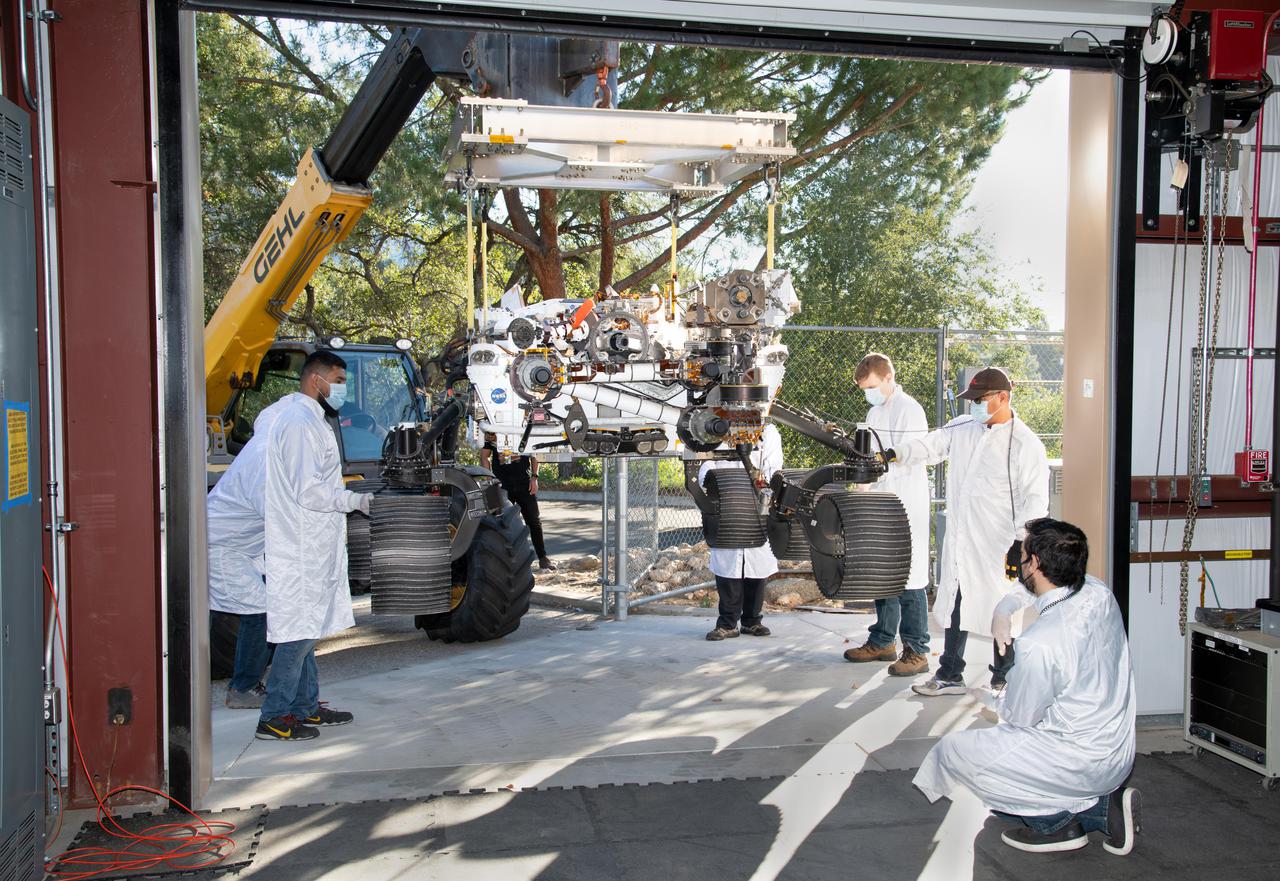
On Oct. 29, 2021, a heavy-duty vehicle transports the Perseverance rover's engineering model from a test lab to the Mars Yard garage at NASA's Jet Propulsion Laboratory. Short for Operational Perseverance Twin for Integration of Mechanisms and Instruments Sent to Mars, OPTIMISM is generically referred to as a vehicle system test bed. As with vehicle system test beds for other Mars rovers, OPTIMISM is used to test moves and scenarios in the Mars Yard's simulated Red Planet landscape to help ensure that its twin on Mars can safely execute the commands sent by Earth-bound controllers. The tests could also potentially reveal unexpected problems Perseverance might encounter. With longer drives in Perseverance's near future, another job for OPTIMISM will involve presenting new challenges to the rover's autonomous navigation system, or AutoNav. A key objective for Perseverance's mission on Mars is astrobiology, including the search for signs of ancient microbial life. The rover will characterize the planet's geology and past climate, pave the way for human exploration of the Red Planet, and be the first mission to collect and cache Martian rock and regolith (broken rock and dust). Subsequent NASA missions, in cooperation with ESA (European Space Agency), would send spacecraft to Mars to collect these sealed samples from the surface and return them to Earth for in-depth analysis. The Mars 2020 Perseverance mission is part of NASA's Moon to Mars exploration approach, which includes Artemis missions to the Moon that will help prepare for human exploration of the Red Planet. https://photojournal.jpl.nasa.gov/catalog/PIA24526
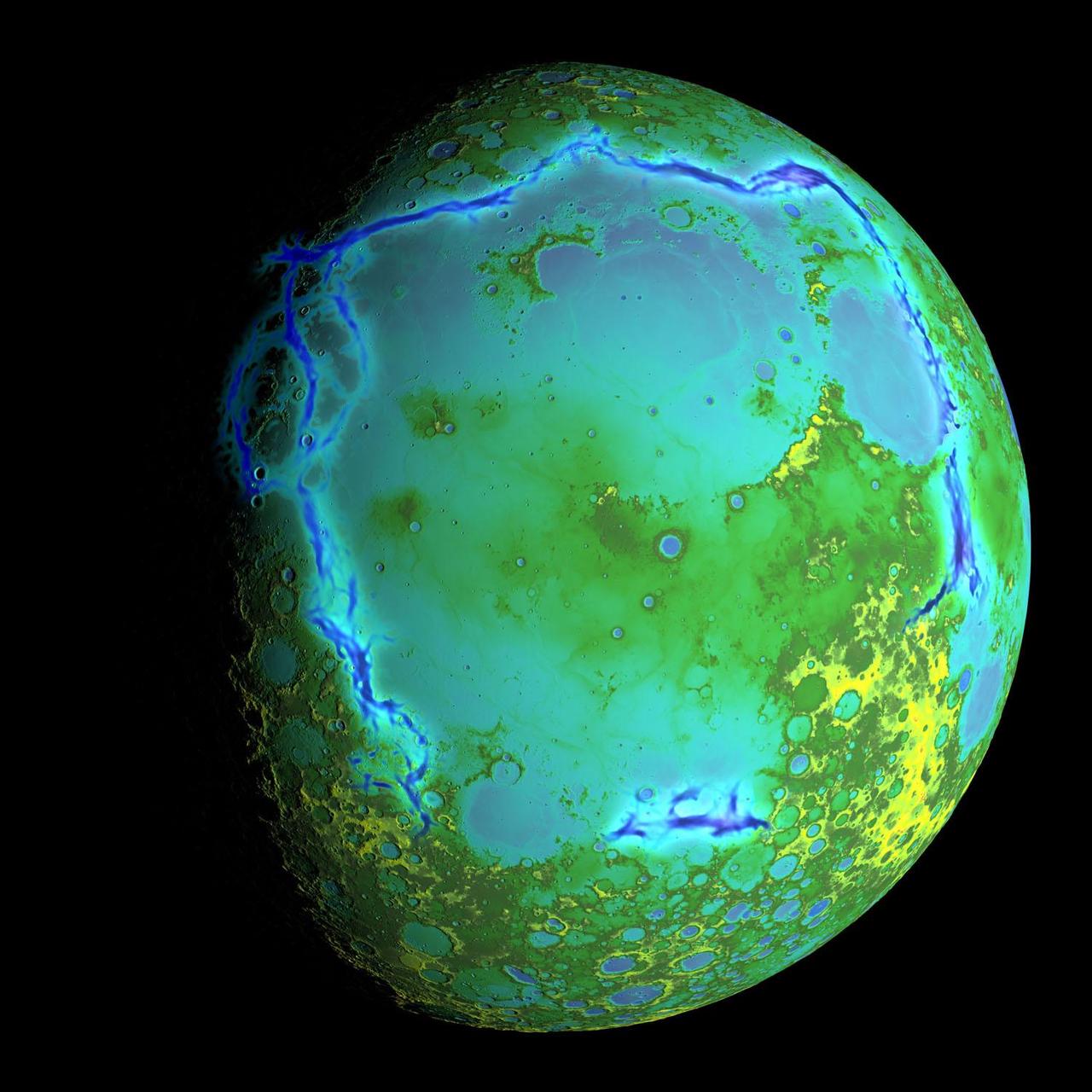
Topography of Earth's moon generated from data collected by the Lunar Orbiter Laser Altimeter, aboard NASA's Lunar Reconnaissance Orbiter, with the gravity anomalies bordering the Procellarum region superimposed in blue. The border structures are shown using gravity gradients calculated with data from NASA's Gravity Recovery and Interior Laboratory (GRAIL) mission. These gravity anomalies are interpreted as ancient lava-flooded rift zones buried beneath the volcanic plains (or maria) on the nearside of the Moon. Launched as GRAIL A and GRAIL B in September 2011, the probes, renamed Ebb and Flow, operated in a nearly circular orbit near the poles of the moon at an altitude of about 34 miles (55 kilometers) until their mission ended in December 2012. The distance between the twin probes changed slightly as they flew over areas of greater and lesser gravity caused by visible features, such as mountains and craters, and by masses hidden beneath the lunar surface. The twin spacecraft flew in a nearly circular orbit until the end of the mission on Dec. 17, 2012, when the probes intentionally were sent into the moon's surface. NASA later named the impact site in honor of late astronaut Sally K. Ride, who was America's first woman in space and a member of the GRAIL mission team. GRAIL's prime and extended science missions generated the highest-resolution gravity field map of any celestial body. The map will provide a better understanding of how Earth and other rocky planets in the solar system formed and evolved. The GRAIL mission was managed by NASA's Jet Propulsion Laboratory (JPL) in Pasadena, California, for NASA's Science Mission Directorate in Washington. The mission was part of the Discovery Program managed at NASA's Marshall Space Flight Center in Huntsville, Alabama. GRAIL was built by Lockheed Martin Space Systems in Denver. For more information about GRAIL, please visit <a href="http://grail.nasa.gov" rel="nofollow">grail.nasa.gov</a>. Credit: NASA/Colorado School of Mines/MIT/GSFC/Scientific Visualization Studio

Just in time for the release of the movie “Star Wars Episode VII: The Force Awakens,” NASA’s Hubble Space Telescope has photographed what looks like a cosmic, double-bladed lightsaber. In the center of the image, partially obscured by a dark, Jedi-like cloak of dust, a newborn star shoots twin jets out into space as a sort of birth announcement to the universe. “Science fiction has been an inspiration to generations of scientists and engineers, and the film series Star Wars is no exception,” said John Grunsfeld, astronaut and associate administrator for the NASA Science Mission directorate. “There is no stronger case for the motivational power of real science than the discoveries that come from the Hubble Space Telescope as it unravels the mysteries of the universe." This celestial lightsaber does not lie in a galaxy far, far away, but rather inside our home galaxy, the Milky Way. It’s inside a turbulent birthing ground for new stars known as the Orion B molecular cloud complex, located 1,350 light-years away. When stars form within giant clouds of cool molecular hydrogen, some of the surrounding material collapses under gravity to form a rotating, flattened disk encircling the newborn star. Though planets will later congeal in the disk, at this early stage the protostar is feeding on the disk with a Jabba-like appetite. Gas from the disk rains down onto the protostar and engorges it. Superheated material spills away and is shot outward from the star in opposite directions along an uncluttered escape route — the star’s rotation axis. Shock fronts develop along the jets and heat the surrounding gas to thousands of degrees Fahrenheit. The jets collide with the surrounding gas and dust and clear vast spaces, like a stream of water plowing into a hill of sand. The shock fronts form tangled, knotted clumps of nebulosity and are collectively known as Herbig-Haro (HH) objects. The prominent HH object shown in this image is HH 24. Just to the right of the cloaked star, a couple of bright points are young stars peeking through and showing off their own faint lightsabers — including one that has bored a tunnel through the cloud towards the upper-right side of the picture. Overall, just a handful of HH jets have been spotted in this region in visible light, and about the same number in the infrared. Hubble’s observations for this image were performed in infrared light, which enabled the telescope to peer through the gas and dust cocooning the newly forming stars and capture a clear view of the HH objects. These young stellar jets are ideal targets for NASA’s upcoming James Webb Space Telescope, which will have even greater infrared wavelength vision to see deeper into the dust surrounding newly forming stars. The Hubble Space Telescope is a project of international cooperation between NASA and the European Space Agency. NASA’s Goddard Space Flight Center in Greenbelt, Maryland, manages the telescope. The Space Telescope Science Institute (STScI) in Baltimore, Maryland, conducts Hubble science operations. STScI is operated for NASA by the Association of Universities for Research in Astronomy, in Washington, D.C. Credits: NASA/ESA <b><a href="http://www.nasa.gov/audience/formedia/features/MP_Photo_Guidelines.html" rel="nofollow">NASA image use policy.</a></b> <b><a href="http://www.nasa.gov/centers/goddard/home/index.html" rel="nofollow">NASA Goddard Space Flight Center</a></b> enables NASA’s mission through four scientific endeavors: Earth Science, Heliophysics, Solar System Exploration, and Astrophysics. Goddard plays a leading role in NASA’s accomplishments by contributing compelling scientific knowledge to advance the Agency’s mission. <b>Follow us on <a href="http://twitter.com/NASAGoddardPix" rel="nofollow">Twitter</a></b> <b>Like us on <a href="http://www.facebook.com/pages/Greenbelt-MD/NASA-Goddard/395013845897?ref=tsd" rel="nofollow">Facebook</a></b> <b>Find us on <a href="http://instagrid.me/nasagoddard/?vm=grid" rel="nofollow">Instagram</a></b>
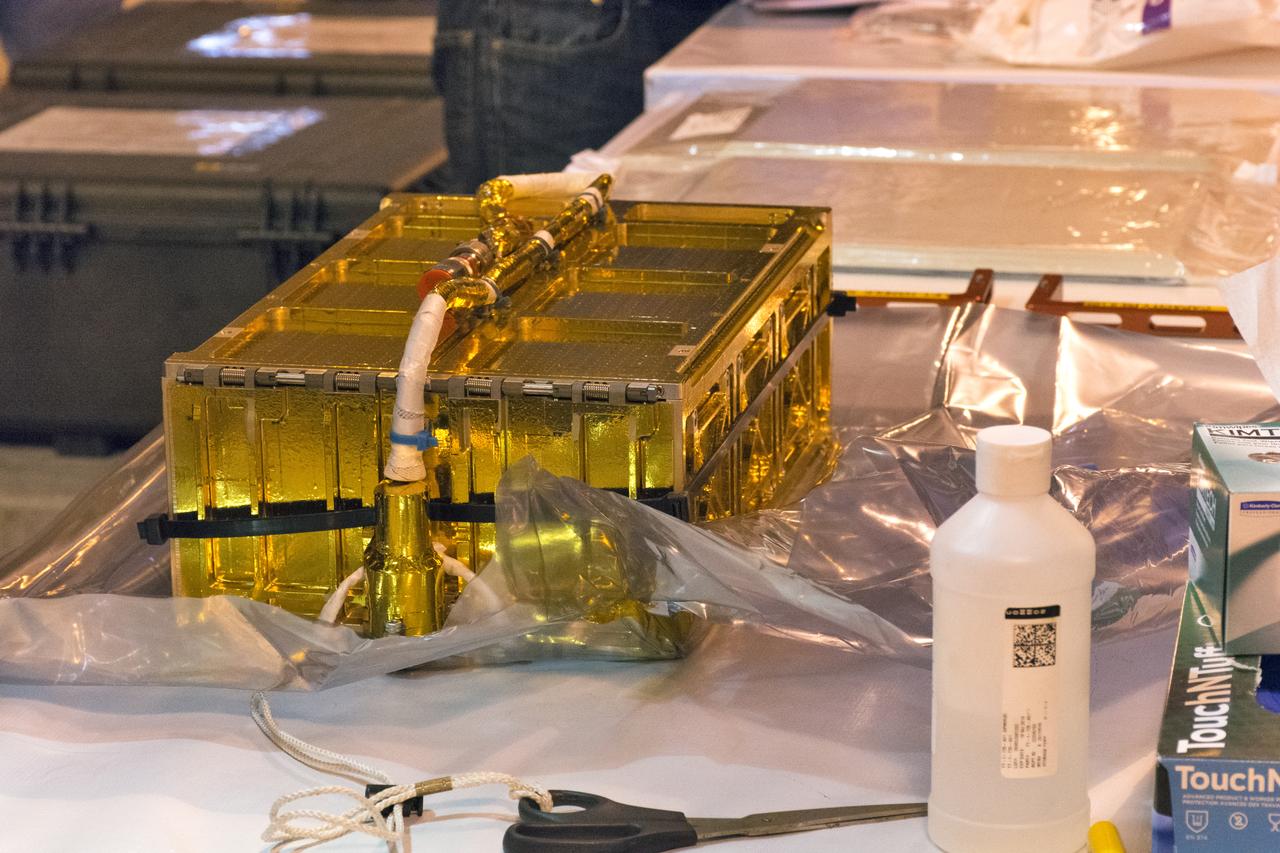
At Vandenberg Air Force Base in California, twin communications-relay CubeSats, called Mars Cube One (MarCO) are prepared for installation on an Atlas V rocket. MarCO constitutes a technology demonstration being built by NASA's Jet Propulsion Laboratory, Pasadena in California. They will launch in on the same United Launch Alliance Atlas V rocket as NASA's Interior Exploration using Seismic Investigations, Geodesy and Heat Transport, or InSight, spacecraft to land on Mars. CubeSats are a class of spacecraft based on a standardized small size and modular use of off-the-shelf technologies. Many have been made by university students, and dozens have been launched into Earth orbit using extra payload mass available on launches of larger spacecraft. InSight is the first mission to explore the Red Planet's deep interior. InSight is scheduled for liftoff May 5, 2018. InSight will be the first mission to look deep beneath the Martian surface. It will study the planet's interior by measuring its heat output and listen for marsquakes. InSight will use the seismic waves generated by marsquakes to develop a map of the planet’s deep interior. The resulting insight into Mars’ formation will provide a better understanding of how other rocky planets, including Earth, were created. NASA’s Jet Propulsion Laboratory in Pasadena, California, manages the InSight mission for the agency’s Science Mission Directorate. InSight is part of NASA's Discovery Program, managed by its Marshall Space Flight Center in Huntsville, Alabama. The spacecraft, including cruise stage and lander, was built and tested by Lockheed Martin Space in Denver. Several European partners, including France's space agency, the Centre National d'Étude Spatiales, and the German Aerospace Center, are supporting the mission. United Launch Alliance of Centennial, Colorado, is providing the Atlas V launch service. NASA’s Launch Services Program, based at its Kennedy Space Center in Florida, is responsible for laun
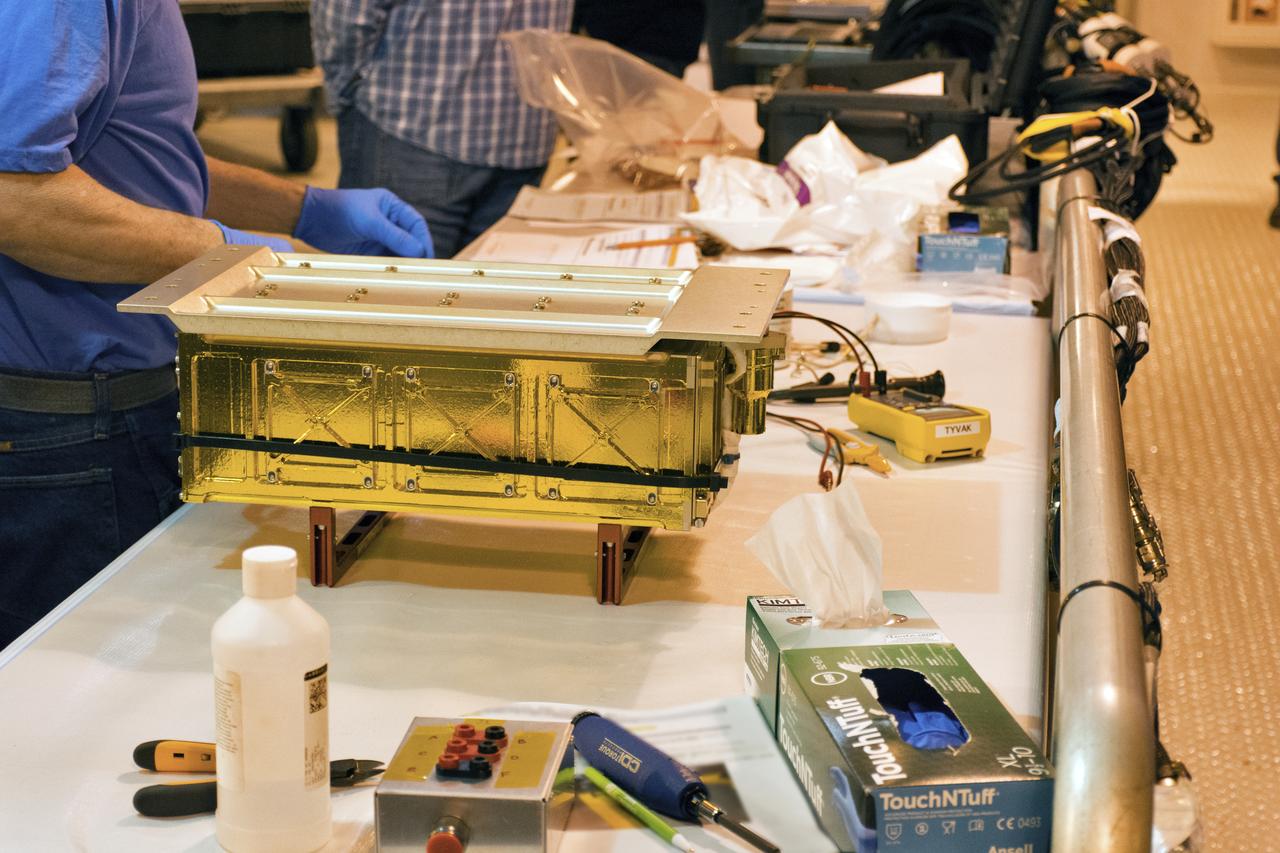
At Vandenberg Air Force Base in California, twin communications-relay CubeSats, called Mars Cube One (MarCO) are prepared for installation on an Atlas V rocket. MarCO constitutes a technology demonstration being built by NASA's Jet Propulsion Laboratory, Pasadena in California. They will launch in on the same United Launch Alliance Atlas V rocket as NASA's Interior Exploration using Seismic Investigations, Geodesy and Heat Transport, or InSight, spacecraft to land on Mars. CubeSats are a class of spacecraft based on a standardized small size and modular use of off-the-shelf technologies. Many have been made by university students, and dozens have been launched into Earth orbit using extra payload mass available on launches of larger spacecraft. InSight is the first mission to explore the Red Planet's deep interior. InSight is scheduled for liftoff May 5, 2018. InSight will be the first mission to look deep beneath the Martian surface. It will study the planet's interior by measuring its heat output and listen for marsquakes. InSight will use the seismic waves generated by marsquakes to develop a map of the planet’s deep interior. The resulting insight into Mars’ formation will provide a better understanding of how other rocky planets, including Earth, were created. NASA’s Jet Propulsion Laboratory in Pasadena, California, manages the InSight mission for the agency’s Science Mission Directorate. InSight is part of NASA's Discovery Program, managed by its Marshall Space Flight Center in Huntsville, Alabama. The spacecraft, including cruise stage and lander, was built and tested by Lockheed Martin Space in Denver. Several European partners, including France's space agency, the Centre National d'Étude Spatiales, and the German Aerospace Center, are supporting the mission. United Launch Alliance of Centennial, Colorado, is providing the Atlas V launch service. NASA’s Launch Services Program, based at its Kennedy Space Center in Florida, is responsible for laun
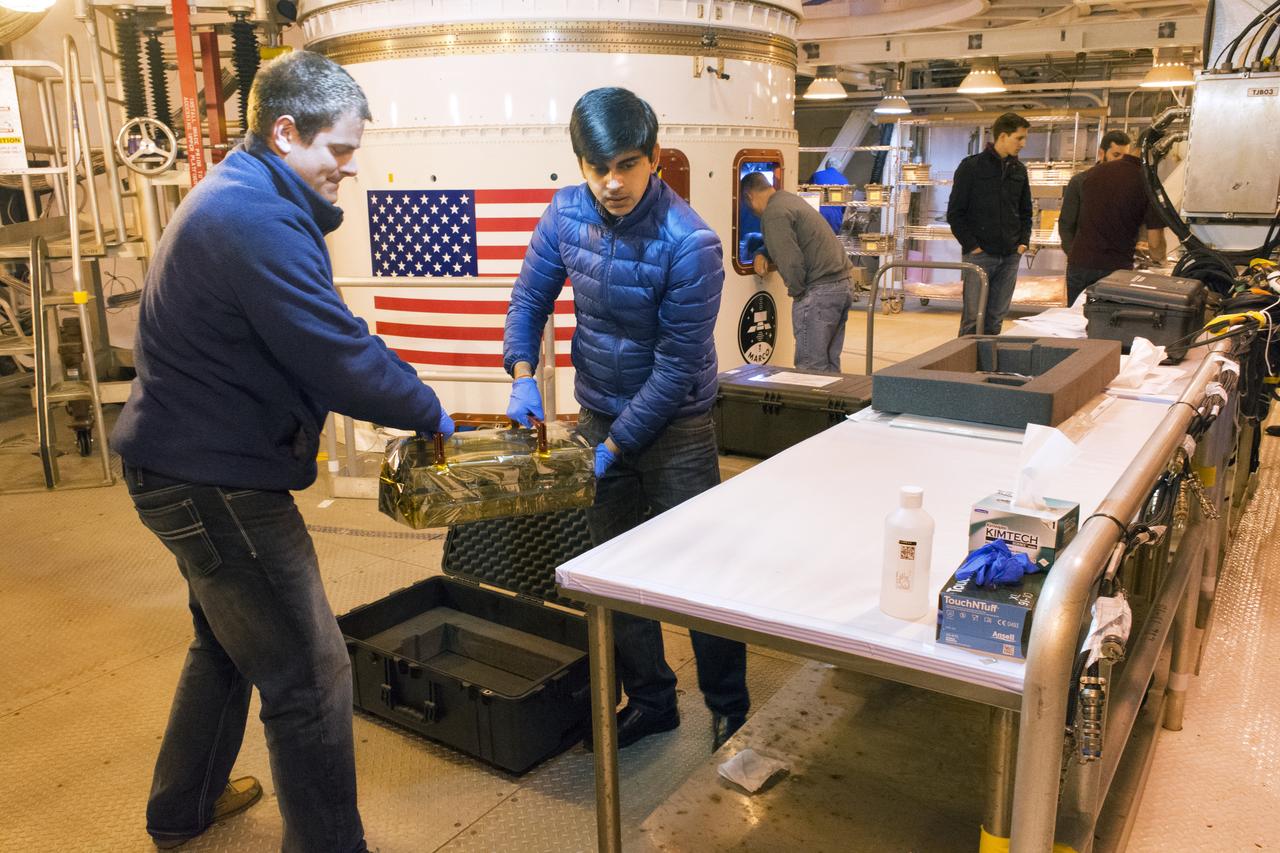
At Vandenberg Air Force Base in California, twin communications-relay CubeSats, called Mars Cube One (MarCO) are prepared for installation on an Atlas V rocket. MarCO constitutes a technology demonstration being built by NASA's Jet Propulsion Laboratory, Pasadena in California. They will launch in on the same United Launch Alliance Atlas V rocket as NASA's Interior Exploration using Seismic Investigations, Geodesy and Heat Transport, or InSight, spacecraft to land on Mars. CubeSats are a class of spacecraft based on a standardized small size and modular use of off-the-shelf technologies. Many have been made by university students, and dozens have been launched into Earth orbit using extra payload mass available on launches of larger spacecraft. InSight is the first mission to explore the Red Planet's deep interior. InSight is scheduled for liftoff May 5, 2018. InSight will be the first mission to look deep beneath the Martian surface. It will study the planet's interior by measuring its heat output and listen for marsquakes. InSight will use the seismic waves generated by marsquakes to develop a map of the planet’s deep interior. The resulting insight into Mars’ formation will provide a better understanding of how other rocky planets, including Earth, were created. NASA’s Jet Propulsion Laboratory in Pasadena, California, manages the InSight mission for the agency’s Science Mission Directorate. InSight is part of NASA's Discovery Program, managed by its Marshall Space Flight Center in Huntsville, Alabama. The spacecraft, including cruise stage and lander, was built and tested by Lockheed Martin Space in Denver. Several European partners, including France's space agency, the Centre National d'Étude Spatiales, and the German Aerospace Center, are supporting the mission. United Launch Alliance of Centennial, Colorado, is providing the Atlas V launch service. NASA’s Launch Services Program, based at its Kennedy Space Center in Florida, is responsible for laun
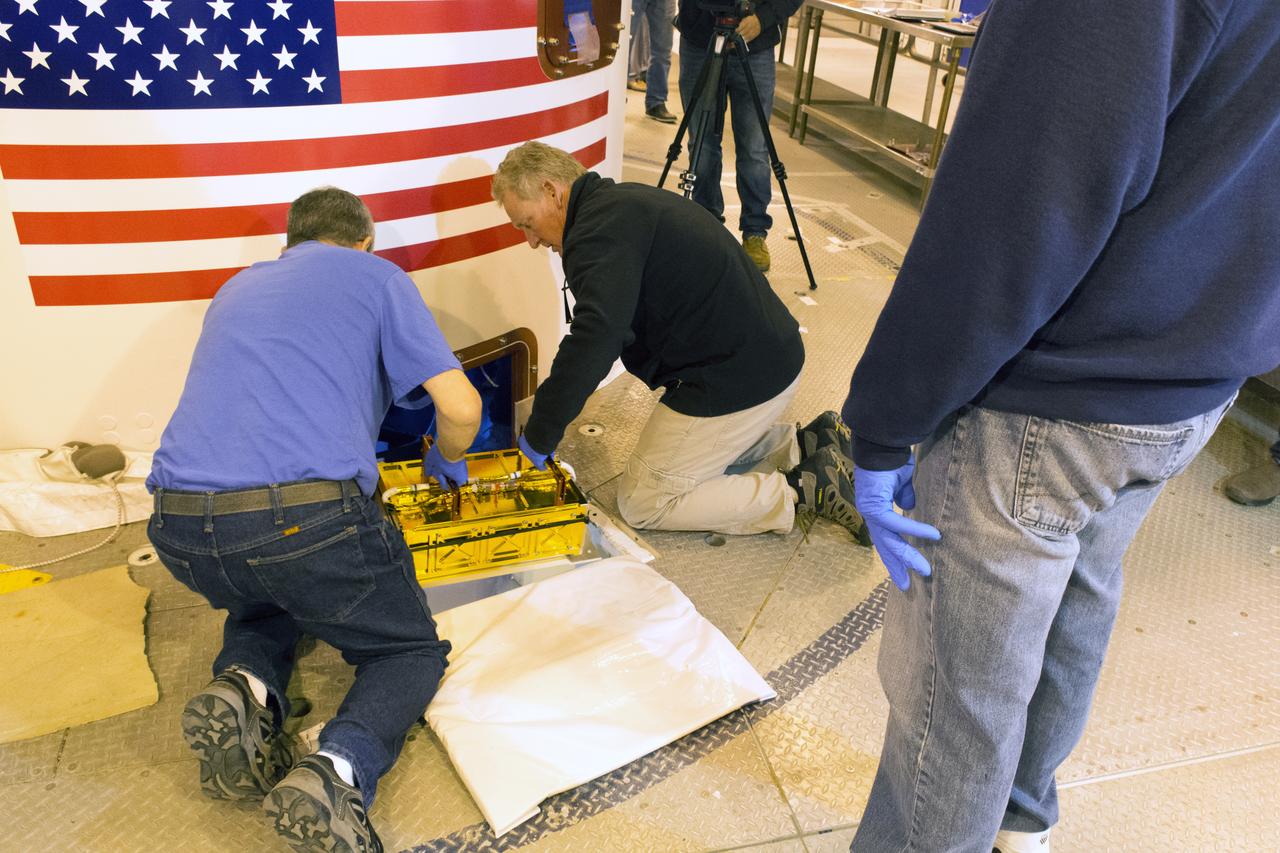
At Vandenberg Air Force Base in California, twin communications-relay CubeSats, called Mars Cube One (MarCO) are installed on an Atlas V rocket. MarCO constitutes a technology demonstration being built by NASA's Jet Propulsion Laboratory, Pasadena in California. They will launch in on the same United Launch Alliance Atlas V rocket as NASA's Interior Exploration using Seismic Investigations, Geodesy and Heat Transport, or InSight, spacecraft to land on Mars. CubeSats are a class of spacecraft based on a standardized small size and modular use of off-the-shelf technologies. Many have been made by university students, and dozens have been launched into Earth orbit using extra payload mass available on launches of larger spacecraft. InSight is the first mission to explore the Red Planet's deep interior. InSight is scheduled for liftoff May 5, 2018. InSight will be the first mission to look deep beneath the Martian surface. It will study the planet's interior by measuring its heat output and listen for marsquakes. InSight will use the seismic waves generated by marsquakes to develop a map of the planet’s deep interior. The resulting insight into Mars’ formation will provide a better understanding of how other rocky planets, including Earth, were created. NASA’s Jet Propulsion Laboratory in Pasadena, California, manages the InSight mission for the agency’s Science Mission Directorate. InSight is part of NASA's Discovery Program, managed by its Marshall Space Flight Center in Huntsville, Alabama. The spacecraft, including cruise stage and lander, was built and tested by Lockheed Martin Space in Denver. Several European partners, including France's space agency, the Centre National d'Étude Spatiales, and the German Aerospace Center, are supporting the mission. United Launch Alliance of Centennial, Colorado, is providing the Atlas V launch service. NASA’s Launch Services Program, based at its Kennedy Space Center in Florida, is responsible for launch management.
At Vandenberg Air Force Base in California, twin communications-relay CubeSats, called Mars Cube One (MarCO) are prepared for installation on an Atlas V rocket. MarCO constitutes a technology demonstration being built by NASA's Jet Propulsion Laboratory, Pasadena in California. They will launch in on the same United Launch Alliance Atlas V rocket as NASA's Interior Exploration using Seismic Investigations, Geodesy and Heat Transport, or InSight, spacecraft to land on Mars. CubeSats are a class of spacecraft based on a standardized small size and modular use of off-the-shelf technologies. Many have been made by university students, and dozens have been launched into Earth orbit using extra payload mass available on launches of larger spacecraft. InSight is the first mission to explore the Red Planet's deep interior. InSight is scheduled for liftoff May 5, 2018. InSight will be the first mission to look deep beneath the Martian surface. It will study the planet's interior by measuring its heat output and listen for marsquakes. InSight will use the seismic waves generated by marsquakes to develop a map of the planet’s deep interior. The resulting insight into Mars’ formation will provide a better understanding of how other rocky planets, including Earth, were created. NASA’s Jet Propulsion Laboratory in Pasadena, California, manages the InSight mission for the agency’s Science Mission Directorate. InSight is part of NASA's Discovery Program, managed by its Marshall Space Flight Center in Huntsville, Alabama. The spacecraft, including cruise stage and lander, was built and tested by Lockheed Martin Space in Denver. Several European partners, including France's space agency, the Centre National d'Étude Spatiales, and the German Aerospace Center, are supporting the mission. United Launch Alliance of Centennial, Colorado, is providing the Atlas V launch service. NASA’s Launch Services Program, based at its Kennedy Space Center in Florida, is responsible for laun
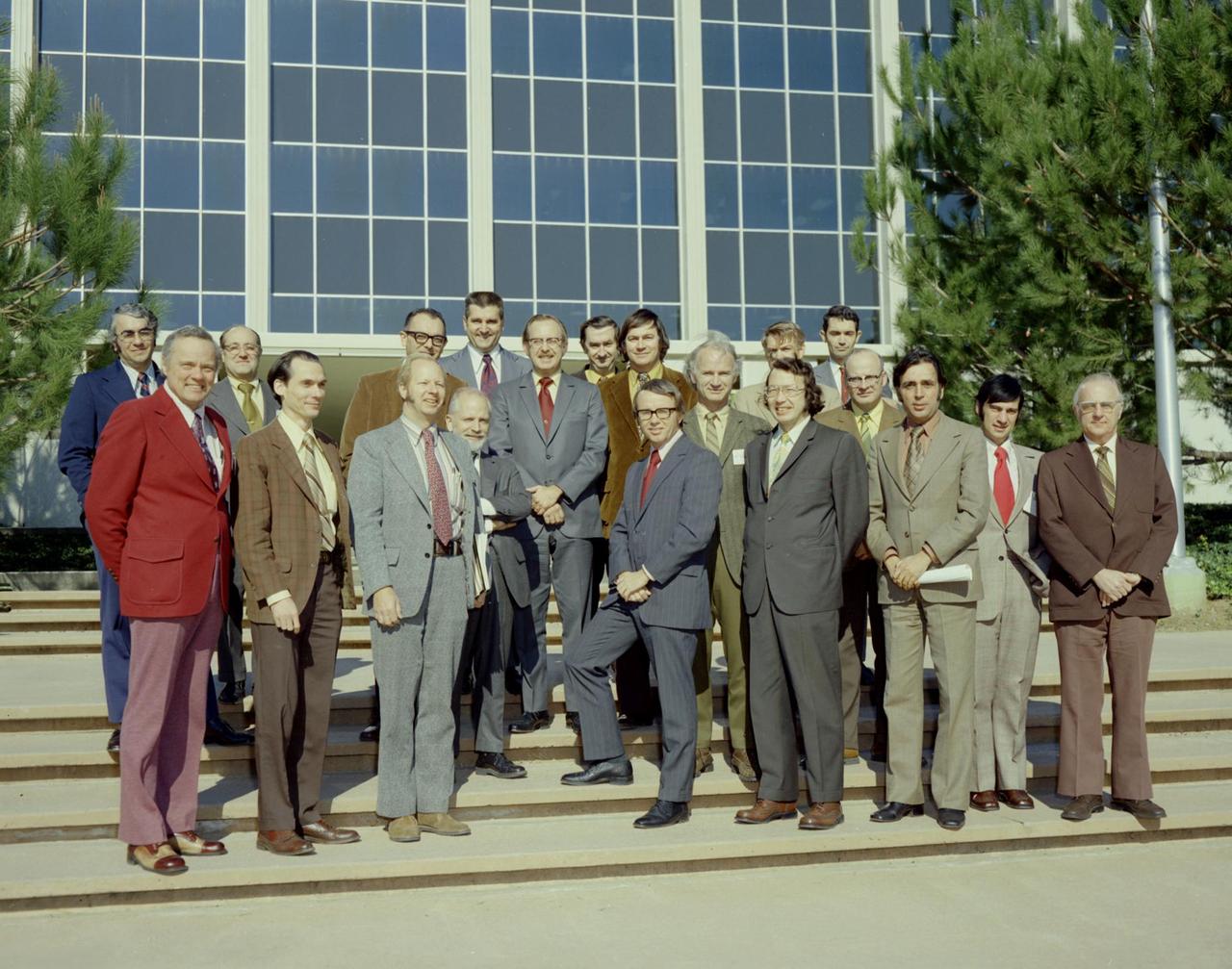
This archival image was released as part of a gallery comparing JPL's past and present, commemorating the 80th anniversary of NASA's Jet Propulsion Laboratory on Oct. 31, 2016. In December 1972, the science steering group for a mission then-known as Mariner Jupiter Saturn 1977 -- later renamed Voyager -- met for the first time at NASA's Jet Propulsion Laboratory in Pasadena, Calif. They are gathered on the steps in front of the administration building (180). The mission was so named because it was planning to send Mariner-class spacecraft to Jupiter and Saturn. It was renamed Voyager a few months before the launch of the twin spacecraft in August and September 1977. This photo shows principal investigators and team leaders for the science experiments and several others from the project and NASA who attended the first meeting. In the first row: Radio Science Subsystem Team Leader Von Eshleman, Project Scientist Edward Stone, Project Manager Harris (Bud) Schurmeier, Mission Analysis and Engineering Manager Ralph Miles, Magnetometer Principal Investigator Norman Ness, NASA Planetary Program Office Deputy Director Ichtiaque Rasool, Robert Soberman (who was proposed to be the principal investigator of the Particulate Matter Investigation, which was not confirmed) and an unidentified member of the NASA Office of Space Science. In the second row: Infrared Interferometer Spectrometer Principal Investigator Rudolf Hanel, Planetary Radio Astronomy Principal Investigator James Warwick, Ultraviolet and Spectrometer Principal Investigator A. Lyle Broadfoot. In the third row: Low-Energy Charged Particles Principal Investigator Stamatios (Tom) Krimigis, Cosmic Ray Subsystem Principal Investigator Rochus (Robbie) Vogt, NASA Outer Planets Missions Program Manager Warren Keller, Imaging Science Subsystem Team Leader Bradford Smith and Photopolarimeter Principal Investigator Charles Lillie. In the fourth row: Plasma Investigation Principal Investigator Herbert Bridge, Spacecraft Systems Manager Raymond Heacock, NASA Outer Planets Missions Program Scientist Milton (Mike) Mitz and Science Manager James Long. http://photojournal.jpl.nasa.gov/catalog/PIA21122
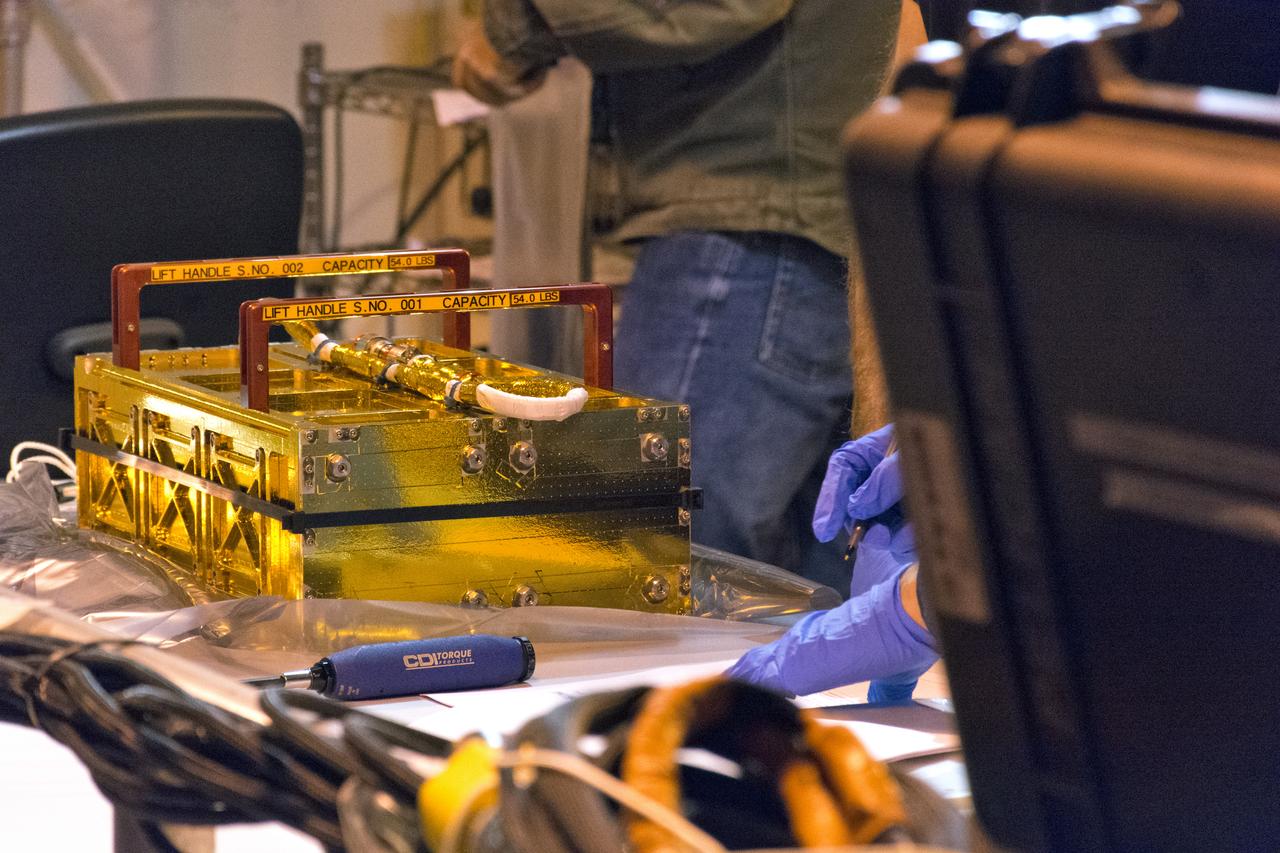
At Vandenberg Air Force Base in California, twin communications-relay CubeSats, called Mars Cube One (MarCO) are prepared for installation on an Atlas V rocket. MarCO constitutes a technology demonstration being built by NASA's Jet Propulsion Laboratory, Pasadena in California. They will launch in on the same United Launch Alliance Atlas V rocket as NASA's Interior Exploration using Seismic Investigations, Geodesy and Heat Transport, or InSight, spacecraft to land on Mars. CubeSats are a class of spacecraft based on a standardized small size and modular use of off-the-shelf technologies. Many have been made by university students, and dozens have been launched into Earth orbit using extra payload mass available on launches of larger spacecraft. InSight is the first mission to explore the Red Planet's deep interior. InSight is scheduled for liftoff May 5, 2018. InSight will be the first mission to look deep beneath the Martian surface. It will study the planet's interior by measuring its heat output and listen for marsquakes. InSight will use the seismic waves generated by marsquakes to develop a map of the planet’s deep interior. The resulting insight into Mars’ formation will provide a better understanding of how other rocky planets, including Earth, were created. NASA’s Jet Propulsion Laboratory in Pasadena, California, manages the InSight mission for the agency’s Science Mission Directorate. InSight is part of NASA's Discovery Program, managed by its Marshall Space Flight Center in Huntsville, Alabama. The spacecraft, including cruise stage and lander, was built and tested by Lockheed Martin Space in Denver. Several European partners, including France's space agency, the Centre National d'Étude Spatiales, and the German Aerospace Center, are supporting the mission. United Launch Alliance of Centennial, Colorado, is providing the Atlas V launch service. NASA’s Launch Services Program, based at its Kennedy Space Center in Florida, is responsible for laun
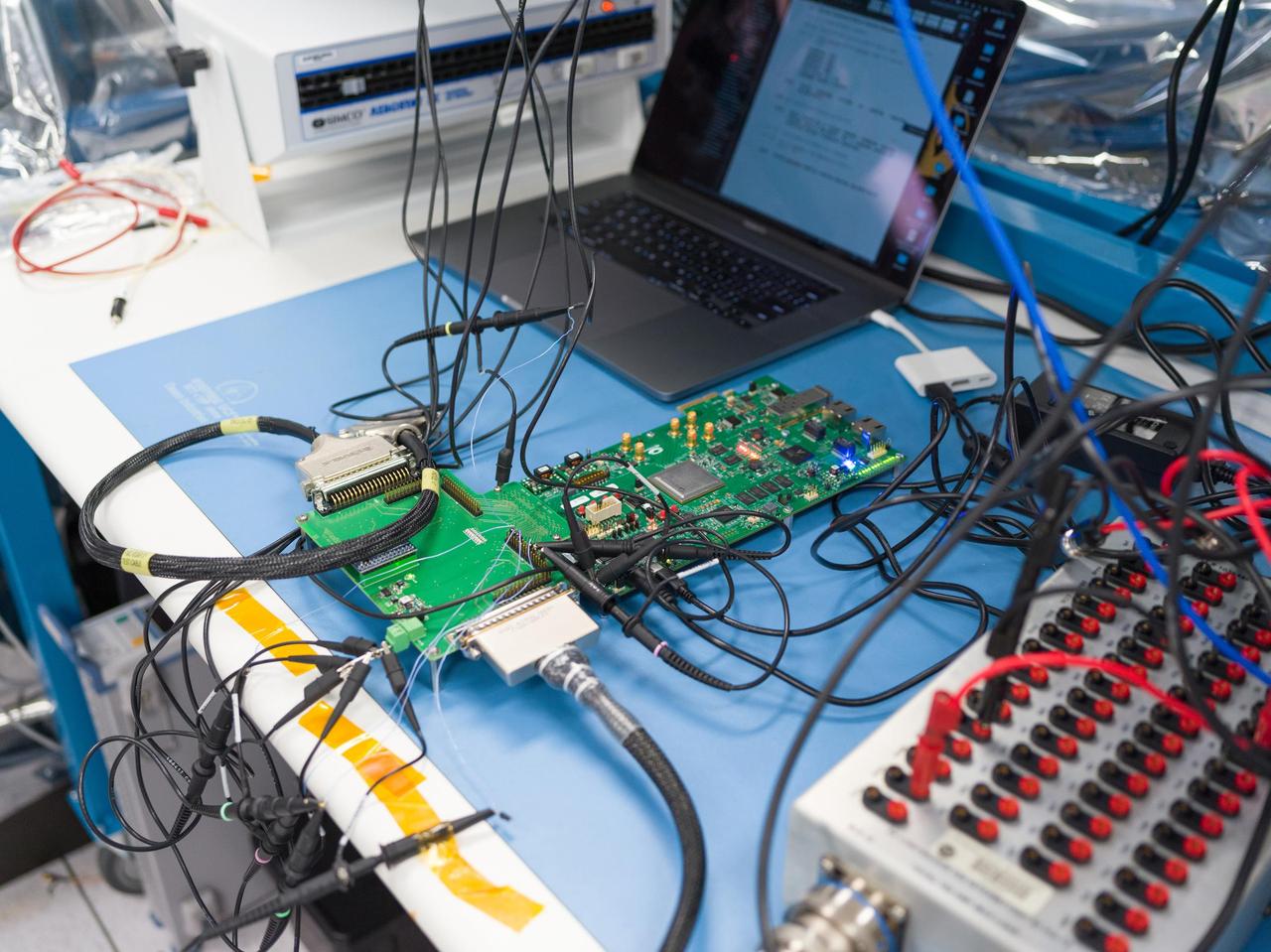
Seen here in March 2023, prototype hardware for the Venus Interferometric Synthetic Aperture Radar (VISAR) underwent interface testing at NASA's Jet Propulsion Laboratory in Southern California. VISAR is being developed at JPL for NASA's Venus Emissivity Radio Science, InSAR, Topography & Spectroscopy (VERITAS) mission that will launch within a decade to explore Earth's twin. These early interface tests are the first in a series to be run by JPL and Thales Alenia Space Italy (TASI), an international partner of the VERITAS mission that is contributing hardware to the instrument. Figure A shows TASI engineers Luca Di Marco Napini and Gabriel Mihu working in a JPL cleanroom on the VISAR prototype hardware. When VERITAS arrives in orbit, it will use VISAR to create detailed 3D global maps of Venus. The spacecraft will also carry a near-infrared spectrometer to figure out what the surface is made of. Together, the instruments will offer clues about the planet's past and present geologic processes, help reveal how the paths of Venus and Earth diverged, and how Venus lost its potential as a habitable world. VERITAS is managed by JPL. VERITAS and NASA's Deep Atmosphere Venus Investigation of Noble gases, Chemistry, and Imaging (DAVINCI) mission were selected in 2021 under NASA's Discovery Program as the agency's next missions to Venus. The Discovery Program is managed by the Planetary Missions Program Office at NASA's Marshall Space Flight Center in Huntsville, Alabama, for the Planetary Science Division of NASA's Science Mission Directorate in Washington. https://photojournal.jpl.nasa.gov/catalog/PIA25832
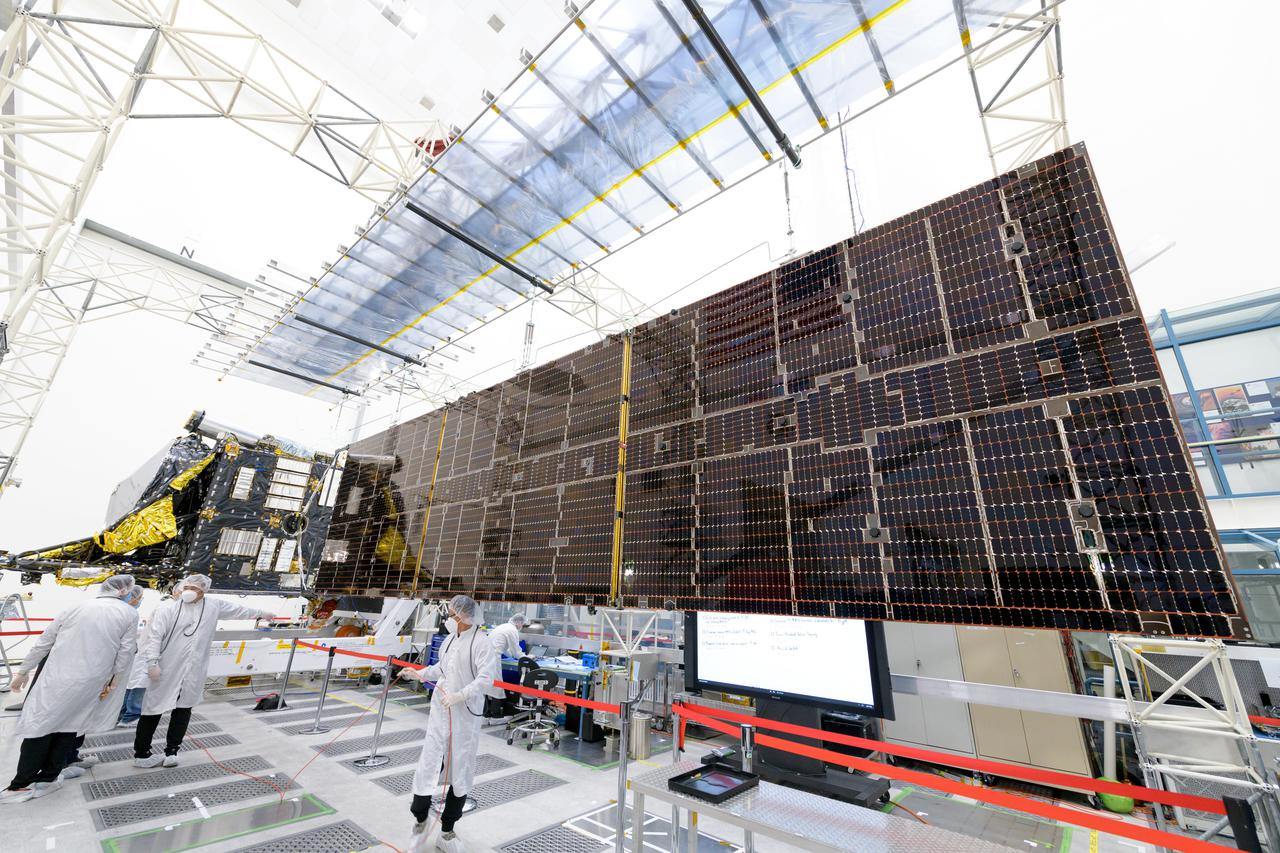
Engineers at NASA's Jet Propulsion Laboratory in Southern California successfully deployed a solar array installed on the agency's Psyche spacecraft. It was one of two deployed during testing in the Lab's High Bay 2 clean room in late February 2022. The twin arrays are together about 800 square feet (75 square meters) – the largest ever deployed at JPL. Part of a solar electric propulsion system provided by Maxar Technologies, they will power the spacecraft on its 1.5 billion-mile (2.4 billion-kilometer) journey to the large, metal-rich asteroid Psyche. Only the three center panels on each five-panel, cross-shaped array can be deployed at JPL due to the limitations of the gravity-offload fixture and the opposing direction of rotation of the cross panels. Deployment of the two cross panels was previously performed at Maxar with different equipment. After further spacecraft testing is completed at JPL, the arrays will be removed and returned to Maxar in order to repeat the cross-panel deployments, make any final repairs to the solar cells, and test overall performance. The arrays then get shipped from Maxar to NASA's Kennedy Space Center in Florida, where they will be reintegrated onto the spacecraft in preparation for launch in August 2022. About an hour after launch, Psyche will deploy the arrays sequentially, first unfolding the three lengthwise center panels, then the two cross panels on one wing before repeating the process with the other wing. Each array takes about 7 ½ minutes to unfurl and latch into place. Each array is 37.1 feet (11.3 meters) long and 24 feet (7.3 meters) wide when fully deployed. With arrays deployed on either side of the chassis, the spacecraft is about the size of a singles tennis court: 81 feet long (24.7 meters) and 24 feet (7.3 meters) wide. https://photojournal.jpl.nasa.gov/catalog/PIA25135
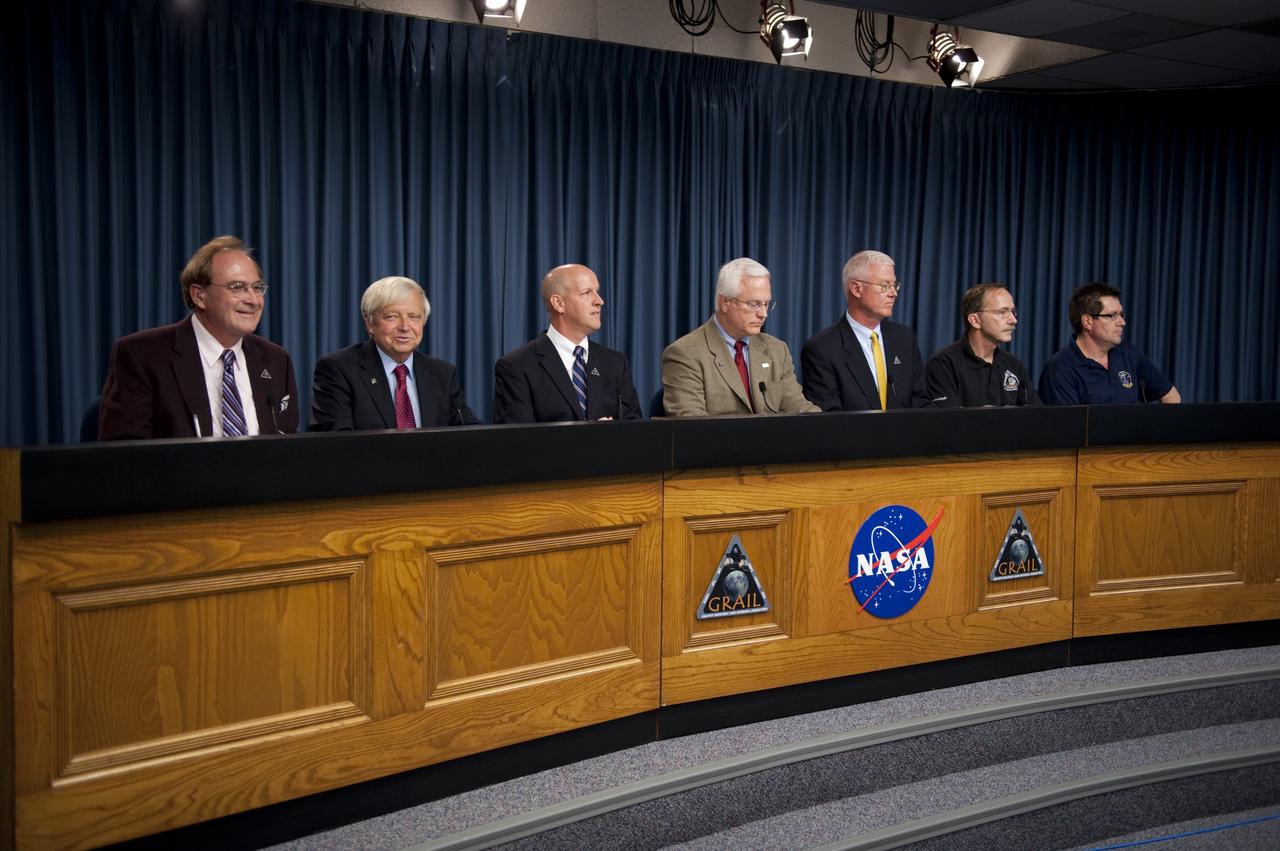
CAPE CANAVERAL, Fla. – A Gravity Recovery and Interior Laboratory (GRAIL) prelaunch news conference is held in the NASA Press Site auditorium at NASA's Kennedy Space Center in Florida. From left are George Diller, NASA Public Affairs; Ed Weiler, NASA associate administrator, Science Mission Directorate; Tim Dunn, NASA launch director for the agency’s Launch Services Program; Vernon Thorp, program manager, NASA Missions, United Launch Alliance; David Lehman, GRAIL project manager, NASA’s Jet Propulsion Laboratory; John Henk, GRAIL program manager, Lockheed Martin Space Systems, Denver, Colo.; and Joel Tumbiolo, launch weather officer, 45th Weather Squadron, Cape Canaveral Air Force Station, Fla. GRAIL is scheduled to launch Sept. 8 aboard a United Launch Alliance Delta II Heavy rocket from Cape Canaveral Air Force Station in Florida. GRAIL will fly twin spacecraft in tandem around the moon to precisely measure and map variations in the moon's gravitational field. The mission will provide the most accurate global gravity field to date for any planet, including Earth. This detailed information will reveal differences in the density of the moon's crust and mantle and will help answer fundamental questions about the moon's internal structure, thermal evolution, and history of collisions with asteroids. The aim is to map the moon's gravity field so completely that future moon vehicles can safely navigate anywhere on the moon’s surface. For more information, visit http://www.nasa.gov/grail. Photo credit: NASA/Kim Shiflett
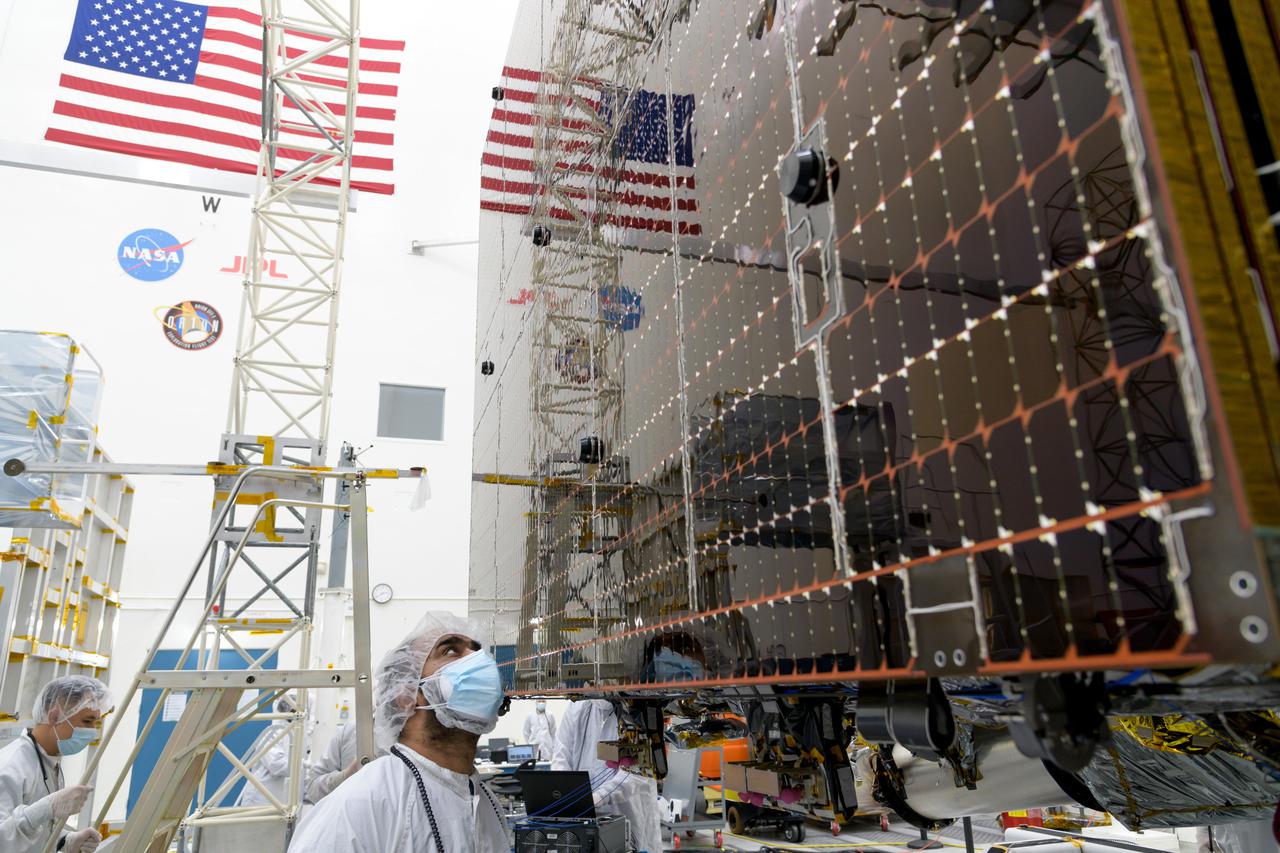
An engineer at NASA's Jet Propulsion Laboratory in Southern California examines a panel on Psyche's stowed solar arrays prior to a deployment test in the Lab's High Bay 2 clean room in February 2022. The twin arrays are together about 800 square feet (75 square meters) – the largest ever deployed at JPL. Part of a solar electric propulsion system provided by Maxar Technologies, they will power the spacecraft on its 1.5 billion-mile (2.4 billion-kilometer) journey to the large, metal-rich asteroid Psyche. Only the three center panels on each five-panel, cross-shaped array can be deployed at JPL due to the limitations of the gravity-offload fixture and the opposing direction of rotation of the cross panels. Deployment of the two cross panels was previously performed at Maxar with different equipment. After further spacecraft testing is completed at JPL, the arrays will be removed and returned to Maxar in order to repeat the cross-panel deployments, make any final repairs to the solar cells, and test overall performance. The arrays then get shipped from Maxar to NASA's Kennedy Space Center in Florida, where they will be reintegrated onto the spacecraft in preparation for launch in August 2022. About an hour after launch, Psyche will deploy the arrays sequentially, first unfolding the three lengthwise center panels, then the two cross panels on one wing before repeating the process with the other wing. Each array takes about 7 ½ minutes to unfurl and latch into place. Each array is 37.1 feet (11.3 meters) long and 24 feet (7.3 meters) wide when fully deployed. With arrays deployed on either side of the chassis, the spacecraft is about the size of a singles tennis court: 81 feet long (24.7 meters) and 24 feet (7.3 meters) wide. https://photojournal.jpl.nasa.gov/catalog/PIA25133
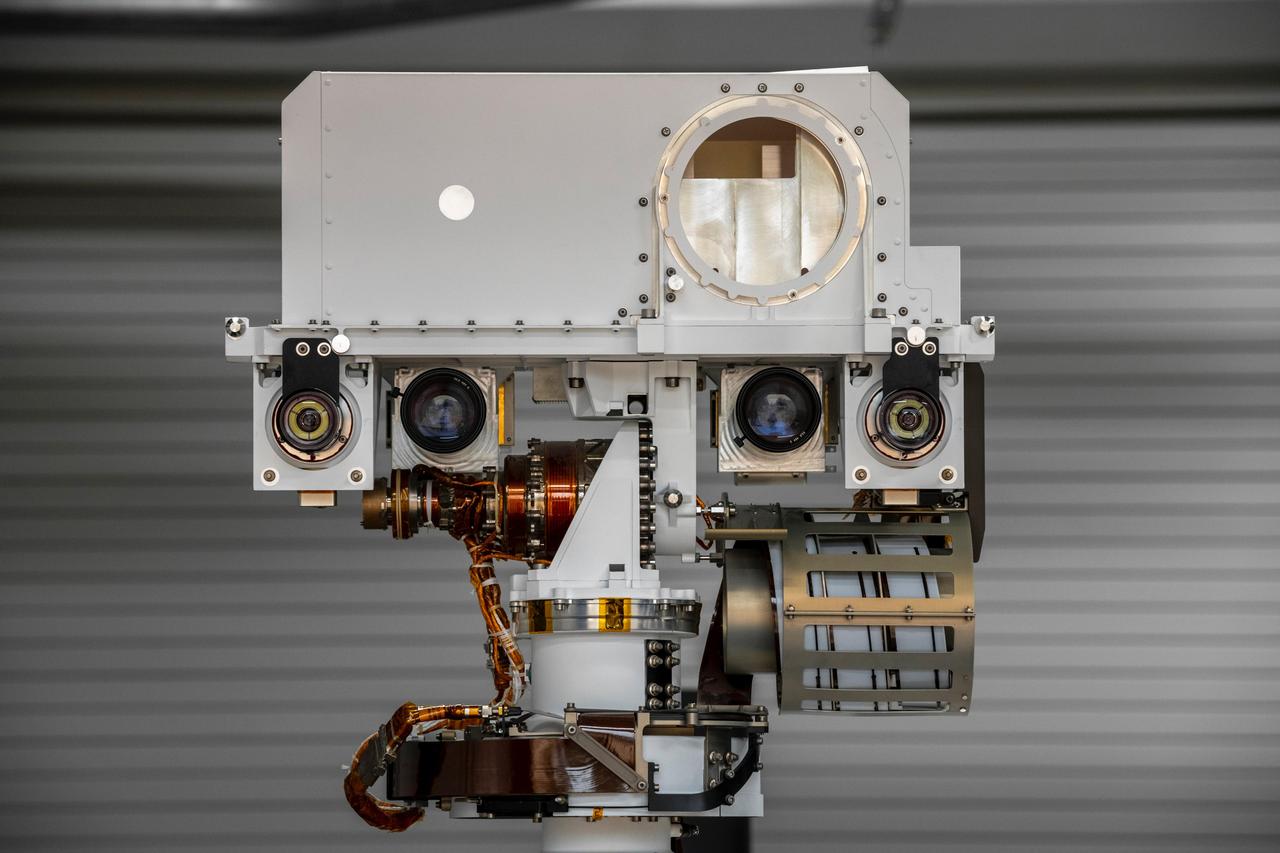
The full-scale engineering model of NASA's Perseverance rover raises its "head," or remote sensing mast, at NASA's Jet Propulsion Laboratory in Southern California. This model is known as the vehicle system test bed (VSTB) rover, or OPTIMISM (Operational Perseverance Twin for Integration of Mechanisms and Instruments Sent to Mars). OPTIMISM raised its mast shortly after moving into its new home at JPL's Mars Yard on Sept. 4, 2020. The mast hosts many of the rover's cameras and scientific instruments. At the top of the mast, the large circular opening is where the SuperCam instrument will be installed on this test rover. Also visible in these images below the SuperCam "eye" are the navigation cameras (two cameras closest to the outside of the head) and the Mastcam-Z cameras inside of the navigation cameras. A key objective for Perseverance's mission on Mars is astrobiology, including the search for signs of ancient microbial life. The rover will also characterize the planet's climate and geology, pave the way for human exploration of the Red Planet, and be the first planetary spacecraft to collect and cache Martian rock and regolith (broken rock and dust). Subsequent missions, currently under consideration by NASA in cooperation with the European Space Agency, would send spacecraft to Mars to collect these cached samples from the surface and return them to Earth for in-depth analysis. The Mars 2020 mission is part of a larger program that includes missions to the Moon as a way to prepare for human exploration of the Red Planet. Charged with returning astronauts to the Moon by 2024, NASA will establish a sustained human presence on and around the Moon by 2028 through NASA's Artemis lunar exploration plans. https://photojournal.jpl.nasa.gov/catalog/PIA23967

Engineers at NASA's Jet Propulsion Laboratory in Southern California examine one of Psyche's solar arrays during a deployment test in the Lab's High Bay 2 clean room in late February 2022. The twin arrays are together about 800 square feet (75 square meters) – the largest ever deployed at JPL. Part of a solar electric propulsion system provided by Maxar Technologies, they will power the spacecraft on its 1.5 billion-mile (2.4 billion-kilometer) journey to the large, metal-rich asteroid Psyche. Only the three center panels on each five-panel, cross-shaped array can be deployed at JPL due to the limitations of the gravity-offload fixture and the opposing direction of rotation of the cross panels. Deployment of the two cross panels was previously performed at Maxar with different equipment. After further spacecraft testing is completed at JPL, the arrays will be removed and returned to Maxar in order to repeat the cross-panel deployments, make any final repairs to the solar cells, and test overall performance. The arrays then get shipped from Maxar to NASA's Kennedy Space Center in Florida, where they will be reintegrated onto the spacecraft in preparation for launch in August 2022. About an hour after launch, Psyche will deploy the arrays sequentially, first unfolding the three lengthwise center panels, then the two cross panels on one wing before repeating the process with the other wing. Each array takes about 7 ½ minutes to unfurl and latch into place. Each array is 37.1 feet (11.3 meters) long and 24 feet (7.3 meters) wide when fully deployed. With arrays deployed on either side of the chassis, the spacecraft is about the size of a singles tennis court: 81 feet long (24.7 meters) and 24 feet (7.3 meters) wide. https://photojournal.jpl.nasa.gov/catalog/PIA25134
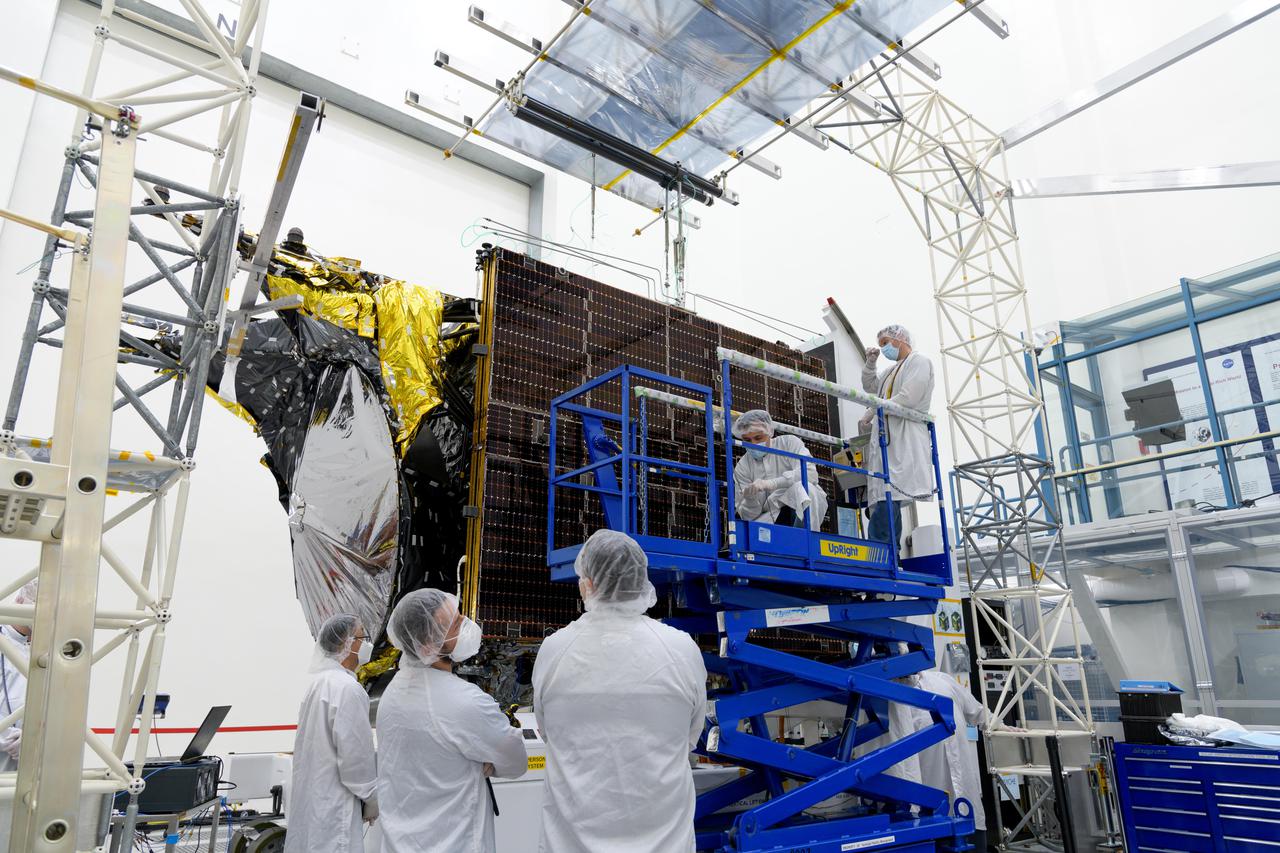
Engineers at NASA's Jet Propulsion Laboratory in Southern California examine one of Psyche's stowed solar arrays prior to a deployment test in the Lab's High Bay 2 clean room in late February 2022. The twin arrays are together about 800 square feet (75 square meters) – the largest ever deployed at JPL. Part of a solar electric propulsion system provided by Maxar Technologies, they will power the spacecraft on its 1.5 billion-mile (2.4 billion-kilometer) journey to the large, metal-rich asteroid Psyche. Only the three center panels on each five-panel, cross-shaped array can be deployed at JPL due to the limitations of the gravity-offload fixture and the opposing direction of rotation of the cross panels. Deployment of the two cross panels was previously performed at Maxar with different equipment. After further spacecraft testing is completed at JPL, the arrays will be removed and returned to Maxar in order to repeat the cross-panel deployments, make any final repairs to the solar cells, and test overall performance. The arrays then get shipped from Maxar to NASA's Kennedy Space Center in Florida, where they will be reintegrated onto the spacecraft in preparation for launch in August 2022. About an hour after launch, Psyche will deploy the arrays sequentially, first unfolding the three lengthwise center panels, then the two cross panels on one wing before repeating the process with the other wing. Each array takes about 7 ½ minutes to unfurl and latch into place. Each array is 37.1 feet (11.3 meters) long and 24 feet (7.3 meters) wide when fully deployed. With arrays deployed on either side of the chassis, the spacecraft is about the size of a singles tennis court: 81 feet long (24.7 meters) and 24 feet (7.3 meters) wide. https://photojournal.jpl.nasa.gov/catalog/PIA25132

CAPE CANAVERAL, Fla. – News media participate in the Gravity Recovery and Interior Laboratory (GRAIL) prelaunch news conference held in the NASA Press Site auditorium at NASA's Kennedy Space Center in Florida. On the dais, panelist from left are Ed Weiler, NASA associate administrator, Science Mission Directorate; Tim Dunn, NASA launch director for the agency’s Launch Services Program; Vernon Thorp, program manager, NASA Missions, United Launch Alliance; David Lehman, GRAIL project manager, NASA’s Jet Propulsion Laboratory; John Henk, GRAIL program manager, Lockheed Martin Space Systems, Denver, Colo.; and Joel Tumbiolo, launch weather officer, 45th Weather Squadron, Cape Canaveral Air Force Station, Fla. GRAIL is scheduled to launch Sept. 8 aboard a United Launch Alliance Delta II Heavy rocket from Cape Canaveral Air Force Station in Florida. GRAIL will fly twin spacecraft in tandem around the moon to precisely measure and map variations in the moon's gravitational field. The mission will provide the most accurate global gravity field to date for any planet, including Earth. This detailed information will reveal differences in the density of the moon's crust and mantle and will help answer fundamental questions about the moon's internal structure, thermal evolution, and history of collisions with asteroids. The aim is to map the moon's gravity field so completely that future moon vehicles can safely navigate anywhere on the moon’s surface. For more information, visit http://www.nasa.gov/grail. Photo credit: NASA/Kim Shiflett
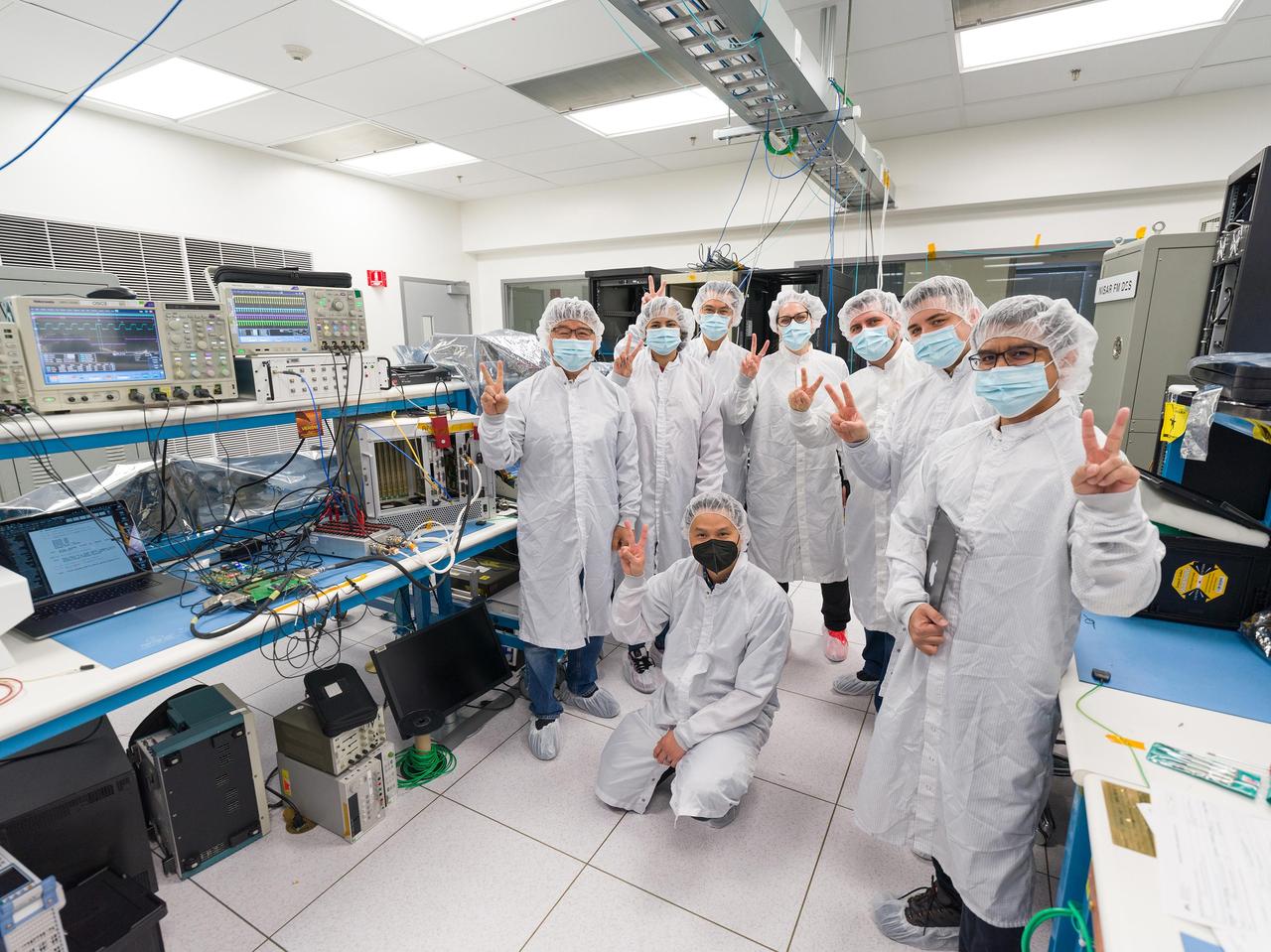
Seen here are members of the international team that participated in recent tests on prototype hardware for the Venus Interferometric Synthetic Aperture Radar (VISAR) at NASA's Jet Propulsion Laboratory in Southern California. VISAR is being developed at JPL for NASA's Venus Emissivity Radio Science, InSAR, Topography & Spectroscopy (VERITAS) mission that will launch within a decade to explore Earth's twin. In March 2023, the hardware underwent early interface tests in a JPL clean room, representing the first in a series to be run by JPL and Thales Alenia Space Italy (TASI), an international partner of the VERITAS mission that is contributing hardware to the instrument. Dressed in gowns to minimize the risk of contamination with sensitive electronics, the JPL VISAR digital team and TASI engineers pose for a photograph next to the laboratory benches where the tests took place. Figure A shows the same personnel without gowns for a team photo. From left to right: Marvin Cruz (JPL), Chester Lim (JPL), Tim Noh (JPL), Hana Haideri (JPL), Luca Di Marco Napini (TASI), Ernie Chuang (JPL), Dragana Perkovic-Martin (JPL), and Gabriel Mihu (TASI). JPL's Michael Burke, Anusha Yarlagadda, Duane Clark, and TASI's Antonio Delfino also participated in the tests but are not pictured. When VERITAS arrives in orbit, it will use VISAR to create detailed 3D global maps of Venus. The spacecraft will also carry a near-infrared spectrometer to figure out what the surface is made of. Together, the instruments will offer clues about the planet's past and present geologic processes, help reveal how the paths of Venus and Earth diverged, and how Venus lost its potential as a habitable world. VERITAS is managed by JPL. VERITAS and NASA's Deep Atmosphere Venus Investigation of Noble gases, Chemistry, and Imaging (DAVINCI) mission were selected in 2021 under NASA's Discovery Program as the agency's next missions to Venus. The Discovery Program is managed by the Planetary Missions Program Office at NASA's Marshall Space Flight Center in Huntsville, Alabama, for the Planetary Science Division of NASA's Science Mission Directorate in Washington. https://photojournal.jpl.nasa.gov/catalog/PIA25833
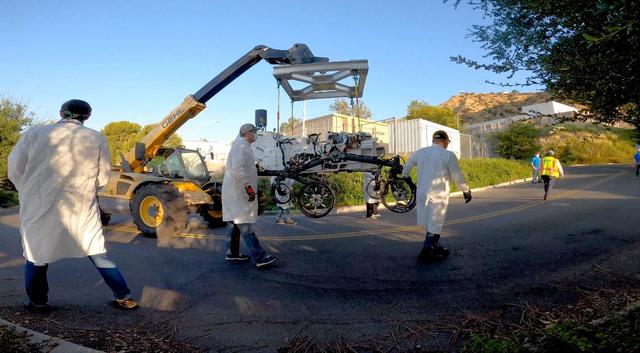
Technicians move a full-scale engineering version of NASA's Perseverance Mars rover into to its new home — a garage facing the Mars Yard at the agency's Jet Propulsion Laboratory in Southern California — on Sept. 4, 2020. This vehicle system test bed (VSTB) rover was built in a warehouselike assembly room not far from the Mars Yard — an area that simulates the Red Planet's surface — and enables the mission team to test how hardware and software will perform before they transmit commands to the real rover on Mars. It also goes by the name OPTIMISM (Operational Perseverance Twin for Integration of Mechanisms and Instruments Sent to Mars). The Perseverance rover's astrobiology mission will search for signs of ancient microbial life. It will also characterize the planet's climate and geology, pave the way for human exploration of the Red Planet, and be the first planetary mission to collect and cache Martian rock and regolith (broken rock and dust). Subsequent missions, currently under consideration by NASA in cooperation with the European Space Agency, would send spacecraft to Mars to collect these cached samples from the surface and return them to Earth for in-depth analysis. The Mars 2020 mission is part of a larger program that includes missions to the Moon as a way to prepare for human exploration of the Red Planet. Charged with returning astronauts to the Moon by 2024, NASA will establish a sustained human presence on and around the Moon by 2028 through NASA's Artemis lunar exploration plans. Movie available at https://photojournal.jpl.nasa.gov/catalog/PIA23965

Arizona produces 60% of the total copper mined in the US; in 2007, 750,000 tons of copper came out of the state. One of the major mining districts is located about 30 km south of Tucson. Starting around 1950, open-pit mining replaced underground operations, and the ASARCO-Mission complex, Twin Buttes, and Sierrita mines became large open pit operations. Accompanying copper mineralization, silver, molybdenum, zinc, lead and gold are extracted. In addition to the pits themselves, enormous leach ponds and tailings piles surround the pits. The image was acquired May 31, 2012, covers an area of 22 by 28 km, and is located at 31.9 degrees north, 111 degrees west. With its 14 spectral bands from the visible to the thermal infrared wavelength region and its high spatial resolution of 15 to 90 meters (about 50 to 300 feet), ASTER images Earth to map and monitor the changing surface of our planet. ASTER is one of five Earth-observing instruments launched Dec. 18, 1999, on Terra. The instrument was built by Japan's Ministry of Economy, Trade and Industry. A joint U.S./Japan science team is responsible for validation and calibration of the instrument and data products. The broad spectral coverage and high spectral resolution of ASTER provides scientists in numerous disciplines with critical information for surface mapping and monitoring of dynamic conditions and temporal change. Example applications are: monitoring glacial advances and retreats; monitoring potentially active volcanoes; identifying crop stress; determining cloud morphology and physical properties; wetlands evaluation; thermal pollution monitoring; coral reef degradation; surface temperature mapping of soils and geology; and measuring surface heat balance. The U.S. science team is located at NASA's Jet Propulsion Laboratory, Pasadena, Calif. The Terra mission is part of NASA's Science Mission Directorate, Washington, D.C. More information about ASTER is available at <a href="http://asterweb.jpl.nasa.gov/" rel="nofollow">asterweb.jpl.nasa.gov/</a> Credit: NASA/GSFC/METI/ERSDAC/JAROS, and U.S./Japan ASTER Science Team <b><a href="http://www.nasa.gov/audience/formedia/features/MP_Photo_Guidelines.html" rel="nofollow">NASA image use policy.</a></b> <b><a href="http://www.nasa.gov/centers/goddard/home/index.html" rel="nofollow">NASA Goddard Space Flight Center</a></b> enables NASA’s mission through four scientific endeavors: Earth Science, Heliophysics, Solar System Exploration, and Astrophysics. Goddard plays a leading role in NASA’s accomplishments by contributing compelling scientific knowledge to advance the Agency’s mission. <b>Follow us on <a href="http://twitter.com/NASAGoddardPix" rel="nofollow">Twitter</a></b> <b>Like us on <a href="http://www.facebook.com/pages/Greenbelt-MD/NASA-Goddard/395013845897?ref=tsd" rel="nofollow">Facebook</a></b> <b>Find us on <a href="http://instagram.com/nasagoddard?vm=grid" rel="nofollow">Instagram</a></b>
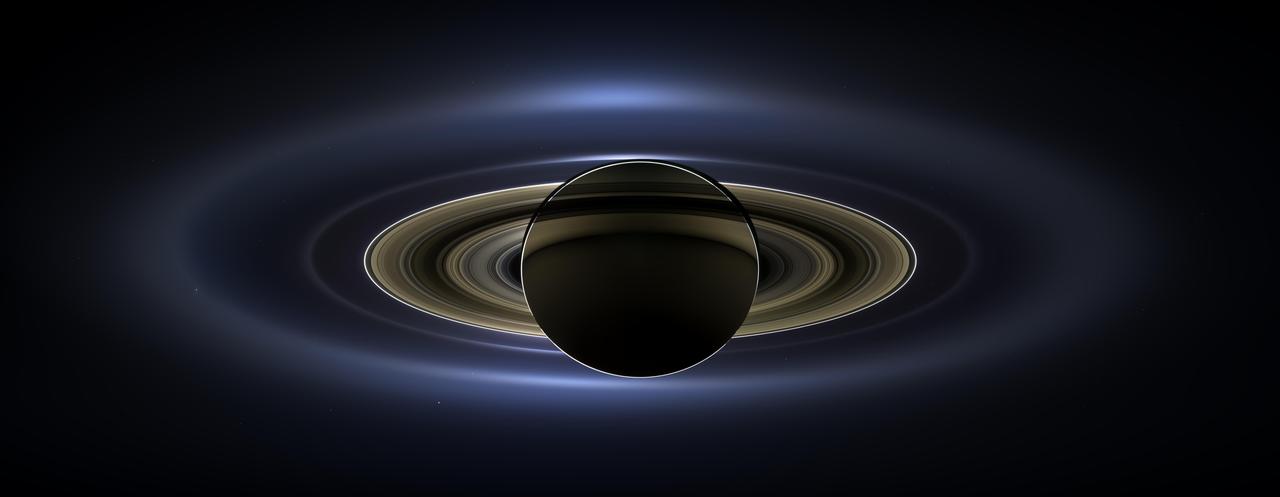
On July 19, 2013, in an event celebrated the world over, NASA's Cassini spacecraft slipped into Saturn's shadow and turned to image the planet, seven of its moons, its inner rings -- and, in the background, our home planet, Earth. With the sun's powerful and potentially damaging rays eclipsed by Saturn itself, Cassini's onboard cameras were able to take advantage of this unique viewing geometry. They acquired a panoramic mosaic of the Saturn system that allows scientists to see details in the rings and throughout the system as they are backlit by the sun. This mosaic is special as it marks the third time our home planet was imaged from the outer solar system; the second time it was imaged by Cassini from Saturn's orbit; and the first time ever that inhabitants of Earth were made aware in advance that their photo would be taken from such a great distance. With both Cassini's wide-angle and narrow-angle cameras aimed at Saturn, Cassini was able to capture 323 images in just over four hours. This final mosaic uses 141 of those wide-angle images. Images taken using the red, green and blue spectral filters of the wide-angle camera were combined and mosaicked together to create this natural-color view. A brightened version with contrast and color enhanced (Figure 1), a version with just the planets annotated (Figure 2), and an annotated version (Figure 3) are shown above. This image spans about 404,880 miles (651,591 kilometers) across. The outermost ring shown here is Saturn's E ring, the core of which is situated about 149,000 miles (240,000 kilometers) from Saturn. The geysers erupting from the south polar terrain of the moon Enceladus supply the fine icy particles that comprise the E ring; diffraction by sunlight gives the ring its blue color. Enceladus (313 miles, or 504 kilometers, across) and the extended plume formed by its jets are visible, embedded in the E ring on the left side of the mosaic. At the 12 o'clock position and a bit inward from the E ring lies the barely discernible ring created by the tiny, Cassini-discovered moon, Pallene (3 miles, or 4 kilometers, across). (For more on structures like Pallene's ring, see PIA08328). The next narrow and easily seen ring inward is the G ring. Interior to the G ring, near the 11 o'clock position, one can barely see the more diffuse ring created by the co-orbital moons, Janus (111 miles, or 179 kilometers, across) and Epimetheus (70 miles, or 113 kilometers, across). Farther inward, we see the very bright F ring closely encircling the main rings of Saturn. Following the outermost E ring counter-clockwise from Enceladus, the moon Tethys (662 miles, or 1,066 kilometers, across) appears as a large yellow orb just outside of the E ring. Tethys is positioned on the illuminated side of Saturn; its icy surface is shining brightly from yellow sunlight reflected by Saturn. Continuing to about the 2 o'clock position is a dark pixel just outside of the G ring; this dark pixel is Saturn's Death Star moon, Mimas (246 miles, or 396 kilometers, across). Mimas appears, upon close inspection, as a very thin crescent because Cassini is looking mostly at its non-illuminated face. The moons Prometheus, Pandora, Janus and Epimetheus are also visible in the mosaic near Saturn's bright narrow F ring. Prometheus (53 miles, or 86 kilometers, across) is visible as a faint black dot just inside the F ring and at the 9 o'clock position. On the opposite side of the rings, just outside the F ring, Pandora (50 miles, or 81 kilometers, across) can be seen as a bright white dot. Pandora and Prometheus are shepherd moons and gravitational interactions between the ring and the moons keep the F ring narrowly confined. At the 11 o'clock position in between the F ring and the G ring, Janus (111 miles, or 179 kilometers, across) appears as a faint black dot. Janus and Prometheus are dark for the same reason Mimas is mostly dark: we are looking at their non-illuminated sides in this mosaic. Midway between the F ring and the G ring, at about the 8 o'clock position, is a single bright pixel, Epimetheus. Looking more closely at Enceladus, Mimas and Tethys, especially in the brightened version of the mosaic, one can see these moons casting shadows through the E ring like a telephone pole might cast a shadow through a fog. In the non-brightened version of the mosaic, one can see bright clumps of ring material orbiting within the Encke gap near the outer edge of the main rings and immediately to the lower left of the globe of Saturn. Also, in the dark B ring within the main rings, at the 9 o'clock position, one can see the faint outlines of two spoke features, first sighted by NASA's Voyager spacecraft in the early 1980s and extensively studied by Cassini. Finally, in the lower right of the mosaic, in between the bright blue E ring and the faint but defined G ring, is the pale blue dot of our planet, Earth. Look closely and you can see the moon protruding from the Earth's lower right. (For a higher resolution view of the Earth and moon taken during this campaign, see PIA14949.) Earth's twin, Venus, appears as a bright white dot in the upper left quadrant of the mosaic, also between the G and E rings. Mars also appears as a faint red dot embedded in the outer edge of the E ring, above and to the left of Venus. For ease of visibility, Earth, Venus, Mars, Enceladus, Epimetheus and Pandora were all brightened by a factor of eight and a half relative to Saturn. Tethys was brightened by a factor of four. In total, 809 background stars are visible and were brightened by a factor ranging from six, for the brightest stars, to 16, for the faintest. The faint outer rings (from the G ring to the E ring) were also brightened relative to the already bright main rings by factors ranging from two to eight, with the lower-phase-angle (and therefore fainter) regions of these rings brightened the most. The brightened version of the mosaic was further brightened and contrast-enhanced all over to accommodate print applications and a wide range of computer-screen viewing conditions. Some ring features -- such as full rings traced out by tiny moons -- do not appear in this version of the mosaic because they require extreme computer enhancement, which would adversely affect the rest of the mosaic. This version was processed for balance and beauty. This view looks toward the unlit side of the rings from about 17 degrees below the ring plane. Cassini was approximately 746,000 miles (1.2 million kilometers) from Saturn when the images in this mosaic were taken. Image scale on Saturn is about 45 miles (72 kilometers) per pixel. This mosaic was made from pictures taken over a span of more than four hours while the planets, moons and stars were all moving relative to Cassini. Thus, due to spacecraft motion, these objects in the locations shown here were not in these specific places over the entire duration of the imaging campaign. Note also that Venus appears far from Earth, as does Mars, because they were on the opposite side of the sun from Earth. http://photojournal.jpl.nasa.gov/catalog/PIA17172