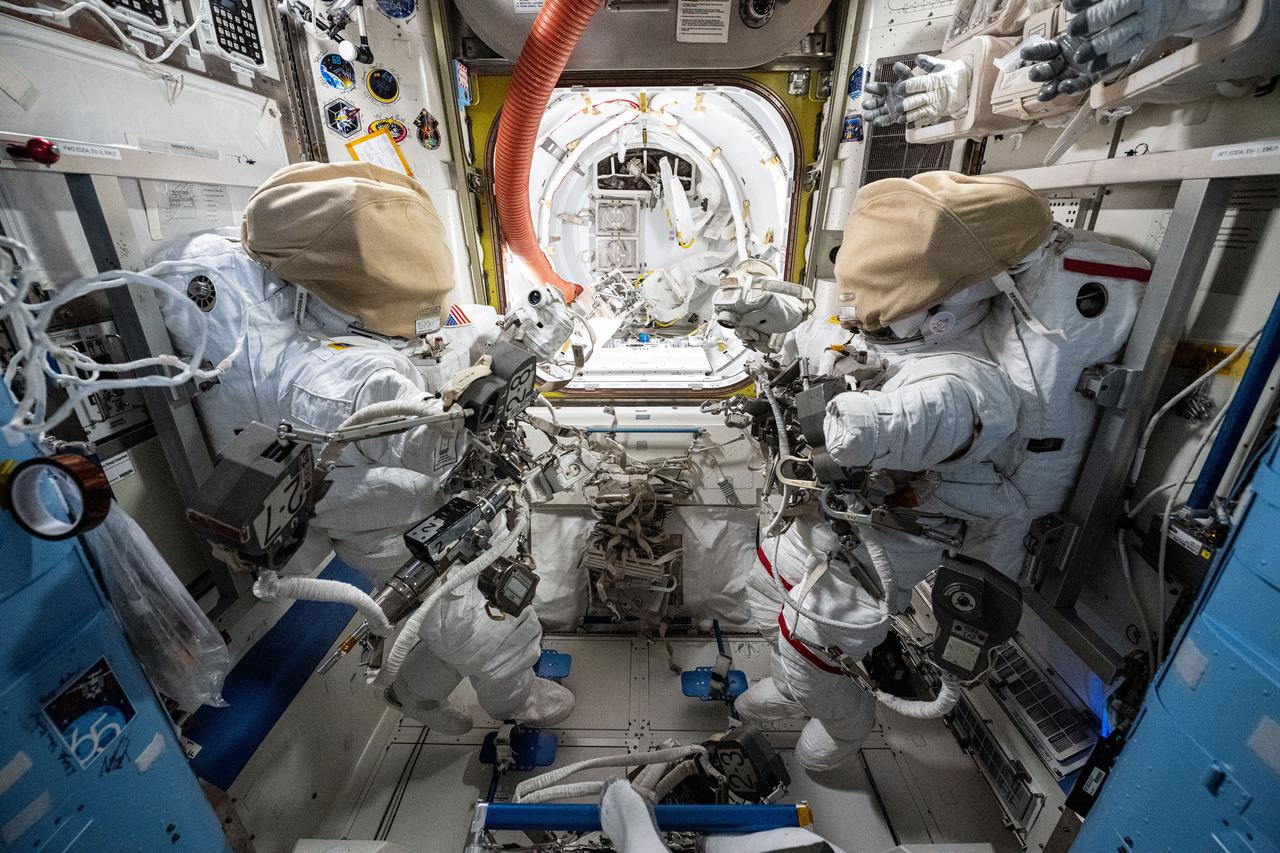
iss072e572297 (Jan. 28, 2025) --- Two spacesuits, with the helmets covered for protection, are staged inside the International Space Station's Quest airlock in preparation for spacewalk that NASA astronauts Suni Williams and Butch Wilmore conducted on Jan. 30, 2025.
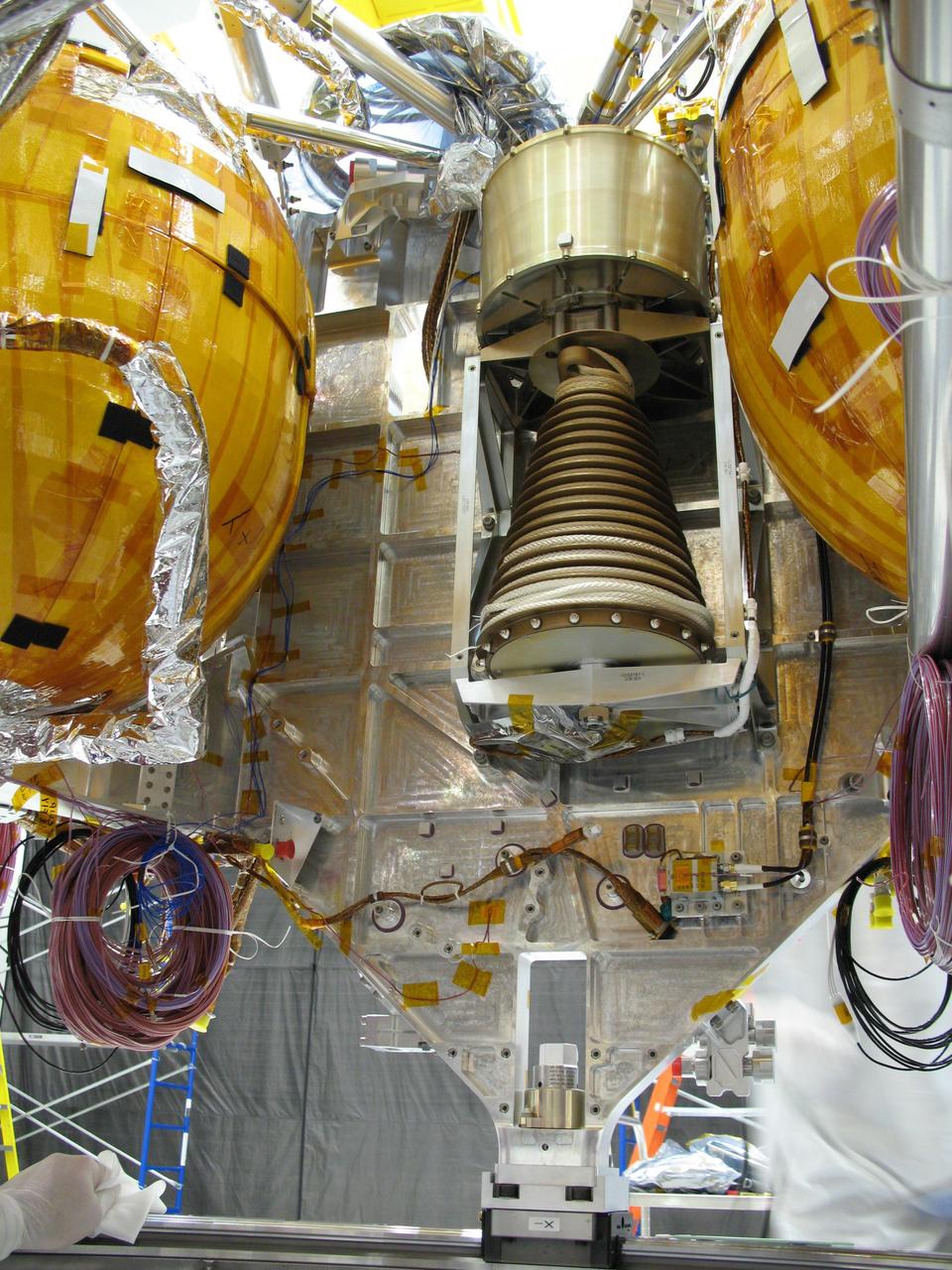
This view of a portion of the descent stage of NASA Mars Science Laboratory shows two of the stage three spherical fuel tanks flanking the bridle device assembly.
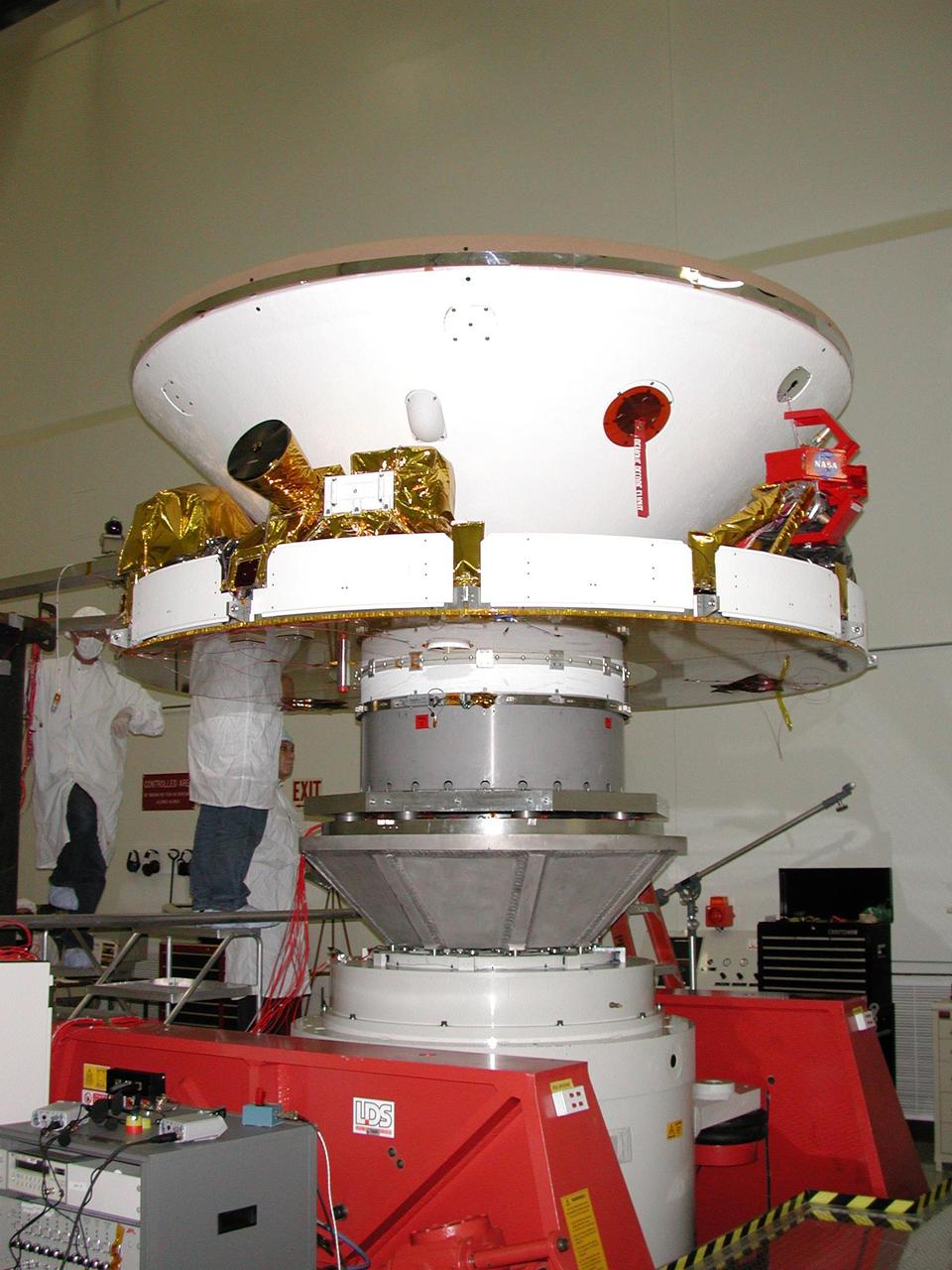
One of two Mars Exploration Rovers sits inside its cruise stage waiting to undergo environmental testing at NASA Jet Propulsion Laboratory.
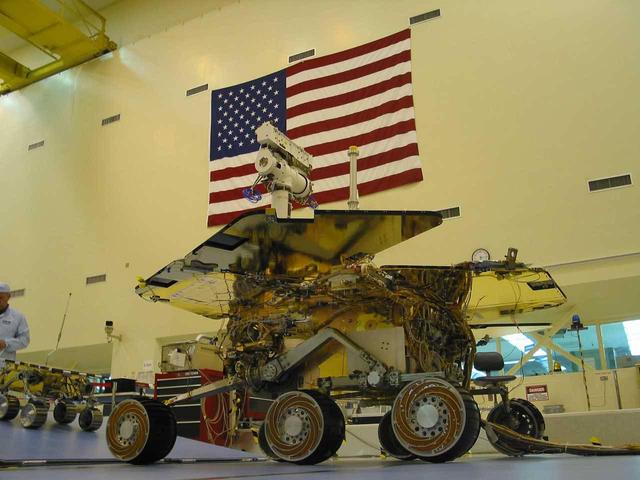
One of two Mars Exploration Rovers sits inside its cruise stage waitingto undergo environmental testing at NASA Jet PropulsionLaboratory.
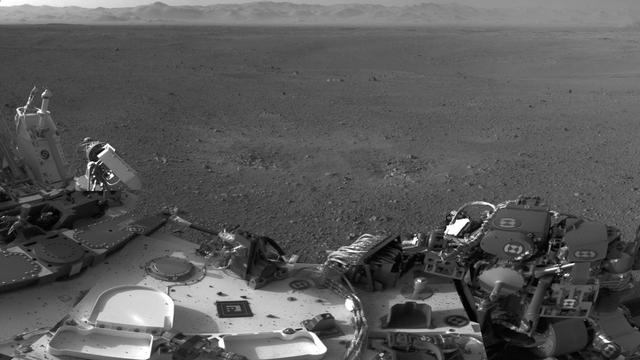
This mosaic image shows part of the left side of NASA Curiosity rover and two blast marks from the descent stage rocket engines. The rim of Gale Crater is the lighter colored band across the horizon. The back of the rover is to the left.
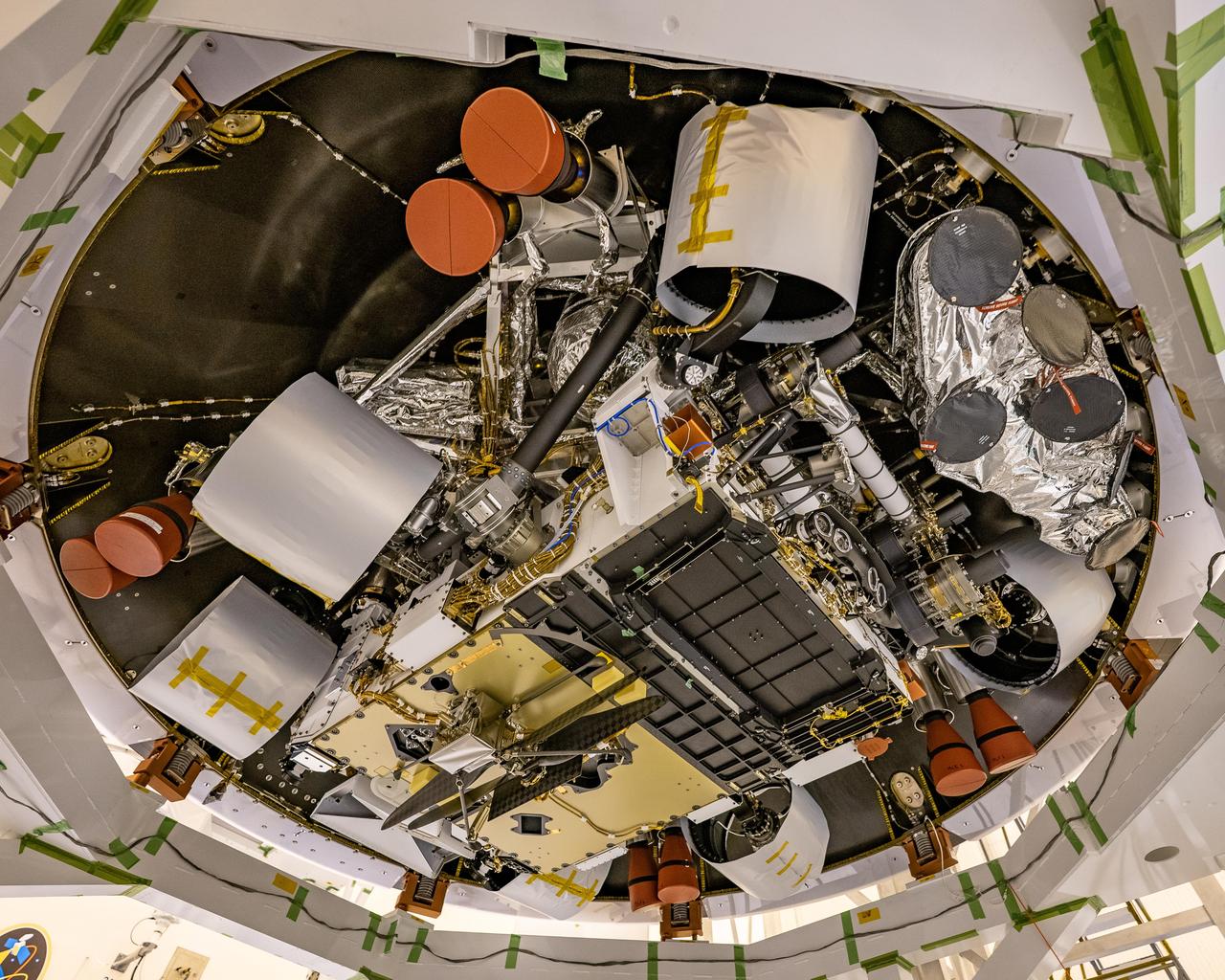
NASA's Mars Perseverance rover's descent stage was recently stacked atop the rover at Kennedy Space Center, and the two were placed in the back shell that will help protect them on their journey to Mars. In this image, taken on April 29, 2020, the underside of the rover is visible, along with the Ingenuity helicopter attached (lower center of the image). The outer ring is the base of the back shell, while the bell-shaped objects covered in red material are covers for engine nozzles on the descent stage. The wheels are covered in a protective material that will be removed before launch. https://photojournal.jpl.nasa.gov/catalog/PIA23884
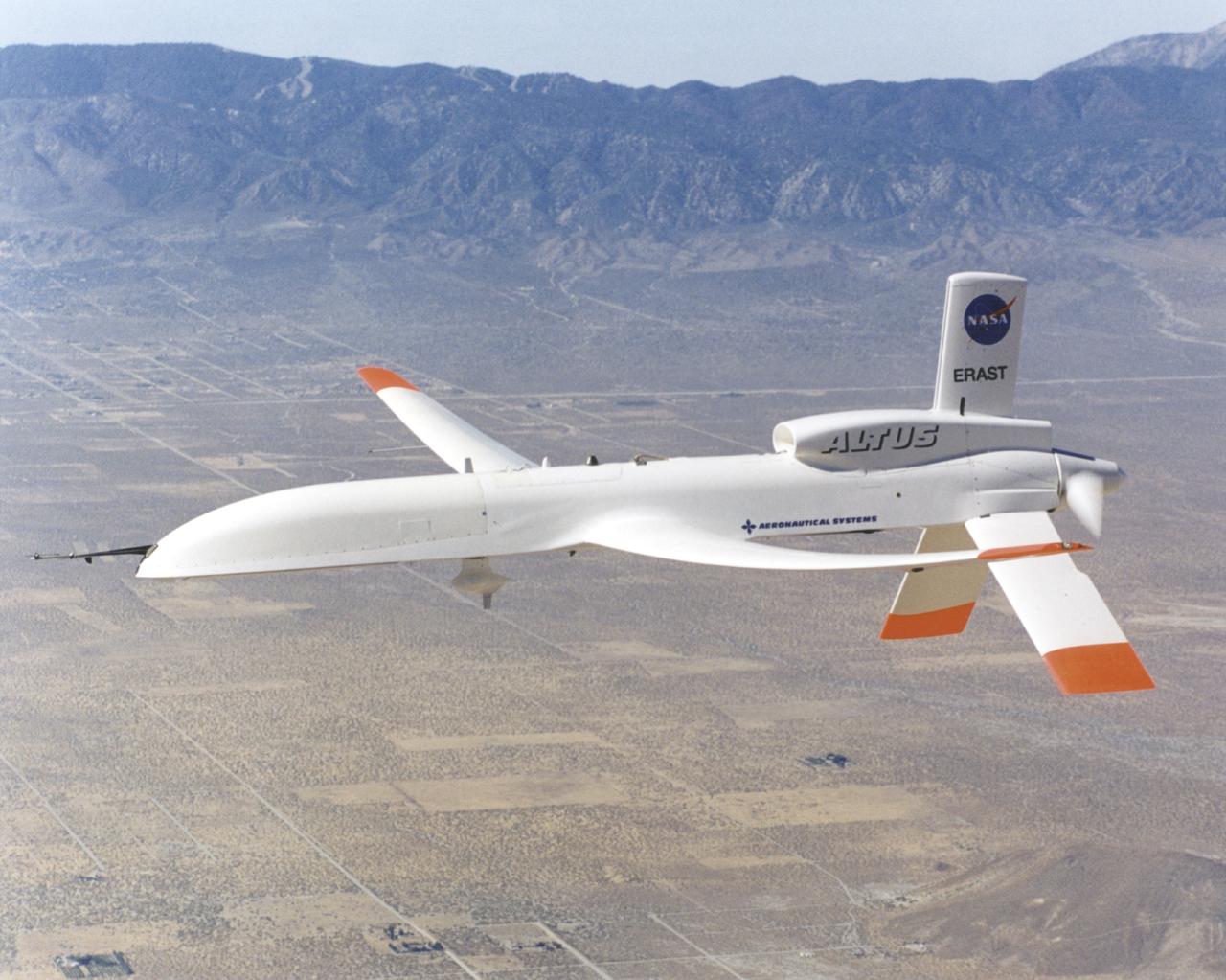
Altus II aircraft flying over southern California desert
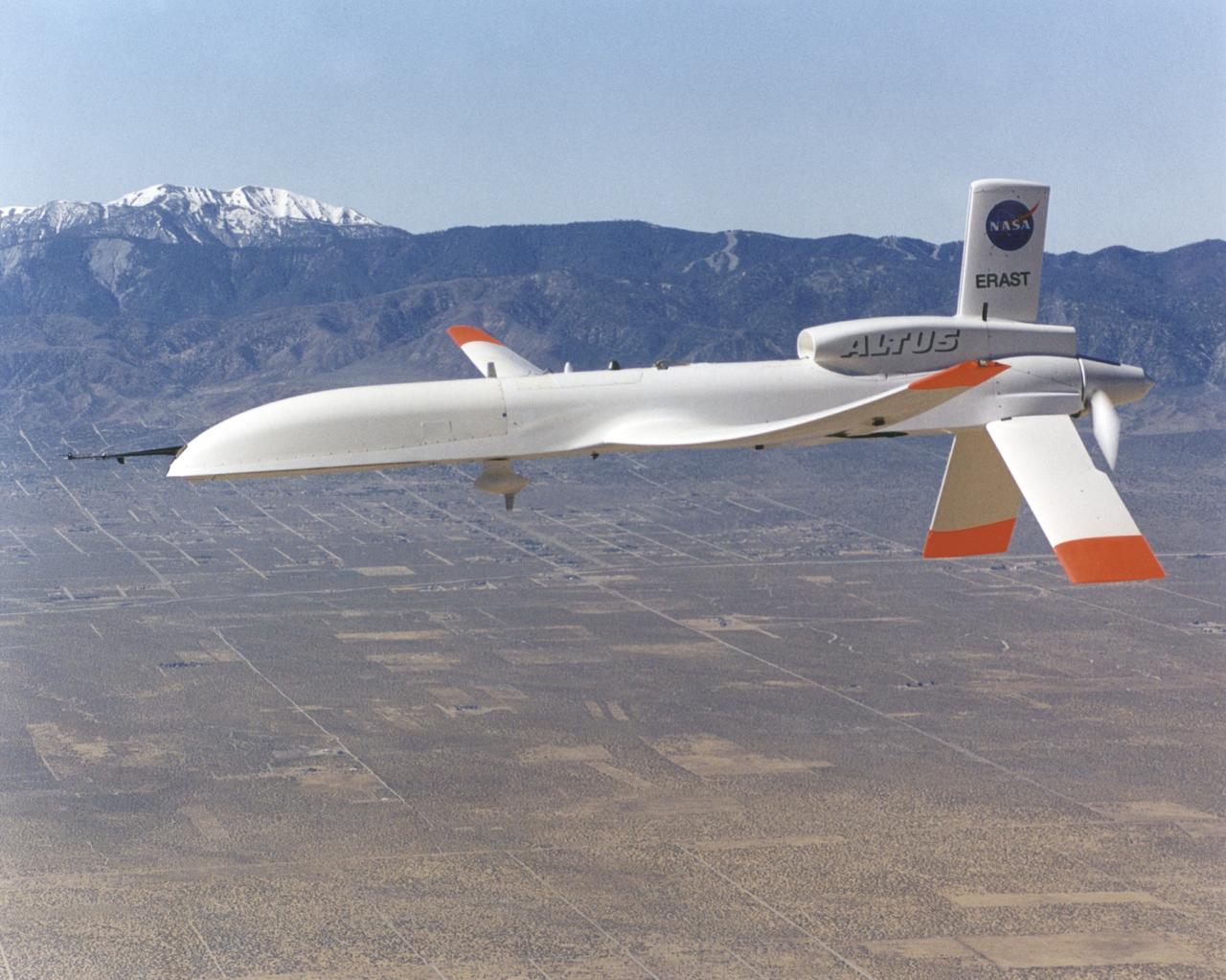
Altus II aircraft flying over southern California desert
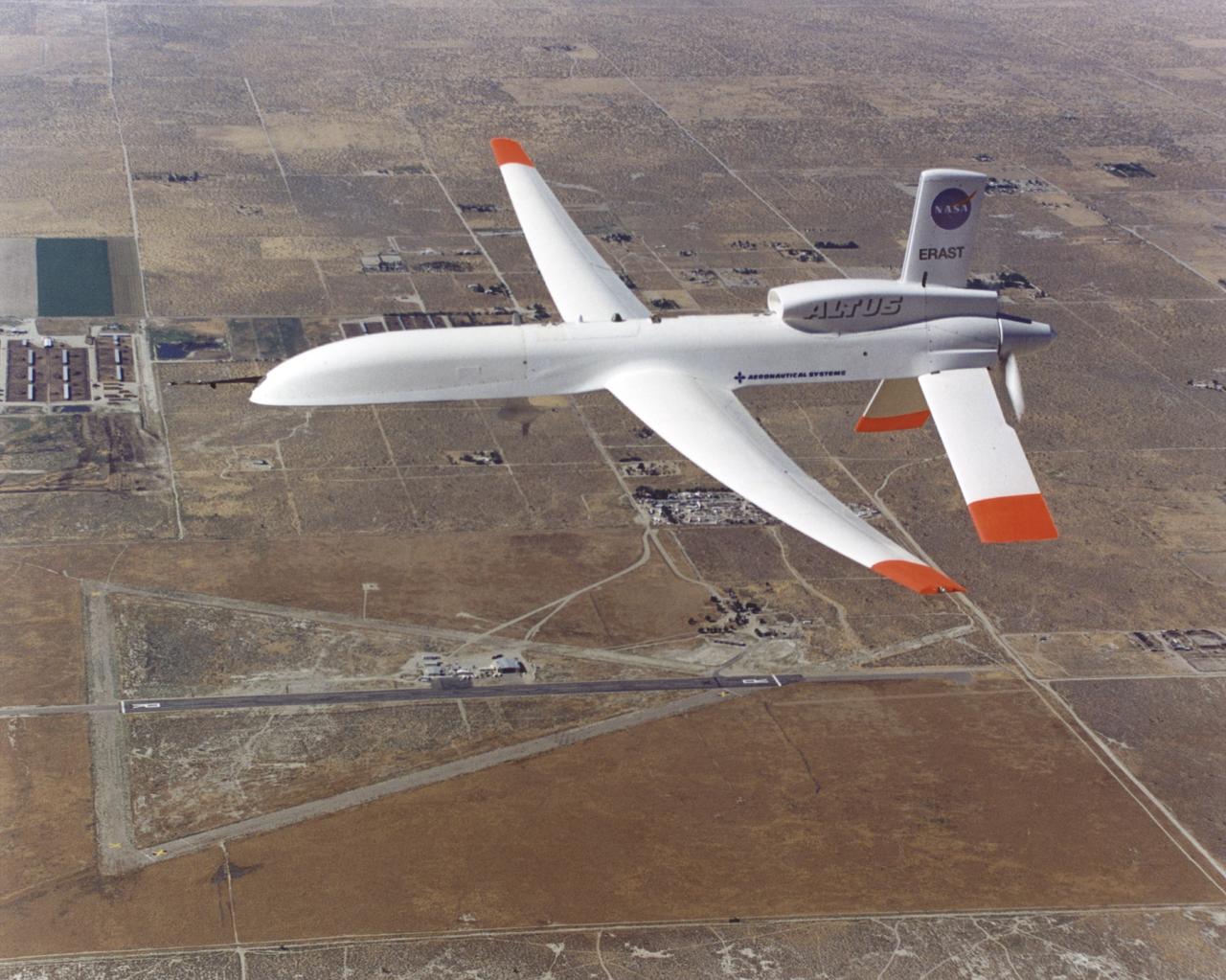
Altus II aircraft flying over southern California desert
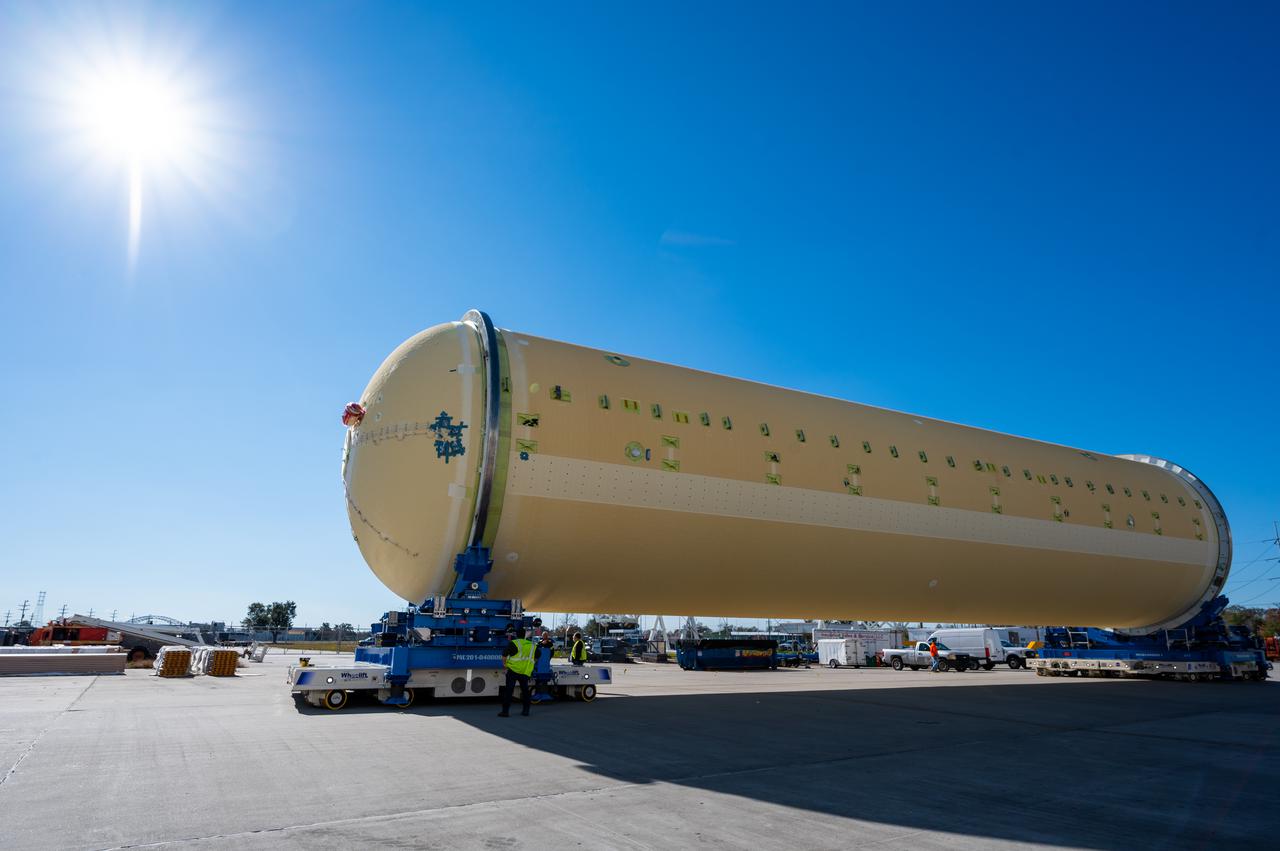
Technicians transported the assembled upper part of the Artemis II core stage to the final assembly area inside the factory at NASA’s Michoud Assembly Facility in New Orleans. On Jan 10, the forward assembly, left was moved next to the Artemis II liquid hydrogen tank, which has been undergoing assembly. Next, Boeing, the lead core stage contractor, will join the forward assembly and the liquid hydrogen tank to complete most of the core stage for the Space Launch System (SLS) rocket that will send the first crew on an Artemis mission. The core stage consists of five major structures that are built, outfitted, and then connected to form the final stage. The forward skirt, liquid oxygen and intertank were connected and tested to form the 66-foot forward assembly. After the forward assembly is joined with the 130-foot liquid hydrogen tank, only the engine section, the fifth piece of the stage, will need to be added to complete the Artemis II core stage. The core stage serves as the backbone of the rocket, supporting the weight of the payload, upper stage, and crew vehicle, as well as the thrust of its four RS-25 engines and two five-segment solid rocket boosters attached to the engine and intertank sections. On Artemis II, the SLS rocket will launch the Orion spacecraft and a crew, sending them into lunar orbit, in preparation for later Artemis missions that will enable the first woman and first person of color to land on the Moon.
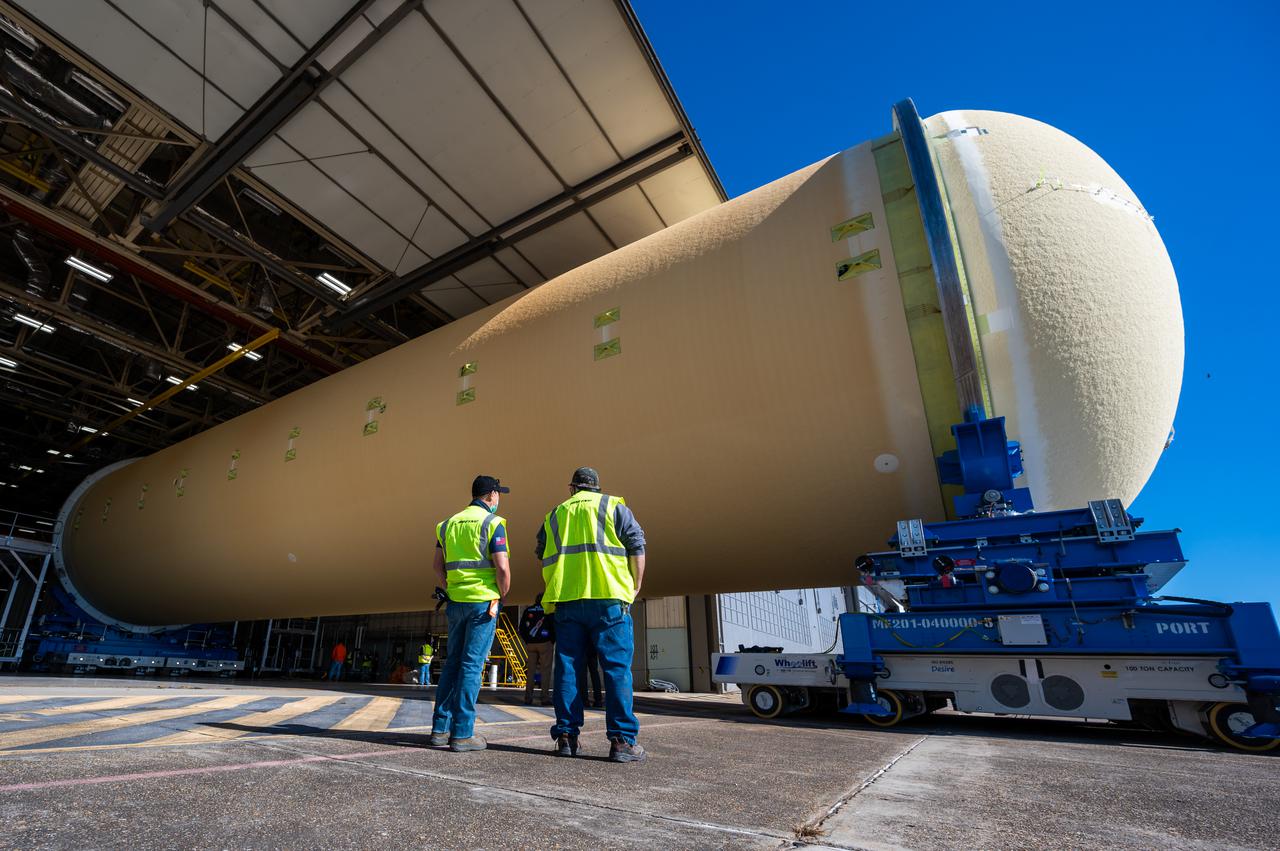
Technicians transported the assembled upper part of the Artemis II core stage to the final assembly area inside the factory at NASA’s Michoud Assembly Facility in New Orleans. On Jan 10, the forward assembly, left was moved next to the Artemis II liquid hydrogen tank, which has been undergoing assembly. Next, Boeing, the lead core stage contractor, will join the forward assembly and the liquid hydrogen tank to complete most of the core stage for the Space Launch System (SLS) rocket that will send the first crew on an Artemis mission. The core stage consists of five major structures that are built, outfitted, and then connected to form the final stage. The forward skirt, liquid oxygen and intertank were connected and tested to form the 66-foot forward assembly. After the forward assembly is joined with the 130-foot liquid hydrogen tank, only the engine section, the fifth piece of the stage, will need to be added to complete the Artemis II core stage. The core stage serves as the backbone of the rocket, supporting the weight of the payload, upper stage, and crew vehicle, as well as the thrust of its four RS-25 engines and two five-segment solid rocket boosters attached to the engine and intertank sections. On Artemis II, the SLS rocket will launch the Orion spacecraft and a crew, sending them into lunar orbit, in preparation for later Artemis missions that will enable the first woman and first person of color to land on the Moon.
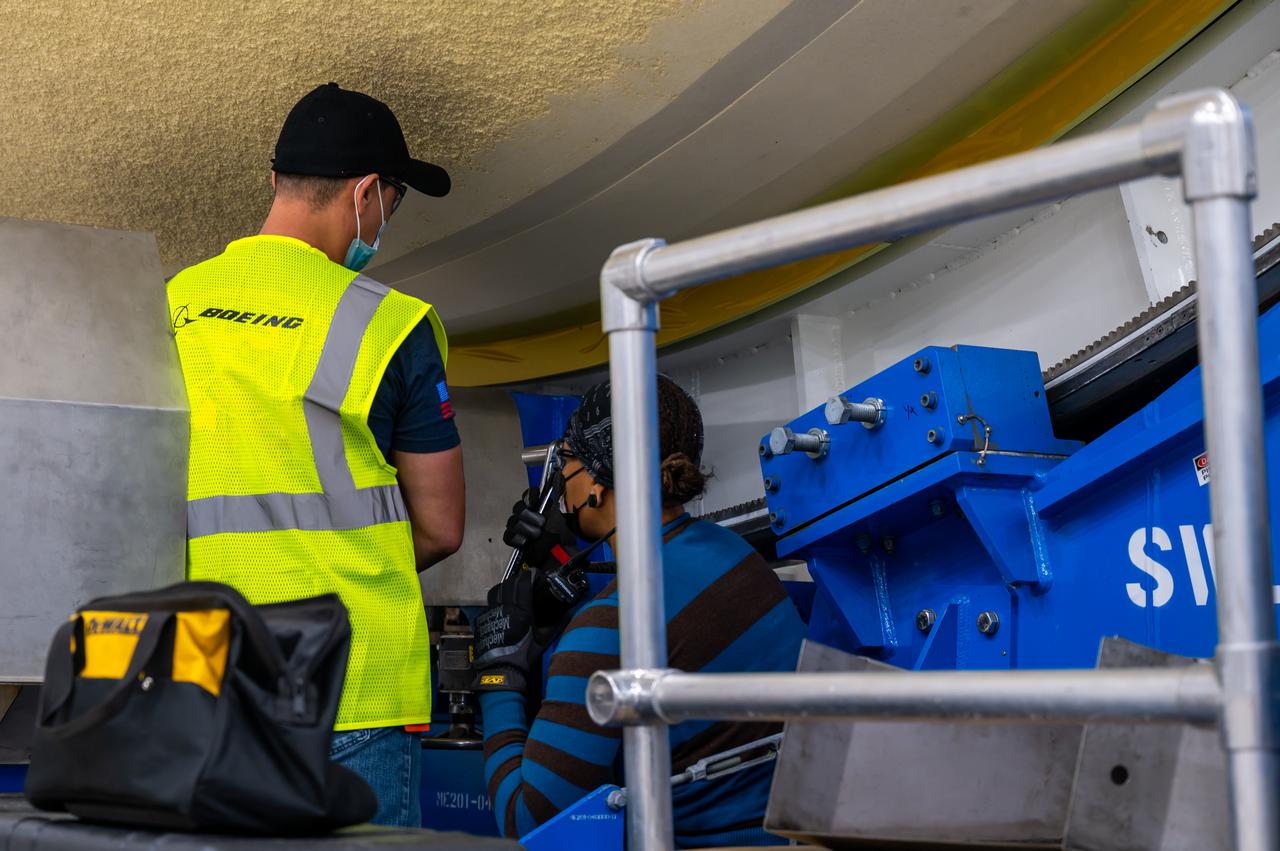
Technicians transported the assembled upper part of the Artemis II core stage to the final assembly area inside the factory at NASA’s Michoud Assembly Facility in New Orleans. On Jan 10, the forward assembly, left was moved next to the Artemis II liquid hydrogen tank, which has been undergoing assembly. Next, Boeing, the lead core stage contractor, will join the forward assembly and the liquid hydrogen tank to complete most of the core stage for the Space Launch System (SLS) rocket that will send the first crew on an Artemis mission. The core stage consists of five major structures that are built, outfitted, and then connected to form the final stage. The forward skirt, liquid oxygen and intertank were connected and tested to form the 66-foot forward assembly. After the forward assembly is joined with the 130-foot liquid hydrogen tank, only the engine section, the fifth piece of the stage, will need to be added to complete the Artemis II core stage. The core stage serves as the backbone of the rocket, supporting the weight of the payload, upper stage, and crew vehicle, as well as the thrust of its four RS-25 engines and two five-segment solid rocket boosters attached to the engine and intertank sections. On Artemis II, the SLS rocket will launch the Orion spacecraft and a crew, sending them into lunar orbit, in preparation for later Artemis missions that will enable the first woman and first person of color to land on the Moon.
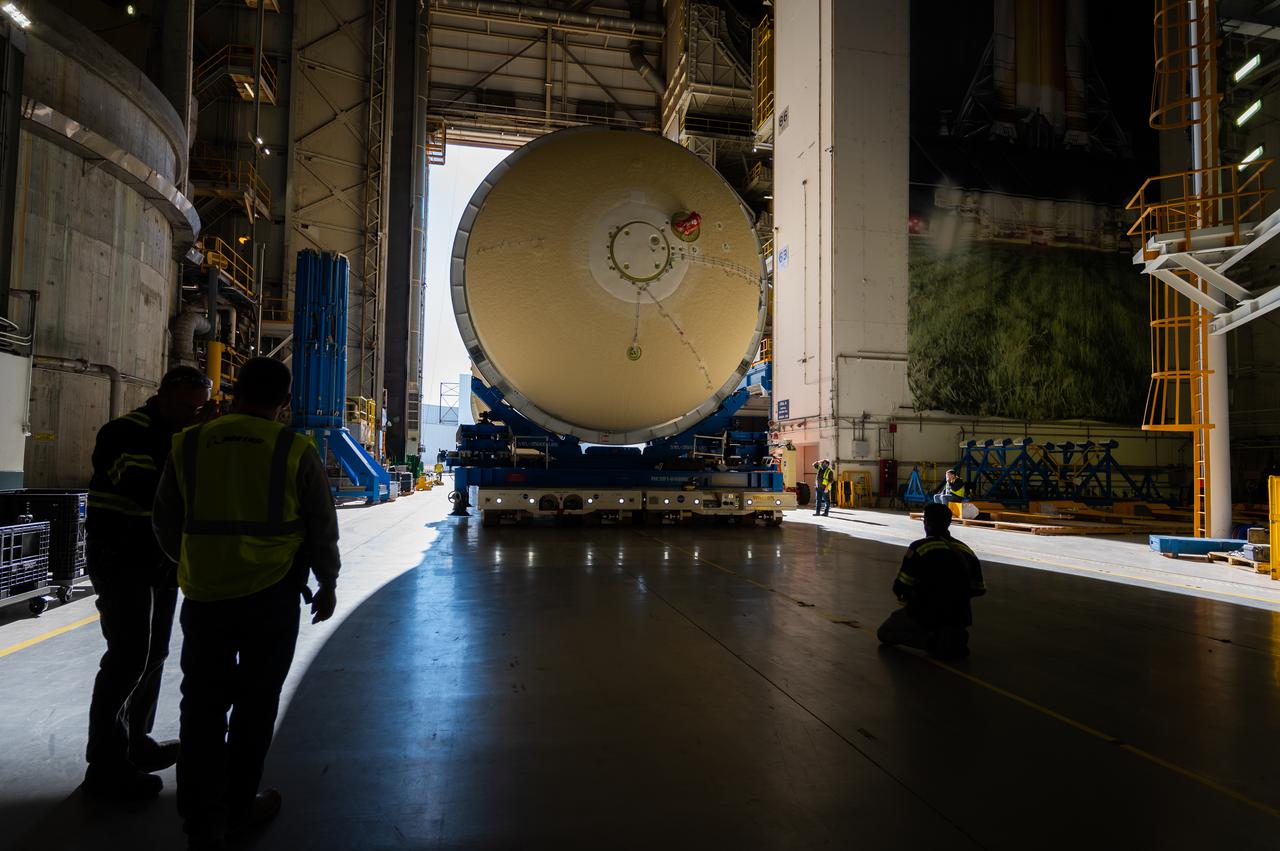
Technicians transported the assembled upper part of the Artemis II core stage to the final assembly area inside the factory at NASA’s Michoud Assembly Facility in New Orleans. On Jan 10, the forward assembly, left was moved next to the Artemis II liquid hydrogen tank, which has been undergoing assembly. Next, Boeing, the lead core stage contractor, will join the forward assembly and the liquid hydrogen tank to complete most of the core stage for the Space Launch System (SLS) rocket that will send the first crew on an Artemis mission. The core stage consists of five major structures that are built, outfitted, and then connected to form the final stage. The forward skirt, liquid oxygen and intertank were connected and tested to form the 66-foot forward assembly. After the forward assembly is joined with the 130-foot liquid hydrogen tank, only the engine section, the fifth piece of the stage, will need to be added to complete the Artemis II core stage. The core stage serves as the backbone of the rocket, supporting the weight of the payload, upper stage, and crew vehicle, as well as the thrust of its four RS-25 engines and two five-segment solid rocket boosters attached to the engine and intertank sections. On Artemis II, the SLS rocket will launch the Orion spacecraft and a crew, sending them into lunar orbit, in preparation for later Artemis missions that will enable the first woman and first person of color to land on the Moon.
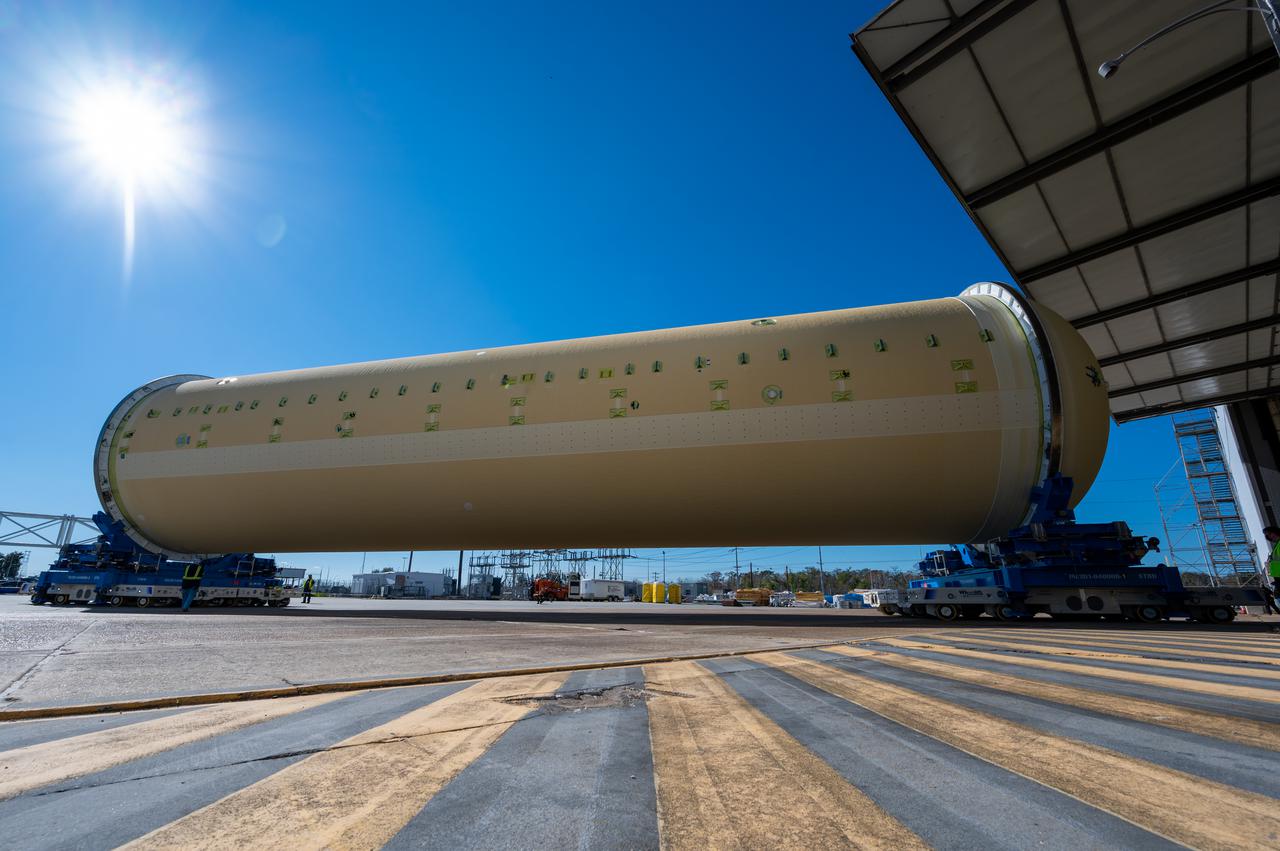
Technicians transported the assembled upper part of the Artemis II core stage to the final assembly area inside the factory at NASA’s Michoud Assembly Facility in New Orleans. On Jan 10, the forward assembly, left was moved next to the Artemis II liquid hydrogen tank, which has been undergoing assembly. Next, Boeing, the lead core stage contractor, will join the forward assembly and the liquid hydrogen tank to complete most of the core stage for the Space Launch System (SLS) rocket that will send the first crew on an Artemis mission. The core stage consists of five major structures that are built, outfitted, and then connected to form the final stage. The forward skirt, liquid oxygen and intertank were connected and tested to form the 66-foot forward assembly. After the forward assembly is joined with the 130-foot liquid hydrogen tank, only the engine section, the fifth piece of the stage, will need to be added to complete the Artemis II core stage. The core stage serves as the backbone of the rocket, supporting the weight of the payload, upper stage, and crew vehicle, as well as the thrust of its four RS-25 engines and two five-segment solid rocket boosters attached to the engine and intertank sections. On Artemis II, the SLS rocket will launch the Orion spacecraft and a crew, sending them into lunar orbit, in preparation for later Artemis missions that will enable the first woman and first person of color to land on the Moon.
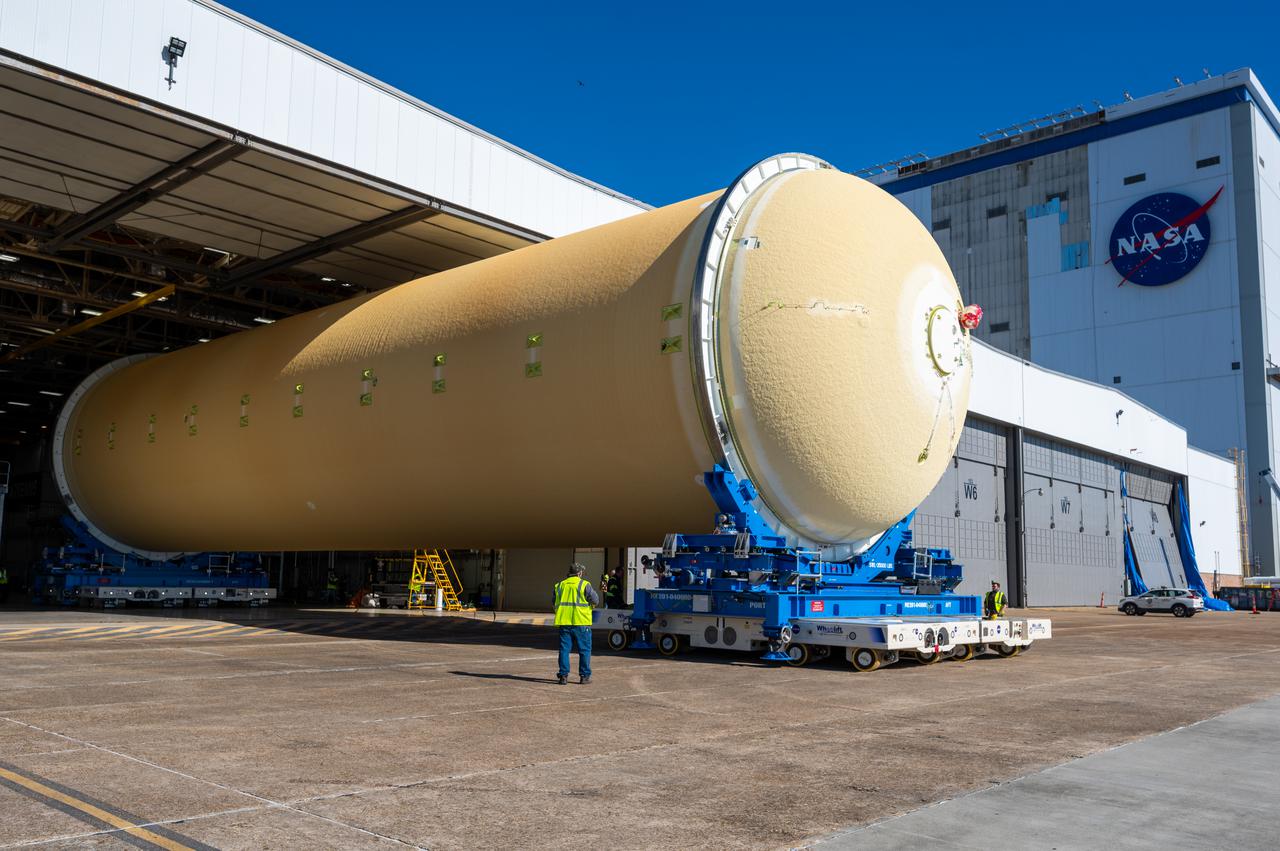
Technicians transported the assembled upper part of the Artemis II core stage to the final assembly area inside the factory at NASA’s Michoud Assembly Facility in New Orleans. On Jan 10, the forward assembly, left was moved next to the Artemis II liquid hydrogen tank, which has been undergoing assembly. Next, Boeing, the lead core stage contractor, will join the forward assembly and the liquid hydrogen tank to complete most of the core stage for the Space Launch System (SLS) rocket that will send the first crew on an Artemis mission. The core stage consists of five major structures that are built, outfitted, and then connected to form the final stage. The forward skirt, liquid oxygen and intertank were connected and tested to form the 66-foot forward assembly. After the forward assembly is joined with the 130-foot liquid hydrogen tank, only the engine section, the fifth piece of the stage, will need to be added to complete the Artemis II core stage. The core stage serves as the backbone of the rocket, supporting the weight of the payload, upper stage, and crew vehicle, as well as the thrust of its four RS-25 engines and two five-segment solid rocket boosters attached to the engine and intertank sections. On Artemis II, the SLS rocket will launch the Orion spacecraft and a crew, sending them into lunar orbit, in preparation for later Artemis missions that will enable the first woman and first person of color to land on the Moon.
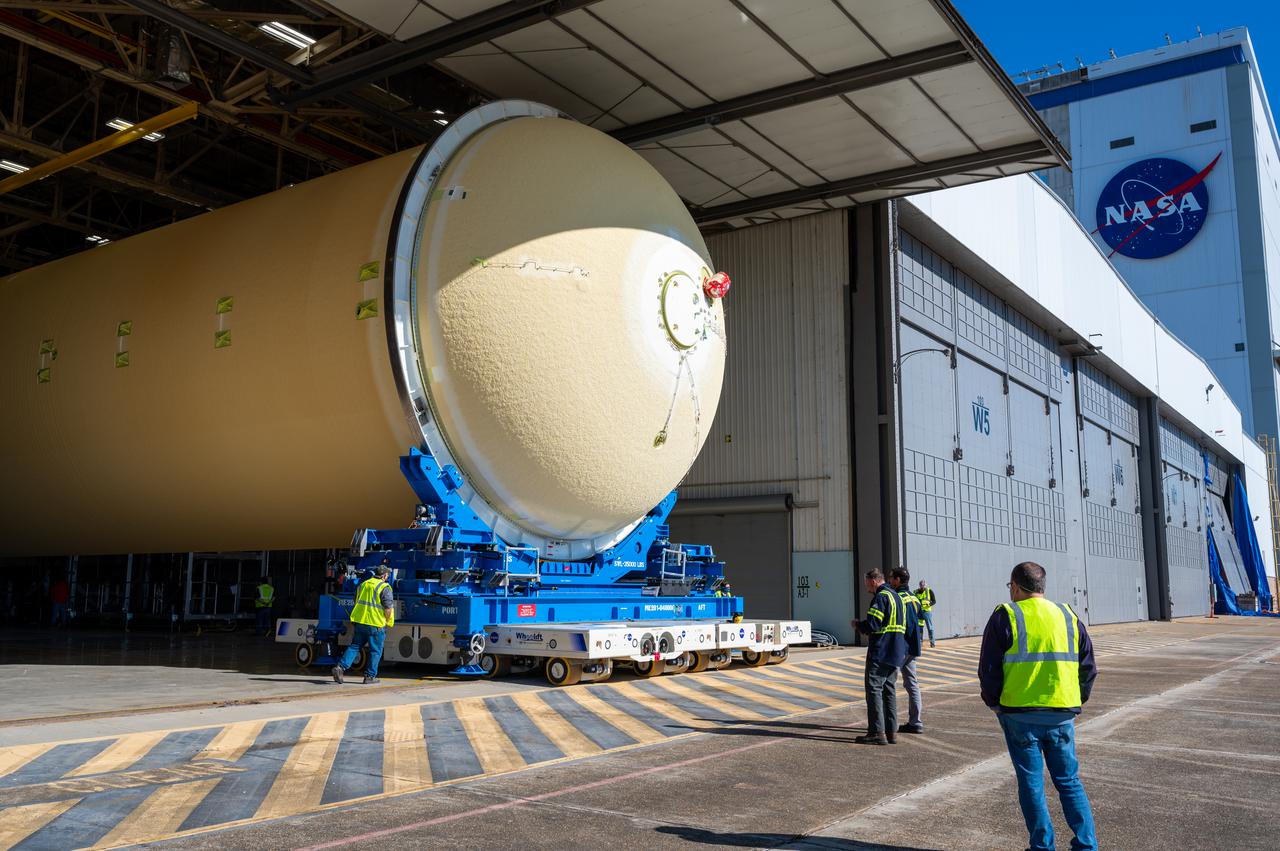
Technicians transported the assembled upper part of the Artemis II core stage to the final assembly area inside the factory at NASA’s Michoud Assembly Facility in New Orleans. On Jan 10, the forward assembly, left was moved next to the Artemis II liquid hydrogen tank, which has been undergoing assembly. Next, Boeing, the lead core stage contractor, will join the forward assembly and the liquid hydrogen tank to complete most of the core stage for the Space Launch System (SLS) rocket that will send the first crew on an Artemis mission. The core stage consists of five major structures that are built, outfitted, and then connected to form the final stage. The forward skirt, liquid oxygen and intertank were connected and tested to form the 66-foot forward assembly. After the forward assembly is joined with the 130-foot liquid hydrogen tank, only the engine section, the fifth piece of the stage, will need to be added to complete the Artemis II core stage. The core stage serves as the backbone of the rocket, supporting the weight of the payload, upper stage, and crew vehicle, as well as the thrust of its four RS-25 engines and two five-segment solid rocket boosters attached to the engine and intertank sections. On Artemis II, the SLS rocket will launch the Orion spacecraft and a crew, sending them into lunar orbit, in preparation for later Artemis missions that will enable the first woman and first person of color to land on the Moon.
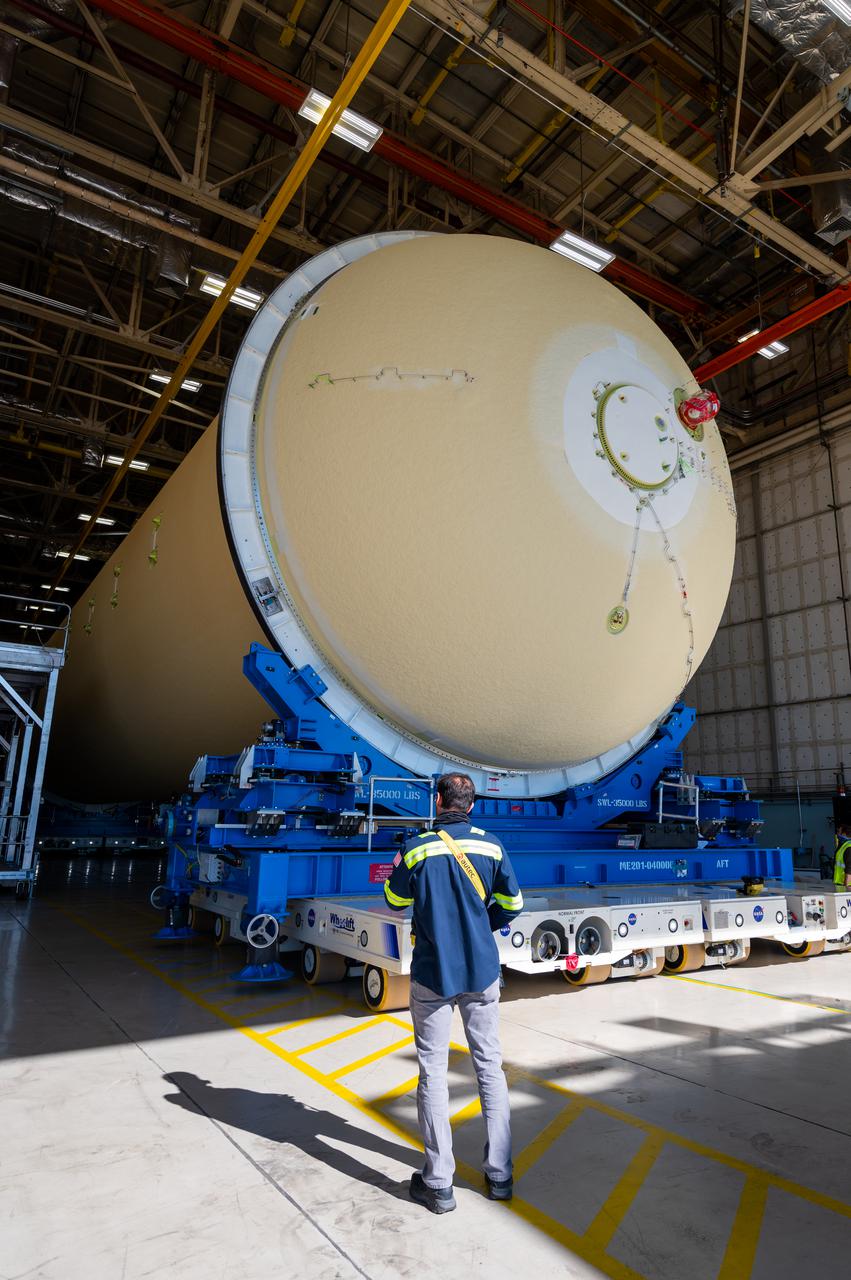
Technicians transported the assembled upper part of the Artemis II core stage to the final assembly area inside the factory at NASA’s Michoud Assembly Facility in New Orleans. On Jan 10, the forward assembly, left was moved next to the Artemis II liquid hydrogen tank, which has been undergoing assembly. Next, Boeing, the lead core stage contractor, will join the forward assembly and the liquid hydrogen tank to complete most of the core stage for the Space Launch System (SLS) rocket that will send the first crew on an Artemis mission. The core stage consists of five major structures that are built, outfitted, and then connected to form the final stage. The forward skirt, liquid oxygen and intertank were connected and tested to form the 66-foot forward assembly. After the forward assembly is joined with the 130-foot liquid hydrogen tank, only the engine section, the fifth piece of the stage, will need to be added to complete the Artemis II core stage. The core stage serves as the backbone of the rocket, supporting the weight of the payload, upper stage, and crew vehicle, as well as the thrust of its four RS-25 engines and two five-segment solid rocket boosters attached to the engine and intertank sections. On Artemis II, the SLS rocket will launch the Orion spacecraft and a crew, sending them into lunar orbit, in preparation for later Artemis missions that will enable the first woman and first person of color to land on the Moon.
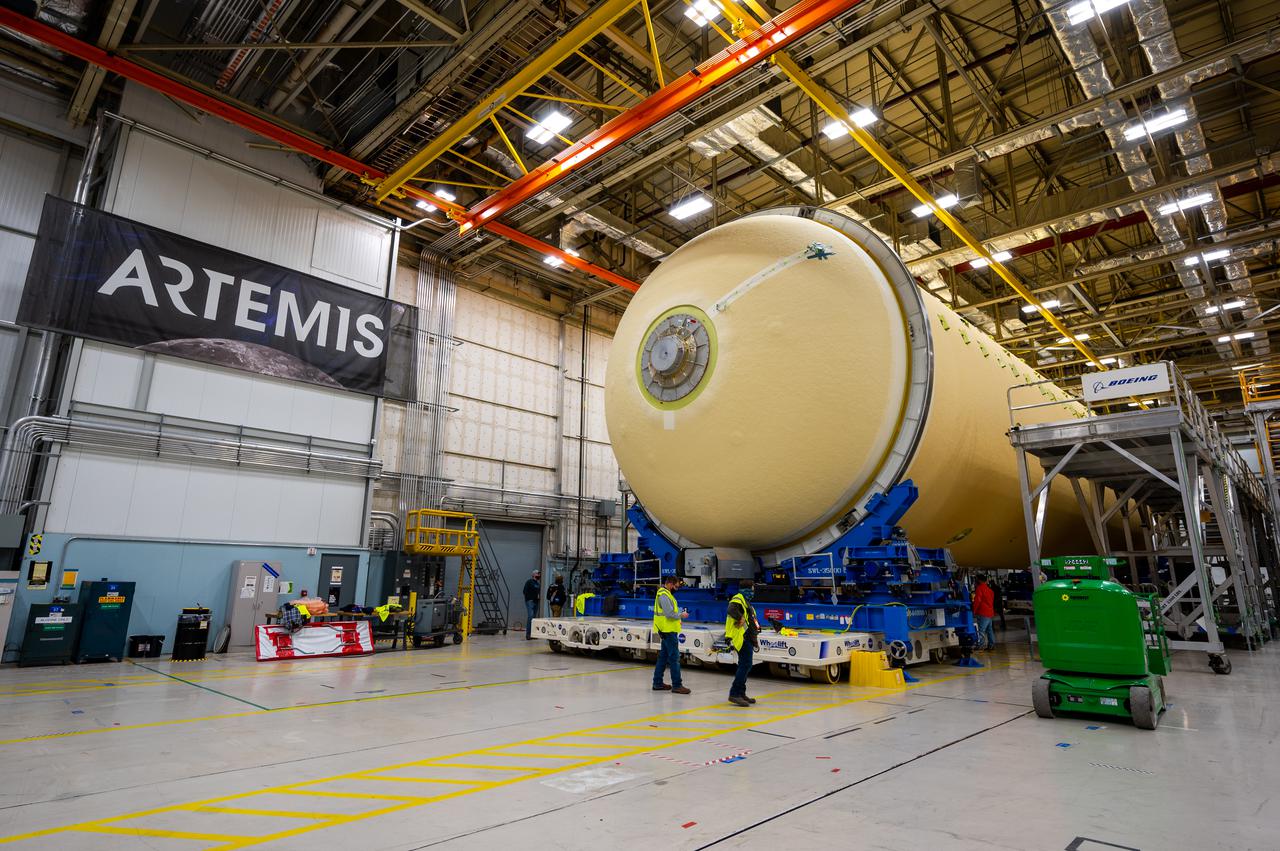
Technicians transported the assembled upper part of the Artemis II core stage to the final assembly area inside the factory at NASA’s Michoud Assembly Facility in New Orleans. On Jan 10, the forward assembly, left was moved next to the Artemis II liquid hydrogen tank, which has been undergoing assembly. Next, Boeing, the lead core stage contractor, will join the forward assembly and the liquid hydrogen tank to complete most of the core stage for the Space Launch System (SLS) rocket that will send the first crew on an Artemis mission. The core stage consists of five major structures that are built, outfitted, and then connected to form the final stage. The forward skirt, liquid oxygen and intertank were connected and tested to form the 66-foot forward assembly. After the forward assembly is joined with the 130-foot liquid hydrogen tank, only the engine section, the fifth piece of the stage, will need to be added to complete the Artemis II core stage. The core stage serves as the backbone of the rocket, supporting the weight of the payload, upper stage, and crew vehicle, as well as the thrust of its four RS-25 engines and two five-segment solid rocket boosters attached to the engine and intertank sections. On Artemis II, the SLS rocket will launch the Orion spacecraft and a crew, sending them into lunar orbit, in preparation for later Artemis missions that will enable the first woman and first person of color to land on the Moon.
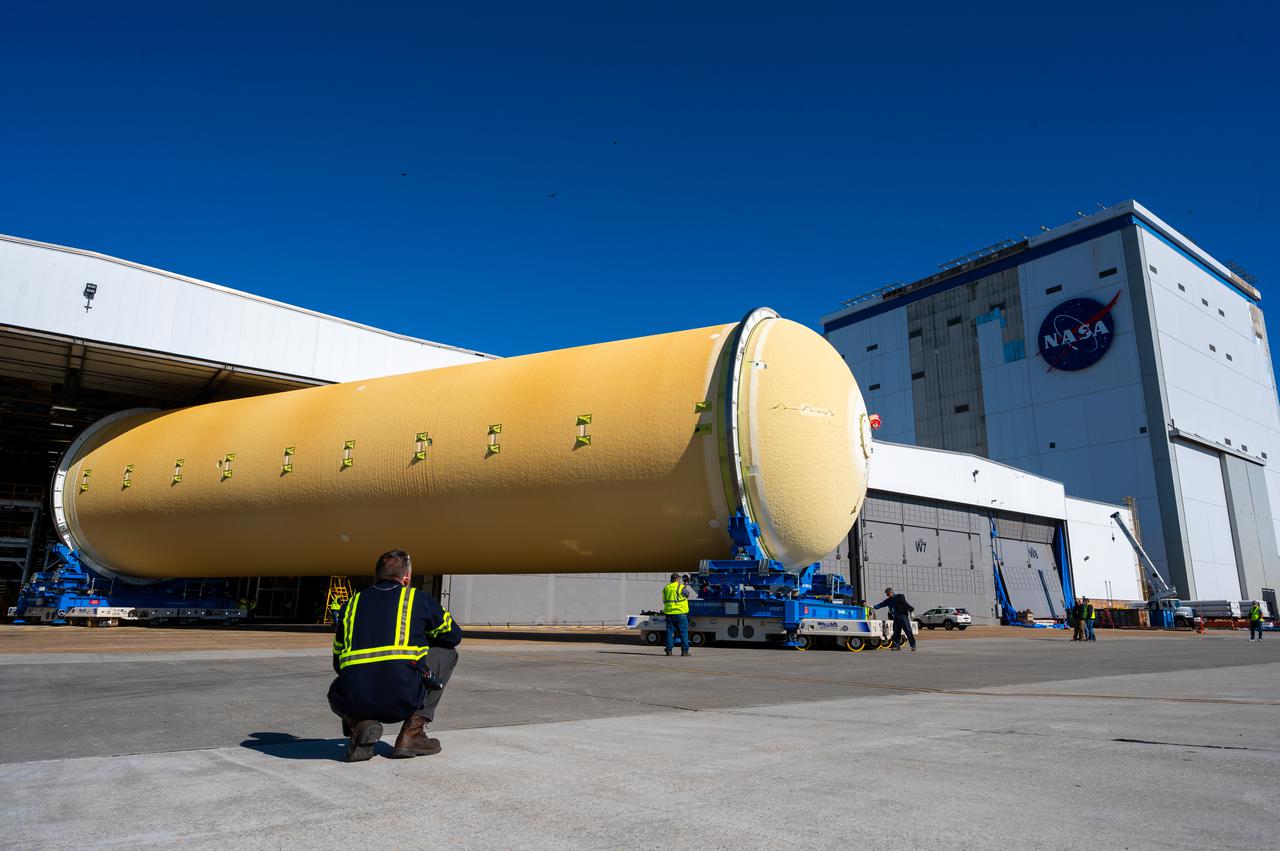
Technicians transported the assembled upper part of the Artemis II core stage to the final assembly area inside the factory at NASA’s Michoud Assembly Facility in New Orleans. On Jan 10, the forward assembly, left was moved next to the Artemis II liquid hydrogen tank, which has been undergoing assembly. Next, Boeing, the lead core stage contractor, will join the forward assembly and the liquid hydrogen tank to complete most of the core stage for the Space Launch System (SLS) rocket that will send the first crew on an Artemis mission. The core stage consists of five major structures that are built, outfitted, and then connected to form the final stage. The forward skirt, liquid oxygen and intertank were connected and tested to form the 66-foot forward assembly. After the forward assembly is joined with the 130-foot liquid hydrogen tank, only the engine section, the fifth piece of the stage, will need to be added to complete the Artemis II core stage. The core stage serves as the backbone of the rocket, supporting the weight of the payload, upper stage, and crew vehicle, as well as the thrust of its four RS-25 engines and two five-segment solid rocket boosters attached to the engine and intertank sections. On Artemis II, the SLS rocket will launch the Orion spacecraft and a crew, sending them into lunar orbit, in preparation for later Artemis missions that will enable the first woman and first person of color to land on the Moon.
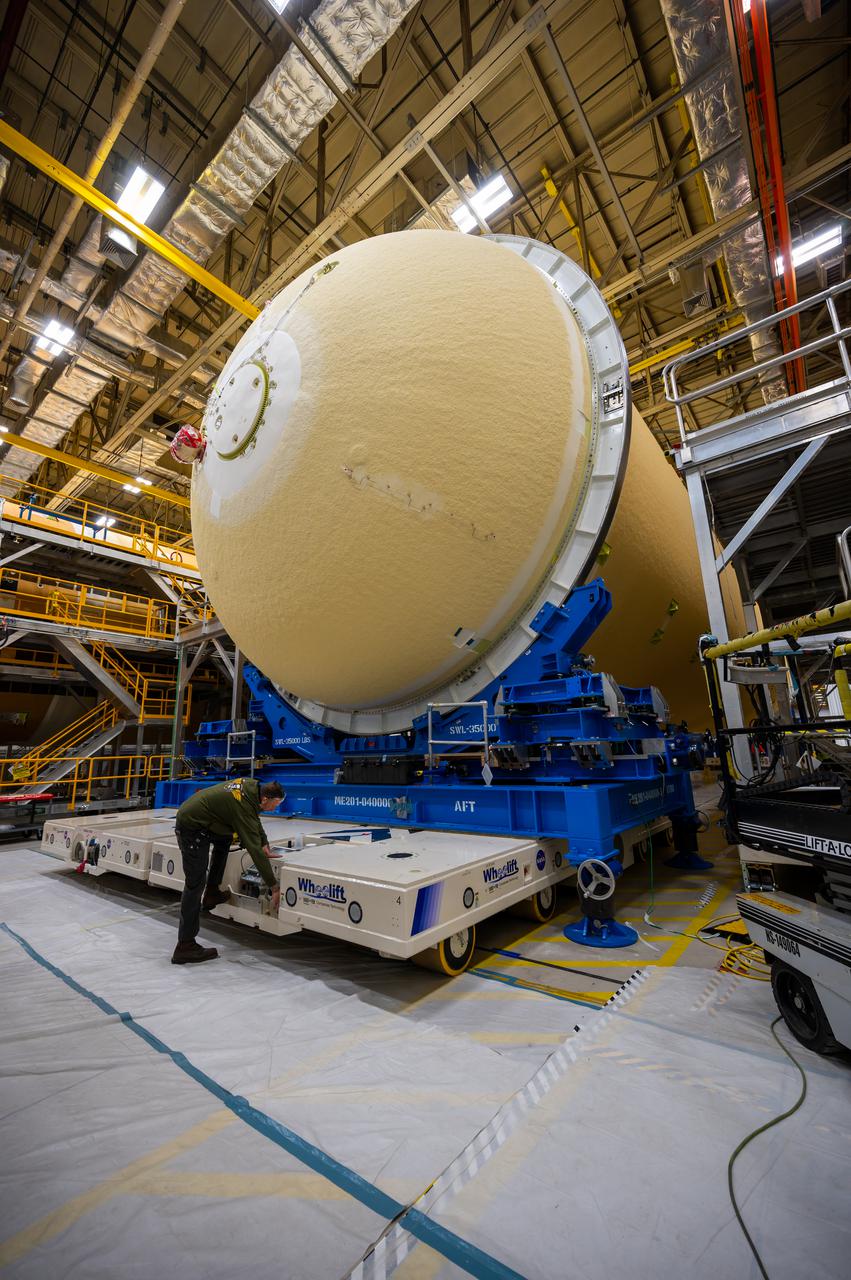
Technicians transported the assembled upper part of the Artemis II core stage to the final assembly area inside the factory at NASA’s Michoud Assembly Facility in New Orleans. On Jan 10, the forward assembly, left was moved next to the Artemis II liquid hydrogen tank, which has been undergoing assembly. Next, Boeing, the lead core stage contractor, will join the forward assembly and the liquid hydrogen tank to complete most of the core stage for the Space Launch System (SLS) rocket that will send the first crew on an Artemis mission. The core stage consists of five major structures that are built, outfitted, and then connected to form the final stage. The forward skirt, liquid oxygen and intertank were connected and tested to form the 66-foot forward assembly. After the forward assembly is joined with the 130-foot liquid hydrogen tank, only the engine section, the fifth piece of the stage, will need to be added to complete the Artemis II core stage. The core stage serves as the backbone of the rocket, supporting the weight of the payload, upper stage, and crew vehicle, as well as the thrust of its four RS-25 engines and two five-segment solid rocket boosters attached to the engine and intertank sections. On Artemis II, the SLS rocket will launch the Orion spacecraft and a crew, sending them into lunar orbit, in preparation for later Artemis missions that will enable the first woman and first person of color to land on the Moon.
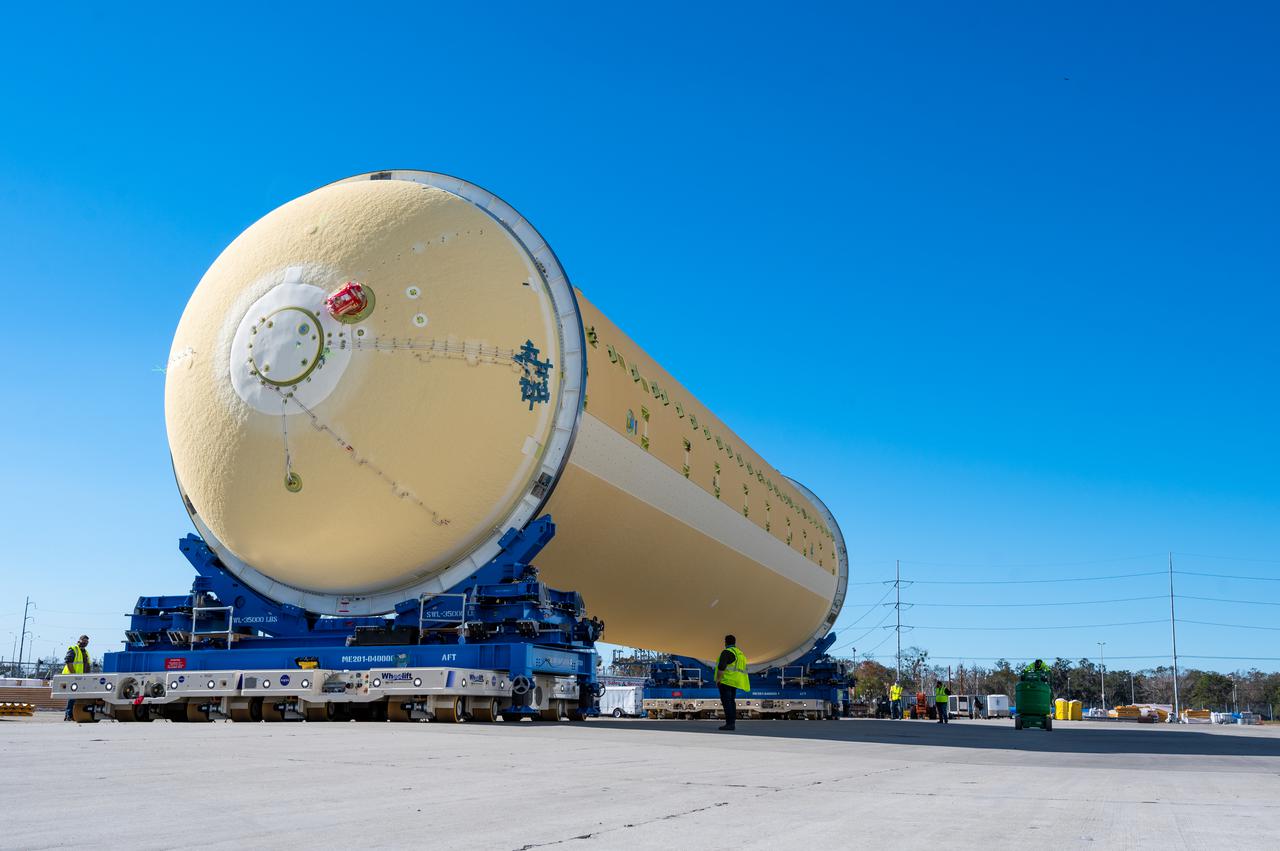
Technicians transported the assembled upper part of the Artemis II core stage to the final assembly area inside the factory at NASA’s Michoud Assembly Facility in New Orleans. On Jan 10, the forward assembly, left was moved next to the Artemis II liquid hydrogen tank, which has been undergoing assembly. Next, Boeing, the lead core stage contractor, will join the forward assembly and the liquid hydrogen tank to complete most of the core stage for the Space Launch System (SLS) rocket that will send the first crew on an Artemis mission. The core stage consists of five major structures that are built, outfitted, and then connected to form the final stage. The forward skirt, liquid oxygen and intertank were connected and tested to form the 66-foot forward assembly. After the forward assembly is joined with the 130-foot liquid hydrogen tank, only the engine section, the fifth piece of the stage, will need to be added to complete the Artemis II core stage. The core stage serves as the backbone of the rocket, supporting the weight of the payload, upper stage, and crew vehicle, as well as the thrust of its four RS-25 engines and two five-segment solid rocket boosters attached to the engine and intertank sections. On Artemis II, the SLS rocket will launch the Orion spacecraft and a crew, sending them into lunar orbit, in preparation for later Artemis missions that will enable the first woman and first person of color to land on the Moon.
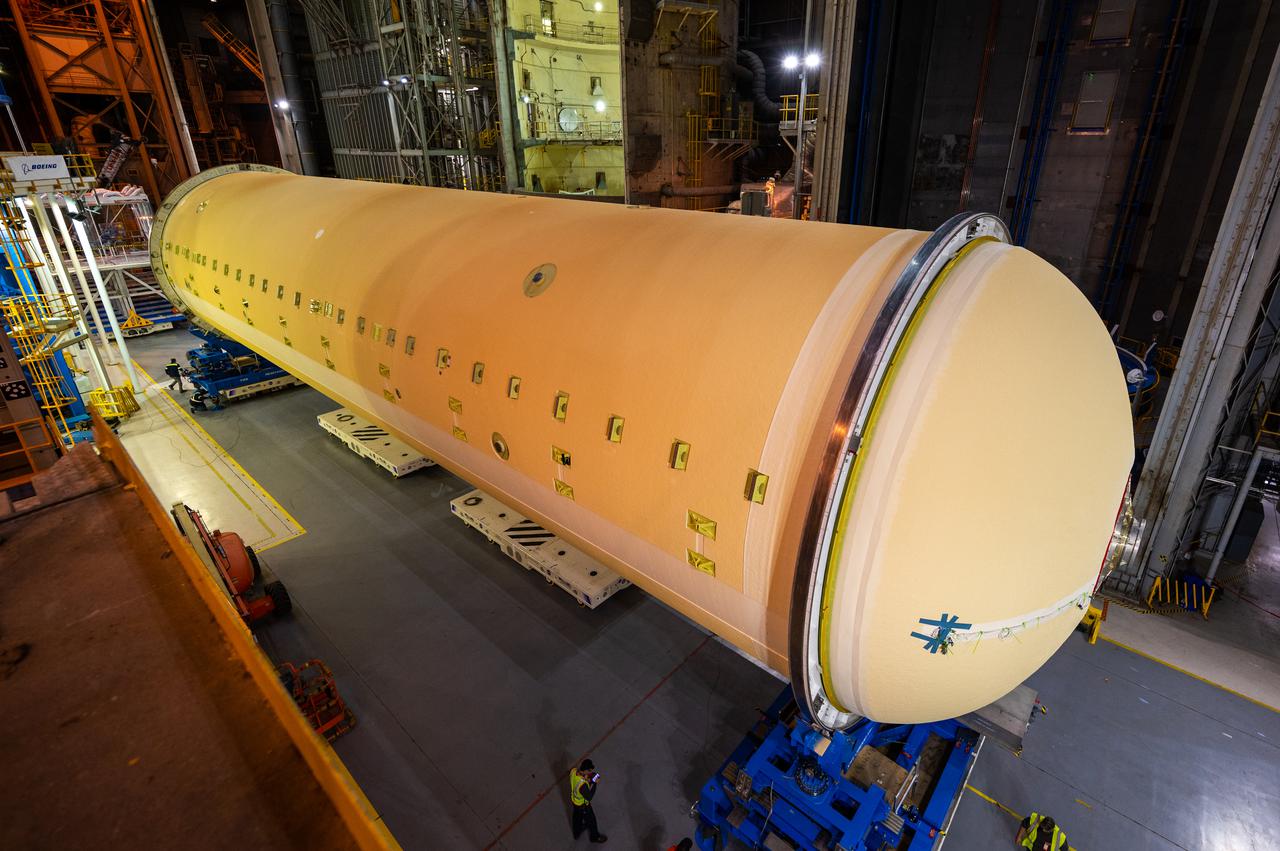
Technicians transported the assembled upper part of the Artemis II core stage to the final assembly area inside the factory at NASA’s Michoud Assembly Facility in New Orleans. On Jan 10, the forward assembly, left was moved next to the Artemis II liquid hydrogen tank, which has been undergoing assembly. Next, Boeing, the lead core stage contractor, will join the forward assembly and the liquid hydrogen tank to complete most of the core stage for the Space Launch System (SLS) rocket that will send the first crew on an Artemis mission. The core stage consists of five major structures that are built, outfitted, and then connected to form the final stage. The forward skirt, liquid oxygen and intertank were connected and tested to form the 66-foot forward assembly. After the forward assembly is joined with the 130-foot liquid hydrogen tank, only the engine section, the fifth piece of the stage, will need to be added to complete the Artemis II core stage. The core stage serves as the backbone of the rocket, supporting the weight of the payload, upper stage, and crew vehicle, as well as the thrust of its four RS-25 engines and two five-segment solid rocket boosters attached to the engine and intertank sections. On Artemis II, the SLS rocket will launch the Orion spacecraft and a crew, sending them into lunar orbit, in preparation for later Artemis missions that will enable the first woman and first person of color to land on the Moon.
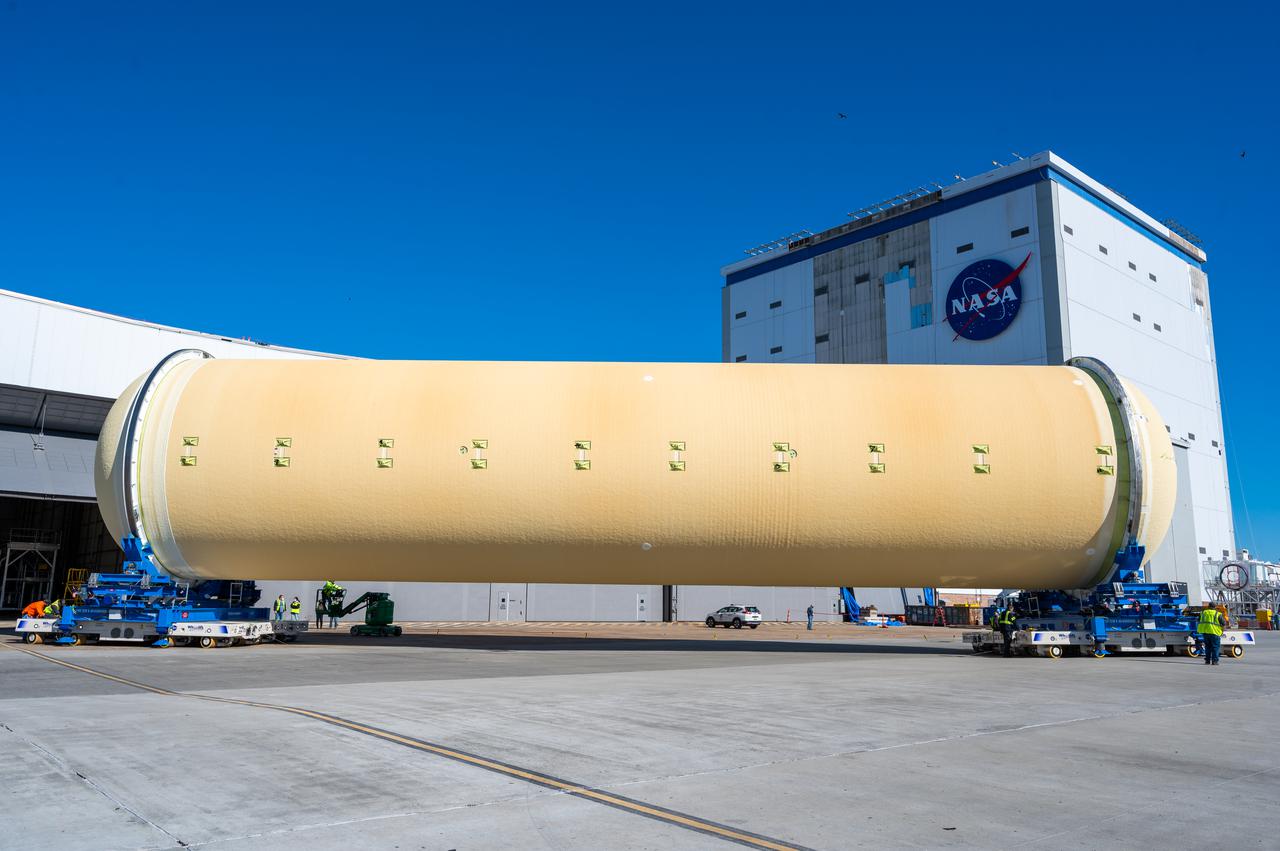
Technicians transported the assembled upper part of the Artemis II core stage to the final assembly area inside the factory at NASA’s Michoud Assembly Facility in New Orleans. On Jan 10, the forward assembly, left was moved next to the Artemis II liquid hydrogen tank, which has been undergoing assembly. Next, Boeing, the lead core stage contractor, will join the forward assembly and the liquid hydrogen tank to complete most of the core stage for the Space Launch System (SLS) rocket that will send the first crew on an Artemis mission. The core stage consists of five major structures that are built, outfitted, and then connected to form the final stage. The forward skirt, liquid oxygen and intertank were connected and tested to form the 66-foot forward assembly. After the forward assembly is joined with the 130-foot liquid hydrogen tank, only the engine section, the fifth piece of the stage, will need to be added to complete the Artemis II core stage. The core stage serves as the backbone of the rocket, supporting the weight of the payload, upper stage, and crew vehicle, as well as the thrust of its four RS-25 engines and two five-segment solid rocket boosters attached to the engine and intertank sections. On Artemis II, the SLS rocket will launch the Orion spacecraft and a crew, sending them into lunar orbit, in preparation for later Artemis missions that will enable the first woman and first person of color to land on the Moon.
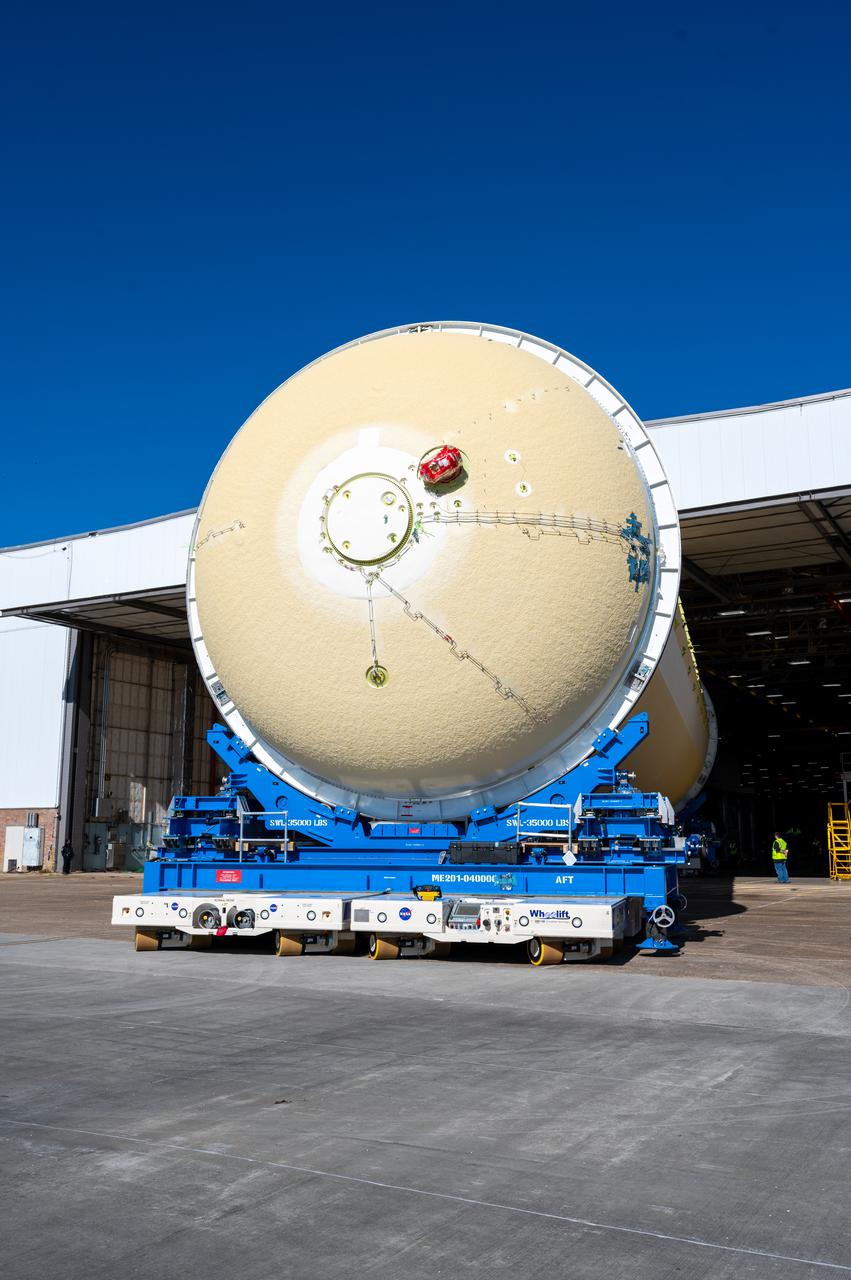
Technicians transported the assembled upper part of the Artemis II core stage to the final assembly area inside the factory at NASA’s Michoud Assembly Facility in New Orleans. On Jan 10, the forward assembly, left was moved next to the Artemis II liquid hydrogen tank, which has been undergoing assembly. Next, Boeing, the lead core stage contractor, will join the forward assembly and the liquid hydrogen tank to complete most of the core stage for the Space Launch System (SLS) rocket that will send the first crew on an Artemis mission. The core stage consists of five major structures that are built, outfitted, and then connected to form the final stage. The forward skirt, liquid oxygen and intertank were connected and tested to form the 66-foot forward assembly. After the forward assembly is joined with the 130-foot liquid hydrogen tank, only the engine section, the fifth piece of the stage, will need to be added to complete the Artemis II core stage. The core stage serves as the backbone of the rocket, supporting the weight of the payload, upper stage, and crew vehicle, as well as the thrust of its four RS-25 engines and two five-segment solid rocket boosters attached to the engine and intertank sections. On Artemis II, the SLS rocket will launch the Orion spacecraft and a crew, sending them into lunar orbit, in preparation for later Artemis missions that will enable the first woman and first person of color to land on the Moon.
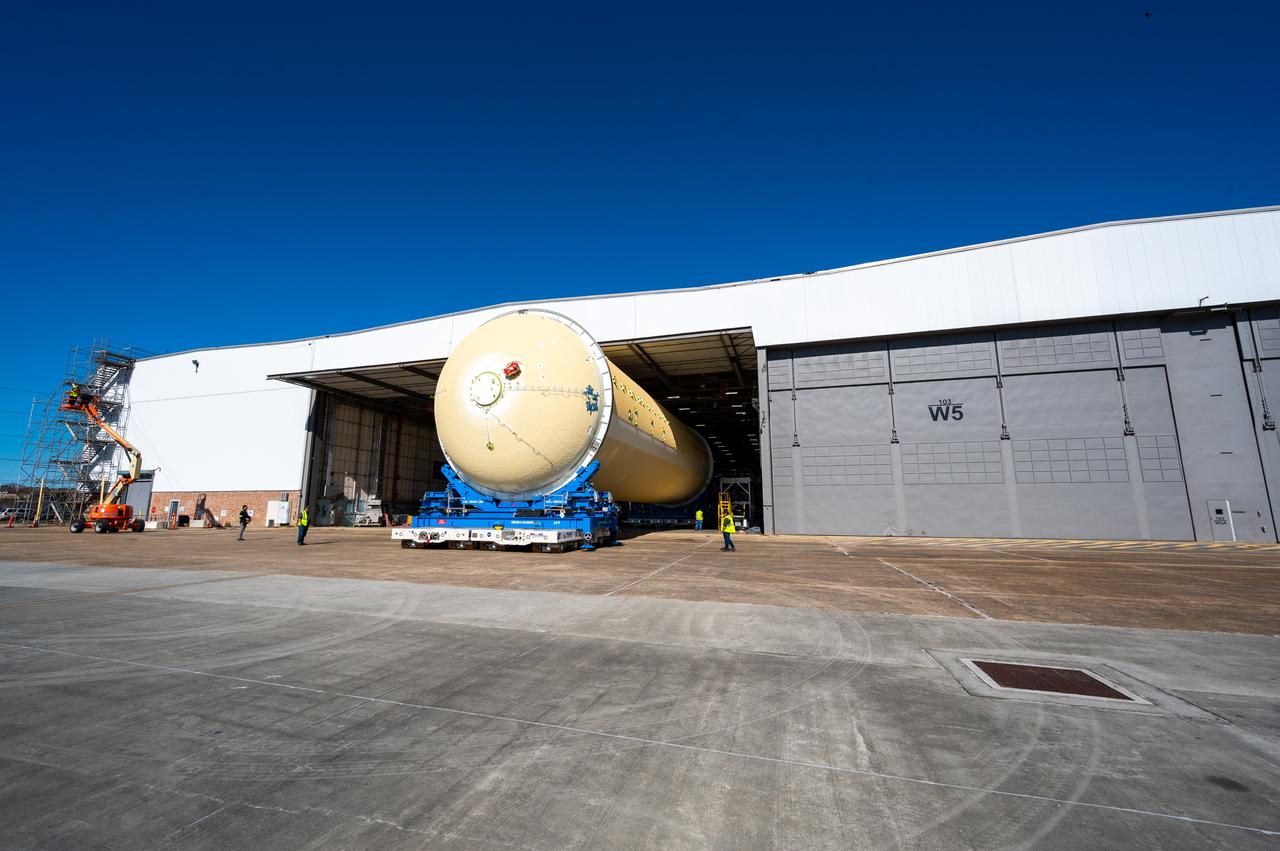
Technicians transported the assembled upper part of the Artemis II core stage to the final assembly area inside the factory at NASA’s Michoud Assembly Facility in New Orleans. On Jan 10, the forward assembly, left was moved next to the Artemis II liquid hydrogen tank, which has been undergoing assembly. Next, Boeing, the lead core stage contractor, will join the forward assembly and the liquid hydrogen tank to complete most of the core stage for the Space Launch System (SLS) rocket that will send the first crew on an Artemis mission. The core stage consists of five major structures that are built, outfitted, and then connected to form the final stage. The forward skirt, liquid oxygen and intertank were connected and tested to form the 66-foot forward assembly. After the forward assembly is joined with the 130-foot liquid hydrogen tank, only the engine section, the fifth piece of the stage, will need to be added to complete the Artemis II core stage. The core stage serves as the backbone of the rocket, supporting the weight of the payload, upper stage, and crew vehicle, as well as the thrust of its four RS-25 engines and two five-segment solid rocket boosters attached to the engine and intertank sections. On Artemis II, the SLS rocket will launch the Orion spacecraft and a crew, sending them into lunar orbit, in preparation for later Artemis missions that will enable the first woman and first person of color to land on the Moon.
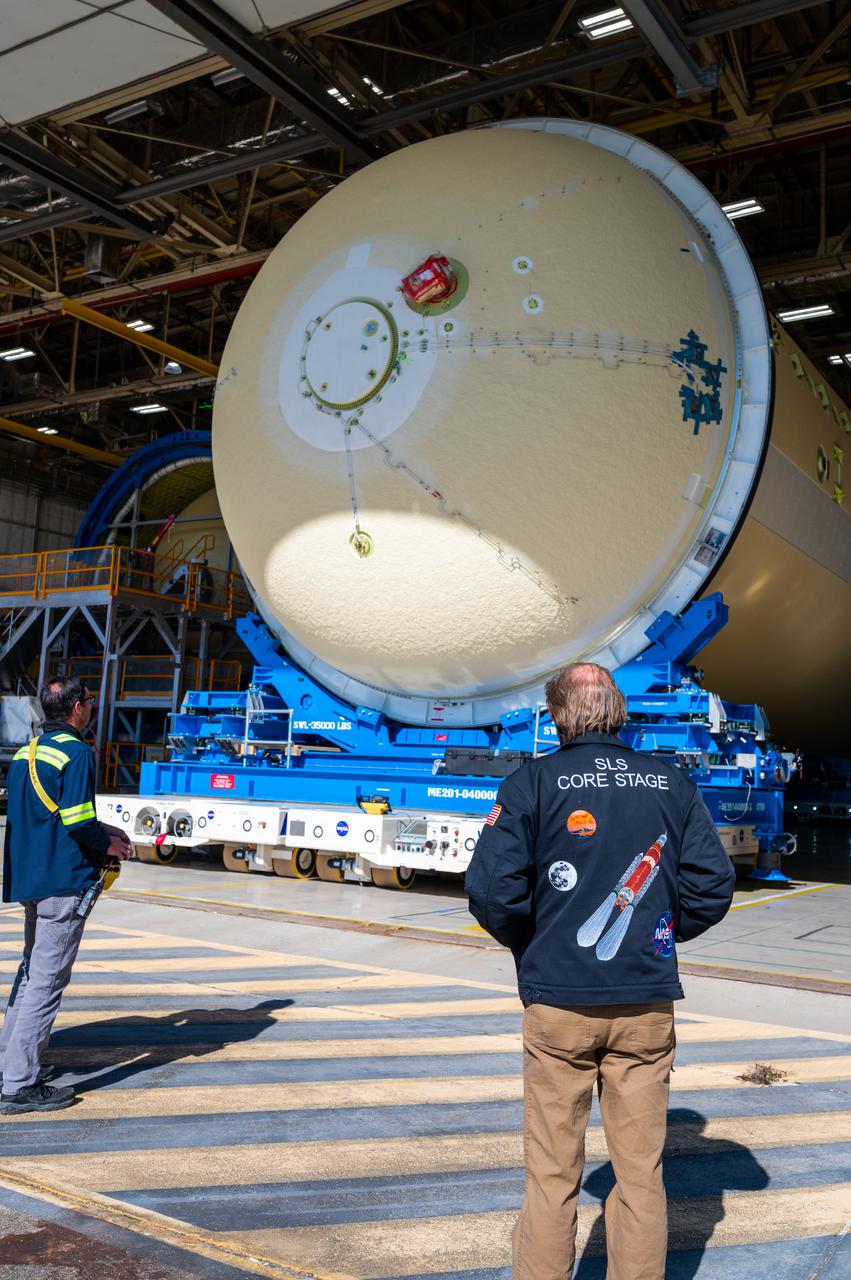
Technicians transported the assembled upper part of the Artemis II core stage to the final assembly area inside the factory at NASA’s Michoud Assembly Facility in New Orleans. On Jan 10, the forward assembly, left was moved next to the Artemis II liquid hydrogen tank, which has been undergoing assembly. Next, Boeing, the lead core stage contractor, will join the forward assembly and the liquid hydrogen tank to complete most of the core stage for the Space Launch System (SLS) rocket that will send the first crew on an Artemis mission. The core stage consists of five major structures that are built, outfitted, and then connected to form the final stage. The forward skirt, liquid oxygen and intertank were connected and tested to form the 66-foot forward assembly. After the forward assembly is joined with the 130-foot liquid hydrogen tank, only the engine section, the fifth piece of the stage, will need to be added to complete the Artemis II core stage. The core stage serves as the backbone of the rocket, supporting the weight of the payload, upper stage, and crew vehicle, as well as the thrust of its four RS-25 engines and two five-segment solid rocket boosters attached to the engine and intertank sections. On Artemis II, the SLS rocket will launch the Orion spacecraft and a crew, sending them into lunar orbit, in preparation for later Artemis missions that will enable the first woman and first person of color to land on the Moon.
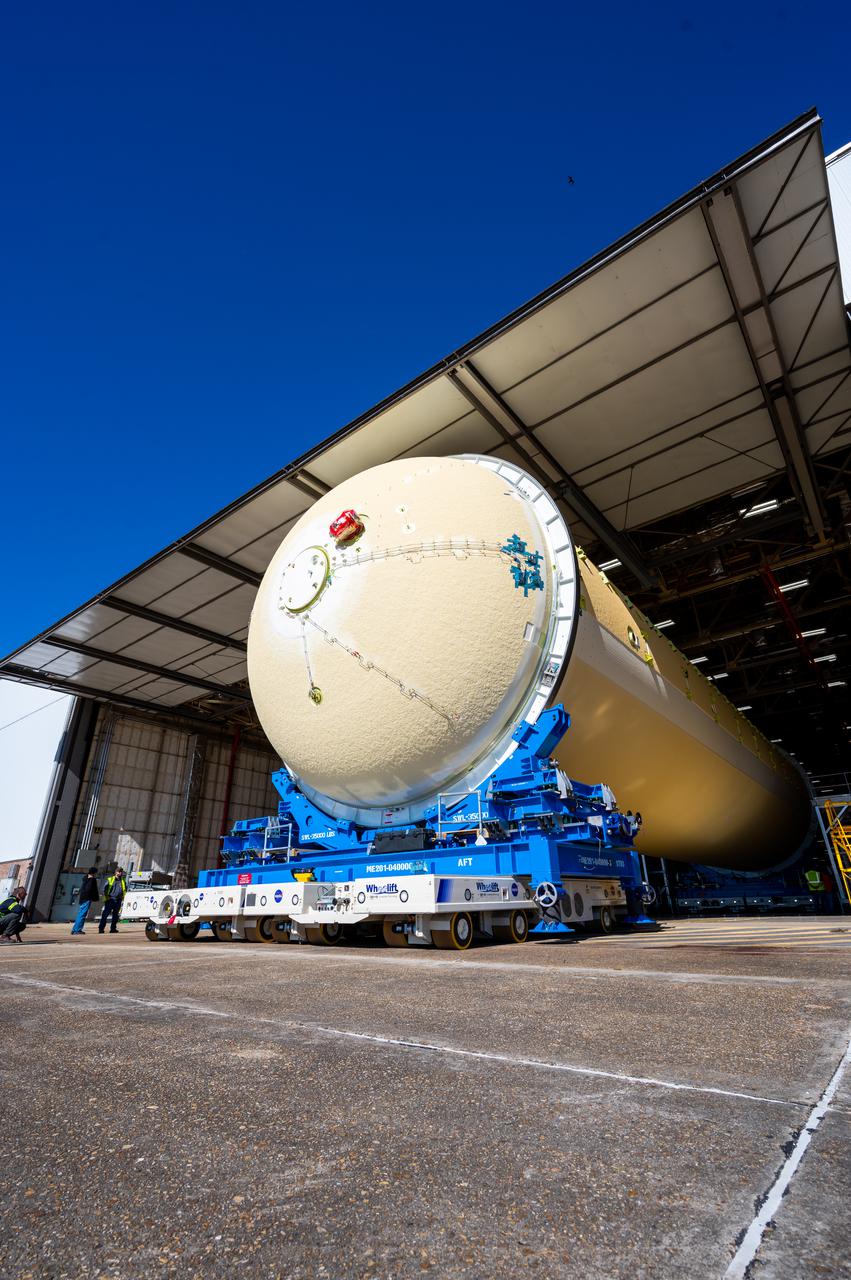
Technicians transported the assembled upper part of the Artemis II core stage to the final assembly area inside the factory at NASA’s Michoud Assembly Facility in New Orleans. On Jan 10, the forward assembly, left was moved next to the Artemis II liquid hydrogen tank, which has been undergoing assembly. Next, Boeing, the lead core stage contractor, will join the forward assembly and the liquid hydrogen tank to complete most of the core stage for the Space Launch System (SLS) rocket that will send the first crew on an Artemis mission. The core stage consists of five major structures that are built, outfitted, and then connected to form the final stage. The forward skirt, liquid oxygen and intertank were connected and tested to form the 66-foot forward assembly. After the forward assembly is joined with the 130-foot liquid hydrogen tank, only the engine section, the fifth piece of the stage, will need to be added to complete the Artemis II core stage. The core stage serves as the backbone of the rocket, supporting the weight of the payload, upper stage, and crew vehicle, as well as the thrust of its four RS-25 engines and two five-segment solid rocket boosters attached to the engine and intertank sections. On Artemis II, the SLS rocket will launch the Orion spacecraft and a crew, sending them into lunar orbit, in preparation for later Artemis missions that will enable the first woman and first person of color to land on the Moon.
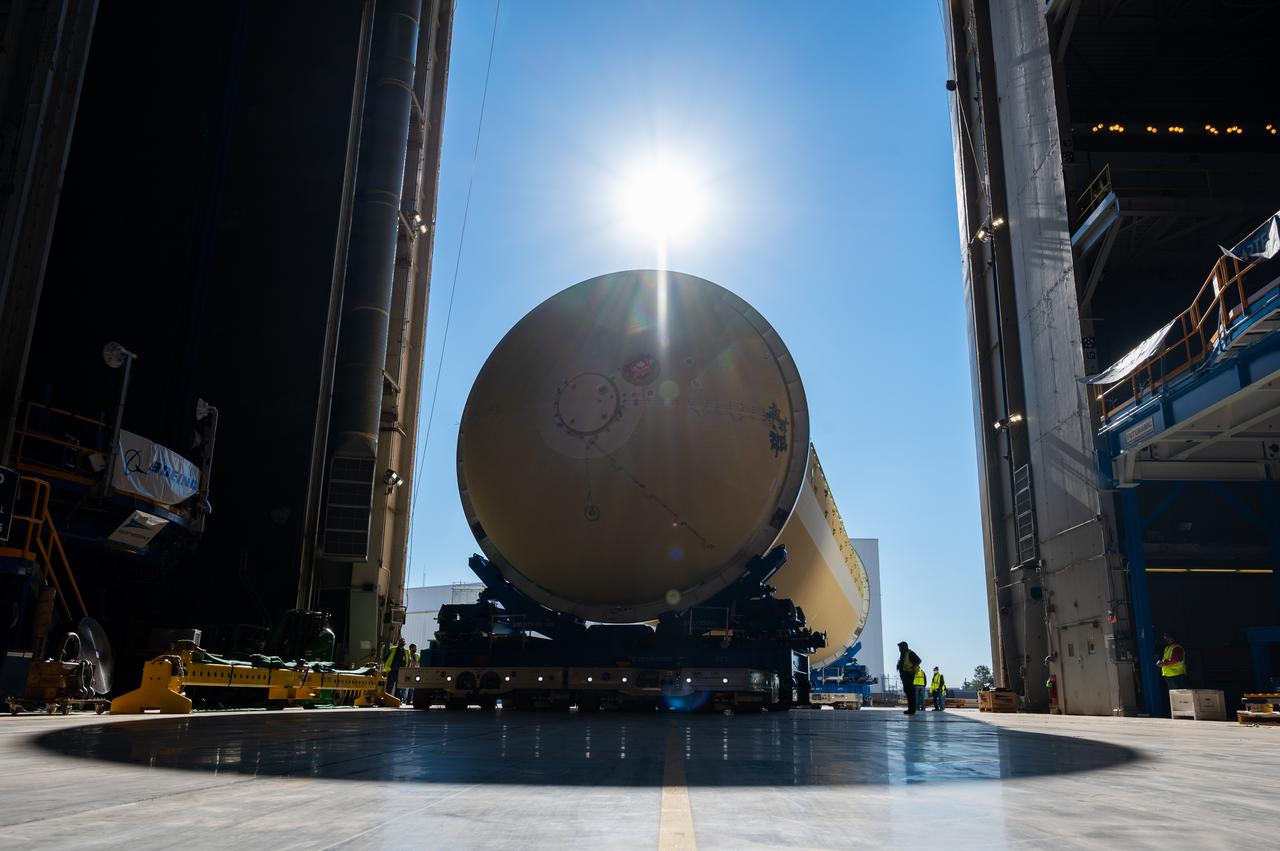
Technicians transported the assembled upper part of the Artemis II core stage to the final assembly area inside the factory at NASA’s Michoud Assembly Facility in New Orleans. On Jan 10, the forward assembly, left was moved next to the Artemis II liquid hydrogen tank, which has been undergoing assembly. Next, Boeing, the lead core stage contractor, will join the forward assembly and the liquid hydrogen tank to complete most of the core stage for the Space Launch System (SLS) rocket that will send the first crew on an Artemis mission. The core stage consists of five major structures that are built, outfitted, and then connected to form the final stage. The forward skirt, liquid oxygen and intertank were connected and tested to form the 66-foot forward assembly. After the forward assembly is joined with the 130-foot liquid hydrogen tank, only the engine section, the fifth piece of the stage, will need to be added to complete the Artemis II core stage. The core stage serves as the backbone of the rocket, supporting the weight of the payload, upper stage, and crew vehicle, as well as the thrust of its four RS-25 engines and two five-segment solid rocket boosters attached to the engine and intertank sections. On Artemis II, the SLS rocket will launch the Orion spacecraft and a crew, sending them into lunar orbit, in preparation for later Artemis missions that will enable the first woman and first person of color to land on the Moon.
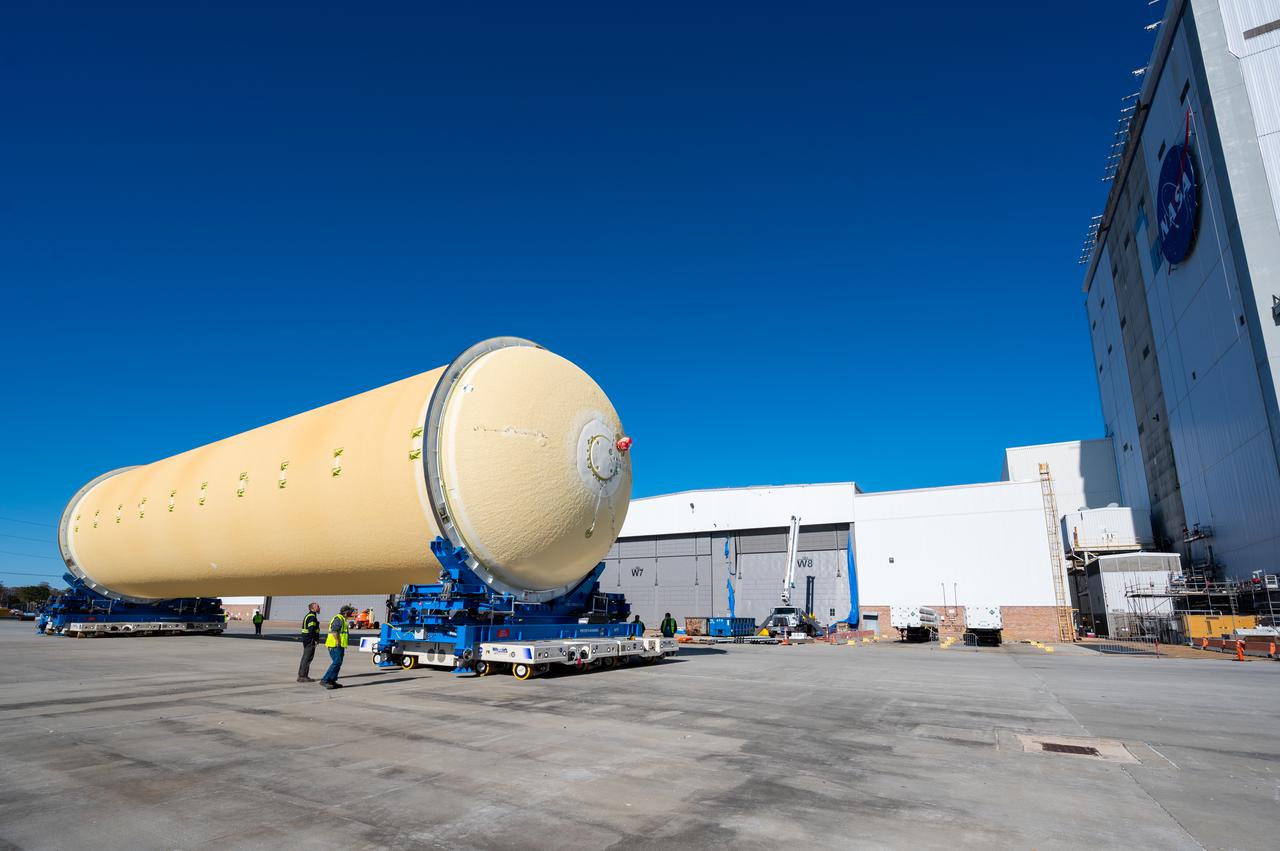
Technicians transported the assembled upper part of the Artemis II core stage to the final assembly area inside the factory at NASA’s Michoud Assembly Facility in New Orleans. On Jan 10, the forward assembly, left was moved next to the Artemis II liquid hydrogen tank, which has been undergoing assembly. Next, Boeing, the lead core stage contractor, will join the forward assembly and the liquid hydrogen tank to complete most of the core stage for the Space Launch System (SLS) rocket that will send the first crew on an Artemis mission. The core stage consists of five major structures that are built, outfitted, and then connected to form the final stage. The forward skirt, liquid oxygen and intertank were connected and tested to form the 66-foot forward assembly. After the forward assembly is joined with the 130-foot liquid hydrogen tank, only the engine section, the fifth piece of the stage, will need to be added to complete the Artemis II core stage. The core stage serves as the backbone of the rocket, supporting the weight of the payload, upper stage, and crew vehicle, as well as the thrust of its four RS-25 engines and two five-segment solid rocket boosters attached to the engine and intertank sections. On Artemis II, the SLS rocket will launch the Orion spacecraft and a crew, sending them into lunar orbit, in preparation for later Artemis missions that will enable the first woman and first person of color to land on the Moon.
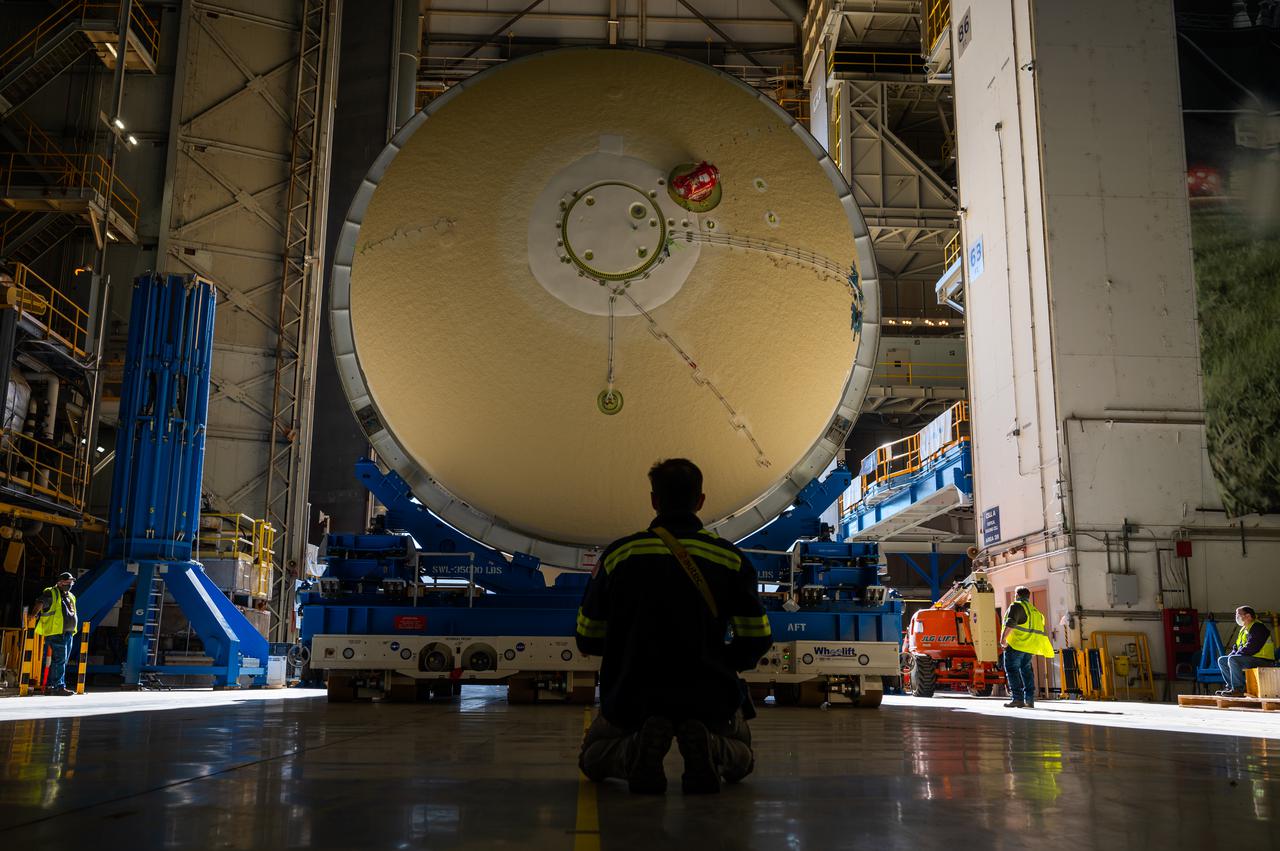
Technicians transported the assembled upper part of the Artemis II core stage to the final assembly area inside the factory at NASA’s Michoud Assembly Facility in New Orleans. On Jan 10, the forward assembly, left was moved next to the Artemis II liquid hydrogen tank, which has been undergoing assembly. Next, Boeing, the lead core stage contractor, will join the forward assembly and the liquid hydrogen tank to complete most of the core stage for the Space Launch System (SLS) rocket that will send the first crew on an Artemis mission. The core stage consists of five major structures that are built, outfitted, and then connected to form the final stage. The forward skirt, liquid oxygen and intertank were connected and tested to form the 66-foot forward assembly. After the forward assembly is joined with the 130-foot liquid hydrogen tank, only the engine section, the fifth piece of the stage, will need to be added to complete the Artemis II core stage. The core stage serves as the backbone of the rocket, supporting the weight of the payload, upper stage, and crew vehicle, as well as the thrust of its four RS-25 engines and two five-segment solid rocket boosters attached to the engine and intertank sections. On Artemis II, the SLS rocket will launch the Orion spacecraft and a crew, sending them into lunar orbit, in preparation for later Artemis missions that will enable the first woman and first person of color to land on the Moon.
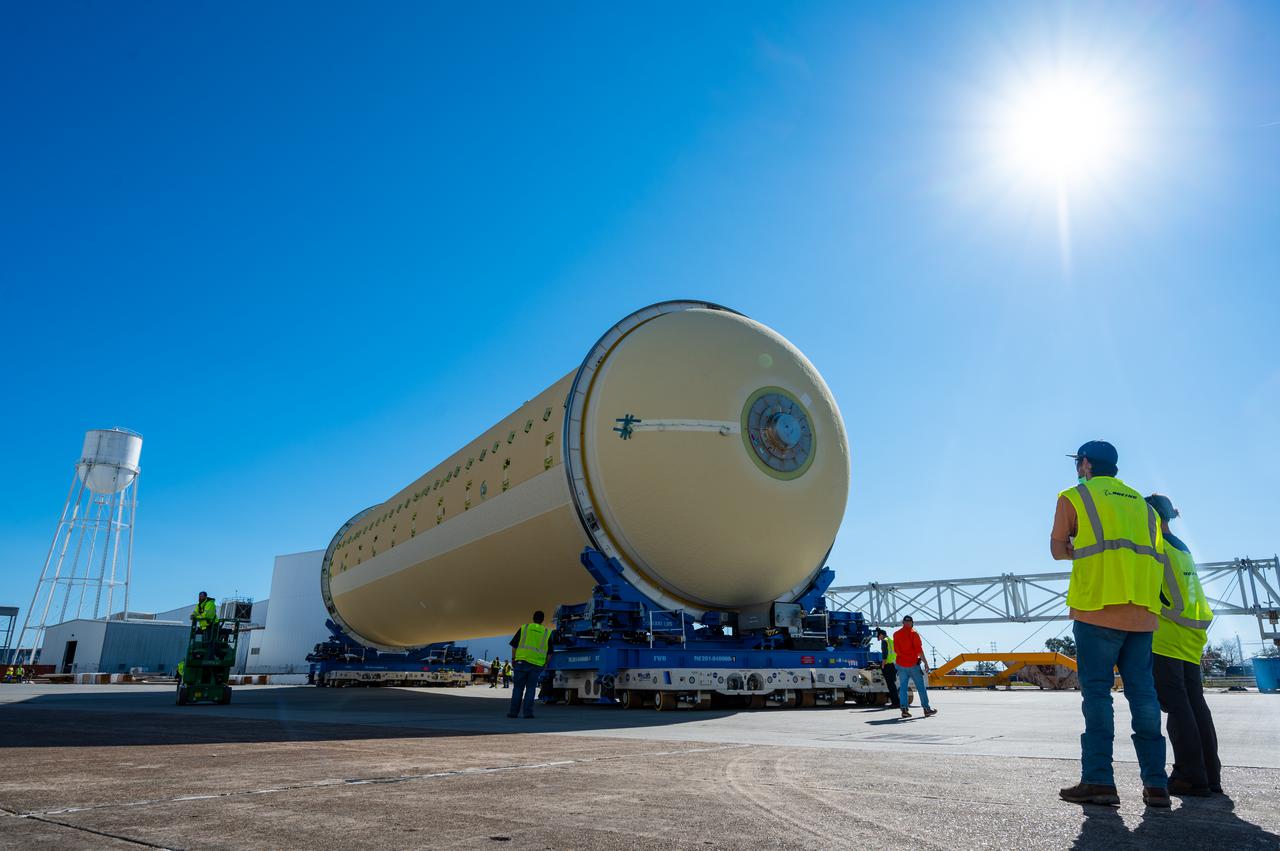
Technicians transported the assembled upper part of the Artemis II core stage to the final assembly area inside the factory at NASA’s Michoud Assembly Facility in New Orleans. On Jan 10, the forward assembly, left was moved next to the Artemis II liquid hydrogen tank, which has been undergoing assembly. Next, Boeing, the lead core stage contractor, will join the forward assembly and the liquid hydrogen tank to complete most of the core stage for the Space Launch System (SLS) rocket that will send the first crew on an Artemis mission. The core stage consists of five major structures that are built, outfitted, and then connected to form the final stage. The forward skirt, liquid oxygen and intertank were connected and tested to form the 66-foot forward assembly. After the forward assembly is joined with the 130-foot liquid hydrogen tank, only the engine section, the fifth piece of the stage, will need to be added to complete the Artemis II core stage. The core stage serves as the backbone of the rocket, supporting the weight of the payload, upper stage, and crew vehicle, as well as the thrust of its four RS-25 engines and two five-segment solid rocket boosters attached to the engine and intertank sections. On Artemis II, the SLS rocket will launch the Orion spacecraft and a crew, sending them into lunar orbit, in preparation for later Artemis missions that will enable the first woman and first person of color to land on the Moon.
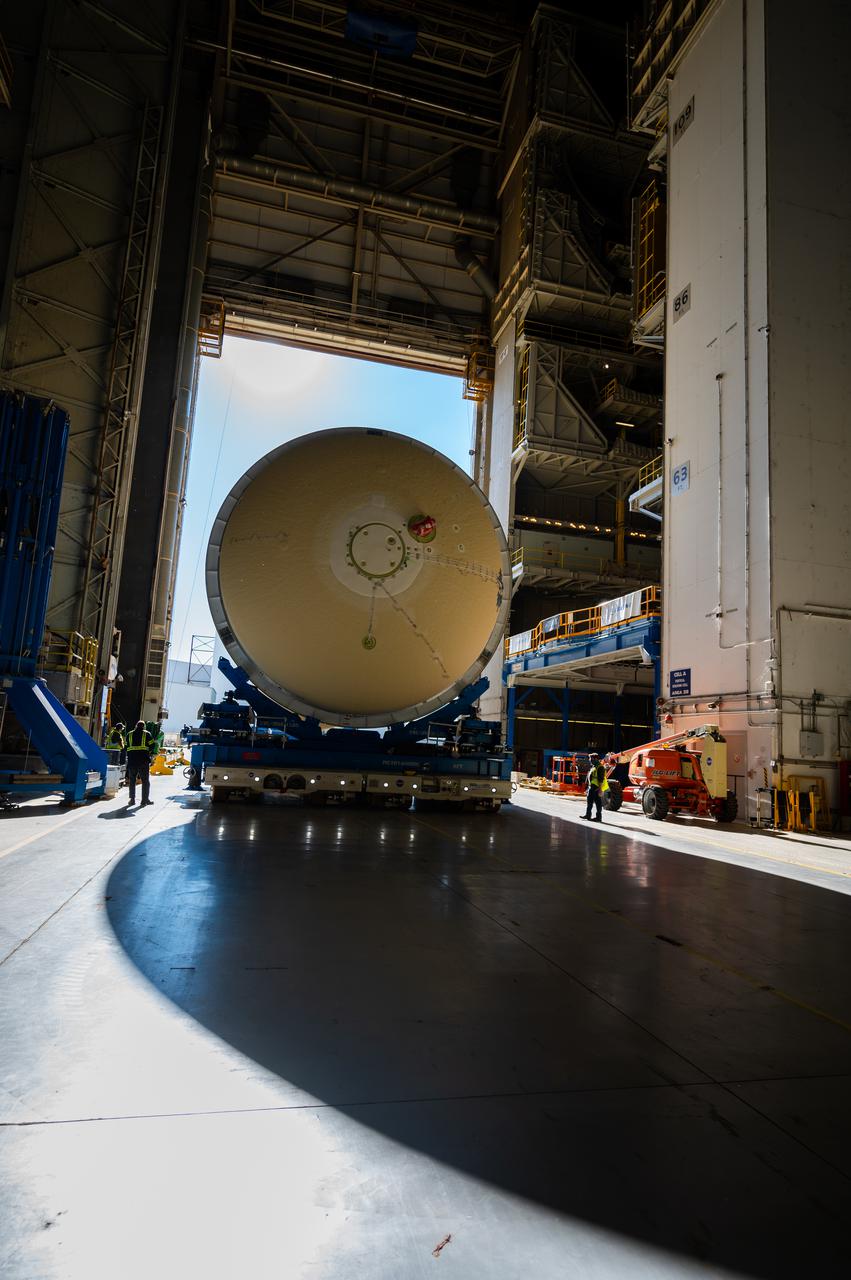
Technicians transported the assembled upper part of the Artemis II core stage to the final assembly area inside the factory at NASA’s Michoud Assembly Facility in New Orleans. On Jan 10, the forward assembly, left was moved next to the Artemis II liquid hydrogen tank, which has been undergoing assembly. Next, Boeing, the lead core stage contractor, will join the forward assembly and the liquid hydrogen tank to complete most of the core stage for the Space Launch System (SLS) rocket that will send the first crew on an Artemis mission. The core stage consists of five major structures that are built, outfitted, and then connected to form the final stage. The forward skirt, liquid oxygen and intertank were connected and tested to form the 66-foot forward assembly. After the forward assembly is joined with the 130-foot liquid hydrogen tank, only the engine section, the fifth piece of the stage, will need to be added to complete the Artemis II core stage. The core stage serves as the backbone of the rocket, supporting the weight of the payload, upper stage, and crew vehicle, as well as the thrust of its four RS-25 engines and two five-segment solid rocket boosters attached to the engine and intertank sections. On Artemis II, the SLS rocket will launch the Orion spacecraft and a crew, sending them into lunar orbit, in preparation for later Artemis missions that will enable the first woman and first person of color to land on the Moon.
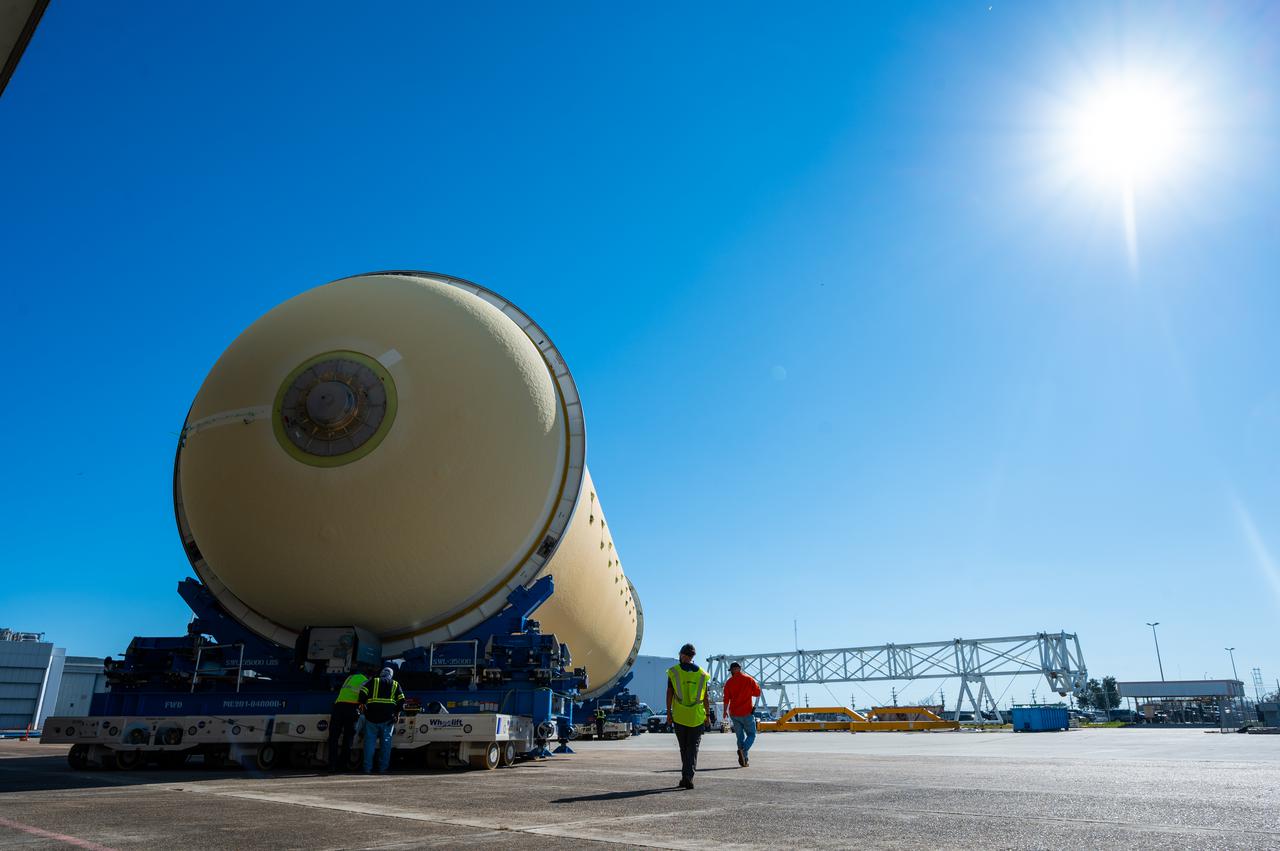
Technicians transported the assembled upper part of the Artemis II core stage to the final assembly area inside the factory at NASA’s Michoud Assembly Facility in New Orleans. On Jan 10, the forward assembly, left was moved next to the Artemis II liquid hydrogen tank, which has been undergoing assembly. Next, Boeing, the lead core stage contractor, will join the forward assembly and the liquid hydrogen tank to complete most of the core stage for the Space Launch System (SLS) rocket that will send the first crew on an Artemis mission. The core stage consists of five major structures that are built, outfitted, and then connected to form the final stage. The forward skirt, liquid oxygen and intertank were connected and tested to form the 66-foot forward assembly. After the forward assembly is joined with the 130-foot liquid hydrogen tank, only the engine section, the fifth piece of the stage, will need to be added to complete the Artemis II core stage. The core stage serves as the backbone of the rocket, supporting the weight of the payload, upper stage, and crew vehicle, as well as the thrust of its four RS-25 engines and two five-segment solid rocket boosters attached to the engine and intertank sections. On Artemis II, the SLS rocket will launch the Orion spacecraft and a crew, sending them into lunar orbit, in preparation for later Artemis missions that will enable the first woman and first person of color to land on the Moon.
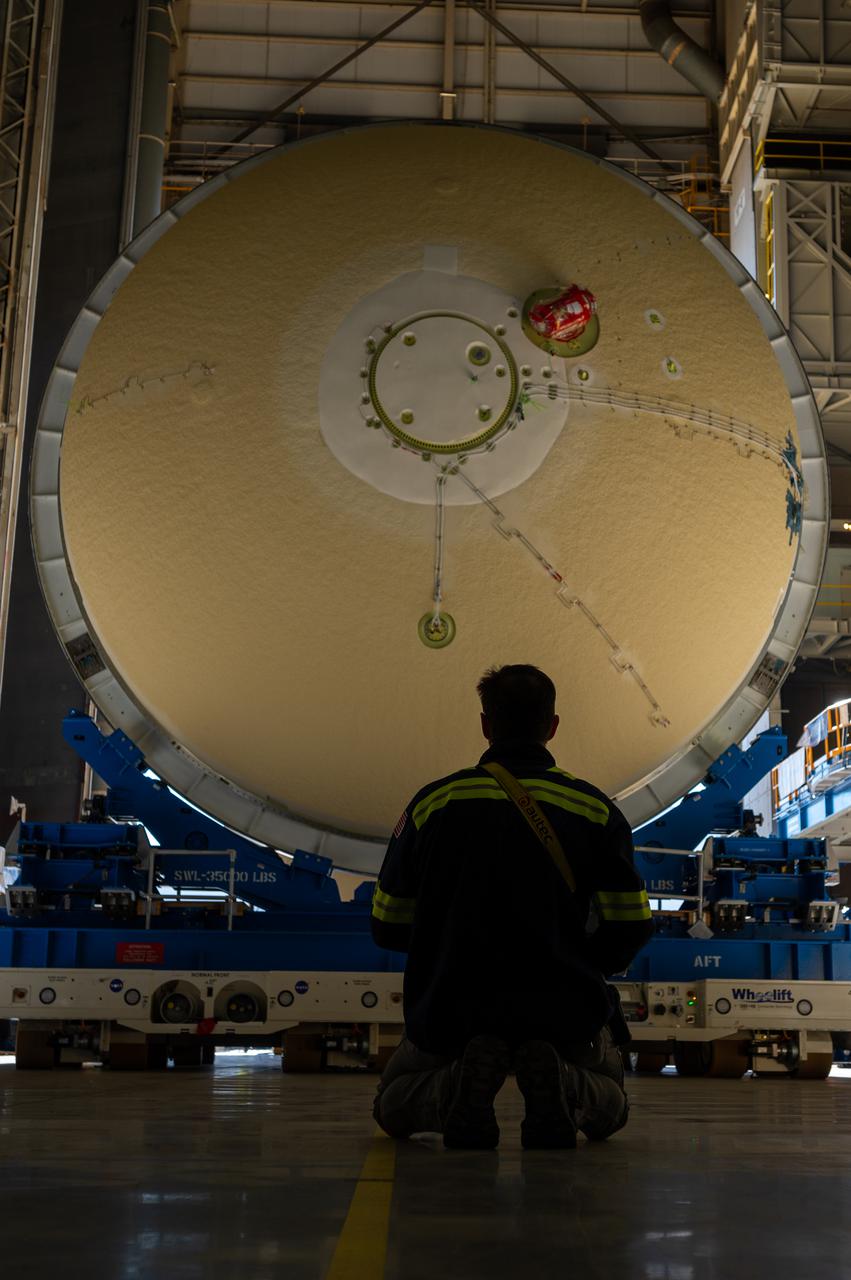
Technicians transported the assembled upper part of the Artemis II core stage to the final assembly area inside the factory at NASA’s Michoud Assembly Facility in New Orleans. On Jan 10, the forward assembly, left was moved next to the Artemis II liquid hydrogen tank, which has been undergoing assembly. Next, Boeing, the lead core stage contractor, will join the forward assembly and the liquid hydrogen tank to complete most of the core stage for the Space Launch System (SLS) rocket that will send the first crew on an Artemis mission. The core stage consists of five major structures that are built, outfitted, and then connected to form the final stage. The forward skirt, liquid oxygen and intertank were connected and tested to form the 66-foot forward assembly. After the forward assembly is joined with the 130-foot liquid hydrogen tank, only the engine section, the fifth piece of the stage, will need to be added to complete the Artemis II core stage. The core stage serves as the backbone of the rocket, supporting the weight of the payload, upper stage, and crew vehicle, as well as the thrust of its four RS-25 engines and two five-segment solid rocket boosters attached to the engine and intertank sections. On Artemis II, the SLS rocket will launch the Orion spacecraft and a crew, sending them into lunar orbit, in preparation for later Artemis missions that will enable the first woman and first person of color to land on the Moon.
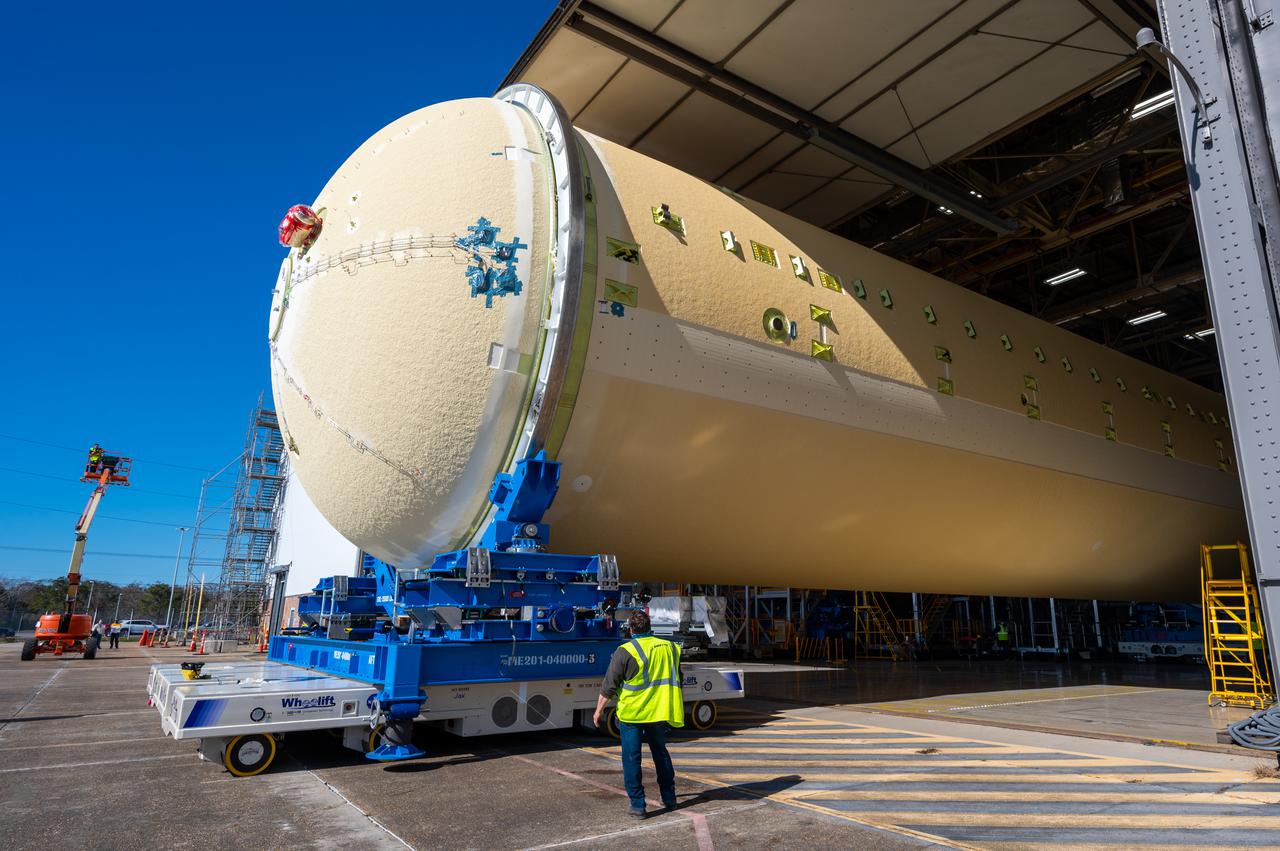
Technicians transported the assembled upper part of the Artemis II core stage to the final assembly area inside the factory at NASA’s Michoud Assembly Facility in New Orleans. On Jan 10, the forward assembly, left was moved next to the Artemis II liquid hydrogen tank, which has been undergoing assembly. Next, Boeing, the lead core stage contractor, will join the forward assembly and the liquid hydrogen tank to complete most of the core stage for the Space Launch System (SLS) rocket that will send the first crew on an Artemis mission. The core stage consists of five major structures that are built, outfitted, and then connected to form the final stage. The forward skirt, liquid oxygen and intertank were connected and tested to form the 66-foot forward assembly. After the forward assembly is joined with the 130-foot liquid hydrogen tank, only the engine section, the fifth piece of the stage, will need to be added to complete the Artemis II core stage. The core stage serves as the backbone of the rocket, supporting the weight of the payload, upper stage, and crew vehicle, as well as the thrust of its four RS-25 engines and two five-segment solid rocket boosters attached to the engine and intertank sections. On Artemis II, the SLS rocket will launch the Orion spacecraft and a crew, sending them into lunar orbit, in preparation for later Artemis missions that will enable the first woman and first person of color to land on the Moon.
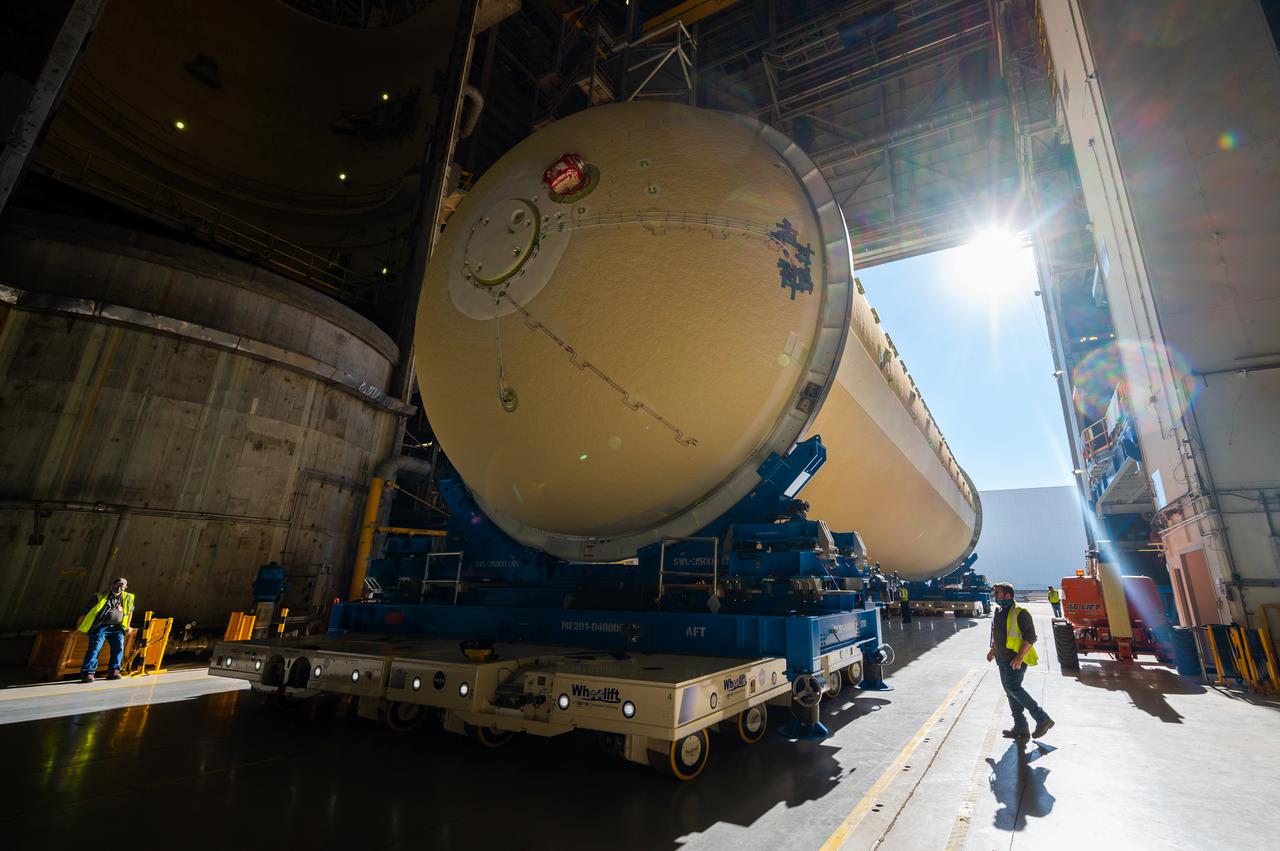
Technicians transported the assembled upper part of the Artemis II core stage to the final assembly area inside the factory at NASA’s Michoud Assembly Facility in New Orleans. On Jan 10, the forward assembly, left was moved next to the Artemis II liquid hydrogen tank, which has been undergoing assembly. Next, Boeing, the lead core stage contractor, will join the forward assembly and the liquid hydrogen tank to complete most of the core stage for the Space Launch System (SLS) rocket that will send the first crew on an Artemis mission. The core stage consists of five major structures that are built, outfitted, and then connected to form the final stage. The forward skirt, liquid oxygen and intertank were connected and tested to form the 66-foot forward assembly. After the forward assembly is joined with the 130-foot liquid hydrogen tank, only the engine section, the fifth piece of the stage, will need to be added to complete the Artemis II core stage. The core stage serves as the backbone of the rocket, supporting the weight of the payload, upper stage, and crew vehicle, as well as the thrust of its four RS-25 engines and two five-segment solid rocket boosters attached to the engine and intertank sections. On Artemis II, the SLS rocket will launch the Orion spacecraft and a crew, sending them into lunar orbit, in preparation for later Artemis missions that will enable the first woman and first person of color to land on the Moon.
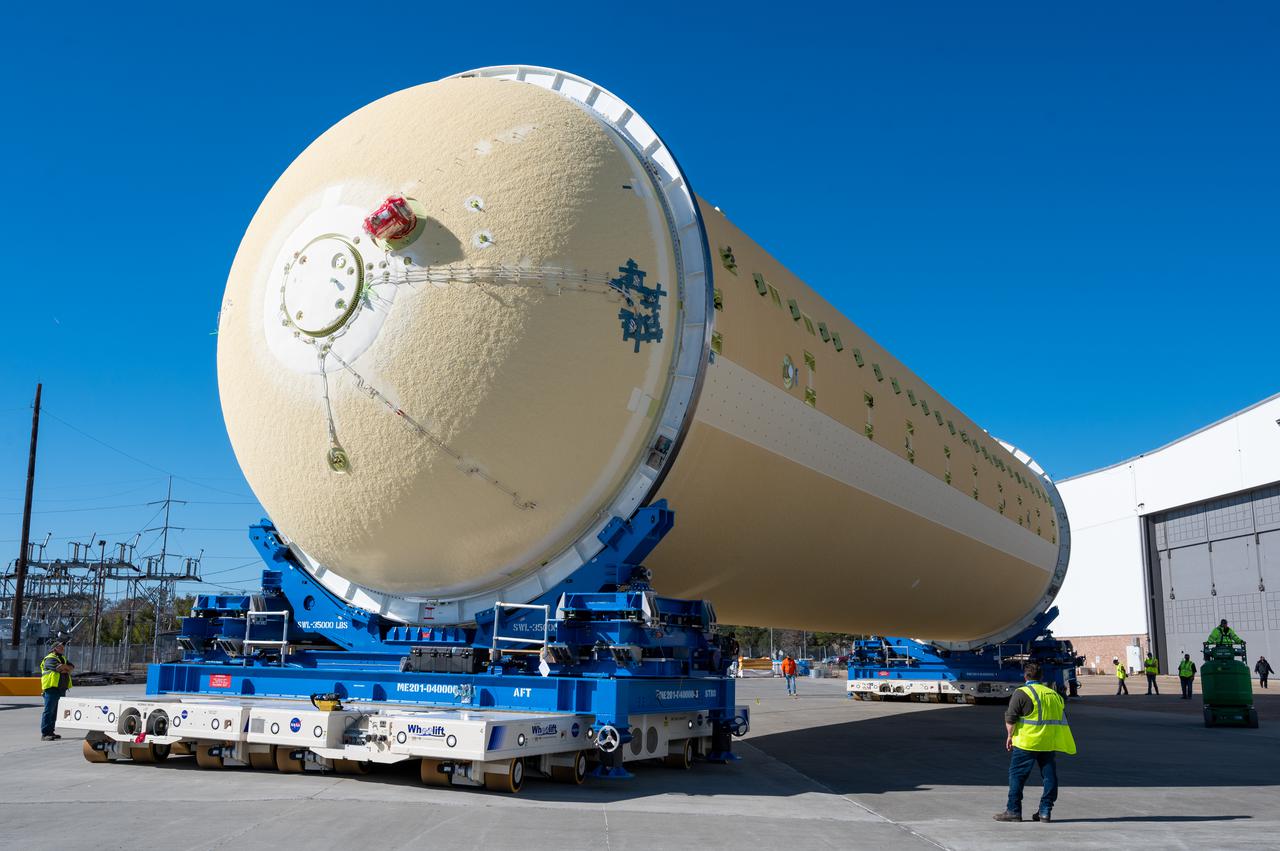
Technicians transported the assembled upper part of the Artemis II core stage to the final assembly area inside the factory at NASA’s Michoud Assembly Facility in New Orleans. On Jan 10, the forward assembly, left was moved next to the Artemis II liquid hydrogen tank, which has been undergoing assembly. Next, Boeing, the lead core stage contractor, will join the forward assembly and the liquid hydrogen tank to complete most of the core stage for the Space Launch System (SLS) rocket that will send the first crew on an Artemis mission. The core stage consists of five major structures that are built, outfitted, and then connected to form the final stage. The forward skirt, liquid oxygen and intertank were connected and tested to form the 66-foot forward assembly. After the forward assembly is joined with the 130-foot liquid hydrogen tank, only the engine section, the fifth piece of the stage, will need to be added to complete the Artemis II core stage. The core stage serves as the backbone of the rocket, supporting the weight of the payload, upper stage, and crew vehicle, as well as the thrust of its four RS-25 engines and two five-segment solid rocket boosters attached to the engine and intertank sections. On Artemis II, the SLS rocket will launch the Orion spacecraft and a crew, sending them into lunar orbit, in preparation for later Artemis missions that will enable the first woman and first person of color to land on the Moon.
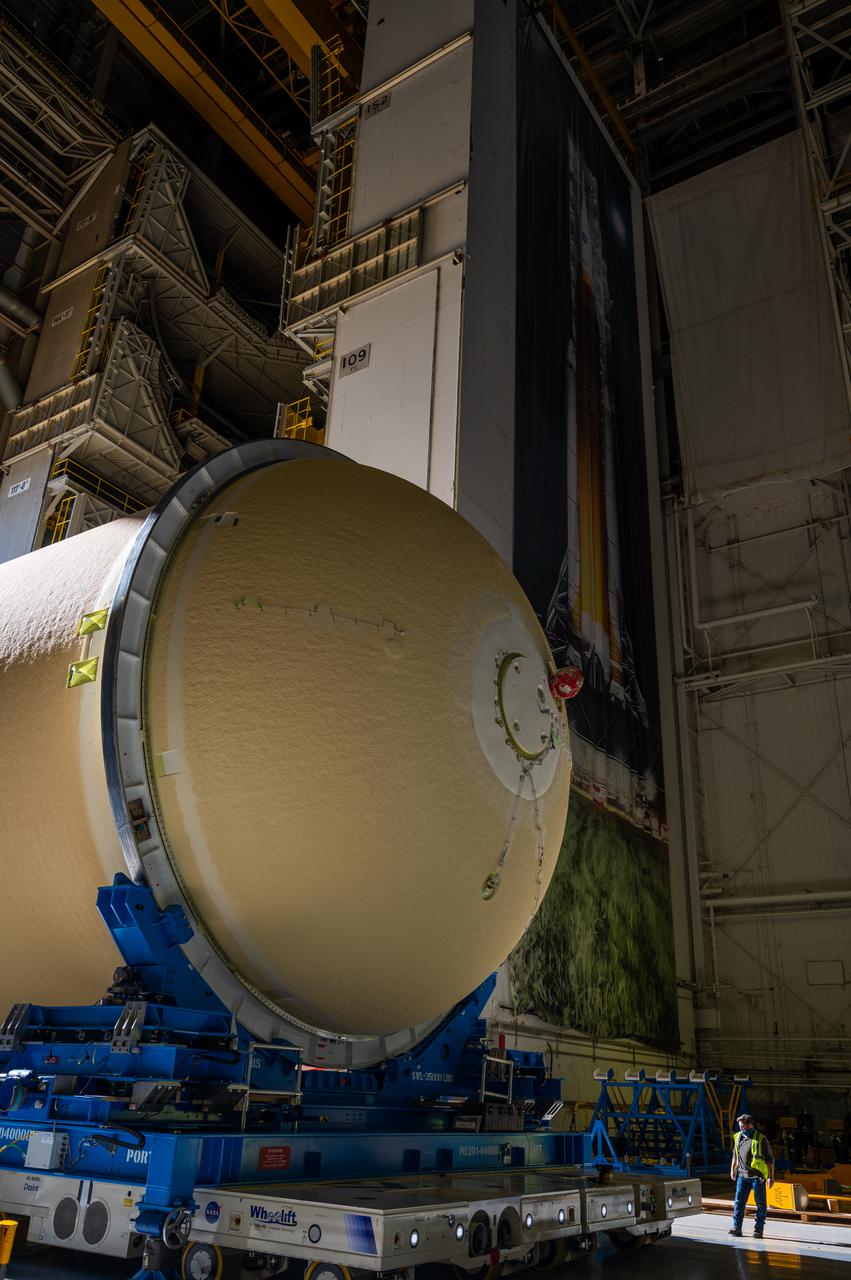
Technicians transported the assembled upper part of the Artemis II core stage to the final assembly area inside the factory at NASA’s Michoud Assembly Facility in New Orleans. On Jan 10, the forward assembly, left was moved next to the Artemis II liquid hydrogen tank, which has been undergoing assembly. Next, Boeing, the lead core stage contractor, will join the forward assembly and the liquid hydrogen tank to complete most of the core stage for the Space Launch System (SLS) rocket that will send the first crew on an Artemis mission. The core stage consists of five major structures that are built, outfitted, and then connected to form the final stage. The forward skirt, liquid oxygen and intertank were connected and tested to form the 66-foot forward assembly. After the forward assembly is joined with the 130-foot liquid hydrogen tank, only the engine section, the fifth piece of the stage, will need to be added to complete the Artemis II core stage. The core stage serves as the backbone of the rocket, supporting the weight of the payload, upper stage, and crew vehicle, as well as the thrust of its four RS-25 engines and two five-segment solid rocket boosters attached to the engine and intertank sections. On Artemis II, the SLS rocket will launch the Orion spacecraft and a crew, sending them into lunar orbit, in preparation for later Artemis missions that will enable the first woman and first person of color to land on the Moon.
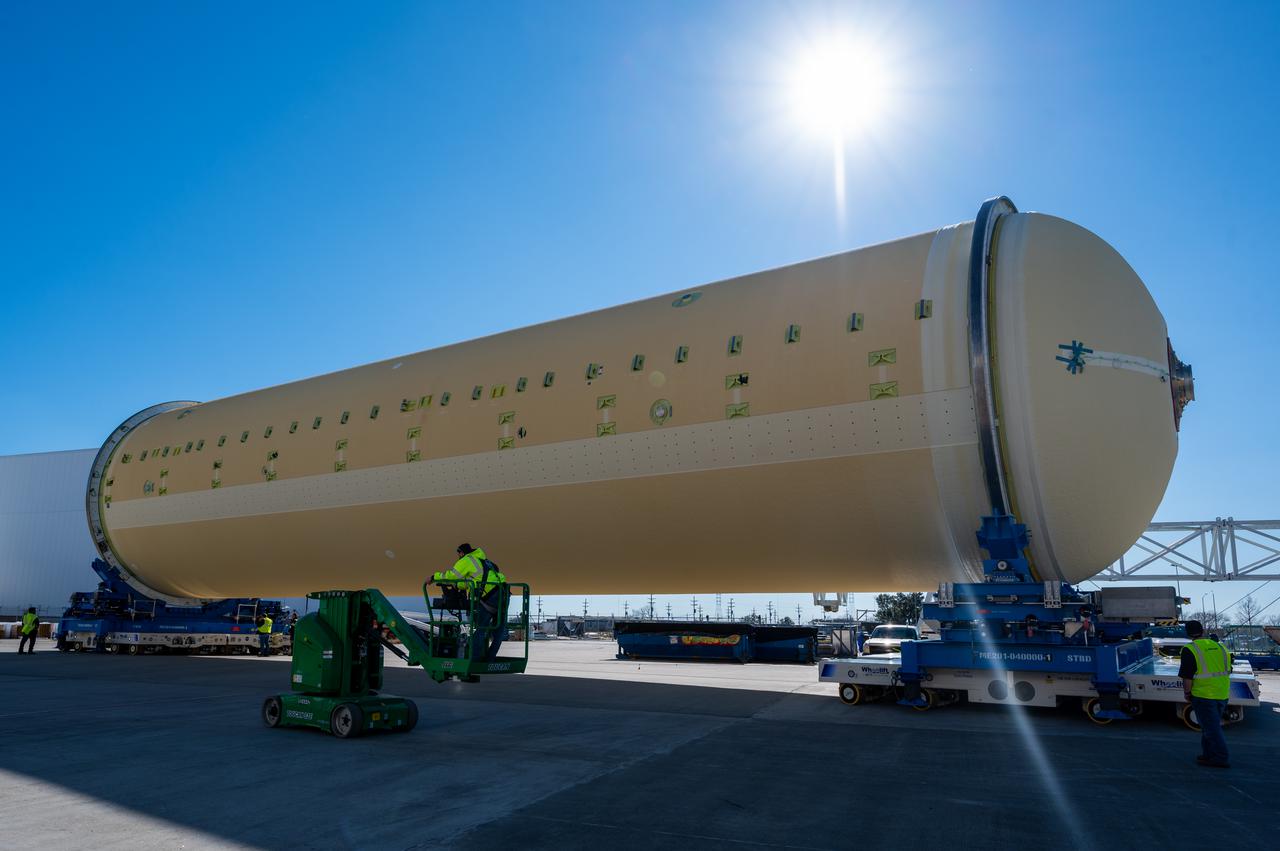
Technicians transported the assembled upper part of the Artemis II core stage to the final assembly area inside the factory at NASA’s Michoud Assembly Facility in New Orleans. On Jan 10, the forward assembly, left was moved next to the Artemis II liquid hydrogen tank, which has been undergoing assembly. Next, Boeing, the lead core stage contractor, will join the forward assembly and the liquid hydrogen tank to complete most of the core stage for the Space Launch System (SLS) rocket that will send the first crew on an Artemis mission. The core stage consists of five major structures that are built, outfitted, and then connected to form the final stage. The forward skirt, liquid oxygen and intertank were connected and tested to form the 66-foot forward assembly. After the forward assembly is joined with the 130-foot liquid hydrogen tank, only the engine section, the fifth piece of the stage, will need to be added to complete the Artemis II core stage. The core stage serves as the backbone of the rocket, supporting the weight of the payload, upper stage, and crew vehicle, as well as the thrust of its four RS-25 engines and two five-segment solid rocket boosters attached to the engine and intertank sections. On Artemis II, the SLS rocket will launch the Orion spacecraft and a crew, sending them into lunar orbit, in preparation for later Artemis missions that will enable the first woman and first person of color to land on the Moon.
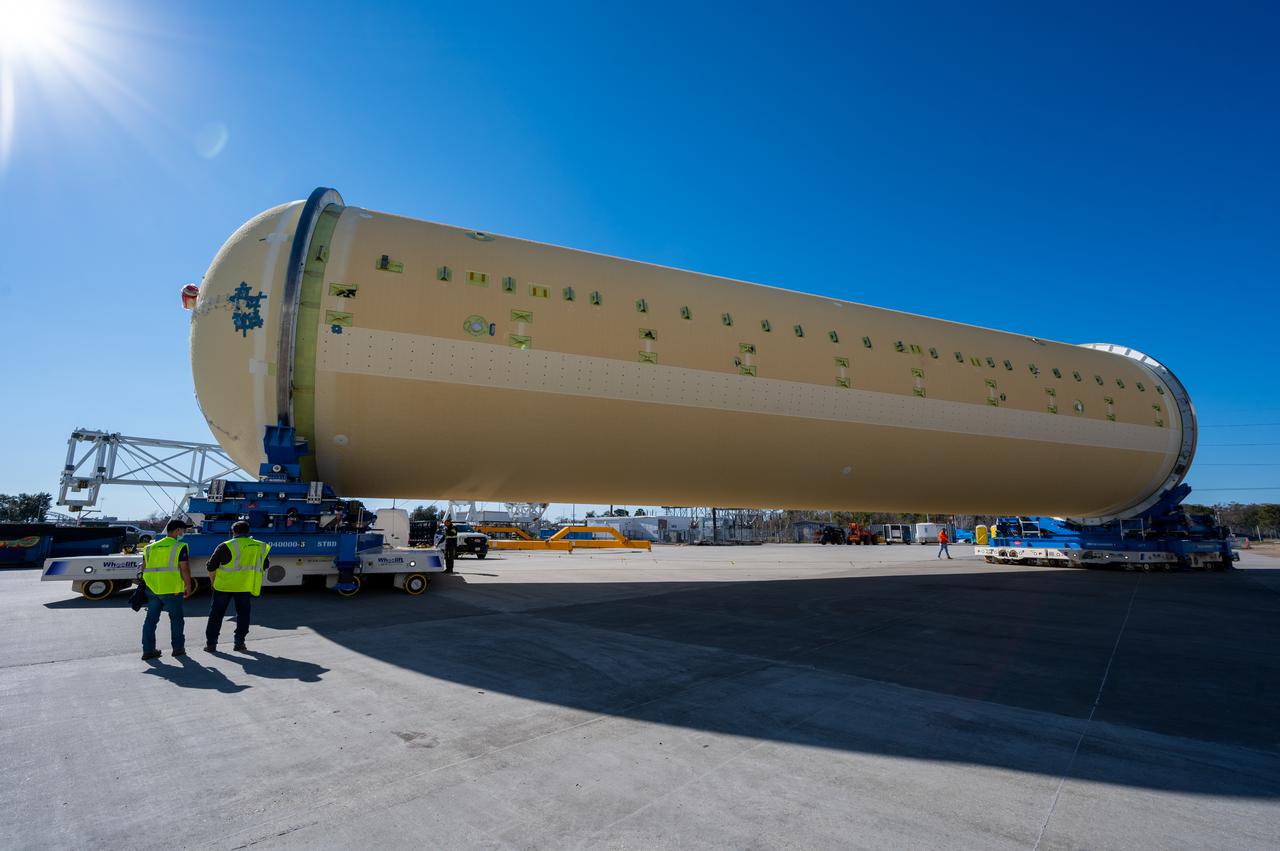
Technicians transported the assembled upper part of the Artemis II core stage to the final assembly area inside the factory at NASA’s Michoud Assembly Facility in New Orleans. On Jan 10, the forward assembly, left was moved next to the Artemis II liquid hydrogen tank, which has been undergoing assembly. Next, Boeing, the lead core stage contractor, will join the forward assembly and the liquid hydrogen tank to complete most of the core stage for the Space Launch System (SLS) rocket that will send the first crew on an Artemis mission. The core stage consists of five major structures that are built, outfitted, and then connected to form the final stage. The forward skirt, liquid oxygen and intertank were connected and tested to form the 66-foot forward assembly. After the forward assembly is joined with the 130-foot liquid hydrogen tank, only the engine section, the fifth piece of the stage, will need to be added to complete the Artemis II core stage. The core stage serves as the backbone of the rocket, supporting the weight of the payload, upper stage, and crew vehicle, as well as the thrust of its four RS-25 engines and two five-segment solid rocket boosters attached to the engine and intertank sections. On Artemis II, the SLS rocket will launch the Orion spacecraft and a crew, sending them into lunar orbit, in preparation for later Artemis missions that will enable the first woman and first person of color to land on the Moon.
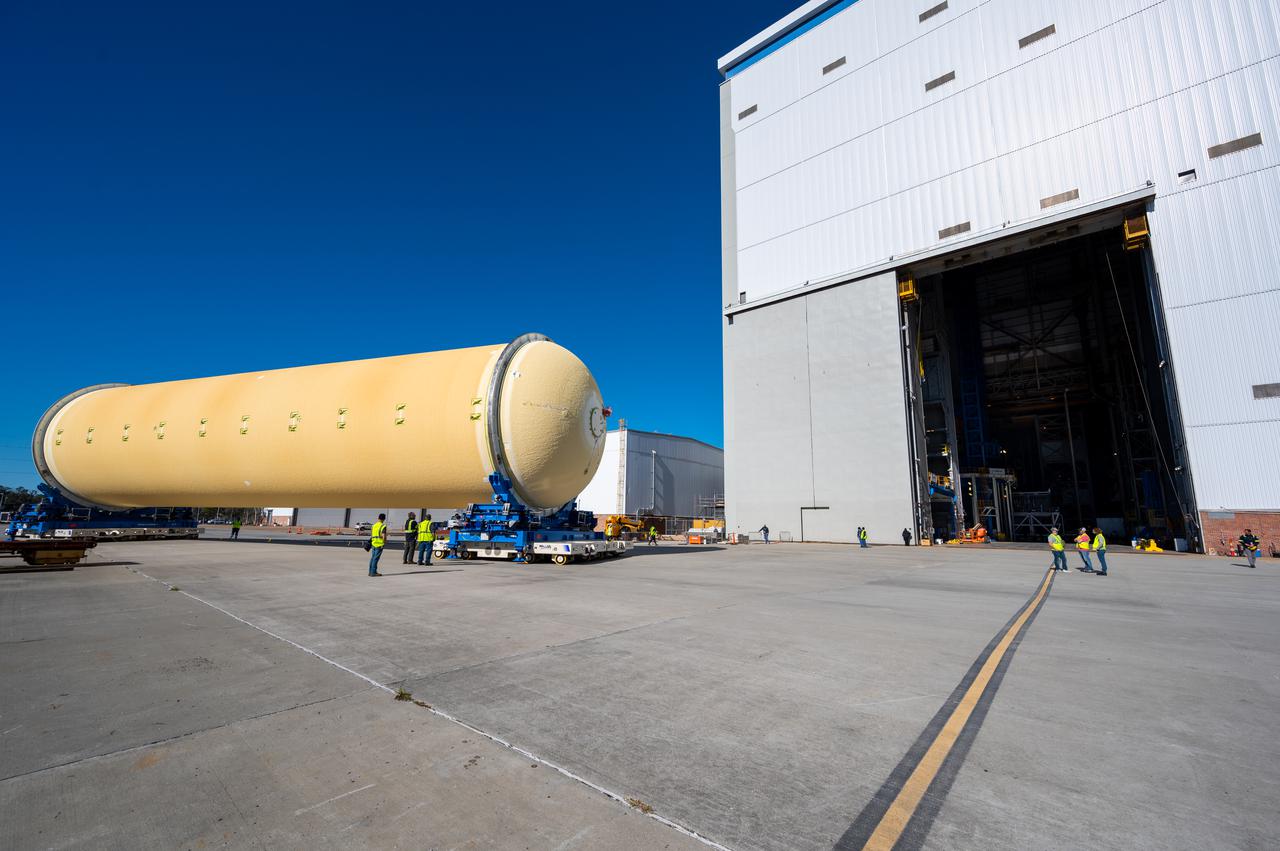
Technicians transported the assembled upper part of the Artemis II core stage to the final assembly area inside the factory at NASA’s Michoud Assembly Facility in New Orleans. On Jan 10, the forward assembly, left was moved next to the Artemis II liquid hydrogen tank, which has been undergoing assembly. Next, Boeing, the lead core stage contractor, will join the forward assembly and the liquid hydrogen tank to complete most of the core stage for the Space Launch System (SLS) rocket that will send the first crew on an Artemis mission. The core stage consists of five major structures that are built, outfitted, and then connected to form the final stage. The forward skirt, liquid oxygen and intertank were connected and tested to form the 66-foot forward assembly. After the forward assembly is joined with the 130-foot liquid hydrogen tank, only the engine section, the fifth piece of the stage, will need to be added to complete the Artemis II core stage. The core stage serves as the backbone of the rocket, supporting the weight of the payload, upper stage, and crew vehicle, as well as the thrust of its four RS-25 engines and two five-segment solid rocket boosters attached to the engine and intertank sections. On Artemis II, the SLS rocket will launch the Orion spacecraft and a crew, sending them into lunar orbit, in preparation for later Artemis missions that will enable the first woman and first person of color to land on the Moon.
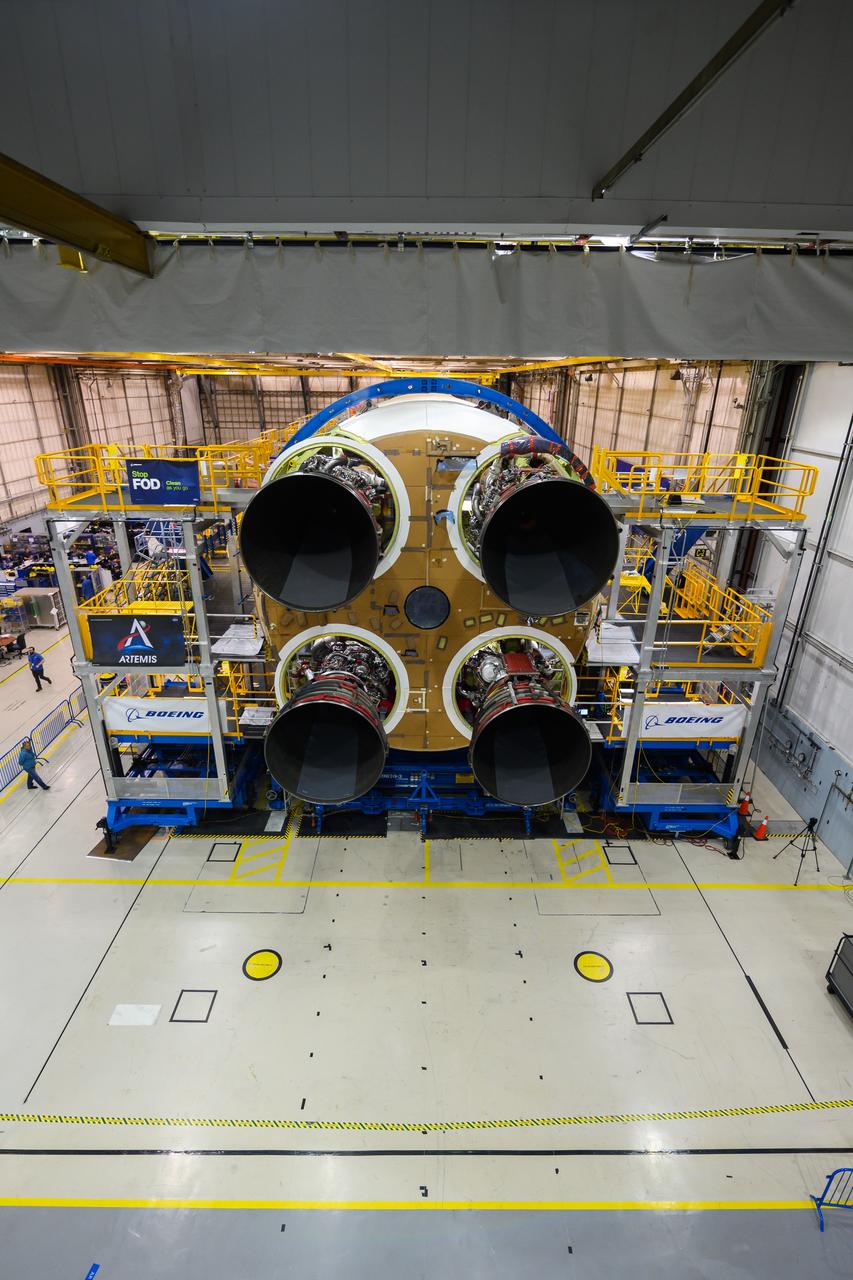
This photo shows all four RS-25 engines attached to the core stage for NASA’s Space Launch System rocket for the agency’s Artemis I mission to the Moon. To complete assembly of the rocket stage, engineers and technicians at NASA’s Michoud Assembly Facility in New Orleans are now integrating the propulsion and electrical systems within the structure. The completed core stage with all four RS-25 engines attached is the largest rocket stage NASA has built since the Saturn V stages for the Apollo Program that first sent Americans to the Moon. The stage, which includes two propellant tanks, provides more than 2 million pounds of thrust to send Artemis I to the Moon. Engineers and technicians attached the fourth RS-25 engine to the rocket stage Nov. 6 just one day after structurally mating the third engine. The first two RS-25 engines were structurally mated to the stage in October. After assembly is complete, crews will conduct an integrated functional test of flight computers, avionics and electrical systems that run throughout the 212-foot-tall core stage in preparation for its completion later this year. This testing is the first time all the flight avionics systems will be tested together to ensure the systems communicate with each other and will perform properly to control the rocket’s flight. Integration of the RS-25 engines to the recently completed core stage structure is a collaborative, multistep process for NASA and its partners Boeing, the core stage lead contractor, and Aerojet Rocketdyne, the RS-25 engines lead contractor. Offering more payload mass, volume capability and energy to speed missions through space, the SLS rocket, along with NASA’s Gateway in lunar orbit and Orion, is part of NASA’s backbone for deep space exploration and the Artemis lunar program. No other rocket is capable of carrying astronauts in Orion around the Moon in a single mission.
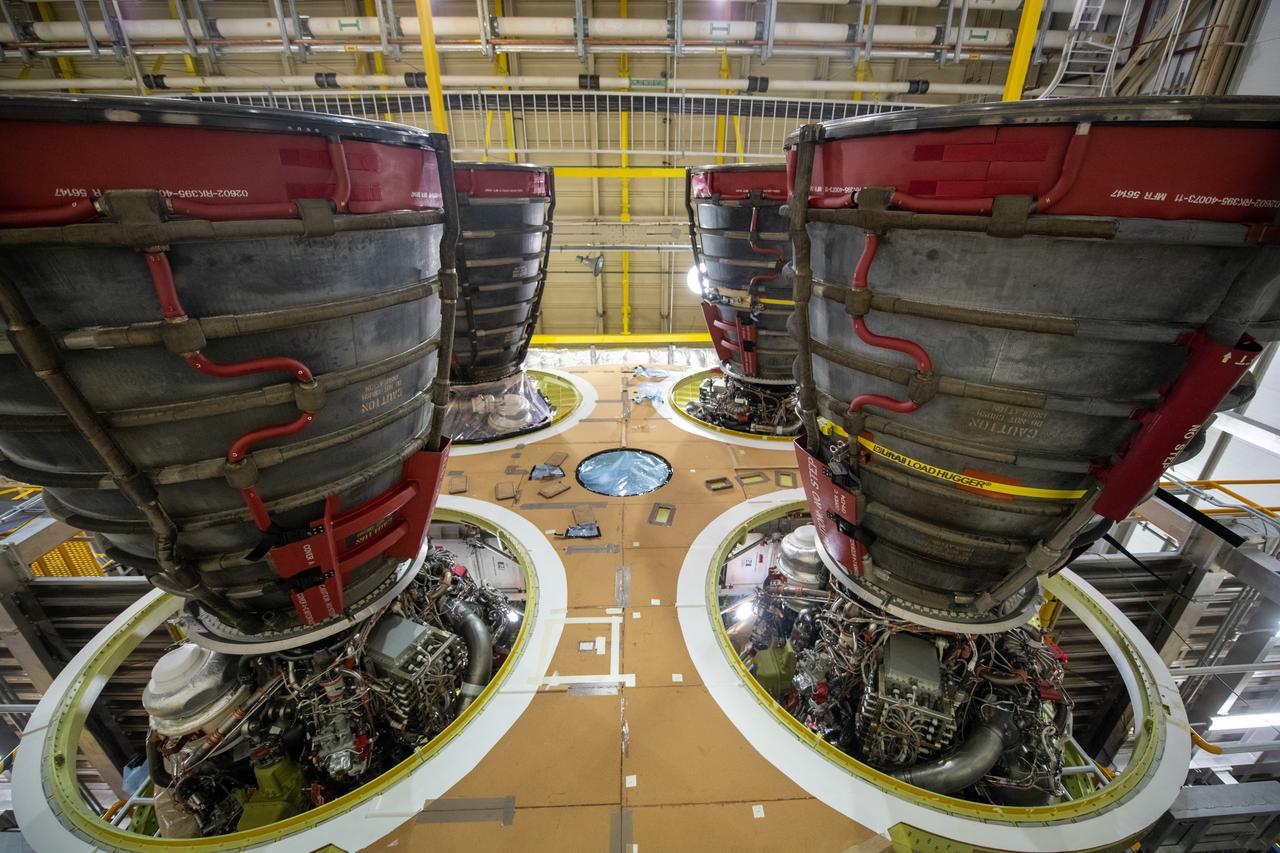
This photo shows all four RS-25 engines attached to the core stage for NASA’s Space Launch System rocket for the agency’s Artemis I mission to the Moon. To complete assembly of the rocket stage, engineers and technicians at NASA’s Michoud Assembly Facility in New Orleans are now integrating the propulsion and electrical systems within the structure. The completed core stage with all four RS-25 engines attached is the largest rocket stage NASA has built since the Saturn V stages for the Apollo Program that first sent Americans to the Moon. The stage, which includes two propellant tanks, provides more than 2 million pounds of thrust to send Artemis I to the Moon. Engineers and technicians attached the fourth RS-25 engine to the rocket stage Nov. 6 just one day after structurally mating the third engine. The first two RS-25 engines were structurally mated to the stage in October. After assembly is complete, crews will conduct an integrated functional test of flight computers, avionics and electrical systems that run throughout the 212-foot-tall core stage in preparation for its completion later this year. This testing is the first time all the flight avionics systems will be tested together to ensure the systems communicate with each other and will perform properly to control the rocket’s flight. Integration of the RS-25 engines to the recently completed core stage structure is a collaborative, multistep process for NASA and its partners Boeing, the core stage lead contractor, and Aerojet Rocketdyne, the RS-25 engines lead contractor. Offering more payload mass, volume capability and energy to speed missions through space, the SLS rocket, along with NASA’s Gateway in lunar orbit and Orion, is part of NASA’s backbone for deep space exploration and the Artemis lunar program. No other rocket is capable of carrying astronauts in Orion around the Moon in a single mission.
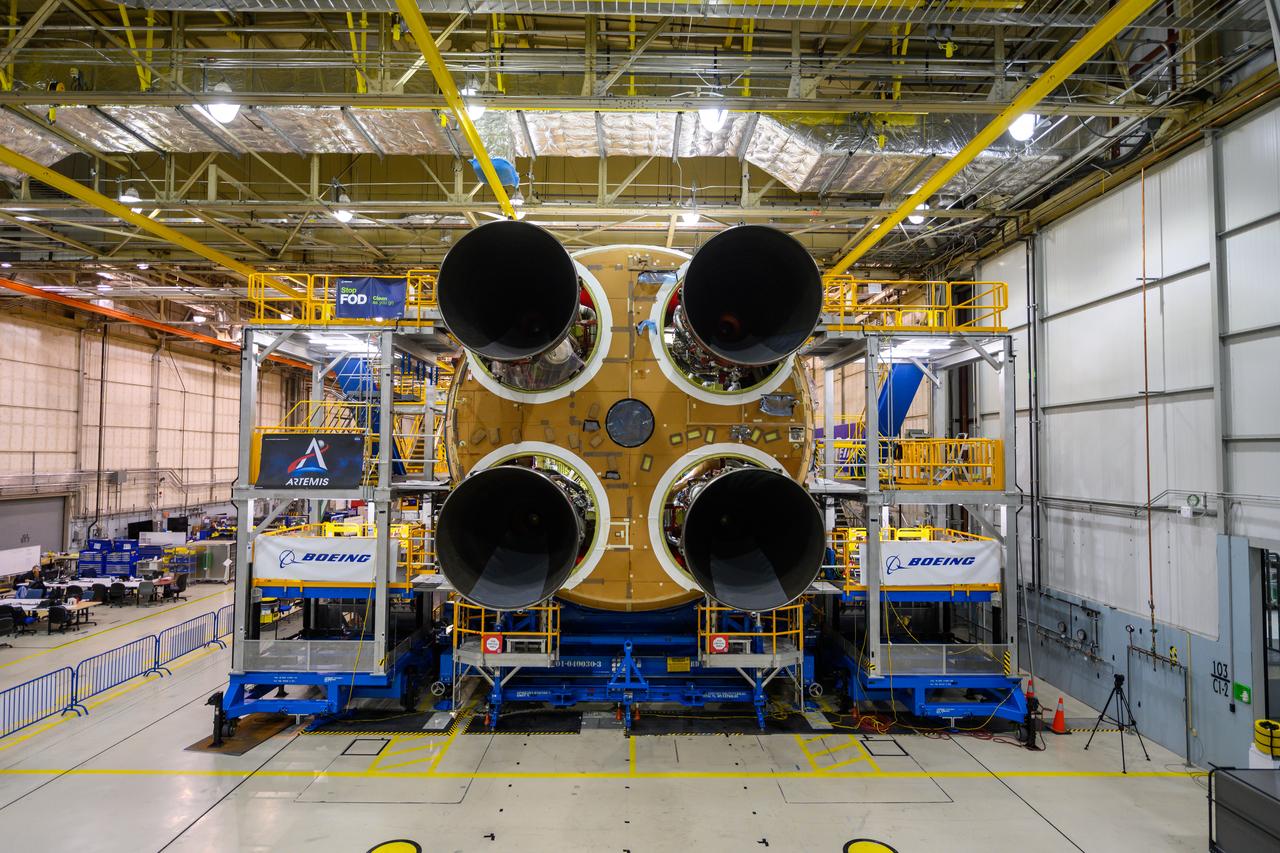
This photo shows all four RS-25 engines attached to the core stage for NASA’s Space Launch System rocket for the agency’s Artemis I mission to the Moon. To complete assembly of the rocket stage, engineers and technicians at NASA’s Michoud Assembly Facility in New Orleans are now integrating the propulsion and electrical systems within the structure. The completed core stage with all four RS-25 engines attached is the largest rocket stage NASA has built since the Saturn V stages for the Apollo Program that first sent Americans to the Moon. The stage, which includes two propellant tanks, provides more than 2 million pounds of thrust to send Artemis I to the Moon. Engineers and technicians attached the fourth RS-25 engine to the rocket stage Nov. 6 just one day after structurally mating the third engine. The first two RS-25 engines were structurally mated to the stage in October. After assembly is complete, crews will conduct an integrated functional test of flight computers, avionics and electrical systems that run throughout the 212-foot-tall core stage in preparation for its completion later this year. This testing is the first time all the flight avionics systems will be tested together to ensure the systems communicate with each other and will perform properly to control the rocket’s flight. Integration of the RS-25 engines to the recently completed core stage structure is a collaborative, multistep process for NASA and its partners Boeing, the core stage lead contractor, and Aerojet Rocketdyne, the RS-25 engines lead contractor. Offering more payload mass, volume capability and energy to speed missions through space, the SLS rocket, along with NASA’s Gateway in lunar orbit and Orion, is part of NASA’s backbone for deep space exploration and the Artemis lunar program. No other rocket is capable of carrying astronauts in Orion around the Moon in a single mission.
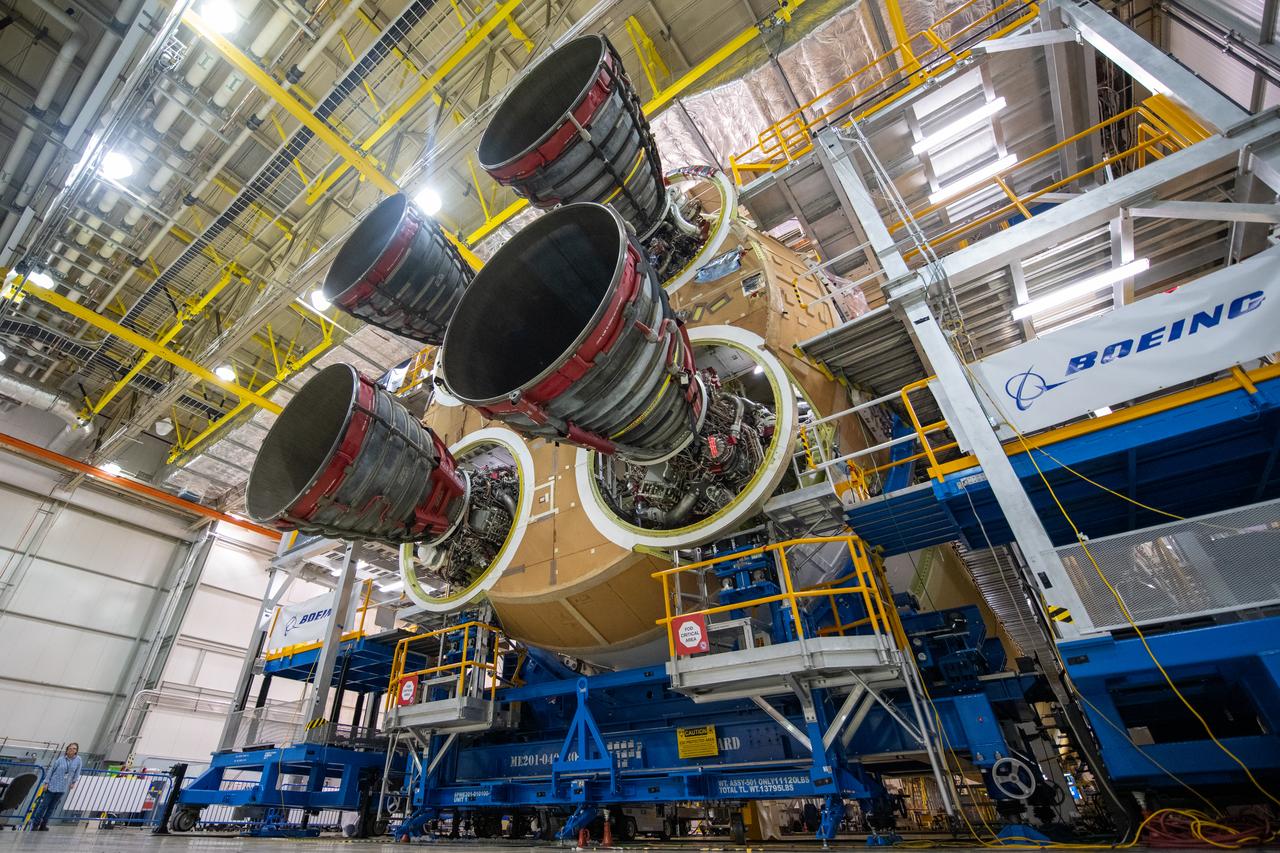
This photo shows all four RS-25 engines attached to the core stage for NASA’s Space Launch System rocket for the agency’s Artemis I mission to the Moon. To complete assembly of the rocket stage, engineers and technicians at NASA’s Michoud Assembly Facility in New Orleans are now integrating the propulsion and electrical systems within the structure. The completed core stage with all four RS-25 engines attached is the largest rocket stage NASA has built since the Saturn V stages for the Apollo Program that first sent Americans to the Moon. The stage, which includes two propellant tanks, provides more than 2 million pounds of thrust to send Artemis I to the Moon. Engineers and technicians attached the fourth RS-25 engine to the rocket stage Nov. 6 just one day after structurally mating the third engine. The first two RS-25 engines were structurally mated to the stage in October. After assembly is complete, crews will conduct an integrated functional test of flight computers, avionics and electrical systems that run throughout the 212-foot-tall core stage in preparation for its completion later this year. This testing is the first time all the flight avionics systems will be tested together to ensure the systems communicate with each other and will perform properly to control the rocket’s flight. Integration of the RS-25 engines to the recently completed core stage structure is a collaborative, multistep process for NASA and its partners Boeing, the core stage lead contractor, and Aerojet Rocketdyne, the RS-25 engines lead contractor. Offering more payload mass, volume capability and energy to speed missions through space, the SLS rocket, along with NASA’s Gateway in lunar orbit and Orion, is part of NASA’s backbone for deep space exploration and the Artemis lunar program. No other rocket is capable of carrying astronauts in Orion around the Moon in a single mission.
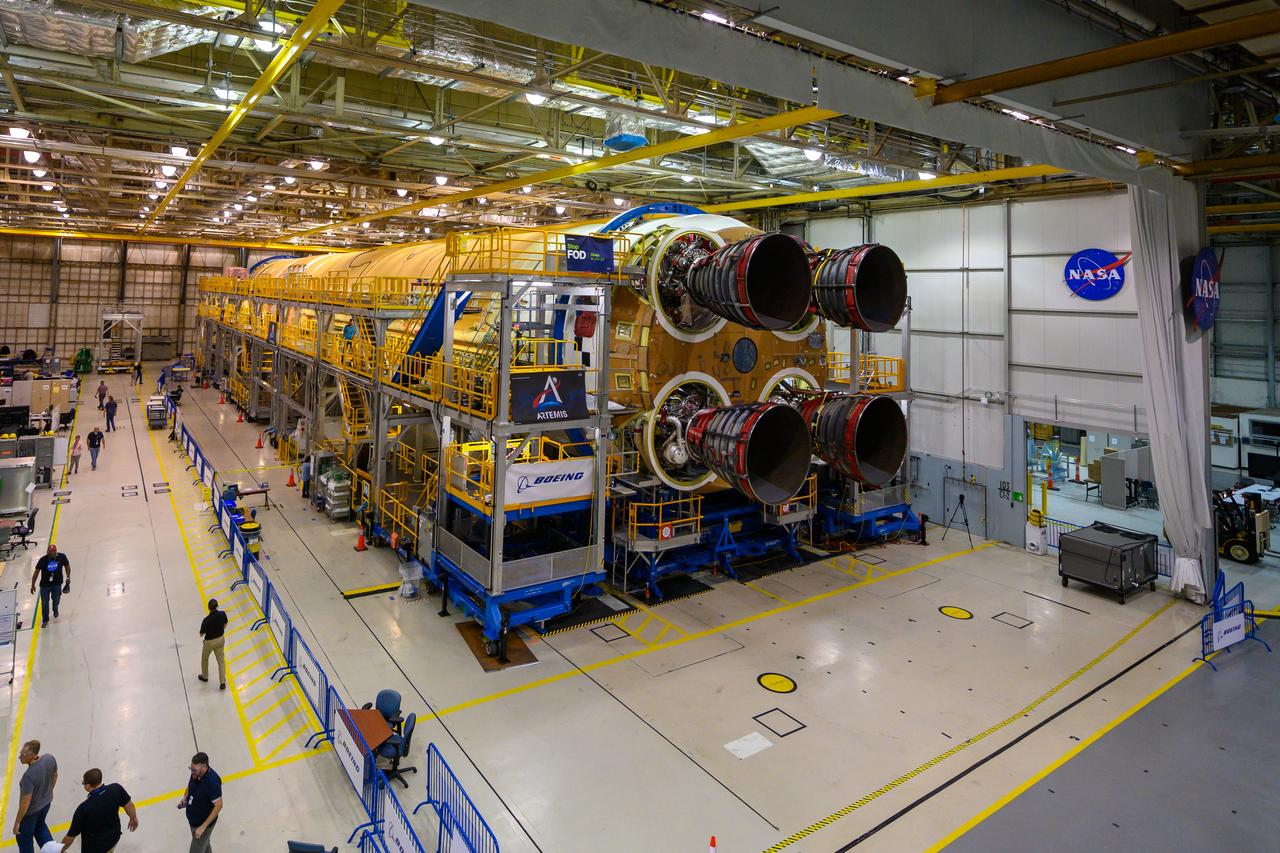
This photo shows all four RS-25 engines attached to the core stage for NASA’s Space Launch System rocket for the agency’s Artemis I mission to the Moon. To complete assembly of the rocket stage, engineers and technicians at NASA’s Michoud Assembly Facility in New Orleans are now integrating the propulsion and electrical systems within the structure. The completed core stage with all four RS-25 engines attached is the largest rocket stage NASA has built since the Saturn V stages for the Apollo Program that first sent Americans to the Moon. The stage, which includes two propellant tanks, provides more than 2 million pounds of thrust to send Artemis I to the Moon. Engineers and technicians attached the fourth RS-25 engine to the rocket stage Nov. 6 just one day after structurally mating the third engine. The first two RS-25 engines were structurally mated to the stage in October. After assembly is complete, crews will conduct an integrated functional test of flight computers, avionics and electrical systems that run throughout the 212-foot-tall core stage in preparation for its completion later this year. This testing is the first time all the flight avionics systems will be tested together to ensure the systems communicate with each other and will perform properly to control the rocket’s flight. Integration of the RS-25 engines to the recently completed core stage structure is a collaborative, multistep process for NASA and its partners Boeing, the core stage lead contractor, and Aerojet Rocketdyne, the RS-25 engines lead contractor. Offering more payload mass, volume capability and energy to speed missions through space, the SLS rocket, along with NASA’s Gateway in lunar orbit and Orion, is part of NASA’s backbone for deep space exploration and the Artemis lunar program. No other rocket is capable of carrying astronauts in Orion around the Moon in a single mission.
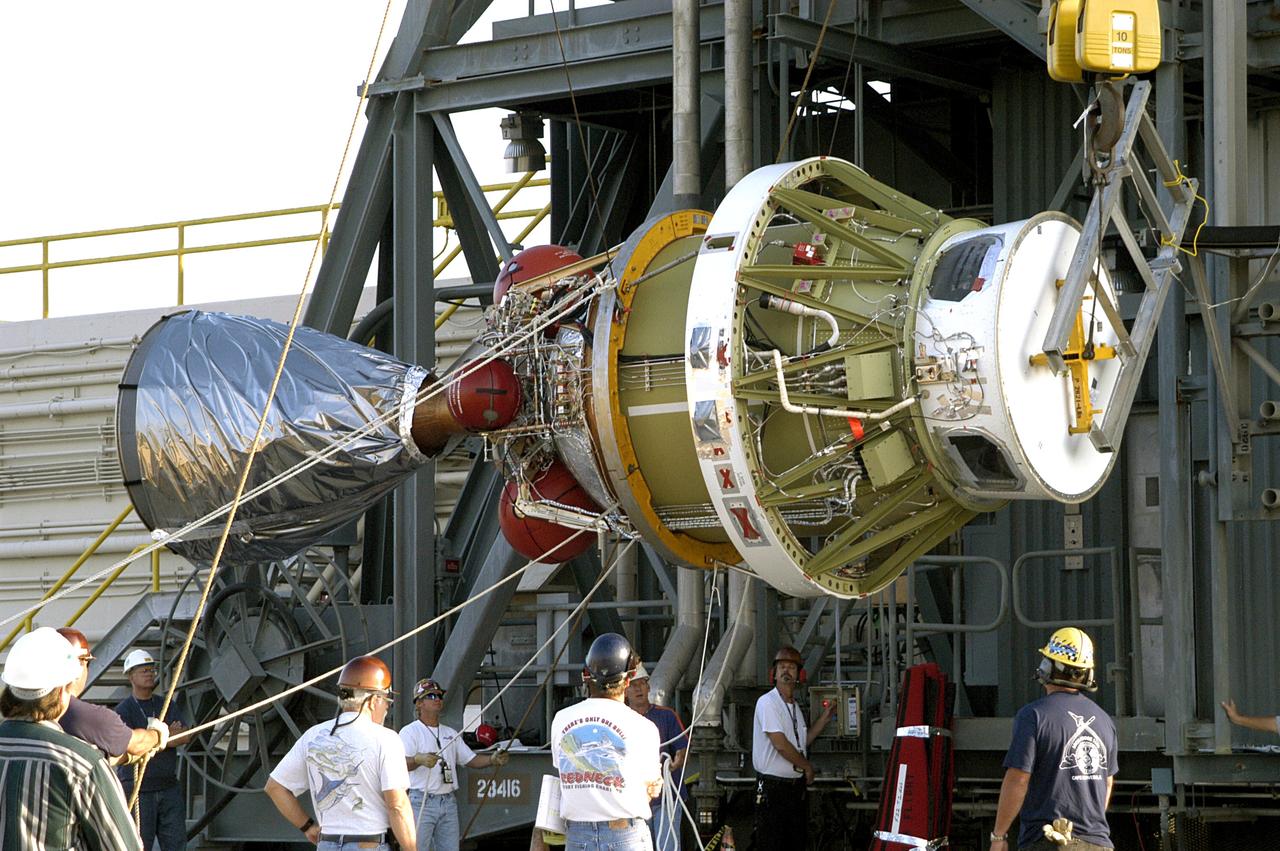
KENNEDY SPACE CENTER, FLA. - The second stage of the Delta II rocket is raised off the transporter for its lift up the launch tower on Pad 17-A, Cape Canaveral Air Force Station. It will be mated to the first stage in preparation for the launch of the Mars Exploration Rover 2 (MER-A). The MER Mission consists of two identical rovers designed to cover roughly 110 yards each Martian day over various terrain. Each rover will carry five scientific instruments that will allow it to search for evidence of liquid water that may have been present in the planet’s past. Identical to each other, the rovers will land at different regions of Mars. Launch date for this first of NASA’s two Mars Exploration Rover missions is scheduled June 5.
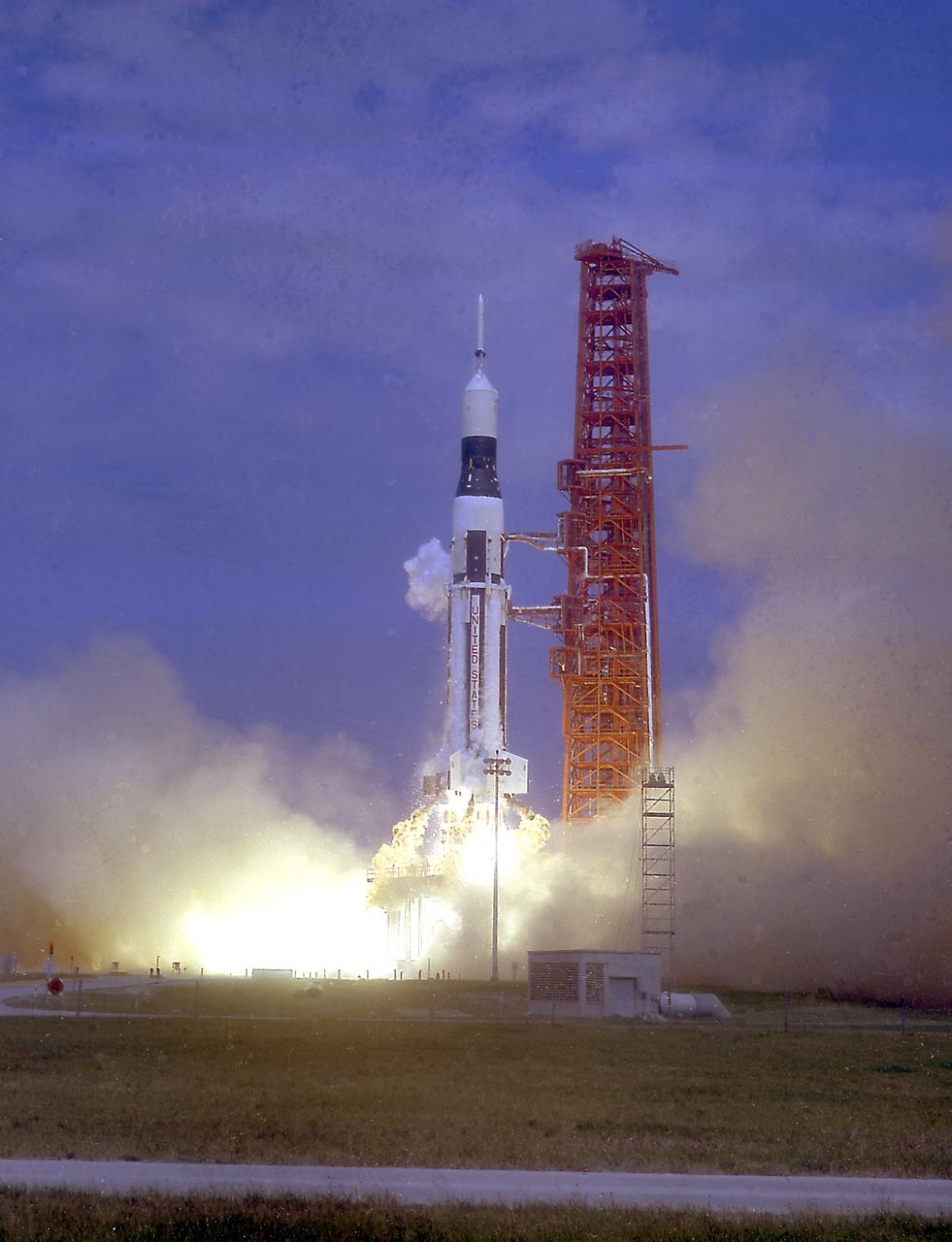
The launch of the SA-7 (Saturn I Block II) was on September 18, 1964. The SA-7 mission was the second orbital flight of the S-IV stage (second stage) with the payload consisting of the Apollo command and service module's instrument unit. The Saturn I Block II vehicle had two live stages, and were basically in the two-stage configuration of the Saturn I vehicle. While the tank arrangement and the engine patterns were the same, there were marked changes between the Block I and II versions. The first stage (S-I stage) was an improved version of the Block I S-I stage. The Block II S-1 stage had eight fins added for greater aerodynamic stability in the lower atmosphere.
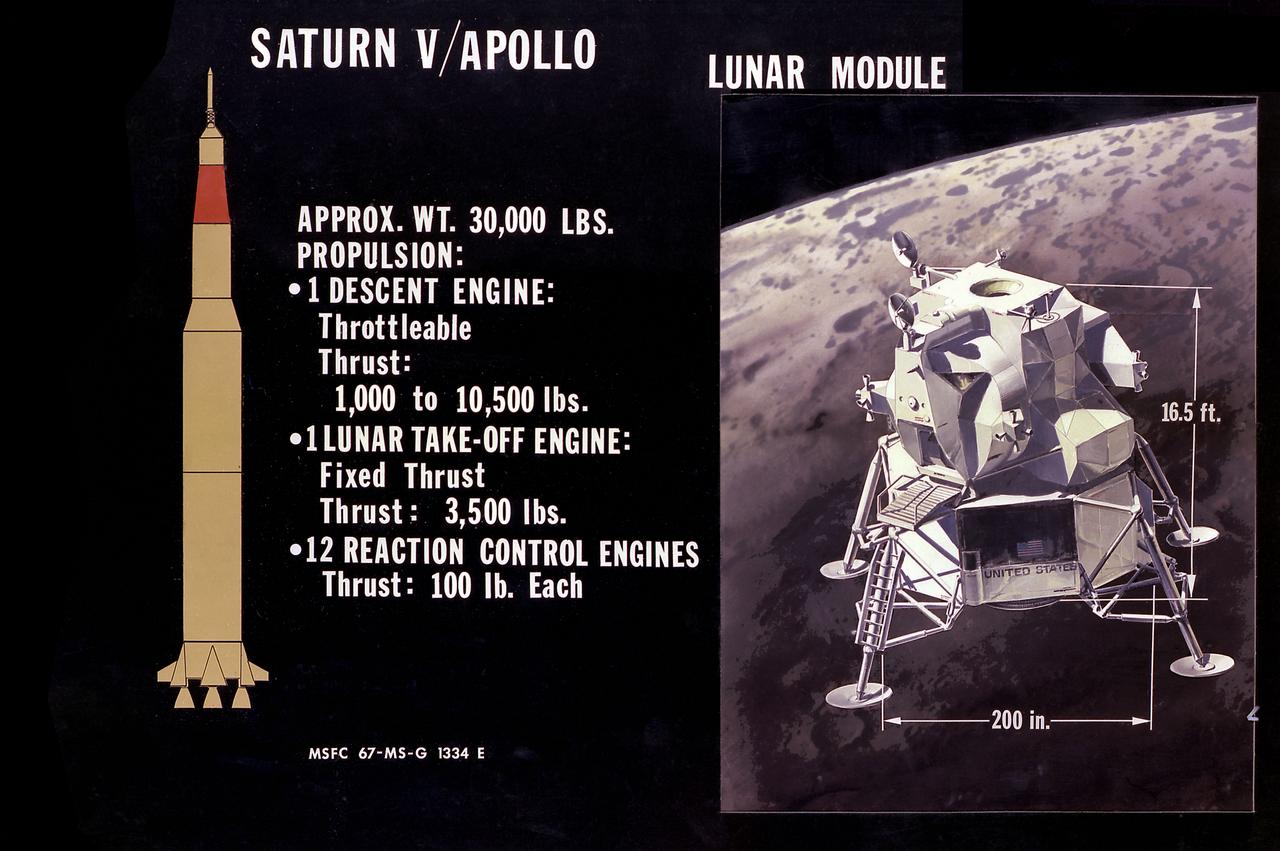
This illustration is the Lunar Module (LM) configuration. The LM was a two part spacecraft. Its lower or descent stage had the landing gear, engines, and fuel needed for the landing. When the LM blasted off the Moon, the descent stage served as the launching pad for its companion ascent stage, which was also home for the two astronauts on the surface of the Moon. The LM was full of gear with which to communicate, navigate, and rendezvous. It also had its own propulsion system, and an engine to lift it off the Moon and send it on a course toward the orbiting Command Module.

After dominating the tropical Pacific Ocean for more than two years, the 1998-2000 La Niña cool pool is continuing its slow fade and seems to be retiring from the climate stage, according to satellite data from NASA U.S.-French TOPEX/Poseidon mission.
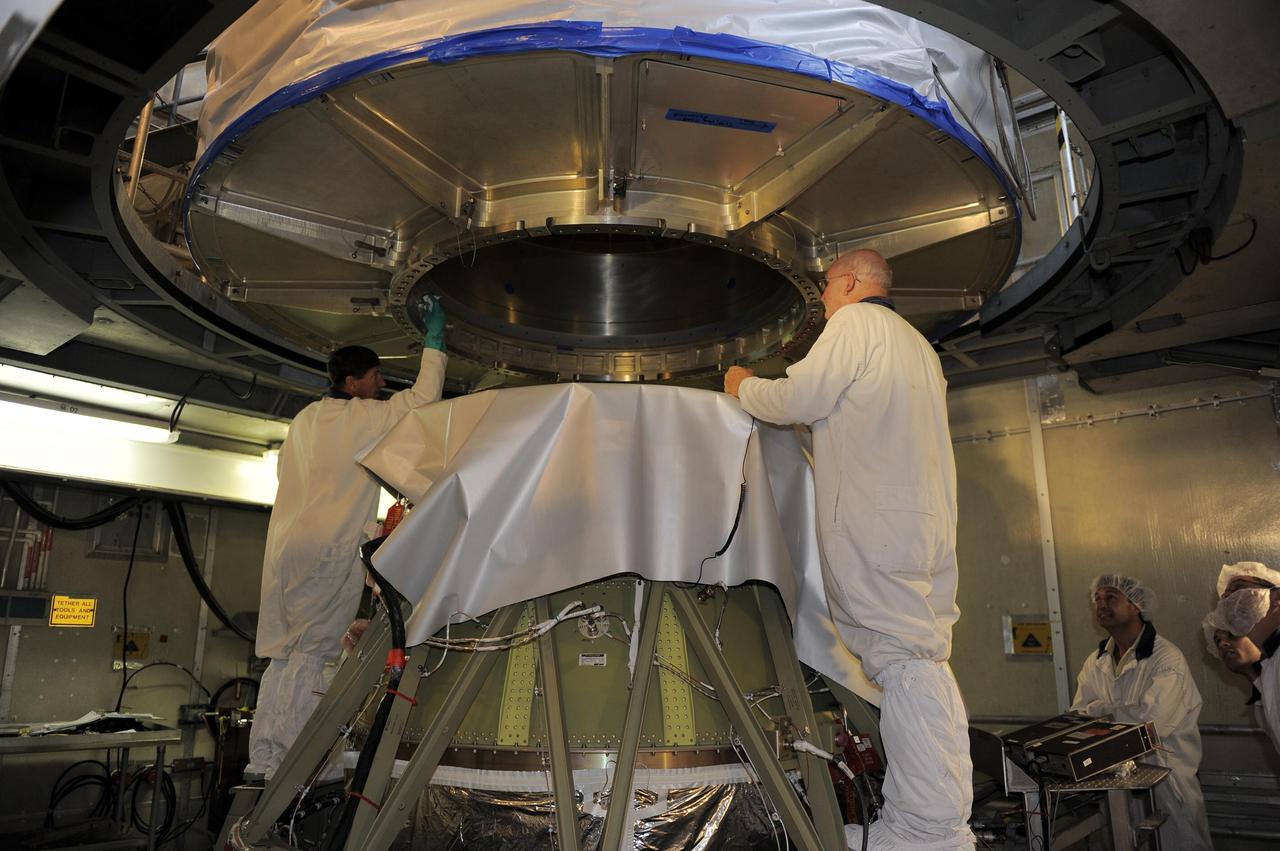
NASA twin Gravity Recovery and Interior Laboratory GRAIL spacecraft are lowered onto the second stage of their Delta II launch vehicle. At top is the spacecraft adapter ring which holds the two lunar probes in their side-by-side launch configuration.
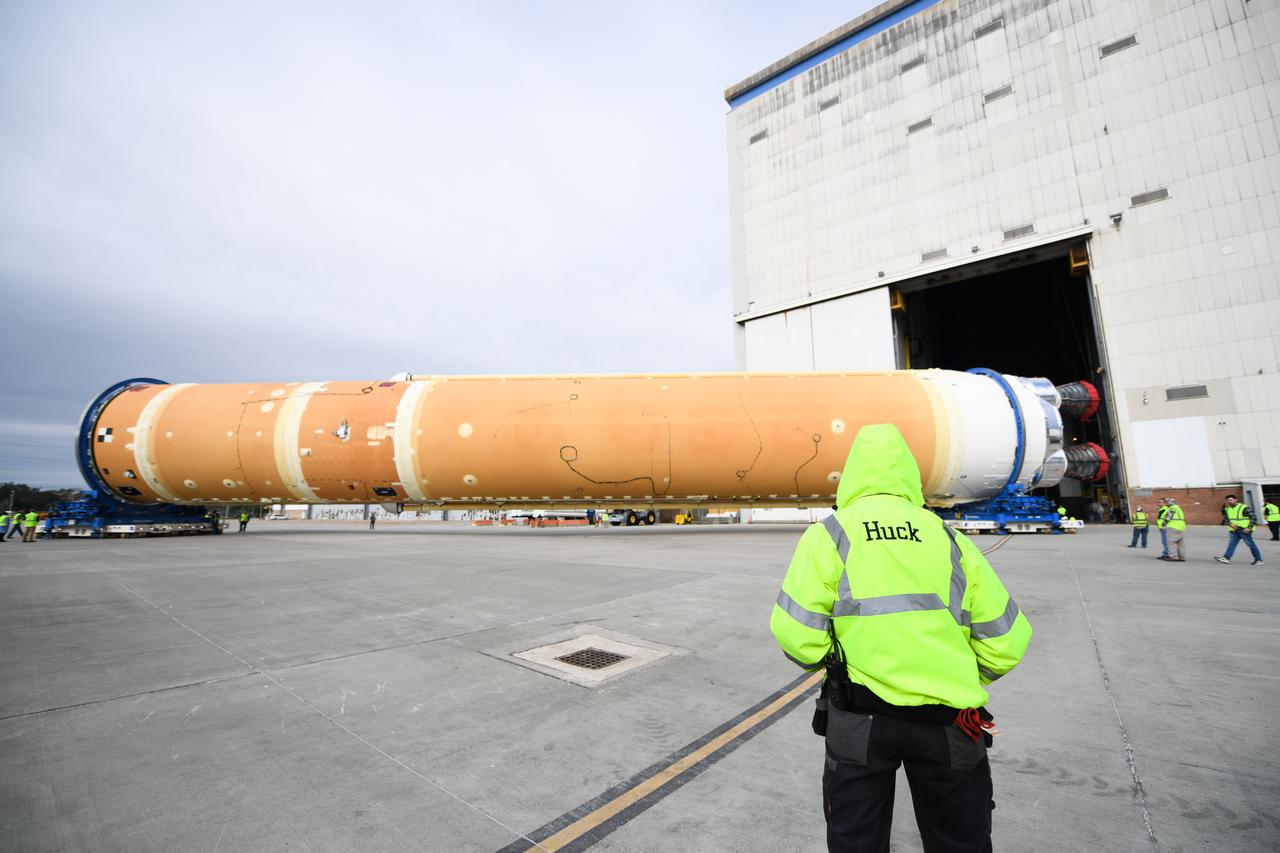
These images show how teams at NASA’s Michoud Assembly Facility in New Orleans moved the core stage, complete with all four RS-25 engines, for NASA’s Space Launch System (SLS) rocket to Building 110 for final shipping preparations on Jan. 1. The SLS core stage includes state-of-the-art avionics, propulsion systems and two colossal propellant tanks that collectively hold 733,000 gallons of liquid oxygen and liquid hydrogen to power its four RS-25 engines. The completed stage, which will provide more than 2 million pounds of thrust to help power the first Artemis mission to the Moon, will be shipped via the agency’s Pegasus barge from Michoud to NASA’s Stennis Space Center near Bay St. Louis, Mississippi, later this month. Once at Stennis, the Artemis rocket stage will be loaded into the B-2 Test Stand for the core stage Green Run test series. The comprehensive test campaign will progressively bring the entire core stage, including its avionics and engines, to life for the first time to verify the stage is fit for flight ahead of the launch of Artemis I.
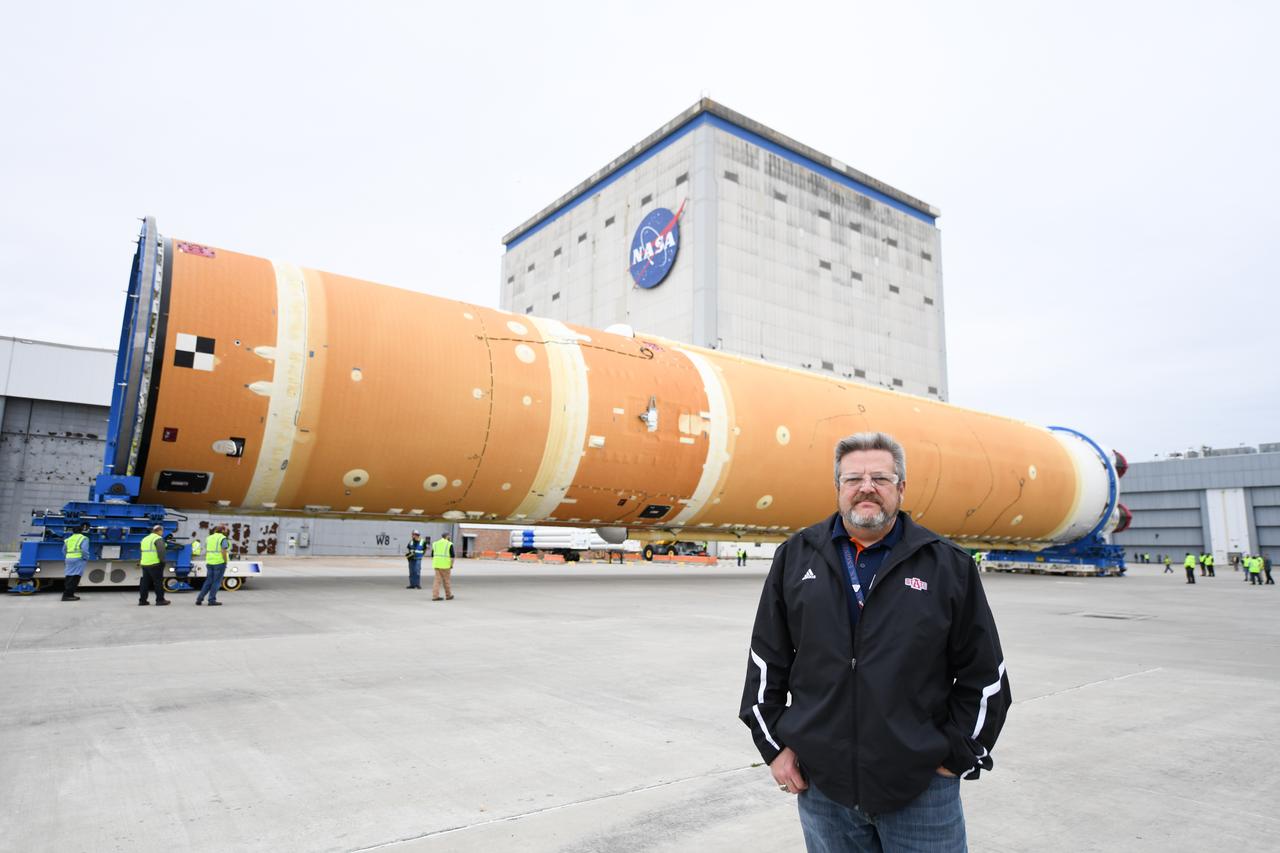
These images show how teams at NASA’s Michoud Assembly Facility in New Orleans moved the core stage, complete with all four RS-25 engines, for NASA’s Space Launch System (SLS) rocket to Building 110 for final shipping preparations on Jan. 1. The SLS core stage includes state-of-the-art avionics, propulsion systems and two colossal propellant tanks that collectively hold 733,000 gallons of liquid oxygen and liquid hydrogen to power its four RS-25 engines. The completed stage, which will provide more than 2 million pounds of thrust to help power the first Artemis mission to the Moon, will be shipped via the agency’s Pegasus barge from Michoud to NASA’s Stennis Space Center near Bay St. Louis, Mississippi, later this month. Once at Stennis, the Artemis rocket stage will be loaded into the B-2 Test Stand for the core stage Green Run test series. The comprehensive test campaign will progressively bring the entire core stage, including its avionics and engines, to life for the first time to verify the stage is fit for flight ahead of the launch of Artemis I.
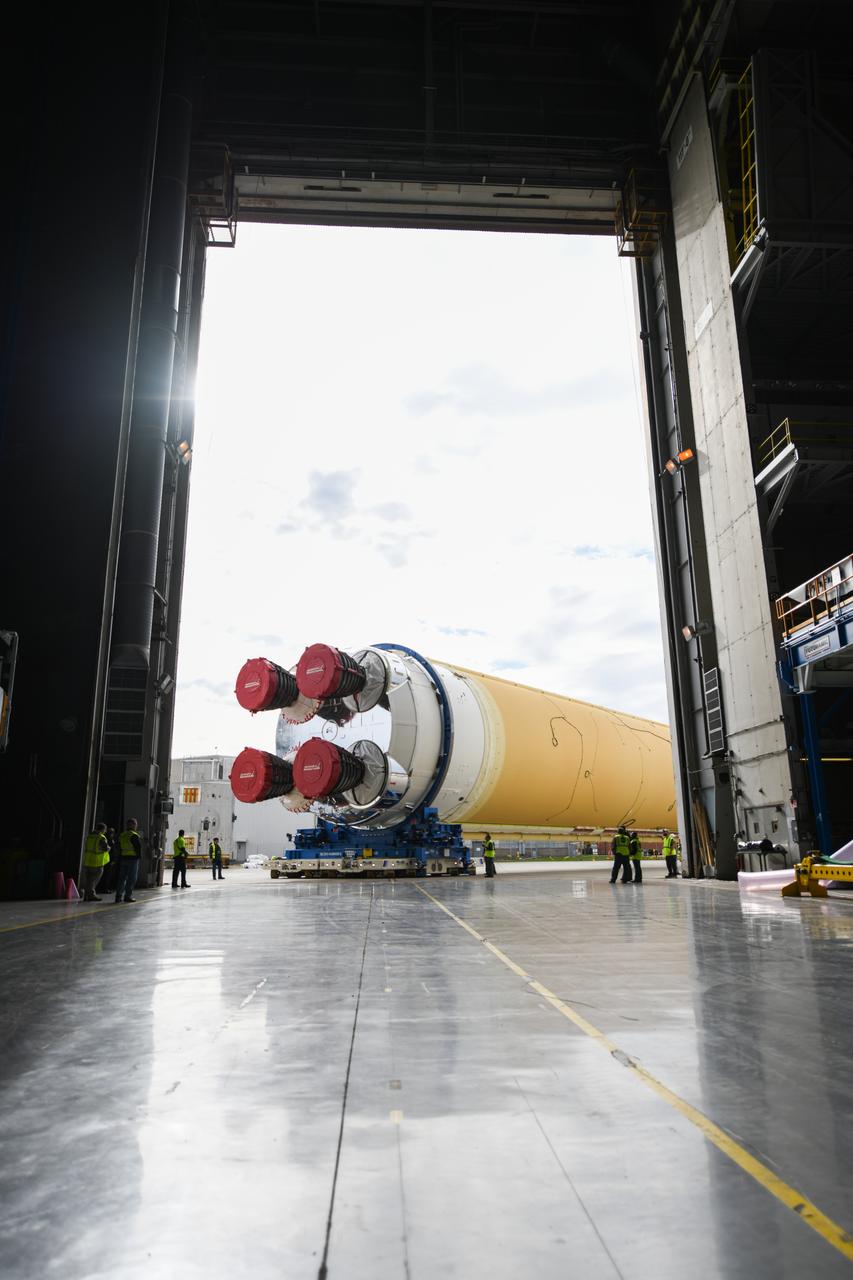
These images show how teams at NASA’s Michoud Assembly Facility in New Orleans moved the core stage, complete with all four RS-25 engines, for NASA’s Space Launch System (SLS) rocket to Building 110 for final shipping preparations on Jan. 1. The SLS core stage includes state-of-the-art avionics, propulsion systems and two colossal propellant tanks that collectively hold 733,000 gallons of liquid oxygen and liquid hydrogen to power its four RS-25 engines. The completed stage, which will provide more than 2 million pounds of thrust to help power the first Artemis mission to the Moon, will be shipped via the agency’s Pegasus barge from Michoud to NASA’s Stennis Space Center near Bay St. Louis, Mississippi, later this month. Once at Stennis, the Artemis rocket stage will be loaded into the B-2 Test Stand for the core stage Green Run test series. The comprehensive test campaign will progressively bring the entire core stage, including its avionics and engines, to life for the first time to verify the stage is fit for flight ahead of the launch of Artemis I.

These images show how teams at NASA’s Michoud Assembly Facility in New Orleans moved the core stage, complete with all four RS-25 engines, for NASA’s Space Launch System (SLS) rocket to Building 110 for final shipping preparations on Jan. 1. The SLS core stage includes state-of-the-art avionics, propulsion systems and two colossal propellant tanks that collectively hold 733,000 gallons of liquid oxygen and liquid hydrogen to power its four RS-25 engines. The completed stage, which will provide more than 2 million pounds of thrust to help power the first Artemis mission to the Moon, will be shipped via the agency’s Pegasus barge from Michoud to NASA’s Stennis Space Center near Bay St. Louis, Mississippi, later this month. Once at Stennis, the Artemis rocket stage will be loaded into the B-2 Test Stand for the core stage Green Run test series. The comprehensive test campaign will progressively bring the entire core stage, including its avionics and engines, to life for the first time to verify the stage is fit for flight ahead of the launch of Artemis I.

These photos and videos show how technicians at NASA’s Michoud Assembly Facility in New Orleans installed the second of four RS-25 engines onto the core stage for the agency’s SLS (Space Launch System) rocket that will help power NASA’s first crewed Artemis mission to the Moon. Crews added the second engine, with the serial number E2047 in position one, to the stage Sept. 15. The serial number for the engine installed Sept. 11 in position two on the core stage is E2059. Engineers consider the engines to be “soft” mated to the rocket stage. Following soft mate of all four engines, technicians with NASA, Aerojet Rocketdyne, an L3Harris Technologies company and the RS-25 engines lead contractor, along with Boeing, the core stage lead contractor, will fully secure the engines to the stage and integrate the propulsion and electrical systems within the structure. All four RS-25 engines are located at the base of the core stage within the engine section. NASA is working to land the first woman and first person of color on the Moon under Artemis. SLS is part of NASA’s backbone for deep space exploration, along with Orion and the Gateway in orbit around the Moon. SLS is the only rocket that can send Orion, astronauts, and supplies to the Moon in a single mission.
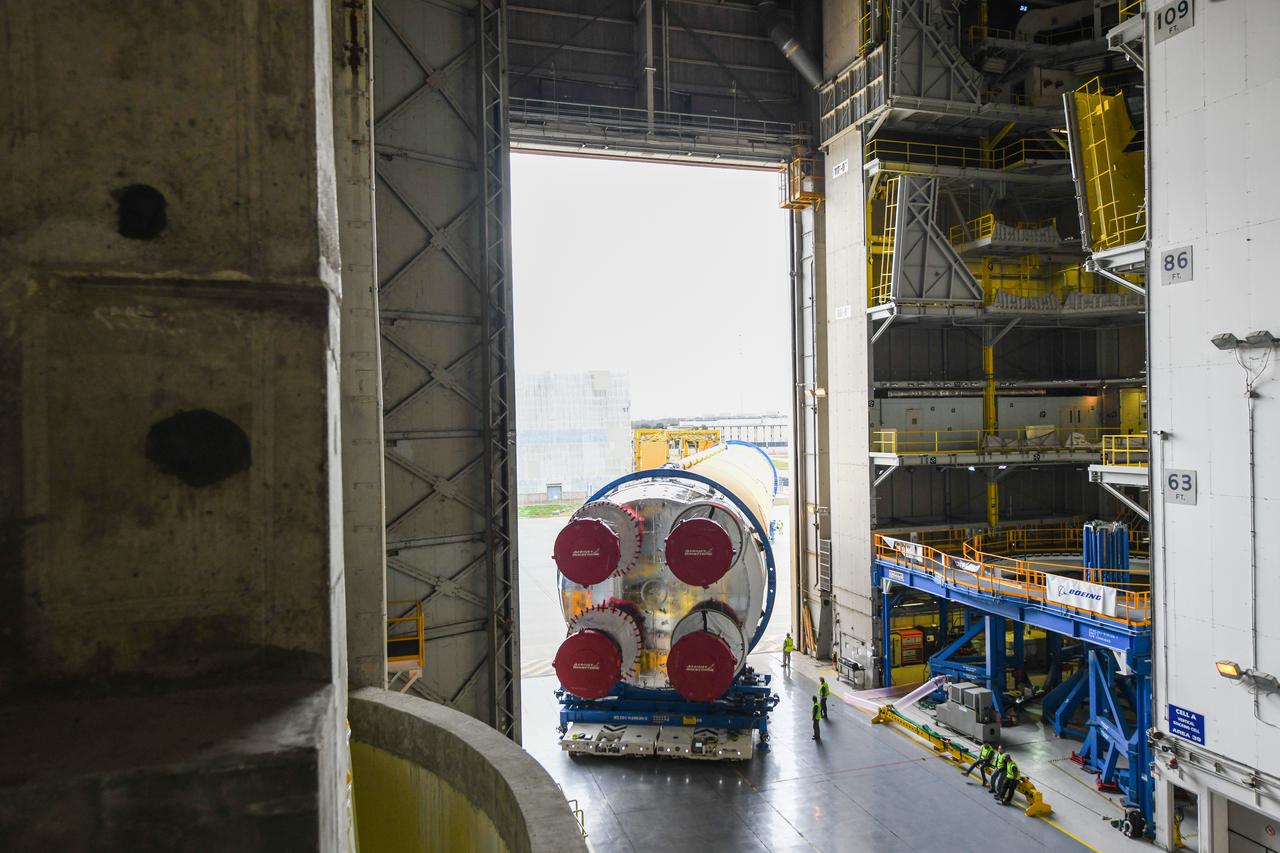
These images show how teams at NASA’s Michoud Assembly Facility in New Orleans moved the core stage, complete with all four RS-25 engines, for NASA’s Space Launch System (SLS) rocket to Building 110 for final shipping preparations on Jan. 1. The SLS core stage includes state-of-the-art avionics, propulsion systems and two colossal propellant tanks that collectively hold 733,000 gallons of liquid oxygen and liquid hydrogen to power its four RS-25 engines. The completed stage, which will provide more than 2 million pounds of thrust to help power the first Artemis mission to the Moon, will be shipped via the agency’s Pegasus barge from Michoud to NASA’s Stennis Space Center near Bay St. Louis, Mississippi, later this month. Once at Stennis, the Artemis rocket stage will be loaded into the B-2 Test Stand for the core stage Green Run test series. The comprehensive test campaign will progressively bring the entire core stage, including its avionics and engines, to life for the first time to verify the stage is fit for flight ahead of the launch of Artemis I.
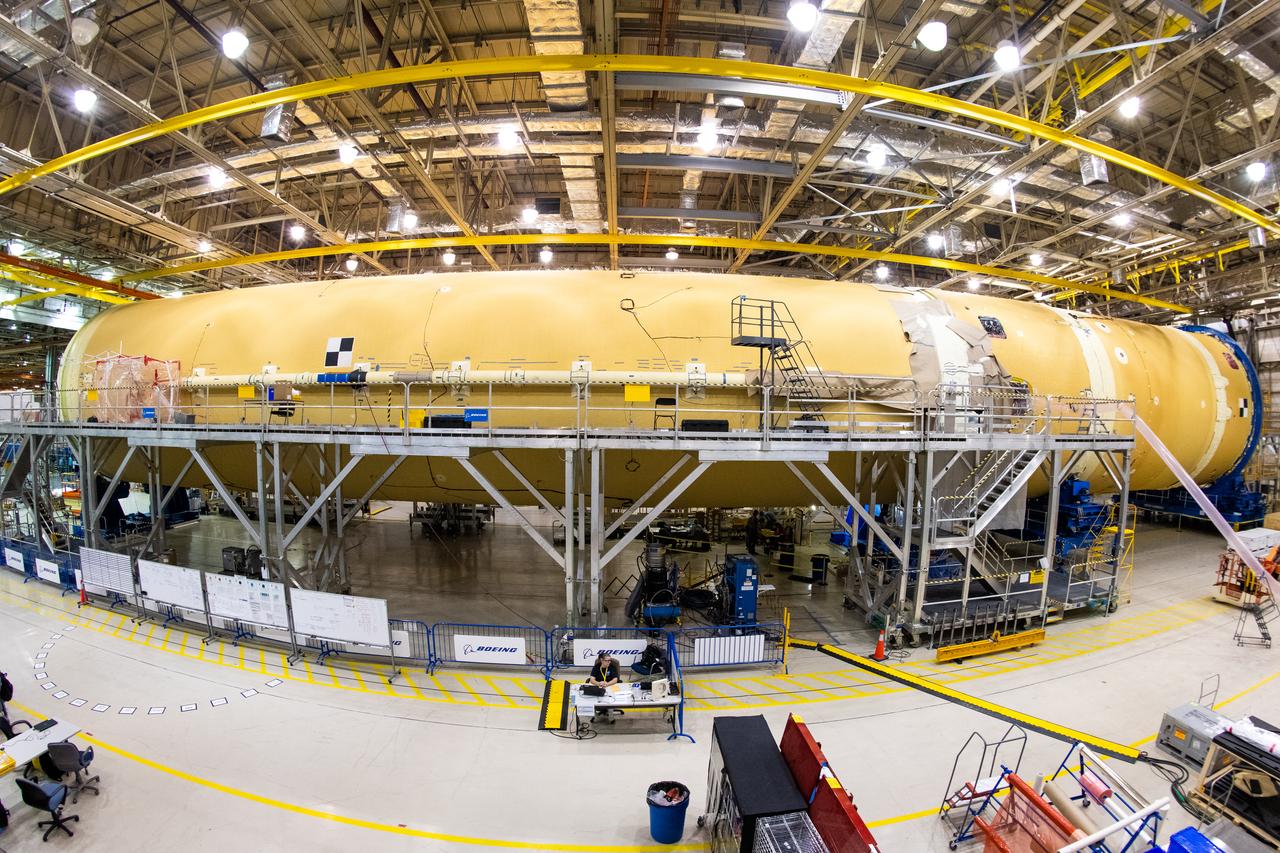
Technicians at NASA’s Michoud Assembly Facility in New Orleans completed the “forward join,” which connects structures to form the top part of NASA’s Space Launch System (SLS) rocket’s core stage. The first core stage will send Exploration Mission-1, the first integrated flight of SLS and NASA’s Orion spacecraft, out beyond the Moon. The forward join mated three structures: the forward skirt, liquid oxygen tank and intertank. This milestone marks the beginning of integration and assembly of the massive, 212-foot-tall SLS core stage, which will include the rocket’s four RS-25 rocket engines, propellant tanks and flight computers. Now, NASA and Boeing, the SLS prime contractor, will continue to integrate various systems inside the forward part of the core stage and prepare for structural joining of the liquid hydrogen tank and engine section to form the bottom of the stage. These two parts of the core stage will then be assembled to form the largest stage NASA has ever built.
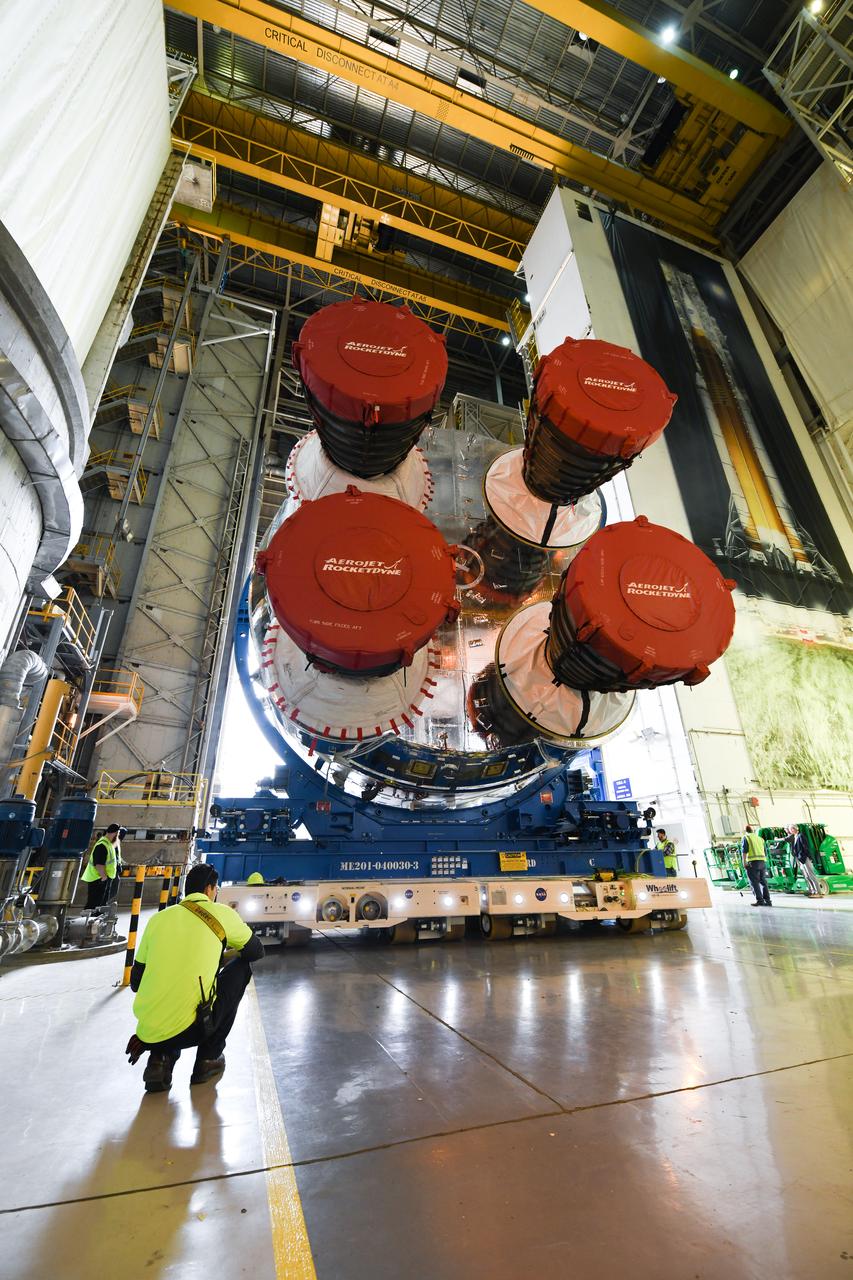
These images show how teams at NASA’s Michoud Assembly Facility in New Orleans moved the core stage, complete with all four RS-25 engines, for NASA’s Space Launch System (SLS) rocket to Building 110 for final shipping preparations on Jan. 1. The SLS core stage includes state-of-the-art avionics, propulsion systems and two colossal propellant tanks that collectively hold 733,000 gallons of liquid oxygen and liquid hydrogen to power its four RS-25 engines. The completed stage, which will provide more than 2 million pounds of thrust to help power the first Artemis mission to the Moon, will be shipped via the agency’s Pegasus barge from Michoud to NASA’s Stennis Space Center near Bay St. Louis, Mississippi, later this month. Once at Stennis, the Artemis rocket stage will be loaded into the B-2 Test Stand for the core stage Green Run test series. The comprehensive test campaign will progressively bring the entire core stage, including its avionics and engines, to life for the first time to verify the stage is fit for flight ahead of the launch of Artemis I.
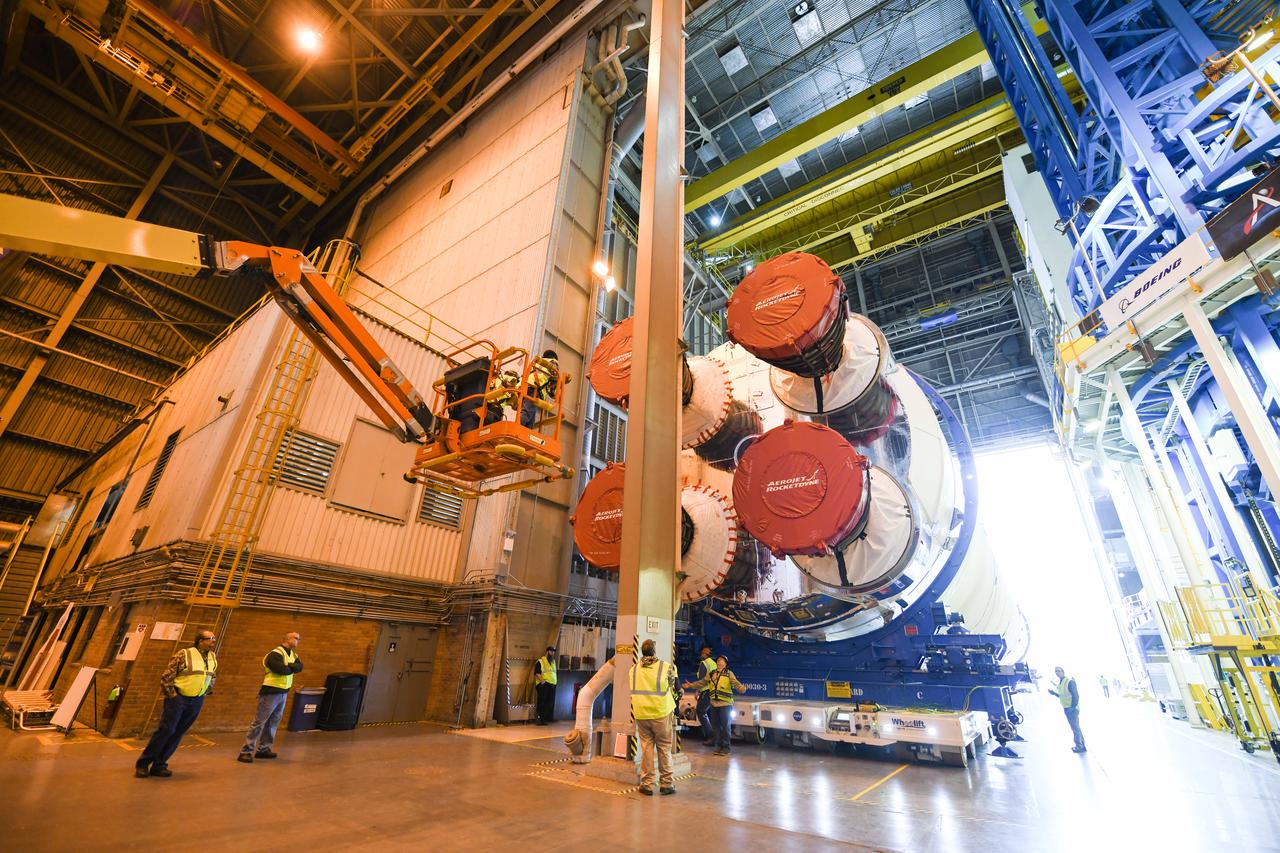
These images show how teams at NASA’s Michoud Assembly Facility in New Orleans moved the core stage, complete with all four RS-25 engines, for NASA’s Space Launch System (SLS) rocket to Building 110 for final shipping preparations on Jan. 1. The SLS core stage includes state-of-the-art avionics, propulsion systems and two colossal propellant tanks that collectively hold 733,000 gallons of liquid oxygen and liquid hydrogen to power its four RS-25 engines. The completed stage, which will provide more than 2 million pounds of thrust to help power the first Artemis mission to the Moon, will be shipped via the agency’s Pegasus barge from Michoud to NASA’s Stennis Space Center near Bay St. Louis, Mississippi, later this month. Once at Stennis, the Artemis rocket stage will be loaded into the B-2 Test Stand for the core stage Green Run test series. The comprehensive test campaign will progressively bring the entire core stage, including its avionics and engines, to life for the first time to verify the stage is fit for flight ahead of the launch of Artemis I.
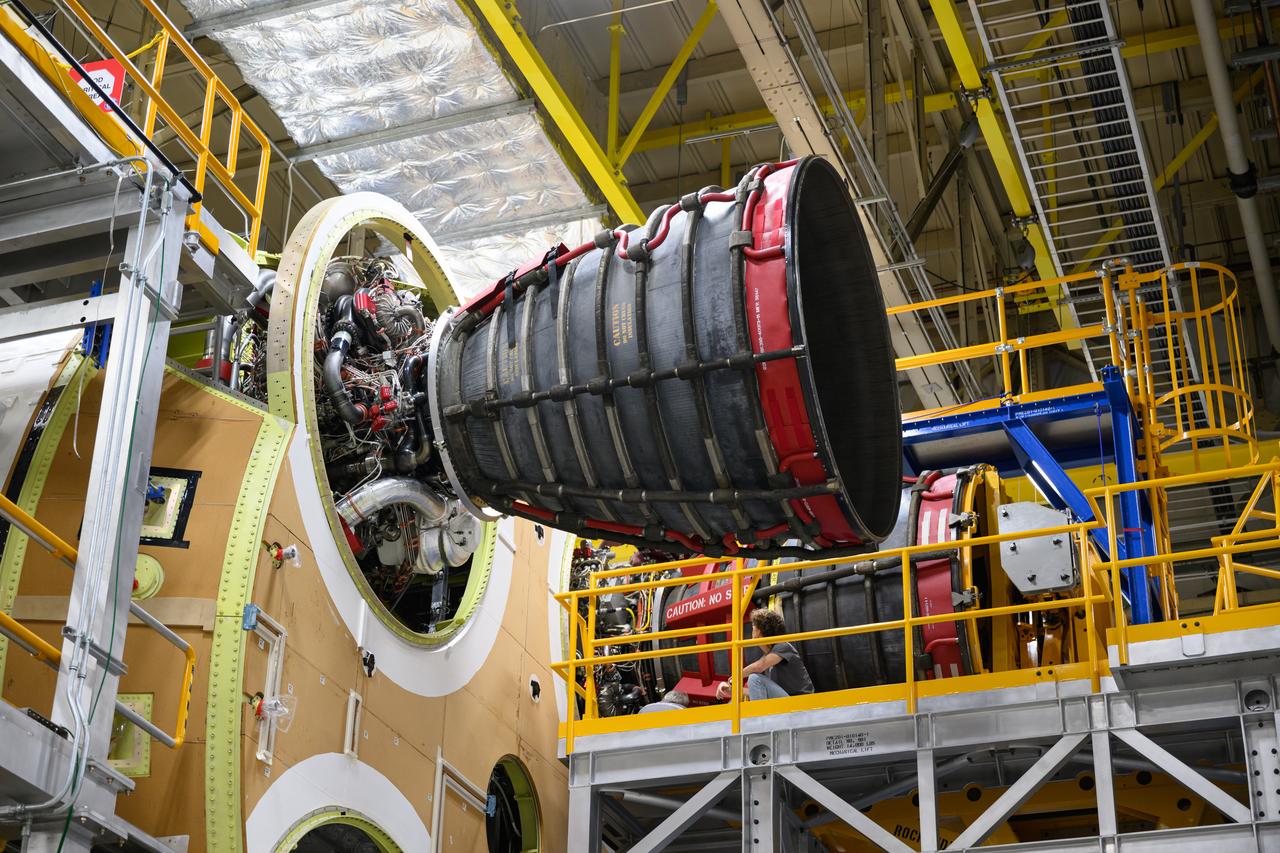
These photos and videos show how technicians at NASA’s Michoud Assembly Facility in New Orleans installed the second of four RS-25 engines onto the core stage for the agency’s SLS (Space Launch System) rocket that will help power NASA’s first crewed Artemis mission to the Moon. Crews added the second engine, with the serial number E2047 in position one, to the stage Sept. 15. The serial number for the engine installed Sept. 11 in position two on the core stage is E2059. Engineers consider the engines to be “soft” mated to the rocket stage. Following soft mate of all four engines, technicians with NASA, Aerojet Rocketdyne, an L3Harris Technologies company and the RS-25 engines lead contractor, along with Boeing, the core stage lead contractor, will fully secure the engines to the stage and integrate the propulsion and electrical systems within the structure. All four RS-25 engines are located at the base of the core stage within the engine section. NASA is working to land the first woman and first person of color on the Moon under Artemis. SLS is part of NASA’s backbone for deep space exploration, along with Orion and the Gateway in orbit around the Moon. SLS is the only rocket that can send Orion, astronauts, and supplies to the Moon in a single mission.
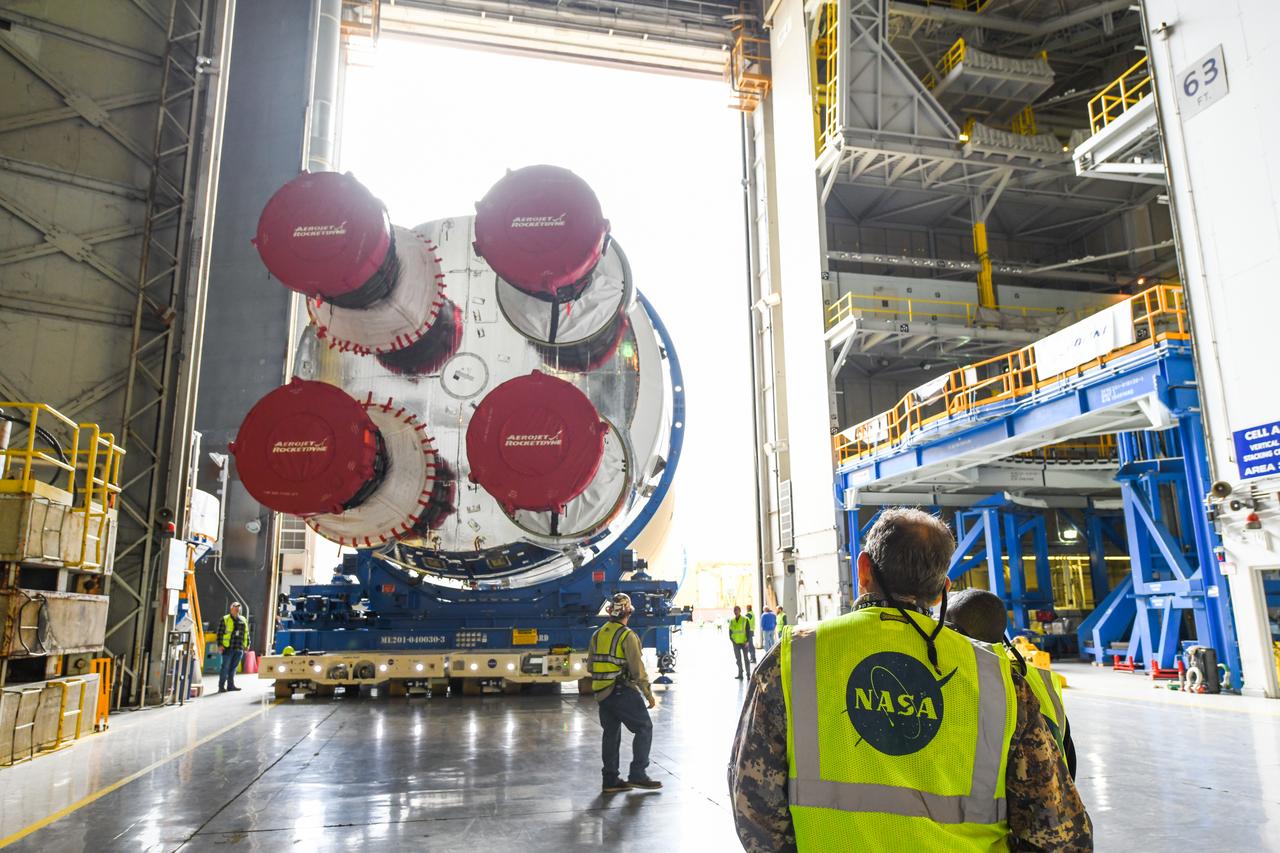
These images show how teams at NASA’s Michoud Assembly Facility in New Orleans moved the core stage, complete with all four RS-25 engines, for NASA’s Space Launch System (SLS) rocket to Building 110 for final shipping preparations on Jan. 1. The SLS core stage includes state-of-the-art avionics, propulsion systems and two colossal propellant tanks that collectively hold 733,000 gallons of liquid oxygen and liquid hydrogen to power its four RS-25 engines. The completed stage, which will provide more than 2 million pounds of thrust to help power the first Artemis mission to the Moon, will be shipped via the agency’s Pegasus barge from Michoud to NASA’s Stennis Space Center near Bay St. Louis, Mississippi, later this month. Once at Stennis, the Artemis rocket stage will be loaded into the B-2 Test Stand for the core stage Green Run test series. The comprehensive test campaign will progressively bring the entire core stage, including its avionics and engines, to life for the first time to verify the stage is fit for flight ahead of the launch of Artemis I.
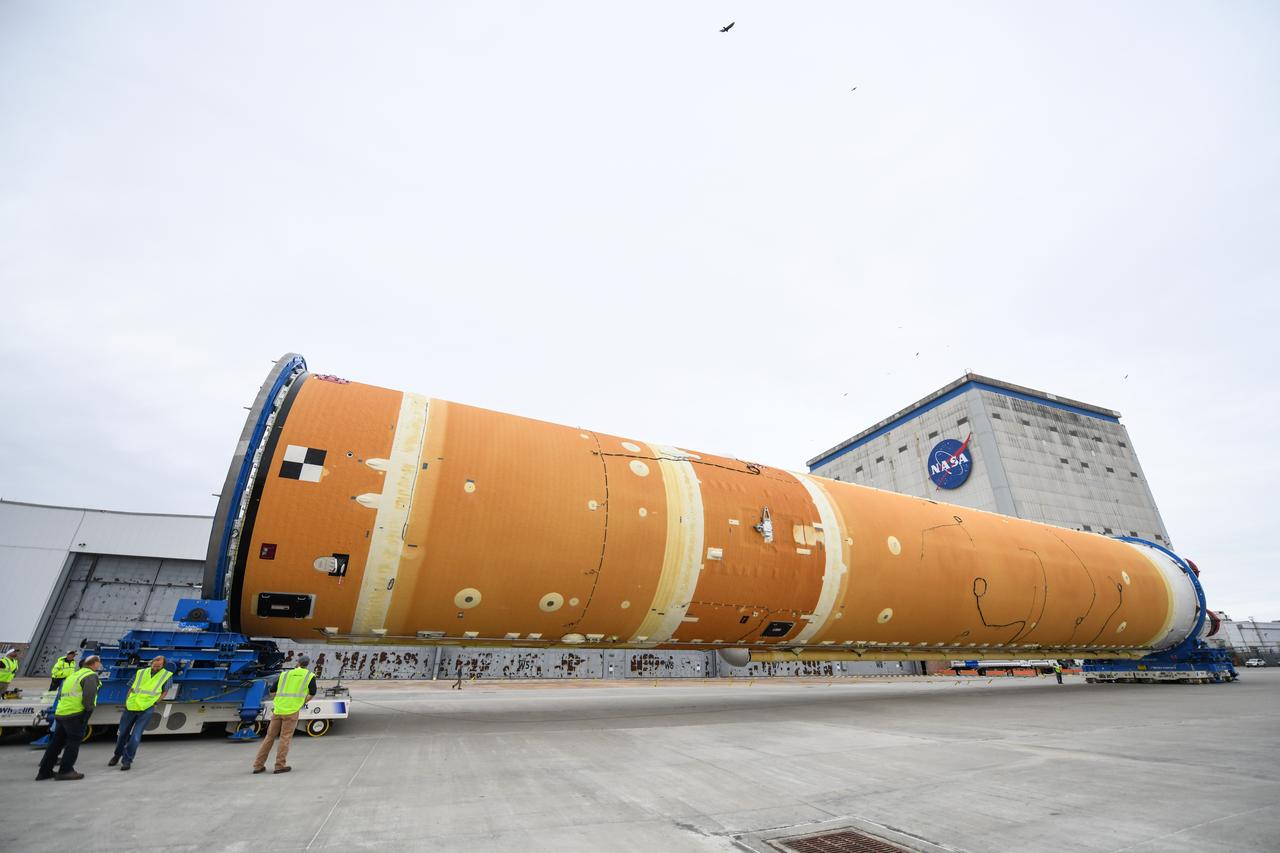
These images show how teams at NASA’s Michoud Assembly Facility in New Orleans moved the core stage, complete with all four RS-25 engines, for NASA’s Space Launch System (SLS) rocket to Building 110 for final shipping preparations on Jan. 1. The SLS core stage includes state-of-the-art avionics, propulsion systems and two colossal propellant tanks that collectively hold 733,000 gallons of liquid oxygen and liquid hydrogen to power its four RS-25 engines. The completed stage, which will provide more than 2 million pounds of thrust to help power the first Artemis mission to the Moon, will be shipped via the agency’s Pegasus barge from Michoud to NASA’s Stennis Space Center near Bay St. Louis, Mississippi, later this month. Once at Stennis, the Artemis rocket stage will be loaded into the B-2 Test Stand for the core stage Green Run test series. The comprehensive test campaign will progressively bring the entire core stage, including its avionics and engines, to life for the first time to verify the stage is fit for flight ahead of the launch of Artemis I.
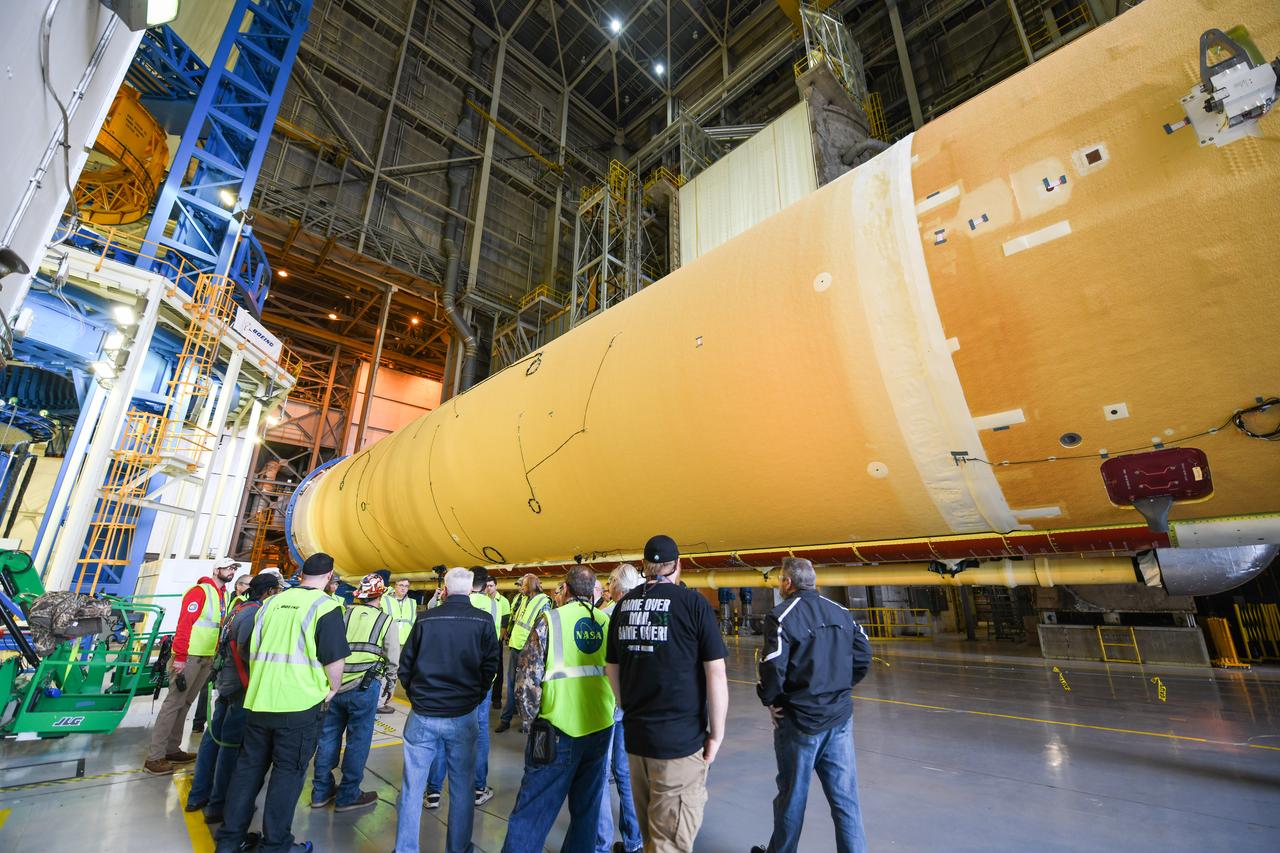
These images show how teams at NASA’s Michoud Assembly Facility in New Orleans moved the core stage, complete with all four RS-25 engines, for NASA’s Space Launch System (SLS) rocket to Building 110 for final shipping preparations on Jan. 1. The SLS core stage includes state-of-the-art avionics, propulsion systems and two colossal propellant tanks that collectively hold 733,000 gallons of liquid oxygen and liquid hydrogen to power its four RS-25 engines. The completed stage, which will provide more than 2 million pounds of thrust to help power the first Artemis mission to the Moon, will be shipped via the agency’s Pegasus barge from Michoud to NASA’s Stennis Space Center near Bay St. Louis, Mississippi, later this month. Once at Stennis, the Artemis rocket stage will be loaded into the B-2 Test Stand for the core stage Green Run test series. The comprehensive test campaign will progressively bring the entire core stage, including its avionics and engines, to life for the first time to verify the stage is fit for flight ahead of the launch of Artemis I.
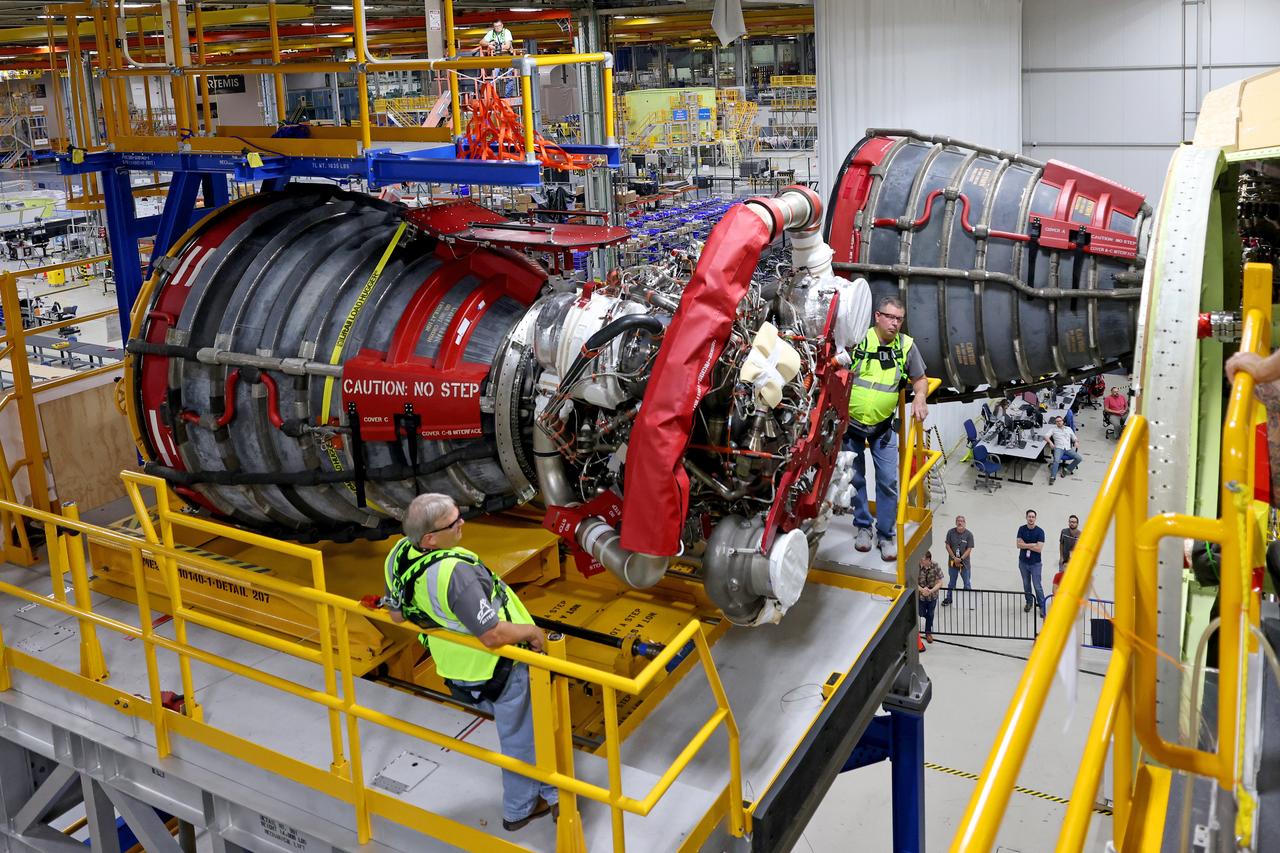
These photos and videos show how technicians at NASA’s Michoud Assembly Facility in New Orleans installed the second of four RS-25 engines onto the core stage for the agency’s SLS (Space Launch System) rocket that will help power NASA’s first crewed Artemis mission to the Moon. Crews added the second engine, with the serial number E2047 in position one, to the stage Sept. 15. The serial number for the engine installed Sept. 11 in position two on the core stage is E2059. Engineers consider the engines to be “soft” mated to the rocket stage. Following soft mate of all four engines, technicians with NASA, Aerojet Rocketdyne, an L3Harris Technologies company and the RS-25 engines lead contractor, along with Boeing, the core stage lead contractor, will fully secure the engines to the stage and integrate the propulsion and electrical systems within the structure. All four RS-25 engines are located at the base of the core stage within the engine section. NASA is working to land the first woman and first person of color on the Moon under Artemis. SLS is part of NASA’s backbone for deep space exploration, along with Orion and the Gateway in orbit around the Moon. SLS is the only rocket that can send Orion, astronauts, and supplies to the Moon in a single mission.
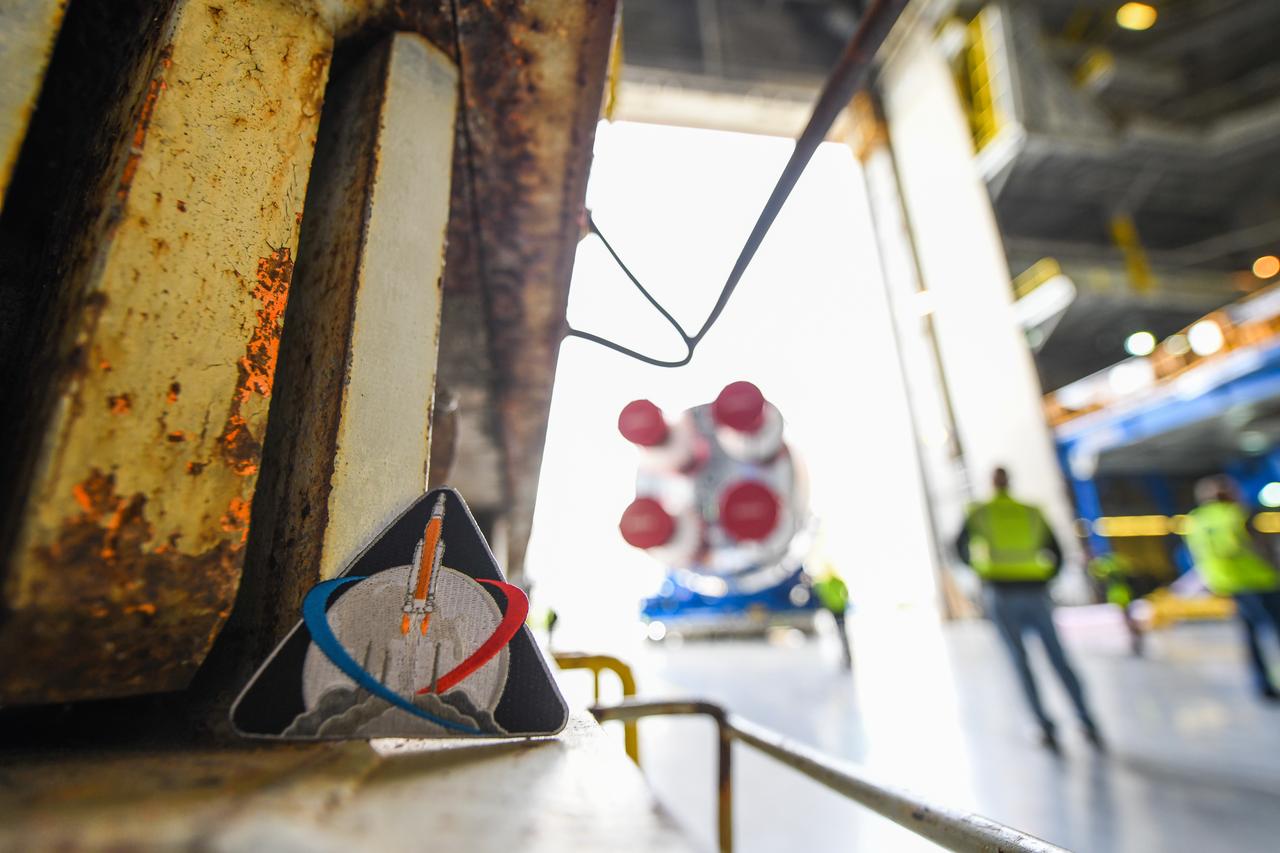
These images show how teams at NASA’s Michoud Assembly Facility in New Orleans moved the core stage, complete with all four RS-25 engines, for NASA’s Space Launch System (SLS) rocket to Building 110 for final shipping preparations on Jan. 1. The SLS core stage includes state-of-the-art avionics, propulsion systems and two colossal propellant tanks that collectively hold 733,000 gallons of liquid oxygen and liquid hydrogen to power its four RS-25 engines. The completed stage, which will provide more than 2 million pounds of thrust to help power the first Artemis mission to the Moon, will be shipped via the agency’s Pegasus barge from Michoud to NASA’s Stennis Space Center near Bay St. Louis, Mississippi, later this month. Once at Stennis, the Artemis rocket stage will be loaded into the B-2 Test Stand for the core stage Green Run test series. The comprehensive test campaign will progressively bring the entire core stage, including its avionics and engines, to life for the first time to verify the stage is fit for flight ahead of the launch of Artemis I.
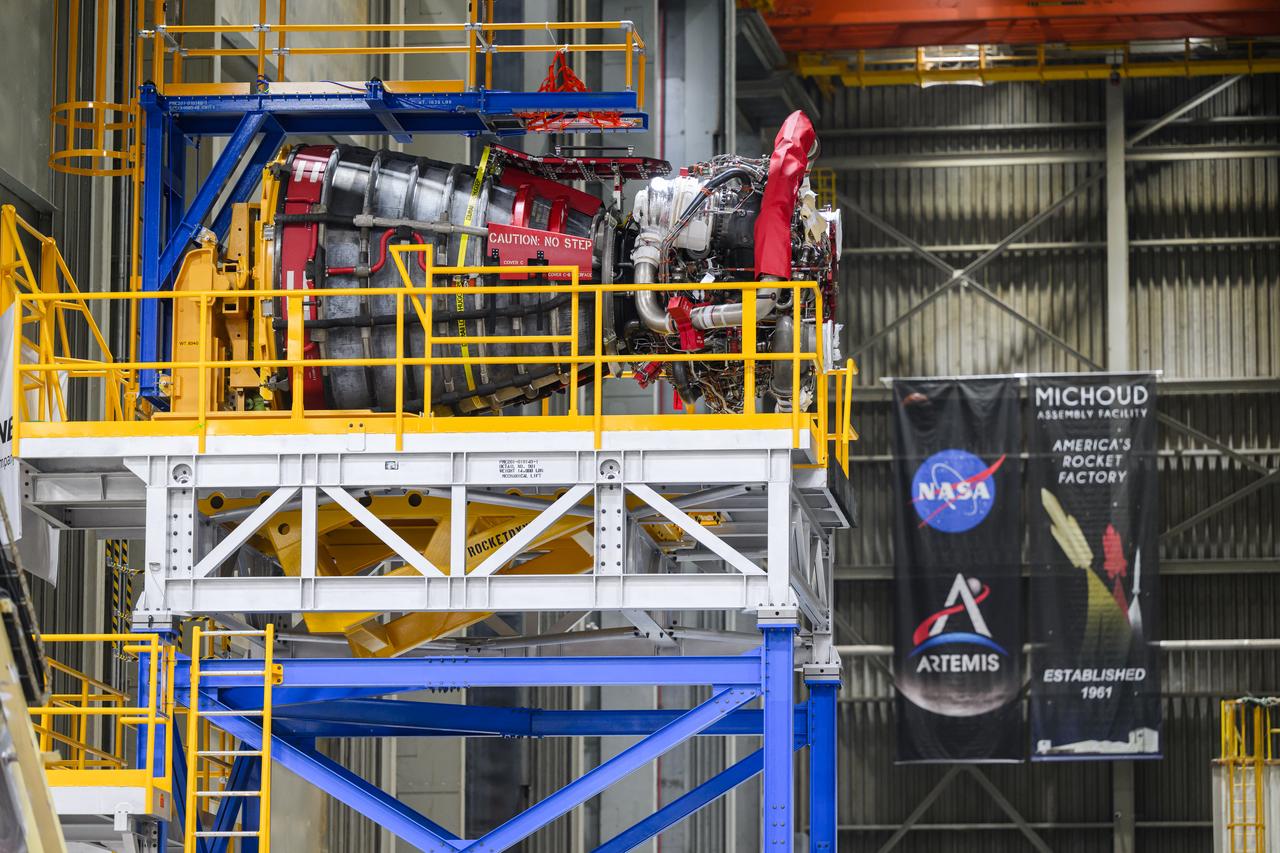
These photos and videos show how technicians at NASA’s Michoud Assembly Facility in New Orleans installed the second of four RS-25 engines onto the core stage for the agency’s SLS (Space Launch System) rocket that will help power NASA’s first crewed Artemis mission to the Moon. Crews added the second engine, with the serial number E2047 in position one, to the stage Sept. 15. The serial number for the engine installed Sept. 11 in position two on the core stage is E2059. Engineers consider the engines to be “soft” mated to the rocket stage. Following soft mate of all four engines, technicians with NASA, Aerojet Rocketdyne, an L3Harris Technologies company and the RS-25 engines lead contractor, along with Boeing, the core stage lead contractor, will fully secure the engines to the stage and integrate the propulsion and electrical systems within the structure. All four RS-25 engines are located at the base of the core stage within the engine section. NASA is working to land the first woman and first person of color on the Moon under Artemis. SLS is part of NASA’s backbone for deep space exploration, along with Orion and the Gateway in orbit around the Moon. SLS is the only rocket that can send Orion, astronauts, and supplies to the Moon in a single mission.
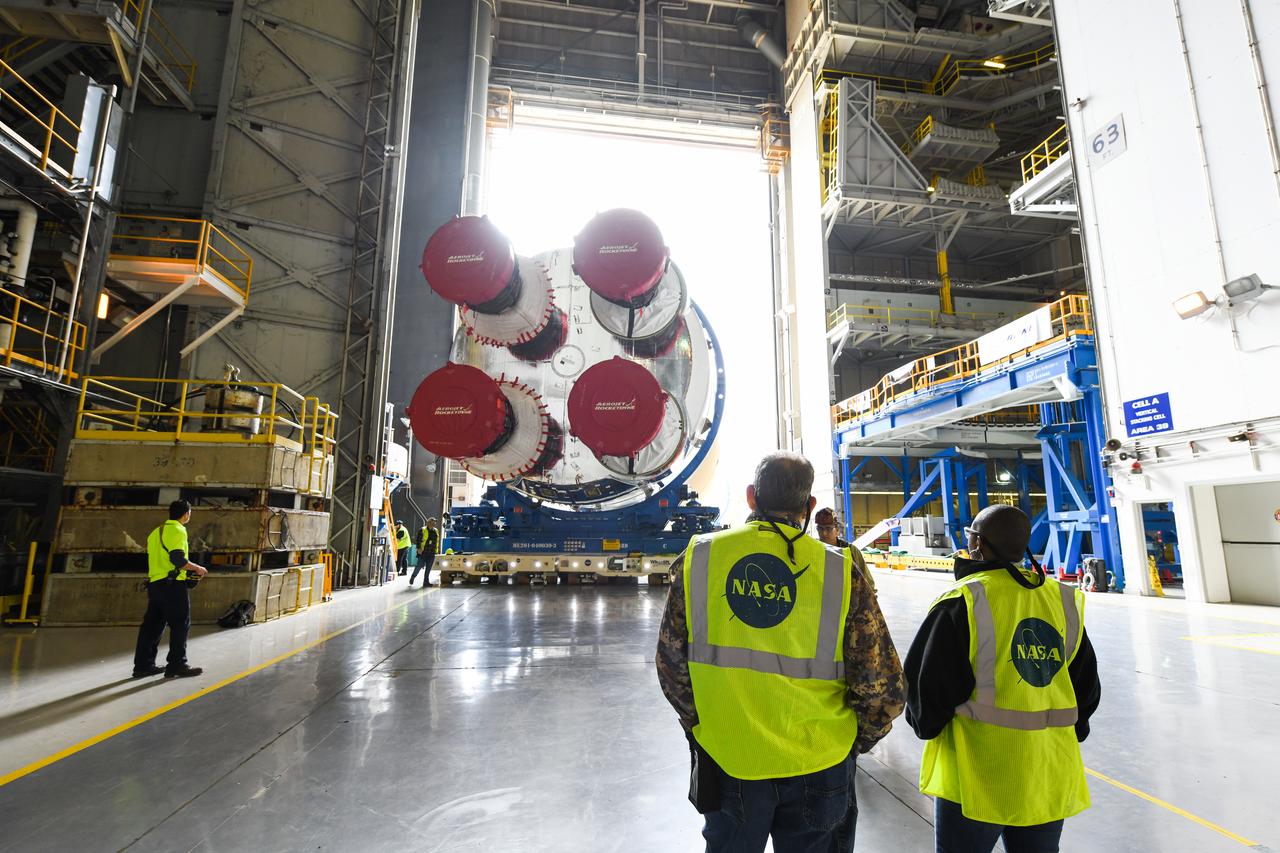
These images show how teams at NASA’s Michoud Assembly Facility in New Orleans moved the core stage, complete with all four RS-25 engines, for NASA’s Space Launch System (SLS) rocket to Building 110 for final shipping preparations on Jan. 1. The SLS core stage includes state-of-the-art avionics, propulsion systems and two colossal propellant tanks that collectively hold 733,000 gallons of liquid oxygen and liquid hydrogen to power its four RS-25 engines. The completed stage, which will provide more than 2 million pounds of thrust to help power the first Artemis mission to the Moon, will be shipped via the agency’s Pegasus barge from Michoud to NASA’s Stennis Space Center near Bay St. Louis, Mississippi, later this month. Once at Stennis, the Artemis rocket stage will be loaded into the B-2 Test Stand for the core stage Green Run test series. The comprehensive test campaign will progressively bring the entire core stage, including its avionics and engines, to life for the first time to verify the stage is fit for flight ahead of the launch of Artemis I.
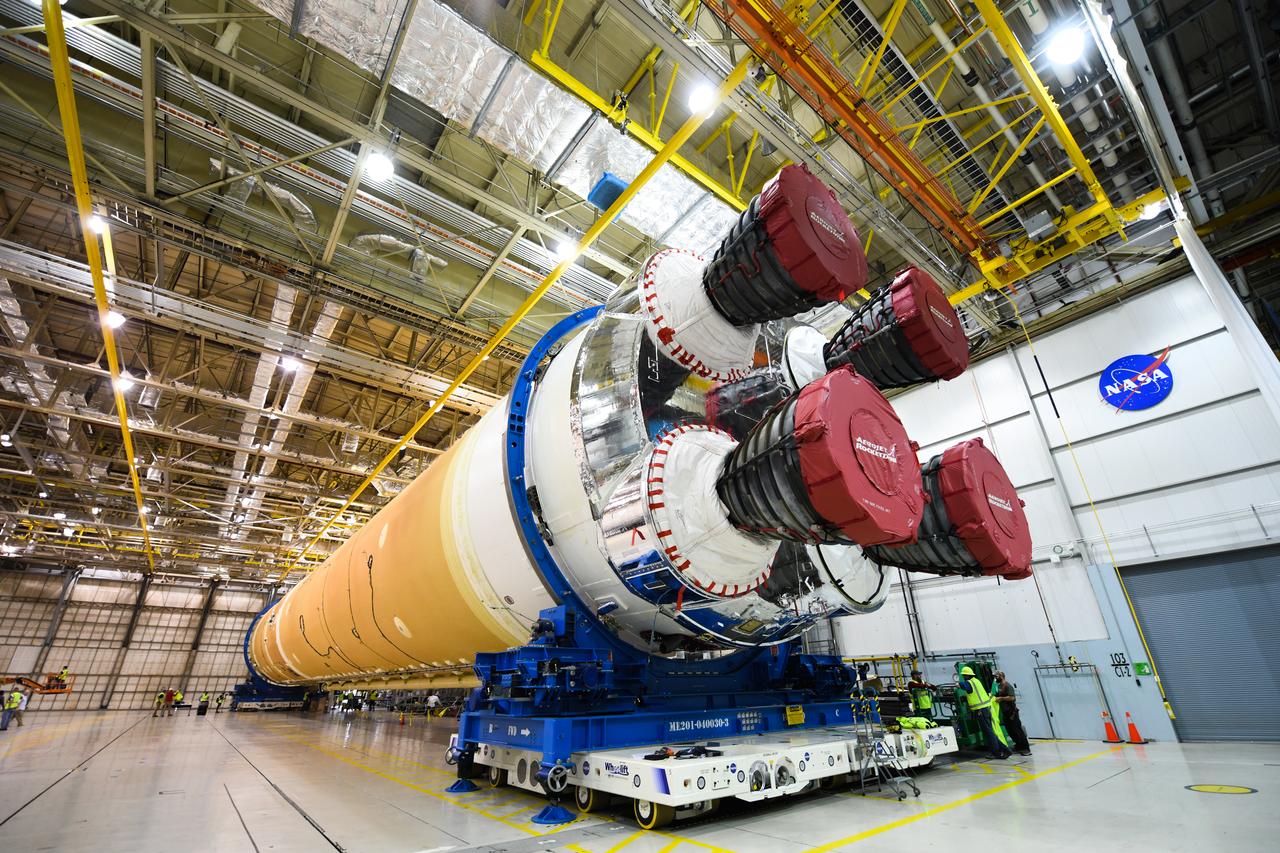
These images show how teams at NASA’s Michoud Assembly Facility in New Orleans moved the core stage, complete with all four RS-25 engines, for NASA’s Space Launch System (SLS) rocket to Building 110 for final shipping preparations on Jan. 1. The SLS core stage includes state-of-the-art avionics, propulsion systems and two colossal propellant tanks that collectively hold 733,000 gallons of liquid oxygen and liquid hydrogen to power its four RS-25 engines. The completed stage, which will provide more than 2 million pounds of thrust to help power the first Artemis mission to the Moon, will be shipped via the agency’s Pegasus barge from Michoud to NASA’s Stennis Space Center near Bay St. Louis, Mississippi, later this month. Once at Stennis, the Artemis rocket stage will be loaded into the B-2 Test Stand for the core stage Green Run test series. The comprehensive test campaign will progressively bring the entire core stage, including its avionics and engines, to life for the first time to verify the stage is fit for flight ahead of the launch of Artemis I.
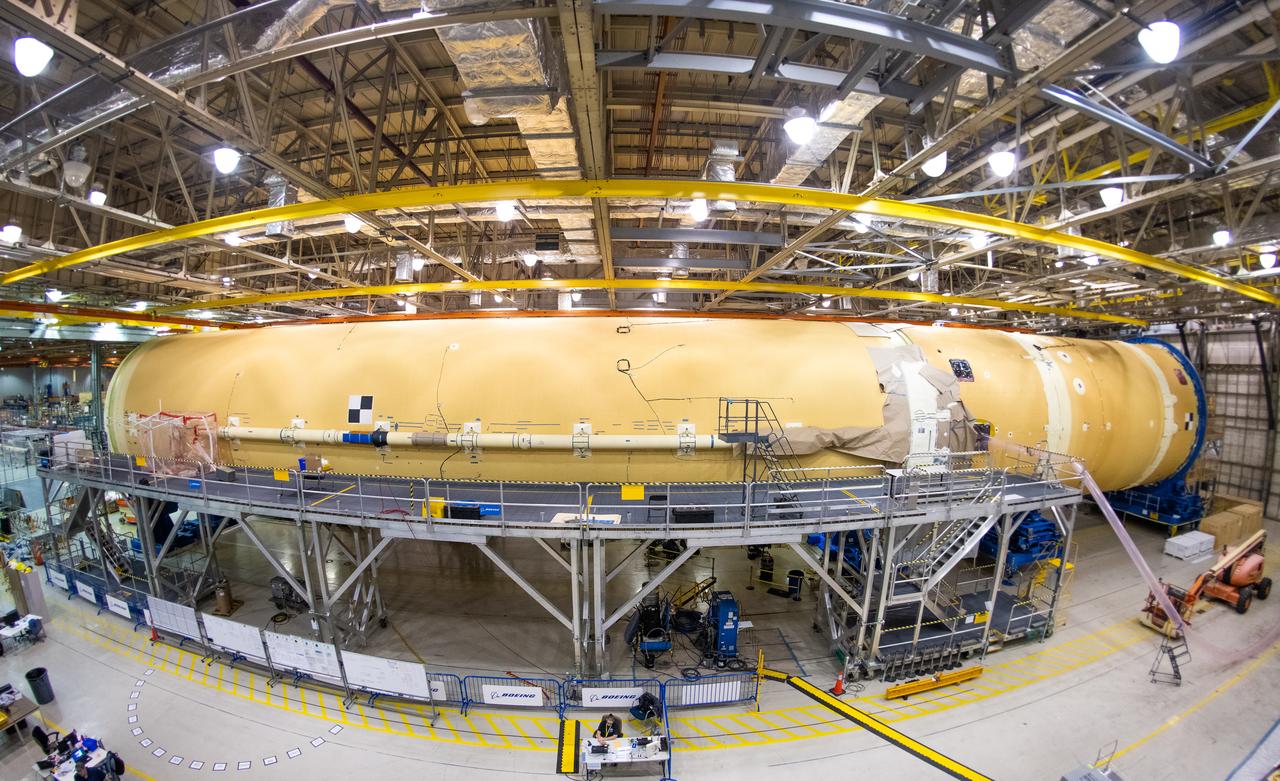
Technicians at NASA’s Michoud Assembly Facility in New Orleans completed the “forward join,” which connects structures to form the top part of NASA’s Space Launch System (SLS) rocket’s core stage. The first core stage will send Exploration Mission-1, the first integrated flight of SLS and NASA’s Orion spacecraft, out beyond the Moon. The forward join mated three structures: the forward skirt, liquid oxygen tank and intertank. This milestone marks the beginning of integration and assembly of the massive, 212-foot-tall SLS core stage, which will include the rocket’s four RS-25 rocket engines, propellant tanks and flight computers. Now, NASA and Boeing, the SLS prime contractor, will continue to integrate various systems inside the forward part of the core stage and prepare for structural joining of the liquid hydrogen tank and engine section to form the bottom of the stage. These two parts of the core stage will then be assembled to form the largest stage NASA has ever built.
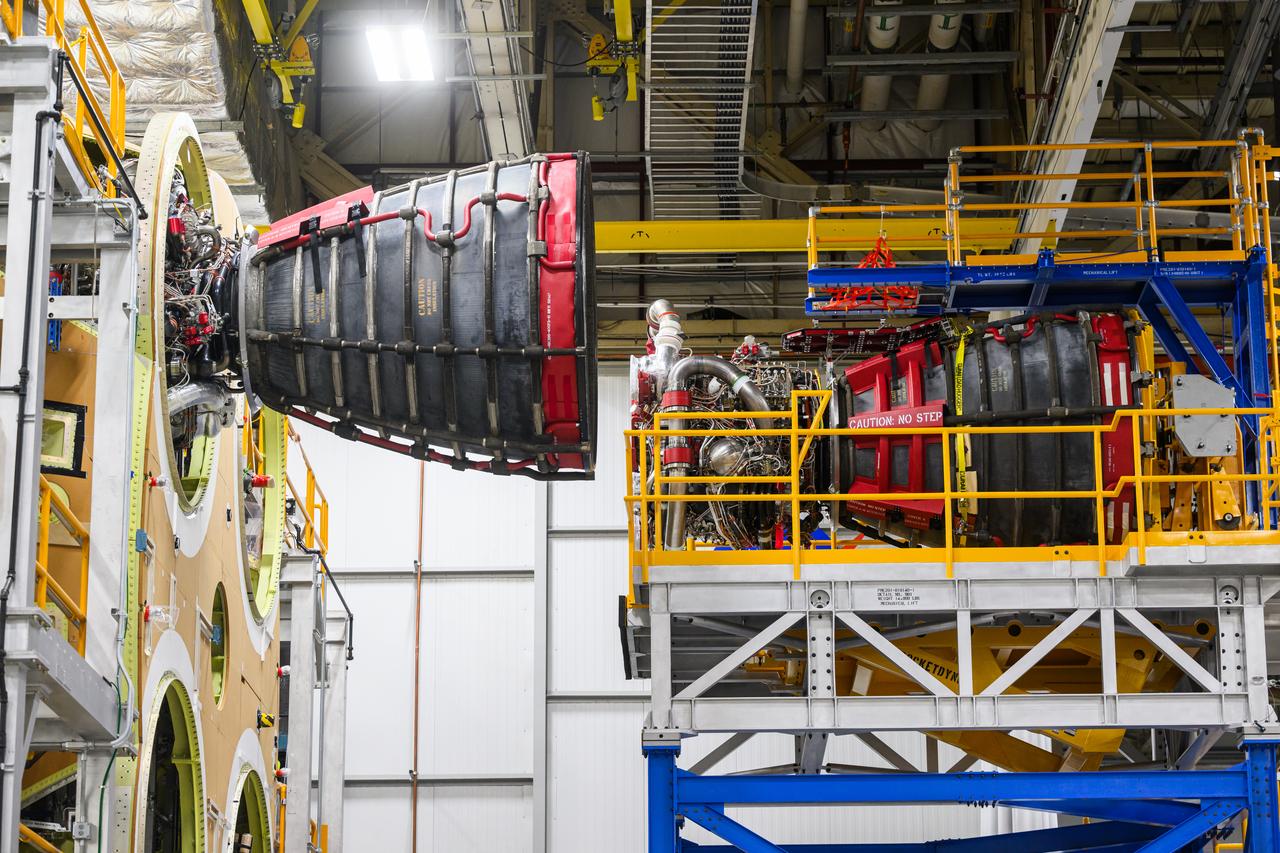
These photos and videos show how technicians at NASA’s Michoud Assembly Facility in New Orleans installed the second of four RS-25 engines onto the core stage for the agency’s SLS (Space Launch System) rocket that will help power NASA’s first crewed Artemis mission to the Moon. Crews added the second engine, with the serial number E2047 in position one, to the stage Sept. 15. The serial number for the engine installed Sept. 11 in position two on the core stage is E2059. Engineers consider the engines to be “soft” mated to the rocket stage. Following soft mate of all four engines, technicians with NASA, Aerojet Rocketdyne, an L3Harris Technologies company and the RS-25 engines lead contractor, along with Boeing, the core stage lead contractor, will fully secure the engines to the stage and integrate the propulsion and electrical systems within the structure. All four RS-25 engines are located at the base of the core stage within the engine section. NASA is working to land the first woman and first person of color on the Moon under Artemis. SLS is part of NASA’s backbone for deep space exploration, along with Orion and the Gateway in orbit around the Moon. SLS is the only rocket that can send Orion, astronauts, and supplies to the Moon in a single mission.

These photos show how technicians at NASA’s Michoud Assembly Facility in New Orleans installed the second of four RS-25 engines onto the core stage for the agency’s SLS (Space Launch System) rocket that will help power NASA’s first crewed Artemis mission to the Moon. Crews added the second engine, with the serial number E2047 in position one, to the stage Sept. 15. The serial number for the engine installed Sept. 11 in position two on the core stage is E2059. Engineers consider the engines to be “soft” mated to the rocket stage. Following soft mate of all four engines, technicians with NASA, Aerojet Rocketdyne, an L3Harris Technologies company and the RS-25 engines lead contractor, along with Boeing, the core stage lead contractor, will fully secure the engines to the stage and integrate the propulsion and electrical systems within the structure. All four RS-25 engines are located at the base of the core stage within the engine section. NASA is working to land the first woman and first person of color on the Moon under Artemis. SLS is part of NASA’s backbone for deep space exploration, along with Orion and the Gateway in orbit around the Moon. SLS is the only rocket that can send Orion, astronauts, and supplies to the Moon in a single mission.
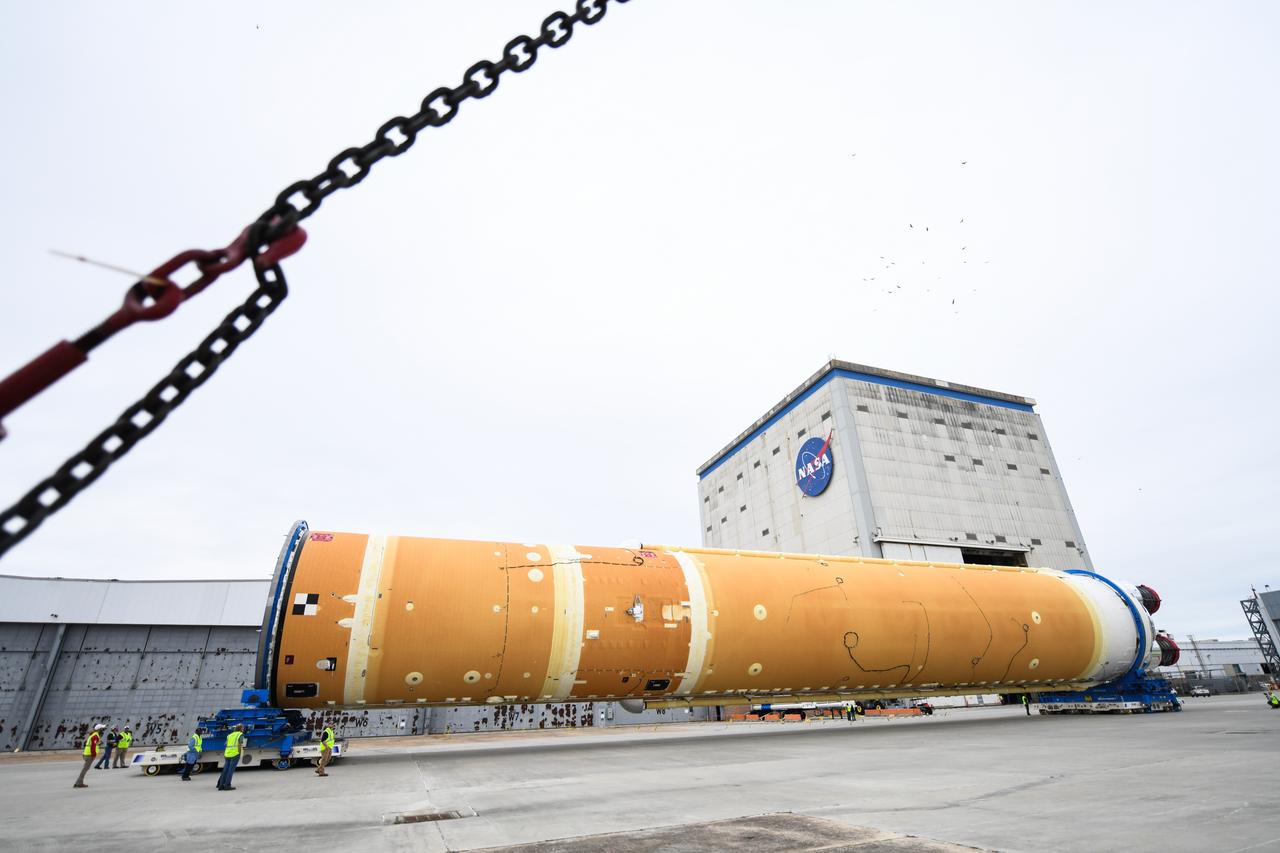
These images show how teams at NASA’s Michoud Assembly Facility in New Orleans moved the core stage, complete with all four RS-25 engines, for NASA’s Space Launch System (SLS) rocket to Building 110 for final shipping preparations on Jan. 1. The SLS core stage includes state-of-the-art avionics, propulsion systems and two colossal propellant tanks that collectively hold 733,000 gallons of liquid oxygen and liquid hydrogen to power its four RS-25 engines. The completed stage, which will provide more than 2 million pounds of thrust to help power the first Artemis mission to the Moon, will be shipped via the agency’s Pegasus barge from Michoud to NASA’s Stennis Space Center near Bay St. Louis, Mississippi, later this month. Once at Stennis, the Artemis rocket stage will be loaded into the B-2 Test Stand for the core stage Green Run test series. The comprehensive test campaign will progressively bring the entire core stage, including its avionics and engines, to life for the first time to verify the stage is fit for flight ahead of the launch of Artemis I.
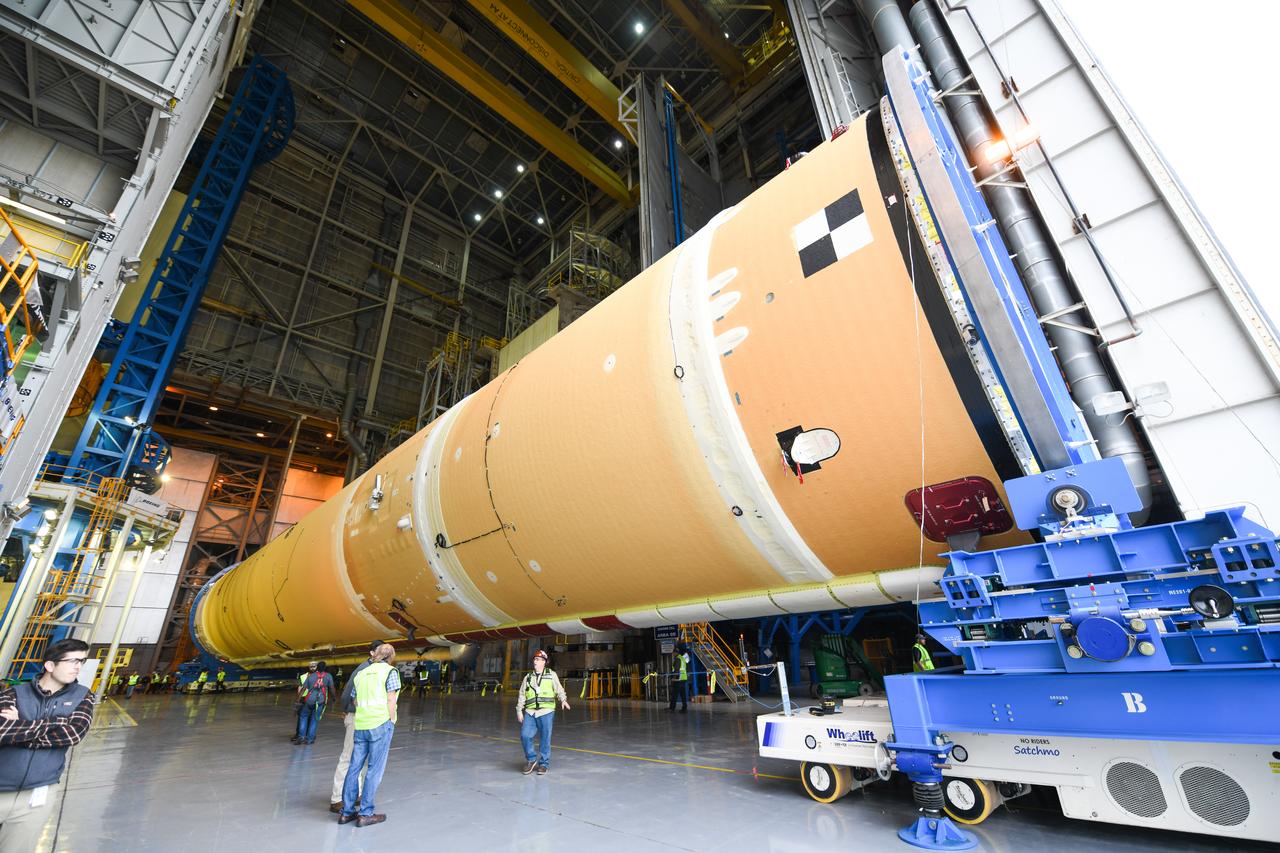
These images show how teams at NASA’s Michoud Assembly Facility in New Orleans moved the core stage, complete with all four RS-25 engines, for NASA’s Space Launch System (SLS) rocket to Building 110 for final shipping preparations on Jan. 1. The SLS core stage includes state-of-the-art avionics, propulsion systems and two colossal propellant tanks that collectively hold 733,000 gallons of liquid oxygen and liquid hydrogen to power its four RS-25 engines. The completed stage, which will provide more than 2 million pounds of thrust to help power the first Artemis mission to the Moon, will be shipped via the agency’s Pegasus barge from Michoud to NASA’s Stennis Space Center near Bay St. Louis, Mississippi, later this month. Once at Stennis, the Artemis rocket stage will be loaded into the B-2 Test Stand for the core stage Green Run test series. The comprehensive test campaign will progressively bring the entire core stage, including its avionics and engines, to life for the first time to verify the stage is fit for flight ahead of the launch of Artemis I.
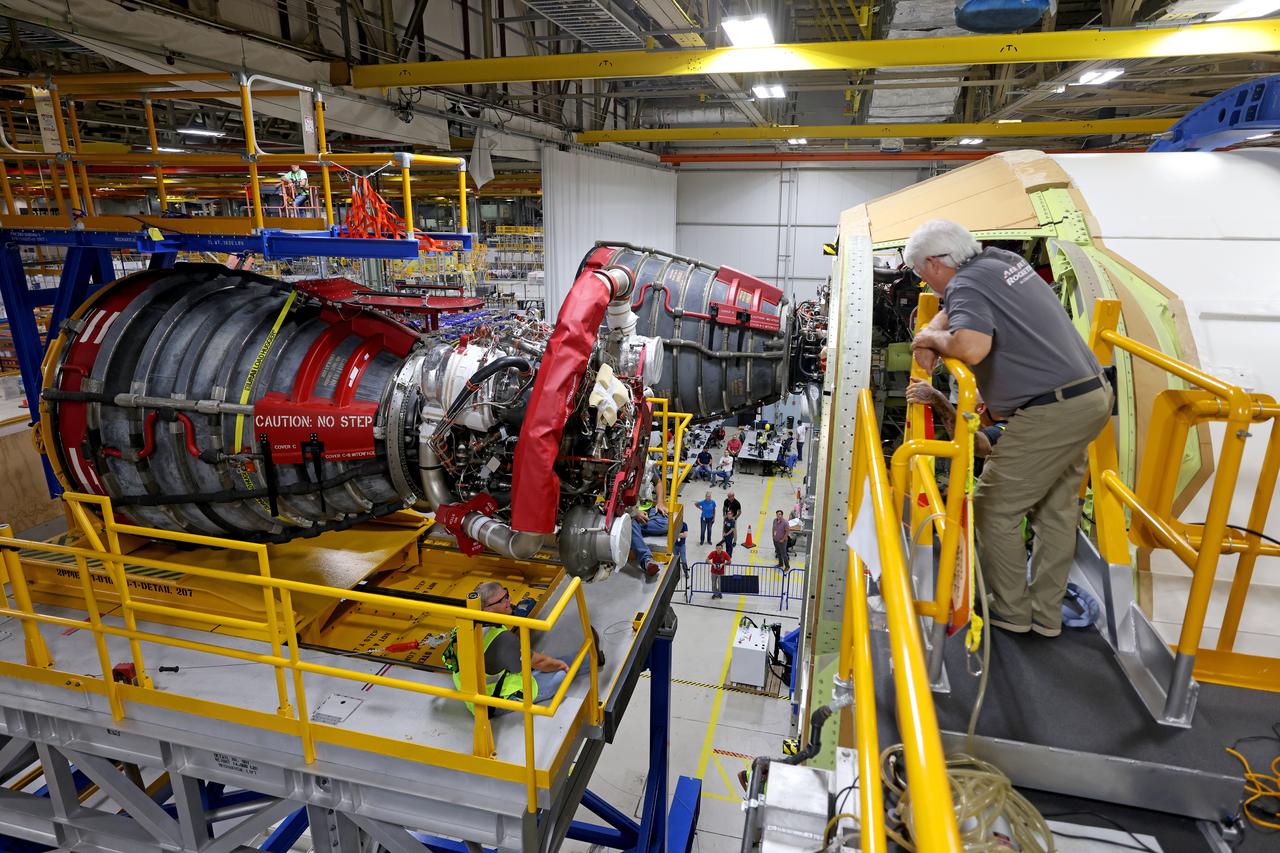
These photos and videos show how technicians at NASA’s Michoud Assembly Facility in New Orleans installed the second of four RS-25 engines onto the core stage for the agency’s SLS (Space Launch System) rocket that will help power NASA’s first crewed Artemis mission to the Moon. Crews added the second engine, with the serial number E2047 in position one, to the stage Sept. 15. The serial number for the engine installed Sept. 11 in position two on the core stage is E2059. Engineers consider the engines to be “soft” mated to the rocket stage. Following soft mate of all four engines, technicians with NASA, Aerojet Rocketdyne, an L3Harris Technologies company and the RS-25 engines lead contractor, along with Boeing, the core stage lead contractor, will fully secure the engines to the stage and integrate the propulsion and electrical systems within the structure. All four RS-25 engines are located at the base of the core stage within the engine section. NASA is working to land the first woman and first person of color on the Moon under Artemis. SLS is part of NASA’s backbone for deep space exploration, along with Orion and the Gateway in orbit around the Moon. SLS is the only rocket that can send Orion, astronauts, and supplies to the Moon in a single mission.
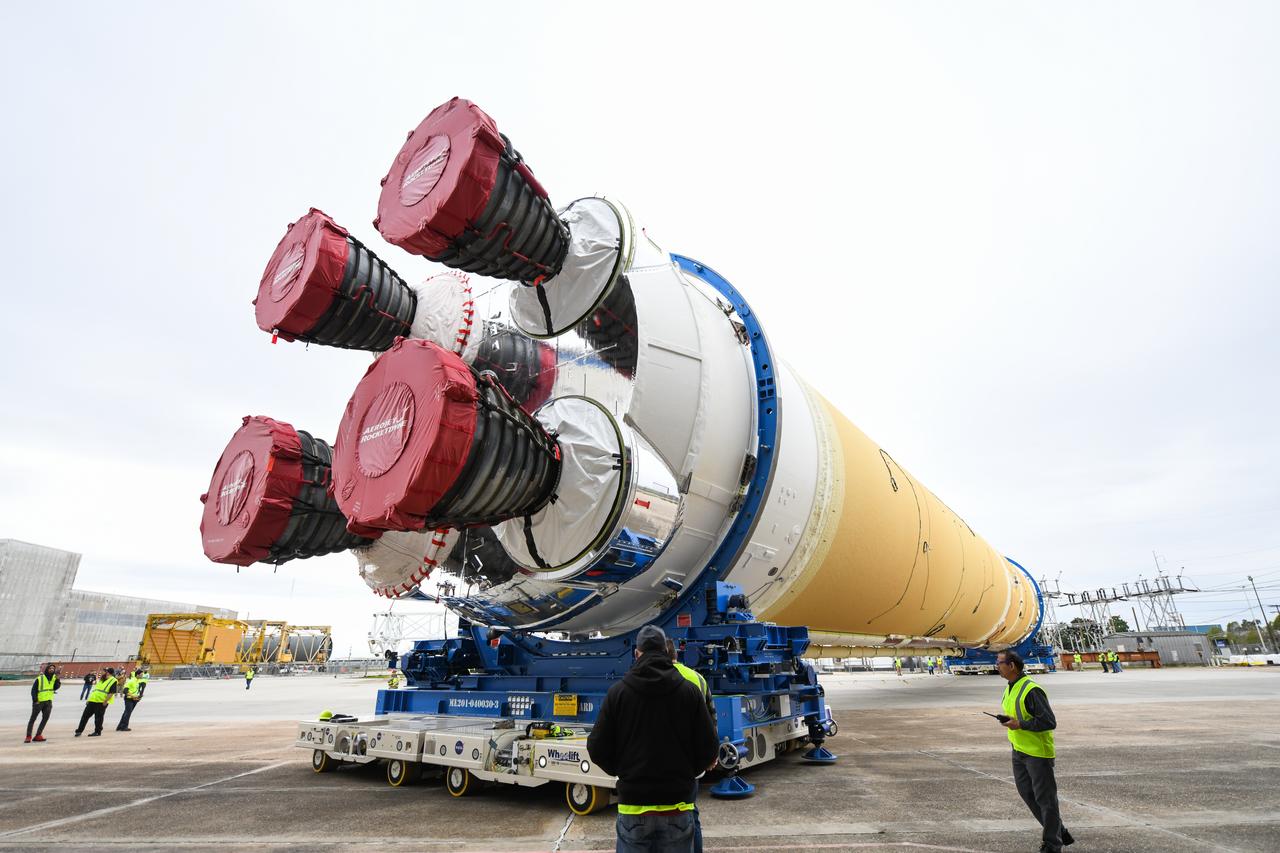
These images show how teams at NASA’s Michoud Assembly Facility in New Orleans moved the core stage, complete with all four RS-25 engines, for NASA’s Space Launch System (SLS) rocket to Building 110 for final shipping preparations on Jan. 1. The SLS core stage includes state-of-the-art avionics, propulsion systems and two colossal propellant tanks that collectively hold 733,000 gallons of liquid oxygen and liquid hydrogen to power its four RS-25 engines. The completed stage, which will provide more than 2 million pounds of thrust to help power the first Artemis mission to the Moon, will be shipped via the agency’s Pegasus barge from Michoud to NASA’s Stennis Space Center near Bay St. Louis, Mississippi, later this month. Once at Stennis, the Artemis rocket stage will be loaded into the B-2 Test Stand for the core stage Green Run test series. The comprehensive test campaign will progressively bring the entire core stage, including its avionics and engines, to life for the first time to verify the stage is fit for flight ahead of the launch of Artemis I.
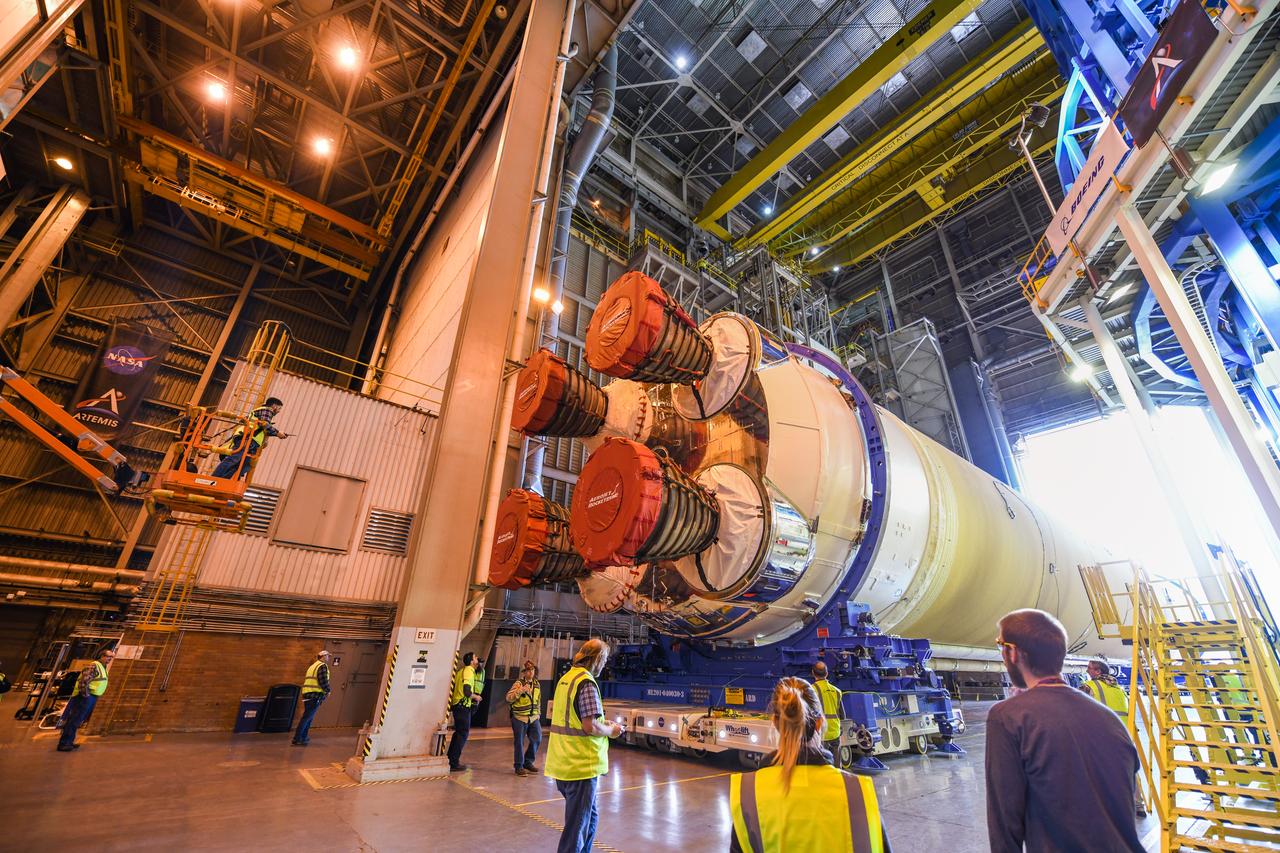
These images show how teams at NASA’s Michoud Assembly Facility in New Orleans moved the core stage, complete with all four RS-25 engines, for NASA’s Space Launch System (SLS) rocket to Building 110 for final shipping preparations on Jan. 1. The SLS core stage includes state-of-the-art avionics, propulsion systems and two colossal propellant tanks that collectively hold 733,000 gallons of liquid oxygen and liquid hydrogen to power its four RS-25 engines. The completed stage, which will provide more than 2 million pounds of thrust to help power the first Artemis mission to the Moon, will be shipped via the agency’s Pegasus barge from Michoud to NASA’s Stennis Space Center near Bay St. Louis, Mississippi, later this month. Once at Stennis, the Artemis rocket stage will be loaded into the B-2 Test Stand for the core stage Green Run test series. The comprehensive test campaign will progressively bring the entire core stage, including its avionics and engines, to life for the first time to verify the stage is fit for flight ahead of the launch of Artemis I.
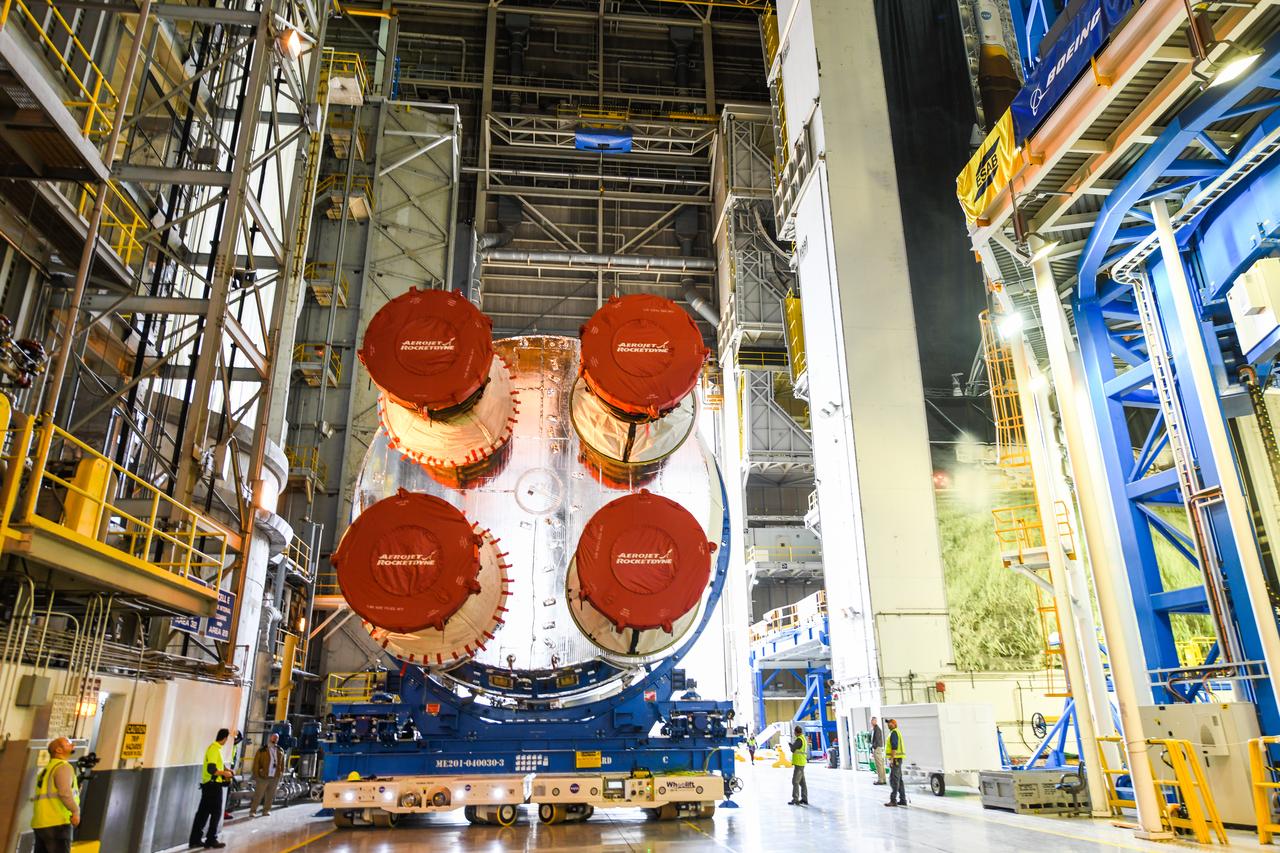
These images show how teams at NASA’s Michoud Assembly Facility in New Orleans moved the core stage, complete with all four RS-25 engines, for NASA’s Space Launch System (SLS) rocket to Building 110 for final shipping preparations on Jan. 1. The SLS core stage includes state-of-the-art avionics, propulsion systems and two colossal propellant tanks that collectively hold 733,000 gallons of liquid oxygen and liquid hydrogen to power its four RS-25 engines. The completed stage, which will provide more than 2 million pounds of thrust to help power the first Artemis mission to the Moon, will be shipped via the agency’s Pegasus barge from Michoud to NASA’s Stennis Space Center near Bay St. Louis, Mississippi, later this month. Once at Stennis, the Artemis rocket stage will be loaded into the B-2 Test Stand for the core stage Green Run test series. The comprehensive test campaign will progressively bring the entire core stage, including its avionics and engines, to life for the first time to verify the stage is fit for flight ahead of the launch of Artemis I.
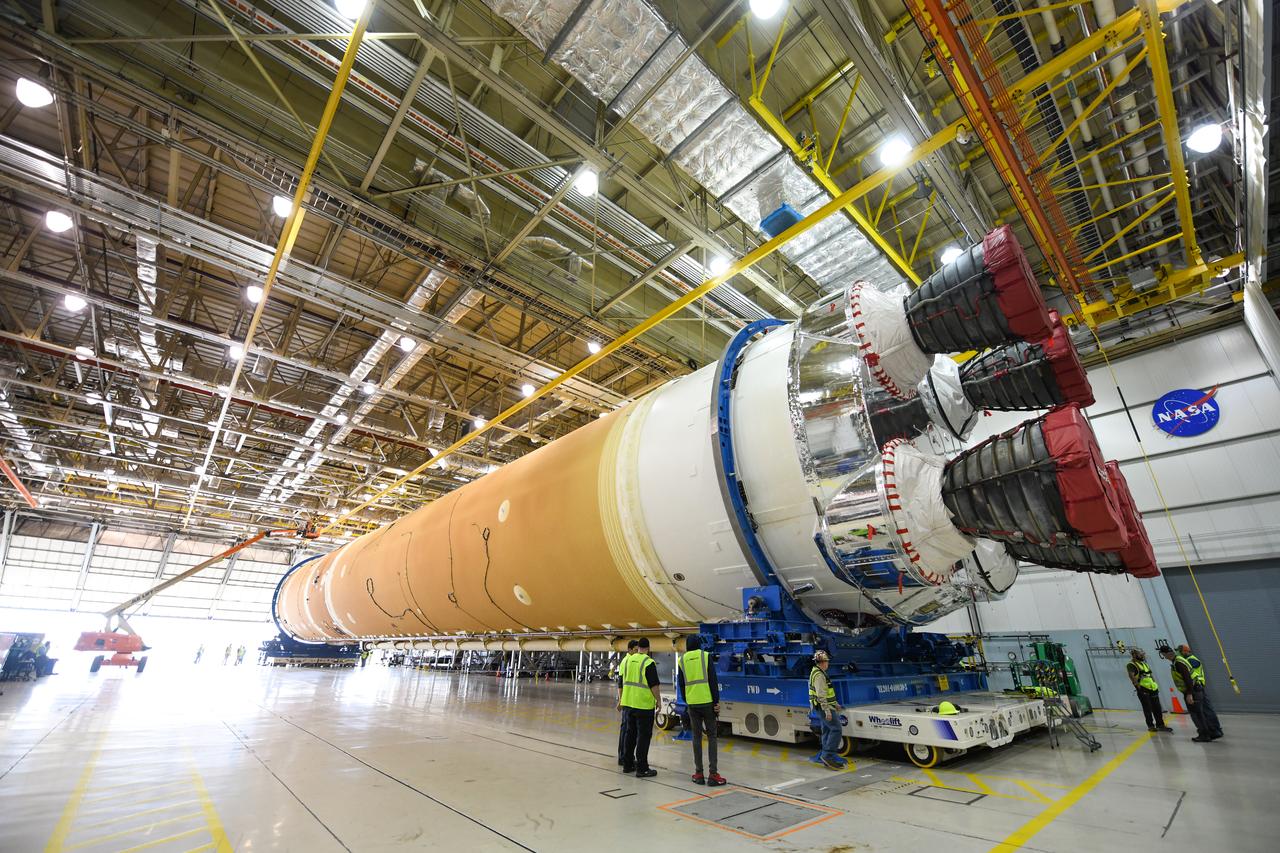
These images show how teams at NASA’s Michoud Assembly Facility in New Orleans moved the core stage, complete with all four RS-25 engines, for NASA’s Space Launch System (SLS) rocket to Building 110 for final shipping preparations on Jan. 1. The SLS core stage includes state-of-the-art avionics, propulsion systems and two colossal propellant tanks that collectively hold 733,000 gallons of liquid oxygen and liquid hydrogen to power its four RS-25 engines. The completed stage, which will provide more than 2 million pounds of thrust to help power the first Artemis mission to the Moon, will be shipped via the agency’s Pegasus barge from Michoud to NASA’s Stennis Space Center near Bay St. Louis, Mississippi, later this month. Once at Stennis, the Artemis rocket stage will be loaded into the B-2 Test Stand for the core stage Green Run test series. The comprehensive test campaign will progressively bring the entire core stage, including its avionics and engines, to life for the first time to verify the stage is fit for flight ahead of the launch of Artemis I.
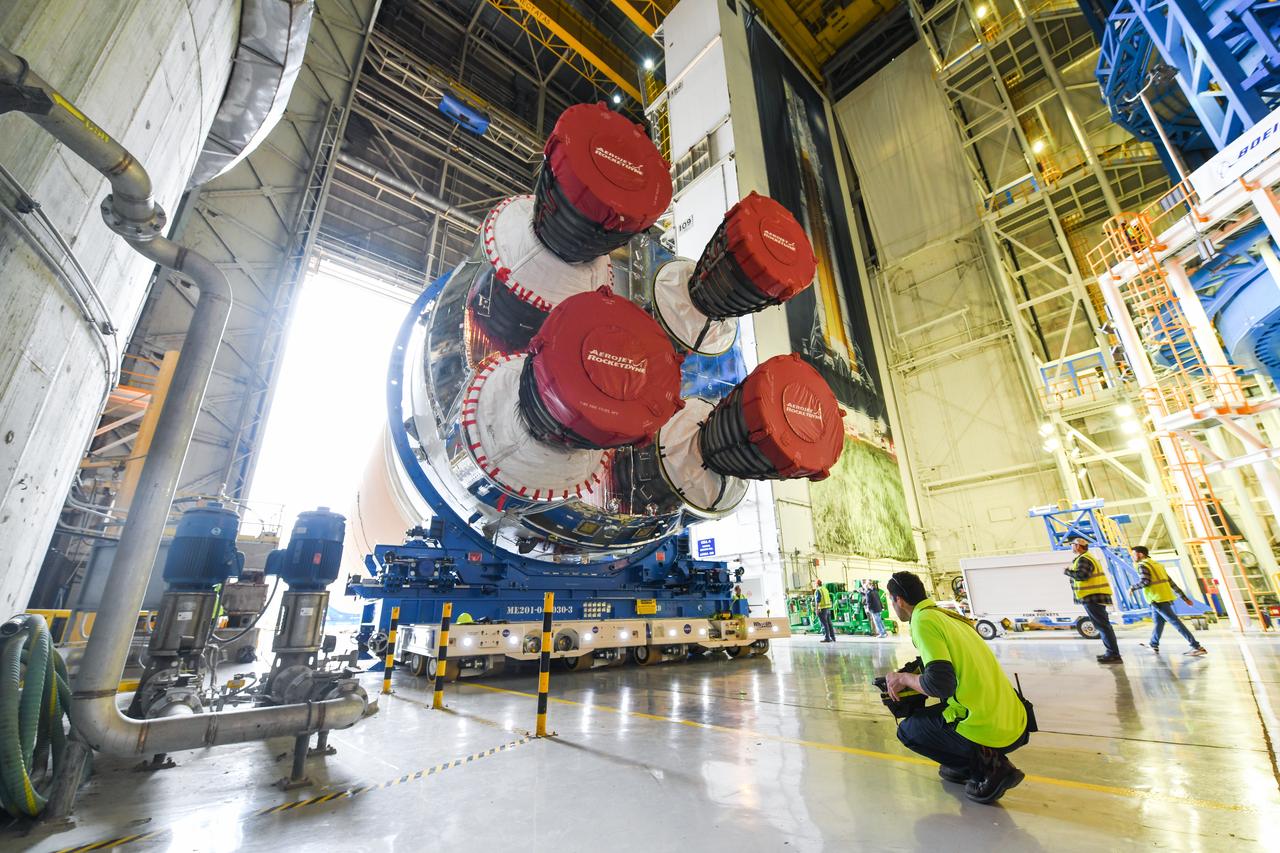
These images show how teams at NASA’s Michoud Assembly Facility in New Orleans moved the core stage, complete with all four RS-25 engines, for NASA’s Space Launch System (SLS) rocket to Building 110 for final shipping preparations on Jan. 1. The SLS core stage includes state-of-the-art avionics, propulsion systems and two colossal propellant tanks that collectively hold 733,000 gallons of liquid oxygen and liquid hydrogen to power its four RS-25 engines. The completed stage, which will provide more than 2 million pounds of thrust to help power the first Artemis mission to the Moon, will be shipped via the agency’s Pegasus barge from Michoud to NASA’s Stennis Space Center near Bay St. Louis, Mississippi, later this month. Once at Stennis, the Artemis rocket stage will be loaded into the B-2 Test Stand for the core stage Green Run test series. The comprehensive test campaign will progressively bring the entire core stage, including its avionics and engines, to life for the first time to verify the stage is fit for flight ahead of the launch of Artemis I.
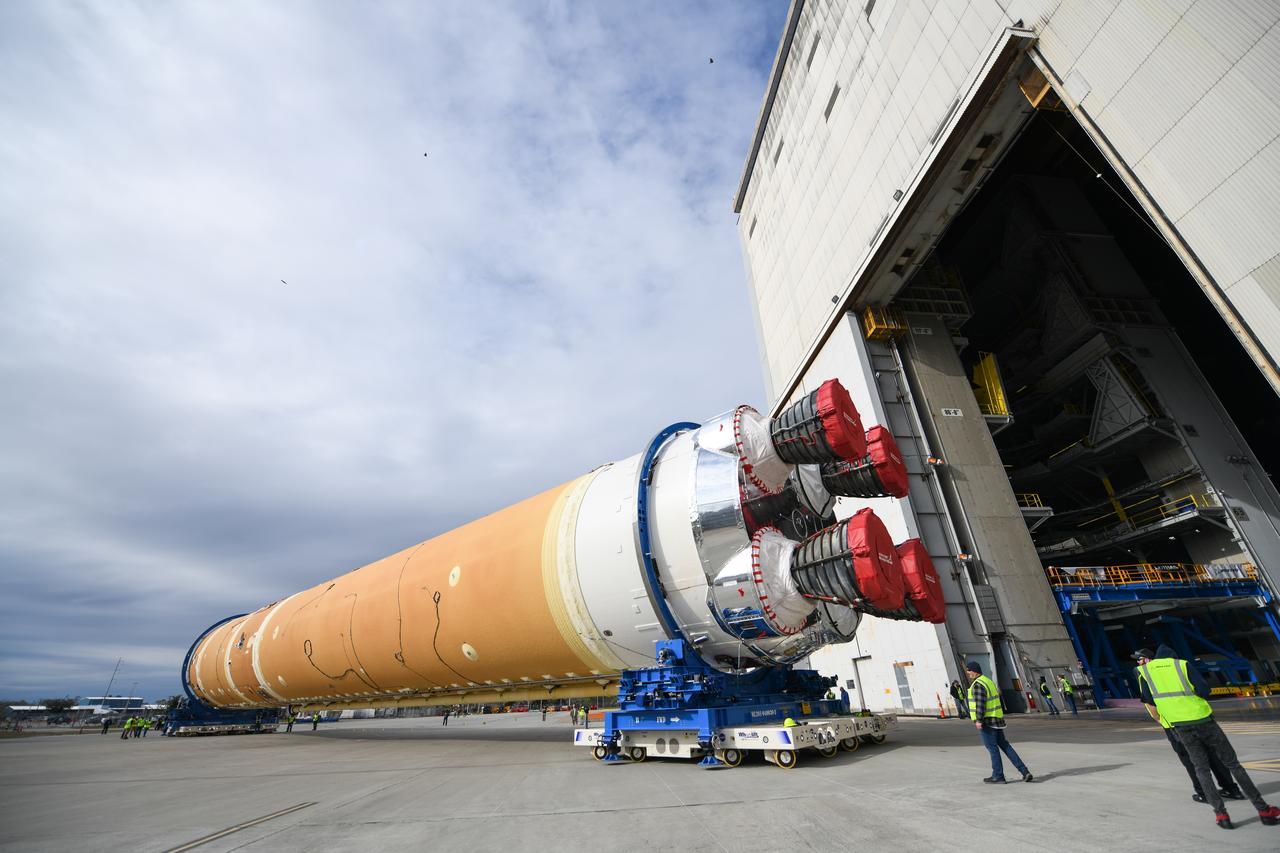
These images show how teams at NASA’s Michoud Assembly Facility in New Orleans moved the core stage, complete with all four RS-25 engines, for NASA’s Space Launch System (SLS) rocket to Building 110 for final shipping preparations on Jan. 1. The SLS core stage includes state-of-the-art avionics, propulsion systems and two colossal propellant tanks that collectively hold 733,000 gallons of liquid oxygen and liquid hydrogen to power its four RS-25 engines. The completed stage, which will provide more than 2 million pounds of thrust to help power the first Artemis mission to the Moon, will be shipped via the agency’s Pegasus barge from Michoud to NASA’s Stennis Space Center near Bay St. Louis, Mississippi, later this month. Once at Stennis, the Artemis rocket stage will be loaded into the B-2 Test Stand for the core stage Green Run test series. The comprehensive test campaign will progressively bring the entire core stage, including its avionics and engines, to life for the first time to verify the stage is fit for flight ahead of the launch of Artemis I.
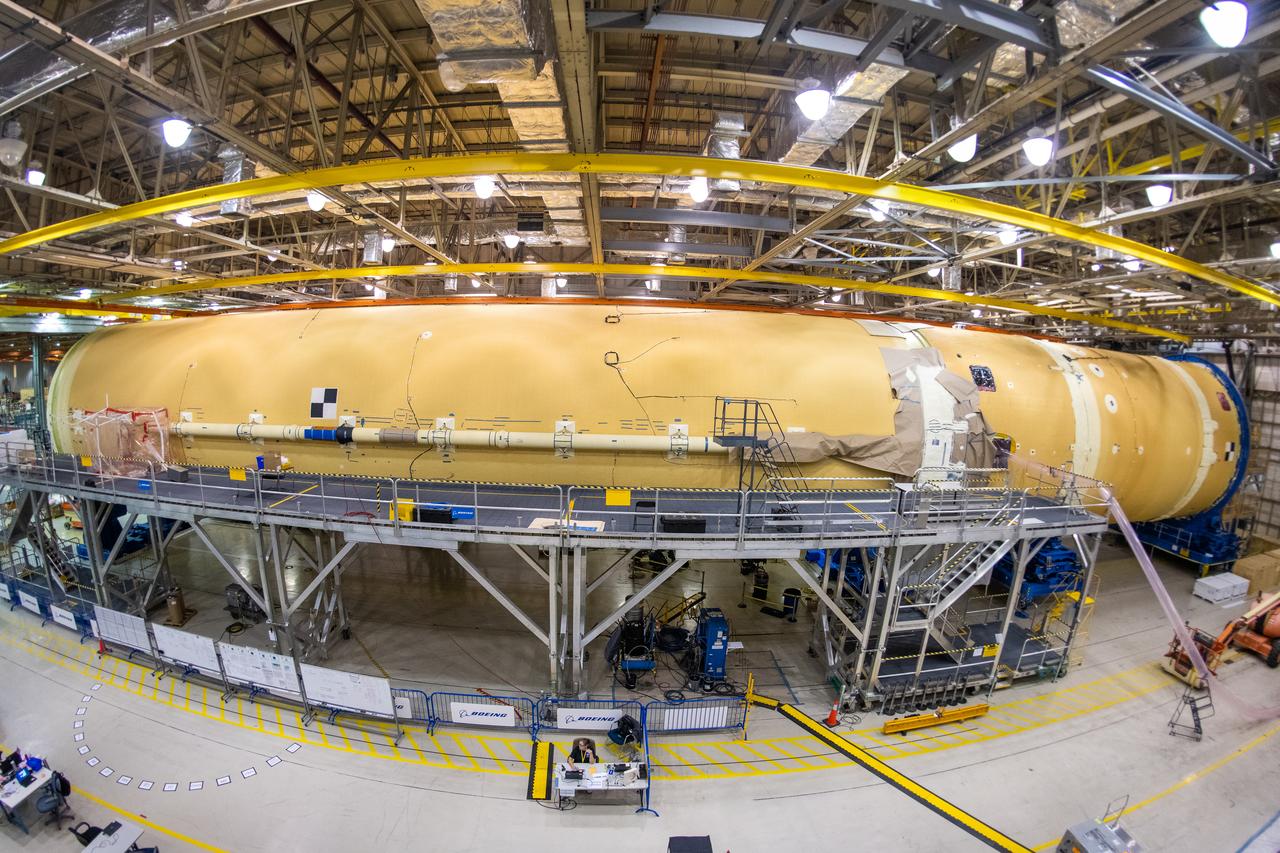
Technicians at NASA’s Michoud Assembly Facility in New Orleans completed the “forward join,” which connects structures to form the top part of NASA’s Space Launch System (SLS) rocket’s core stage. The first core stage will send Exploration Mission-1, the first integrated flight of SLS and NASA’s Orion spacecraft, out beyond the Moon. The forward join mated three structures: the forward skirt, liquid oxygen tank and intertank. This milestone marks the beginning of integration and assembly of the massive, 212-foot-tall SLS core stage, which will include the rocket’s four RS-25 rocket engines, propellant tanks and flight computers. Now, NASA and Boeing, the SLS prime contractor, will continue to integrate various systems inside the forward part of the core stage and prepare for structural joining of the liquid hydrogen tank and engine section to form the bottom of the stage. These two parts of the core stage will then be assembled to form the largest stage NASA has ever built.
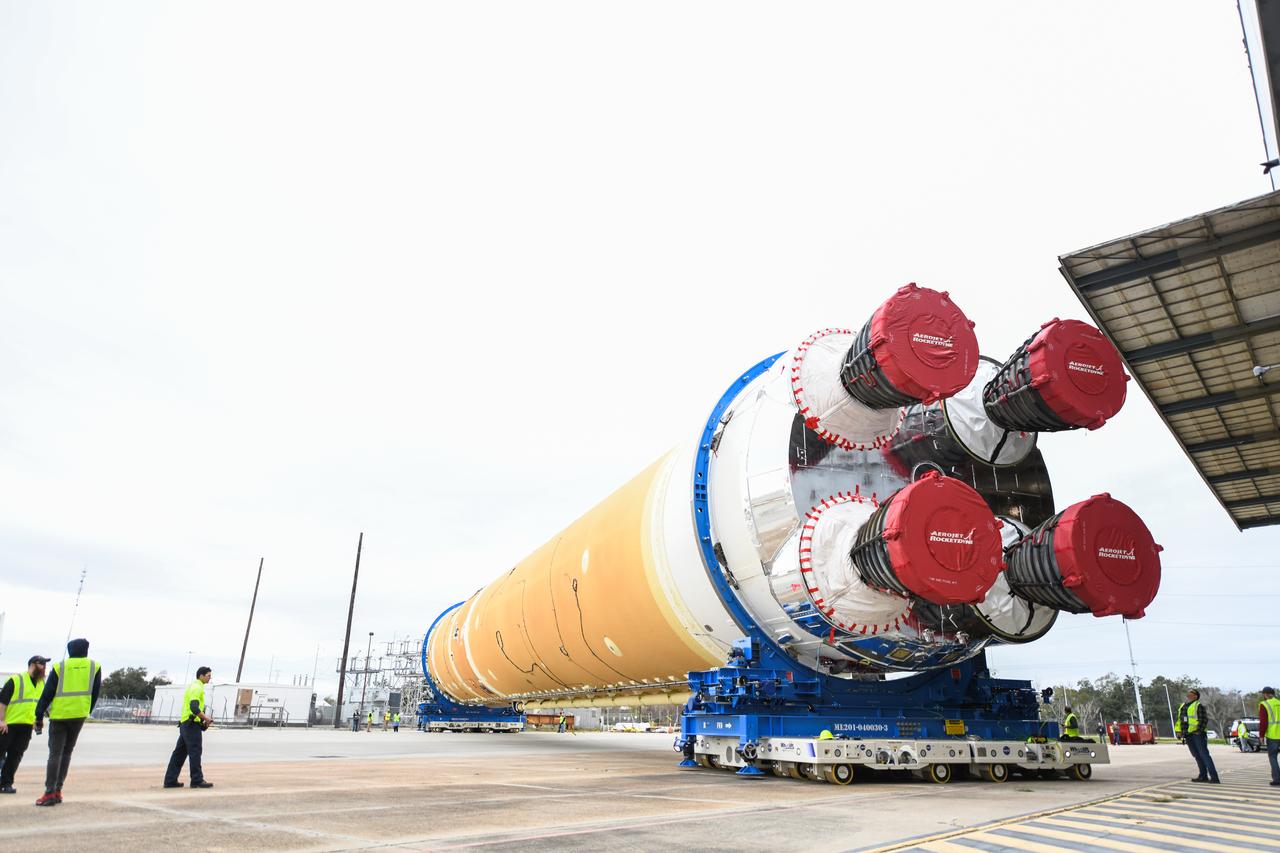
These images show how teams at NASA’s Michoud Assembly Facility in New Orleans moved the core stage, complete with all four RS-25 engines, for NASA’s Space Launch System (SLS) rocket to Building 110 for final shipping preparations on Jan. 1. The SLS core stage includes state-of-the-art avionics, propulsion systems and two colossal propellant tanks that collectively hold 733,000 gallons of liquid oxygen and liquid hydrogen to power its four RS-25 engines. The completed stage, which will provide more than 2 million pounds of thrust to help power the first Artemis mission to the Moon, will be shipped via the agency’s Pegasus barge from Michoud to NASA’s Stennis Space Center near Bay St. Louis, Mississippi, later this month. Once at Stennis, the Artemis rocket stage will be loaded into the B-2 Test Stand for the core stage Green Run test series. The comprehensive test campaign will progressively bring the entire core stage, including its avionics and engines, to life for the first time to verify the stage is fit for flight ahead of the launch of Artemis I.
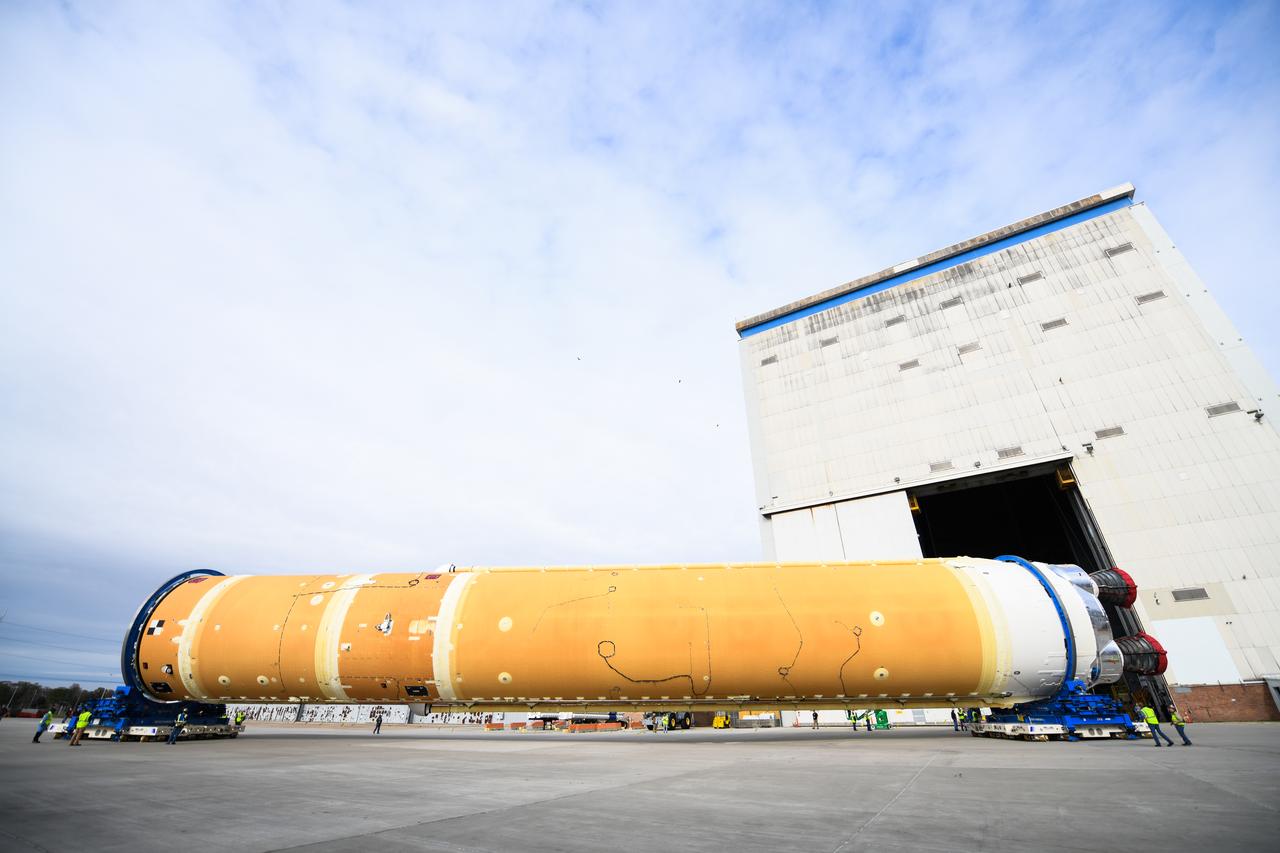
These images show how teams at NASA’s Michoud Assembly Facility in New Orleans moved the core stage, complete with all four RS-25 engines, for NASA’s Space Launch System (SLS) rocket to Building 110 for final shipping preparations on Jan. 1. The SLS core stage includes state-of-the-art avionics, propulsion systems and two colossal propellant tanks that collectively hold 733,000 gallons of liquid oxygen and liquid hydrogen to power its four RS-25 engines. The completed stage, which will provide more than 2 million pounds of thrust to help power the first Artemis mission to the Moon, will be shipped via the agency’s Pegasus barge from Michoud to NASA’s Stennis Space Center near Bay St. Louis, Mississippi, later this month. Once at Stennis, the Artemis rocket stage will be loaded into the B-2 Test Stand for the core stage Green Run test series. The comprehensive test campaign will progressively bring the entire core stage, including its avionics and engines, to life for the first time to verify the stage is fit for flight ahead of the launch of Artemis I.
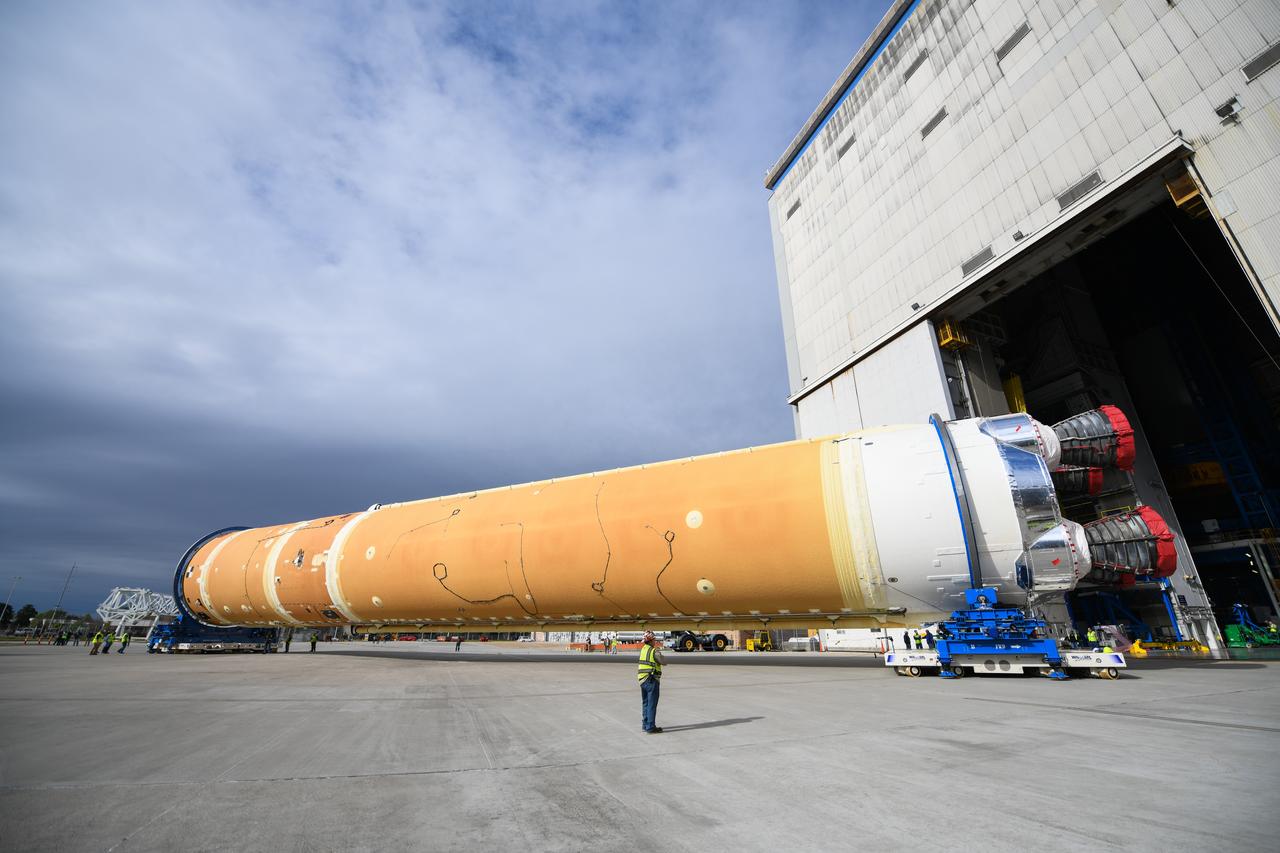
These images show how teams at NASA’s Michoud Assembly Facility in New Orleans moved the core stage, complete with all four RS-25 engines, for NASA’s Space Launch System (SLS) rocket to Building 110 for final shipping preparations on Jan. 1. The SLS core stage includes state-of-the-art avionics, propulsion systems and two colossal propellant tanks that collectively hold 733,000 gallons of liquid oxygen and liquid hydrogen to power its four RS-25 engines. The completed stage, which will provide more than 2 million pounds of thrust to help power the first Artemis mission to the Moon, will be shipped via the agency’s Pegasus barge from Michoud to NASA’s Stennis Space Center near Bay St. Louis, Mississippi, later this month. Once at Stennis, the Artemis rocket stage will be loaded into the B-2 Test Stand for the core stage Green Run test series. The comprehensive test campaign will progressively bring the entire core stage, including its avionics and engines, to life for the first time to verify the stage is fit for flight ahead of the launch of Artemis I.
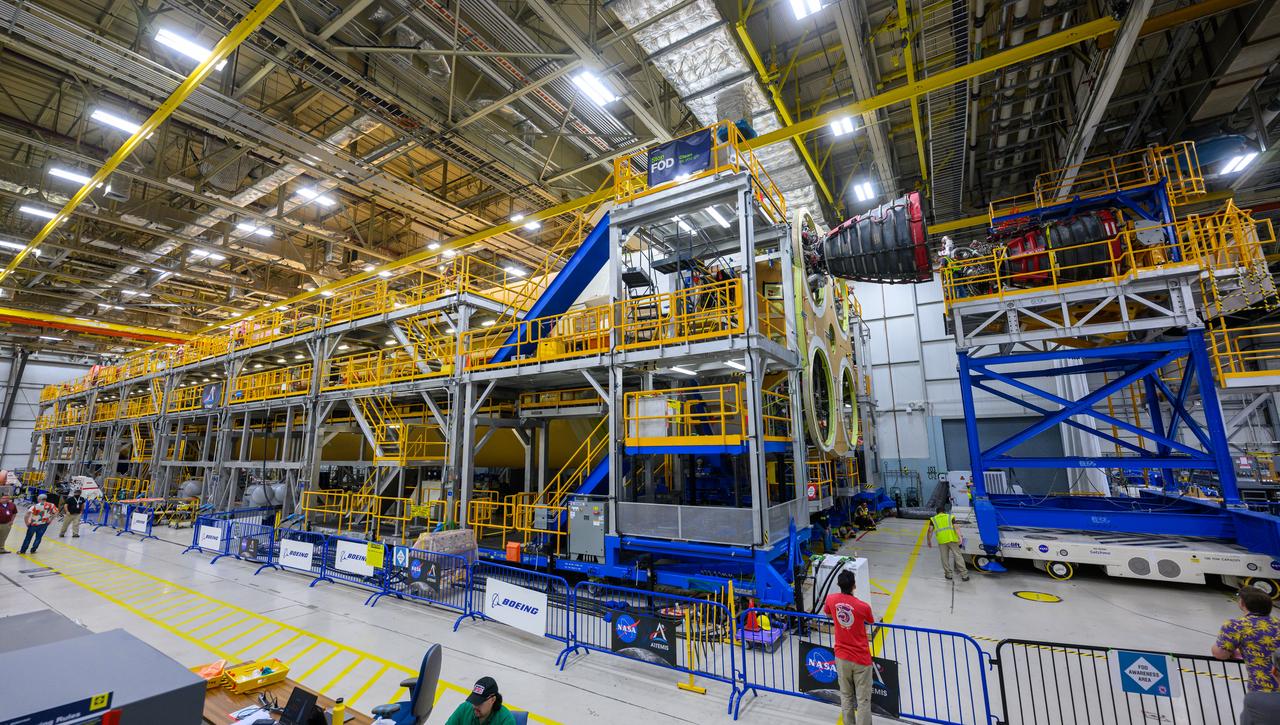
These photos and videos show how technicians at NASA’s Michoud Assembly Facility in New Orleans installed the second of four RS-25 engines onto the core stage for the agency’s SLS (Space Launch System) rocket that will help power NASA’s first crewed Artemis mission to the Moon. Crews added the second engine, with the serial number E2047 in position one, to the stage Sept. 15. The serial number for the engine installed Sept. 11 in position two on the core stage is E2059. Engineers consider the engines to be “soft” mated to the rocket stage. Following soft mate of all four engines, technicians with NASA, Aerojet Rocketdyne, an L3Harris Technologies company and the RS-25 engines lead contractor, along with Boeing, the core stage lead contractor, will fully secure the engines to the stage and integrate the propulsion and electrical systems within the structure. All four RS-25 engines are located at the base of the core stage within the engine section. NASA is working to land the first woman and first person of color on the Moon under Artemis. SLS is part of NASA’s backbone for deep space exploration, along with Orion and the Gateway in orbit around the Moon. SLS is the only rocket that can send Orion, astronauts, and supplies to the Moon in a single mission.
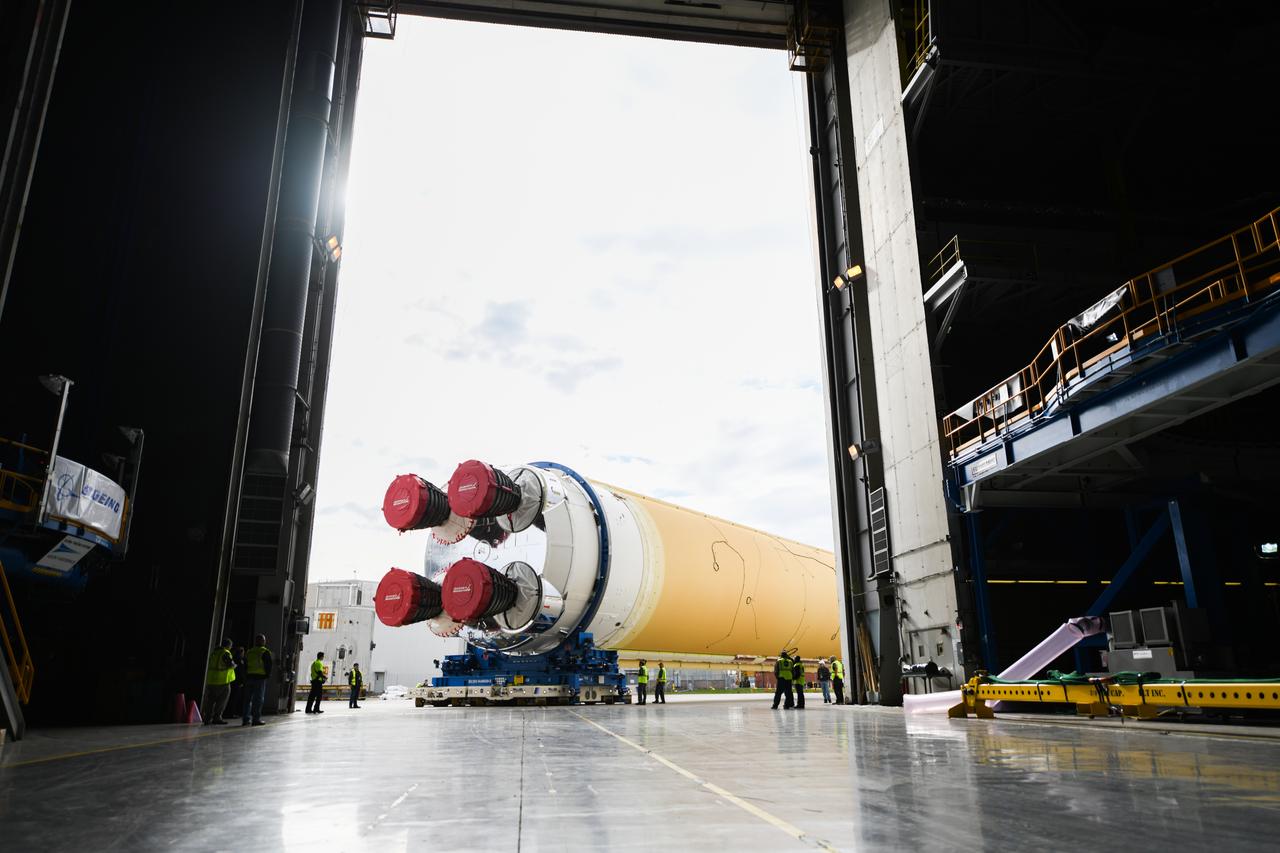
These images show how teams at NASA’s Michoud Assembly Facility in New Orleans moved the core stage, complete with all four RS-25 engines, for NASA’s Space Launch System (SLS) rocket to Building 110 for final shipping preparations on Jan. 1. The SLS core stage includes state-of-the-art avionics, propulsion systems and two colossal propellant tanks that collectively hold 733,000 gallons of liquid oxygen and liquid hydrogen to power its four RS-25 engines. The completed stage, which will provide more than 2 million pounds of thrust to help power the first Artemis mission to the Moon, will be shipped via the agency’s Pegasus barge from Michoud to NASA’s Stennis Space Center near Bay St. Louis, Mississippi, later this month. Once at Stennis, the Artemis rocket stage will be loaded into the B-2 Test Stand for the core stage Green Run test series. The comprehensive test campaign will progressively bring the entire core stage, including its avionics and engines, to life for the first time to verify the stage is fit for flight ahead of the launch of Artemis I.
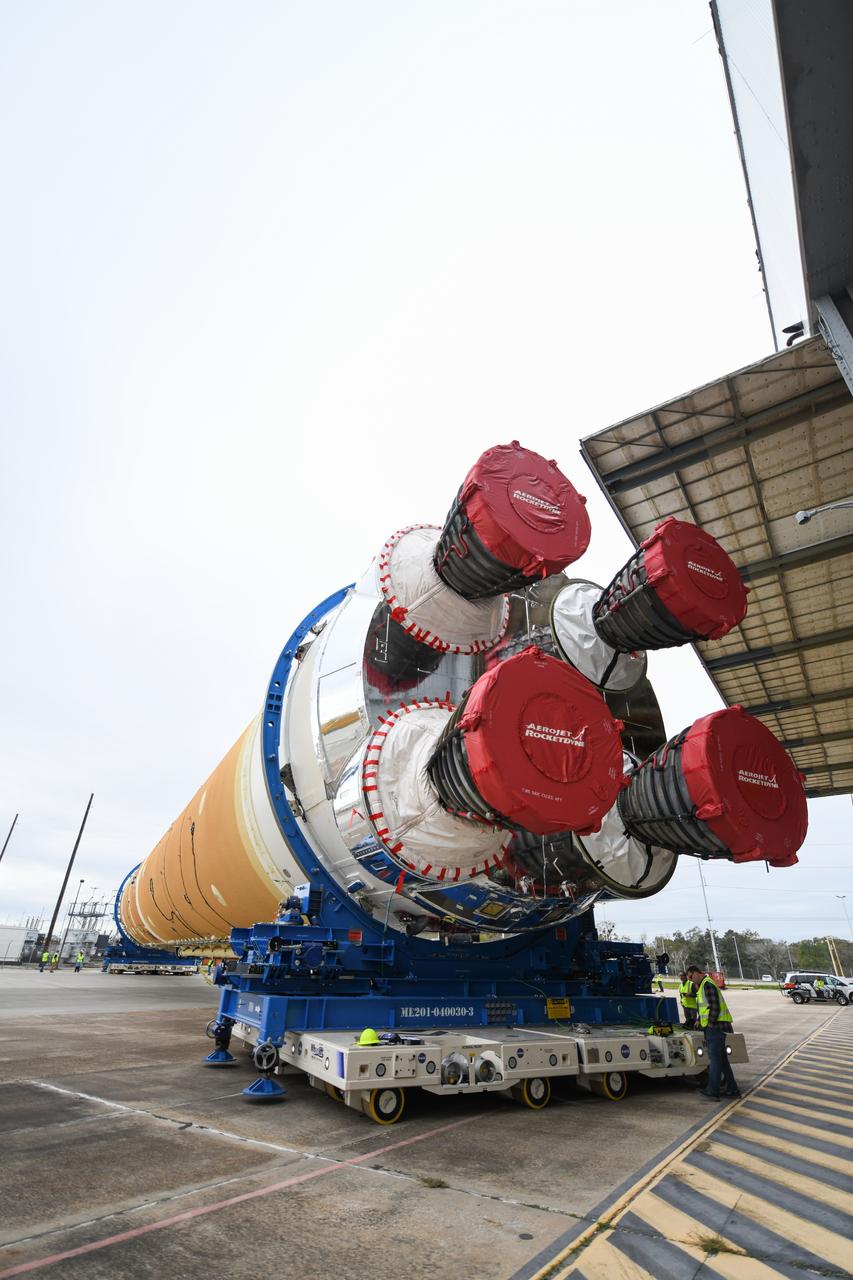
These images show how teams at NASA’s Michoud Assembly Facility in New Orleans moved the core stage, complete with all four RS-25 engines, for NASA’s Space Launch System (SLS) rocket to Building 110 for final shipping preparations on Jan. 1. The SLS core stage includes state-of-the-art avionics, propulsion systems and two colossal propellant tanks that collectively hold 733,000 gallons of liquid oxygen and liquid hydrogen to power its four RS-25 engines. The completed stage, which will provide more than 2 million pounds of thrust to help power the first Artemis mission to the Moon, will be shipped via the agency’s Pegasus barge from Michoud to NASA’s Stennis Space Center near Bay St. Louis, Mississippi, later this month. Once at Stennis, the Artemis rocket stage will be loaded into the B-2 Test Stand for the core stage Green Run test series. The comprehensive test campaign will progressively bring the entire core stage, including its avionics and engines, to life for the first time to verify the stage is fit for flight ahead of the launch of Artemis I.
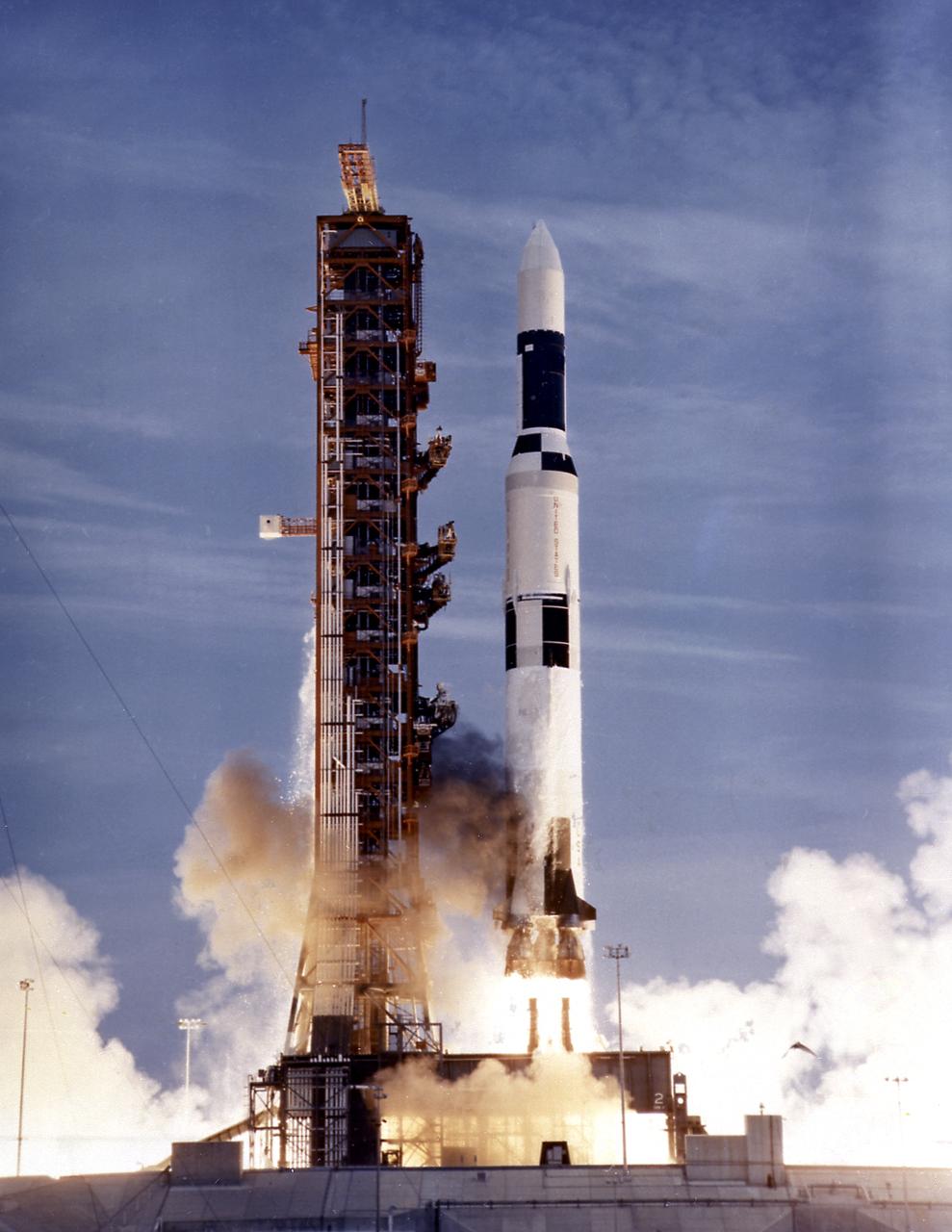
This photograph shows the launch of the SA-513, a modified unmarned two-stage Saturn V vehicle for the Skylab-1 mission, which placed the Skylab cluster into the Earth orbit on May 14, 1973. The initial step in the Skylab mission was the launch of a two-stage Saturn V booster, consisting of the S-IC first stage and the S-II second stage, from Launch Complex 39A at the Kennedy Space Center in Florida. Its payload was the unmanned Skylab, which consisted of the Orbital Workshop, the Airlock Module, the Multiple Docking Adapter, the Apollo Telescope Mount and an Instrument Unit.
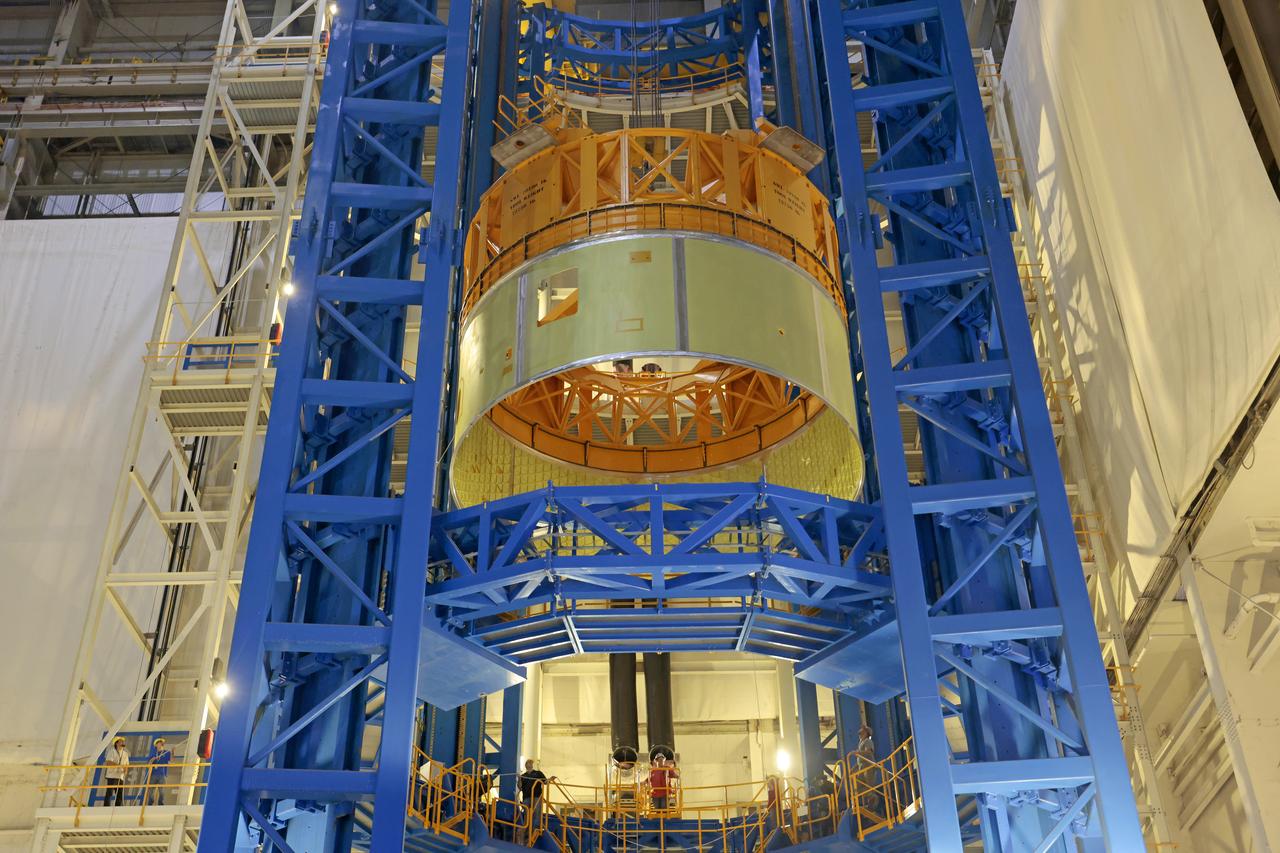
This image shows teams at NASA’s Michoud Assembly Facility in New Orleans lifting a forward skirt out of its vertical assembly center on Jan. 31, 2025. The forward skirt, which will be used on the core stage for the agency’s SLS (Space Launch System) rocket for its Artemis IV mission, houses flight computers, cameras, and avionics. While inside the vertical assembly center, technicians attached the forward skirt’s forward and aft rings, which serve as attachments points to the launch vehicle stage adapter and the liquid oxygen tank, respectively. The forward skirt is one of five major elements that make up the 212-foot-tall rocket stage. The core stage, along with its four RS-25 engines, produce more than two million pounds of thrust to help launch NASA’s Orion spacecraft, astronauts, and supplies beyond Earth’s orbit and to the lunar surface for Artemis. Image credit: NASA/Michael DeMocker
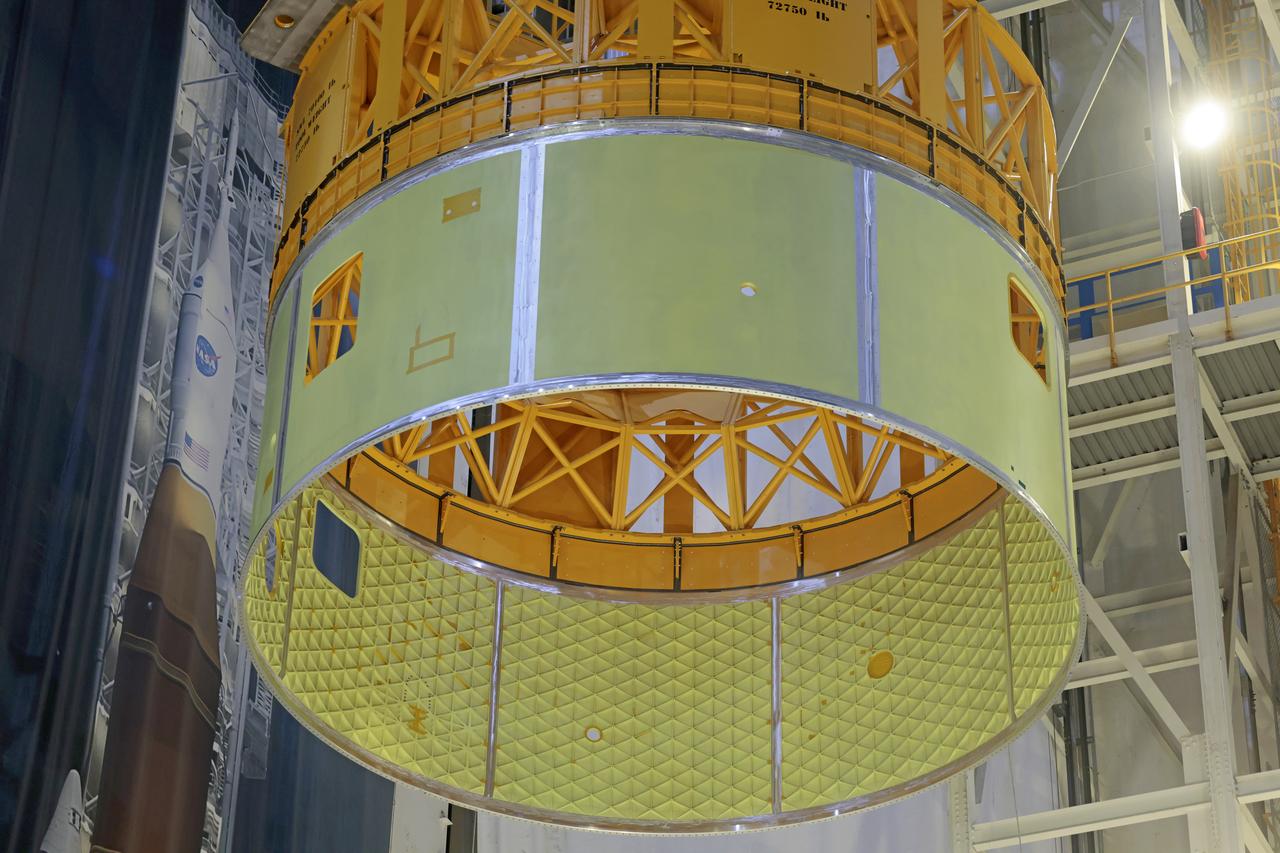
This image shows teams at NASA’s Michoud Assembly Facility in New Orleans lifting a forward skirt out of its vertical assembly center on Jan. 31, 2025. The forward skirt, which will be used on the core stage for the agency’s SLS (Space Launch System) rocket for its Artemis IV mission, houses flight computers, cameras, and avionics. While inside the vertical assembly center, technicians attached the forward skirt’s forward and aft rings, which serve as attachments points to the launch vehicle stage adapter and the liquid oxygen tank, respectively. The forward skirt is one of five major elements that make up the 212-foot-tall rocket stage. The core stage, along with its four RS-25 engines, produce more than two million pounds of thrust to help launch NASA’s Orion spacecraft, astronauts, and supplies beyond Earth’s orbit and to the lunar surface for Artemis. Image credit: NASA/Michael DeMocker

This image shows teams at NASA’s Michoud Assembly Facility in New Orleans lifting a forward skirt out of its vertical assembly center on Jan. 31, 2025. The forward skirt, which will be used on the core stage for the agency’s SLS (Space Launch System) rocket for its Artemis IV mission, houses flight computers, cameras, and avionics. While inside the vertical assembly center, technicians attached the forward skirt’s forward and aft rings, which serve as attachments points to the launch vehicle stage adapter and the liquid oxygen tank, respectively. The forward skirt is one of five major elements that make up the 212-foot-tall rocket stage. The core stage, along with its four RS-25 engines, produce more than two million pounds of thrust to help launch NASA’s Orion spacecraft, astronauts, and supplies beyond Earth’s orbit and to the lunar surface for Artemis. Image credit: NASA/Michael DeMocker
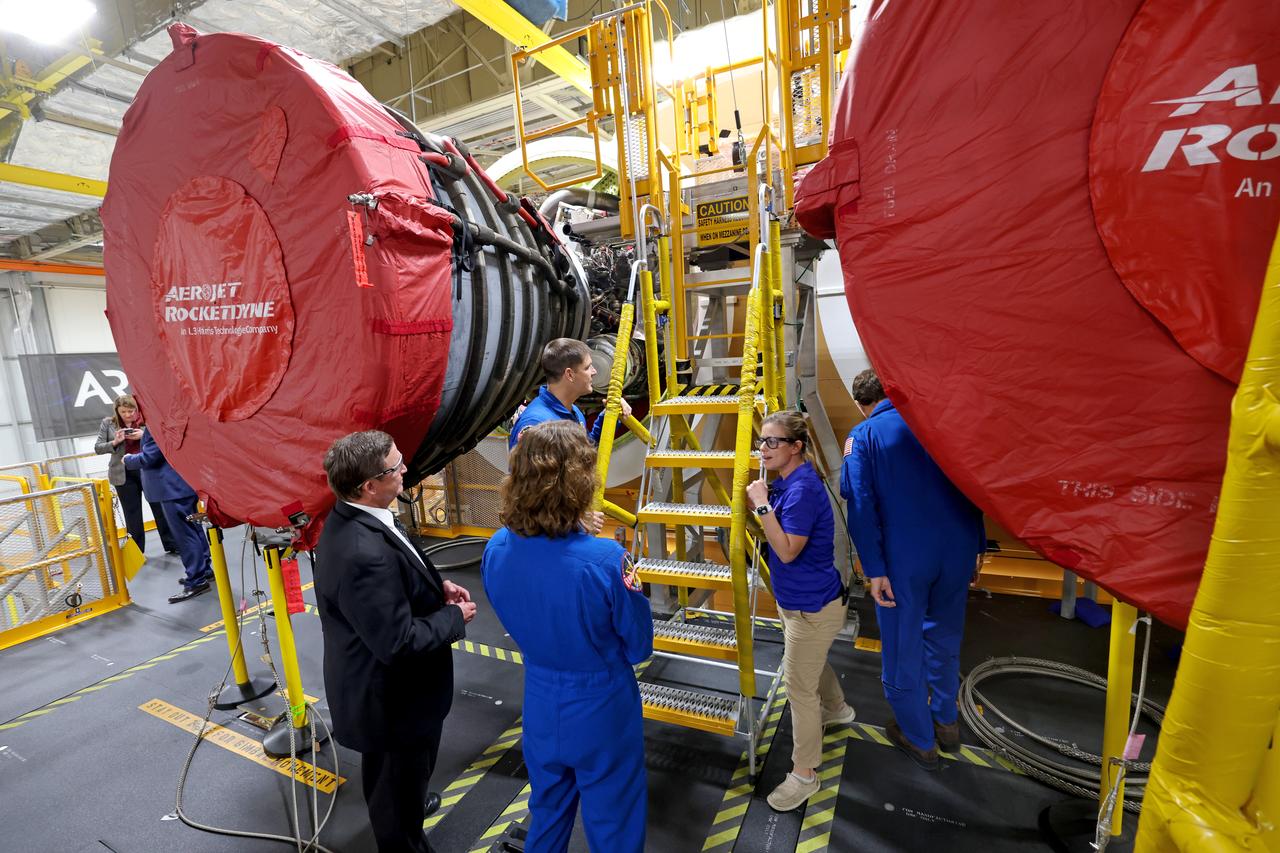
Artemis II NASA astronauts Reid Wiseman and Christina Koch of NASA and CSA (Canadian Space Agency) astronaut Jeremy Hansen view the core stage for the SLS (Space Launch System) rocket at the agency’s Michoud Assembly Facility in New Orleans on Nov. 16. The three astronauts, along with NASA’s Victor Glover, will launch atop the rocket stage to venture around the Moon on Artemis II, the first crewed flight for Artemis. The SLS core stage, towering at 212 feet, is the backbone of the Moon rocket and includes two massive propellant tanks that collectively hold 733,000 gallons of propellant to help power the stage’s four RS-25 engines. NASA is working to land the first woman and first person of color on the Moon under Artemis. SLS is part of NASA’s backbone for deep space exploration, along with Orion and the Gateway in orbit around the Moon. SLS is the only rocket that can send Orion, astronauts, and supplies to the Moon in a single mission.
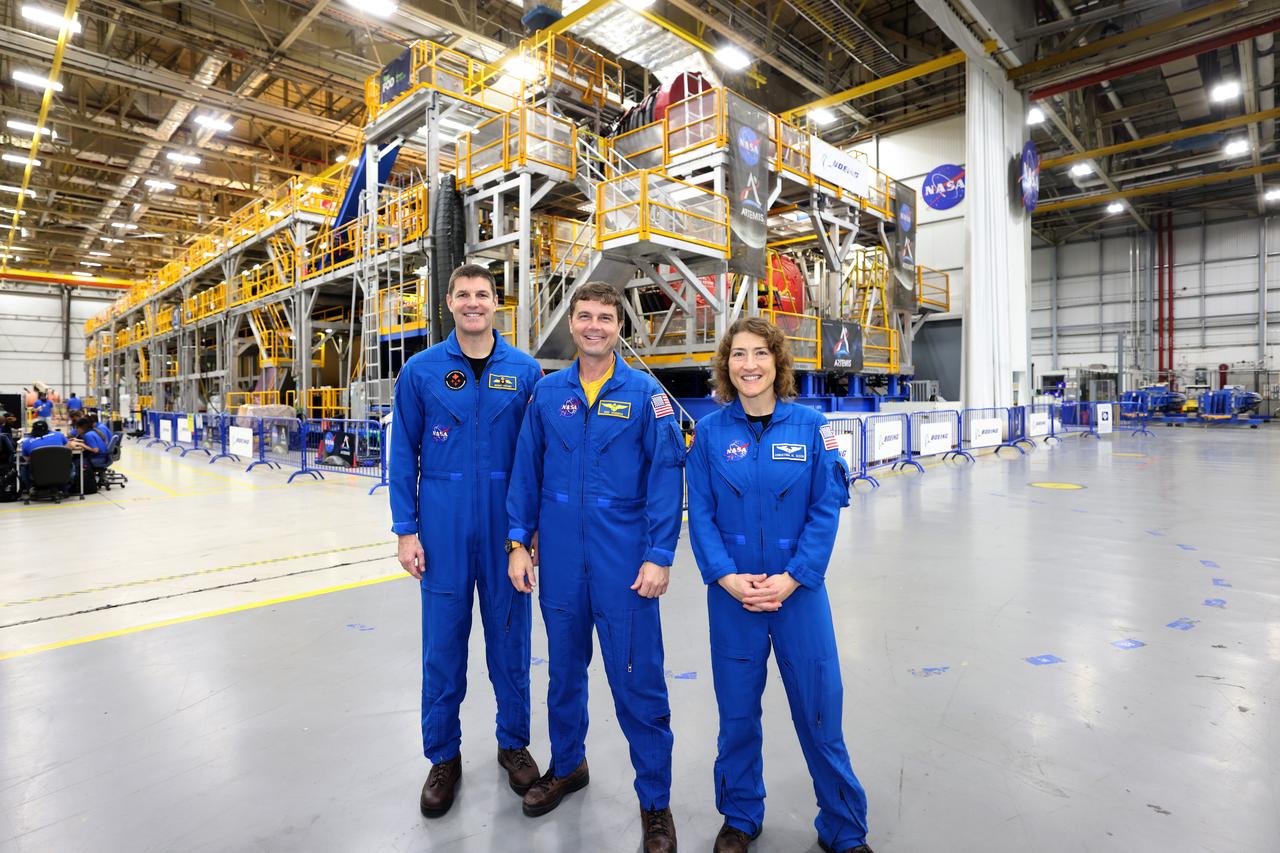
Artemis II NASA astronauts Reid Wiseman and Christina Koch of NASA and CSA (Canadian Space Agency) astronaut Jeremy Hansen view the core stage for the SLS (Space Launch System) rocket at the agency’s Michoud Assembly Facility in New Orleans on Nov. 16. The three astronauts, along with NASA’s Victor Glover, will launch atop the rocket stage to venture around the Moon on Artemis II, the first crewed flight for Artemis. The SLS core stage, towering at 212 feet, is the backbone of the Moon rocket and includes two massive propellant tanks that collectively hold 733,000 gallons of propellant to help power the stage’s four RS-25 engines. NASA is working to land the first woman and first person of color on the Moon under Artemis. SLS is part of NASA’s backbone for deep space exploration, along with Orion and the Gateway in orbit around the Moon. SLS is the only rocket that can send Orion, astronauts, and supplies to the Moon in a single mission.

Artemis II NASA astronauts Reid Wiseman and Christina Koch of NASA and CSA (Canadian Space Agency) astronaut Jeremy Hansen view the core stage for the SLS (Space Launch System) rocket at the agency’s Michoud Assembly Facility in New Orleans on Nov. 16. The three astronauts, along with NASA’s Victor Glover, will launch atop the rocket stage to venture around the Moon on Artemis II, the first crewed flight for Artemis. The SLS core stage, towering at 212 feet, is the backbone of the Moon rocket and includes two massive propellant tanks that collectively hold 733,000 gallons of propellant to help power the stage’s four RS-25 engines. NASA is working to land the first woman and first person of color on the Moon under Artemis. SLS is part of NASA’s backbone for deep space exploration, along with Orion and the Gateway in orbit around the Moon. SLS is the only rocket that can send Orion, astronauts, and supplies to the Moon in a single mission.

Artemis II NASA astronauts Reid Wiseman and Christina Koch of NASA and CSA (Canadian Space Agency) astronaut Jeremy Hansen view the core stage for the SLS (Space Launch System) rocket at the agency’s Michoud Assembly Facility in New Orleans on Nov. 16. The three astronauts, along with NASA’s Victor Glover, will launch atop the rocket stage to venture around the Moon on Artemis II, the first crewed flight for Artemis. The SLS core stage, towering at 212 feet, is the backbone of the Moon rocket and includes two massive propellant tanks that collectively hold 733,000 gallons of propellant to help power the stage’s four RS-25 engines. NASA is working to land the first woman and first person of color on the Moon under Artemis. SLS is part of NASA’s backbone for deep space exploration, along with Orion and the Gateway in orbit around the Moon. SLS is the only rocket that can send Orion, astronauts, and supplies to the Moon in a single mission.
Technicians at NASA’s Michoud Assembly Facility in New Orleans rotated the engine section for NASA’s Space Launch System rocket from a vertical to horizontal position to prepare it for joining to the rest of the rocket’s core stage on Sept. 13. The engine section, which comprises the lowest portion of the 212-foot-tall stage, is the last major component to be horizontally integrated to the core stage. Michoud crews completed assembly on the flight hardware that will be used for Artemis I, the first lunar mission of SLS and NASA’s Orion spacecraft, on Aug. 29. The core stage’s two liquid propellant tanks and four RS-25 engines will produce more than 2 million pounds of thrust to send the SLS rocket and Orion on the Artemis lunar missions. The engine section houses the four RS-25 engines and includes vital systems for mounting, controlling and delivering fuel form the propellant tanks to the rocket’s engines.

Artemis II NASA astronauts Reid Wiseman and Christina Koch of NASA and CSA (Canadian Space Agency) astronaut Jeremy Hansen view the core stage for the SLS (Space Launch System) rocket at the agency’s Michoud Assembly Facility in New Orleans on Nov. 16. The three astronauts, along with NASA’s Victor Glover, will launch atop the rocket stage to venture around the Moon on Artemis II, the first crewed flight for Artemis. The SLS core stage, towering at 212 feet, is the backbone of the Moon rocket and includes two massive propellant tanks that collectively hold 733,000 gallons of propellant to help power the stage’s four RS-25 engines. NASA is working to land the first woman and first person of color on the Moon under Artemis. SLS is part of NASA’s backbone for deep space exploration, along with Orion and the Gateway in orbit around the Moon. SLS is the only rocket that can send Orion, astronauts, and supplies to the Moon in a single mission.
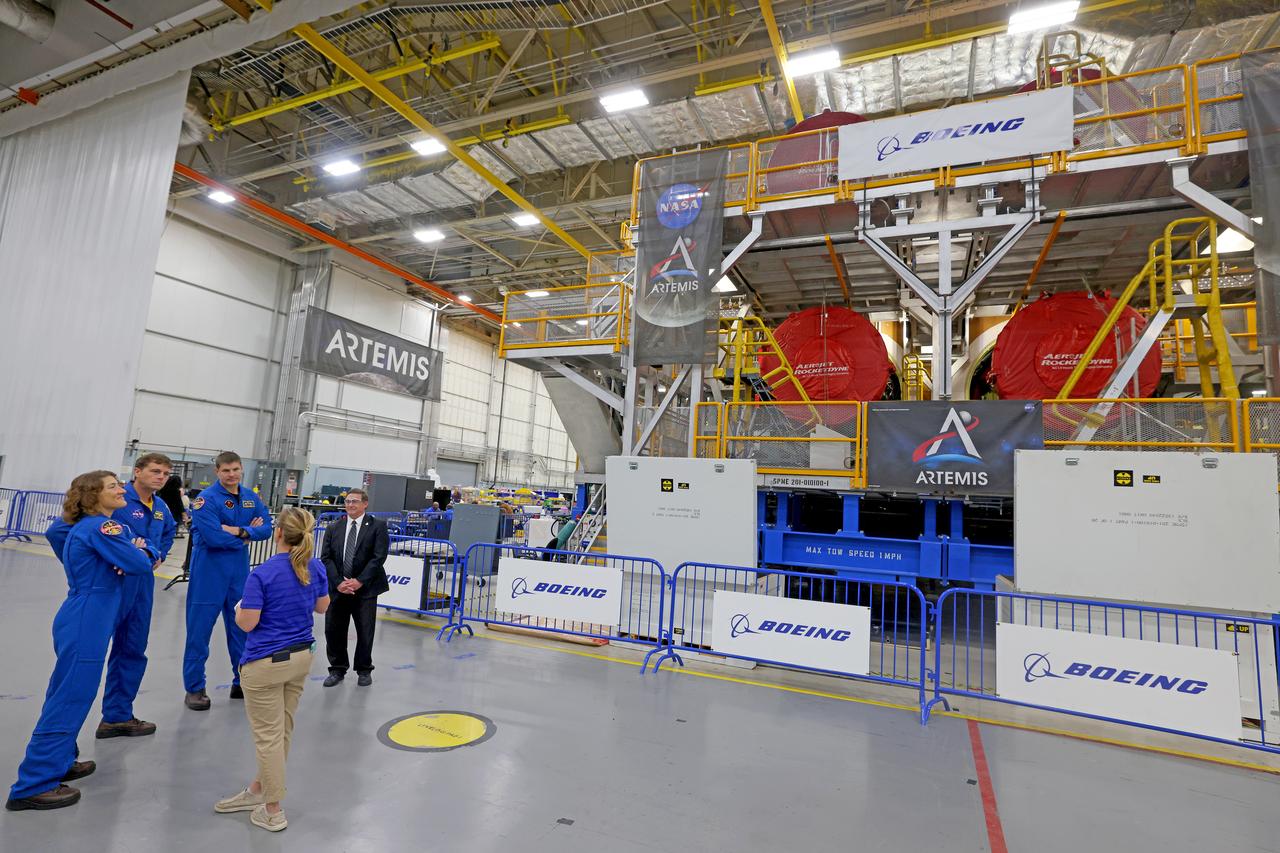
Artemis II NASA astronauts Reid Wiseman and Christina Koch of NASA and CSA (Canadian Space Agency) astronaut Jeremy Hansen view the core stage for the SLS (Space Launch System) rocket at the agency’s Michoud Assembly Facility in New Orleans on Nov. 16. The three astronauts, along with NASA’s Victor Glover, will launch atop the rocket stage to venture around the Moon on Artemis II, the first crewed flight for Artemis. The SLS core stage, towering at 212 feet, is the backbone of the Moon rocket and includes two massive propellant tanks that collectively hold 733,000 gallons of propellant to help power the stage’s four RS-25 engines. NASA is working to land the first woman and first person of color on the Moon under Artemis. SLS is part of NASA’s backbone for deep space exploration, along with Orion and the Gateway in orbit around the Moon. SLS is the only rocket that can send Orion, astronauts, and supplies to the Moon in a single mission.
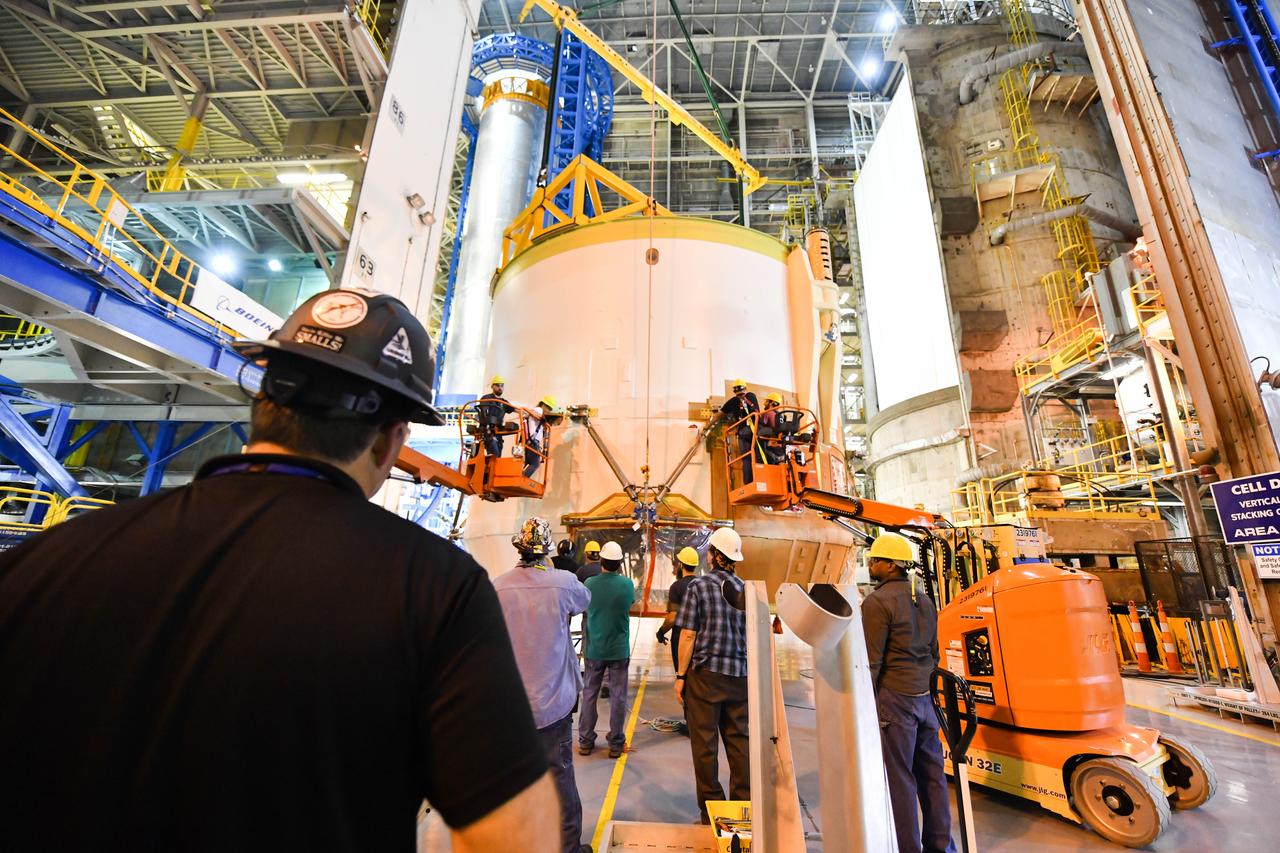
Technicians at NASA’s Michoud Assembly Facility in New Orleans rotated the engine section for NASA’s Space Launch System rocket from a vertical to horizontal position to prepare it for joining to the rest of the rocket’s core stage on Sept. 13. The engine section, which comprises the lowest portion of the 212-foot-tall stage, is the last major component to be horizontally integrated to the core stage. Michoud crews completed assembly on the flight hardware that will be used for Artemis I, the first lunar mission of SLS and NASA’s Orion spacecraft, on Aug. 29. The core stage’s two liquid propellant tanks and four RS-25 engines will produce more than 2 million pounds of thrust to send the SLS rocket and Orion on the Artemis lunar missions. The engine section houses the four RS-25 engines and includes vital systems for mounting, controlling and delivering fuel form the propellant tanks to the rocket’s engines.