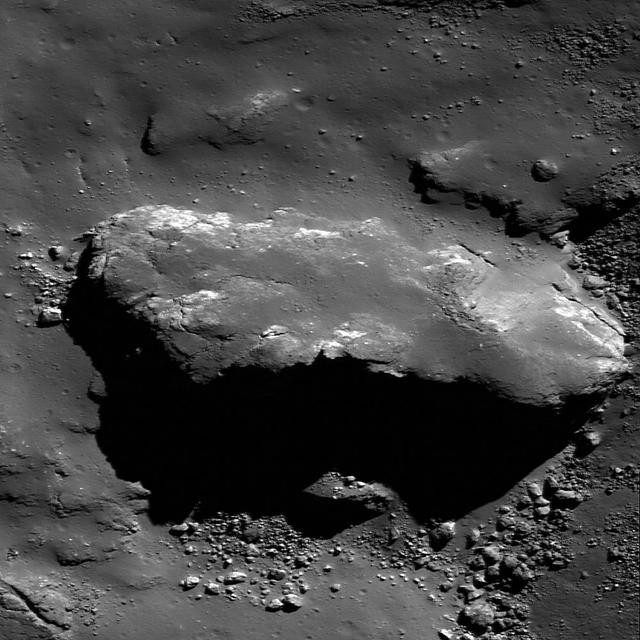
Ejecta in Tycho Crater
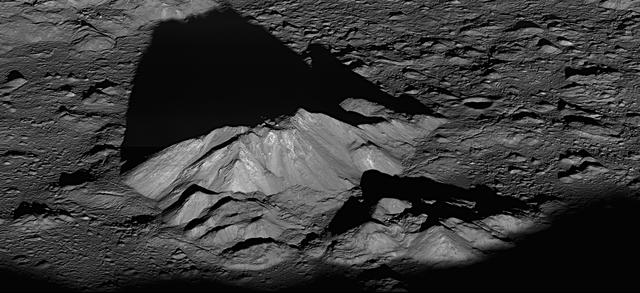
NASA image release June 30, 2011 On June 10, 2011, NASA's Lunar Reconnaissance Orbiter captured a dramatic sunrise view of Tycho crater. A very popular target with amateur astronomers, Tycho is located at 43.37°S, 348.68°E, and is about 51 miles (82 km) in diameter. The summit of the central peak is 1.24 miles (2 km) above the crater floor. The distance from Tycho's floor to its rim is about 2.92 miles (4.7 km). Tycho crater's central peak complex, shown here, is about 9.3 miles (15 km) wide, left to right (southeast to northwest in this view). <a href="http://www.nasa.gov/mission_pages/LRO/news/lro-tycho.html" target="_blank" rel="nofollow">› More information and related images</a> <a href="http://www.nasa.gov/lro" target="_blank" rel="nofollow">› NASA's LRO website</a> Credit: NASA Goddard/Arizona State University <b><a href="http://www.nasa.gov/centers/goddard/home/index.html" rel="nofollow">NASA Goddard Space Flight Center</a></b> enables NASA’s mission through four scientific endeavors: Earth Science, Heliophysics, Solar System Exploration, and Astrophysics. Goddard plays a leading role in NASA’s accomplishments by contributing compelling scientific knowledge to advance the Agency’s mission. <b>Follow us on <a href="http://twitter.com/NASA_GoddardPix" rel="nofollow">Twitter</a></b> <b>Like us on <a href="http://www.facebook.com/pages/Greenbelt-MD/NASA-Goddard/395013845897?ref=tsd" rel="nofollow">Facebook</a></b> <b>Find us on <a href="http://web.stagram.com/n/nasagoddard/?vm=grid" rel="nofollow">Instagram</a></b>
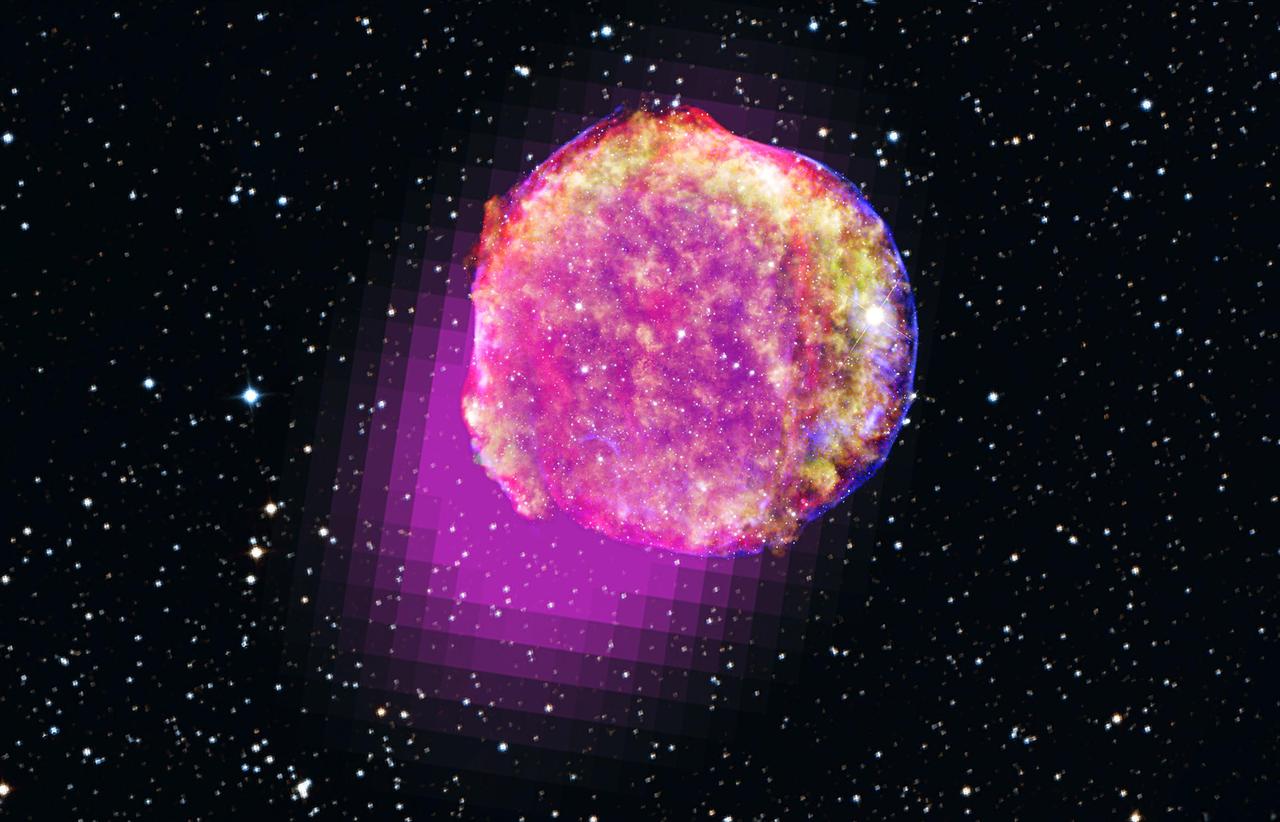
NASA image relase December 13, 2011 Gamma-rays detected by Fermi's LAT show that the remnant of Tycho's supernova shines in the highest-energy form of light. This portrait of the shattered star includes gamma rays (magenta), X-rays (yellow, green, and blue), infrared (red) and optical data. Credit: Gamma ray, NASA/DOE/Fermi LAT Collaboration; X-ray, NASA/CXC/SAO; Infrared, NASA/JPL-Caltech; Optical, MPIA, Calar Alto, O. Krause et al. and DSS To read more go to: <a href="http://www.nasa.gov/mission_pages/GLAST/news/tycho-star.html" rel="nofollow">www.nasa.gov/mission_pages/GLAST/news/tycho-star.html</a> <b><a href="http://www.nasa.gov/audience/formedia/features/MP_Photo_Guidelines.html" rel="nofollow">NASA image use policy.</a></b> <b><a href="http://www.nasa.gov/centers/goddard/home/index.html" rel="nofollow">NASA Goddard Space Flight Center</a></b> enables NASA’s mission through four scientific endeavors: Earth Science, Heliophysics, Solar System Exploration, and Astrophysics. Goddard plays a leading role in NASA’s accomplishments by contributing compelling scientific knowledge to advance the Agency’s mission. <b>Follow us on <a href="http://twitter.com/NASA_GoddardPix" rel="nofollow">Twitter</a></b> <b>Like us on <a href="http://www.facebook.com/pages/Greenbelt-MD/NASA-Goddard/395013845897?ref=tsd" rel="nofollow">Facebook</a></b> <b>Find us on <a href="http://instagrid.me/nasagoddard/?vm=grid" rel="nofollow">Instagram</a></b>
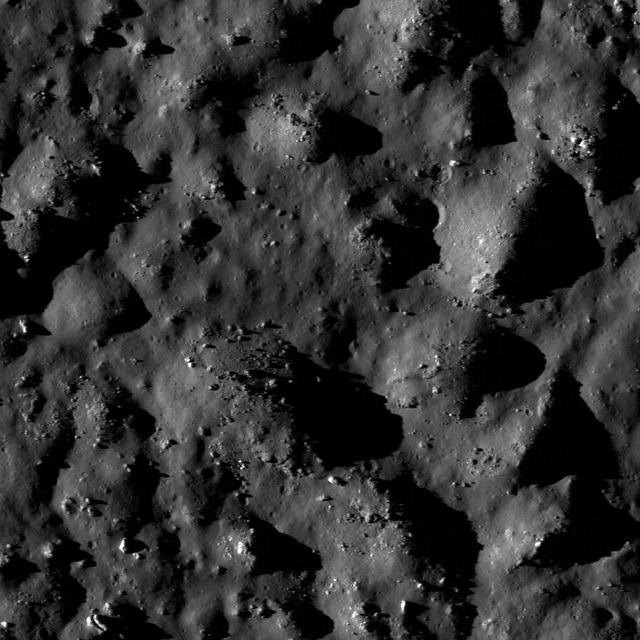
NASA Lunar Reconnaissance Orbiter shows boulders and impact melt line the floor of the 85-km crater Tycho, a potential site for future human exploration.
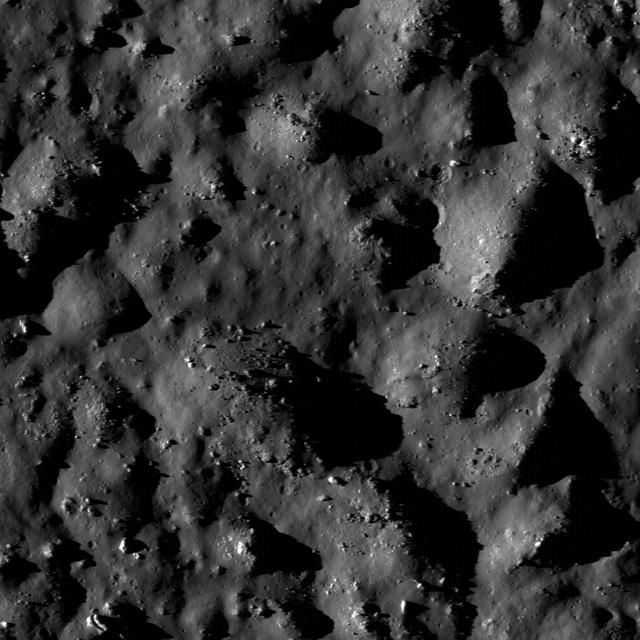
NASA image release January 14, 2010 LROC WAC image of Tycho crater. Credit: NASA/Goddard/Arizona State University To learn more about this image go to: <a href="http://www.nasa.gov/mission_pages/LRO/multimedia/lroimages/lroc-20100114-tycho.html" rel="nofollow">www.nasa.gov/mission_pages/LRO/multimedia/lroimages/lroc-...</a> <b><a href="http://www.nasa.gov/centers/goddard/home/index.html" rel="nofollow">NASA Goddard Space Flight Center</a></b> contributes to NASA’s mission through four scientific endeavors: Earth Science, Heliophysics, Solar System Exploration, and Astrophysics. Goddard plays a leading role in NASA’s endeavors by providing compelling scientific knowledge to advance the Agency’s mission. <b>Follow us on <a href="http://twitter.com/NASA_GoddardPix" rel="nofollow">Twitter</a></b> <b>Join us on <a href="http://www.facebook.com/pages/Greenbelt-MD/NASA-Goddard/395013845897?ref=tsd" rel="nofollow">Facebook</a></b>
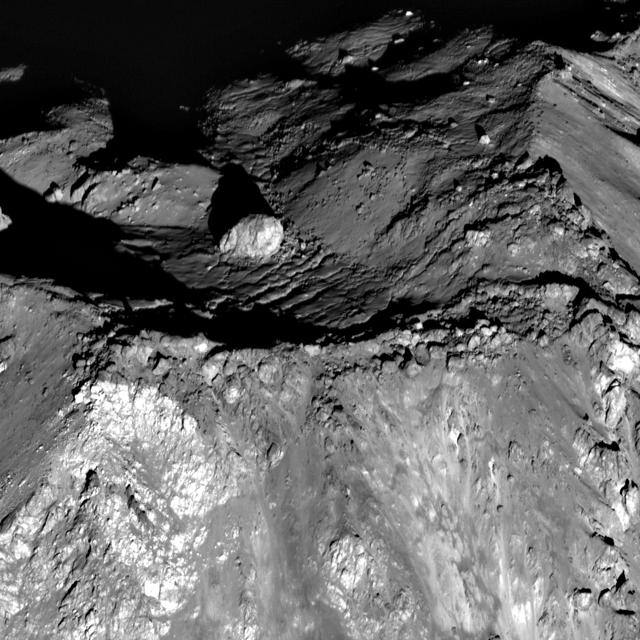
From NASA's Lunar Reconnaissance Orbiter Camera (LROC) an oblique view of summit area of Tycho crater central peak. The boulder in the background is 120 meters wide, and the image is about 1200 meters wide. LROC NAC M162350671L,R NASA/GSFC/Arizona State University <b><a href="http://www.nasa.gov/centers/goddard/home/index.html" rel="nofollow">NASA Goddard Space Flight Center</a></b> enables NASA’s mission through four scientific endeavors: Earth Science, Heliophysics, Solar System Exploration, and Astrophysics. Goddard plays a leading role in NASA’s accomplishments by contributing compelling scientific knowledge to advance the Agency’s mission. <b>Follow us on <a href="http://twitter.com/NASA_GoddardPix" rel="nofollow">Twitter</a></b> <b>Like us on <a href="http://www.facebook.com/pages/Greenbelt-MD/NASA-Goddard/395013845897?ref=tsd" rel="nofollow">Facebook</a></b> <b>Find us on <a href="http://web.stagram.com/n/nasagoddard/?vm=grid" rel="nofollow">Instagram</a></b>

This composite image of the Tycho supernova remnant combines infrared and X-ray observations obtained with NASA Spitzer and Chandra space observatories, respectively,
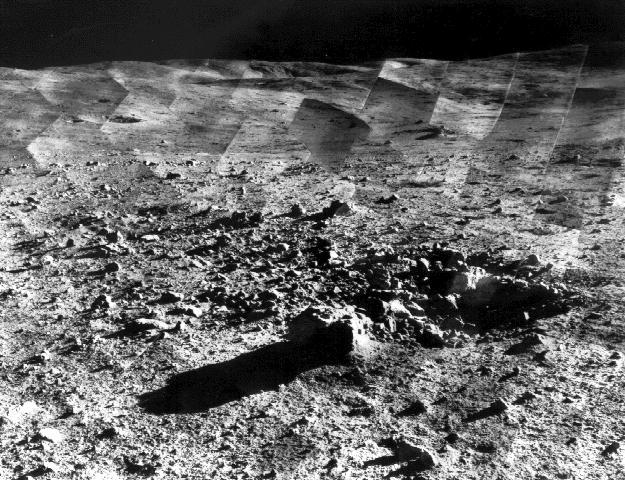
Photomosaic of lunar panorama near the Tycho crater taken by Surveyor 7. The hills on the center horizon are about eight miles away from the spacecraft.
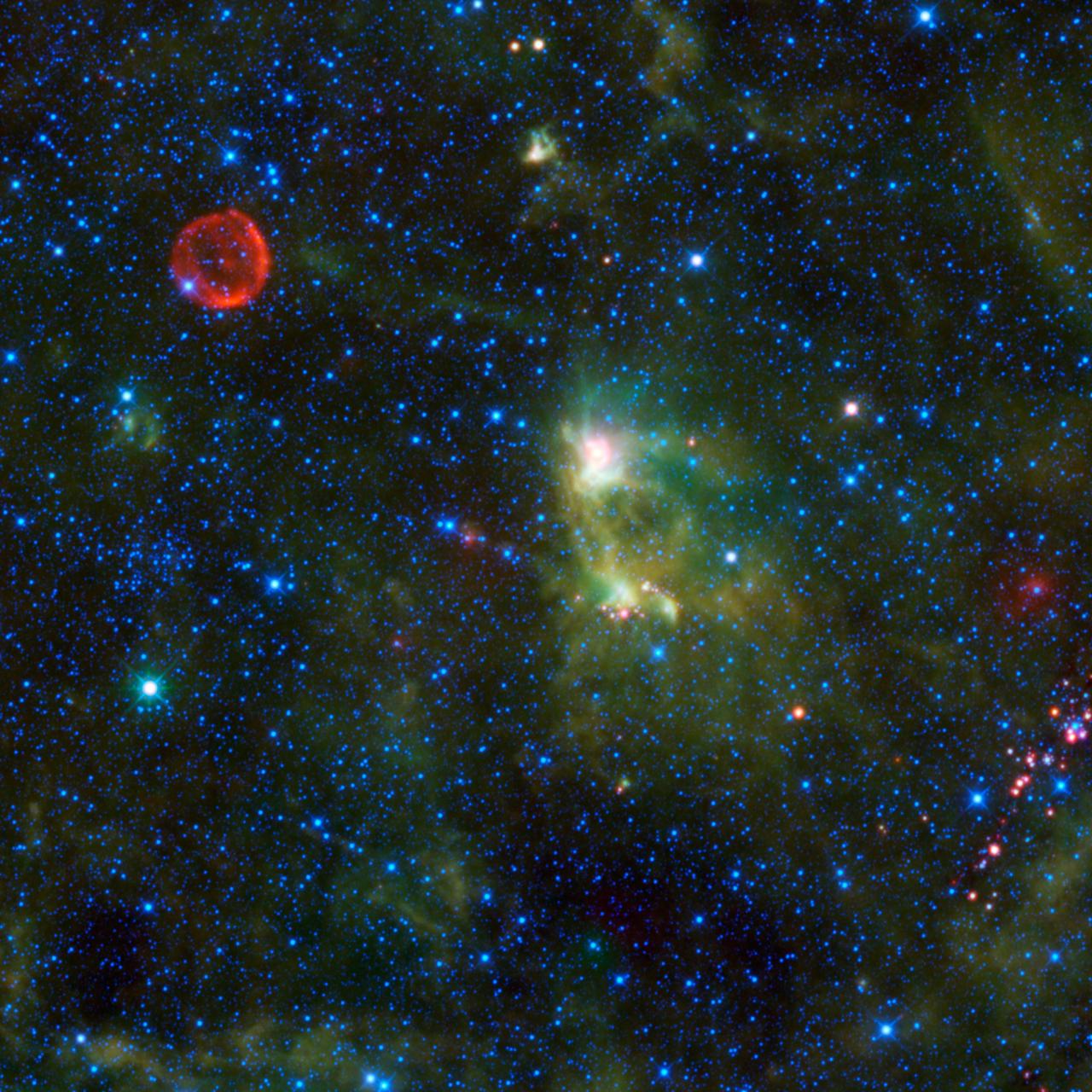
This image from NASA Wide-field Infrared Survey Explorer takes in several interesting objects in the constellation Cassiopeia which are not easily seen in visible light. The red circle visible at upper left is SN 1572, often called Tycho Supernova.
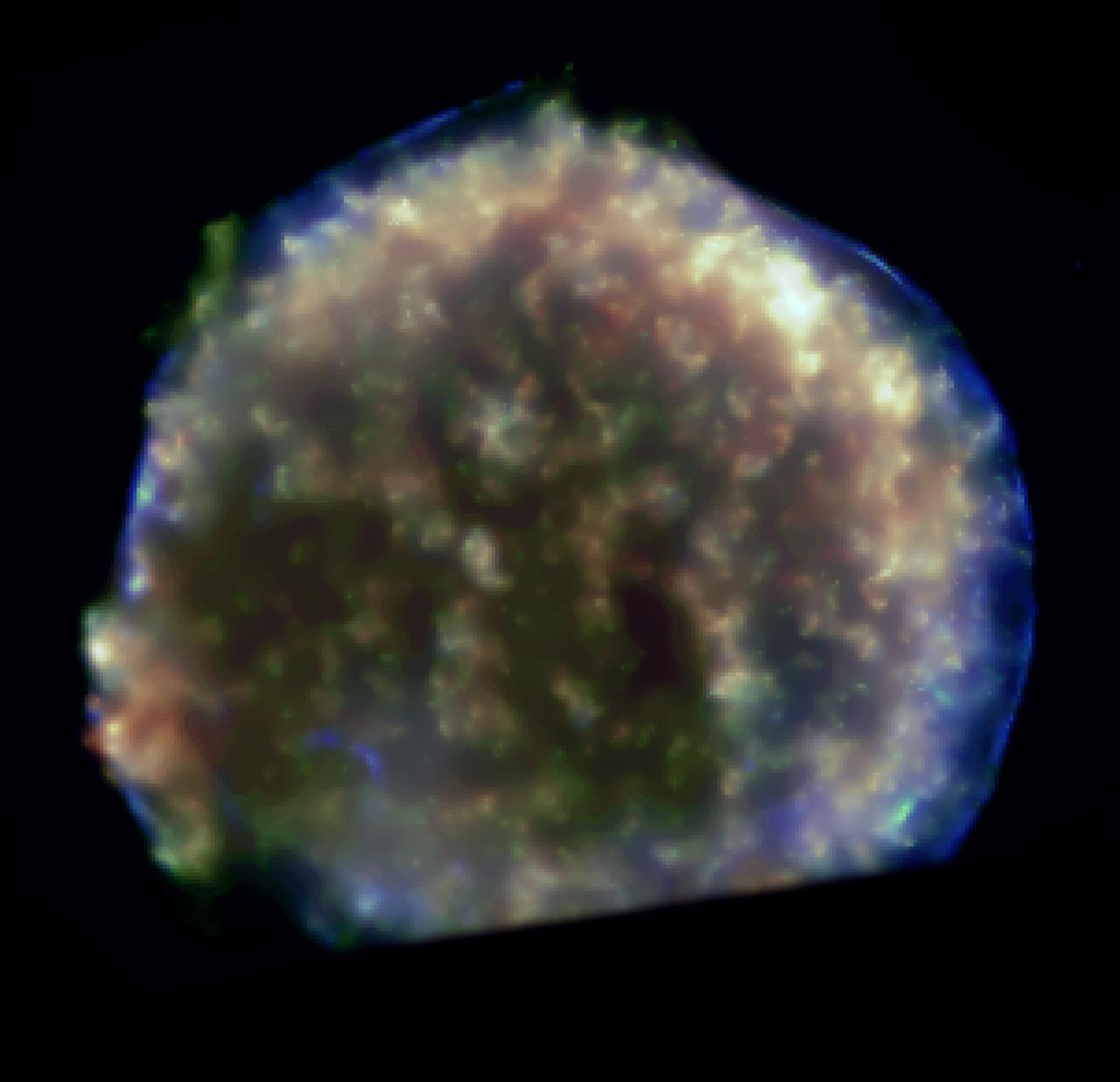
This Chandra image reveals, in detail, the turbulent debris created by a supernova explosion that was observed by the Danish Astronomer Tycho Brahe in the year 1572. The colors show different x-ray energies, with red, green, and blue representing low, medium, and high energies, respectively. Most likely caused by the destruction of a white dwarf star, a shock wave produced by the expanding debris is outlined by the sharp blue circular arcs of 20 million degree Celsius gas seen on the outer rim. The stellar debris, visible only by x-ray, has a temperature of about 10 million degrees, and shows up as mottled yellow, green, and red fingers of gas.

NASA Galileo spacecraft took this image of Earth moon on December 7, 1992 on its way to explore the Jupiter system in 1995-97. The distinct bright ray crater at the bottom of the image is the Tycho impact basin. http://photojournal.jpl.nasa.gov/catalog/PIA00405

The fractured floor of Dantu Crater on Ceres is seen in this image from NASA's Dawn spacecraft. Similar fractures are seen in Tycho, one of the youngest large craters on Earth's moon. This cracking may have resulted from the cooling of impact melt, or when the crater floor was uplifted after the crater formed. Dantu was imaged earlier in Dawn's science mission at Ceres -- during Survey orbit (see PIA19609) and from the high altitude mapping orbit, or HAMO (see PIA19993). Dawn took this image on Dec. 21 from its low-altitude mapping orbit (LAMO) at an approximate altitude of 240 miles (385 kilometers) above Ceres. The image resolution is 120 feet (35 meters) per pixel. http://photojournal.jpl.nasa.gov/catalog/PIA20193
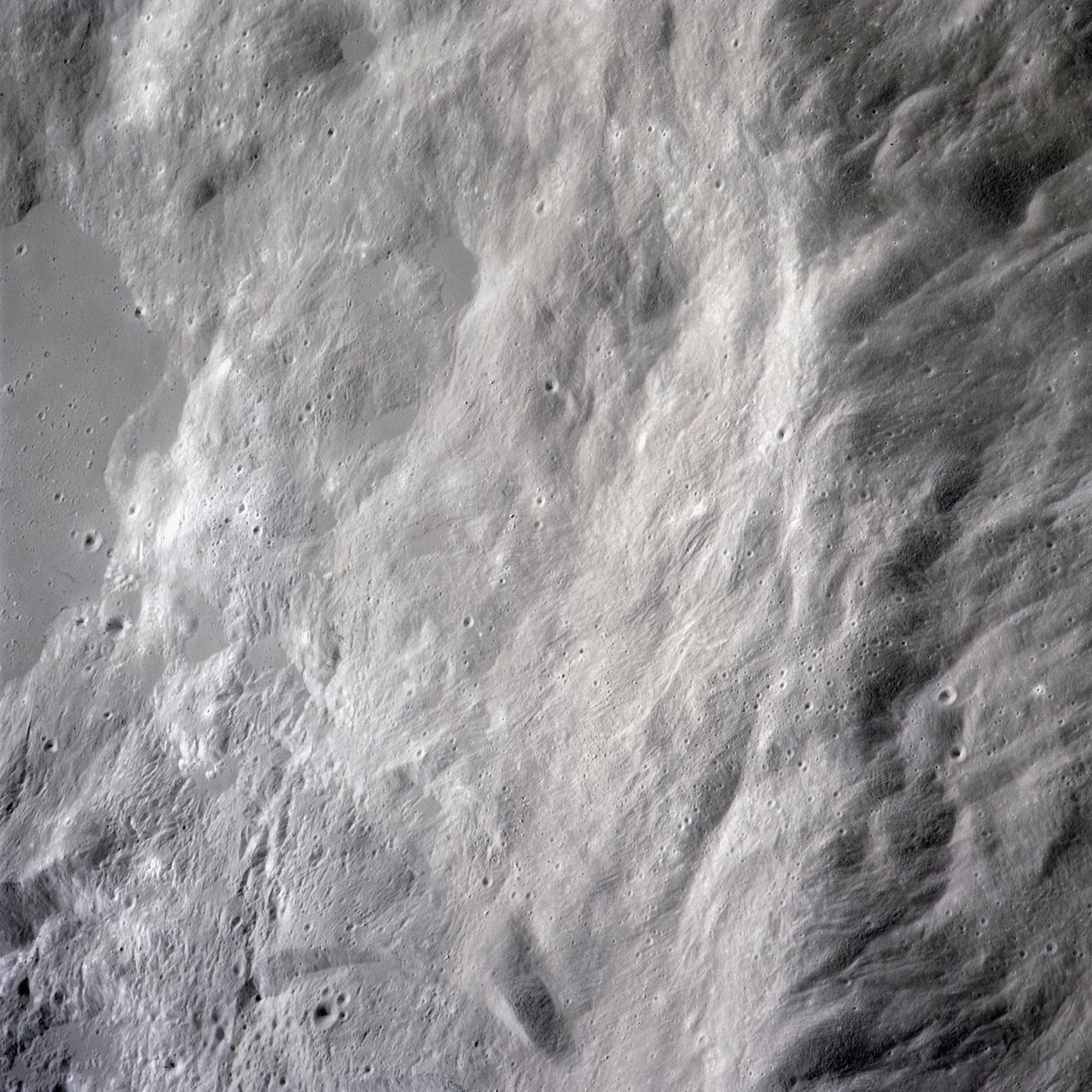
AS16-120-19228 (16-27 April 1972) --- Strongly textured terrain north of the lunar farside King Crater which is centered near 120.5 degrees east longitude and 5.5 degrees north latitude. This near vertical oblique view eastward was photographed from the Apollo 16 spacecraft in lunar orbit with a Hasselblad camera equipped with a 250mm telephoto lens. Several irregular areas characterized by conspicuously smooth surfaces interrupt the rough texture in this view of the eastern quarter of the large, unnamed crater between King and Guyot. Similar "ponds" occur at varied levels in the rim deposits of the nearside craters Copernicus and Tycho. Hold picture with the smooth area at the top.
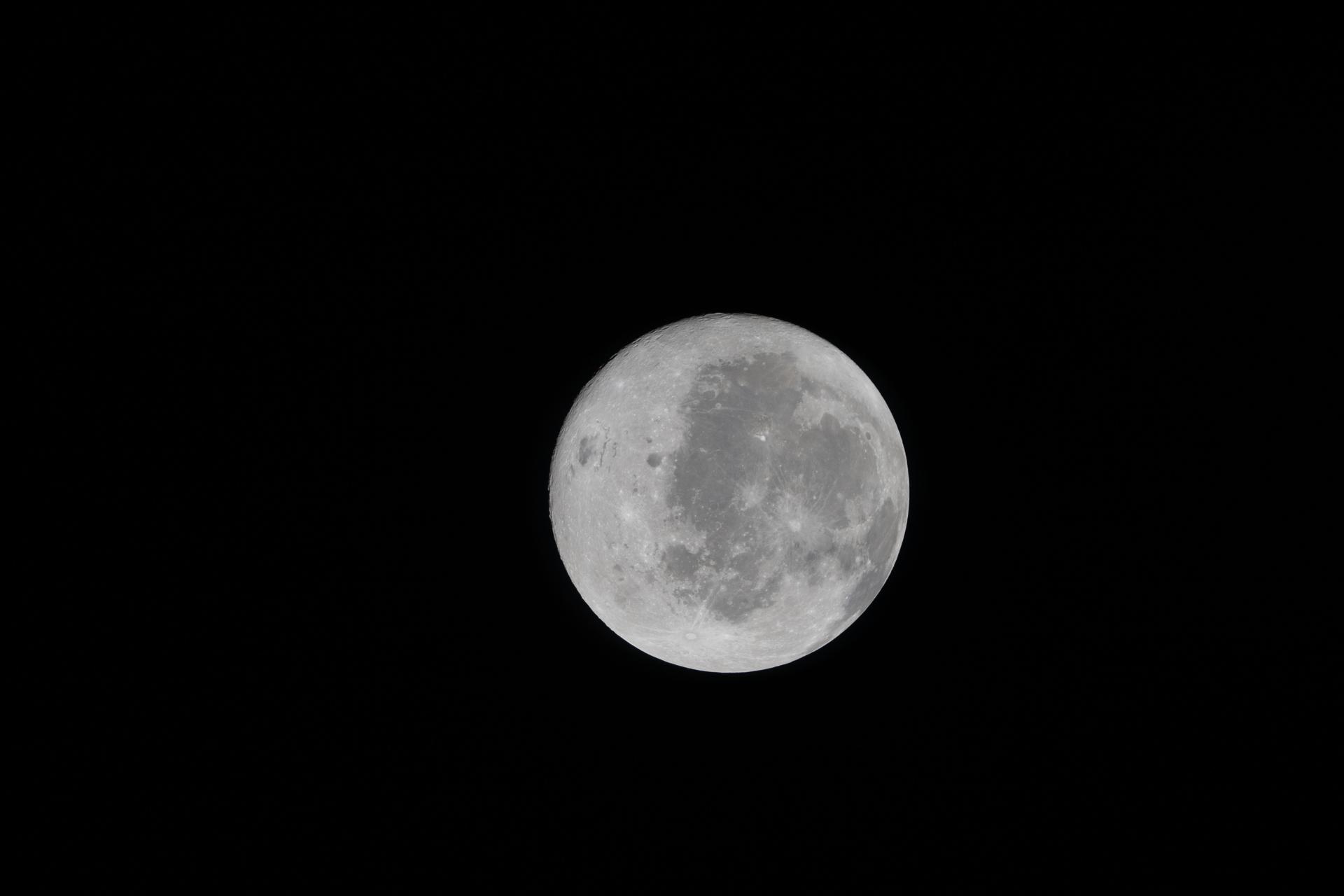
art002e009057 (April 4, 2026) - A view of the nearside of the Moon, the side we always see from Earth. Some of the far side is visible, as well, on the left edge, just beyond the black patch that is Orientale basin, a nearly 600-mile-wide crater that straddles the Moon’s near and far sides and is partly visible from Earth. The dark areas in the center and right side of the disk are ancient lava flows, which are unique to the near side of the Moon. The white dot at the bottom of the disk, with white rays shooting out from it, is Tycho crater, one of the younger craters on the Moon at 108 million years old.

This supernova in the constellation Cassiopeia was observed by Tycho Brahe in 1572. In this x-ray image from the High Energy Astronomy Observatory (HEAO-2/Einstein Observatory produced by nearly a day of exposure time, the center region appears filled with emissions that can be resolved into patches or knots of material. However, no central pulsar or other collapsed object can be seen. The HEAO-2, the first imaging and largest x-ray telescope built to date, was capable of producing actual photographs of x-ray objects. Shortly after launch, the HEAO-2 was nicknamed the Einstein Observatory by its scientific experimenters in honor of the centernial of the birth of Albert Einstein, whose concepts of relativity and gravitation have influenced much of modern astrophysics, particularly x-ray astronomy. The HEAO-2, designed and developed by TRW, Inc. under the project management of the Marshall Space Flight Center, was launched aboard an Atlas/Centaur launch vehicle on November 13, 1978.

Supernova Supernovae can occur one of two ways. The first occurs when a white dwarf—the vestigial ember of a dead star—passes so close to a living star that its matter leaks into the white dwarf. This causes a catastrophic explosion. However most people understand supernovae as the death of a massive star. When the star runs out of fuel toward the end of its life, the gravity at its heart sucks the surrounding mass into its center. At temperatures rocketing above 100 billion degrees Fahrenheit, all the layers of the star abruptly explode outward. The explosions produced by supernovae are so brilliant that astronomers use their luminosity to measure the distance between galaxies, the scale of the universe and the effects of dark energy. For a short period of time, one dying star can appear to shine as brightly as an entire galaxy. Supernovae are relatively common events, one occurring in our own galaxy once every 100 years. In 2014, a person could see the supernova M82 with a pair of binoculars. The cosmologist Tycho Brahe’s observation of a supernova in 1572 allowed him to disprove Aristotle’s theory that the heavens never changed. After a supernova, material expelled in the explosion can form a nebula—an interstellar pile of gas and dust. Over millions of years, gravity pulls the nebula’s materials into a dense orb called a protostar, which will become a new star. Within a few million years, this new star could go supernova as well. ------------------------------ Original Caption: NASA image release Feb. 24, 2012 At the turn of the 19th century, the binary star system Eta Carinae was faint and undistinguished. In the first decades of the century, it became brighter and brighter, until, by April 1843, it was the second brightest star in the sky, outshone only by Sirius (which is almost a thousand times closer to Earth). In the years that followed, it gradually dimmed again and by the 20th century was totally invisible to the naked eye. The star has continued to vary in brightness ever since, and while it is once again visible to the naked eye on a dark night, it has never again come close to its peak of 1843. NASA's Hubble Telescope captured an image of Eta Carinae. This image consists of ultraviolet and visible light images from the High Resolution Channel of Hubble's Advanced Camera for Surveys. The field of view is approximately 30 arcseconds across. The larger of the two stars in the Eta Carinae system is a huge and unstable star that is nearing the end of its life, and the event that the 19th century astronomers observed was a stellar near-death experience. Scientists call these outbursts supernova impostor events, because they appear similar to supernovae but stop just short of destroying their star. Although 19th century astronomers did not have telescopes powerful enough to see the 1843 outburst in detail, its effects can be studied today. The huge clouds of matter thrown out a century and a half ago, known as the Homunculus Nebula, have been a regular target for Hubble since its launch in 1990. This image, taken with the Advanced Camera for Surveys High Resolution Channel, is the most detailed yet, and shows how the material from the star was not thrown out in a uniform manner, but forms a huge dumbbell shape. Eta Carinae is not only interesting because of its past, but also because of its future. It is one of the closest stars to Earth that is likely to explode in a supernova in the relatively near future (though in astronomical timescales the "near future" could still be a million years away). When it does, expect an impressive view from Earth, far brighter still than its last outburst: SN 2006gy, the brightest supernova ever observed, came from a star of the same type, though from a galaxy over 200 million light-years away. Credit: ESA/NASA More information: <a href="http://www.spacetelescope.org/images/potw1208a/" rel="nofollow">www.spacetelescope.org/images/potw1208a/</a> <b><a href="http://www.nasa.gov/audience/formedia/features/MP_Photo_Guidelines.html" rel="nofollow">NASA image use policy.</a></b> <b><a href="http://www.nasa.gov/centers/goddard/home/index.html" rel="nofollow">NASA Goddard Space Flight Center</a></b> enables NASA’s mission through four scientific endeavors: Earth Science, Heliophysics, Solar System Exploration, and Astrophysics. Goddard plays a leading role in NASA’s accomplishments by contributing compelling scientific knowledge to advance the Agency’s mission. <b>Follow us on <a href="http://twitter.com/NASAGoddardPix" rel="nofollow">Twitter</a></b> <b>Like us on <a href="http://www.facebook.com/pages/Greenbelt-MD/NASA-Goddard/395013845897?ref=tsd" rel="nofollow">Facebook</a></b> <b>Find us on <a href="http://instagrid.me/nasagoddard/?vm=grid" rel="nofollow">Instagram</a></b>