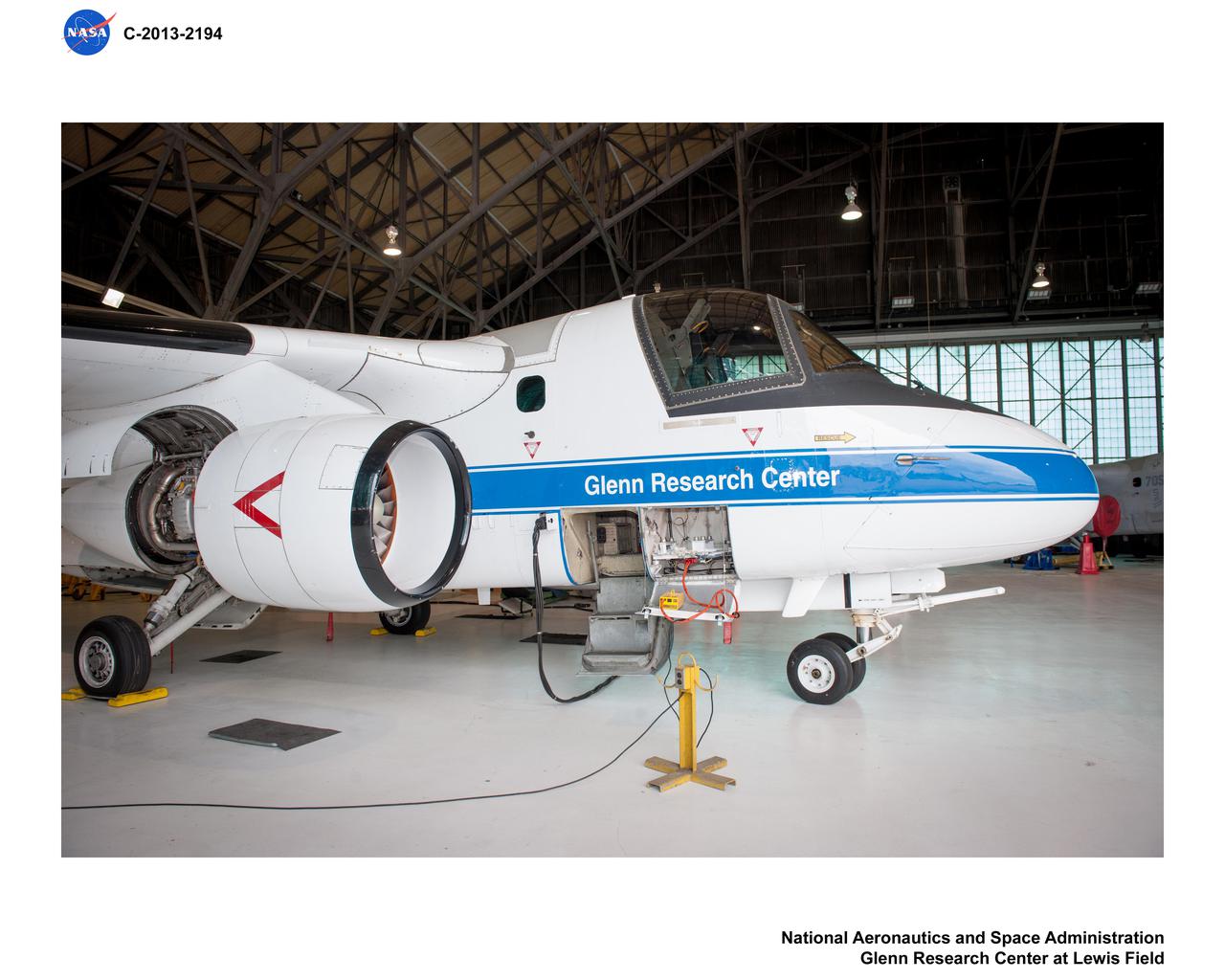
NASA, Lockheed Martin S-3B Viking Aircraft #N601NA, Unmanned Aircraft Communications Project
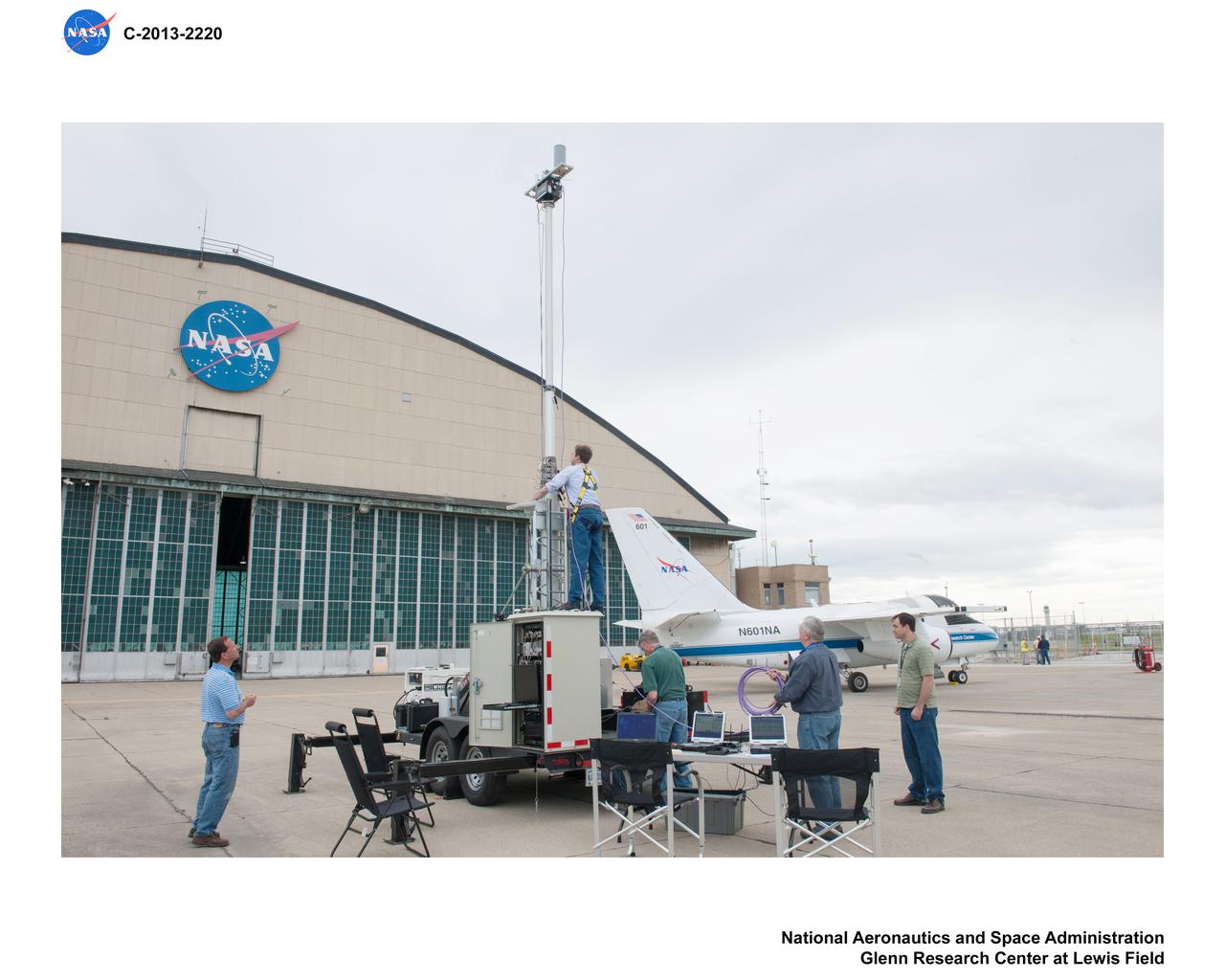
NASA, Lockheed Martin S-3B Viking Aircraft #N601NA, Unmanned Aircraft Communications Project
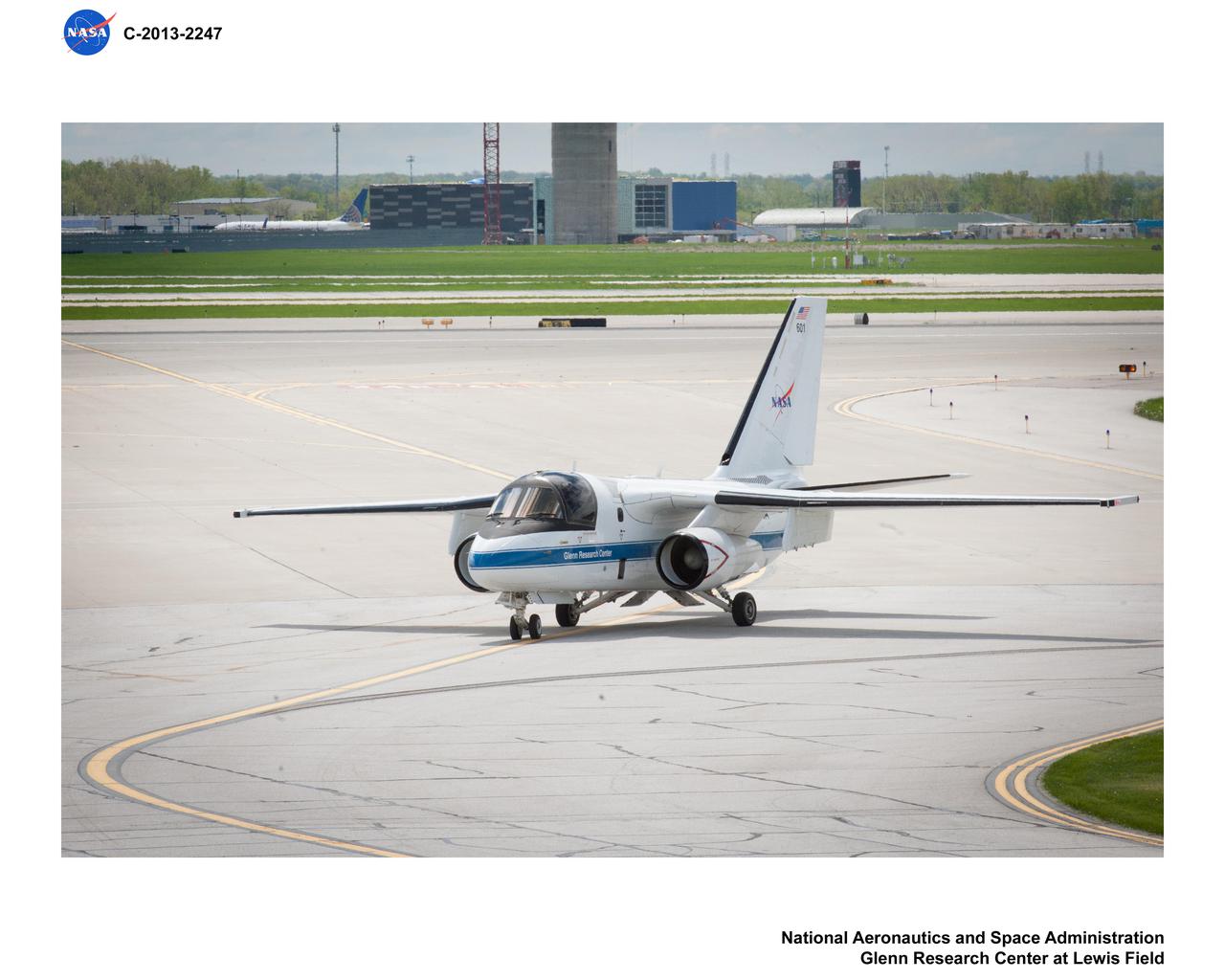
NASA, Lockheed Martin S-3B Viking Aircraft #N601NA, prepares for departure from Cleveland Hopkins Airport in support of the Unmanned Aircraft Communications Project
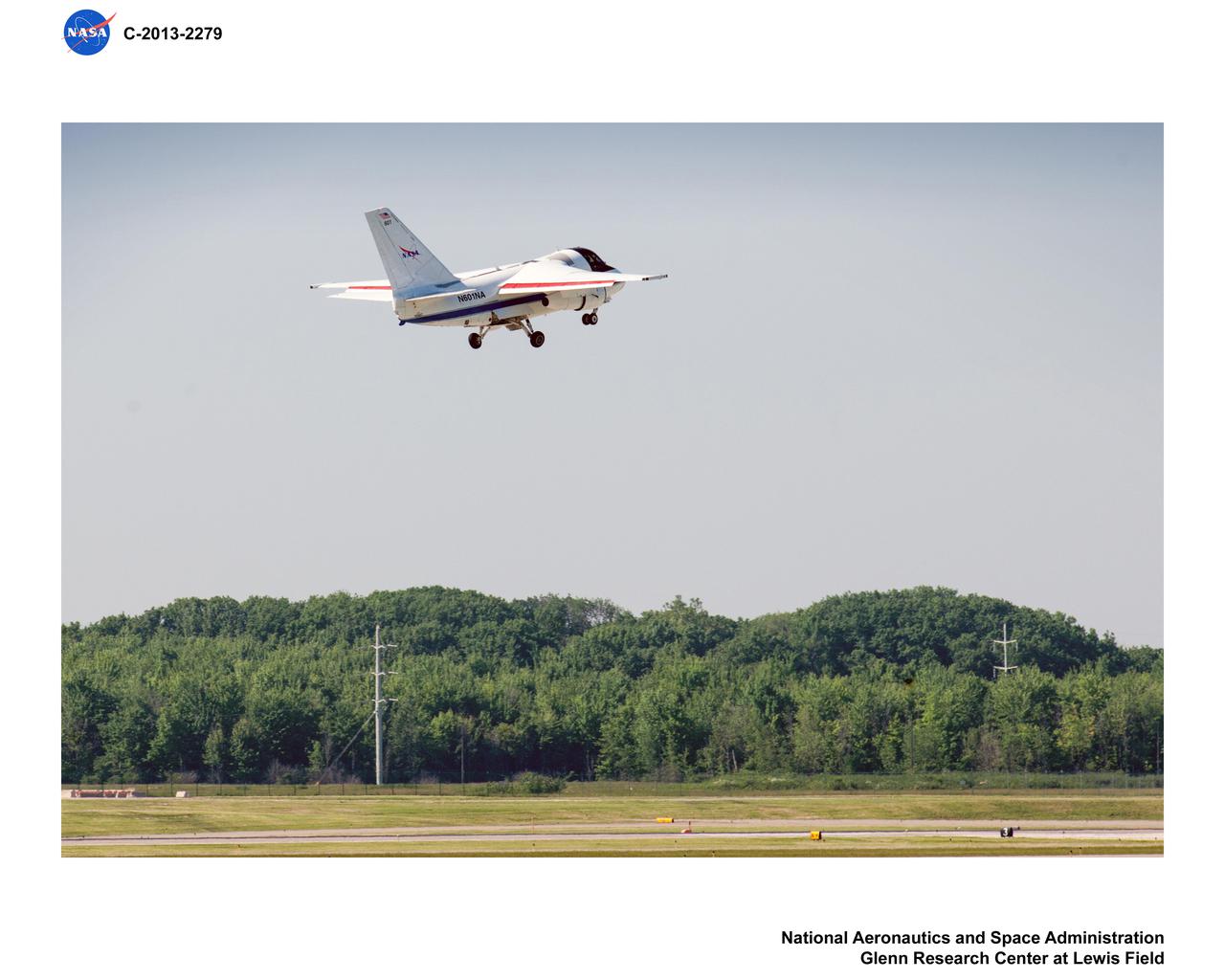
NASA, Lockheed Martin S-3B Viking Aircraft #N601NA, takes off from Cleveland Hopkins Airport, in support of the Unmanned Aircraft Communications Project

AS6-02-1455 (4 April 1968) --- Texas is photographed from the Apollo 6 (Spacecraft 020/Saturn 502) unmanned space mission. Seen in this photograph are Midland, Brownfield, Big Spring, J. B. Thomas Lake, headwaters of Colorado and Brazos Rivers, and the west Texas gas and oil fields.
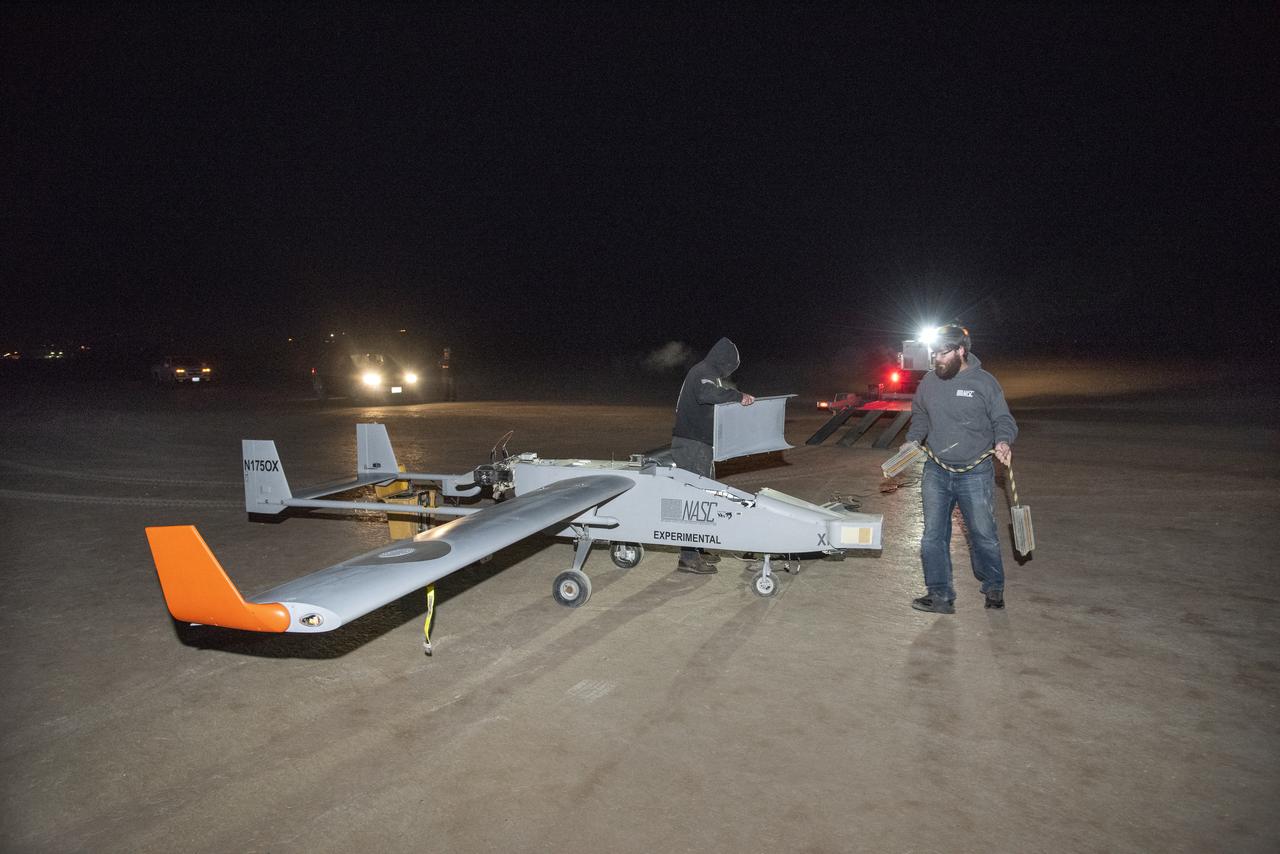
The Navmar Applied Sciences Corporation’s TigerShark prepares for its final takeoff at Edwards Air Force Base for the Unmanned Aircraft Systems integration in the National Airspace Systems, Flight Test Series Six (FT6) project. FT6 flight tests took place at NASA’s Armstrong Flight Research Center in California and focused on low size weight and power sensors for Detect and Avoid (DAA) operations in controlled airspace to inform the FAA through the RTCA Special Committee DAA Working Group on the phase 2 minimum operational performance standards for DAA and air-to-air radar.
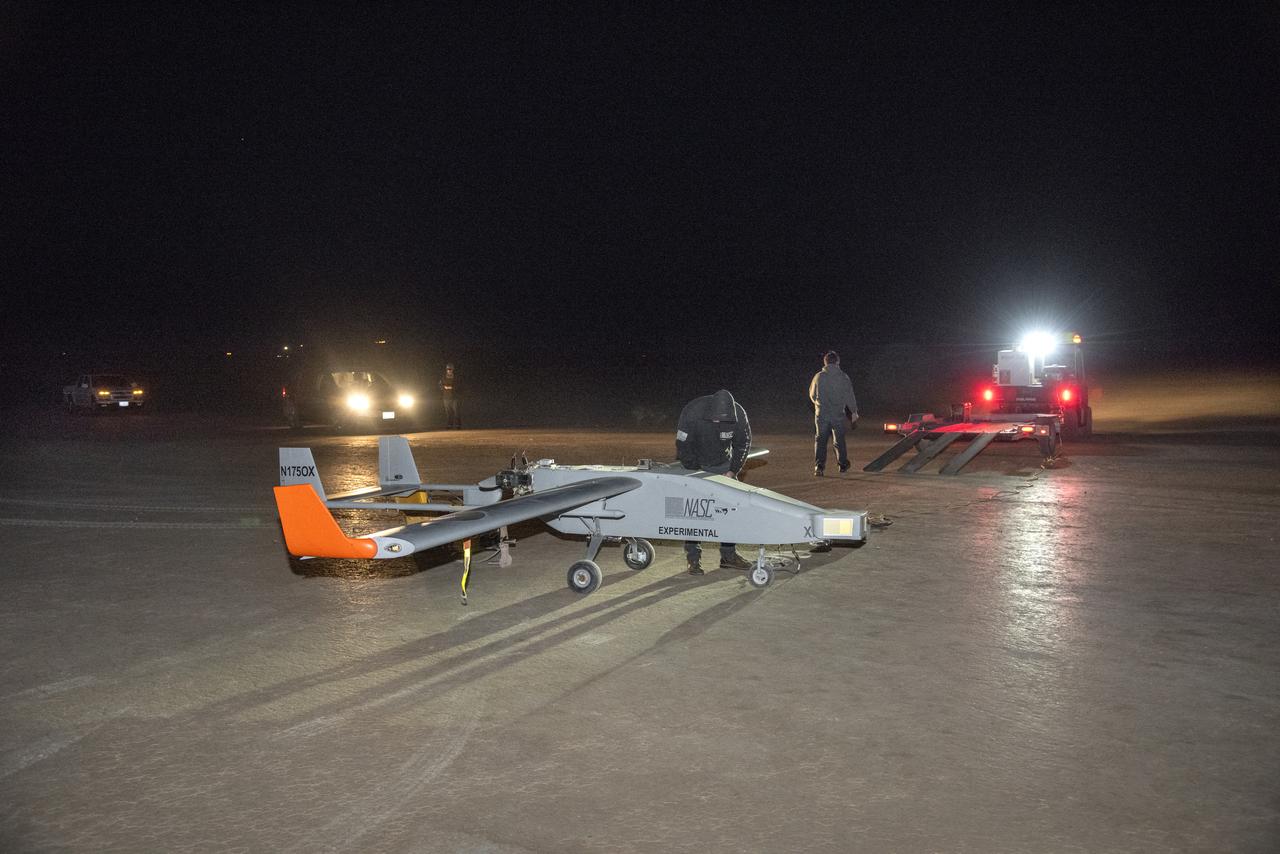
The Navmar Applied Sciences Corporation’s TigerShark prepares for its final takeoff at Edwards Air Force Base for the Unmanned Aircraft Systems integration in the National Airspace Systems, Flight Test Series Six (FT6) project. FT6 flight tests took place at NASA’s Armstrong Flight Research Center in California and focused on low size weight and power sensors for Detect and Avoid (DAA) operations in controlled airspace to inform the FAA through the RTCA Special Committee DAA Working Group on the phase 2 minimum operational performance standards for DAA and air-to-air radar.
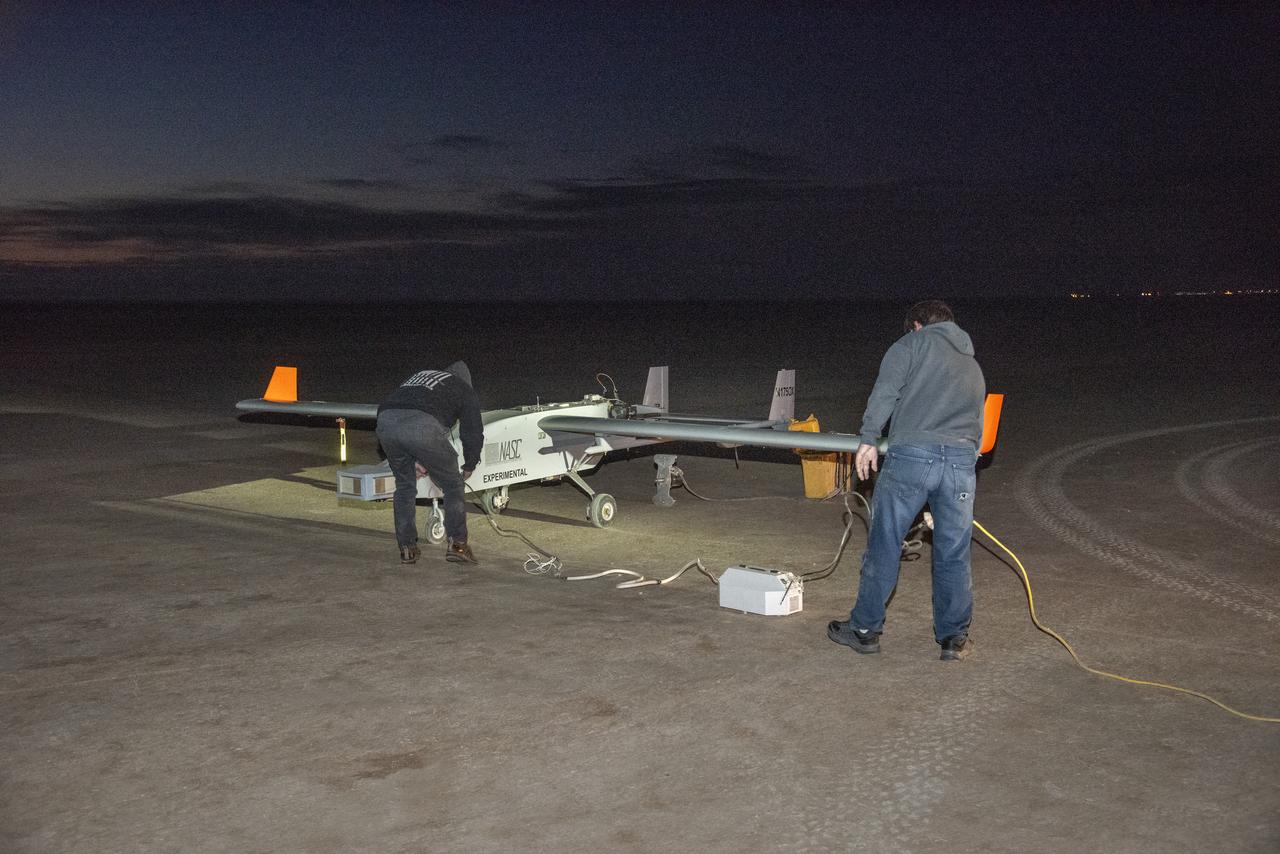
The Navmar Applied Sciences Corporation’s TigerShark prepares for its final takeoff at Edwards Air Force Base for the Unmanned Aircraft Systems integration in the National Airspace Systems, Flight Test Series Six (FT6) project. FT6 flight tests took place at NASA’s Armstrong Flight Research Center in California and focused on low size weight and power sensors for Detect and Avoid (DAA) operations in controlled airspace to inform the FAA through the RTCA Special Committee DAA Working Group on the phase 2 minimum operational performance standards for DAA and air-to-air radar.
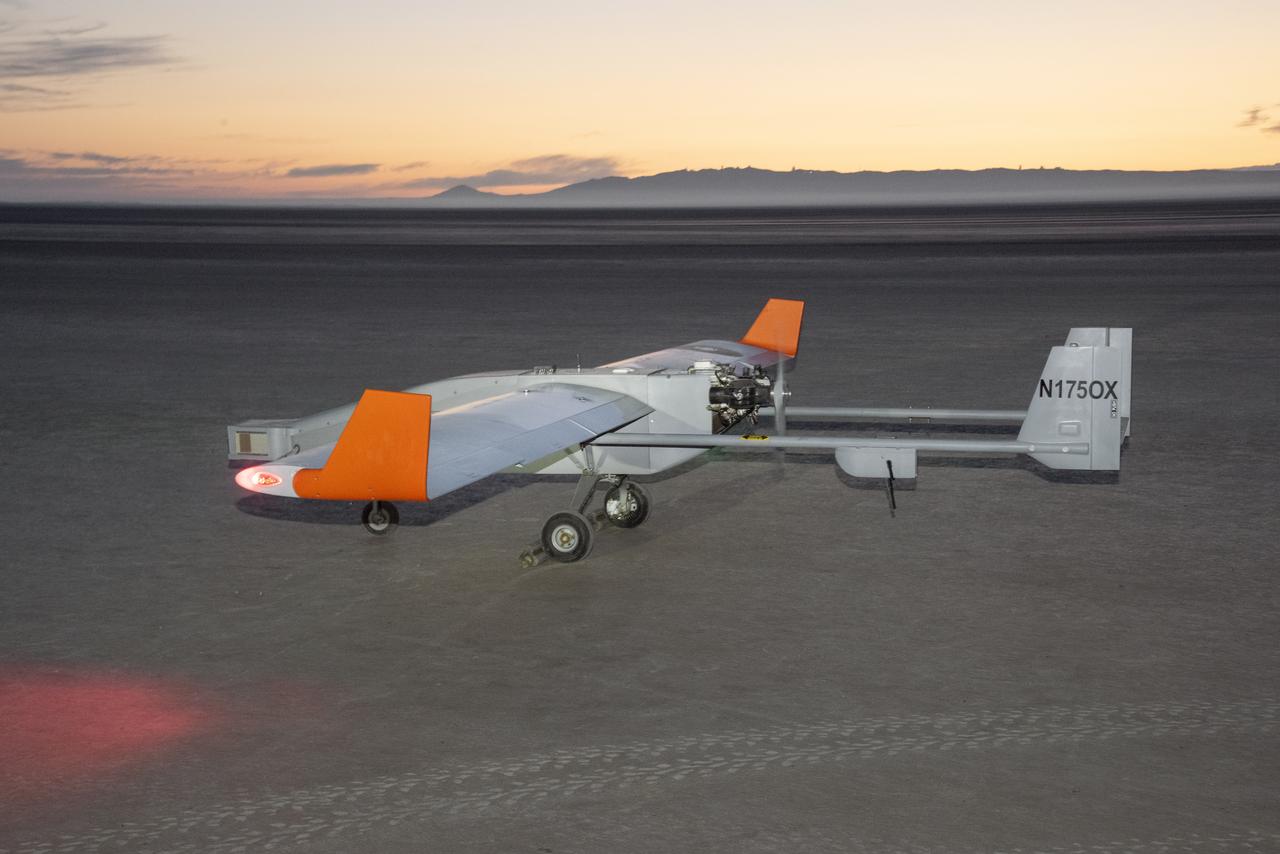
The Navmar Applied Sciences Corporation’s TigerShark prepares for its final takeoff at Edwards Air Force Base for the Unmanned Aircraft Systems integration in the National Airspace Systems, Flight Test Series Six (FT6) project. FT6 flight tests took place at NASA’s Armstrong Flight Research Center in California and focused on low size weight and power sensors for Detect and Avoid (DAA) operations in controlled airspace to inform the FAA through the RTCA Special Committee DAA Working Group on the phase 2 minimum operational performance standards for DAA and air-to-air radar.
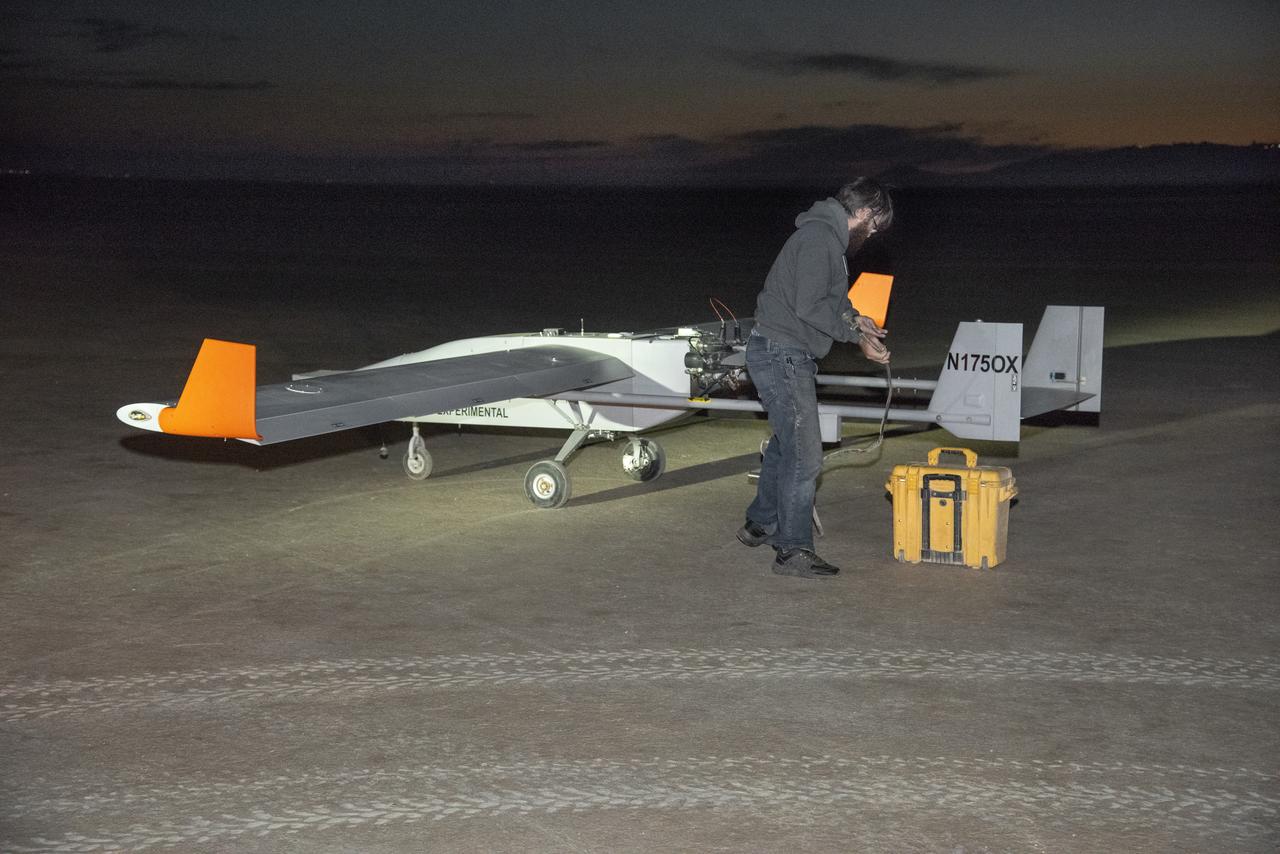
The Navmar Applied Sciences Corporation’s TigerShark prepares for its final takeoff at Edwards Air Force Base for the Unmanned Aircraft Systems integration in the National Airspace Systems, Flight Test Series Six (FT6) project. FT6 flight tests took place at NASA’s Armstrong Flight Research Center in California and focused on low size weight and power sensors for Detect and Avoid (DAA) operations in controlled airspace to inform the FAA through the RTCA Special Committee DAA Working Group on the phase 2 minimum operational performance standards for DAA and air-to-air radar.
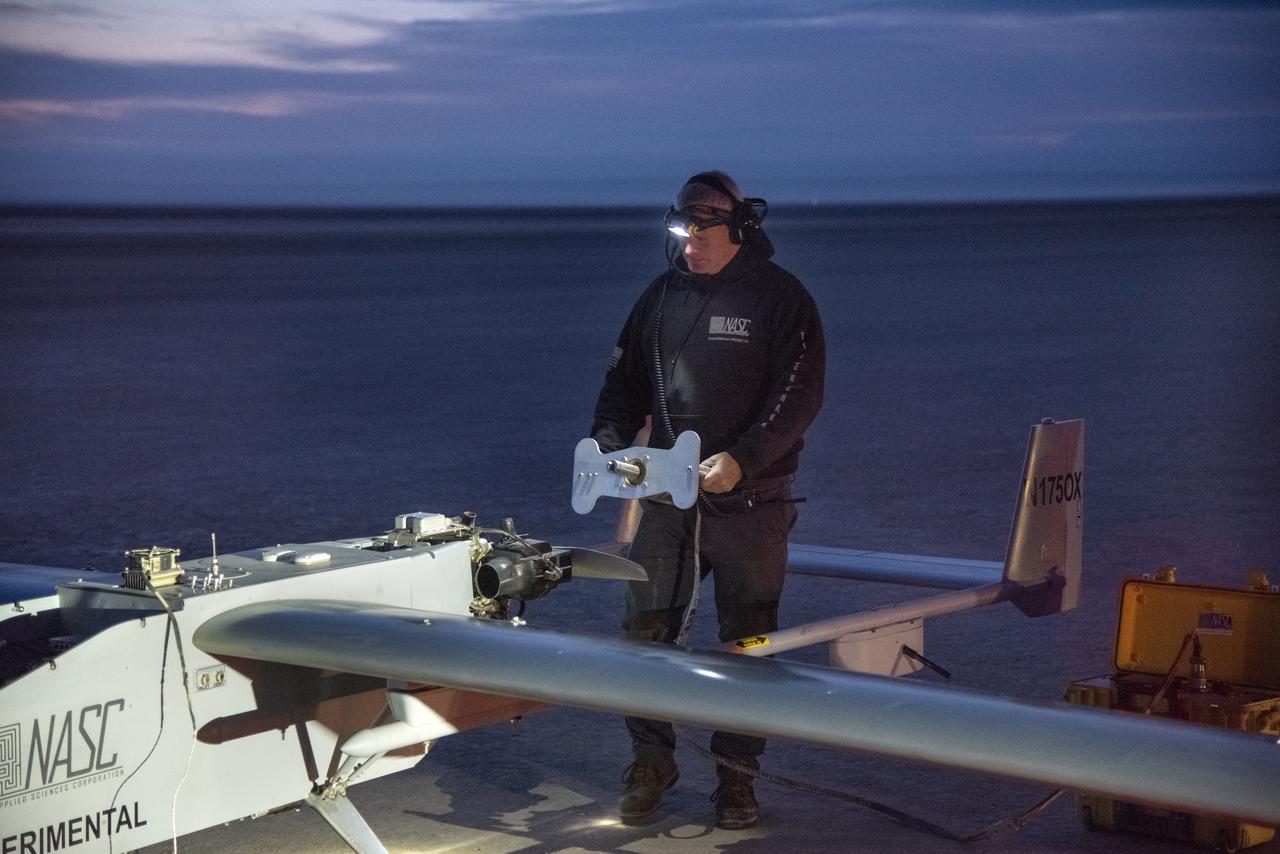
The Navmar Applied Sciences Corporation’s TigerShark prepares for its final takeoff at Edwards Air Force Base for the Unmanned Aircraft Systems integration in the National Airspace Systems, Flight Test Series Six (FT6) project. FT6 flight tests took place at NASA’s Armstrong Flight Research Center in California and focused on low size weight and power sensors for Detect and Avoid (DAA) operations in controlled airspace to inform the FAA through the RTCA Special Committee DAA Working Group on the phase 2 minimum operational performance standards for DAA and air-to-air radar.
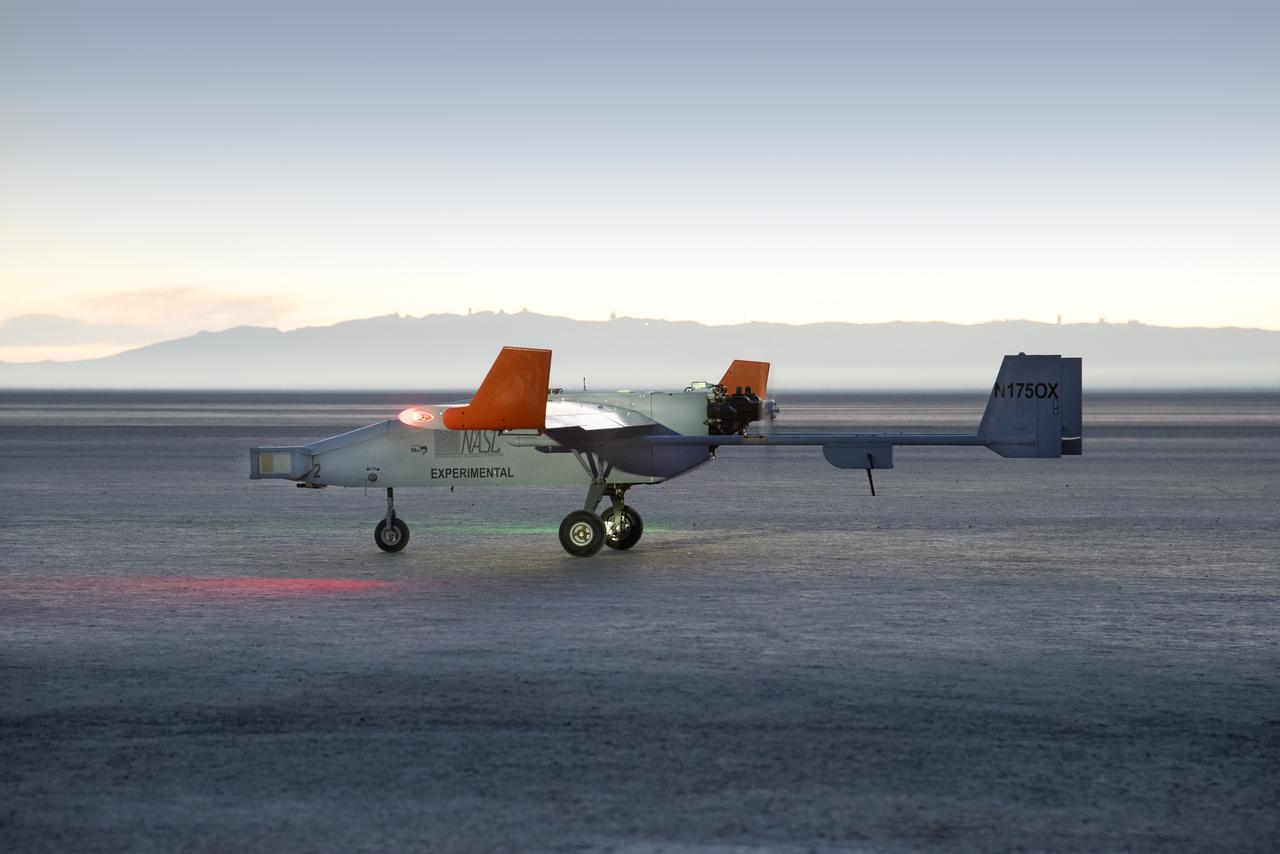
The Navmar Applied Sciences Corporation’s TigerShark prepares for its final takeoff at Edwards Air Force Base for the Unmanned Aircraft Systems integration in the National Airspace Systems, Flight Test Series Six (FT6) project. FT6 flight tests took place at NASA’s Armstrong Flight Research Center in California and focused on low size weight and power sensors for Detect and Avoid (DAA) operations in controlled airspace to inform the FAA through the RTCA Special Committee DAA Working Group on the phase 2 minimum operational performance standards for DAA and air-to-air radar.
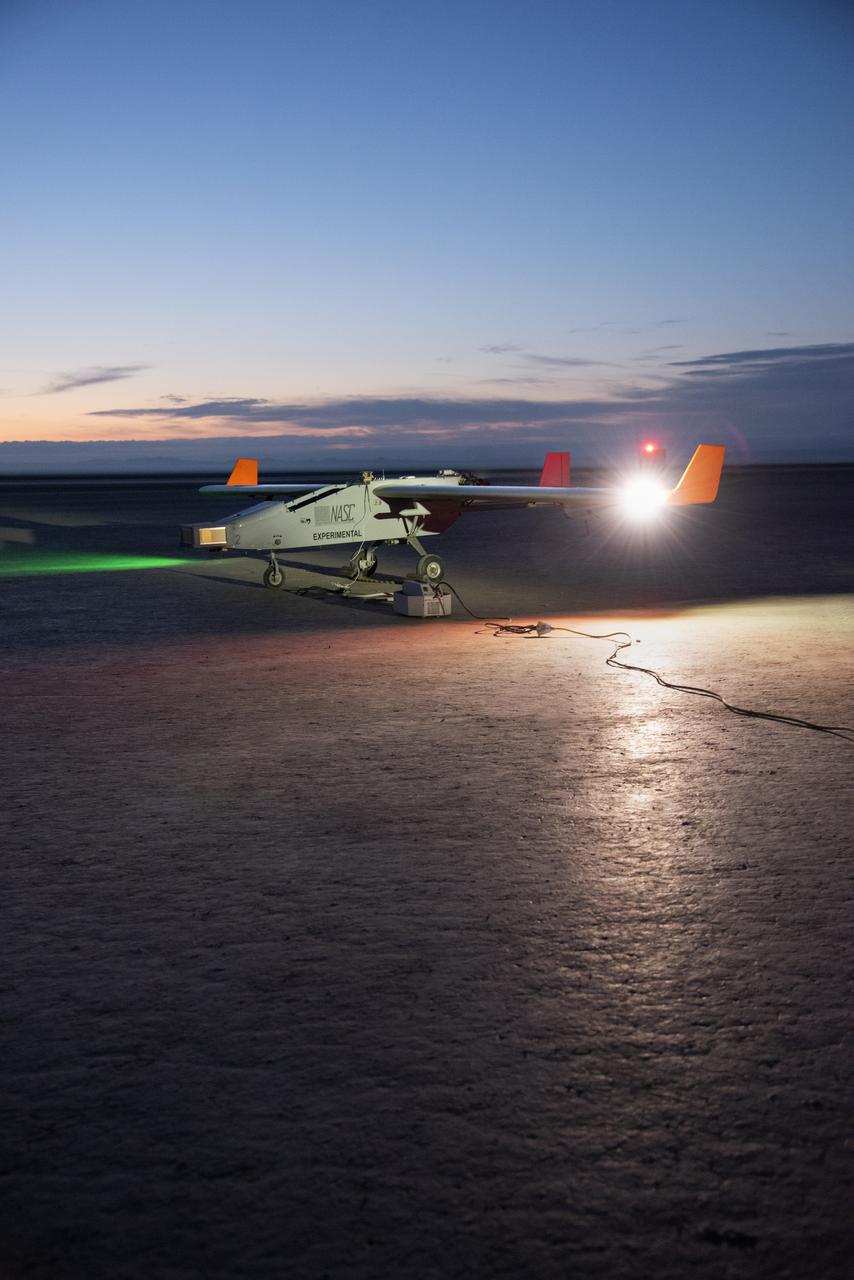
The Navmar Applied Sciences Corporation’s TigerShark prepares for its final takeoff at Edwards Air Force Base for the Unmanned Aircraft Systems integration in the National Airspace Systems, Flight Test Series Six (FT6) project. FT6 flight tests took place at NASA’s Armstrong Flight Research Center in California and focused on low size weight and power sensors for Detect and Avoid (DAA) operations in controlled airspace to inform the FAA through the RTCA Special Committee DAA Working Group on the phase 2 minimum operational performance standards for DAA and air-to-air radar.
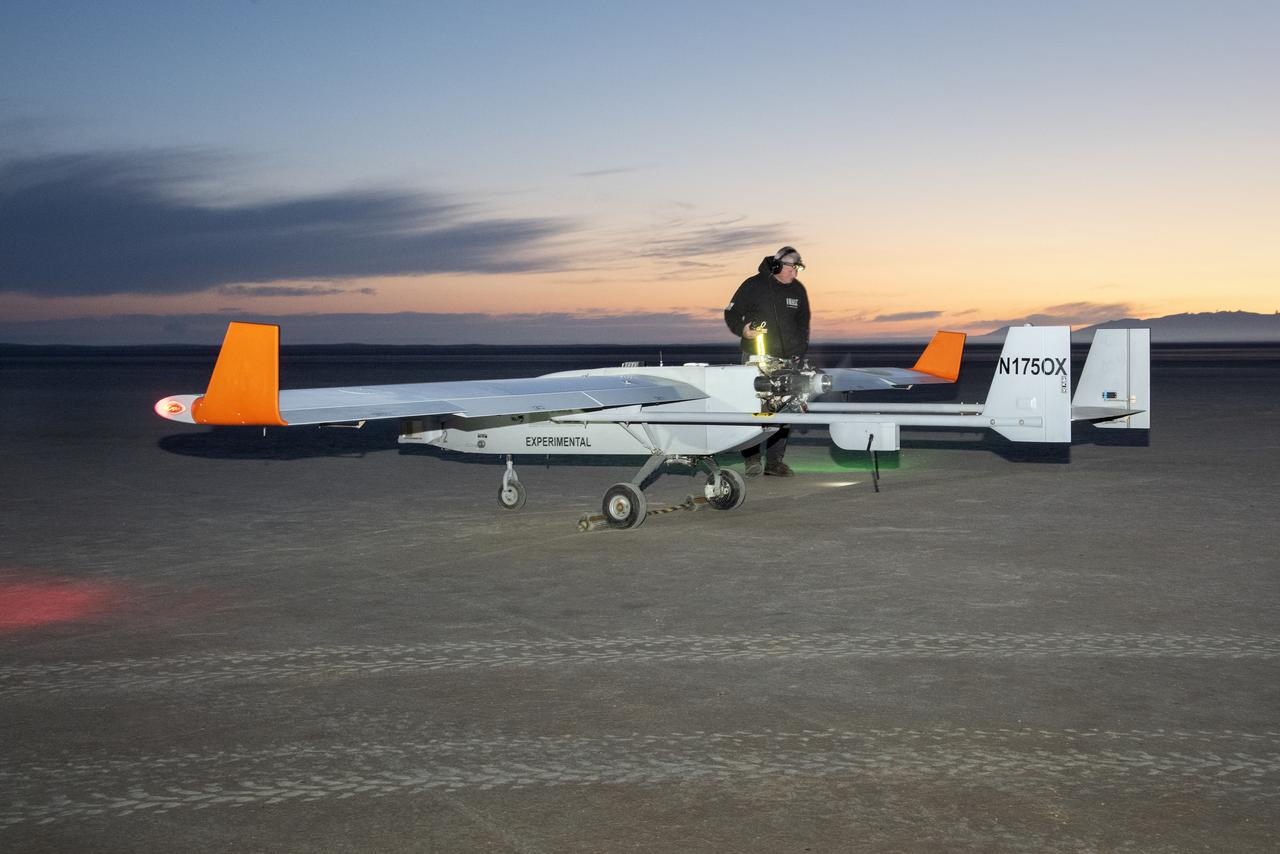
The Navmar Applied Sciences Corporation’s TigerShark prepares for its final takeoff at Edwards Air Force Base for the Unmanned Aircraft Systems integration in the National Airspace Systems, Flight Test Series Six (FT6) project. FT6 flight tests took place at NASA’s Armstrong Flight Research Center in California and focused on low size weight and power sensors for Detect and Avoid (DAA) operations in controlled airspace to inform the FAA through the RTCA Special Committee DAA Working Group on the phase 2 minimum operational performance standards for DAA and air-to-air radar.
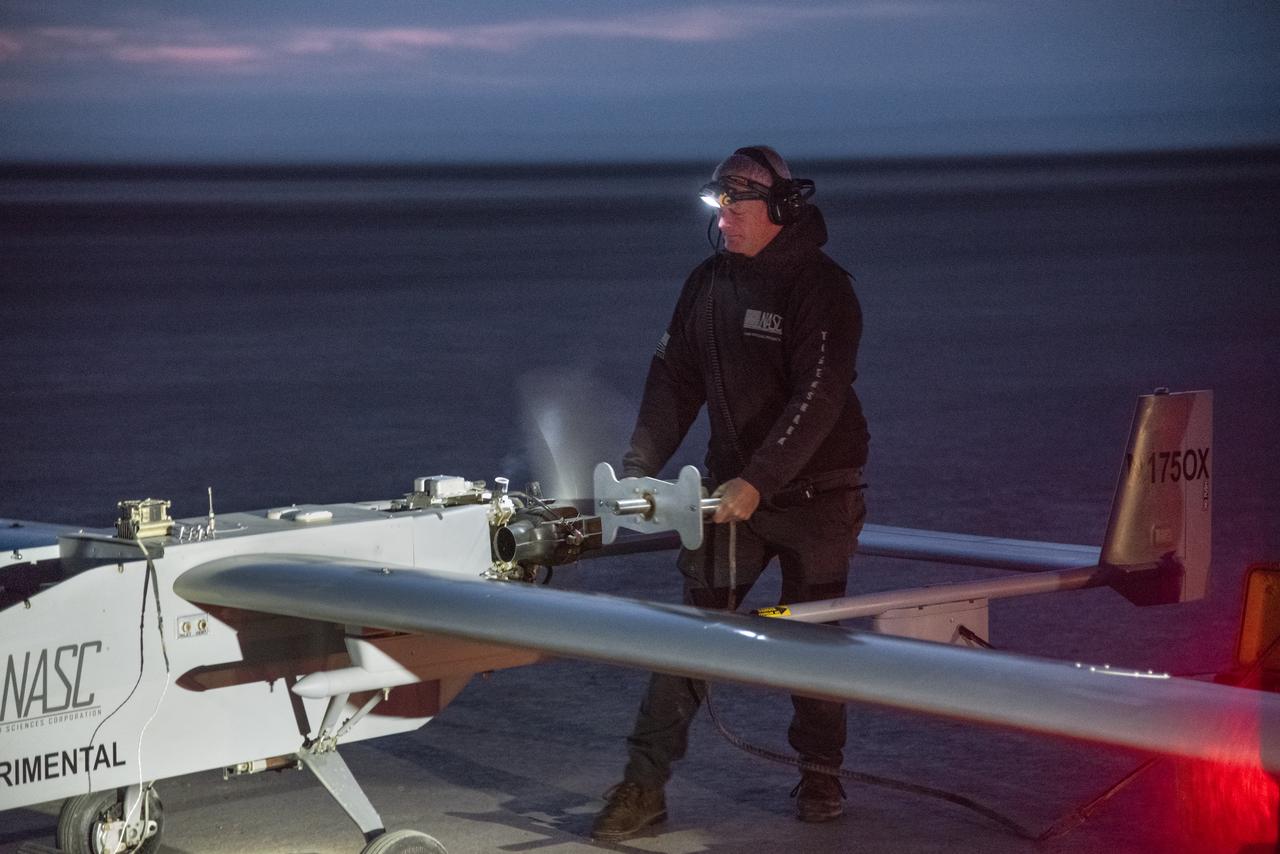
The Navmar Applied Sciences Corporation’s TigerShark prepares for its final takeoff at Edwards Air Force Base for the Unmanned Aircraft Systems integration in the National Airspace Systems, Flight Test Series Six (FT6) project. FT6 flight tests took place at NASA’s Armstrong Flight Research Center in California and focused on low size weight and power sensors for Detect and Avoid (DAA) operations in controlled airspace to inform the FAA through the RTCA Special Committee DAA Working Group on the phase 2 minimum operational performance standards for DAA and air-to-air radar.
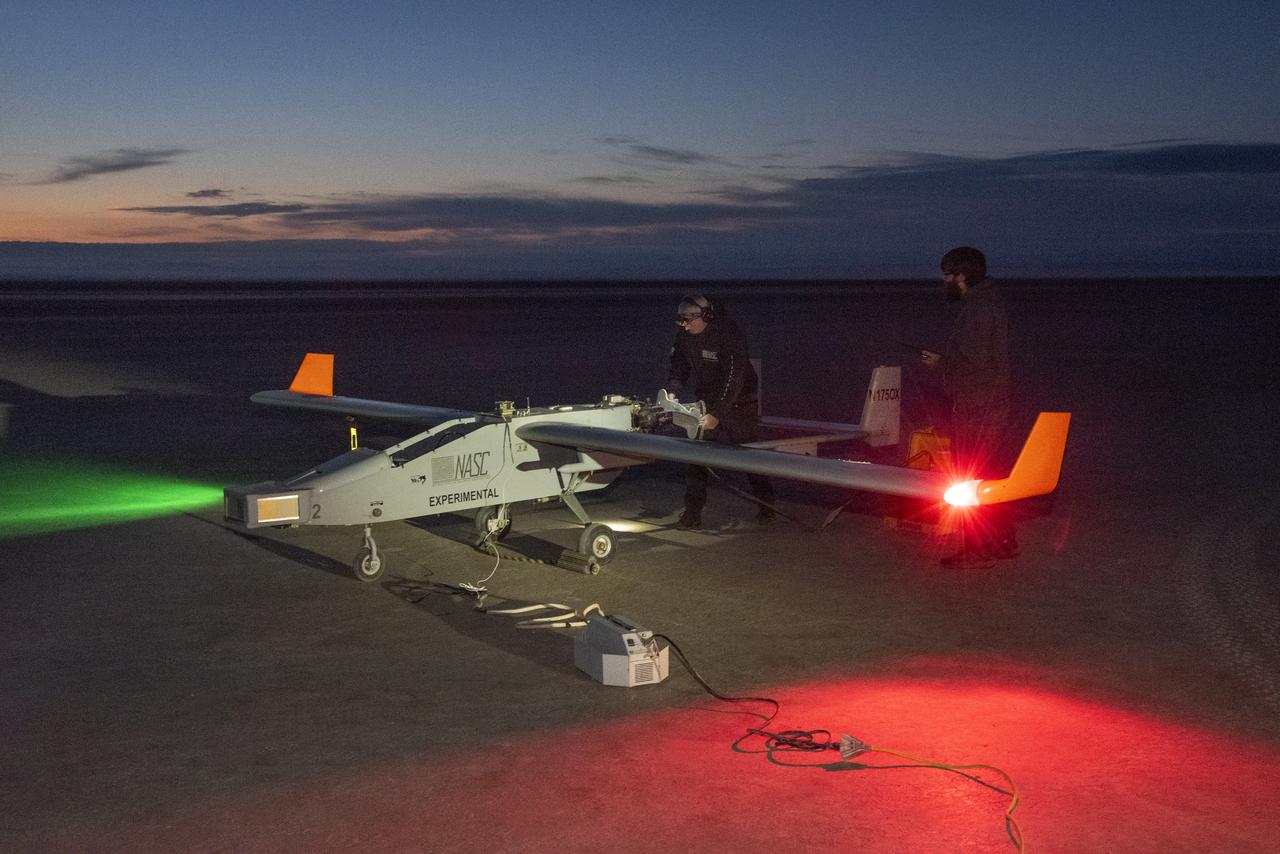
The Navmar Applied Sciences Corporation’s TigerShark prepares for its final takeoff at Edwards Air Force Base for the Unmanned Aircraft Systems integration in the National Airspace Systems, Flight Test Series Six (FT6) project. FT6 flight tests took place at NASA’s Armstrong Flight Research Center in California and focused on low size weight and power sensors for Detect and Avoid (DAA) operations in controlled airspace to inform the FAA through the RTCA Special Committee DAA Working Group on the phase 2 minimum operational performance standards for DAA and air-to-air radar.
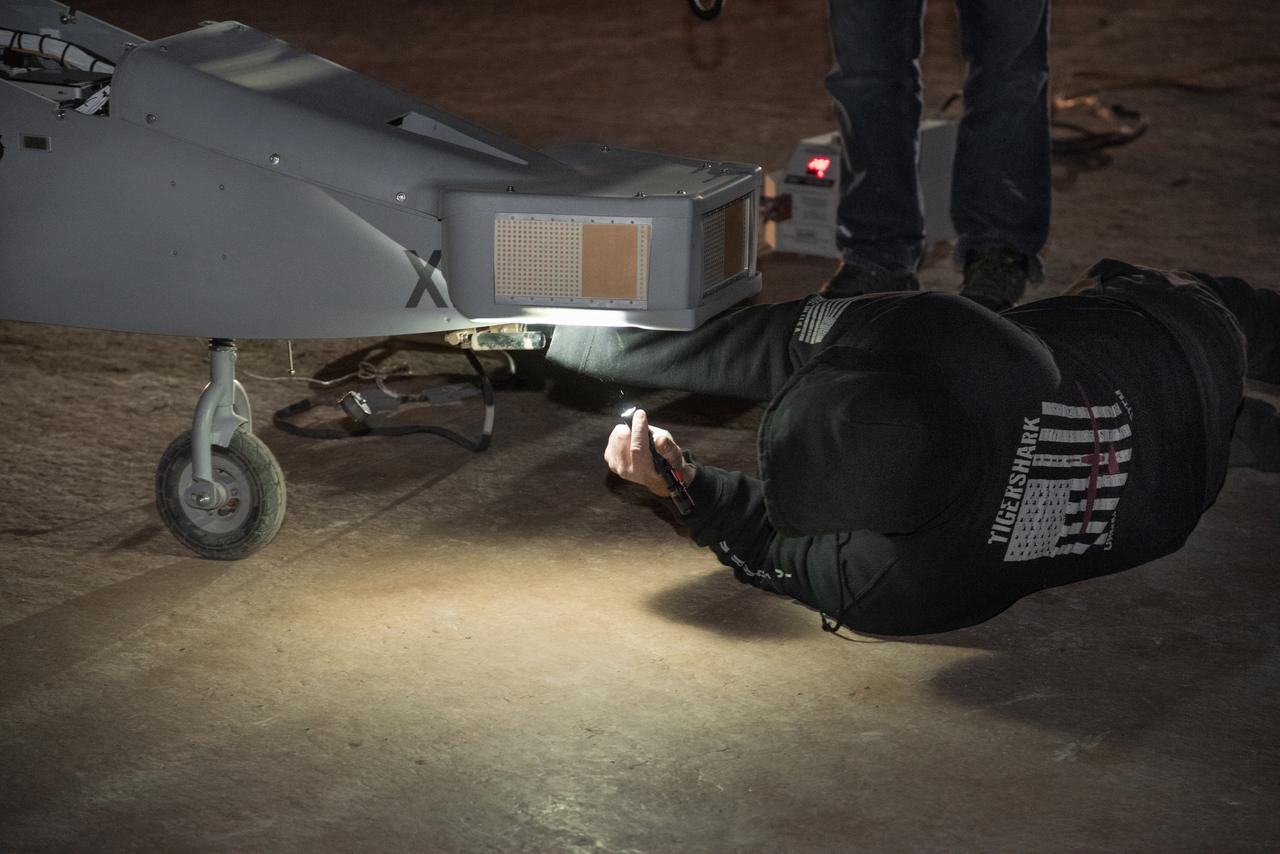
The Navmar Applied Sciences Corporation’s TigerShark prepares for its final takeoff at Edwards Air Force Base for the Unmanned Aircraft Systems integration in the National Airspace Systems, Flight Test Series Six (FT6) project. FT6 flight tests took place at NASA’s Armstrong Flight Research Center in California and focused on low size weight and power sensors for Detect and Avoid (DAA) operations in controlled airspace to inform the FAA through the RTCA Special Committee DAA Working Group on the phase 2 minimum operational performance standards for DAA and air-to-air radar.
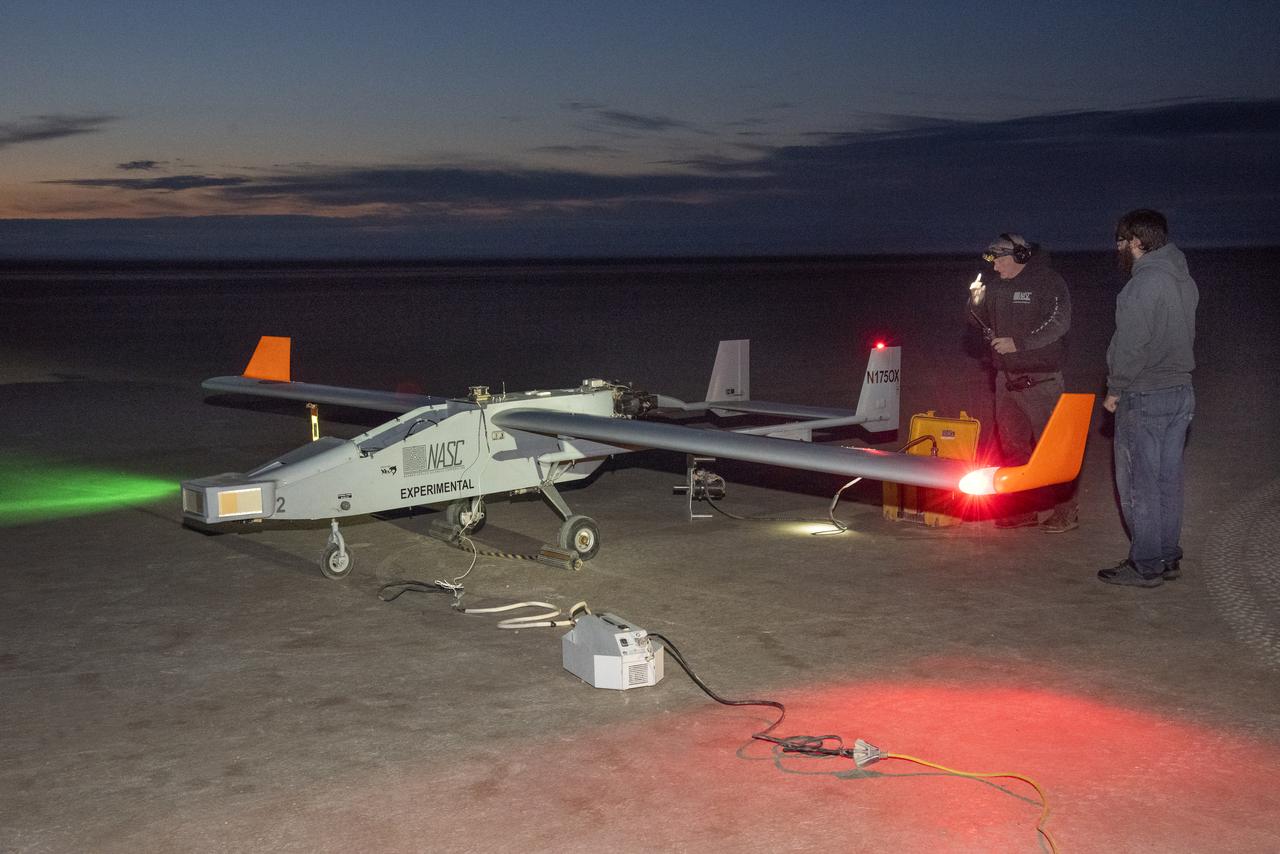
The Navmar Applied Sciences Corporation’s TigerShark prepares for its final takeoff at Edwards Air Force Base for the Unmanned Aircraft Systems integration in the National Airspace Systems, Flight Test Series Six (FT6) project. FT6 flight tests took place at NASA’s Armstrong Flight Research Center in California and focused on low size weight and power sensors for Detect and Avoid (DAA) operations in controlled airspace to inform the FAA through the RTCA Special Committee DAA Working Group on the phase 2 minimum operational performance standards for DAA and air-to-air radar.
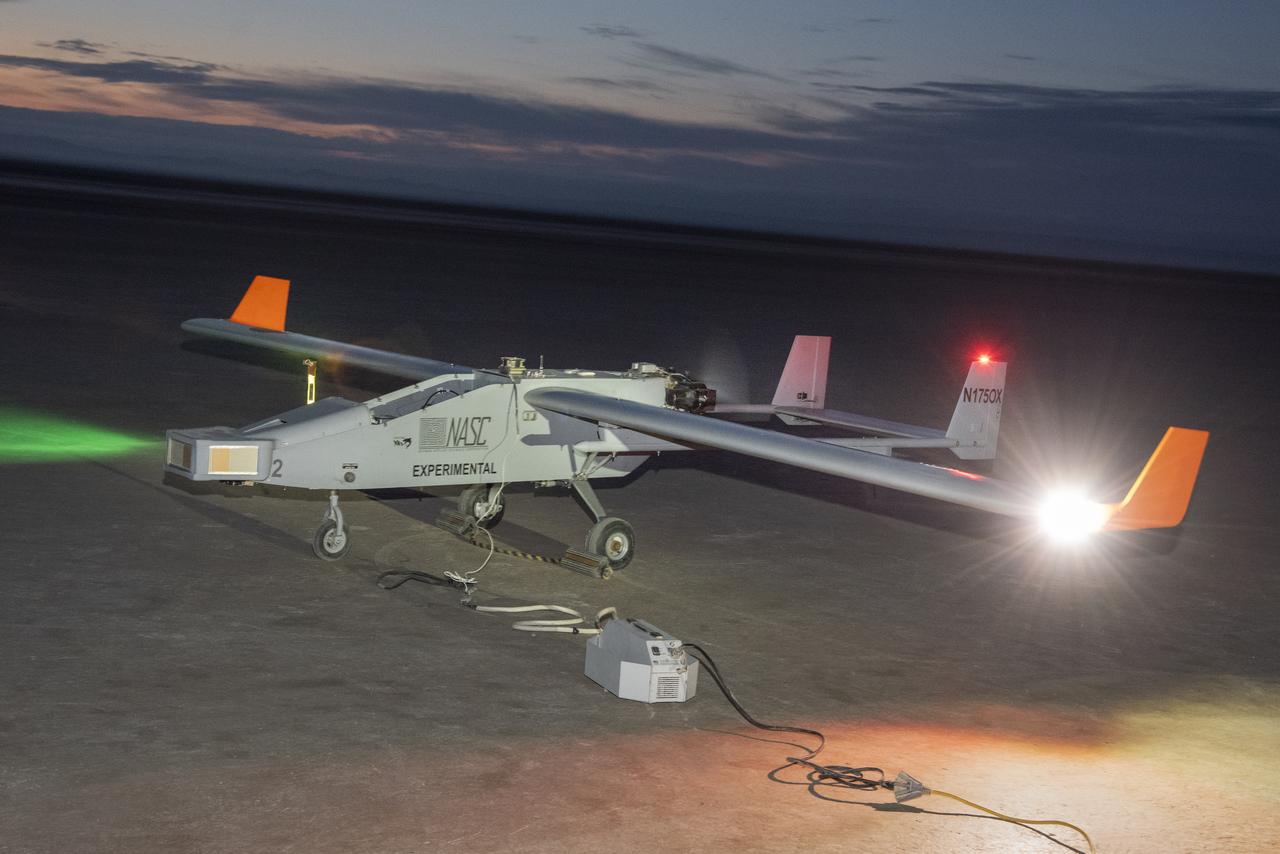
The Navmar Applied Sciences Corporation’s TigerShark prepares for its final takeoff at Edwards Air Force Base for the Unmanned Aircraft Systems integration in the National Airspace Systems, Flight Test Series Six (FT6) project. FT6 flight tests took place at NASA’s Armstrong Flight Research Center in California and focused on low size weight and power sensors for Detect and Avoid (DAA) operations in controlled airspace to inform the FAA through the RTCA Special Committee DAA Working Group on the phase 2 minimum operational performance standards for DAA and air-to-air radar.
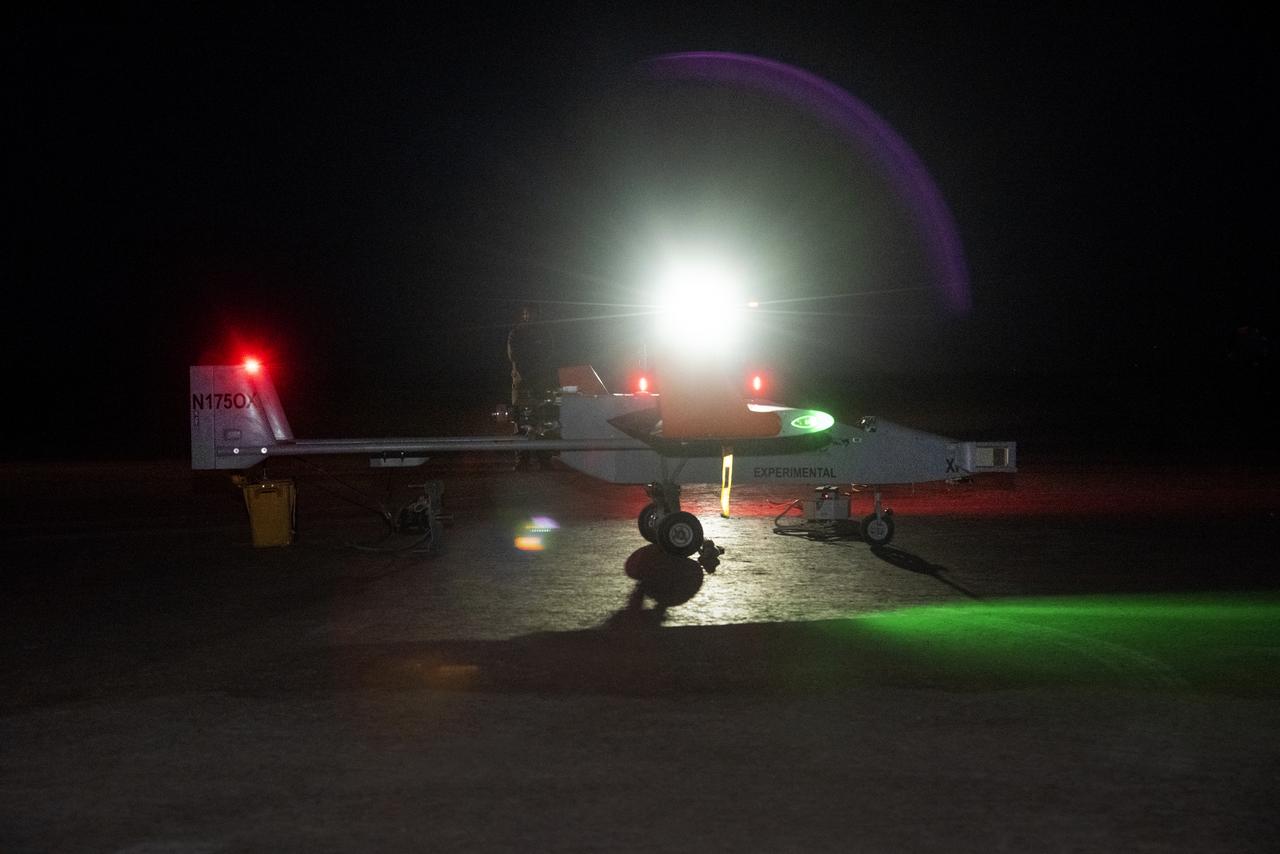
The Navmar Applied Sciences Corporation’s TigerShark prepares for its final takeoff at Edwards Air Force Base for the Unmanned Aircraft Systems integration in the National Airspace Systems, Flight Test Series Six (FT6) project. FT6 flight tests took place at NASA’s Armstrong Flight Research Center in California and focused on low size weight and power sensors for Detect and Avoid (DAA) operations in controlled airspace to inform the FAA through the RTCA Special Committee DAA Working Group on the phase 2 minimum operational performance standards for DAA and air-to-air radar.
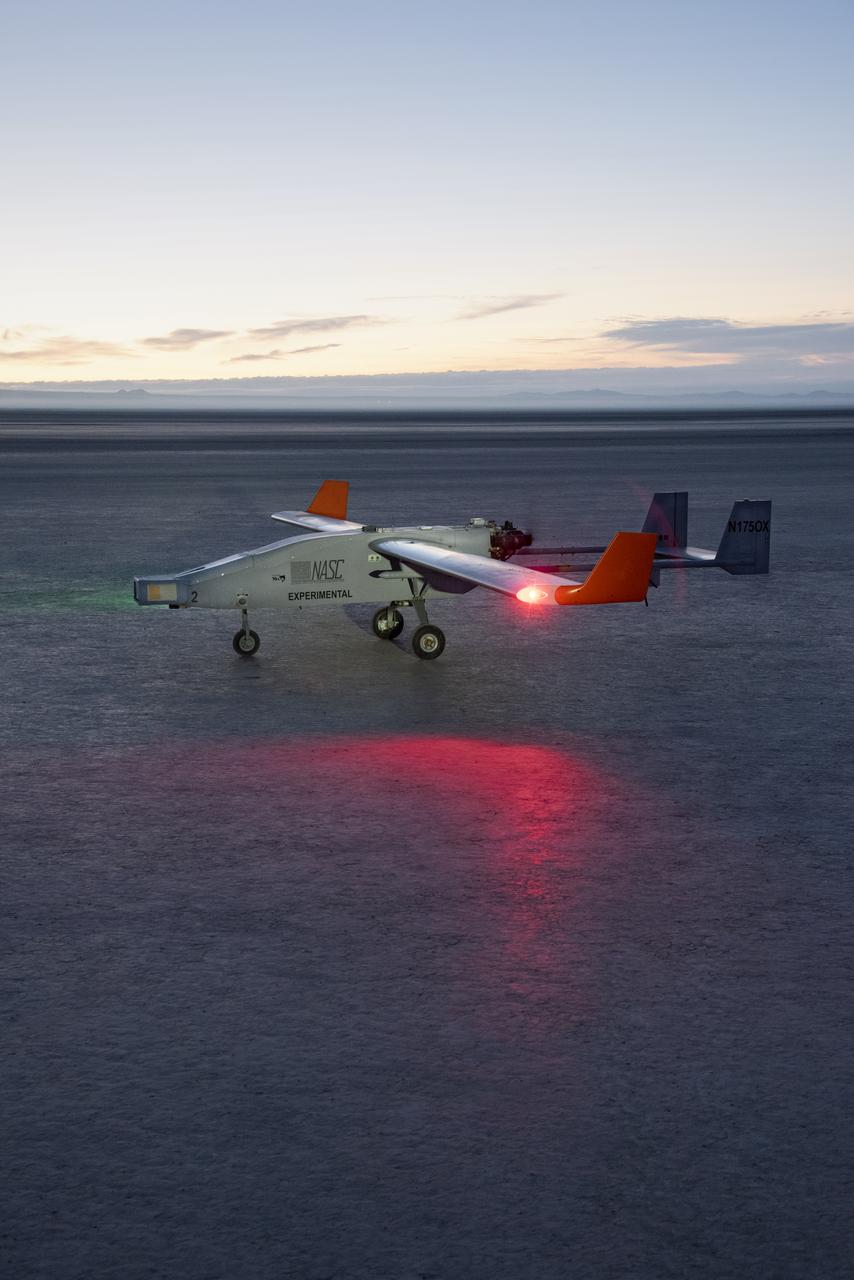
The Navmar Applied Sciences Corporation’s TigerShark prepares for its final takeoff at Edwards Air Force Base for the Unmanned Aircraft Systems integration in the National Airspace Systems, Flight Test Series Six (FT6) project. FT6 flight tests took place at NASA’s Armstrong Flight Research Center in California and focused on low size weight and power sensors for Detect and Avoid (DAA) operations in controlled airspace to inform the FAA through the RTCA Special Committee DAA Working Group on the phase 2 minimum operational performance standards for DAA and air-to-air radar.
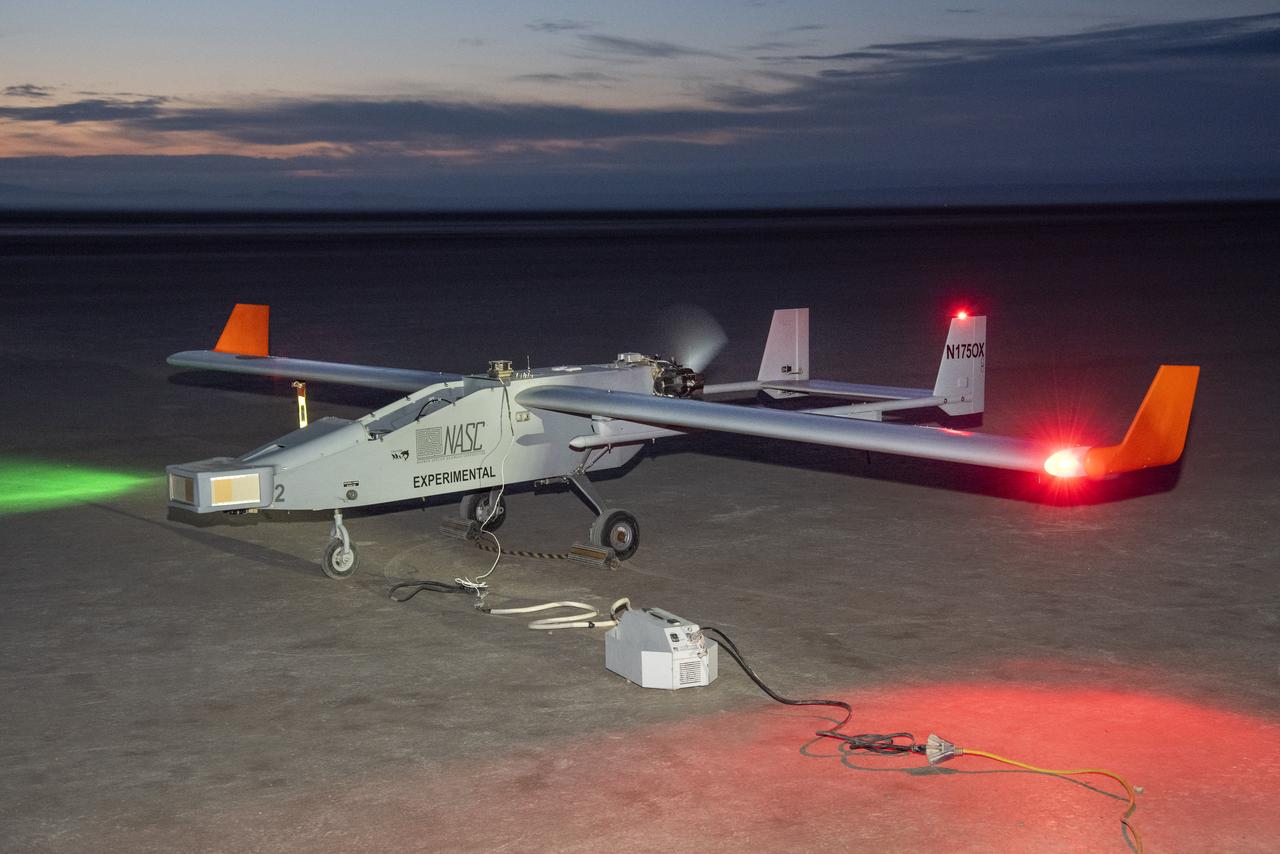
The Navmar Applied Sciences Corporation’s TigerShark prepares for its final takeoff at Edwards Air Force Base for the Unmanned Aircraft Systems integration in the National Airspace Systems, Flight Test Series Six (FT6) project. FT6 flight tests took place at NASA’s Armstrong Flight Research Center in California and focused on low size weight and power sensors for Detect and Avoid (DAA) operations in controlled airspace to inform the FAA through the RTCA Special Committee DAA Working Group on the phase 2 minimum operational performance standards for DAA and air-to-air radar.
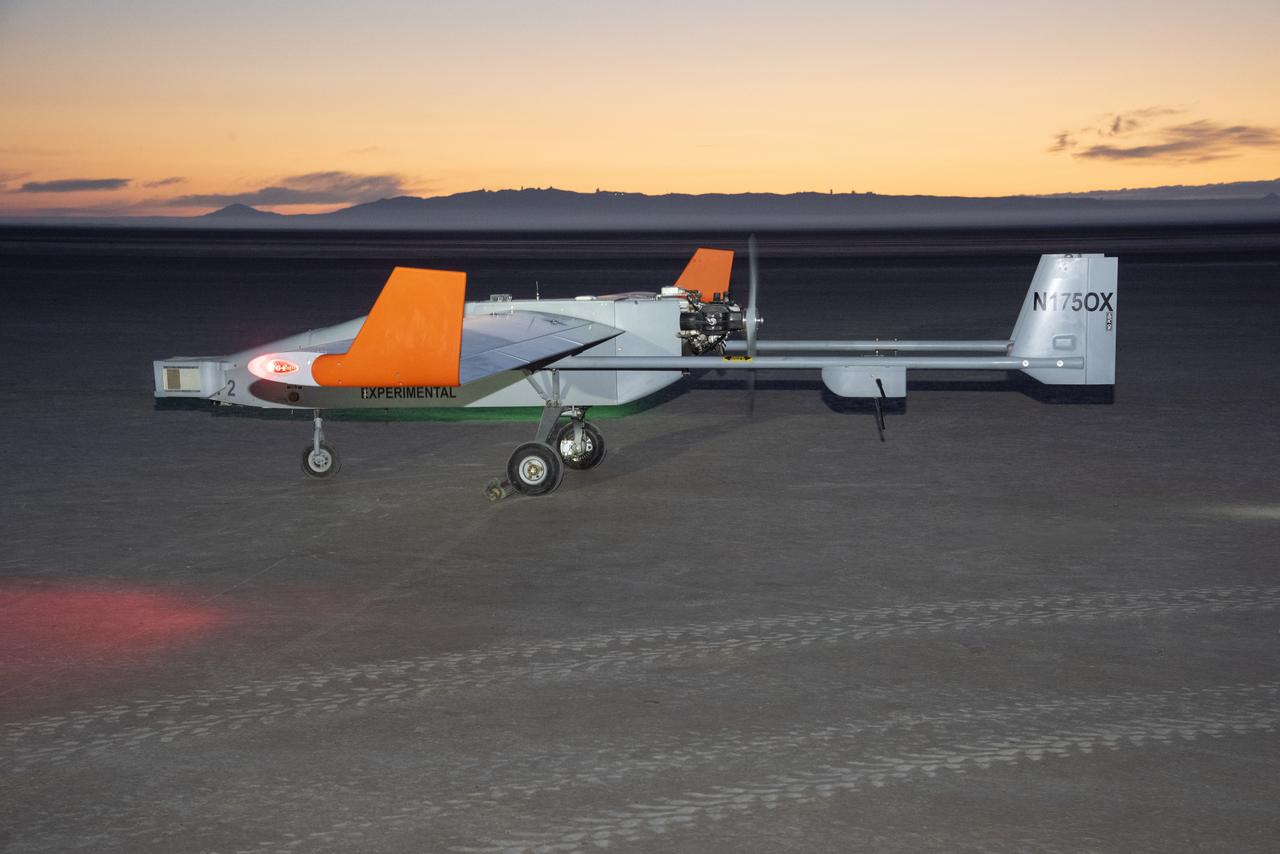
The Navmar Applied Sciences Corporation’s TigerShark prepares for its final takeoff at Edwards Air Force Base for the Unmanned Aircraft Systems integration in the National Airspace Systems, Flight Test Series Six (FT6) project. FT6 flight tests took place at NASA’s Armstrong Flight Research Center in California and focused on low size weight and power sensors for Detect and Avoid (DAA) operations in controlled airspace to inform the FAA through the RTCA Special Committee DAA Working Group on the phase 2 minimum operational performance standards for DAA and air-to-air radar.
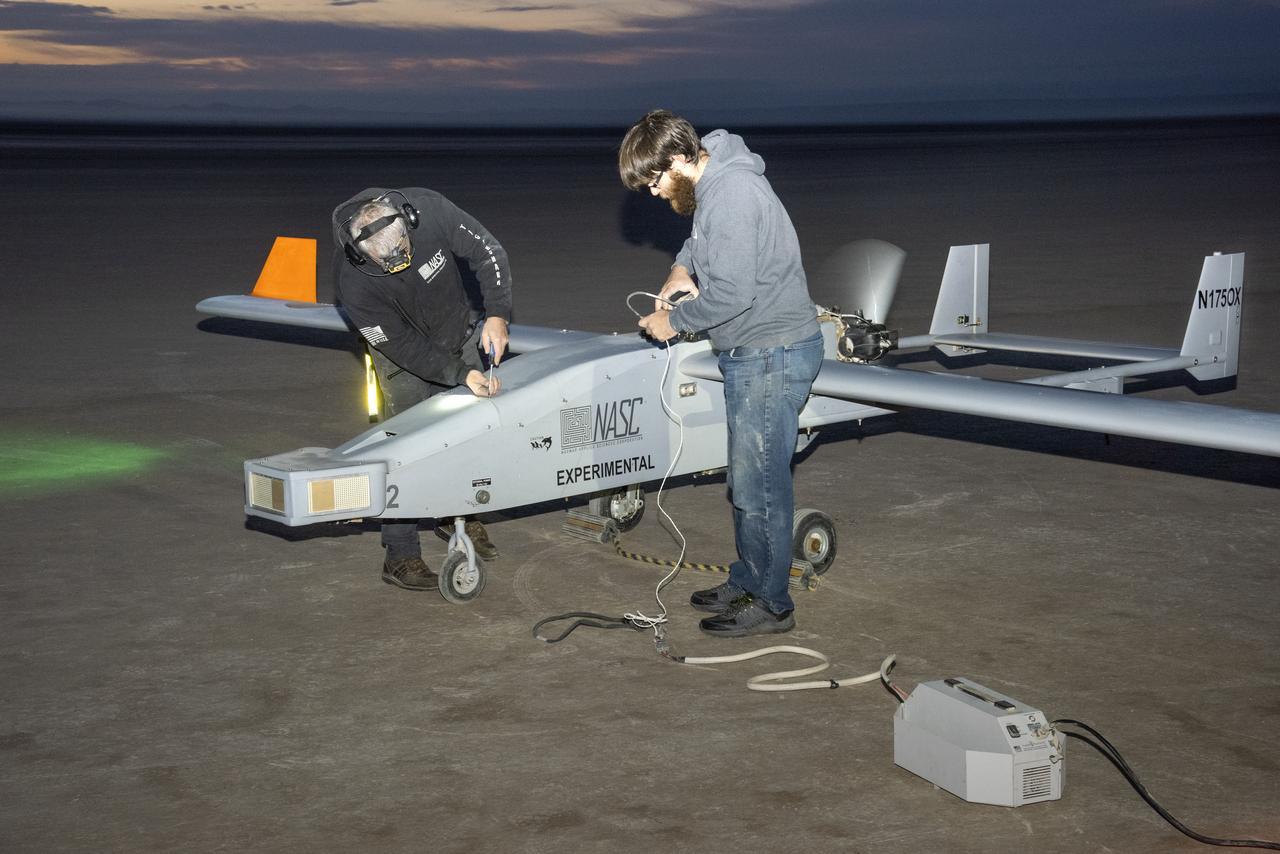
The Navmar Applied Sciences Corporation’s TigerShark prepares for its final takeoff at Edwards Air Force Base for the Unmanned Aircraft Systems integration in the National Airspace Systems, Flight Test Series Six (FT6) project. FT6 flight tests took place at NASA’s Armstrong Flight Research Center in California and focused on low size weight and power sensors for Detect and Avoid (DAA) operations in controlled airspace to inform the FAA through the RTCA Special Committee DAA Working Group on the phase 2 minimum operational performance standards for DAA and air-to-air radar.
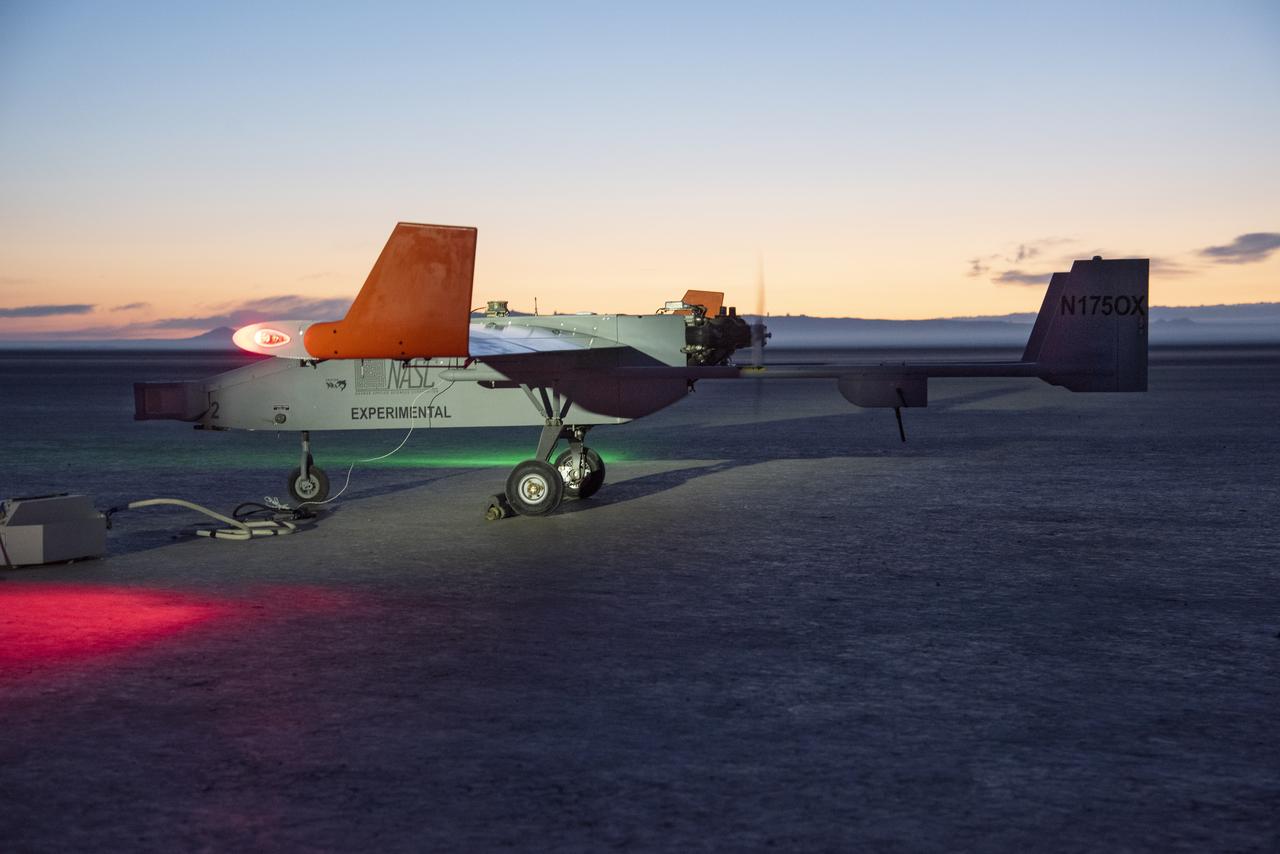
The Navmar Applied Sciences Corporation’s TigerShark prepares for its final takeoff at Edwards Air Force Base for the Unmanned Aircraft Systems integration in the National Airspace Systems, Flight Test Series Six (FT6) project. FT6 flight tests took place at NASA’s Armstrong Flight Research Center in California and focused on low size weight and power sensors for Detect and Avoid (DAA) operations in controlled airspace to inform the FAA through the RTCA Special Committee DAA Working Group on the phase 2 minimum operational performance standards for DAA and air-to-air radar.
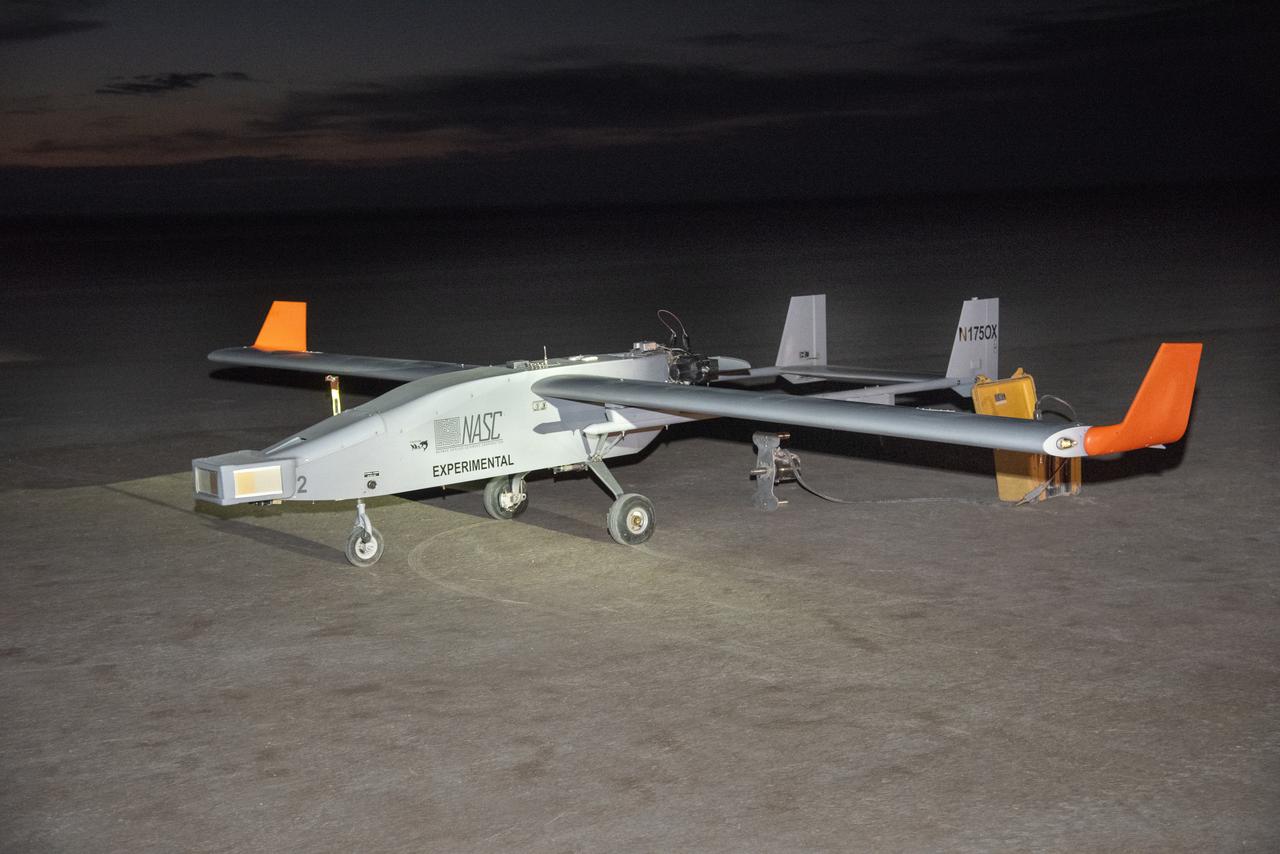
The Navmar Applied Sciences Corporation’s TigerShark prepares for its final takeoff at Edwards Air Force Base for the Unmanned Aircraft Systems integration in the National Airspace Systems, Flight Test Series Six (FT6) project. FT6 flight tests took place at NASA’s Armstrong Flight Research Center in California and focused on low size weight and power sensors for Detect and Avoid (DAA) operations in controlled airspace to inform the FAA through the RTCA Special Committee DAA Working Group on the phase 2 minimum operational performance standards for DAA and air-to-air radar.
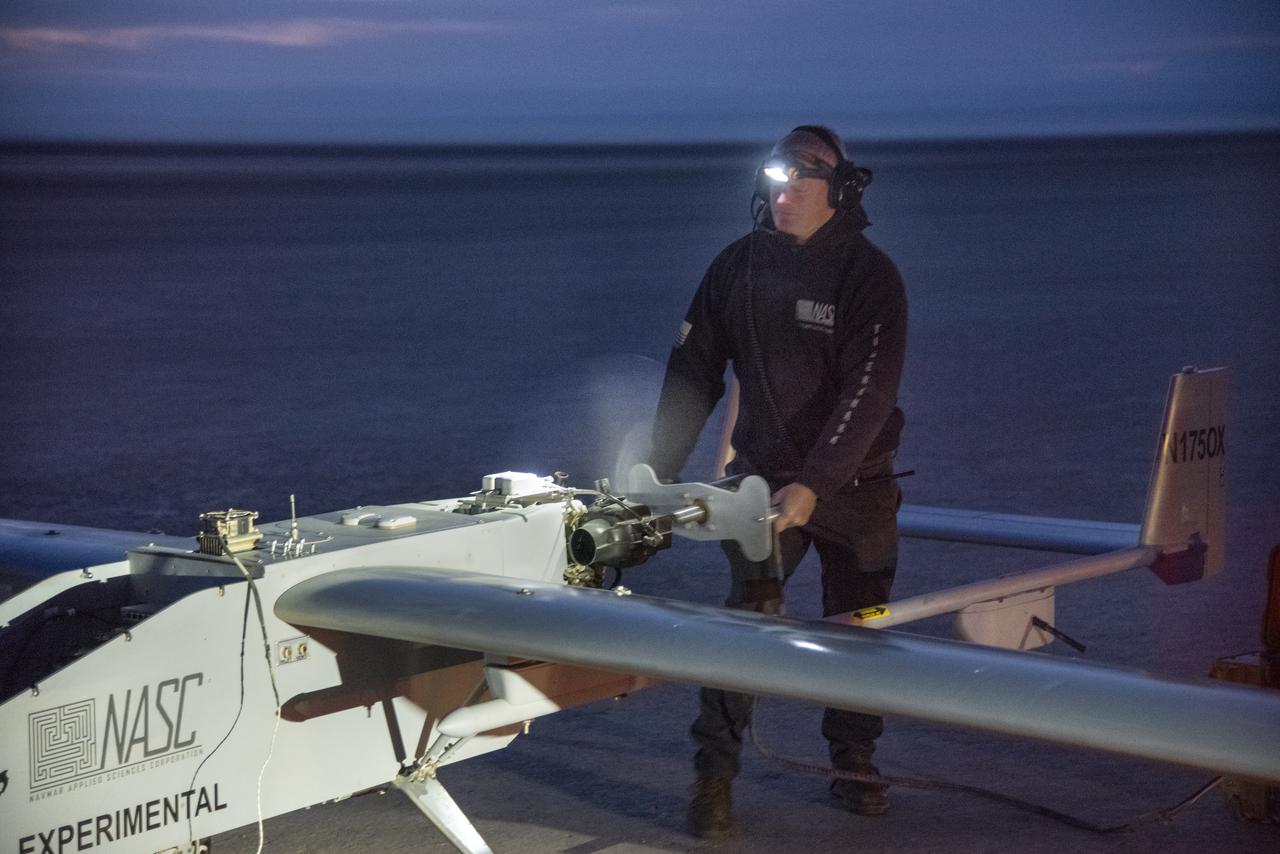
The Navmar Applied Sciences Corporation’s TigerShark prepares for its final takeoff at Edwards Air Force Base for the Unmanned Aircraft Systems integration in the National Airspace Systems, Flight Test Series Six (FT6) project. FT6 flight tests took place at NASA’s Armstrong Flight Research Center in California and focused on low size weight and power sensors for Detect and Avoid (DAA) operations in controlled airspace to inform the FAA through the RTCA Special Committee DAA Working Group on the phase 2 minimum operational performance standards for DAA and air-to-air radar.
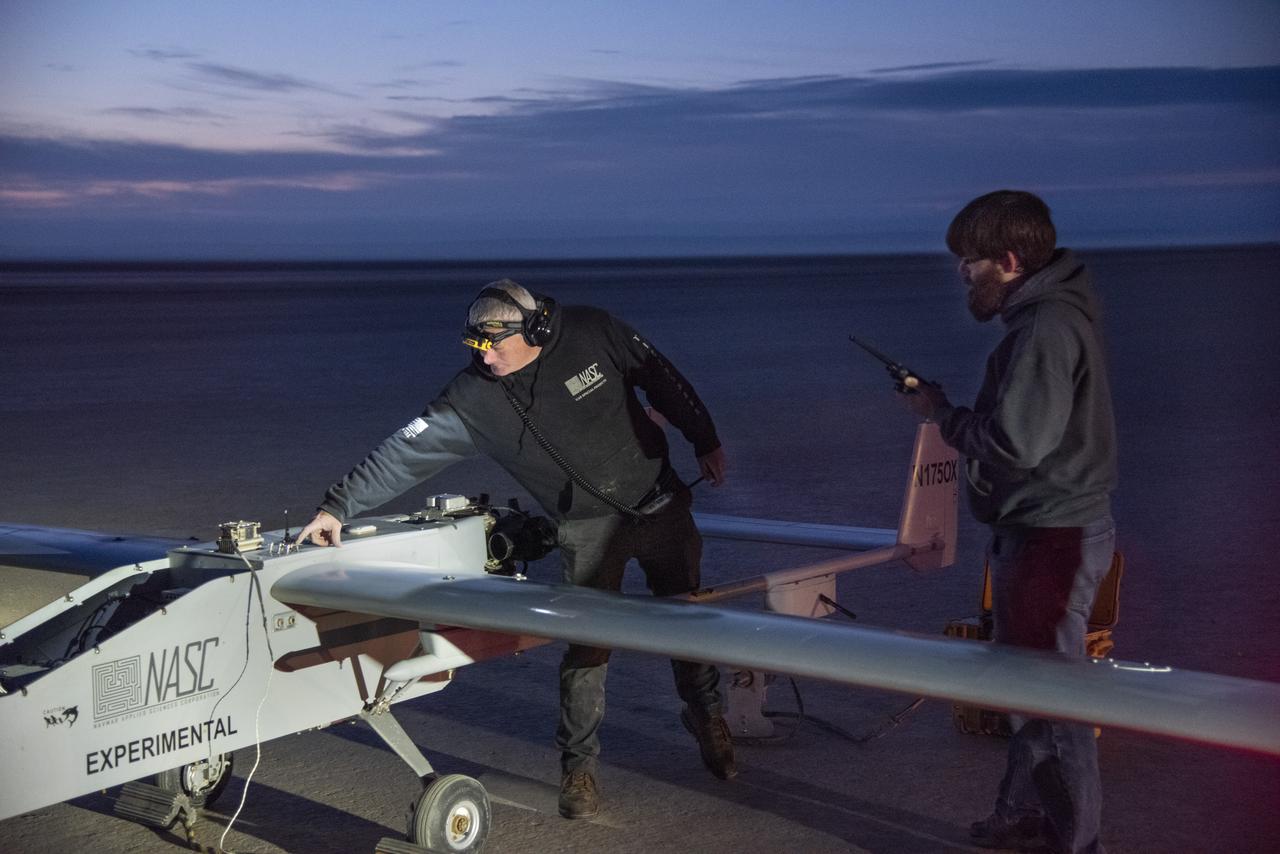
The Navmar Applied Sciences Corporation’s TigerShark prepares for its final takeoff at Edwards Air Force Base for the Unmanned Aircraft Systems integration in the National Airspace Systems, Flight Test Series Six (FT6) project. FT6 flight tests took place at NASA’s Armstrong Flight Research Center in California and focused on low size weight and power sensors for Detect and Avoid (DAA) operations in controlled airspace to inform the FAA through the RTCA Special Committee DAA Working Group on the phase 2 minimum operational performance standards for DAA and air-to-air radar.
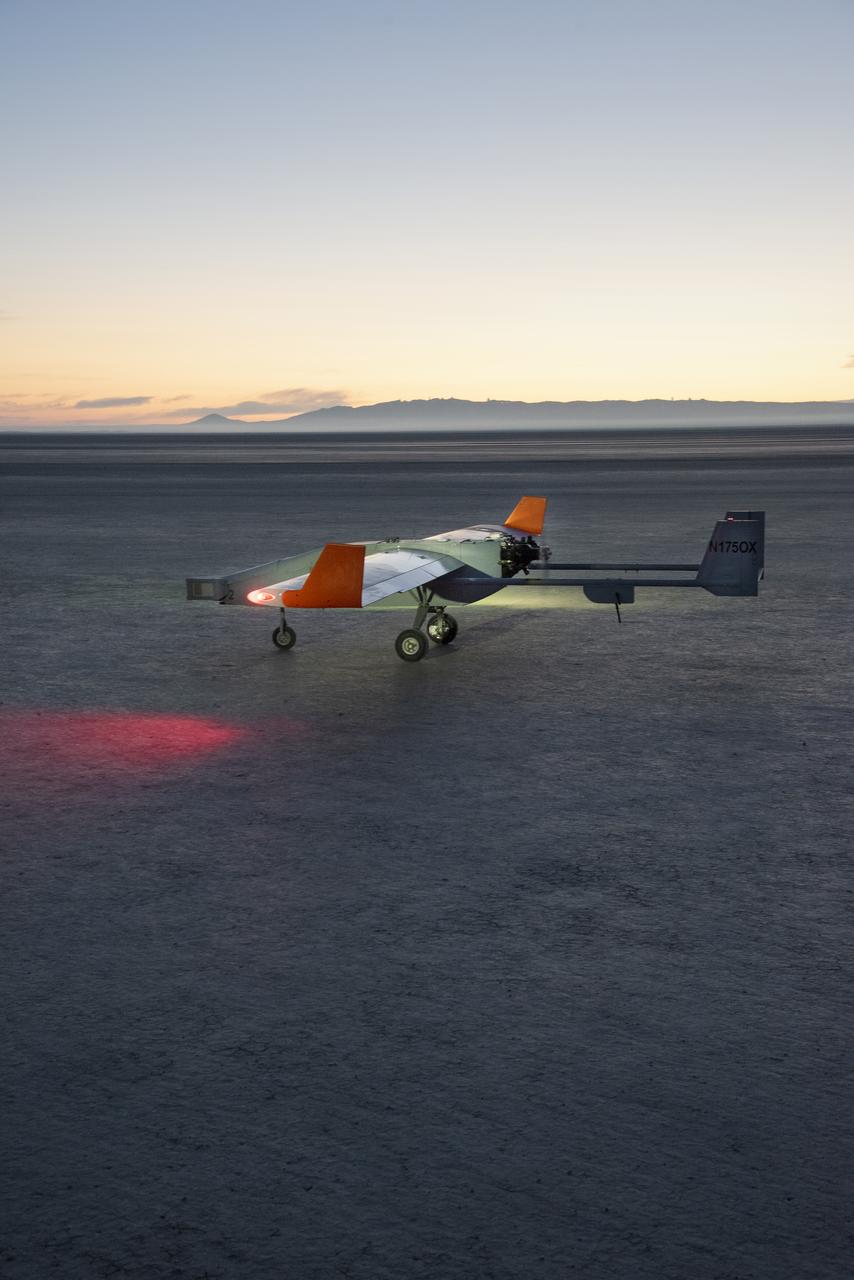
The Navmar Applied Sciences Corporation’s TigerShark prepares for its final takeoff at Edwards Air Force Base for the Unmanned Aircraft Systems integration in the National Airspace Systems, Flight Test Series Six (FT6) project. FT6 flight tests took place at NASA’s Armstrong Flight Research Center in California and focused on low size weight and power sensors for Detect and Avoid (DAA) operations in controlled airspace to inform the FAA through the RTCA Special Committee DAA Working Group on the phase 2 minimum operational performance standards for DAA and air-to-air radar.
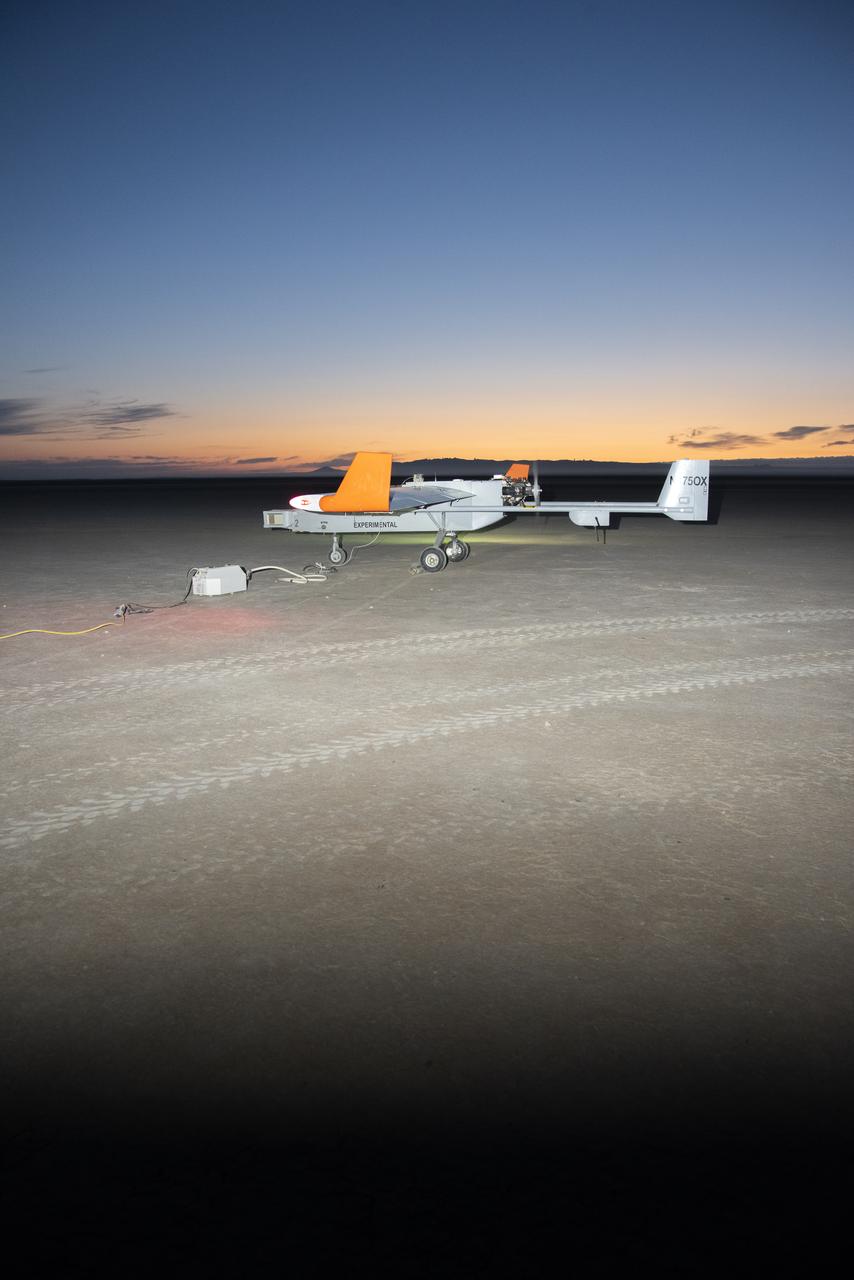
The Navmar Applied Sciences Corporation’s TigerShark prepares for its final takeoff at Edwards Air Force Base for the Unmanned Aircraft Systems integration in the National Airspace Systems, Flight Test Series Six (FT6) project. FT6 flight tests took place at NASA’s Armstrong Flight Research Center in California and focused on low size weight and power sensors for Detect and Avoid (DAA) operations in controlled airspace to inform the FAA through the RTCA Special Committee DAA Working Group on the phase 2 minimum operational performance standards for DAA and air-to-air radar.
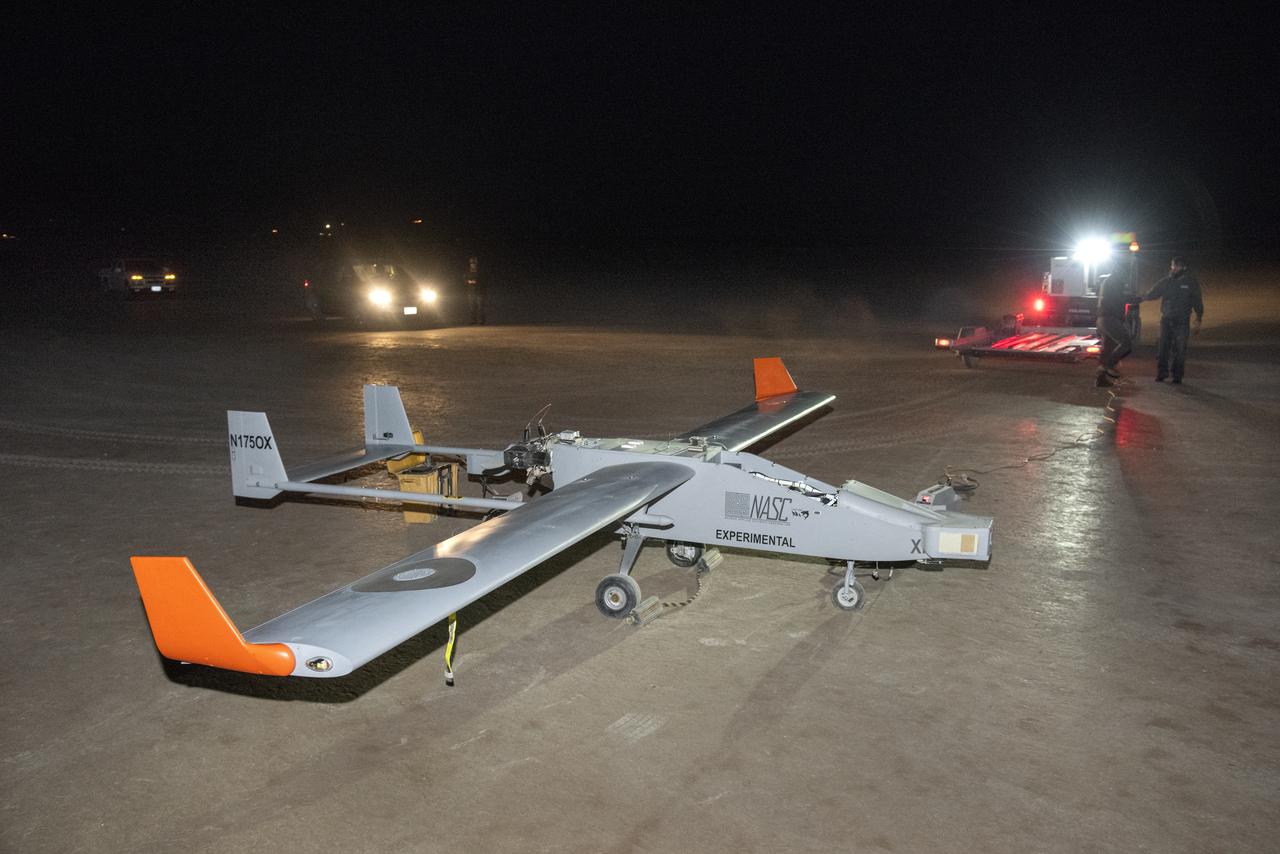
The Navmar Applied Sciences Corporation’s TigerShark prepares for its final takeoff at Edwards Air Force Base for the Unmanned Aircraft Systems integration in the National Airspace Systems, Flight Test Series Six (FT6) project. FT6 flight tests took place at NASA’s Armstrong Flight Research Center in California and focused on low size weight and power sensors for Detect and Avoid (DAA) operations in controlled airspace to inform the FAA through the RTCA Special Committee DAA Working Group on the phase 2 minimum operational performance standards for DAA and air-to-air radar.
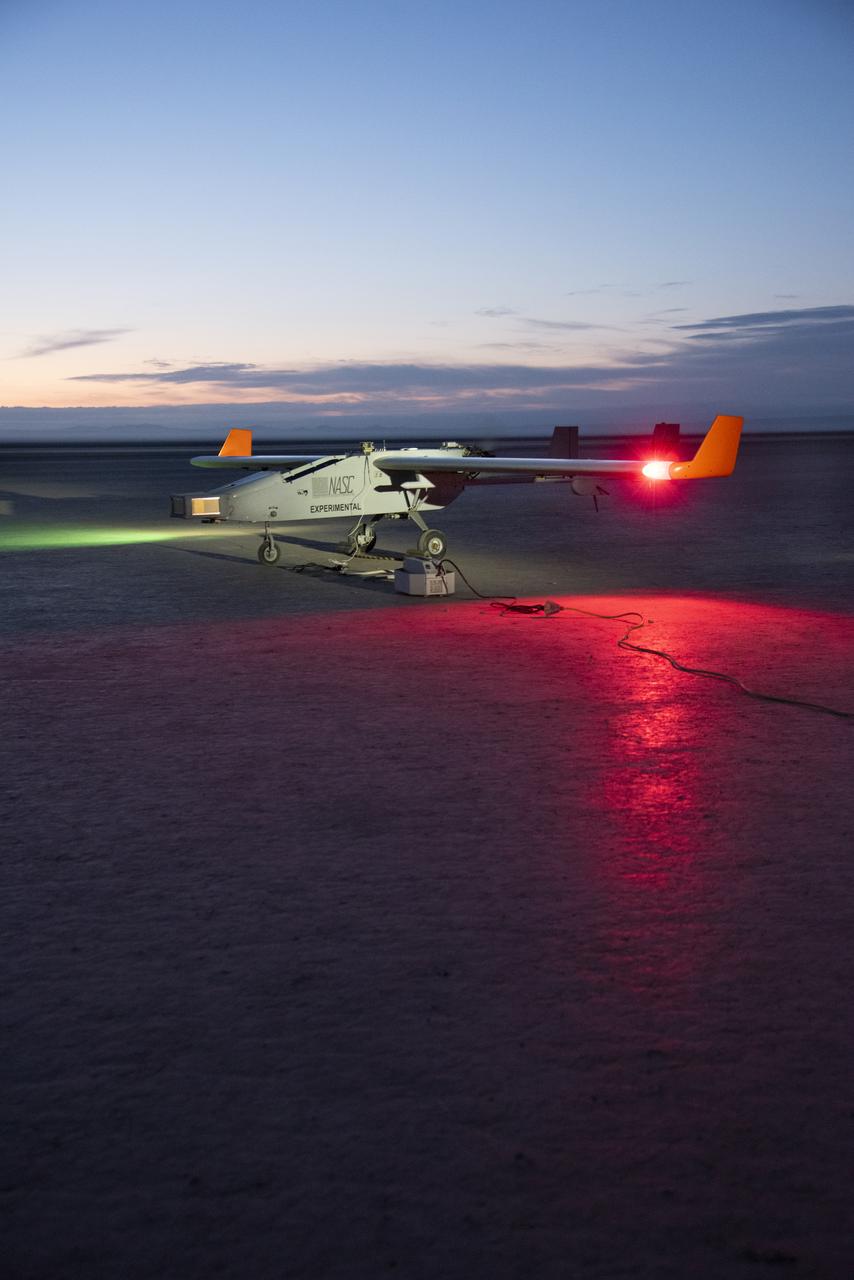
The Navmar Applied Sciences Corporation’s TigerShark prepares for its final takeoff at Edwards Air Force Base for the Unmanned Aircraft Systems integration in the National Airspace Systems, Flight Test Series Six (FT6) project. FT6 flight tests took place at NASA’s Armstrong Flight Research Center in California and focused on low size weight and power sensors for Detect and Avoid (DAA) operations in controlled airspace to inform the FAA through the RTCA Special Committee DAA Working Group on the phase 2 minimum operational performance standards for DAA and air-to-air radar.
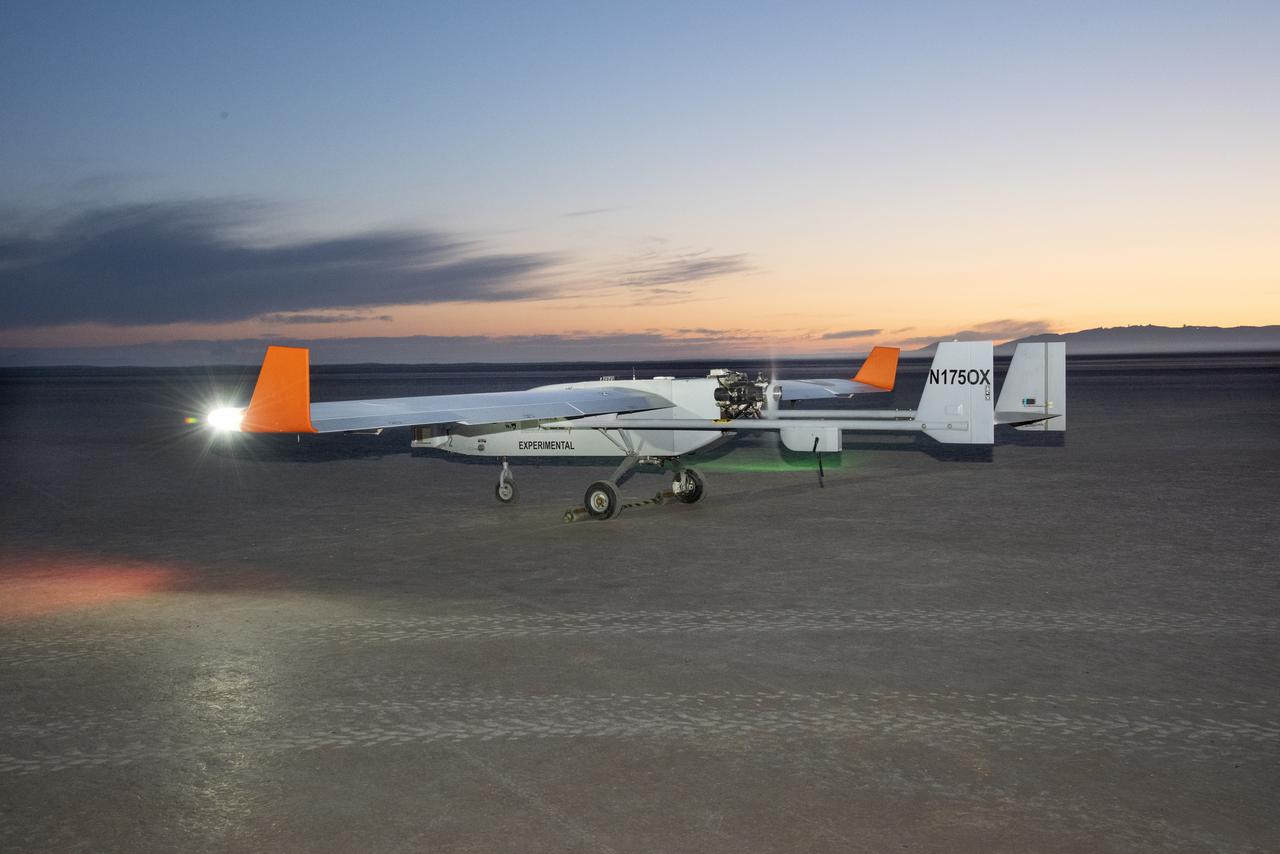
The Navmar Applied Sciences Corporation’s TigerShark prepares for its final takeoff at Edwards Air Force Base for the Unmanned Aircraft Systems integration in the National Airspace Systems, Flight Test Series Six (FT6) project. FT6 flight tests took place at NASA’s Armstrong Flight Research Center in California and focused on low size weight and power sensors for Detect and Avoid (DAA) operations in controlled airspace to inform the FAA through the RTCA Special Committee DAA Working Group on the phase 2 minimum operational performance standards for DAA and air-to-air radar.
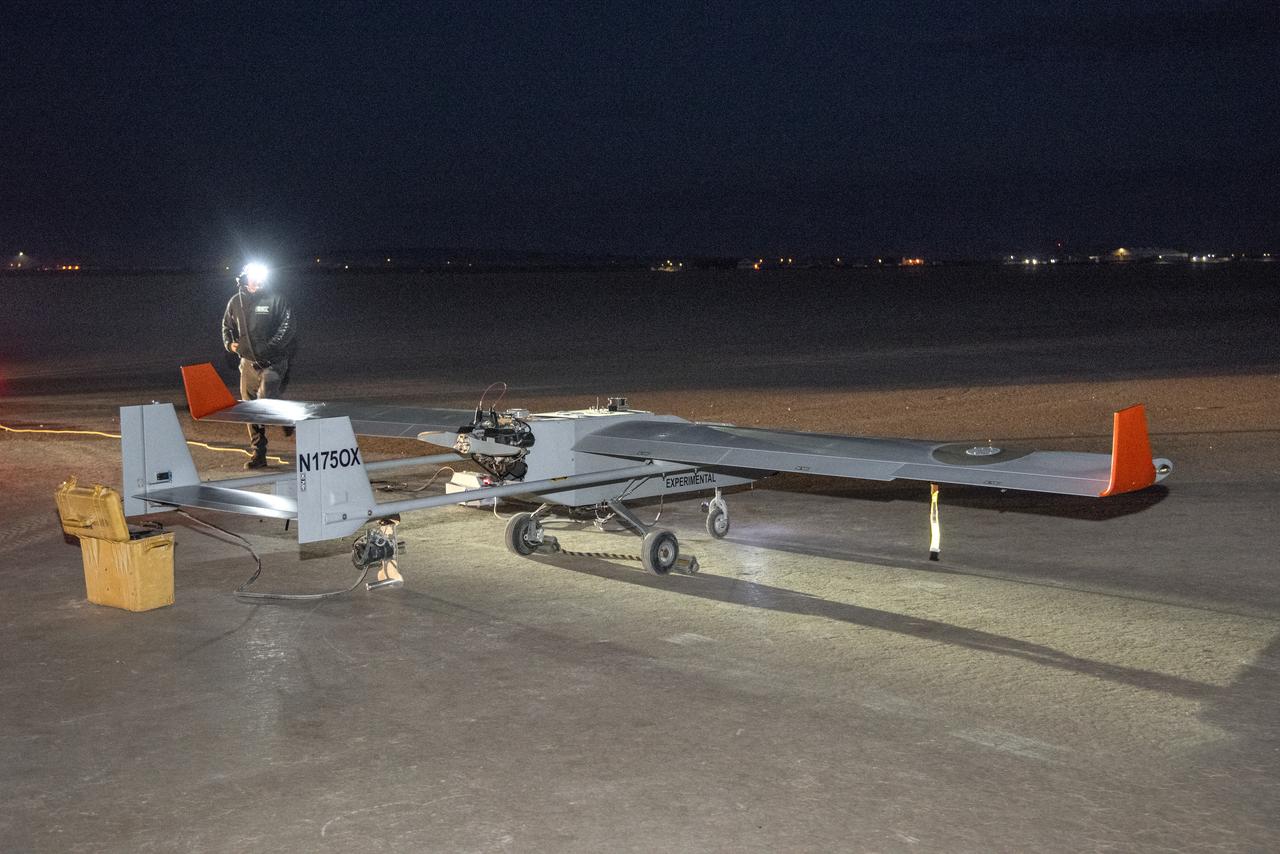
The Navmar Applied Sciences Corporation’s TigerShark prepares for its final takeoff at Edwards Air Force Base for the Unmanned Aircraft Systems integration in the National Airspace Systems, Flight Test Series Six (FT6) project. FT6 flight tests took place at NASA’s Armstrong Flight Research Center in California and focused on low size weight and power sensors for Detect and Avoid (DAA) operations in controlled airspace to inform the FAA through the RTCA Special Committee DAA Working Group on the phase 2 minimum operational performance standards for DAA and air-to-air radar.

The Navmar Applied Sciences Corporation’s TigerShark prepares for its final takeoff at Edwards Air Force Base for the Unmanned Aircraft Systems integration in the National Airspace Systems, Flight Test Series Six (FT6) project. FT6 flight tests took place at NASA’s Armstrong Flight Research Center in California and focused on low size weight and power sensors for Detect and Avoid (DAA) operations in controlled airspace to inform the FAA through the RTCA Special Committee DAA Working Group on the phase 2 minimum operational performance standards for DAA and air-to-air radar.
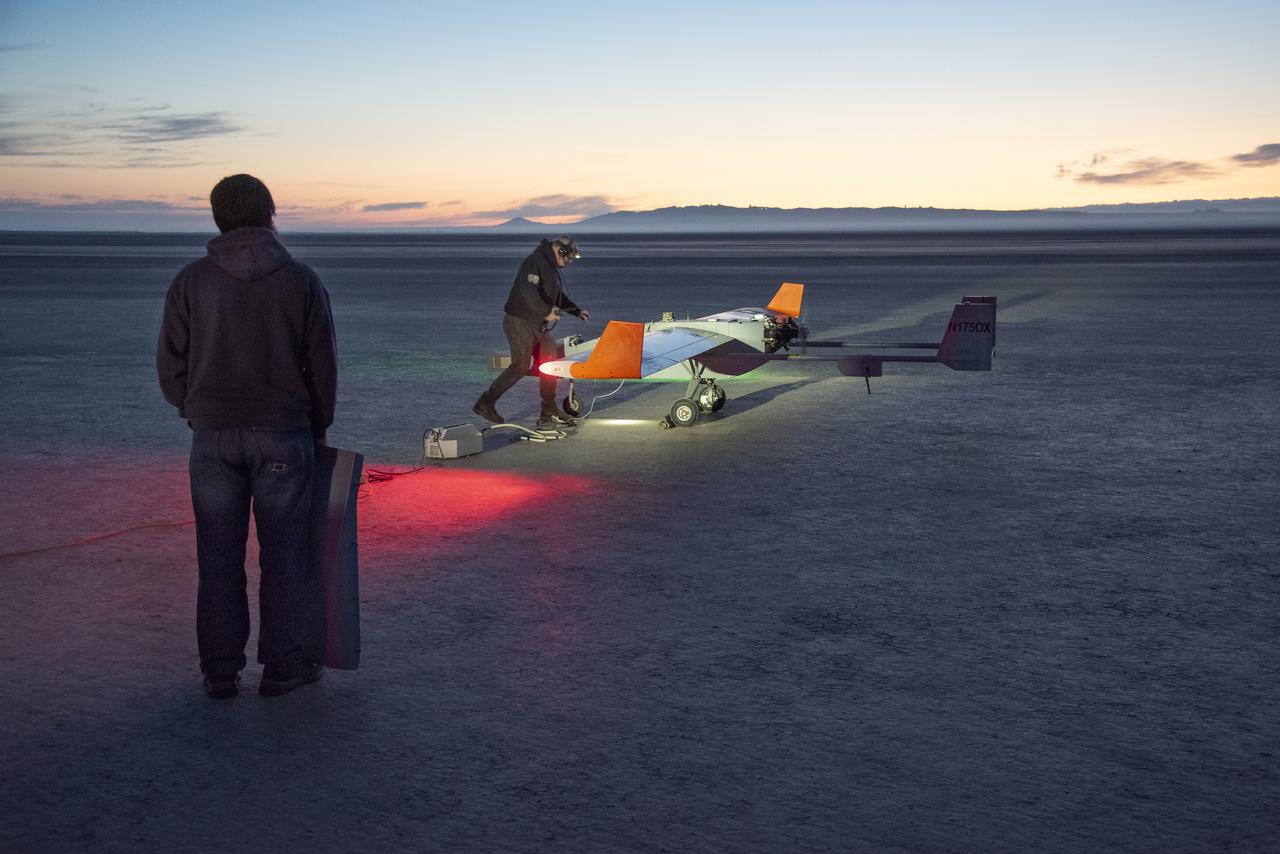
The Navmar Applied Sciences Corporation’s TigerShark prepares for its final takeoff at Edwards Air Force Base for the Unmanned Aircraft Systems integration in the National Airspace Systems, Flight Test Series Six (FT6) project. FT6 flight tests took place at NASA’s Armstrong Flight Research Center in California and focused on low size weight and power sensors for Detect and Avoid (DAA) operations in controlled airspace to inform the FAA through the RTCA Special Committee DAA Working Group on the phase 2 minimum operational performance standards for DAA and air-to-air radar.
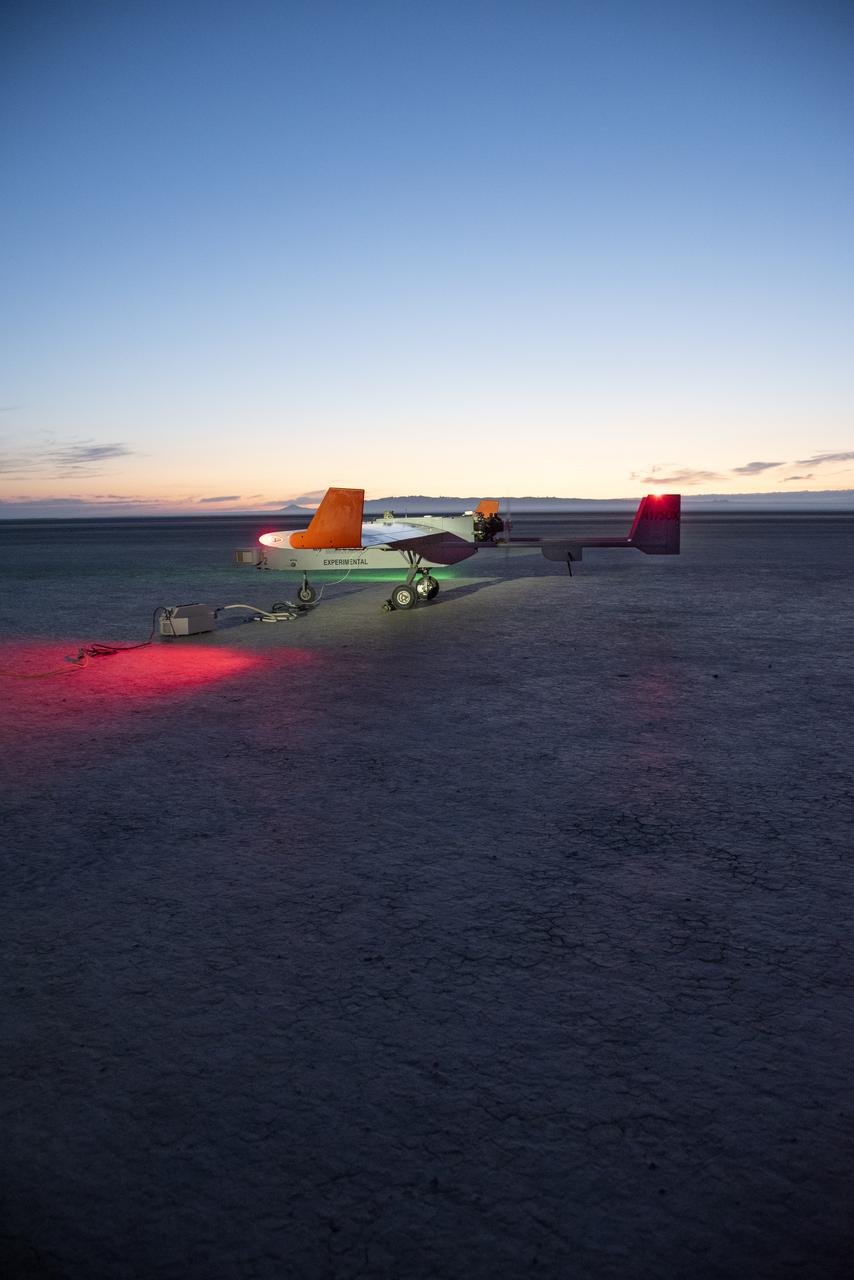
The Navmar Applied Sciences Corporation’s TigerShark prepares for its final takeoff at Edwards Air Force Base for the Unmanned Aircraft Systems integration in the National Airspace Systems, Flight Test Series Six (FT6) project. FT6 flight tests took place at NASA’s Armstrong Flight Research Center in California and focused on low size weight and power sensors for Detect and Avoid (DAA) operations in controlled airspace to inform the FAA through the RTCA Special Committee DAA Working Group on the phase 2 minimum operational performance standards for DAA and air-to-air radar.
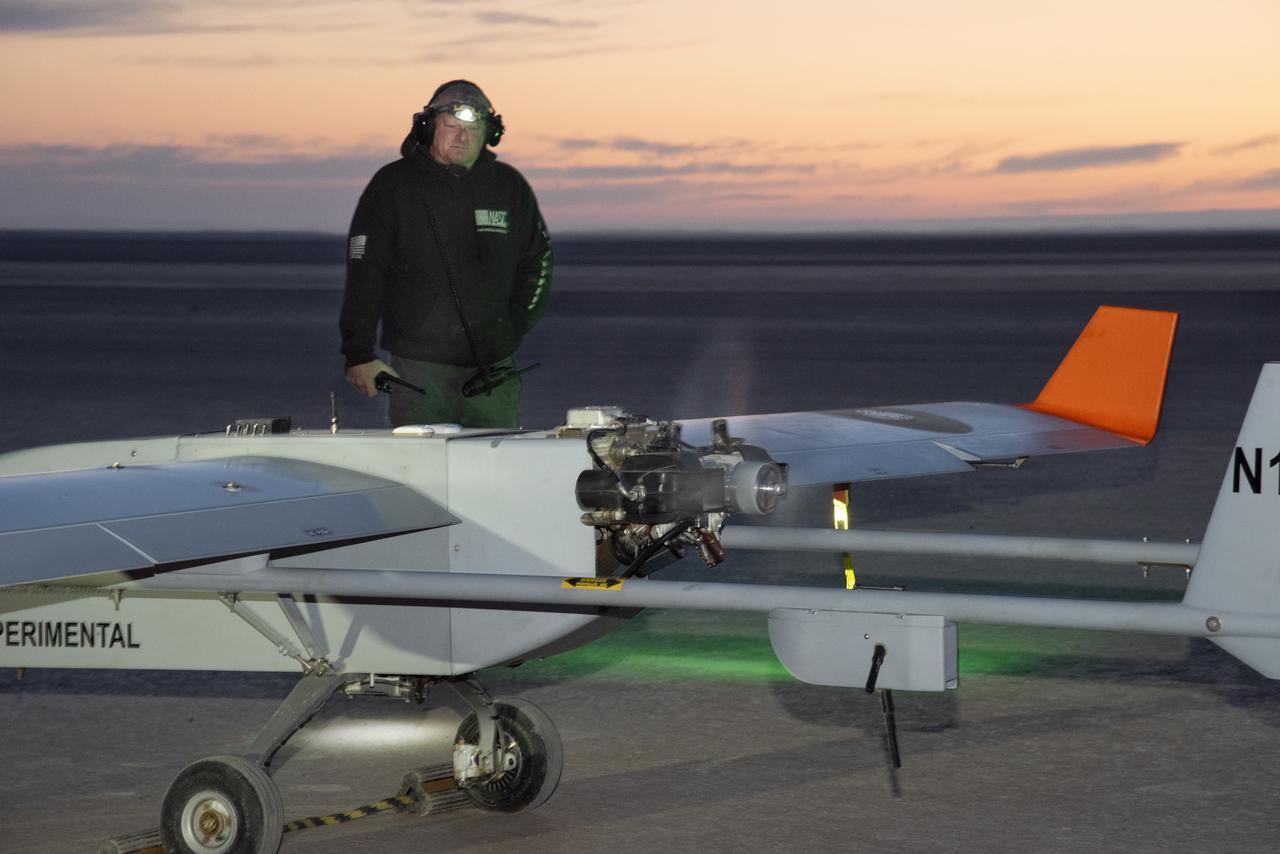
The Navmar Applied Sciences Corporation’s TigerShark prepares for its final takeoff at Edwards Air Force Base for the Unmanned Aircraft Systems integration in the National Airspace Systems, Flight Test Series Six (FT6) project. FT6 flight tests took place at NASA’s Armstrong Flight Research Center in California and focused on low size weight and power sensors for Detect and Avoid (DAA) operations in controlled airspace to inform the FAA through the RTCA Special Committee DAA Working Group on the phase 2 minimum operational performance standards for DAA and air-to-air radar.
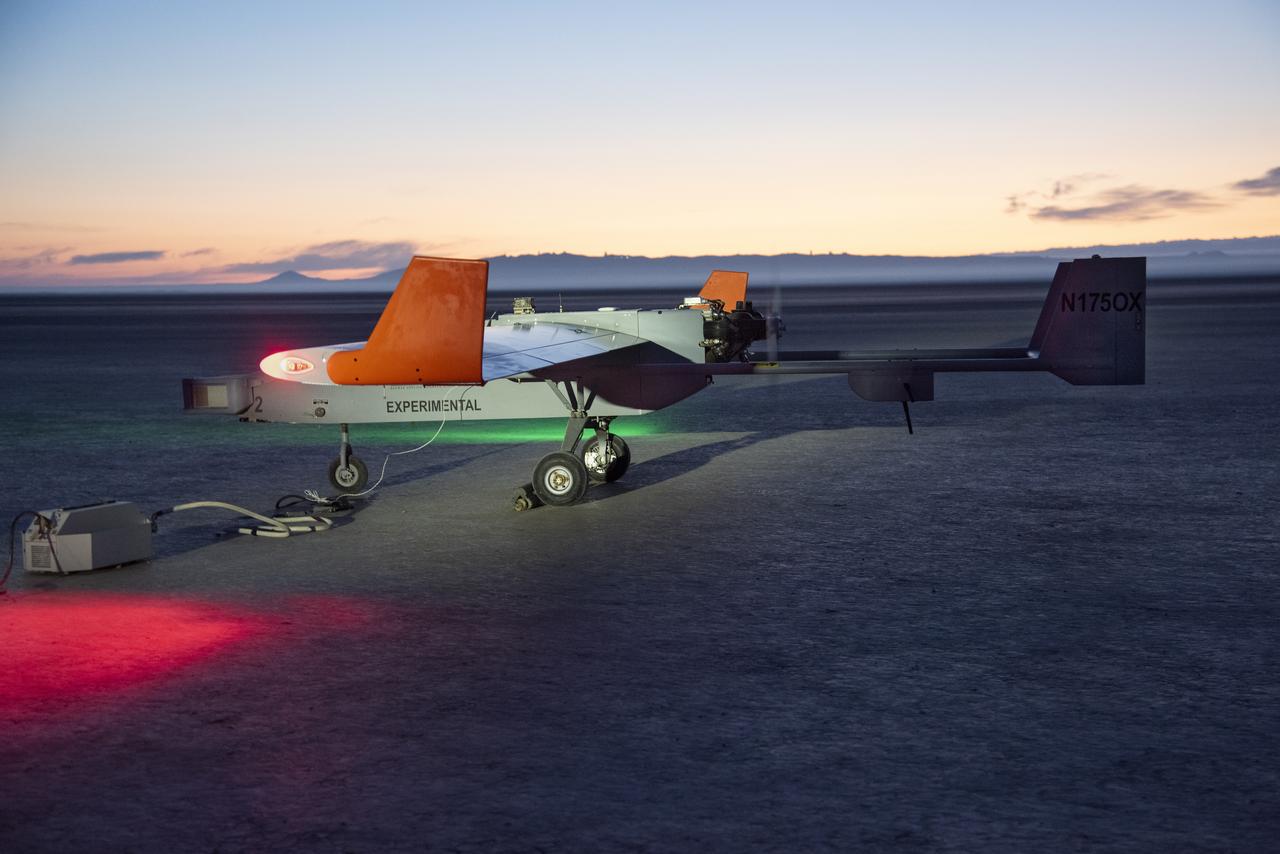
The Navmar Applied Sciences Corporation’s TigerShark prepares for its final takeoff at Edwards Air Force Base for the Unmanned Aircraft Systems integration in the National Airspace Systems, Flight Test Series Six (FT6) project. FT6 flight tests took place at NASA’s Armstrong Flight Research Center in California and focused on low size weight and power sensors for Detect and Avoid (DAA) operations in controlled airspace to inform the FAA through the RTCA Special Committee DAA Working Group on the phase 2 minimum operational performance standards for DAA and air-to-air radar.
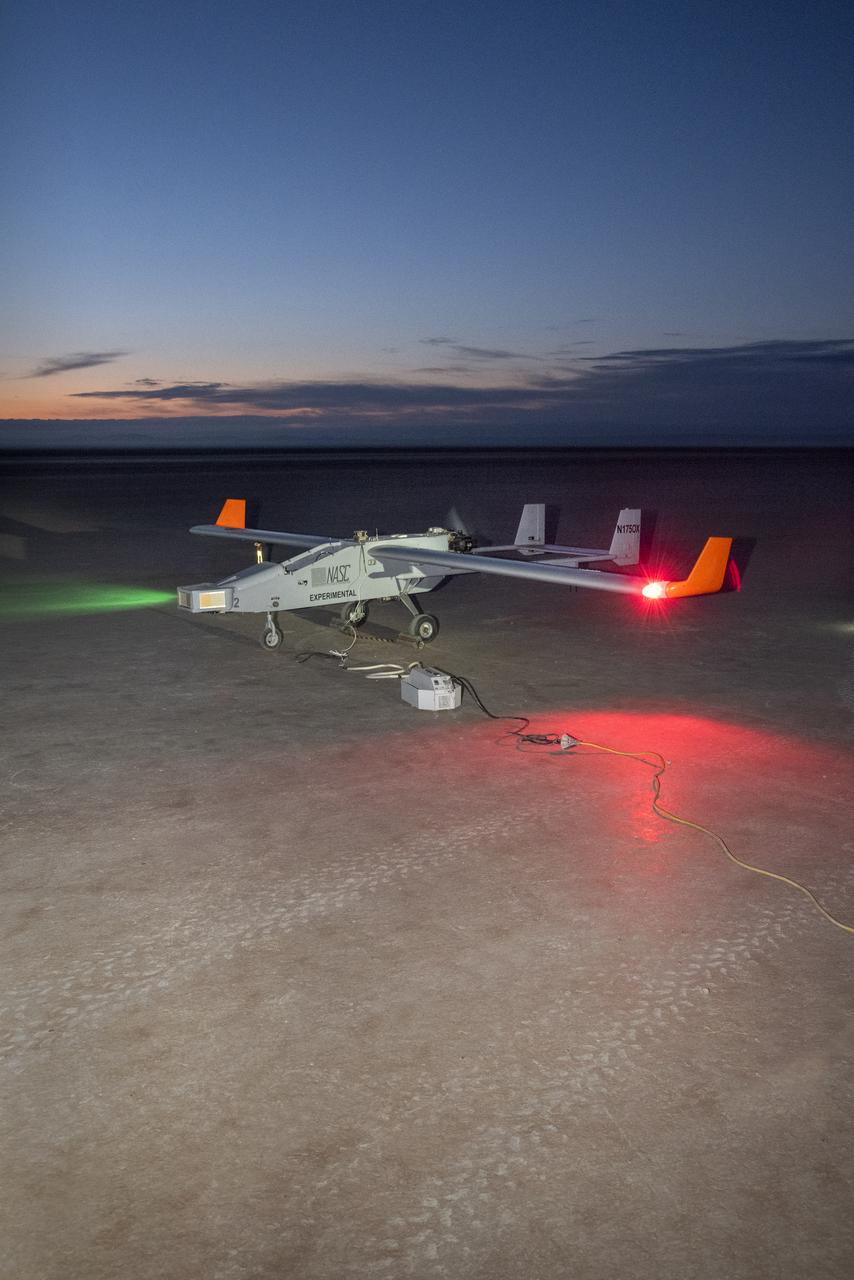
The Navmar Applied Sciences Corporation’s TigerShark prepares for its final takeoff at Edwards Air Force Base for the Unmanned Aircraft Systems integration in the National Airspace Systems, Flight Test Series Six (FT6) project. FT6 flight tests took place at NASA’s Armstrong Flight Research Center in California and focused on low size weight and power sensors for Detect and Avoid (DAA) operations in controlled airspace to inform the FAA through the RTCA Special Committee DAA Working Group on the phase 2 minimum operational performance standards for DAA and air-to-air radar.
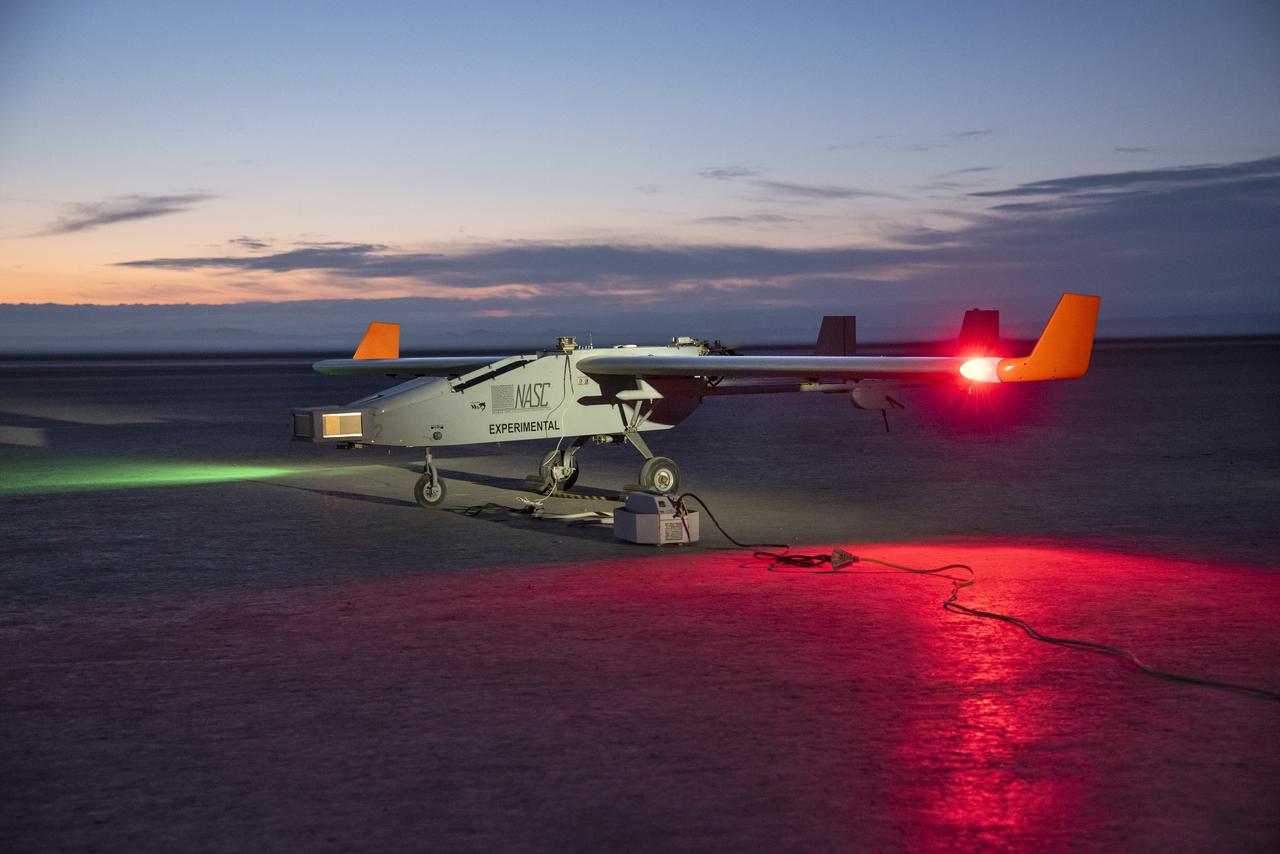
The Navmar Applied Sciences Corporation’s TigerShark prepares for its final takeoff at Edwards Air Force Base for the Unmanned Aircraft Systems integration in the National Airspace Systems, Flight Test Series Six (FT6) project. FT6 flight tests took place at NASA’s Armstrong Flight Research Center in California and focused on low size weight and power sensors for Detect and Avoid (DAA) operations in controlled airspace to inform the FAA through the RTCA Special Committee DAA Working Group on the phase 2 minimum operational performance standards for DAA and air-to-air radar.
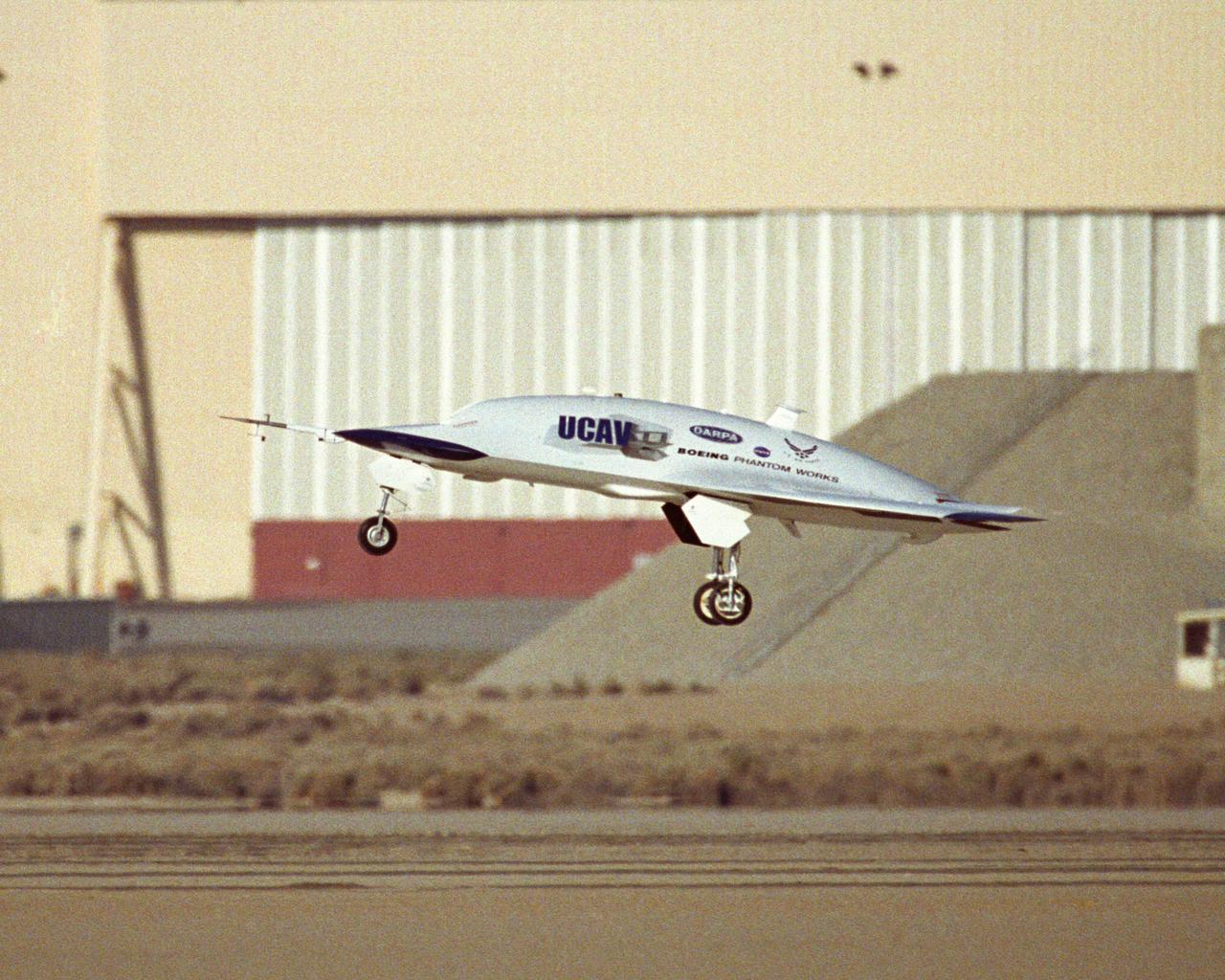
X-45A Unmanned Combat Air Vehicle, or UCAV, technology demonstration aircraft in flight during its first flight at Edwards Air Force Base, California.
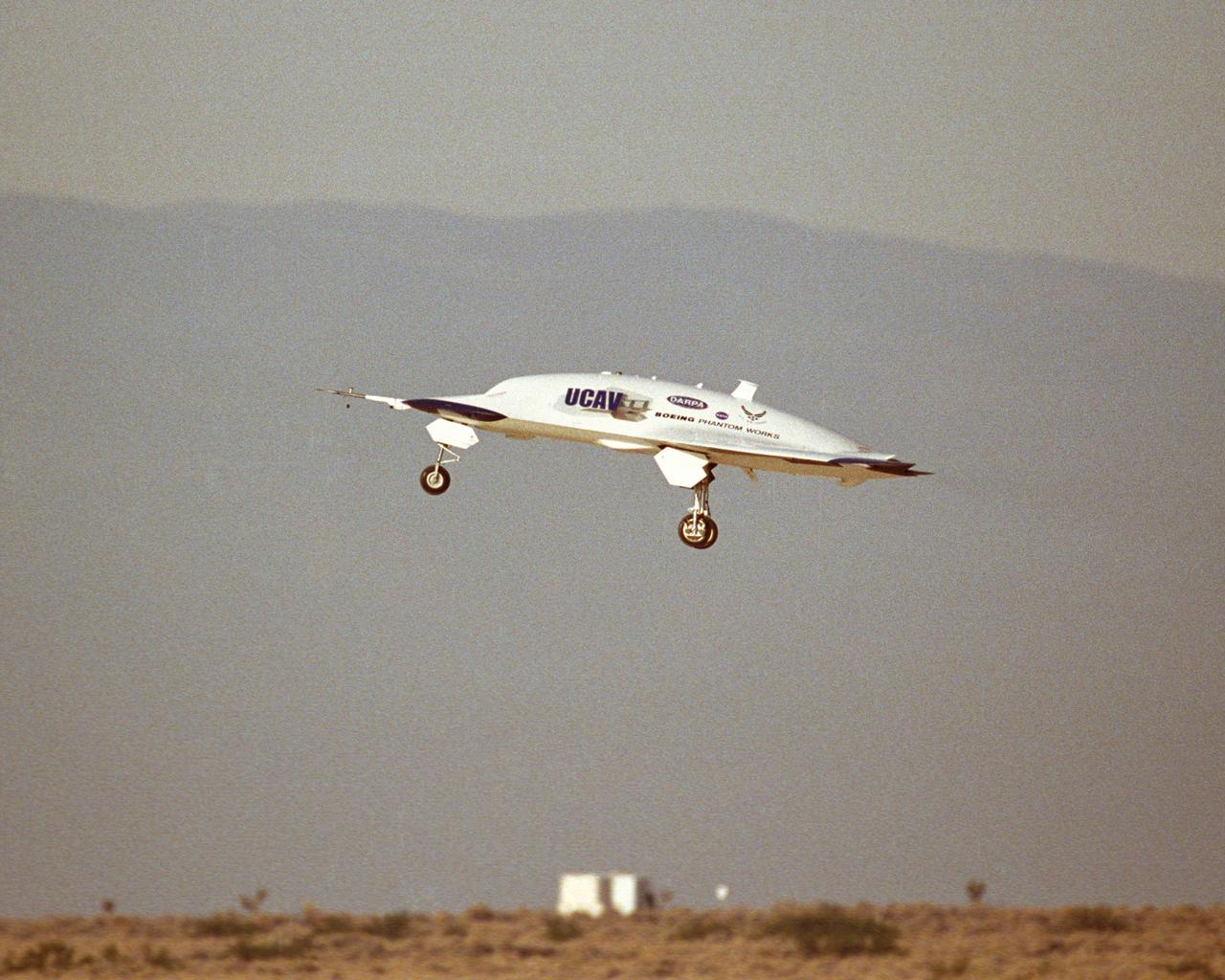
X-45A Unmanned Combat Air Vehicle, or UCAV, technology demonstration aircraft in flight during its first flight at Edwards Air Force Base, California.
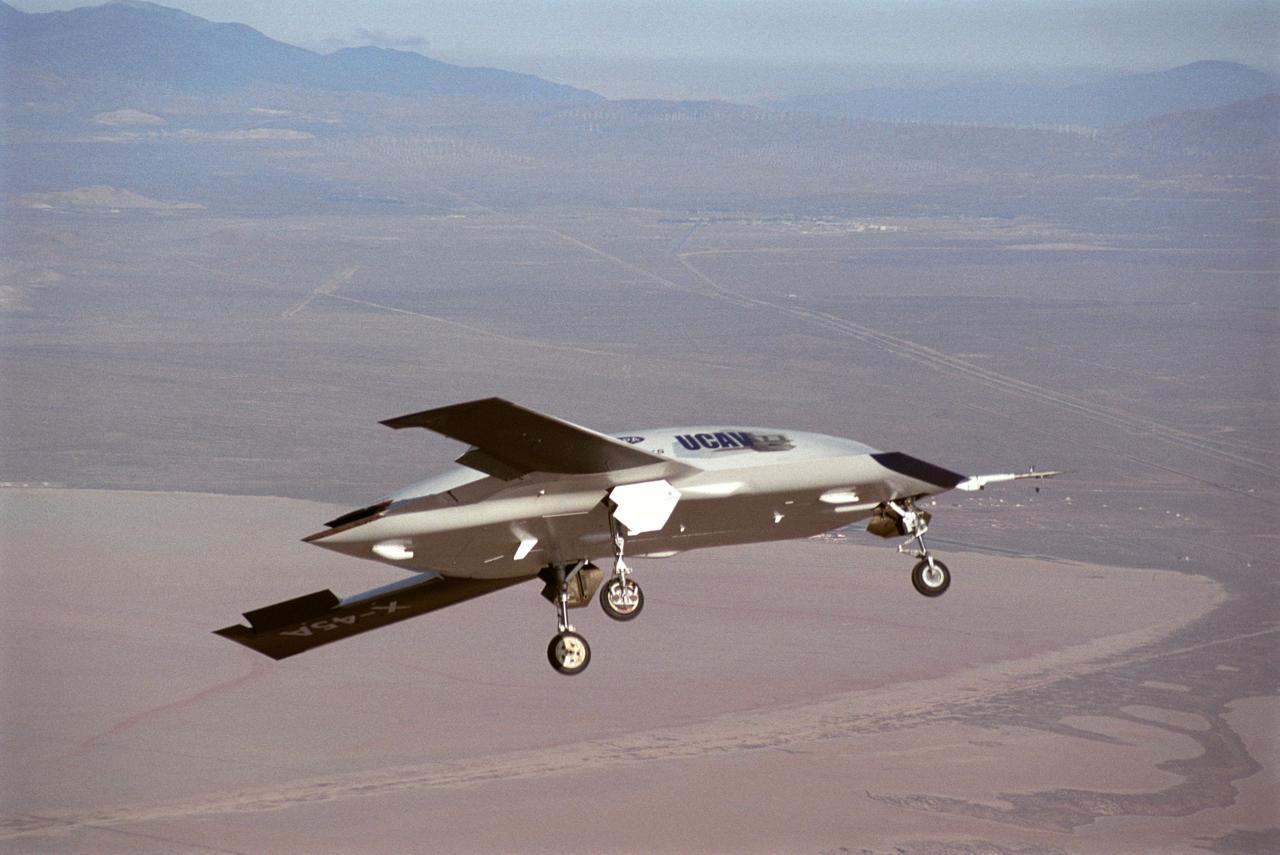
X-45A Unmanned Combat Air Vehicle, or UCAV, technology demonstration aircraft in flight during its first flight at Edwards Air Force Base, California.
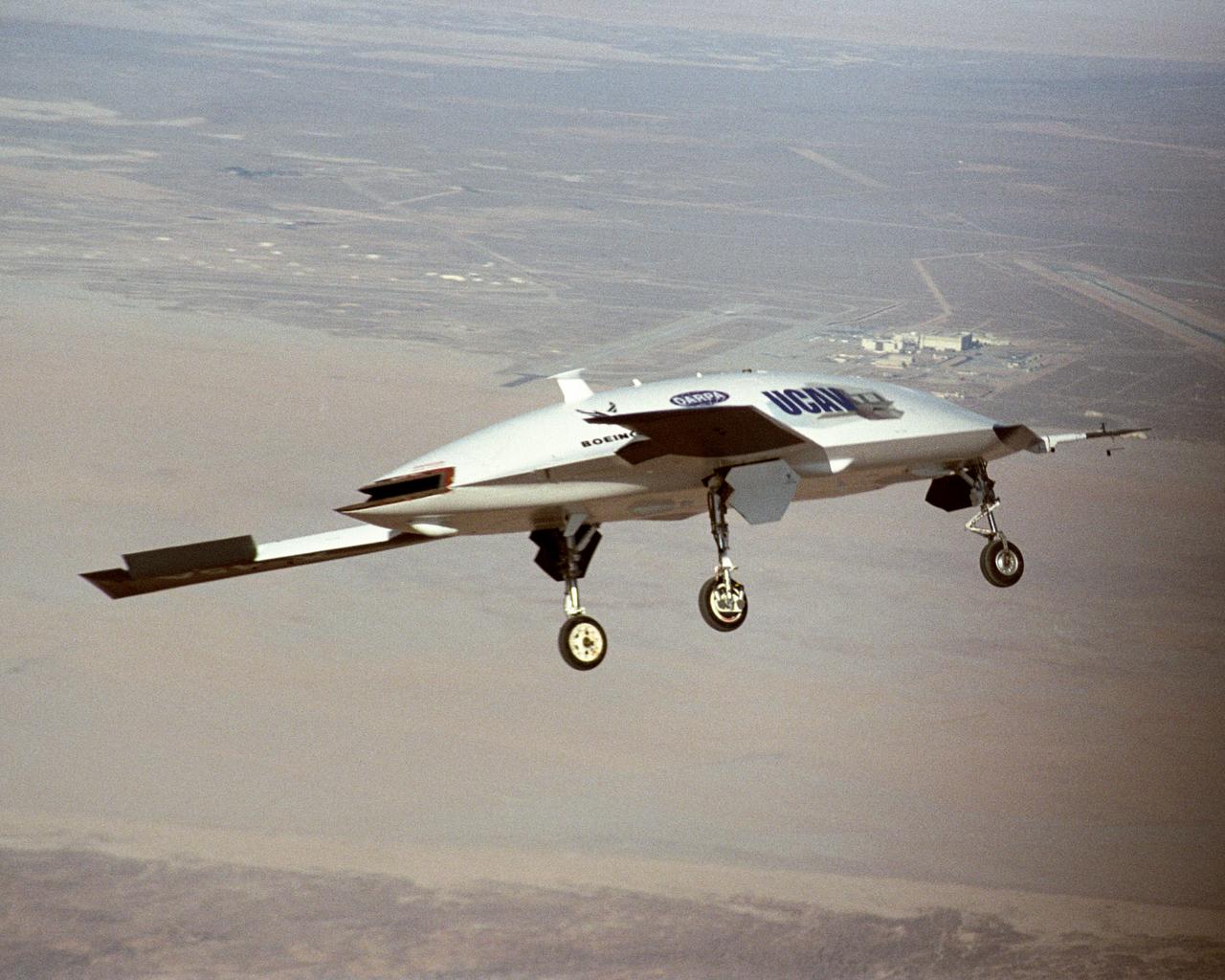
X-45A Unmanned Combat Air Vehicle, or UCAV, technology demonstration aircraft in flight during its first flight at Edwards Air Force Base, California.

AS04-01-750 (9 Nov. 1967) --- Atlantic Ocean, Antarctica, looking west, as photographed from the Earth-orbital Apollo 4 (Spacecraft 017/Saturn 501) unmanned space mission. This picture was taken when the Spacecraft 017 and the Saturn S-IVB (third) stage was orbiting Earth at an altitude of 8,628 nautical miles.

S68-27364 (4 April 1968) --- The Apollo 6 (Spacecraft 020/Saturn 502) unmanned space mission was launched from Pad A, Launch Complex 39, Kennedy Space Center (KSC), Florida. The liftoff of the huge Apollo/Saturn V space vehicle occurred at 7:00:01.5 a.m. (EST), April 4, 1968.
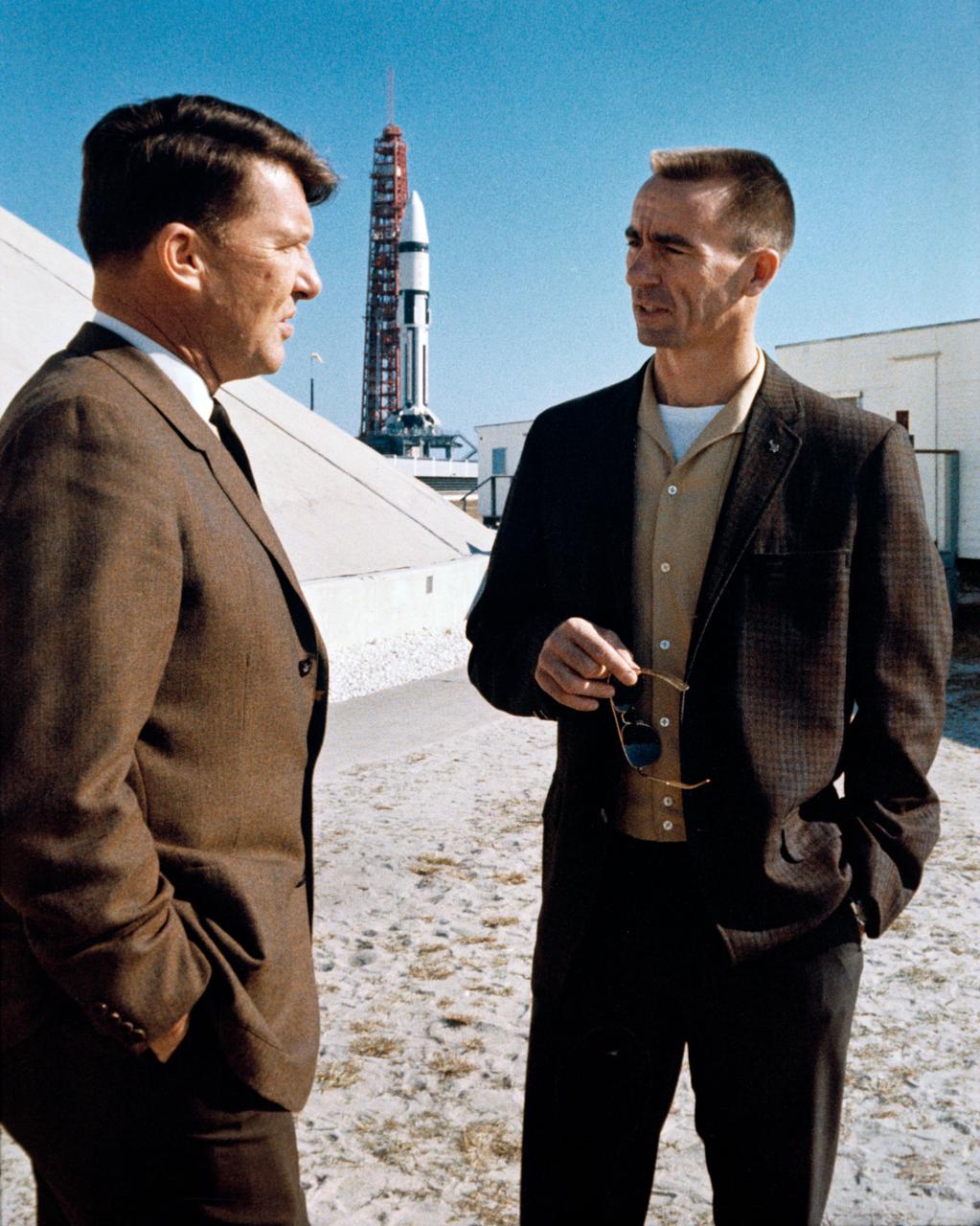
S68-18700 (22 Jan. 1968) --- Two prime crew members of the first manned Apollo space flight were present at Cape Kennedy for the launch of the Apollo V (LM-1/Saturn 204) unmanned space mission. On left is astronaut Walter M. Schirra Jr.; and on right is astronaut R. Walter Cunningham. In background is the Apollo V stack at Launch Complex 37 ready for launch.

AS06-02-1462 (4 April 1968) --- View of the Dallas-Fort Worth, Texas, area as photographed from the unmanned Apollo 6 (Spacecraft 020/Saturn 502) space mission. The highway and expressway system in and around both cities is clearly visible. North is toward left side of picture. Grapevine Reservoir and Garza-Little Elm Reservoir are to the north-west of Dallas. The city of Denton can be seen in left center of picture at conjunction of highways leading to both Fort Worth and Dallas. The Brazos River is in lower right corner. This photograph was made three hours and nine minutes after liftoff of the Apollo 6 space flight.

Osprey (UAV) Unmanned Aerial Vehicle ; flight vehicle test at 14x22 tunnel. Test number 605 from Eglin AFB. Take at 14x22 Subsonic Tunnel
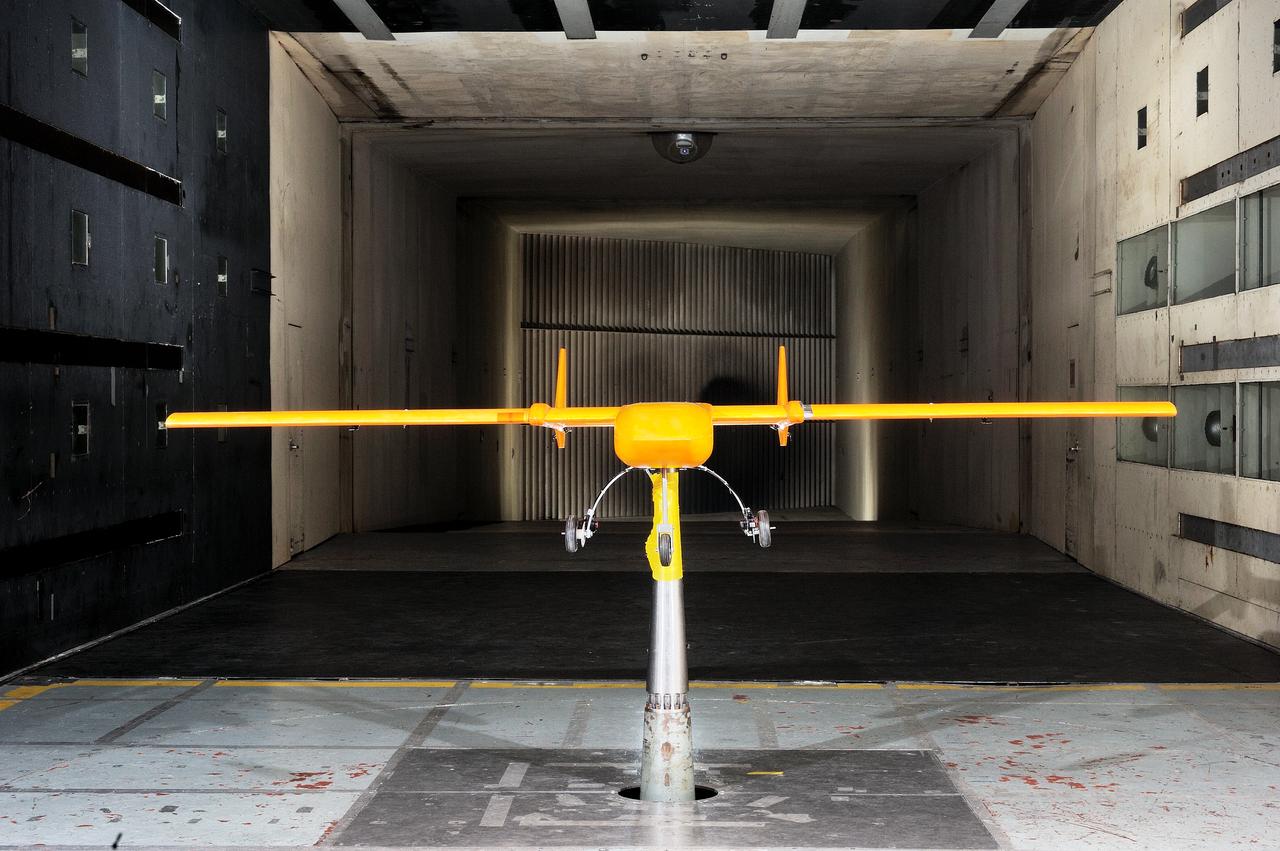
Osprey (UAV) Unmanned Aerial Vehicle ; flight vehicle test at 14x22 tunnel. Test number 605 from Eglin AFB. Take at 14x22 Subsonic Tunnel
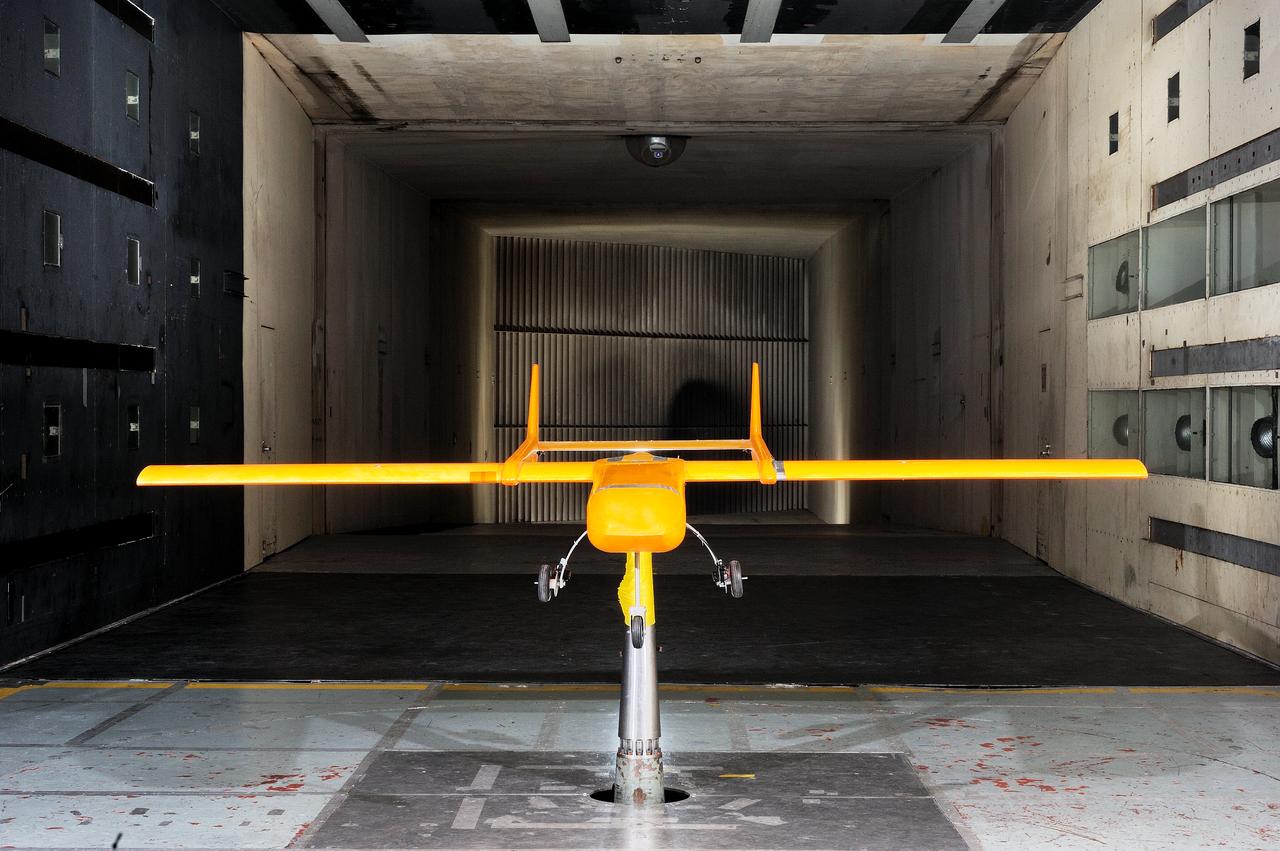
Osprey (UAV) Unmanned Aerial Vehicle ; flight vehicle test at 14x22 tunnel. Test number 605 from Eglin AFB. Take at 14x22 Subsonic Tunnel
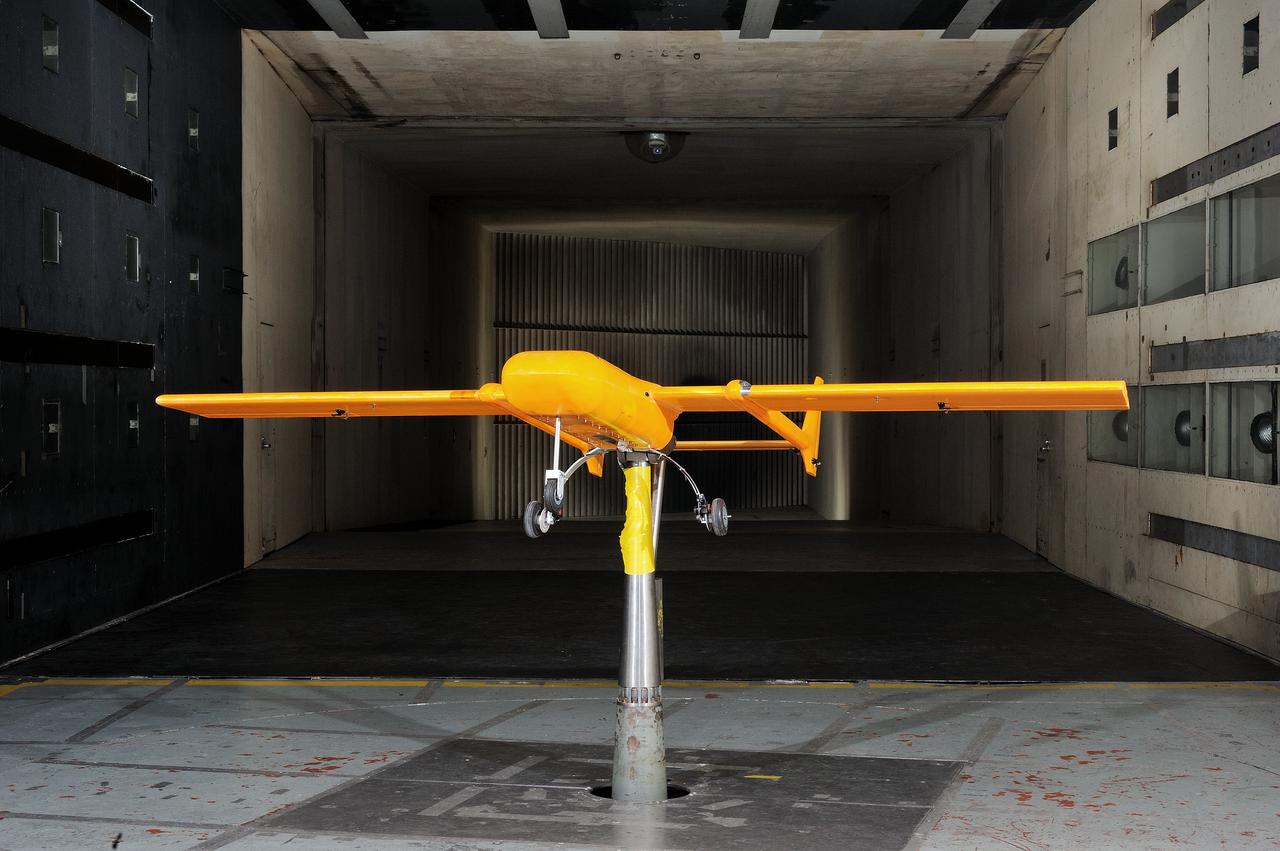
Osprey (UAV) Unmanned Aerial Vehicle ; flight vehicle test at 14x22 tunnel. Test number 605 from Eglin AFB. Take at 14x22 Subsonic Tunnel
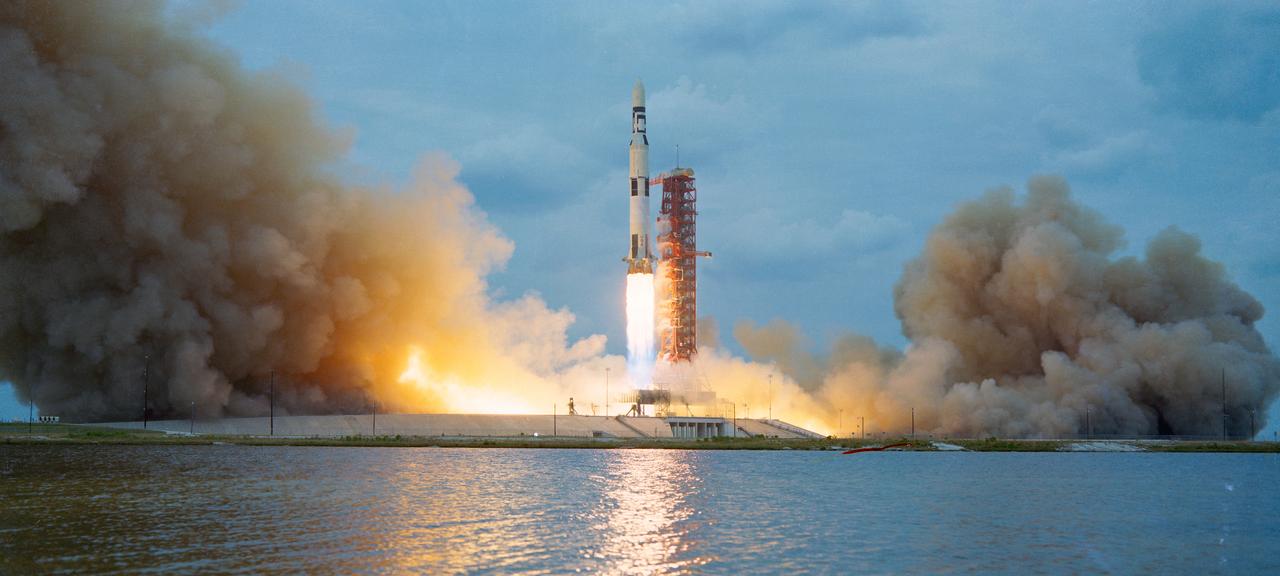
S73-26912 (14 May 1973) --- The unmanned Skylab 1/Saturn V space vehicle is launched from Pad A, Launch Complex 39, Kennedy Space Center, Florida, at 12:00 noon (EDT), May 14, 1973, to place the Skylab space station cluster in Earth orbit. The Skylab 1 payload included four of the five major components of the space station Orbital Workshop, Apollo Telescope Mount, Multiple Docking Adapter, and Airlock Module. In addition to the payload, the Skylab 1/Saturn V second (S-11) stage. The fifth major component of the space station, the Command Service Module with the Skylab 2 crew aboard, was launched at a later date by a Saturn 1B from Pad B. Photo credit: NASA
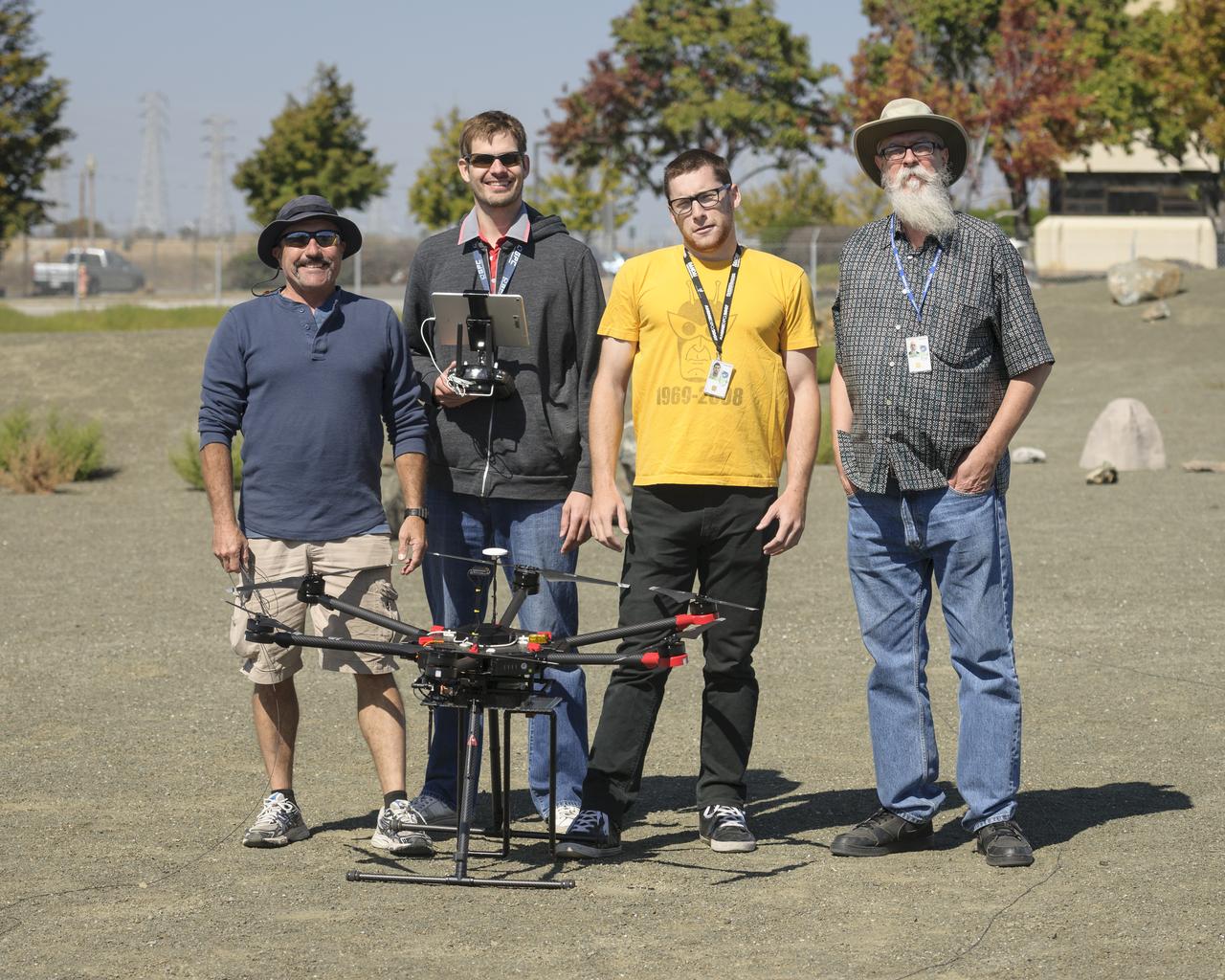
Flight Test in the Roverscape (N-269) at NASA's Ames Research Center, the project team tests the DJI Matrice 600 Unmanned Aerial Vehicle (UAV) equipped with a radio tracking receiver to study the invasive asian carp in the Mississippi River. Rick, Kolyer, Jonas Jonsson, Ethan, Pinsker, Bob Dahlgren.
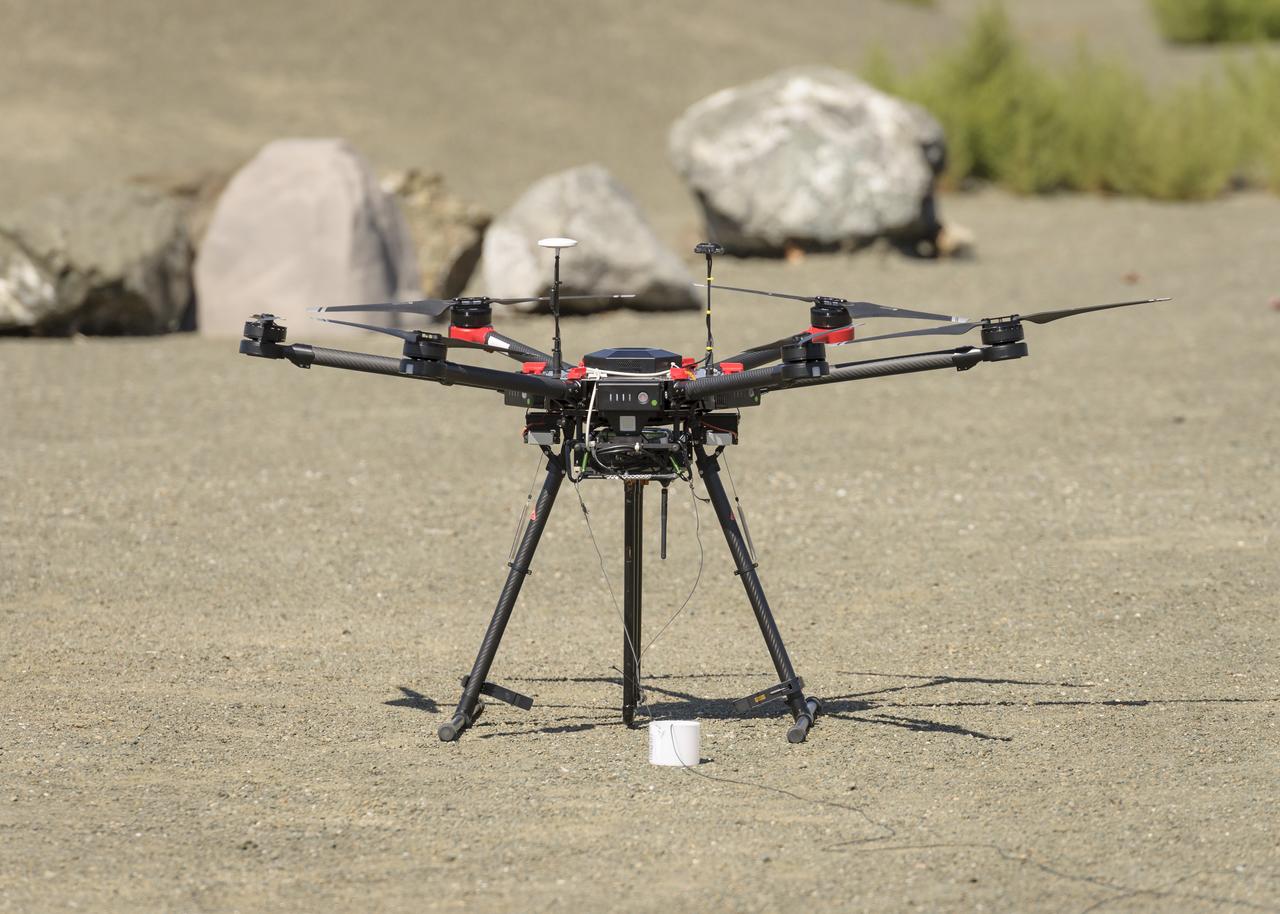
Flight Test in the Roverscape (N-269) at NASA's Ames Research Center, the project team tests the DJI Matrice 600 Unmanned Aerial Vehicle (UAV) equipped with a radio tracking receiver to study the invasive asian carp in the Mississippi River.

Chairman of the House Subcommittee on Oversight, U.S. Rep. Paul Broun, R-Ga, talks during a hearing titled "Operating Unmanned Aircraft Systems in the National Airspace System: Assessing Research and Development Efforts to Ensure Safety" on Friday, Feb. 15, 2013 at the Rayburn House Office Building in Washington. Photo Credit: (NASA/Bill Ingalls)

Dr. Karlin Toner, Director, Joint Planning and Development Office, Federal Aviation Administration (FAA), talks during a House Subcommittee on Oversight hearing titled "Operating Unmanned Aircraft Systems in the National Airspace System: Assessing Research and Development Efforts to Ensure Safety" on Friday, Feb. 15, 2013 at the Rayburn House Office Building in Washington. Photo Credit: (NASA/Bill Ingalls)

Ranking member of the House Subcommittee on Oversight, U.S. Rep. Dan Maffei, D-N.Y., talks during a hearing titled "Operating Unmanned Aircraft Systems in the National Airspace System: Assessing Research and Development Efforts to Ensure Safety" on Friday, Feb. 15, 2013 at the Rayburn House Office Building in Washington. Photo Credit: (NASA/Bill Ingalls)

Dr. Gerald Dillingham, Director, Civil Aviation Issues, Government Accounting Office (GAO), talks during a House Subcommittee on Oversight hearing titled "Operating Unmanned Aircraft Systems in the National Airspace System: Assessing Research and Development Efforts to Ensure Safety" on Friday, Feb. 15, 2013 at the Rayburn House Office Building in Washington. Photo Credit: (NASA/Bill Ingalls)

Dr. Edgar Waggoner, Director, Integrated Systems research Program Office, National Aeronautics and Space Administration (NASA), takes notes during a House Subcommittee on Oversight hearing titled "Operating Unmanned Aircraft Systems in the National Airspace System: Assessing Research and Development Efforts to Ensure Safety" on Friday, Feb. 15, 2013 at the Rayburn House Office Building in Washington. Photo Credit: (NASA/Bill Ingalls)

Dr. Karlin Toner, Director, Joint Planning and Development Office, Federal Aviation Administration (FAA), talks during a House Subcommittee on Oversight hearing titled "Operating Unmanned Aircraft Systems in the National Airspace System: Assessing Research and Development Efforts to Ensure Safety" on Friday, Feb. 15, 2013 at the Rayburn House Office Building in Washington. Photo Credit: (NASA/Bill Ingalls)

Dr. Edgar Waggoner, Director, Integrated Systems research Program Office, National Aeronautics and Space Administration (NASA), talks during a House Subcommittee on Oversight hearing titled "Operating Unmanned Aircraft Systems in the National Airspace System: Assessing Research and Development Efforts to Ensure Safety" on Friday, Feb. 15, 2013 at the Rayburn House Office Building in Washington. Photo Credit: (NASA/Bill Ingalls)

Dr. Gerald Dillingham, Director, Civil Aviation Issues, Government Accounting Office (GAO), talks during a House Subcommittee on Oversight hearing titled "Operating Unmanned Aircraft Systems in the National Airspace System: Assessing Research and Development Efforts to Ensure Safety" on Friday, Feb. 15, 2013 at the Rayburn House Office Building in Washington. Photo Credit: (NASA/Bill Ingalls)
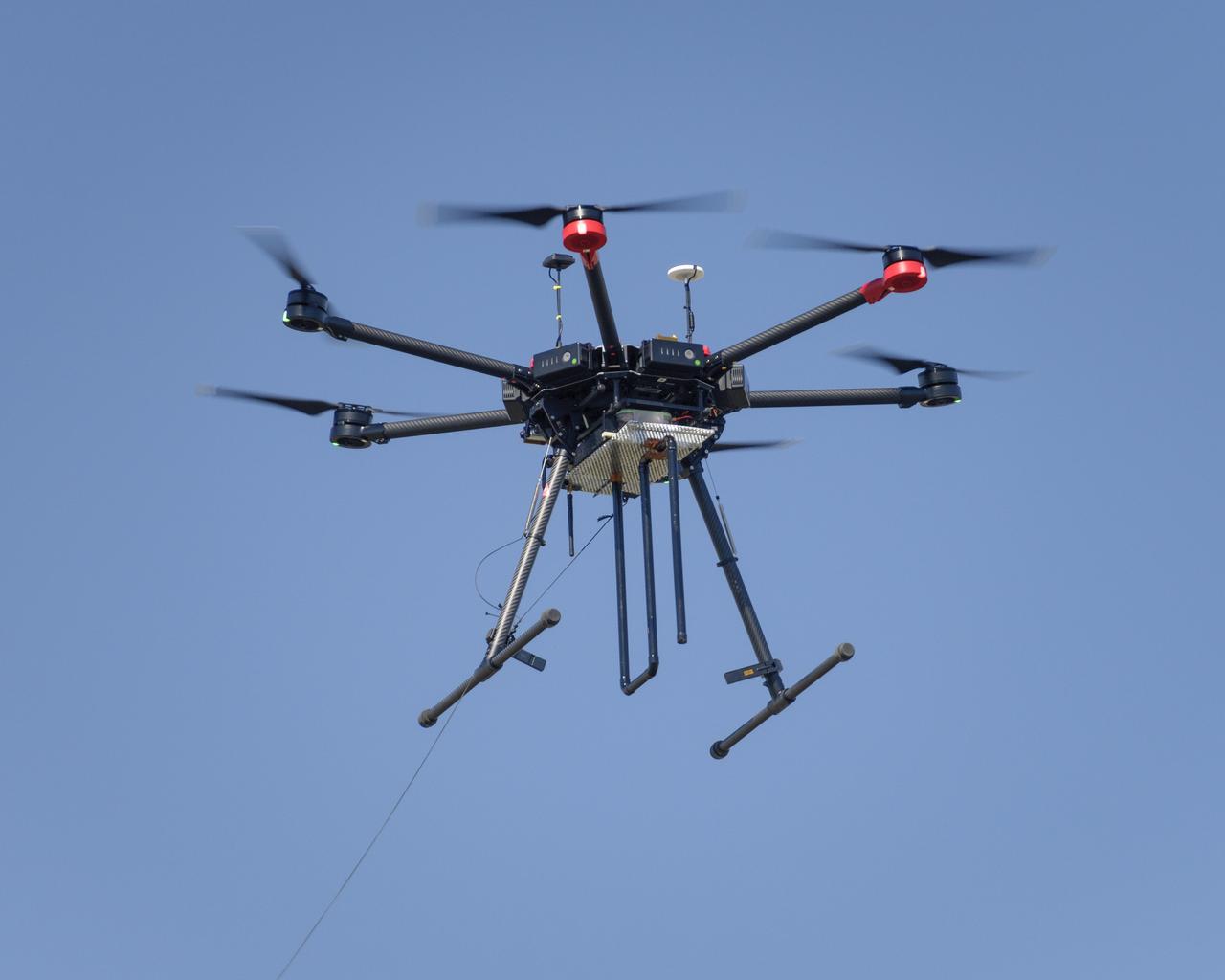
Flight Test in the Roverscape (N-269) at NASA's Ames Research Center, the project team tests the DJI Matrice 600 Unmanned Aerial Vehicle (UAV) equipped with a radio tracking receiver to study the invasive asian carp in the Mississippi River.

The No Chase COA (NCC) team at NASA Armstrong Flight Research Center pose for a group photo with the unmanned aircraft system the Ikhana.
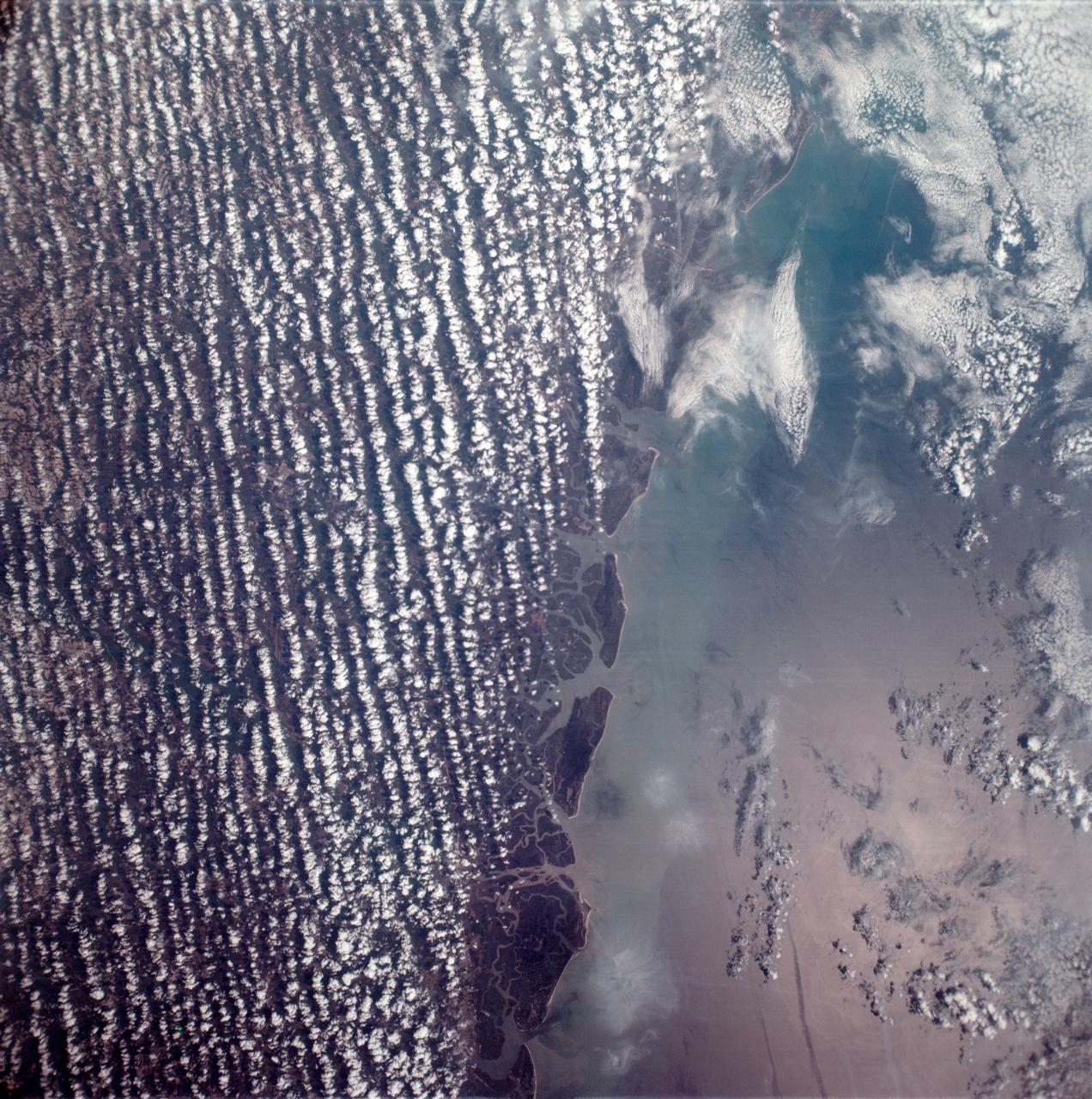
AS6-02-1485 (4 April 1968) --- View of the east coast of the United States as photographed from the National Aeronautics and Space Administration's unmanned Apollo 6 (Spacecraft 020/Saturn 502) space mission. This photograph was taken during a pass over Georgia, between Savannah and Brunswick. Altitude of the spacecraft was 100 nautical miles. Numerous jet aircraft contrails can be seen over the Atlantic Ocean. Sun glint on the surface of the ocean permits oceanographers to determine conditions of the water. This photograph was taken April 4, 1968, three hours and 14 minutes after liftoff, using Eastman Kodak SO-121 high resolution aerial Ektachrome film (exposure setting f/5.6 at 1/500 second), in a J. A. Maurer model 220G camera.

AS06-02-1436 (4 April 1968) --- View of the mouth of the Colorado River and the Gulf of California in northwestern Mexico as photographed from the unmanned Apollo 6 (Spacecraft 020/Saturn 502) space mission. Altitude of the spacecraft at the time picture was taken was 120 nautical miles. NORTH IS TOWARD LEFT SIDE OF PICTURE. At bottom edge of photograph is Baja California. In the upper left corner is the Mexican state of Sonora showing the Sonoran Desert and the Pinacate Mountains. This photograph was made three hours and seven minutes after liftoff using Eastman Kodak SO-121 high resolution aerial Ektachrome film (exposure setting was f/5.6 at 1/500 second) in a J.A. Maurer model 2200 camera.
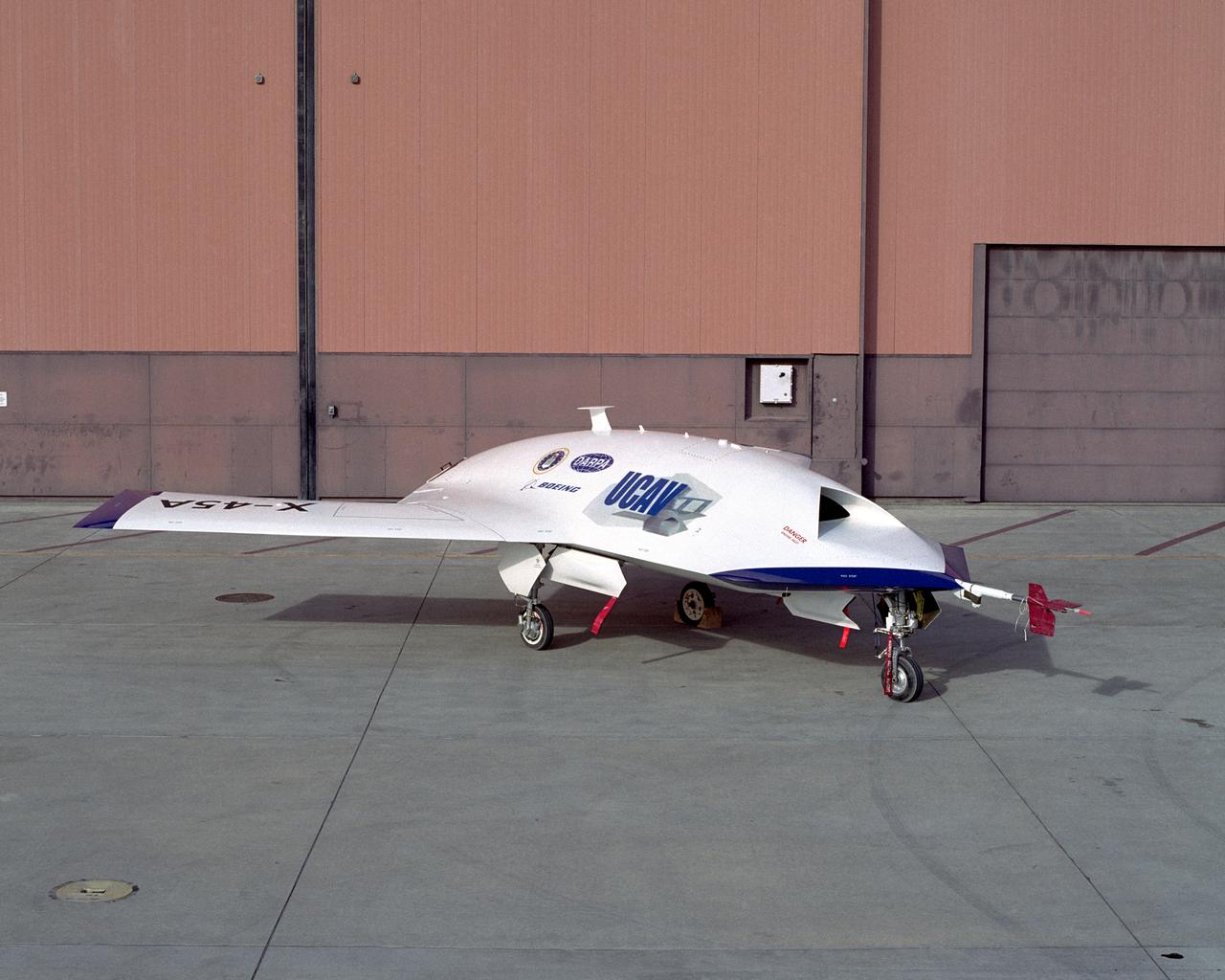
DARPA, U.S. Air Force, Boeing X-45A UCAV (Unmanned Combat Air Vehicle) at NASA Dryden Flight Research Center.
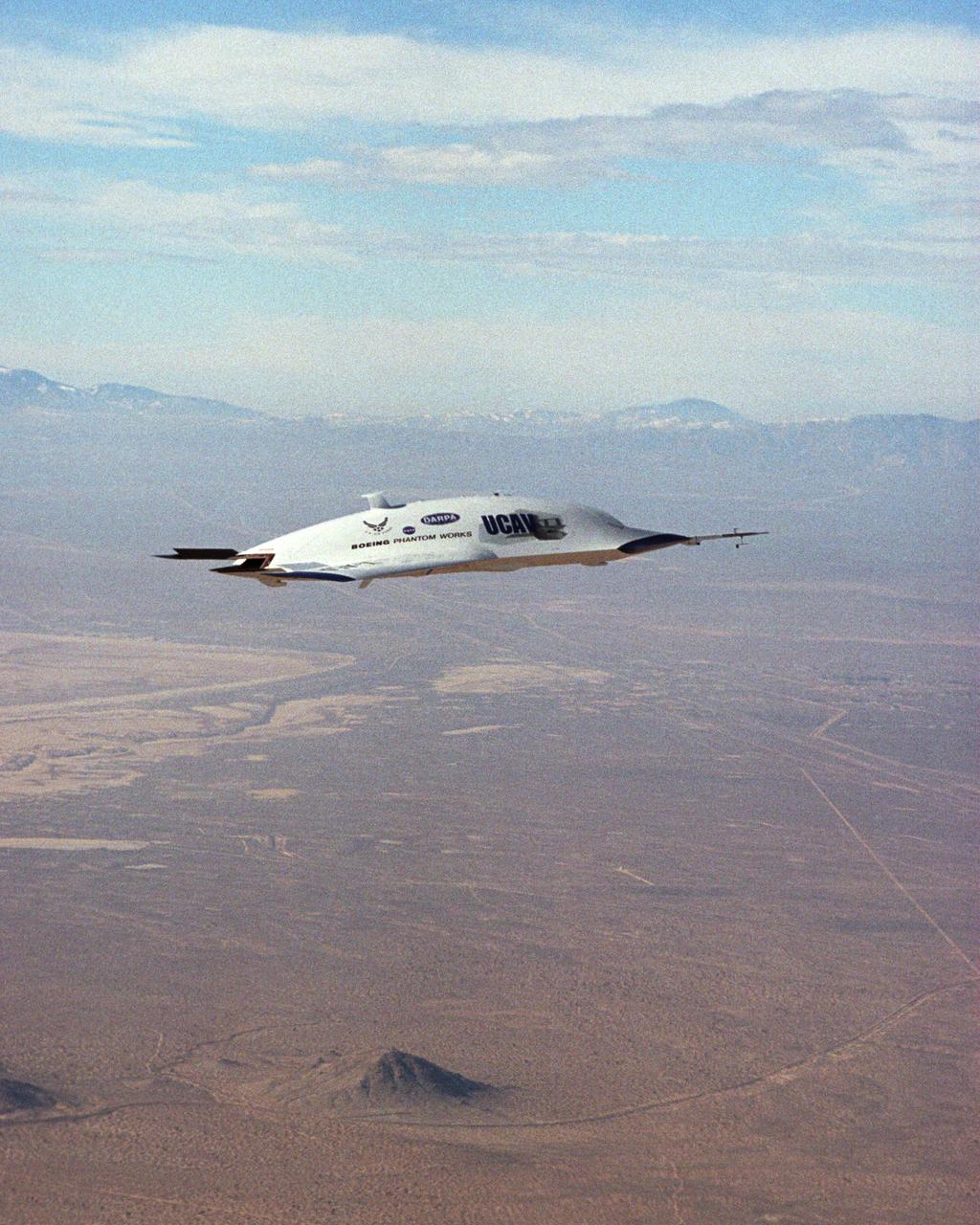
The first X-45A Unmanned Combat Air Vehicle (UCAV) technology demonstrator completed its sixth flight on Dec. 19, 2002, raising its landing gear in flight for the first time. The X-45A flew for 40 minutes and reached an airspeed of 195 knots and an altitude of 7,500 feet. Dryden is supporting the DARPA/Boeing team in the design, development, integration, and demonstration of the critical technologies, processes, and system attributes leading to an operational UCAV system. Dryden support of the X-45A demonstrator system includes analysis, component development, simulations, ground and flight tests.
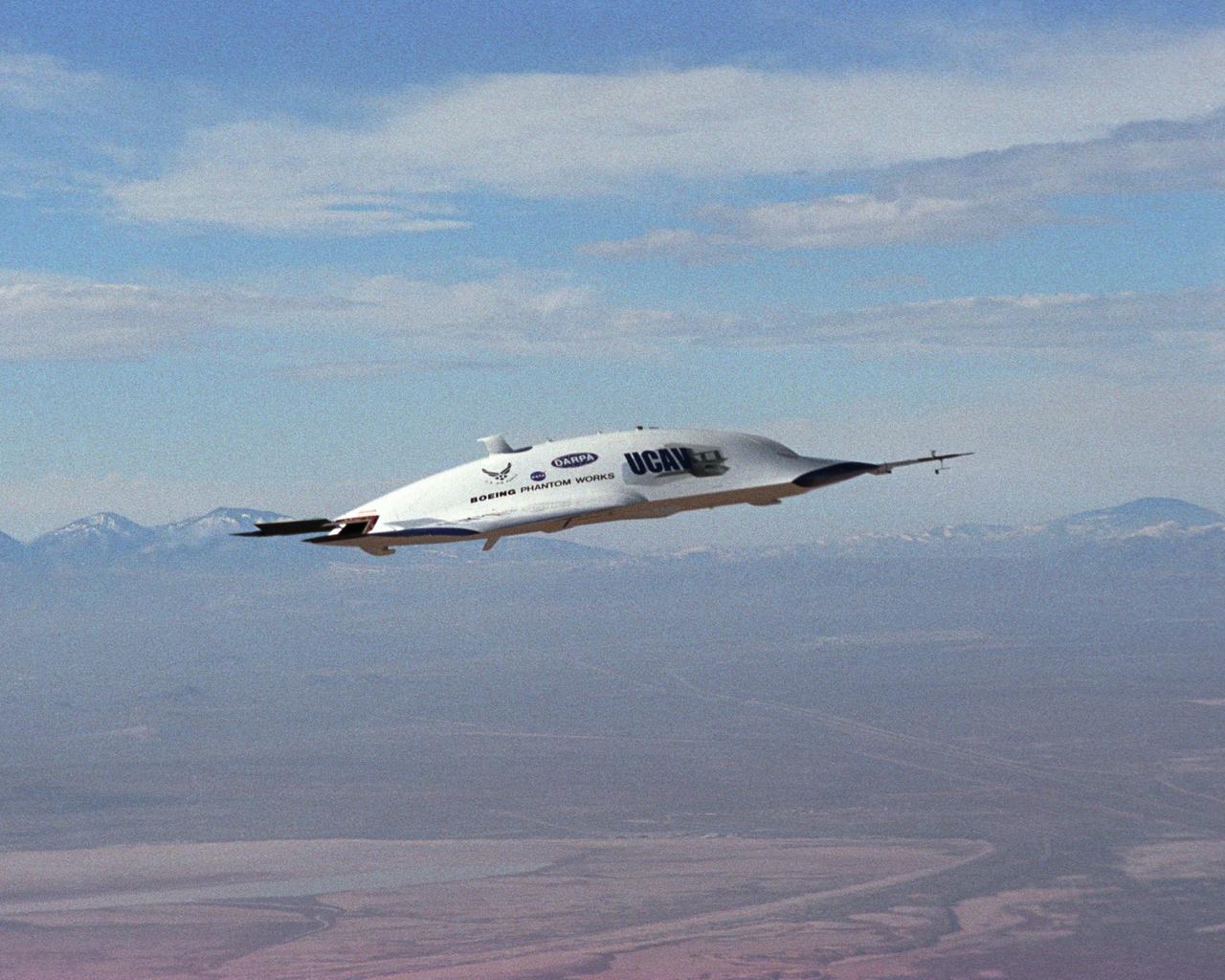
The first X-45A Unmanned Combat Air Vehicle (UCAV) technology demonstrator completed its sixth flight on Dec. 19, 2002, raising its landing gear in flight for the first time. The X-45A flew for 40 minutes and reached an airspeed of 195 knots and an altitude of 7,500 feet. Dryden is supporting the DARPA/Boeing team in the design, development, integration, and demonstration of the critical technologies, processes, and system attributes leading to an operational UCAV system. Dryden support of the X-45A demonstrator system includes analysis, component development, simulations, ground and flight tests.
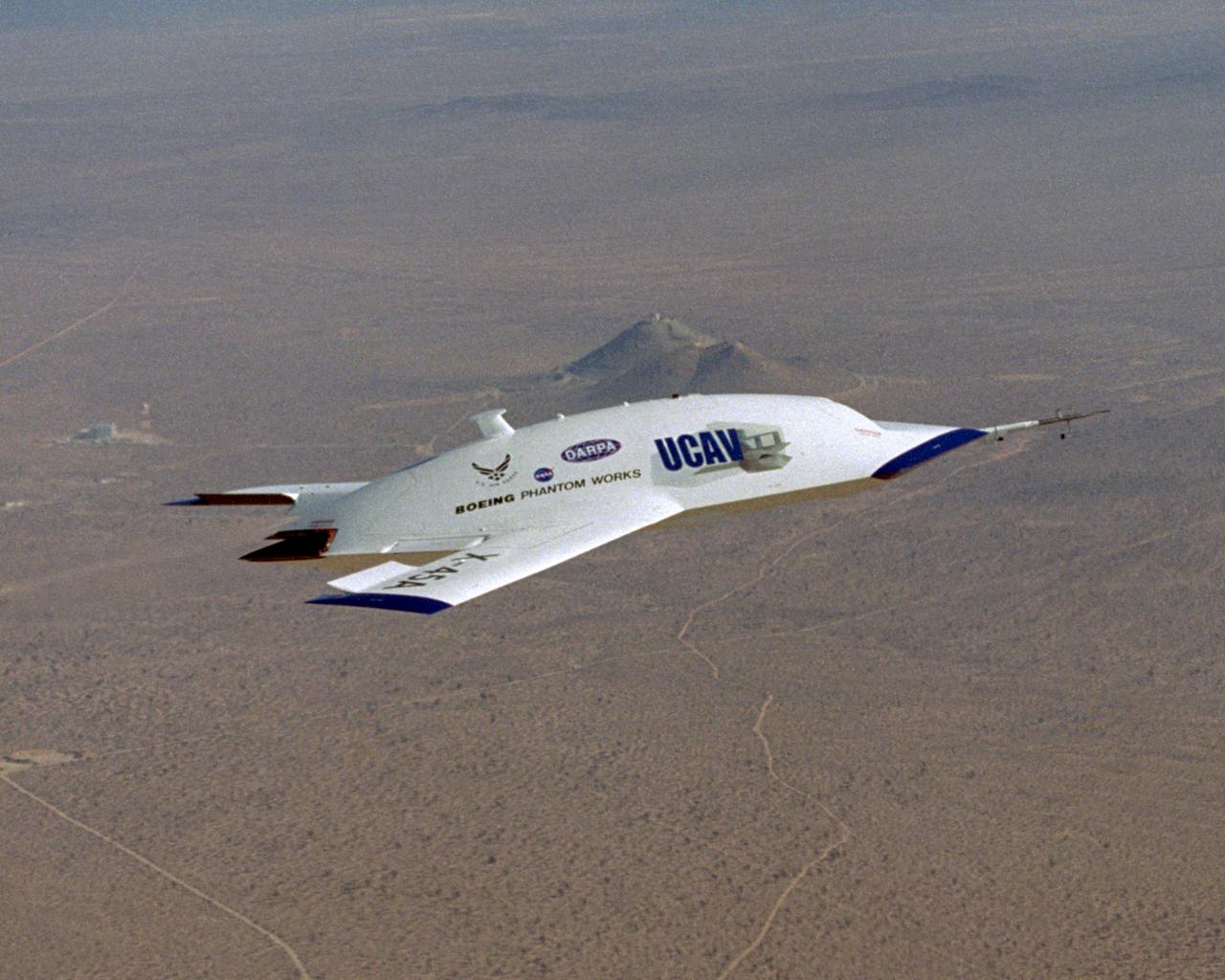
The first X-45A Unmanned Combat Air Vehicle (UCAV) technology demonstrator completed its sixth flight on Dec. 19, 2002, raising its landing gear in flight for the first time. The X-45A flew for 40 minutes and reached an airspeed of 195 knots and an altitude of 7,500 feet. Dryden is supporting the DARPA/Boeing team in the design, development, integration, and demonstration of the critical technologies, processes, and system attributes leading to an operational UCAV system. Dryden support of the X-45A demonstrator system includes analysis, component development, simulations, ground and flight tests.

The first X-45A Unmanned Combat Air Vehicle (UCAV) technology demonstrator completed its sixth flight on Dec. 19, 2002, raising its landing gear in flight for the first time. The X-45A flew for 40 minutes and reached an airspeed of 195 knots and an altitude of 7,500 feet. Dryden is supporting the DARPA/Boeing team in the design, development, integration, and demonstration of the critical technologies, processes, and system attributes leading to an operational UCAV system. Dryden support of the X-45A demonstrator system includes analysis, component development, simulations, ground and flight tests.

The left wing of NASA's Altair unmanned aerial vehicle (UAV) rests in a jig during construction at General Atomics Aeronautical Systems, Inc., (GA-ASI) facility at Adelanto, Calif.
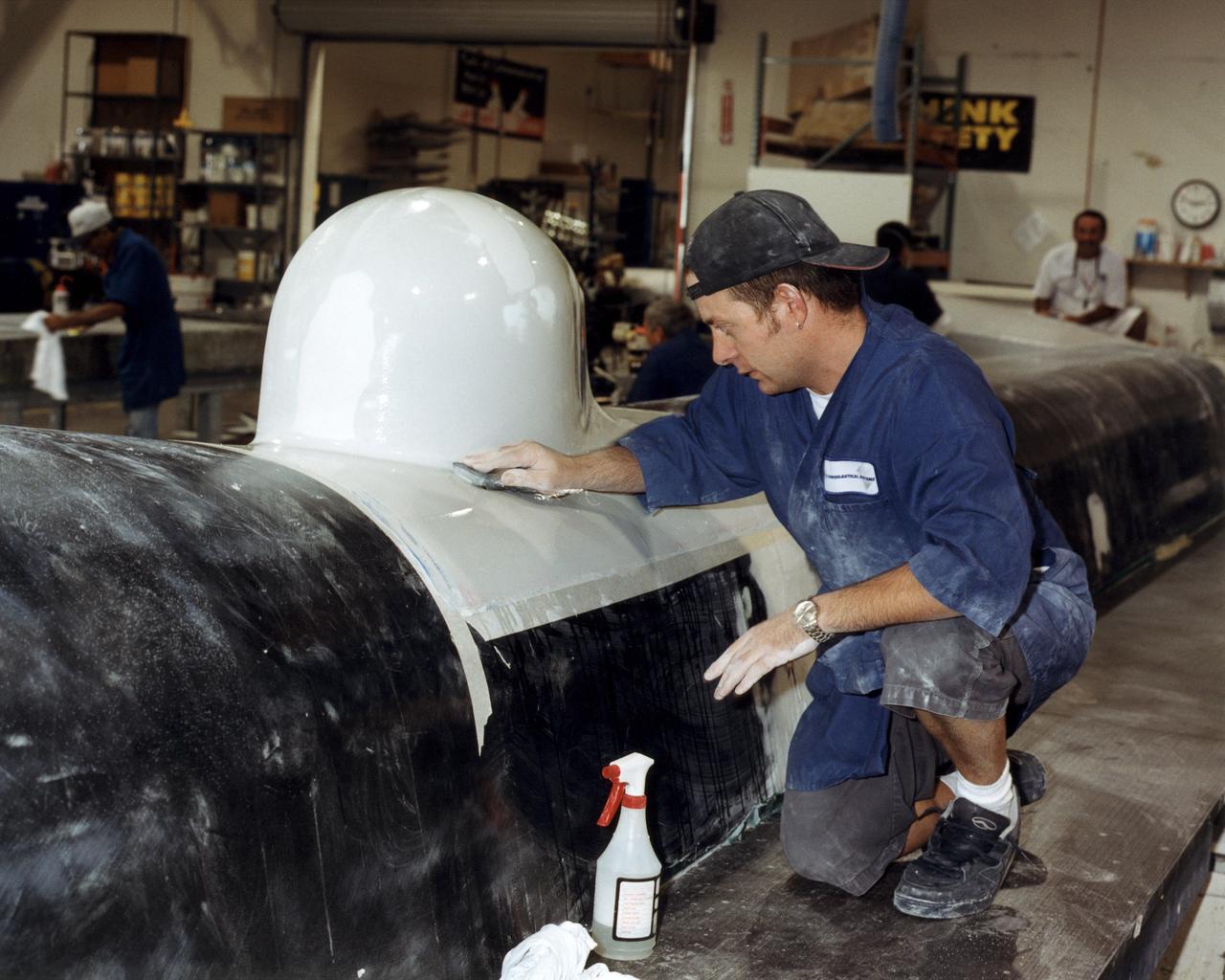
Technician Shawn Warren carefully smoothes out the composite skin of an instrument fairing<br>atop the upper fuselage of the Altair unmanned aerial vehicle (UAV) at General Atomics Aeronautical Systems, Inc., facility at Adelanto, Calif.
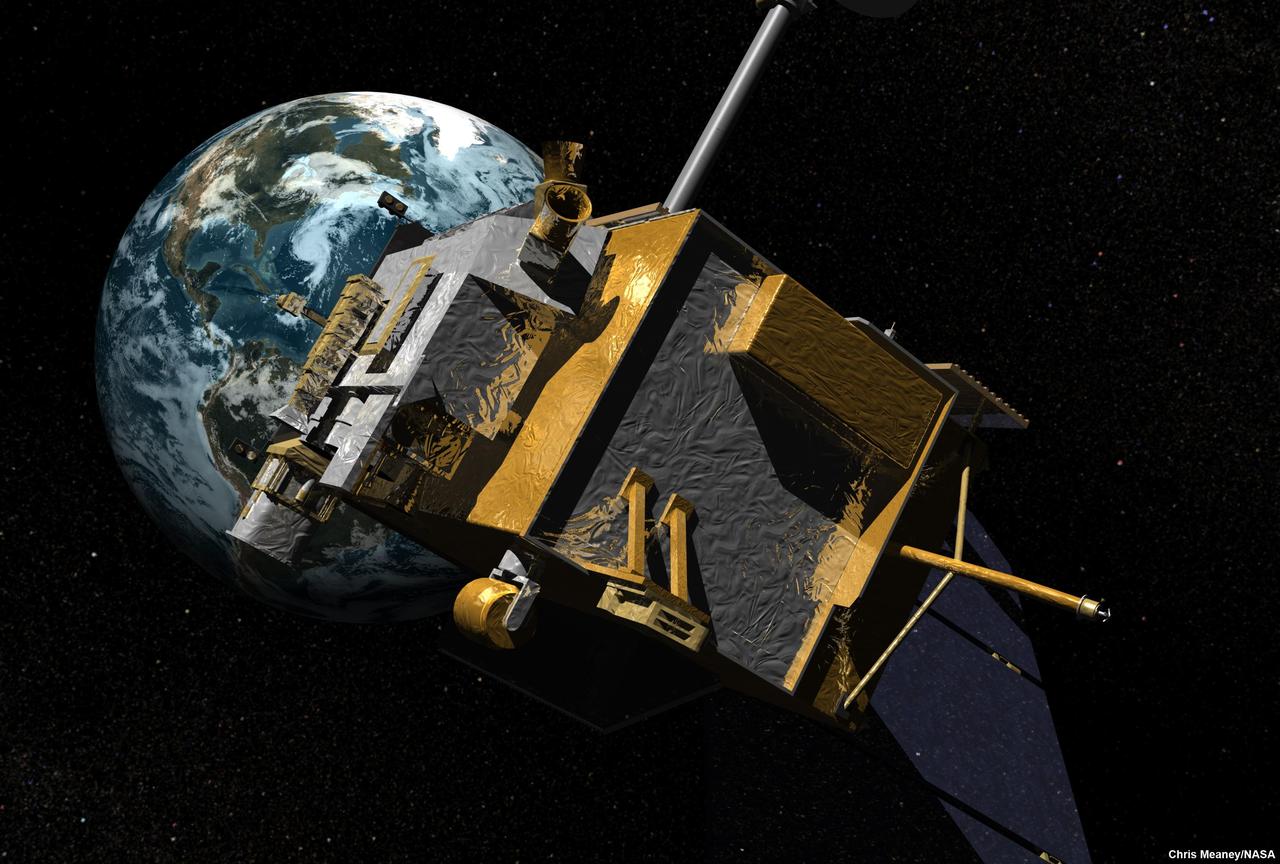
NASA is scheduled to launch the Lunar Reconnaissance Orbiter, an unmanned mission to comprehensively map the entire moon, on June 18, 2009.
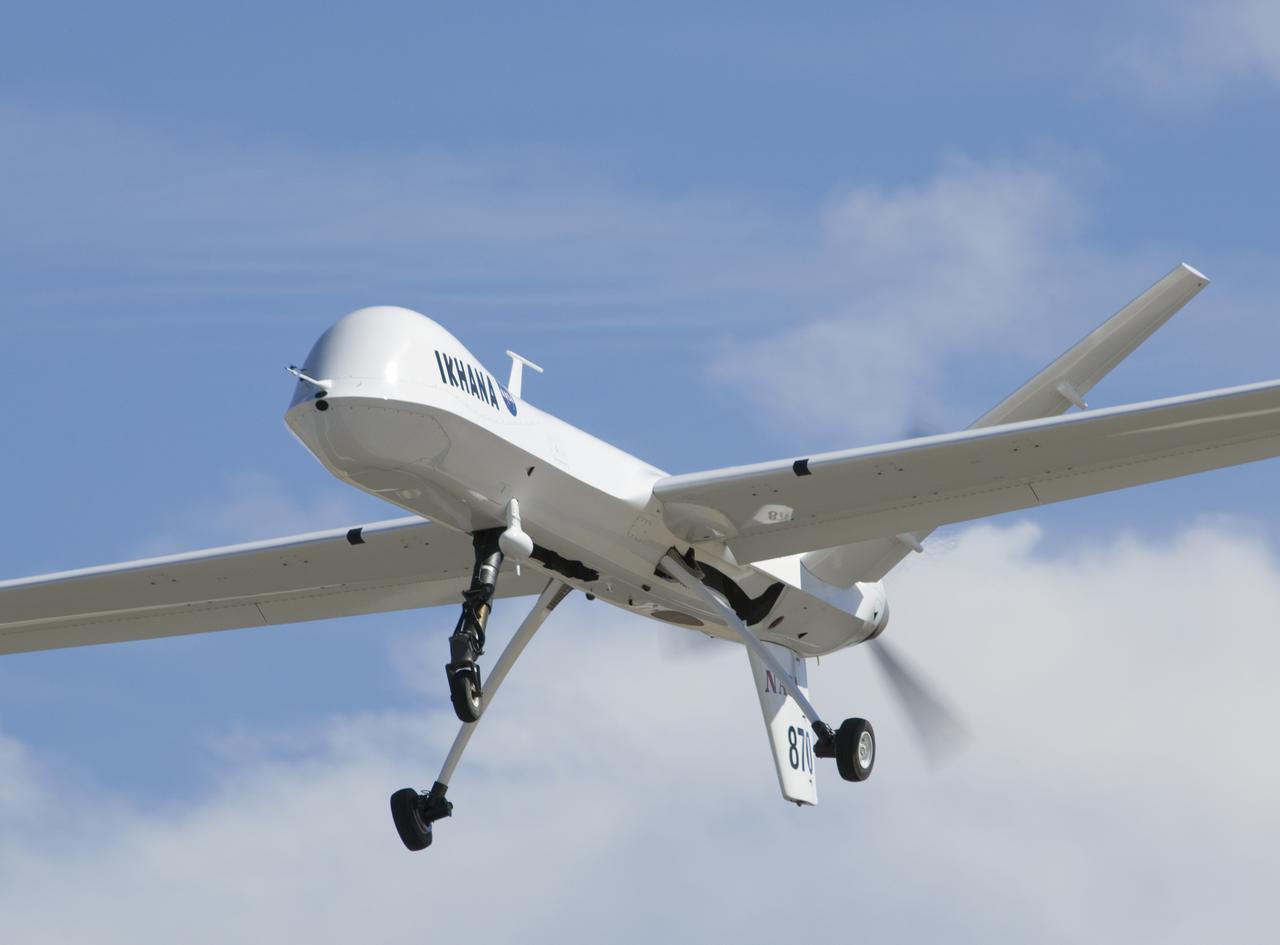
A small nose-mounted television camera enables pilots of NASA's Ikhana unmanned science aircraft to view the flight path ahead.
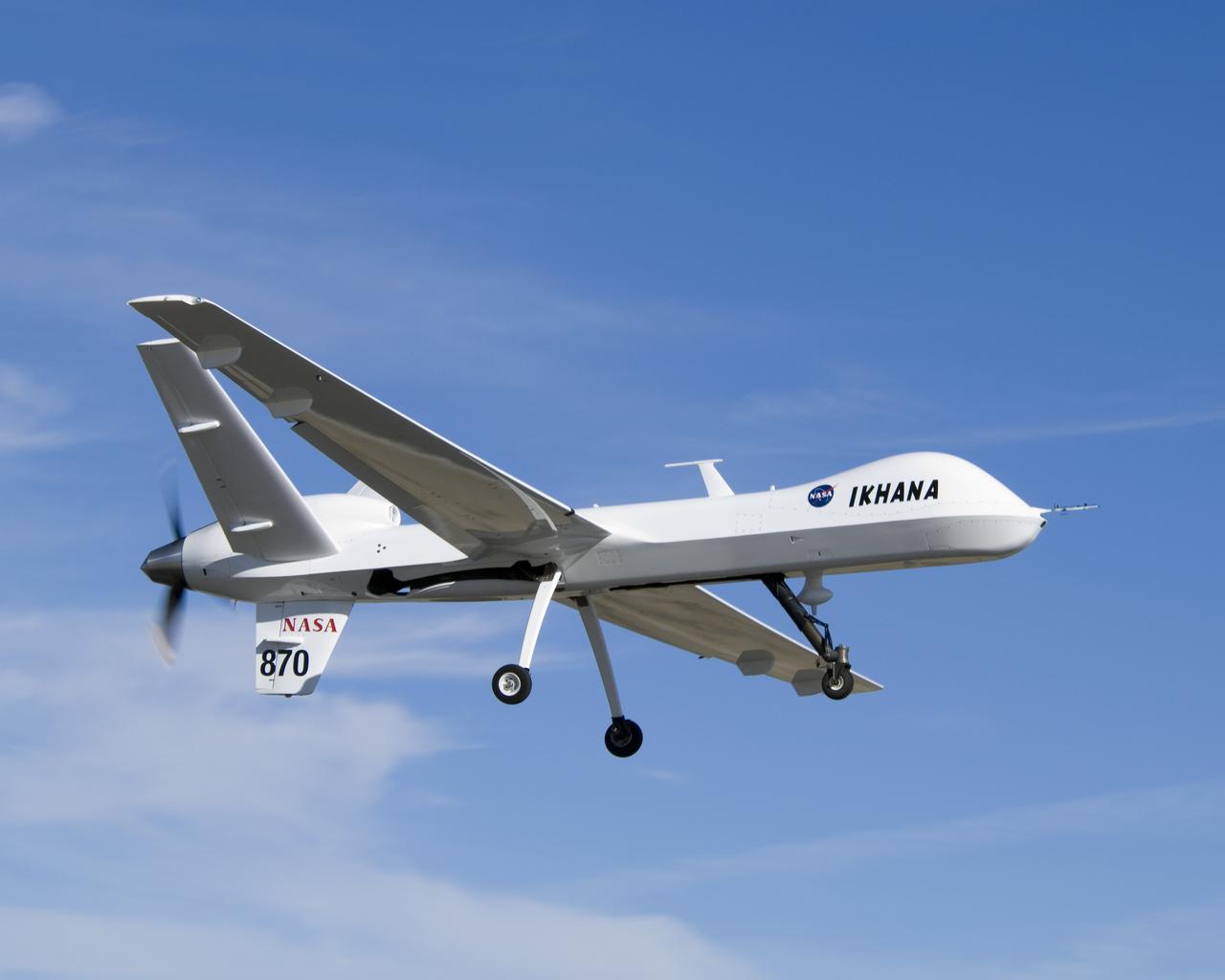
The bulging fairing atop the forward fuselage of NASA's Ikhana unmanned aircraft covers a variety of navigation, communications and science instruments.
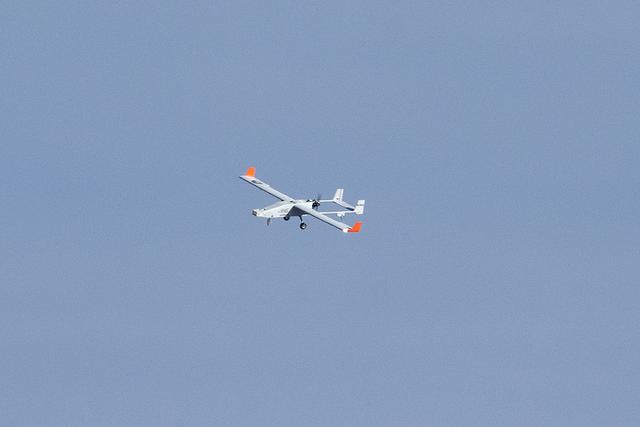
The TigerShark unmanned aircraft by Navmar Applied Sciences Corporation flew over the skies at NASA’s Armstrong Flight Research Center for the Unmanned Aircraft Systems integration in the National Airspace Systems, Flight Test Series Six (FT6) project. FT6 focused on low size weight and power sensors for Detect and Avoid (DAA) operations in controlled airspace to inform the FAA through the RTCA Special Committee DAA Working Group on the phase 2 minimum operational performance standards for DAA and air-to-air radar.
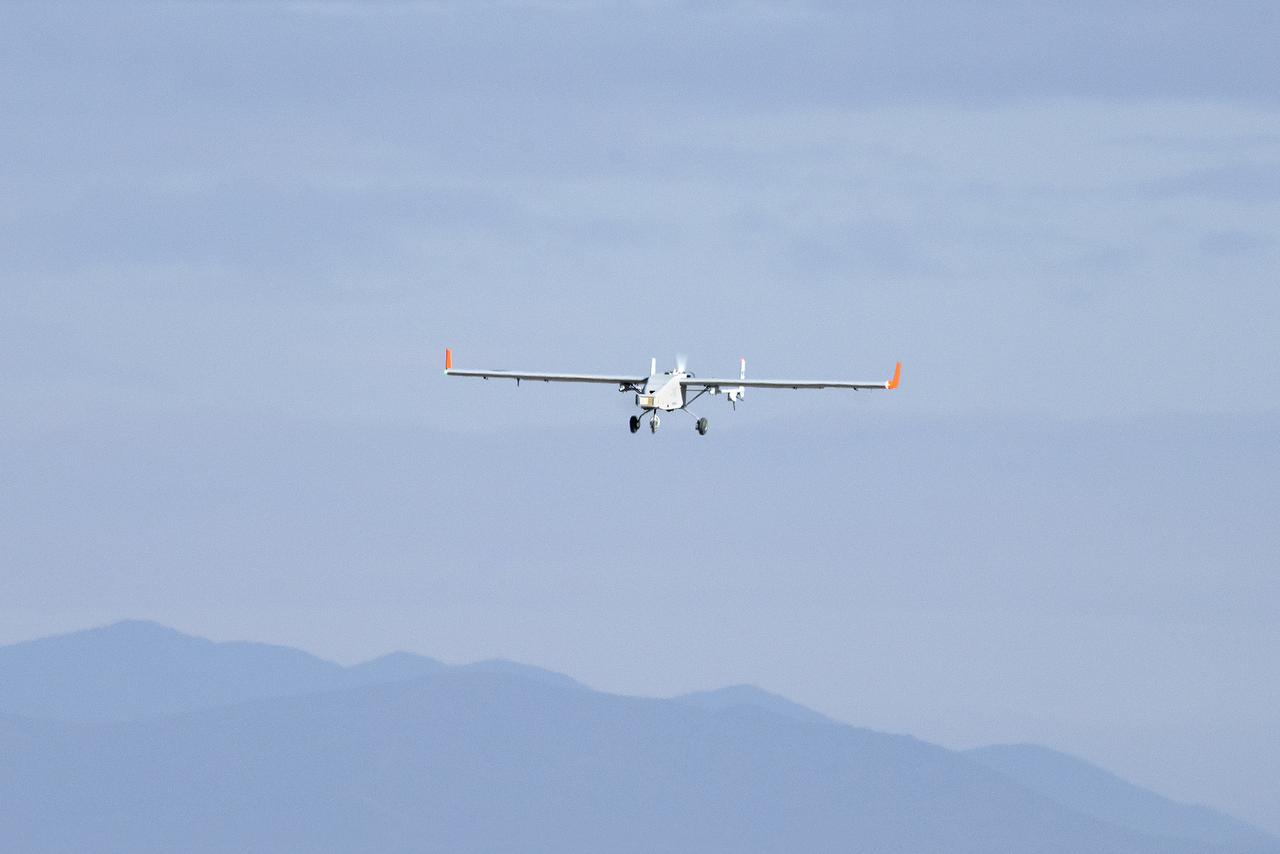
The TigerShark unmanned aircraft by Navmar Applied Sciences Corporation flew over the skies at NASA’s Armstrong Flight Research Center for the Unmanned Aircraft Systems integration in the National Airspace Systems, Flight Test Series Six (FT6) project. FT6 focused on low size weight and power sensors for Detect and Avoid (DAA) operations in controlled airspace to inform the FAA through the RTCA Special Committee DAA Working Group on the phase 2 minimum operational performance standards for DAA and air-to-air radar.
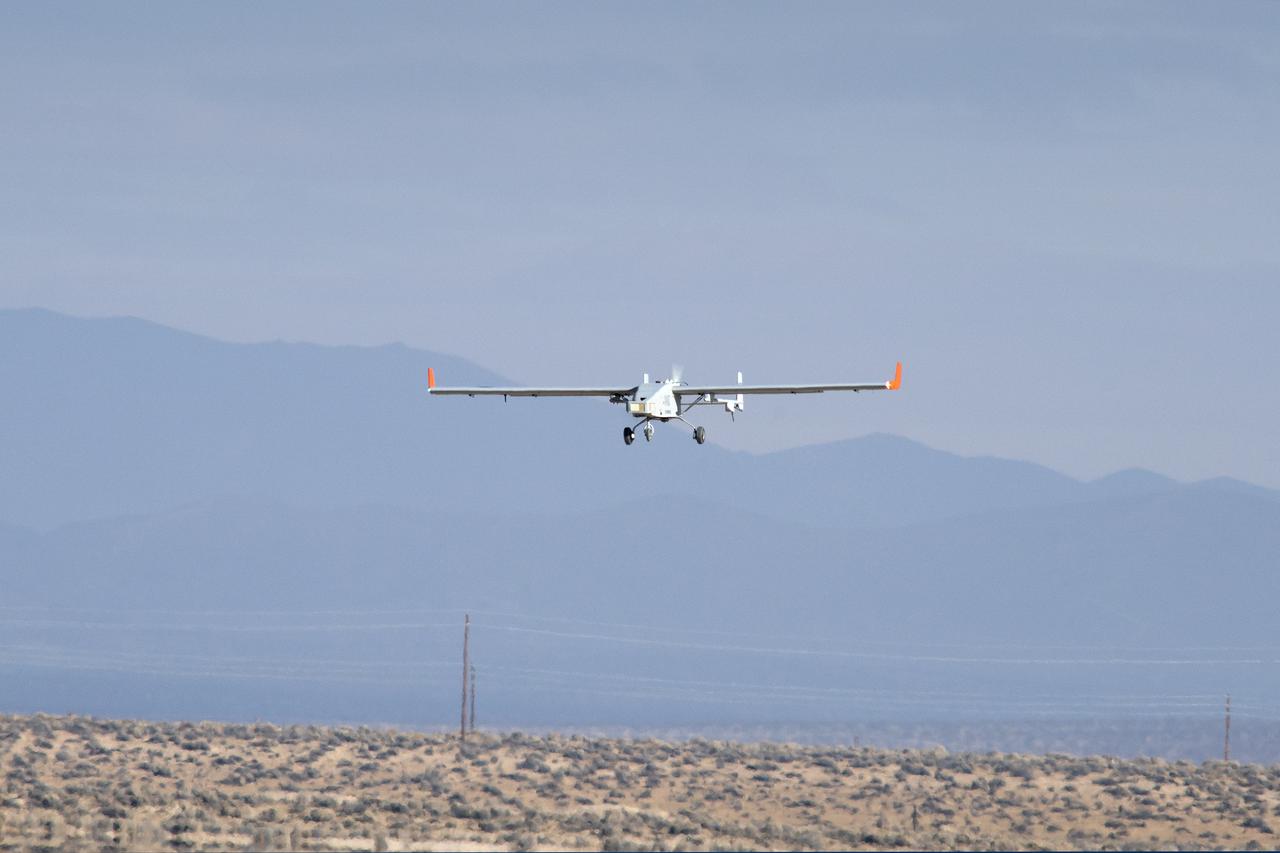
The TigerShark unmanned aircraft by Navmar Applied Sciences Corporation flew over the skies at NASA’s Armstrong Flight Research Center for the Unmanned Aircraft Systems integration in the National Airspace Systems, Flight Test Series Six (FT6) project. FT6 focused on low size weight and power sensors for Detect and Avoid (DAA) operations in controlled airspace to inform the FAA through the RTCA Special Committee DAA Working Group on the phase 2 minimum operational performance standards for DAA and air-to-air radar.
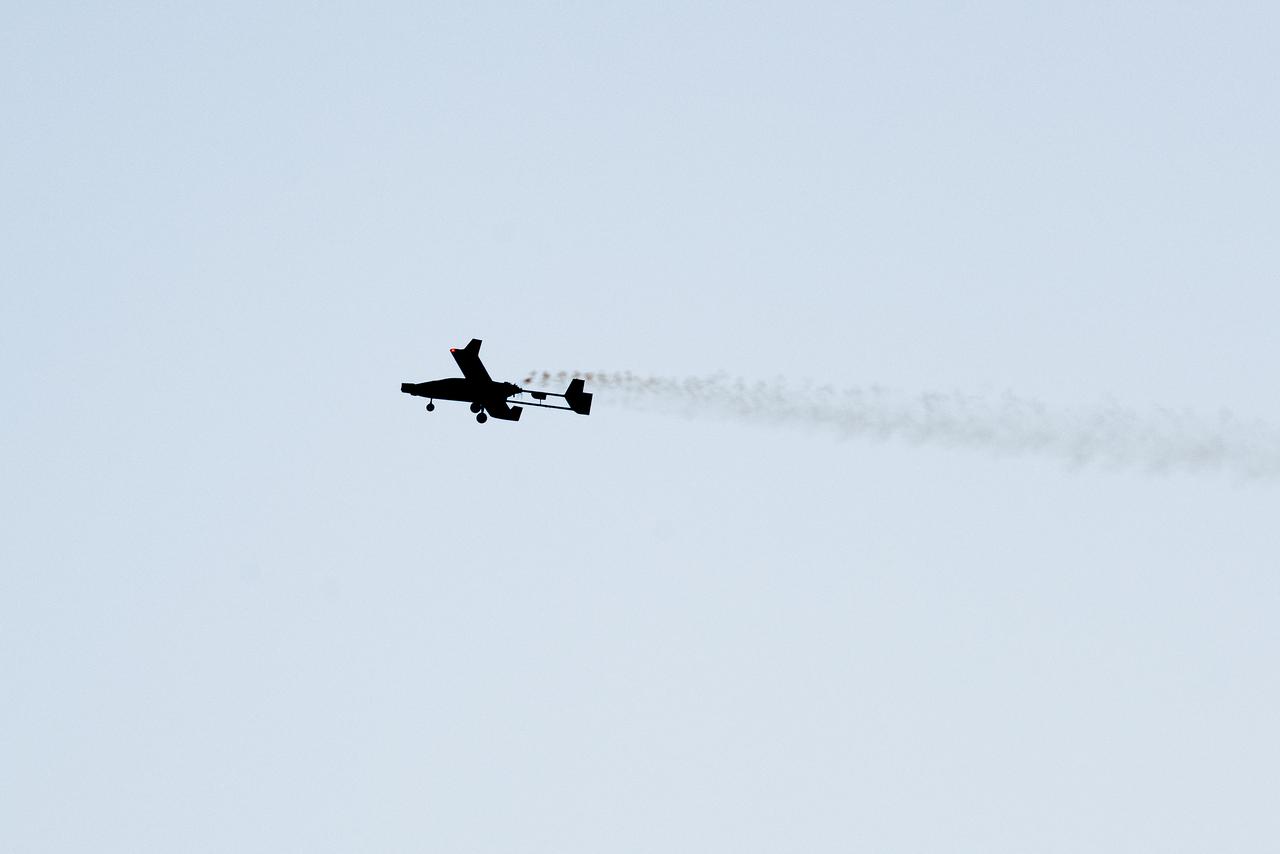
The TigerShark unmanned aircraft by Navmar Applied Sciences Corporation flew over the skies at NASA’s Armstrong Flight Research Center for the Unmanned Aircraft Systems integration in the National Airspace Systems, Flight Test Series Six (FT6) project. FT6 focused on low size weight and power sensors for Detect and Avoid (DAA) operations in controlled airspace to inform the FAA through the RTCA Special Committee DAA Working Group on the phase 2 minimum operational performance standards for DAA and air-to-air radar.
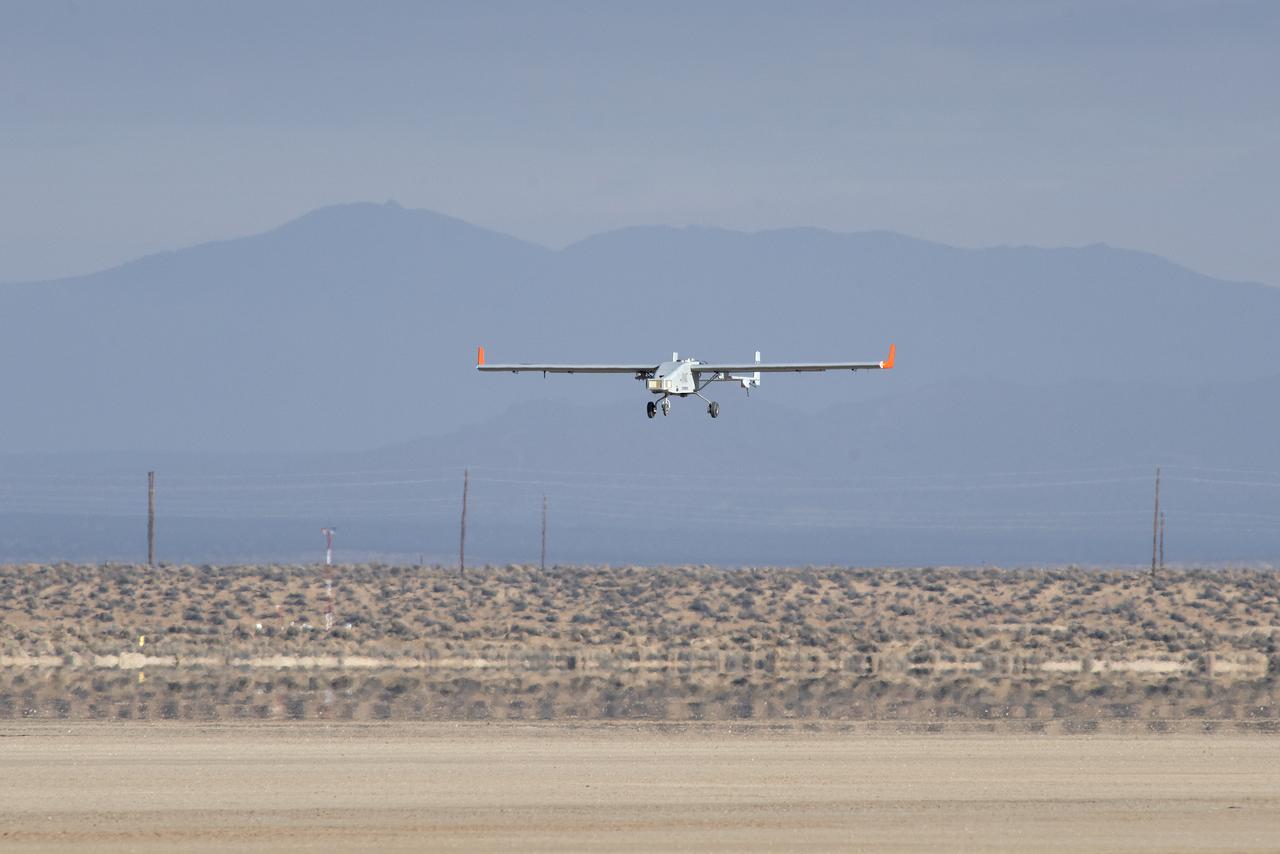
The TigerShark unmanned aircraft by Navmar Applied Sciences Corporation flew over the skies at NASA’s Armstrong Flight Research Center for the Unmanned Aircraft Systems integration in the National Airspace Systems, Flight Test Series Six (FT6) project. FT6 focused on low size weight and power sensors for Detect and Avoid (DAA) operations in controlled airspace to inform the FAA through the RTCA Special Committee DAA Working Group on the phase 2 minimum operational performance standards for DAA and air-to-air radar.
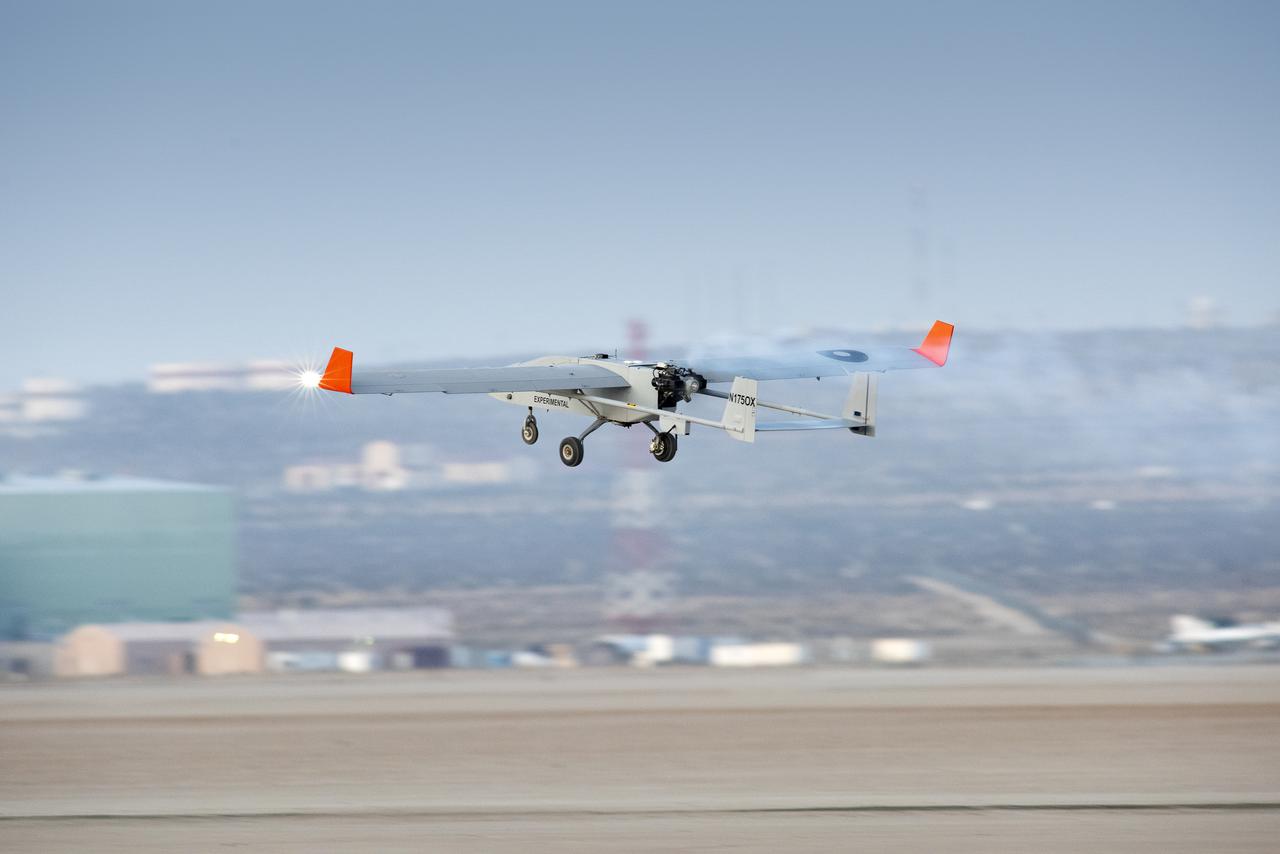
The TigerShark unmanned aircraft by Navmar Applied Sciences Corporation flew over the skies at NASA’s Armstrong Flight Research Center for the Unmanned Aircraft Systems integration in the National Airspace Systems, Flight Test Series Six (FT6) project. FT6 focused on low size weight and power sensors for Detect and Avoid (DAA) operations in controlled airspace to inform the FAA through the RTCA Special Committee DAA Working Group on the phase 2 minimum operational performance standards for DAA and air-to-air radar.
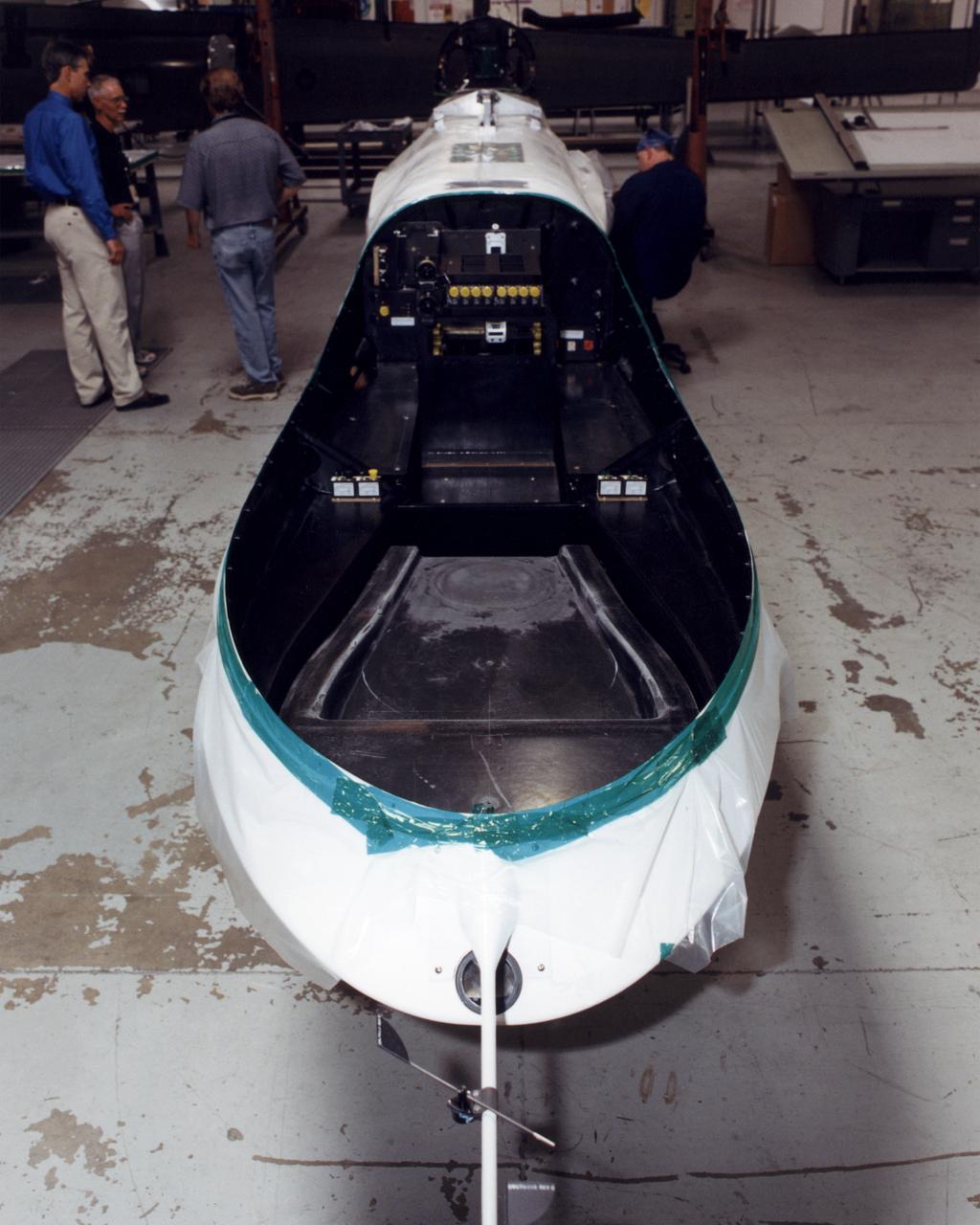
The payload bay in the nose of NASA's Altair unmanned aerial vehicle (UAV) will be able to carry up to 700 lbs. of sensors, imaging equipment and other instruments for Earth science missions.
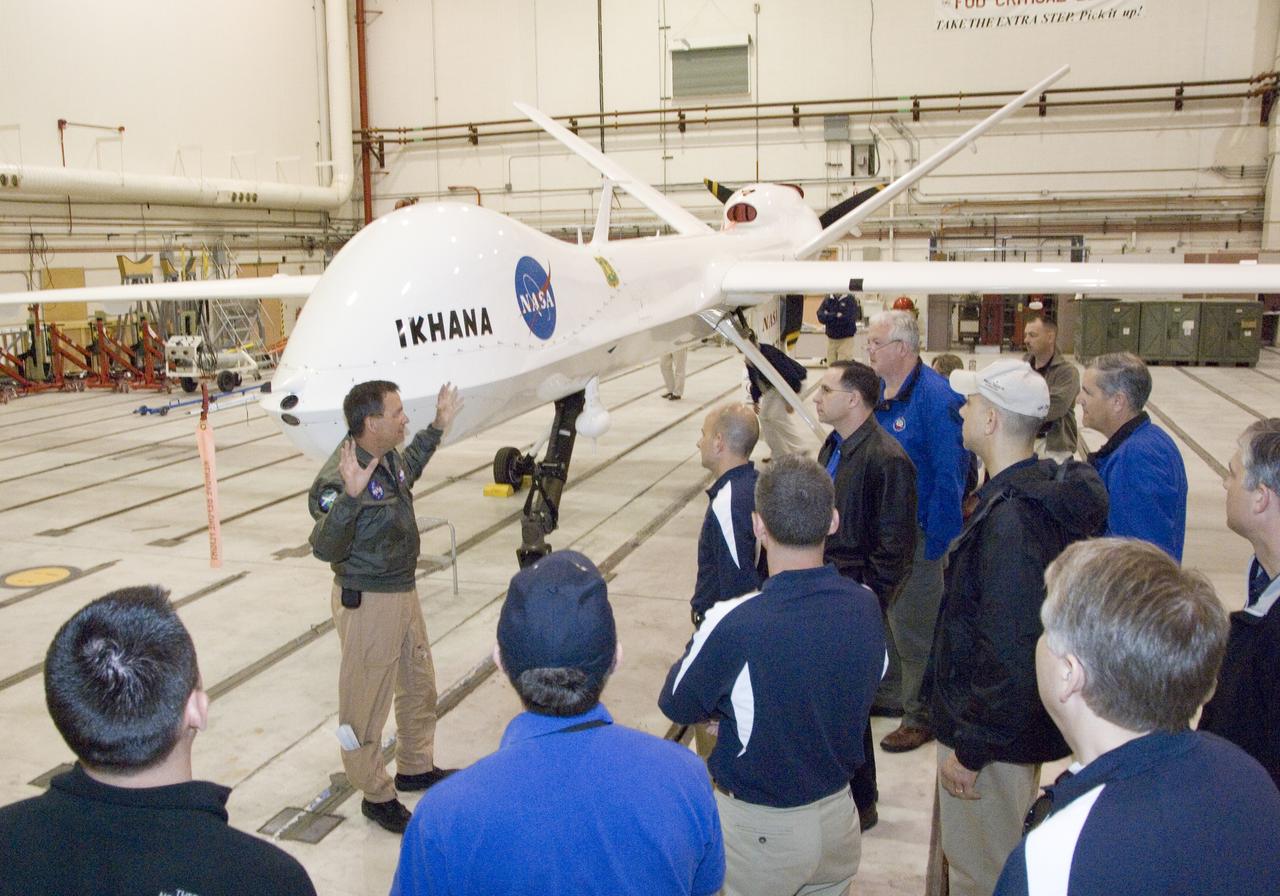
Industrial College of the Armed Forces students on a VIP tour receive a briefing on the Ikhana unmanned air vehicle from NASA Dryden pilot Mark Pestana.
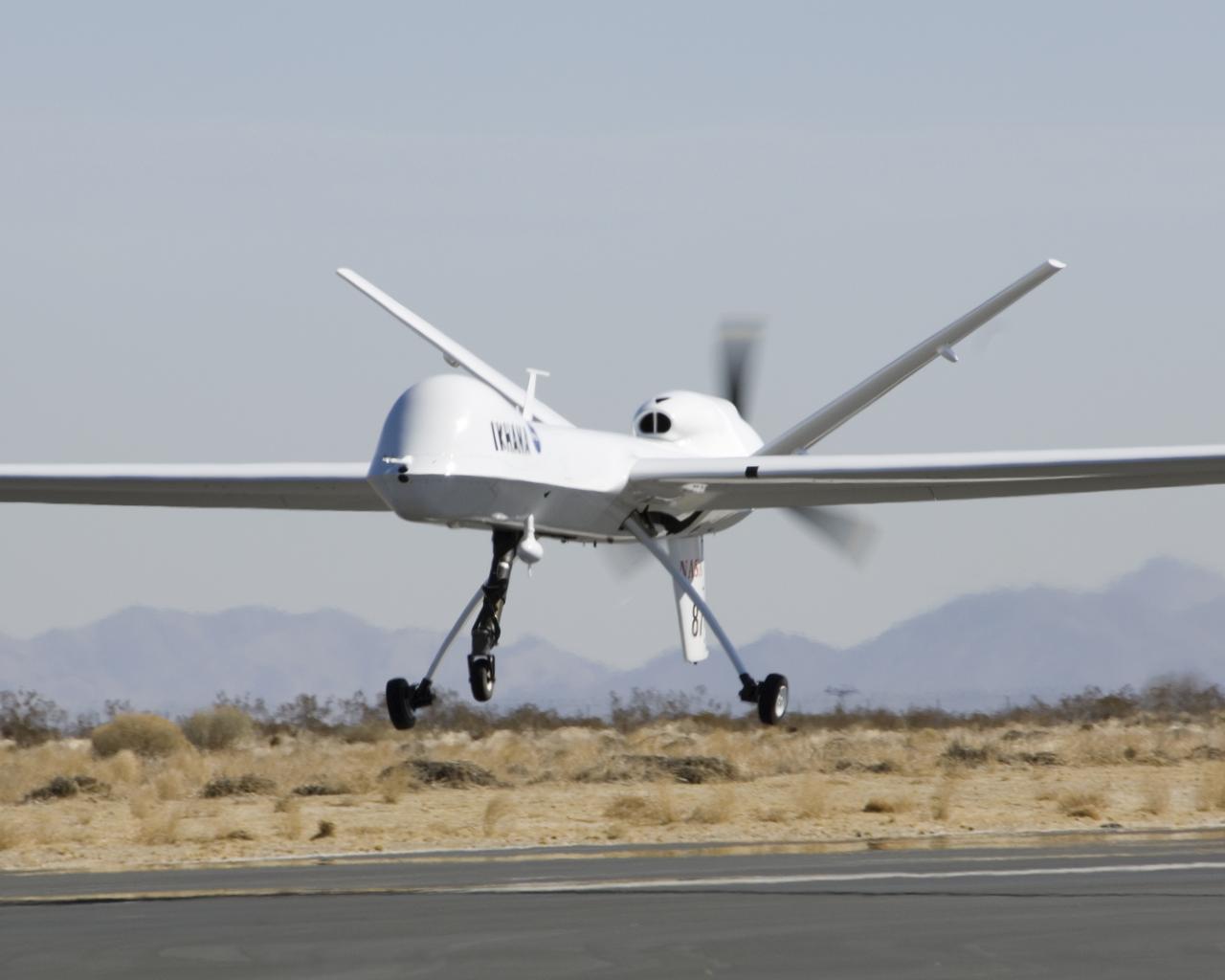
NASA's Ikhana unmanned science demonstration aircraft, a civil variant of General Atomics' Predator B, lifts off from Grey Butte airfield in Southern California.
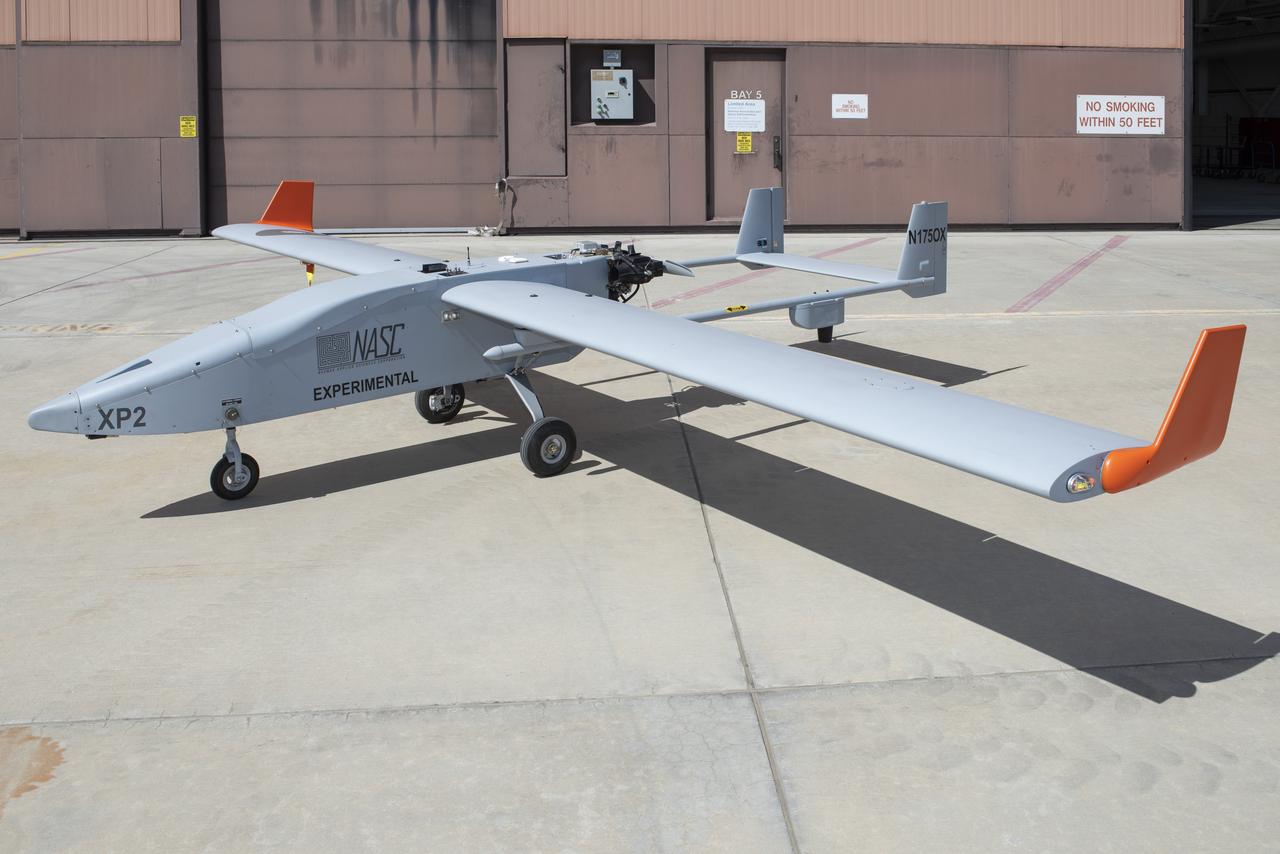
The fully assembled TigerShark unmanned aircraft system, seen here near a hangar at NASA’s Armstrong Flight Research Center in California, is expected to soon be flying missions.
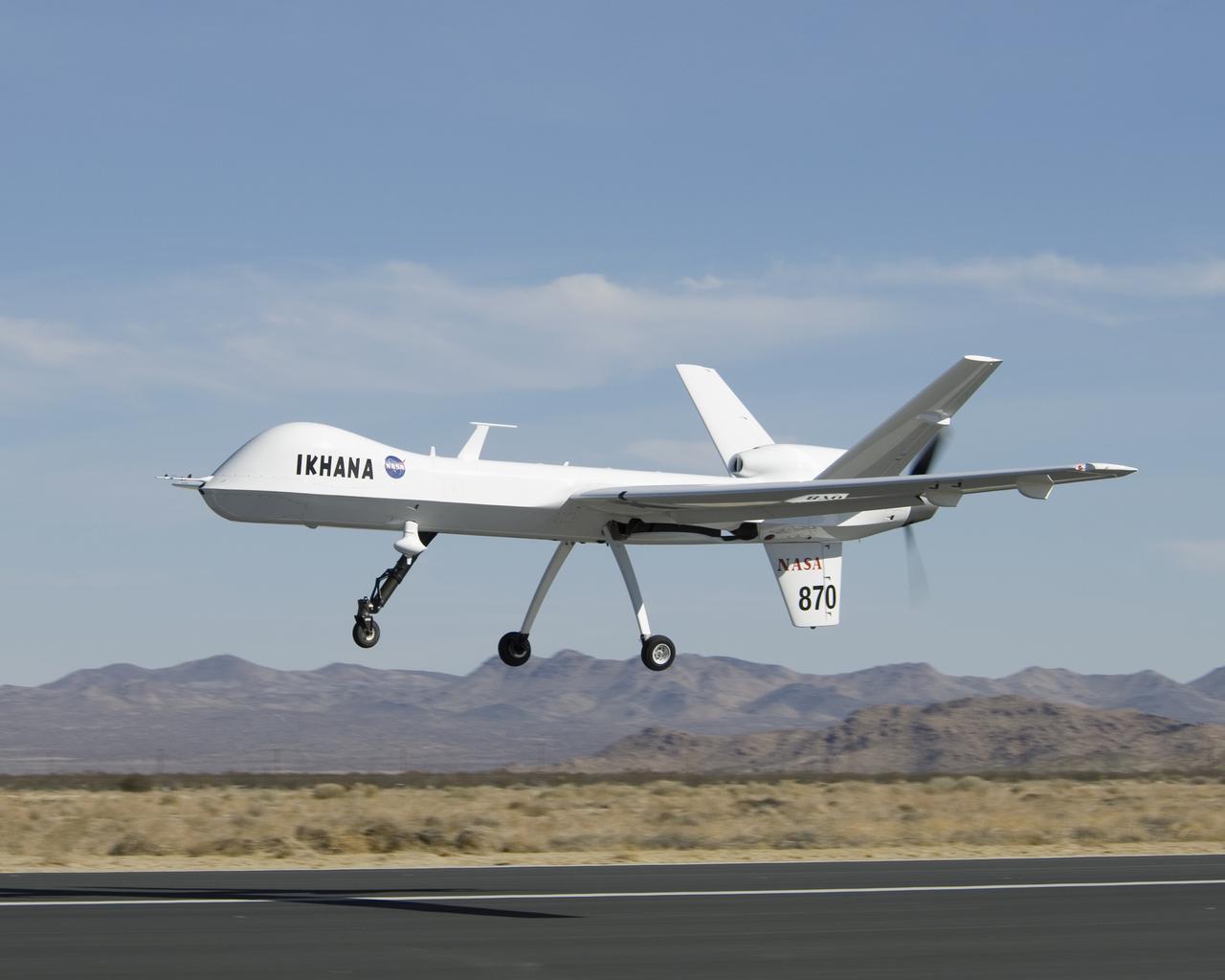
NASA's Ikhana unmanned science demonstration aircraft, a civil variant of General Atomics' Predator B, lifts off from Grey Butte airfield in Southern California.
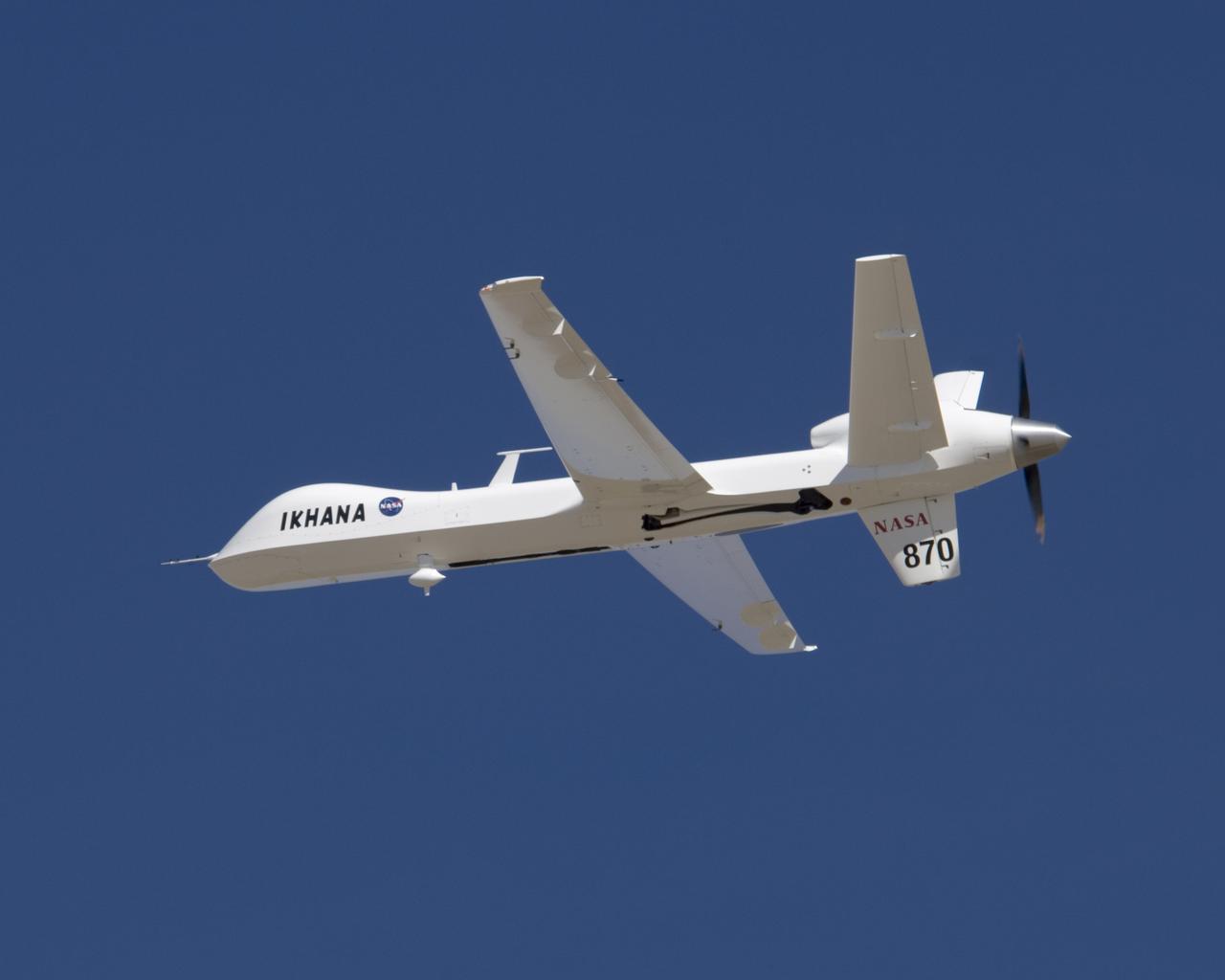
An efficient turboprop engine and large fuel capacity enable NASA's Ikhana unmanned aircraft to remain aloft for up to 30 hours on science or technology flights.
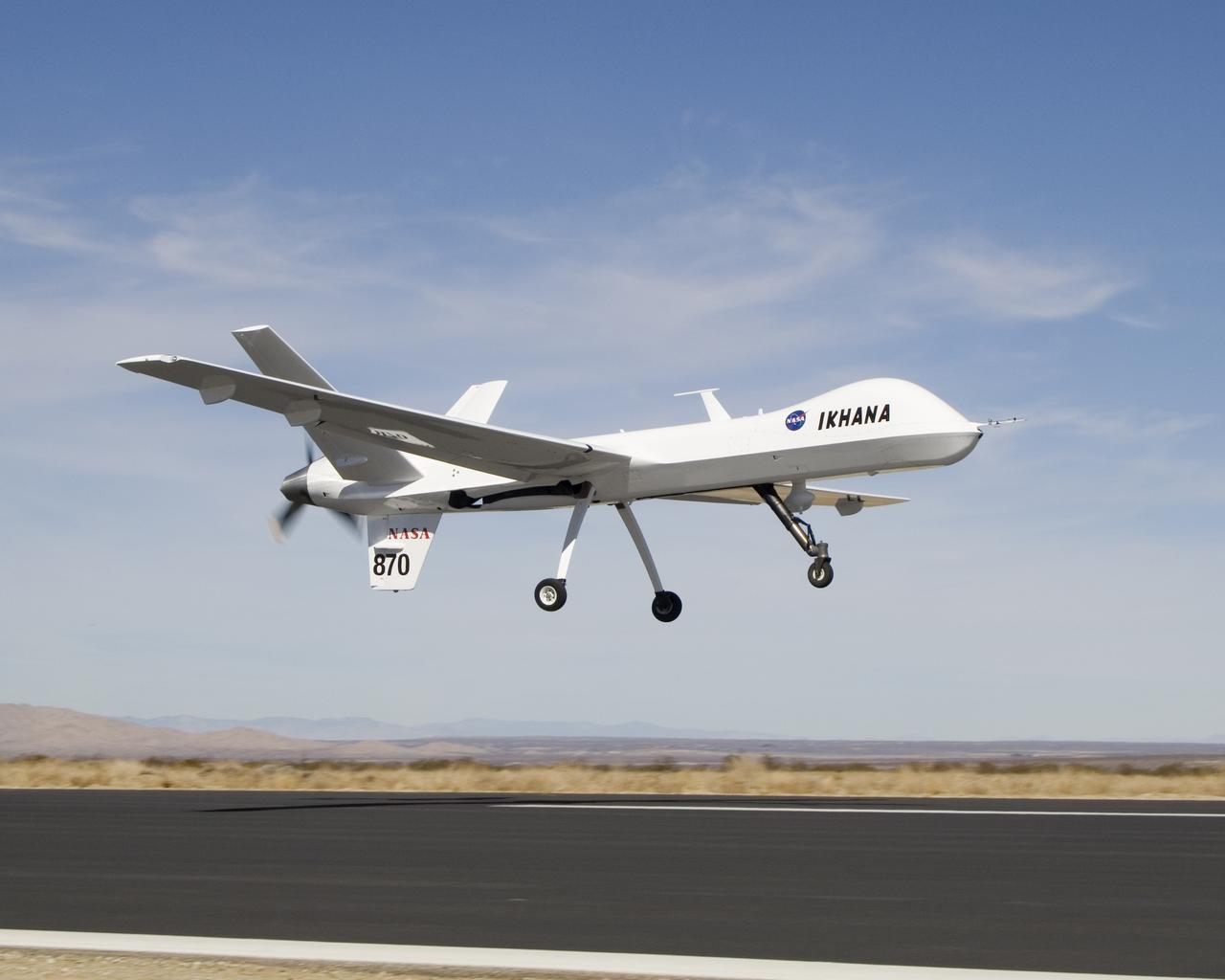
NASA's Ikhana, a civil variant of General Atomics' Predator B unmanned aircraft, takes to the sky for a morning checkout flight from the Grey Butte airfield.
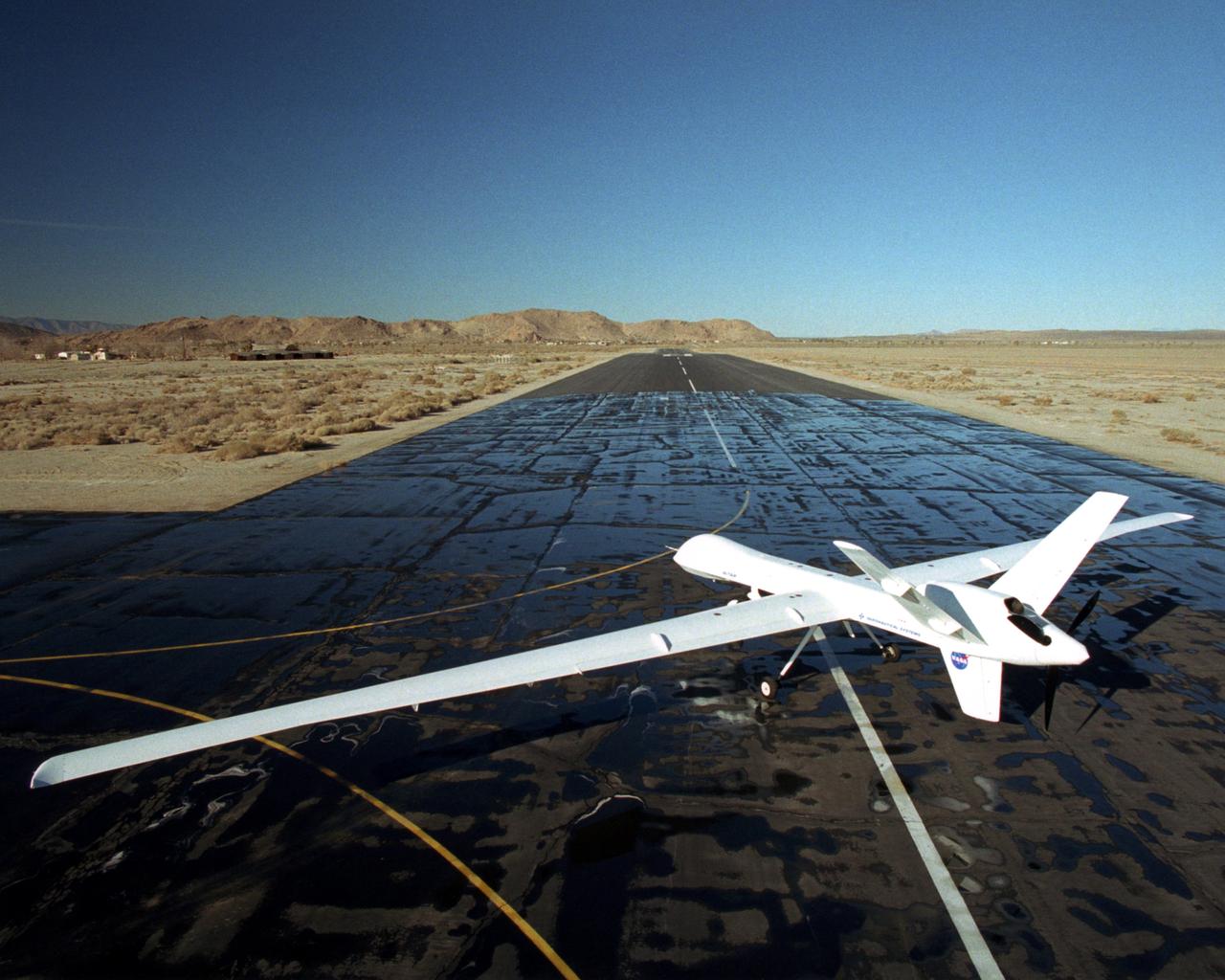
The long, narrow wings of NASA's Altair are designed to allow the unmanned aerial vehicle (UAV) to maintain long-duration flight at high altitudes.
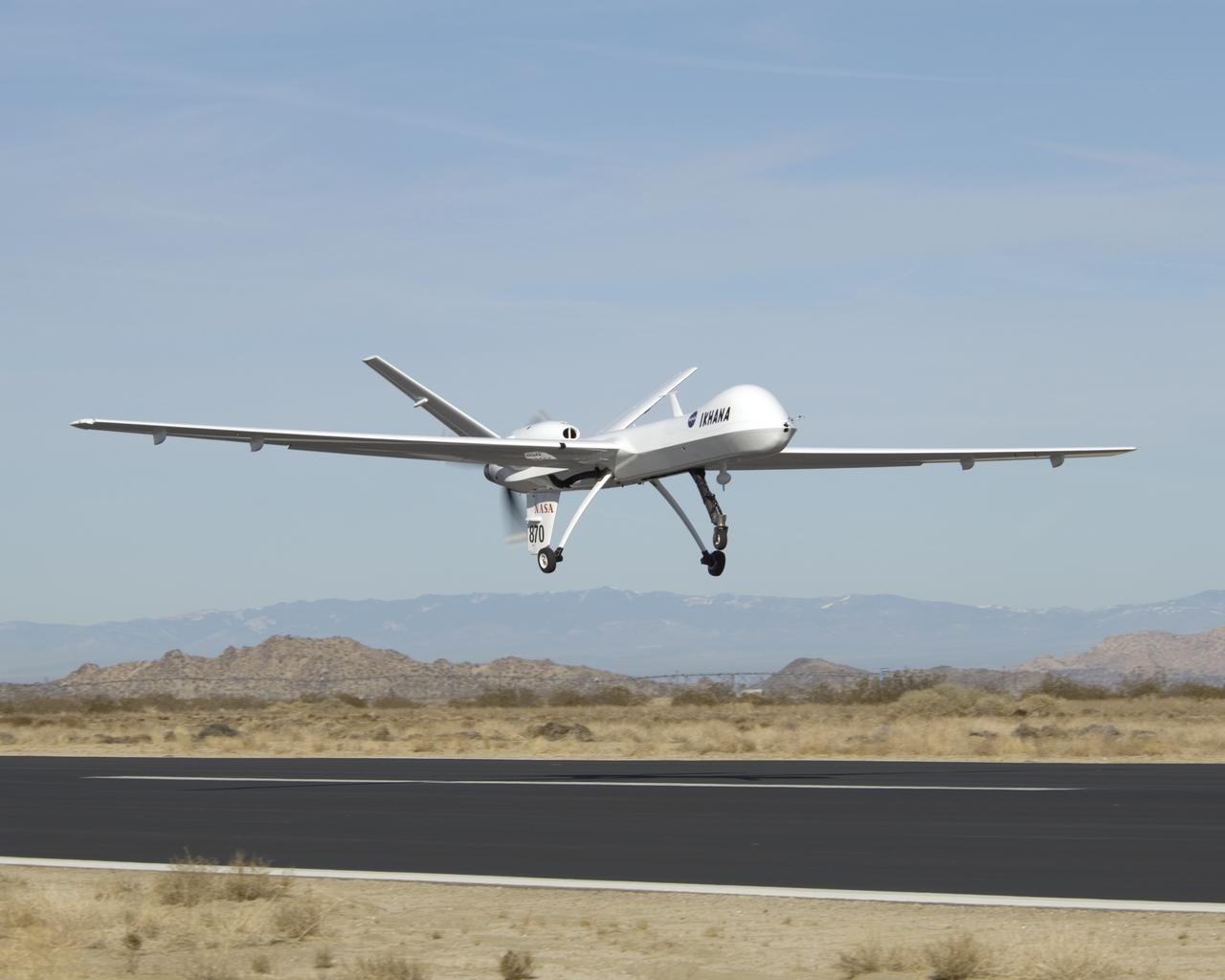
NASA's Ikhana unmanned long-endurance science aircraft, a civil variant of General Atomics' Predator B, takes to the sky over Southern California's high desert.
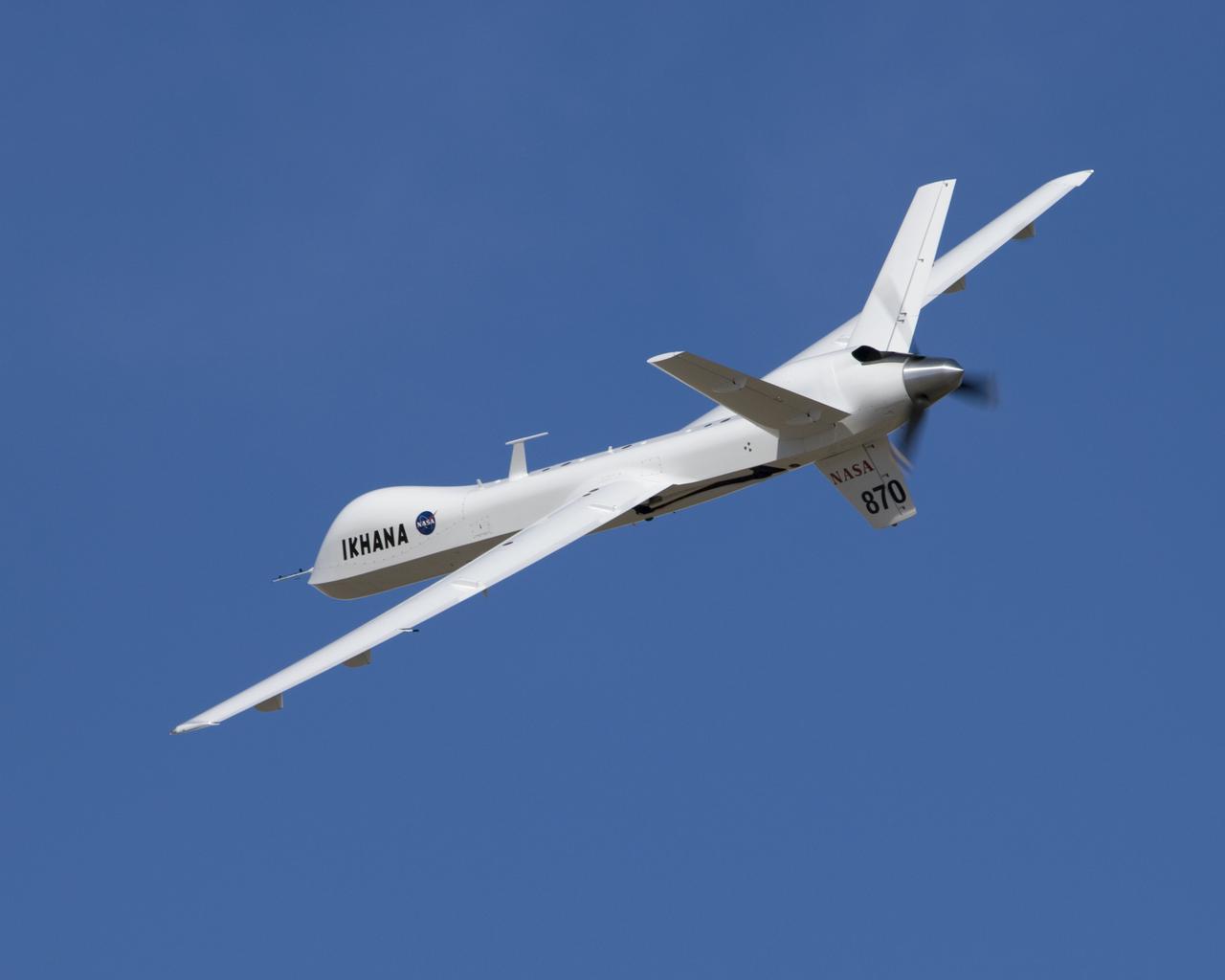
Straight wings, a Y-tail and a pusher propeller distinguish NASA's Ikhana, a civil version of General Atomics Aeronautical system's Predator B unmanned aircraft.
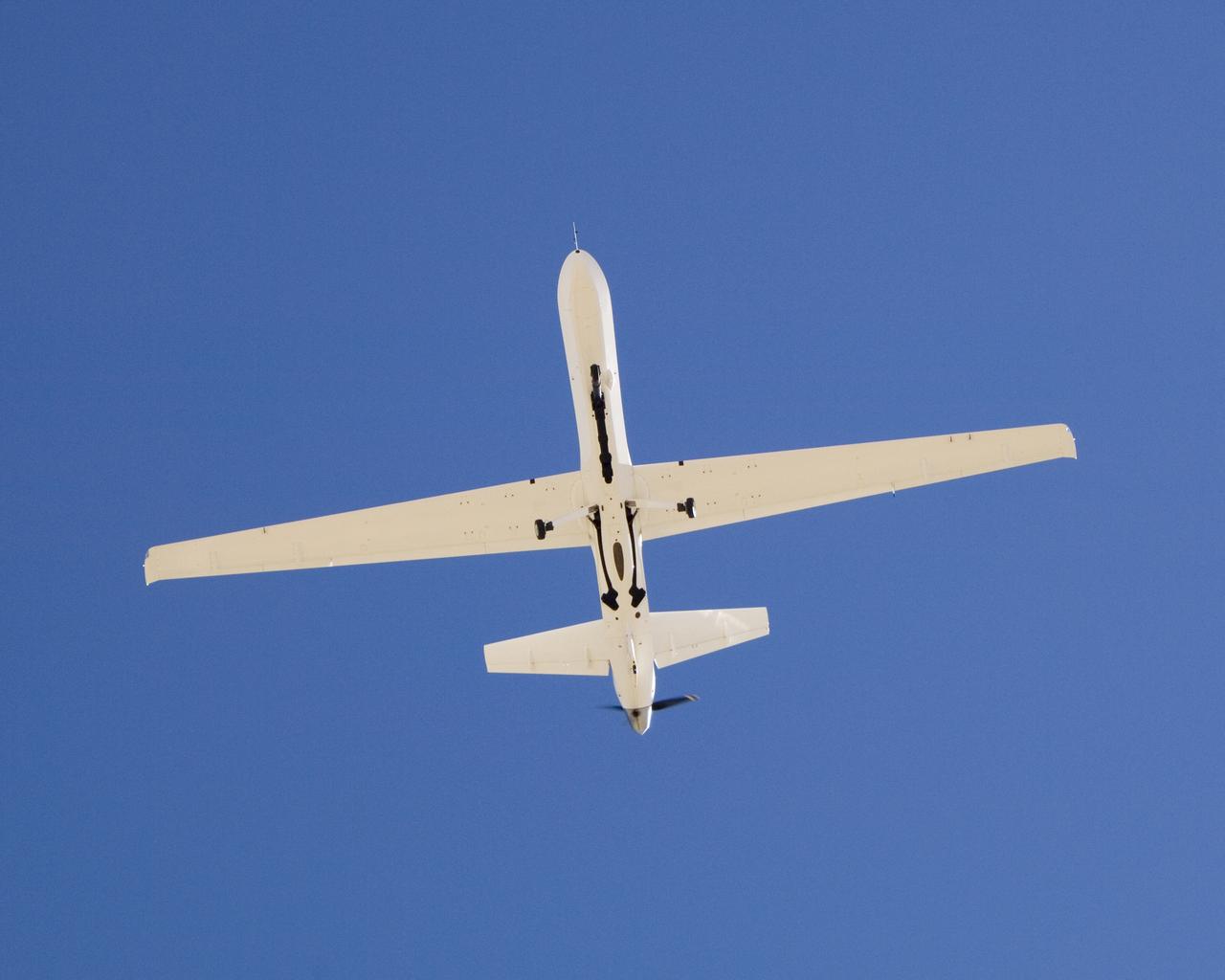
The narrow fuselage of NASA'S Ikhana unmanned science aircraft, a civil version of General Atomics' Predator B, is evident in this view from underneath.
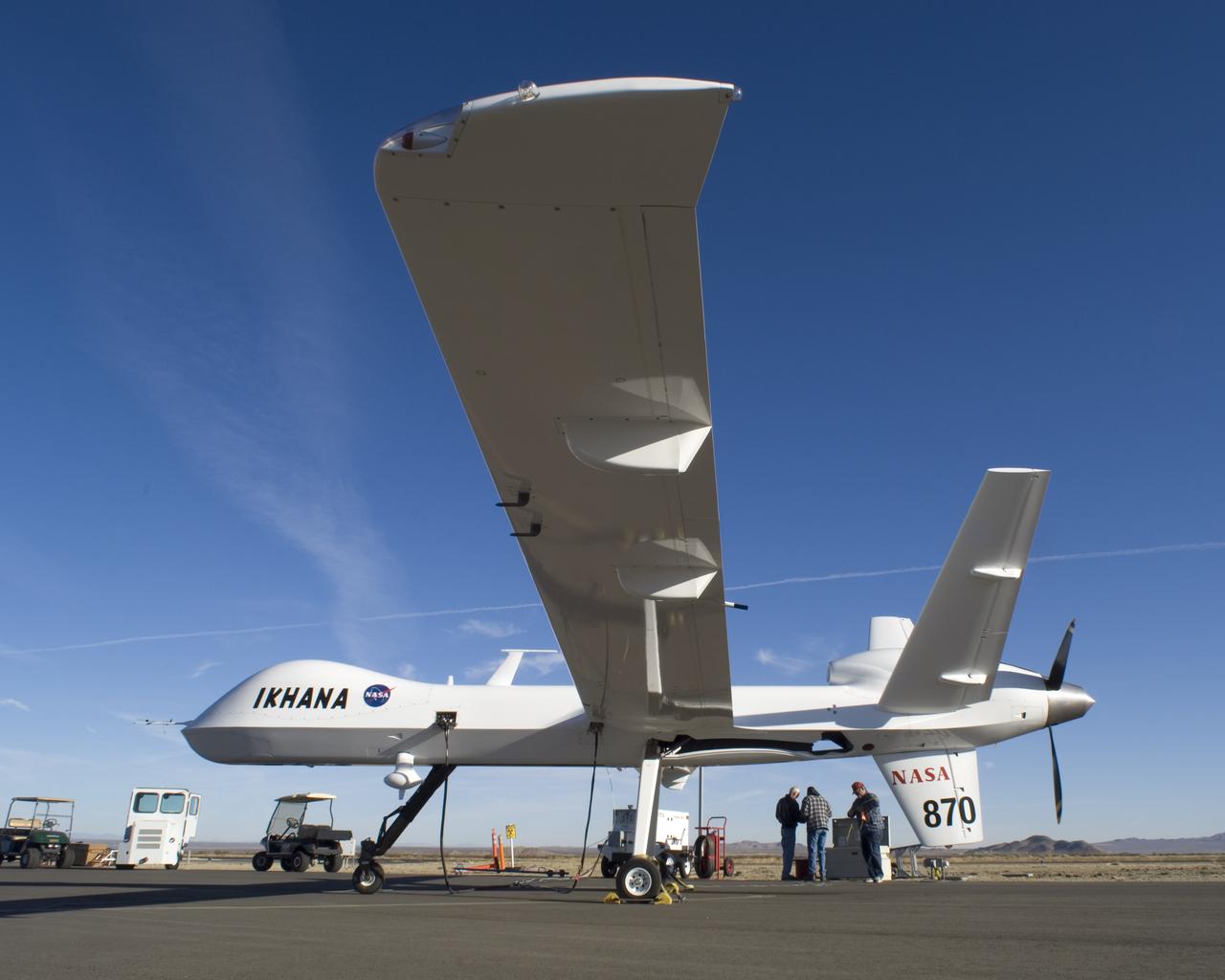
Bearing NASA tail number 870, NASA's Ikhana unmanned aircraft is a civil version of the Predator B designed for high-altitude, long-endurance science flights.
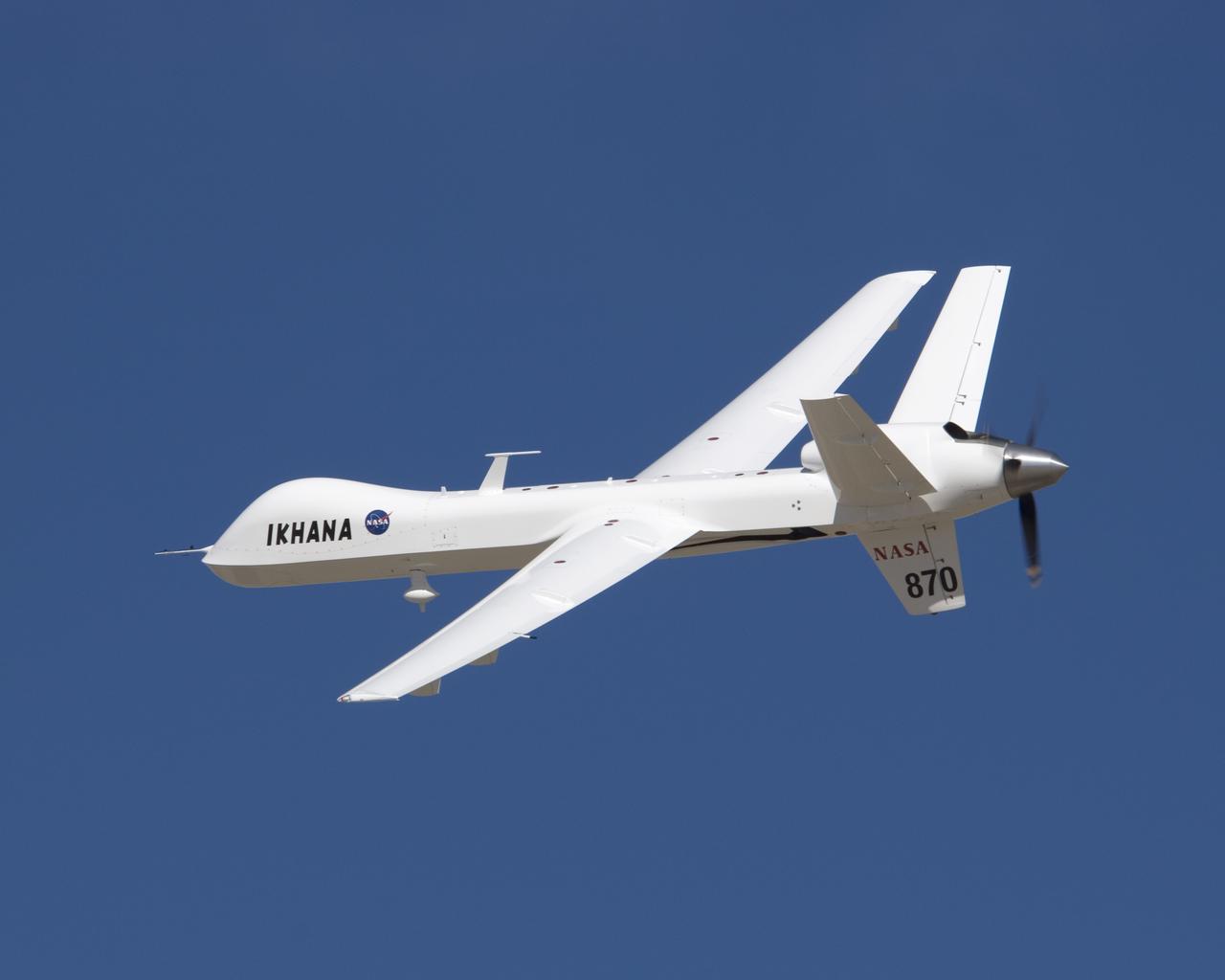
Its white surfaces in contrast with the deep blue sky, NASA's Ikhana unmanned science and technology development aircraft soars over California's high desert.
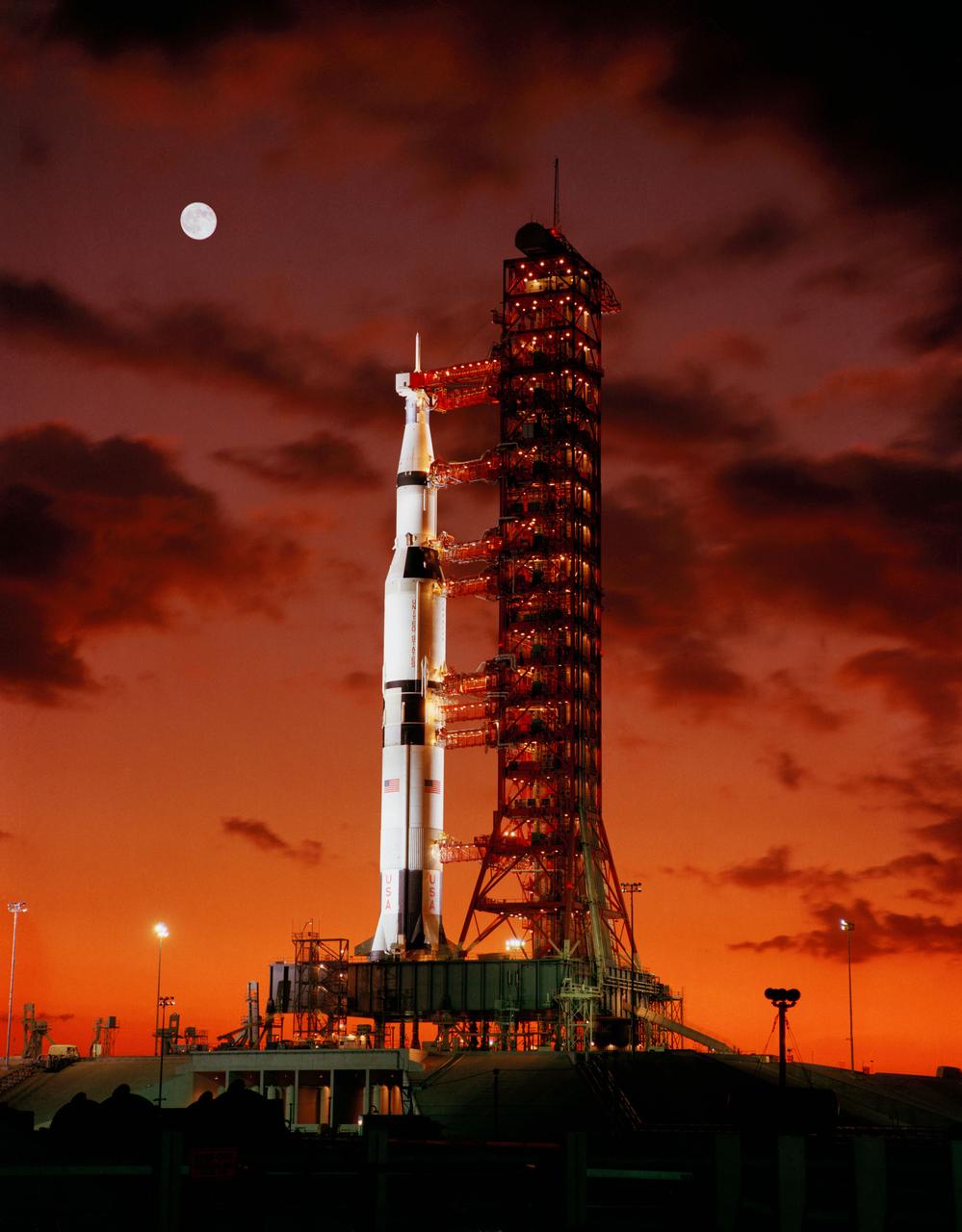
Early morning view of Pad A, Launch Complex 39, Kennedy Space Center, showing Apollo 4 (Spacecraft 017/Saturn 501) unmanned, earth-orbital space mission ready for launch, with a full moon in the upper left part of the image. The 363-foot tall Apollo/Saturn V space vehicle was launched at 7:00:01 AM (EST), November 9, 1967.

S68-26989 (4 April 1968) --- The Apollo 6 Spacecraft 020 Command Module is hoisted aboard the USS Okinawa.
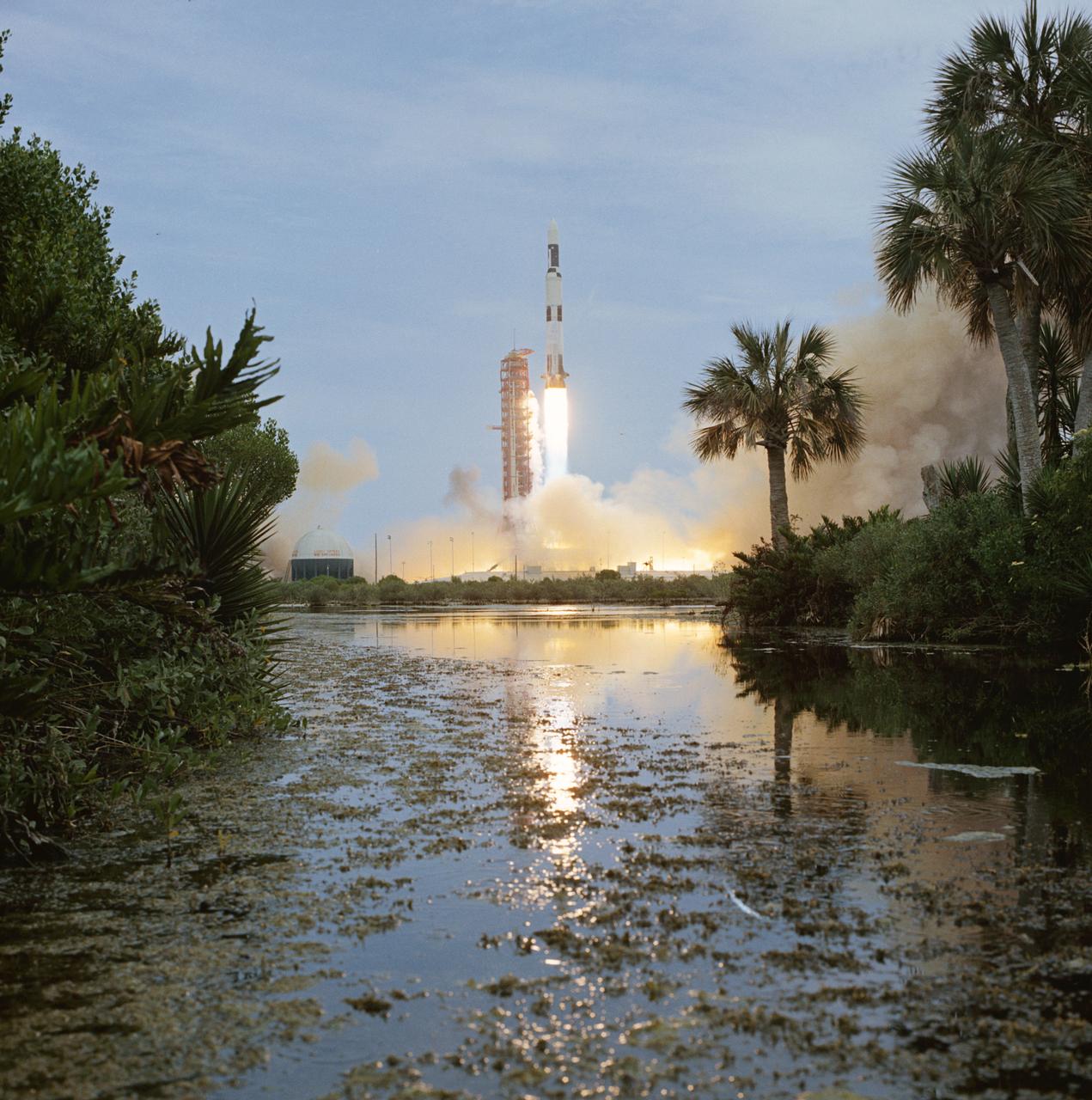
S73-26913 (14 May 1973) --- The unmanned Skylab 1/Saturn V space vehicle is launched from Pad A, Launch Complex 39, Kennedy Space Center, Florida, at 12:00 noon (EDT), May 14, 1973, to place the Skylab space station cluster in Earth orbit. The Skylab 1 payload included four of the five major components of the space station Orbital Workshop, Apollo Telescope Mount, Multiple Docking Adapter, and Airlock Module. In addition to the payload, the Skylab 1/Saturn V second (S-11) stage. The fifth major component of the space station, the Command Service Module with the Skylab 2 crew aboard, was launched at a later date by a Saturn 1B from Pad B. Photo credit: NASA