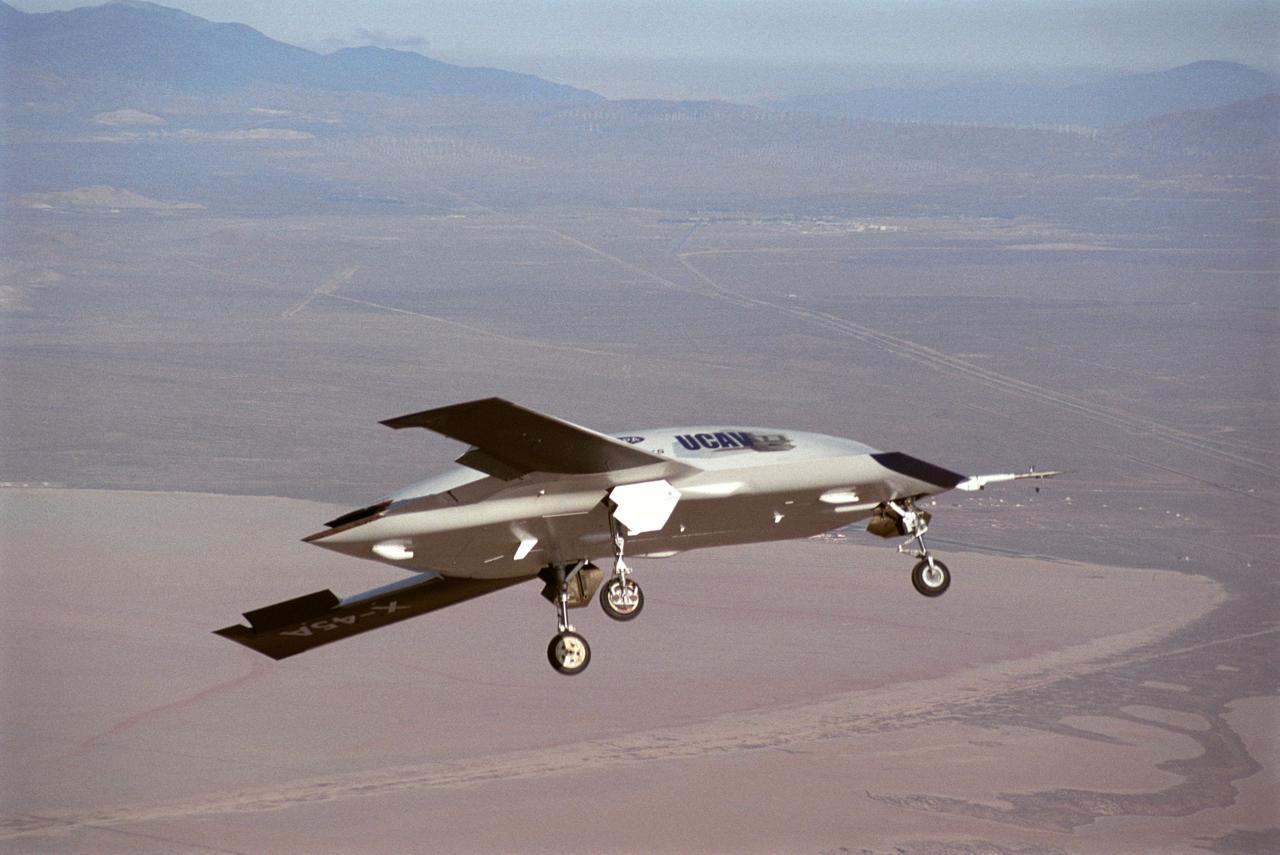
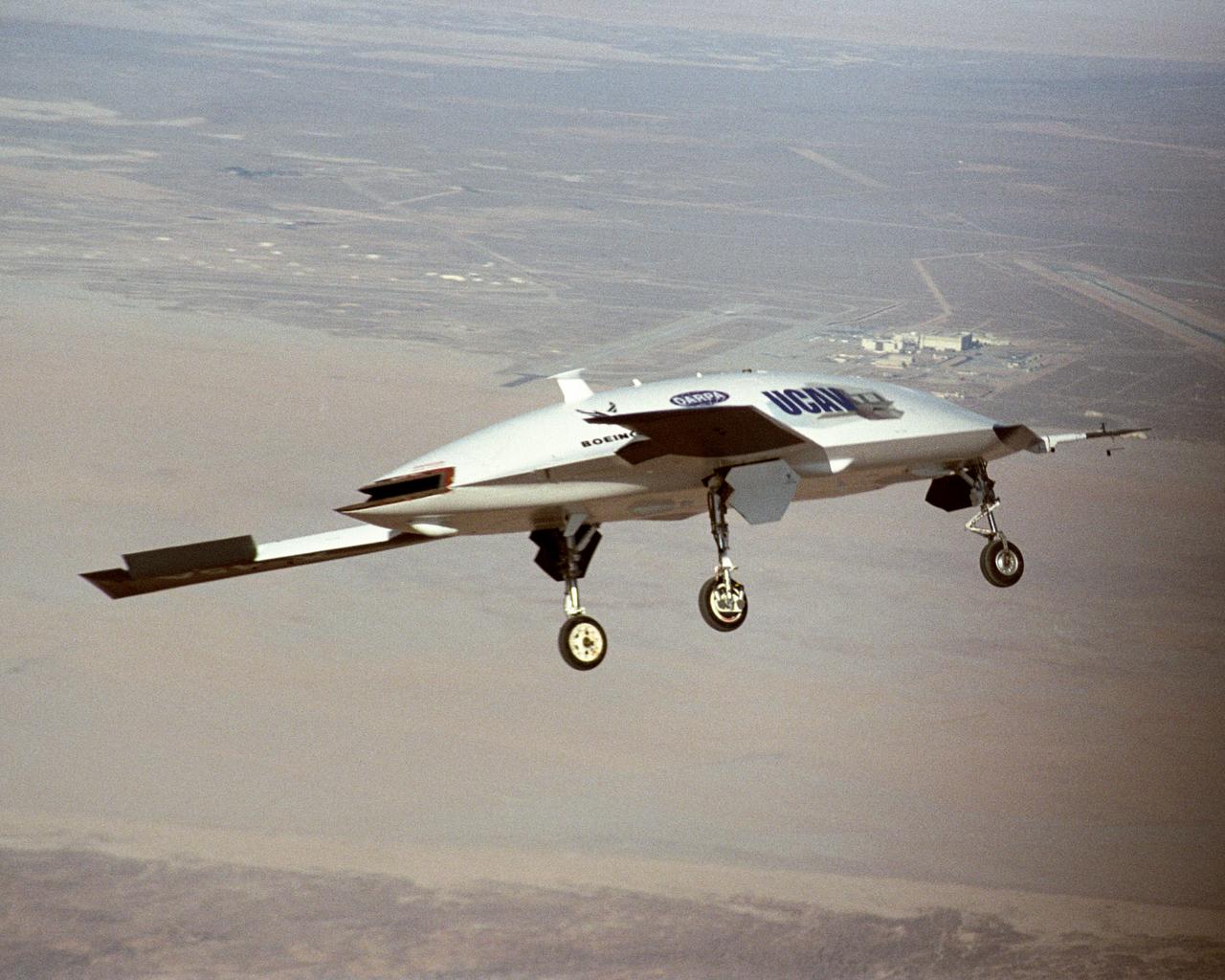
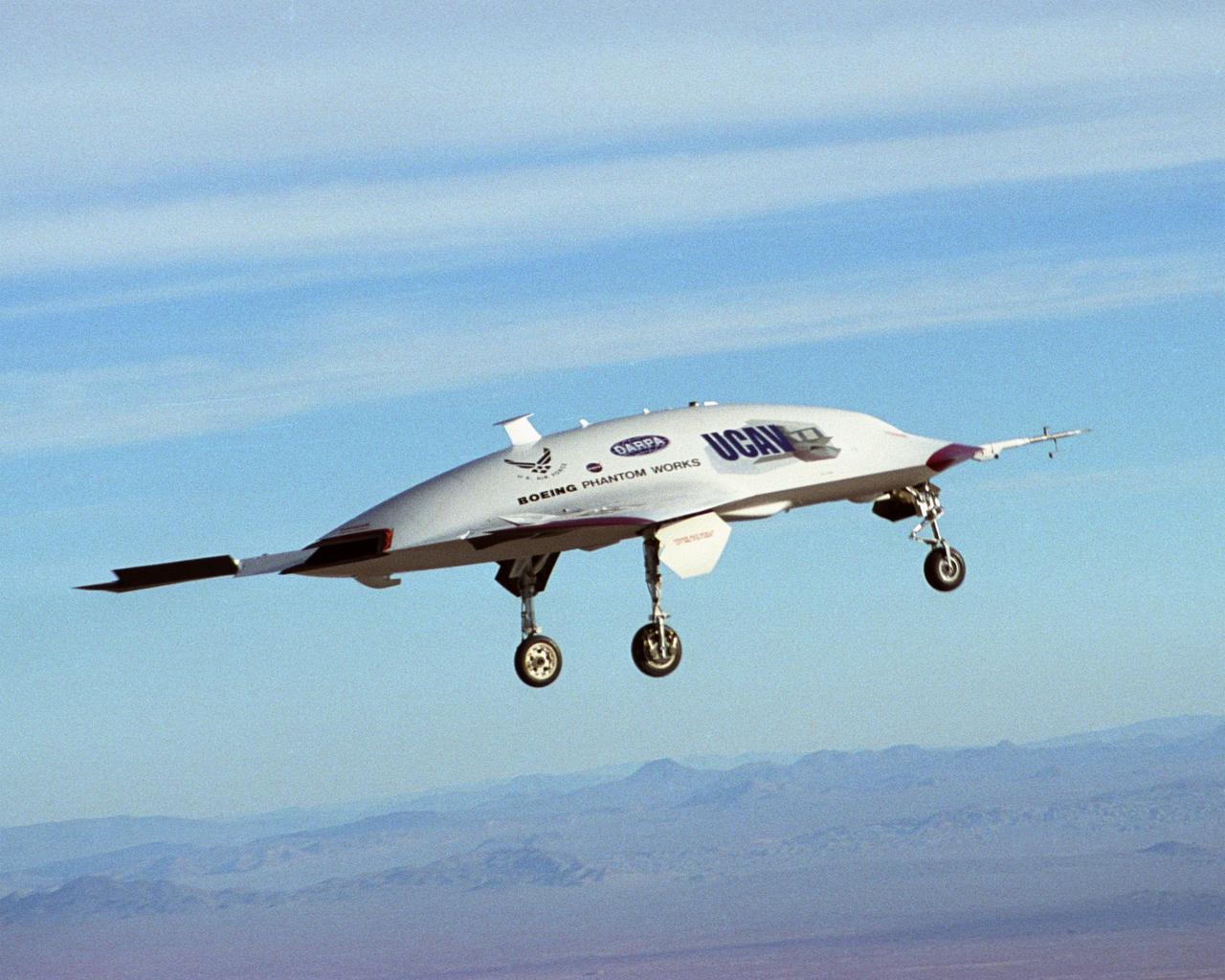
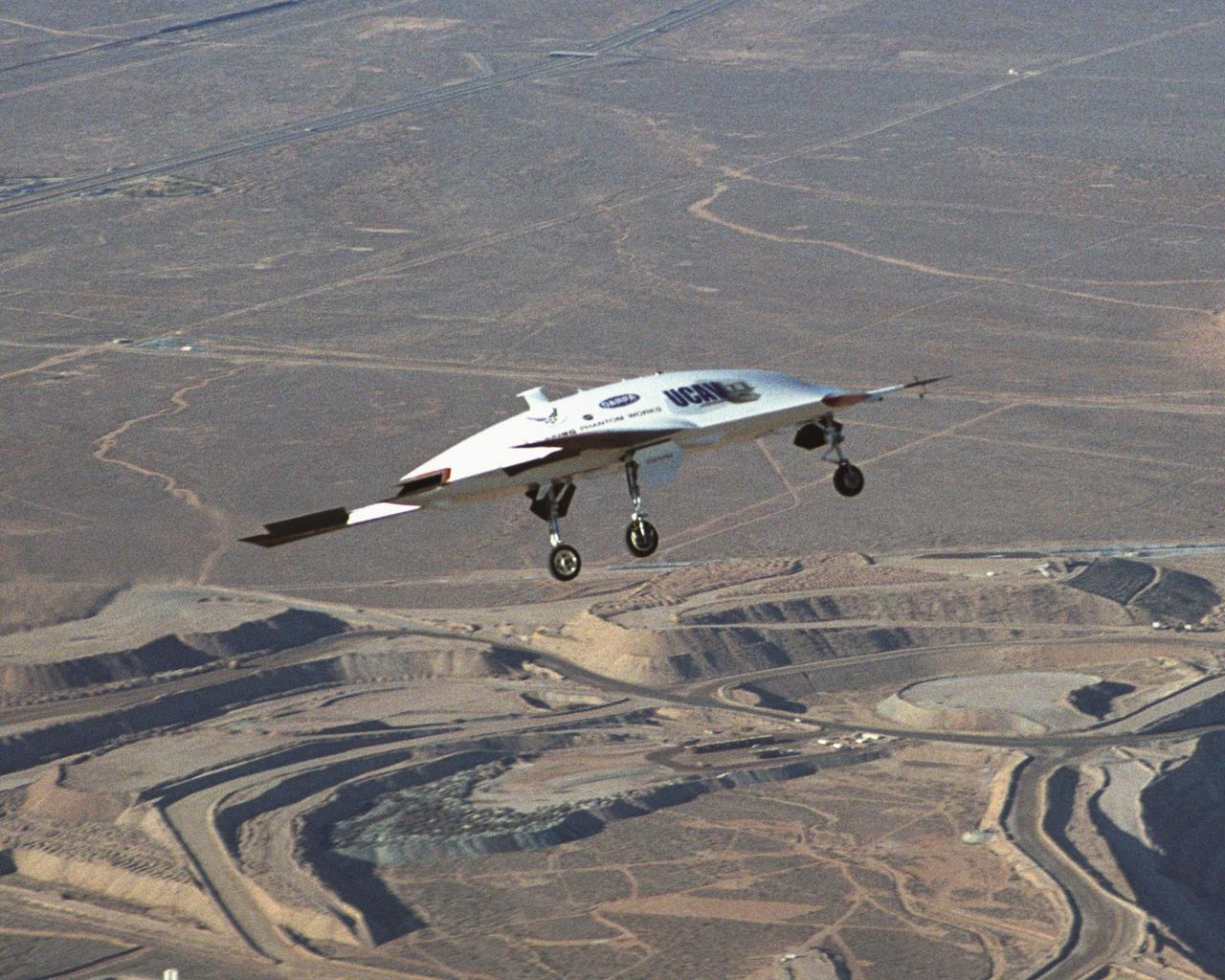
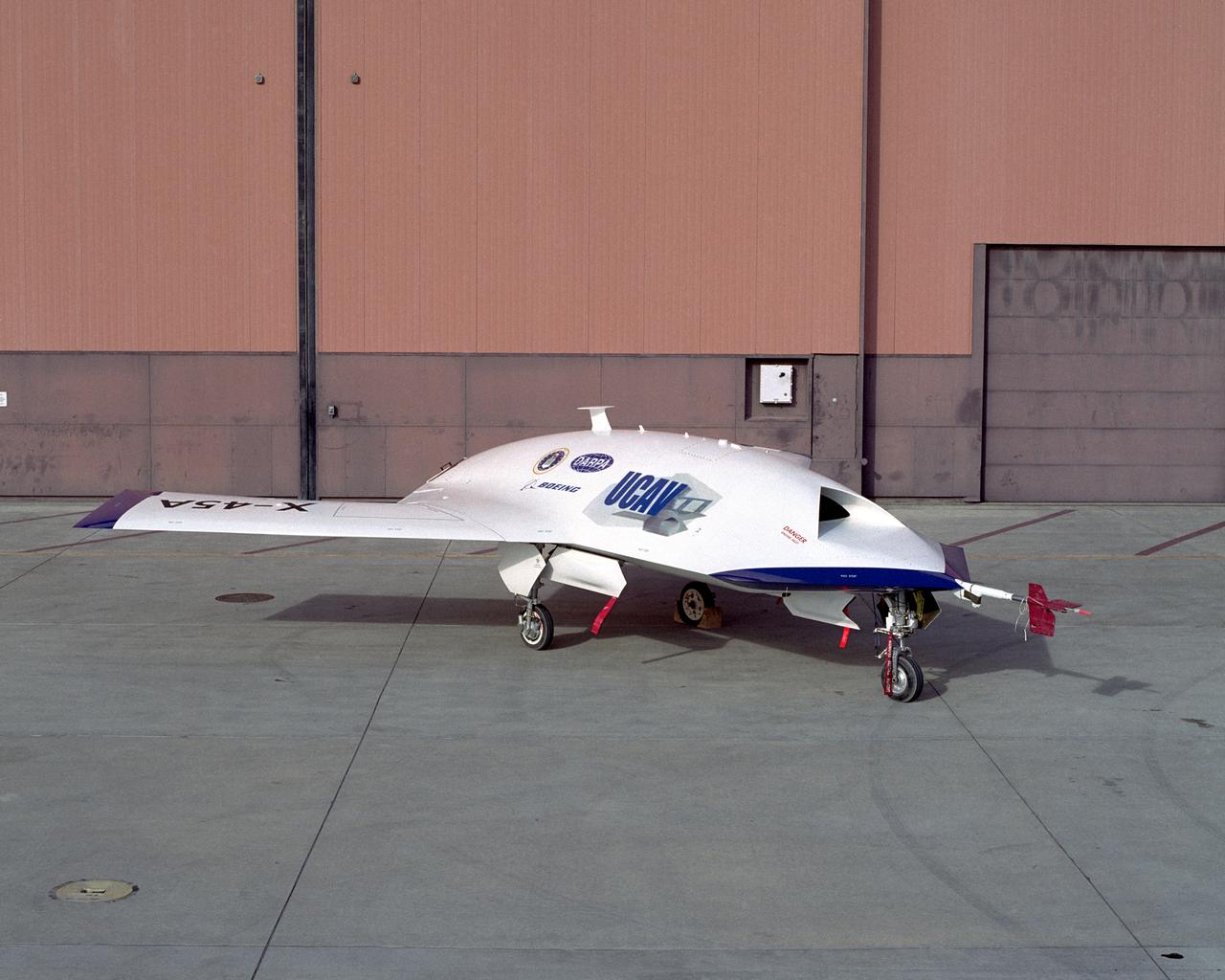
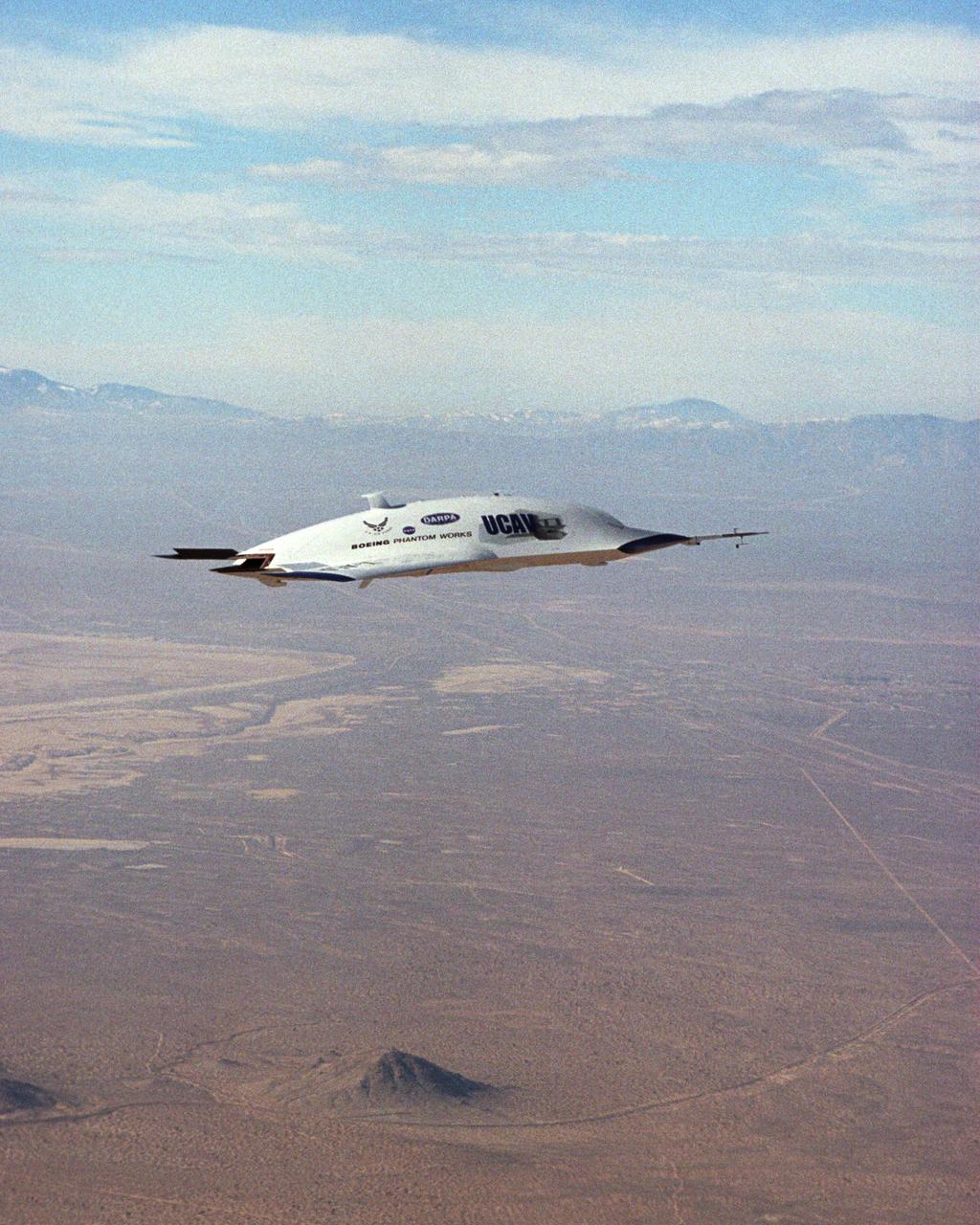
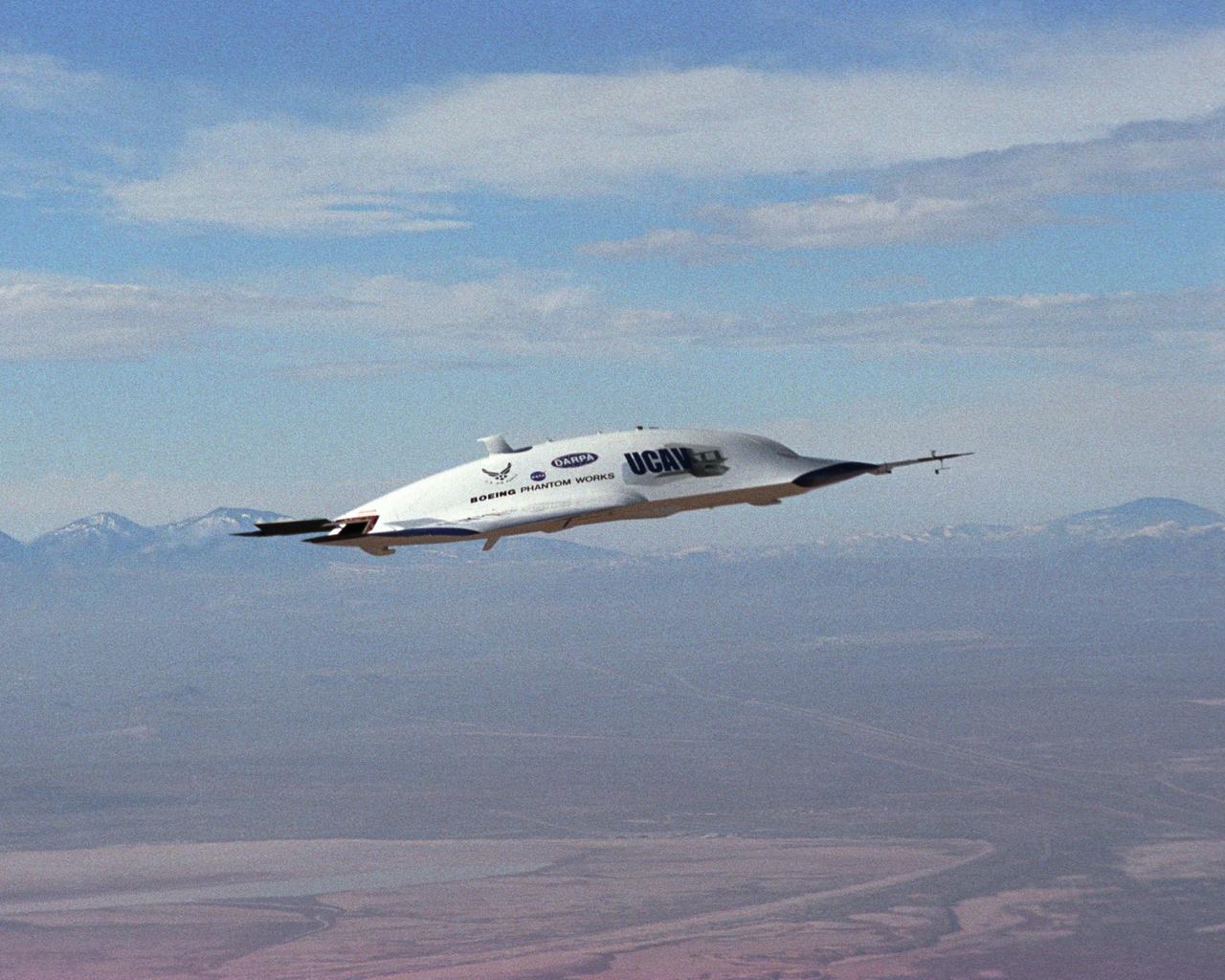
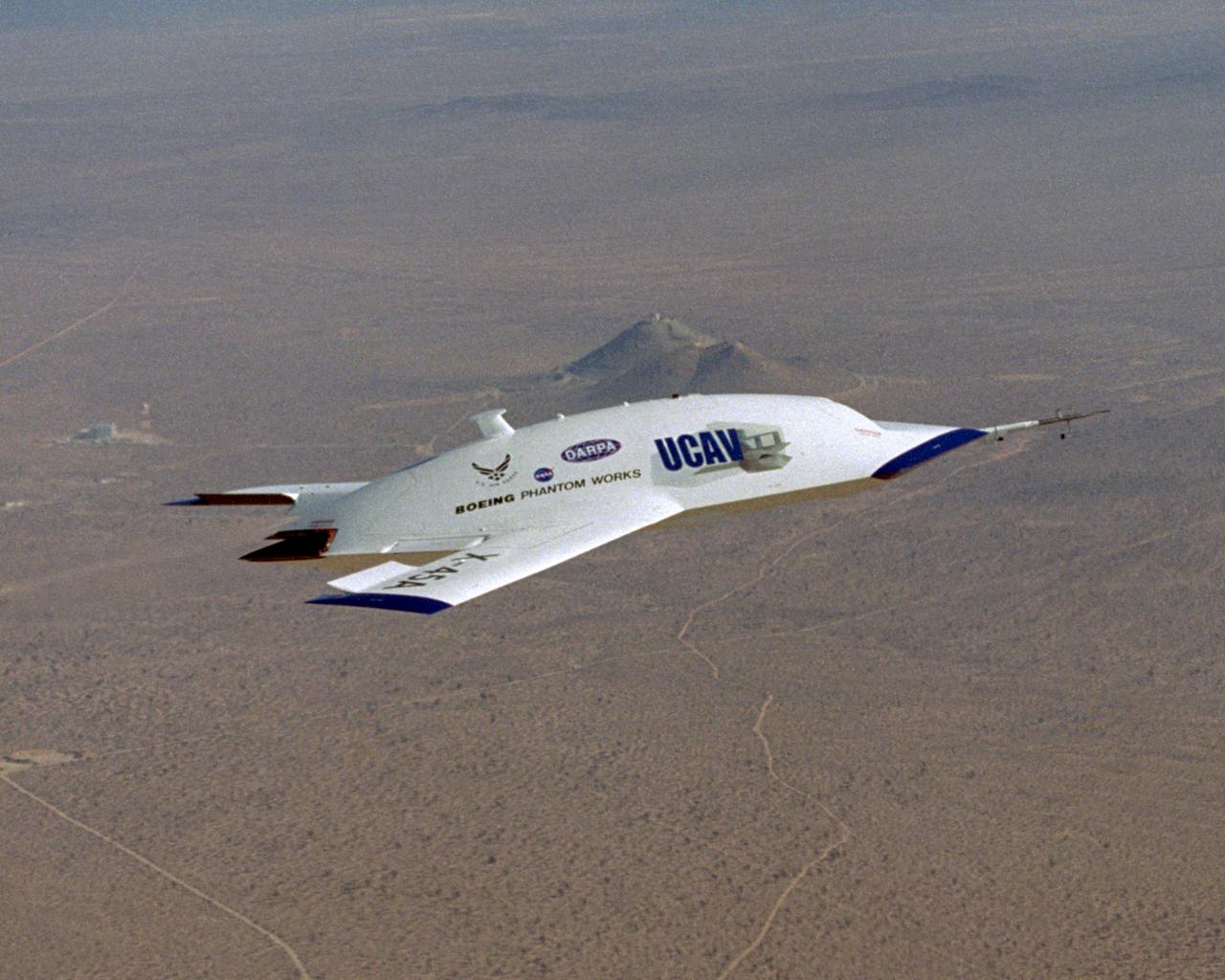
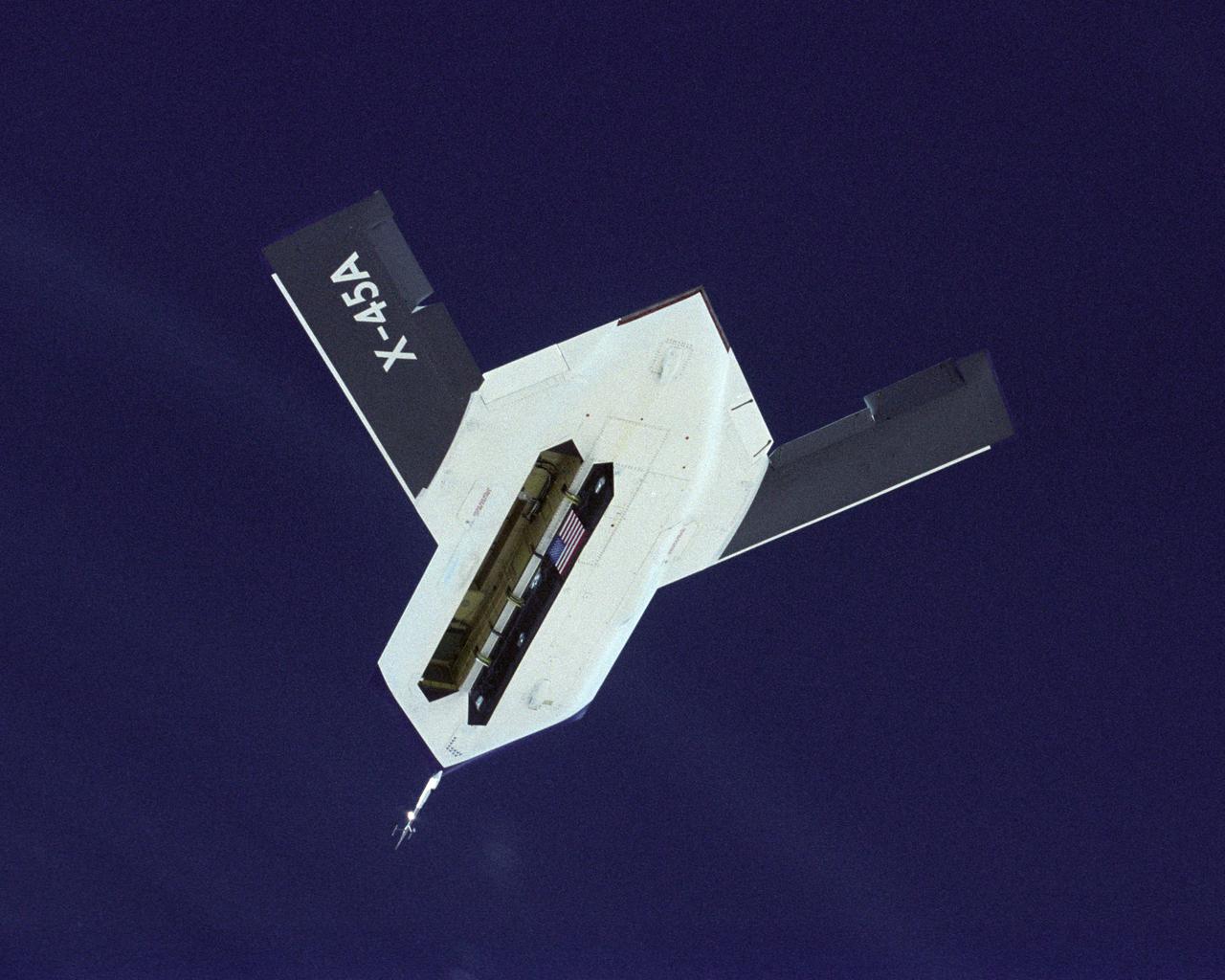
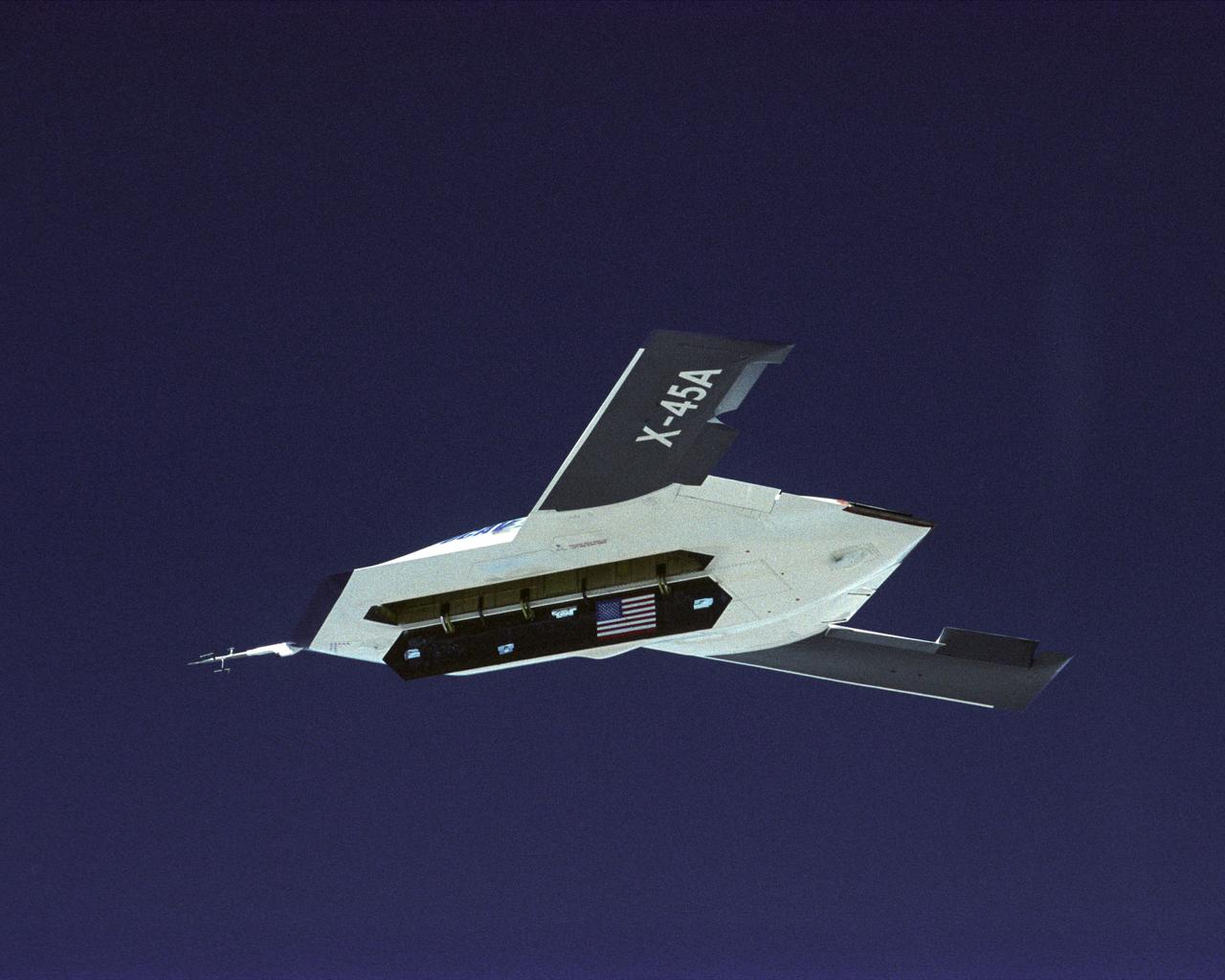
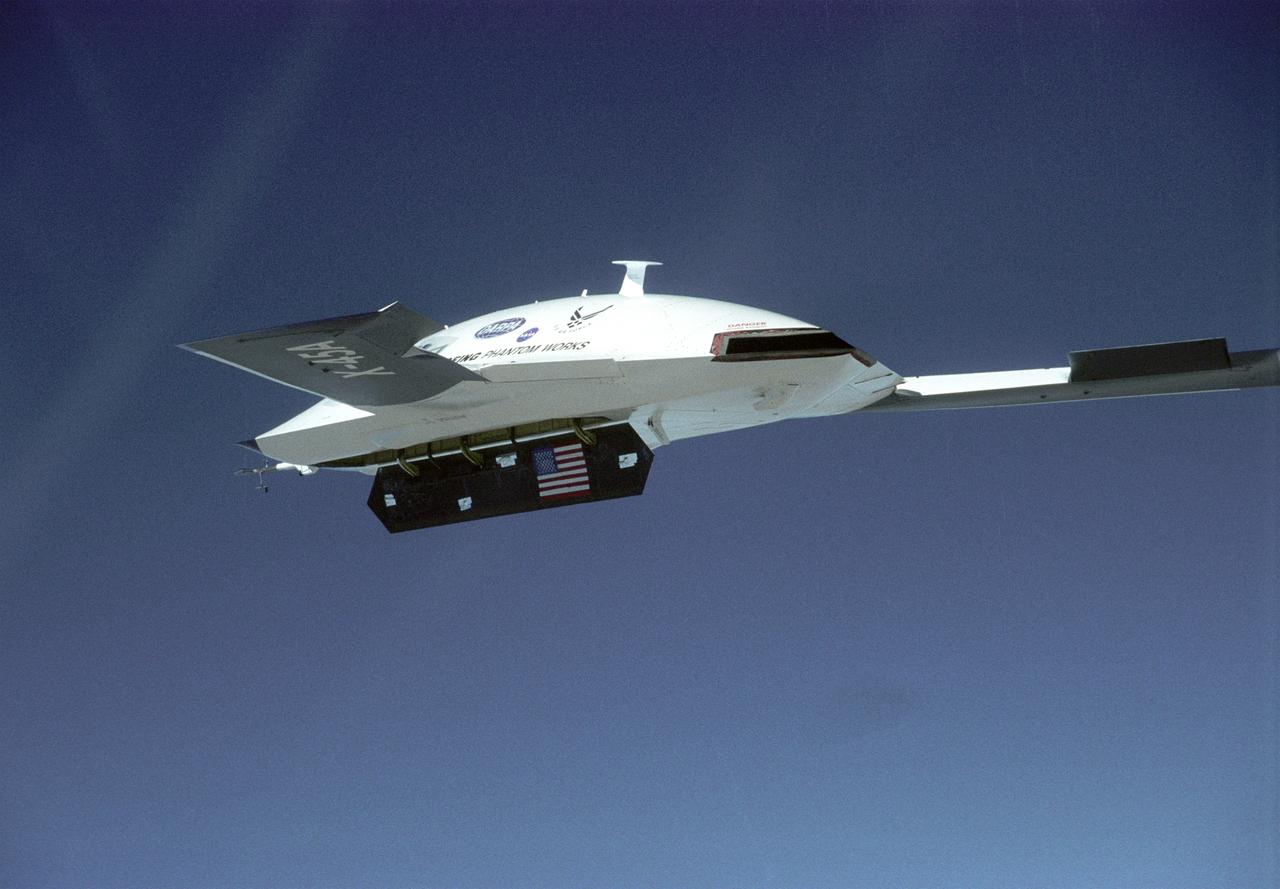
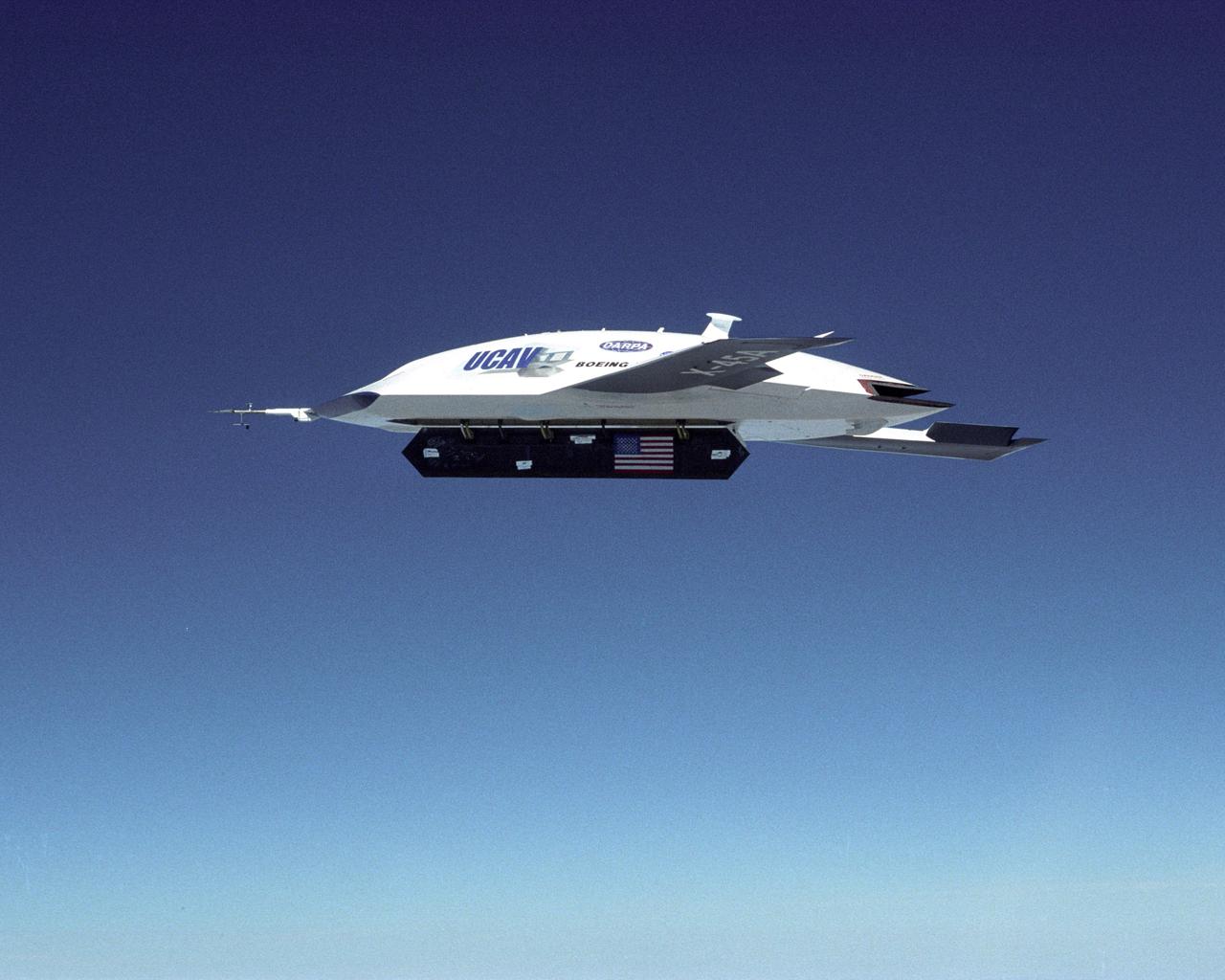
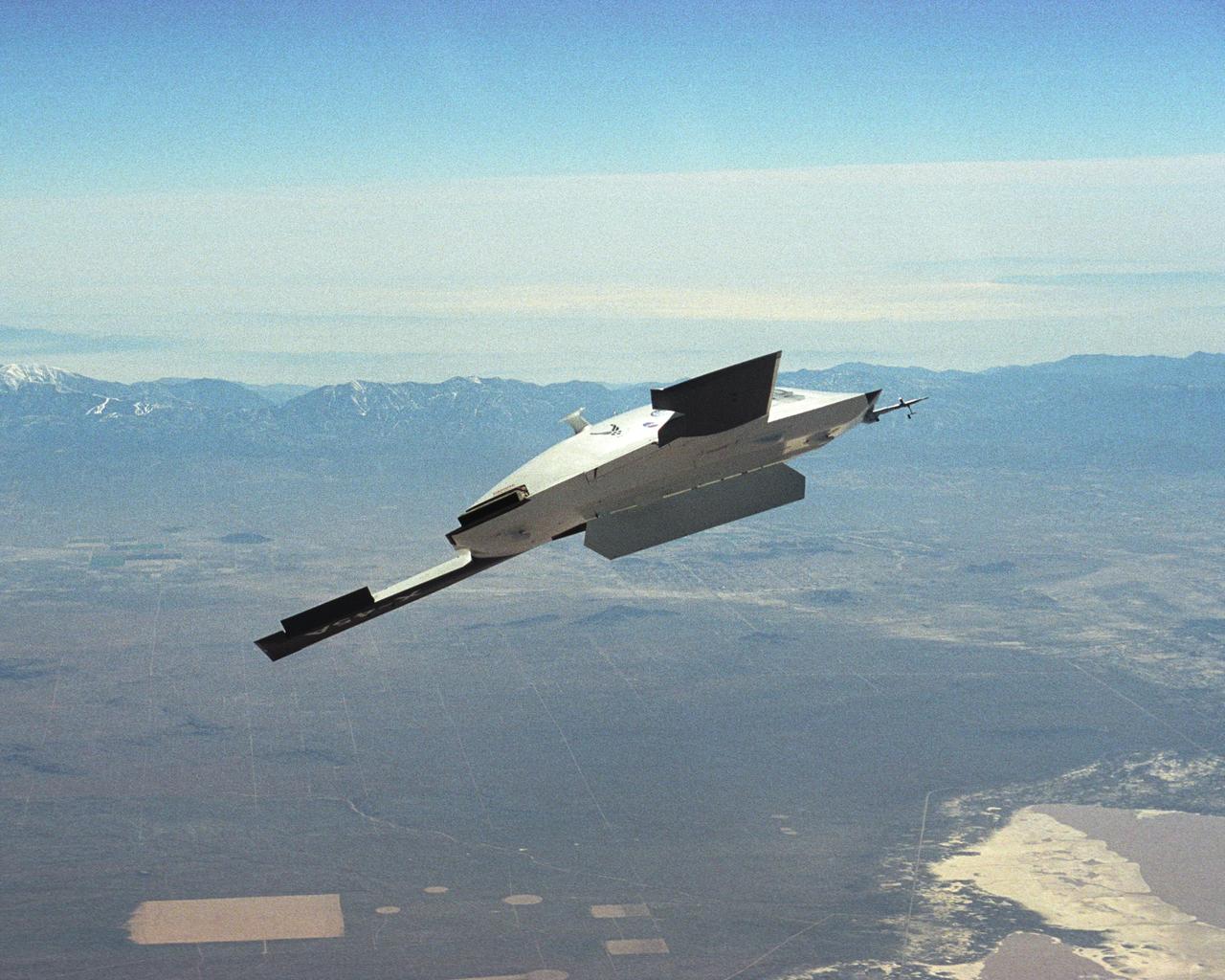
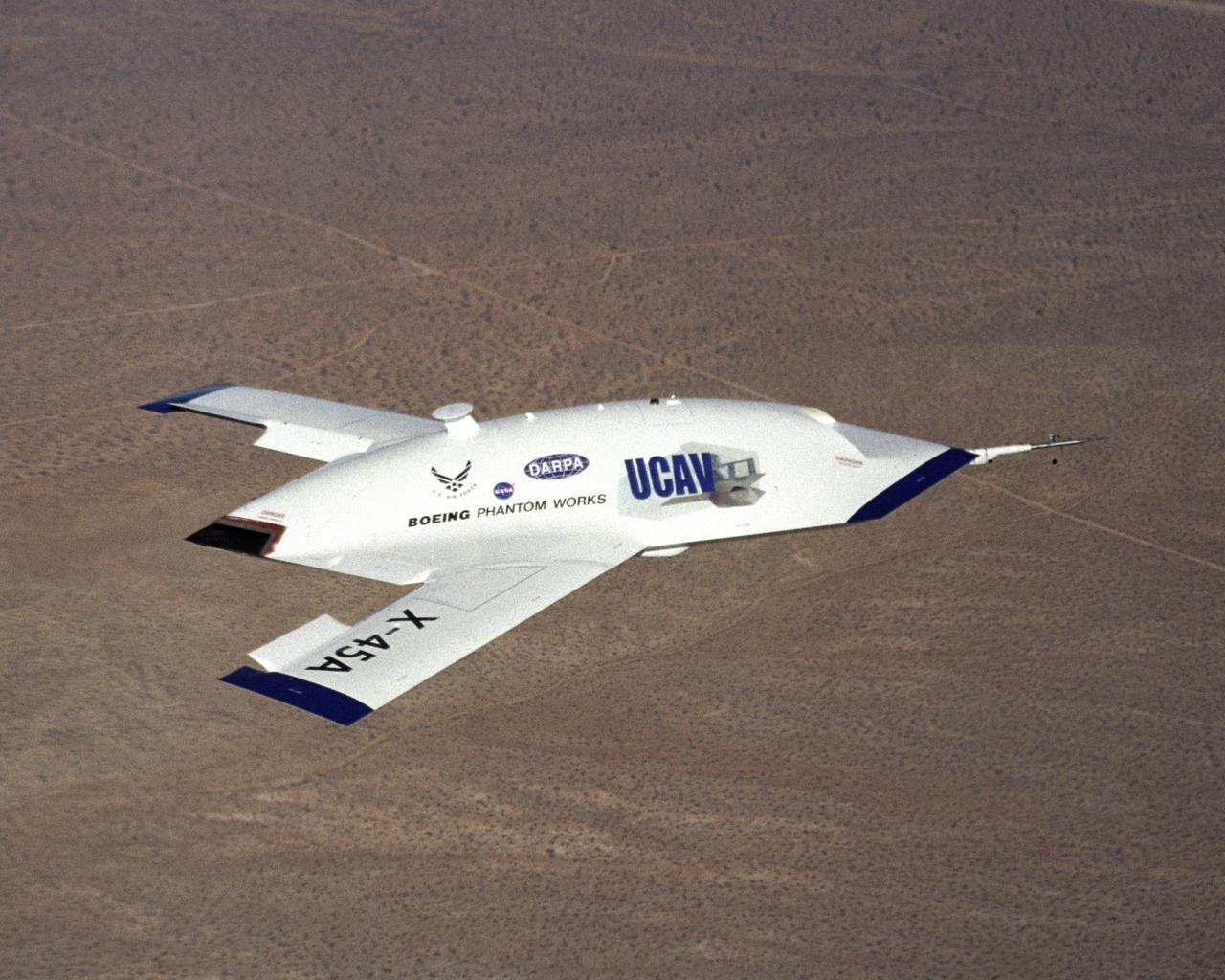
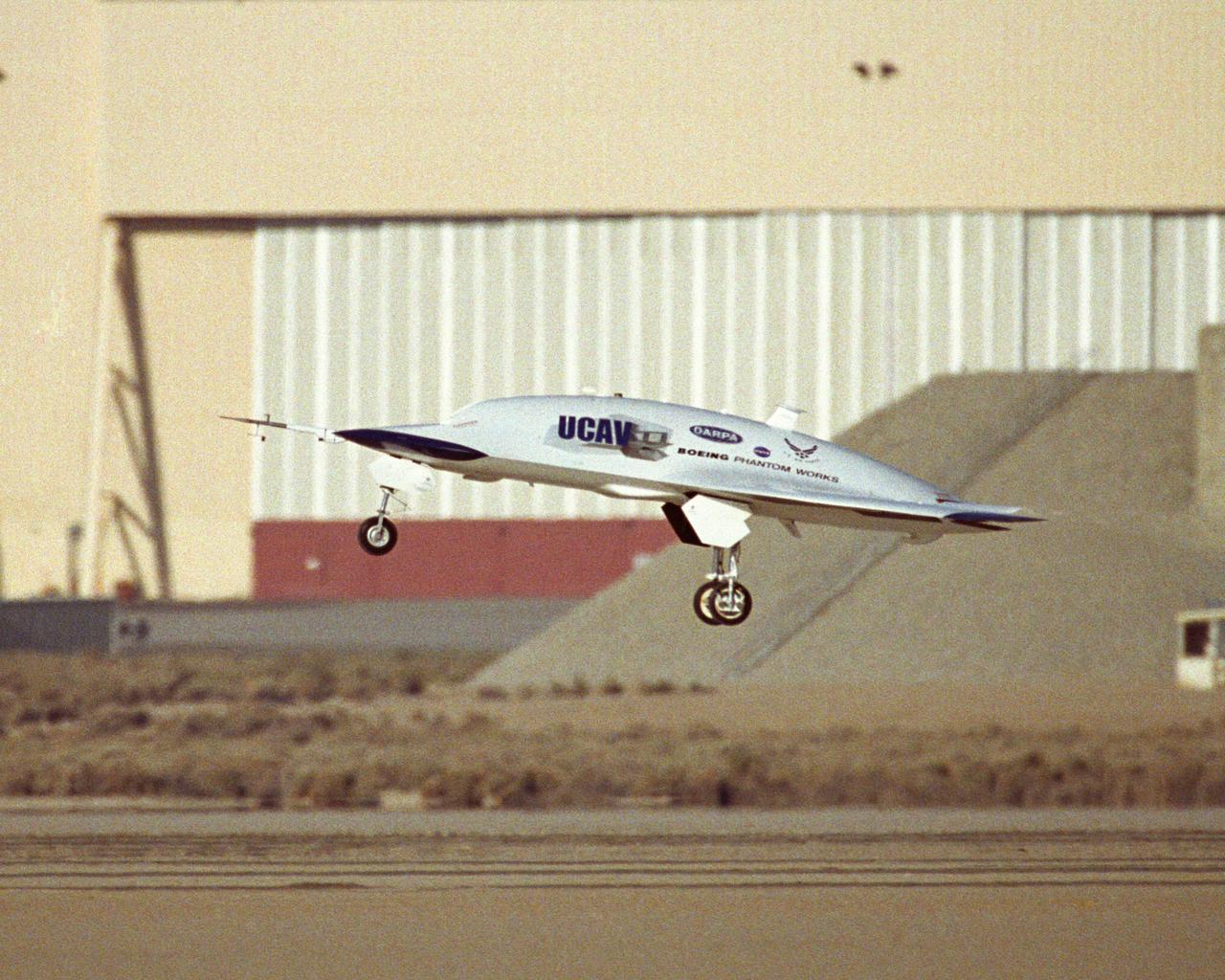
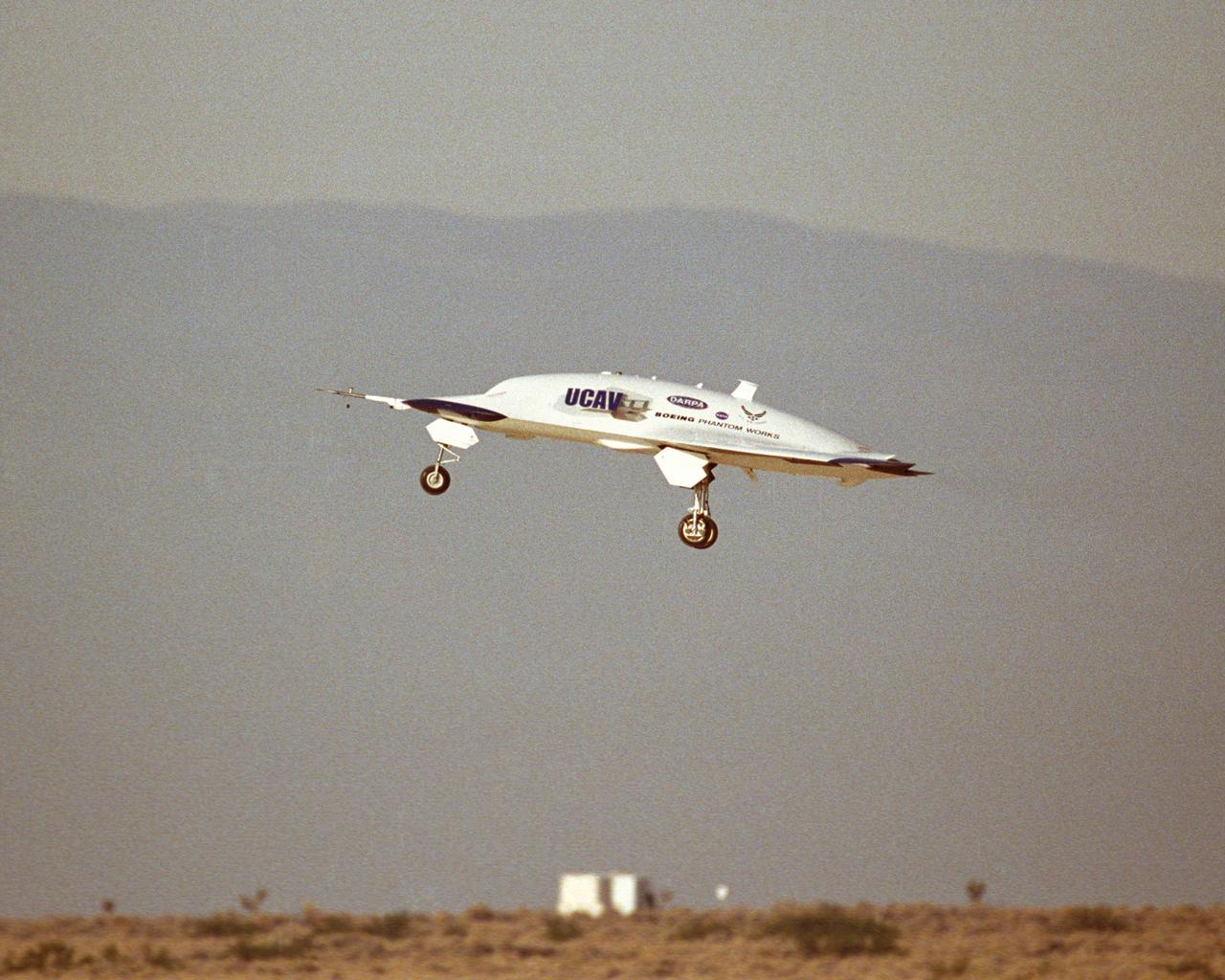
X-45A Unmanned Combat Air Vehicle, or UCAV, technology demonstration aircraft in flight during its first flight at Edwards Air Force Base, California.
X-45A Unmanned Combat Air Vehicle, or UCAV, technology demonstration aircraft in flight during its first flight at Edwards Air Force Base, California
X-45A Unmanned Combat Air Vehicle, or UCAV, technology demonstration aircraft in flight during its first flight at Edwards Air Force Base, California.
X-45A Unmanned Combat Air Vehicle, or UCAV, technology demonstration aircraft in flight during its first flight at Edwards Air Force Base, California
X-45A Unmanned Combat Air Vehicle, or UCAV, technology demonstration aircraft in flight during its first flight at Edwards Air Force Base, California.
X-45A Unmanned Combat Air Vehicle, or UCAV, technology demonstration aircraft in flight during its first flight at Edwards Air Force Base, California
X-45A Unmanned Combat Air Vehicle, or UCAV, technology demonstration aircraft in flight during its first flight at Edwards Air Force Base, California.
X-45A Unmanned Combat Air Vehicle, or UCAV, technology demonstration aircraft in flight during its first flight at Edwards Air Force Base, California
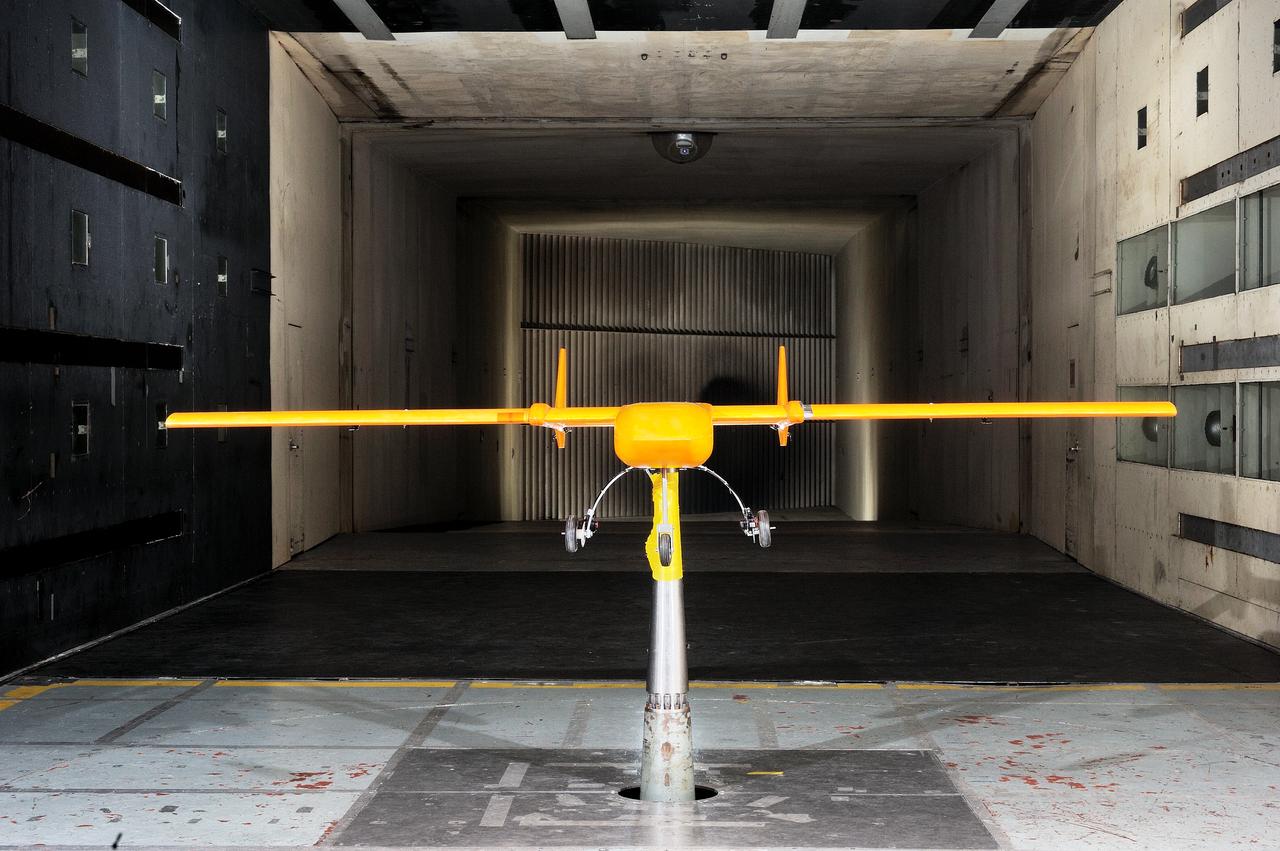
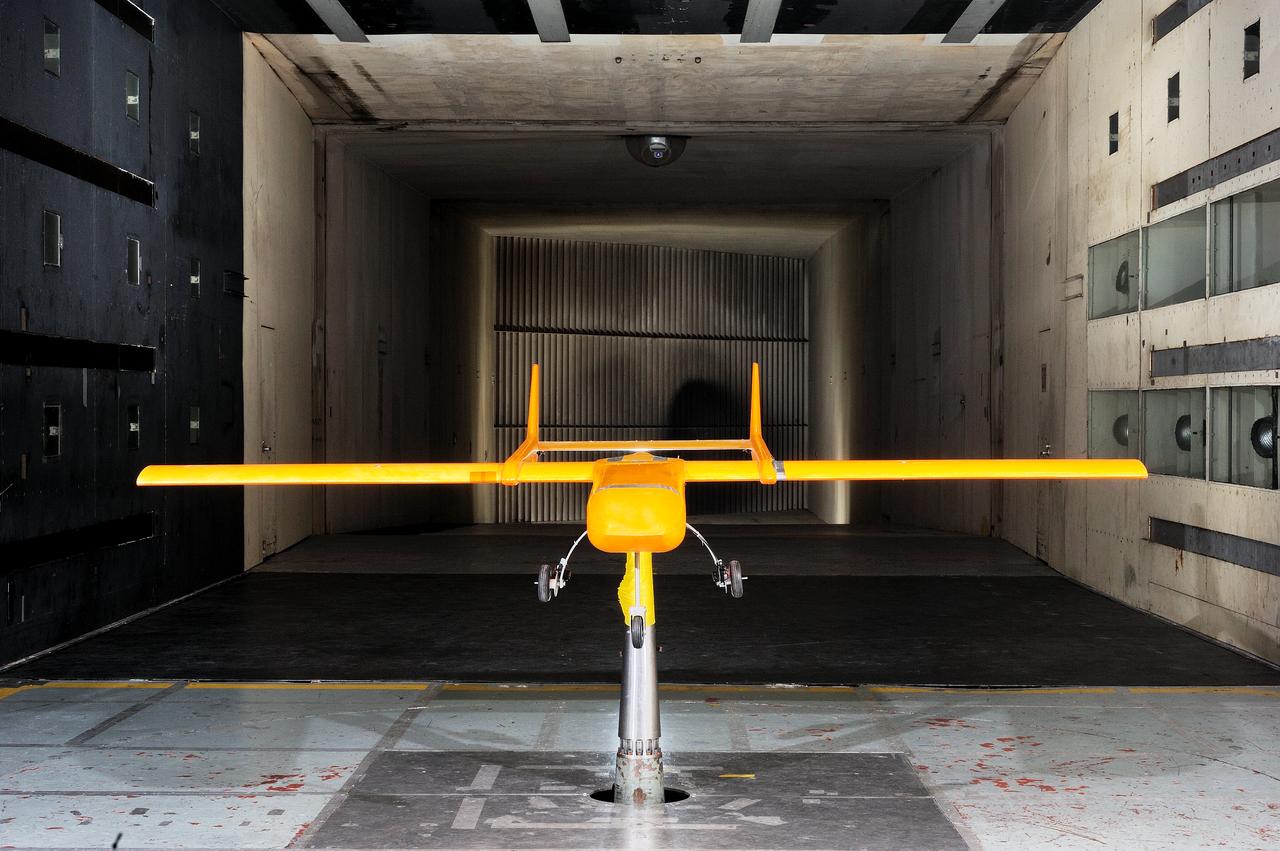
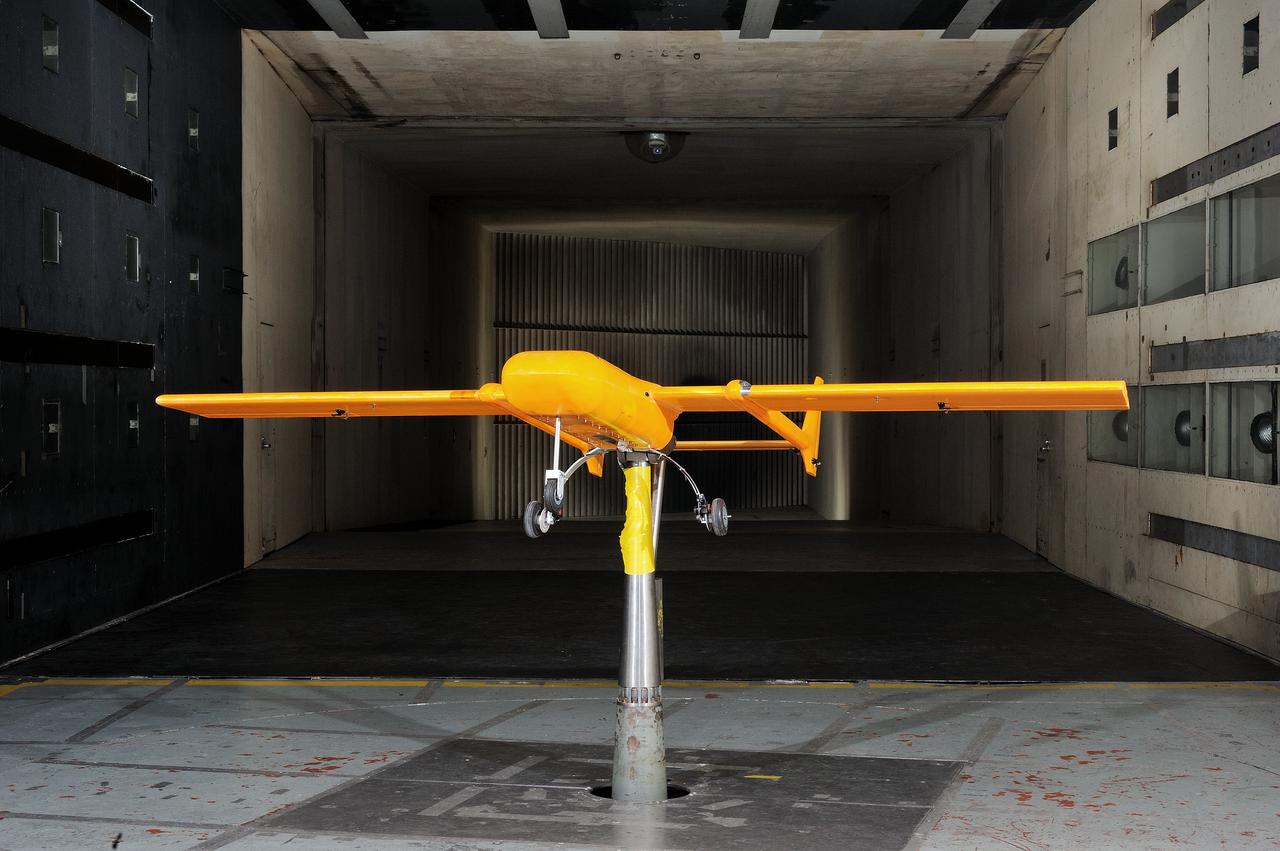
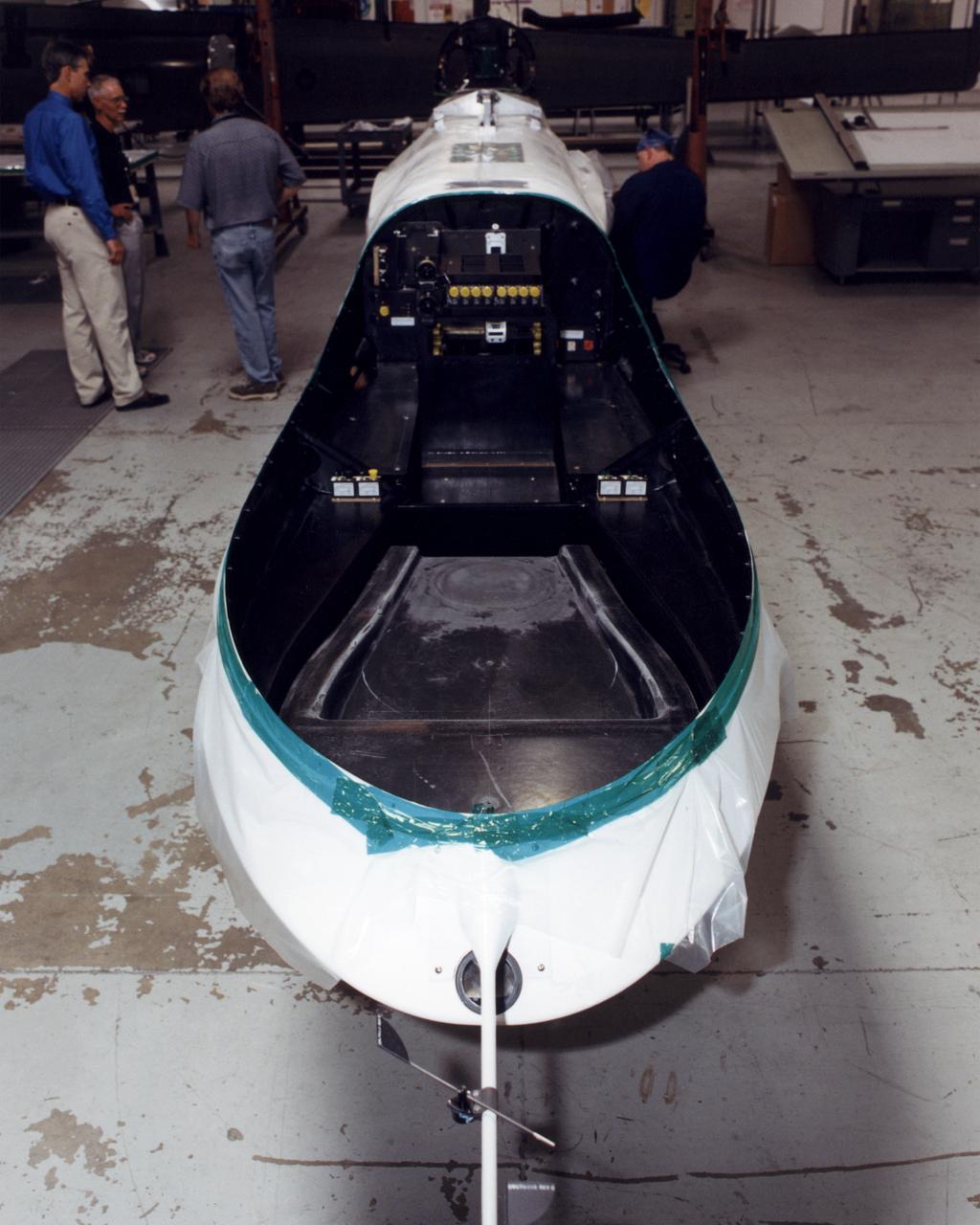
Osprey (UAV) Unmanned Aerial Vehicle ; flight vehicle test at 14x22 tunnel. Test number 605 from Eglin AFB. Take at 14x22 Subsonic Tunnel
Osprey UAV
Osprey (UAV) Unmanned Aerial Vehicle ; flight vehicle test at 14x22 tunnel. Test number 605 from Eglin AFB. Take at 14x22 Subsonic Tunnel
Osprey UAV
Osprey (UAV) Unmanned Aerial Vehicle ; flight vehicle test at 14x22 tunnel. Test number 605 from Eglin AFB. Take at 14x22 Subsonic Tunnel
Osprey UAV
Osprey (UAV) Unmanned Aerial Vehicle ; flight vehicle test at 14x22 tunnel. Test number 605 from Eglin AFB. Take at 14x22 Subsonic Tunnel
Osprey UAV
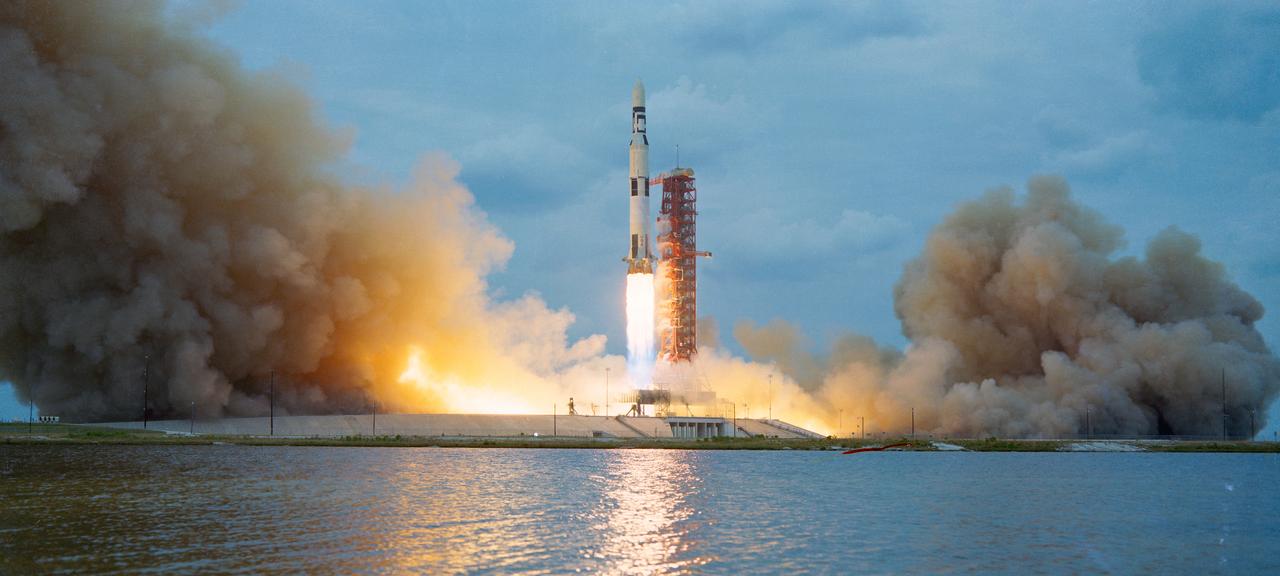
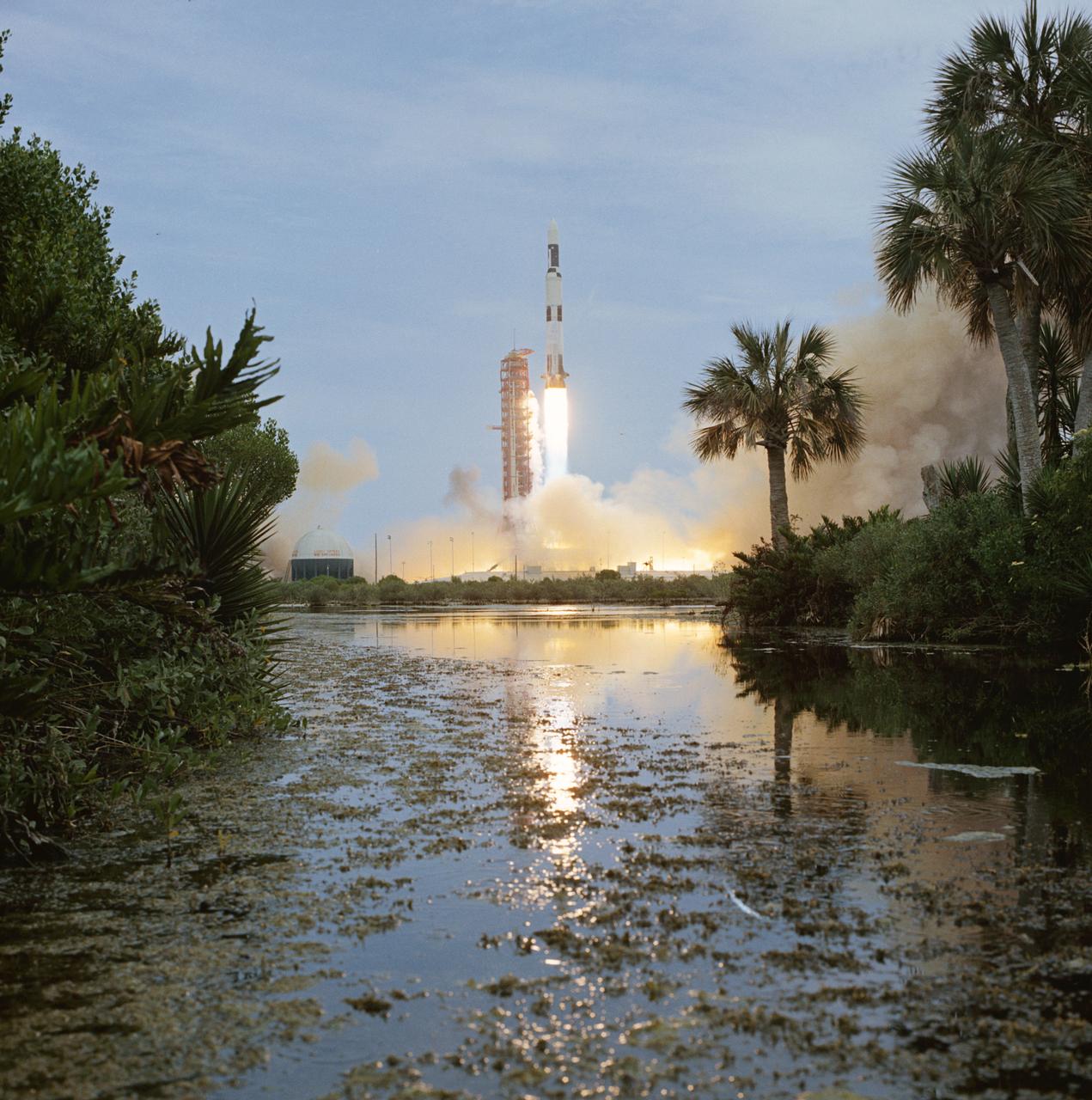
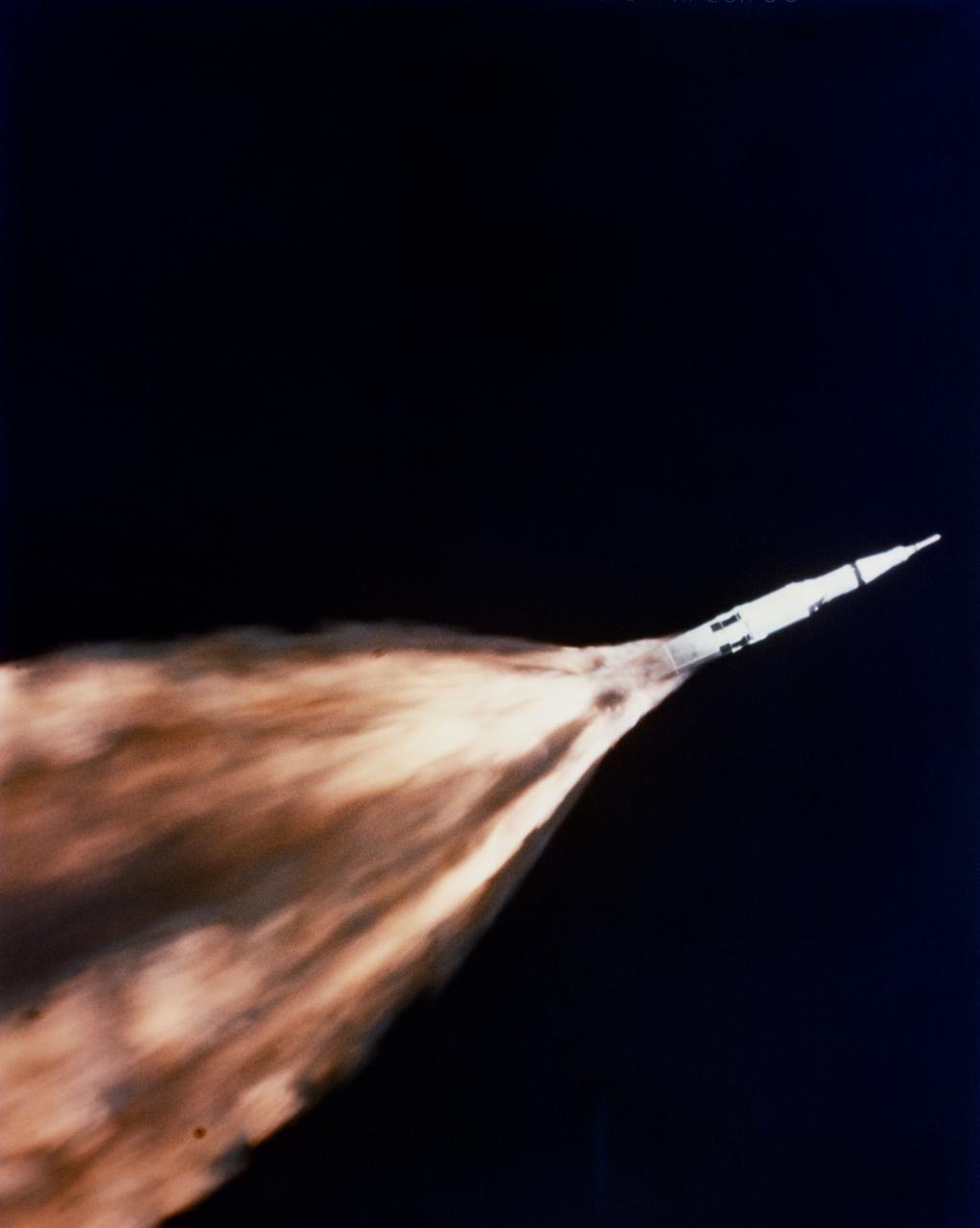
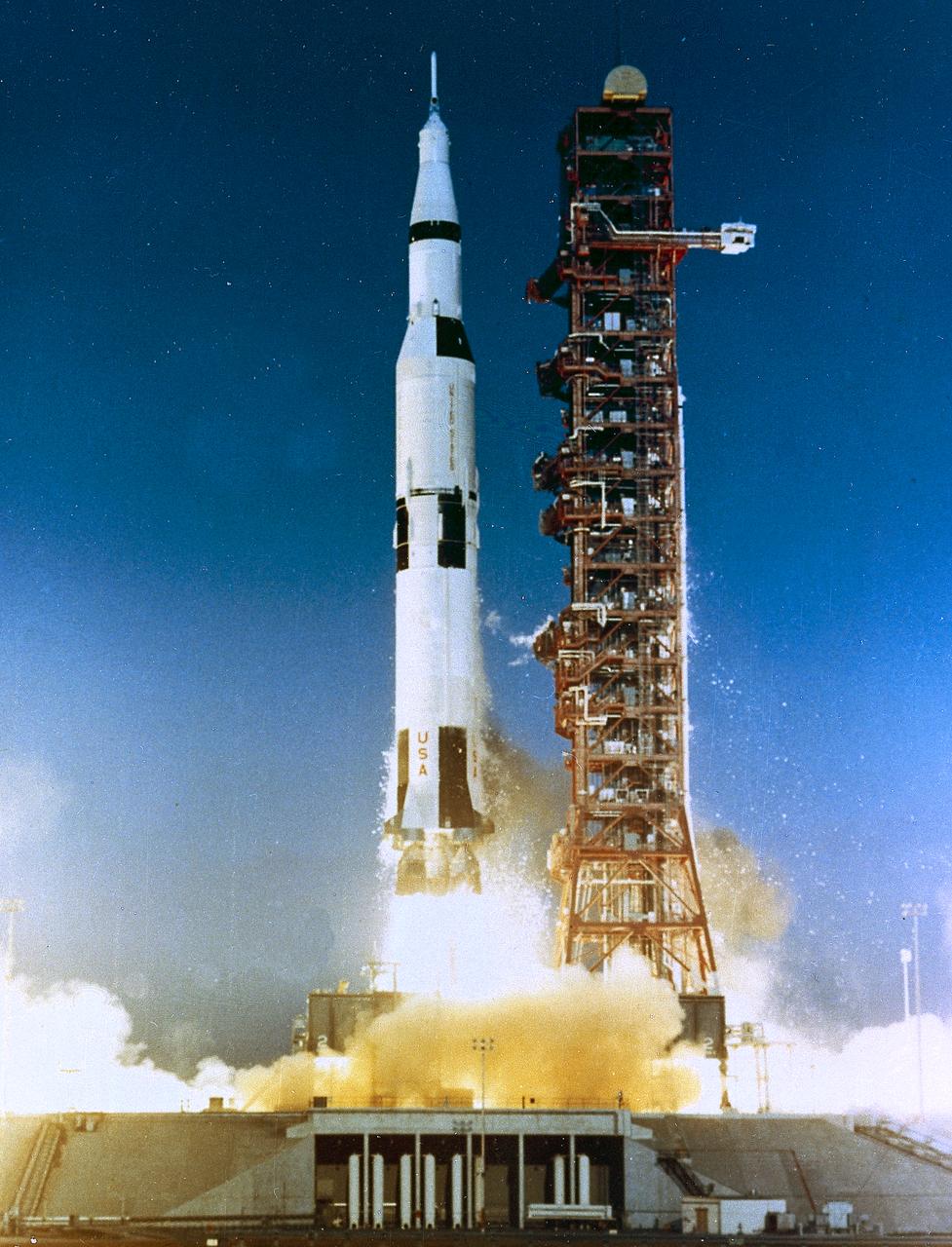
S73-26912 (14 May 1973) --- The unmanned Skylab 1/Saturn V space vehicle is launched from Pad A, Launch Complex 39, Kennedy Space Center, Florida, at 12:00 noon (EDT), May 14, 1973, to place the Skylab space station cluster in Earth orbit. The Skylab 1 payload included four of the five major components of the space station Orbital Workshop, Apollo Telescope Mount, Multiple Docking Adapter, and Airlock Module. In addition to the payload, the Skylab 1/Saturn V second (S-11) stage.  The fifth major component of the space station, the Command Service Module with the Skylab 2 crew aboard, was launched at a later date by a Saturn 1B from Pad B. Photo credit: NASA
Launch of unmanned Skylab 1 space vehicle
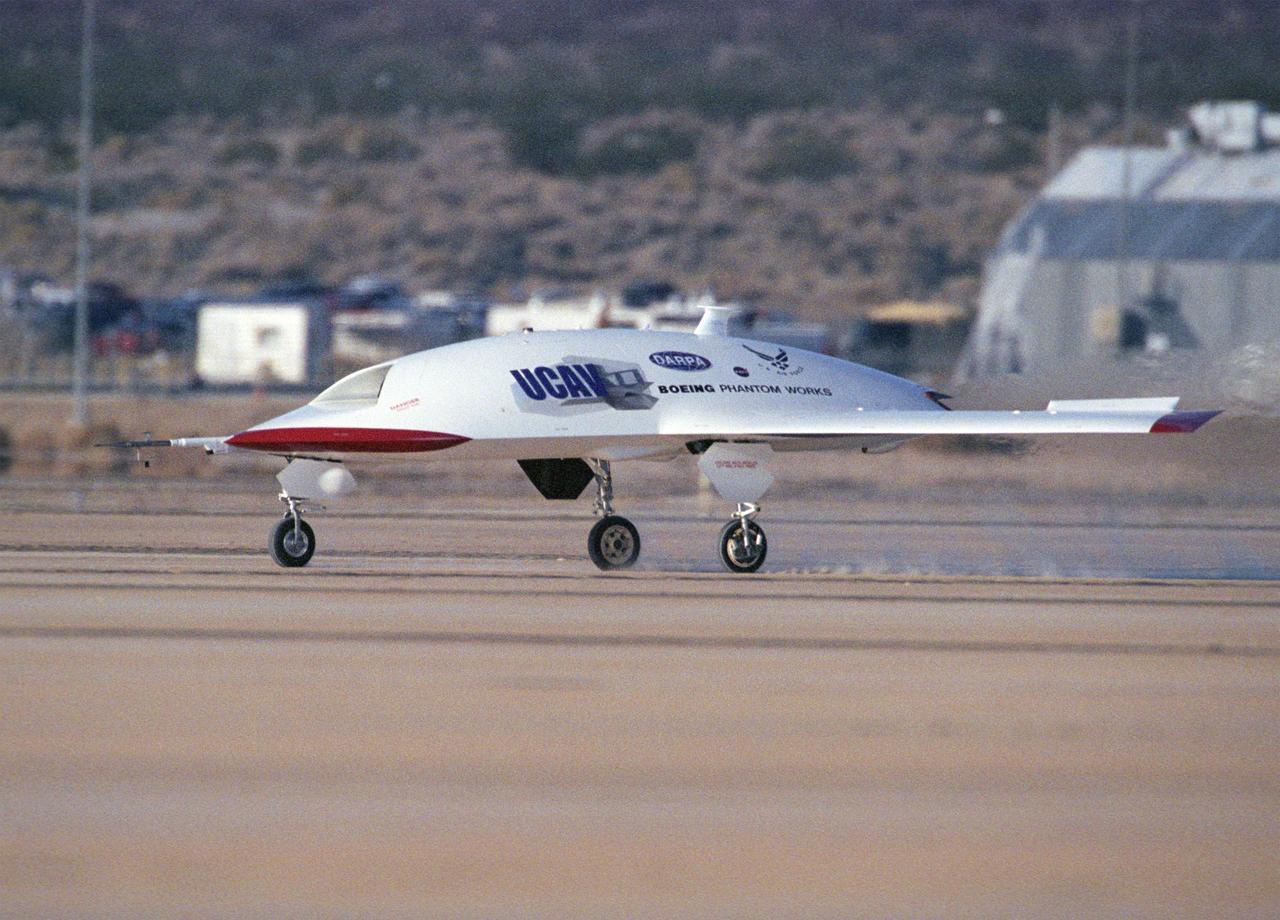
The second X-45A Unmanned Combat Air Vehicle (UCAV) technology demonstrator completed its first flight on November 21, 2002, after taking off from a dry lakebed at NASA's Dryden Flight Research Center, Edwards Air Force Base, California.  X-45A vehicle two flew for approximately 30 minutes and reached an airspeed of 195 knots and an altitude of 7500 feet. This flight validated the functionality of the UCAV flight software on the second air vehicle.  Dryden is supporting the DARPA/Boeing team in the design, development, integration, and demonstration of the critical technologies, processes, and system attributes leading to an operational UCAV system. Dryden support of the X-45A demonstrator system includes analysis, component development, simulations, ground and flight tests.
The second X-45A Unmanned Combat Air Vehicle (UCAV) technology demonstrator aircraft during its maiden flight. The flight marks another milestone for the UCAV program, and verified the aircraft's flight control software
The second X-45A Unmanned Combat Air Vehicle (UCAV) technology demonstrator completed its first flight on November 21, 2002, after taking off from a dry lakebed at NASA's Dryden Flight Research Center, Edwards Air Force Base, California.  X-45A vehicle two flew for approximately 30 minutes and reached an airspeed of 195 knots and an altitude of 7500 feet. This flight validated the functionality of the UCAV flight software on the second air vehicle.  Dryden is supporting the DARPA/Boeing team in the design, development, integration, and demonstration of the critical technologies, processes, and system attributes leading to an operational UCAV system. Dryden support of the X-45A demonstrator system includes analysis, component development, simulations, ground and flight tests.
The second X-45A Unmanned Combat Air Vehicle (UCAV) technology demonstrator aircraft during its maiden flight. The flight marks another milestone for the UCAV program, and verified the aircraft's flight control software
The second X-45A Unmanned Combat Air Vehicle (UCAV) technology demonstrator completed its first flight on November 21, 2002, after taking off from a dry lakebed at NASA's Dryden Flight Research Center, Edwards Air Force Base, California.  X-45A vehicle two flew for approximately 30 minutes and reached an airspeed of 195 knots and an altitude of 7500 feet. This flight validated the functionality of the UCAV flight software on the second air vehicle.  Dryden is supporting the DARPA/Boeing team in the design, development, integration, and demonstration of the critical technologies, processes, and system attributes leading to an operational UCAV system. Dryden support of the X-45A demonstrator system includes analysis, component development, simulations, ground and flight tests.
The second X-45A Unmanned Combat Air Vehicle (UCAV) technology demonstrator aircraft during its maiden flight. The flight marks another milestone for the UCAV program, and verified the aircraft's flight control software
The second X-45A Unmanned Combat Air Vehicle (UCAV) technology demonstrator completed its first flight on November 21, 2002, after taking off from a dry lakebed at NASA's Dryden Flight Research Center, Edwards Air Force Base, California.  X-45A vehicle two flew for approximately 30 minutes and reached an airspeed of 195 knots and an altitude of 7500 feet. This flight validated the functionality of the UCAV flight software on the second air vehicle.  Dryden is supporting the DARPA/Boeing team in the design, development, integration, and demonstration of the critical technologies, processes, and system attributes leading to an operational UCAV system. Dryden support of the X-45A demonstrator system includes analysis, component development, simulations, ground and flight tests.
The second X-45A Unmanned Combat Air Vehicle (UCAV) technology demonstrator aircraft during its maiden flight. The flight marks another milestone for the UCAV program, and verified the aircraft's flight control software
DARPA, U.S. Air Force, Boeing X-45A UCAV (Unmanned Combat Air Vehicle) at NASA Dryden Flight Research Center.
DARPA, U.S. Air Force, Boeing X-45A UCAV at NASA Dryden
The first X-45A Unmanned Combat Air Vehicle (UCAV) technology demonstrator completed its sixth flight on Dec. 19, 2002, raising its landing gear in flight for the first time. The X-45A flew for 40 minutes and reached an airspeed of 195 knots and an altitude of 7,500 feet.  Dryden is supporting the DARPA/Boeing team in the design, development, integration, and demonstration of the critical technologies, processes, and system attributes leading to an operational UCAV system. Dryden support of the X-45A demonstrator system includes analysis, component development, simulations, ground and flight tests.
The first X-45A Unmanned Combat Air Vehicle (UCAV) technology demonstrator completed its sixth flight on Dec. 19, 2002, raising its landing gear in flight for the first time. The X-45A flew for 40 minutes and reached an airspeed of 195 knots
The first X-45A Unmanned Combat Air Vehicle (UCAV) technology demonstrator completed its sixth flight on Dec. 19, 2002, raising its landing gear in flight for the first time. The X-45A flew for 40 minutes and reached an airspeed of 195 knots and an altitude of 7,500 feet.  Dryden is supporting the DARPA/Boeing team in the design, development, integration, and demonstration of the critical technologies, processes, and system attributes leading to an operational UCAV system. Dryden support of the X-45A demonstrator system includes analysis, component development, simulations, ground and flight tests.
The first X-45A Unmanned Combat Air Vehicle (UCAV) technology demonstrator completed its sixth flight on Dec. 19, 2002, raising its landing gear in flight for the first time. The X-45A flew for 40 minutes and reached an airspeed of 195 knots
The first X-45A Unmanned Combat Air Vehicle (UCAV) technology demonstrator completed its sixth flight on Dec. 19, 2002, raising its landing gear in flight for the first time. The X-45A flew for 40 minutes and reached an airspeed of 195 knots and an altitude of 7,500 feet.  Dryden is supporting the DARPA/Boeing team in the design, development, integration, and demonstration of the critical technologies, processes, and system attributes leading to an operational UCAV system. Dryden support of the X-45A demonstrator system includes analysis, component development, simulations, ground and flight tests.
The first X-45A Unmanned Combat Air Vehicle (UCAV) technology demonstrator completed its sixth flight on Dec. 19, 2002, raising its landing gear in flight for the first time. The X-45A flew for 40 minutes and reached an airspeed of 195 knots
The first X-45A Unmanned Combat Air Vehicle (UCAV) technology demonstrator completed its sixth flight on Dec. 19, 2002, raising its landing gear in flight for the first time. The X-45A flew for 40 minutes and reached an airspeed of 195 knots and an altitude of 7,500 feet.  Dryden is supporting the DARPA/Boeing team in the design, development, integration, and demonstration of the critical technologies, processes, and system attributes leading to an operational UCAV system. Dryden support of the X-45A demonstrator system includes analysis, component development, simulations, ground and flight tests.
The first X-45A Unmanned Combat Air Vehicle (UCAV) technology demonstrator completed its sixth flight on Dec. 19, 2002, raising its landing gear in flight for the first time. The X-45A flew for 40 minutes and reached an airspeed of 195 knots
S73-26913 (14 May 1973) --- The unmanned Skylab 1/Saturn V space vehicle is launched from Pad A, Launch Complex 39, Kennedy Space Center, Florida, at 12:00 noon (EDT), May 14, 1973, to place the Skylab space station cluster in Earth orbit. The Skylab 1 payload included four of the five major components of the space station Orbital Workshop, Apollo Telescope Mount, Multiple Docking Adapter, and Airlock Module. In addition to the payload, the Skylab 1/Saturn V second (S-11) stage.  The fifth major component of the space station, the Command Service Module with the Skylab 2 crew aboard, was launched at a later date by a Saturn 1B from Pad B. Photo credit: NASA
Launch of unmanned Skylab 1 space vehicle
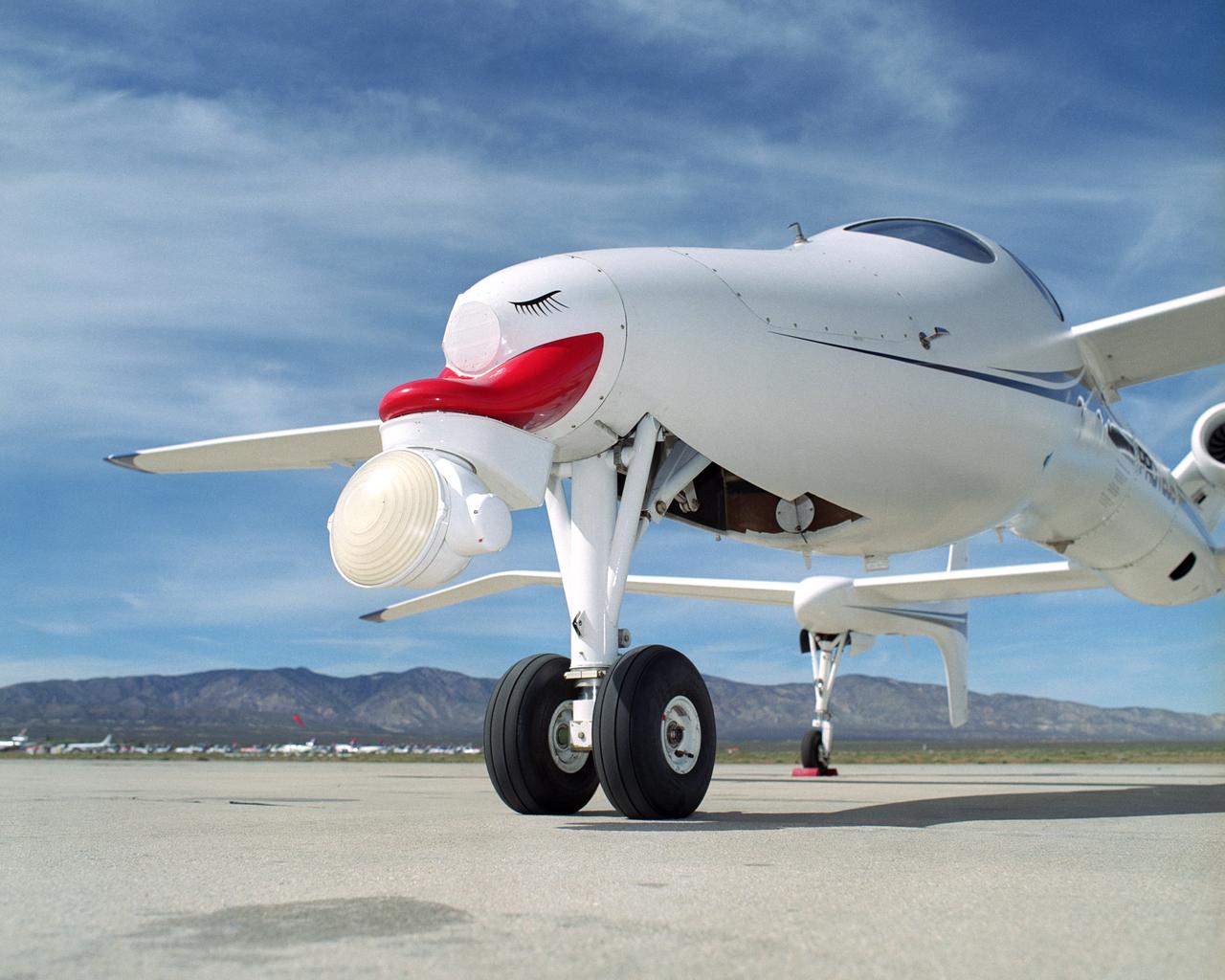
The payload bay in the nose of NASA's Altair unmanned aerial vehicle (UAV) will be able to carry up to 700 lbs. of sensors, imaging equipment and other instruments for Earth science missions.
EC02-0188-24
The long, narrow wings of NASA's Altair are designed to allow the unmanned aerial vehicle (UAV) to maintain long-duration flight at high altitudes.
ED03-0078-2
The left wing of NASA's Altair unmanned aerial vehicle (UAV) rests in a jig during construction at General Atomics Aeronautical Systems, Inc., (GA-ASI) facility at Adelanto, Calif.
EC02-0188-8
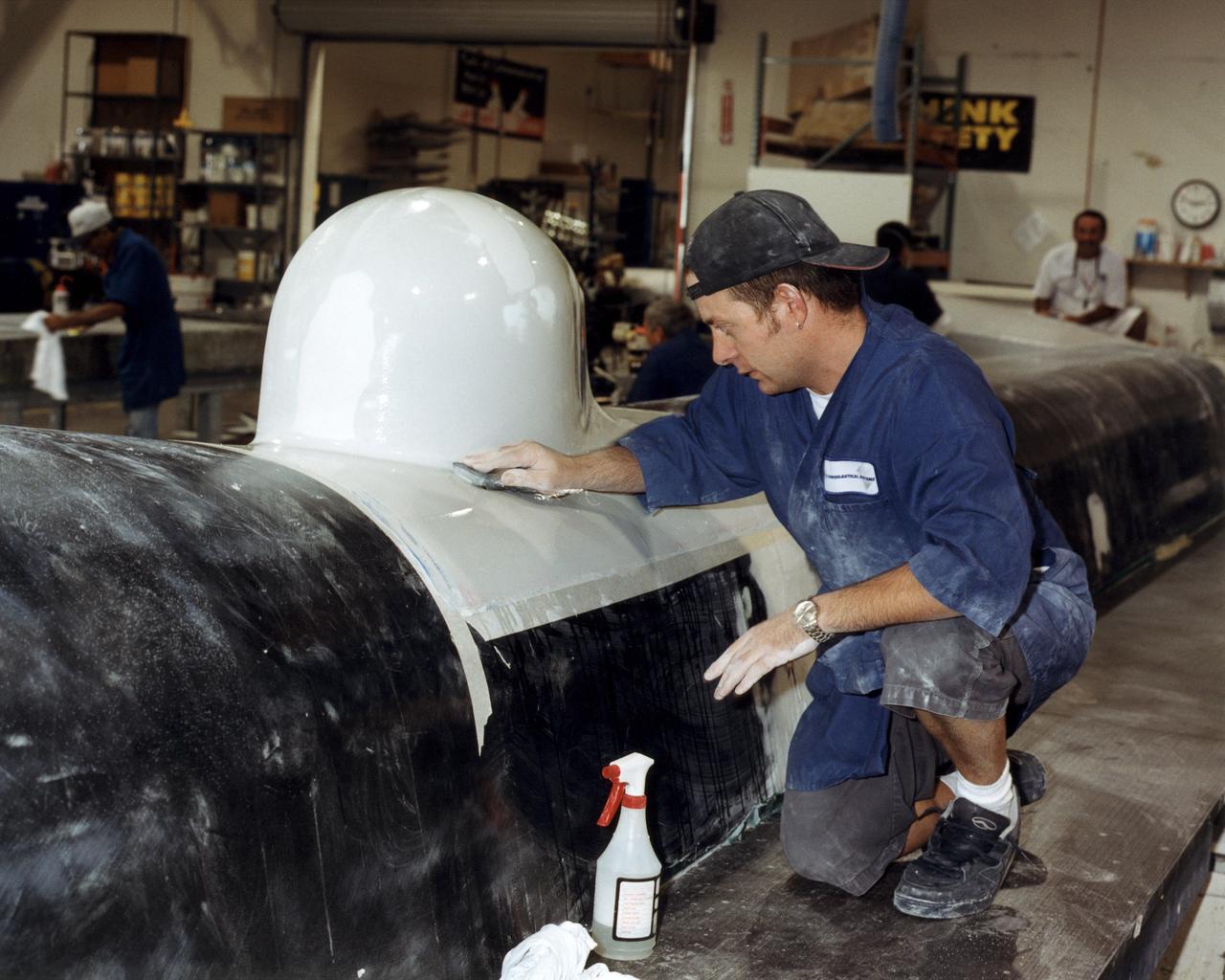
Technician Shawn Warren carefully smoothes out the composite skin of an instrument fairing<br>atop the upper fuselage of the Altair unmanned aerial vehicle (UAV) at General Atomics Aeronautical Systems, Inc., facility at Adelanto, Calif.
EC02-0188-3
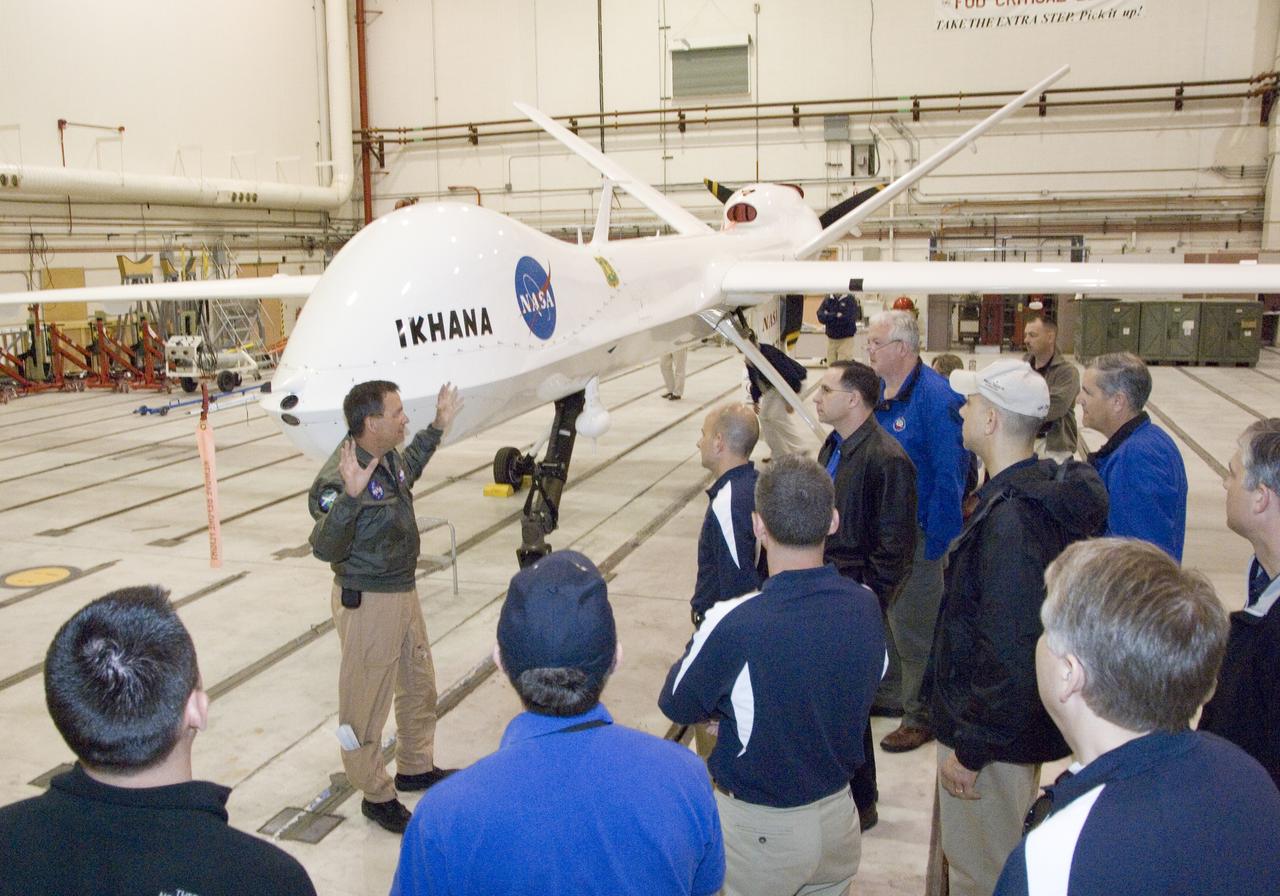
Industrial College of the Armed Forces students on a VIP tour receive a briefing on the Ikhana unmanned air vehicle from NASA Dryden pilot Mark Pestana.
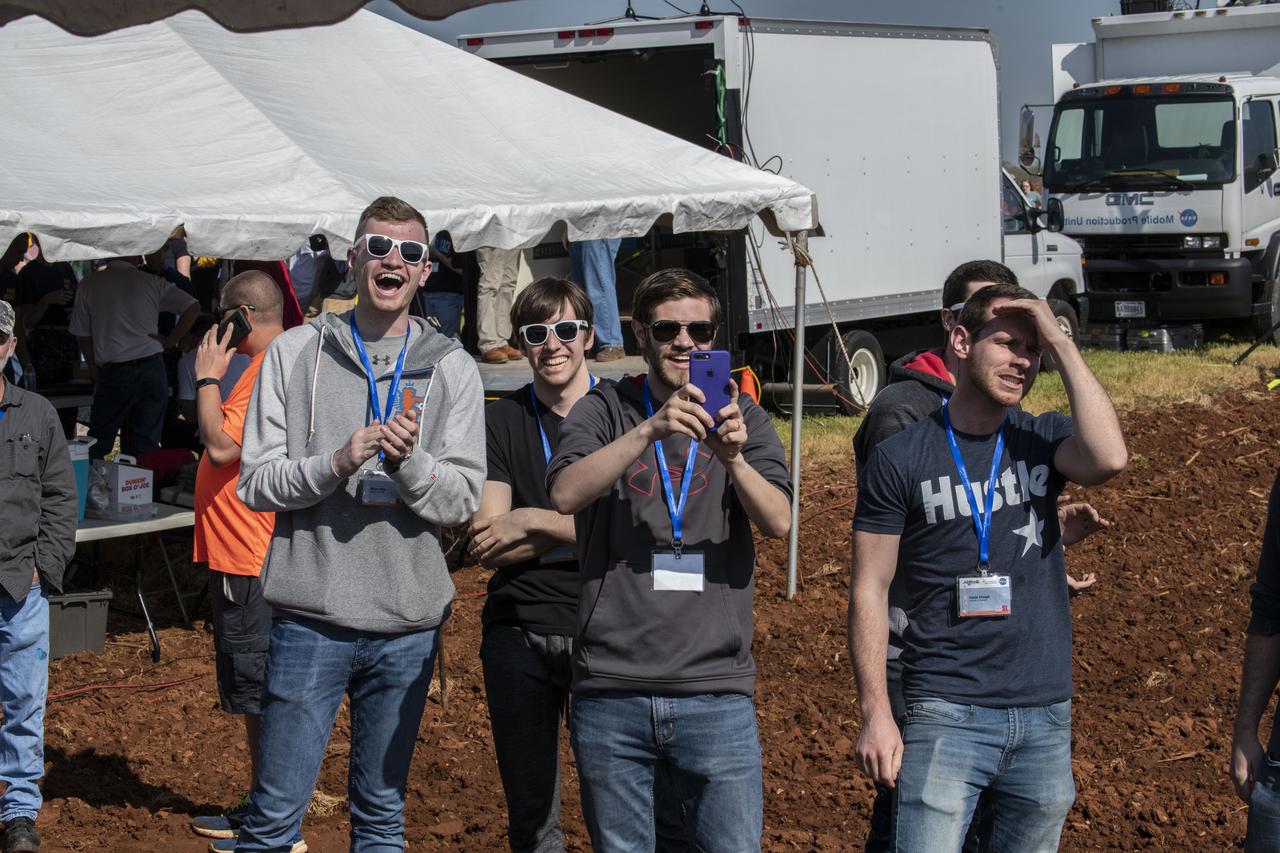
Industrial College of the Armed Forces students on a VIP tour receive a briefing on the Ikhana unmanned air vehicle from NASA Dryden pilot Mark Pestana
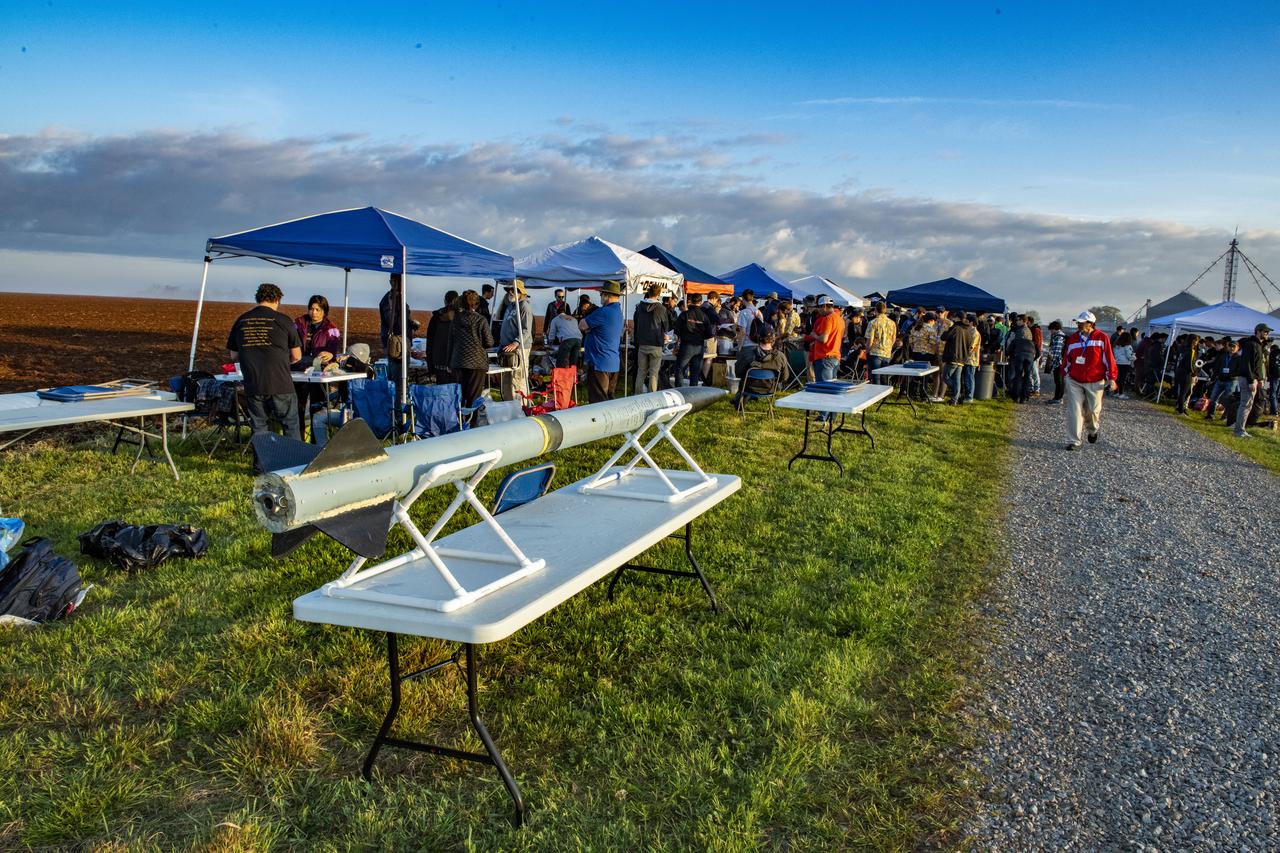
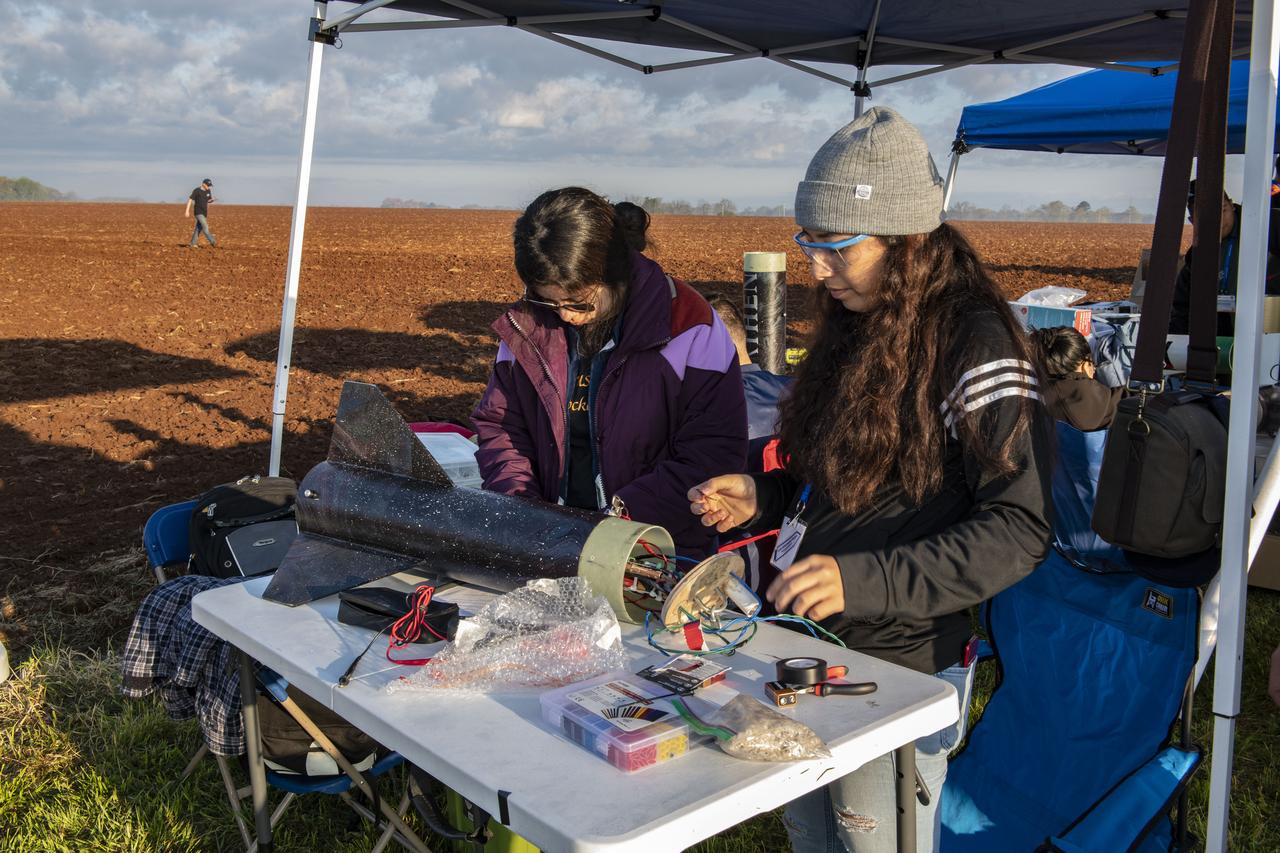
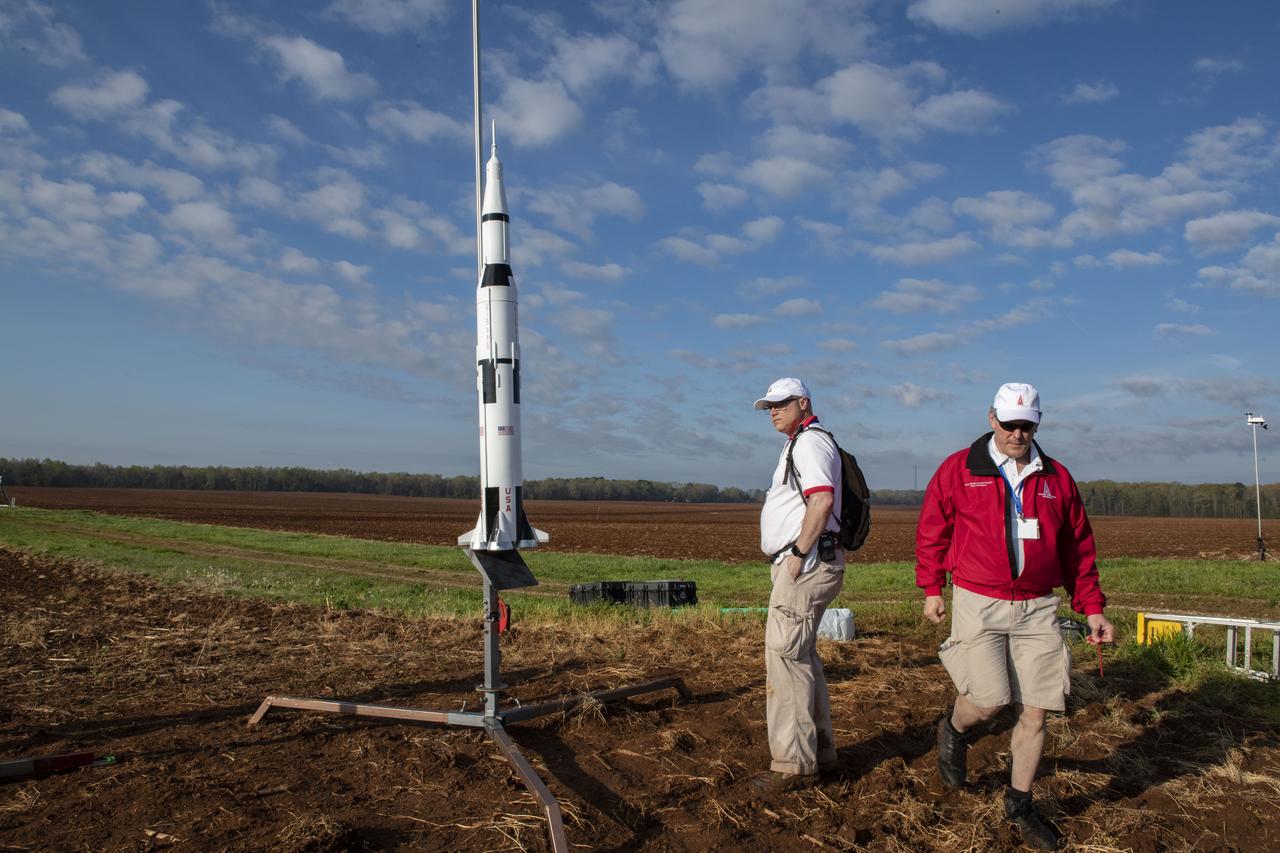
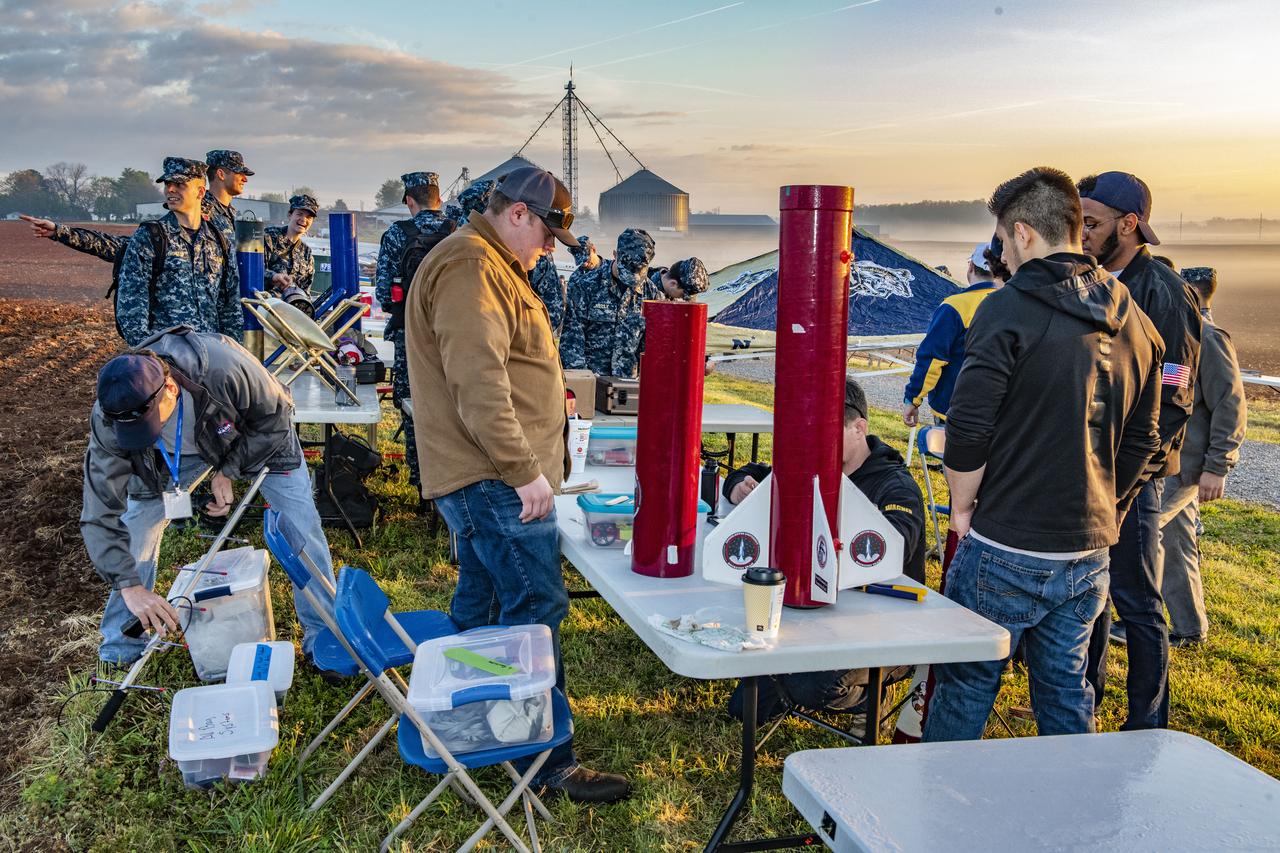
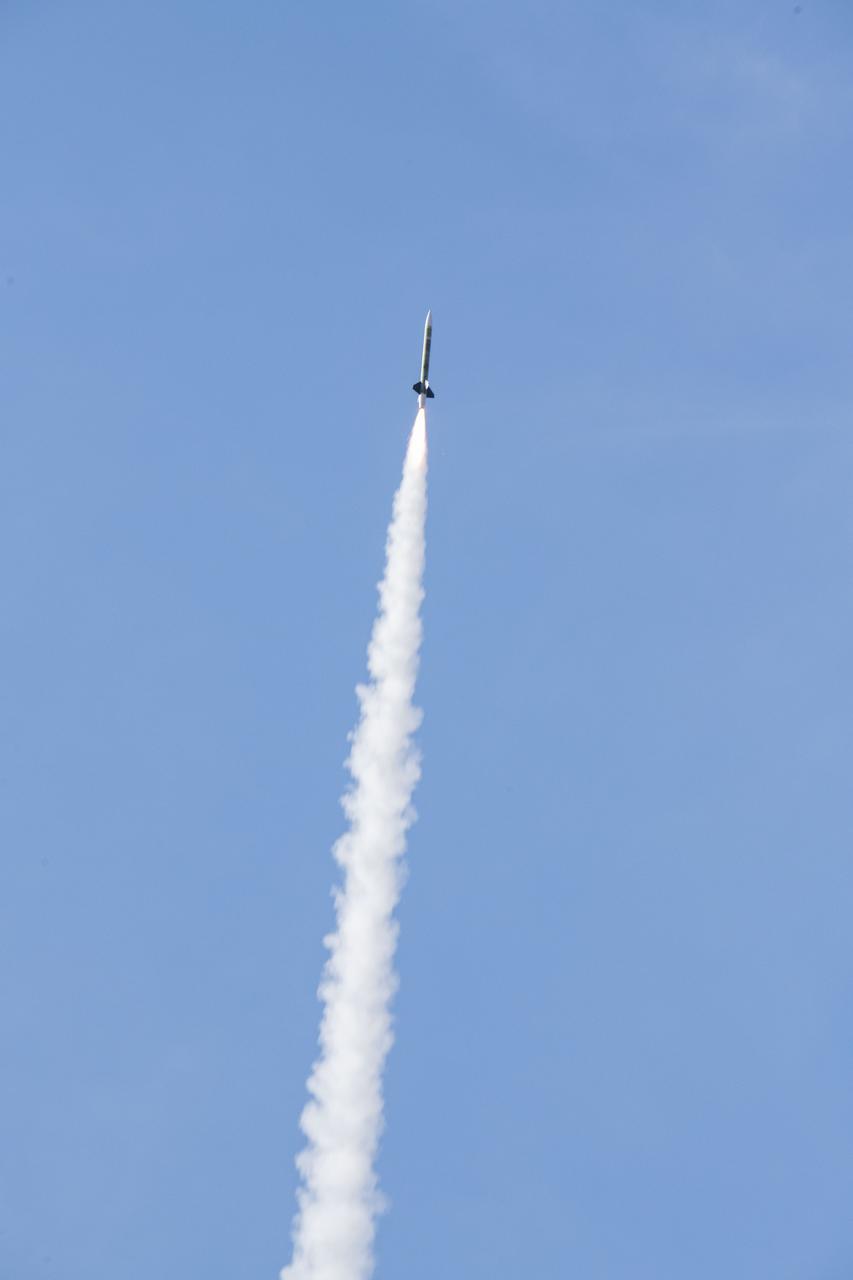
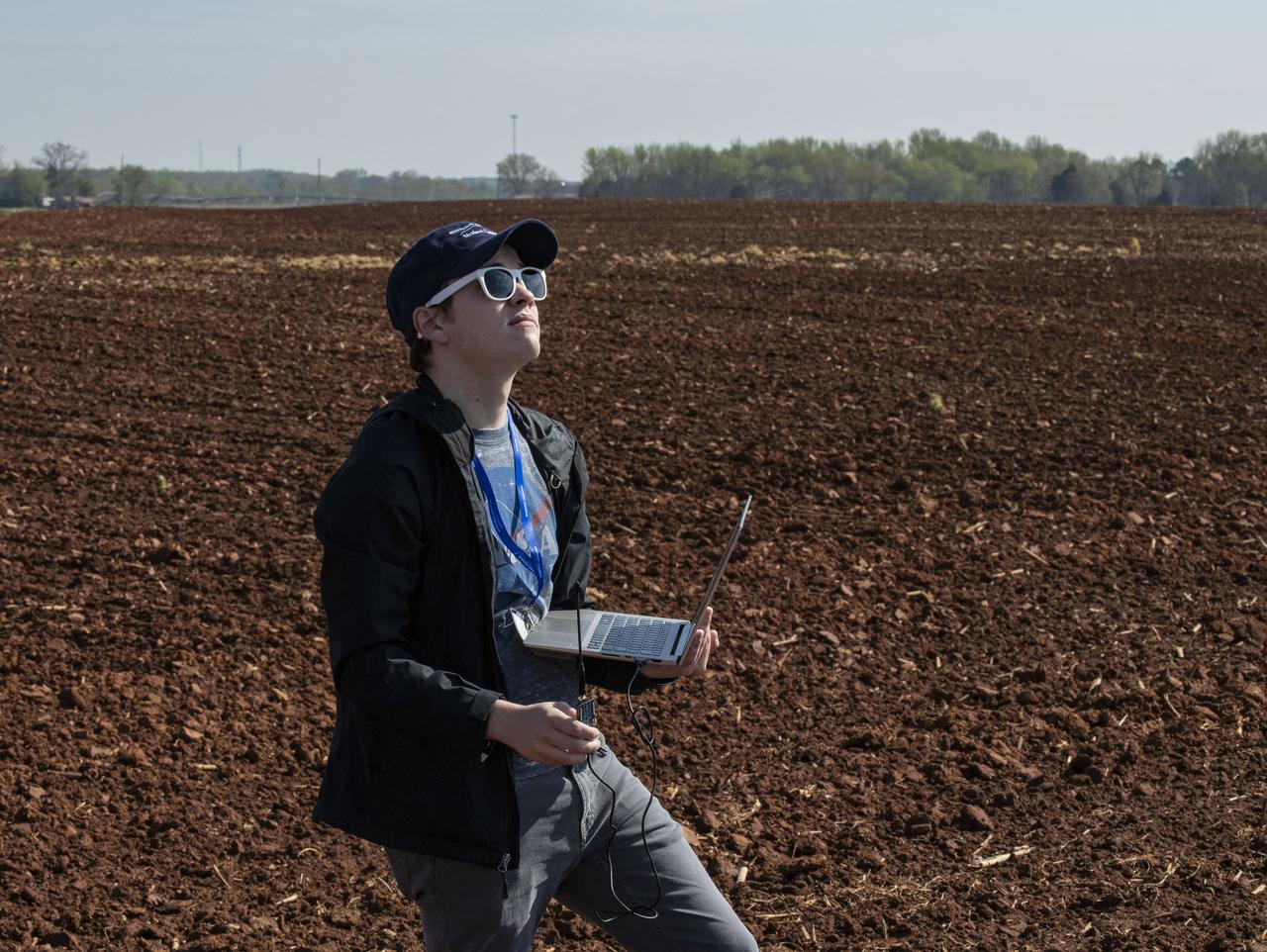
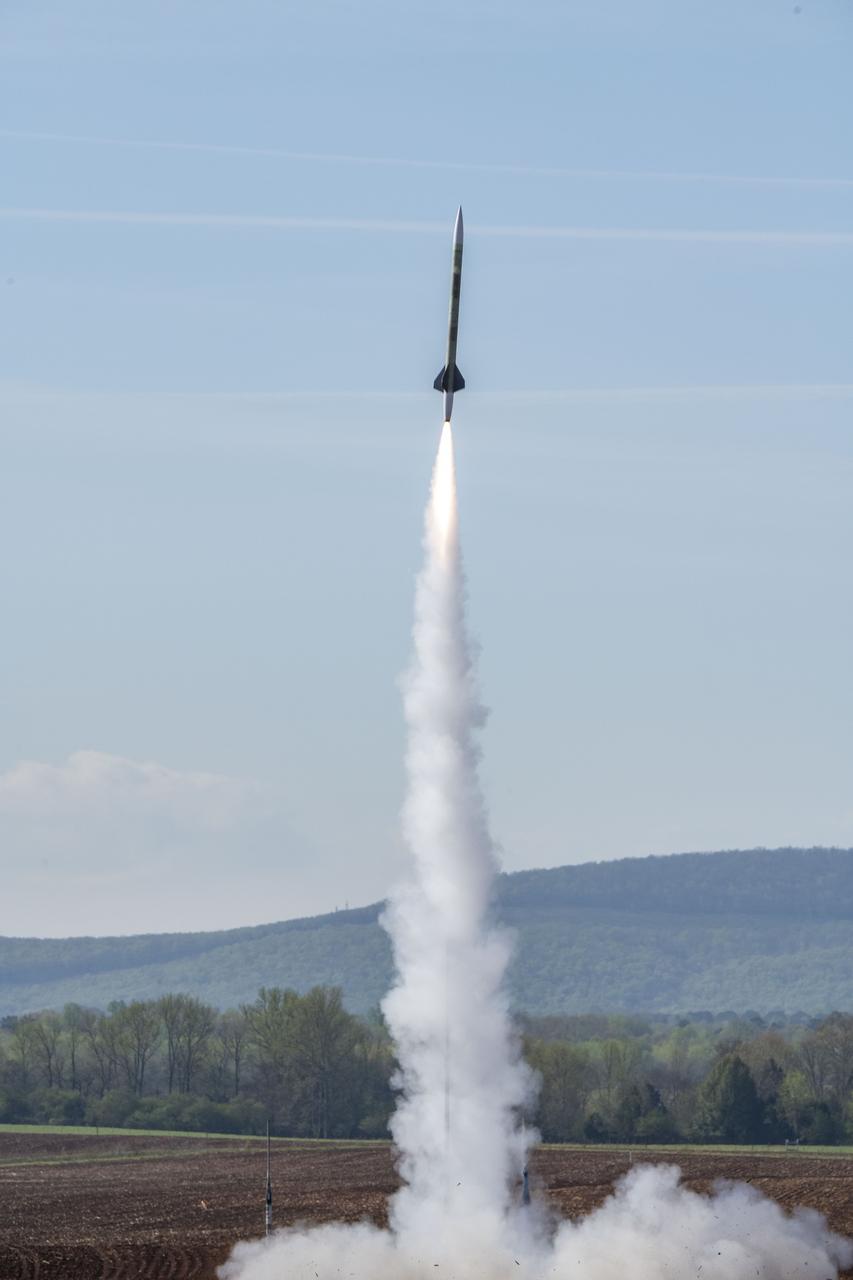
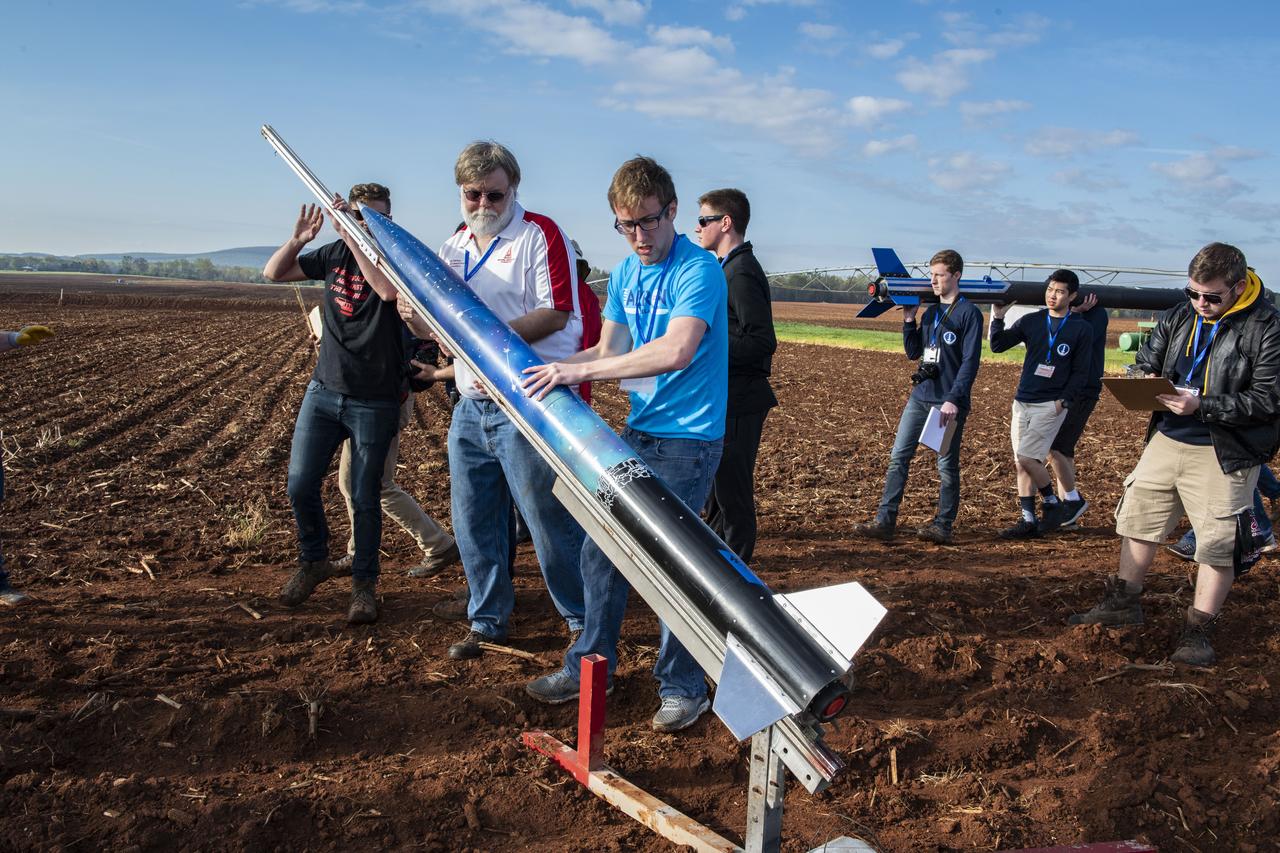
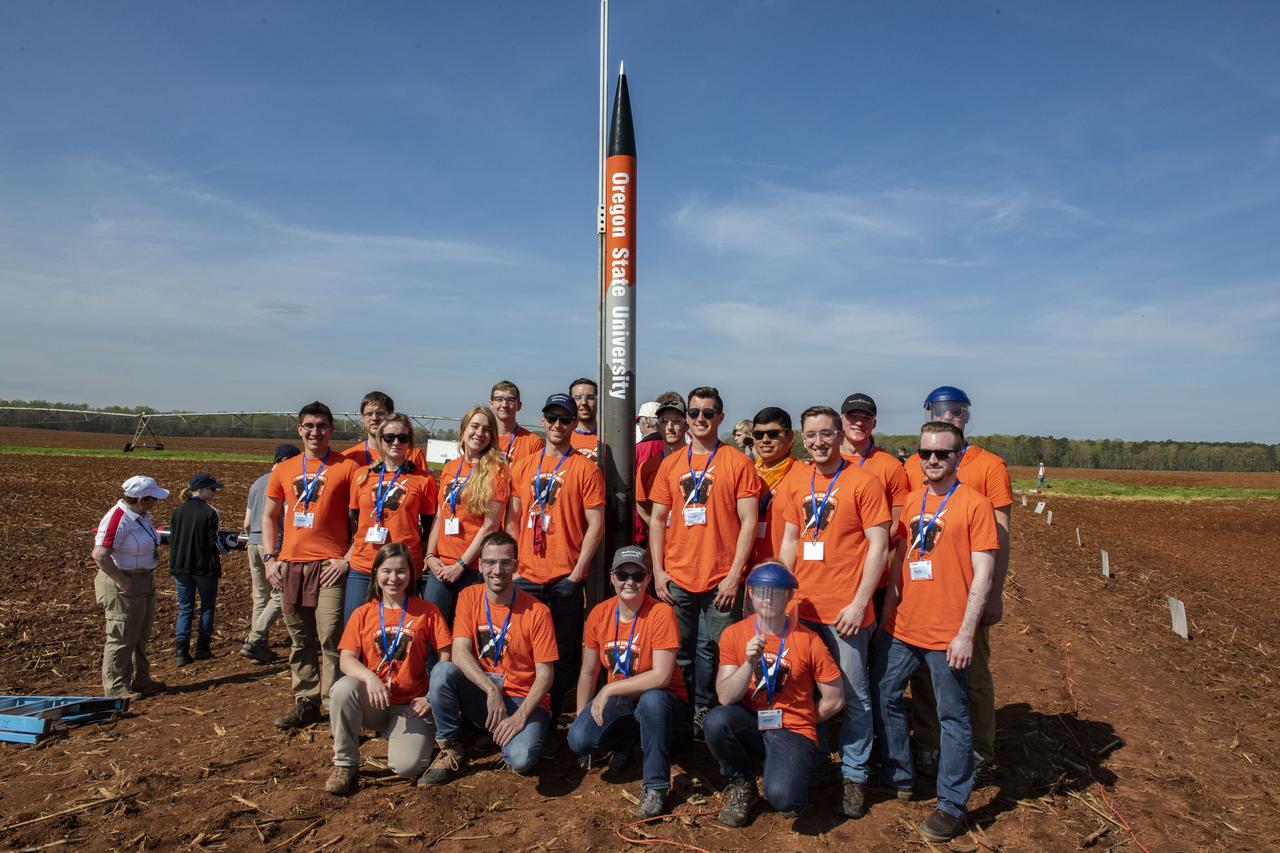
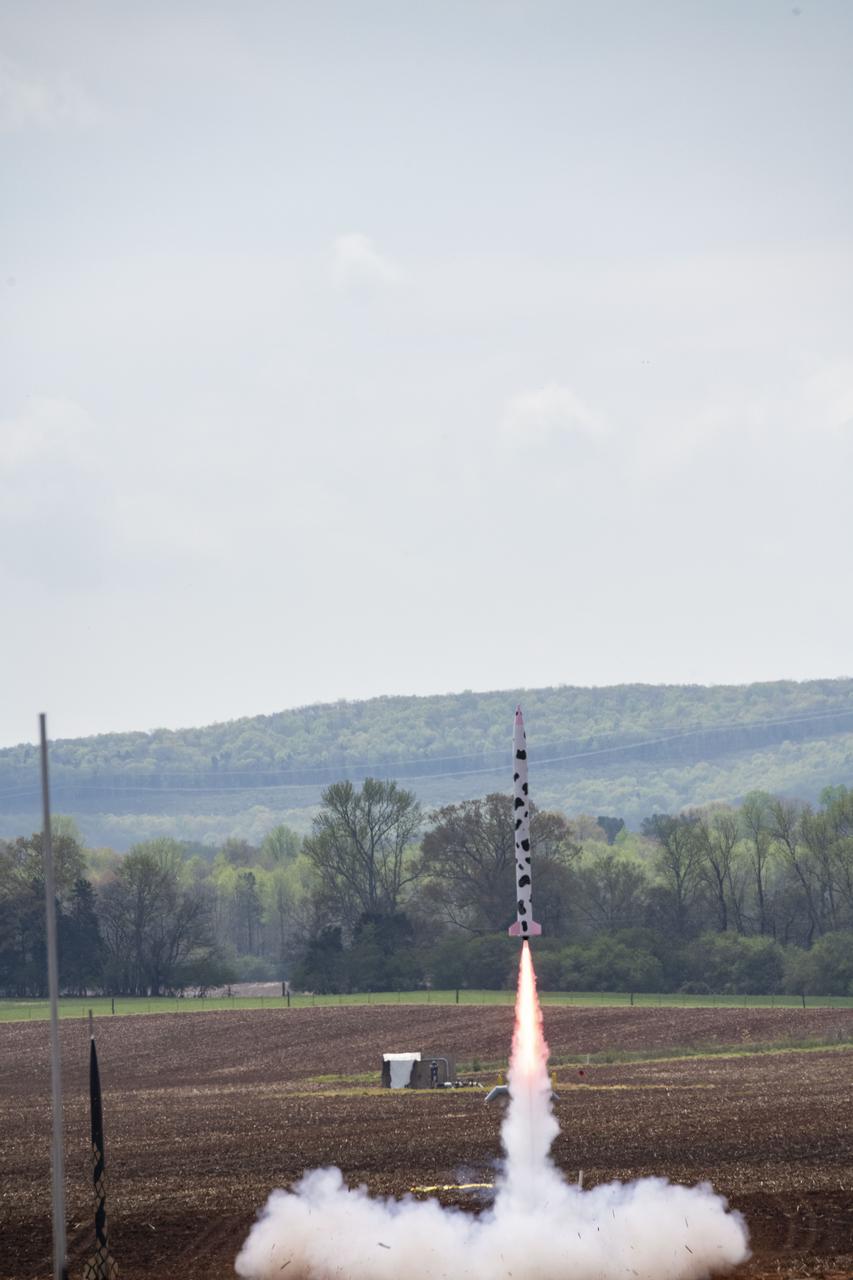
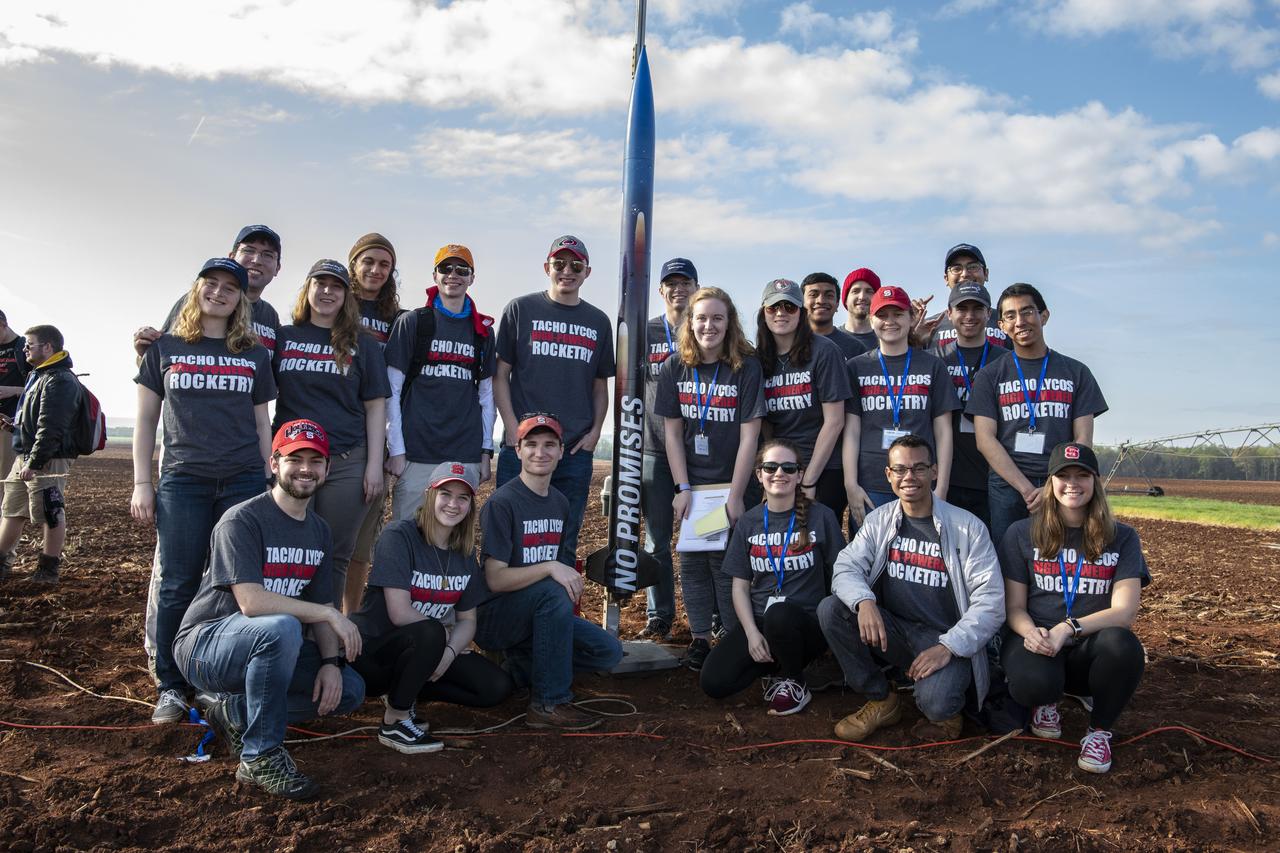
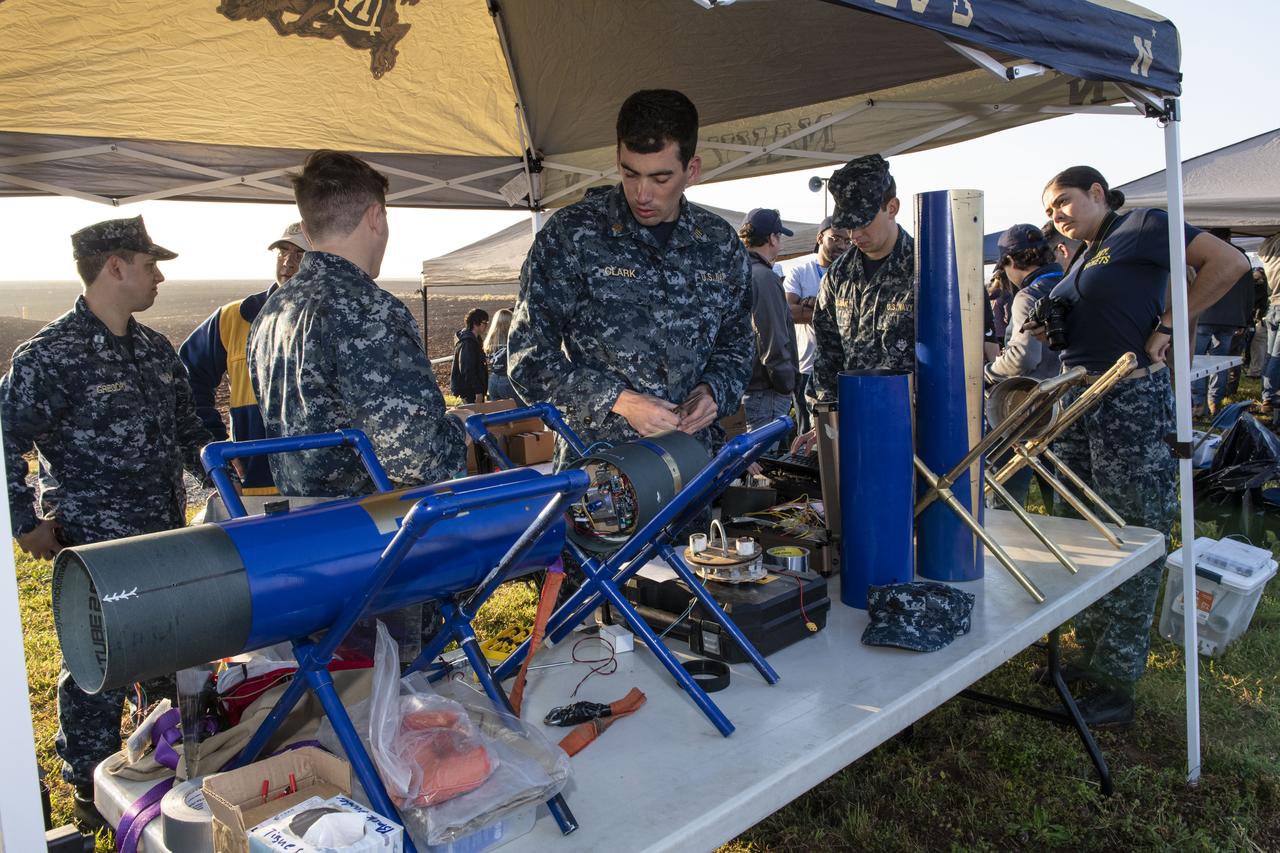
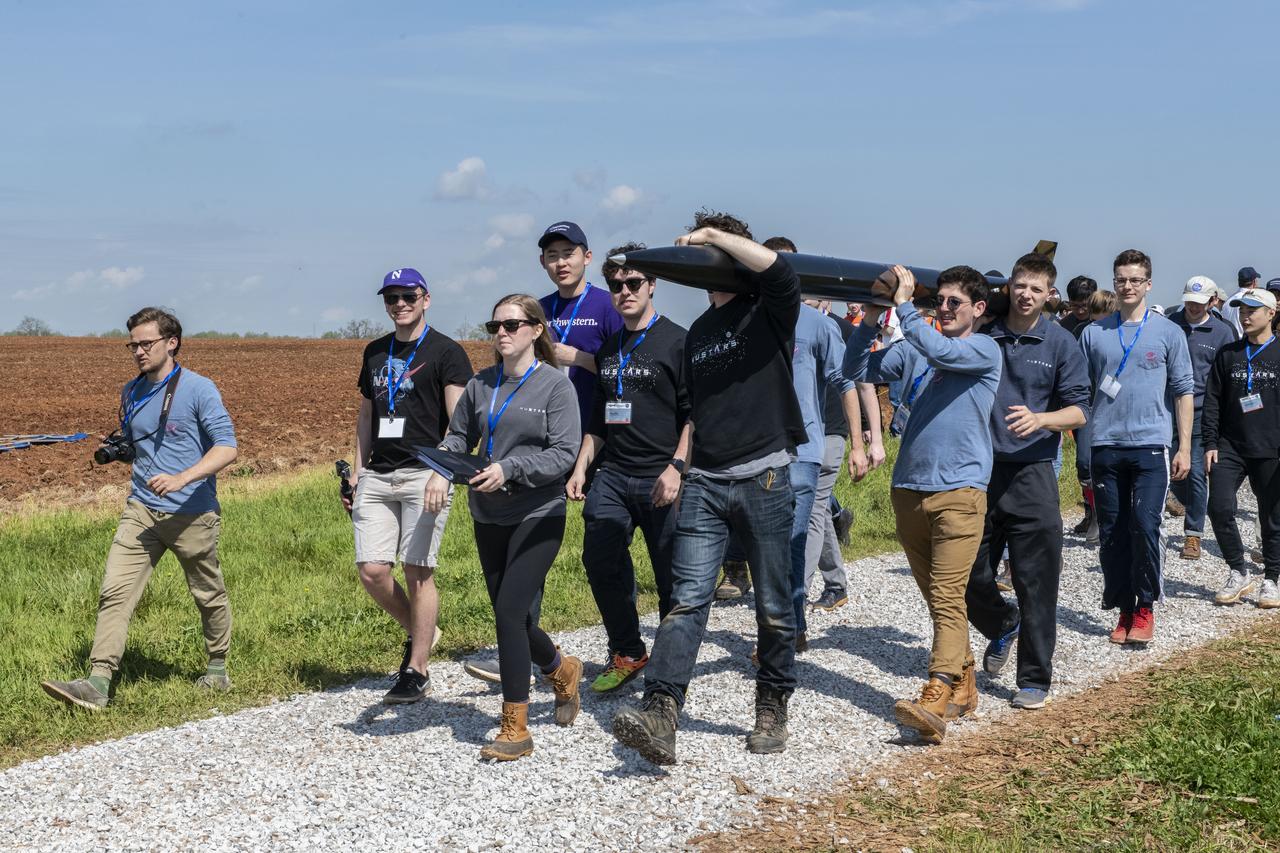
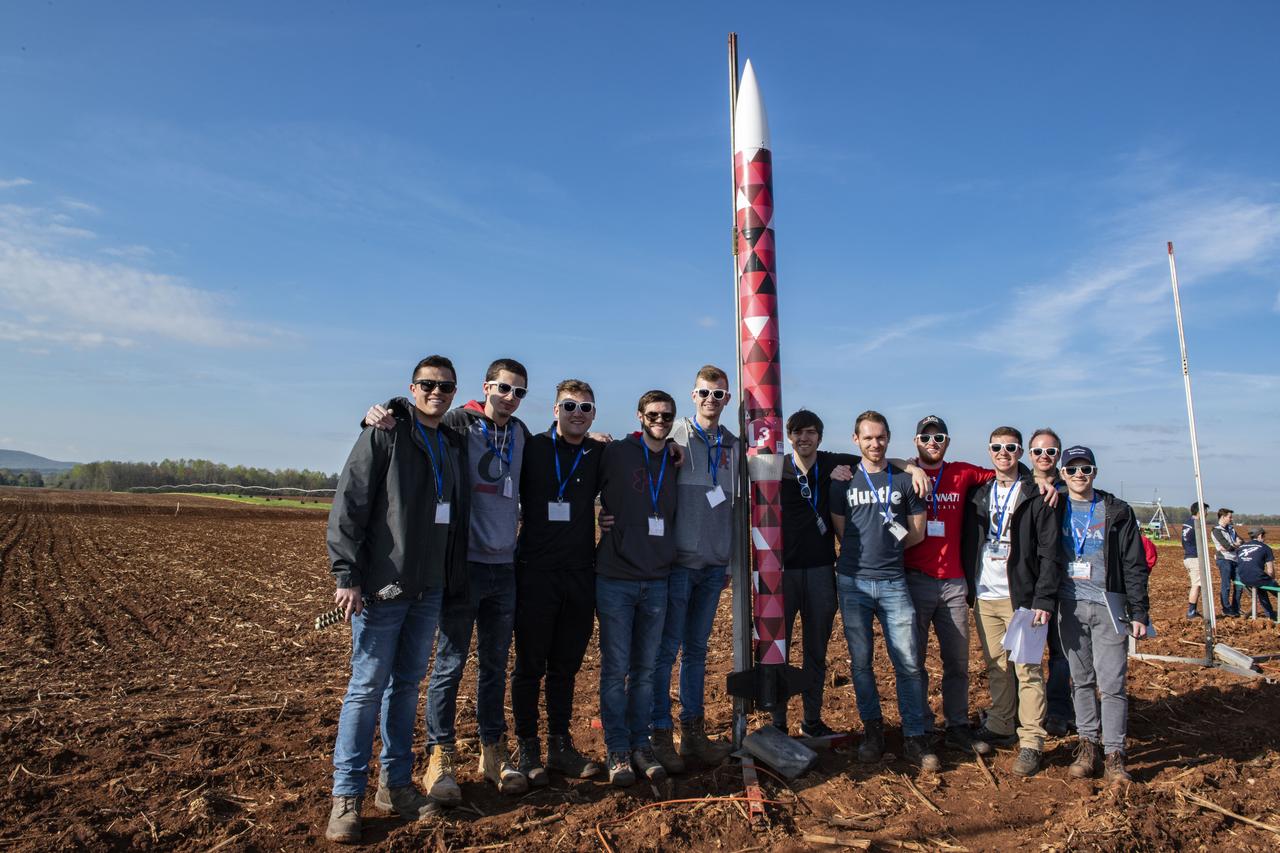
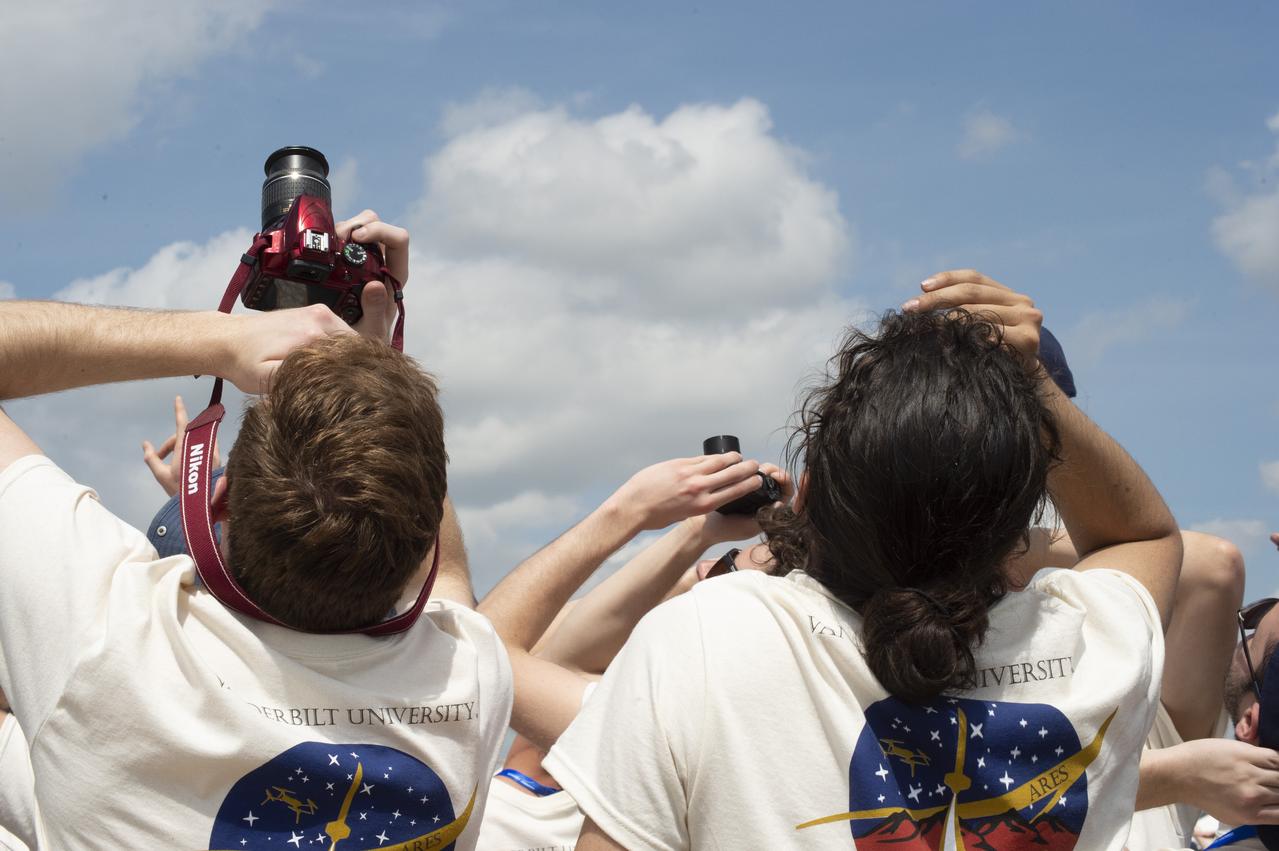
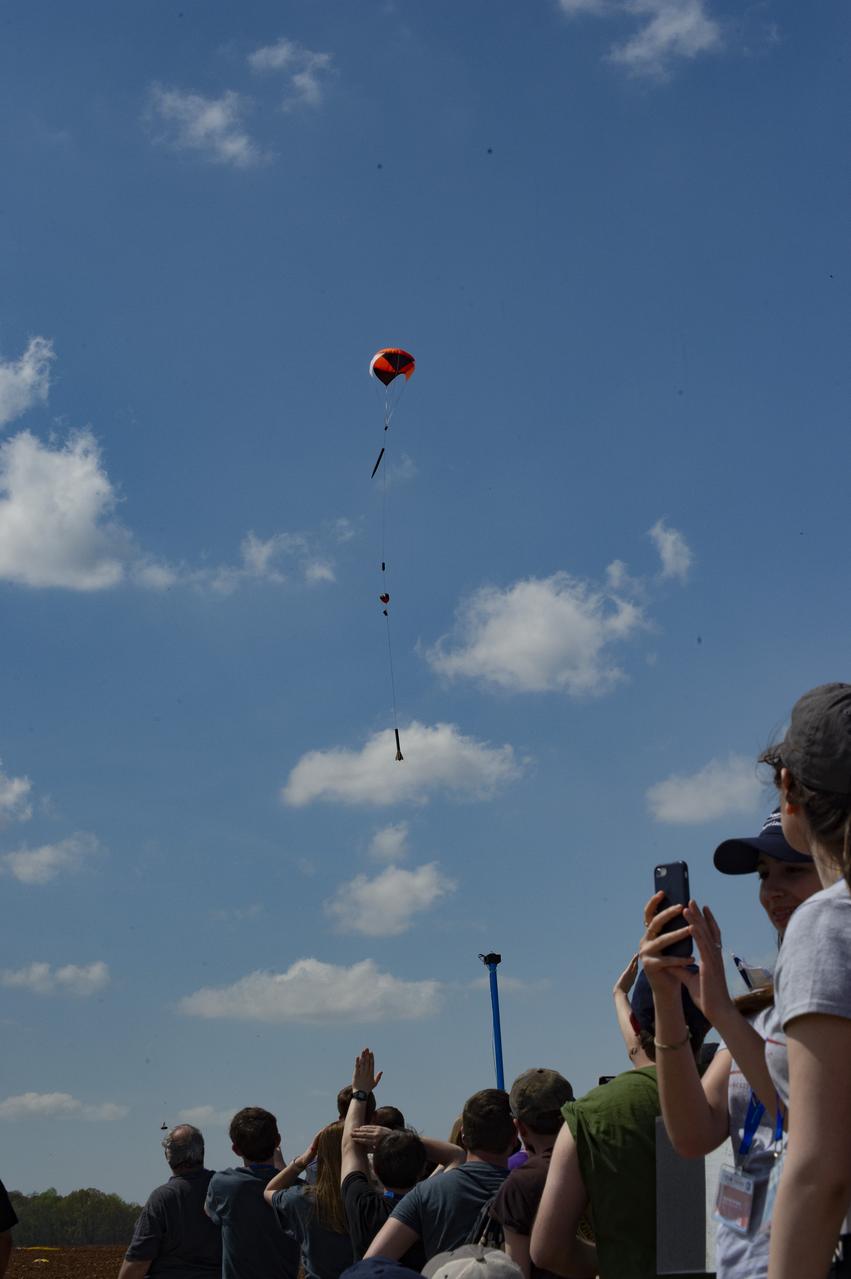
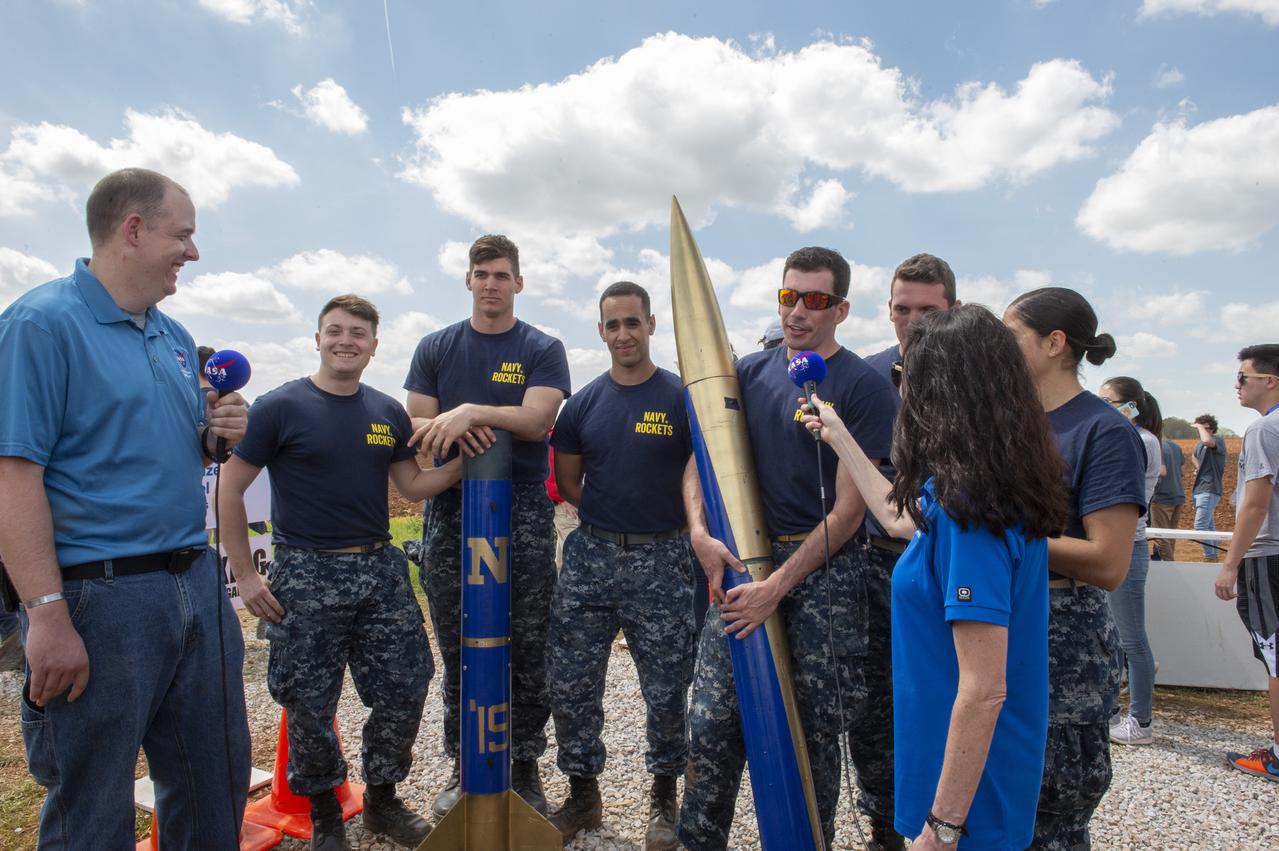
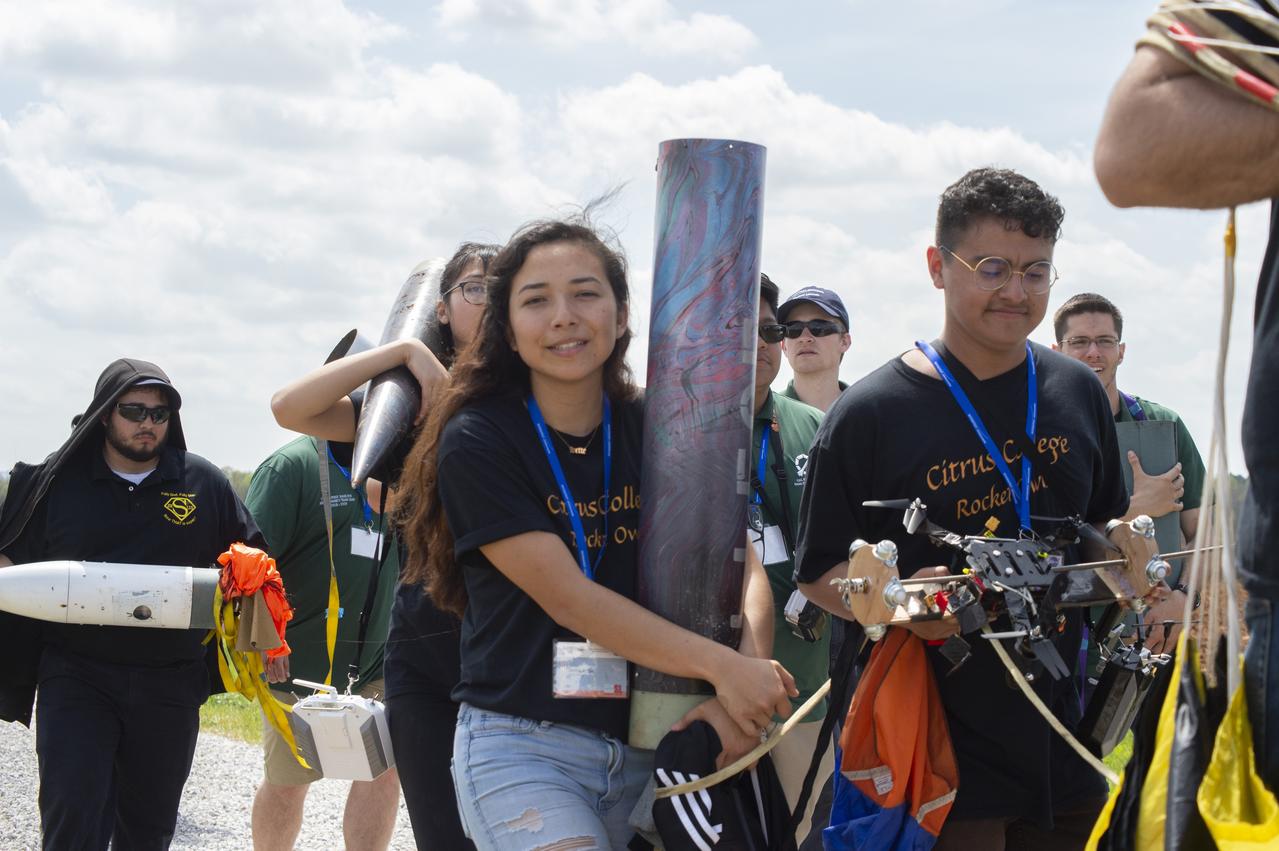
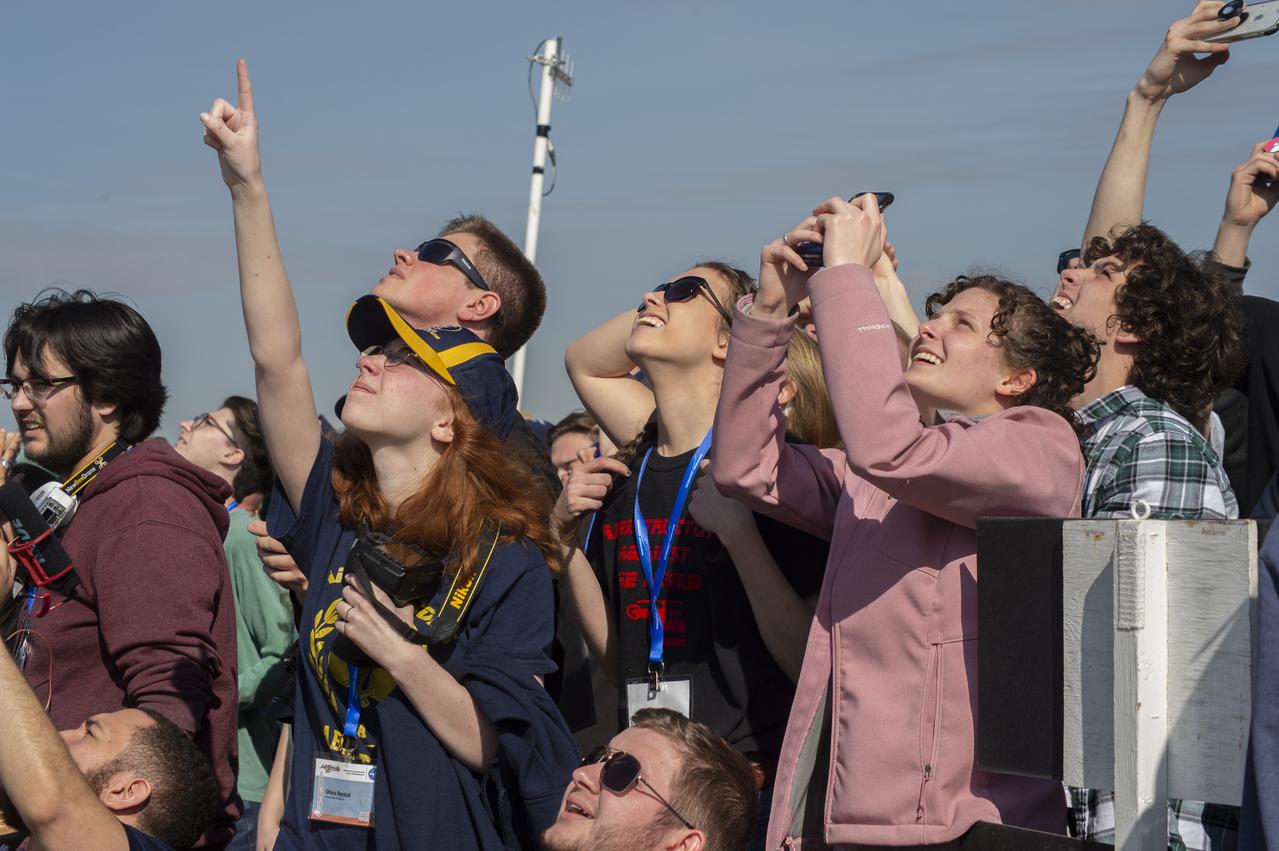
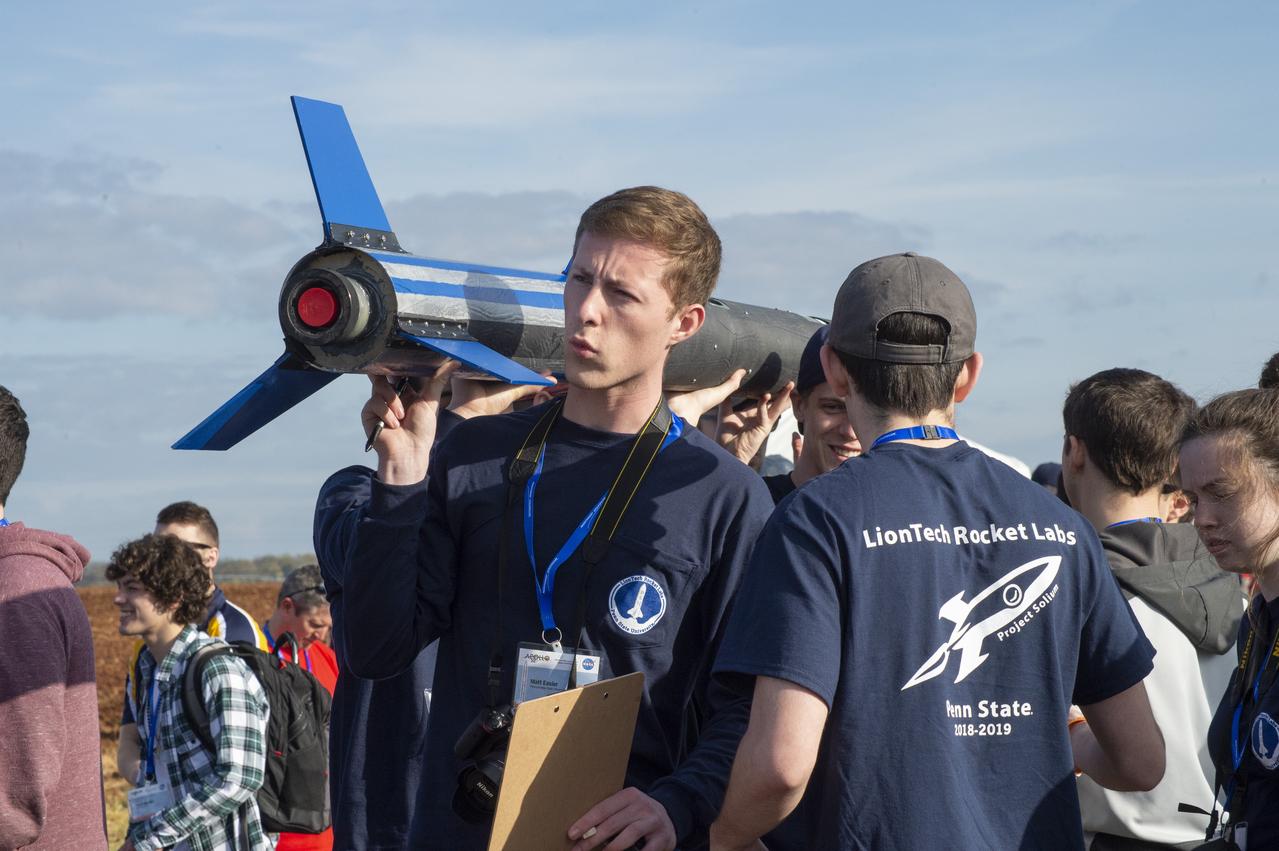
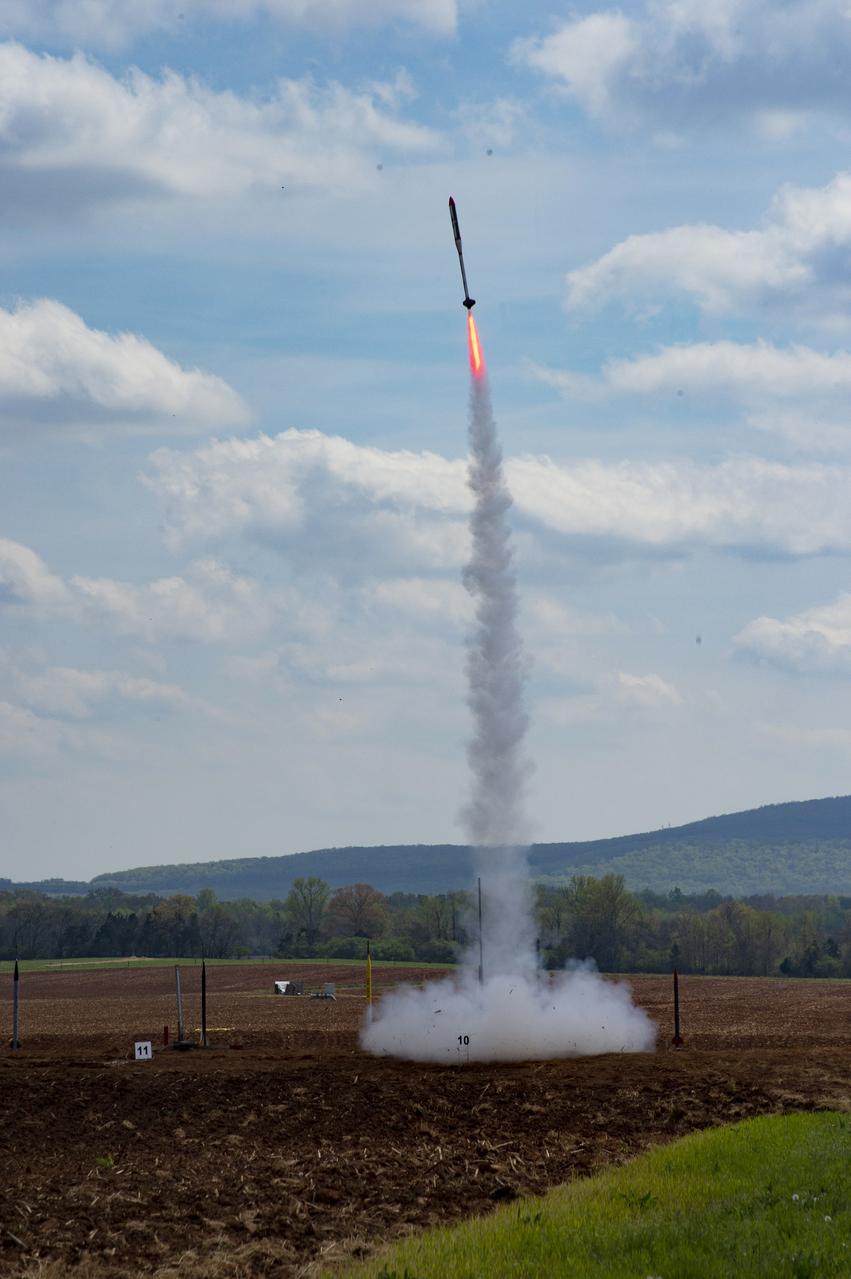
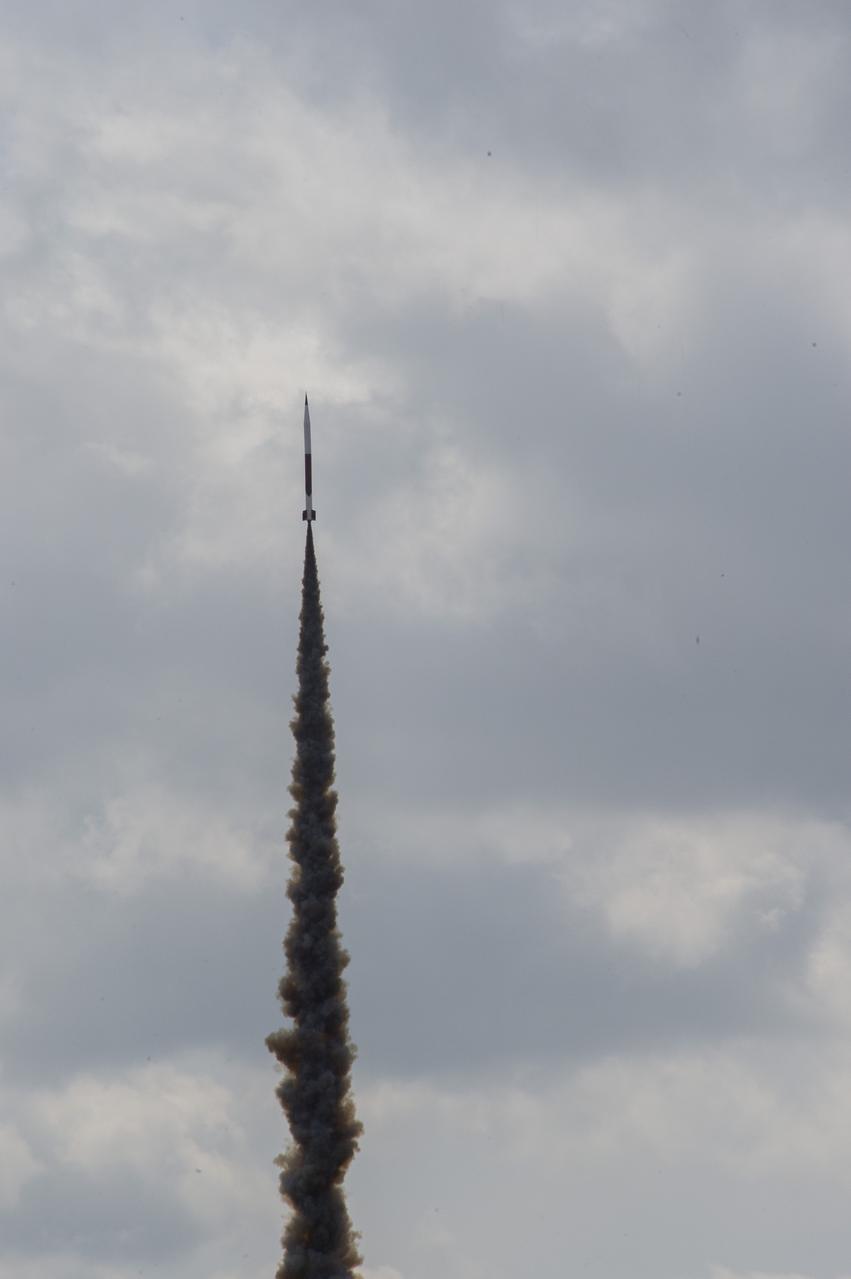
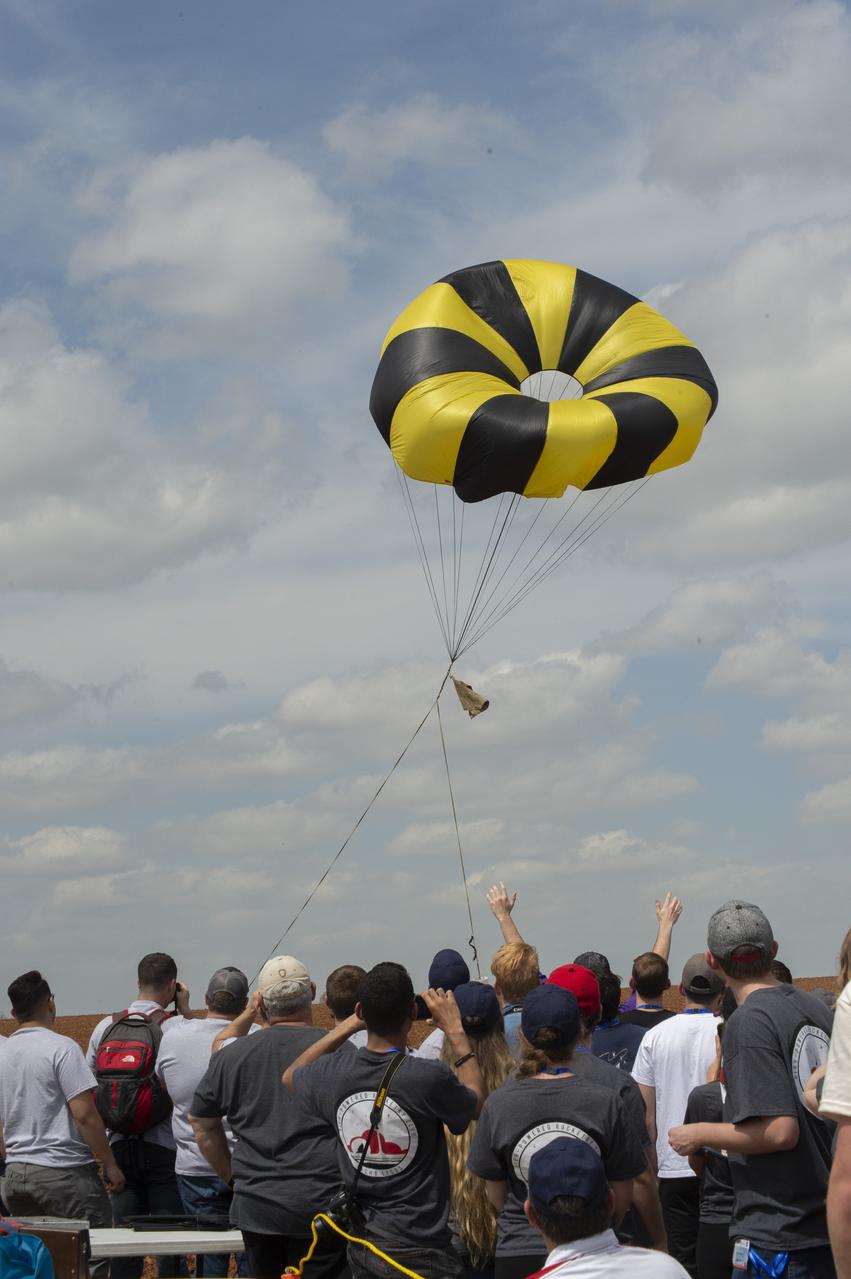
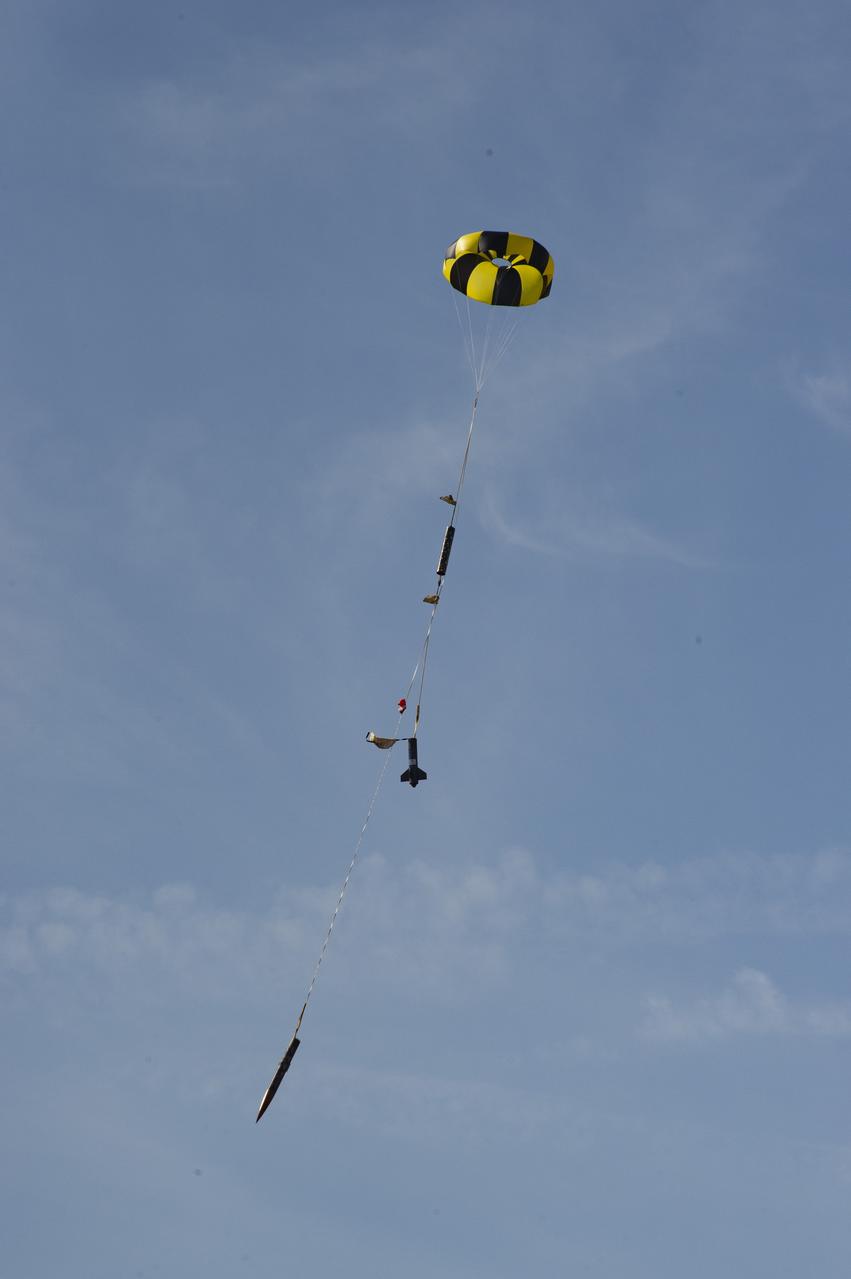
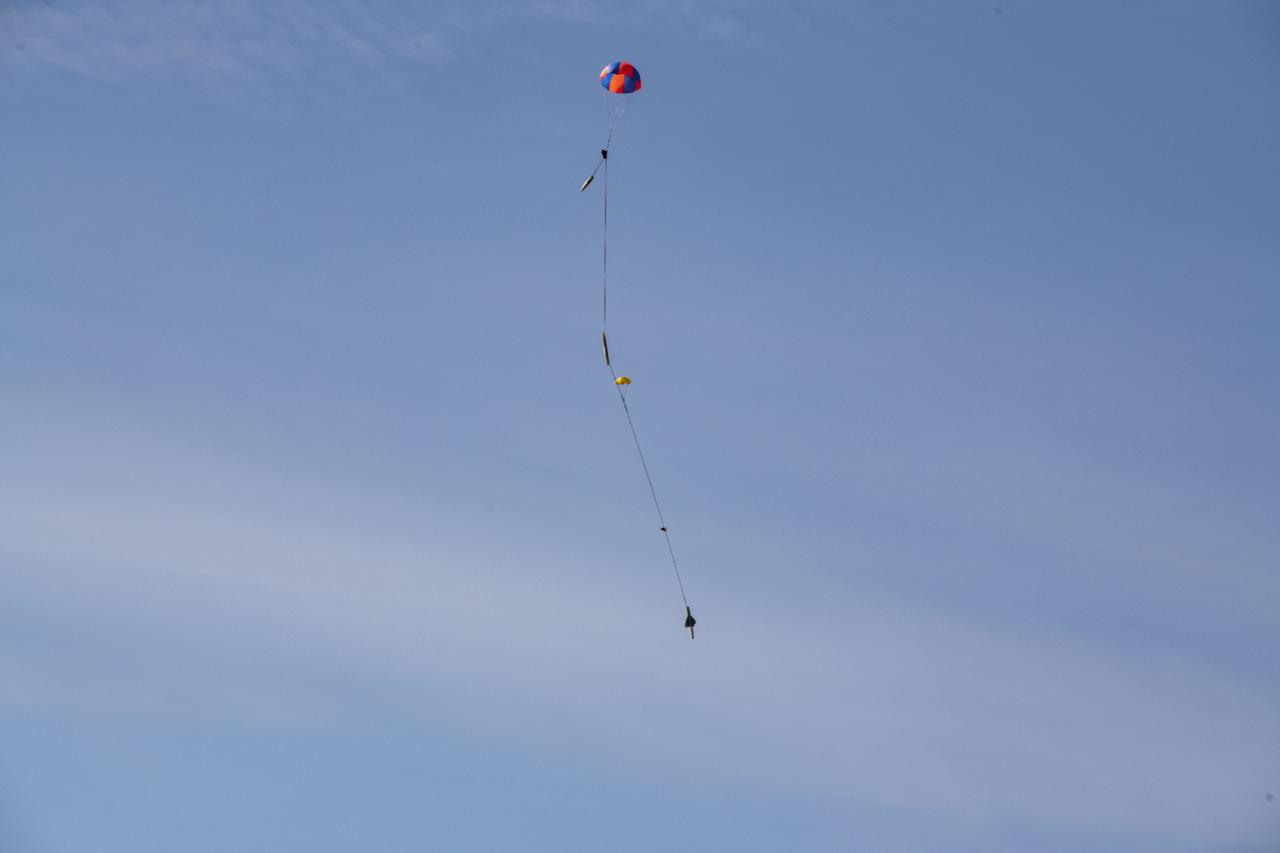
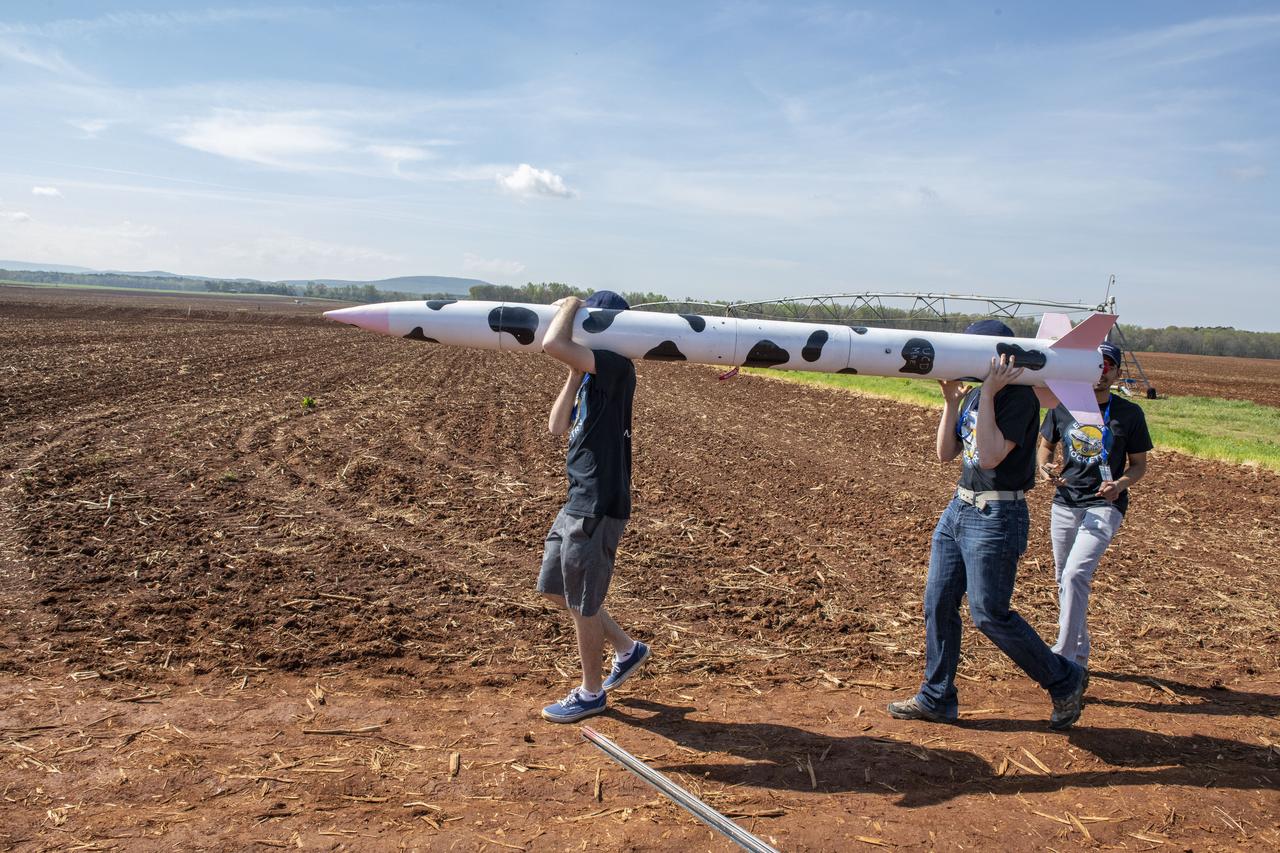
High School and College students from around the U.S. came together at Bragg Farms in Toney, Alabama for the 2019 Student Launch Initiative. The students launched their rockets to their own predetermined altitude with various payloads including remote rovers and unmanned aerial vehicles.
2019 Student Launch Initiative
High School and College students from around the U.S. came together at Bragg Farms in Toney, Alabama for the 2019 Student Launch Initiative. The students launched their rockets to their own predetermined altitude with various payloads including remote rovers and unmanned aerial vehicles.
2019 Student Launch Initiative
High School and College students from around the U.S. came together at Bragg Farms in Toney, Alabama for the 2019 Student Launch Initiative. The students launched their rockets to their own predetermined altitude with various payloads including remote rovers and unmanned aerial vehicles.
2019 Student Launch Initiative
High School and College students from around the U.S. came together at Bragg Farms in Toney, Alabama for the 2019 Student Launch Initiative. The students launched their rockets to their own predetermined altitude with various payloads including remote rovers and unmanned aerial vehicles.
2019 Student Launch Initiative
High School and College students from around the U.S. came together at Bragg Farms in Toney, Alabama for the 2019 Student Launch Initiative. The students launched their rockets to their own predetermined altitude with various payloads including remote rovers and unmanned aerial vehicles.
2019 Student Launch Initiative
High School and College students from around the U.S. came together at Bragg Farms in Toney, Alabama for the 2019 Student Launch Initiative. The students launched their rockets to their own predetermined altitude with various payloads including remote rovers and unmanned aerial vehicles.
2019 Student Launch Initiative
High School and College students from around the U.S. came together at Bragg Farms in Toney, Alabama for the 2019 Student Launch Initiative. The students launched their rockets to their own predetermined altitude with various payloads including remote rovers and unmanned aerial vehicles.
2019 Student Launch Initiative
High School and College students from around the U.S. came together at Bragg Farms in Toney, Alabama for the 2019 Student Launch Initiative. The students launched their rockets to their own predetermined altitude with various payloads including remote rovers and unmanned aerial vehicles.
2019 Student Launch Initiative
High School and College students from around the U.S. came together at Bragg Farms in Toney, Alabama for the 2019 Student Launch Initiative. The students launched their rockets to their own predetermined altitude with various payloads including remote rovers and unmanned aerial vehicles.
2019 Student Launch Initiative
High School and College students from around the U.S. came together at Bragg Farms in Toney, Alabama for the 2019 Student Launch Initiative. The students launched their rockets to their own predetermined altitude with various payloads including remote rovers and unmanned aerial vehicles.
2019 Student Launch Initiative
High School and College students from around the U.S. came together at Bragg Farms in Toney, Alabama for the 2019 Student Launch Initiative. The students launched their rockets to their own predetermined altitude with various payloads including remote rovers and unmanned aerial vehicles.
2019 Student Launch Initiative
High School and College students from around the U.S. came together at Bragg Farms in Toney, Alabama for the 2019 Student Launch Initiative. The students launched their rockets to their own predetermined altitude with various payloads including remote rovers and unmanned aerial vehicles.
2019 Student Launch Initiative
High School and College students from around the U.S. came together at Bragg Farms in Toney, Alabama for the 2019 Student Launch Initiative. The students launched their rockets to their own predetermined altitude with various payloads including remote rovers and unmanned aerial vehicles.
2019 Student Launch Initiative
High School and College students from around the U.S. came together at Bragg Farms in Toney, Alabama for the 2019 Student Launch Initiative. The students launched their rockets to their own predetermined altitude with various payloads including remote rovers and unmanned aerial vehicles.
2019 Student Launch Initiative
High School and College students from around the U.S. came together at Bragg Farms in Toney, Alabama for the 2019 Student Launch Initiative. The students launched their rockets to their own predetermined altitude with various payloads including remote rovers and unmanned aerial vehicles.
2019 Student Launch Initiative
High School and College students from around the U.S. came together at Bragg Farms in Toney, Alabama for the 2019 Student Launch Initiative. The students launched their rockets to their own predetermined altitude with various payloads including remote rovers and unmanned aerial vehicles.
2019 Student Launch Initiative
High School and College students from around the U.S. came together at Bragg Farms in Toney, Alabama for the 2019 Student Launch Initiative. The students launched their rockets to their own predetermined altitude with various payloads including remote rovers and unmanned aerial vehicles.
2019 Student Launch Initiative
High School and College students from around the U.S. came together at Bragg Farms in Toney, Alabama for the 2019 Student Launch Initiative. The students launched their rockets to their own predetermined altitude with various payloads including remote rovers and unmanned aerial vehicles.
2019 Student Launch Initiative
High School and College students from around the U.S. came together at Bragg Farms in Toney, Alabama for the 2019 Student Launch Initiative. The students launched their rockets to their own predetermined altitude with various payloads including remote rovers and unmanned aerial vehicles.
2019 Student Launch Initiative
High School and College students from around the U.S. came together at Bragg Farms in Toney, Alabama for the 2019 Student Launch Initiative. The students launched their rockets to their own predetermined altitude with various payloads including remote rovers and unmanned aerial vehicles.
2019 Student Launch Initiative
High School and College students from around the U.S. came together at Bragg Farms in Toney, Alabama for the 2019 Student Launch Initiative. The students launched their rockets to their own predetermined altitude with various payloads including remote rovers and unmanned aerial vehicles.
2019 Student Launch Initiative
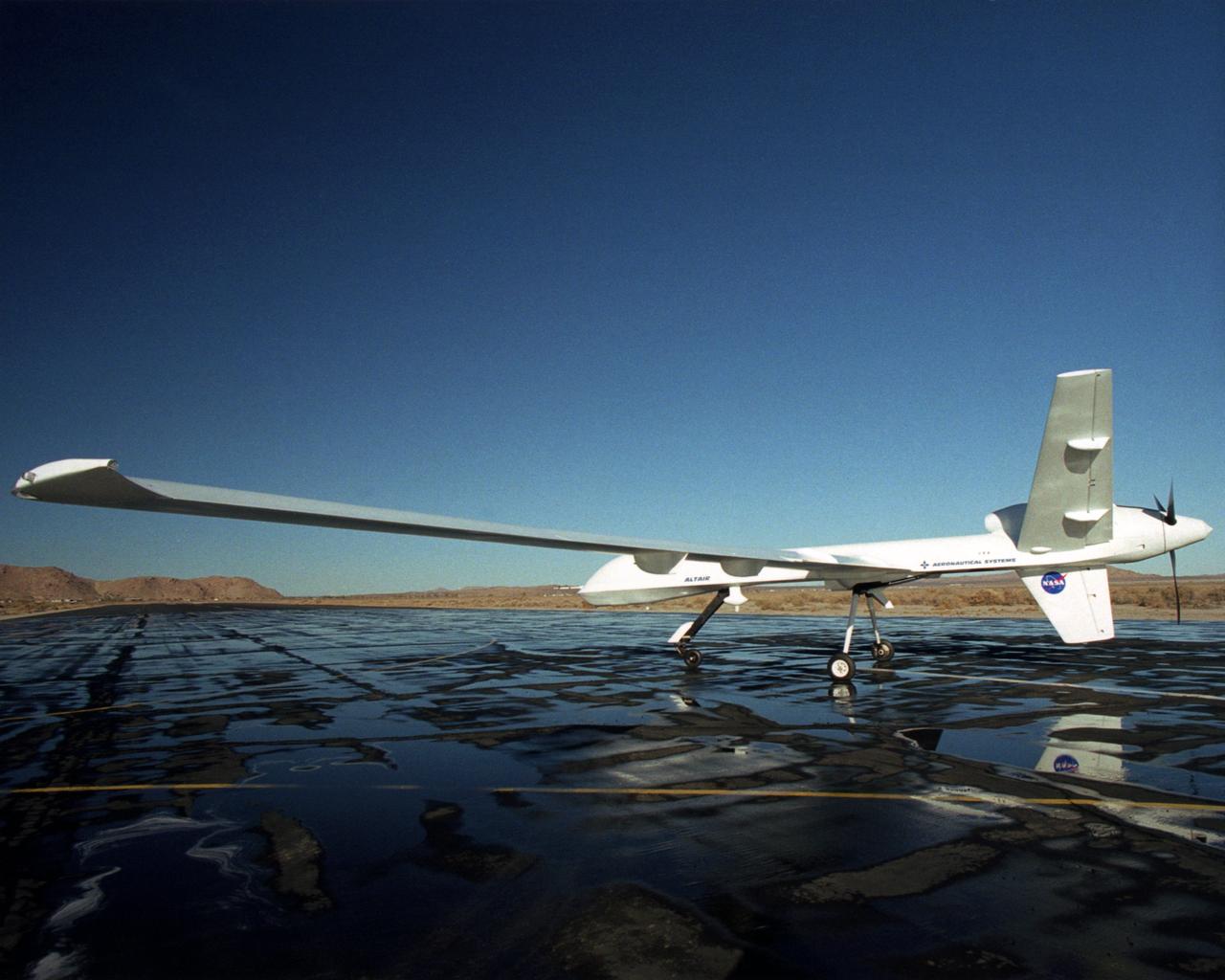
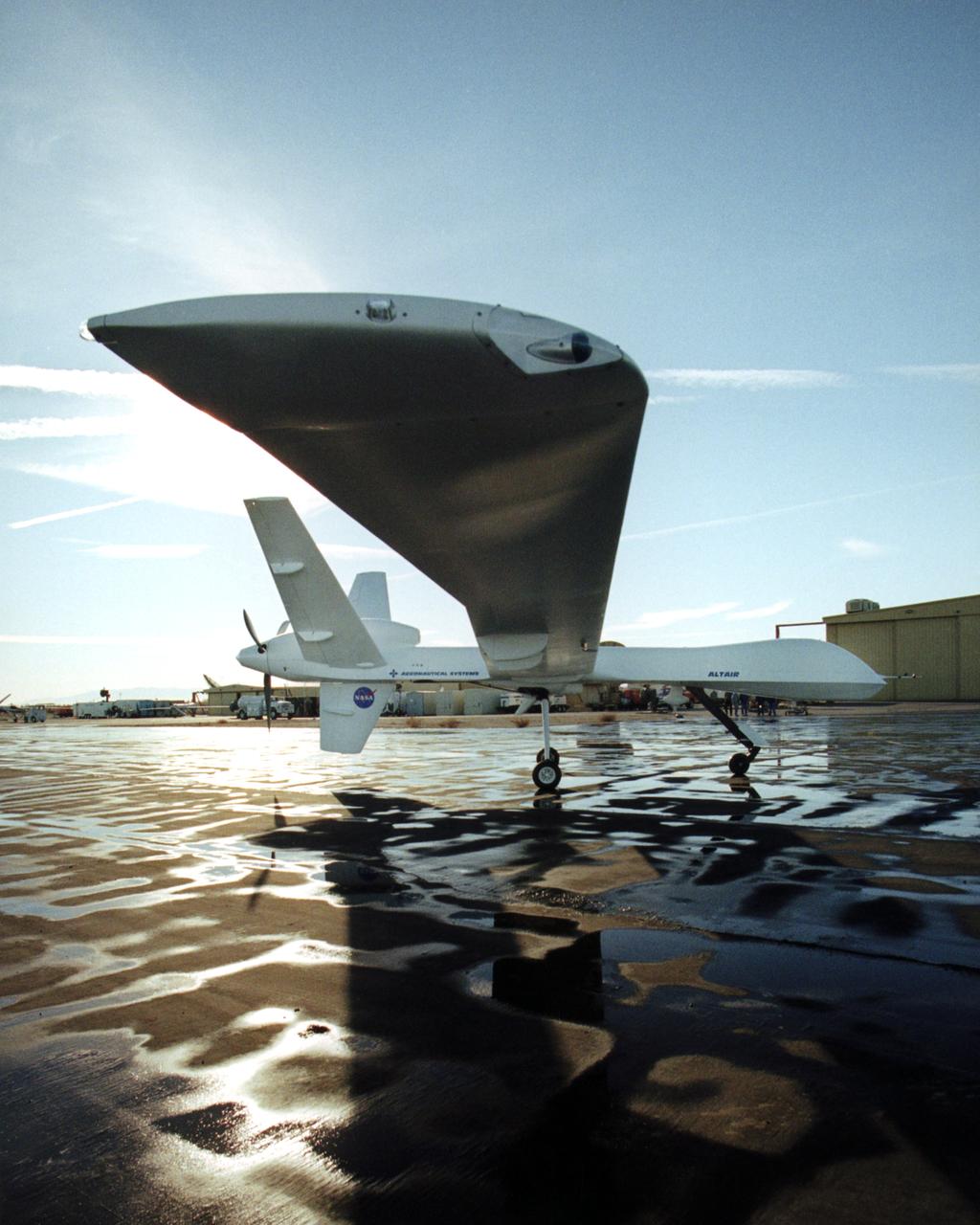
Long wings, a V-tail with a ventral  fin and a rear-mounted engine distinguish the Altair, an unmanned aerial vehicle built for NASA by General Atomics Aeronautical Systems, Inc.
ED03-0078-4
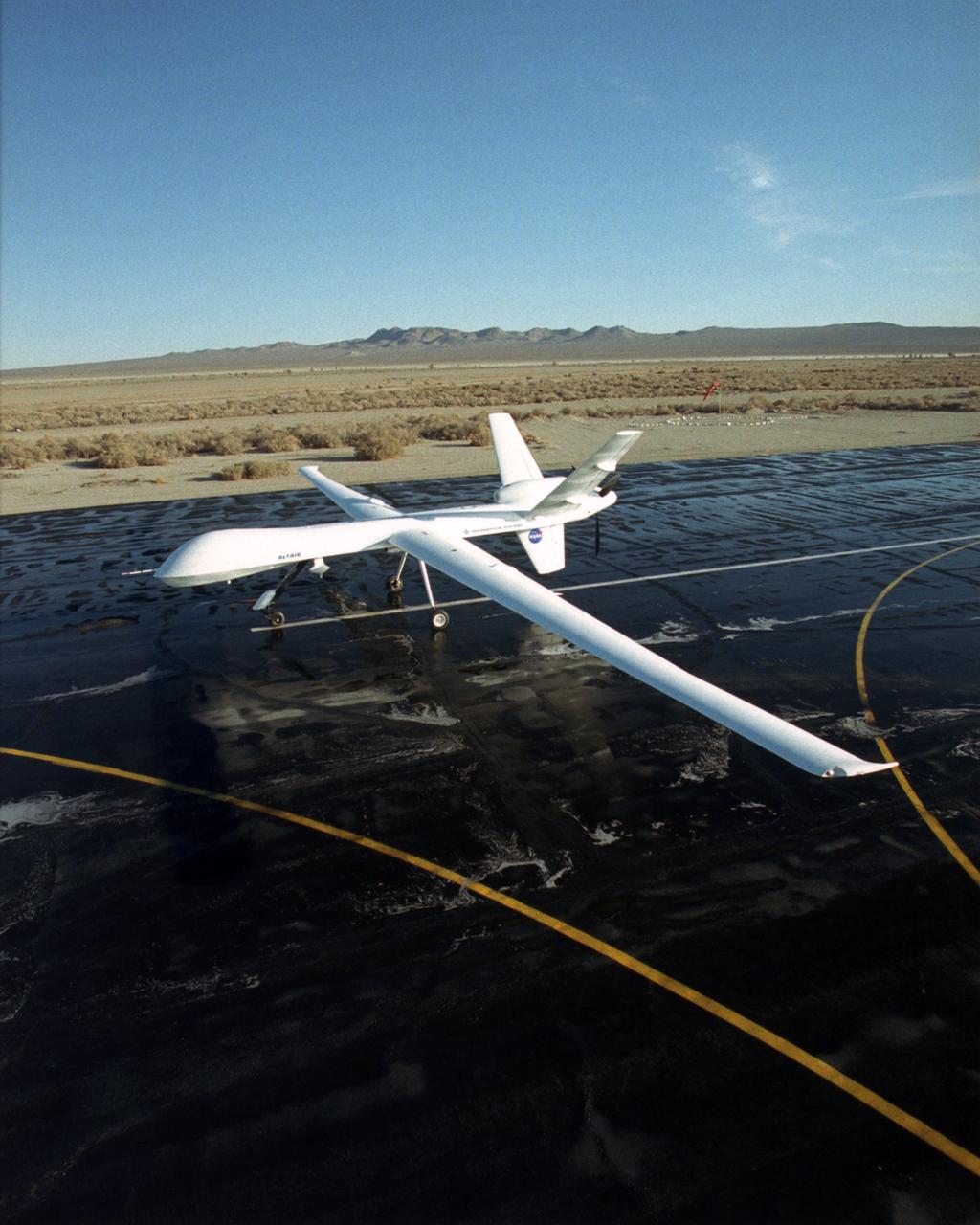
The Altair unmanned aerial vehicle (UAV), built by General Atomics Aeronautical Systems, Inc. for NASA, is poised for flight at GA-ASI's flight test facility at El Mirage, California.
ED03-0078-1
The DARPA/U.S. Air Force X-45A Unmanned Combat Air Vehicle (UCAV) system demonstration program completed the first phase of demonstrations, known as Block I, on Feb. 28, 2003. The final Block I activities included two flights at Dryden, during which safe operation of the weapons bay door was verified at 35,000 feet and speeds of Mach 0.75, the maximum planned altitude and speed for the two X-45A demonstrator vehicles.
X-45A Air Vehicle #1 during flight #13, with weapons bay door open
The DARPA/U.S. Air Force X-45A Unmanned Combat Air Vehicle (UCAV) system demonstration program completed the first phase of demonstrations, known as Block I, on Feb. 28, 2003. The final Block I activities included two flights at Dryden, during which safe operation of the weapons bay door was verified at 35,000 feet and speeds of Mach 0.75, the maximum planned altitude and speed for the two X-45A demonstrator vehicles.
X-45A Air Vehicle #1 during flight #13, with weapons bay door open
The DARPA/U.S. Air Force X-45A Unmanned Combat Air Vehicle (UCAV) system demonstration program completed the first phase of demonstrations, known as Block I, on Feb. 28, 2003. The final Block I activities included two flights at Dryden, during which safe operation of the weapons bay door was verified at 35,000 feet and speeds of Mach 0.75, the maximum planned altitude and speed for the two X-45A demonstrator vehicles.
X-45A Air Vehicle #1 during flight #13, with weapons bay door open
The DARPA/U.S. Air Force X-45A Unmanned Combat Air Vehicle (UCAV) system demonstration program completed the first phase of demonstrations, known as Block I, on Feb. 28, 2003. The final Block I activities included two flights at Dryden, during which safe operation of the weapons bay door was verified at 35,000 feet and speeds of Mach 0.75, the maximum planned altitude and speed for the two X-45A demonstrator vehicles.
X-45A Air Vehicle #1 during flight #13, with weapons bay door open
The DARPA/U.S. Air Force X-45A Unmanned Combat Air Vehicle (UCAV) system demonstration program completed the first phase of demonstrations, known as Block I, on Feb. 28, 2003. The final Block I activities included two flights at Dryden, during which safe operation of the weapons bay door was verified at 35,000 feet and speeds of Mach 0.75, the maximum planned altitude and speed for the two X-45A demonstrator vehicles.
X-45A Air Vehicle #1 during flight #13, with weapons bay door open
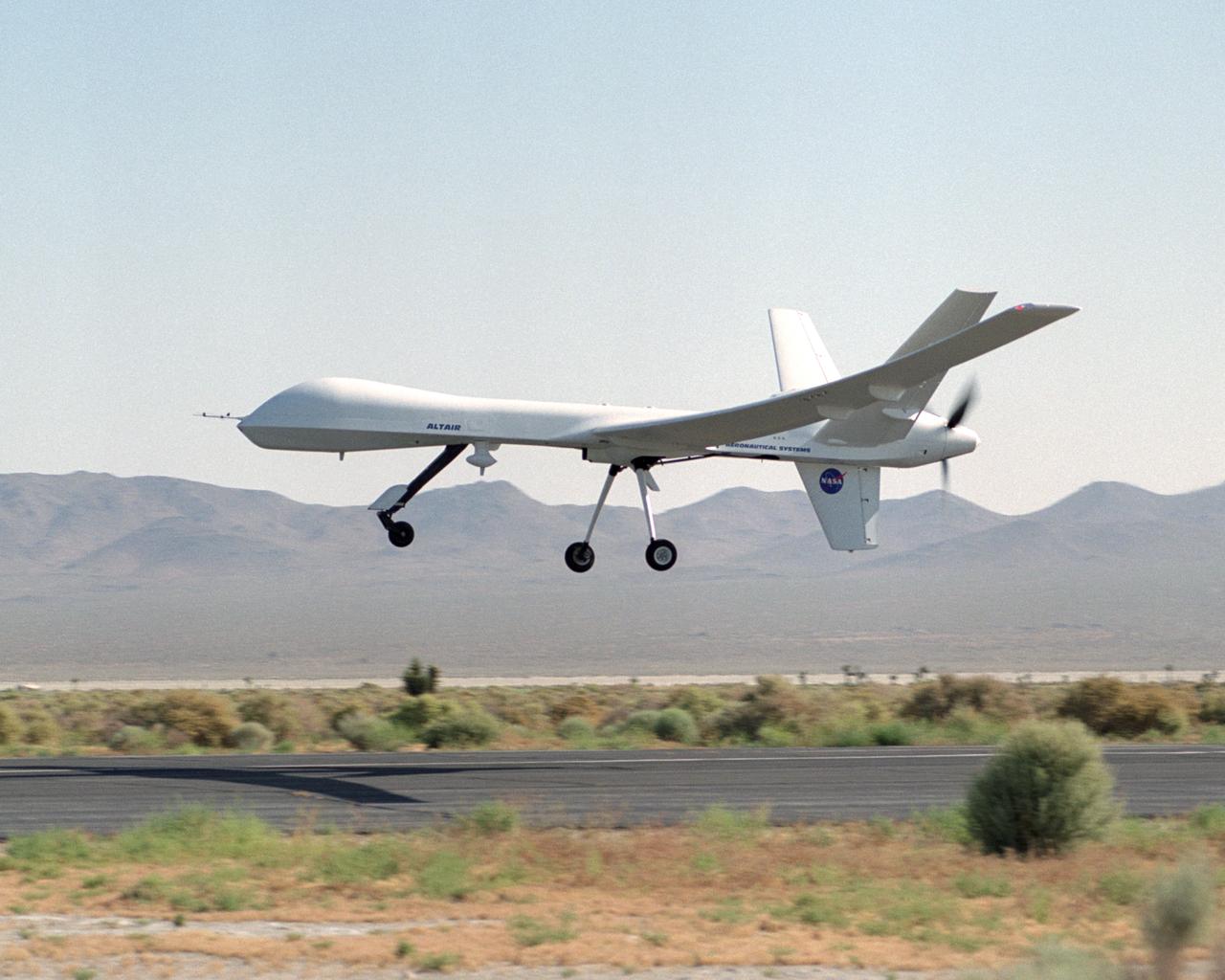
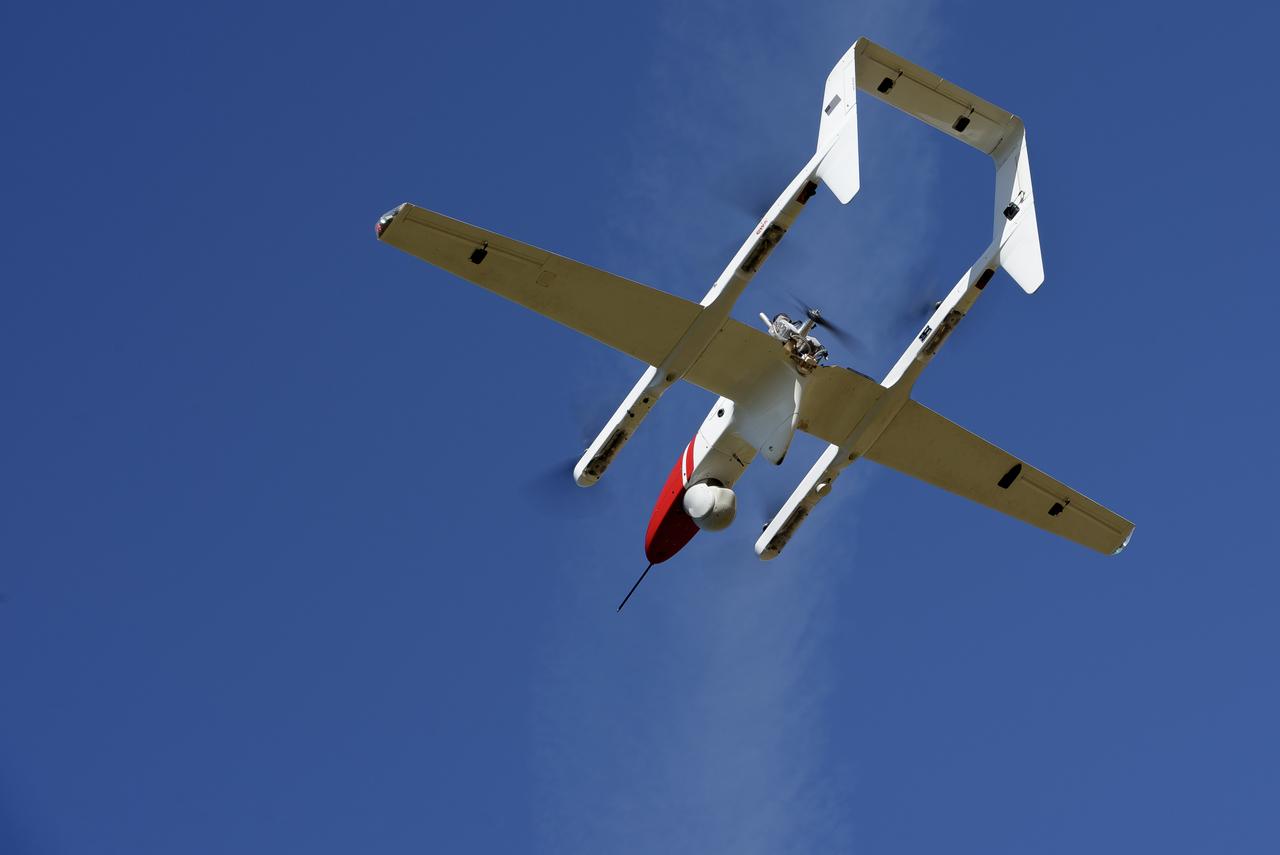
The remotely-piloted Altair unmanned aerial vehicle (UAV) took to the air on its first checkout flight on June 9, 2003 at El Mirage, California.
EC03-0154-3
The first X-45A Unmanned Combat Air Vehicle (UCAV) technology demonstrator completed its sixth flight on Dec. 19, 2002, raising its landing gear in flight for the first time. The X-45A flew for 40 minutes and reached an airspeed of 195 knots and an altitude of 7,500 feet. Dryden is supporting the DARPA/Boeing team in the design, development, integration, and demonstration of the critical technologies, processes, and system attributes leading to an operational UCAV system. Dryden support of the X-45A demonstrator system includes analysis, component development, simulations, ground and flight tests.
X-45A in flight with F-18 #846 chase aircraft, during first GPS-guided weapon demonstration flight
The Altair, a civil variant of the QM-9 Predator B unmanned aerial vehicle (UAV), shows off its lengthy high-aspect ratio wing while on the ramp at General Atomics Aeronautical Systems' flight test facility at El Mirage, California.
ED03-0078-5
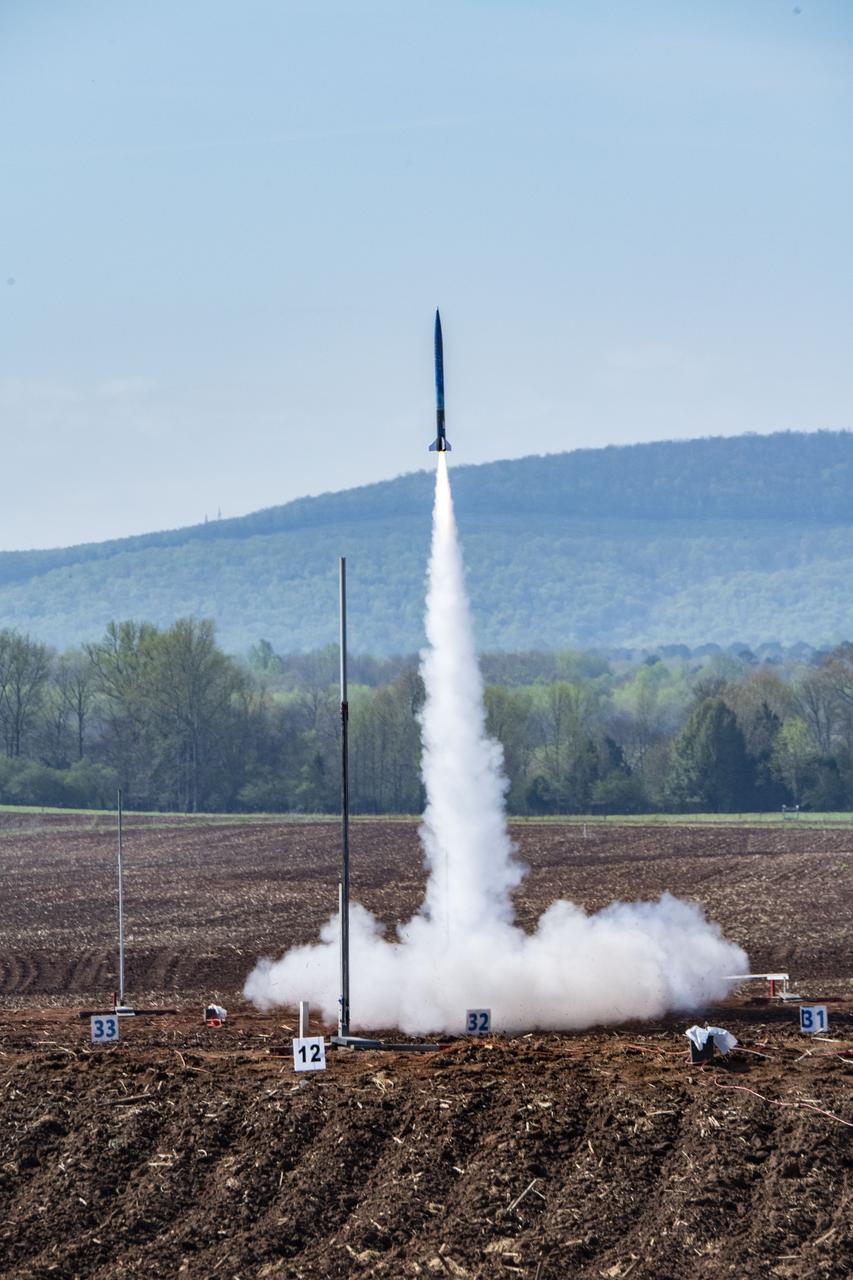
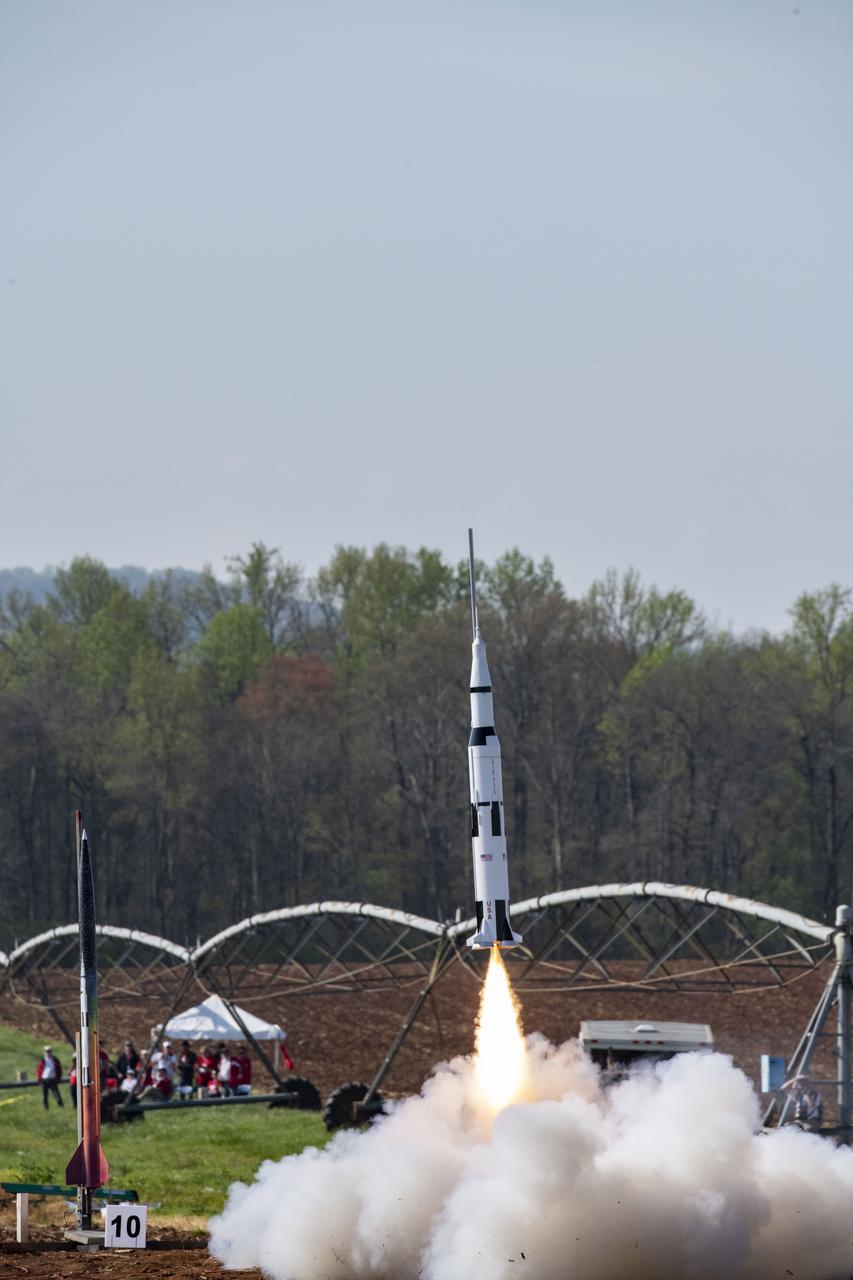
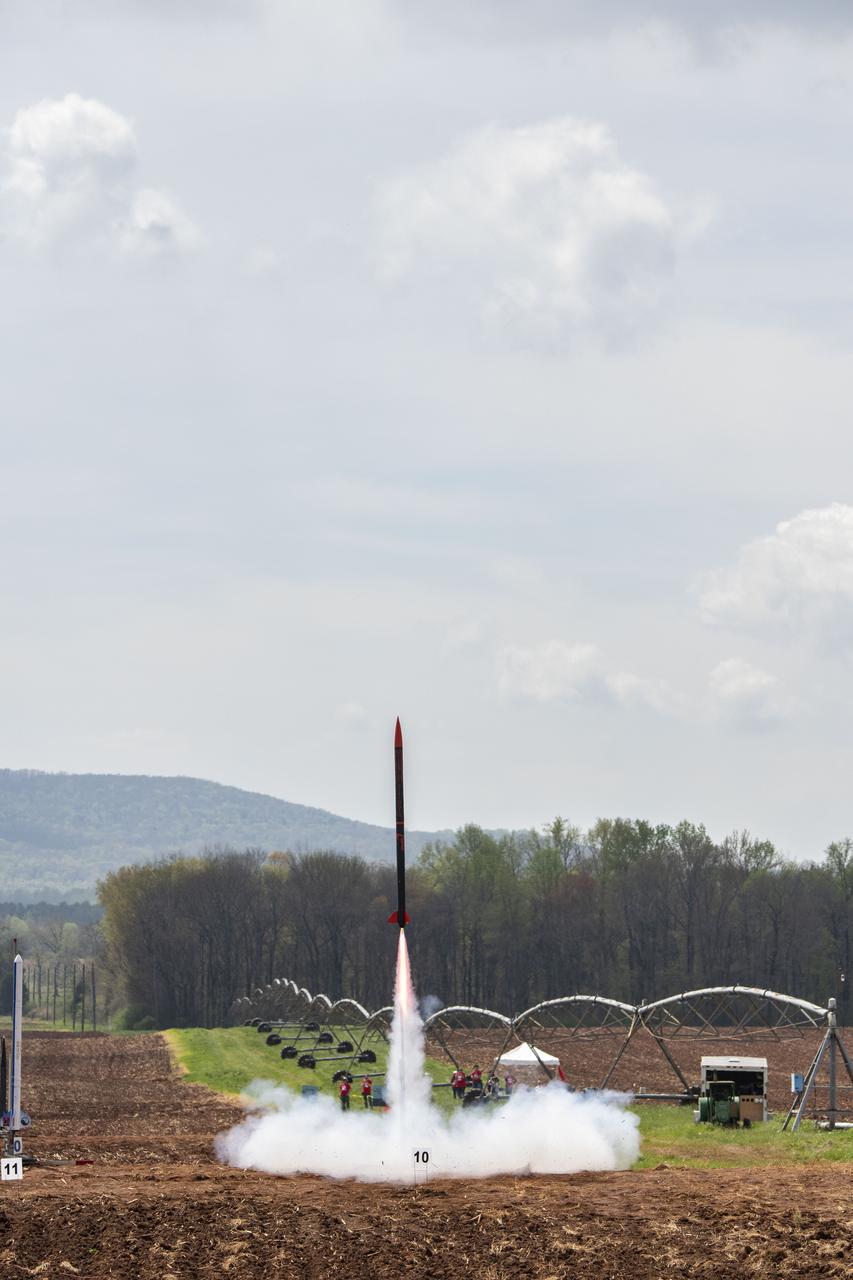
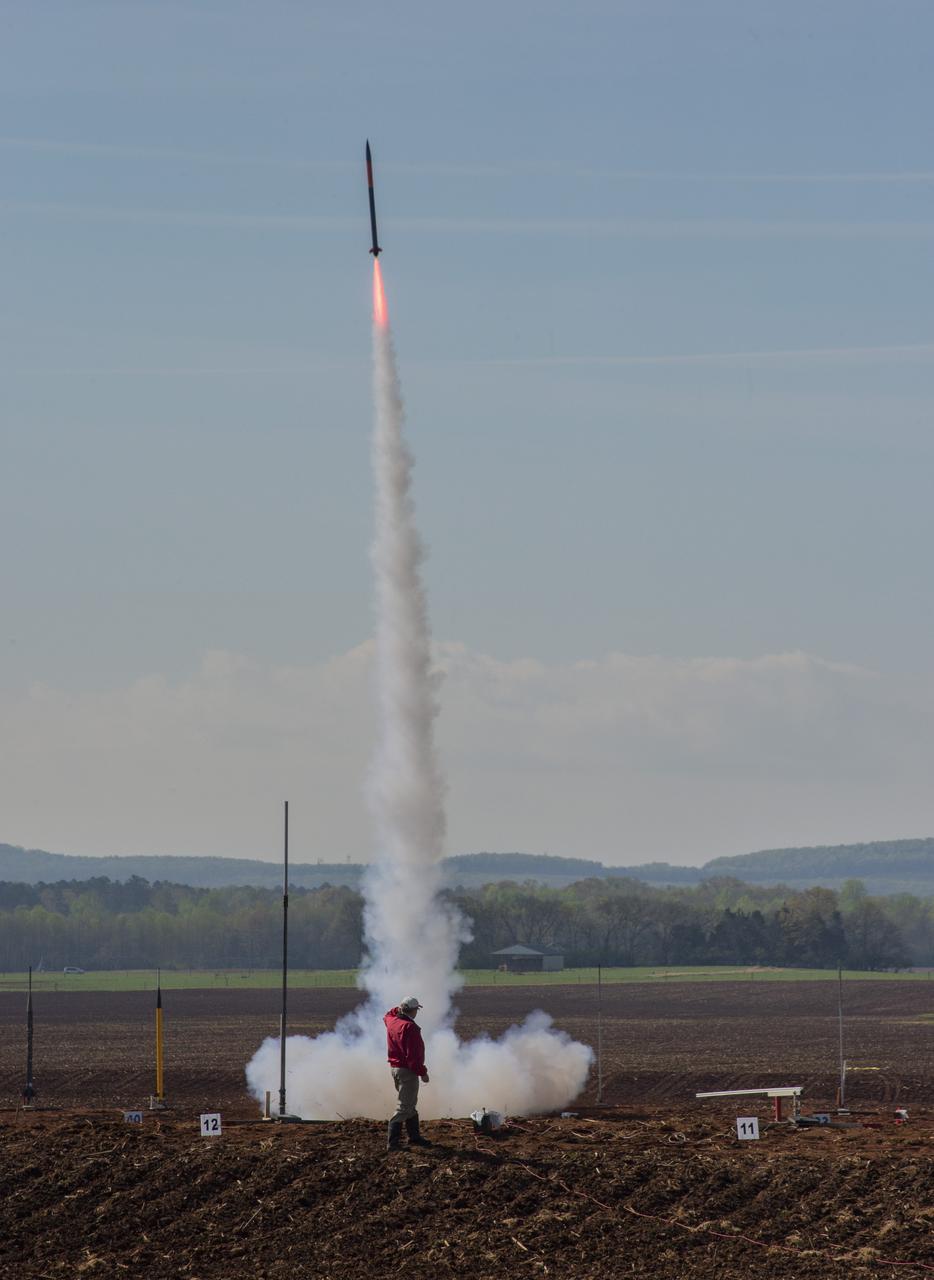
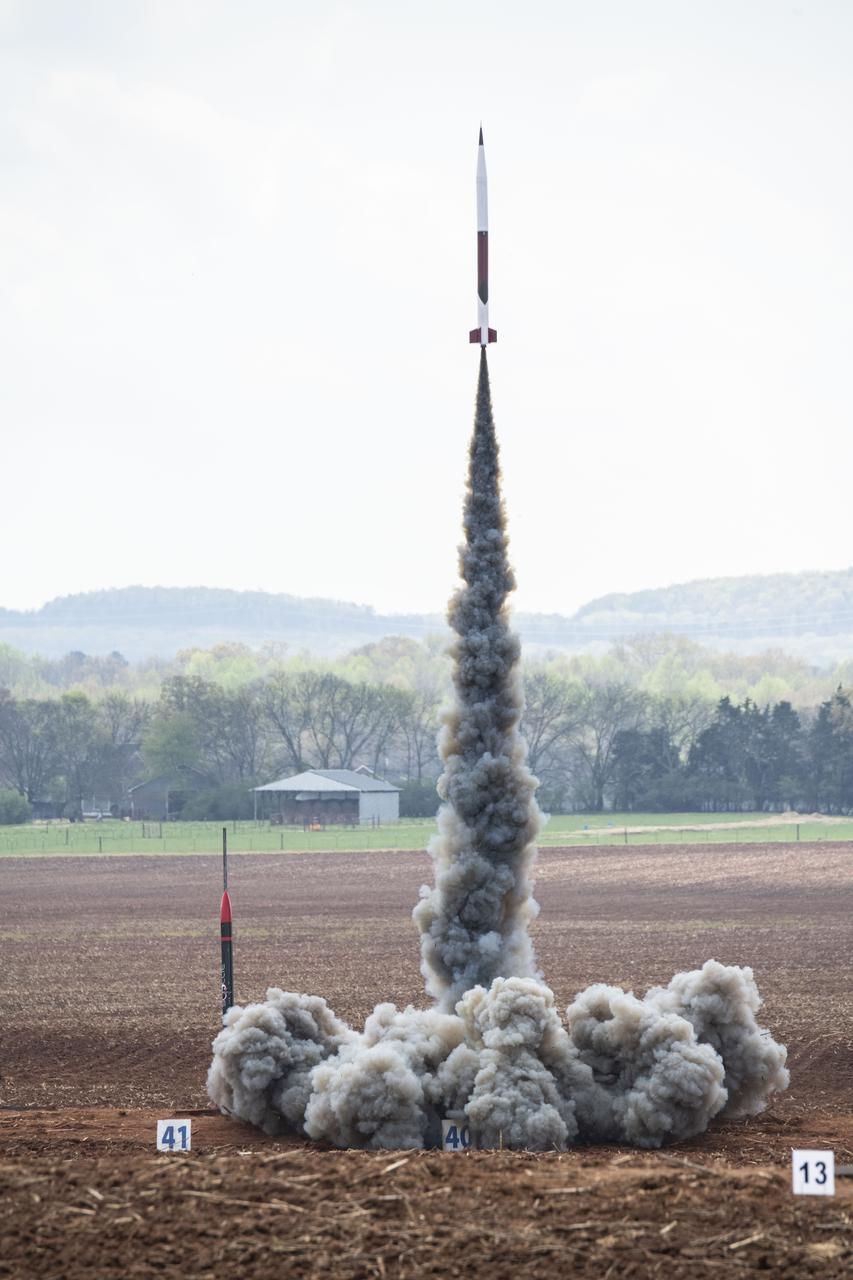
High School and College students from around the U.S. came together at Bragg Farms in Toney, Alabama for the 2019 Student Launch Initiative. The students launched their rockets to their own predetermined altitude with various payloads including remote rovers and unmanned aerial vehicles.   The rocket named Zeppelin from Plantation High School in Plantation, Florida, roars off of the pad at launch day for the 2018-2019 Student Launch competition.
2019 Student Launch Initiative
S68-27365 (4 April 1968) --- The five F-1 engines of the huge Apollo/Saturn V space vehicle's first (S-IC) stage leave a gigantic trail of flame in the sky above the Kennedy Space Center seconds after liftoff. The launch of the Apollo 6 (Spacecraft 020/Saturn 502) unmanned space mission occurred at 07:00:01.5 (EST), April 4, 1968. This view of the Apollo 6 launch was taken from a chase plane.
F-1 engines of Apollo/Saturn V first stage leave trail of flame after liftoff
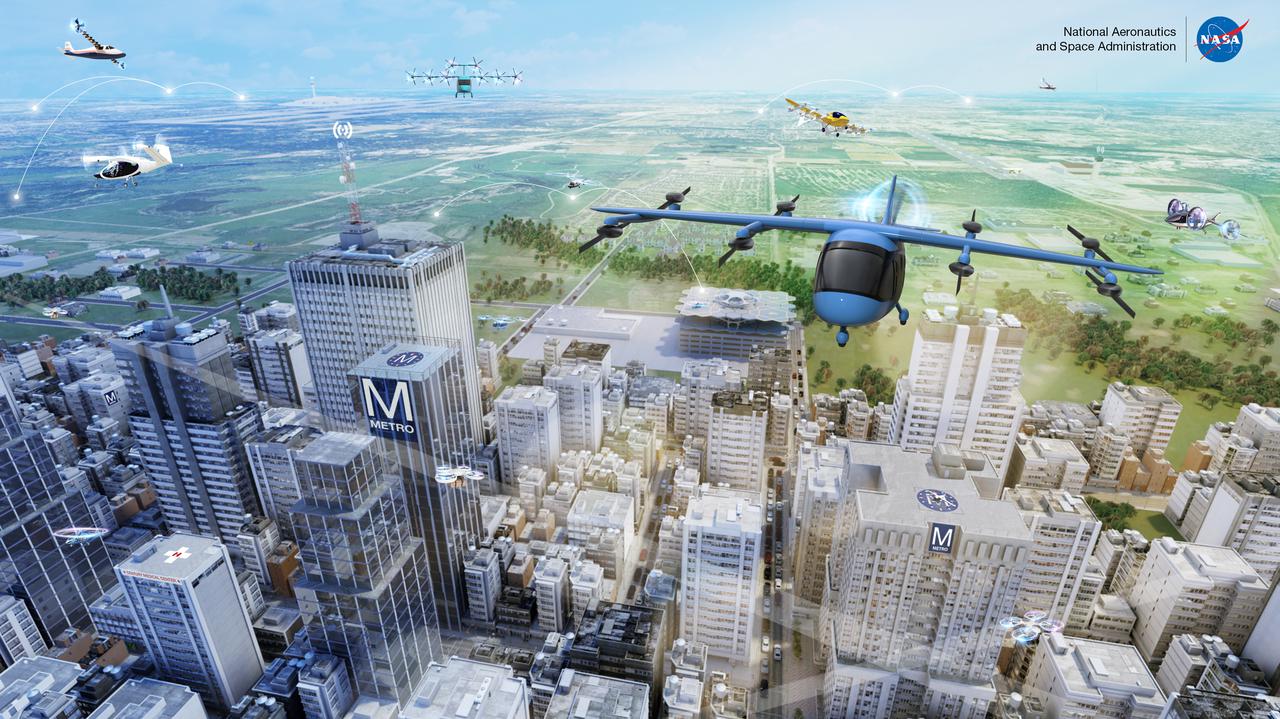
Advanced Air Mobility, with its many vehicle concepts and potential uses in both local and intraregional applications, is shown in this illustration.
AAM-Concept-2021
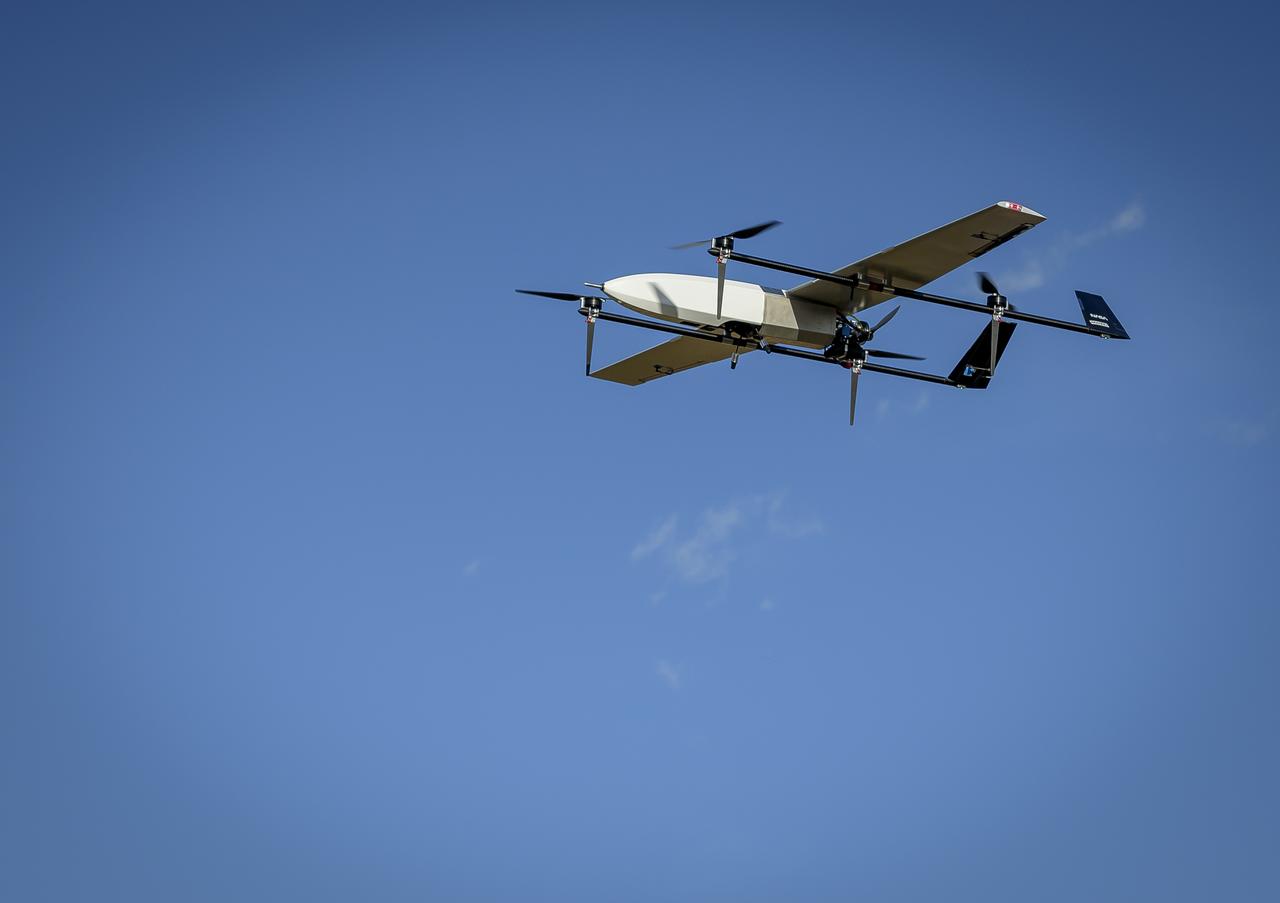
The SuperVolo XL Unmanned Aerial Vehicle (UAV) lifts off at the Monterey Bay Academy Airport near Watsonville, California.
Advanced Capabilities for Emergency Response Operations (ACERO)
The SuperVolo XL Unmanned Aerial Vehicle (UAV) lifts off at the Monterey Bay Academy Airport near Watsonville, California.
Advanced Capabilities for Emergency Response Operations (ACERO)
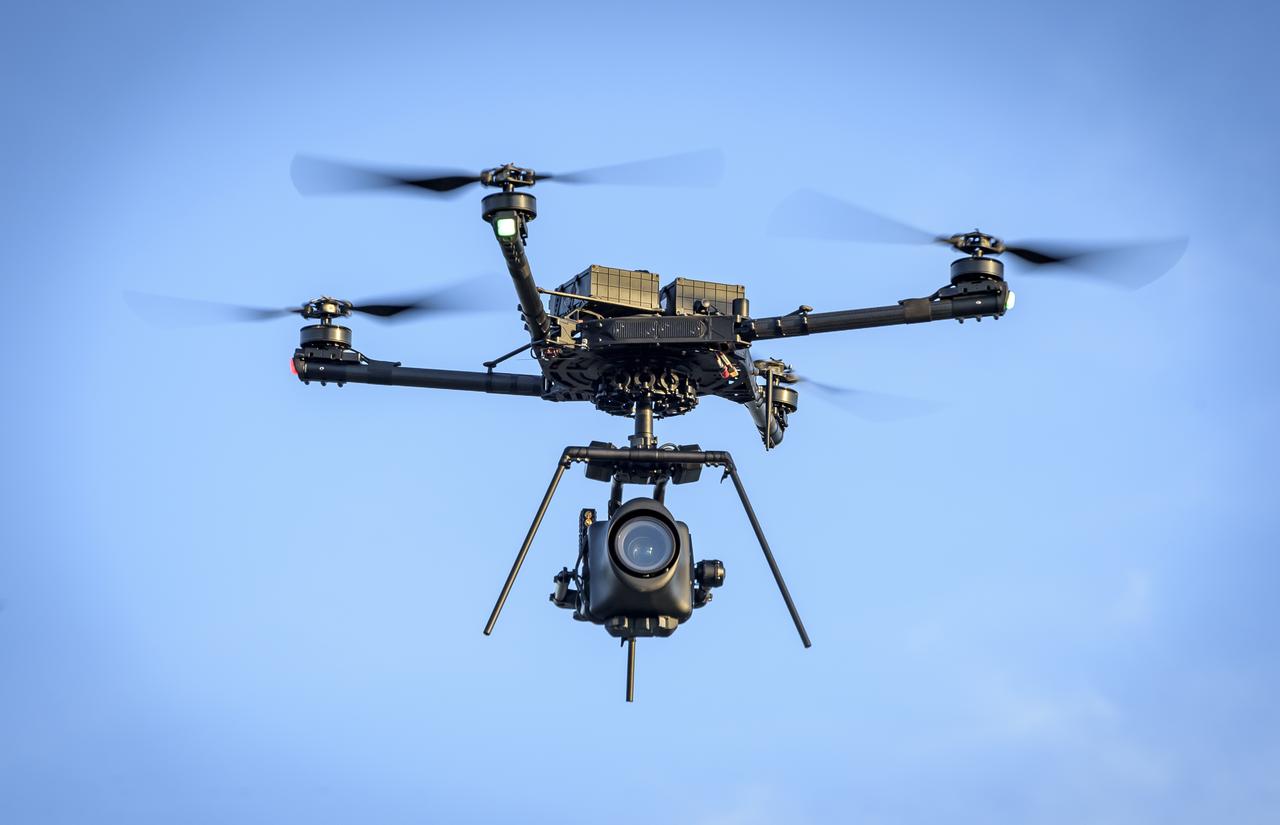
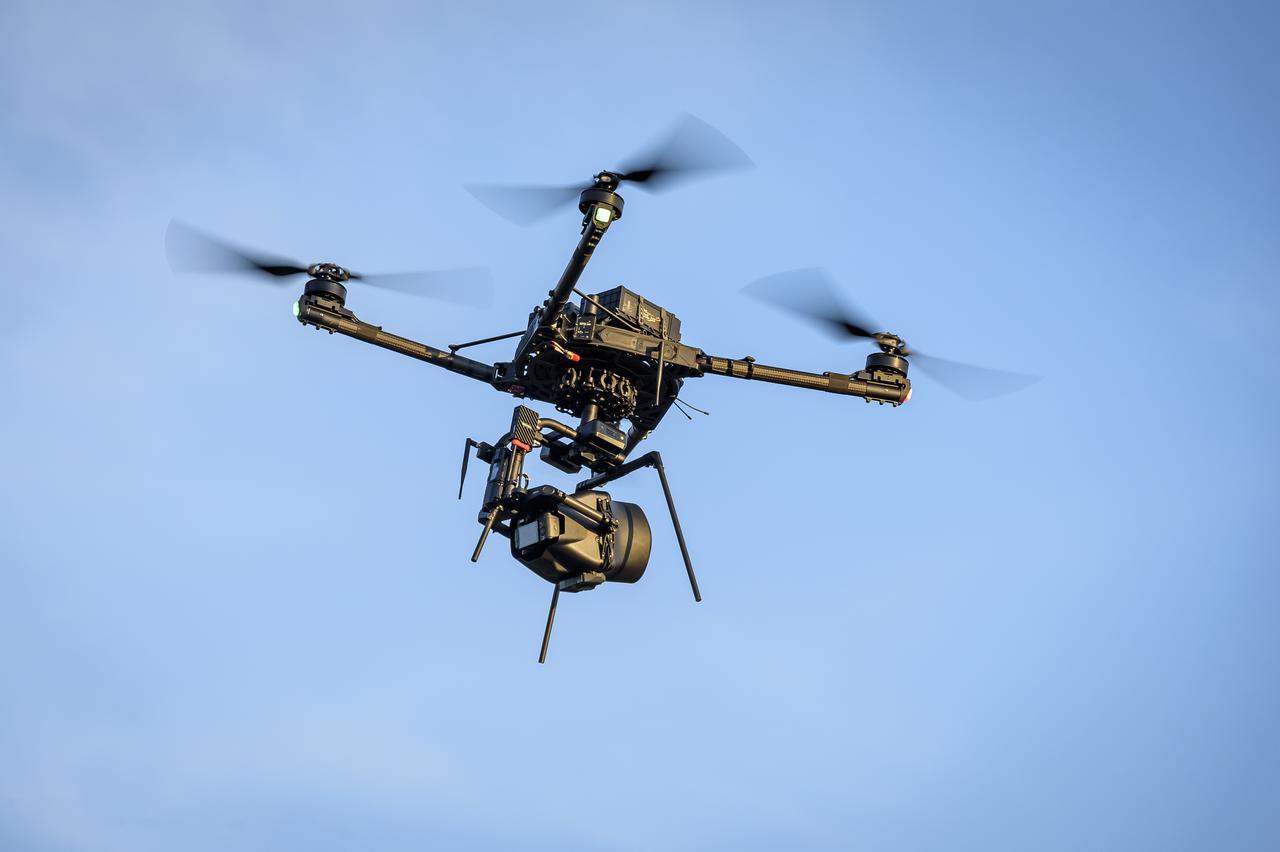
The Alta-X Unmanned Aerial Vehicle (UAV) with camera payload in flight at the Monterey Bay Academy Airport near Watsonville, California.
Advanced Capabilities for Emergency Response Operations (ACERO)
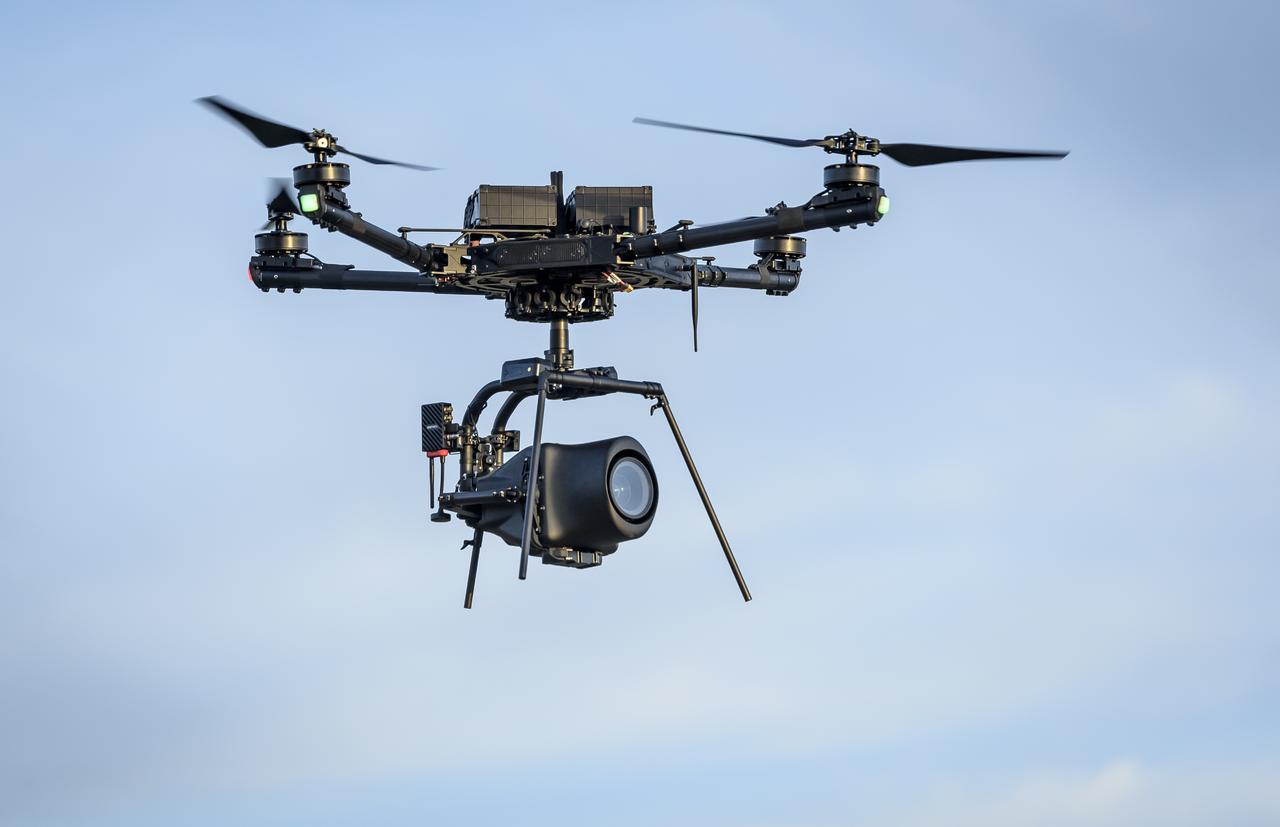
The Alta-X Unmanned Aerial Vehicle (UAV) with camera payload in flight at the Monterey Bay Academy Airport near Watsonville, California.
Advanced Capabilities for Emergency Response Operations (ACERO)
The Alta-X Unmanned Aerial Vehicle (UAV) with camera payload in flight at the Monterey Bay Academy Airport near Watsonville, California.
Advanced Capabilities for Emergency Response Operations (ACERO)
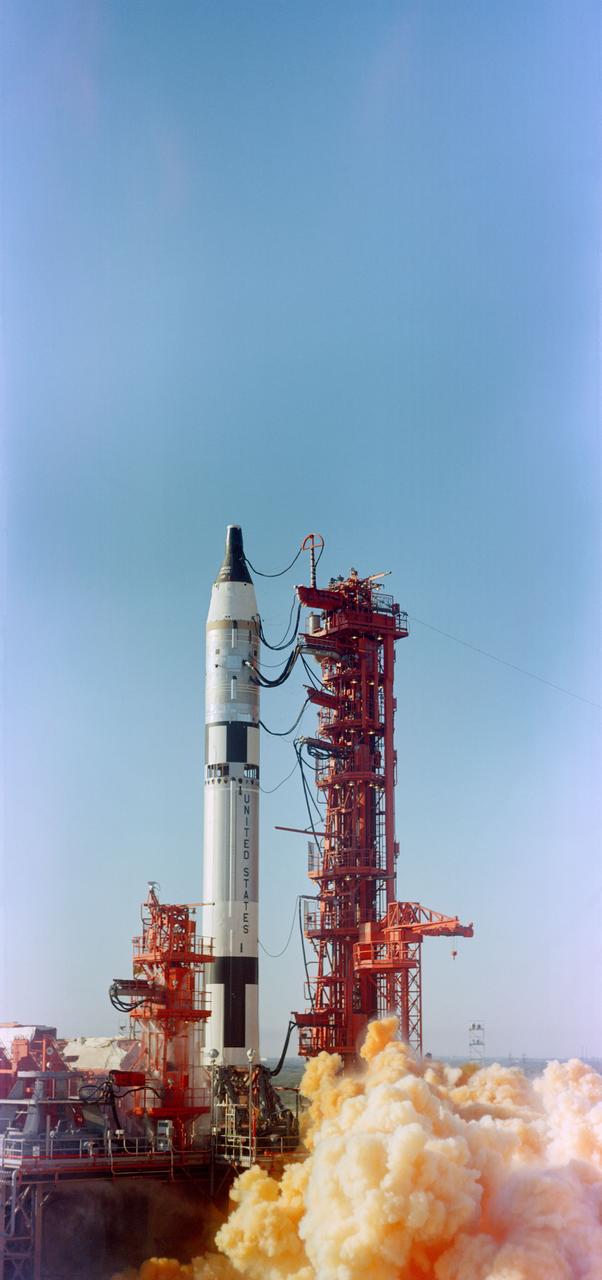
S65-14150 (19 January 1965) --- Launching of the unmanned Gemini 2 flight. The second Titan II Gemini Launch Vehicle (GLV-2) carried the unmanned, instrumented Gemini spacecraft (GT-2) for a suborbital shot preliminary to the first U.S. two-man Gemini mission.
Liftoff of Gemini 2
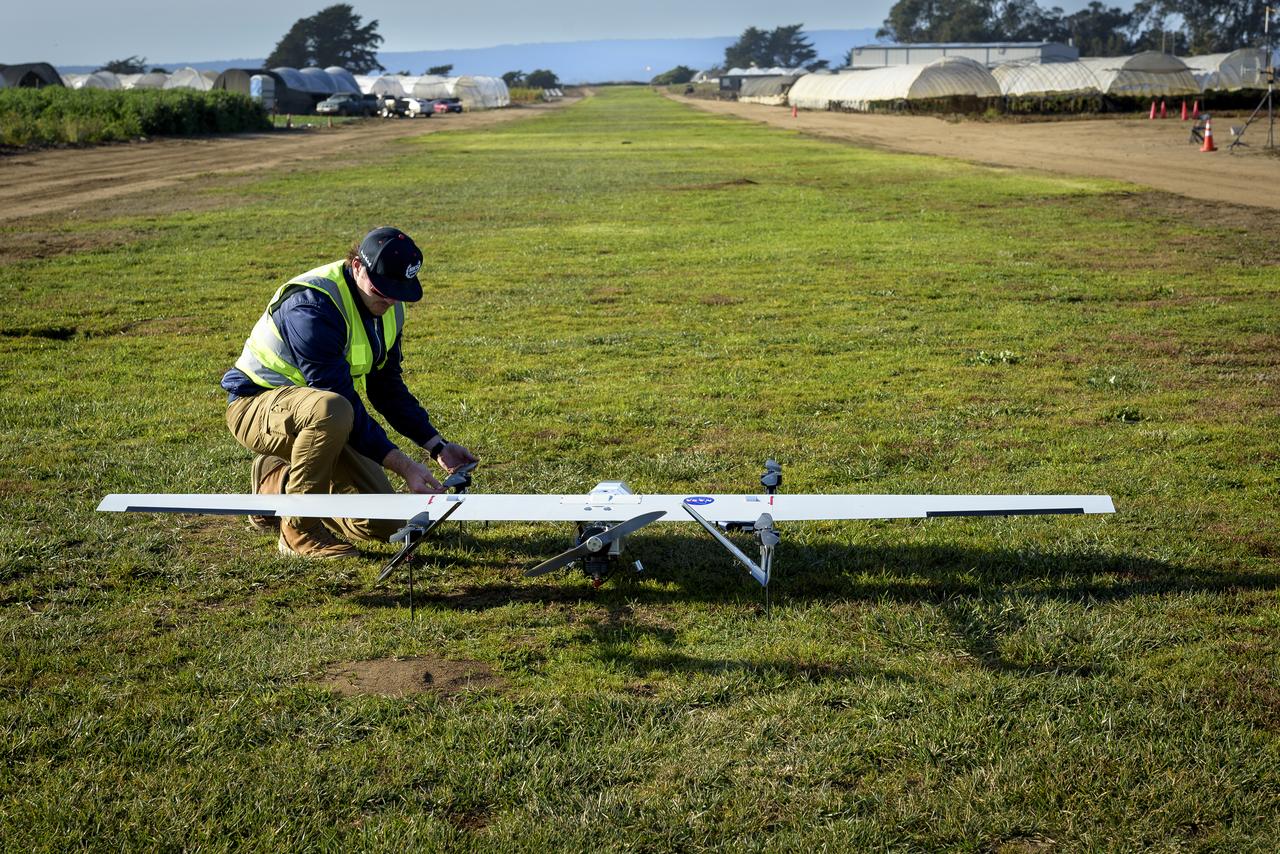
Brayden Chamberlain, preps the SuperVolo XL Unmanned Aerial Vehicle (UAV) for flight at the Monterey Bay Academy Airport near Watsonville, California.
Advanced Capabilities for Emergency Response Operations (ACERO)
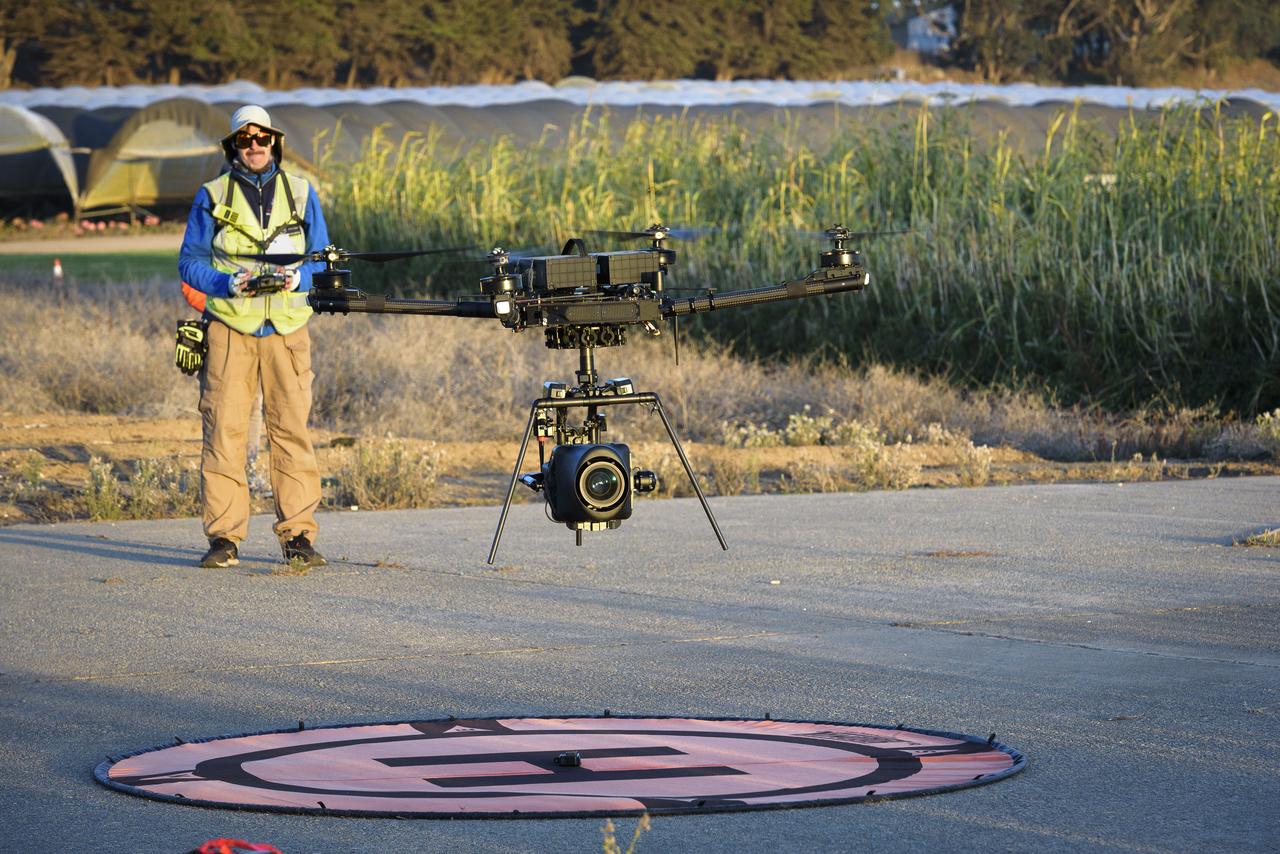
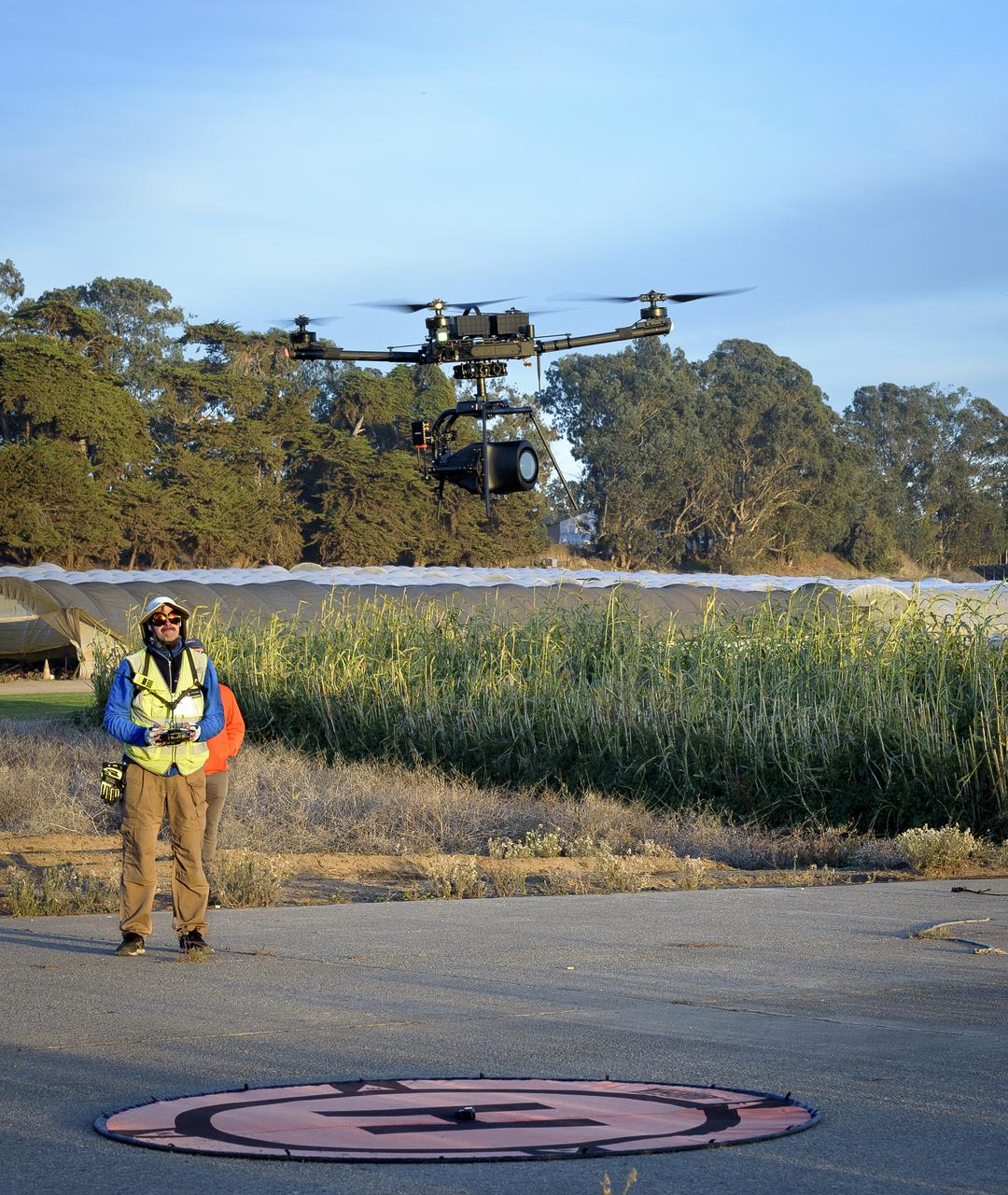
Jonas Jonsson guides the Alta-X Unmanned Aerial Vehicle (UAV) with camera payload down to the landing pad at the Monterey Bay Academy Airport near Watsonville, California.
Advanced Capabilities for Emergency Response Operations (ACERO)
Jonas Jonsson guides the Alta-X Unmanned Aerial Vehicle (UAV) with camera payload down to the landing pad at the Monterey Bay Academy Airport near Watsonville, California.
Advanced Capabilities for Emergency Response Operations (ACERO)
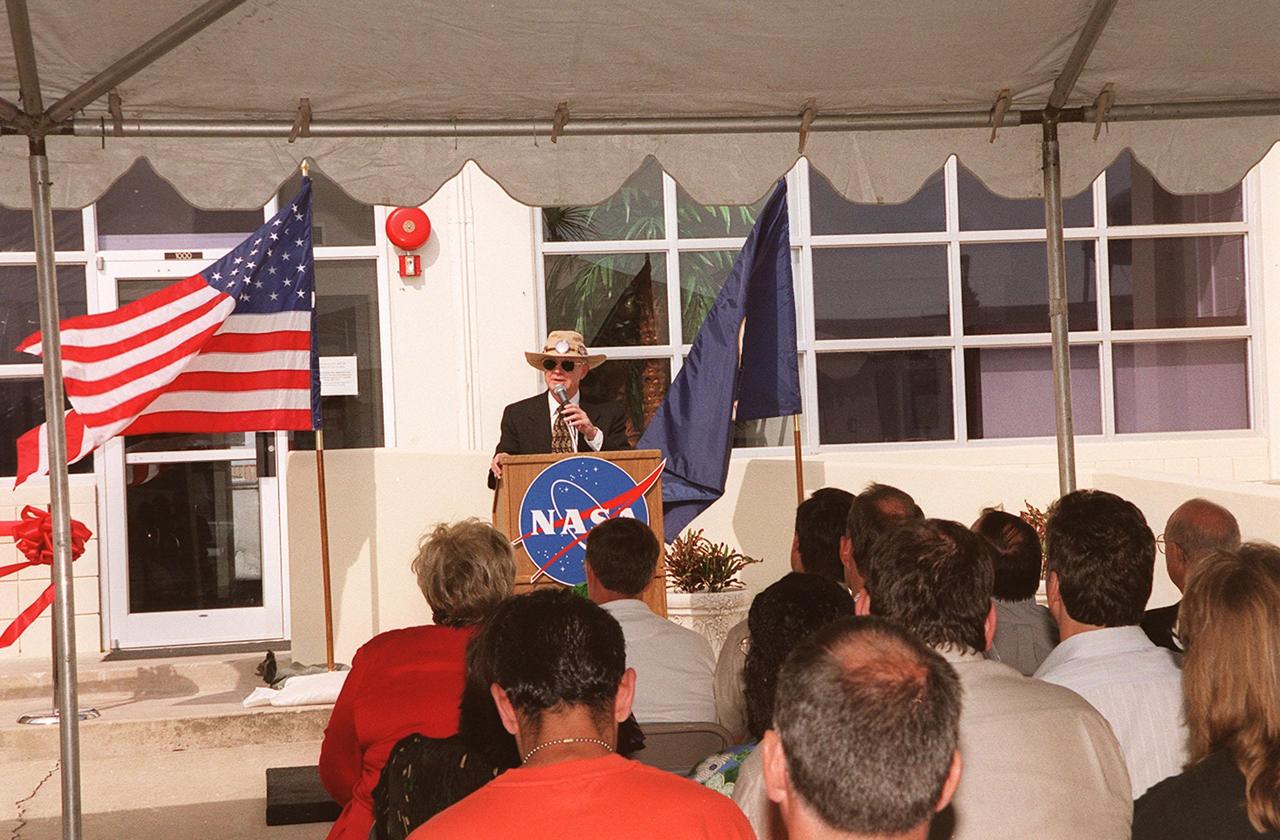
Center Director Roy Bridges welcomes the audience to a ribbon-cutting ceremony at the E&O Building at KSC. Home for NASA’s unmanned missions since 1964, the building has been renovated to house the Expendable Launch Vehicle Program
KSC-00pp1665
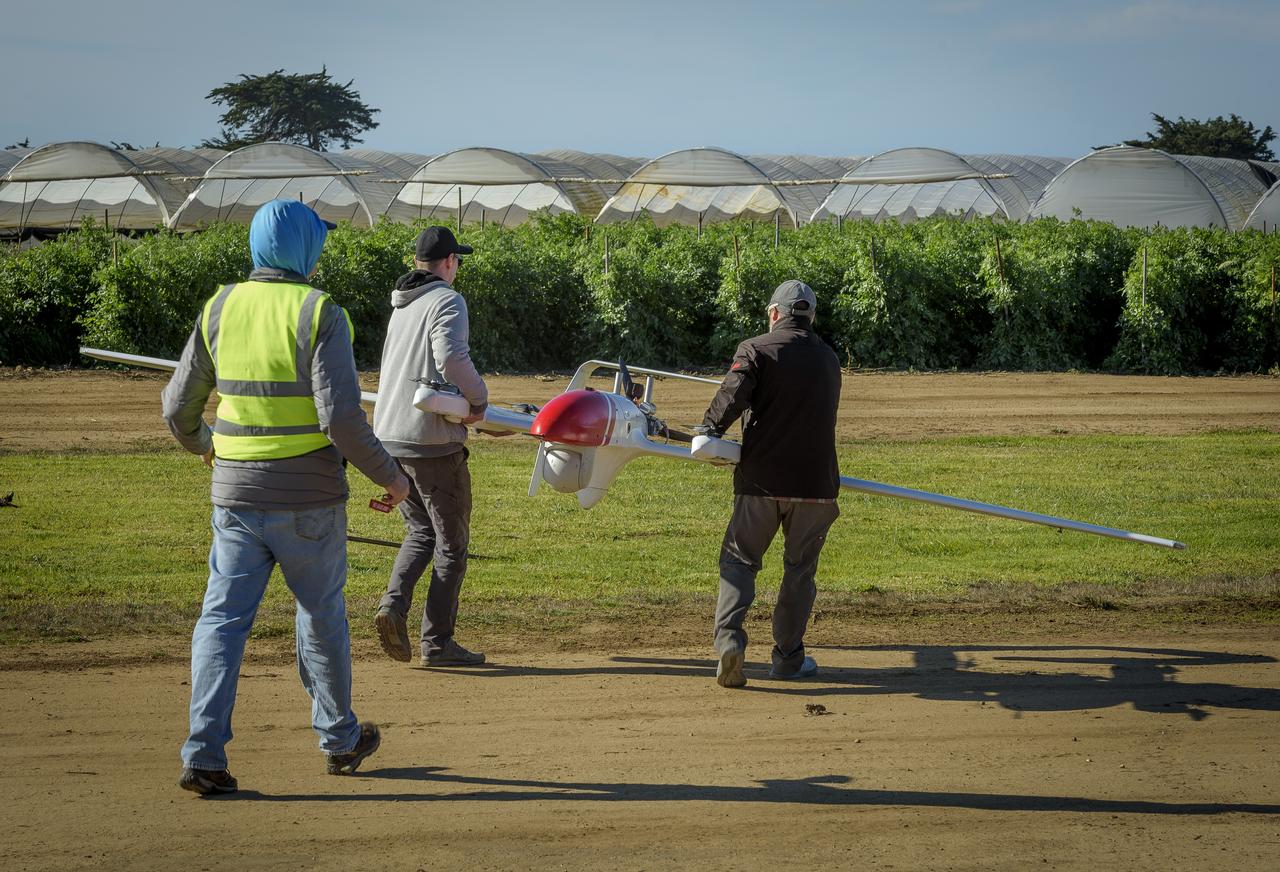
Jody Miller, left, Alex Godwin, and Jeff Strebler, right, prepares the L3Harris FVR90 Unmanned Aerial Vehicle (UAV) at the Monterey Bay Academy Airport near Watsonville, California.
Advanced Capabilities for Emergency Response Operations (ACERO)
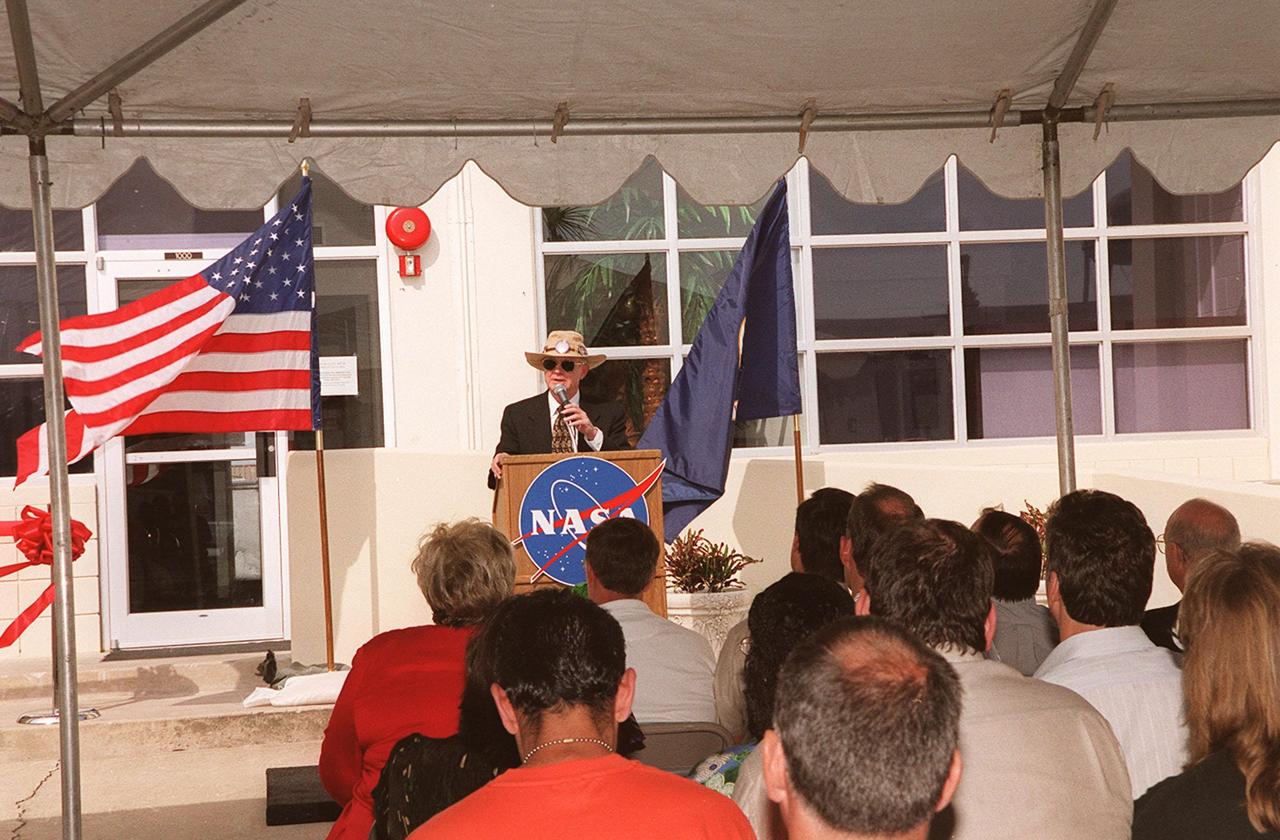
Center Director Roy Bridges welcomes the audience to a ribbon-cutting ceremony at the E&O Building at KSC. Home for NASA’s unmanned missions since 1964, the building has been renovated to house the Expendable Launch Vehicle Program
KSC00pp1665
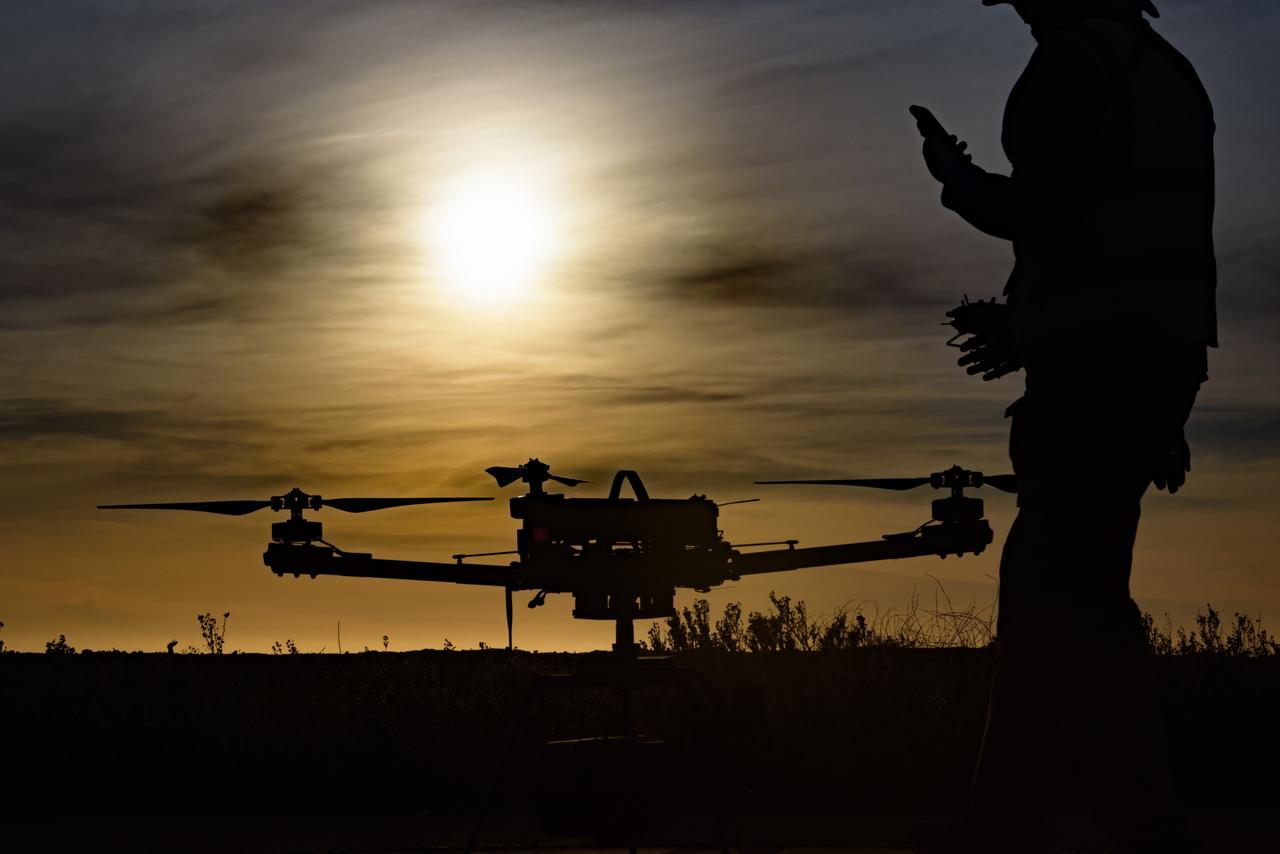
Silhouette view of Jonas Jonsson with the Alta-X Unmanned Aerial Vehicle (UAV) on the landing pad as the sun sets at the Monterey Bay Academy Airport near Watsonville, California.
Advanced Capabilities for Emergency Response Operations (ACERO)
An Amphitech OASys Ka-band radar was the primary sensor installed on Scaled Composites' Proteus for the second phase of NASA-sponsored unmanned aerial vehicle Detect, See and Avoid flight tests.
Amphitech Radar on Proteus
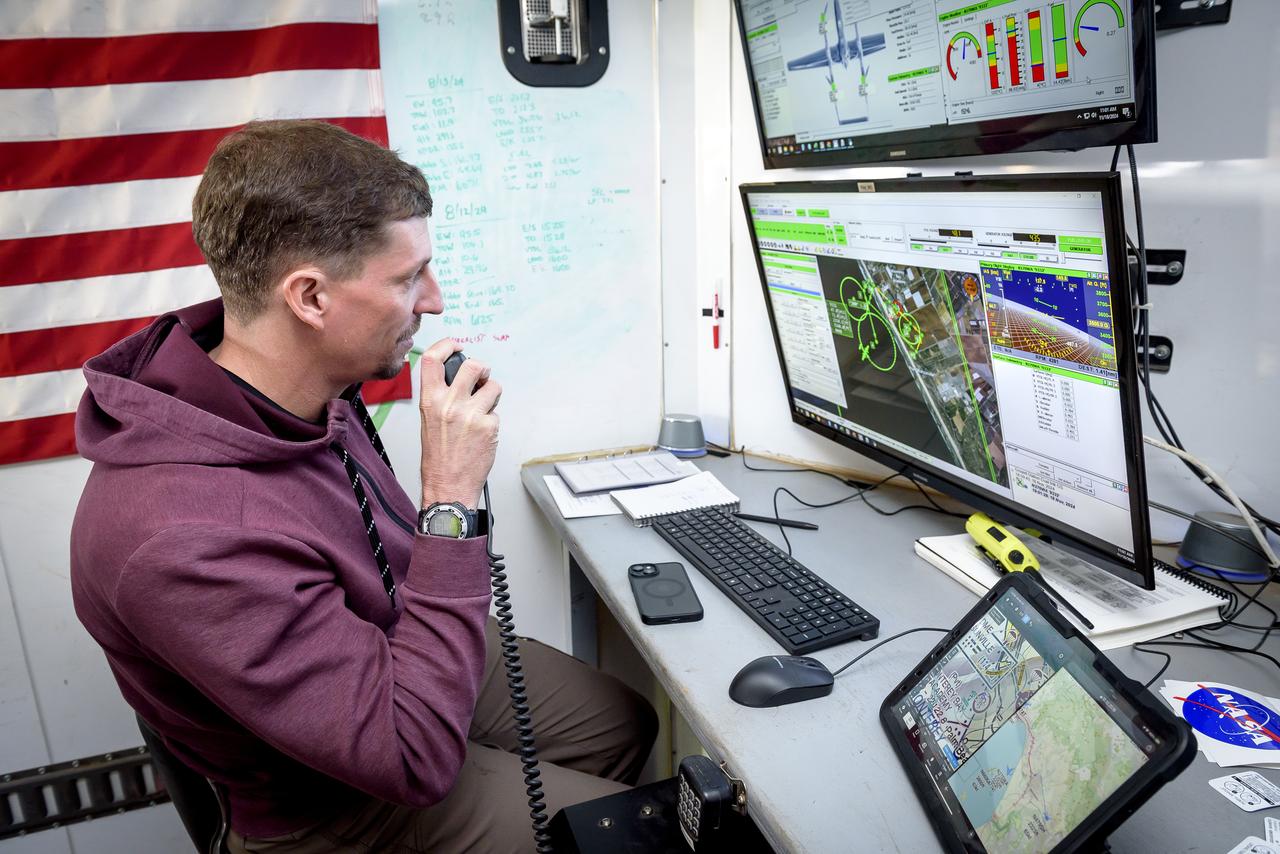
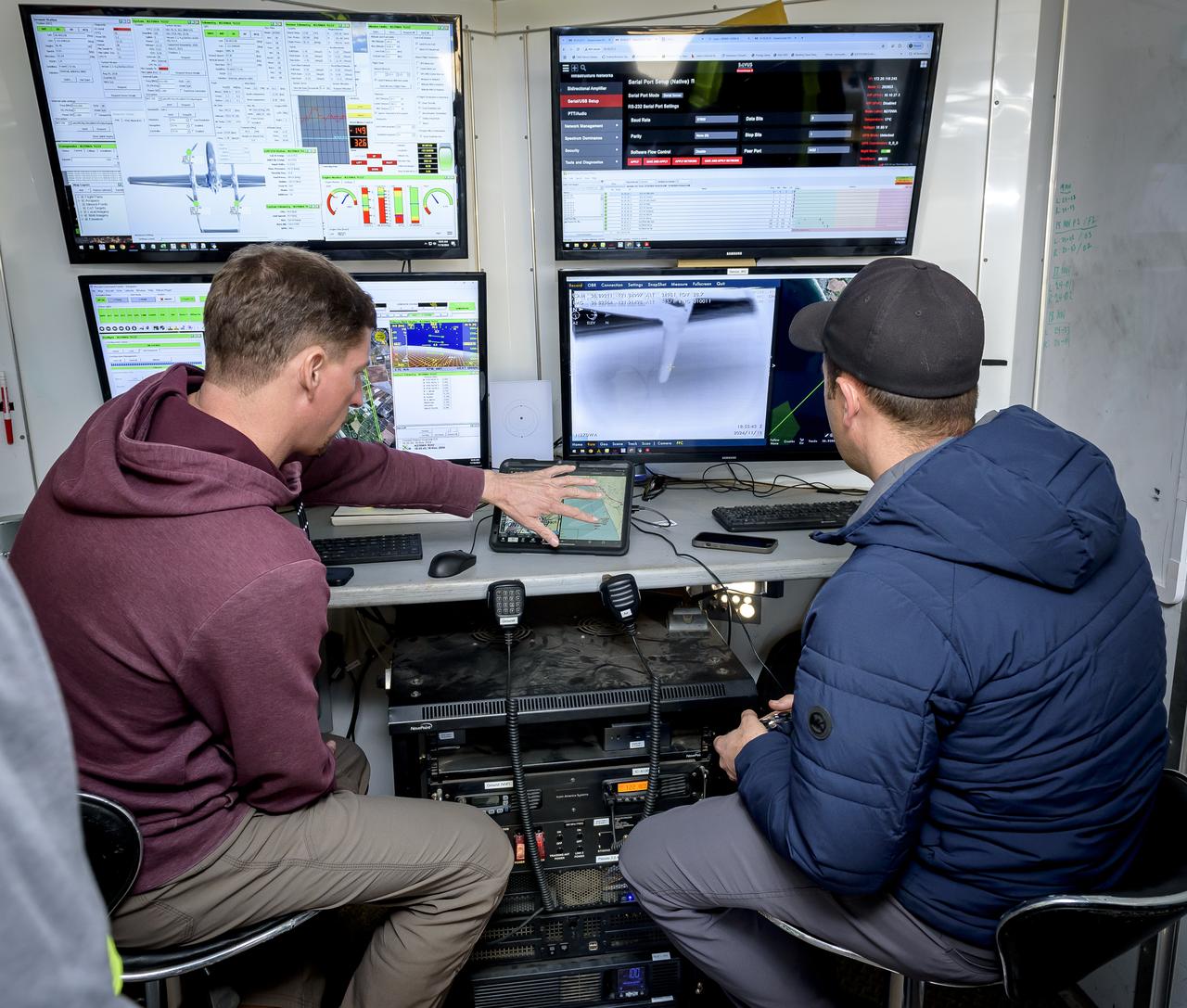
Co-founders of Overwatch Aero Chase Pietenpol, at the Ground Control Station (GCS) monitoring the flight of the L3Harris FVR90 Unmanned Aerial Vehicle (UAV) at the Monterey Bay Academy Airport near Watsonville, California.
Advanced Capabilities for Emergency Response Operations (ACERO)
L3Harris FVR90 Unmanned Aerial Vehicle (UAV) lifts off from the Monterey Bay Academy Airport near Watsonville, California, during the Advanced Capabilities for Emergency Response Operations (ACERO) Shakedown Test.
Advanced Capabilities for Emergency Response Operations (ACERO)
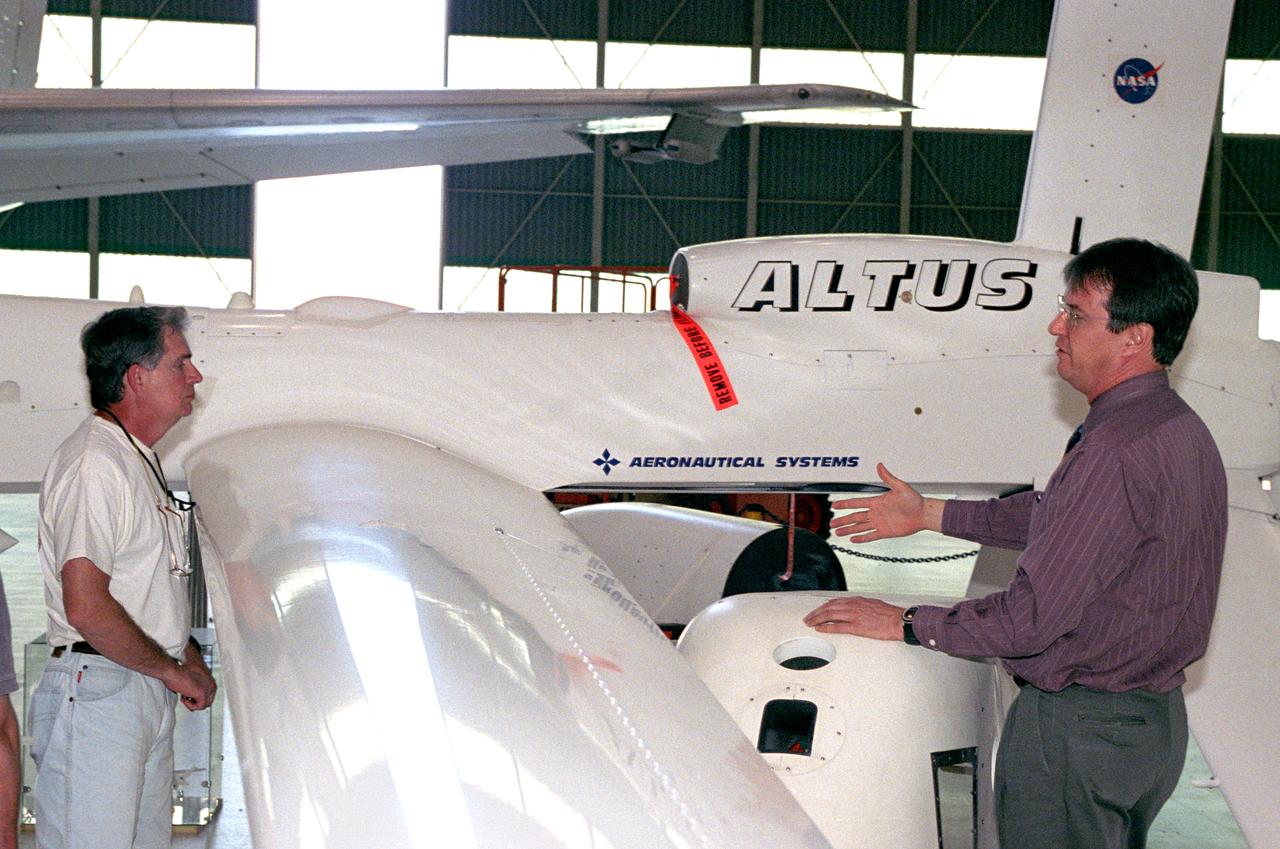
David Bushman, unmanned aerial vehicle (UAV) mission manager in NASA Dryden's Airborne Science Program, explains the capabilities of the Altus UAV to Charles Hudgins of NASA Langley's Chemistry and Dynamics Branch.
Dryden's David Bushman explains the capabilities of the Altus UAV to NASA Langley's Charles Hudgins
Co-founders of Overwatch Aero Chase Pietenpol, left, and Jordan Hahn at the Ground Control Station (GCS) monitoring the flight of the L3Harris FVR90 Unmanned Aerial Vehicle (UAV) at the Monterey Bay Academy Airport near Watsonville, California.
Advanced Capabilities for Emergency Response Operations (ACERO)
The second Saturn V launch vehicle (SA-502) for the Apollo 6 mission lifted off from the Kennedy Space Center launch complex on April 4, 1968. This unmanned Saturn V launch vehicle tested the emergency detection system in closed loop configuration.
Saturn Apollo Program
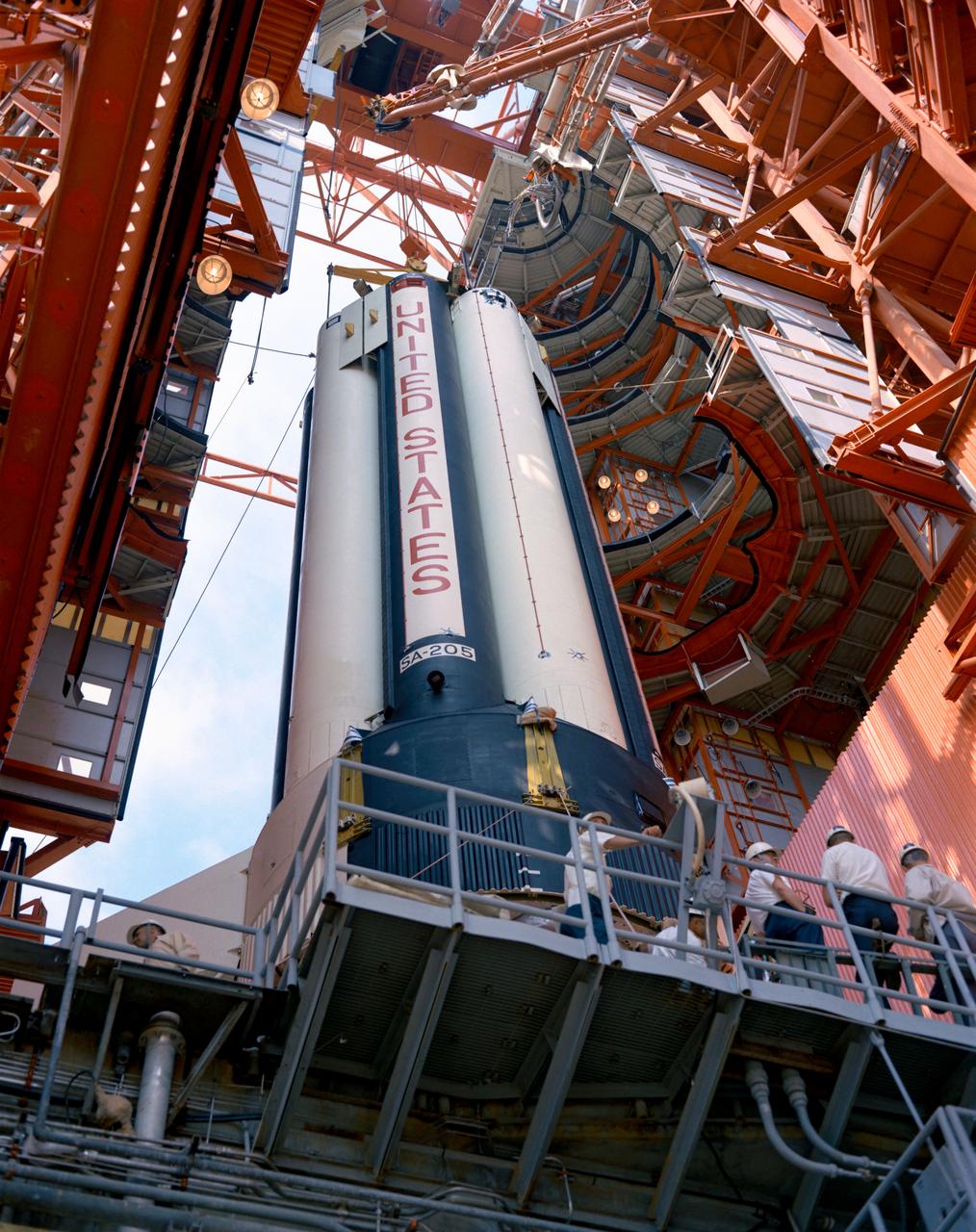
S68-29781 (22 April 1968) --- Low angle view at the Kennedy Space Center's Pad 34 showing the erection of the first stage of the Saturn 205 launch vehicle. The two-stage Saturn IB will be the launch vehicle for the first unmanned Apollo space mission, Apollo 7 (Spacecraft 101/Saturn 205).
Prelaunch - Apollo VII (Erection of First Stage) - KSC
Apollo spacecraft 017 leaves the Manned Spacecraft Operations Building at Kennedy Space Center on its way to the Vehicle Assembly Building where it will be mated with the Saturn 501 launch vehicle.  The first flight of the Saturn V [AS-501], an unmanned mission, is scheduled for this fall.
KSC-67P-0259
Test of Unmanned Aircraft Systems Traffic Management (UTM) technical capability Level 2 (TCL2) at Reno-Stead Airport, Nevada. During the test, five drones simultaneously crossed paths, separated by altitude.  Two drones flew beyond visual line-of-sight and three flew within line-of-sight of their operators.  Drone Co-habitation Services operates a Phantom 3 commercial multi-rotor unmanned aircraft, one of 11 vehicles in the UTM TCL2 demonstration that will fly beyond line of sight of the pilot in command in Nevada test.
UTM Technical Capabilities Level 2 (TLC2) Test at Reno-Stead Airport.
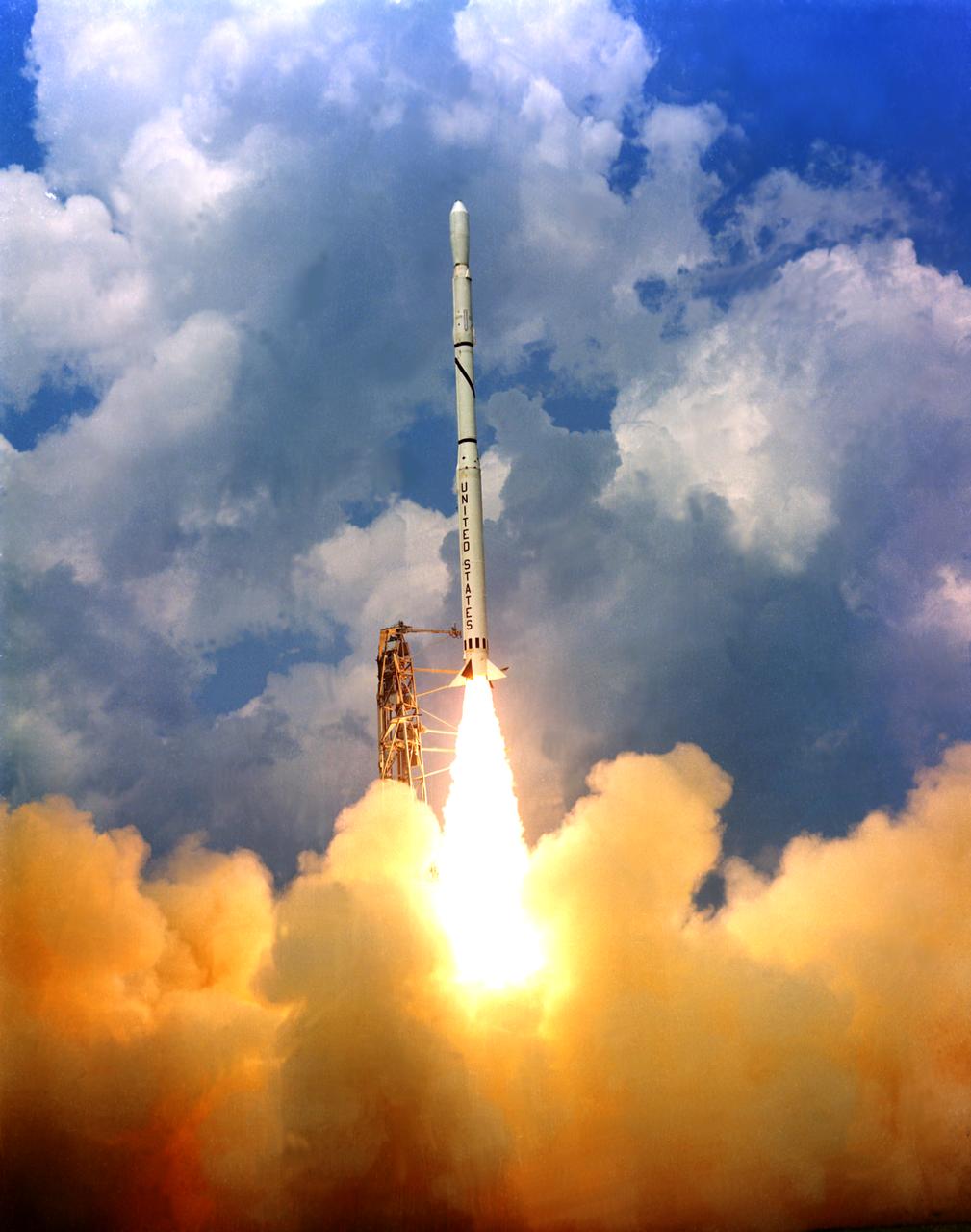
Scout launch vehicle lift off on Wallops Island in 1965. The Scout launch vehicle was used for unmanned small satellite missions, high altitude probes, and reentry experiments. Scout, the smallest of the basic launch vehicles, is the only United States launch vehicle fueled exclusively with solid propellants. Published in the book " A Century at Langley" by Joseph Chambers pg. 92
Scout Launch Lift off on Wallops Island
High School and College students from around the U.S. came together at Bragg Farms in Toney, Alabama for the 2019 Student Launch Initiative. The students launched their rockets to their own predetermined altitude with various payloads including remote rovers and unmanned aerial vehicles.
2019 Student Launch Initiative
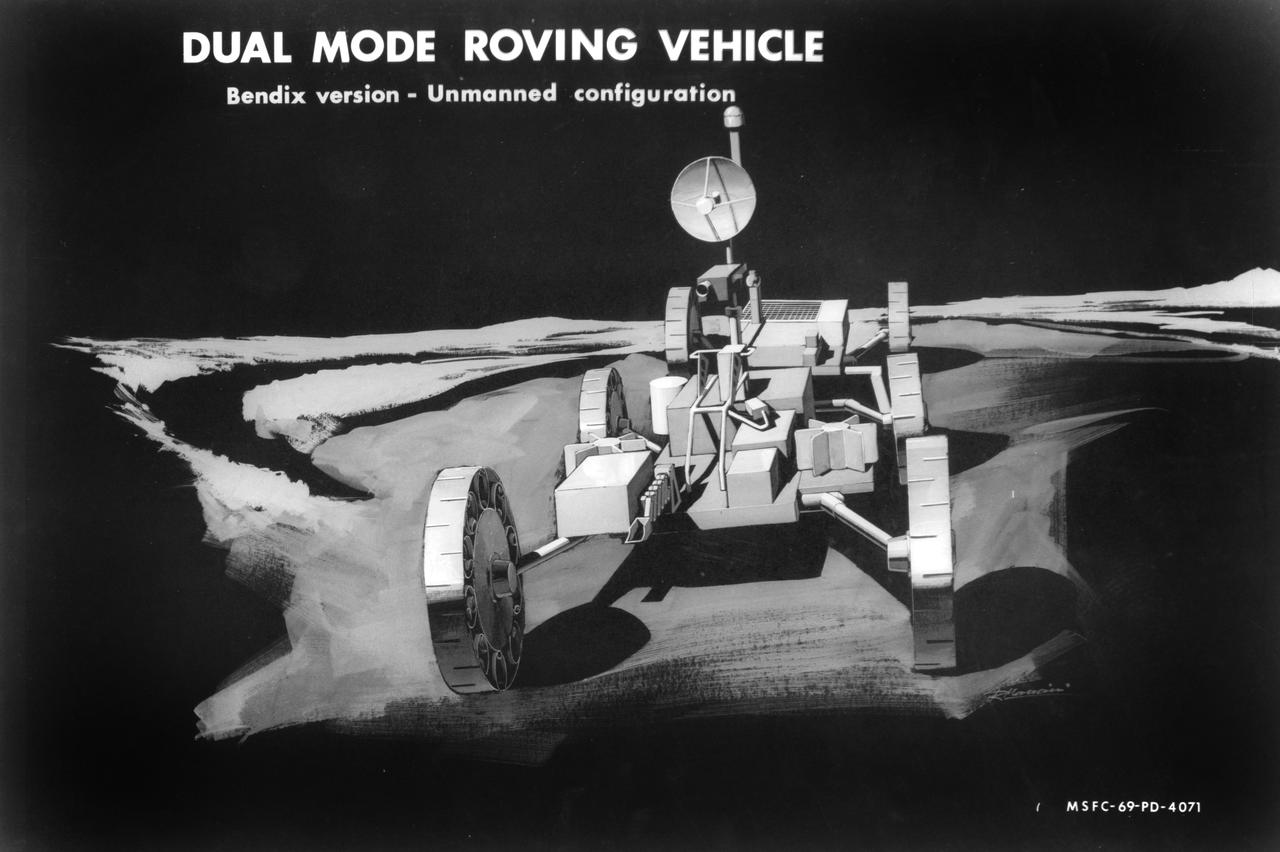
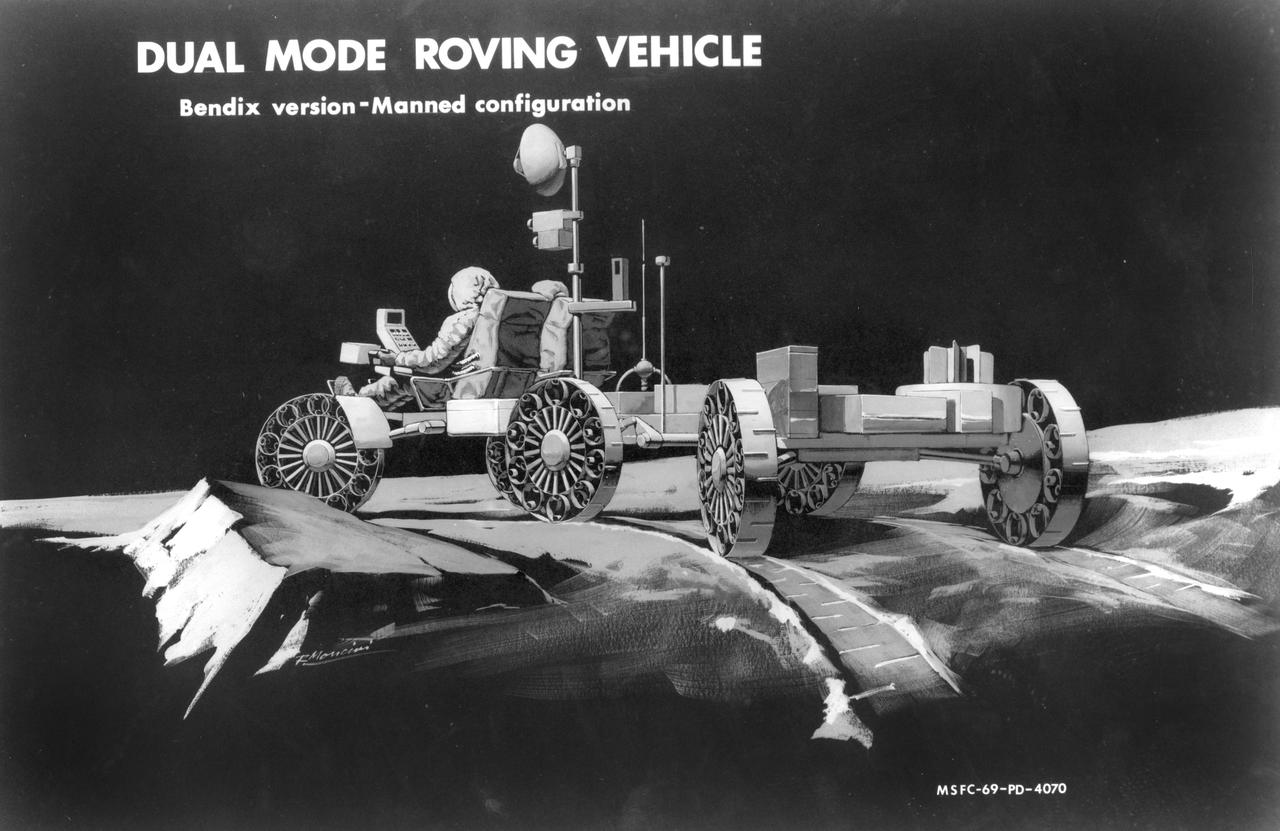
Artist’s concept of a dual mode Lunar Roving Vehicle (LRV) on the Lunar surface. This represents the Grumman version in an unmanned configuration. The LRV was developed under the direction of MSFC to allow Apollo astronauts a greater range of mobility during lunar exploration missions.
Saturn Apollo Program
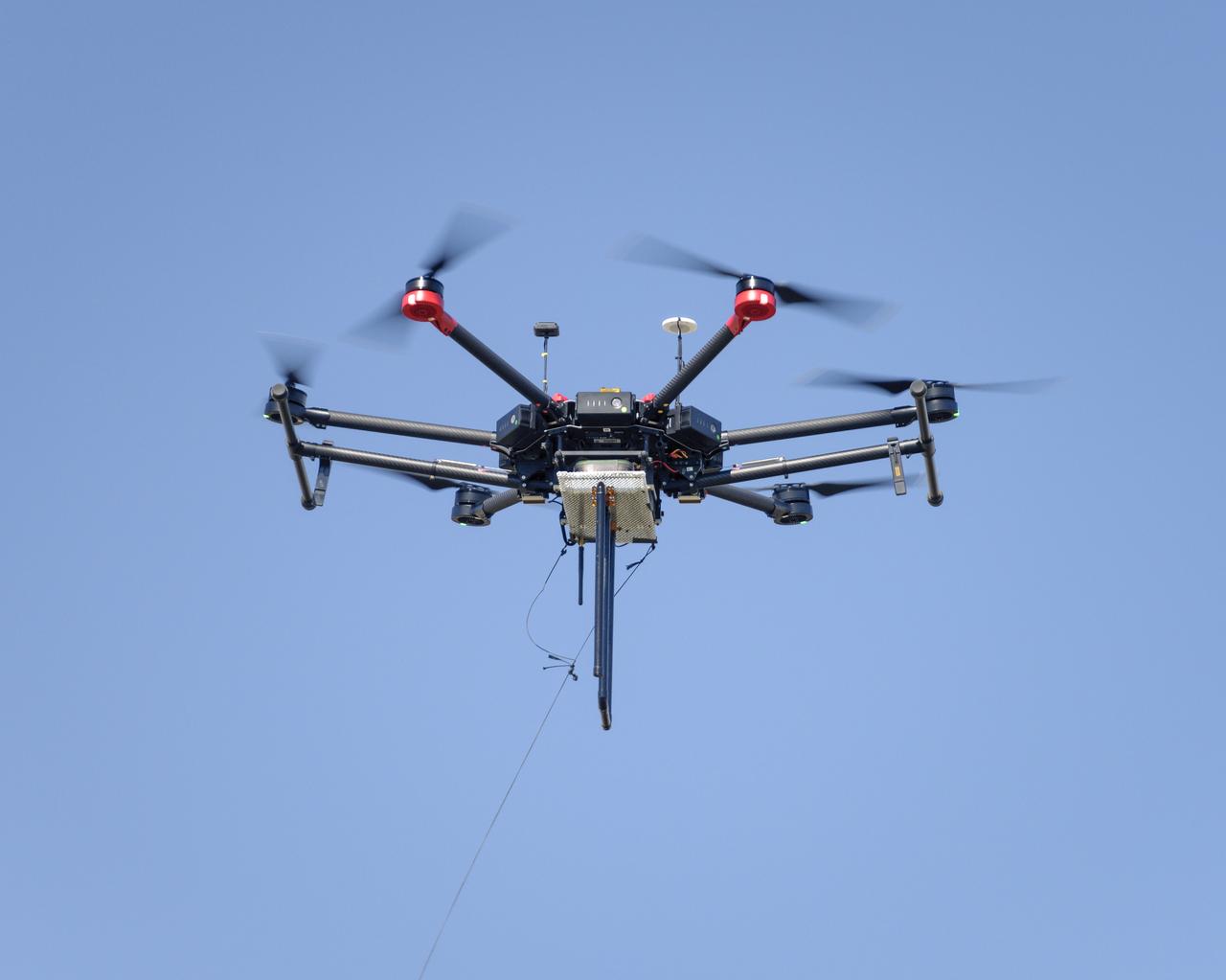
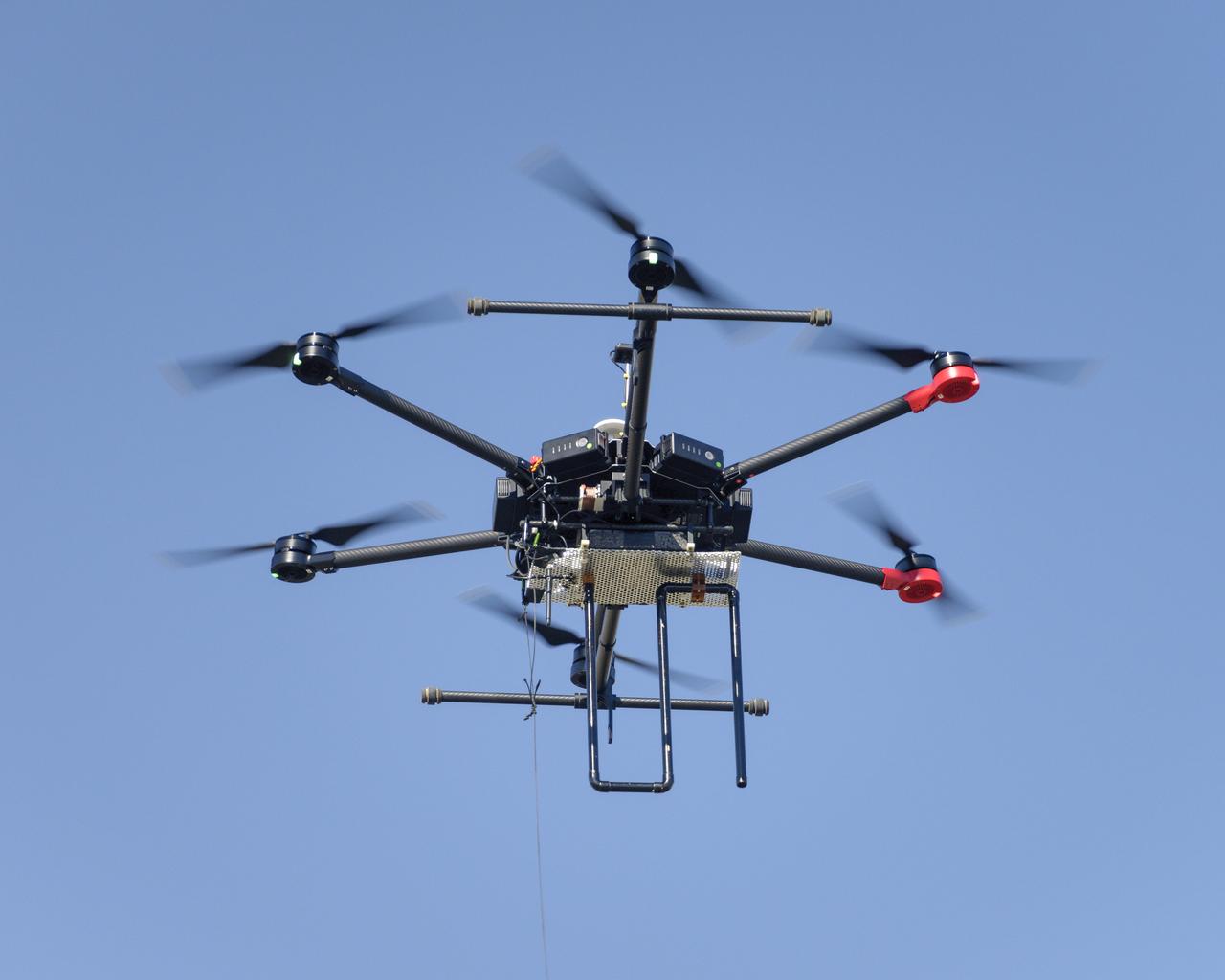
Flight Test in the Roverscape (N-269) at NASA's Ames Research Center, the project team tests the DJI Matrice 600 Unmanned Aerial Vehicle (UAV) equipped with a radio tracking receiver to study the invasive asian carp in the Mississippi River.
The Earth Science Unmanned Aerial System (UAS) Demonstration in the Rover Scape at NASA's Ames Research Center.
Flight Test in the Roverscape (N-269) at NASA's Ames Research Center, the project team tests the DJI Matrice 600 Unmanned Aerial Vehicle (UAV) equipped with a radio tracking receiver to study the invasive asian carp in the Mississippi River.
The Earth Science Unmanned Aerial System (UAS) Demonstration in the Rover Scape at NASA's Ames Research Center.
Flight Test in the Roverscape (N-269) at NASA's Ames Research Center, the project team tests the DJI Matrice 600 Unmanned Aerial Vehicle (UAV) equipped with a radio tracking receiver to study the invasive asian carp in the Mississippi River.
The Earth Science Unmanned Aerial System (UAS) Demonstration in the Rover Scape at NASA's Ames Research Center.
Flight Test in the Roverscape (N-269) at NASA's Ames Research Center, the project team tests the DJI Matrice 600 Unmanned Aerial Vehicle (UAV) equipped with a radio tracking receiver to study the invasive asian carp in the Mississippi River.
The Earth Science Unmanned Aerial System (UAS) Demonstration in the Rover Scape at NASA's Ames Research Center.
High School and College students from around the U.S. came together at Bragg Farms in Toney, Alabama for the 2019 Student Launch Initiative. The students launched their rockets to their own predetermined altitude with various payloads including remote rovers and unmanned aerial vehicles.
2019 Student Launch Initiative
Flight Test in the Roverscape (N-269) at NASA's Ames Research Center, the project team tests the DJI Matrice 600 Unmanned Aerial Vehicle (UAV) equipped with a radio tracking receiver to study the invasive asian carp in the Mississippi River.
The Earth Science Unmanned Aerial System (UAS) Demonstration in the Rover Scape at NASA's Ames Research Center.
High School and College students from around the U.S. came together at Bragg Farms in Toney, Alabama for the 2019 Student Launch Initiative. The students launched their rockets to their own predetermined altitude with various payloads including remote rovers and unmanned aerial vehicles.
2019 Student Launch Initiative
High School and College students from around the U.S. came together at Bragg Farms in Toney, Alabama for the 2019 Student Launch Initiative. The students launched their rockets to their own predetermined altitude with various payloads including remote rovers and unmanned aerial vehicles.
2019 Student Launch Initiative
High School and College students from around the U.S. came together at Bragg Farms in Toney, Alabama for the 2019 Student Launch Initiative. The students launched their rockets to their own predetermined altitude with various payloads including remote rovers and unmanned aerial vehicles.
2019 Student Launch Initiative
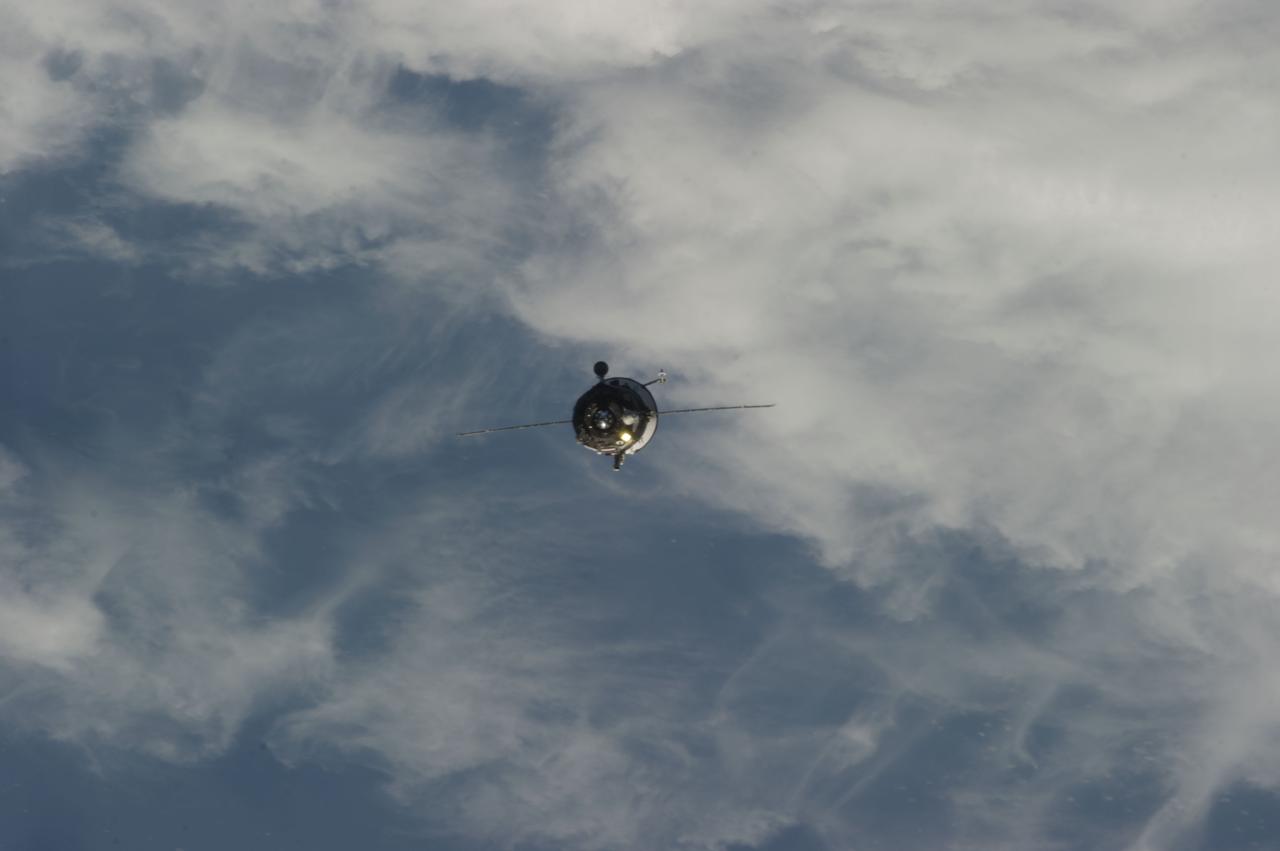
ISS035-E-029729 (26 April 2013) --- As seen through one of the windows in the Zvezda Transfer Chamber (the aft section of the  service module), the Russian Progress 51 cargo craft approaches the International Space Station on April 26, 2013. The unmanned cargo vehicle minutes later successfully docked with the orbital outpost.
Progress 51P Approaches the SM for Docking
High School and College students from around the U.S. came together at Bragg Farms in Toney, Alabama for the 2019 Student Launch Initiative. The students launched their rockets to their own predetermined altitude with various payloads including remote rovers and unmanned aerial vehicles.
2019 Student Launch Initiative
High School and College students from around the U.S. came together at Bragg Farms in Toney, Alabama for the 2019 Student Launch Initiative. The students launched their rockets to their own predetermined altitude with various payloads including remote rovers and unmanned aerial vehicles.
2019 Student Launch Initiative
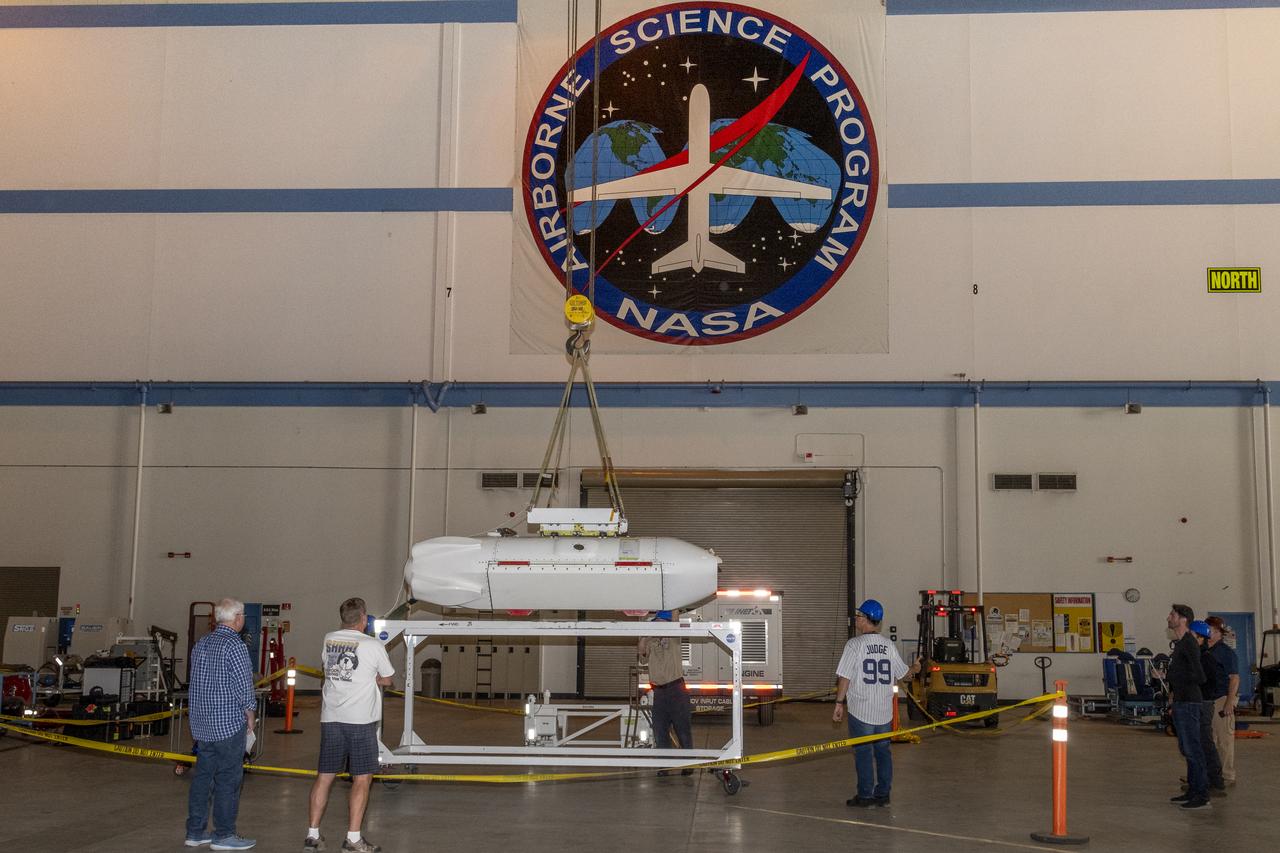
The Uninhabited Aerial Vehicle Synthetic Aperture Radar, UAVSAR, is prepared for installation onto NASA’s C-20A aircraft.  THE UAVSAR uses a technique called interferometry to detect and measure very subtle deformations in the Earth’s surface, and the pod is specially designed to be interoperable with unmanned aircraft in the future.  It will gather data from Gabon, Africa in September of 2023.
UAVSAR pod install
Bobby Bruckner, manager, ELV and Payload Carrier Programs, speaks at the ribbon-cutting ceremony of the E&O Building at KSC. Home for NASA’s unmanned missions since 1964, the building has been renovated to house the Expendable Launch Vehicle Program
KSC-00pp1666
Flight Test in the Roverscape (N-269) at NASA's Ames Research Center, the project team tests the DJI Matrice 600 Unmanned Aerial Vehicle (UAV) equipped with a radio tracking receiver to study the invasive asian carp in the Mississippi River.
The Earth Science Unmanned Aerial System (UAS) Demonstration in the Rover Scape at NASA's Ames Research Center.
High School and College students from around the U.S. came together at Bragg Farms in Toney, Alabama for the 2019 Student Launch Initiative. The students launched their rockets to their own predetermined altitude with various payloads including remote rovers and unmanned aerial vehicles.
2019 Student Launch Initiative
High School and College students from around the U.S. came together at Bragg Farms in Toney, Alabama for the 2019 Student Launch Initiative. The students launched their rockets to their own predetermined altitude with various payloads including remote rovers and unmanned aerial vehicles.
2019 Student Launch Initiative