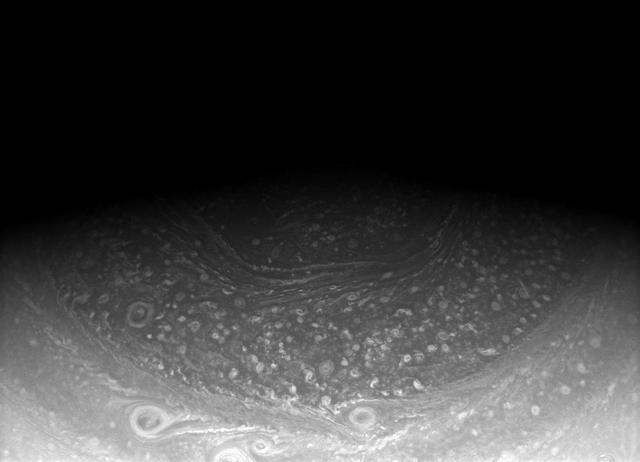
Unveiling the Hexagon
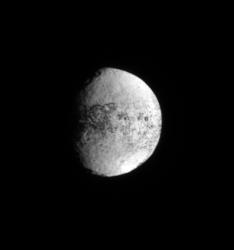
Unveiling Iapetus
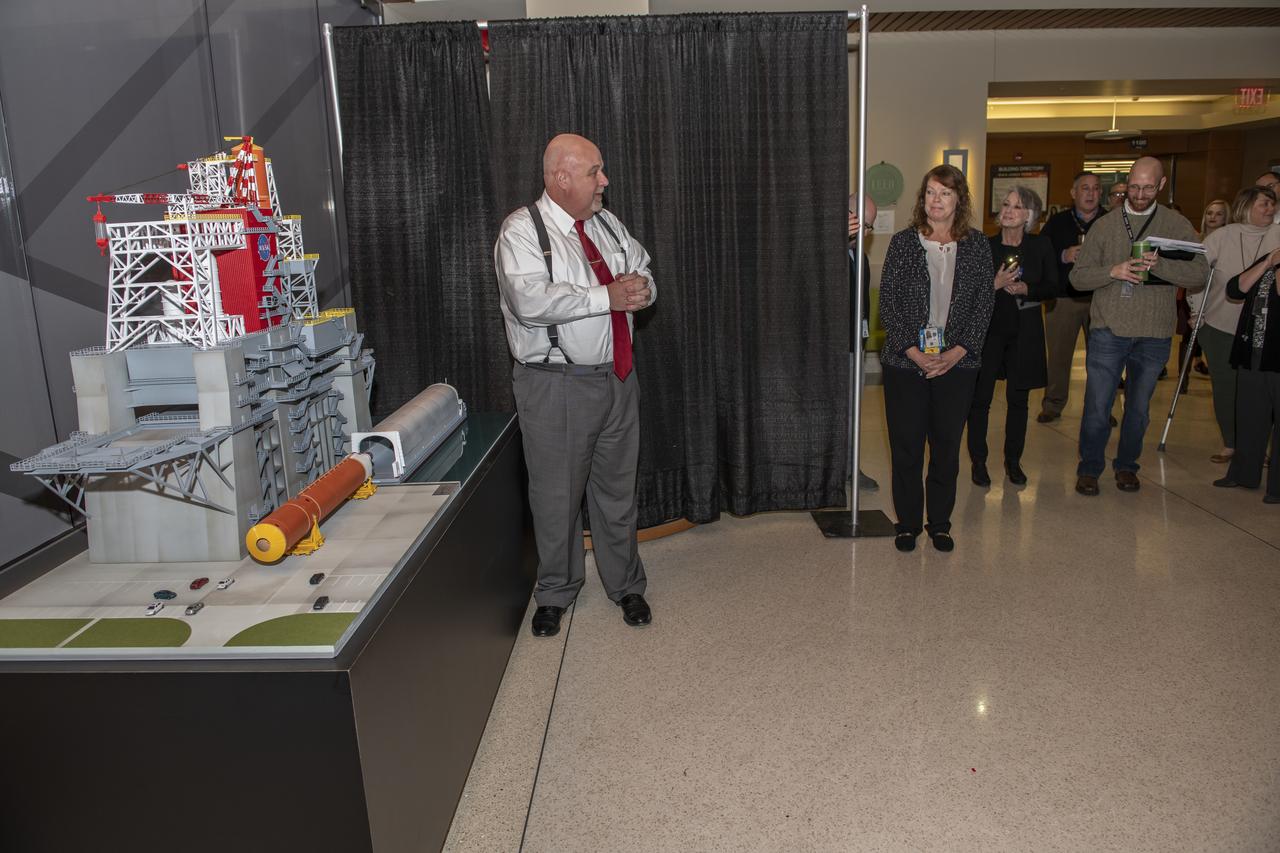
The unveiling of the B-2 Test Stand model for the SLS management team and employees in building 4220. Taking part was John Honeycutt and Julie Bassler.
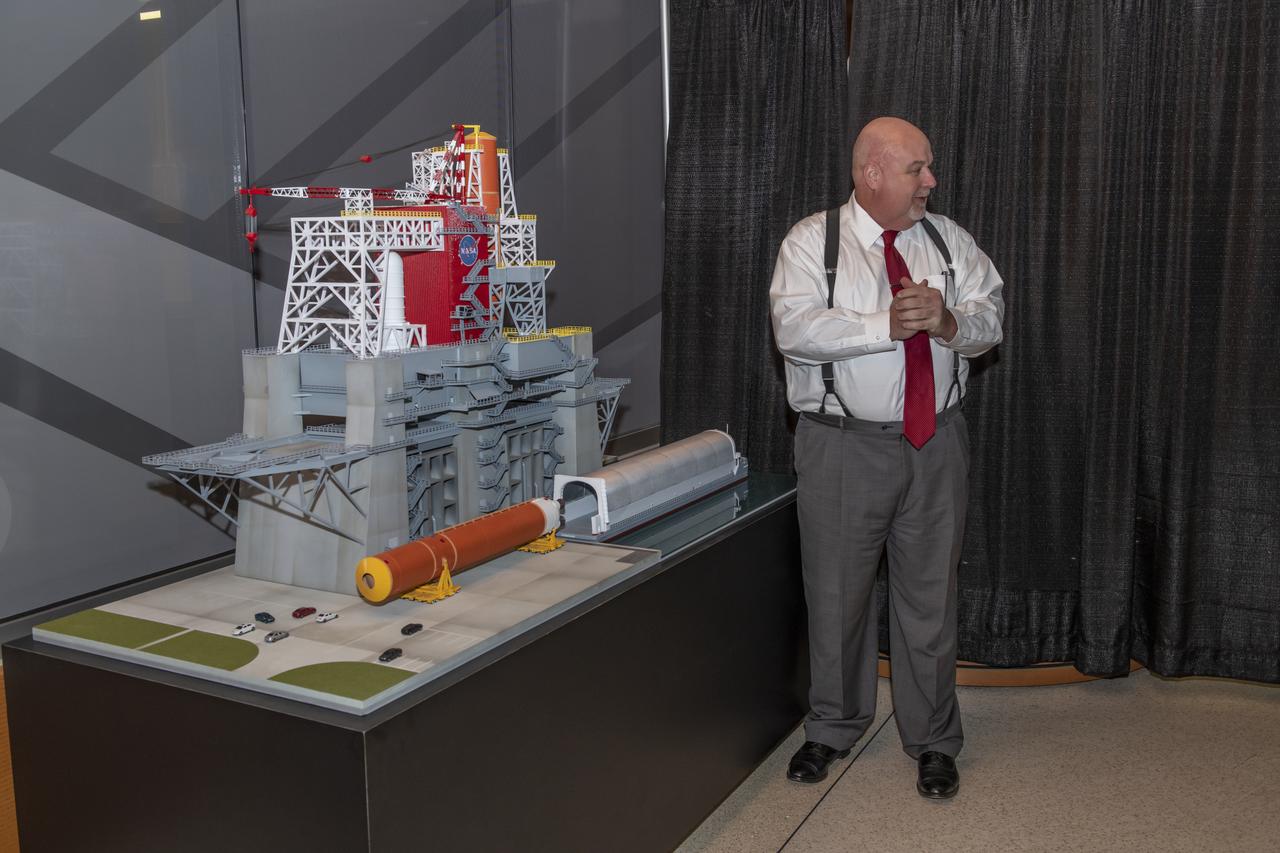
The unveiling of the B-2 Test Stand model for the SLS management team and employees in building 4220. Taking part was John Honeycutt and Julie Bassler.
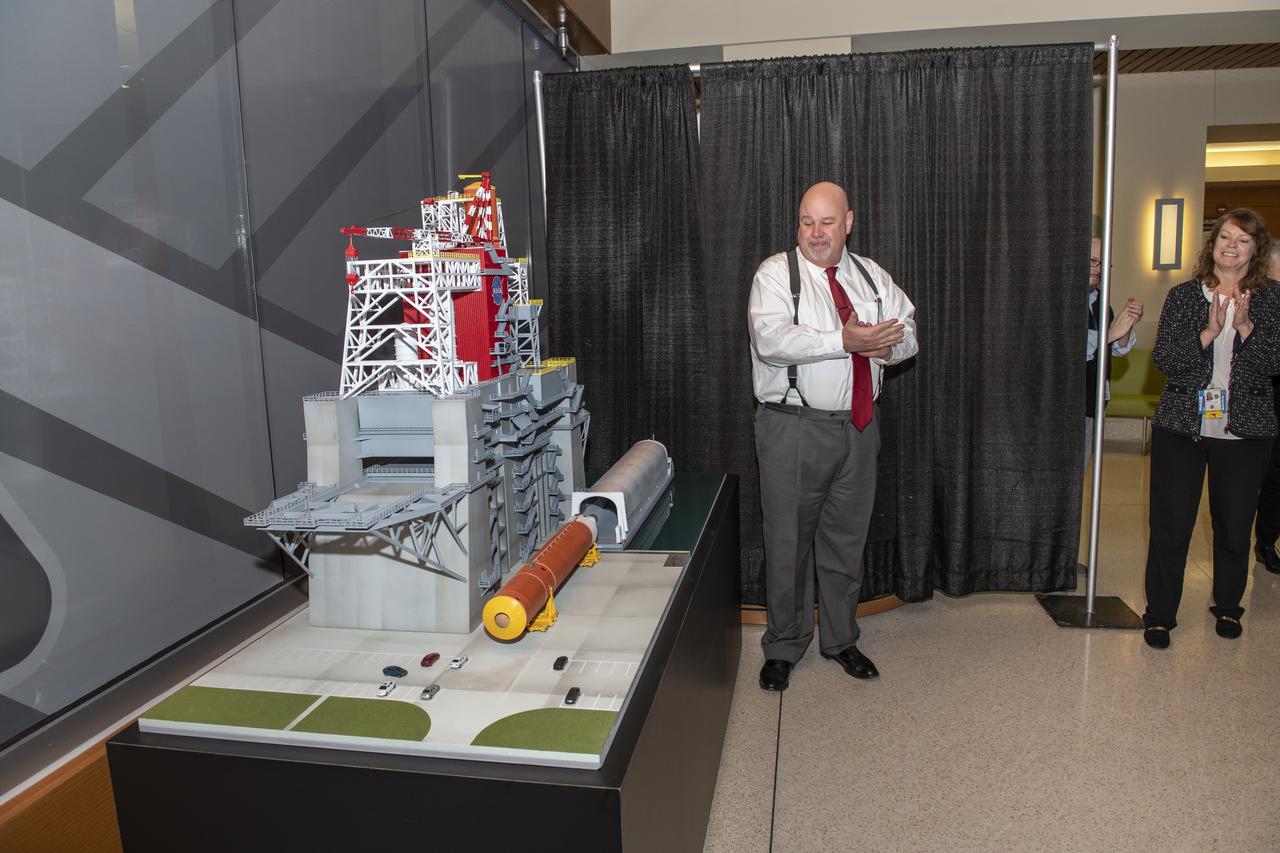
The unveiling of the B-2 Test Stand model for the SLS management team and employees in building 4220. Taking part was John Honeycutt and Julie Bassler.
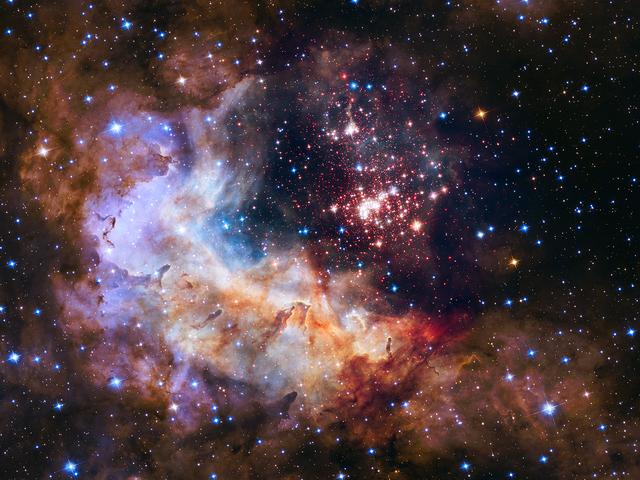
The brilliant tapestry of young stars flaring to life resemble a glittering fireworks display in the 25th anniversary NASA Hubble Space Telescope image, released to commemorate a quarter century of exploring the solar system and beyond since its launch on April 24, 1990. “Hubble has completely transformed our view of the universe, revealing the true beauty and richness of the cosmos” said John Grunsfeld, astronaut and associate administrator of NASA’s Science Mission Directorate. “This vista of starry fireworks and glowing gas is a fitting image for our celebration of 25 years of amazing Hubble science.” The sparkling centerpiece of Hubble’s anniversary fireworks is a giant cluster of about 3,000 stars called Westerlund 2, named for Swedish astronomer Bengt Westerlund who discovered the grouping in the 1960s. The cluster resides in a raucous stellar breeding ground known as Gum 29, located 20,000 light-years away from Earth in the constellation Carina. Read more: <a href="http://www.nasa.gov/press-release/nasa-unveils-celestial-fireworks-as-official-image-for-hubble-25th-anniversary" rel="nofollow">www.nasa.gov/press-release/nasa-unveils-celestial-firewor...</a> <b><a href="http://www.nasa.gov/audience/formedia/features/MP_Photo_Guidelines.html" rel="nofollow">NASA image use policy.</a></b> <b><a href="http://www.nasa.gov/centers/goddard/home/index.html" rel="nofollow">NASA Goddard Space Flight Center</a></b> enables NASA’s mission through four scientific endeavors: Earth Science, Heliophysics, Solar System Exploration, and Astrophysics. Goddard plays a leading role in NASA’s accomplishments by contributing compelling scientific knowledge to advance the Agency’s mission. <b>Follow us on <a href="http://twitter.com/NASAGoddardPix" rel="nofollow">Twitter</a></b> <b>Like us on <a href="http://www.facebook.com/pages/Greenbelt-MD/NASA-Goddard/395013845897?ref=tsd" rel="nofollow">Facebook</a></b> <b>Find us on <a href="http://instagrid.me/nasagoddard/?vm=grid" rel="nofollow">Instagram</a></b>
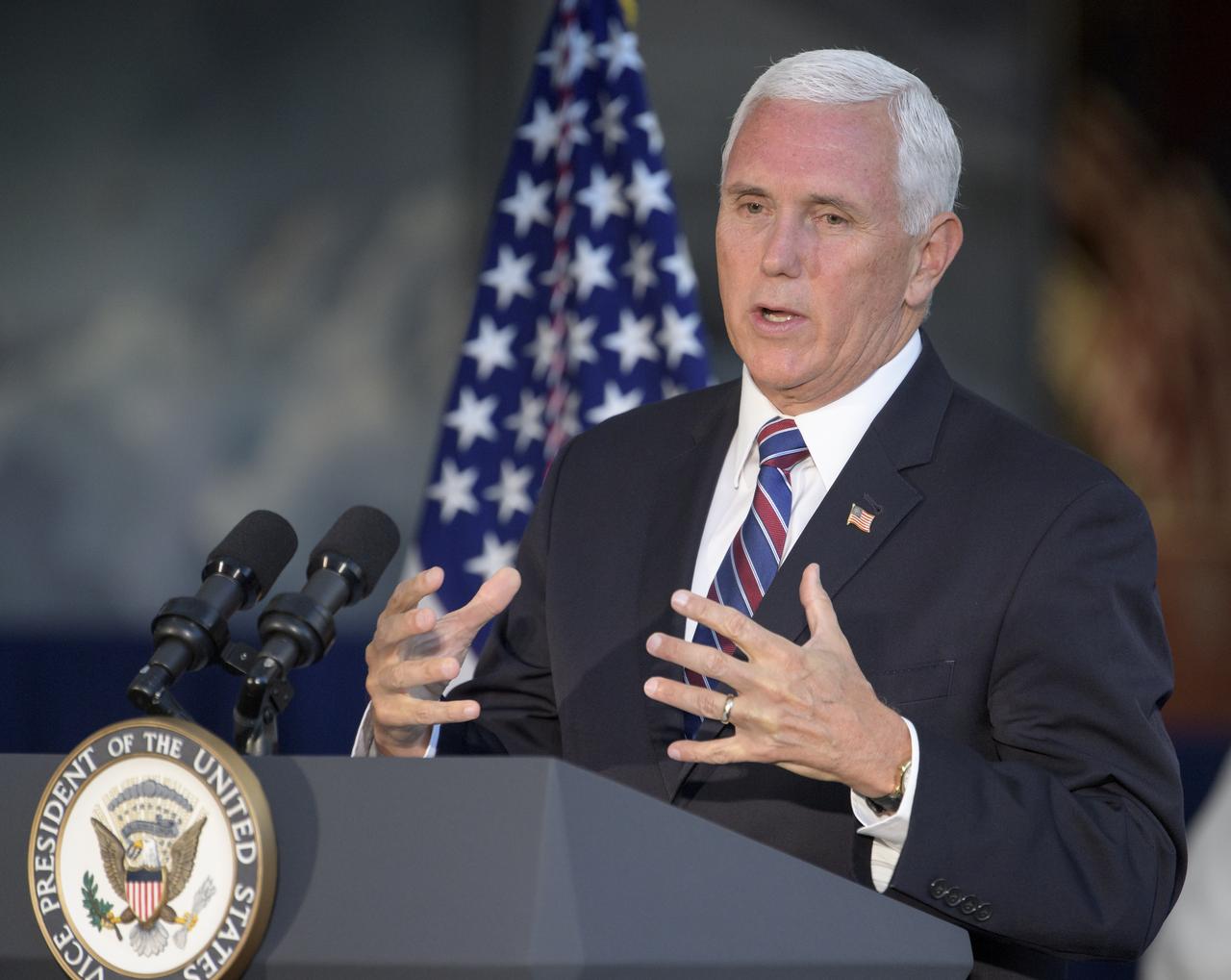
Vice President of the United States Mike Pence gives remarks during an event were Neil Armstrong's Apollo 11 spacesuit was unveiled for the first time in 13 years, Tuesday, July 16, 2019 at the Smithsonian's National Air and Space Museum in Washington. The unveiling of the crowd funded spacesuit conservation marks the 50th anniversary of the launch of the Apollo 11 mission.Photo Credit: (NASA/Bill Ingalls)
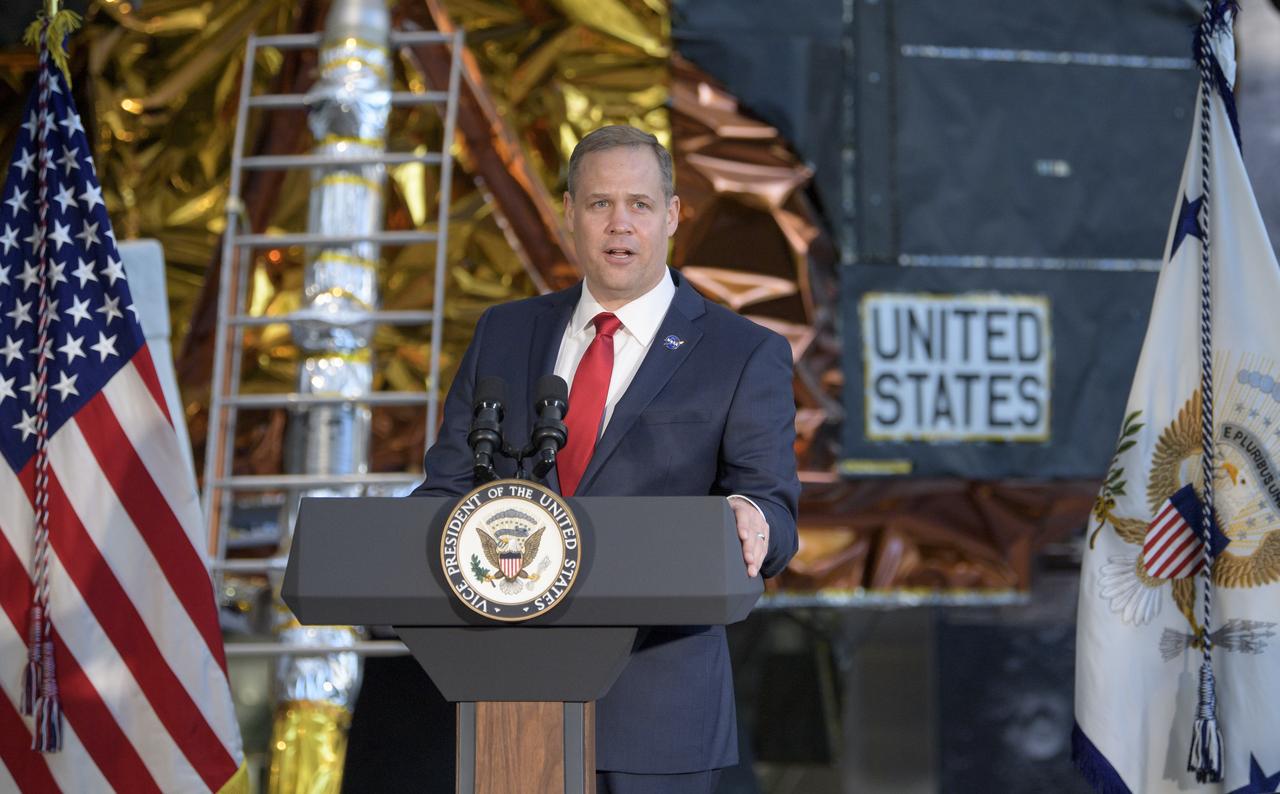
NASA Administrator Jim Bridenstine gives remarks during an event were Neil Armstrong's Apollo 11 spacesuit was unveiled for the first time in 13 years, Tuesday, July 16, 2019 at the Smithsonian's National Air and Space Museum in Washington. The unveiling of the crowd funded spacesuit conservation marks the 50th anniversary of the launch of the Apollo 11 mission.Photo Credit: (NASA/Bill Ingalls)
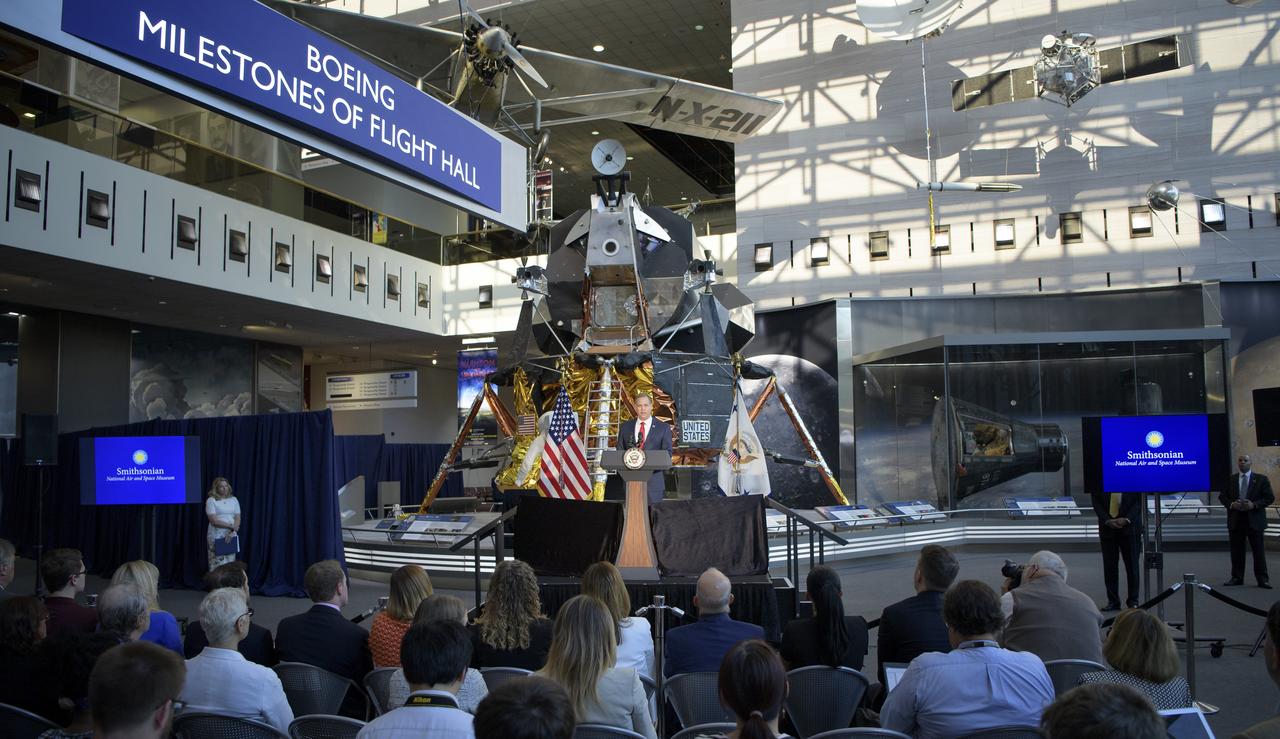
NASA Administrator Jim Bridenstine gives remarks during an event were Neil Armstrong's Apollo 11 spacesuit was unveiled for the first time in 13 years, Tuesday, July 16, 2019 at the Smithsonian's National Air and Space Museum in Washington. The unveiling of the crowd funded spacesuit conservation marks the 50th anniversary of the launch of the Apollo 11 mission.Photo Credit: (NASA/Bill Ingalls)
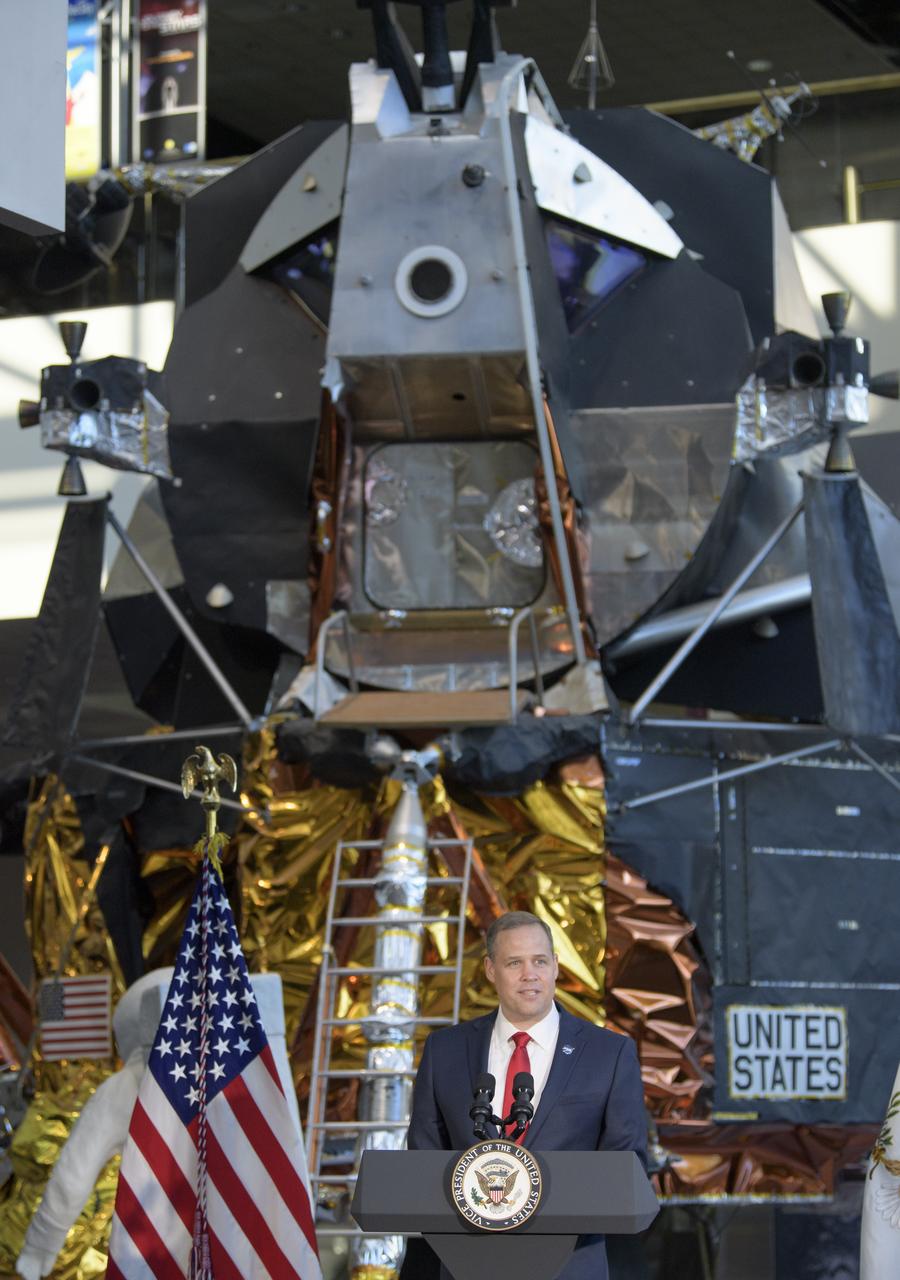
NASA Administrator Jim Bridenstine gives remarks during an event were Neil Armstrong's Apollo 11 spacesuit was unveiled for the first time in 13 years, Tuesday, July 16, 2019 at the Smithsonian's National Air and Space Museum in Washington. The unveiling of the crowd funded spacesuit conservation marks the 50th anniversary of the launch of the Apollo 11 mission.Photo Credit: (NASA/Bill Ingalls)
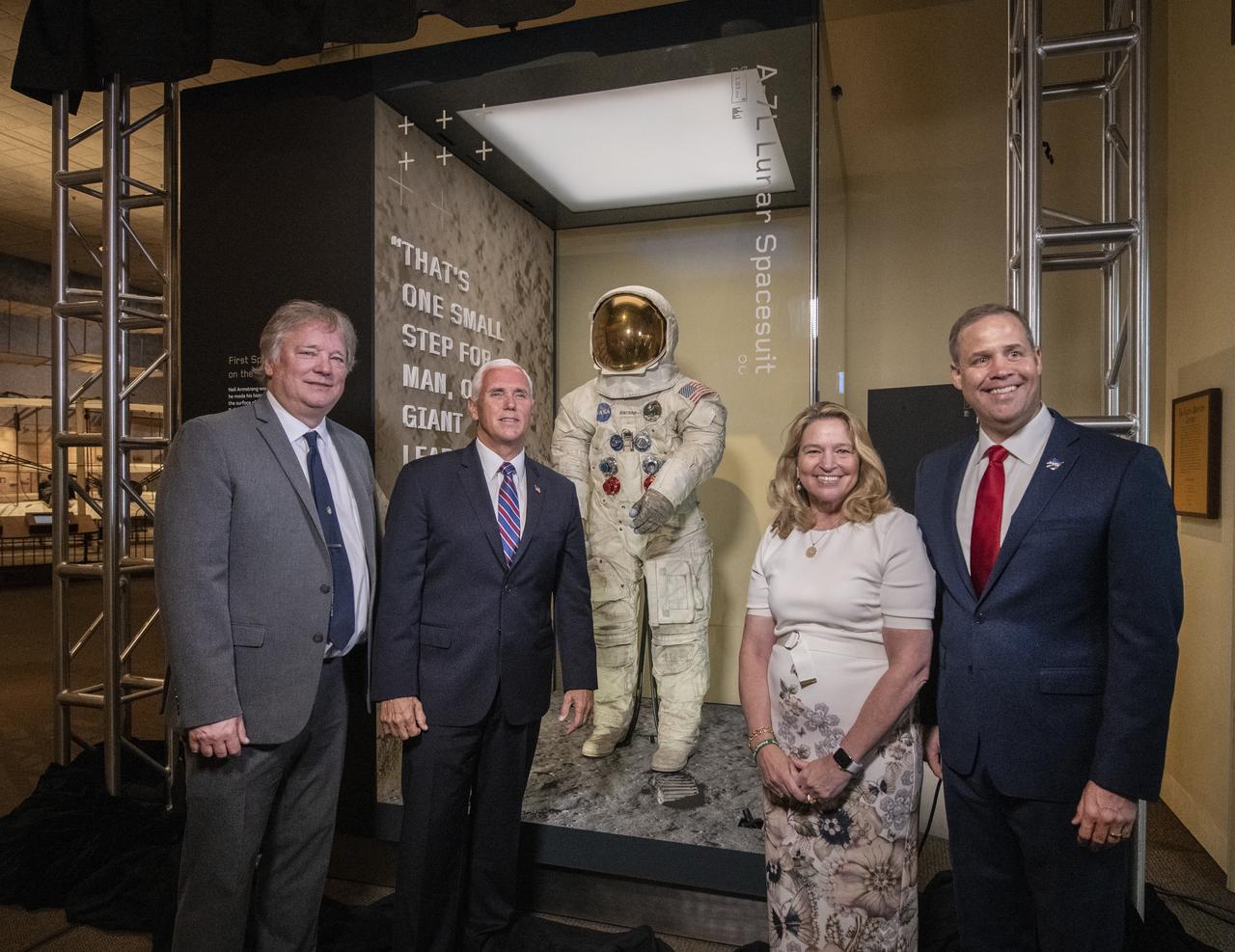
In celebration of the 50th anniversary of Apollo 11, NASA Astronaut Neil Armstrong's spacesuit was unveiled today in The Wright Brothers and The Invention of the Aerial Age Gallery of the Smithsonian Air and Space Museum, in Washington, DC, July 16, 2019. Unveiling the spacesuit, from left, Rick Armstrong, son of Neil Armstrong, Vice President Mike Pence, Dr. Ellen Stofan, The John and Adrienne Mars Director of the National Air and Space Museum, and James Bridenstine, Administrator of NASA. (Smithsonian Air and Space photo by Jim Preston)
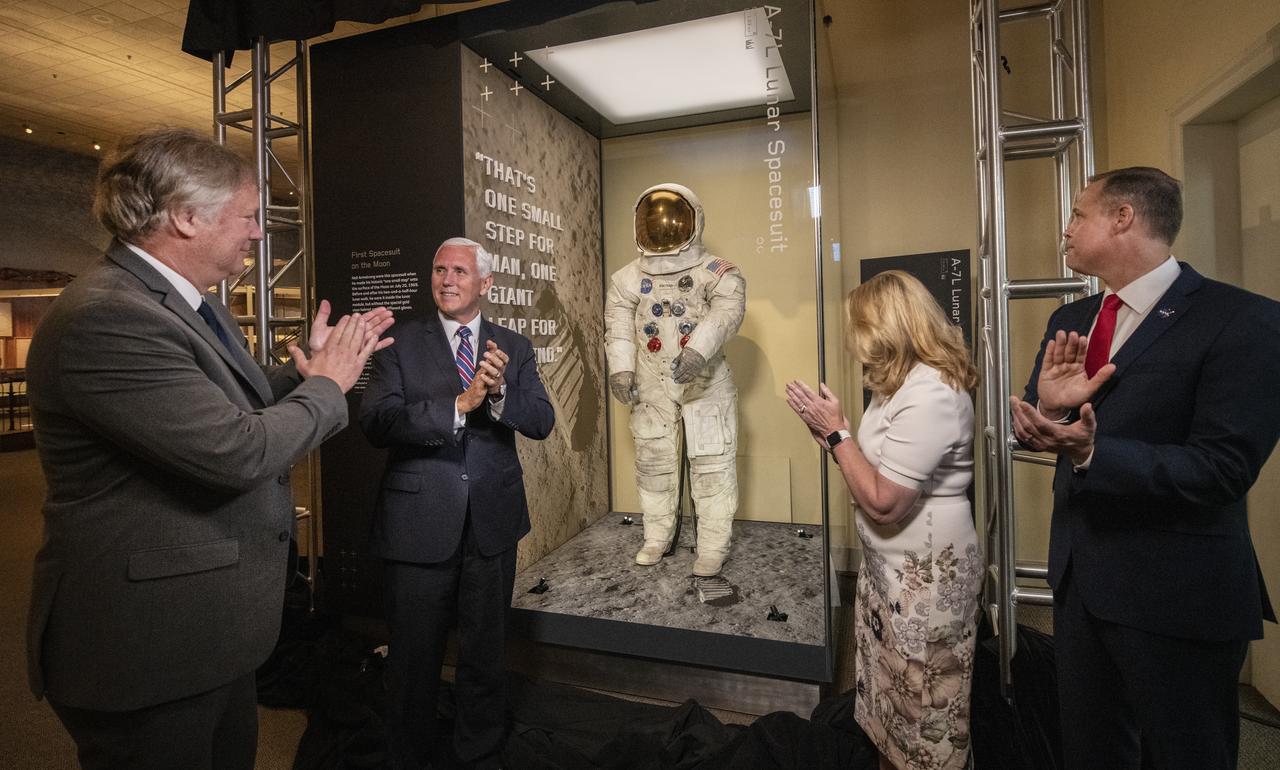
In celebration of the 50th anniversary of Apollo 11, NASA Astronaut Neil Armstrong's spacesuit was unveiled today in The Wright Brothers and The Invention of the Aerial Age Gallery of the Smithsonian Air and Space Museum, in Washington, DC, July 16, 2019. Unveiling the spacesuit, from left, Rick Armstrong, son of Neil Armstrong, Vice President Mike Pence, Dr. Ellen Stofan, The John and Adrienne Mars Director of the National Air and Space Museum, and James Bridenstine, Administrator of NASA. (Smithsonian Air and Space photo by Jim Preston)
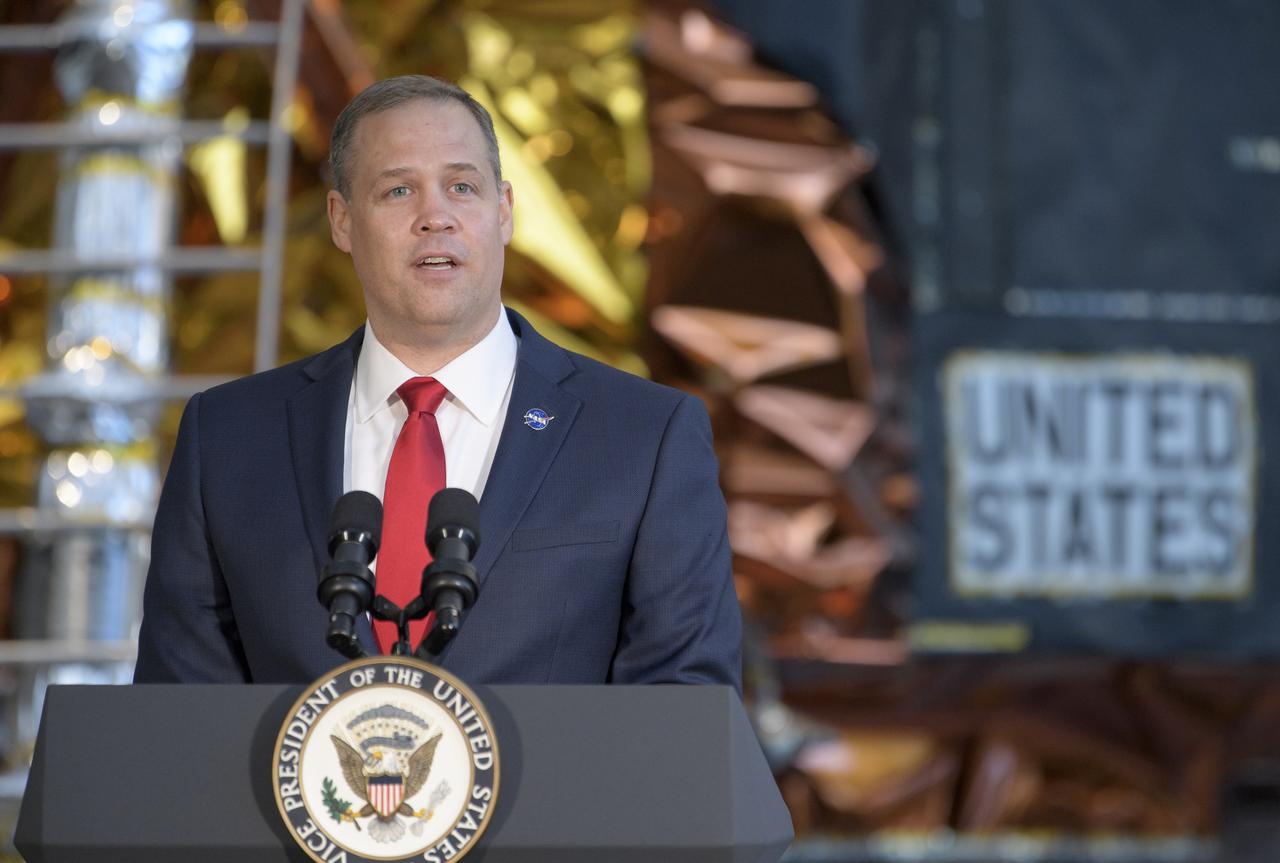
NASA Administrator Jim Bridenstine gives remarks during an event were Neil Armstrong's Apollo 11 spacesuit was unveiled for the first time in 13 years, Tuesday, July 16, 2019 at the Smithsonian's National Air and Space Museum in Washington. The unveiling of the crowd funded spacesuit conservation marks the 50th anniversary of the launch of the Apollo 11 mission.Photo Credit: (NASA/Bill Ingalls)
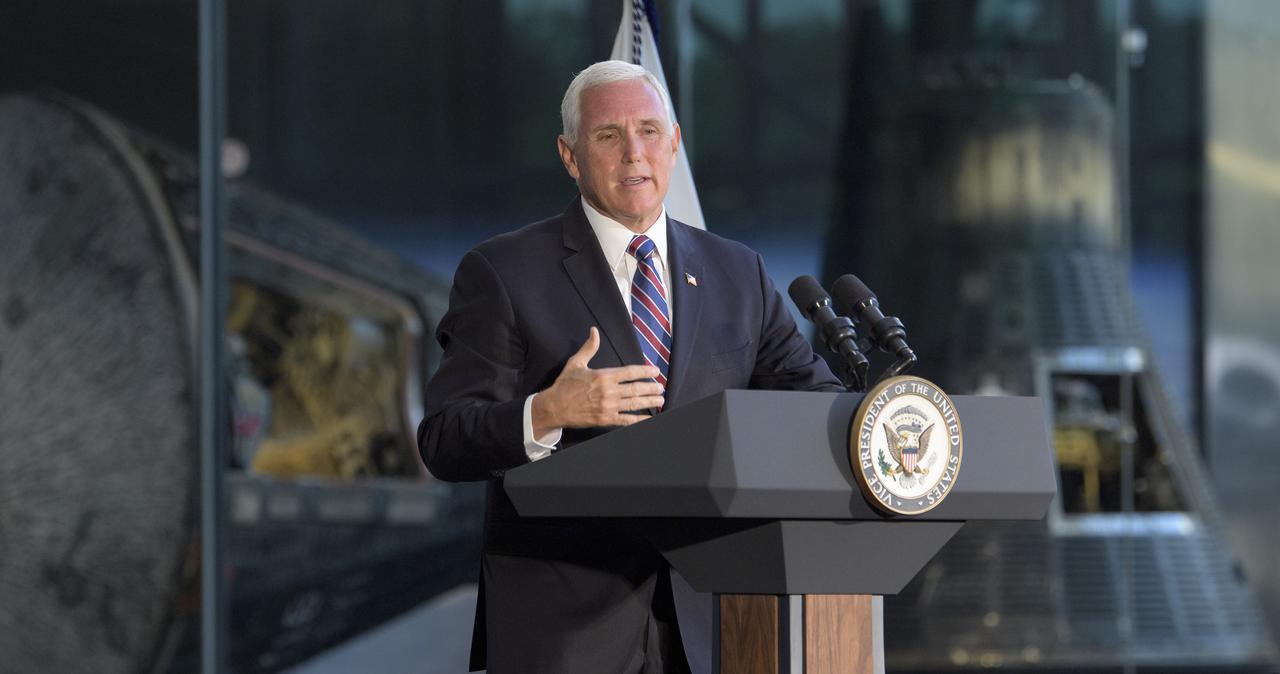
Vice President of the United States Mike Pence gives remarks during an event were Neil Armstrong's Apollo 11 spacesuit was unveiled for the first time in 13 years, Tuesday, July 16, 2019 at the Smithsonian's National Air and Space Museum in Washington. The unveiling of the crowd funded spacesuit conservation marks the 50th anniversary of the launch of the Apollo 11 mission.Photo Credit: (NASA/Bill Ingalls)
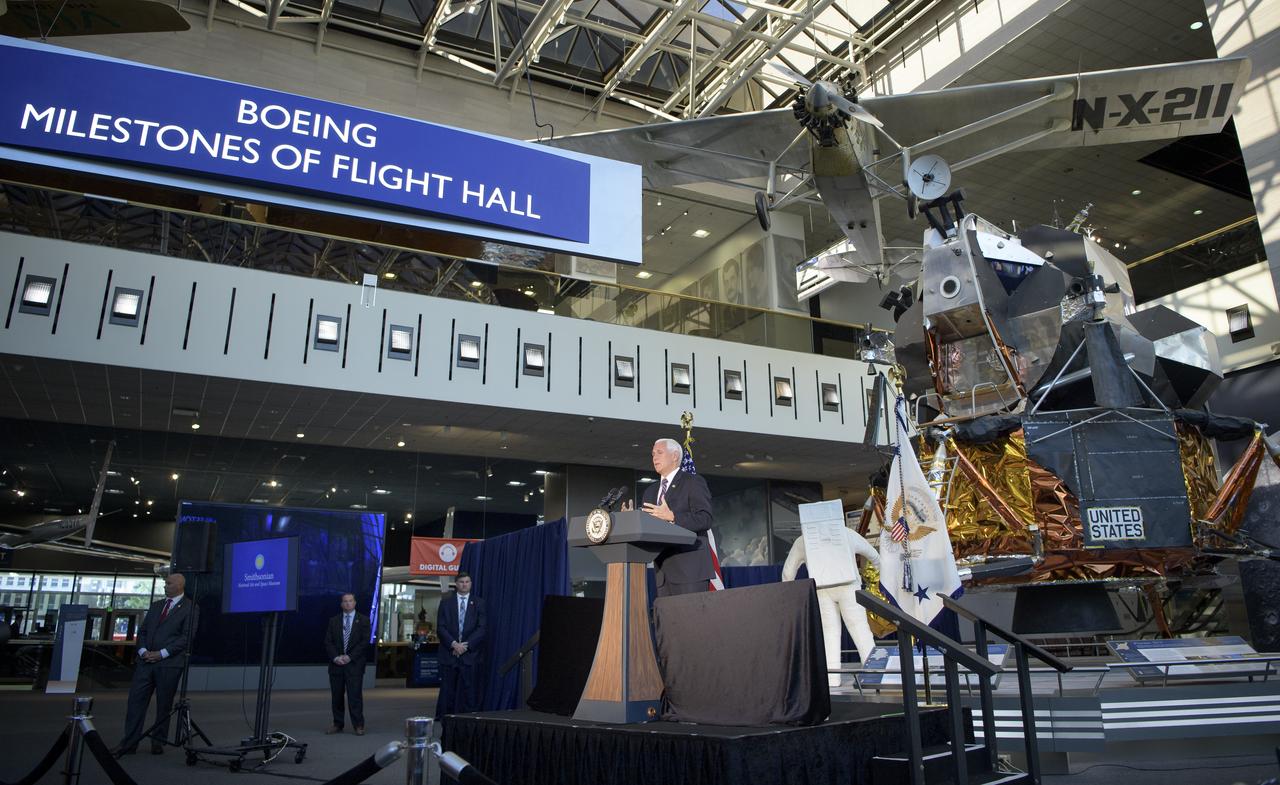
Vice President of the United States Mike Pence gives remarks during an event were Neil Armstrong's Apollo 11 spacesuit was unveiled for the first time in 13 years, Tuesday, July 16, 2019 at the Smithsonian's National Air and Space Museum in Washington. The unveiling of the crowd funded spacesuit conservation marks the 50th anniversary of the launch of the Apollo 11 mission.Photo Credit: (NASA/Bill Ingalls)
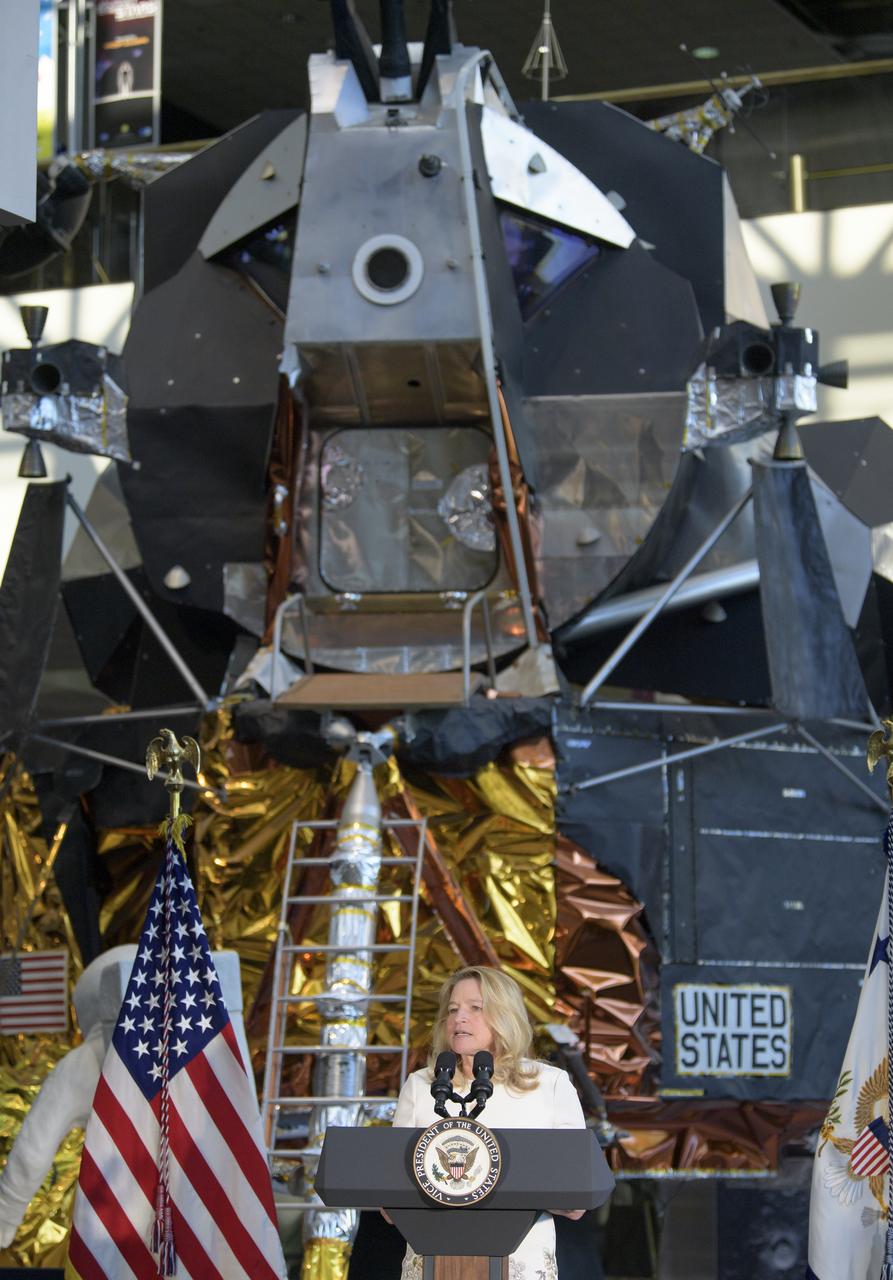
John and Adrienne Mars Director of the National Air and Space Museum Ellen Stofan gives remarks during an event were Neil Armstrong's Apollo 11 spacesuit was unveiled for the first time in 13 years, Tuesday, July 16, 2019 at the Smithsonian's National Air and Space Museum in Washington. The unveiling of the crowd funded spacesuit conservation marks the 50th anniversary of the launch of the Apollo 11 mission.Photo Credit: (NASA/Bill Ingalls)
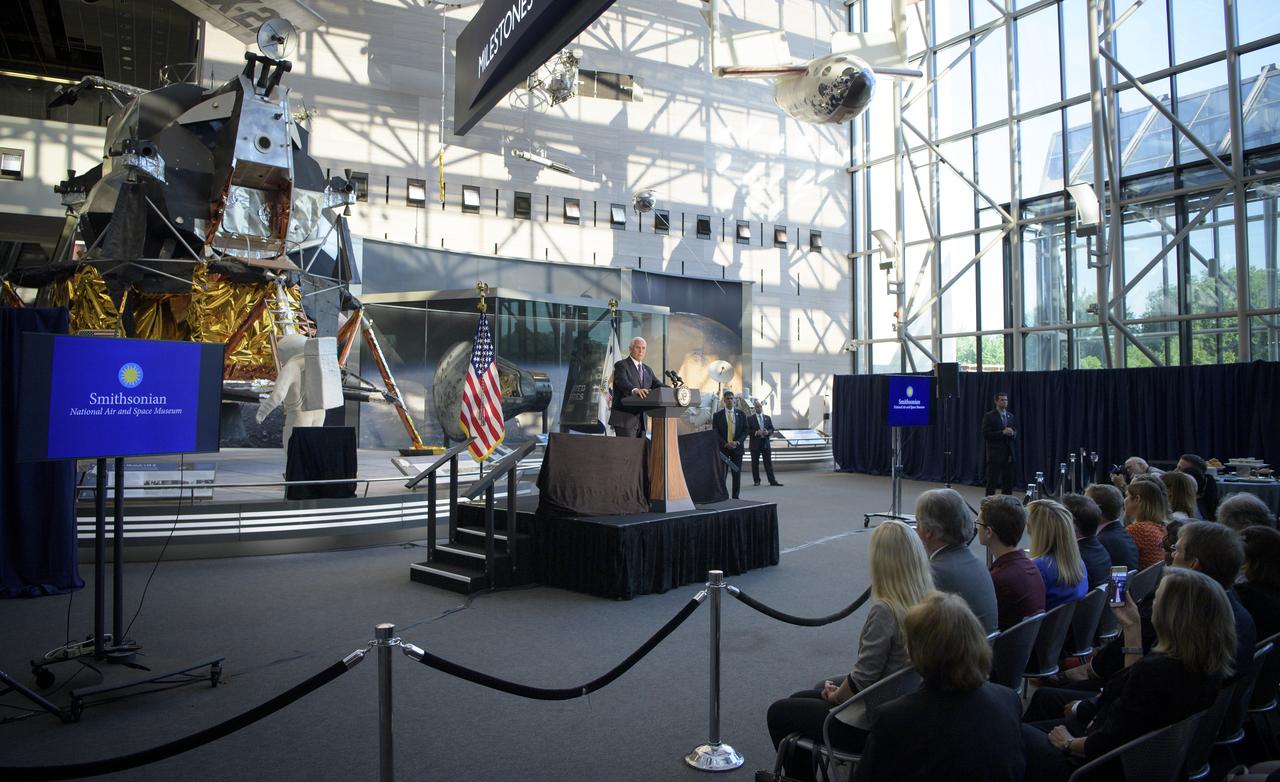
Vice President of the United States Mike Pence gives remarks during an event were Neil Armstrong's Apollo 11 spacesuit was unveiled for the first time in 13 years, Tuesday, July 16, 2019 at the Smithsonian's National Air and Space Museum in Washington. The unveiling of the crowd funded spacesuit conservation marks the 50th anniversary of the launch of the Apollo 11 mission.Photo Credit: (NASA/Bill Ingalls)
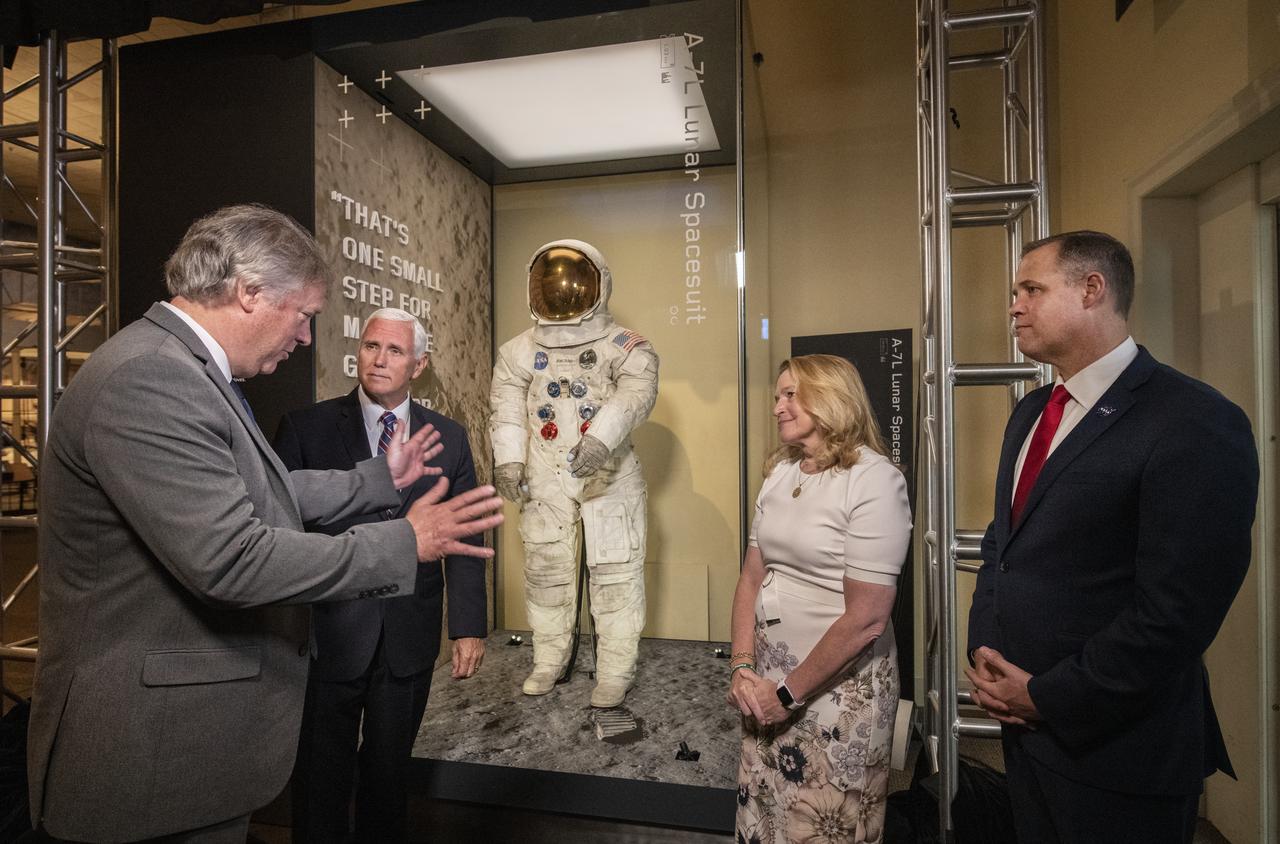
In celebration of the 50th anniversary of Apollo 11, NASA Astronaut Neil Armstrong's spacesuit was unveiled today in The Wright Brothers and The Invention of the Aerial Age Gallery of the Smithsonian Air and Space Museum, in Washington, DC, July 16, 2019. Unveiling the spacesuit, from left, Rick Armstrong, son of Neil Armstrong, Vice President Mike Pence, Dr. Ellen Stofan, The John and Adrienne Mars Director of the National Air and Space Museum, and James Bridenstine, Administrator of NASA. (Smithsonian Air and Space photo by Jim Preston)
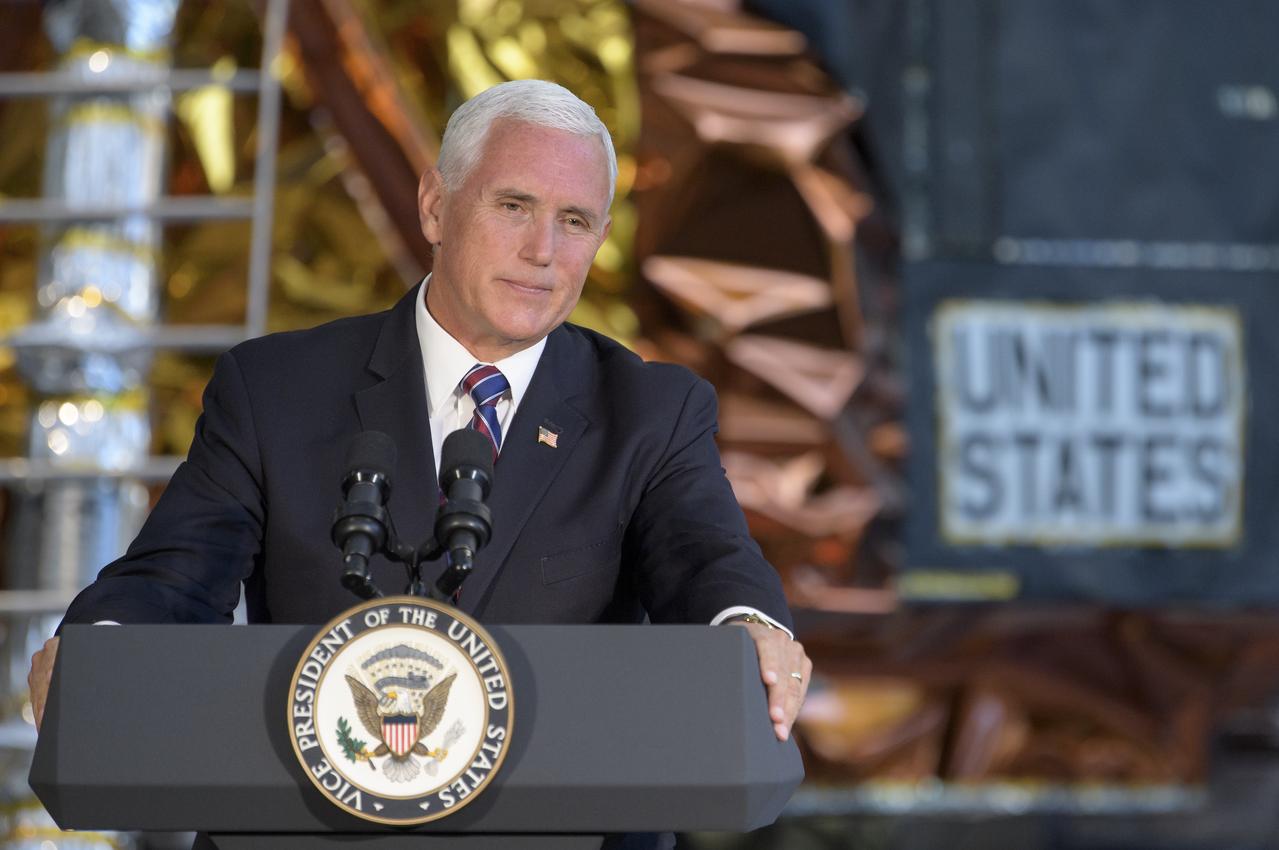
Vice President of the United States Mike Pence gives remarks during an event were Neil Armstrong's Apollo 11 spacesuit was unveiled for the first time in 13 years, Tuesday, July 16, 2019 at the Smithsonian's National Air and Space Museum in Washington. The unveiling of the crowd funded spacesuit conservation marks the 50th anniversary of the launch of the Apollo 11 mission.Photo Credit: (NASA/Bill Ingalls)
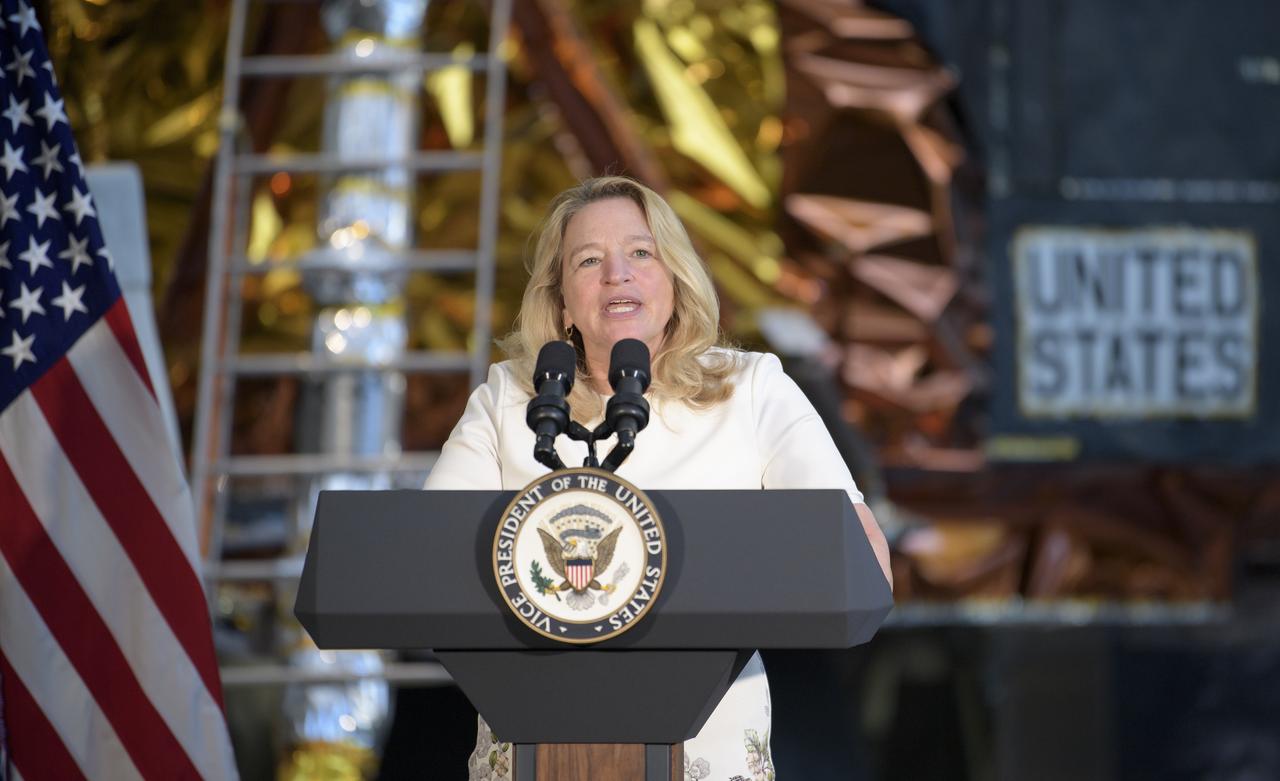
John and Adrienne Mars Director of the National Air and Space Museum Ellen Stofan gives remarks during an event were Neil Armstrong's Apollo 11 spacesuit was unveiled for the first time in 13 years, Tuesday, July 16, 2019 at the Smithsonian's National Air and Space Museum in Washington. The unveiling of the crowd funded spacesuit conservation marks the 50th anniversary of the launch of the Apollo 11 mission.Photo Credit: (NASA/Bill Ingalls)
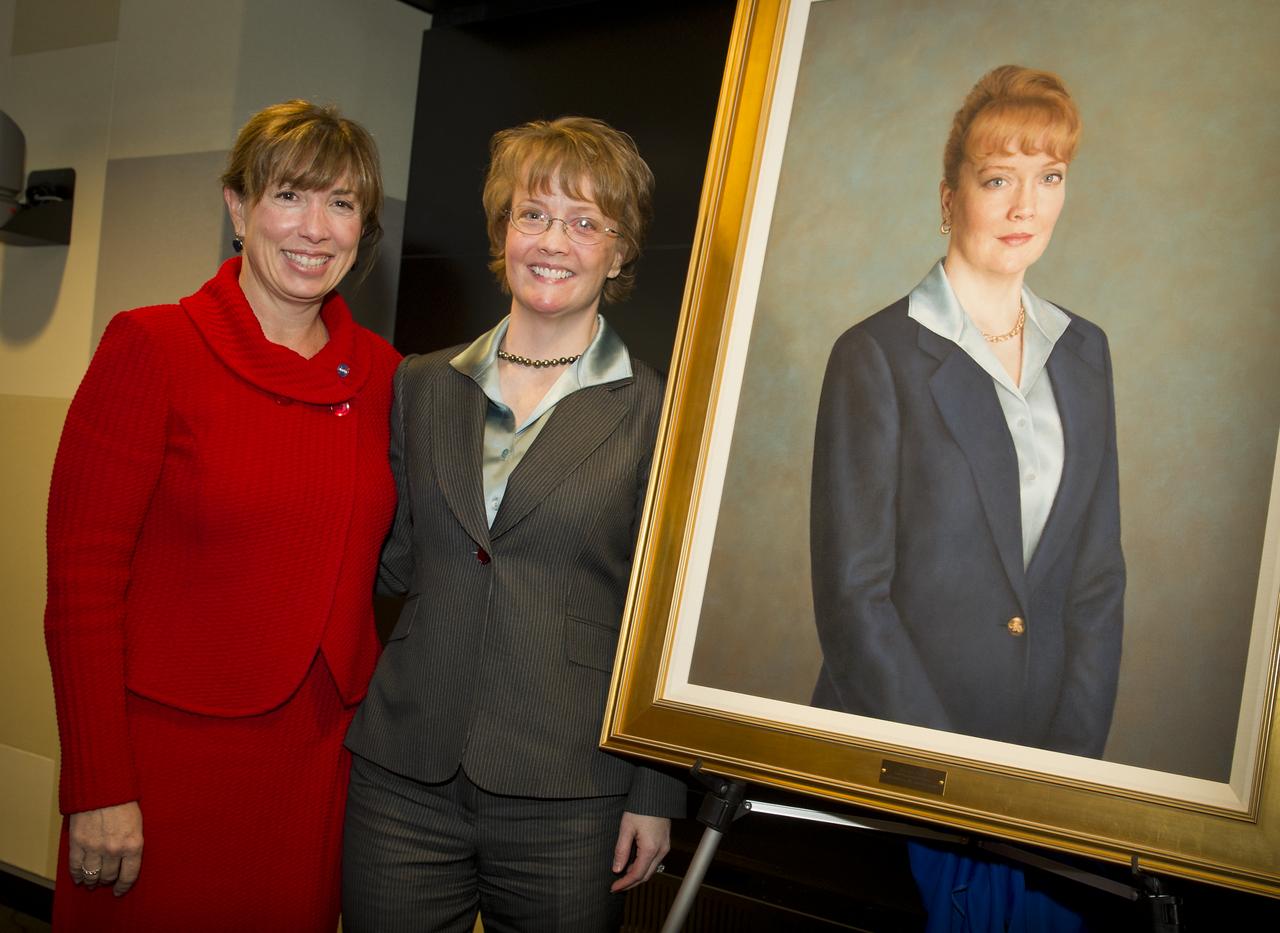
NASA Deputy Administrator Lori Garver, left, and former NASA Deputy Administrator Shana Dale pose for a photograph shortly after the unveiling of Dale's official portrait on Thursday, Nov. 18, 2010 at NASA Headquarters in Washington. Dale served as NASA's deputy administrator from Nov. 14, 2005 through January 17, 2009. Photo Credit: (NASA/Bill Ingalls)
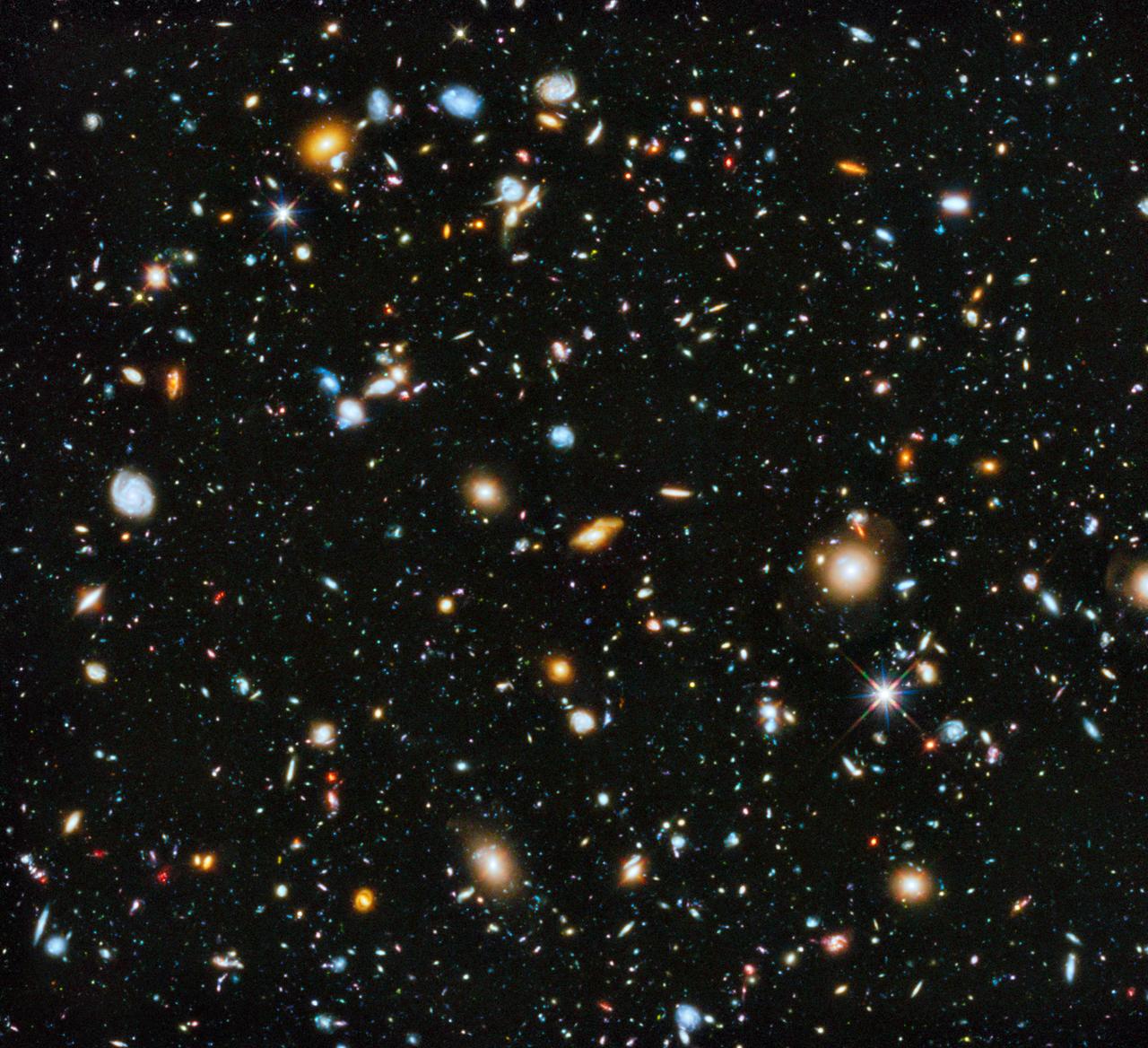
Astronomers using NASA's Hubble Space Telescope have assembled a comprehensive picture of the evolving universe – among the most colorful deep space images ever captured by the 24-year-old telescope. Researchers say the image, in new study called the Ultraviolet Coverage of the Hubble Ultra Deep Field, provides the missing link in star formation. The Hubble Ultra Deep Field 2014 image is a composite of separate exposures taken in 2003 to 2012 with Hubble's Advanced Camera for Surveys and Wide Field Camera 3. Credit: NASA/ESA Read more: <a href="http://1.usa.gov/1neD0se" rel="nofollow">1.usa.gov/1neD0se</a> <b><a href="http://www.nasa.gov/audience/formedia/features/MP_Photo_Guidelines.html" rel="nofollow">NASA image use policy.</a></b> <b><a href="http://www.nasa.gov/centers/goddard/home/index.html" rel="nofollow">NASA Goddard Space Flight Center</a></b> enables NASA’s mission through four scientific endeavors: Earth Science, Heliophysics, Solar System Exploration, and Astrophysics. Goddard plays a leading role in NASA’s accomplishments by contributing compelling scientific knowledge to advance the Agency’s mission. <b>Follow us on <a href="http://twitter.com/NASAGoddardPix" rel="nofollow">Twitter</a></b> <b>Like us on <a href="http://www.facebook.com/pages/Greenbelt-MD/NASA-Goddard/395013845897?ref=tsd" rel="nofollow">Facebook</a></b> <b>Find us on <a href="http://instagram.com/nasagoddard?vm=grid" rel="nofollow">Instagram</a></b>
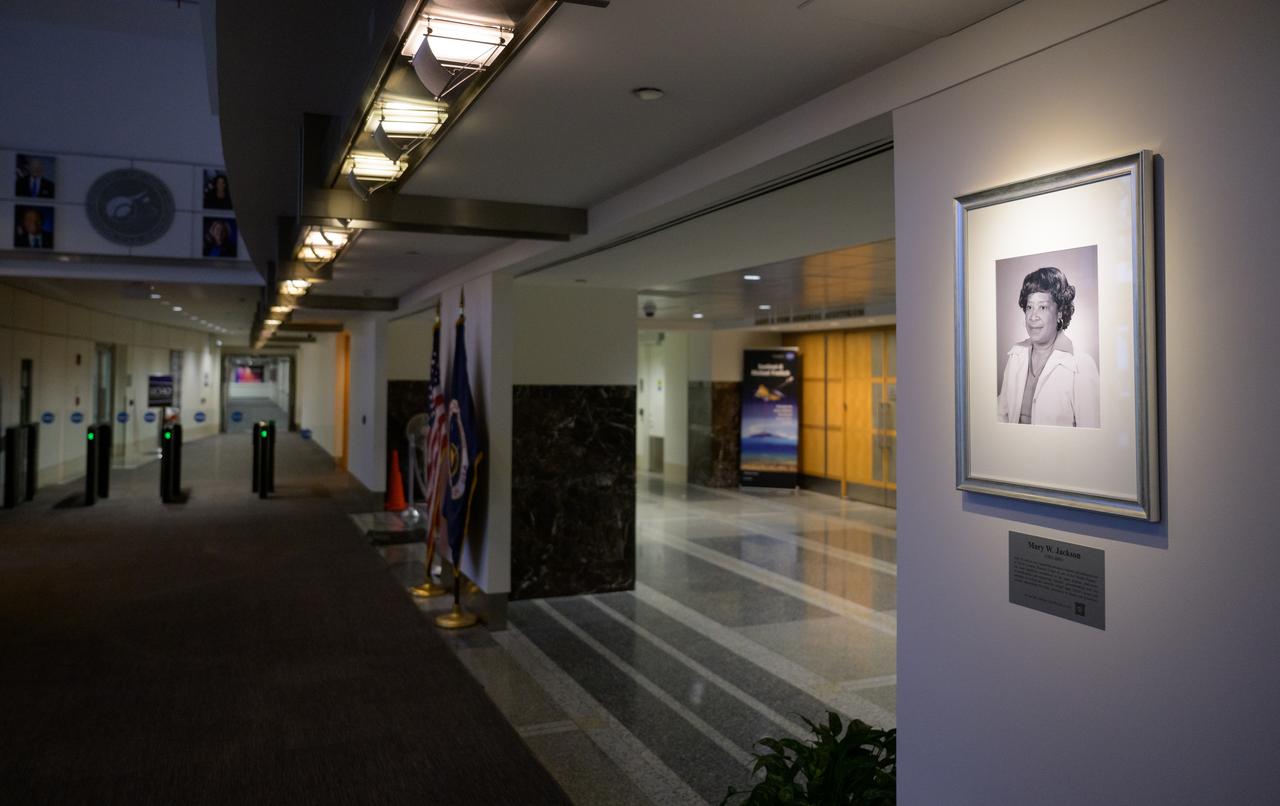
A portrait of Mary W. Jackson is seen after it was unveiled, Friday, Dec. 6, 2024, at the NASA Headquarters Mary W. Jackson Building in Washington. Mary W. Jackson was a pioneering aerospace engineer and mathematician at NASA’s Langley Research Center. As one of the “Hidden Figures,” she made significant contributions to the space program, particularly in aerodynamics and engineering. Jackson’s groundbreaking work and advocacy for women and minorities helped shape NASA’s success and advance opportunities for future generations in science and technology. Photo Credit: (NASA/Joel Kowsky)
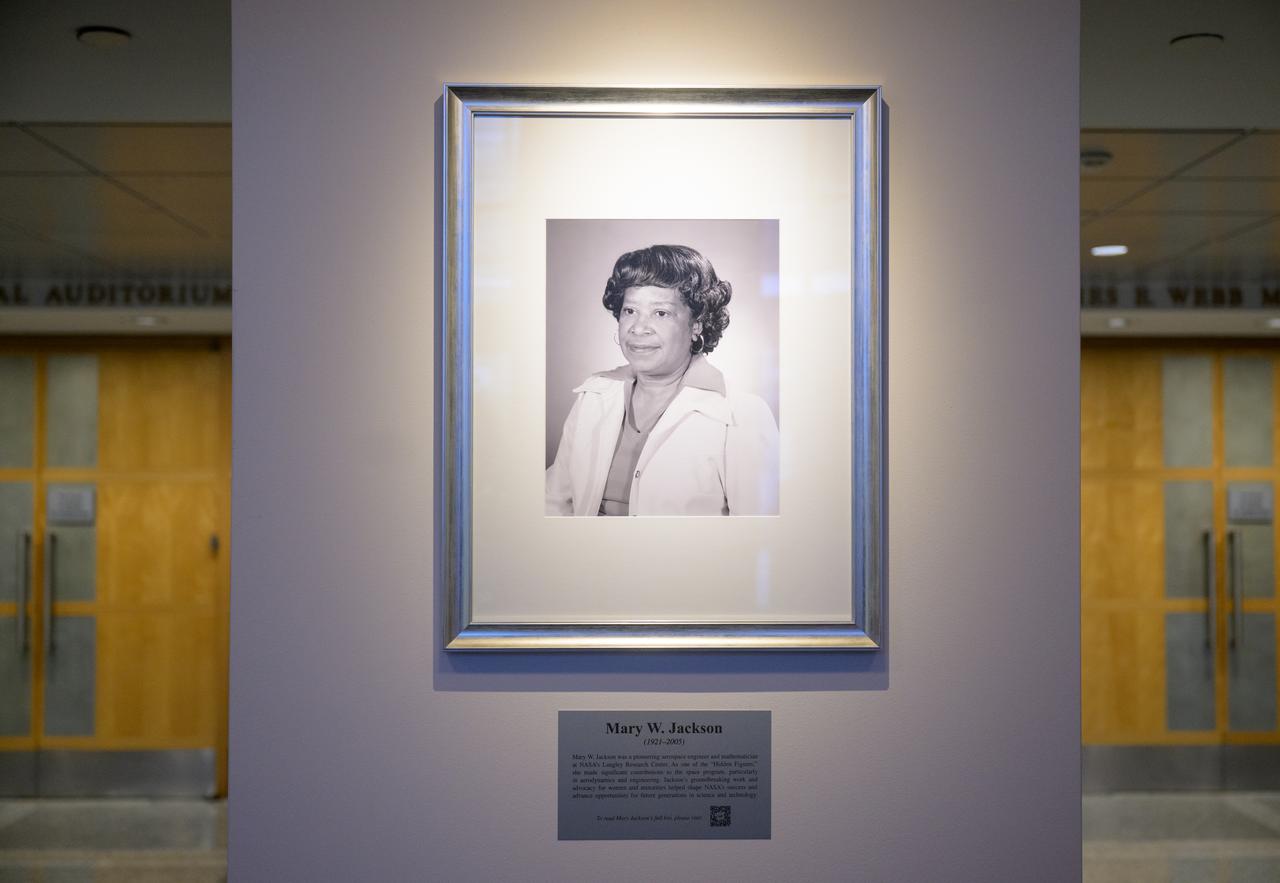
A portrait of Mary W. Jackson is seen after it was unveiled, Friday, Dec. 6, 2024, at the NASA Headquarters Mary W. Jackson Building in Washington. Mary W. Jackson was a pioneering aerospace engineer and mathematician at NASA’s Langley Research Center. As one of the “Hidden Figures,” she made significant contributions to the space program, particularly in aerodynamics and engineering. Jackson’s groundbreaking work and advocacy for women and minorities helped shape NASA’s success and advance opportunities for future generations in science and technology. Photo Credit: (NASA/Joel Kowsky)
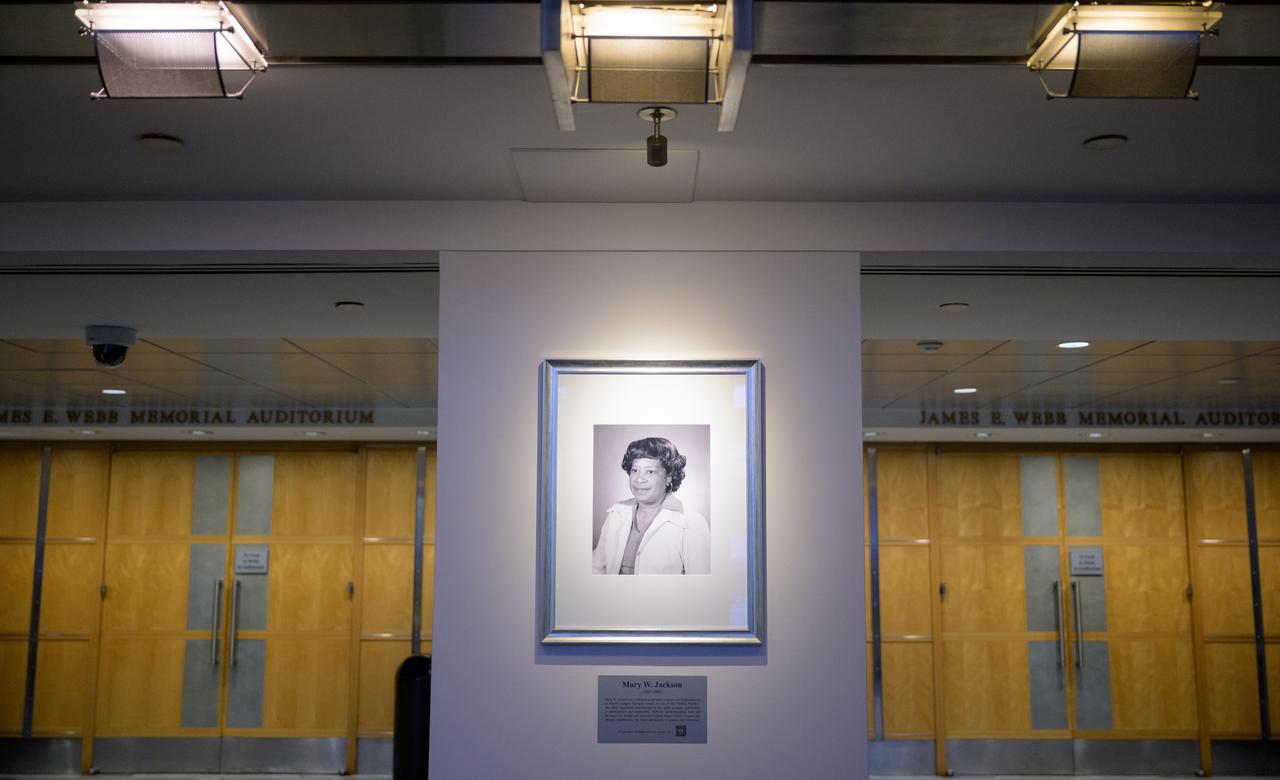
A portrait of Mary W. Jackson is seen after it was unveiled, Friday, Dec. 6, 2024, at the NASA Headquarters Mary W. Jackson Building in Washington. Mary W. Jackson was a pioneering aerospace engineer and mathematician at NASA’s Langley Research Center. As one of the “Hidden Figures,” she made significant contributions to the space program, particularly in aerodynamics and engineering. Jackson’s groundbreaking work and advocacy for women and minorities helped shape NASA’s success and advance opportunities for future generations in science and technology. Photo Credit: (NASA/Joel Kowsky)
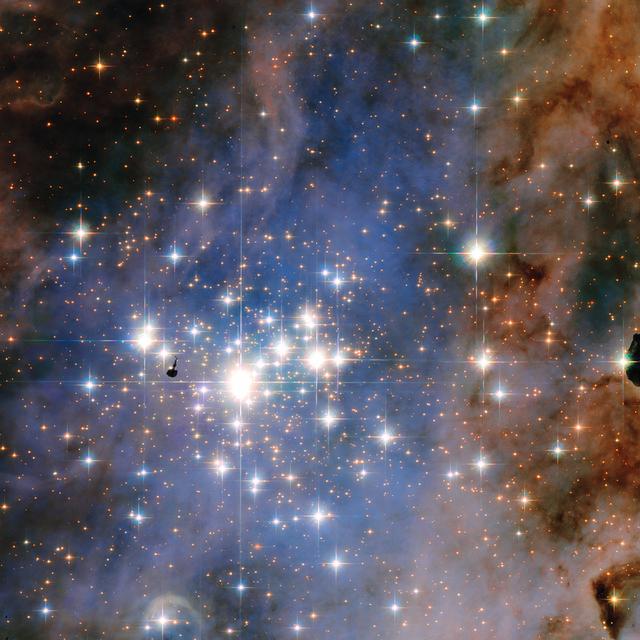
Resembling an opulent diamond tapestry, this image from NASA’s Hubble Space Telescope shows a glittering star cluster that contains a collection of some of the brightest stars seen in our Milky Way galaxy. Called Trumpler 14, it is located 8,000 light-years away in the Carina Nebula, a huge star-formation region. Because the cluster is only 500,000 years old, it has one of the highest concentrations of massive, luminous stars in the entire Milky Way. The small, dark knot left of center is a nodule of gas laced with dust, and seen in silhouette. Credit: NASA/ESA/J. Maíz Apellániz (Institute of Astrophysics of Andalusia, Spain) <b><a href="http://www.nasa.gov/audience/formedia/features/MP_Photo_Guidelines.html" rel="nofollow">NASA image use policy.</a></b> <b><a href="http://www.nasa.gov/centers/goddard/home/index.html" rel="nofollow">NASA Goddard Space Flight Center</a></b> enables NASA’s mission through four scientific endeavors: Earth Science, Heliophysics, Solar System Exploration, and Astrophysics. Goddard plays a leading role in NASA’s accomplishments by contributing compelling scientific knowledge to advance the Agency’s mission. <b>Follow us on <a href="http://twitter.com/NASAGoddardPix" rel="nofollow">Twitter</a></b> <b>Like us on <a href="http://www.facebook.com/pages/Greenbelt-MD/NASA-Goddard/395013845897?ref=tsd" rel="nofollow">Facebook</a></b> <b>Find us on <a href="http://instagram.com/nasagoddard?vm=grid" rel="nofollow">Instagram</a></b>
![Scientists presented the first images from NASA's Solar Dynamics Observatory [SDO] during a special "first light" press conference, Wednesday, April 21 2010, at held at the Newseum in Washington DC.](https://images-assets.nasa.gov/image/GSFC_20171208_Archive_e002078/GSFC_20171208_Archive_e002078~medium.jpg)
Scientists presented the first images from NASA's Solar Dynamics Observatory [SDO] during a special "first light" press conference, Wednesday, April 21 2010, at held at the Newseum in Washington DC.
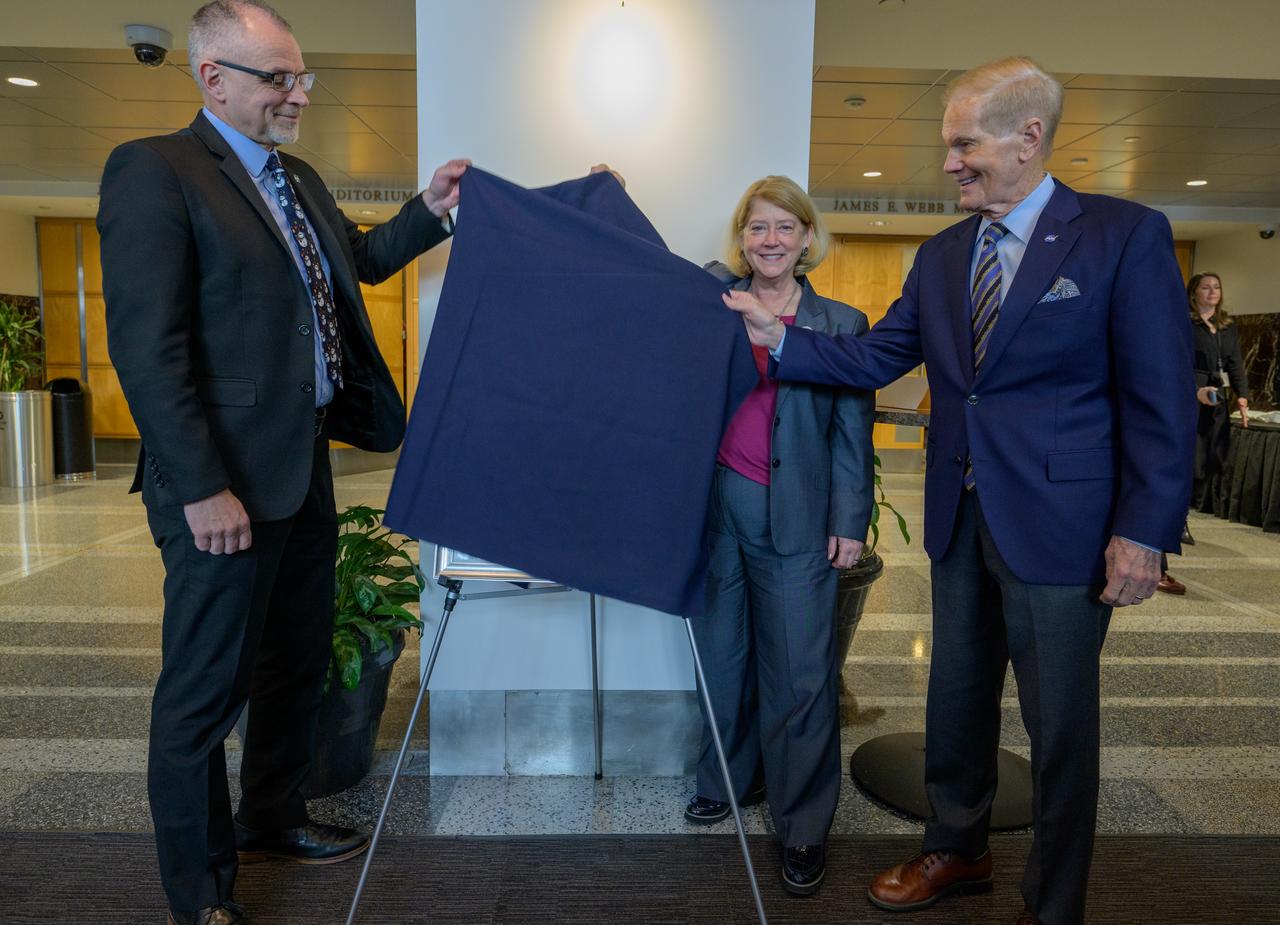
A portrait of Mary W. Jackson is unveiled, by NASA Associate Administrator Jim Free, left, NASA Deputy Administrator Pam Melroy, and, NASA Administrator Bill Nelson, right, Friday, Dec. 6, 2024, at the NASA Headquarters Mary W. Jackson Building in Washington. Mary W. Jackson was a pioneering aerospace engineer and mathematician at NASA’s Langley Research Center. As one of the “Hidden Figures,” she made significant contributions to the space program, particularly in aerodynamics and engineering. Jackson’s groundbreaking work and advocacy for women and minorities helped shape NASA’s success and advance opportunities for future generations in science and technology. Photo Credit: (NASA/Bill Ingalls)
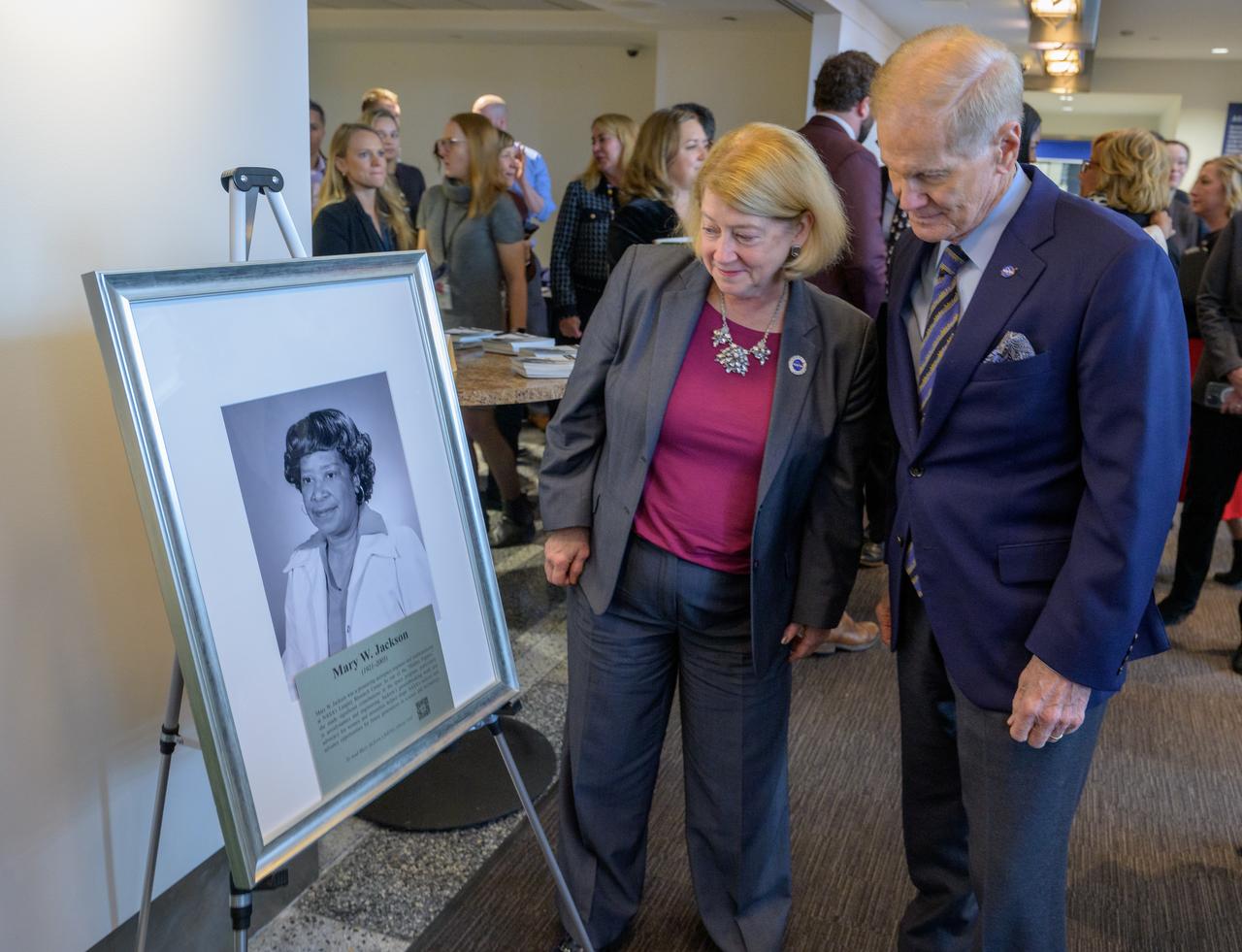
NASA Deputy Administrator Pam Melroy, and, NASA Administrator Bill Nelson, right, look at a portrait of Mary W. Jackson after it was unveiled, Friday, Dec. 6, 2024, at the NASA Headquarters Mary W. Jackson Building in Washington. Mary W. Jackson was a pioneering aerospace engineer and mathematician at NASA’s Langley Research Center. As one of the “Hidden Figures,” she made significant contributions to the space program, particularly in aerodynamics and engineering. Jackson’s groundbreaking work and advocacy for women and minorities helped shape NASA’s success and advance opportunities for future generations in science and technology. Photo Credit: (NASA/Bill Ingalls)
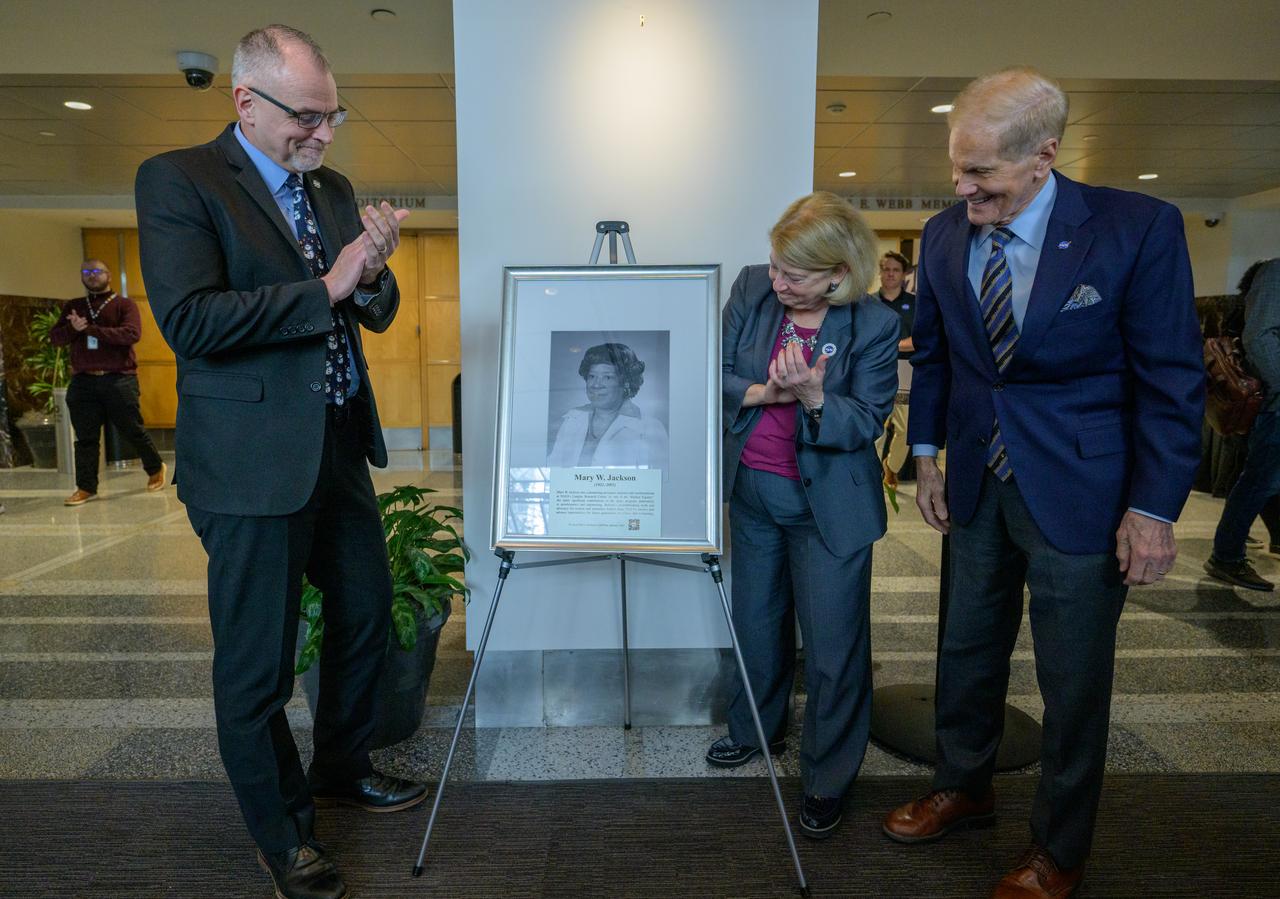
A portrait of Mary W. Jackson is unveiled, by NASA Associate Administrator Jim Free, left, NASA Deputy Administrator Pam Melroy, and, NASA Administrator Bill Nelson, right, Friday, Dec. 6, 2024, at the NASA Headquarters Mary W. Jackson Building in Washington. Mary W. Jackson was a pioneering aerospace engineer and mathematician at NASA’s Langley Research Center. As one of the “Hidden Figures,” she made significant contributions to the space program, particularly in aerodynamics and engineering. Jackson’s groundbreaking work and advocacy for women and minorities helped shape NASA’s success and advance opportunities for future generations in science and technology. Photo Credit: (NASA/Bill Ingalls)
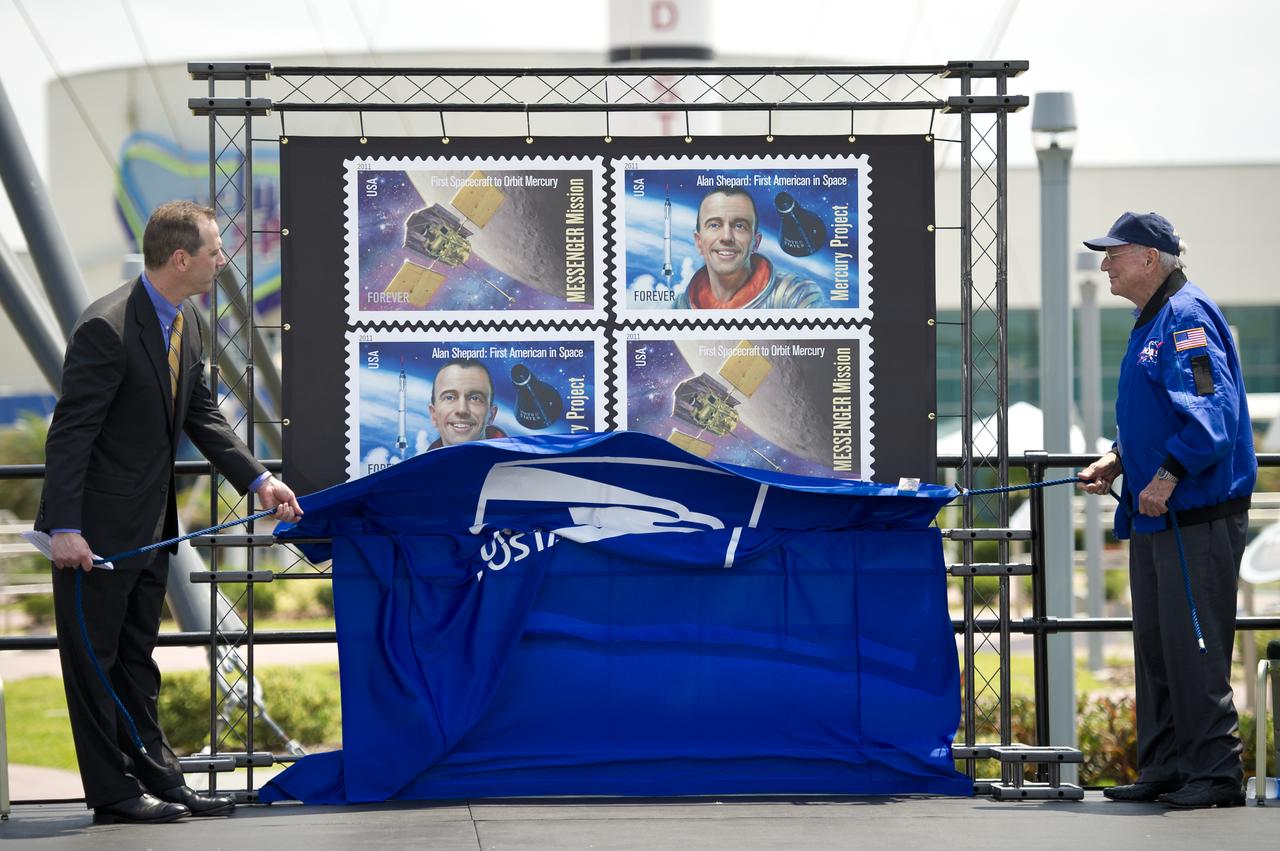
United States Postal Service Vice President of Finance Steve Masse, left, and NASA Mercury Astronaut Scott Carpenter, unveil two USPS stamps to commemorate and celebrate 50 years of US Spaceflight and the MESSENGER program during an event, Wednesday, May 4, 2011 at the NASA Kennedy Space Center in Cape Canaveral, Fla. One stamp commemorates NASA’s Project Mercury, America’s first manned spaceflight program, and NASA astronaut Alan Shepard’s historic flight on May 5, 1961, aboard spacecraft Freedom 7. The other stamp draws attention to NASA’s unmanned MESSENGER mission, a scientific investigation of the planet Mercury. On March 17, 2011, MESSENGER became the first spacecraft to enter into orbit around Mercury. Photo Credit: (NASA/Bill Ingalls)
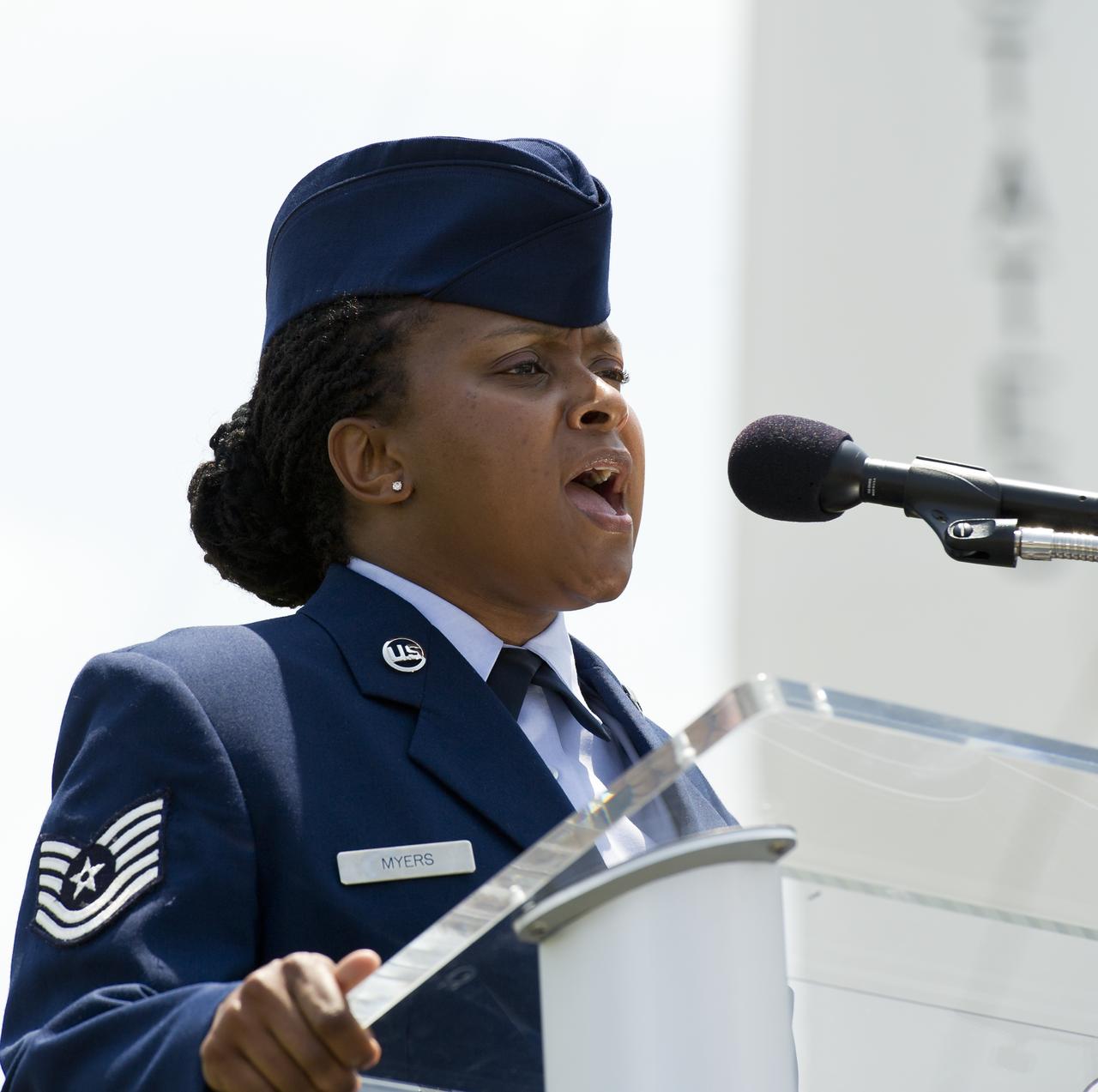
Altrameise Myers, Tech Sgt., 45th Space Wing sings the National Anthem during the start of a ceremony where two USPS stamps where unveiled to commemorate and celebrate 50 years of US Spaceflight and the MESSENGER program during an event, Wednesday, May 4, 2011 at the NASA Kennedy Space Center in Cape Canaveral, Fla. One stamp commemorates NASA’s Project Mercury, America’s first manned spaceflight program, and NASA astronaut Alan Shepard’s historic flight on May 5, 1961, aboard spacecraft Freedom 7. The other stamp draws attention to NASA’s unmanned MESSENGER mission, a scientific investigation of the planet Mercury. On March 17, 2011, MESSENGER became the first spacecraft to enter into orbit around Mercury. Photo Credit: (NASA/Bill Ingalls)
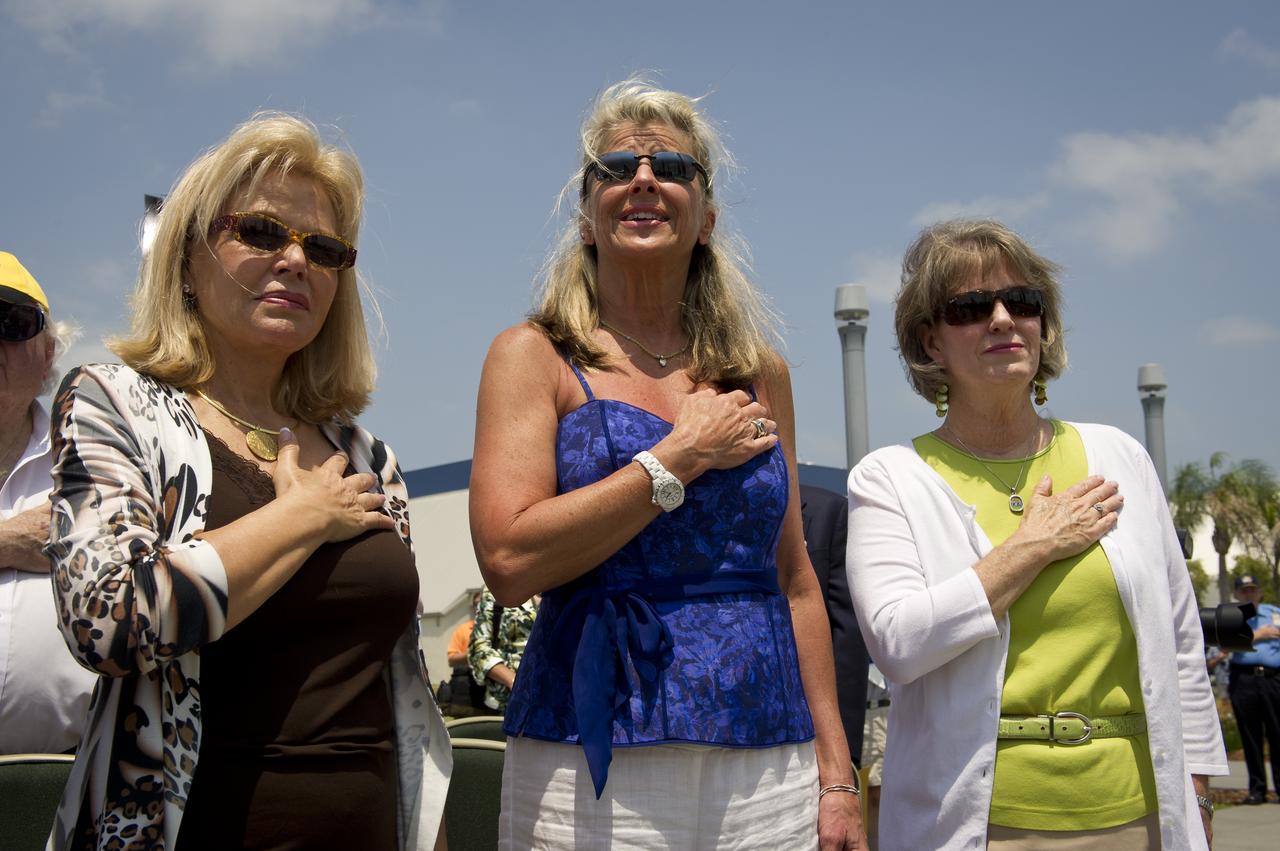
Patty Carpenter, wife of NASA Mercury Astronaut Scott Carpenter, left, Daughters of NASA astronaut Alan Shepard, Laura Shepard Churchley, and, Alice Wackermann, right, sing the National Anthem during an unveiling ceremony of two USPS stamps that commemorate and celebrate 50 years of US Spaceflight and the MESSENGER program during an event, Wednesday, May 4, 2011 at the NASA Kennedy Space Center in Cape Canaveral, Fla. One stamp commemorates NASA’s Project Mercury, America’s first manned spaceflight program, and NASA astronaut Alan Shepard’s historic flight on May 5, 1961, aboard spacecraft Freedom 7. The other stamp draws attention to NASA’s unmanned MESSENGER mission, a scientific investigation of the planet Mercury. On March 17, 2011, MESSENGER became the first spacecraft to enter into orbit around Mercury. Photo Credit: (NASA/Bill Ingalls)
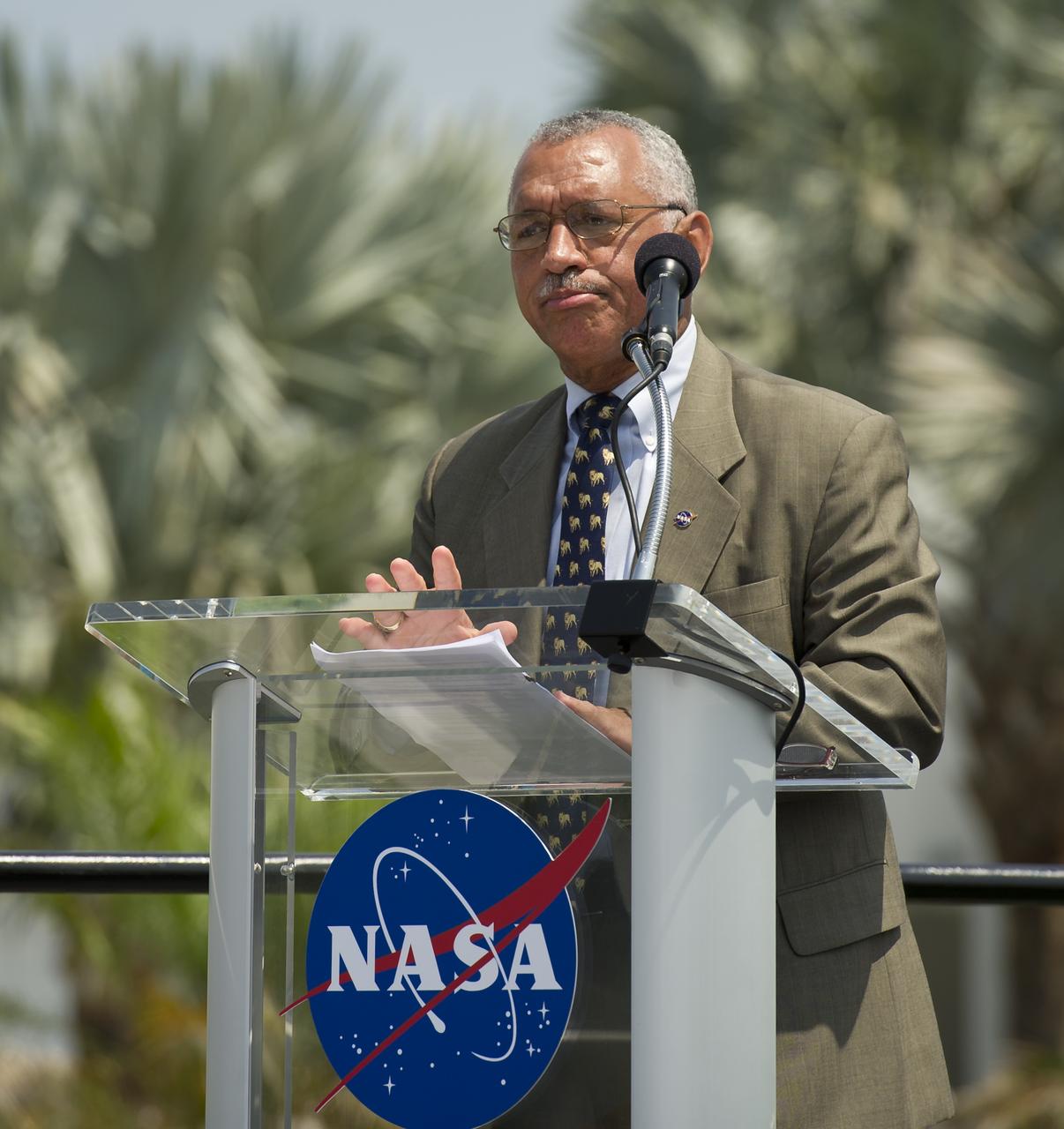
NASA Administrator Charles Boldin speaks during an unveiling ceremony of two USPS stamps that commemorate and celebrate 50 years of US Spaceflight and the MESSENGER program during an event, Wednesday, May 4, 2011 at the NASA Kennedy Space Center in Cape Canaveral, Fla. One stamp commemorates NASA’s Project Mercury, America’s first manned spaceflight program, and NASA astronaut Alan Shepard’s historic flight on May 5, 1961, aboard spacecraft Freedom 7. The other stamp draws attention to NASA’s unmanned MESSENGER mission, a scientific investigation of the planet Mercury. On March 17, 2011, MESSENGER became the first spacecraft to enter into orbit around Mercury. Photo Credit: (NASA/Bill Ingalls)
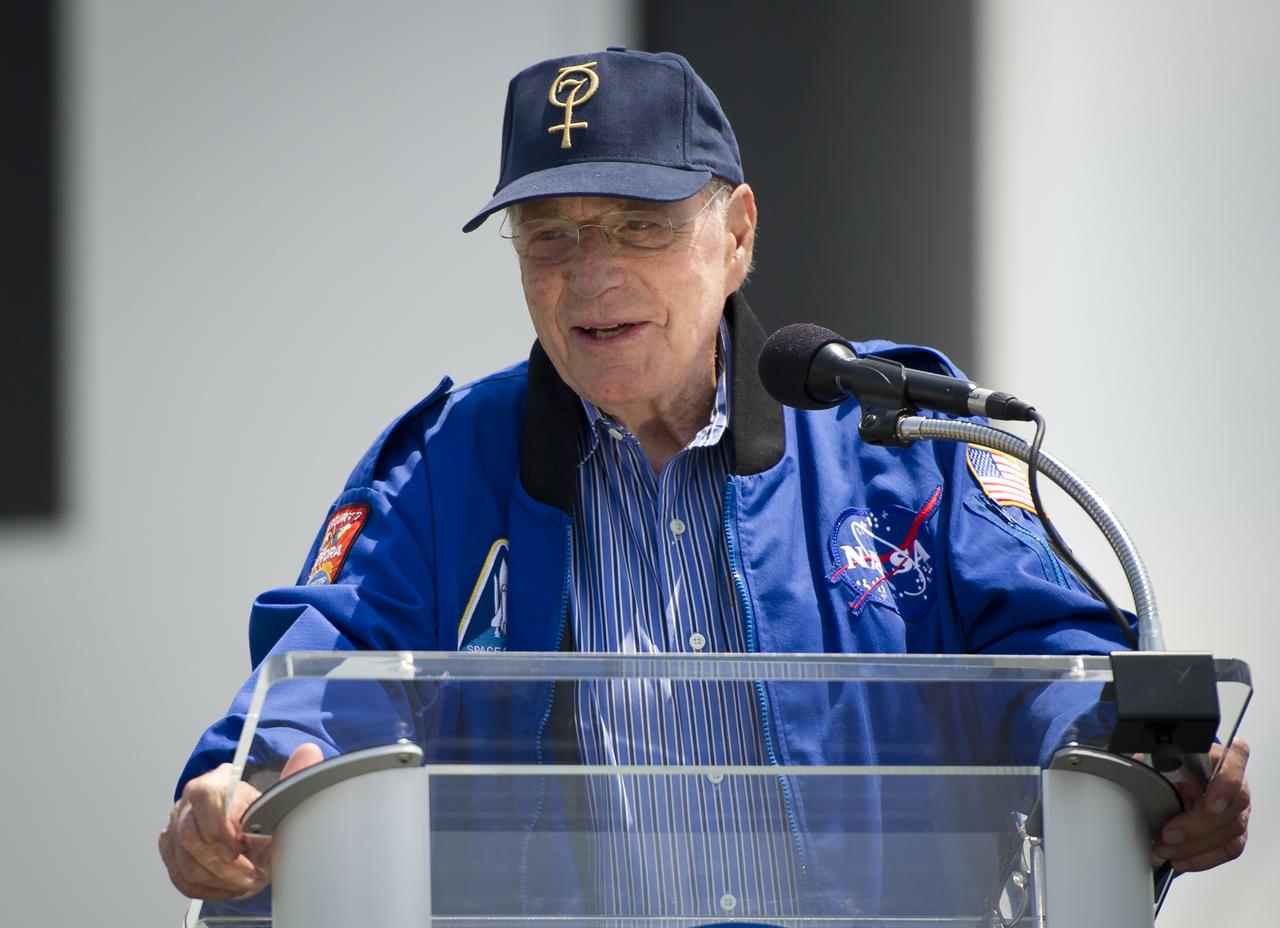
NASA Mercury Astronaut Scott Carpenter speaks during an unveiling ceremony of two USPS stamps that commemorate and celebrate 50 years of US Spaceflight and the MESSENGER program during an event, Wednesday, May 4, 2011 at the NASA Kennedy Space Center in Cape Canaveral, Fla. One stamp commemorates NASA’s Project Mercury, America’s first manned spaceflight program, and NASA astronaut Alan Shepard’s historic flight on May 5, 1961, aboard spacecraft Freedom 7. The other stamp draws attention to NASA’s unmanned MESSENGER mission, a scientific investigation of the planet Mercury. On March 17, 2011, MESSENGER became the first spacecraft to enter into orbit around Mercury. Photo Credit: (NASA/Bill Ingalls)
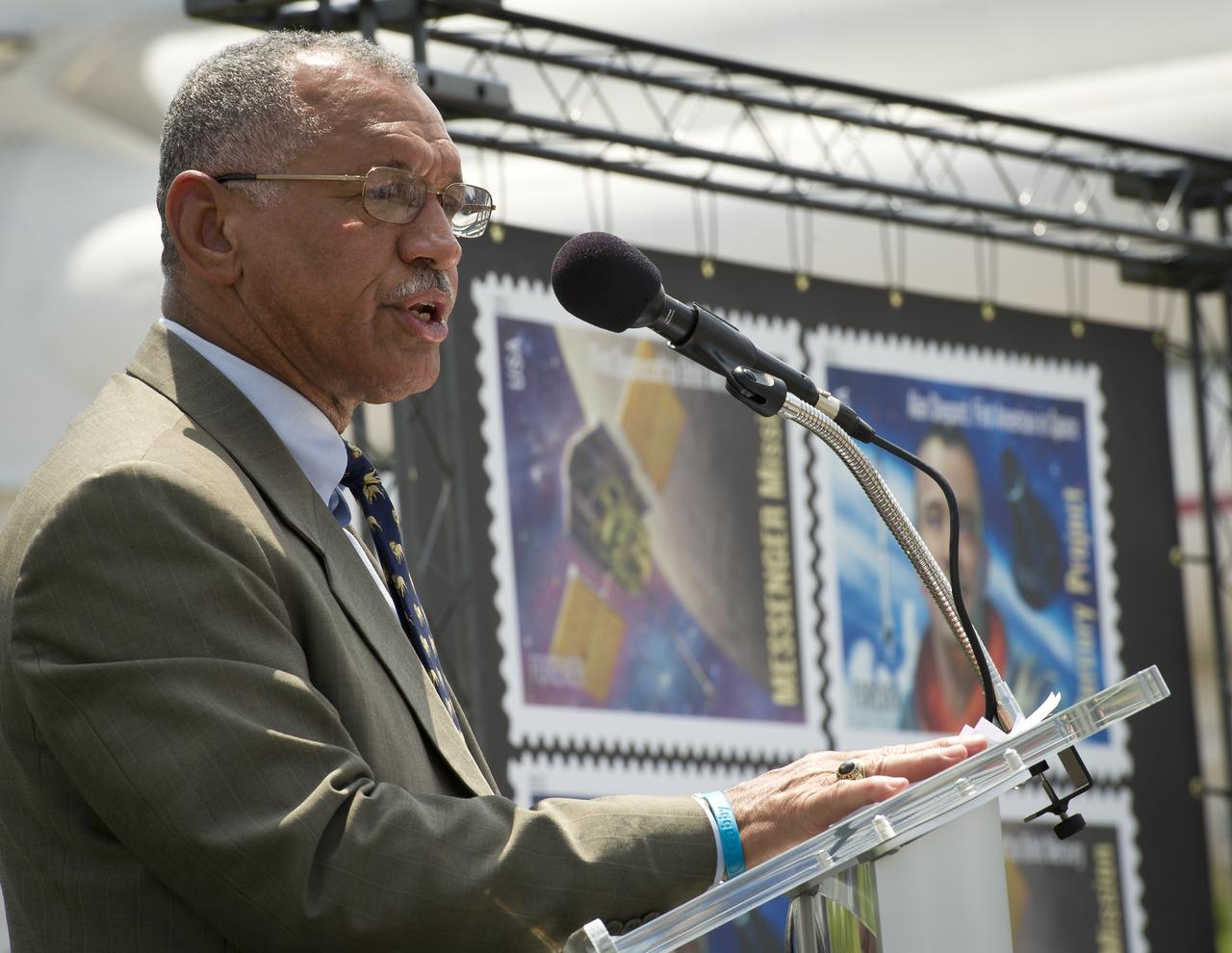
NASA Administrator Charles Boldin speaks during an unveiling ceremony of two USPS stamps that commemorate and celebrate 50 years of US Spaceflight and the MESSENGER program during an event, Wednesday, May 4, 2011 at the NASA Kennedy Space Center in Cape Canaveral, Fla. One stamp commemorates NASA’s Project Mercury, America’s first manned spaceflight program, and NASA astronaut Alan Shepard’s historic flight on May 5, 1961, aboard spacecraft Freedom 7. The other stamp draws attention to NASA’s unmanned MESSENGER mission, a scientific investigation of the planet Mercury. On March 17, 2011, MESSENGER became the first spacecraft to enter into orbit around Mercury. Photo Credit: (NASA/Bill Ingalls)
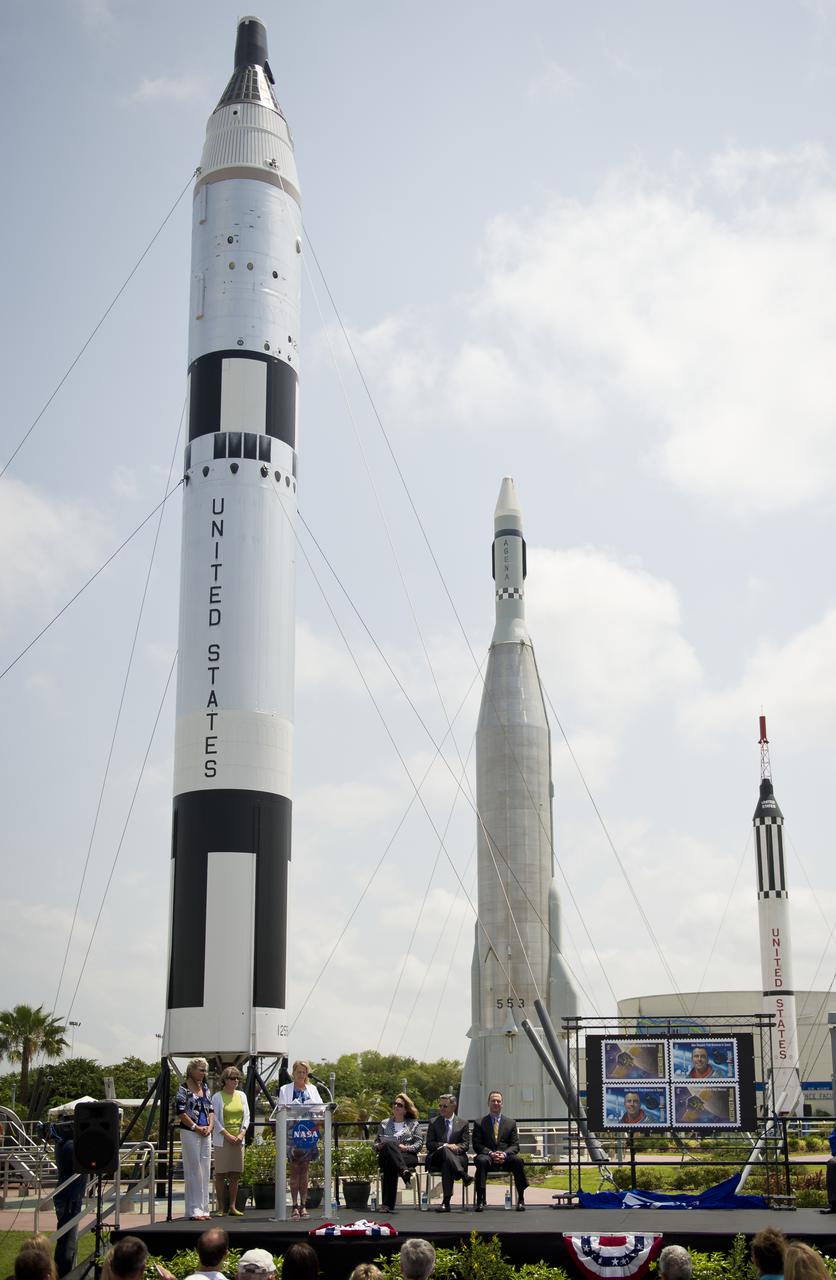
Daughters of NASA astronaut Alan Shepard, Laura Shepard Churchley, standing left, Alice Wackermann and Julie Jenkins, standing right, speak during an unveiling ceremony of two USPS stamps that commemorate and celebrate 50 years of US Spaceflight and the MESSENGER program during an event, Wednesday, May 4, 2011 at the NASA Kennedy Space Center in Cape Canaveral, Fla. One stamp commemorates NASA’s Project Mercury, America’s first manned spaceflight program, and NASA astronaut Alan Shepard’s historic flight on May 5, 1961, aboard spacecraft Freedom 7. The other stamp draws attention to NASA’s unmanned MESSENGER mission, a scientific investigation of the planet Mercury. On March 17, 2011, MESSENGER became the first spacecraft to enter into orbit around Mercury. Photo Credit: (NASA/Bill Ingalls)

Jim Adams, NASA Deputy Director, Planetary Science Division, Science Mission Directorate, speaks during an unveiling ceremony of two USPS stamps that commemorate and celebrate 50 years of US Spaceflight and the MESSENGER program during an event, Wednesday, May 4, 2011 at the NASA Kennedy Space Center in Cape Canaveral, Fla. One stamp commemorates NASA’s Project Mercury, America’s first manned spaceflight program, and NASA astronaut Alan Shepard’s historic flight on May 5, 1961, aboard spacecraft Freedom 7. The other stamp draws attention to NASA’s unmanned MESSENGER mission, a scientific investigation of the planet Mercury. On March 17, 2011, MESSENGER became the first spacecraft to enter into orbit around Mercury. Photo Credit: (NASA/Bill Ingalls)
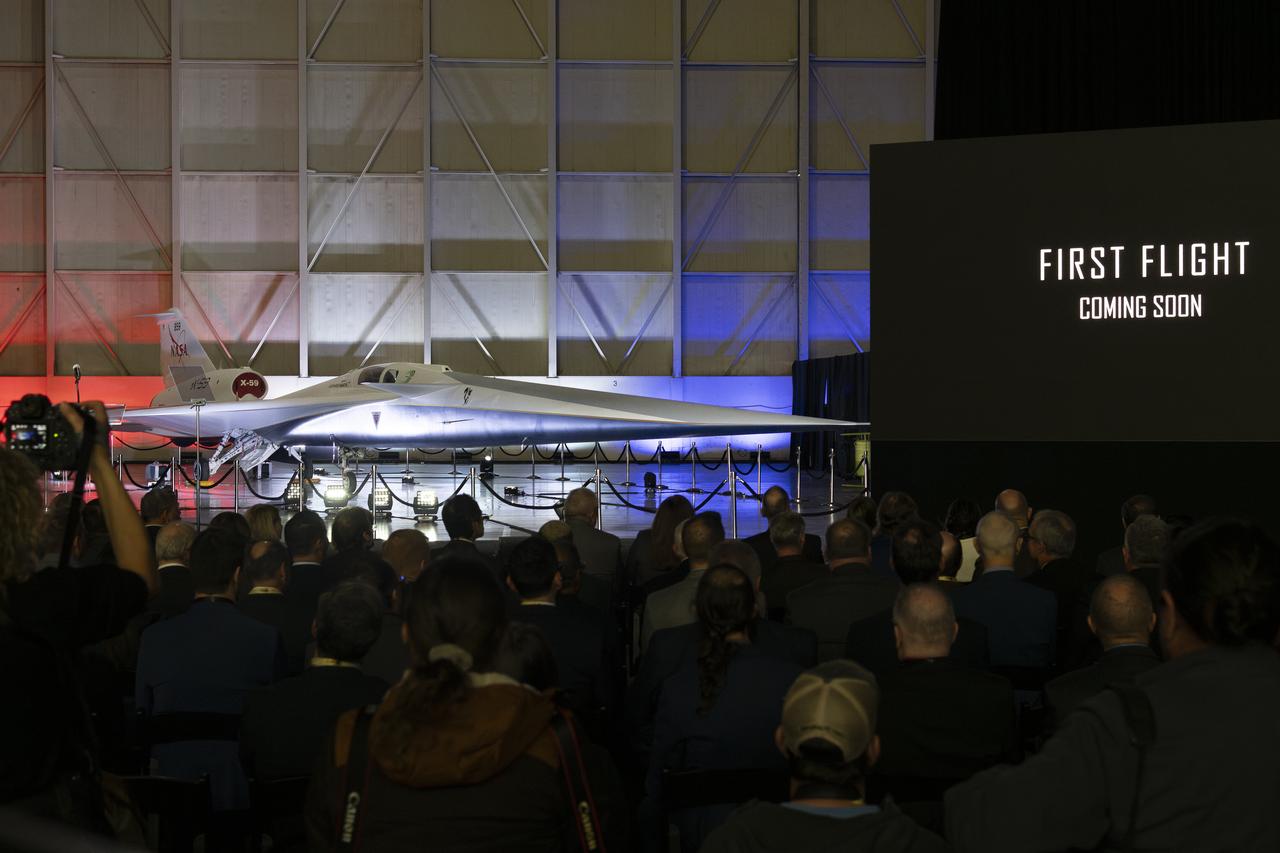
NASA’s X-59 quiet supersonic research aircraft is unveiled at a January 12, 2024 event at Lockheed Martin Skunk Works in Palmdale, California. The X-59 is the centerpiece of NASA’s Quesst mission, which seeks to solve one of the major barriers to supersonic flight over land, currently banned in the United States, by making sonic booms quieter.
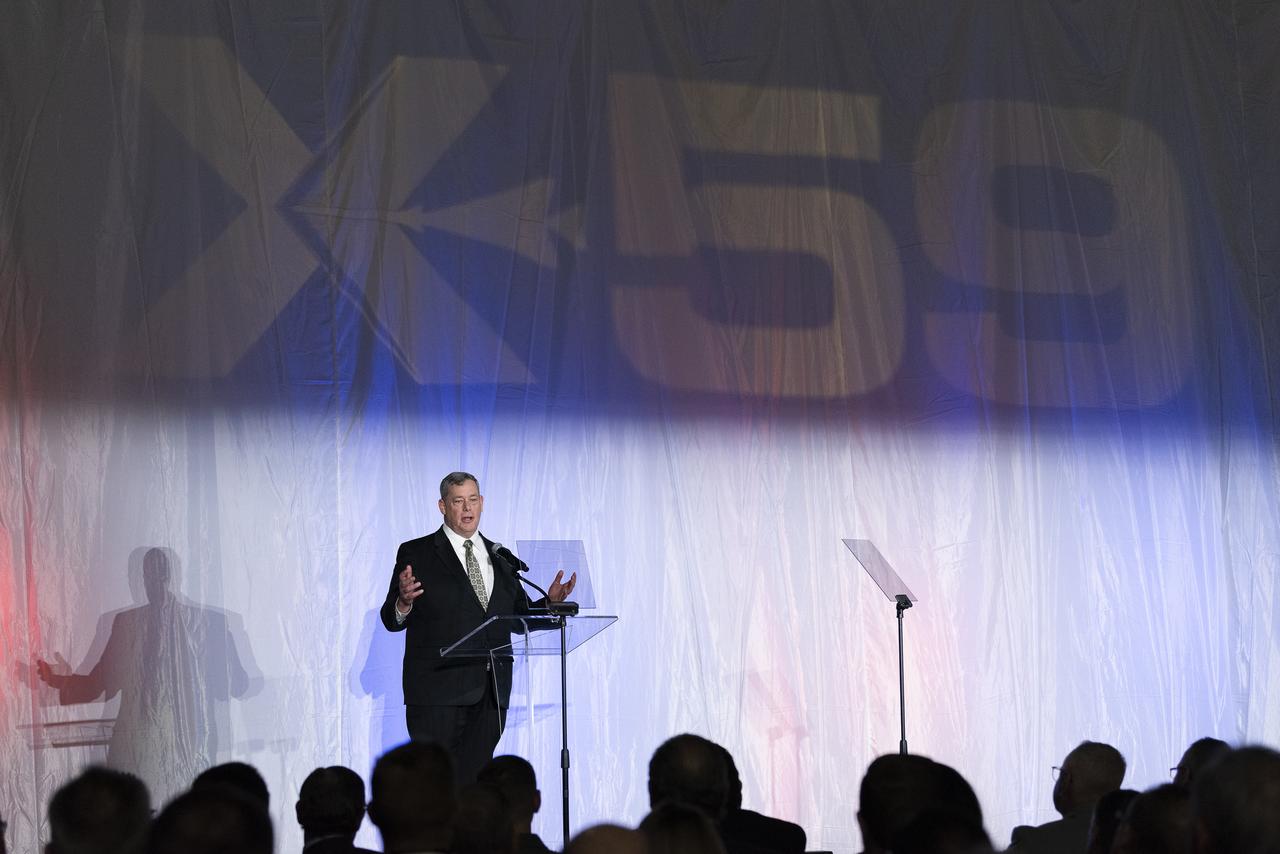
Lockheed Martin Aeronautics Executive Vice President Greg Ulmer speaks on stage prior to the unveiling of the agency’s X-59 quiet supersonic research aircraft at a January 12, 2024 event at Lockheed Martin Skunk Works in Palmdale, California. The X-59 is the centerpiece of NASA’s Quesst mission, which seeks to solve one of the major barriers to supersonic flight over land, currently banned in the United States, by making sonic booms quieter.
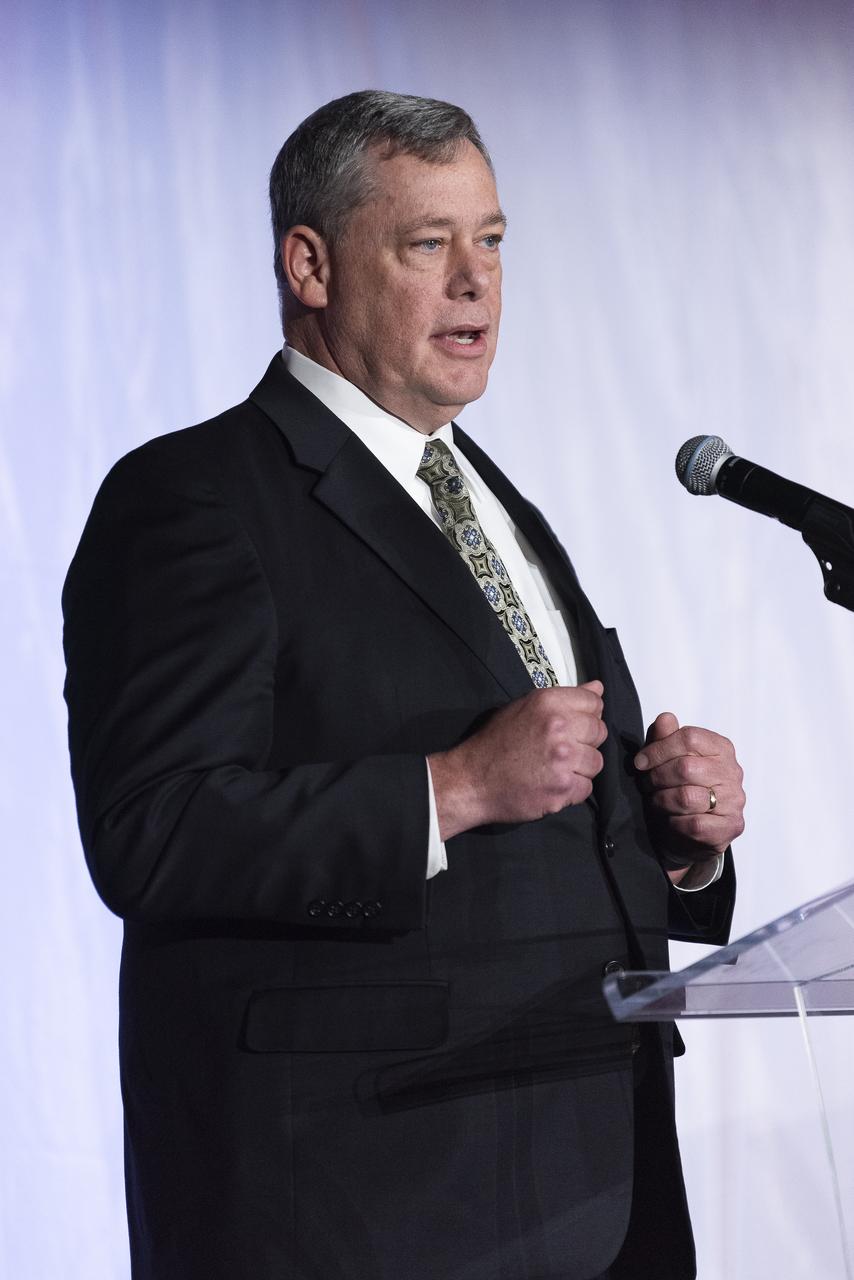
Lockheed Martin Aeronautics Executive Vice President Greg Ulmer speaks on stage prior to the unveiling of the agency’s X-59 quiet supersonic research aircraft at a January 12, 2024 event at Lockheed Martin Skunk Works in Palmdale, California. The X-59 is the centerpiece of NASA’s Quesst mission, which seeks to solve one of the major barriers to supersonic flight over land, currently banned in the United States, by making sonic booms quieter.
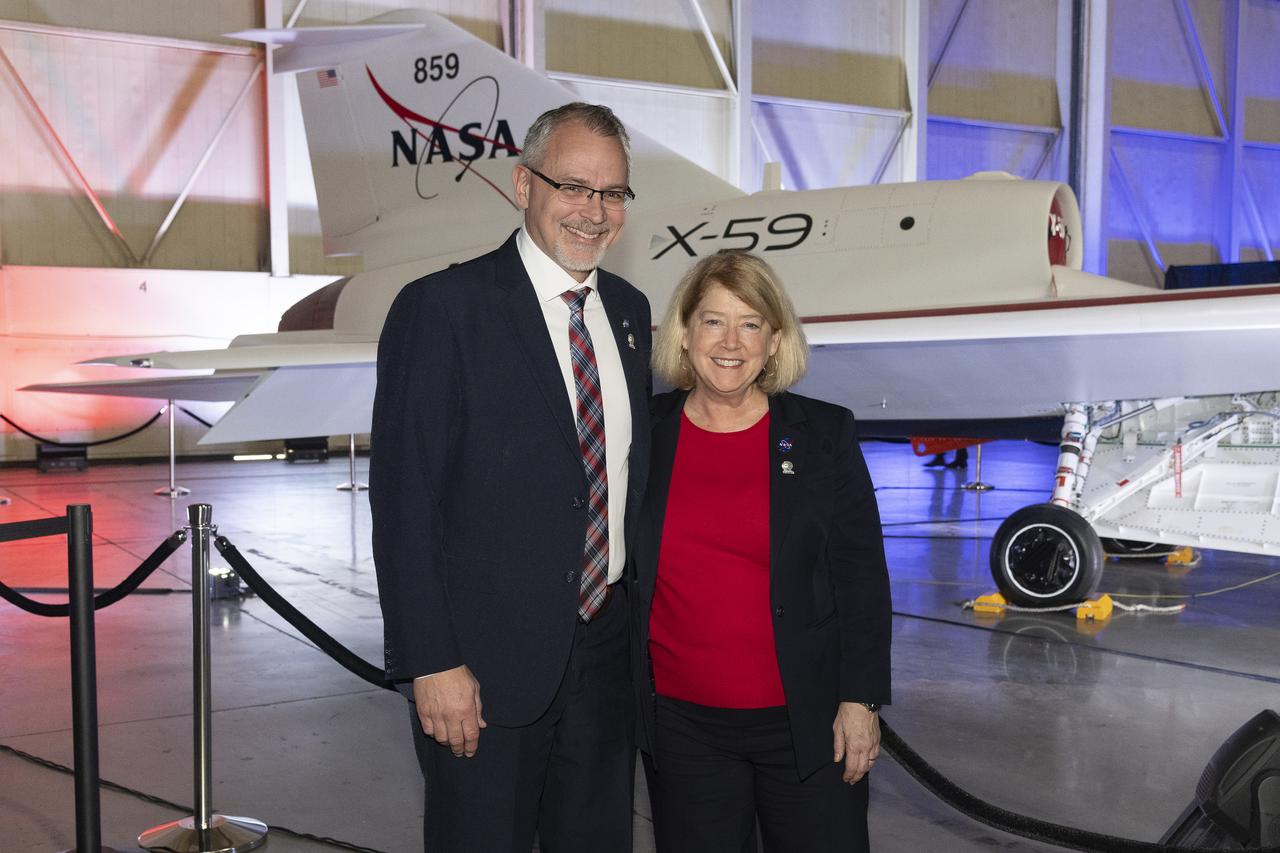
NASA Associate Administrator Jim Free (left) and Deputy Administrator Pam Melroy (right) stand in front of the newly unveiled X-59 quiet supersonic research aircraft at a January 12, 2024 event at Lockheed Martin Skunk Works in Palmdale, California. The X-59 is the centerpiece of NASA’s Quesst mission, which seeks to solve one of the major barriers to supersonic flight over land, currently banned in the United States, by making sonic booms quieter.
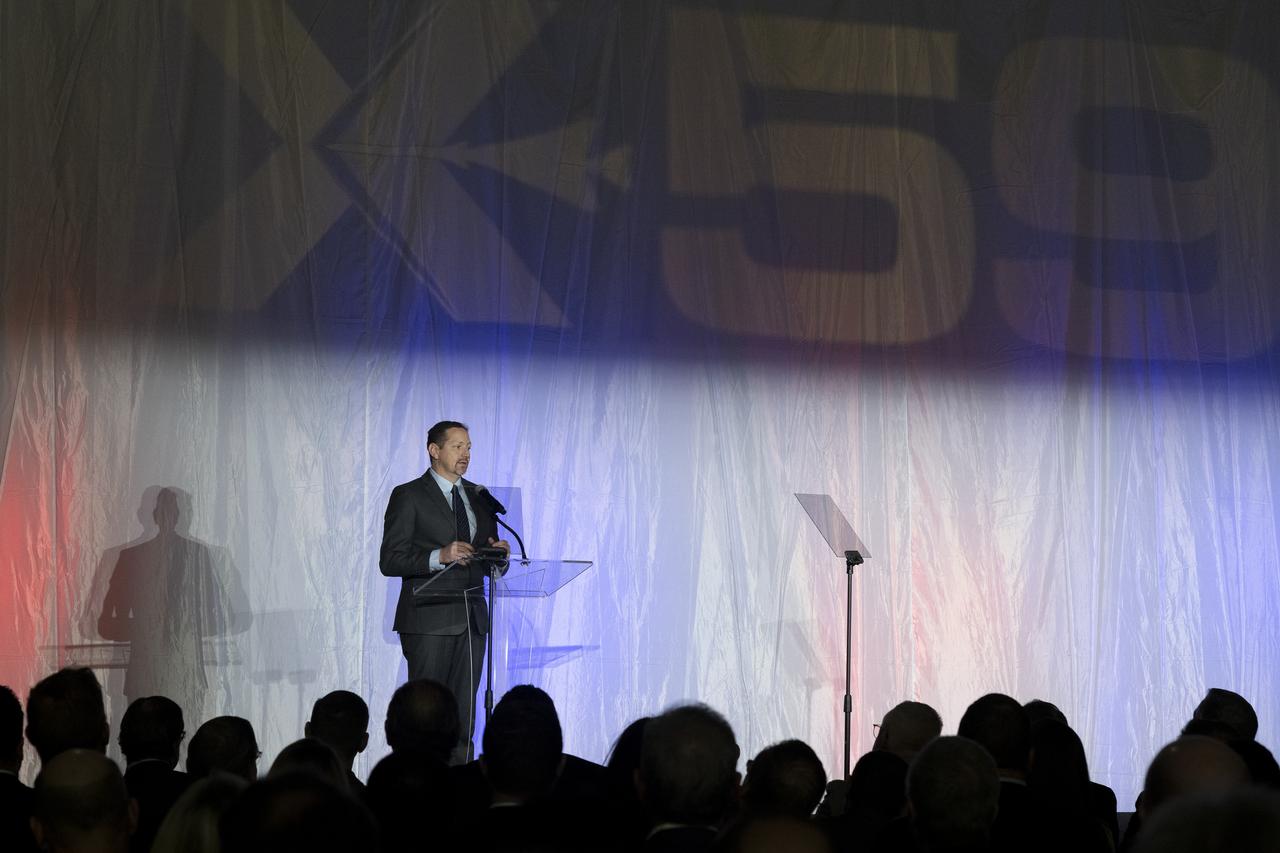
Lockheed Martin Skunk Works Vice President and General Manager John Clark speaks on stage prior to the unveiling of the agency’s X-59 quiet supersonic research aircraft at a January 12, 2024 event at Lockheed Martin Skunk Works in Palmdale, California. The X-59 is the centerpiece of NASA’s Quesst mission, which seeks to solve one of the major barriers to supersonic flight over land, currently banned in the United States, by making sonic booms quieter.
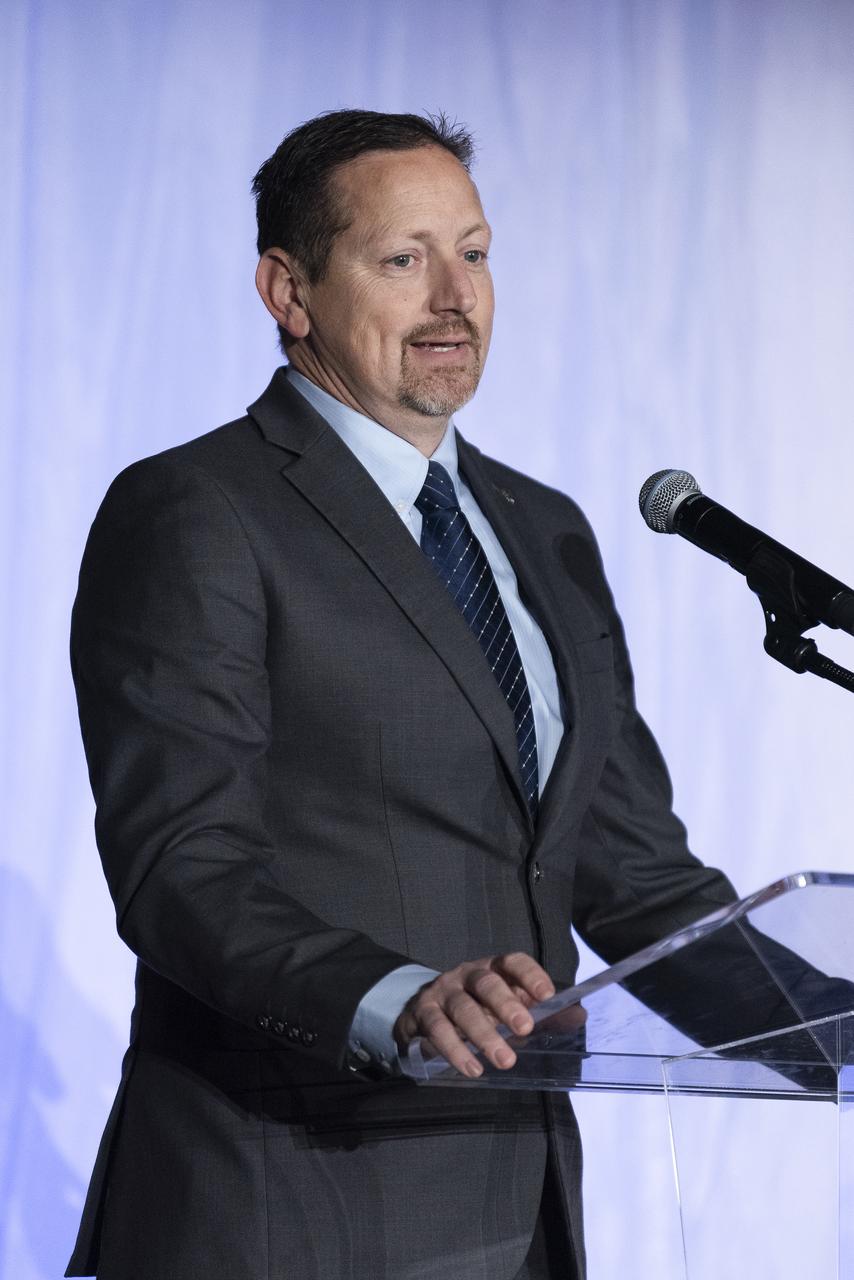
Lockheed Martin Skunk Works Vice President and General Manager John Clark speaks on stage prior to the unveiling of the agency’s X-59 quiet supersonic research aircraft at a January 12, 2024 event at Lockheed Martin Skunk Works in Palmdale, California. The X-59 is the centerpiece of NASA’s Quesst mission, which seeks to solve one of the major barriers to supersonic flight over land, currently banned in the United States, by making sonic booms quieter.
![Scientists presented the first images from NASA's Solar Dynamics Observatory [SDO] during a special "first light" press conference, Wednesday, April 21 2010, at held at the Newseum in Washington DC. Credit: NASA/GSFC](https://images-assets.nasa.gov/image/GSFC_20171208_Archive_e002169/GSFC_20171208_Archive_e002169~medium.jpg)
Scientists presented the first images from NASA's Solar Dynamics Observatory [SDO] during a special "first light" press conference, Wednesday, April 21 2010, at held at the Newseum in Washington DC. Credit: NASA/GSFC
![Scientists presented the first images from NASA's Solar Dynamics Observatory [SDO] during a special "first light" press conference, Wednesday, April 21 2010, at held at the Newseum in Washington DC. Here, scientists are showing an animation from Walt Feimer, lead animator for the Heliophysics team. Credit: NASA/GSFC](https://images-assets.nasa.gov/image/GSFC_20171208_Archive_e002083/GSFC_20171208_Archive_e002083~medium.jpg)
Scientists presented the first images from NASA's Solar Dynamics Observatory [SDO] during a special "first light" press conference, Wednesday, April 21 2010, at held at the Newseum in Washington DC. Here, scientists are showing an animation from Walt Feimer, lead animator for the Heliophysics team. Credit: NASA/GSFC

The Cassini spacecraft looks down on Titan north pole and unveils the moon upper-most atmospheric hazes, creating the appearance of a halo around Saturn largest moon.
This visualization provides a three-dimensional perspective on Hubble's 25th anniversary image of the nebula Gum 29 with the star cluster Westerlund 2 at its core. The flight traverses the foreground stars and approaches the lower left rim of the nebula Gum 29. Passing through the wispy darker clouds on the near side, the journey reveals bright gas illuminated by the intense radiation of the newly formed stars of cluster Westerlund 2. Within the nebula, several pillars of dark, dense gas are being shaped by the energetic light and strong stellar winds from the brilliant cluster of thousands of stars. Note that the visualization is intended to be a scientifically reasonable interpretation and that distances within the model are significantly compressed. Download here: <a href="http://hubblesite.org/newscenter/archive/releases/2015/12/video/" rel="nofollow">hubblesite.org/newscenter/archive/releases/2015/12/video/</a> Credit: NASA, ESA, G. Bacon, L. Frattare, Z. Levay, and F. Summers (Viz3D Team, STScI), and J. Anderson (STScI) Acknowledgment: The Hubble Heritage Team (STScI/AURA), A. Nota (ESA/STScI), the Westerlund 2 Science Team, and ESO <b><a href="http://www.nasa.gov/audience/formedia/features/MP_Photo_Guidelines.html" rel="nofollow">NASA image use policy.</a></b> <b><a href="http://www.nasa.gov/centers/goddard/home/index.html" rel="nofollow">NASA Goddard Space Flight Center</a></b> enables NASA’s mission through four scientific endeavors: Earth Science, Heliophysics, Solar System Exploration, and Astrophysics. Goddard plays a leading role in NASA’s accomplishments by contributing compelling scientific knowledge to advance the Agency’s mission. <b>Follow us on <a href="http://twitter.com/NASAGoddardPix" rel="nofollow">Twitter</a></b> <b>Like us on <a href="http://www.facebook.com/pages/Greenbelt-MD/NASA-Goddard/395013845897?ref=tsd" rel="nofollow">Facebook</a></b> <b>Find us on <a href="http://instagrid.me/nasagoddard/?vm=grid" rel="nofollow">Instagram</a></b>
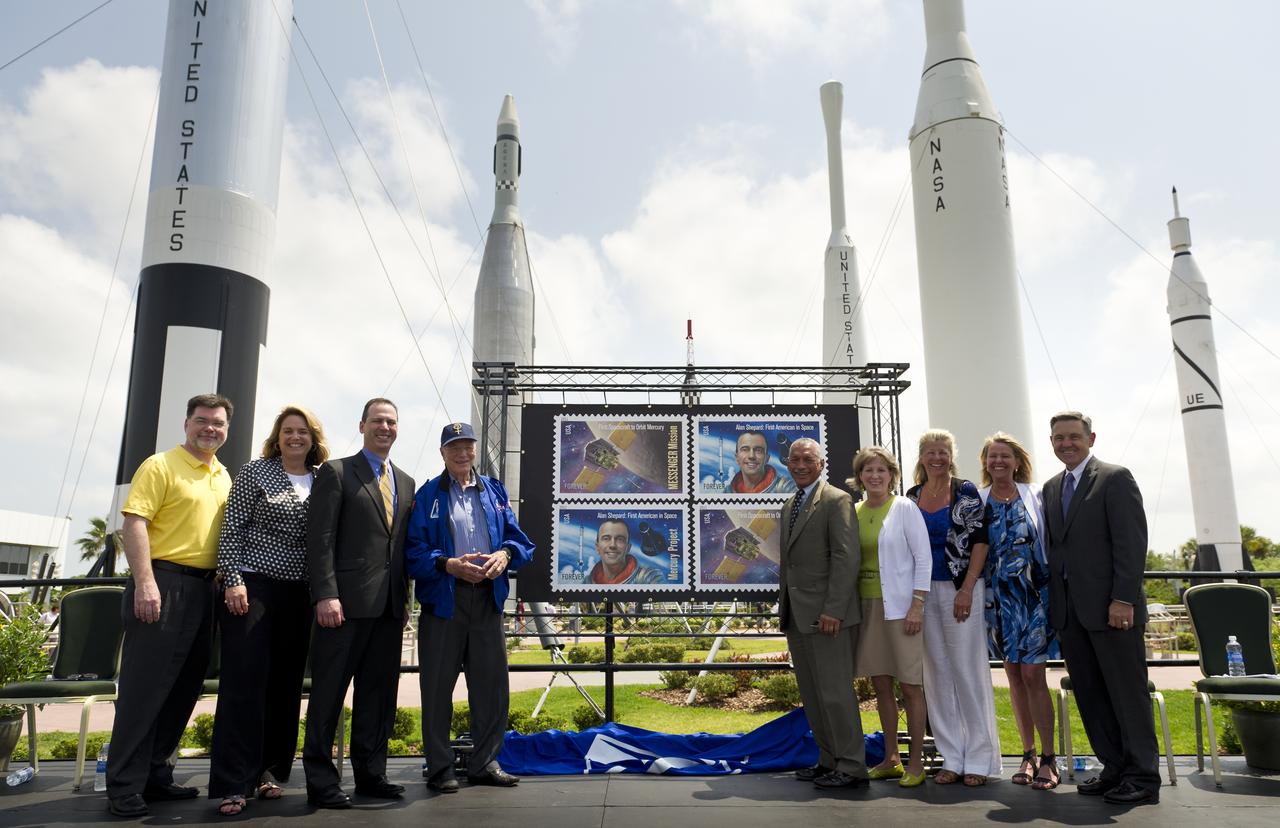
From left, NASA Deputy Director, Planetary Science Division, Science Mission Directorate, Jim Adams, NASA Kennedy Space Center Director of Education and External Relations Cheryl Hurst, United States Postal Service Vice President of Finance Steve Masse, NASA Mercury Astronaut Scott Carpenter, NASA Administrator Charles Boldin, Daughters of NASA astronaut Alan Shepard, Alice Wackermann, Laura Shepard Churchley, and Julie Jenkins, and NASA Kennedy Space Center Director Robert Cabana pose for a photograph during an unveiling ceremony of two USPS stamps that commemorate and celebrate 50 years of US Spaceflight and the MESSENGER program during an event, Wednesday, May 4, 2011 at the NASA Kennedy Space Center in Cape Canaveral, Fla. One stamp commemorates NASA’s Project Mercury, America’s first manned spaceflight program, and NASA astronaut Alan Shepard’s historic flight on May 5, 1961, aboard spacecraft Freedom 7. The other stamp draws attention to NASA’s unmanned MESSENGER mission, a scientific investigation of the planet Mercury. On March 17, 2011, MESSENGER became the first spacecraft to enter into orbit around Mercury. Photo Credit: (NASA/Bill Ingalls)
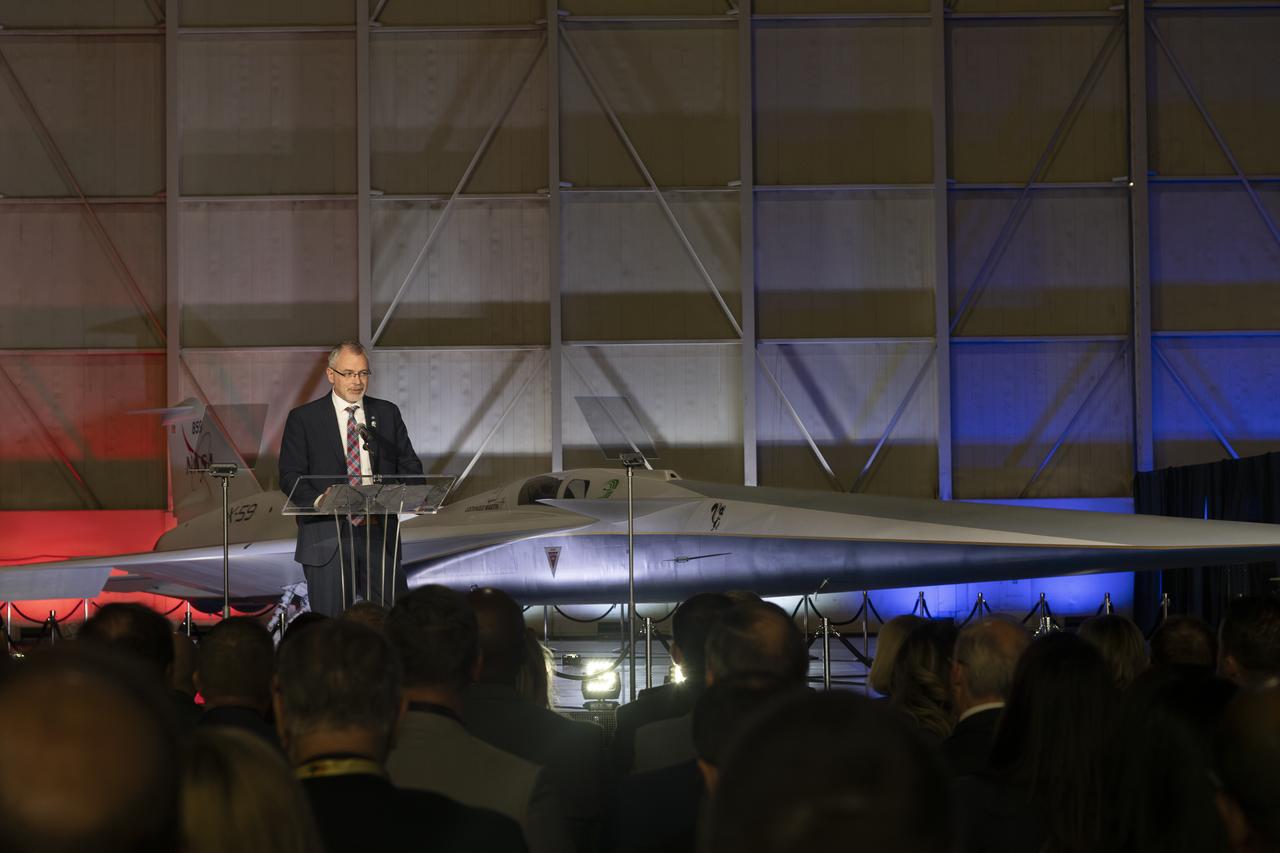
NASA Associate Administrator Jim Free speaks on stage following the unveiling of the agency’s X-59 quiet supersonic research aircraft at a January 12, 2024 event at Lockheed Martin Skunk Works in Palmdale, California. The X-59 is the centerpiece of NASA’s Quesst mission, which seeks to solve one of the major barriers to supersonic flight over land, currently banned in the United States, by making sonic booms quieter.
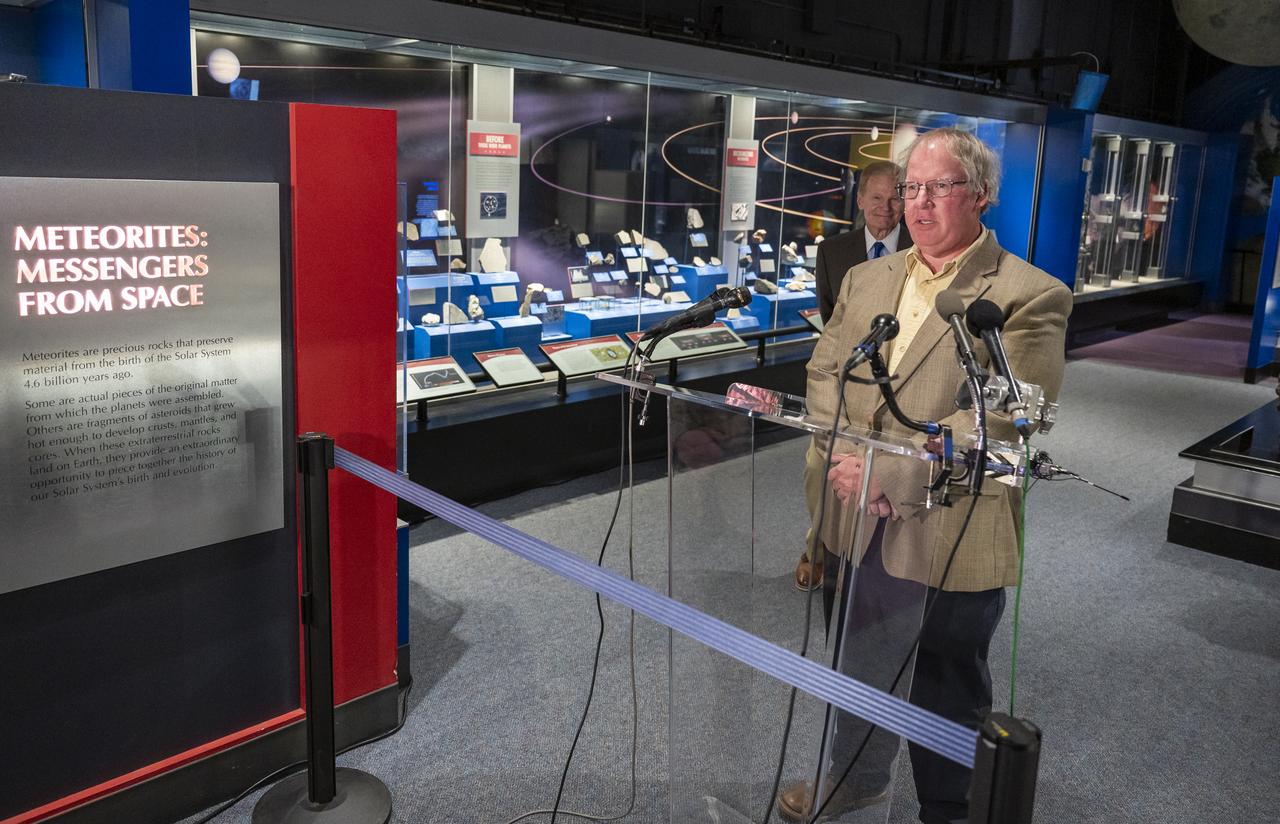
National Museum of Natural History curator of meteorites Tim McCoy delivers remarks during an event to unveil the first public display of a sample from asteroid Bennu, Friday, Nov. 3, 2023, at the Smithsonian’s National Museum of Natural History in Washington. The sample was collected from the carbon rich near Earth asteroid Bennu in October 2020 by NASA’s OSIRIS-REx spacecraft. Photo Credit: (NASA/Keegan Barber)
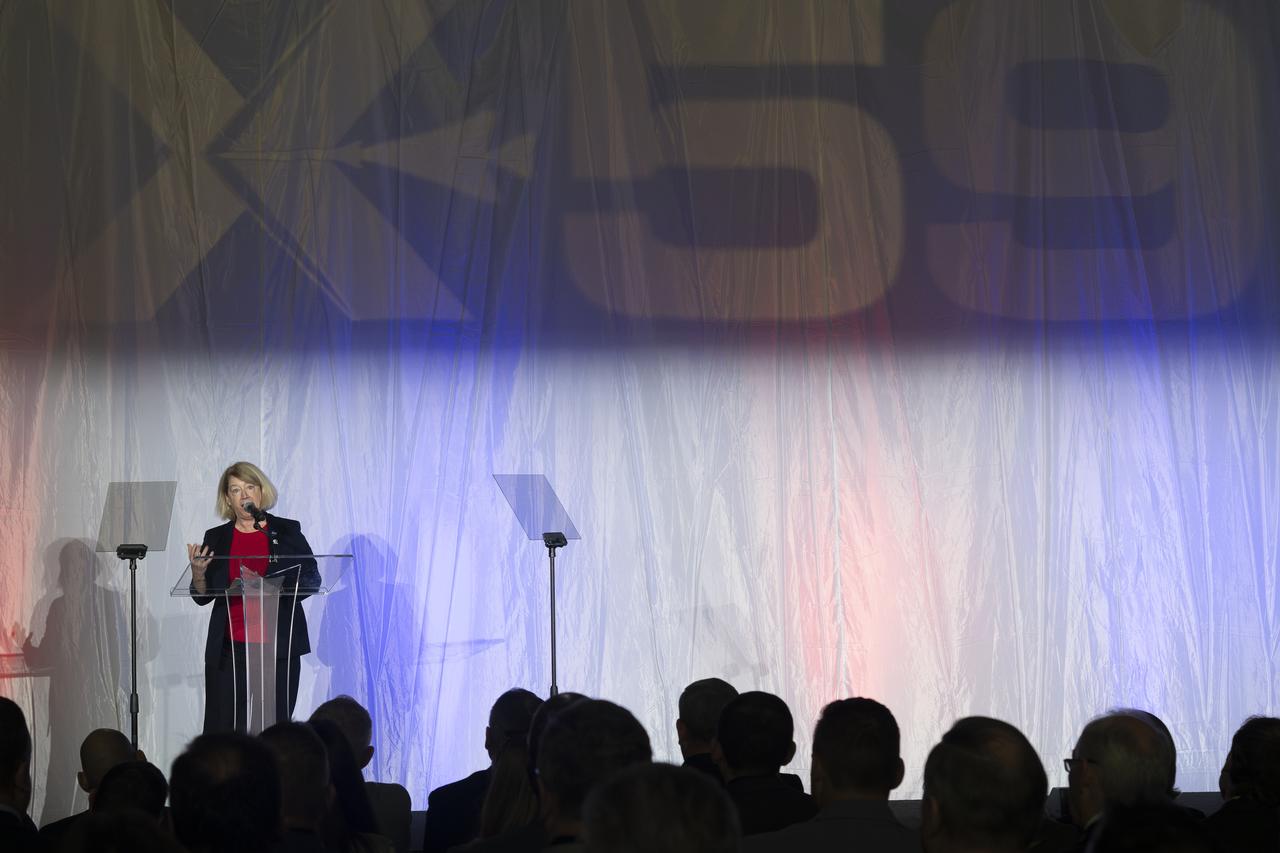
NASA Deputy Administrator Pam Melroy speaks on stage prior to the official unveiling of the agency’s X-59 quiet supersonic research aircraft at a January 12, 2024 event at Lockheed Martin Skunk Works in Palmdale, California. The X-59 is the centerpiece of NASA’s Quesst mission, which seeks to solve one of the major barriers to supersonic flight over land, currently banned in the United States, by making sonic booms quieter.
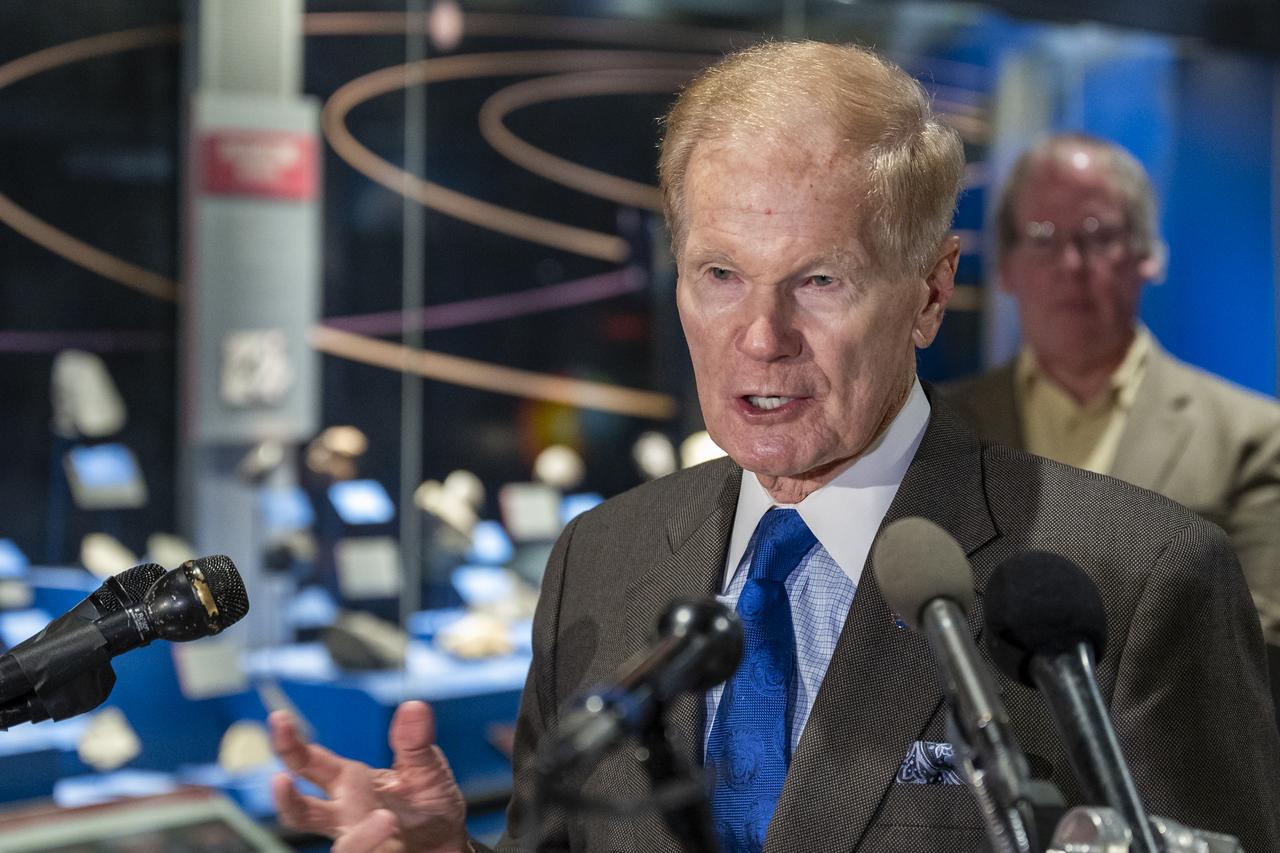
NASA Administrator Bill Nelson delivers remarks during an event to unveil the first public display of a sample from asteroid Bennu, Friday, Nov. 3, 2023, at the Smithsonian’s National Museum of Natural History in Washington. The sample was collected from the carbon rich near Earth asteroid Bennu in October 2020 by NASA’s OSIRIS-REx spacecraft. Photo Credit: (NASA/Keegan Barber)

NASA Deputy Administrator Pam Melroy speaks on stage immediately following the unveiling of the agency’s X-59 quiet supersonic research aircraft at a January 12, 2024 event at Lockheed Martin Skunk Works in Palmdale, California. The X-59 is the centerpiece of NASA’s Quesst mission, which seeks to solve one of the major barriers to supersonic flight over land, currently banned in the United States, by making sonic booms quieter.
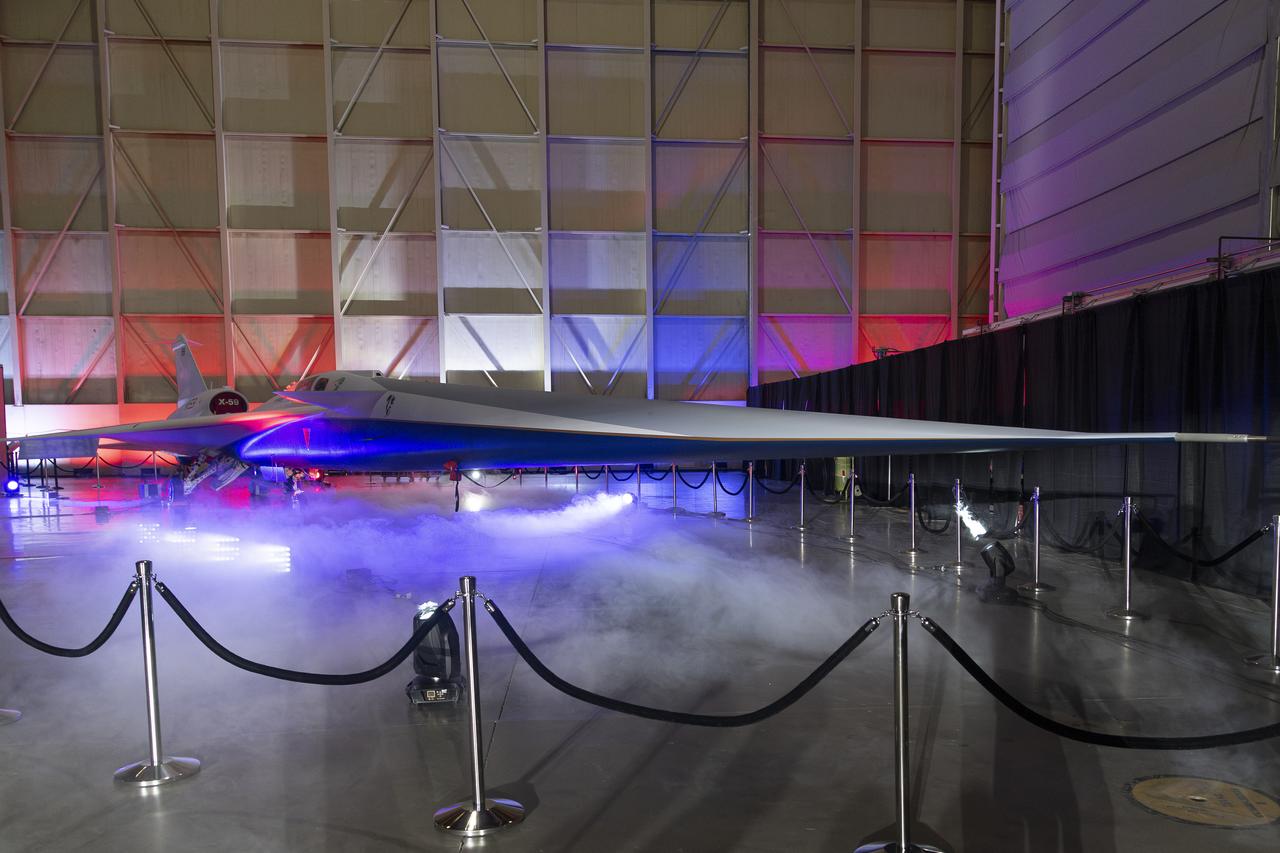
NASA’s X-59 quiet supersonic research aircraft sits in position inside a hangar at Lockheed Martin Skunk Works in Palmdale, California prior to its January 12, 2024 unveiling. The X-59 is the centerpiece of NASA’s Quesst mission, which seeks to solve one of the major barriers to supersonic flight over land, currently banned in the United States, by making sonic booms quieter.
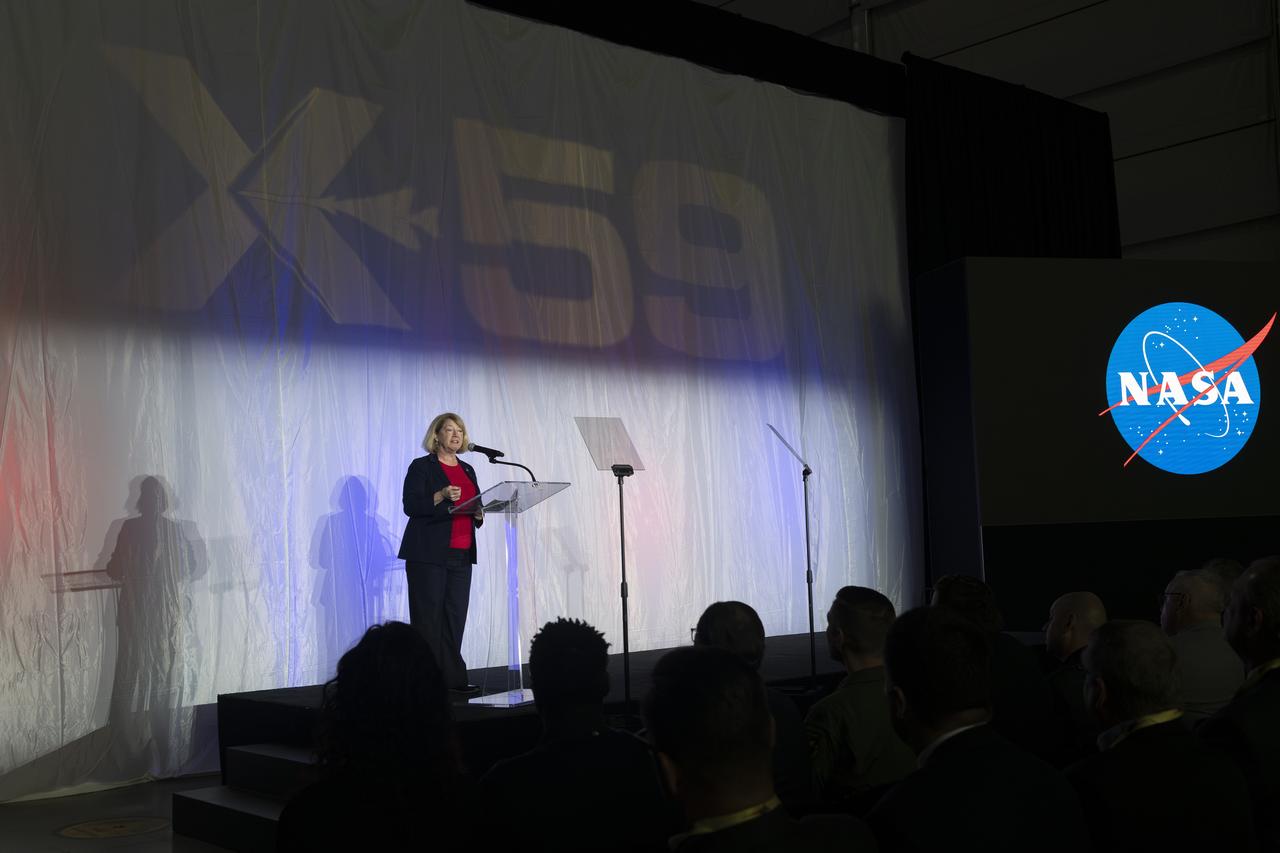
NASA Deputy Administrator Pam Melroy speaks on stage prior to the official unveiling of the agency’s X-59 quiet supersonic research aircraft at a January 12, 2024 event at Lockheed Martin Skunk Works in Palmdale, California. The X-59 is the centerpiece of NASA’s Quesst mission, which seeks to solve one of the major barriers to supersonic flight over land, currently banned in the United States, by making sonic booms quieter.
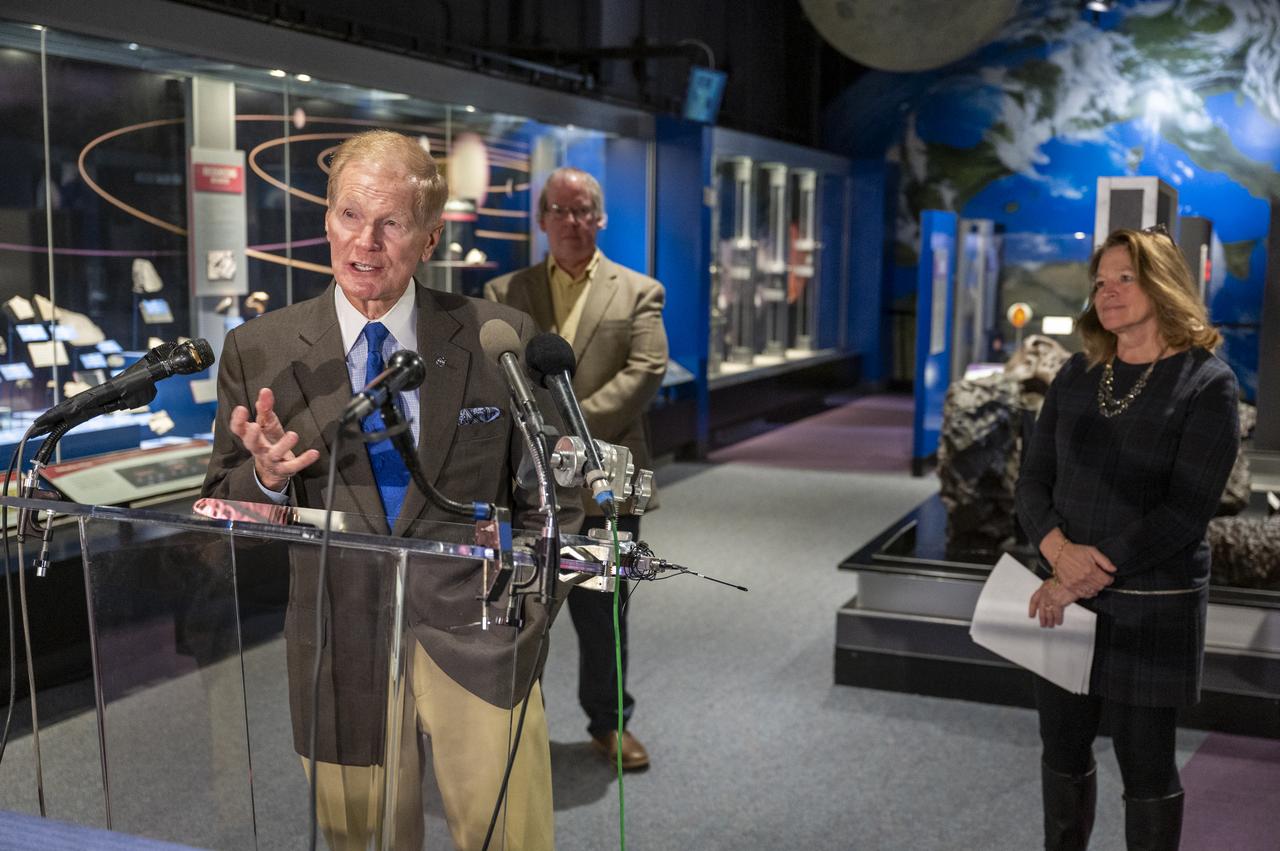
NASA Administrator Bill Nelson delivers remarks during an event to unveil the first public display of a sample from asteroid Bennu, Friday, Nov. 3, 2023, at the Smithsonian’s National Museum of Natural History in Washington. The sample was collected from the carbon rich near Earth asteroid Bennu in October 2020 by NASA’s OSIRIS-REx spacecraft. Photo Credit: (NASA/Keegan Barber)
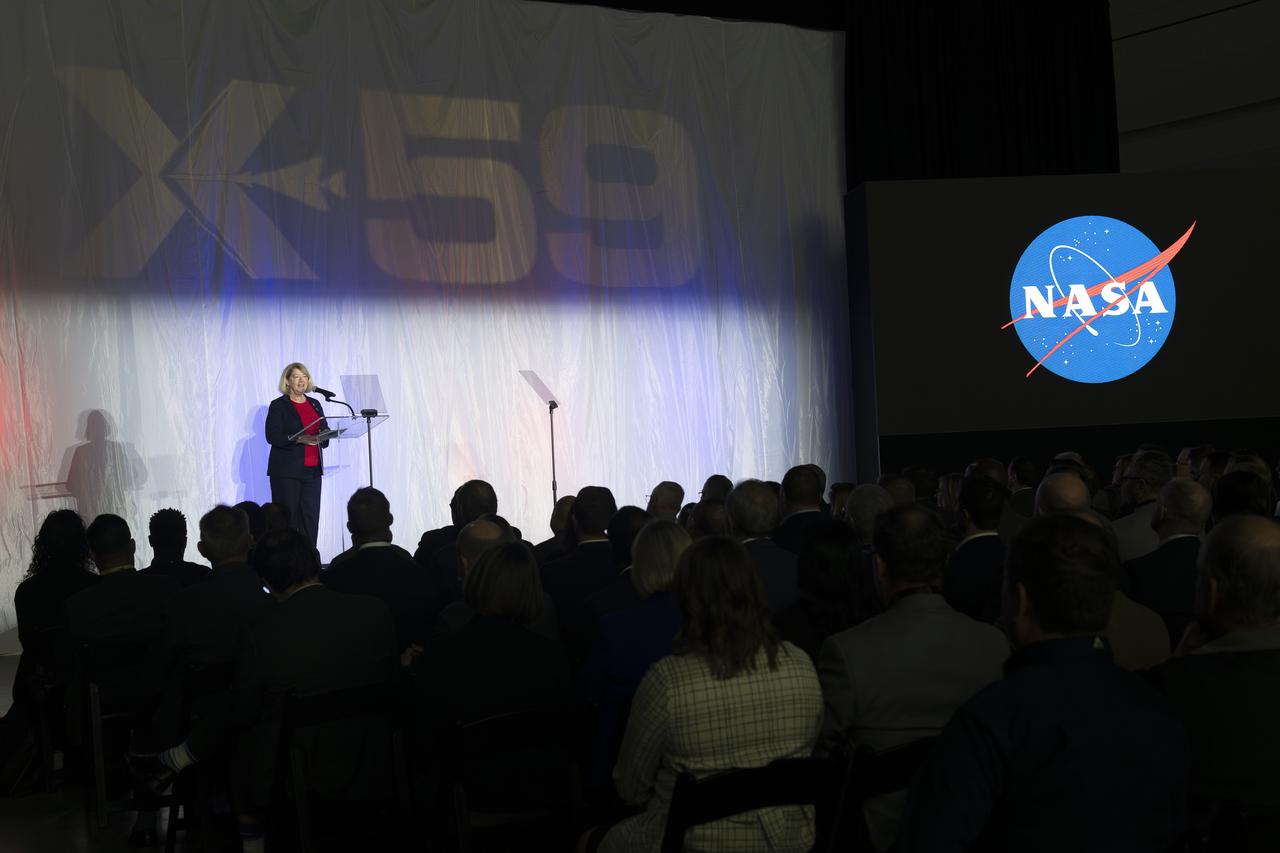
NASA Deputy Administrator Pam Melroy speaks on stage prior to the official unveiling of the agency’s X-59 quiet supersonic research aircraft at a January 12, 2024 event at Lockheed Martin Skunk Works in Palmdale, California. The X-59 is the centerpiece of NASA’s Quesst mission, which seeks to solve one of the major barriers to supersonic flight over land, currently banned in the United States, by making sonic booms quieter.

NASA Associate Administrator for the Aeronautics Research Mission Directorate Bob Pearce speaks on stage prior to the unveiling of the agency’s X-59 quiet supersonic research aircraft at a January 12, 2024 event at Lockheed Martin Skunk Works in Palmdale, California. The X-59 is the centerpiece of NASA’s Quesst mission, which seeks to solve one of the major barriers to supersonic flight over land, currently banned in the United States, by making sonic booms quieter.
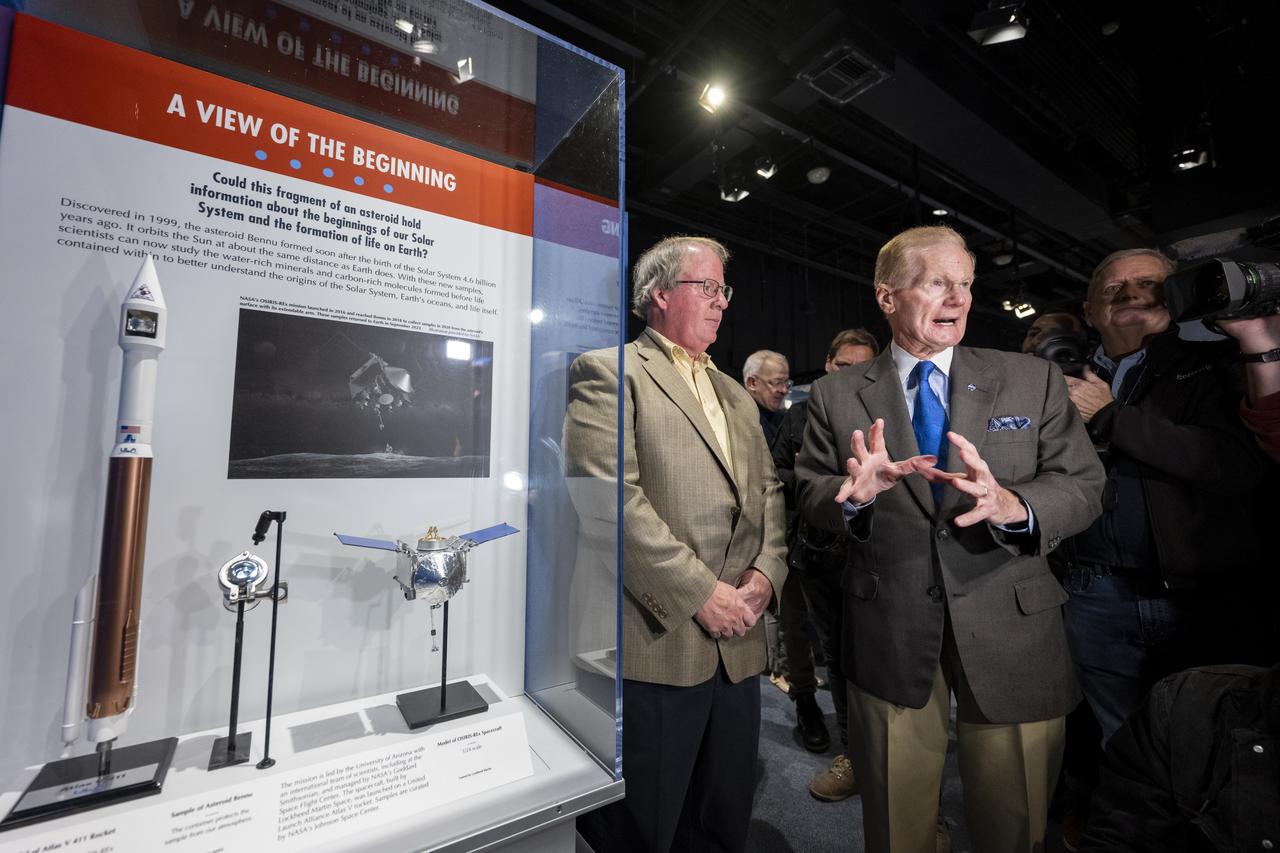
NASA Administrator Bill Nelson speaks to members of the press after unveiling the first public display of a sample from asteroid Bennu, Friday, Nov. 3, 2023, at the Smithsonian’s National Museum of Natural History in Washington. The sample was collected from the carbon rich near Earth asteroid Bennu in October 2020 by NASA’s OSIRIS-REx spacecraft. Photo Credit: (NASA/Keegan Barber)
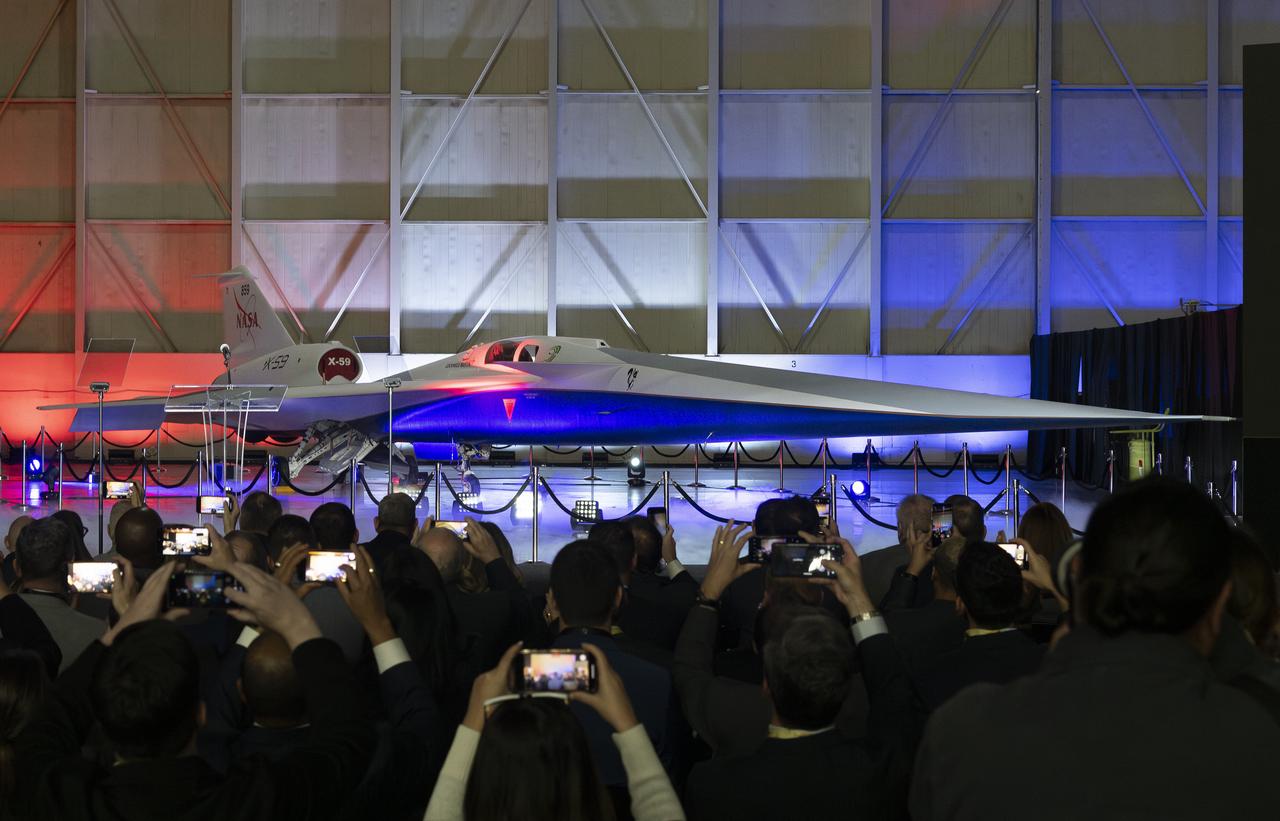
NASA and Lockheed Martin publicly unveil the X-59 quiet supersonic research aircraft at a ceremony in Lockheed Martin’s Skunk Works facility in Palmdale, California. The X-59 is the centerpiece of NASA’s Quesst mission, which seeks to solve one of the major barriers to supersonic flight over land, currently banned in the United States, by making sonic booms quieter.
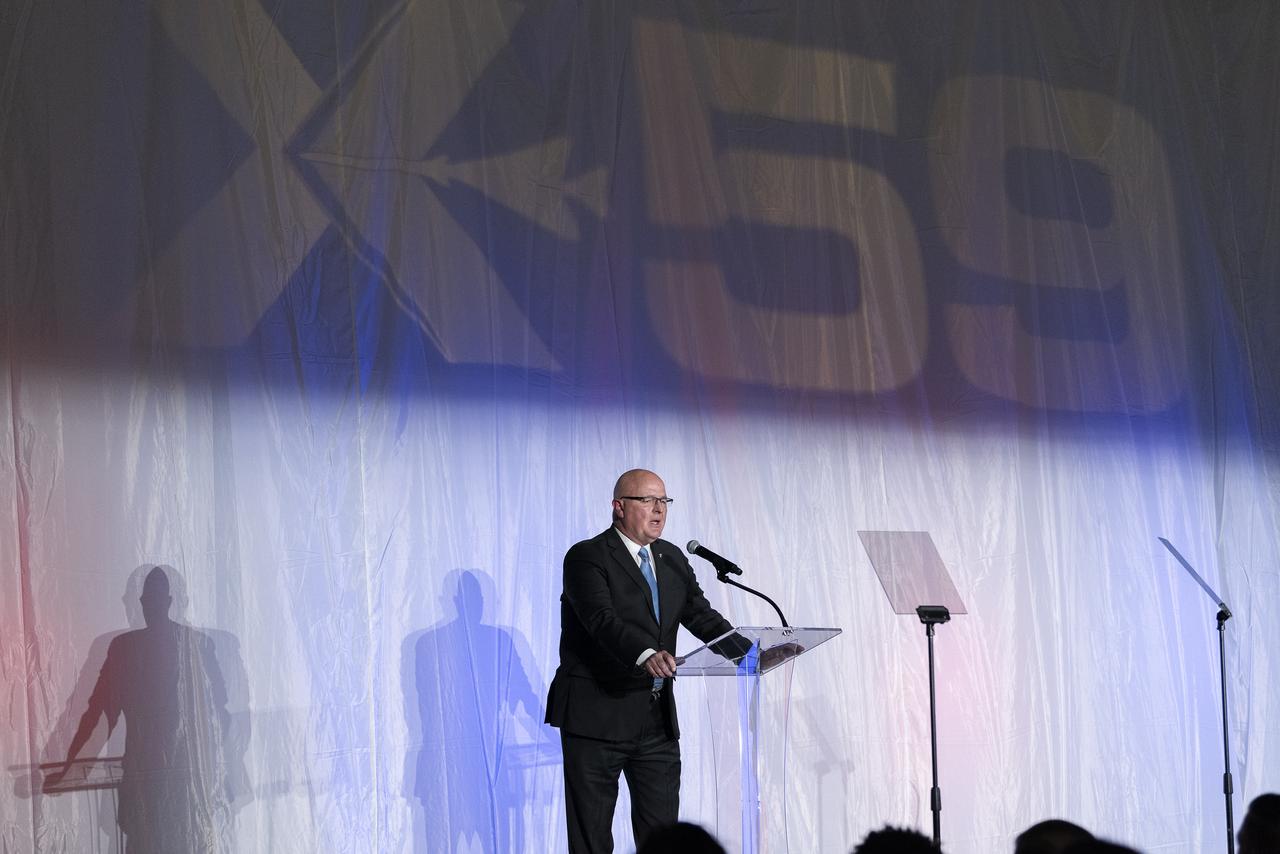
Lockheed Martin Skunk Works Director of Government Affairs Eric Fox speaks on stage prior to the unveiling of the agency’s X-59 quiet supersonic research aircraft at a January 12, 2024 event at Lockheed Martin Skunk Works in Palmdale, California. The X-59 is the centerpiece of NASA’s Quesst mission, which seeks to solve one of the major barriers to supersonic flight over land, currently banned in the United States, by making sonic booms quieter.

Smithsonian Under Secretary for Science and Research Ellen Stofan delivers remarks during an event to unveil the first public display of a sample from asteroid Bennu, Friday, Nov. 3, 2023, at the Smithsonian’s National Museum of Natural History in Washington. The sample was collected from the carbon rich near Earth asteroid Bennu in October 2020 by NASA’s OSIRIS-REx spacecraft. Photo Credit: (NASA/Keegan Barber)
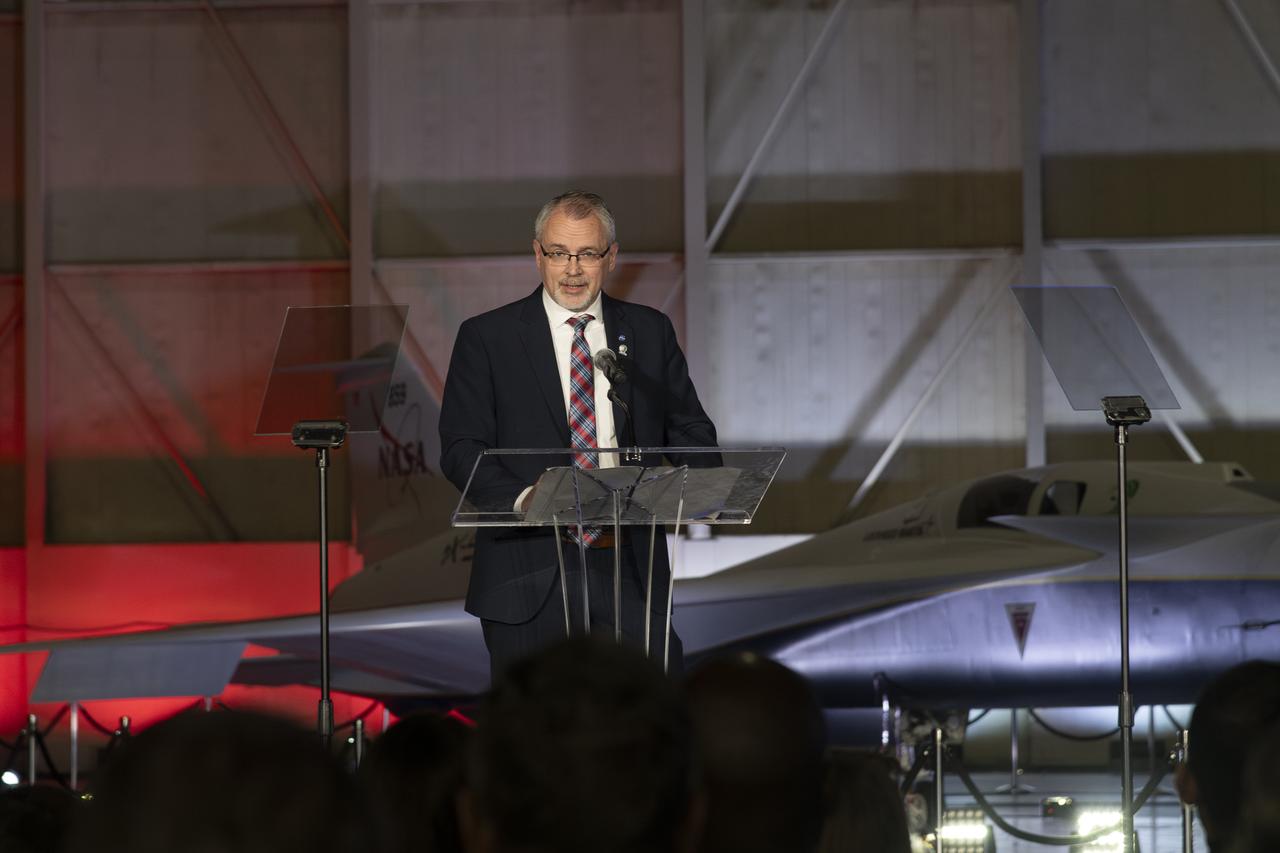
NASA Associate Administrator Jim Free speaks on stage following the unveiling of the agency’s X-59 quiet supersonic research aircraft at a January 12, 2024 event at Lockheed Martin Skunk Works in Palmdale, California. The X-59 is the centerpiece of NASA’s Quesst mission, which seeks to solve one of the major barriers to supersonic flight over land, currently banned in the United States, by making sonic booms quieter.

NASA Associate Administrator for the Aeronautics Research Mission Directorate Bob Pearce speaks on stage prior to the unveiling of the agency’s X-59 quiet supersonic research aircraft at a January 12, 2024 event at Lockheed Martin Skunk Works in Palmdale, California. The X-59 is the centerpiece of NASA’s Quesst mission, which seeks to solve one of the major barriers to supersonic flight over land, currently banned in the United States, by making sonic booms quieter.
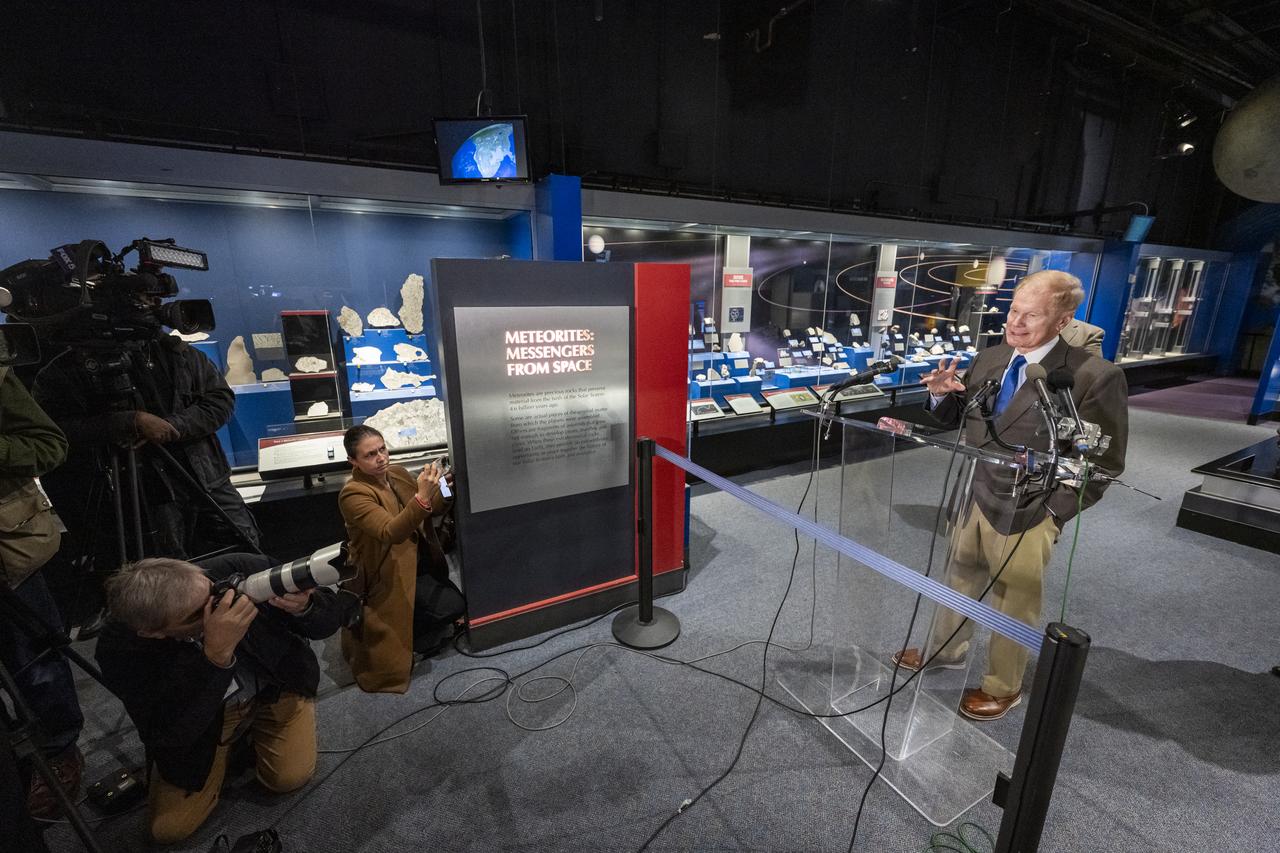
NASA Administrator Bill Nelson delivers remarks during an event to unveil the first public display of a sample from asteroid Bennu, Friday, Nov. 3, 2023, at the Smithsonian’s National Museum of Natural History in Washington. The sample was collected from the carbon rich near Earth asteroid Bennu in October 2020 by NASA’s OSIRIS-REx spacecraft. Photo Credit: (NASA/Keegan Barber)
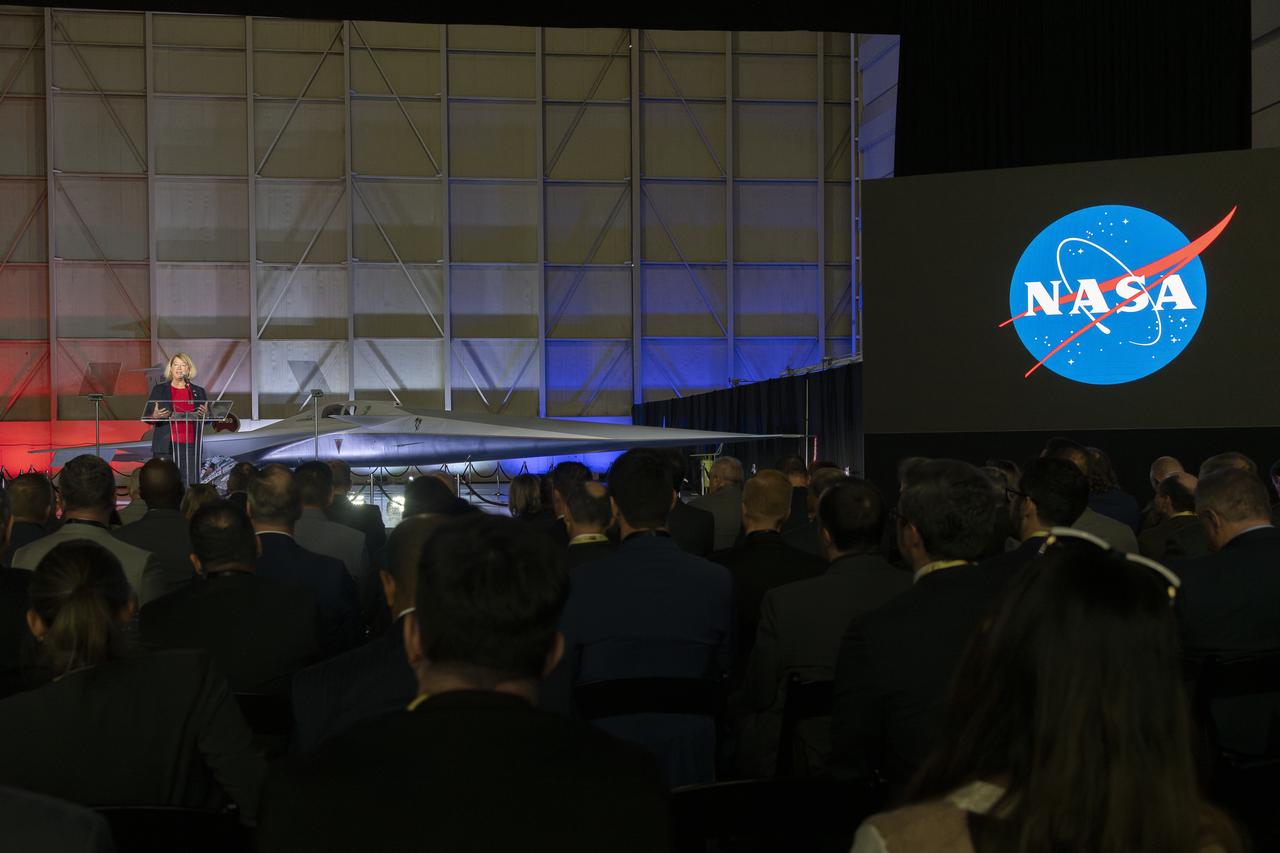
NASA Deputy Administrator Pam Melroy speaks on stage immediately following the unveiling of the agency’s X-59 quiet supersonic research aircraft at a January 12, 2024 event at Lockheed Martin Skunk Works in Palmdale, California. The X-59 is the centerpiece of NASA’s Quesst mission, which seeks to solve one of the major barriers to supersonic flight over land, currently banned in the United States, by making sonic booms quieter.
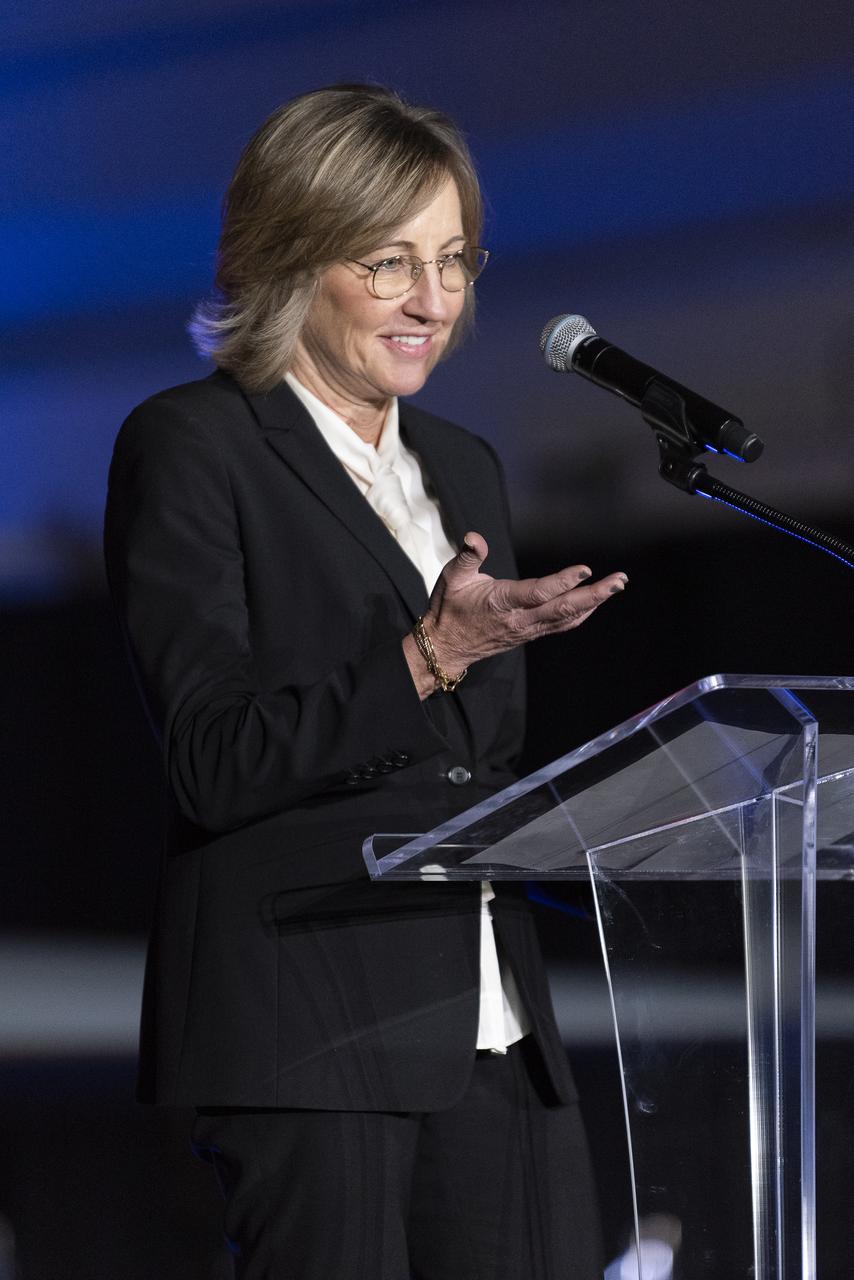
California Senior Economic Advisor to the Governor Dee Dee Myers speaks on stage following the unveiling of the agency’s X-59 quiet supersonic research aircraft at a January 12, 2024 event at Lockheed Martin Skunk Works in Palmdale, California. The X-59 is the centerpiece of NASA’s Quesst mission, which seeks to solve one of the major barriers to supersonic flight over land, currently banned in the United States, by making sonic booms quieter.
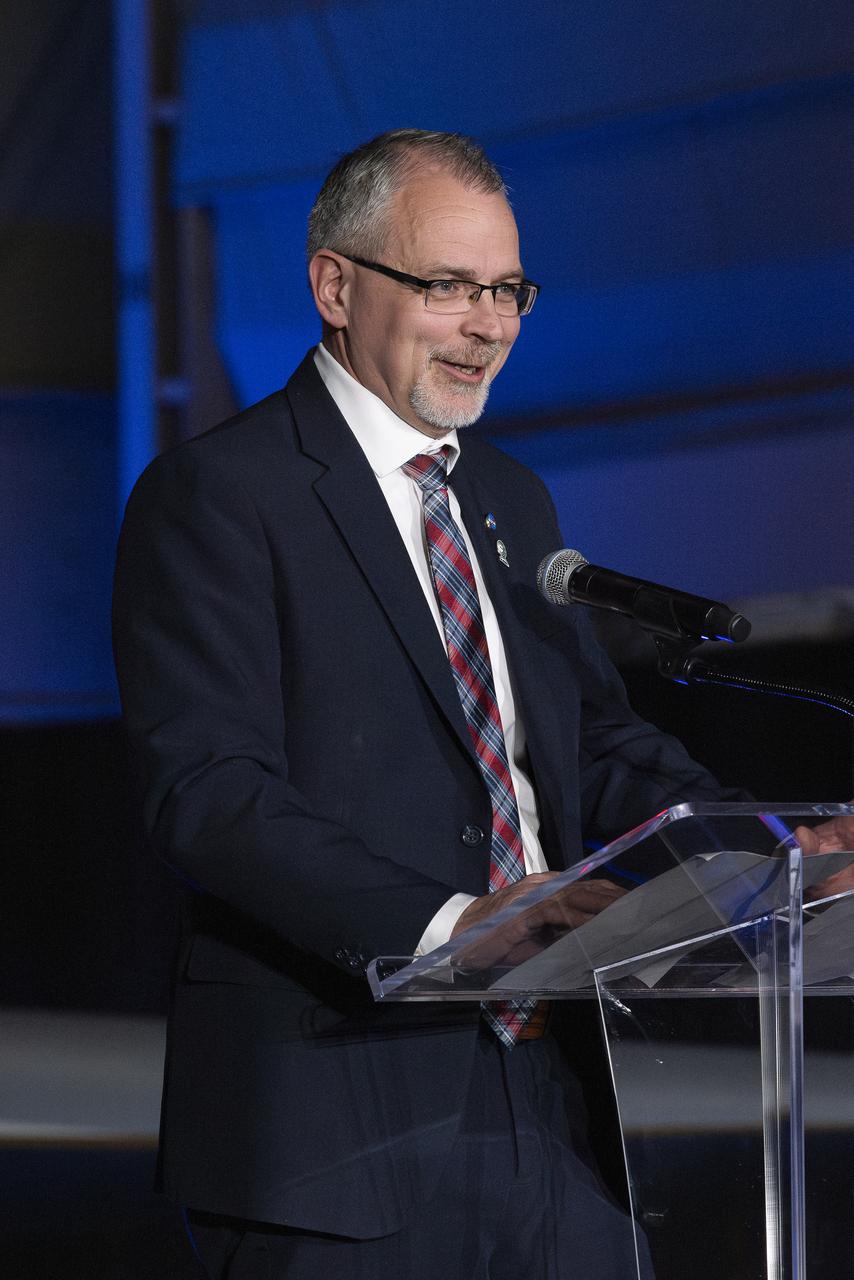
NASA Associate Administrator Jim Free speaks on stage following the unveiling of the agency’s X-59 quiet supersonic research aircraft at a January 12, 2024 event at Lockheed Martin Skunk Works in Palmdale, California. The X-59 is the centerpiece of NASA’s Quesst mission, which seeks to solve one of the major barriers to supersonic flight over land, currently banned in the United States, by making sonic booms quieter.
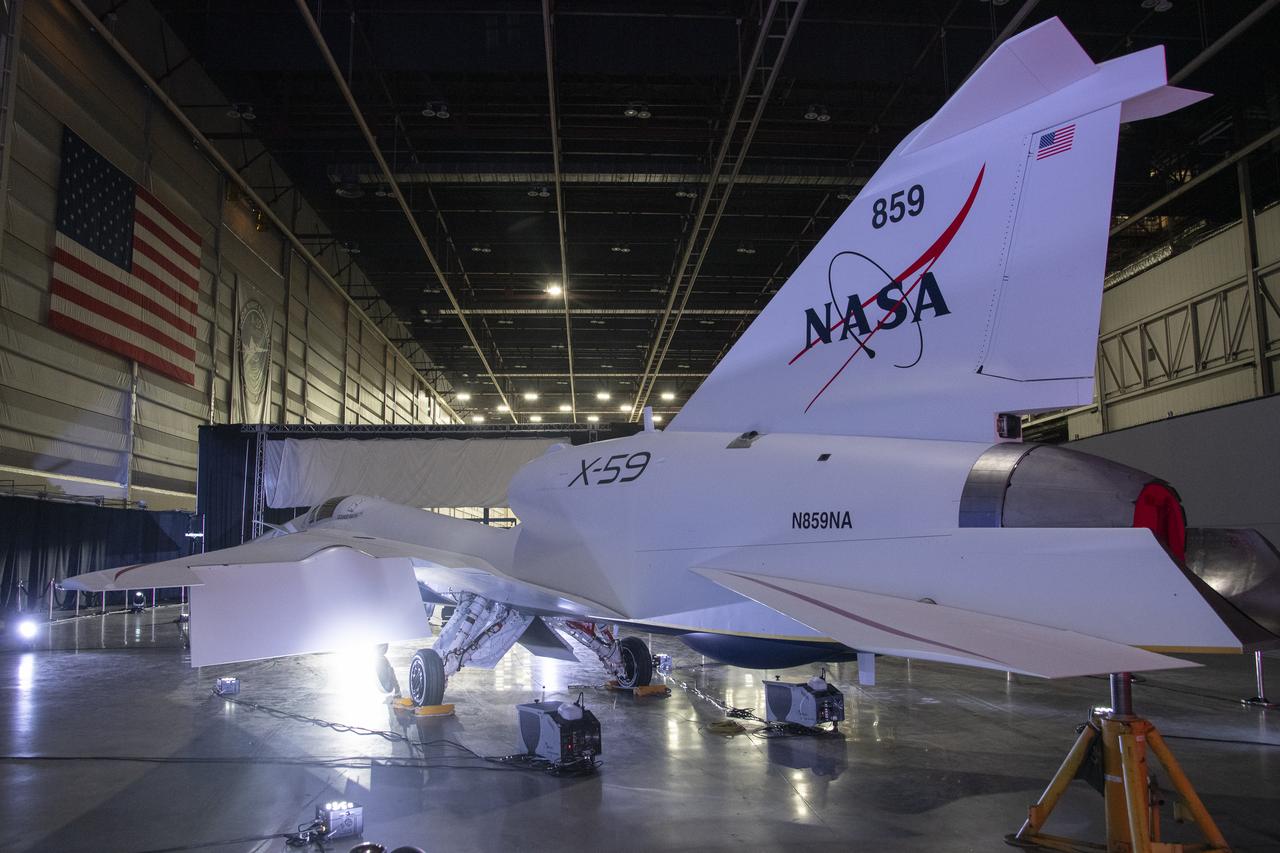
NASA’s X-59 quiet supersonic research aircraft sits in position inside a hangar at Lockheed Martin Skunk Works in Palmdale, California prior to its January 12, 2024 unveiling. The X-59 is the centerpiece of NASA’s Quesst mission, which seeks to solve one of the major barriers to supersonic flight over land, currently banned in the United States, by making sonic booms quieter.
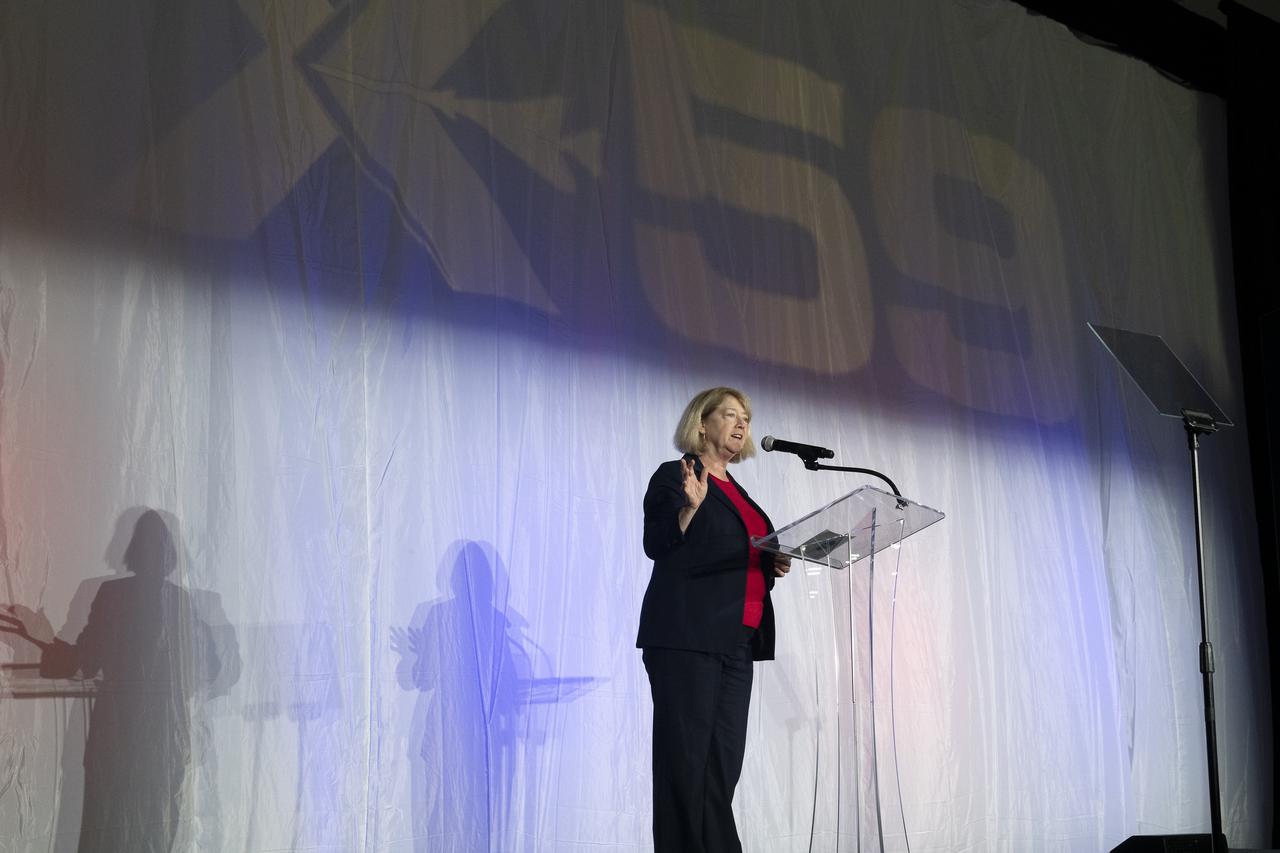
NASA Deputy Administrator Pam Melroy speaks on stage prior to the official unveiling of the agency’s X-59 quiet supersonic research aircraft at a January 12, 2024 event at Lockheed Martin Skunk Works in Palmdale, California. The X-59 is the centerpiece of NASA’s Quesst mission, which seeks to solve one of the major barriers to supersonic flight over land, currently banned in the United States, by making sonic booms quieter.
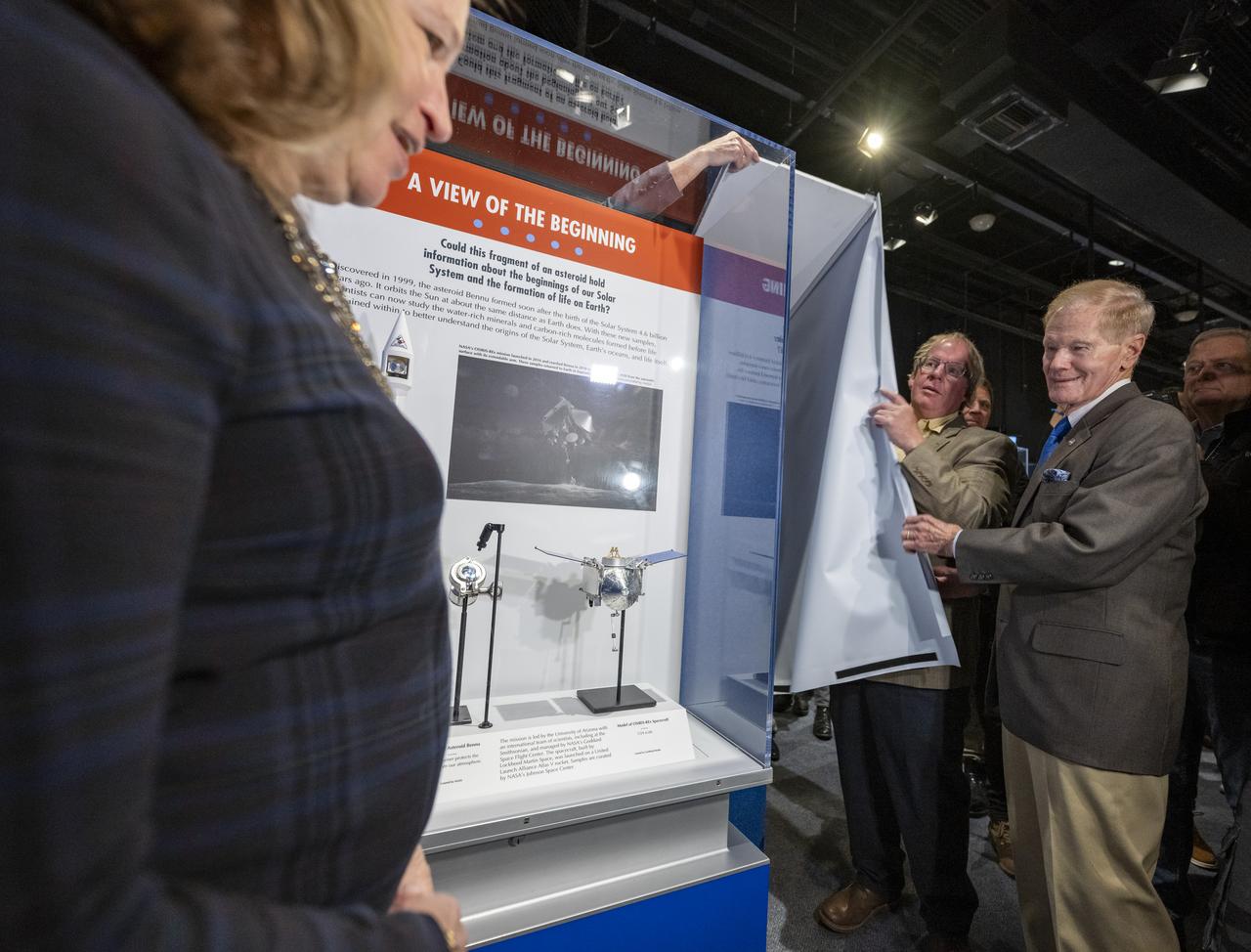
From left to right, Smithsonian Under Secretary for Science and Research Ellen Stofan, National Museum of Natural History curator of meteorites Tim McCoy, and NASA Administrator Bill Nelson unveil the first public display of a sample from asteroid Bennu, Friday, Nov. 3, 2023, at the Smithsonian’s National Museum of Natural History in Washington. The sample was collected from the carbon rich near Earth asteroid Bennu in October 2020 by NASA’s OSIRIS-REx spacecraft. Photo Credit: (NASA/Keegan Barber)
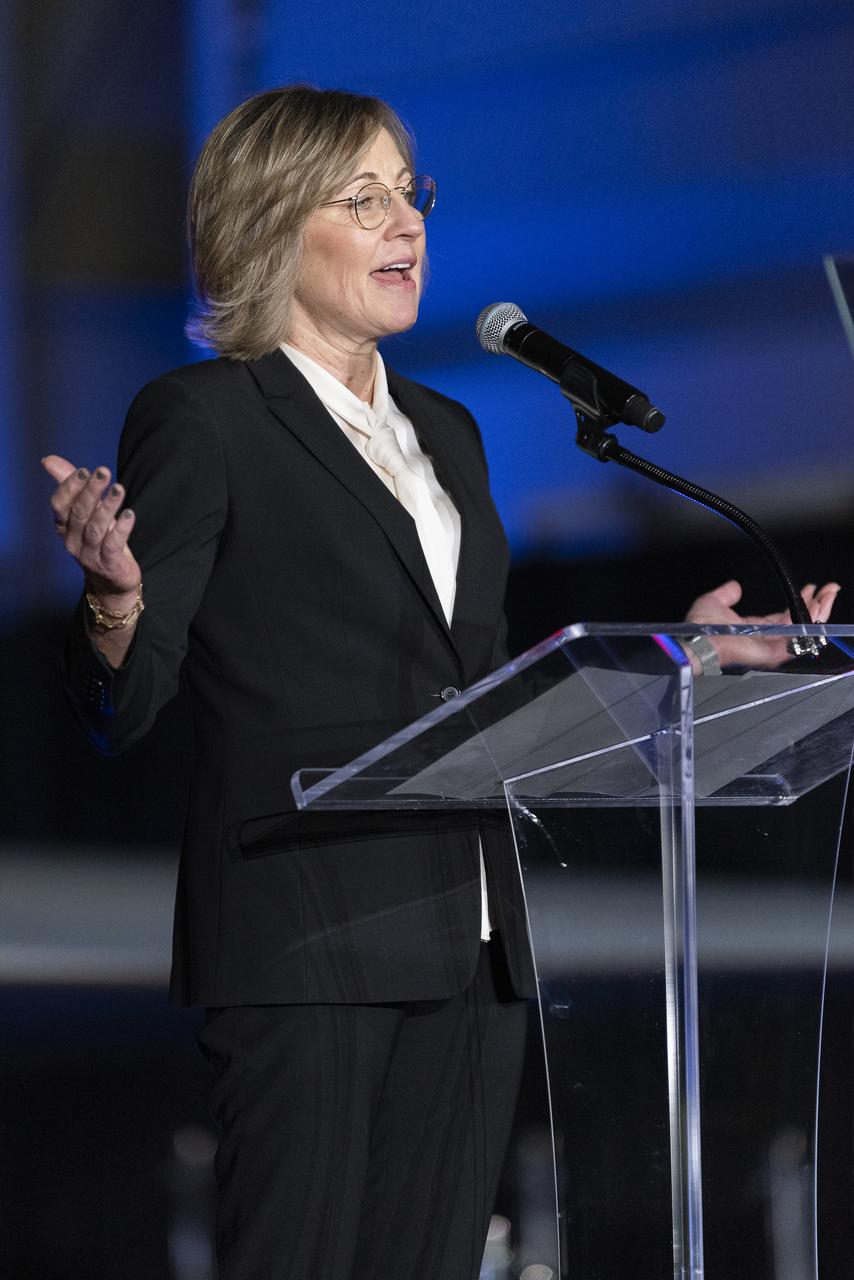
California Senior Economic Advisor to the Governor Dee Dee Myers speaks on stage following the unveiling of the agency’s X-59 quiet supersonic research aircraft at a January 12, 2024 event at Lockheed Martin Skunk Works in Palmdale, California. The X-59 is the centerpiece of NASA’s Quesst mission, which seeks to solve one of the major barriers to supersonic flight over land, currently banned in the United States, by making sonic booms quieter.
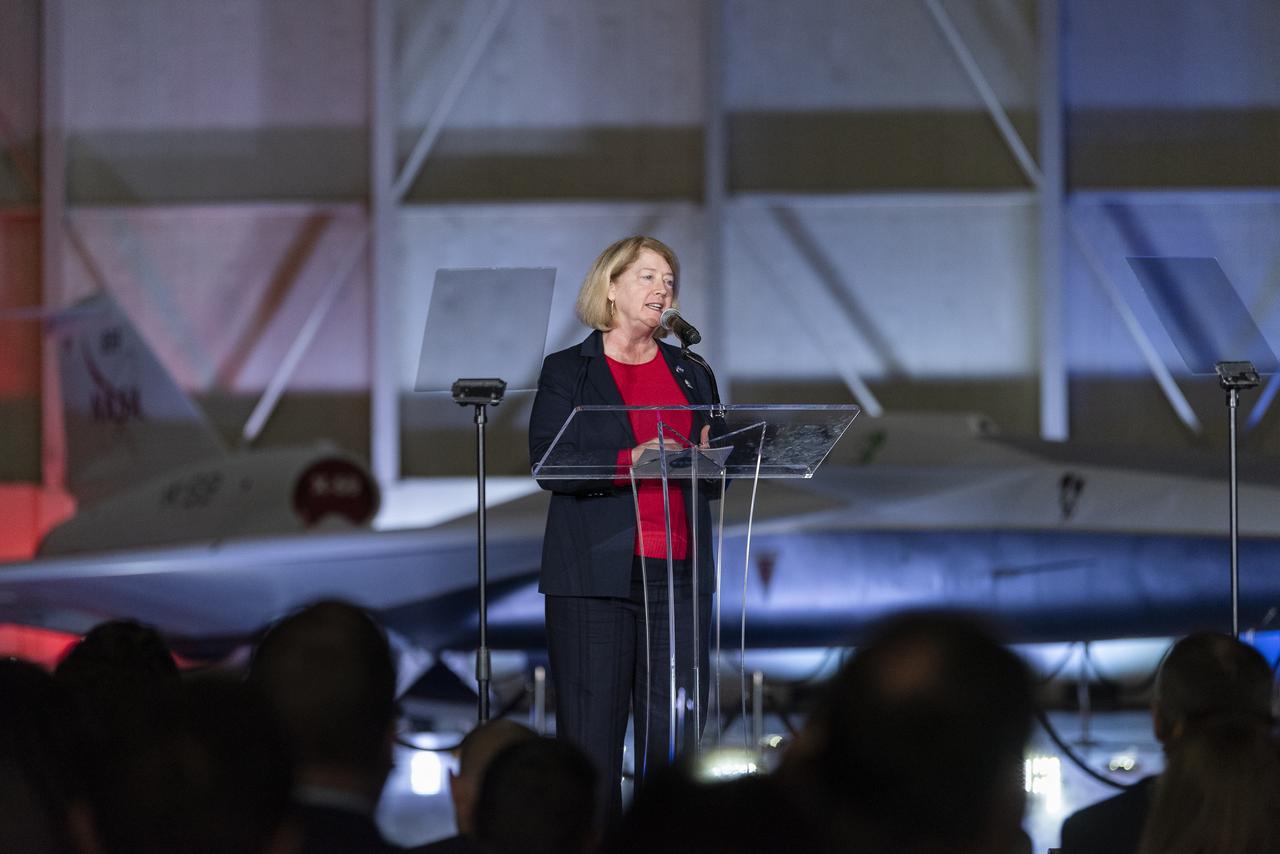
NASA Deputy Administrator Pam Melroy speaks on stage immediately following the unveiling of the agency’s X-59 quiet supersonic research aircraft at a January 12, 2024 event at Lockheed Martin Skunk Works in Palmdale, California. The X-59 is the centerpiece of NASA’s Quesst mission, which seeks to solve one of the major barriers to supersonic flight over land, currently banned in the United States, by making sonic booms quieter.
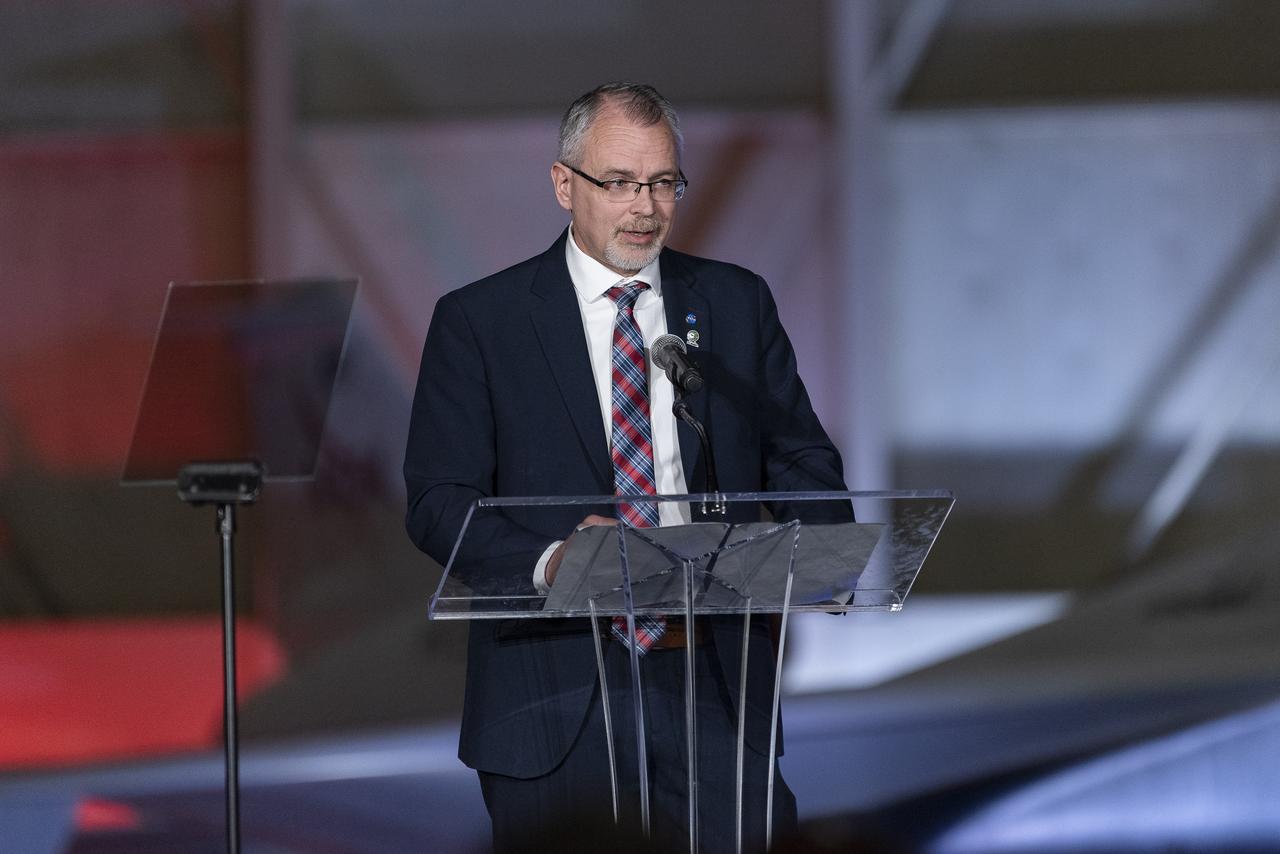
NASA Associate Administrator Jim Free speaks on stage following the unveiling of the agency’s X-59 quiet supersonic research aircraft at a January 12, 2024 event at Lockheed Martin Skunk Works in Palmdale, California. The X-59 is the centerpiece of NASA’s Quesst mission, which seeks to solve one of the major barriers to supersonic flight over land, currently banned in the United States, by making sonic booms quieter.
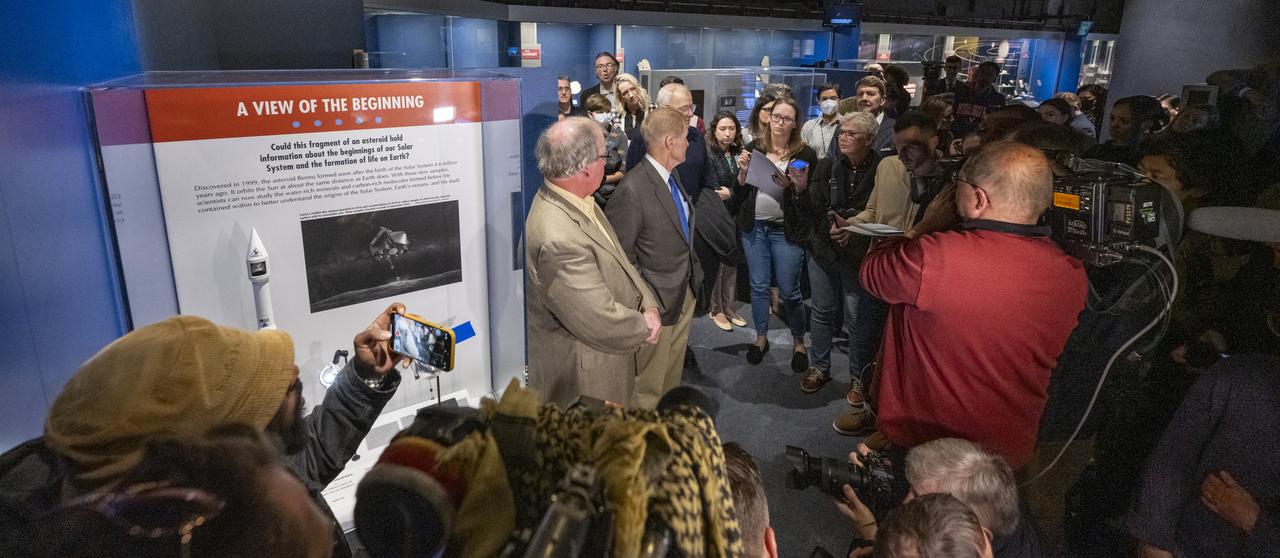
NASA Administrator Bill Nelson speaks to members of the press after unveiling the first public display of a sample from asteroid Bennu, Friday, Nov. 3, 2023, at the Smithsonian’s National Museum of Natural History in Washington. The sample was collected from the carbon rich near Earth asteroid Bennu in October 2020 by NASA’s OSIRIS-REx spacecraft. Photo Credit: (NASA/Keegan Barber)
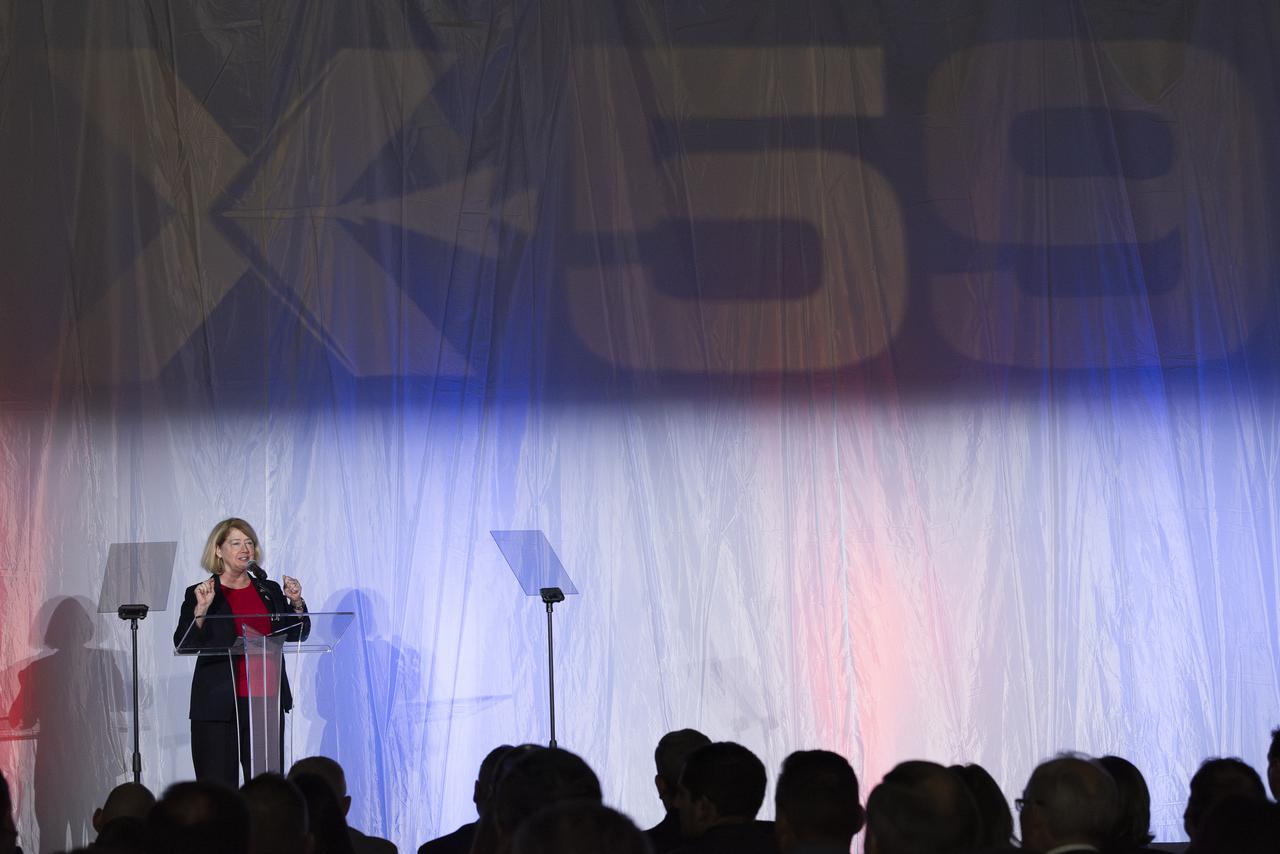
NASA Deputy Administrator Pam Melroy speaks on stage prior to the official unveiling of the agency’s X-59 quiet supersonic research aircraft at a January 12, 2024 event at Lockheed Martin Skunk Works in Palmdale, California. The X-59 is the centerpiece of NASA’s Quesst mission, which seeks to solve one of the major barriers to supersonic flight over land, currently banned in the United States, by making sonic booms quieter.
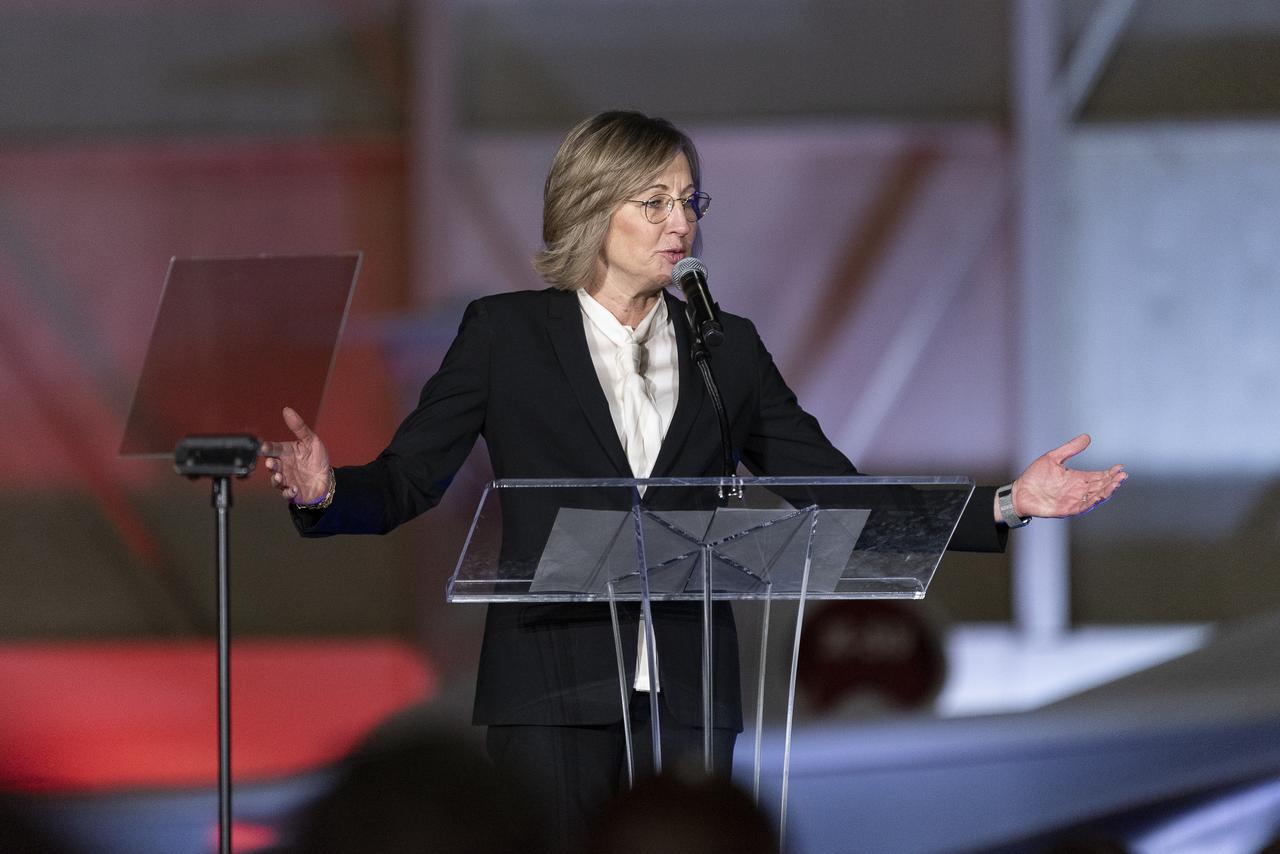
California Senior Economic Advisor to the Governor Dee Dee Myers speaks on stage following the unveiling of the agency’s X-59 quiet supersonic research aircraft at a January 12, 2024 event at Lockheed Martin Skunk Works in Palmdale, California. The X-59 is the centerpiece of NASA’s Quesst mission, which seeks to solve one of the major barriers to supersonic flight over land, currently banned in the United States, by making sonic booms quieter.
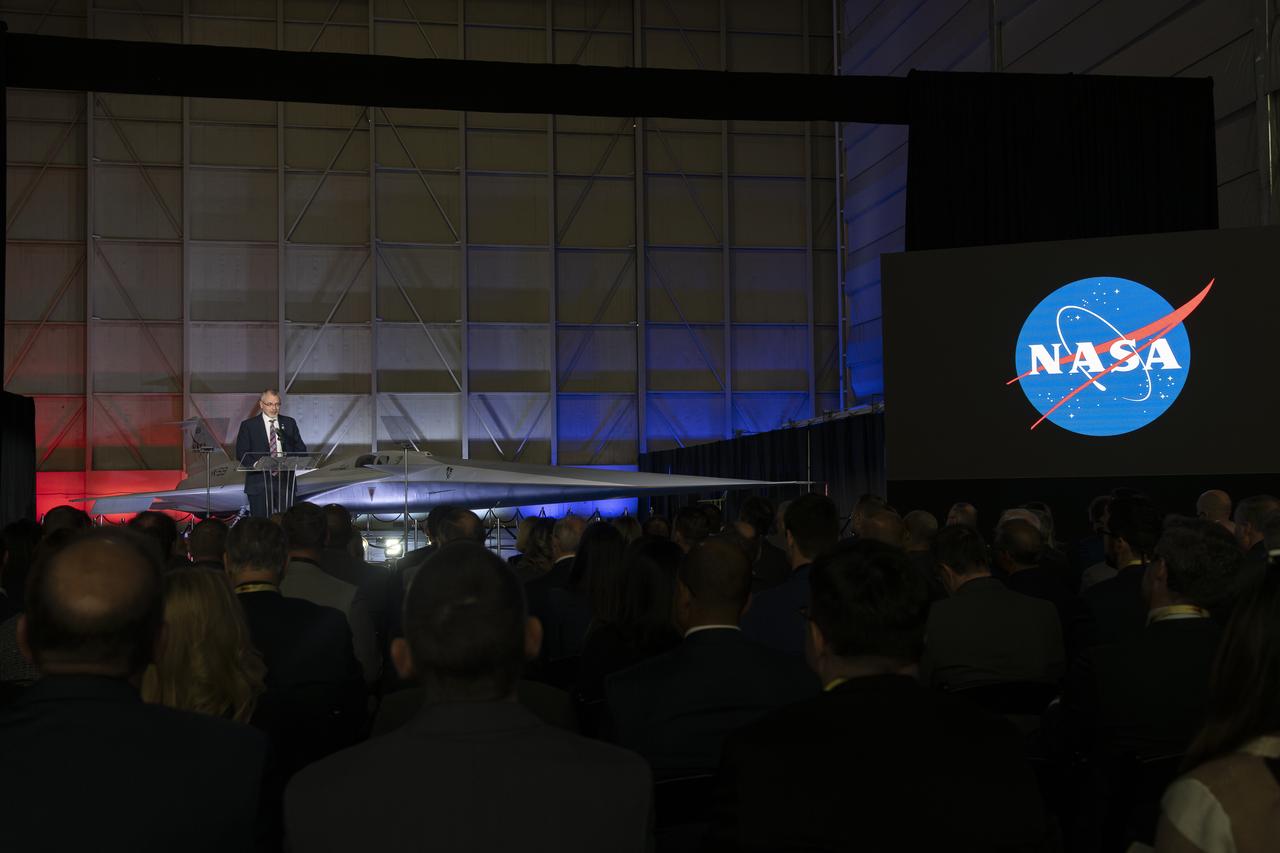
NASA Associate Administrator Jim Free speaks on stage following the unveiling of the agency’s X-59 quiet supersonic research aircraft at a January 12, 2024 event at Lockheed Martin Skunk Works in Palmdale, California. The X-59 is the centerpiece of NASA’s Quesst mission, which seeks to solve one of the major barriers to supersonic flight over land, currently banned in the United States, by making sonic booms quieter.

NASA Associate Administrator for the Aeronautics Research Mission Directorate Bob Pearce speaks on stage prior to the unveiling of the agency’s X-59 quiet supersonic research aircraft at a January 12, 2024 event at Lockheed Martin Skunk Works in Palmdale, California. The X-59 is the centerpiece of NASA’s Quesst mission, which seeks to solve one of the major barriers to supersonic flight over land, currently banned in the United States, by making sonic booms quieter.
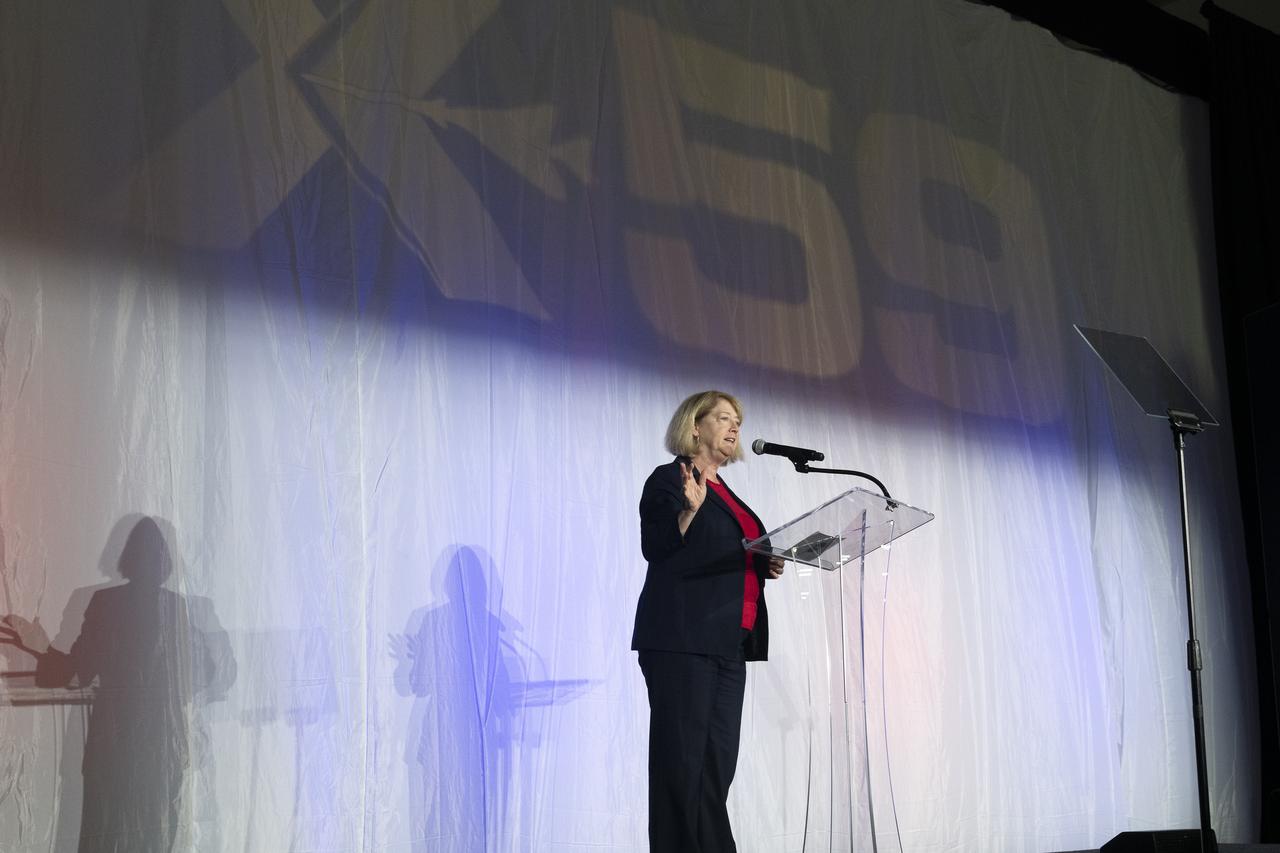
NASA Deputy Administrator Pam Melroy speaks on stage prior to the official unveiling of the agency’s X-59 quiet supersonic research aircraft at a January 12, 2024 event at Lockheed Martin Skunk Works in Palmdale, California. The X-59 is the centerpiece of NASA’s Quesst mission, which seeks to solve one of the major barriers to supersonic flight over land, currently banned in the United States, by making sonic booms quieter.
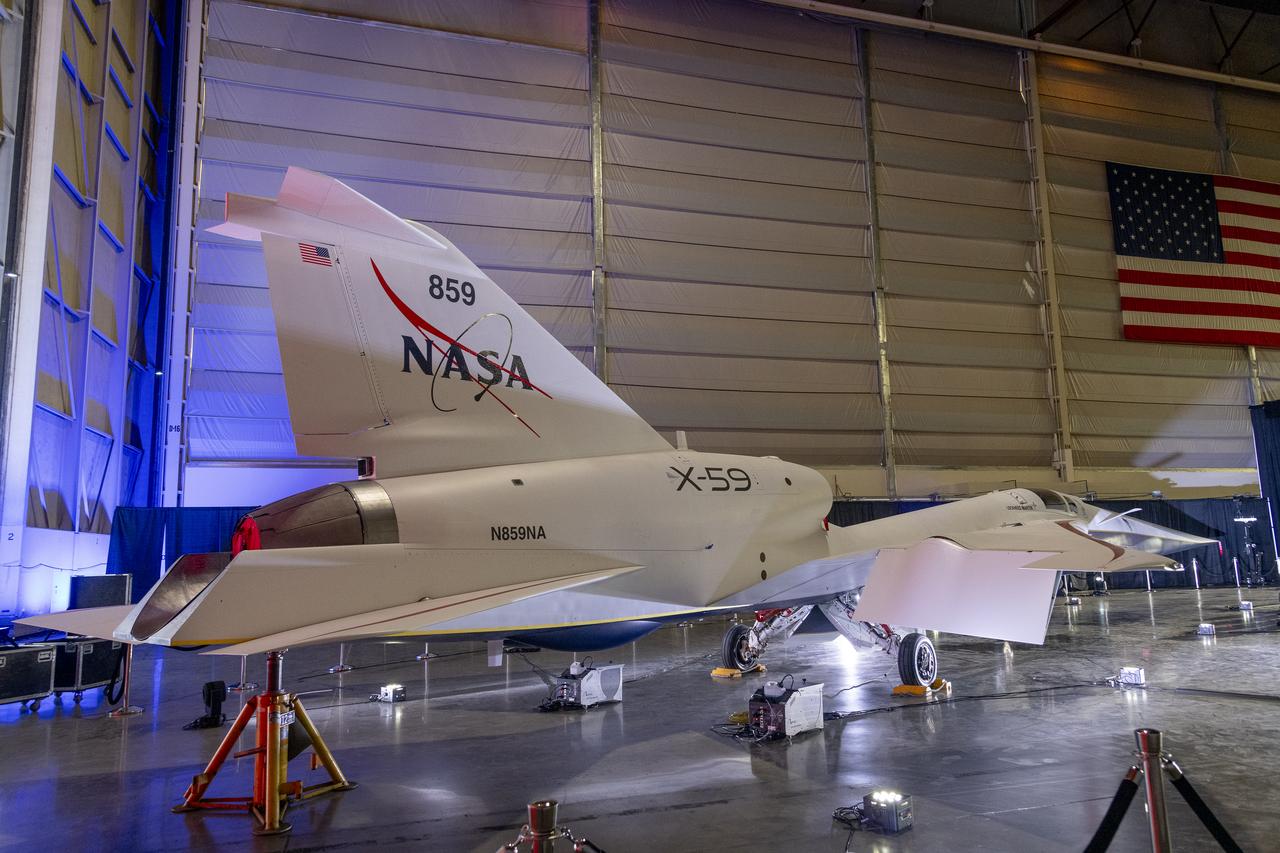
NASA’s X-59 quiet supersonic research aircraft sits in position inside a hangar at Lockheed Martin Skunk Works in Palmdale, California prior to its January 12, 2024 unveiling. The X-59 is the centerpiece of NASA’s Quesst mission, which seeks to solve one of the major barriers to supersonic flight over land, currently banned in the United States, by making sonic booms quieter.
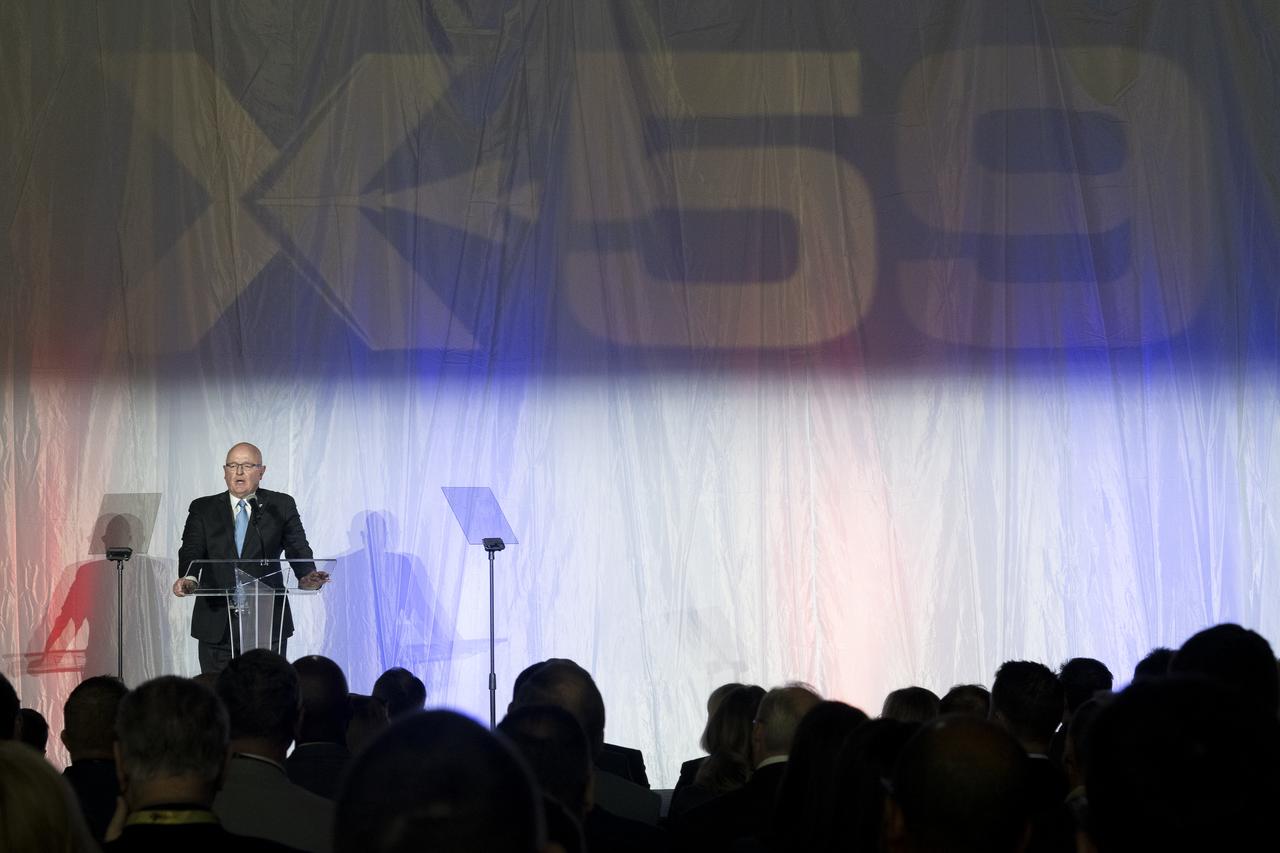
Lockheed Martin Skunk Works Director of Government Affairs Eric Fox speaks on stage prior to the unveiling of the agency’s X-59 quiet supersonic research aircraft at a January 12, 2024 event at Lockheed Martin Skunk Works in Palmdale, California. The X-59 is the centerpiece of NASA’s Quesst mission, which seeks to solve one of the major barriers to supersonic flight over land, currently banned in the United States, by making sonic booms quieter.
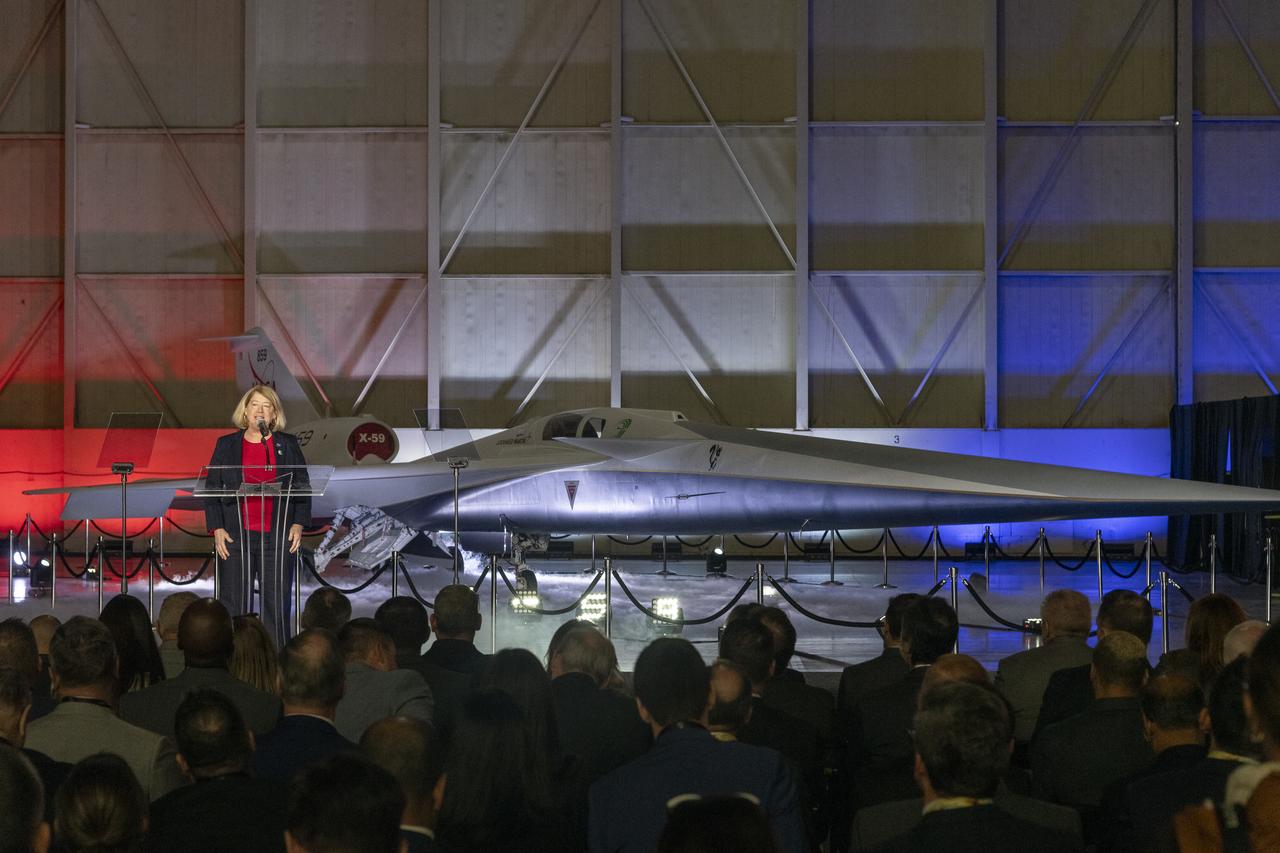
NASA Deputy Administrator Pam Melroy speaks on stage immediately following the unveiling of the agency’s X-59 quiet supersonic research aircraft at a January 12, 2024 event at Lockheed Martin Skunk Works in Palmdale, California. The X-59 is the centerpiece of NASA’s Quesst mission, which seeks to solve one of the major barriers to supersonic flight over land, currently banned in the United States, by making sonic booms quieter.
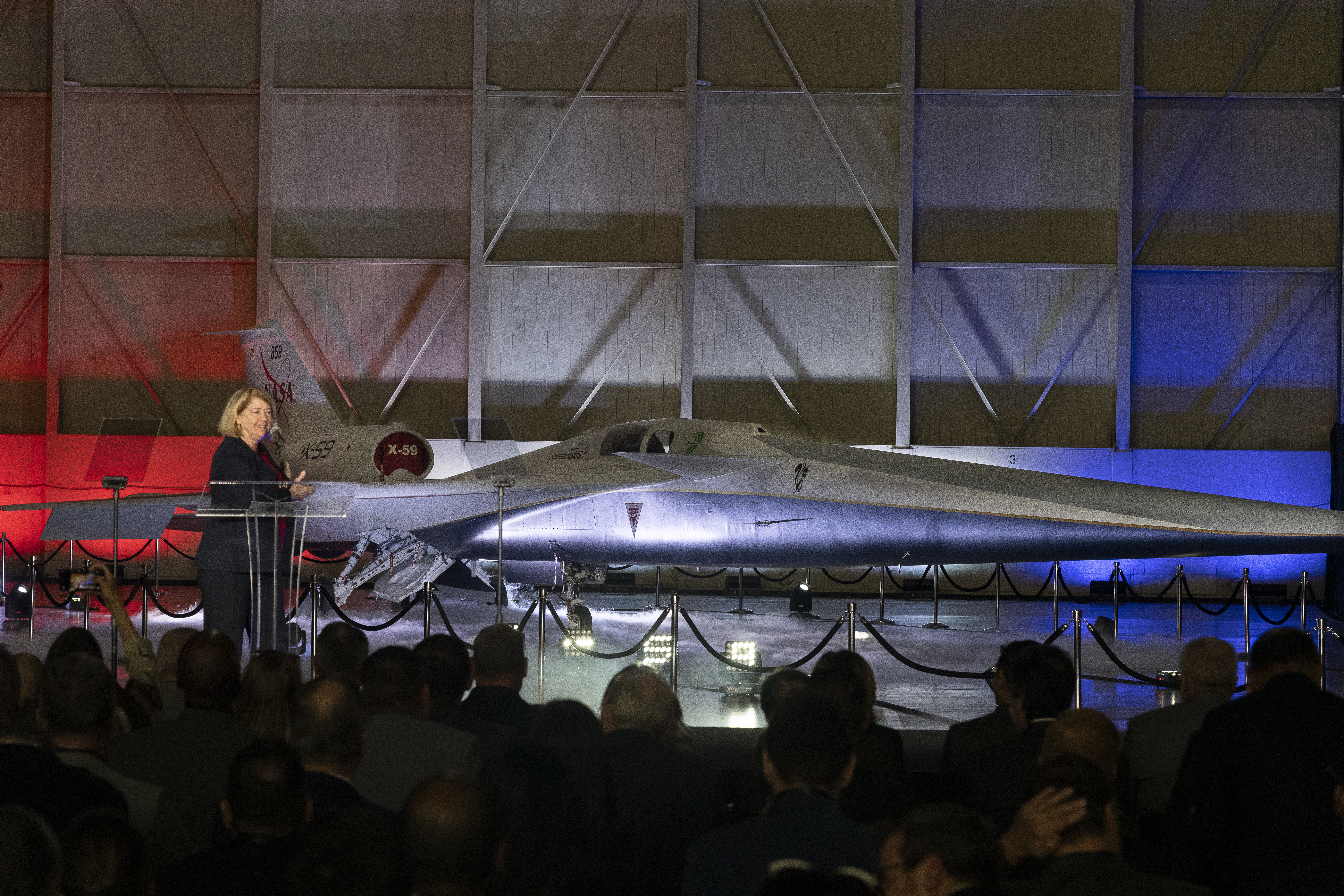
NASA Deputy Administrator Pam Melroy speaks on stage immediately following the unveiling of the agency’s X-59 quiet supersonic research aircraft at a January 12, 2024 event at Lockheed Martin Skunk Works in Palmdale, California. The X-59 is the centerpiece of NASA’s Quesst mission, which seeks to solve one of the major barriers to supersonic flight over land, currently banned in the United States, by making sonic booms quieter.
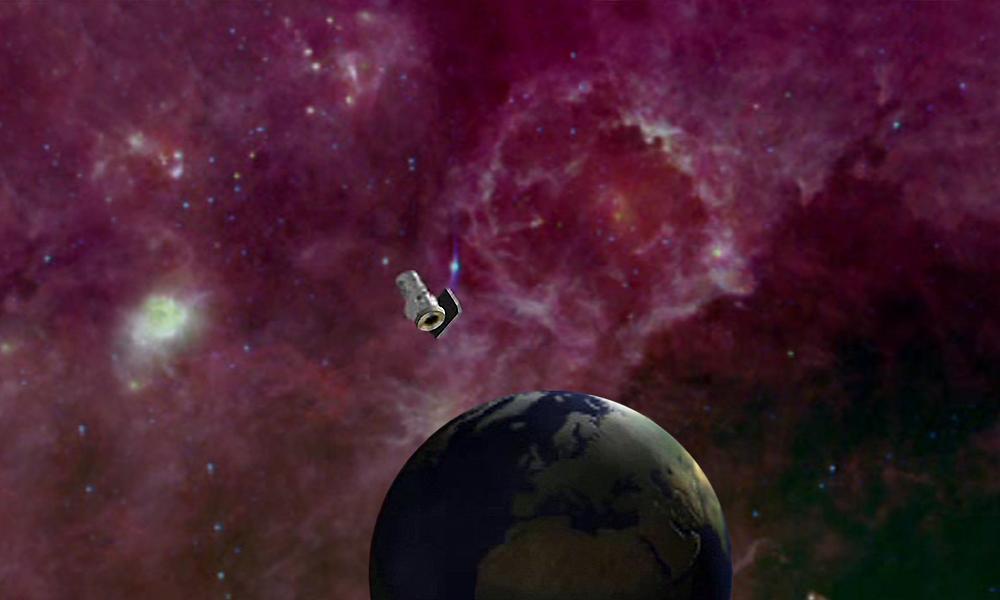
This artist conception shows NASA Wide-field Infrared Survey Explorer mapping the whole sky in infrared. The mission will unveil hundreds of thousands of asteroids, and hundreds of millions of stars and galaxies.
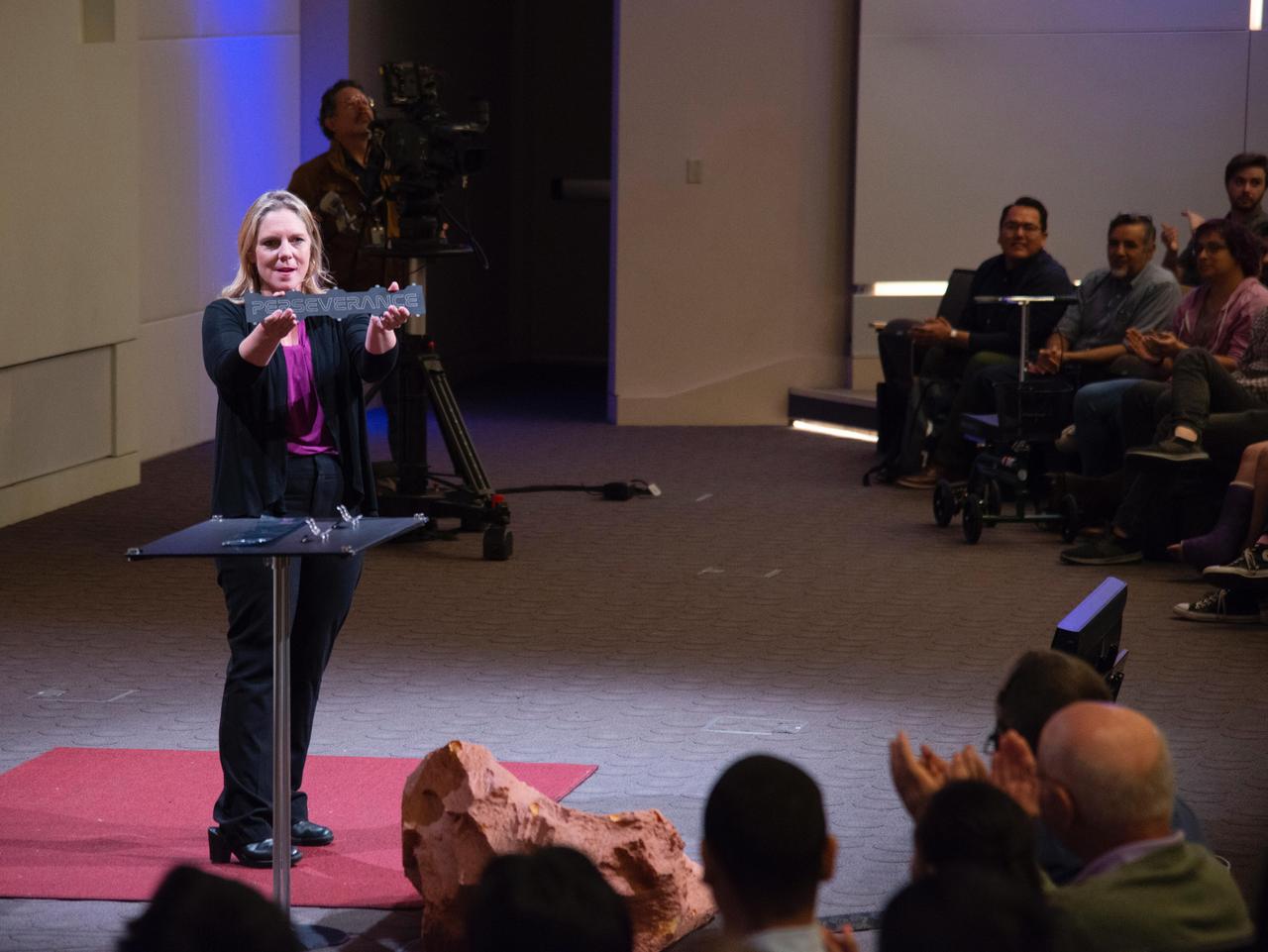
Team members of NASA's next Mars mission applaud as mission manager Jennifer Trosper unveils a nameplate with "Perseverance" laser-etched into its surface. The image was taken at the agency's Jet Propulsion Laboratory on March 5, 2020. https://photojournal.jpl.nasa.gov/catalog/PIA23763
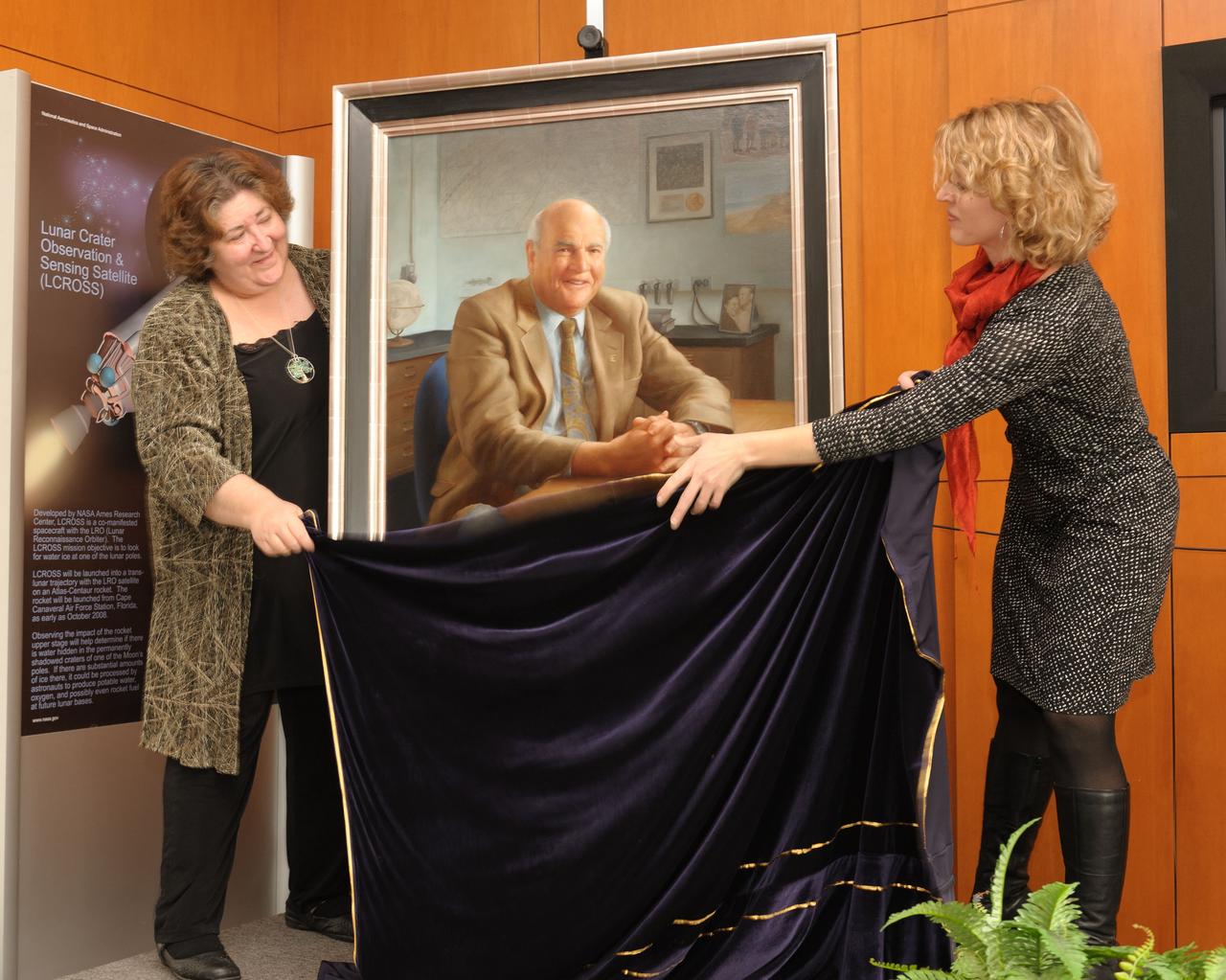
Dr. Brauch Blumberg portrait unveiling ceremony held at the Syverston Auditorium (N-201) NASA Ames Researc Center, Moffett Field, CA. Lynn Harper and Estelle Dotson (of NASA Astrobilolgy Institute) unveil portrait.
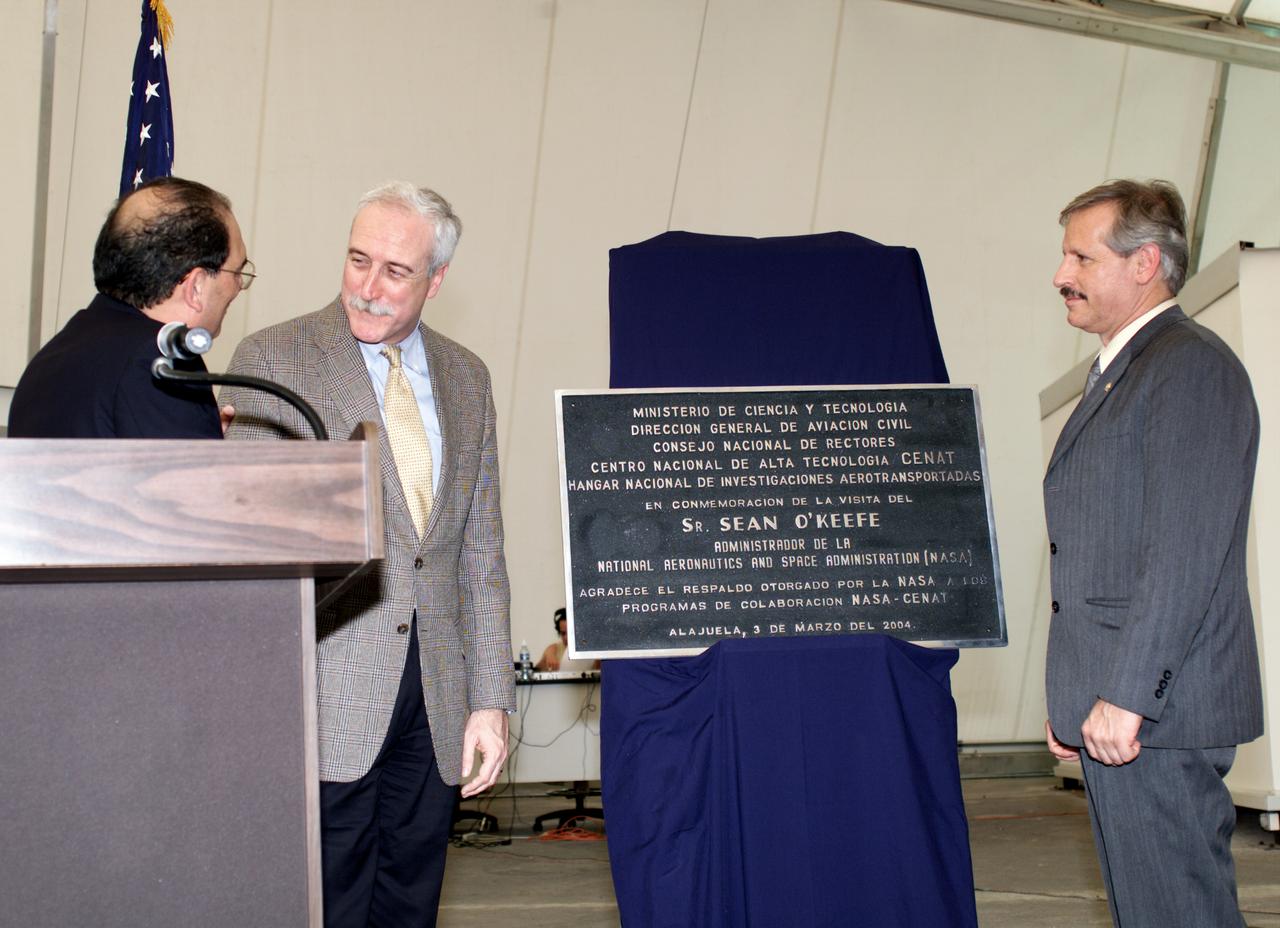
AirSAR 2004 Mesoamerica plaque unveiling by NASA Administrator Sean O'Keefe and Fernando Gutierrez, Costa Rican Minister of Science and Technology(MICIT). AirSAR 2004 Mesoamerica is a three-week expedition by an international team of scientists that will use an all-weather imaging tool, called the Airborne Synthetic Aperture Radar (AirSAR), in a mission ranging from the tropical rain forests of Central America to frigid Antarctica.
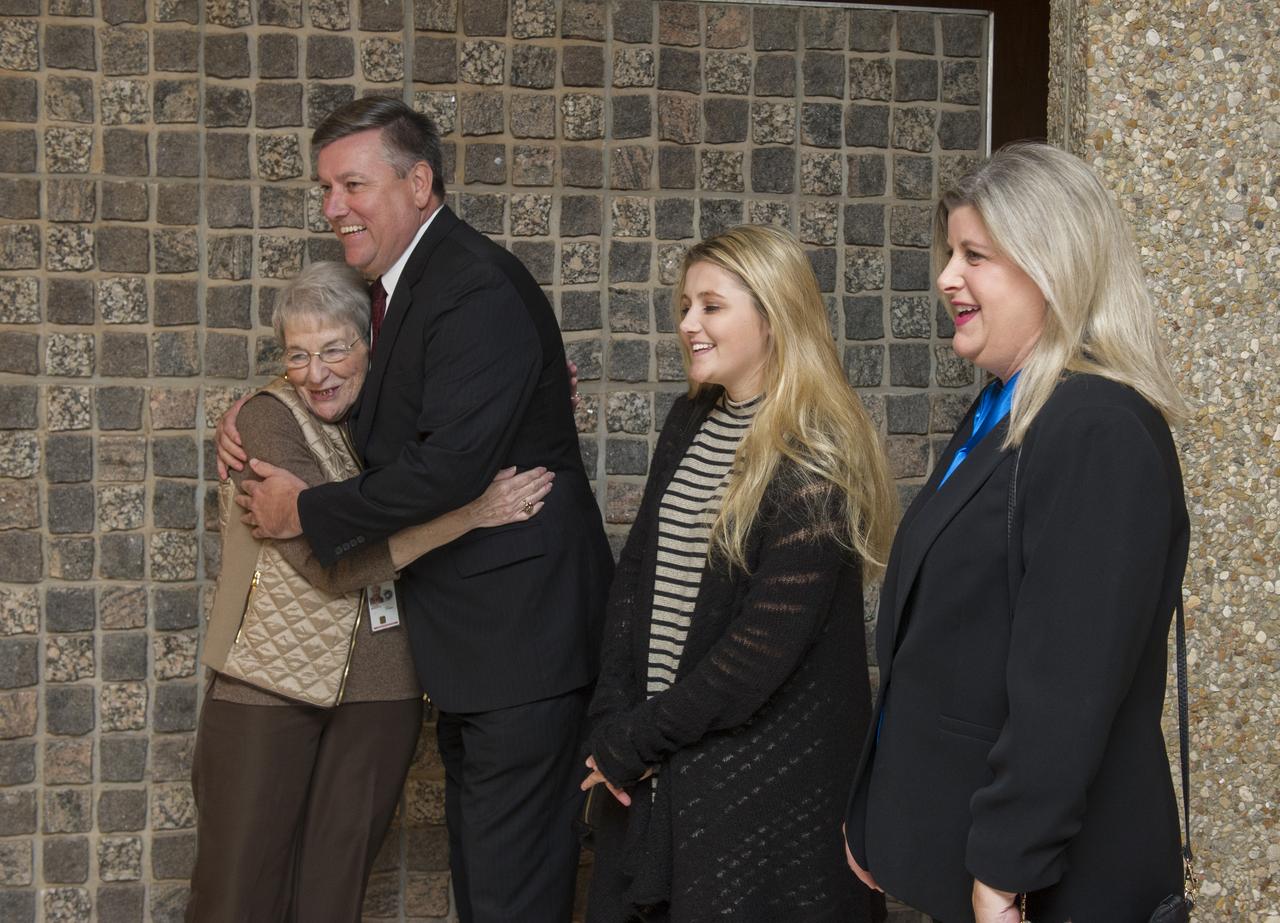
Patrick Scheuermann hugs Margo Thigpen at portrait unveiling event.
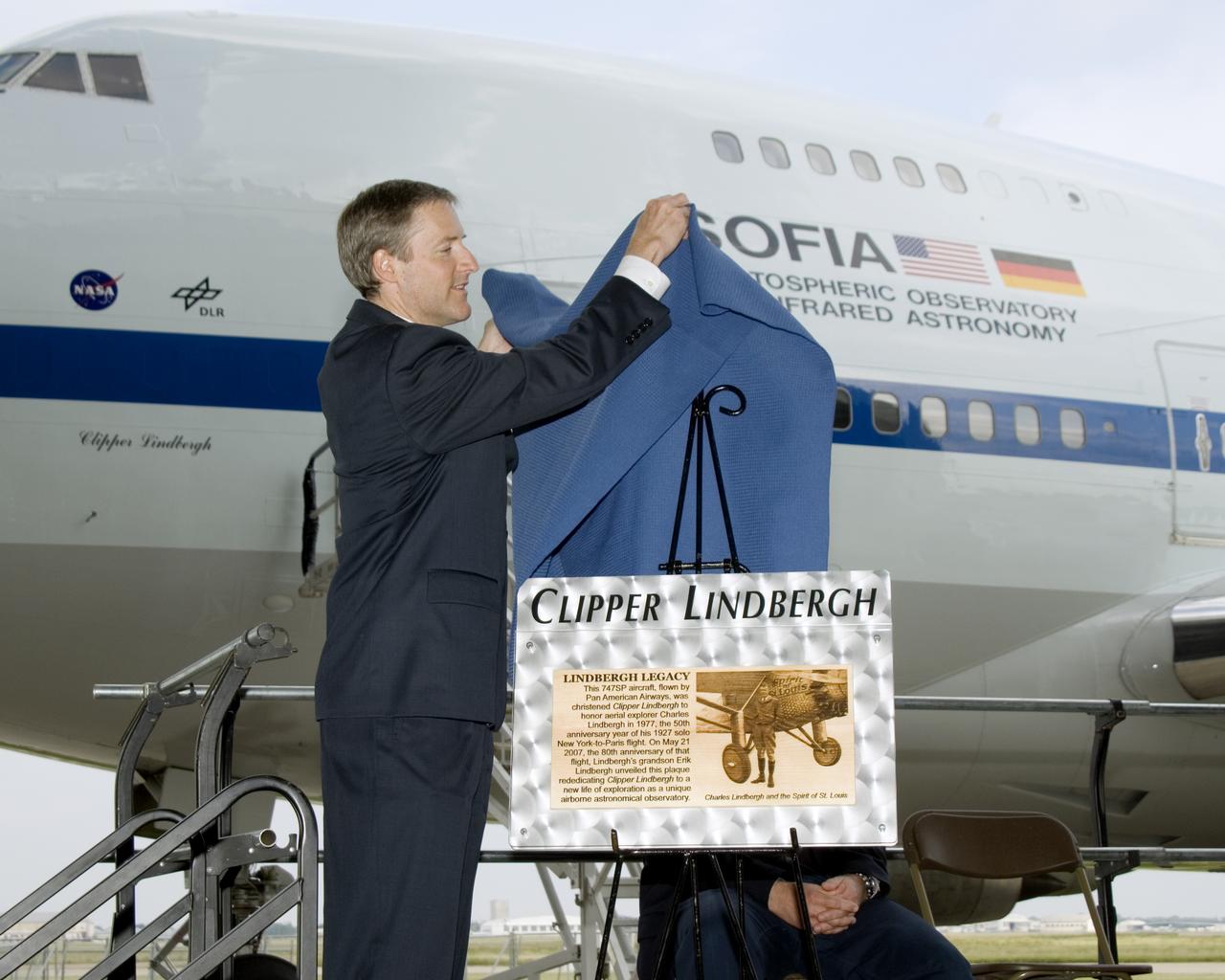
Erik Lindbergh, grandson of aviator Charles Lindbergh, unveiled a plaque commemorating his grandfather on the 80th anniversary of Charles Lindbergh's transatlantic flight. The event was a dedication of the 747 Clipper Lindbergh, a NASA airborne infrared observatory that is beginning test flights in preparation for conducting world-class airborne astronomy. The project is known as the Stratospheric Observatory for Infrared Astronomy, or SOFIA.
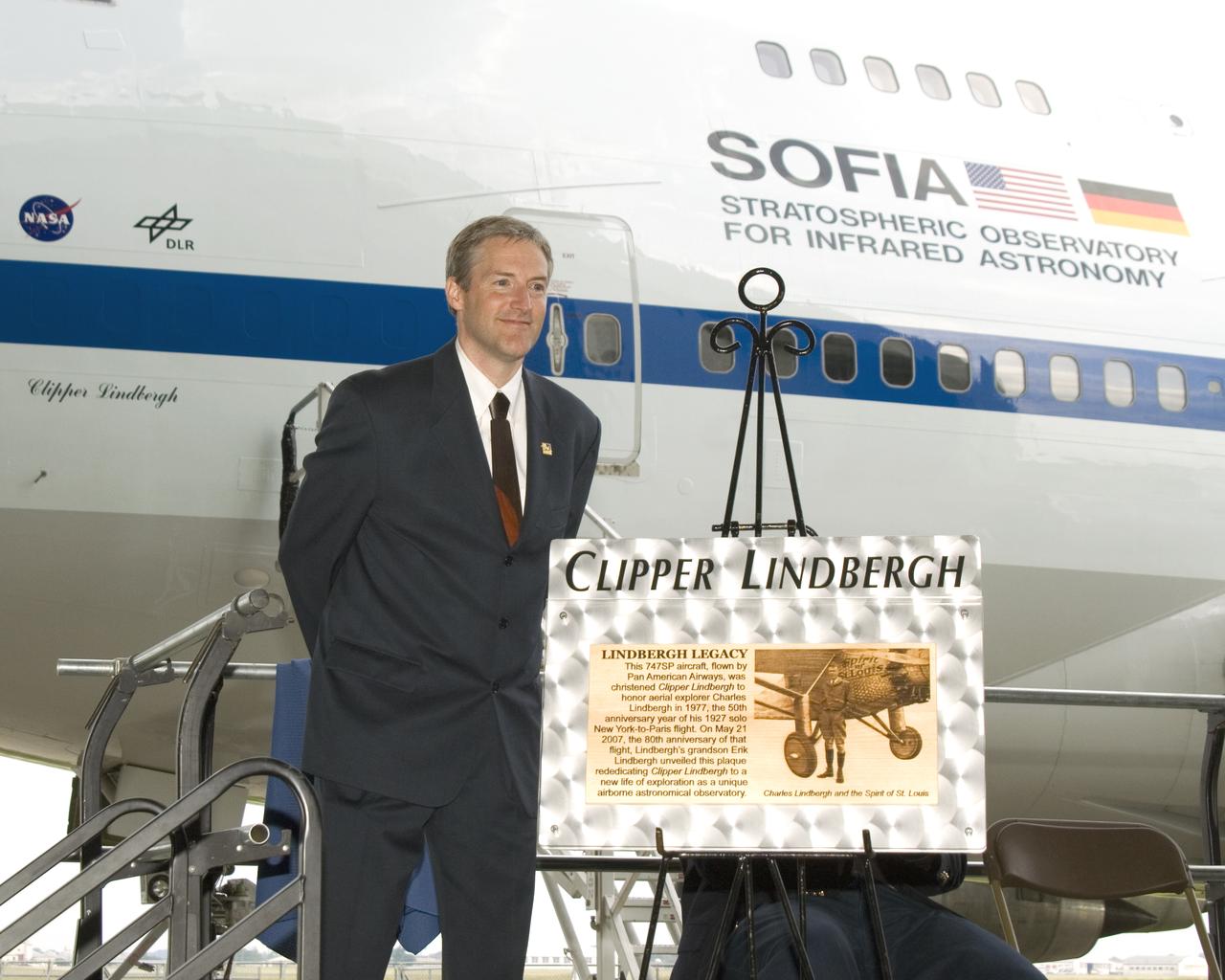
Erik Lindbergh, grandson of aviator Charles Lindbergh, unveiled a plaque commemorating his grandfather on the 80th anniversary of Charles Lindbergh's transatlantic flight. The event was a dedication of the 747 Clipper Lindbergh, a NASA airborne infrared observatory that is beginning test flights in preparation for conducting world-class airborne astronomy. The project is known as the Stratospheric Observatory for Infrared Astronomy, or SOFIA.
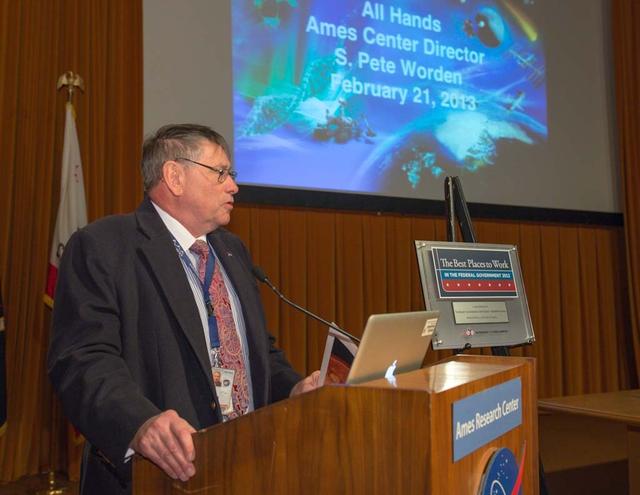
Ames Center Director S. Pete Worden unveils 'Best Places to Work' plaque in Federal Government 2012 at all-hands meeting

SpaceX unveiled its spacesuit that will be worn by astronauts aboard its Crew Dragon spacecraft during missions to and from the International Space Station.
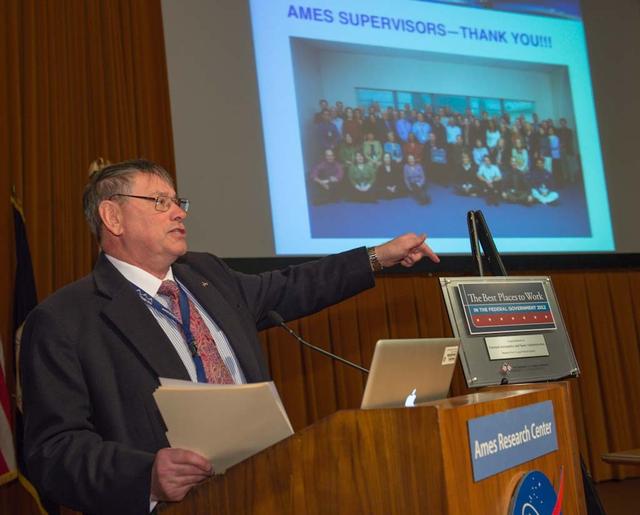
Ames Center Director S. Pete Worden unveils 'Best Places to Work' plaque in Federal Government 2012 at all-hands meeting
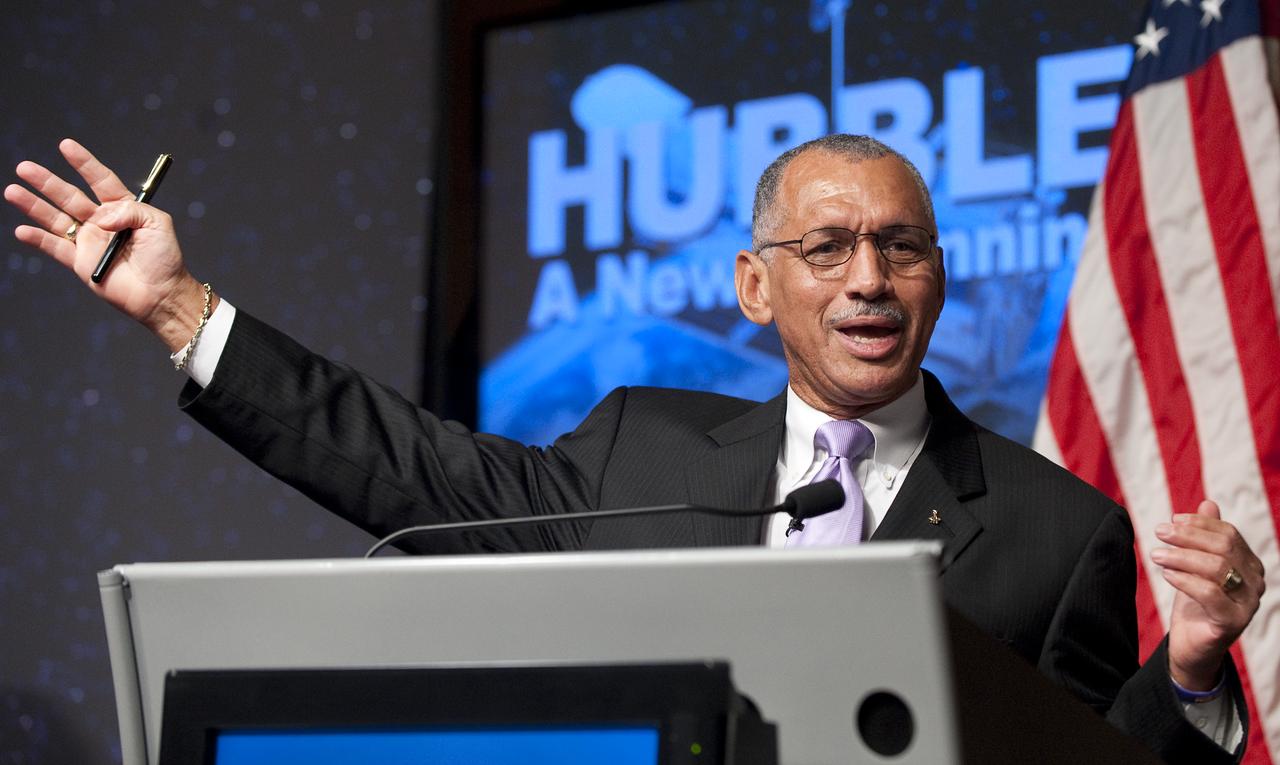
NASA Administrator Charles F. Bolden delivers his remarks during a press conference where NASA unveiled new images from the Hubble Space Telescope Wednesday, Sept. 9, 2009 at NASA Headquarters in Washington. The unveiled images were from four of the telescopes' six operating science instruments. Photo Credit: (NASA/Bill Ingalls)
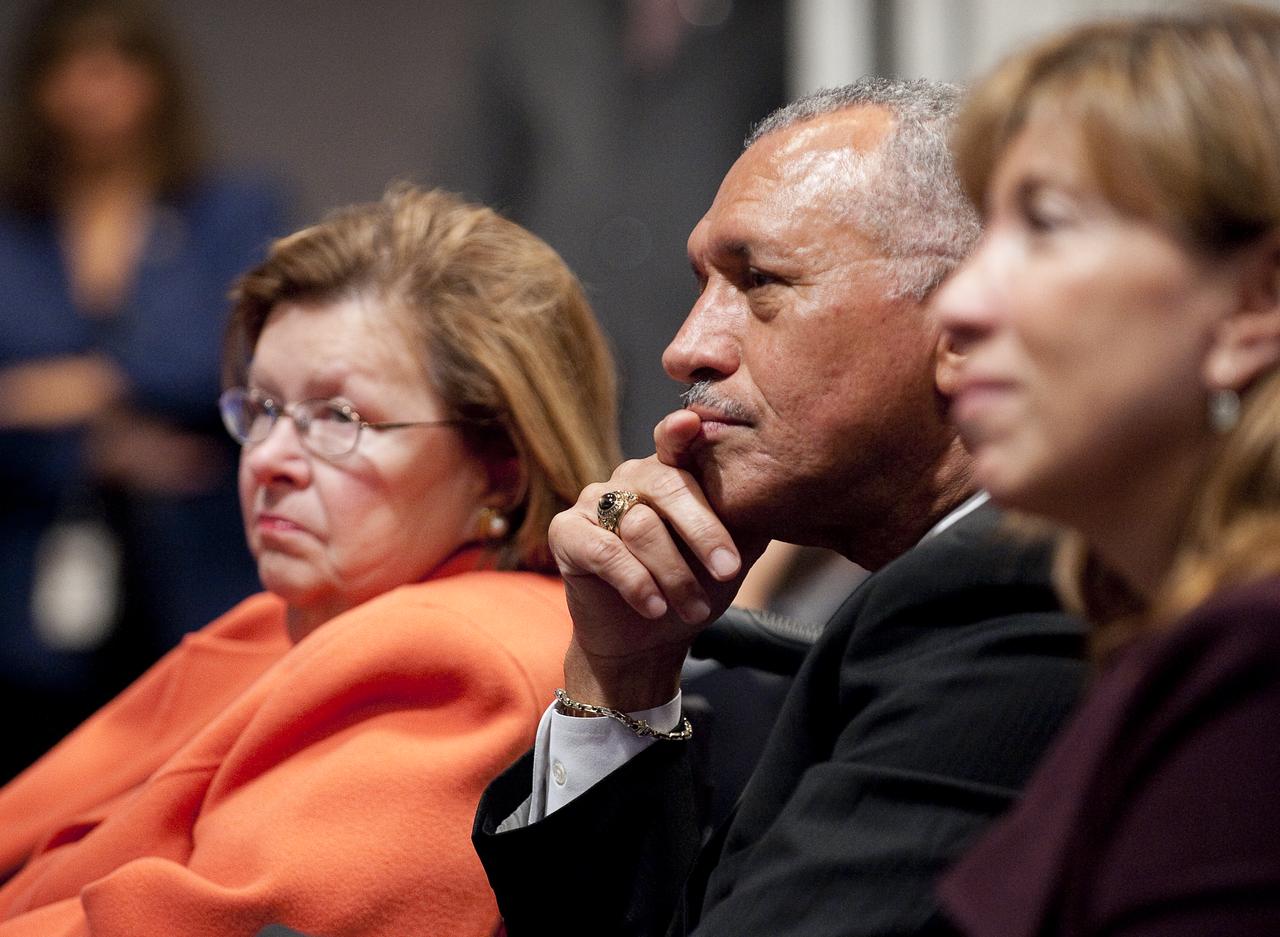
U.S. Senator Barbara A. Mikulski, D-Md., left, NASA Administrator Charles F. Bolden, center, and NASA Deputy Administrator Lori Garver listen during a press conference where NASA unveiled new images from the Hubble Space Telescope Wednesday, Sept. 9, 2009 at NASA Headquarters in Washington. The unveiled images were from four of the telescopes' six operating science instruments. Photo Credit: (NASA/Bill Ingalls)
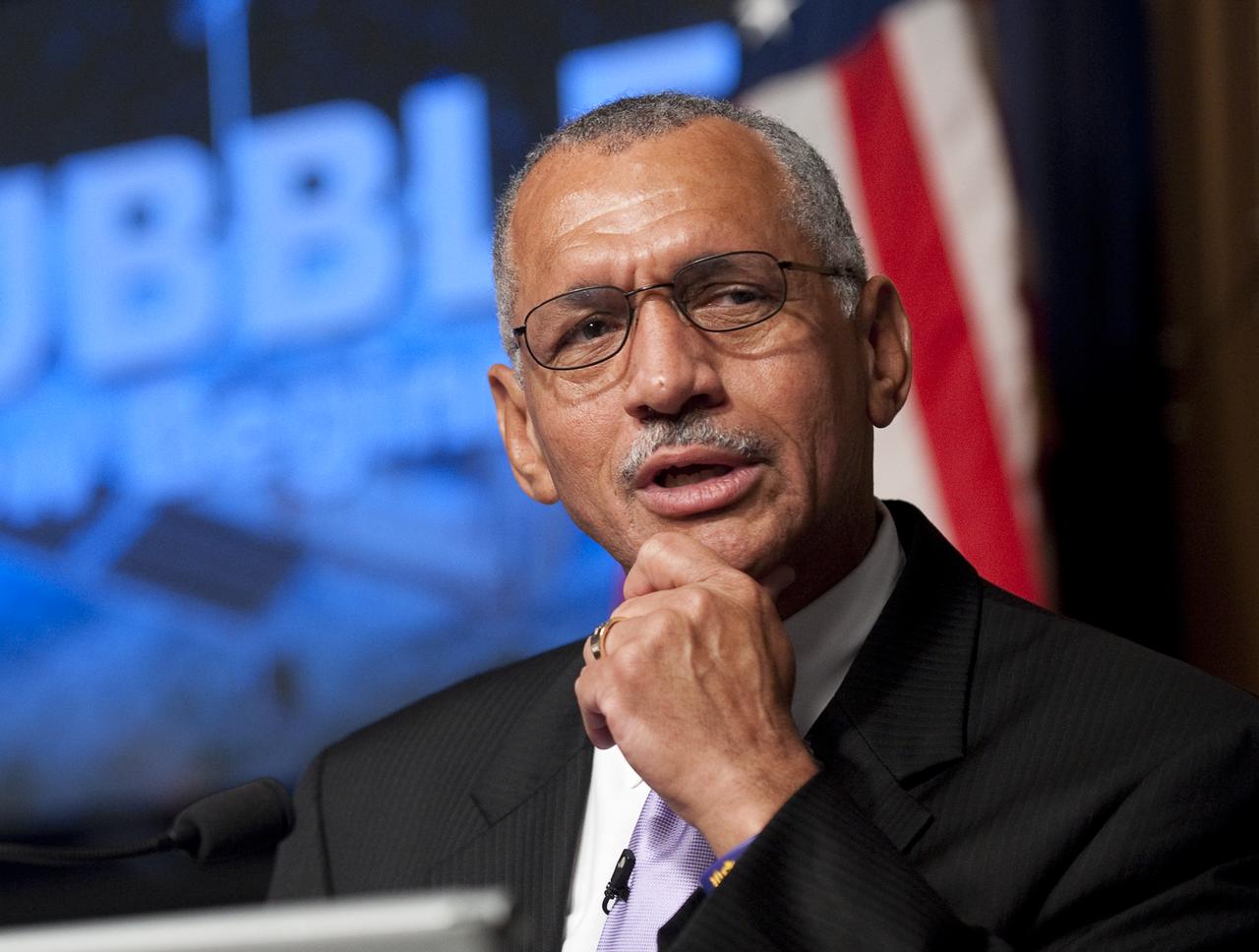
NASA Administrator Charles F. Bolden delivers his remarks during a press conference where NASA unveiled new images from the Hubble Space Telescope Wednesday, Sept. 9, 2009 at NASA Headquarters in Washington. The unveiled images were from four of the telescopes' six operating science instruments. Photo Credit: (NASA/Bill Ingalls)
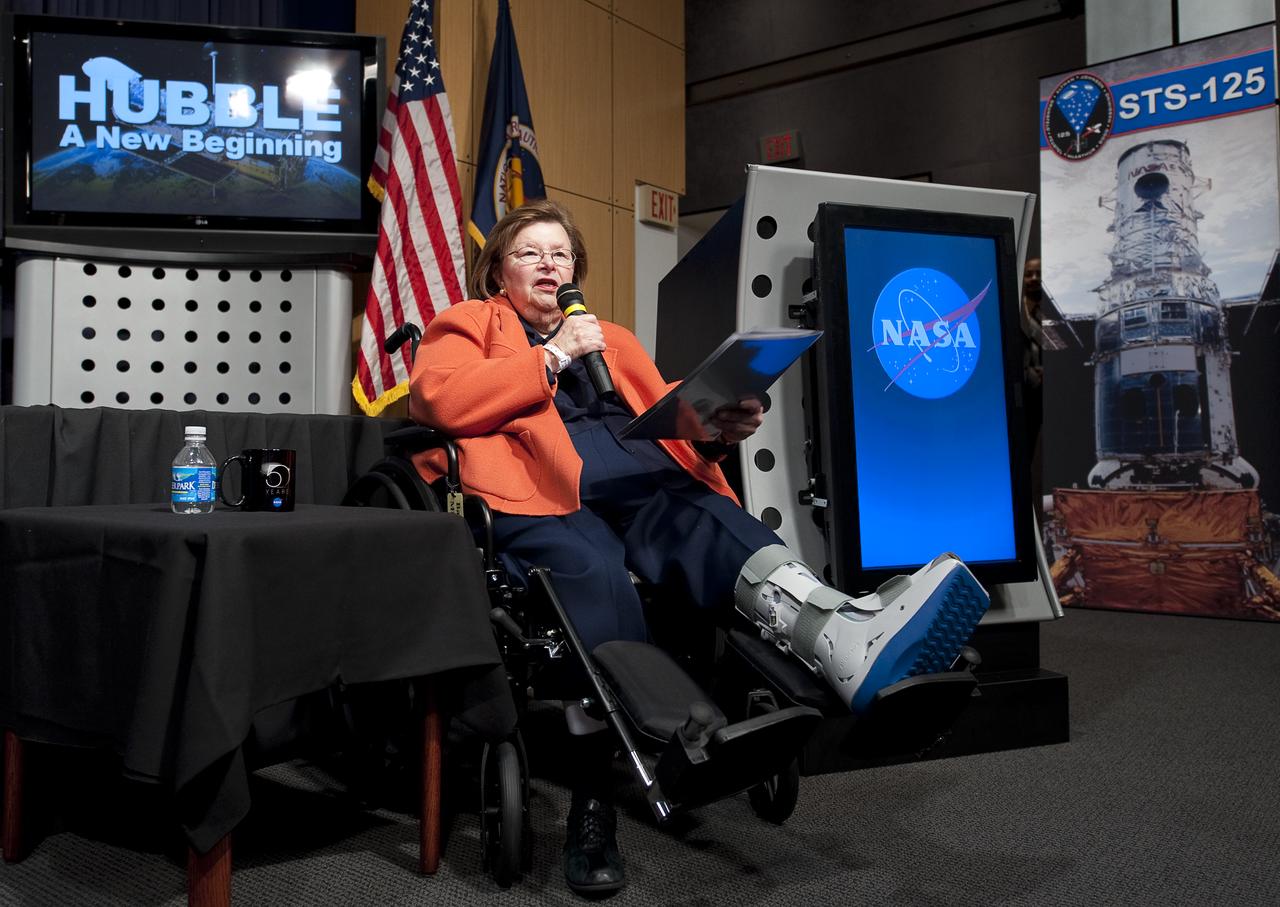
U.S. Senator Barbara A. Mikulski, D-Md. delivers her remarks during a press conference where NASA unveiled new images from the Hubble Space Telescope Wednesday, Sept. 9, 2009 at NASA Headquarters in Washington. The unveiled images were from four of the telescopes' six operating science instruments. Photo Credit: (NASA/Bill Ingalls)

U.S. Senator Barbara A. Mikulski, D-Md. delivers her remarks during a press conference where NASA unveiled new images from the Hubble Space Telescope Wednesday, Sept. 9, 2009 at NASA Headquarters in Washington. The unveiled images were from four of the telescopes' six operating science instruments. Photo Credit: (NASA/Bill Ingalls)