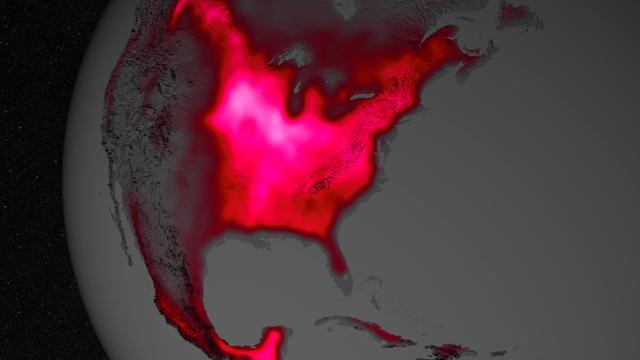
Amazing the things you can 'see' from space, if you just know how to look ... Satellite data show that during the Northern Hemisphere's growing season, the U.S. Midwest boasts more photosynthetic activity than any other spot on Earth. The magnitude of fluorescence portrayed in this visualization prompted researchers to take a closer look at the productivity of the U.S. Corn Belt. The glow represents fluorescence measured from land plants in early July, over a period from 2007 to 2011. Credit: NASA's Goddard Space Flight Center More here: <a href="http://go.nasa.gov/1jstros" rel="nofollow">go.nasa.gov/1jstros</a> <b><a href="http://www.nasa.gov/audience/formedia/features/MP_Photo_Guidelines.html" rel="nofollow">NASA image use policy.</a></b> <b><a href="http://www.nasa.gov/centers/goddard/home/index.html" rel="nofollow">NASA Goddard Space Flight Center</a></b> enables NASA’s mission through four scientific endeavors: Earth Science, Heliophysics, Solar System Exploration, and Astrophysics. Goddard plays a leading role in NASA’s accomplishments by contributing compelling scientific knowledge to advance the Agency’s mission. <b>Follow us on <a href="http://twitter.com/NASAGoddardPix" rel="nofollow">Twitter</a></b> <b>Like us on <a href="http://www.facebook.com/pages/Greenbelt-MD/NASA-Goddard/395013845897?ref=tsd" rel="nofollow">Facebook</a></b> <b>Find us on <a href="http://instagram.com/nasagoddard?vm=grid" rel="nofollow">Instagram</a></b>

Photo taken aboard a U.S. Air Force C-17 transport aircraft during a flight from Christchurch, New Zealand, to the U.S. Antarctic Program's McMurdo Station in Antarctica on Nov. 12, 2013. The C-17s that ferry people, equipment and supplies to Antarctica are operated by the U.S. Air Force's 62nd and 446th Airlift Wings based at Joint Base Lewis-McChord near Seattle, Wash. NASA's Operation IceBridge is an airborne science mission to study Earth's polar ice. In 2013, IceBridge is conducting its first field campaign directly from Antarctica. For more information about IceBridge, visit: <a href="http://www.nasa.gov/icebridge" rel="nofollow">www.nasa.gov/icebridge</a> Credit: NASA/Goddard/Jefferson Beck <b><a href="http://www.nasa.gov/audience/formedia/features/MP_Photo_Guidelines.html" rel="nofollow">NASA image use policy.</a></b> <b><a href="http://www.nasa.gov/centers/goddard/home/index.html" rel="nofollow">NASA Goddard Space Flight Center</a></b> enables NASA’s mission through four scientific endeavors: Earth Science, Heliophysics, Solar System Exploration, and Astrophysics. Goddard plays a leading role in NASA’s accomplishments by contributing compelling scientific knowledge to advance the Agency’s mission. <b>Follow us on <a href="http://twitter.com/NASA_GoddardPix" rel="nofollow">Twitter</a></b> <b>Like us on <a href="http://www.facebook.com/pages/Greenbelt-MD/NASA-Goddard/395013845897?ref=tsd" rel="nofollow">Facebook</a></b> <b>Find us on <a href="http://instagram.com/nasagoddard?vm=grid" rel="nofollow">Instagram</a></b>
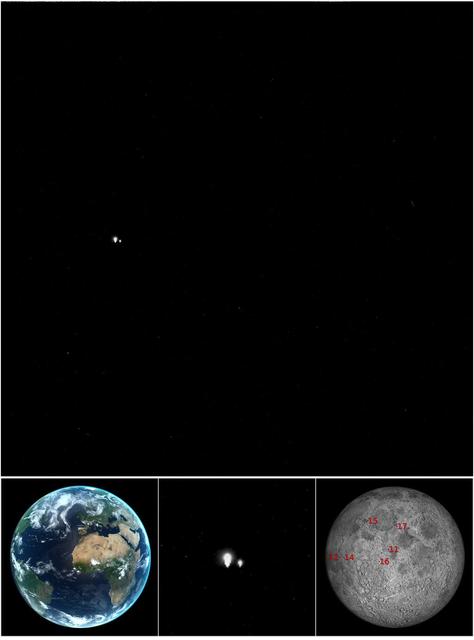
Looking Back at Us
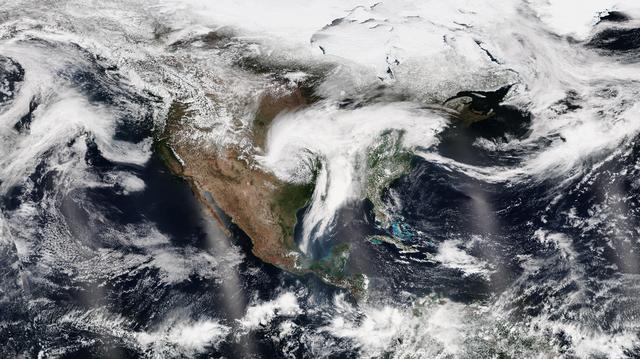
Suomi NPP capture this true-color image of the storms over the Midwest and US South on April 30, 2017. This images comes from the Visible Infrared Imaging Radiometer Suite (VIIRS) instrument on @NASA.NPP Credit: NASA/NOAA/NPP/VIIRS <b><a href="http://www.nasa.gov/audience/formedia/features/MP_Photo_Guidelines.html" rel="nofollow">NASA image use policy.</a></b> <b><a href="http://www.nasa.gov/centers/goddard/home/index.html" rel="nofollow">NASA Goddard Space Flight Center</a></b> enables NASA’s mission through four scientific endeavors: Earth Science, Heliophysics, Solar System Exploration, and Astrophysics. Goddard plays a leading role in NASA’s accomplishments by contributing compelling scientific knowledge to advance the Agency’s mission. <b>Follow us on <a href="http://twitter.com/NASAGoddardPix" rel="nofollow">Twitter</a></b> <b>Like us on <a href="http://www.facebook.com/pages/Greenbelt-MD/NASA-Goddard/395013845897?ref=tsd" rel="nofollow">Facebook</a></b> <b>Find us on <a href="http://instagrid.me/nasagoddard/?vm=grid" rel="nofollow">Instagram</a></b>
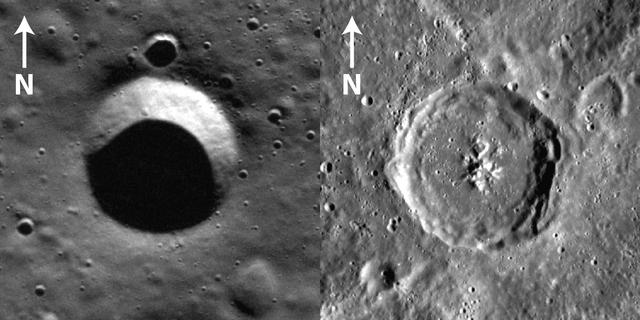
Using Shadows to Measure Crater Depths
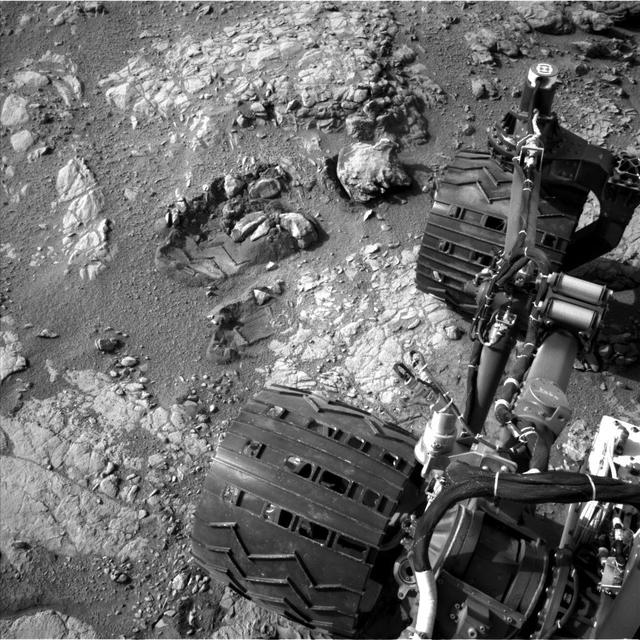
This view of Curiosity's left-front and left-center wheels and of marks made by wheels on the ground in the "Yellowknife Bay" area comes from one of six cameras used on Mars for the first time more than six months after the rover landed. The left Navigation Camera (Navcam) linked to Curiosity's B-side computer took this image during the 223rd Martian day, or sol, of Curiosity's work on Mars (March 22, 2013). The wheels are 20 inches (50 centimeters) in diameter. Curiosity carries a pair of main computers, redundant to each other, in order to have a backup available if one fails. Each of the computers, A-side and B-side, also has other redundant subsystems linked to just that computer. Curiosity operated on its A-side from before the August 2012 landing until Feb. 28, when engineers commanded a switch to the B-side in response to a memory glitch on the A-side. One set of activities after switching to the B-side computer has been to check the six engineering cameras that are hard-linked to that computer. The rover's science instruments, including five science cameras, can each be operated by either the A-side or B-side computer, whichever is active. However, each of Curiosity's 12 engineering cameras is linked to just one of the computers. The engineering cameras are the Navigation Camera (Navcam), the Front Hazard-Avoidance Camera (Front Hazcam) and Rear Hazard-Avoidance Camera (Rear Hazcam). Each of those three named cameras has four cameras as part of it: two stereo pairs of cameras, with one pair linked to each computer. Only the pairs linked to the active computer can be used, and the A-side computer was active from before landing, in August, until Feb. 28. All six of the B-side engineering cameras have been used during March 2013 and checked out OK. Image Credit: NASA/JPL-Caltech <b><a href="http://www.nasa.gov/audience/formedia/features/MP_Photo_Guidelines.html" rel="nofollow">NASA image use policy.</a></b> <b><a href="http://www.nasa.gov/centers/goddard/home/index.html" rel="nofollow">NASA Goddard Space Flight Center</a></b> enables NASA’s mission through four scientific endeavors: Earth Science, Heliophysics, Solar System Exploration, and Astrophysics. Goddard plays a leading role in NASA’s accomplishments by contributing compelling scientific knowledge to advance the Agency’s mission. <b>Follow us on <a href="http://twitter.com/NASA_GoddardPix" rel="nofollow">Twitter</a></b> <b>Like us on <a href="http://www.facebook.com/pages/Greenbelt-MD/NASA-Goddard/395013845897?ref=tsd" rel="nofollow">Facebook</a></b> <b>Find us on <a href="http://instagram.com/nasagoddard?vm=grid" rel="nofollow">Instagram</a></b>
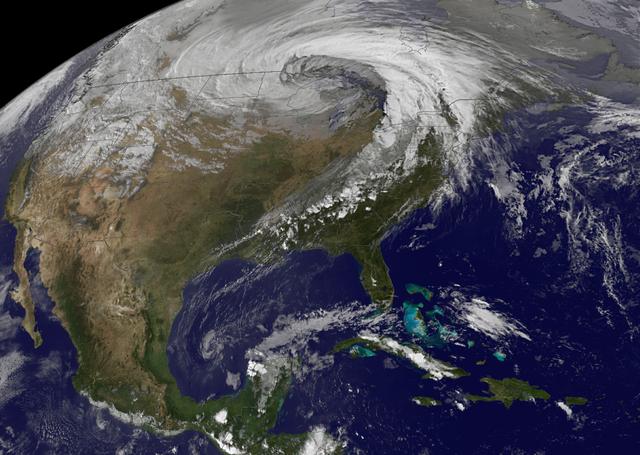
NASA image acquired October 26, 2010 The storm that swept across the center of the United States on October 26 and October 27, 2010, was memorable to those who experienced it because of its strong winds, rain, hail, and widespread tornadoes. Meteorologists get excited about the storm because it set a record for the lowest pressure (not associated with a hurricane) measured over land in the continental United States. At 5:13 p.m. CDT, the weather station in Bigfork, Minnesota recorded 955.2 millibars (28.21 inches of pressure). Pressure is one indicator of a storm’s strength, and this measurement corresponds to the pressure seen in a Category 3 hurricane. This image, taken by the GOES satellite on October 26, shows the storm system circling around the area of extreme low pressure. Such extratropical cyclones form over the United States in the spring and fall, when the temperature difference from north to south is large. Warm, high-pressure air rushes toward the cooler, low-pressure air in the north. Because the Earth is rotating, the air moving in ends up circling the area of low pressure, creating the cyclone shown in the image. The intensity of the storm is determined by the pressure difference between the center and the outer edges. Extreme low pressure in the center of the storm, therefore, is an indicator that the storm was very intense. The animation shows the storm developing starting late on October 25 and running through October 27. The cyclone formed very quickly on October 26, taking a distinctive comma shape as the day went on. The storm developed so quickly, in fact, that it is classified as a bomb, an extremely fast developing storm (dropping at least one millibar of pressure per hour for 24 hours), more common over water than land. The storm was also huge. Though the area of low pressure is centered over the Upper Midwest, the storm reached from the Gulf of Mexico into Canada, and from the Rocky Mountains to the Atlantic Ocean. Extratropical cyclones bring an array of unsettled weather, including strong wind, rain, hail, and tornadoes, and this cyclone brought all of that. On October 26–27, winds gusted up to 78 miles per hour in Michigan, with high winds throughout the Midwest. The National Weather Service reported 61 tornadoes over the two days. Heavy snow also fell in the north. NASA Earth Observatory imagery created by Jesse Allen, using imagery provided courtesy of the NASA GOES Project Science Office. Caption by Holli RIebeek. Instrument: GOES Credit: <b><a href="http://www.earthobservatory.nasa.gov/" rel="nofollow"> NASA Earth Observatory</a></b> <b><a href="http://www.nasa.gov/centers/goddard/home/index.html" rel="nofollow">NASA Goddard Space Flight Center</a></b> enables NASA’s mission through four scientific endeavors: Earth Science, Heliophysics, Solar System Exploration, and Astrophysics. Goddard plays a leading role in NASA’s accomplishments by contributing compelling scientific knowledge to advance the Agency’s mission. <b>Follow us on <a href="http://twitter.com/NASA_GoddardPix" rel="nofollow">Twitter</a></b> <b>Join us on <a href="http://www.facebook.com/pages/Greenbelt-MD/NASA-Goddard/395013845897?ref=tsd" rel="nofollow">Facebook</a></b>
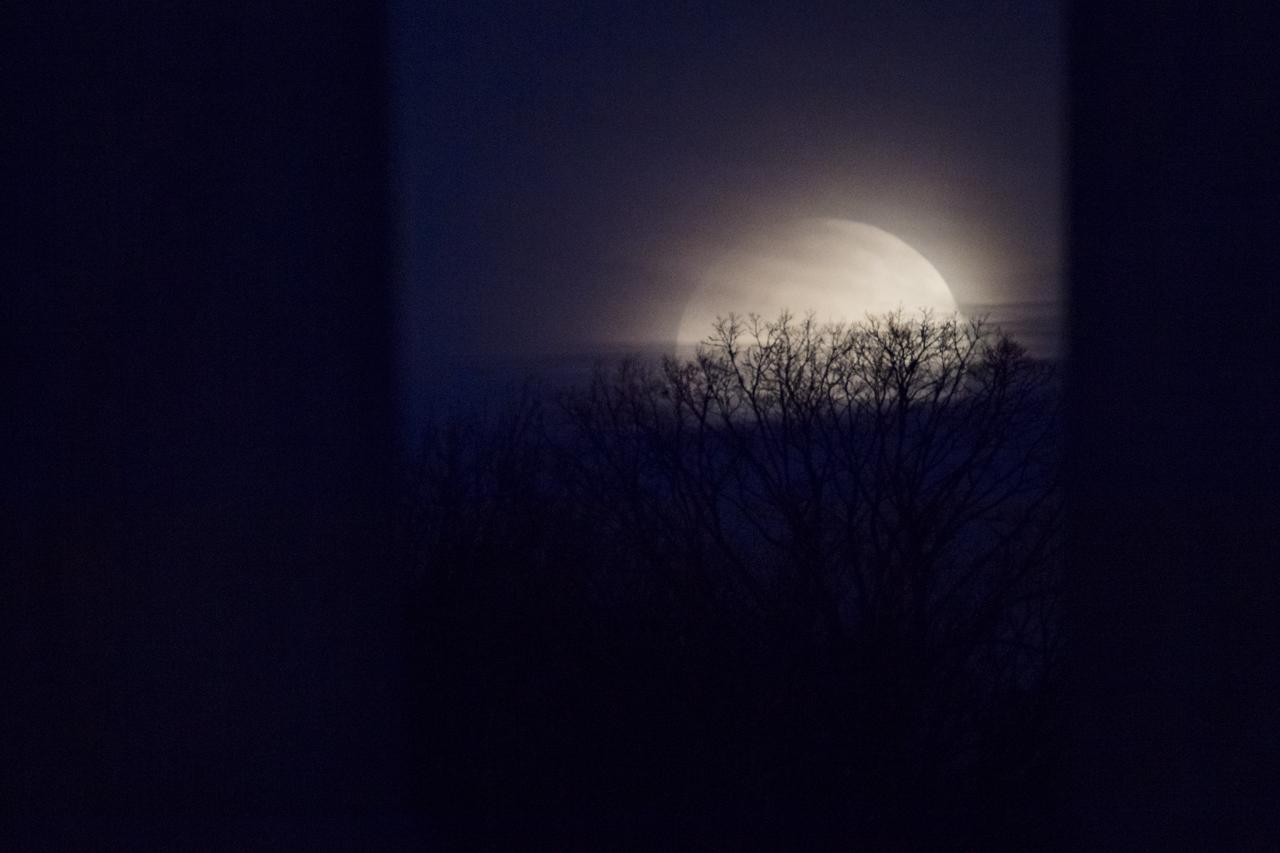
The Moon is seen as it sets behind the National Capitol Columns at The US National Arboretum on Wednesday, Jan. 31, 2018 in Washington. Today’s full Moon is unique for three reasons: it is the third in a series of supermoons, occurring when the Moon is closer to Earth in its orbit. It is also the second full moon of the month, commonly known as a blue moon. The moon will also be passing through Earth’s shadow, giving skywatchers in the right locations a view of a total lunar eclipse. Photo Credit: (NASA/Aubrey Gemignani)
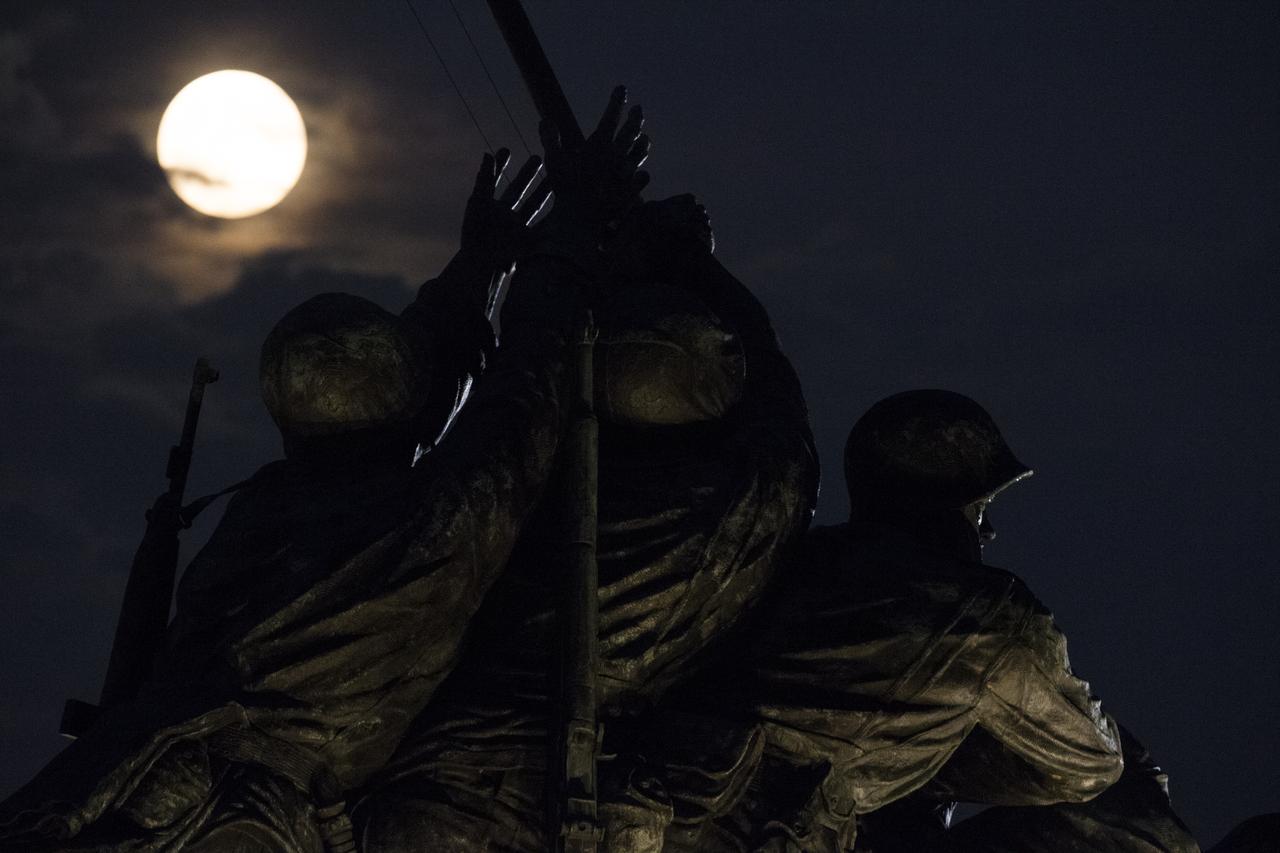
A perigree full moon or supermoon is seen over the US Marine Corps War Memorial, Sunday, August 10, 2014, in Arlington, Virginia. A supermoon occurs when the moon’s orbit is closest (perigee) to Earth at the same time it is full. Photo Credit: (NASA/Joel Kowsky)
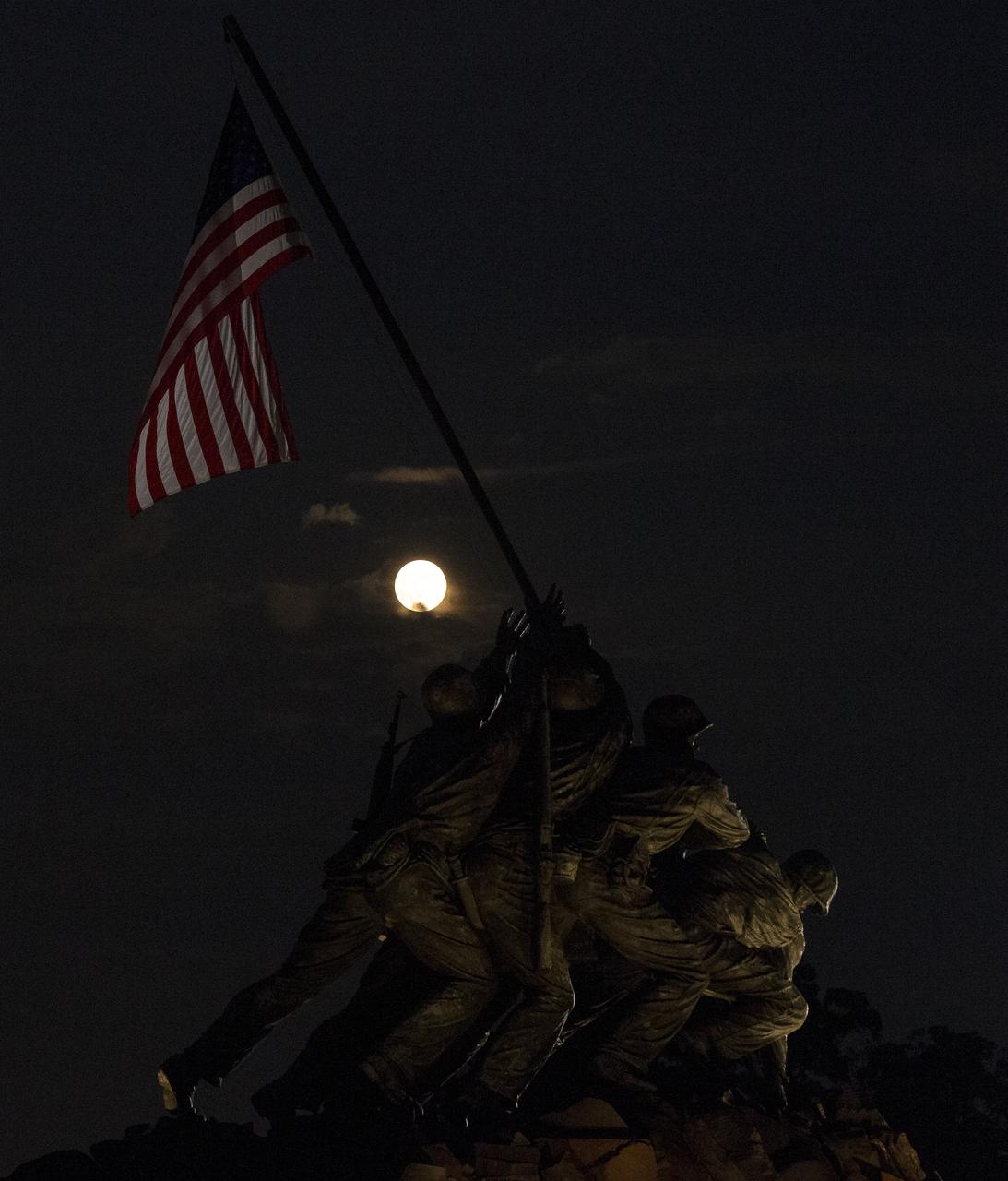
A perigree full moon or supermoon is seen over the US Marine Corps War Memorial, Sunday, August 10, 2014, in Arlington, Virginia. A supermoon occurs when the moon’s orbit is closest (perigee) to Earth at the same time it is full. Photo Credit: (NASA/Joel Kowsky)

Using Methane Absorption to Probe Jupiter Atmosphere

DR. CHRISTOPHER HAIN USING NASA SATELLITE AND MODELLING TOOLS TO MONITOR GLOBAL WATER USE AND DROUGHT
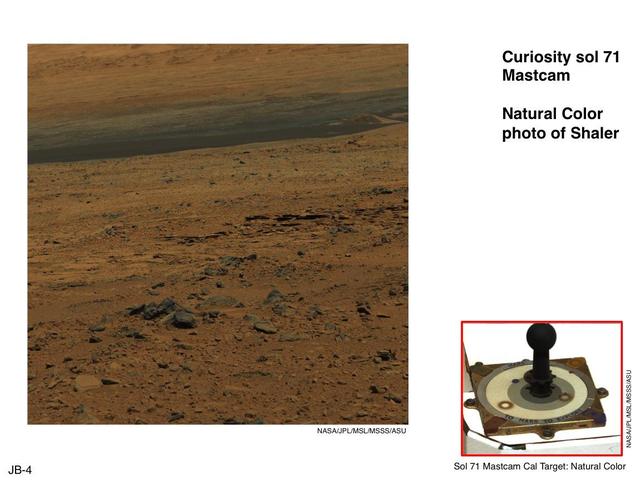
NASA rover Curiosity uses its calibration target for the Mastcam to approximate colors we would see on Mars, using the known colors of materials on the target.
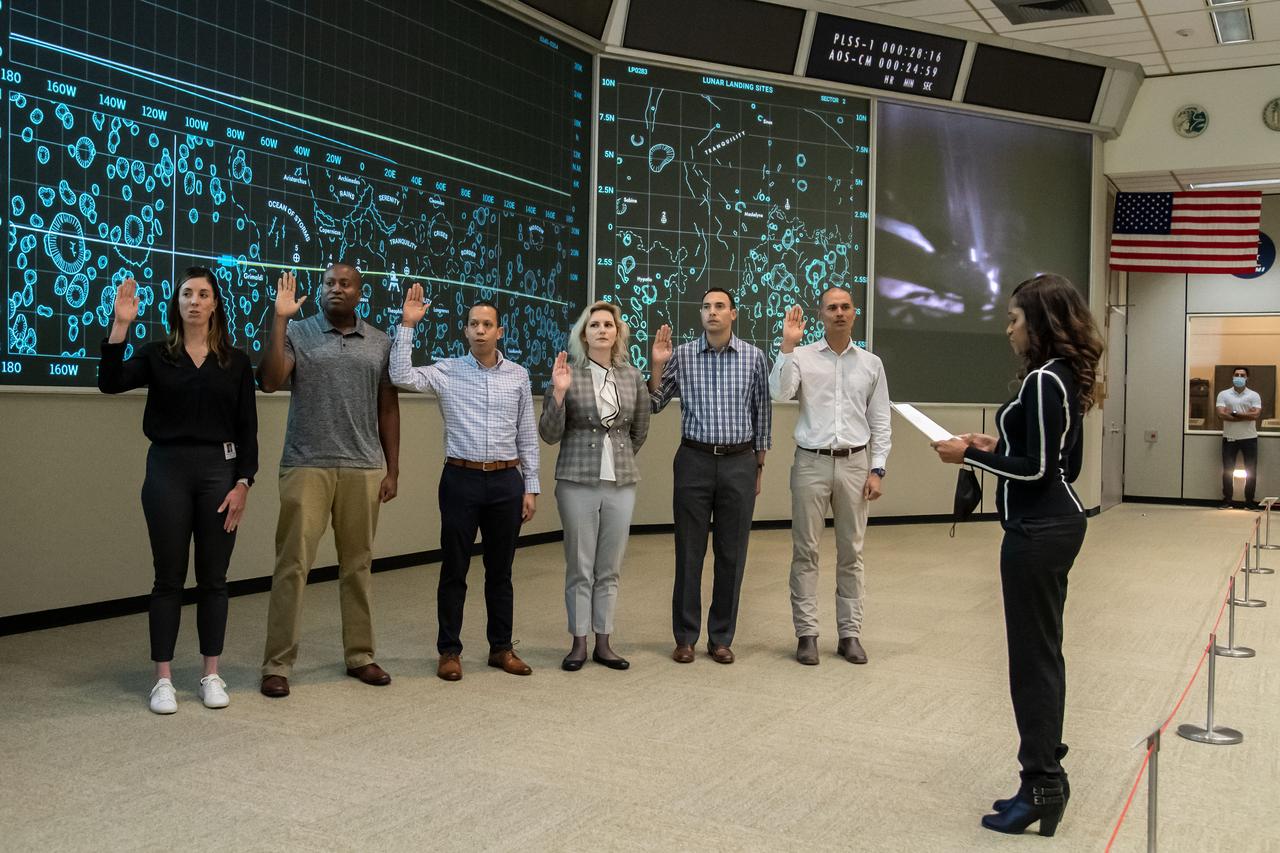
PHOTO DATE: January 10, 2022. LOCATION: Bldg. 30, Apollo MOCR Viewing Room. SUBJECT: ASCAN Class of 2021 official swearing in ceremony. PHOTOGRAPHER: Josh Valcarcel
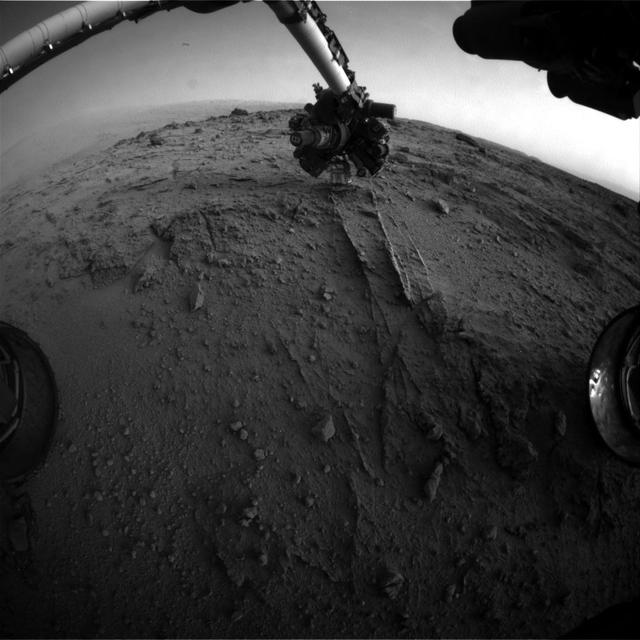
NASA Mars rover Curiosity used a new technique, with added autonomy for the rover, in placement of the tool-bearing turret on its robotic arm. The technique is used to assess how close the instrument is to a soil or rock surface.
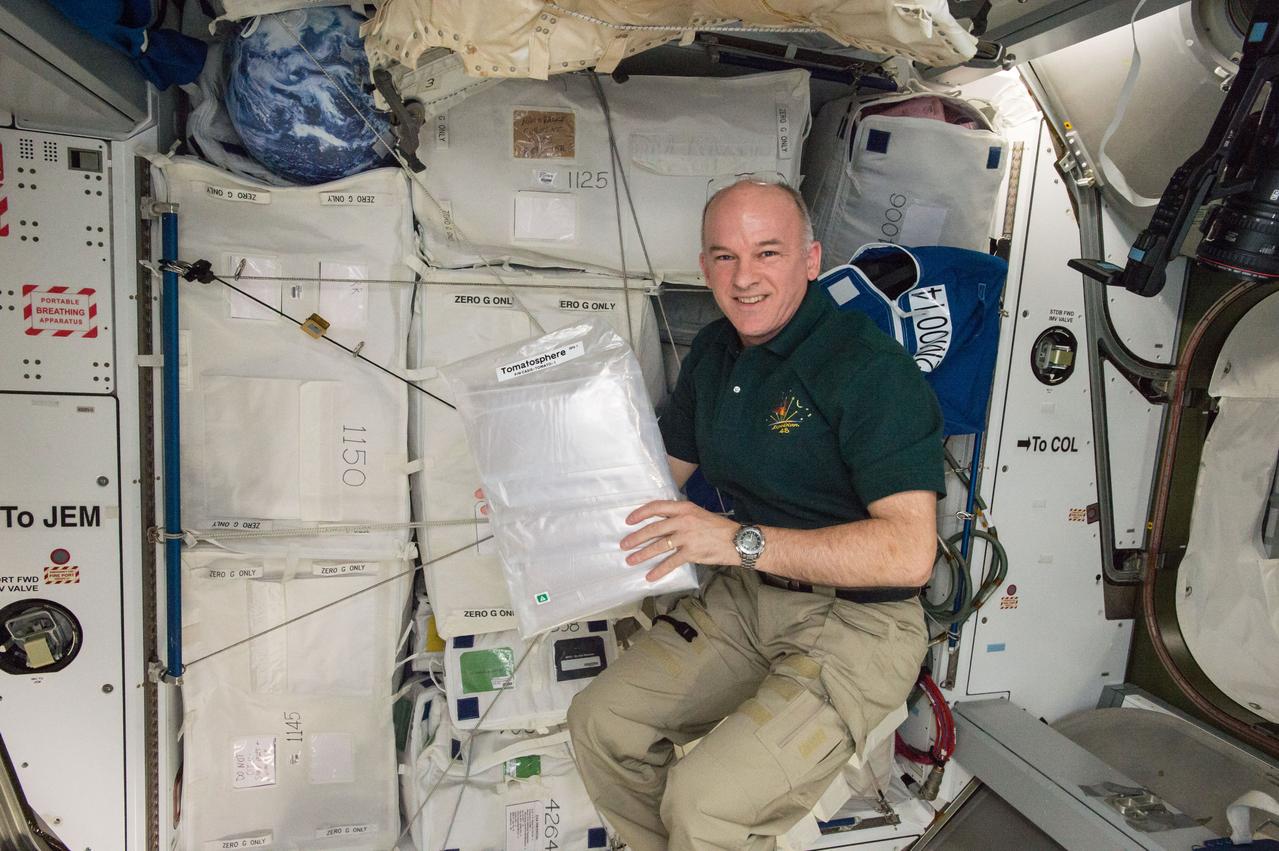
iss048e045799 (7/22/2016) --- NASA astronaut Jeff Williams poses for a photo with the Tomatosphere-US payload. Image was taken in the Harmony Node 2. Tomatosphere-US provides K-12 classrooms with tomato seeds from space to use in a blind germination study. Participating classes receive two sets of seeds, a control group from the ground and seeds flown in space or subjected to simulated space conditions. When teachers and students submit the results of their experiment, they learn the source of each set of seeds and can compare their data with other classroom experiments around the country.
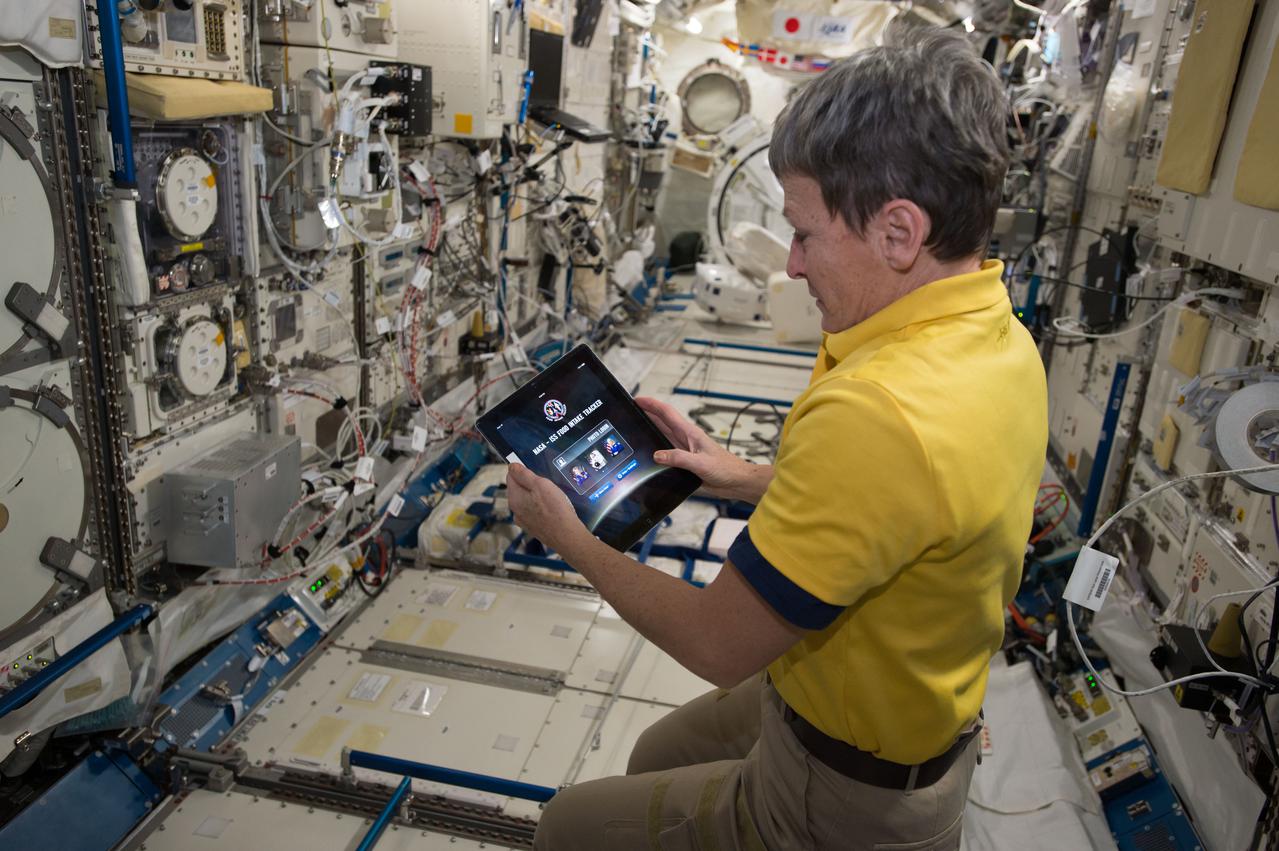
iss050e011454 (11/23/2016) --- A view of NASA astronaut Peggy Whitson using an iPAD containing the Dose Tracker application, in the Japanese Experiment Module (JEM) aboard the International Space Station (ISS). This study documents the medication usage of crew members before and during their missions by capturing previously unrecorded data regarding medication use during spaceflight, including side effect qualities, frequencies and severity. This research-oriented data is collected for research purposes, separate from medical records.
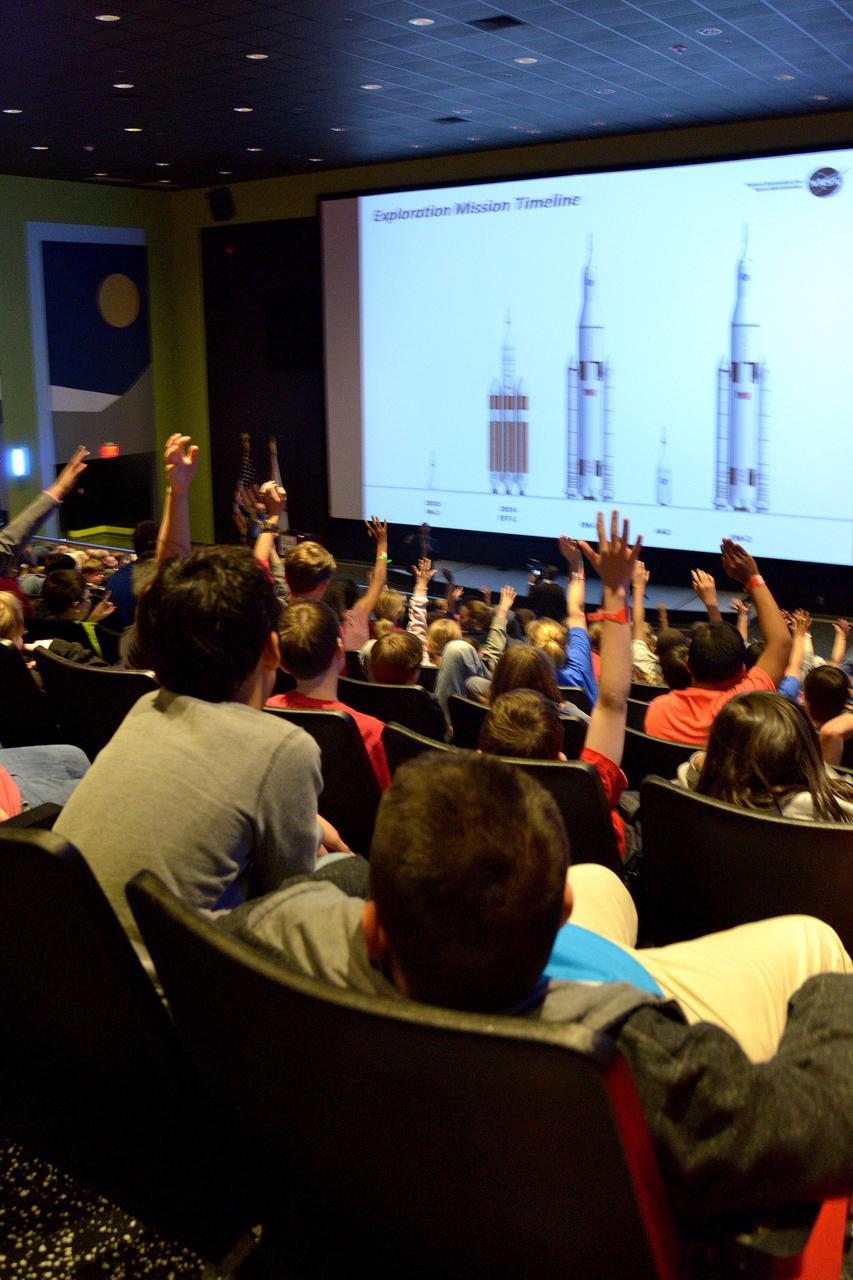
NASA, Lockheed Martin, and United Launch Alliance team speaks to a full house at the "Pass the Torch" event at US Space and Rocket Center in Huntsville, Alabama on March 18, 2015. Part of Batch image transfer from Flickr.

NASA, Lockheed Martin, and United Launch Alliance team speaks to a full house at the "Pass the Torch" event at US Space and Rocket Center in Huntsville, Alabama on March 18, 2015. Part of Batch image transfer from Flickr.
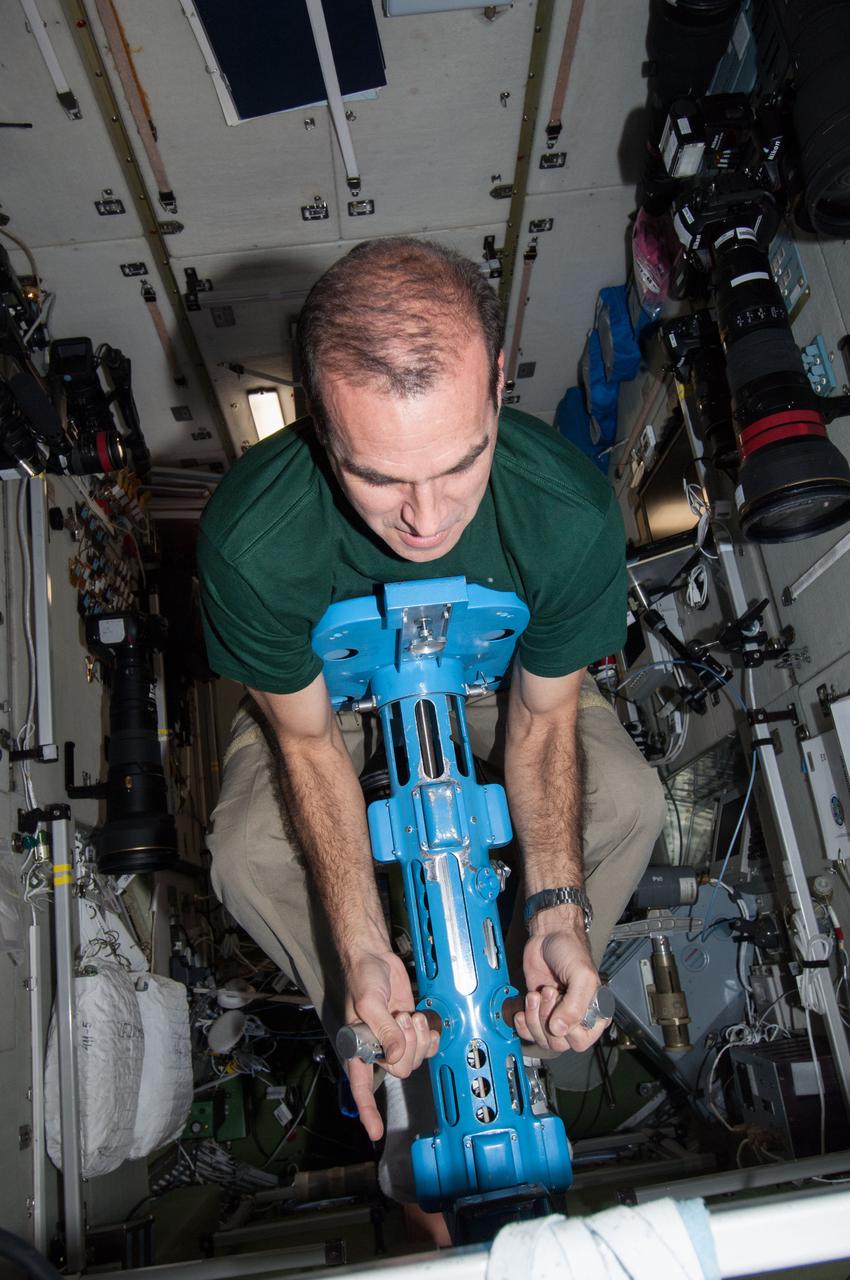
ISS038-E-008293 (25 Nov. 2013) --- NASA astronaut Rick Mastracchio, Expedition 38 flight engineer, uses a body mass measurement device (BMMD) in the Zvezda Service Module of the International Space Station.
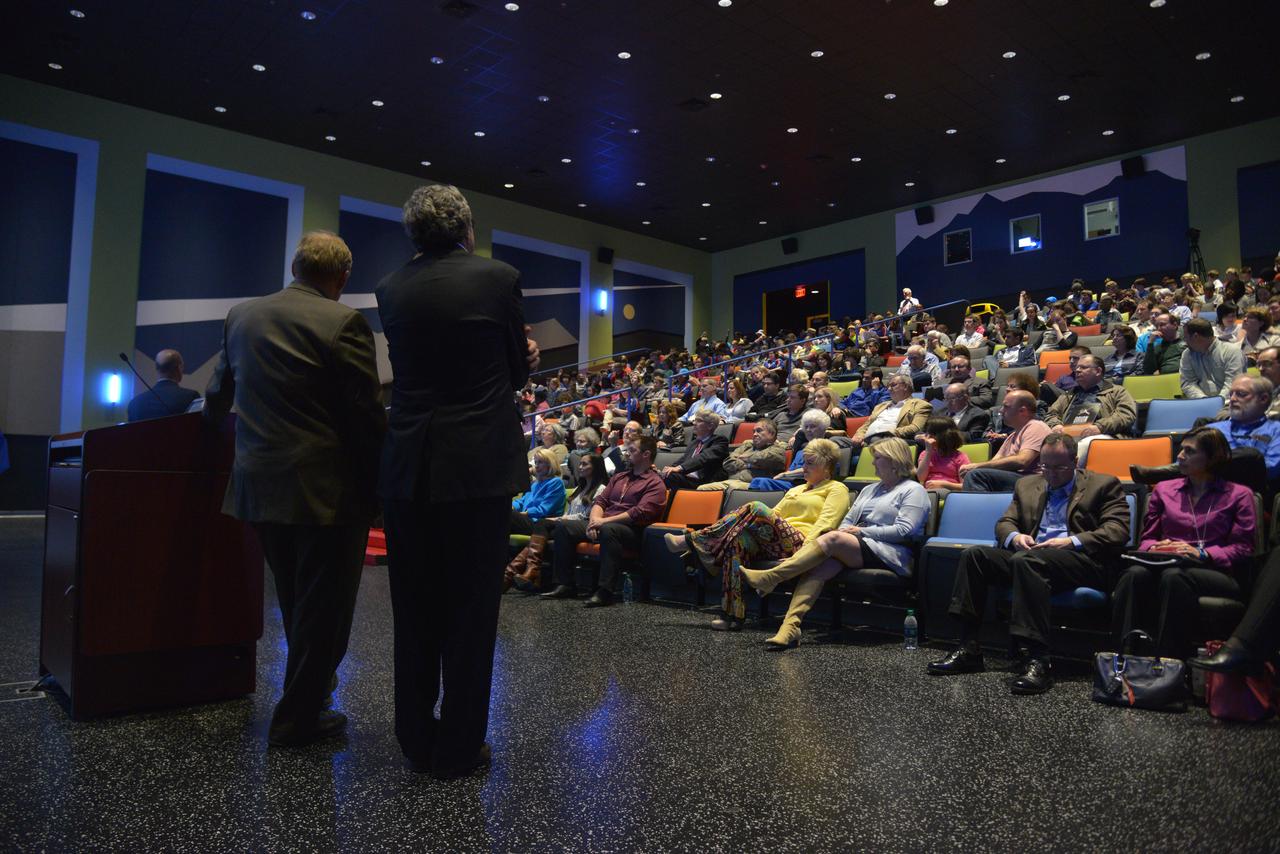
NASA, Lockheed Martin, and United Launch Alliance team speaks to a full house at the "Pass the Torch" event at US Space and Rocket Center in Huntsville, Alabama on March 18, 2015. Part of Batch image transfer from Flickr.
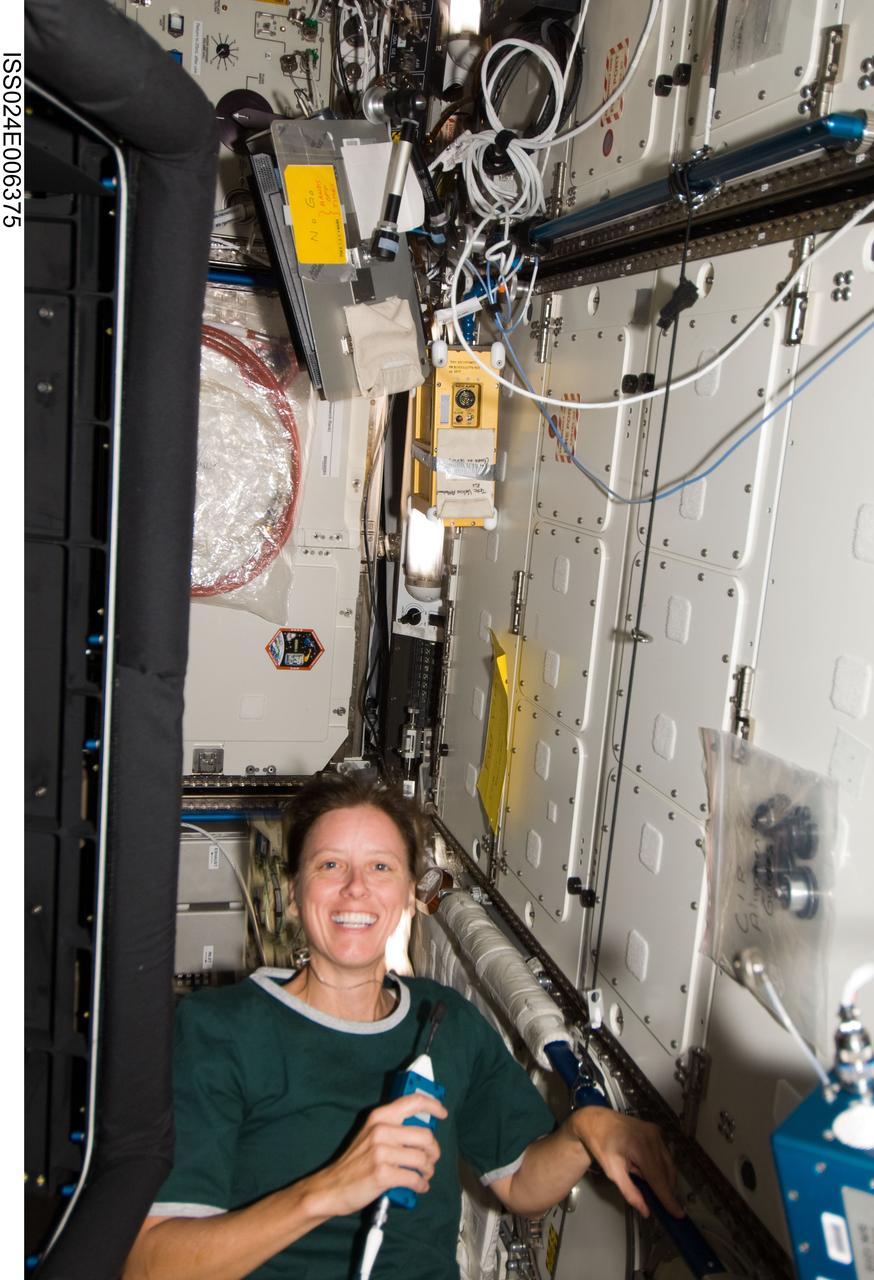
ISS024-E-006375 (22 June 2010) --- NASA astronaut Shannon Walker, Expedition 24 flight engineer, uses a communication system while working in the Destiny laboratory of the International Space Station.
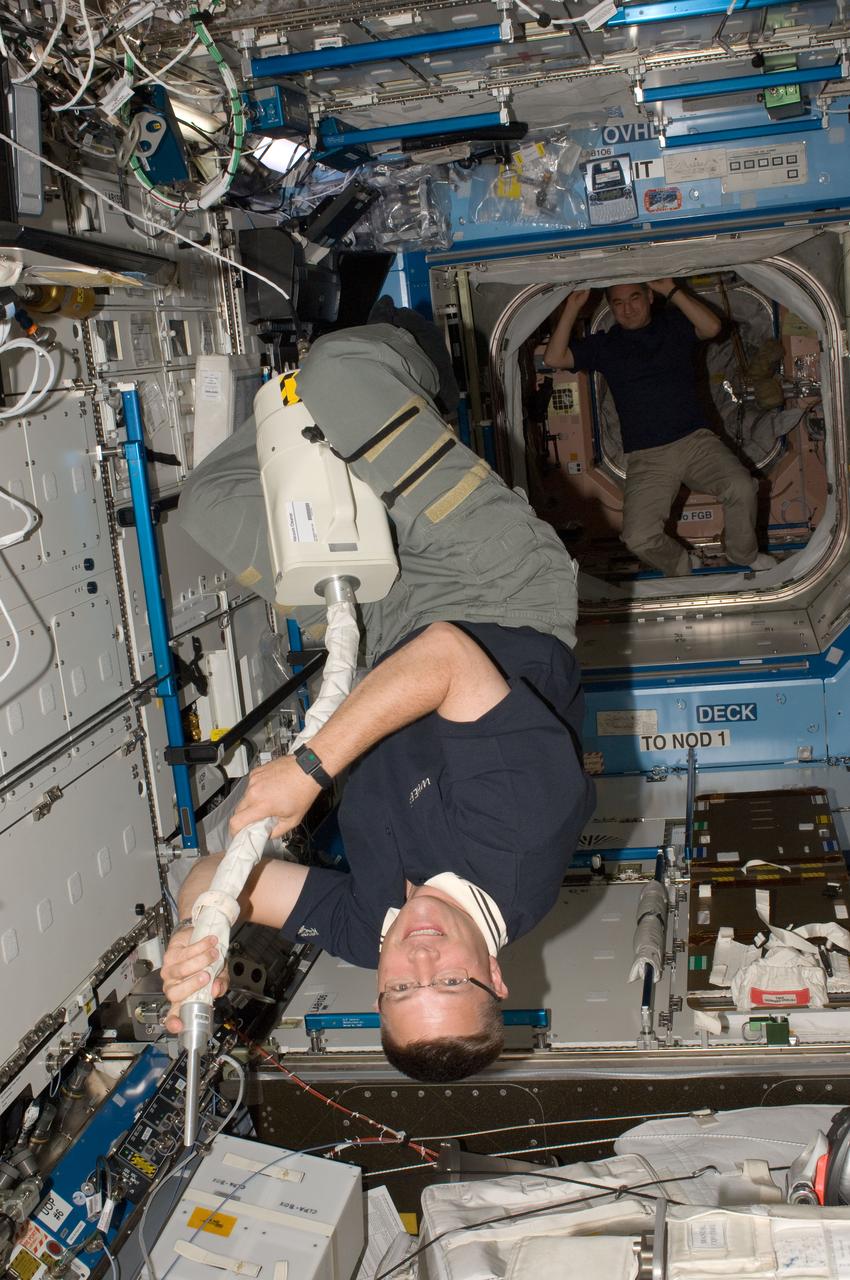
ISS024-E-006224 (20 June 2010) --- NASA astronaut Doug Wheelock, Expedition 24 flight engineer, uses a vacuum cleaner during housekeeping operations in the Destiny laboratory of the International Space Station.
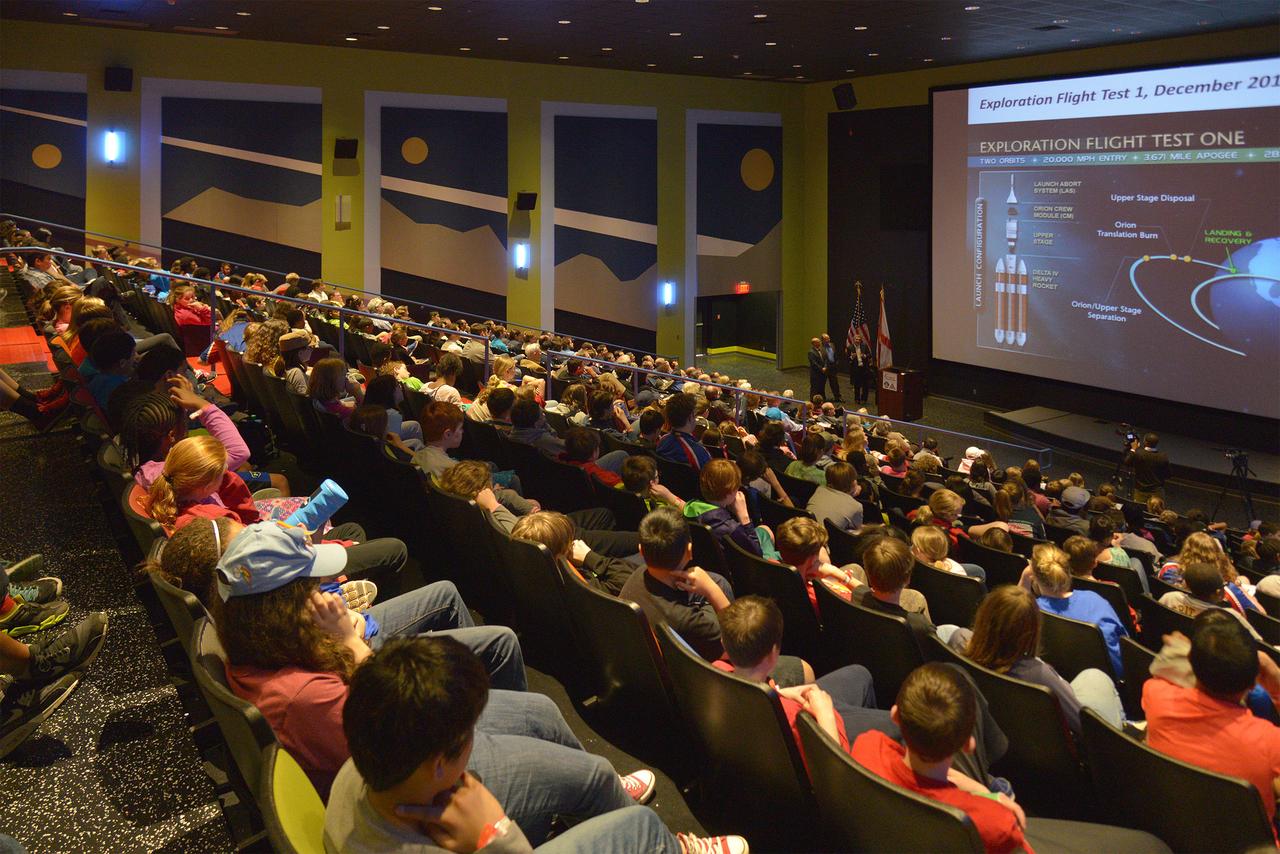
NASA, Lockheed Martin, and United Launch Alliance team speaks to a full house at the "Pass the Torch" event at US Space and Rocket Center in Huntsville, Alabama on March 18, 2015. Part of Batch image transfer from Flickr.
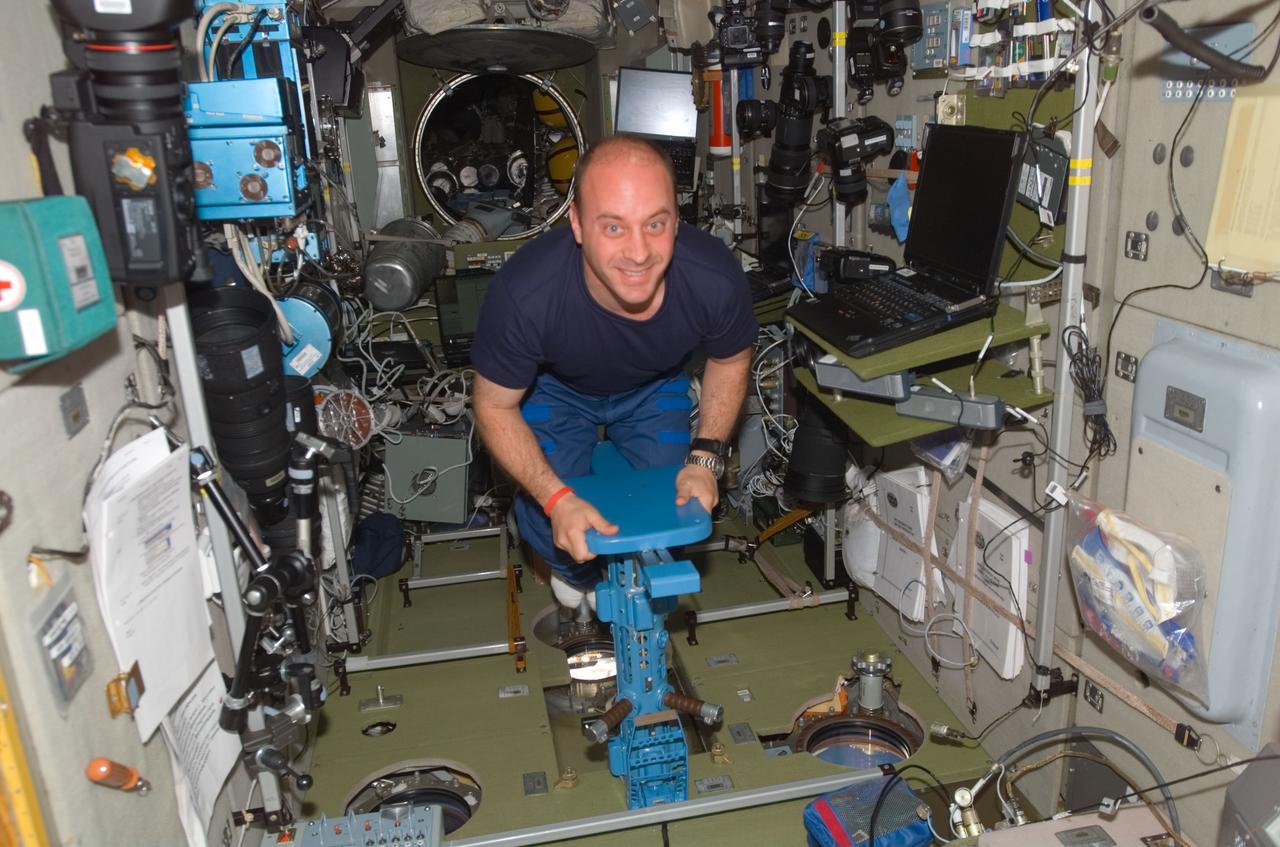
ISS016-E-033800 (27 March 2008) --- NASA astronaut Garrett Reisman, Expedition 16 flight engineer, uses a body mass measurement device (BMMD) in the Zvezda Service Module of the International Space Station.
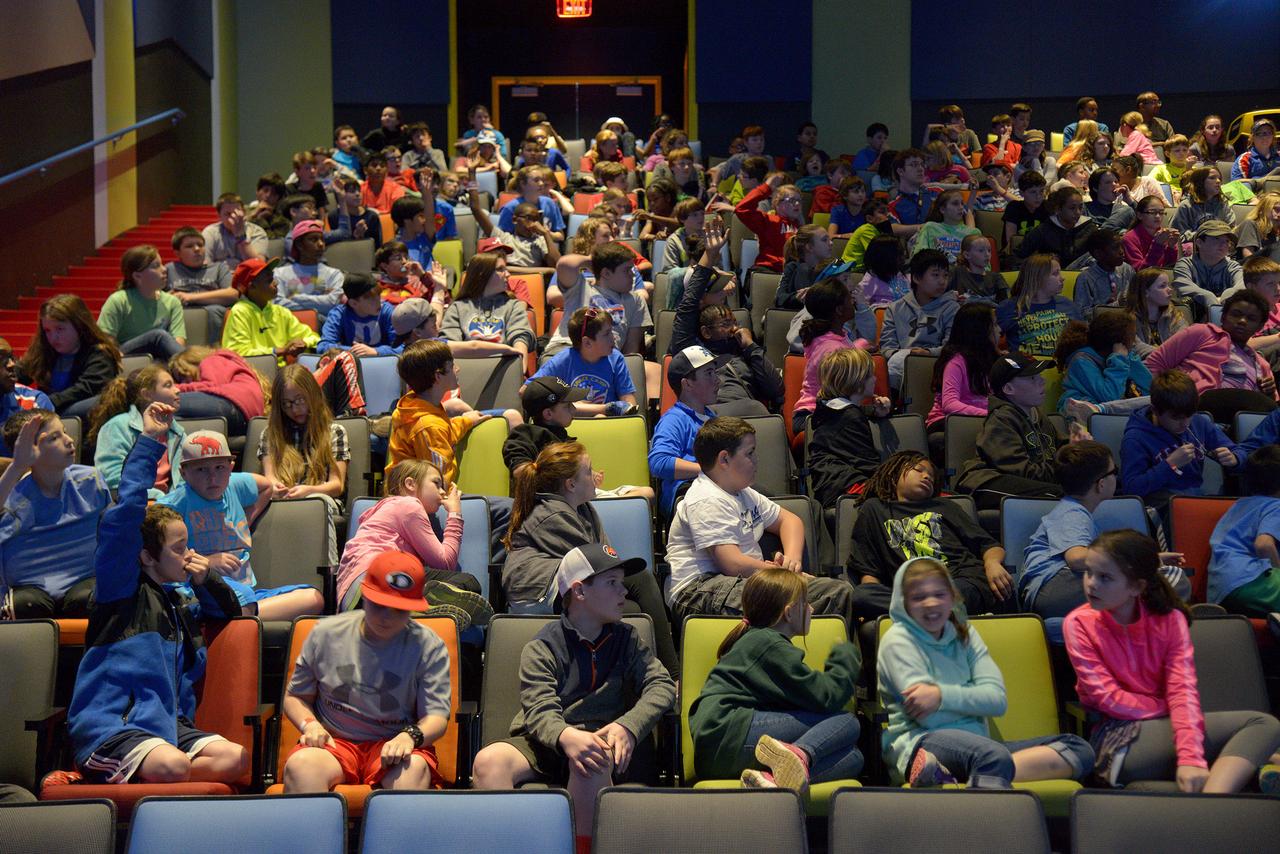
NASA, Lockheed Martin, and United Launch Alliance team speaks to a full house at the "Pass the Torch" event at US Space and Rocket Center in Huntsville, Alabama on March 18, 2015. Part of Batch image transfer from Flickr.
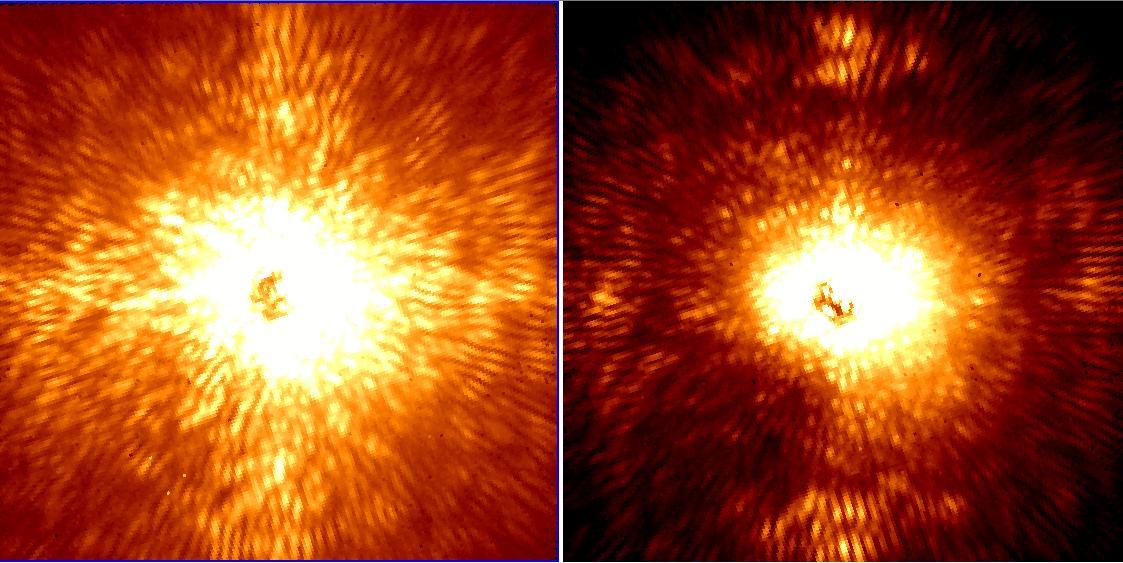
These two images show HD 157728, a nearby star 1.5 times larger than the sun. Project 1640 uses new technology on the Palomar Observatory 200-inch Hale telescope near San Diego, Calif., to spot planets.
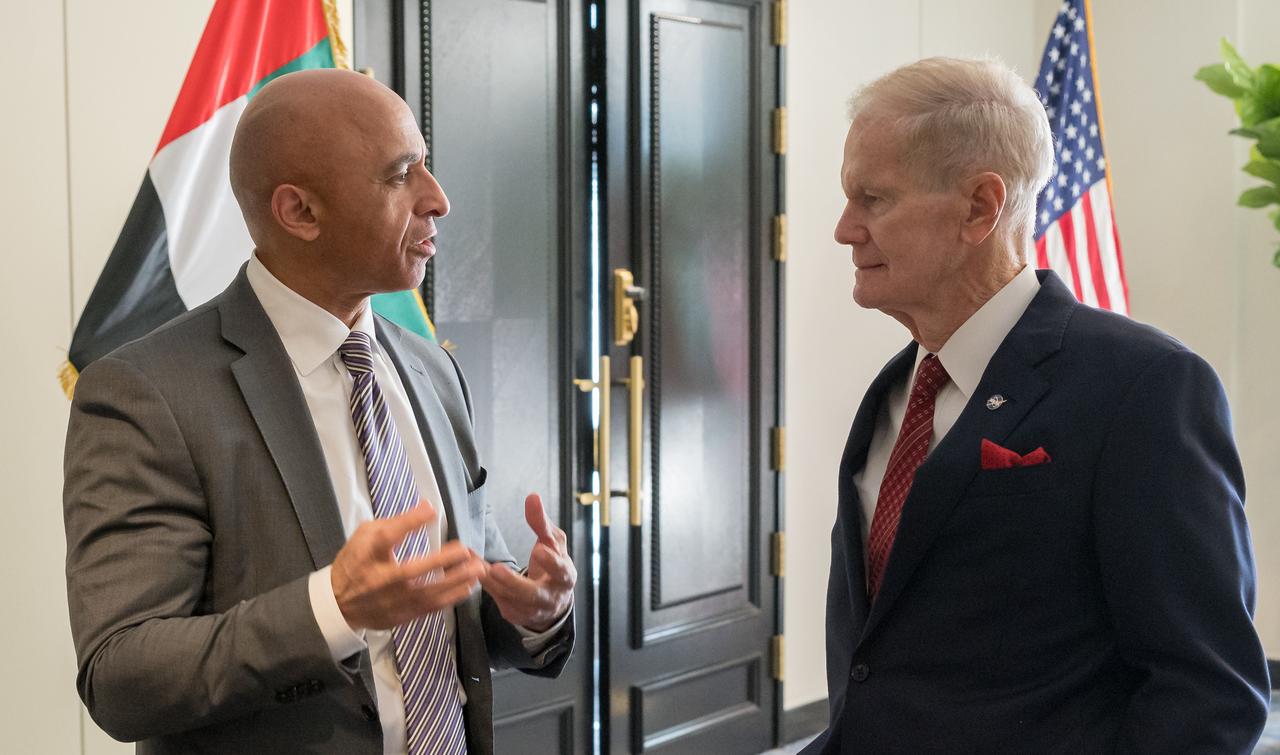
UAE Ambassador to the US and Minister of State His Excellency Yousef Al Otaib, left, and NASA Administrator Bill Nelson, talk during an event celebrating UAE-US collaboration in space, Friday, March 8, 2024, at the Four Seasons Hotel in Washington. Photo Credit: (NASA/Bill Ingalls)
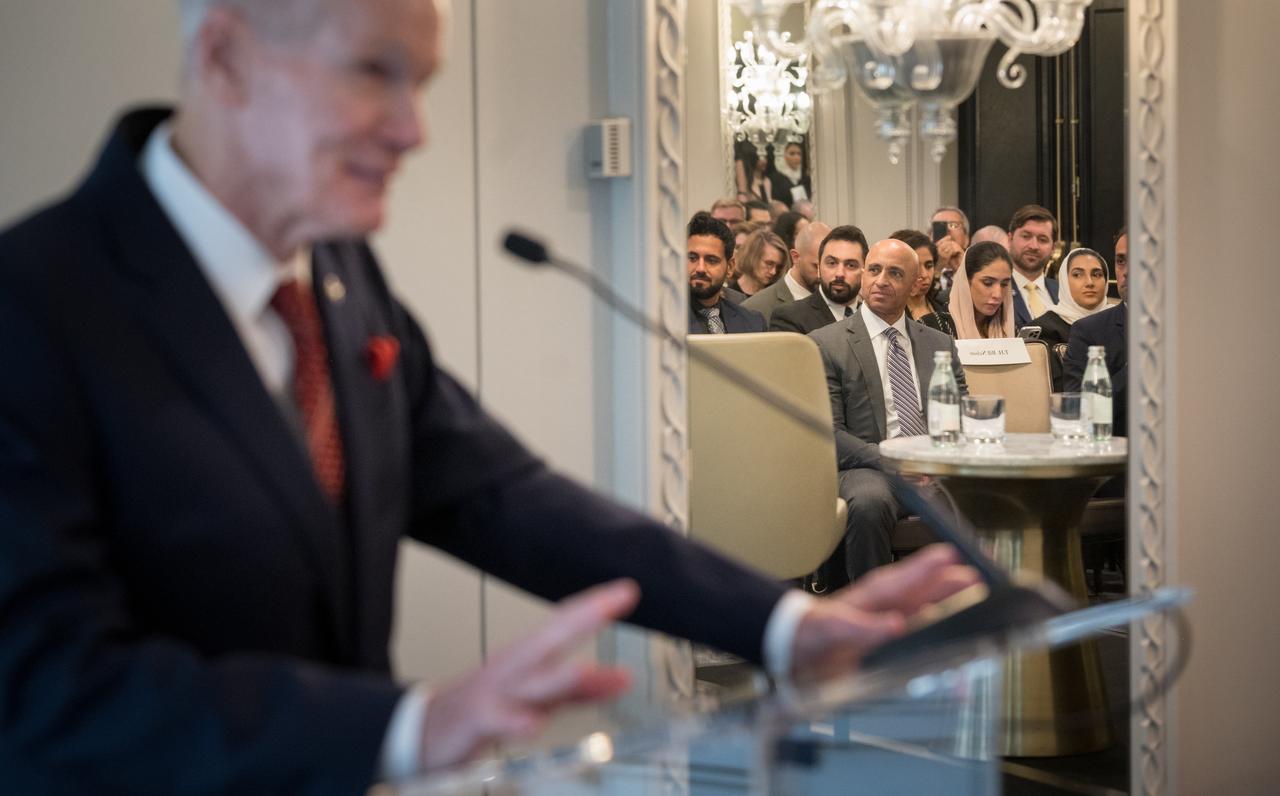
UAE Ambassador to the US and Minister of State, His Excellency Yousef Al Otaib and others listen as NASA Administrator Bill Nelson gives remarks during an event celebrating UAE-US collaboration in space, Friday, March 8, 2024, at the Four Seasons Hotel in Washington. Photo Credit: (NASA/Bill Ingalls)
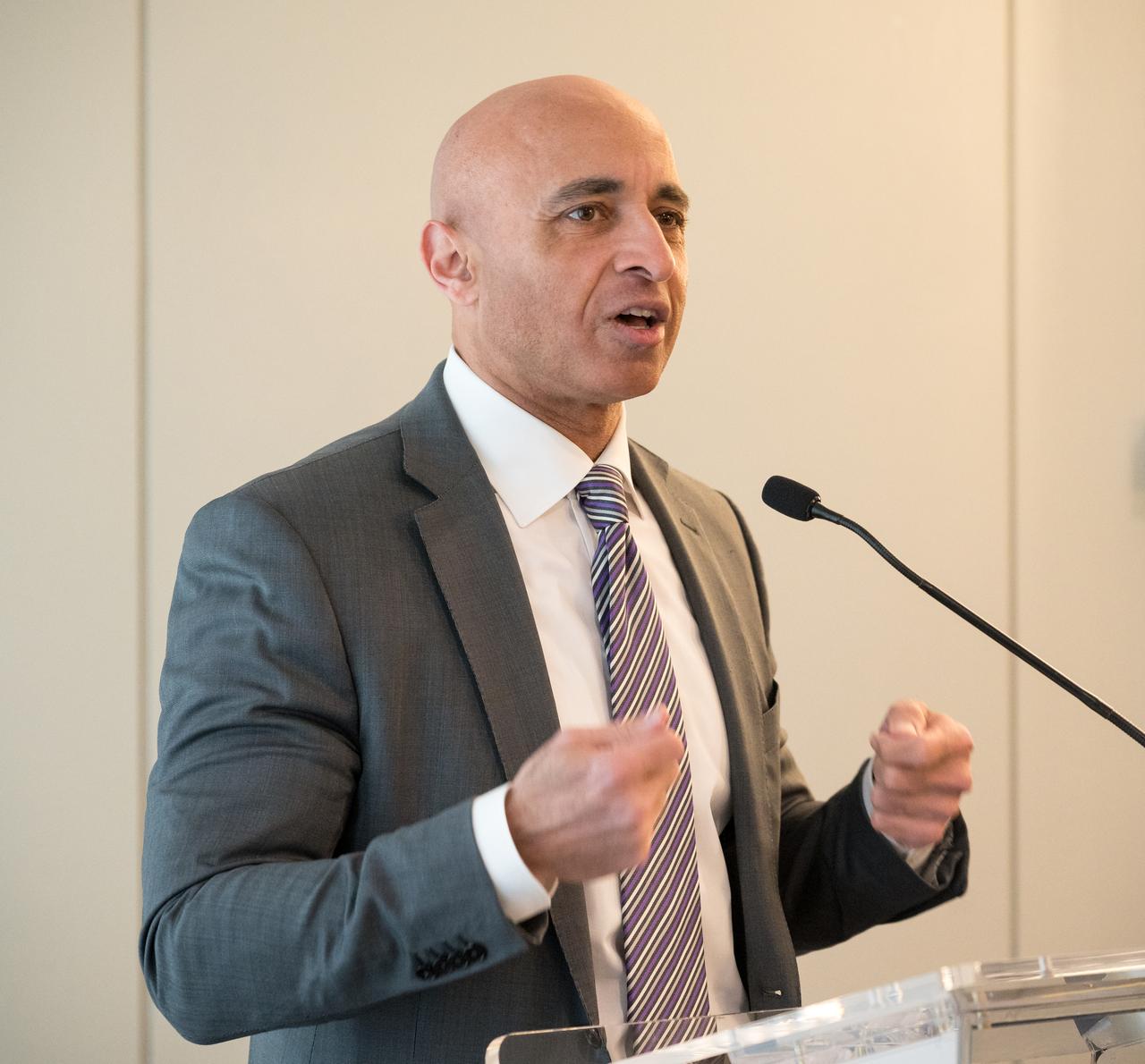
UAE Ambassador to the US and Minister of State, His Excellency Yousef Al Otaib, gives remarks during an event celebrating UAE-US collaboration in space, Friday, March 8, 2024, at the Four Seasons Hotel in Washington. Photo Credit: (NASA/Bill Ingalls)
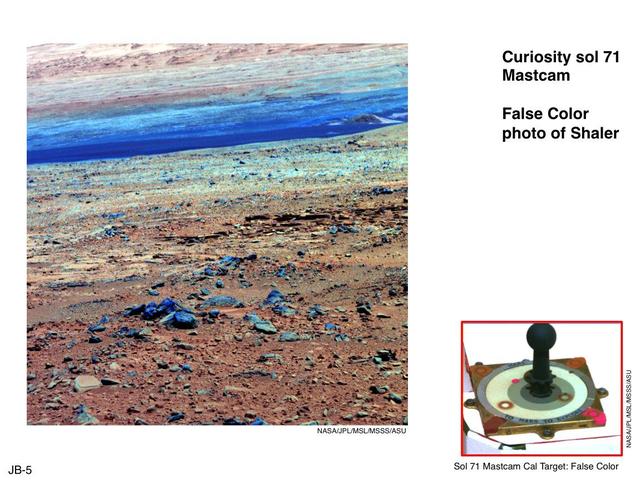
This image of terrain inside Mars Gale Crater and the calibration target for Mastcam on NASA Mars rover Curiosity illustrate how false color can be used to make differences more evident in the materials in the scene.
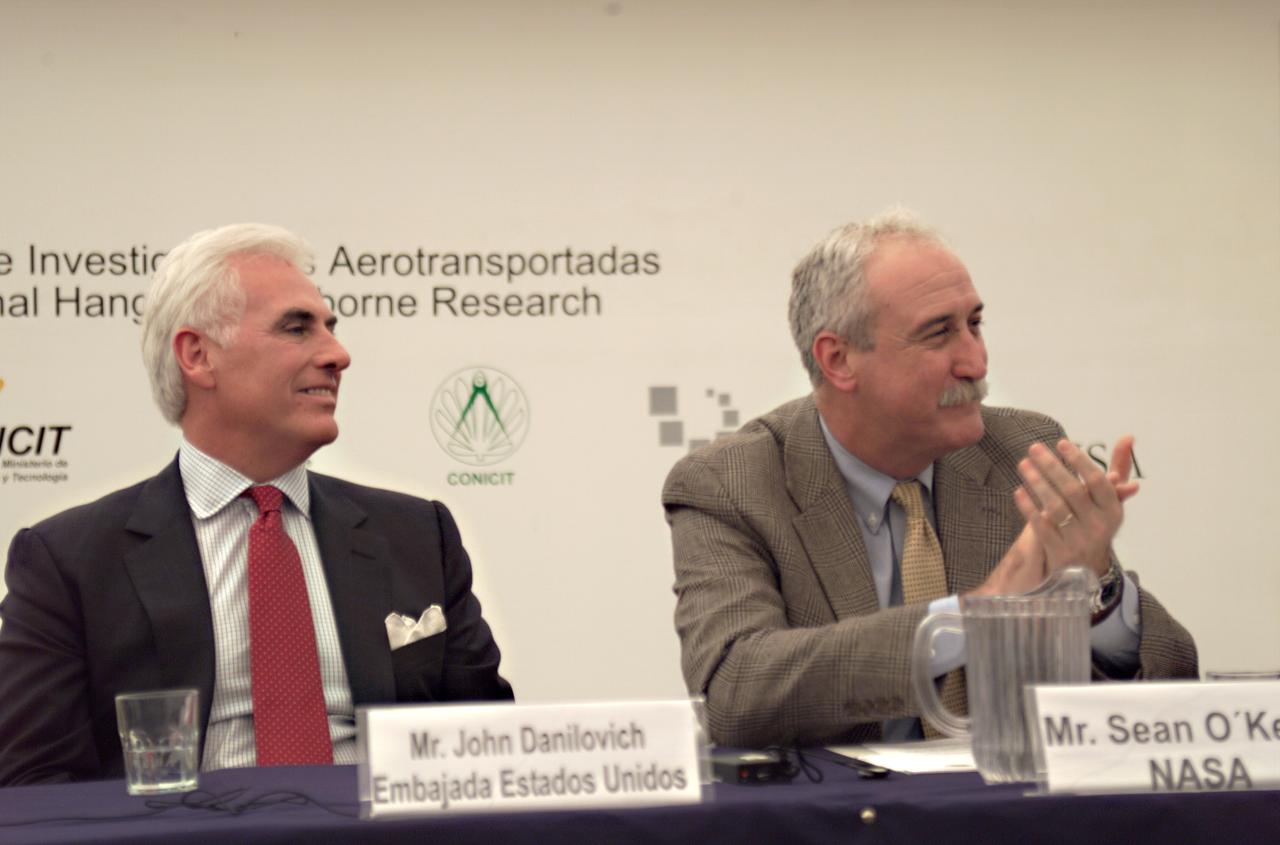
Mr. John Danilovich, US Ambassador to Costa Rica, and NASA Administrator Sean O'Keefe at the AirSAR 2004 Mesoamerica hangar naming ceremony. AirSAR 2004 Mesoamerica is a three-week expedition by an international team of scientists that will use an all-weather imaging tool, called the Airborne Synthetic Aperture Radar (AirSAR), in a mission ranging from the tropical rain forests of Central America to frigid Antarctica.
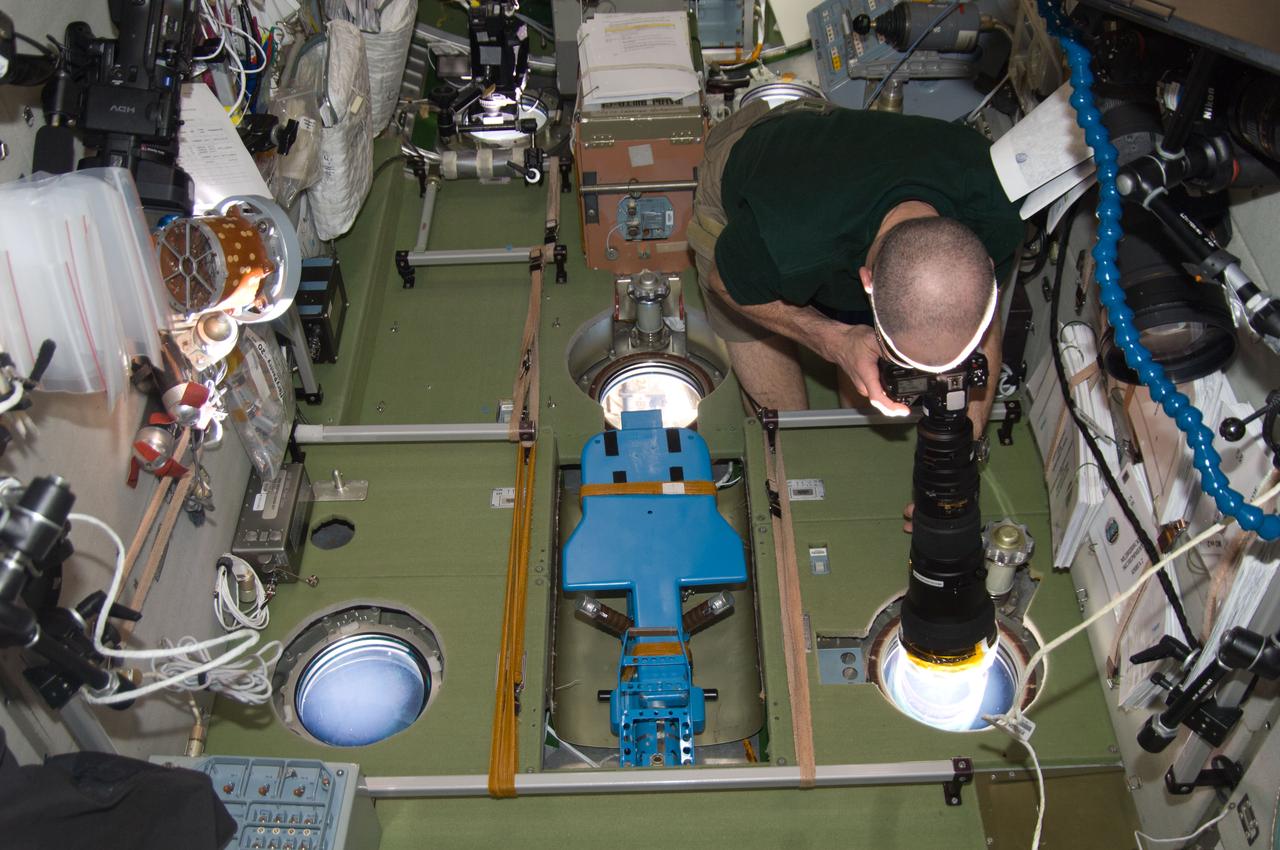
ISS031-E-005786 (27 April 2012) --- NASA astronaut Don Pettit, Expedition 31 flight engineer, uses a still camera at a window in the Zvezda Service Module of the International Space Station to photograph the departure of the Soyuz TMA-22 spacecraft carrying Expedition 30 crew members back to Earth.
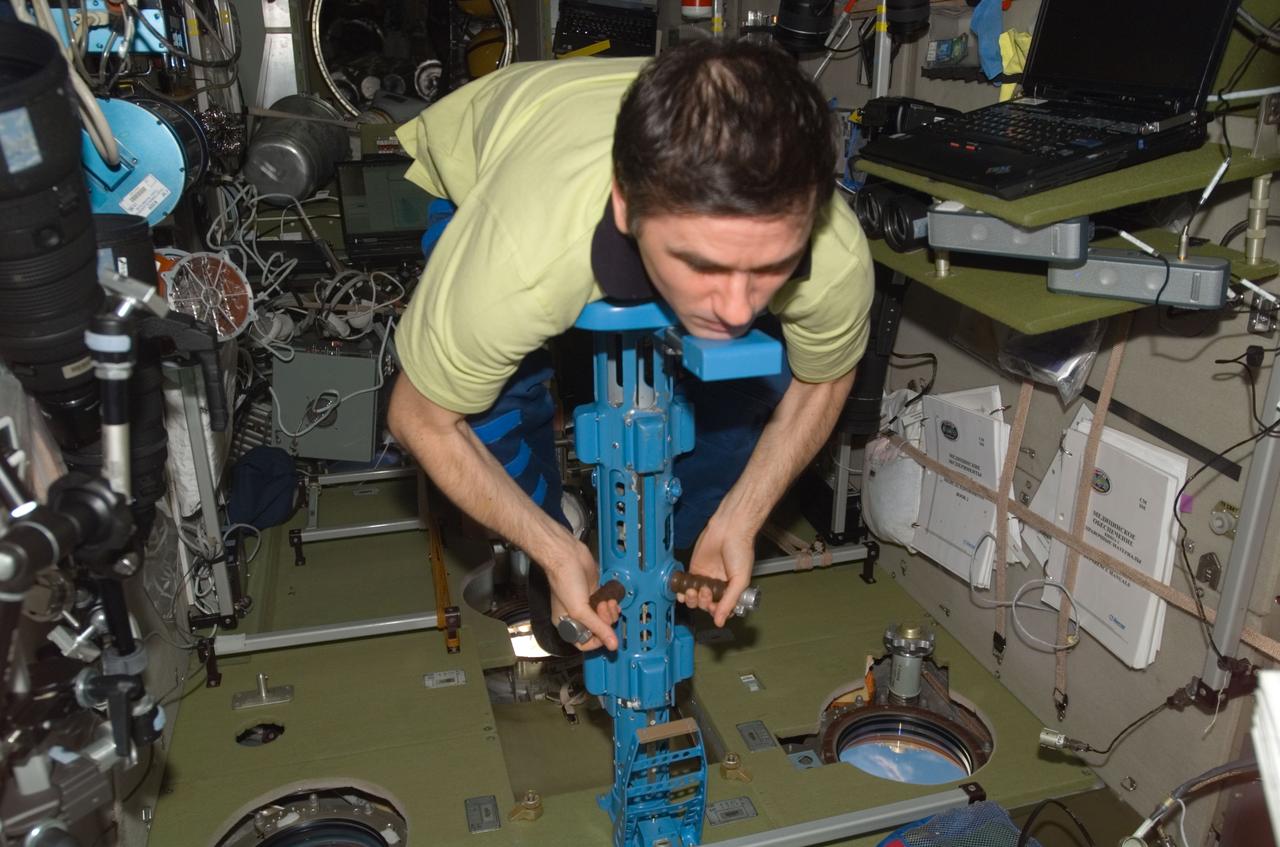
ISS016-E-033799 (27 March 2008) --- Russian Federal Space Agency cosmonaut Yuri Malenchenko, Expedition 16 flight engineer, uses a body mass measurement device (BMMD) in the Zvezda Service Module of the International Space Station.
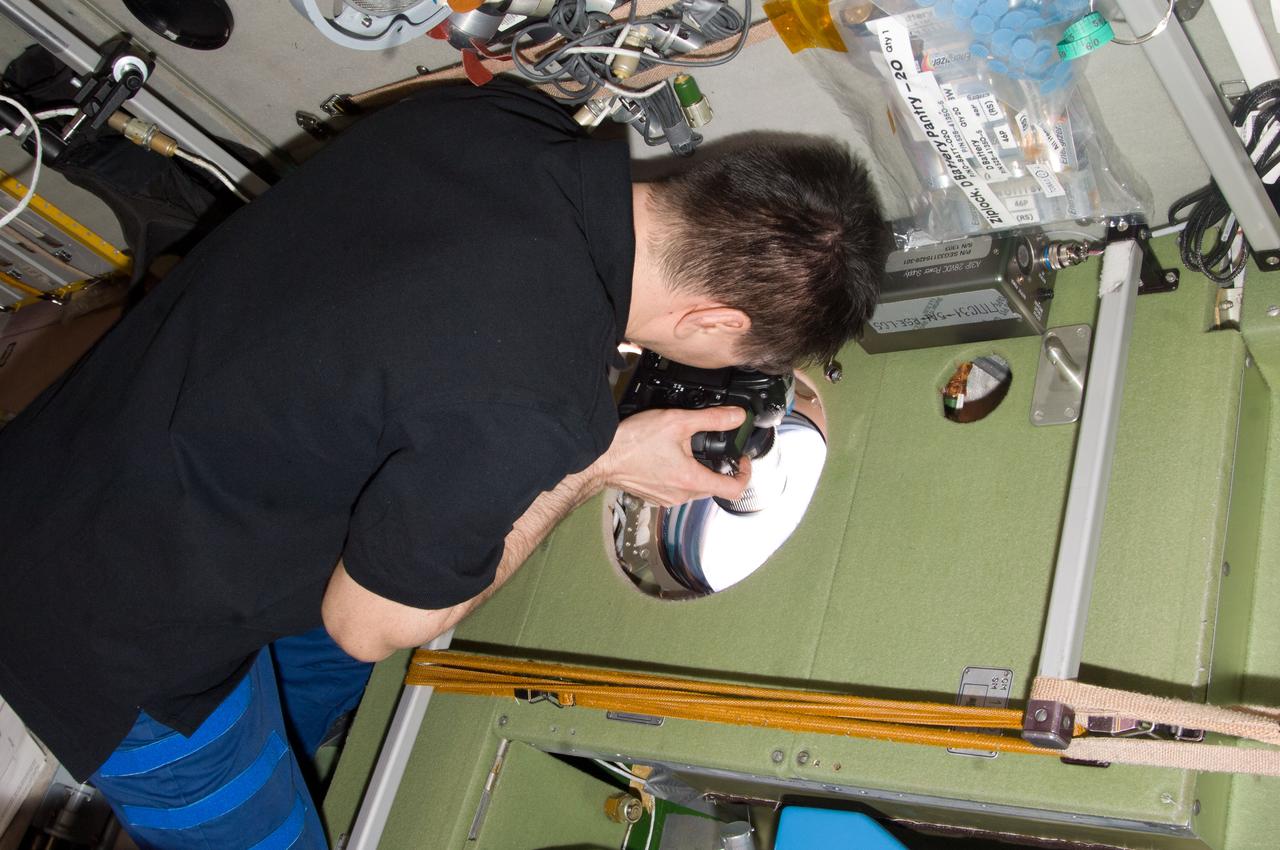
ISS031-E-005810 (27 April 2012) --- Russian cosmonaut Oleg Kononenko, Expedition 31 commander, uses a still camera at a window in the Zvezda Service Module of the International Space Station to photograph the departure of the Soyuz TMA-22 spacecraft carrying Expedition 30 crew members back to Earth.
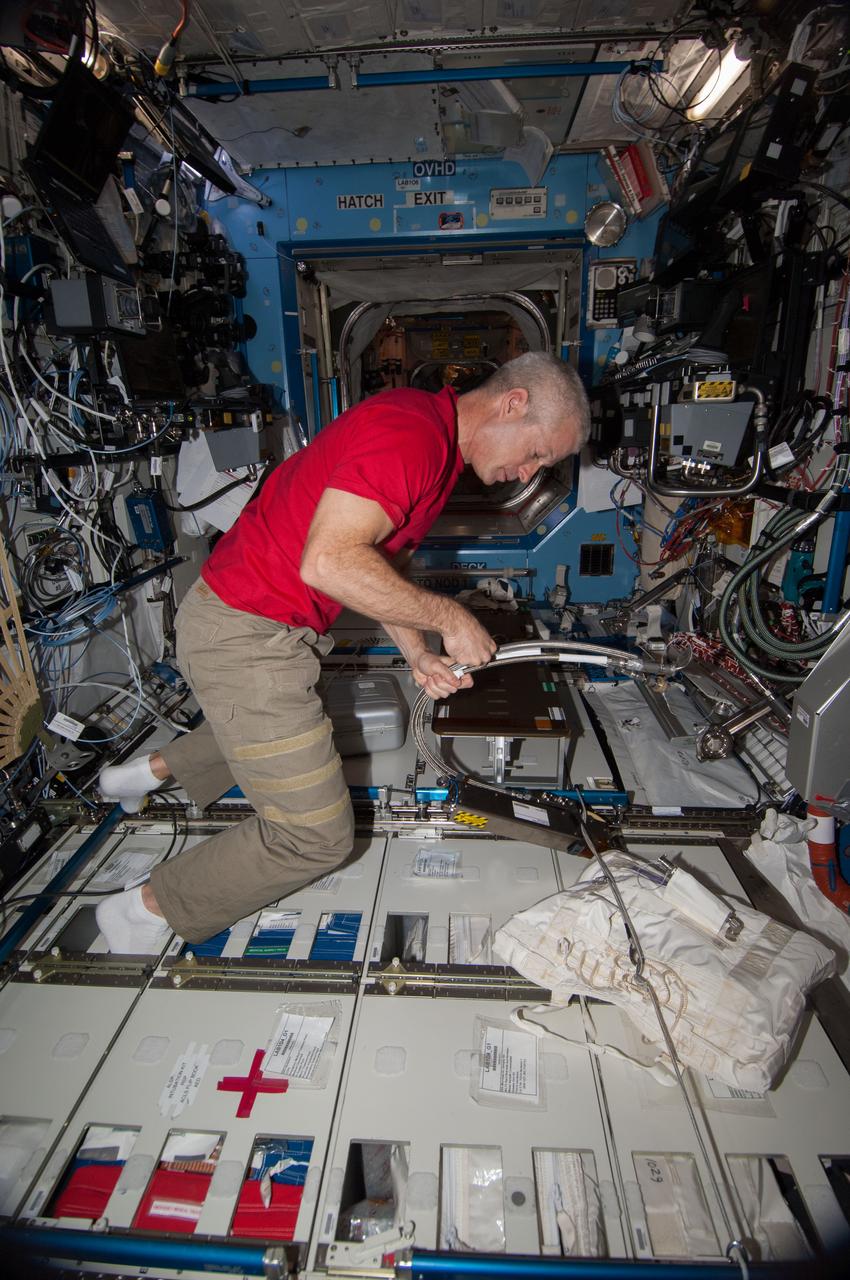
ISS039-E-013158 (18 April 2014) --- In the U.S. lab Destiny on the Earth-orbiting International Space Station, Expedition 39 Flight Engineer Steve Swanson of NASA works on WRS condensate pumping, using the high flow water transfer pump.
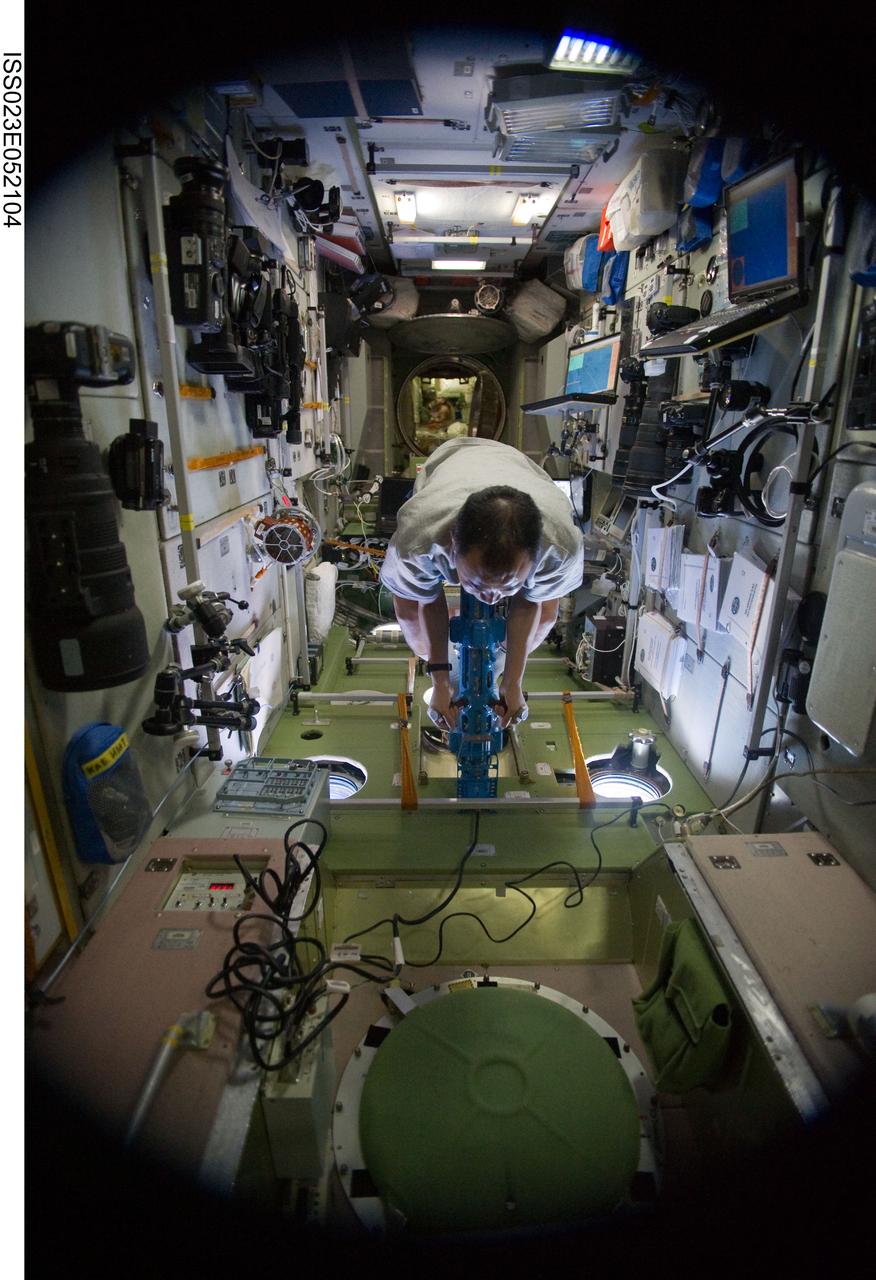
ISS023-E-052104 (26 May 2010) --- Japan Aerospace Exploration Agency (JAXA) astronaut Soichi Noguchi, Expedition 23 flight engineer, uses the IM mass measurement device to perform the PZEh-MO-8/Body Mass Measurement Russian biomedical routine assessments in the Zvezda Service Module of the International Space Station.
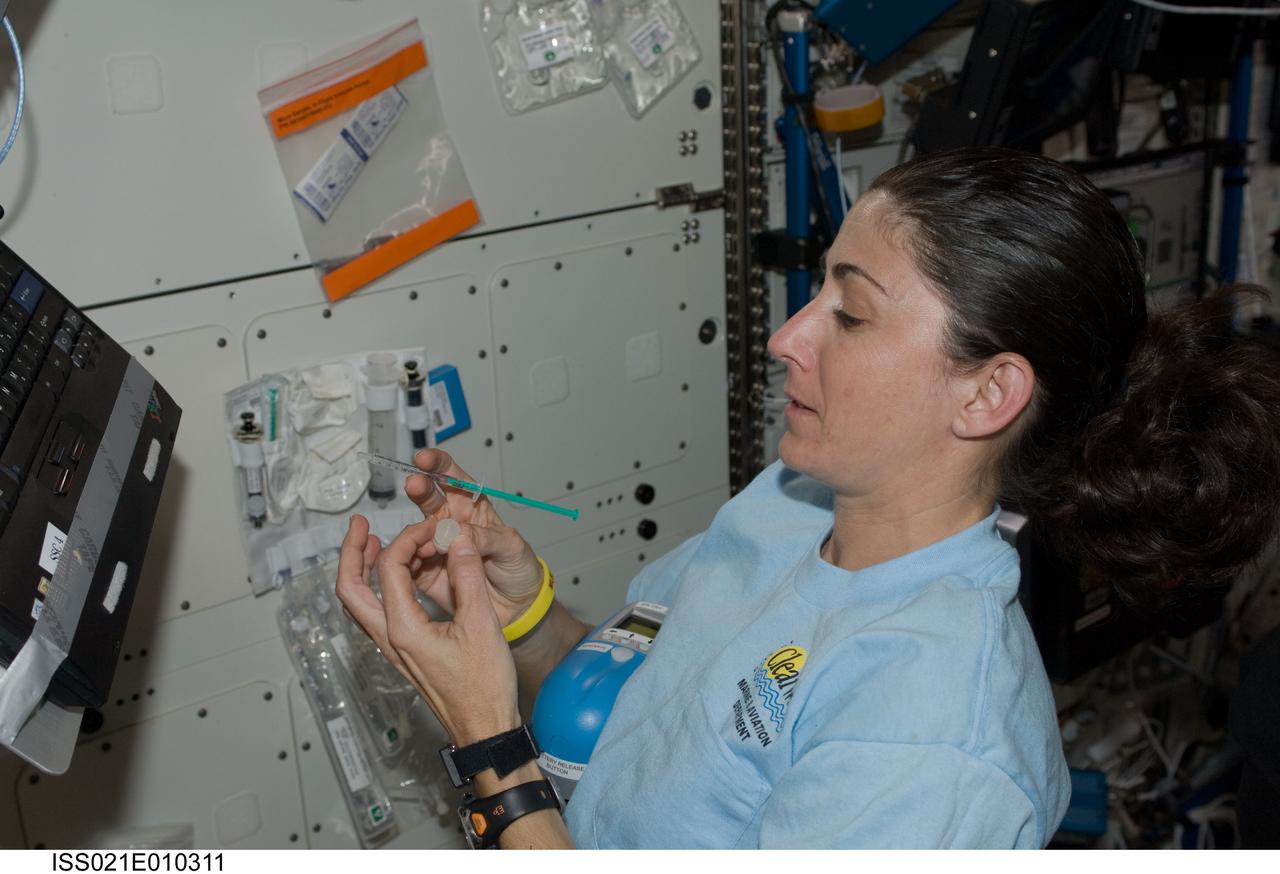
ISS021-E-010311 (20 Oct. 2009) --- NASA astronaut Nicole Stott, Expedition 21 flight engineer, conducts a water quality analysis using the Colorimetric Water Quality Monitoring Kit (CWQMK) in the Destiny laboratory of the International Space Station.
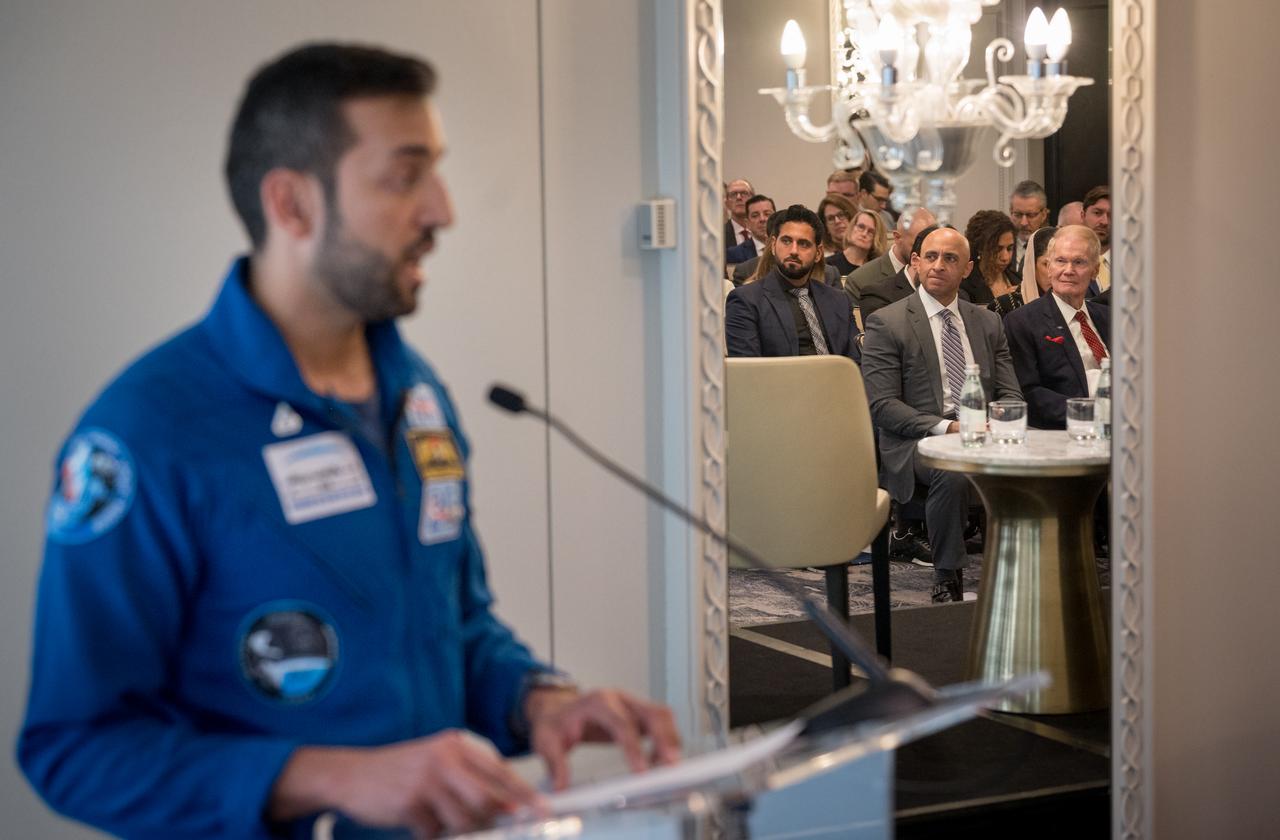
UAE Ambassador to the US and Minister of State, His Excellency Yousef Al Otaib and others listen as UAE astronaut and Minister of Youth, H.E. Dr. Sultan Al Neyadi, gives remarks during an event celebrating UAE-US collaboration in space, Friday, March 8, 2024, at the Four Seasons Hotel in Washington. Photo Credit: (NASA/Bill Ingalls)
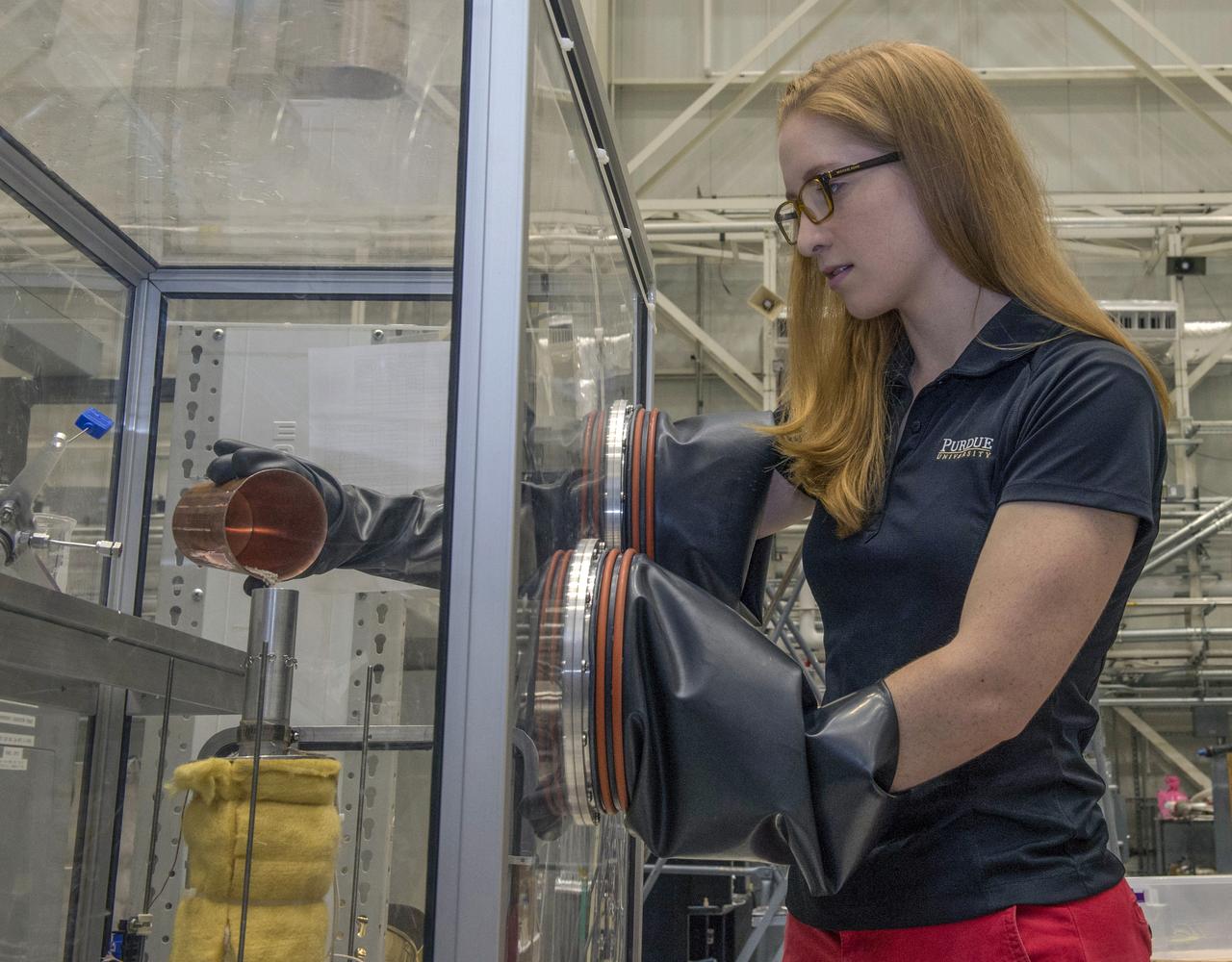
Karen Son, a NSTRF fellow at Marshall, uses a virtual test lab to help improve air quality on the next generation of air filtration systems to be used in space
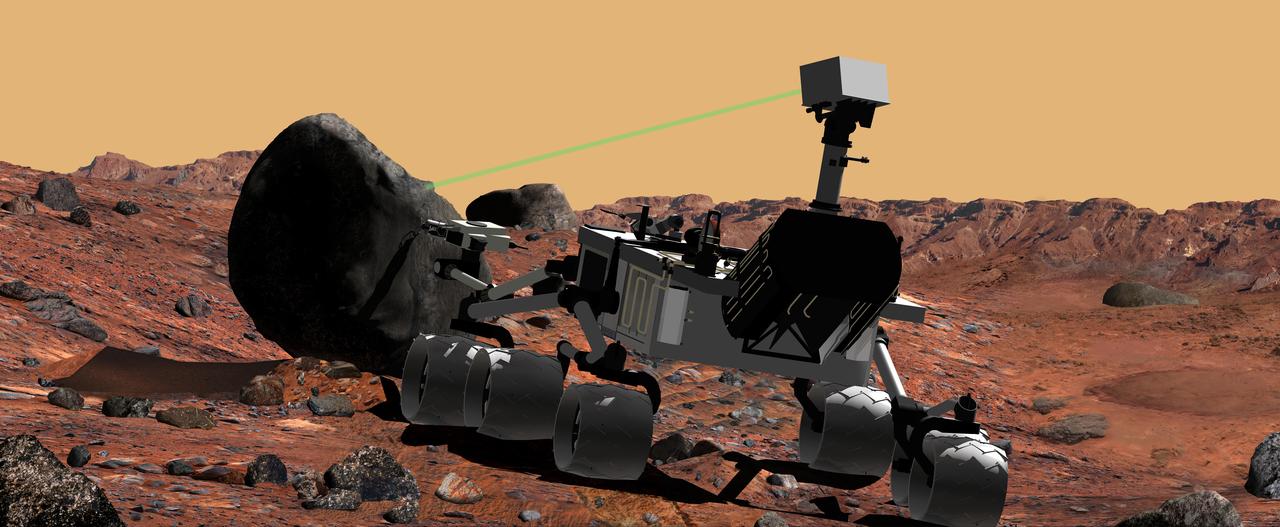
This artist conception of NASA Mars Science Laboratory portrays use of the rover ChemCam instrument to identify the chemical composition of a rock sample on the surface of Mars.
NASA Administrator Bill Nelson gives remarks during an event celebrating UAE-US collaboration in space, Friday, March 8, 2024, at the Four Seasons Hotel in Washington. Photo Credit: (NASA/Bill Ingalls)
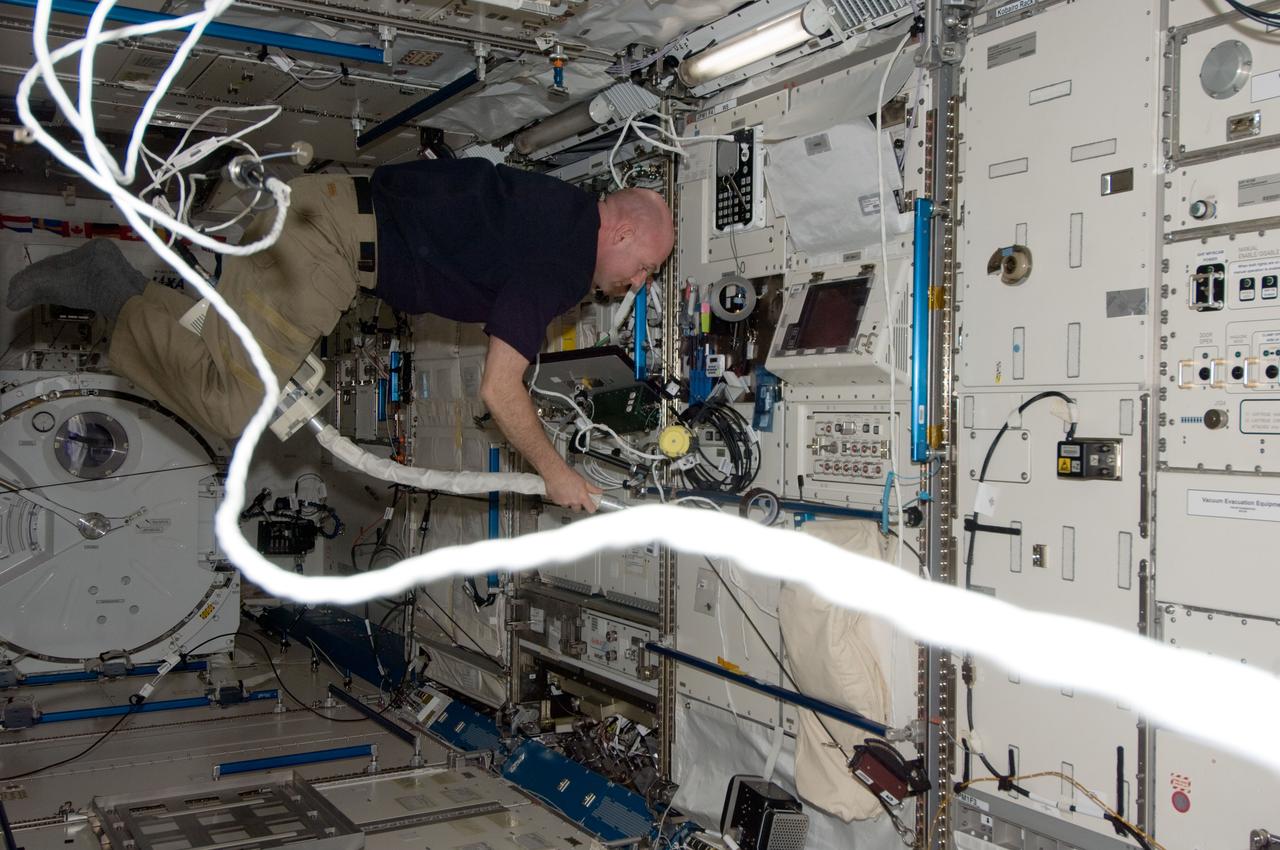
ISS030-E-065369 (15 Jan. 2012) --- European Space Agency astronaut Andre Kuipers, Expedition 30 flight engineer, uses a vacuum cleaner during housekeeping operations in the Kibo laboratory of the International Space Station.
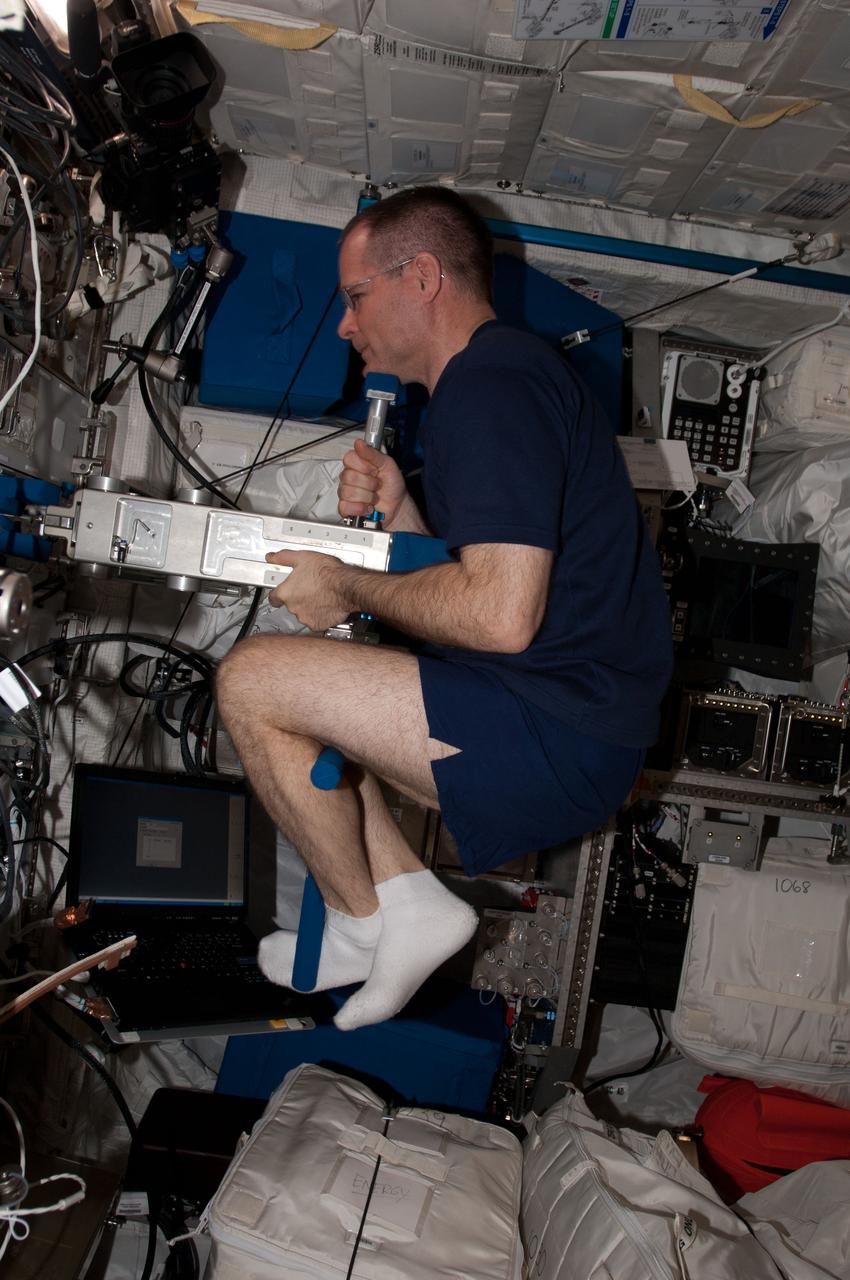
ISS034-E-026569 (11 Jan. 2013) --- NASA astronaut Kevin Ford, Expedition 34 commander, uses the Space Linear Acceleration Mass Measurement Device (SLAMMD) in the Columbus laboratory of the International Space Station.
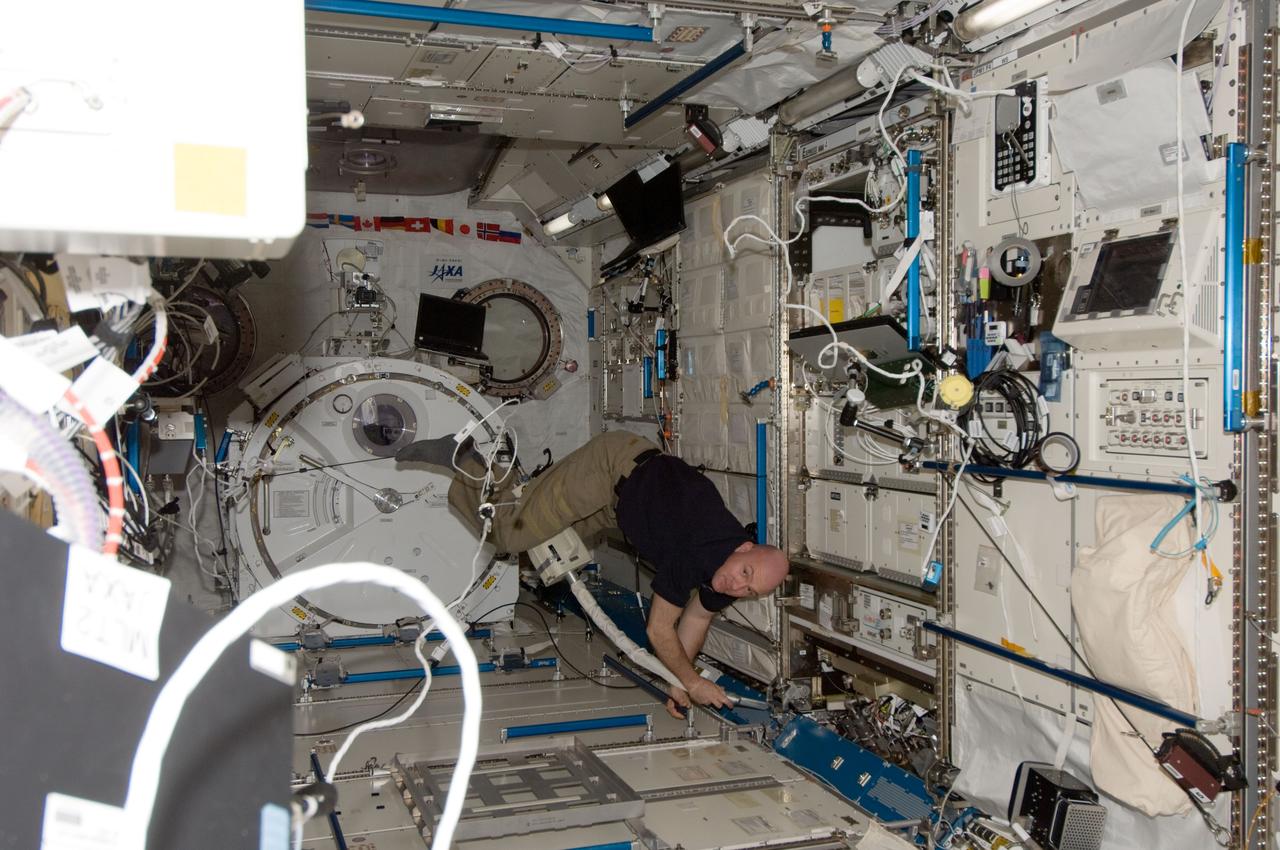
ISS030-E-065378 (15 Jan. 2012) --- European Space Agency astronaut Andre Kuipers, Expedition 30 flight engineer, uses a vacuum cleaner during housekeeping operations in the Kibo laboratory of the International Space Station.
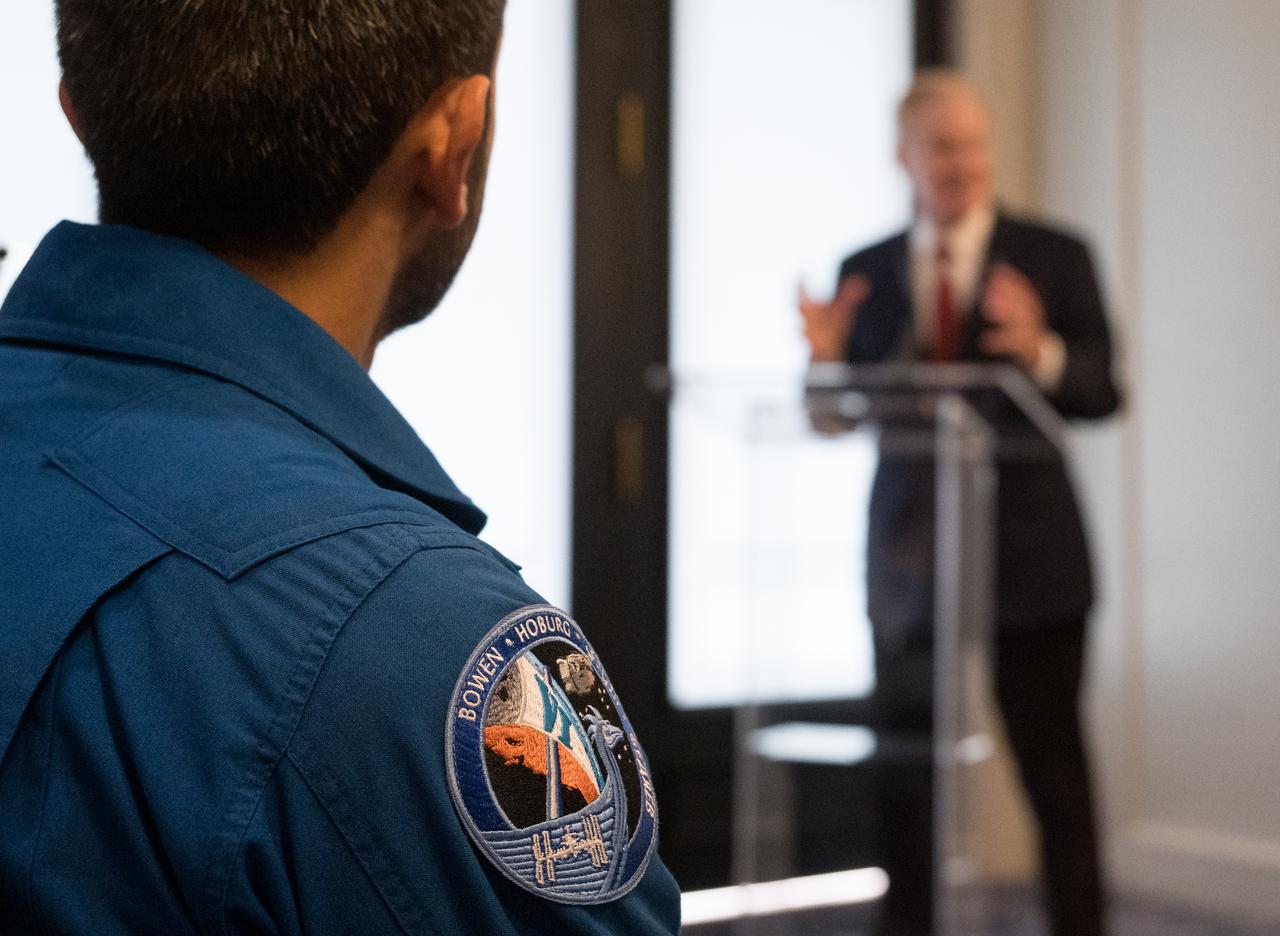
NASA Administrator Bill Nelson gives remarks during an event celebrating UAE-US collaboration in space, Friday, March 8, 2024, at the Four Seasons Hotel in Washington. Photo Credit: (NASA/Bill Ingalls)
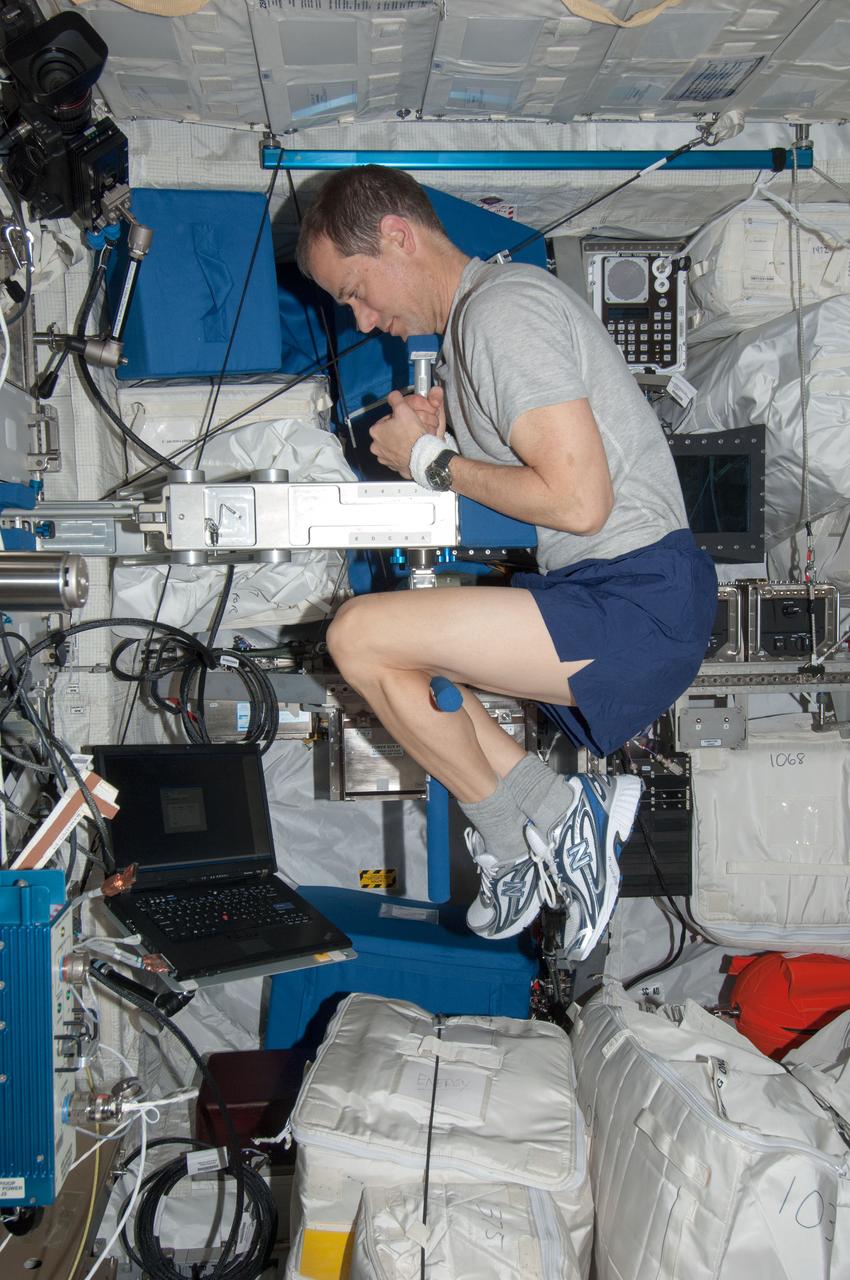
ISS034-E-026654 (11 Jan. 2013) --- NASA astronaut Tom Marshburn, Expedition 34 flight engineer, uses the Space Linear Acceleration Mass Measurement Device (SLAMMD) in the Columbus laboratory of the International Space Station.
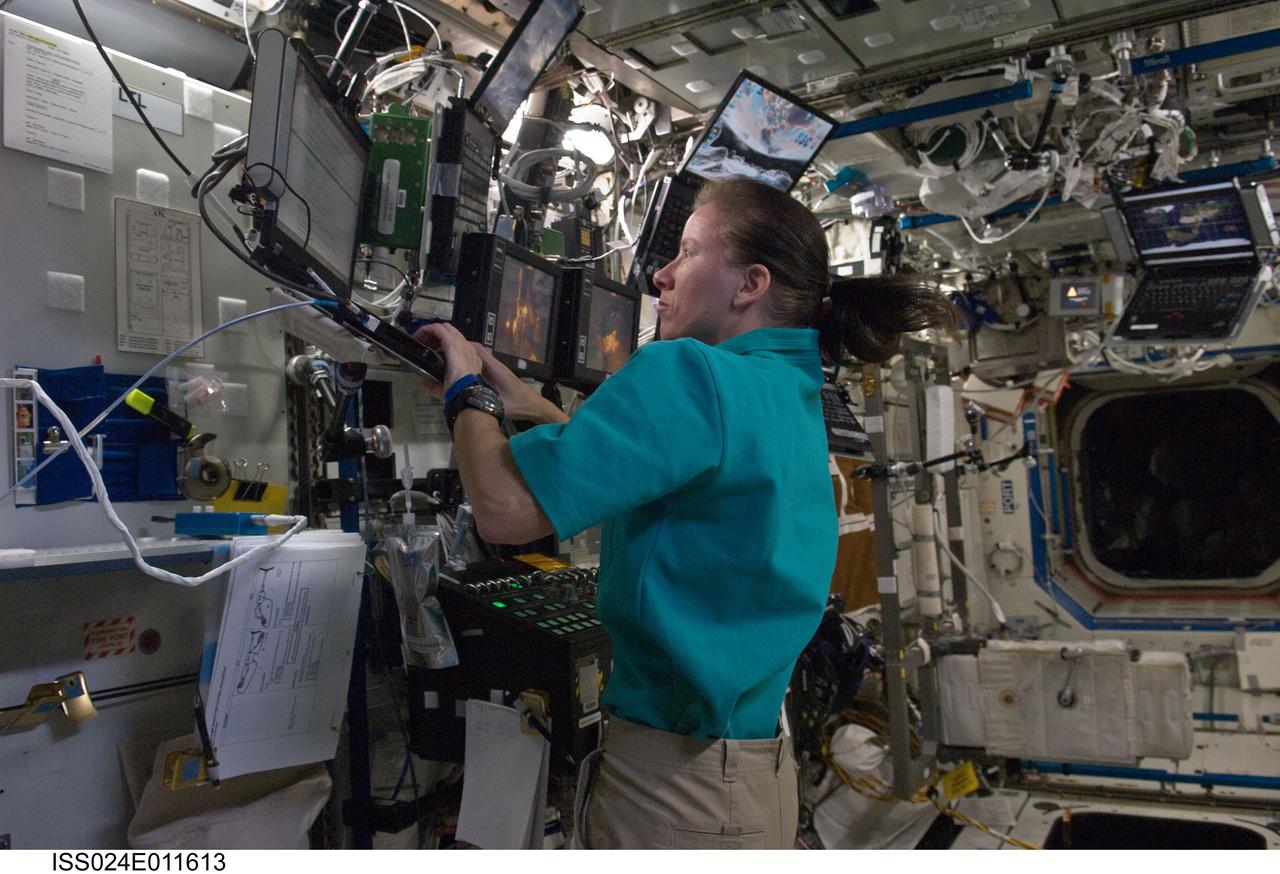
ISS024-E-011613 (7 Aug. 2010) --- NASA astronaut Shannon Walker, Expedition 24 flight engineer, uses a computer near a robotic workstation in the Destiny laboratory of the International Space Station.
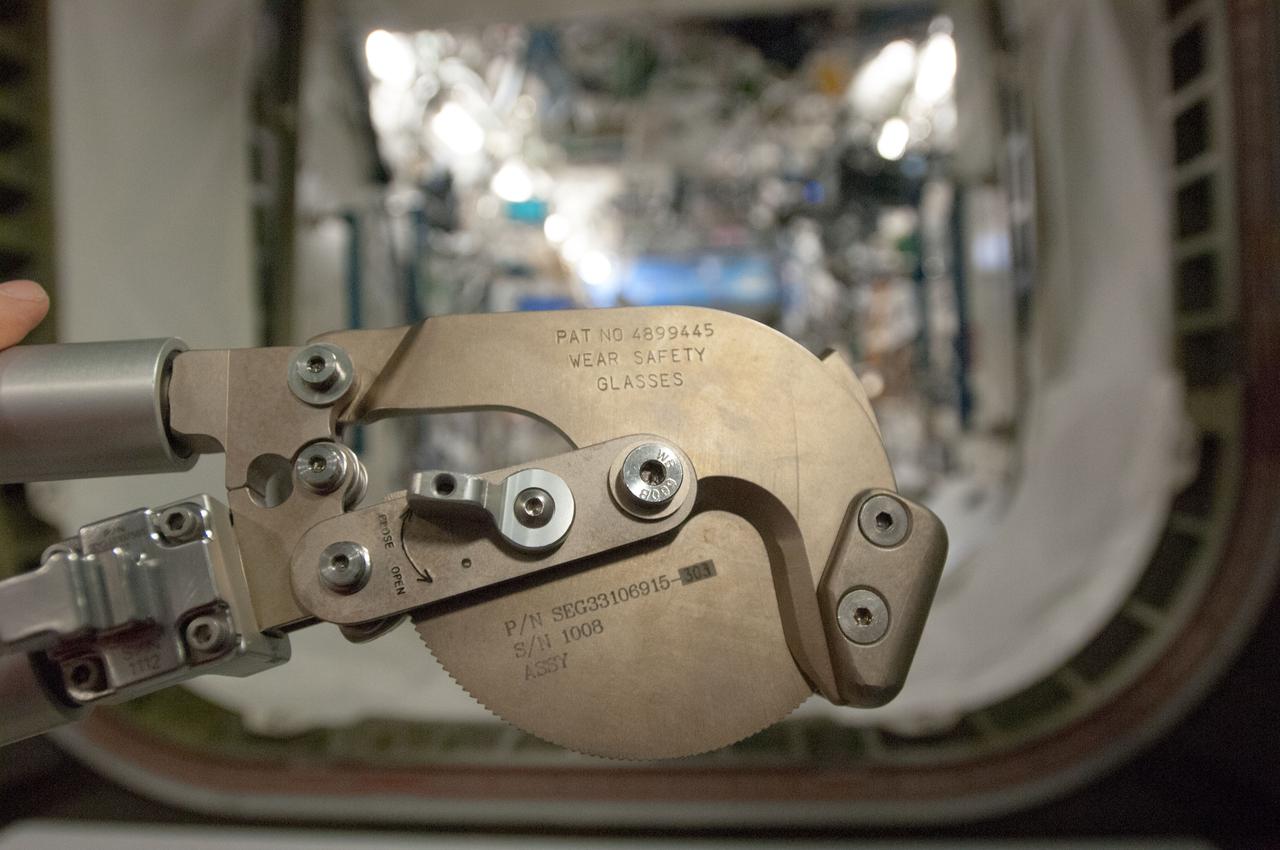
Documentation of a Large Cutter which will be used to support Russian Extravehicular Activity 32 (EVA 32) during Expedition 35. Part number (P/N) is SEG33106915-303, serial number (S/N) is 1008.
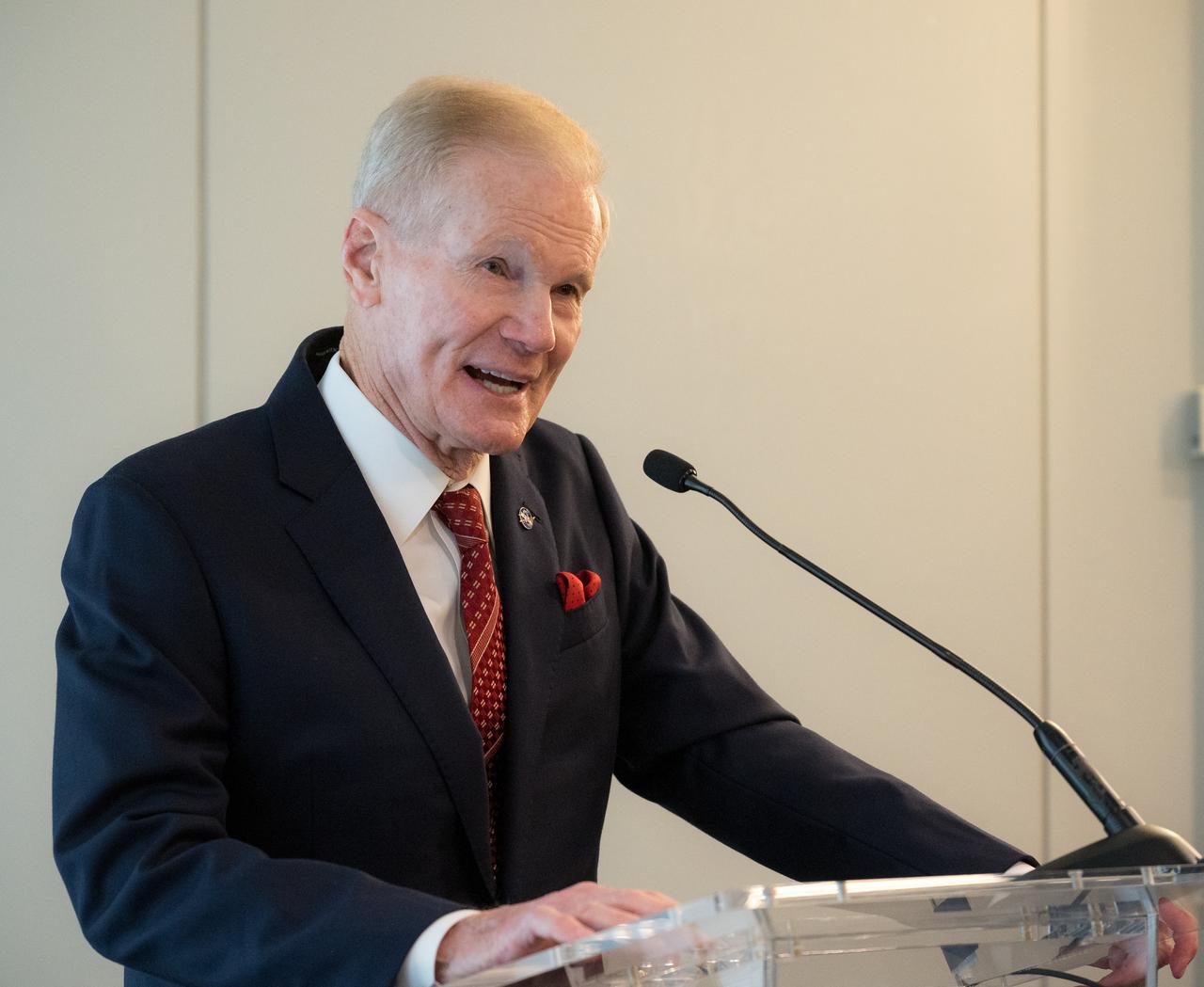
NASA Administrator Bill Nelson gives remarks during an event celebrating UAE-US collaboration in space, Friday, March 8, 2024, at the Four Seasons Hotel in Washington. Photo Credit: (NASA/Bill Ingalls)
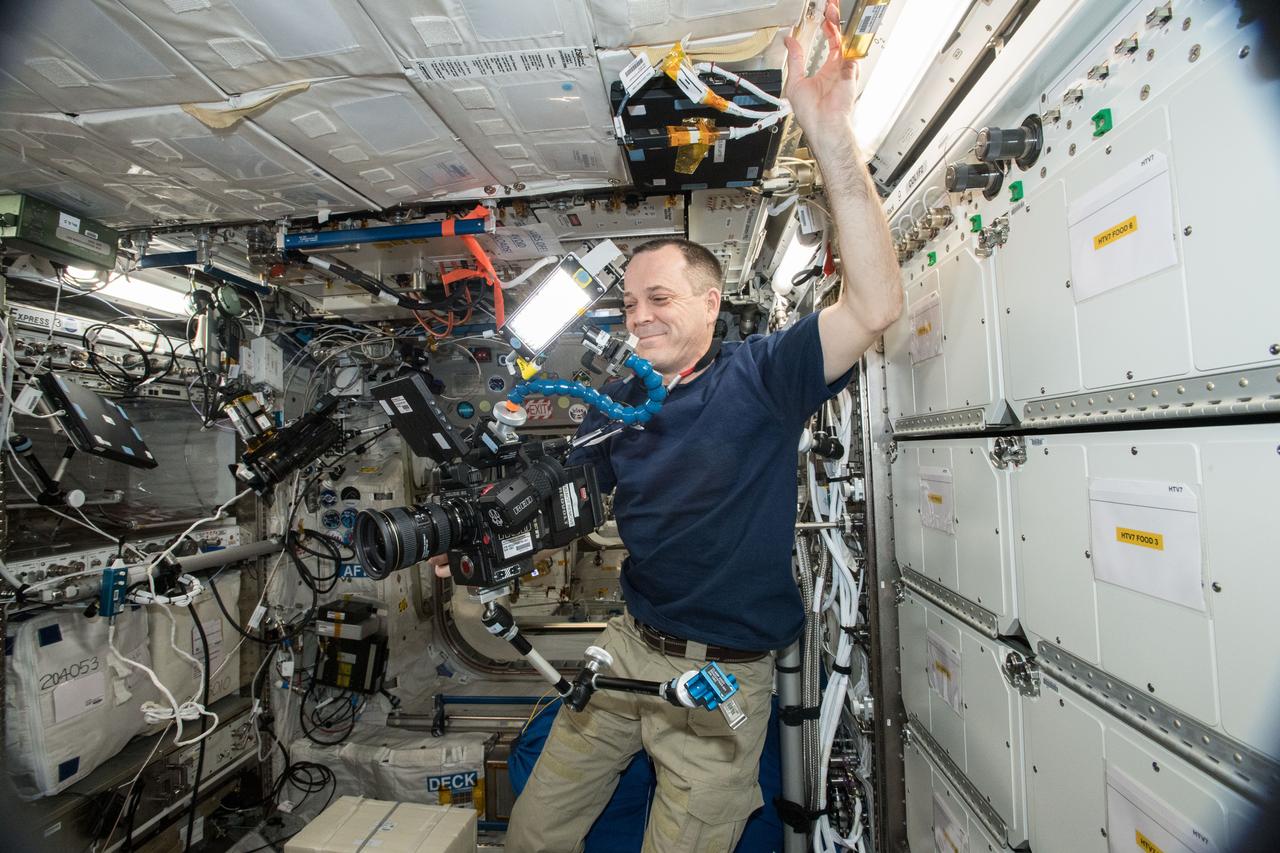
iss056e200804 (10/3/2018) --- NASA astronaut Ricky Arnold using the RED Helium Camera. The RED HELIUM 8K camera is a high-resolution cinema camera capable of 8K resolution.
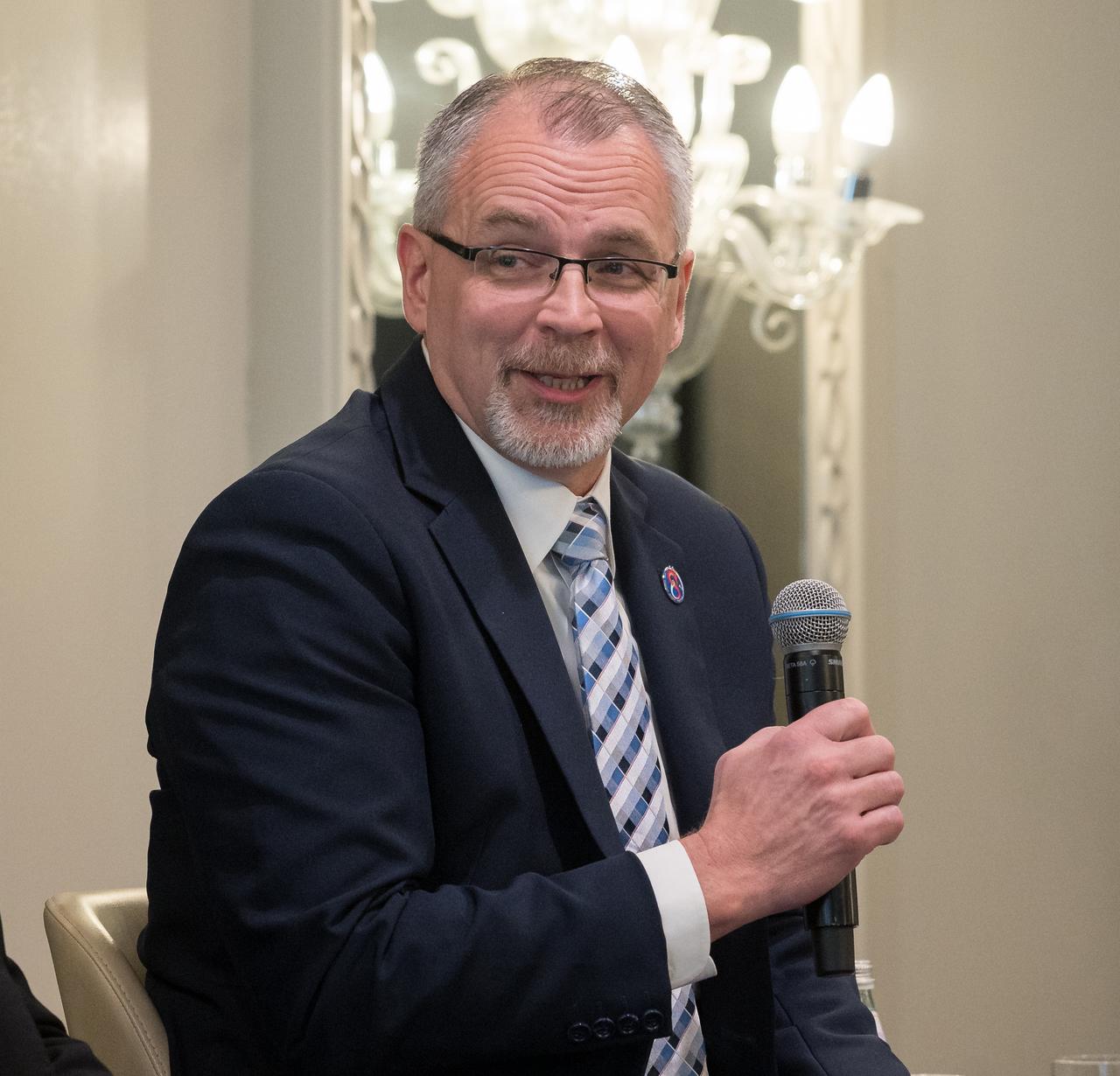
NASA Associate Administrator Jim Free, gives remarks during an event celebrating UAE-US collaboration in space, Friday, March 8, 2024, at the Four Seasons Hotel in Washington. Photo Credit: (NASA/Bill Ingalls)
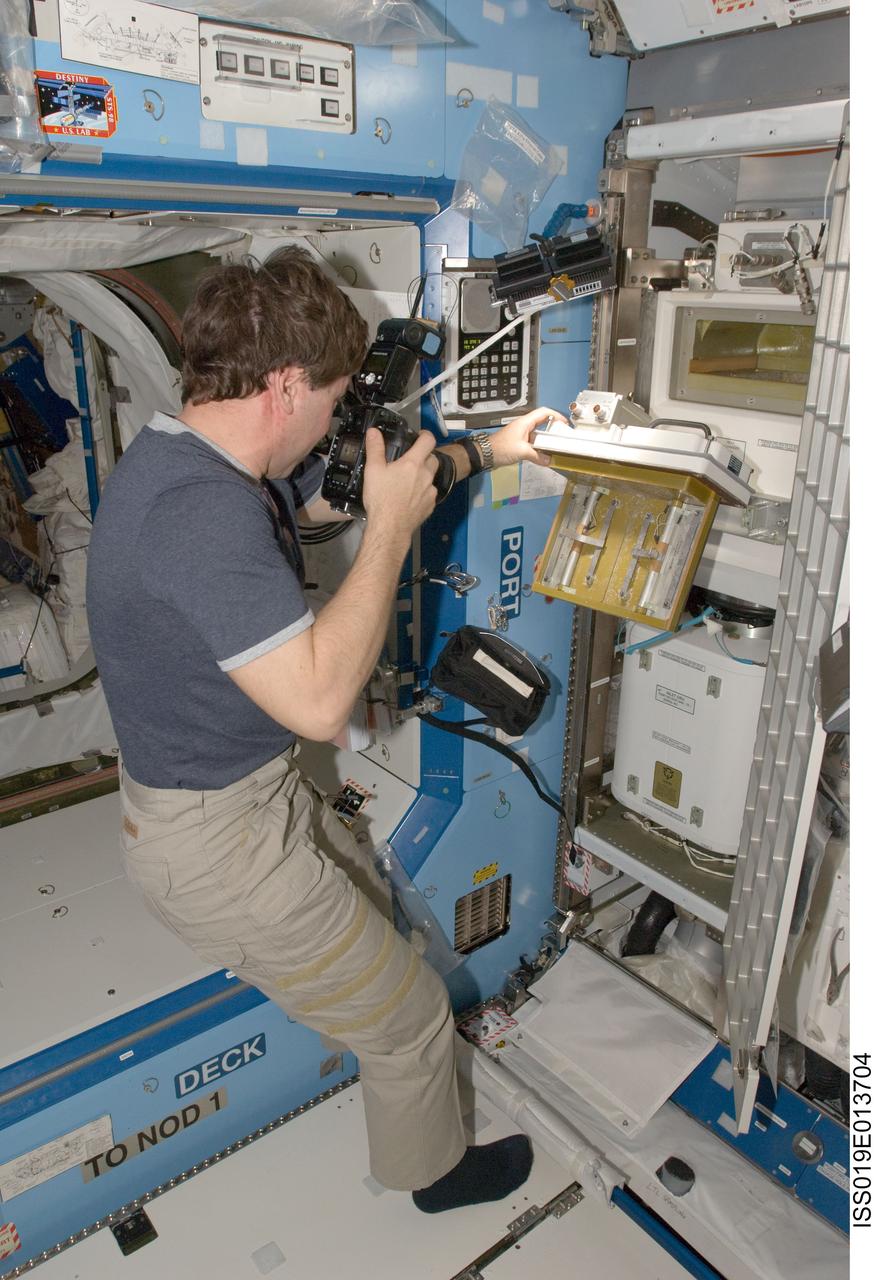
ISS019-E-013704 (4 May 2009) --- Astronaut Michael Barratt, Expedition 19/20 flight engineer, uses a still camera in the Destiny laboratory of the International Space Station.
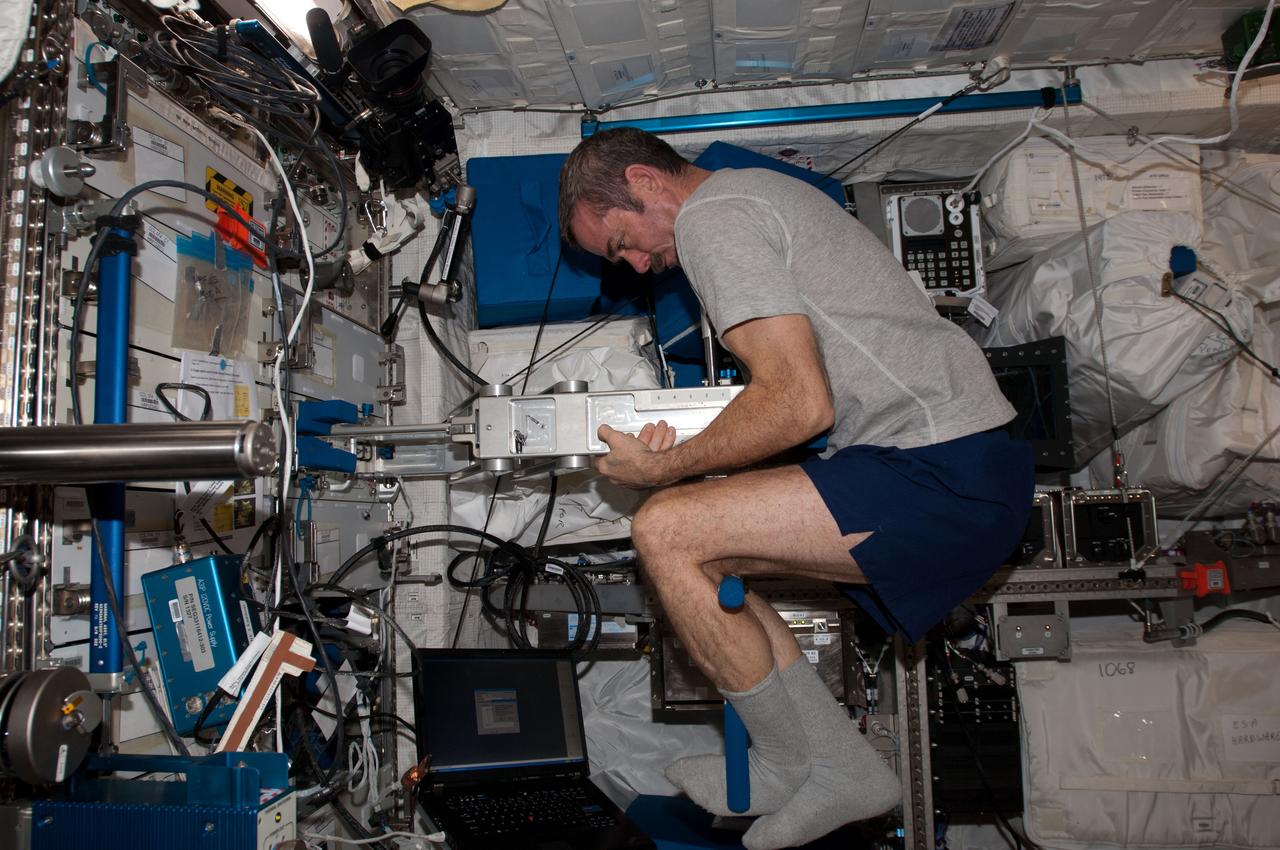
View of Canadian Space Agency (CSA) Chris Hadfield, Expedition 34 Flight Engineer (FE), using the Space Linear Acceleration Mass Measurement Device (SLAMMD) in the Columbus Module. Photo was taken during Expedition 34.
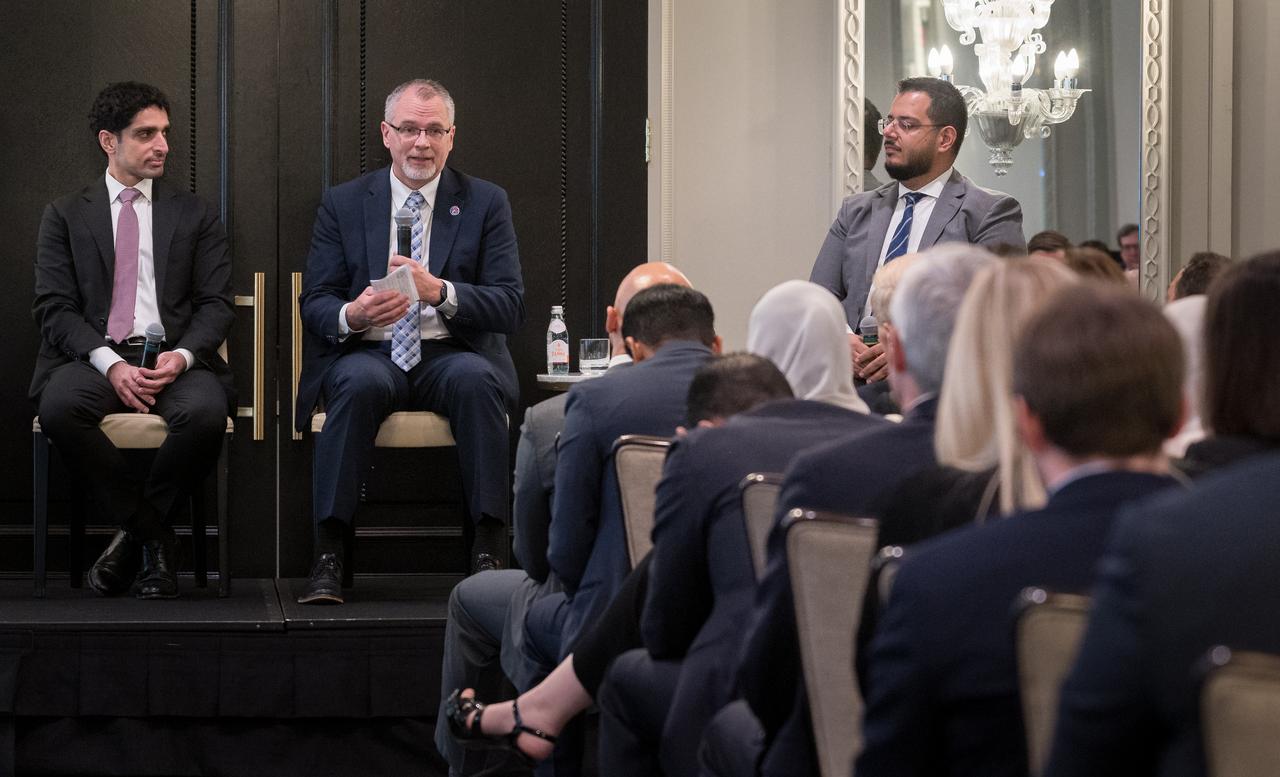
NASA Associate Administrator Jim Free, center, gives remarks during an event celebrating UAE-US collaboration in space, Friday, March 8, 2024, at the Four Seasons Hotel in Washington. Photo Credit: (NASA/Bill Ingalls)
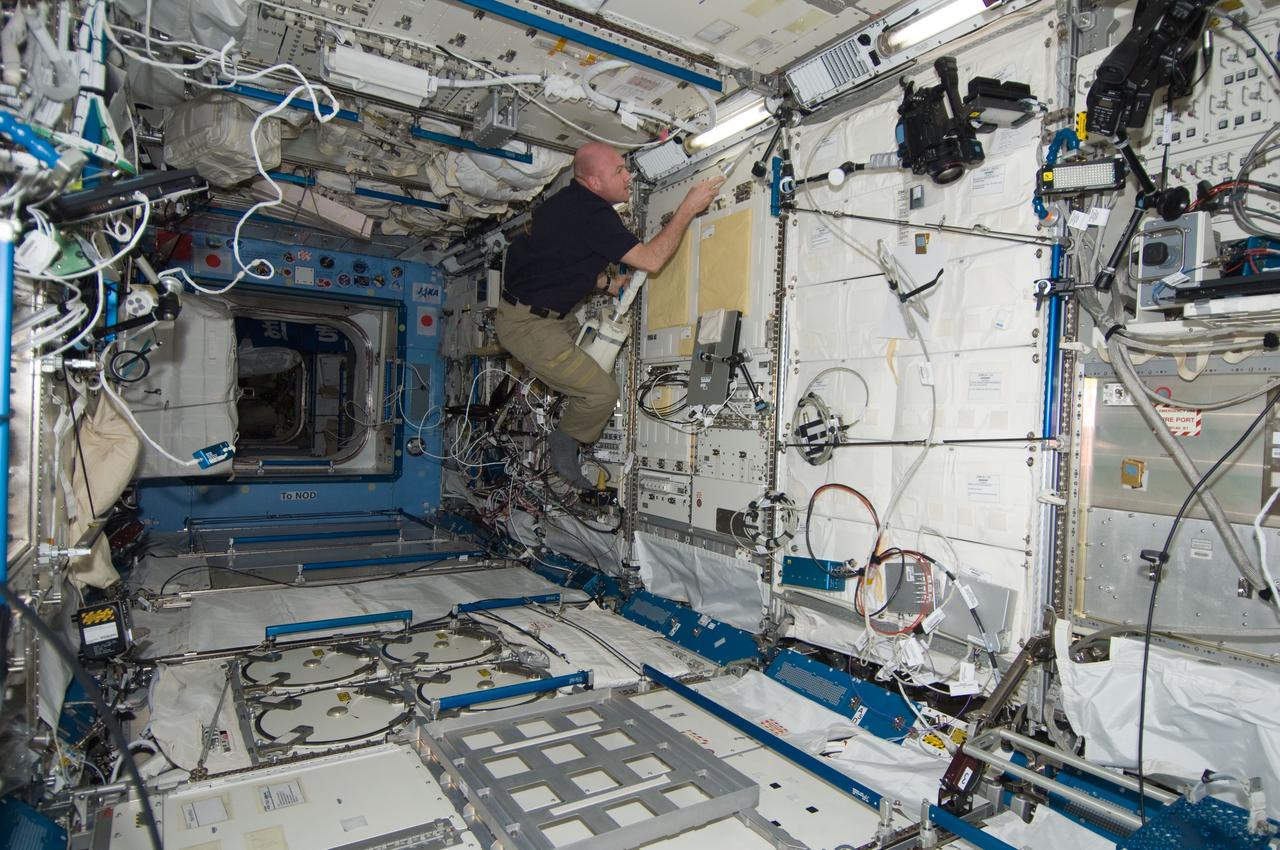
ISS030-E-210319 (15 Jan. 2012) --- European Space Agency astronaut Andre Kuipers, Expedition 30 flight engineer, uses a vacuum cleaner during housekeeping operations in the Kibo laboratory of the International Space Station.
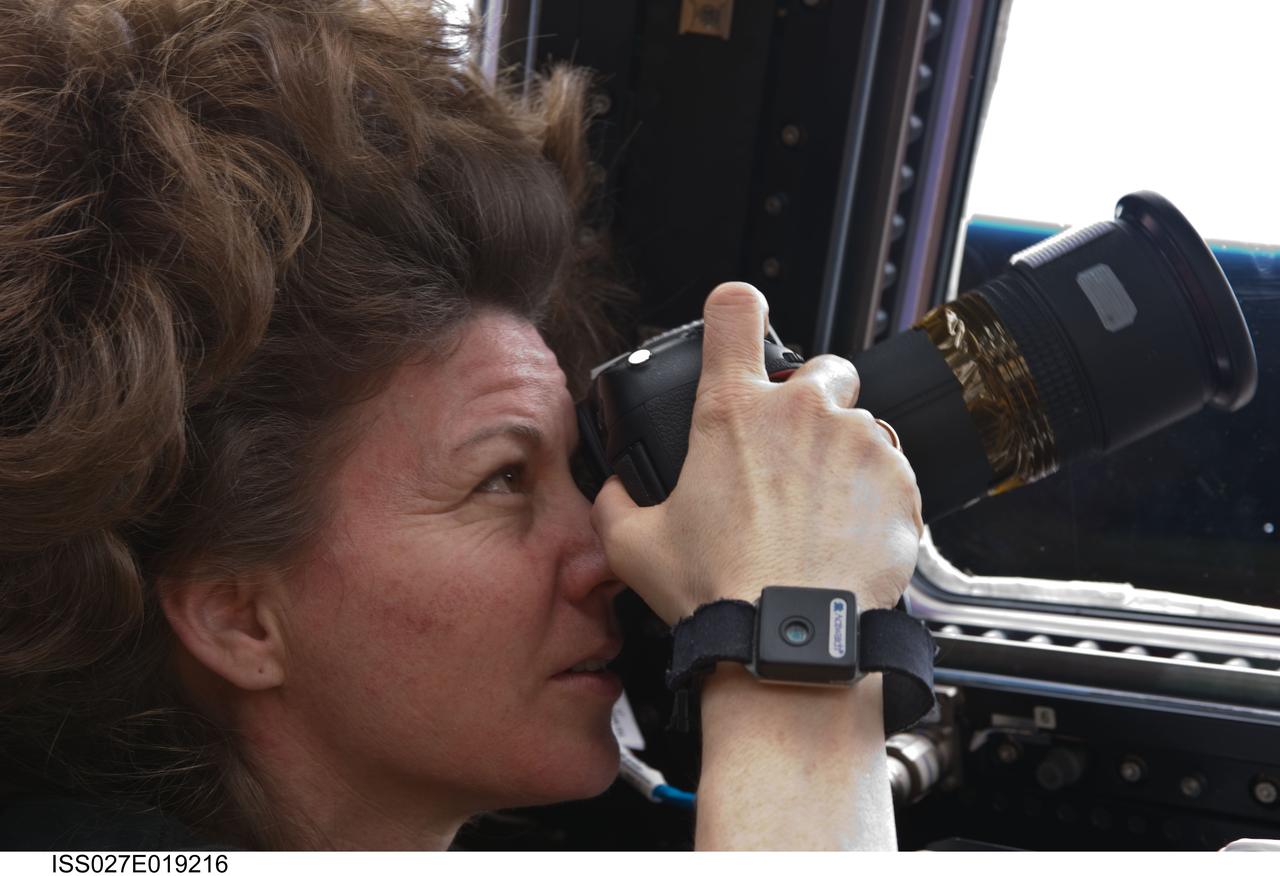
ISS027-E-019216 (29 April 2011) --- NASA astronaut Cady Coleman, Expedition 27 flight engineer, uses a still camera at a window in the Cupola of the International Space Station.
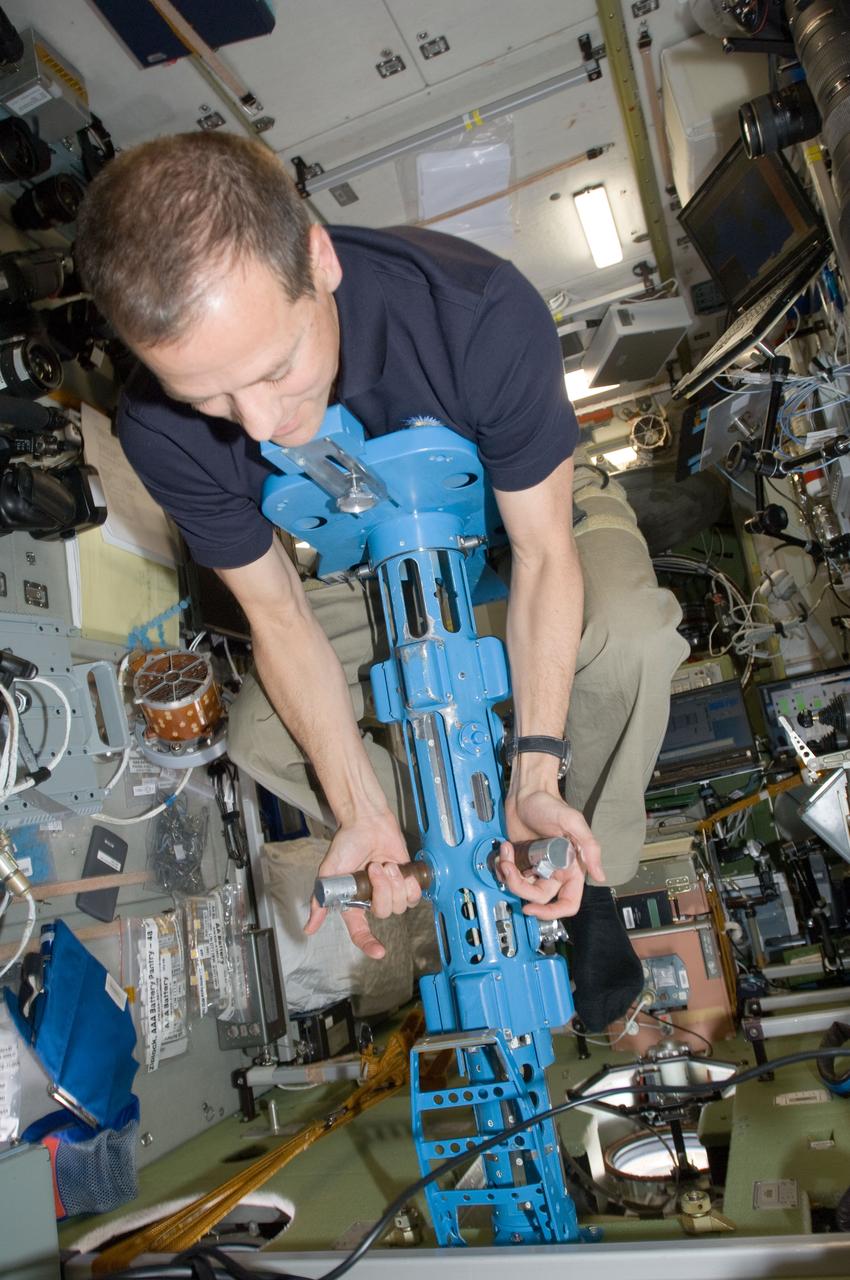
ISS034-E-009703 (23 Dec. 2012) --- Newly arrived Expedition 34 Flight Engineer Tom Marshburn, NASA astronaut, uses the Body Mass Measurement Device in the Zvezda service module aboard the International Space Station on Dec. 23, 2012. Marshburn, along with Canadian astronaut Chris Hadfield and Russian cosmonaut Roman Romanenko arrived the orbital outpost on Dec. 21 to join three other crewmen already onboard.
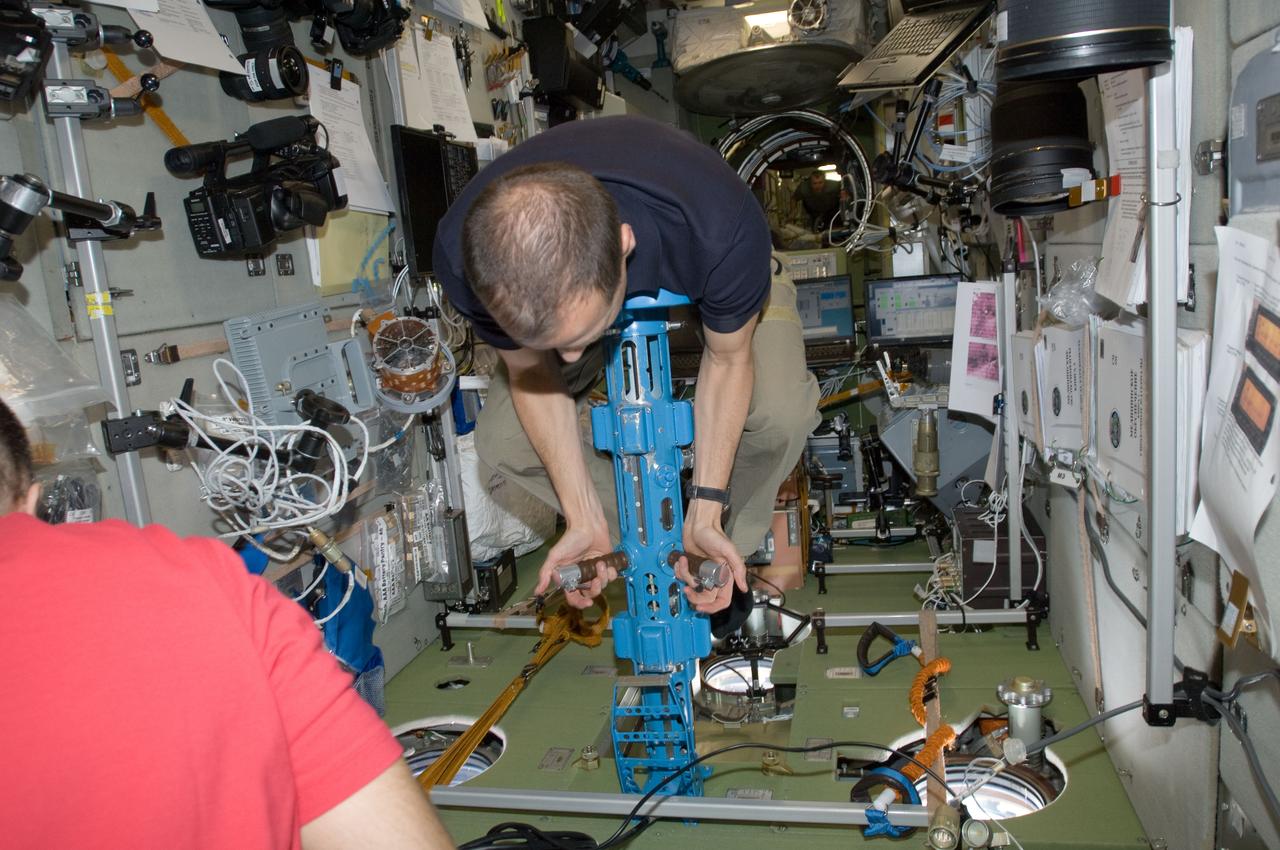
ISS034-E-009700 (23 Dec. 2012) --- Newly arrived Expedition 34 Flight Engineer Tom Marshburn, NASA astronaut, uses the Body Mass Measurement Device in the Zvezda service module aboard the International Space Station on Dec. 23, 2012. Marshburn, along with Canadian astronaut Chris Hadfield and Russian cosmonaut Roman Romanenko, arrived at the orbital outpost on Dec. 21 to join three other crewmen already onboard.
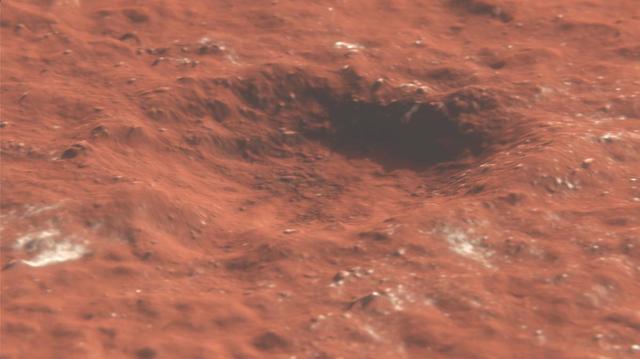
This animation depicts a flyover of a meteoroid impact crater on Mars that's surrounded by boulder-size chunks of ice. The animation was created using data from the High-Resolution Imaging Science Experiment (HiRISE) camera aboard NASA's Mars Reconnaissance Orbiter. The impact occurred on Dec. 24, 2021. Movie available at https://photojournal.jpl.nasa.gov/catalog/PIA25586
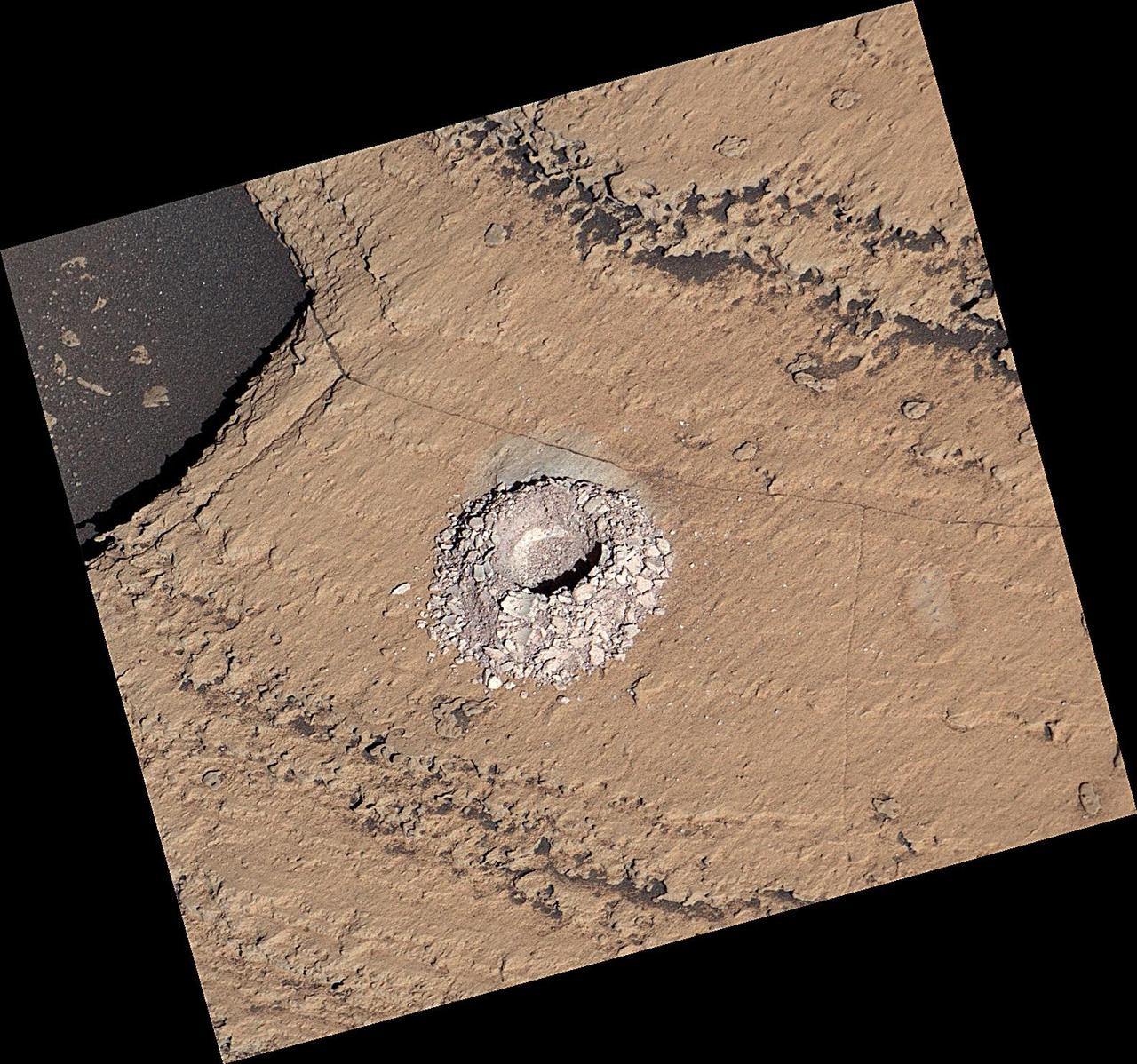
NASA's Curiosity Mars rover used the drill on the end of its robotic arm to collect a sample from a rock nicknamed "Sequoia" on Oct. 17, 2023, the 3,980th Martian day, or sol, of the mission. The mission was naming science targets after locations in California's Sierra Nevada mountain range at the time this sample was collected. This image was captured by the rover's Mast Camera, or Mastcam. https://photojournal.jpl.nasa.gov/catalog/PIA26048
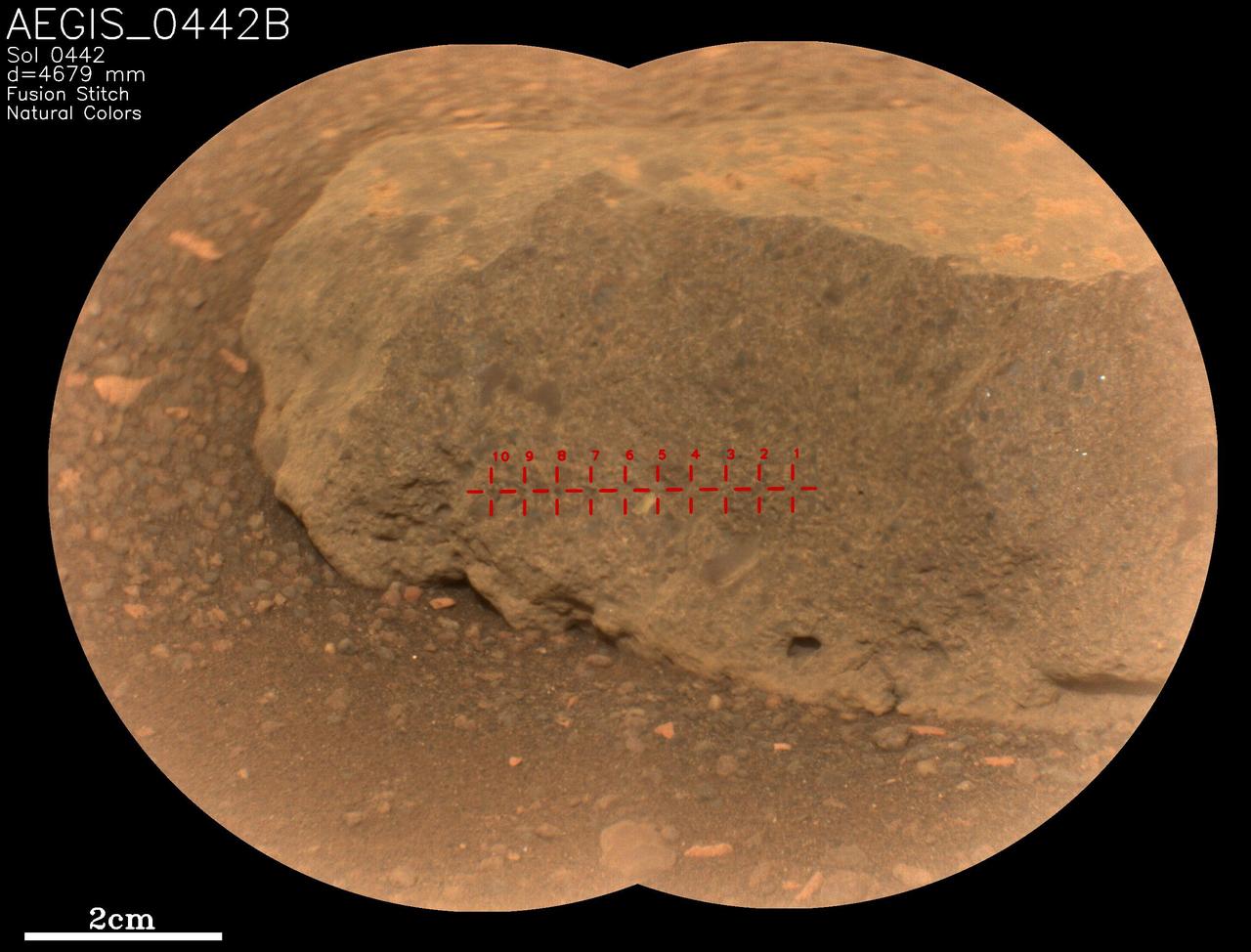
On May 18, 2022, NASA's Perseverance Mars rover used an artificial intelligence software called Autonomous Exploration for Gathering Increased Science (AEGIS) to select and target the rock seen in close-up here. It's one of two rocks that the AI for the first time helped Perseverance study without direction from the mission's team back on Earth. AEGIS was developed by NASA's Jet Propulsion Laboratory in Southern California – which also built Perseverance – to collect data on rocks and other Martian features that the rover discovers while driving. AEGIS is used in conjunction with Perseverance's SuperCam laser instrument, directing the laser to zap certain features that scientists have commanded the rover to look for. SuperCam used its Remote Micro-Imager (RMI) camera to take two images of this target, which were stitched together into the main picture seen here. The rock target, which was about 16 feet (5 meters) away from the rover, is named "AEGIS_0442B," referring to the Martian day, or sol, it was targeted (Sol 442) and that it was the second rock ("B") targeted by AEGIS on that sol. The red crosshairs seen across the rock target indicate each place AEGIS directed the laser to zap. SuperCam is led by Los Alamos National Laboratory in New Mexico, where the instrument's body unit was developed. That part of the instrument includes several spectrometers as well as control electronics and software. The mast unit, including RMI, was developed and built by several laboratories of the CNRS (the French research center) and French universities under the contracting authority of Centre National d'Études Spatiales (CNES), the French space agency. A key objective for Perseverance's mission on Mars is astrobiology, including the search for signs of ancient microbial life. The rover will characterize the planet's geology and past climate, pave the way for human exploration of the Red Planet, and be the first mission to collect and cache Martian rock and regolith (broken rock and dust). Subsequent NASA missions, in cooperation with ESA (European Space Agency), would send spacecraft to Mars to collect these sealed samples from the surface and return them to Earth for in-depth analysis. The Mars 2020 Perseverance mission is part of NASA's Moon to Mars exploration approach, which includes Artemis missions to the Moon that will help prepare for human exploration of the Red Planet. https://photojournal.jpl.nasa.gov/catalog/PIA25289
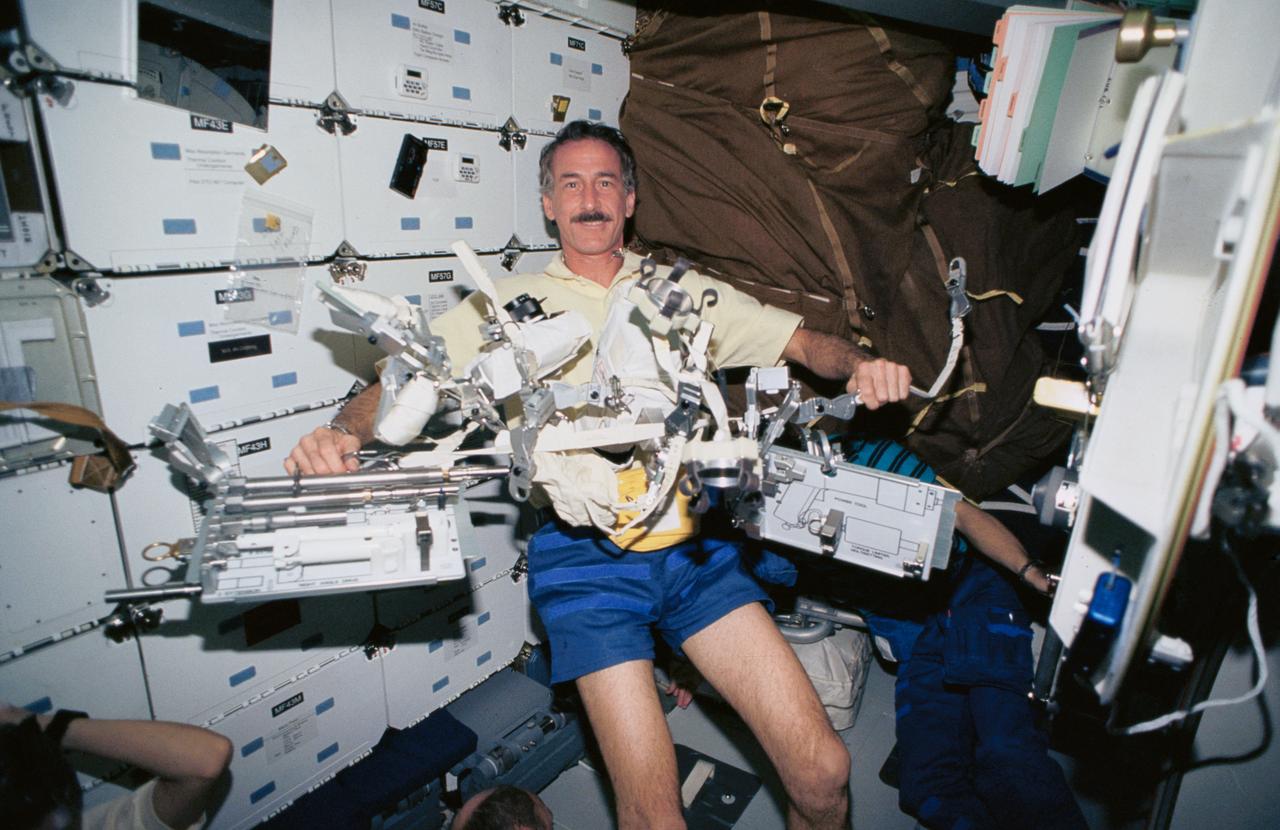
STS061-03-029 (2013 Dec 1993) --- Astronaut Jeffrey A. Hoffman displays tools used in the five space walks on the STS-61 Hubble Space Telescope (HST) repair mission. Hoffman was one of four space walkers making use of the variegated gear.
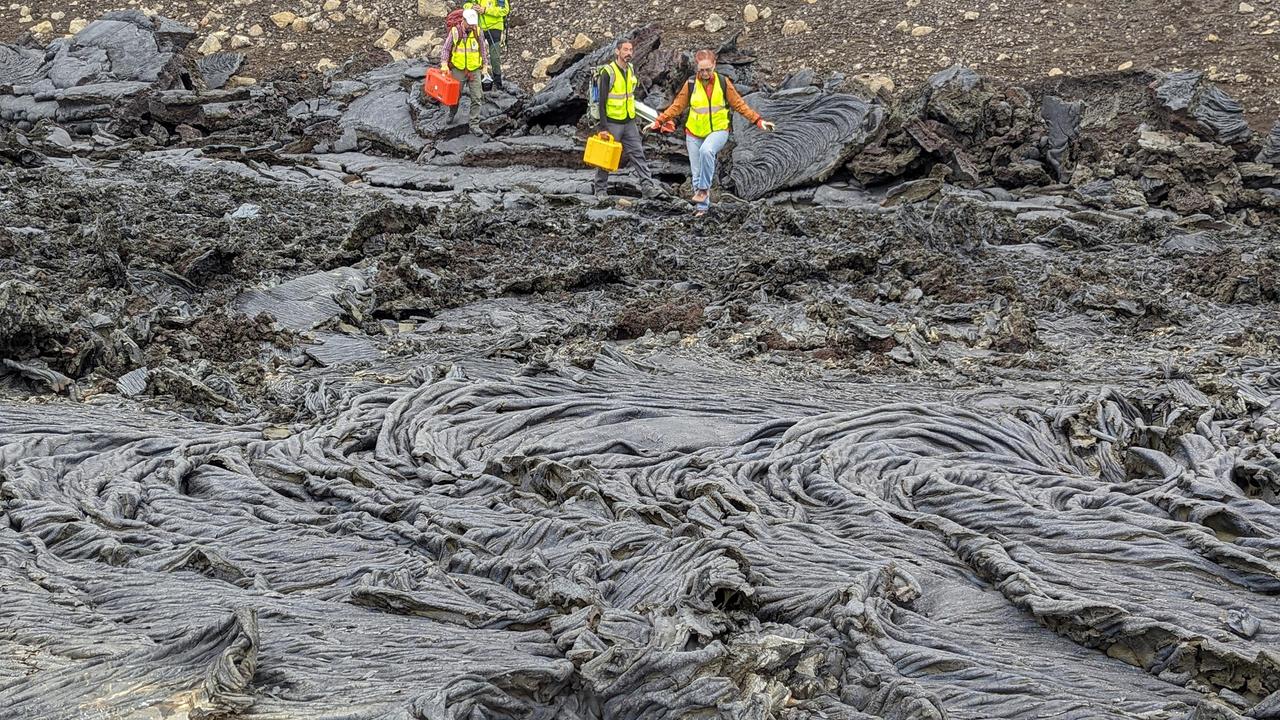
To lay the groundwork for NASA's VERITAS mission (Venus Emissivity, Radio science, InSAR, Topography, And Spectroscopy), members of the mission's international science team traveled in August 2023 to Iceland, using the island as a stand-in, or analog, for Venus. Using several techniques, the team studied a variety of rocky terrain, including this lava field featuring new rock from a recent flow, to better understand what the VERITAS mission will "see" when it studies Venus' surface. The VERITAS orbiter will peer through the planet's thick atmosphere with a suite of powerful science instruments to create global maps of the planet's surface – including topography, radar images, rock type, and gravity measurements – as well as detect surface changes. VERITAS is designed to understand what processes are currently active, search for evidence of past and current interior water, and understand the geologic evolution of the planet, illuminating how rocky planets throughout the galaxy evolve. https://photojournal.jpl.nasa.gov/catalog/PIA25838
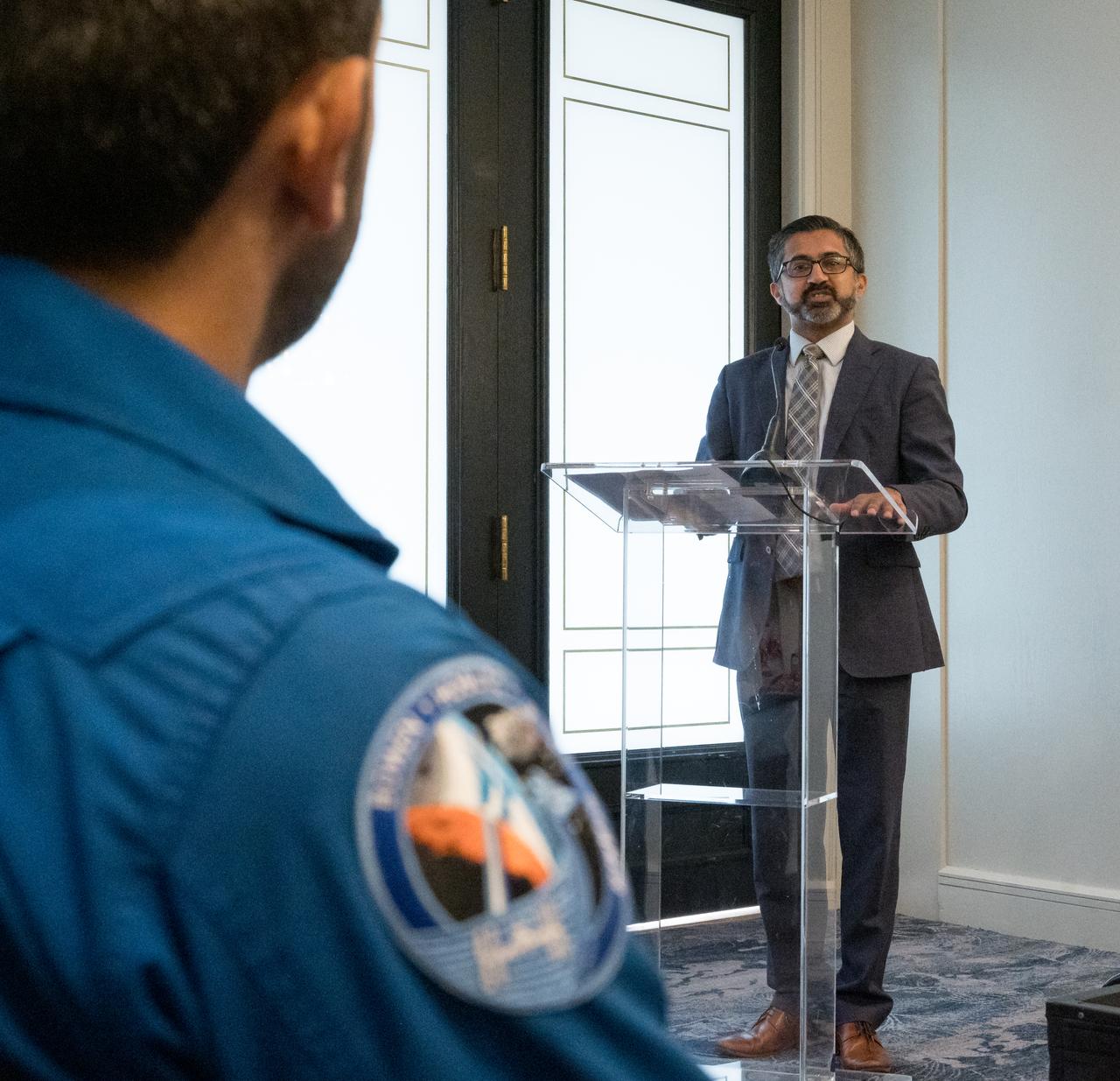
National Space Council Executive Secretary Chirag Parikh, gives remarks during an event celebrating UAE-US collaboration in space, Friday, March 8, 2024, at the Four Seasons Hotel in Washington. Photo Credit: (NASA/Bill Ingalls)
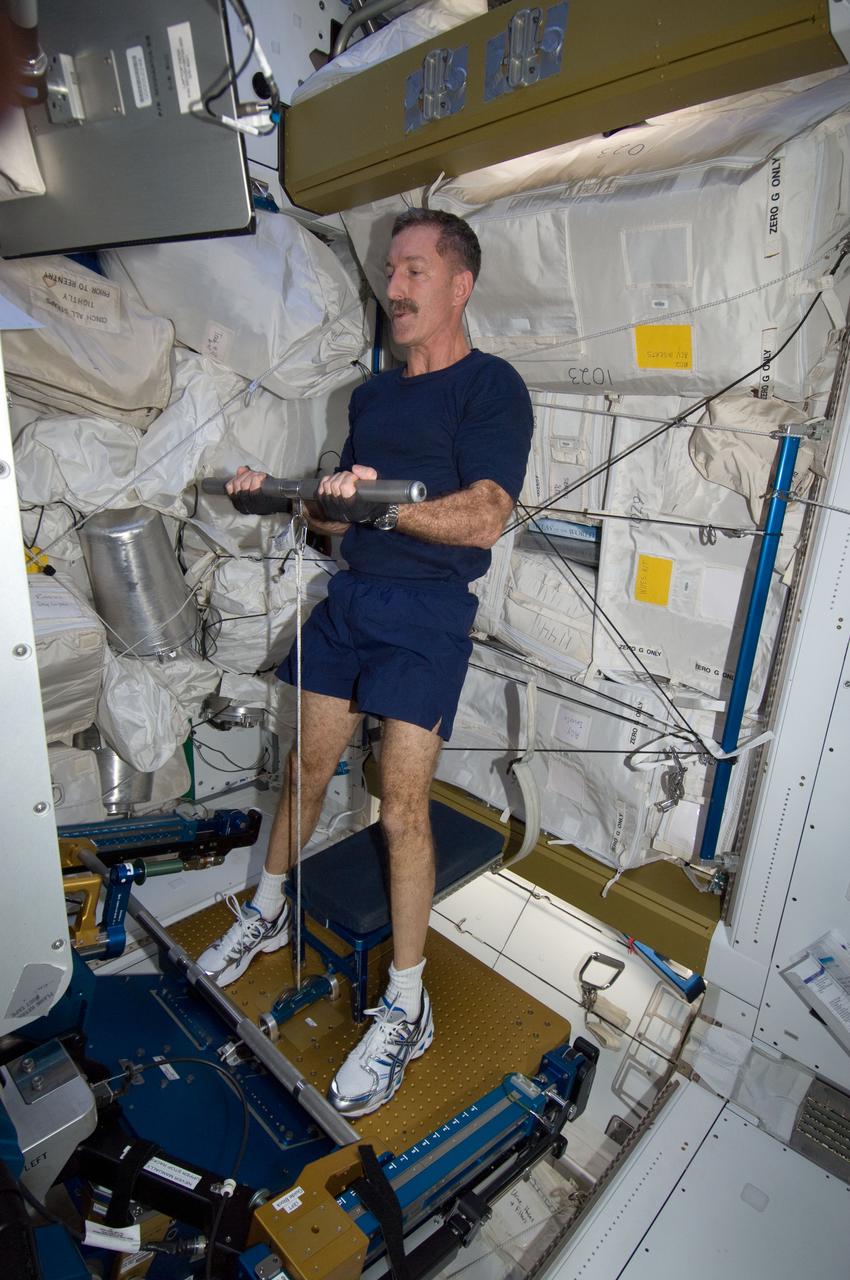
ISS030-E-012727 (18 Dec. 2011) --- NASA astronaut Dan Burbank, Expedition 30 commander, uses the short bar for the advanced Resistive Exercise Device (aRED) equipment to perform upper body strengthening pull-ups in the Tranquility node of the International Space Station.
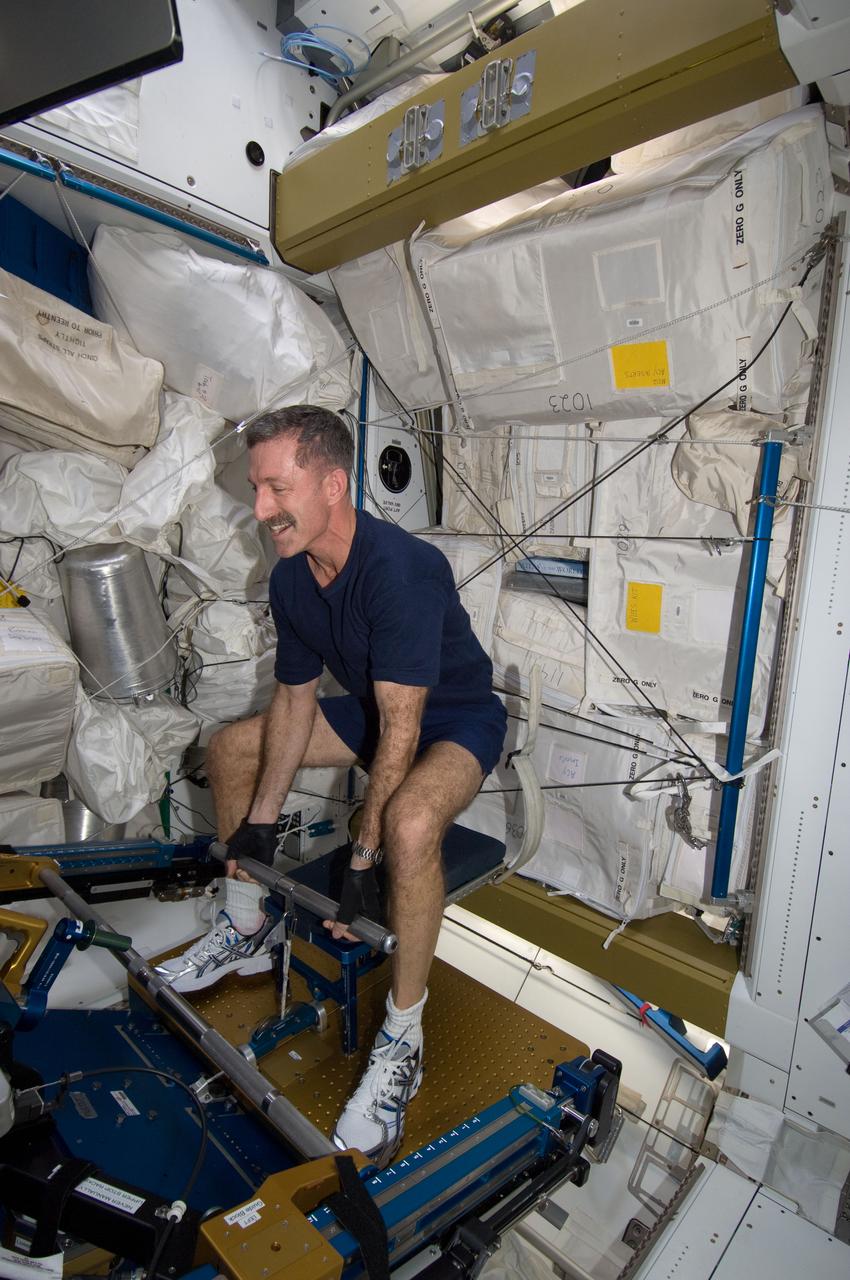
ISS030-E-012725 (18 Dec. 2011) --- NASA astronaut Dan Burbank, Expedition 30 commander, uses the short bar for the advanced Resistive Exercise Device (aRED) equipment to perform upper body strengthening pull-ups in the Tranquility node of the International Space Station.
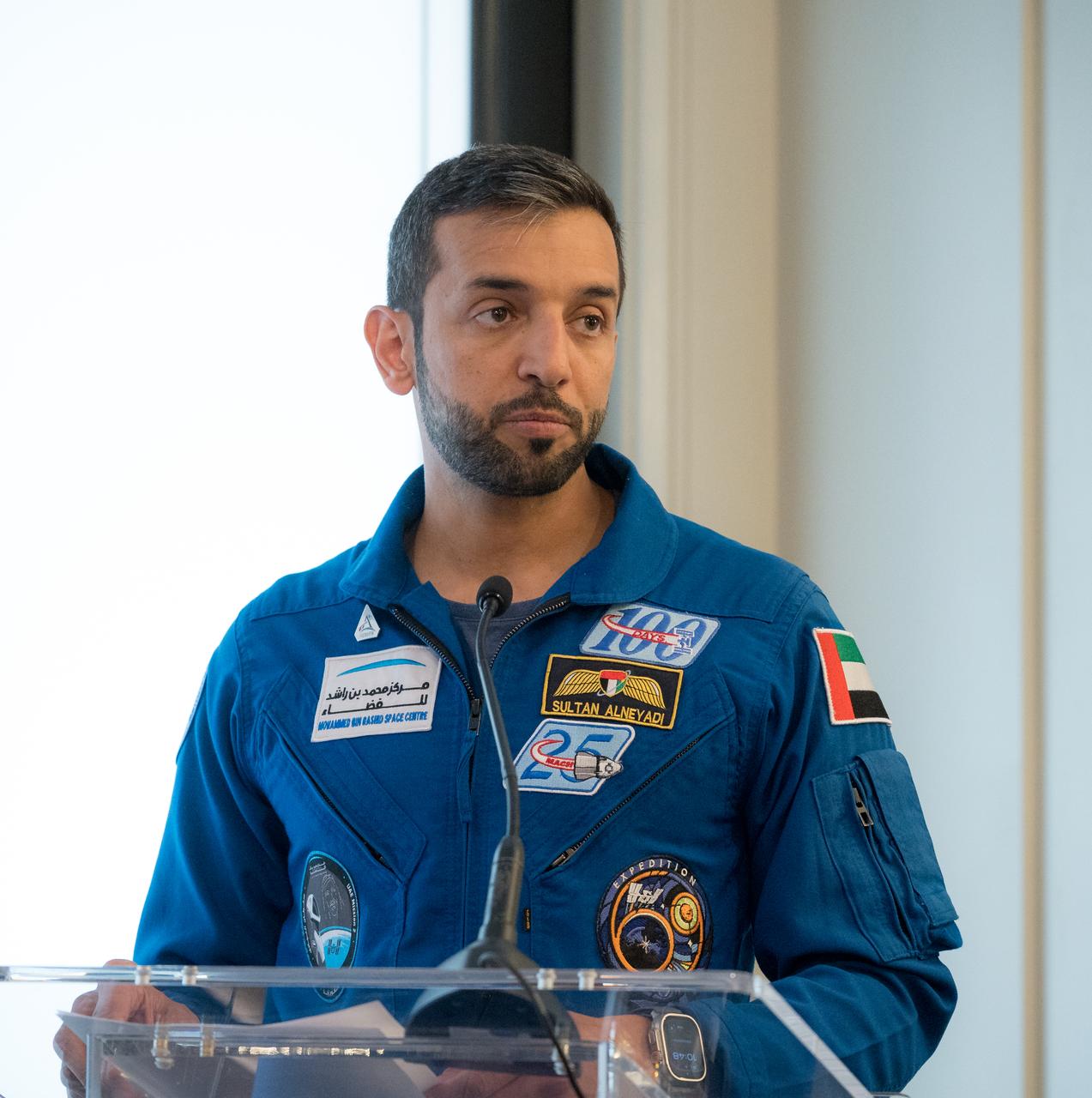
UAE astronaut and Minister of Youth, H.E. Dr. Sultan Al Neyadi, gives remarks during an event celebrating UAE-US collaboration in space, Friday, March 8, 2024, at the Four Seasons Hotel in Washington. Photo Credit: (NASA/Bill Ingalls)
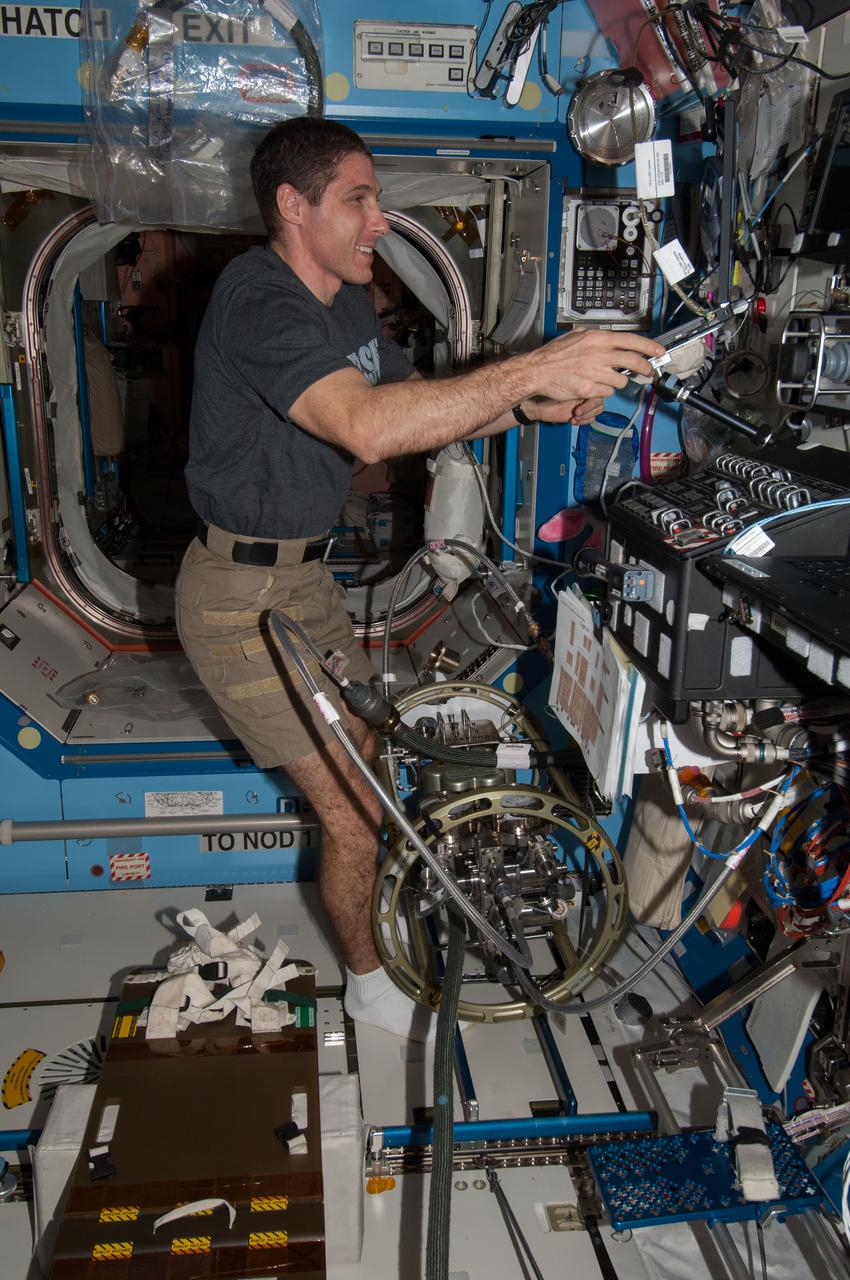
ISS038-E-040111 (31 Jan. 2014) --- NASA astronaut Mike Hopkins, Expedition 38 flight engineer, uses the Fluid Servicing System (FSS) to refill Internal Thermal Control System (ITCS) loops with fresh coolant in the Destiny laboratory of the International Space Station.
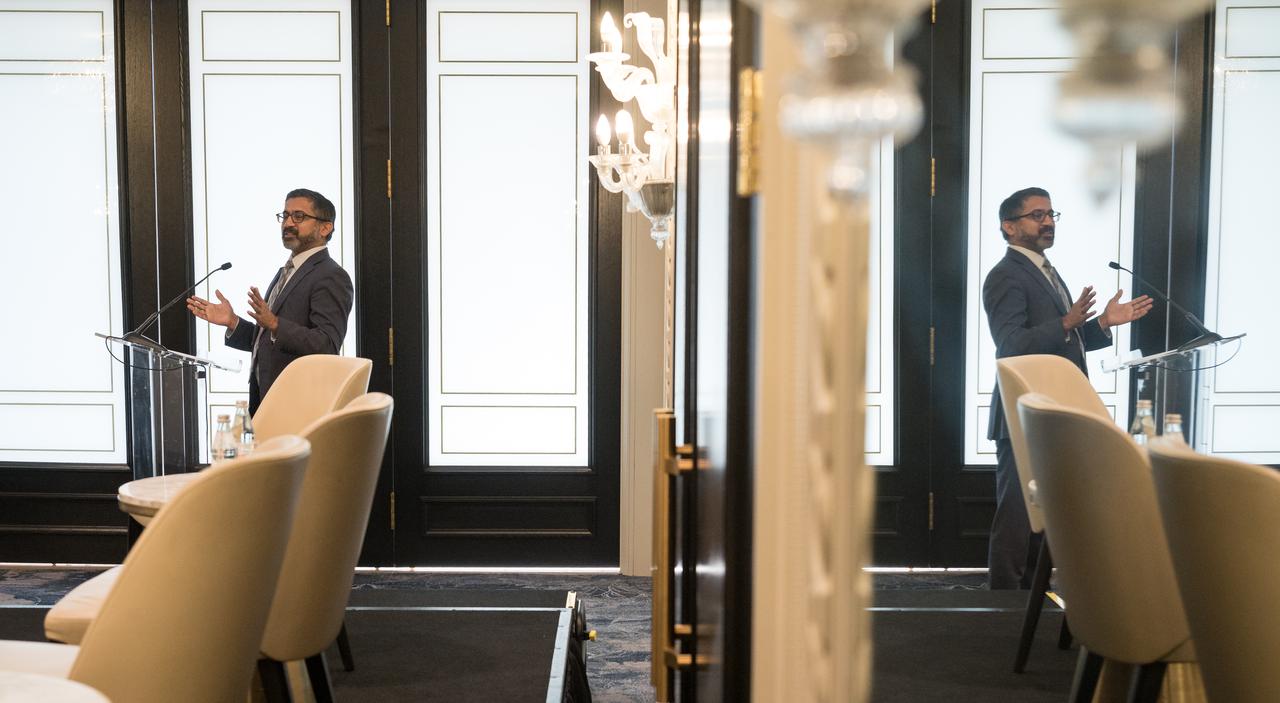
National Space Council Executive Secretary Chirag Parikh, gives remarks during an event celebrating UAE-US collaboration in space, Friday, March 8, 2024, at the Four Seasons Hotel in Washington. Photo Credit: (NASA/Bill Ingalls)
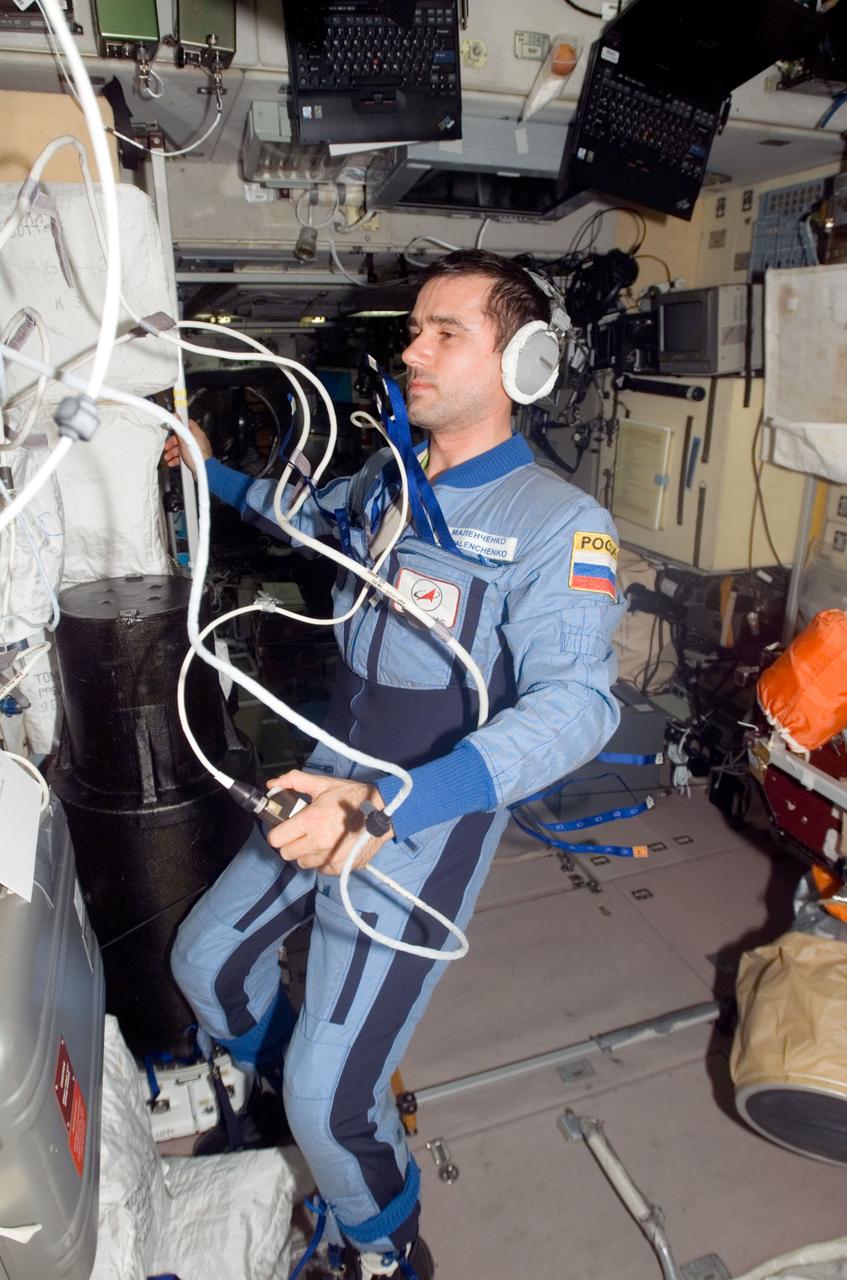
ISS016-E-022134 (9 Jan. 2008) --- Cosmonaut Yuri I. Malenchenko, Expedition 16 flight engineer representing Russia's Federal Space Agency, uses a communication system while working in the Zvezda Service Module of the International Space Station.
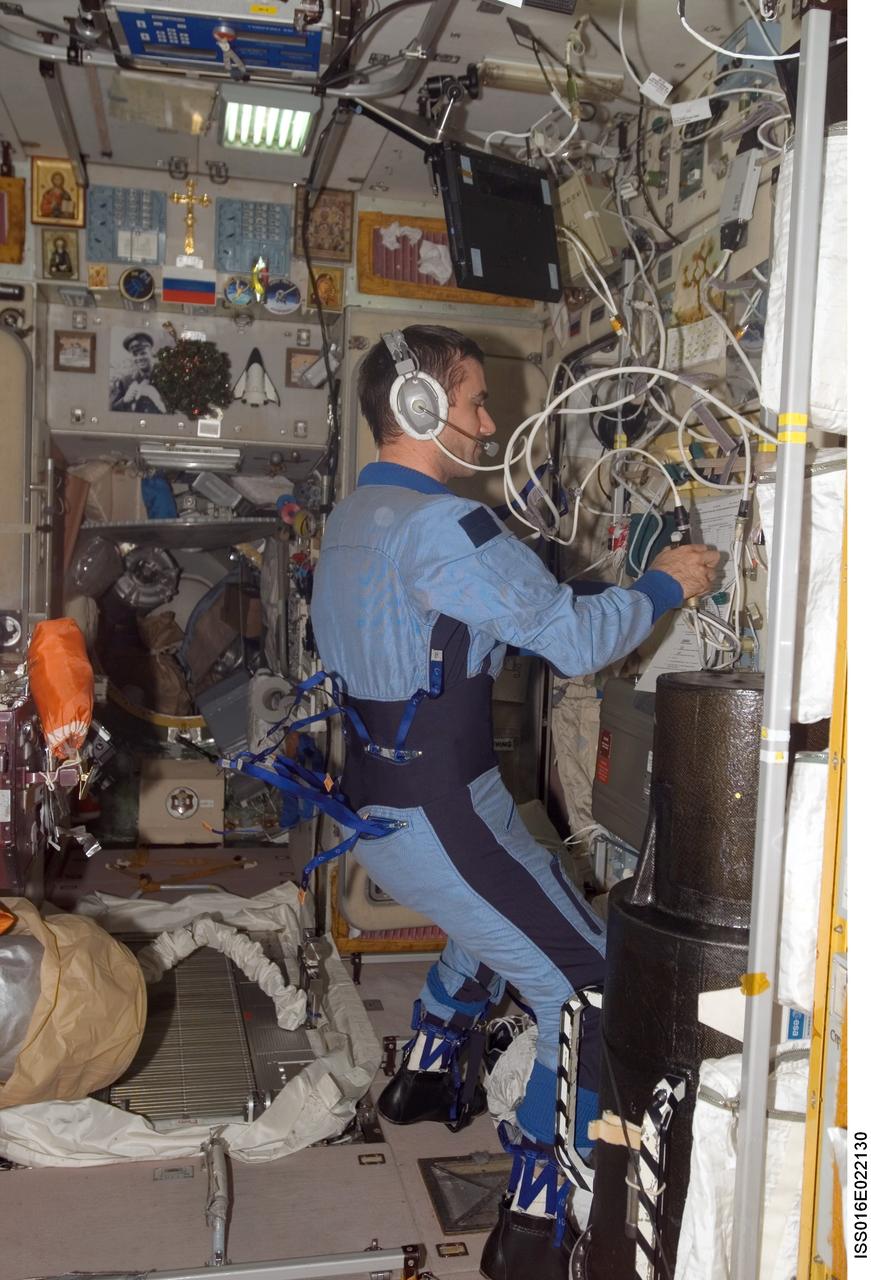
ISS016-E-022130 (9 Jan. 2008) --- Cosmonaut Yuri I. Malenchenko, Expedition 16 flight engineer representing Russia's Federal Space Agency, uses a communication system while working in the Zvezda Service Module of the International Space Station.
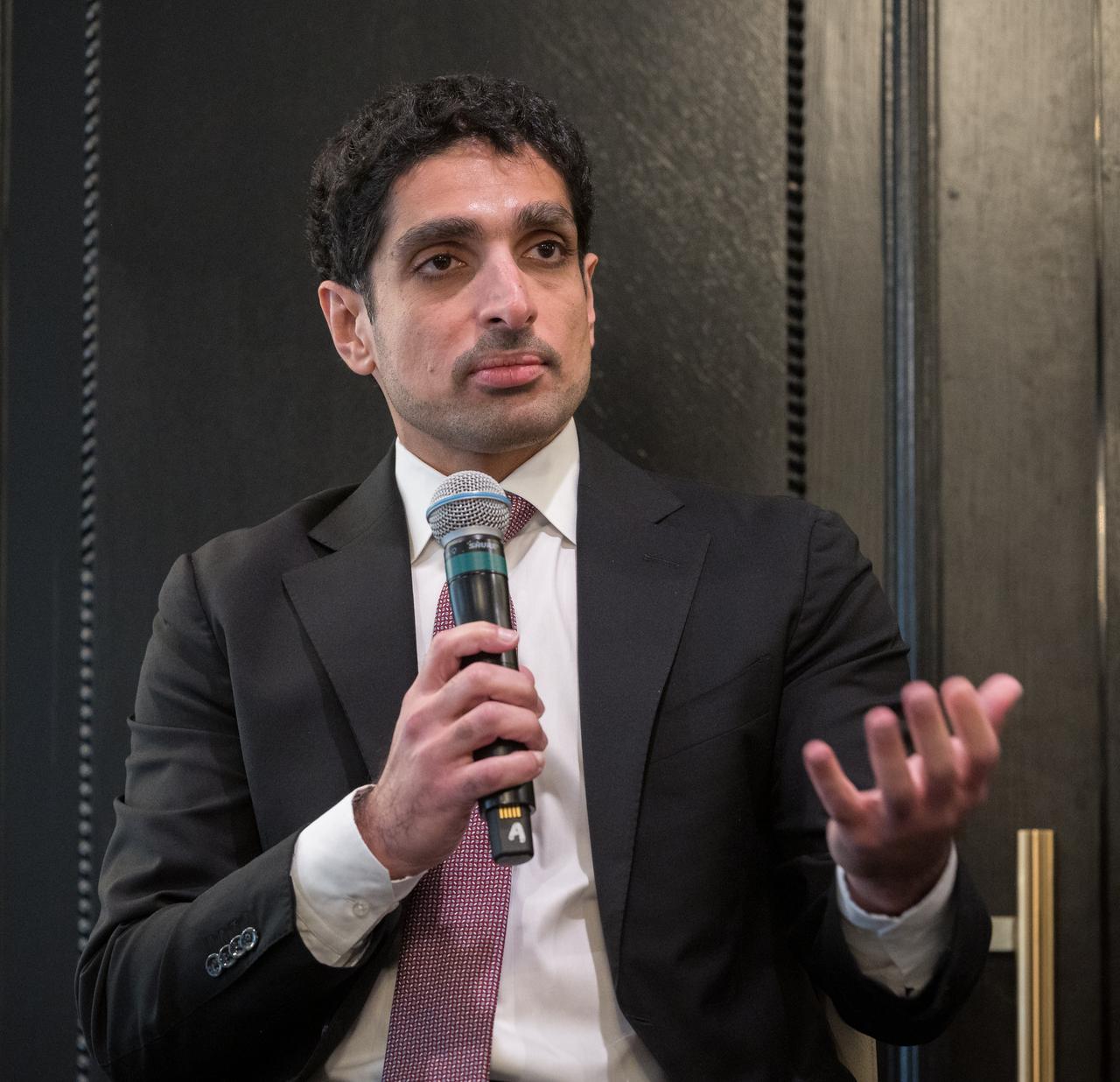
UAE Assistant Minister of Foreign Affairs and International Cooperation for Advanced Science and Technology, Omran Sharaf, gives remarks during an event celebrating UAE-US collaboration in space, Friday, March 8, 2024, at the Four Seasons Hotel in Washington. Photo Credit: (NASA/Bill Ingalls)
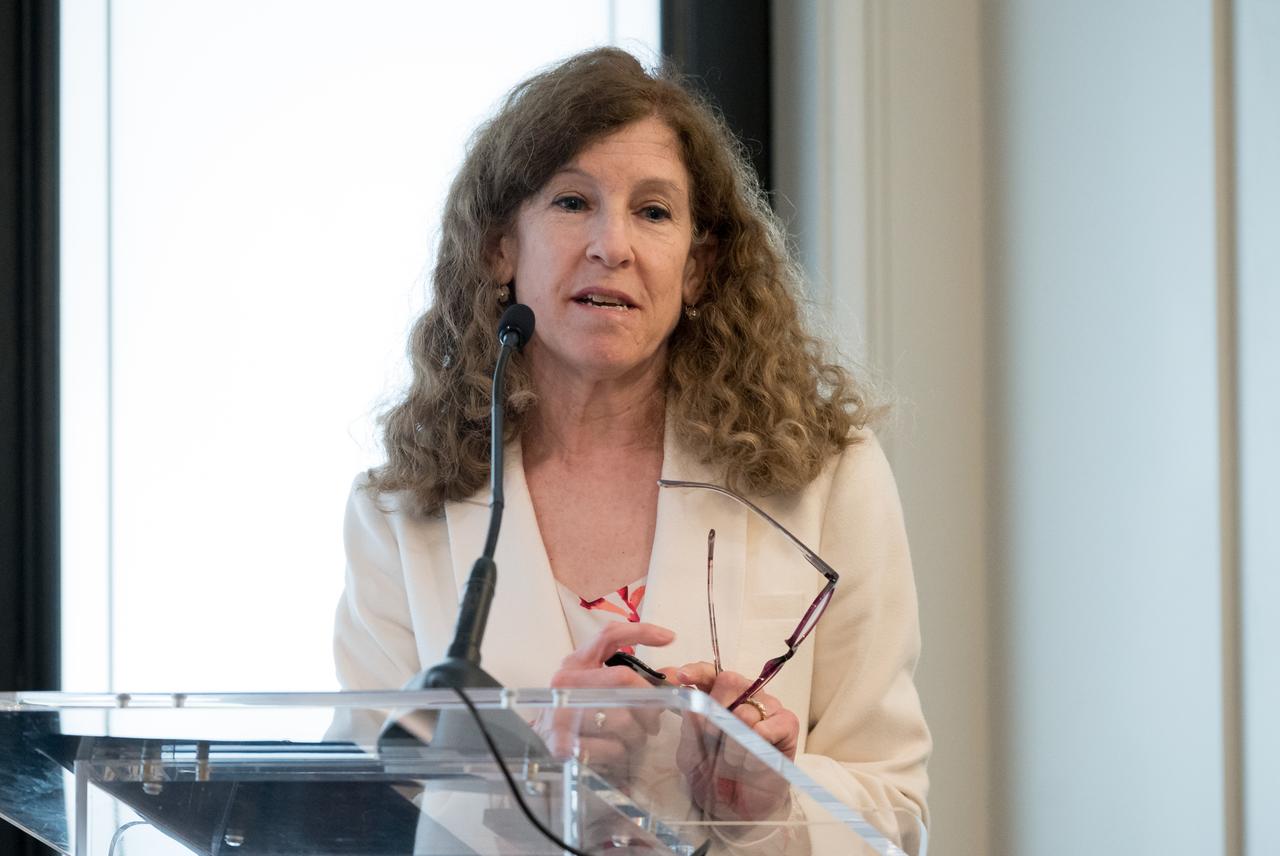
NASA associate administrator for International and Interagency Relations Karen Feldstein, gives remarks during an event celebrating UAE-US collaboration in space, Friday, March 8, 2024, at the Four Seasons Hotel in Washington. Photo Credit: (NASA/Bill Ingalls)
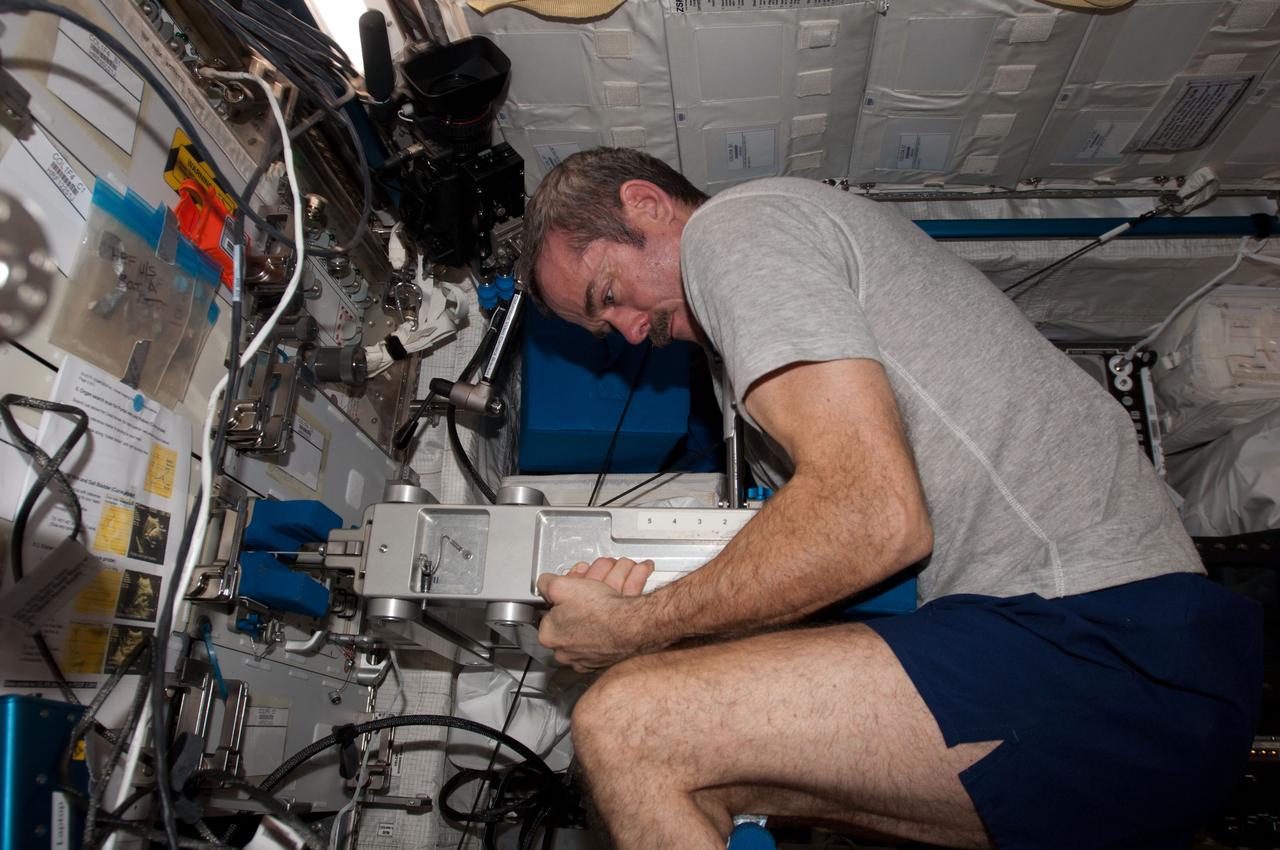
ISS034-E-026582 (11 Jan. 2013) --- Canadian Space Agency astronaut Chris Hadfield, Expedition 34 flight engineer, uses the Space Linear Acceleration Mass Measurement Device (SLAMMD) in the Columbus laboratory of the International Space Station.
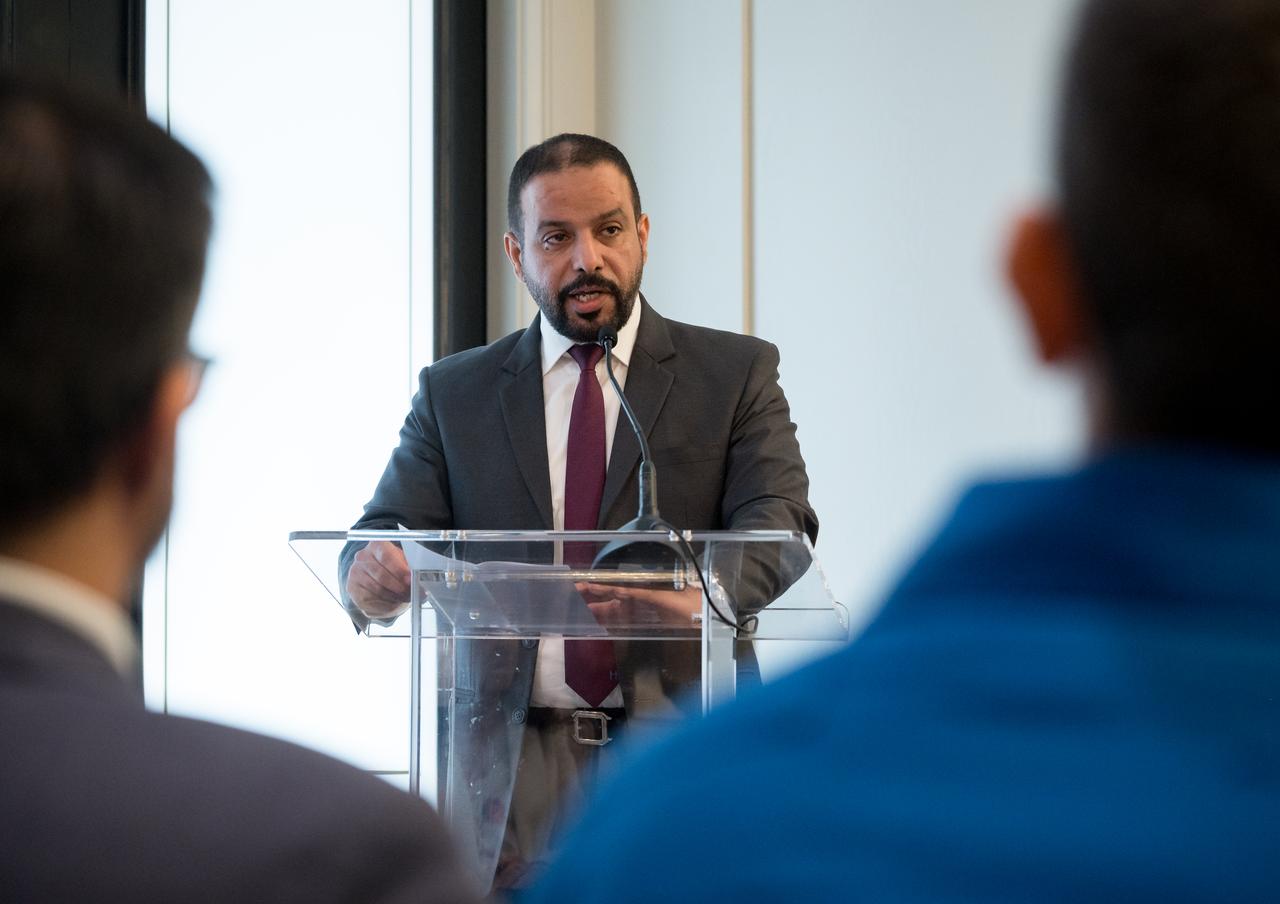
Director General of the UAE Space Agency Salem Al Qubaisi, gives remarks during an event celebrating UAE-US collaboration in space, Friday, March 8, 2024, at the Four Seasons Hotel in Washington. Photo Credit: (NASA/Bill Ingalls)
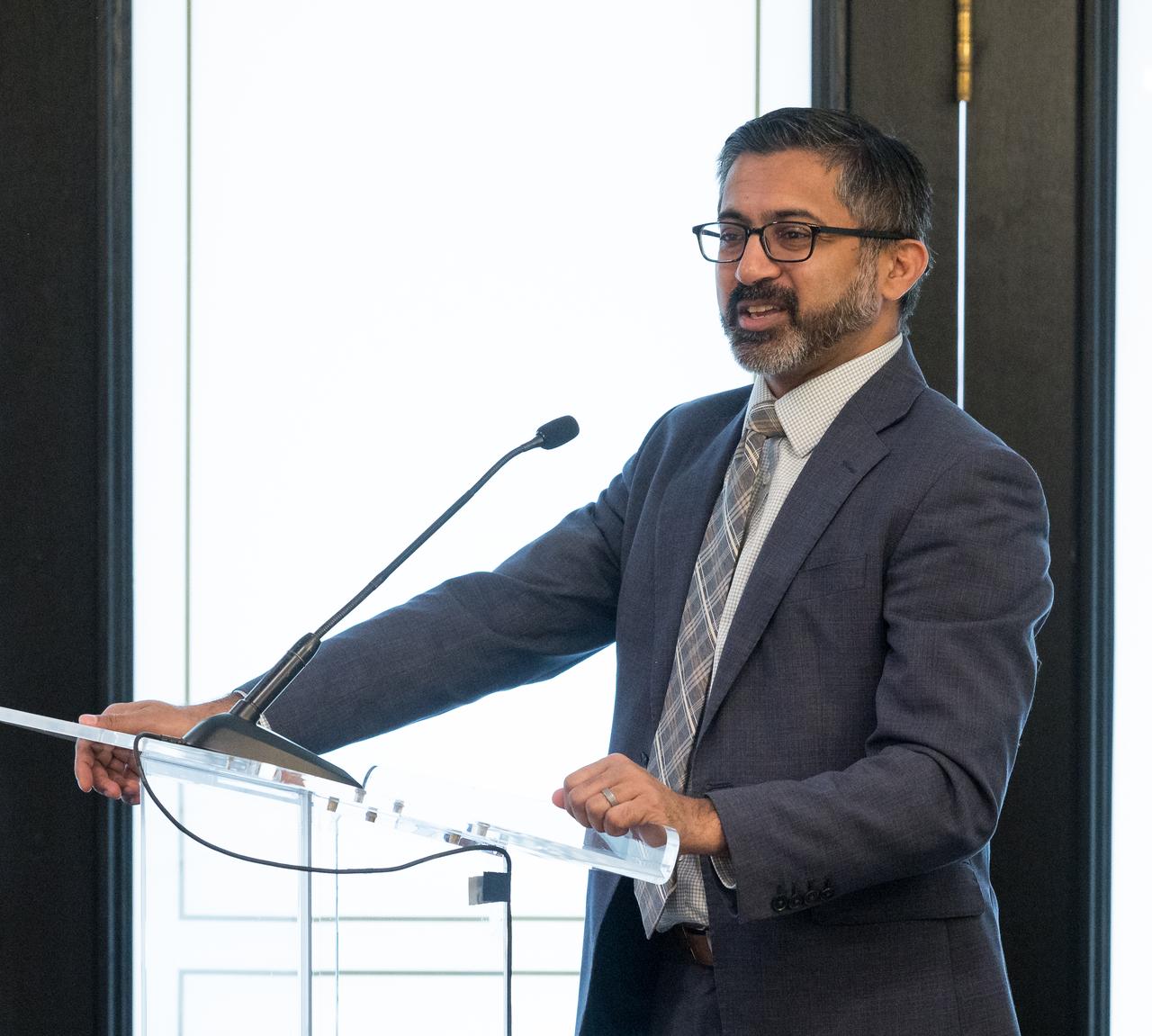
National Space Council Executive Secretary Chirag Parikh, gives remarks during an event celebrating UAE-US collaboration in space, Friday, March 8, 2024, at the Four Seasons Hotel in Washington. Photo Credit: (NASA/Bill Ingalls)

Director of Space Missions Department, UAESA, Mohsen Al Awadhi, gives remarks during an event celebrating UAE-US collaboration in space, Friday, March 8, 2024, at the Four Seasons Hotel in Washington. Photo Credit: (NASA/Bill Ingalls)
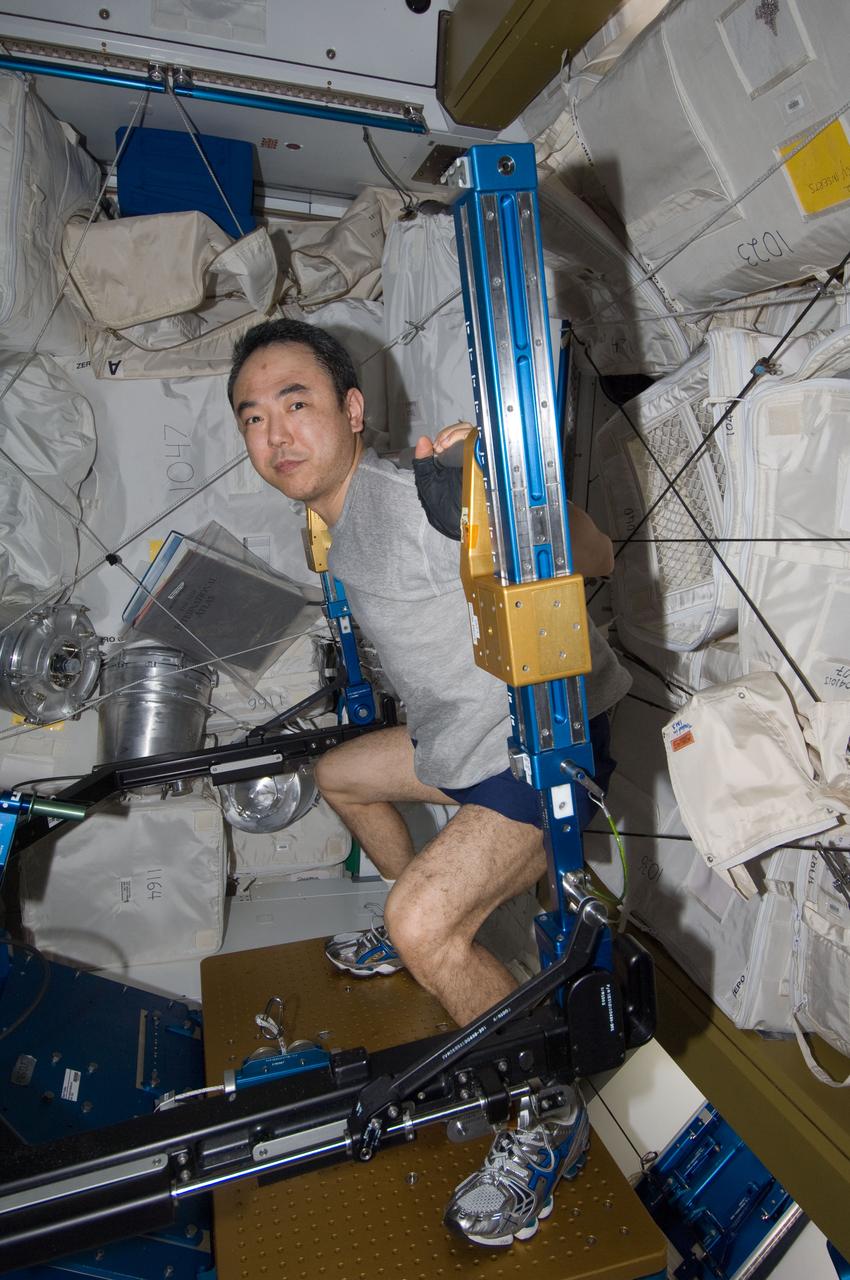
ISS029-E-039869 (5 Nov. 2011) --- Japan Aerospace Exploration Agency astronaut Satoshi Furukawa, Expedition 29 flight engineer, exercises using the advanced Resistive Exercise Device (aRED) in the Tranquility node of the International Space Station.

ISS030-E-012724 (18 Dec. 2011) --- NASA astronaut Dan Burbank, Expedition 30 commander, uses the short bar for the advanced Resistive Exercise Device (aRED) equipment to perform upper body strengthening pull-ups in the Tranquility node of the International Space Station.

Procedure for Finding New Impact Sites on Mars Using the Mars Global Surveyor Mars Orbiter Camera
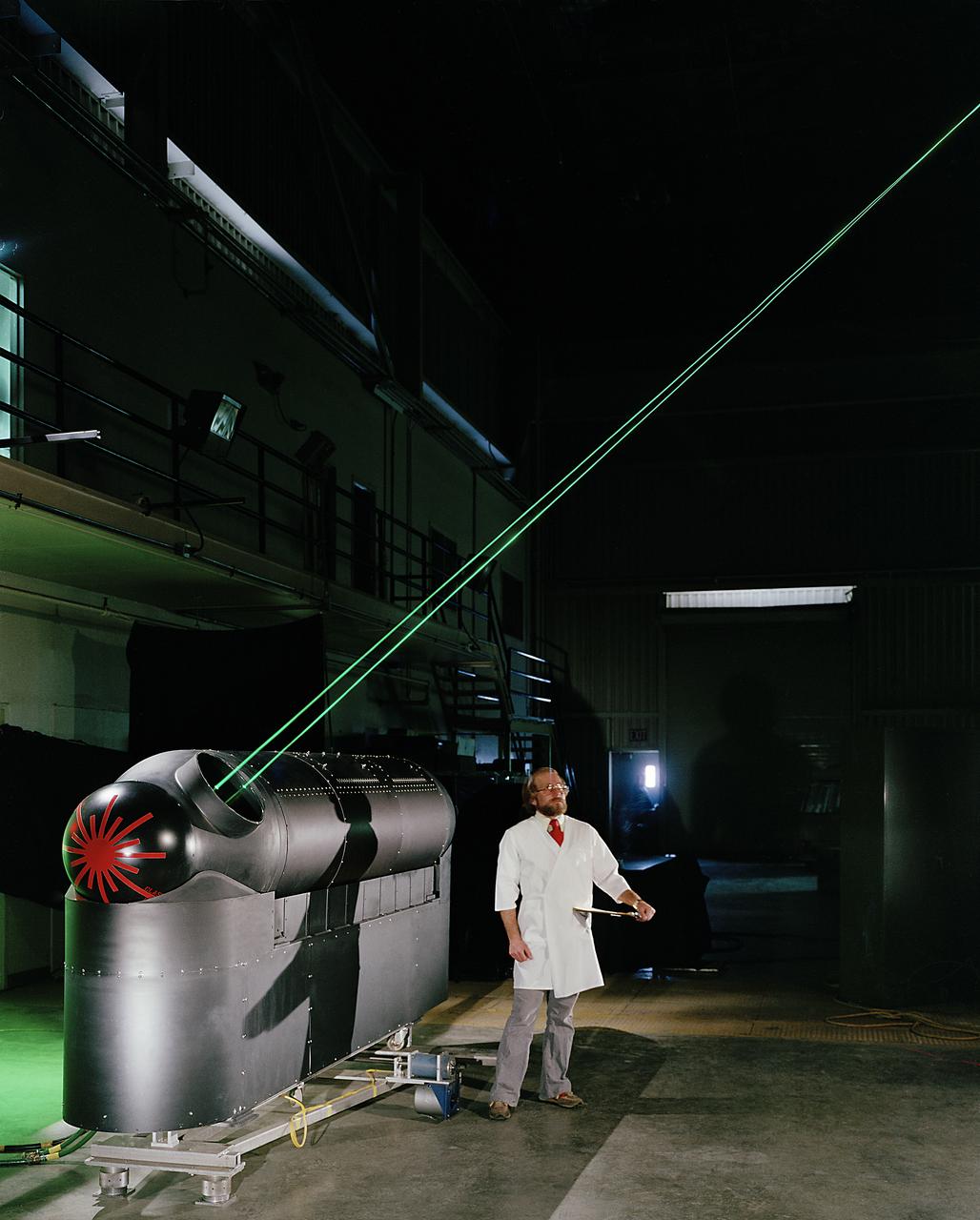
Long Range Laser Velocimeter in 40x80x120 Foot Wind Tunnel at NASA Ames. For use in NFAC.
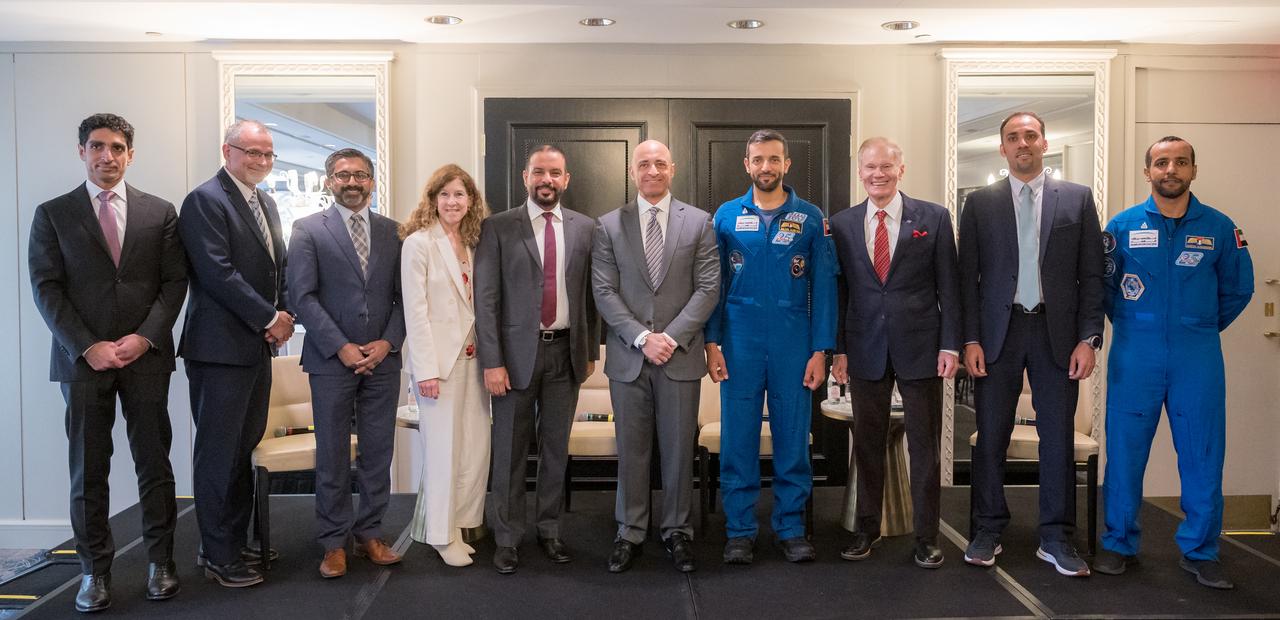
UAE Assistant Minister of Foreign Affairs and International Cooperation for Advanced Science and Technology, Omran Sharaf, left, NASA associate administrator Jim Free, National Space Council Executive Secretary Chirag Parikh, NASA associate administrator for International and Interagency Relations Karen Feldstein, Director General, UAE Space Agency Salem Al Qubaisi, UAE Ambassador to the US and Minister of State His Excellency Yousef Al Otaib, UAE astronaut and Minister of Youth, H.E. Dr. Sultan Al Neyadi, NASA Administrator Bill Nelson, Director General, Mohammed bin Rashid Space Centre Salem AlMarri, and UAE astronaut Hazza Al Mansouri, right, pose for a group photograph during an event celebrating UAE-US collaboration in space, Friday, March 8, 2024, at the Four Seasons Hotel in Washington. Photo Credit: (NASA/Bill Ingalls)
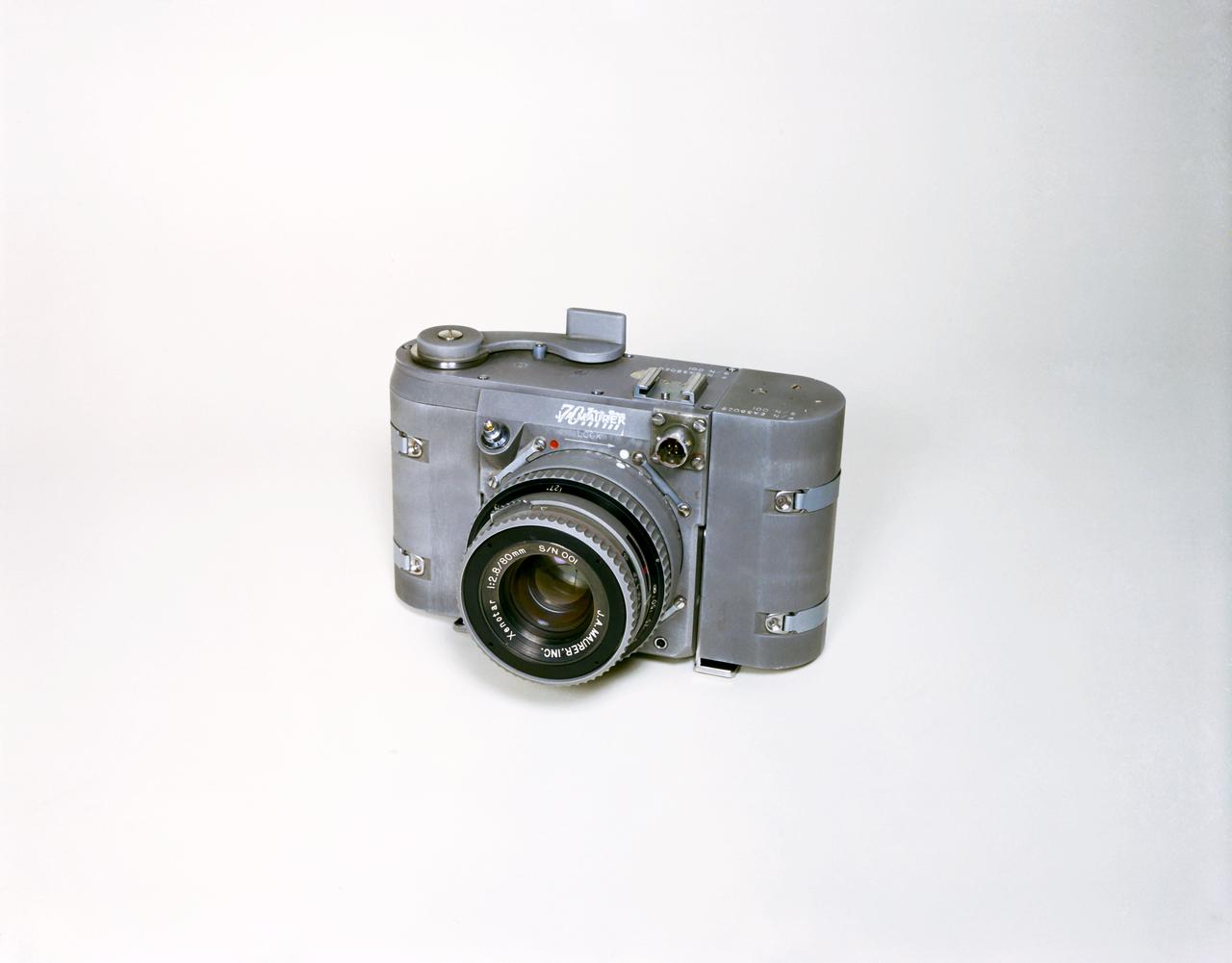
S65-23639 (28 April 1965) --- A bench view of a 70mm camera expected to be used by the Gemini-4 astronauts.
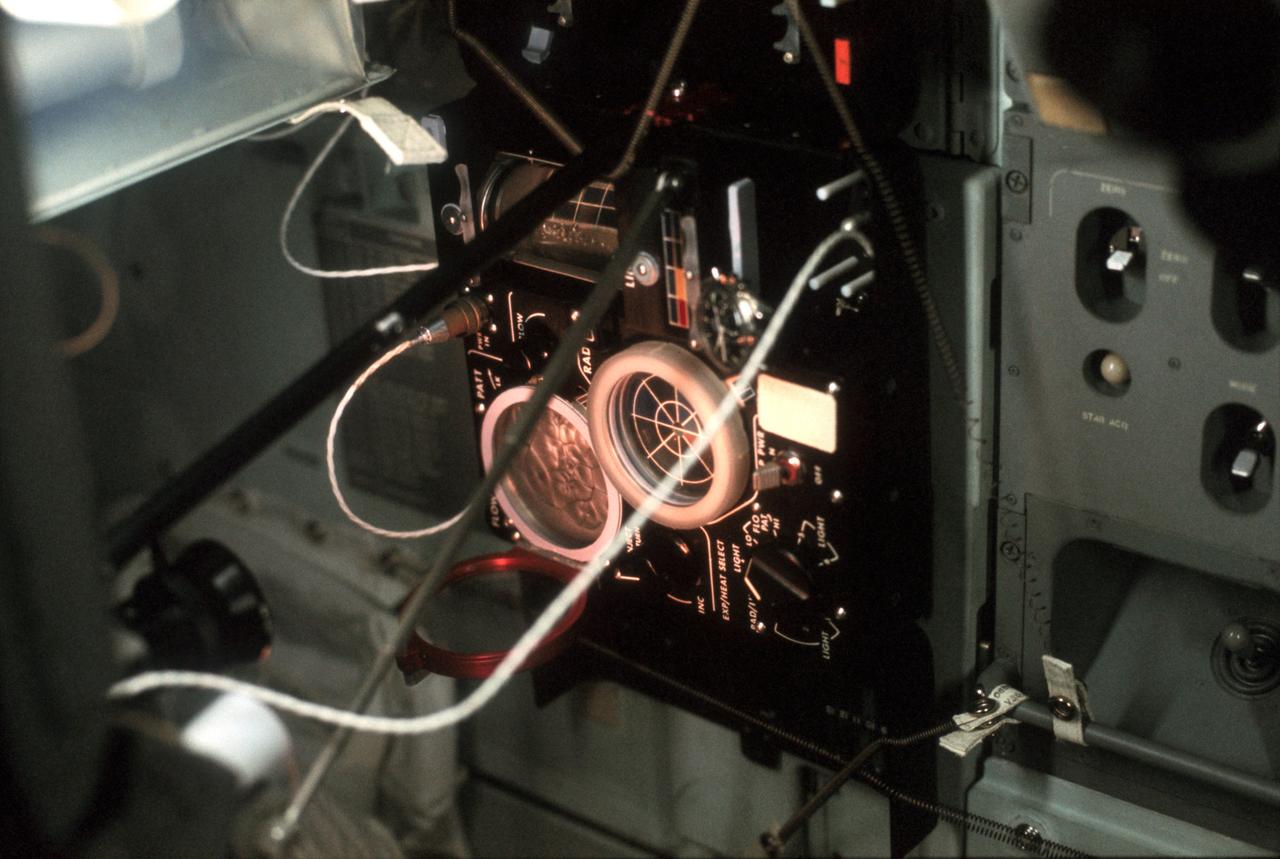
AS17-162-24063 (7-19 Dec. 1972) --- A close-up view of the equipment used for the Heat Flow and Convection Experiment, an engineering and operational test and demonstration carried out aboard the Apollo 17 command module during the final lunar landing mission in NASA's Apollo program. Three test cells were used in the demonstration for measuring and observing fluid flow behavior in the absence of gravity in space flight. Data obtained from such demonstrations will be valuable in the design of future science experiments and for manufacturing processes in space.
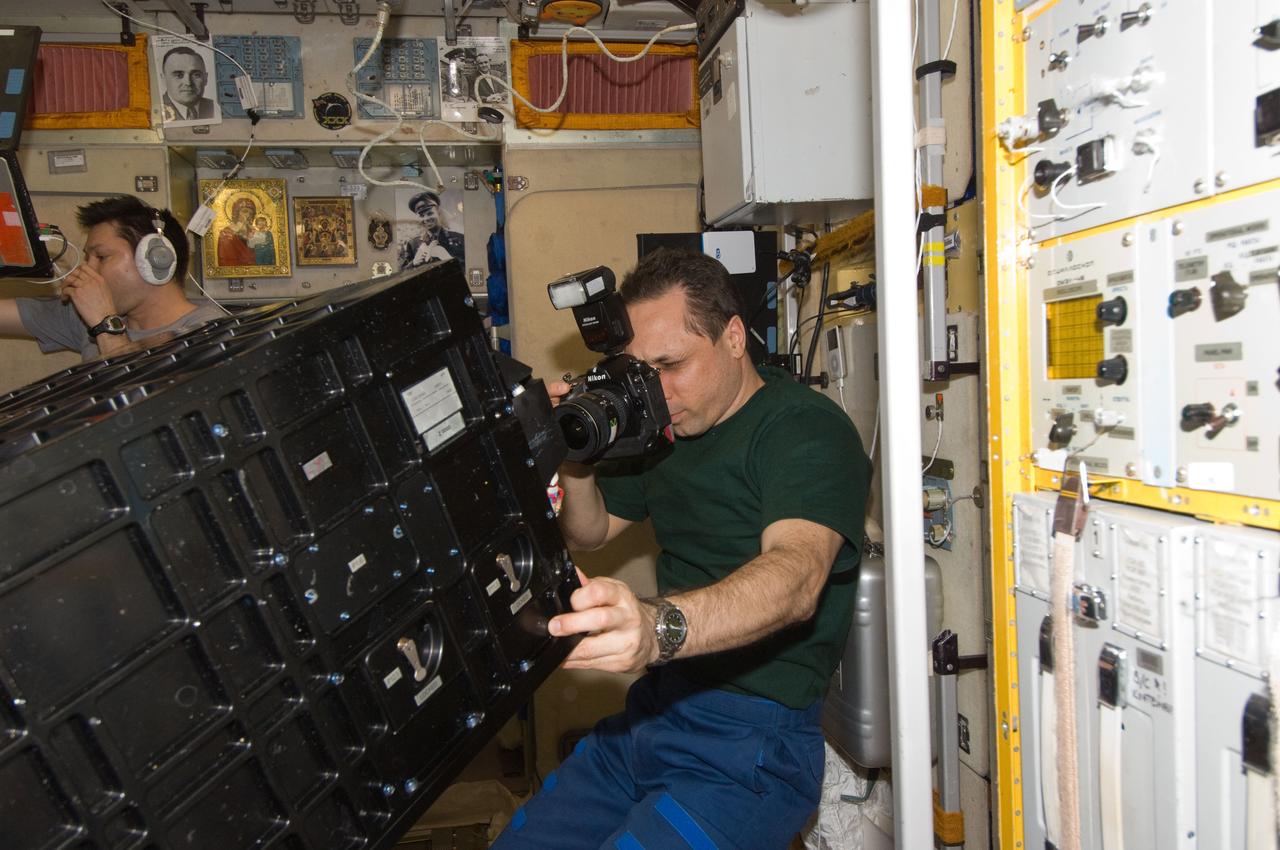
ISS030-E-177376 (29 March 2012) --- In the International Space Station?s Zvezda Service Module, Russian cosmonaut Anton Shkaplerov, Expedition 30 flight engineer, uses a still camera for photo documentation of the Proximity Communications Equipment (PCE) which was used for the ATV-3 rendezvous and docking. Russian cosmonaut Oleg Kononenko, flight engineer, is visible in the background.

ISS030-E-177225 (15 March 2012) --- NASA astronaut Dan Burbank, Expedition 30 commander, uses Neurospat hardware to perform a science session with the European Space Agency PASSAGES experiment in the Columbus laboratory of the International Space Station. PASSAGES is designed to test how astronauts interpret visual information in weightlessness. It aims at studying the effects of microgravity on the use of the 'Eye-Height' strategy for estimating allowed actions in an environment, and whether this could possibly decrease after a long exposure to weightlessness.

ISS030-E-177227 (15 March 2012) --- NASA astronaut Dan Burbank, Expedition 30 commander, uses Neurospat hardware to perform a science session with the European Space Agency PASSAGES experiment in the Columbus laboratory of the International Space Station. PASSAGES is designed to test how astronauts interpret visual information in weightlessness. It aims at studying the effects of microgravity on the use of the 'Eye-Height' strategy for estimating allowed actions in an environment, and whether this could possibly decrease after a long exposure to weightlessness.
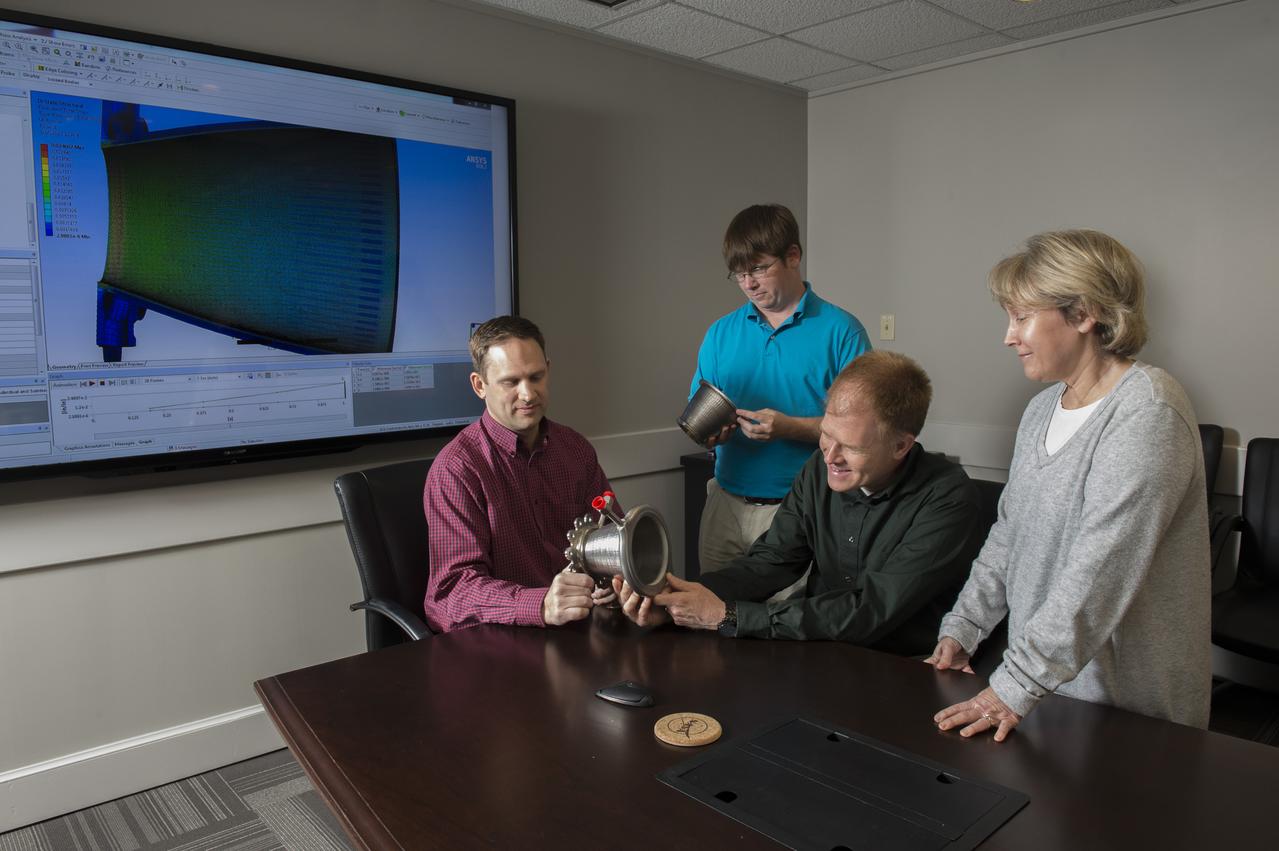
Engineers from NASA Marshall Space Flight Center's Propulsion Department examine nozzles fabricated using a freeform-directed energy wire deposition process. From left are Paul Gradl, Will Brandsmeier, Ian Johnston and Sandy Greene, with the nozzles, which were built using a NASA-patented technology that has the potential to reduce build time from several months to several weeks.
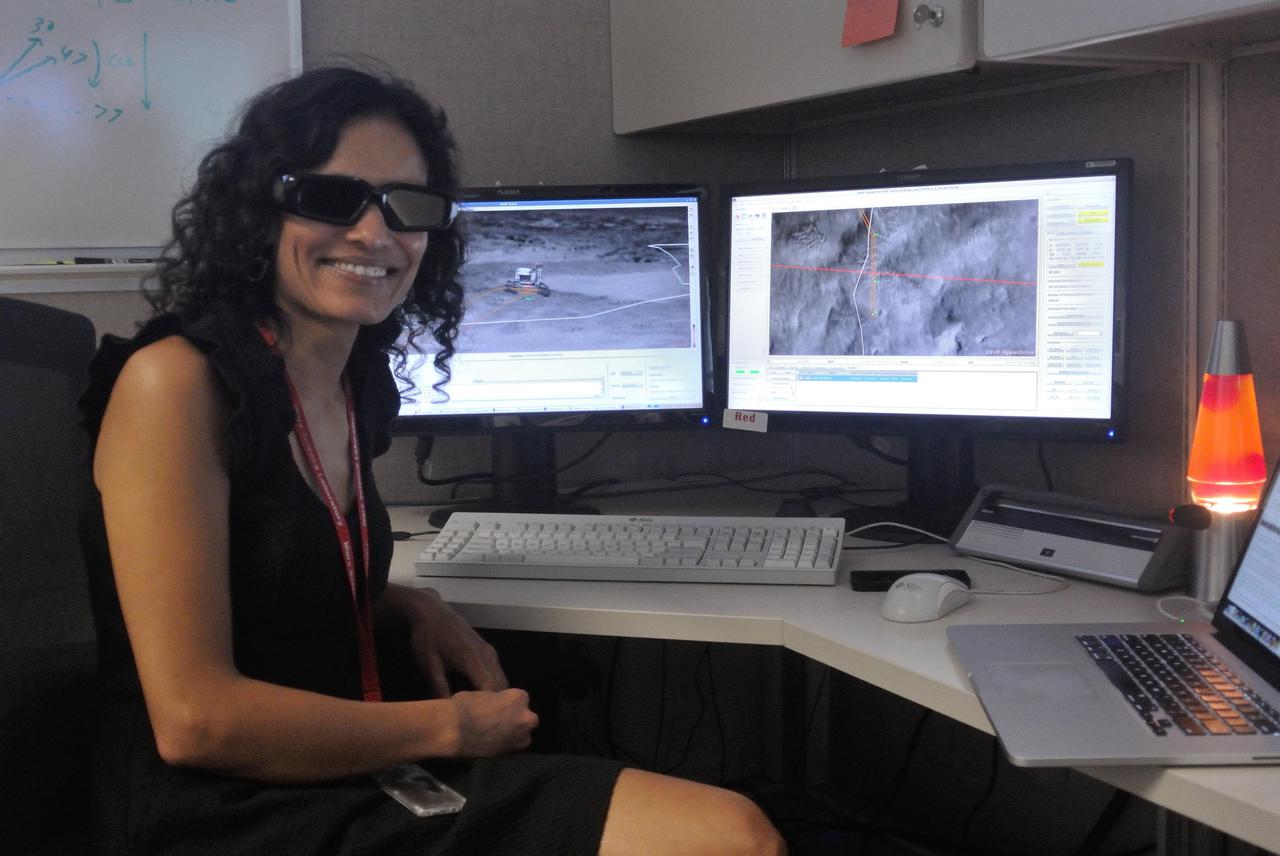
Vandi Verma, an engineer who now works with NASA's Perseverance Mars rover, is seen here working as a driver for the Curiosity rover. The special 3D glasses she's wearing are still used by rover drivers to easily detect changes in terrain that the rover may need to avoid. A key objective for Perseverance's mission on Mars is astrobiology, including the search for signs of ancient microbial life. The rover will characterize the planet's geology and past climate, pave the way for human exploration of the Red Planet, and be the first mission to collect and cache Martian rock and regolith (broken rock and dust). Subsequent NASA missions, in cooperation with ESA (European Space Agency), would send spacecraft to Mars to collect these sealed samples from the surface and return them to Earth for in-depth analysis. The Mars 2020 Perseverance mission is part of NASA's Moon to Mars exploration approach, which includes Artemis missions to the Moon that will help prepare for human exploration of the Red Planet. https://photojournal.jpl.nasa.gov/catalog/PIA24724
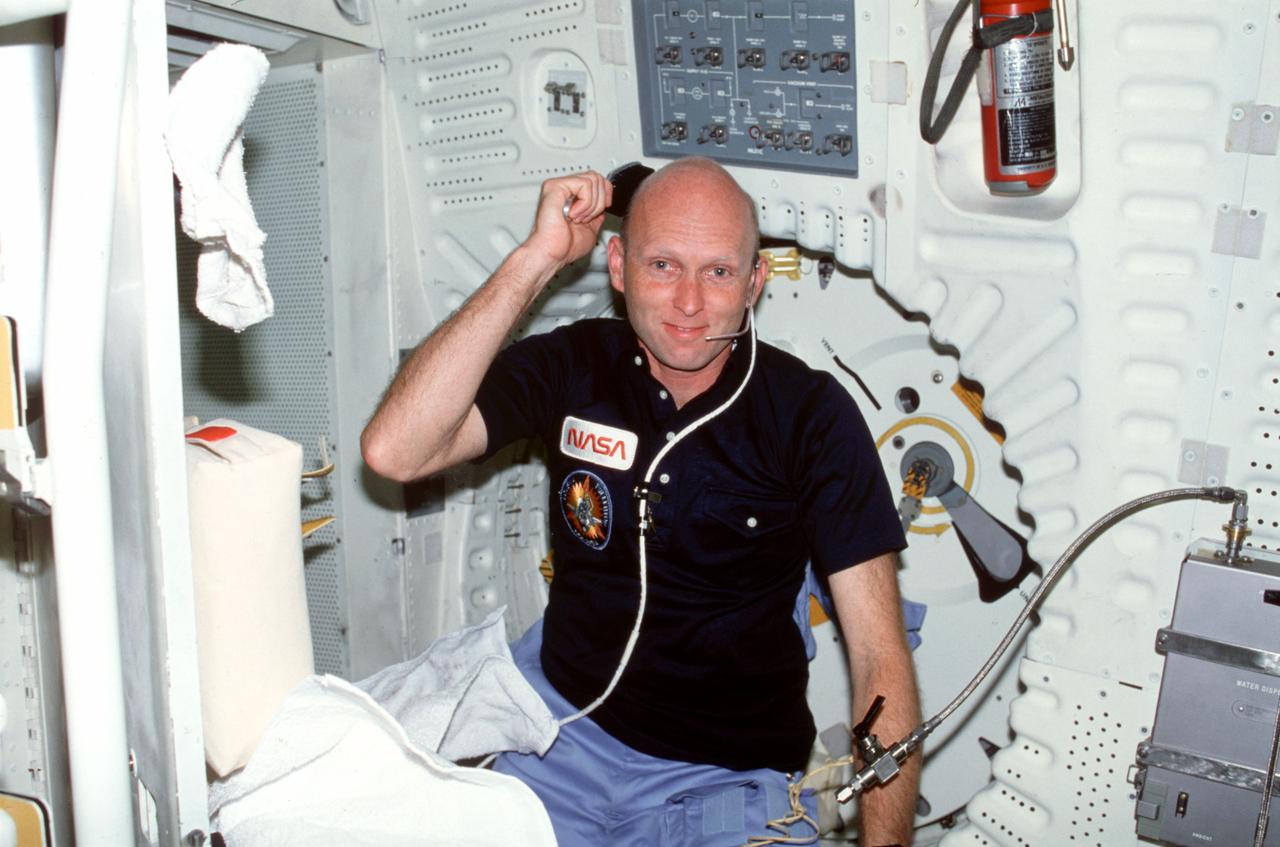
STS003-22-119 (30 March 1982) --- Astronaut Gordon Fullerton, STS-3 pilot, wearing communications kit assembly (ASSY) mini-headset (HDST), uses hygiene kit hair brush on aft middeck. He makes light of his lack of hair during a freshening up session. He makes a token effort with a hair brush. Side hatch and panel ML31C appear behind him. Photo credit: NASA
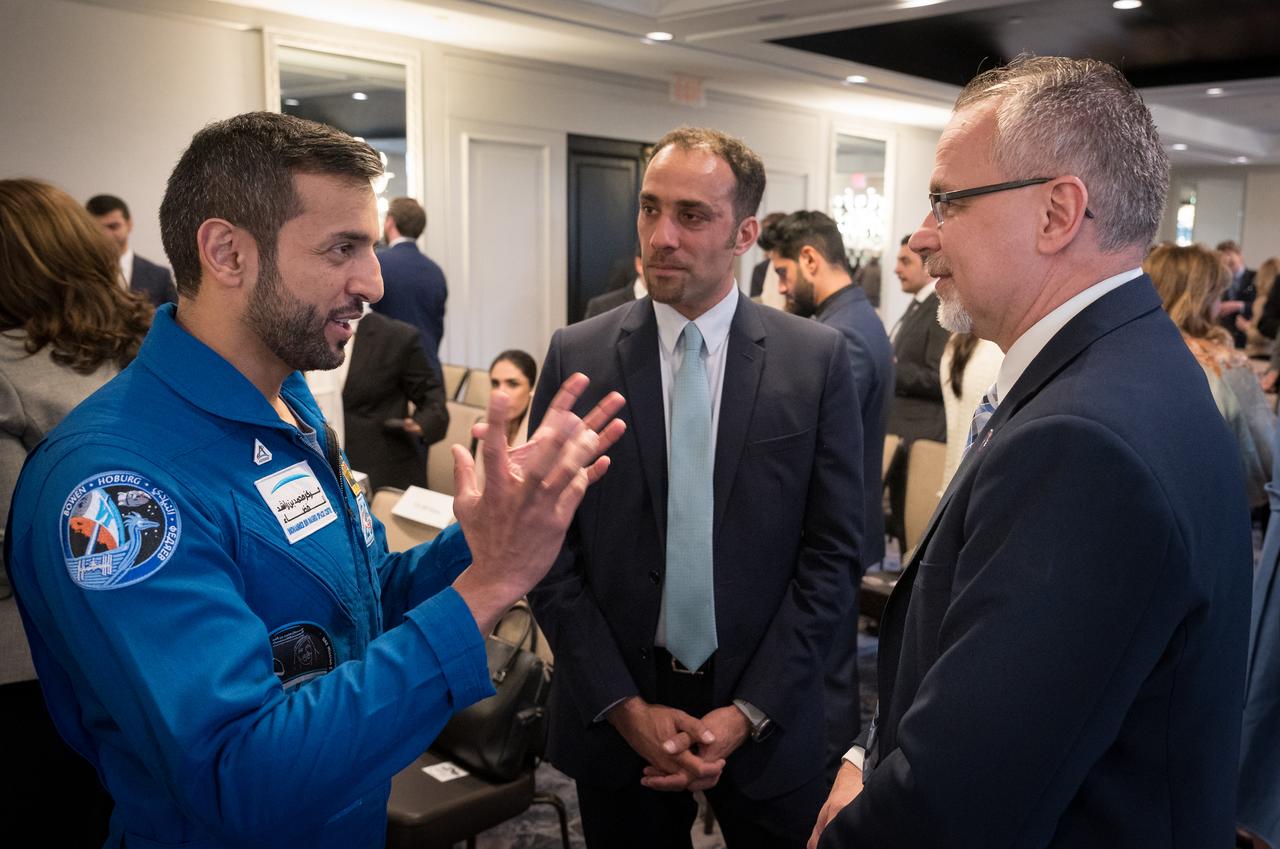
UAE astronaut and Minister of Youth, H.E. Dr. Sultan Al Neyadi, left, Director General, Mohammed bin Rashid Space Centre Salem AlMarri, and NASA Associate Administrator Jim Free, right, are seen during an event celebrating UAE-US collaboration in space, Friday, March 8, 2024, at the Four Seasons Hotel in Washington. Photo Credit: (NASA/Bill Ingalls)
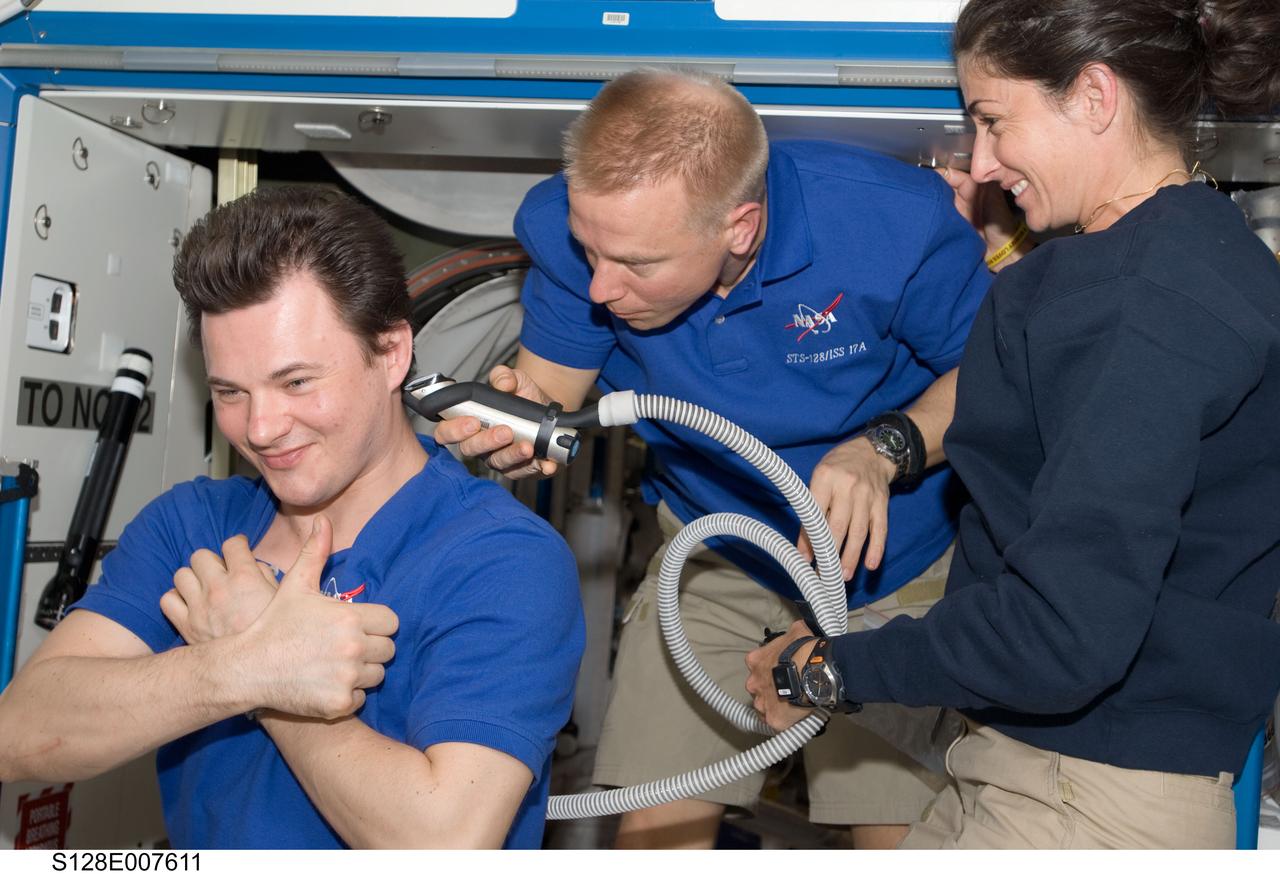
S128-E-007611 (5 Sept. 2009) --- NASA astronaut Tim Kopra, STS-128 mission specialist, trims Russian cosmonaut Roman Romanenko’s hair in the Destiny laboratory of the International Space Station while Space Shuttle Discovery remains docked with the station. NASA astronaut Nicole Stott, Expedition 20 flight engineer, looks on. Kopra used hair clippers fashioned with a vacuum device to garner freshly cut hair.
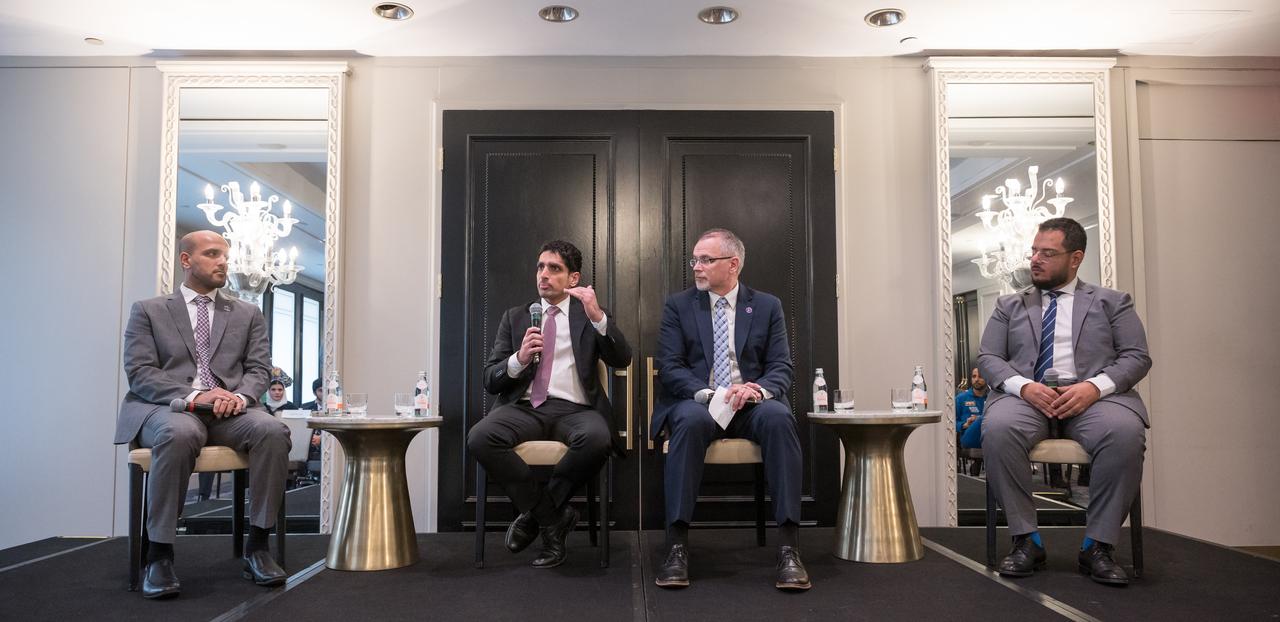
Senior Director of the Space Engineering Department, MBRSC, Amer Al Sayegh, left, UAE Assistant Minister of Foreign Affairs and International Cooperation for Advanced Science and Technology, Omran Sharaf, NASA Associate Administrator Jim Free, and Director of Space Missions Department, UAESA, Mohsen Al Awadhi, right, participate in a panel discussion during an event celebrating UAE-US collaboration in space, Friday, March 8, 2024, at the Four Seasons Hotel in Washington. Photo Credit: (NASA/Bill Ingalls)
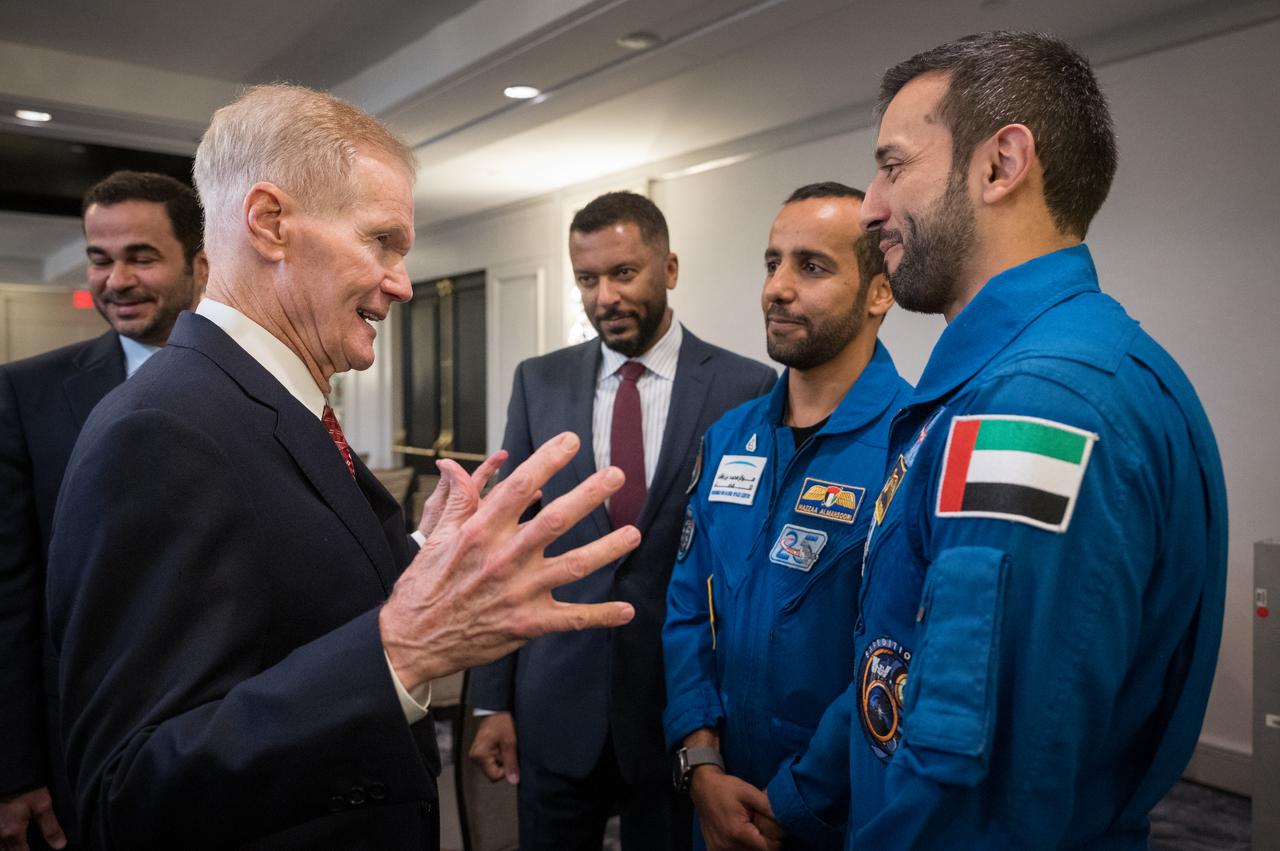
NASA Administrator Bill Nelson, left, Speaks with UAE astronaut Hazza Al Mansouri, and UAE astronaut and Minister of Youth, H.E. Dr. Sultan Al Neyad, right, during an event celebrating UAE-US collaboration in space, Friday, March 8, 2024, at the Four Seasons Hotel in Washington. Photo Credit: (NASA/Bill Ingalls)
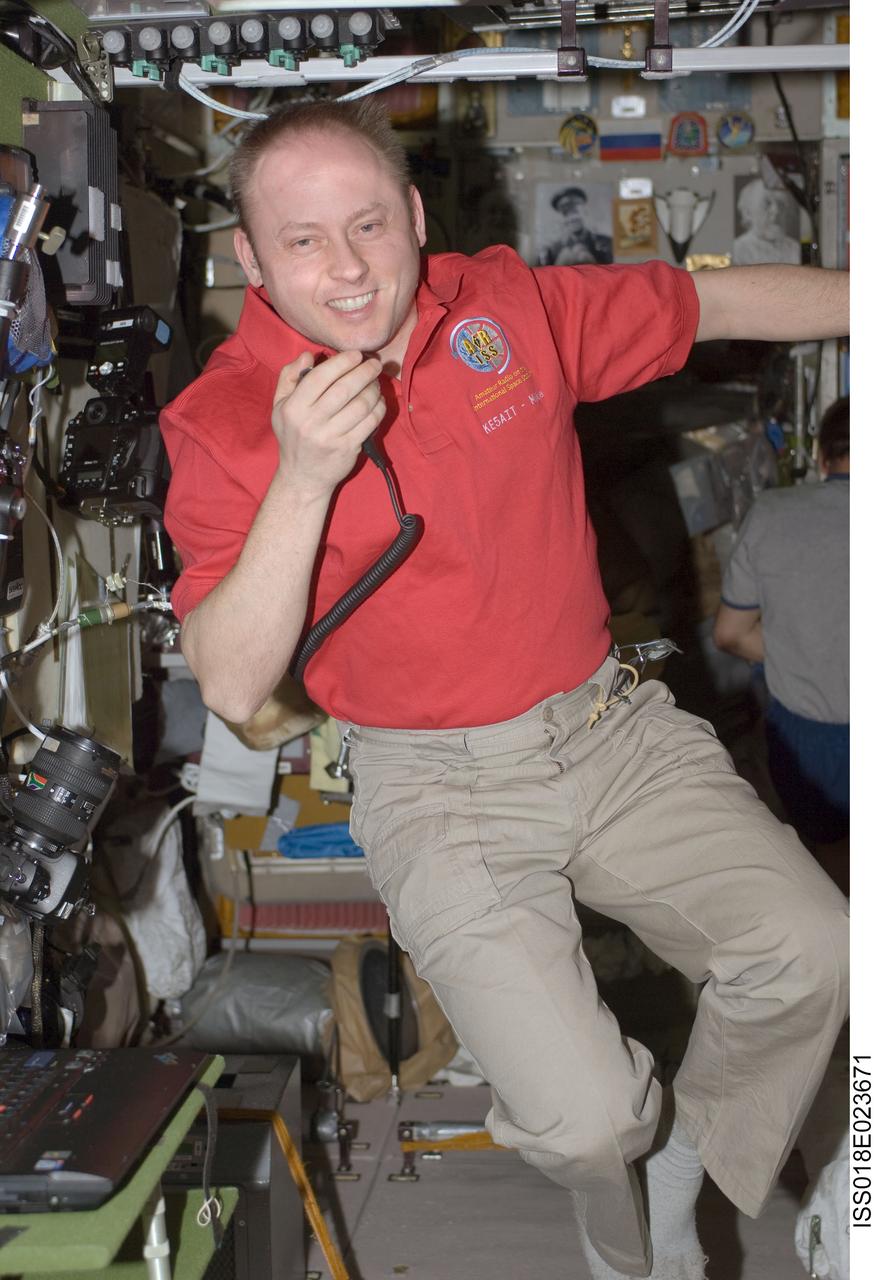
ISS018-E-023671 (27 Jan. 2009) --- Astronaut Michael Fincke, Expedition 18 commander, uses a ham radio system in the Zvezda Service Module of the International Space Station.

ISS013-E-10269 (1 May 2006) --- Cosmonaut Pavel V. Vinogradov, Expedition 13 commander representing Russia's Federal Space Agency, uses a computer in the Zvezda Service Module of the International Space Station.
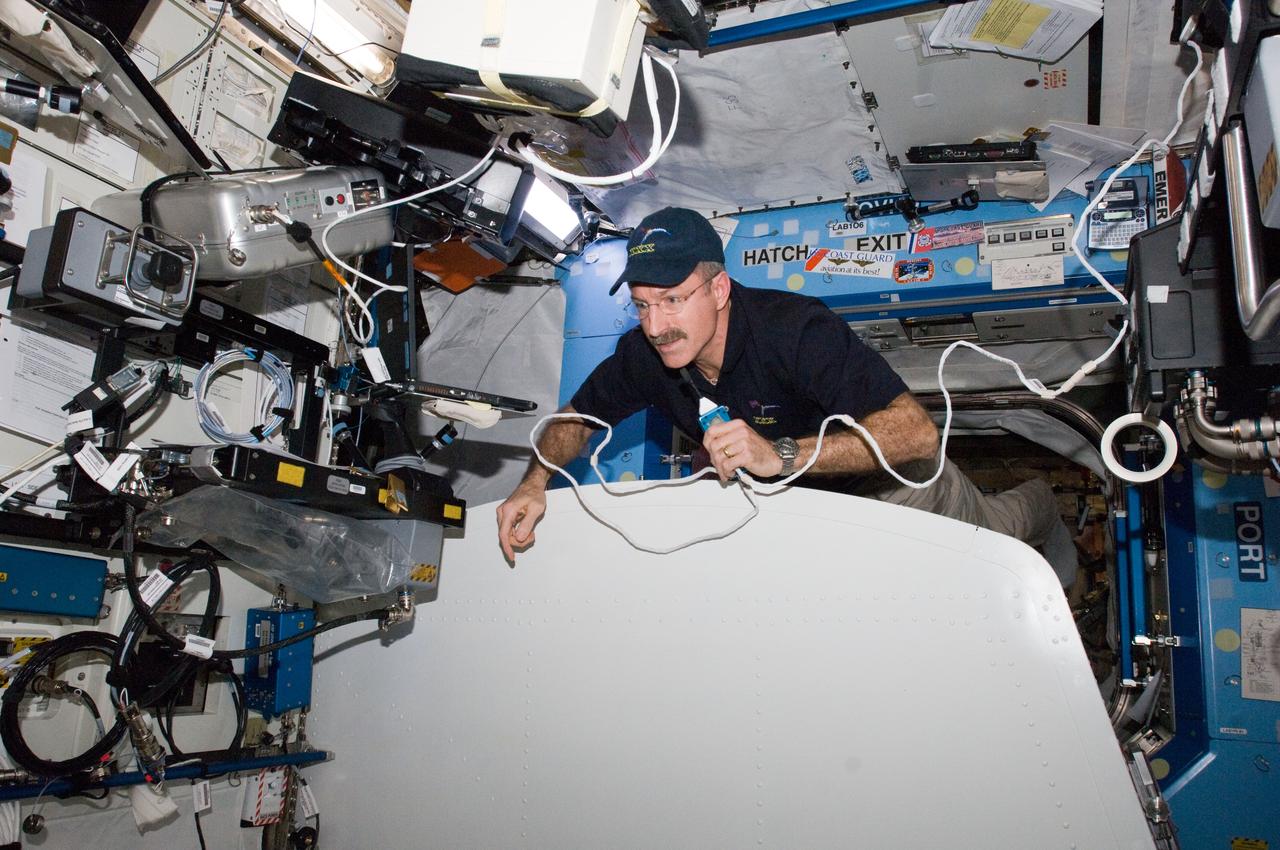
ISS030-E-060464 (2 Feb. 2012) --- NASA astronaut Dan Burbank, Expedition 30 commander, uses a communication system while working in the Destiny laboratory of the International Space Station.
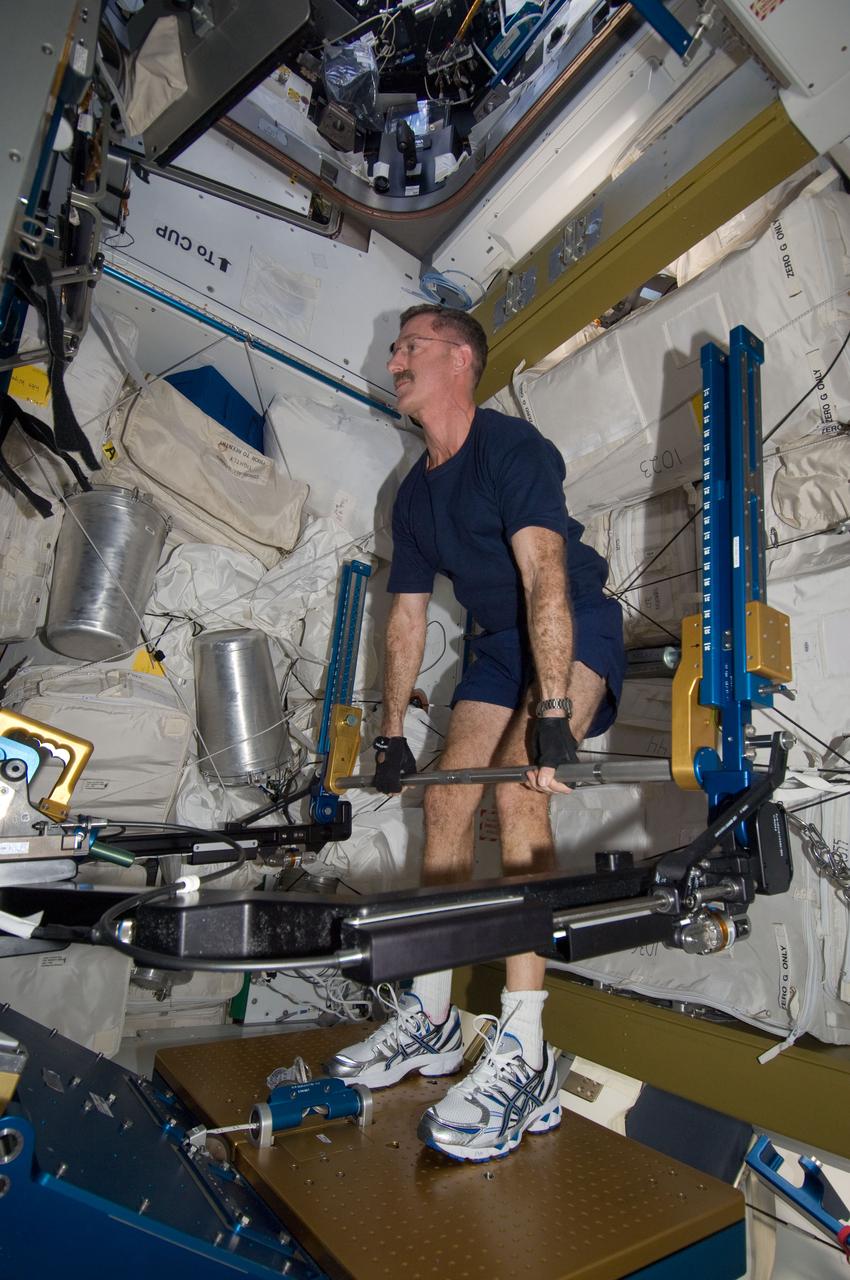
ISS030-E-012688 (18 Dec. 2011) --- NASA astronaut Dan Burbank, Expedition 30 commander, exercises using the advanced Resistive Exercise Device (aRED) in the Tranquility node of the International Space Station.
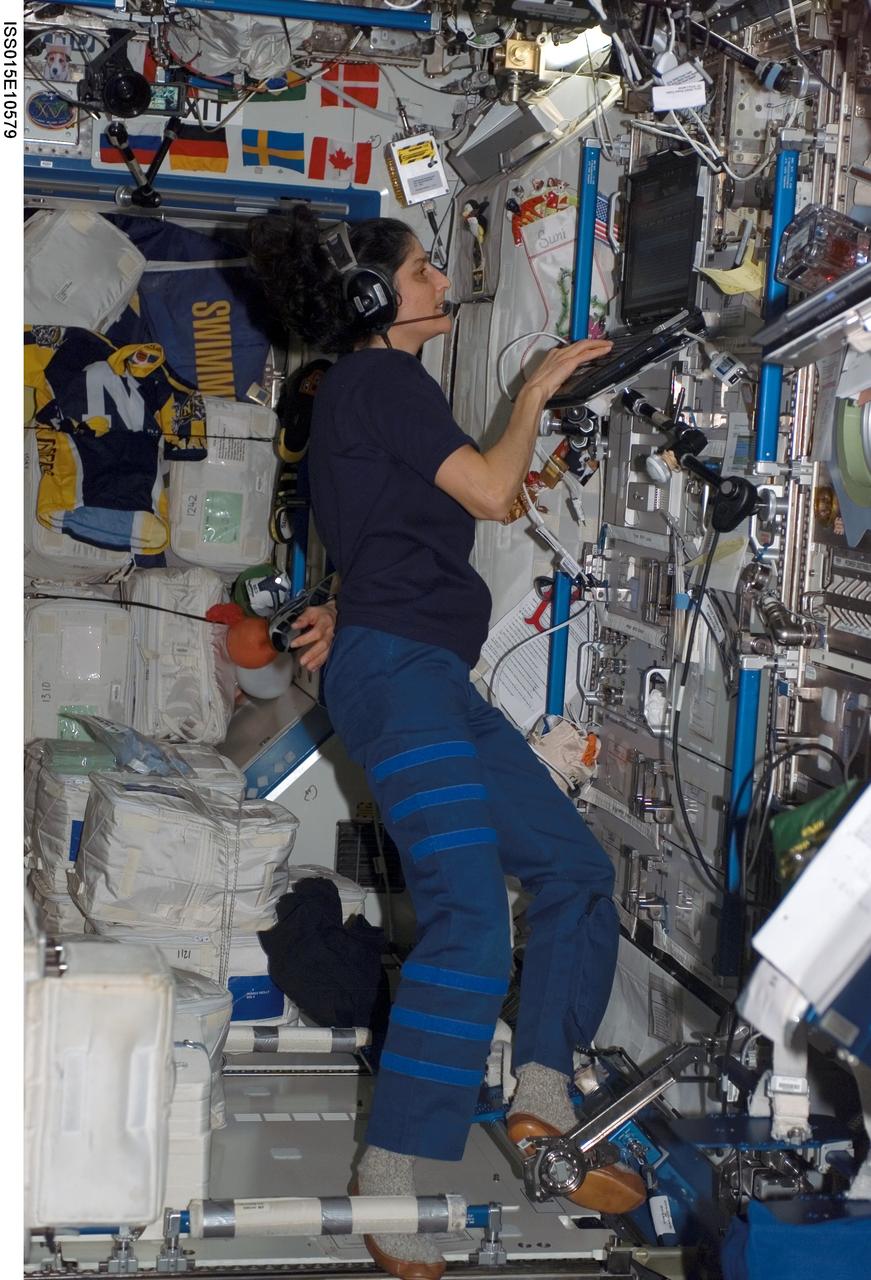
ISS015-E-10579 (1 June 2007) --- Astronaut Sunita L. Williams, Expedition 15 flight engineer, wears communication headgear while using a computer in the Destiny laboratory of the International Space Station.