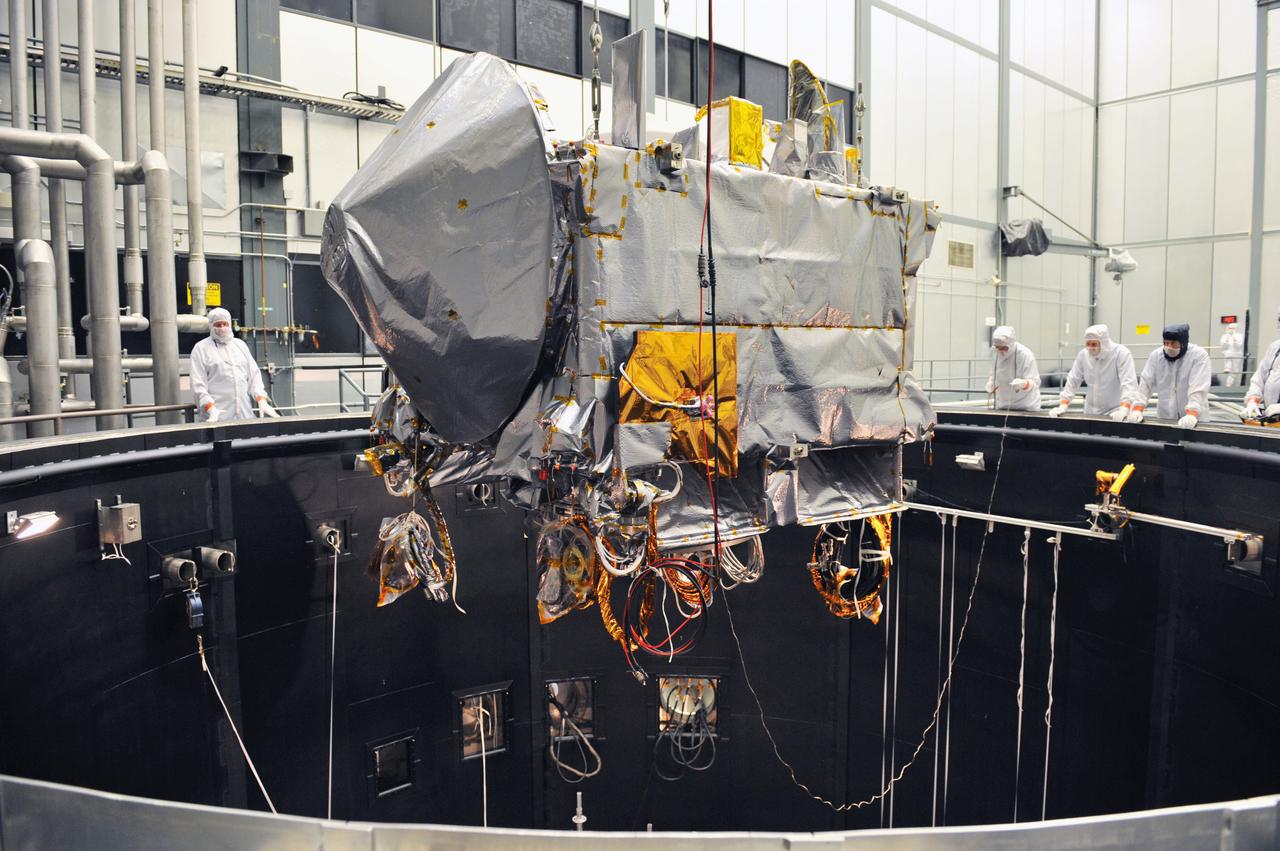
The OSIRIS-REx spacecraft being lifted into the thermal vacuum chamber at Lockheed Martin for environmental testing. Credits: Lockheed Martin Read more: <a href="http://www.nasa.gov/feature/goddard/2016/osiris-rex-in-thermal-vac" rel="nofollow">www.nasa.gov/feature/goddard/2016/osiris-rex-in-thermal-vac</a>
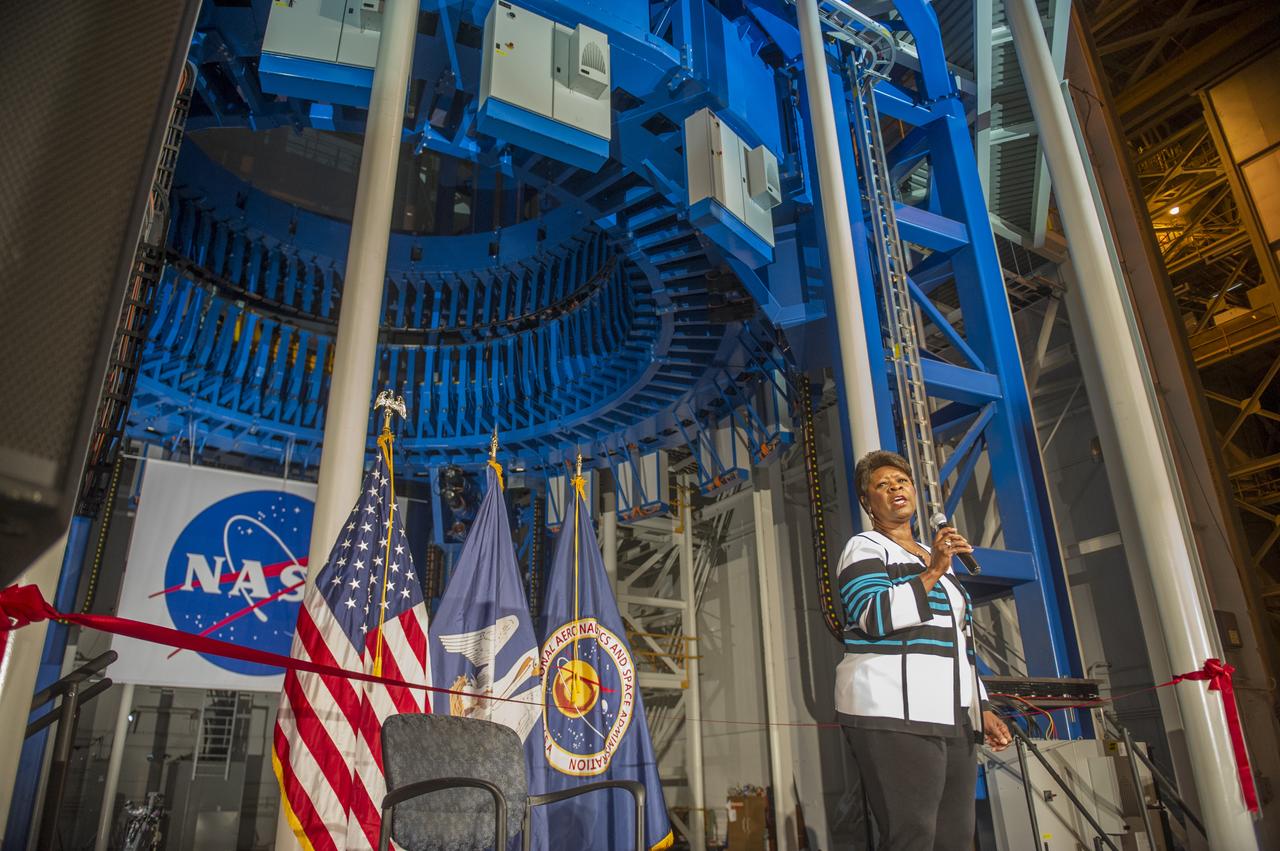
SINGER IRMA THOMAS SINGS NATIONAL ANTHEM AT RIBBON CUTTING EVENT
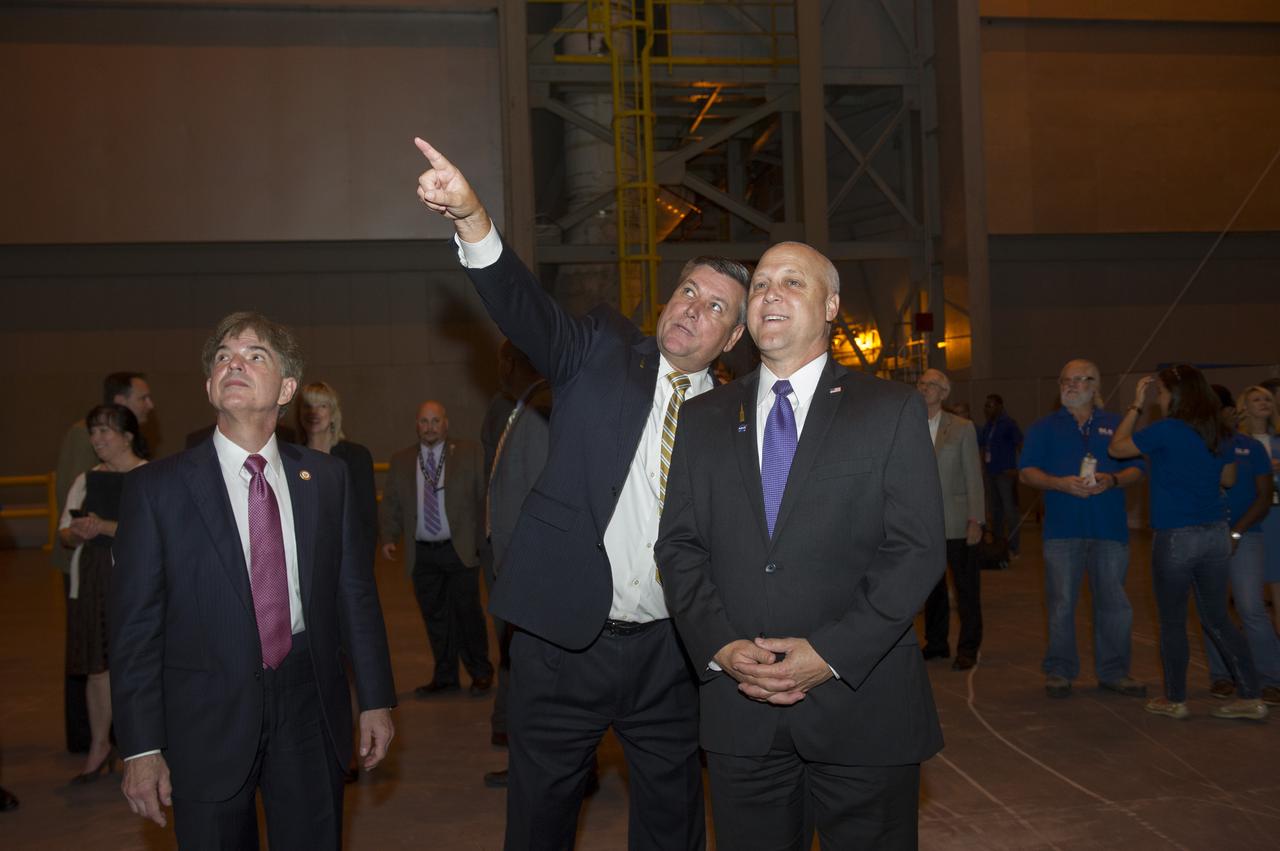
PATRICK SCHEUERMANN POINTS OUT FEATURES OF VERTICAL ASSEMBLY CENTER TO NEW ORLEANS MAYOR MITCH LANDRIEU
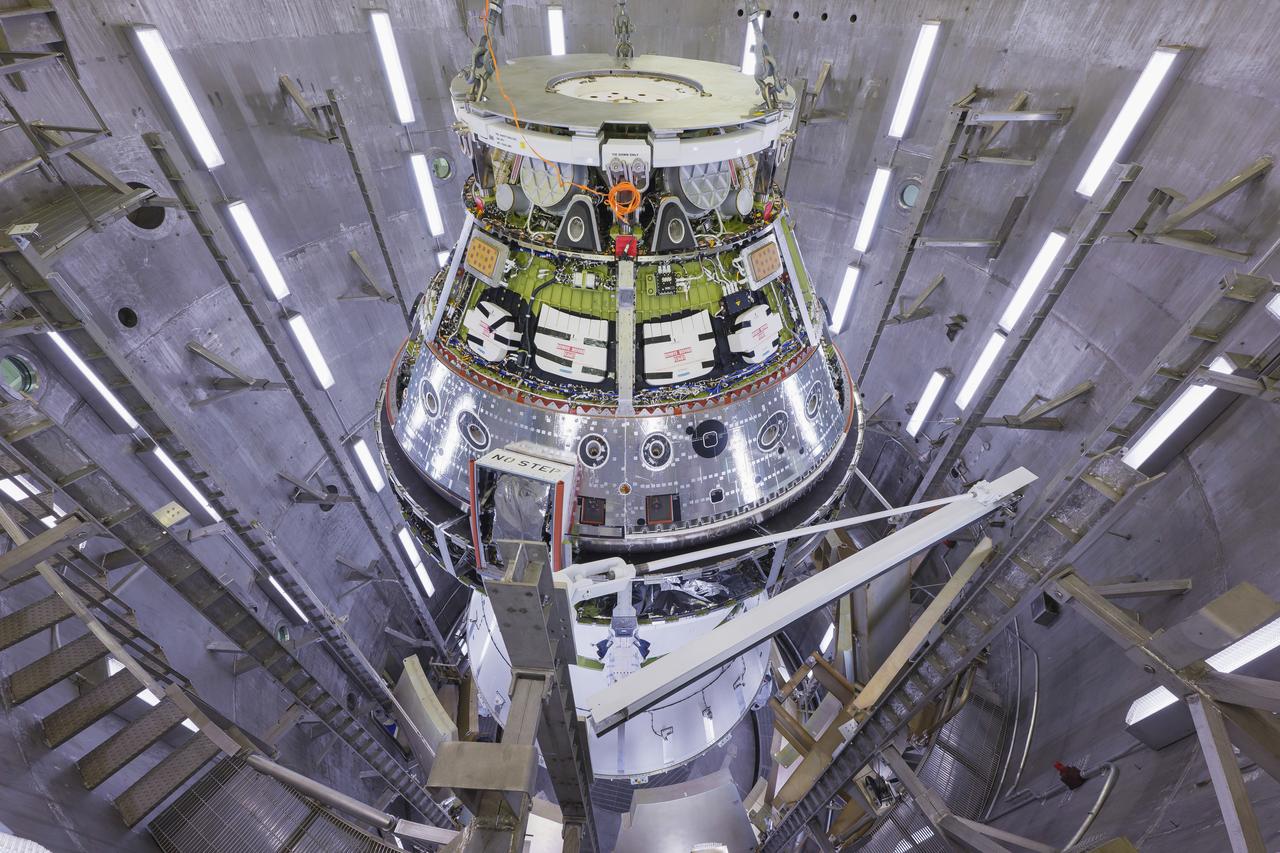
Technicians used a 30-ton crane to lift NASA’s Orion spacecraft on Friday, June 28, 2024, from the Final Assembly and System Testing (FAST) cell to the altitude chamber inside the Neil A. Armstrong Operations and Checkout building at NASA’s Kennedy Space Center in Florida. The spacecraft, which will be used for the Artemis II mission to orbit the Moon, underwent leak checks and end-to-end performance verification of the vehicle’s subsystems.

Technicians used a 30-ton crane to lift NASA’s Orion spacecraft on Friday, June 28, 2024, from the Final Assembly and System Testing (FAST) cell to the altitude chamber inside the Neil A. Armstrong Operations and Checkout building at NASA’s Kennedy Space Center in Florida. The spacecraft, which will be used for the Artemis II mission to orbit the Moon, underwent leak checks and end-to-end performance verification of the vehicle’s subsystems.
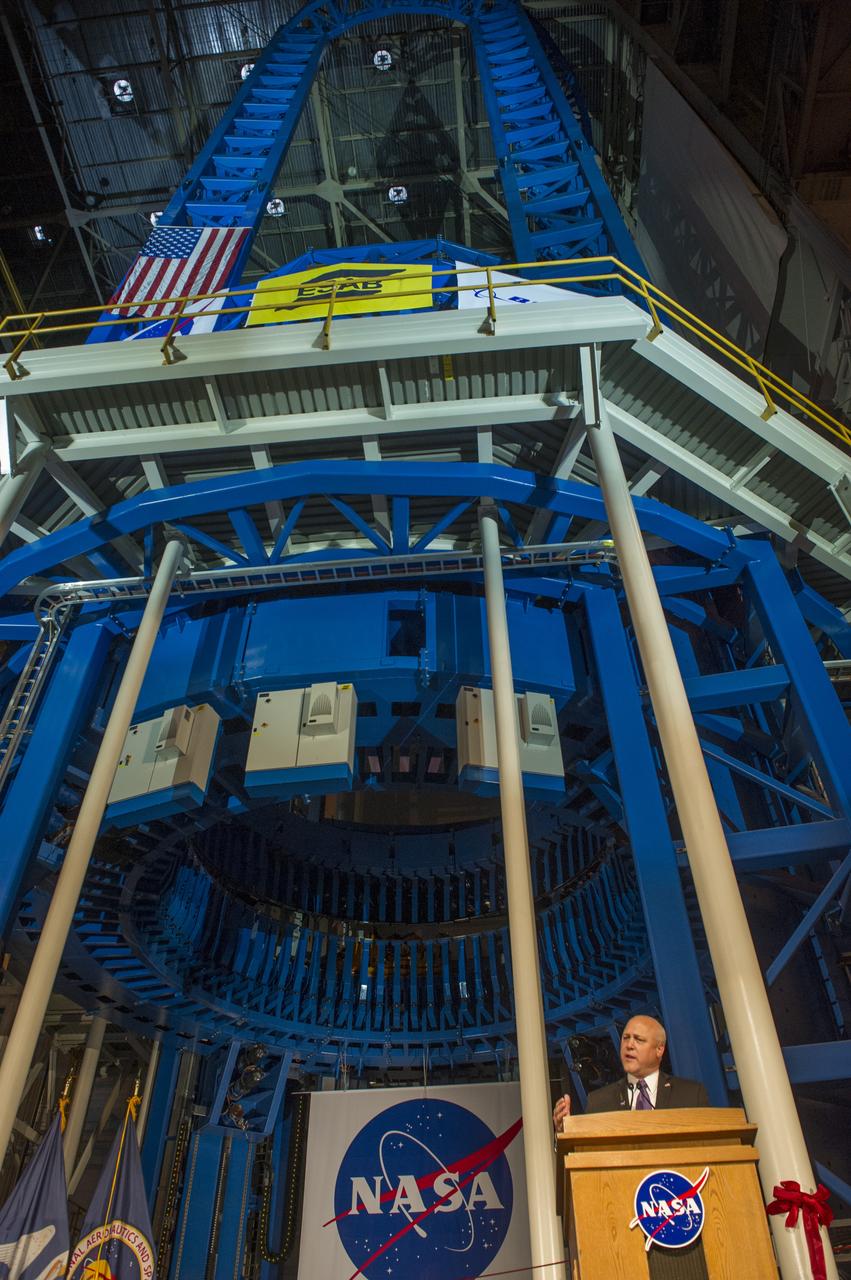
NEW ORLEANS MAYOR MITCH LANDRIEU SPEAKS AT DEDICATION OF VERTICAL ASSEMBLY CENTER;
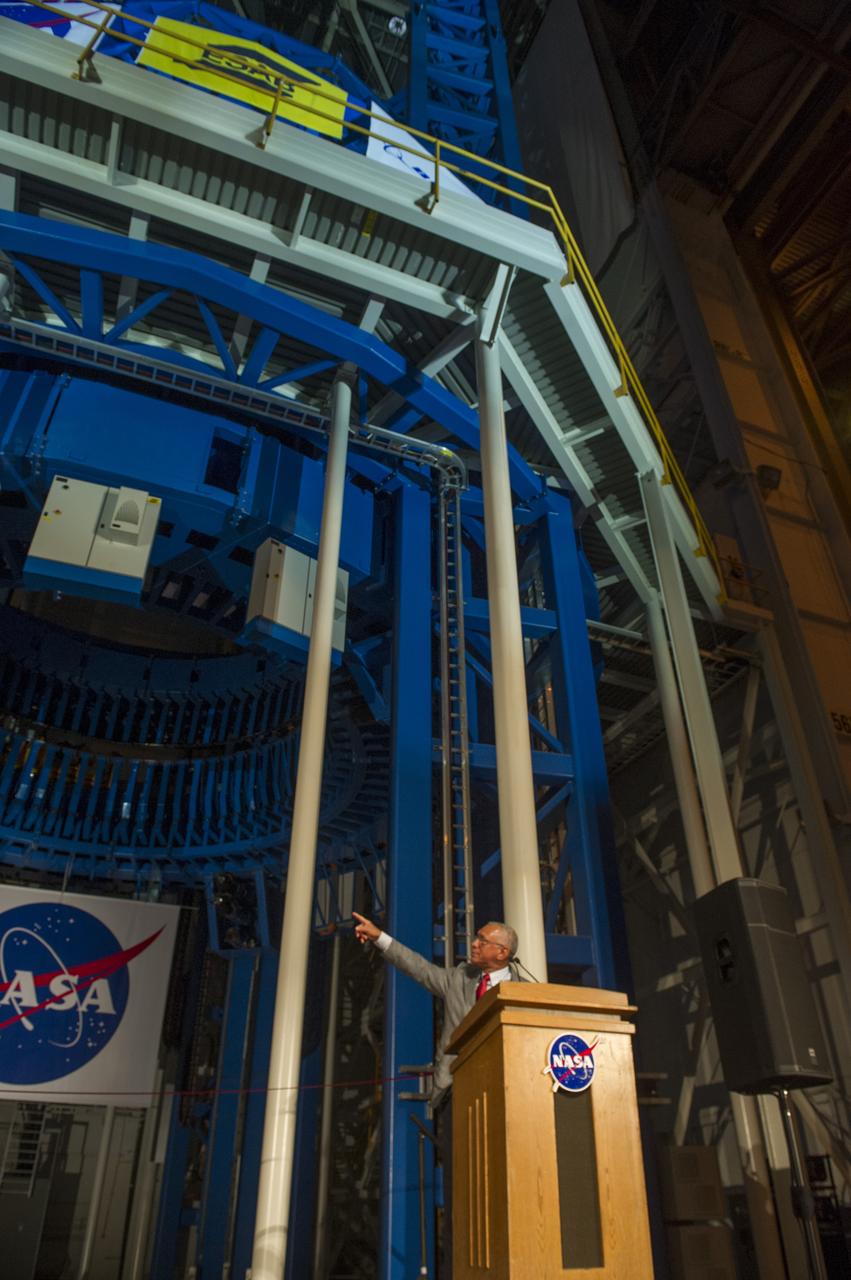
NASA ADMINISTRATOR BOLDEN SPEAKS AT DEDICATION OF VERTICAL ASSEMBLY CENTER
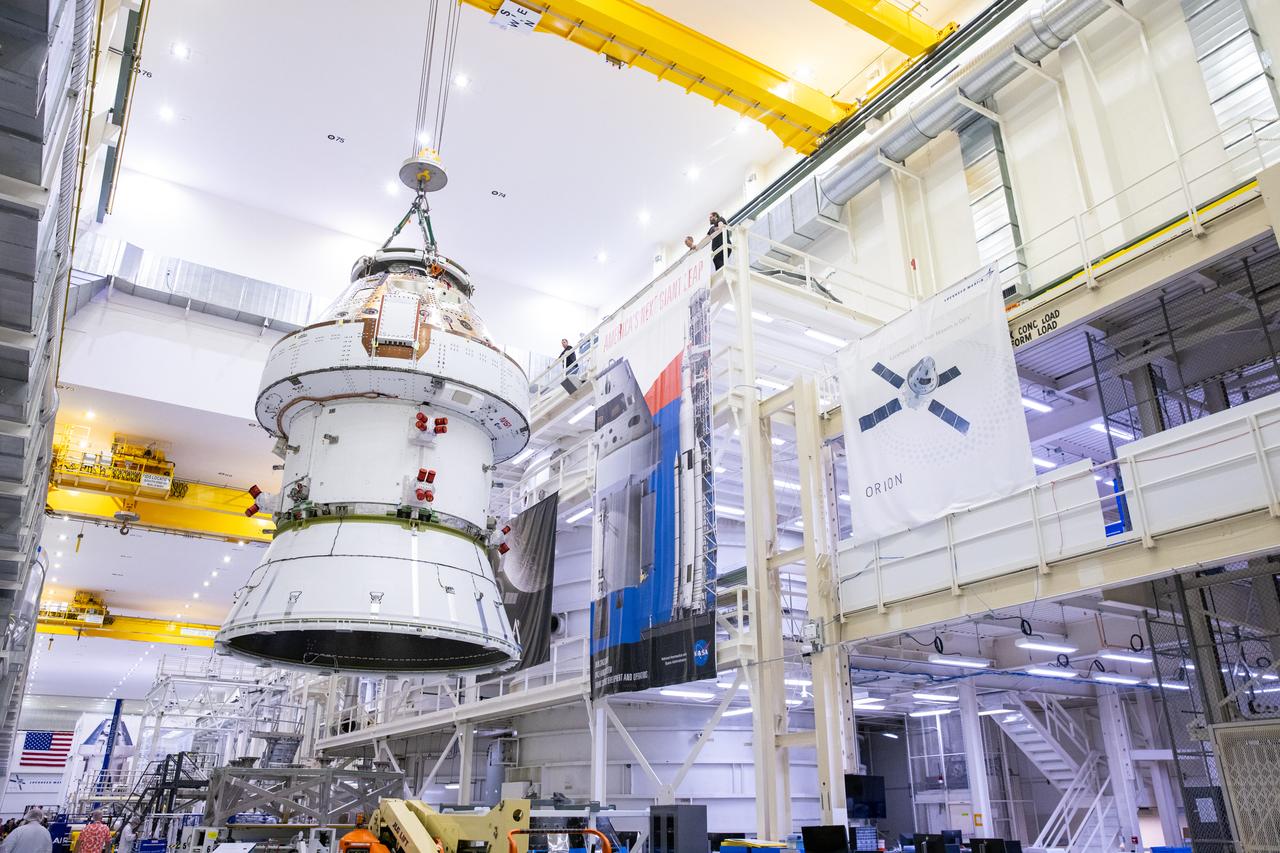
On April 4, 2024, teams lift the Artemis II Orion spacecraft into a vacuum chamber inside the Operations and Checkout Building at NASA's Kennedy Space Center in Florida, where it will undergo electromagnetic compatibility and interference testing.
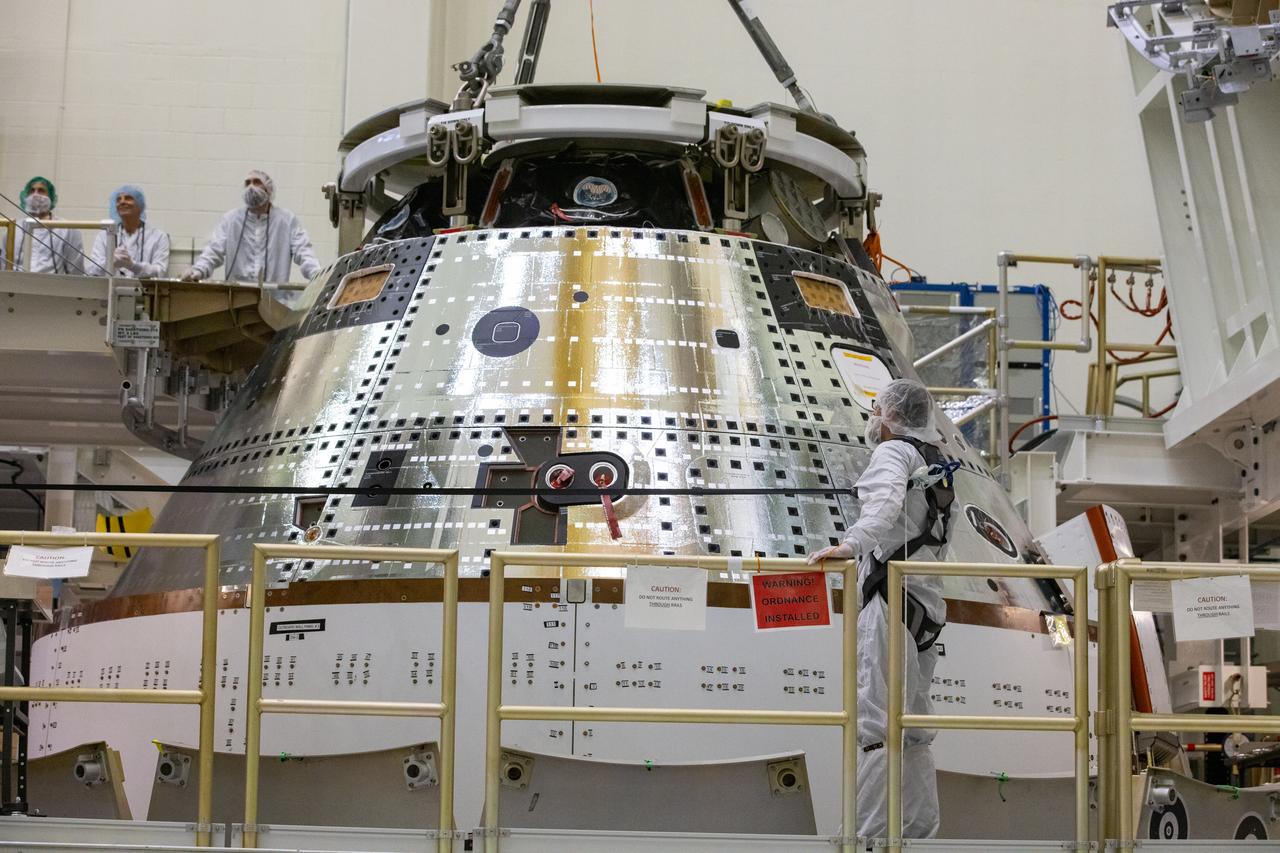
On April 4, 2024, technicians examine the Artemis II Orion spacecraft after a team lifts it into a vacuum chamber inside the Operations and Checkout Building at NASA's Kennedy Space Center in Florida, where it will undergo electromagnetic compatibility and interference testing.

Engineers at Lockheed Martin Space, Denver, Colorado, prepare NASA's InSight lander for testing in a thermal vacuum chamber several months before launch. https://photojournal.jpl.nasa.gov/catalog/PIA22740
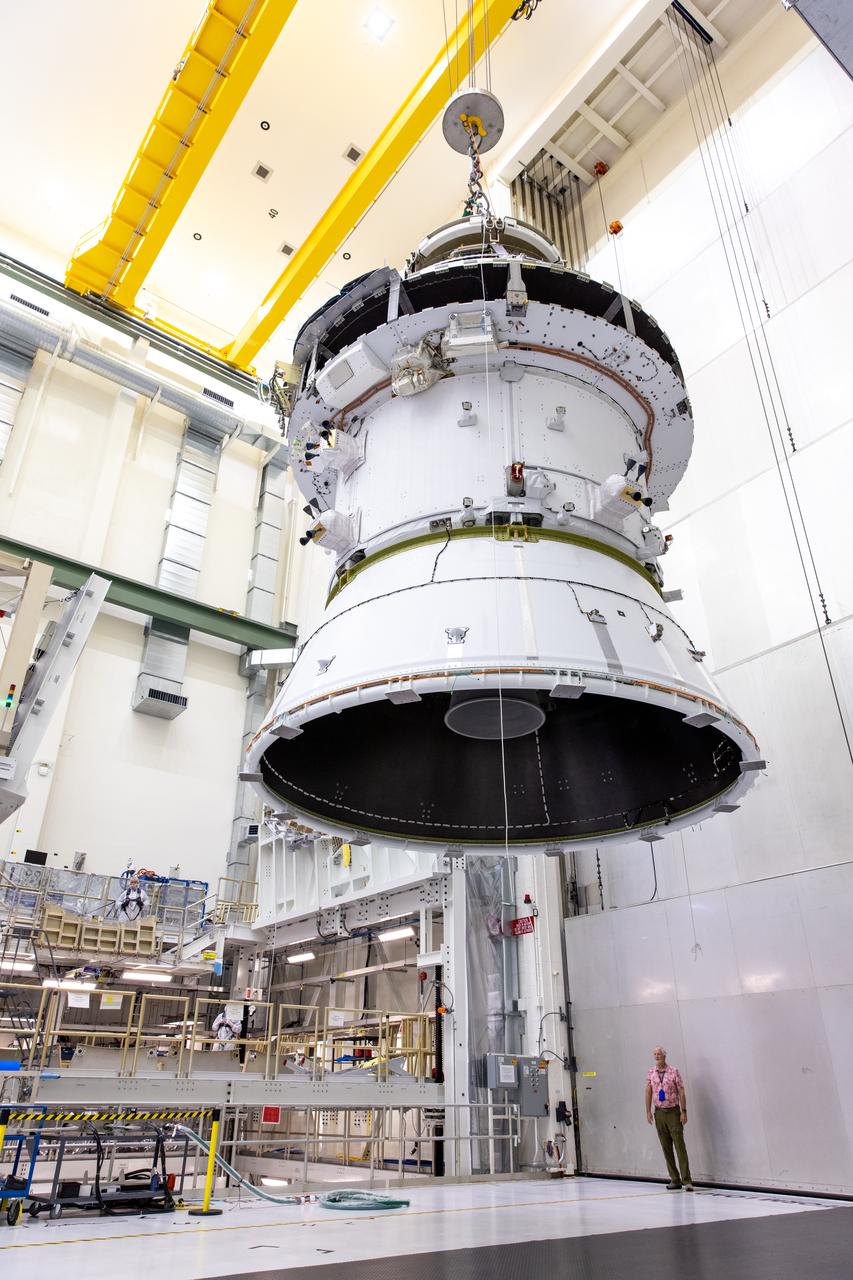
A massive crane lifts NASA’s Orion spacecraft out of the Final Assembly and System Testing cell and moves it to the altitude chamber to complete further testing on Thursday, Nov. 7, 2024, inside the Neil A. Armstrong Operations and Checkout building at NASA's Kennedy Space Center in Florida. The altitude chamber simulates deep space vacuum conditions, and the testing will provide additional data to augment data gained during testing earlier this summer. The Orion spacecraft will carry NASA astronauts Victor Glover, Christina Koch, and Reid Wiseman, as well as CSA (Canadian Space Agency) astronaut Jeremy Hansen, on a 10-day journey around the Moon and back for the Artemis II test flight.
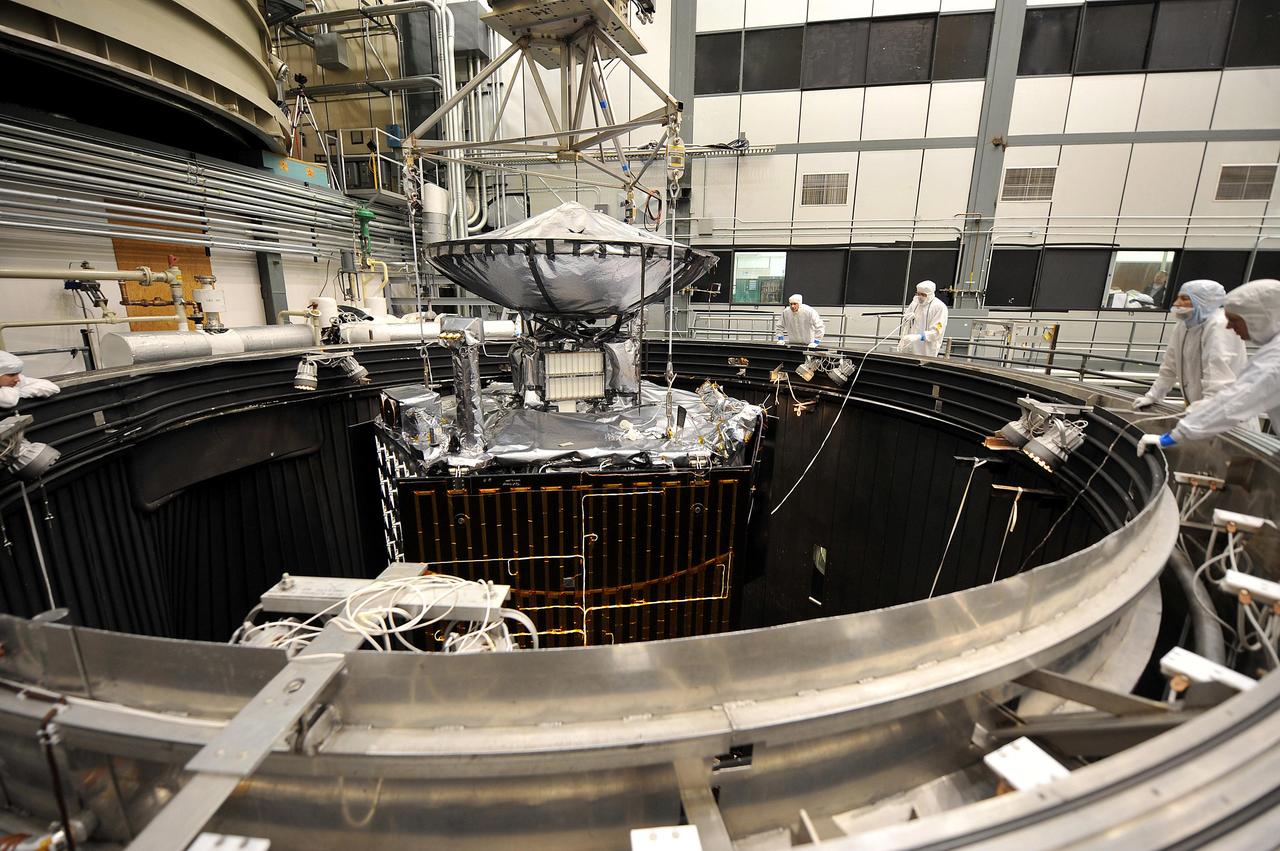
NASA Juno spacecraft is raised out of a thermal vacuum chamber following tests that simulated the environment of space over the range of conditions the probe will encounter during its mission.
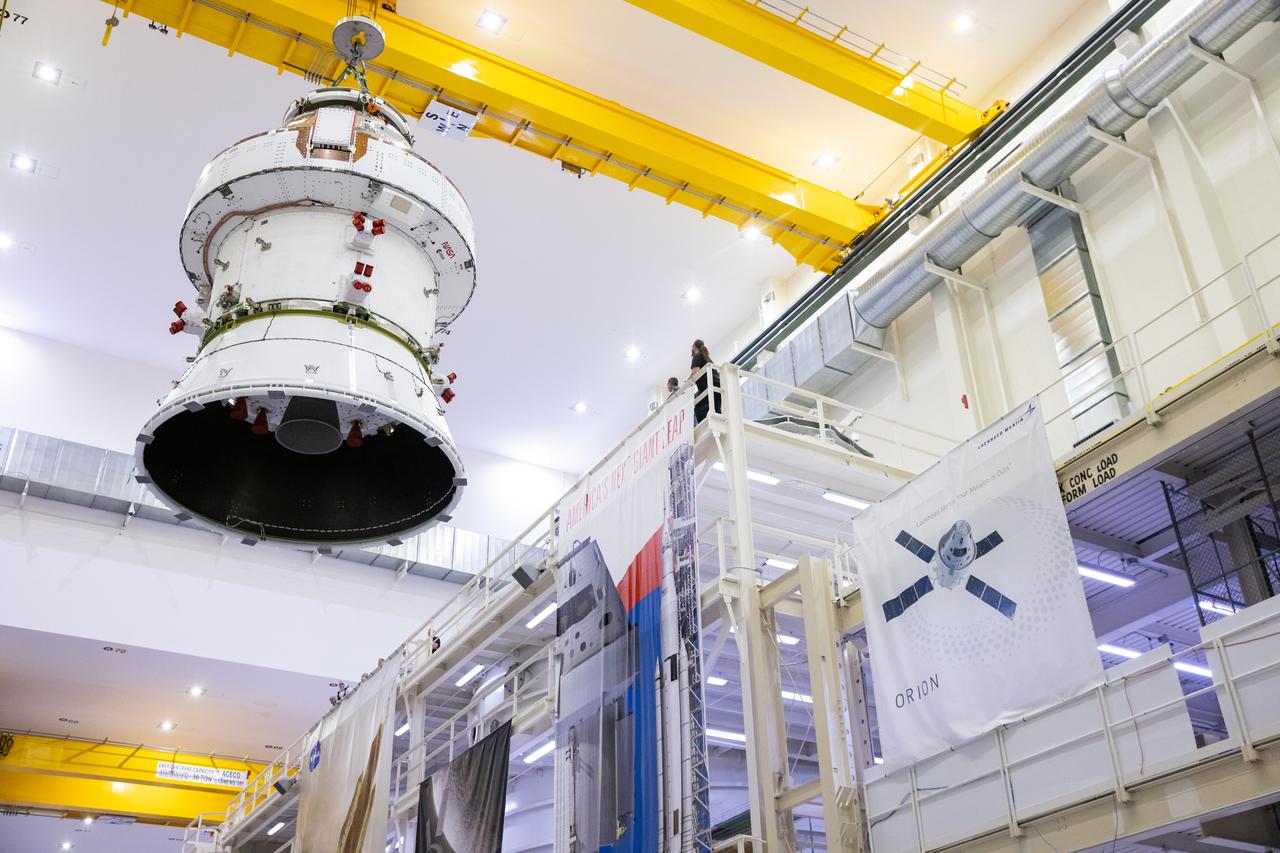
On April 4, 2024, teams lift the Artemis II Orion spacecraft into a vacuum chamber inside the Operations and Checkout Building at NASA's Kennedy Space Center in Florida, where it will undergo electromagnetic compatibility and interference testing.
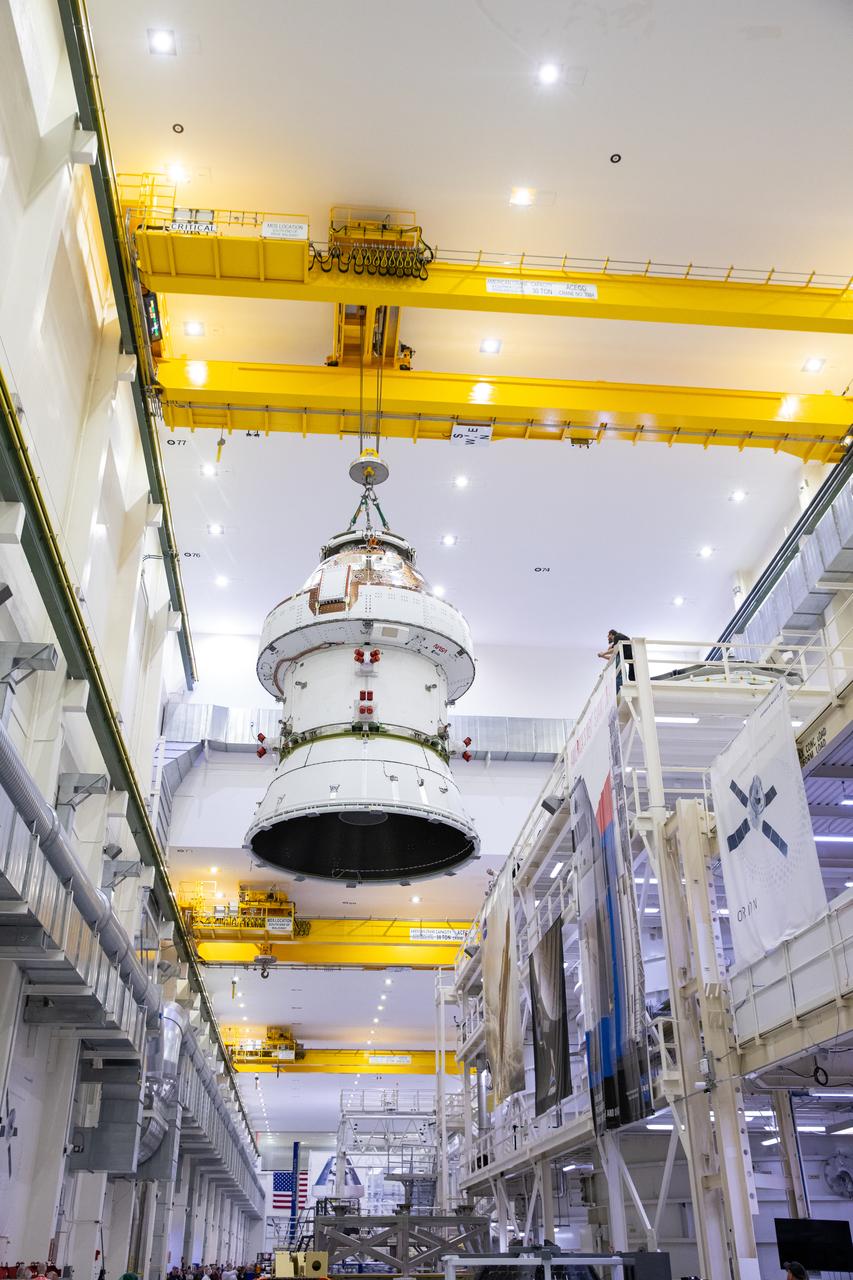
On April 4, 2024, teams lift the Artemis II Orion spacecraft into a vacuum chamber inside the Operations and Checkout Building at NASA's Kennedy Space Center in Florida, where it will undergo electromagnetic compatibility and interference testing.
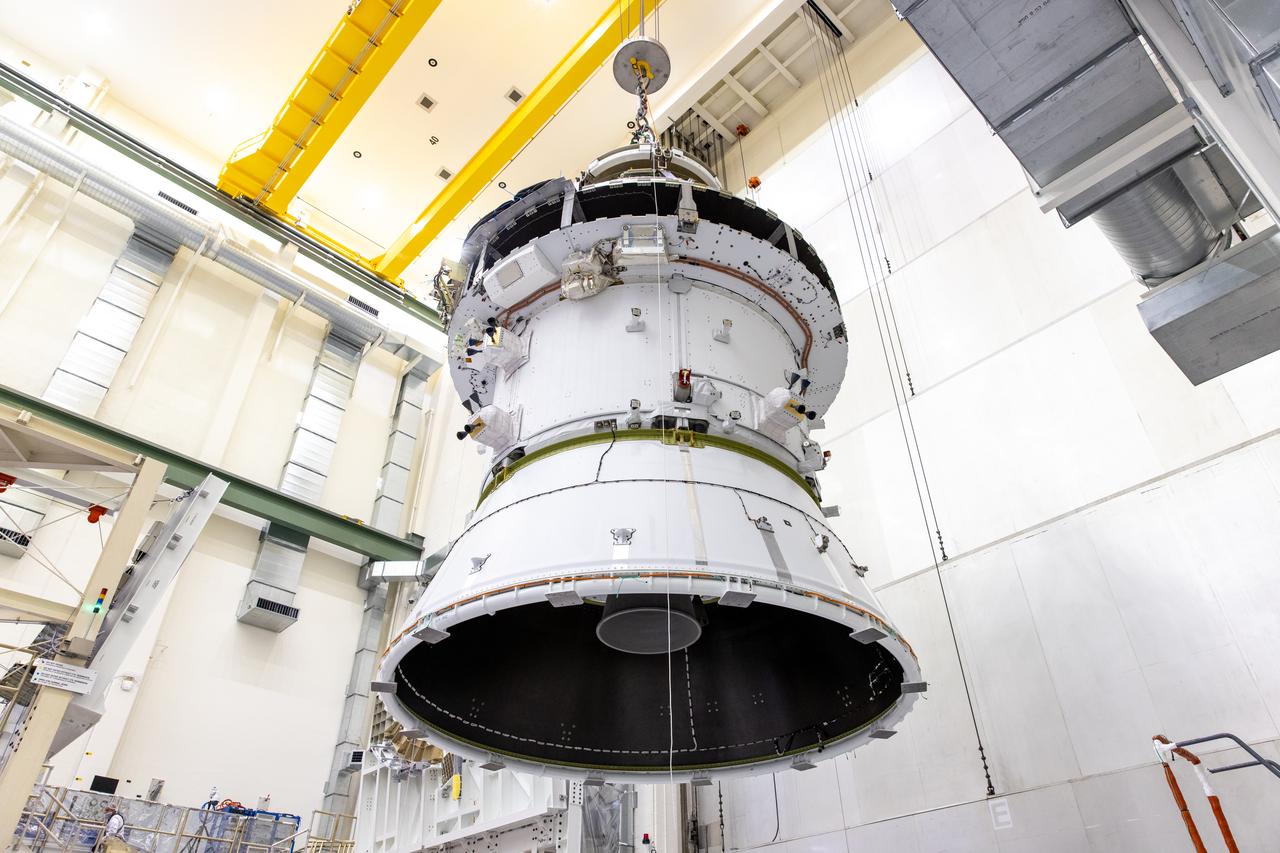
A massive crane lifts NASA’s Orion spacecraft out of the Final Assembly and System Testing cell and moves it to the altitude chamber to complete further testing on Thursday, Nov. 7, 2024, inside the Neil A. Armstrong Operations and Checkout building at NASA's Kennedy Space Center in Florida. The altitude chamber simulates deep space vacuum conditions, and the testing will provide additional data to augment data gained during testing earlier this summer. The Orion spacecraft will carry NASA astronauts Victor Glover, Christina Koch, and Reid Wiseman, as well as CSA (Canadian Space Agency) astronaut Jeremy Hansen, on a 10-day journey around the Moon and back for the Artemis II test flight.
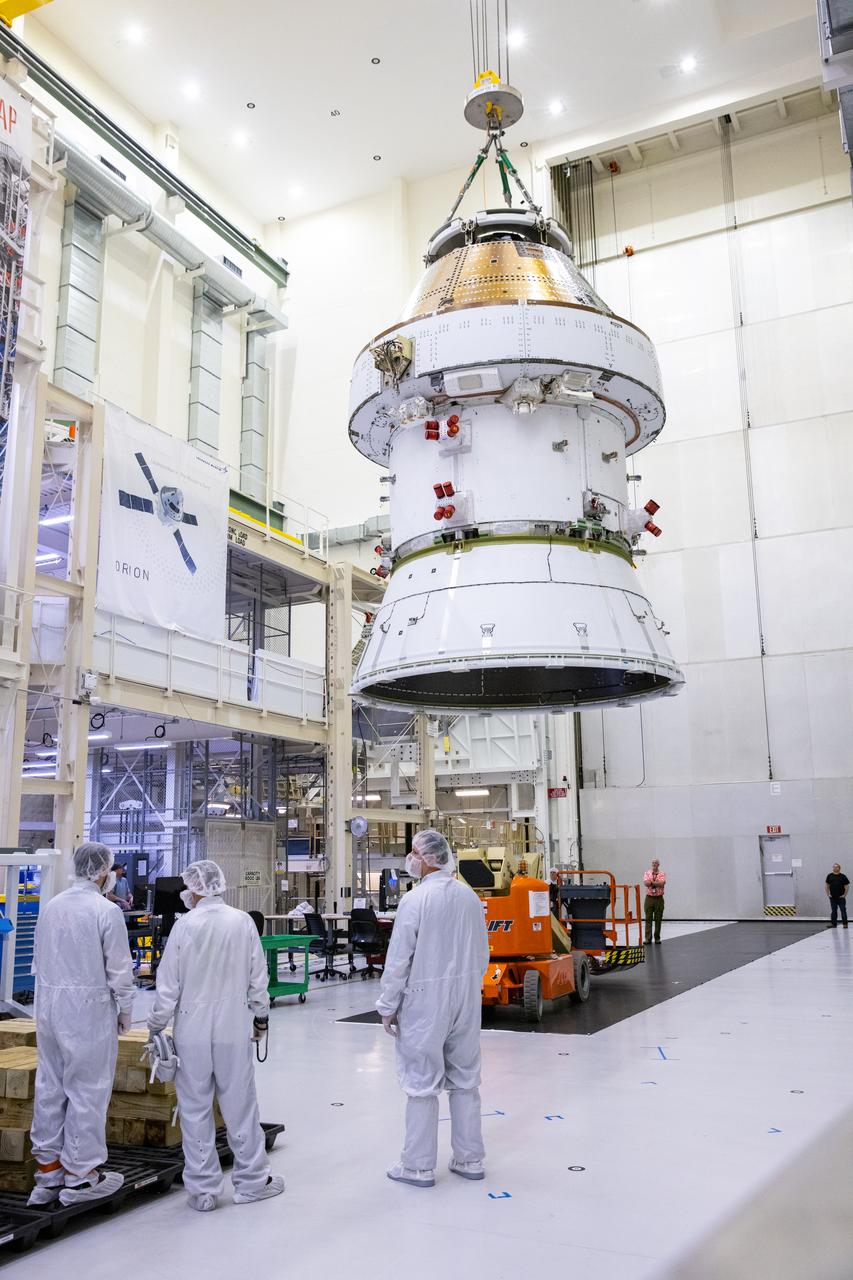
On April 4, 2024, technicians monitor as teams lift the Artemis II Orion spacecraft into a vacuum chamber inside the Operations and Checkout Building at NASA's Kennedy Space Center in Florida, where it will undergo electromagnetic compatibility and interference testing.
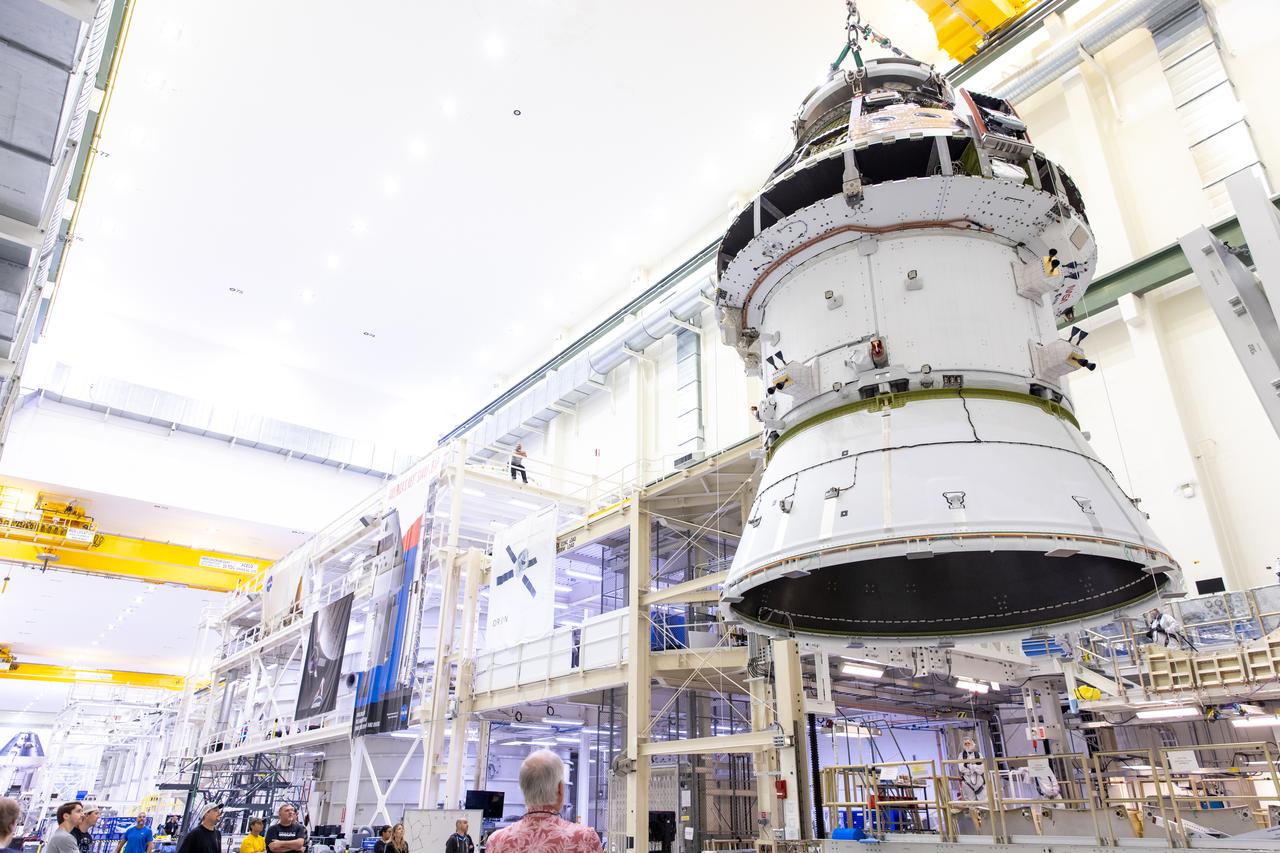
A massive crane lifts NASA’s Orion spacecraft out of the Final Assembly and System Testing cell and moves it to the altitude chamber to complete further testing on Thursday, Nov. 7, 2024, inside the Neil A. Armstrong Operations and Checkout building at NASA's Kennedy Space Center in Florida. The altitude chamber simulates deep space vacuum conditions, and the testing will provide additional data to augment data gained during testing earlier this summer. The Orion spacecraft will carry NASA astronauts Victor Glover, Christina Koch, and Reid Wiseman, as well as CSA (Canadian Space Agency) astronaut Jeremy Hansen, on a 10-day journey around the Moon and back for the Artemis II test flight.
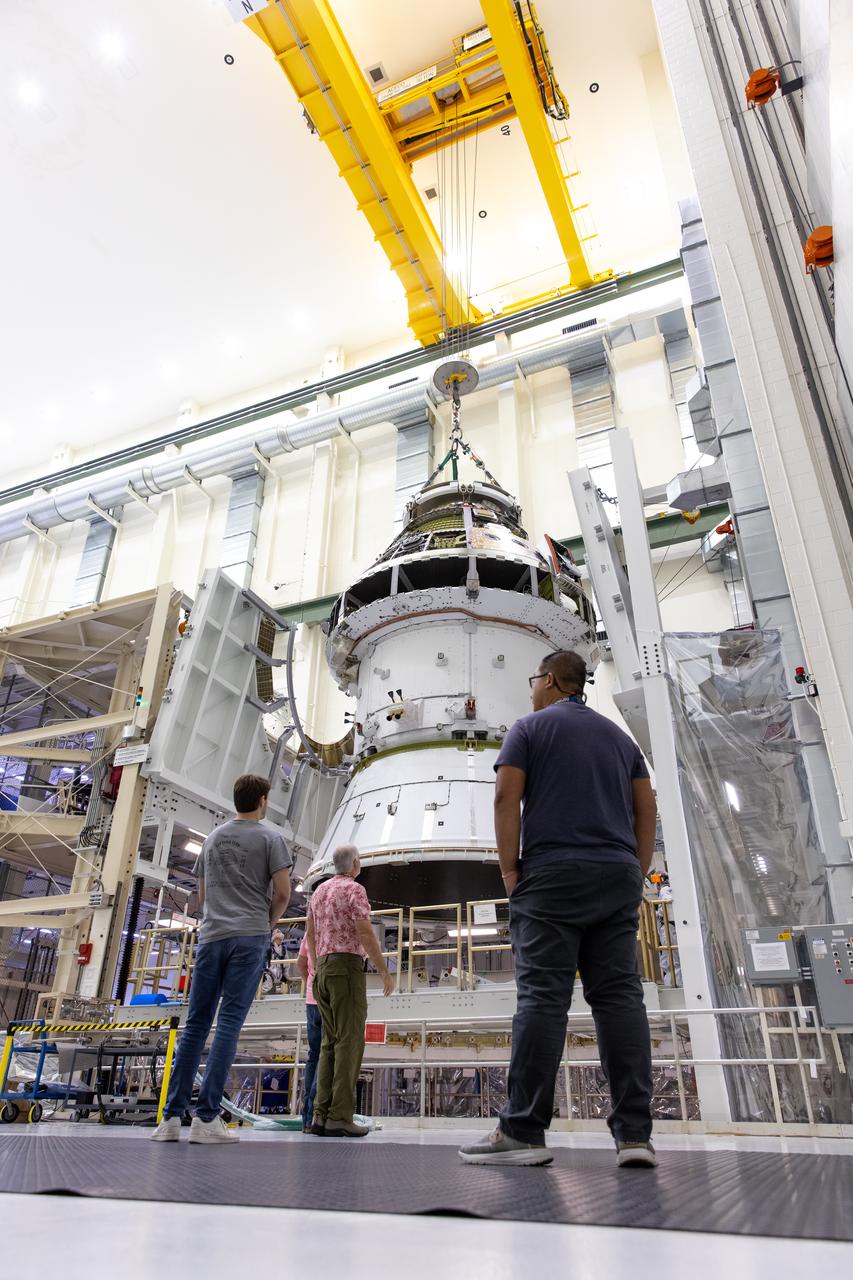
A massive crane lifts NASA’s Orion spacecraft out of the Final Assembly and System Testing cell and moves it to the altitude chamber to complete further testing on Thursday, Nov. 7, 2024, inside the Neil A. Armstrong Operations and Checkout building at NASA's Kennedy Space Center in Florida. The altitude chamber simulates deep space vacuum conditions, and the testing will provide additional data to augment data gained during testing earlier this summer. The Orion spacecraft will carry NASA astronauts Victor Glover, Christina Koch, and Reid Wiseman, as well as CSA (Canadian Space Agency) astronaut Jeremy Hansen, on a 10-day journey around the Moon and back for the Artemis II test flight.
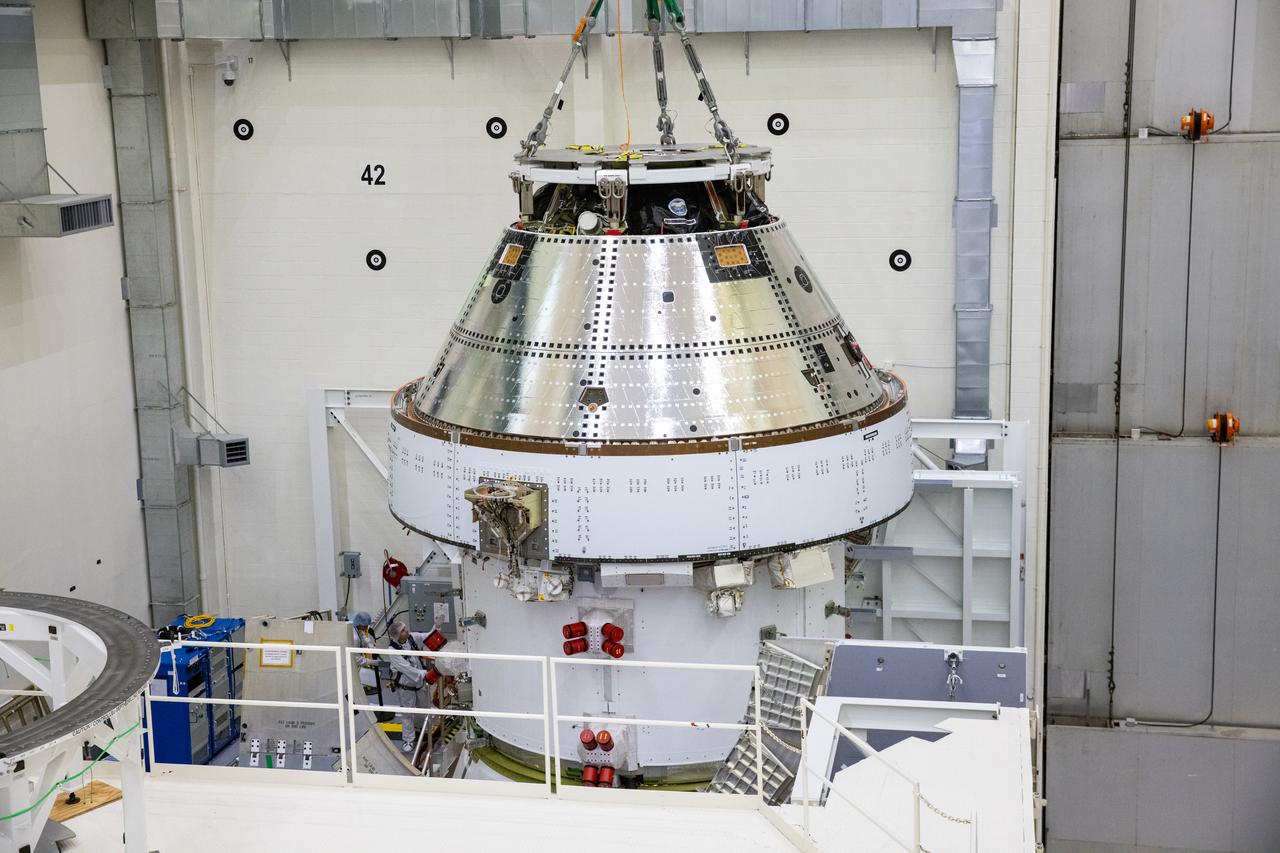
On April 4, 2024, teams lift the Artemis II Orion spacecraft into a vacuum chamber inside the Operations and Checkout Building at NASA's Kennedy Space Center in Florida, where it will undergo electromagnetic compatibility and interference testing.
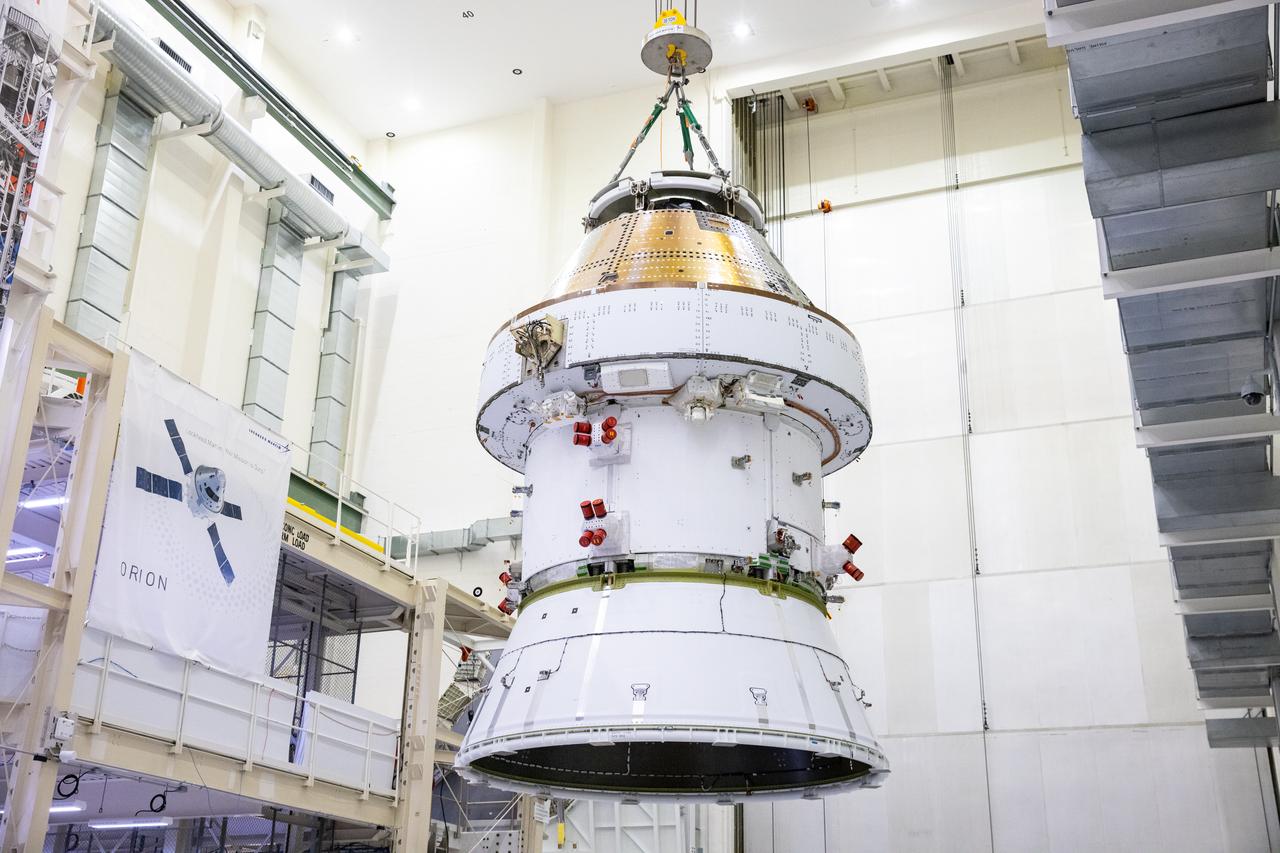
On April 4, 2024, teams lift the Artemis II Orion spacecraft into a vacuum chamber inside the Operations and Checkout Building at NASA's Kennedy Space Center in Florida, where it will undergo electromagnetic compatibility and interference testing.
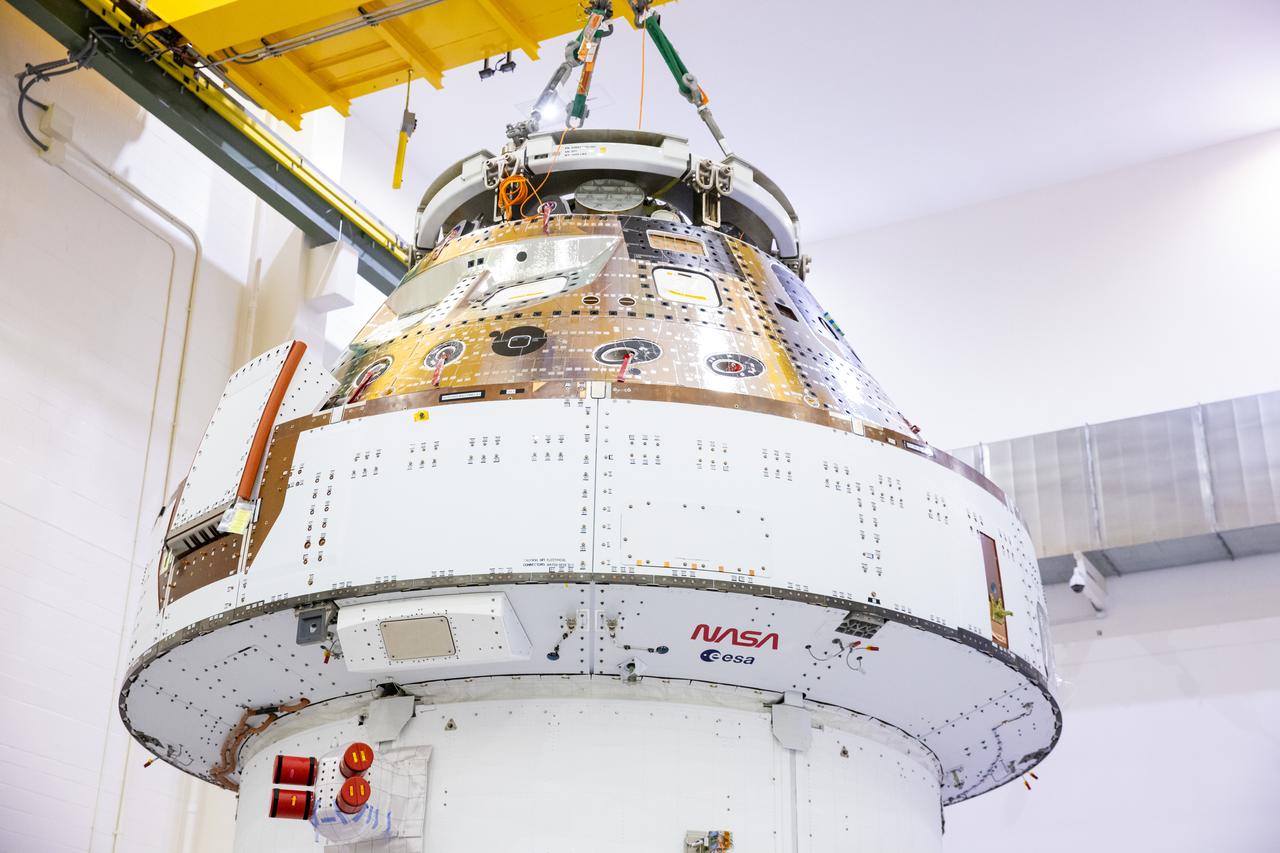
On April 4, 2024, teams lift the Artemis II Orion spacecraft into a vacuum chamber inside the Operations and Checkout Building at NASA's Kennedy Space Center in Florida, where it will undergo electromagnetic compatibility and interference testing.

A technician connects support straps to a crane as it prepares to lift NASA’s Orion spacecraft out of the Final Assembly and Systems Testing cell to the altitude chamber inside the Neil A. Armstrong Operations and Checkout building at NASA’s Kennedy Space Center in Florida on Thursday, Nov. 7, 2024. The altitude chamber simulates deep space vacuum conditions, and the testing will provide additional data to augment data gained during testing earlier this summer. The Orion spacecraft will carry NASA astronauts Victor Glover, Christina Koch, and Reid Wiseman, as well as CSA (Canadian Space Agency) astronaut Jeremy Hansen, on a 10-day journey around the Moon and back for the Artemis II test flight.
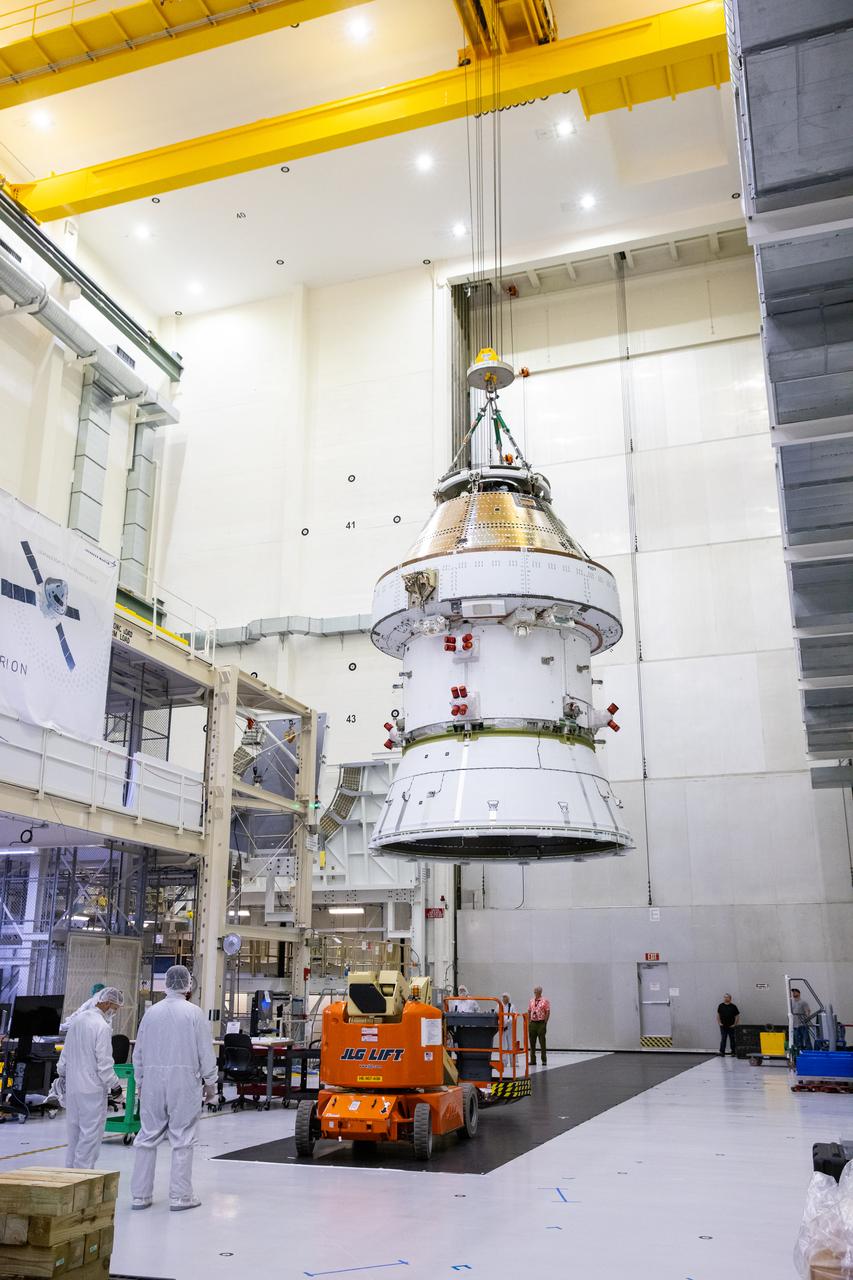
On April 4, 2024, technicians monitor as teams lift the Artemis II Orion spacecraft into a vacuum chamber inside the Operations and Checkout Building at NASA's Kennedy Space Center in Florida, where it will undergo electromagnetic compatibility and interference testing.
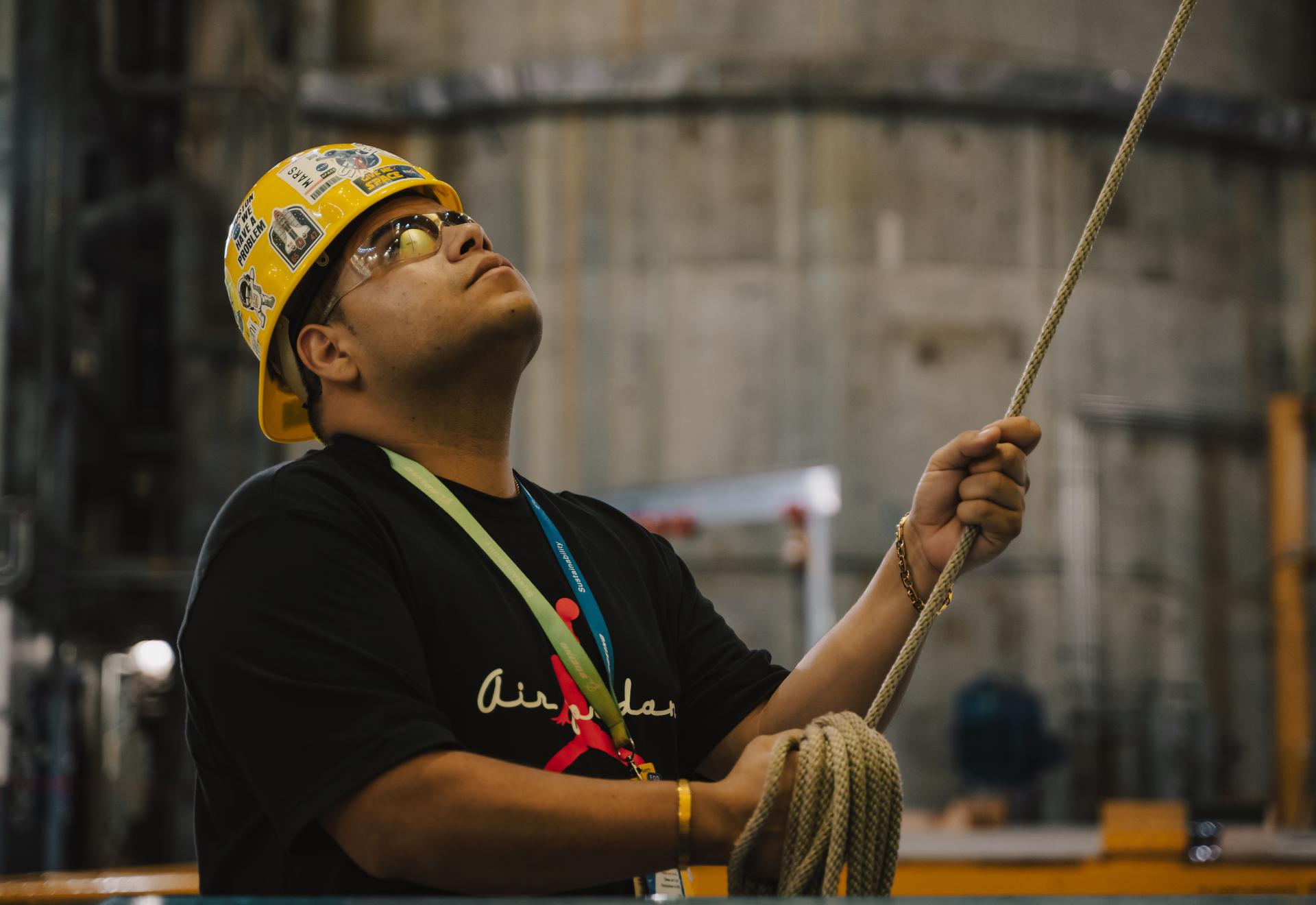
Teams at Michoud Assembly Facility in New Orleans load the engine section barrel into the vertical assembly center on Aug. 5, 2026. The engine section will be used on the SLS (Space Launch System) rocket’s core stage for the agency’s Artemis V mission. On the vertical assembly center tooling, teams will mate the flight hardware to a ring, which will serve as an attachment point for the liquid hydrogen tank later in the production process. The engine section is one of five major elements that make up the 212-foot-tall SLS rocket stage; and houses various avionic systems, the engine thrust structure, and four RS-25 engines. The core stage produces more than two million pounds of thrust to help launch NASA’s Orion spacecraft, astronauts, and supplies beyond Earth’s orbit and to the lunar surface for Artemis.
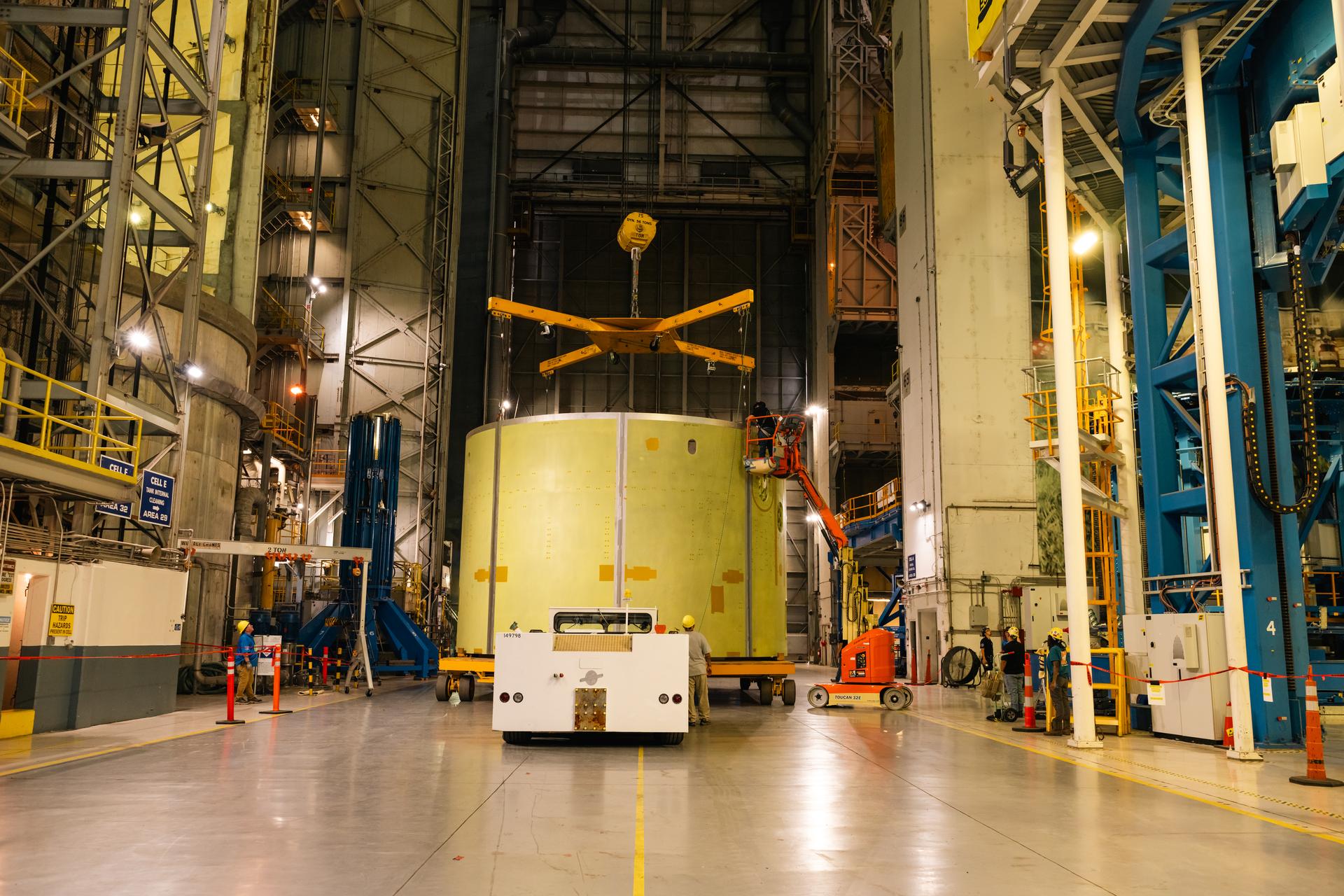
Teams at Michoud Assembly Facility in New Orleans load the engine section barrel into the vertical assembly center on Aug. 5, 2026. The engine section will be used on the SLS (Space Launch System) rocket’s core stage for the agency’s Artemis V mission. On the vertical assembly center tooling, teams will mate the flight hardware to a ring, which will serve as an attachment point for the liquid hydrogen tank later in the production process. The engine section is one of five major elements that make up the 212-foot-tall SLS rocket stage; and houses various avionic systems, the engine thrust structure, and four RS-25 engines. The core stage produces more than two million pounds of thrust to help launch NASA’s Orion spacecraft, astronauts, and supplies beyond Earth’s orbit and to the lunar surface for Artemis.
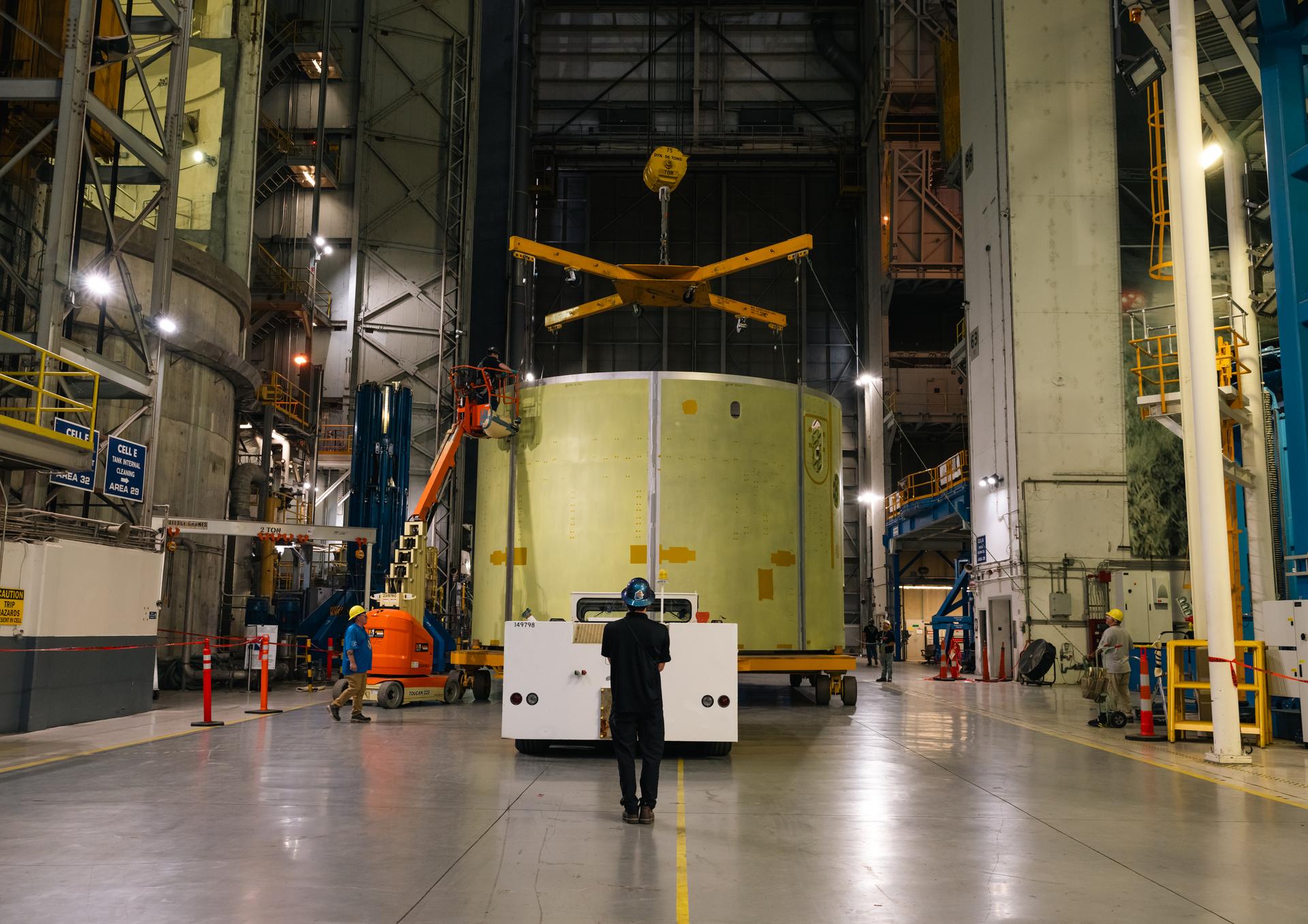
Teams at Michoud Assembly Facility in New Orleans load the engine section barrel into the vertical assembly center on Aug. 5, 2026. The engine section will be used on the SLS (Space Launch System) rocket’s core stage for the agency’s Artemis V mission. On the vertical assembly center tooling, teams will mate the flight hardware to a ring, which will serve as an attachment point for the liquid hydrogen tank later in the production process. The engine section is one of five major elements that make up the 212-foot-tall SLS rocket stage; and houses various avionic systems, the engine thrust structure, and four RS-25 engines. The core stage produces more than two million pounds of thrust to help launch NASA’s Orion spacecraft, astronauts, and supplies beyond Earth’s orbit and to the lunar surface for Artemis.
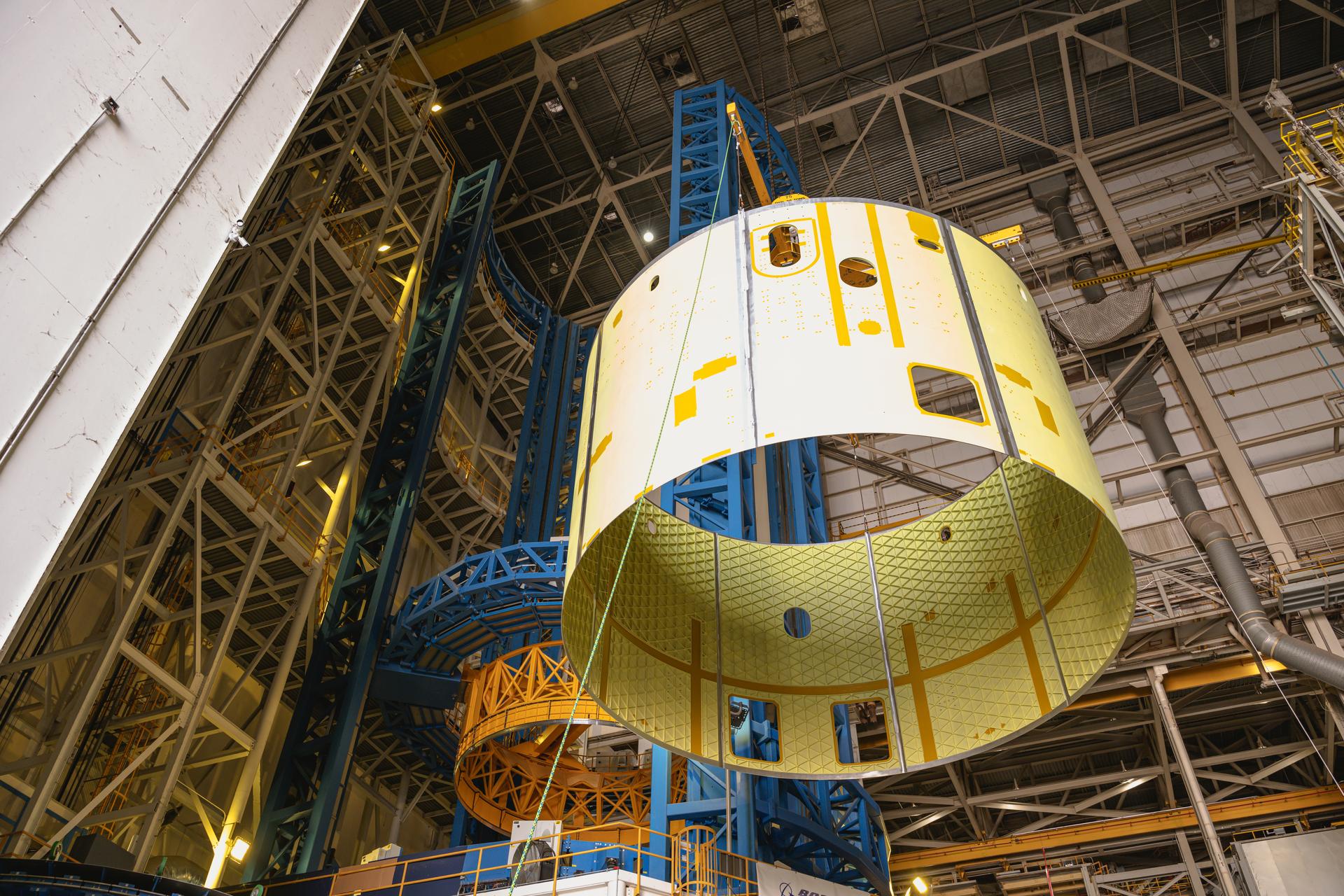
Teams at Michoud Assembly Facility in New Orleans load the engine section barrel into the vertical assembly center on Aug. 5, 2026. The engine section will be used on the SLS (Space Launch System) rocket’s core stage for the agency’s Artemis V mission. On the vertical assembly center tooling, teams will mate the flight hardware to a ring, which will serve as an attachment point for the liquid hydrogen tank later in the production process. The engine section is one of five major elements that make up the 212-foot-tall SLS rocket stage; and houses various avionic systems, the engine thrust structure, and four RS-25 engines. The core stage produces more than two million pounds of thrust to help launch NASA’s Orion spacecraft, astronauts, and supplies beyond Earth’s orbit and to the lunar surface for Artemis.
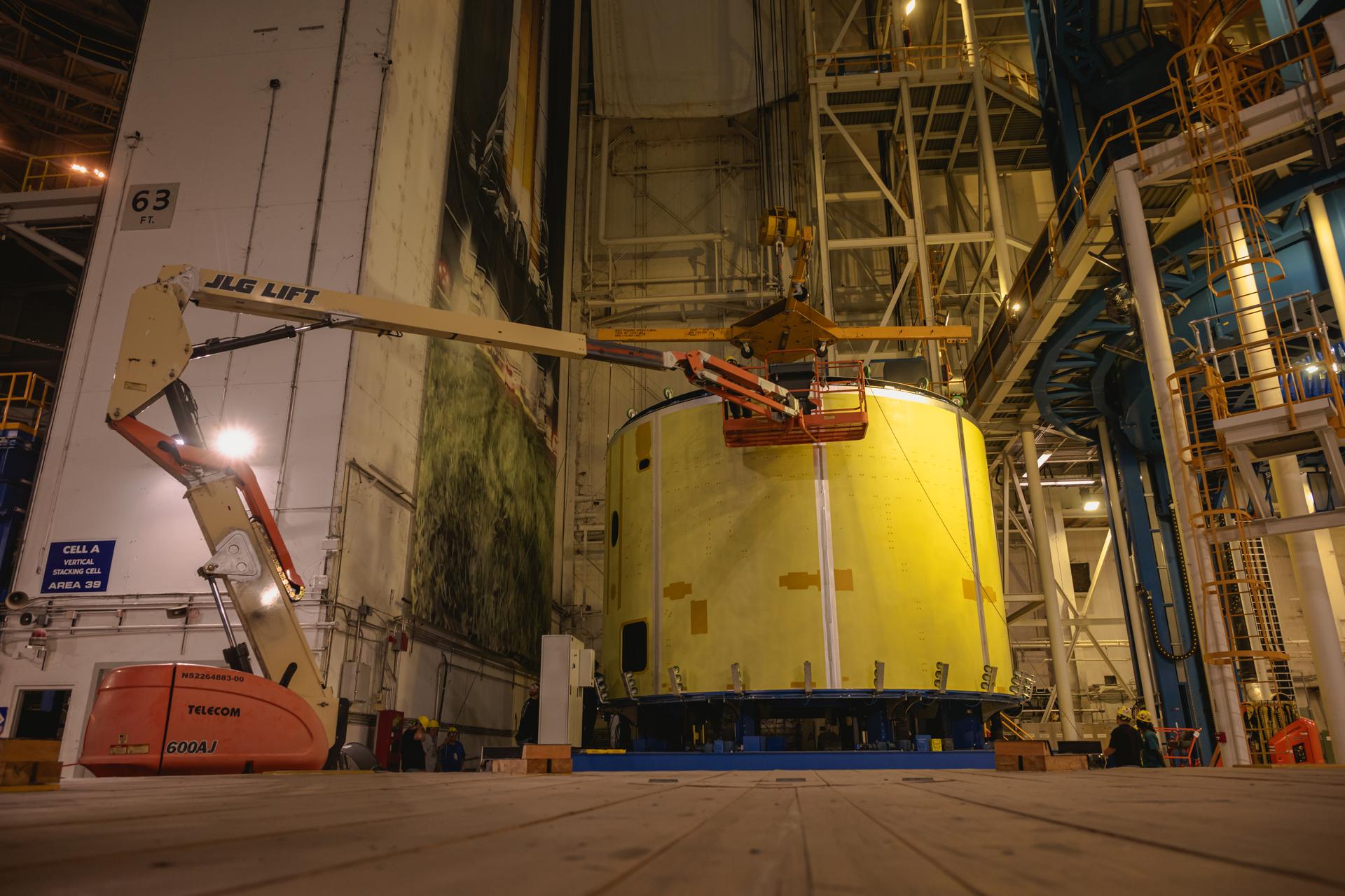
Teams at Michoud Assembly Facility in New Orleans load the engine section barrel into the vertical assembly center on Aug. 5, 2026. The engine section will be used on the SLS (Space Launch System) rocket’s core stage for the agency’s Artemis V mission. On the vertical assembly center tooling, teams will mate the flight hardware to a ring, which will serve as an attachment point for the liquid hydrogen tank later in the production process. The engine section is one of five major elements that make up the 212-foot-tall SLS rocket stage; and houses various avionic systems, the engine thrust structure, and four RS-25 engines. The core stage produces more than two million pounds of thrust to help launch NASA’s Orion spacecraft, astronauts, and supplies beyond Earth’s orbit and to the lunar surface for Artemis.
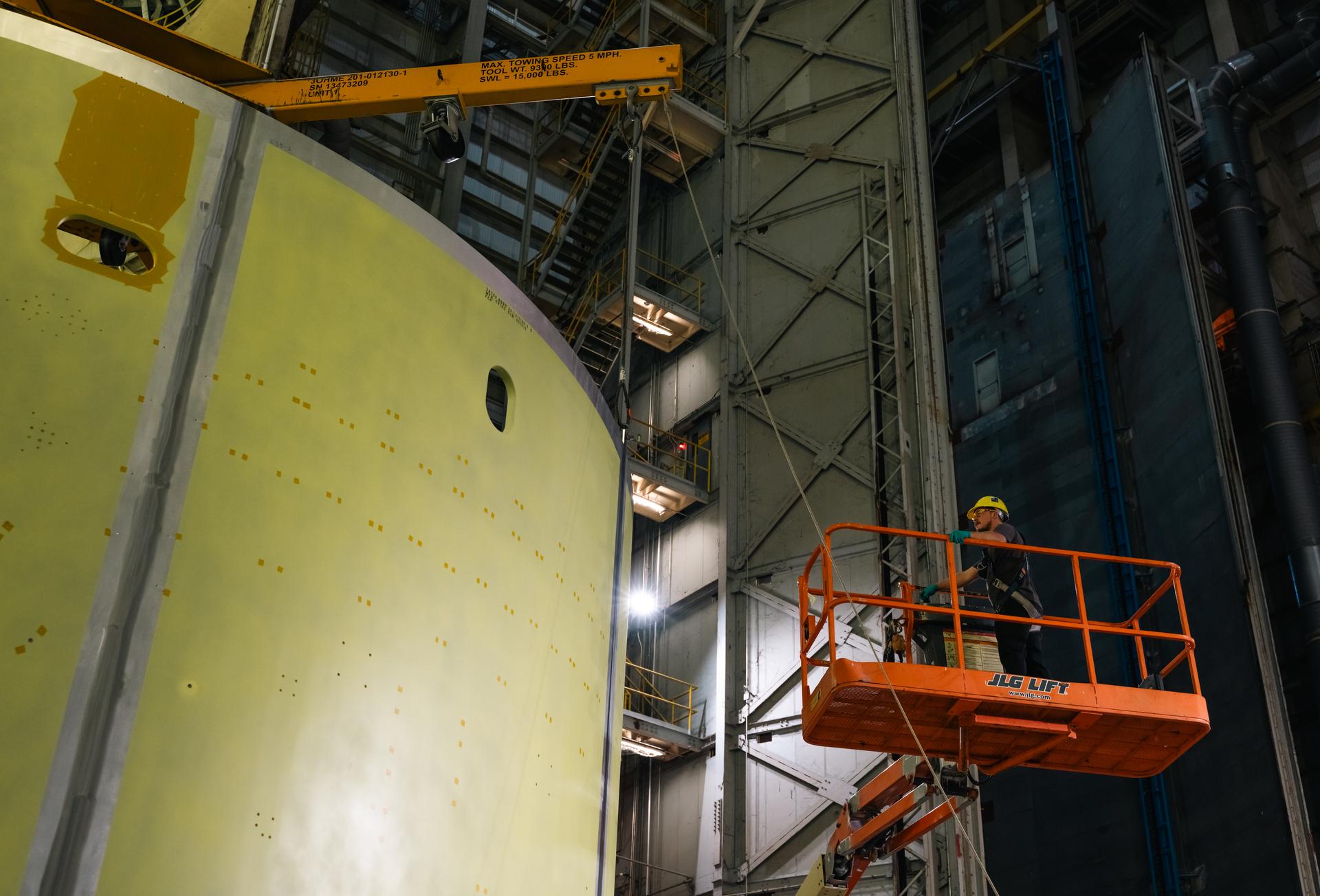
Teams at Michoud Assembly Facility in New Orleans load the engine section barrel into the vertical assembly center on Aug. 5, 2026. The engine section will be used on the SLS (Space Launch System) rocket’s core stage for the agency’s Artemis V mission. On the vertical assembly center tooling, teams will mate the flight hardware to a ring, which will serve as an attachment point for the liquid hydrogen tank later in the production process. The engine section is one of five major elements that make up the 212-foot-tall SLS rocket stage; and houses various avionic systems, the engine thrust structure, and four RS-25 engines. The core stage produces more than two million pounds of thrust to help launch NASA’s Orion spacecraft, astronauts, and supplies beyond Earth’s orbit and to the lunar surface for Artemis.
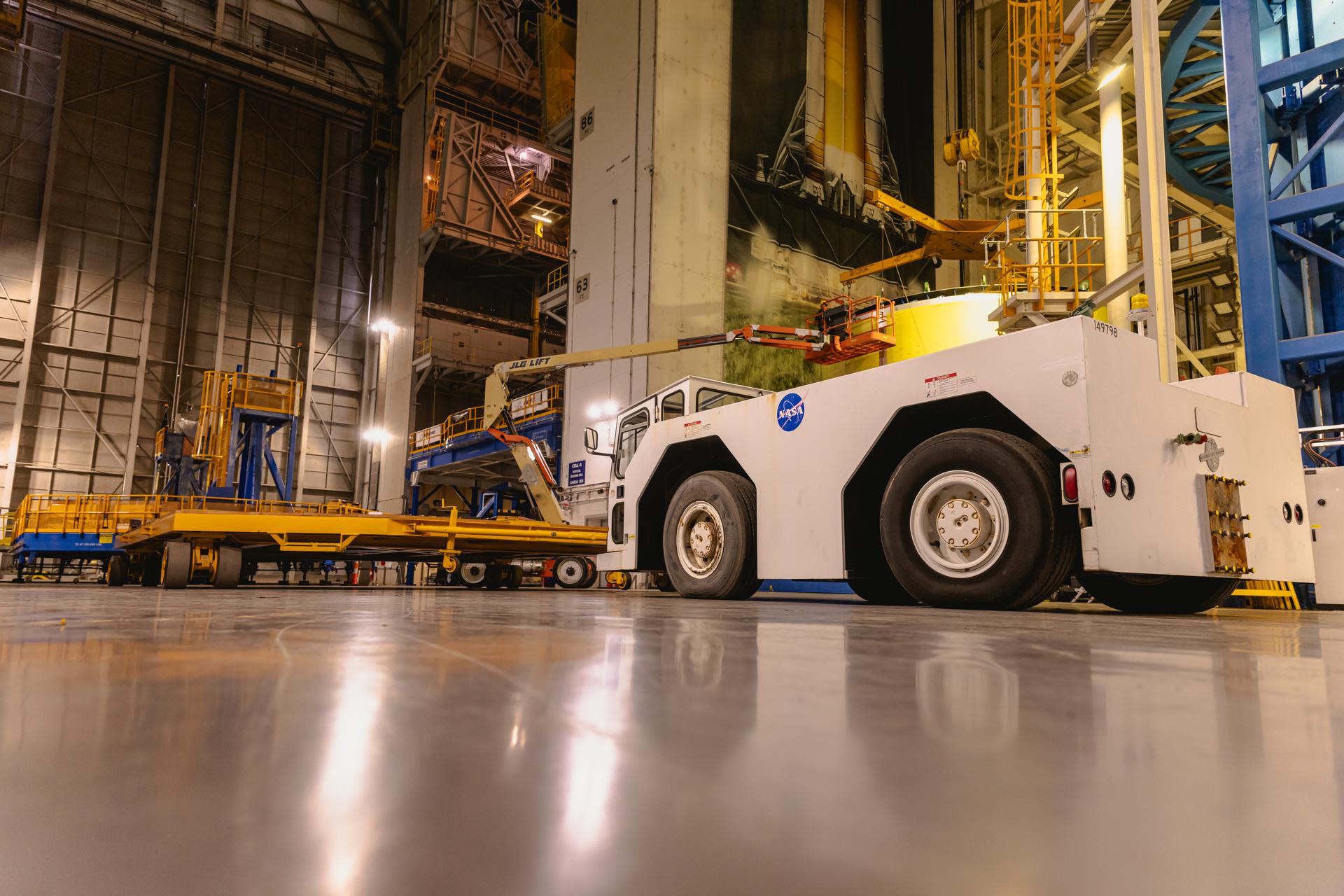
Teams at Michoud Assembly Facility in New Orleans load the engine section barrel into the vertical assembly center on Aug. 5, 2026. The engine section will be used on the SLS (Space Launch System) rocket’s core stage for the agency’s Artemis V mission. On the vertical assembly center tooling, teams will mate the flight hardware to a ring, which will serve as an attachment point for the liquid hydrogen tank later in the production process. The engine section is one of five major elements that make up the 212-foot-tall SLS rocket stage; and houses various avionic systems, the engine thrust structure, and four RS-25 engines. The core stage produces more than two million pounds of thrust to help launch NASA’s Orion spacecraft, astronauts, and supplies beyond Earth’s orbit and to the lunar surface for Artemis.
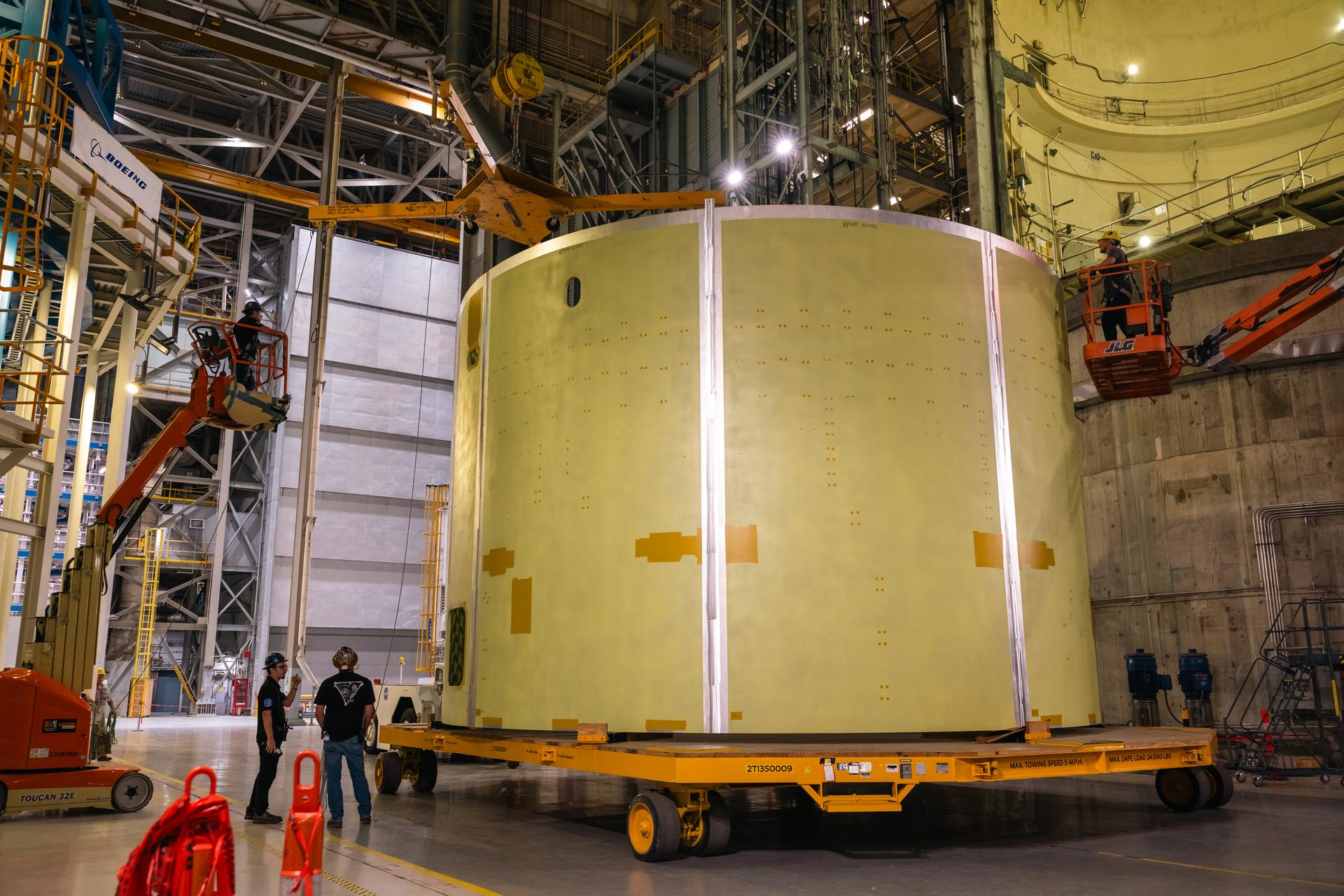
Teams at Michoud Assembly Facility in New Orleans load the engine section barrel into the vertical assembly center on Aug. 5, 2026. The engine section will be used on the SLS (Space Launch System) rocket’s core stage for the agency’s Artemis V mission. On the vertical assembly center tooling, teams will mate the flight hardware to a ring, which will serve as an attachment point for the liquid hydrogen tank later in the production process. The engine section is one of five major elements that make up the 212-foot-tall SLS rocket stage; and houses various avionic systems, the engine thrust structure, and four RS-25 engines. The core stage produces more than two million pounds of thrust to help launch NASA’s Orion spacecraft, astronauts, and supplies beyond Earth’s orbit and to the lunar surface for Artemis.
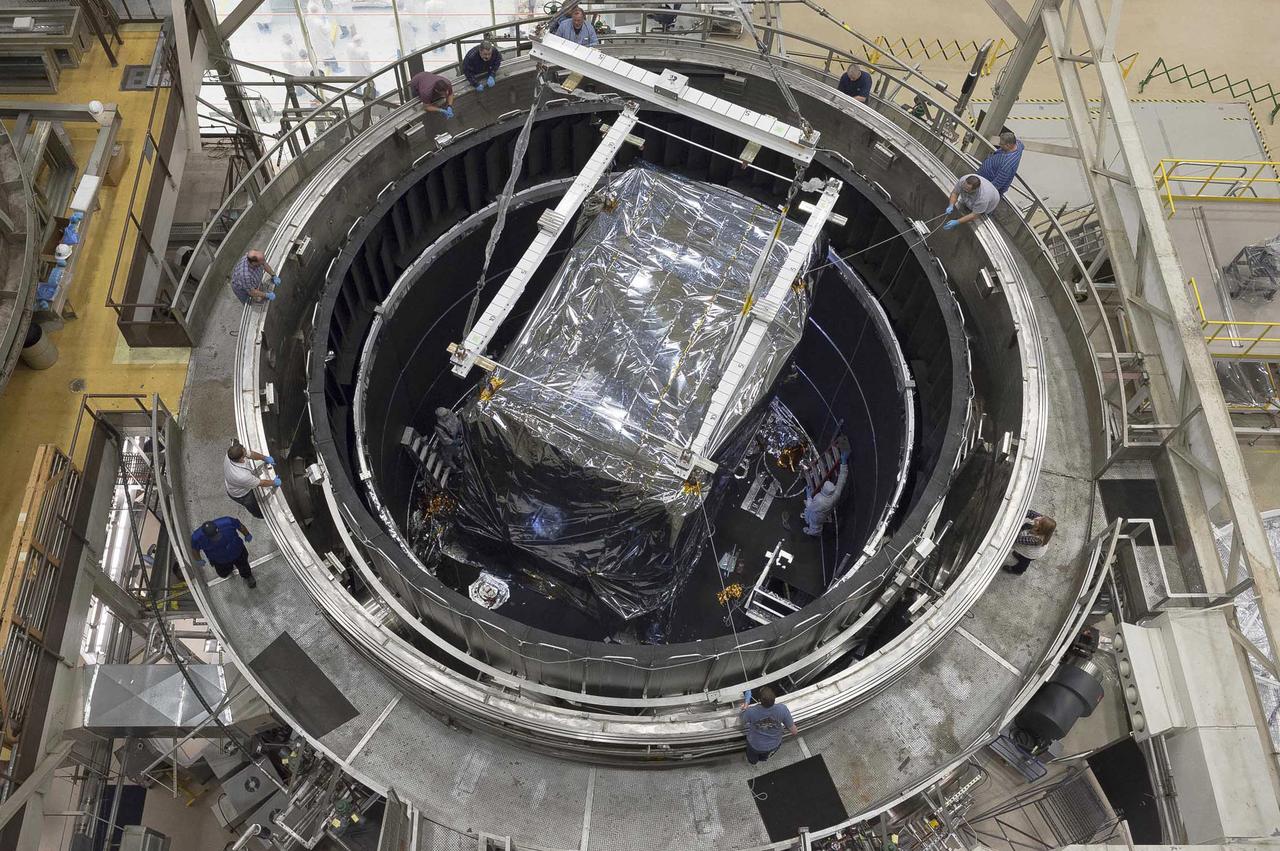
At NASA's James Webb Space Telescope's final destination in space, one million miles away from Earth, it will operate at incredibly cold temperatures of -387 degrees Fahrenheit, or 40 degrees Kelvin. This is 260 degrees Fahrenheit colder than any place on the Earth’s surface has ever been. So first, this final super cold test at Goddard will prepare the Integrated Science Instrument Module (ISIM), or the “heart” of the telescope, for space. Read more: <a href="http://go.nasa.gov/1KFPwJG" rel="nofollow">go.nasa.gov/1KFPwJG</a> Credit: NASA/Goddard/Chris Gunn <b><a href="http://www.nasa.gov/audience/formedia/features/MP_Photo_Guidelines.html" rel="nofollow">NASA image use policy.</a></b> <b><a href="http://www.nasa.gov/centers/goddard/home/index.html" rel="nofollow">NASA Goddard Space Flight Center</a></b> enables NASA’s mission through four scientific endeavors: Earth Science, Heliophysics, Solar System Exploration, and Astrophysics. Goddard plays a leading role in NASA’s accomplishments by contributing compelling scientific knowledge to advance the Agency’s mission. <b>Follow us on <a href="http://twitter.com/NASAGoddardPix" rel="nofollow">Twitter</a></b> <b>Like us on <a href="http://www.facebook.com/pages/Greenbelt-MD/NASA-Goddard/395013845897?ref=tsd" rel="nofollow">Facebook</a></b> <b>Find us on <a href="http://instagrid.me/nasagoddard/?vm=grid" rel="nofollow">Instagram</a></b>
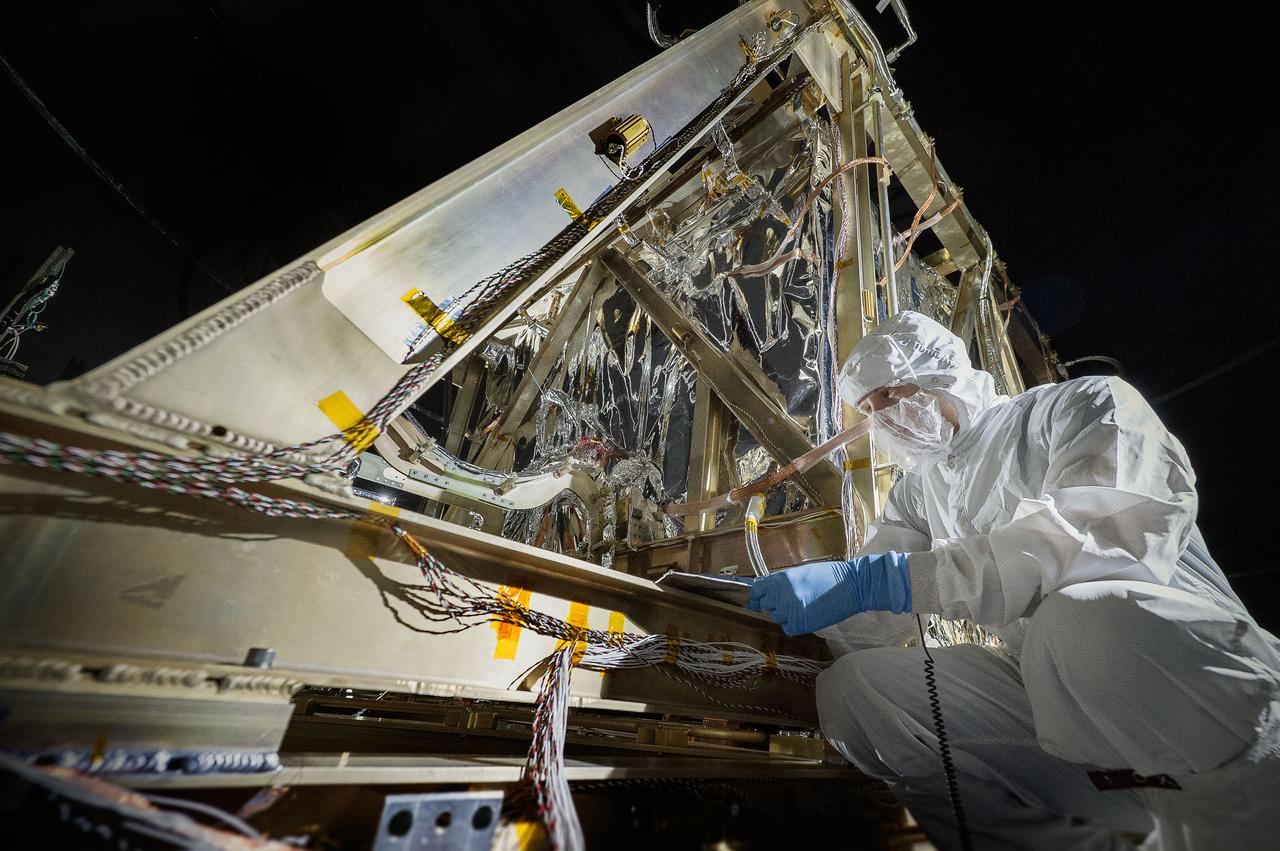
At NASA's James Webb Space Telescope's final destination in space, one million miles away from Earth, it will operate at incredibly cold temperatures of -387 degrees Fahrenheit, or 40 degrees Kelvin. This is 260 degrees Fahrenheit colder than any place on the Earth’s surface has ever been. So first, this final super cold test at Goddard will prepare the Integrated Science Instrument Module (ISIM), or the “heart” of the telescope, for space. Read more: <a href="http://go.nasa.gov/1KFPwJG" rel="nofollow">go.nasa.gov/1KFPwJG</a> Contamination Control Engineer Alan Abeel conducts final inspections and places contamination foils before the start of the test. Credit: NASA/Goddard/Chris Gunn <b><a href="http://www.nasa.gov/audience/formedia/features/MP_Photo_Guidelines.html" rel="nofollow">NASA image use policy.</a></b> <b><a href="http://www.nasa.gov/centers/goddard/home/index.html" rel="nofollow">NASA Goddard Space Flight Center</a></b> enables NASA’s mission through four scientific endeavors: Earth Science, Heliophysics, Solar System Exploration, and Astrophysics. Goddard plays a leading role in NASA’s accomplishments by contributing compelling scientific knowledge to advance the Agency’s mission. <b>Follow us on <a href="http://twitter.com/NASAGoddardPix" rel="nofollow">Twitter</a></b> <b>Like us on <a href="http://www.facebook.com/pages/Greenbelt-MD/NASA-Goddard/395013845897?ref=tsd" rel="nofollow">Facebook</a></b> <b>Find us on <a href="http://instagrid.me/nasagoddard/?vm=grid" rel="nofollow">Instagram</a></b>
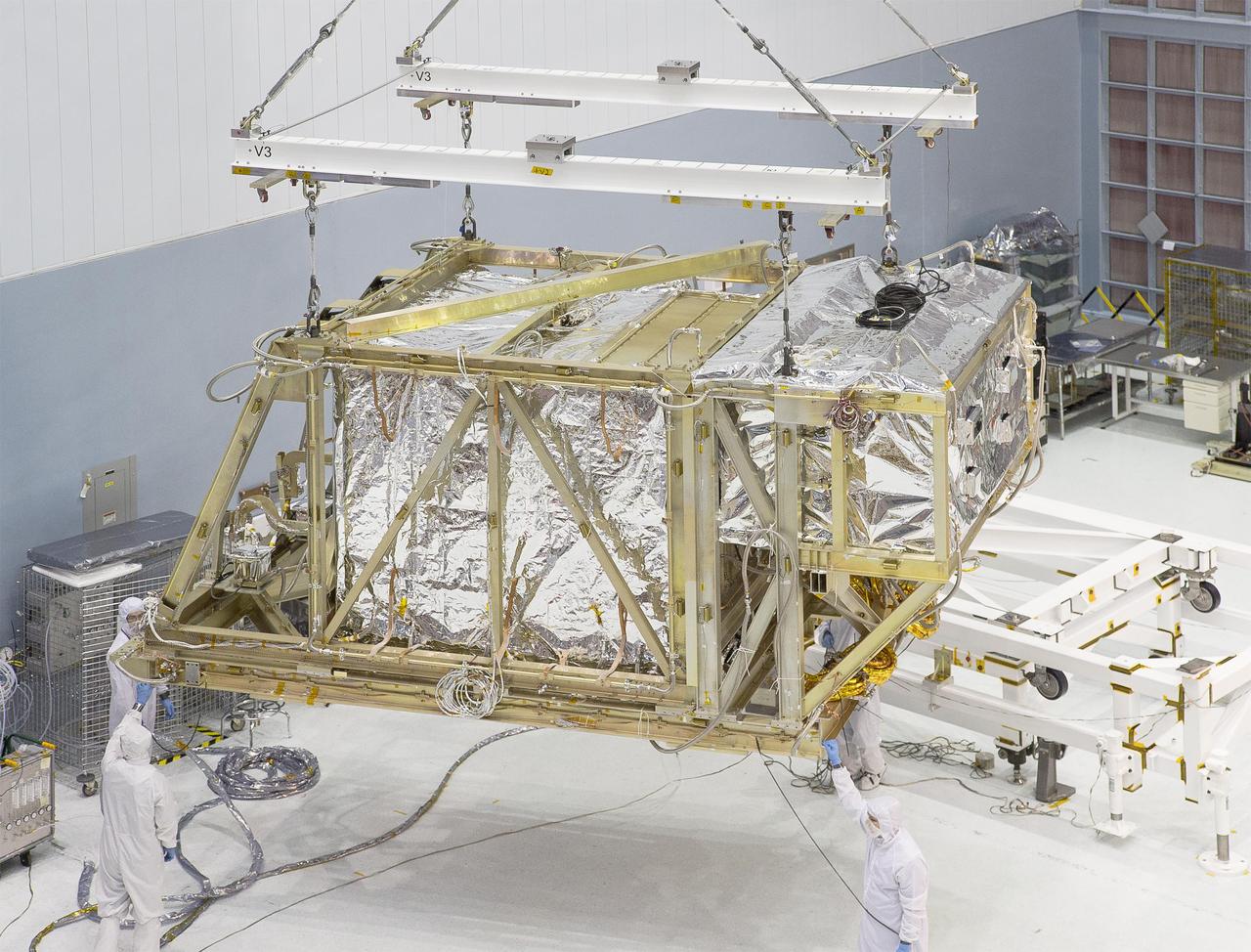
At NASA's James Webb Space Telescope's final destination in space, one million miles away from Earth, it will operate at incredibly cold temperatures of -387 degrees Fahrenheit, or 40 degrees Kelvin. This is 260 degrees Fahrenheit colder than any place on the Earth’s surface has ever been. So first, this final super cold test at Goddard will prepare the Integrated Science Instrument Module (ISIM), or the “heart” of the telescope, for space. Read more: <a href="http://go.nasa.gov/1KFPwJG" rel="nofollow">go.nasa.gov/1KFPwJG</a> Credit: NASA/Goddard/Chris Gunn <b><a href="http://www.nasa.gov/audience/formedia/features/MP_Photo_Guidelines.html" rel="nofollow">NASA image use policy.</a></b> <b><a href="http://www.nasa.gov/centers/goddard/home/index.html" rel="nofollow">NASA Goddard Space Flight Center</a></b> enables NASA’s mission through four scientific endeavors: Earth Science, Heliophysics, Solar System Exploration, and Astrophysics. Goddard plays a leading role in NASA’s accomplishments by contributing compelling scientific knowledge to advance the Agency’s mission. <b>Follow us on <a href="http://twitter.com/NASAGoddardPix" rel="nofollow">Twitter</a></b> <b>Like us on <a href="http://www.facebook.com/pages/Greenbelt-MD/NASA-Goddard/395013845897?ref=tsd" rel="nofollow">Facebook</a></b> <b>Find us on <a href="http://instagrid.me/nasagoddard/?vm=grid" rel="nofollow">Instagram</a></b>

This imagery shows how technicians at NASA’s Michoud Assembly Facility moved the aft dome of the liquid oxygen tank for NASA’s SLS (Space Launch System) rocket for the next phase of production inside the Vertical Assembly center Dec. 18. The dome will form part of the core stage that will power NASA’s Artemis III mission. Engineers rotate the dome to attach it to the previously joined forward dome and aft barrel segments using friction-stir welding. The liquid oxygen tank is one of five major components that make up the SLS rocket’s core stage. Together with the forward skirt, intertank, liquid hydrogen tank, engine section, along with the four RS-25 engines at its base, the 212-foot core stage will help power NASA’s Artemis missions to the Moon.

This imagery shows how technicians at NASA’s Michoud Assembly Facility moved the aft dome of the liquid oxygen tank for NASA’s SLS (Space Launch System) rocket for the next phase of production inside the Vertical Assembly center Dec. 18. The dome will form part of the core stage that will power NASA’s Artemis III mission. Engineers rotate the dome to attach it to the previously joined forward dome and aft barrel segments using friction-stir welding. The liquid oxygen tank is one of five major components that make up the SLS rocket’s core stage. Together with the forward skirt, intertank, liquid hydrogen tank, engine section, along with the four RS-25 engines at its base, the 212-foot core stage will help power NASA’s Artemis missions to the Moon.

This imagery shows how technicians at NASA’s Michoud Assembly Facility moved the aft dome of the liquid oxygen tank for NASA’s SLS (Space Launch System) rocket for the next phase of production inside the Vertical Assembly center Dec. 18. The dome will form part of the core stage that will power NASA’s Artemis III mission. Engineers rotate the dome to attach it to the previously joined forward dome and aft barrel segments using friction-stir welding. The liquid oxygen tank is one of five major components that make up the SLS rocket’s core stage. Together with the forward skirt, intertank, liquid hydrogen tank, engine section, along with the four RS-25 engines at its base, the 212-foot core stage will help power NASA’s Artemis missions to the Moon.
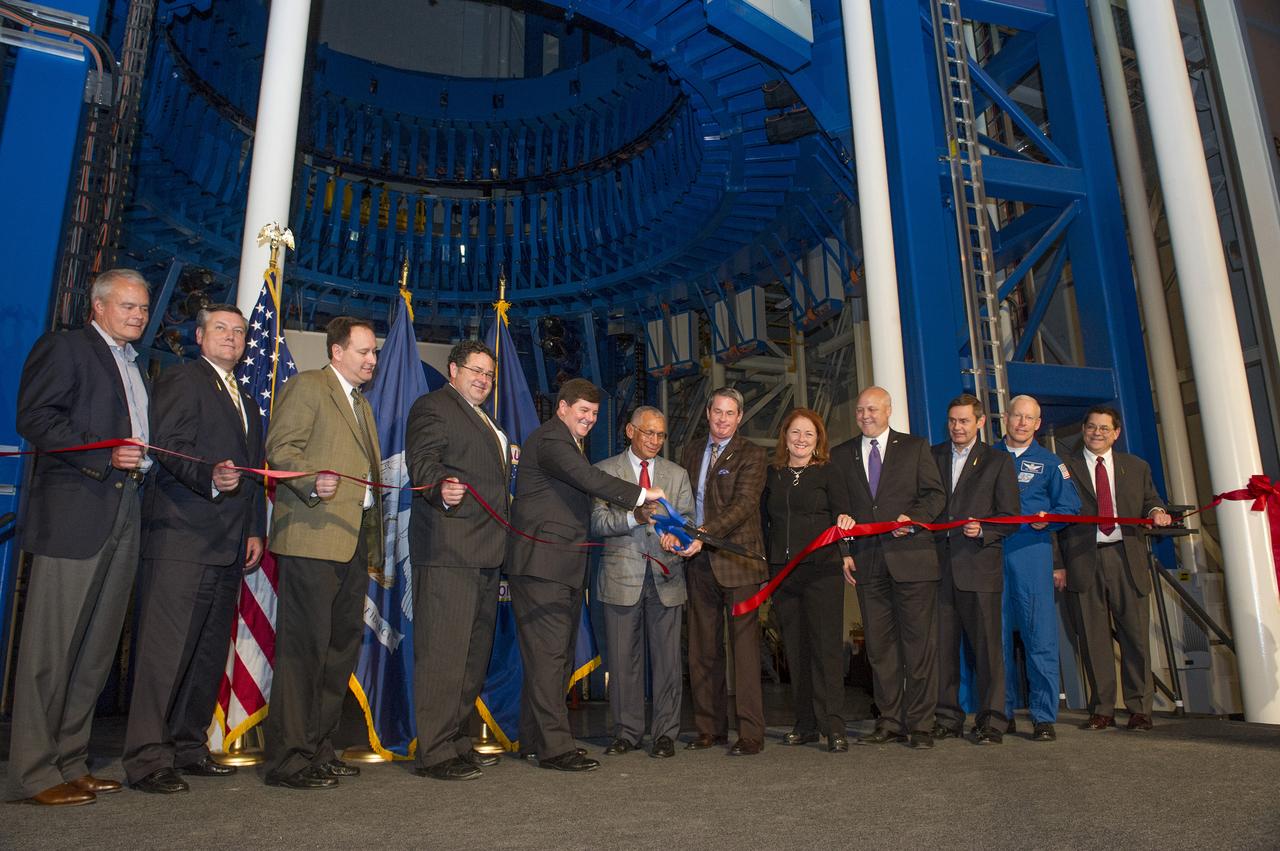
RIBBON CUTTING AT VERTICAL ASSEMBLY CENTER, MICHOUD ASSEMBLY FACILITY, SEPTEMBER 12, 2014, (L TO R): CLAY KIEFABER, CEO OF ESAB (COMPANY THAT BUILT WELDING TOOL)…PATRICK SCHEUERMANN…ROBERT LIGHTFOOT…TODD MAY…MISSISSIPPI CONGRESSMAN STEVEN PALAZZO…CHARLIE BOLDEN…LOUISIANA SENATOR DAVID VITTER…VIRGINIA BARNES, VICE-PRESIDENT AND PROGRAM MANAGER FOR SLS - BOEING… MITCH LANDRIEU, MAYOR OF NEW ORLEANS… JOHN ELBON, VICE PRESIDENT/GENERAL MANAGER, SPACE EXPLORATIONS – BOEING…PATRICK FORRESTER, ASTRONAUT…ROY MALONE.

This imagery shows how technicians at NASA’s Michoud Assembly Facility moved the aft dome of the liquid oxygen tank for NASA’s SLS (Space Launch System) rocket for the next phase of production inside the Vertical Assembly center Dec. 18. The dome will form part of the core stage that will power NASA’s Artemis III mission. Engineers rotate the dome to attach it to the previously joined forward dome and aft barrel segments using friction-stir welding. The liquid oxygen tank is one of five major components that make up the SLS rocket’s core stage. Together with the forward skirt, intertank, liquid hydrogen tank, engine section, along with the four RS-25 engines at its base, the 212-foot core stage will help power NASA’s Artemis missions to the Moon.

This imagery shows how technicians at NASA’s Michoud Assembly Facility moved the aft dome of the liquid oxygen tank for NASA’s SLS (Space Launch System) rocket for the next phase of production inside the Vertical Assembly center Dec. 18. The dome will form part of the core stage that will power NASA’s Artemis III mission. Engineers rotate the dome to attach it to the previously joined forward dome and aft barrel segments using friction-stir welding. The liquid oxygen tank is one of five major components that make up the SLS rocket’s core stage. Together with the forward skirt, intertank, liquid hydrogen tank, engine section, along with the four RS-25 engines at its base, the 212-foot core stage will help power NASA’s Artemis missions to the Moon.

This imagery shows how technicians at NASA’s Michoud Assembly Facility moved the aft dome of the liquid oxygen tank for NASA’s SLS (Space Launch System) rocket for the next phase of production inside the Vertical Assembly center Dec. 18. The dome will form part of the core stage that will power NASA’s Artemis III mission. Engineers rotate the dome to attach it to the previously joined forward dome and aft barrel segments using friction-stir welding. The liquid oxygen tank is one of five major components that make up the SLS rocket’s core stage. Together with the forward skirt, intertank, liquid hydrogen tank, engine section, along with the four RS-25 engines at its base, the 212-foot core stage will help power NASA’s Artemis missions to the Moon.

This imagery shows how technicians at NASA’s Michoud Assembly Facility moved the aft dome of the liquid oxygen tank for NASA’s SLS (Space Launch System) rocket for the next phase of production inside the Vertical Assembly center Dec. 18. The dome will form part of the core stage that will power NASA’s Artemis III mission. Engineers rotate the dome to attach it to the previously joined forward dome and aft barrel segments using friction-stir welding. The liquid oxygen tank is one of five major components that make up the SLS rocket’s core stage. Together with the forward skirt, intertank, liquid hydrogen tank, engine section, along with the four RS-25 engines at its base, the 212-foot core stage will help power NASA’s Artemis missions to the Moon.

This imagery shows how technicians at NASA’s Michoud Assembly Facility moved the aft dome of the liquid oxygen tank for NASA’s SLS (Space Launch System) rocket for the next phase of production inside the Vertical Assembly center Dec. 18. The dome will form part of the core stage that will power NASA’s Artemis III mission. Engineers rotate the dome to attach it to the previously joined forward dome and aft barrel segments using friction-stir welding. The liquid oxygen tank is one of five major components that make up the SLS rocket’s core stage. Together with the forward skirt, intertank, liquid hydrogen tank, engine section, along with the four RS-25 engines at its base, the 212-foot core stage will help power NASA’s Artemis missions to the Moon.

This imagery shows how technicians at NASA’s Michoud Assembly Facility moved the aft dome of the liquid oxygen tank for NASA’s SLS (Space Launch System) rocket for the next phase of production inside the Vertical Assembly center Dec. 18. The dome will form part of the core stage that will power NASA’s Artemis III mission. Engineers rotate the dome to attach it to the previously joined forward dome and aft barrel segments using friction-stir welding. The liquid oxygen tank is one of five major components that make up the SLS rocket’s core stage. Together with the forward skirt, intertank, liquid hydrogen tank, engine section, along with the four RS-25 engines at its base, the 212-foot core stage will help power NASA’s Artemis missions to the Moon.

This imagery shows how technicians at NASA’s Michoud Assembly Facility moved the aft dome of the liquid oxygen tank for NASA’s SLS (Space Launch System) rocket for the next phase of production inside the Vertical Assembly center Dec. 18. The dome will form part of the core stage that will power NASA’s Artemis III mission. Engineers rotate the dome to attach it to the previously joined forward dome and aft barrel segments using friction-stir welding. The liquid oxygen tank is one of five major components that make up the SLS rocket’s core stage. Together with the forward skirt, intertank, liquid hydrogen tank, engine section, along with the four RS-25 engines at its base, the 212-foot core stage will help power NASA’s Artemis missions to the Moon.

This imagery shows how technicians at NASA’s Michoud Assembly Facility moved the aft dome of the liquid oxygen tank for NASA’s SLS (Space Launch System) rocket for the next phase of production inside the Vertical Assembly center Dec. 18. The dome will form part of the core stage that will power NASA’s Artemis III mission. Engineers rotate the dome to attach it to the previously joined forward dome and aft barrel segments using friction-stir welding. The liquid oxygen tank is one of five major components that make up the SLS rocket’s core stage. Together with the forward skirt, intertank, liquid hydrogen tank, engine section, along with the four RS-25 engines at its base, the 212-foot core stage will help power NASA’s Artemis missions to the Moon.

This imagery shows how technicians at NASA’s Michoud Assembly Facility moved the aft dome of the liquid oxygen tank for NASA’s SLS (Space Launch System) rocket for the next phase of production inside the Vertical Assembly center Dec. 18. The dome will form part of the core stage that will power NASA’s Artemis III mission. Engineers rotate the dome to attach it to the previously joined forward dome and aft barrel segments using friction-stir welding. The liquid oxygen tank is one of five major components that make up the SLS rocket’s core stage. Together with the forward skirt, intertank, liquid hydrogen tank, engine section, along with the four RS-25 engines at its base, the 212-foot core stage will help power NASA’s Artemis missions to the Moon.