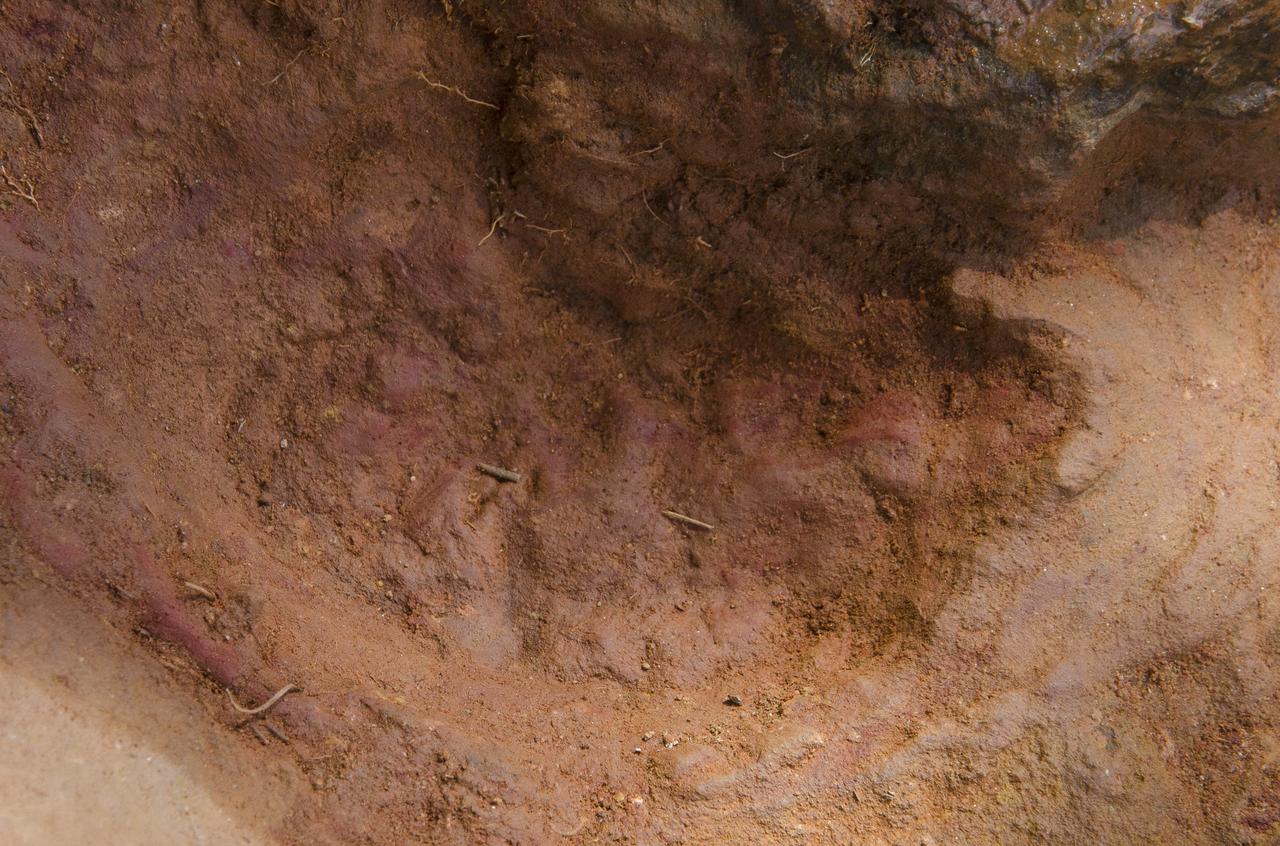
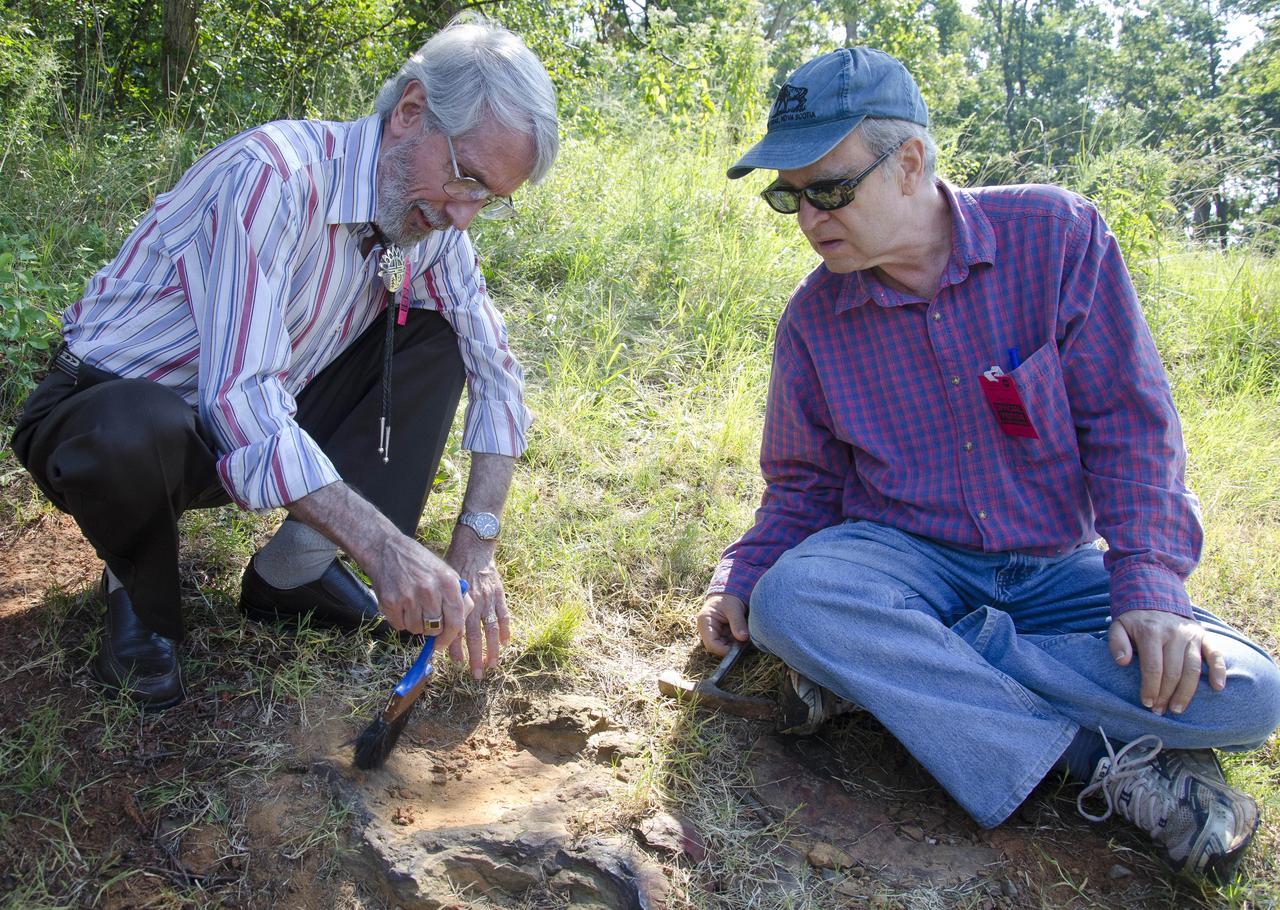
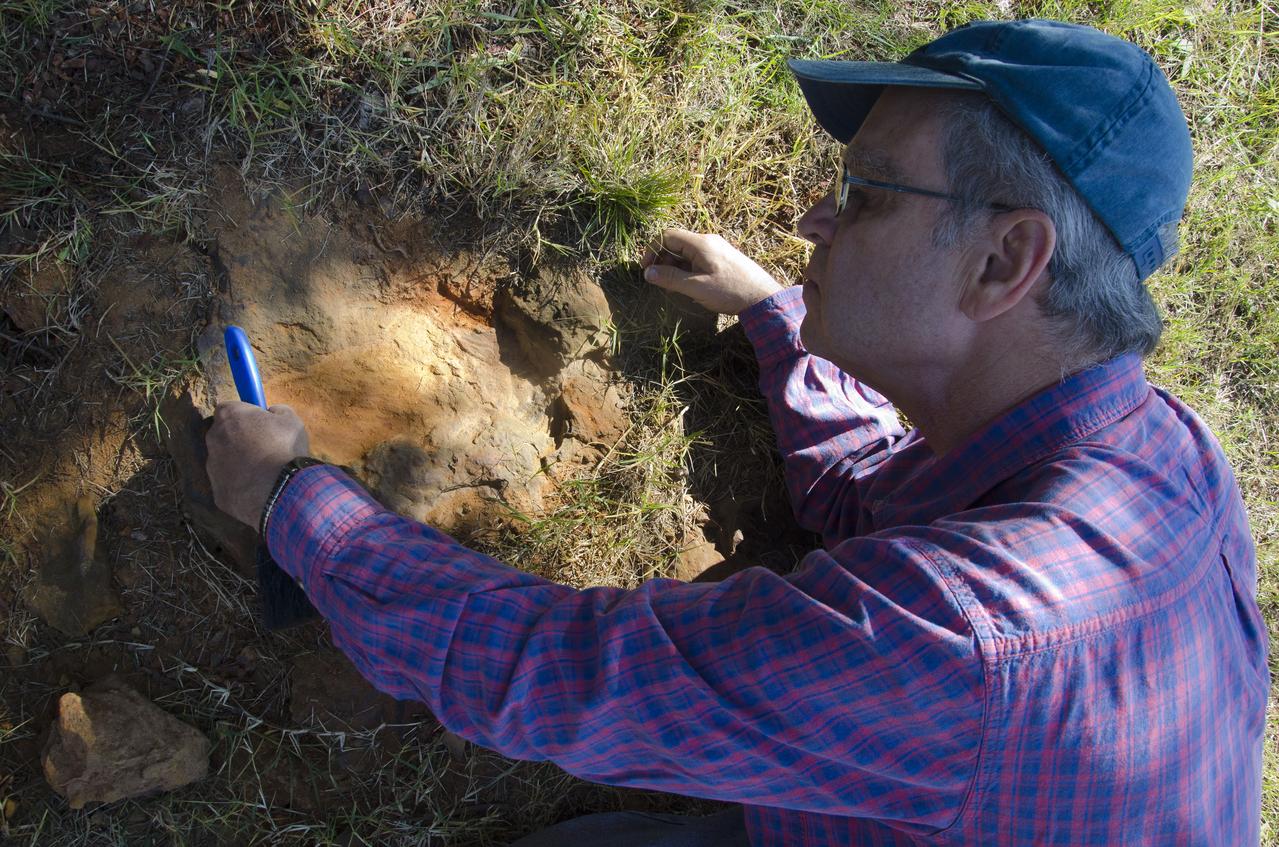
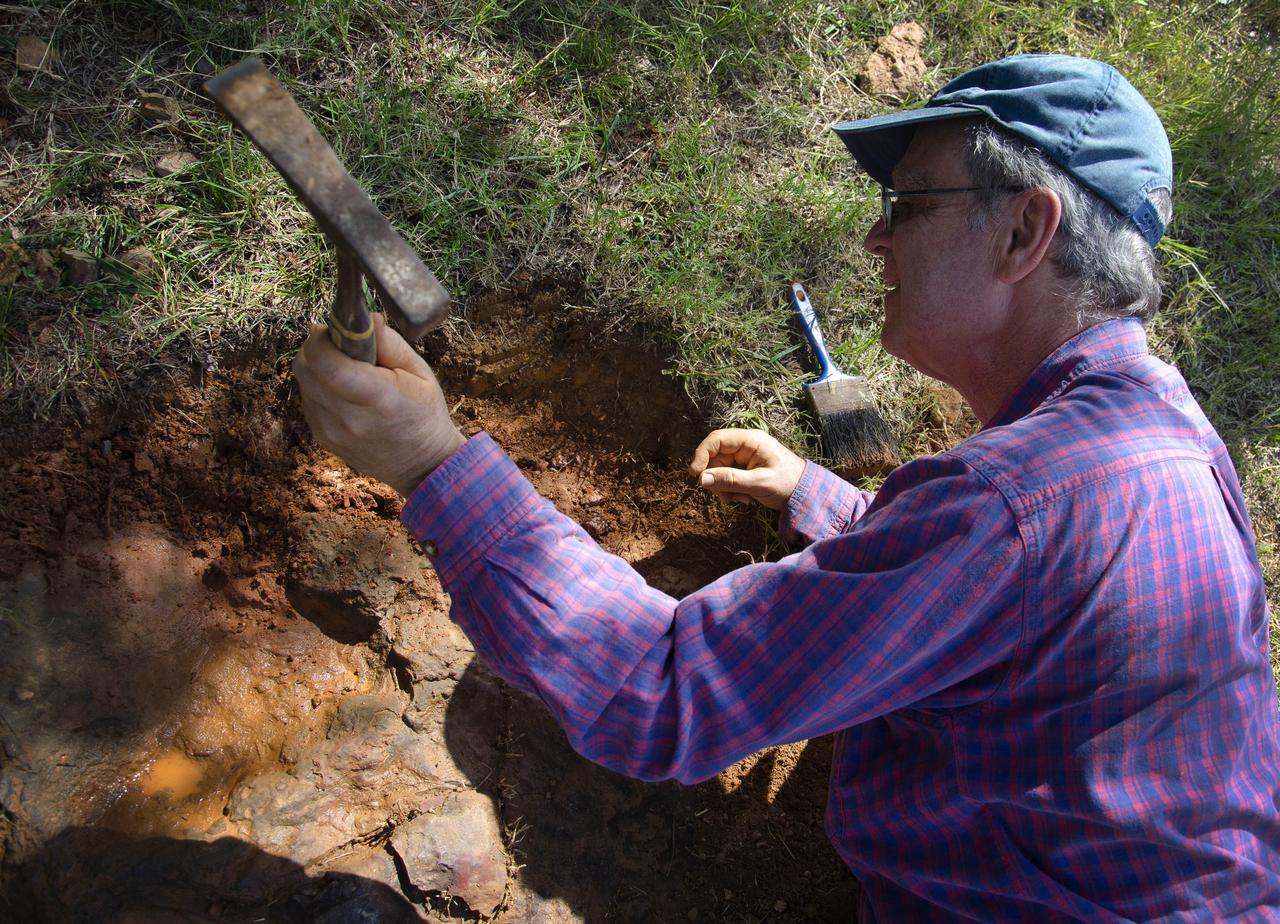
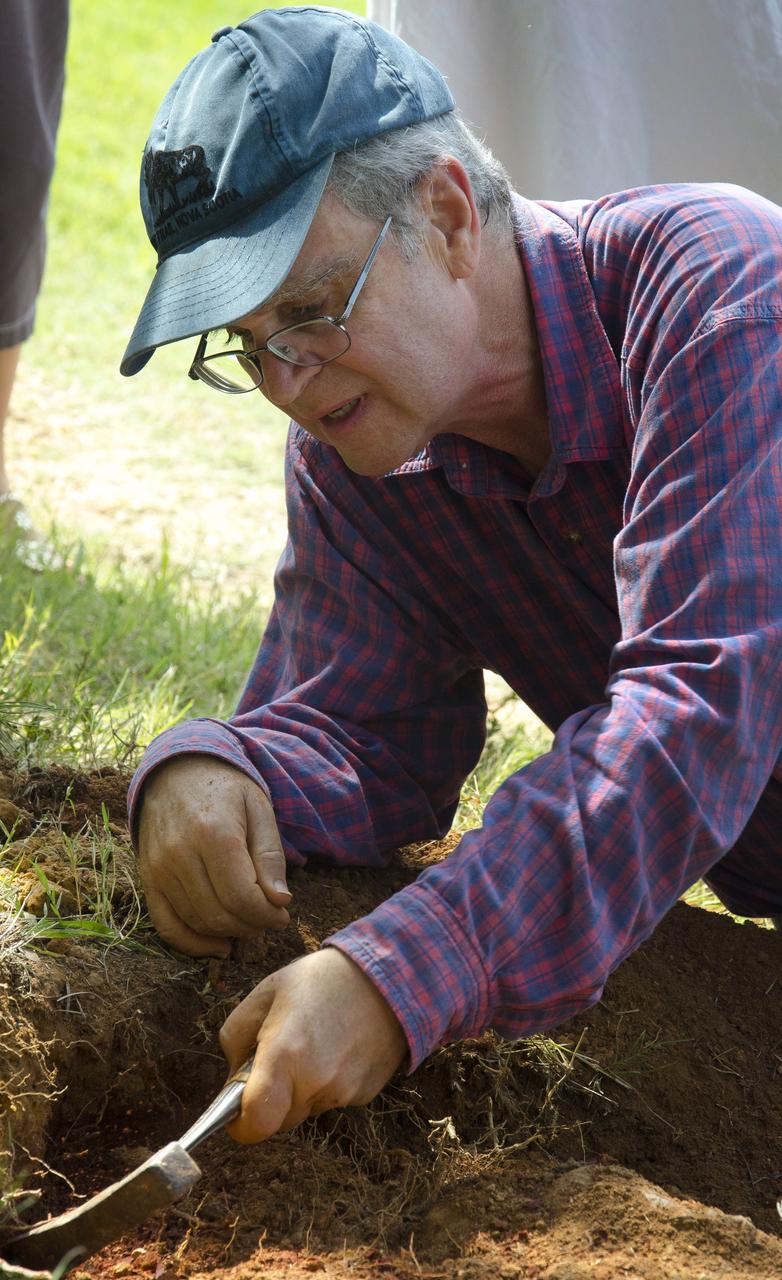
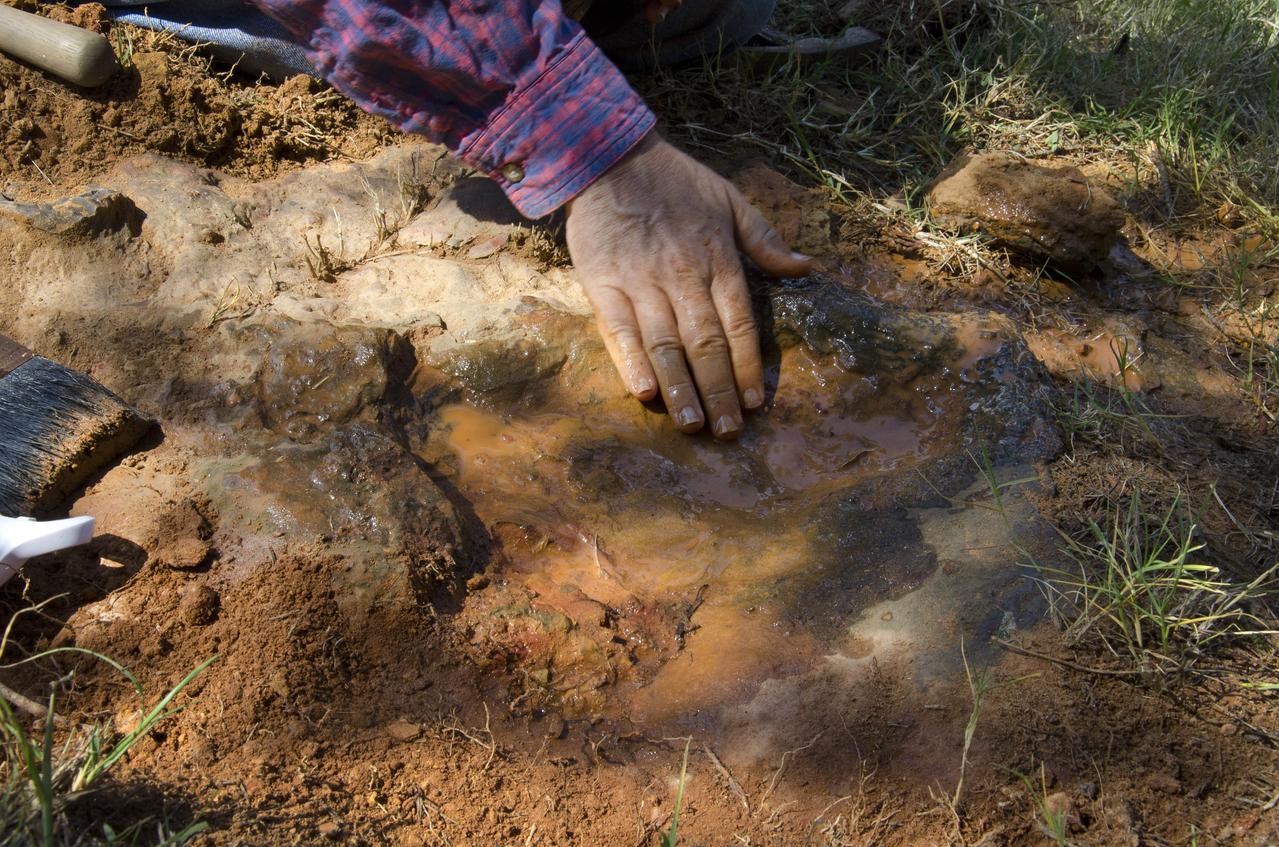
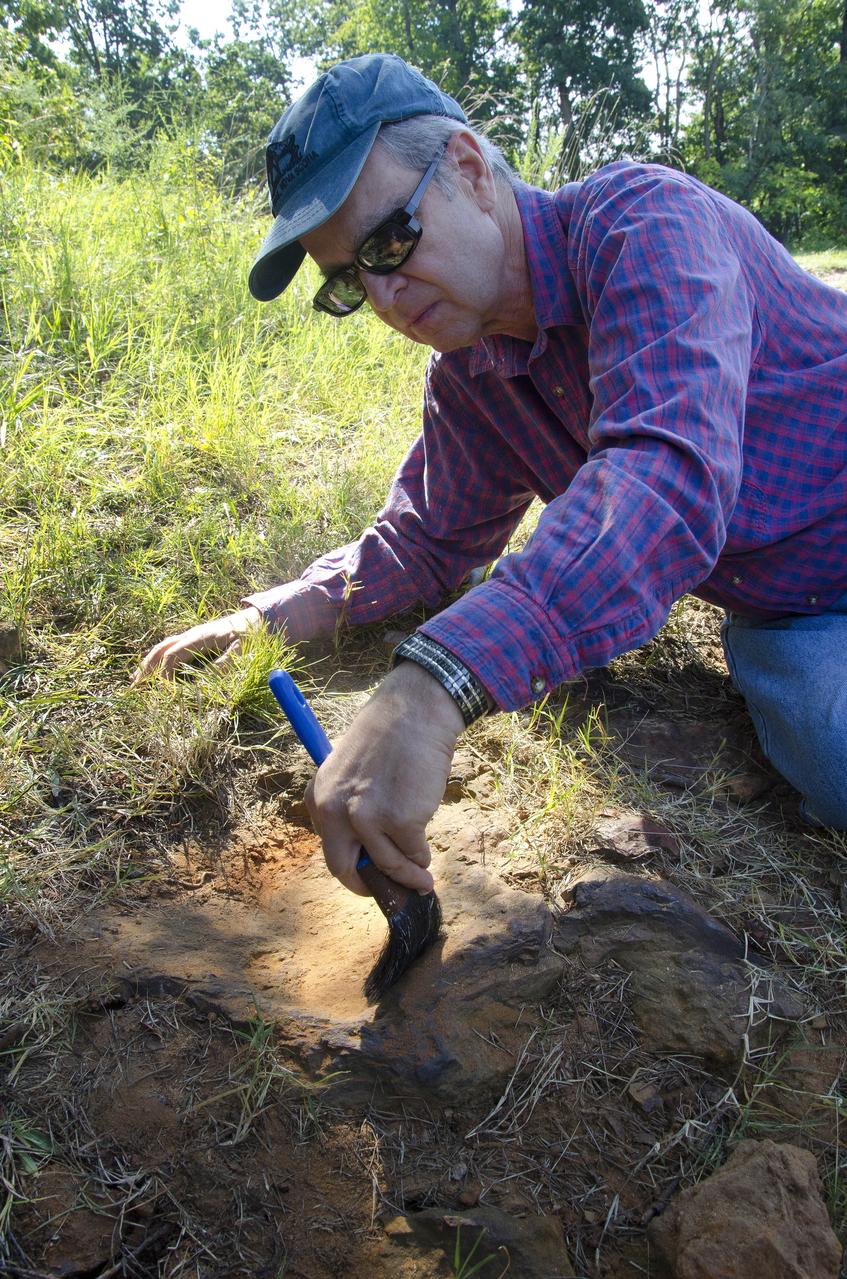
Dr. Robert Weems, emeritus paleontologist for the USGS verifies the recently discovered dinosaur track found on the NASA Goddard Space Flight Center campus.  This imprint shows the right rear foot of a nodosaur - a low-slung, spiny leaf-eater - apparently moving in haste as the heel did not fully settle in the cretaceous mud, according to dinosaur tracker Ray Stanford. It was found recently on NASA's Goddard Space Flight Center campus and is being preserved for study.   To read more about this discovery go to: <a href="http://1.usa.gov/P9NYg7" rel="nofollow">1.usa.gov/P9NYg7</a>  Credit: NASA/GSFC/Rebecca Roth  <b><a href="http://www.nasa.gov/audience/formedia/features/MP_Photo_Guidelines.html" rel="nofollow">NASA image use policy.</a></b>  <b><a href="http://www.nasa.gov/centers/goddard/home/index.html" rel="nofollow">NASA Goddard Space Flight Center</a></b> enables NASA’s mission through four scientific endeavors: Earth Science, Heliophysics, Solar System Exploration, and Astrophysics. Goddard plays a leading role in NASA’s accomplishments by contributing compelling scientific knowledge to advance the Agency’s mission.  <b>Follow us on <a href="http://twitter.com/NASA_GoddardPix" rel="nofollow">Twitter</a></b>  <b>Like us on <a href="http://www.facebook.com/pages/Greenbelt-MD/NASA-Goddard/395013845897?ref=tsd" rel="nofollow">Facebook</a></b>  <b>Find us on <a href="http://instagrid.me/nasagoddard/?vm=grid" rel="nofollow">Instagram</a></b>
Nodosaur Footprint Verified
Dr. Robert Weems, emeritus paleontologist for the USGS verifies the recently discovered dinosaur track found on the NASA Goddard Space Flight Center campus.  This imprint shows the right rear foot of a nodosaur - a low-slung, spiny leaf-eater - apparently moving in haste as the heel did not fully settle in the cretaceous mud, according to dinosaur tracker Ray Stanford. It was found recently on NASA's Goddard Space Flight Center campus and is being preserved for study.   To read more about this discovery go to: <a href="http://1.usa.gov/P9NYg7" rel="nofollow">1.usa.gov/P9NYg7</a>  Credit: NASA/GSFC/Rebecca Roth  <b><a href="http://www.nasa.gov/audience/formedia/features/MP_Photo_Guidelines.html" rel="nofollow">NASA image use policy.</a></b>  <b><a href="http://www.nasa.gov/centers/goddard/home/index.html" rel="nofollow">NASA Goddard Space Flight Center</a></b> enables NASA’s mission through four scientific endeavors: Earth Science, Heliophysics, Solar System Exploration, and Astrophysics. Goddard plays a leading role in NASA’s accomplishments by contributing compelling scientific knowledge to advance the Agency’s mission.  <b>Follow us on <a href="http://twitter.com/NASA_GoddardPix" rel="nofollow">Twitter</a></b>  <b>Like us on <a href="http://www.facebook.com/pages/Greenbelt-MD/NASA-Goddard/395013845897?ref=tsd" rel="nofollow">Facebook</a></b>  <b>Find us on <a href="http://instagrid.me/nasagoddard/?vm=grid" rel="nofollow">Instagram</a></b>
Nodosaur Footprint Verified
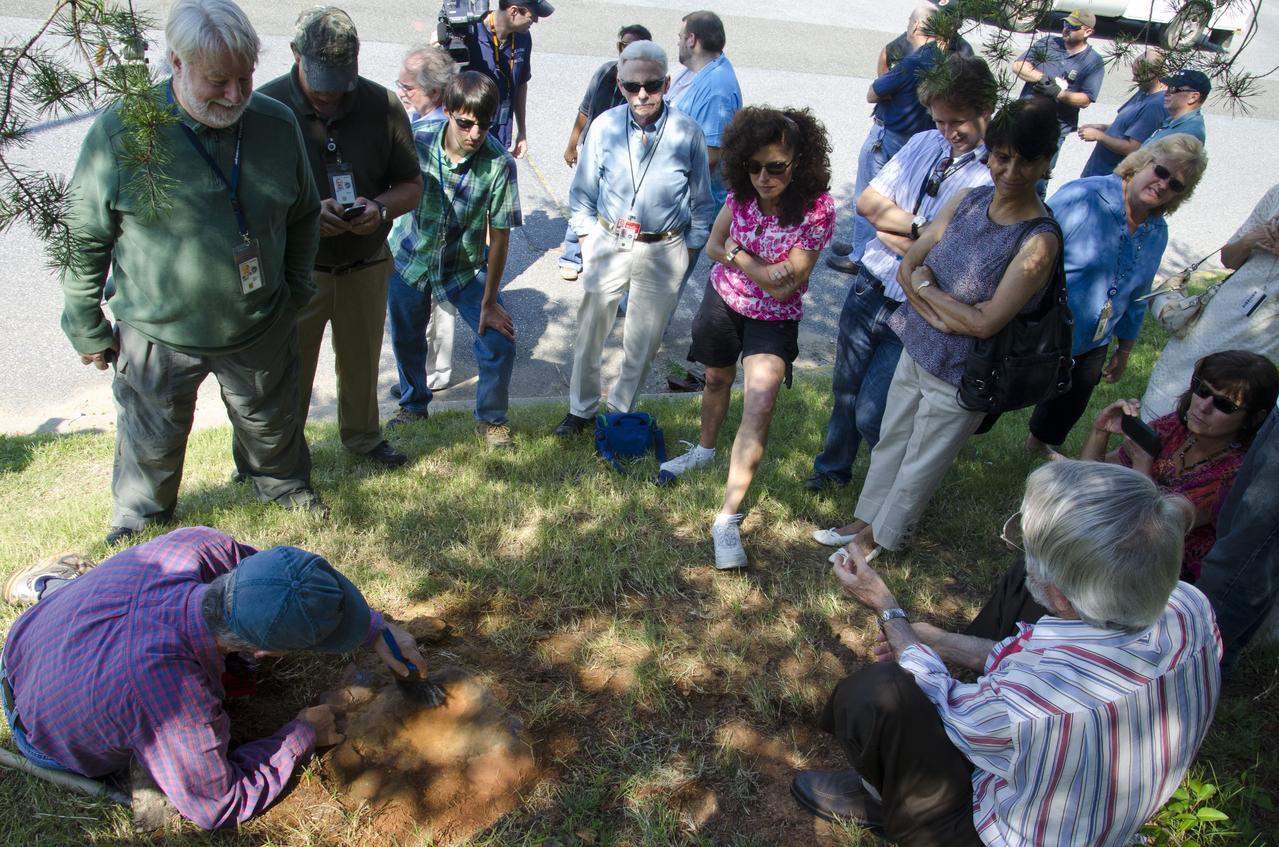
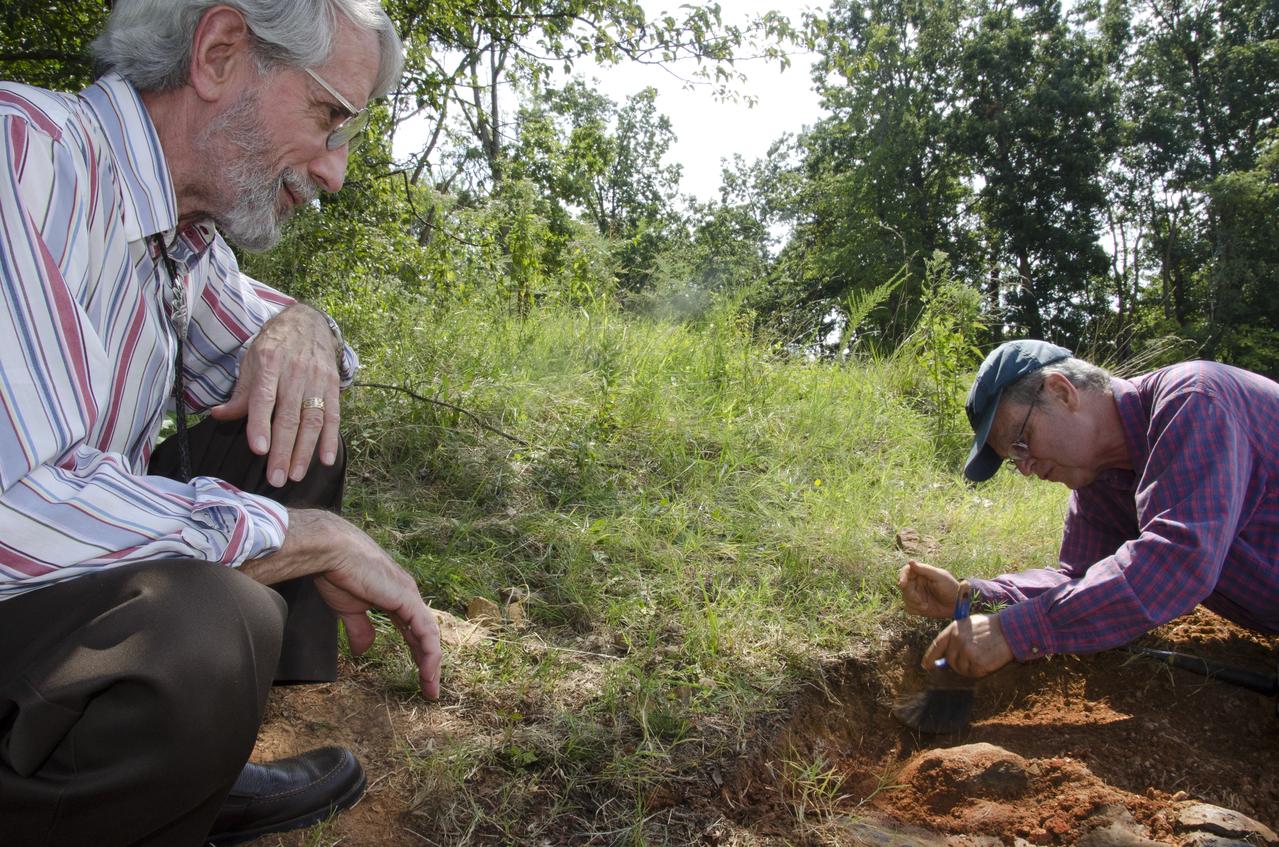
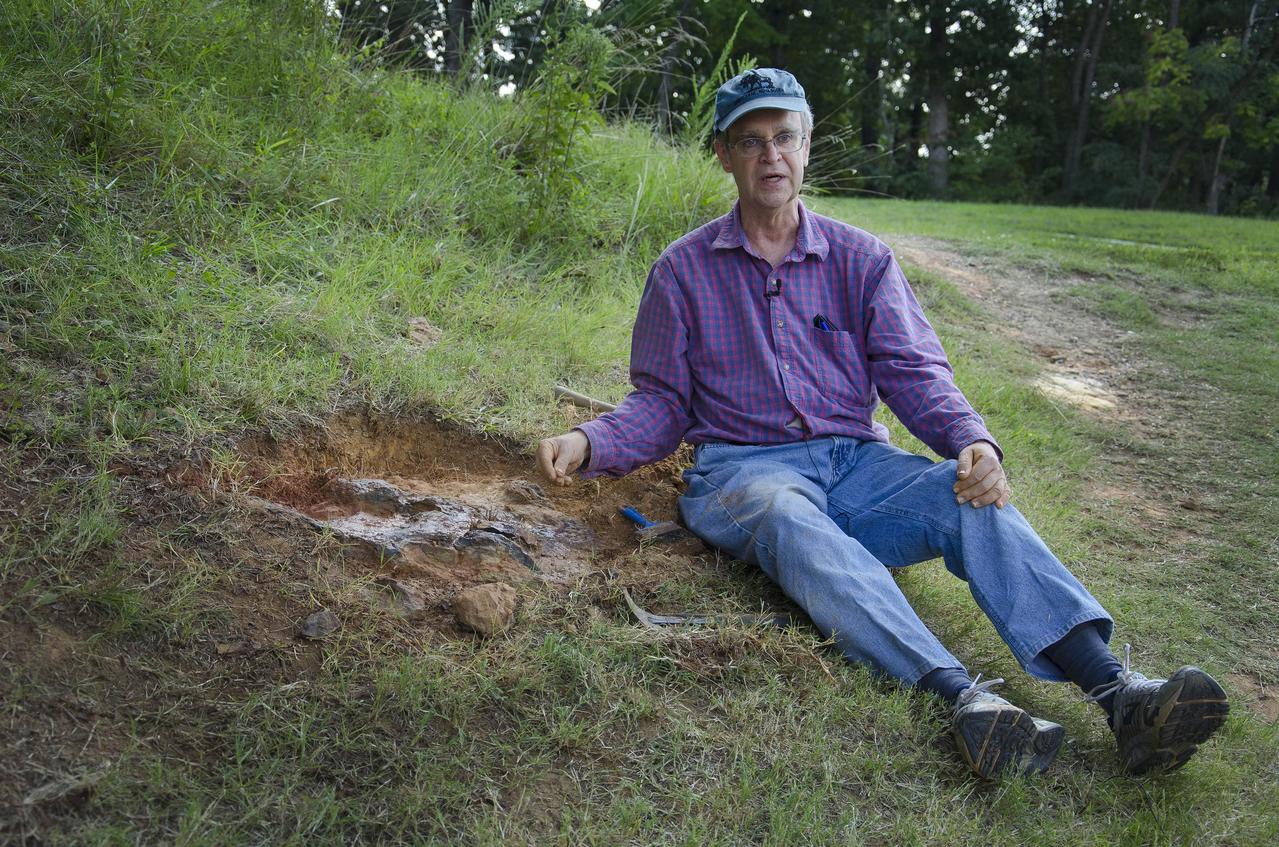
Dinosaur tracker Ray Stanford describes the cretaceous-era nodosaur track he found on the Goddard Space Flight Center campus with Dr. Robert  Weems, emeritus paleontologist for the USGS who verified his discovery.  This imprint shows the right rear foot of a nodosaur - a low-slung, spiny leaf-eater - apparently moving in haste as the heel did not fully settle in the cretaceous mud, according to dinosaur tracker Ray Stanford. It was found recently on NASA's Goddard Space Flight Center campus and is being preserved for study.   To read more go to: <a href="http://1.usa.gov/P9NYg7" rel="nofollow">1.usa.gov/P9NYg7</a>  Credit: NASA/GSFC/Rebecca Roth  <b><a href="http://www.nasa.gov/audience/formedia/features/MP_Photo_Guidelines.html" rel="nofollow">NASA image use policy.</a></b>  <b><a href="http://www.nasa.gov/centers/goddard/home/index.html" rel="nofollow">NASA Goddard Space Flight Center</a></b> enables NASA’s mission through four scientific endeavors: Earth Science, Heliophysics, Solar System Exploration, and Astrophysics. Goddard plays a leading role in NASA’s accomplishments by contributing compelling scientific knowledge to advance the Agency’s mission.  <b>Follow us on <a href="http://twitter.com/NASA_GoddardPix" rel="nofollow">Twitter</a></b>  <b>Like us on <a href="http://www.facebook.com/pages/Greenbelt-MD/NASA-Goddard/395013845897?ref=tsd" rel="nofollow">Facebook</a></b>  <b>Find us on <a href="http://instagrid.me/nasagoddard/?vm=grid" rel="nofollow">Instagram</a></b>
Nodosaur Footprint Verified
Dr. Robert Weems, emeritus paleontologist for the USGS verifies the recently discovered dinosaur track found on the NASA Goddard Space Flight Center campus.  This imprint shows the right rear foot of a nodosaur - a low-slung, spiny leaf-eater - apparently moving in haste as the heel did not fully settle in the cretaceous mud, according to dinosaur tracker Ray Stanford. It was found recently on NASA's Goddard Space Flight Center campus and is being preserved for study.   To read more about this discovery go to: <a href="http://1.usa.gov/P9NYg7" rel="nofollow">1.usa.gov/P9NYg7</a>  Credit: NASA/GSFC/Rebecca Roth  <b><a href="http://www.nasa.gov/audience/formedia/features/MP_Photo_Guidelines.html" rel="nofollow">NASA image use policy.</a></b>  <b><a href="http://www.nasa.gov/centers/goddard/home/index.html" rel="nofollow">NASA Goddard Space Flight Center</a></b> enables NASA’s mission through four scientific endeavors: Earth Science, Heliophysics, Solar System Exploration, and Astrophysics. Goddard plays a leading role in NASA’s accomplishments by contributing compelling scientific knowledge to advance the Agency’s mission.  <b>Follow us on <a href="http://twitter.com/NASA_GoddardPix" rel="nofollow">Twitter</a></b>  <b>Like us on <a href="http://www.facebook.com/pages/Greenbelt-MD/NASA-Goddard/395013845897?ref=tsd" rel="nofollow">Facebook</a></b>  <b>Find us on <a href="http://instagrid.me/nasagoddard/?vm=grid" rel="nofollow">Instagram</a></b>
Nodosaur Footprint Verified
Dr. Robert Weems, emeritus paleontologist for the USGS verifies the recently discovered dinosaur track found on the NASA Goddard Space Flight Center campus.  This imprint shows the right rear foot of a nodosaur - a low-slung, spiny leaf-eater - apparently moving in haste as the heel did not fully settle in the cretaceous mud, according to dinosaur tracker Ray Stanford. It was found recently on NASA's Goddard Space Flight Center campus and is being preserved for study.   To read more about this discovery go to: <a href="http://1.usa.gov/P9NYg7" rel="nofollow">1.usa.gov/P9NYg7</a>  Credit: NASA/GSFC/Rebecca Roth  <b><a href="http://www.nasa.gov/audience/formedia/features/MP_Photo_Guidelines.html" rel="nofollow">NASA image use policy.</a></b>  <b><a href="http://www.nasa.gov/centers/goddard/home/index.html" rel="nofollow">NASA Goddard Space Flight Center</a></b> enables NASA’s mission through four scientific endeavors: Earth Science, Heliophysics, Solar System Exploration, and Astrophysics. Goddard plays a leading role in NASA’s accomplishments by contributing compelling scientific knowledge to advance the Agency’s mission.  <b>Follow us on <a href="http://twitter.com/NASA_GoddardPix" rel="nofollow">Twitter</a></b>  <b>Like us on <a href="http://www.facebook.com/pages/Greenbelt-MD/NASA-Goddard/395013845897?ref=tsd" rel="nofollow">Facebook</a></b>  <b>Find us on <a href="http://instagrid.me/nasagoddard/?vm=grid" rel="nofollow">Instagram</a></b>
Nodosaur Footprint Verified
Dr. Robert Weems, emeritus paleontologist for the USGS verifies the recently discovered dinosaur track found on the NASA Goddard Space Flight Center campus.  This imprint shows the right rear foot of a nodosaur - a low-slung, spiny leaf-eater - apparently moving in haste as the heel did not fully settle in the cretaceous mud, according to dinosaur tracker Ray Stanford. It was found recently on NASA's Goddard Space Flight Center campus and is being preserved for study.   To read more about this discovery go to: <a href="http://1.usa.gov/P9NYg7" rel="nofollow">1.usa.gov/P9NYg7</a>  Credit: NASA/GSFC/Rebecca Roth  <b><a href="http://www.nasa.gov/audience/formedia/features/MP_Photo_Guidelines.html" rel="nofollow">NASA image use policy.</a></b>  <b><a href="http://www.nasa.gov/centers/goddard/home/index.html" rel="nofollow">NASA Goddard Space Flight Center</a></b> enables NASA’s mission through four scientific endeavors: Earth Science, Heliophysics, Solar System Exploration, and Astrophysics. Goddard plays a leading role in NASA’s accomplishments by contributing compelling scientific knowledge to advance the Agency’s mission.  <b>Follow us on <a href="http://twitter.com/NASA_GoddardPix" rel="nofollow">Twitter</a></b>  <b>Like us on <a href="http://www.facebook.com/pages/Greenbelt-MD/NASA-Goddard/395013845897?ref=tsd" rel="nofollow">Facebook</a></b>  <b>Find us on <a href="http://instagrid.me/nasagoddard/?vm=grid" rel="nofollow">Instagram</a></b>
Nodosaur Footprint Verified
Dr. Robert Weems, emeritus paleontologist for the USGS verifies the recently discovered dinosaur track found on the NASA Goddard Space Flight Center campus.  This imprint shows the right rear foot of a nodosaur - a low-slung, spiny leaf-eater - apparently moving in haste as the heel did not fully settle in the cretaceous mud, according to dinosaur tracker Ray Stanford. It was found recently on NASA's Goddard Space Flight Center campus and is being preserved for study.   To read more about this discovery go to: <a href="http://1.usa.gov/P9NYg7" rel="nofollow">1.usa.gov/P9NYg7</a>  Credit: NASA/GSFC/Rebecca Roth  <b><a href="http://www.nasa.gov/audience/formedia/features/MP_Photo_Guidelines.html" rel="nofollow">NASA image use policy.</a></b>  <b><a href="http://www.nasa.gov/centers/goddard/home/index.html" rel="nofollow">NASA Goddard Space Flight Center</a></b> enables NASA’s mission through four scientific endeavors: Earth Science, Heliophysics, Solar System Exploration, and Astrophysics. Goddard plays a leading role in NASA’s accomplishments by contributing compelling scientific knowledge to advance the Agency’s mission.  <b>Follow us on <a href="http://twitter.com/NASA_GoddardPix" rel="nofollow">Twitter</a></b>  <b>Like us on <a href="http://www.facebook.com/pages/Greenbelt-MD/NASA-Goddard/395013845897?ref=tsd" rel="nofollow">Facebook</a></b>  <b>Find us on <a href="http://instagrid.me/nasagoddard/?vm=grid" rel="nofollow">Instagram</a></b>
Nodosaur Footprint Verified
Dinosaur tracker Ray Stanford describes the cretaceous-era nodosaur track he found on the Goddard Space Flight Center campus with Dr. Robert Weems, emeritus paleontologist for the USGS who verified his discovery.  This imprint shows the right rear foot of a nodosaur - a low-slung, spiny leaf-eater - apparently moving in haste as the heel did not fully settle in the cretaceous mud, according to dinosaur tracker Ray Stanford. It was found recently on NASA's Goddard Space Flight Center campus and is being preserved for study.   To read more go to: <a href="http://1.usa.gov/P9NYg7" rel="nofollow">1.usa.gov/P9NYg7</a>  Credit: NASA/GSFC/Rebecca Roth  <b><a href="http://www.nasa.gov/audience/formedia/features/MP_Photo_Guidelines.html" rel="nofollow">NASA image use policy.</a></b>  <b><a href="http://www.nasa.gov/centers/goddard/home/index.html" rel="nofollow">NASA Goddard Space Flight Center</a></b> enables NASA’s mission through four scientific endeavors: Earth Science, Heliophysics, Solar System Exploration, and Astrophysics. Goddard plays a leading role in NASA’s accomplishments by contributing compelling scientific knowledge to advance the Agency’s mission.  <b>Follow us on <a href="http://twitter.com/NASA_GoddardPix" rel="nofollow">Twitter</a></b>  <b>Like us on <a href="http://www.facebook.com/pages/Greenbelt-MD/NASA-Goddard/395013845897?ref=tsd" rel="nofollow">Facebook</a></b>  <b>Find us on <a href="http://instagrid.me/nasagoddard/?vm=grid" rel="nofollow">Instagram</a></b>
Nodosaur Footprint Verified
Dr. Robert Weems, emeritus paleontologist for the USGS verifies the recently discovered dinosaur track found on the NASA Goddard Space Flight Center campus.  This imprint shows the right rear foot of a nodosaur - a low-slung, spiny leaf-eater - apparently moving in haste as the heel did not fully settle in the cretaceous mud, according to dinosaur tracker Ray Stanford. It was found recently on NASA's Goddard Space Flight Center campus and is being preserved for study.   To read more about this discovery go to: <a href="http://1.usa.gov/P9NYg7" rel="nofollow">1.usa.gov/P9NYg7</a>  Credit: NASA/GSFC/Rebecca Roth  <b><a href="http://www.nasa.gov/audience/formedia/features/MP_Photo_Guidelines.html" rel="nofollow">NASA image use policy.</a></b>  <b><a href="http://www.nasa.gov/centers/goddard/home/index.html" rel="nofollow">NASA Goddard Space Flight Center</a></b> enables NASA’s mission through four scientific endeavors: Earth Science, Heliophysics, Solar System Exploration, and Astrophysics. Goddard plays a leading role in NASA’s accomplishments by contributing compelling scientific knowledge to advance the Agency’s mission.  <b>Follow us on <a href="http://twitter.com/NASA_GoddardPix" rel="nofollow">Twitter</a></b>  <b>Like us on <a href="http://www.facebook.com/pages/Greenbelt-MD/NASA-Goddard/395013845897?ref=tsd" rel="nofollow">Facebook</a></b>  <b>Find us on <a href="http://instagrid.me/nasagoddard/?vm=grid" rel="nofollow">Instagram</a></b>
Nodosaur Footprint Verified
Dr. Robert Weems, emeritus paleontologist for the USGS verifies the recently discovered dinosaur track found on the NASA Goddard Space Flight Center campus.  This imprint shows the right rear foot of a nodosaur - a low-slung, spiny leaf-eater - apparently moving in haste as the heel did not fully settle in the cretaceous mud, according to dinosaur tracker Ray Stanford. It was found recently on NASA's Goddard Space Flight Center campus and is being preserved for study.   To read more about this discovery go to: <a href="http://1.usa.gov/P9NYg7" rel="nofollow">1.usa.gov/P9NYg7</a>  Credit: NASA/GSFC/Rebecca Roth  <b><a href="http://www.nasa.gov/audience/formedia/features/MP_Photo_Guidelines.html" rel="nofollow">NASA image use policy.</a></b>  <b><a href="http://www.nasa.gov/centers/goddard/home/index.html" rel="nofollow">NASA Goddard Space Flight Center</a></b> enables NASA’s mission through four scientific endeavors: Earth Science, Heliophysics, Solar System Exploration, and Astrophysics. Goddard plays a leading role in NASA’s accomplishments by contributing compelling scientific knowledge to advance the Agency’s mission.  <b>Follow us on <a href="http://twitter.com/NASA_GoddardPix" rel="nofollow">Twitter</a></b>  <b>Like us on <a href="http://www.facebook.com/pages/Greenbelt-MD/NASA-Goddard/395013845897?ref=tsd" rel="nofollow">Facebook</a></b>  <b>Find us on <a href="http://instagrid.me/nasagoddard/?vm=grid" rel="nofollow">Instagram</a></b>
Nodosaur Footprint Verified
Dr. Robert Weems, emeritus paleontologist for the USGS verifies the recently discovered dinosaur track found on the NASA Goddard Space Flight Center campus.  This imprint shows the right rear foot of a nodosaur - a low-slung, spiny leaf-eater - apparently moving in haste as the heel did not fully settle in the cretaceous mud, according to dinosaur tracker Ray Stanford. It was found recently on NASA's Goddard Space Flight Center campus and is being preserved for study.   To read more about this discovery go to: <a href="http://1.usa.gov/P9NYg7" rel="nofollow">1.usa.gov/P9NYg7</a>  Credit: NASA/GSFC/Rebecca Roth  <b><a href="http://www.nasa.gov/audience/formedia/features/MP_Photo_Guidelines.html" rel="nofollow">NASA image use policy.</a></b>  <b><a href="http://www.nasa.gov/centers/goddard/home/index.html" rel="nofollow">NASA Goddard Space Flight Center</a></b> enables NASA’s mission through four scientific endeavors: Earth Science, Heliophysics, Solar System Exploration, and Astrophysics. Goddard plays a leading role in NASA’s accomplishments by contributing compelling scientific knowledge to advance the Agency’s mission.  <b>Follow us on <a href="http://twitter.com/NASA_GoddardPix" rel="nofollow">Twitter</a></b>  <b>Like us on <a href="http://www.facebook.com/pages/Greenbelt-MD/NASA-Goddard/395013845897?ref=tsd" rel="nofollow">Facebook</a></b>  <b>Find us on <a href="http://instagrid.me/nasagoddard/?vm=grid" rel="nofollow">Instagram</a></b>
Nodosaur Footprint Verified
Dr. Robert Weems, emeritus paleontologist for the USGS verifies the recently discovered dinosaur track found on the NASA Goddard Space Flight Center campus.  This imprint shows the right rear foot of a nodosaur - a low-slung, spiny leaf-eater - apparently moving in haste as the heel did not fully settle in the cretaceous mud, according to dinosaur tracker Ray Stanford. It was found recently on NASA's Goddard Space Flight Center campus and is being preserved for study.   To read more about this discovery go to: <a href="http://1.usa.gov/P9NYg7" rel="nofollow">1.usa.gov/P9NYg7</a>  Credit: NASA/GSFC/Rebecca Roth  <b><a href="http://www.nasa.gov/audience/formedia/features/MP_Photo_Guidelines.html" rel="nofollow">NASA image use policy.</a></b>  <b><a href="http://www.nasa.gov/centers/goddard/home/index.html" rel="nofollow">NASA Goddard Space Flight Center</a></b> enables NASA’s mission through four scientific endeavors: Earth Science, Heliophysics, Solar System Exploration, and Astrophysics. Goddard plays a leading role in NASA’s accomplishments by contributing compelling scientific knowledge to advance the Agency’s mission.  <b>Follow us on <a href="http://twitter.com/NASA_GoddardPix" rel="nofollow">Twitter</a></b>  <b>Like us on <a href="http://www.facebook.com/pages/Greenbelt-MD/NASA-Goddard/395013845897?ref=tsd" rel="nofollow">Facebook</a></b>  <b>Find us on <a href="http://instagrid.me/nasagoddard/?vm=grid" rel="nofollow">Instagram</a></b>
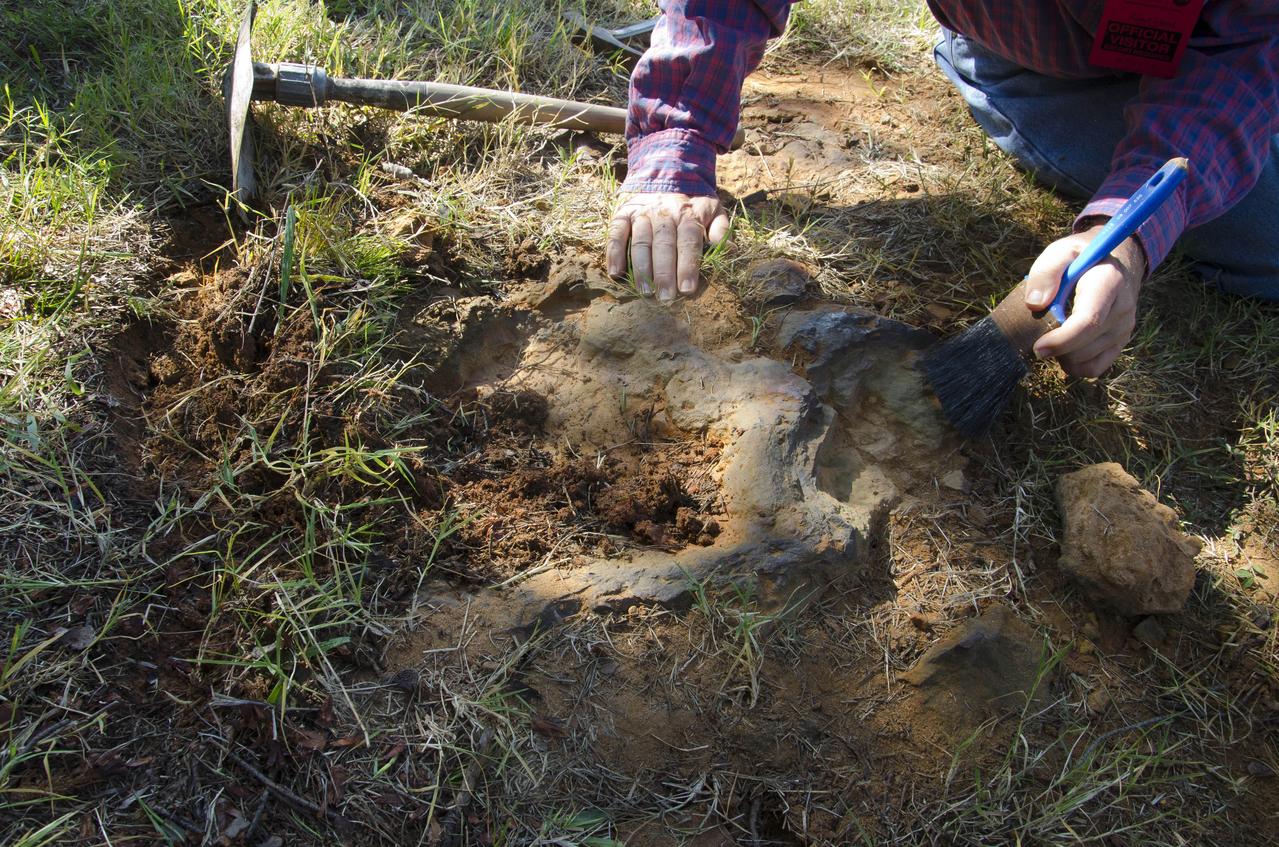
Nodosaur Footprint Verified
This imprint shows the right rear foot of a nodosaur - a low-slung, spiny leaf-eater - apparently moving in haste as the heel did not fully settle in the cretaceous mud, according to dinosaur tracker Ray Stanford. It was found recently on NASA's Goddard Space Flight Center campus and is being preserved for study.   To read more go to: <a href="http://1.usa.gov/P9NYg7" rel="nofollow">1.usa.gov/P9NYg7</a>  Credit: NASA/GSFC/Rebecca Roth  <b><a href="http://www.nasa.gov/audience/formedia/features/MP_Photo_Guidelines.html" rel="nofollow">NASA image use policy.</a></b>  <b><a href="http://www.nasa.gov/centers/goddard/home/index.html" rel="nofollow">NASA Goddard Space Flight Center</a></b> enables NASA’s mission through four scientific endeavors: Earth Science, Heliophysics, Solar System Exploration, and Astrophysics. Goddard plays a leading role in NASA’s accomplishments by contributing compelling scientific knowledge to advance the Agency’s mission.  <b>Follow us on <a href="http://twitter.com/NASA_GoddardPix" rel="nofollow">Twitter</a></b>  <b>Like us on <a href="http://www.facebook.com/pages/Greenbelt-MD/NASA-Goddard/395013845897?ref=tsd" rel="nofollow">Facebook</a></b>  <b>Find us on <a href="http://instagrid.me/nasagoddard/?vm=grid" rel="nofollow">Instagram</a></b>
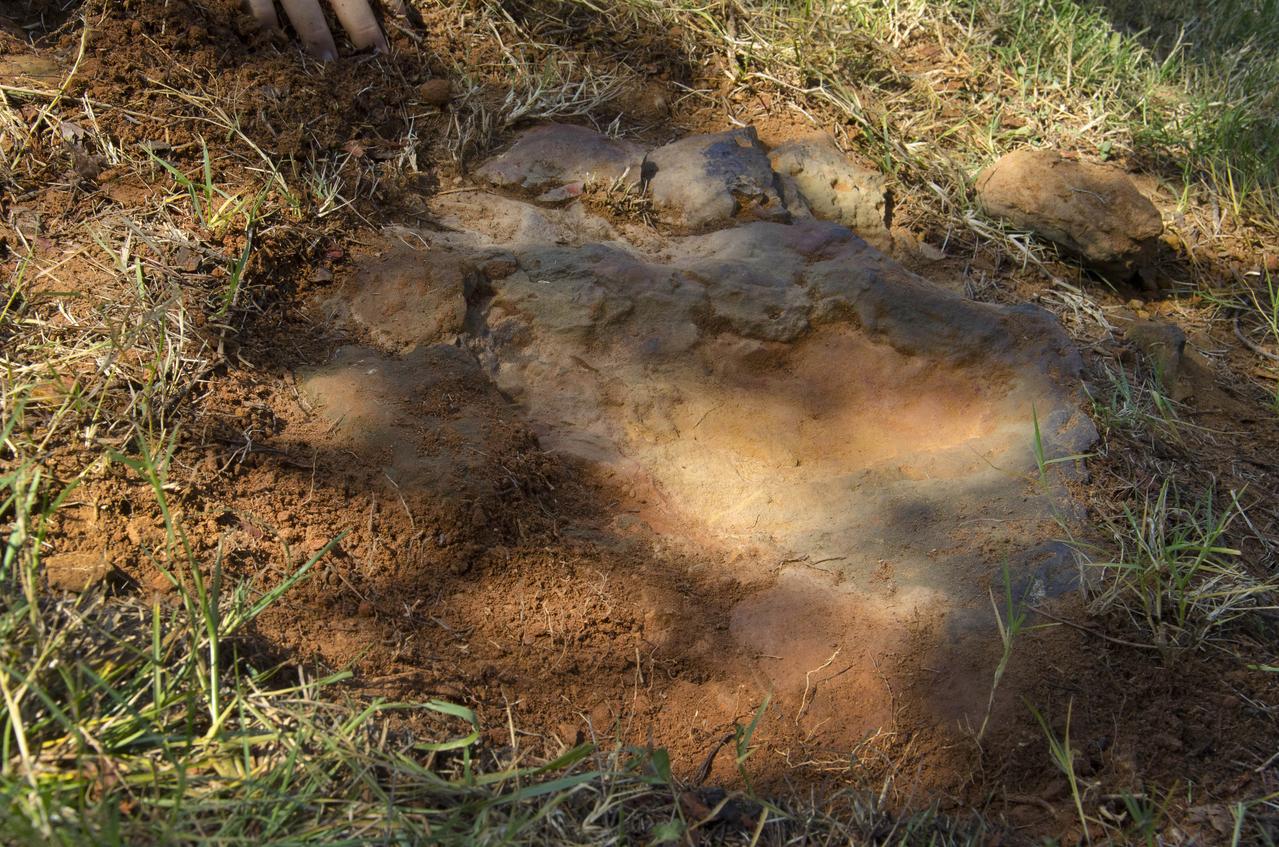
Nodosaur Footprint Verified
This imprint shows the right rear foot of a nodosaur - a low-slung, spiny leaf-eater - apparently moving in haste as the heel did not fully settle in the cretaceous mud, according to dinosaur tracker Ray Stanford. It was found recently on NASA's Goddard Space Flight Center campus and is being preserved for study.   This imprint shows the right rear foot of a nodosaur - a low-slung, spiny leaf-eater - apparently moving in haste as the heel did not fully settle in the cretaceous mud, according to dinosaur tracker Ray Stanford. It was found recently on NASA's Goddard Space Flight Center campus and is being preserved for study.   To read more go to: <a href="http://1.usa.gov/P9NYg7" rel="nofollow">1.usa.gov/P9NYg7</a>  Credit: NASA/GSFC/Rebecca Roth  <b><a href="http://www.nasa.gov/audience/formedia/features/MP_Photo_Guidelines.html" rel="nofollow">NASA image use policy.</a></b>  <b><a href="http://www.nasa.gov/centers/goddard/home/index.html" rel="nofollow">NASA Goddard Space Flight Center</a></b> enables NASA’s mission through four scientific endeavors: Earth Science, Heliophysics, Solar System Exploration, and Astrophysics. Goddard plays a leading role in NASA’s accomplishments by contributing compelling scientific knowledge to advance the Agency’s mission.  <b>Follow us on <a href="http://twitter.com/NASA_GoddardPix" rel="nofollow">Twitter</a></b>  <b>Like us on <a href="http://www.facebook.com/pages/Greenbelt-MD/NASA-Goddard/395013845897?ref=tsd" rel="nofollow">Facebook</a></b>  <b>Find us on <a href="http://instagrid.me/nasagoddard/?vm=grid" rel="nofollow">Instagram</a></b>
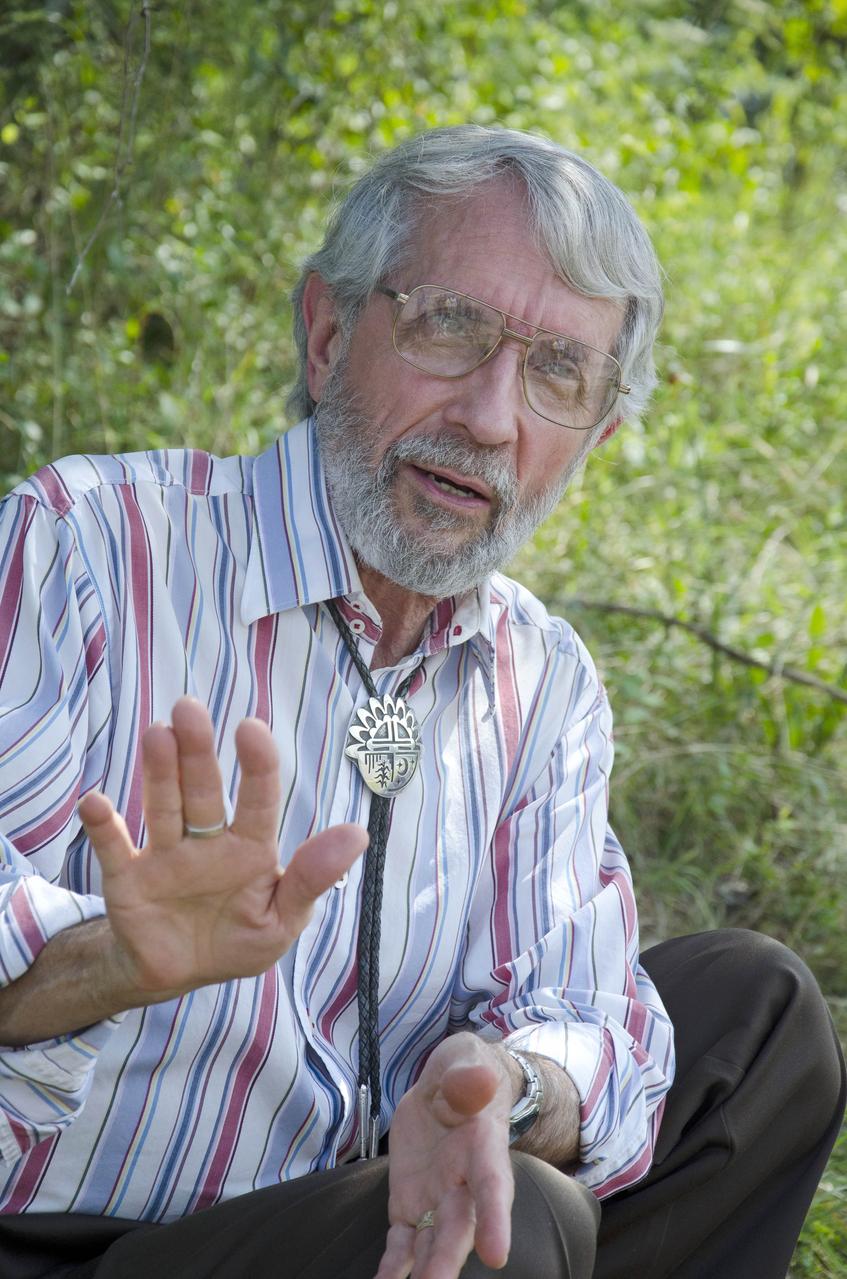
Nodosaur Footprint Verified
Dinosaur tracker Ray Stanford describes the cretaceous-era nodosaur track he found on the Goddard Space Flight Center campus this year.  The imprint shows the right rear foot of a nodosaur - a low-slung, spiny leaf-eater - apparently moving in haste as the heel did not fully settle in the cretaceous mud, according to dinosaur tracker Ray Stanford. It was found recently on NASA's Goddard Space Flight Center campus and is being preserved for study.   To read more about this discovery go to: <a href="http://1.usa.gov/P9NYg7" rel="nofollow">1.usa.gov/P9NYg7</a>  Credit: NASA/GSFC/Rebecca Roth  <b><a href="http://www.nasa.gov/audience/formedia/features/MP_Photo_Guidelines.html" rel="nofollow">NASA image use policy.</a></b>  <b><a href="http://www.nasa.gov/centers/goddard/home/index.html" rel="nofollow">NASA Goddard Space Flight Center</a></b> enables NASA’s mission through four scientific endeavors: Earth Science, Heliophysics, Solar System Exploration, and Astrophysics. Goddard plays a leading role in NASA’s accomplishments by contributing compelling scientific knowledge to advance the Agency’s mission.  <b>Follow us on <a href="http://twitter.com/NASA_GoddardPix" rel="nofollow">Twitter</a></b>  <b>Like us on <a href="http://www.facebook.com/pages/Greenbelt-MD/NASA-Goddard/395013845897?ref=tsd" rel="nofollow">Facebook</a></b>  <b>Find us on <a href="http://instagrid.me/nasagoddard/?vm=grid" rel="nofollow">Instagram</a></b>
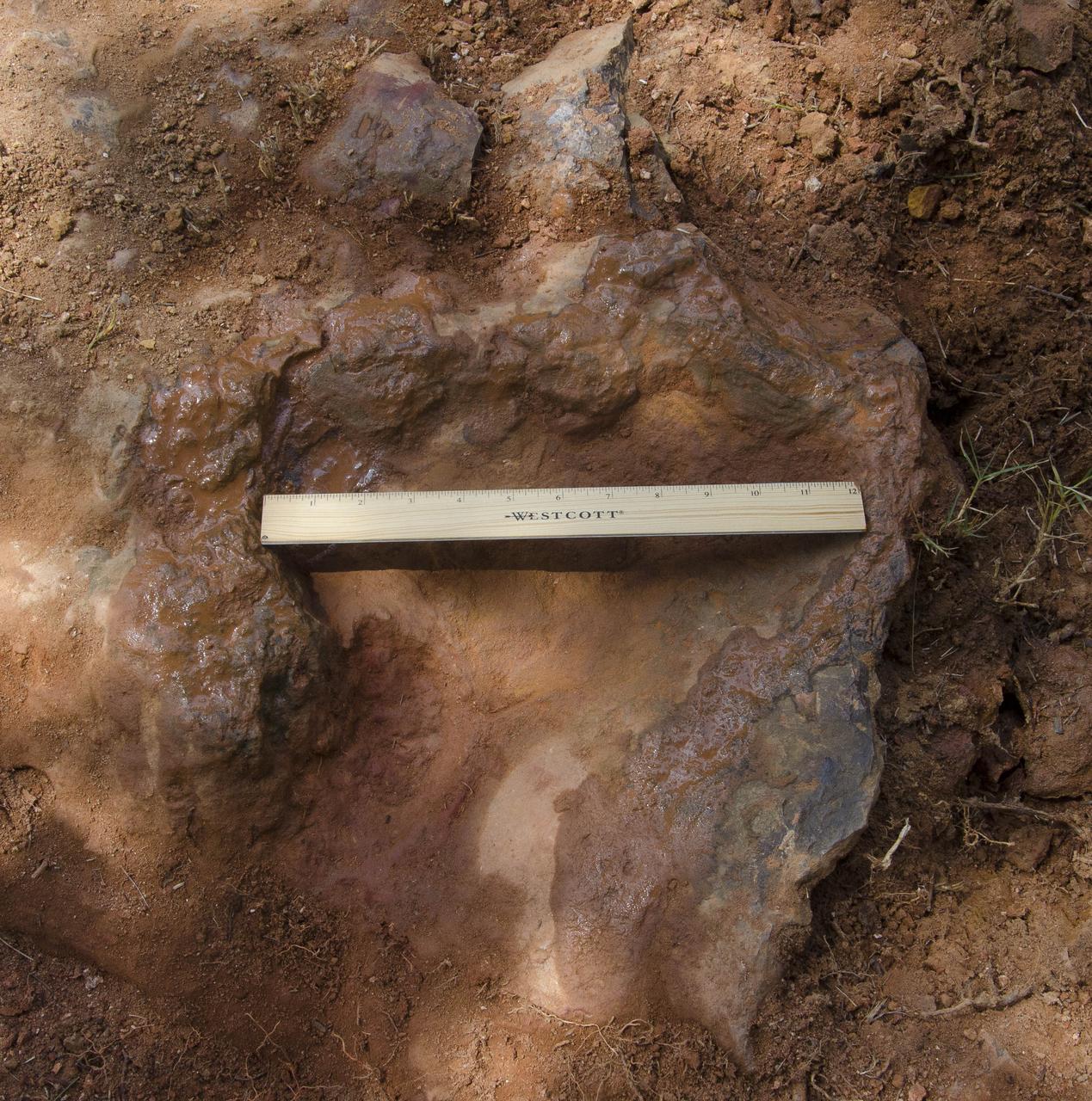
Nodosaur Footprint Verified
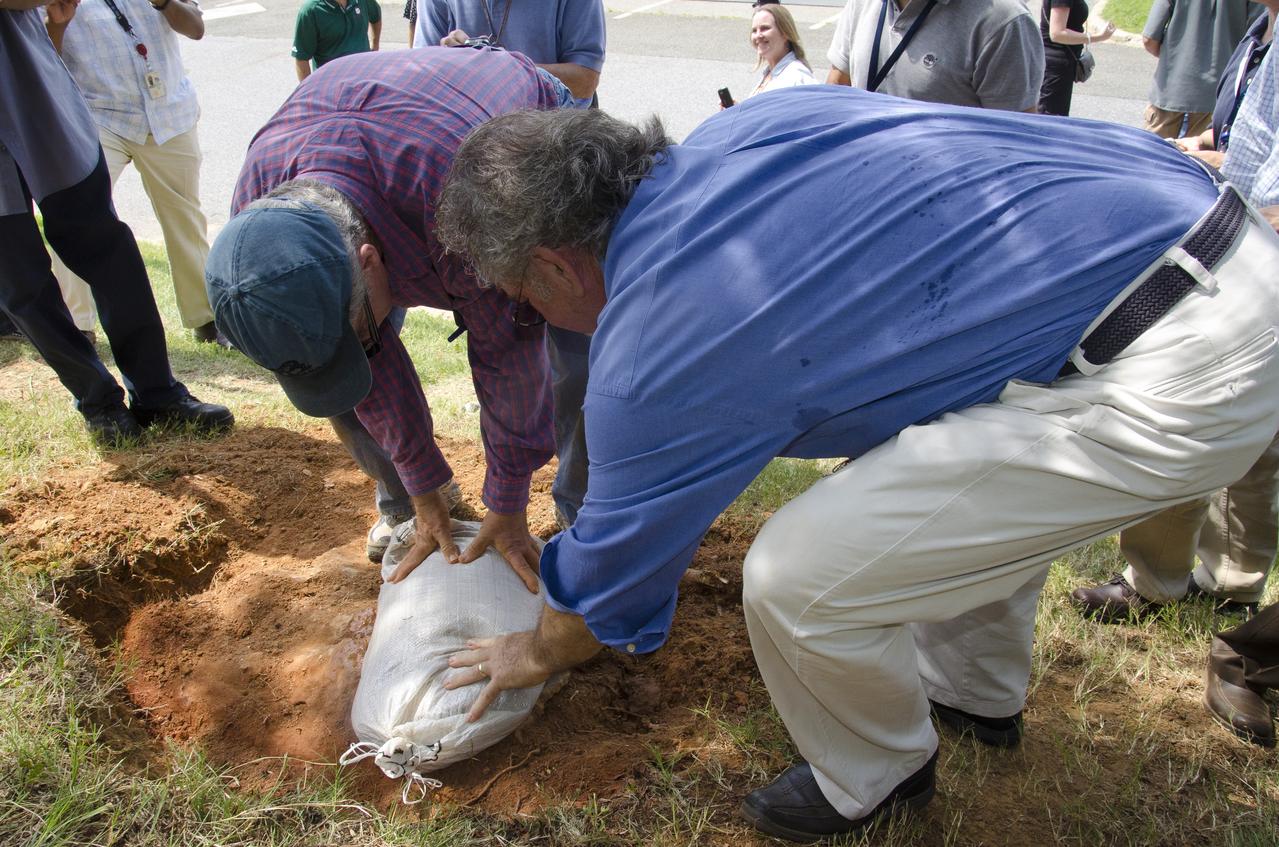
On Friday, Aug. 17, 2012, noted dinosaur hunter Ray Stanford shared the location of that footprint with Goddard’s facility management.  The imprint shows the right rear foot of a nodosaur - a low-slung, spiny leaf-eater - apparently moving in haste as the heel did not fully settle in the cretaceous mud, according to dinosaur tracker Ray Stanford. It was found recently on NASA's Goddard Space Flight Center campus and is being preserved for study.   Picuted here are Dr. Robert  Weems, emeritus paleontologist for the USGS and Goddard Facilities Planner Alan Binstock, covering the newly discover nodosaur imprint with a sandbag to help preserve the imprecision.  To read more go to: <a href="http://1.usa.gov/P9NYg7" rel="nofollow">1.usa.gov/P9NYg7</a>  Credit: NASA/GSFC/Rebecca Roth  <b><a href="http://www.nasa.gov/audience/formedia/features/MP_Photo_Guidelines.html" rel="nofollow">NASA image use policy.</a></b>  <b><a href="http://www.nasa.gov/centers/goddard/home/index.html" rel="nofollow">NASA Goddard Space Flight Center</a></b> enables NASA’s mission through four scientific endeavors: Earth Science, Heliophysics, Solar System Exploration, and Astrophysics. Goddard plays a leading role in NASA’s accomplishments by contributing compelling scientific knowledge to advance the Agency’s mission.  <b>Follow us on <a href="http://twitter.com/NASA_GoddardPix" rel="nofollow">Twitter</a></b>  <b>Like us on <a href="http://www.facebook.com/pages/Greenbelt-MD/NASA-Goddard/395013845897?ref=tsd" rel="nofollow">Facebook</a></b>  <b>Find us on <a href="http://instagrid.me/nasagoddard/?vm=grid" rel="nofollow">Instagram</a></b>
Nodosaur Footprint Verified
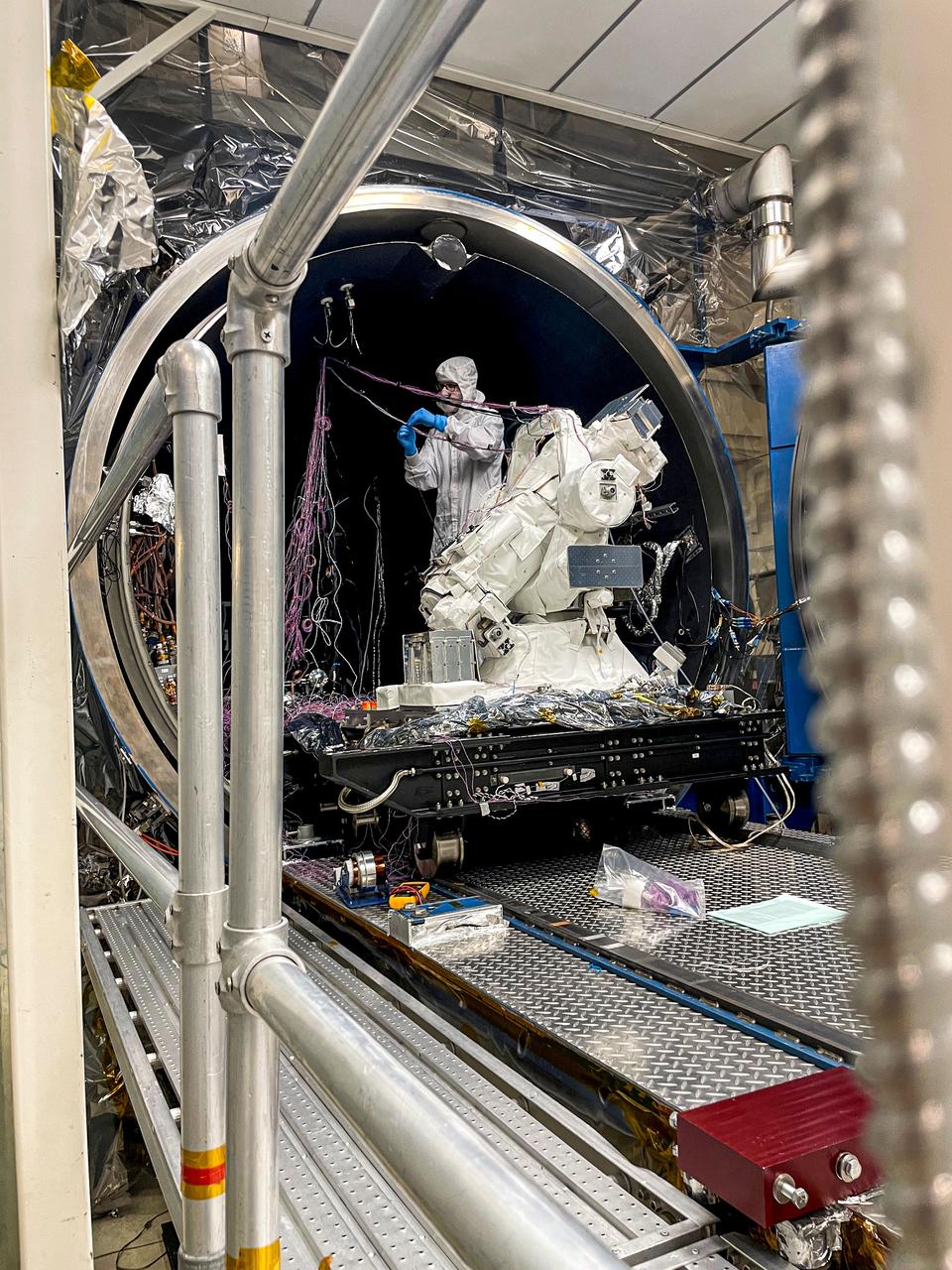
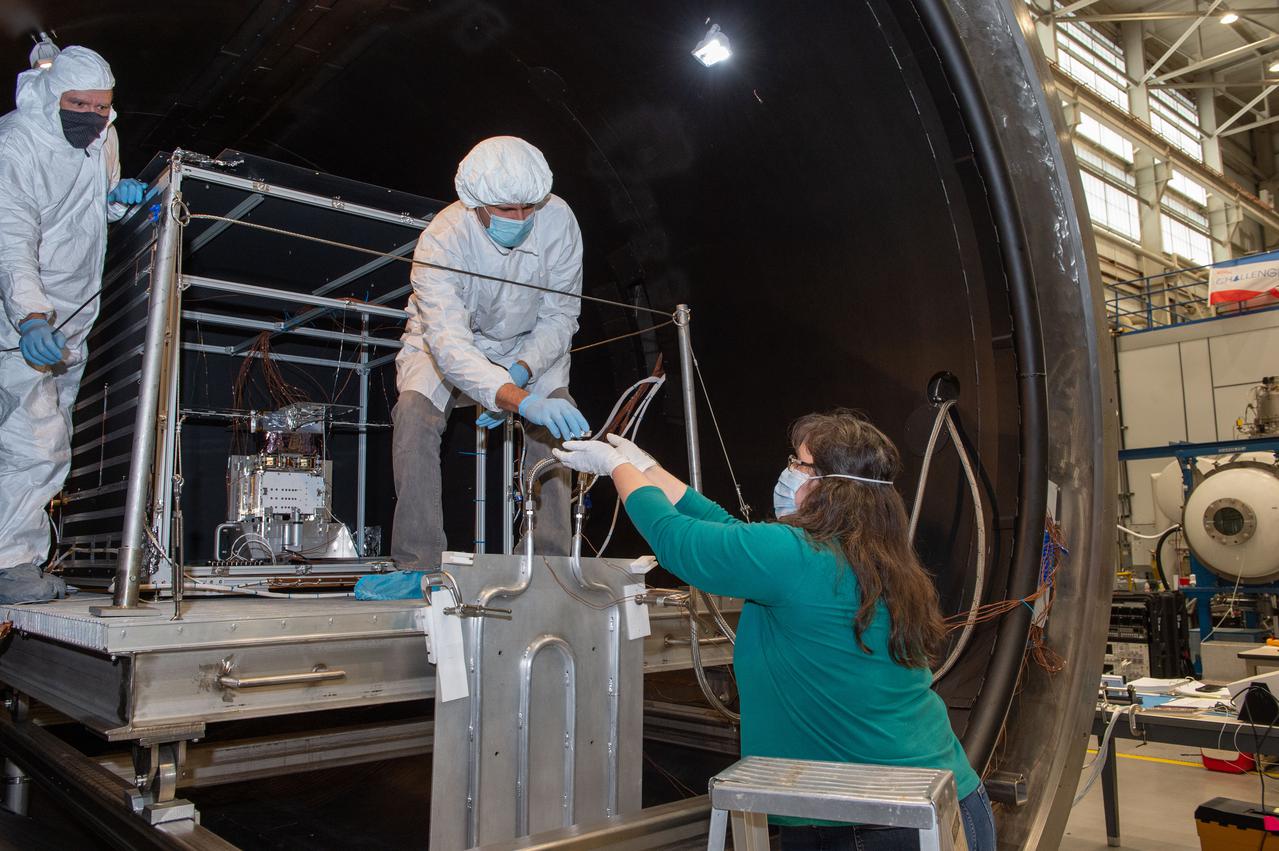
Miria Finckenor collects Optical Witness Samples and swab samples for analysis to verify that the NEA Scout thermal vacuum bake-out is complete and the chamber is clean.
Miria Finckenor collects Optical Witness Samples and swab sample
Not one, but two nodosaurs passed through the Goddard campus 110 to 112 million years ago, a USGS paleontologist confirmed.    Pictured here the second track, overlapping the first, looks to be a young version of the same creature, perhaps following and sniffing along after, said Rob Weems, emeritus paleontologist and stratigrapher with the USGS. “It’s definitely a track.”  To read more go to: <a href="http://1.usa.gov/P9NYg7" rel="nofollow">1.usa.gov/P9NYg7</a>  Credit: NASA/GSFC/Rebecca Roth  <b><a href="http://www.nasa.gov/audience/formedia/features/MP_Photo_Guidelines.html" rel="nofollow">NASA image use policy.</a></b>  <b><a href="http://www.nasa.gov/centers/goddard/home/index.html" rel="nofollow">NASA Goddard Space Flight Center</a></b> enables NASA’s mission through four scientific endeavors: Earth Science, Heliophysics, Solar System Exploration, and Astrophysics. Goddard plays a leading role in NASA’s accomplishments by contributing compelling scientific knowledge to advance the Agency’s mission.  <b>Follow us on <a href="http://twitter.com/NASA_GoddardPix" rel="nofollow">Twitter</a></b>  <b>Like us on <a href="http://www.facebook.com/pages/Greenbelt-MD/NASA-Goddard/395013845897?ref=tsd" rel="nofollow">Facebook</a></b>  <b>Find us on <a href="http://instagrid.me/nasagoddard/?vm=grid" rel="nofollow">Instagram</a></b>
Nodosaur Footprint Verified - Detail of Baby Footprint
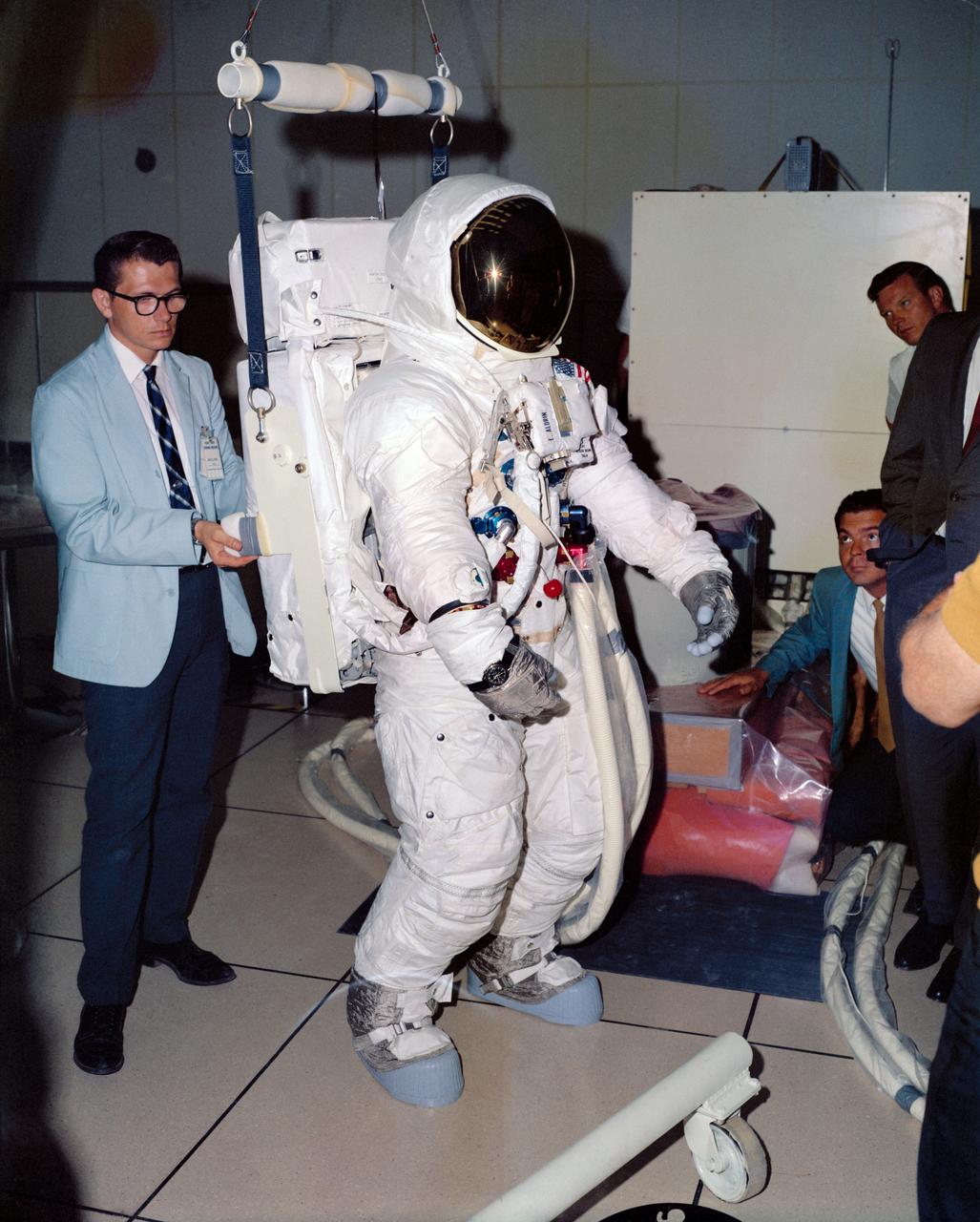
Astronaut Edwin E. Aldrin Jr., wearing an Extravehicular Mobility Unit (EMU), verifies fit of the Portable Life Support System (PLSS) strap length during lunar surface training at the Kennedy Space Center. Aldrin is the prime crew lunar module pilot of the Apollo 11 lunar landing mission. Aldrin's PLSS backpack is attached to a lunar weight simulator.
Astronaut Edwin Aldrin in EMU verifies fit of Portable Life Support System
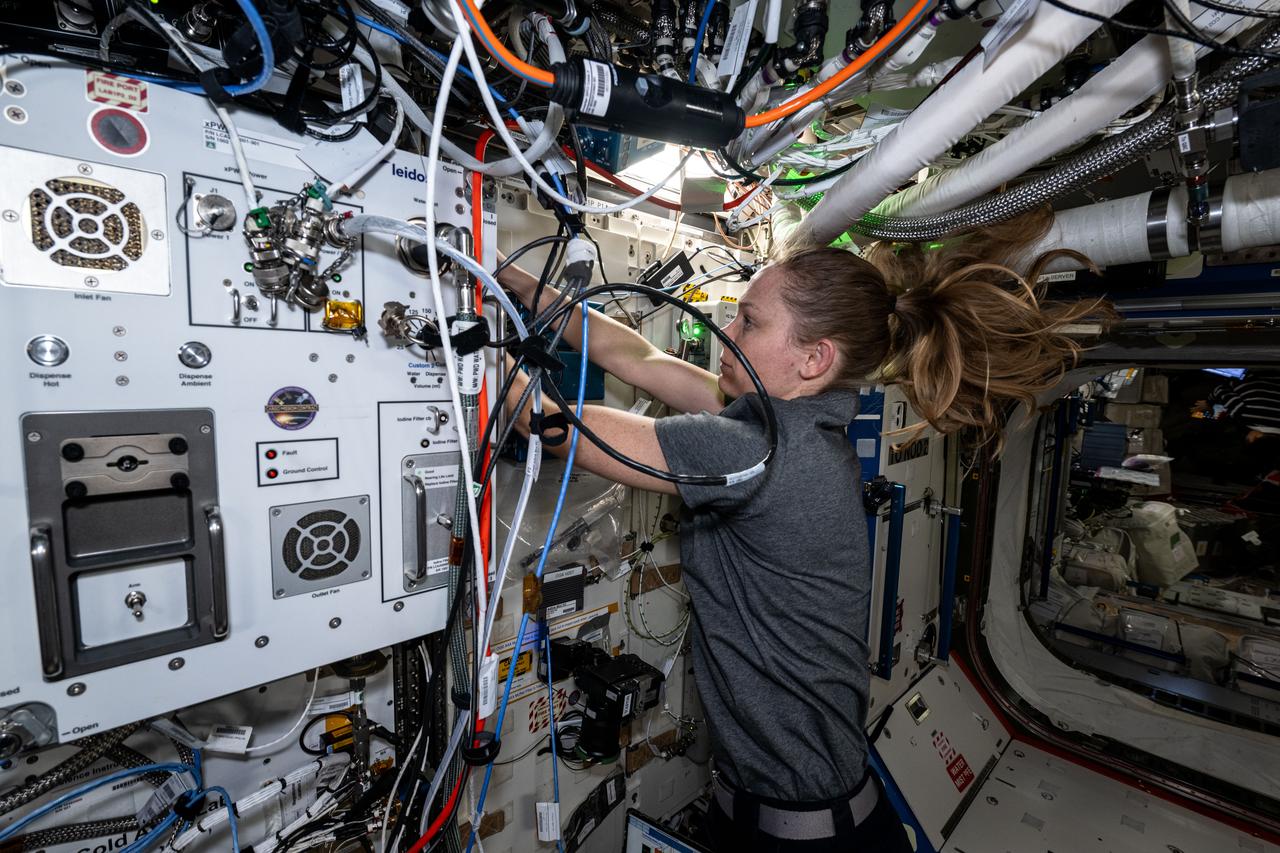
iss073e0071548 (May 16, 2025) --- NASA astronaut and Expedition 73 Flight Engineer Nichole Ayers verifies the functionality and replaces hardware on the Exploration Potable Water Dispenser (xPWD). The xPWD is located in the International Space Station's Destiny laboratory module and is demonstrating advanced water sanitization methods, microbial growth reduction, and a heater to dispense hot water for use aboard the orbital outpost and future spacecraft.
NASA astronaut Nichole Ayers verifies the functionality and replaces hardware on the Exploration Potable Water Dispenser
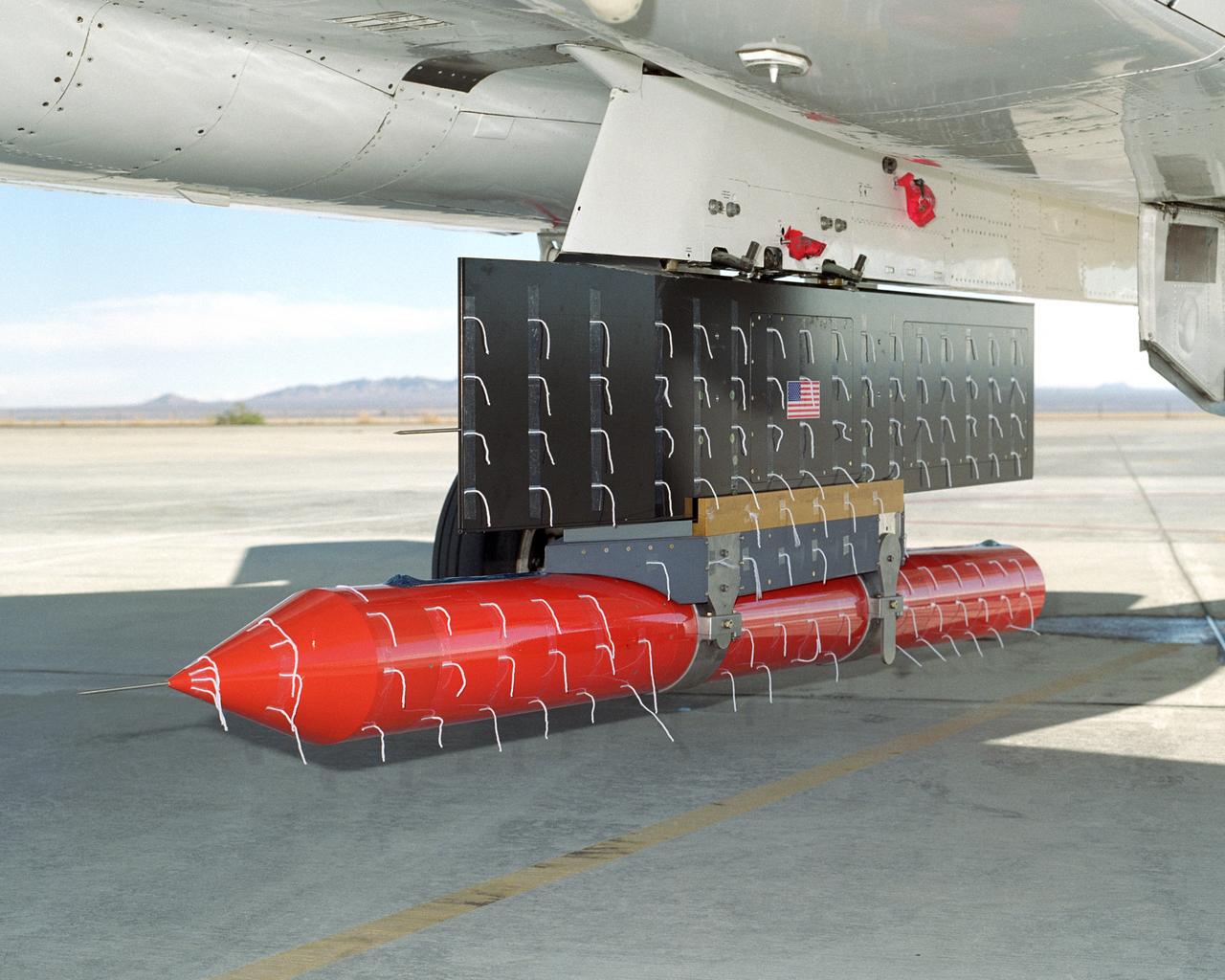
NASA Dryden's new in-house designed Propulsion Flight Test Fixture (PFTF), carried on an F-15B's centerline attachment point, underwent flight envelope expansion in order to verify its design and capabilities.
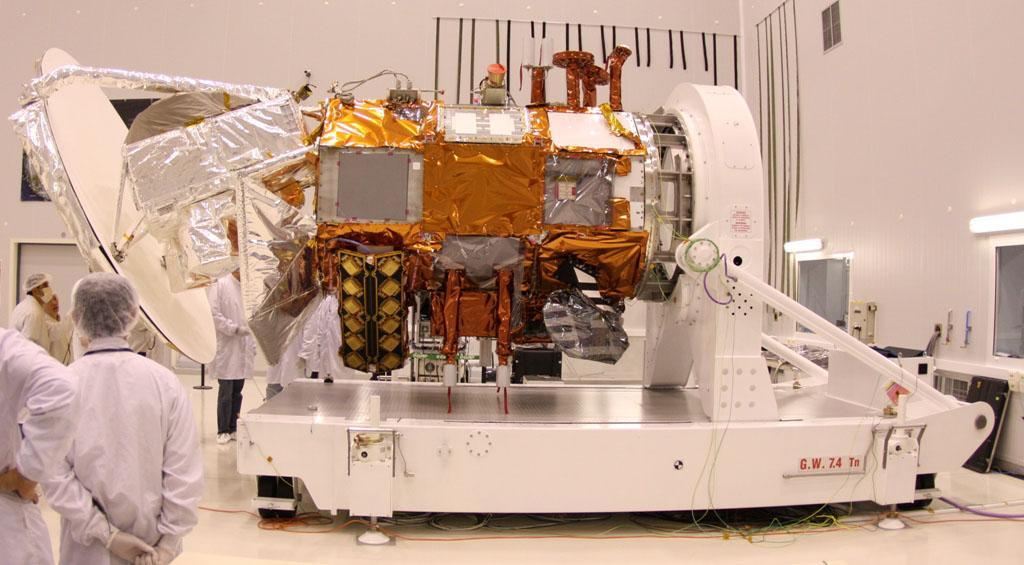
A fit check of half the sunshade is completed to verify the clearance of NASA Aquarius ground lug as well as the blanket interface with the service platform top deck.
Aquarius Sunshade Fit
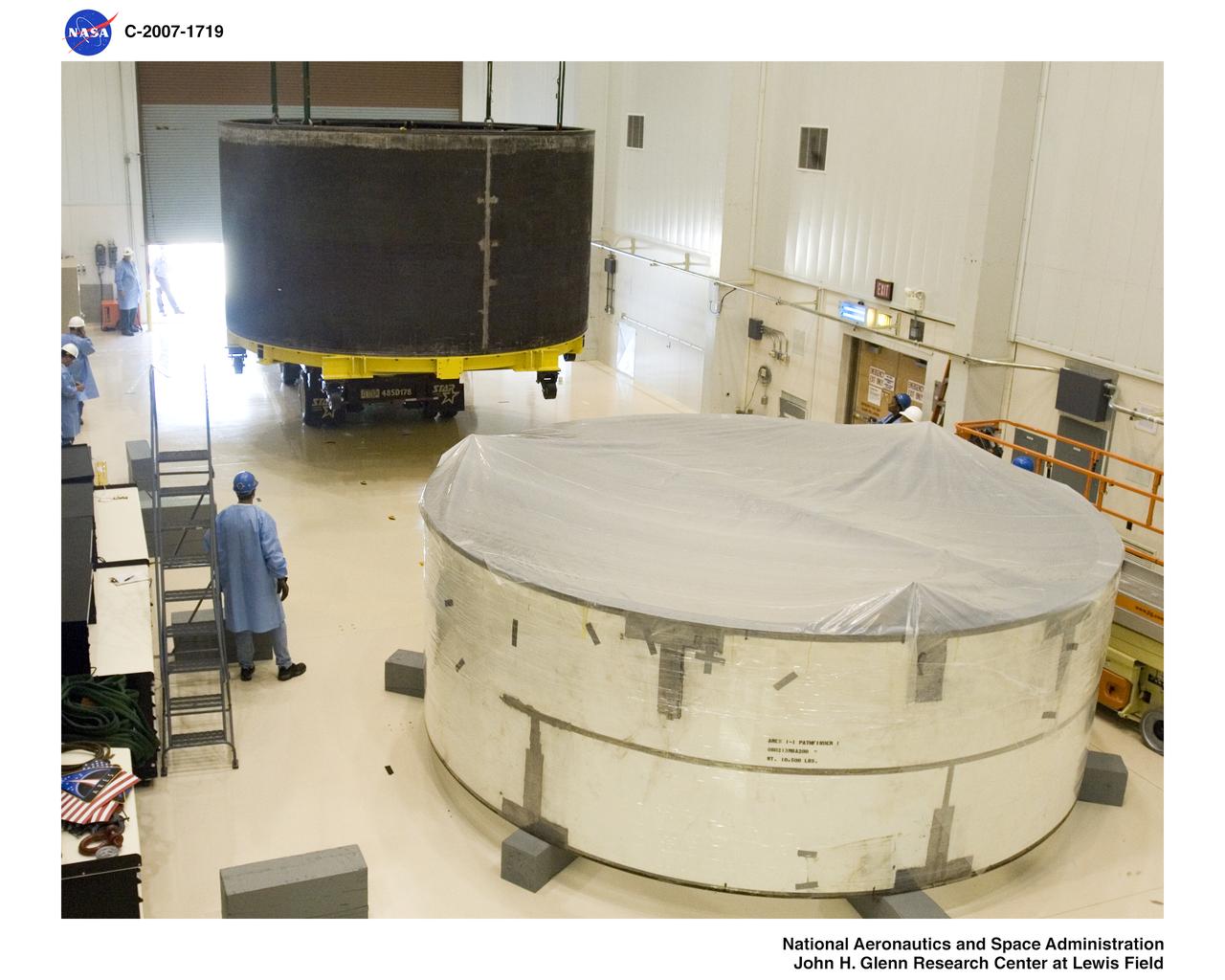
The PF2 segment is an engineering model used to verify the fligh design and the flight manufacturing procedures prior to the start of flight manufacturing.  PF2 is also being used to verify the in house operational procedures.
GRC-2007-C-01719
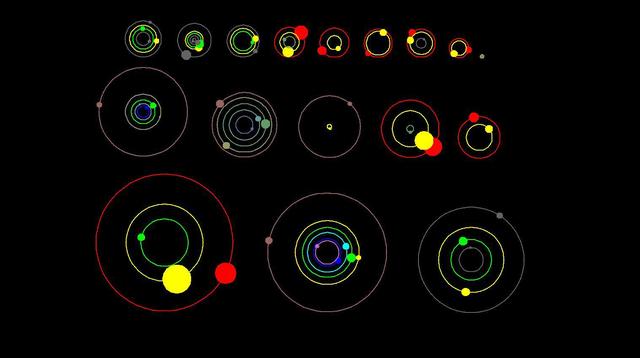
This artist concept shows an overhead view of the orbital position of the planets in systems with multiple transiting planets discovered by NASA Kepler mission. All the colored planets have been verified.
Kepler Planetary Systems in Motion Artist Concept
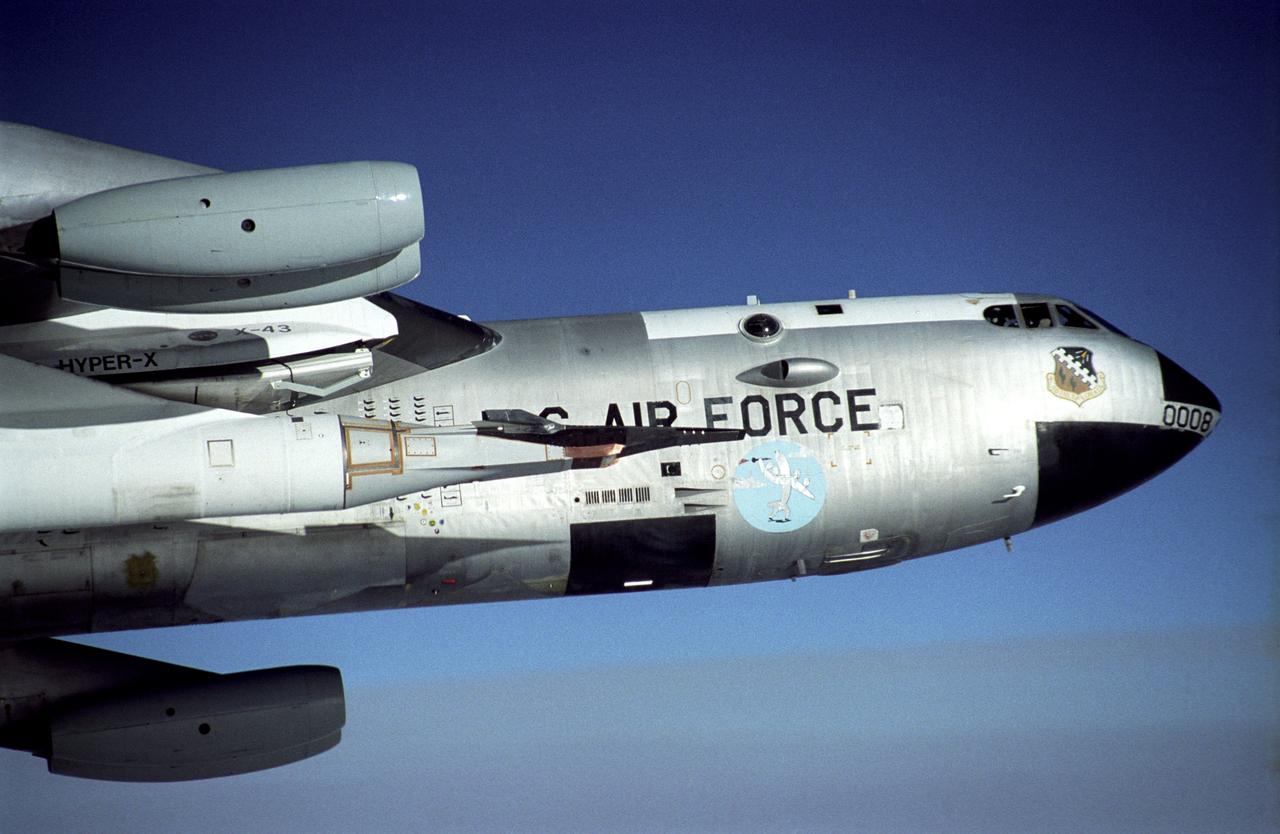
The black X-43A rides on the front of a modified Pegasus booster rocket hung from the special pylon under the wing of NASA's B-52B mother ship. The photo was taken during a captive carry flight Jan. 26, 2004 to verify systems before an upcoming launch.
The black X-43A rides on the front of a modified Pegasus booster rocket hung from the special pylon under the wing of NASA's B-52B mother ship. The photo was taken during a captive carry flight Jan. 26, 2004 to verify systems before an upcoming launch
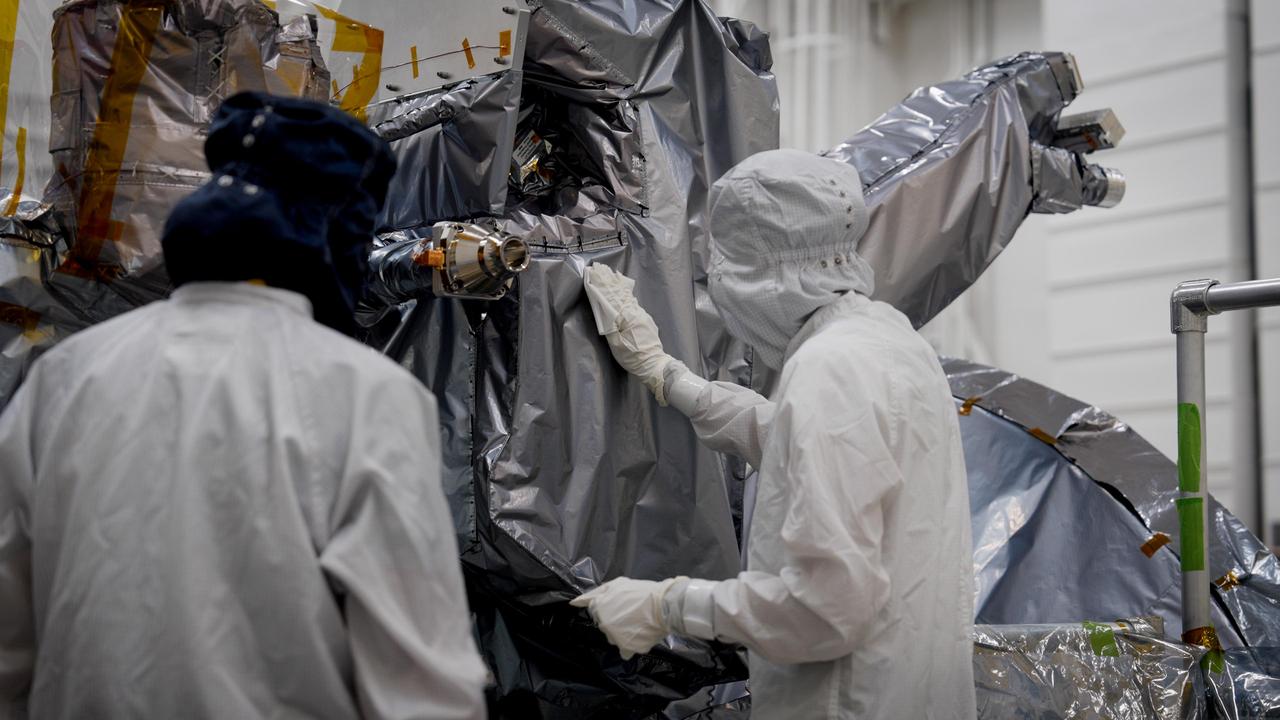
A planetary protection engineer in full-body protective gear carefully collects samples from NASA's Europa Clipper spacecraft to verify its biological cleanliness in a clean room at NASA's Jet Propulsion Laboratory on March 20, 2024.  Maintaining and verifying the cleanliness of the spacecraft helps minimize the chance that microbes brought from Earth could compromise future scientific investigations at its destination, Jupiter's moon Europa. This work, referred to as planetary protection, is conducted in keeping with the international 1967 Outer Space Treaty to explore space in a responsible manner that avoids the harmful contamination of celestial bodies. This photo was taken while Europa Clipper was being built in JPL's Spacecraft Assembly Facility.  Europa Clipper's three main science objectives are to determine the thickness of the moon's icy shell and its interactions with the ocean below, to investigate its composition, and to characterize its geology. The mission's detailed exploration of Europa will help scientists better understand the astrobiological potential for habitable worlds beyond our planet.  https://photojournal.jpl.nasa.gov/catalog/PIA26440
Keeping Europa Clipper Clean
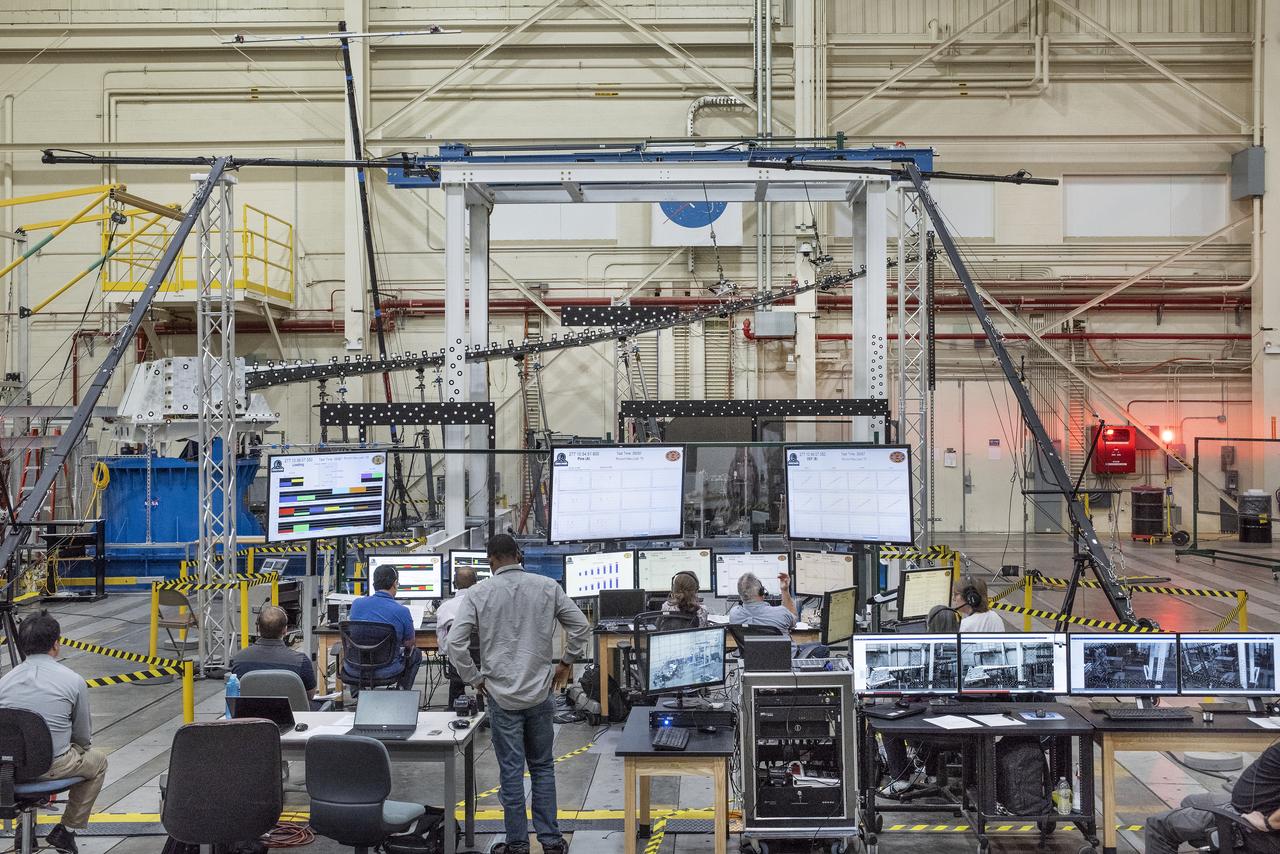
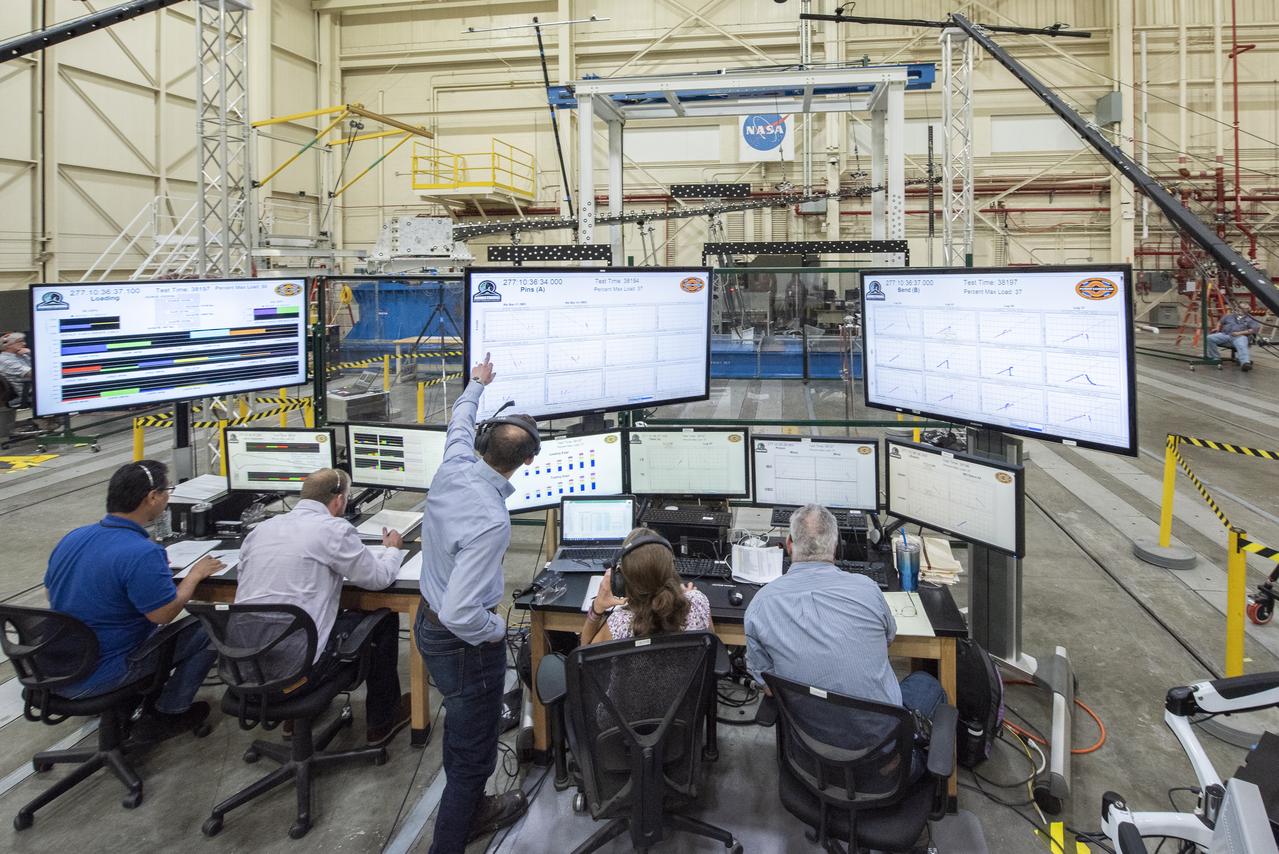
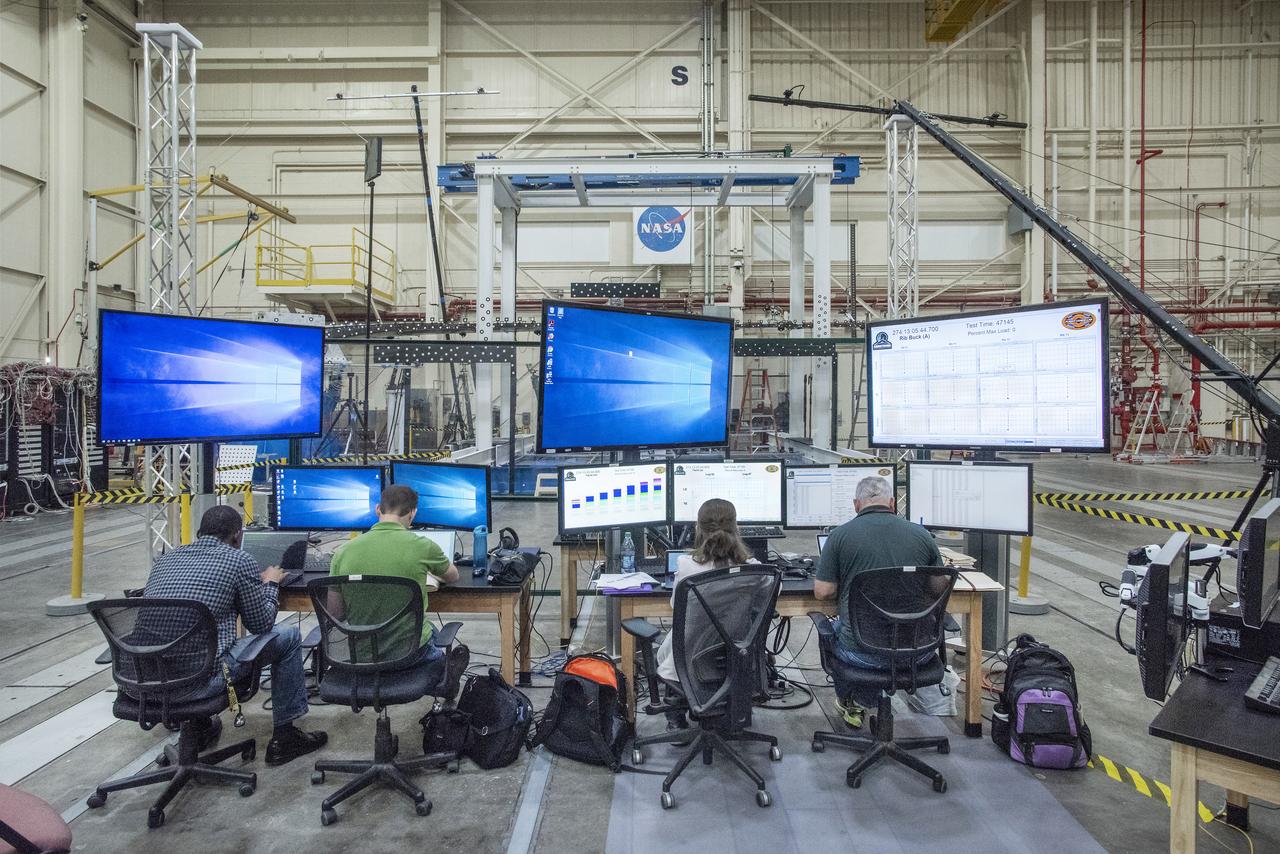
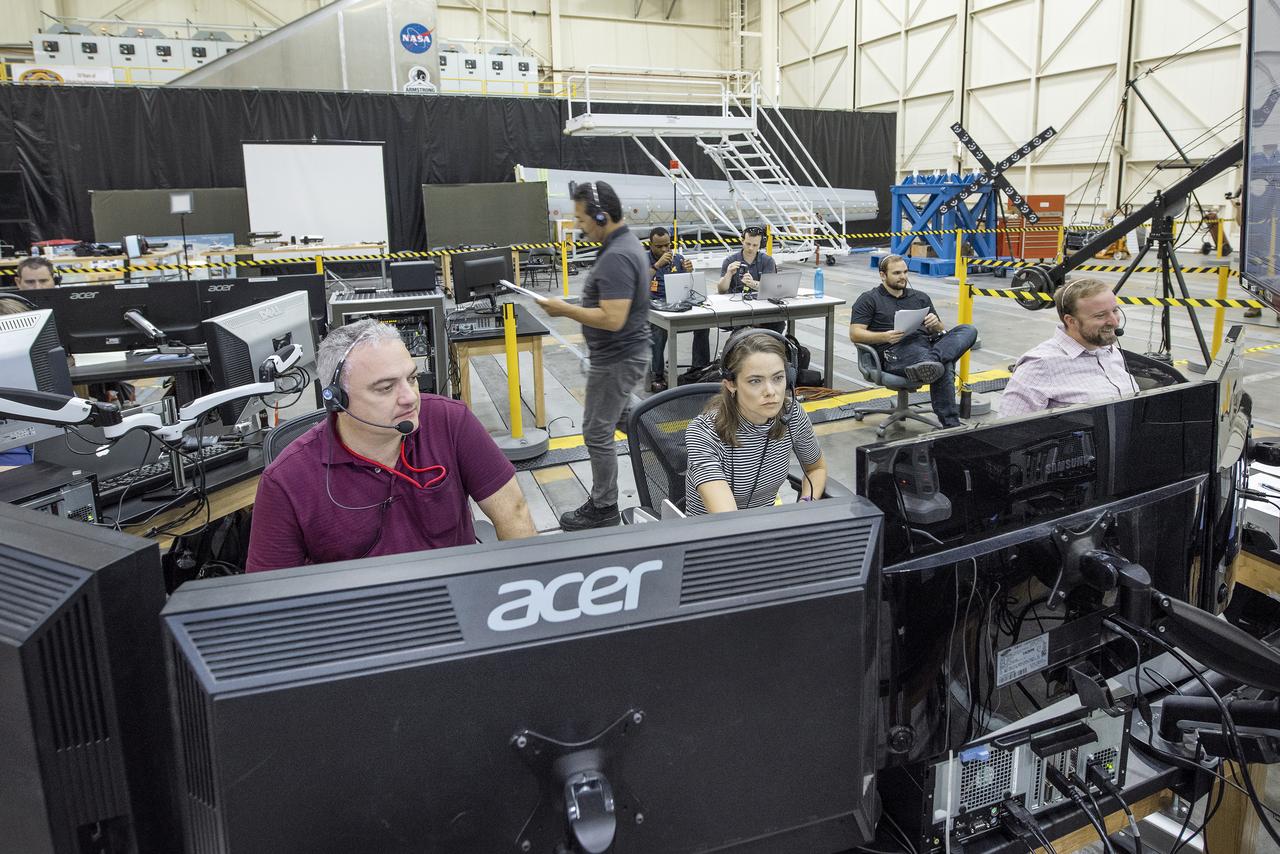
NASA’s Armstrong Flight Research Center and Langley Research Center staff members monitor a test of the Passive Aeroelastic Tailored (PAT) wing at NASA’s Armstrong Flight Research Center in California.
Experimental Wing Verified During Loads Testing
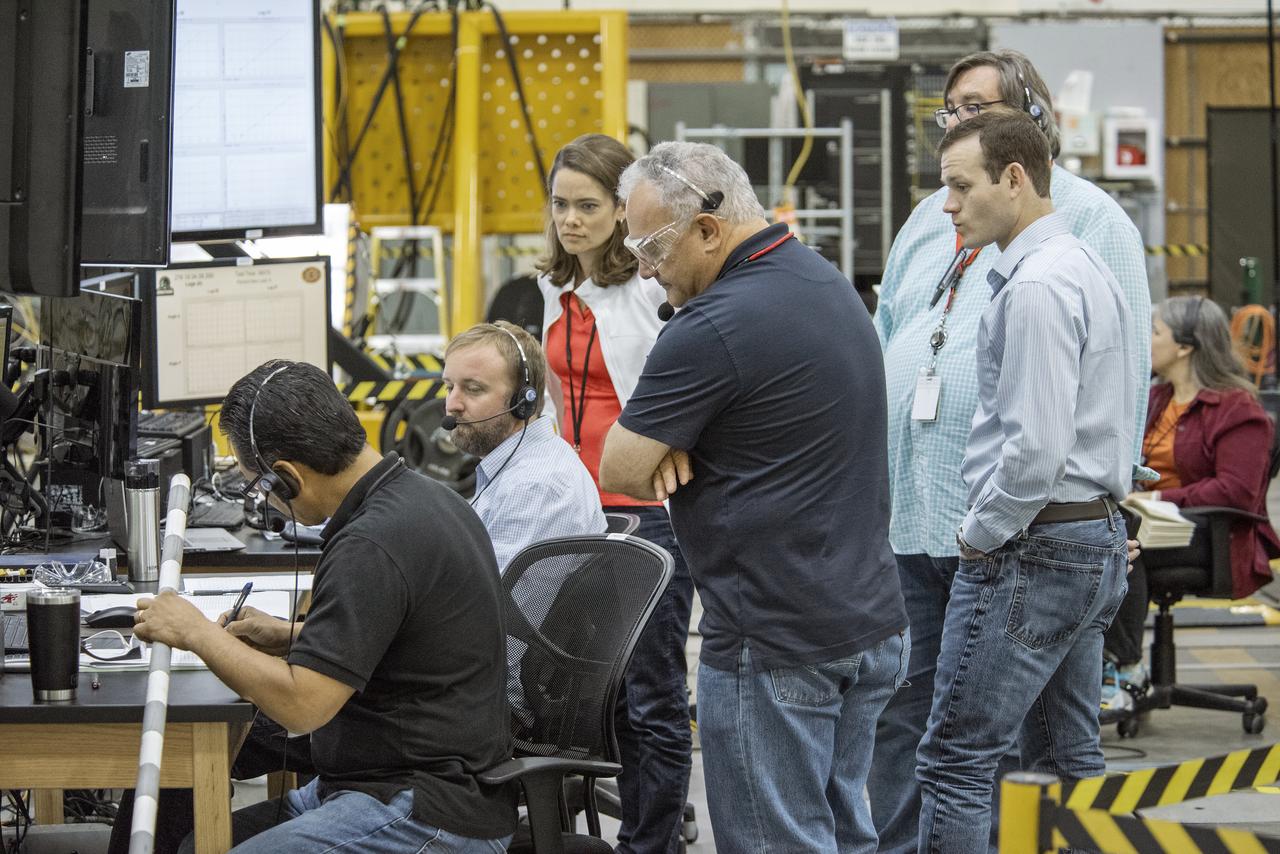
NASA’s Armstrong Flight Research Center and Langley Research Center staff members monitor a test of the Passive Aeroelastic Tailored (PAT) wing at NASA’s Armstrong Flight Research Center in California.
Experimental Wing Verified During Loads Testing
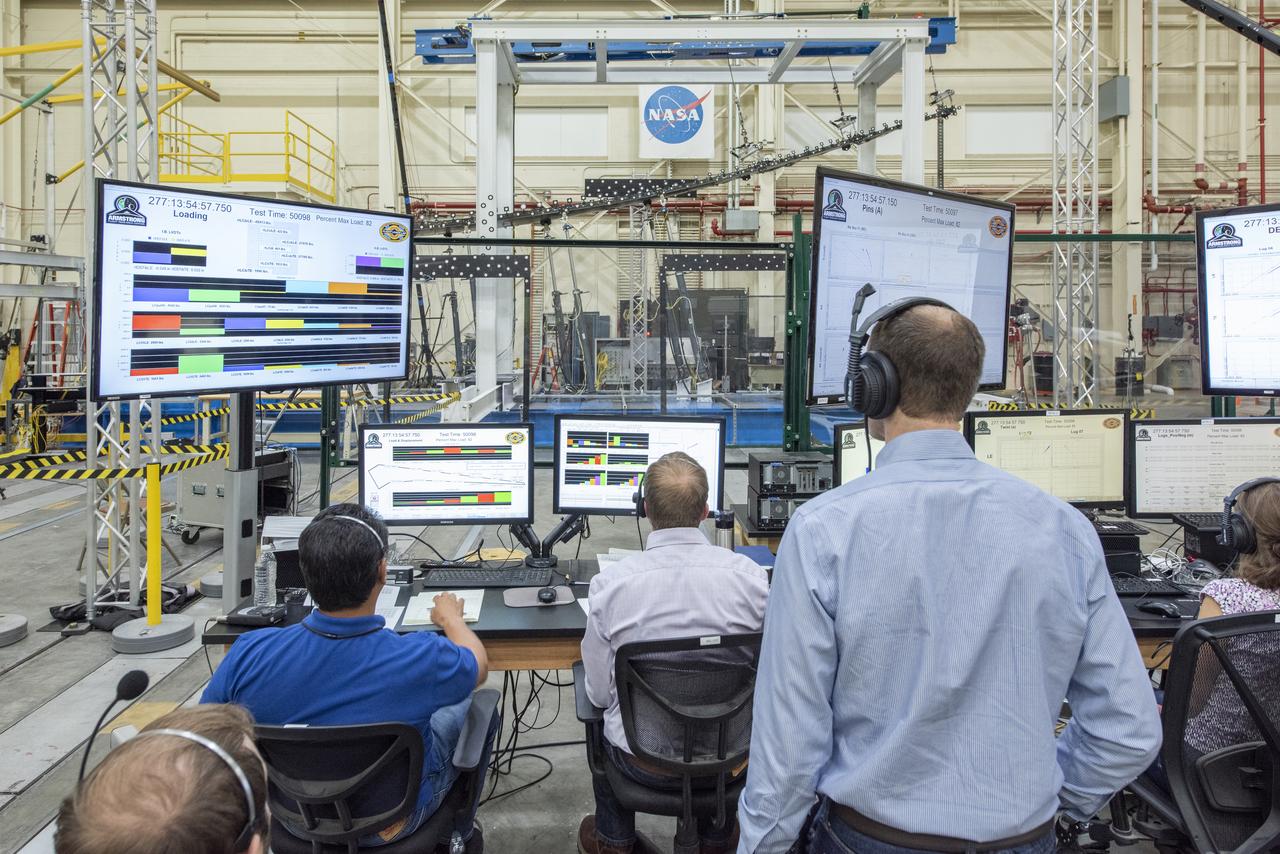
NASA’s Armstrong Flight Research Center and Langley Research Center staff members monitor a test of the Passive Aeroelastic Tailored (PAT) wing at NASA’s Armstrong Flight Research Center in California.
Experimental Wing Verified During Loads Testing
NASA’s Armstrong Flight Research Center and Langley Research Center staff members monitor a test of the Passive Aeroelastic Tailored (PAT) wing at NASA’s Armstrong Flight Research Center in California.
Experimental Wing Verified During Loads Testing
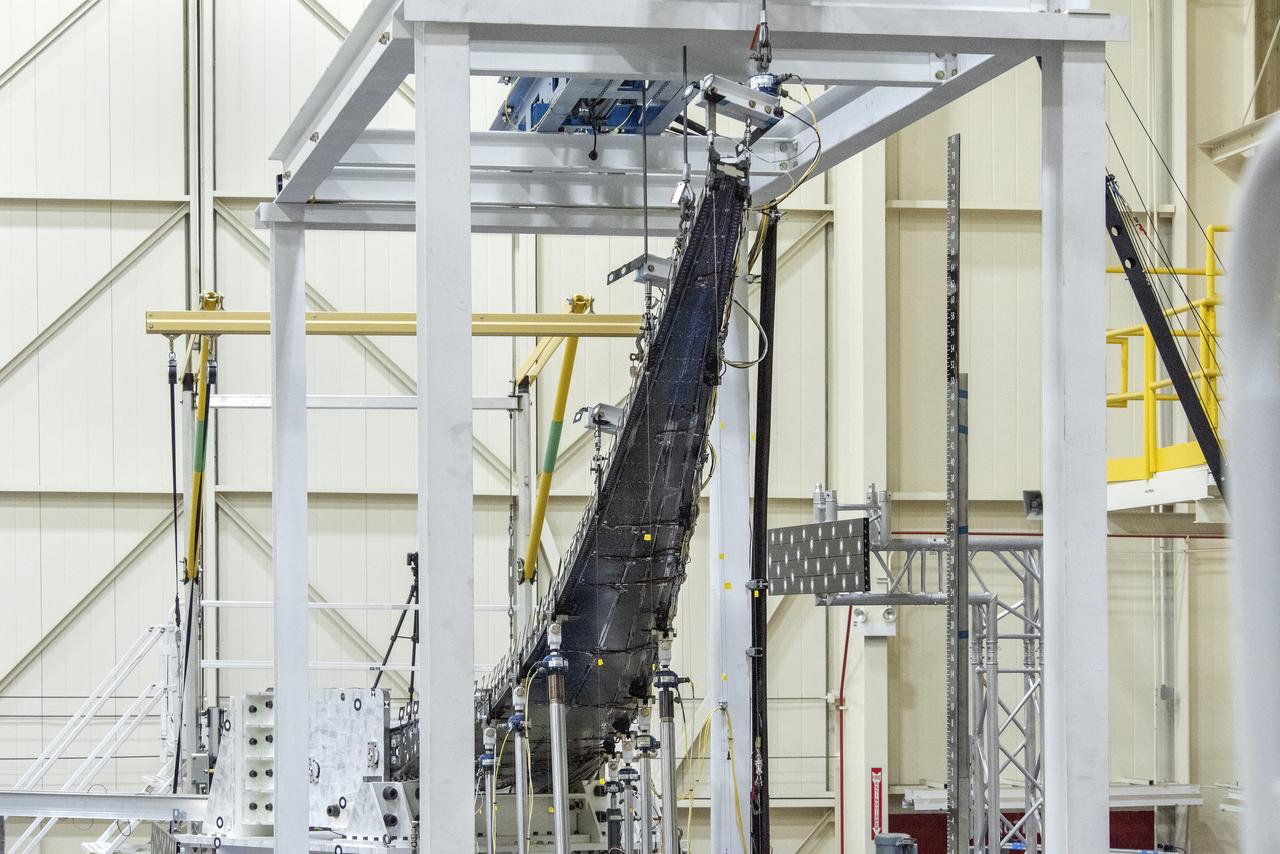
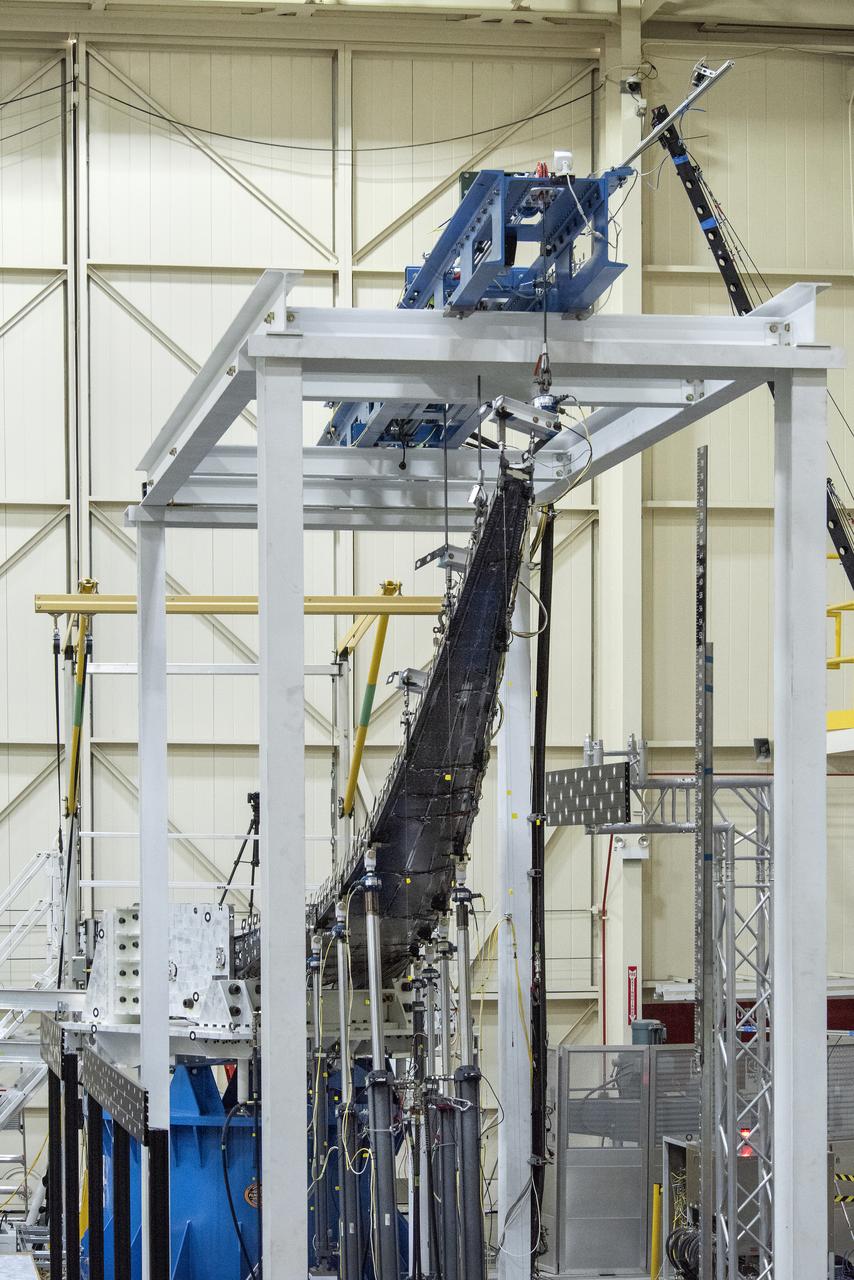
The Passive Aeroelastic Tailored (PAT) wing bends under pressure from the highest loads applied during testing at NASA’s Armstrong Flight Research Center in California.
Experimental Wing Verified During Loads Testing
NASA’s Armstrong Flight Research Center and Langley Research Center staff members monitor a test of the Passive Aeroelastic Tailored (PAT) wing at NASA’s Armstrong Flight Research Center in California.
Experimental Wing Verified During Loads Testing
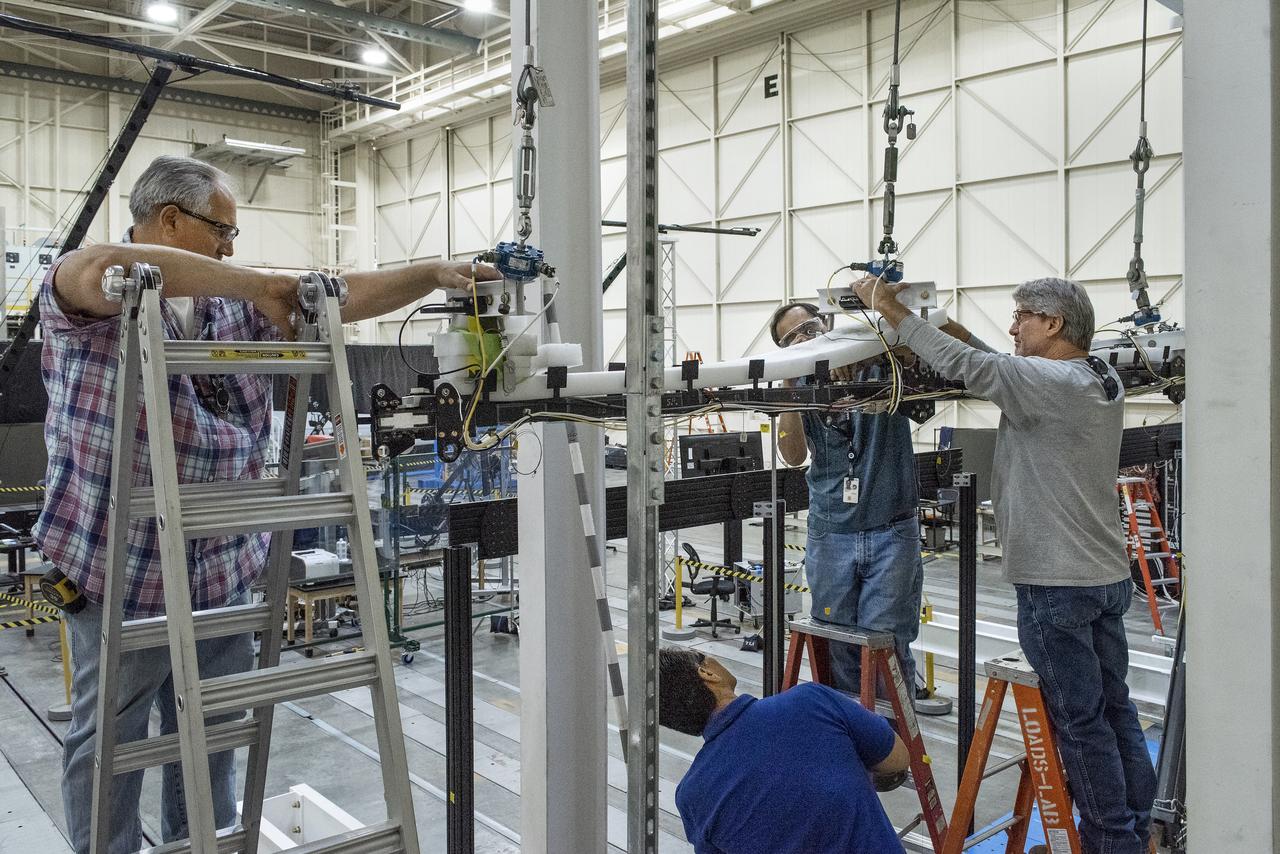
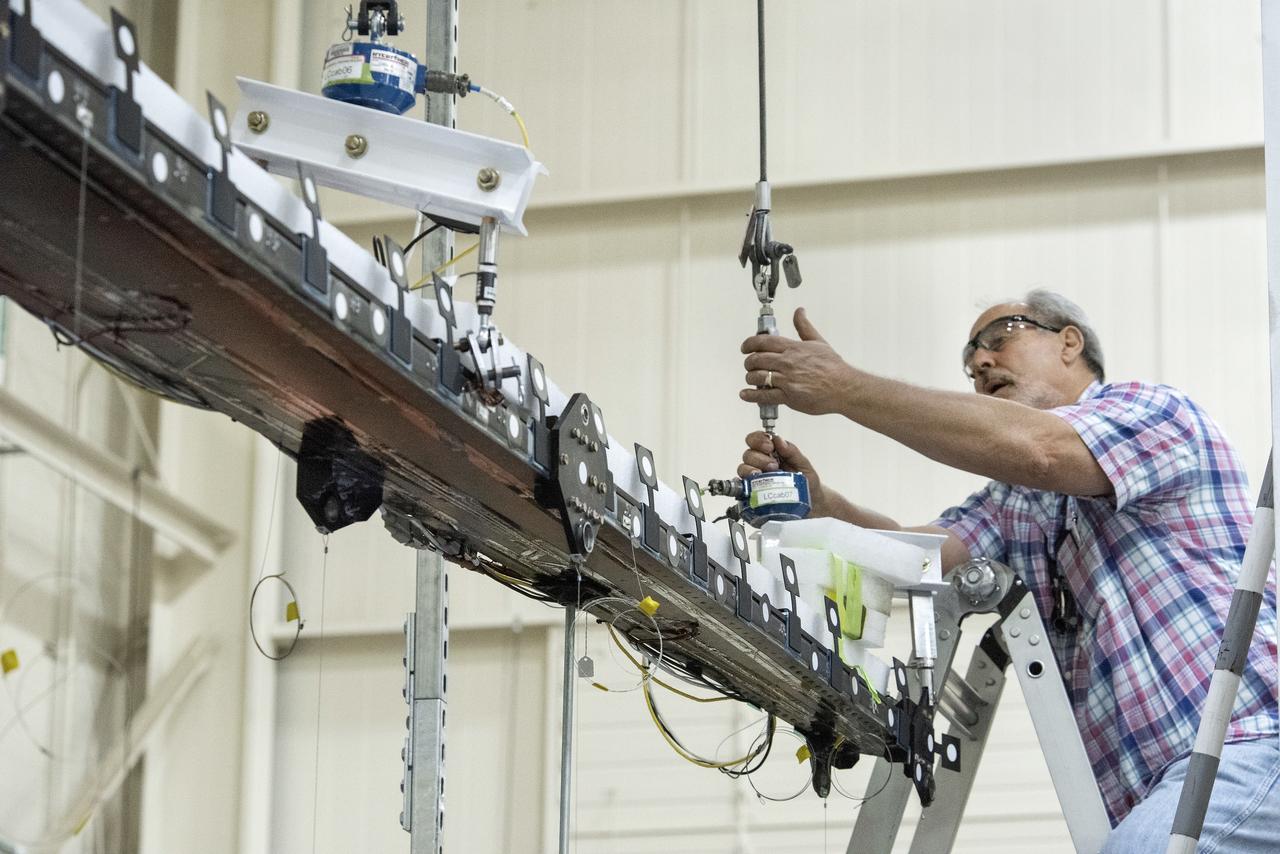
Ted Powers makes an adjustment to the Passive Aeroelastic Tailored (PAT) wing testing apparatus at NASA’s Armstrong Flight Research Center in California.
Experimental Wing Verified During Loads Testing
Ted Powers, from left, Larry Hudson, Ron Haraguchi and Walter Hargis make adjustments to the Passive Aeroelastic Tailored (PAT) wing testing apparatus at NASA’s Armstrong Flight Research Center in California.
Experimental Wing Verified During Loads Testing
NASA’s Armstrong Flight Research Center and Langley Research Center staff members monitor a test of the Passive Aeroelastic Tailored (PAT) wing at NASA’s Armstrong Flight Research Center in California.
Experimental Wing Verified During Loads Testing
The Passive Aeroelastic Tailored (PAT) wing bends under pressure from the highest loads applied during testing at NASA’s Armstrong Flight Research Center in California.
Experimental Wing Verified During Loads Testing
SSME Hardware Simulation Laboratory at Marshall Space Flight Center is the facility that verifies the software which controls SSME prior to each Space Shuttle flight
Space Shuttle Project
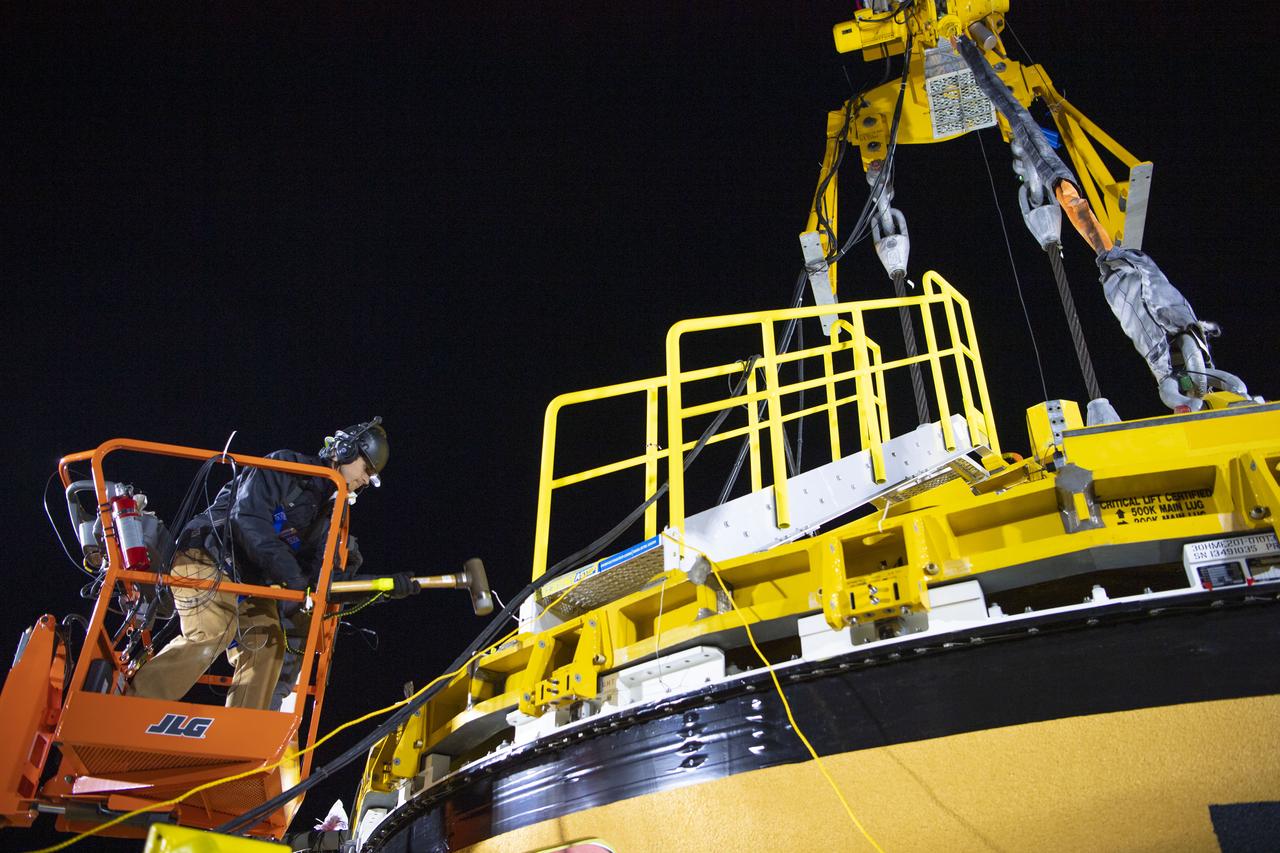
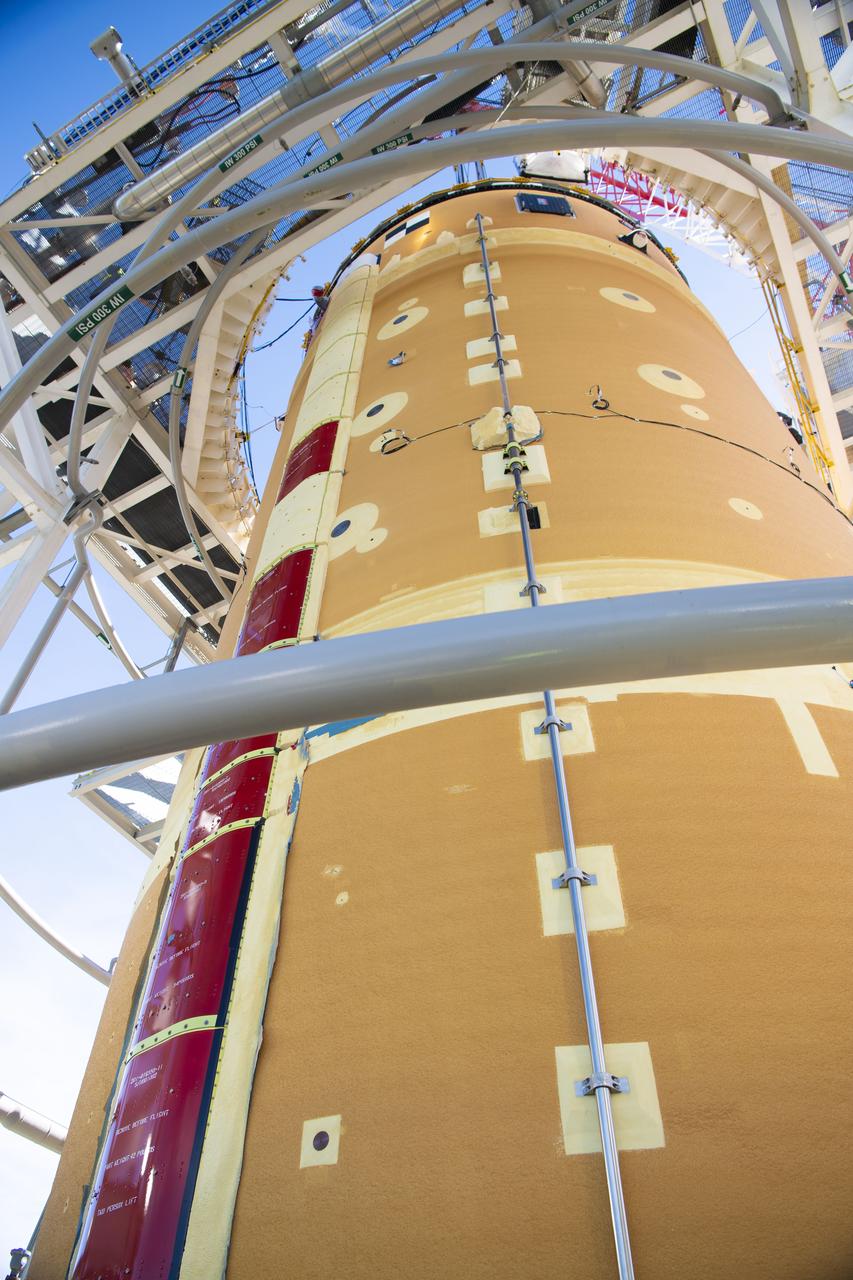
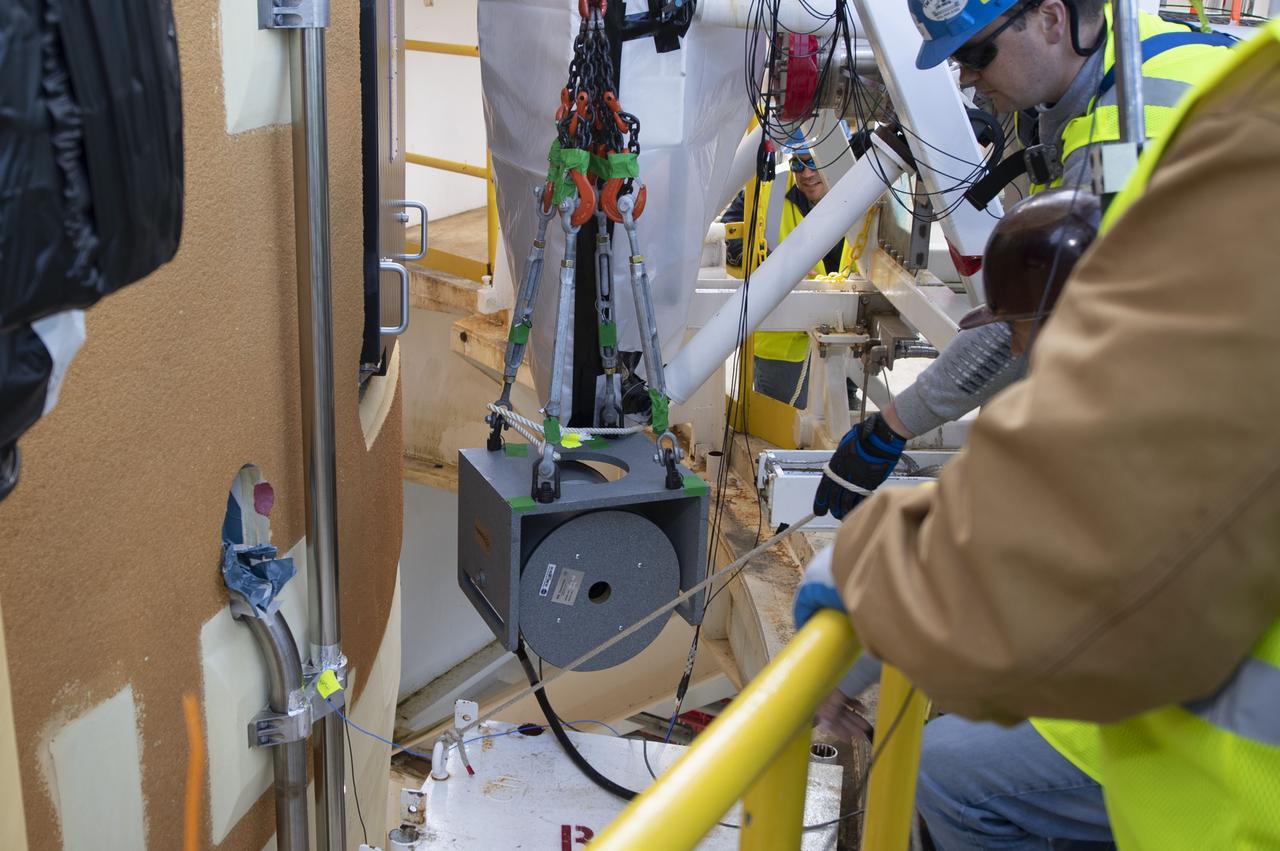
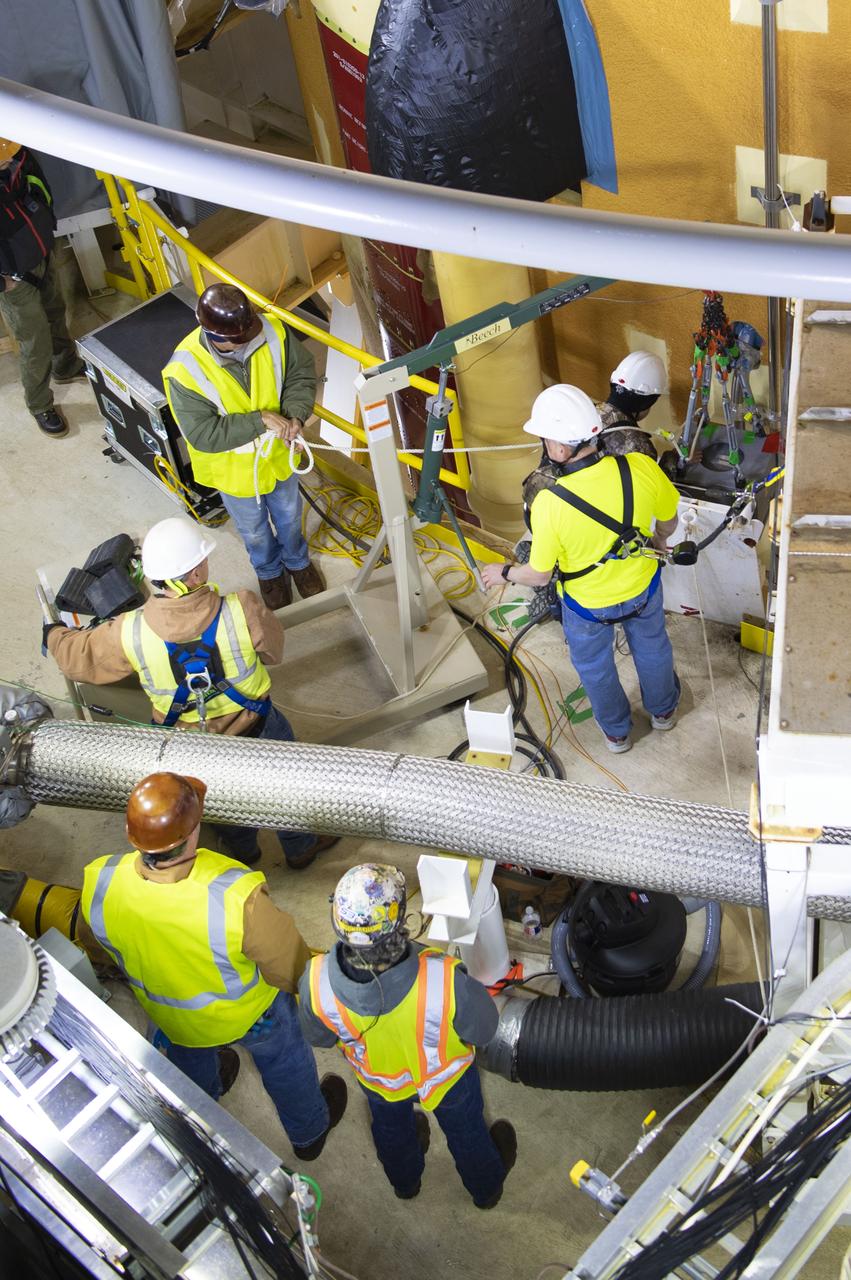
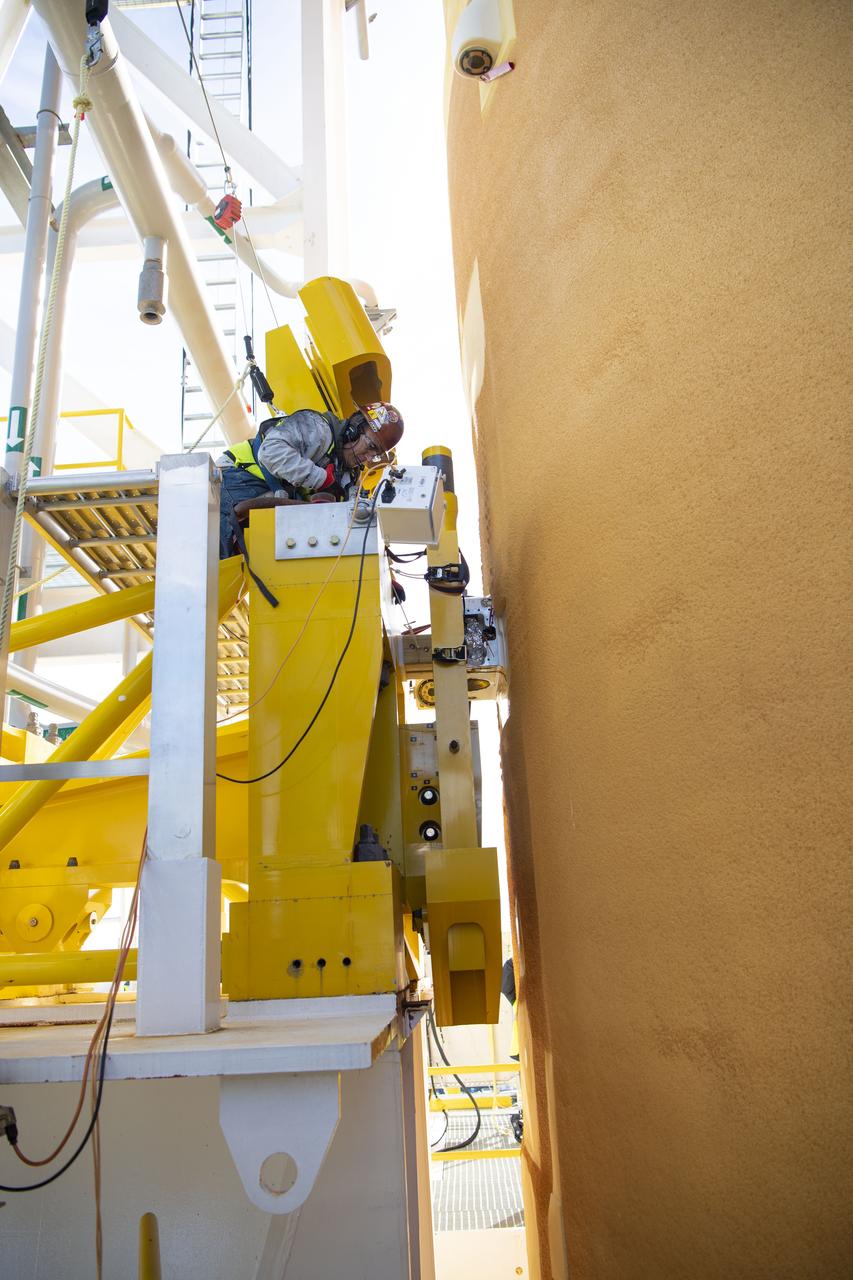
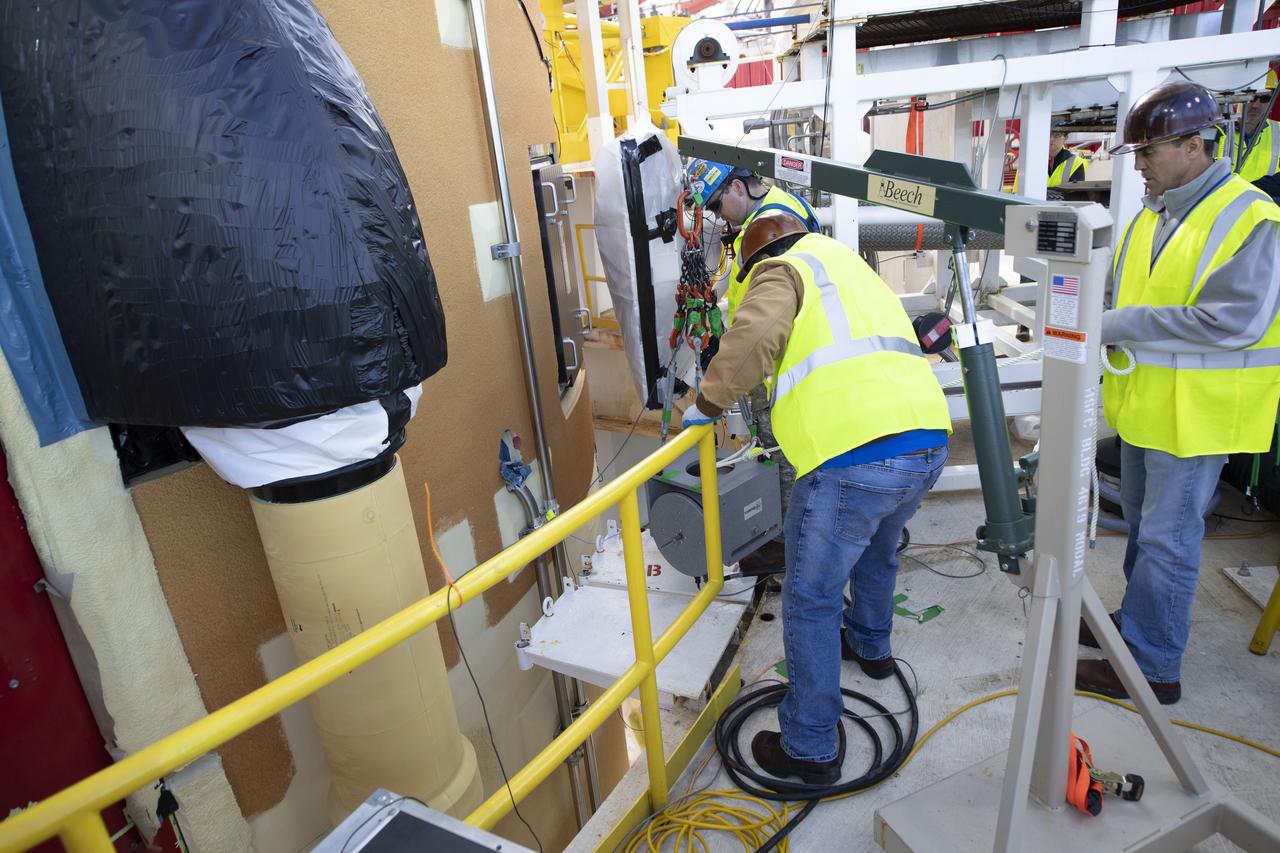
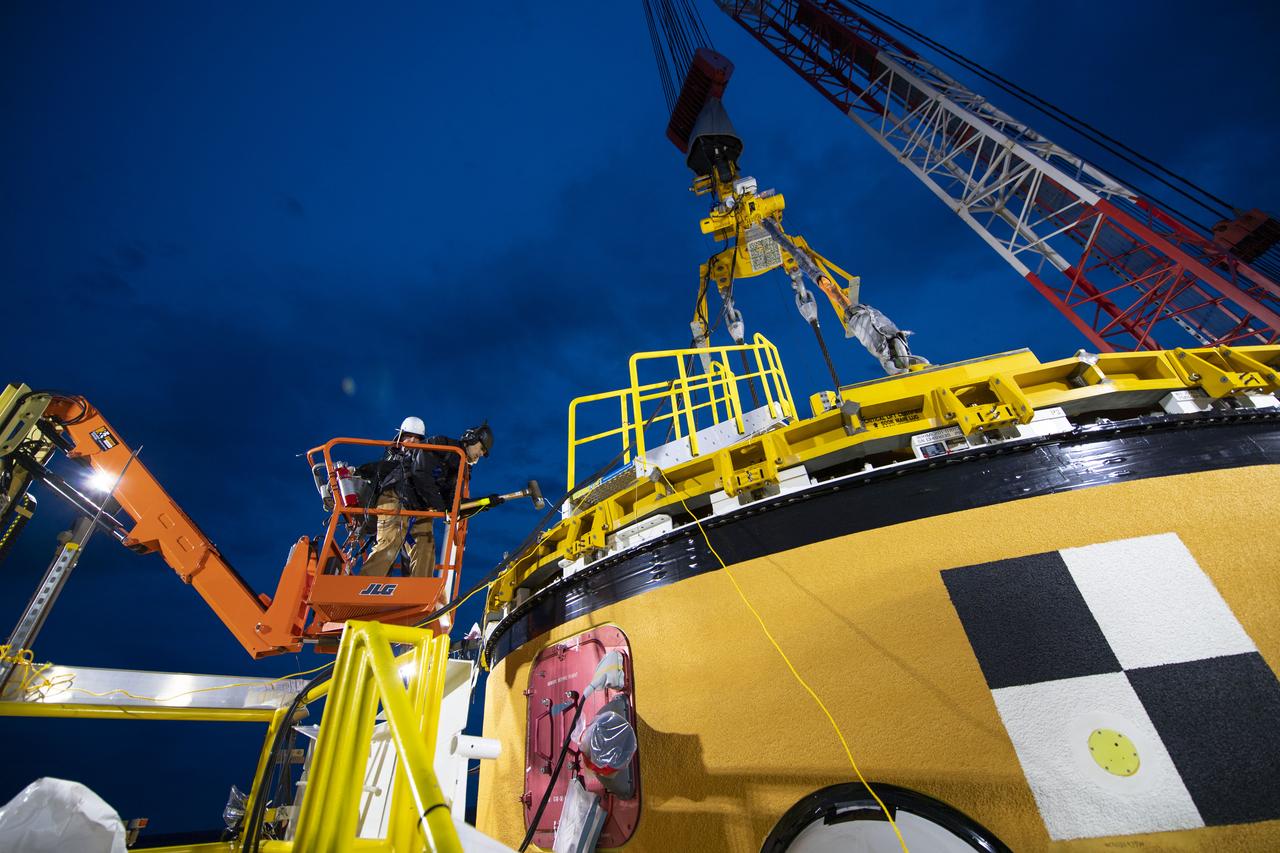
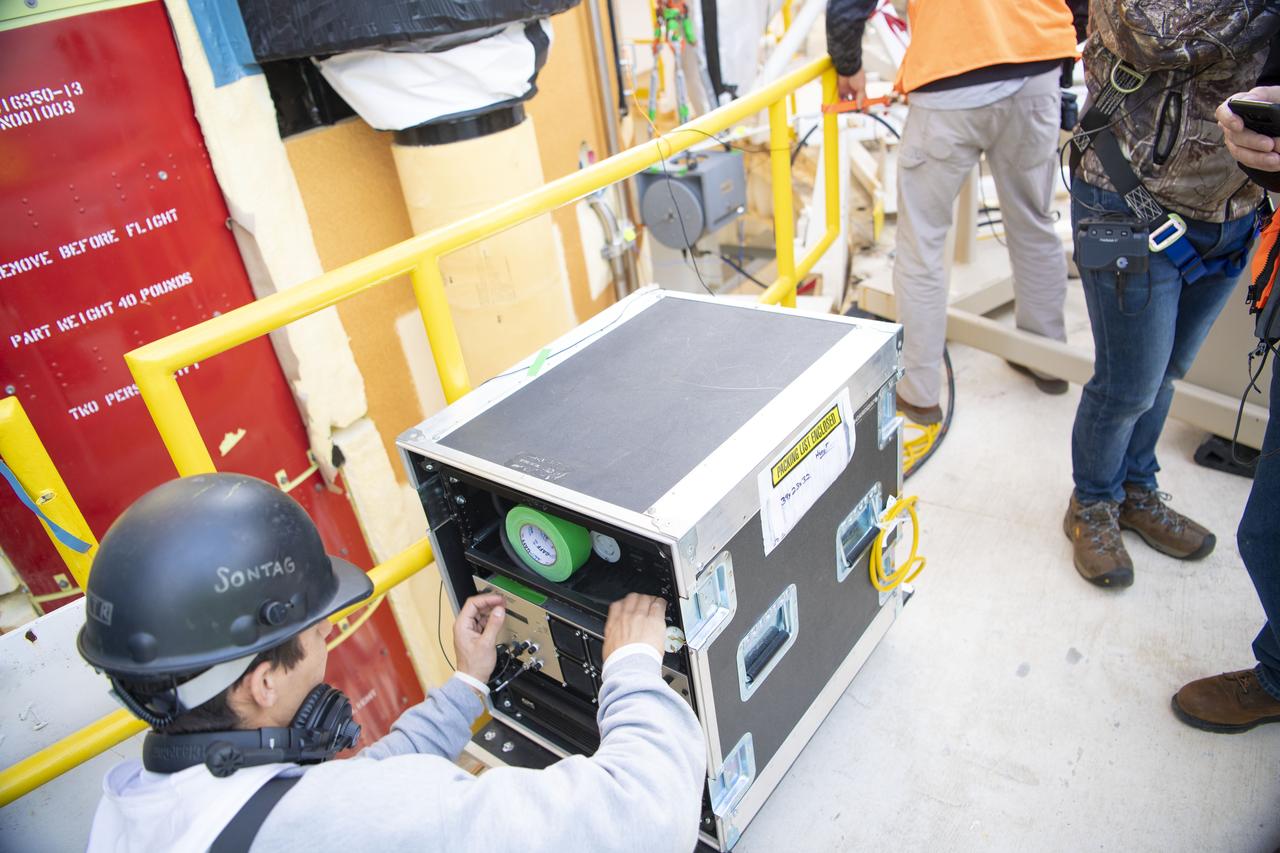
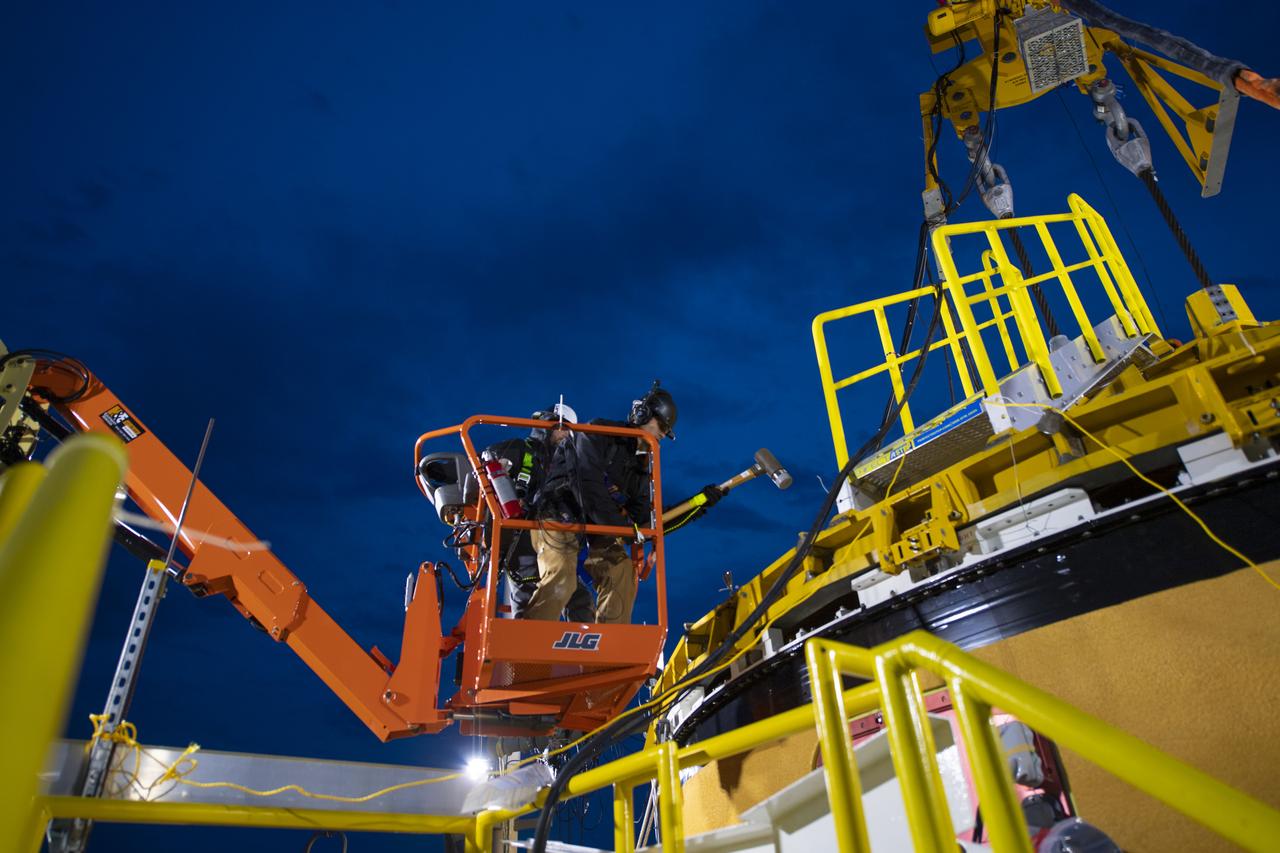
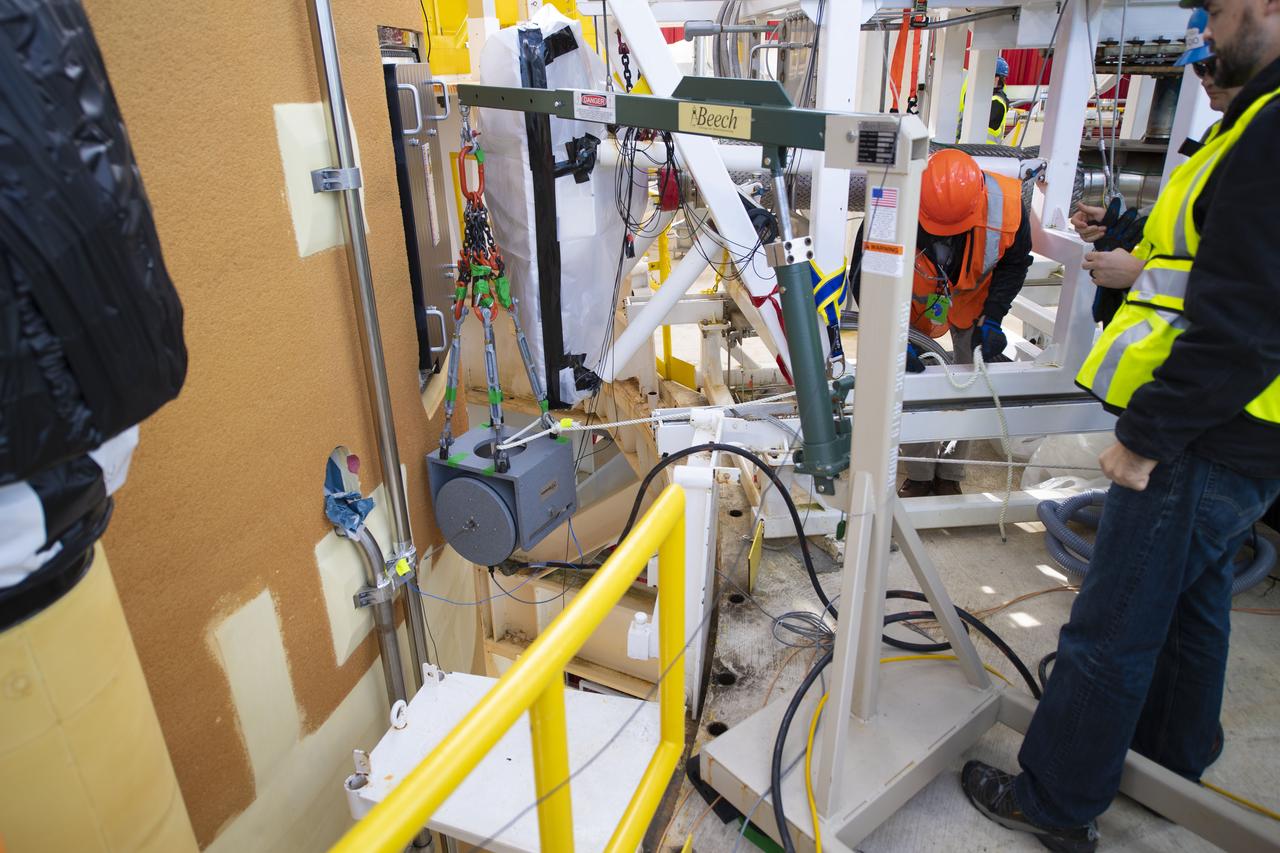
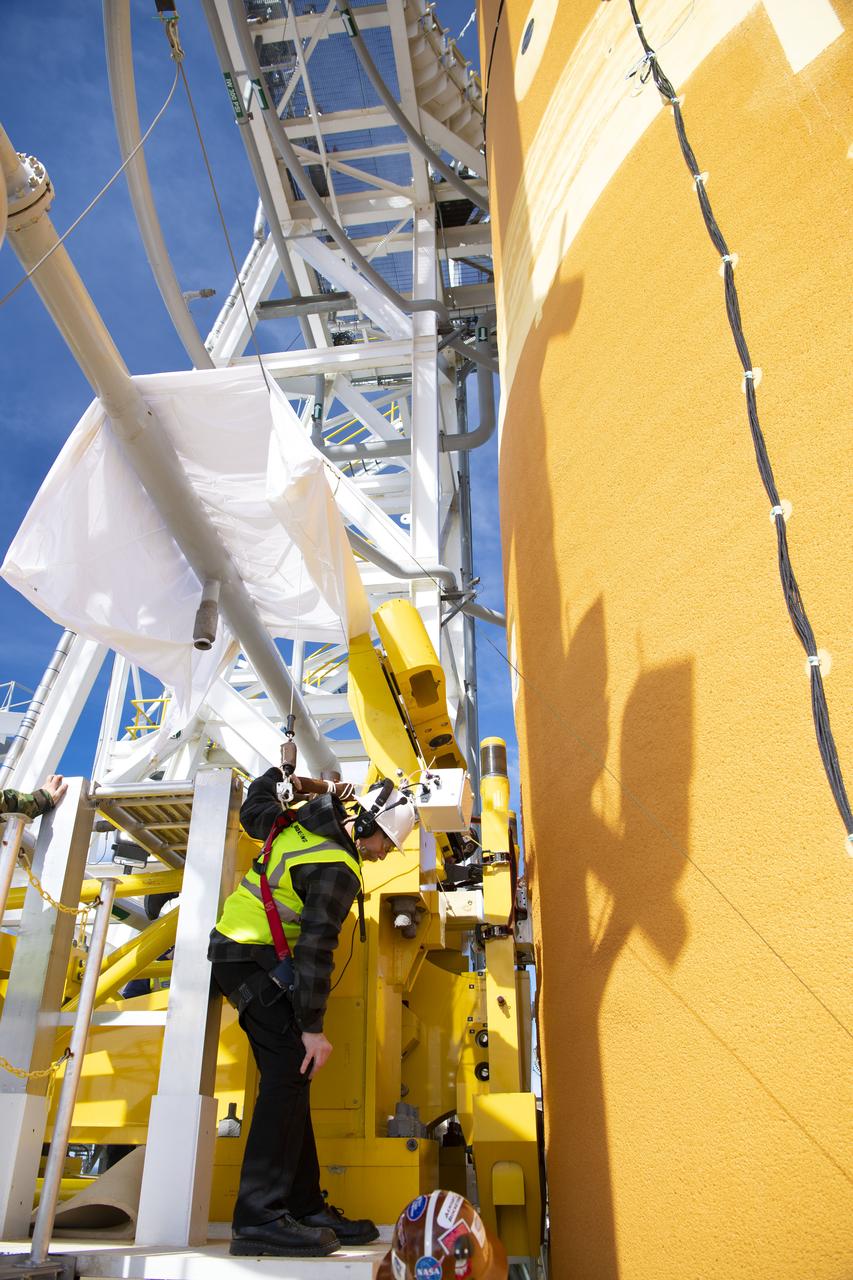
On Jan. 30, 2020, crews at Stennis Space Center successfully conducted modal testing of the first core stage of NASA’s new  Space Launch System (SLS) rocket. Data from the modal test will be used to verify structural vibration modes and verify flight control parameters.  The test is part of a Green Run series of testing that represents the first top-to-bottom integrated testing of the stage’s systems  prior to its maiden Artemis I test mission.
DSC_3342
On Jan. 30, 2020, crews at Stennis Space Center successfully conducted modal testing of the first core stage of NASA’s new  Space Launch System (SLS) rocket. Data from the modal test will be used to verify structural vibration modes and verify flight control parameters.  The test is part of a Green Run series of testing that represents the first top-to-bottom integrated testing of the stage’s systems  prior to its maiden Artemis I test mission.
DSC_3441
On Jan. 30, 2020, crews at Stennis Space Center successfully conducted modal testing of the first core stage of NASA’s new  Space Launch System (SLS) rocket. Data from the modal test will be used to verify structural vibration modes and verify flight control parameters.  The test is part of a Green Run series of testing that represents the first top-to-bottom integrated testing of the stage’s systems  prior to its maiden Artemis I test mission.
DSC_3363
On Jan. 30, 2020, crews at Stennis Space Center successfully conducted modal testing of the first core stage of NASA’s new  Space Launch System (SLS) rocket. Data from the modal test will be used to verify structural vibration modes and verify flight control parameters.  The test is part of a Green Run series of testing that represents the first top-to-bottom integrated testing of the stage’s systems  prior to its maiden Artemis I test mission.
DSC_3454
On Jan. 30, 2020, crews at Stennis Space Center successfully conducted modal testing of the first core stage of NASA’s new  Space Launch System (SLS) rocket. Data from the modal test will be used to verify structural vibration modes and verify flight control parameters.  The test is part of a Green Run series of testing that represents the first top-to-bottom integrated testing of the stage’s systems  prior to its maiden Artemis I test mission.
DSC_3481
On Jan. 30, 2020, crews at Stennis Space Center successfully conducted modal testing of the first core stage of NASA’s new  Space Launch System (SLS) rocket. Data from the modal test will be used to verify structural vibration modes and verify flight control parameters.  The test is part of a Green Run series of testing that represents the first top-to-bottom integrated testing of the stage’s systems  prior to its maiden Artemis I test mission.
DSC_3319
On Jan. 30, 2020, crews at Stennis Space Center successfully conducted modal testing of the first core stage of NASA’s new  Space Launch System (SLS) rocket. Data from the modal test will be used to verify structural vibration modes and verify flight control parameters.  The test is part of a Green Run series of testing that represents the first top-to-bottom integrated testing of the stage’s systems  prior to its maiden Artemis I test mission.
DSC_3332
On Jan. 30, 2020, crews at Stennis Space Center successfully conducted modal testing of the first core stage of NASA’s new  Space Launch System (SLS) rocket. Data from the modal test will be used to verify structural vibration modes and verify flight control parameters.  The test is part of a Green Run series of testing that represents the first top-to-bottom integrated testing of the stage’s systems  prior to its maiden Artemis I test mission.
DSC_3435
On Jan. 30, 2020, crews at Stennis Space Center successfully conducted modal testing of the first core stage of NASA’s new  Space Launch System (SLS) rocket. Data from the modal test will be used to verify structural vibration modes and verify flight control parameters.  The test is part of a Green Run series of testing that represents the first top-to-bottom integrated testing of the stage’s systems  prior to its maiden Artemis I test mission.
DSC_3463
On Jan. 30, 2020, crews at Stennis Space Center successfully conducted modal testing of the first core stage of NASA’s new  Space Launch System (SLS) rocket. Data from the modal test will be used to verify structural vibration modes and verify flight control parameters.  The test is part of a Green Run series of testing that represents the first top-to-bottom integrated testing of the stage’s systems  prior to its maiden Artemis I test mission.
DSC_3309
On Jan. 30, 2020, crews at Stennis Space Center successfully conducted modal testing of the first core stage of NASA’s new Space Launch System (SLS) rocket. Data from the modal test will be used to verify structural vibration modes and verify flight control parameters. The test is part of a Green Run series of testing that represents the first top-to-bottom integrated testing of the stage’s systems prior to its maiden Artemis I test mission.
DSC_3304
On Jan. 30, 2020, crews at Stennis Space Center successfully conducted modal testing of the first core stage of NASA’s new  Space Launch System (SLS) rocket. Data from the modal test will be used to verify structural vibration modes and verify flight control parameters.  The test is part of a Green Run series of testing that represents the first top-to-bottom integrated testing of the stage’s systems  prior to its maiden Artemis I test mission.
DSC_3390
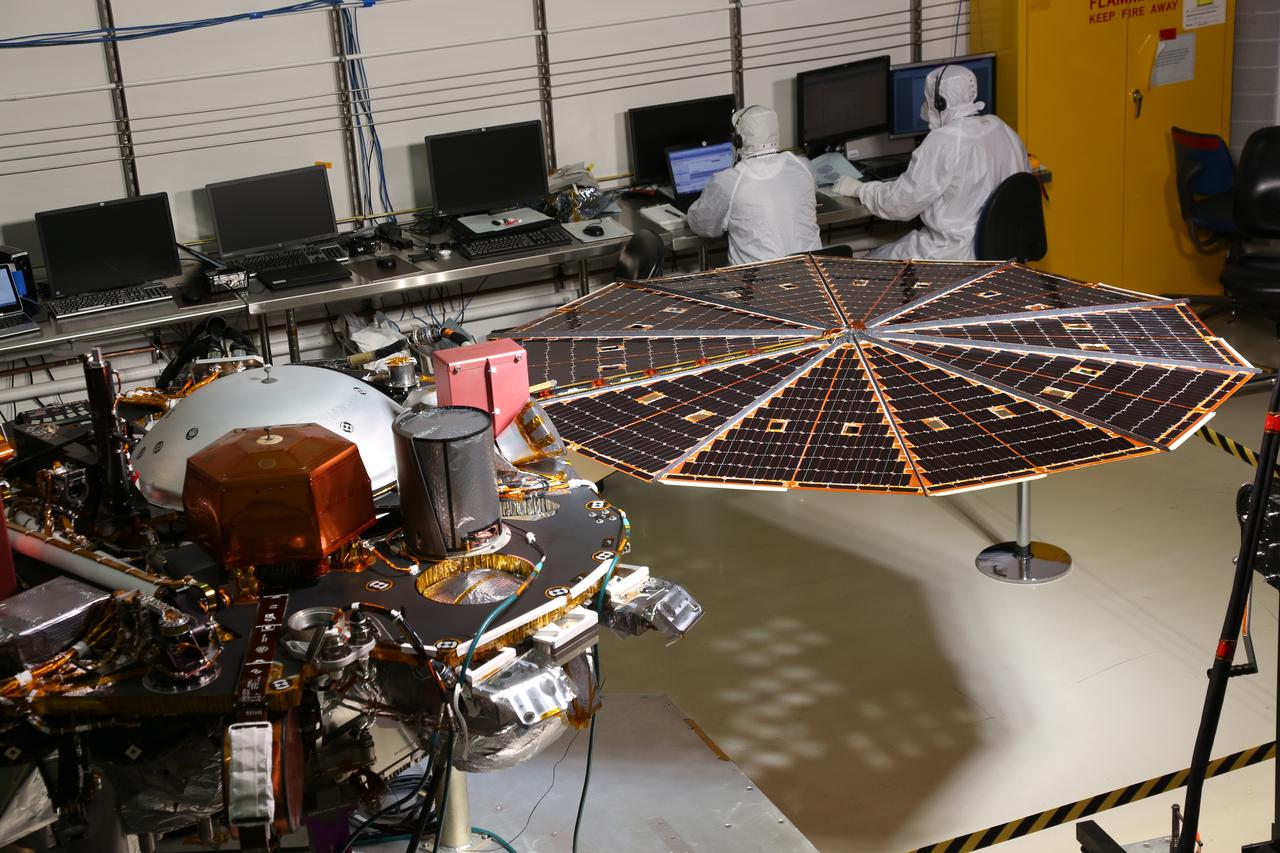
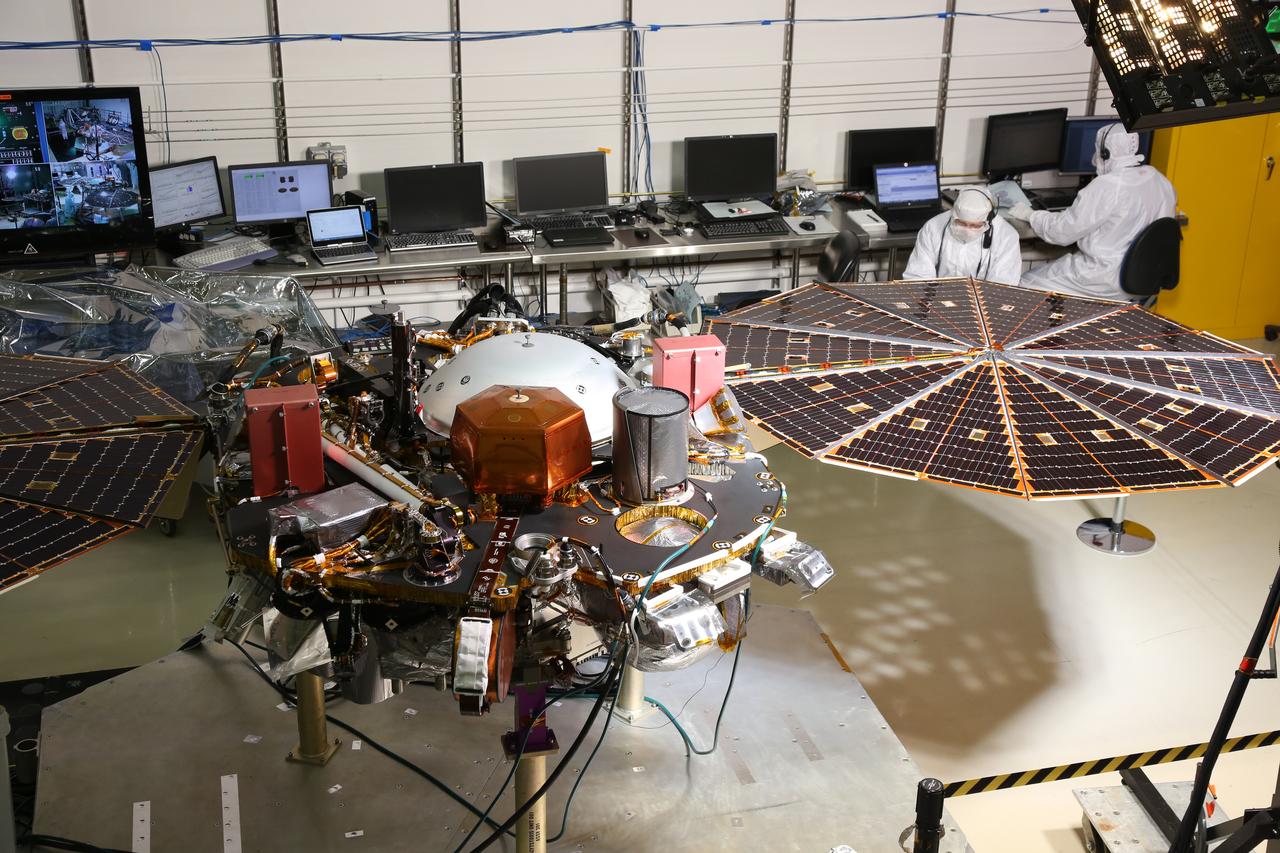
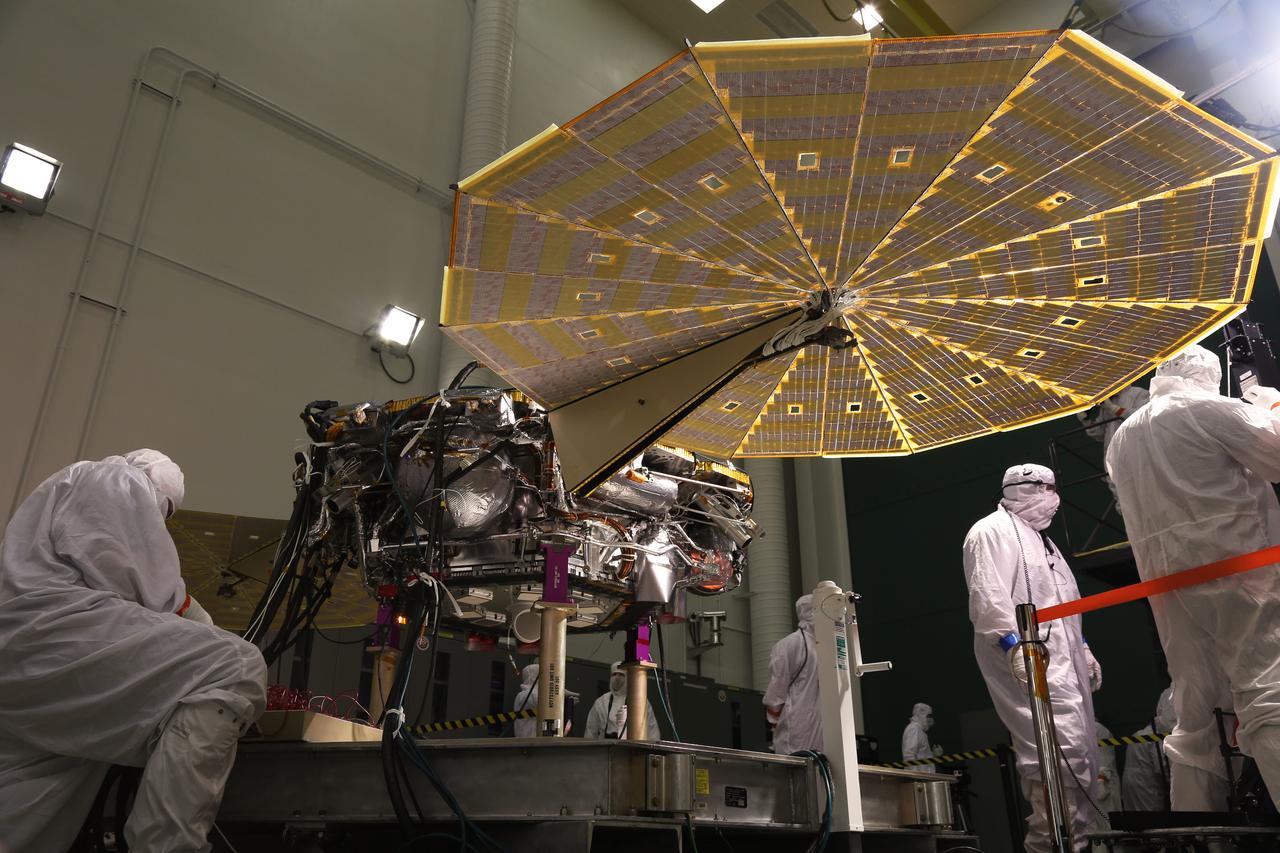
While in the landed configuration for the last time before arriving on Mars, NASA's InSight lander was commanded to deploy its solar arrays to test and verify the exact process that it will use on the surface of the Red Planet. During the test on Jan. 23, 2018 from the Lockheed Martin clean room in Littleton, Colorado, engineers and technicians evaluated that the solar arrays fully deployed and conducted an illumination test to confirm that the solar cells were collecting power.  A video is available at https://photojournal.jpl.nasa.gov/catalog/PIA22203
InSight Lander Solar Array Test
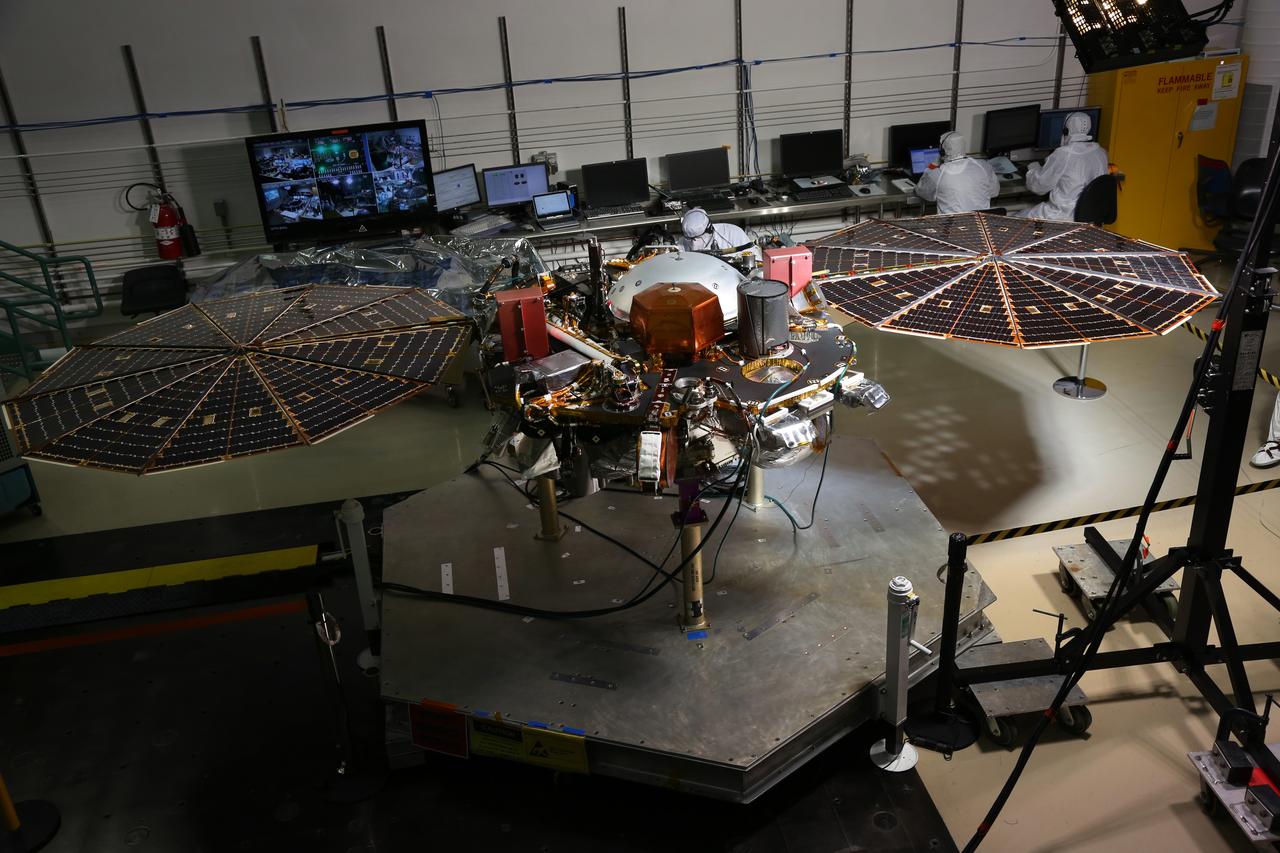
While in the landed configuration for the last time before arriving on Mars, NASA's InSight lander was commanded to deploy its solar arrays to test and verify the exact process that it will use on the surface of the Red Planet. During the test on Jan. 23, 2018 from the Lockheed Martin clean room in Littleton, Colorado, engineers and technicians evaluated that the solar arrays fully deployed and conducted an illumination test to confirm that the solar cells were collecting power.  A video is available at https://photojournal.jpl.nasa.gov/catalog/PIA22202
InSight Lander Solar Array Test
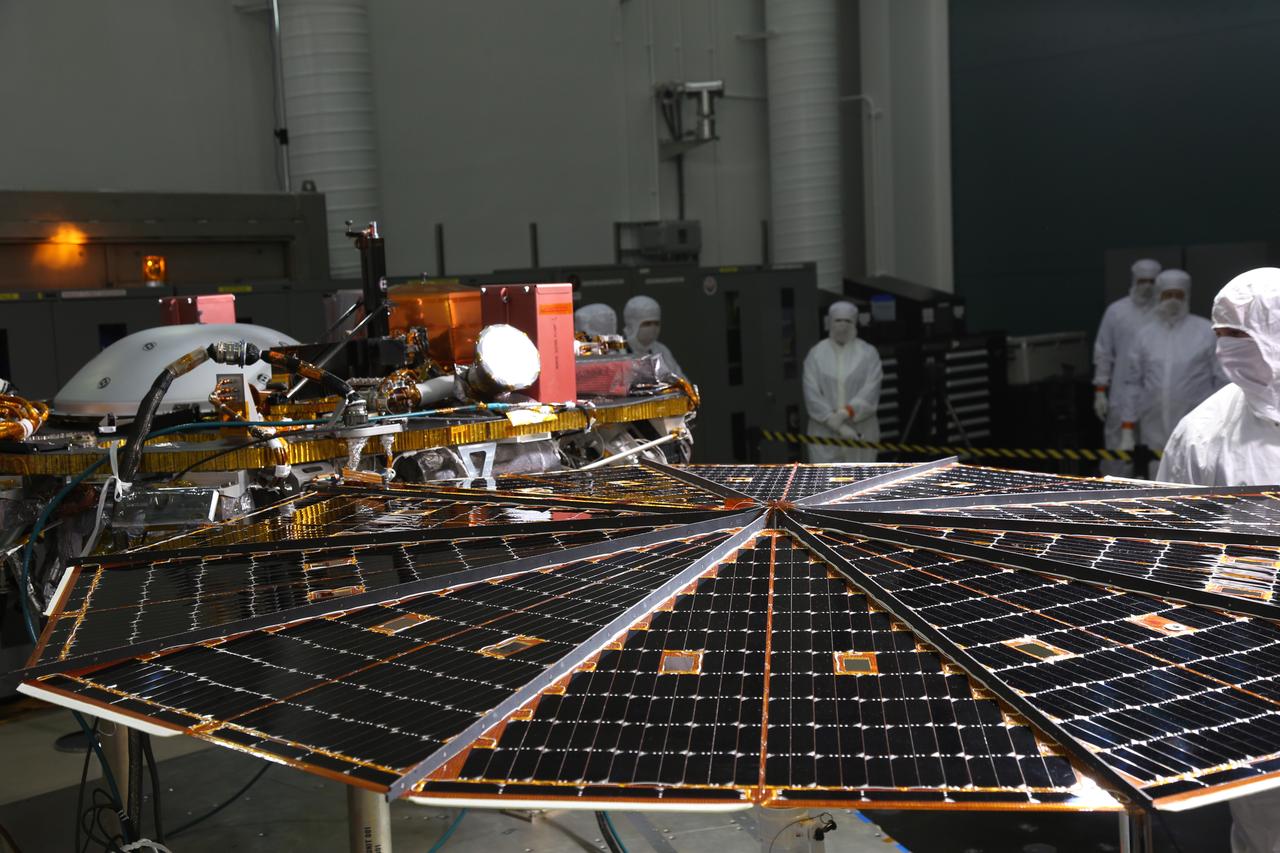
While in the landed configuration for the last time before arriving on Mars, NASA's InSight lander was commanded to deploy its solar arrays to test and verify the exact process that it will use on the surface of the Red Planet. During the test on Jan. 23, 2018 from the Lockheed Martin clean room in Littleton, Colorado, engineers and technicians evaluated that the solar arrays fully deployed and conducted an illumination test to confirm that the solar cells were collecting power.  A video is available at https://photojournal.jpl.nasa.gov/catalog/PIA22201
InSight Lander Solar Array Test
While in the landed configuration for the last time before arriving on Mars, NASA's InSight lander was commanded to deploy its solar arrays to test and verify the exact process that it will use on the surface of the Red Planet. During the test on Jan. 23, 2018 from the Lockheed Martin clean room in Littleton, Colorado, engineers and technicians evaluated that the solar arrays fully deployed and conducted an illumination test to confirm that the solar cells were collecting power.  A video is available at https://photojournal.jpl.nasa.gov/catalog/PIA22200
InSight Lander Solar Array Test
While in the landed configuration for the last time before arriving on Mars, NASA's InSight lander was commanded to deploy its solar arrays to test and verify the exact process that it will use on the surface of the Red Planet. During the test on Jan. 23, 2018 from the Lockheed Martin clean room in Littleton, Colorado, engineers and technicians evaluated that the solar arrays fully deployed and conducted an illumination test to confirm that the solar cells were collecting power.  A video is available at https://photojournal.jpl.nasa.gov/catalog/PIA22204
InSight Lander Solar Array Test
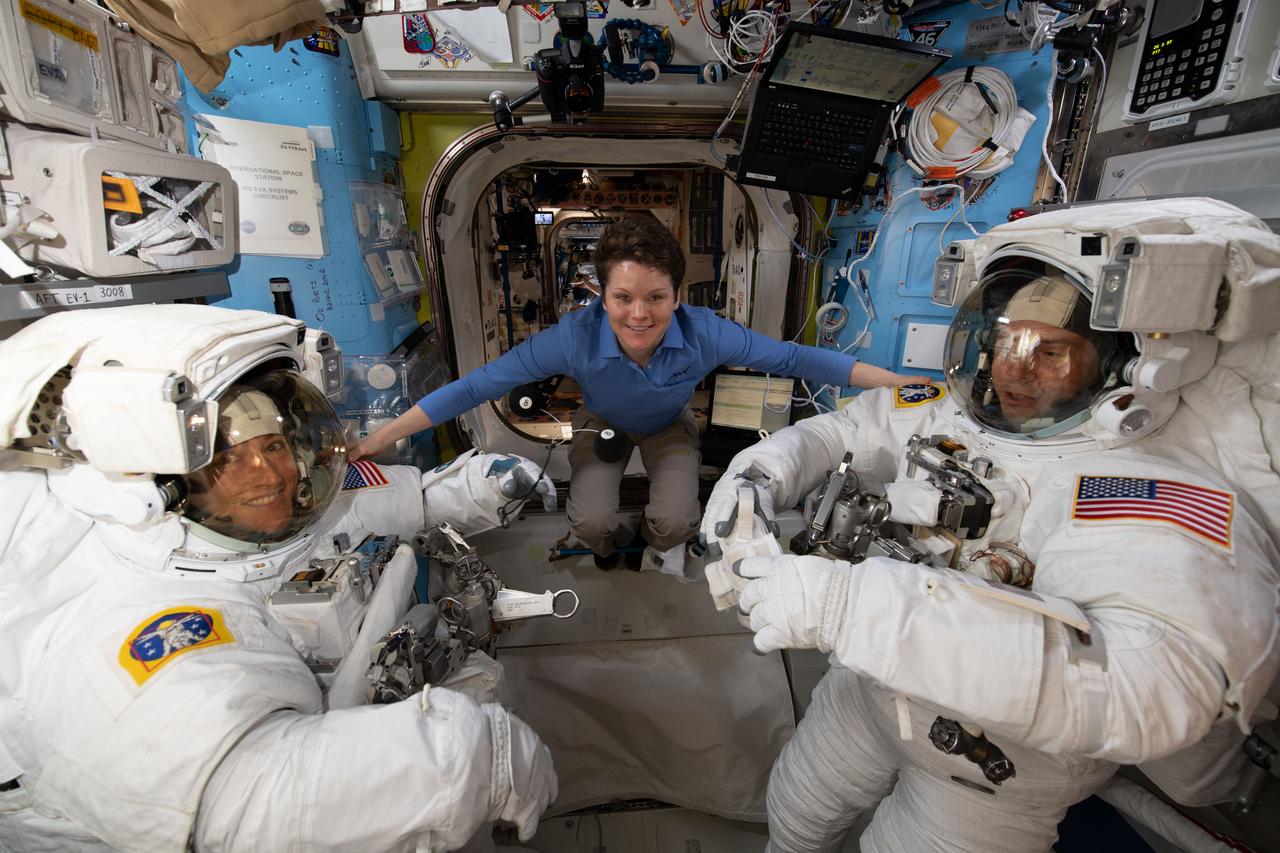
iss059e001093 (March 18, 2019) --- NASA astronaut Anne McClain assists fellow NASA astronauts Christina Koch (left) and Nick Hague as they verify their U.S. spacesuits are sized correctly and fit properly ahead of a set of upcoming spacewalks.
iss059e001093
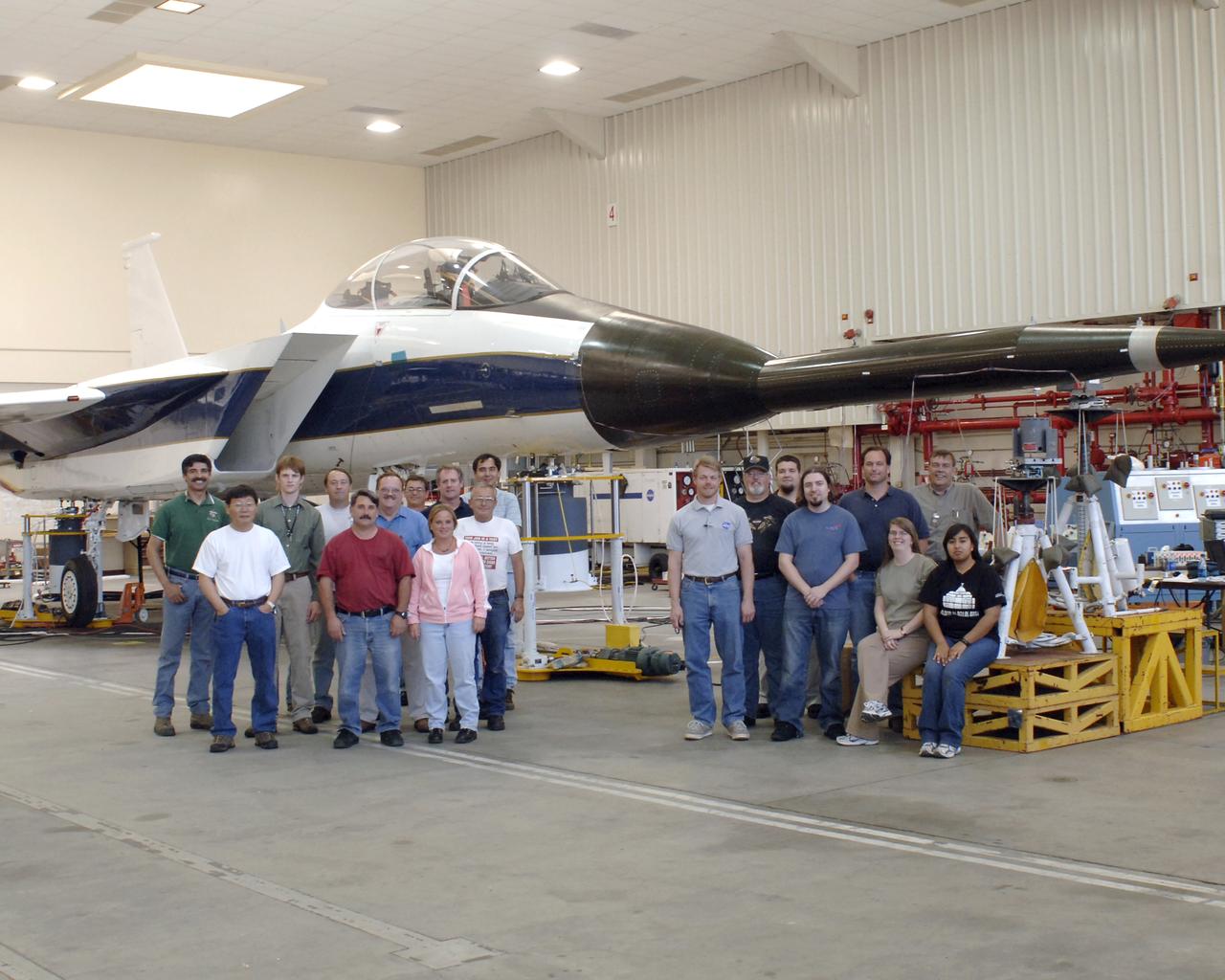
Some of the test team for the Gulfstream Quiet Spike project assembled for a group photo on May 3, 2006. The project seeks to verify the structural integrity of the multi-segmented, articulating spike attachment designed to reduce and control a sonic boom.
Some of the test team for the Gulfstream Quiet Spike project assembled for a group photo on May 3, 2006
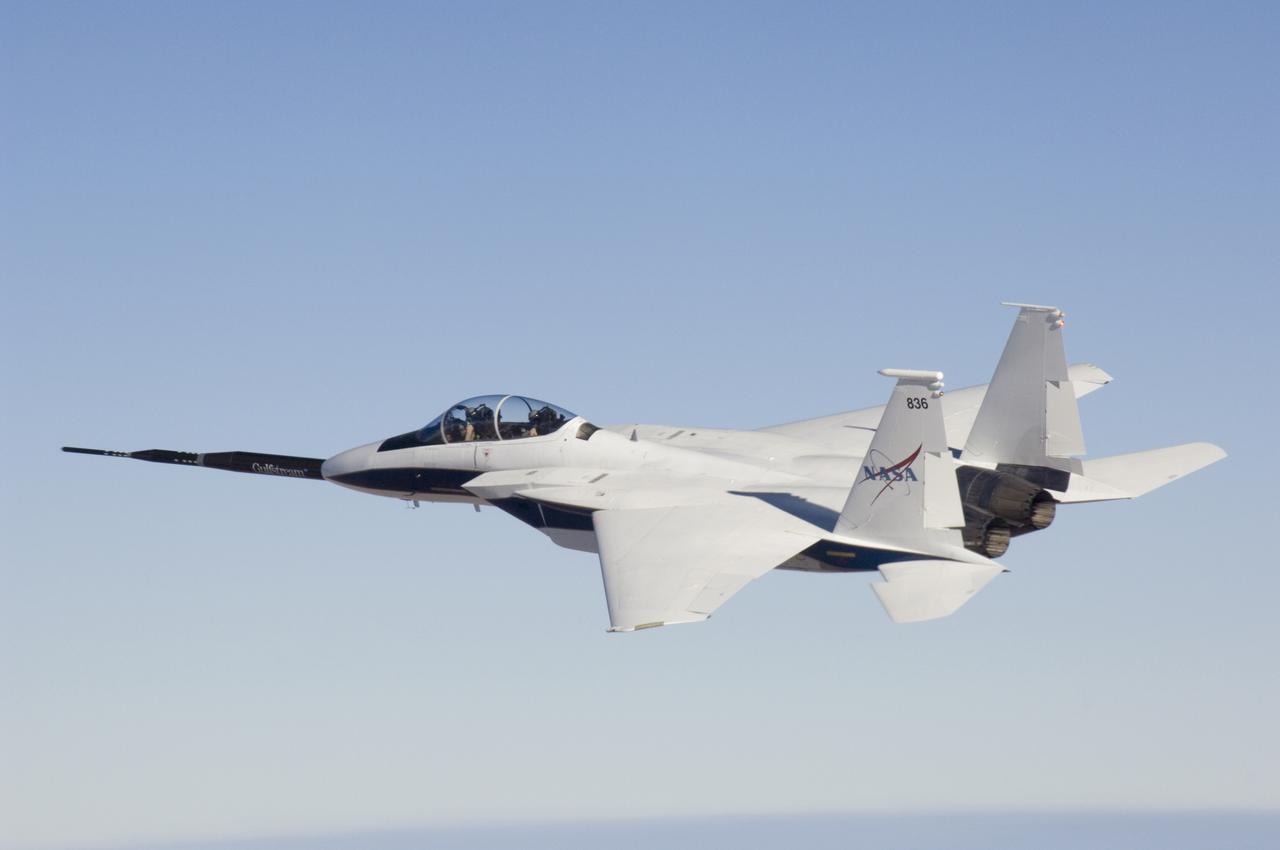
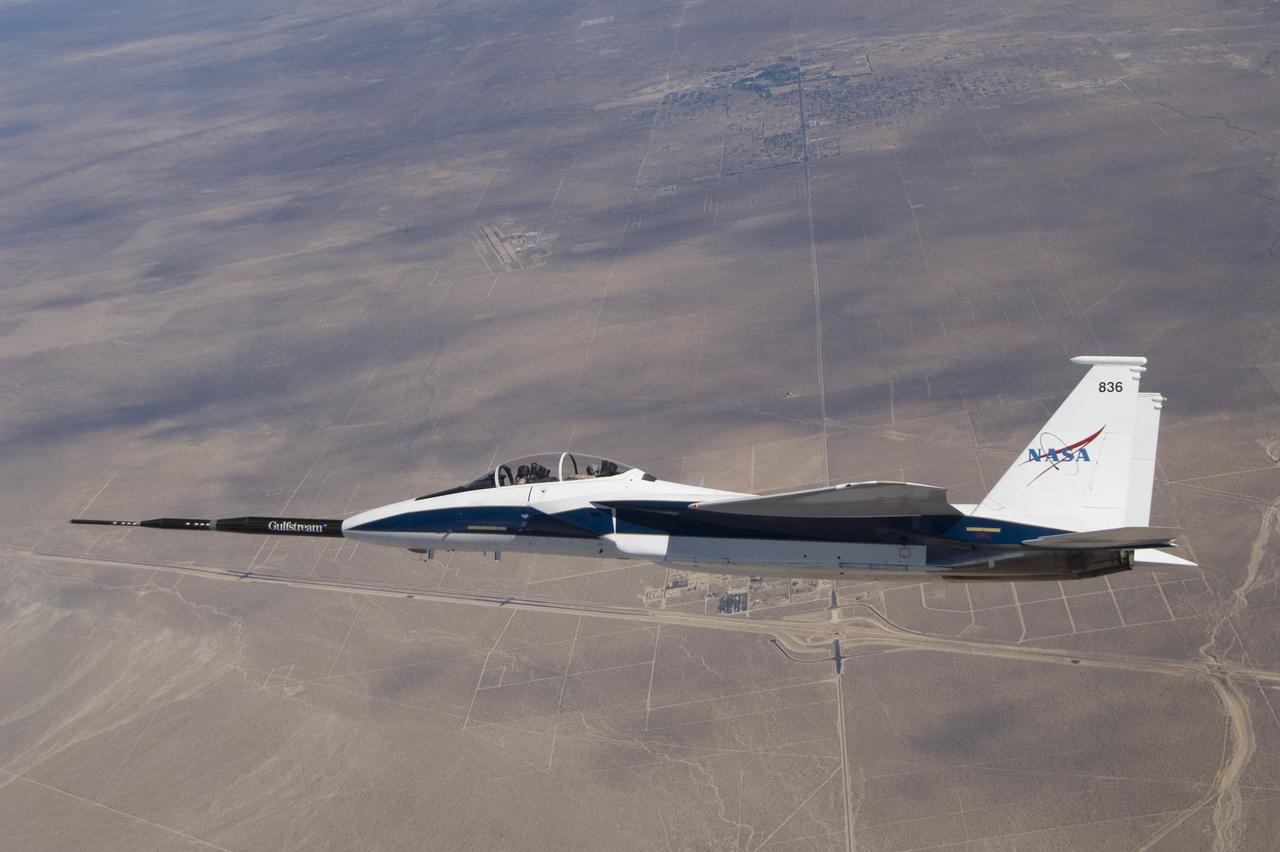
NASA F-15B #836 in flight with Quiet Spike attached. The project seeks to verify the structural integrity of the multi-segmented, articulating spike attachment designed to reduce and control a sonic boom.
NASA F-15B #836 in flight with Quiet Spike attached
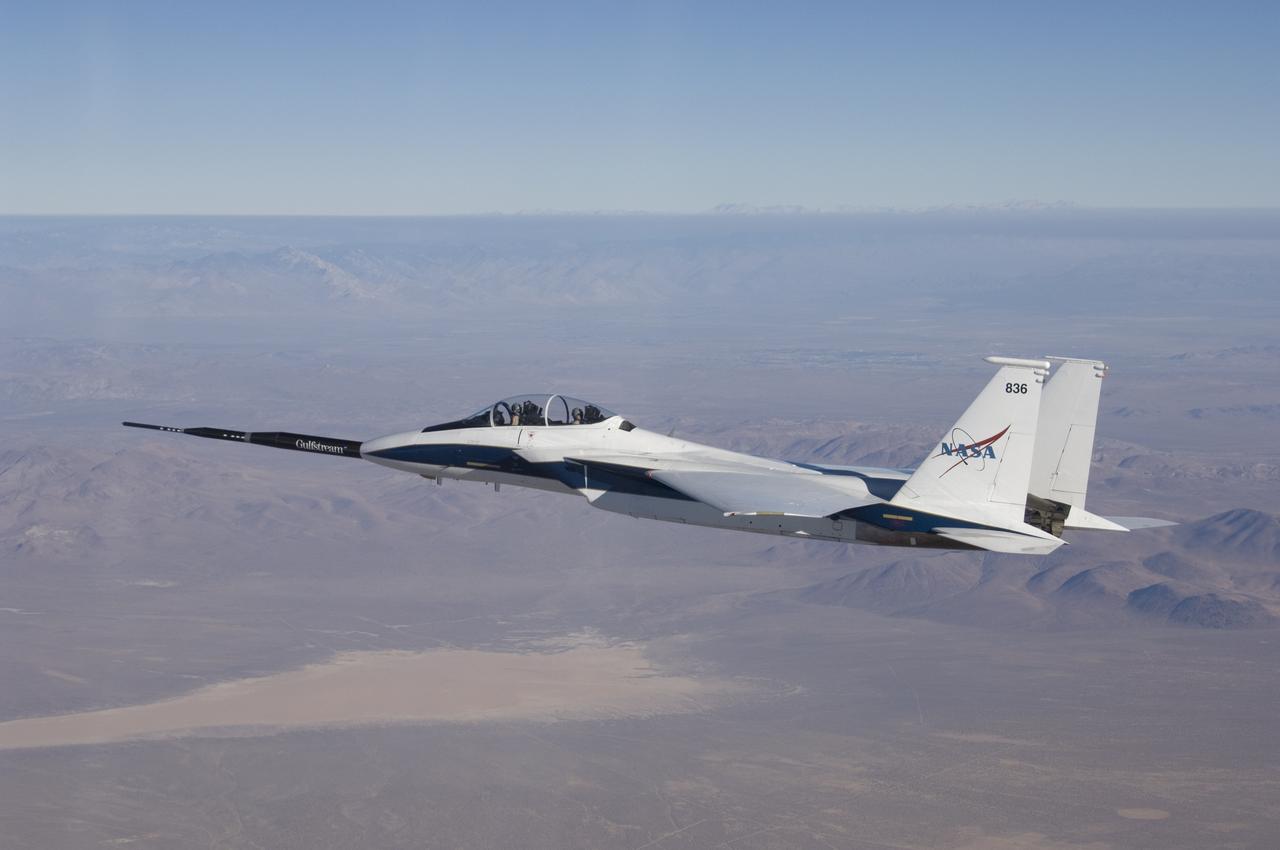
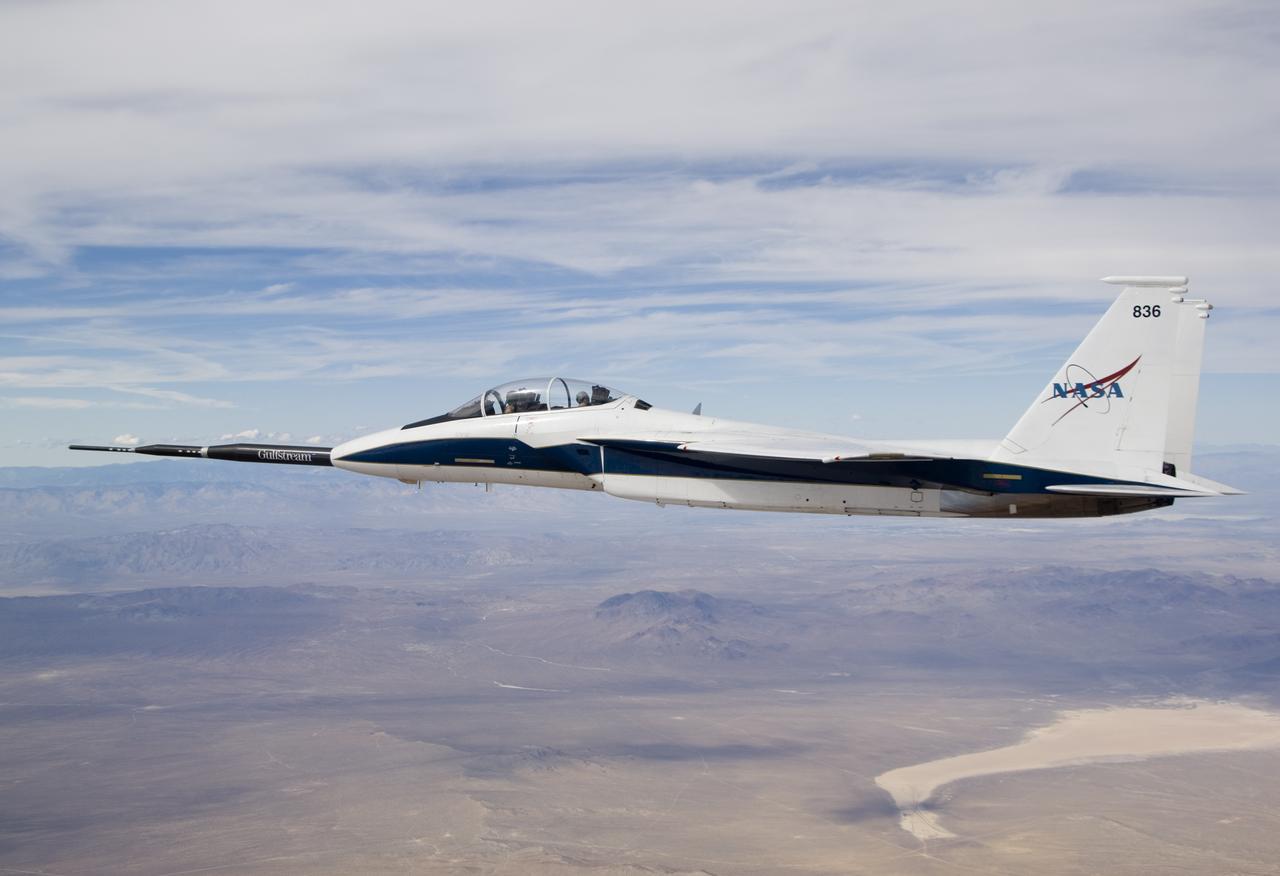
NASA F-15B #836 in flight with Quiet Spike attached. The project seeks to verify the structural integrity of the multi-segmented, articulating spike attachment designed to reduce and control a sonic boom.
NASA F-15B #836 in flight with Quiet Spike attached
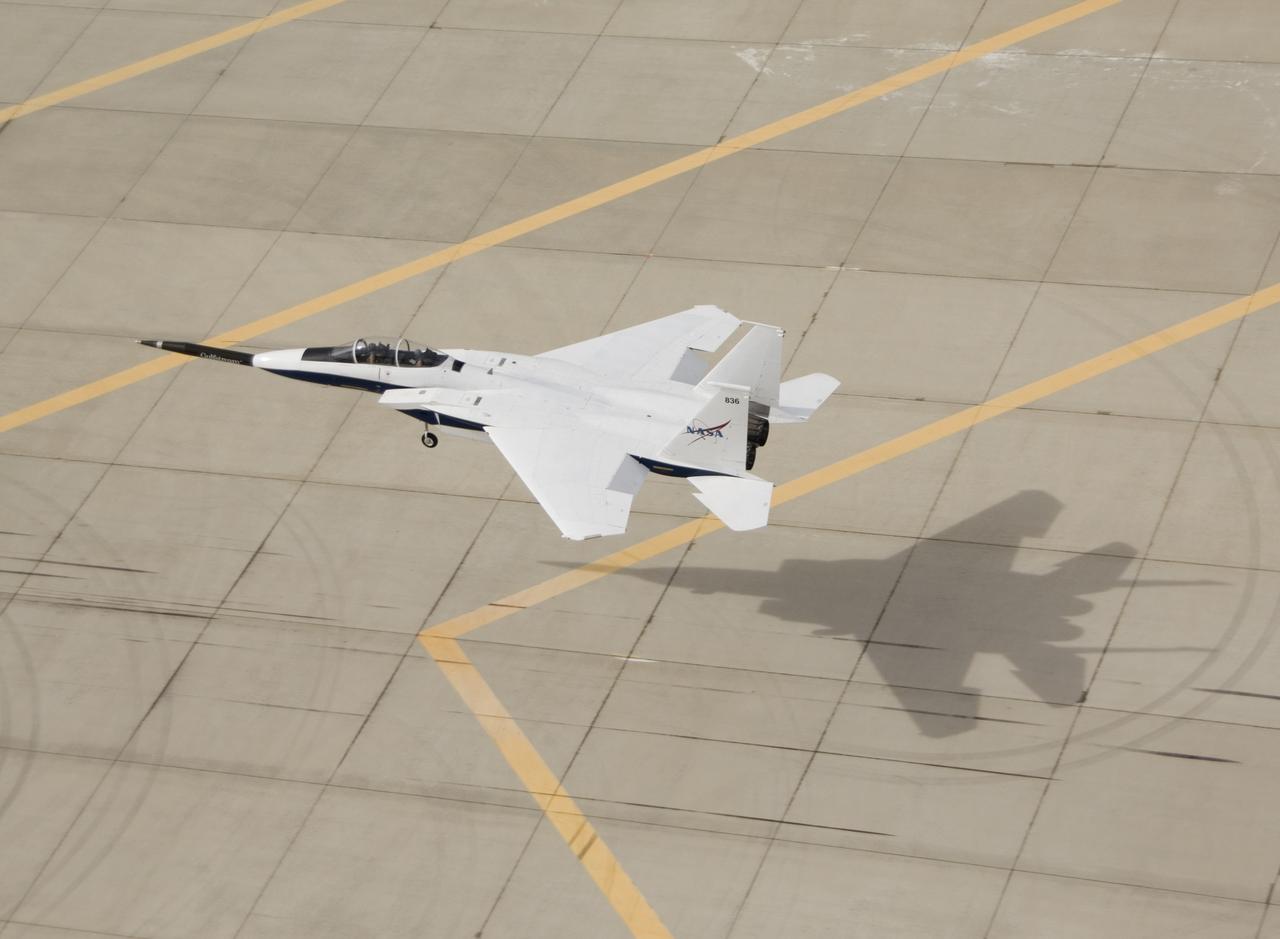
NASA F-15B #836 landing with Quiet Spike attached. The project seeks to verify the structural integrity of the multi-segmented, articulating spike attachment designed to reduce and control a sonic boom.
NASA F-15B #836 landing with Quiet Spike attached
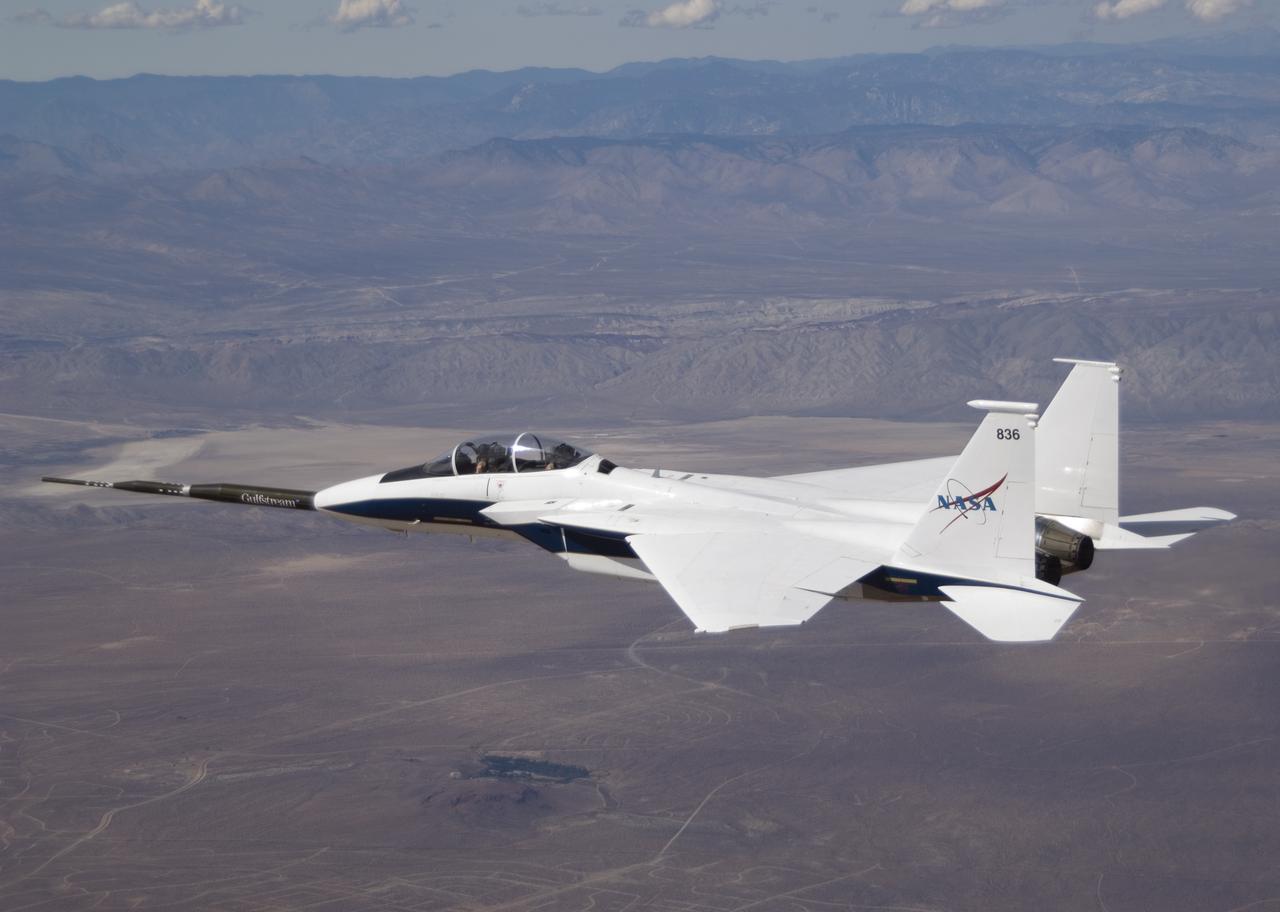
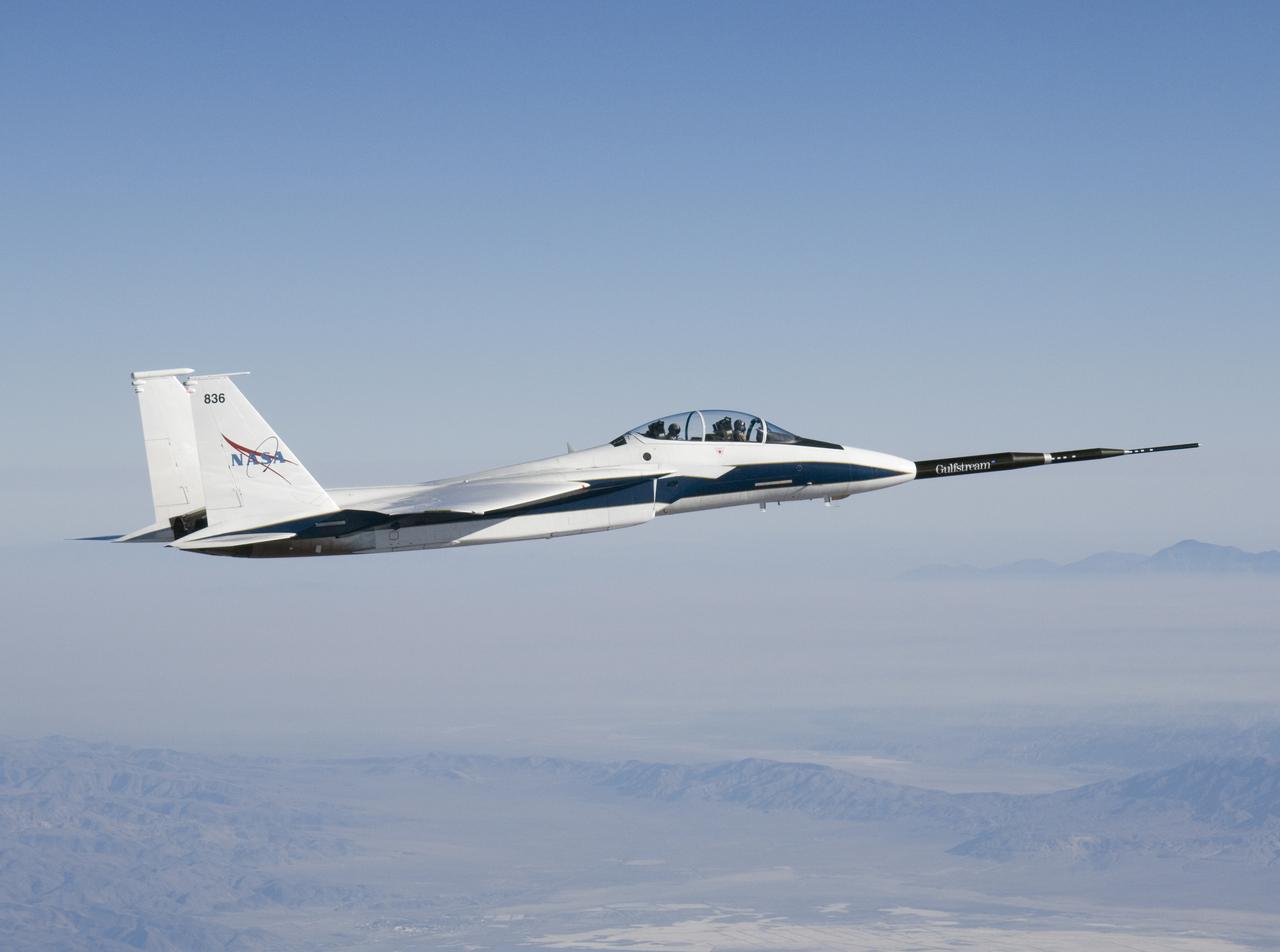
NASA F-15B #836 in flight with Quiet Spike attached. The project seeks to verify the structural integrity of the multi-segmented, articulating spike attachment designed to reduce and control a sonic boom.
NASA F-15B #836 in flight with Quiet Spike attached
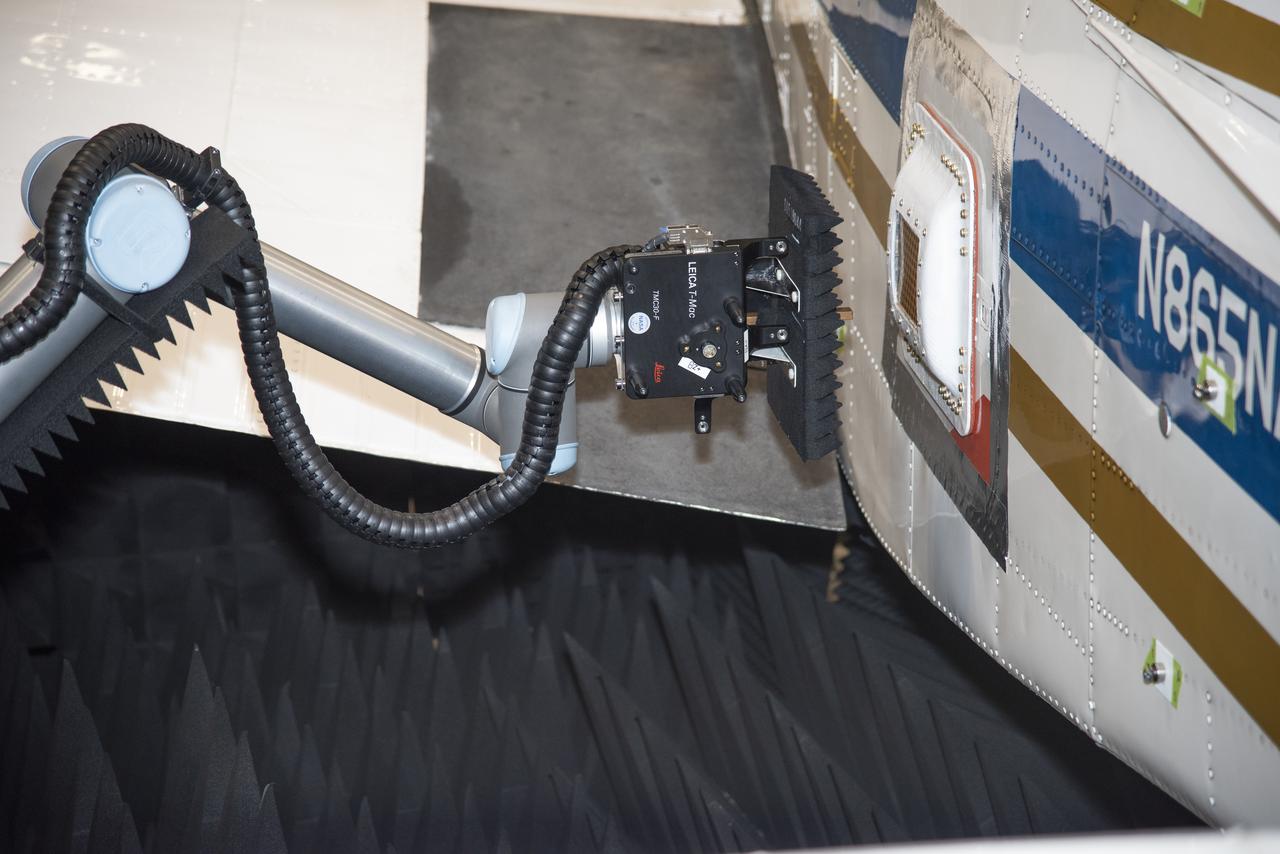
Tests were conducted with a robotic antenna scanner at NASA's Armstrong Flight Research Center in California. The scanner was used to test the in-situ radiation pattern of the conformal antenna to verify its performance parameters before being tested on an aircraft.
Testing a Conformal Antenna with a Robotic Arm
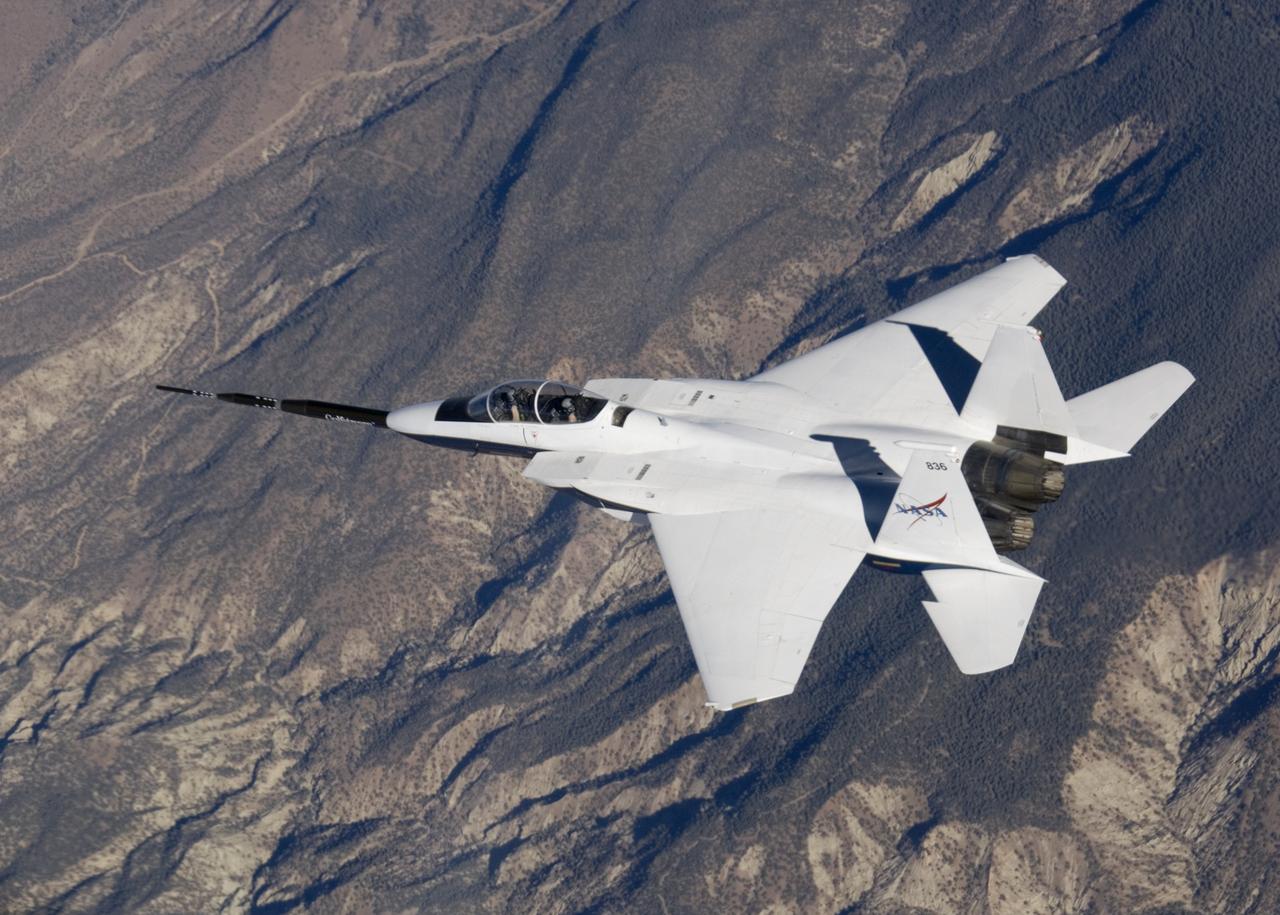
NASA F-15B #836 in flight with Quiet Spike attached. The project seeks to verify the structural integrity of the multi-segmented, articulating spike attachment designed to reduce and control a sonic boom.
NASA F-15B #836 in flight with Quiet Spike attached
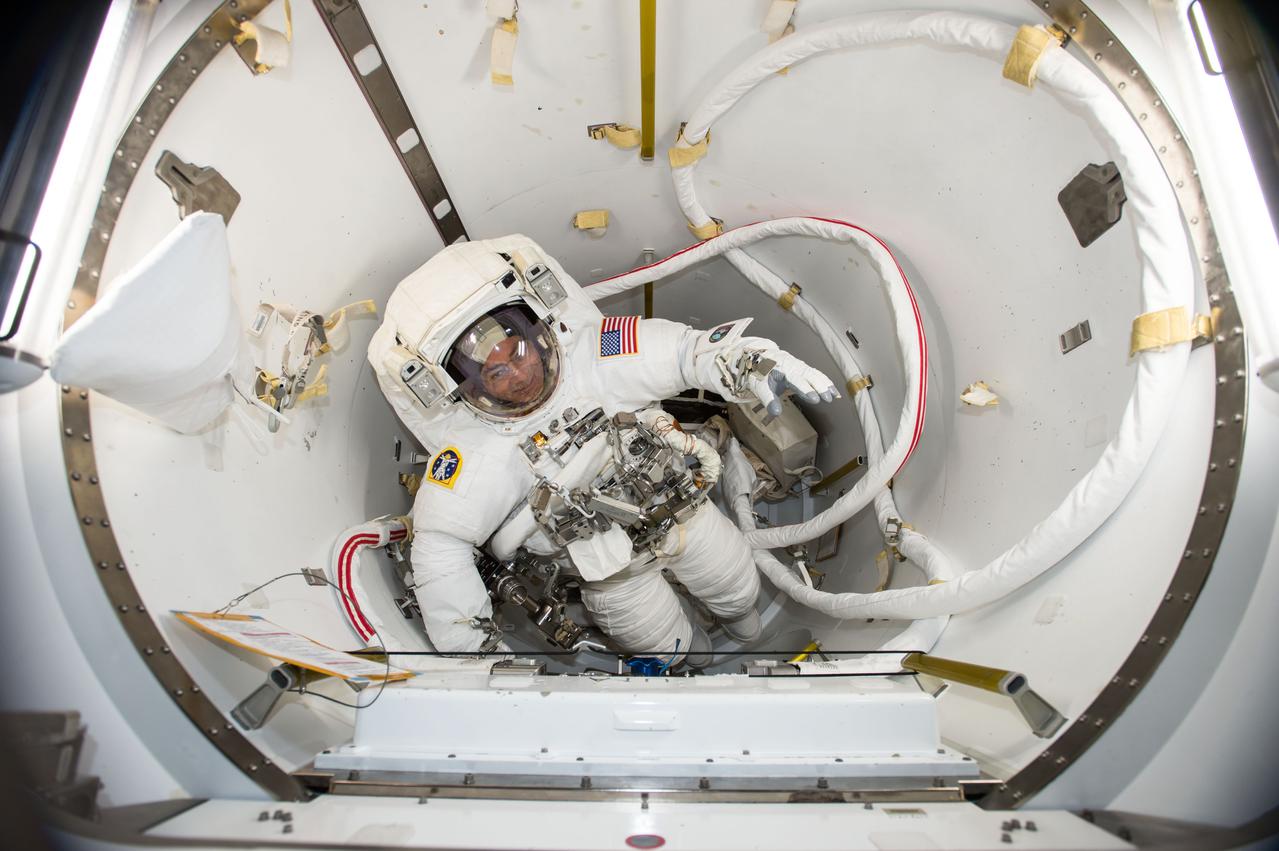
iss053e064252 (Sept. 29, 2017) --- NASA astronaut and Expedition 53 Flight Engineer Mark Vande Hei verifies his U.S. spacesuit fits while inside the International Space Station's U.S. Quest airlock.
EVA EMU On-Orbit Fit Verification
NASA F-15B #836 in flight with Quiet Spike attached. The project seeks to verify the structural integrity of the multi-segmented, articulating spike attachment designed to reduce and control a sonic boom.
NASA F-15B #836 in flight with Quiet Spike attached
NASA F-15B #836 in flight with Quiet Spike attached. The project seeks to verify the structural integrity of the multi-segmented, articulating spike attachment designed to reduce and control a sonic boom.
NASA F-15B #836 in flight with Quiet Spike attached
NASA F-15B #836 in flight with Quiet Spike attached. The project seeks to verify the structural integrity of the multi-segmented, articulating spike attachment designed to reduce and control a sonic boom.
NASA F-15B #836 in flight with Quiet Spike attached
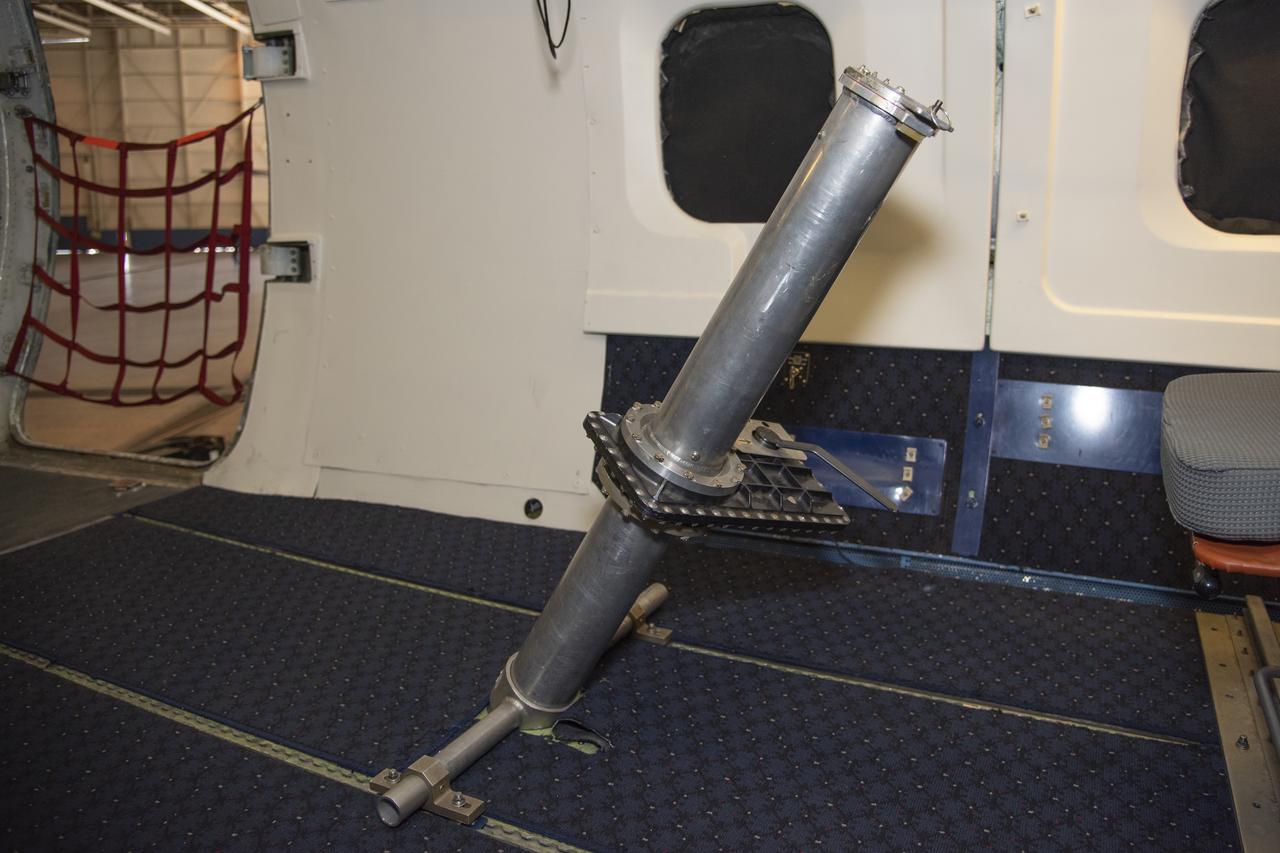
To verify the lidar data they're collecting on the DC-8 airborne science laboratory, Aeolus mission scientists will use dropsondes, which are devices they'll drop from this tube in the aircraft to collect wind and water vapor data.
Dropsonde Chute on NASA DC-8 Flying Laboratory
NASA F-15B #836 in flight with Quiet Spike attached. The project seeks to verify the structural integrity of the multi-segmented, articulating spike attachment designed to reduce and control a sonic boom.
NASA F-15B #836 in flight with Quiet Spike attached
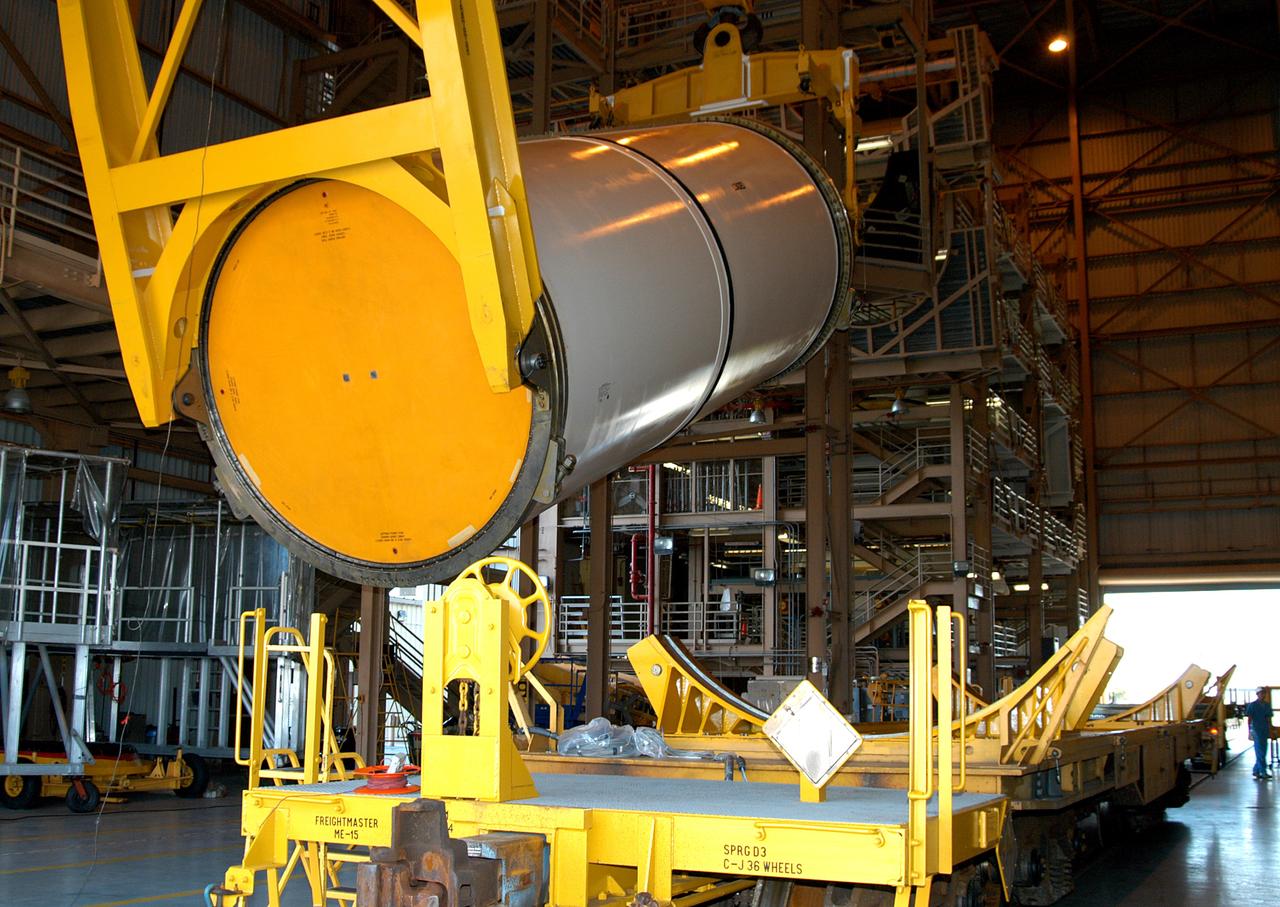
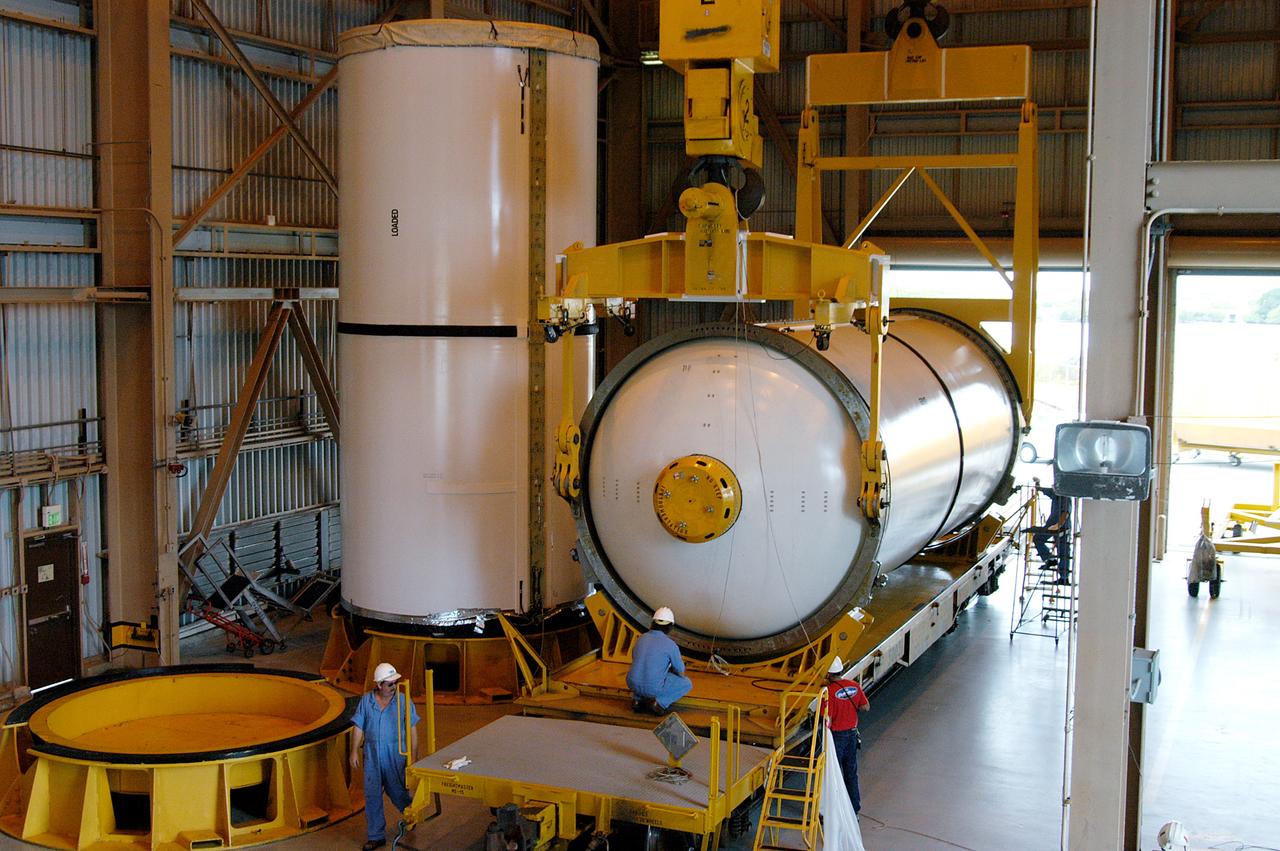
KENNEDY SPACE CENTER, FLA. -  In the Rotation Processing and Surge Facility, an SRB solid segment is being rotated to horizontal for placement on a rail car.  The segment is being shipped to Utah for testing.  The segment was part of the STS-114 stack.  It is the first time actual flight segments that had been stacked for flight in the VAB are being returned to Utah for testing.  It will undergo firing, which will enable inspectors to check the viability of the solid and verify the life expectancy for stacked segments.
KENNEDY SPACE CENTER, FLA. - In the Rotation Processing and Surge Facility, an SRB solid segment is being rotated to horizontal for placement on a rail car. The segment is being shipped to Utah for testing. The segment was part of the STS-114 stack. It is the first time actual flight segments that had been stacked for flight in the VAB are being returned to Utah for testing. It will undergo firing, which will enable inspectors to check the viability of the solid and verify the life expectancy for stacked segments.
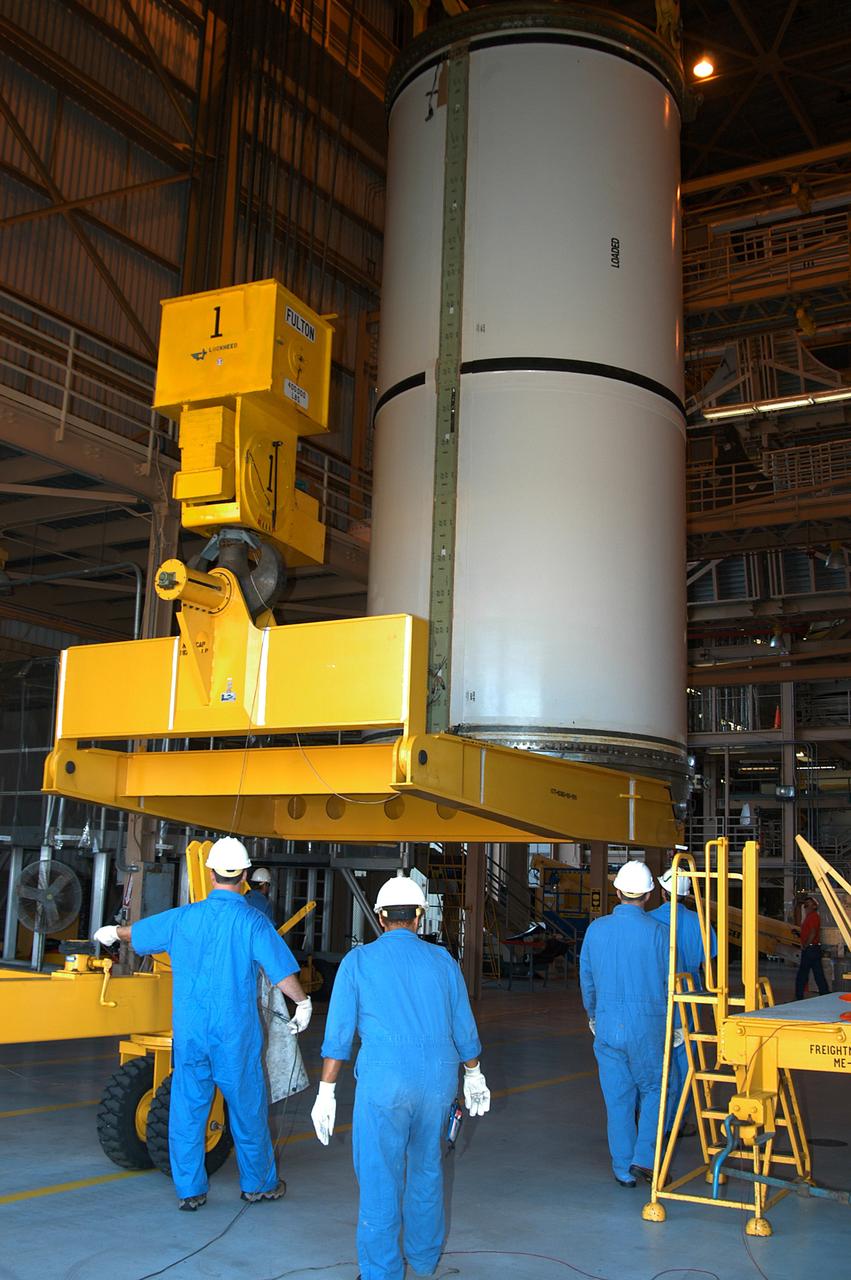
KENNEDY SPACE CENTER, FLA. -  In the Rotation Processing and Surge Facility, an SRB solid segment is being moved to a rail car for shipment to Utah for testing.  The segment was part of the STS-114 stack.  It is the first time actual flight segments that had been stacked for flight in the VAB are being returned to Utah for testing.  It will undergo firing, which will enable inspectors to check the viability of the solid and verify the life expectancy for stacked segments.
KENNEDY SPACE CENTER, FLA. - In the Rotation Processing and Surge Facility, an SRB solid segment is being moved to a rail car for shipment to Utah for testing. The segment was part of the STS-114 stack. It is the first time actual flight segments that had been stacked for flight in the VAB are being returned to Utah for testing. It will undergo firing, which will enable inspectors to check the viability of the solid and verify the life expectancy for stacked segments.
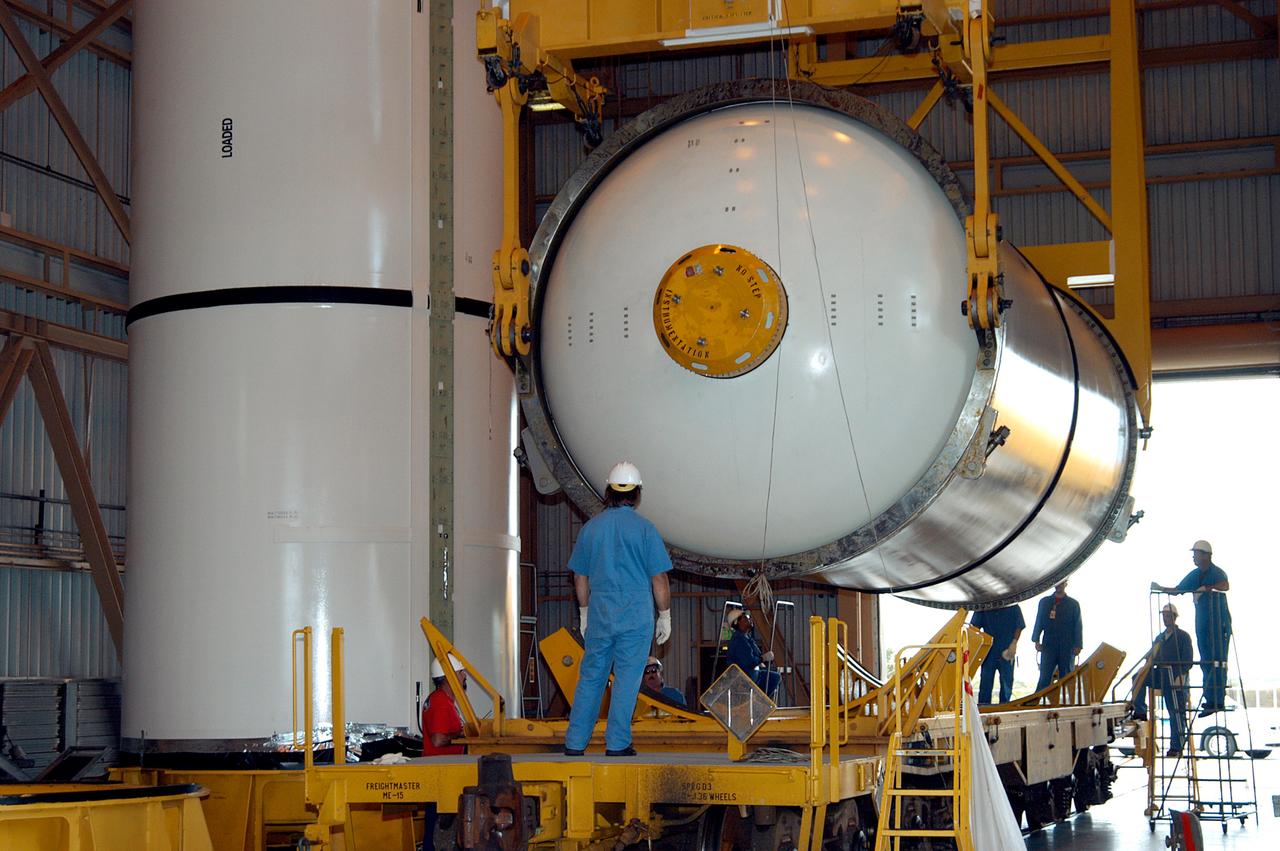
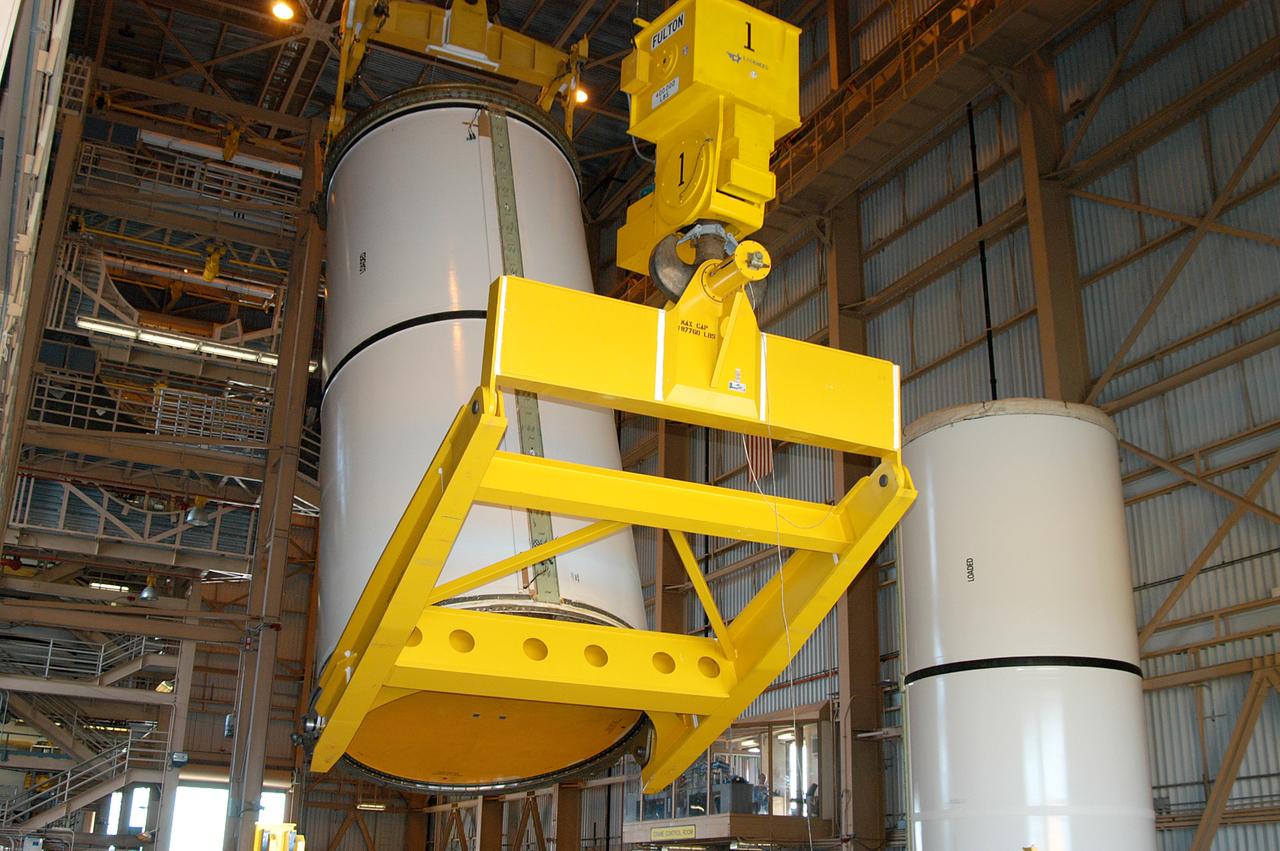
KENNEDY SPACE CENTER, FLA. -  In the Rotation Processing and Surge Facility, an SRB solid segment is being lifted and moved to a rail car for shipment to Utah for testing.  The segment was part of the STS-114 stack.  It is the first time actual flight segments that had been stacked for flight in the VAB are being returned to Utah for testing.  It will undergo firing, which will enable inspectors to check the viability of the solid and verify the life expectancy for stacked segments.
KENNEDY SPACE CENTER, FLA. - In the Rotation Processing and Surge Facility, an SRB solid segment is being lifted and moved to a rail car for shipment to Utah for testing. The segment was part of the STS-114 stack. It is the first time actual flight segments that had been stacked for flight in the VAB are being returned to Utah for testing. It will undergo firing, which will enable inspectors to check the viability of the solid and verify the life expectancy for stacked segments.
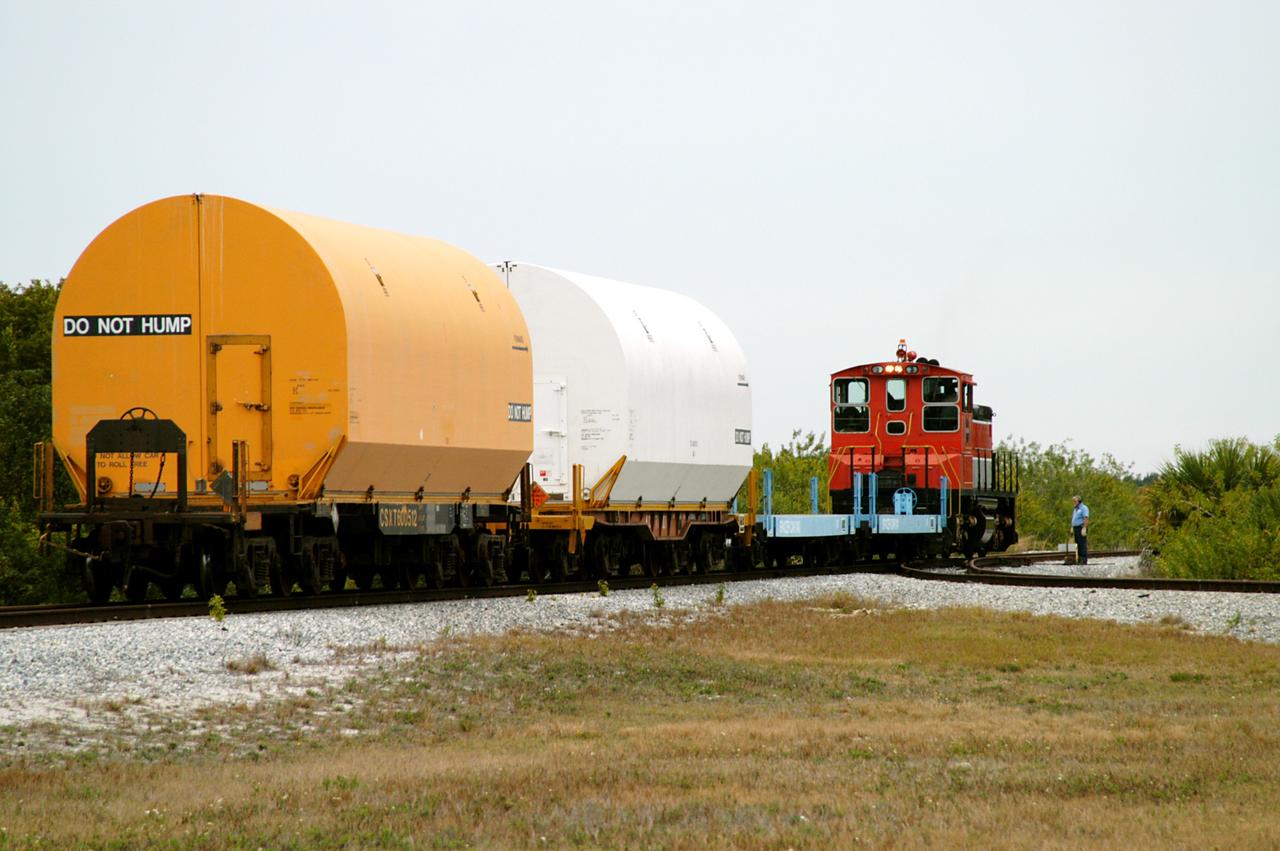
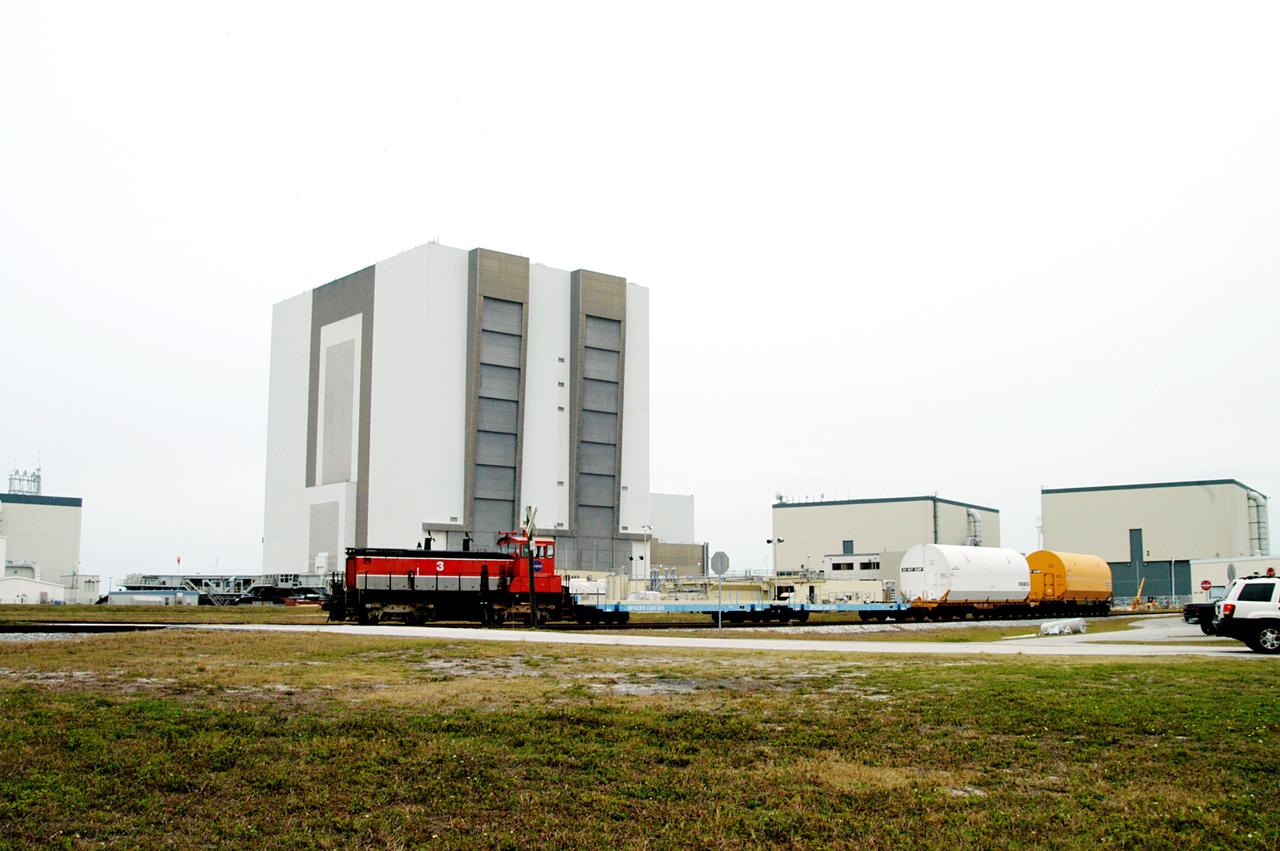
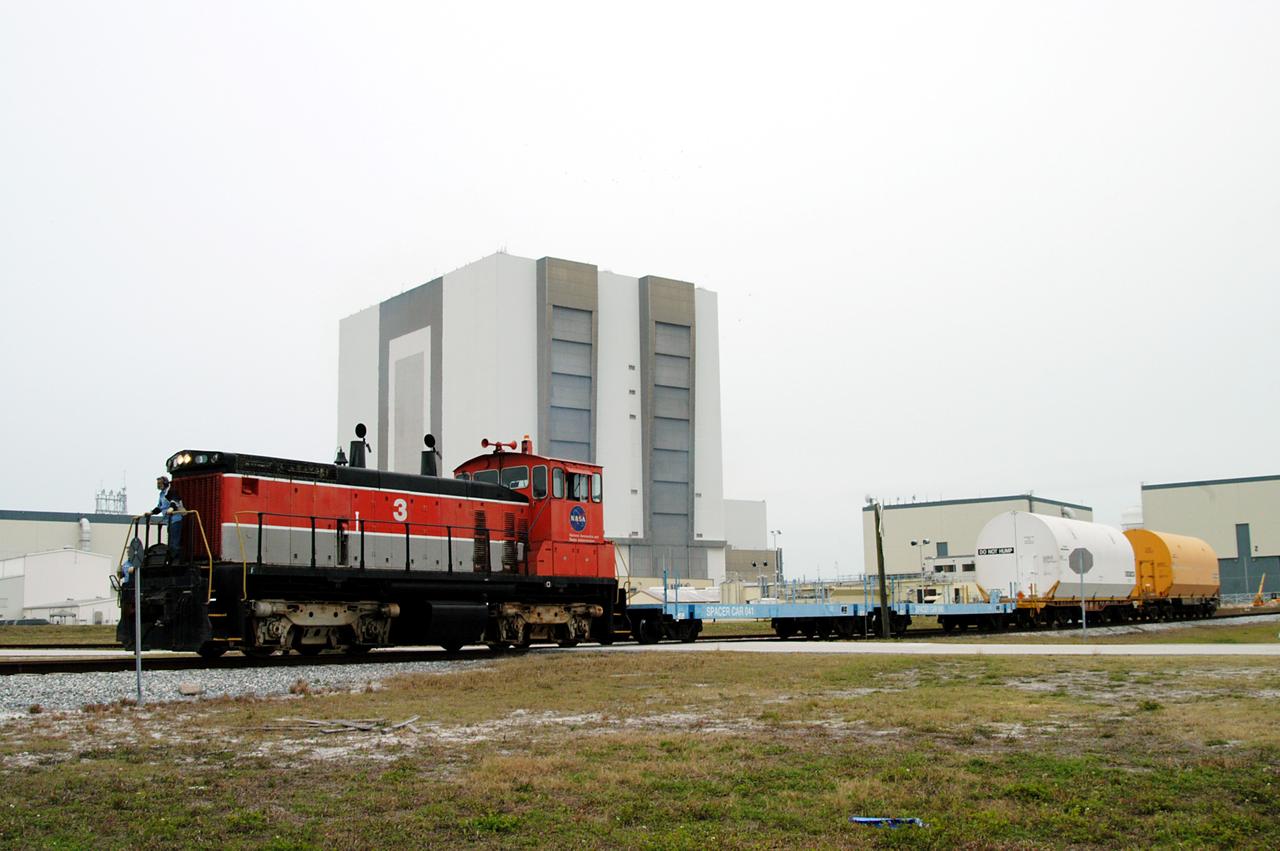
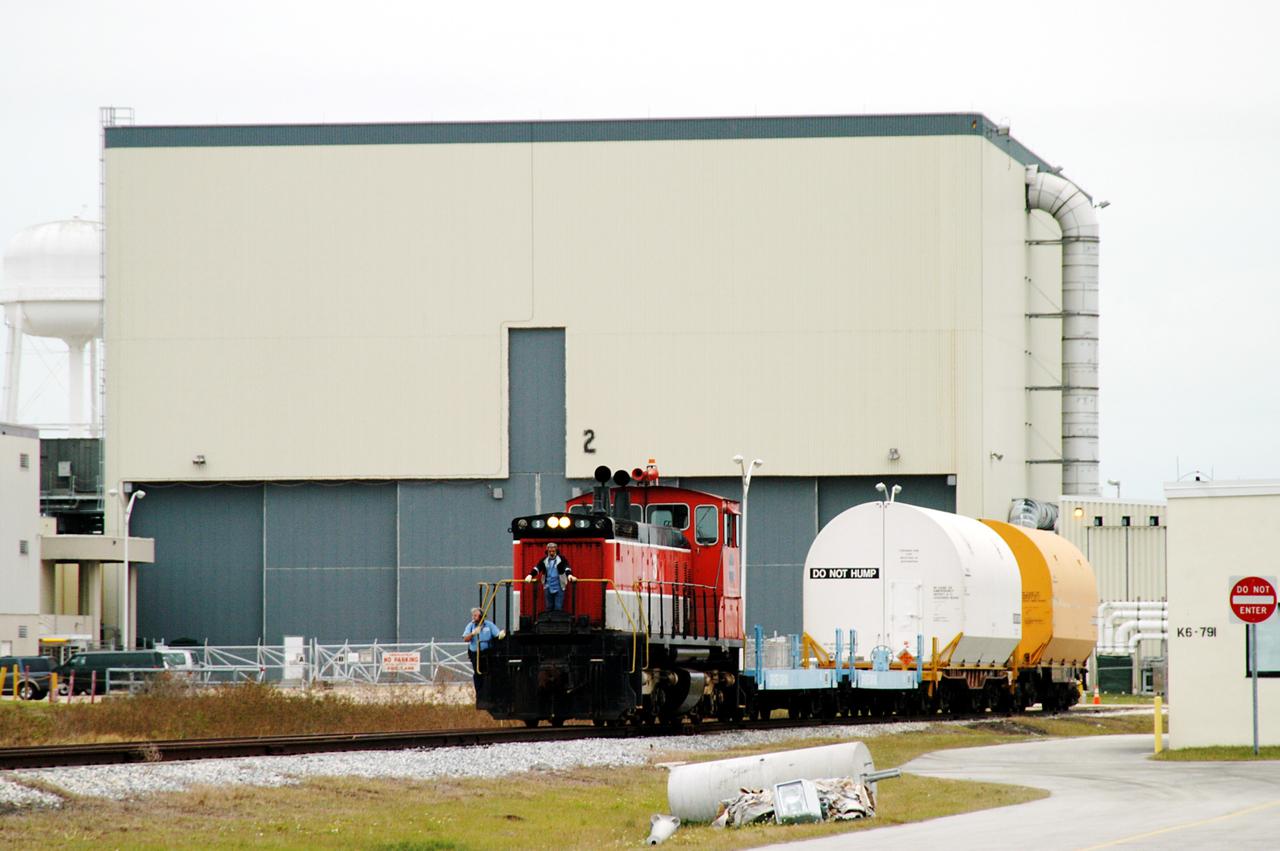
KENNEDY SPACE CENTER, FLA. - Moving past the 525-foot-high Vehicle Assembly Building, the red NASA engine pulls several containers enclosing segments of a solid rocket booster being returned to Utah for testing.  The segments were part of the STS-114 stack.  It is the first time actual flight segments that had been stacked for flight in the VAB are being returned for testing.  They will undergo firing, which will enable inspectors to check the viability of the solid and verify the life expectancy for stacked segments.
KENNEDY SPACE CENTER, FLA. - Moving past the 525-foot-high Vehicle Assembly Building, the red NASA engine pulls several containers enclosing segments of a solid rocket booster being returned to Utah for testing. The segments were part of the STS-114 stack. It is the first time actual flight segments that had been stacked for flight in the VAB are being returned for testing. They will undergo firing, which will enable inspectors to check the viability of the solid and verify the life expectancy for stacked segments.
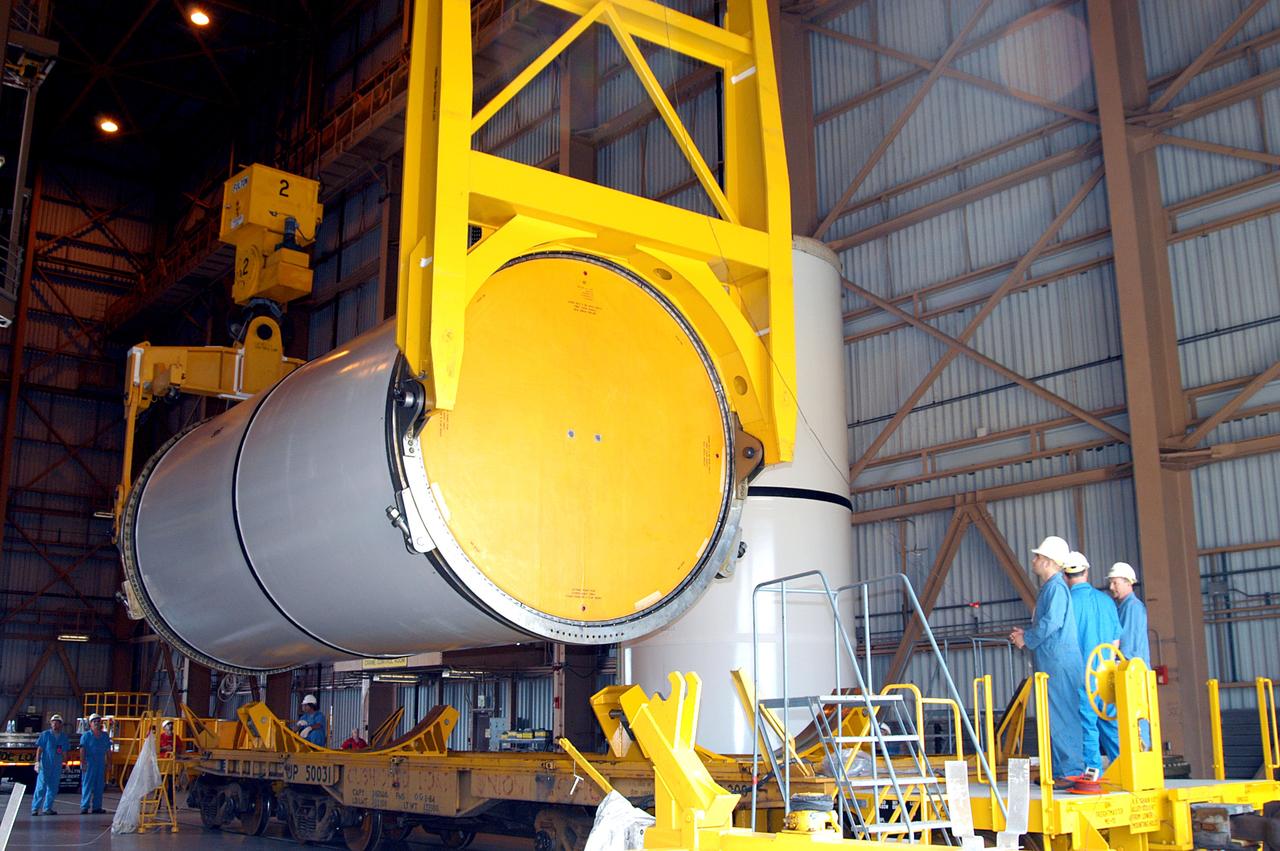
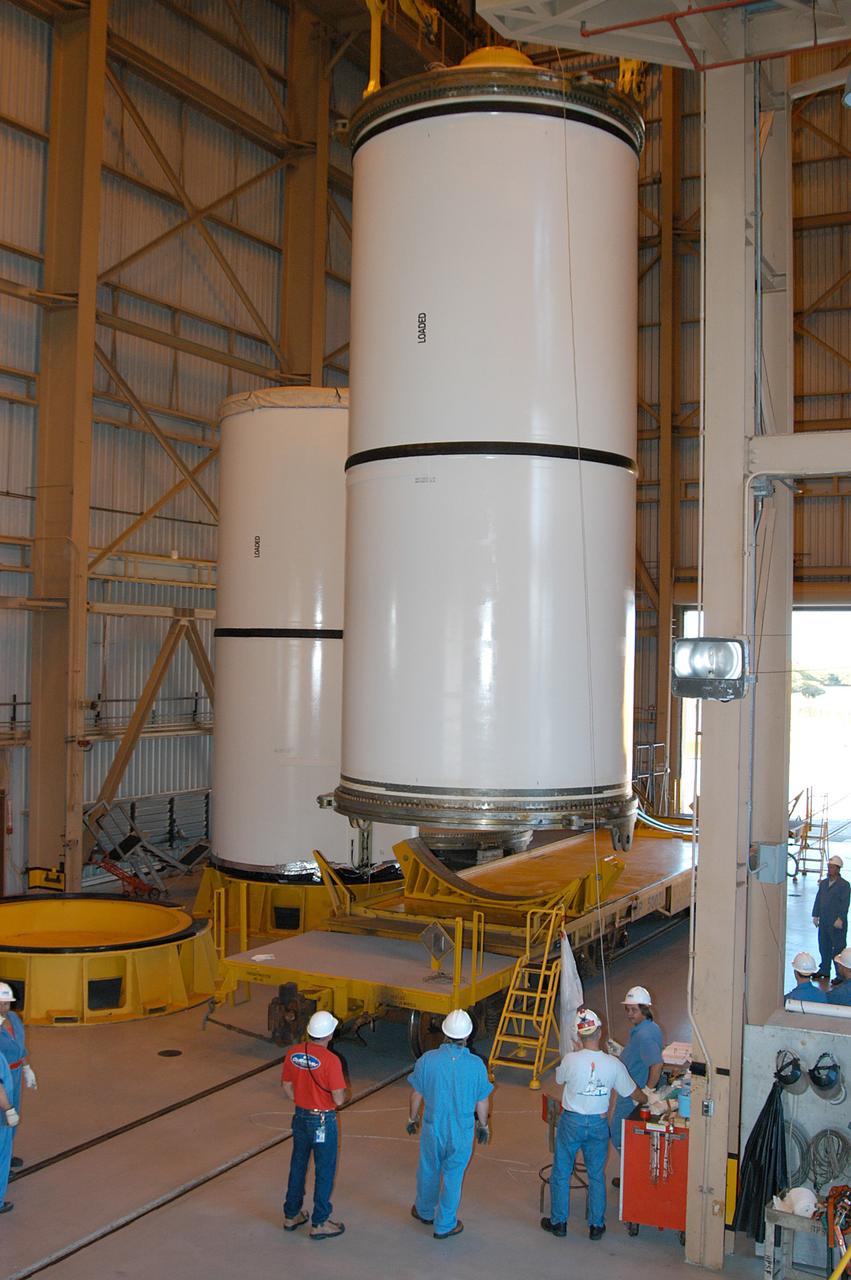
KENNEDY SPACE CENTER, FLA. -  In the Rotation Processing and Surge Facility, an SRB solid segment is lowered onto a rail car for shipment to Utah where it will be tested.  The segment was part of the STS-114 stack.  It is the first time actual flight segments that had been stacked for flight in the VAB are being returned to Utah for testing.  It will undergo firing, which will enable inspectors to check the viability of the solid and verify the life expectancy for stacked segments.
KENNEDY SPACE CENTER, FLA. - In the Rotation Processing and Surge Facility, an SRB solid segment is lowered onto a rail car for shipment to Utah where it will be tested. The segment was part of the STS-114 stack. It is the first time actual flight segments that had been stacked for flight in the VAB are being returned to Utah for testing. It will undergo firing, which will enable inspectors to check the viability of the solid and verify the life expectancy for stacked segments.
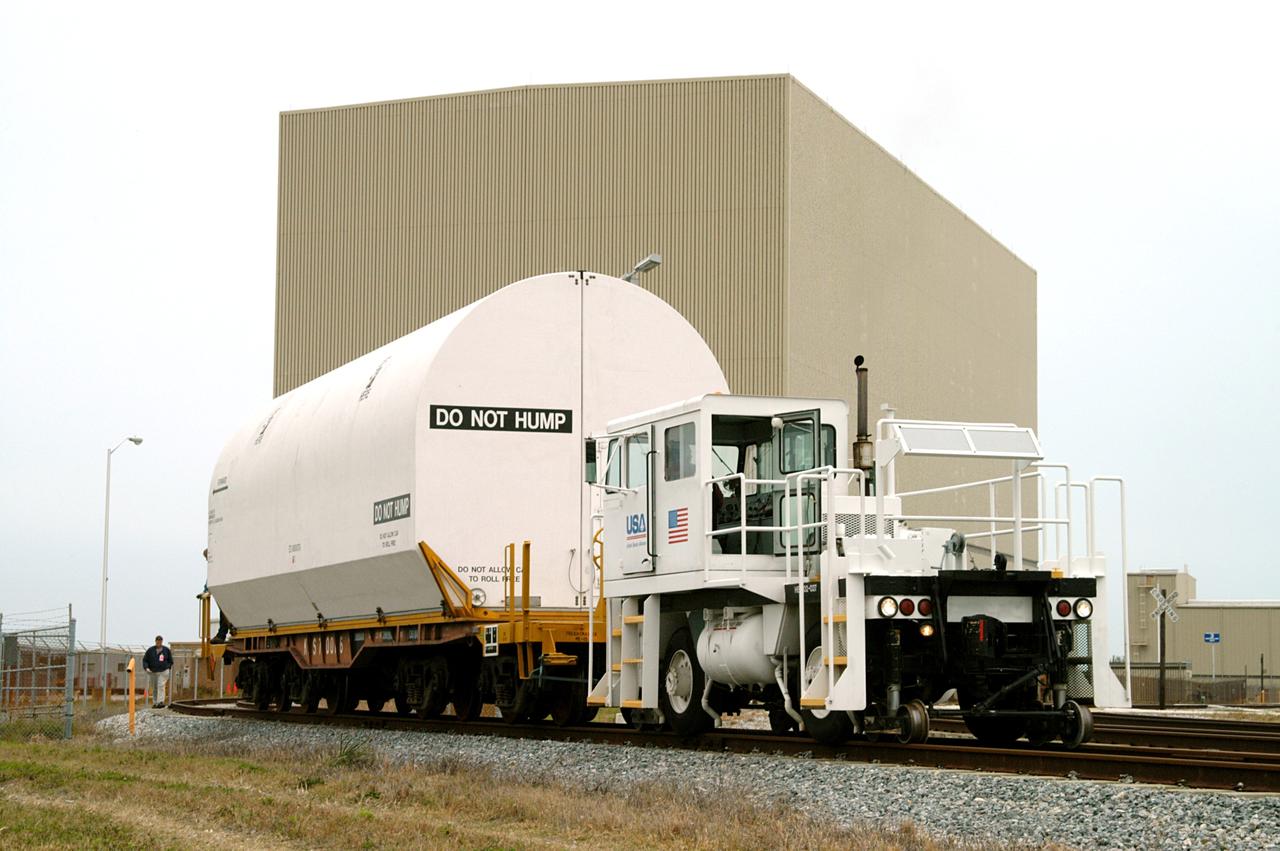
KENNEDY SPACE CENTER, FLA. - An engine pulls the container enclosing a segment of a solid rocket booster from the Rotation Processing and Surge Facility.  The container will join others on the main track for a trip to Utah where the segments will undergo firing.  The segments were part of the STS-114 stack.  It is the first time actual flight segments that had been stacked for flight in the VAB are being returned for testing.  They will undergo firing, which will enable inspectors to check the viability of the solid and verify the life expectancy for stacked segments.
KENNEDY SPACE CENTER, FLA. - An engine pulls the container enclosing a segment of a solid rocket booster from the Rotation Processing and Surge Facility. The container will join others on the main track for a trip to Utah where the segments will undergo firing. The segments were part of the STS-114 stack. It is the first time actual flight segments that had been stacked for flight in the VAB are being returned for testing. They will undergo firing, which will enable inspectors to check the viability of the solid and verify the life expectancy for stacked segments.
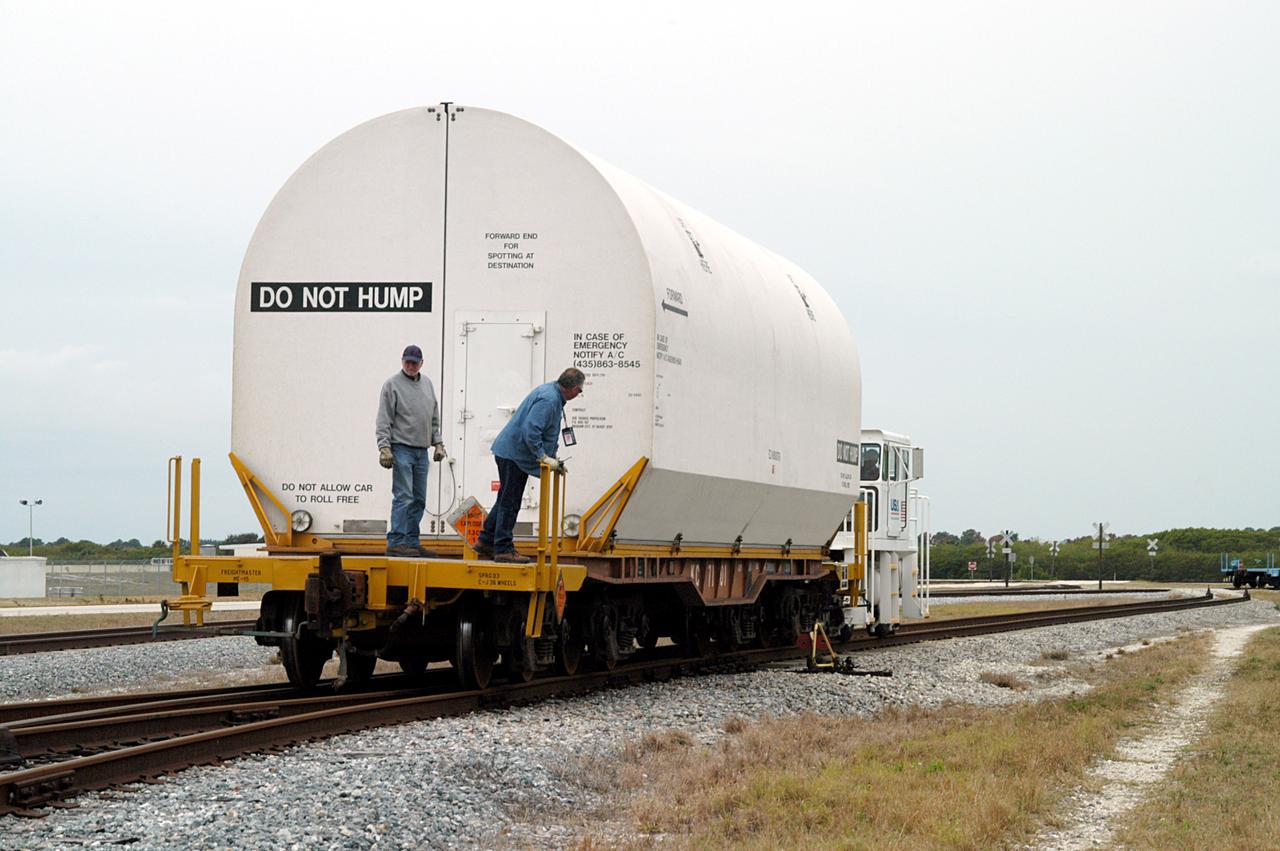
KENNEDY SPACE CENTER, FLA. - Workers ride the rails along with a container enclosing a segment of a solid rocket booster being moved to the main track.  Several segments are being returned to Utah for testing.  The segments were part of the STS-114 stack.  It is the first time actual flight segments that had been stacked for flight in the VAB are being returned for testing.  They will undergo firing, which will enable inspectors to check the viability of the solid and verify the life expectancy for stacked segments.
KENNEDY SPACE CENTER, FLA. - Workers ride the rails along with a container enclosing a segment of a solid rocket booster being moved to the main track. Several segments are being returned to Utah for testing. The segments were part of the STS-114 stack. It is the first time actual flight segments that had been stacked for flight in the VAB are being returned for testing. They will undergo firing, which will enable inspectors to check the viability of the solid and verify the life expectancy for stacked segments.
KENNEDY SPACE CENTER, FLA. -  In the Rotation Processing and Surge Facility, an SRB solid segment is lowered onto a rail car for shipment to Utah where it will be tested.  The segment was part of the STS-114 stack.  It is the first time actual flight segments that had been stacked for flight in the VAB are being returned to Utah for testing.  It will undergo firing, which will enable inspectors to check the viability of the solid and verify the life expectancy for stacked segments.
KENNEDY SPACE CENTER, FLA. - In the Rotation Processing and Surge Facility, an SRB solid segment is lowered onto a rail car for shipment to Utah where it will be tested. The segment was part of the STS-114 stack. It is the first time actual flight segments that had been stacked for flight in the VAB are being returned to Utah for testing. It will undergo firing, which will enable inspectors to check the viability of the solid and verify the life expectancy for stacked segments.
KENNEDY SPACE CENTER, FLA. - The red NASA engine backs up with its cargo of containers in order to change tracks.  The containers enclose segments of a solid rocket booster being returned to Utah for testing.  The segments were part of the STS-114 stack.  It is the first time actual flight segments that had been stacked for flight in the VAB are being returned for testing.  They will undergo firing, which will enable inspectors to check the viability of the solid and verify the life expectancy for stacked segments.
KENNEDY SPACE CENTER, FLA. - The red NASA engine backs up with its cargo of containers in order to change tracks. The containers enclose segments of a solid rocket booster being returned to Utah for testing. The segments were part of the STS-114 stack. It is the first time actual flight segments that had been stacked for flight in the VAB are being returned for testing. They will undergo firing, which will enable inspectors to check the viability of the solid and verify the life expectancy for stacked segments.
KENNEDY SPACE CENTER, FLA. -  In the Rotation Processing and Surge Facility, an SRB solid segment is lowered onto a rail car for shipment to Utah where it will be tested.  The segment was part of the STS-114 stack.  It is the first time actual flight segments that had been stacked for flight in the VAB are being returned to Utah for testing.  It will undergo firing, which will enable inspectors to check the viability of the solid and verify the life expectancy for stacked segments.
KENNEDY SPACE CENTER, FLA. - In the Rotation Processing and Surge Facility, an SRB solid segment is lowered onto a rail car for shipment to Utah where it will be tested. The segment was part of the STS-114 stack. It is the first time actual flight segments that had been stacked for flight in the VAB are being returned to Utah for testing. It will undergo firing, which will enable inspectors to check the viability of the solid and verify the life expectancy for stacked segments.
KENNEDY SPACE CENTER, FLA. -  In the Rotation Processing and Surge Facility, an SRB solid segment is being lifted and moved to a rail car for shipment to Utah for testing.  The segment was part of the STS-114 stack.  It is the first time actual flight segments that had been stacked for flight in the VAB are being returned to Utah for testing.  It will undergo firing, which will enable inspectors to check the viability of the solid and verify the life expectancy for stacked segments.
KENNEDY SPACE CENTER, FLA. - In the Rotation Processing and Surge Facility, an SRB solid segment is being lifted and moved to a rail car for shipment to Utah for testing. The segment was part of the STS-114 stack. It is the first time actual flight segments that had been stacked for flight in the VAB are being returned to Utah for testing. It will undergo firing, which will enable inspectors to check the viability of the solid and verify the life expectancy for stacked segments.
KENNEDY SPACE CENTER, FLA. - The red NASA engine moves forward past the Vehicle Assembly Building with its cargo of containers enclosing segments of a solid rocket booster being returned to Utah for testing.  The segments were part of the STS-114 stack.  It is the first time actual flight segments that had been stacked for flight in the VAB are being returned for testing.  They will undergo firing, which will enable inspectors to check the viability of the solid and verify the life expectancy for stacked segments.
KENNEDY SPACE CENTER, FLA. - The red NASA engine moves forward past the Vehicle Assembly Building with its cargo of containers enclosing segments of a solid rocket booster being returned to Utah for testing. The segments were part of the STS-114 stack. It is the first time actual flight segments that had been stacked for flight in the VAB are being returned for testing. They will undergo firing, which will enable inspectors to check the viability of the solid and verify the life expectancy for stacked segments.
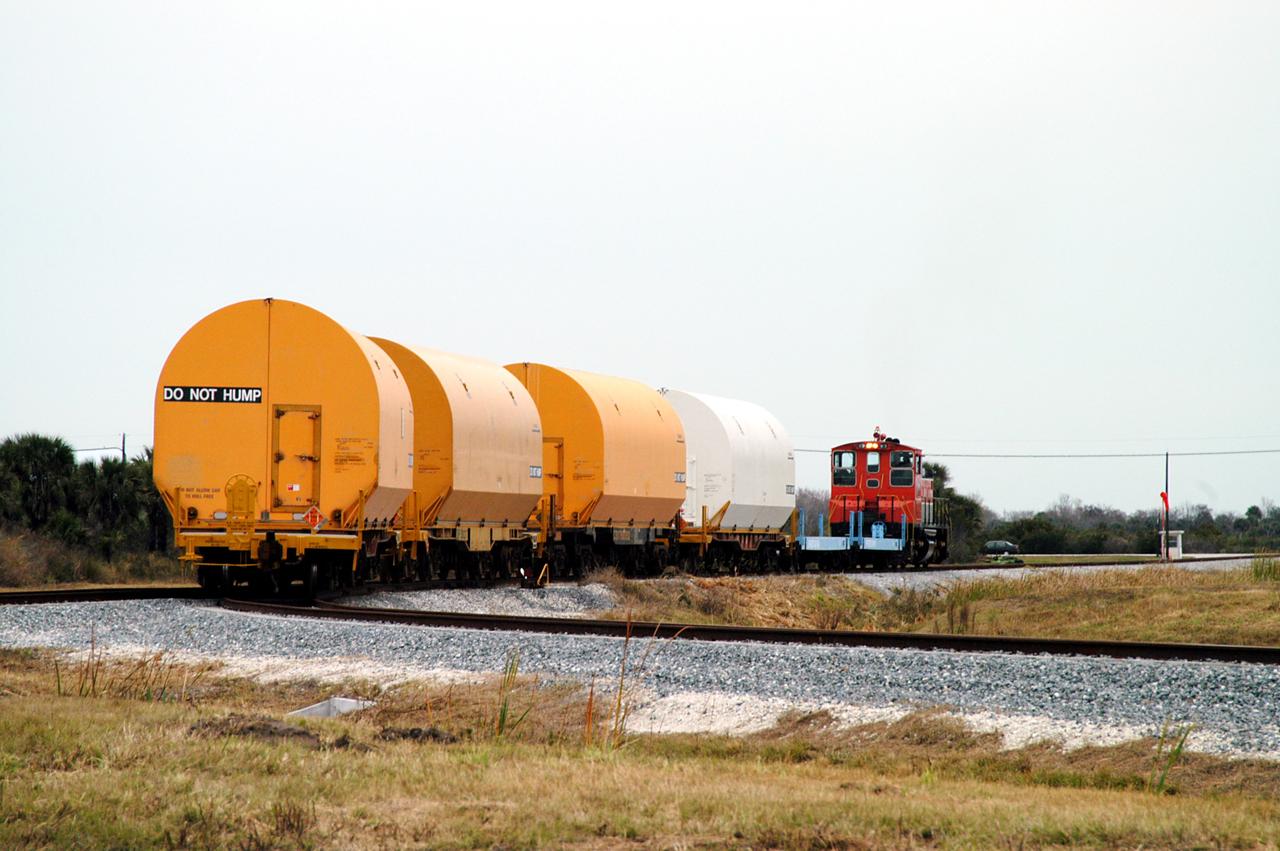
KENNEDY SPACE CENTER, FLA. - The red NASA engine hauls its cargo toward Titusville, Fla. The containers enclose segments of a solid rocket booster being returned to Utah for testing.  The segments were part of the STS-114 stack.  It is the first time actual flight segments that had been stacked for flight in the VAB are being returned for testing.  They will undergo firing, which will enable inspectors to check the viability of the solid and verify the life expectancy for stacked segments.
KENNEDY SPACE CENTER, FLA. - The red NASA engine hauls its cargo toward Titusville, Fla. The containers enclose segments of a solid rocket booster being returned to Utah for testing. The segments were part of the STS-114 stack. It is the first time actual flight segments that had been stacked for flight in the VAB are being returned for testing. They will undergo firing, which will enable inspectors to check the viability of the solid and verify the life expectancy for stacked segments.
KENNEDY SPACE CENTER, FLA. - The red NASA engine hauls its cargo toward Titusville, Fla. The containers enclose segments of a solid rocket booster being returned to Utah for testing.  The segments were part of the STS-114 stack.  It is the first time actual flight segments that had been stacked for flight in the VAB are being returned for testing.  They will undergo firing, which will enable inspectors to check the viability of the solid and verify the life expectancy for stacked segments.
KENNEDY SPACE CENTER, FLA. - The red NASA engine hauls its cargo toward Titusville, Fla. The containers enclose segments of a solid rocket booster being returned to Utah for testing. The segments were part of the STS-114 stack. It is the first time actual flight segments that had been stacked for flight in the VAB are being returned for testing. They will undergo firing, which will enable inspectors to check the viability of the solid and verify the life expectancy for stacked segments.
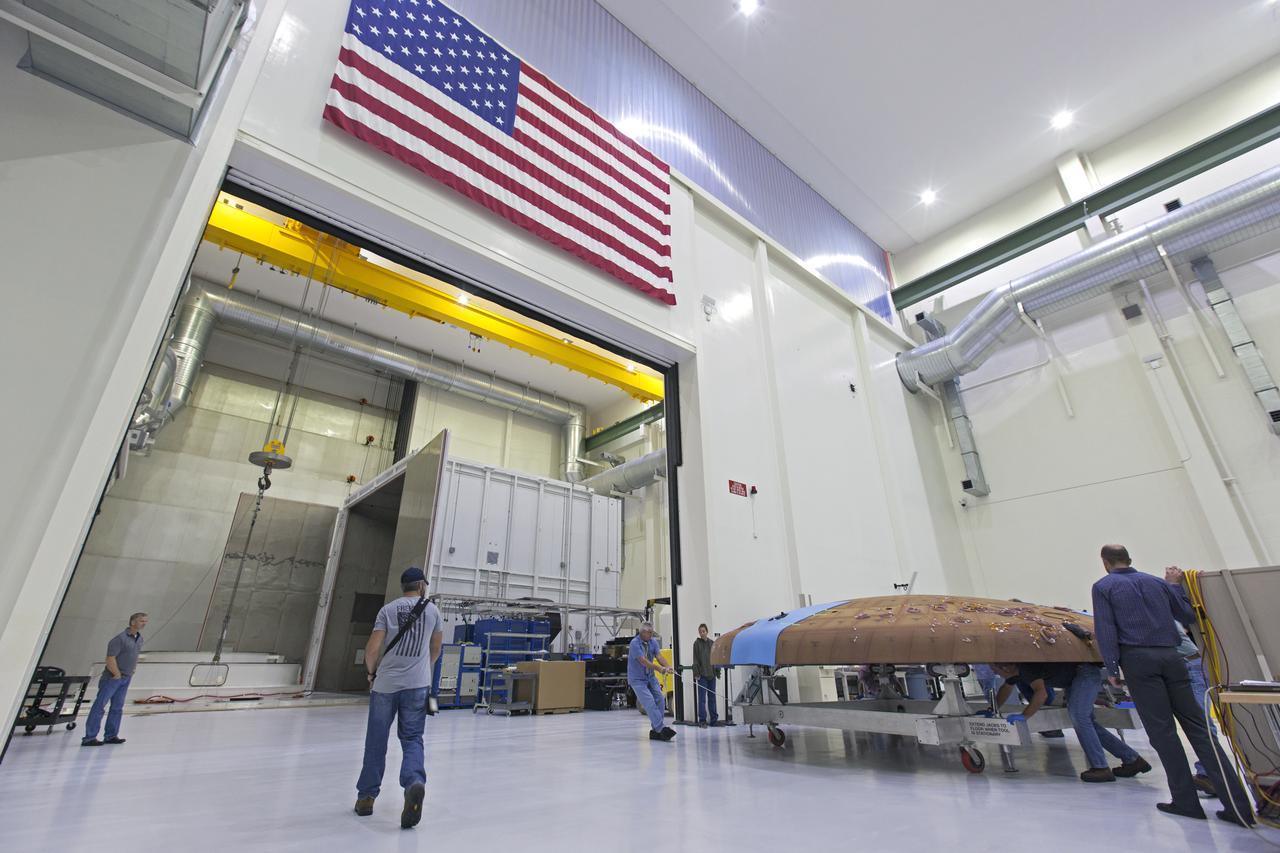
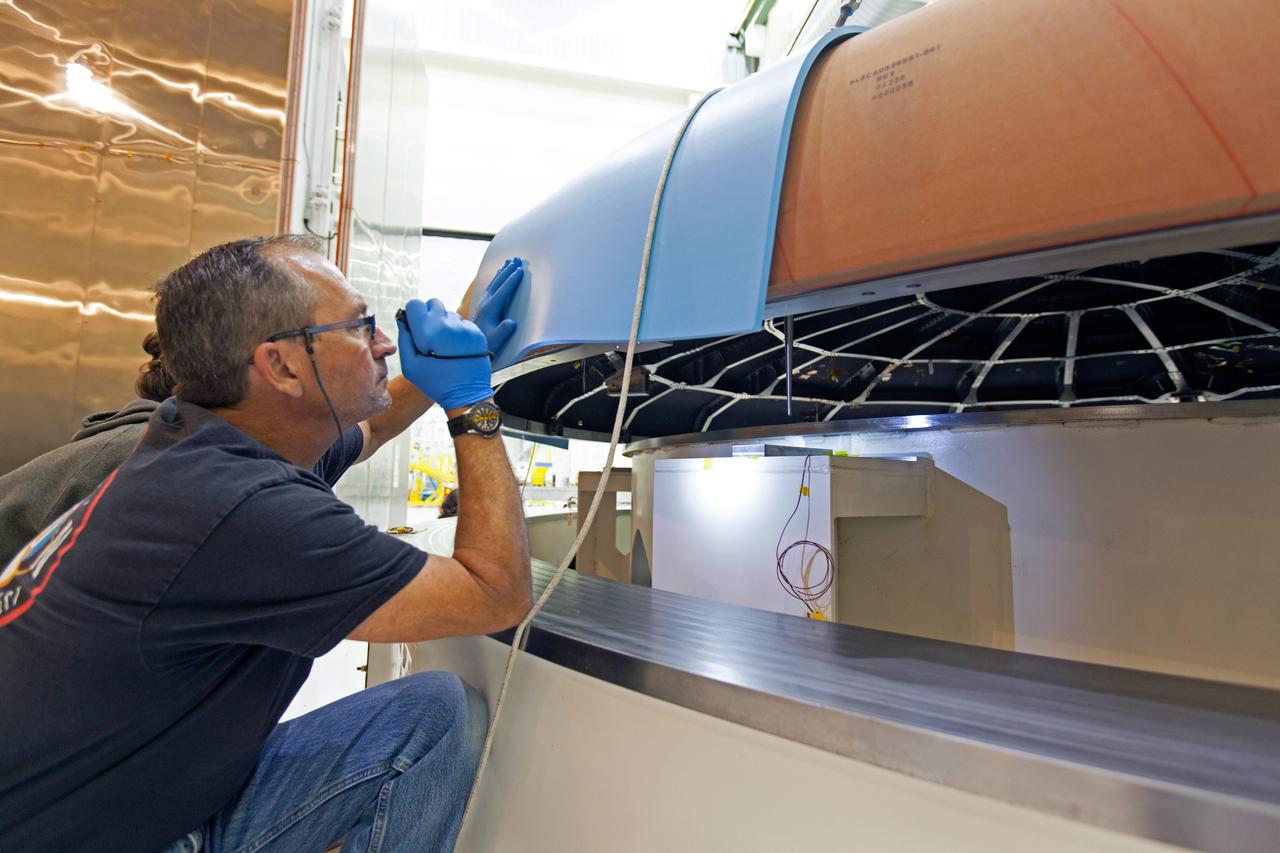
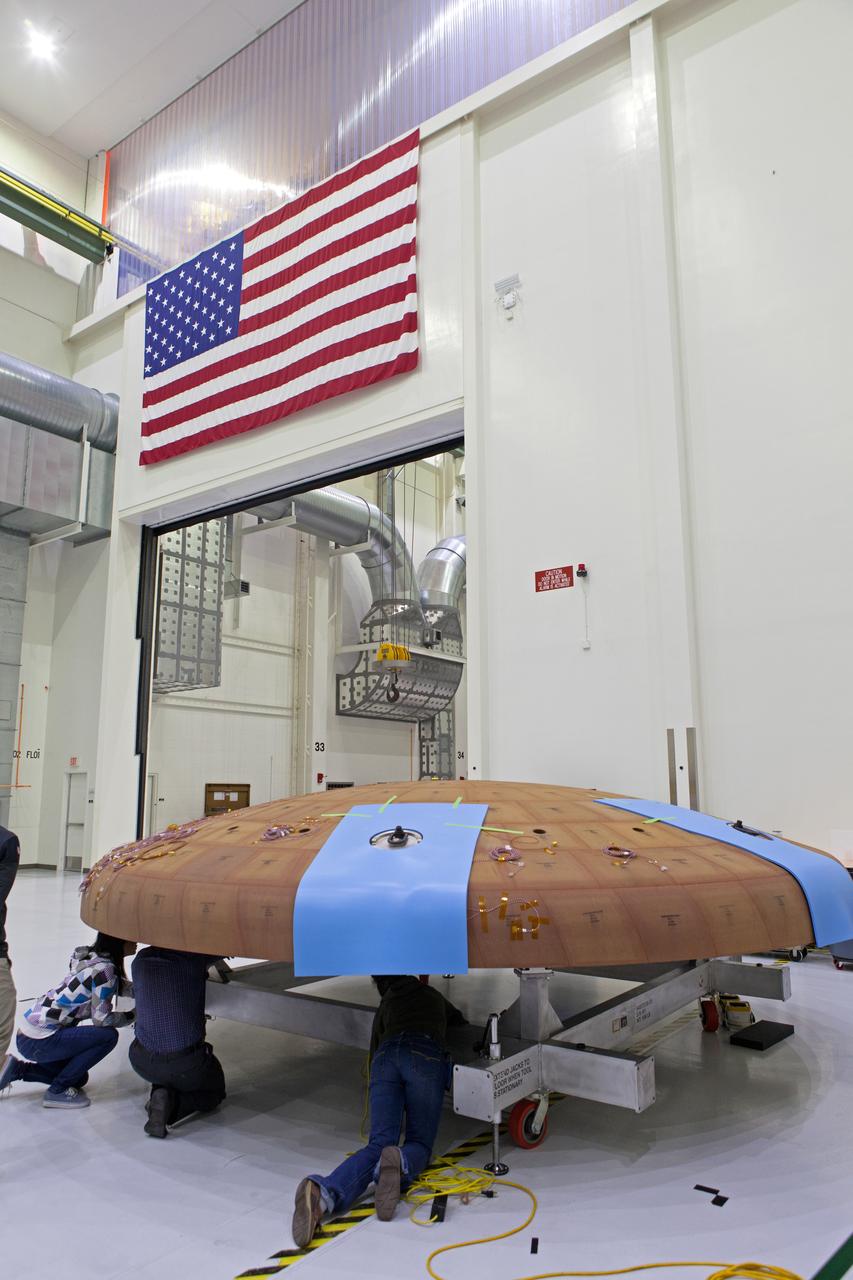
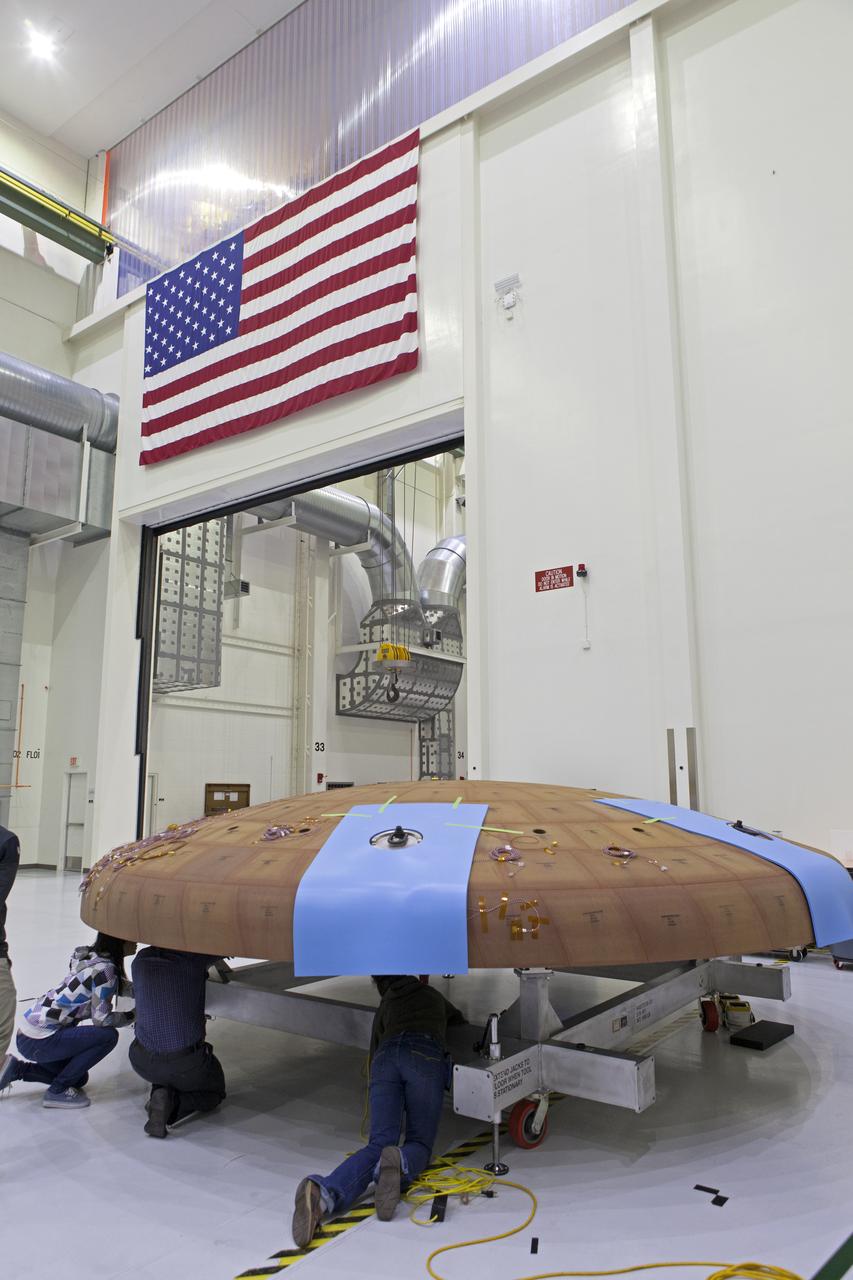
The Orion heat shield for Artemis I is being prepared for its move to the thermal chamber in the Neil Armstrong Operations and Checkout Building high bay at NASA's Kennedy Space Center in Florida on Oct. 23, 2017. Protective pads are being attached to the heat shield surface. The heat shield will undergo a thermal cycle test to verify acceptable workmanship and material quality. The test also serves to verify the heat shield's thermal protection systems have been manufactured and assembled correctly. The Orion spacecraft will launch atop NASA's Space Launch System rocket on its first uncrewed integrated flight.
Orion Heat Shield Move
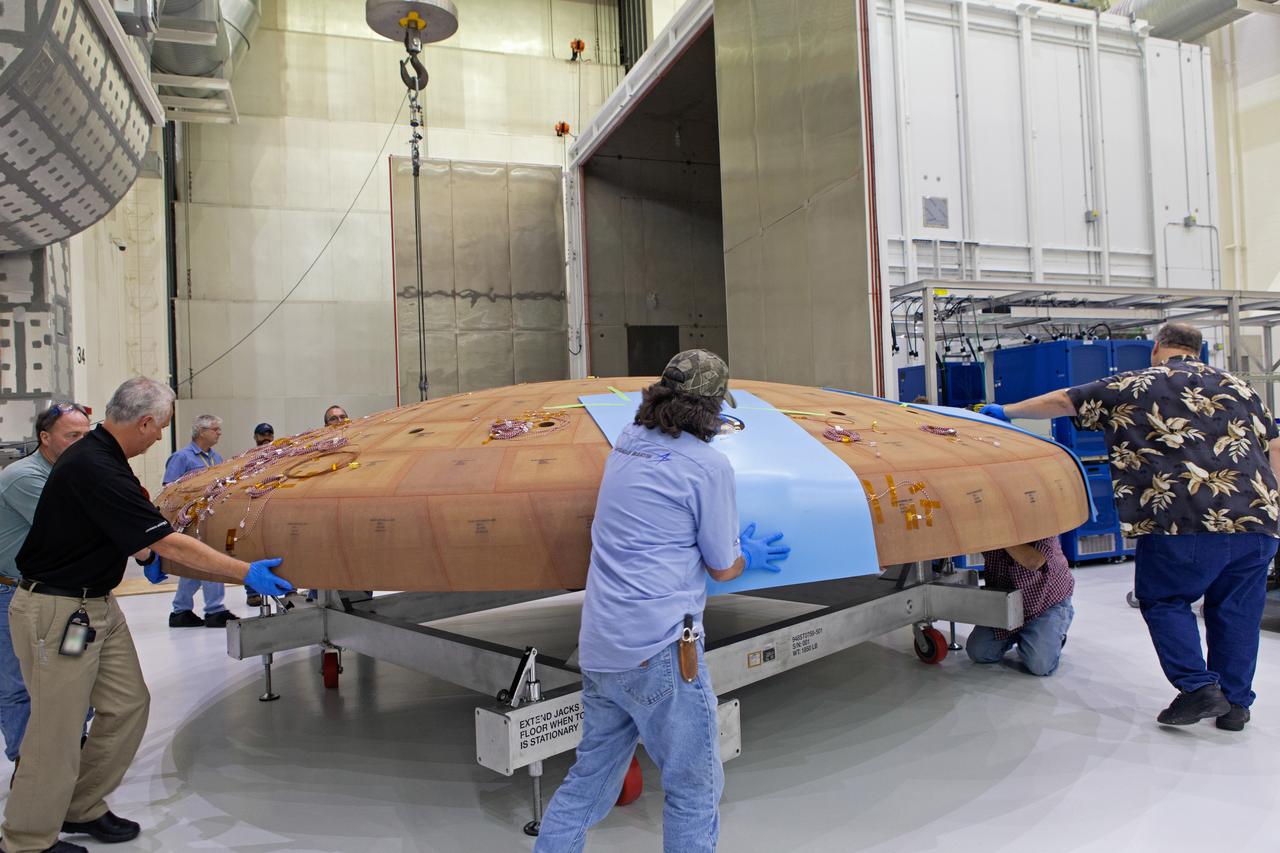
Technicians move the Orion heat shield for Artemis I toward the thermal chamber in the Neil Armstrong Operations and Checkout Building high bay at NASA's Kennedy Space Center in Florida on Oct. 23, 2017. Protective pads were attached to the heat shield surface. The heat shield will undergo a thermal cycle test to verify acceptable workmanship and material quality. The test also serves to verify the heat shield's thermal protection systems have been manufactured and assembled correctly. The Orion spacecraft will launch atop NASA's Space Launch System rocket on it first uncrewed integrated flight.
Orion Heat Shield Move
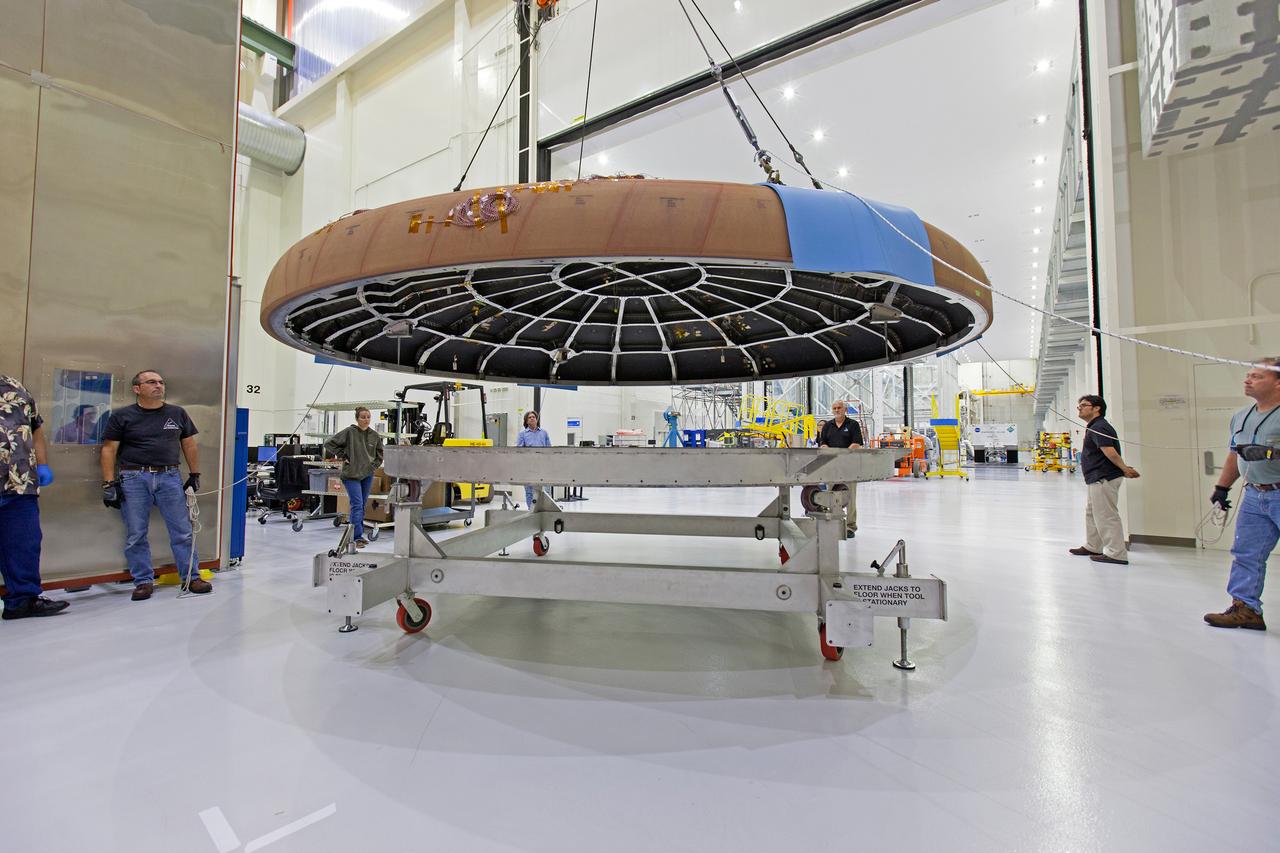
A crane attached to the Orion heat shield for Artemis I moves it toward the thermal chamber in the Neil Armstrong Operations and Checkout Building high bay at NASA's Kennedy Space Center in Florida on Oct. 23, 2017. Protective pads were attached to the heat shield surface. The heat shield will undergo a thermal cycle test to verify acceptable workmanship and material quality. The test also serves to verify the heat shield's thermal protection systems have been manufactured and assembled correctly. The Orion spacecraft will launch atop NASA's Space Launch System rocket on it first uncrewed integrated flight.
Orion Heat Shield Move
A technician checks the Orion heat shield for Artemis I before it is moved into the thermal chamber in the Neil Armstrong Operations and Checkout Building high bay at NASA's Kennedy Space Center in Florida on Oct. 23, 2017. Protective pads were attached to the heat shield surface. The heat shield will undergo a thermal cycle test to verify acceptable workmanship and material quality. The test also serves to verify the heat shield's thermal protection systems have been manufactured and assembled correctly. The Orion spacecraft will launch atop NASA's Space Launch System rocket on it first uncrewed integrated flight.
Orion Heat Shield Move
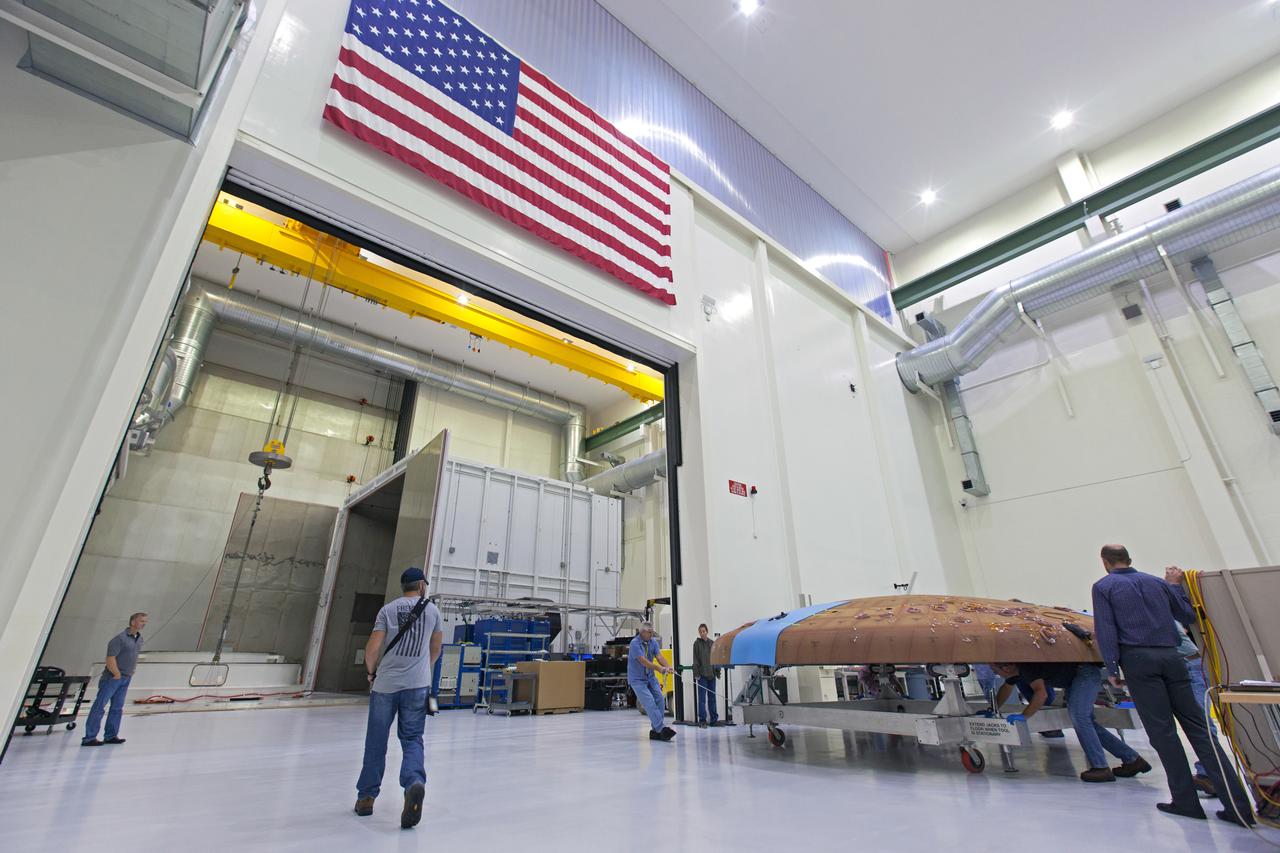
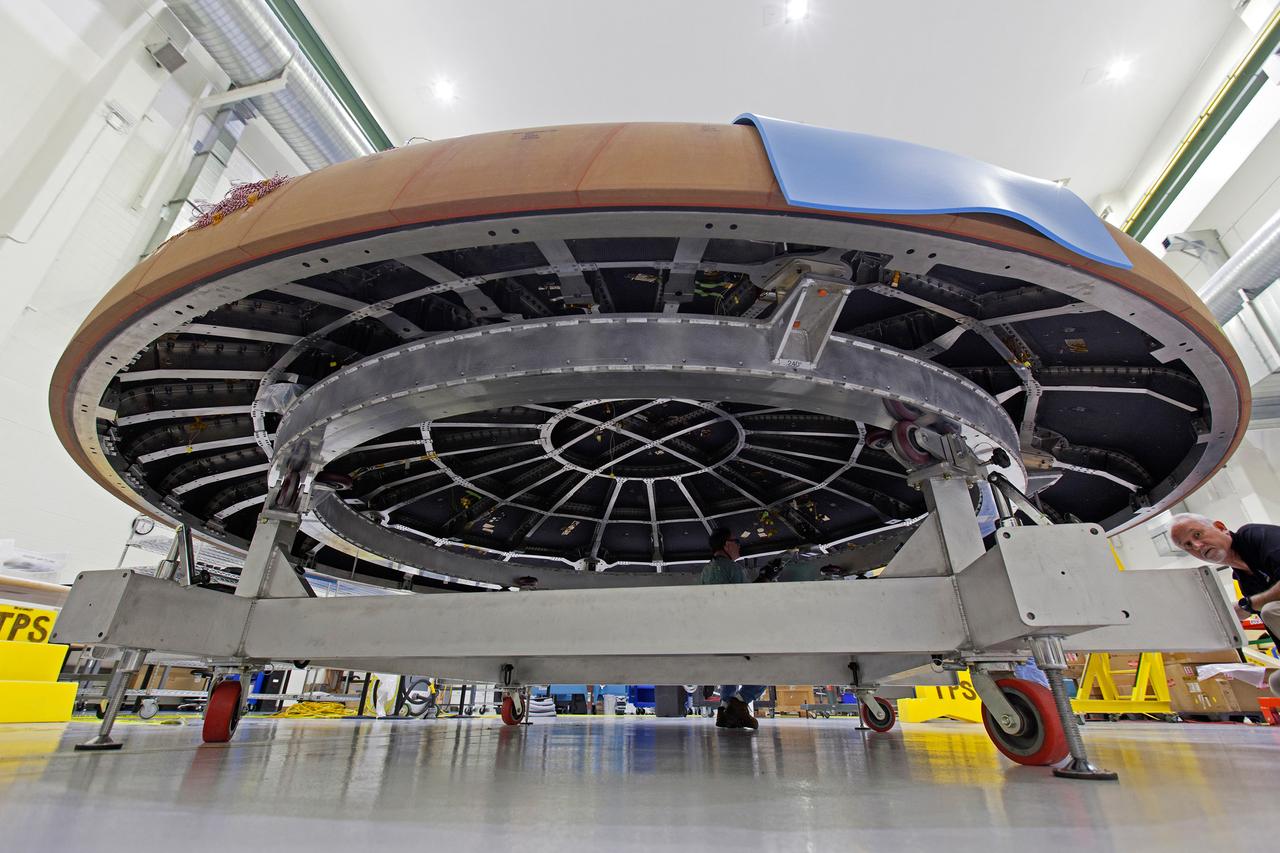
Lockheed Martin engineers and technicians prepare the Orion heat shield for Artemis I for its move to the thermal chamber in the Neil Armstrong Operations and Checkout Building high bay at NASA's Kennedy Space Center in Florida on Oct. 23, 2017. The heat shield will undergo a thermal cycle test to verify acceptable workmanship and material quality. The test serves to verify the heat shield's thermal protection systems have been manufactured and assembled correctly. The Orion spacecraft will launch atop NASA's Space Launch System rocket on its first uncrewed integrated flight.
Orion Heat Shield Move
Technicians move the Orion heat shield for Artemis I toward the thermal chamber in the Neil Armstrong Operations and Checkout Building high bay at NASA's Kennedy Space Center in Florida on Oct. 23, 2017. Protective pads were attached to the heat shield surface. The heat shield will undergo a thermal cycle test to verify acceptable workmanship and material quality. The test also serves to verify the heat shield's thermal protection systems have been manufactured and assembled correctly. The Orion spacecraft will launch atop NASA's Space Launch System rocket on it first uncrewed integrated flight.
Orion Heat Shield Move
Lockheed Martin engineers and technicians prepare the Orion heat shield for Exploration Mission-1 for its move to the thermal chamber in the Neil Armstrong Operations and Checkout Building high bay at NASA's Kennedy Space Center in Florida. The heat shield will undergo a thermal cycle test to verify acceptable workmanship and material quality. The test serves to verify the heat shield's thermal protection systems have been manufactured and assembled correctly. The Orion spacecraft will launch atop NASA's Space Launch System rocket on its first uncrewed integrated flight.
Orion Heat Shield Move
Technicians move the Orion heat shield for Exploration Mission-1 toward the thermal chamber in the Neil Armstrong Operations and Checkout Building high bay at NASA's Kennedy Space Center in Florida. Protective pads are being attached to the heat shield surface. The heat shield will undergo a thermal cycle test to verify acceptable workmanship and material quality. The test also serves to verify the heat shield's thermal protection systems have been manufactured and assembled correctly. The Orion spacecraft will launch atop NASA's Space Launch System rocket on its first uncrewed integrated flight.
Orion Heat Shield Move
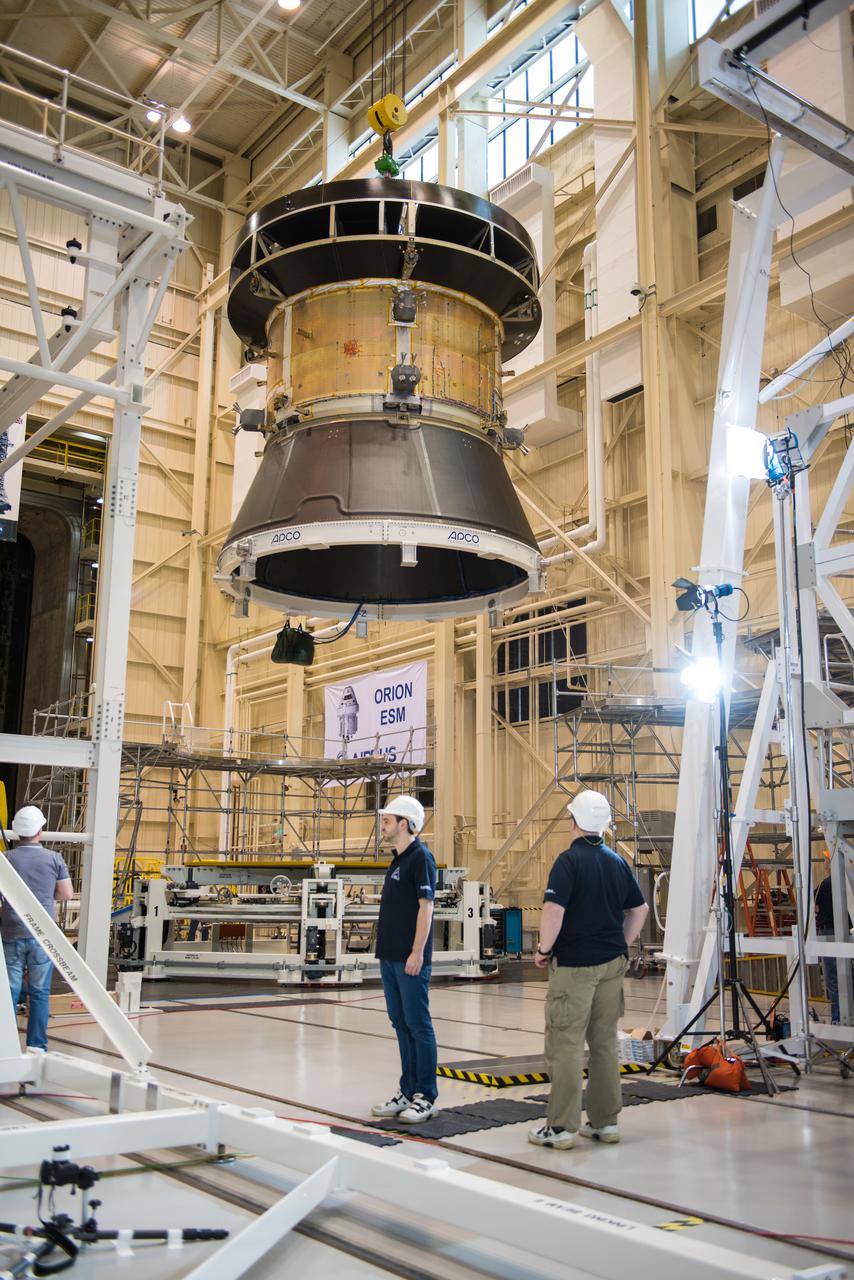
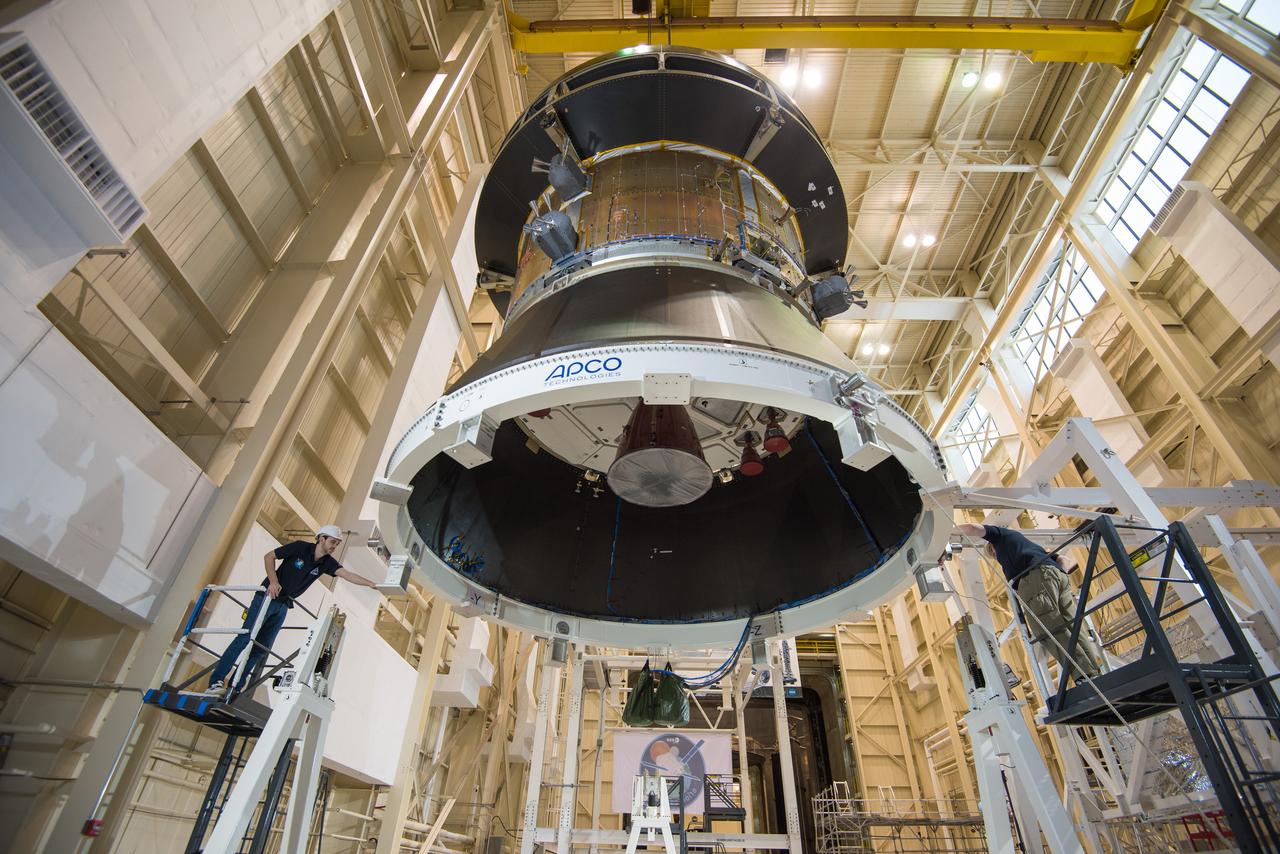
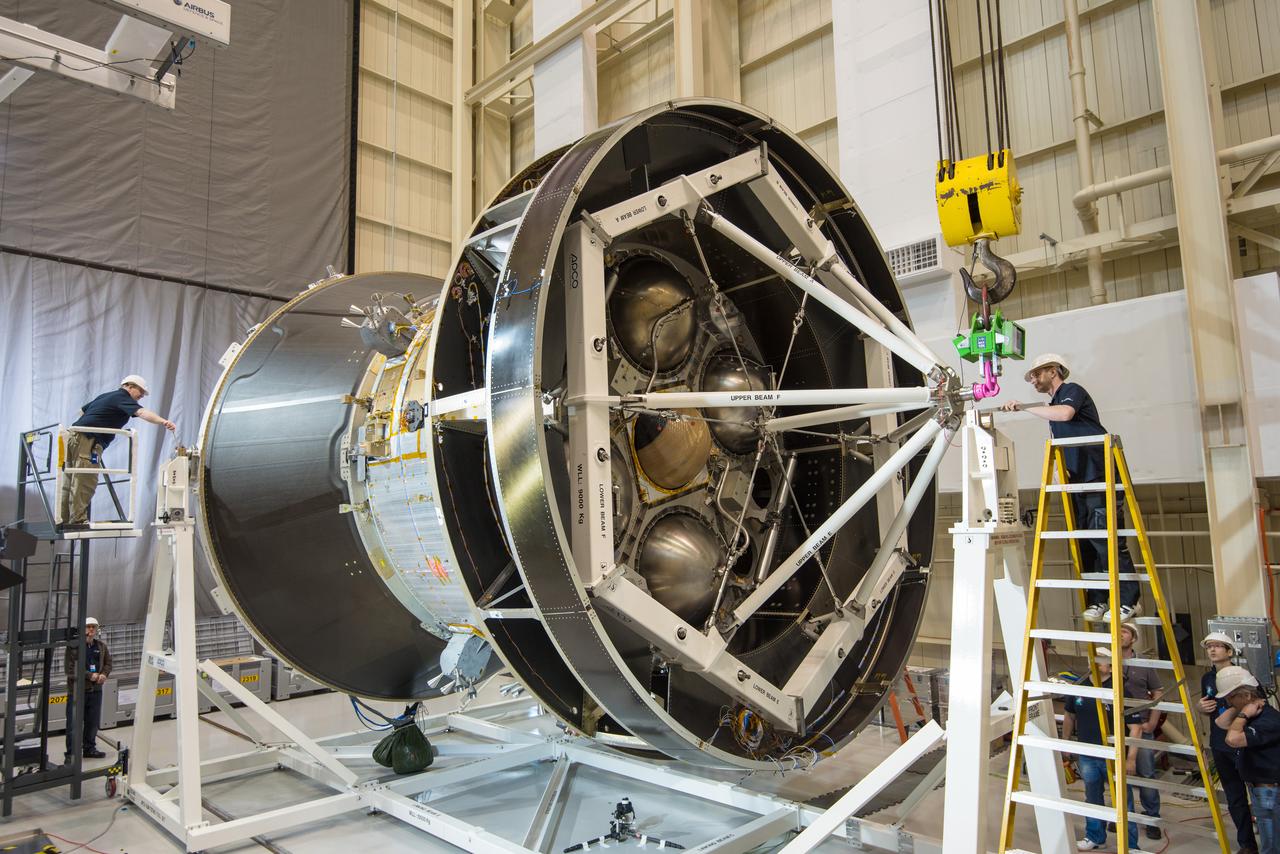
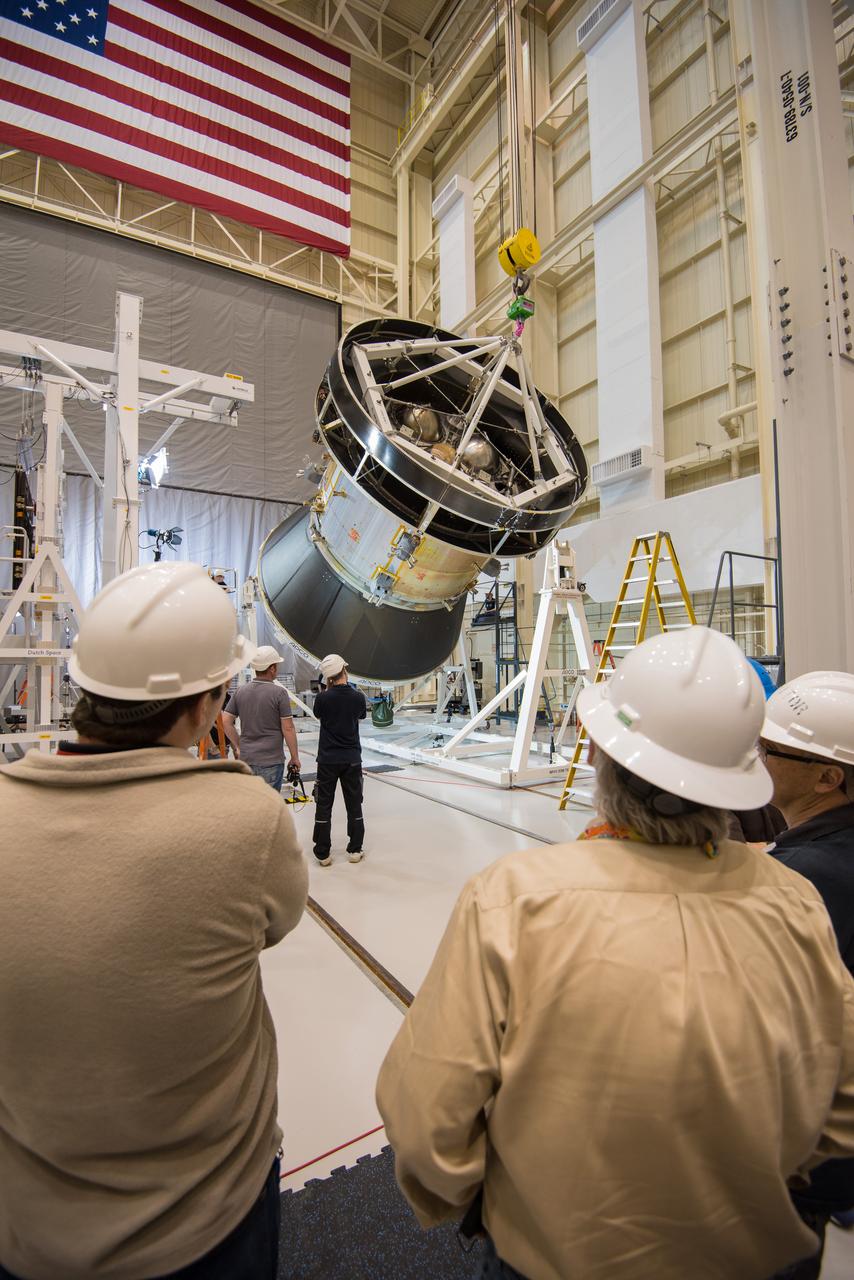
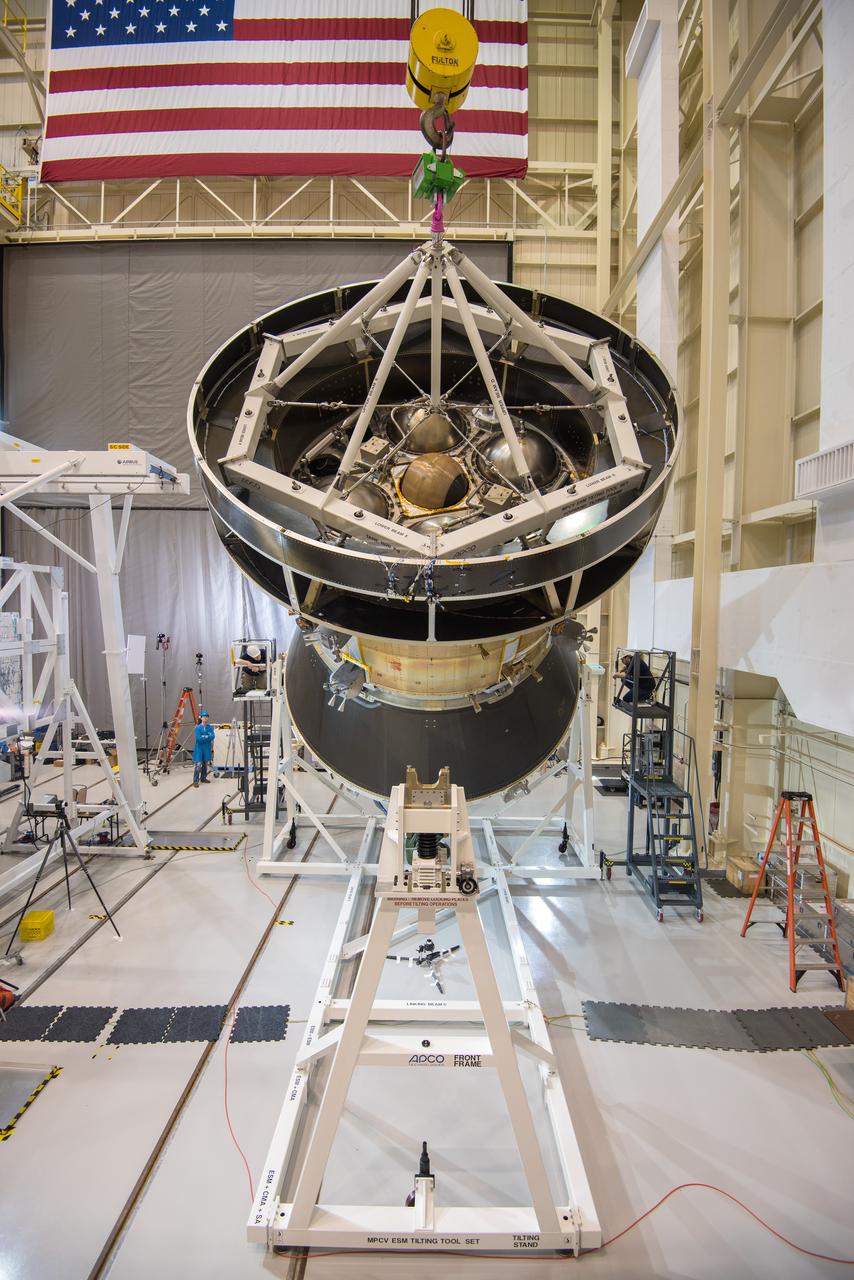
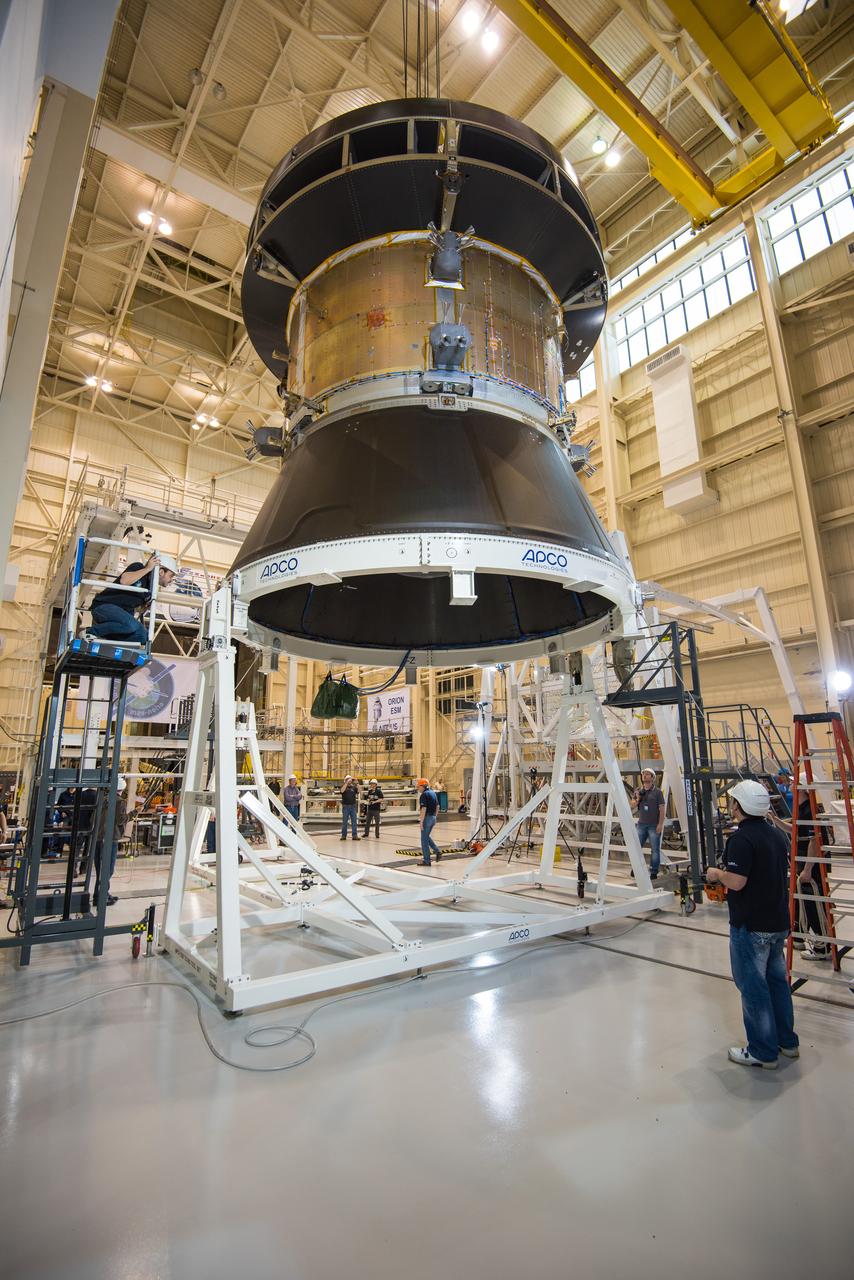
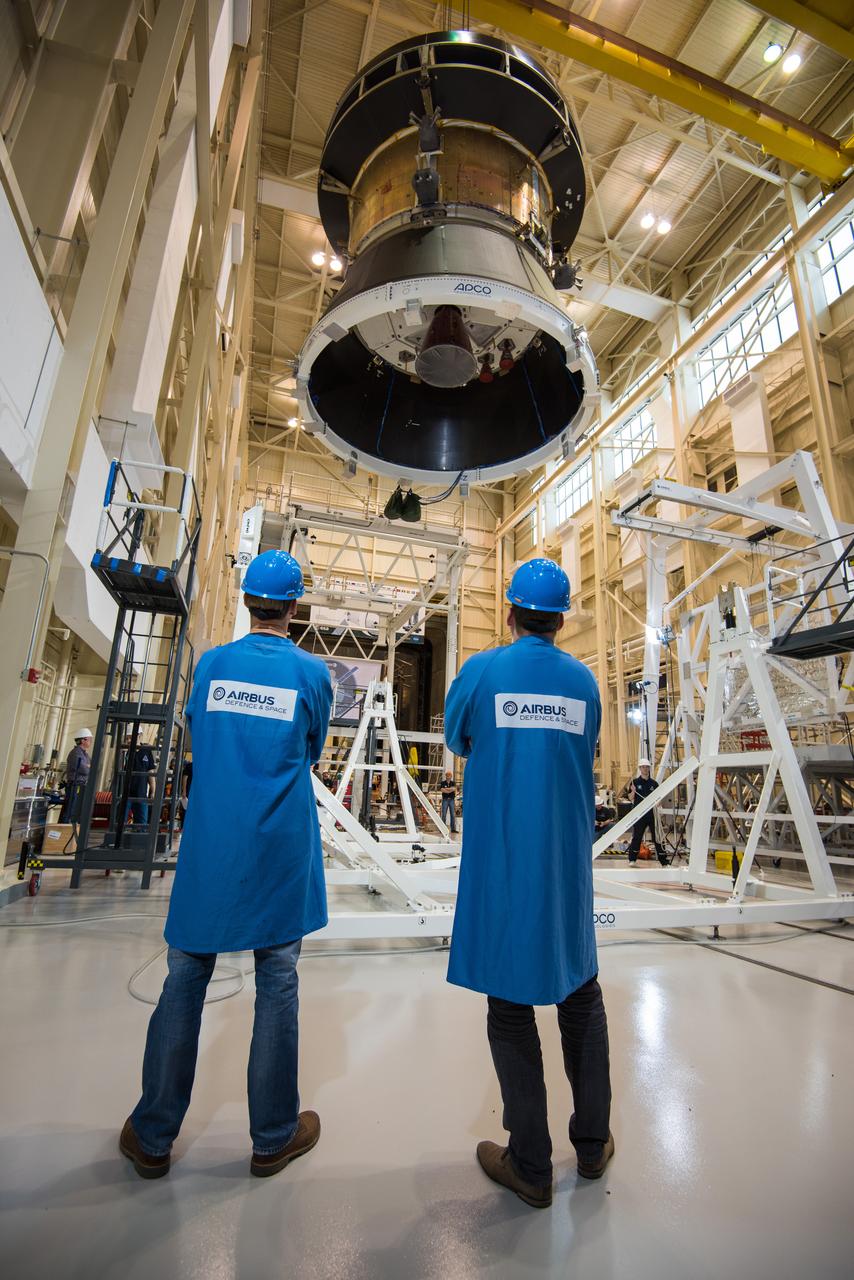
Engineers and technicians at NASA Glenn's Plum Brook Station in Sandusky, Ohio, are preparing for the first major test in the campaign to verify the structural integrity of Orion’s service module for Artemis I, the spacecraft’s first flight atop the agency’s Space Launch System (SLS) rocket. Orion’s service module, which will power and propel the vehicle and supply it with air and water, is being provided by ESA and built by Airbus Defence and Space. The solar array wing deployment test will verify that the qualification model wing unfurls as expected. On Saturday, Feb. 20, an international team of engineers and technicians lifted and tilted the service module test article -- which includes structural representations of the service module, crew module adapter, and spacecraft adapter -- to a 90 degree angle to position it for the deployment test of one of Orion’s four solar arrays. The next step in preparation for the test is attaching the solar array before the Feb. 29 deployment test. This is the first in a series of crucial tests to verify the service module’s structural integrity and ability to withstand the dynamic launch environment atop the SLS rocket.
Orion Test Hardware in Position for Solar Array Test
Engineers and technicians at NASA Glenn's Plum Brook Station in Sandusky, Ohio, are preparing for the first major test in the campaign to verify the structural integrity of Orion’s service module for Artemis I, the spacecraft’s first flight atop the agency’s Space Launch System (SLS) rocket. Orion’s service module, which will power and propel the vehicle and supply it with air and water, is being provided by ESA and built by Airbus Defence and Space. The solar array wing deployment test will verify that the qualification model wing unfurls as expected. On Saturday, Feb. 20, an international team of engineers and technicians lifted and tilted the service module test article -- which includes structural representations of the service module, crew module adapter, and spacecraft adapter -- to a 90 degree angle to position it for the deployment test of one of Orion’s four solar arrays. The next step in preparation for the test is attaching the solar array before the Feb. 29 deployment test. This is the first in a series of crucial tests to verify the service module’s structural integrity and ability to withstand the dynamic launch environment atop the SLS rocket.
Orion Test Hardware in Position for Solar Array Test
Engineers and technicians at NASA Glenn's Plum Brook Station in Sandusky, Ohio, are preparing for the first major test in the campaign to verify the structural integrity of Orion’s service module for Artemis I, the spacecraft’s first flight atop the agency’s Space Launch System (SLS) rocket. Orion’s service module, which will power and propel the vehicle and supply it with air and water, is being provided by ESA and built by Airbus Defence and Space. The solar array wing deployment test will verify that the qualification model wing unfurls as expected. On Saturday, Feb. 20, an international team of engineers and technicians lifted and tilted the service module test article -- which includes structural representations of the service module, crew module adapter, and spacecraft adapter -- to a 90 degree angle to position it for the deployment test of one of Orion’s four solar arrays. The next step in preparation for the test is attaching the solar array before the Feb. 29 deployment test. This is the first in a series of crucial tests to verify the service module’s structural integrity and ability to withstand the dynamic launch environment atop the SLS rocket.
Orion Test Hardware in Position for Solar Array Test
Engineers and technicians at NASA Glenn's Plum Brook Station in Sandusky, Ohio, are preparing for the first major test in the campaign to verify the structural integrity of Orion’s service module for Artemis I, the spacecraft’s first flight atop the agency’s Space Launch System (SLS) rocket. Orion’s service module, which will power and propel the vehicle and supply it with air and water, is being provided by ESA and built by Airbus Defence and Space. The solar array wing deployment test will verify that the qualification model wing unfurls as expected. On Saturday, Feb. 20, an international team of engineers and technicians lifted and tilted the service module test article -- which includes structural representations of the service module, crew module adapter, and spacecraft adapter -- to a 90 degree angle to position it for the deployment test of one of Orion’s four solar arrays. The next step in preparation for the test is attaching the solar array before the Feb. 29 deployment test. This is the first in a series of crucial tests to verify the service module’s structural integrity and ability to withstand the dynamic launch environment atop the SLS rocket.
Orion Test Hardware in Position for Solar Array Test
Engineers and technicians at NASA Glenn's Plum Brook Station in Sandusky, Ohio, are preparing for the first major test in the campaign to verify the structural integrity of Orion’s service module for Artemis I, the spacecraft’s first flight atop the agency’s Space Launch System (SLS) rocket. Orion’s service module, which will power and propel the vehicle and supply it with air and water, is being provided by ESA and built by Airbus Defence and Space. The solar array wing deployment test will verify that the qualification model wing unfurls as expected. On Saturday, Feb. 20, an international team of engineers and technicians lifted and tilted the service module test article -- which includes structural representations of the service module, crew module adapter, and spacecraft adapter -- to a 90 degree angle to position it for the deployment test of one of Orion’s four solar arrays. The next step in preparation for the test is attaching the solar array before the Feb. 29 deployment test. This is the first in a series of crucial tests to verify the service module’s structural integrity and ability to withstand the dynamic launch environment atop the SLS rocket.
Orion Test Hardware in Position for Solar Array Test
Engineers and technicians at NASA Glenn's Plum Brook Station in Sandusky, Ohio, are preparing for the first major test in the campaign to verify the structural integrity of Orion’s service module for Artemis I, the spacecraft’s first flight atop the agency’s Space Launch System (SLS) rocket. Orion’s service module, which will power and propel the vehicle and supply it with air and water, is being provided by ESA and built by Airbus Defence and Space. The solar array wing deployment test will verify that the qualification model wing unfurls as expected. On Saturday, Feb. 20, an international team of engineers and technicians lifted and tilted the service module test article -- which includes structural representations of the service module, crew module adapter, and spacecraft adapter -- to a 90 degree angle to position it for the deployment test of one of Orion’s four solar arrays. The next step in preparation for the test is attaching the solar array before the Feb. 29 deployment test. This is the first in a series of crucial tests to verify the service module’s structural integrity and ability to withstand the dynamic launch environment atop the SLS rocket.
Orion Test Hardware in Position for Solar Array Test
Engineers and technicians at NASA Glenn's Plum Brook Station in Sandusky, Ohio, are preparing for the first major test in the campaign to verify the structural integrity of Orion’s service module for Artemis I, the spacecraft’s first flight atop the agency’s Space Launch System (SLS) rocket. Orion’s service module, which will power and propel the vehicle and supply it with air and water, is being provided by ESA and built by Airbus Defence and Space. The solar array wing deployment test will verify that the qualification model wing unfurls as expected. On Saturday, Feb. 20, an international team of engineers and technicians lifted and tilted the service module test article -- which includes structural representations of the service module, crew module adapter, and spacecraft adapter -- to a 90 degree angle to position it for the deployment test of one of Orion’s four solar arrays. The next step in preparation for the test is attaching the solar array before the Feb. 29 deployment test. This is the first in a series of crucial tests to verify the service module’s structural integrity and ability to withstand the dynamic launch environment atop the SLS rocket.
Orion Test Hardware in Position for Solar Array Test
Engineers and technicians at NASA Glenn's Plum Brook Station in Sandusky, Ohio, are preparing for the first major test in the campaign to verify the structural integrity of Orion’s service module for Artemis I, the spacecraft’s first flight atop the agency’s Space Launch System (SLS) rocket. Orion’s service module, which will power and propel the vehicle and supply it with air and water, is being provided by ESA and built by Airbus Defence and Space. The solar array wing deployment test will verify that the qualification model wing unfurls as expected. On Saturday, Feb. 20, an international team of engineers and technicians lifted and tilted the service module test article -- which includes structural representations of the service module, crew module adapter, and spacecraft adapter -- to a 90 degree angle to position it for the deployment test of one of Orion’s four solar arrays. The next step in preparation for the test is attaching the solar array before the Feb. 29 deployment test. This is the first in a series of crucial tests to verify the service module’s structural integrity and ability to withstand the dynamic launch environment atop the SLS rocket.
Orion Test Hardware in Position for Solar Array Test
While onboard the USS John P. Murtha, NASA and the Department of Defense practice Artemis II recovery operations with the Crew Module Test Article (CMTA) in July of 2023. The CMTA is a full-scale mockup of the Orion spacecraft and is used to verify the recovery team is ready to support crew recovery after missions to the Moon.
Artemis II Orion Underway Recovery Test 10 (URT-10) - Day 1
The Saturn IB launch vehicle (SA204) for the Apollo 5 mission lifted off on January 22, 1968. The unmarned Apollo 5 mission verified the ascent and descent stage propulsion systems, including restart and throttle operations of the Lunar Module.
Saturn Apollo Program