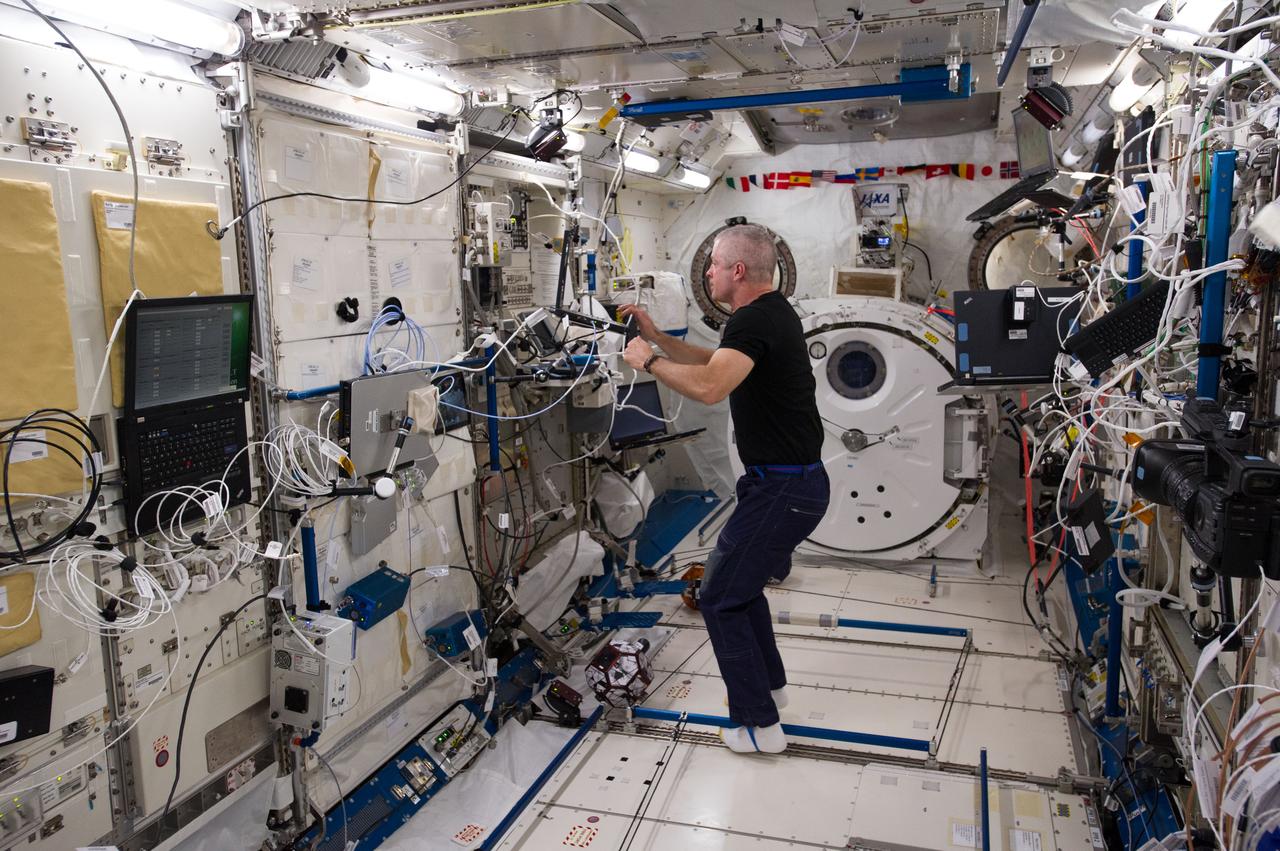
ISS040-E-079083 (25 July 2014) --- In the International Space Station?s Kibo laboratory, NASA astronaut Steve Swanson, Expedition 40 commander, enters data in a computer in preparation for a session with a trio of soccer-ball-sized robots known as the Synchronized Position Hold, Engage, Reorient, Experimental Satellites, or SPHERES. The free-flying robots were equipped with stereoscopic goggles called the Visual Estimation and Relative Tracking for Inspection of Generic Objects, or VERTIGO, to enable the SPHERES to perform relative navigation based on a 3D model of a target object.
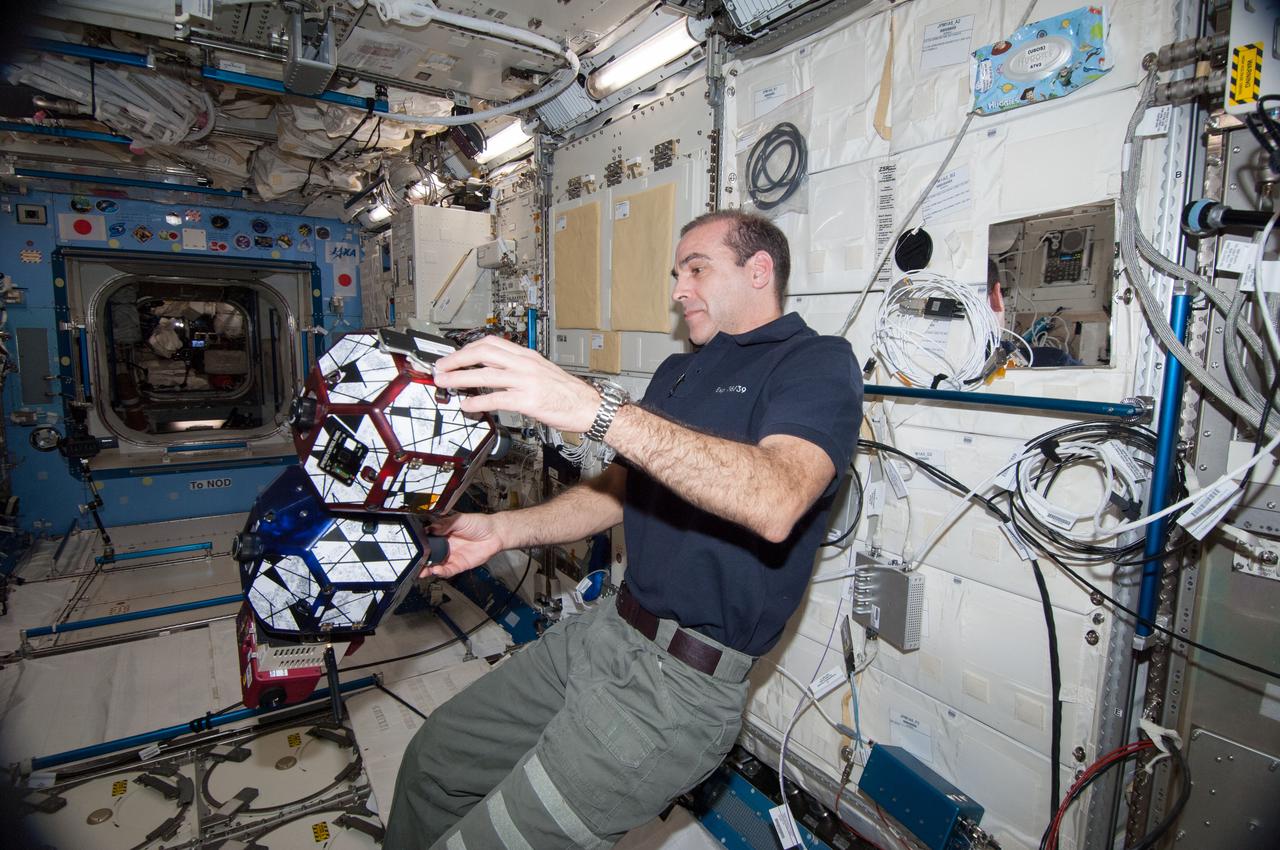
ISS038-E-035432 (23 Jan. 2014) --- NASA astronaut Rick Mastracchio, Expedition 38 flight engineer, works with a pair of basketball-sized, free-flying satellites known Synchronized Position Hold, Engage, Reorient, Experimental Satellites, or SPHERES, in the Kibo laboratory of the International Space Station. For this experiment session, the crew members equipped one of the two SPHERES with a pair of stereoscopic goggles dubbed the Visual Estimation and Relative Tracking for Inspection of Generic Objects, or VERTIGO. As the second SPHERES tumbled and spun, the VERTIGO-equipped robot attempted to map it and perform relative navigation around it.
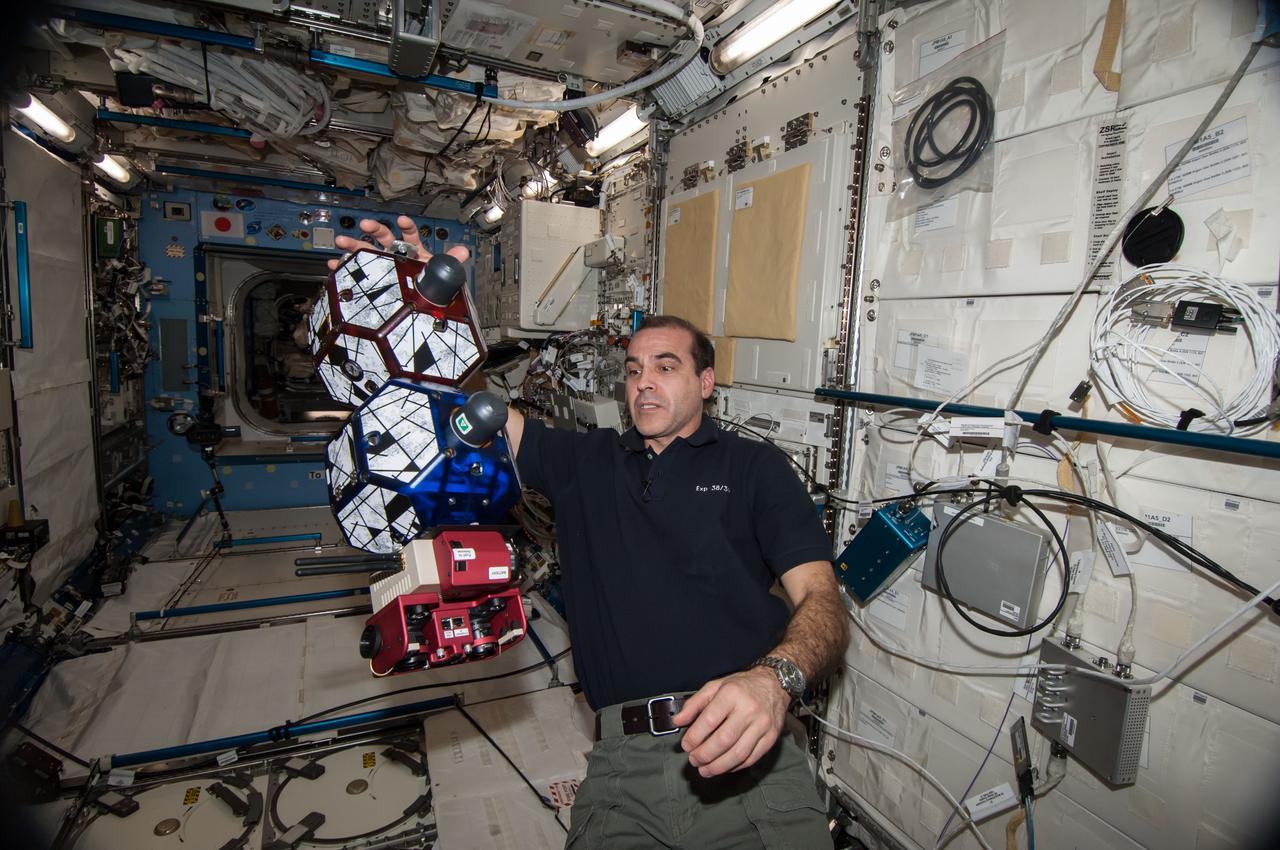
ISS038-E-035434 (23 Jan. 2014) --- NASA astronaut Rick Mastracchio, Expedition 38 flight engineer, works with a pair of basketball-sized, free-flying satellites known Synchronized Position Hold, Engage, Reorient, Experimental Satellites, or SPHERES, in the Kibo laboratory of the International Space Station. For this experiment session, the crew members equipped one of the two SPHERES with a pair of stereoscopic goggles dubbed the Visual Estimation and Relative Tracking for Inspection of Generic Objects, or VERTIGO. As the second SPHERES tumbled and spun, the VERTIGO-equipped robot attempted to map it and perform relative navigation around it.
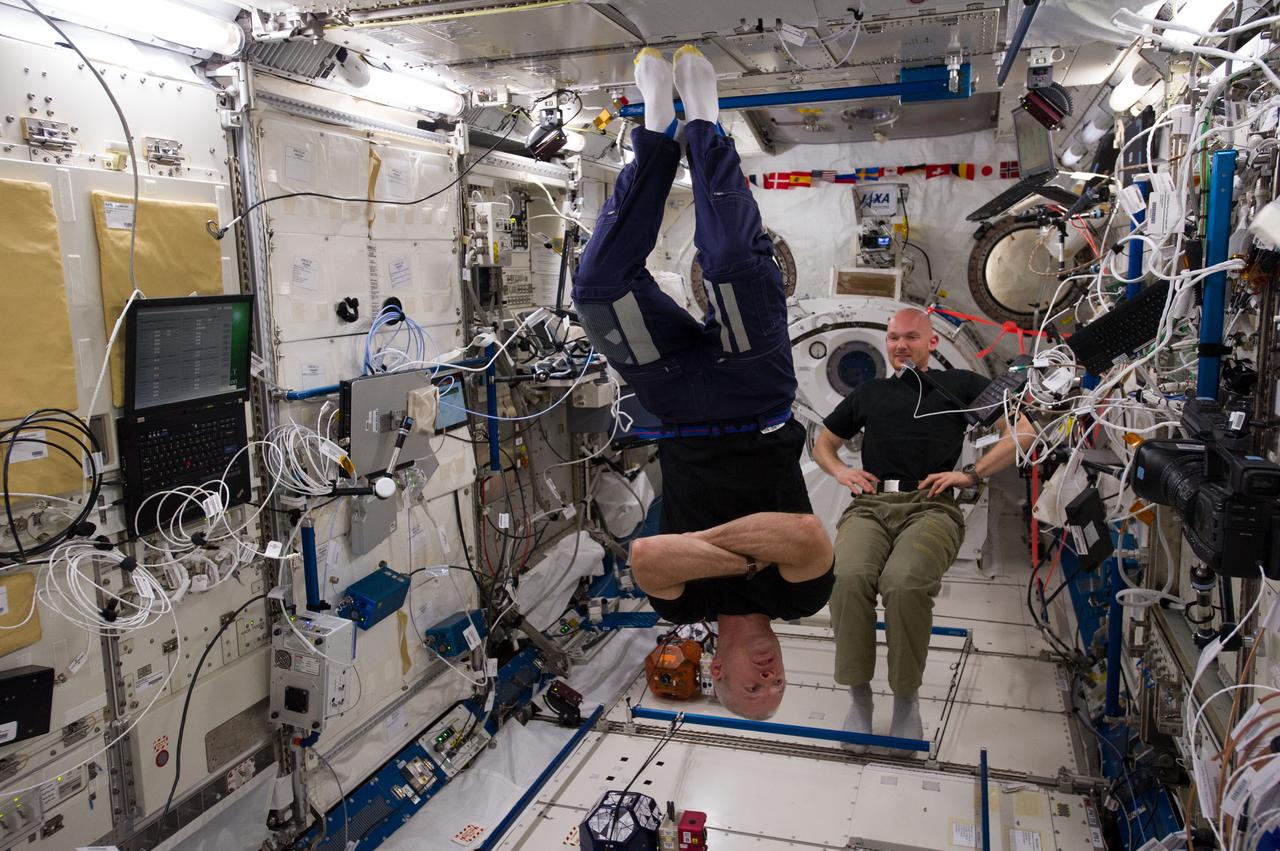
ISS040-E-079332 (25 July 2014) --- In the International Space Station?s Kibo laboratory, NASA astronaut Steve Swanson (foreground), Expedition 40 commander; and European Space Agency astronaut Alexander Gerst, flight engineer, conduct a session with a trio of soccer-ball-sized robots known as the Synchronized Position Hold, Engage, Reorient, Experimental Satellites, or SPHERES. The free-flying robots were equipped with stereoscopic goggles called the Visual Estimation and Relative Tracking for Inspection of Generic Objects, or VERTIGO, to enable the SPHERES to perform relative navigation based on a 3D model of a target object.
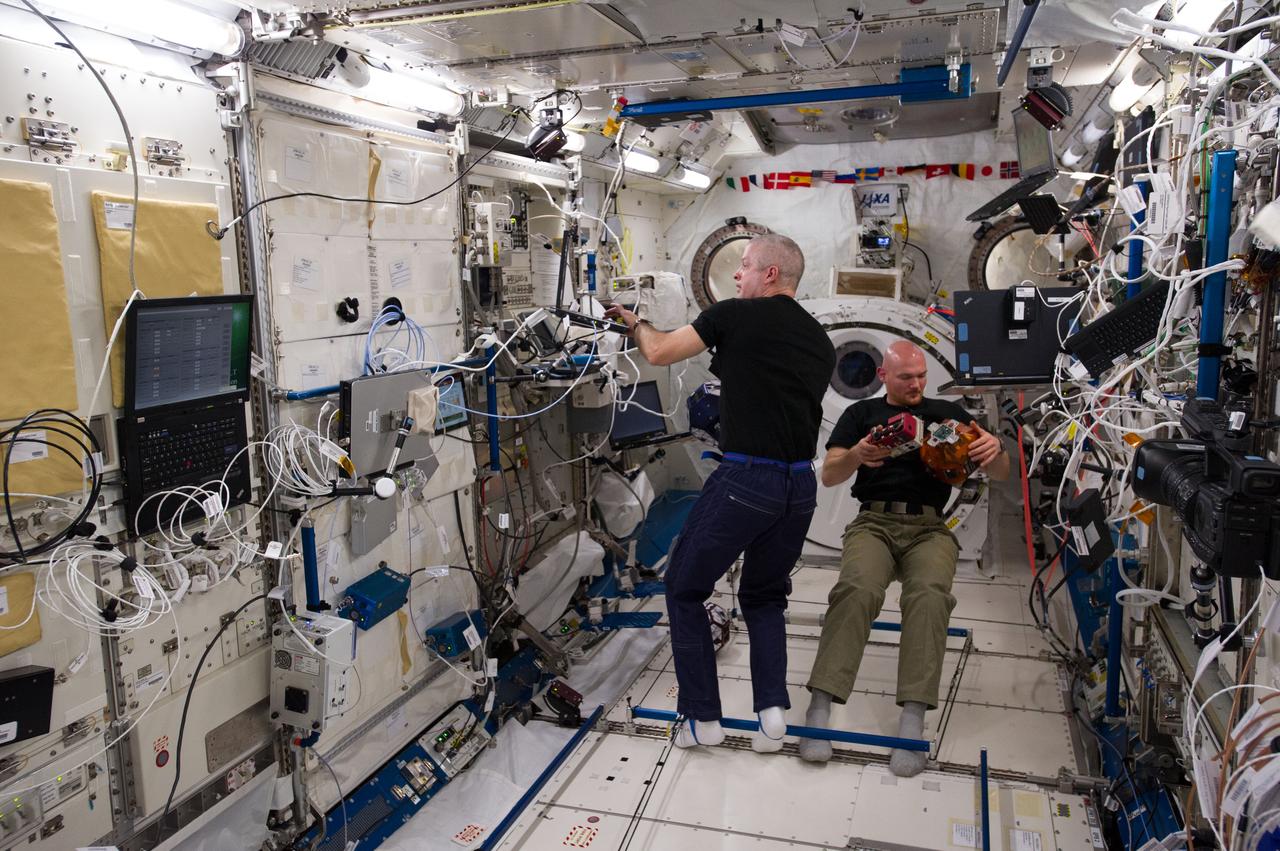
ISS040-E-079129 (25 July 2014) --- In the International Space Station?s Kibo laboratory, NASA astronaut Steve Swanson (left), Expedition 40 commander; and European Space Agency astronaut Alexander Gerst, flight engineer, conduct a session with a trio of soccer-ball-sized robots known as the Synchronized Position Hold, Engage, Reorient, Experimental Satellites, or SPHERES. The free-flying robots were equipped with stereoscopic goggles called the Visual Estimation and Relative Tracking for Inspection of Generic Objects, or VERTIGO, to enable the SPHERES to perform relative navigation based on a 3D model of a target object.
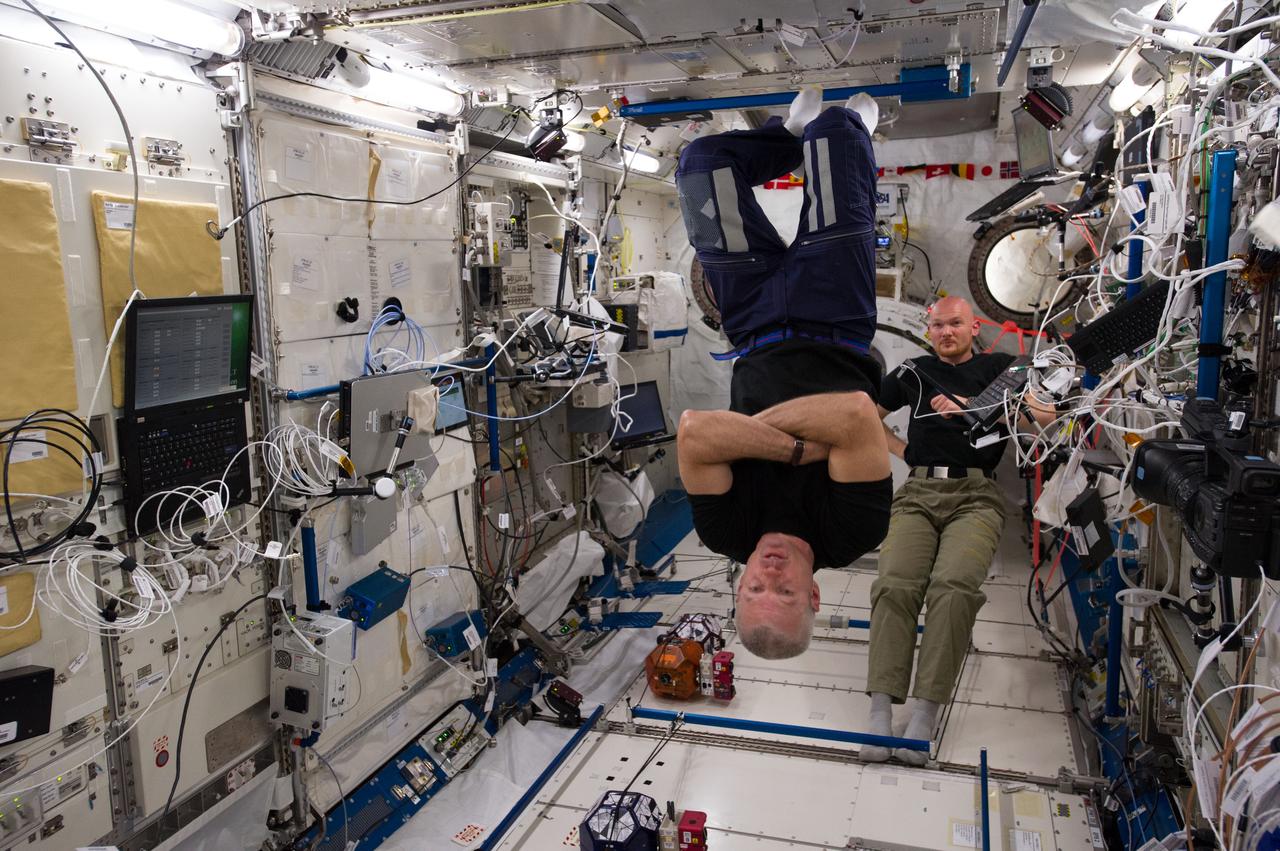
ISS040-E-079355 (25 July 2014) --- In the International Space Station?s Kibo laboratory, NASA astronaut Steve Swanson (foreground), Expedition 40 commander; and European Space Agency astronaut Alexander Gerst, flight engineer, conduct a session with a trio of soccer-ball-sized robots known as the Synchronized Position Hold, Engage, Reorient, Experimental Satellites, or SPHERES. The free-flying robots were equipped with stereoscopic goggles called the Visual Estimation and Relative Tracking for Inspection of Generic Objects, or VERTIGO, to enable the SPHERES to perform relative navigation based on a 3D model of a target object.
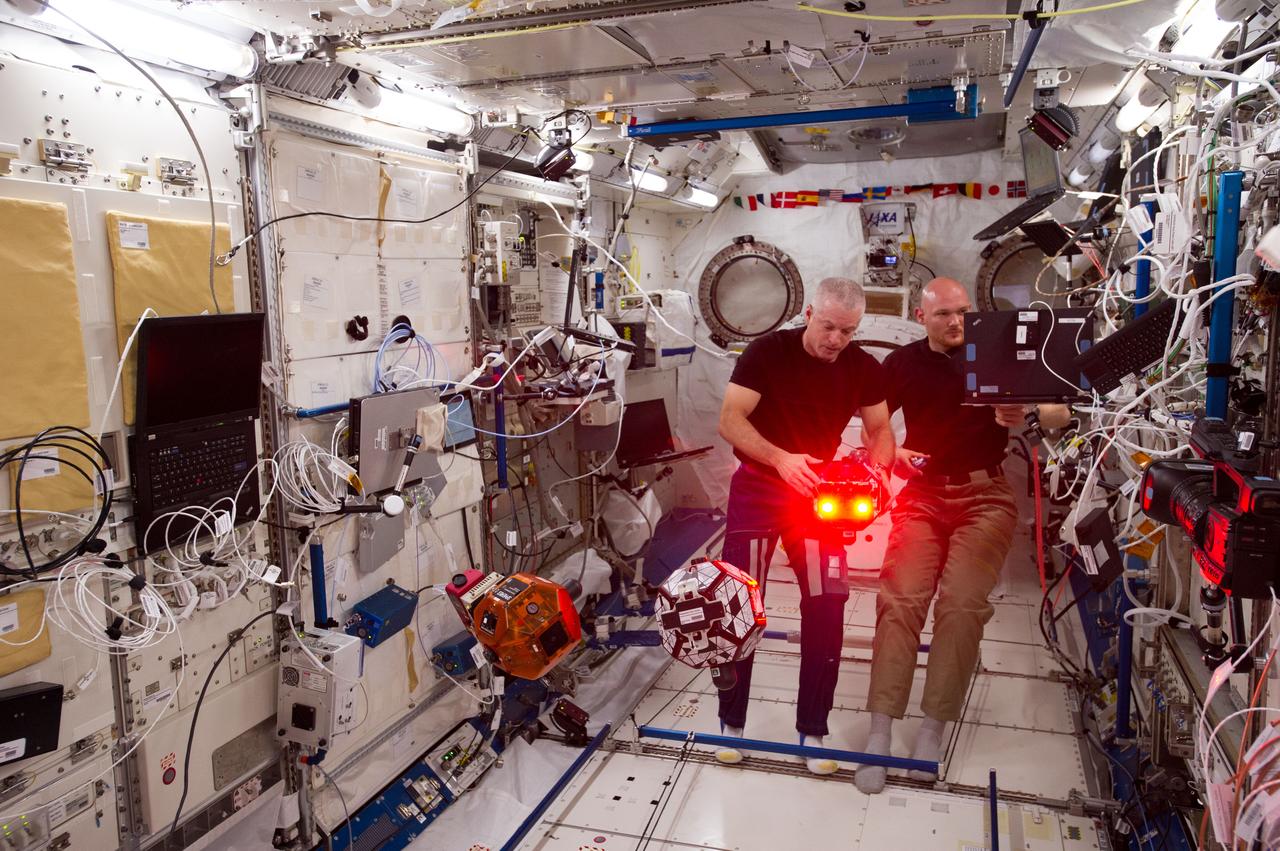
ISS040-E-079910 (25 July 2014) --- In the International Space Station?s Kibo laboratory, NASA astronaut Steve Swanson (left), Expedition 40 commander; and European Space Agency astronaut Alexander Gerst, flight engineer, conduct a session with a trio of soccer-ball-sized robots known as the Synchronized Position Hold, Engage, Reorient, Experimental Satellites, or SPHERES. The free-flying robots were equipped with stereoscopic goggles called the Visual Estimation and Relative Tracking for Inspection of Generic Objects, or VERTIGO, to enable the SPHERES to perform relative navigation based on a 3D model of a target object.
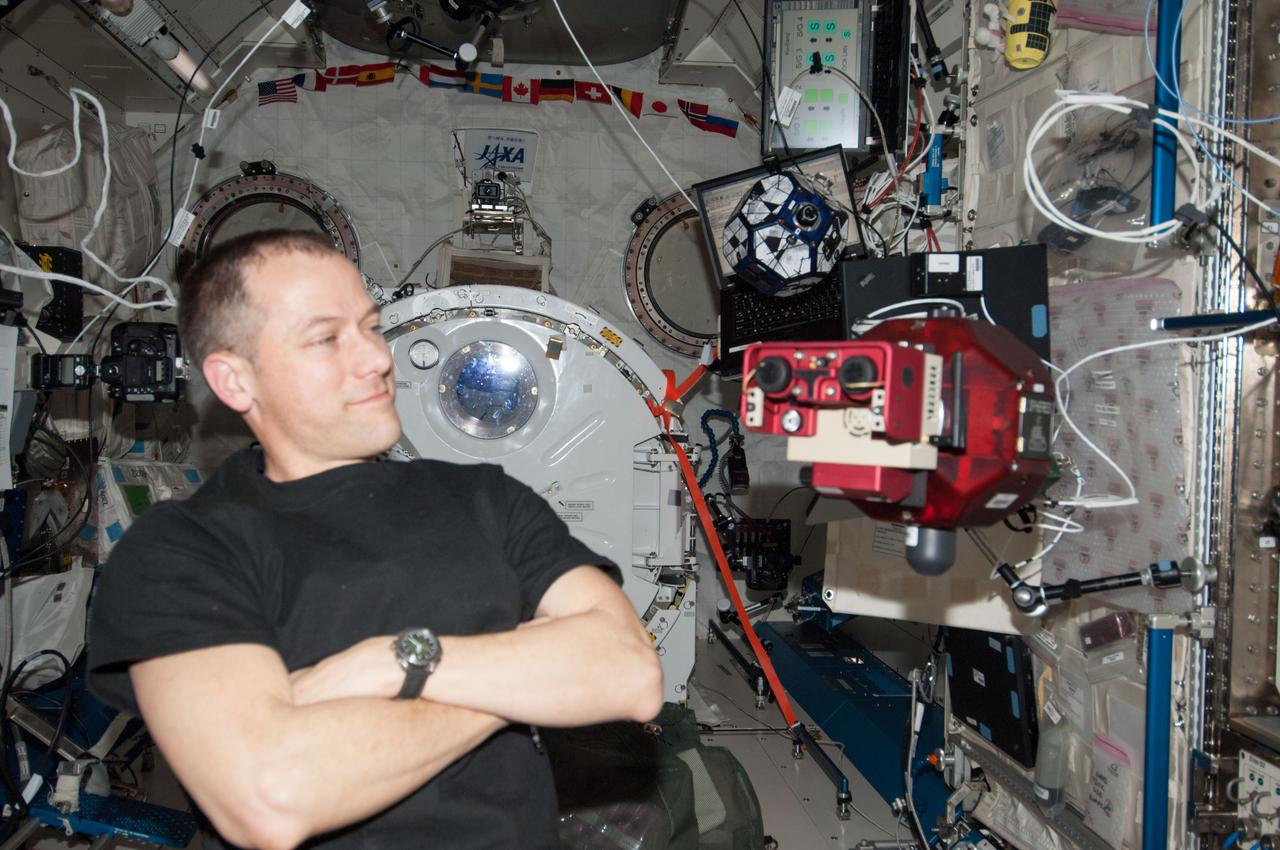
ISS034-E-056100 (26 Feb. 2013) --- Inside the Japan Aerospace Exploration Agency's (JAXA) Kibo lab on the Earth-orbiting International Space Station, NASA astronaut Tom Marshburn conducts a session of the ongoing SPHERES-VERTIGO investigation. SPHERES stands for Synchronized Position Hold, Engage, Reorient Experimental Satellites. Each satellite is an 18-sided polyhedron that is 0.2 meter in diameter and weighs 3.5 kilograms. The prism-shaped device (called Goggles) which is hooked up to the red or forward-most polyhedron in the picture is called Visual Estimation and Relative Tracking for Inspection of Generic Objects (VERTIGO).
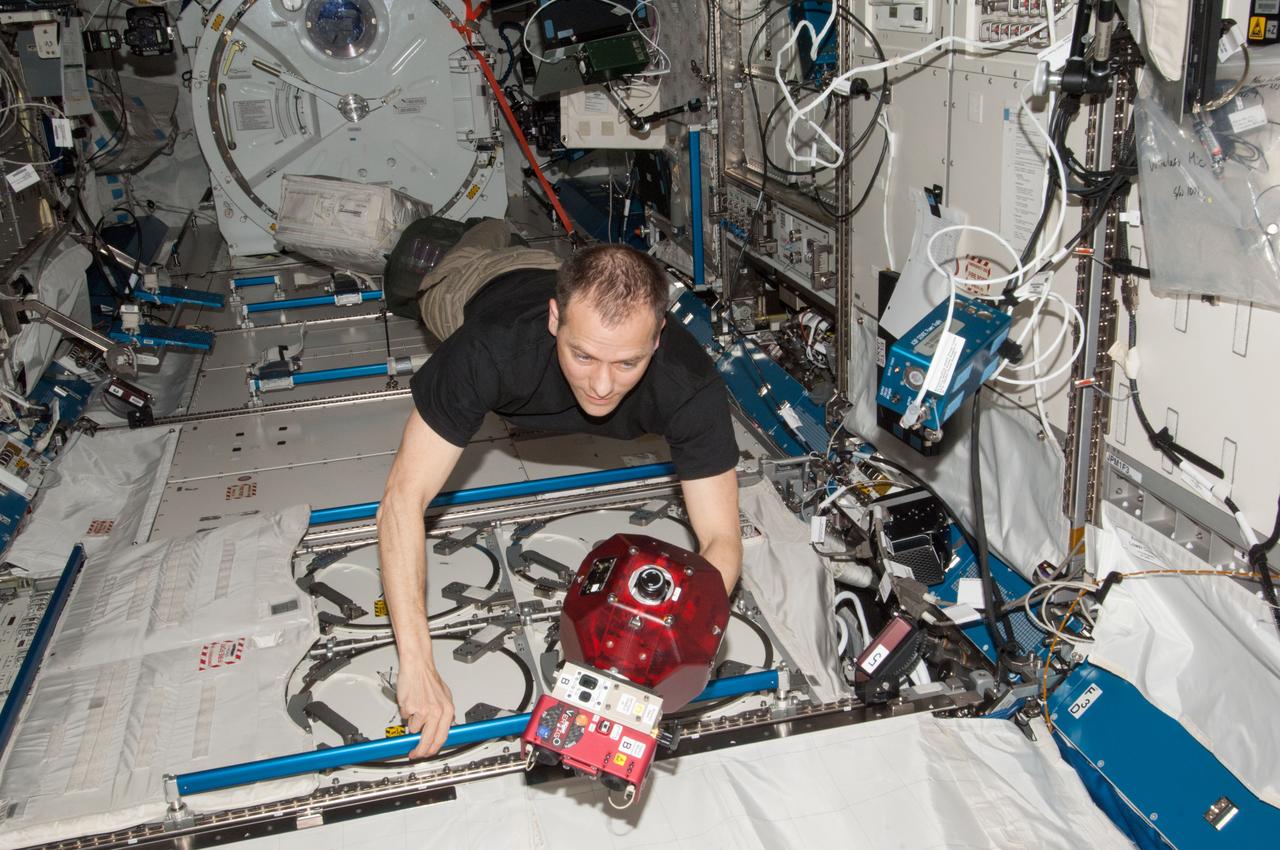
ISS034-E-056096 (26 Feb. 2013) --- Inside the Japan Aerospace Exploration Agency's (JAXA) Kibo lab on the Earth-orbiting International Space Station, NASA astronaut Tom Marshburn conducts a session of the ongoing SPHERES-VERTIGO investigation. SPHERES stands for Synchronized Position Hold, Engage, Reorient Experimental Satellites. Each satellite is an 18-sided polyhedron that is 0.2 meter in diameter and weighs 3.5 kilograms. The prism-shaped device (called Goggles) which is hooked up to the red or forward-most polyhedron in the picture is called Visual Estimation and Relative Tracking for Inspection of Generic Objects (VERTIGO).
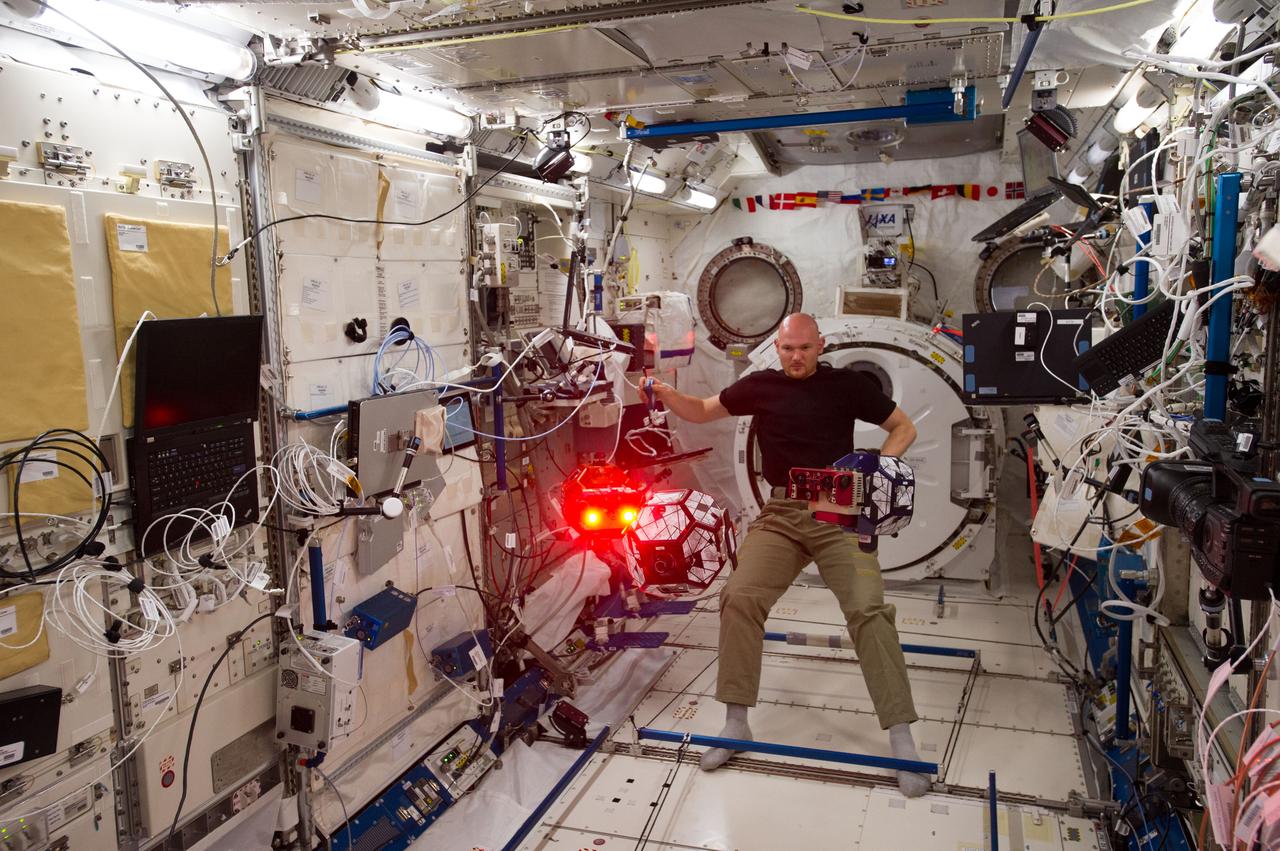
ISS040-E-080130 (25 July 2014) --- In the International Space Station?s Kibo laboratory, European Space Agency astronaut Alexander Gerst, Expedition 40 flight engineer, conducts a session with a trio of soccer-ball-sized robots known as the Synchronized Position Hold, Engage, Reorient, Experimental Satellites, or SPHERES. The free-flying robots were equipped with stereoscopic goggles called the Visual Estimation and Relative Tracking for Inspection of Generic Objects, or VERTIGO, to enable the SPHERES to perform relative navigation based on a 3D model of a target object.
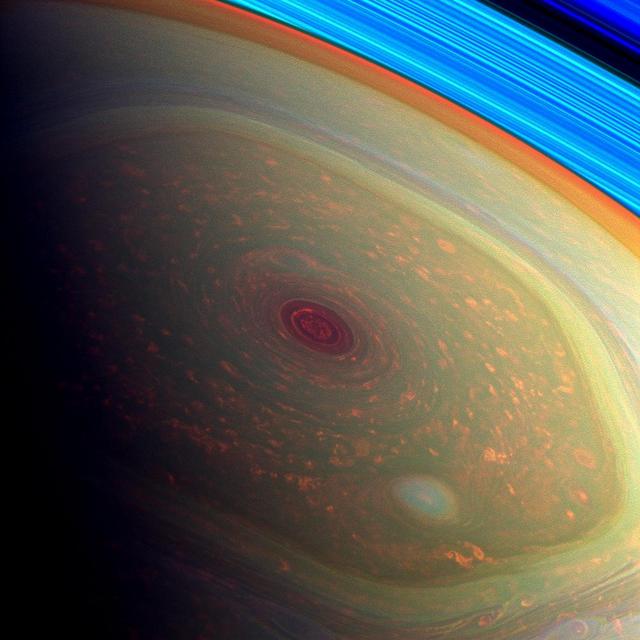
This spectacular, vertigo inducing, false-color image from NASA Cassini mission highlights the storms at Saturn north pole. The angry eye of a hurricane-like storm appears dark red.
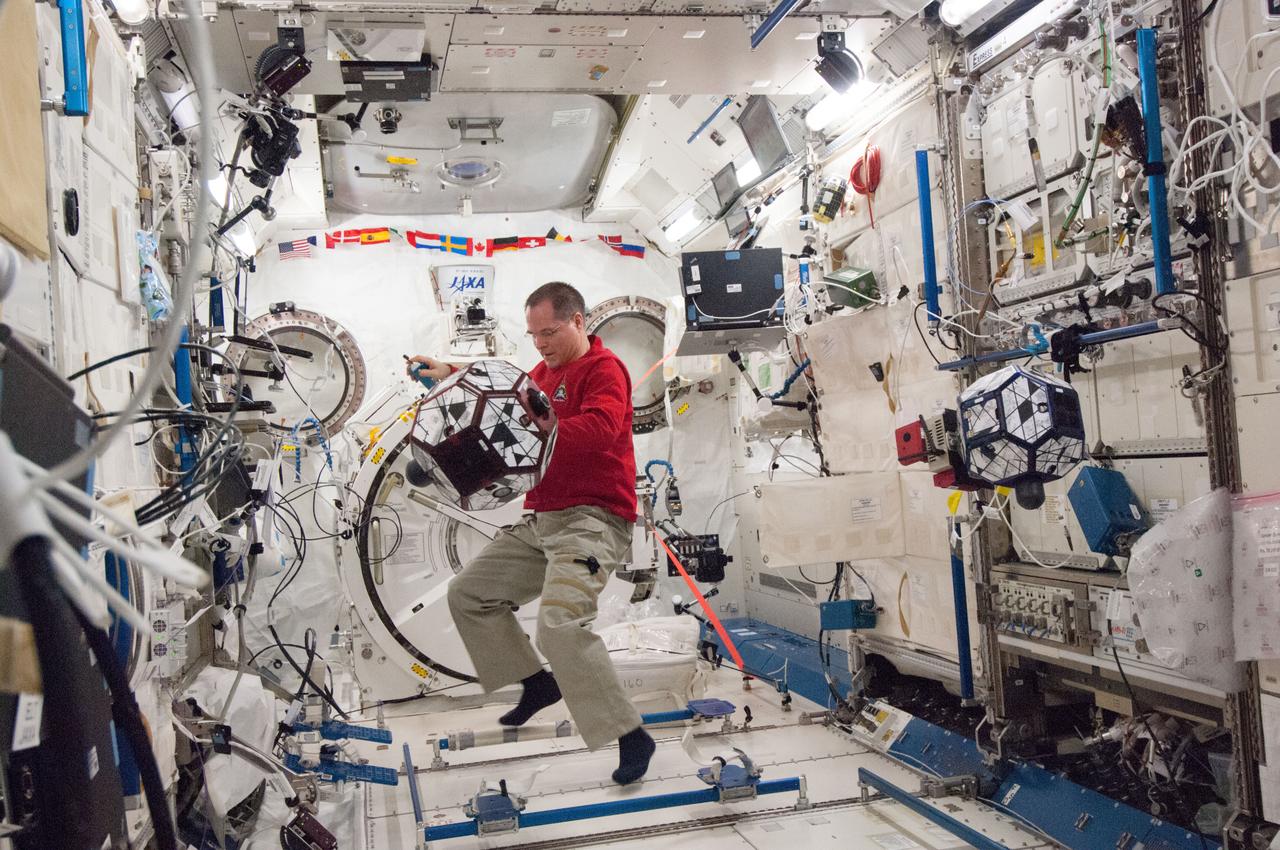
ISS034-E-067585 (12 March 2013) --- Inside the Japan Aerospace Exploration Agency's (JAXA) Kibo lab on the Earth-orbiting International Space Station, NASA astronaut Kevin Ford, Expedition 34 commander, conducts a session of the ongoing SPHERES-VERTIGO investigation. SPHERES stands for Synchronized Position Hold, Engage, Reorient Experimental Satellites. Each satellite is an 18-sided polyhedron that is 0.2 meter in diameter and weighs 3.5 kilograms. The prism-shaped device (called Goggles) which is easily seen hooked up to the polyhedron on the right in this picture is called Visual Estimation and Relative Tracking for Inspection of Generic Objects (VERTIGO).
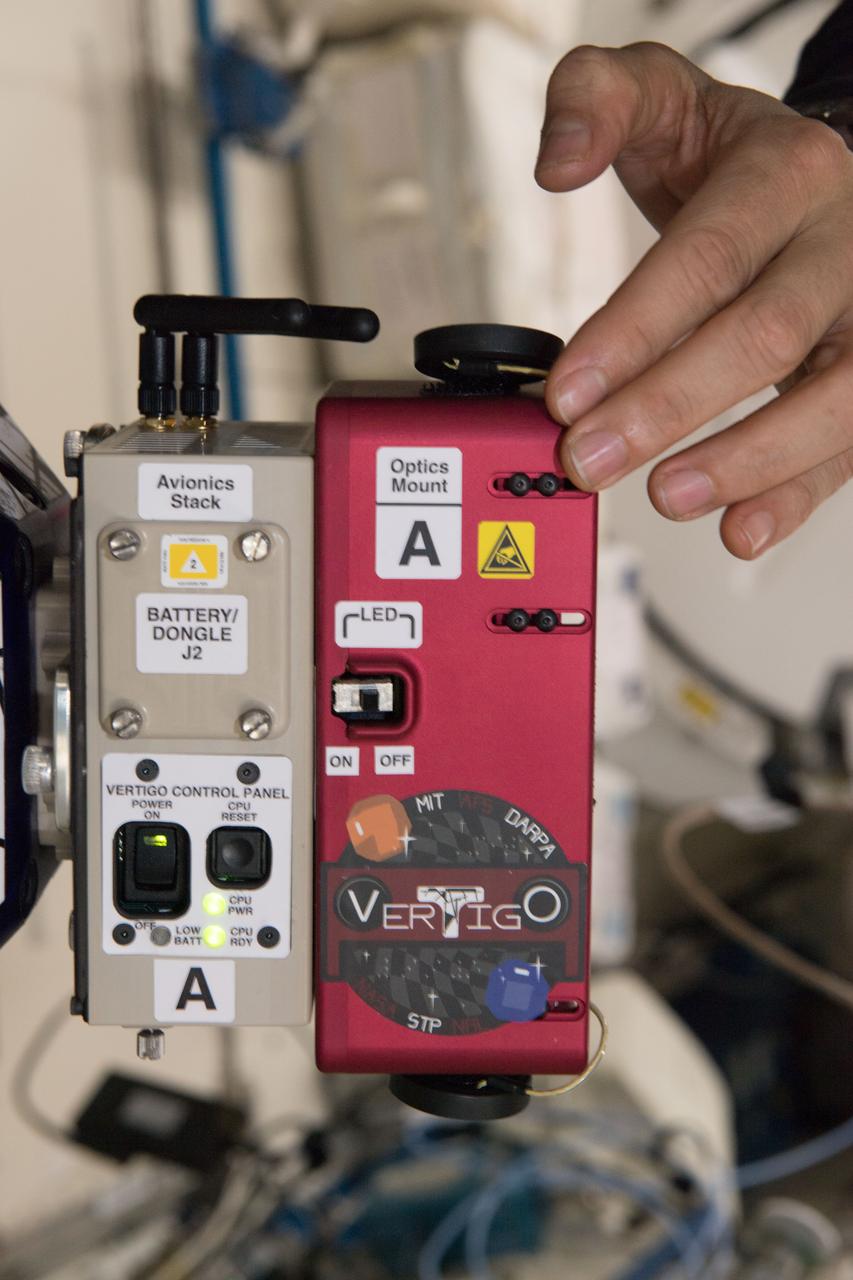
iss054e026580 (Jan. 31, 2018) --- Vertigo hardware used on Synchronized Position Hold, Engage, Reorient, Experimental Satellites (SPHERES) during a test run of Smoothing-Based Relative Navigation (SmoothNav). SPHERES is a self-contained, free-flying satellite to test autonomous capabilities and docking maneuvers within the International Space Station (ISS). SmoothNav software uses a unique computational method to estimate position and velocity in multi-satellite formations.
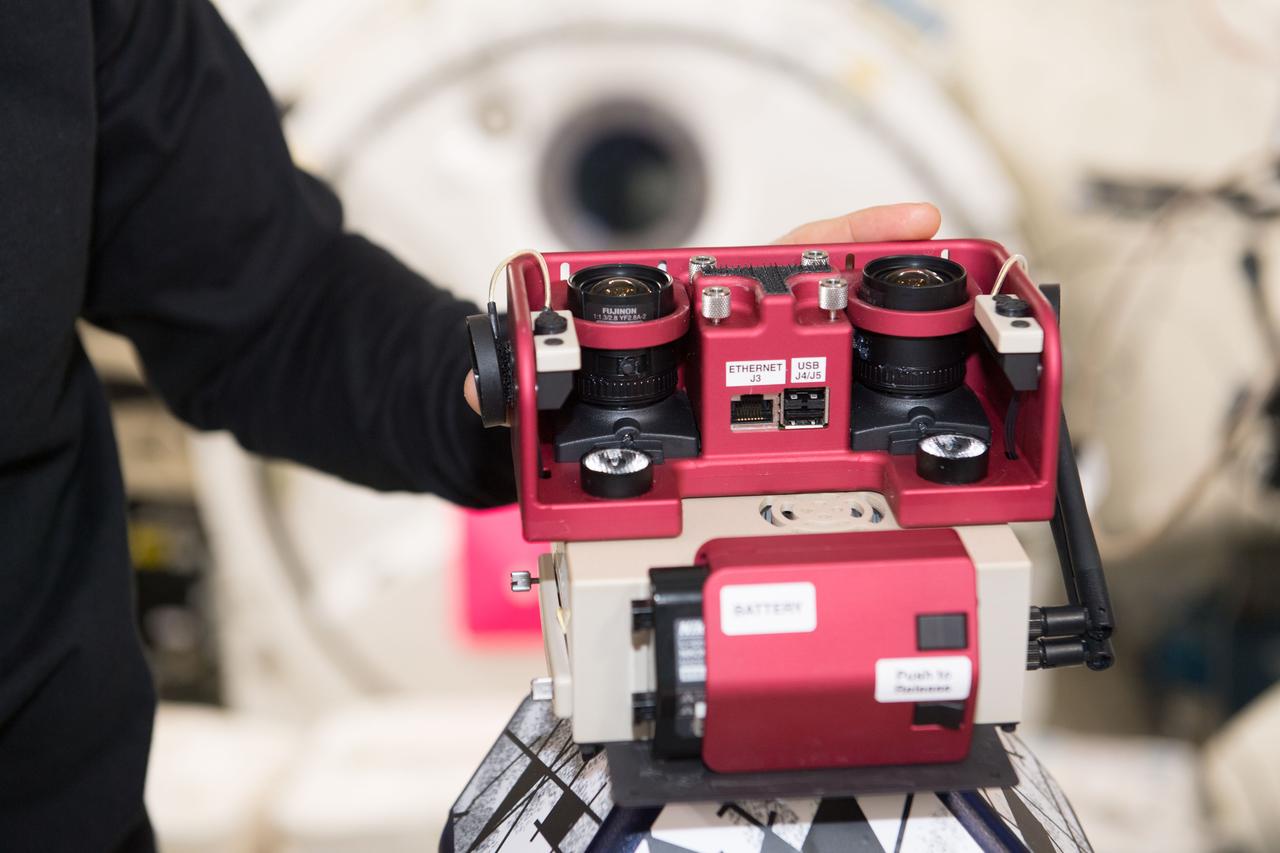
iss054e026578 (Jan. 31, 2018) --- Vertigo hardware used on Synchronized Position Hold, Engage, Reorient, Experimental Satellites (SPHERES) during a test run of Smoothing-Based Relative Navigation (SmoothNav). SPHERES is a self-contained, free-flying satellite to test autonomous capabilities and docking maneuvers within the International Space Station (ISS). SmoothNav software uses a unique computational method to estimate position and velocity in multi-satellite formations.
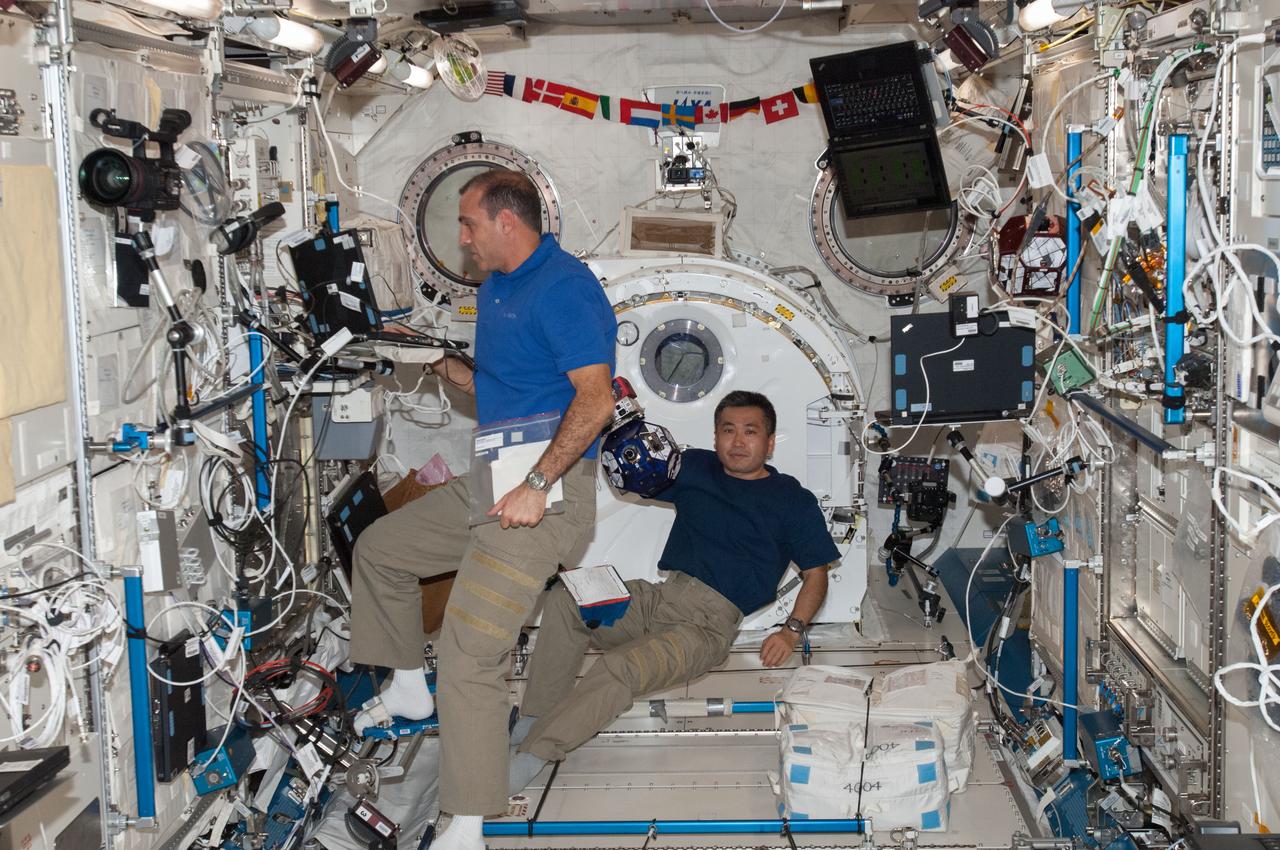
ISS037-E-028591 (10 Nov. 2013) --- NASA astronaut Rick Mastracchio (left) and Japan Aerospace Exploration Agency astronaut Koichi Wakata, both Expedition 38 flight engineers, work in the Kibo laboratory of the International Space Station.
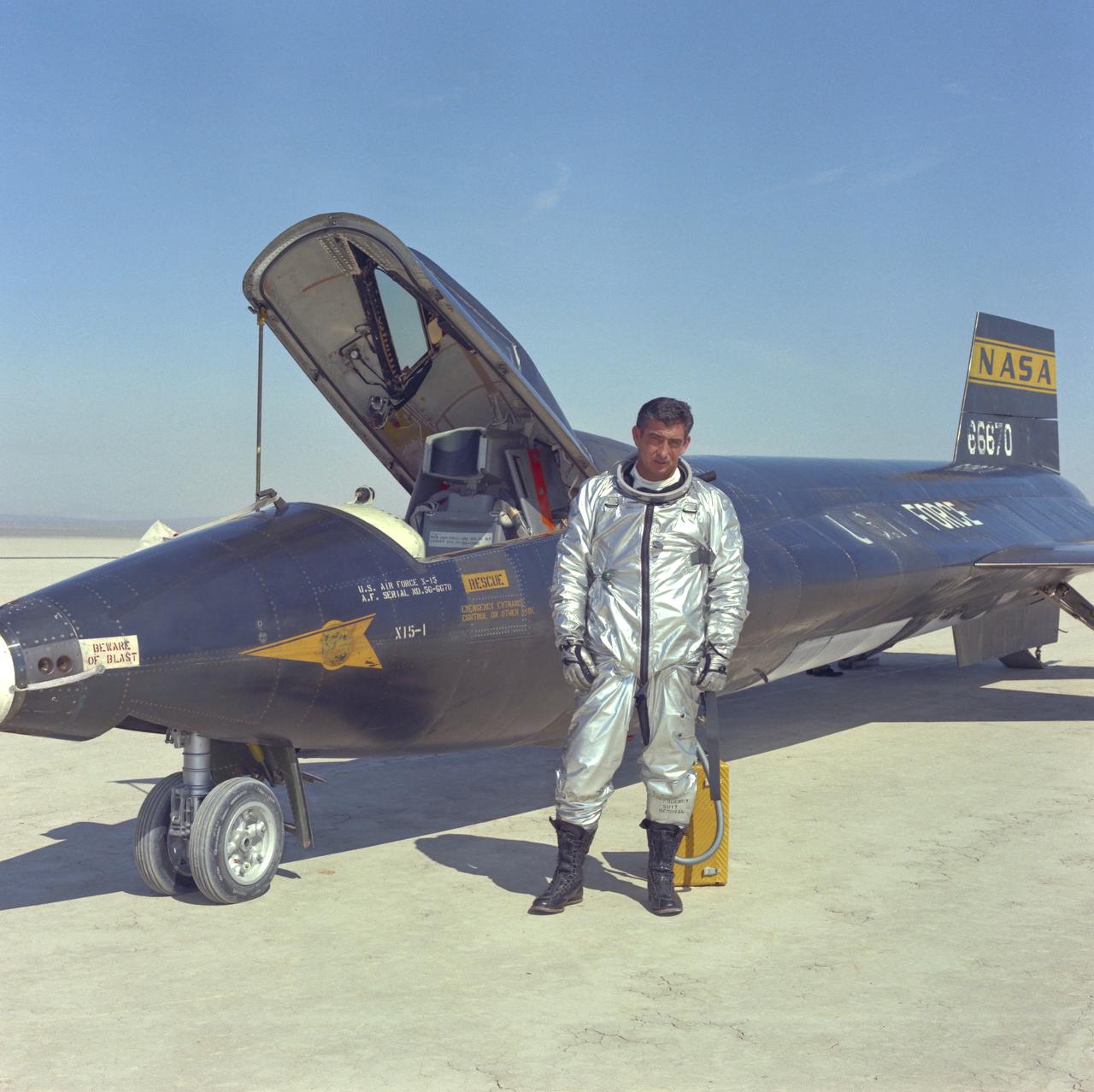
Air Force pilot Mike Adams poses in front of X-15-#1 after flight on Rogers Dry Lake at Edwards Air Force Base in California.