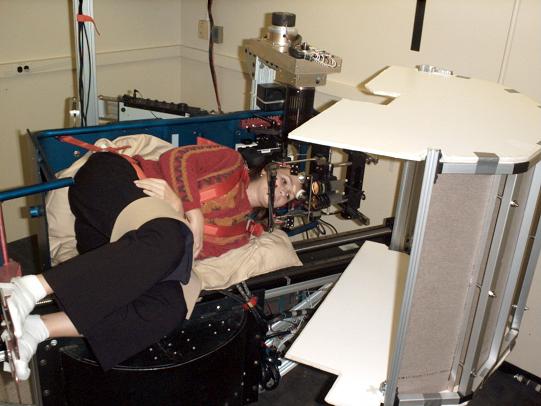
The short-arm centrifuge subjects an astronaut to conflicting sensory input and study the astronaut's perception of motion. It is one of several instruments used in the Spatial Reorientation Following Space Flight investigation to be conducted after astronauts return to Earth. During space flight, the vestibular organs no longer respond in a familiar way. Instead, inputs from the irner ear do not match those coming from the eyes. While on Earth, you can open your eyes to see if you truly are spinning, but astronauts do not have this luxury. Astronauts can see the floor, but have no sense of down; when they bend their heads forward, the otoliths are not stimulated properly. This state, called sensory conflict, must be resolved by the brain to maintain orientation. When they first return to Earth, astronauts are again disoriented because of sensory conflict. They undergo a period of spatial reorientation, as their brains reconcile what their eyes see and what their vestibular system senses. Recovery can take anywhere from hours to days depending on the length of the mission. Principal Investigator: Dr. William Paloski, Johnson Space Center, Houston, TX.
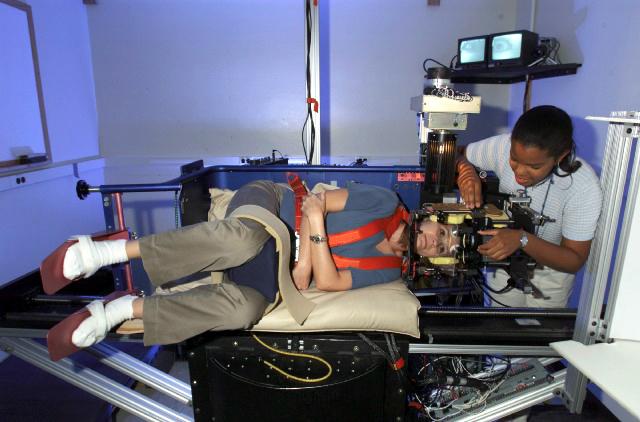
The short-arm centrifuge subjects an astronaut to conflicting sensory input and study the astronaut's perception of motion. It is one of several instruments used in the Spatial Reorientation Following Space Flight investigation to be conducted on crewmembers. During space flight, the vestibular organs no longer respond in a familiar way. Instead, inputs from the irner ear do not match those coming from the eyes. While on Earth, you can open your eyes to see if you truly are spinning, but astronauts do not have this luxury. Astronauts can see the floor, but have no sense of down; when they bend their heads forward, the otoliths are not stimulated properly. This state, called sensory conflict, must be resolved by the brain to maintain orientation. When they first return to Earth, astronauts are again disoriented because of sensory conflict. They undergo a period of spatial reorientation, as their brains reconcile what their eyes see and what their vestibular system senses. Recovery can take anywhere from hours to days depending on the length of the mission. Principal Investigator: Dr. William Paloski, Johnson Space Center, Houston, TX.
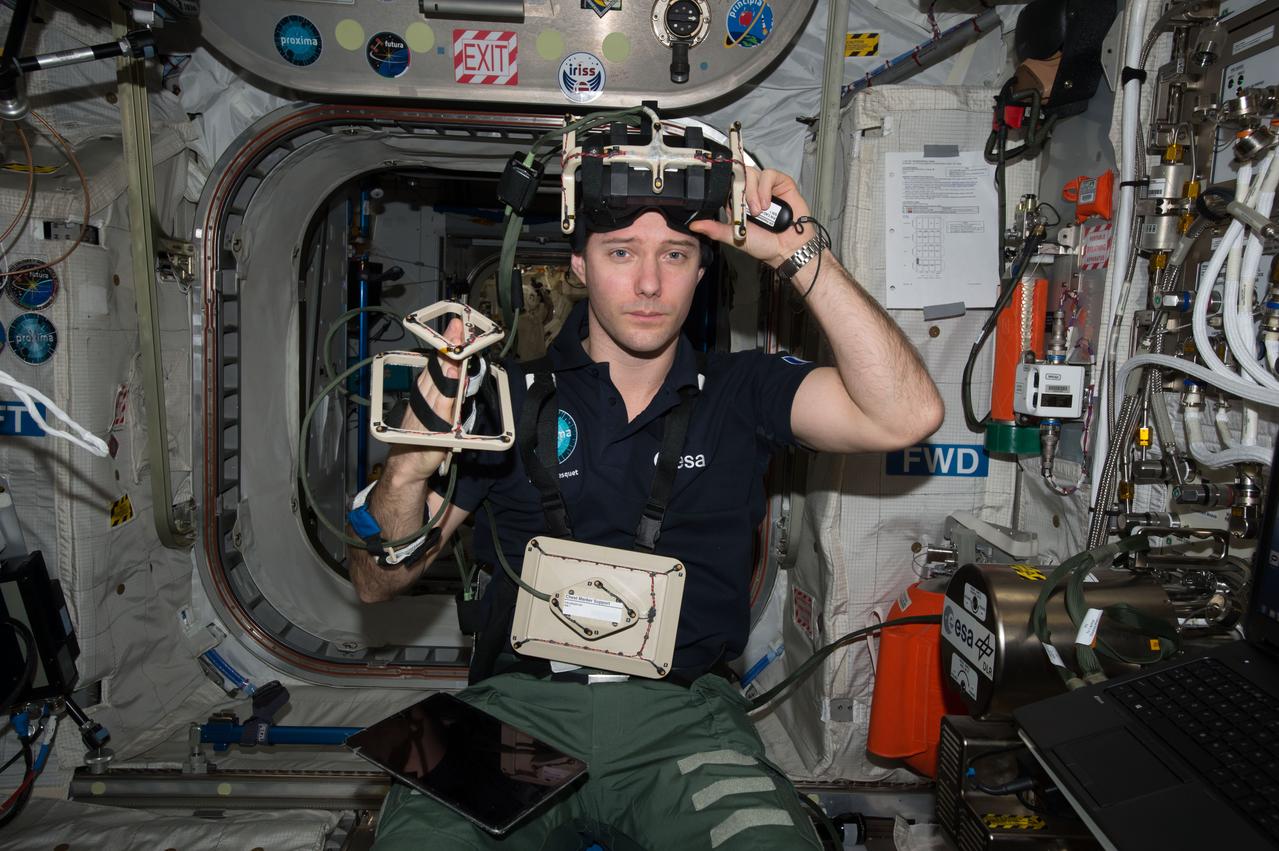
iss051e049147 (5/24/2017) --- ESA astronaut Thomas Pesquet performs the commissioning of the Gravitational References for Sensimotor Performance (GRASP) experiment, to better understand how the central nervous system (CNS) integrates information from different sensations. The data collected could help researchers better understand the workings of the human vestibular system and how it connects to the other sensory organs. This research hopes to shed light on how to best treat the loss of vestibular function on Earth.
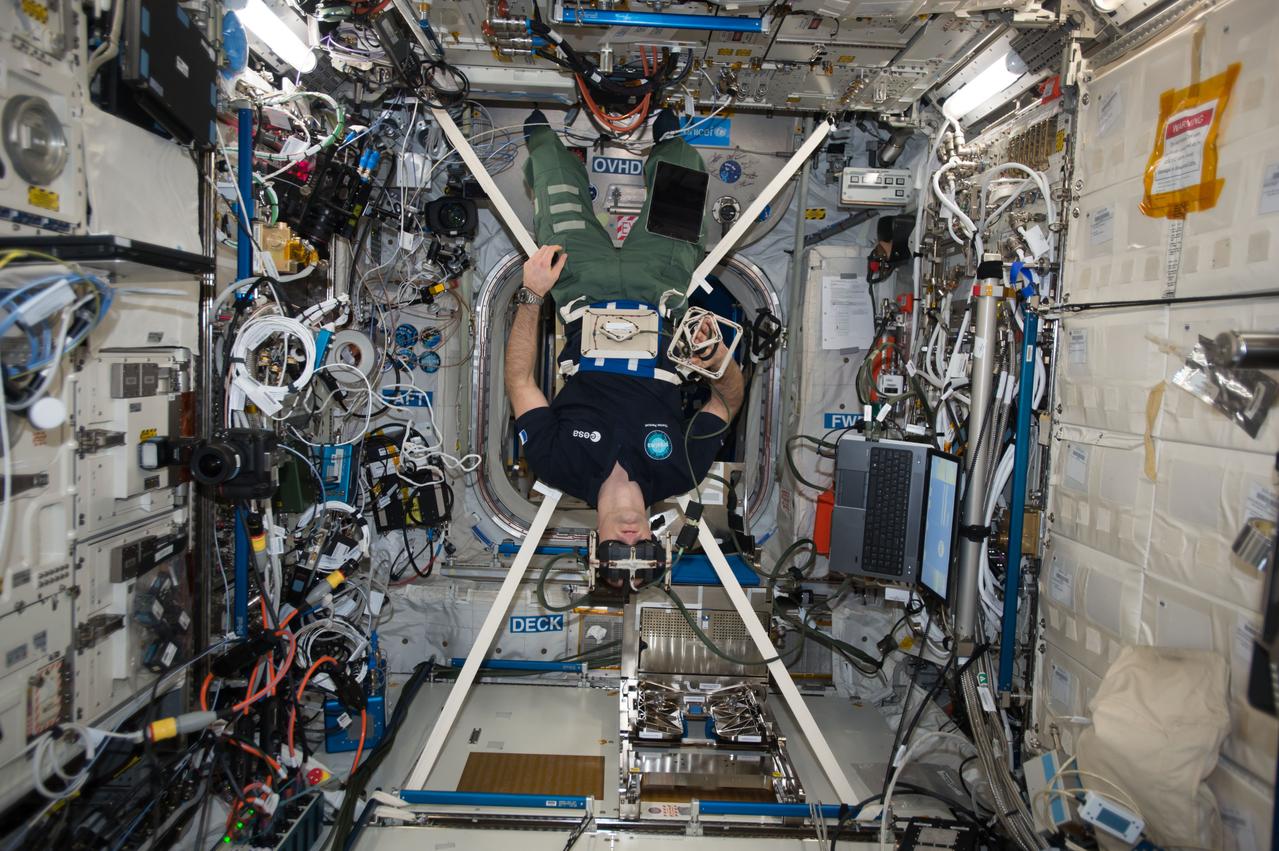
iss051e049152 (5/24/2017) --- ESA astronaut Thomas Pesquet performs the commissioning of the Gravitational References for Sensimotor Performance (GRASP) experiment, to better understand how the central nervous system (CNS) integrates information from different sensations. The data collected could help researchers better understand the workings of the human vestibular system and how it connects to the other sensory organs. This research hopes to shed light on how to best treat the loss of vestibular function on Earth.
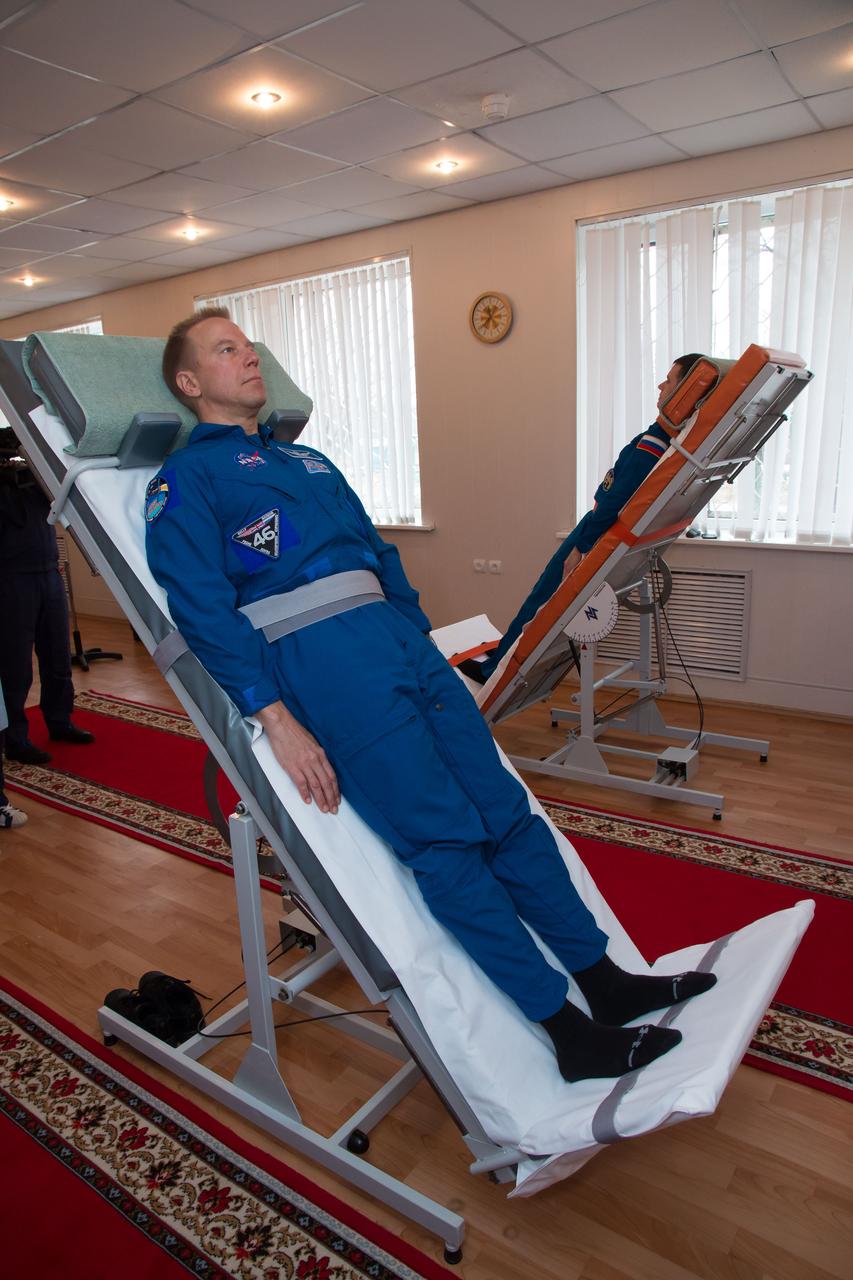
At the Cosmonaut Hotel crew quarters in Baikonur, Kazakhstan, Expedition 46-47 crewmember Tim Kopra of NASA took a turn on a tilt table to test his vestibular system Dec. 9 as part of his pre-launch training. Kopra, Tim Peake of the European Space Agency and Yuri Malenchenko of the Russian Federal Space Agency will launch Dec. 15 on their Soyuz TMA-19M spacecraft for a six-month mission on the International Space Station. NASA/Victor Zelentsov
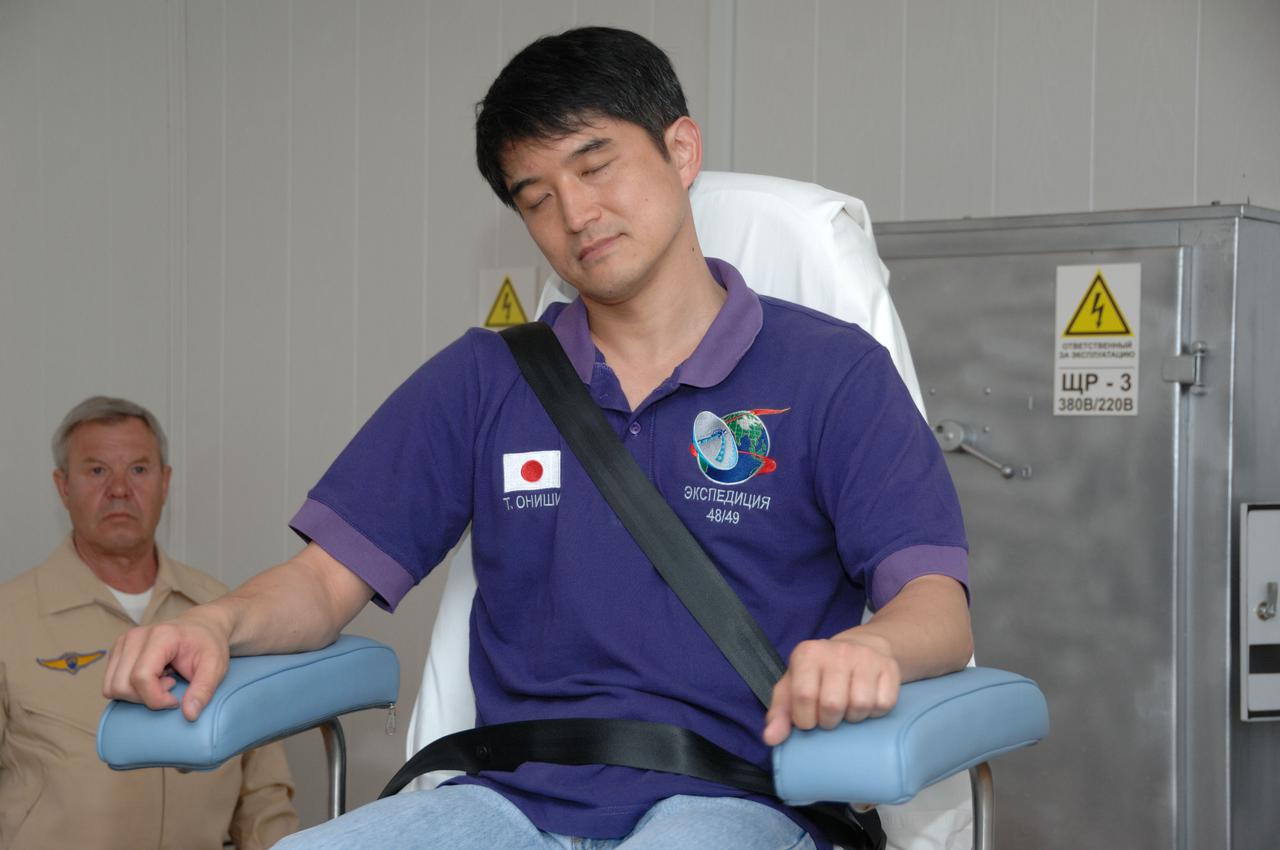
At the Cosmonaut Hotel in Baikonur, Kazakhstan, Expedition 48-49 crewmember Takuya Onishi of the Japan Aerospace Exploration Agency takes a spin in a rotating chair to test his vestibular system June 30 as part of pre-launch activities. Onishi, Kate Rubins of NASA and Anatoly Ivanishin of Roscosmos will launch July 7, Baikonur time, on the Soyuz MS-01 spacecraft for a planned four-month mission on the International Space Station. NASA/Alexander Vysotsky
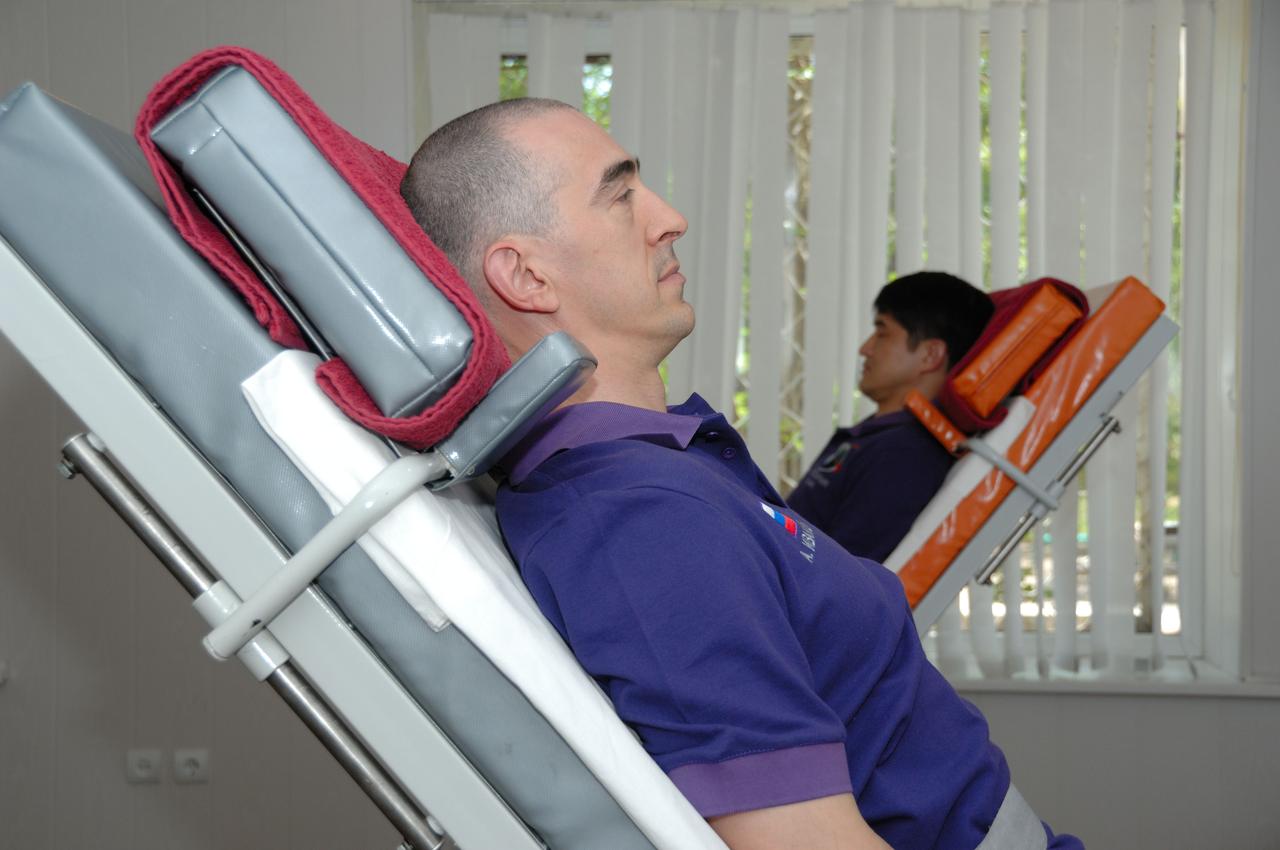
At the Cosmonaut Hotel in Baikonur, Kazakhstan, Expedition 48-49 crewmembers Anatoly Ivanishin of Roscosmos (foreground) and Takuya Onishi of the Japan Aerospace Exploration Agency conduct tests of their vestibular system on tilt tables June 30 as part of pre-launch activities. They and Kate Rubins of NASA will launch July 7, Baikonur time, on the Soyuz MS-01 spacecraft for a planned four-month mission on the International Space Station. NASA/Alexander Vysotsky
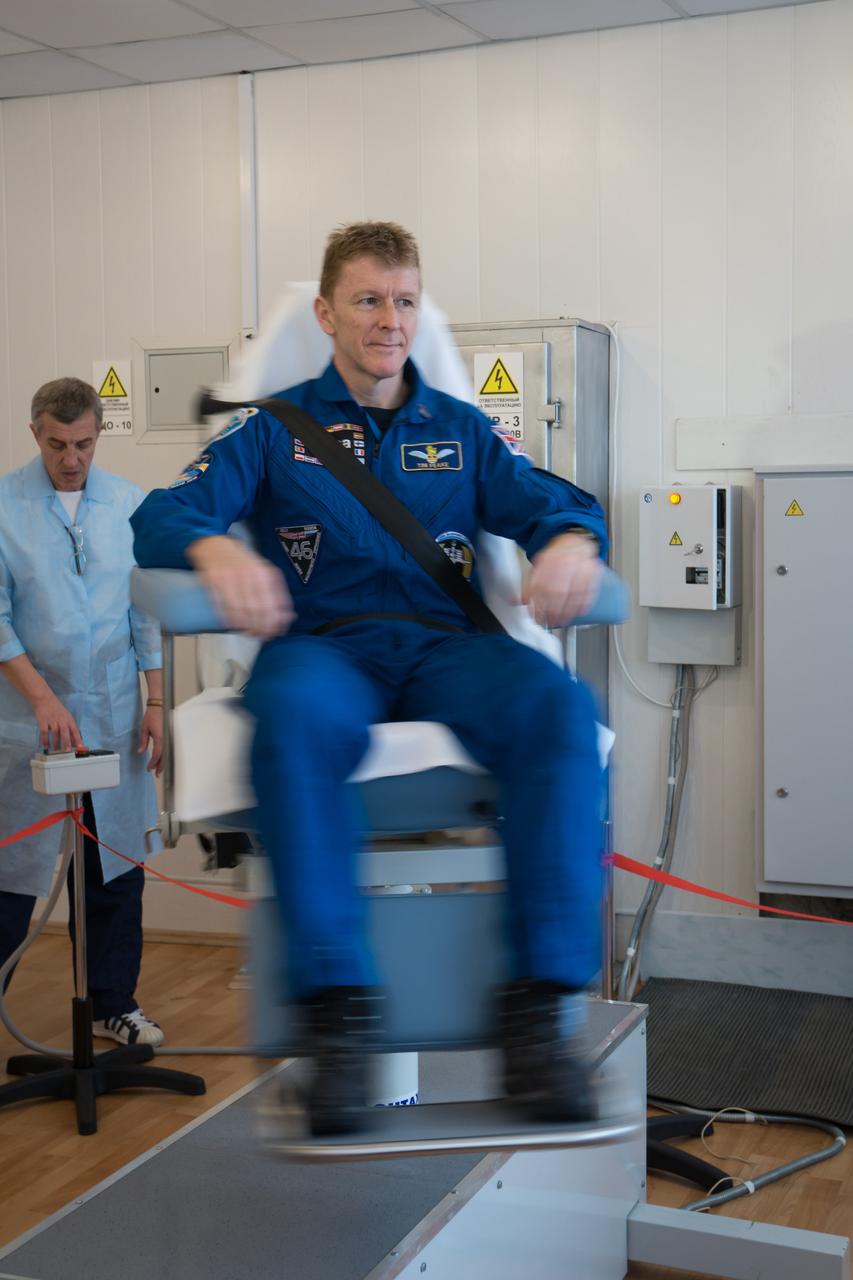
At the Cosmonaut Hotel crew quarters in Baikonur, Kazakhstan, Expedition 46-47 crewmember Tim Peake of the European Space Agency took a turn in a spinning chair to test his vestibular system Dec. 9 as part of his pre-launch training. Peake, Yuri Malenchenko of the Russian Federal Space Agency (Roscosmos) and Tim Kopra of NASA will launch Dec. 15 on their Soyuz TMA-19M spacecraft for a six-month mission on the International Space Station. NASA/Victor Zelentsov
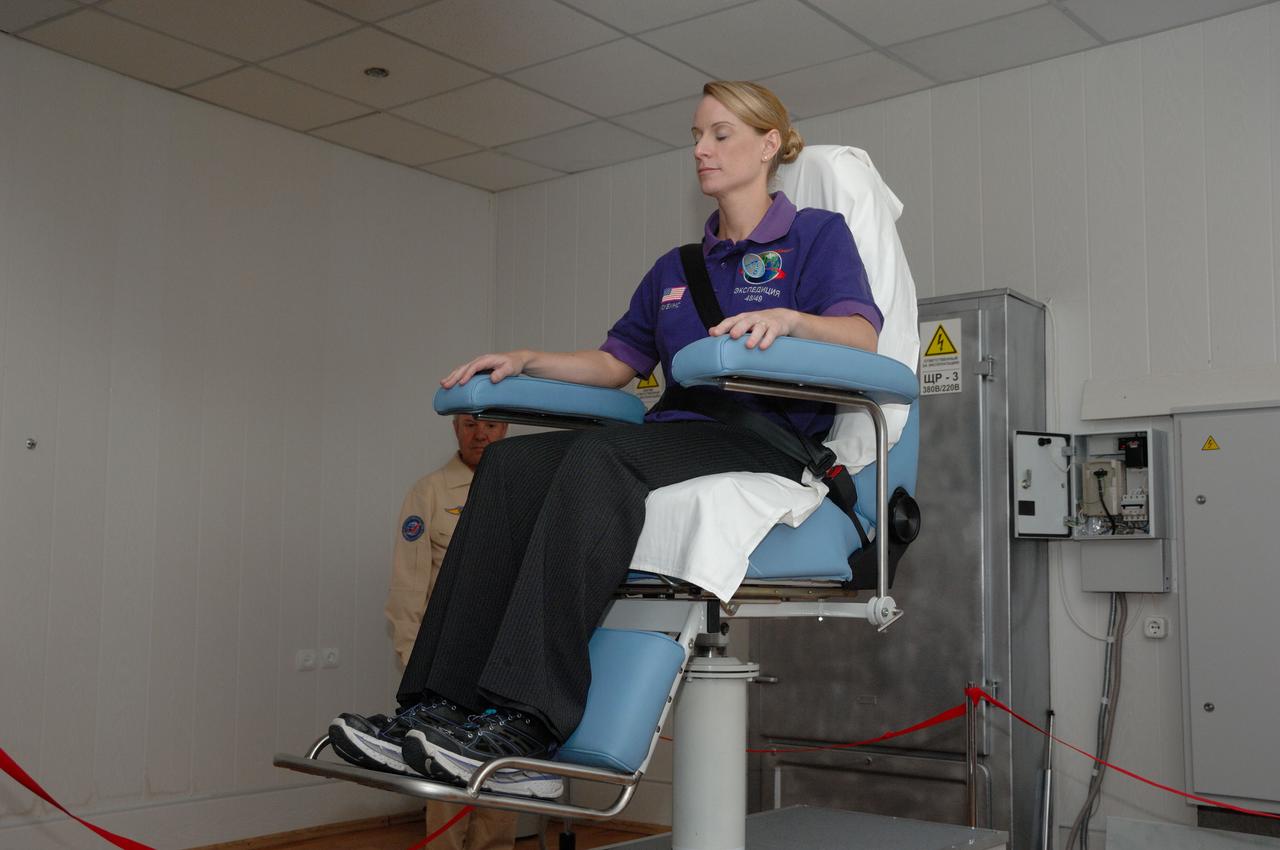
At the Cosmonaut Hotel in Baikonur, Kazakhstan, Expedition 48-49 crewmember Kate Rubins of NASA takes a spin in a rotating chair to test her vestibular system June 30 as part of pre-launch activities. Rubins, Anatoly Ivanishin of Roscosmos and Takuya Onishi of the Japan Aerospace Exploration Agency will launch July 7, Baikonur time, on the Soyuz MS-01 spacecraft for a planned four-month mission on the International Space Station. NASA/Alexander Vysotsky
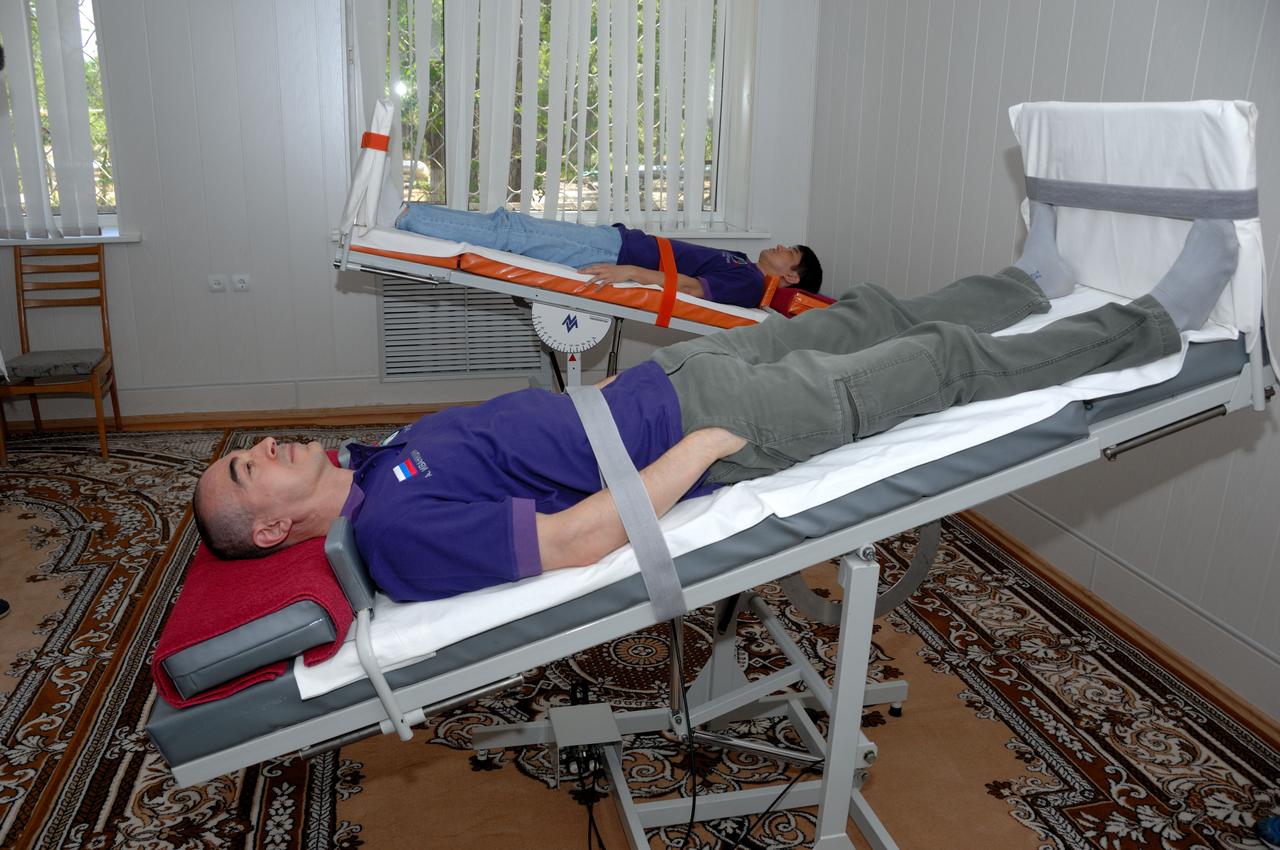
At the Cosmonaut Hotel in Baikonur, Kazakhstan, Expedition 48-49 crewmembers Anatoly Ivanishin of Roscosmos (foreground) and Takuya Onishi of the Japan Aerospace Exploration Agency conduct tests of their vestibular system on tilt tables June 30 as part of pre-launch activities. They and Kate Rubins of NASA will launch July 7, Baikonur time, on the Soyuz MS-01 spacecraft for a planned four-month mission on the International Space Station. NASA/Alexander Vysotsky
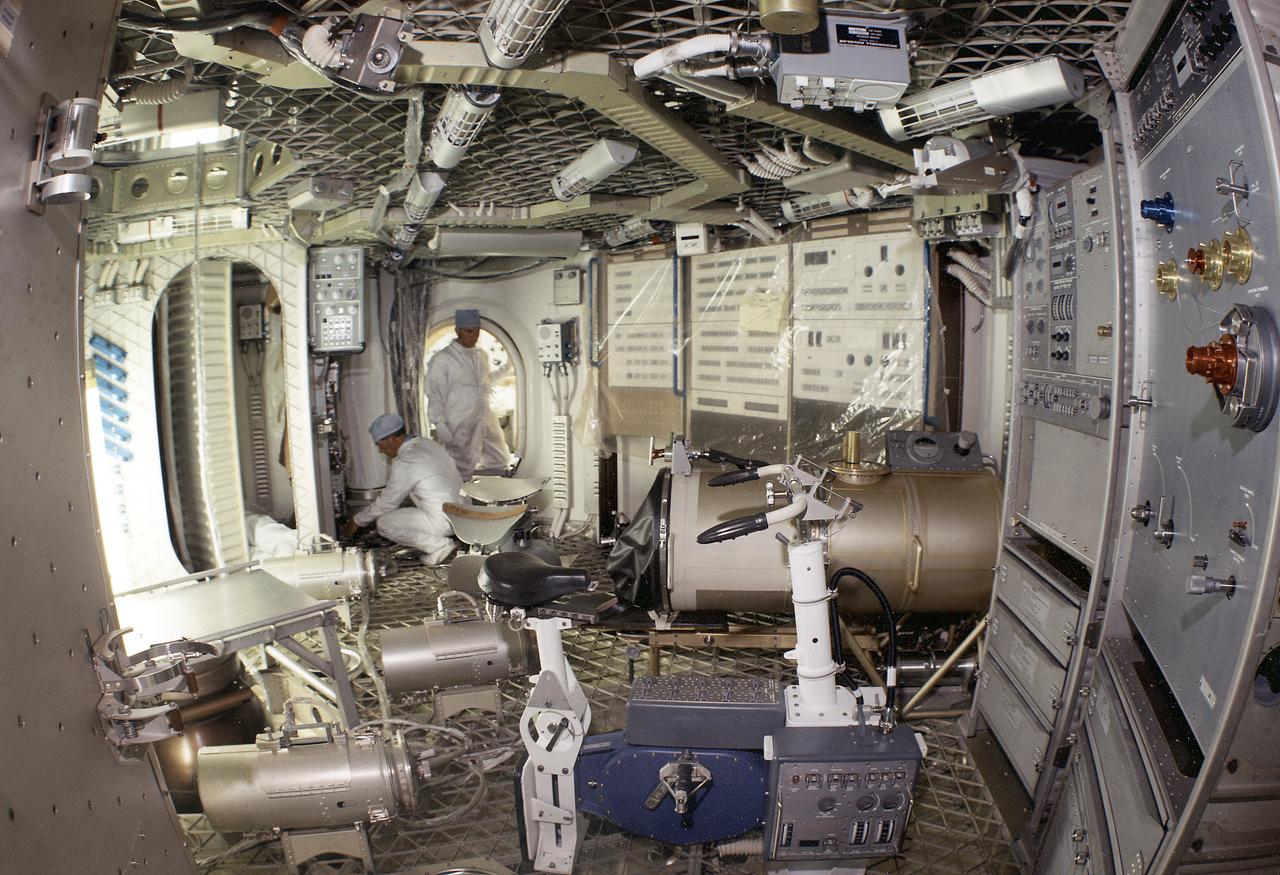
This is a wide-angle view of the Orbital Workshop lower level experiment area. In center foreground is the ergometer bicycle. In center background is a litter chair for the Human Vestibular Function experiment (Skylab Experiment M131) and in right background is the Lower Body Negative Pressure System experiment (Skylab Experiment M092). The ergometer bicycle was used for metabolic activity experiments and exercise. The purpose of the Human Vestibular (irner ear) Function experiment was to examine the effect of weightlessness on man's sensitivity and susceptibility to motion rotation, and his perception of orientation. The Lower Body Negative Pressure experiment investigated the relationship between the zero gravity environment and cardiovascular deconditioning. A characteristic of cardiovascular deconditoning is the partial failure of the blood vessels resulting in the excessive pooling of the blood in the legs when a person assumes an erect posture in a gravity field. The Marshall Space Flight Center had the program management responsibility for the development of Skylab hardware and experiments.
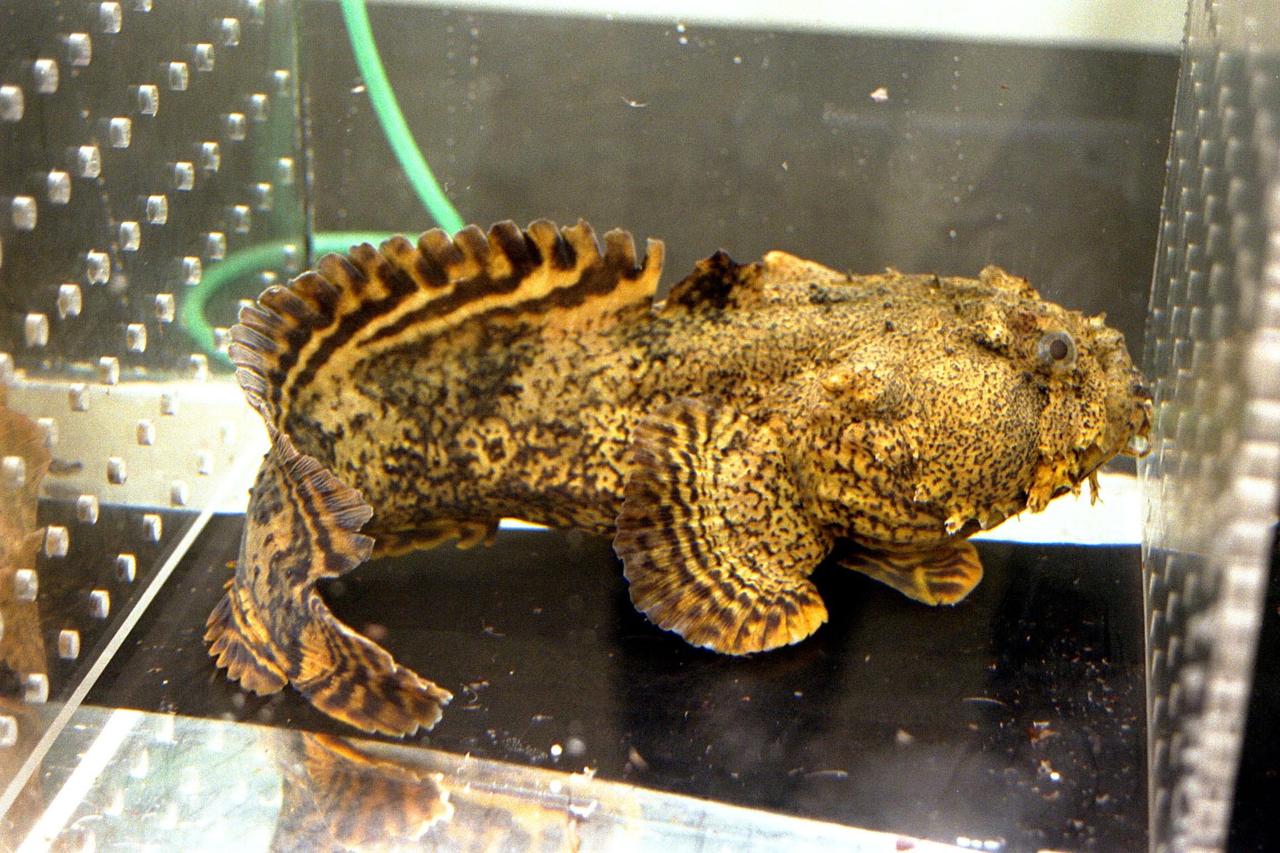
KENNEDY SPACE CENTER, FLA. -- An oyster toadfish (Opsanus tau), like those that are part of the Neurolab payload on Space Shuttle Mission STS-90, is shown in its holding tank in the Space Station Processing Facility. Each fish is between eight and 14 inches long. Toadfish live in an estuarine environment and are native to areas along the Northeast coast of the United States. Investigations during the Neurolab mission will focus on the effects of microgravity on the nervous system. This fish is an excellent model for looking at vestibular function because the architecture of its inner and middle ear are similar to those of mammals with respect to the vestibular apparatus. The crew of STS-90, slated for launch April 16 at 2:19 p.m. EDT, includes Commander Richard Searfoss, Pilot Scott Altman, Mission Specialists Richard Linnehan, Dafydd (Dave) Williams, M.D., and Kathryn (Kay) Hire, and Payload Specialists Jay Buckey, M.D., and James Pawelczyk, Ph.D
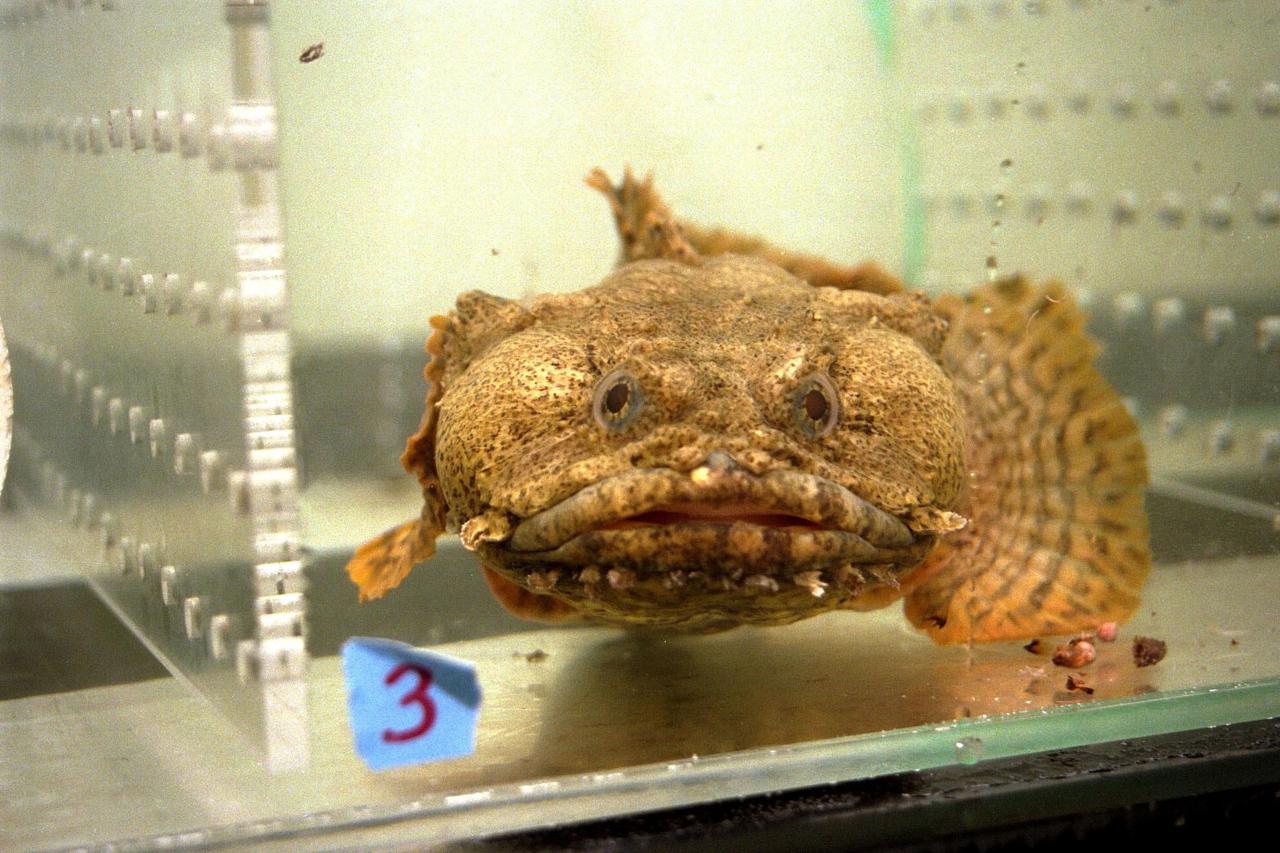
KENNEDY SPACE CENTER, FLA. -- An oyster toadfish (Opsanus tau), like those that are part of the Neurolab payload on Space Shuttle Mission STS-90, is shown in its holding tank in the Space Station Processing Facility. Each fish is between eight and 14 inches long. Toadfish live in an estuarine environment and are native to areas along the Northeast coast of the United States. Investigations during the Neurolab mission will focus on the effects of microgravity on the nervous system. This fish is an excellent model for looking at vestibular function because the architecture of its inner and middle ear are similar to those of mammals with respect to the vestibular apparatus. The crew of STS-90, slated for launch April 16 at 2:19 p.m. EDT, includes Commander Richard Searfoss, Pilot Scott Altman, Mission Specialists Richard Linnehan, Dafydd (Dave) Williams, M.D., and Kathryn (Kay) Hire, and Payload Specialists Jay Buckey, M.D., and James Pawelczyk, Ph.D
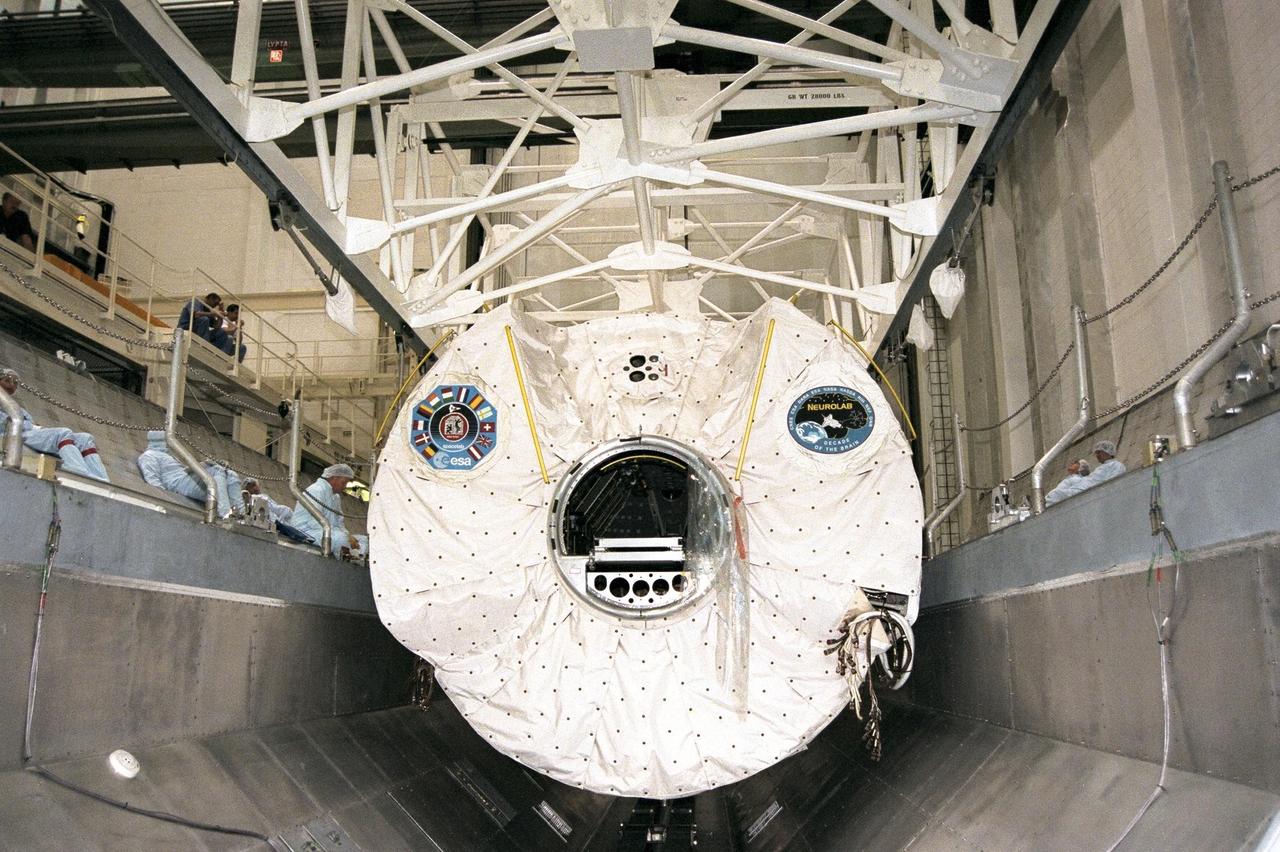
KENNEDY SPACE CENTER, FLA. -- The STS-90 Neurolab payload is lowered into its payload canister in KSC's Operations and Checkout Building. Investigations during the Neurolab mission will focus on the effects of microgravity on the nervous system. Specifically, experiments will study the adaptation of the vestibular system, the central nervous system, and the pathways that control the ability to sense location in the absence of gravity, as well as the effect of microgravity on a developing nervous system. The crew of STS-90, slated for launch in April, will include Commander Richard Searfoss, Pilot Scott Altman, Mission Specialists Richard Linnehan, Dafydd (Dave) Williams, M.D., and Kathryn (Kay) Hire, and Payload Specialists Jay Buckey, M.D., and James Pawelczyk, Ph.D
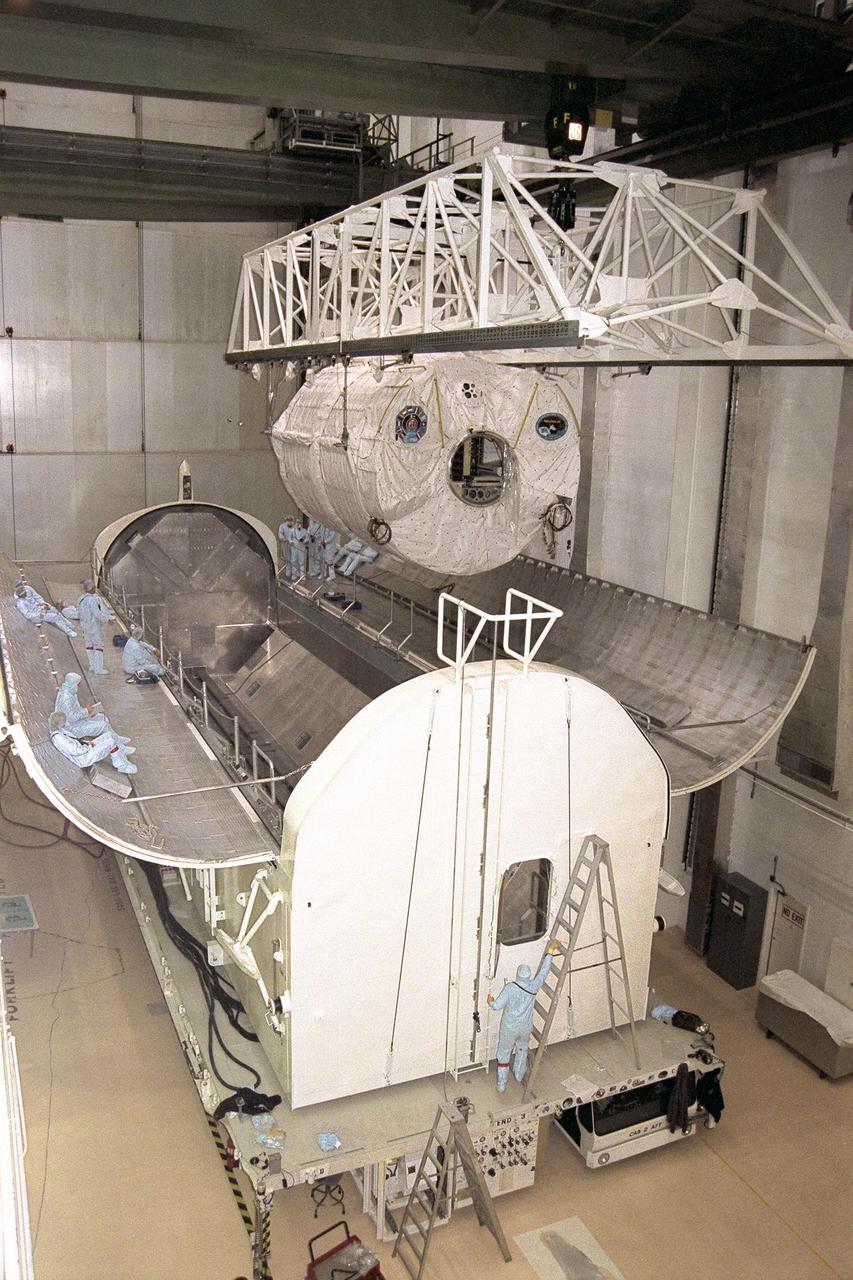
The STS-90 Neurolab payload is positioned into the cargo bay of Space Shuttle Columbia today in Orbiter Processing Facility bay 3. Investigations during the Neurolab mission will focus on the effects of microgravity on the nervous system. Specifically, experiments will study the adaptation of the vestibular system, the central nervous system, and the pathways that control the ability to sense location in the absence of gravity, as well as the effect of microgravity on a developing nervous system. The crew of STS-90, slated for launch in April, will include Commander Richard Searfoss, Pilot Scott Altman, Mission Specialists Richard Linnehan, Dafydd (Dave) Williams, M.D., and Kathryn (Kay) Hire, and Payload Specialists Jay Buckey, M.D., and James Pawelczyk, Ph.D

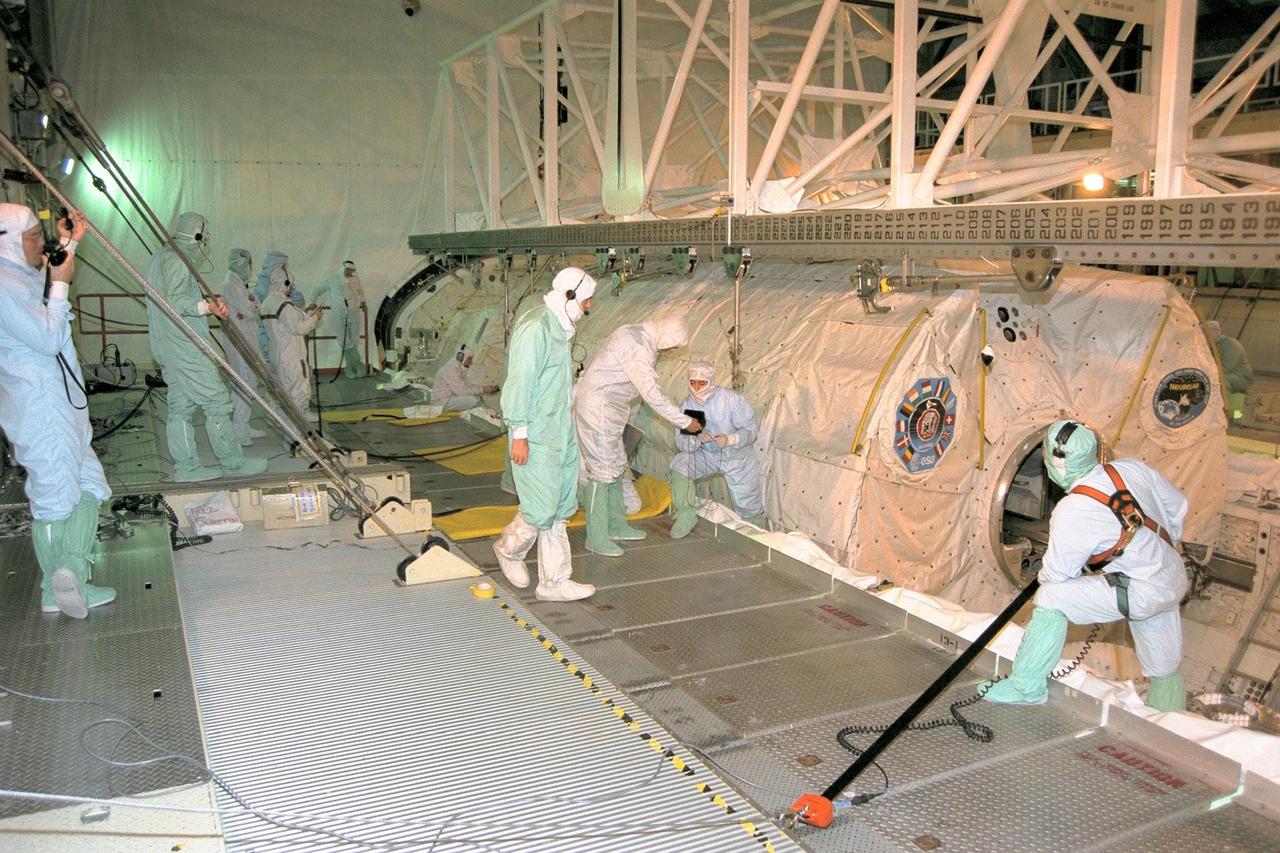
KENNEDY SPACE CENTER, FLA. -- Technicians gather around the STS-90 Neurolab payload during weight and center-of-gravity measurements in KSC's Operations and Checkout Building. Investigations during the Neurolab mission will focus on the effects of microgravity on the nervous system. Specifically, experiments will study the adaptation of the vestibular system, the central nervous system, and the pathways that control the ability to sense location in the absence of gravity, as well as the effect of microgravity on a developing nervous system. The crew of STS-90, slated for launch in April, will include Commander Richard Searfoss, Pilot Scott Altman, Mission Specialists Richard Linnehan, Dafydd (Dave) Williams, M.D., and Kathryn (Kay) Hire, and Payload Specialists Jay Buckey, M.D., and James Pawelczyk, Ph.D
KENNEDY SPACE CENTER, FLA. -- The STS-90 Neurolab payload is lowered into its payload canister in KSC's Operations and Checkout Building. Investigations during the Neurolab mission will focus on the effects of microgravity on the nervous system. Specifically, experiments will study the adaptation of the vestibular system, the central nervous system, and the pathways that control the ability to sense location in the absence of gravity, as well as the effect of microgravity on a developing nervous system. The crew of STS-90, slated for launch in April, will include Commander Richard Searfoss, Pilot Scott Altman, Mission Specialists Richard Linnehan, Dafydd (Dave) Williams, M.D., and Kathryn (Kay) Hire, and Payload Specialists Jay Buckey, M.D., and James Pawelczyk, Ph.D

The STS-90 Neurolab payload is lowered into position into the cargo bay of Space Shuttle Columbia today in Orbiter Processing Facility bay 3. Investigations during the Neurolab mission will focus on the effects of microgravity on the nervous system. Specifically, experiments will study the adaptation of the vestibular system, the central nervous system, and the pathways that control the ability to sense location in the absence of gravity, as well as the effect of microgravity on a developing nervous system. The crew of STS-90, slated for launch in April, will include Commander Richard Searfoss, Pilot Scott Altman, Mission Specialists Richard Linnehan, Dafydd (Dave) Williams, M.D., and Kathryn (Kay) Hire, and Payload Specialists Jay Buckey, M.D., and James Pawelczyk, Ph.D
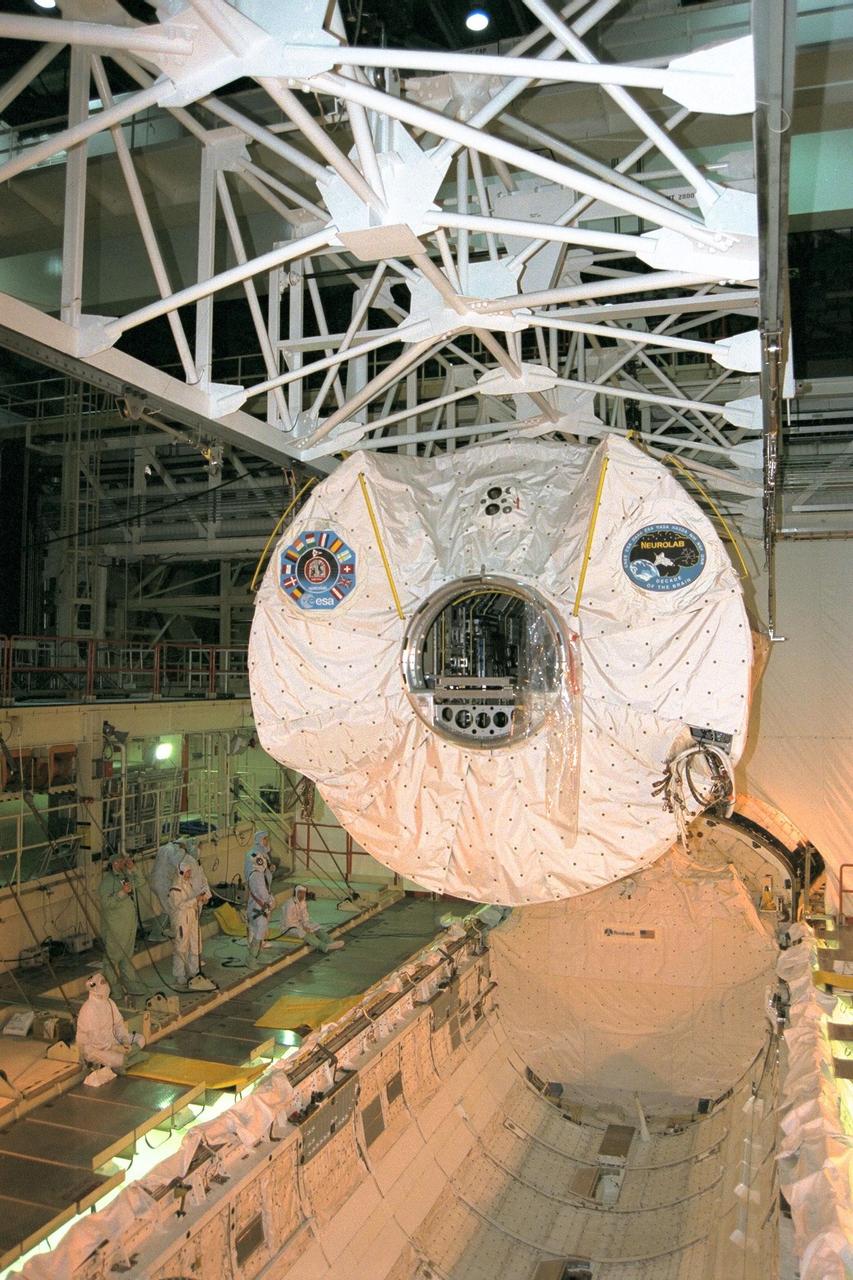
The STS-90 Neurolab payload is lowered into position into the cargo bay of Space Shuttle Columbia today in Orbiter Processing Facility bay 3. Investigations during the Neurolab mission will focus on the effects of microgravity on the nervous system. Specifically, experiments will study the adaptation of the vestibular system, the central nervous system, and the pathways that control the ability to sense location in the absence of gravity, as well as the effect of microgravity on a developing nervous system. The crew of STS-90, slated for launch in April, will include Commander Richard Searfoss, Pilot Scott Altman, Mission Specialists Richard Linnehan, Dafydd (Dave) Williams, M.D., and Kathryn (Kay) Hire, and Payload Specialists Jay Buckey, M.D., and James Pawelczyk, Ph.D
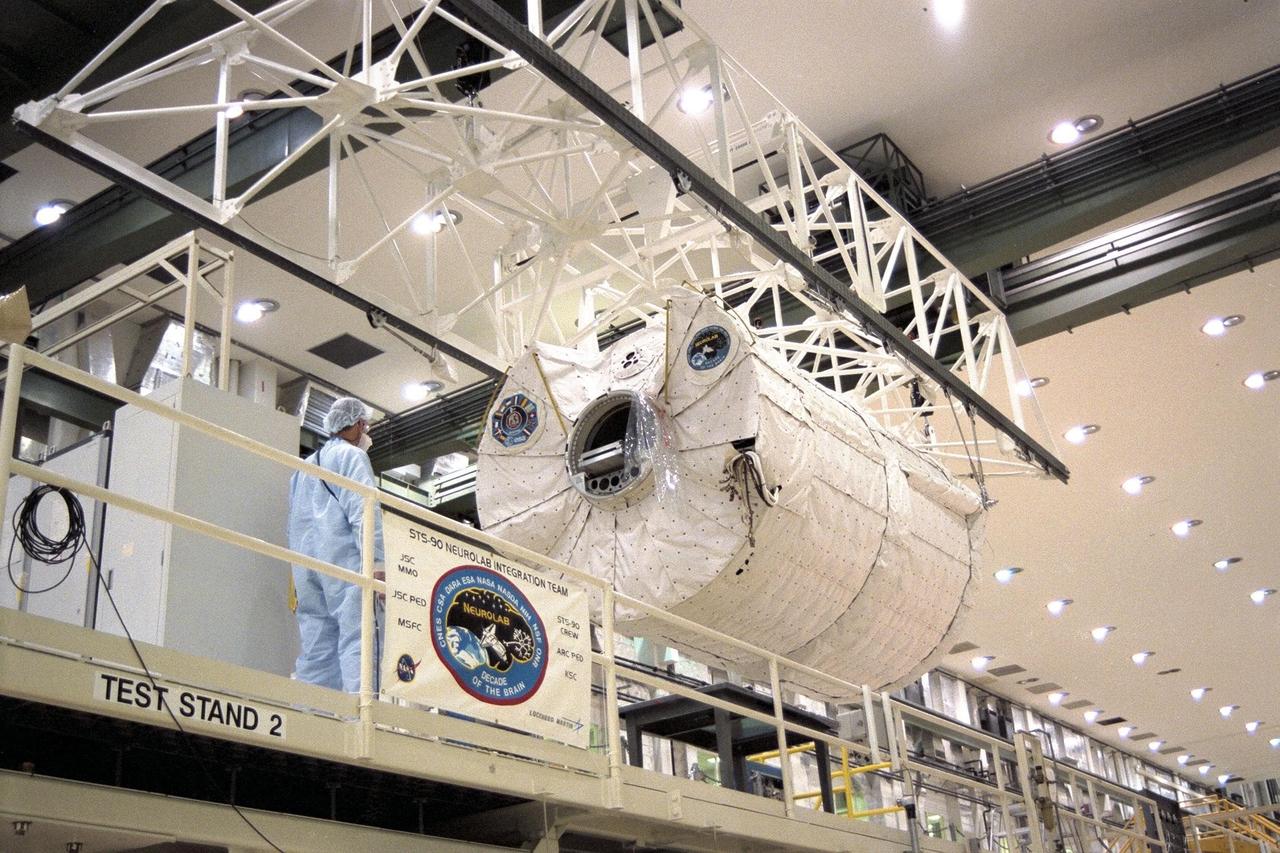
KENNEDY SPACE CENTER, FLA. -- A technician looks at the STS-90 Neurolab payload as it is moved from its test stand in KSC's Operations and Checkout Building. Investigations during the Neurolab mission will focus on the effects of microgravity on the nervous system. Specifically, experiments will study the adaptation of the vestibular system, the central nervous system, and the pathways that control the ability to sense location in the absence of gravity, as well as the effect of microgravity on a developing nervous system. The crew of STS-90, slated for launch in April, will include Commander Richard Searfoss, Pilot Scott Altman, Mission Specialists Richard Linnehan, Dafydd (Dave) Williams, M.D., and Kathryn (Kay) Hire, and Payload Specialists Jay Buckey, M.D., and James Pawelczyk, Ph.D
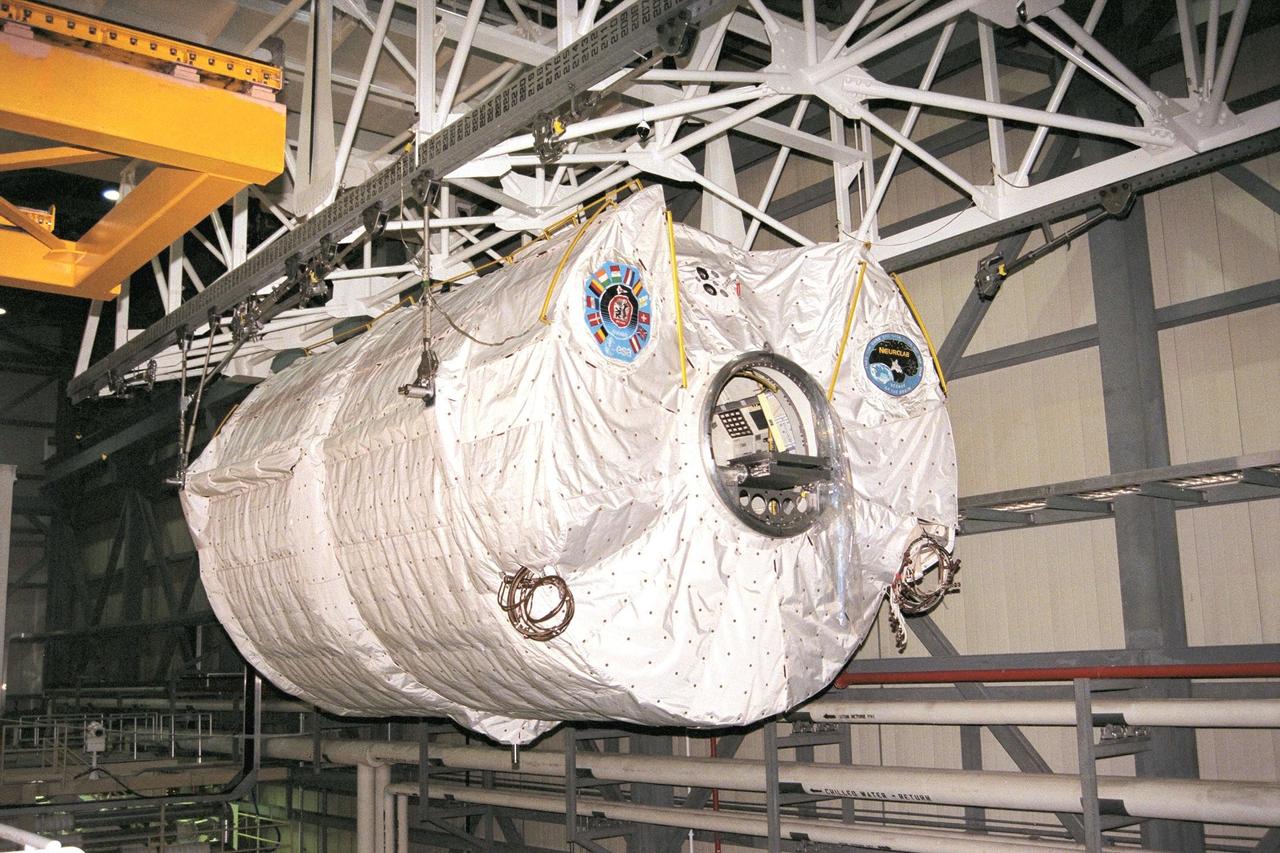
The STS-90 Neurolab payload is prepared to be positioned into the cargo bay of Space Shuttle Columbia today in Orbiter Processing Facility bay 3. Investigations during the Neurolab mission will focus on the effects of microgravity on the nervous system. Specifically, experiments will study the adaptation of the vestibular system, the central nervous system, and the pathways that control the ability to sense location in the absence of gravity, as well as the effect of microgravity on a developing nervous system. The crew of STS-90, slated for launch in April, will include Commander Richard Searfoss, Pilot Scott Altman, Mission Specialists Richard Linnehan, Dafydd (Dave) Williams, M.D., and Kathryn (Kay) Hire, and Payload Specialists Jay Buckey, M.D., and James Pawelczyk, Ph.D
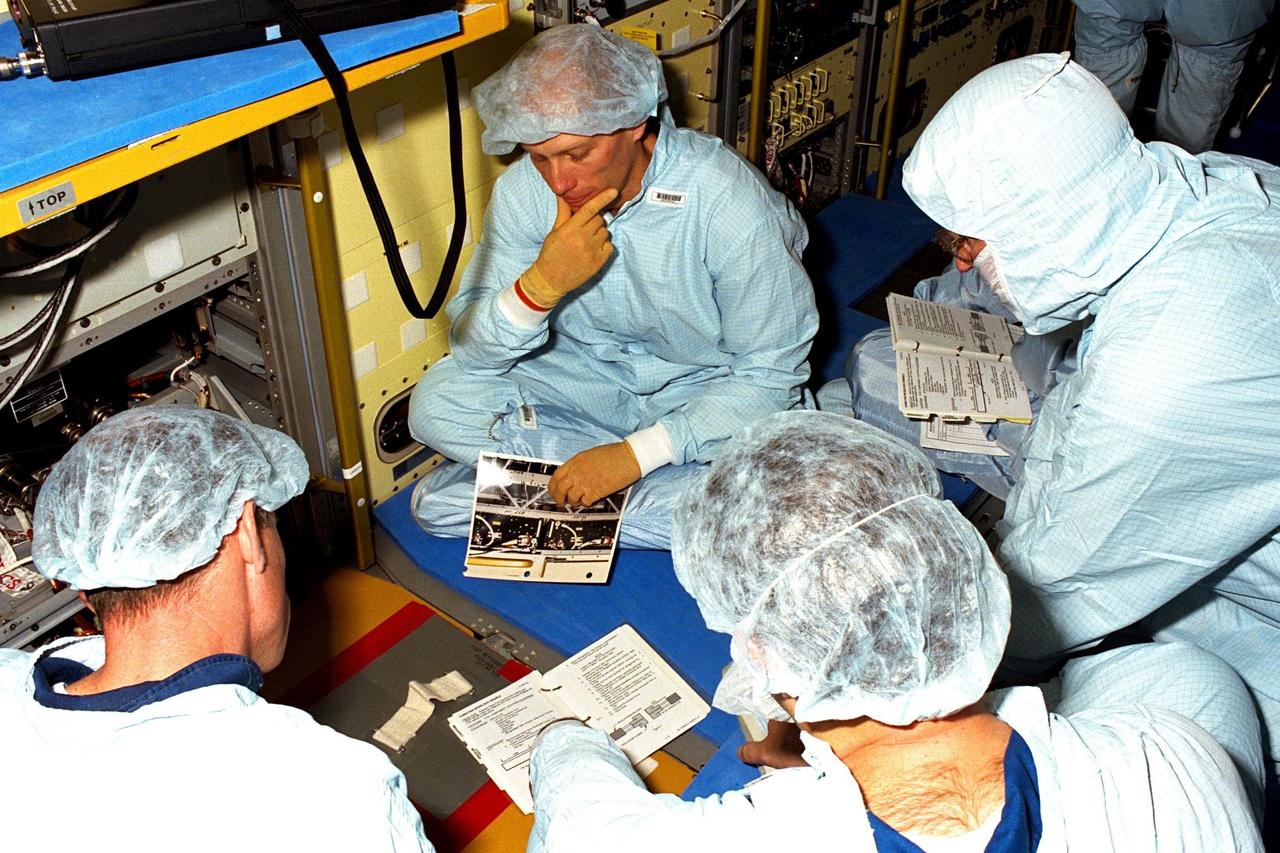
STS-90 crew members study manuals and drawings for the mission's Neurolab payload during the Crew Equipment Interface Test (CEIT) in Kennedy Space Center's (KSC's) Operations and Checkout Building, where the payload is undergoing processing. The CEIT gives astronauts an opportunity to get a hands-on look at the payloads with which they will be working on-orbit. STS-90 is scheduled to launch aboard the Shuttle Columbia from KSC on April 2. Investigations during the Neurolab mission will focus on the effects of microgravity on the nervous system. Specifically, experiments will study the adaptation of the vestibular system, the central nervous system, and the pathways that control the ability to sense location in the absence of gravity, as well as the effect of microgravity on a developing nervous system
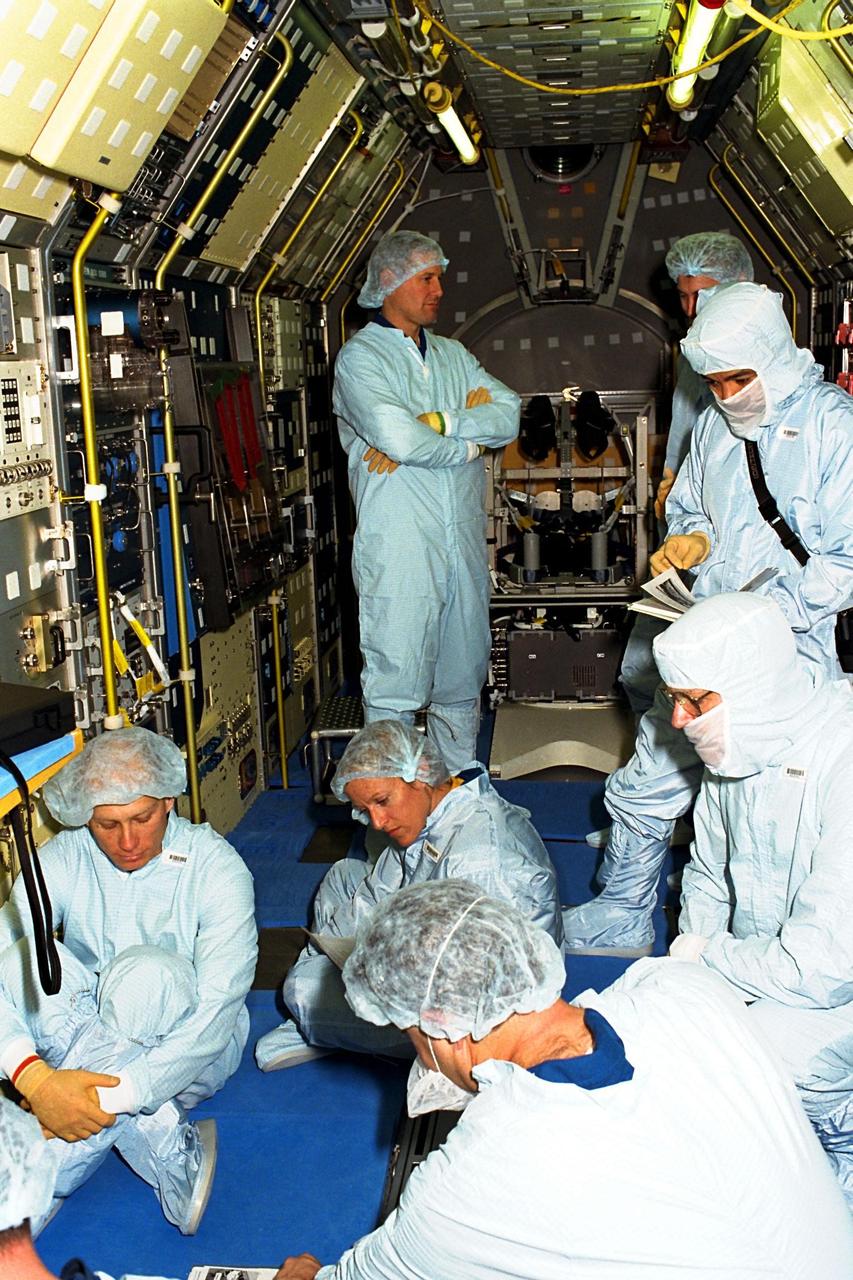
STS-90 crew members check out the inside of the module for the mission's Neurolab payload during the Crew Equipment Interface Test (CEIT) in Kennedy Space Center's (KSC's) Operations and Checkout Building, where the payload is undergoing processing. The CEIT gives astronauts an opportunity to get a hands-on look at the payloads with which they will be working on-orbit. STS-90 is scheduled to launch aboard the Shuttle Columbia from KSC on April 2. Investigations during the Neurolab mission will focus on the effects of microgravity on the nervous system. Specifically, experiments will study the adaptation of the vestibular system, the central nervous system, and the pathways that control the ability to sense location in the absence of gravity, as well as the effect of microgravity on a developing nervous system
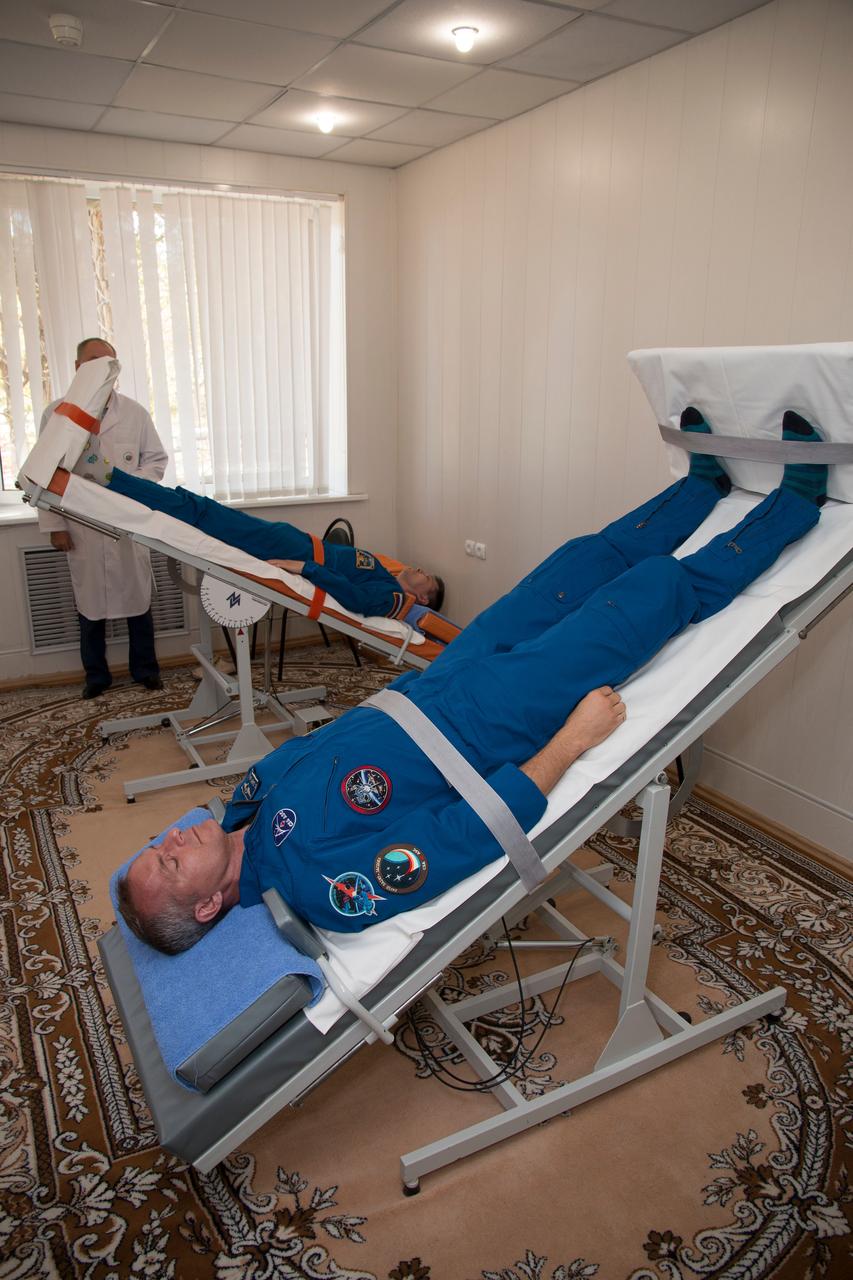
jsc2018e085901 (Oct. 3, 2018) --- Expedition 57 backup crew members Oleg Kononenko of Roscosmos, top, and David Saint-Jacques of the Canadian Space Agency, bottom, conduct tests of their vestibular system on tilt tables, Wednesday, Oct. 3, 2018 at the Cosmonaut Hotel in Baikonur, Kazakhstan. Alexey Ovchinin of Roscosmos and Nick Hague of NASA are scheduled to launch on Oct. 11 onboard the Soyuz MS-10 spacecraft from the Baikonur Cosmodrome in Kazakhstan for a six-month mission on the International Space Station. Photo Credit: (NASA/Victor Zelentsov)
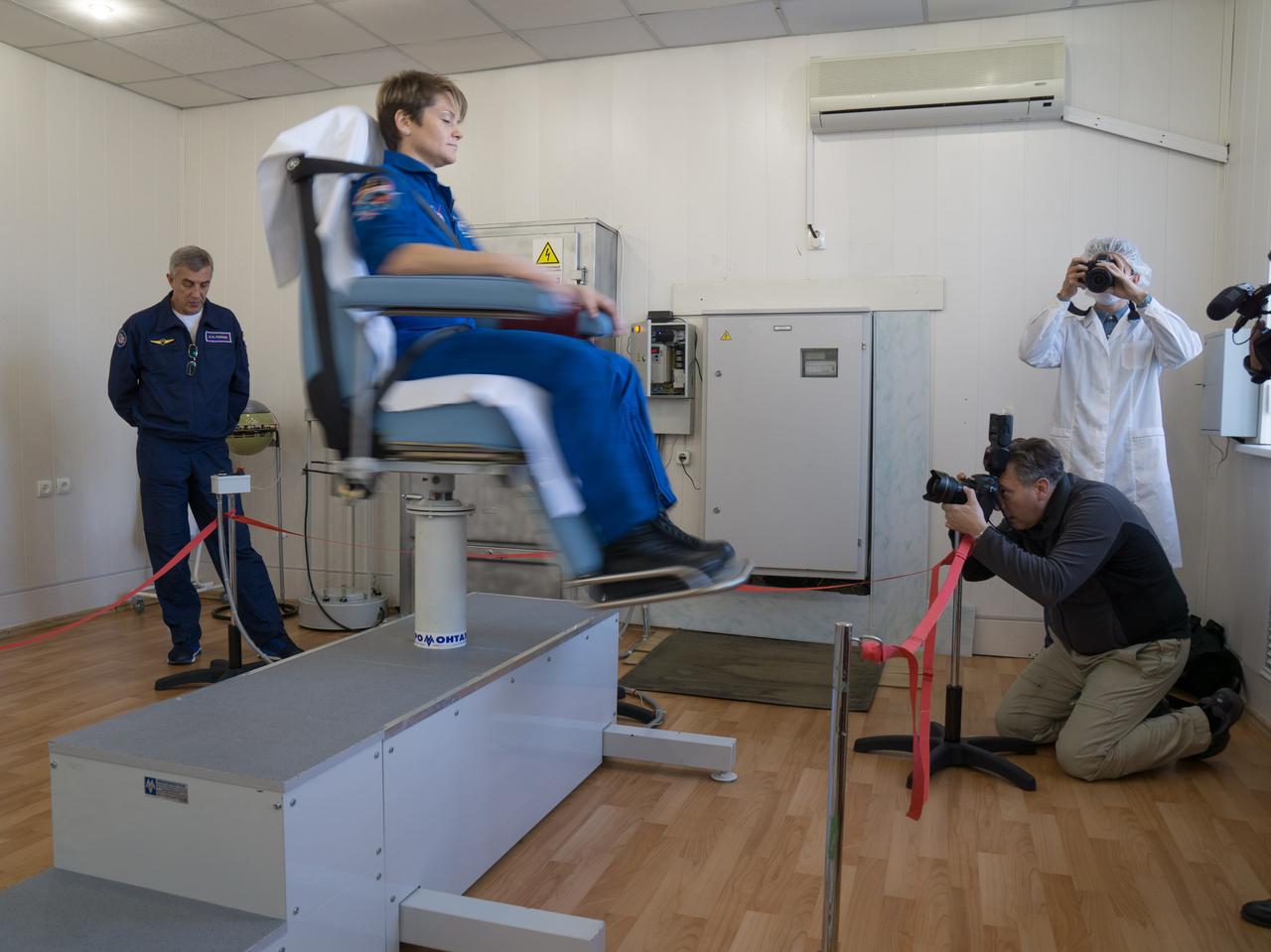
jsc2018e097775 - At the Cosmonaut Hotel crew quarters in Baikonur, Kazakhstan, Expedition 58 crewmember Anne McClain of NASA conducts vestibular system response training in a spinning chair Nov. 27 as part of pre-launch training. McClain, David Saint-Jacques of the Canadian Space Agency and Oleg Kononenko of Roscosmos will launch Dec. 3 on the Soyuz MS-11 spacecraft from the Baikonur Cosmodrome in Kazakhstan for a six-and-a-half month mission on the International Space Station...NASA/Victor Zelentsov.
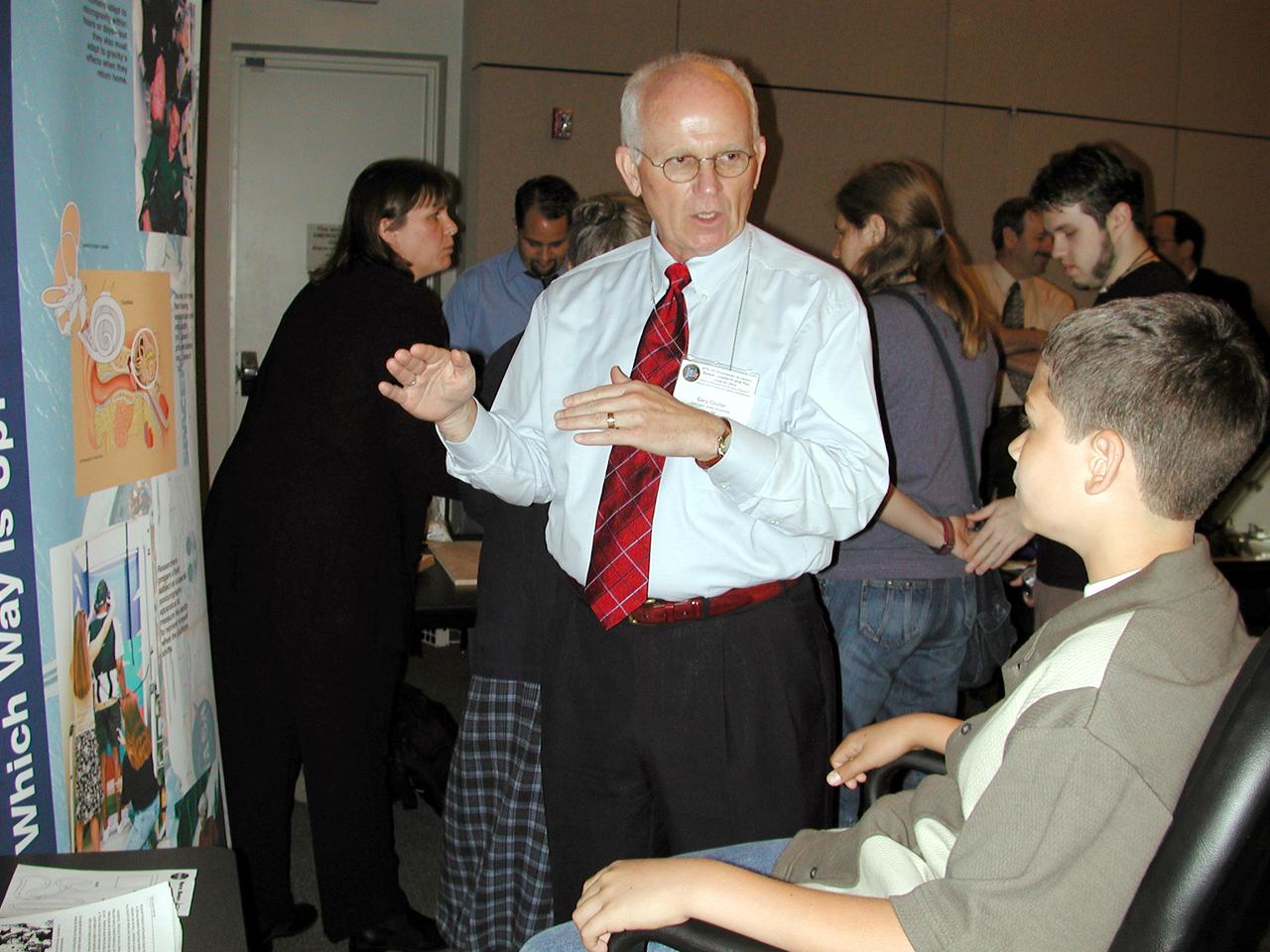
Gary Coulter, a special assistant to NASA's life sciences researchers, explains the workings of the irner ear to a Virginia student. The chair rotates to disorient the vestibular system in a simulation of research on how astronauts adapt to space and readapt to Earth. The activity was part of the Space Research and You education event held by NASA's Office of Biological and Physical Research on June 25, 2002, in Arlington, VA, to highlight the research that will be conducted on STS-107.
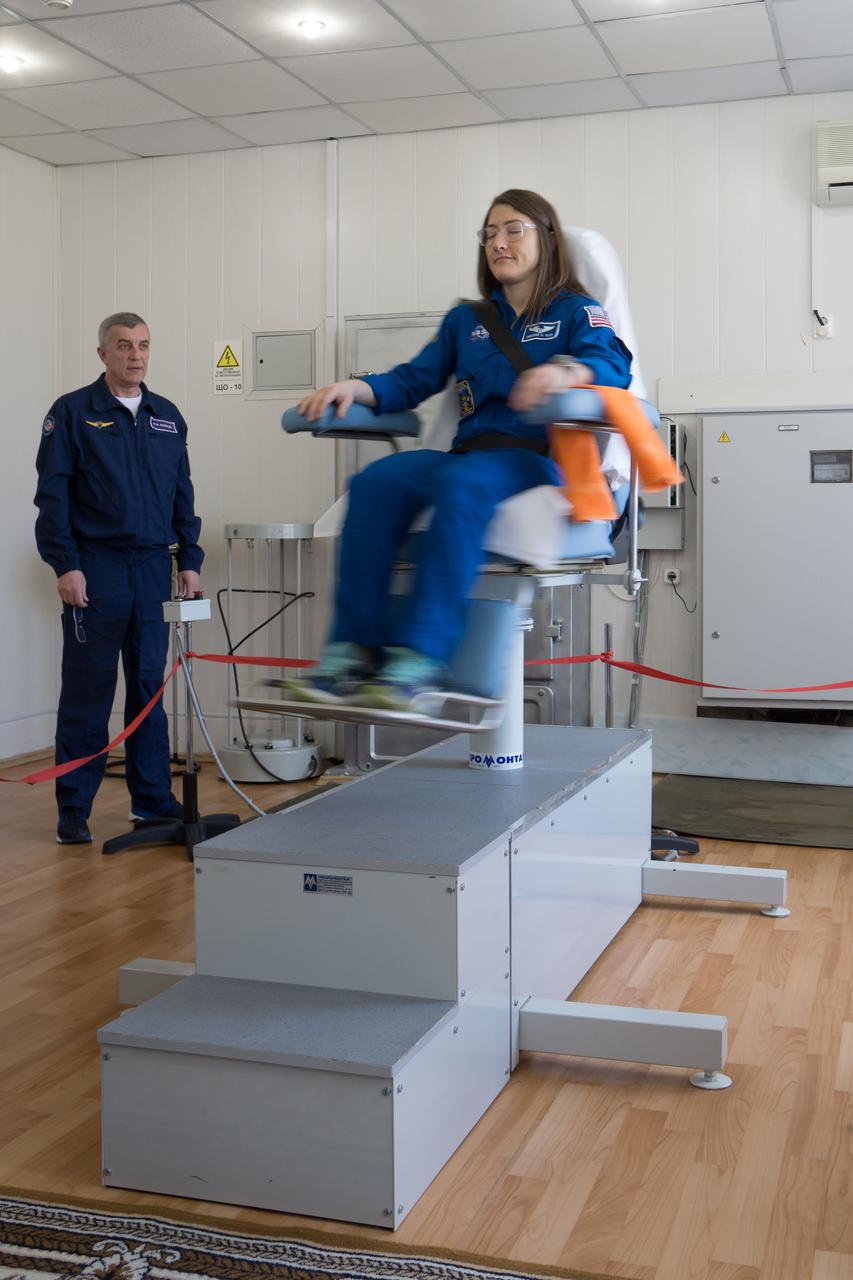
At the Cosmonaut Hotel crew quarters in Baikonur, Kazakhstan, Expedition 59 crewmember Christina Koch of NASA tests her vestibular system in a rotating chair March 7 as part of her pre-launch activities. Koch, Alexey Ovchinin of Roscosmos and Nick Hague of NASA will launch March 14, U.S. time, on the Soyuz MS-12 spacecraft from the Baikonur Cosmodrome for a six-and-a-half month mission on the International Space Station...NASA/Victor Zelentsov.
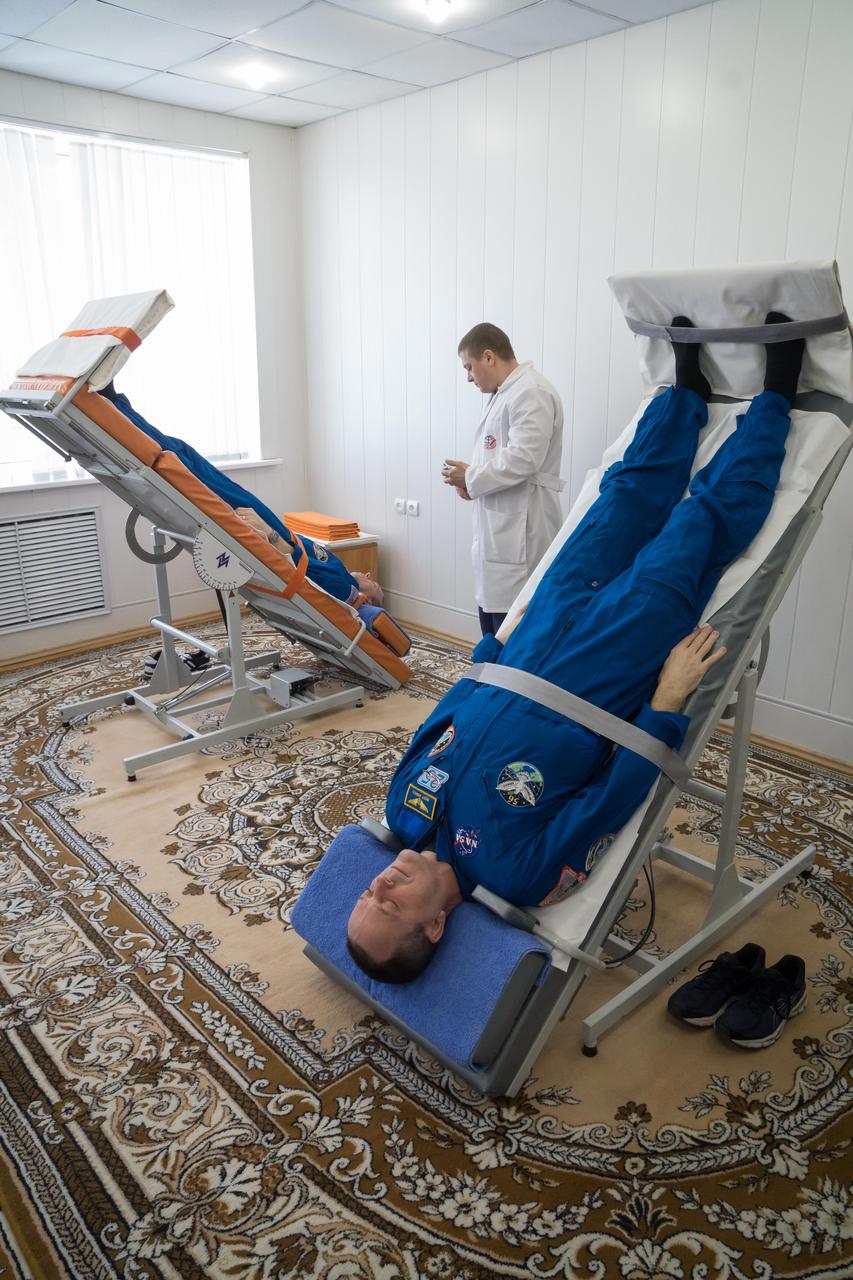
jsc2018e025556 - At the Cosmonaut Hotel crew quarters in Baikonur, Kazakhstan, Expedition 55 crewmembers Drew Feustel of NASA (top) and Ricky Arnold of NASA (bottom) conduct tests of their vestibular systems on tilt tables March 15 as part of pre-launch activities. Along with Oleg Artemyev of Roscosmos, they will launch March 21 on the Soyuz MS-08 spacecraft from the Baikonur Cosmodrome on a five-month mission to the International Space Station...NASA/Victor Zelentsov.
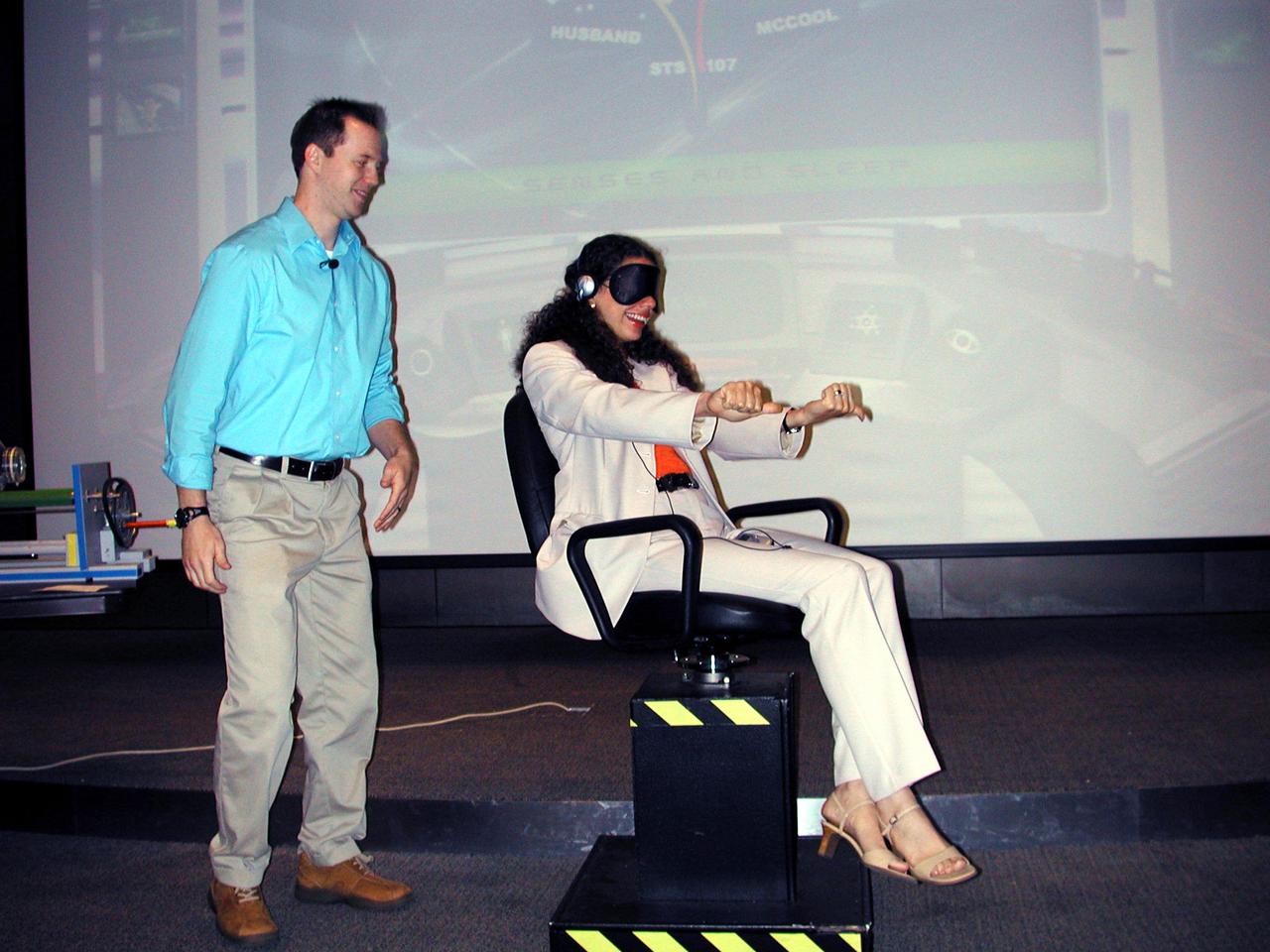
Brad McLain for the Space Biology Museum Network spins a volunteer in a rotating chair to illustrate how dependent the human vestibular system is on visual cues. The volunteer's thumbs indicate which way she thinks she is turning. Similar tests are conducted on astronauts to study how they adapt to space and readapt to Earth. The activity was part of the Space Research and You education event held by NASA's Office of Biological and Physical Research on June 25, 2002, in Arlington, VA, to highlight the research that will be conducted on STS-107.
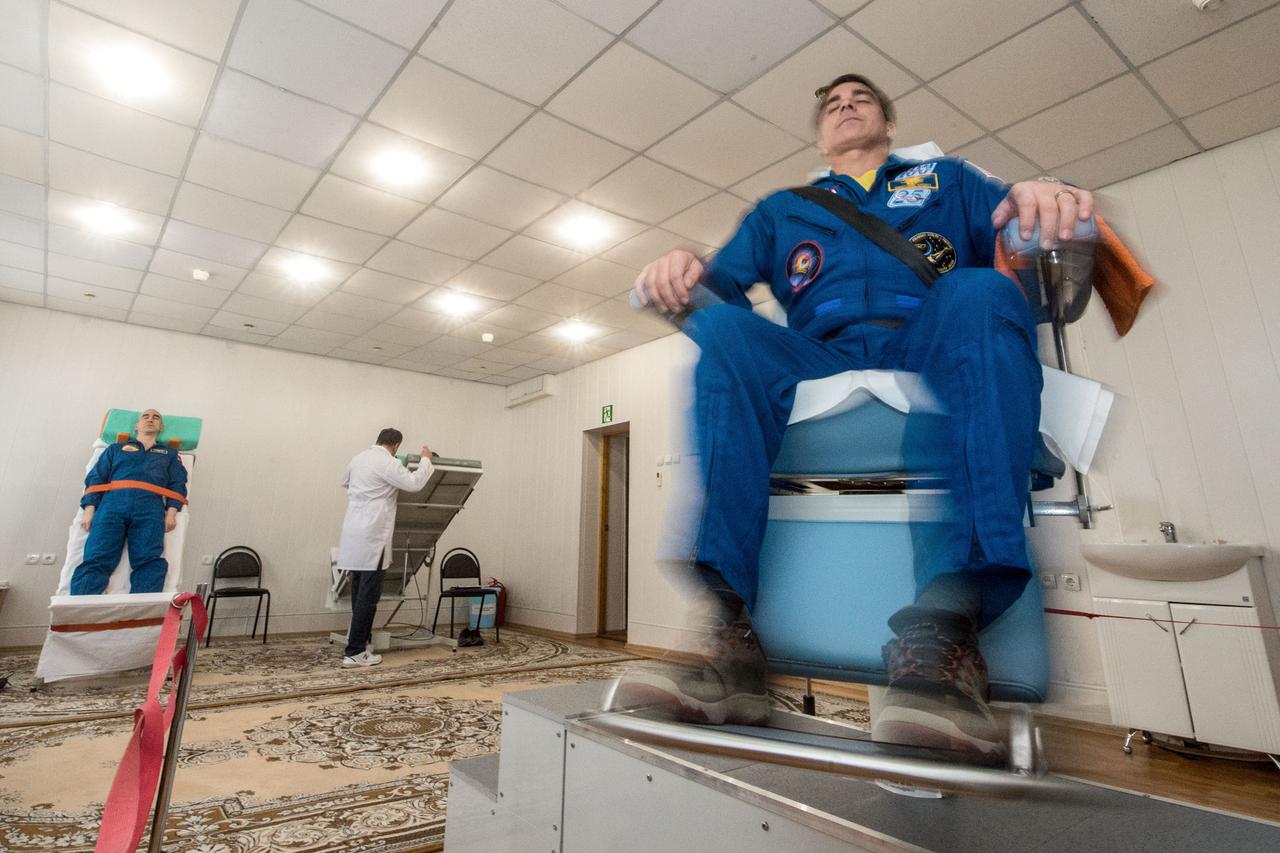
jsc2020e016967 - At the Cosmonaut Hotel crew quarters in Baikonur, Kazakhstan, Expedition 63 crewmembers Chris Cassidy of NASA (right) and Anatoly Ivanishin of Roscosmos (left) take a spin April 1 to test their vestibular systems as part of pre-launch training. Cassidy, Ivanishin and Ivan Vagner of Roscosmos will launch April 9 on the Soyuz MS-16 spacecraft from the Baikonur Cosmodrome in Kazakhstan for a six-and-a-half month mission on the International Space Station...Andrey Shelepin/Gagarin Cosmonaut Training Center.
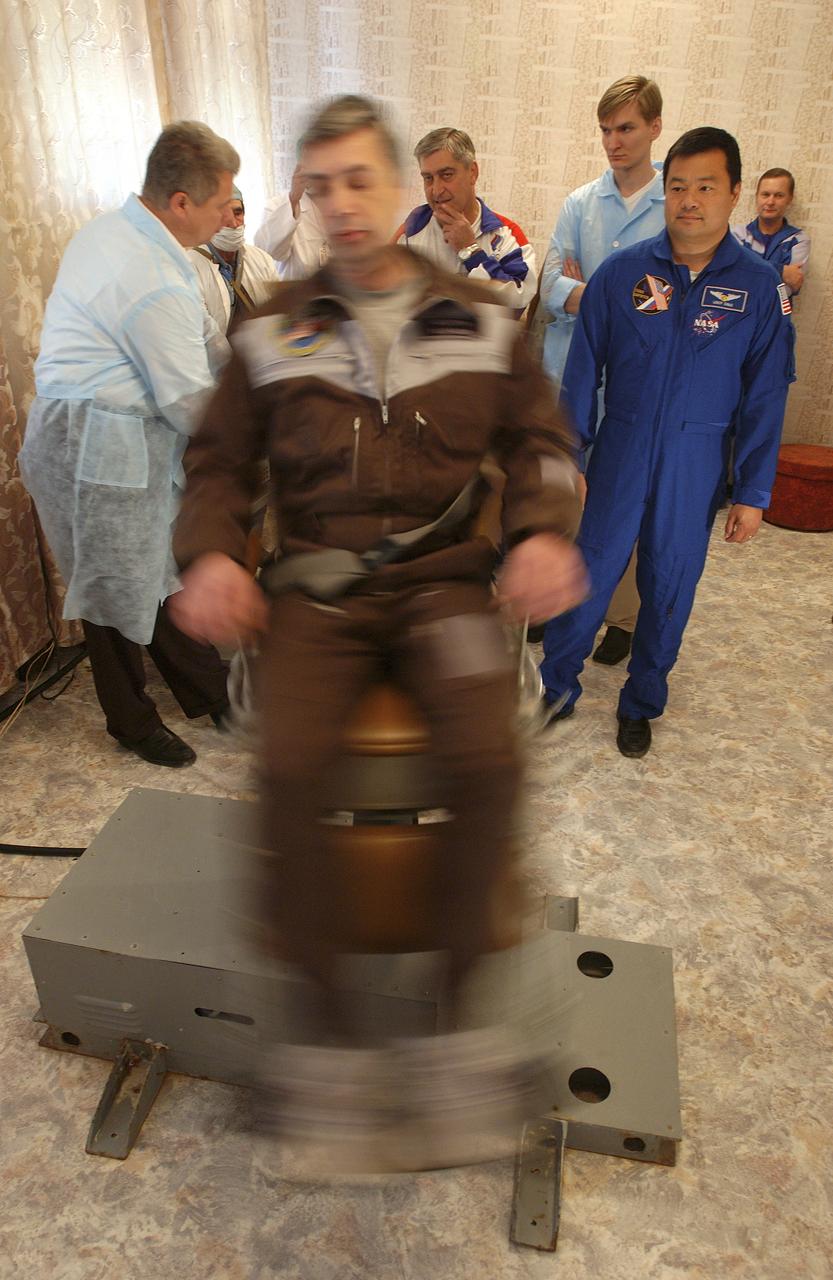
Expedition 10 Commander Leroy Chiao, right, looks on as Russian Space Forces cosmonaut Yuri Shargin takes a spin in a rotating chair at their crew quarters in Baikonur, Kazakhstan, Friday, October 8, 2004, as they prepare for launch to the International Space Station October 14 with Flight Engineer and Soyuz Commander Salizhan Sharipov. The chair is designed to condition the crewmembers' vestibular system against the effects of weightlessness once on orbit. Photo Credit: (NASA/Bill Ingalls)

jsc2019e053721 - At the Cosmonaut Hotel crew quarters in Baikonur, Kazakhstan, Expedition 61 crewmember Jessica Meir of NASA takes a spin in a rotating chair Sept. 18 to test her vestibular system as part of pre-launch activities. Along with Oleg Skripochka of Roscosmos and spaceflight participant Hazzaa Ali Almansoori of the United Arab Emirates, they will launch Sept. 25 from the Baikonur Cosmodrome in Kazakhstan on the Soyuz MS-15 spacecraft for a mission on the International Space Station...NASA/Victor Zelentsov
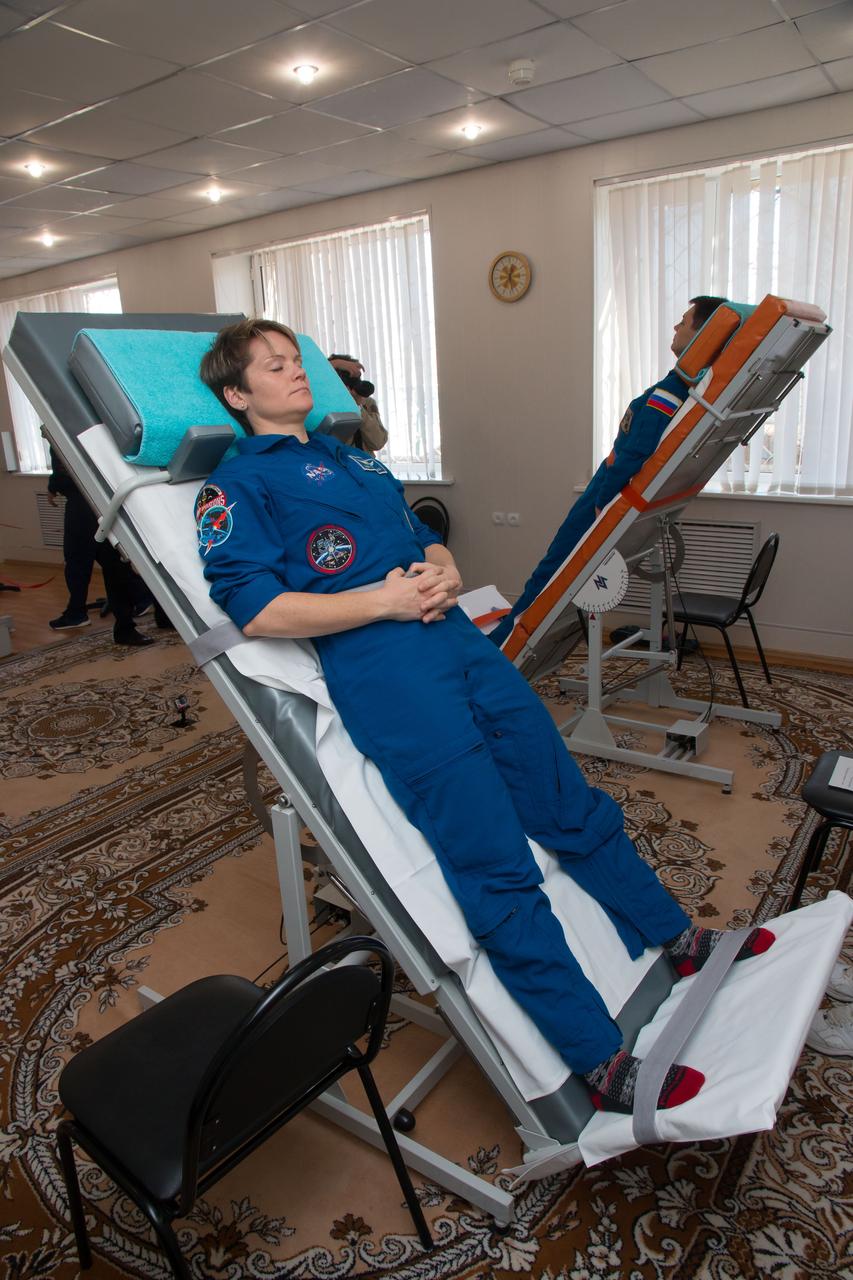
jsc2018e097773 - At the Cosmonaut Hotel crew quarters in Baikonur, Kazakhstan, Expedition 58 crewmember Anne McClain of NASA conducts vestibular system response training on a tilt table Nov. 27 as part of pre-launch training. McClain, David Saint-Jacques of the Canadian Space Agency and Oleg Kononenko of Roscosmos will launch Dec. 3 on the Soyuz MS-11 spacecraft from the Baikonur Cosmodrome in Kazakhstan for a six-and-a-half month mission on the International Space Station...NASA/Victor Zelentsov.
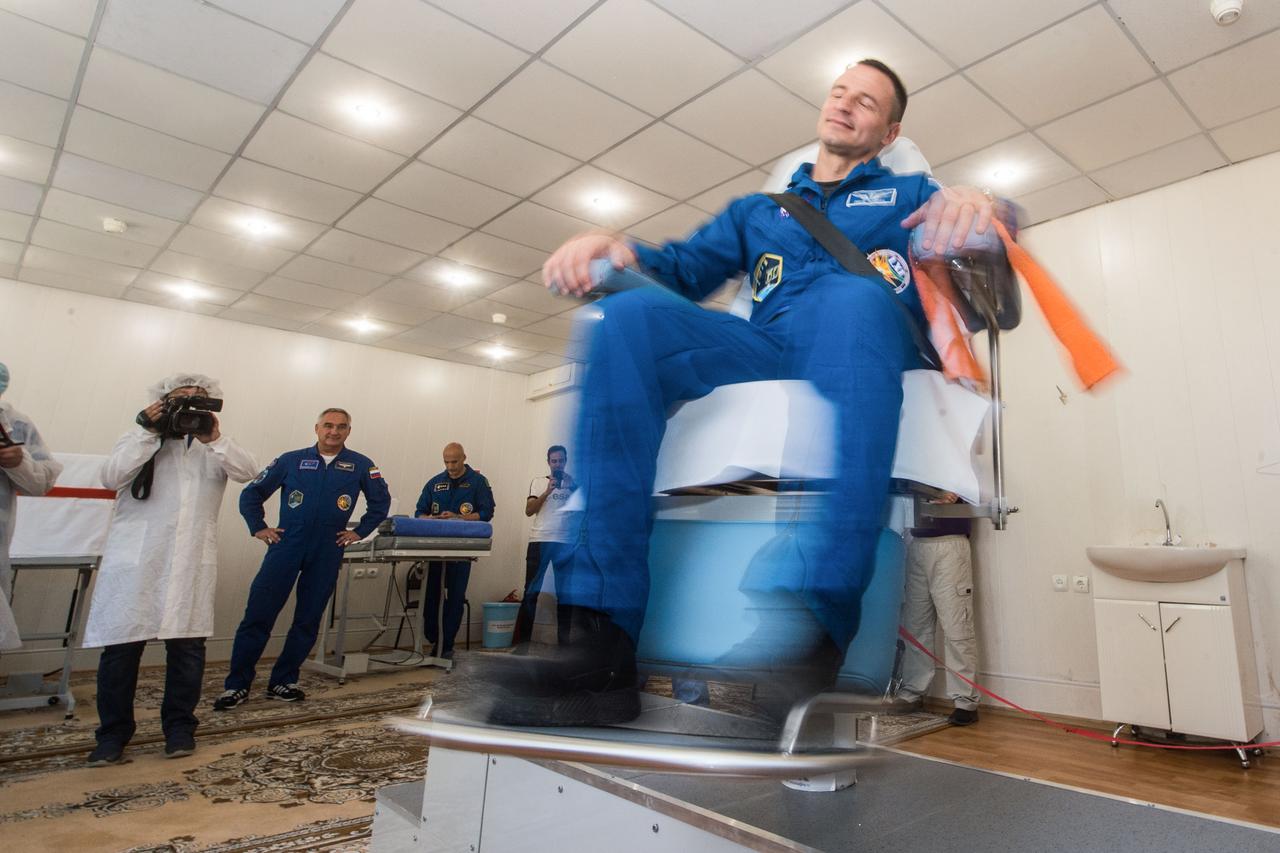
jsc2019e039262 - At the Cosmonaut Hotel crew quarters in Baikonur, Kazakhstan, Expedition 60 crewmember Drew Morgan of NASA takes a ride in a spinning chair July 12 to test his vestibular system as part of pre-launch activities. Morgan, Alexander Skvortsov of Roscosmos and Luca Parmitano of the European Space Agency will launch July 20 on the Soyuz MS-13 spacecraft from the Baikonur Cosmodrome in Kazakhstan on a mission to the International Space Station...Andrey Shelepin/GCTC.
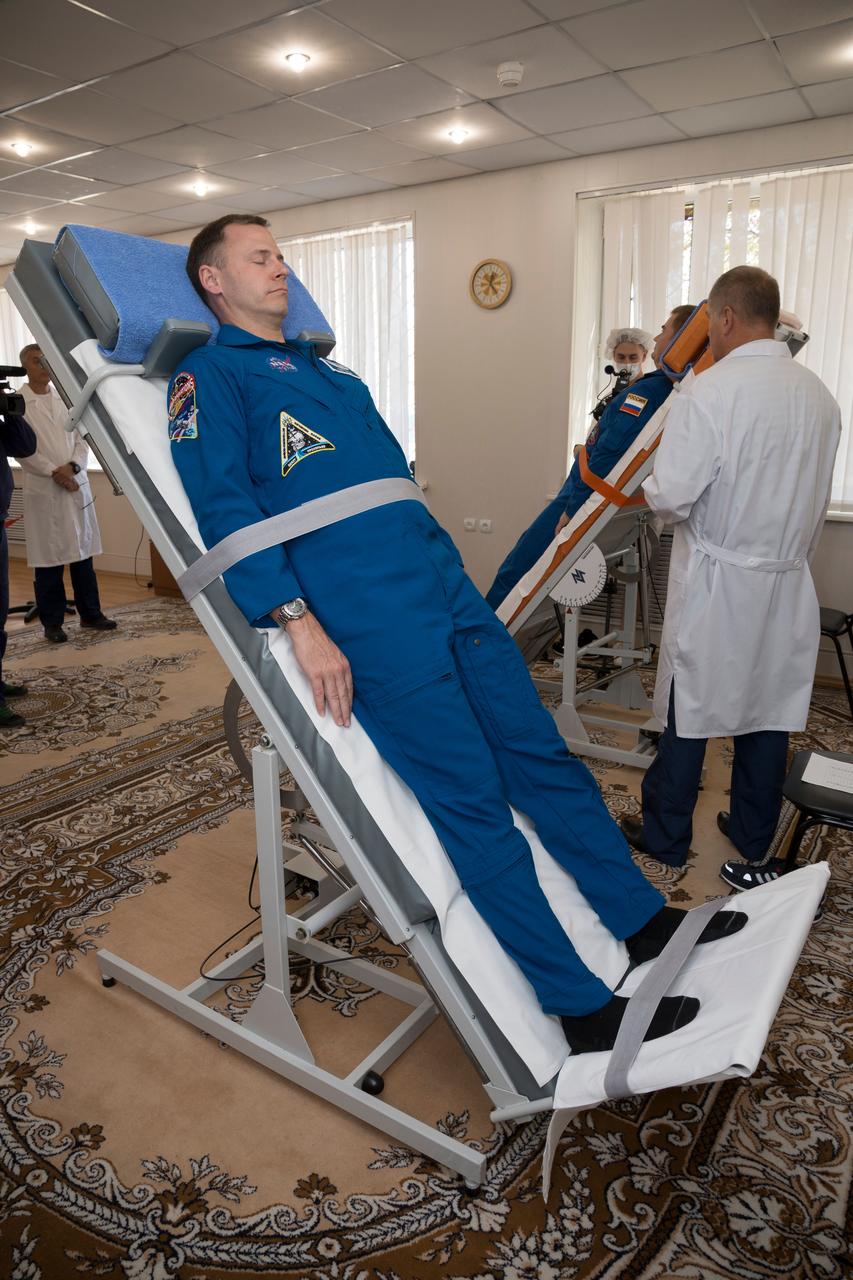
jsc2018e085902 (Oct. 3, 2018) --- Expedition 57 crew members Nick Hague of NASA, left, and Alexey Ovchinin of Roscosmos, right, conduct tests of their vestibular systems on tilt tables, Wednesday, Oct. 3, 2018 at the Cosmonaut Hotel in Baikonur, Kazakhstan. Hague and Ovchinin are scheduled to launch on Oct. 11 onboard the Soyuz MS-10 spacecraft from the Baikonur Cosmodrome in Kazakhstan for a six-month mission on the International Space Station. Photo Credit: (NASA/Victor Zelentsov)
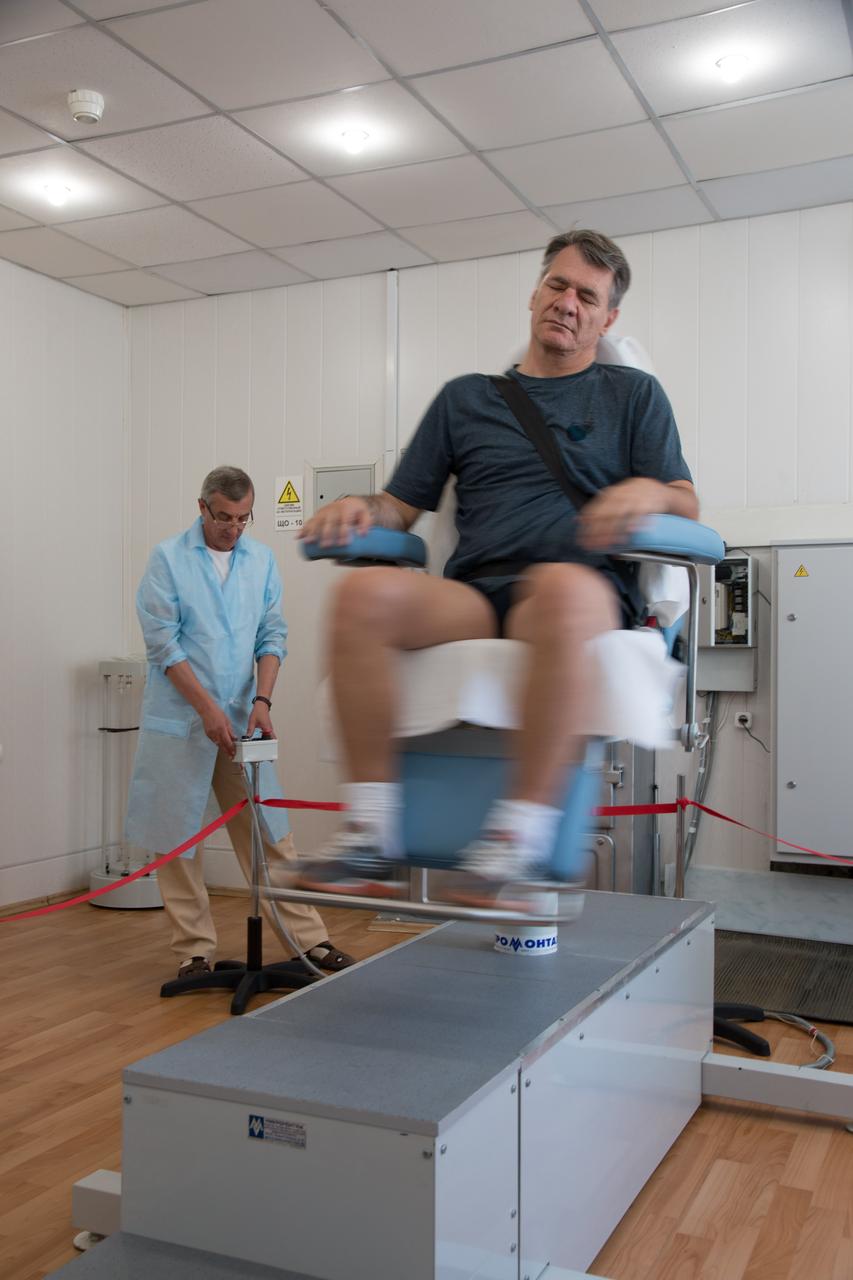
jsc2017e101945 (July 22, 2017) --- At the Cosmonaut Hotel crew quarters in Baikonur, Kazakhstan, Expedition 52-53 crewmember Paolo Nespoli of the European Space Agency tests his vestibular system in a spinning chair July 22 as part of pre-launch activities. Nespoli, Randy Bresnik of NASA and Sergey Ryazanskiy of the Russian Federal Space Agency (Roscosmos) will launch July 28 on the Soyuz MS-05 spacecraft from the Baikonur Cosmodrome for a five-month mission on the International Space Station. Credit: NASA/Victor Zelentsov

jsc2020e016968 - At the Cosmonaut Hotel crew quarters in Baikonur, Kazakhstan, Expedition 63 crewmembers Anatoly Ivanishin (bottom) and Ivan Vagner (top) of Roscosmos take a ride on tilt tables April 1 to test their vestibular systems. Along with Chris Cassidy of NASA, they will launch April 9 on the Soyuz MS-16 spacecraft from the Baikonur Cosmodrome in Kazakhstan for a six-and-a-half month mission on the International Space Station...Andrey Shelepin/Gagarin Cosmonaut Training Center.
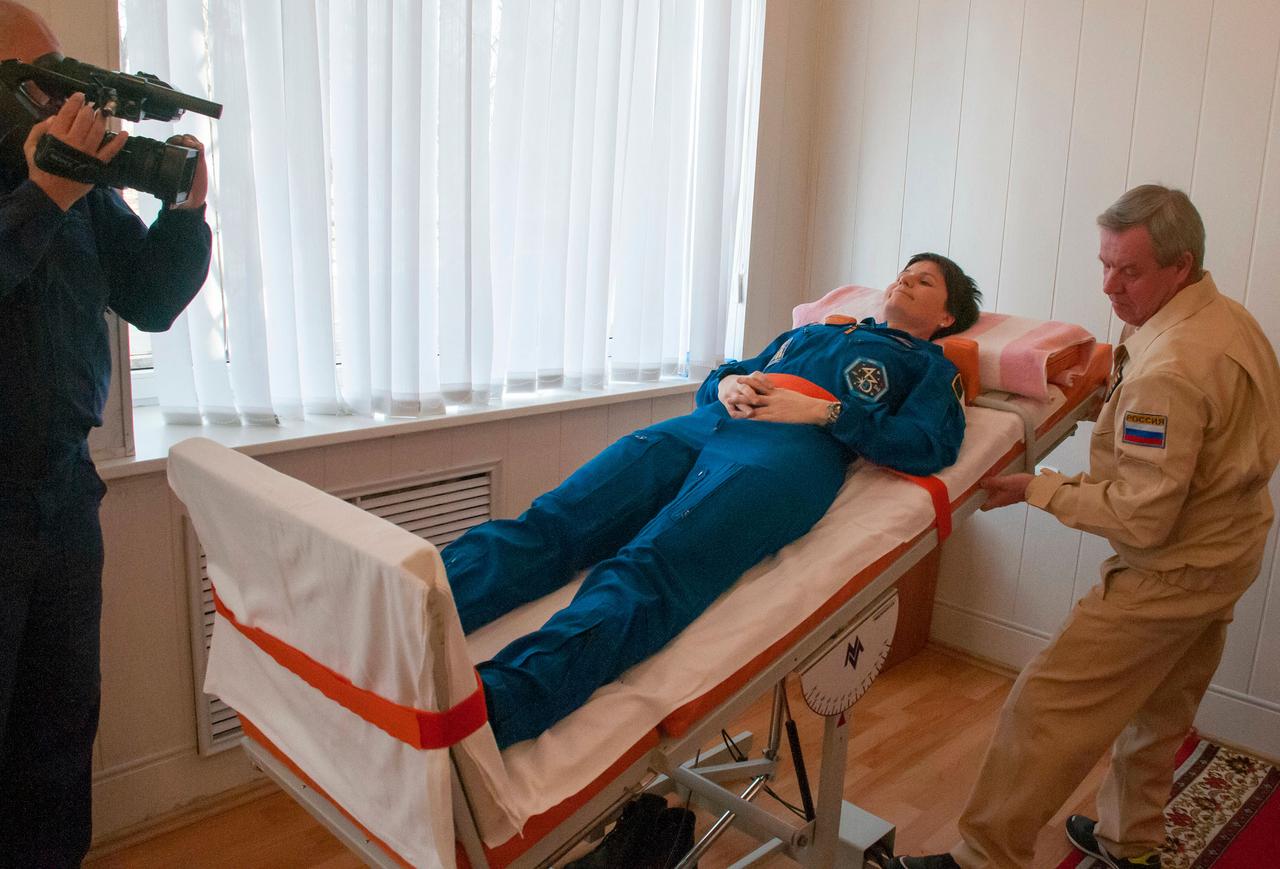
6103: At the Cosmonaut Hotel crew quarters in Baikonur, Kazakhstan, Expedition 42/43 crewmember Samantha Cristoforetti of the European Space Agency tests her vestibular system on a tilt table Nov. 18 as part of pre-launch training. Cristoforetti, Terry Virts of NASA and Anton Shkaplerov of the Russian Federal Space Agency (Roscosmos) will launch Nov. 24, Kazakh time, from the Baikonur Cosmodrome in the Soyuz TMA-15M spacecraft for a 5 ½ month mission on the International Space Station. NASA/Sergei Fyodorov
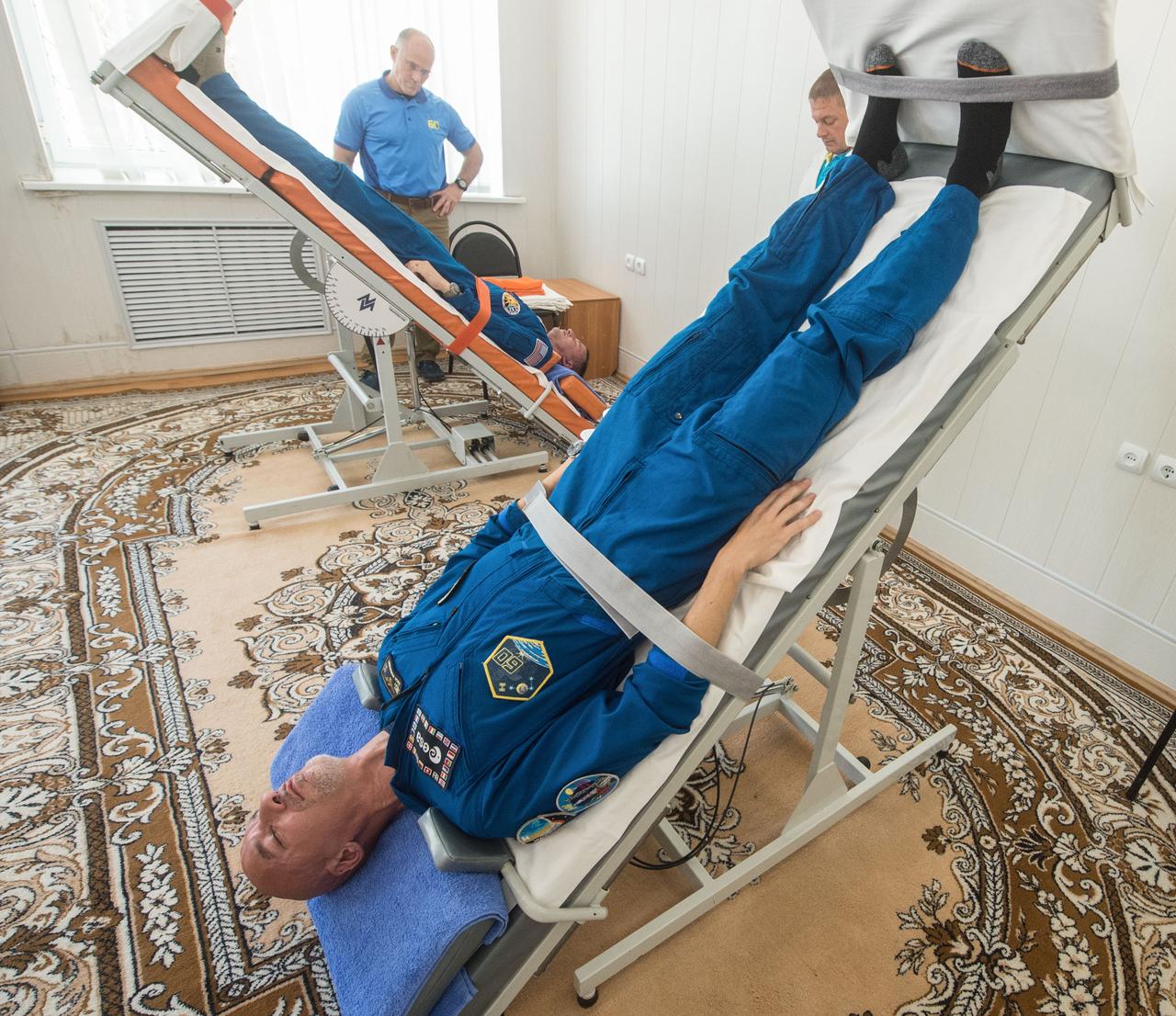
jsc2019e039266 - At the Cosmonaut Hotel crew quarters in Baikonur, Kazakhstan, Expedition 60 crewmembers Luca Parmitano of the European Space Agency (foreground) and Drew Morgan of NASA test out their vestibular systems on tilt tables July 12 as part of pre-launch activities. Along with Alexander Skvortsov of Roscosmos, they will launch July 20 on the Soyuz MS-13 spacecraft from the Baikonur Cosmodrome in Kazakhstan on a mission to the International Space Station...Andrey Shelepin/GCTC.
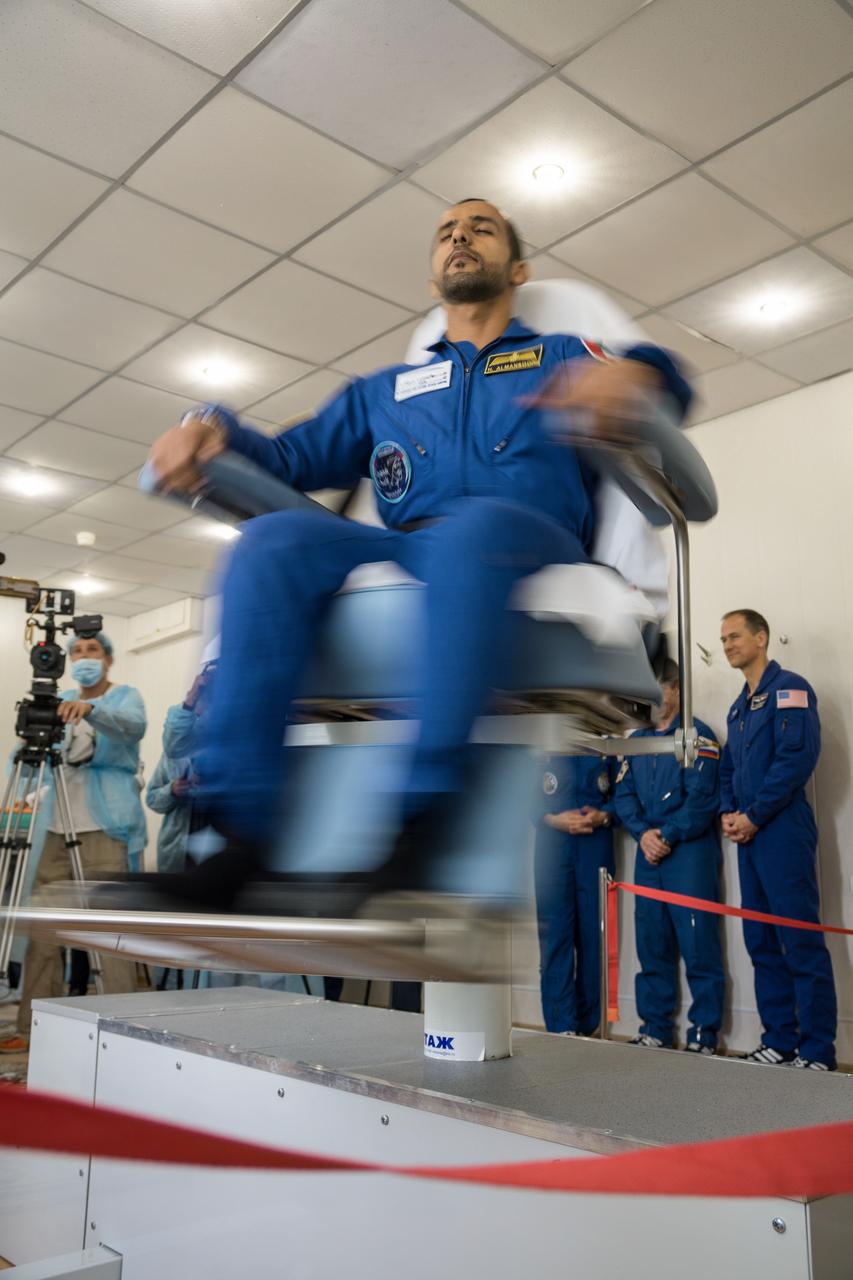
jsc2019e053723 - At the Cosmonaut Hotel crew quarters in Baikonur, Kazakhstan, spaceflight participant Hazzaa Ali Almansoori of the United Arab Emirates takes a spin in a rotating chair Sept. 18 to test his vestibular system as part of pre-launch activities. Along with Expedition 61 crewmembers Oleg Skripochka of Roscosmos and Jessica Meir of NASA, they will launch Sept. 25 from the Baikonur Cosmodrome in Kazakhstan on the Soyuz MS-15 spacecraft for a mission on the International Space Station...NASA/Victor Zelentsov
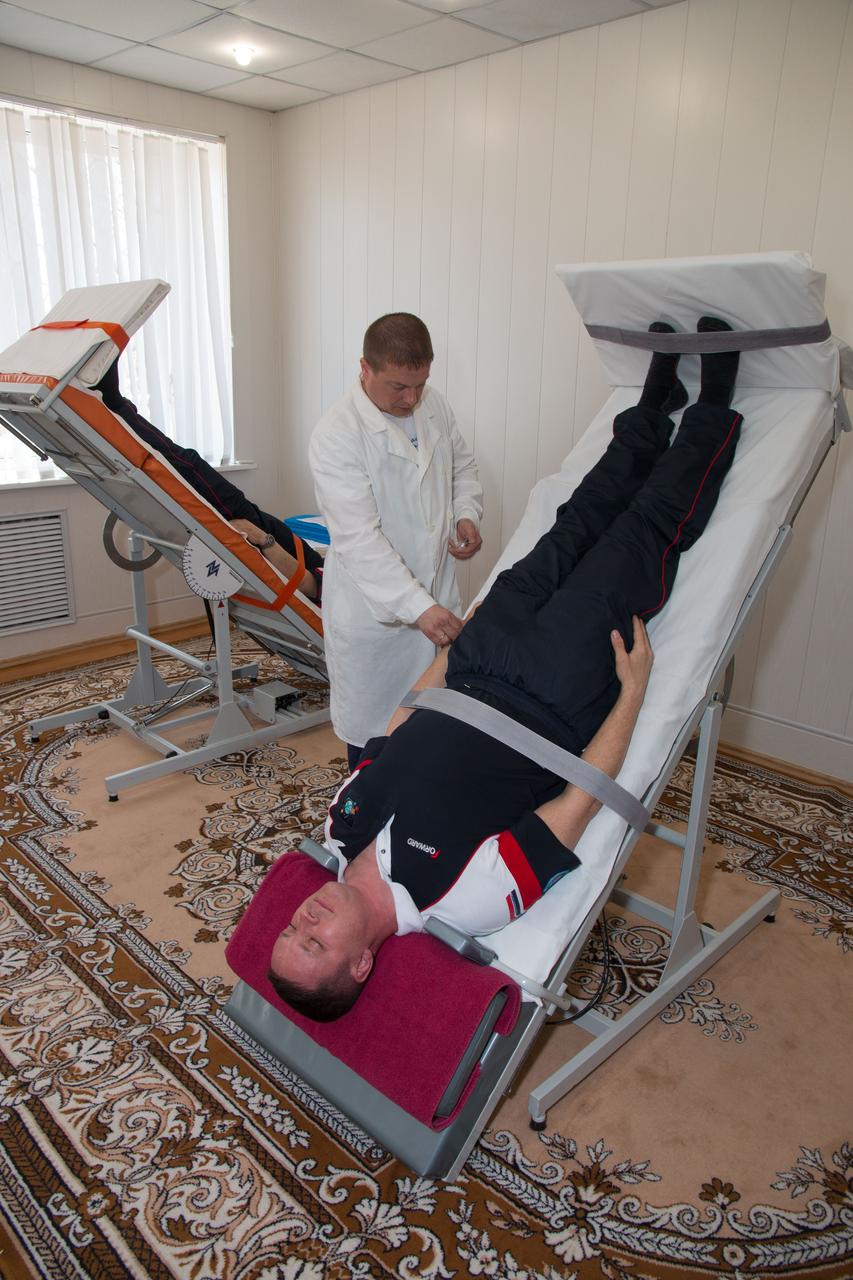
jsc2017e043074 (April 13, 2017) --- At the Cosmonaut Hotel crew quarters in Baikonur, Kazakhstan, Expedition 51 crewmember Jack Fischer of NASA conducts a session on a tilt table to test his vestibular system April 13 as part of his pre-launch activities. Fischer and Fyodor Yurchikhin of the Russian Federal Space Agency (Roscosmos) will liftoff April 20 from the Baikonur Cosmodrome on the Soyuz MS-04 spacecraft for a four and a half month mission on the International Space Station. NASA/Victor Zelentsov
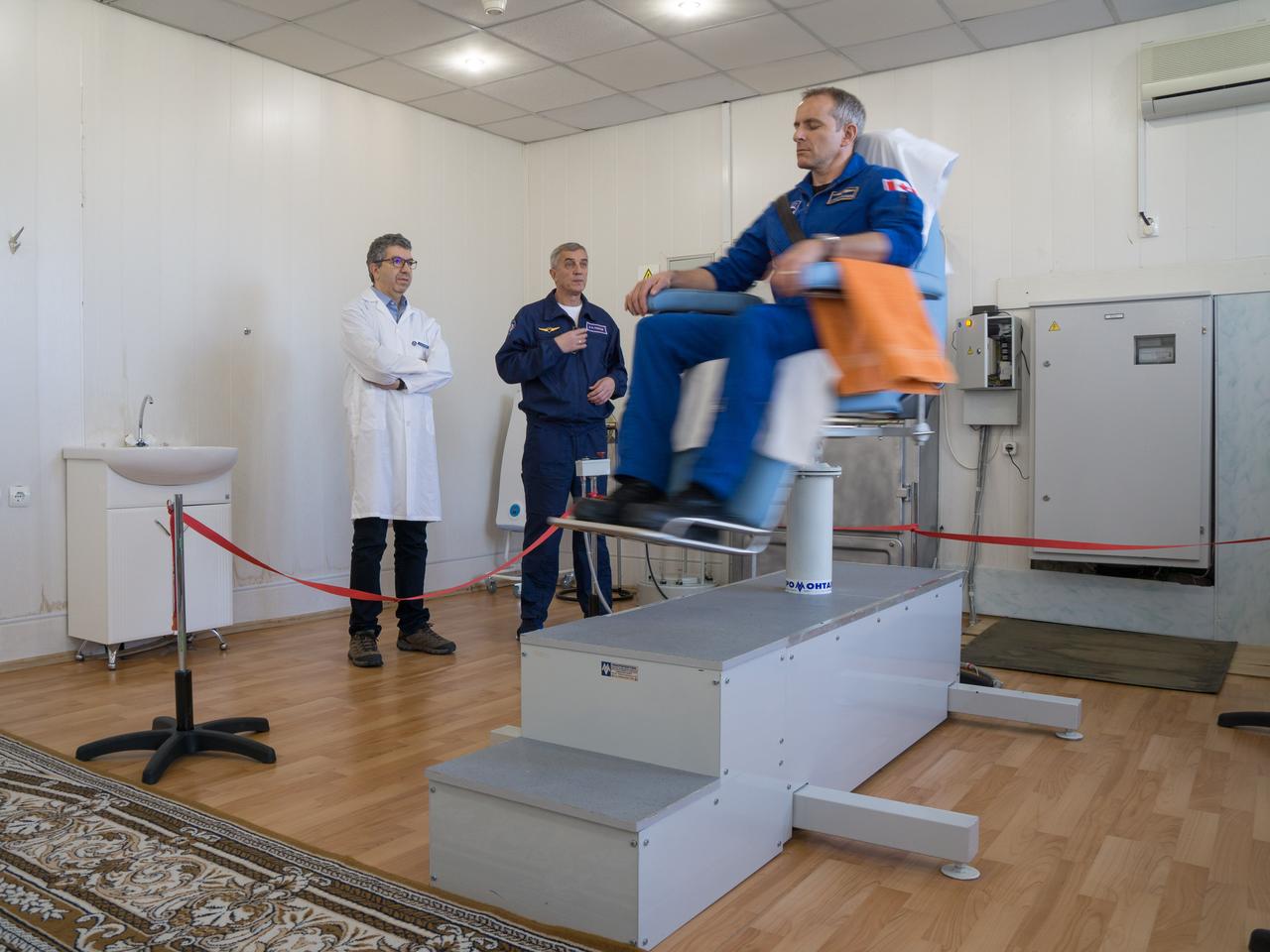
jsc2018e097772 - At the Cosmonaut Hotel crew quarters in Baikonur, Kazakhstan, Expedition 58 crewmember David Saint-Jacques of the Canadian Space Agency conducts vestibular system response training in a spinning chair Nov. 27 as part of pre-launch training. Saint-Jacques, Anne McClain of NASA and Oleg Kononenko of Roscosmos will launch Dec. 3 on the Soyuz MS-11 spacecraft from the Baikonur Cosmodrome in Kazakhstan for a six-and-a-half month mission on the International Space Station...NASA/Victor Zelentsov.
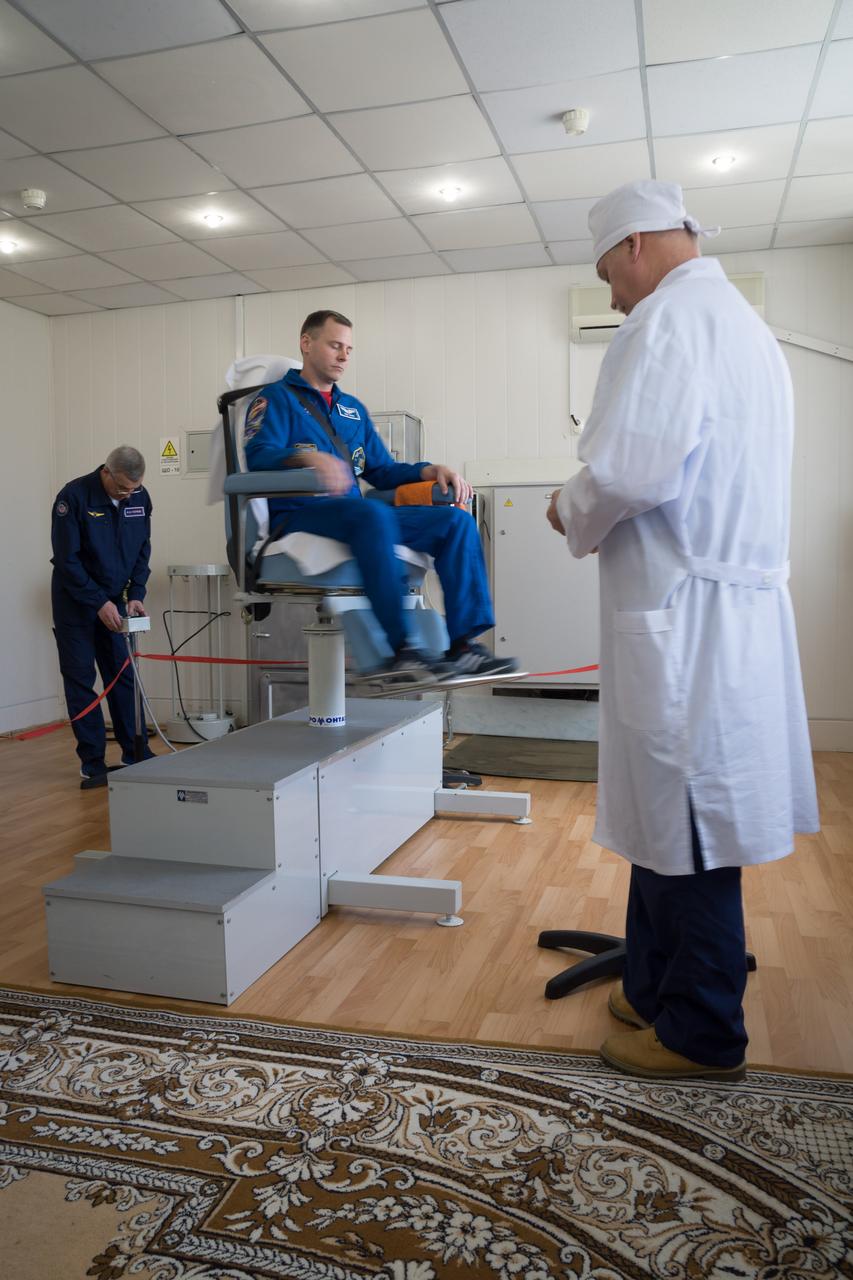
At the Cosmonaut Hotel crew quarters in Baikonur, Kazakhstan, Expedition 59 crewmember Nick Hague of NASA tests his vestibular system in a rotating chair March 7 as part of his pre-launch activities. Hague, Christina Koch of NASA and Alexey Ovchinin of Roscosmos will launch March 14, U.S. time, on the Soyuz MS-12 spacecraft from the Baikonur Cosmodrome for a six-and-a-half month mission on the International Space Station...NASA/Victor Zelentsov.
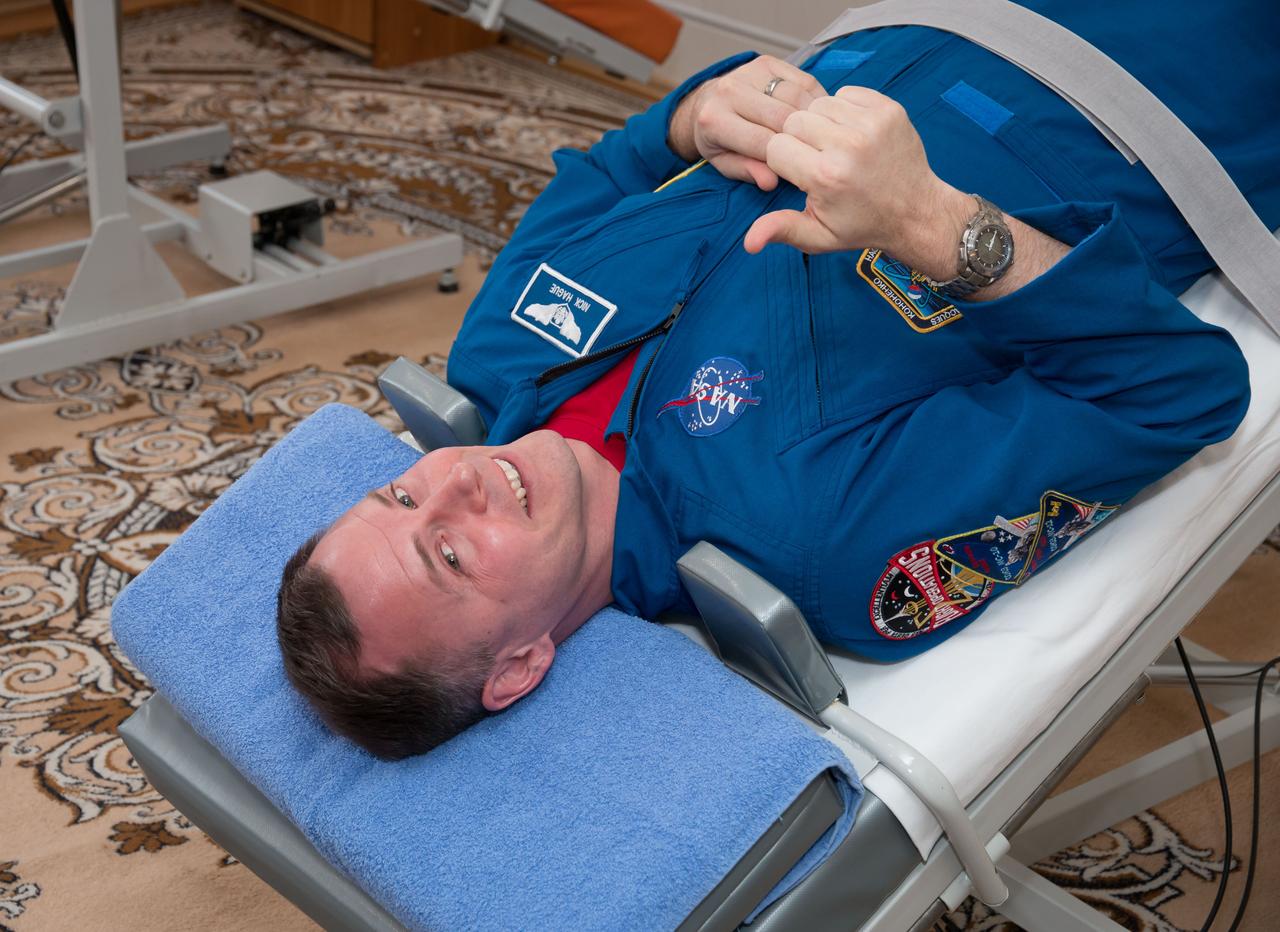
At the Cosmonaut Hotel crew quarters in Baikonur, Kazakhstan, Expedition 59 crewmember Nick Hague of NASA flashes a thumbs-up signal as he tests his vestibular system on a tilt table March 7 as part of his pre-launch activities. Hague, Christina Koch of NASA and Alexey Ovchinin of Roscosmos will launch March 14, U.S. time, on the Soyuz MS-12 spacecraft from the Baikonur Cosmodrome for a six-and-a-half month mission on the International Space Station...NASA/Victor Zelentsov.
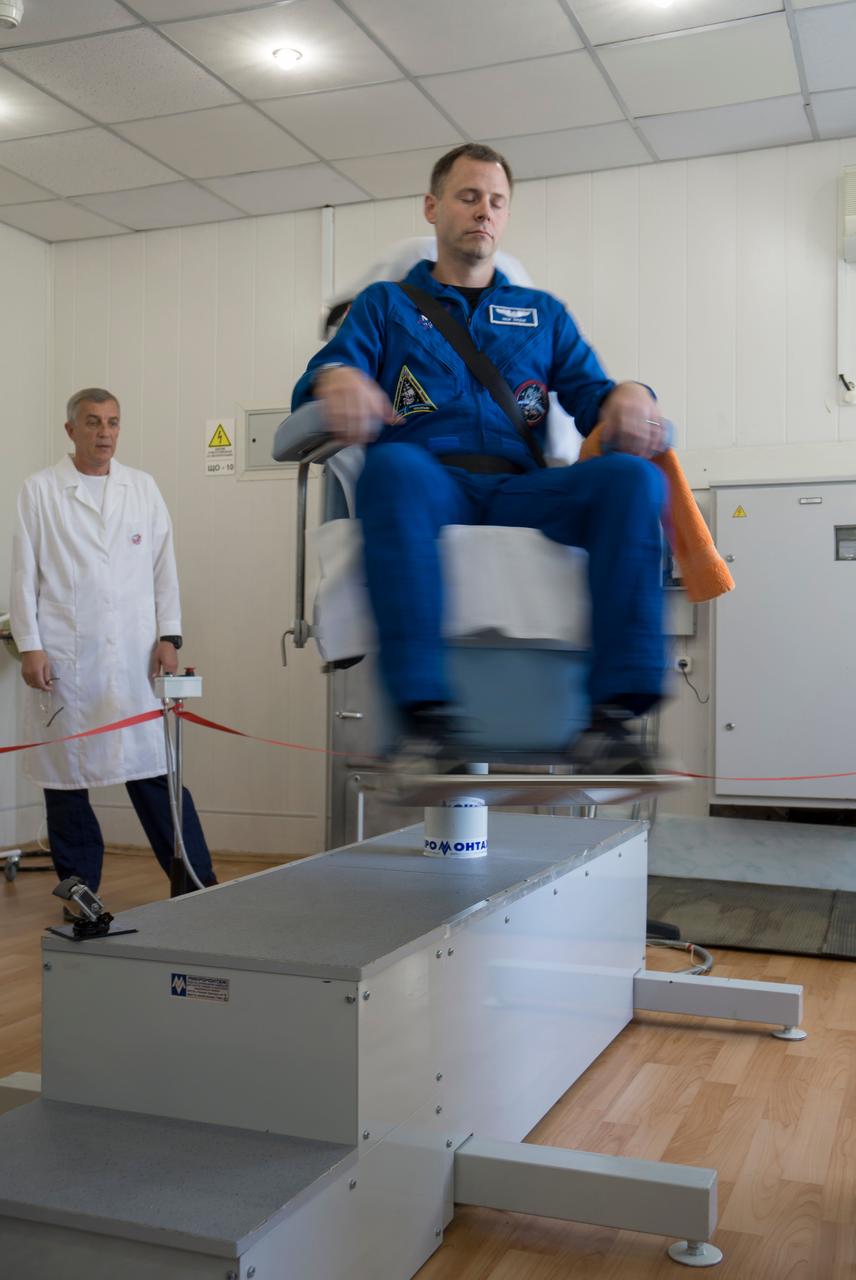
jsc2018e085899 (Oct. 3, 2018) --- Expedition 57 prime crew member Nick Hague of NASA takes a spin in a rotating chair to test his vestibular system as part of pre-launch activities, Wednesday, Oct. 3, 2018 at the Cosmonaut Hotel in Baikonur, Kazakhstan. Hague and Alexey Ovchinin of Roscosmos are scheduled to launch on Oct. 11 onboard the Soyuz MS-10 spacecraft from the Baikonur Cosmodrome in Kazakhstan for a six-month mission on the International Space Station. Photo Credit: (NASA/Victor Zelentsov)
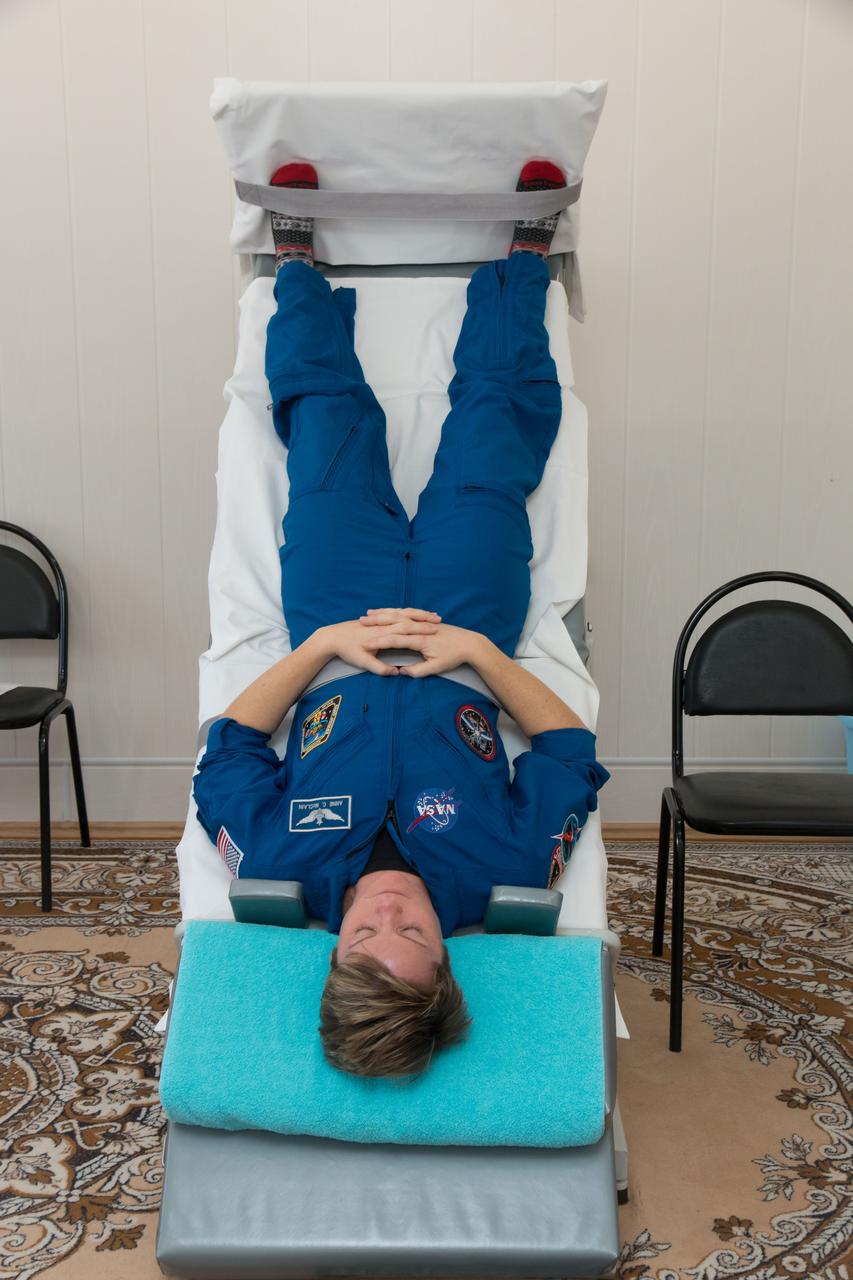
jsc2018e097774 - At the Cosmonaut Hotel crew quarters in Baikonur, Kazakhstan, Expedition 58 crewmember Anne McClain of NASA conducts vestibular system response training on a tilt table Nov. 27 as part of pre-launch training. McClain, David Saint-Jacques of the Canadian Space Agency and Oleg Kononenko of Roscosmos will launch Dec. 3 on the Soyuz MS-11 spacecraft from the Baikonur Cosmodrome in Kazakhstan for a six-and-a-half month mission on the International Space Station...NASA/Victor Zelentsov.
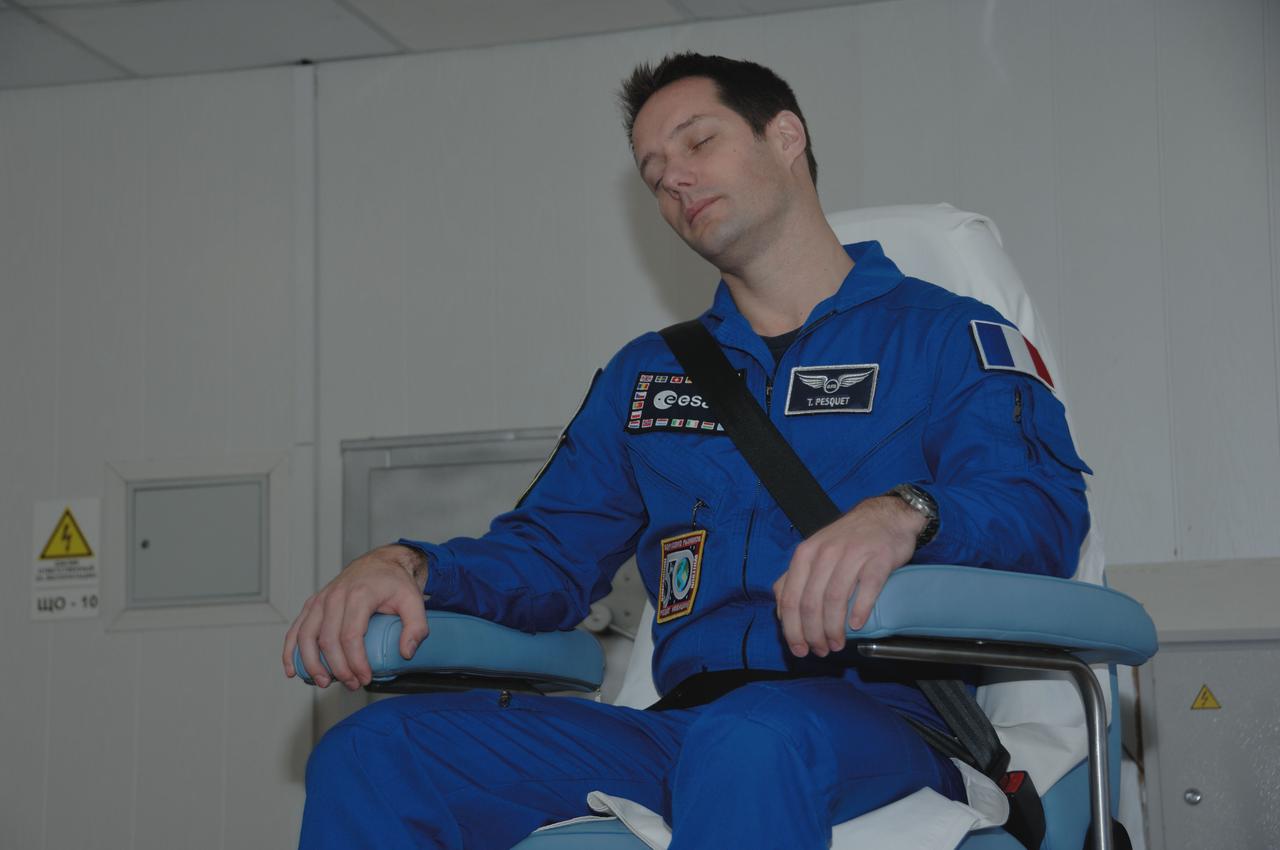
At his Cosmonaut Hotel crew quarters in Baikonur, Kazakhstan, Expedition 50-51 crewmember Thomas Pesquet of the European Space Agency takes a spin in a rotating chair Nov. 10 to test his vestibular system as part of preflight activities. Pesquet, Peggy Whitson of NASA and Oleg Novitskiy of the Russian Federal Space Agency (Roscosmos) will launch Nov. 18, Baikonur time, on the Soyuz MS-03 spacecraft for a six-month mission on the International Space Station. NASA/Alexander Vysotsky
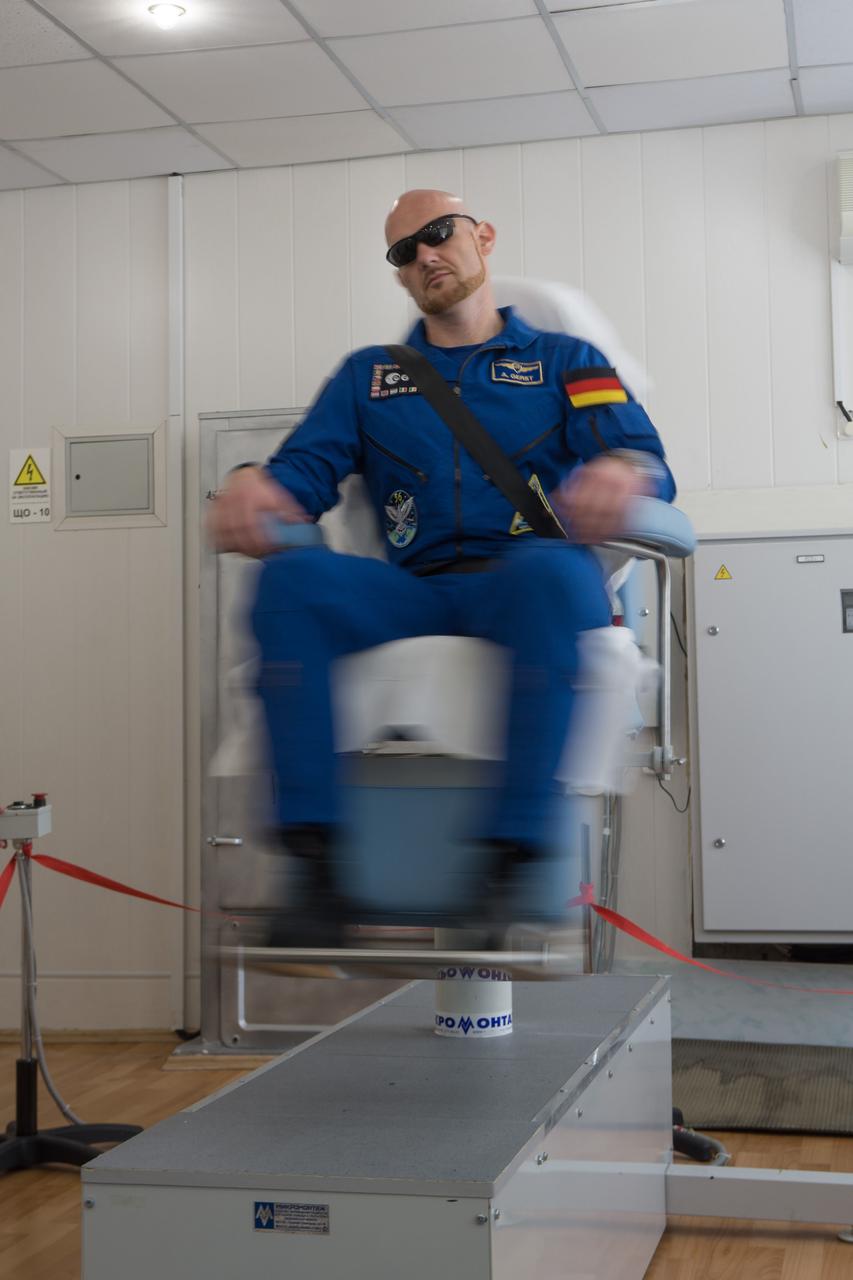
jsc2018e050828 - At the Cosmonaut Hotel crew quarters in Baikonur, Kazakhstan, Expedition 56 prime crewmember Alexander Gerst of the European Space Agency takes a spin in a rotating chair May 29 to test his vestibular system as part of pre-launch activities. Gerst, Serena Aunon-Chancellor of NASA and Sergey Prokopyev of Roscosmos will launch June 6 from the Baikonur Cosmodrome in Kazakhstan on the Soyuz MS-09 spacecraft for a six-month mission on the International Space Station...NASA/Victor Zelentsov.
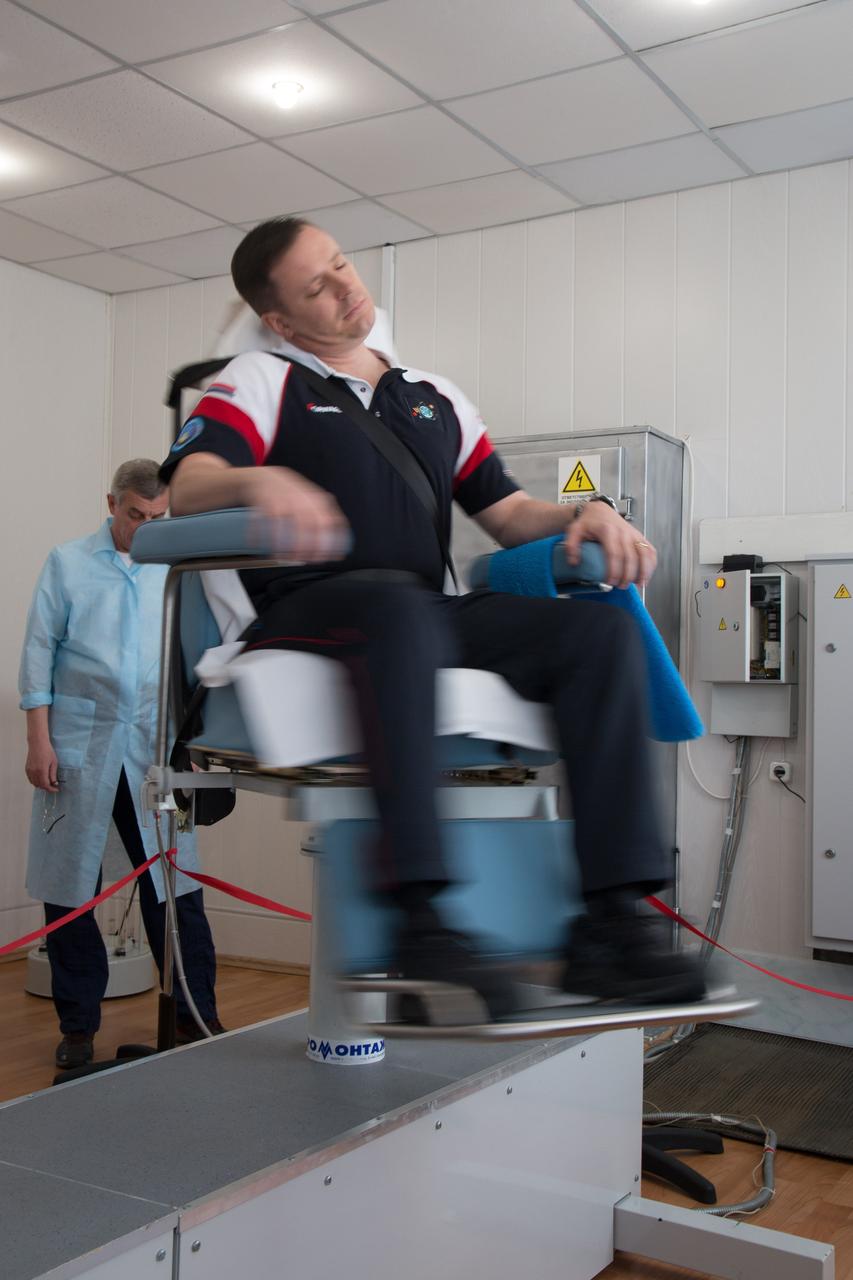
jsc2017e043073 (April 13, 2017) --- At the Cosmonaut Hotel crew quarters in Baikonur, Kazakhstan, Expedition 51 crewmember Jack Fischer of NASA takes a spin in a rotating chair to test his vestibular system April 13 as part of his pre-launch activities. Fischer and Fyodor Yurchikhin of the Russian Federal Space Agency (Roscosmos) will liftoff April 20 from the Baikonur Cosmodrome on the Soyuz MS-04 spacecraft for a four and a half month mission on the International Space Station. NASA/Victor Zelentsov
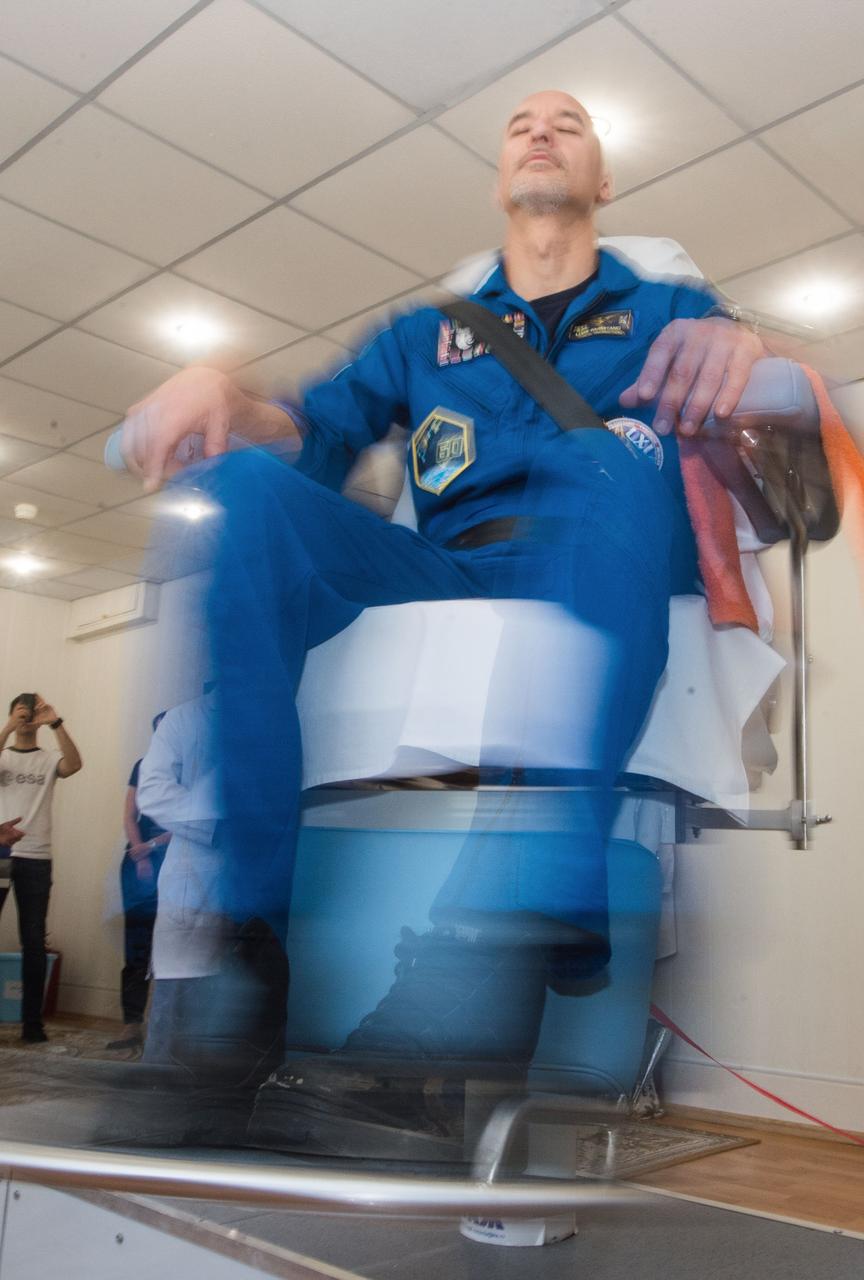
jsc2019e039267 - At the Cosmonaut Hotel crew quarters in Baikonur, Kazakhstan, Expedition 60 crewmember Luca Parmitano of the European Space Agency takes a ride in a spinning chair July 12 to test his vestibular system as part of pre-launch activities. Parmitano, Drew Morgan of NASA and Alexander Skvortsov of Roscosmos will launch July 20 on the Soyuz MS-13 spacecraft from the Baikonur Cosmodrome in Kazakhstan on a mission to the International Space Station...Andrey Shelepin/GCTC.
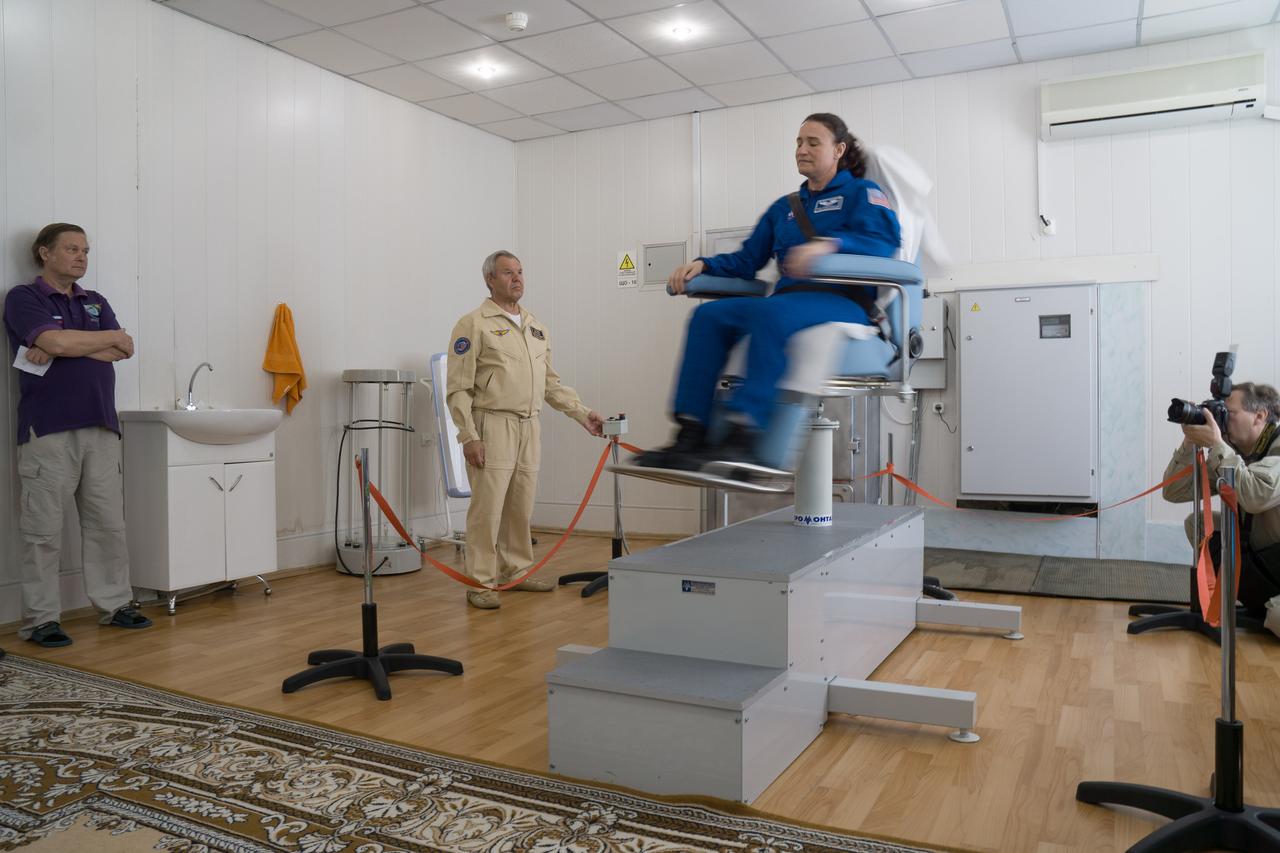
jsc2018e050829 - At the Cosmonaut Hotel crew quarters in Baikonur, Kazakhstan, Expedition 56 prime crewmember Serena Aunon-Chancellor of NASA takes a spin in a rotating chair May 29 to test her vestibular system as part of pre-launch activities. Aunon-Chancellor, Alexander Gerst of the European Space Agency and Sergey Prokopyev of Roscosmos will launch June 6 from the Baikonur Cosmodrome in Kazakhstan on the Soyuz MS-09 spacecraft for a six-month mission on the International Space Station...NASA/Victor Zelentsov.
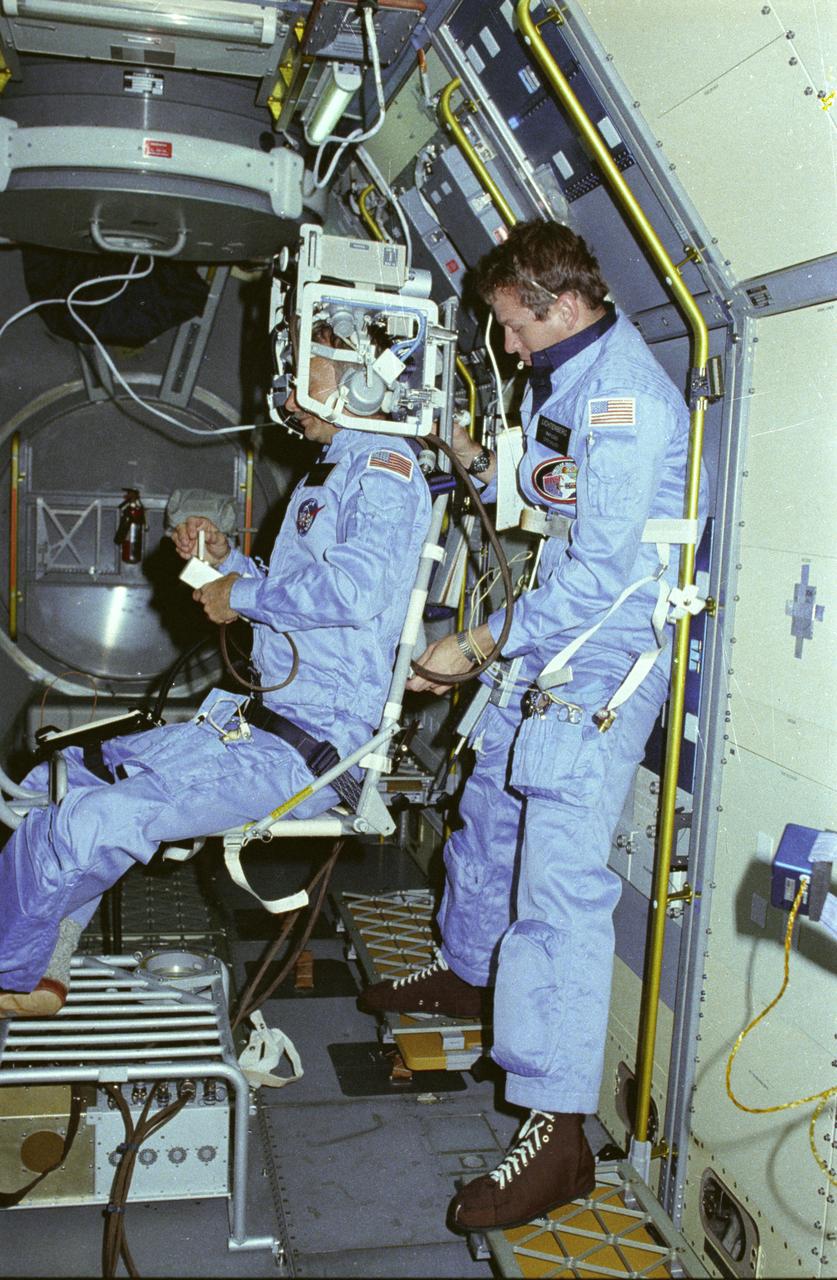
In this photograph, astronauts Owen Garriott on the body restriant system and Byron Lichtenberg prepare for a Vestibular Experiment during the Spacelab-1 mission. The Vestibular Experiments in Space were the study of the interaction among the otoliths, semicircular canals, vision, and spinal reflexes in humans. The main objective was to determine how the body, which receives redundant information for several sensory sources, interprets this information in microgravity. Another objective was to record and characterize the symptoms of space sickness experienced by crewmembers. The body restraint system was a rotating chair with a harness to hold the test subject in place. The crewmember wore an accelerometer and electrodes to record head motion and horizontal and vertical eye movement as the body rotated. The first Spacelab mission, Spacelab-1, sponsored jointly and shared equally by NASA and the European Space Agency, was a multidisciplinary mission; that is, investigations were performed in several different fields of scientific research. The overall goal of the mission was to verify Spacelab performance through a variety of scientific experiments. The Spacelab-1 was launched aboard the Space Shuttle Orbiter Columbia for the STS-9 mission on November 28, 1983. The Marshall Space Flight Center had management responsibilities for the mission.
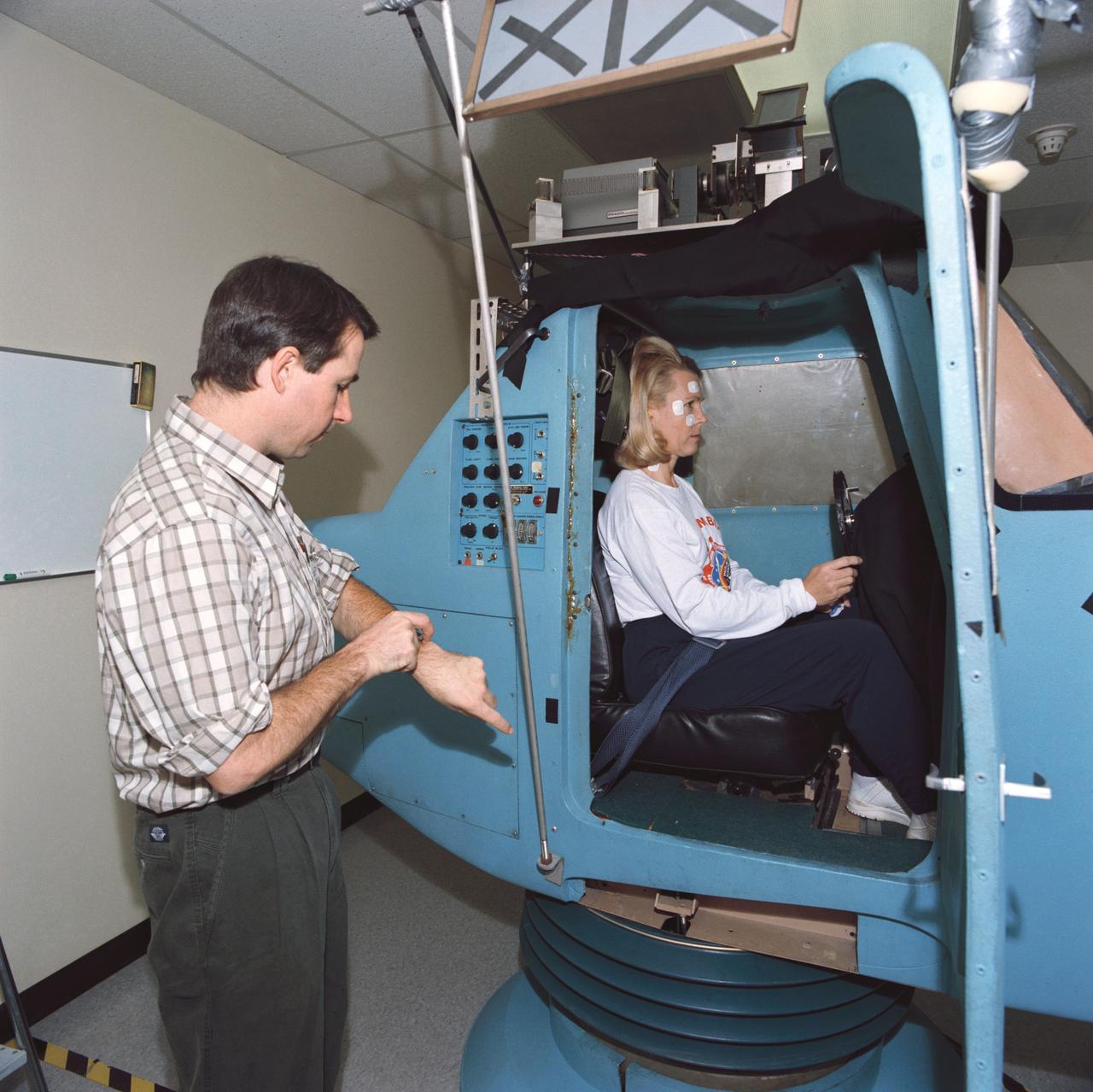
S93-45373 (29 Sept 1993) --- Astronaut Rhea Seddon, STS-58 payload commander, is in a piloting simulator as part of a pre-flight data collection project for neurovestibular functions. The seven Spacelab Life Sciences (SLS-2) crew members devoted a full day to miscellaneous biomedical data collection in preparation for next month's two week mission aboard Columbia.
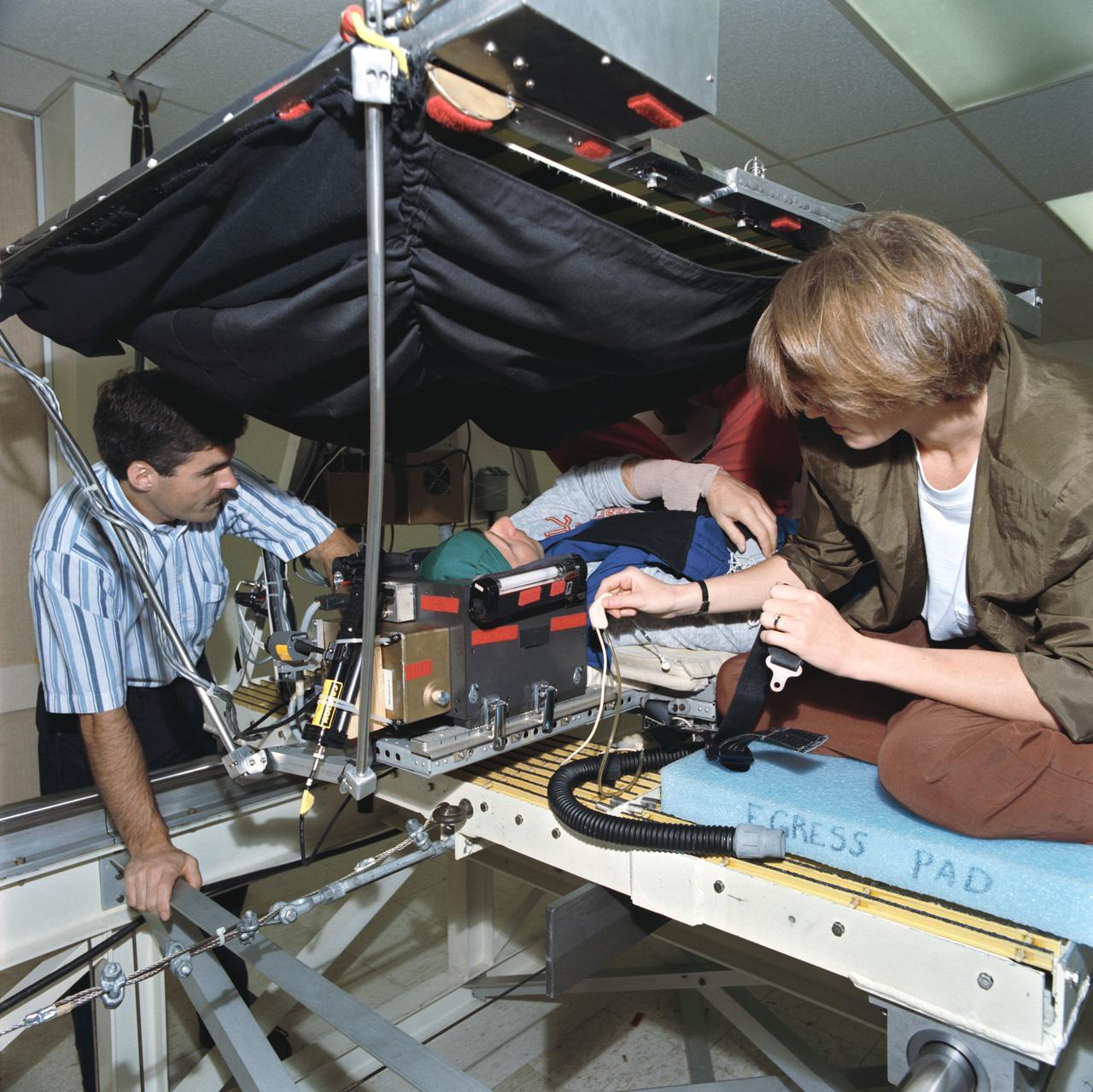
S93-45363 (29 Sept 1993) --- Payload specialist Martin J. Fettman, in an oscillating sled device, participates in a data collection project for neurovestibular functions. The seven Spacelab Life Sciences (SLS-2) crewmembers devoted a full day to miscellaneous biomedical data collection in preparation for next month's two week mission aboard Columbia.
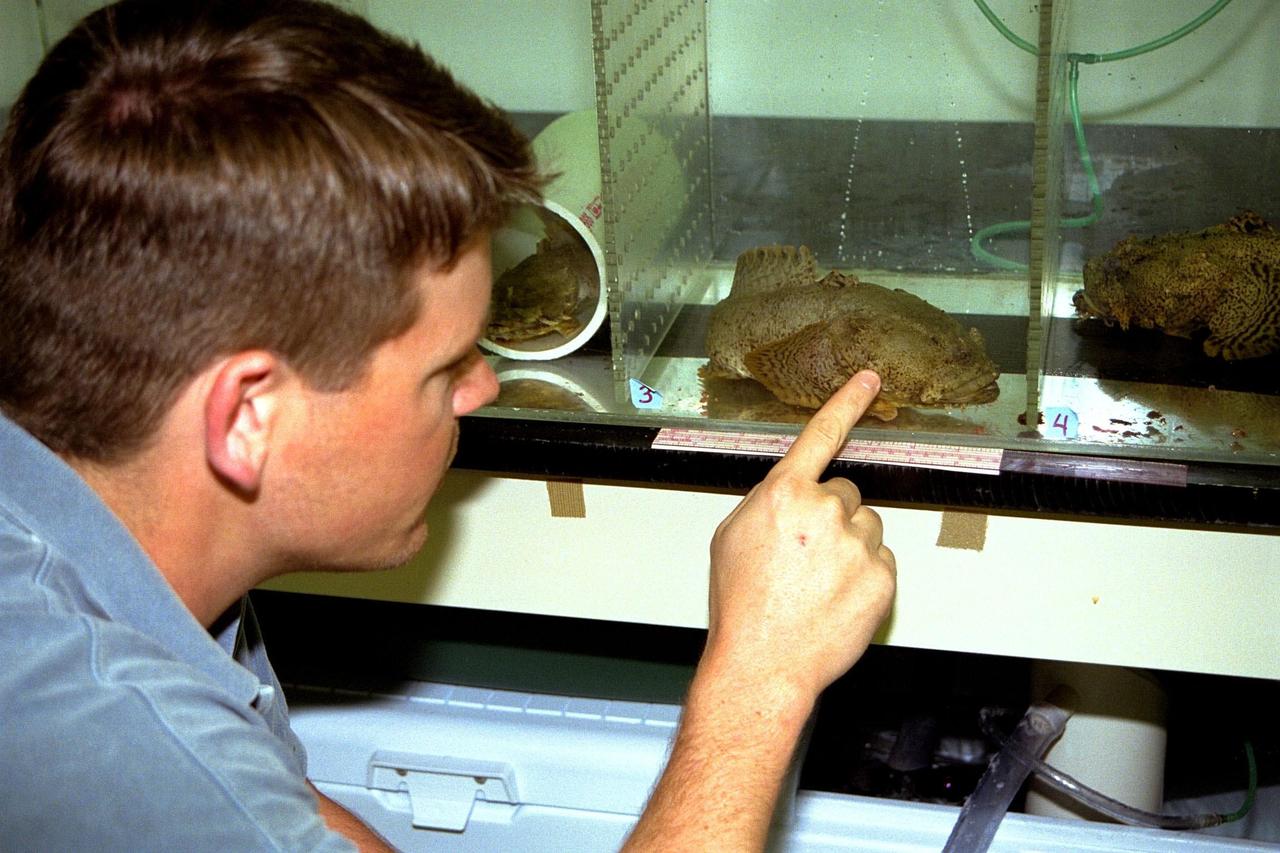
KENNEDY SPACE CENTER, FLA. -- Bill Kroeger, an aquatic technician for the Bionetics Corporation, examines an oyster toadfish (Opsanus tau), like those that are part of the Neurolab payload on Space Shuttle Mission STS-90, in its holding tank in the Space Station Processing Facility. Each fish is between eight and 14 inches long. Toadfish live in an estuarine environment and are native to areas along the Northeast coast of the United States. Investigations during the Neurolab mission will focus on the effects of microgravity on the nervous system. This fish is an excellent model for looking at vestibular function because the architecture of its inner and middle ear are similar to those of mammals with respect to the vestibular apparatus. The crew of STS-90, slated for launch April 16 at 2:19 p.m. EDT, includes Commander Richard Searfoss, Pilot Scott Altman, Mission Specialists Richard Linnehan, Dafydd (Dave) Williams, M.D., and Kathryn (Kay) Hire, and Payload Specialists Jay Buckey, M.D., and James Pawelczyk, Ph.D
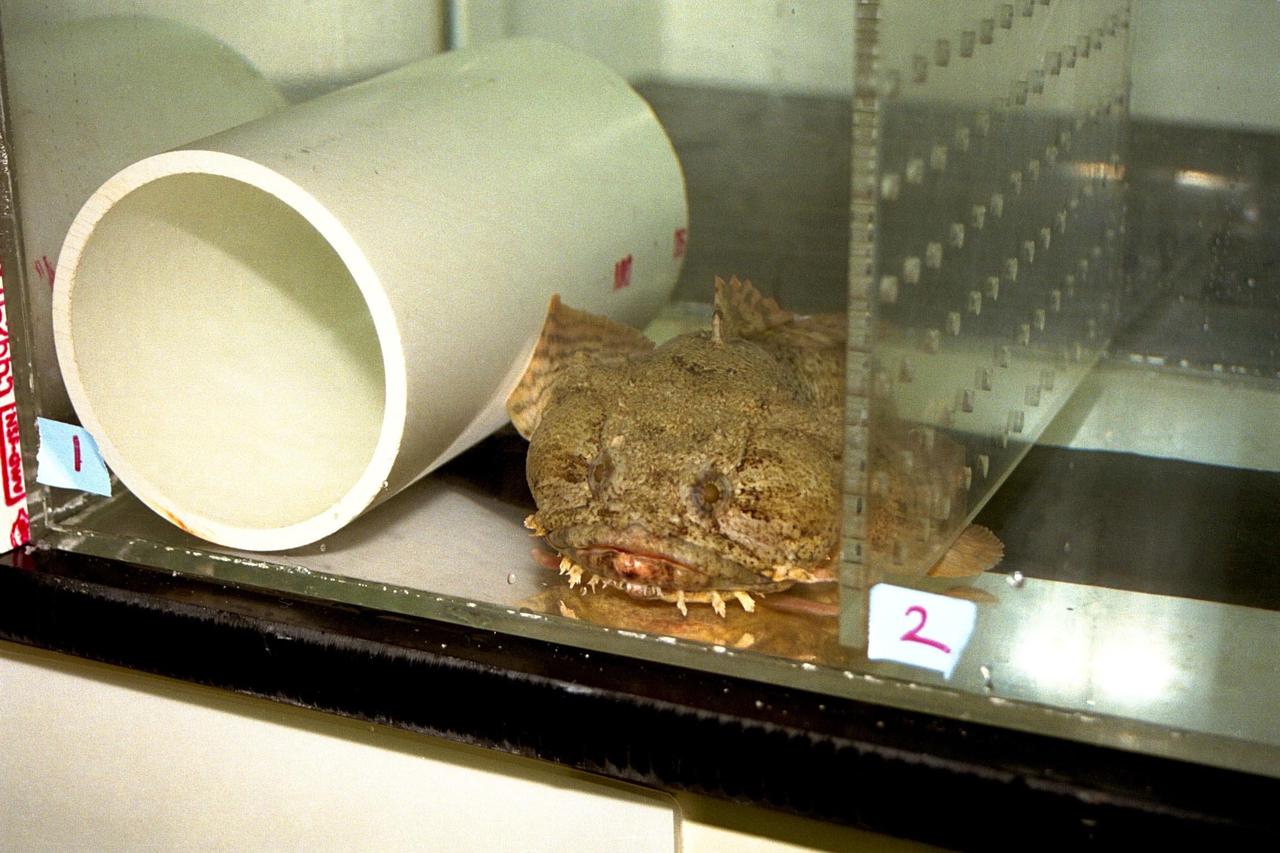
KENNEDY SPACE CENTER, FLA. -- An oyster toadfish (Opsanus tau), like those that are part of the Neurolab payload on Space Shuttle Mission STS-90, is shown in its holding tank in the Space Station Processing Facility. Each fish is between eight and 14 inches long. Toadfish live in an estuarine environment and are native to areas along the Northeast coast of the United States. Since they are bottom dwellers that live in cracks and crevices, a tube is provided in its tank to give it a place to retreat and hide. Investigations during the Neurolab mission will focus on the effects of microgravity on the nervous system. This fish is an excellent model for looking at vestibular function because the architecture of its inner and middle ear are similar to those of mammals with respect to the vestibular apparatus. The crew of STS-90, slated for launch April 16 at 2:19 p.m. EDT, includes Commander Richard Searfoss, Pilot Scott Altman, Mission Specialists Richard Linnehan, Dafydd (Dave) Williams, M.D., and Kathryn (Kay) Hire, and Payload Specialists Jay Buckey, M.D., and James Pawelczyk, Ph.D
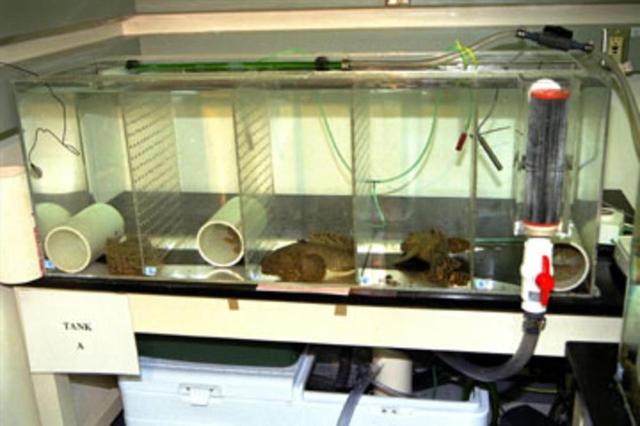
KENNEDY SPACE CENTER, FLA. -- Oyster toadfish (Opsanus tau), like those that are part of the Neurolab payload on Space Shuttle Mission STS-90, are shown in their holding tank in the Space Station Processing Facility. Each fish is between 8 and 14 inches long. Toadfish live in an estuarine environment and are native to areas along the Northeast coast of the United States. Since they are bottom dwellers that live in cracks and crevices, tubes are provided in their tank to give them a place to retreat and hide. Investigations during the Neurolab mission will focus on the effects of microgravity on the nervous system. The toadfish fish is an excellent model for looking at vestibular function because the architecture of its inner and middle ear are similar to those of mammals with respect to the vestibular apparatus. The crew of STS-90, slated for launch April 16 at 2:19 p.m. EDT, includes Commander Richard Searfoss, Pilot Scott Altman, Mission Specialists Richard Linnehan, Dafydd (Dave) Williams, M.D., and Kathryn (Kay) Hire, and Payload Specialists Jay Buckey, M.D., and James Pawelczyk, Ph.D
The Neurolab payload for STS-90, scheduled to launch aboard the Shuttle Columbia from Kennedy Space Center (KSC) on April 2, 1998, undergoes further processing in the Operations and Checkout Building at KSC. Investigations during the Neurolab mission will focus on the effects of microgravity on the nervous system. Specifically, experiments will study the adaptation of the vestibular system, the central nervous system, and the pathways that control the ability to sense location in the absence of gravity, as well as the effect of microgravity on a developing nervous system. The crew of STS-90 will include Commander Richard Searfoss, Pilot Scott Altman, Mission Specialists Richard Linnehan, Dafydd (Dave) Williams, M.D., and Kathryn (Kay) Hire, and Payload Specialists Jay Buckey, M.D., and James Pawelczyk, Ph.D

The Neurolab payload for STS-90, scheduled to launch aboard the Shuttle Columbia from Kennedy Space Center (KSC) on April 2, 1998, is ready for processing after being placed in its workstand in the Operations and Checkout Building at KSC. Investigations during the Neurolab mission will focus on the effects of microgravity on the nervous system. Specifically, experiments will study the adaptation of the vestibular system, the central nervous system, and the pathways that control the ability to sense location in the absence of gravity, as well as the effect of microgravity on a developing nervous system. The crew of STS-90 will include Commander Richard Searfoss, Pilot Scott Altman, Mission Specialists Richard Linnehan, Dafydd (Dave) Williams, M.D., and Kathryn (Kay) Hire, and Payload Specialists Jay Buckey, M.D., and James Pawelczyk, Ph.D
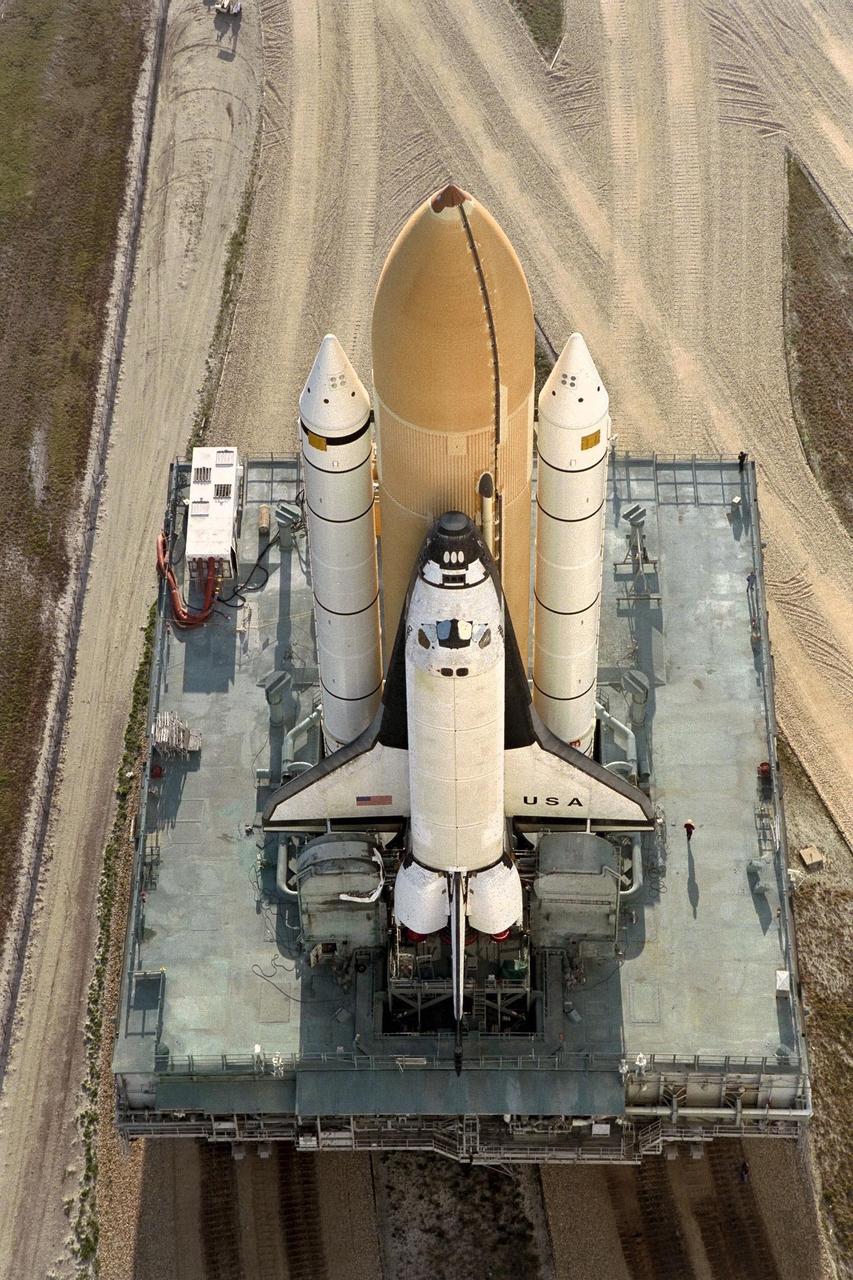
KENNEDY SPACE CENTER, FLA. -- The Space Shuttle Columbia continues its morning rollout from the Vehicle Assembly Building to Launch Pad 39B in preparation for the STS-90 mission. The Neurolab experiments are the primary payload on this nearly 17-day space flight. Investigations during the Neurolab mission will focus on the effects of microgravity on the nervous system. Specifically, experiments will study the adaptation of the vestibular system, the central nervous system, and the pathways that control the ability to sense location in the absence of gravity, as well as the effect of microgravity on a developing nervous system. The crew of STS-90, slated for launch April 16 at 2:19 p.m. EDT, includes Commander Richard Searfoss, Pilot Scott Altman, Mission Specialists Richard Linnehan, Dafydd (Dave) Williams, M.D., and Kathryn (Kay) Hire, and Payload Specialists Jay Buckey, M.D., and James Pawelczyk, Ph.D
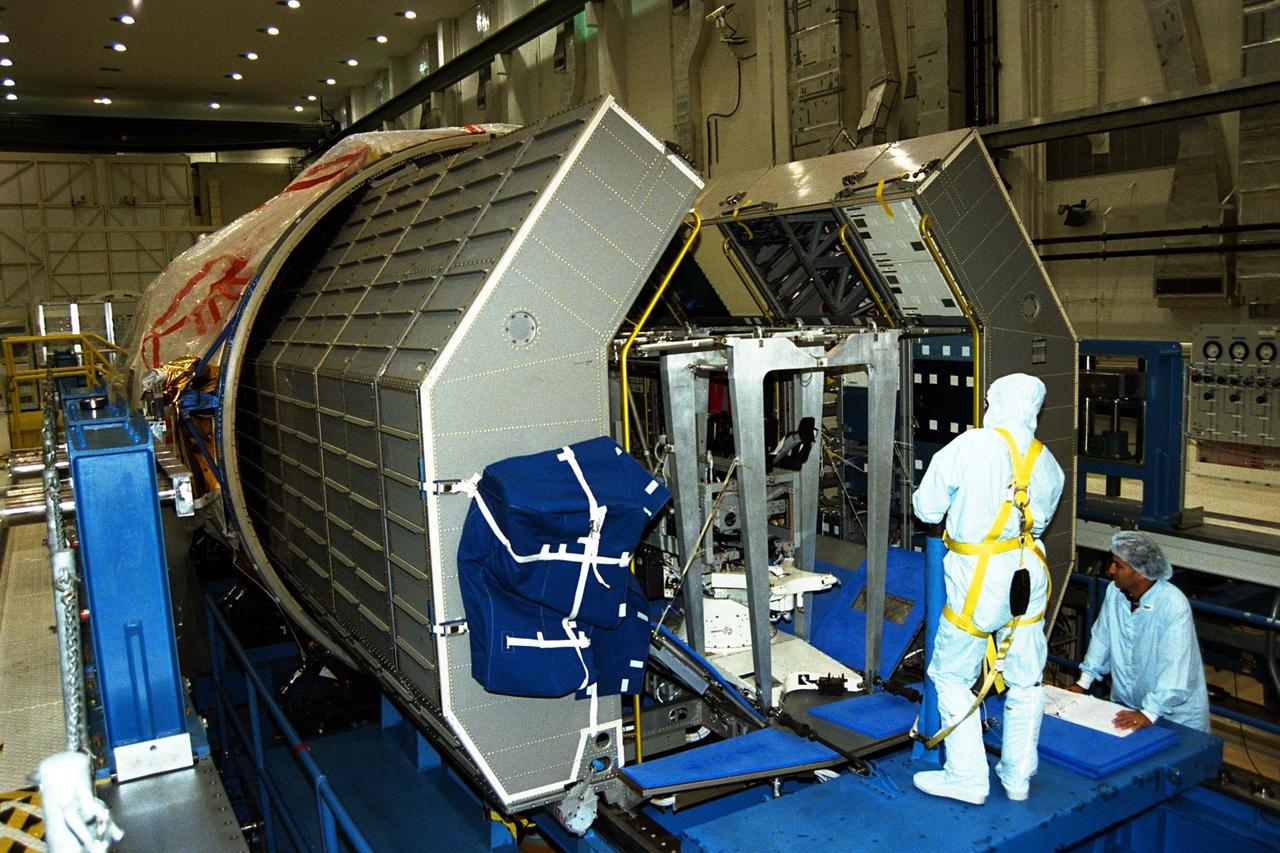
The Neurolab payload for STS-90, scheduled to launch aboard the Shuttle Columbia from Kennedy Space Center (KSC) on April 2, 1998, is installed in the Spacelab module by Boeing technicians in the Operations and Checkout Building at KSC. Investigations during the Neurolab mission will focus on the effects of microgravity on the nervous system. Specifically, experiments will study the adaptation of the vestibular system, the central nervous system, and the pathways that control the ability to sense location in the absence of gravity, as well as the effect of microgravity on a developing nervous system. The crew of STS-90 will include Commander Richard Searfoss, Pilot Scott Altman, Mission Specialists Richard Linnehan, Dafydd (Dave) Williams, M.D., and Kathryn (Kay) Hire, and Payload Specialists Jay Buckey, M.D., and James Pawelczyk, Ph.D

The Neurolab payload for STS-90, scheduled to launch aboard the Shuttle Columbia from Kennedy Space Center (KSC) on April 2, 1998, is installed in the Spacelab module by Boeing technicians in the Operations and Checkout Building at KSC. Investigations during the Neurolab mission will focus on the effects of microgravity on the nervous system. Specifically, experiments will study the adaptation of the vestibular system, the central nervous system, and the pathways that control the ability to sense location in the absence of gravity, as well as the effect of microgravity on a developing nervous system. The crew of STS-90 will include Commander Richard Searfoss, Pilot Scott Altman, Mission Specialists Richard Linnehan, Dafydd (Dave) Williams, M.D., and Kathryn (Kay) Hire, and Payload Specialists Jay Buckey, M.D., and James Pawelczyk, Ph.D
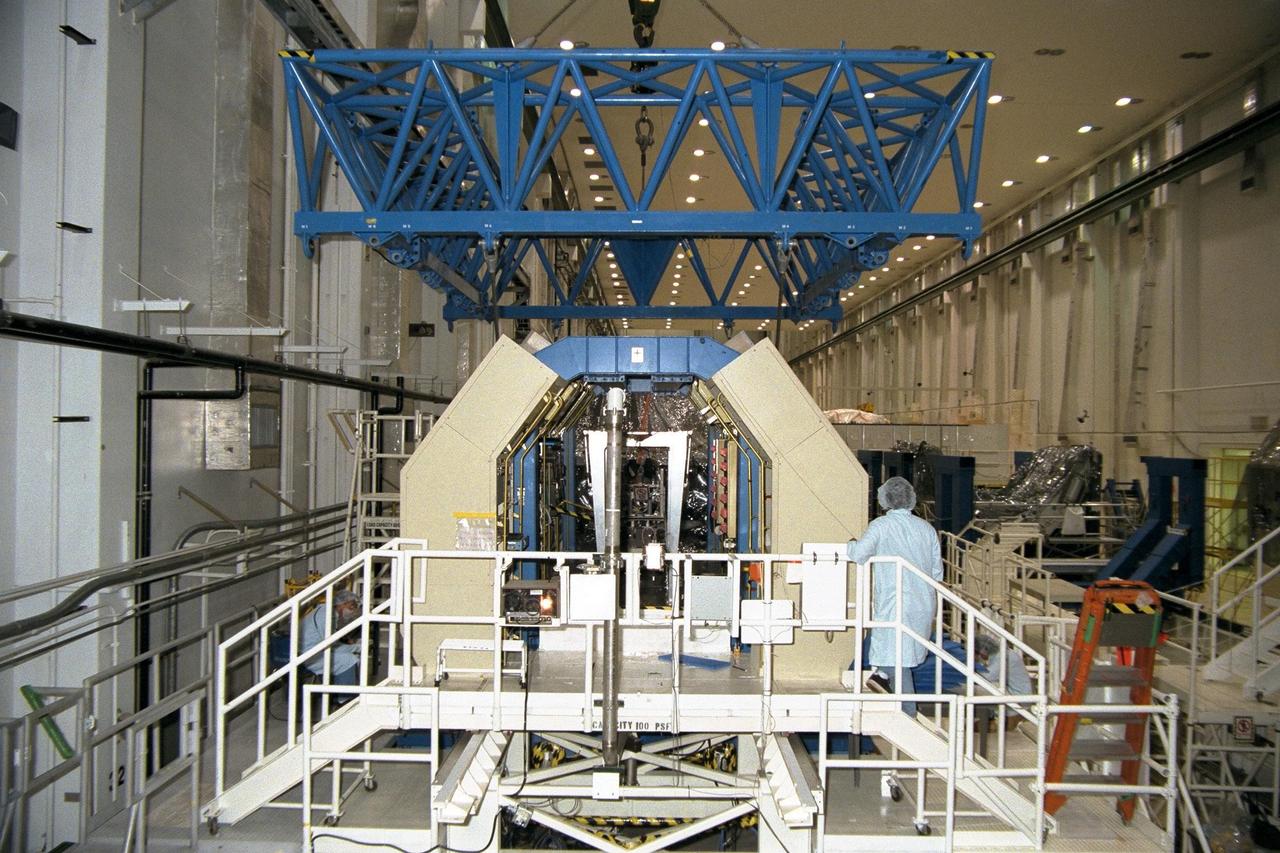
The Neurolab payload for STS-90, scheduled to launch aboard the Shuttle Columbia from Kennedy Space Center (KSC) on April 2, 1998, is ready for processing after being placed in its workstand in the Operations and Checkout Building at KSC. Investigations during the Neurolab mission will focus on the effects of microgravity on the nervous system. Specifically, experiments will study the adaptation of the vestibular system, the central nervous system, and the pathways that control the ability to sense location in the absence of gravity, as well as the effect of microgravity on a developing nervous system. The crew of STS-90 will include Commander Richard Searfoss, Pilot Scott Altman, Mission Specialists Richard Linnehan, Dafydd (Dave) Williams, M.D., and Kathryn (Kay) Hire, and Payload Specialists Jay Buckey, M.D., and James Pawelczyk, Ph.D
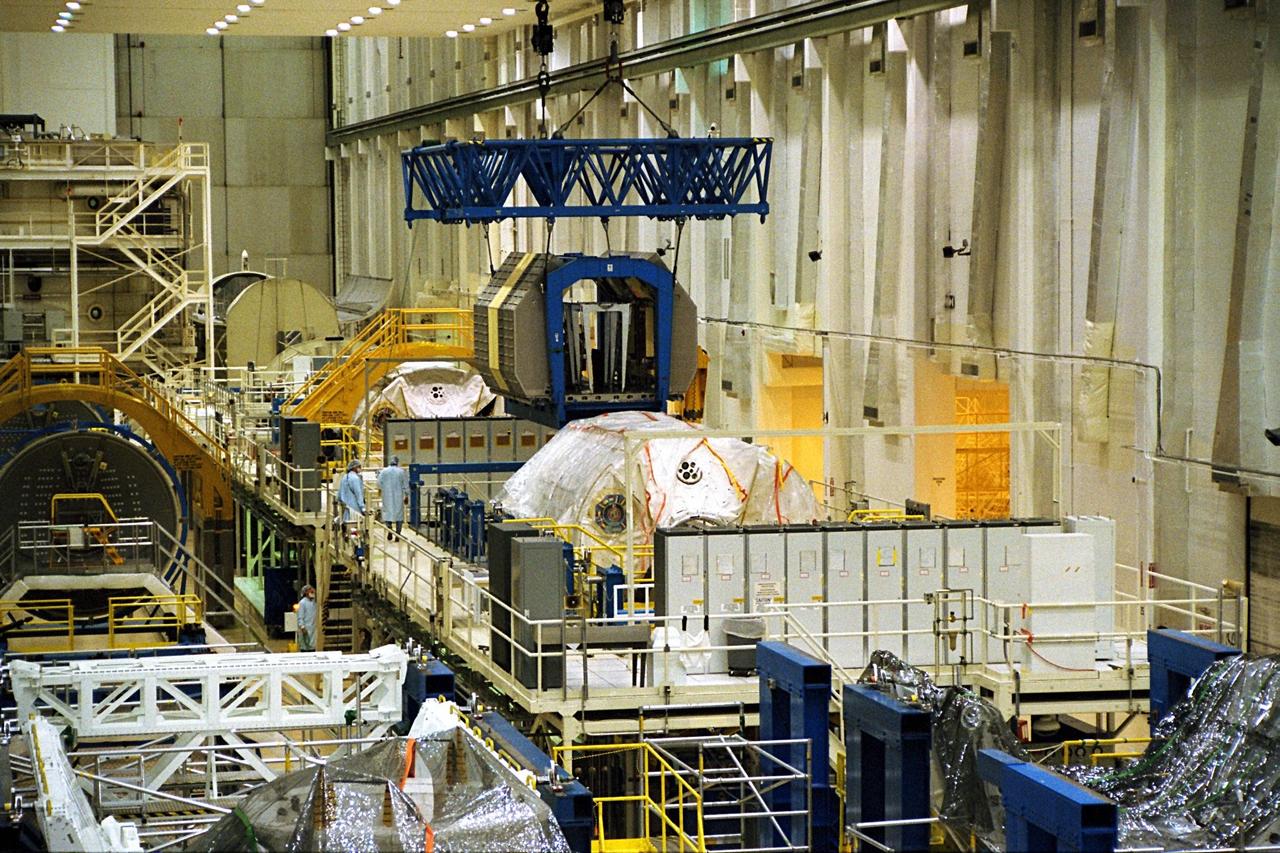
The Neurolab payload for STS-90, scheduled to launch aboard the Shuttle Columbia from Kennedy Space Center (KSC) on April 2, 1998, is moved to its workstand in the Operations and Checkout Building at KSC. Investigations during the Neurolab mission will focus on the effects of microgravity on the nervous system. Specifically, experiments will study the adaptation of the vestibular system, the central nervous system, and the pathways that control the ability to sense location in the absence of gravity, as well as the effect of microgravity on a developing nervous system. The crew of STS-90 will include Commander Richard Searfoss, Pilot Scott Altman, Mission Specialists Richard Linnehan, Dafydd (Dave) Williams, M.D., and Kathryn (Kay) Hire, and Payload Specialists Jay Buckey, M.D., and James Pawelczyk, Ph.D
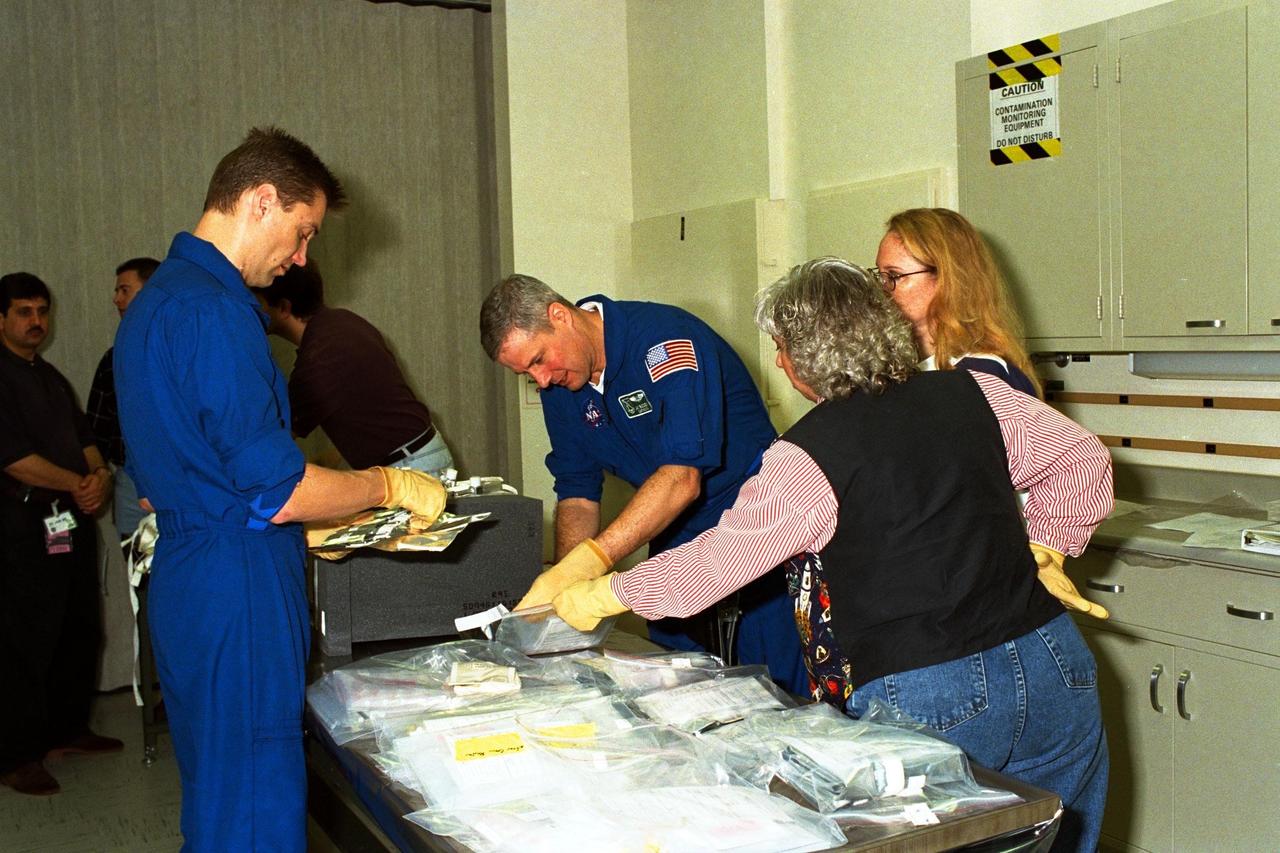
STS-90 Payload Specialists James Pawelczyk, Ph.D. (at left), and Jay Buckey Jr., M.D., examine items to be used during the Crew Equipment Interface Test (CEIT) in Kennedy Space Center's (KSC's) Operations and Checkout Building, where the Neurolab payload is undergoing processing. The CEIT gives astronauts an opportunity to get a hands-on look at the payloads with which they will be working on-orbit. STS-90 is scheduled to launch aboard the Shuttle Columbia from KSC on April 2. Investigations during the Neurolab mission will focus on the effects of microgravity on the nervous system. Specifically, experiments will study the adaptation of the vestibular system, the central nervous system, and the pathways that control the ability to sense location in the absence of gravity, as well as the effect of microgravity on a developing nervous system
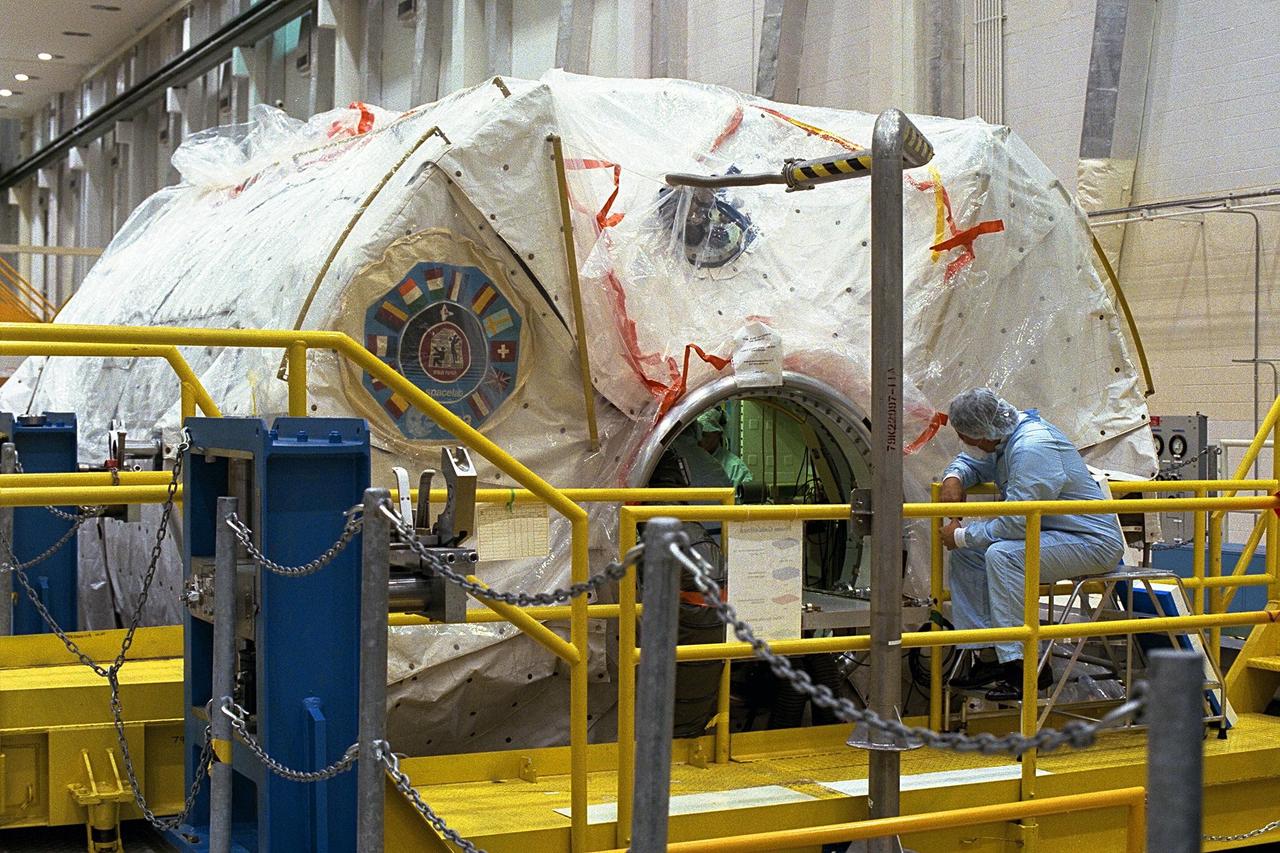
The Neurolab payload for STS-90, scheduled to launch aboard the Shuttle Columbia from Kennedy Space Center (KSC) on April 2, 1998, undergoes further processing in the Operations and Checkout Building at KSC. Investigations during the Neurolab mission will focus on the effects of microgravity on the nervous system. Specifically, experiments will study the adaptation of the vestibular system, the central nervous system, and the pathways that control the ability to sense location in the absence of gravity, as well as the effect of microgravity on a developing nervous system. The crew of STS-90 will include Commander Richard Searfoss, Pilot Scott Altman, Mission Specialists Richard Linnehan, Dafydd (Dave) Williams, M.D., and Kathryn (Kay) Hire, and Payload Specialists Jay Buckey, M.D., and James Pawelczyk, Ph.D
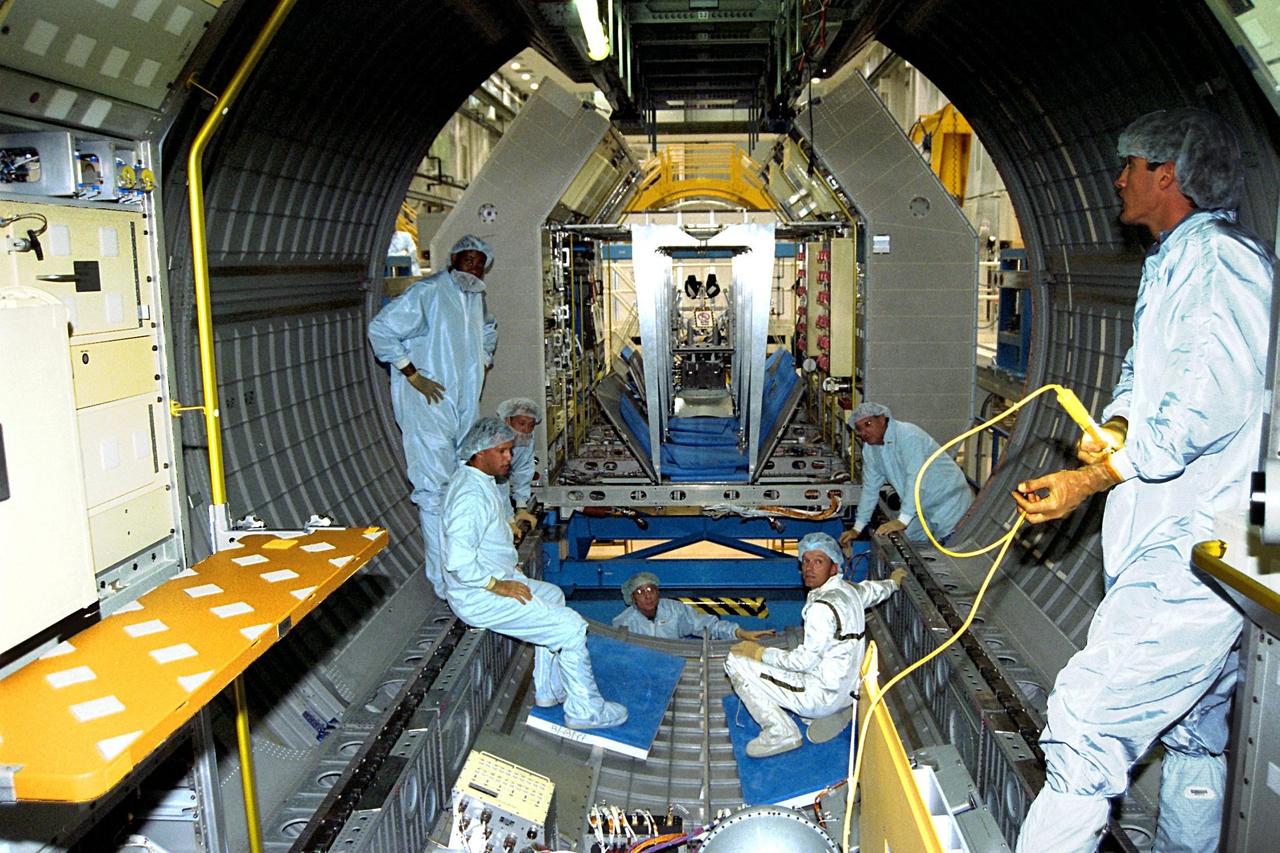
The Neurolab payload for STS-90, scheduled to launch aboard the Shuttle Columbia from Kennedy Space Center (KSC) on April 2, 1998, is installed in the Spacelab module by Boeing technicians in the Operations and Checkout Building at KSC. Investigations during the Neurolab mission will focus on the effects of microgravity on the nervous system. Specifically, experiments will study the adaptation of the vestibular system, the central nervous system, and the pathways that control the ability to sense location in the absence of gravity, as well as the effect of microgravity on a developing nervous system. The crew of STS-90 will include Commander Richard Searfoss, Pilot Scott Altman, Mission Specialists Richard Linnehan, Dafydd (Dave) Williams, M.D., and Kathryn (Kay) Hire, and Payload Specialists Jay Buckey, M.D., and James Pawelczyk, Ph.D
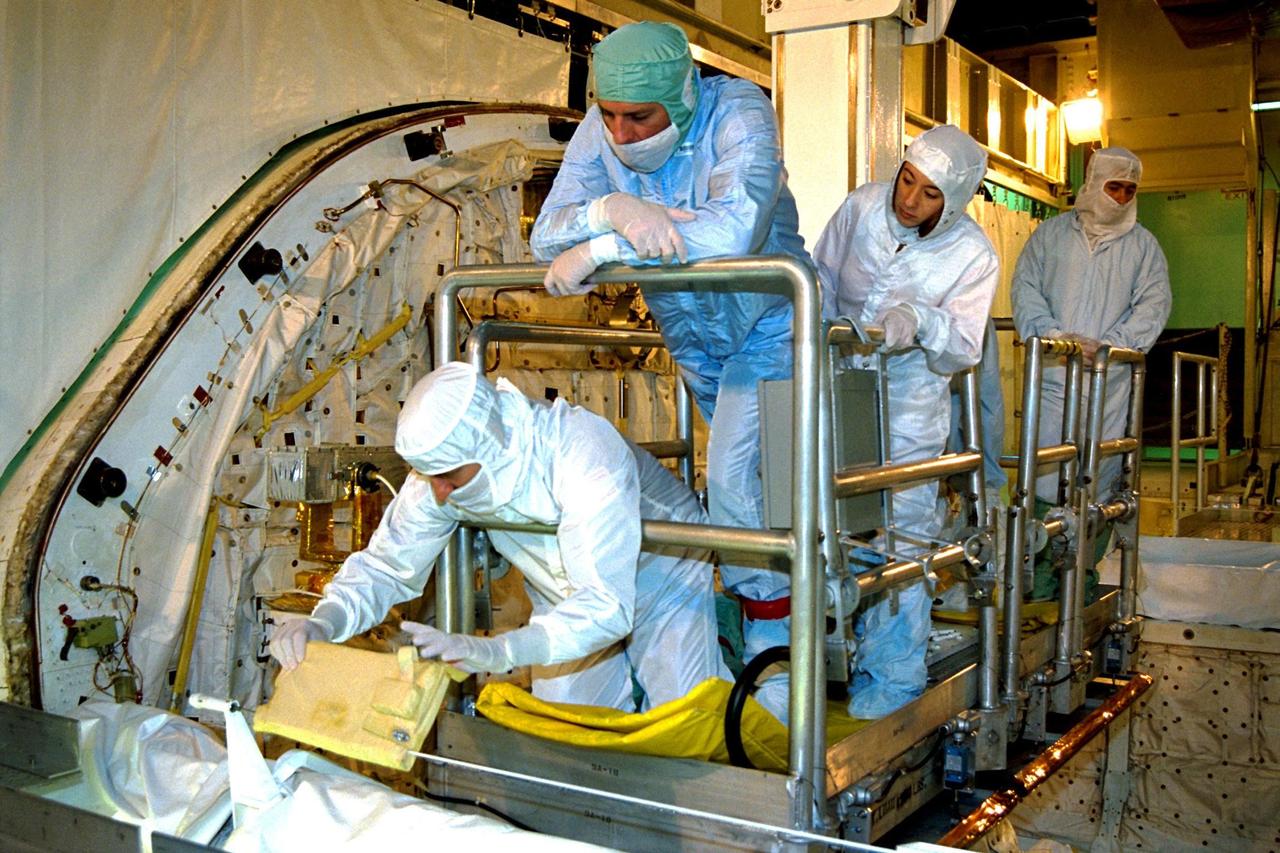
Members of the STS-90 crew participate in the Crew Equipment Interface Test (CEIT) in Kennedy Space Center's Orbiter Processing Facility Bay 3. The CEIT gives astronauts an opportunity to get a hands-on look at the payloads with which they will be working on-orbit. Investigations during the STS-90 Neurolab mission will focus on the effects of microgravity on the nervous system. Specifically, experiments will study the adaptation of the vestibular system, the central nervous system, and the pathways that control the ability to sense location in the absence of gravity, as well as the effect of microgravity on a developing nervous system. The crew of STS-90, slated for launch in April, will include Commander Richard Searfoss, Pilot Scott Altman, Mission Specialists Richard Linnehan, Dafydd (Dave) Williams, M.D., and Kathryn (Kay) Hire, and Payload Specialists Jay Buckey, M.D., and James Pawelczyk, Ph.D

The Neurolab payload for STS-90, scheduled to launch aboard the Shuttle Columbia from Kennedy Space Center (KSC) on April 2, 1998, is moved to its workstand in the Operations and Checkout Building at KSC. Investigations during the Neurolab mission will focus on the effects of microgravity on the nervous system. Specifically, experiments will study the adaptation of the vestibular system, the central nervous system, and the pathways that control the ability to sense location in the absence of gravity, as well as the effect of microgravity on a developing nervous system. The crew of STS-90 will include Commander Richard Searfoss, Pilot Scott Altman, Mission Specialists Richard Linnehan, Dafydd (Dave) Williams, M.D., and Kathryn (Kay) Hire, and Payload Specialists Jay Buckey, M.D., and James Pawelczyk, Ph.D
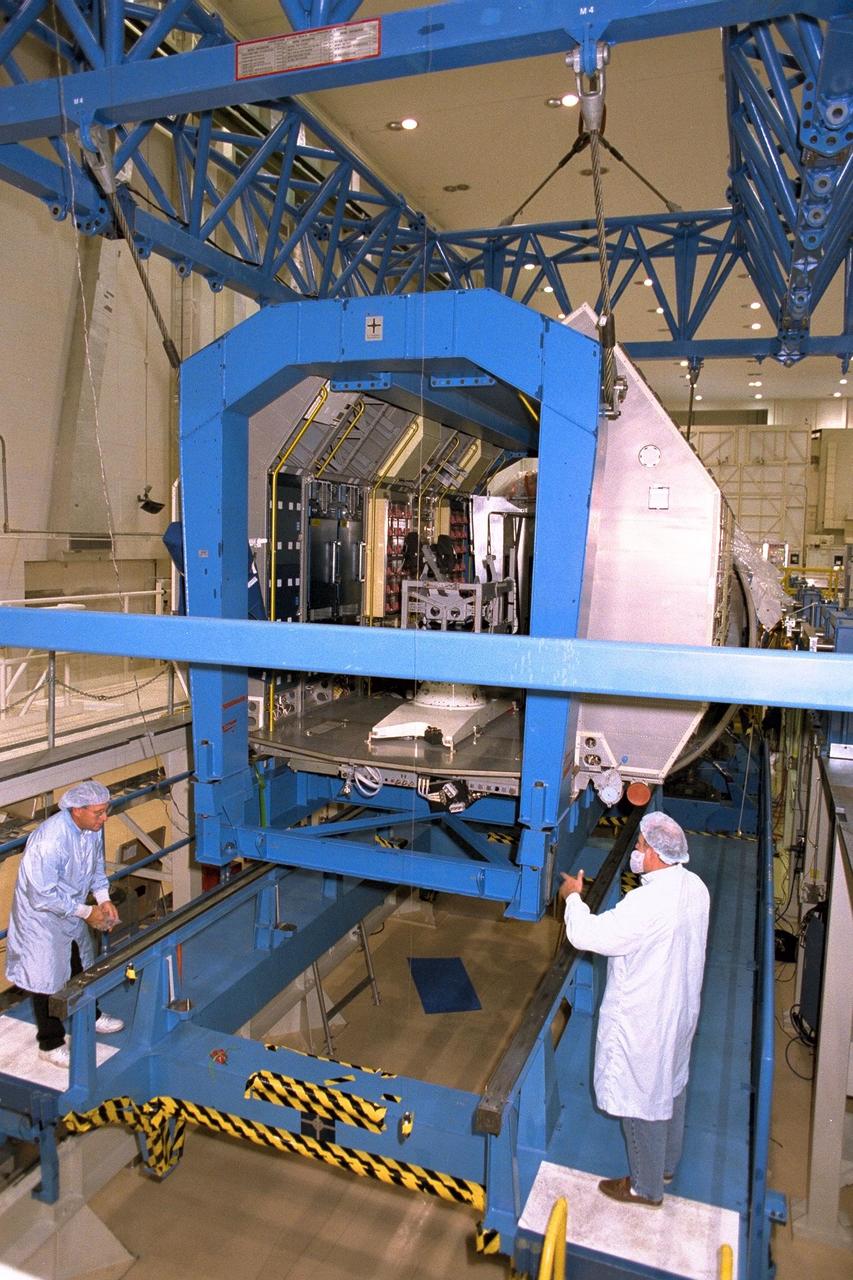
The Neurolab payload for STS-90, scheduled to launch aboard the Shuttle Columbia from Kennedy Space Center (KSC) on April 2, 1998, is moved to its workstand in the Operations and Checkout Building at KSC. Investigations during the Neurolab mission will focus on the effects of microgravity on the nervous system. Specifically, experiments will study the adaptation of the vestibular system, the central nervous system, and the pathways that control the ability to sense location in the absence of gravity, as well as the effect of microgravity on a developing nervous system. The crew of STS-90 will include Commander Richard Searfoss, Pilot Scott Altman, Mission Specialists Richard Linnehan, Dafydd (Dave) Williams, M.D., and Kathryn (Kay) Hire, and Payload Specialists Jay Buckey, M.D., and James Pawelczyk, Ph.D
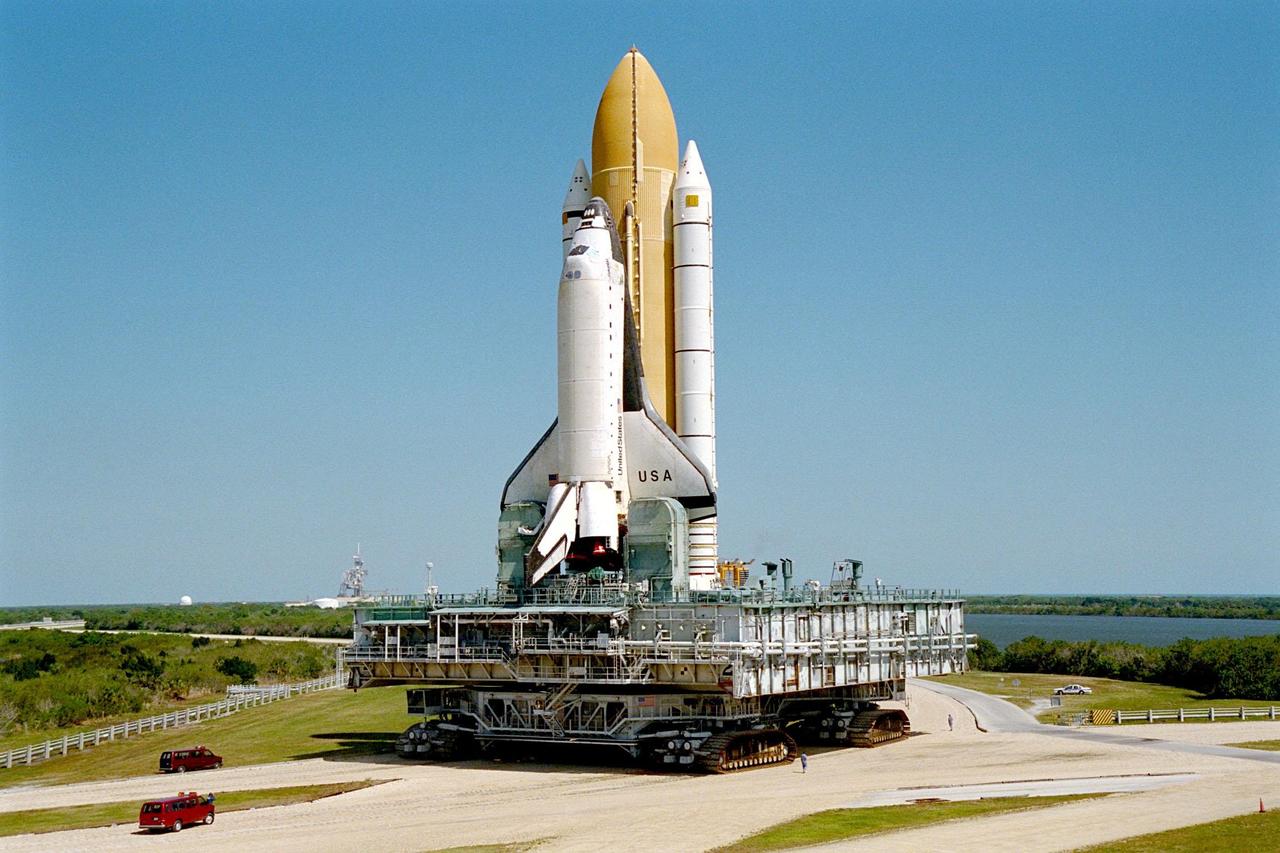
KENNEDY SPACE CENTER, FLA. -- The Space Shuttle Columbia continues its morning rollout from the Vehicle Assembly Building to Launch Pad 39B in preparation for the STS-90 mission. The Neurolab experiments are the primary payload on this nearly 17-day space flight. Investigations during the Neurolab mission will focus on the effects of microgravity on the nervous system. Specifically, experiments will study the adaptation of the vestibular system, the central nervous system, and the pathways that control the ability to sense location in the absence of gravity, as well as the effect of microgravity on a developing nervous system. The crew of STS-90, slated for launch April 16 at 2:19 p.m. EDT, includes Commander Richard Searfoss, Pilot Scott Altman, Mission Specialists Richard Linnehan, Dafydd (Dave) Williams, M.D., and Kathryn (Kay) Hire, and Payload Specialists Jay Buckey, M.D., and James Pawelczyk, Ph.D
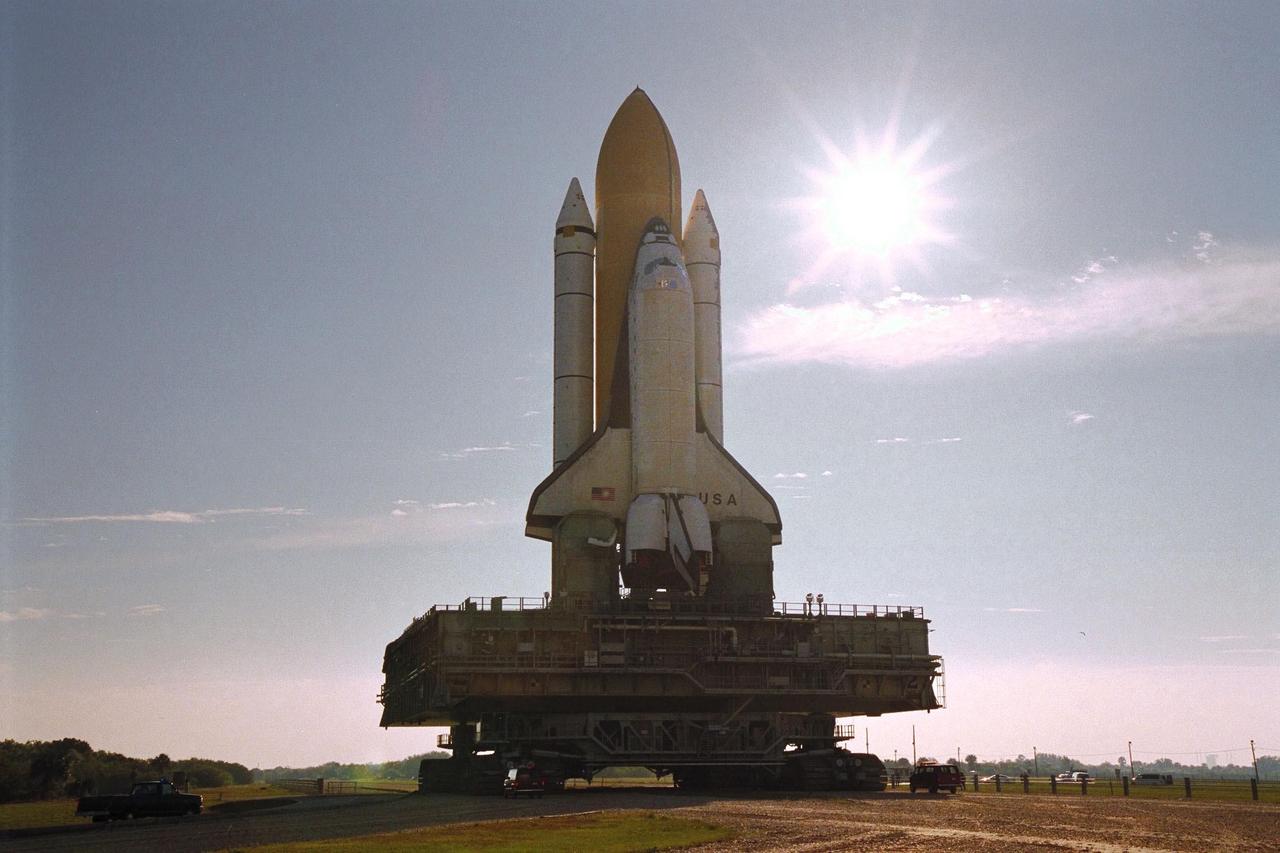
KENNEDY SPACE CENTER, Fla. -- The Space Shuttle Columbia continues its morning rollout from the Vehicle Assembly Building to Launch Pad 39B in preparation for the STS-90 mission. The Neurolab experiments are primary payload on this nearly 17-day space flight. Investigations during the Neurolab mission will focus on the effects of microgravity on the nervous system. Specifically, experiments will study the adaptation of the vestibular system, the central nervous system, and the pathways that control the ability to sense location in the absence of gravity, as well as the effect of microgravity on a developing nervous system. The crew of STS-90, slated for launch April 16 at 2:19 p.m. EDT, includes Commander Richard Searfoss, Pilot Scott Altman, Mission Specialists Richard Linnehan, Dafydd (Dave) Williams, M.D., and Kathryn (Kay) Hire, and Payload Specialists Jay Buckey, M.D., and James Pawelczyk, Ph.D
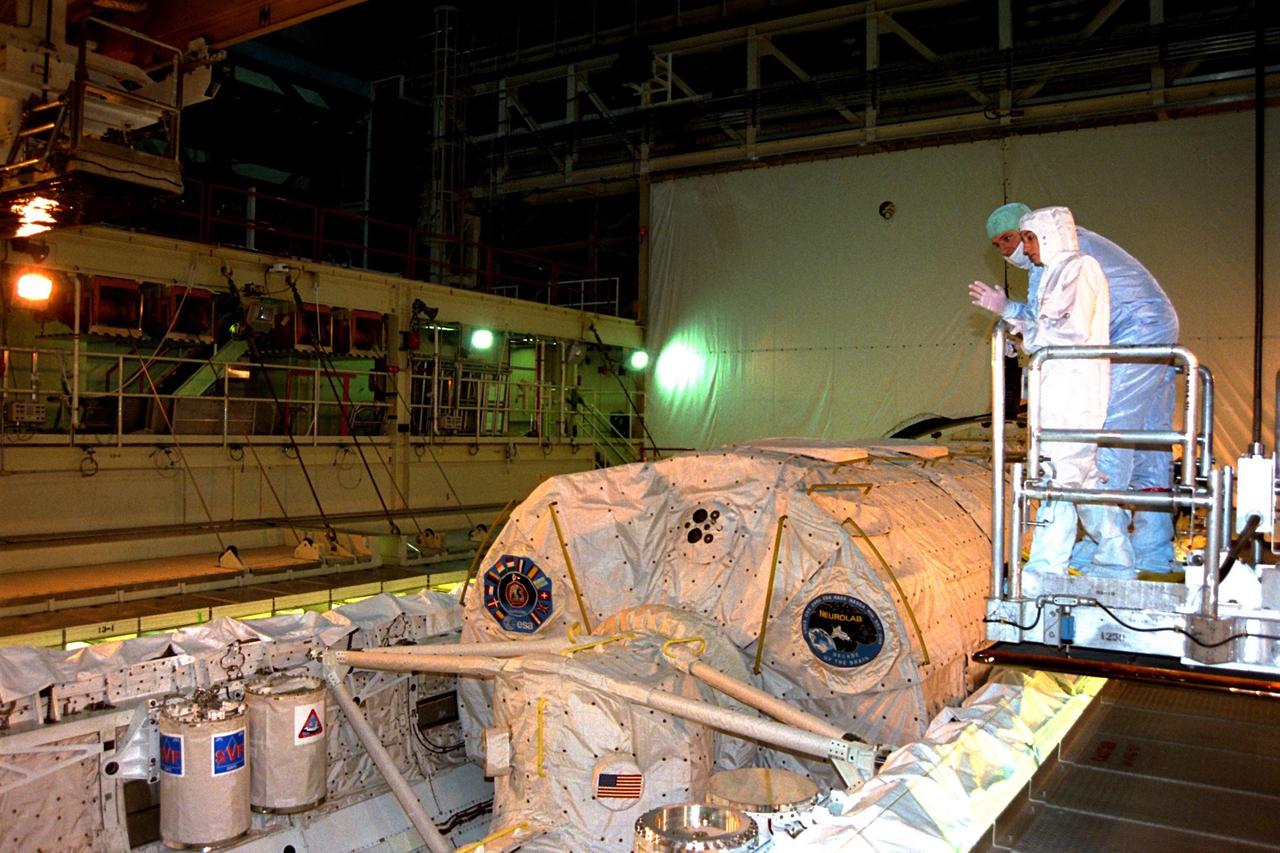
Stacie Greene, an extravehicular activity trainer from Johnson Space Center, discusses the STS-90 Neurolab mission with Mission Specialist Richard Linnehan overlooking Columbia's payload bay. The crew of STS-90 participated in the Crew Equipment Interface Test (CEIT) in Kennedy Space Center's Orbiter Processing Facility Bay 3. The CEIT gives astronauts an opportunity to get a hands-on look at the payloads with which they will be working on-orbit. Investigations during the STS-90 Neurolab mission will focus on the effects of microgravity on the nervous system. Specifically, experiments will study the adaptation of the vestibular system, the central nervous system, and the pathways that control the ability to sense location in the absence of gravity, as well as the effect of microgravity on a developing nervous system. STS-90 is scheduled for launch on April 16 at 2:19 p.m. EDT
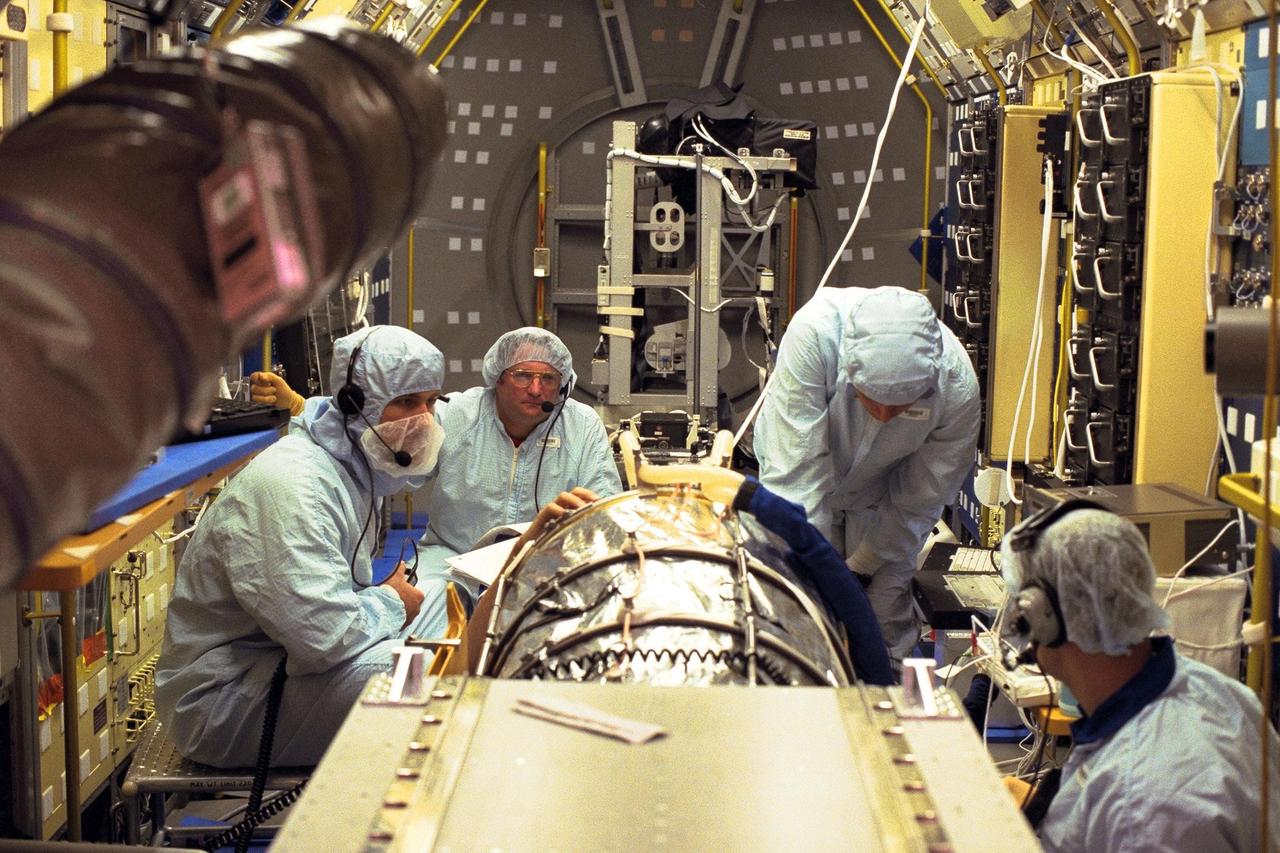
The Neurolab payload for STS-90, scheduled to launch aboard the Shuttle Columbia from Kennedy Space Center (KSC) on April 2, 1998, undergoes further processing in the Operations and Checkout Building at KSC. Investigations during the Neurolab mission will focus on the effects of microgravity on the nervous system. Specifically, experiments will study the adaptation of the vestibular system, the central nervous system, and the pathways that control the ability to sense location in the absence of gravity, as well as the effect of microgravity on a developing nervous system. The crew of STS-90 will include Commander Richard Searfoss, Pilot Scott Altman, Mission Specialists Richard Linnehan, Dafydd (Dave) Williams, M.D., and Kathryn (Kay) Hire, and Payload Specialists Jay Buckey, M.D., and James Pawelczyk, Ph.D
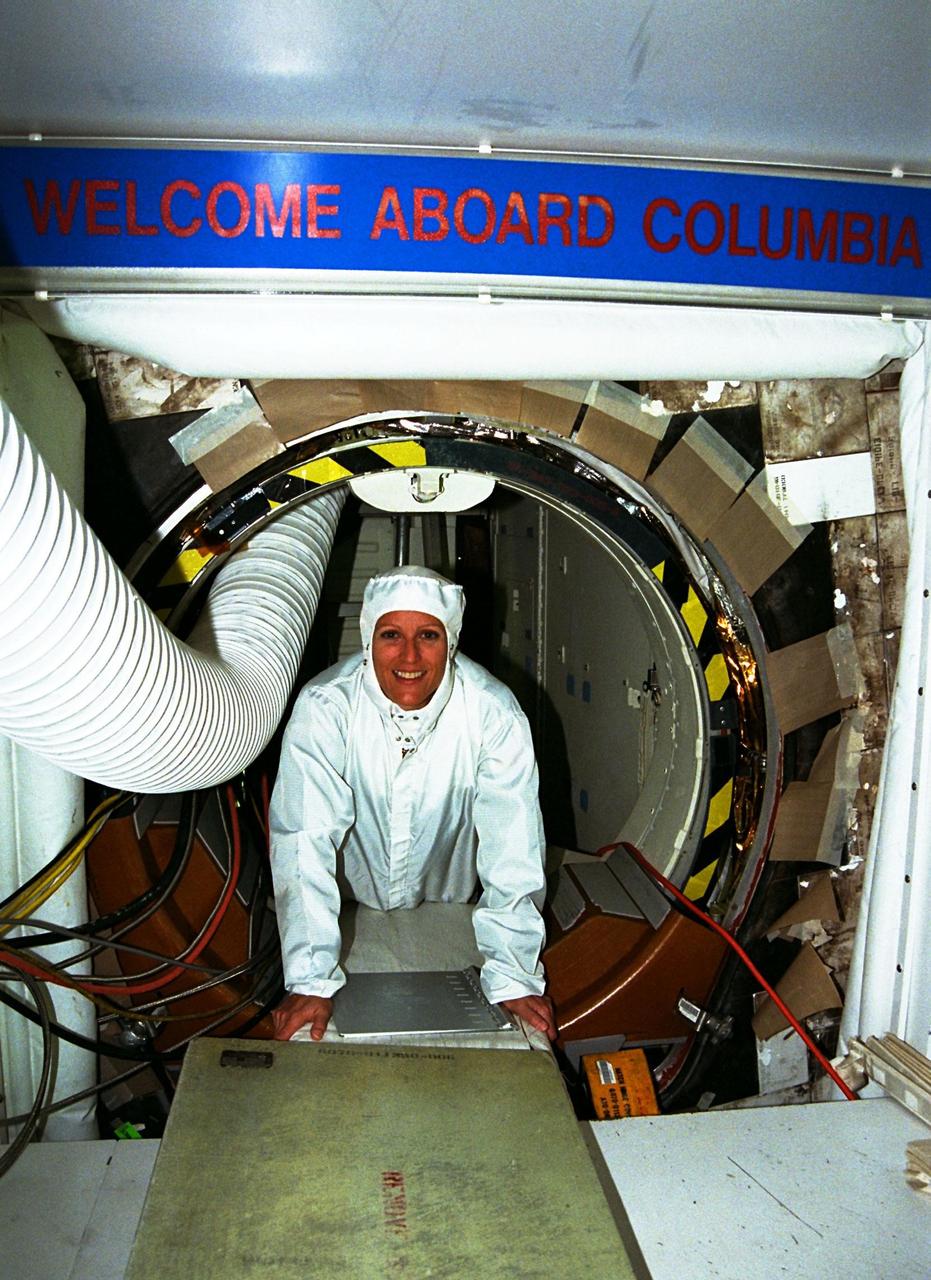
STS-90 Mission Specialist Kathryn (Kay) Hire enjoys the crawl between Columbia and the white room that allows access to the orbiter. The crew of STS-90 recently participated in the Crew Equipment Interface Test (CEIT) in Kennedy Space Center's Orbiter Processing Facility Bay 3. The CEIT gives astronauts an opportunity to get a hands-on look at the payloads with which they will be working on-orbit. Investigations during the STS-90 Neurolab mission will focus on the effects of microgravity on the nervous system. Specifically, experiments will study the adaptation of the vestibular system, the central nervous system, and the pathways that control the ability to sense location in the absence of gravity, as well as the effect of microgravity on a developing nervous system. STS-90, which will be Hire's first Shuttle flight, is scheduled for launch on April 16 at 2:19 p.m. EDT
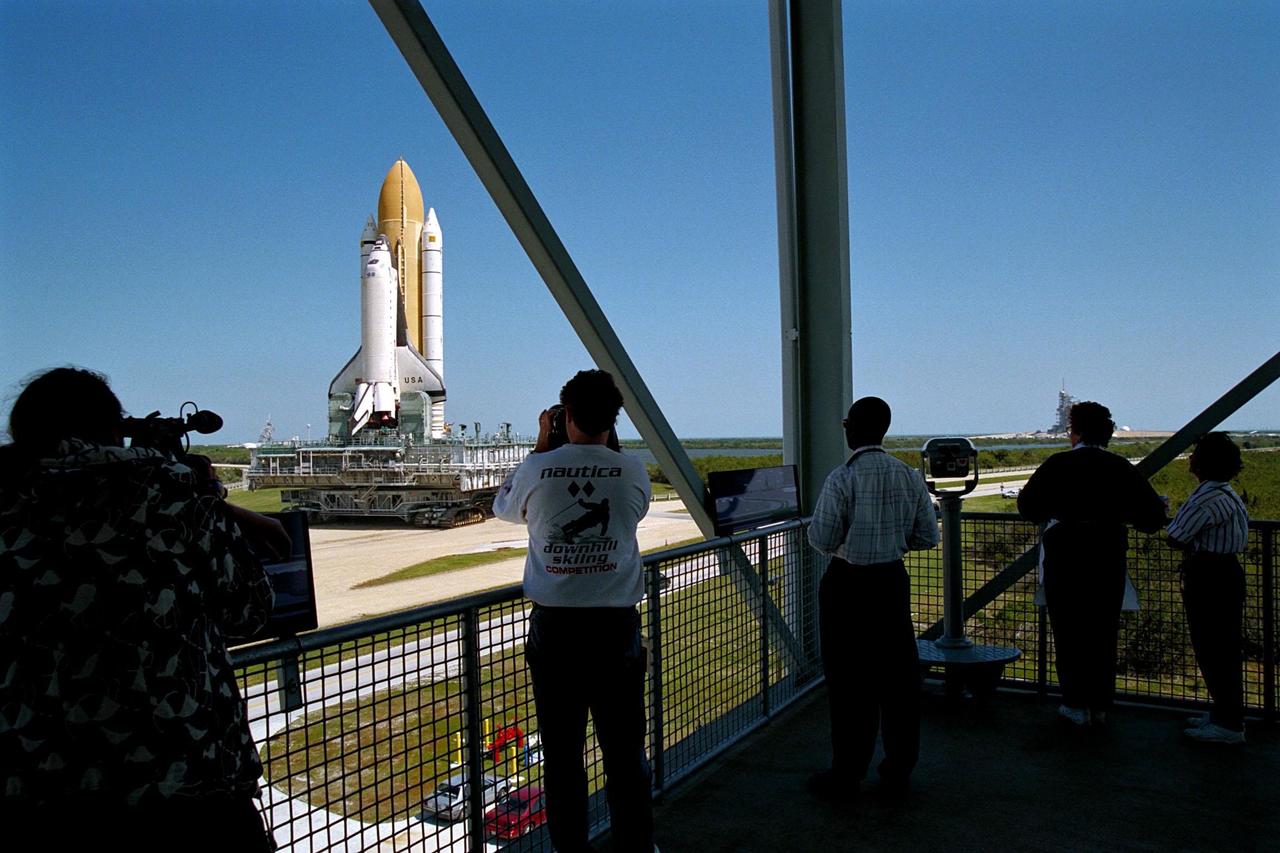
KENNEDY SPACE CENTER, FLA. -- The Space Shuttle Columbia continues its morning rollout past the newly opened tour stop, the Launch Complex 39 Observation Gantry, to Launch Pad 39B in preparation for the STS-90 mission. The Neurolab experiments are the primary payload on this nearly 17-day space flight. Investigations during the Neurolab mission will focus on the effects of microgravity on the nervous system. Specifically, experiments will study the adaptation of the vestibular system, the central nervous system, and the pathways that control the ability to sense location in the absence of gravity, as well as the effect of microgravity on a developing nervous system. The crew of STS-90, slated for launch April 16 at 2:19 p.m. EDT, includes Commander Richard Searfoss, Pilot Scott Altman, Mission Specialists Richard Linnehan, Dafydd (Dave) Williams, M.D., and Kathryn (Kay) Hire, and Payload Specialists Jay Buckey, M.D., and James Pawelczyk, Ph.D

KENNEDY SPACE CENTER, FLA. -- The Space Shuttle Columbia begins its rollout from the Vehicle Assembly Building to Launch Pad 39B in preparation for the STS-90 mission. The Neurolab experiments are the primary payload on this nearly 17-day space flight. Investigations during the Neurolab mission will focus on the effects of microgravity on the nervous system. Specifically, experiments will study the adaptation of the vestibular system, the central nervous system, and the pathways that control the ability to sense location in the absence of gravity, as well as the effect of microgravity on a developing nervous system. The crew of STS-90, slated for launch April 16 at 2:19 p.m. EDT, includes Commander Richard Searfoss, Pilot Scott Altman, Mission Specialists Richard Linnehan, Dafydd (Dave) Williams, M.D., and Kathryn (Kay) Hire, and Payload Specialists Jay Buckey, M.D., and James Pawelczyk, Ph.D
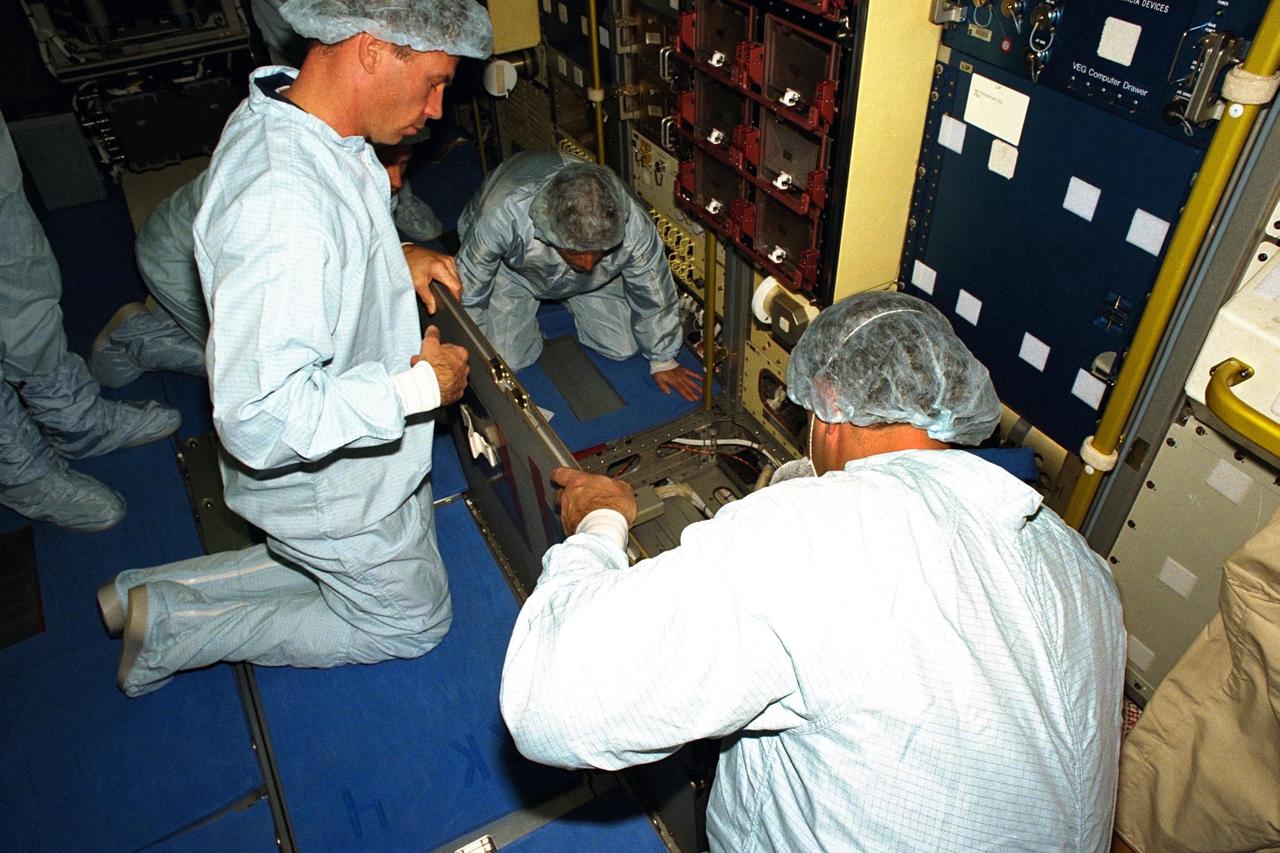
STS-90 Payload Specialist James Pawelczyk, Ph.D., holds up a panel as one of the items used during the Crew Equipment Interface Test (CEIT) in Kennedy Space Center's (KSC's) Operations and Checkout Building, where the Neurolab payload is undergoing processing. The CEIT gives astronauts an opportunity to get a hands-on look at the payloads with which they will be working on-orbit. STS-90 is scheduled to launch aboard the Shuttle Columbia from KSC on April 2. Investigations during the Neurolab mission will focus on the effects of microgravity on the nervous system. Specifically, experiments will study the adaptation of the vestibular system, the central nervous system, and the pathways that control the ability to sense location in the absence of gravity, as well as the effect of microgravity on a developing nervous system
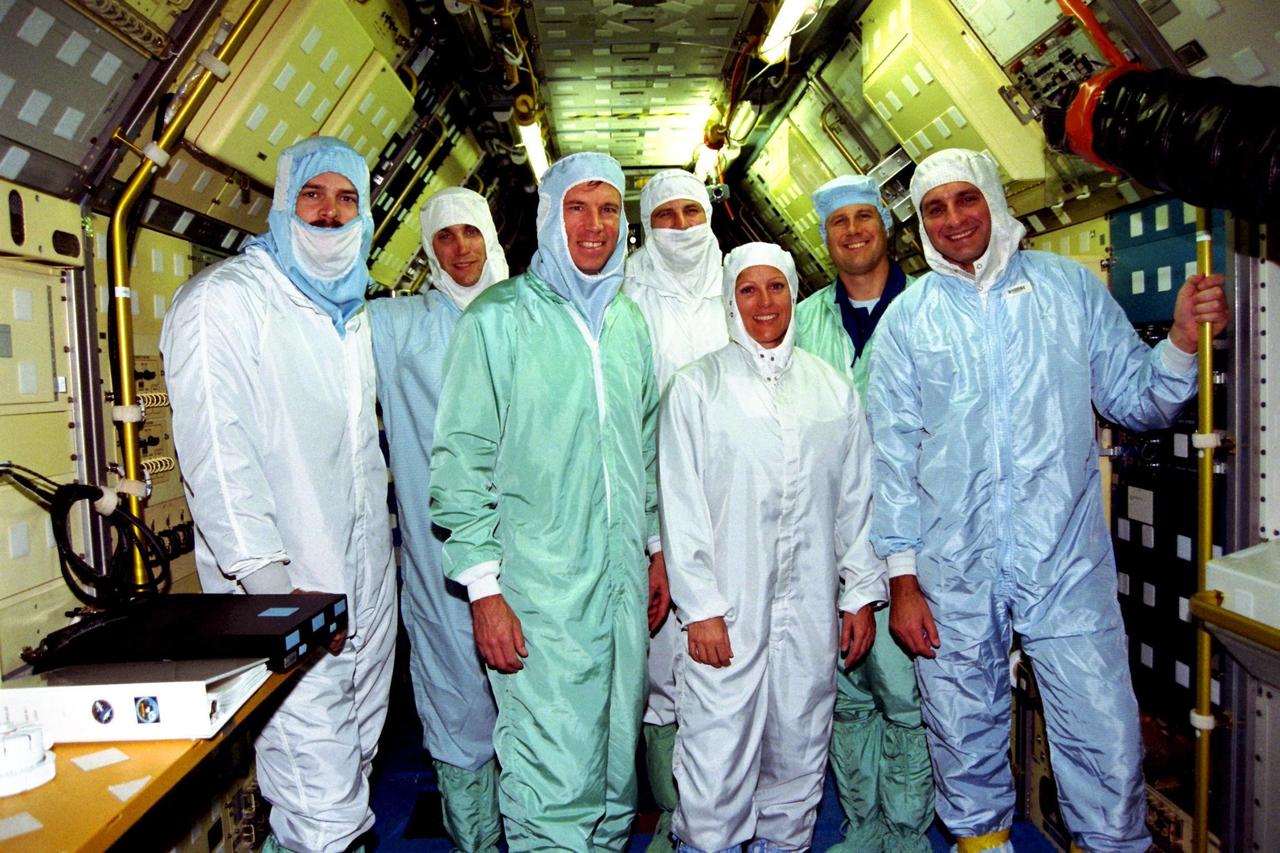
Members of the STS-90 crew participate in the Crew Equipment Interface Test (CEIT) in Kennedy Space Center's Orbiter Processing Facility Bay 3. The CEIT gives astronauts an opportunity to get a hands-on look at the payloads with which they will be working on-orbit. Investigations during the STS-90 Neurolab mission will focus on the effects of microgravity on the nervous system. Specifically, experiments will study the adaptation of the vestibular system, the central nervous system, and the pathways that control the ability to sense location in the absence of gravity, as well as the effect of microgravity on a developing nervous system. The crew of STS-90, slated for launch in April, are, left to right, Pilot Scott Altman; Payload Specialist James Pawelczyk, Ph.D.; Commander Richard Searfoss; Mission Specialists Dafydd (Dave) Williams, M.D., and Kathryn (Kay) Hire; Payload Specialist Jay Buckey, M.D.; and Mission Specialist Richard Linnehan
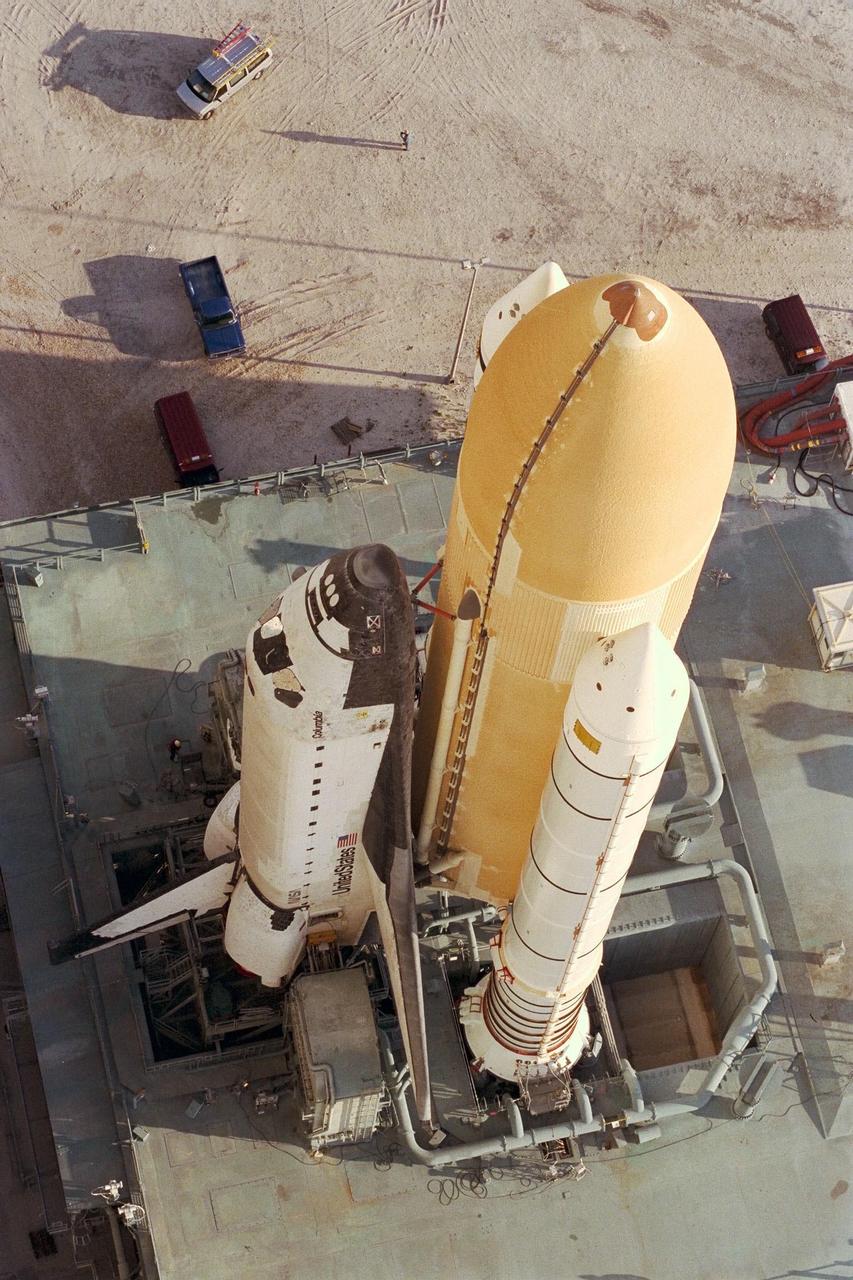
KENNEDY SPACE CENTER, FLA. -- The Space Shuttle Columbia continues its rollout from the Vehicle Assembly Building to Launch Pad 39B in preparation for the STS-90 mission. The Neurolab experiments are the primary payload on this nearly 17-day space flight. Investigations during the Neurolab mission will focus on the effects of microgravity on the nervous system. Specifically, experiments will study the adaptation of the vestibular system, the central nervous system, and the pathways that control the ability to sense location in the absence of gravity, as well as the effect of microgravity on a developing nervous system. The crew of STS-90, slated for launch April 16 at 2:19 p.m. EDT, includes Commander Richard Searfoss, Pilot Scott Altman, Mission Specialists Richard Linnehan, Dafydd (Dave) Williams, M.D., and Kathryn (Kay) Hire, and Payload Specialists Jay Buckey, M.D., and James Pawelczyk, Ph.D
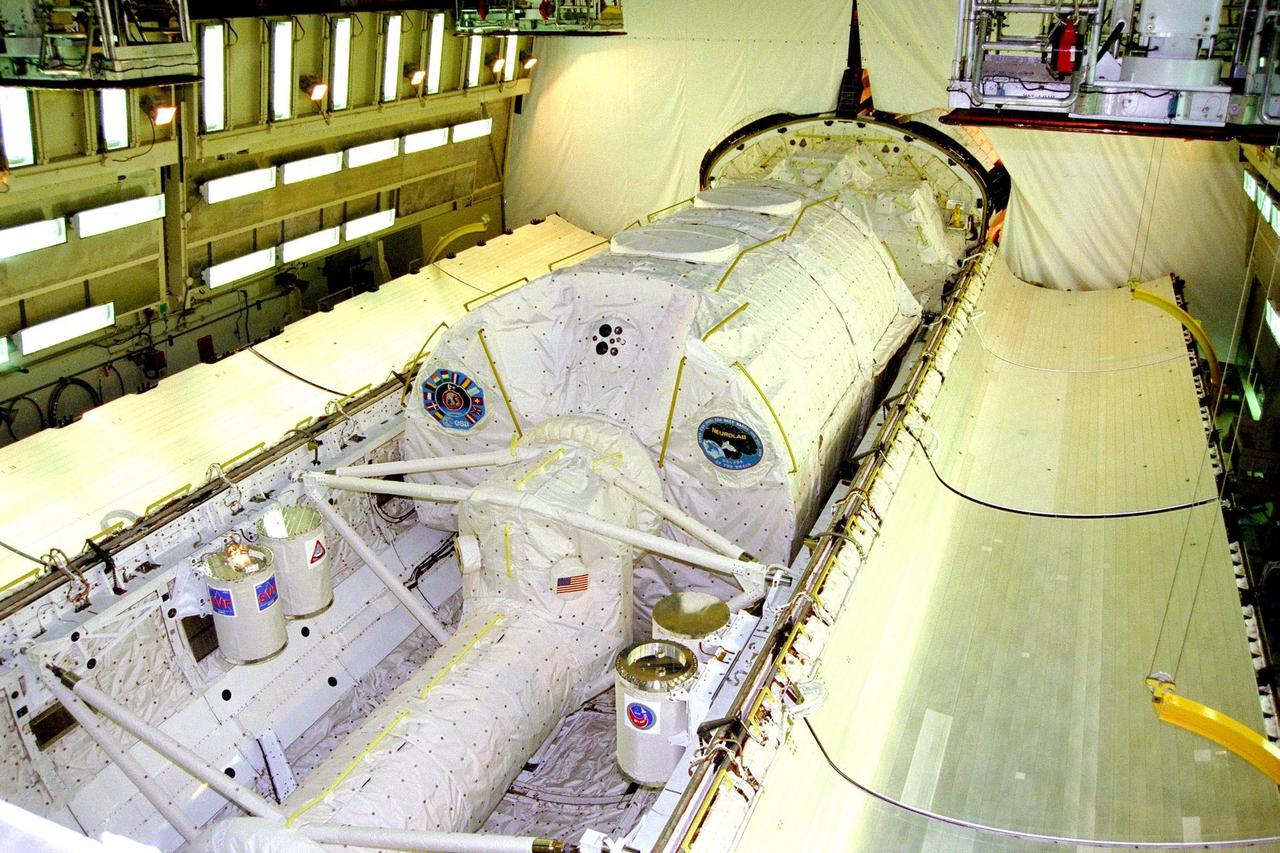
KENNEDY SPACE CENTER, FLA. -- The STS-90 Neurolab payload and four Getaway Specials (GAS) await payload bay door closure in the orbiter Columbia today in Orbiter Processing Facility bay 3. Investigations during the Neurolab mission will focus on the effects of microgravity on the nervous system. Specifically, experiments will study the adaptation of the vestibular system, the central nervous system, and the pathways that control the ability to sense location in the absence of gravity, as well as the effect of microgravity on a developing nervous system. The crew of STS-90, slated for launch in April, will include Commander Richard Searfoss, Pilot Scott Altman, Mission Specialists Richard Linnehan, Dafydd (Dave) Williams, M.D., and Kathryn (Kay) Hire, and Payload Specialists Jay Buckey, M.D., and James Pawelczyk, Ph.D
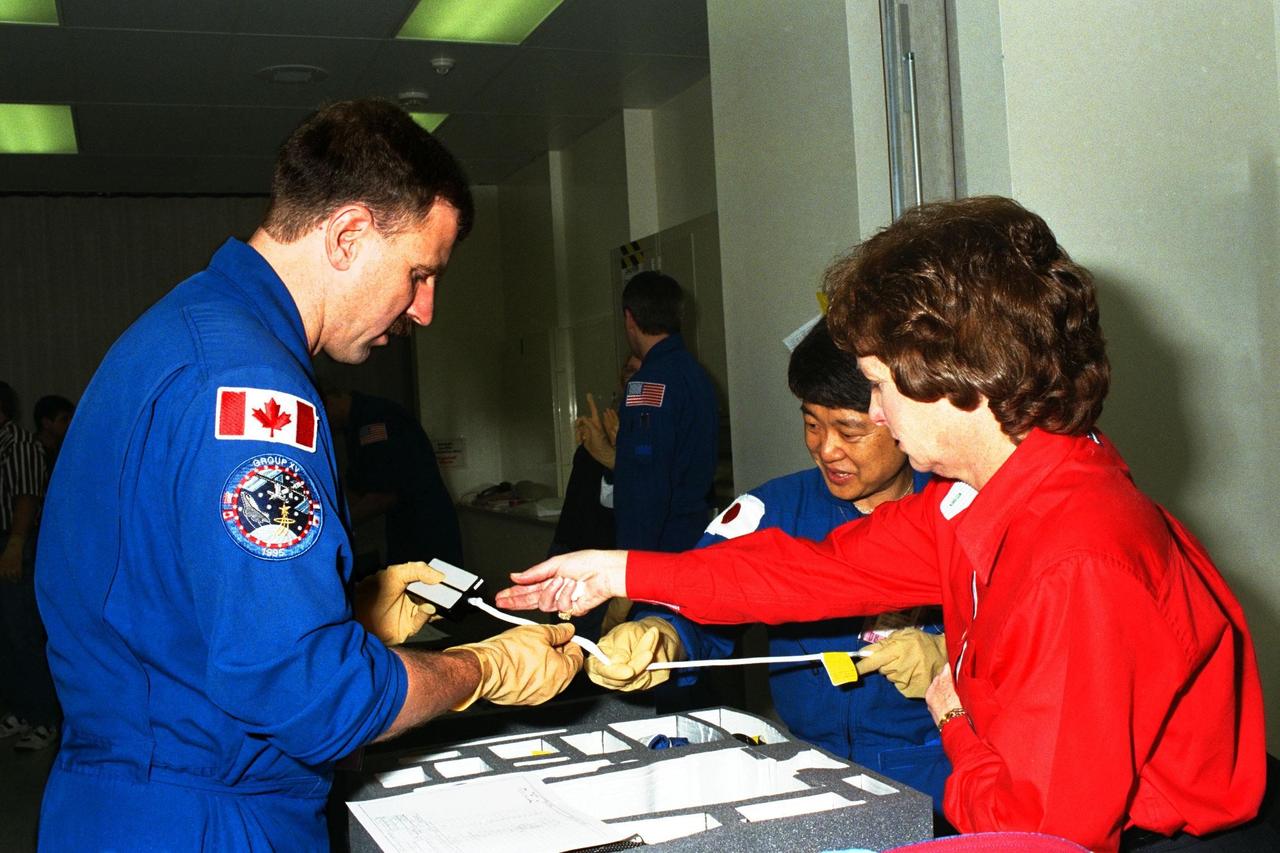
STS-90 Mission Specialist Dafydd "Dave" Rhys Williams, M.D., with the Canadian Space Agency, and back-up Payload Specialist Chiaki Mukai, M.D., Ph.D., with the National Space Development Agency of Japan, examine items to be used during the Crew Equipment Interface Test (CEIT) in Kennedy Space Center's (KSC's) Operations and Checkout Building, where the Neurolab payload is undergoing processing. The CEIT gives astronauts an opportunity to get a hands-on look at the payloads with which they will be working on-orbit. STS-90 is scheduled to launch aboard the Shuttle Columbia from KSC on April 2. Investigations during the Neurolab mission will focus on the effects of microgravity on the nervous system. Specifically, experiments will study the adaptation of the vestibular system, the central nervous system, and the pathways that control the ability to sense location in the absence of gravity, as well as the effect of microgravity on a developing nervous system
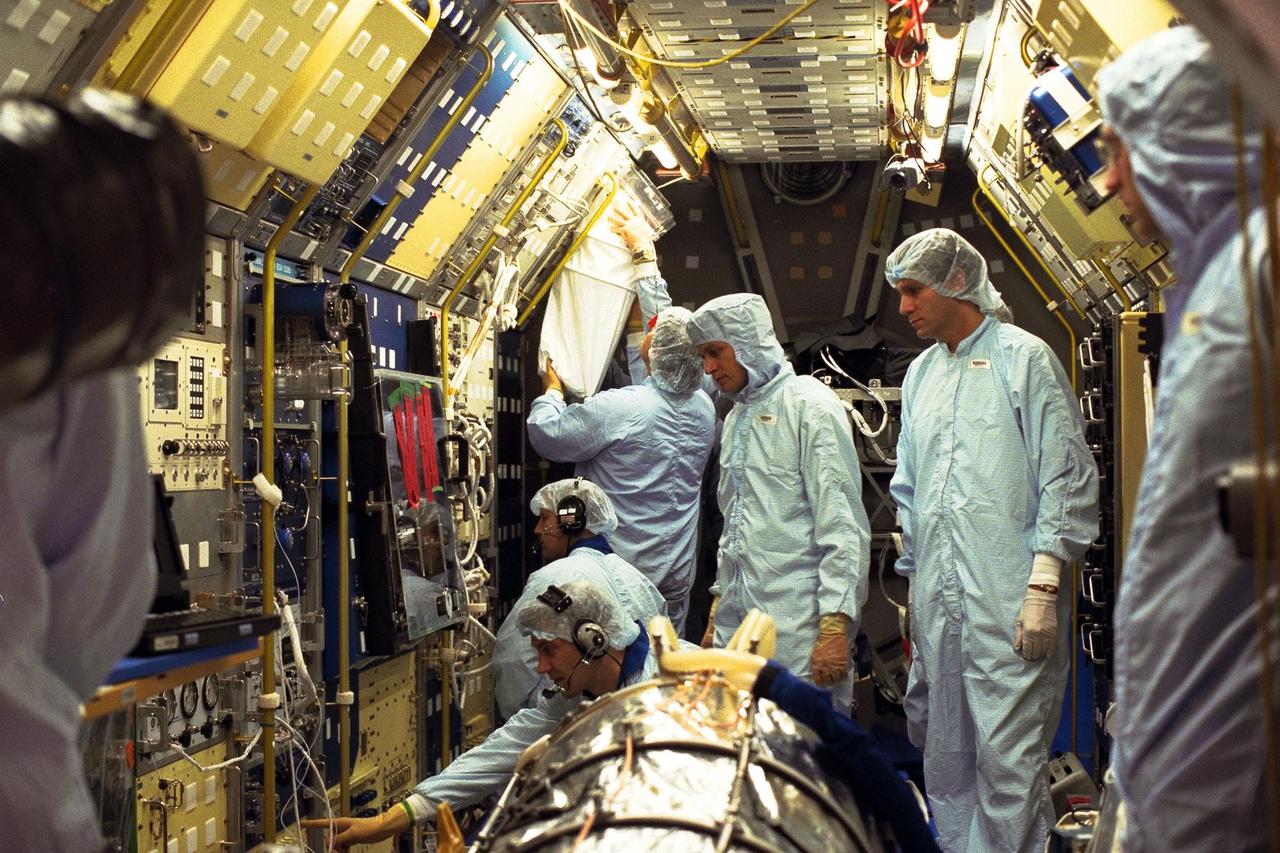
The Neurolab payload for STS-90, scheduled to launch aboard the Shuttle Columbia from Kennedy Space Center (KSC) on April 2, 1998, undergoes further processing in the Operations and Checkout Building at KSC. Investigations during the Neurolab mission will focus on the effects of microgravity on the nervous system. Specifically, experiments will study the adaptation of the vestibular system, the central nervous system, and the pathways that control the ability to sense location in the absence of gravity, as well as the effect of microgravity on a developing nervous system. The crew of STS-90 will include Commander Richard Searfoss, Pilot Scott Altman, Mission Specialists Richard Linnehan, Dafydd (Dave) Williams, M.D., and Kathryn (Kay) Hire, and Payload Specialists Jay Buckey, M.D., and James Pawelczyk, Ph.D
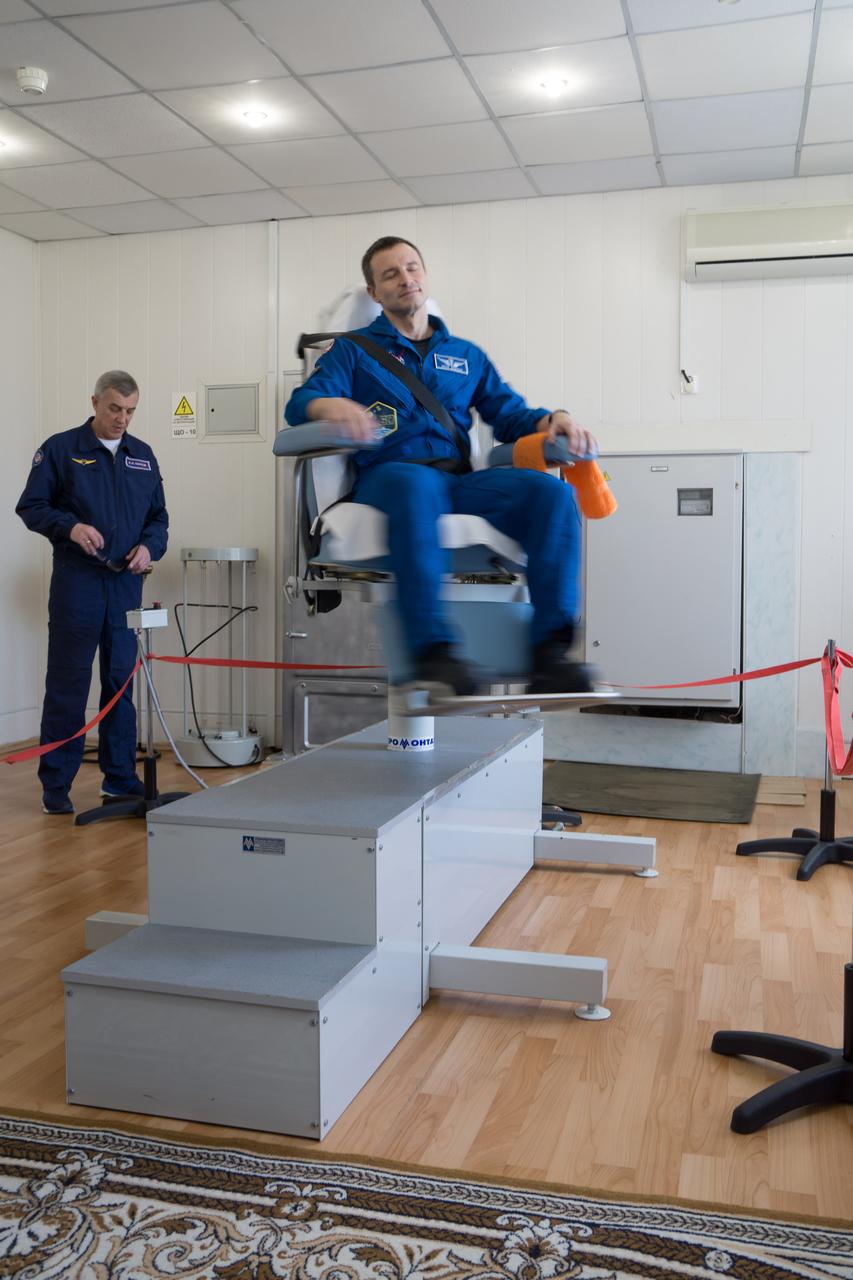
At the Cosmonaut Hotel crew quarters in Baikonur, Kazakhstan, Expedition 59 backup crewmember Drew Morgan of NASA tests his vestibular system in a rotating chair March 7 as part of his pre-launch activities. Morgan, Luca Parmitano of the European Space Agency and Alexander Skvortsov of Roscosmos are the backups to the prime crewmembers, Christina Koch of NASA, Alexey Ovchinin of Roscosmos and Nick Hague of NASA, who will launch March 14, U.S. time, on the Soyuz MS-12 spacecraft from the Baikonur Cosmodrome for a six-and-a-half month mission on the International Space Station...NASA/Victor Zelentsov.
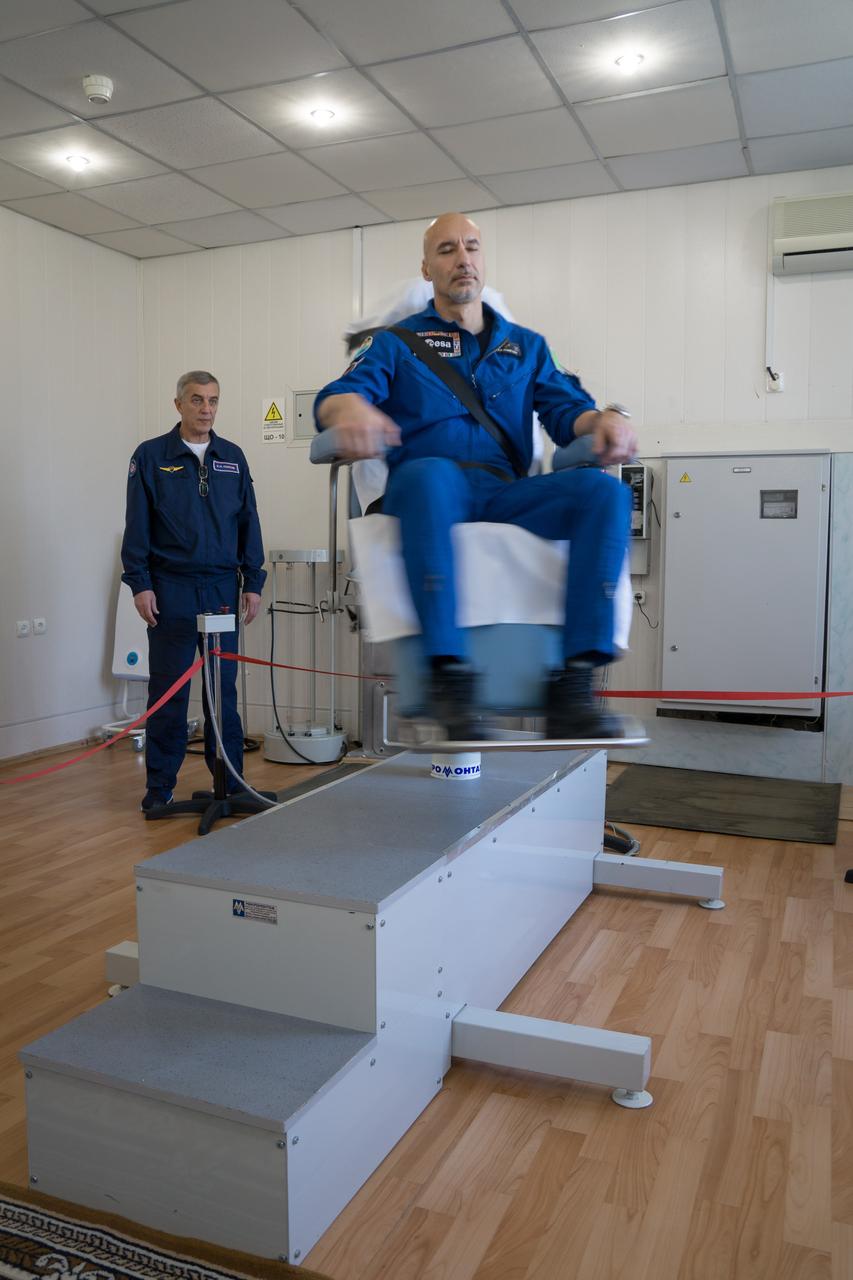
jsc2018e097770 - At the Cosmonaut Hotel crew quarters in Baikonur, Kazakhstan, Expedition 58 backup crewmember Luca Parmitano of the European Space Agency conducts vestibular system response training in a spinning chair Nov. 27 as part of pre-launch training. He is one of the backups to prime crewmembers Anne McClain of NASA, Oleg Kononenko of Roscosmos and David Saint-Jacques of the Canadian Space Agency who will launch Dec. 3 on the Soyuz MS-11 spacecraft from the Baikonur Cosmodrome in Kazakhstan for a six-and-a-half month mission on the International Space Station...NASA/Victor Zelentsov.
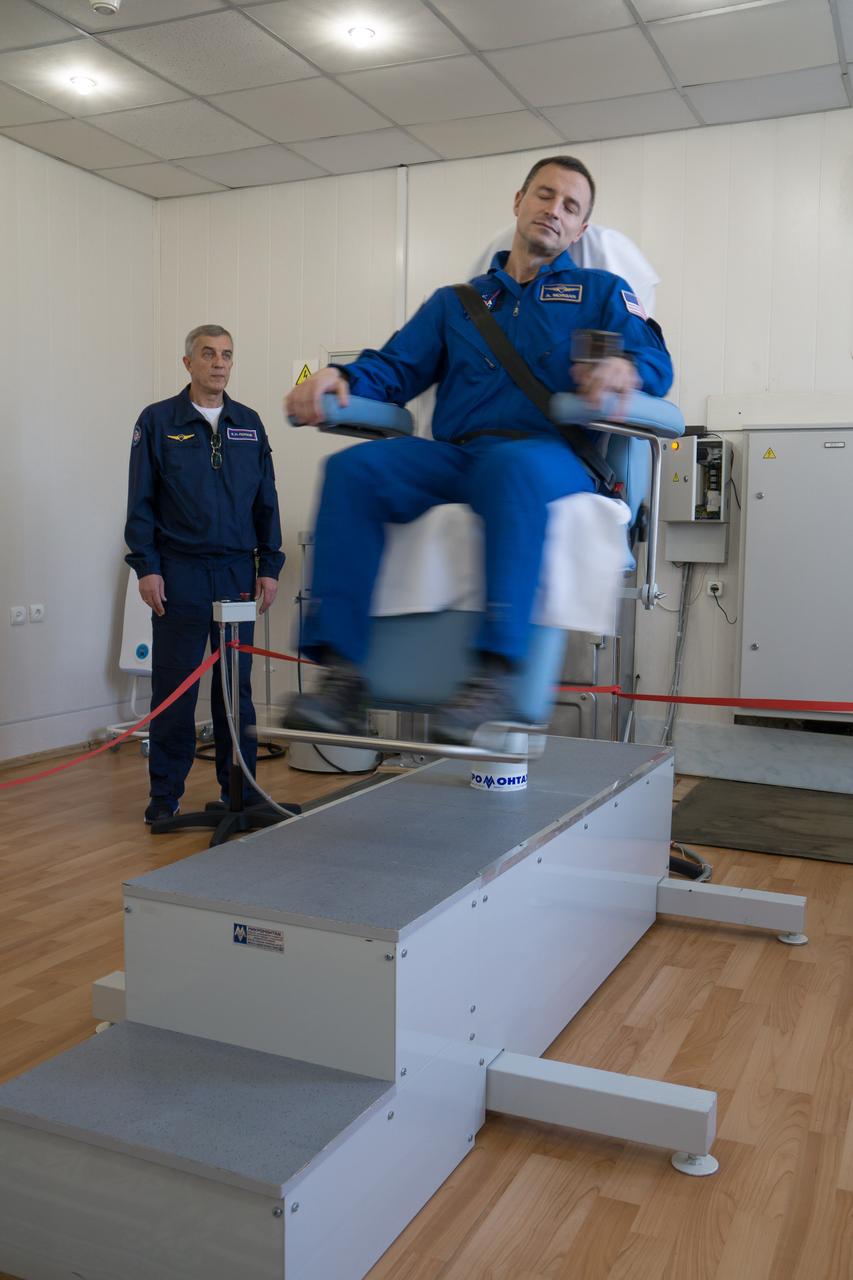
jsc2018e097771 - At the Cosmonaut Hotel crew quarters in Baikonur, Kazakhstan, Expedition 58 backup crewmember Drew Morgan of NASA conducts vestibular system response training in a spinning chair Nov. 27 as part of pre-launch training. He is one of the backups to prime crewmembers Anne McClain of NASA, Oleg Kononenko of Roscosmos and David Saint-Jacques of the Canadian Space Agency who will launch Dec. 3 on the Soyuz MS-11 spacecraft from the Baikonur Cosmodrome in Kazakhstan for a six-and-a-half month mission on the International Space Station...NASA/Victor Zelentsov.

jsc2018e085900 (Oct. 3, 2018) --- Expedition 57 backup crew member David Saint-Jacques of the Canadian Space Agency takes a spin in a rotating chair to test his vestibular system as part of pre-launch activities, Wednesday, Oct. 3, 2018 at the Cosmonaut Hotel in Baikonur, Kazakhstan. Alexey Ovchinin of Roscosmos and Nick Hague of NASA are scheduled to launch on Oct. 11 onboard the Soyuz MS-10 spacecraft from the Baikonur Cosmodrome in Kazakhstan for a six-month mission on the International Space Station. Photo Credit: (NASA/Victor Zelentsov)
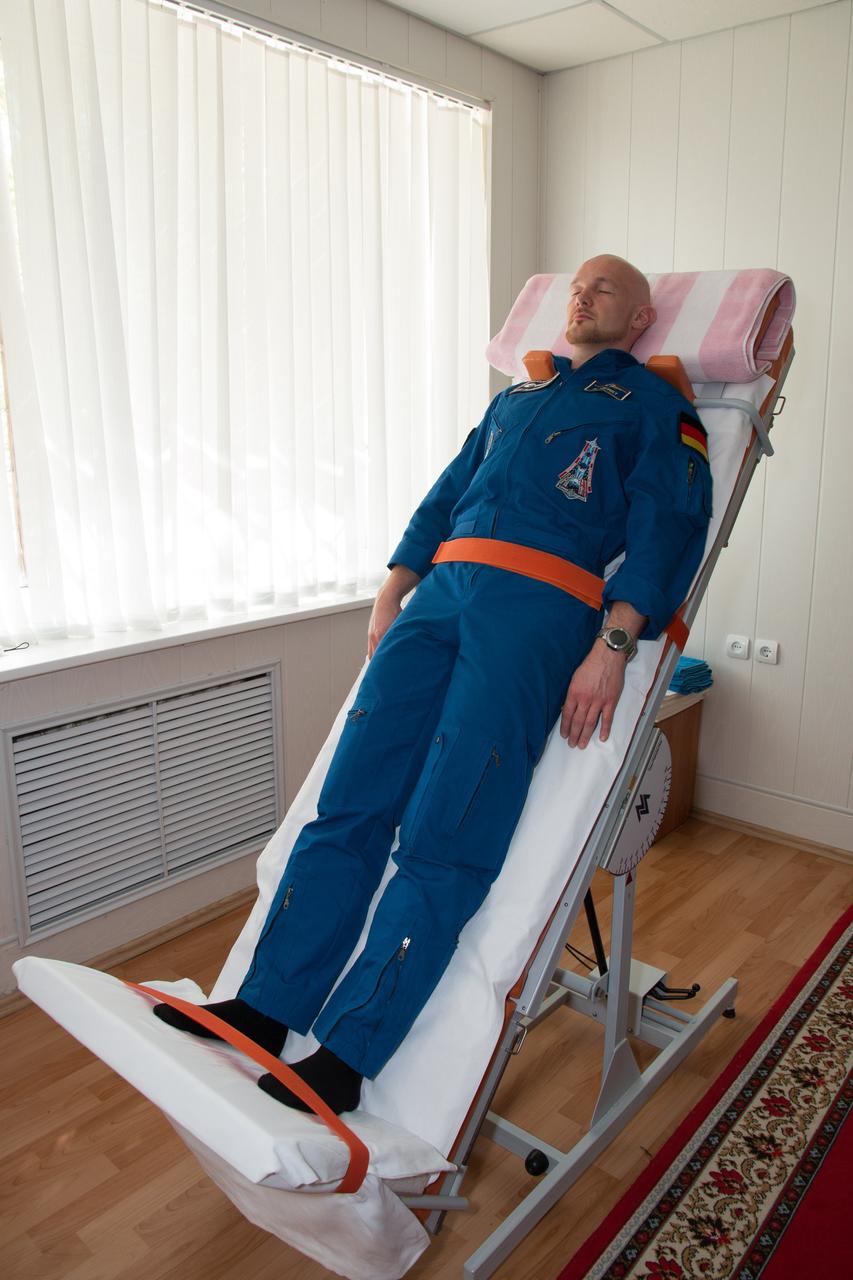
11-57-29-2: At the Cosmonaut Hotel crew quarters in Baikonur, Kazakhstan, Expedition 40/41 Flight Engineer Alexander Gerst of the European Space Agency takes a turn on a tilt table May 21 as he tests his vestibular system during pre-launch medical tests. Gerst, Soyuz Commander Max Suraev of the Russian Federal Space Agency (Roscosmos) and Flight Engineer Reid Wiseman of NASA will launch on May 29, Kazakh time, on the Soyuz TMA-13M spacecraft from the Baikonur Cosmodrome for a 5 ½ month mission on the International Space Station. NASA/Victor Zelentsov
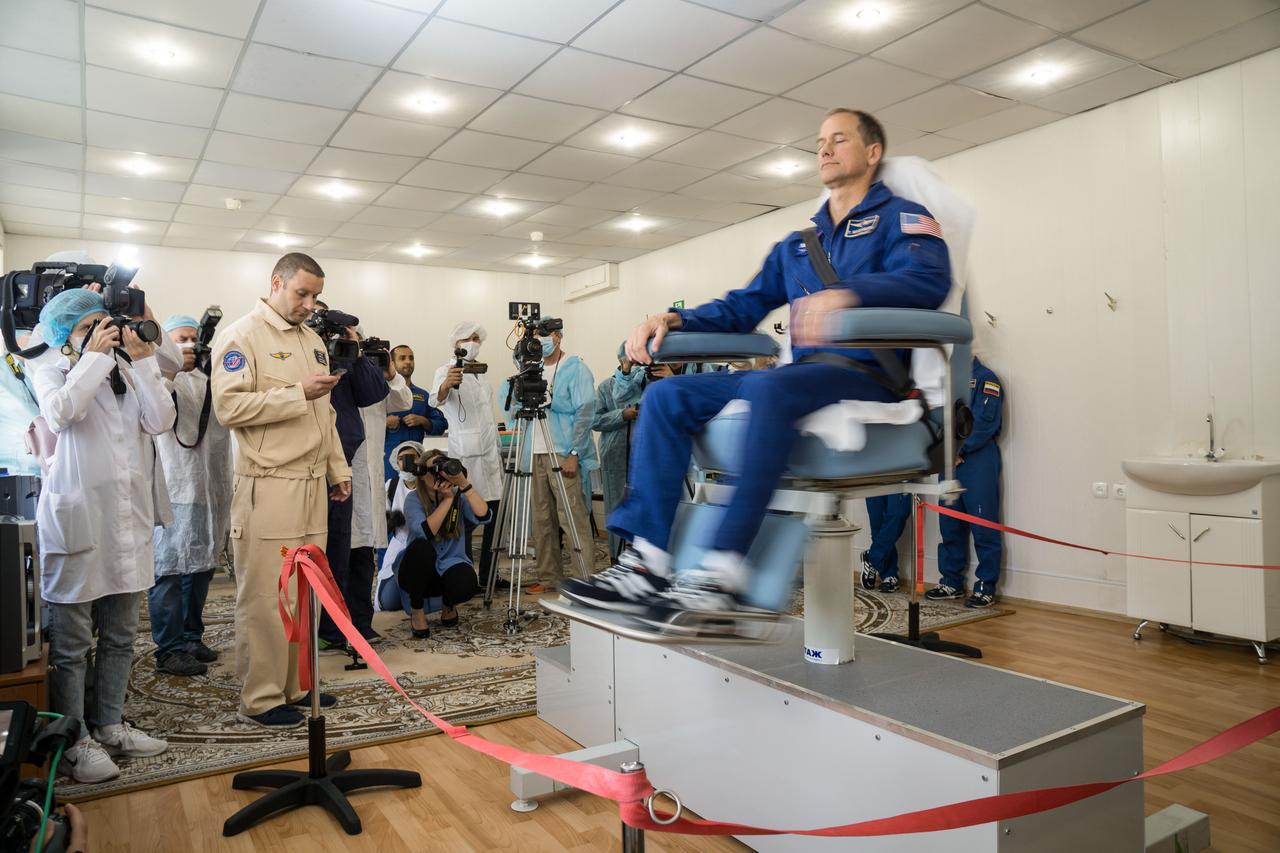
jsc2019e053722 - At the Cosmonaut Hotel crew quarters in Baikonur, Kazakhstan, backup Expedition 61 crewmember Tom Marshburn of NASA takes a spin in a rotating chair Sept. 18 to test his vestibular system as part of pre-launch activities. He is one of the backups to the prime crew, spaceflight participant Hazzaa ali Almansoori of the United Arab Emirates and Expedition 61 crewmembers Oleg Skripochka of Roscosmos and Jessica Meir of NASA, who are set to launch Sept. 25 from the Baikonur Cosmodrome in Kazakhstan on the Soyuz MS-15 spacecraft for a mission on the International Space Station...NASA/Victor Zelentsov
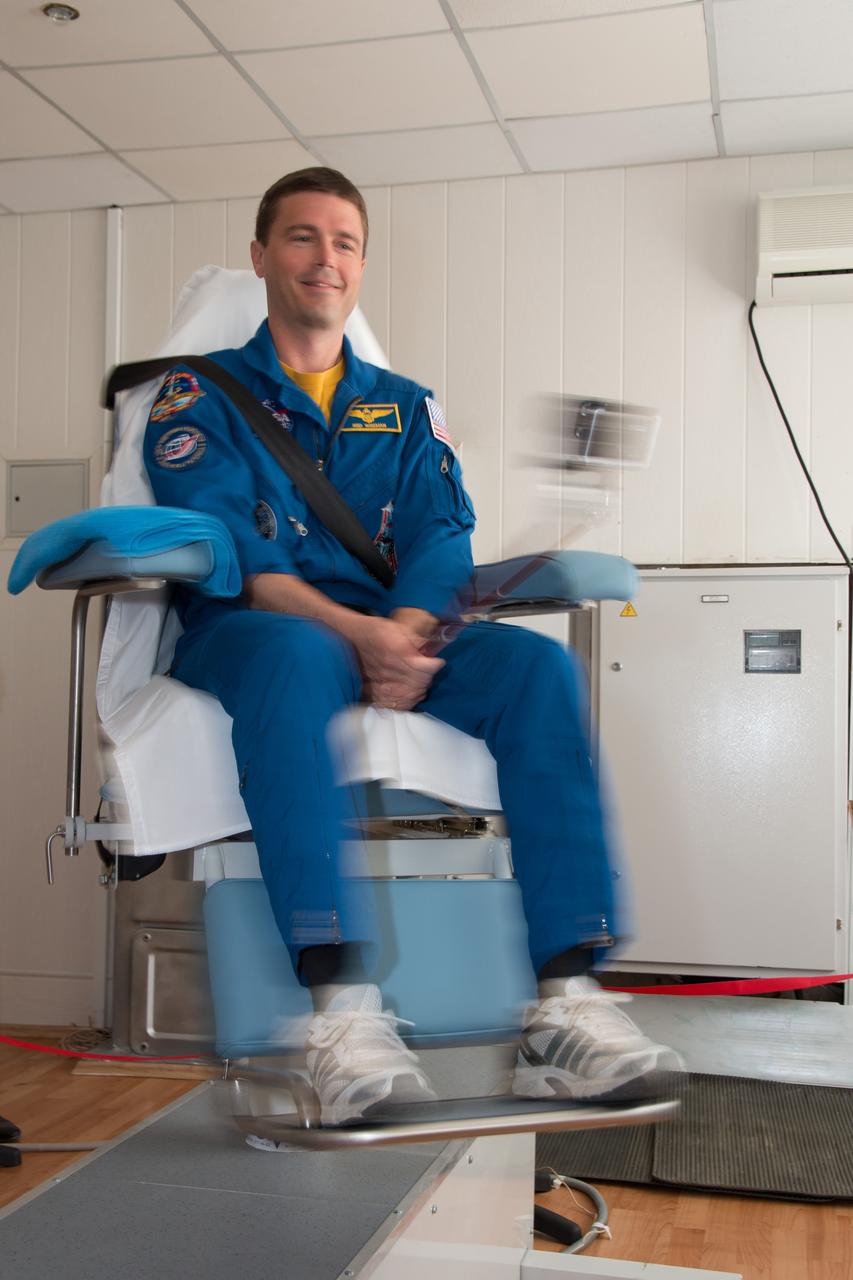
11-56-02-4: At the Cosmonaut Hotel crew quarters in Baikonur, Kazakhstan, Expedition 40/41 Flight Engineer Reid Wiseman of NASA takes a ride in a spinning chair May 21 as he tests his vestibular system during pre-launch medical tests. Wiseman, Soyuz Commander Max Suraev of the Russian Federal Space Agency (Roscosmos) and Flight Engineer Alexander Gerst of the European Space Agency will launch on May 29, Kazakh time, on the Soyuz TMA-13M spacecraft from the Baikonur Cosmodrome for a 5 ½ month mission on the International Space Station. NASA/Victor Zelentsov
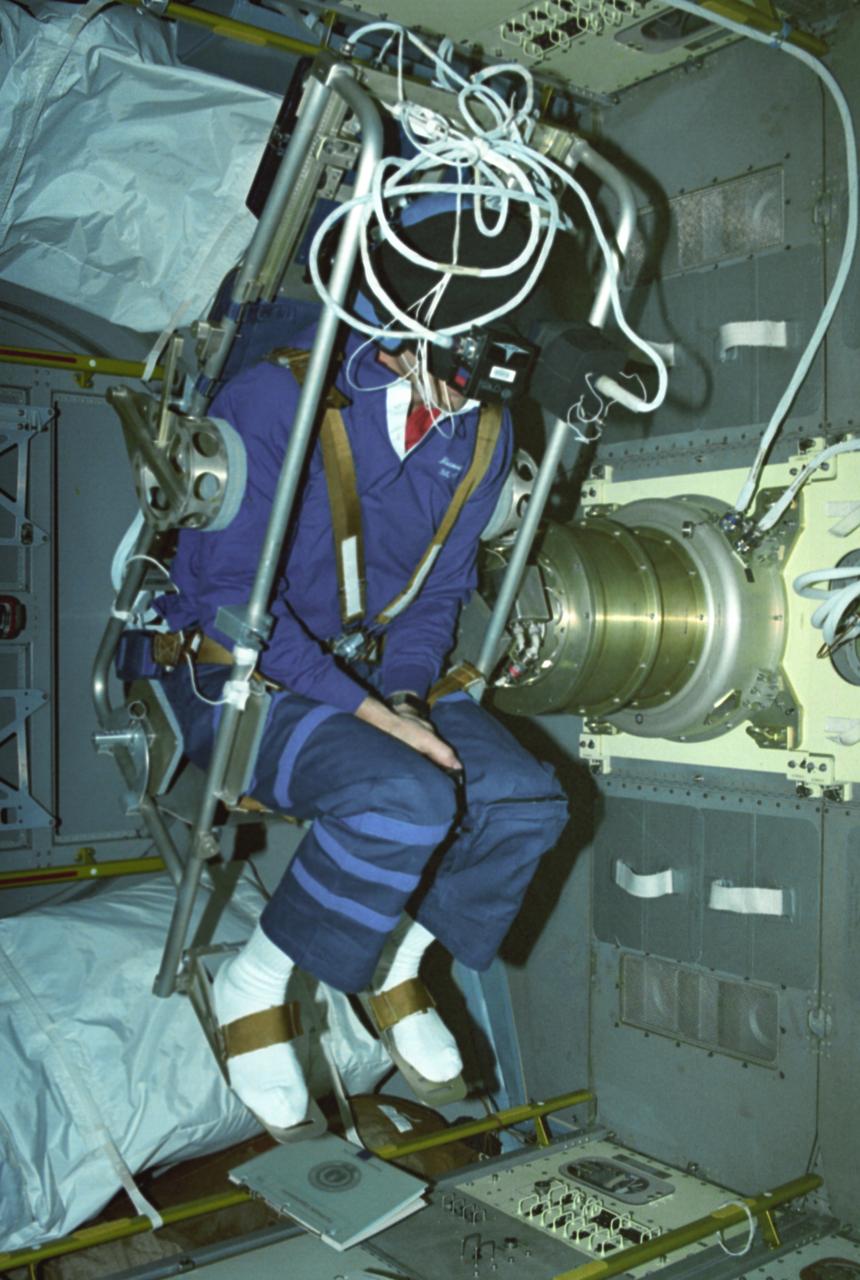
Astronaut David C. Hilmers conducts the Microgravity Vestibular Investigations (MVI) sitting in its rotator chair inside the IML-1 science module. When environmental conditions change so that the body receives new stimuli, the nervous system responds by interpreting the incoming sensory information differently. In space, the free-fall environment of an orbiting spacecraft requires that the body adapts to the virtual absence of gravity. Early in flights, crewmembers may feel disoriented or experience space motion sickness. MVI examined the effects of orbital flight on the human orientation system to obtain a better understanding of the mechanisms of adaptation to weightlessness. By provoking interactions among the vestibular, visual, and proprioceptive systems and then measuring the perceptual and sensorimotor reactions, scientists can study changes that are integral to the adaptive process. The IML-1 mission was the first in a series of Shuttle flights dedicated to fundamental materials and life sciences research with the international partners. The participating space agencies included: NASA, the 14-nation European Space Agency (ESA), the Canadian Space Agency (CSA), the French National Center of Space Studies (CNES), the German Space Agency and the German Aerospace Research Establishment (DAR/DLR), and the National Space Development Agency of Japan (NASDA). Both life and materials sciences benefited from the extended periods of microgravity available inside the Spacelab science module in the cargo bay of the Space Shuttle Orbiter. Managed by the Marshall Space Flight Center, IML-1 was launched on January 22, 1992 aboard the Space Shuttle Orbiter Discovery (STS-42 mission).
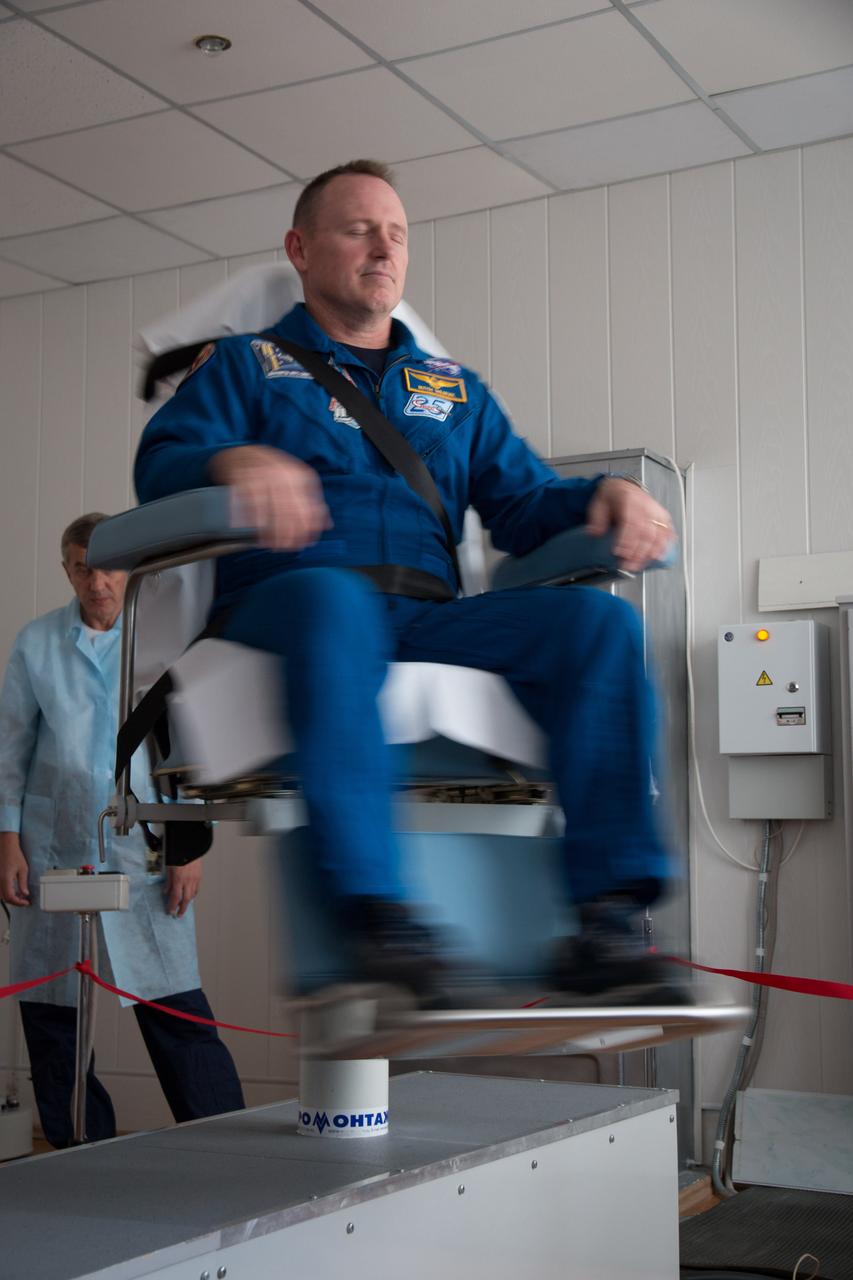
17-12-17-17-2: (17 Sept. 2014) --- At the Cosmonaut Hotel crew quarters in Baikonur, Kazakhstan, Expedition 41 Flight Engineer Barry Wilmore of NASA takes a turn in a spinning chair to test his vestibular system Sept. 17 as he and his crewmates prepare for their upcoming launch. Wilmore, Soyuz Commander Alexander Samokutyaev of the Russian Federal Space Agency (Roscosmos) and Flight Engineer Elena Serova of Roscosmos will launch from the Baikonur Cosmodrome Sept. 26, Kazakh time, in the Soyuz TMA-14M spacecraft for a 5 ½ month mission on the International Space Station. Serova will become the fourth Russian woman to fly in space and the first Russian woman to live and work on the station. Photo credit: NASA/Victor Zelentsov
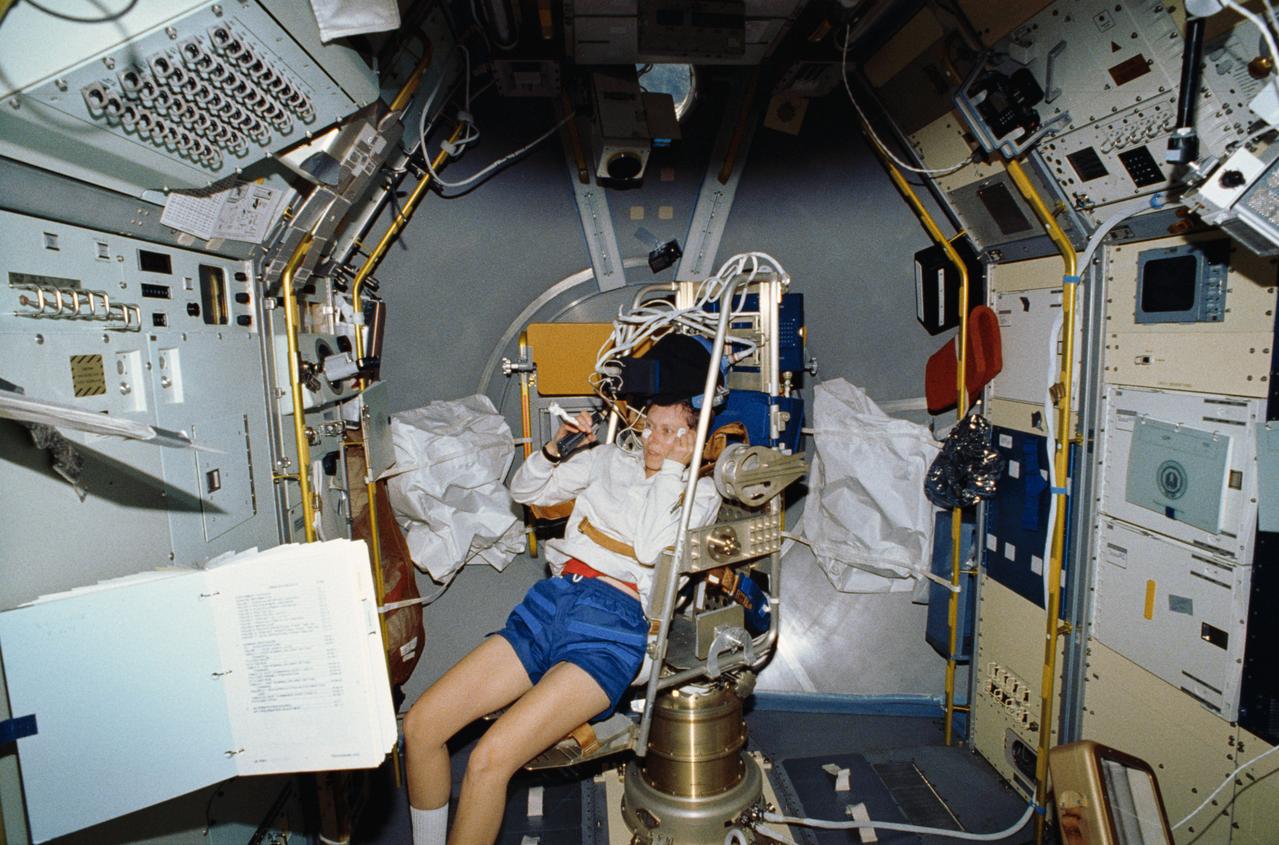
STS042-06-031 (30 Jan 1992) - - - STS-42 Payload Specialist Roberta L. Bondar gets into the Microgravity Vestibular Investigations (MVI) rotator chair to begin an experiment. The chair is mounted in the center aisle of the International Microgravity Laboratory 1 (IML-1) Spacelab (SL) module. Just above Bondar's head is the helmet assembly which is outfitted with accelerometers to measure head movements and visors that fit over each eye independently to provide visual stimuli. The chair system has three movement patterns: "sinusoidal" or traveling predictably back and forth over the same distance at a constant speed; "pseudorandom" or moving back and forth over varying distances; and "stepped" or varying speeds beginning and stopping suddenly.
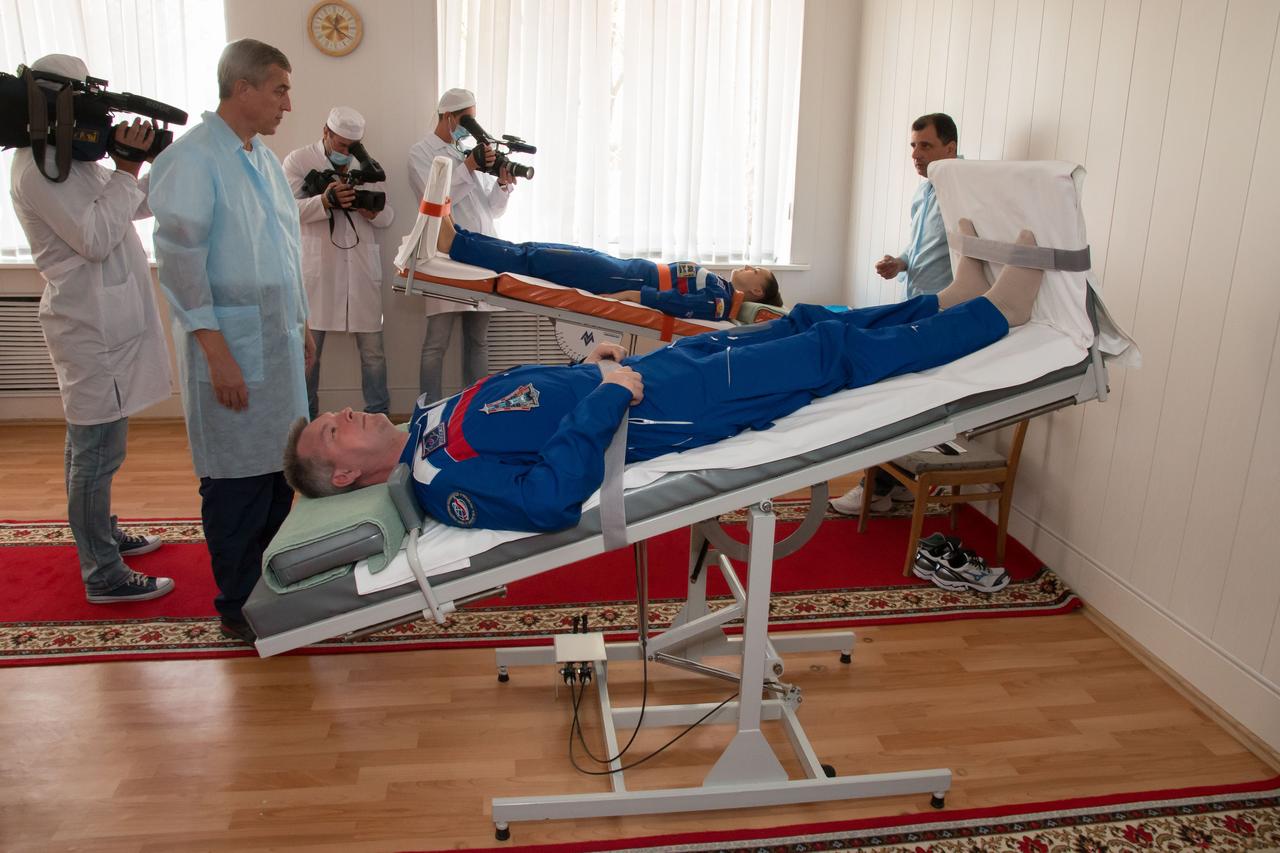
17-12-26-50-2: (17 Sept. 2014) --- At the Cosmonaut Hotel crew quarters in Baikonur, Kazakhstan, Expedition 41/42 Soyuz Commander Alexander Samokutyaev of the Russian Federal Space Agency (Roscosmos, foreground) and Flight Engineer Elena Serova of Roscosmos (background) take turns on tilt tables Sept. 17 to test their vestibular systems. Samokutyaev, Serova and Flight Engineer Barry Wilmore of NASA are scheduled to launch from the Baikonur Cosmodrome Sept. 26, Kazakh time, in the Soyuz TMA-14M spacecraft for a 5 ½ month mission on the International Space Station. Serova will become the fourth Russian woman to fly in space and the first Russian woman to live and work on the station. Photo credit: NASA/Victor Zelentsov
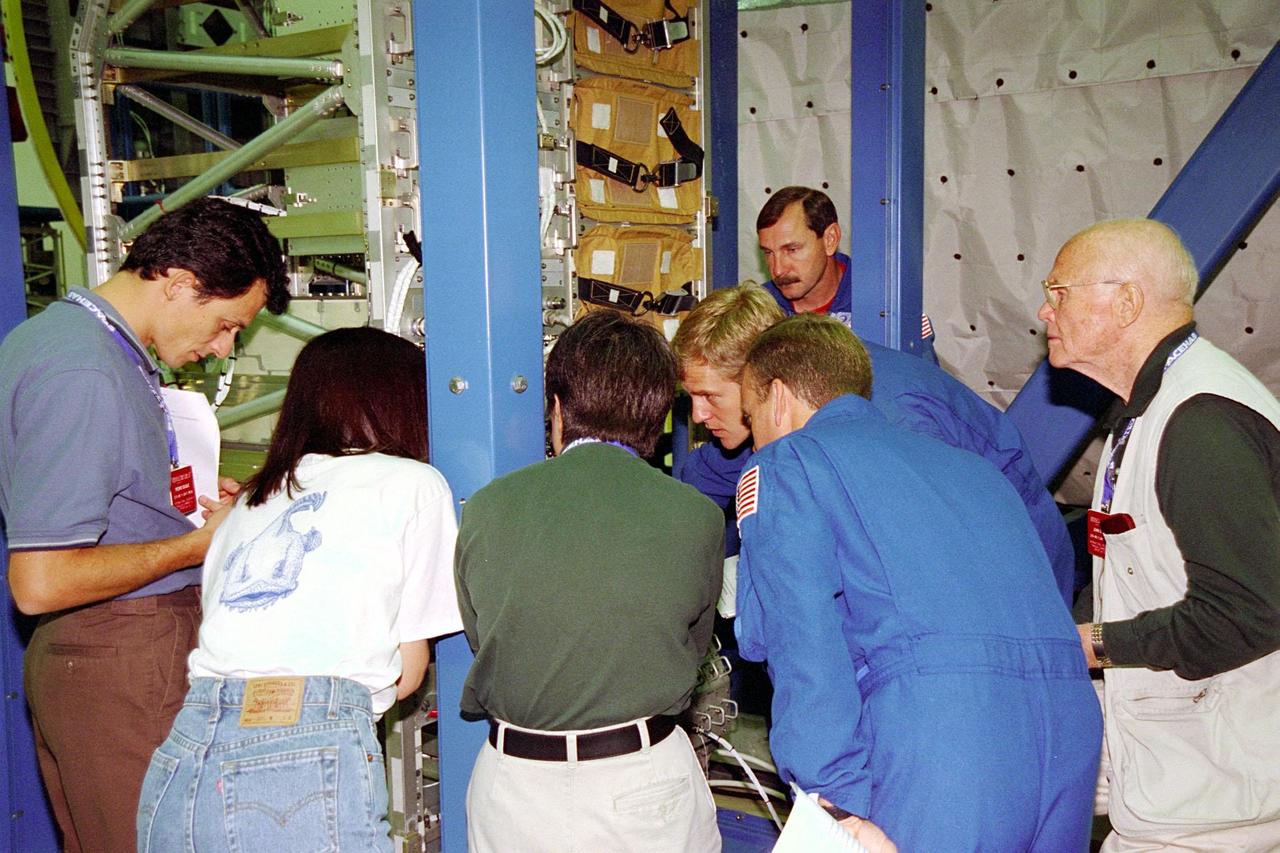
STS-95 crew members gather around the Vestibular Function Experiment Unit (VFEU) which includes marine fish called toadfish. In foreground, from left, are Mission Specialist Pedro Duque of the European Space Agency (ESA), a technician from the National Space Development Agency of Japan (NASDA), Payload Specialist Chiaki Mukai of NASDA, Pilot Steven W. Lindsey, and Payload Specialist John H. Glenn Jr., who also is a senator from Ohio. At center, facing the camera, are Mission Specialist Scott E. Parazynski and Commander Curtis L. Brown Jr., in back. STS-95 will feature a variety of research payloads, including the Spartan solar-observing deployable spacecraft, the Hubble Space Telescope Orbital Systems Platform, the International Extreme Ultraviolet Hitchhiker, and experiments on space flight and the aging process. STS-95 is targeted for an Oct. 29 launch aboard the Space Shuttle Discovery
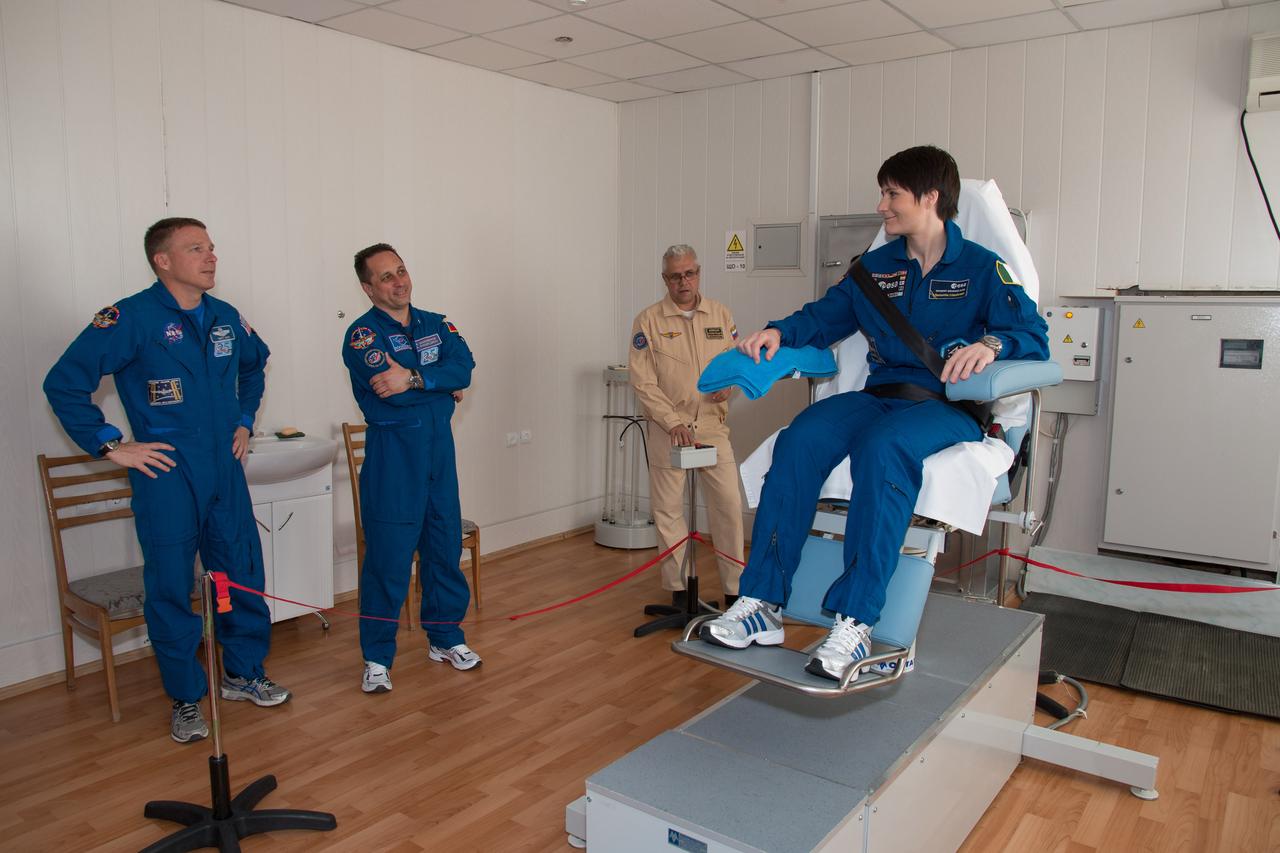
11-59-33-2: At the Cosmonaut Hotel crew quarters in Baikonur, Kazakhstan, Expedition 40/41 backup crewmember Samantha Cristoforetti of the European Space Agency (right) prepares to take a ride in a spinning chair May 21 to exercise her vestibular system during pre-launch medical tests. Looking on are backup crewmates Terry Virts of NASA (far left) and Anton Shkaplerov of the Russian Federal Space Agency (Roscosmos, second from the left). The trio is backing up the prime crew, Flight Engineer Alexander Gerst of the European Space Agency, Soyuz Commander Max Suraev of Roscosmos and NASA Flight Engineer Reid Wiseman, who will launch on May 29, Kazakh time, on the Soyuz TMA-13M spacecraft from the Baikonur Cosmodrome for a 5 ½ month mission on the International Space Station. NASA/Victor Zelentsov
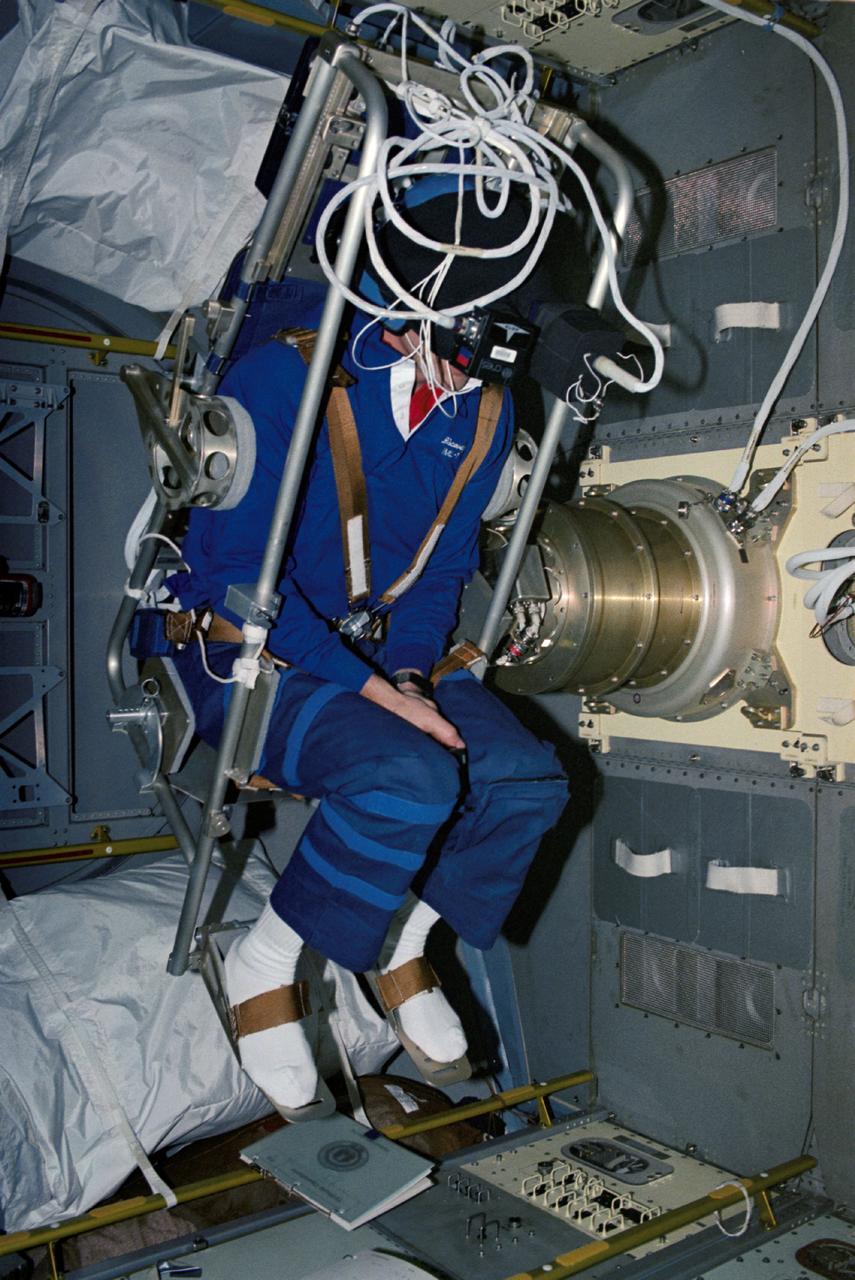
STS042-27-037 (22-30 Jan. 1992) --- Astronaut David C. Hilmers, STS-42 mission specialist, wearing a helmet assembly, sits in the Microgravity Vestibular Investigation (MVI) rotating chair. The scene is in the International Microgravity Laboratory (IML-1) science module aboard Discovery. Hilmers, a mission specialist, and six other crewmembers spent more than eight days in Earth-orbit conducting experiments. Hilmer's helmet assembly is outfitted with accelerometers to measure head movements and visors that fit over each eye independently to provide visual stimuli. The chair system has three movement patterns: "sinusoidal" or traveling predictably back and forth over the same distance at a constant speed; "pseudorandom" or moving back and forth over the varying distances; and "stepped" or varying speeds beginning and stopping suddenly.
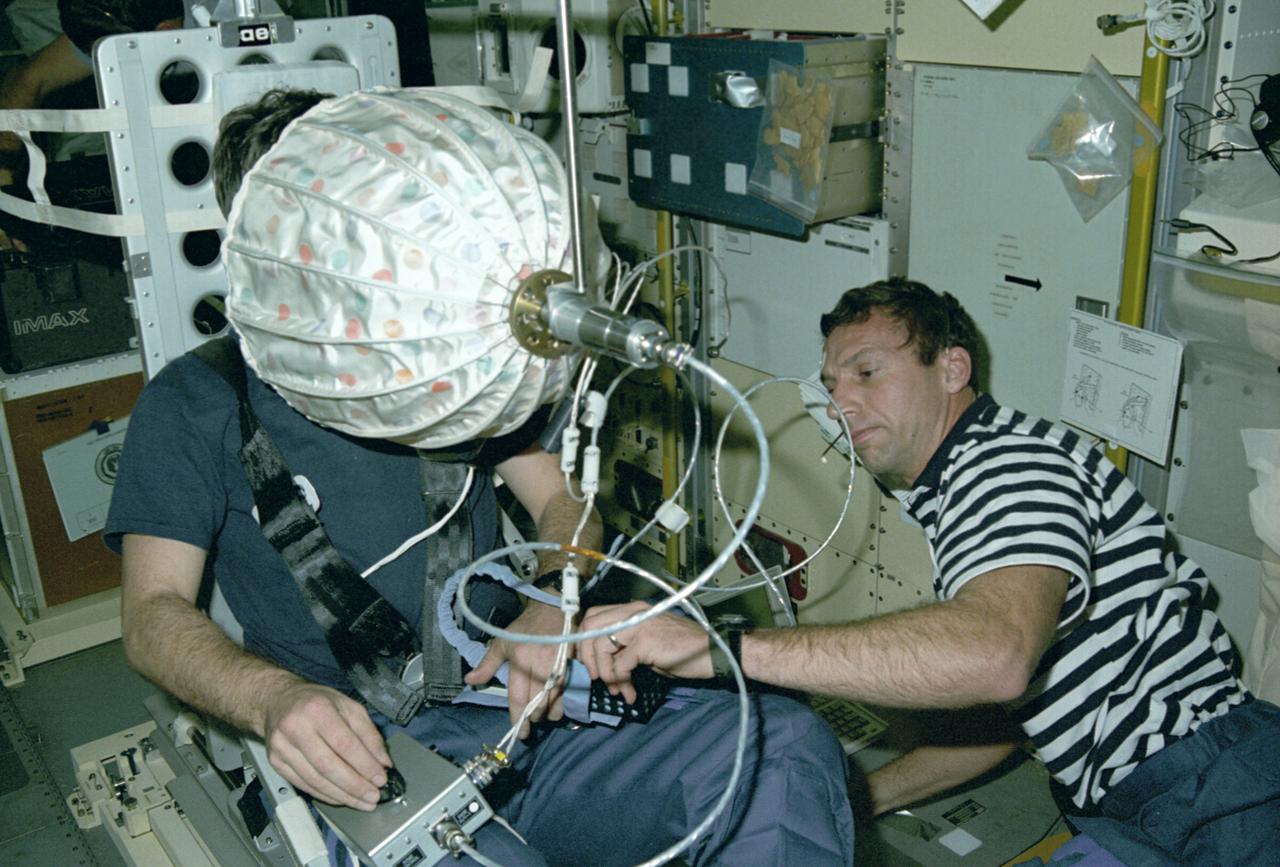
Astronaut Ulf Merbold on the stationary seat of the mini-sled, stares into an umbrella-shaped rotating dome with colored dots. Astronaut Merbold, assisted by astronaut David Hilmer, are conducting the Visual Simulator Experiment, a space physiology experiment. The Visual Stimulator Experiment measures the relative importance of visual and vestibular information in determining body orientation. When a person looks at a rotating visual field, a false sensation of self-rotation, called circularvection, results. In weightlessness, circularvection should increase immediately and may continue to increase as the nervous system comes to rely more on visual than vestibular cues. As Astronaut Merbold stares into the rotating dome with a pattern of colored dots and its interior, he turns a knob to indicate his perception of body rotation. The strength of circularvection is calculated by comparing signals from the dome and the knob. The greater the false sense of circularvection, the more the subject is relying on visual information instead of otolith information. The IML-1 mission was the first in a series of Shuttle flights dedicated to fundamental materials and life sciences research with the international partners. The participating space agencies included: NASA, the 14-nation European Space Agency (ESA), the Canadian Space Agency (CSA), the French National Center of Space Studies (CNES), the German Space Agency and the German Aerospace Research Establishment (DAR/DLR), and the National Space Development Agency of Japan (NASDA). Managed by the Marshall Space Flight Center, IML-1 was launched on January 22, 1992 aboard the Space Shuttle Orbiter Discovery (STS-42 mission).
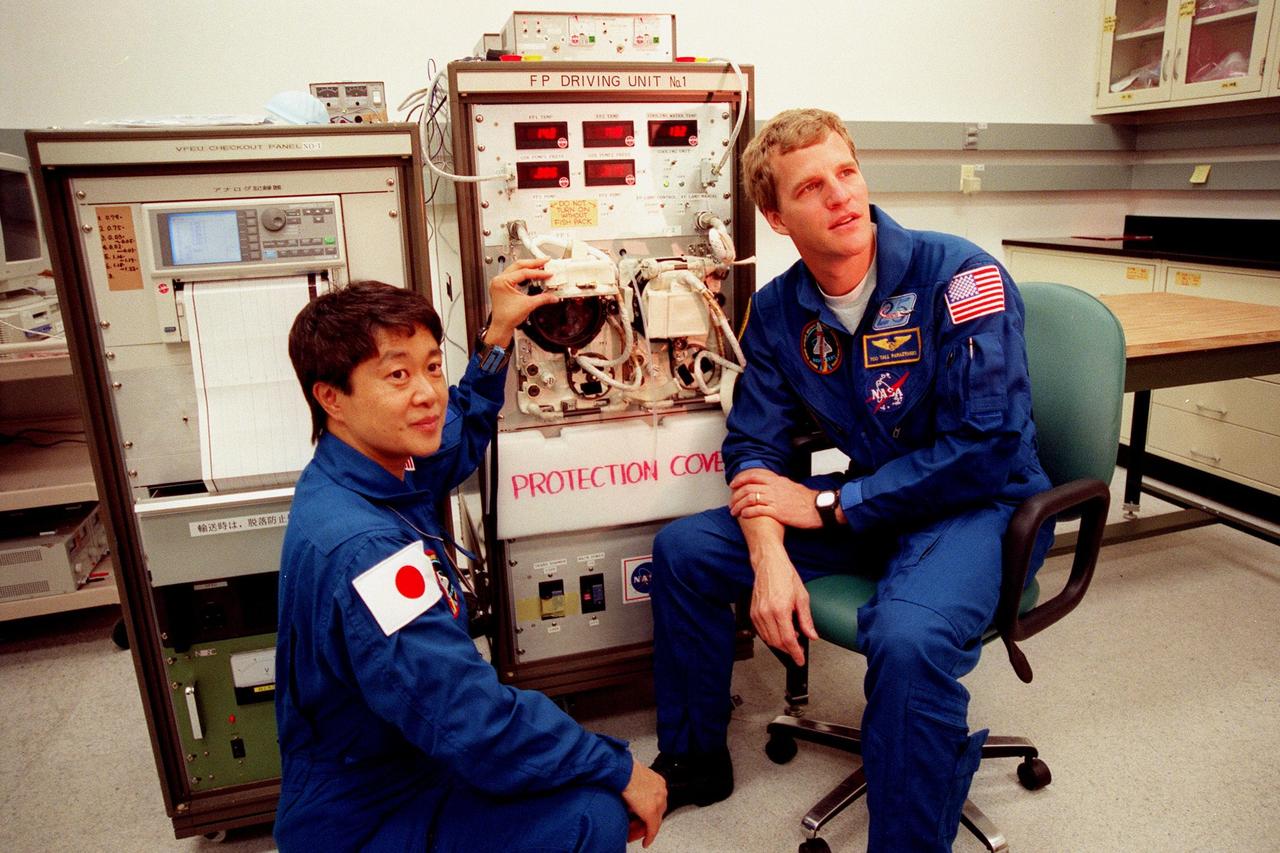
STS-95 Payload Specialist Chiaki Mukai (left), with the National Space Development Agency of Japan (NASDA), lifts the cover on a container in the Vestibular Function Experiment Unit holding one of the two toadfish that are the subjects of an experiment. Mission Specialist Scott E. Parazynski is helping her check experiments for mission STS-95. The fish will be electronically monitored to determine the effect of gravitational changes on the inner-ear system. Mukai and Parazynski and other crewmembers were making final preparations for launch, targeted for liftoff at 2 p.m. on Oct. 29. The STS-95 crew also includes Mission Commander Curtis L. Brown Jr., Pilot Steven W. Lindsey, Mission Specialist Stephen K. Robinson, Payload Specialist John H. Glenn Jr., senator from Ohio, and Mission Specialist Pedro Duque, with the European Space Agency (ESA). The mission is expected to last 8 days, 21 hours and 49 minutes, returning to KSC at 11:49 a.m. EST on Nov. 7
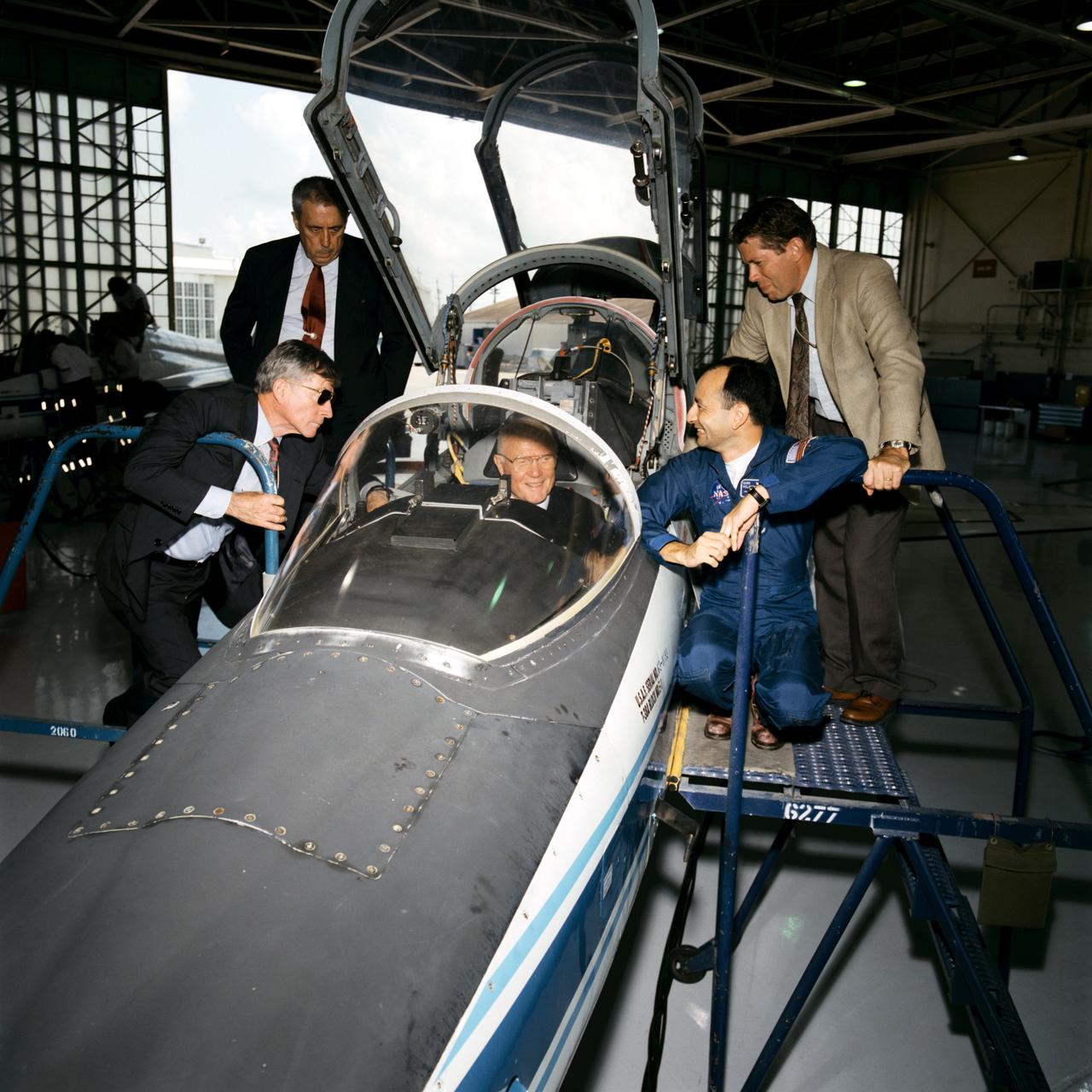
Senator John Glenn visit to Johnson Space Center (JSC). Views of Glenn sitting in cockpit of T-38 in Hangar 276 with John Young, George Abbey, David Leestma and Mark Polansky observing (11150). An engineer explains SPIFEX experiment hardware to Abby, Young and Glenn in Bldg 13 (11151, 11153). Glenn talks with astronaut Terrence T. Henricks and employees in Bldg 9C, Virtual reality lab (11152). Lunch in Bldg 17 Flight Crew support division with Dr. Ellen Baker, Robert "Hoot" Gibson and John Glenn (11154). Linda Godwin, Robert Cabana, Abbey, Young, Baker, Gibson and Glenn at lunch (11155). Astronaut Mark Lee shows Glenn and his aide how to use the virtural reality helmets (11156-7). Glenn shakes the hand of Franklin Chang-Diaz with his plasma rocket in the background in the Sonny Carter Training Facility (SCTF) (11158). Glenn in the Manipulator Development Facility (MDF) Remote Manipulator System (RMS) station mock-up in Bldg 9A with Abbey, Young and aide (11159, 11186). Glenn signs a book for Thomas D. Jones as Frederick Sturckow and Linda Godwin look on (11160). Glenn inside visual-vestibular trainer in Bldg 9B (11161). In conference room meeting with astronaut corps in Bldg 4S, Glenn shakes Robert Cabana's hand (11162). John Glenn and John Young pose for a group shot with Bldg 17 Food lab personnel (11163). Glenn thanks the food lab personnel (11164). Glenn visits Bldg 5 Fixed Base (FB) middeck simulator with astronauts Terrence Henricks and Mary Ellen Weber (11165). Glenn with Charles T. Bourland (11166). STS-70 crew Donald Thomas, Terrence Henricks, Mary Ellen Weber, Nancy Currie and Kevin Kregel with Glenn's advisor (11167). STS-70 crew Thomas, Henricks, Weber, Currie and Kregel with John Glenn (11175). Glenn with Thomas, Kregel, Weber, Henricks and trainer (11176-7). David J. Homan assists Glenn's aide with virtual reality goggles (11168) and Glenn (11174). John Young in Bldg 9C equilibrium trainer (11169). Glenn with Carl Walz in flight deck mock-up of MDF in Bldg 9NE (11170, 11187). Young, Abbey, aides, Glenn and Walz examine helium balloon in MDF (11171-2). Chang-Diaz shows Glenn's tour group the plasma rocket (11173). Glenn's presentation to astronaut corps (11178-81, 11184-5). Glenn is presented with framed picture of Sonny Carter Training Facility (SCTF) (11182) and framed picture of space station (11183).