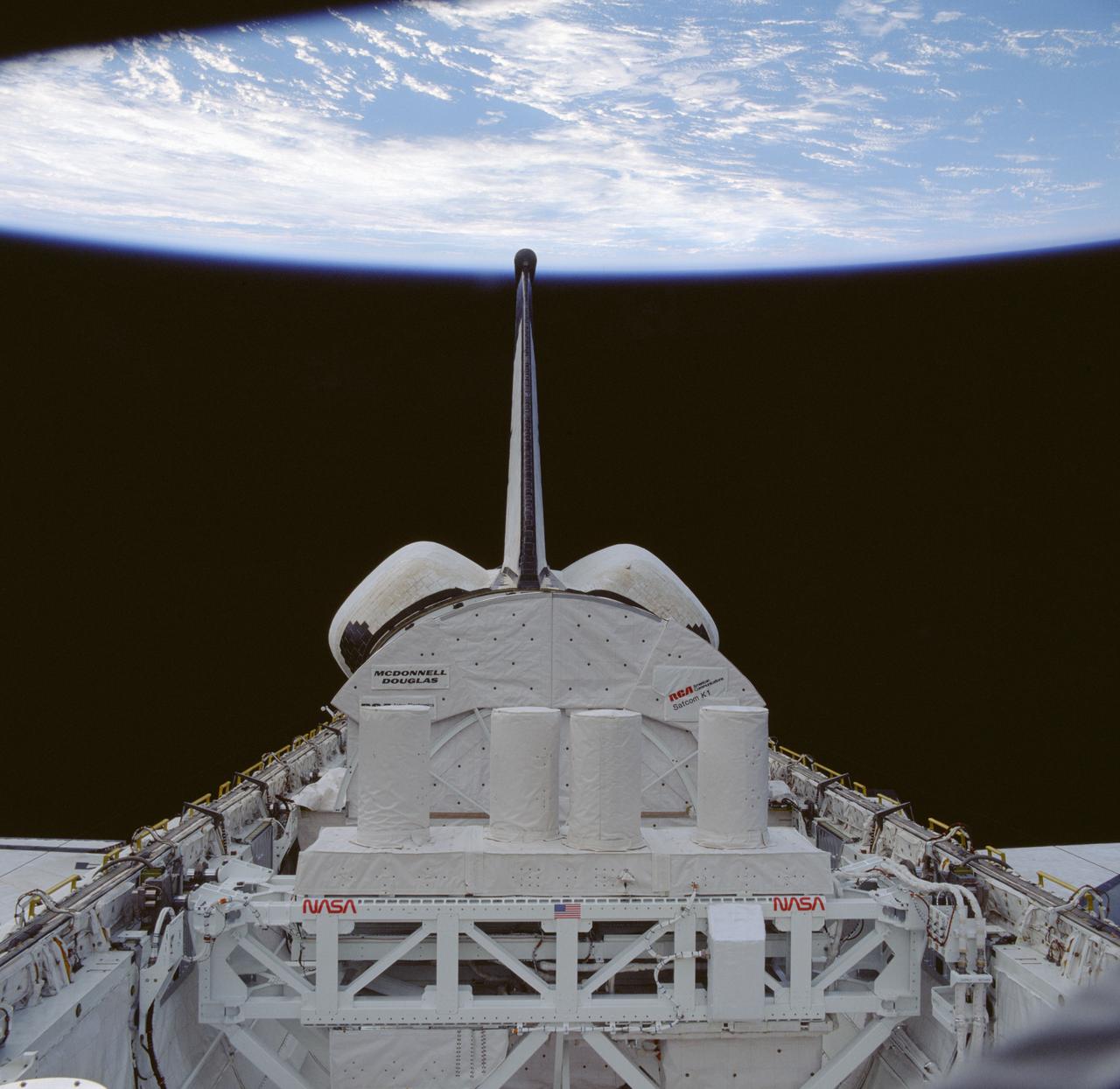
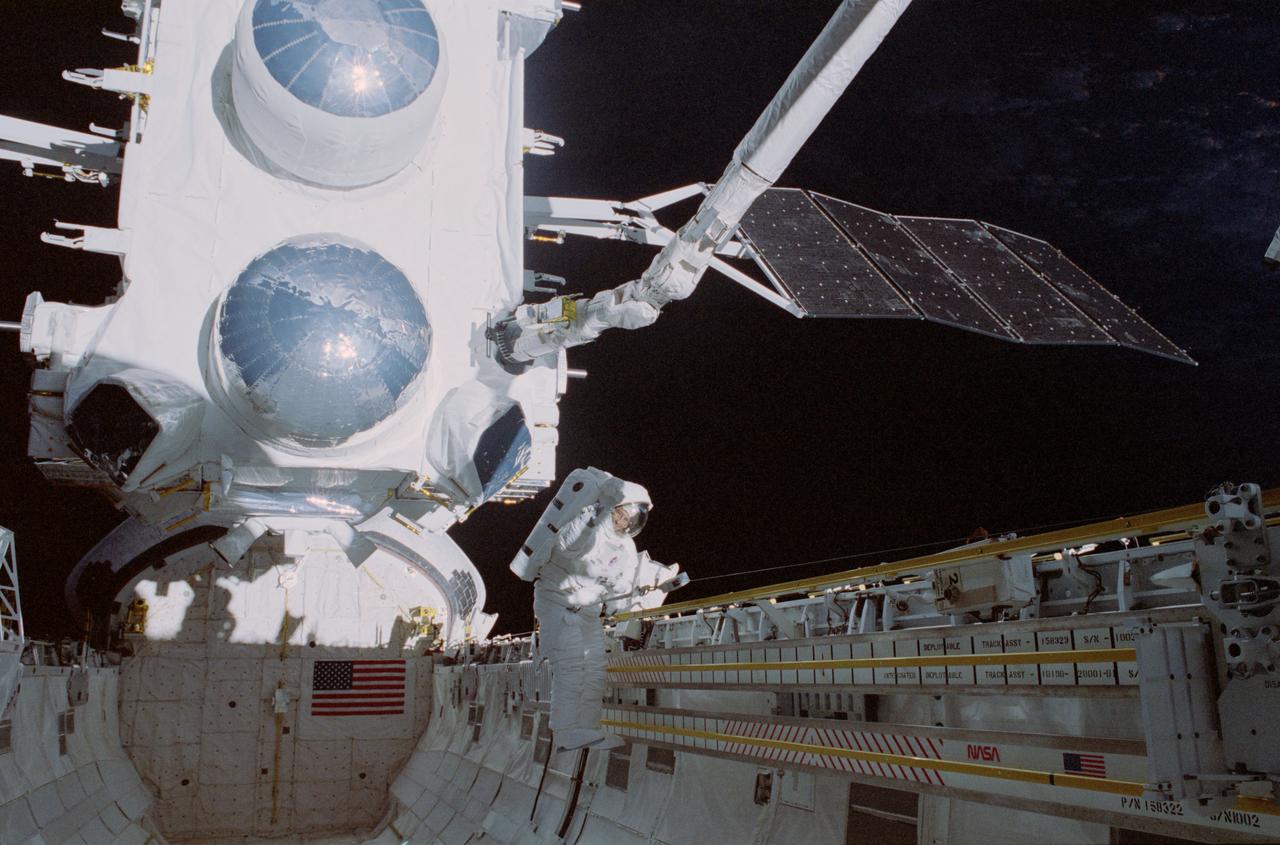
61C-39-002 (12-17 Jan 1986) --- This view of the cargo bay of the Earth-orbiting Space Shuttle Columbia reveals some of the STS 61-C mission payloads. The materials science laboratory (MSL-2), sponsored by the Marshall Space Flight Center (MSFC), is in the foreground. A small portion of the first Hitchhiker payload, sponsored by the Goddard Space Flight Center (GSFC), is in the immediate foreground, mounted to the spacecraft's starboard side. The closed sun shield for the now-vacated RCA SATCOM K-1 communications satellite is behind the MSL. Completely out of view, behind the shield, are 13 getaway specials in canisters. Clouds over ocean and the blackness of space share the backdrop for the 70mm camera's frame.
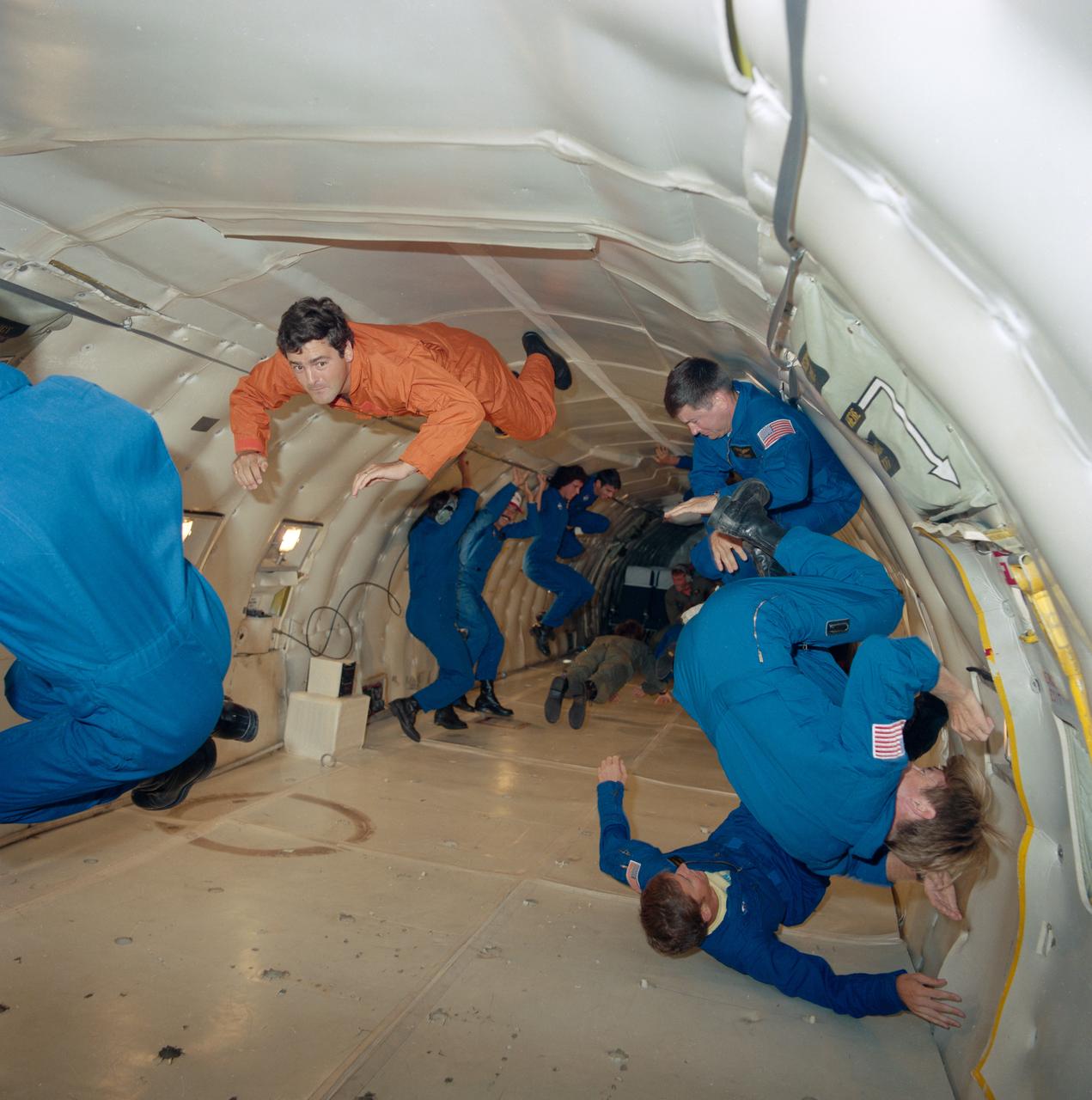
View of astronaut candidates and payload specialists during a training flight on the KC-135. The trainees are experiencing weightlessness in the hold of the aircraft.
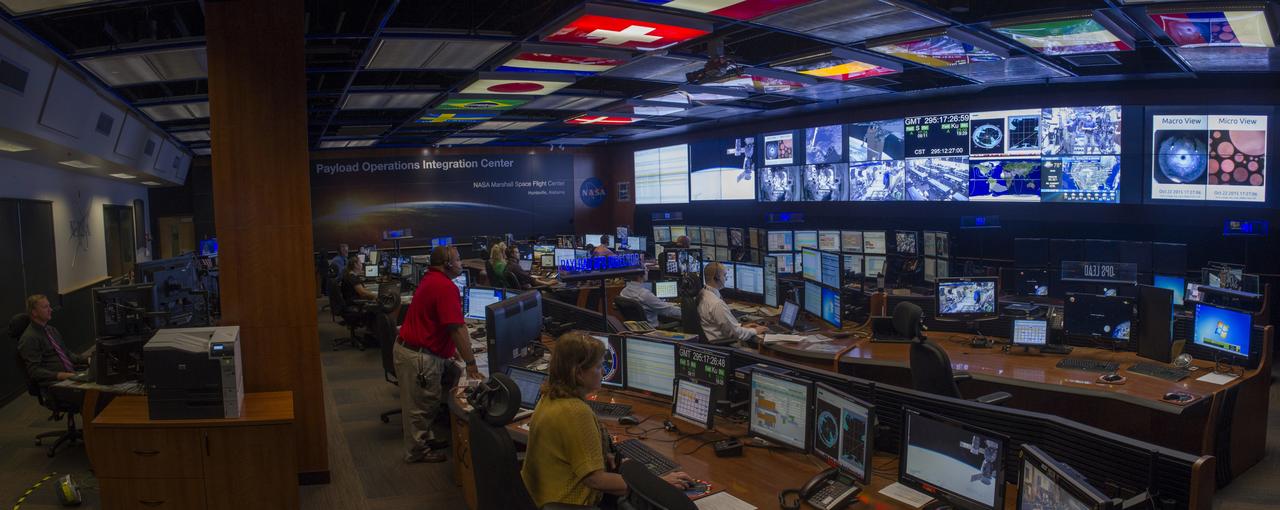
PANORAMIC VIEW OF PAYLOAD OPERATIONS INTEGRATION CENTER, PCA1, BLDG. 4663…UPDATED 10/21/15
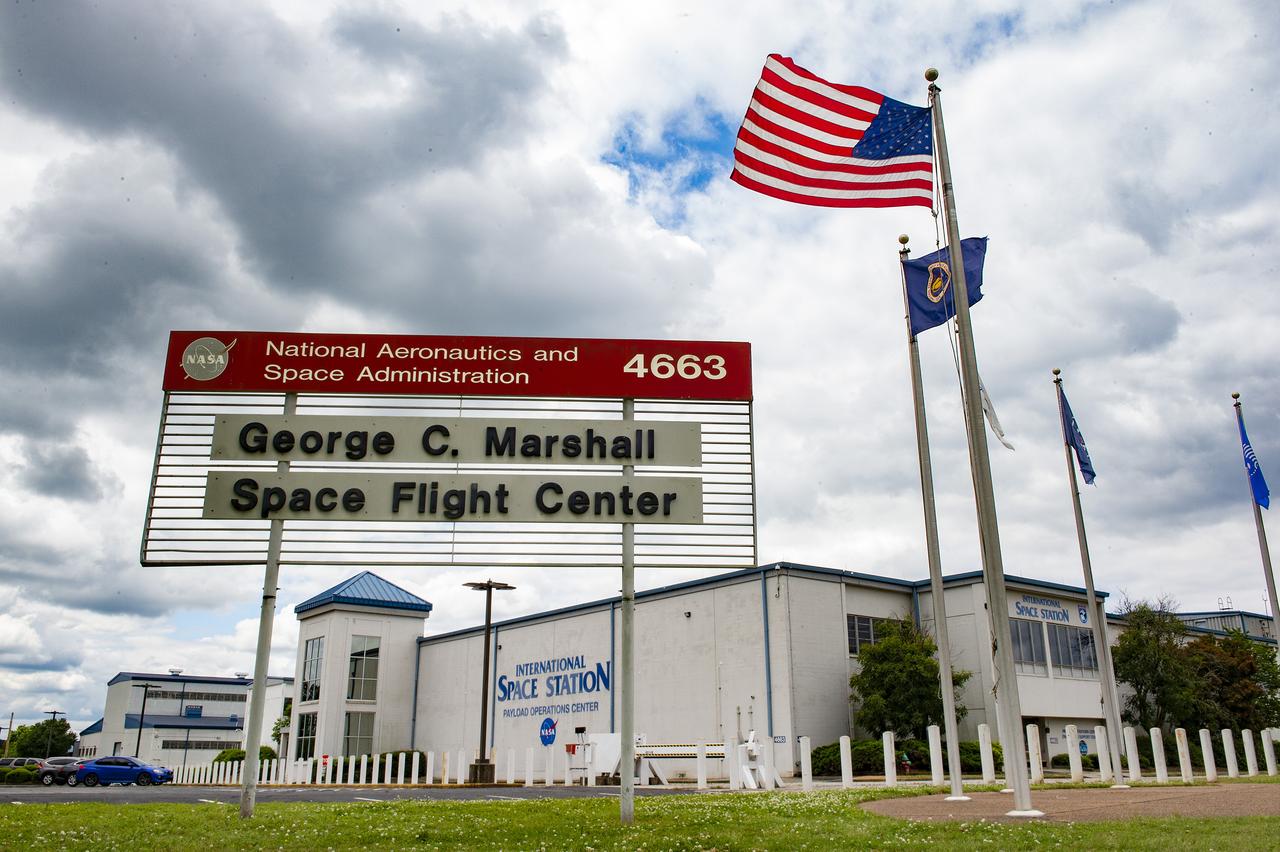
MSFC Building 4663, NE corner view of Huntsville Operations Support Center, housing the Payload Operations Integration Center (POIC). The POIC supports ongoing flight operations and scientific experiments aboard the International Space Station (ISS)
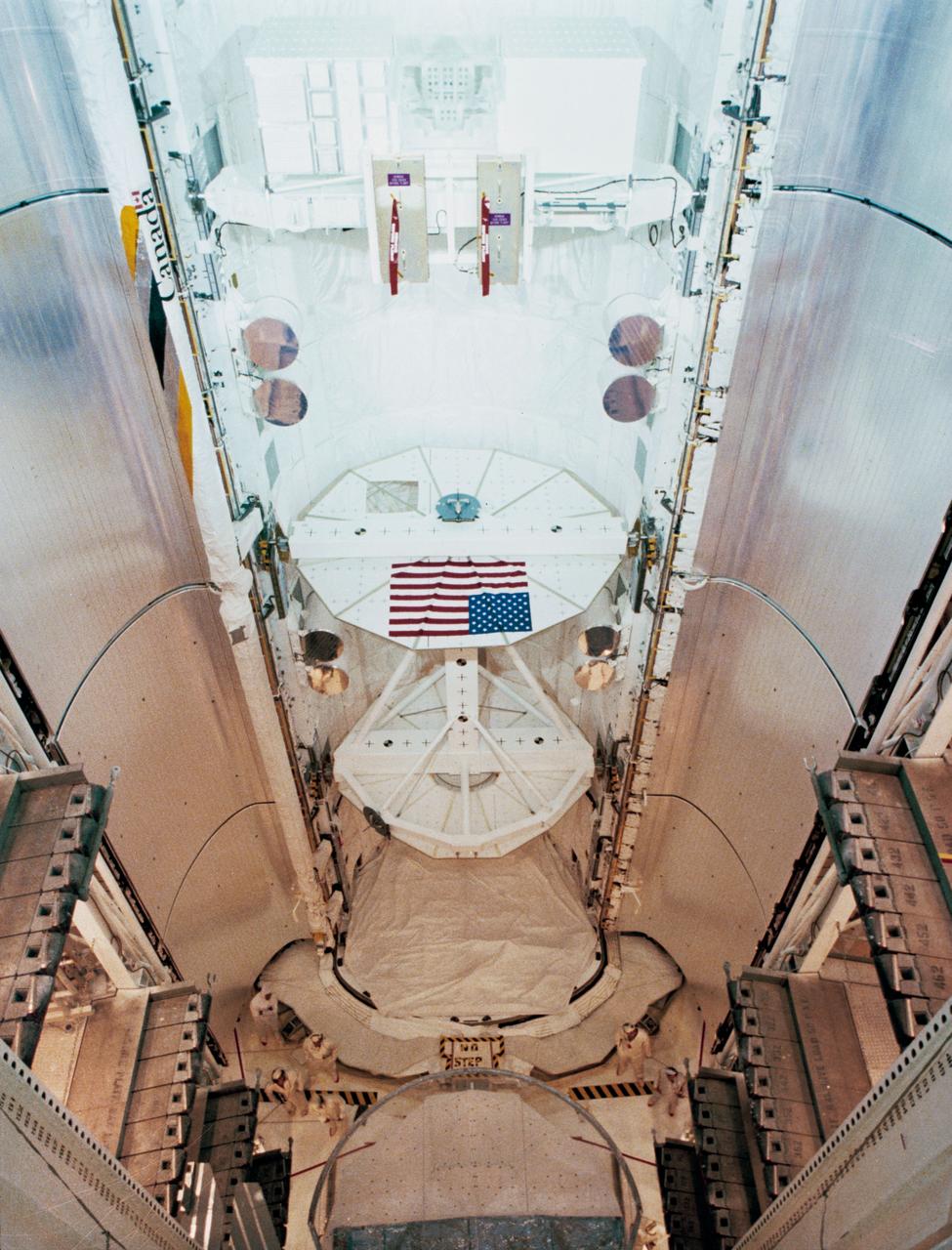
View of the Payload Flight Test Article (PFTA) installed into Challenger's cargo bay in the Payload Changeout Room at Pad 39A at the Kennedy Space Center (KSC). The American flag is visible on one side of the PFTA in the cargo bay. The Kennedy Space Center alternative photo number is KSC-108-83PC-566.
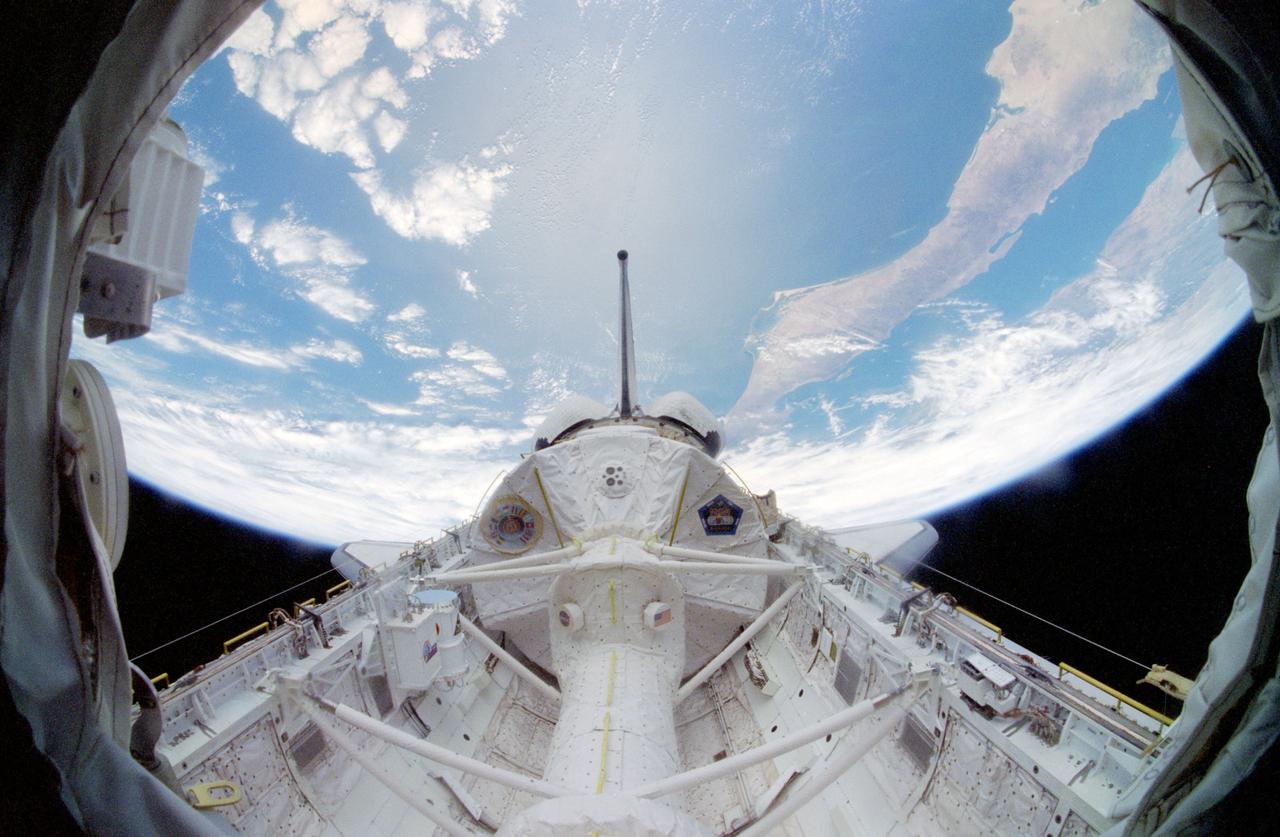
STS083-482-034 (4-8 April 1997) --- A special lens on a 35mm camera gives a "fish-eye" effect this view of the Spacelab Module backdropped over the Pacific Ocean. Nearly all of Baja California and part of western Mexico can be seen at left. Five NASA astronauts and two scientist payload specialists were scheduled to spend 16-days in Earth-orbit but came home early when a problem with one of three fuel cells was recognized.
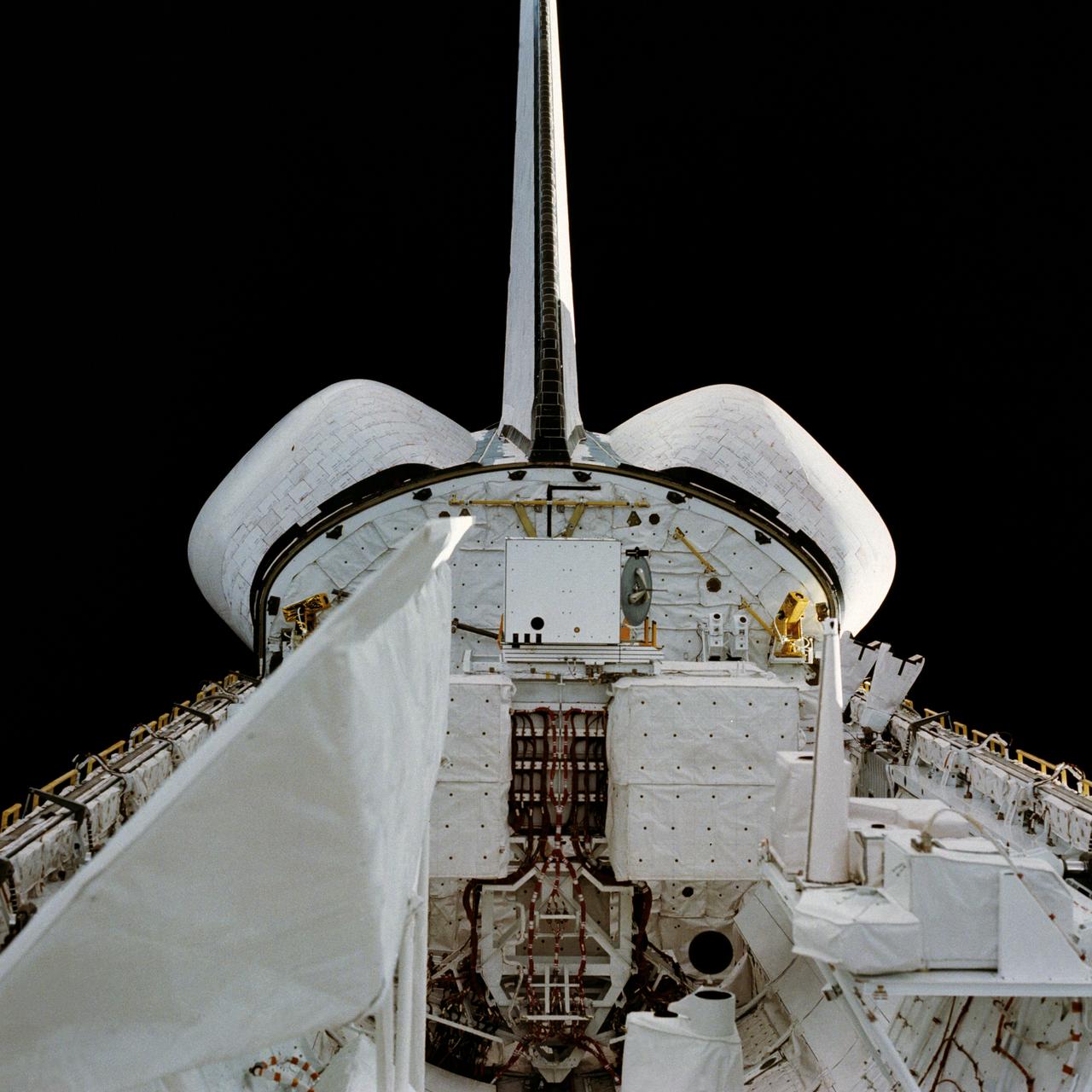
STS002-13-208 (12-14 Nov. 1981) --- This clear view of the aft section of the Earth-orbiting space shuttle Columbia's cargo bay and some of its cargo was photographed through the flight deck's aft windows. Visible in the center of the photo are the twin orbital maneuvering system (OMS) pods. The vertical stabilizer or tail splits the top part of the image in half. The Induced Environment Contamination Monitor (IECM) Location experiment is located in the back center of the cargo bay, near the top. There is a grapple fixture attached to the side of the IECM. Various components of the Office of Space Terrestrial Applications (OSTA-1) payload are seen near the aft section of the cargo bay, such as the Feature Identification and Location Experiment (FILE) (the long cone shaped object on the right back), the Shuttle Multispectral Infrared Radiometer (SMIRR) (on pallet base) and the SIR-A recorder in the right foreground. In the left foreground the Shuttle Imaging Radar-A (SIR-A) antenna can be seen. Photo credit: NASA
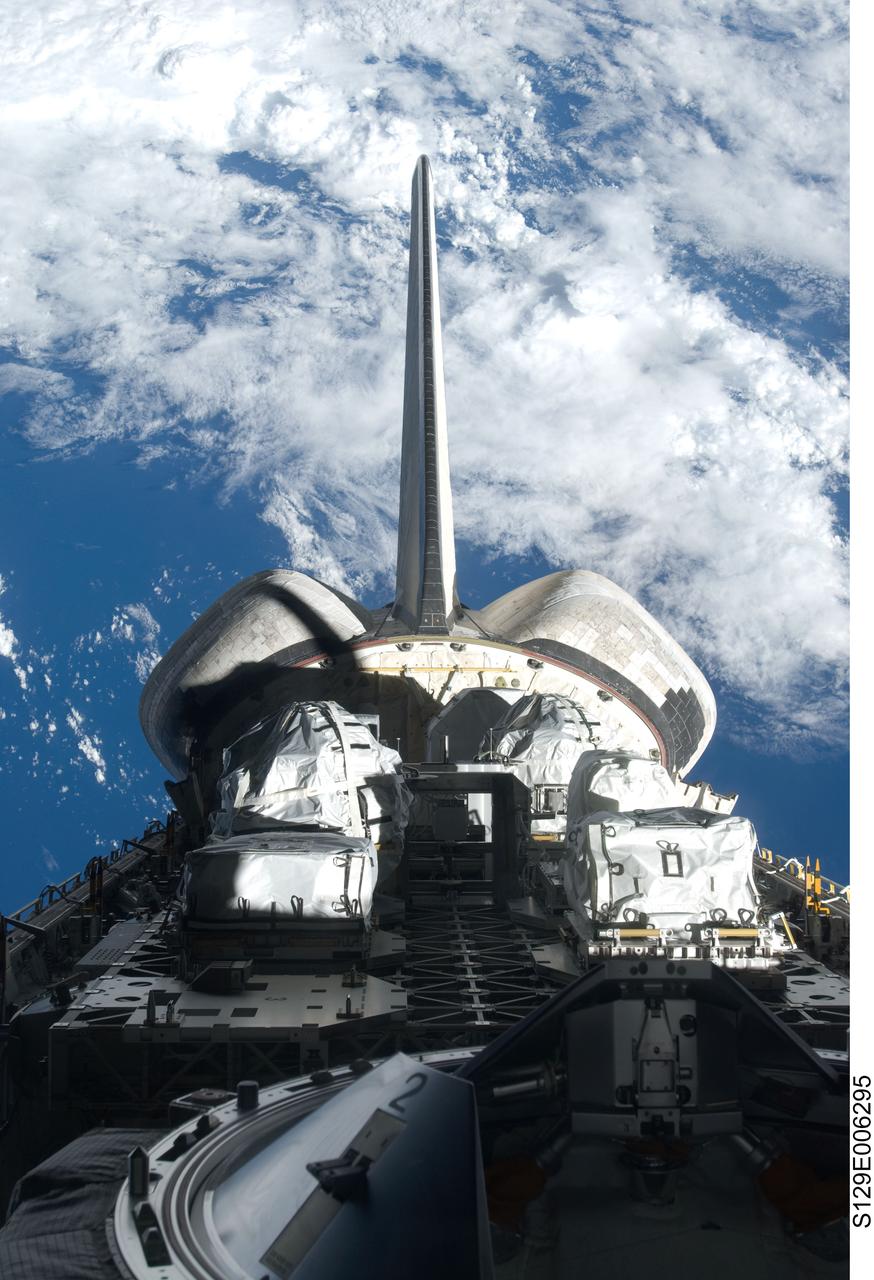
S129-E-006295 (17 Nov. 2009) --- Backdropped by a blue and white part of Earth, a partial view of Space Shuttle Atlantis? payload bay, vertical stabilizer, orbital maneuvering system (OMS) pods and docking mechanism are featured in this image photographed by an STS-129 crew member from an aft flight deck window.
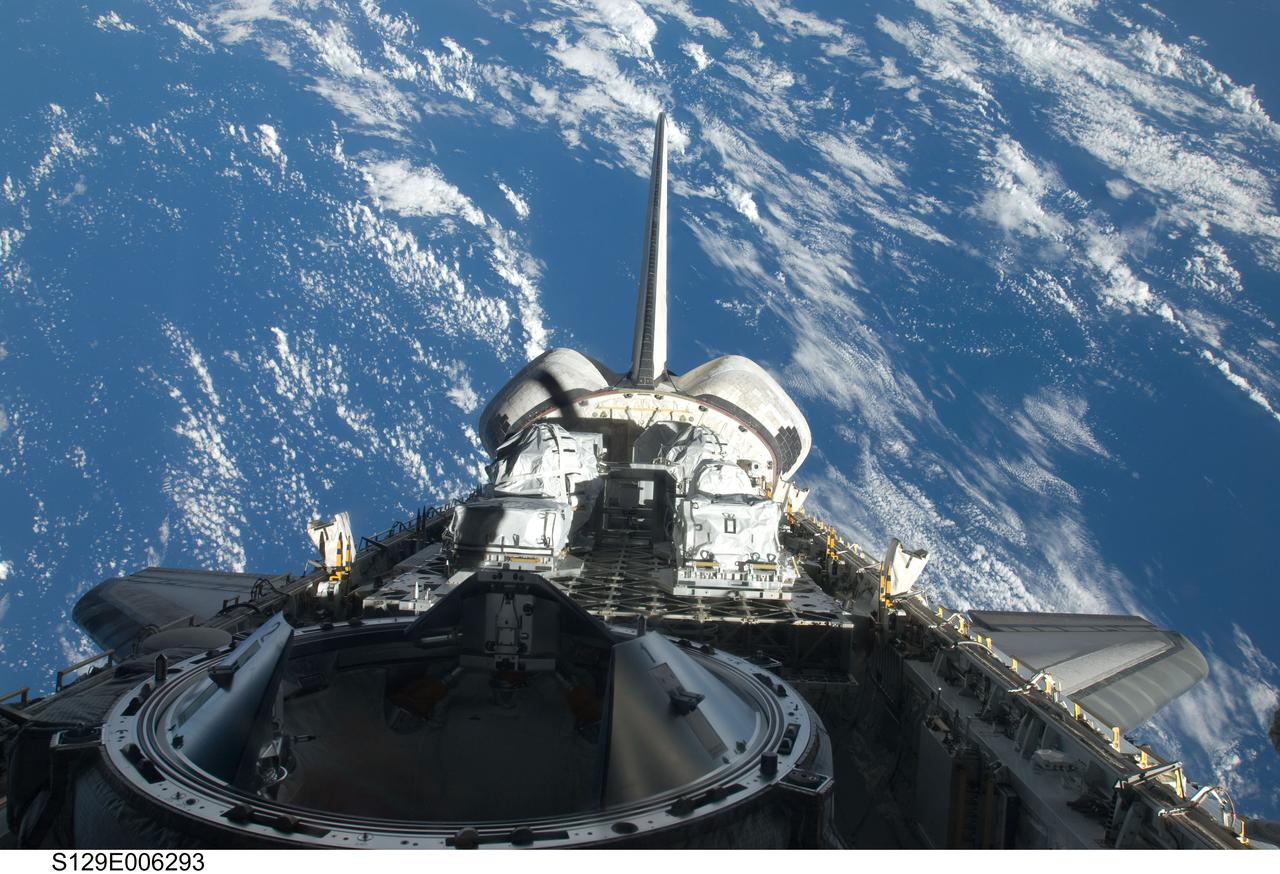
S129-E-006293 (17 Nov. 2009) --- Backdropped by a blue and white part of Earth, a partial view of Space Shuttle Atlantis? payload bay, vertical stabilizer, orbital maneuvering system (OMS) pods and docking mechanism are featured in this image photographed by an STS-129 crew member from an aft flight deck window.
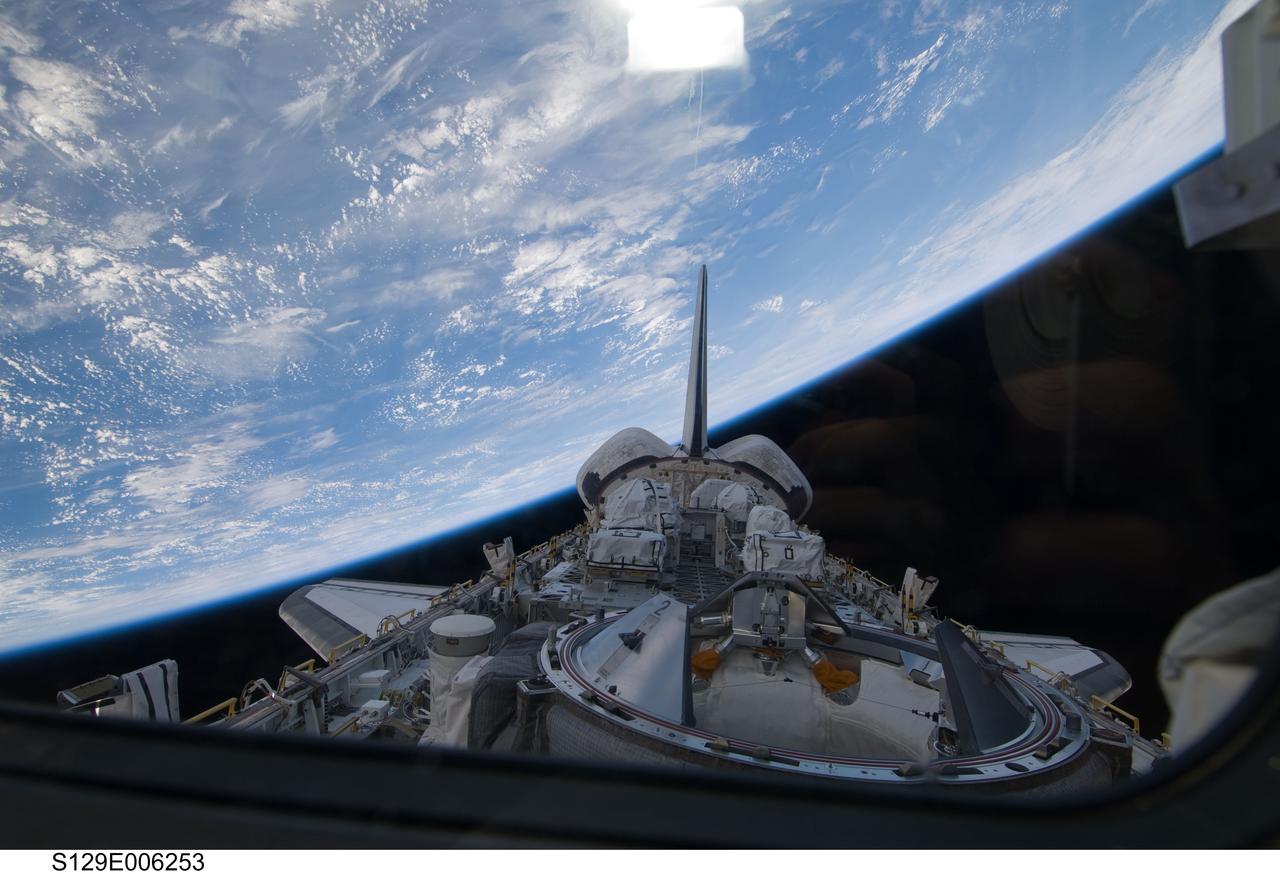
S129-E-006253 (17 Nov. 2009) --- Backdropped by Earth?s horizon and the blackness of space, a partial view of Space Shuttle Atlantis? payload bay, vertical stabilizer, orbital maneuvering system (OMS) pods and docking mechanism are featured in this image photographed by an STS-129 crew member from an aft flight deck window.
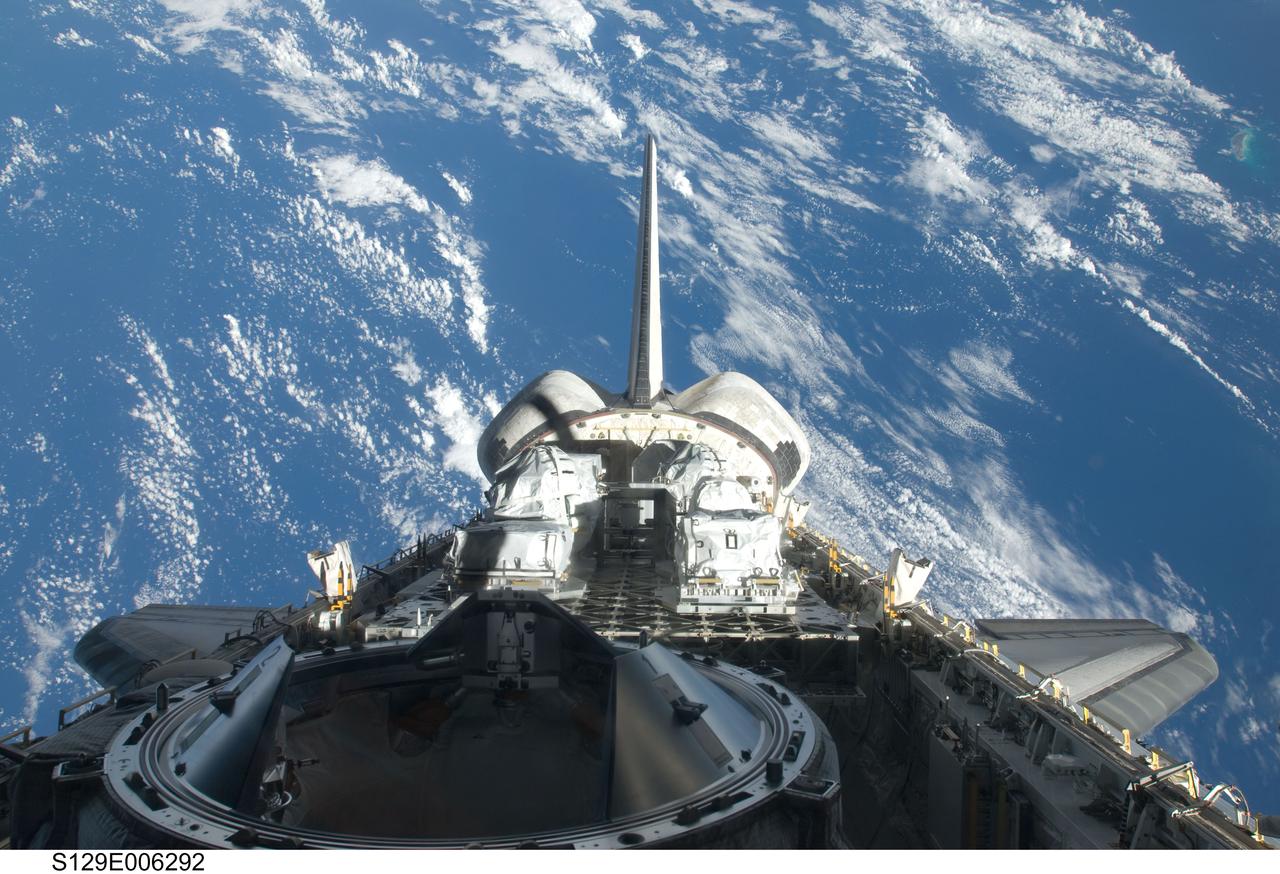
S129-E-006292 (17 Nov. 2009) --- Backdropped by a blue and white part of Earth, a partial view of Space Shuttle Atlantis? payload bay, vertical stabilizer, orbital maneuvering system (OMS) pods and docking mechanism are featured in this image photographed by an STS-129 crew member from an aft flight deck window.
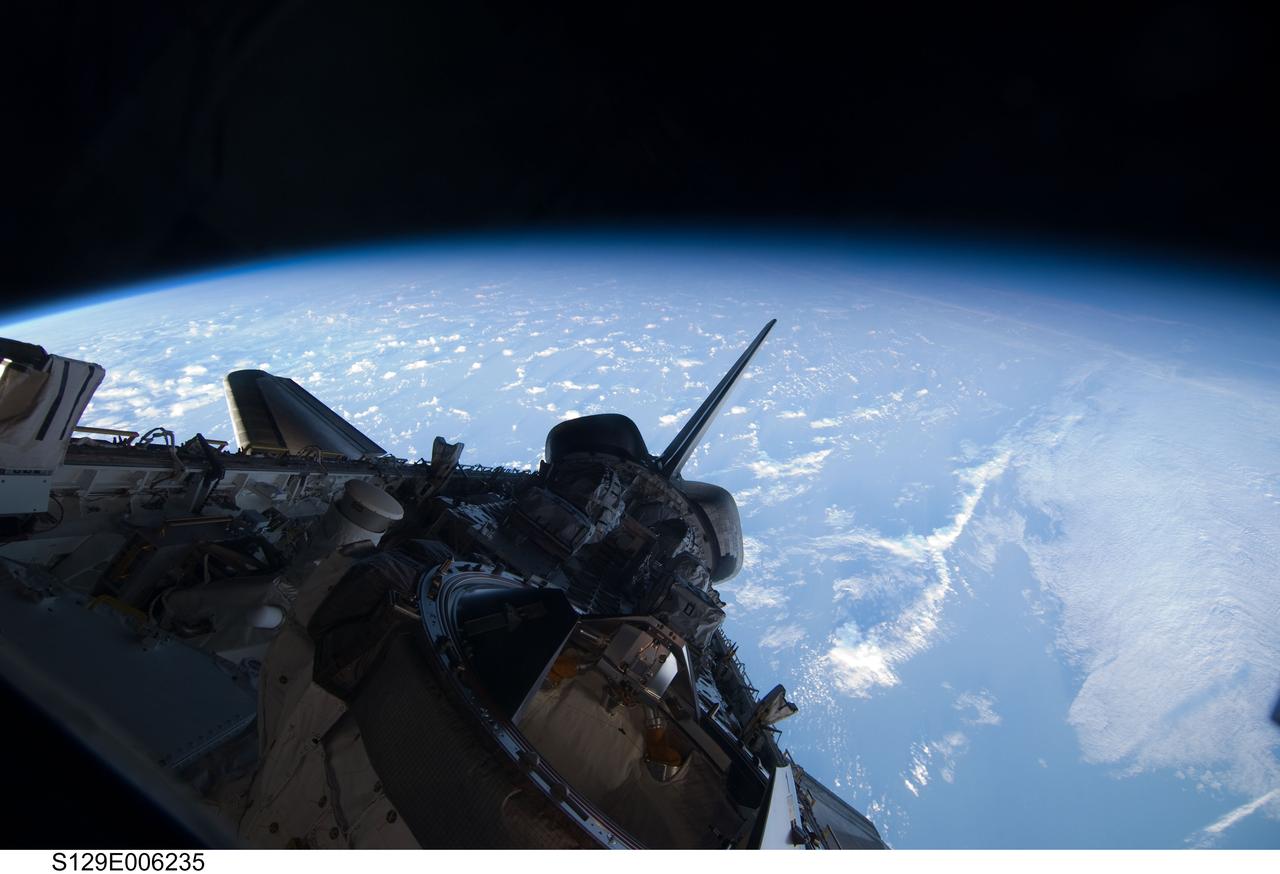
S129-E-006235 (17 Nov. 2009) --- Backdropped by Earth?s horizon and the blackness of space, a partial view of Space Shuttle Atlantis? payload bay, vertical stabilizer, orbital maneuvering system (OMS) pods and docking mechanism are featured in this image photographed by an STS-129 crew member from an aft flight deck window.
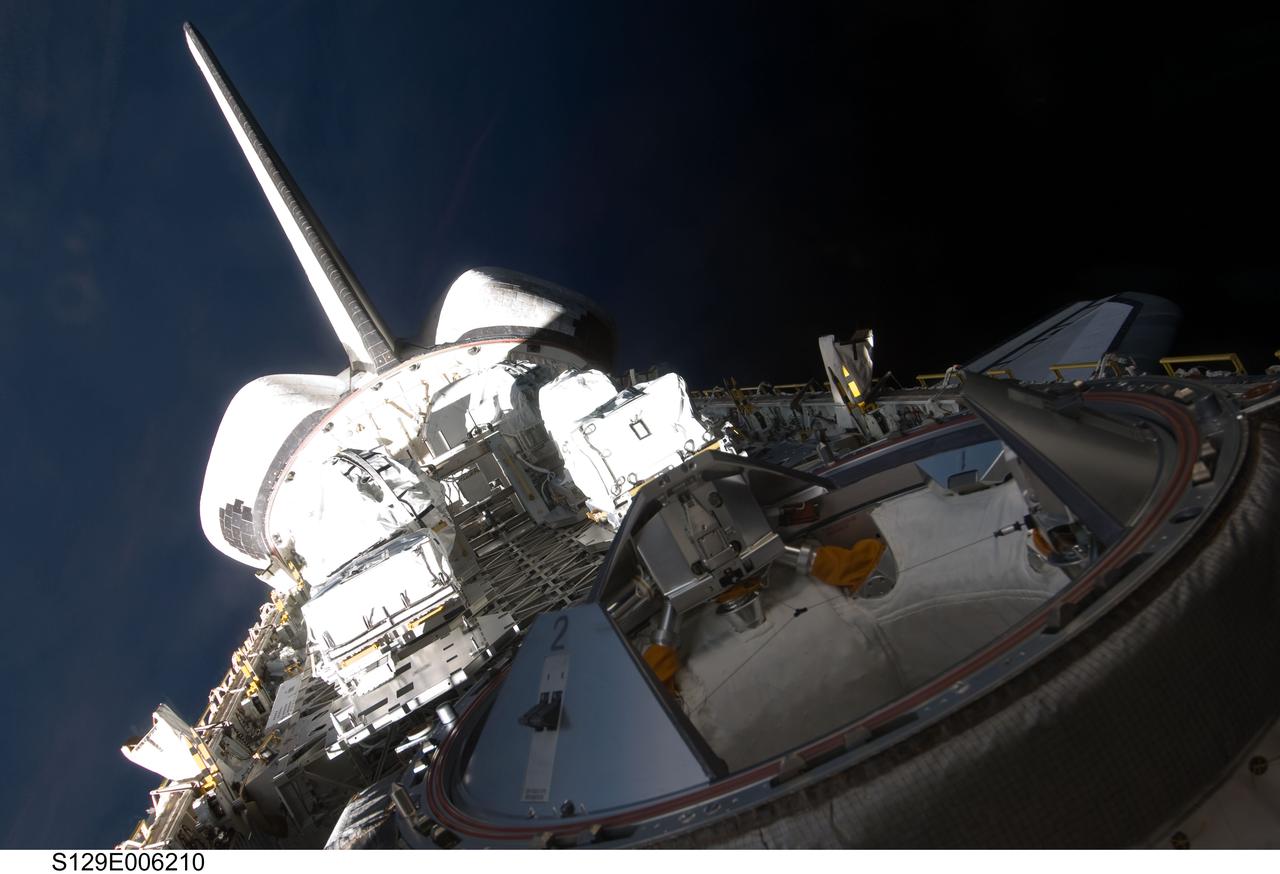
S129-E-006210 (17 Nov. 2009) --- Backdropped by the blackness of space, a partial view of Space Shuttle Atlantis? payload bay, vertical stabilizer, orbital maneuvering system (OMS) pods and docking mechanism are featured in this image photographed by an STS-129 crew member from an aft flight deck window.
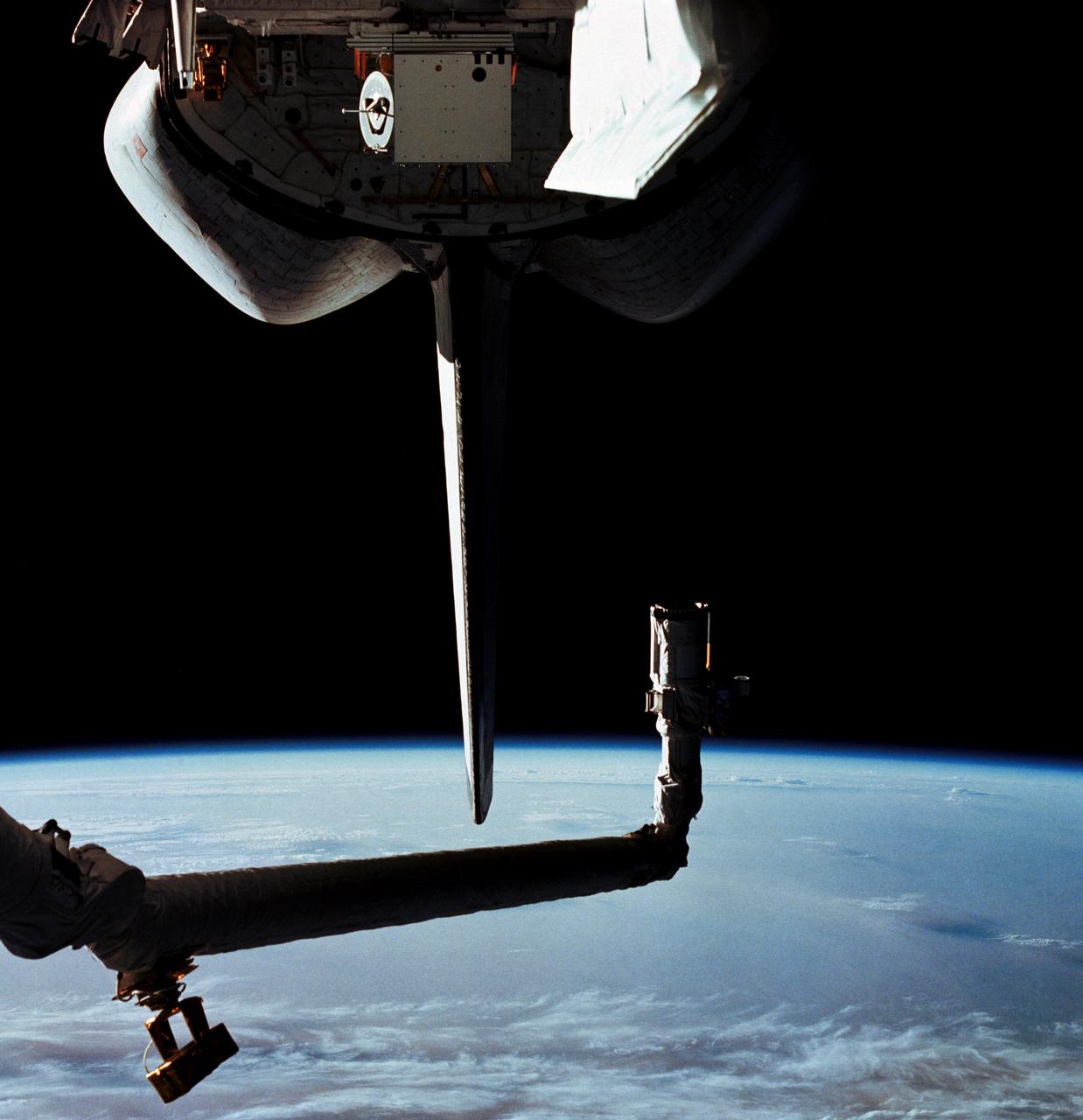
STS002-12-833 (13 Nov. 1981) --- Clouds over Earth and black sky form the background for this unique photograph from the space shuttle Columbia in Earth orbit. The photograph was shot through the aft flight deck windows viewing the cargo bay. Part of the scientific payload of the Office of Space and Terrestrial Applications (OSTA-1) is visible in the open cargo bay. The astronauts inside Columbia's cabin were remotely operating the Canadian-built remote manipulator system (RMS). Note television cameras on its elbow and wrist pieces. Photo credit: NASA
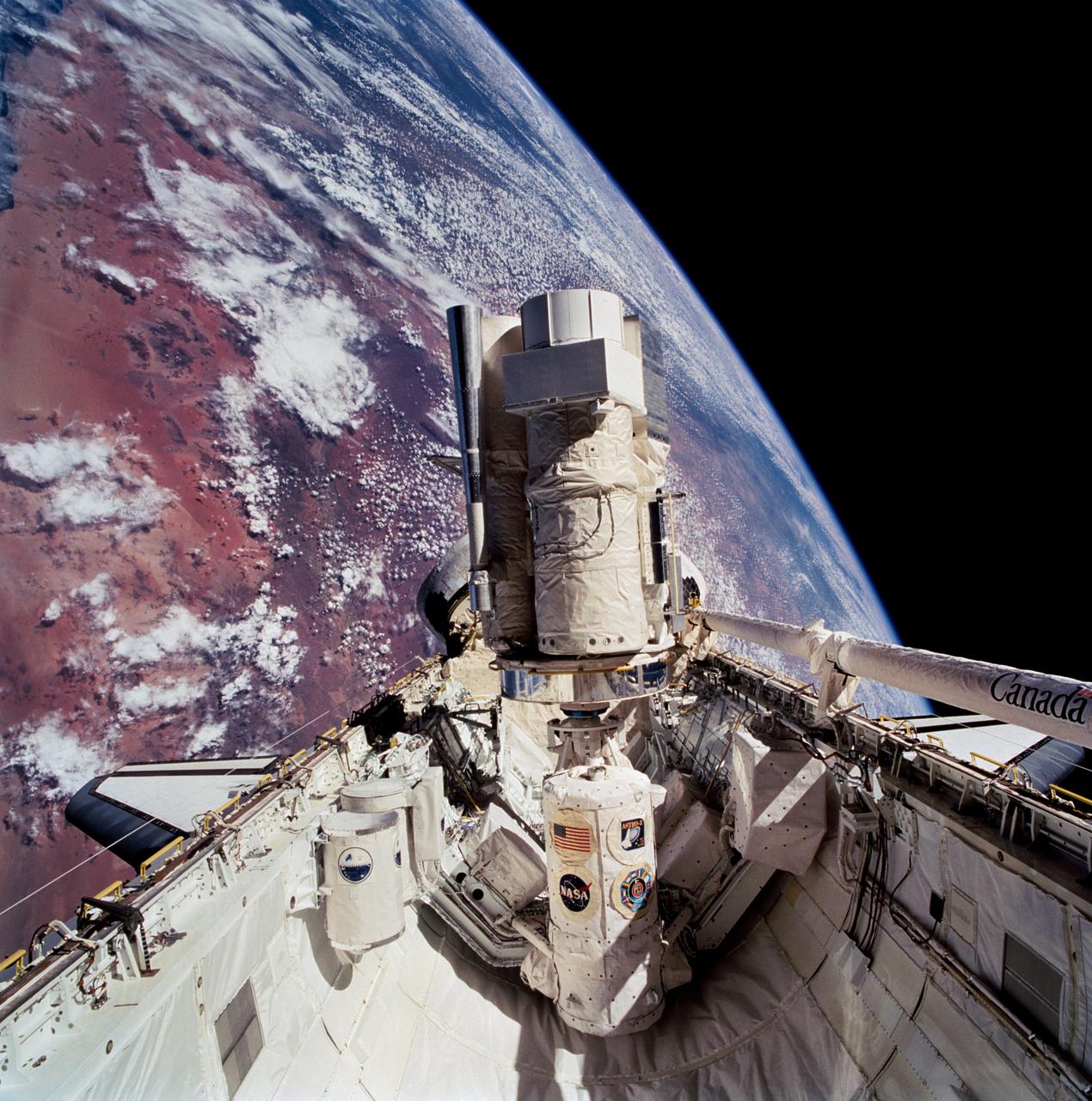
STS067-713-072 (2-18 March 1995) --- This 70mm cargo bay scene, backdropped against a desert area of Namibia, typifies the view that daily greeted the Astro-2 crew members during their almost 17-days aboard the Space Shuttle Endeavour. Positioned on the Spacelab pallet amidst other hardware, the Astro-2 payload is in its operational mode. Visible here are the Instrument Pointing System (IPS), Hopkins Ultraviolet Telescope (HUT), Star Tracker (ST), Ultraviolet Imaging Telescope (UIT), Wisconsin Ultraviolet Photo-Polarimeter Experiment (WUPPE), and Integrated Radiator System (IRS). At this angle, the Optical Sensor Package (OPS) is not seen. The Igloo, which supports the package of experiments, is in center foreground. Two Get-Away Special (GAS) canisters are in lower left foreground. The Extended Duration Orbiter (EDO) pallet, located aft of the cargo bay, is obscured by the Astro-2 payload. The Endeavour was 190 nautical miles above Earth.
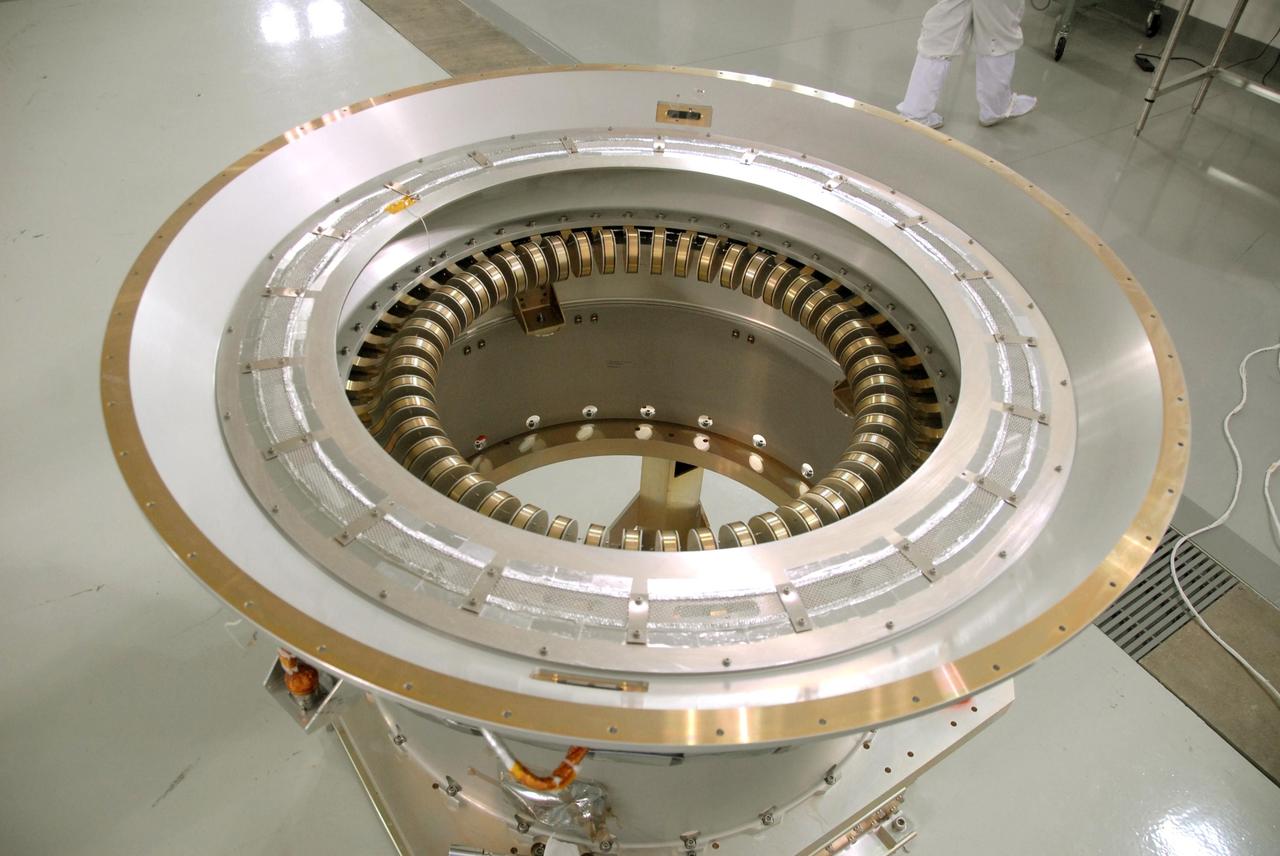
A view of the flexure springs in the soft ride being mated to the payload attach fitting for NASA Wide-field Infrared Survey Explorer, or WISE, spacecraft.
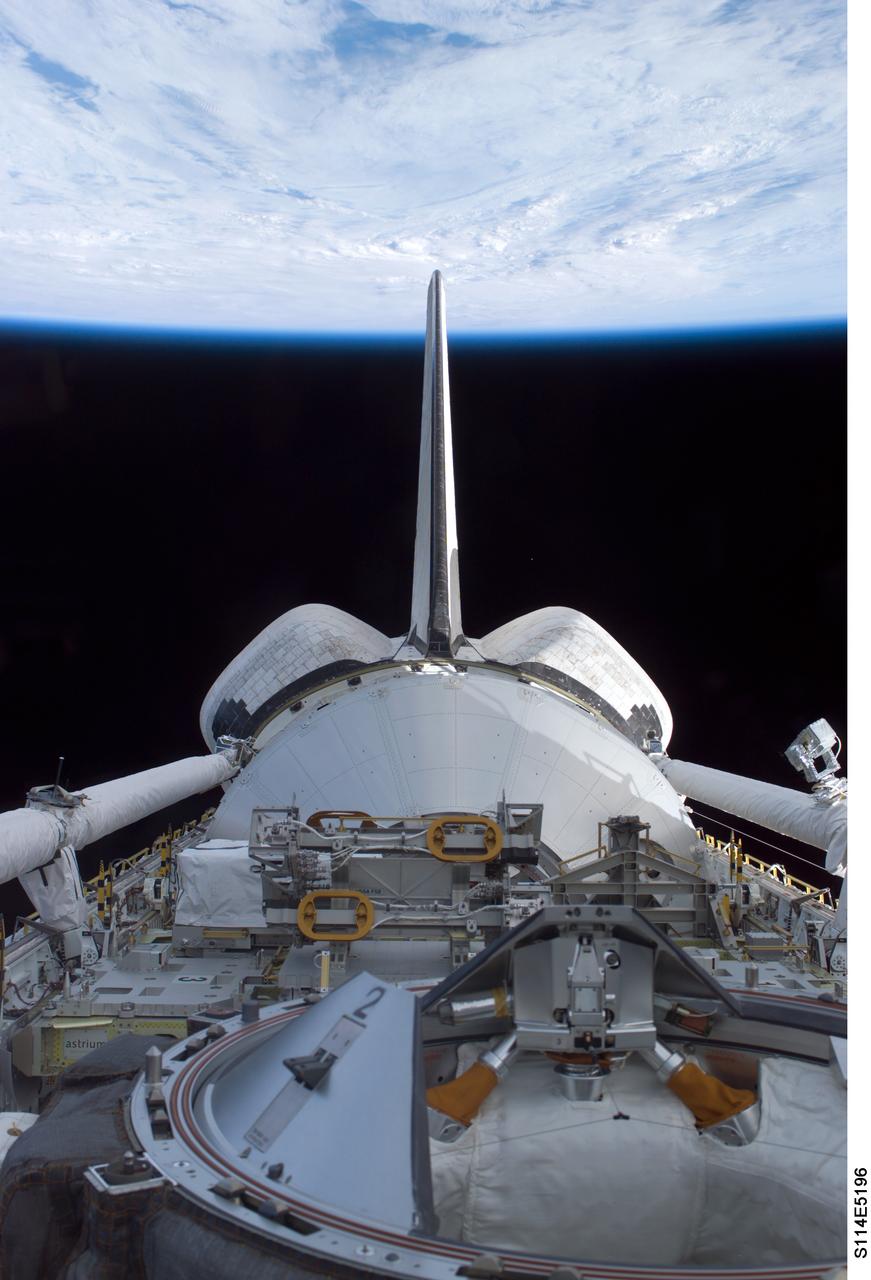
STS114-E-5196 (27 July 2005) --- Discovery's cargo bay over Earth's horizon was photographed by one of the seven STS-114 crew members as the astronauts move within 24 hours of docking with the International Space Station (ISS).
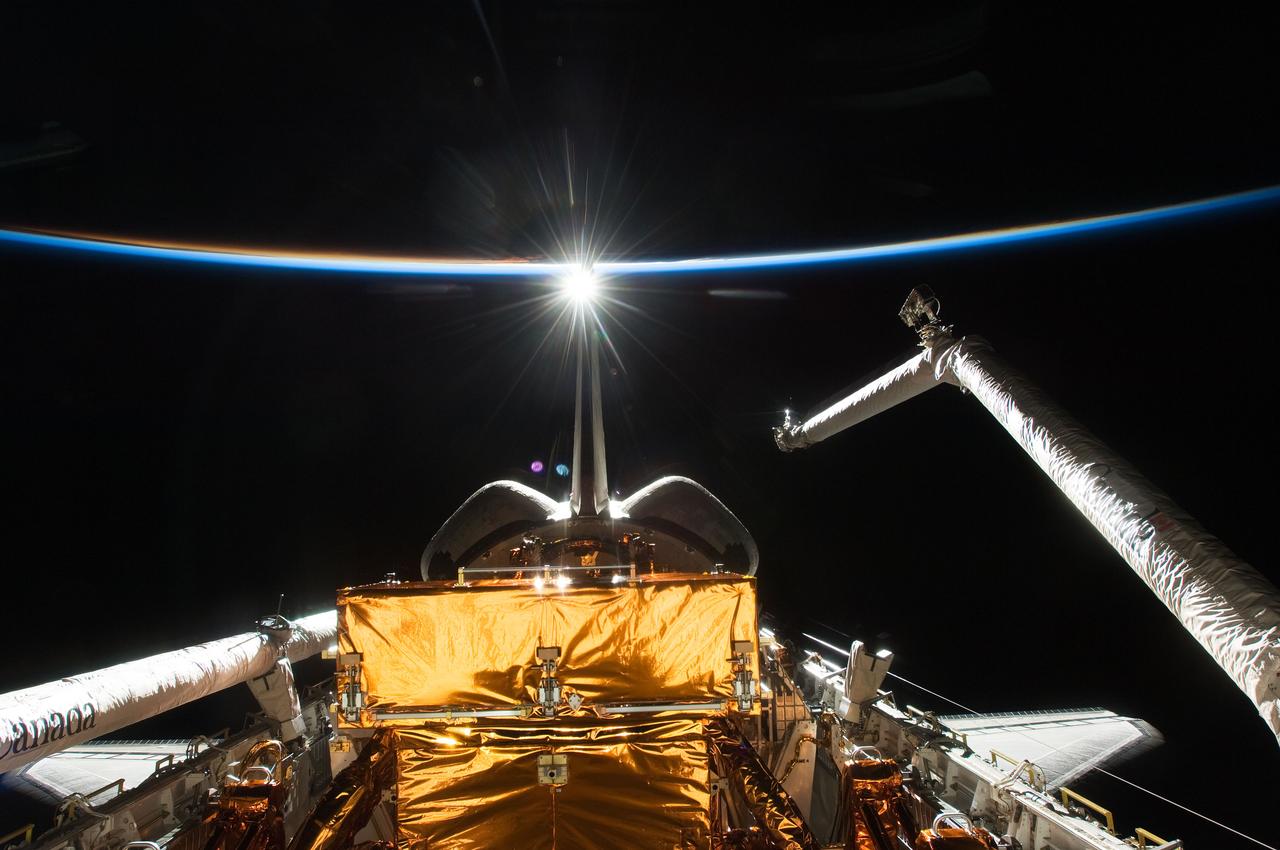
S125-E-012372 (20 May 2009) --- Backdropped by the blackness of space and the thin line of Earth?s atmosphere, Space Shuttle Atlantis? payload bay, Canadian-built remote manipulator system (RMS) robotic arm, vertical stabilizer and orbital maneuvering system (OMS) pods are featured in this image photographed by an STS-125 crewmember on flight day 10.
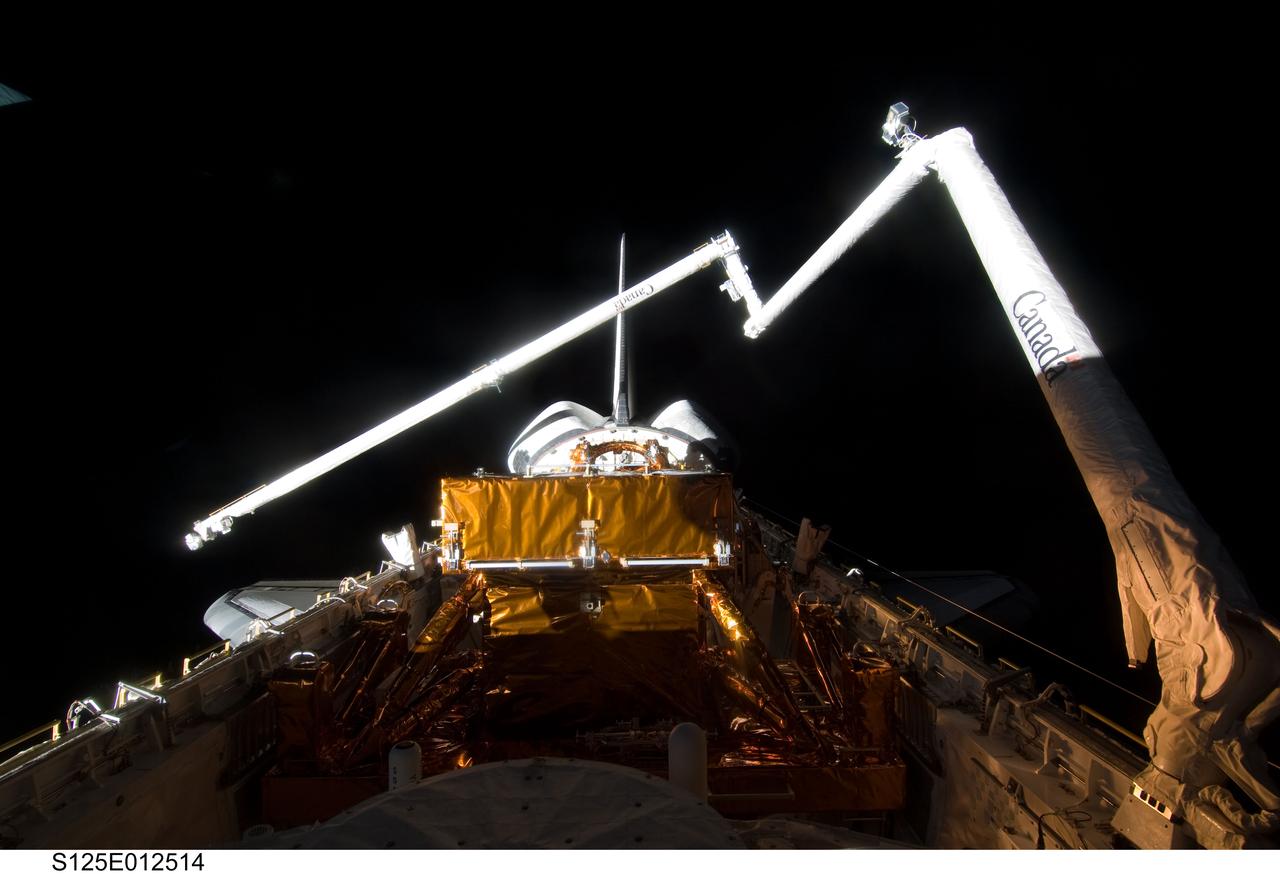
S125-E-012514 (19 May 2009) --- Space Shuttle Atlantis? payload bay, Canadian-built remote manipulator system (RMS) robotic arm, vertical stabilizer and orbital maneuvering system (OMS) pods are featured in this image photographed by an STS-125 crewmember on flight day nine.
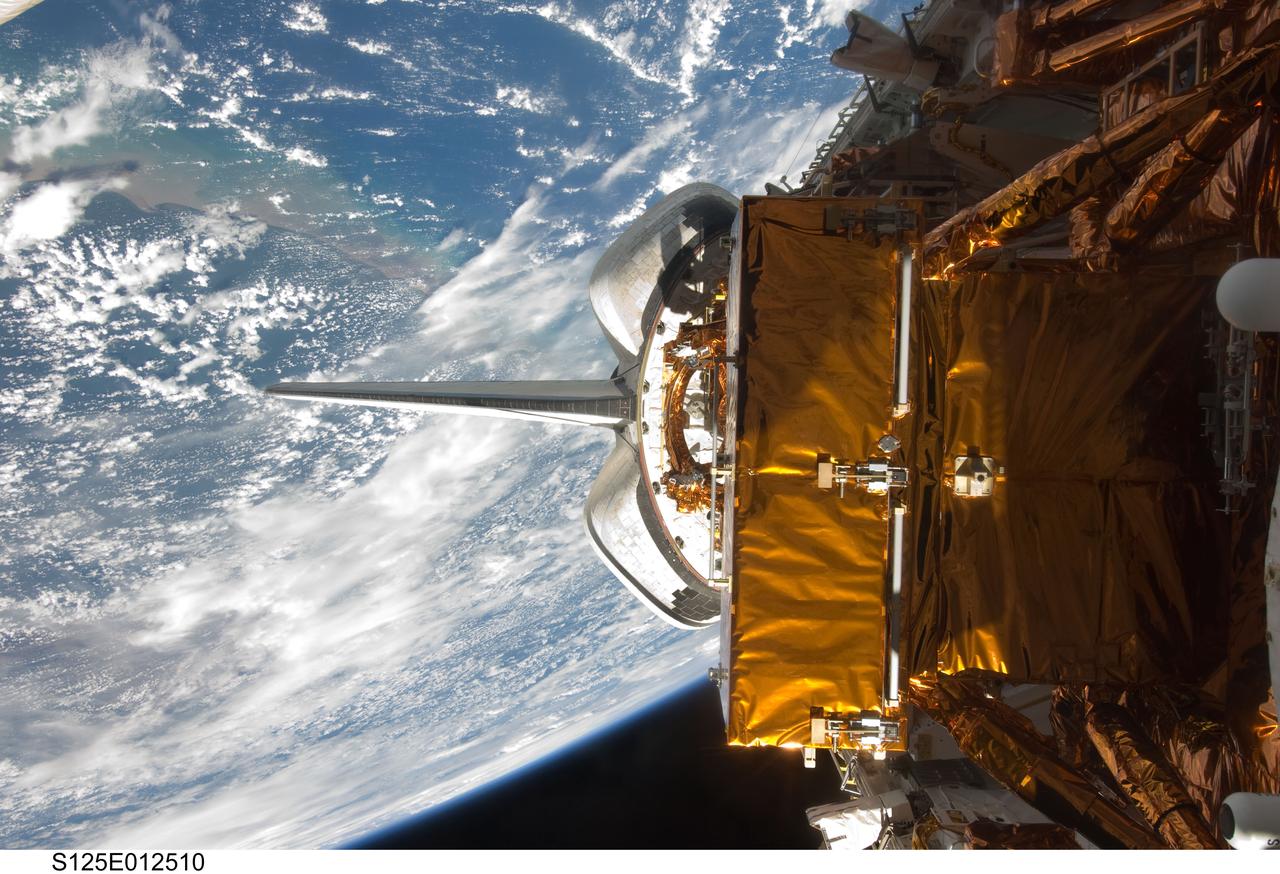
S125-E-012510 (19 May 2009) --- Backdropped by a blue and white Earth, Space Shuttle Atlantis? payload bay, vertical stabilizer and orbital maneuvering system (OMS) pods are featured in this image photographed by an STS-125 crewmember on flight day nine.
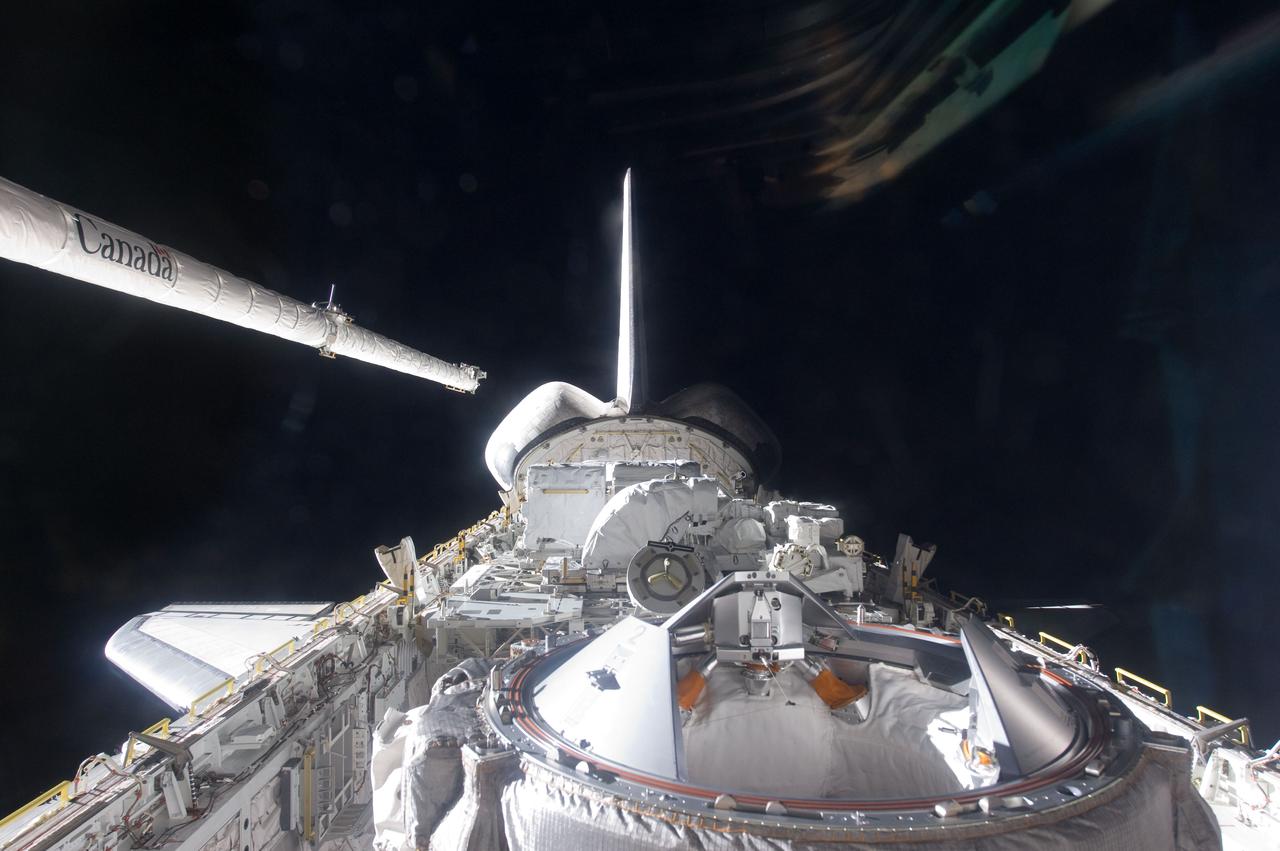
S134-E-006505 (17 May 2011) --- The Orbiter Boom Sensor System (OBSS), pictured on the second flight day of STS-134, on left side of this photo showing Endeavour's vertical stabilizer and cargo bay, is a 50-foot boom carried onboard each of NASA's space shuttles. The boom can be grappled by the Canadarm and serves as an extension of the arm, doubling its length to a combined total of 100 feet (30 meters). At the far end of the boom is an instrumentation package of cameras and lasers used to scan the leading edges of the wings, the nose cap, and the crew compartment after each lift-off and before each landing. Photo credit: NASA
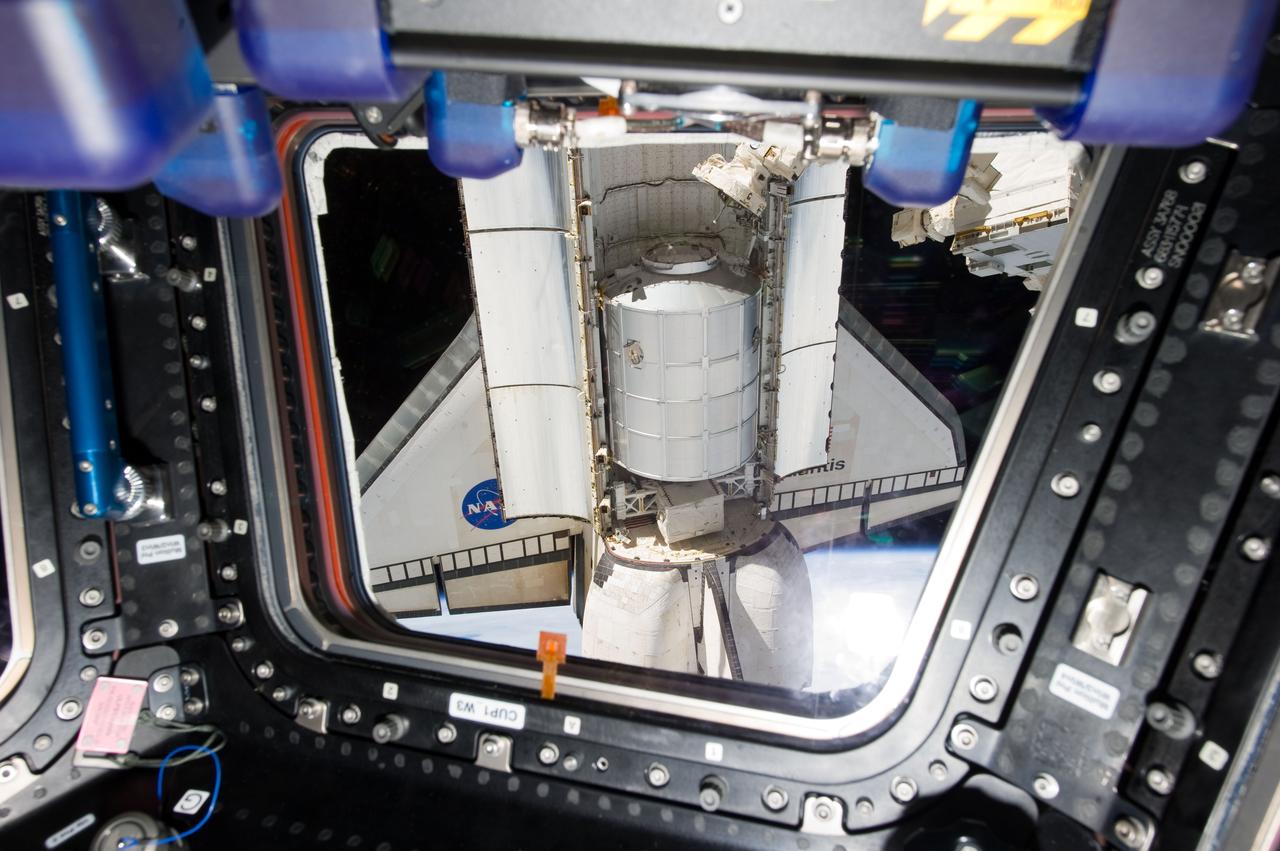
S135-E-009330 (18 July 2011) --- As seen through one of the windows on the International Space Station's Cupola, this is a view of the space shuttle Atlantis and its Raffaello multi-purpose logistics module during the final day of being docked with the International Space Station. Photo credit: NASA
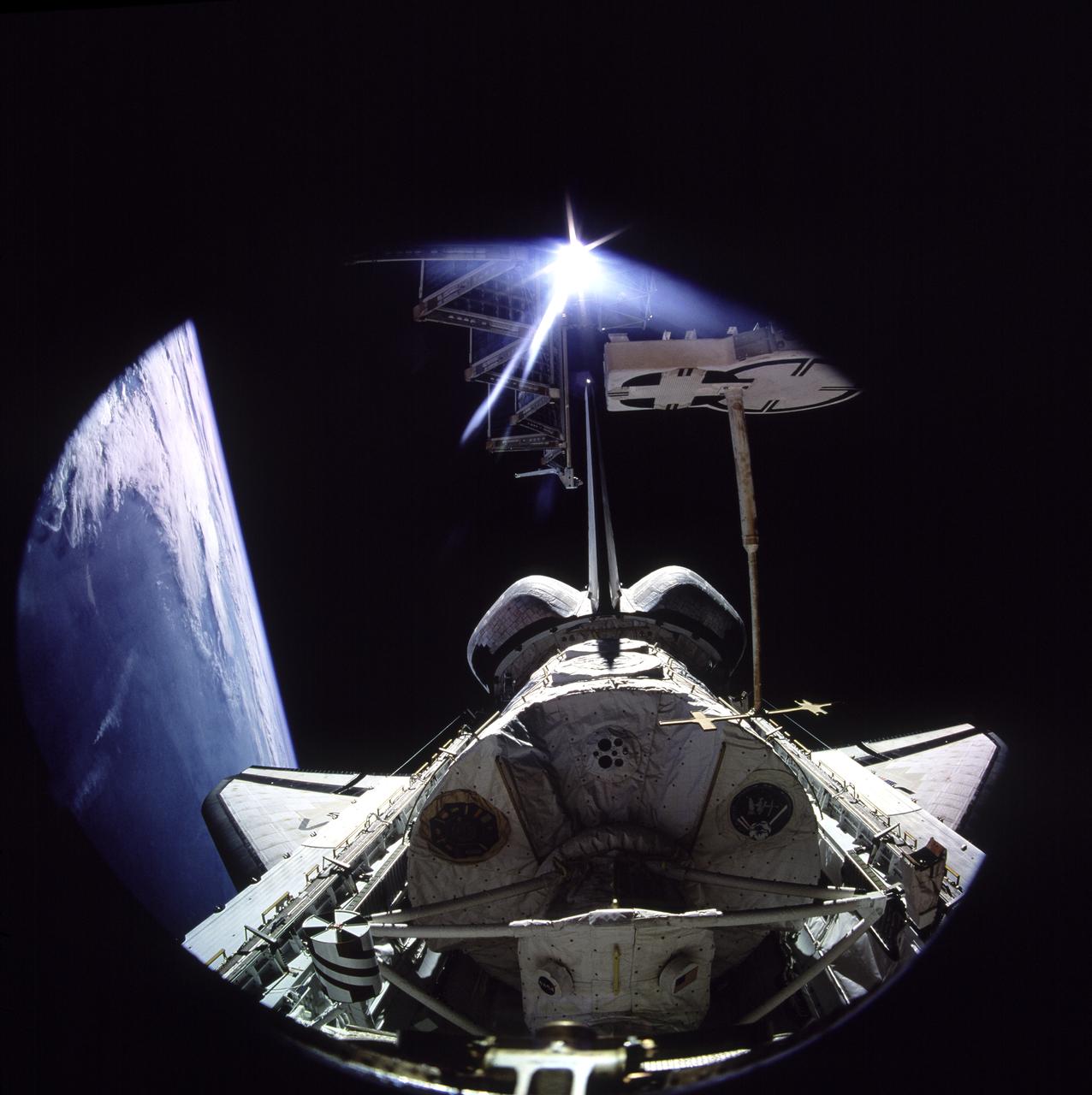
STS071-741-057 (27 June-7 July 1995) --- Docked already with Russia's Mir Space Station, the space shuttle Atlantis' aft cargo bay and Spacelab science module are visible through a window on the Mir Space Station. A 70mm camera, carried into space by the STS-71 crew aboard Atlantis, was used to expose the image. The linkup enabled the seven STS-71 crew members to visit Mir and it allowed the three Mir-18 crew members, in space since March of this year, access to Spacelab. That module was quite busy with tests and data collection involving the three until Atlantis brought them home on July 7, 1995.
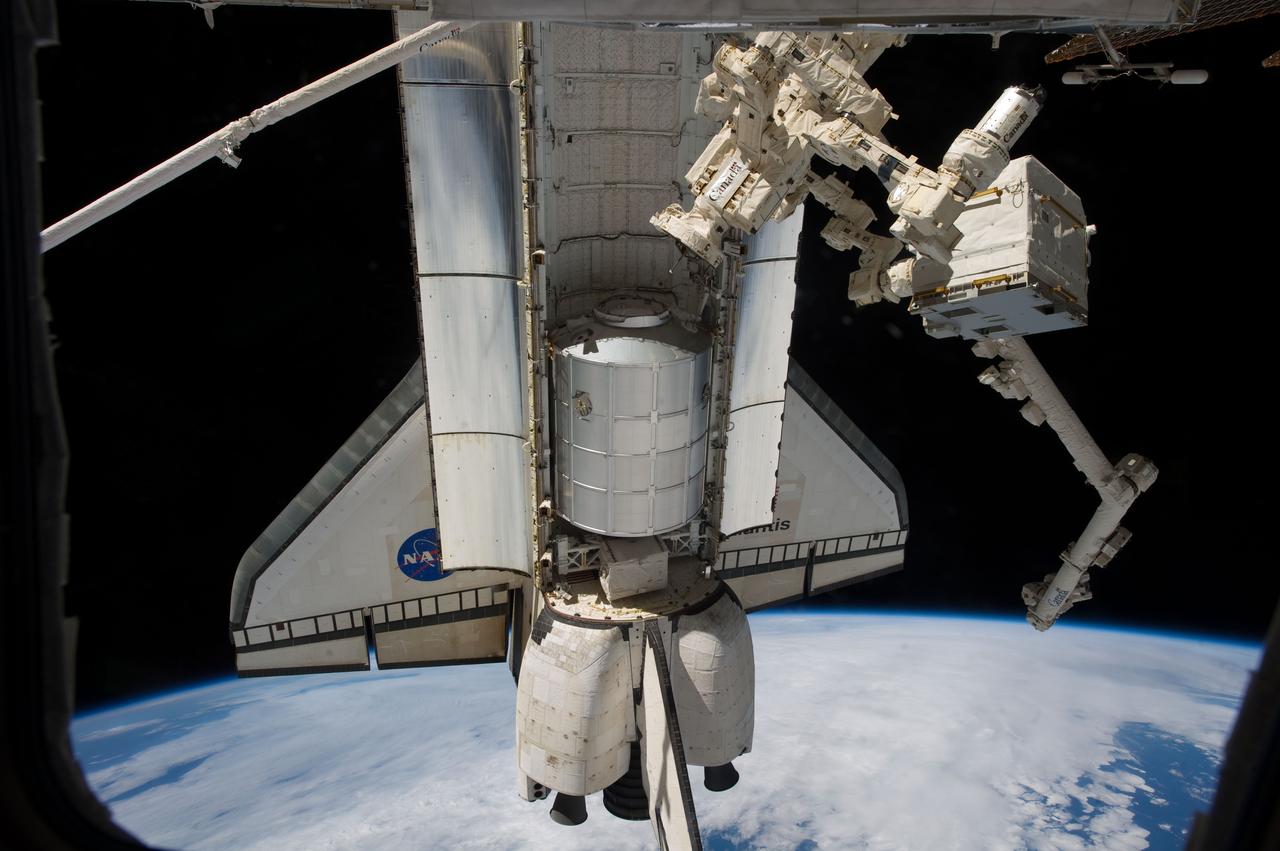
S135-E-009332 (18 July 2011) --- This is a view of the space shuttle Atlantis and its Raffaello multi-purpose logistics module during the final day of being docked with the International Space Station. The object connected to the station at right in the grasp of Dextre, a robot hand, is the Cargo Transport Container-2 (CTC-2) which was delivered by JAXA's HTV-2 vehicle earlier in the year. Photo credit: NASA
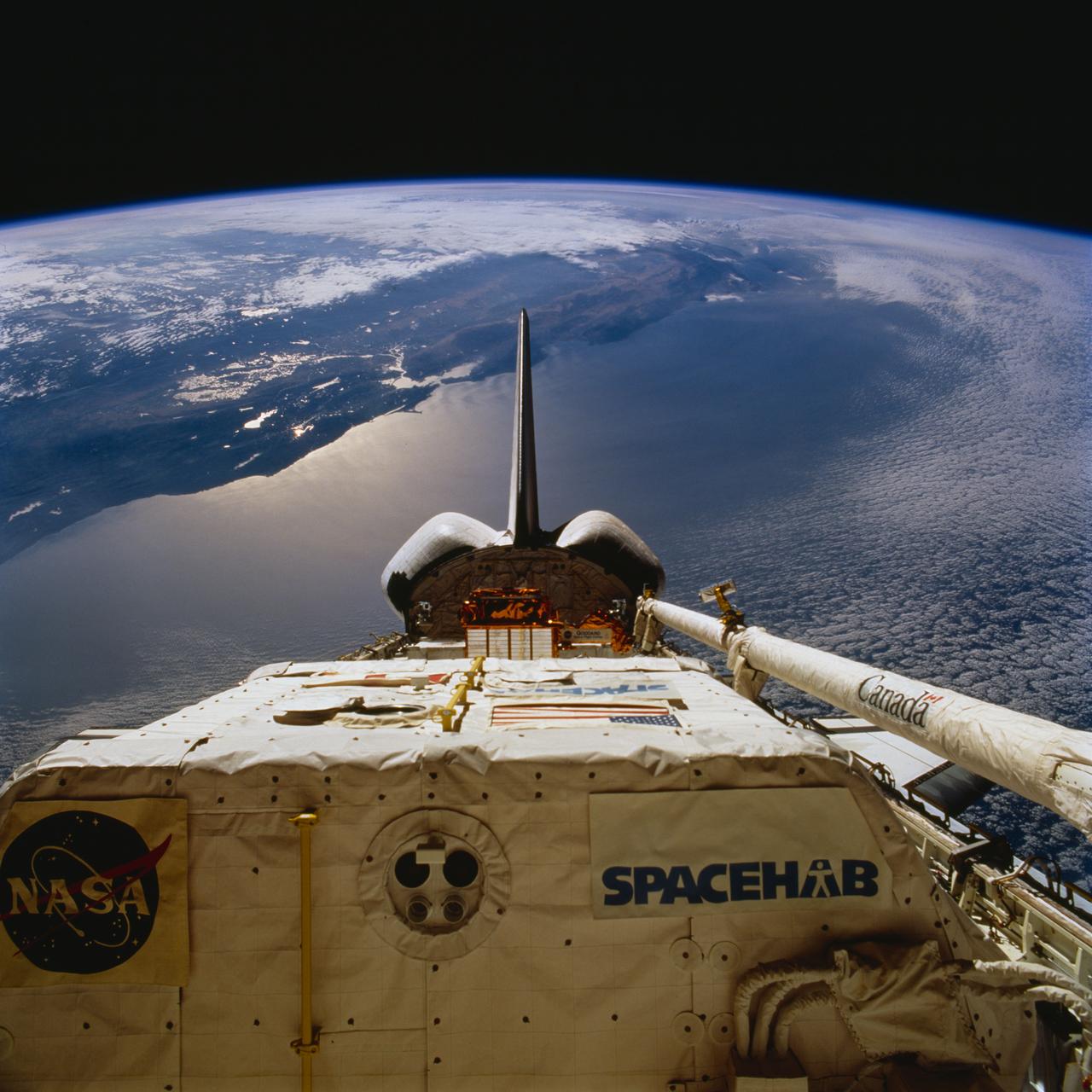
STS077-716-050 (19-29 May 1996) --- With part of the Pacific Ocean and almost the entire state of California as a backdrop, this scene of the Space Shuttle Endeavour’s cargo bay was photographed by a crew member on the aft flight deck. Spacehab-4’s module is in the foreground, flanked by the Canadian-built Remote Manipulator System (RMS) arm and the Spartan-207 payload, both in stowed position. Sunglint on the Earth scene accentuates the bay area of San Francisco. The San Andreas Fault can also easily be traced not far inalnd from the coastline.
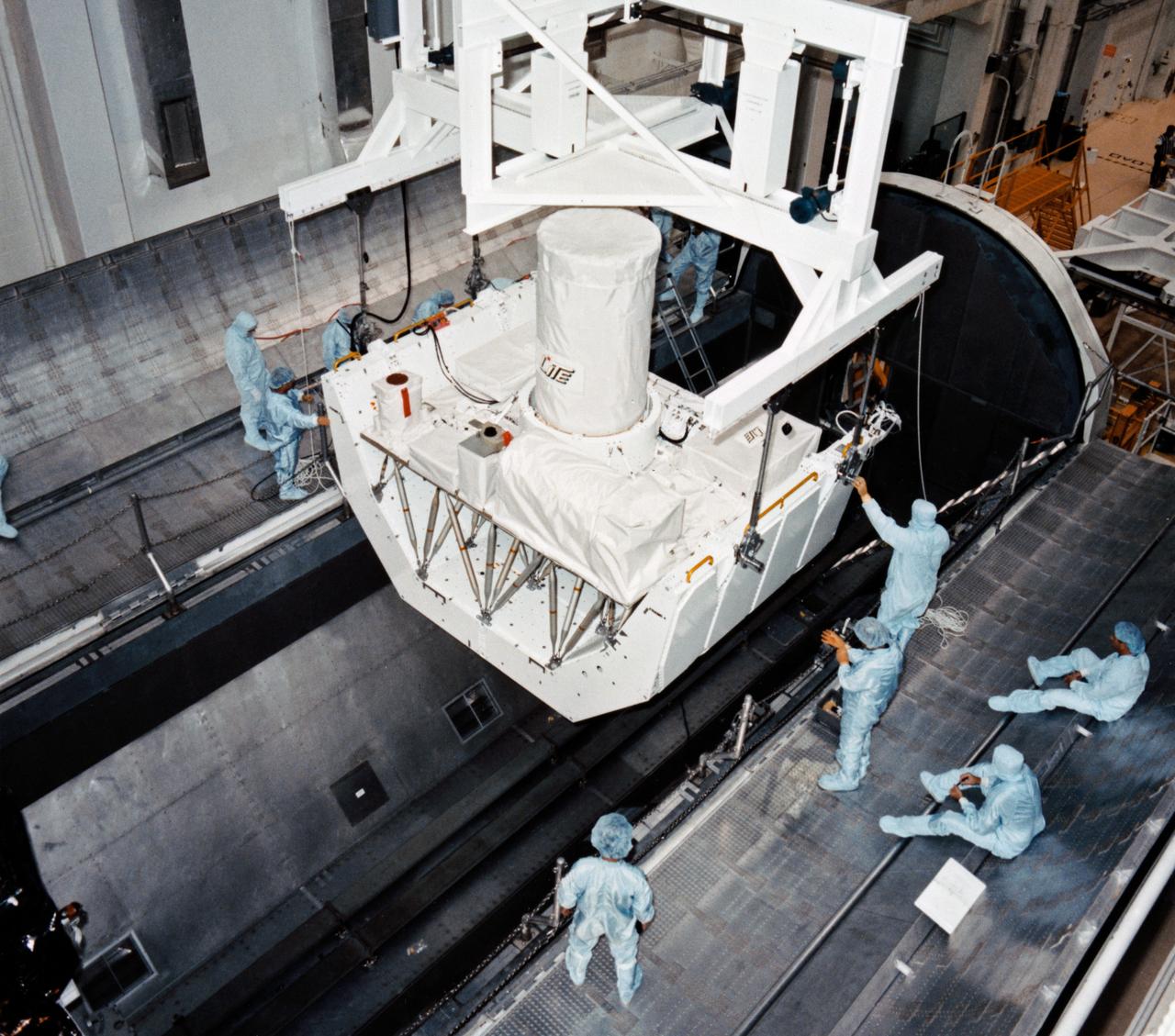
S94-40916 (5 July 1994) --- Workers in the Operations and Checkout Building are transporting the Lidar In-Space Technology Experiment (LITE-1) into the payload canister transporter for transfer to the Orbiter Processing Facility, where it will be installed into the cargo bay of the space shuttle Discovery. LITE-1, which will demonstrate the technology of a spaceborne Lidar instrument, is scheduled to fly on STS-64 later this year. Photo credit: NASA or National Aeronautics and Space Administration
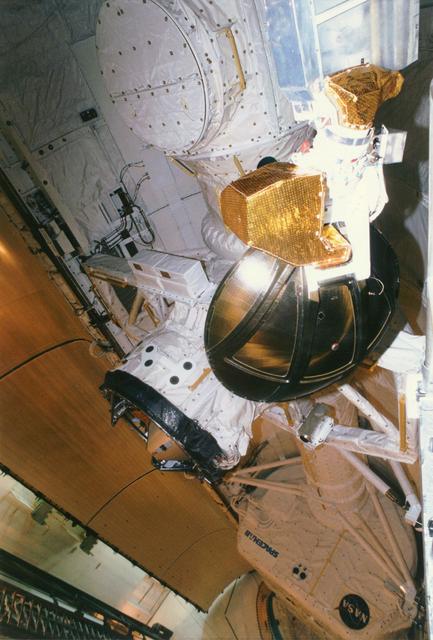
KENNEDY SPACE CENTER, FLA. - The orbiter Ku-band antenna looms large in this view of the Space Shuttle Atlantis' payload bay. Visible just past the antenna system - stowed on the starboard side of the payload bay wall - is the Orbiter Docking System (ODS), and connected to the ODS via a tunnel is the Spacehab Double Module in the aft area of the payload bay. This photograph was taken from the starboard wing platform on the fifth level of the Payload Changeout Room (PCR) at Launch Pad 39A. Work is under way in the PCR to close Atlantis' payload bay doors for flight. Atlantis currently is being targeted for liftoff on Mission STS-79, the fourth docking of the U.S. Shuttle to the Russian Space Station Mir, around Sept. 12.
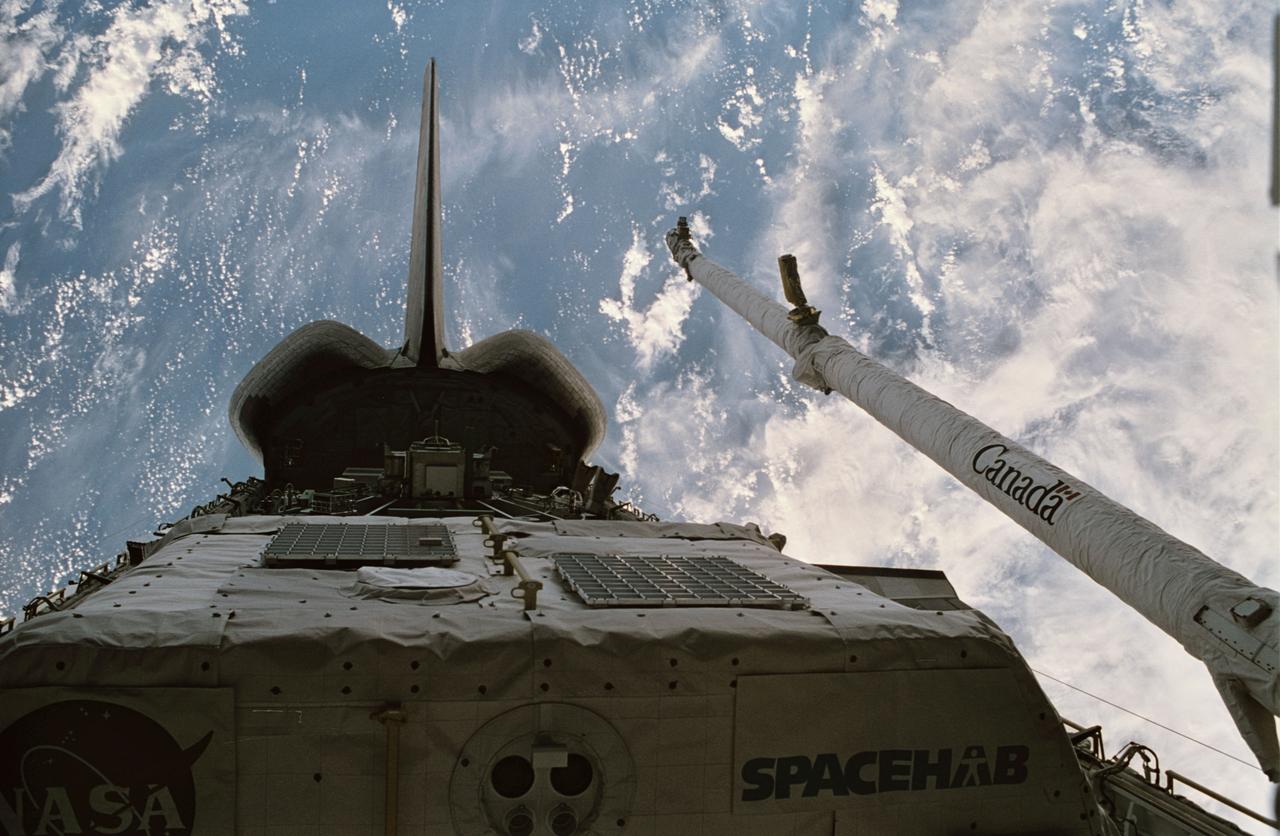
STS060-15-003 (3-11 Feb 1994) --- This 35mm frame shows the major payloads of the Space Shuttle Discovery's STS-60 mission, backdropped against clouds over the Atlantic Ocean. In the foreground is the SPACEHAB module, with the Wake Shield Facility (WSF) partially visible in its berthed position near the Orbital Maneuvering System (OMS) pods and the vertical stabilizer. Television cameras on the Remote Manipulator System (RMS) were being used for a survey of the cargo. Five NASA astronauts and a Russian cosmonaut went on to spend eight days in Earth orbit in support of the mission.
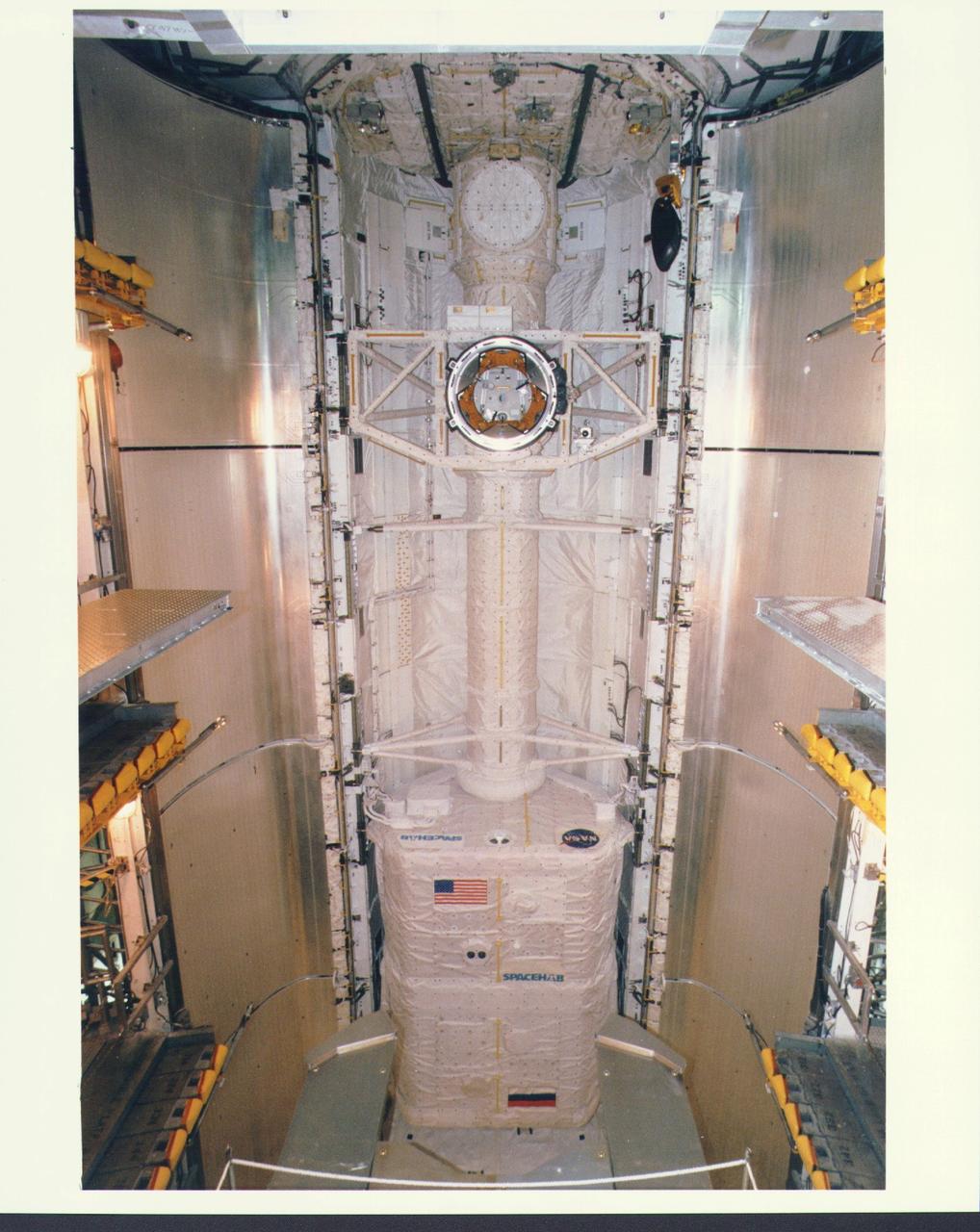
KENNEDY SPACE CENTER, FLA. - Workers in the Payload Changeout Room (PCR) at Launch Pad 39A are preparing to close the payload doors for flight on the Space Shuttle Atlantis, targeted for liftoff on Mission STS-79 around Sept. 12. The payloads in Atlantis' cargo bay will play key roles during the upcoming spaceflight, which will be highlighted by the fourth docking between the U.S. Shuttle and Russian Space Station Mir. Located in the aft (lowermost) area of the payload bay is the SPACEHAB Double Module, filled with supplies and other items slated for transfer to the Russian Space Station Mir as well as research equipment. The SPACEHAB is connected by tunnel to the Orbiter Docking System (ODS). This view looks directly at the top of the ODS and shows clearly the Androgynous Peripheral Docking System (APDS) that interfaces with the Docking Module on Mir to achieve a linkup.
![View of the STS-41G OSTA-3 (Space Radiation Laboratory [SRL]) Payload in its workstand. 1. SHUTTLE - PAYLOADS (OSTA-3)](https://images-assets.nasa.gov/image/s84-36853/s84-36853~medium.jpg)
View of the STS-41G OSTA-3 (Space Radiation Laboratory [SRL]) Payload in its workstand. 1. SHUTTLE - PAYLOADS (OSTA-3)
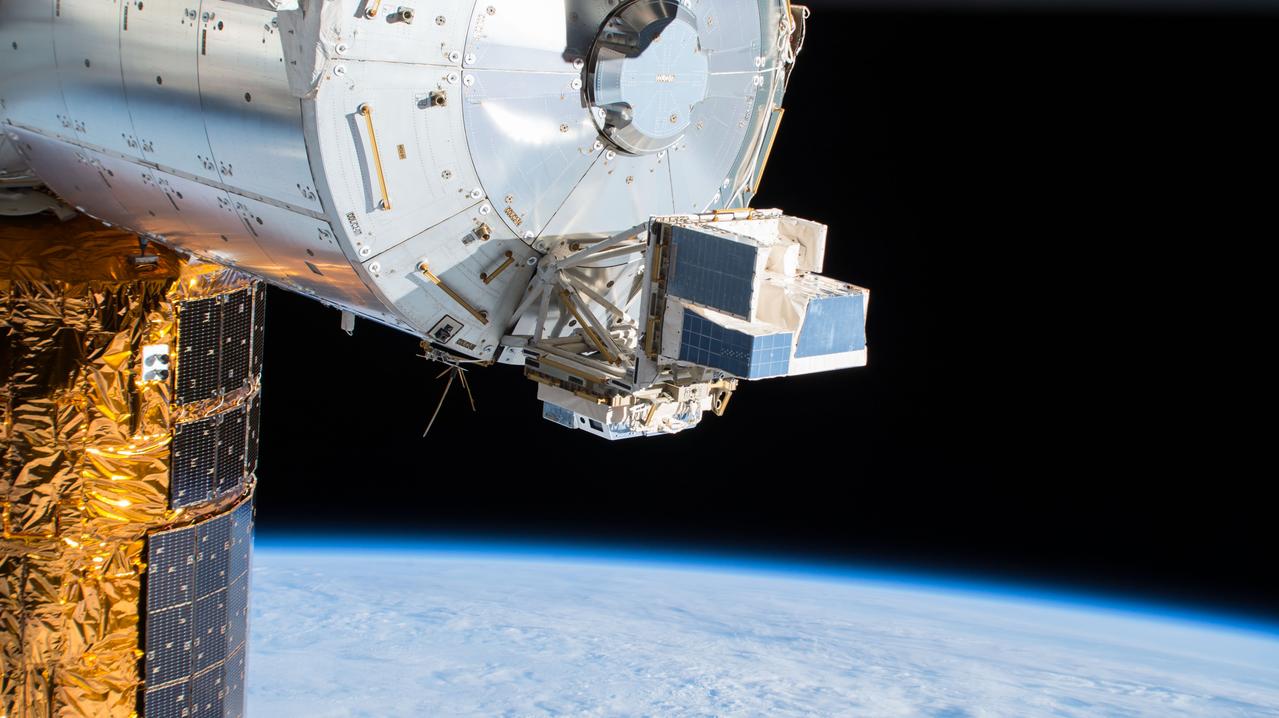
iss057e055409 (10/19/2018) - View of the Atmosphere-Space Interactions Monitor (ASIM) and the High Definition Earth Viewing (HDEV) payloads installed on the Columbus External Payload Facility (Columbus-EPF). Photo was taken by the ground-controlled External High Definition Camera 3 (EHDC3).
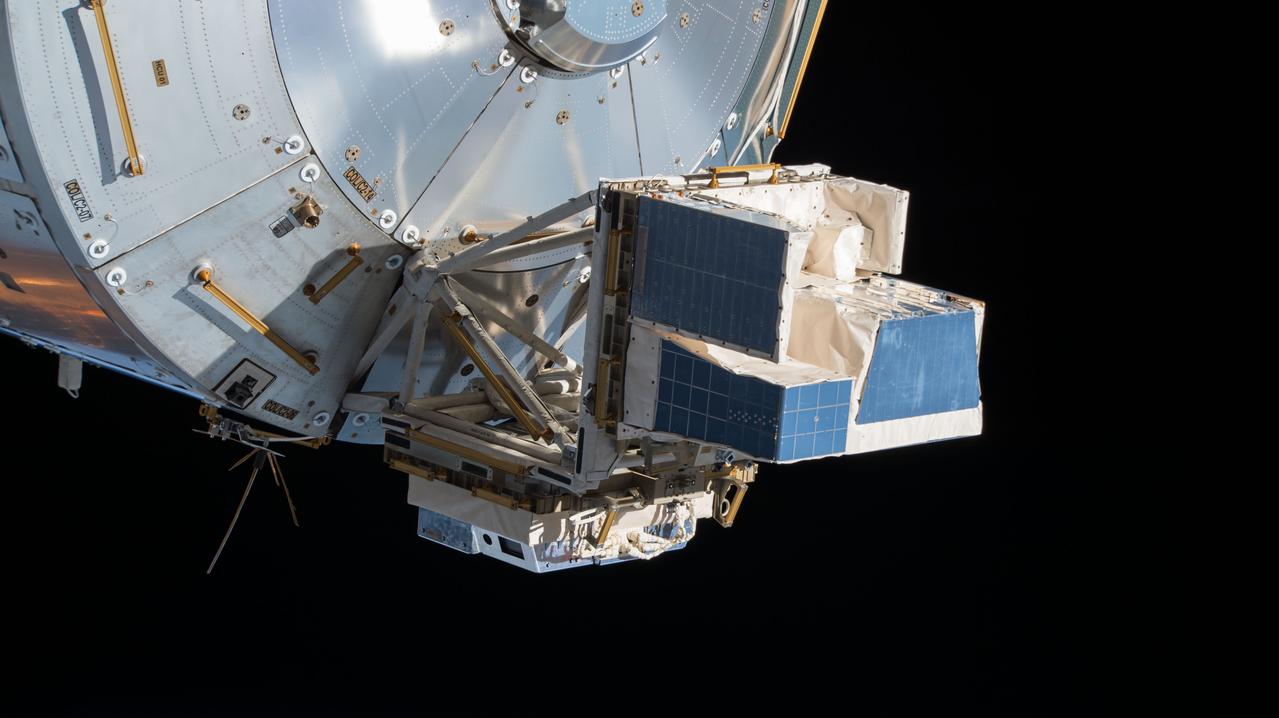
iss057e055411 (10/19/2018) - View of the Atmosphere-Space Interactions Monitor (ASIM) and the High Definition Earth Viewing (HDEV) payloads installed on the Columbus External Payload Facility (Columbus-EPF). Photo was taken by the ground-controlled External High Definition Camera 3 (EHDC3).
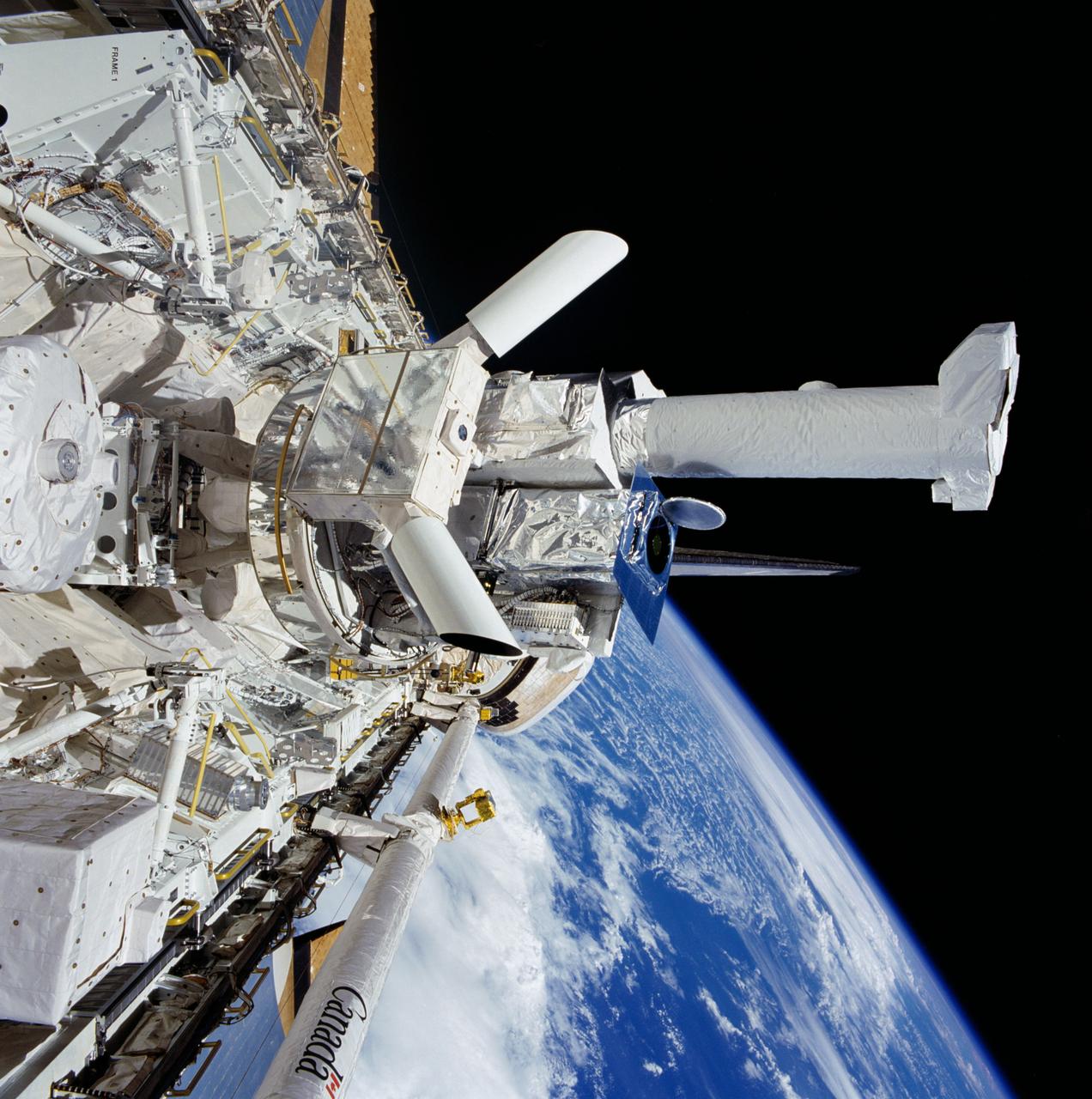
51F-42-069 (29 July-6 Aug 1985) --- The solar optical universal polarimeter (SOUP) experiment is visible among the cluster of Spacelab 2 hardware in the cargo bay of the Earth-orbiting Space Shuttle Challenger, backdropped against a curtain of white clouds over ocean waters. Various components of the instrument positioning system (IPS) are conspicuous at the center of the frame. Now resting, the remote manipulator system (RMS) was used at various points during the mission with the plasma diagnostics package (PDP) and as a support service structure for television cameras covering various activities of the busy science-oriented Spacelab 2 mission.
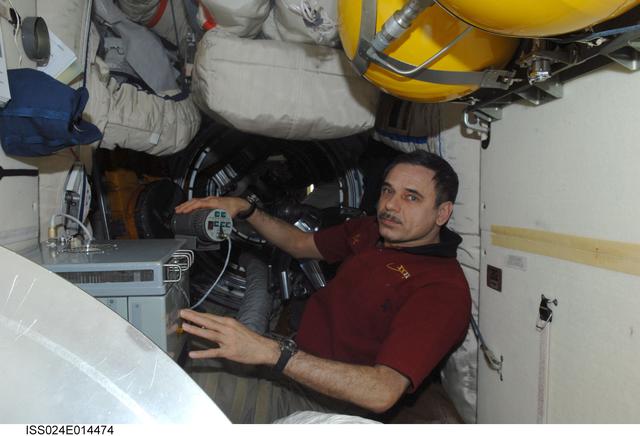
ISS024-E-014474 (14 Sept. 2010) --- Russian cosmonaut Mikhail Kornienko, Expedition 24 flight engineer, services the BTKh-28 KASKAD (Cascade) payload in the Pirs Docking Compartment of the International Space Station.
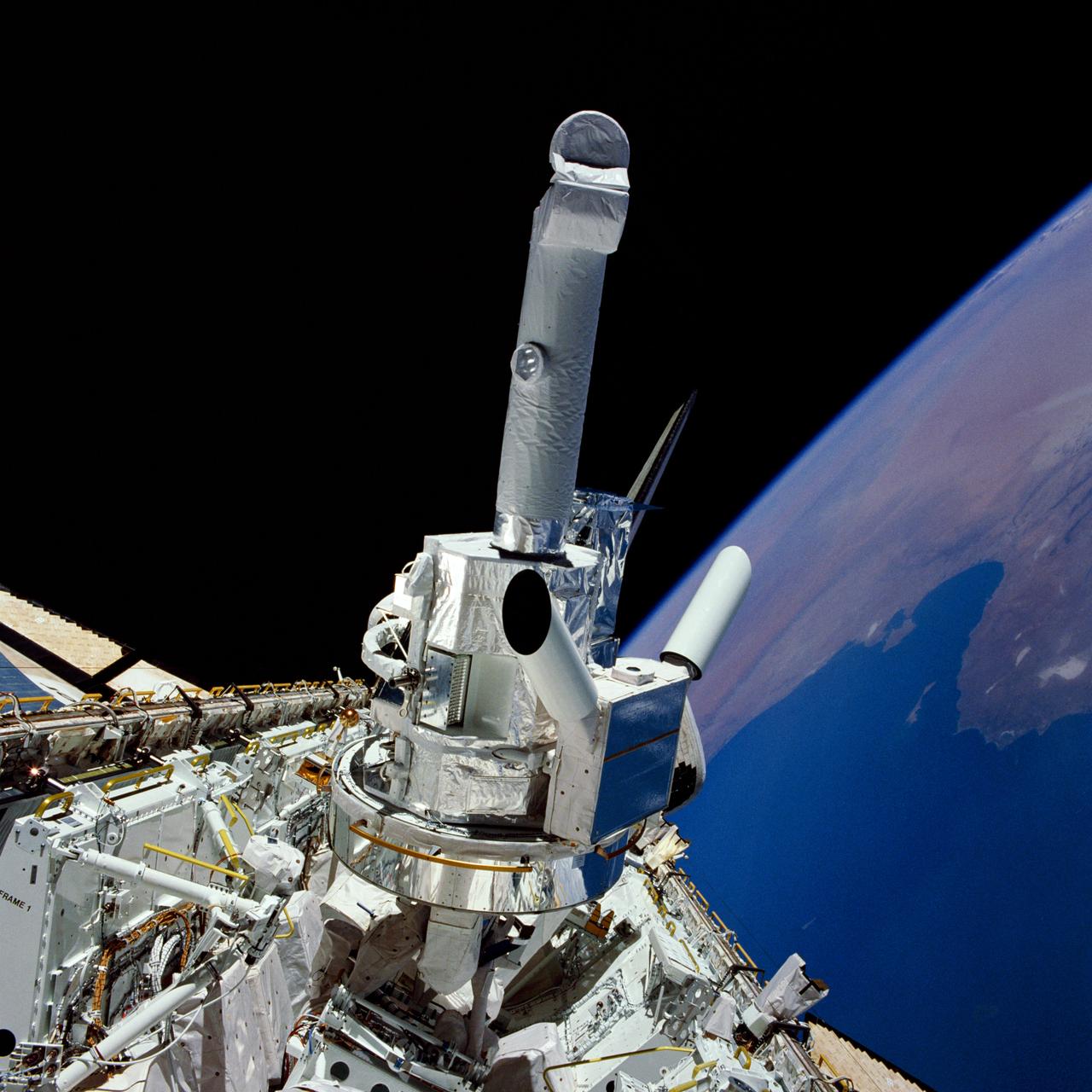
51F-33-005 (29 July - 6 August 1985) --- Experiments and the instrument pointing system (IPS) for Spacelab 2 are backdropped against the Libya/Tunisia Mediterranean coast and black space in this 70mm view photographed through the aft flight deck windows of the Space Shuttle Challenger. Also partially visible among the cluster of Spacelab 2 hardware are the solar optical universal polarimeter (SOUP) experiment and the coronal helium abundance experiment (CHASE).
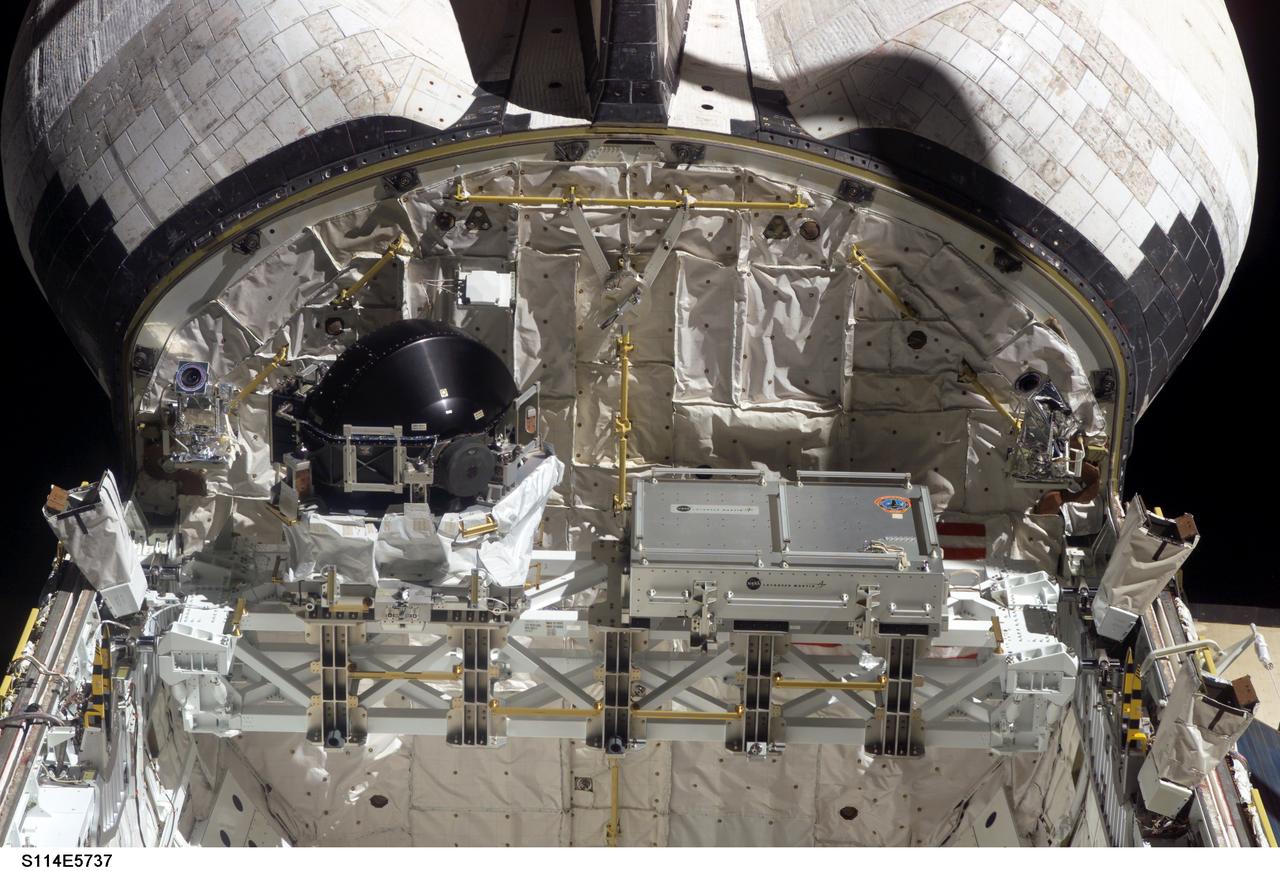
S114-E-5737 (29 July 2005) --- This high angle view of the aft end of Discovery's cargo bay in Earth orbit was taken from the International Space Station to which the Space Shuttle was docked at the time. The control moment gyro (CMG) replacement article, to be installed on an upcoming space walk, is on the left side of the frame.
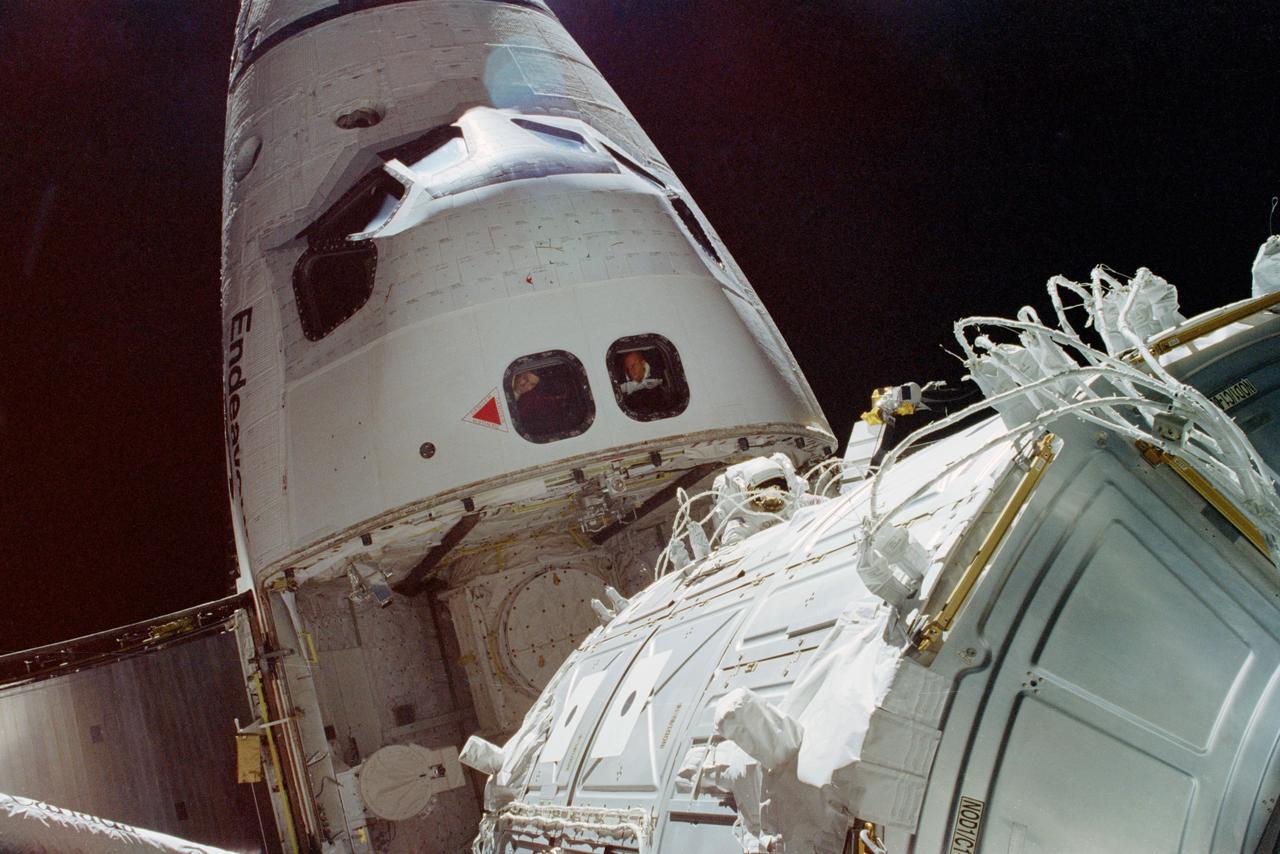
STS088-352-034 (4-15 Dec. 1998) --- This scene photographed from the top of Node 1 shows the nose of the Space Shuttle Endeavour, during one of three space walks. Astronaut James H. Newman, mission specialist (frame center), was joined by astronaut Jerry L. Ross, mission specialist (out of frame), for the extravehicular activity (EVA) to ready for release the recently-joined Russian-built Zarya Module (FGB) and the United States-built Unity (Node 1) Module. Fellow crew members Robert D. Cabana, commander (left window), and Frederick W. ?Rick? Sturckow, pilot, observe the EVA through aft flight deck overhead windows at left center.
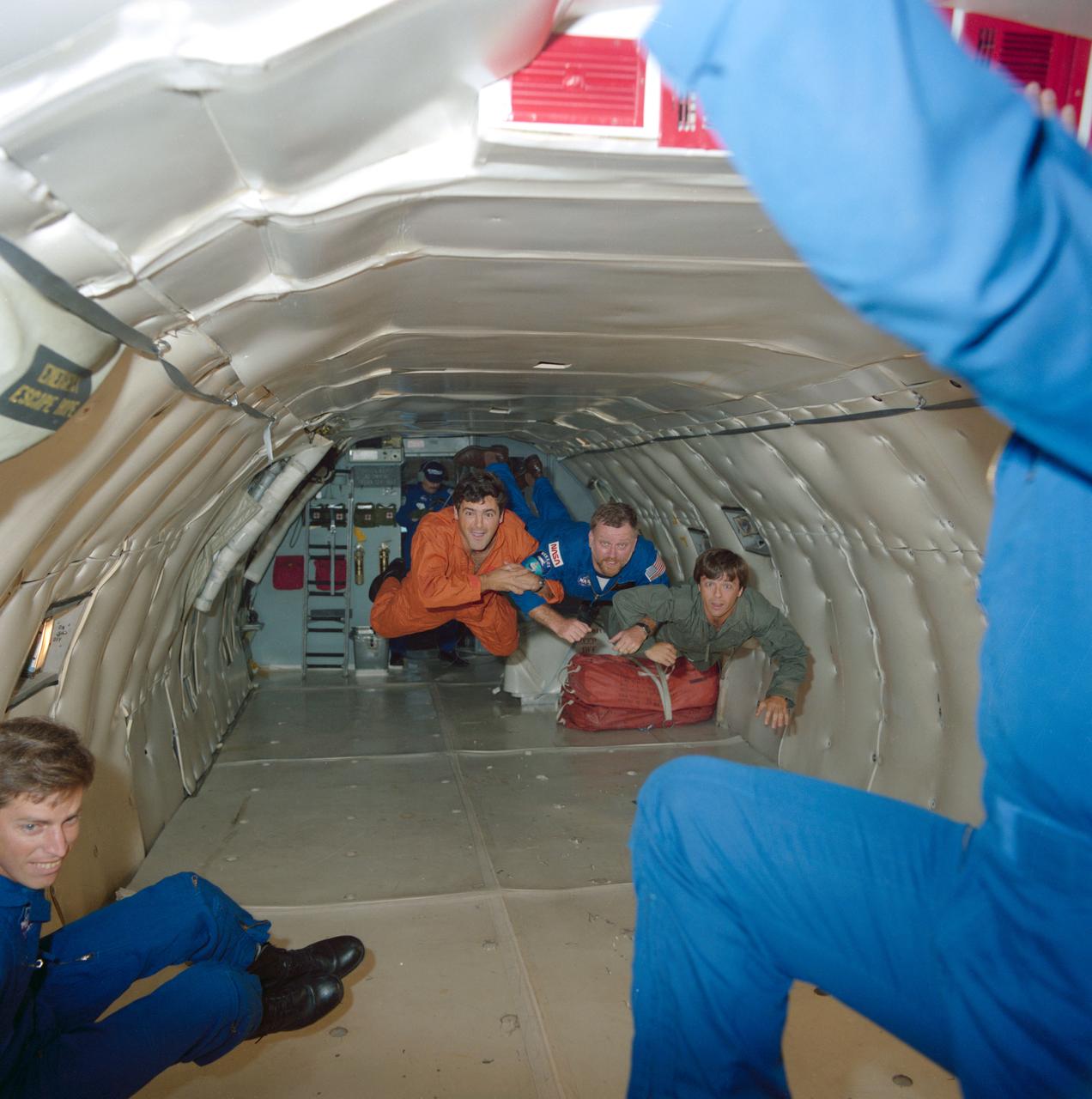
S84-40538 (24 Aug 1984) --- Two 41-G payload specialists and a backup for one of them appear to be at home in zero gravity in this scene photographed aboard a KC-135 "Zero gravity" aircraft flying one of its weightlessness opportunity parabolas. Paul D. Scully-Power, a civilian oceanographer with the U.S. Navey, is flanked by Marc Garneau (left) and Robert Thirsk, both representing the National Research Council of Canada. Thirsk is back up payload specialist for Garneau.
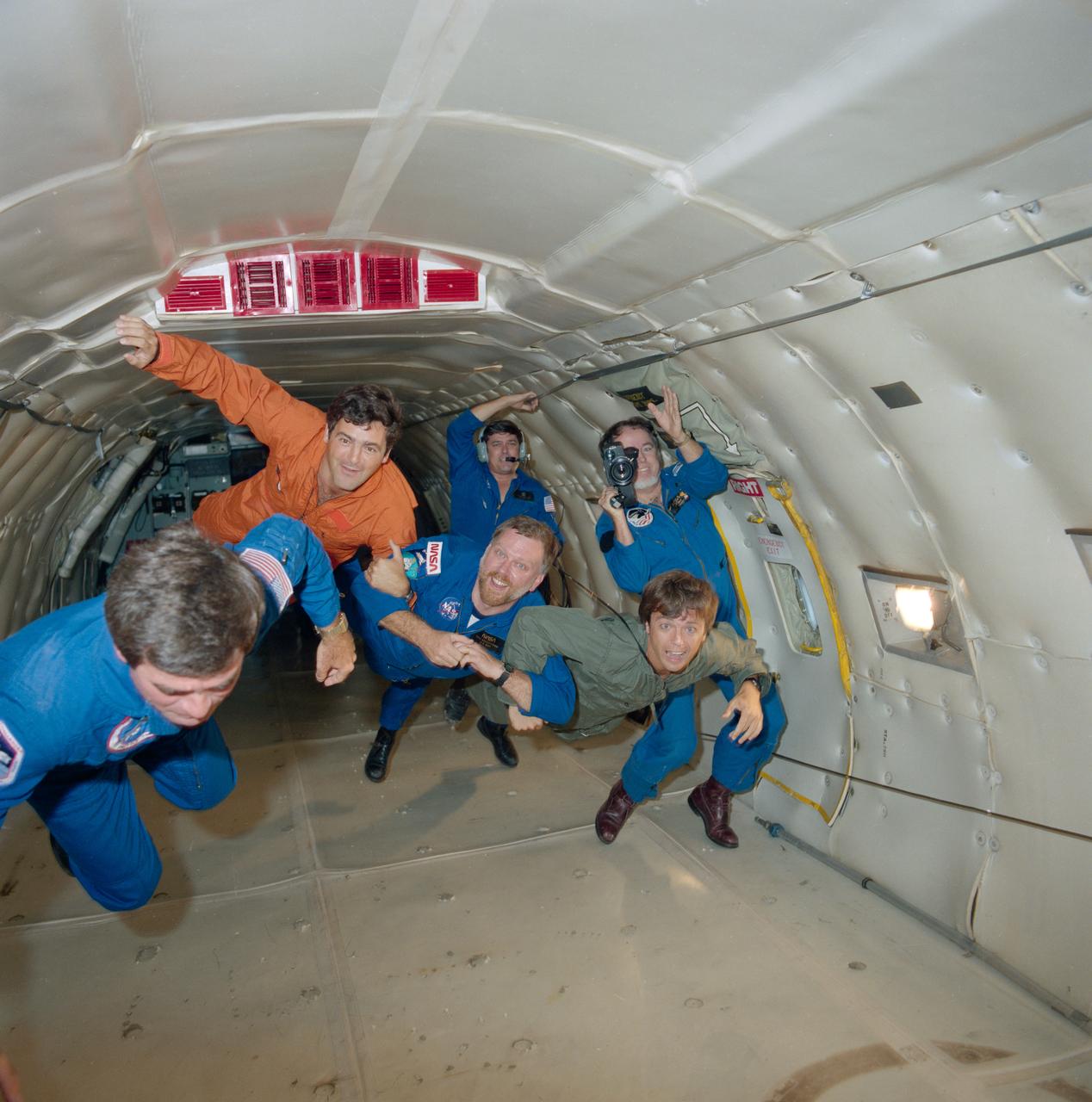
Paul Scully-Power, 41-G payload specialist, links arms with two others as they experience weightlessness in the KC-135 training aircraft. The trio appears to be flying toward the front of the aircraft while others take photos.
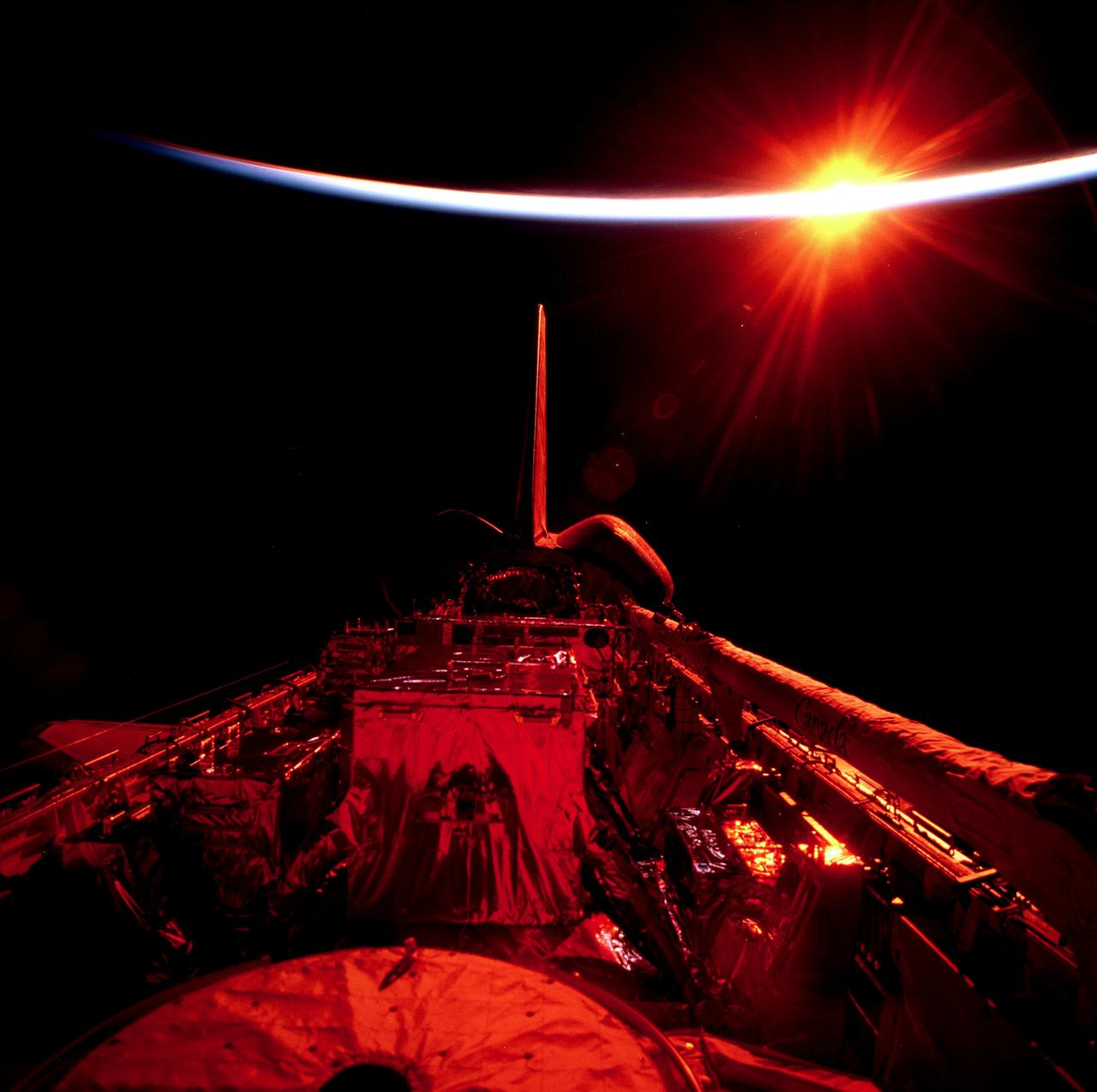
STS082-765-007 (21 Feb. 1997) --- This scene of the sun setting on the Space Shuttle Discovery's almost empty cargo bay symbolizes the successful conclusion of the mission, as the seven astronauts inside the crew cabin approach one of the final mission chores -- that of closing the cargo bay doors. The astronauts earlier completed five days of Extravehicular Activities (EVA) designed to service the giant Hubble Space Telescope (HST), now noticeably missing in the bay. At bottom center is part of the top of the exit airlock, making its first flight.
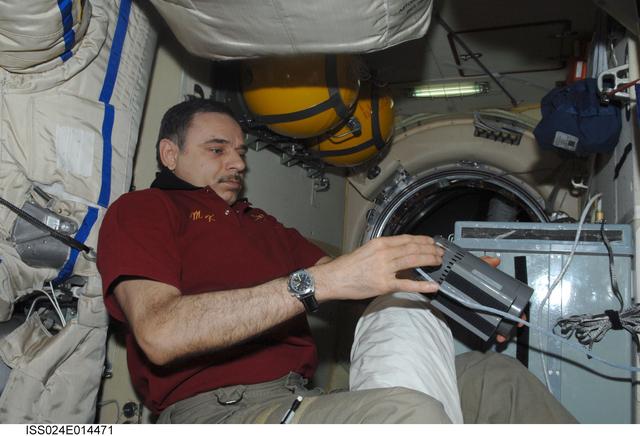
ISS024-E-014471 (14 Sept. 2010) --- Russian cosmonaut Mikhail Kornienko, Expedition 24 flight engineer, services the BTKh-28 KASKAD (Cascade) payload in the Pirs Docking Compartment of the International Space Station.
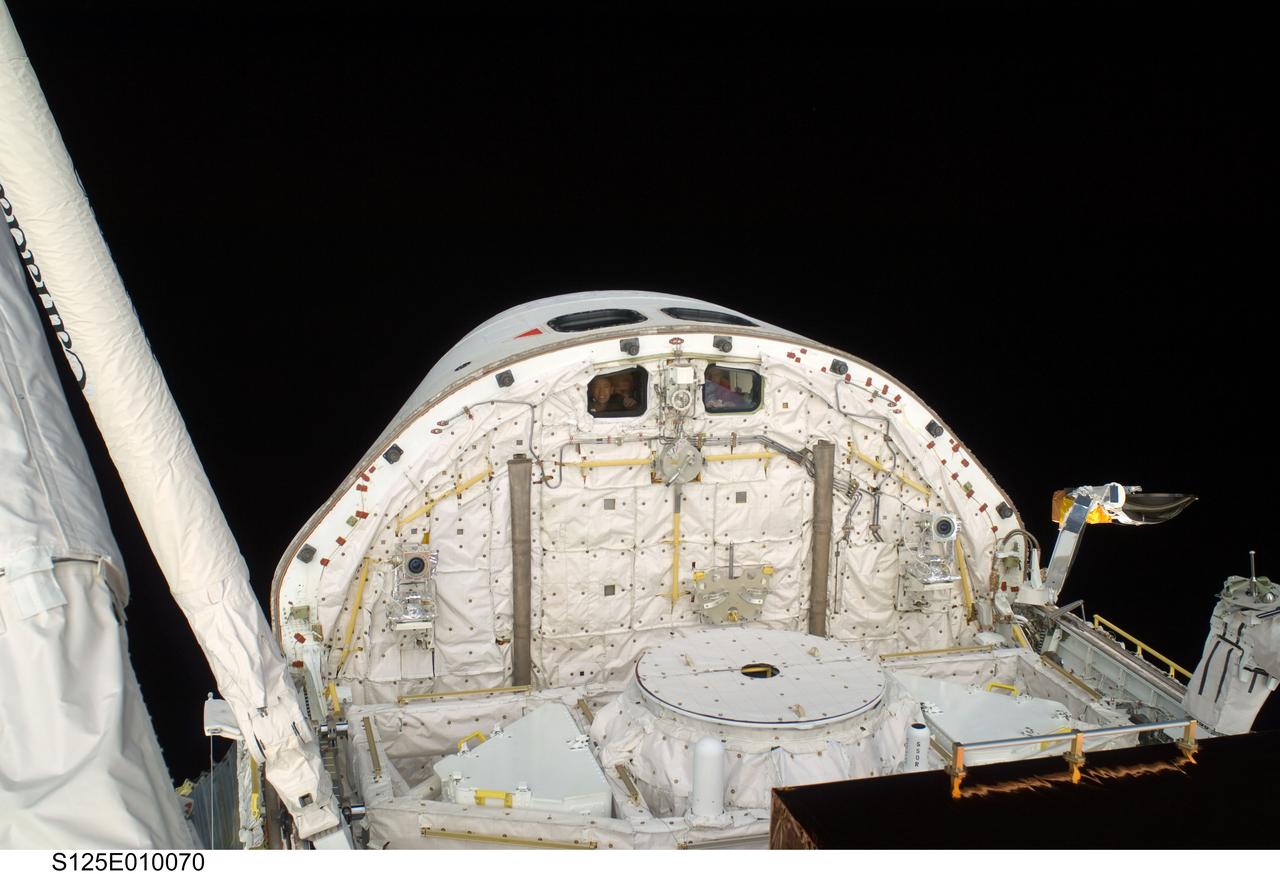
S125-E-010070 (18 May 2009) --- This scene, showing the cabin and forward cargo bay of the Earth-orbiting Space Shuttle Atlantis was photographed by one of the space walking astronauts during the mission?s fifth and final session of extravehicular activity (EVA) as work continues to refurbish and upgrade the Hubble Space Telescope. Astronaut Megan McArthur, STS-125 mission specialist, at the controls of the remote manipulator system (RMS), can be seen through an aft flight deck window.
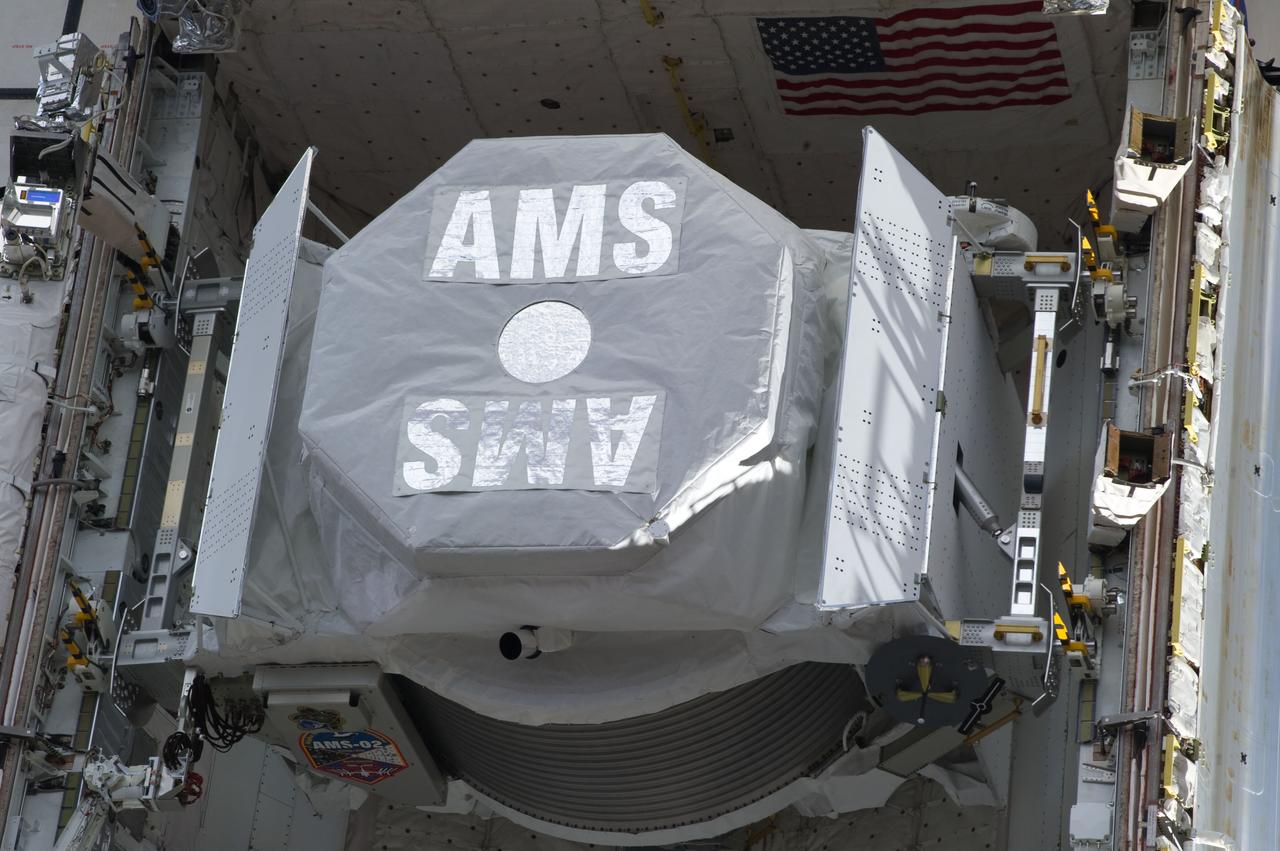
S134-E-007381 (19 May 2011) --- The Alpha Magnetic Spectrometer-2 (AMS) in the space shuttle Endeavour?s payload bay is featured in this image photographed by an STS-134 crew member while docked with the International Space Station. Shortly after this image was taken, the AMS was moved from the payload bay to the station?s starboard truss. Photo credit: NASA
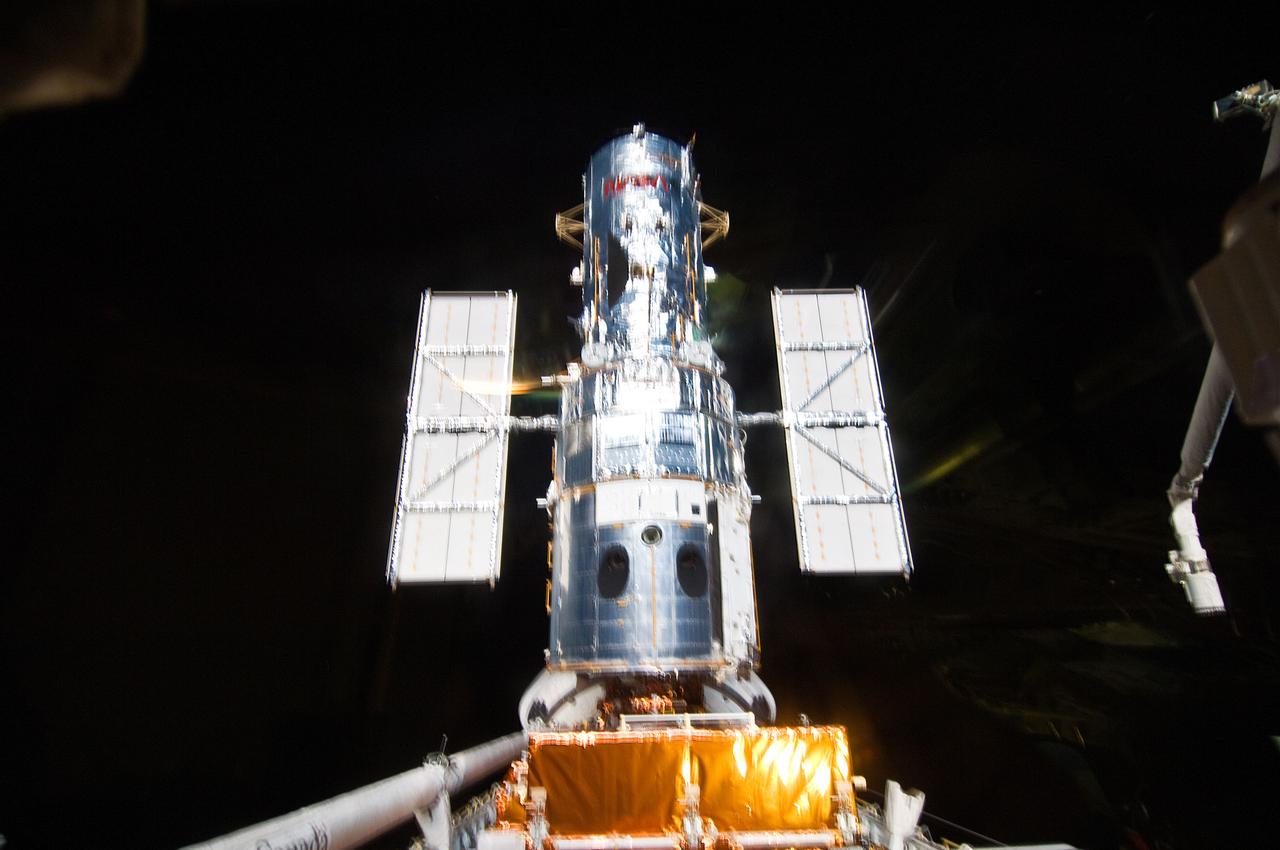
S125-E-010160 (19 May 2009) --- A final look at the Hubble Space Telescope prior to its release following a full week's work. Atlantis' remote manipulator system arm, instrumental in last week's capture and the impending release of the giant orbital observatory, is at the right edge of the frame.
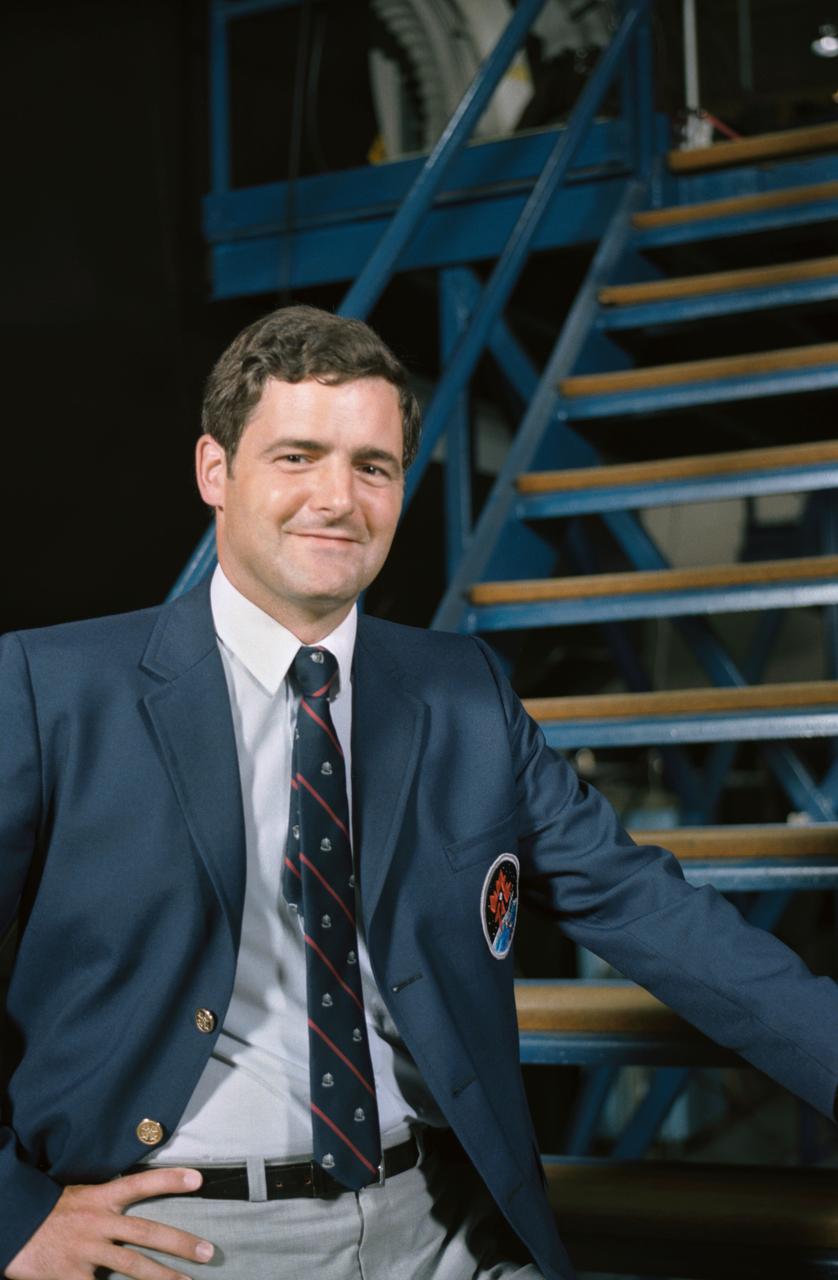
41D-3276 (S14-3276)(4 Sept 1984) --- Marc Garnea, 41-G payload specialist, will represent the Canadian National Research Council when the seven-member crew lauches aboard the Space Shuttle Challenger on Oct. 5, 1984. Garneau and other members of the crew had earlier met the press for the first time as a group.
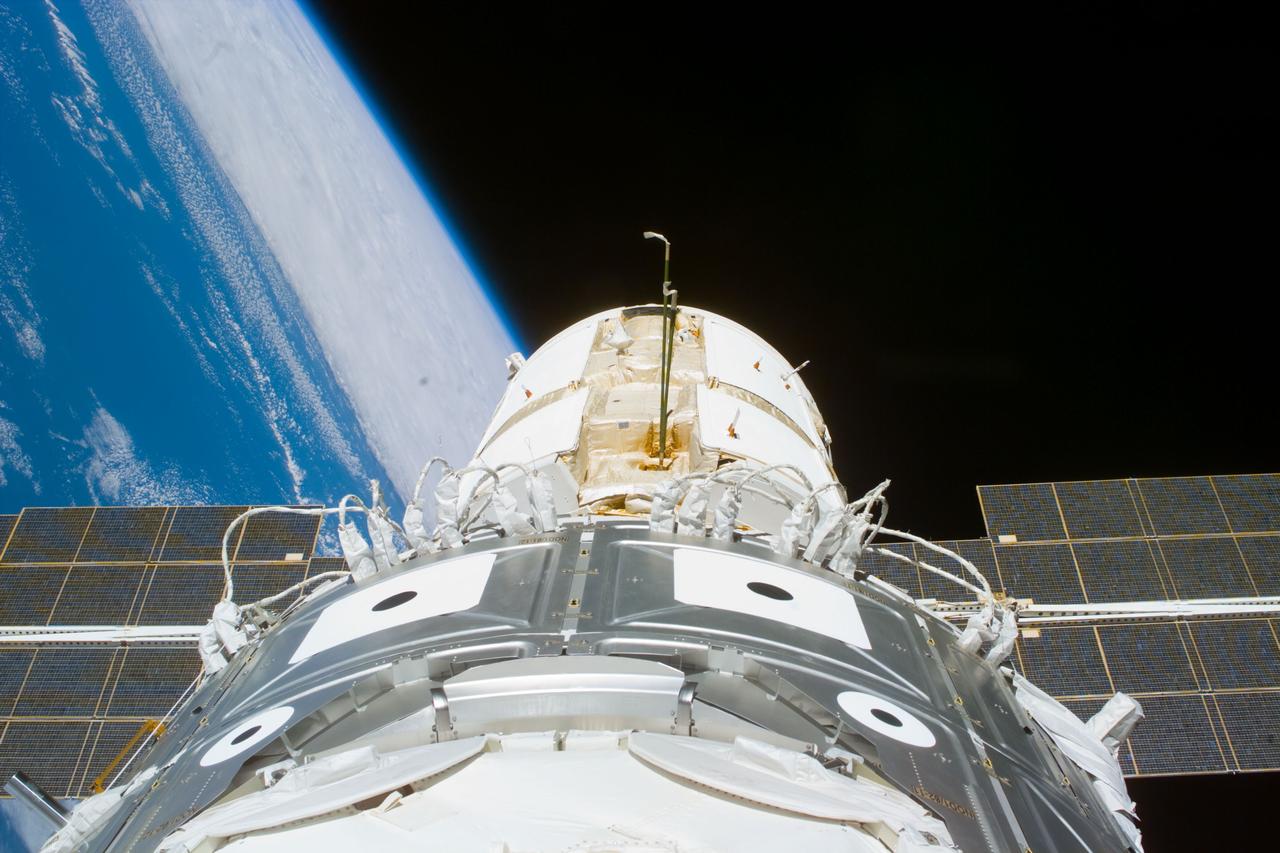
S88-E-5152 (12-13-98) --- One of the final looks at the mated Zarya and Unity modules before the ISS components left Endeavour's cargo bay. The scene was recorded with an electronic still camera (ESC) at 18:20:59 GMT, Dec. 13.
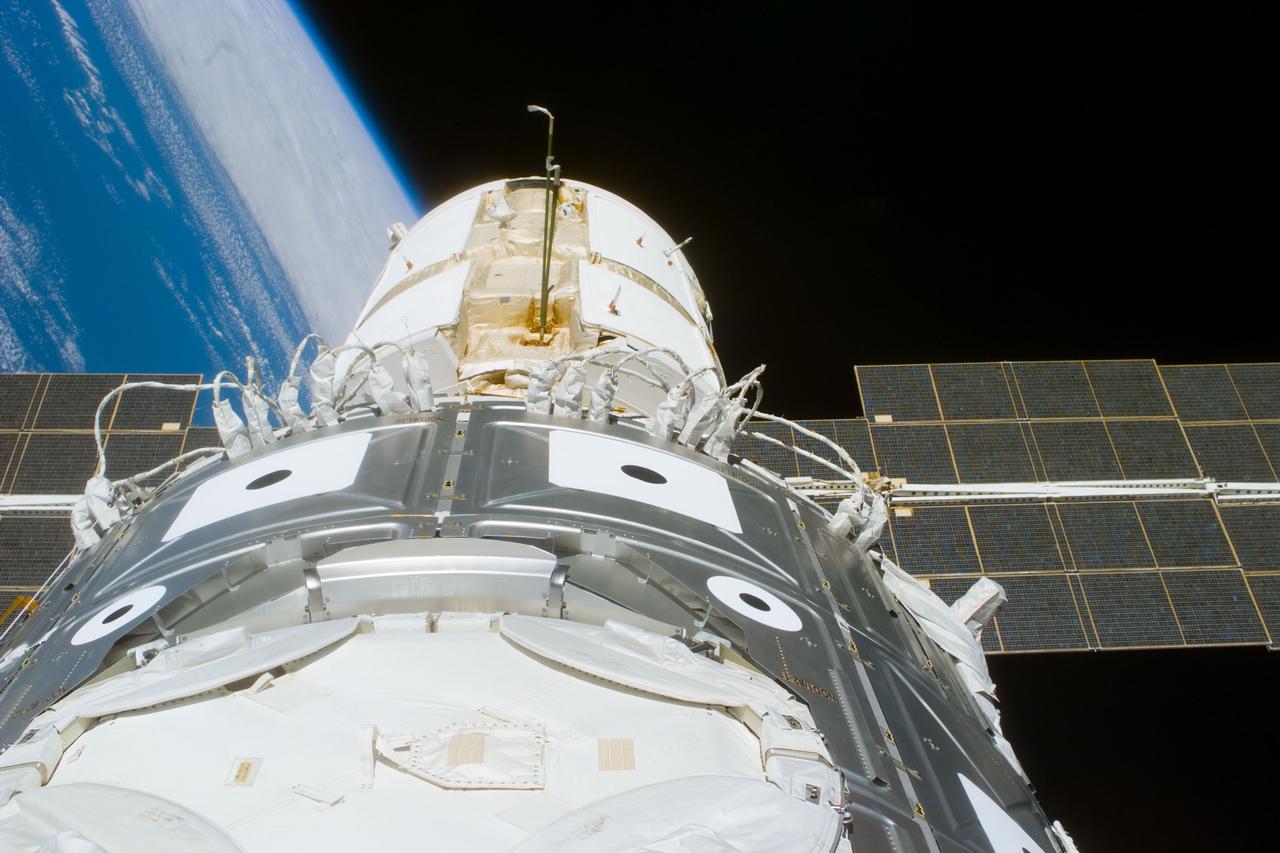
S88-E-5150 (12-13-98) --- One of the final looks at the mated Zarya and Unity modules before the ISS components left Endeavour's cargo bay. The scene was recorded with an electronic still camera (ESC) at 18:20:45 GMT, Dec. 13.
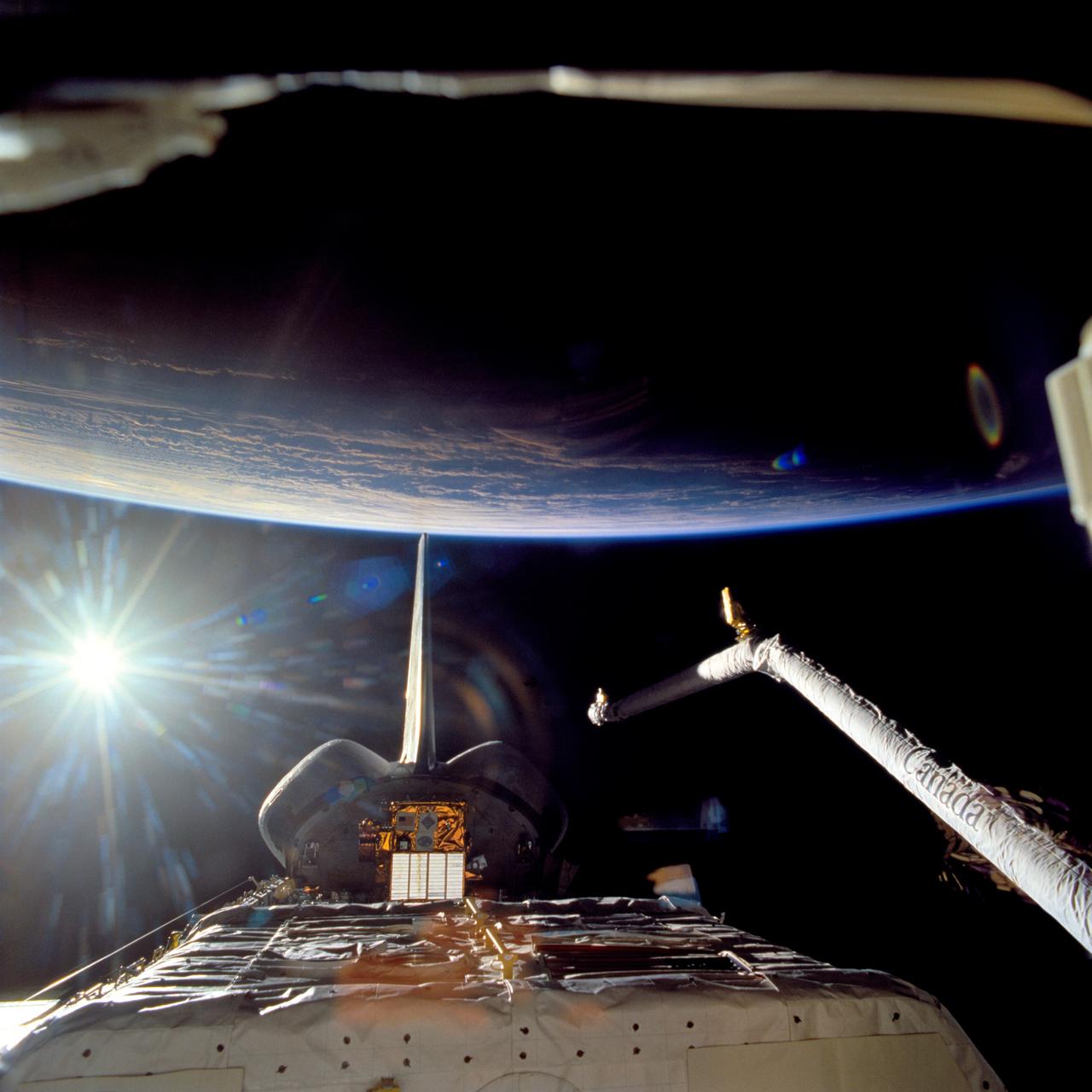
STS063-716-025 (9 Feb. 1995) --- In tail-to Earth mode, the Space Shuttle Discovery is backdropped against dark space, Sunburst and massive clouds over the ocean. The Spartan 204 is visible in the cargo bay. This is one of 16 still photographs released by the NASA Johnson Space Center (JSC) Public Affairs Office (PAO) on February 14, 1995. Onboard Discovery were astronauts James D. Wetherbee, mission commander; Eileen M. Collins, pilot; Bernard A. Harris, Jr., payload commander; mission specialists C. Michael Foale, Janice E. Voss, and cosmonaut Vladimir G. Titov.
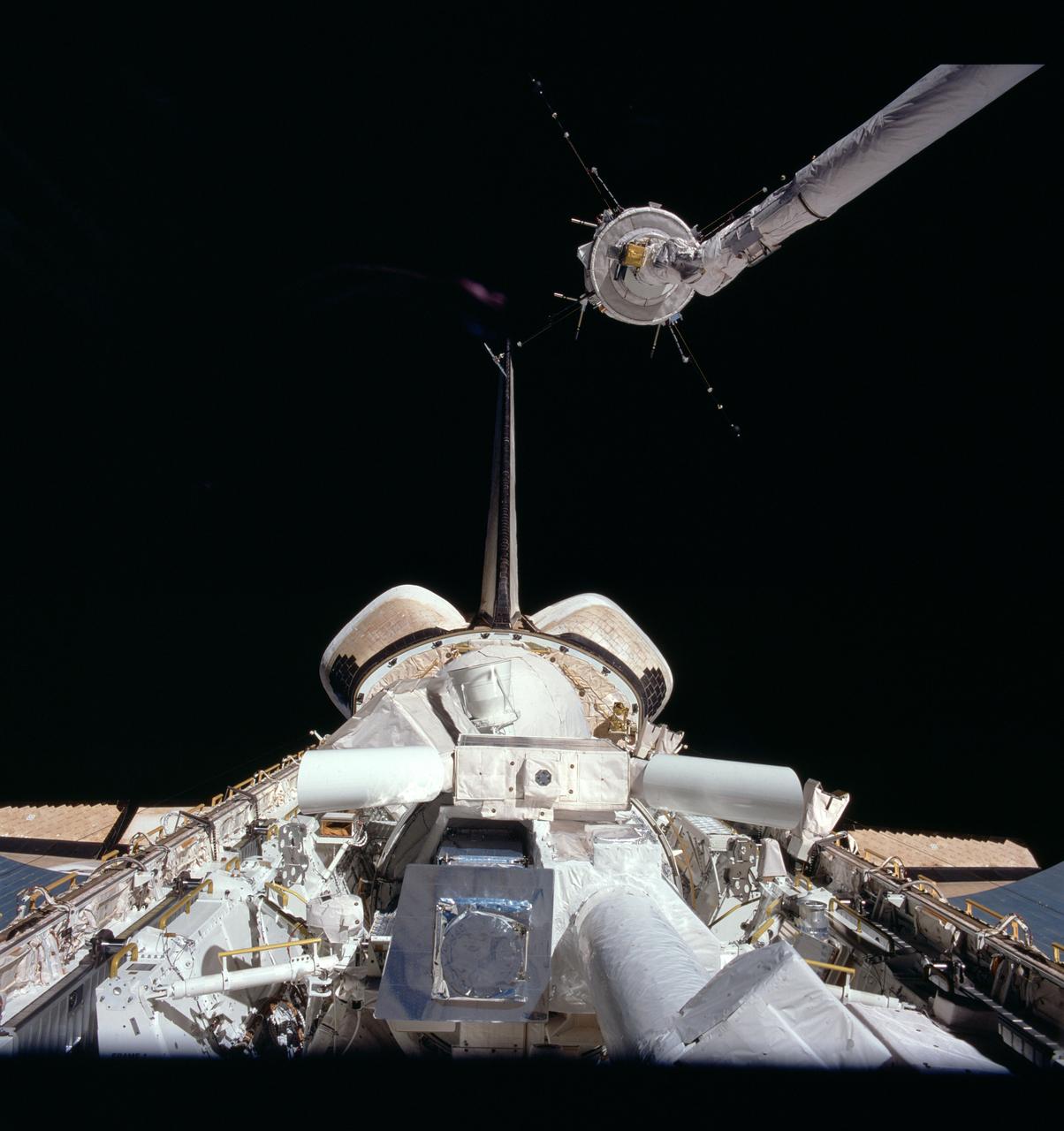
51F-33-024 (29 July-6 Aug 1985) --- The Challenger's remote manipulator system (RMS) arm grasps the plasma diagnostics package (PDP) over the experiment-laden cargo bay of the earth orbiting spacecraft. The instrument pointing system, in a resting mode here, is prominent in the bay.
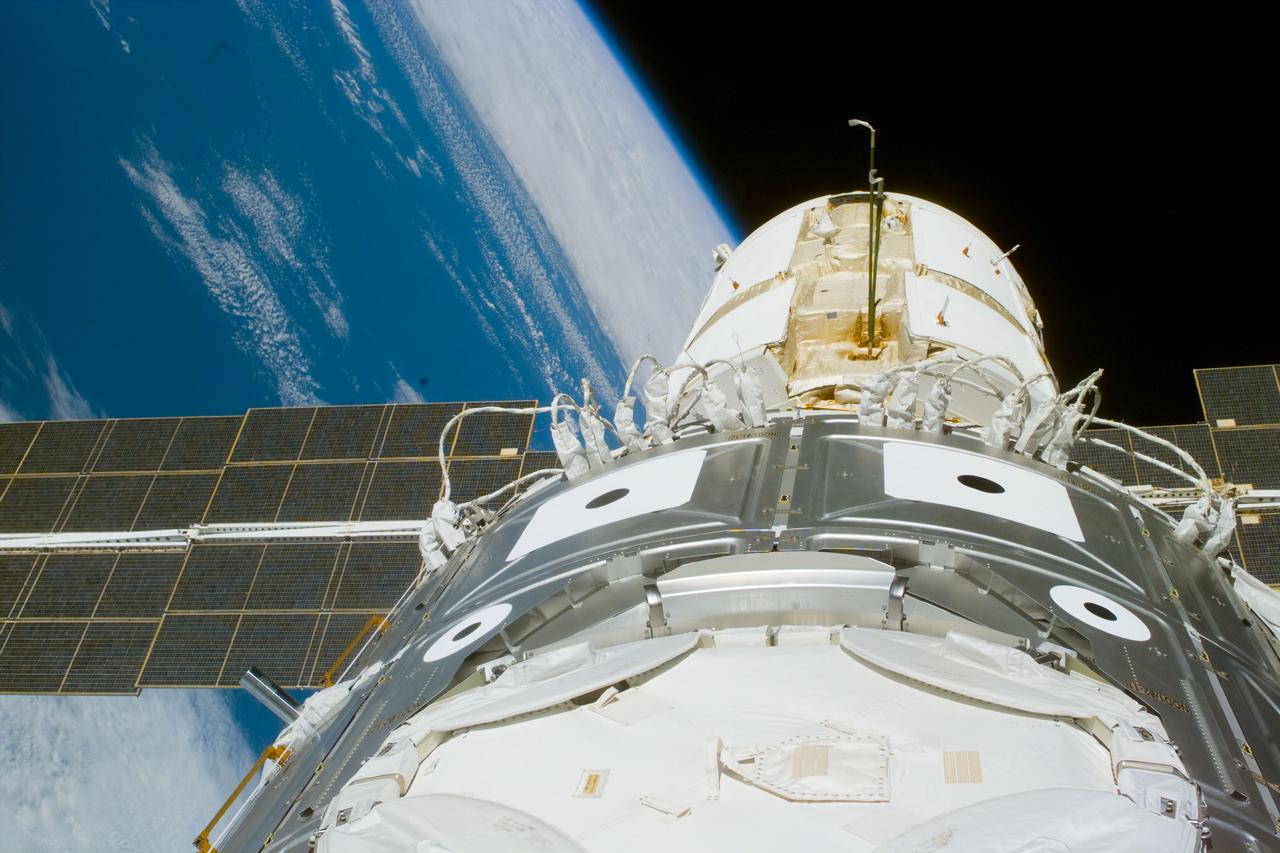
S88-E-5151 (12-13-98) --- One of the final looks at the mated Zarya and Unity modules before the ISS components left Endeavour's cargo bay. The scene was recorded with an electronic still camera (ESC) at 18:20:52 GMT, Dec. 13.

STS083-709-030 (4-8 April 1997) --- Panorama over the Nile River, Sinai Peninsula and the Red Sea. Looking past the Orbiter's tail, this view extends from central Egypt eastward to Saudi Arabia on the horizon. Two major water systems, seen in this view, the Nile River and the Red Sea are used for world commerce and transportation in this region. The Nile is flanked immediately by agriculture then beyond by desert. This emphasizes the importance of the river waters to sustain a thriving local population. The Nile River delta is north under the clouds on the upper left-hand corner of the photo. Geologically, the Red Sea is a spreading center between the Arabian and the African Plates, and will continue to widen slowly over a long period of time.
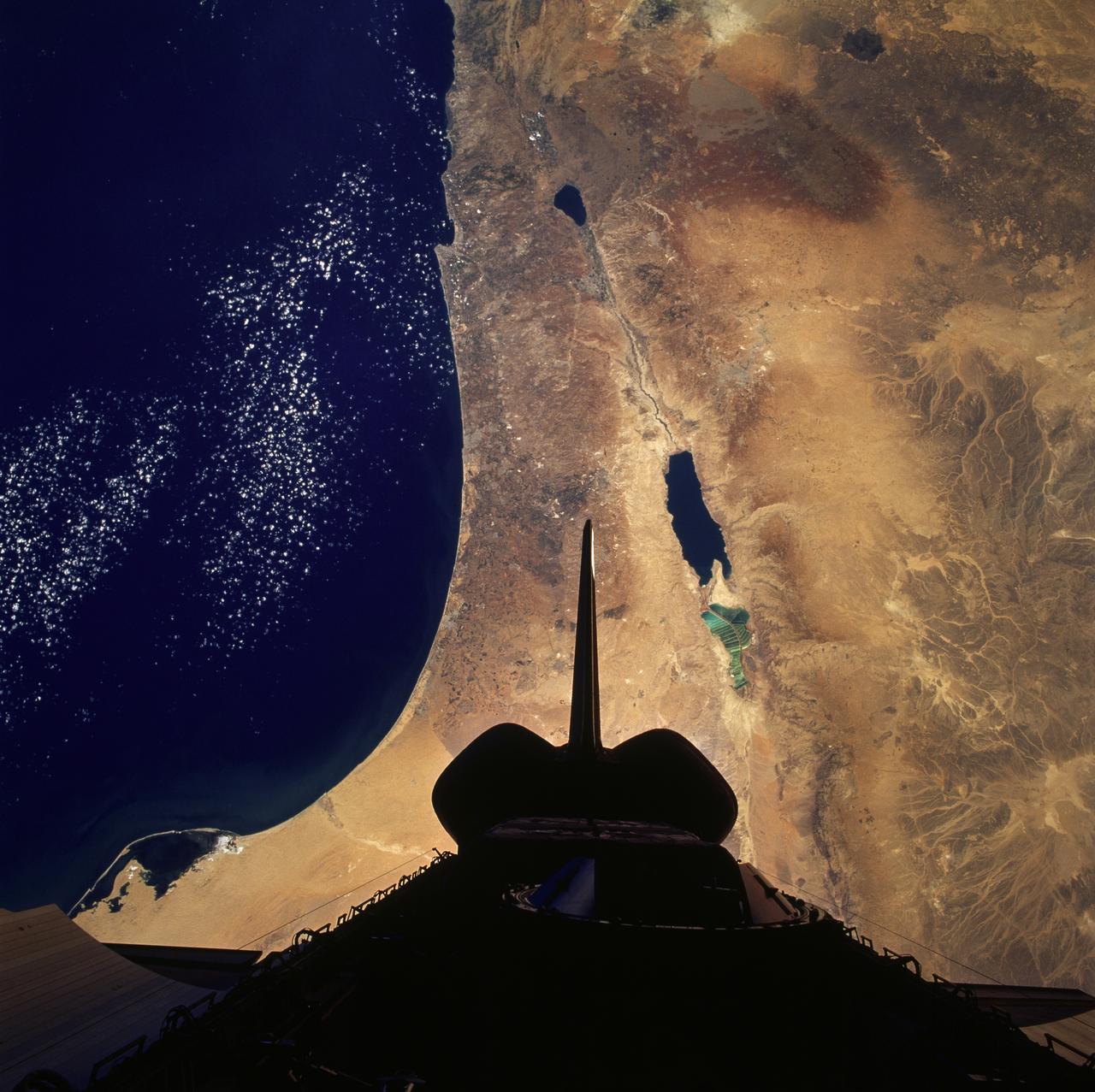
STS079-824-081 (16-26 Sept. 1996) --- In this 70mm frame from the space shuttle Atlantis, the Jordan River Valley can be traced as it separates Lebanon, Palestine and Israel on the west, from Syria and Jordan on the east. The river flows along the Dead Sea rift; the east side of the fault zone (Syria, Jordan, Saudi Arabia) has moved north about 100 kilometers relative to the west side (Lebanon, Israel, Egypt) during the past 24 million years. The Dead Sea and Sea of Galilee are in depressions formed where faults of the zone diverge or step over. The Dead Sea once covered the area of salt evaporation pans (the bright blue water). The lagoon, barrier islands and evaporite deposits (bright white) along the Mediterranean coast of the Sinai Peninsula (lower left of frame) are just east of Port Said.
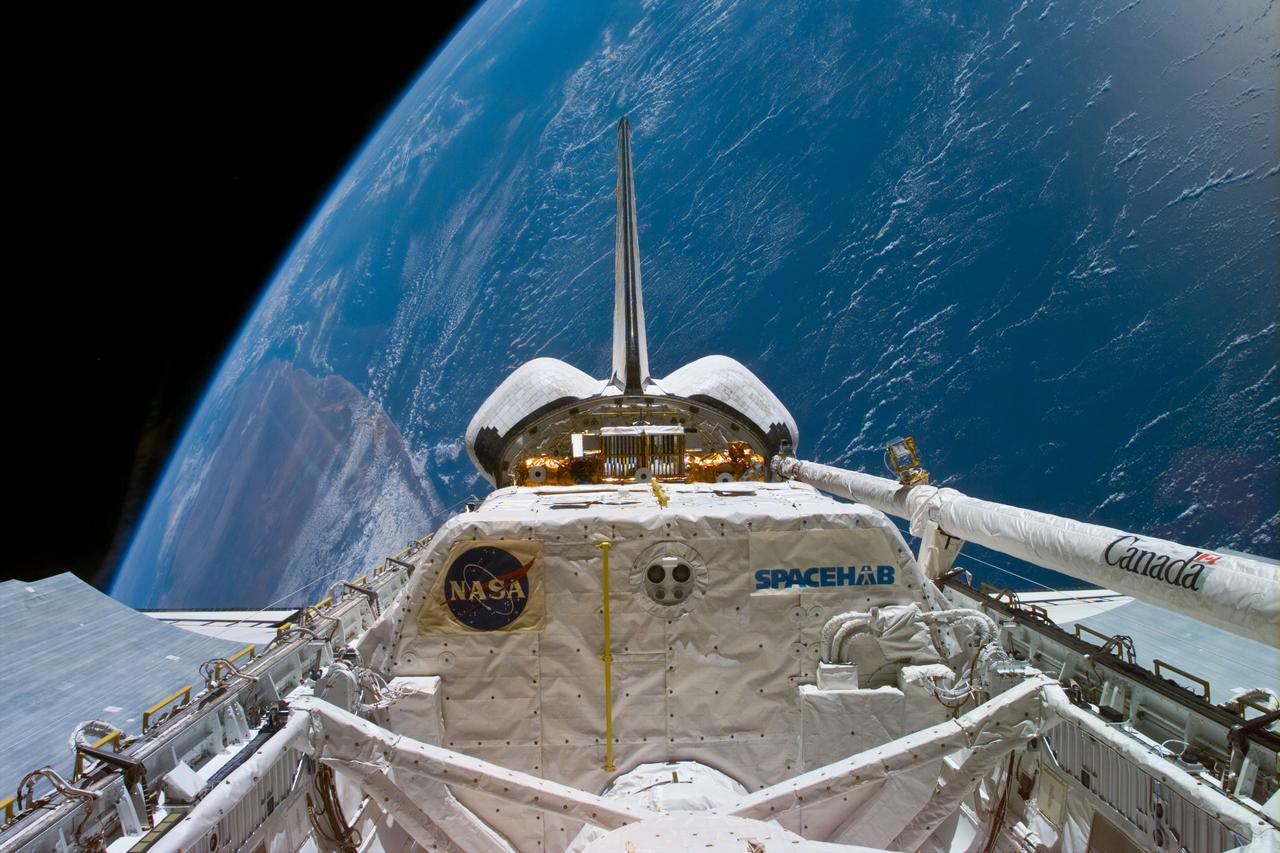
STS095-E-5030 (10-29-98) --- Backdropped over a shoreline and thousands of miles of ocean waters, the Space Shuttle Discovery orbits Earth at 17,500 miles per hour. In the cargo bay are the Spacehab facility and the Spartan 201 (partially obscured behind the Spacehab). Awaiting its duties with the Spartan is the Canadian-built remote manipulator system (RMS) robot arm in its berthed configuration at right. The scene was taken with an electronic still camera (ESC) at 11:34:13 GMT, Oct. 29.
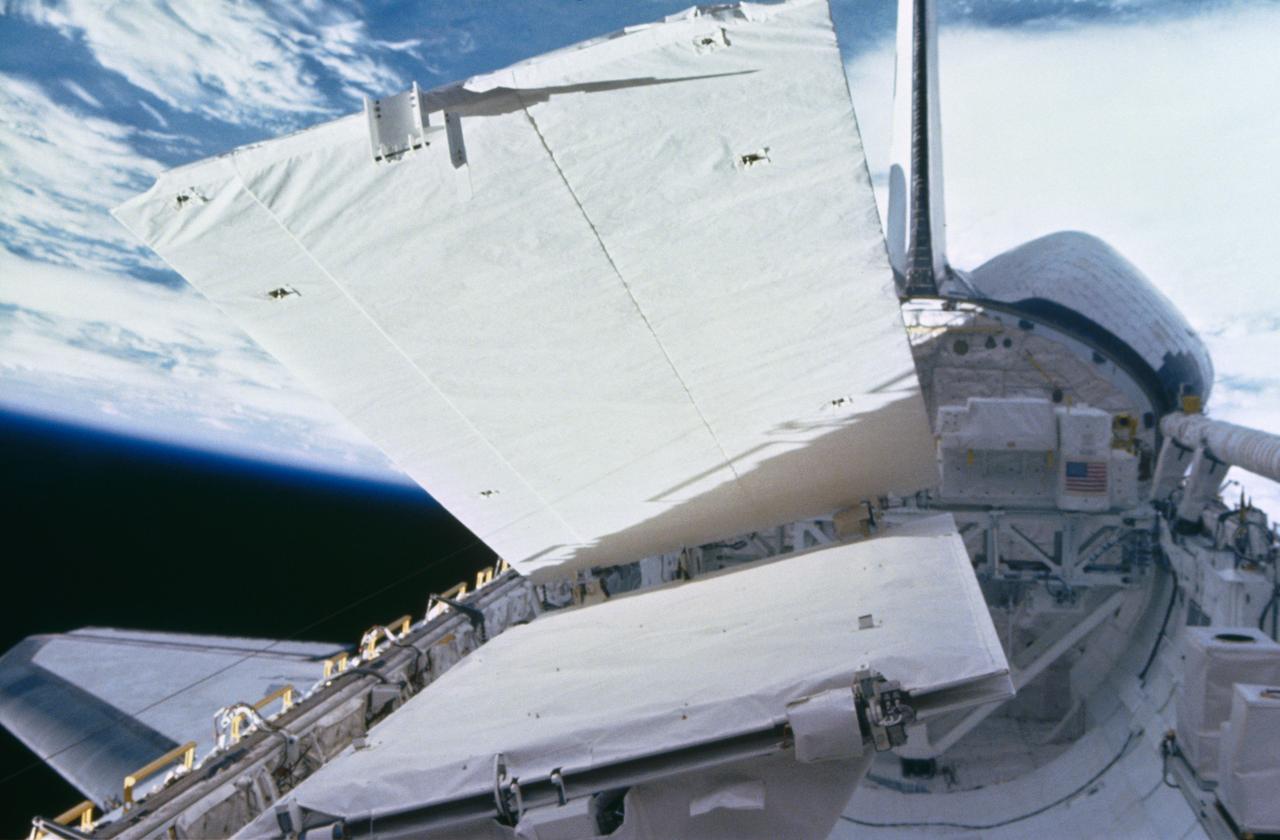
View of the SIR-B antenna being deployed during STS 41-G. The Challenger's payload bay is open and the remote manipulator system (RMS) arm is in the stowed position at the right of the view.
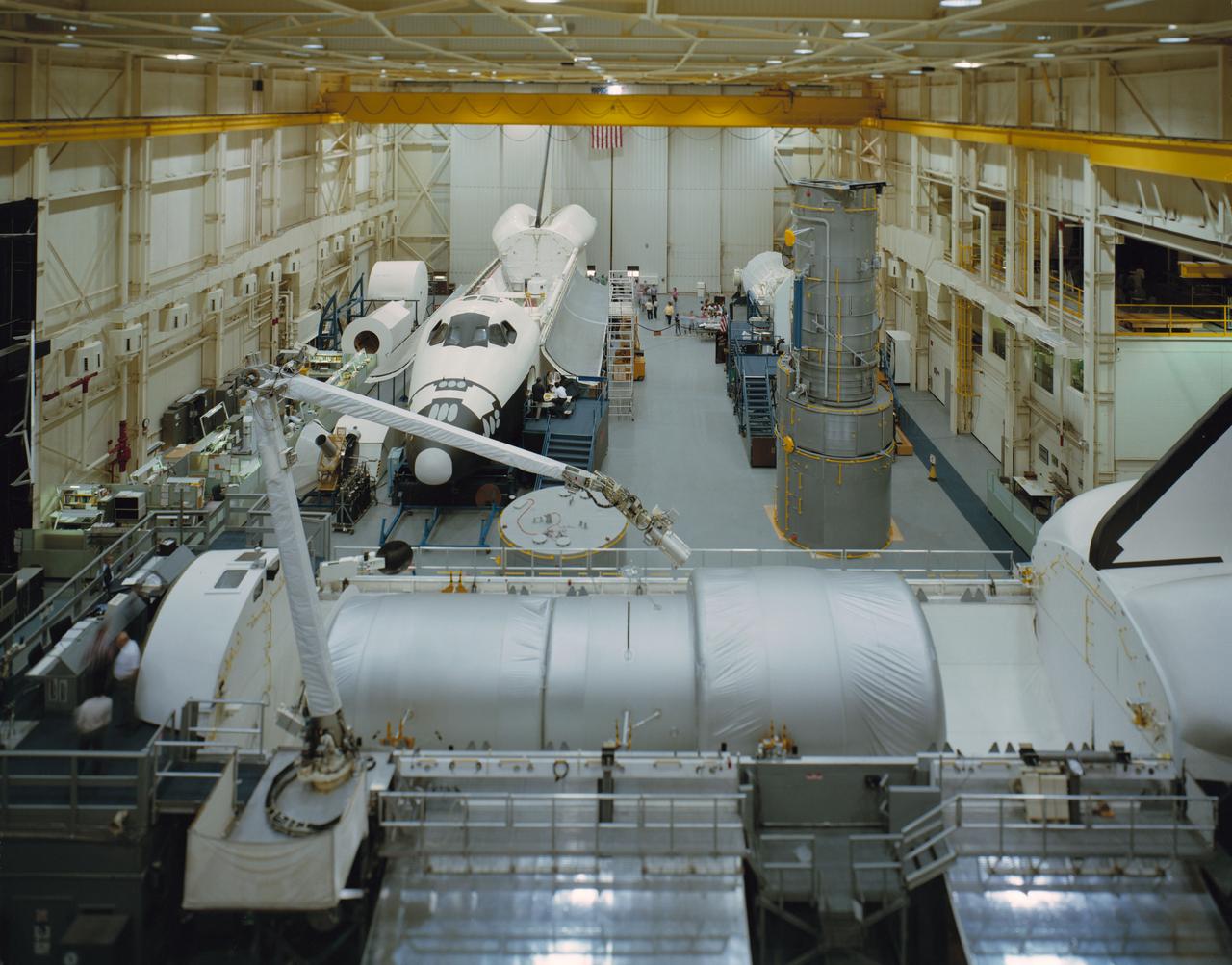
Overall views of the Bldg. 9A Training Facility and closeup views of the Space Telescope Mockup for the Weightless Environment Training Facility (WETF). 1. SHUTTLE - PAYLOADS (TELESCOPE) JSC, HOUSTON, TX Also available in 4x5 CN
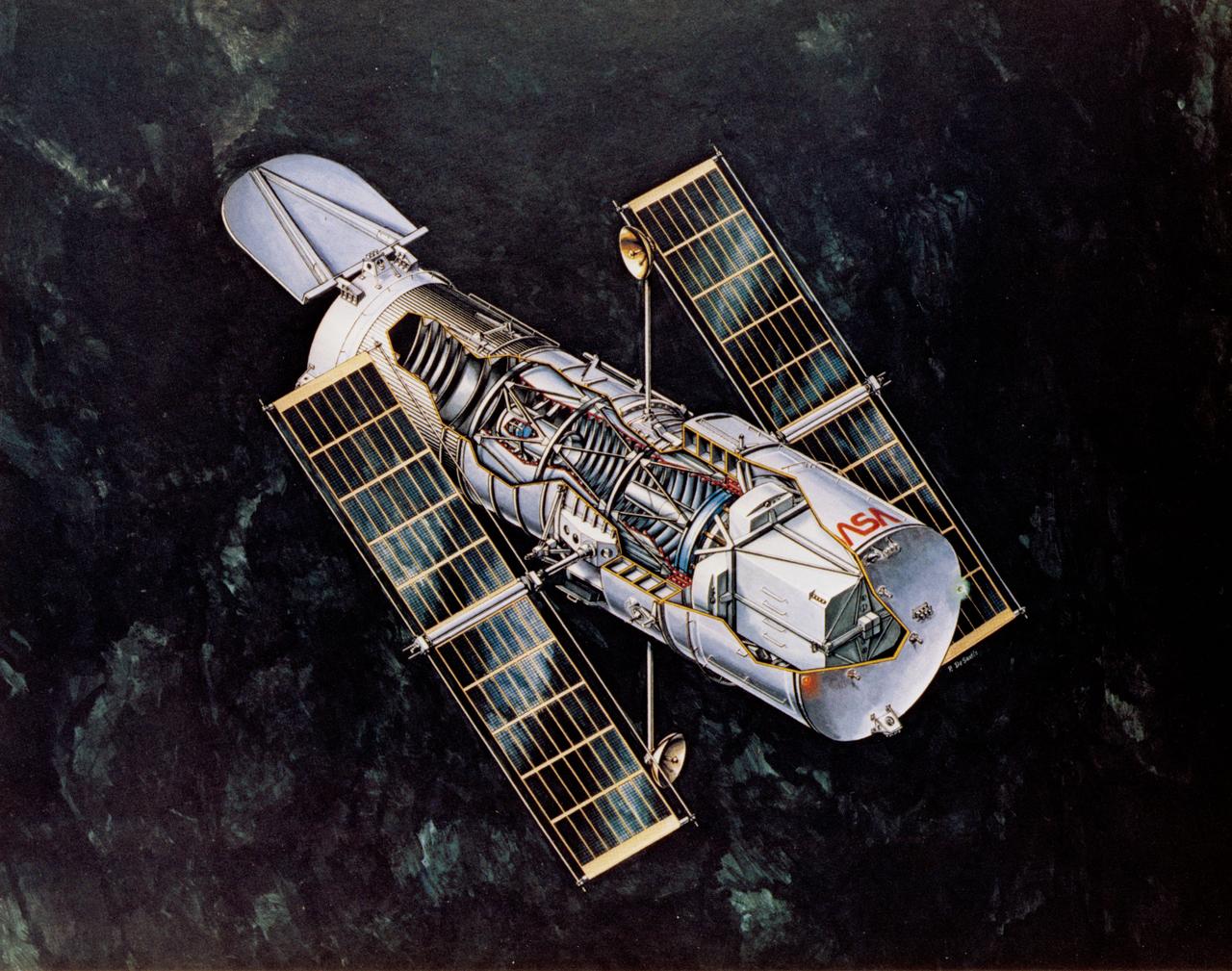
Artist Concept views of the Hubble Space Telescope, one with two Astronauts out on Extravehicular Activity (EVA) and a cutaway view of the telescope. 1. SHUTTLE - Payloads (Hubble Telescope)
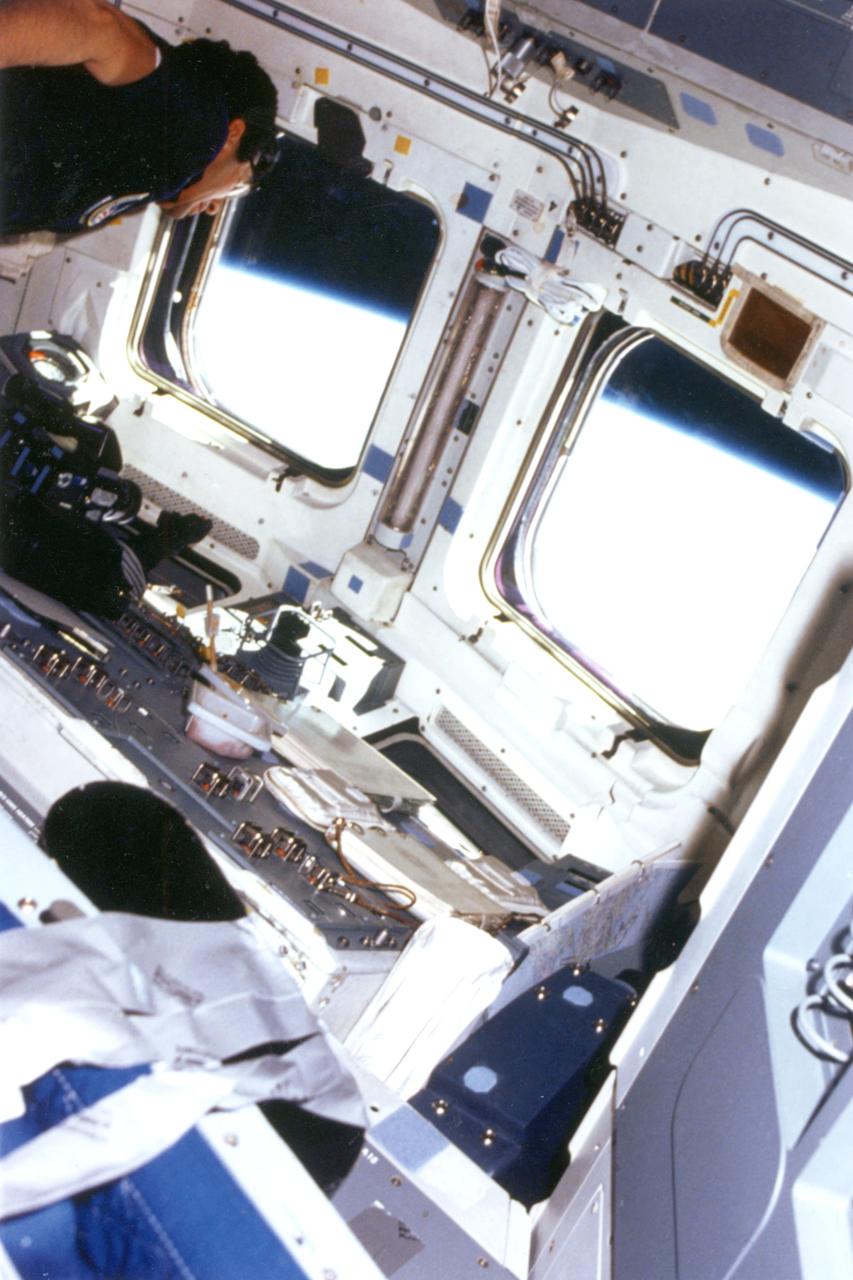
STS-51B, Spacelab-3, Payload Specialist Lodewijk van den Berg on flight deck with earth view out window.
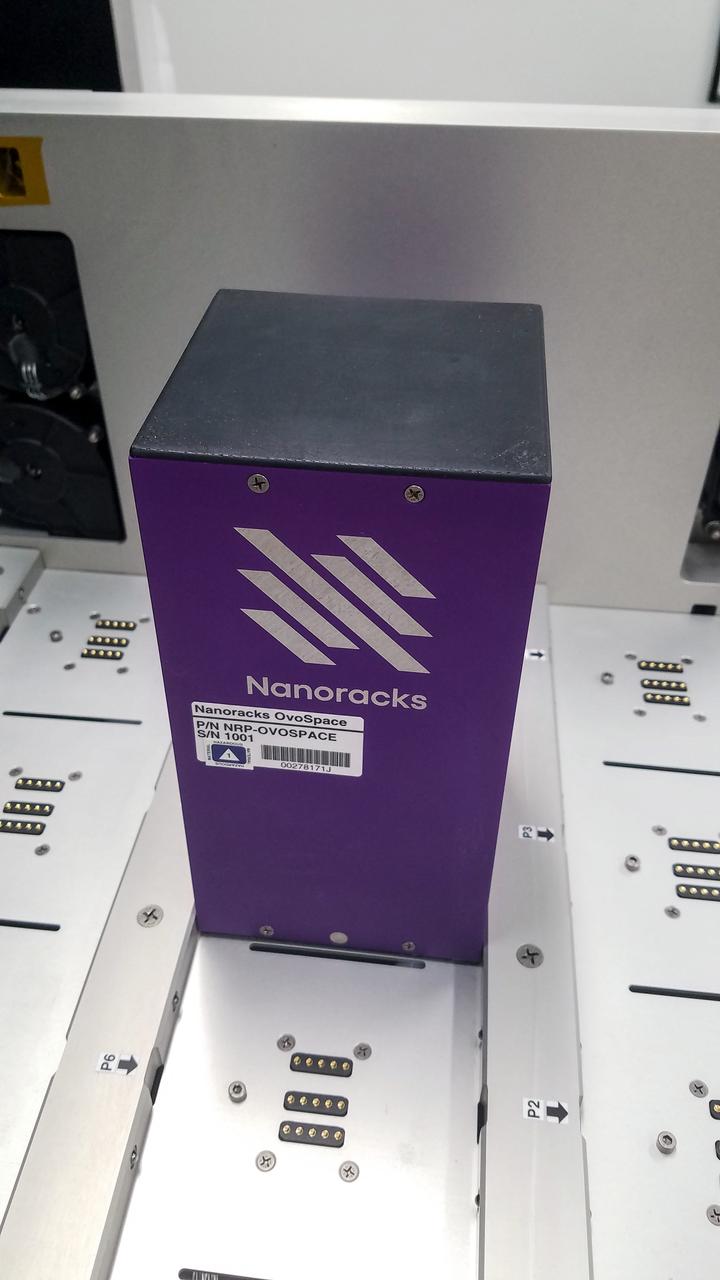
jsc2022e072966 (8/12/2022) --- A view of the OVOSPACE payload during a functional test. The science of the payload resides within the Nanoracks purple aluminum chassis. This chassis provides an interface to the Nanoracks Nanode platform. Nanode provides payloads with power and data throughout their time in space. Image courtesy of Nanoracks LLC.

INTERIOR VIEW OF ONE HALF OF THE ATLAS V PAYLOAD FAIRING RESTING ON THE GROUND NASA PLUM BROOK STATION SPACE POWER FACILITY
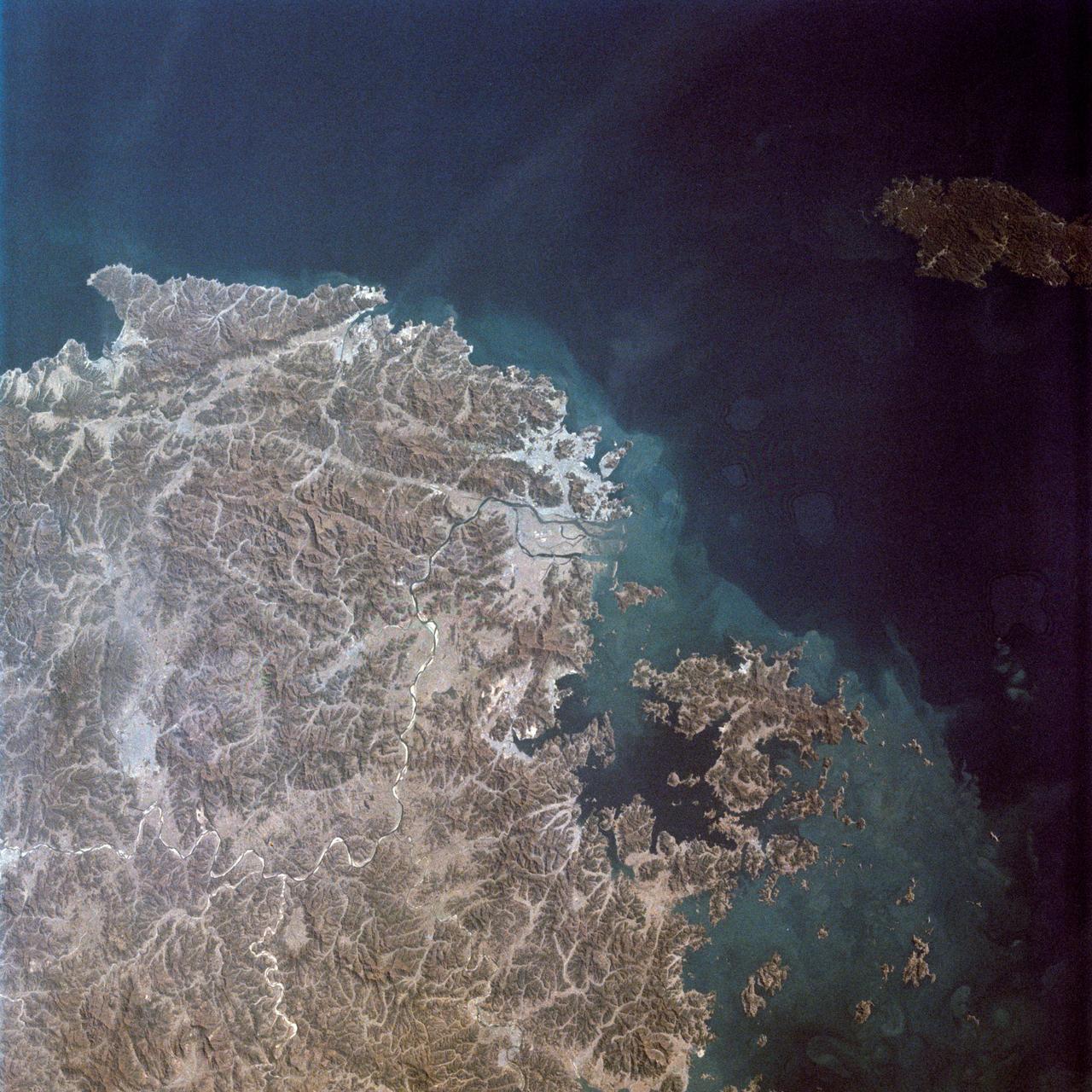
Onboard views by the STS-2 Crew of the Payload Bay with Office of Space and Terrestrial Applications (OSTA)-1 Payload, the Remote Manipulator System (RMS) and Earth views of: Korea, China and Columbia. Also available in 4x5 BW 1. REAGAN, RONALD PRESIDENT - MOCR (STS-2) JSC, HOUSTON, TX Also available in 4x5 BW, 35 CN, 35 BW
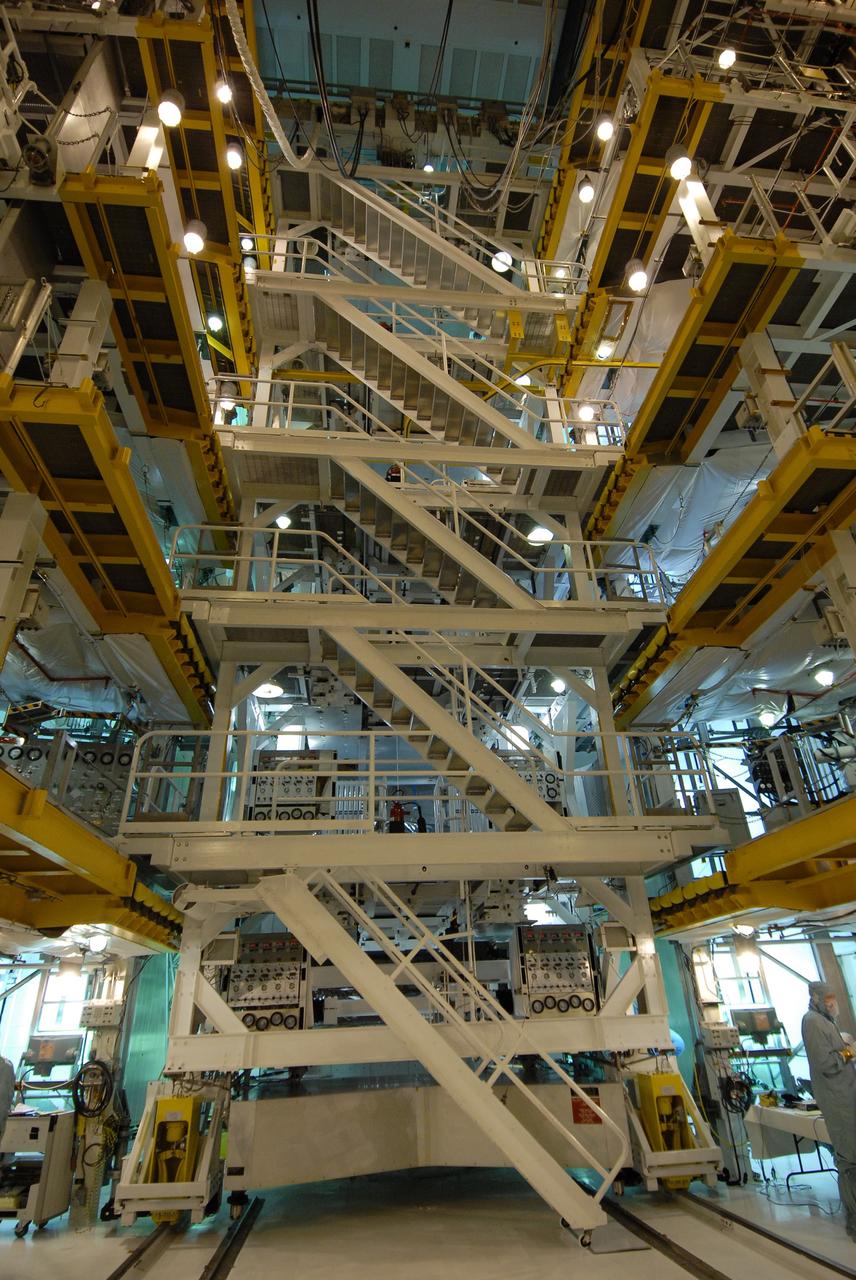
CAPE CANAVERAL, Fla. - In At NASA's Kennedy Space Center in Florida, the payload ground handling mechanism in the Payload Changeout Room on Launch Pad 39A is viewed from the rear as it transfers the STS-125 mission payload into space shuttle Atlantis’ payload bay. STS-125 is the fifth and final shuttle servicing mission for NASA’s Hubble Space Telescope. The payload comprises four carriers holding various equipment for the mission. Atlantis is targeted to launch Oct. 14 on the 11-day mission. Photo credit: NASA/Jack Pfaller
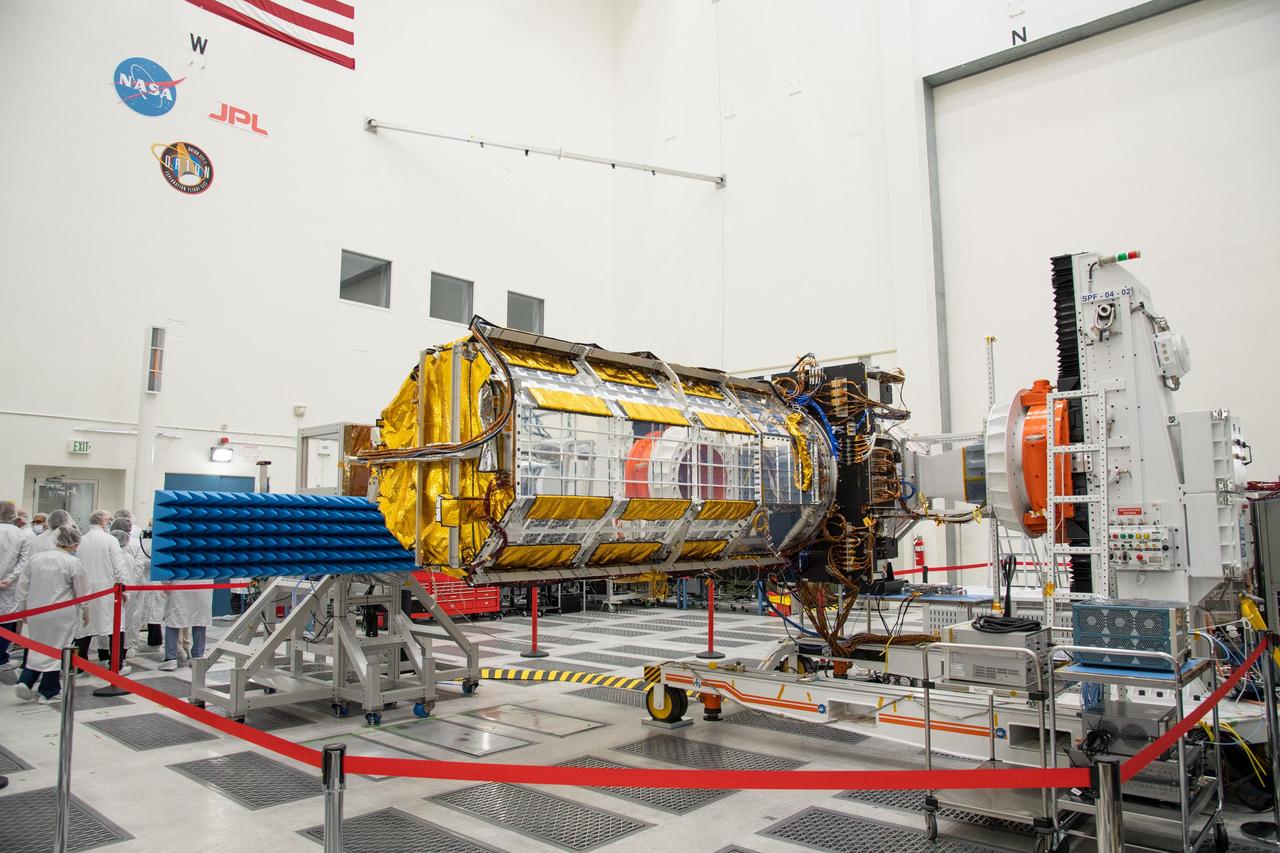
Officials from NASA, the Indian Space Research Organisation, and the Indian Embassy, grouped at left, visit a clean room at NASA's Jet Propulsion Laboratory in Southern California on Feb. 3, 2023, to view the scientific instrument payload for the NASA-ISRO Synthetic Aperture Radar (NISAR) mission. The payload is scheduled to be shipped to India in March 2023. The NISAR mission – a joint effort between NASA and ISRO – will measure changes to Earth's land ice surfaces down to fractions of an inch. Data collected by this satellite will help researchers monitor a wide range of changes critical to life on Earth in unprecedented detail. This includes spotting warning signs of imminent volcanic eruptions, helping to monitor groundwater supplies, tracking the melt rate of ice sheets tied to sea level rise, and observing shifts in the distribution of vegetation around the world. The data will inform humanity's responses to urgent challenges posed by natural disasters and climate change, and help communities prepare for and manage hazards. There are two instruments on the satellite that will send and receive radar signals to and from Earth's surface to make the mission's measurements. An L-band synthetic aperture radar (SAR), which uses a signal wavelength of around 9 inches (24 centimeters), and an S-band SAR with a signal wavelength of nearly 5 inches (12 centimeters). Both will bounce their microwave signal off of the planet's surface and record how long it takes the signal to make one roundtrip, as well as the strength of that return signal. This enables the researchers to calculate the distance from the spacecraft to Earth's surface and thereby determine how the land or ice is changing. An antenna reflector nearly 40 feet (12 meters) in diameter, supported by a deployable boom, will focus the microwave signals sent and received by the SARs. JPL, which is managed for NASA by Caltech in Pasadena, leads the U.S. component of NISAR and is providing the mission's L-band SAR instrument. NASA is also providing the radar reflector antenna, the deployable boom, a high-rate communication subsystem for science data, GPS receivers, a solid-state recorder, and payload data subsystem. ISRO is providing the spacecraft bus, the S-band SAR, the launch vehicle, and associated launch services and satellite mission operations. https://photojournal.jpl.nasa.gov/catalog/PIA25599
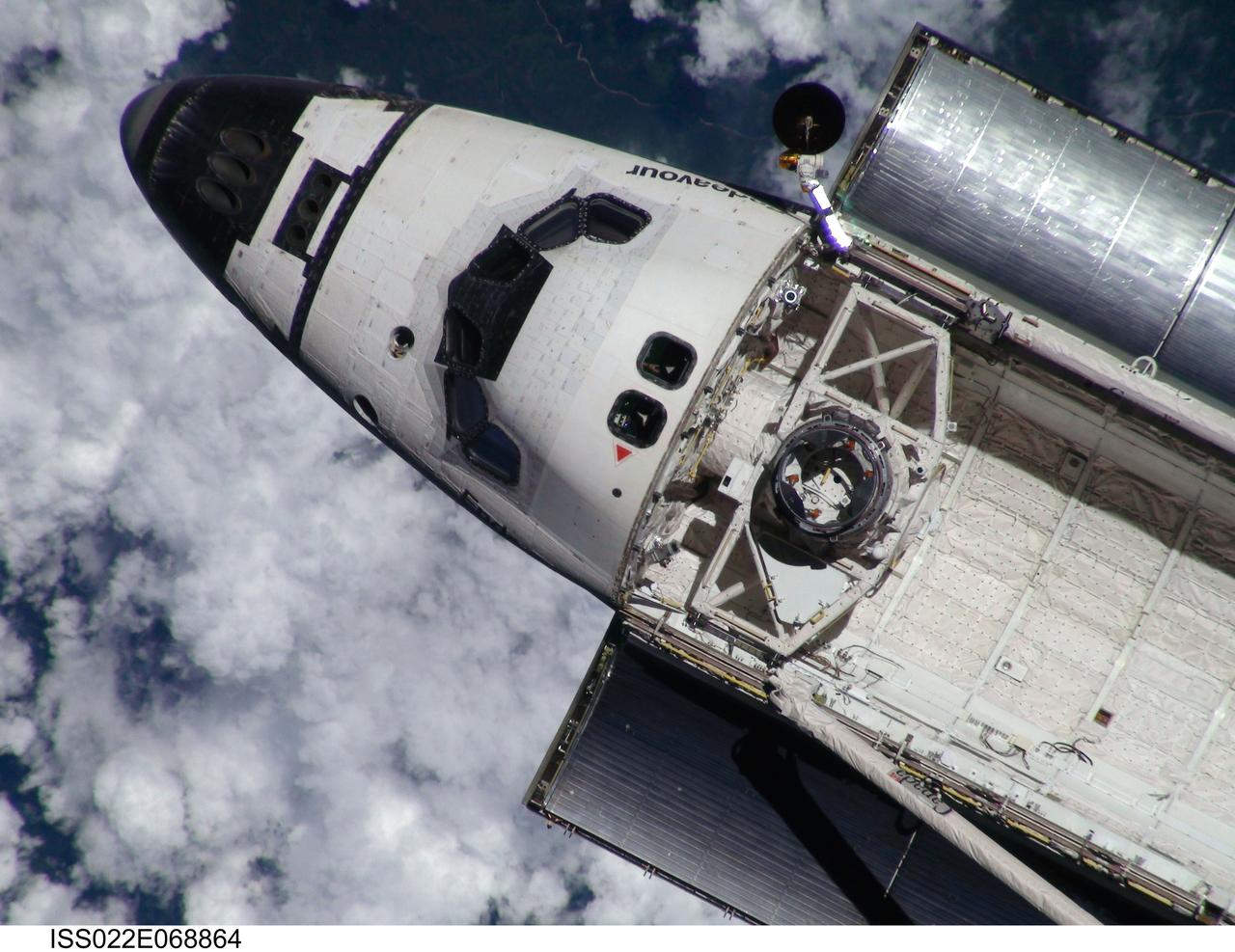
ISS022-E-068864 (9 Feb. 2010) --- This view of the space shuttle Endeavour, taken on Feb. 9 from the International Space Station as the two spacecraft conducted their rendezvous operations, was downlinked by the Expedition 22 crew on Feb. 19. The Tranquility node and the Cupola are just out of view in the aft part of shuttle's payload bay.
Photographic documentation showing activities in the payload bay of the orbiter Atlantis during STS-37. View include: Gamma Ray Observatory (GRO) on end of Remote Manipulator System (RMS), with Mission Specialist Jay Apt below on the port side of the payload bay.
Views OSS-1 Payload Pallet, vehicle changing and potential experiment being checked out by technicians after its arrival at the Operations & Checkout (O&C) Bldg., 09/18/1981, for the STS-3 Mission 1. STS-3 - EXERIMENT (OSS-1) 2. SHUTTLE - PAYLOADS (OSS-1) KSC, FL
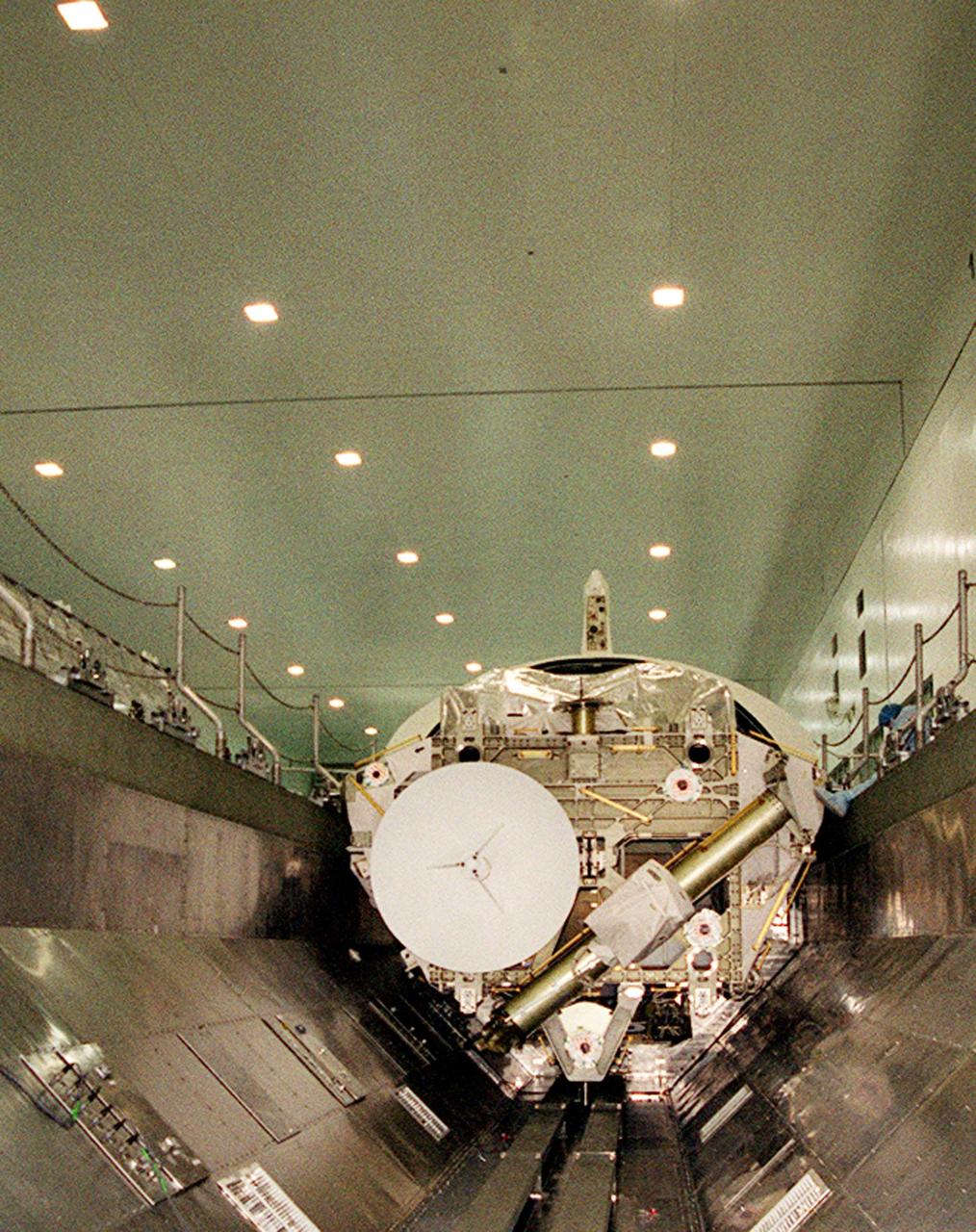
The Integrated Truss Structure Z1 rests on the bottom of the payload canister in this view from inside. Once it is secured, the truss will be transported from the Space Station Processing Facility to Launch Pad 39A. The Z1 is part of the payload on mission STS-92 scheduled to lift off Oct. 5, 2000
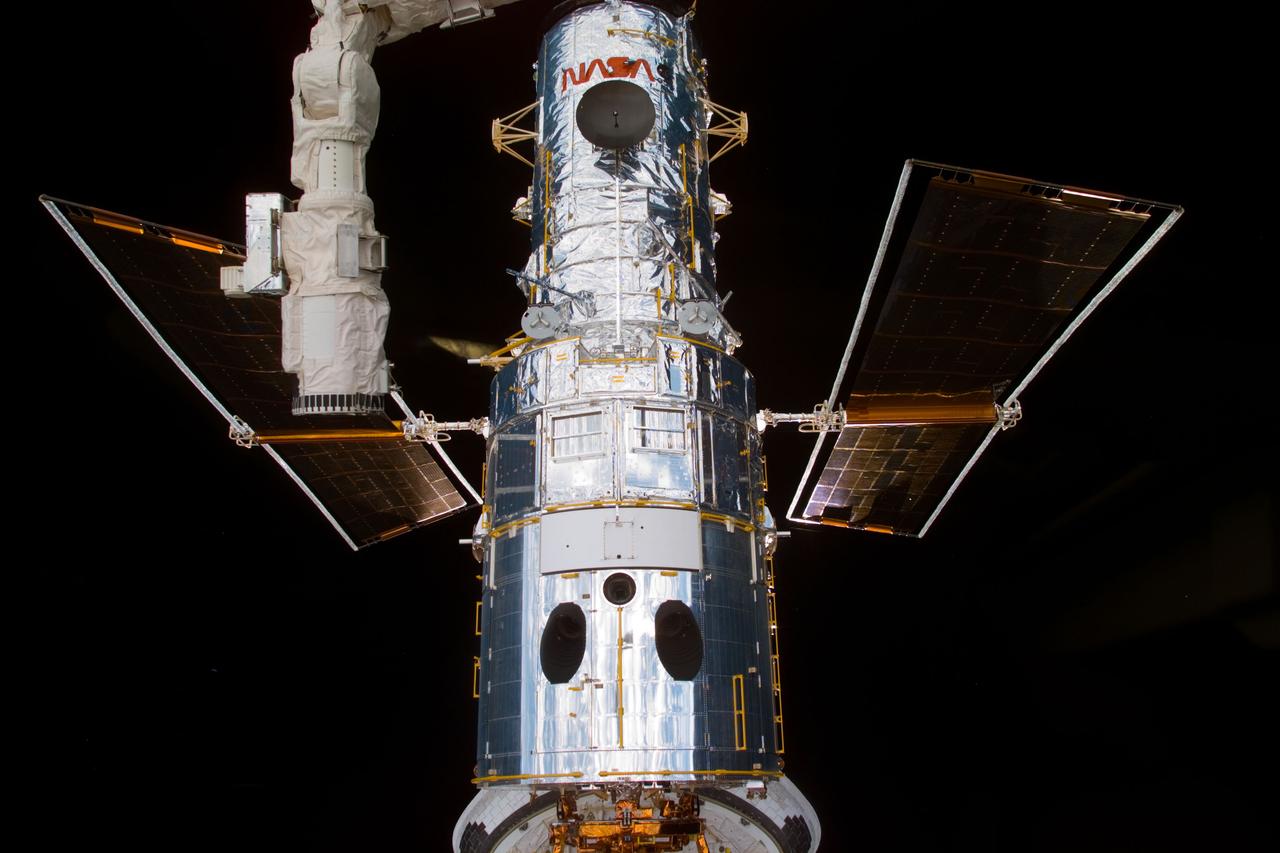
S82-E-5175 (13 Feb. 1997) --- Hubble Space Telescope (HST) after capture berthed on Flight Support system (FSS) in Space Shuttle Discovery's payload bay. This view was taken with an Electronic Still Camera (ESC).
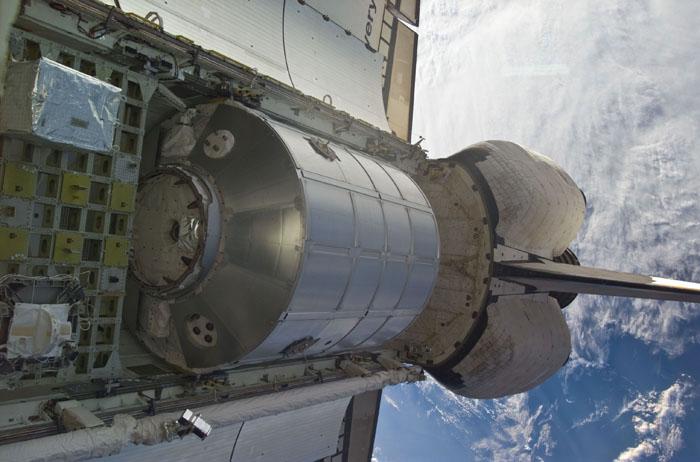
STS102-E-5095 (10 March 2001) --- The Leonardo Multi Purpose Logistics Module rests in Discovery's payload bay in this view taken from the station by a crew member using a digital still camera.
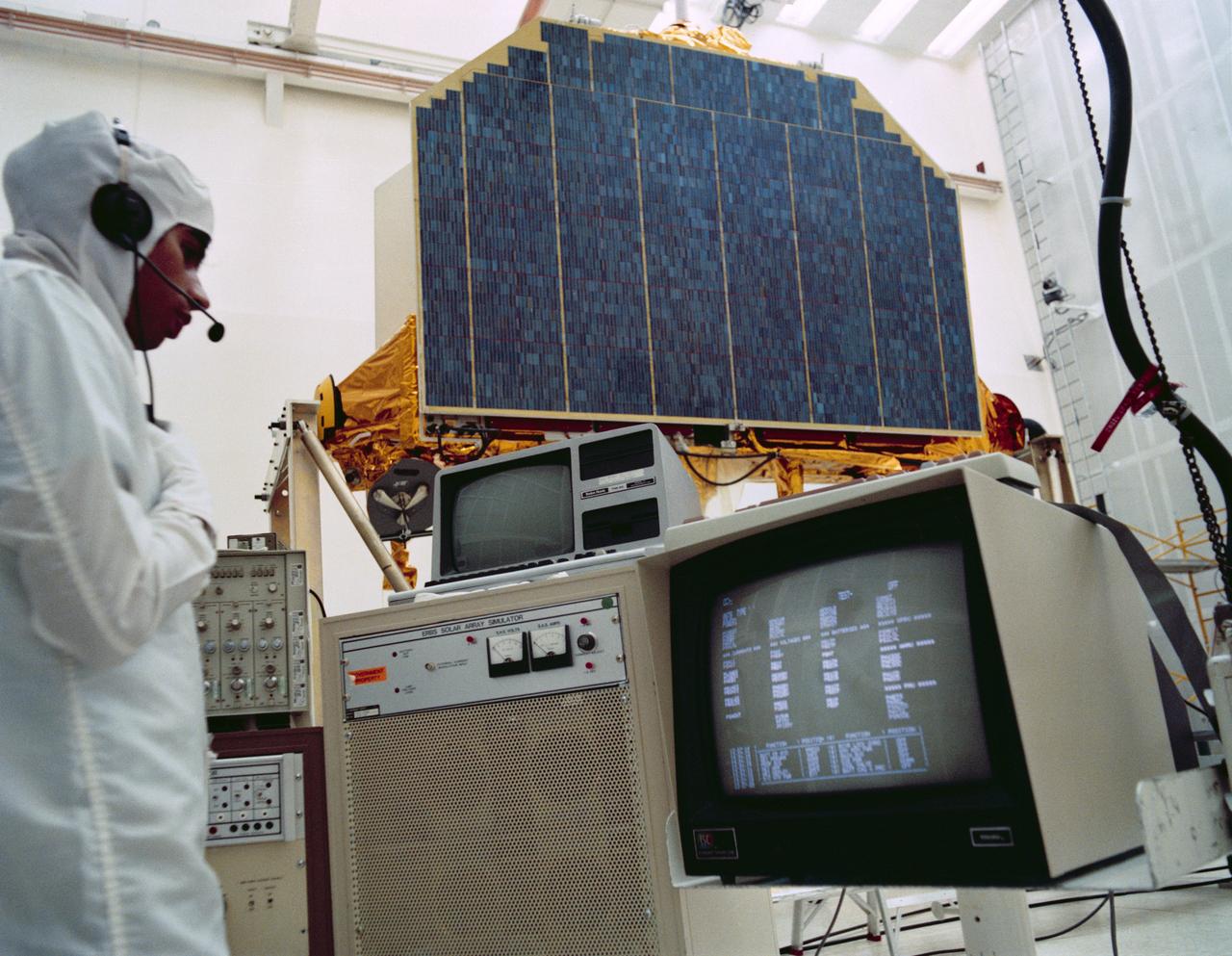
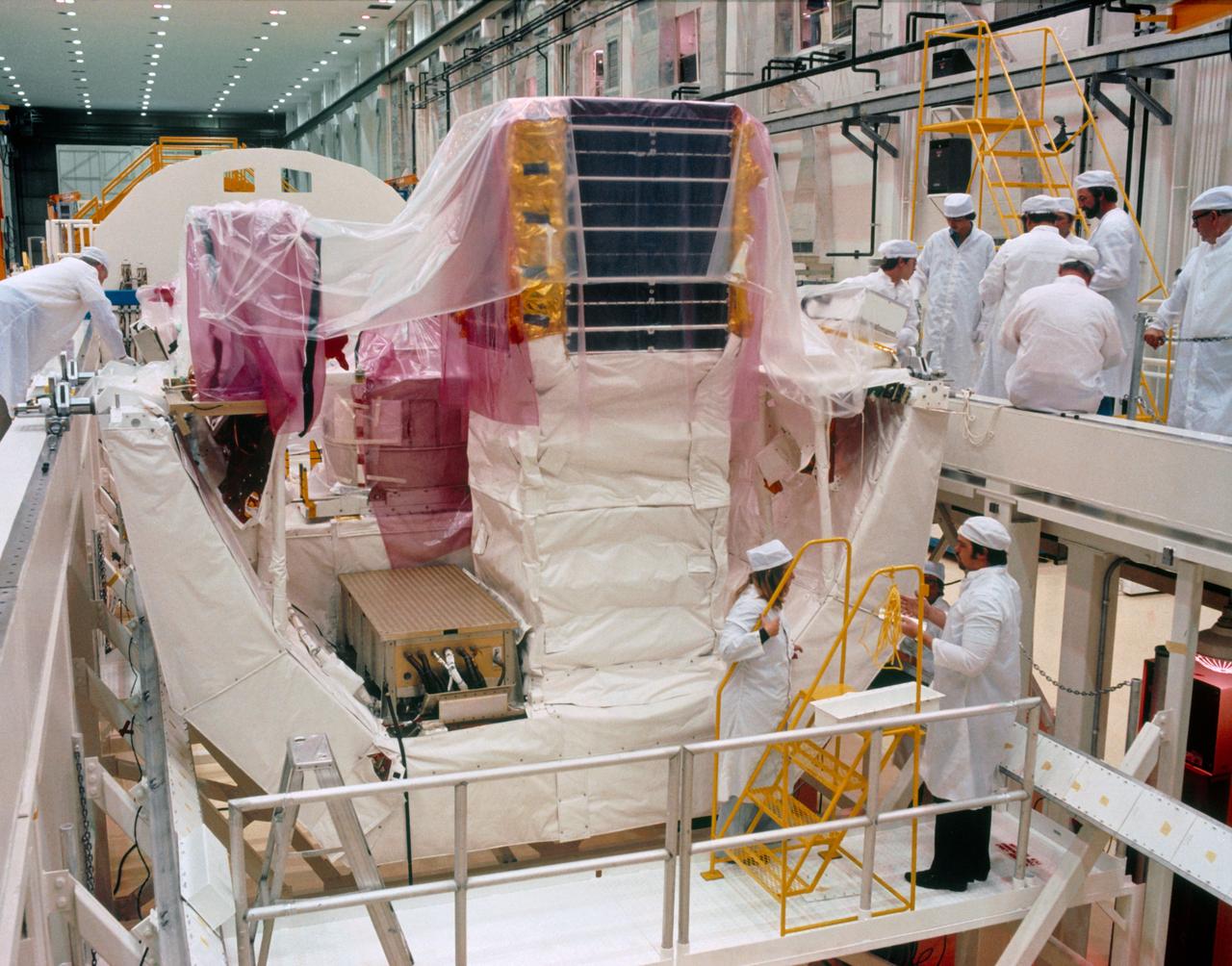
Documentation of STS 41-G payloads while in Hangar AE at Cape Canaveral. Views include documentation of the Earth Radiation Budget Satllite (ERBS) antenna (41266) and solar array panels (41265).
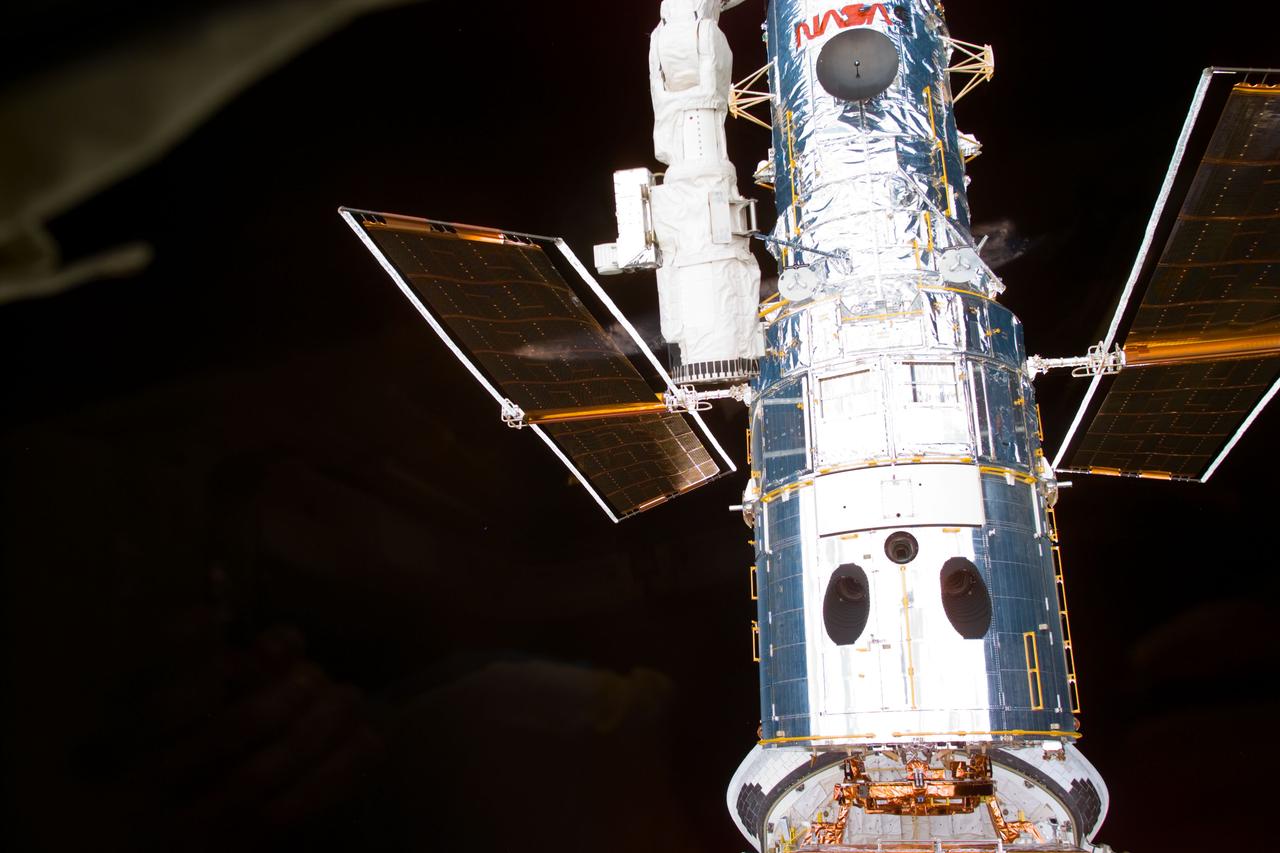
S82-E-5171 (13 Feb. 1997) --- Hubble Space Telescope (HST) after capture berthed on Flight Support system (FSS) in Space Shuttle Discovery's payload bay. This view was taken with an Electronic Still Camera (ESC).
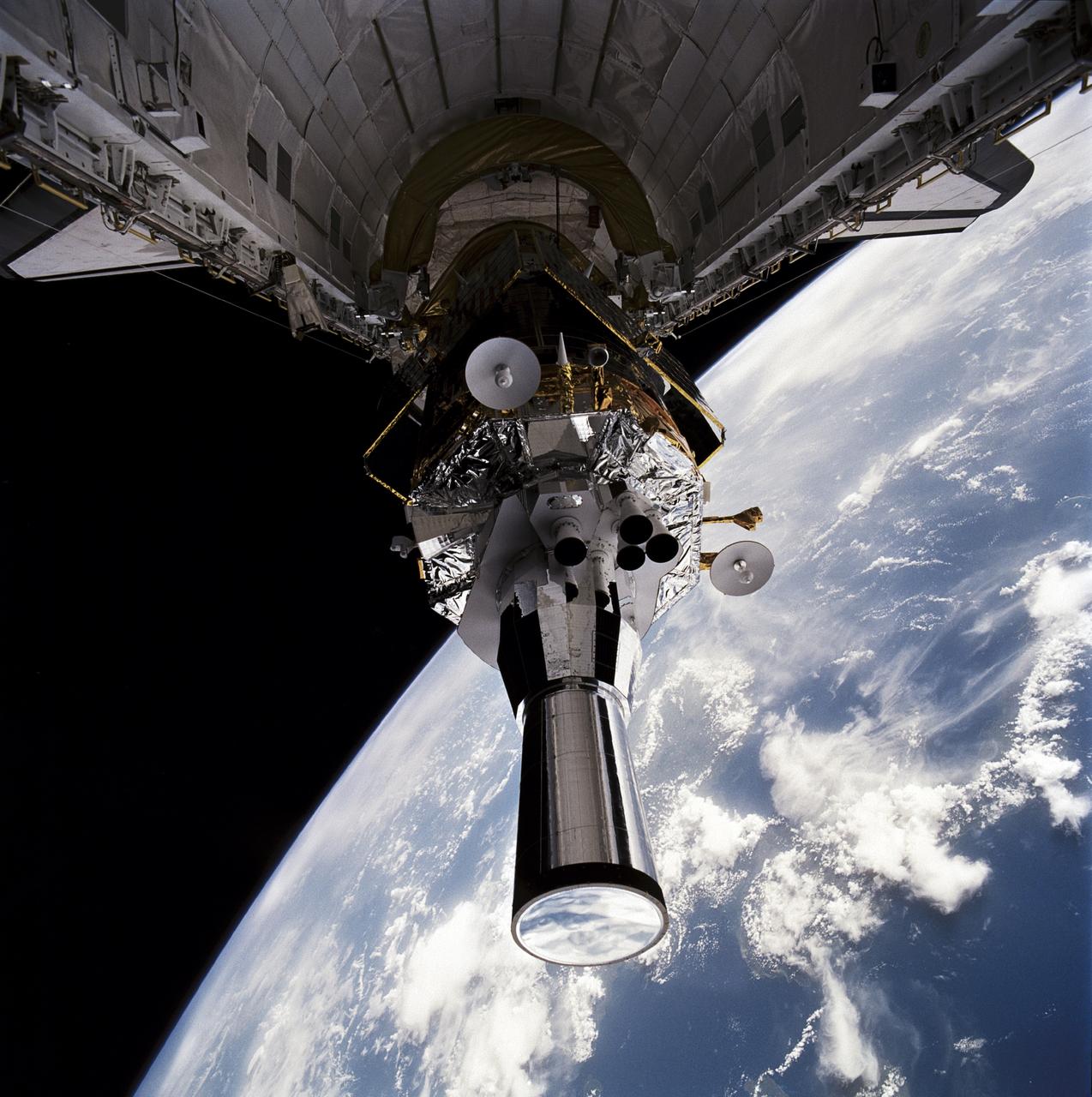
STS044-71-011 (25 Nov. 1991) --- A 70mm frame shows pre-deployment view of the Defense Support Payload (DSP), backdropped against a blue and white Earth.
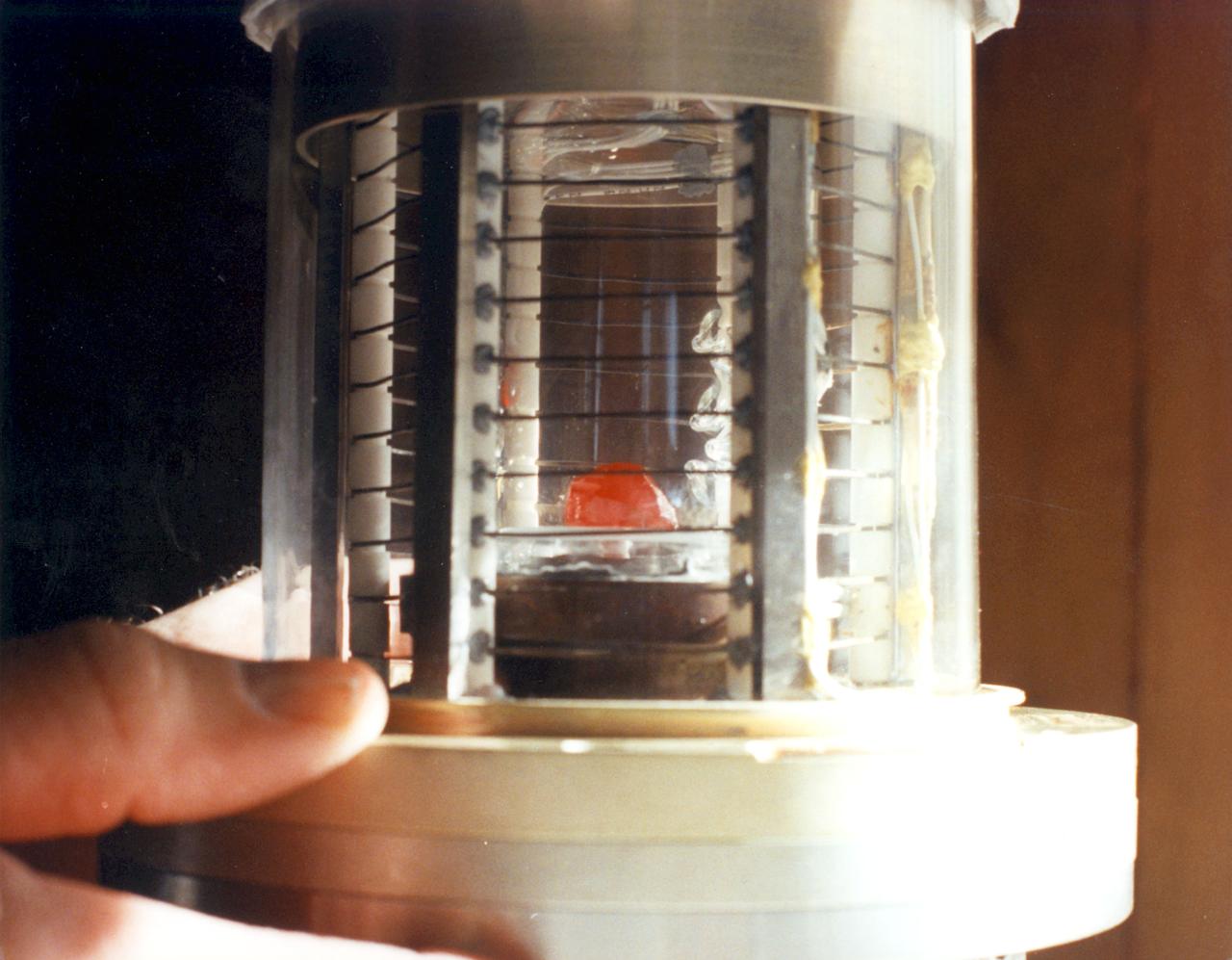
Ampoule view of the Vapor Crystal Growth System (VCGS) Furnace. Used on IML-1 International Microgravity Laboratory Spacelab 3. Prinicipal Investigator and Payload Specialist was Lodewijk van den Berg.
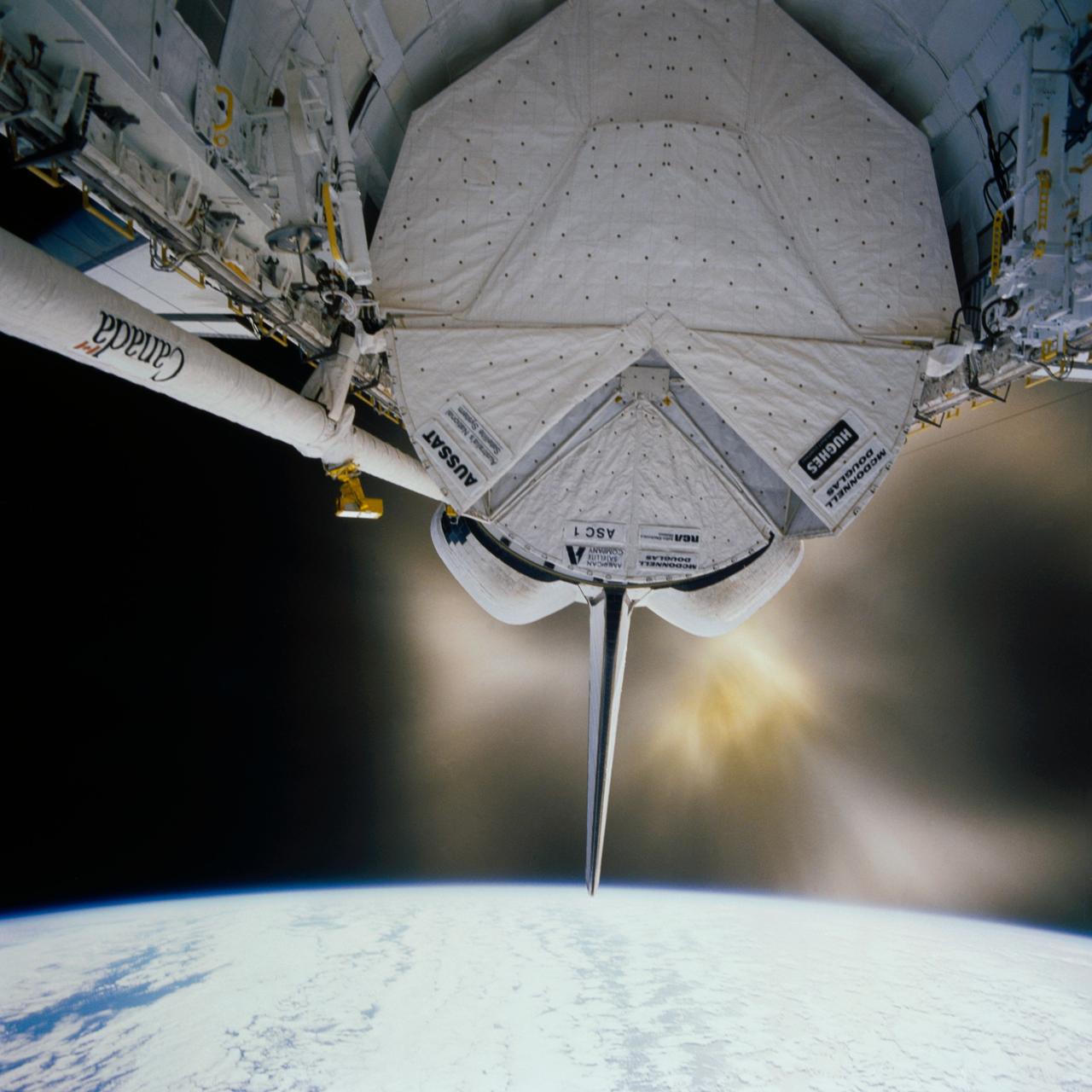
View of a single engine orbital maneuvering system (OMS) firing on the Discovery. The payload bay is open and the protective canisters for the AUSSAT communications satellite (open) and the ASC-1 are visible. A cloudy Earth's horizon can be seen above the orbiter.
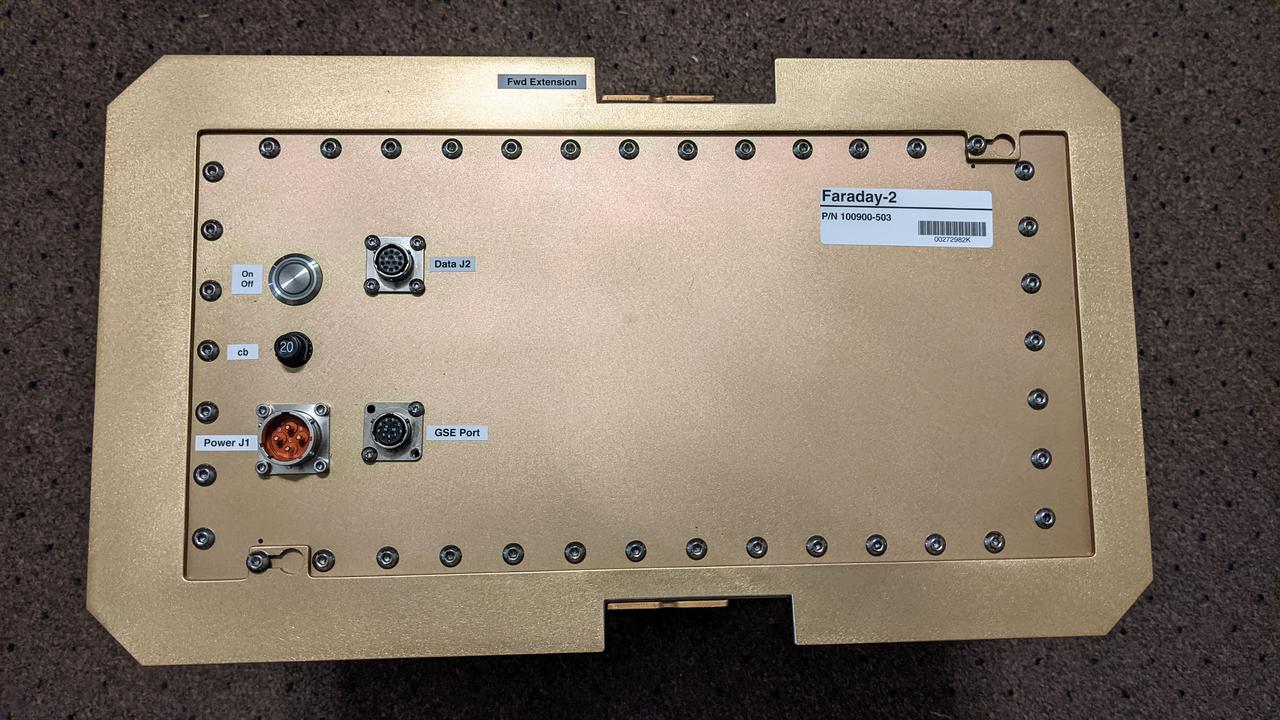
jsc2021e036920 (7/8/2021) --- A preflight view of the Faraday Research Facility front panel. The Faraday Research Facility is a multipurpose research facility that interfaces sub-payloads (µLabs) into the International Space Station (ISS) EXPRESS Racks.
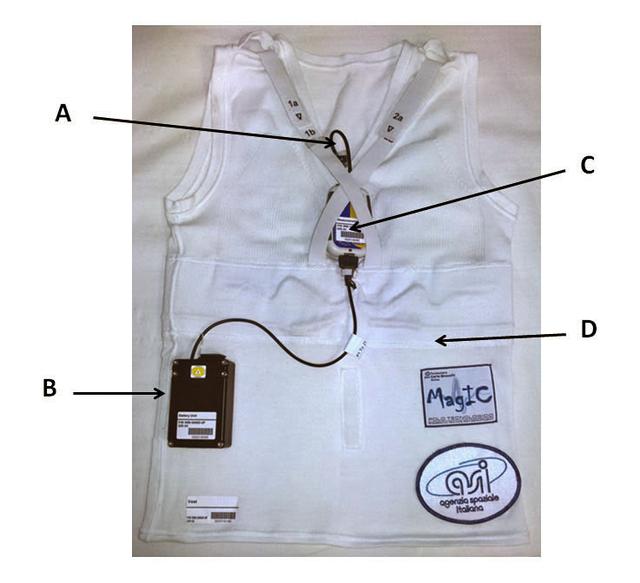
jsc2021e009422 (3/2/2021) --- A preflight view of the MagIC-Space payload. A=Thermometer probe; B= Battery Pack; C= Measurement Unit; D=Vest of the Wearable Monitoring Facility. Image courtesy of Marco Di Rienzo ©
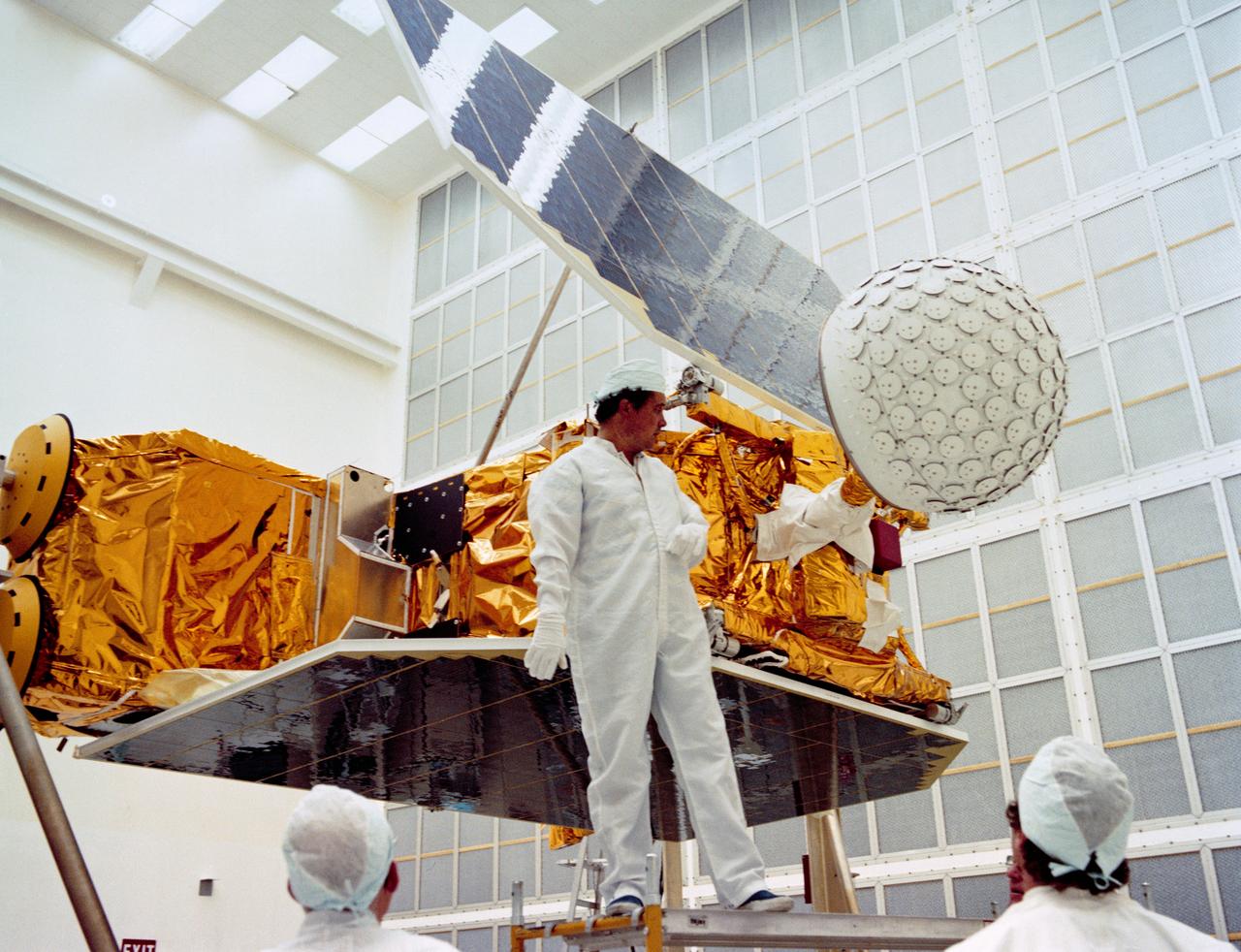
Documentation of STS 41-G payloads while in Hangar AE at Cape Canaveral. Views include documentation of the Earth Radiation Budget Satllite (ERBS) antenna (41266) and solar array panels (41265).
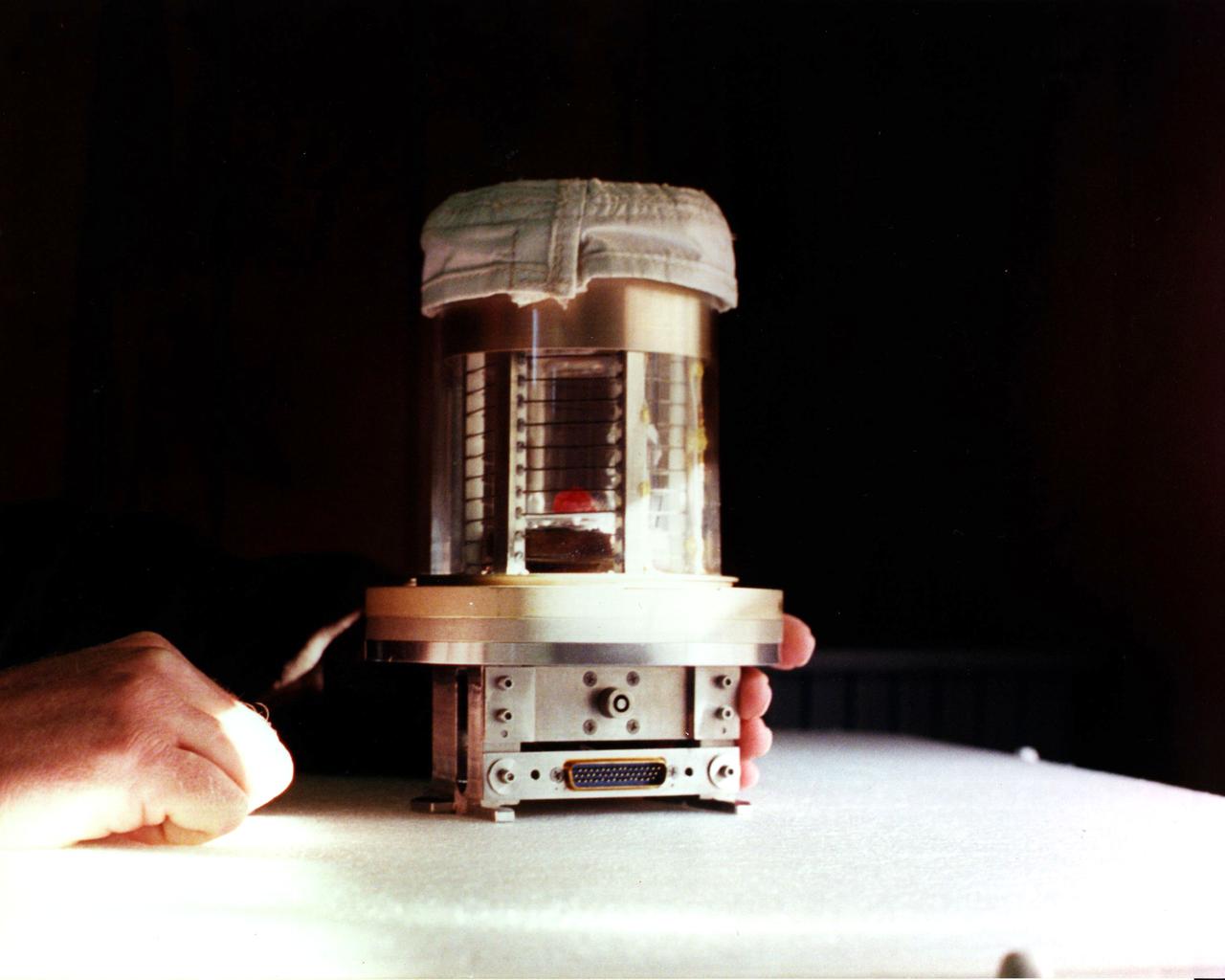
Overall view of the Vapor Crystal Growth System (VCGS) Furnace. Used on IML-1 International Microgravity Laboratory Spacelab 3. Principal Investigator and Payload Specialist was Lodewijk van den Berg.
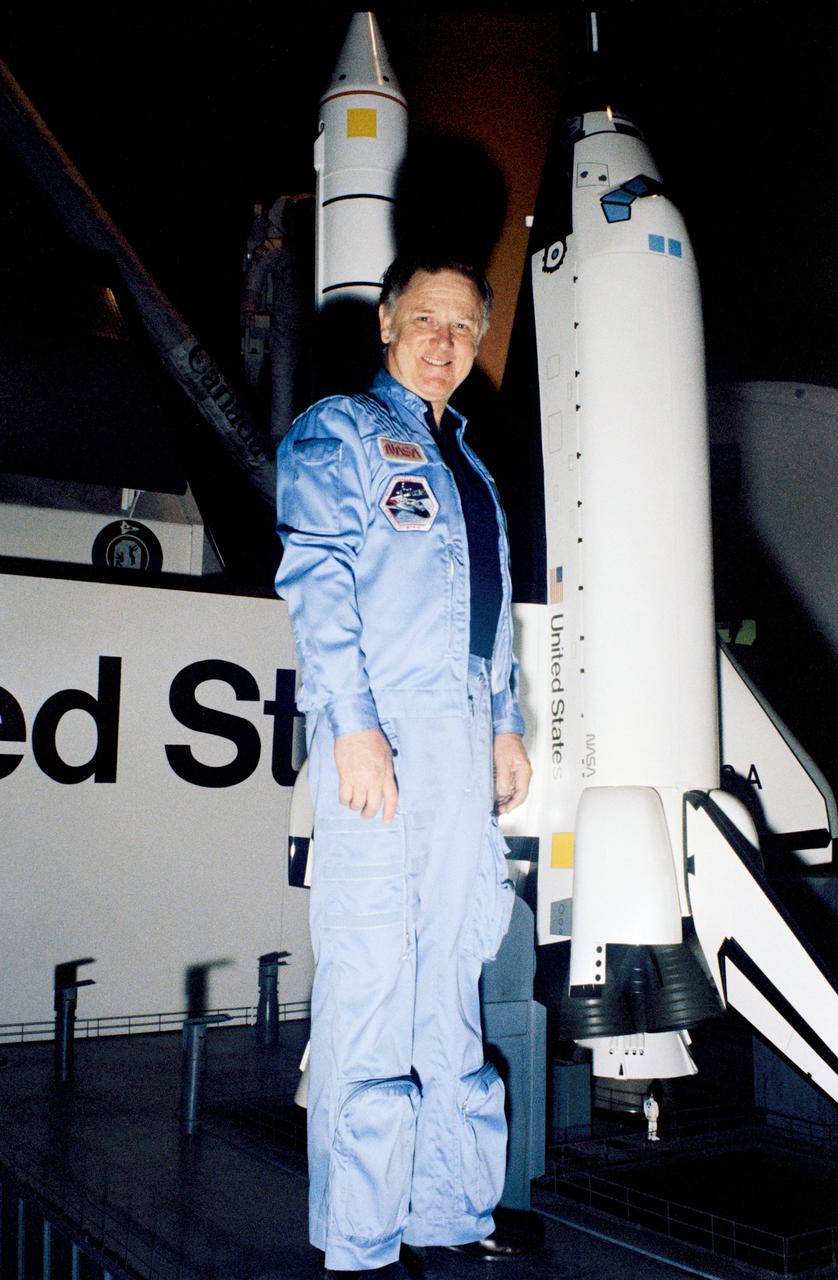
Candid views, Astronaut Donald L. Lind posing with the Shuttle Model and Payload Flight Assignment, Bldg. 9A, 03/10/1983. 1. EXHIBITS - SHUTTLE MODEL JSC, HOUSTON, TX
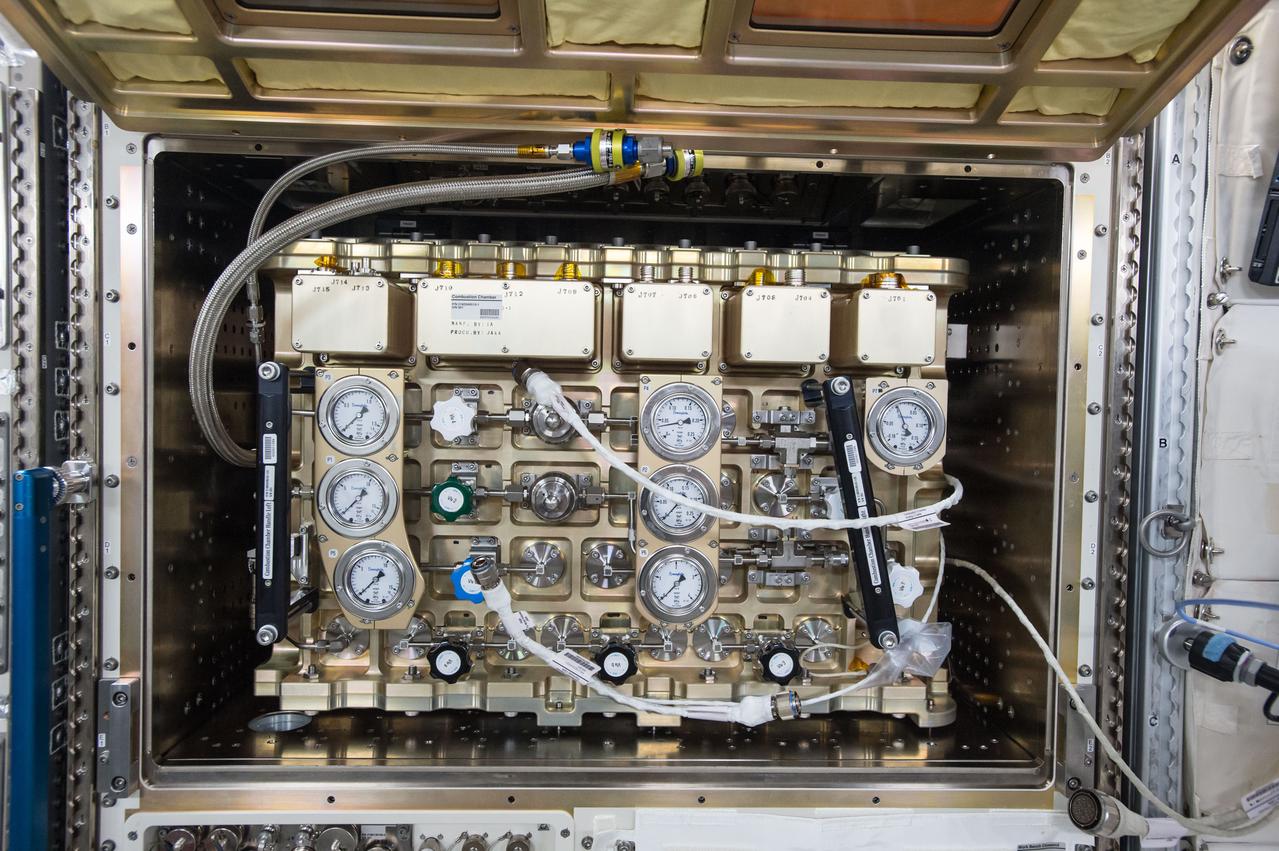
iss049e025077 (9/28/2016) --- View taken during Multi-Purpose Small Payload Rack (MSPR) Combustion Chamber (CC) installed in the Japanese Experiment Module (JEM).
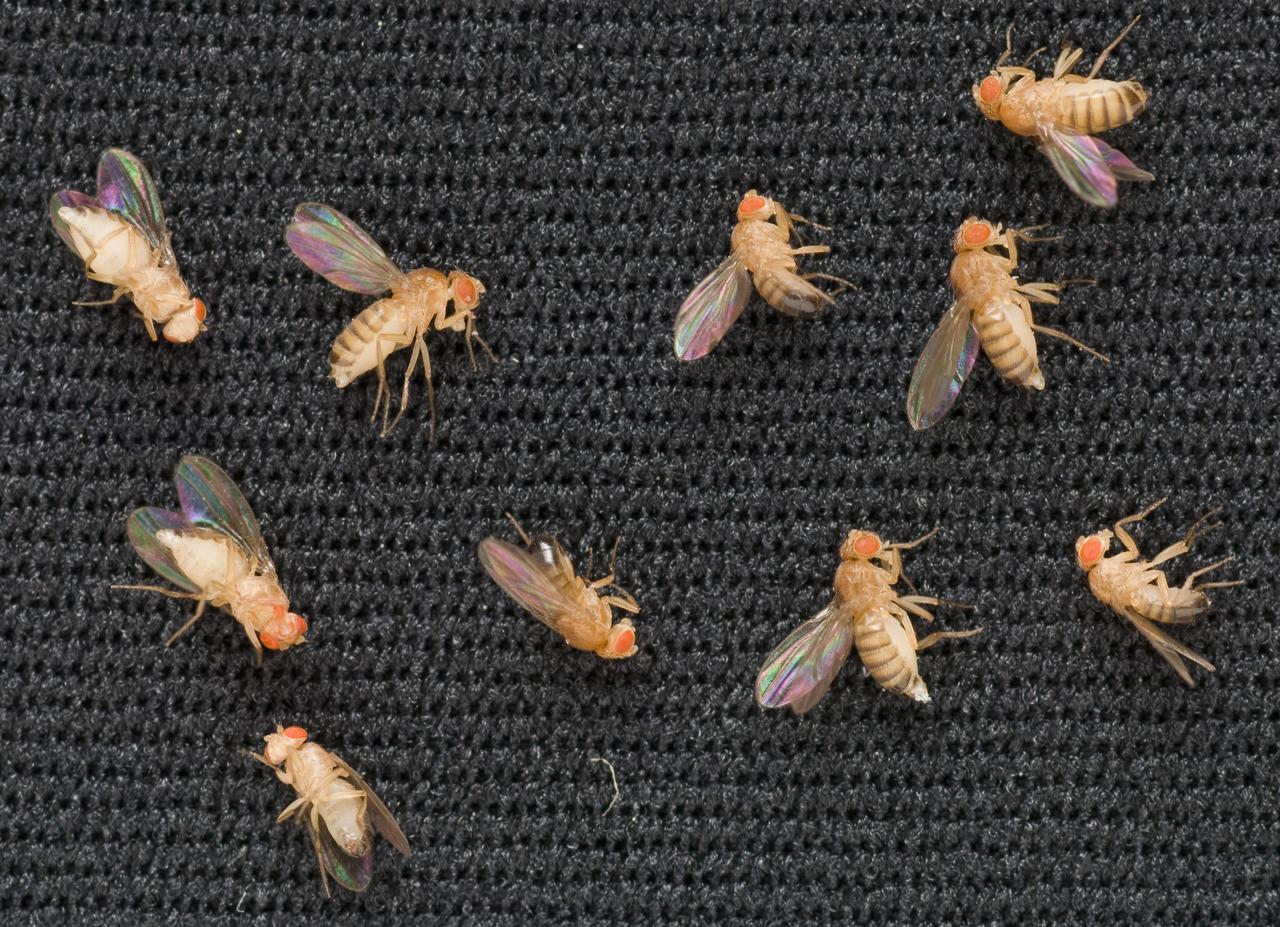
Space shuttle STS-121 FIT (Fly Immunity and Tumors) payload. Using Drosophila (fruit fly) to complete the experiments. wide view of Drosophila melanogaster (fruit fly).
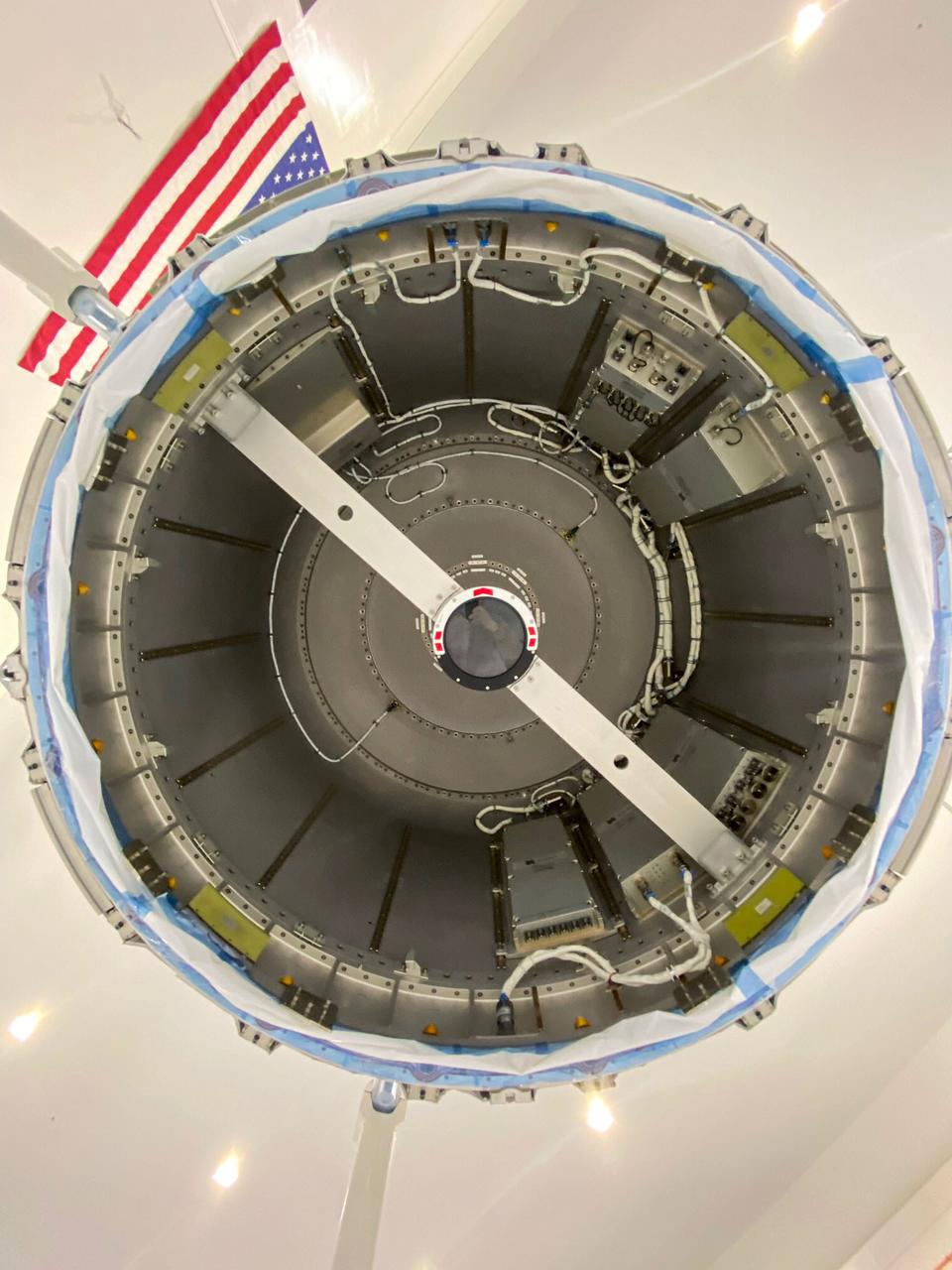
jsc2020e044492 (10/6/2020) —- A preflight view of the Nanoracks Airlock. The Nanoracks Bishop Airlock (Nanoracks Airlock) is the first-ever commercially owned and operated airlock on the International Space Station. It provides a variety of capabilities including jettisoning of payloads such as Cubesats, deployment of external payloads, support for small exterior payloads and locker-sized internal payloads, recovery of external on-orbit replaceable units (ORUs), and the ability to move hardware outside in support of extravehicular activities (EVAs). It is approximately five times larger than the Japanense Experiment Module (JEM) Airlock so it can accommodate more and larger payloads. The Airlock’s capabilities support many different types of scientific investigations.
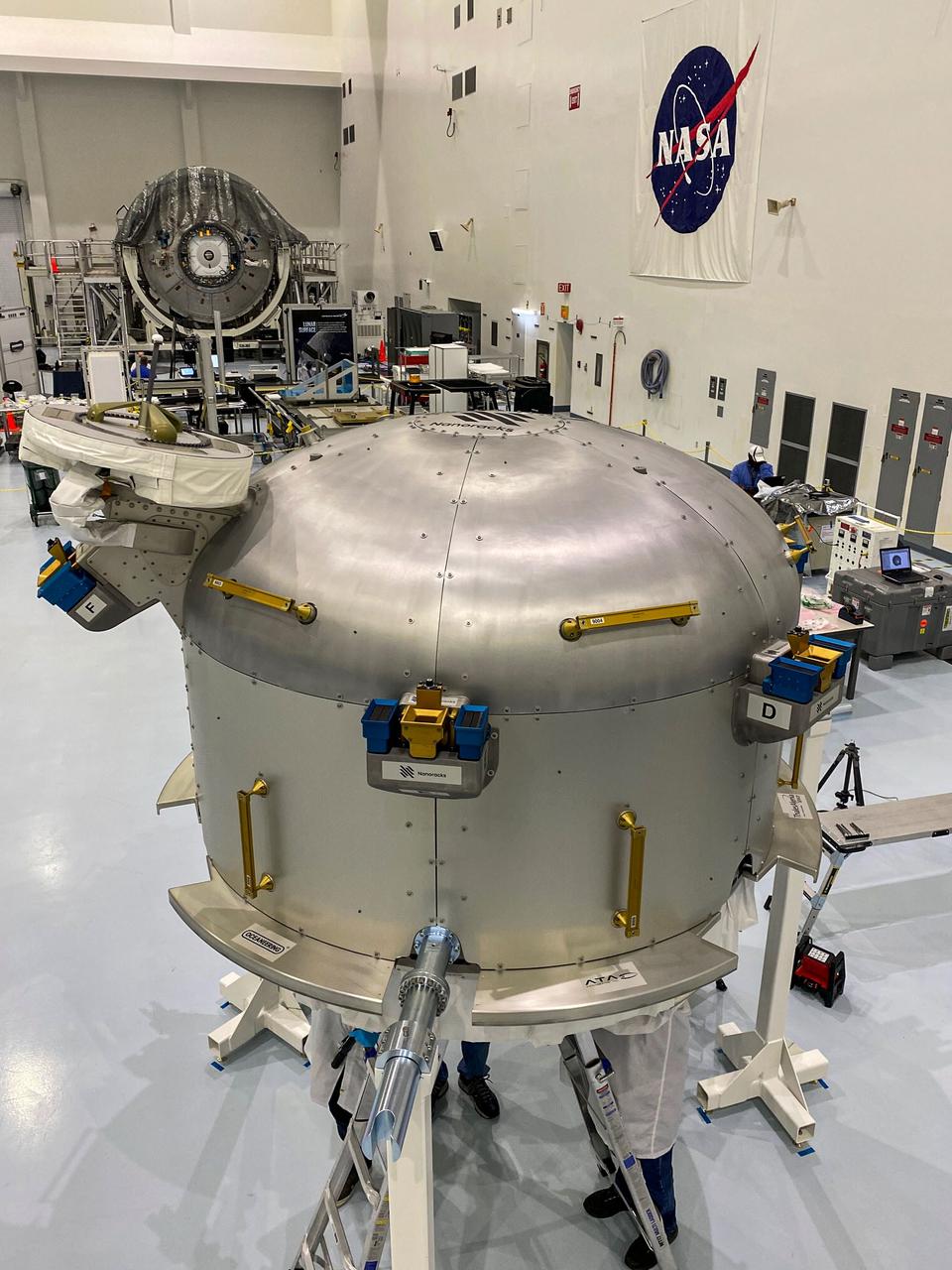
jsc2020e044491 (10/5/2020) —- A preflight view of the Nanoracks Airlock. The Nanoracks Bishop Airlock (Nanoracks Airlock) is the first-ever commercially owned and operated airlock on the International Space Station. It provides a variety of capabilities including jettisoning of payloads such as Cubesats, deployment of external payloads, support for small exterior payloads and locker-sized internal payloads, recovery of external on-orbit replaceable units (ORUs), and the ability to move hardware outside in support of extravehicular activities (EVAs). It is approximately five times larger than the Japanense Experiment Module (JEM) Airlock so it can accommodate more and larger payloads. The Airlock’s capabilities support many different types of scientific investigations.
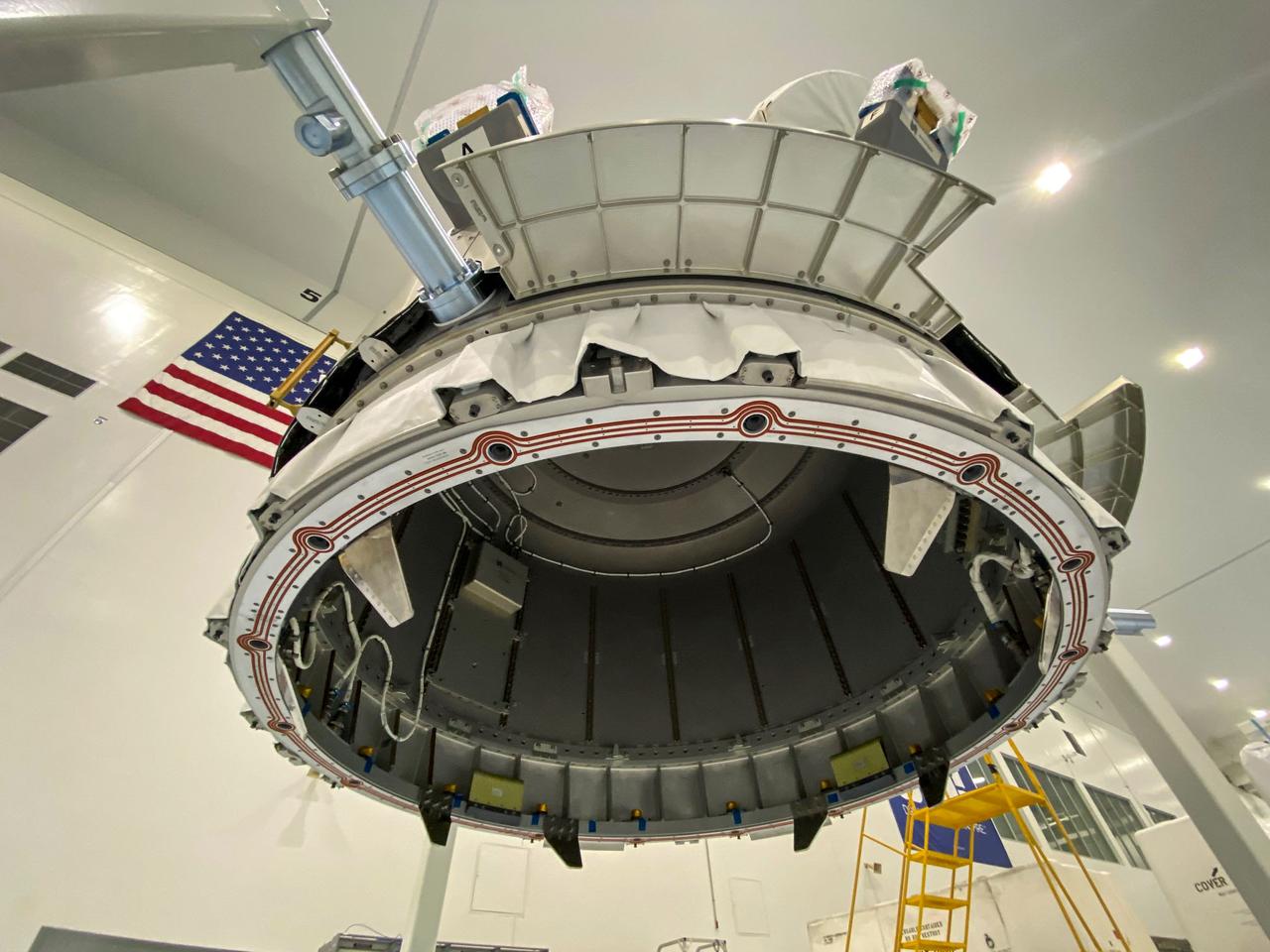
jsc2020e044494 (10/1/2020) --- A preflight view of the Nanoracks Airlock. The Nanoracks Bishop Airlock (Nanoracks Airlock) is the first-ever commercially owned and operated airlock on the International Space Station. It provides a variety of capabilities including jettisoning of payloads such as Cubesats, deployment of external payloads, support for small exterior payloads and locker-sized internal payloads, recovery of external on-orbit replaceable units (ORUs), and the ability to move hardware outside in support of extravehicular activities (EVAs). It is approximately five times larger than the Japanense Experiment Module (JEM) Airlock so it can accommodate more and larger payloads. The Airlock’s capabilities support many different types of scientific investigations.
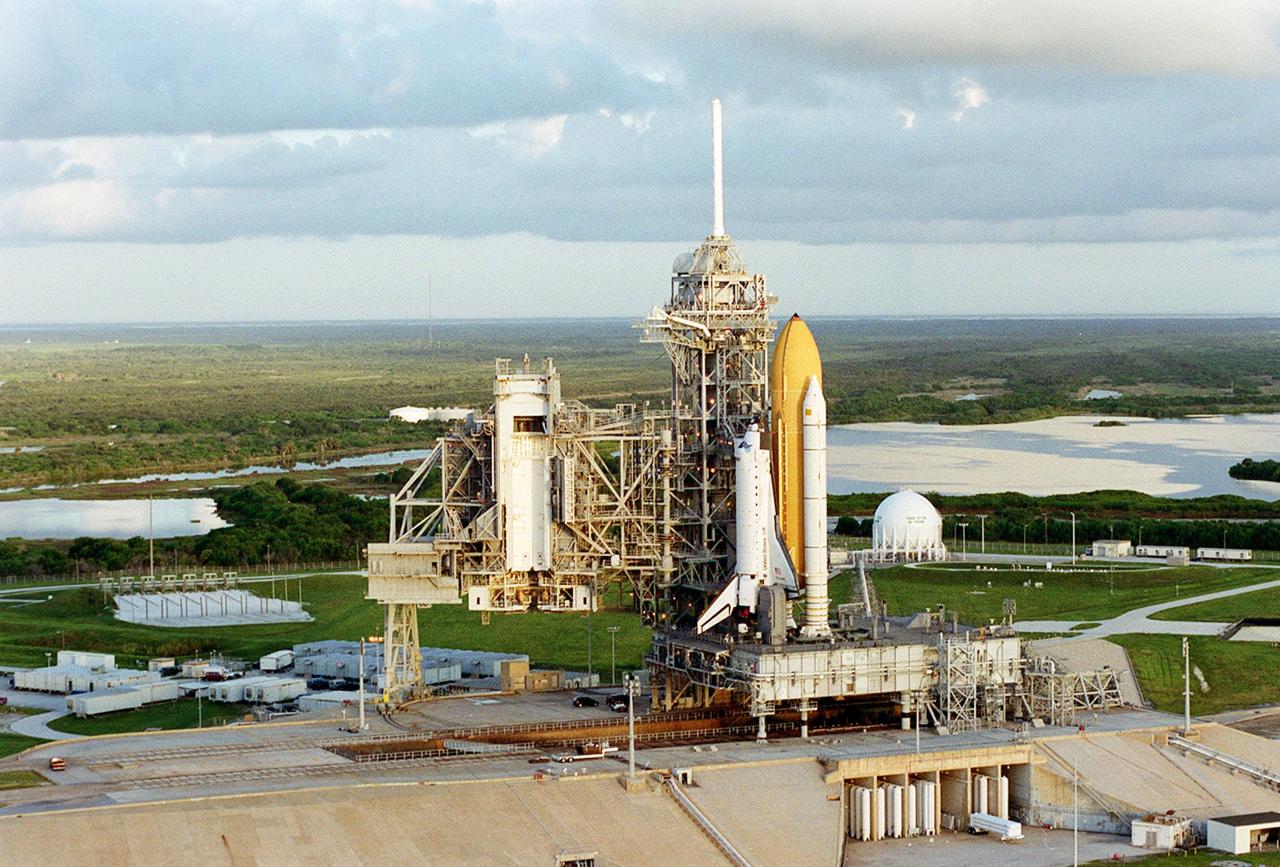
KENNEDY SPACE CENTER, Fla. -- In this aerial view, Space Shuttle Discovery is seen on Launch Pad 39A, waiting for launch on mission STS-92 Oct. 5, 2000. The opened Rotating Service Structure to the left shows the vertical passage used to lift payload canisters to the Payload Changeout Room for transfer of the payload to the orbiter. The white area at left on the ground is the slidewire basket field. The slidewire baskets are part of the emergency egress system from the orbiter. On the distant horizon is the Atlantic Ocean
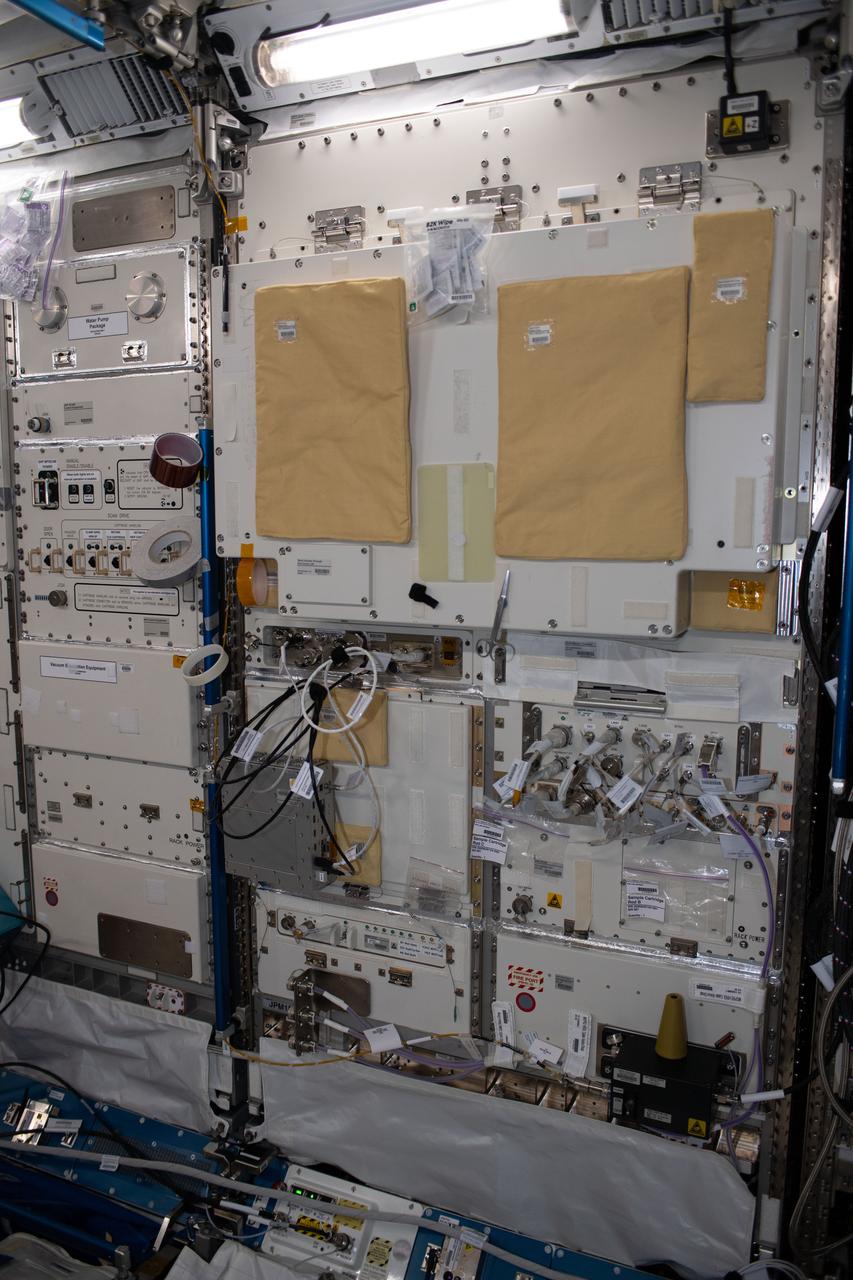
iss056e150256 (8/21/2018) --- A view of the Multi purpose Small Payload Rack (MSPR) 2 in the Kibo Japanese Experiment Pressurized Module (JPM) aboard the International Space Station (ISS). The Multi Purpose Small Payload Rack-2 (MSPR-2) is a second multipurpose payload rack system used in the Japanese Experiment Module (JEM). Similar to the original MSPR (still in use), MSPR-2 has two workspaces and a work table that can be used for wide fields of space environment utilization including science and educational missions.
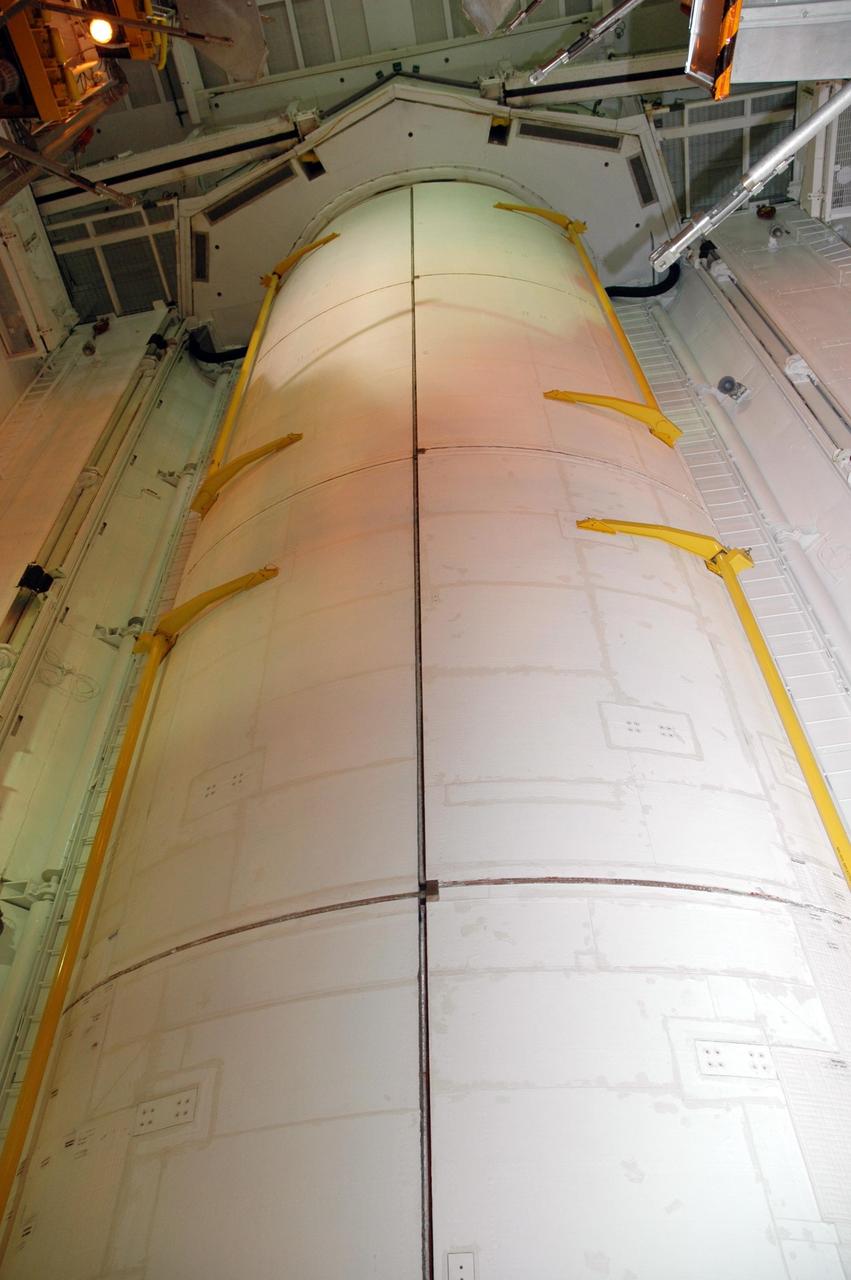
KENNEDY SPACE CENTER, FLA. — From inside the payload changeout room at Launch Pad 39A, this view shows the payload bay doors on Endeavour fully closed. The payload includes the S5 truss, the SPACEHAB module and external stowage platform 3. The mission is the 22nd flight to the International Space Station and is targeted for launch on Aug. 7. NASA/Charisse Nahser
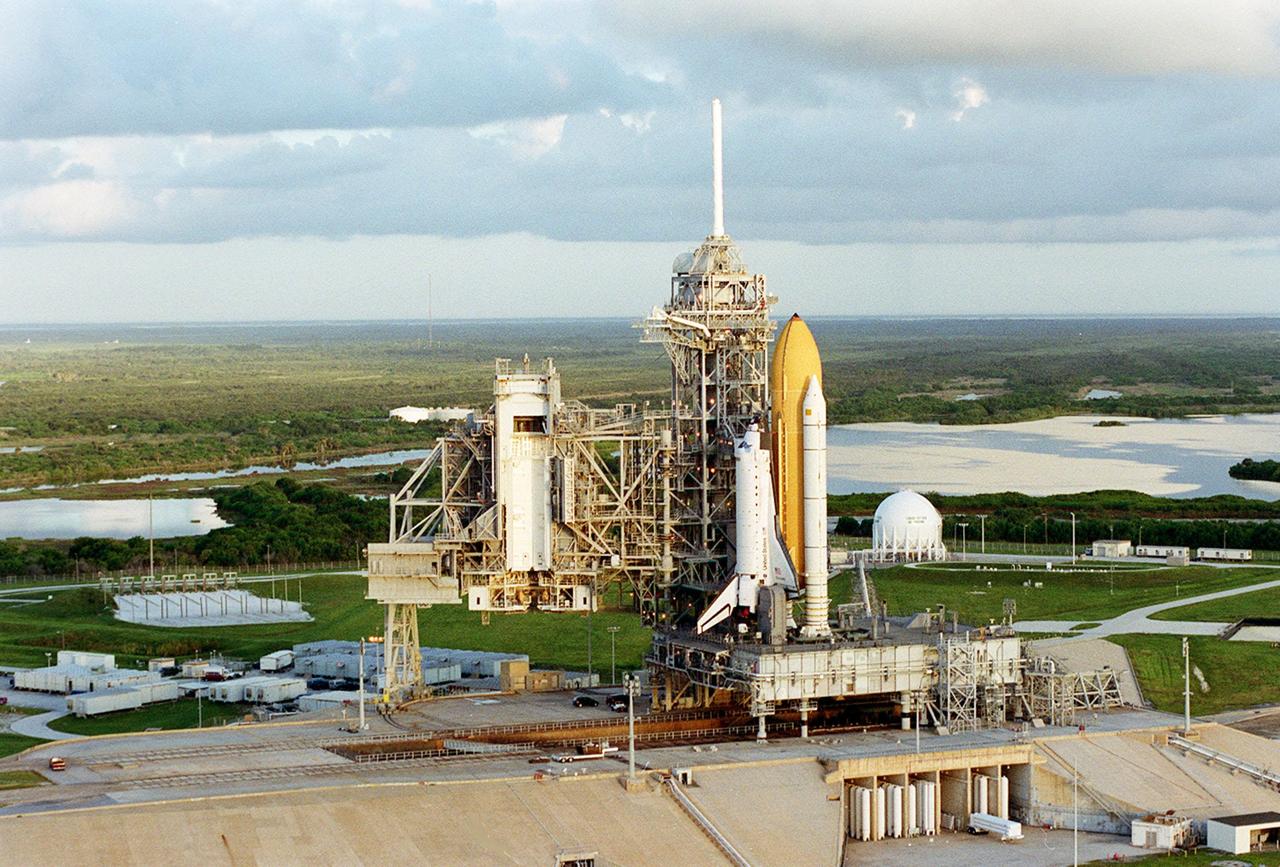
KENNEDY SPACE CENTER, Fla. -- In this aerial view, Space Shuttle Discovery is seen on Launch Pad 39A, waiting for launch on mission STS-92 Oct. 5, 2000. The opened Rotating Service Structure to the left shows the vertical passage used to lift payload canisters to the Payload Changeout Room for transfer of the payload to the orbiter. The white area at left on the ground is the slidewire basket field. The slidewire baskets are part of the emergency egress system from the orbiter. On the distant horizon is the Atlantic Ocean
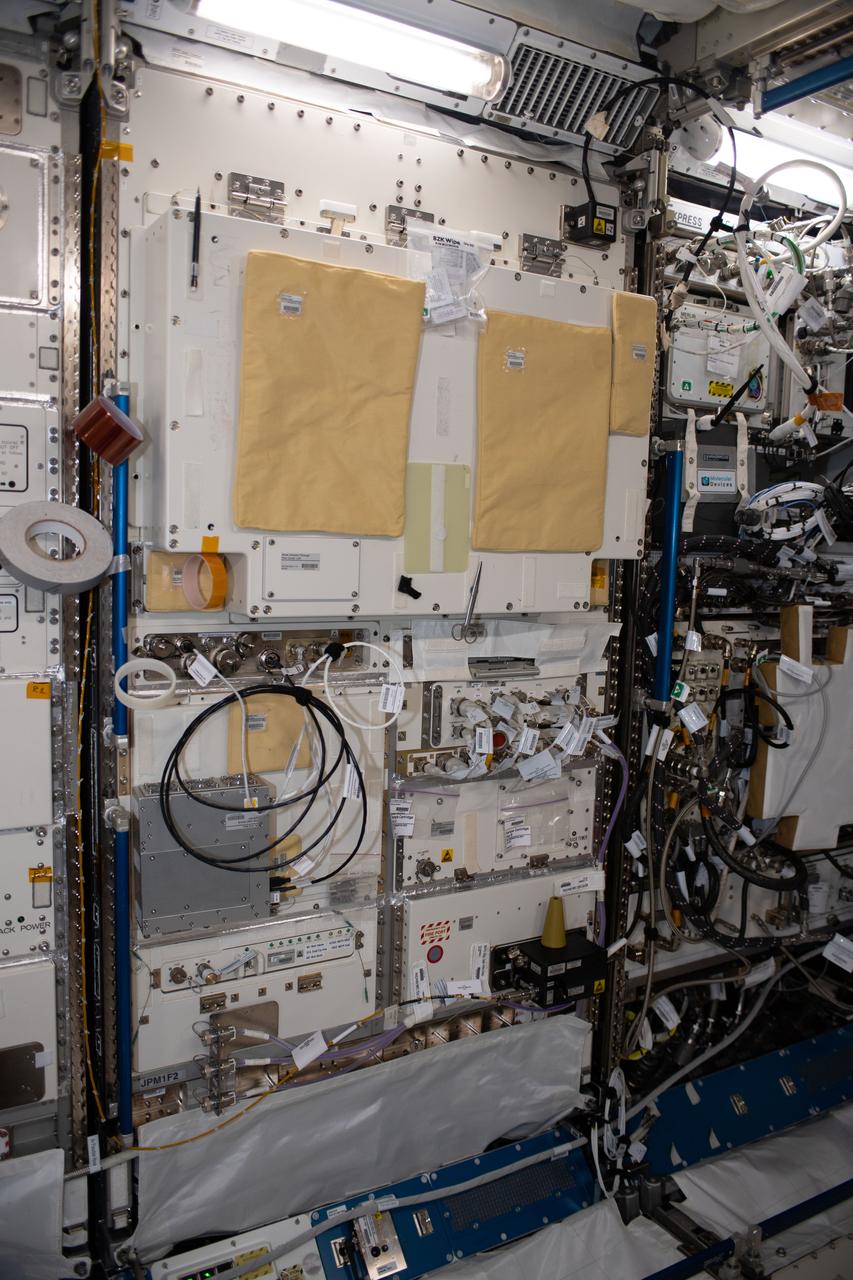
iss056e150255 (8/21/2018) --- A view of the Multi purpose Small Payload Rack (MSPR) 2 in the Kibo Japanese Experiment Pressurized Module (JPM) aboard the International Space Station (ISS). The Multi Purpose Small Payload Rack-2 (MSPR-2) is a second multipurpose payload rack system used in the Japanese Experiment Module (JEM). Similar to the original MSPR (still in use), MSPR-2 has two workspaces and a work table that can be used for wide fields of space environment utilization including science and educational missions.
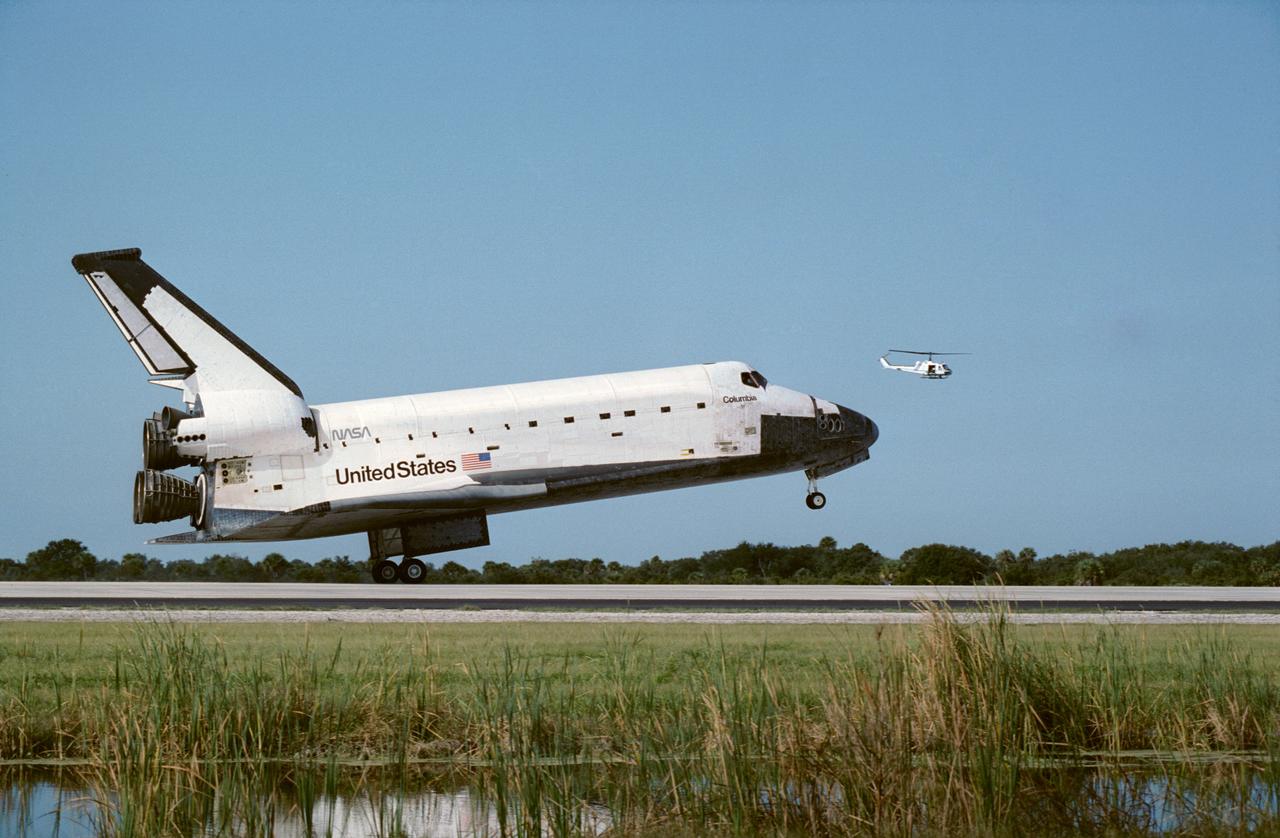
STS052-S-098 (1 Nov 1992) --- This ground-level side view shows the Space Shuttle Columbia just prior to main landing gear touchdown at KSC's Shuttle Landing Facility to successfully complete a ten-day Earth-orbital mission. Onboard were a crew of five NASA astronauts and a Canadian payload specialist. Landing occurred at 9:05:53 a.m. (EST), November 1, 1992. Crewmembers are astronauts James D. Wetherbee, Michael A. Baker, Tamara E. Jernigan, Charles L. (Lacy) Veach and William M. Shepherd along with payload specialist Steven G. MacLean. The view was recorded with a 35mm camera.
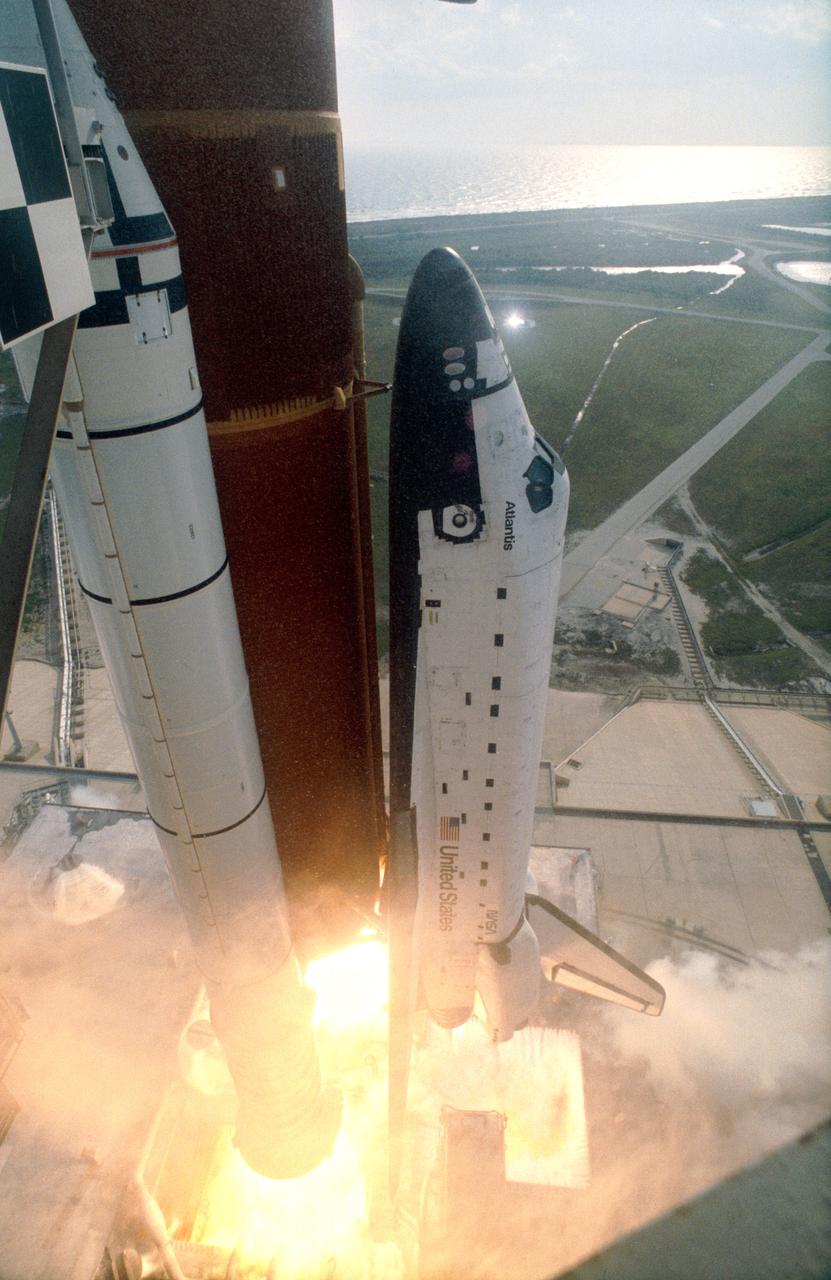
STS045-S-054 (24 March 1992) --- A profile view of the Space Shuttle Atlantis as it soars off the launch pad and heads toward Earth orbit with a crew of seven and the Atmospheric Laboratory for Applications and Science (ATLAS) aboard. Launch occurred at 8:13:40:048 a.m. (EST), March 24, 1992. Onboard were Charles F. Bolden, mission commander; Brian Duffy, pilot; Kathryn D. Sullivan, payload commander; David C. Leestma and C. Michael Foale, mission specialists; and Dirk Frimout of the European Space Agency and Byron K. Lichtenberg, payload specialists. The view was provided by an automatic camera on the launch service structure.
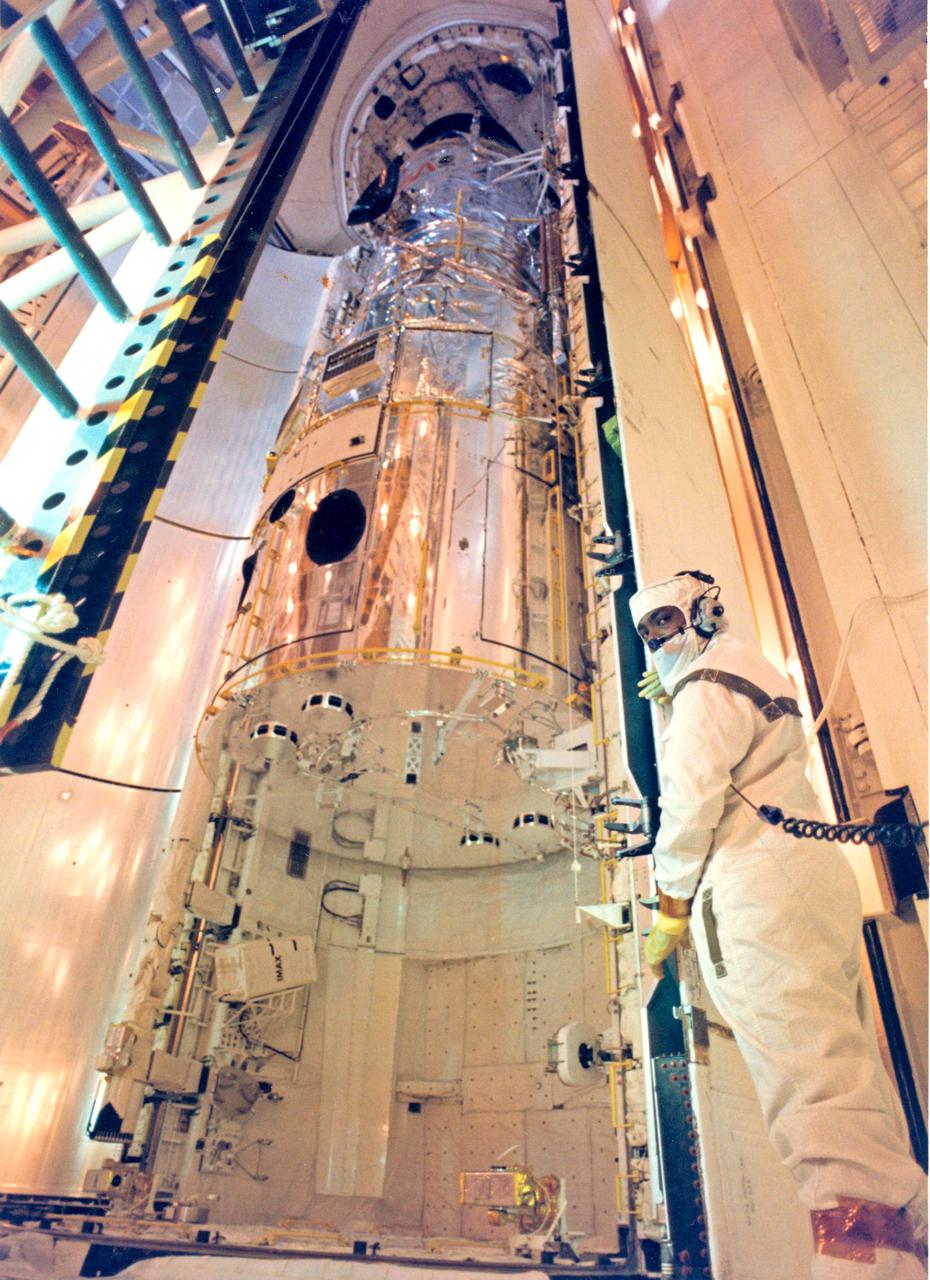
KENNEDY SPACE CENTER, FLA. -- A technician carefully monitors progress as Discovery's payload bay doors close around the Hubble Space Telescope (HST). The payload bay was closed for flight at 6:24 a.m. Sunday, April 8. The STS-31 launch is scheduled for 8:47 a.m. Tuesday, April 10. With HST, astronomers will be able to view 97 percent of the known universe, and will be able to get pictures unlimited and undistorted by the Earth's atmosphere. Compared with earth-based observatories, the HST will be able to view celestial objects that are 50 times fainter, provide images that are 10 times sharper, and see objects that are seven times farther away.
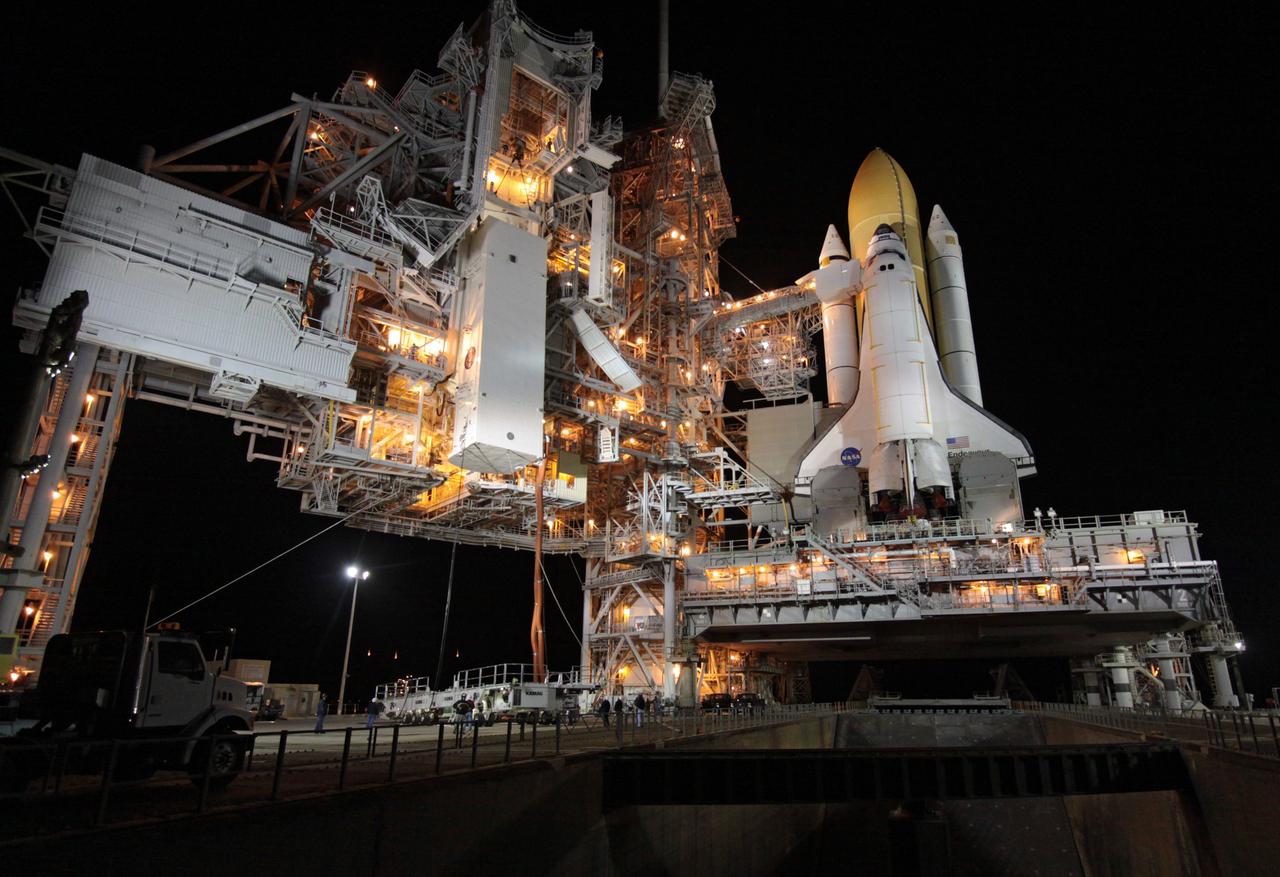
CAPE CANAVERAL, Fla. – At NASA's Kennedy Space Center in Florida, the payload transportation canister containing the International Space Station's Node 3, named Tranquility, is lifted toward the payload changeout room in the fixed service structure on Launch Pad 39A. Operations are under way to install Tranquility in space shuttle Endeavour's payload bay. The primary payload for Endeavour's STS-130 mission, Tranquility is a pressurized module that will provide room for many of the International Space Station's life support systems. Attached to one end of Tranquility is a cupola, a unique work area with six windows on its sides and one on top. The cupola resembles a circular bay window and will provide a vastly improved view of the station's exterior. The multi-directional view will allow the crew to monitor spacewalks and docking operations, as well as provide a spectacular view of Earth and other celestial objects. The module was built in Turin, Italy, by Thales Alenia Space for the European Space Agency. Endeavour's launch is targeted for Feb. 7. For information on the STS-130 mission and crew, visit http://www.nasa.gov/mission_pages/shuttle/shuttlemissions/sts130/index.html. Photo credit: NASA/Jack Pfaller
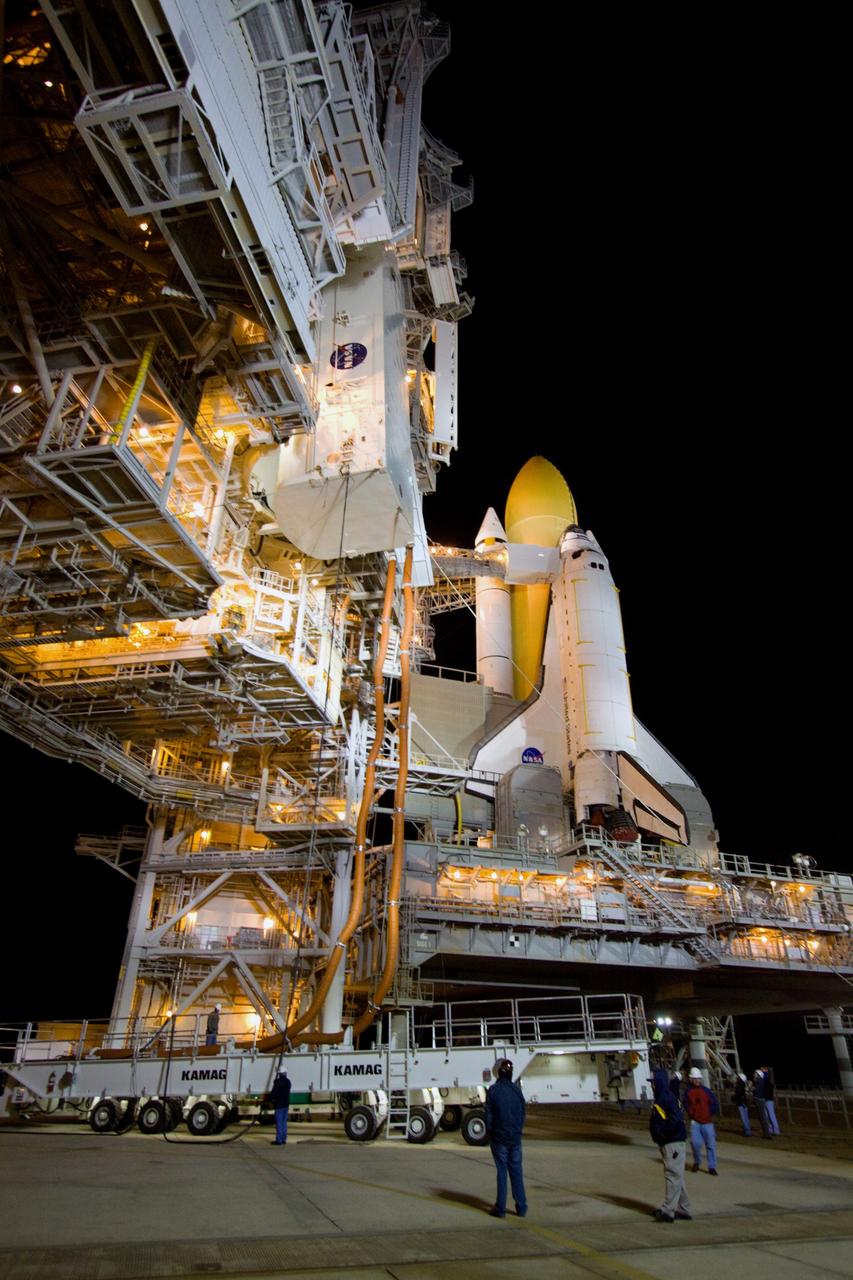
CAPE CANAVERAL, Fla. – At NASA's Kennedy Space Center in Florida, the payload transportation canister containing the International Space Station's Node 3, named Tranquility, is lifted into the payload changeout room in the fixed service structure on Launch Pad 39A. Operations are under way to install Tranquility in space shuttle Endeavour's payload bay. The primary payload for Endeavour's STS-130 mission, Tranquility is a pressurized module that will provide room for many of the International Space Station's life support systems. Attached to one end of Tranquility is a cupola, a unique work area with six windows on its sides and one on top. The cupola resembles a circular bay window and will provide a vastly improved view of the station's exterior. The multi-directional view will allow the crew to monitor spacewalks and docking operations, as well as provide a spectacular view of Earth and other celestial objects. The module was built in Turin, Italy, by Thales Alenia Space for the European Space Agency. Endeavour's launch is targeted for Feb. 7. For information on the STS-130 mission and crew, visit http://www.nasa.gov/mission_pages/shuttle/shuttlemissions/sts130/index.html. Photo credit: NASA/Jack Pfaller
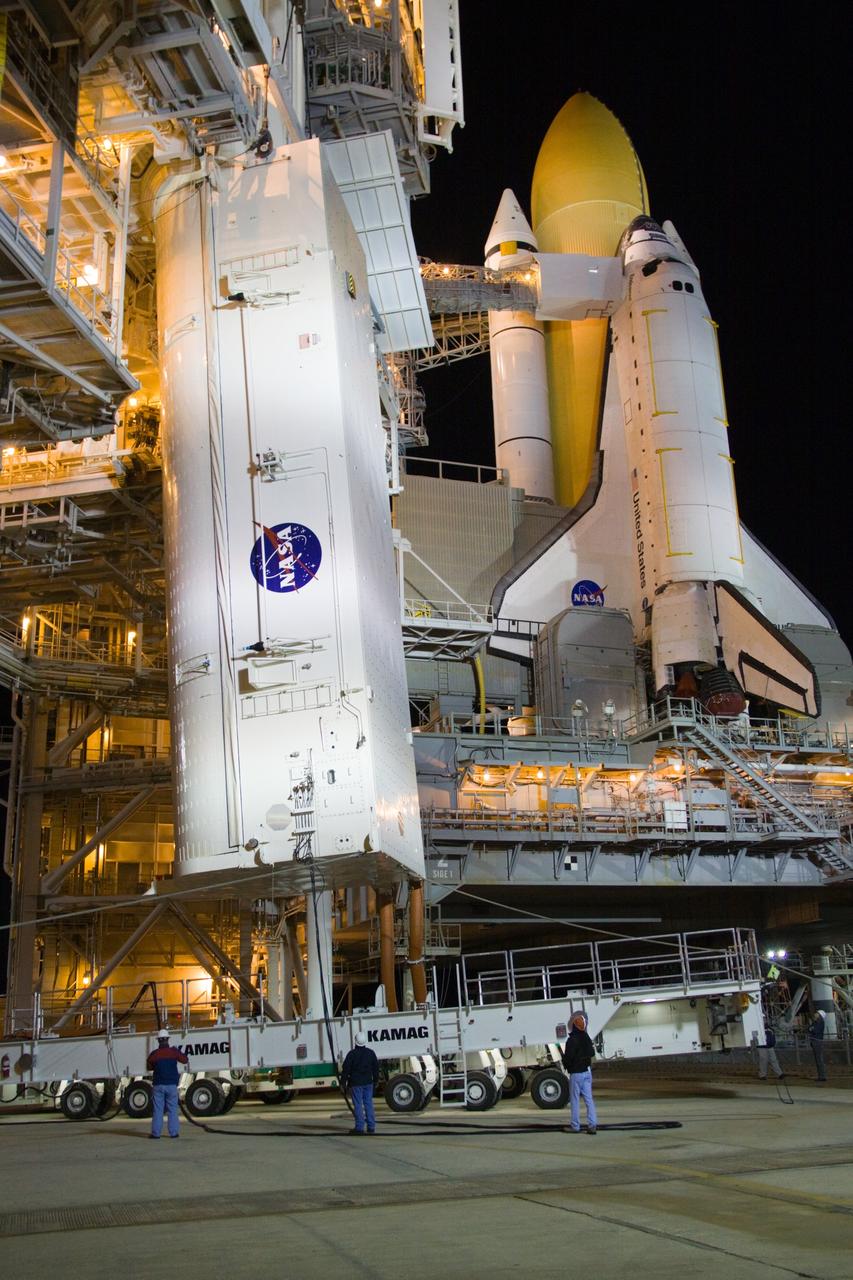
CAPE CANAVERAL, Fla. – At NASA's Kennedy Space Center in Florida, workers begin to lift the payload transportation canister containing the International Space Station's Node 3, named Tranquility, from its transporter toward the payload changeout room in the fixed service structure on Launch Pad 39A. Operations are under way to install Tranquility in space shuttle Endeavour's payload bay. The primary payload for Endeavour's STS-130 mission, Tranquility is a pressurized module that will provide room for many of the International Space Station's life support systems. Attached to one end of Tranquility is a cupola, a unique work area with six windows on its sides and one on top. The cupola resembles a circular bay window and will provide a vastly improved view of the station's exterior. The multi-directional view will allow the crew to monitor spacewalks and docking operations, as well as provide a spectacular view of Earth and other celestial objects. The module was built in Turin, Italy, by Thales Alenia Space for the European Space Agency. Endeavour's launch is targeted for Feb. 7. For information on the STS-130 mission and crew, visit http://www.nasa.gov/mission_pages/shuttle/shuttlemissions/sts130/index.html. Photo credit: NASA/Jack Pfaller

ISS005-E-17235 (13 October 2002) --- The Space Shuttle Atlantis’ payload bay and vertical stabilizer are backdropped against a blue and white Earth. Atlantis was docked with the International Space Station (ISS) at the time.
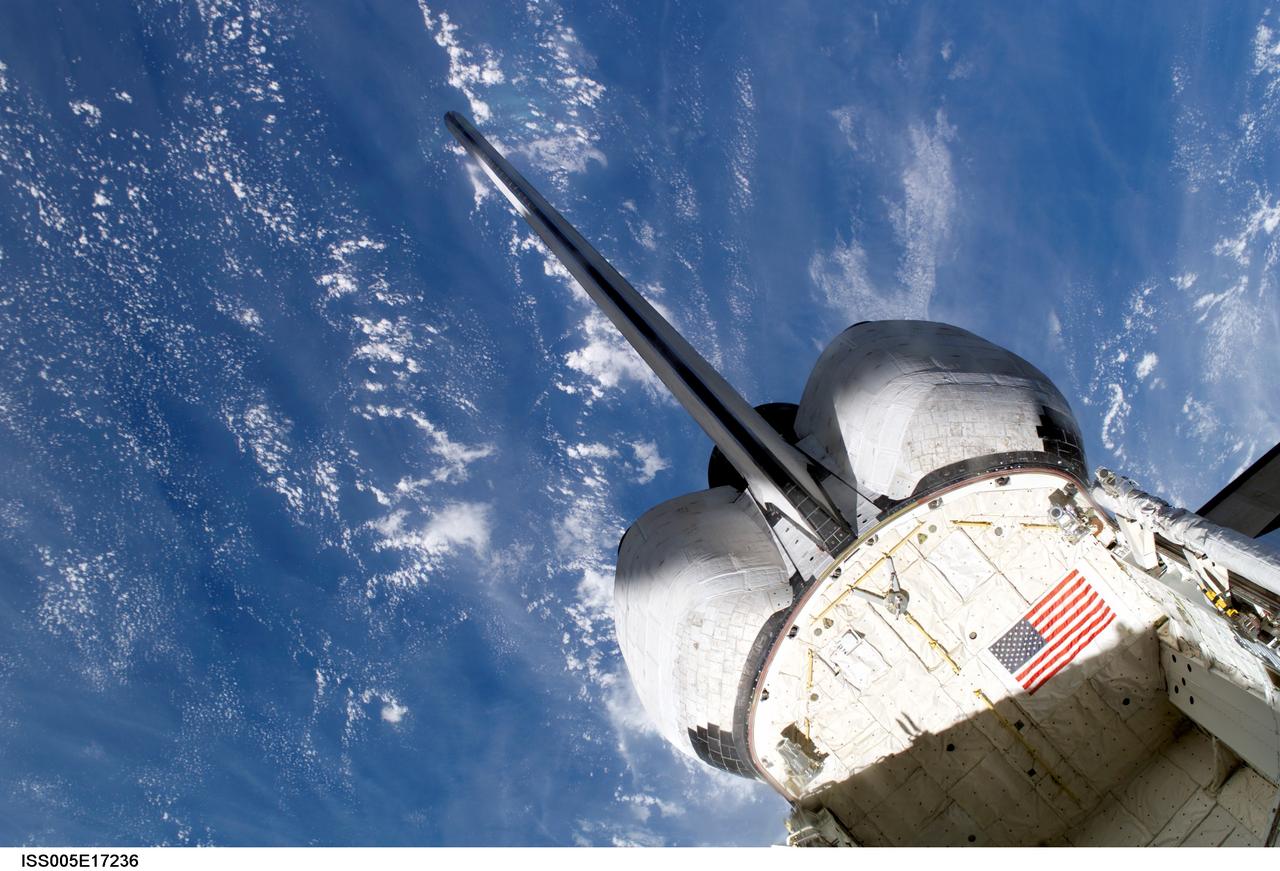
ISS005-E-17236 (13 October 2002) --- The Space Shuttle Atlantis’ payload bay and vertical stabilizer are backdropped against a blue and white Earth. Atlantis was docked with the International Space Station (ISS) at the time.
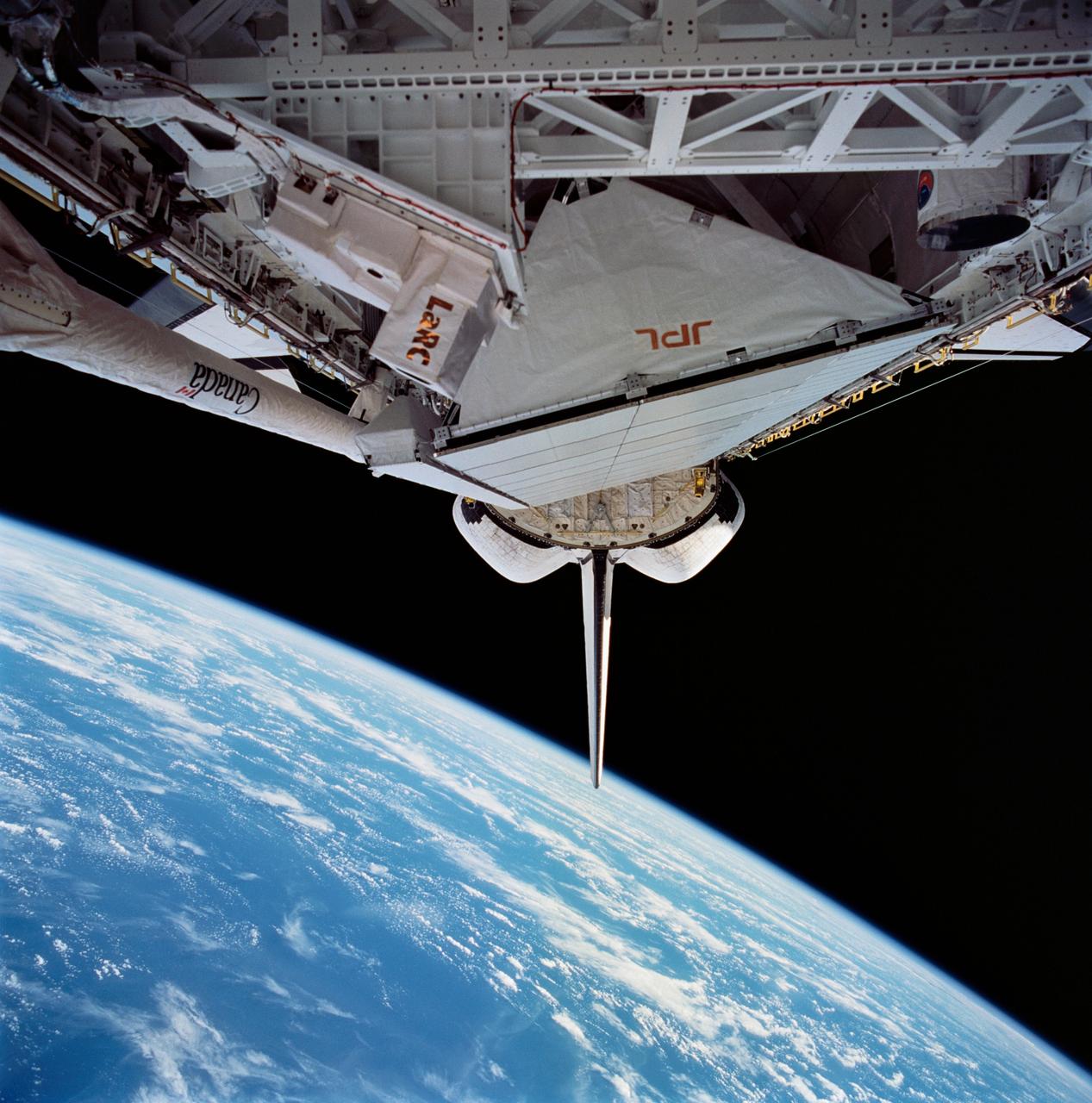
STS59-215-022 (12 April 1994) --- This 70mm frame, photographed through the aft flight deck windows of the Space Shuttle Endeavour, features the Space Radar Laboratory (SRL) payload in the cargo bay. An area of the Pacific Ocean northeast of Hawaii forms the backdrop for the image. Six NASA astronauts spent a week and a half in Earth orbit in support of the SRL mission.
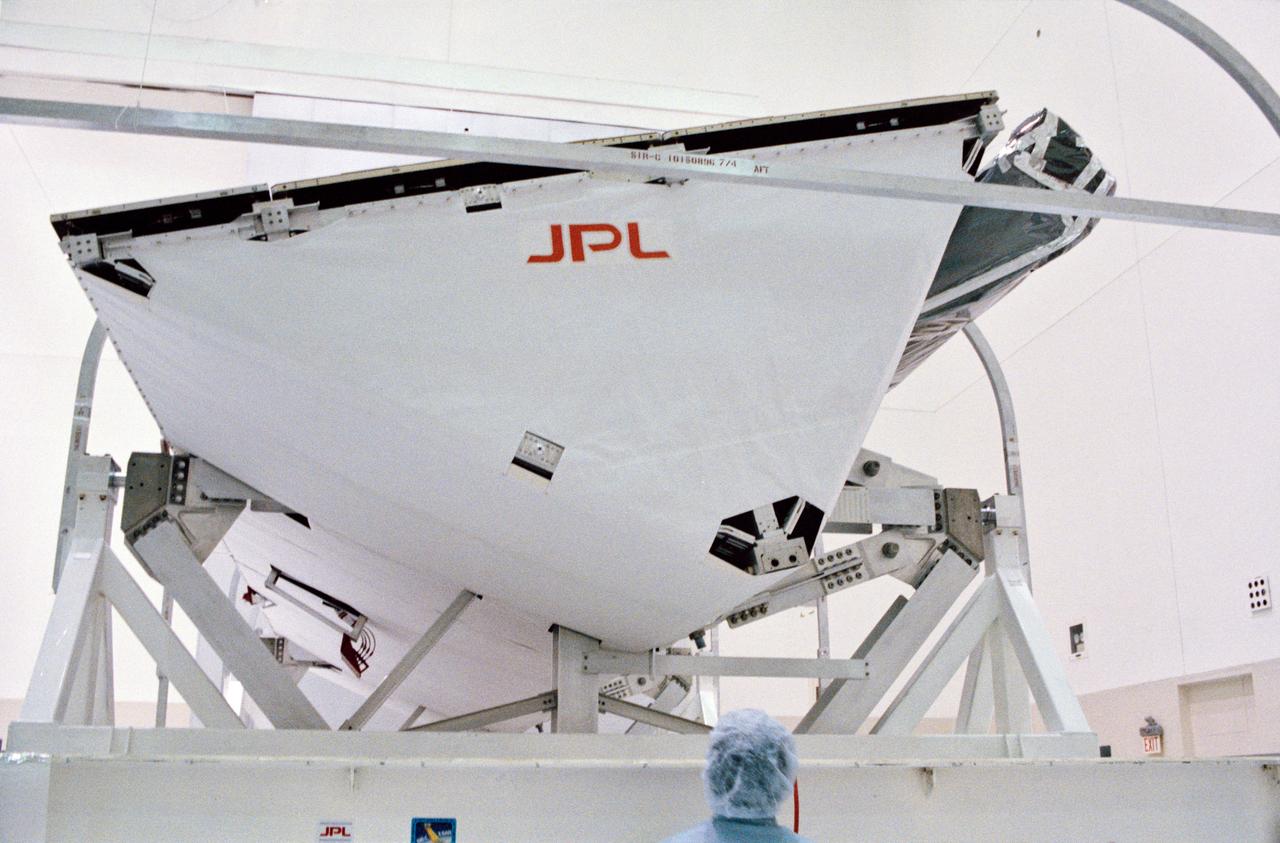
S93-48551 (October 1993) --- The Spaceborne Imaging Radar-C and X-Band Synthetic Aperture Radar (SIR-C/X-SAR) antenna, developed by the Jet Propulsion Laboratory (JPL) as part of NASA's Mission to Planet Earth (MTPE), will fly aboard the Space Shuttle Endeavour. The radar antenna uses microwave energy which gives it the ability to collect data over virtually any region at any time, regardless of weather or sunlight conditions. The radar waves can penetrate clouds, and under certain conditions the radar can also see through vegetation, ice and dry sand. In many cases, spaceborne radar is the only way scientists can explore large-scale and inaccessible regions of the Earth's surface. SIR-C/X-SAR uses three microwave wavelengths: L-Band (24 cm), C-Band (6 cm) and X-Ban (3 cm). The multi-frequency data will be used by the international scientific community to monitor global environmental processes with a focus on climate change. The MTPE spaceborne data, complemented by aircraft and ground studies, will give scientists clearer insights into those environmental changes which are caused by nature and those changes which are induced by human activity.
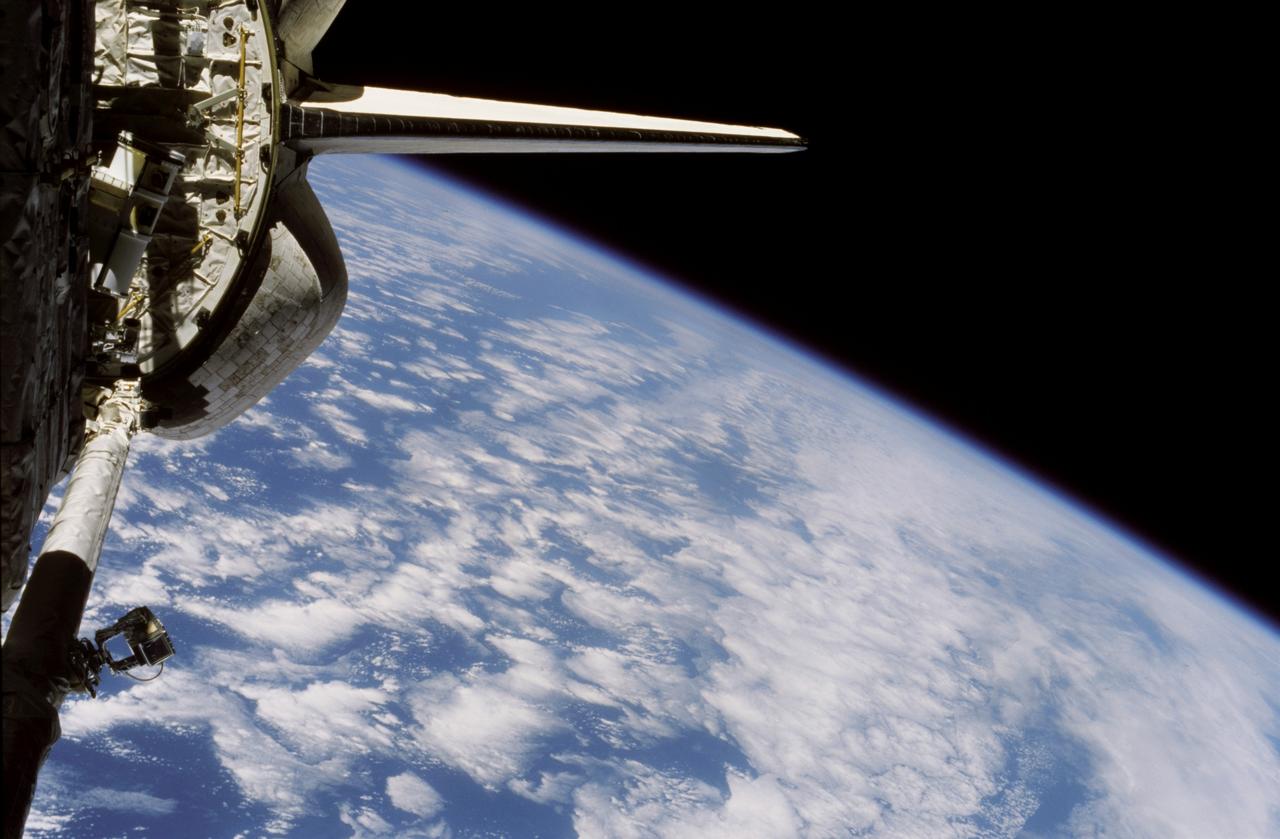
STS116-320-001 (9-22 Dec. 2006) --- Backdropped by the horizon of a blue and white Earth and the blackness of space, part of the Space Shuttle Discovery's aft cargo bay, its vertical stabilizer and orbital maneuvering system (OMS) pods are seen in this image photographed by an STS-116 crewmember onboard the shuttle. This image was recorded with a 35mm film-equipped camera.
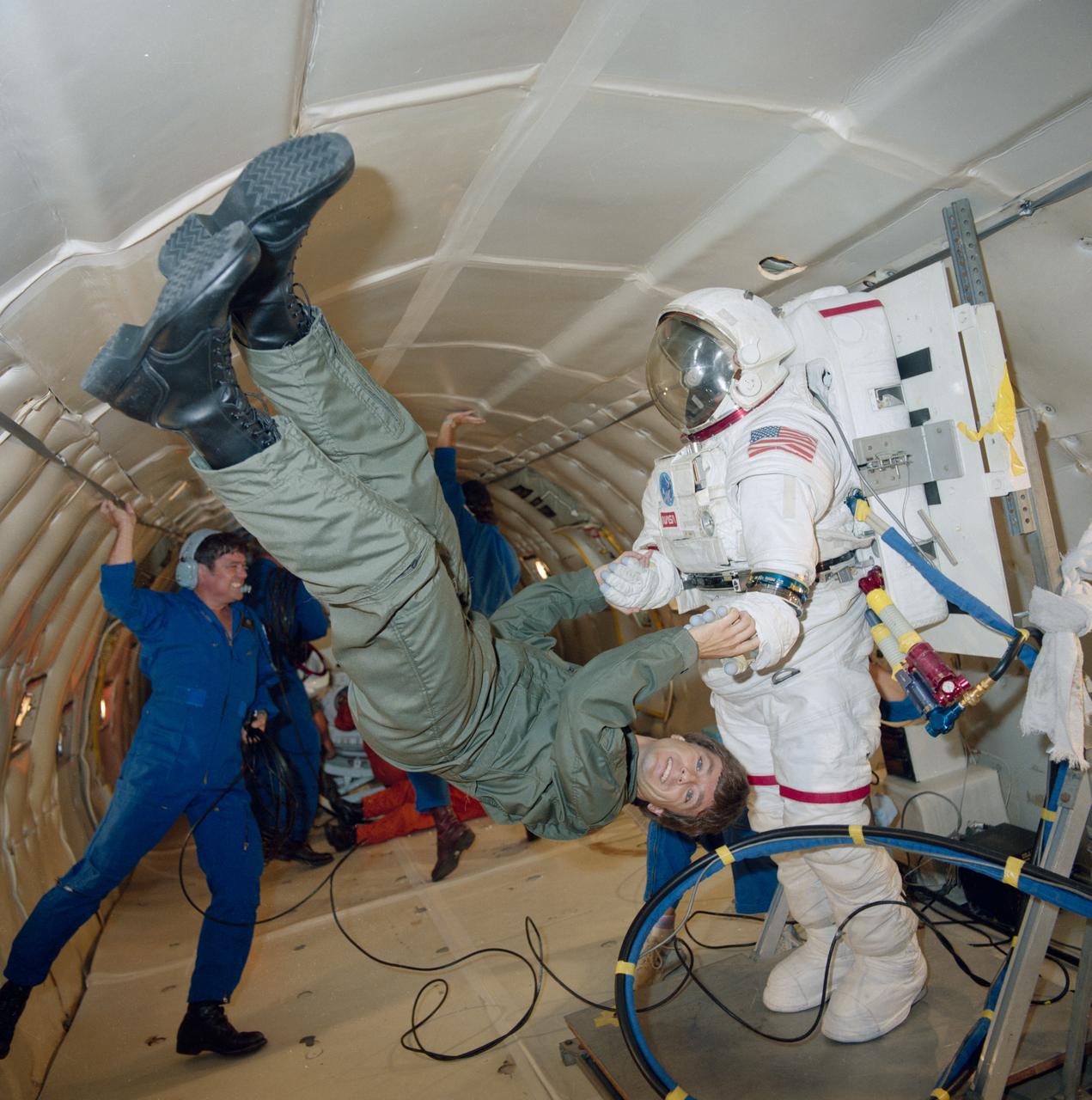
S84-37532 (18 July 1984) --? Robert B. Thirsk, backup payload specialist for 41-G appears to be shaking hands with an unoccupied extravehicular mobility unit (EMU) during a familiarization flight aboard NASA?s KC-135 aircraft. Thirsk, representing Canada?s National Research Council (NRC), serves as backup to Marc Garneau on the seven-member crew for Challenger?s October 1984 flight. This aircraft is used extensively for training and exposing Shuttle crewmembers to weightlessness as well as for evaluation of equipment and experiments scheduled for future flights.