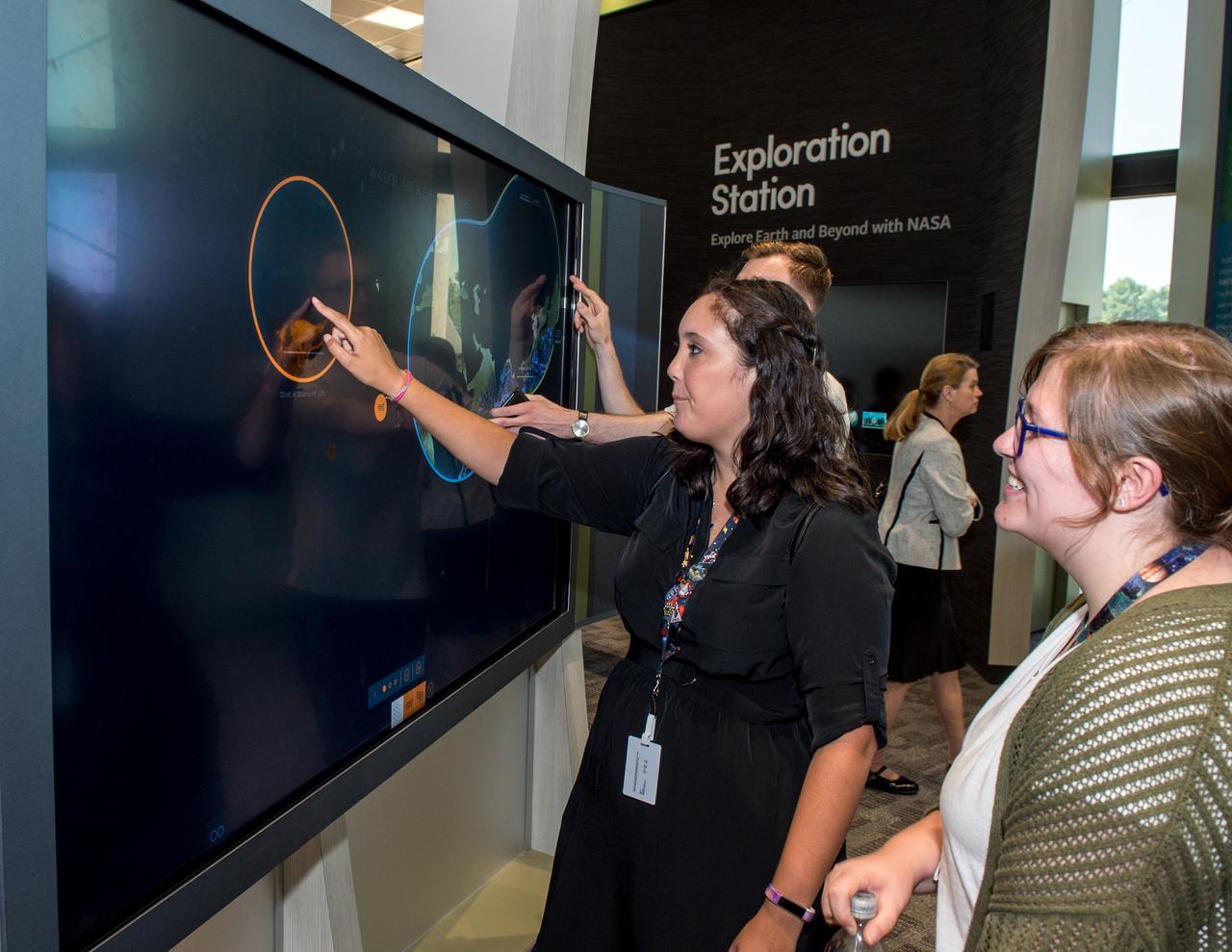
Neighborhood Earth Opening at the Visitor Center
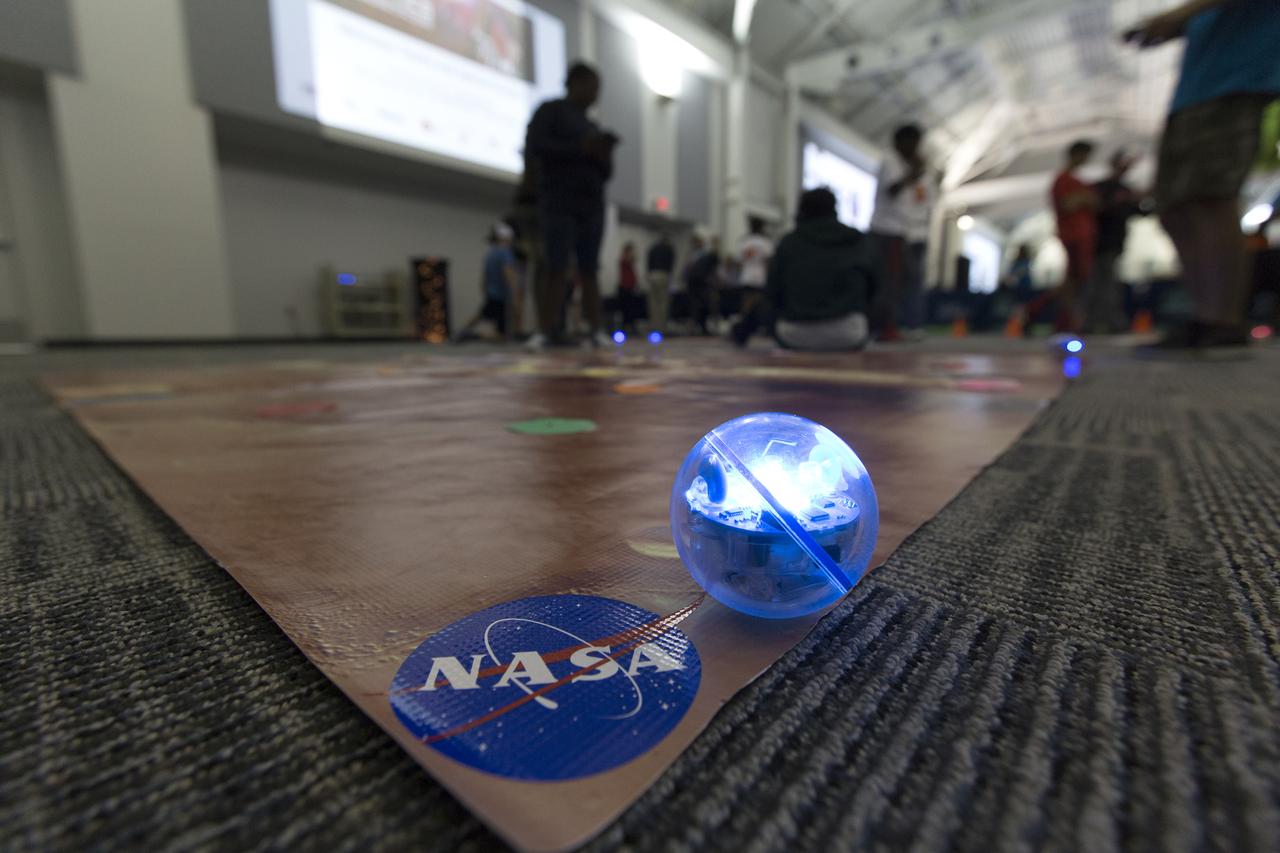
A programmable off-the-shelf Sphero robot is shown on a Mars mat at the Center for Space Education at NASA's Kennedy Space Center in Florida. The Spheros were available for students to practice their programming skills by navigating the robots around a challenge course on the mat. Students used the mat and Sphero robots during "loss of signal" times when the connection to the International Space Station was temporarily unavailable. Teams from across the state of Florida were gathered at Kennedy for the finals of the Zero Robotics Middle School Summer Program national championship. The five-week program allows rising sixth- through ninth-graders to write programs for small satellites called SPHERES (Synchronized, Position, Hold, Engage, Reorient, Experimental Satellites). Finalists saw their code tested aboard the orbiting laboratory.
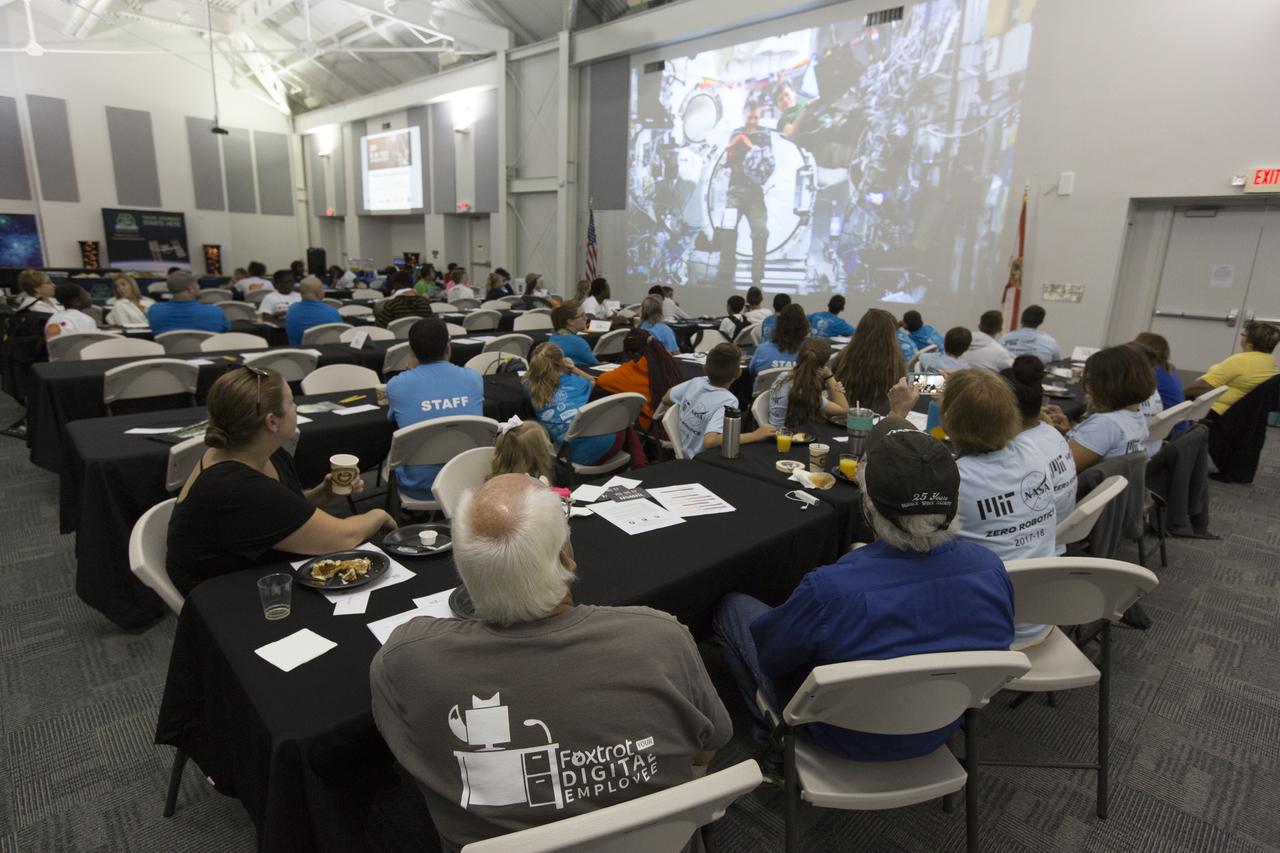
Students and sponsors hear from astronauts aboard the International Space Station on a big screen in the Center for Space Education at NASA’s Kennedy Space Center in Florida. Teams from across the state of Florida were gathered at Kennedy for the finals of the Zero Robotics Middle School Summer Program national championship. The five-week program allows rising sixth- through ninth-graders to write programs for small satellites called SPHERES (Synchronized, Position, Hold, Engage, Reorient, Experimental Satellites). Finalists saw their code tested aboard the orbiting laboratory.
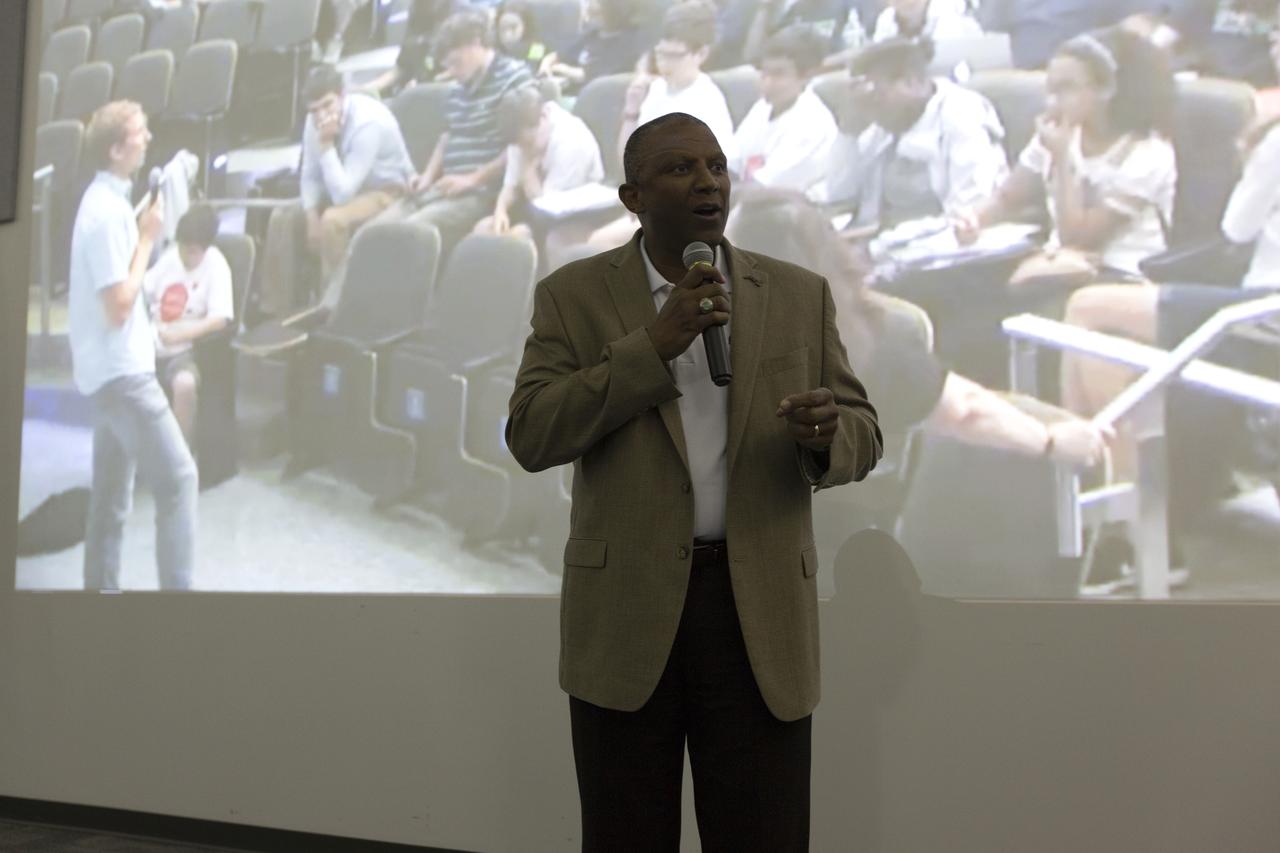
NASA Kennedy Space Center Associate Director Kelvin Manning speaks to students and sponsors in the spaceport’s Center for Space Education. Teams from across the state of Florida were gathered at Kennedy for the finals of the Zero Robotics Middle School Summer Program national championship. The five-week program allows rising sixth- through ninth-graders to write programs for small satellites called SPHERES (Synchronized, Position, Hold, Engage, Reorient, Experimental Satellites). Finalists saw their code tested aboard the International Space Station.
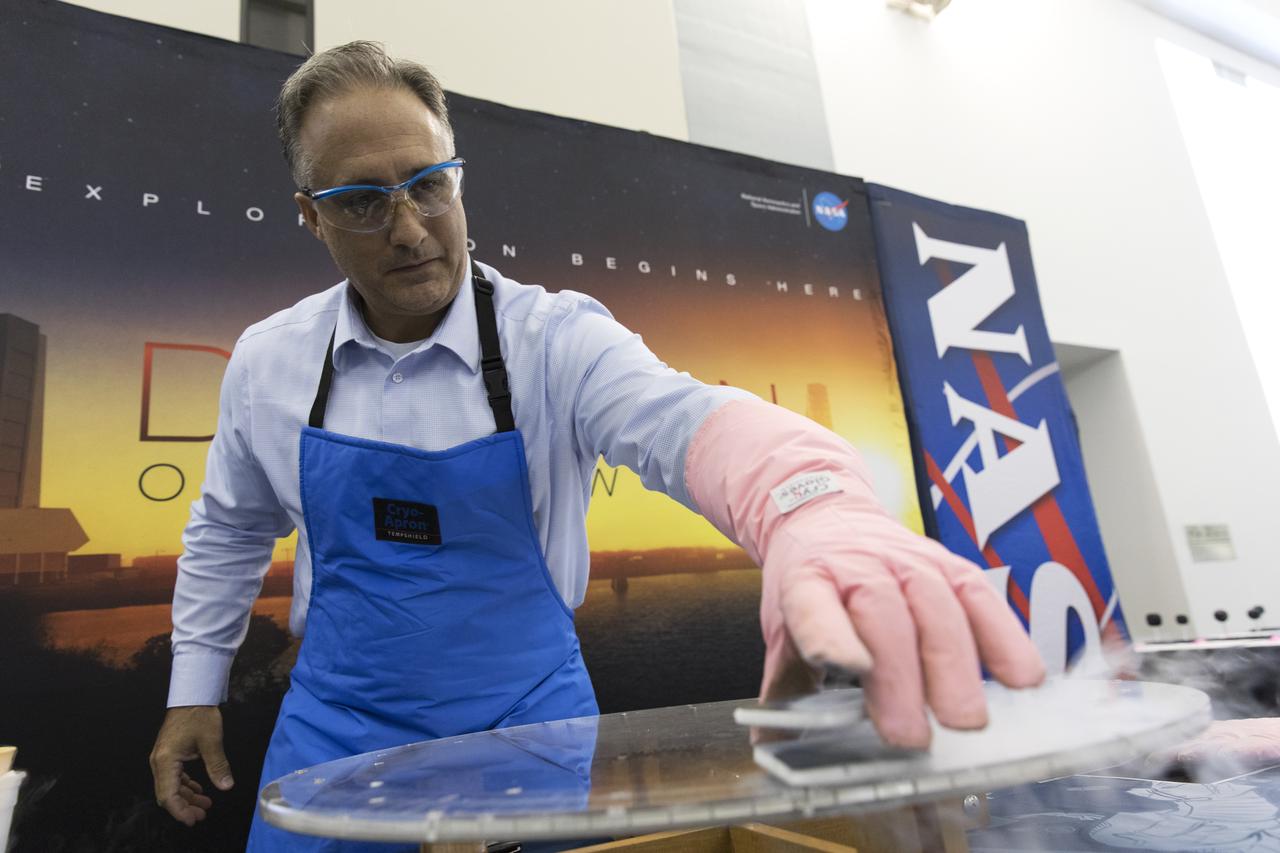
NASA Kennedy Space Center's Trent Smith conducts a quantum levitation demonstration, using liquid nitrogen, metal and a magnetic track, for students and their sponsors in the Center for Space Education at NASA’s Kennedy Space Center in Florida. Teams from across the state of Florida were gathered at Kennedy for the finals of the Zero Robotics Middle School Summer Program national championship. The five-week program allows rising sixth- through ninth-graders to write programs for small satellites called SPHERES (Synchronized, Position, Hold, Engage, Reorient, Experimental Satellites). Finalists saw their code tested aboard the International Space Station.
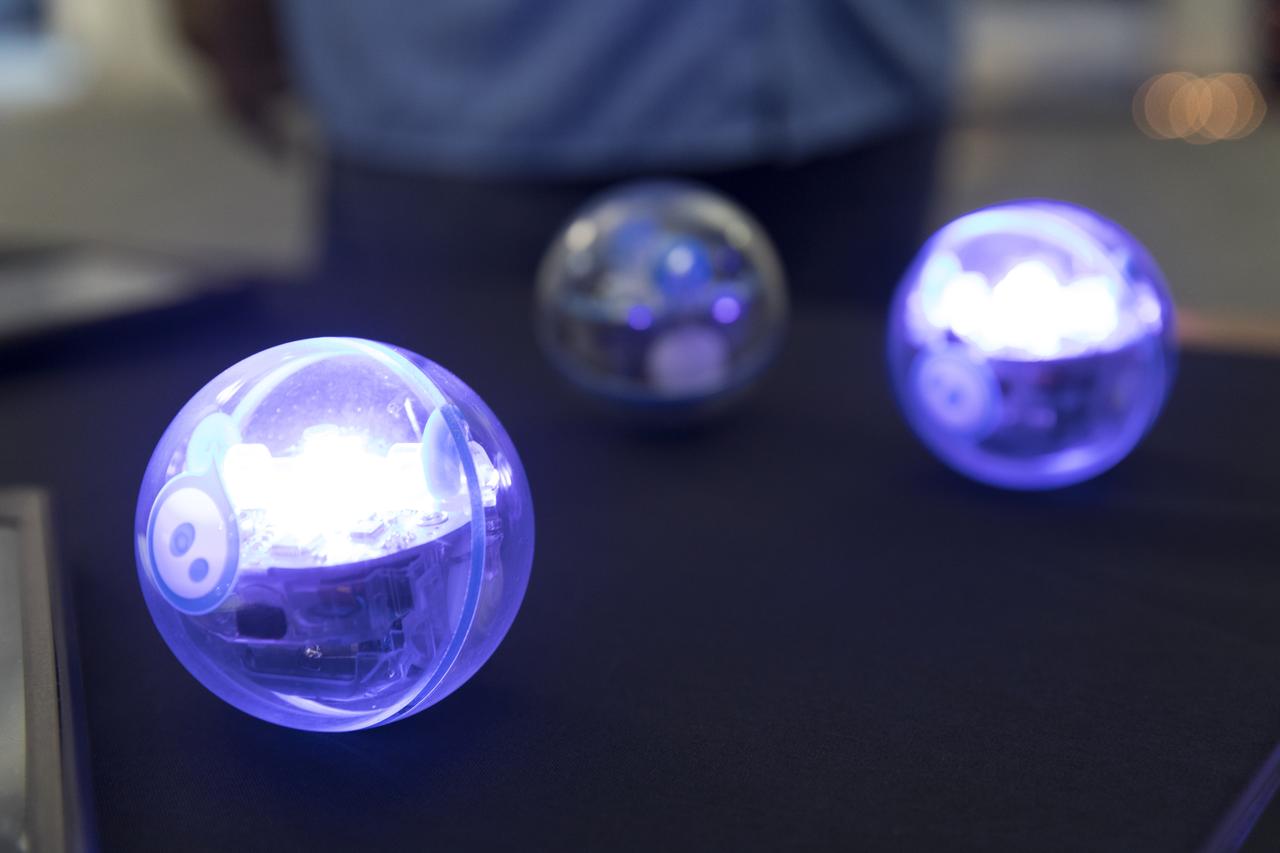
A trio of programmable off-the-shelf Sphero robots are shown at the Center for Space Education at NASA's Kennedy Space Center in Florida. The Spheros were available for students to practice their programming skills during "loss of signal" times when the connection to the International Space Station was temporarily unavailable. Teams from across the state of Florida were gathered at Kennedy for the finals of the Zero Robotics Middle School Summer Program national championship. The five-week program allows rising sixth- through ninth-graders to write programs for small satellites called SPHERES (Synchronized, Position, Hold, Engage, Reorient, Experimental Satellites). Finalists saw their code tested aboard the orbiting laboratory.
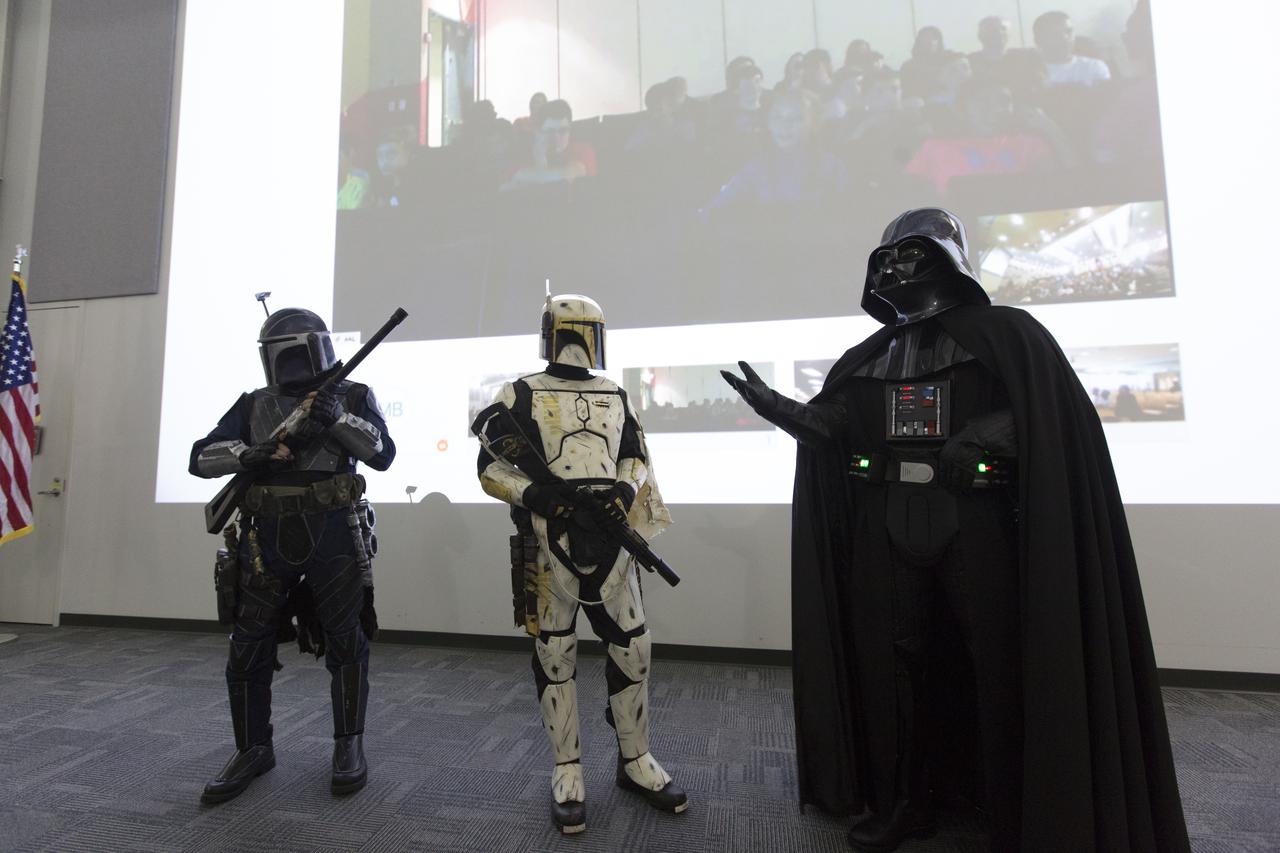
Darth Vader and other Star Wars characters from the 501st Legion address students and sponsors in the Center for Space Education at NASA’s Kennedy Space Center in Florida. Teams from across the state of Florida were gathered at Kennedy for the finals of the Zero Robotics Middle School Summer Program national championship. The five-week program allows rising sixth- through ninth-graders to write programs for small satellites called SPHERES (Synchronized, Position, Hold, Engage, Reorient, Experimental Satellites). Finalists saw their code tested aboard the International Space Station.
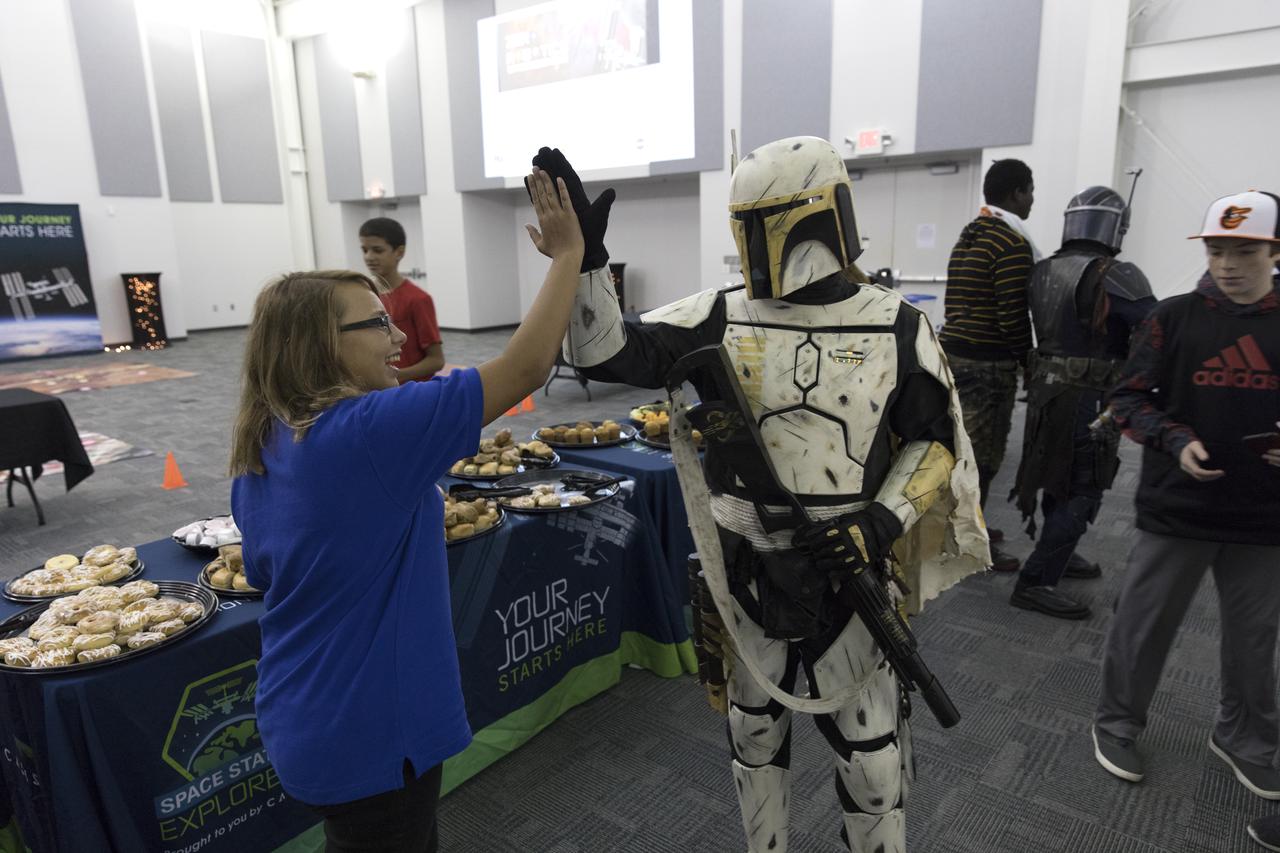
A middle-school student high-fives a Star Wars character from the 501st Legion in the Center for Space Education at NASA’s Kennedy Space Center in Florida. Teams from across the state of Florida were gathered at Kennedy for the finals of the Zero Robotics Middle School Summer Program national championship. The five-week program allows rising sixth- through ninth-graders to write programs for small satellites called SPHERES (Synchronized, Position, Hold, Engage, Reorient, Experimental Satellites). Finalists saw their code tested aboard the International Space Station.
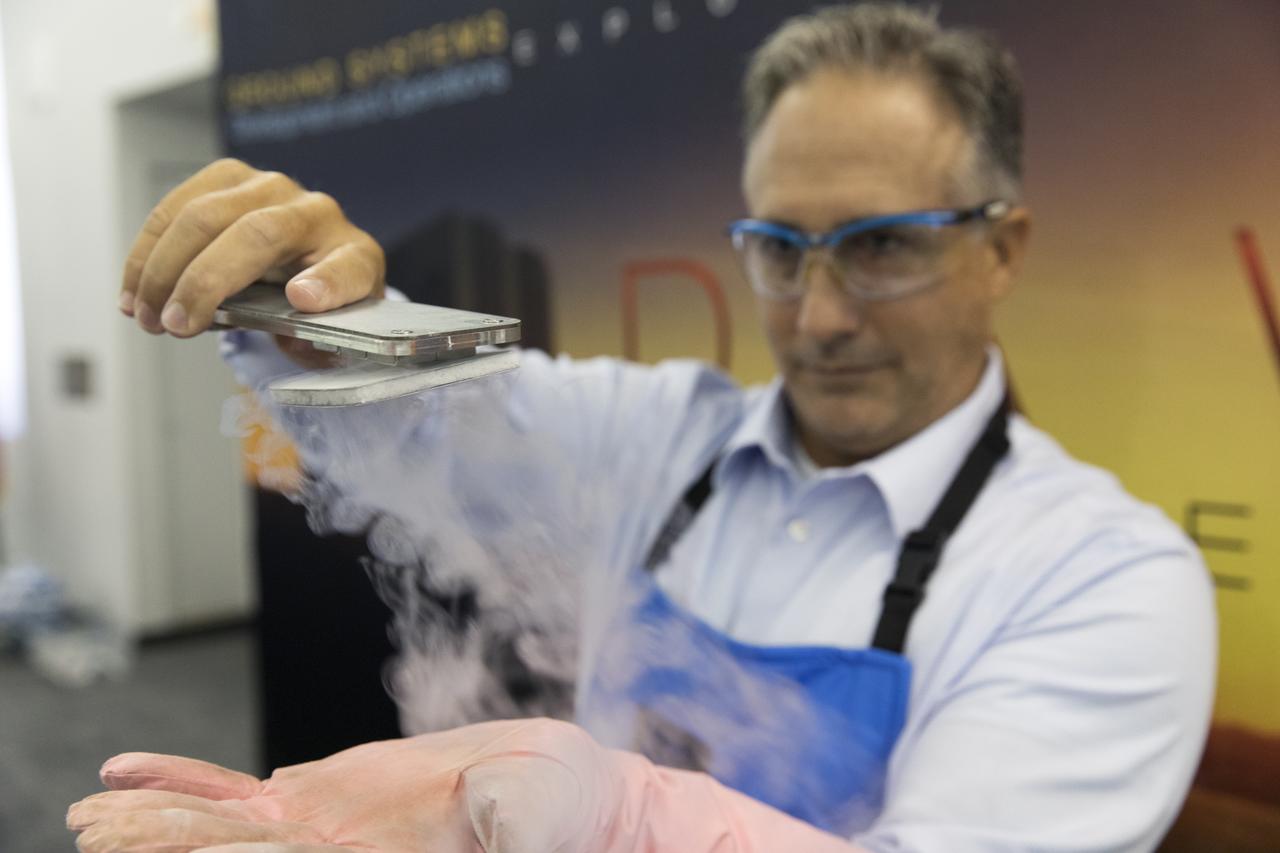
NASA Kennedy Space Center's Trent Smith conducts a quantum levitation demonstration, using liquid nitrogen, metal and a magnetic track, for students and their sponsors in the Center for Space Education at NASA’s Kennedy Space Center in Florida. Teams from across the state of Florida were gathered at Kennedy for the finals of the Zero Robotics Middle School Summer Program national championship. The five-week program allows rising sixth- through ninth-graders to write programs for small satellites called SPHERES (Synchronized, Position, Hold, Engage, Reorient, Experimental Satellites). Finalists saw their code tested aboard the International Space Station.
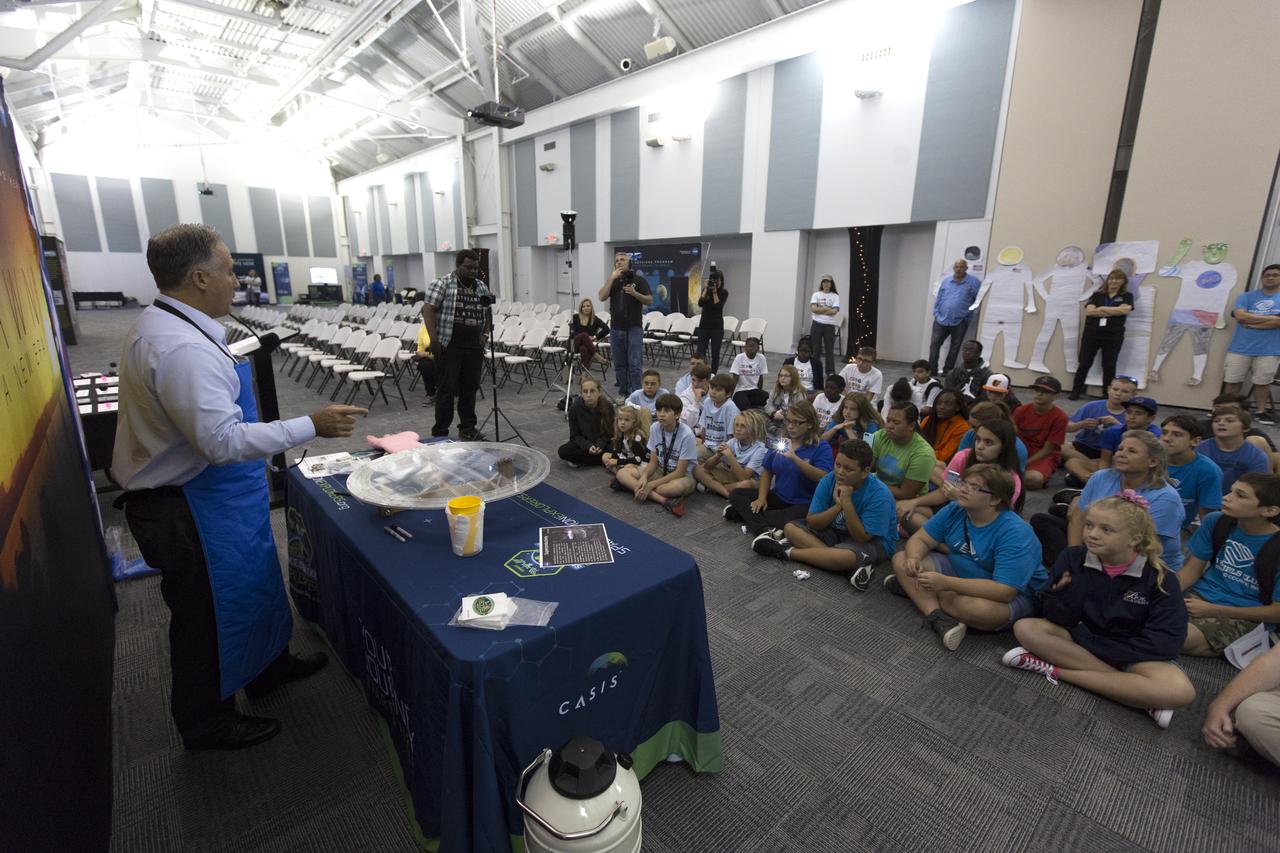
NASA Kennedy Space Center's Trent Smith conducts a quantum levitation demonstration, using liquid nitrogen, metal and a magnetic track, for students and their sponsors in the Center for Space Education at NASA’s Kennedy Space Center in Florida. Teams from across the state of Florida were gathered at Kennedy for the finals of the Zero Robotics Middle School Summer Program national championship. The five-week program allows rising sixth- through ninth-graders to write programs for small satellites called SPHERES (Synchronized, Position, Hold, Engage, Reorient, Experimental Satellites). Finalists saw their code tested aboard the International Space Station.
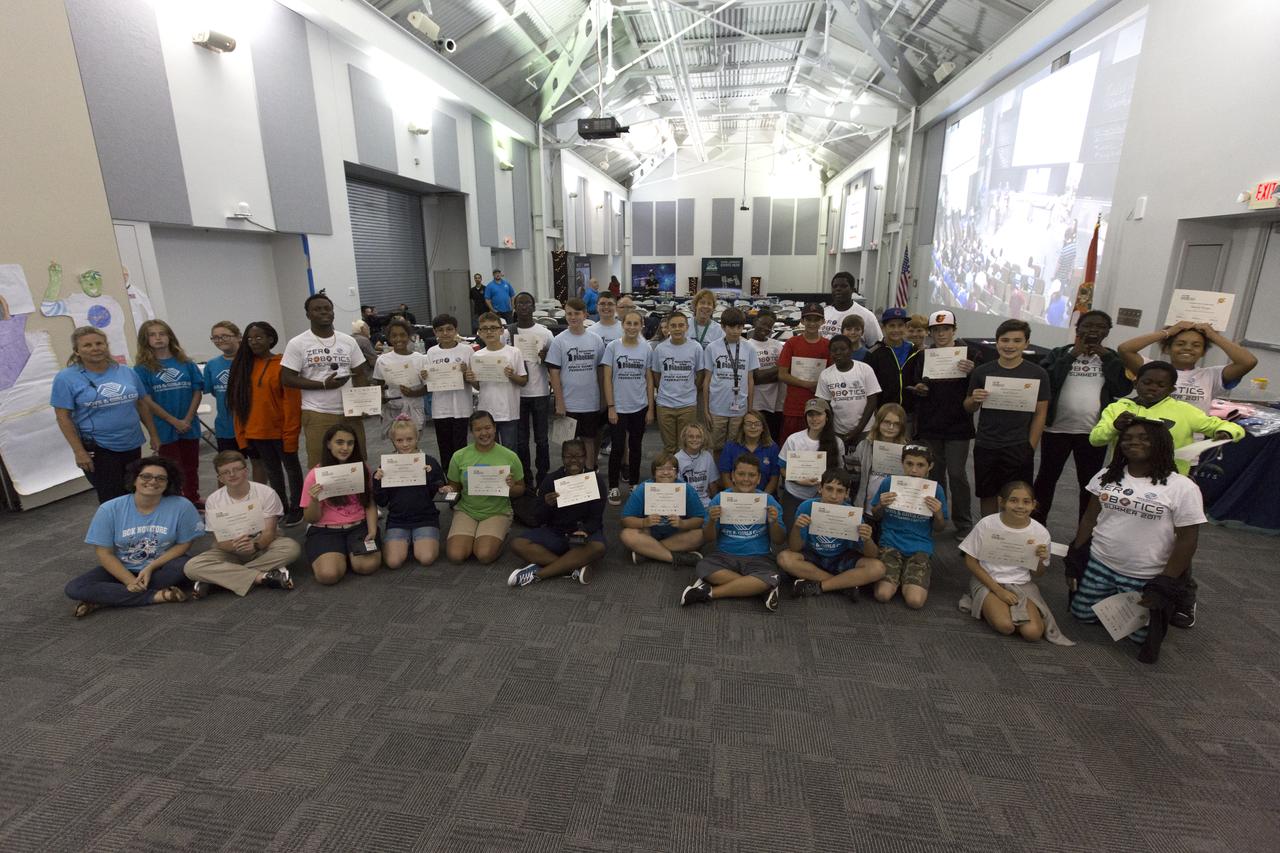
Students and their sponsors gather for a commemorative photo in the Center for Space Education at NASA’s Kennedy Space Center in Florida after participating in the finals of the Zero Robotics Middle School Summer Program national championship. The five-week program allows rising sixth- through ninth-graders to write programs for small satellites called SPHERES (Synchronized, Position, Hold, Engage, Reorient, Experimental Satellites). Finalists saw their code tested aboard the International Space Station.
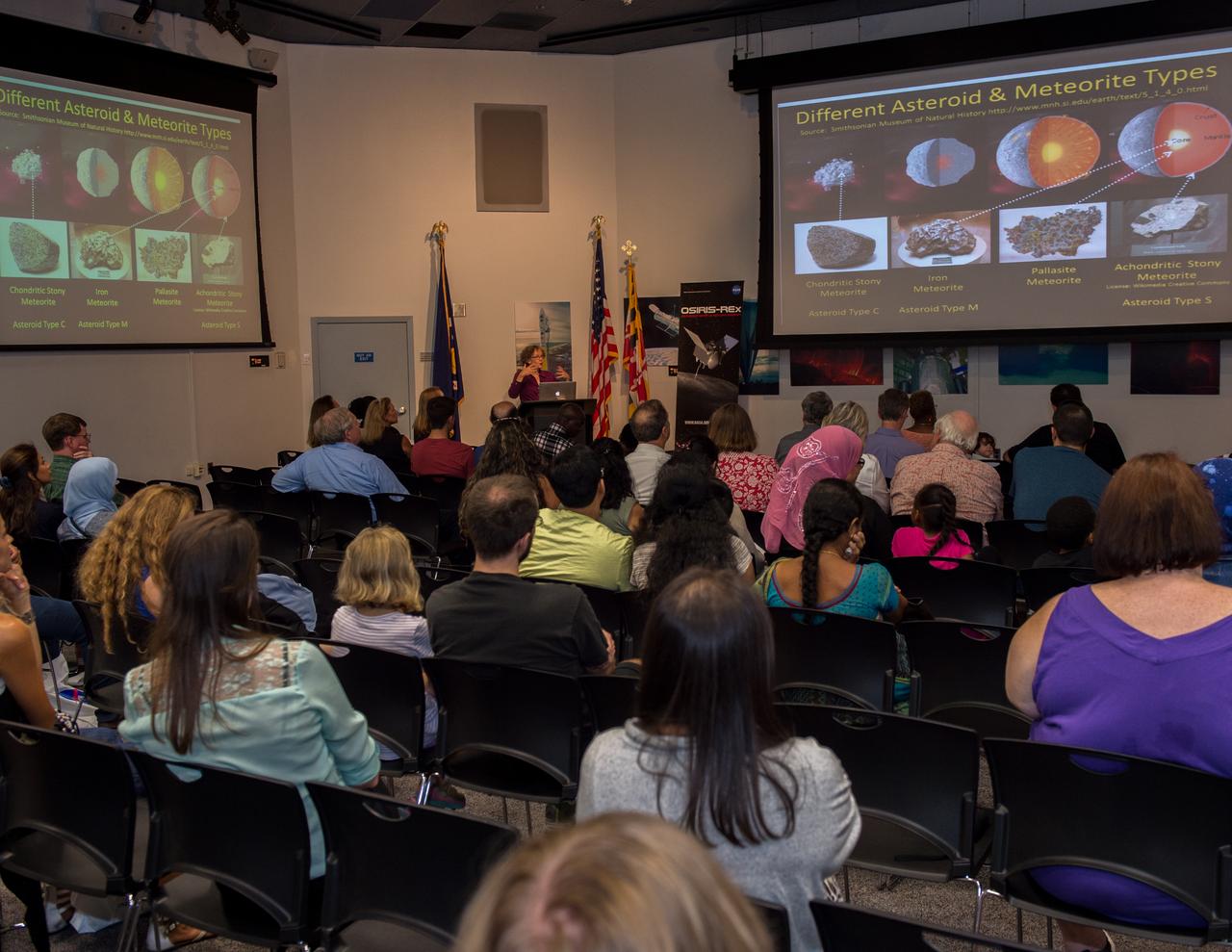
OSIRIS-REx Launch Event at Goddard Visitor Center. NASA's first asteroid sampling mission launched into space at 7:05 p.m. EDT Thursday from Cape Canaveral Air Force Station in Florida beginning a journey that could revolutionize our understanding of the early solar system. Lucy McFadden
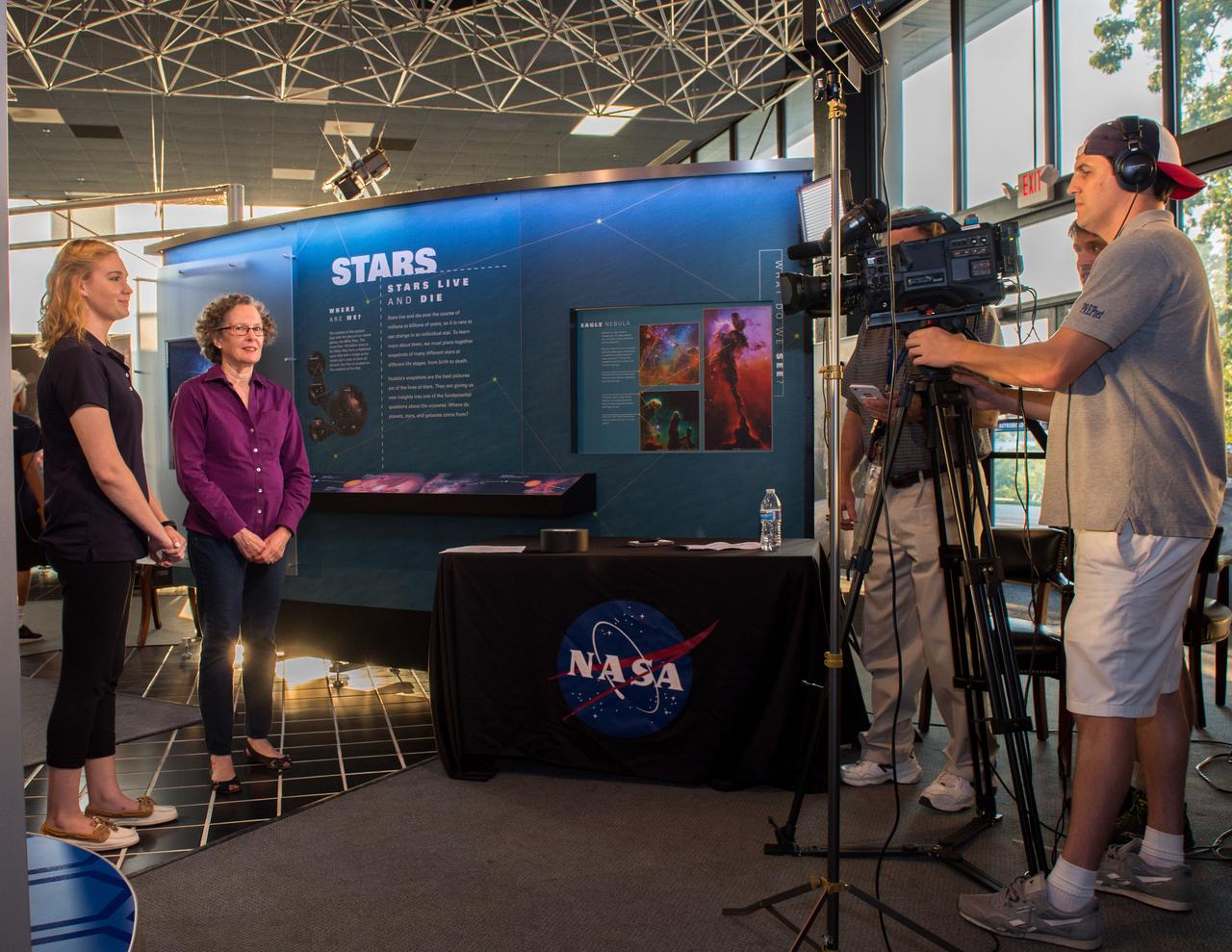
OSIRIS-REx Launch Event at Goddard Visitor Center. NASA's first asteroid sampling mission launched into space at 7:05 p.m. EDT Thursday from Cape Canaveral Air Force Station in Florida beginning a journey that could revolutionize our understanding of the early solar system. Lucy McFadden
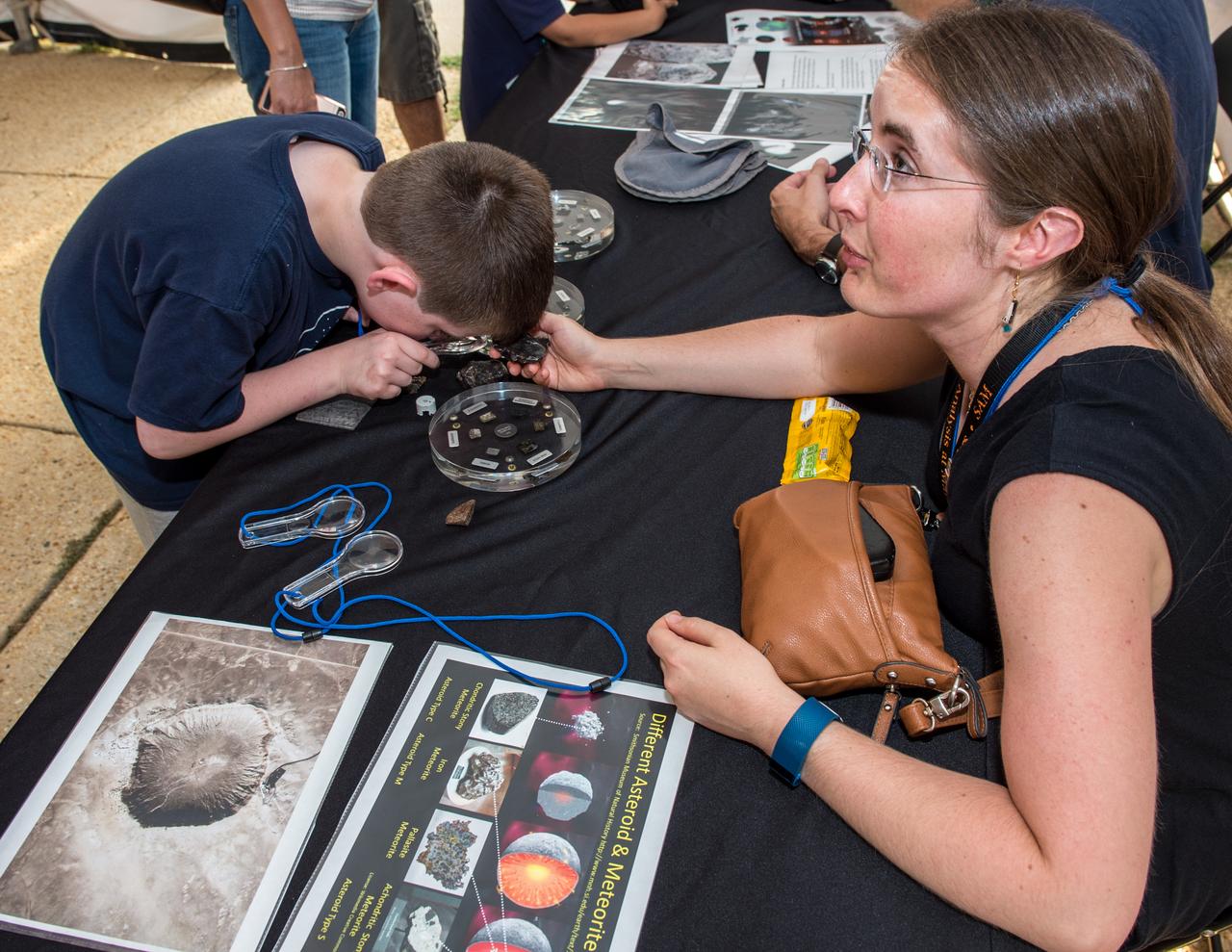
OSIRIS-REx Launch Event at Goddard Visitor Center. NASA's first asteroid sampling mission launched into space at 7:05 p.m. EDT Thursday from Cape Canaveral Air Force Station in Florida, beginning a journey that could revolutionize our understanding of the early solar system.
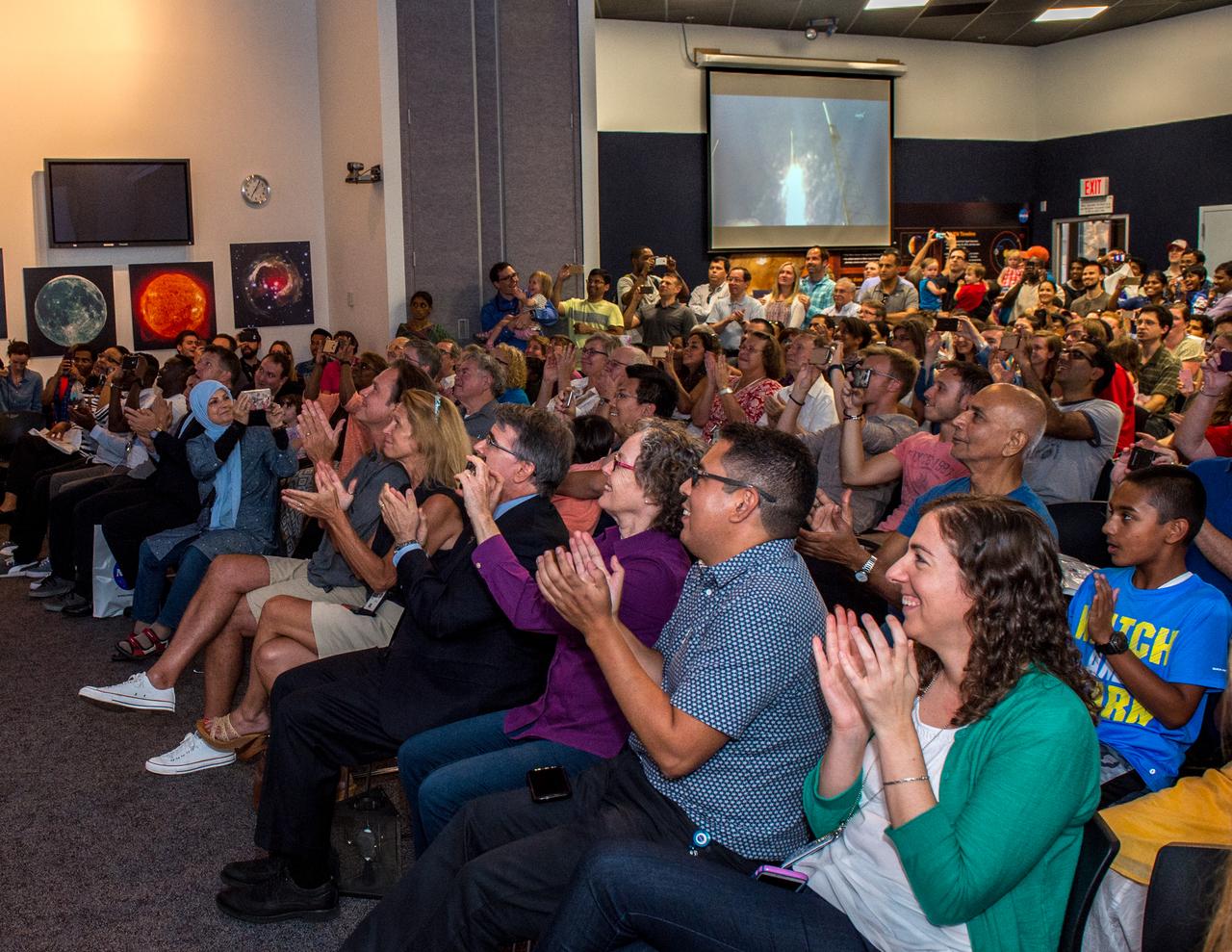
OSIRIS-REx Launch Event at Goddard Visitor Center. NASA's first asteroid sampling mission launched into space at 7:05 p.m. EDT Thursday from Cape Canaveral Air Force Station in Florida beginning a journey that could revolutionize our understanding of the early solar system. Dr. Jim Glavin.Lucy McFadden.Dr. Jose Aponte
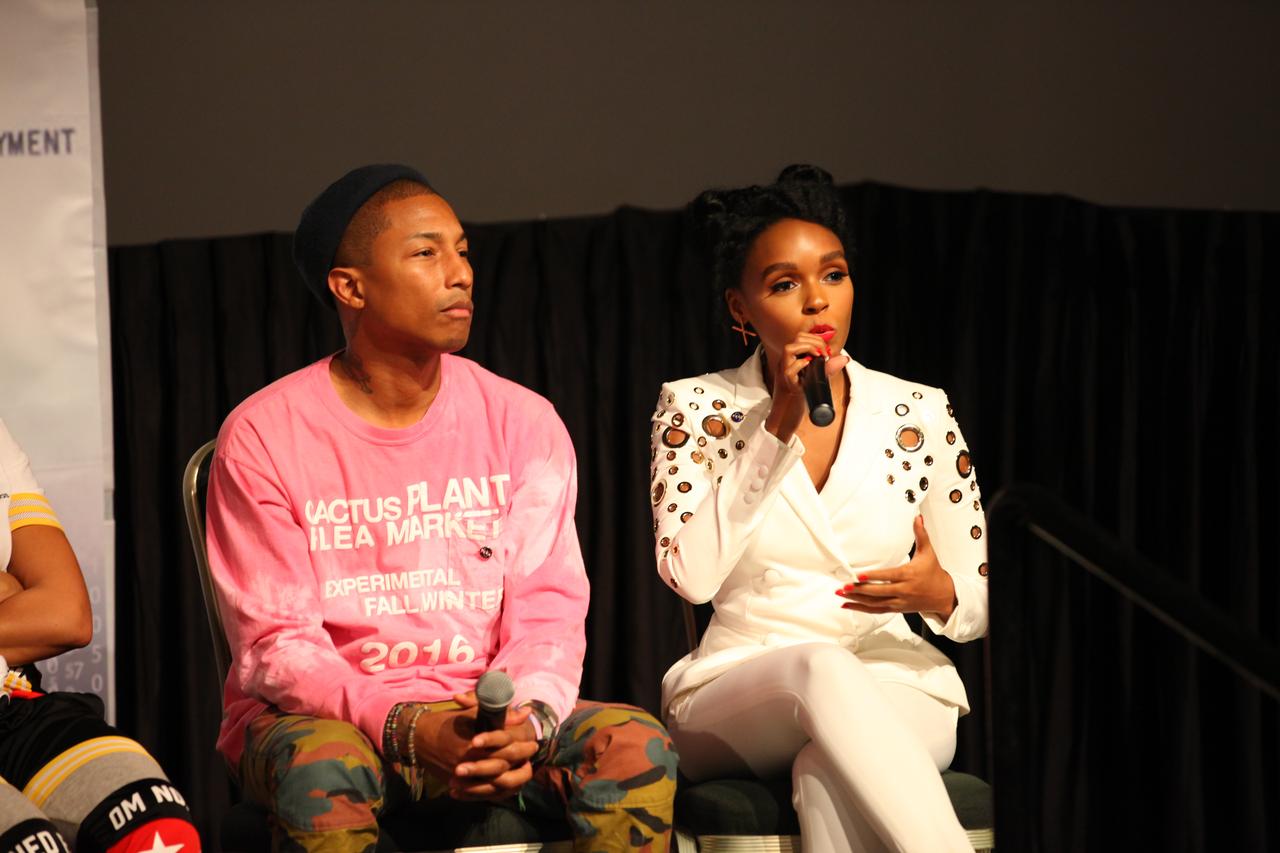
In the IMAX Theater of the Kennedy Space Center Visitor Complex Cast and crew members of the upcoming motion picture "Hidden Figures" participate in a question and answer session. From the left are Pharrell Williams, musician and producer of “Hidden Figures," and Janelle Monáe, who portrays Mary Jackson in the film. The movie chronicles the lives of Katherine Johnson, Dorothy Vaughan and Mary Jackson, three African-American women who worked for NASA as human "computers.” Their mathematical calculations were crucial to the success of Project Mercury missions including John Glenn’s orbital flight aboard Friendship 7 in 1962. The film is due in theaters in January 2017.
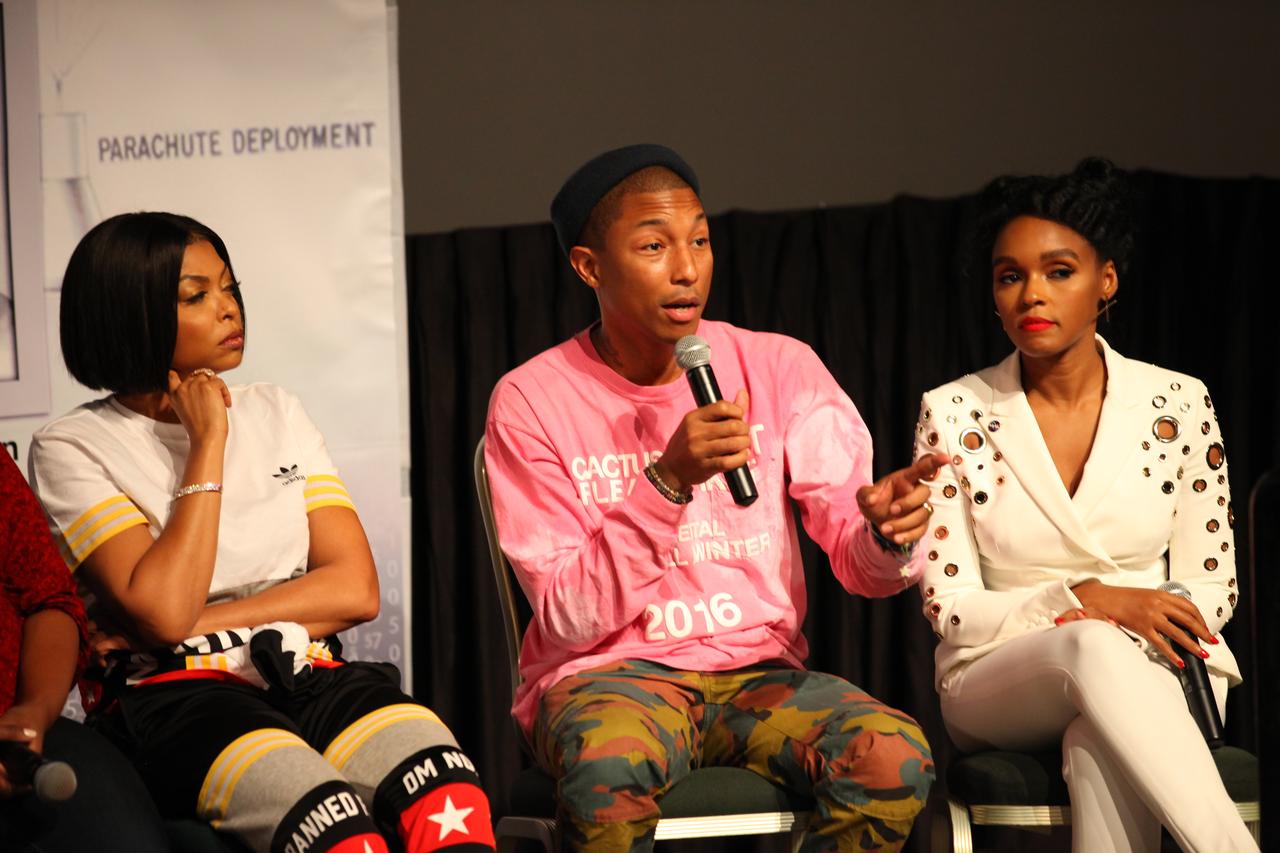
In the IMAX Theater of the Kennedy Space Center Visitor Complex Cast and crew members of the upcoming motion picture "Hidden Figures" participate in a question and answer session. From the left are Taraji P. Henson, who portrays Katherine Johnson in the film, Pharrell Williams, musician and producer of “Hidden Figures," and Janelle Monáe, who portrays Mary Jackson. The movie chronicles the lives of Katherine Johnson, Dorothy Vaughan and Mary Jackson, three African-American women who worked for NASA as human "computers.” Their mathematical calculations were crucial to the success of Project Mercury missions including John Glenn’s orbital flight aboard Friendship 7 in 1962. The film is due in theaters in January 2017.
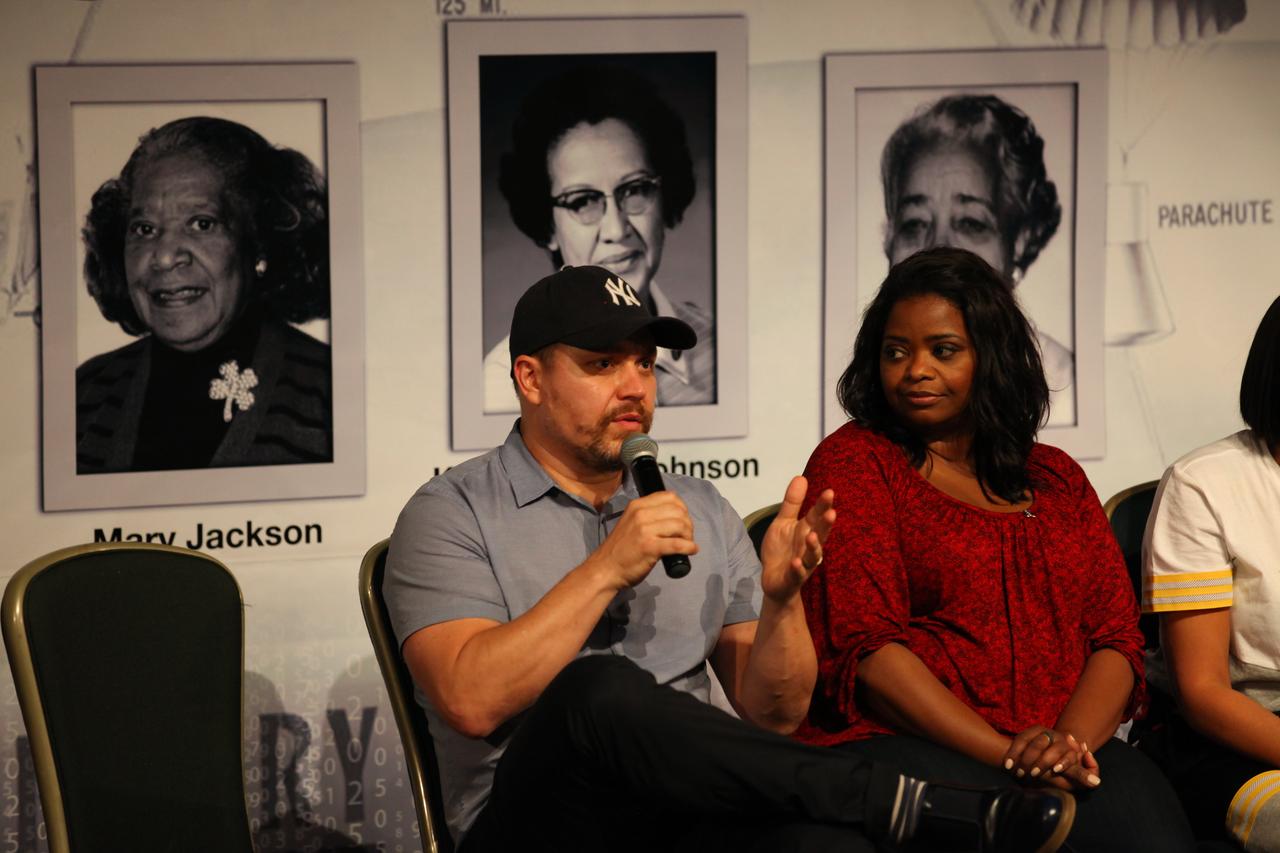
In the IMAX Theater of the Kennedy Space Center Visitor Complex Cast and crew members of the upcoming motion picture "Hidden Figures" participate in a question and answer session. From the left are Ted Melfi, writer and director of “Hidden Figures,” and Octavia Spencer, who portrays Dorothy Vaughan in the film. The movie is based on the book of the same title, by Margot Lee Shetterly. It chronicles the lives of Katherine Johnson, Dorothy Vaughan and Mary Jackson, three African-American women who worked for NASA as human "computers.” Their mathematical calculations were crucial to the success of Project Mercury missions including John Glenn’s orbital flight aboard Friendship 7 in 1962. The film is due in theaters in January 2017.
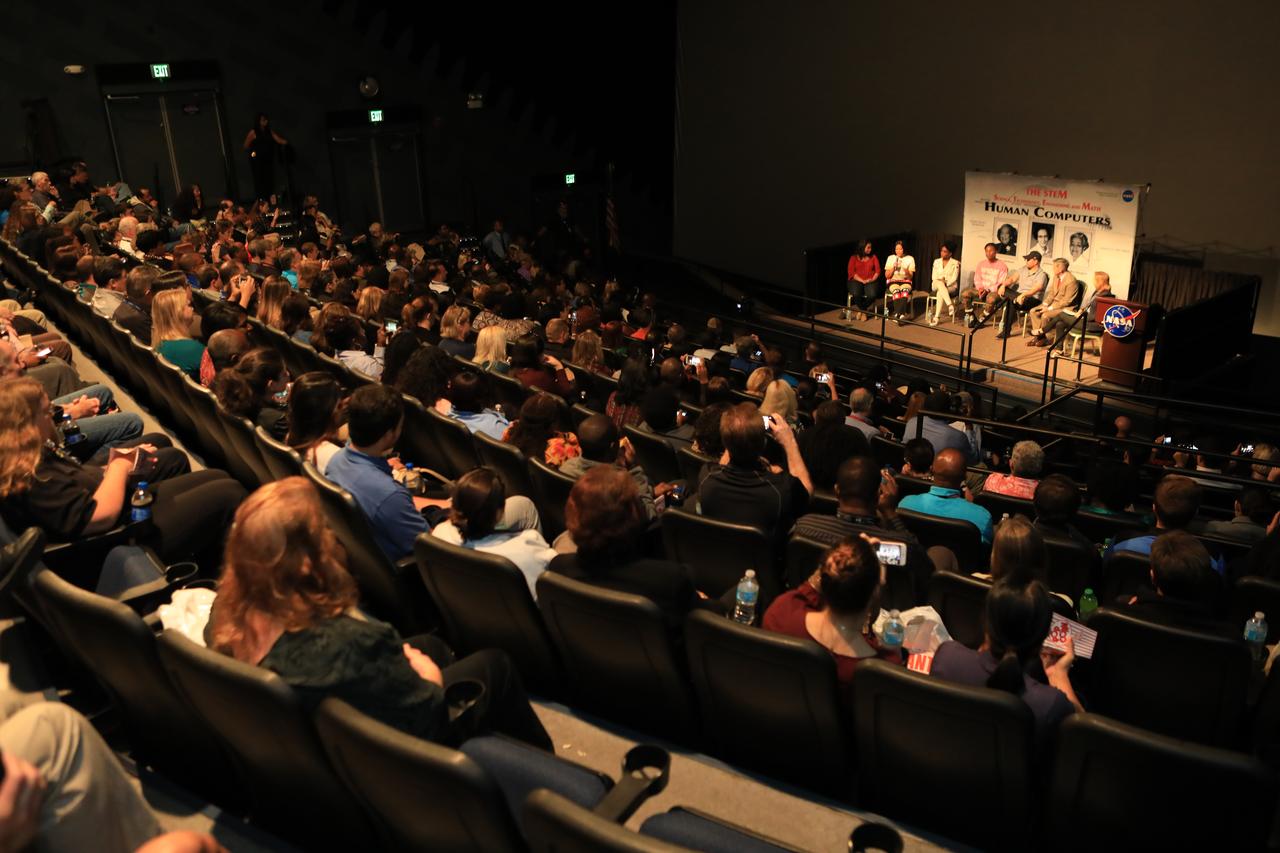
In the IMAX Theater of the Kennedy Space Center Visitor Complex Cast and crew members of the upcoming motion picture "Hidden Figures" participate in a question and answer session. The movie is based on the book of the same title, by Margot Lee Shetterly. It chronicles the lives of Katherine Johnson, Dorothy Vaughan and Mary Jackson, three African-American women who worked for NASA as human "computers.” Their mathematical calculations were crucial to the success of Project Mercury missions including John Glenn’s orbital flight aboard Friendship 7 in 1962. The film is due in theaters in January 2017.
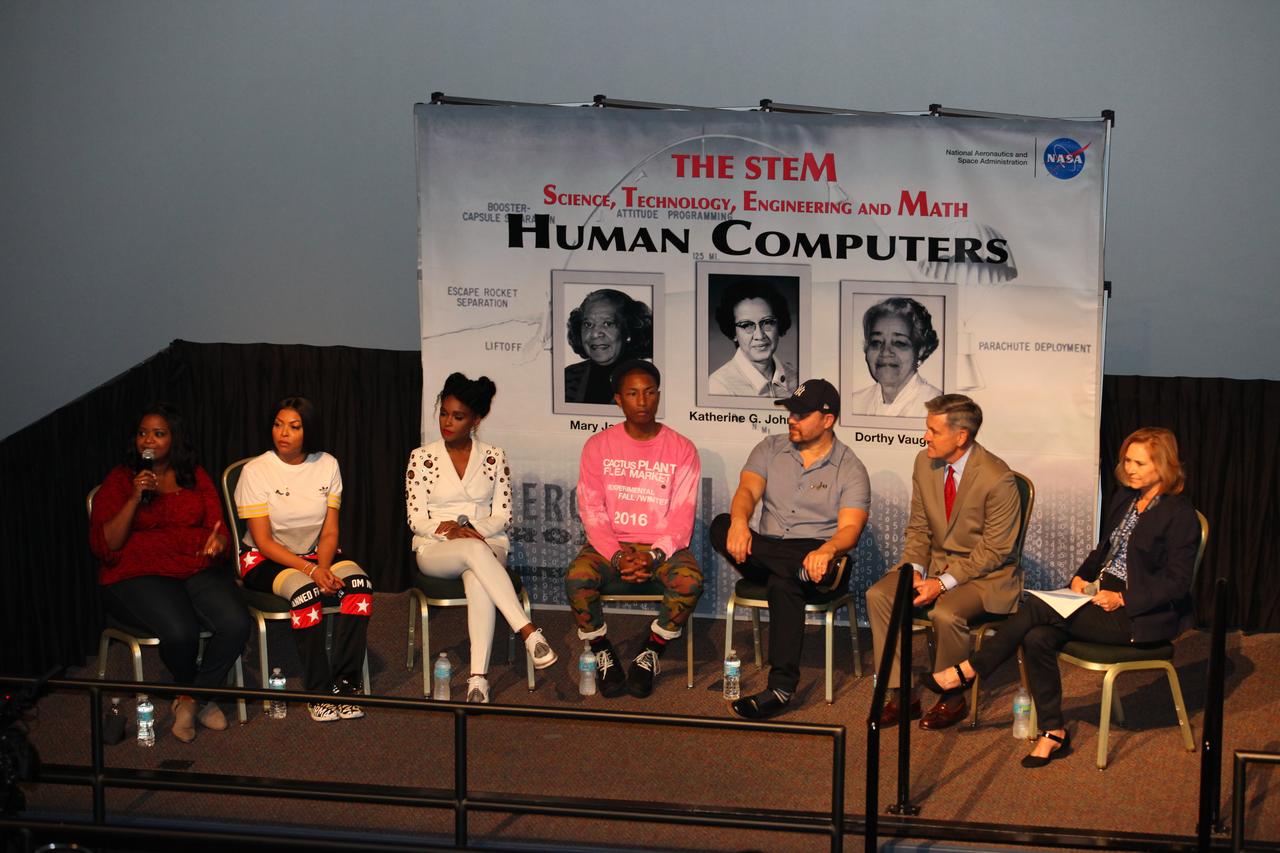
In the IMAX Theater of the Kennedy Space Center Visitor Complex Cast and crew members of the upcoming motion picture "Hidden Figures" participate in a question and answer session. From the left are Octavia Spencer, who portrays Dorothy Vaughan in the film, Taraji P. Henson, who portrays Katherine Johnson, Janelle Monáe, who portrays Mary Jackson, Pharrell Williams, musician and producer of “Hidden Figures," Ted Melfi, writer and director of “Hidden Figures,” center director Bob Cabana, and Janet Petro, deputy center director. The movie is based on the book of the same title, by Margot Lee Shetterly. It chronicles the lives of Katherine Johnson, Dorothy Vaughan and Mary Jackson, three African-American women who worked for NASA as human "computers.” Their mathematical calculations were crucial to the success of Project Mercury missions including John Glenn’s orbital flight aboard Friendship 7 in 1962. The film is due in theaters in January 2017.
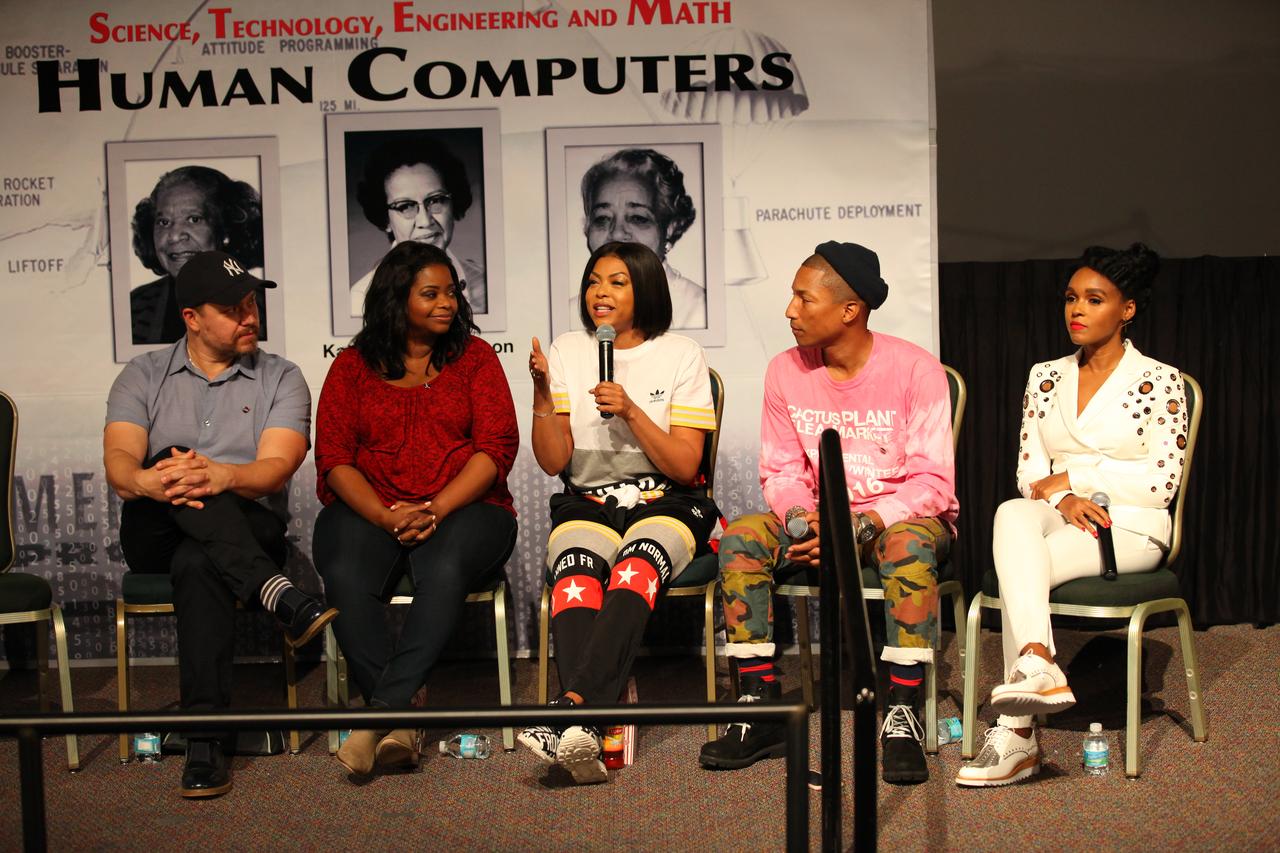
In the IMAX Theater of the Kennedy Space Center Visitor Complex Cast and crew members of the upcoming motion picture "Hidden Figures" participate in a question and answer session. From the left are Ted Melfi, writer and director of “Hidden Figures,” Octavia Spencer, who portrays Dorothy Vaughan in the film, Taraji P. Henson, who portrays Katherine Johnson, Pharrell Williams, musician and producer of “Hidden Figures," and Janelle Monáe, who portrays Mary Jackson. The movie is based on the book of the same title, by Margot Lee Shetterly. It chronicles the lives of Katherine Johnson, Dorothy Vaughan and Mary Jackson, three African-American women who worked for NASA as human "computers.” Their mathematical calculations were crucial to the success of Project Mercury missions including John Glenn’s orbital flight aboard Friendship 7 in 1962. The film is due in theaters in January 2017.
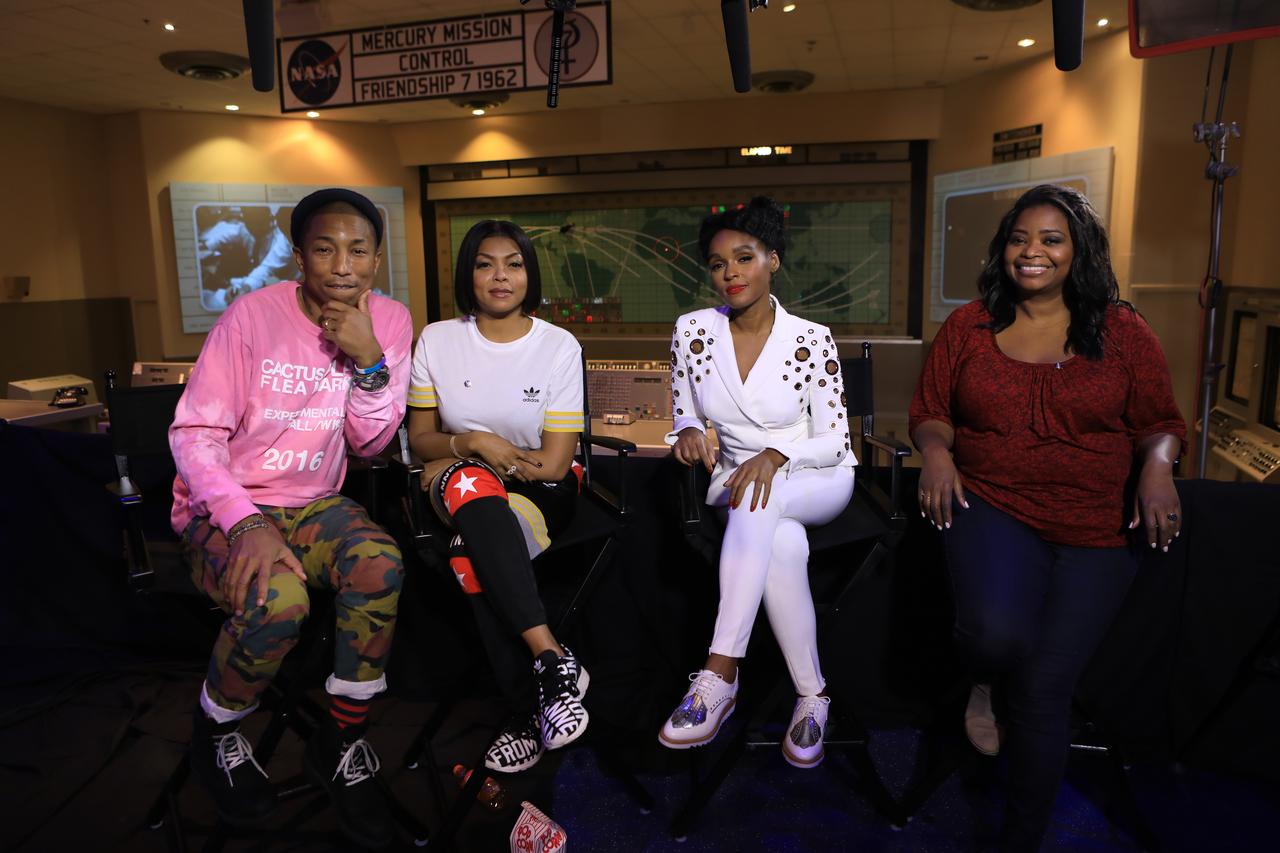
Cast and crew members of the upcoming motion picture "Hidden Figures" participate in a question and answer session at the Kennedy Space Center Visitor Complex. From the left are Pharrell Williams, musician and producer of “Hidden Figures," Taraji P. Henson, who portrays Katherine Johnson in the film, Janelle Monáe, who portrays Mary Jackson, and Octavia Spencer, who portrays Dorothy Vaughan. They are seated in front of the original consoles of the Mercury Mission Control room with the world map that was used to follow the path of capsules between tracking stations. The movie is based on the book of the same title, by Margot Lee Shetterly. It chronicles the lives of Katherine Johnson, Dorothy Vaughan and Mary Jackson, three African-American women who worked for NASA as human "computers.” Their mathematical calculations were crucial to the success of Project Mercury missions including John Glenn’s orbital flight aboard Friendship 7 in 1962. The film is due in theaters in January 2017.
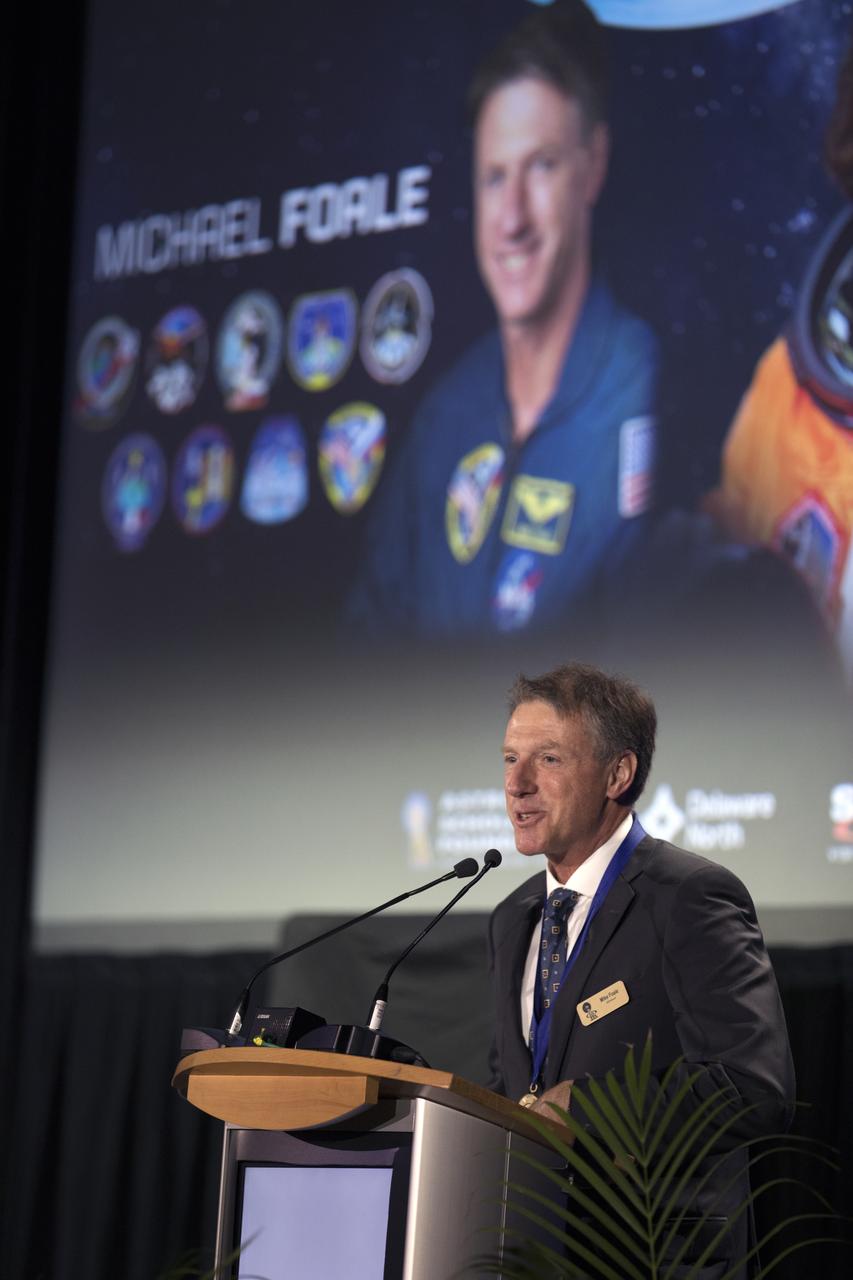
Michael Foale, who flew six missions into space, speaks during the U.S. Astronaut Hall of Fame ceremony. The ceremony took place in the Space Shuttle Atlantis facility at the Kennedy Space Center Visitor Complex in Florida.
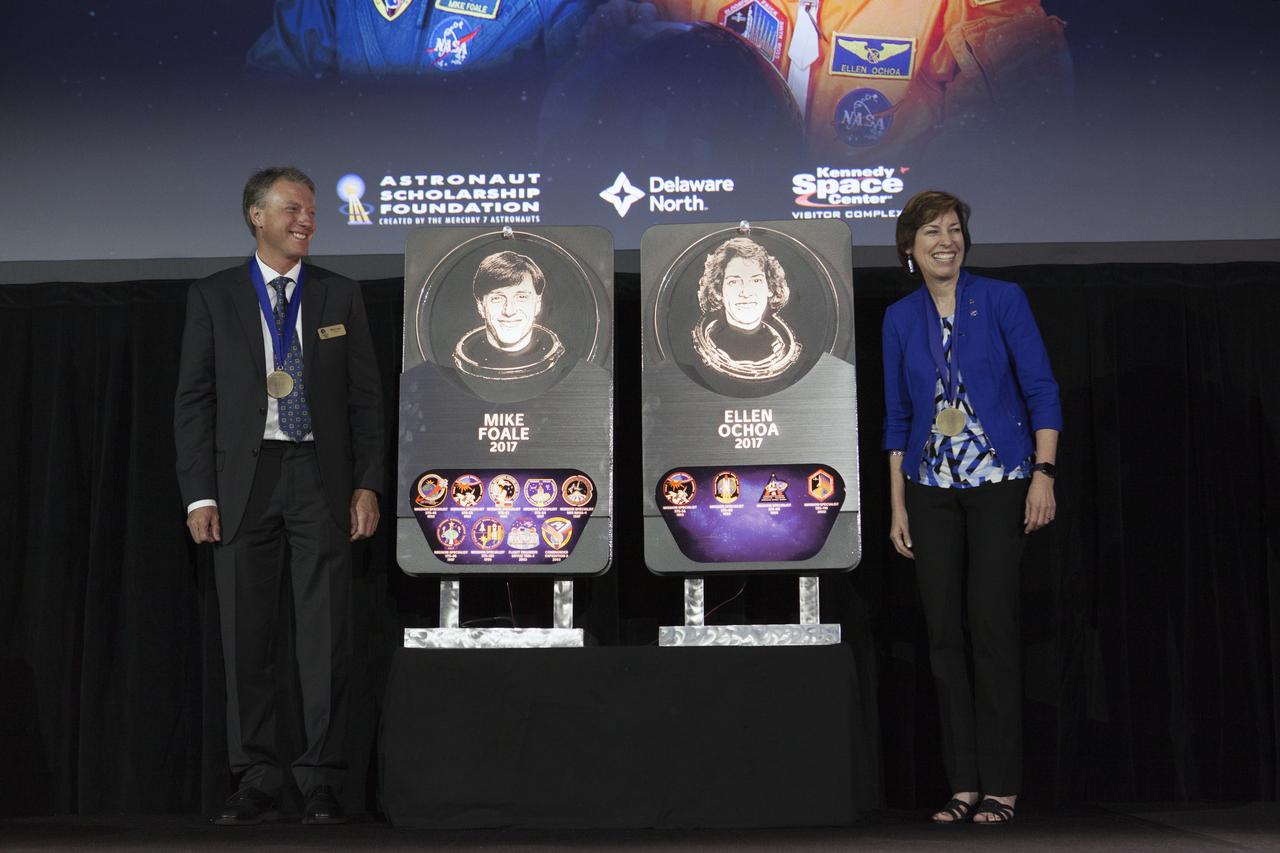
In the Space Shuttle Atlantis facility at NASA's Kennedy Space Center Visitor Complex in Florida, space shuttle astronauts Michael Foale left, and, Ellen Ochoa, pose with their plaques after being inducted into the U.S. Astronaut Hall of Fame.
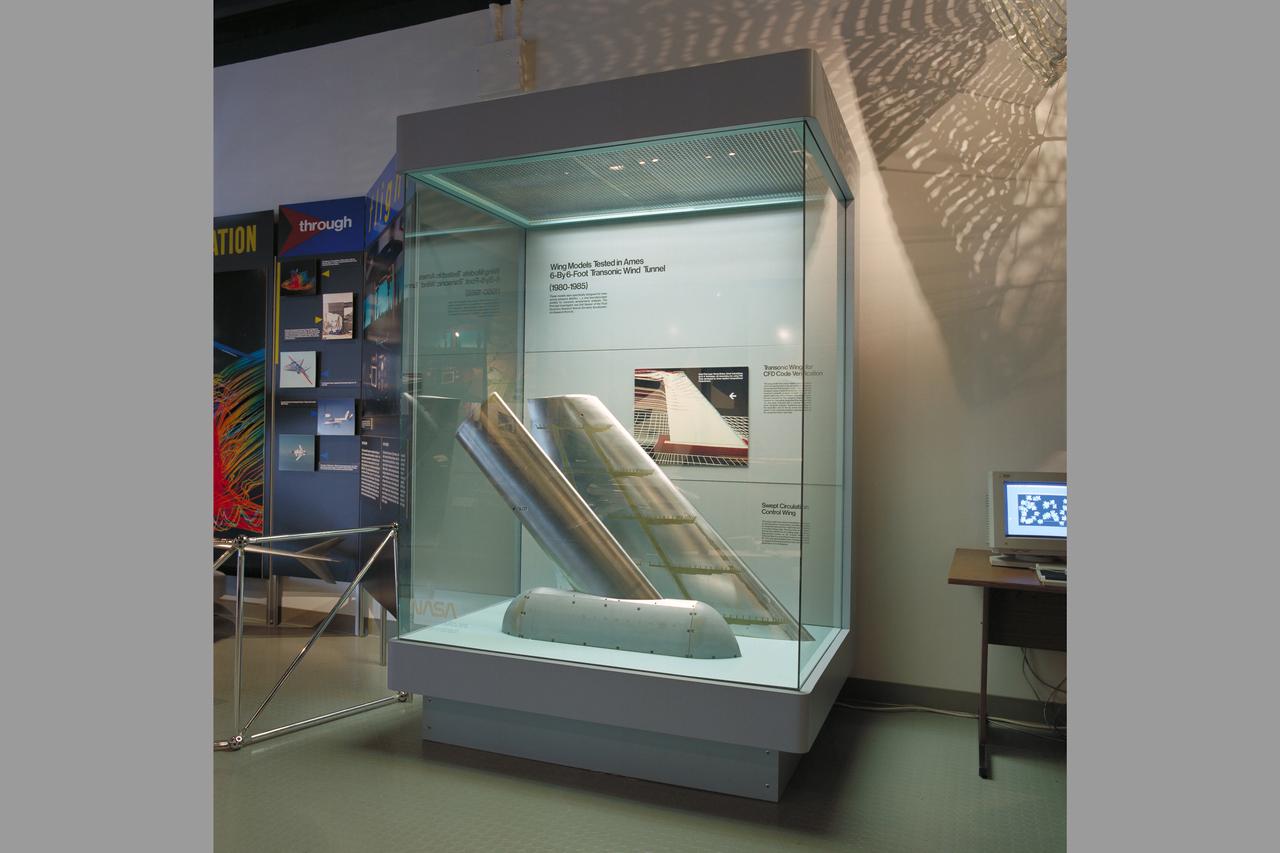
N-233 Visitor Information Center (VIC): 6x6ft W.T. exhibit
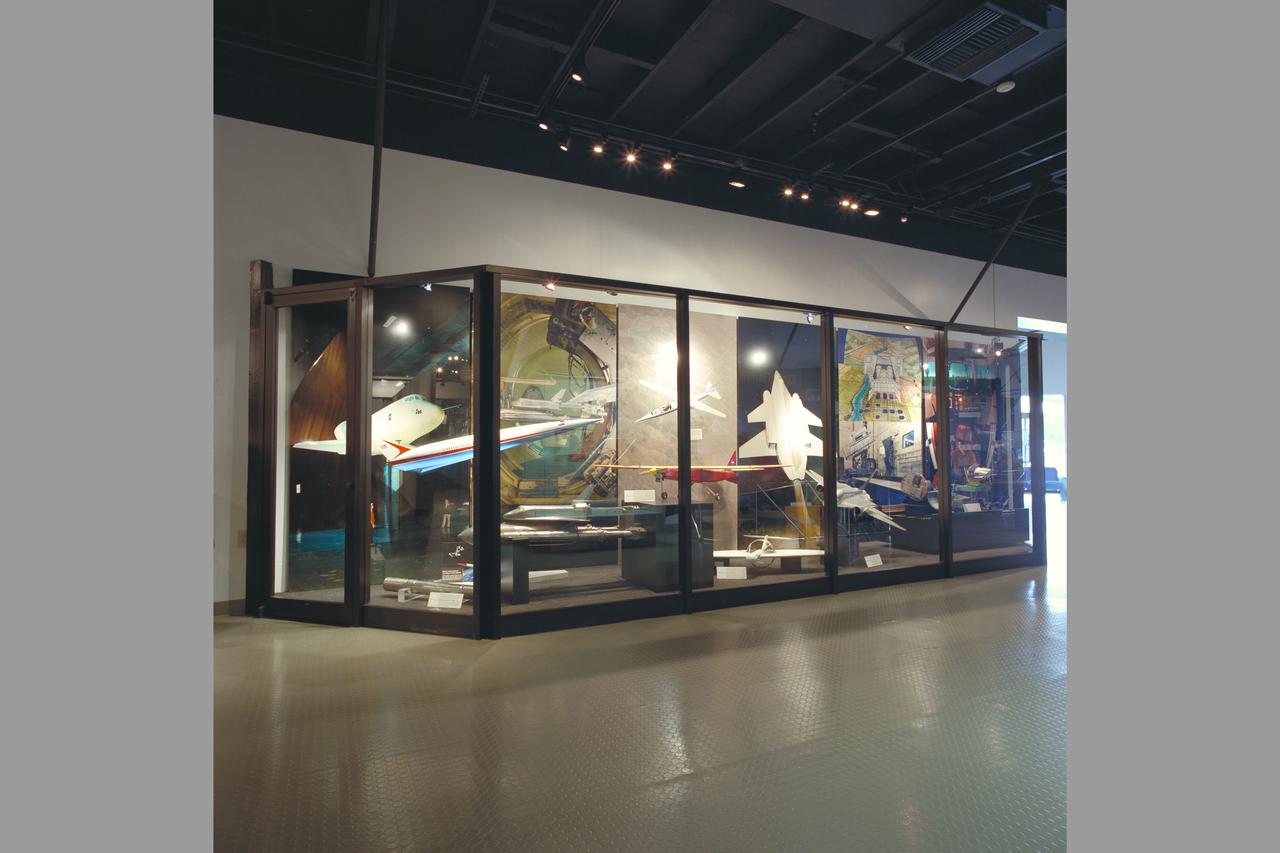
N-233 Visitor Information Center (VIC): Aeronautics Exhibit
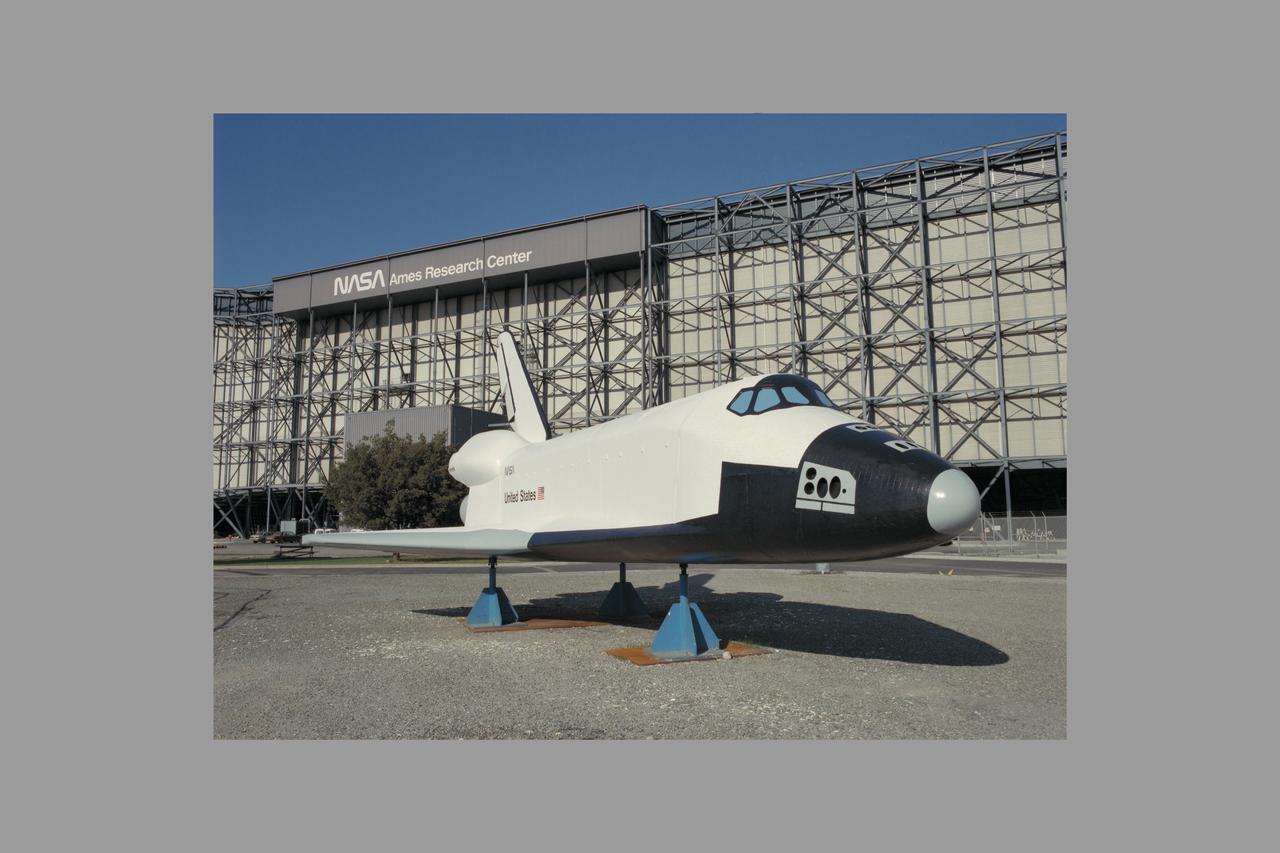
Space Shuttle display @ Ames Visitors Center N-233 VIC
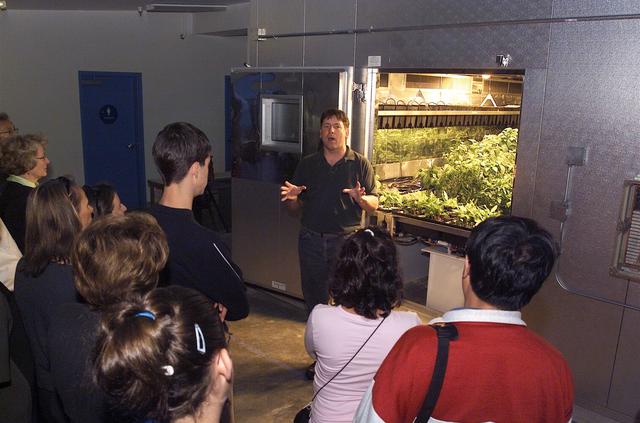
Space Day 2002; Directors Breakfast @ NASA Ames Visitors Center for student Winners of Santa Clara Valley Science & Engineering Fair and San Francisco Bay Aera Science Fair
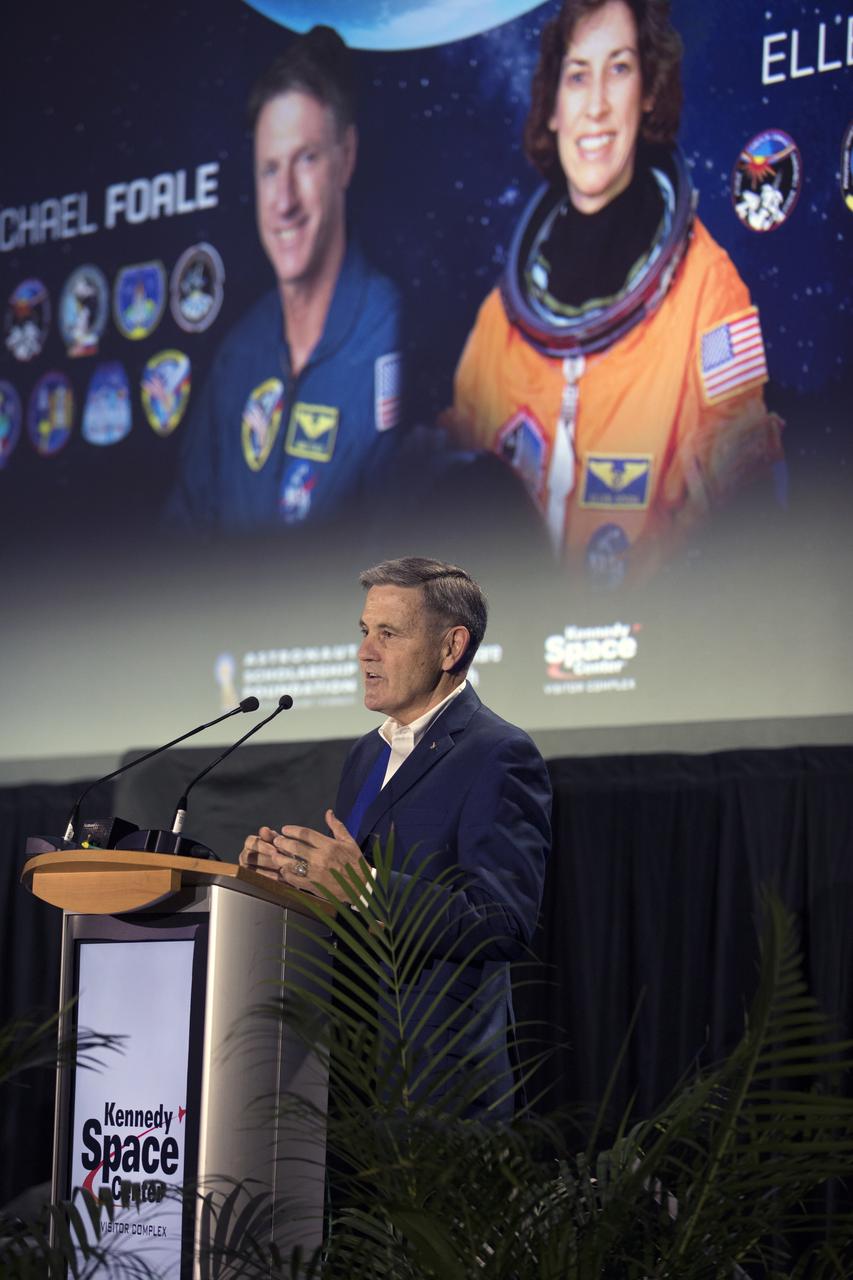
NASA's Kennedy Space Center Director Bob Cabana, also a member of the U.S. Astronaut Hall of Fame, honored Ellen Ochoa and Michael Foale during ceremonies on May 19, 2017. The activity took place in the Space Shuttle Atlantis facility at the Kennedy Space Center Visitor Complex in Florida.
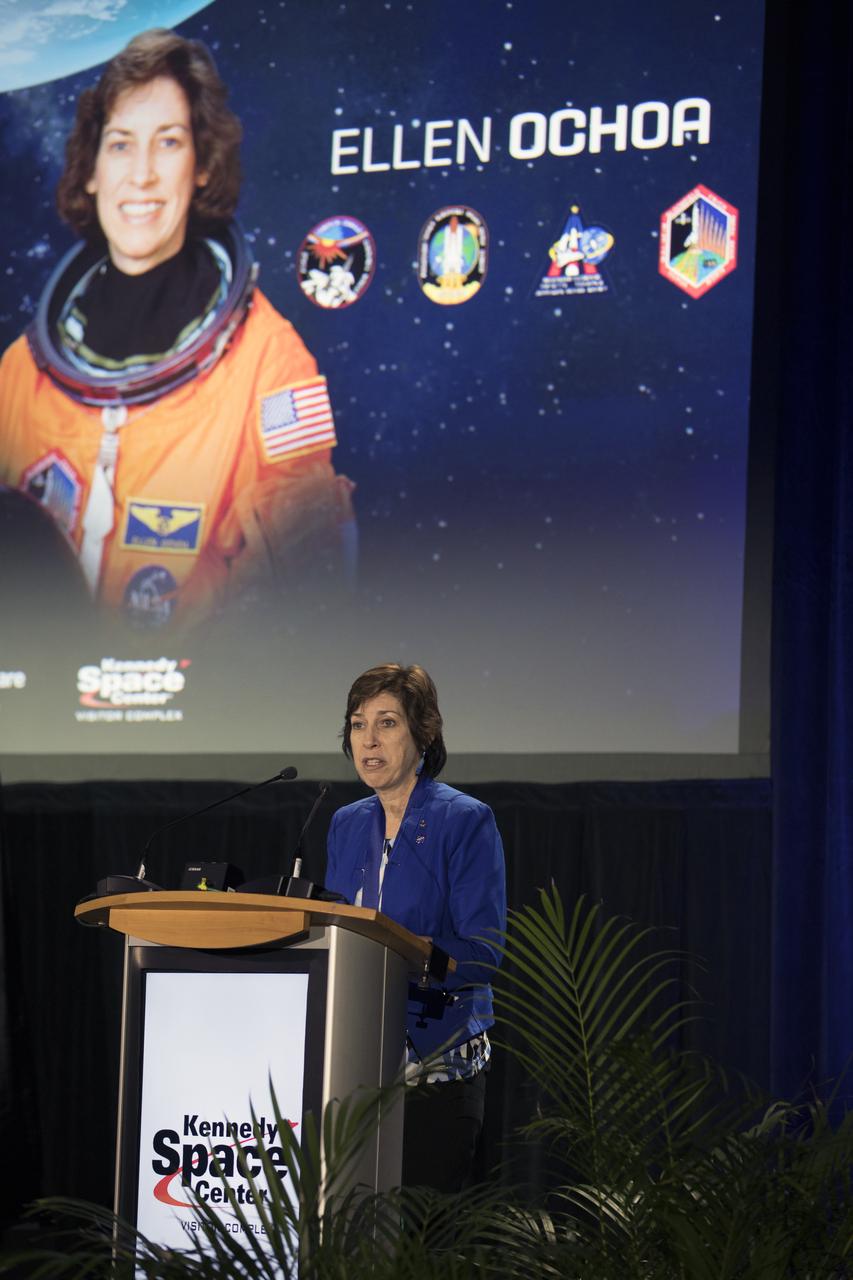
Ellen Ochoa, who was a mission specialist on four space shuttle missions, speaks during the U.S. Astronaut Hall of Fame ceremony. She is now director of NASA's Johnson Space Center. The activity took place in the Space Shuttle Atlantis facility at the Kennedy Space Center Visitor Complex in Florida.
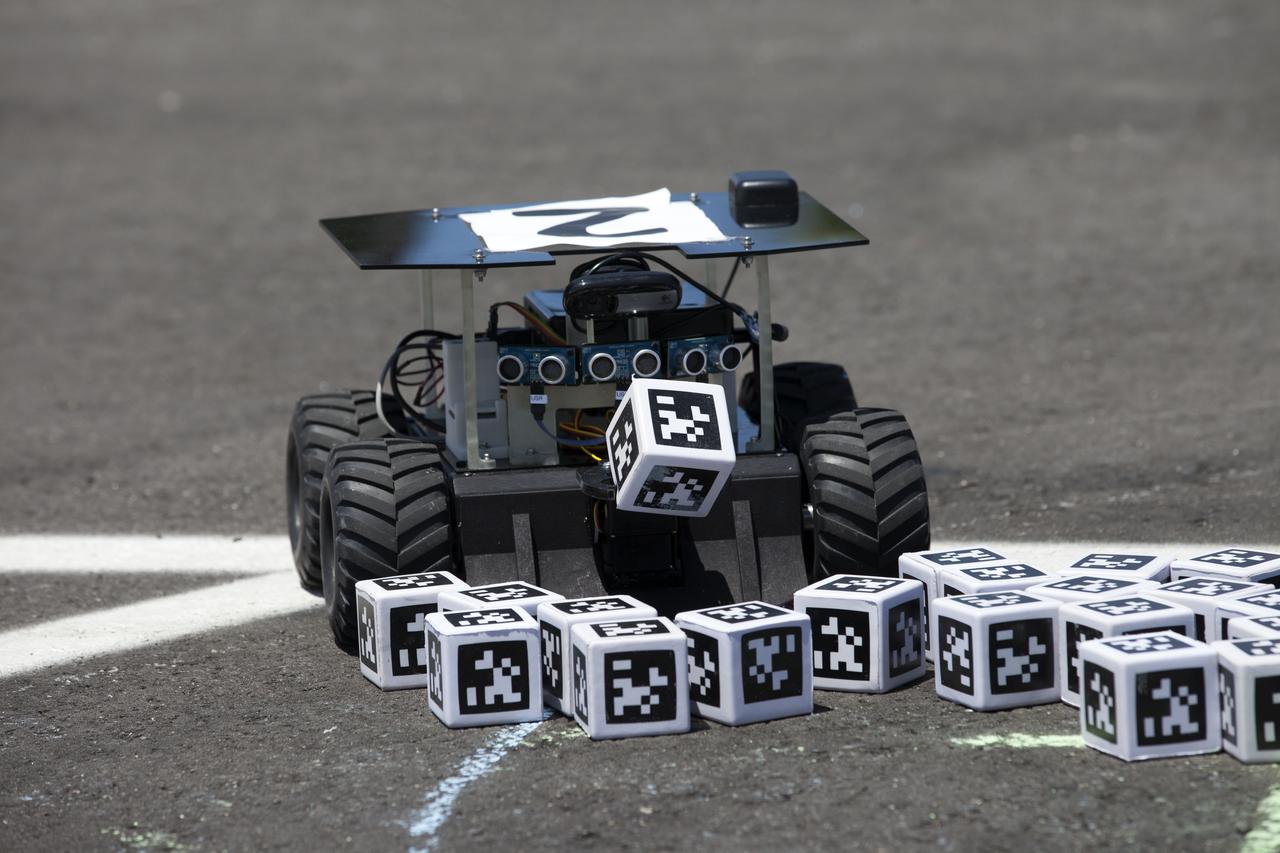
A Swarmie robot finds a "resource" cube marked with an AprilTag, similar to a barcode. In the Swarmathon competition at the Kennedy Space Center Visitor Complex, students were asked to develop computer code for the small robots, programming them to look for "resources" in the form of cubes with AprilTags.
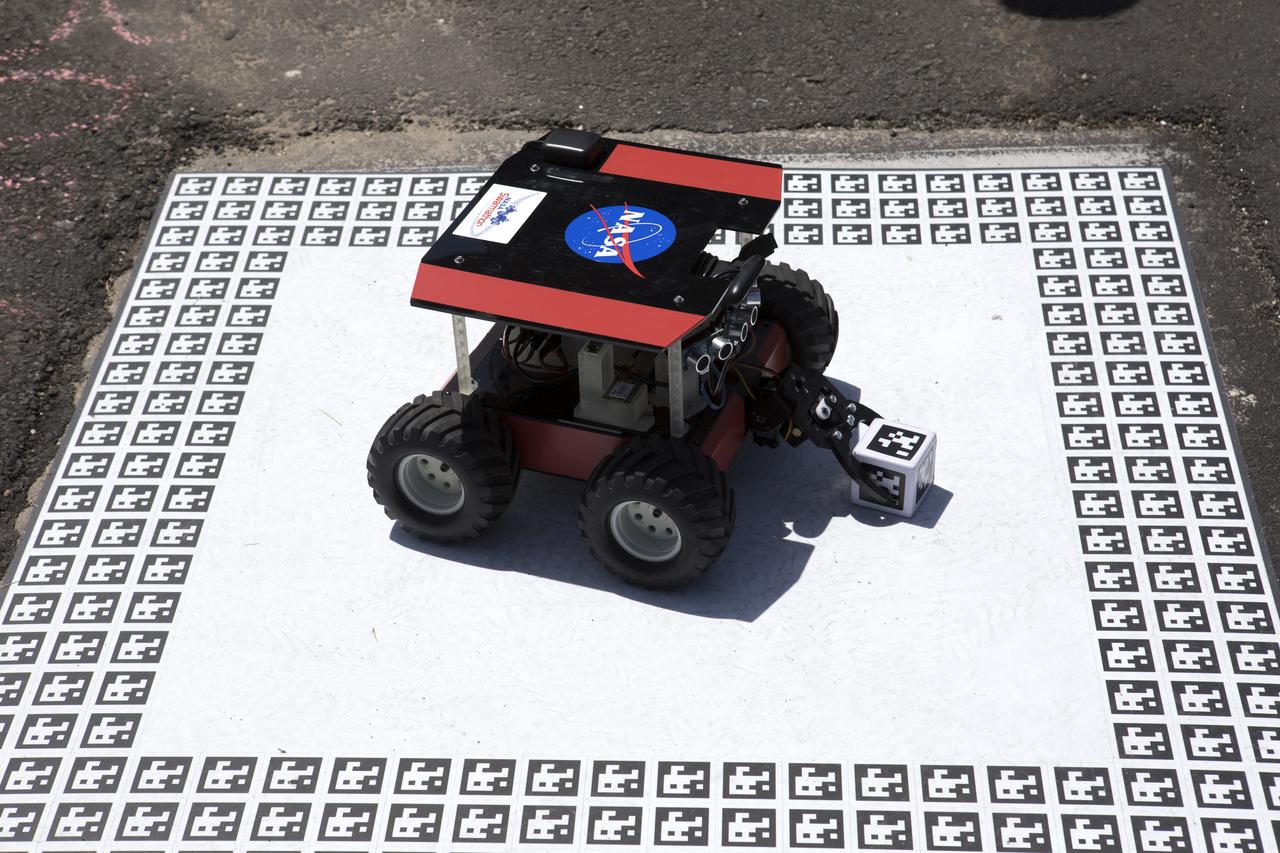
A cube identified with an AprilTag, similar to a barcode, is delivered to a "home" square in the middle of a competition arena during the Swarmathon competition. At the Kennedy Space Center Visitor Complex, student teams developed search algorithms for the Swarmies to operate autonomously, communicating and interacting as a collective swarm similar to ants foraging for food.
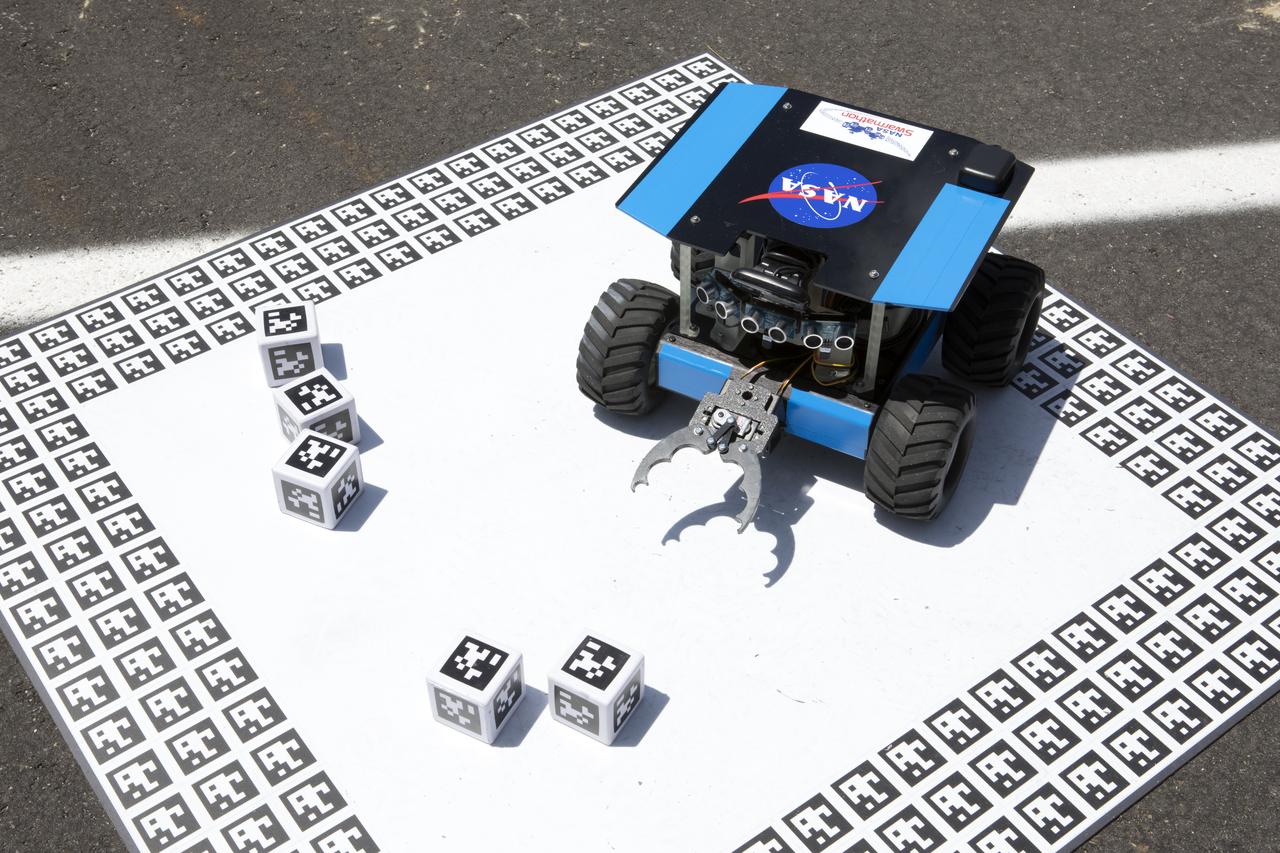
A cube identified with an AprilTag, similar to a barcode, is delivered to a "home" square in the middle of a competition arena during the Swarmathon competition. At the Kennedy Space Center Visitor Complex, student teams developed search algorithms for the Swarmies to operate autonomously, communicating and interacting as a collective swarm similar to ants foraging for food.
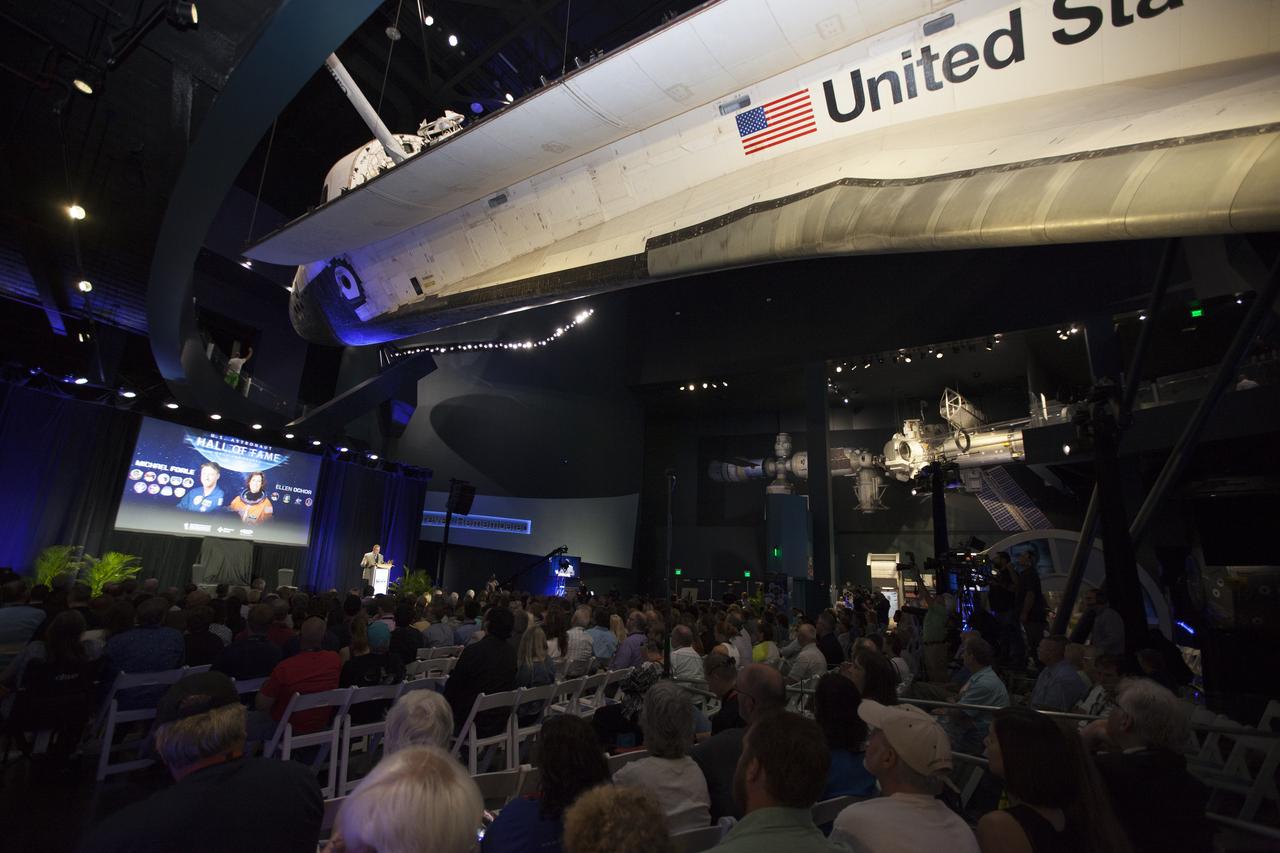
In the Space Shuttle Atlantis facility at the Kennedy Space Center Visitor Complex in Florida, guests sit under the famed spacecraft during the U.S. Hall of Fame activity. During this year's ceremonies, space shuttle astronauts Ellen Ochoa and Michael Foale were enshrined.

The Kennedy Space Center Visitor Complex kicked off its "Summer of Mars" promotion with a ceremony which included former NASA astronaut Jon McBride, who serves as director of Astronaut Education Programs for the visitor complex. The "Summer of Mars" promotion is designed to provide guests with a better understanding of NASA's studies of the Red Planet.
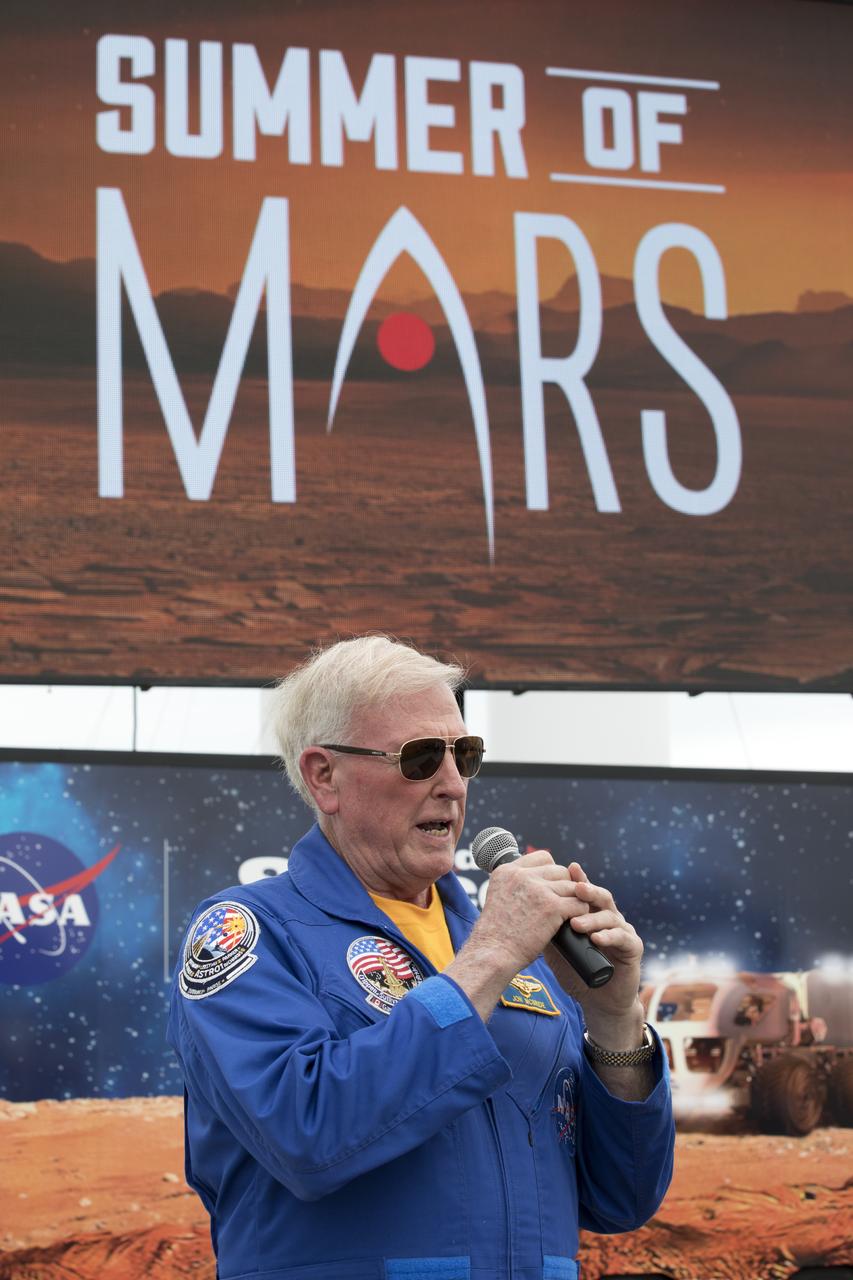
The Kennedy Space Center Visitor Complex kicked off its "Summer of Mars" promotion with a ceremony which included former NASA astronaut Jon McBride, who serves as director of Astronaut Education Programs for the visitor complex. The "Summer of Mars" promotion is designed to provide guests with a better understanding of NASA's studies of the Red Planet.
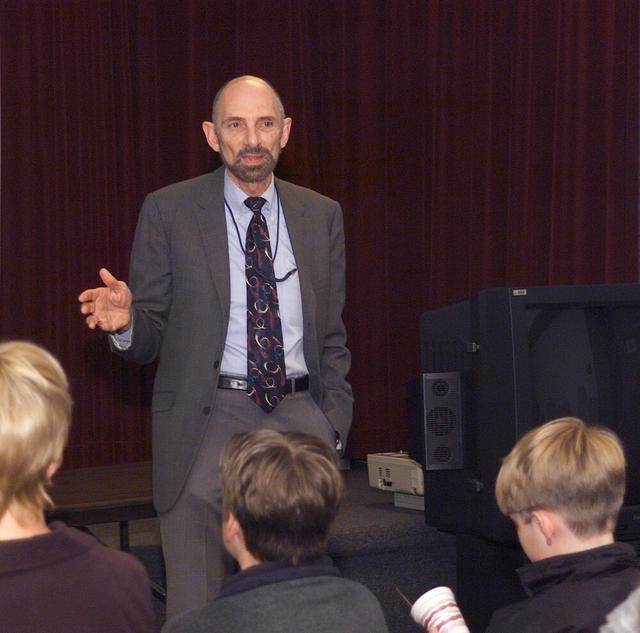
Space Day 2002; Directors Breakfast @ NASA Ames Visitors Center for student Winners of Santa Clara Valley Science & Engineering Fair and San Francisco Bay Aera Science Fair (Students are addressed by Bob Rosen, Ames Associate Director for Aerospace Programs)
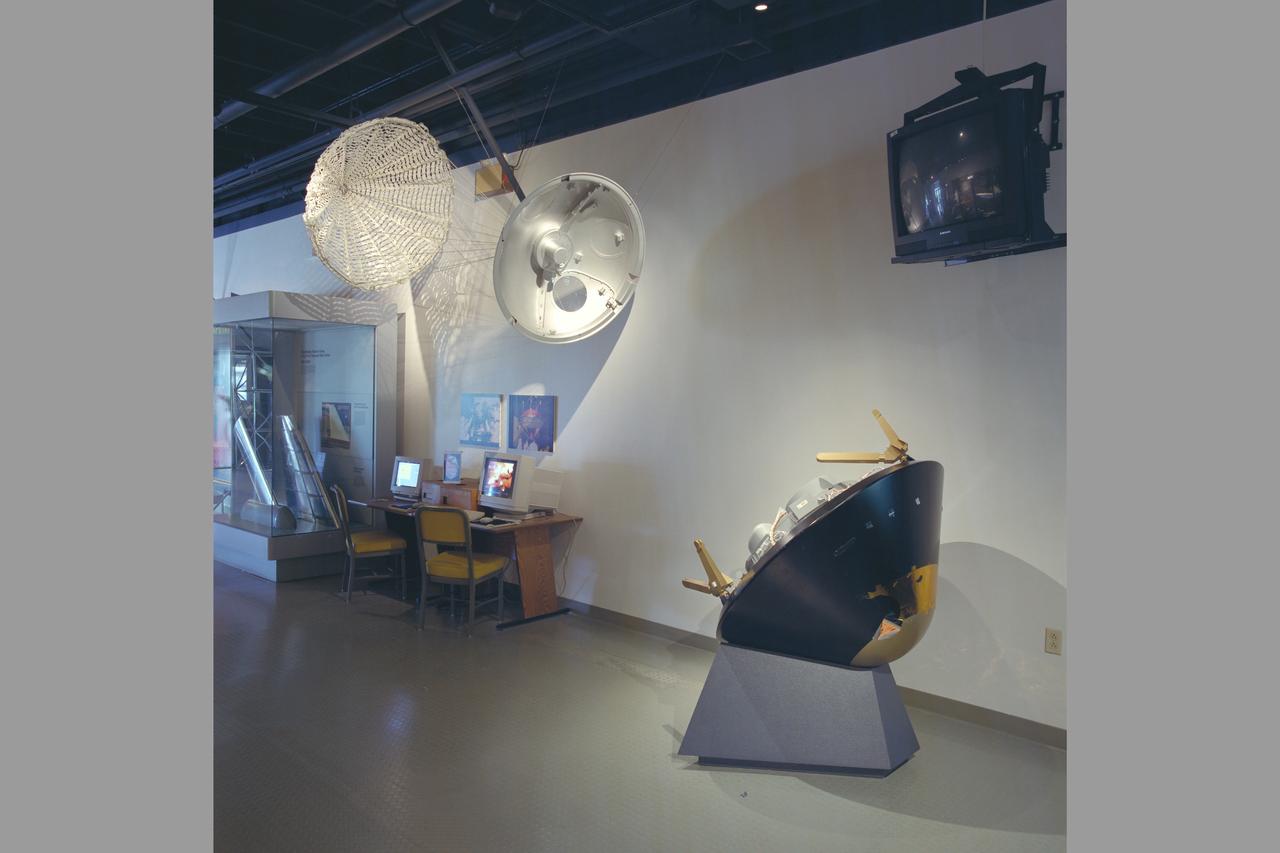
N-233 Visitor Information Center (VIC): Galileo Exhibit
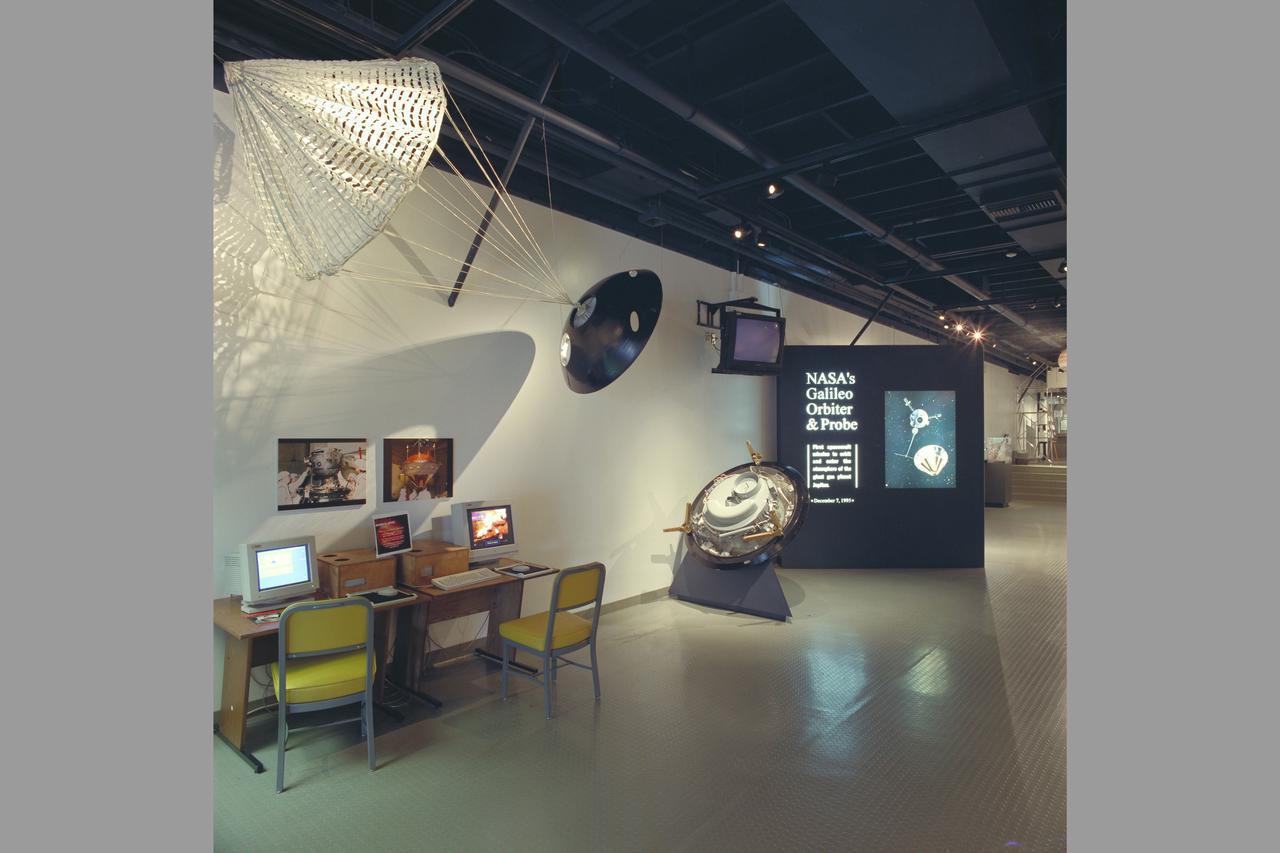
N-233 Visitor Information Center (VIC): Galileo Exhibit
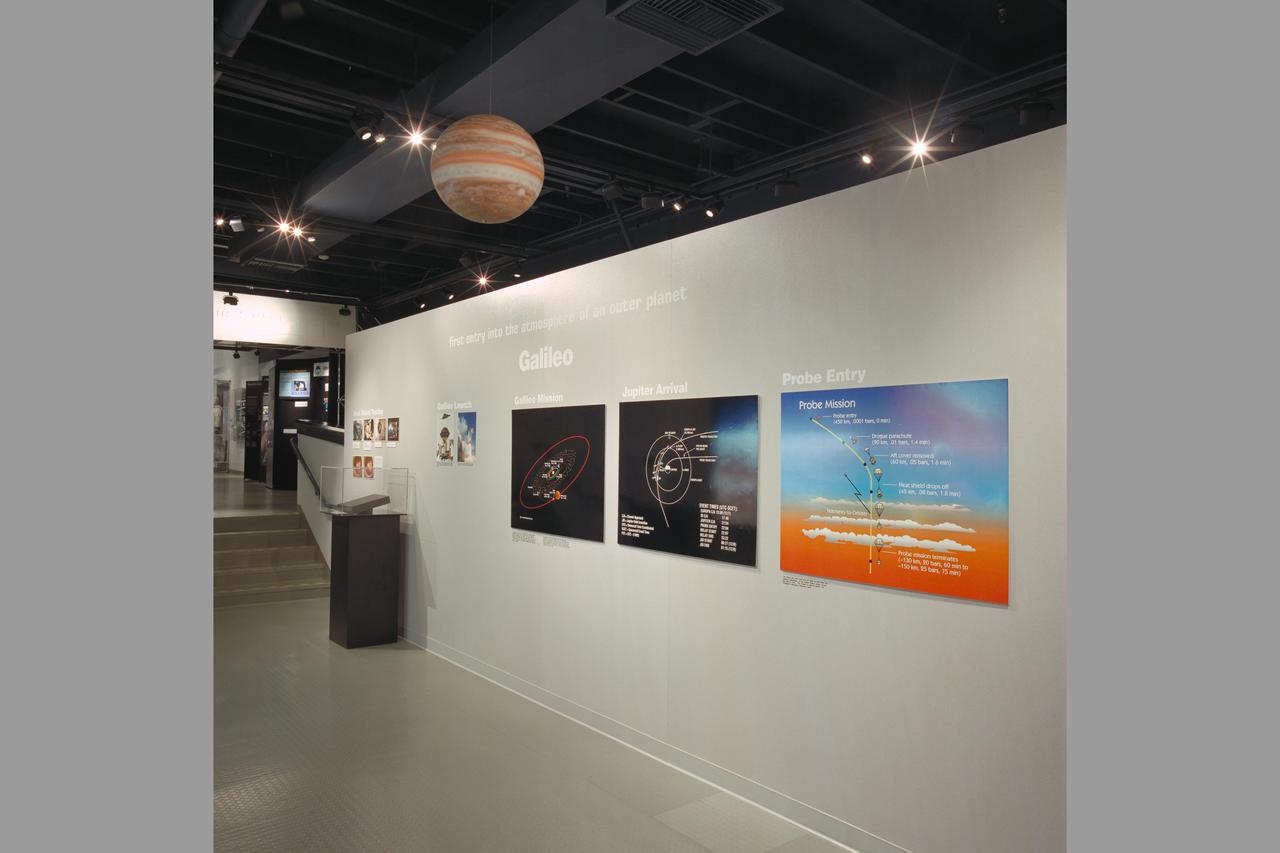
N-233 Visitor Information Center (VIC): Galileo Exhibit
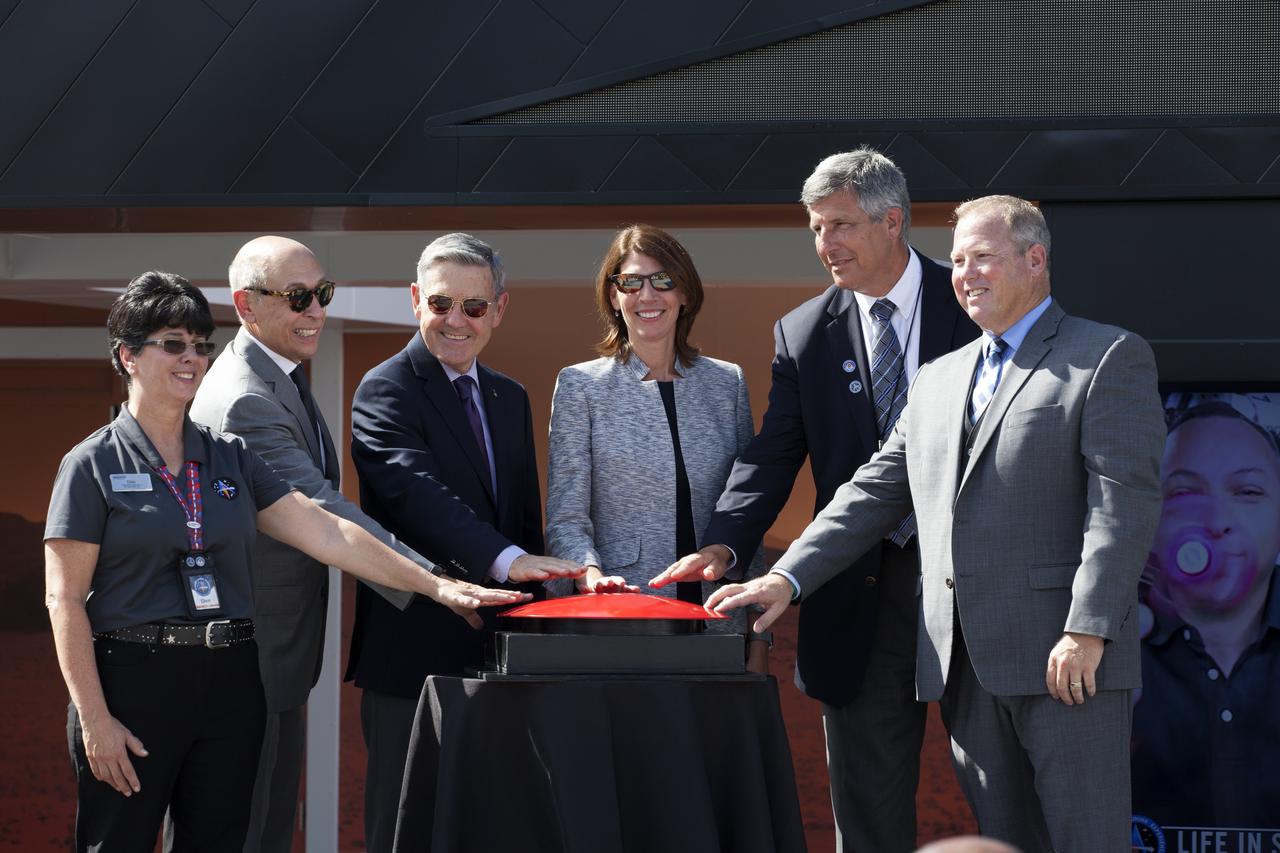
Officials at the Kennedy Space Center Visitor Complex prepare to push a ceremonial button to "launch" the facility's new Astronaut Training Experience (ATX). Participating, from the left, are: Dee Maynard, private education program manager for the Kennedy visitor complex, Rick Abramson, chief customer officer for Delaware North, Kennedy Director Bob Cabana, Lisa Callahan vice president and general manager of Commercial Civil Space at Lockheed Martin Space, Jim Houser, executive vice president and chief operating officer for Delaware North, and Therrin Protze, chief operating officer of the Kennedy visitor complex. The ATX uses three-dimensional computer display simulation technology to "transport" participants to Mars, training them to live and work in the environment of the Red Planet. The educational experience also teaches what it’s like to travel there. The facility uses NASA science to address engineering challenges in space travel. Lockheed Martin is the title sponsor for the Astronaut Training Experience.
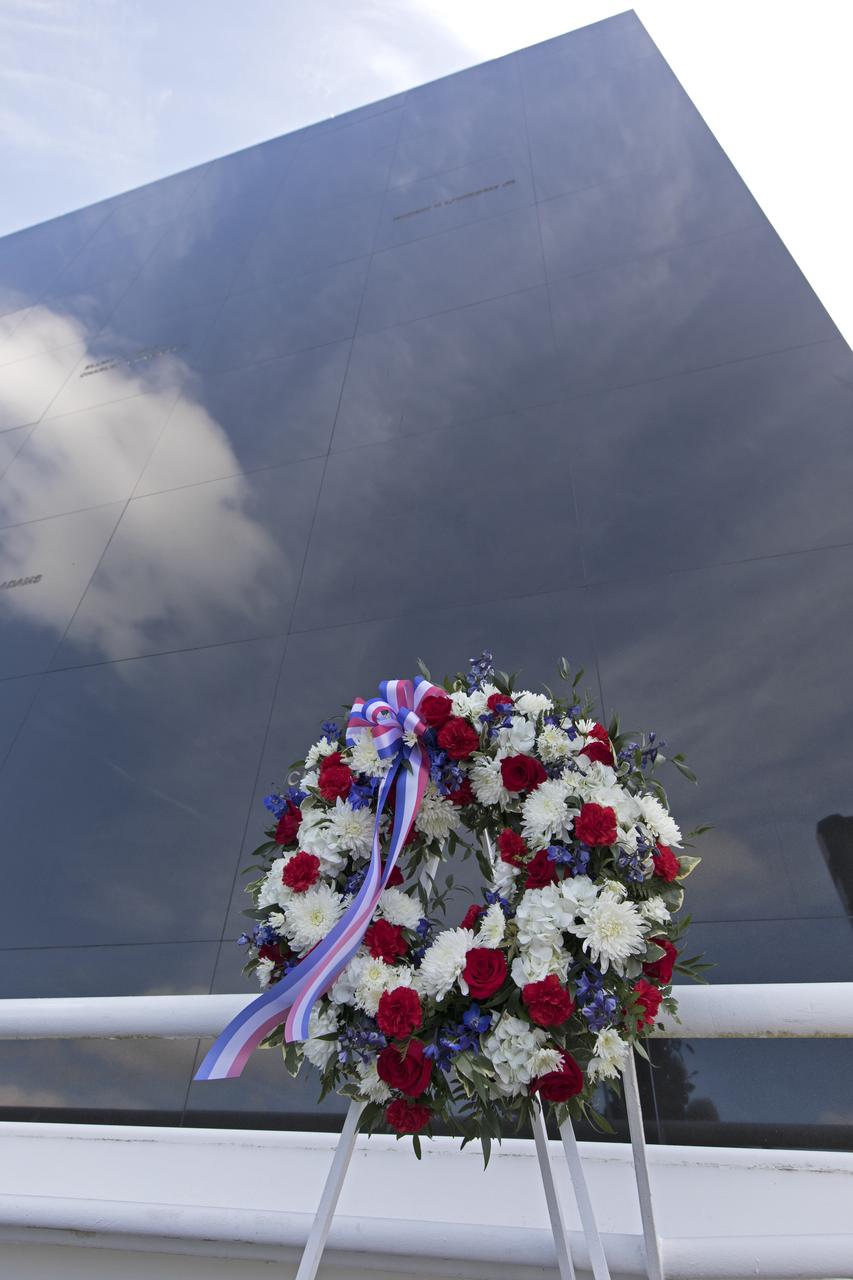
Following an Astronauts Memorial Foundation tribute honoring U.S. Air Foce Maj. Robert Lawrence, a wreath was place at the Space Mirror Memorial at the Kenendy Space Center Visitor Compelx. Selected in 1967 for the Manned Orbiting Laboratory Program, Lawrence was the first African-American astronaut. He lost his life in a training accident 50 years ago. The ceremony took place in the Center for Space Education at the Kennedy Space Center Visitor Complex.
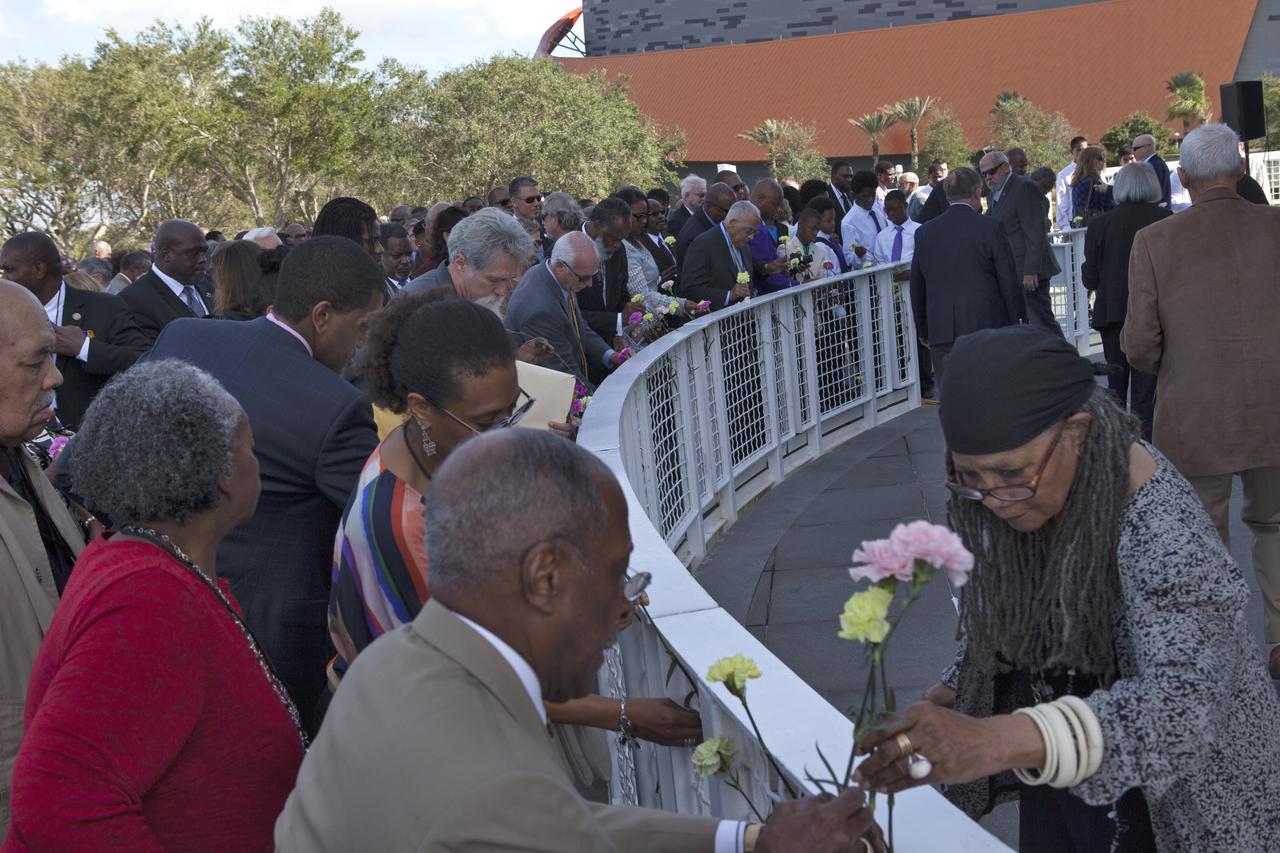
Following an Astronauts Memorial Foundation tribute honoring U.S. Air Foce Maj. Robert Lawrence, guests place flowers at the Space Mirror Memorial at the Kennedy Space Center Visitor Complex. Selected in 1967 for the Manned Orbiting Laboratory Program, Lawrence was the first African-American astronaut. He lost his life in a training accident 50 years ago. The ceremony took place in the Center for Space Education at the Kennedy Space Center Visitor Complex.
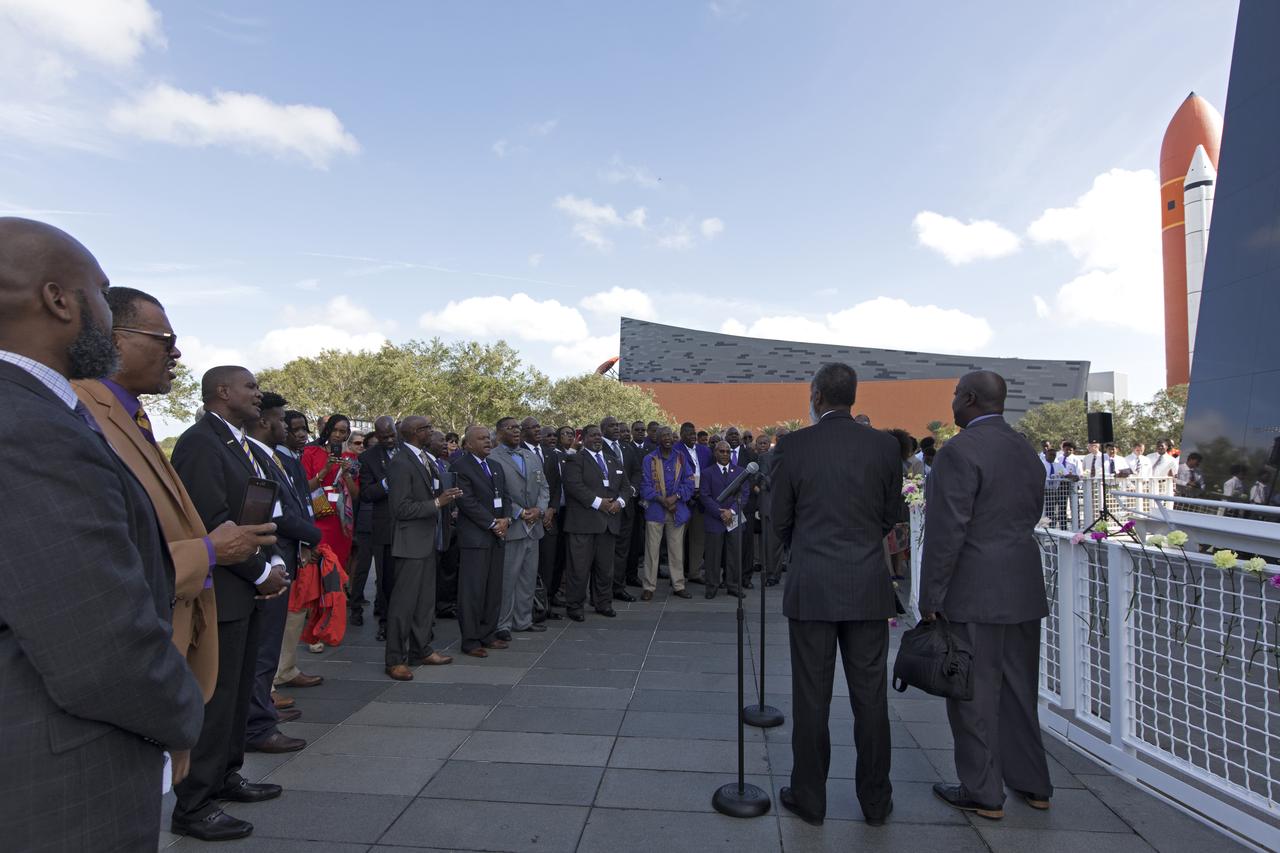
Following an Astronauts Memorial Foundation tribute honoring U.S. Air Foce Maj. Robert Lawrence, guests listen to speakers at the Space Mirror Memorial at the Kenendy Space Center Visitor Compelx. Selected in 1967 for the Manned Orbiting Laboratory Program, Lawrence was the first African-American astronaut. He lost his life in a training accident 50 years ago. The ceremony took place in the Center for Space Education at the Kennedy Space Center Visitor Complex.
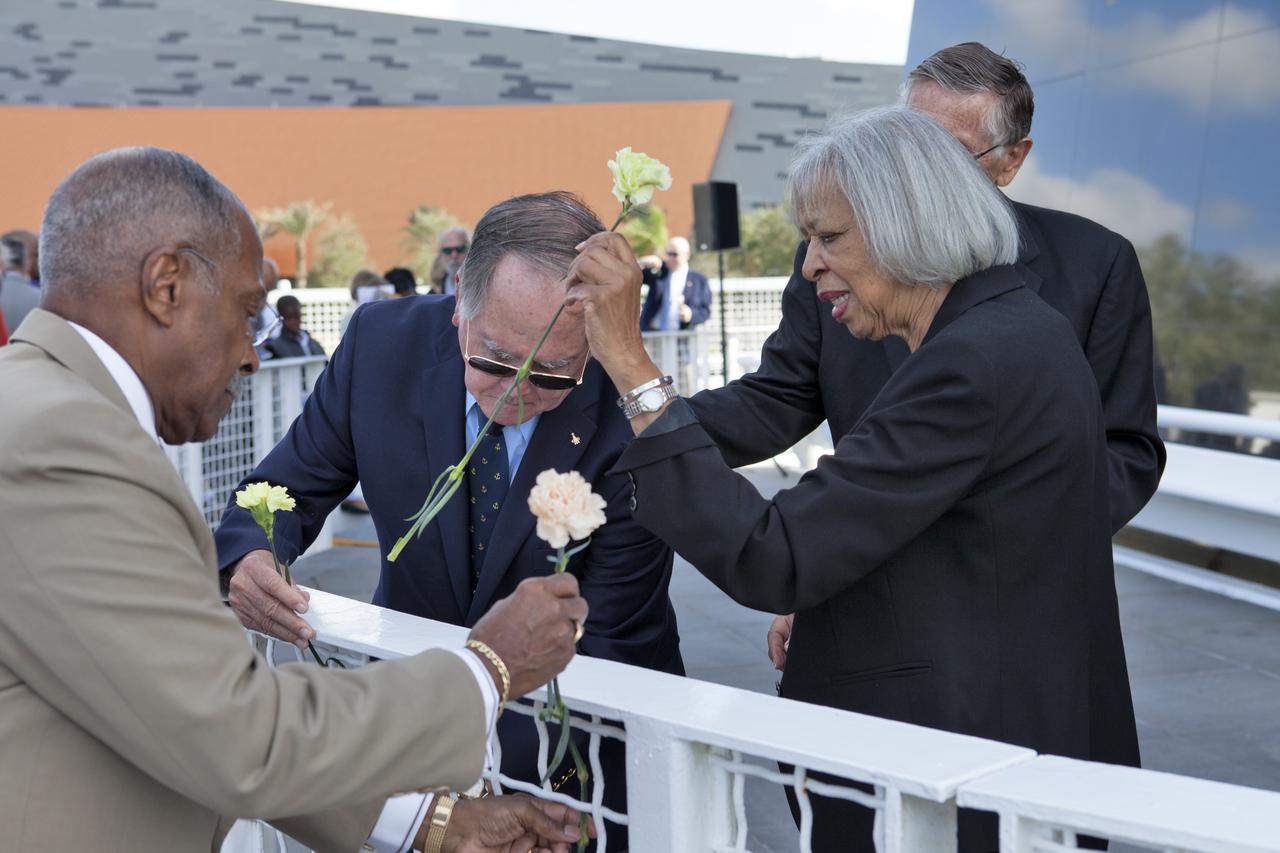
During an Astronauts Memorial Foundation tribute honoring U.S. Air Foce Maj. Robert Lawrence, his sister, Barbara Lawrence, Ph.D., far right, places a flower at the Space Mirror Memorial at the Kennedy Space Center Visitor Complex. Selected in 1967 for the Manned Orbiting Laboratory Program, Lawrence was the first African-American astronaut. He lost his life in a training accident 50 years ago. The ceremony took place in the Center for Space Education at the Kennedy Space Center Visitor Complex.
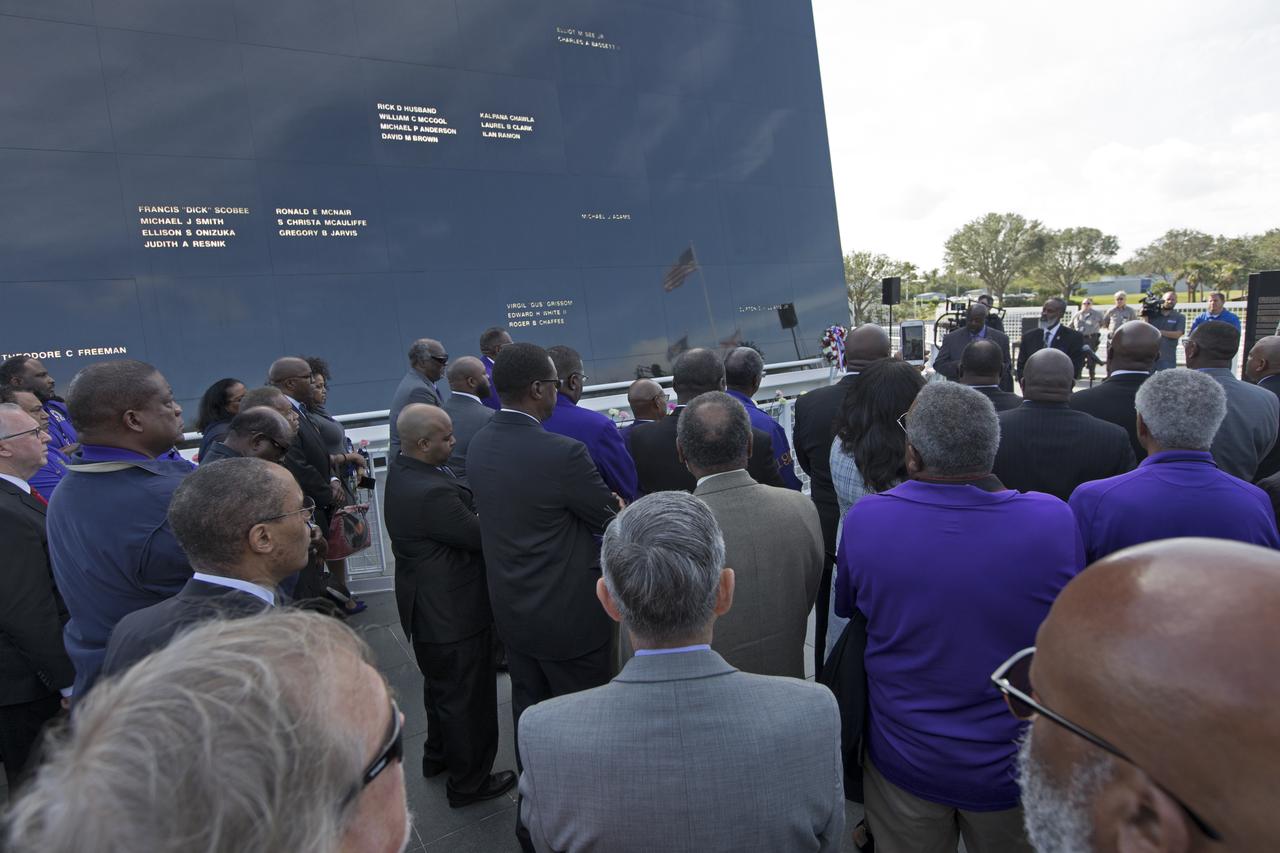
Following an Astronauts Memorial Foundation tribute honoring U.S. Air Foce Maj. Robert Lawrence, guests gathered at the Space Mirror Memorial at the Kenendy Space Center Visitor Compelx. Selected in 1967 for the Manned Orbiting Laboratory Program, Lawrence was the first African-American astronaut. He lost his life in a training accident 50 years ago. The ceremony took place in the Center for Space Education at the Kennedy Space Center Visitor Complex.
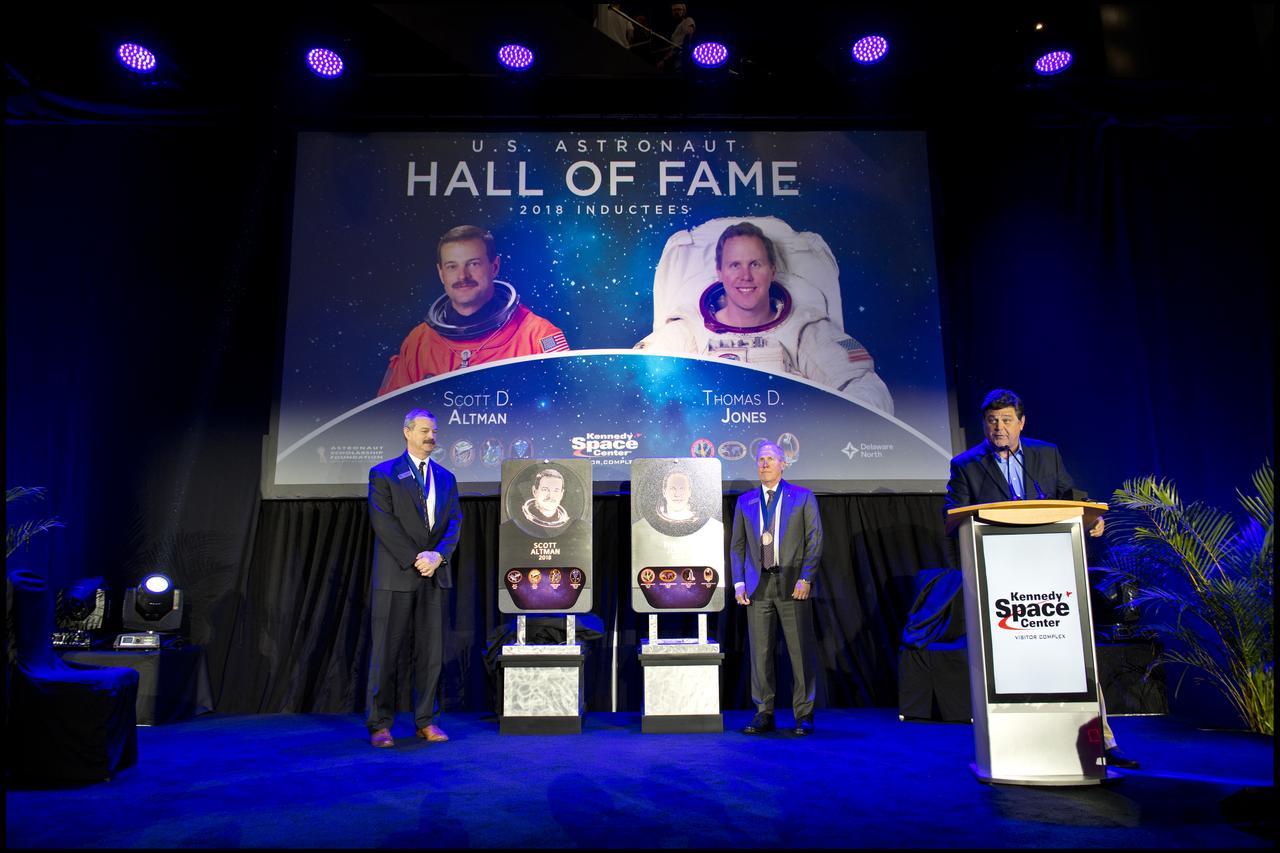
Former astronauts and space explorers Scott D. Altman, at left, and Thomas D. Jones, Ph.D., are inducted into the U.S. Astronaut Hall of Fame Class of 2018 during a ceremony inside the Space Shuttle Atlantis attraction at NASA’s Kennedy Space Center Visitor Complex in Florida. They unveiled their plaques, which will be placed in Hall of Fame at the visitor complex. At far right is Master of Ceremonies, John Zarella, former CNN space correspondent. Inductees into the Hall of Fame are selected by a committee of Hall of Fame astronauts, former NASA officials, flight directors, historians and journalists. The process is administered by the Astronaut Scholarship Foundation. To be eligible, an astronaut must have made his or her first flight at least 17 years before the induction. Candidates must be a U.S. citizen and a NASA-trained commander, pilot or mission specialist who has orbited the earth at least once. Including Altman and Jones, 97 astronauts have been inducted into the AHOF.
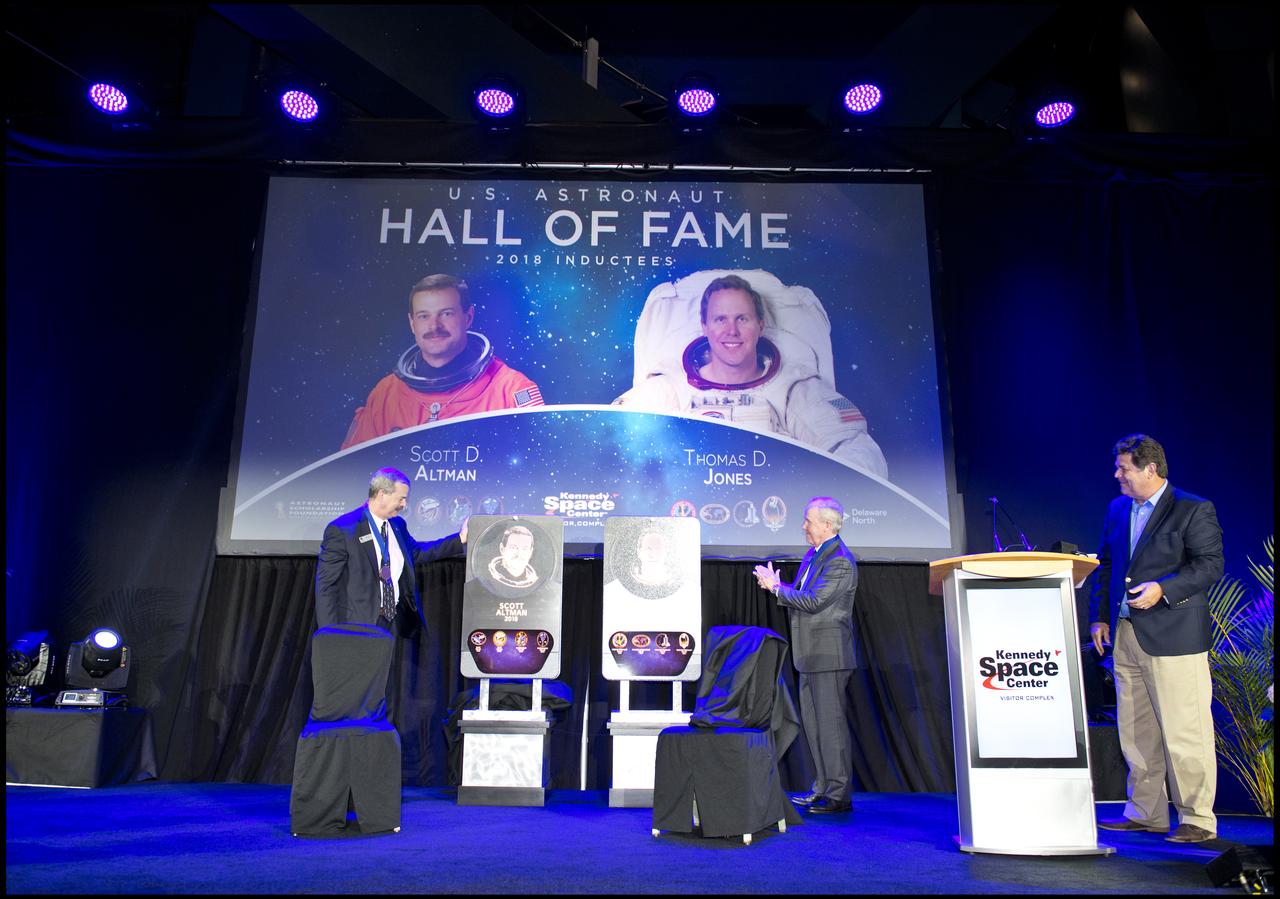
Former astronauts and space explorers Scott D. Altman, at left, and Thomas D. Jones, Ph.D., are inducted into the U.S. Astronaut Hall of Fame Class of 2018 during a ceremony inside the Space Shuttle Atlantis attraction at NASA’s Kennedy Space Center Visitor Complex in Florida. They unveiled their plaques, which will be placed in the Hall of Fame at the visitor complex. At far right is Master of Ceremonies, John Zarella, former CNN space correspondent. Inductees into the Hall of Fame are selected by a committee of Hall of Fame astronauts, former NASA officials, flight directors, historians and journalists. The process is administered by the Astronaut Scholarship Foundation. To be eligible, an astronaut must have made his or her first flight at least 17 years before the induction. Candidates must be a U.S. citizen and a NASA-trained commander, pilot or mission specialist who has orbited the earth at least once. Including Altman and Jones, 97 astronauts have been inducted into the AHOF.
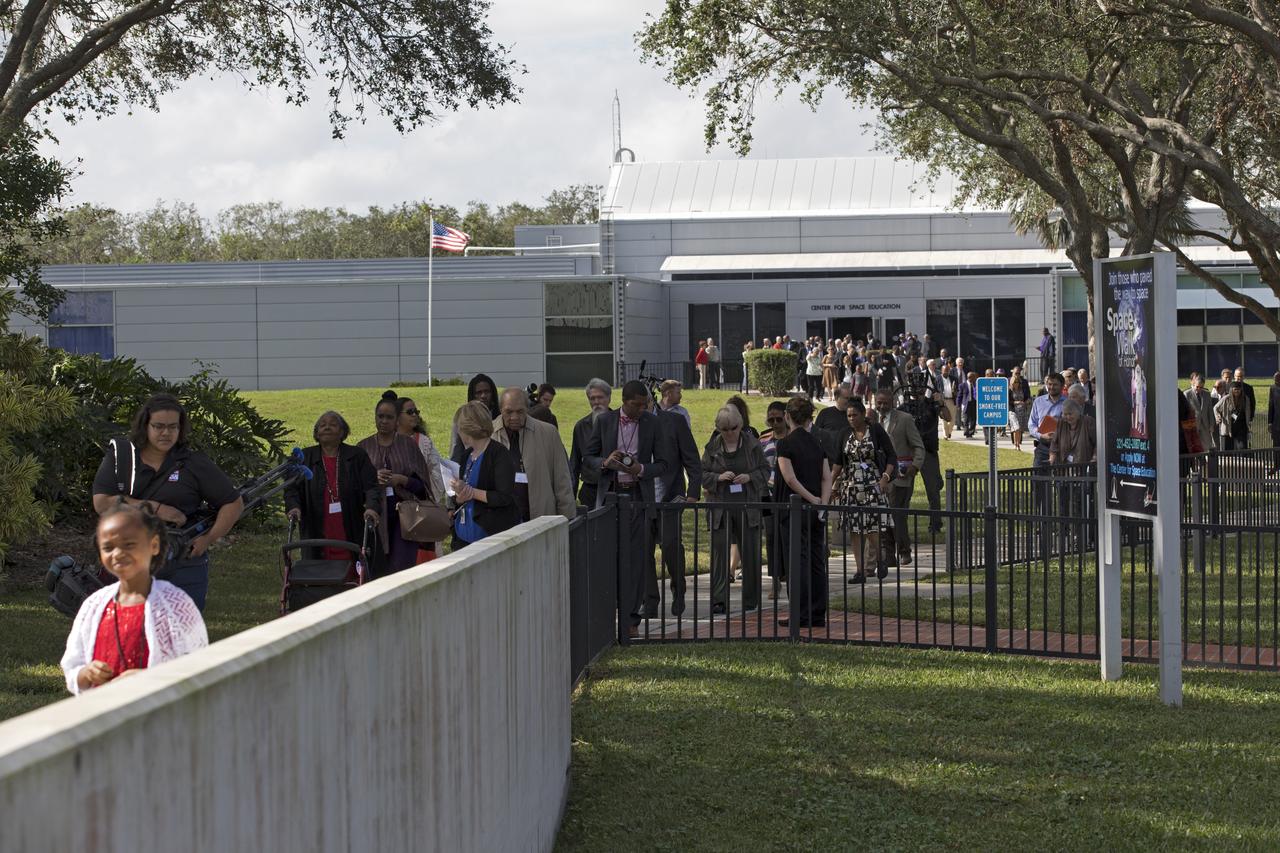
During an Astronauts Memorial Foundation tribute honoring U.S. Air Foce Maj. Robert Lawrence, guests walk to the Space Mirror Memorial at the Kennedy Space Center's Visitor Complex. Selected in 1967 for the Manned Orbiting Laboratory Program, Lawrence was the first African-American astronaut. He lost his life in a training accident 50 years ago. The ceremony took place in the Center for Space Education at the Kennedy visitor complex.
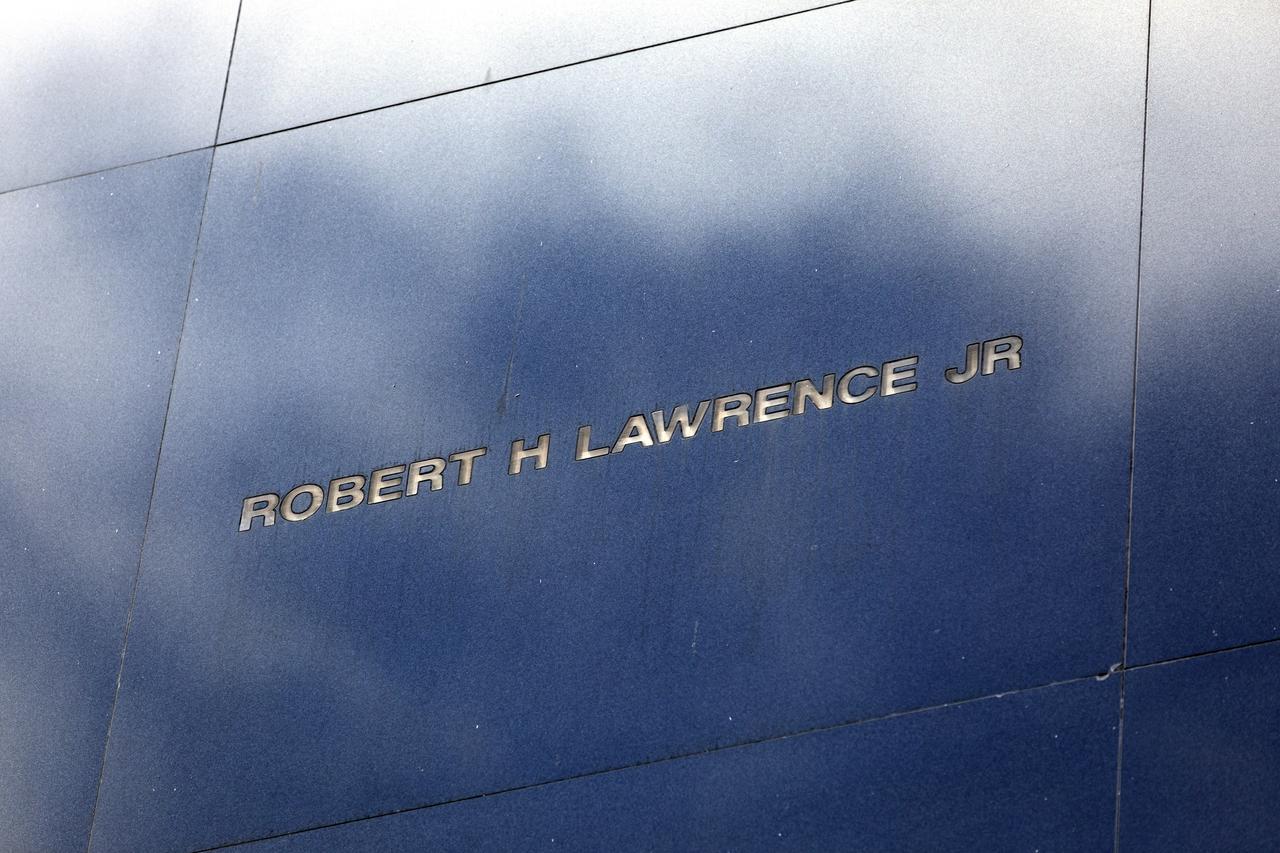
At the Kennedy Space Center's Visitor Complex, the name of U.S. Air Foce Maj. Robert Lawrence is one of those included on the Space Mirror Memorial which honors those lost in efforts to explore space. Selected in 1967 for the Manned Orbiting Laboratory Program, Lawrence was the first African-American astronaut. He lost his life in a training accident 50 years ago. The ceremony took place in the Center for Space Education at the Kennedy visitor complex.
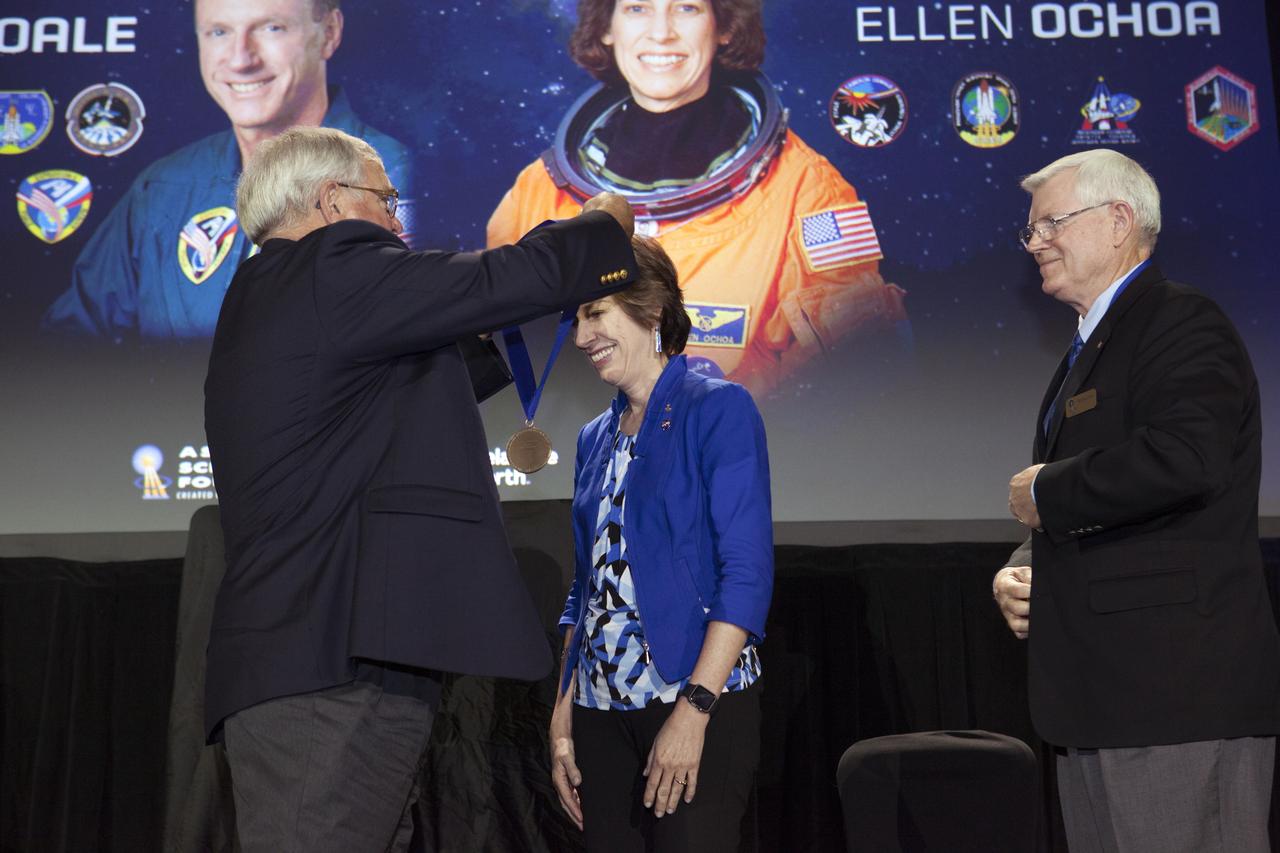
In the Space Shuttle Atlantis facility at the Kennedy Space Center Visitor Complex in Florida, Astronaut Scholarship Foundation Chairman Dan Brandenstein, left, also a Hall of Fame astronaut, presents inductee Ellen Ochoa with her hall of fame medal. Former Johnson Space Center Director Mike Coats, right, a Hall of Fame member, presented Ochoa for induction. During this year's ceremonies, space shuttle astronaut Michael Foale also was enshrined.
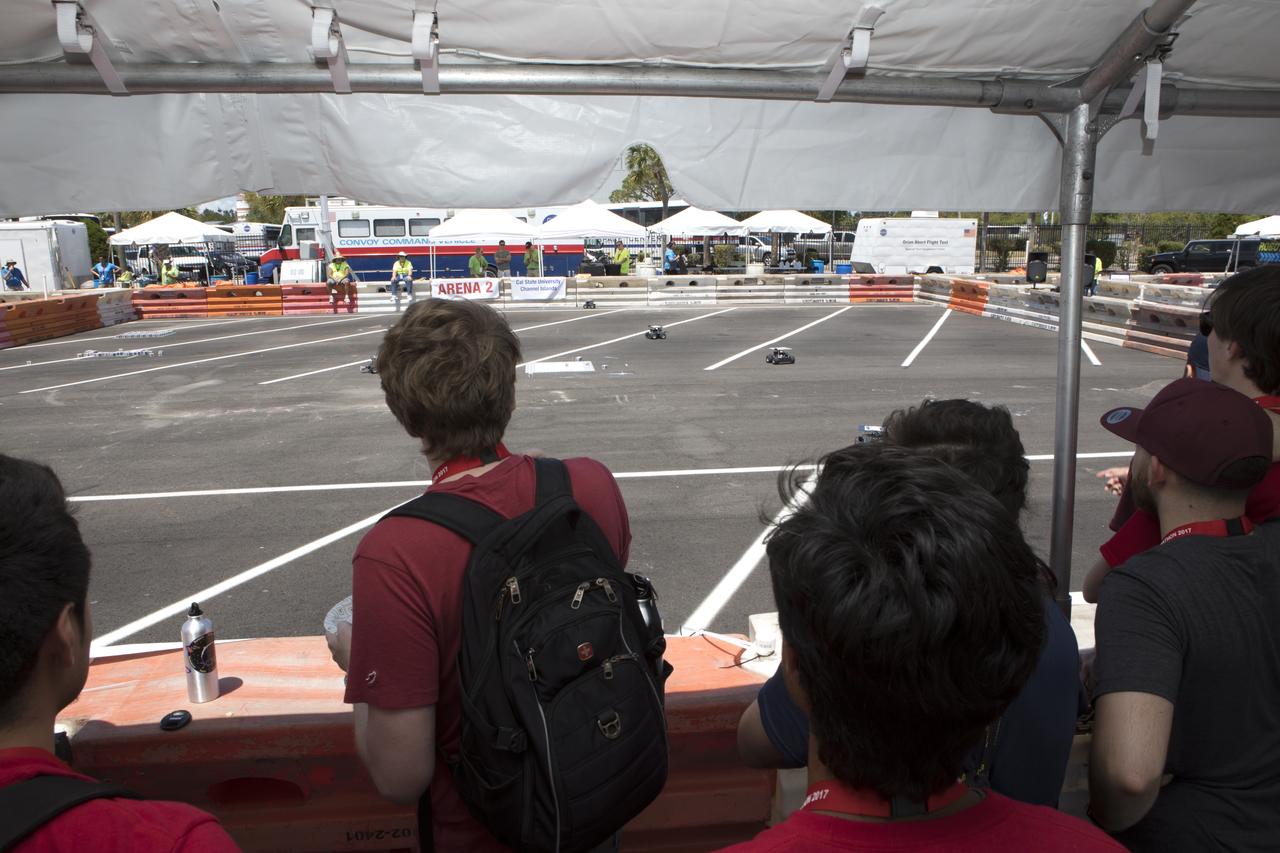
At the Kennedy Space Center Visitor Complex, students monitor progress as their Swarmie robots as they search for "resources." The goal is for the robots to pick up cubes with AprilTags, which are similar to bar codes. The Swarmies then move the cubes to a white square in the center of the completion arena. The small, four-wheeled robots are designed to effectively and efficiently locate hidden resources while astronauts explore distant destinations such as the moon or Mars.
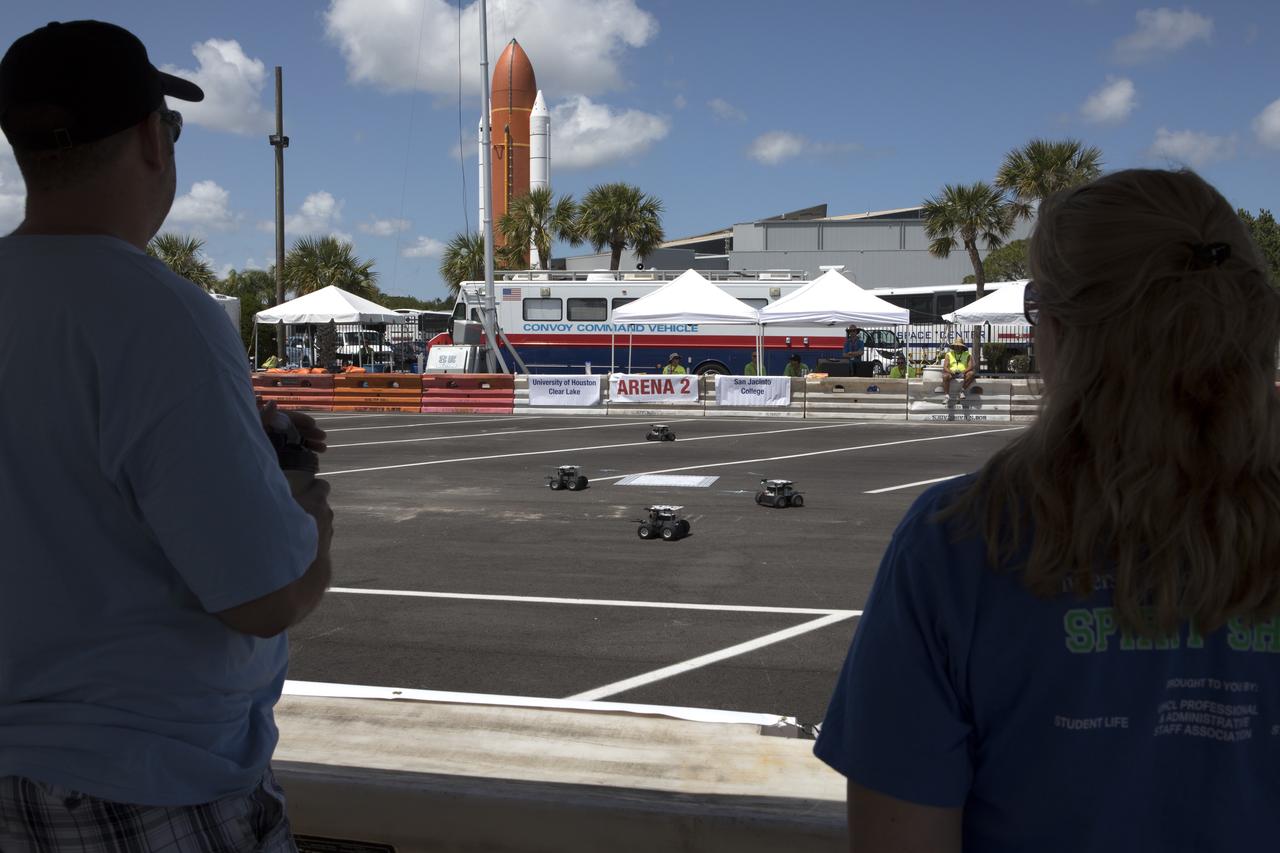
At the Kennedy Space Center Visitor Complex, students monitor progress as their Swarmie robots as they search for "resources." The goal is for the robots to pick up cubes with AprilTags, which are similar to bar codes. The Swarmies then move the cubes to a white square in the center of the completion arena. The small, four-wheeled robots are designed to effectively and efficiently locate hidden resources while astronauts explore distant destinations such as the moon or Mars.
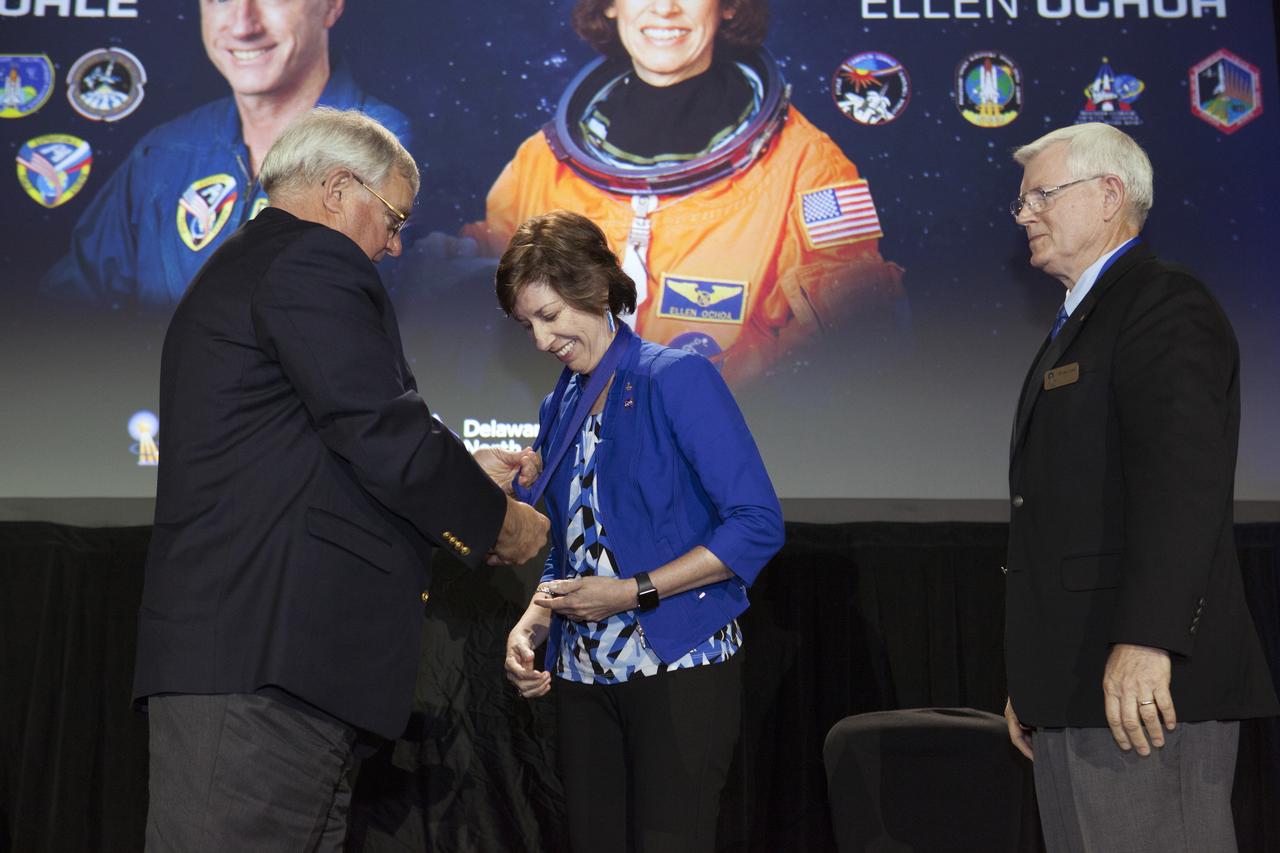
In the Space Shuttle Atlantis facility at the Kennedy Space Center Visitor Complex in Florida, Astronaut Scholarship Foundation Chairman Dan Brandenstein, left, also a Hall of Fame astronaut, presents inductee Ellen Ochoa with her hall of fame medal. Former Johnson Space Center Director Mike Coats, right, a Hall of Fame member, presented Ochoa for induction. During this year's ceremonies, space shuttle astronaut Michael Foale also was enshrined.
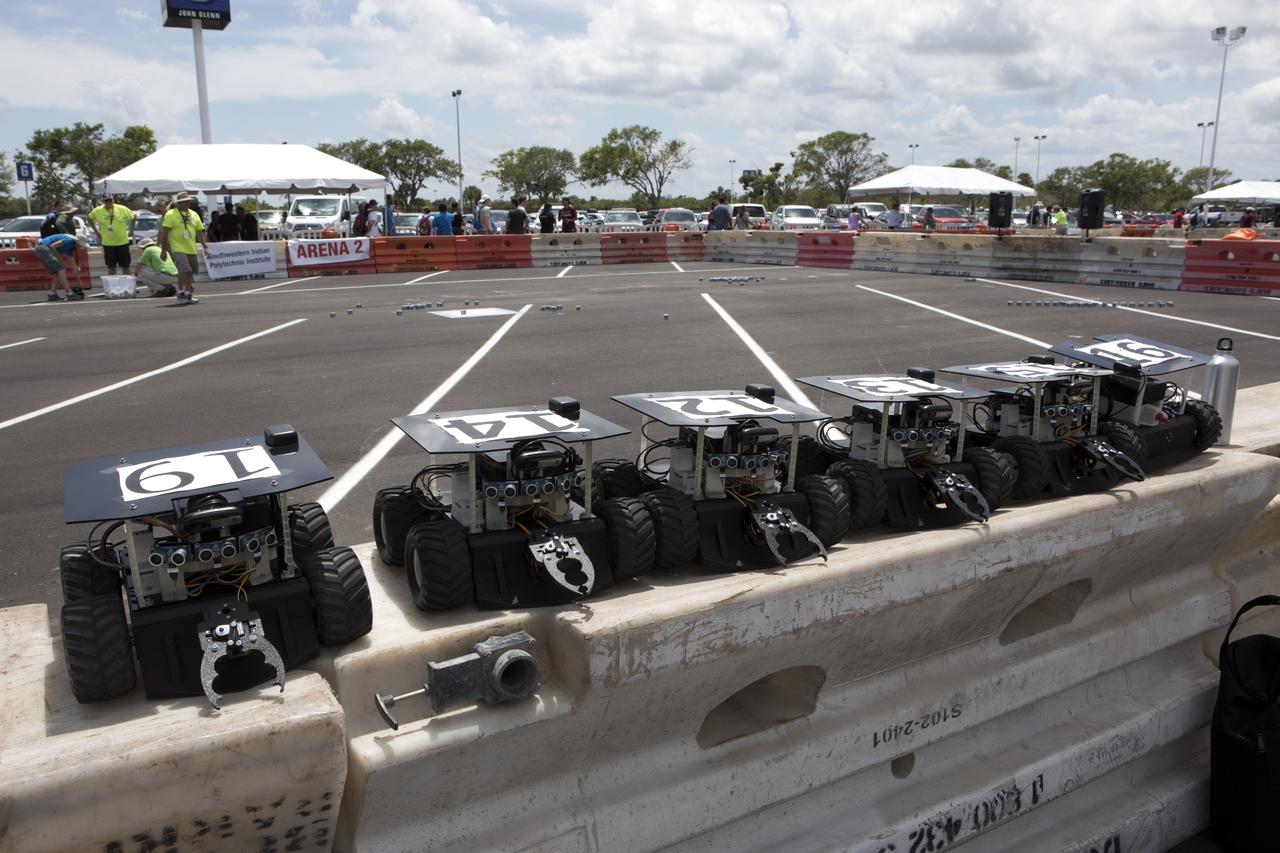
In the Swarmathon competition at the Kennedy Space Center Visitor Complex, students were asked to develop computer code for the small robots, programming them to look for "resources" in the form of cubes with AprilTags, similar to barcodes. Teams developed search algorithms for the Swarmies to operate autonomously, communicating and interacting as a collective swarm similar to ants foraging for food.

StenniSphere, the John C. Stennis Space Center's visitor center in Hancock County, Miss., features a 14,000-square-foot museum and outdoor exhibits about Stennis Space Center. Designed to entertain while educating, StenniSphere includes informative displays and exhibits from NASA, the Naval Meteorology and Oceanography Command, and other resident agencies. Recently named Mississippi's Travel Attraction of the Year, StenniSphere hosted a quarter of a million visitors in its first year and is a major school field trip destination.
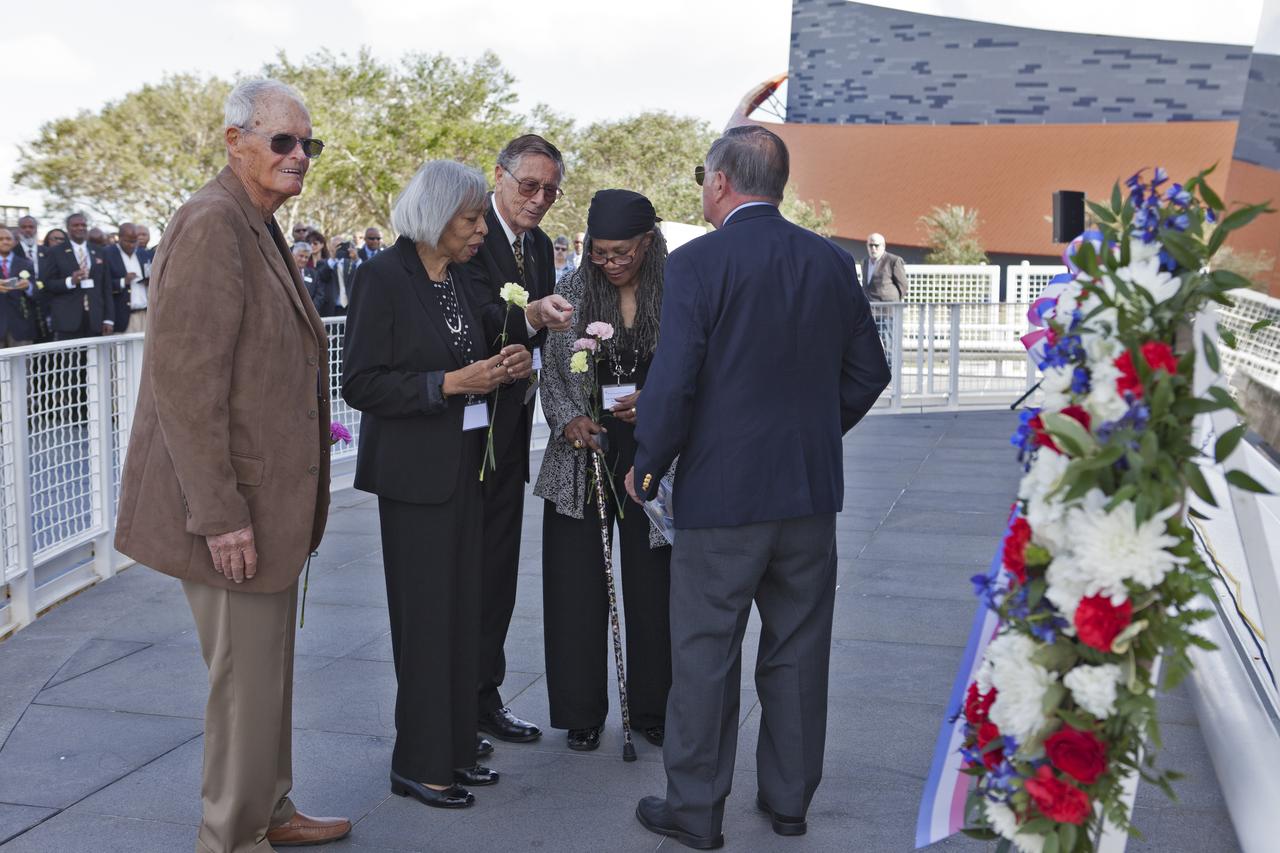
During an Astronauts Memorial Foundation tribute honoring U.S. Air Foce Maj. Robert Lawrence, a wreath is placed at the Space Mirror Memorial at the Kenendy Space Center Visitor Compelx. Participating are, from thje left, Al Crews, Lawrence's sister, Barbara Lawrence, Ph.D., James Abrahamson, Lawrence's sister-in-law Lorne Cress Love, and Bob Crippen. Crews, Abrahamson and Crippen all were selected as astronauts for the Manned Orbiting Laboratory (MOL) Program. Selected in 1967 for MOL, Lawrence was the first African-American astronaut. He lost his life in a training accident 50 years ago. The ceremony took place in the Center for Space Education at the Kennedy Space Center Visitor Complex.
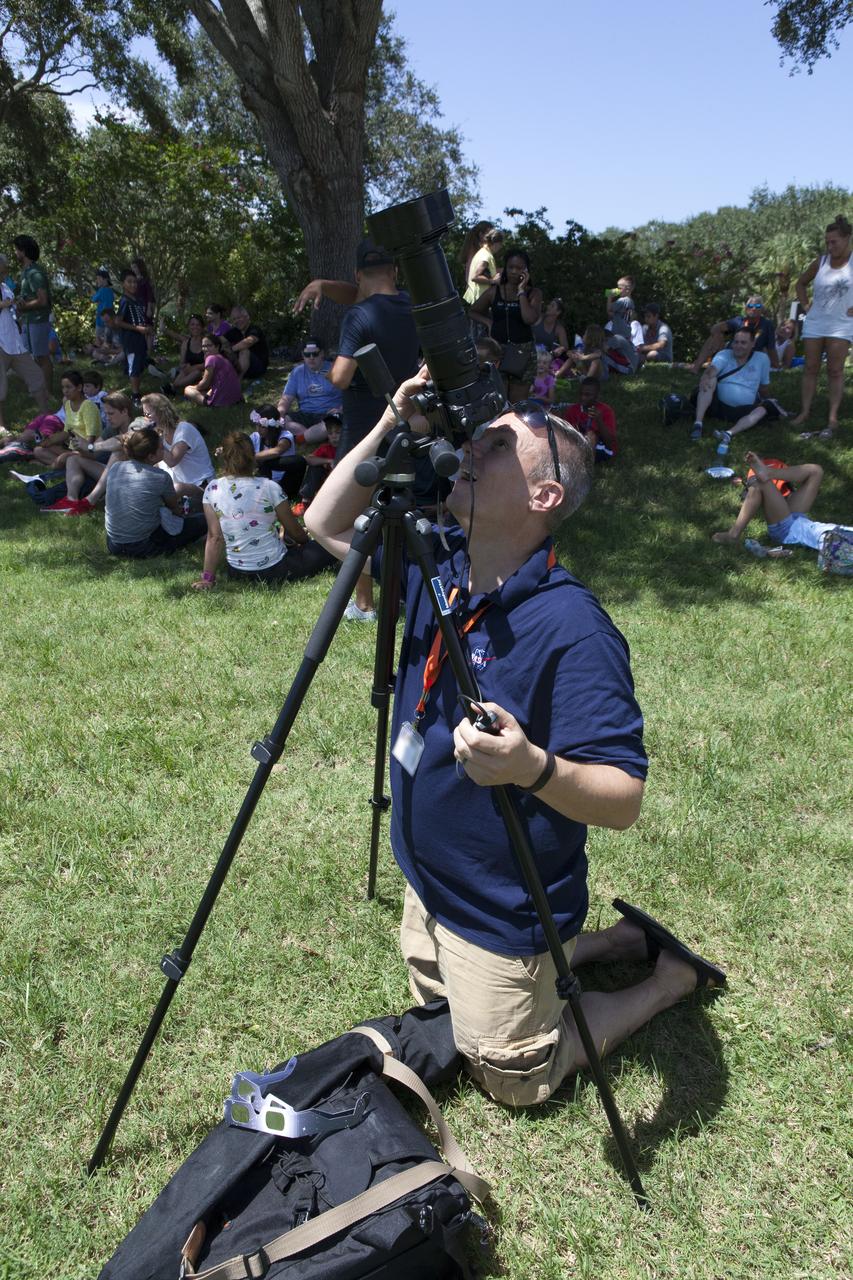
From the Kennedy Space Center Visitor Complex, guests joined Americans from coast to coast following the solar eclipse. Although a partial eclipse on Florida's Space Coast, young and old alike found many ways to watch the rare astronomical event. As the Moon passed between Earth and the midafternoon Sun, a shadow moved across the landscape. The 70-mile-wide totality path, or "umbral cone" -- where the entire Sun will vanish behind the Moon -- stretched across 14 states, from Oregon to South Carolina.
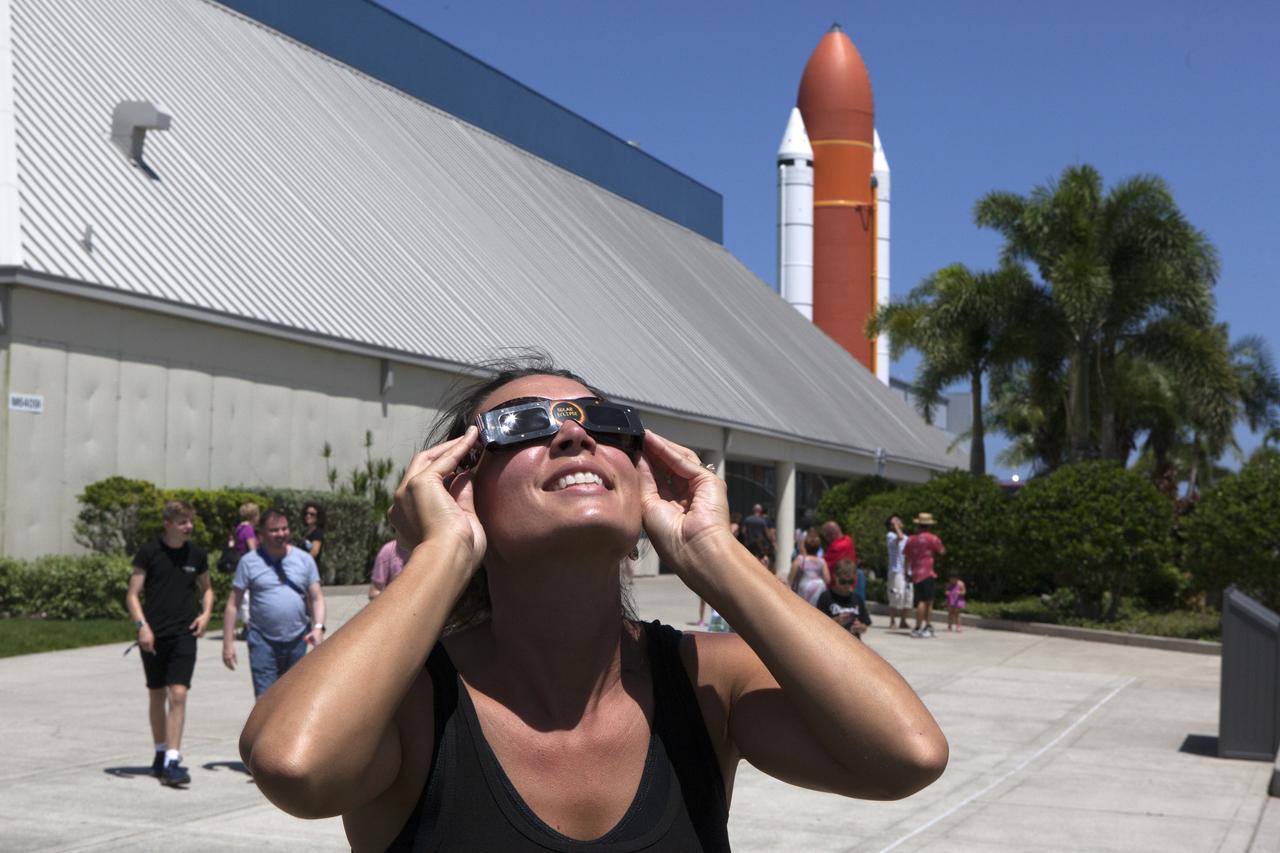
From the Kennedy Space Center Visitor Complex, guests joined Americans from coast to coast following the solar eclipse. Although a partial eclipse on Florida's Space Coast, young and old alike found many ways to watch the rare astronomical event. As the Moon passed between Earth and the midafternoon Sun, a shadow moved across the landscape. The 70-mile-wide totality path, or "umbral cone" -- where the entire Sun will vanish behind the Moon -- stretched across 14 states, from Oregon to South Carolina.
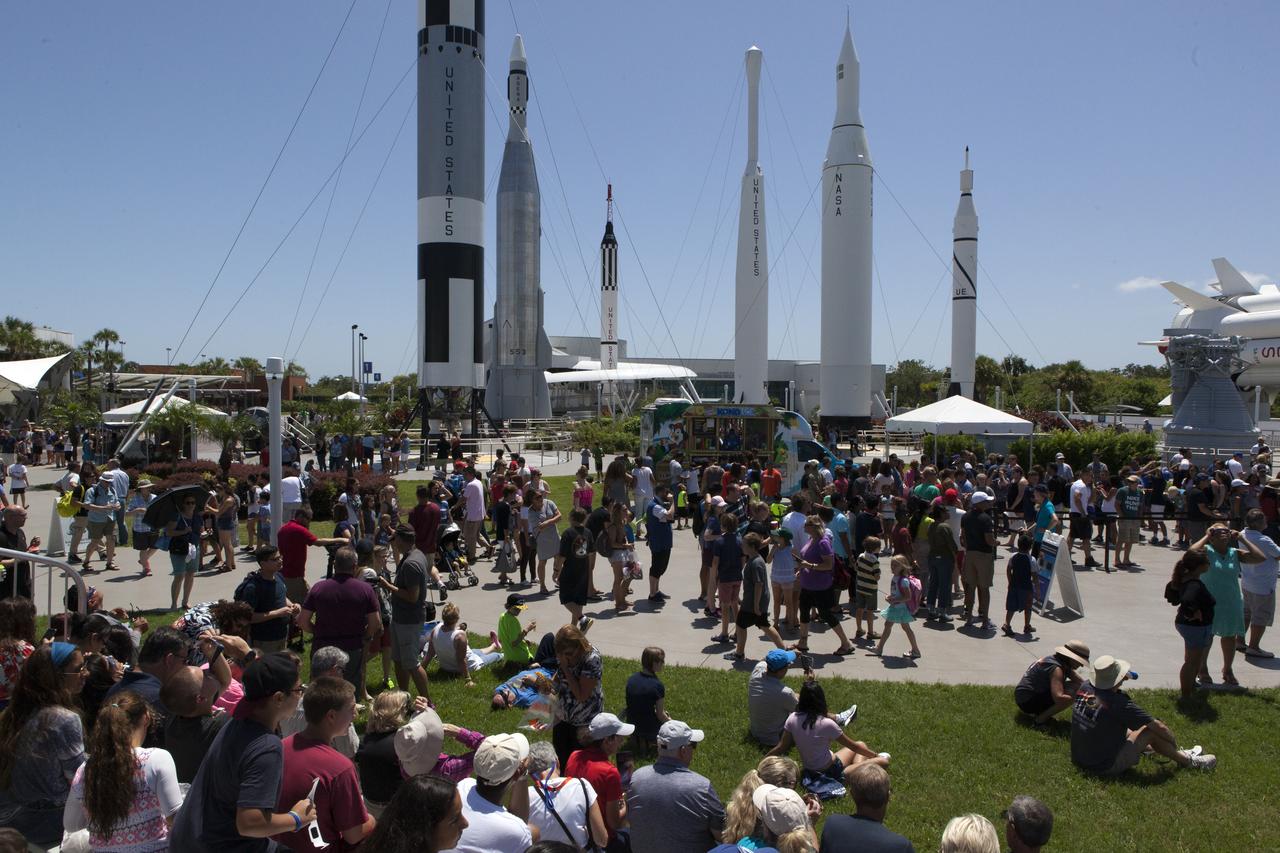
From the Kennedy Space Center Visitor Complex, guests joined Americans from coast to coast following the solar eclipse. Although a partial eclipse on Florida's Space Coast, young and old alike found many ways to watch the rare astronomical event. As the Moon passed between Earth and the midafternoon Sun, a shadow moved across the landscape. The 70-mile-wide totality path, or "umbral cone" -- where the entire Sun will vanish behind the Moon -- stretched across 14 states, from Oregon to South Carolina.
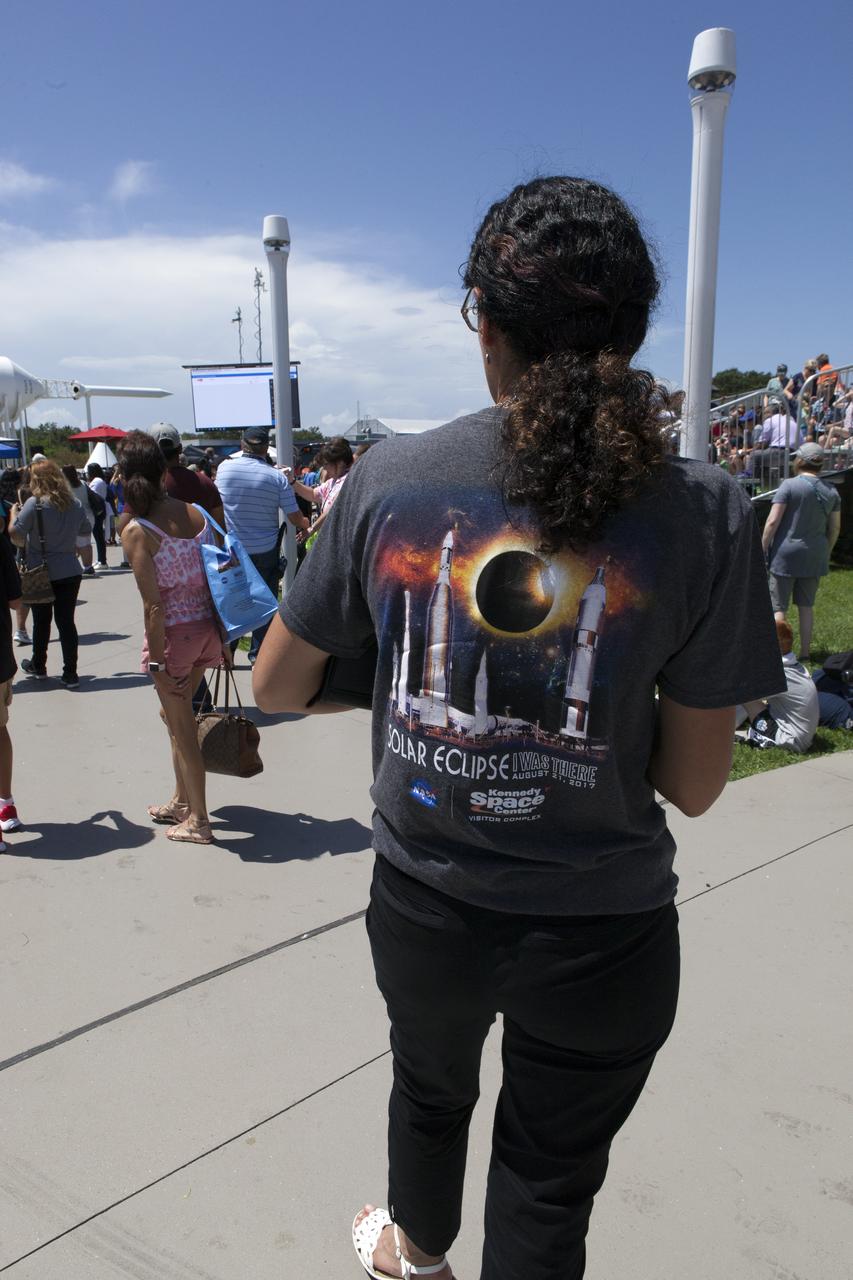
From the Kennedy Space Center Visitor Complex, guests joined Americans from coast to coast following the solar eclipse. Although a partial eclipse on Florida's Space Coast, young and old alike found many ways to watch the rare astronomical event. As the Moon passed between Earth and the midafternoon Sun, a shadow moved across the landscape. The 70-mile-wide totality path, or "umbral cone" -- where the entire Sun will vanish behind the Moon -- stretched across 14 states, from Oregon to South Carolina.
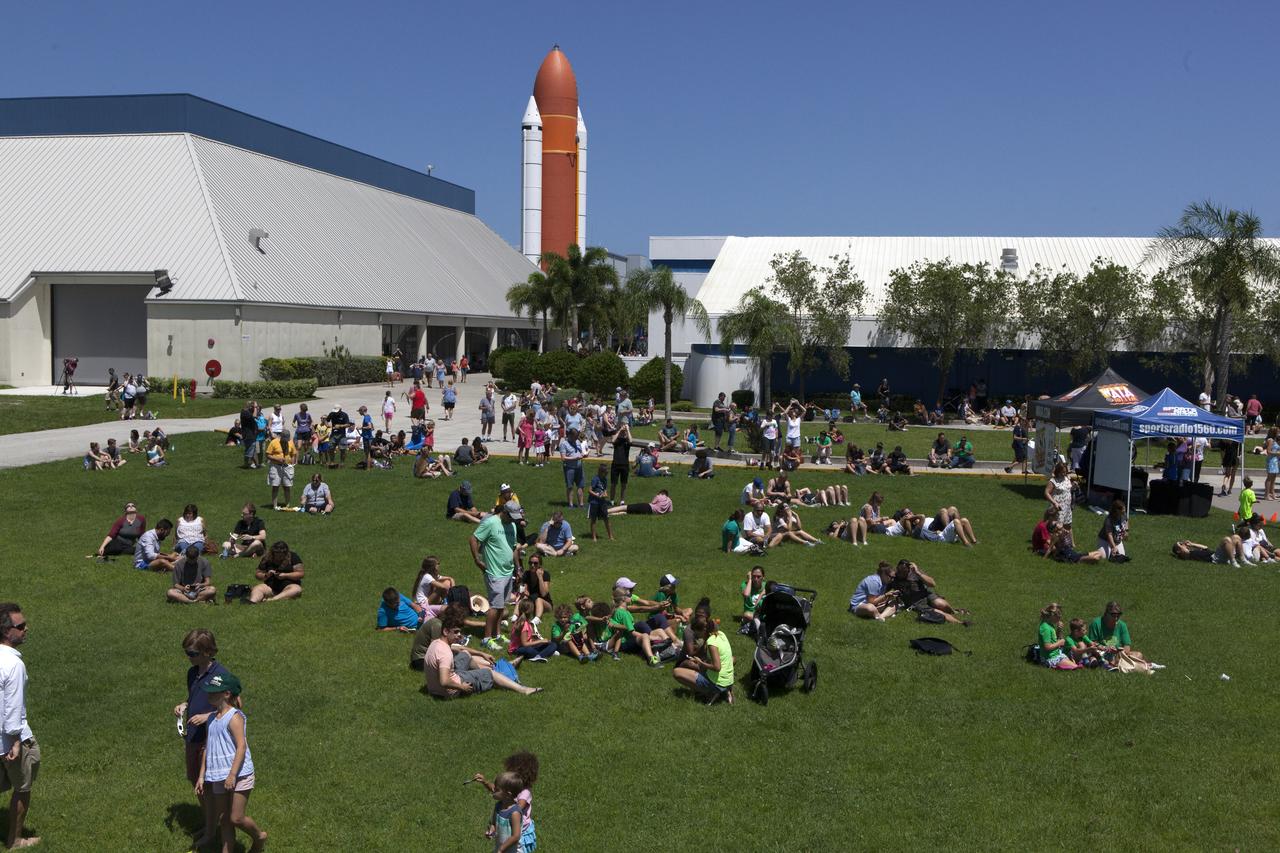
From the Kennedy Space Center Visitor Complex, guests joined Americans from coast to coast following the solar eclipse. Although a partial eclipse on Florida's Space Coast, young and old alike found many ways to watch the rare astronomical event. As the Moon passed between Earth and the midafternoon Sun, a shadow moved across the landscape. The 70-mile-wide totality path, or "umbral cone" -- where the entire Sun will vanish behind the Moon -- stretched across 14 states, from Oregon to South Carolina.
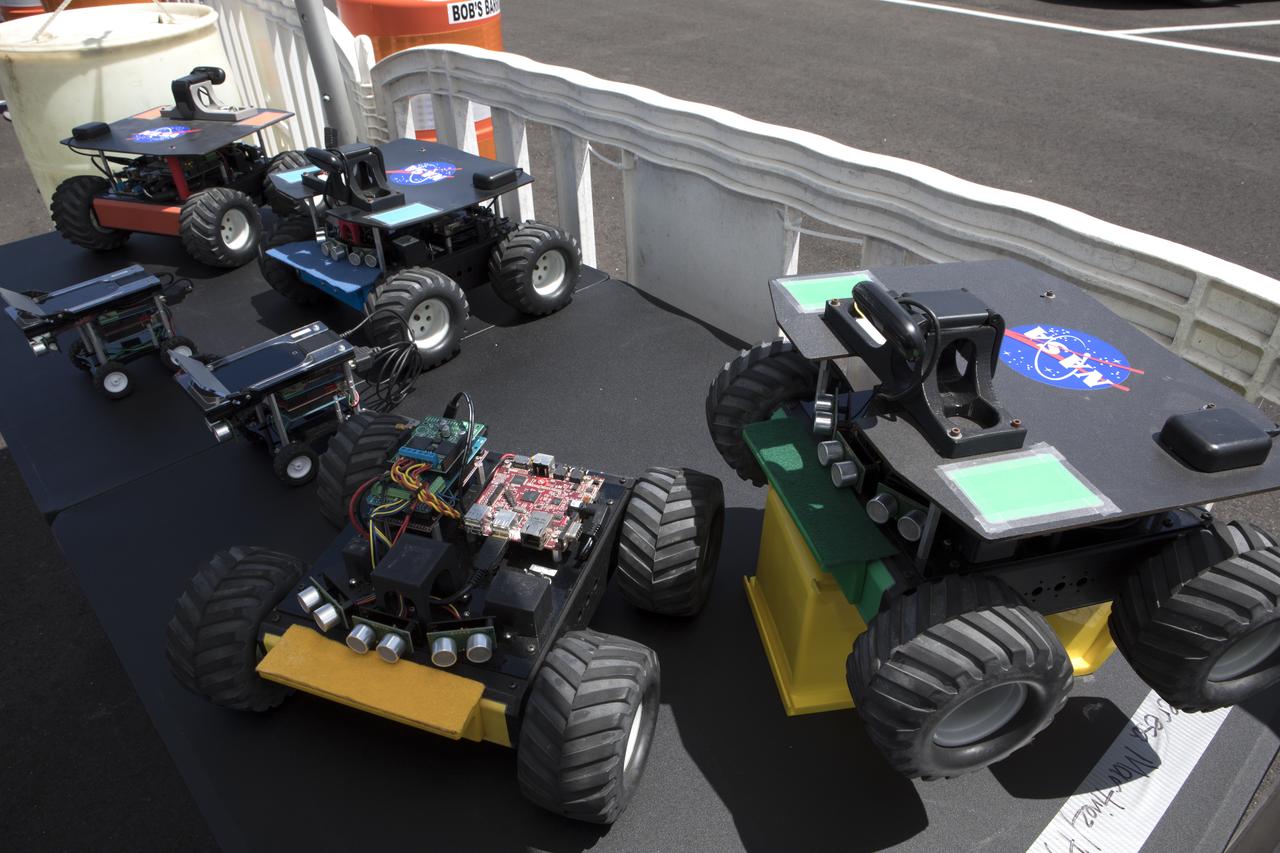
A display at the Kennedy Space Center Visitor Complex describes the purpose of Swarmies. Computer scientists are developing these robots focusing not so much on the hardware, but the software. In the spaceport's annual Swarmathon, students from 12 colleges and universities across the nation were invited to develop software code to operate Swarmies to help find resources when astronauts explore distant planets, such as Mars.
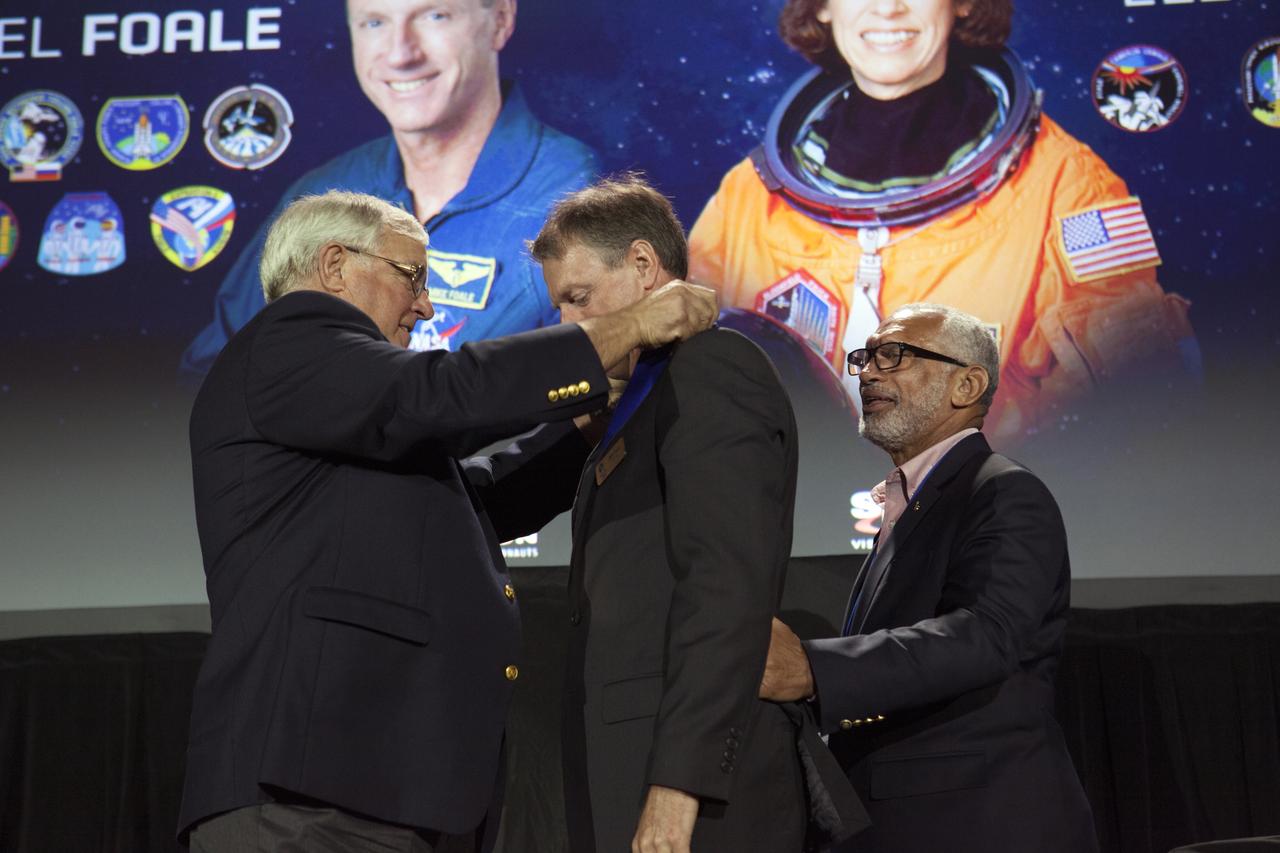
In the Space Shuttle Atlantis facility at the Kennedy Space Center Visitor Complex in Florida, Astronaut Scholarship Foundation Chairman Dan Brandenstein, left, also a Hall of Fame astronaut, presents inductee Michael Foale with his hall of fame medal. Former NASA Administrator Charlie Bolden, right, a Hall of Fame member, presented Foale for induction. During this year's ceremonies, space shuttle astronaut Ellen Ochoa also was enshrined.
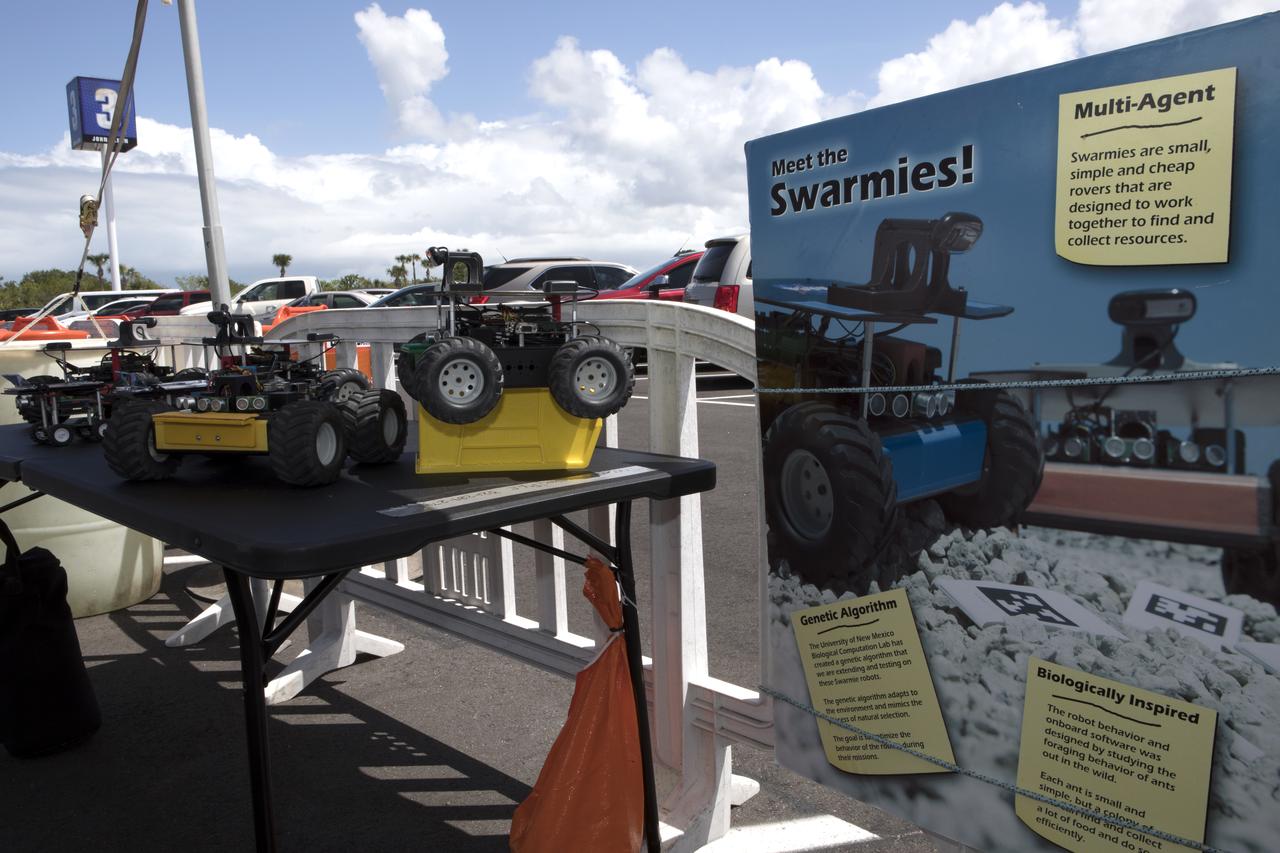
A display at the Kennedy Space Center Visitor Complex describes the purpose of Swarmies. Computer scientists are developing these robots focusing not so much on the hardware, but the software. In the spaceport's annual Swarmathon, students from 12 colleges and universities across the nation were invited to develop software code to operate Swarmies to help find resources when astronauts explore distant planets, such as Mars.
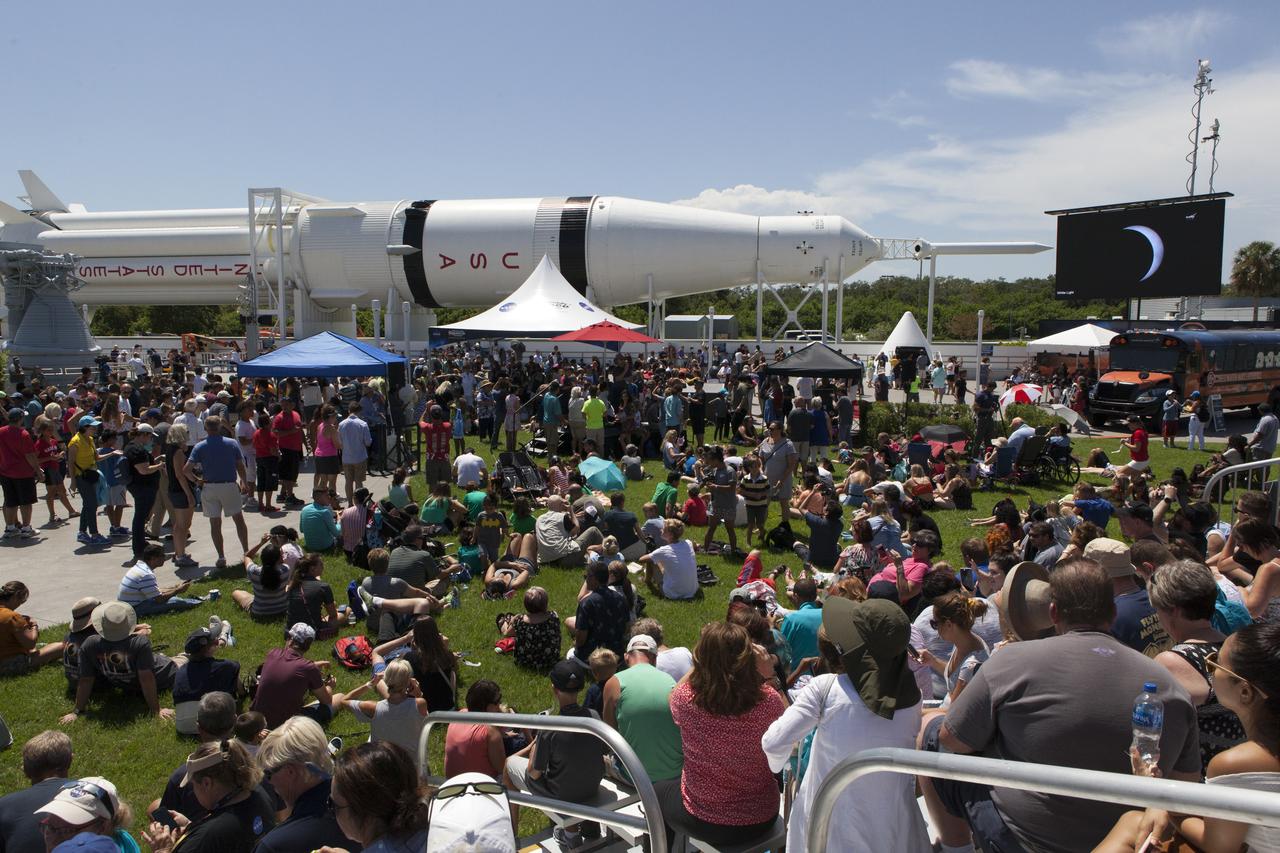
From the Kennedy Space Center Visitor Complex, guests joined Americans from coast to coast following the solar eclipse. Although a partial eclipse on Florida's Space Coast, young and old alike found many ways to watch the rare astronomical event. As the Moon passed between Earth and the midafternoon Sun, a shadow moved across the landscape. The 70-mile-wide totality path, or "umbral cone" -- where the entire Sun will vanish behind the Moon -- stretched across 14 states, from Oregon to South Carolina.
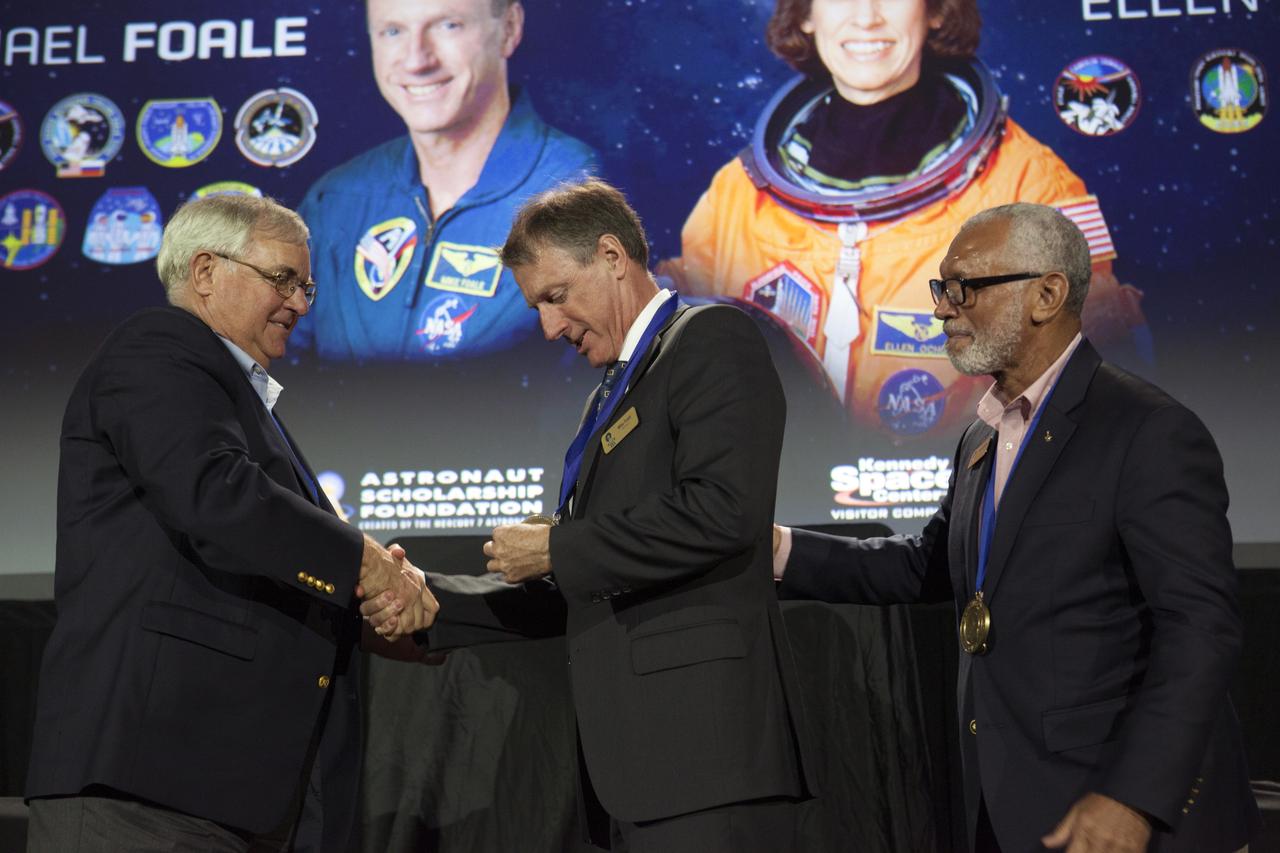
In the Space Shuttle Atlantis facility at the Kennedy Space Center Visitor Complex in Florida, Astronaut Scholarship Foundation Chairman Dan Brandenstein, left, also a Hall of Fame astronaut, presents inductee Michael Foale with his hall of fame medal. Former NASA Administrator Charlie Bolden, right, a Hall of Fame member, presented Foale for induction. During this year's ceremonies, space shuttle astronaut Ellen Ochoa also was enshrined.
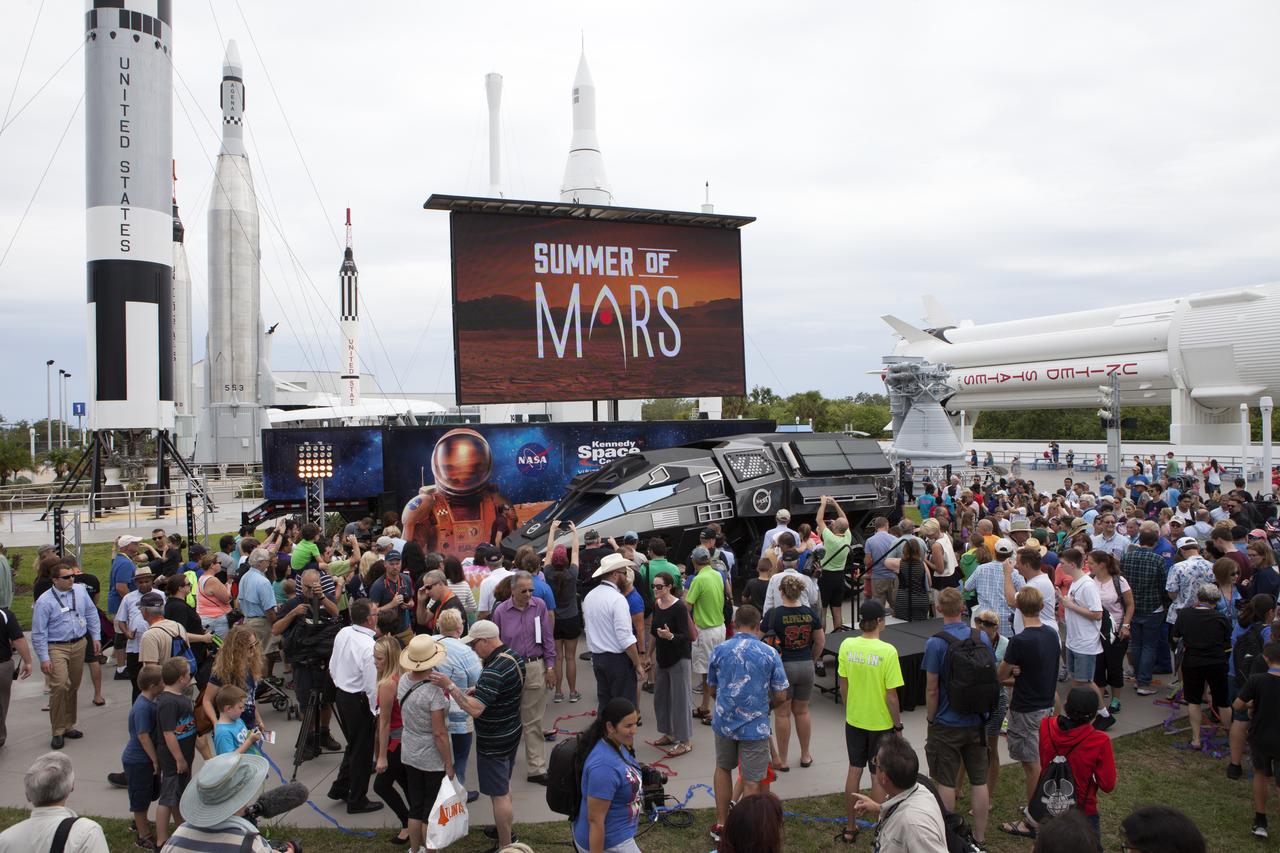
Crowds gather around the scientifically-themed Mars rover concept vehicle at the Kennedy Space Center Visitor Complex. It is a part of the "Summer of Mars" program designed to provide a survey of NASA's studies of the Red Planet. The builders of the rover, Parker Brothers Concepts of Port Canaveral, Florida, incorporated input into its design from NASA subject matter experts.
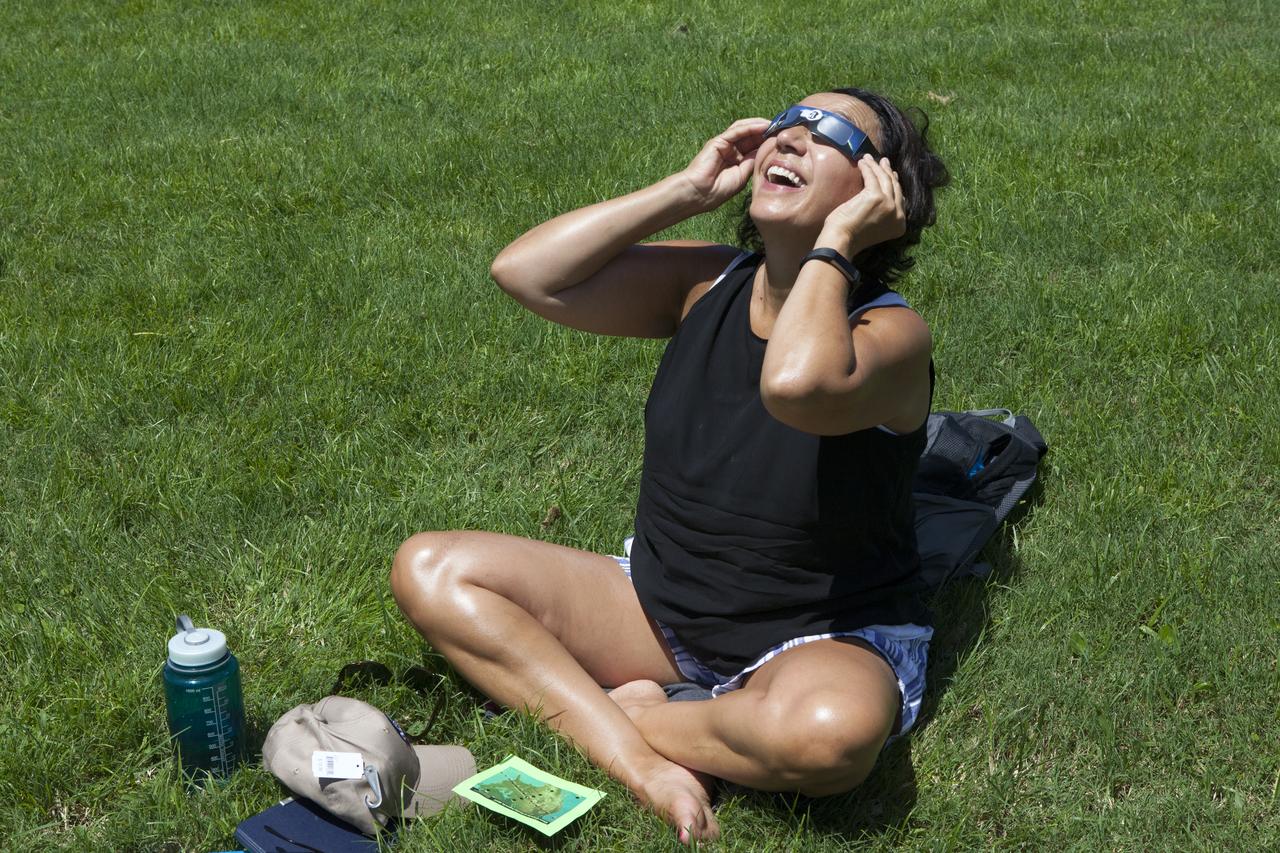
From the Kennedy Space Center Visitor Complex, guests joined Americans from coast to coast following the solar eclipse. Although a partial eclipse on Florida's Space Coast, young and old alike found many ways to watch the rare astronomical event. As the Moon passed between Earth and the midafternoon Sun, a shadow moved across the landscape. The 70-mile-wide totality path, or "umbral cone" -- where the entire Sun will vanish behind the Moon -- stretched across 14 states, from Oregon to South Carolina.
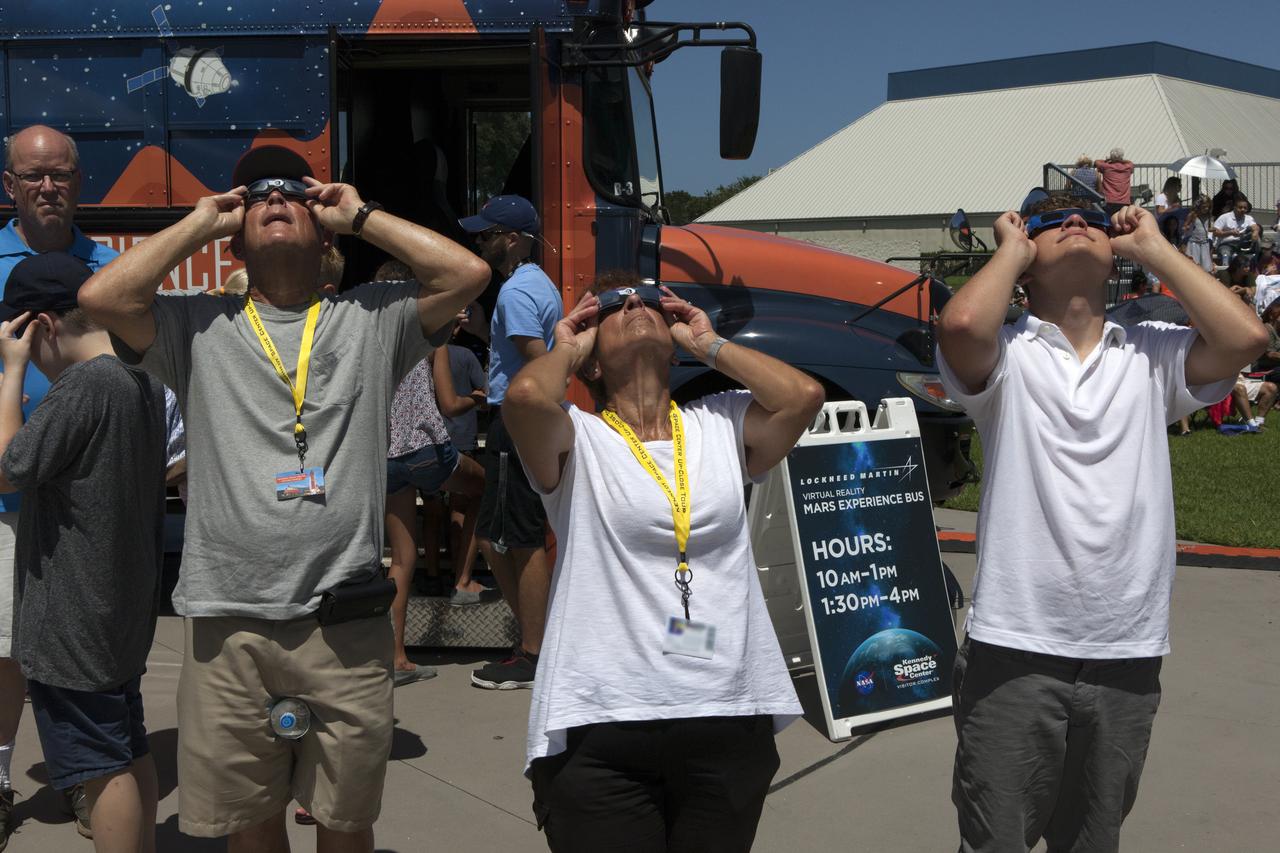
From the Kennedy Space Center Visitor Complex, guests joined Americans from coast to coast following the solar eclipse. Although a partial eclipse on Florida's Space Coast, young and old alike found many ways to watch the rare astronomical event. As the Moon passed between Earth and the midafternoon Sun, a shadow moved across the landscape. The 70-mile-wide totality path, or "umbral cone" -- where the entire Sun will vanish behind the Moon -- stretched across 14 states, from Oregon to South Carolina.
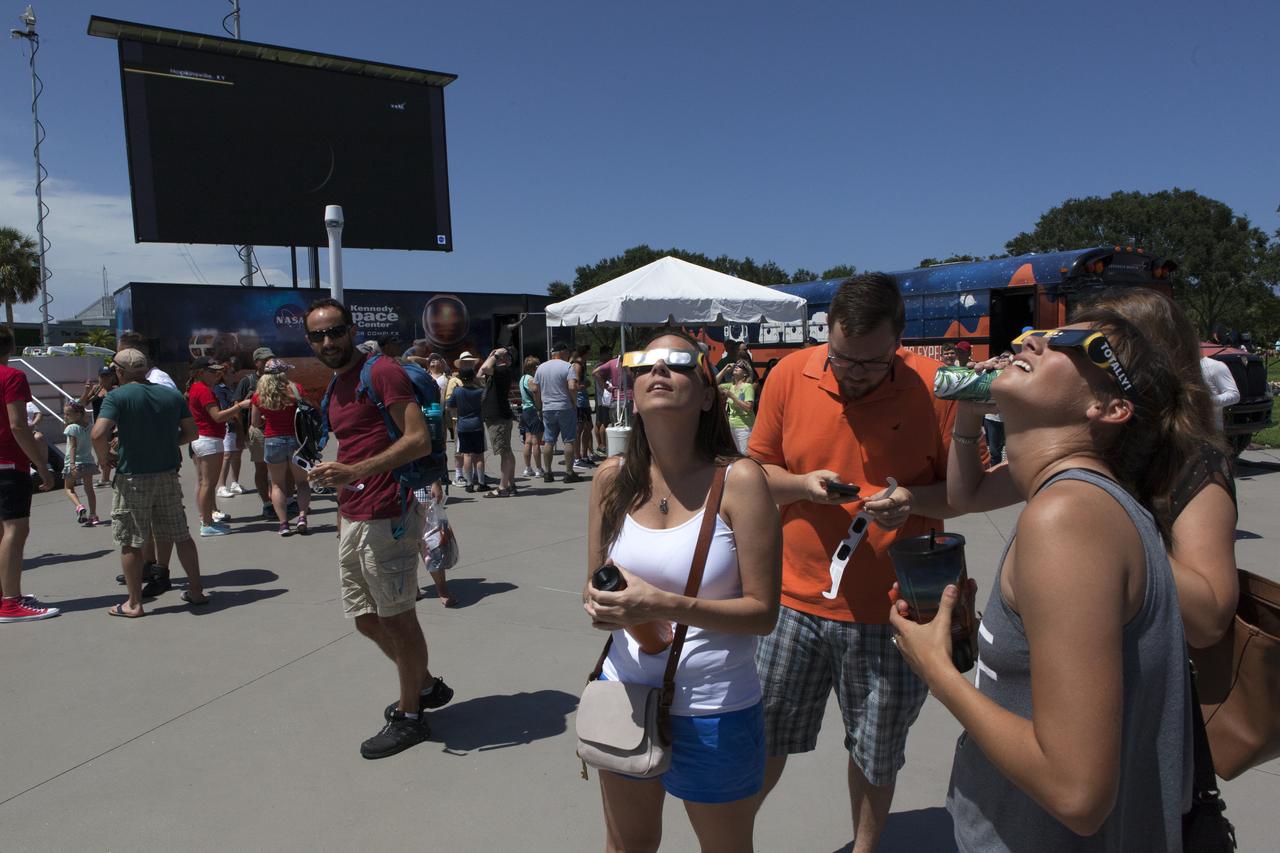
From the Kennedy Space Center Visitor Complex, guests joined Americans from coast to coast following the solar eclipse. Although a partial eclipse on Florida's Space Coast, young and old alike found many ways to watch the rare astronomical event. As the Moon passed between Earth and the midafternoon Sun, a shadow moved across the landscape. The 70-mile-wide totality path, or "umbral cone" -- where the entire Sun will vanish behind the Moon -- stretched across 14 states, from Oregon to South Carolina.
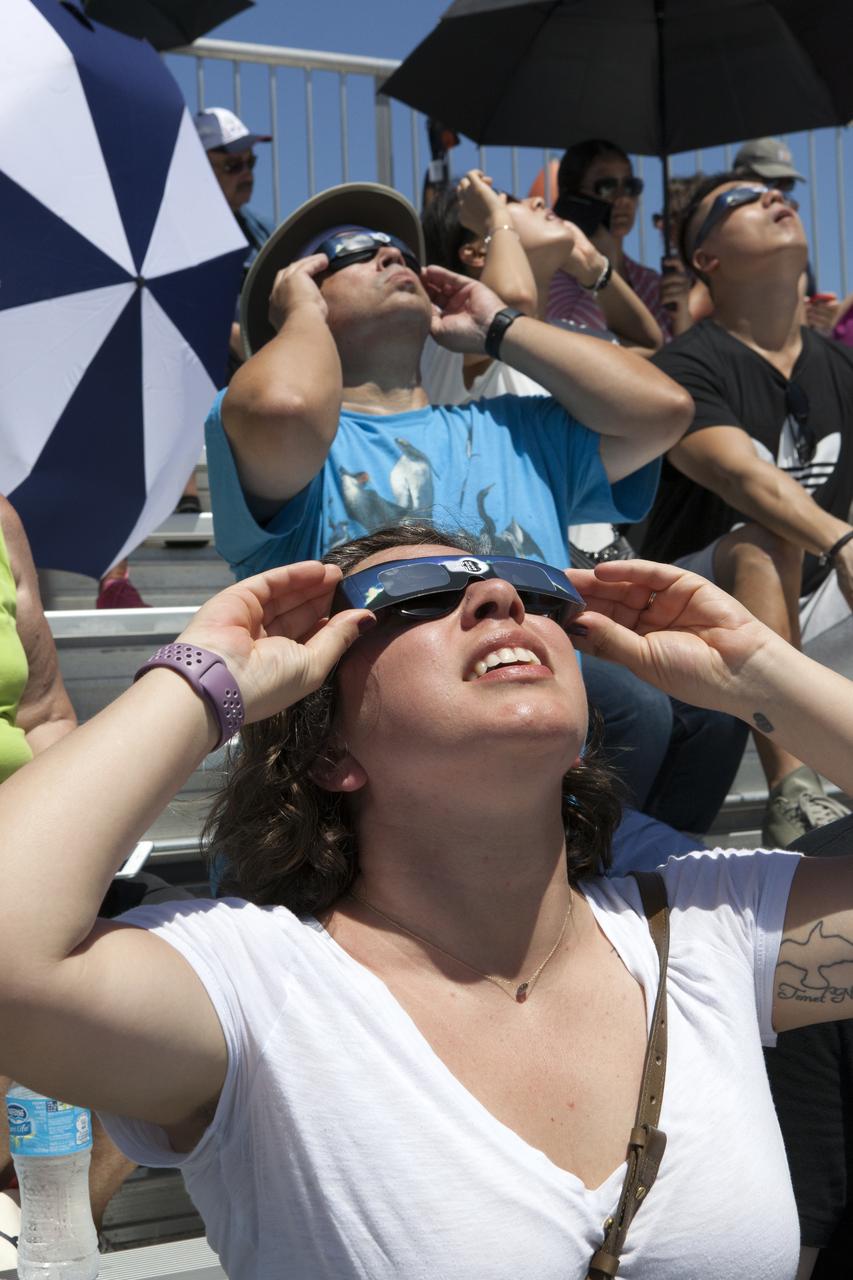
From the Kennedy Space Center Visitor Complex, guests joined Americans from coast to coast following the solar eclipse. Although a partial eclipse on Florida's Space Coast, young and old alike found many ways to watch the rare astronomical event. As the Moon passed between Earth and the midafternoon Sun, a shadow moved across the landscape. The 70-mile-wide totality path, or "umbral cone" -- where the entire Sun will vanish behind the Moon -- stretched across 14 states, from Oregon to South Carolina.
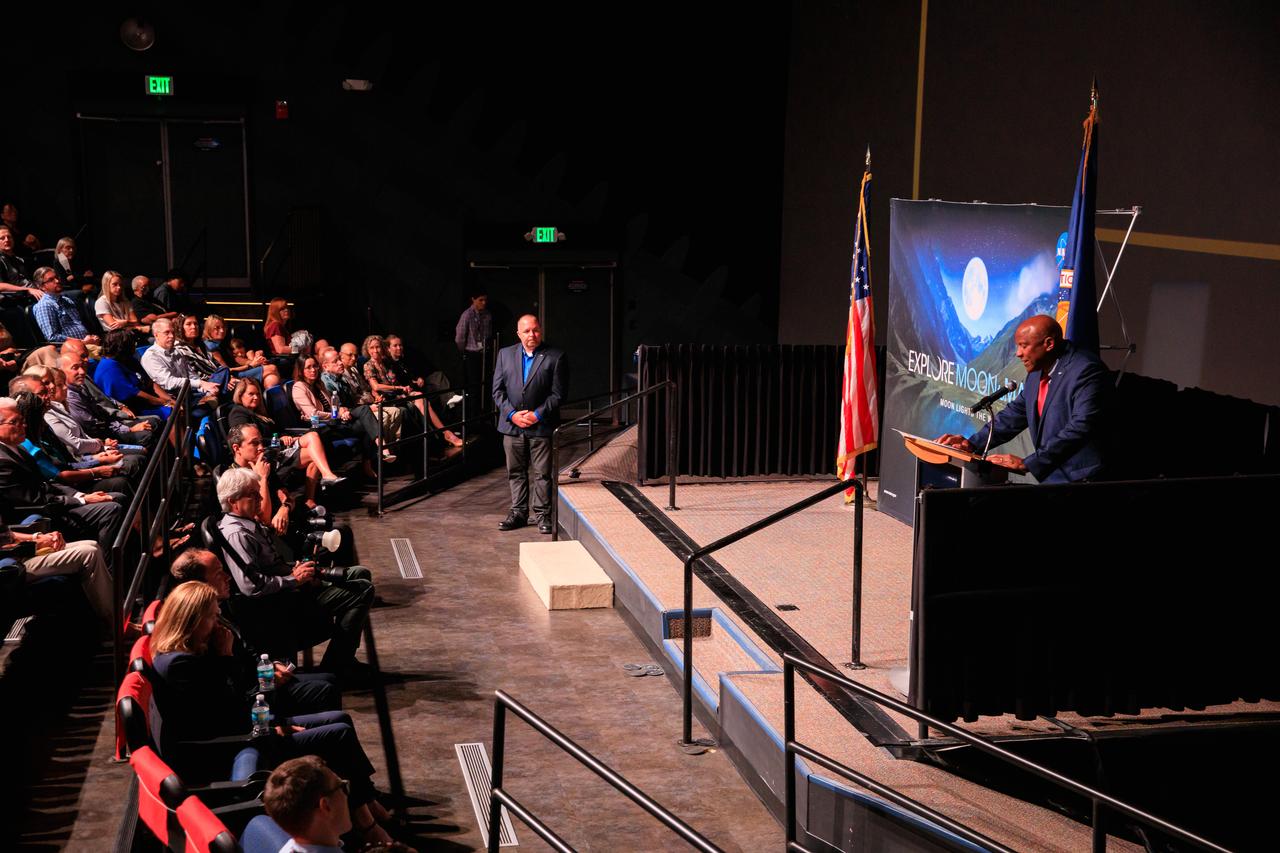
NASA’s Kennedy Space Center Deputy Director Kelvin Manning speaks to the audience during the center's 2022 KSC Honor Awards Ceremony inside the IMAX Theater at the Florida spaceport’s nearby Visitor Complex on June 13, 2023. Kennedy Space Center employees, award recipients, families, and friends attended the ceremony, which honored both civil servants and contractors for their contributions to NASA and Kennedy.
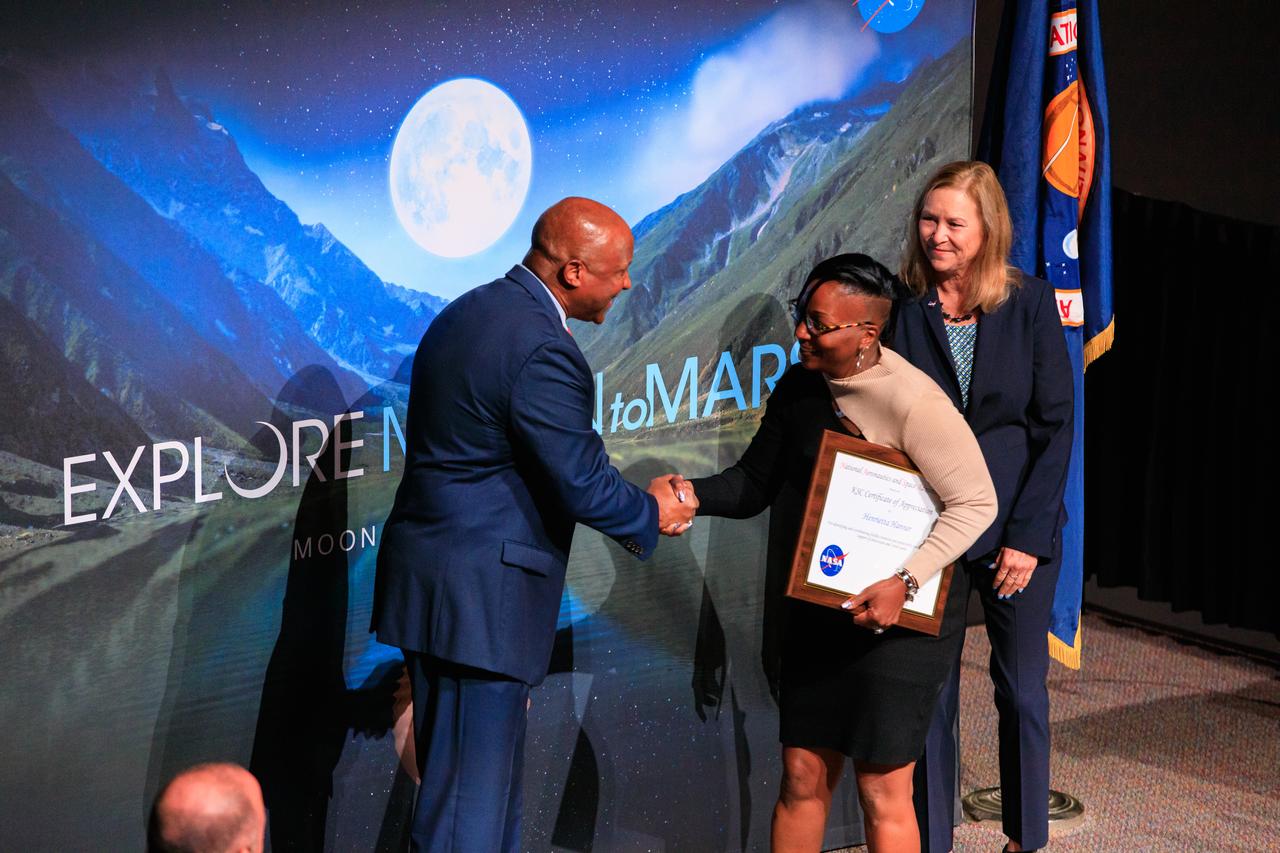
NASA’s Kennedy Space Center Director Janet Petro (right) and Deputy Director Kelvin Manning (left) present a KSC Certificate of Appreciation to Henrietta Hanner at the center's 2022 KSC Honor Awards Ceremony inside the IMAX Theater at the Florida spaceport’s nearby Visitor Complex on June 13, 2023. Kennedy Space Center employees, award recipients, families, and friends attended the ceremony, which honored both civil servants and contractors for their contributions to NASA and Kennedy.
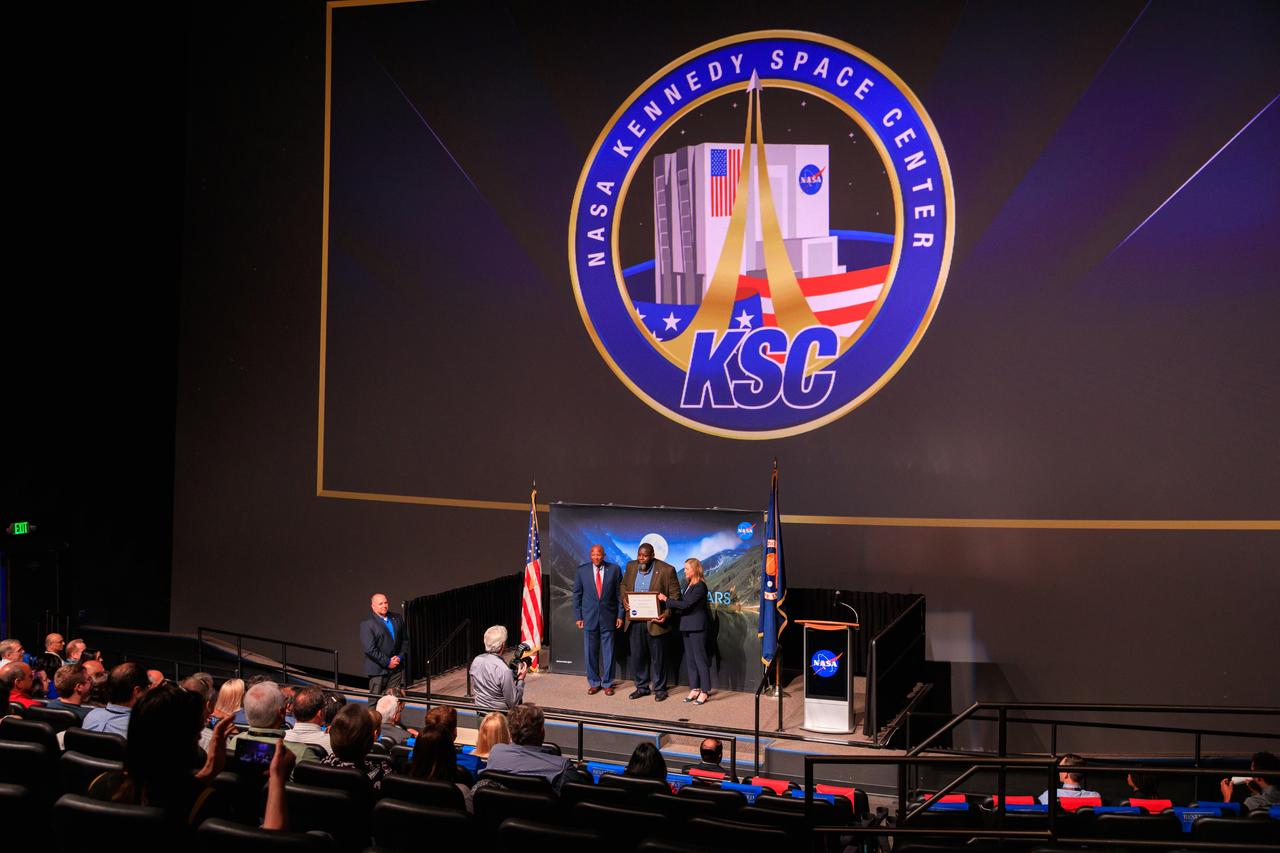
NASA’s Kennedy Space Center Director Janet Petro (right) and Deputy Director Kelvin Manning (left) present a KSC Certificate of Appreciation to Malcom Boston at the center's 2022 KSC Honor Awards Ceremony inside the IMAX Theater at the Florida spaceport’s nearby Visitor Complex on June 13, 2023. Kennedy Space Center employees, award recipients, families, and friends attended the ceremony, which honored both civil servants and contractors for their contributions to NASA and Kennedy.
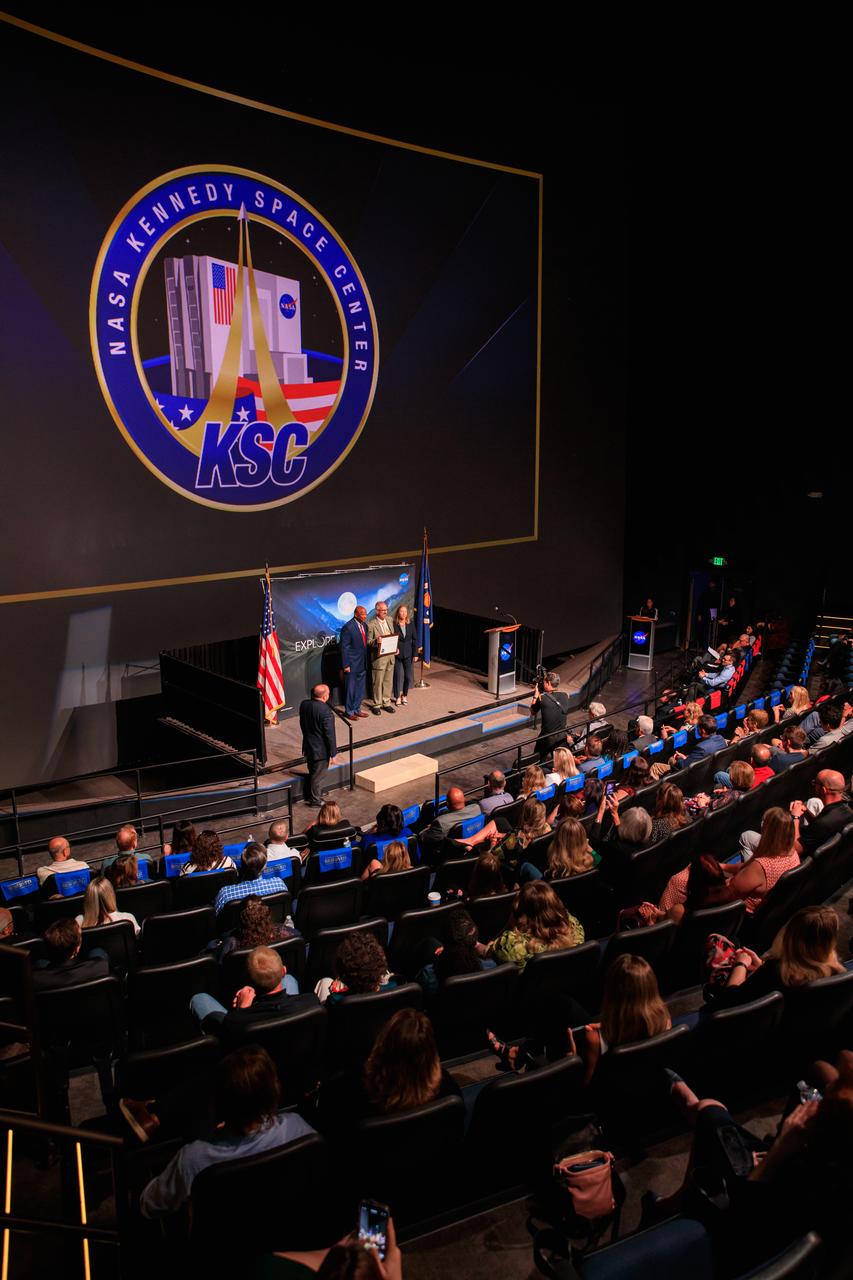
NASA’s Kennedy Space Center Director Janet Petro (right) and Deputy Director Kelvin Manning (left) present a KSC Certificate of Appreciation to Rick Goltz at the center's 2022 KSC Honor Awards Ceremony inside the IMAX Theater at the Florida spaceport’s nearby Visitor Complex on June 13, 2023. Kennedy Space Center employees, award recipients, families, and friends attended the ceremony, which honored both civil servants and contractors for their contributions to NASA and Kennedy.
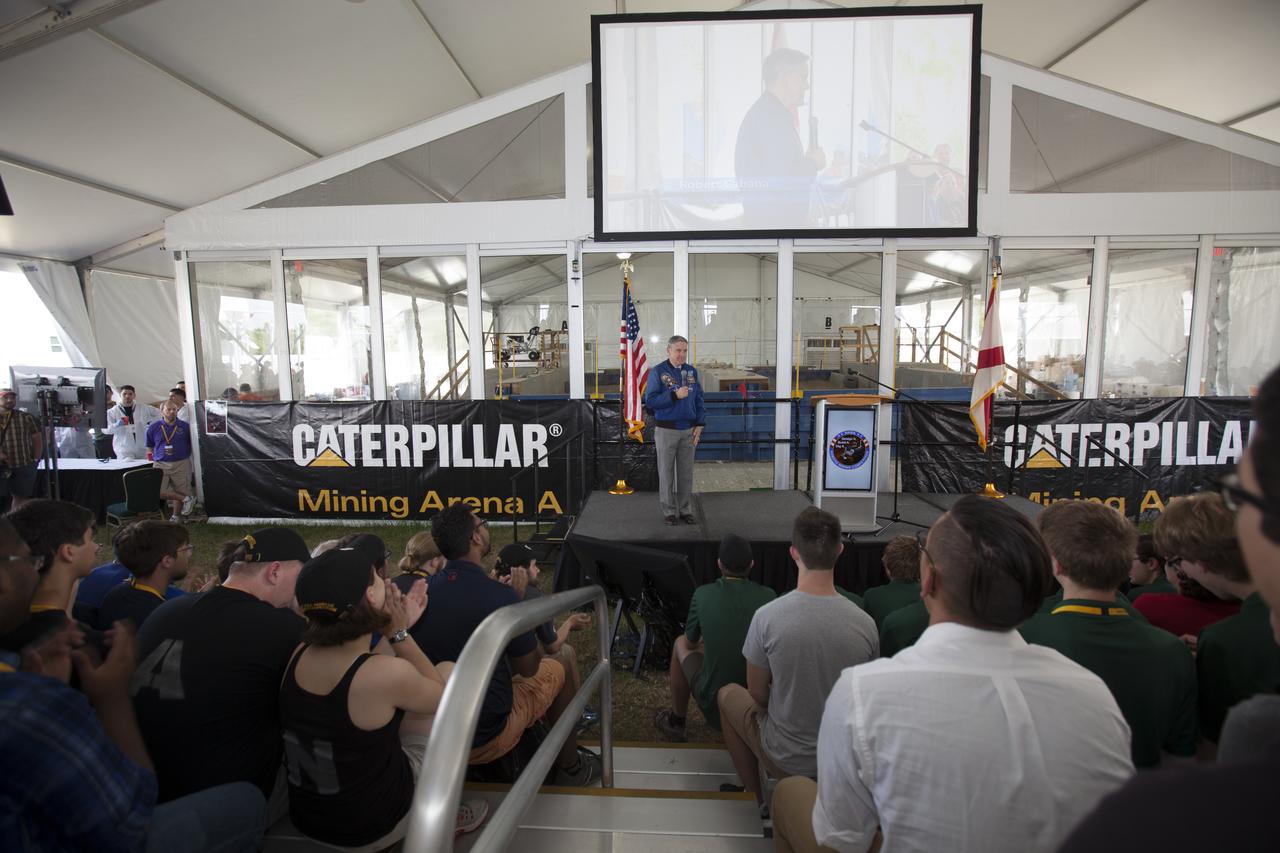
NASA Kennedy Space Center Director Bob Cabana welcomes participants to the agency's 8th Annual Robotic Mining Competition at the Kennedy Space Center Visitor Complex in Florida. More than 40 student teams from colleges and universities around the U.S. will use their mining robots to dig in a supersized sandbox filled with BP-1, or simulated Martian soil, and participate in other competition requirements. The Robotic Mining Competition is a NASA Human Exploration and Operations Mission Directorate project designed to encourage students in science, technology, engineering and math, or STEM fields. The project provides a competitive environment to foster innovative ideas and solutions that could be used on NASA's Journey to Mars.
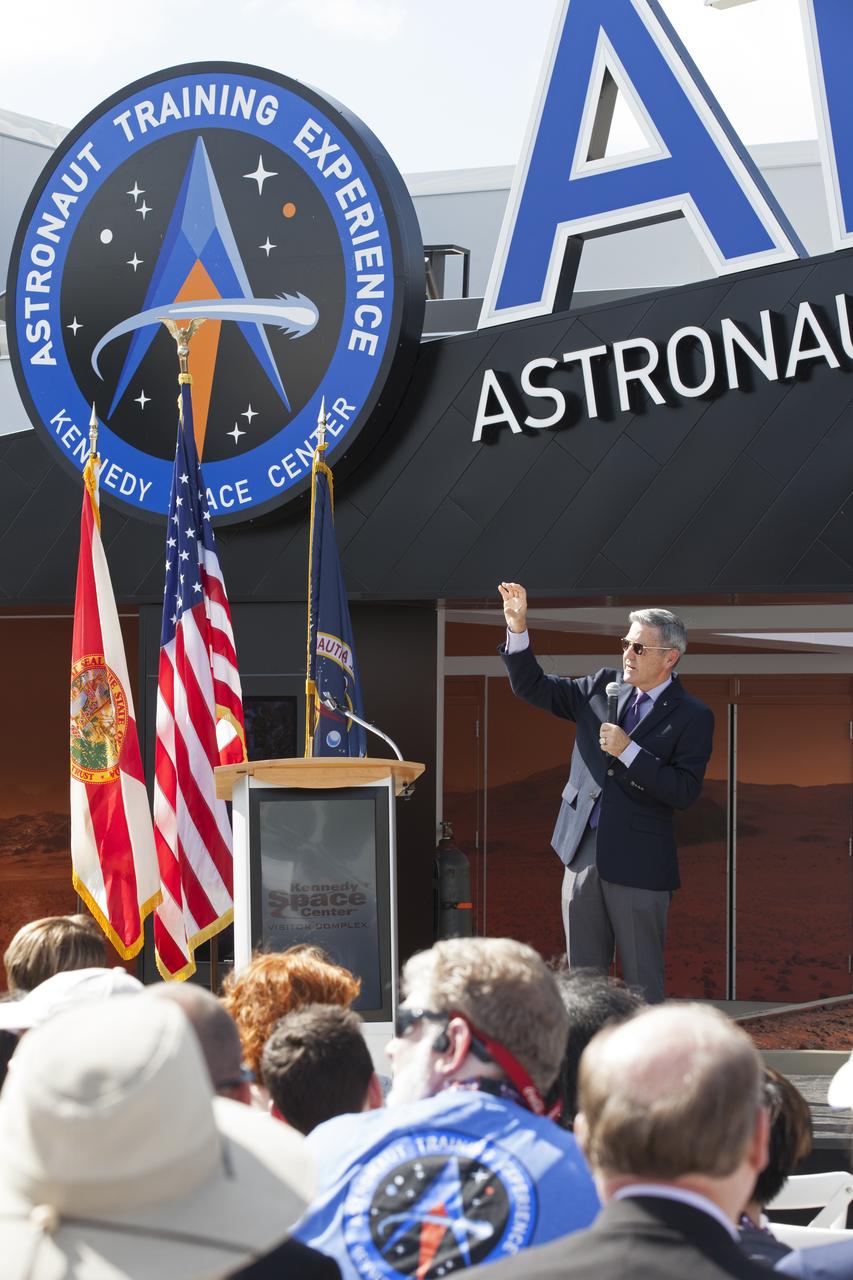
Kennedy Space Center Director Bob Cabana speaks to guests attending the opening ceremony for the new Astronaut Training Experience (ATX) at the Kennedy Space Center Visitor Complex. The ATX uses three-dimensional computer display simulation technology to "transport" participants to Mars, training them to live and work in the environment of the Red Planet. The educational experience also teaches what it’s like to travel there. The facility uses NASA science to address engineering challenges in space travel. Lockheed Martin is the title sponsor for the Astronaut Training Experience.
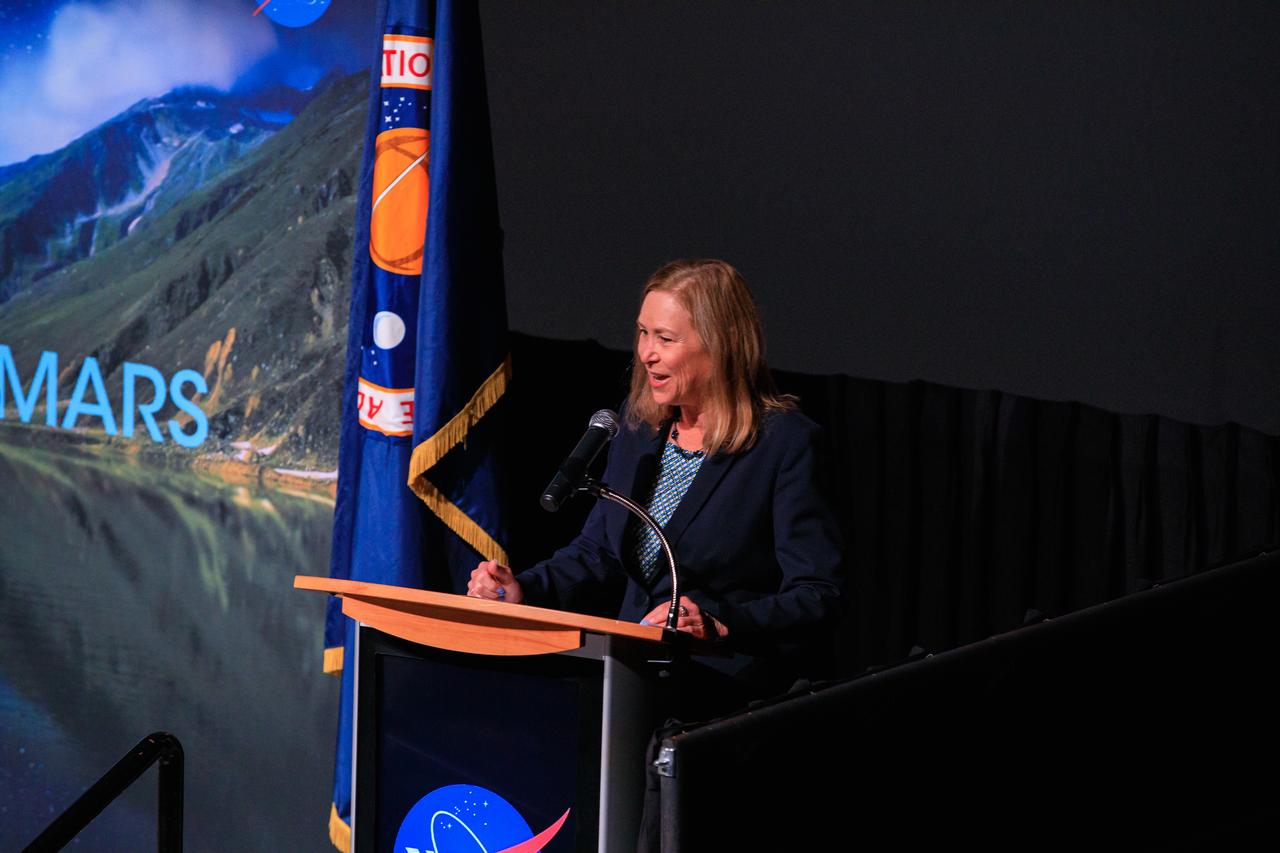
NASA’s Kennedy Space Center Director Janet Petro speaks to the audience during the center's 2022 KSC Honor Awards Ceremony inside the IMAX Theater at the Florida spaceport’s nearby Visitor Complex on June 13, 2023. Kennedy employees, award recipients, families, and friends attended the ceremony, which honored both civil servants and contractors for their contributions to NASA and Kennedy.
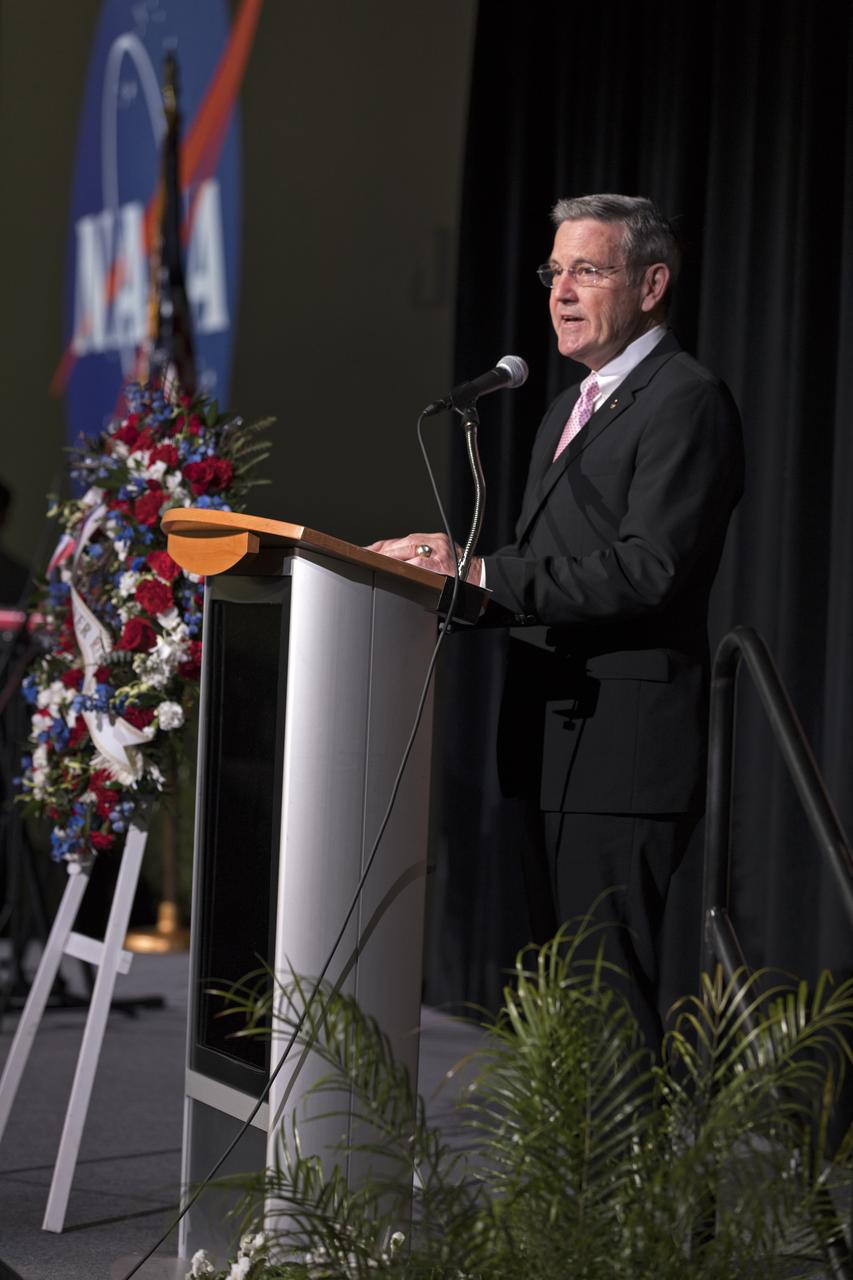
Kennedy Space Center Director Bob Cabana speaks during this year's Day of Remembrance ceremony at the Kennedy Space Center Visitor Complex. Each year spaceport employees and guests join others throughout NASA honoring the contributions of astronauts who have perished in the conquest of space.
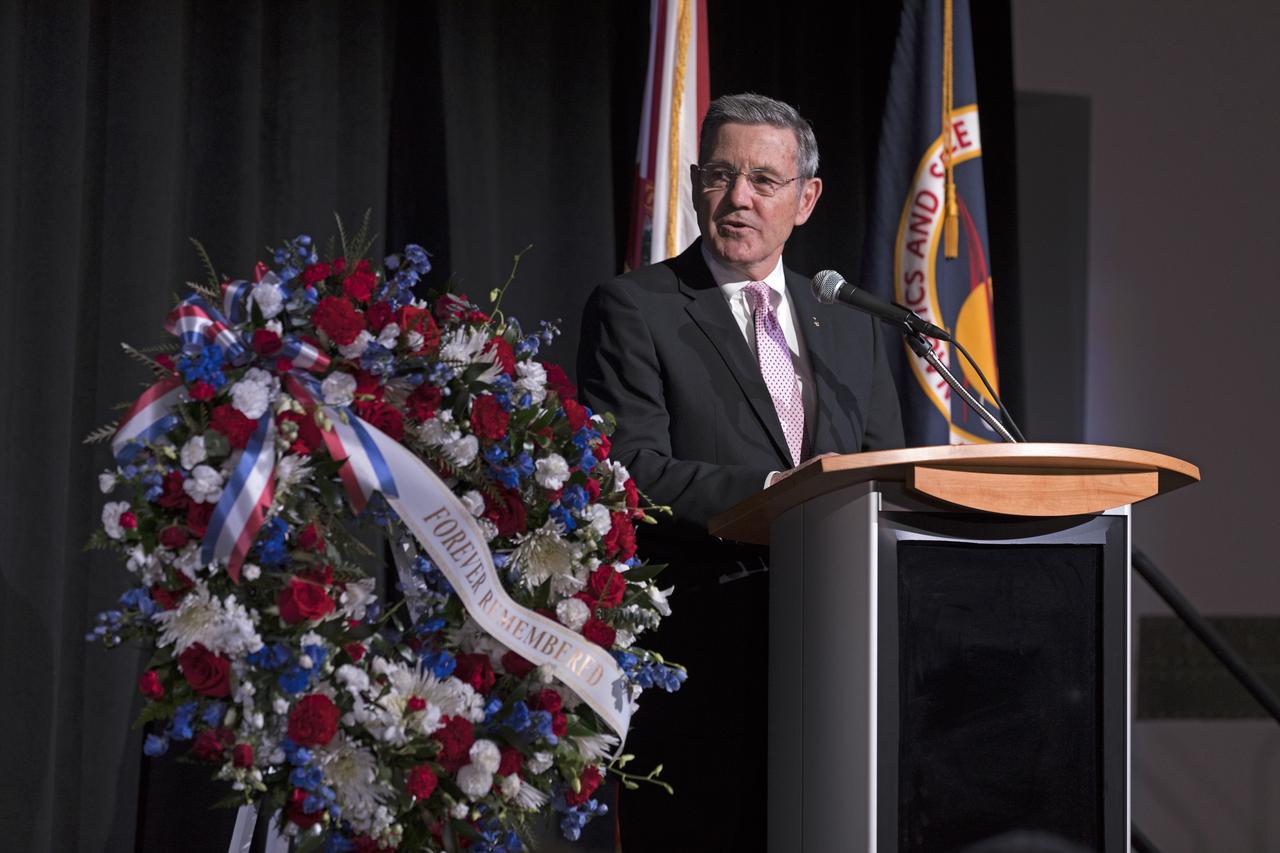
Kennedy Space Center Director Bob Cabana speaks during this year's Day of Remembrance ceremony at the Kennedy Space Center Visitor Complex. Each year spaceport employees and guests join others throughout NASA honoring the contributions of astronauts who have perished in the conquest of space.
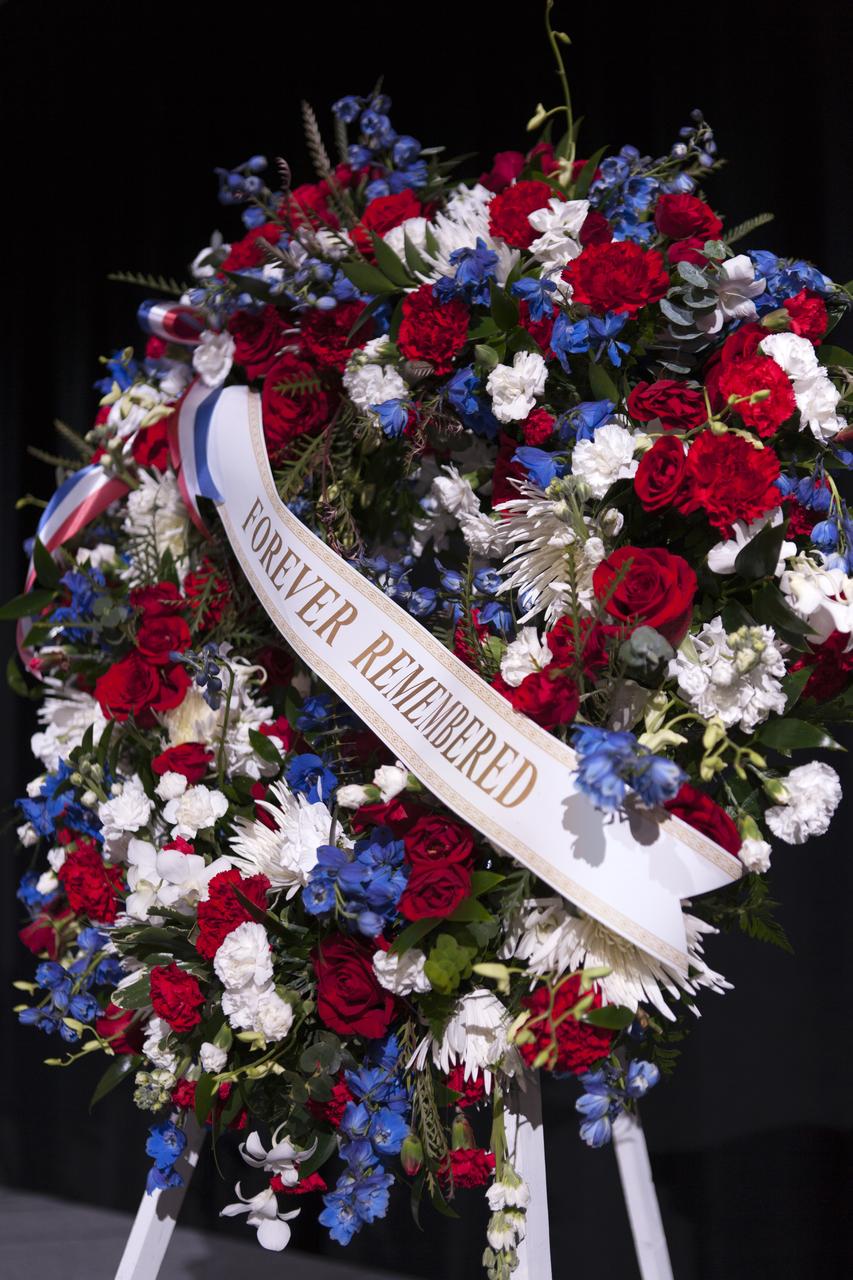
A memorial wreath stands in the Center for Space Education during this year's Day of Remembrance ceremony at the Kennedy Space Center Visitor Complex. Each year spaceport employees and guests join others throughout NASA honoring the contributions of astronauts who have perished in the conquest of space.
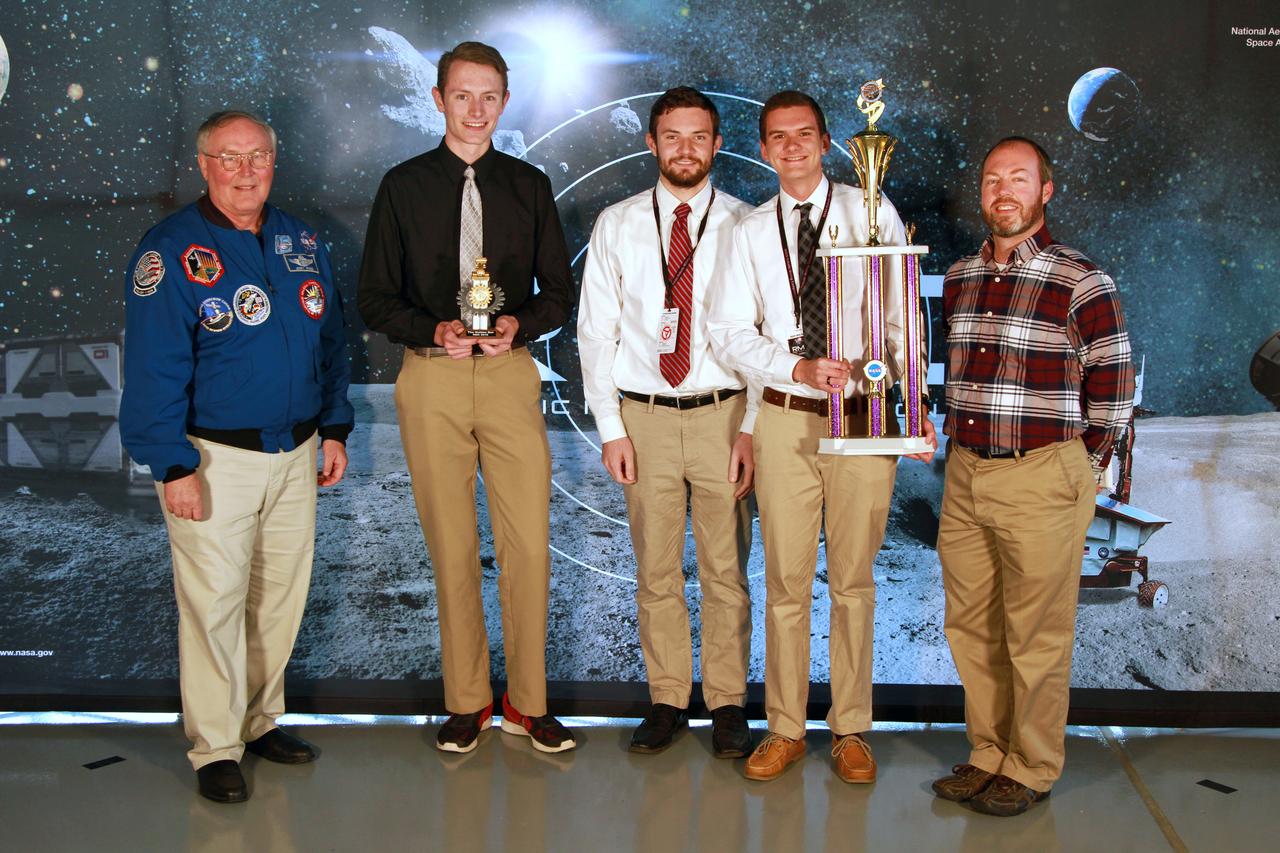
NASA's 9th Annual Robotic Mining Competition concludes with an awards ceremony May 18, 2018, at the Apollo/Saturn V Center at the Kennedy Space Center Visitor Complex in Florida. The University of Alabama Team Astrobotics received the Efficient Use of Communications Power Award. At left is retired NASA astronaut Jerry Ross. At right is Kurt Leucht, a NASA engineer in Swamp Works and event emcee. More than 40 student teams from colleges and universities around the U.S. participated in the competition, May 14-18, by using their mining robots to dig in a supersized sandbox filled with BP-1, or simulated lunar soil, gravel and rocks, and participate in other competition requirements. The Robotic Mining Competition is a NASA Human Exploration and Operations Mission Directorate project designed to encourage students in science, technology, engineering and math, or STEM fields. The project provides a competitive environment to foster innovative ideas and solutions that could be used on NASA's deep space missions.
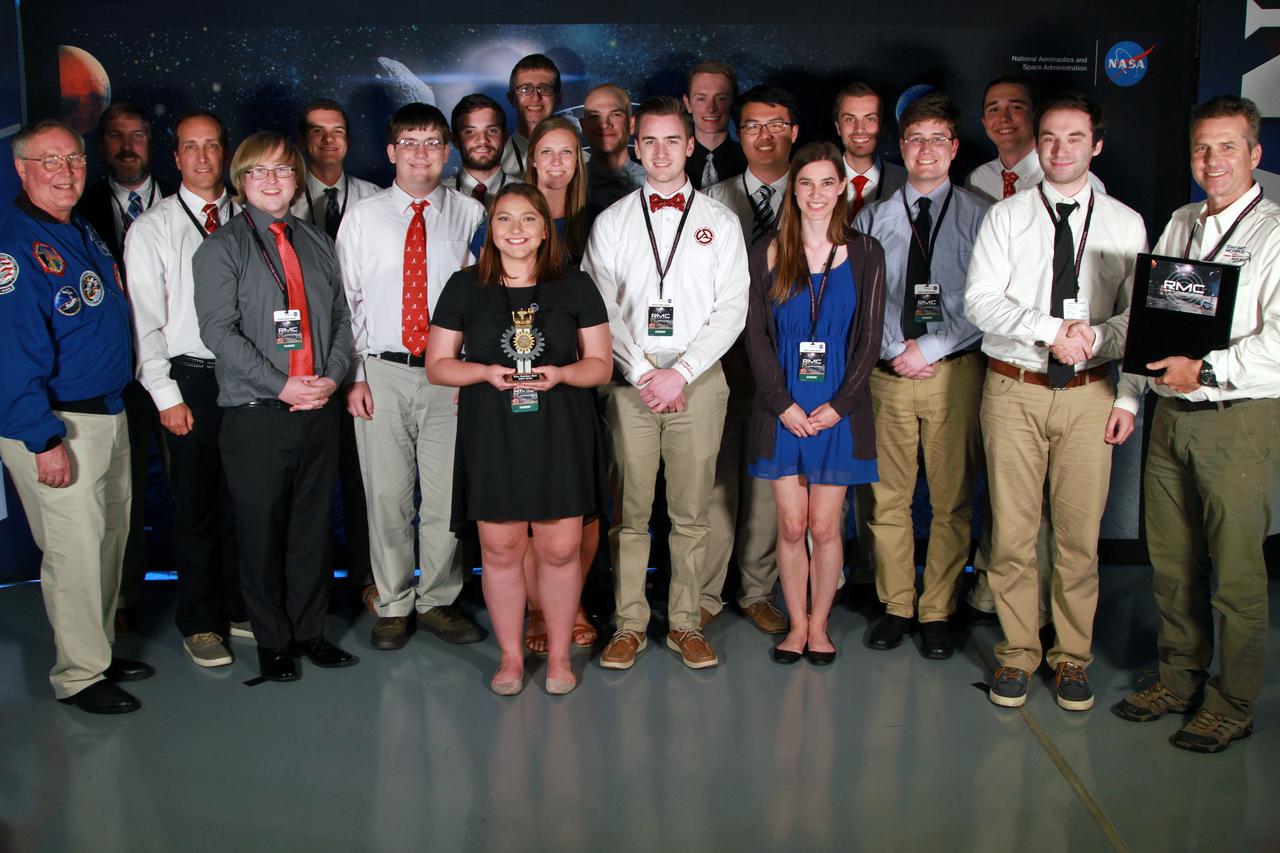
NASA's 9th Annual Robotic Mining Competition concludes with an awards ceremony May 18, 2018, at the Apollo/Saturn V Center at the Kennedy Space Center Visitor Complex in Florida. The University of Alabama Team Astrobotics received first place in the On-Site Mining Award. At left is retired NASA astronaut Jerry Ross. At right is Rob Mueller, lead mining judge. More than 40 student teams from colleges and universities around the U.S. participated in the competition, May 14-18, by using their mining robots to dig in a supersized sandbox filled with BP-1, or simulated lunar soil, gravel and rocks, and participate in other competition requirements. The Robotic Mining Competition is a NASA Human Exploration and Operations Mission Directorate project designed to encourage students in science, technology, engineering and math, or STEM fields. The project provides a competitive environment to foster innovative ideas and solutions that could be used on NASA's deep space missions.
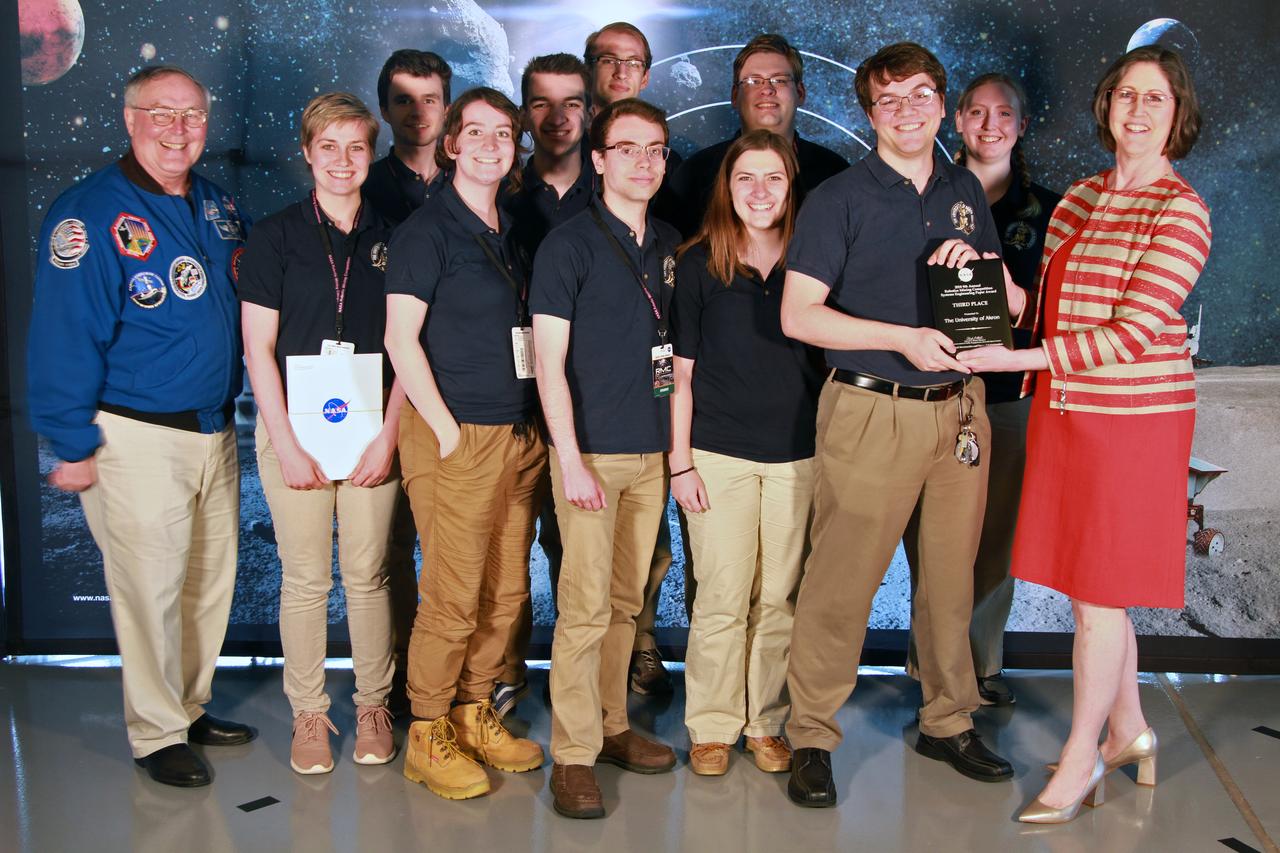
NASA's 9th Annual Robotic Mining Competition concludes with an awards ceremony May 18, 2018, at the Apollo/Saturn V Center at the Kennedy Space Center Visitor Complex in Florida. The team from The University of Akron received third place for their Systems Engineering Paper. At left is retired NASA astronaut Jerry Ross. At right is Jonette Stecklein, lead systems engineering paper judge. More than 40 student teams from colleges and universities around the U.S. participated in the competition, May 14-18, by using their mining robots to dig in a supersized sandbox filled with BP-1, or simulated lunar soil, gravel and rocks, and participate in other competition requirements. The Robotic Mining Competition is a NASA Human Exploration and Operations Mission Directorate project designed to encourage students in science, technology, engineering and math, or STEM fields. The project provides a competitive environment to foster innovative ideas and solutions that could be used on NASA's deep space missions.
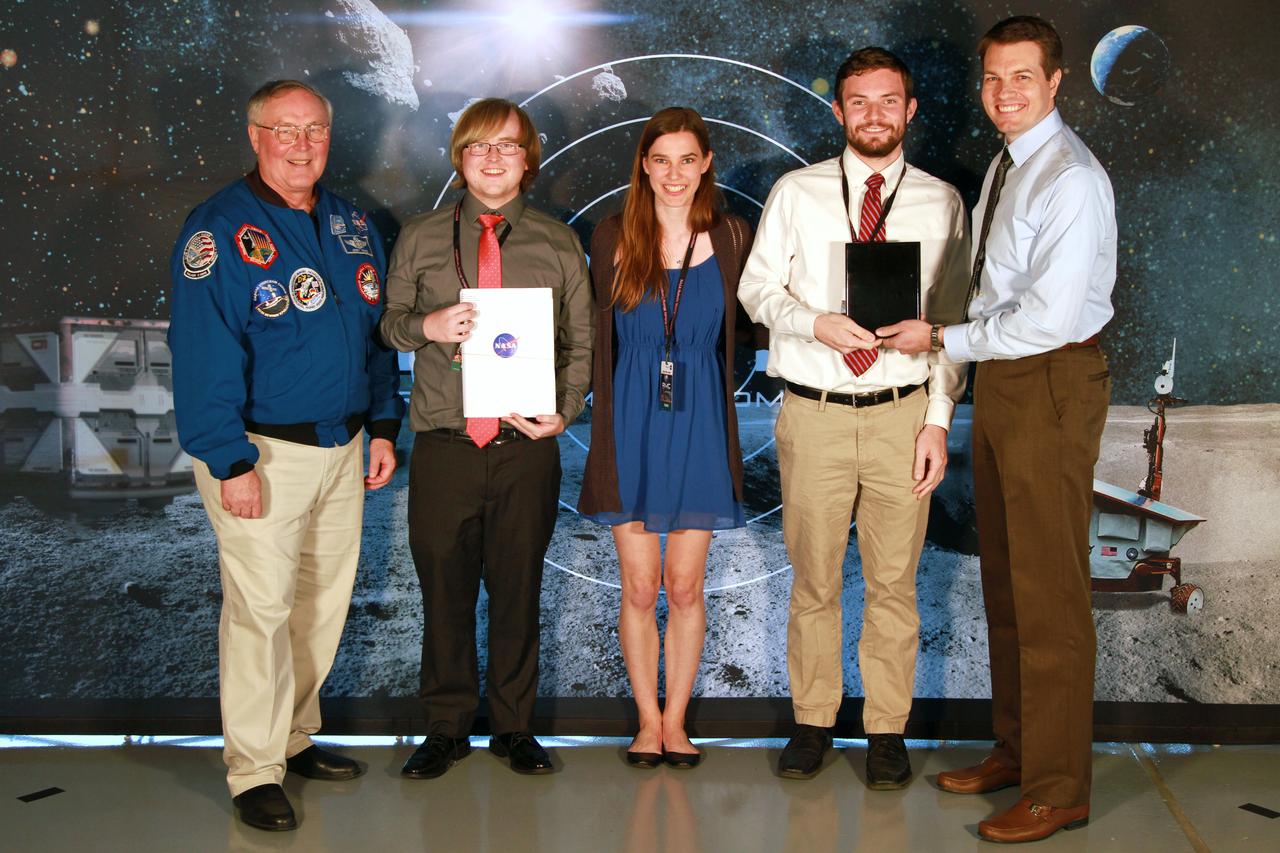
NASA's 9th Annual Robotic Mining Competition concludes with an awards ceremony May 18, 2018, at the Apollo/Saturn V Center at the Kennedy Space Center Visitor Complex in Florida. The University of Alabama Team Astrobotics received third place in the Slide Presentation and Demonstration award category. At left is retired NASA astronaut Jerry Ross. At right is Daniel Hull, lead presentation judge. More than 40 student teams from colleges and universities around the U.S. participated in the competition, May 14-18, by using their mining robots to dig in a supersized sandbox filled with BP-1, or simulated lunar soil, gravel and rocks, and participate in other competition requirements. The Robotic Mining Competition is a NASA Human Exploration and Operations Mission Directorate project designed to encourage students in science, technology, engineering and math, or STEM fields. The project provides a competitive environment to foster innovative ideas and solutions that could be used on NASA's deep space missions.
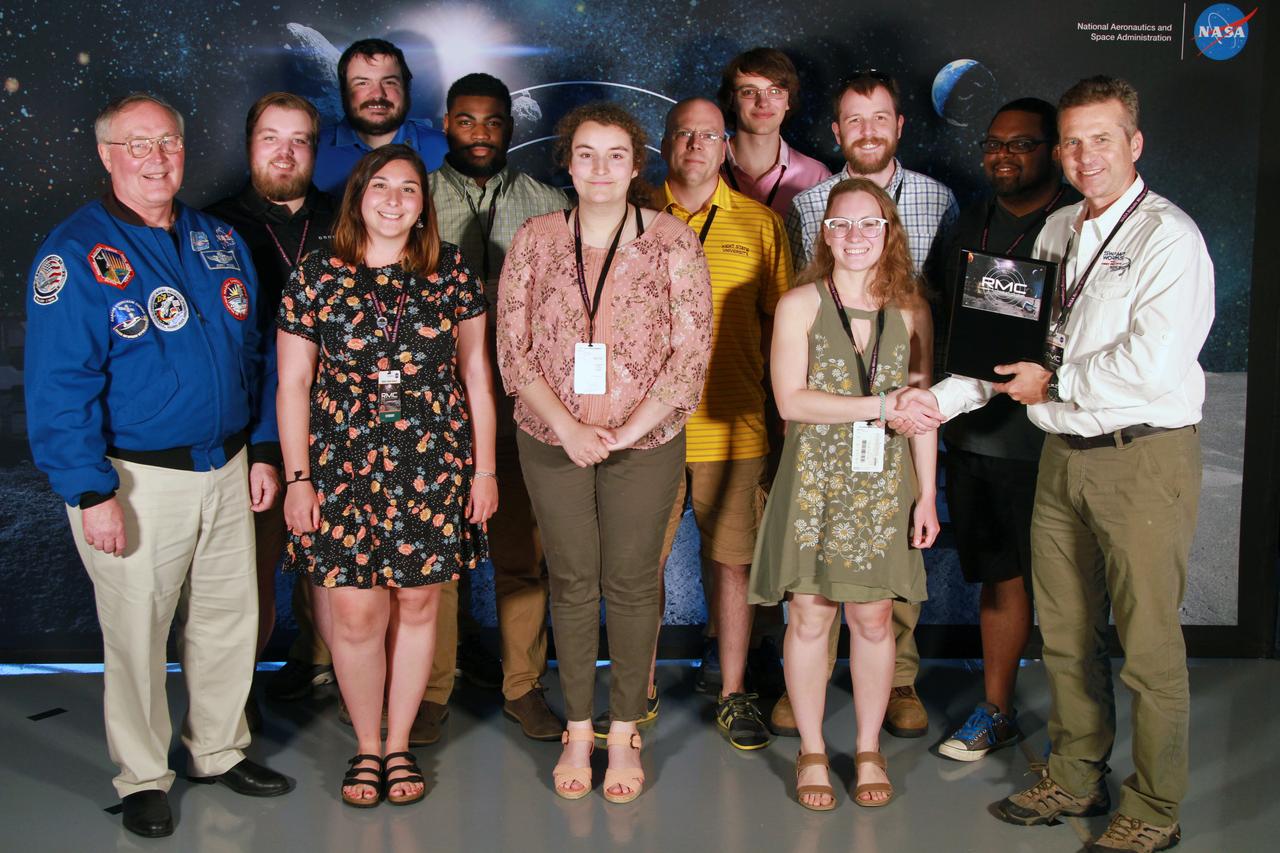
NASA's 9th Annual Robotic Mining Competition concludes with an awards ceremony May 18, 2018, at the Apollo/Saturn V Center at the Kennedy Space Center Visitor Complex in Florida. The team from Kent State University received third place in the On-Site Mining Award. At left is retired NASA astronaut Jerry Ross. At right is Rob Mueller, lead mining judge. More than 40 student teams from colleges and universities around the U.S. participated in the competition, May 14-18, by using their mining robots to dig in a supersized sandbox filled with BP-1, or simulated lunar soil, gravel and rocks, and participate in other competition requirements. The Robotic Mining Competition is a NASA Human Exploration and Operations Mission Directorate project designed to encourage students in science, technology, engineering and math, or STEM fields. The project provides a competitive environment to foster innovative ideas and solutions that could be used on NASA's deep space missions.
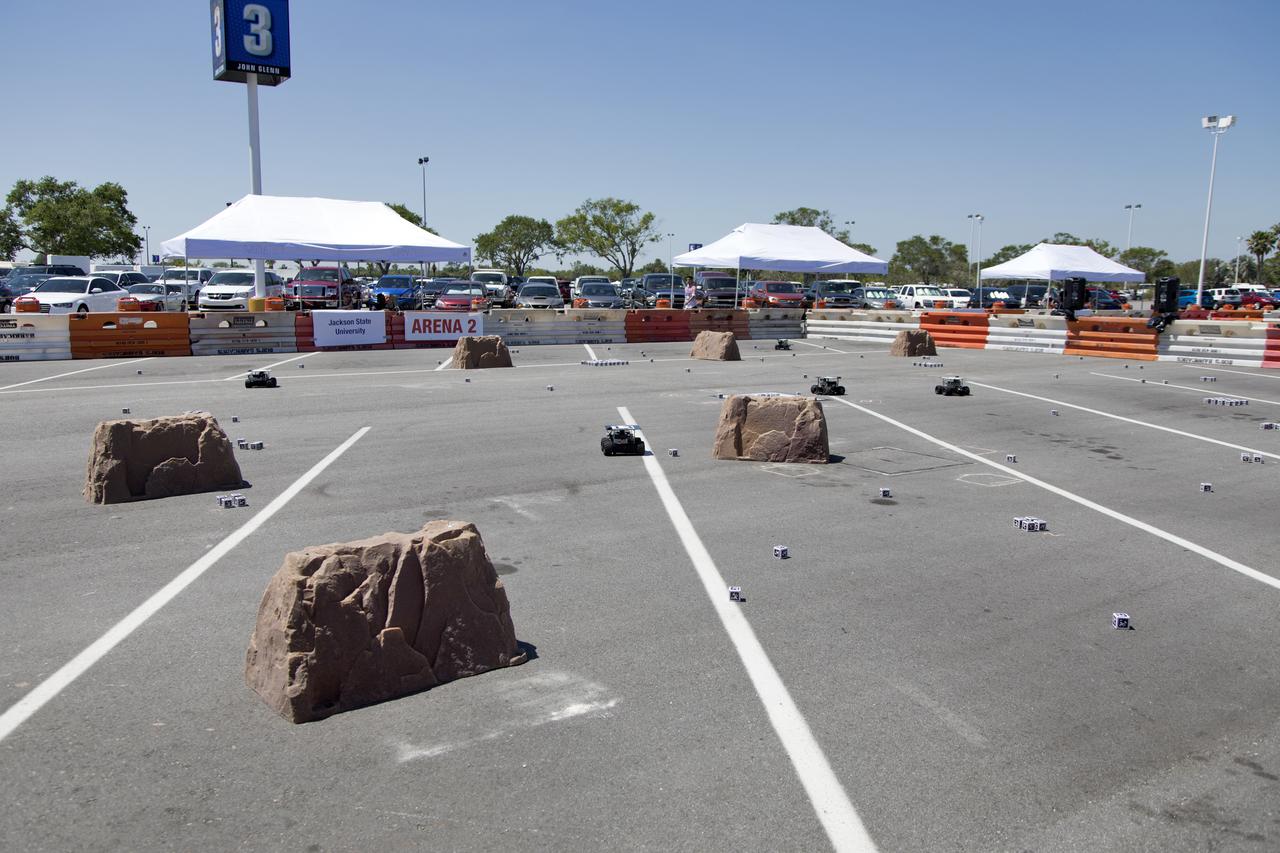
In the Swarmathon competition at the Kennedy Space Center Visitor Complex, students were asked to develop computer code for the small robots, programming them to look for "resources" in the form of AprilTag cubes, similar to barcodes. To add to the challenge, obstacles in the form of simulated rocks were placed in the completion arena. Teams developed search algorithms for the Swarmies to operate autonomously, communicating and interacting as a collective swarm similar to ants foraging for food. In the spaceport's third annual Swarmathon, 23 teams represented 24 minority serving universities and community colleges were invited to develop software code to operate these innovative robots known as "Swarmies" to help find resources when astronauts explore distant locations, such as the Moon or Mars.
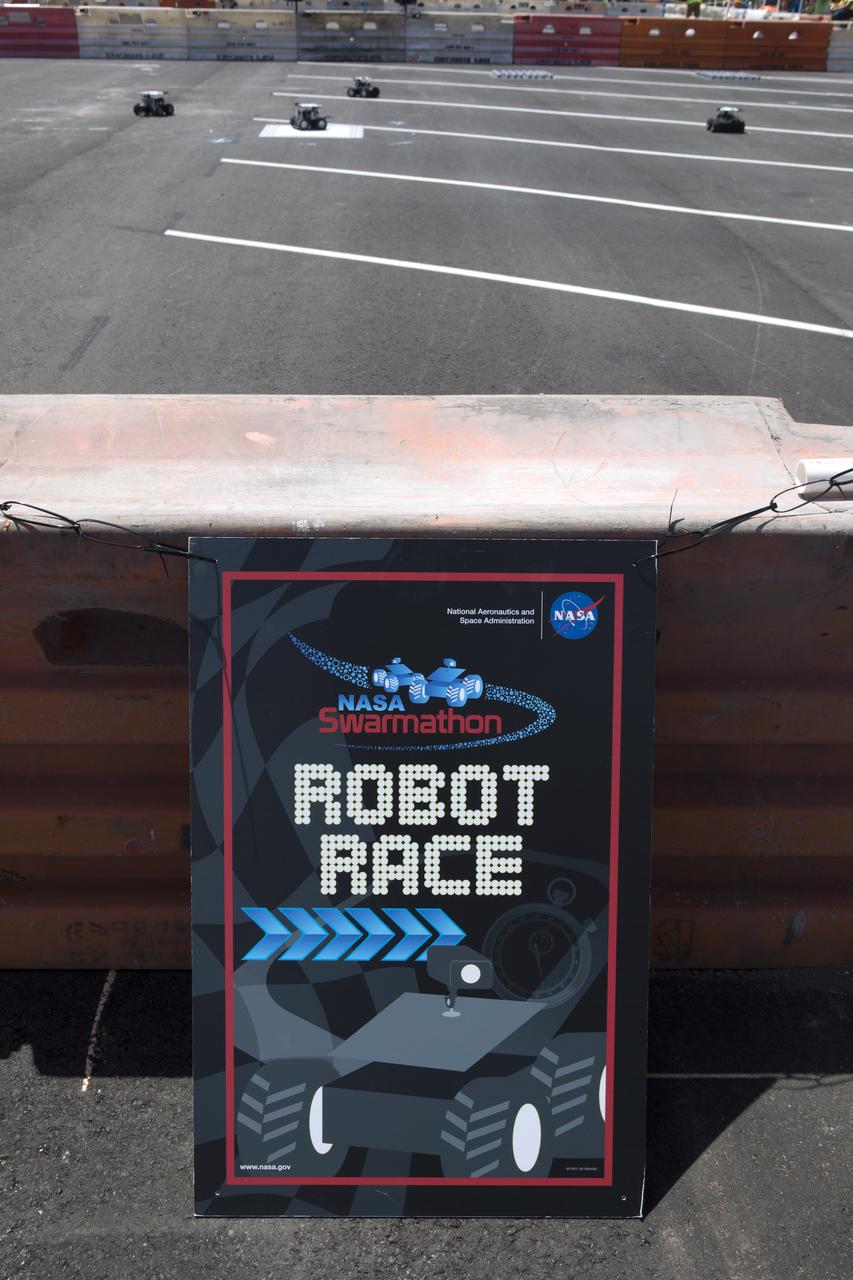
A sign at the Kennedy Space Center Visitor Complex announces the second annual Swarmathon competition. Students were asked to develop computer code for the small robots, programming them to look for "resources" in the form of cubes with AprilTags, similar to barcodes. Teams developed search algorithms for the Swarmies to operate autonomously, communicating and interacting as a collective swarm similar to ants foraging for food. In the spaceport's second annual Swarmathon, 20 teams representing 22 minority serving universities and community colleges were invited to develop software code to operate these innovative robots known as "Swarmies" to help find resources when astronauts explore distant locations, such as the moon or Mars.
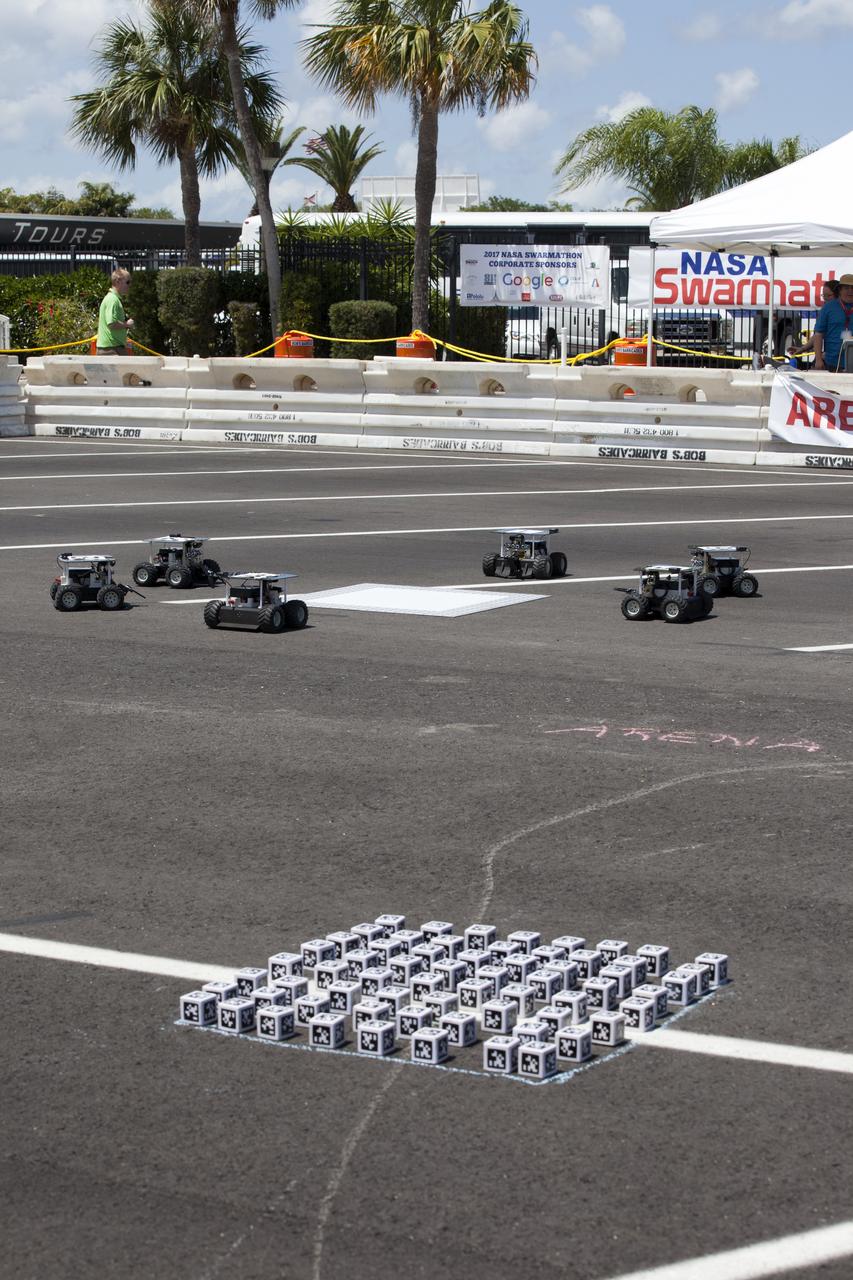
In the Swarmathon competition at the Kennedy Space Center Visitor Complex, students were asked to develop computer code for the small robots, programming them to look for "resources" in the form of AprilTag cubes, similar to barcodes. Teams developed search algorithms for the Swarmies to operate autonomously, communicating and interacting as a collective swarm similar to ants foraging for food. In the spaceport's second annual Swarmathon, 20 teams representing 22 minority serving universities and community colleges were invited to develop software code to operate these innovative robots known as "Swarmies" to help find resources when astronauts explore distant locations, such as the moon or Mars.
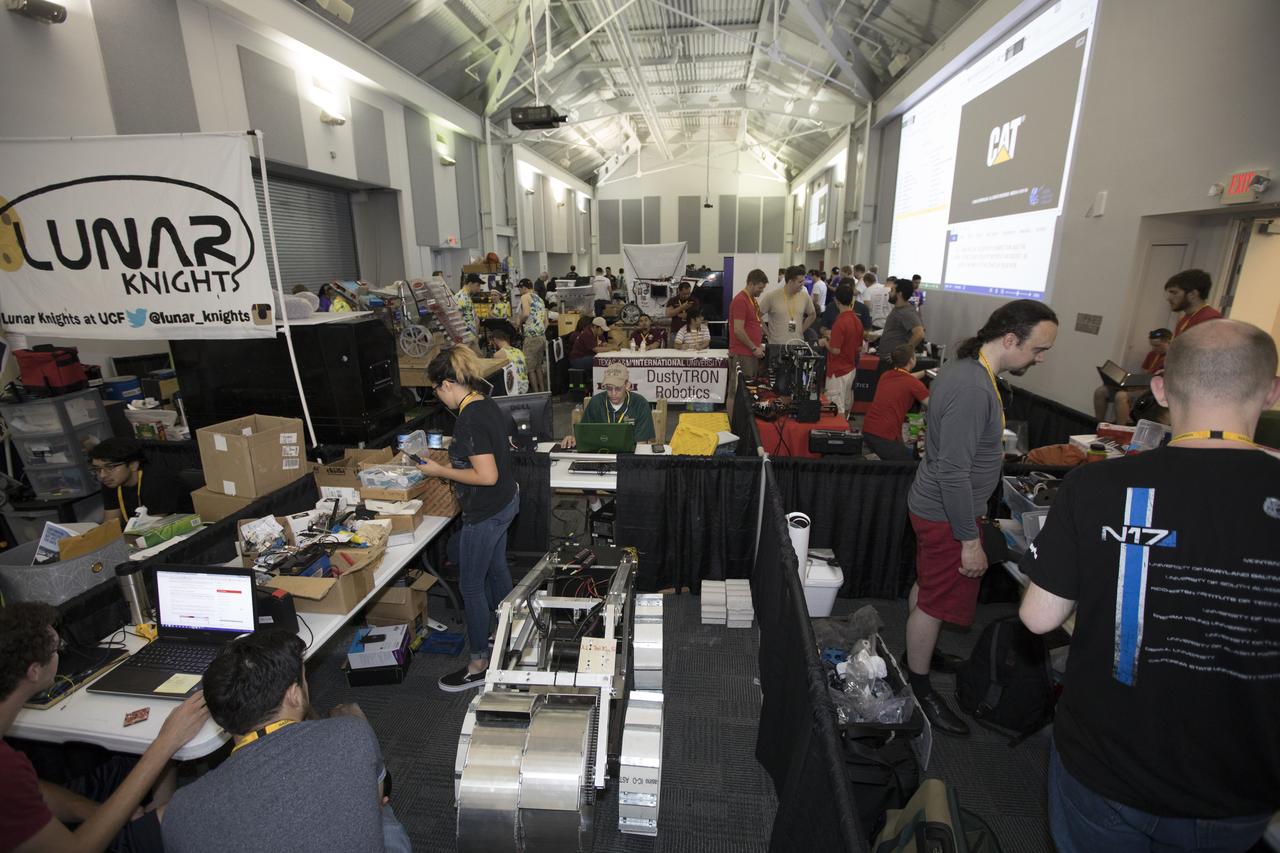
Energy levels are high in the RoboPit as teams prepare for NASA's 8th Annual Robotic Mining Competition at the Kennedy Space Center Visitor Complex in Florida. More than 40 student teams from colleges and universities around the U.S. arel using their mining robots to dig in a supersized sandbox filled with BP-1, or simulated Martian soil, and participate in other competition requirements. The Robotic Mining Competition is a NASA Human Exploration and Operations Mission Directorate project designed to encourage students in science, technology, engineering and math, or STEM fields. The project provides a competitive environment to foster innovative ideas and solutions that could be used on NASA's Journey to Mars.
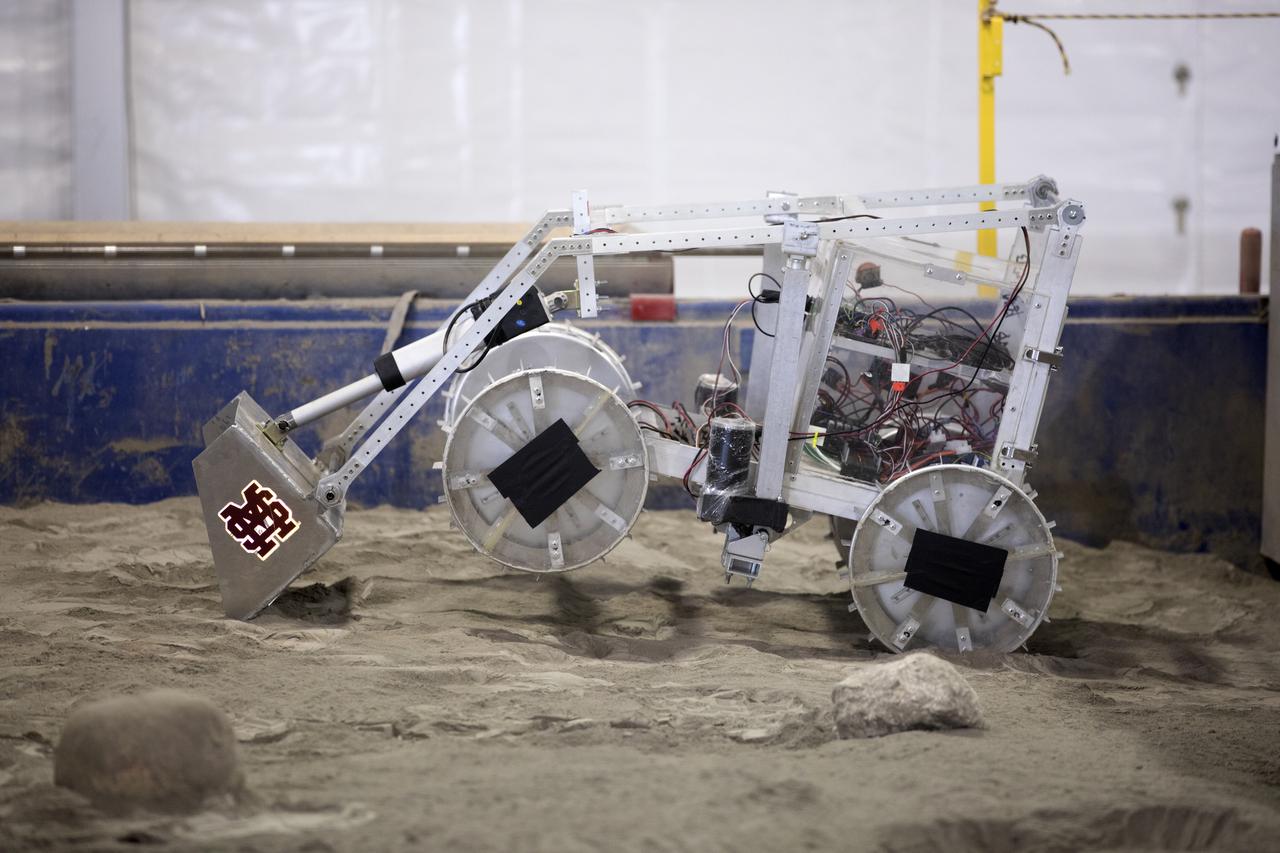
The robotic miner from Mississippi State University digs in the mining arena during NASA's 8th Annual Robotic Mining Competition at the Kennedy Space Center Visitor Complex in Florida. More than 40 student teams from colleges and universities around the U.S. are using their uniquely-designed mining robots to dig in a supersized sandbox filled with BP-1, or simulated Martian soil, and participate in other competition requirements. The Robotic Mining Competition is a NASA Human Exploration and Operations Mission Directorate project designed to encourage students in science, technology, engineering and math, or STEM fields. The project provides a competitive environment to foster innovative ideas and solutions that could be used on NASA's Journey to Mars.
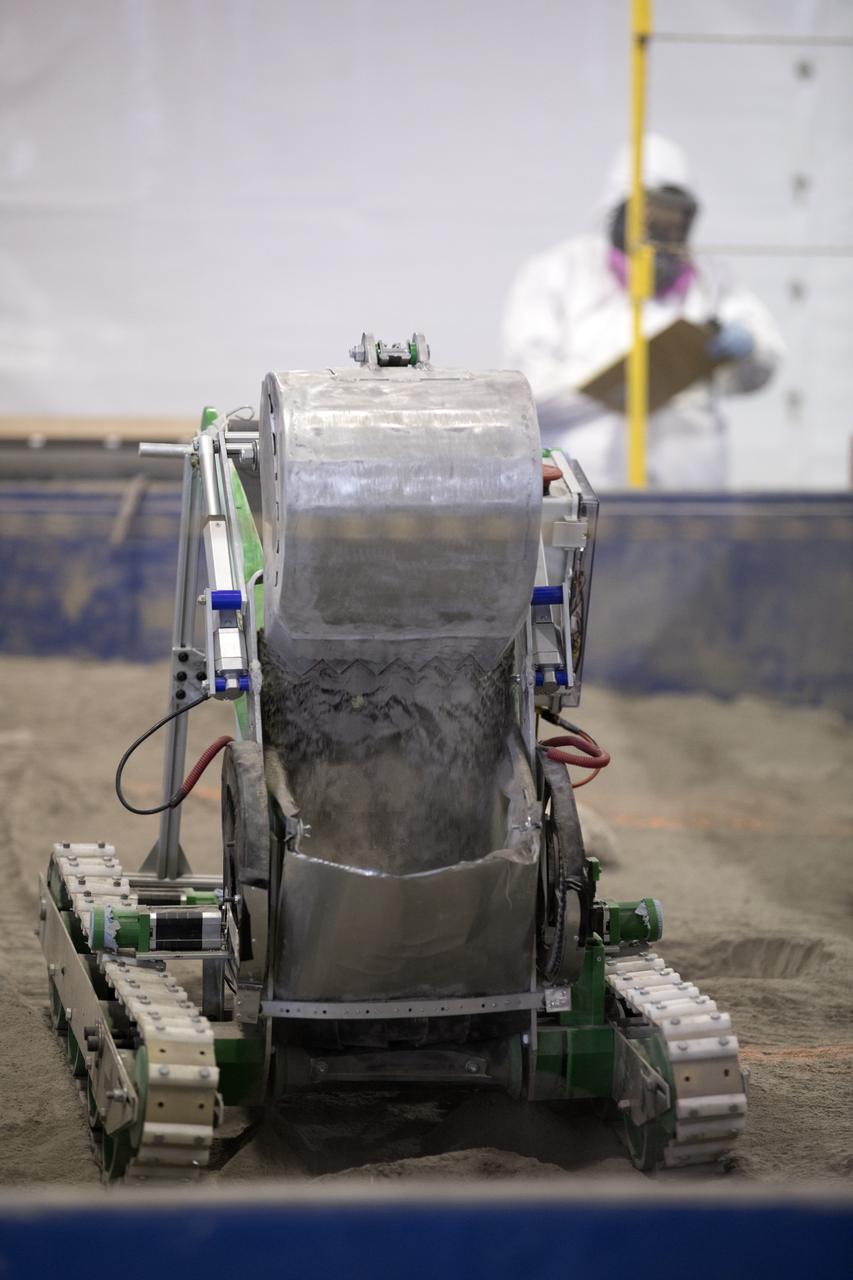
A robotic miner digs in the mining arena during NASA's 8th Annual Robotic Mining Competition at the Kennedy Space Center Visitor Complex in Florida. More than 40 student teams from colleges and universities around the U.S. are using their uniquely-designed mining robots to dig in a supersized sandbox filled with BP-1, or simulated Martian soil, and participate in other competition requirements. The Robotic Mining Competition is a NASA Human Exploration and Operations Mission Directorate project designed to encourage students in science, technology, engineering and math, or STEM fields. The project provides a competitive environment to foster innovative ideas and solutions that could be used on NASA's Journey to Mars.
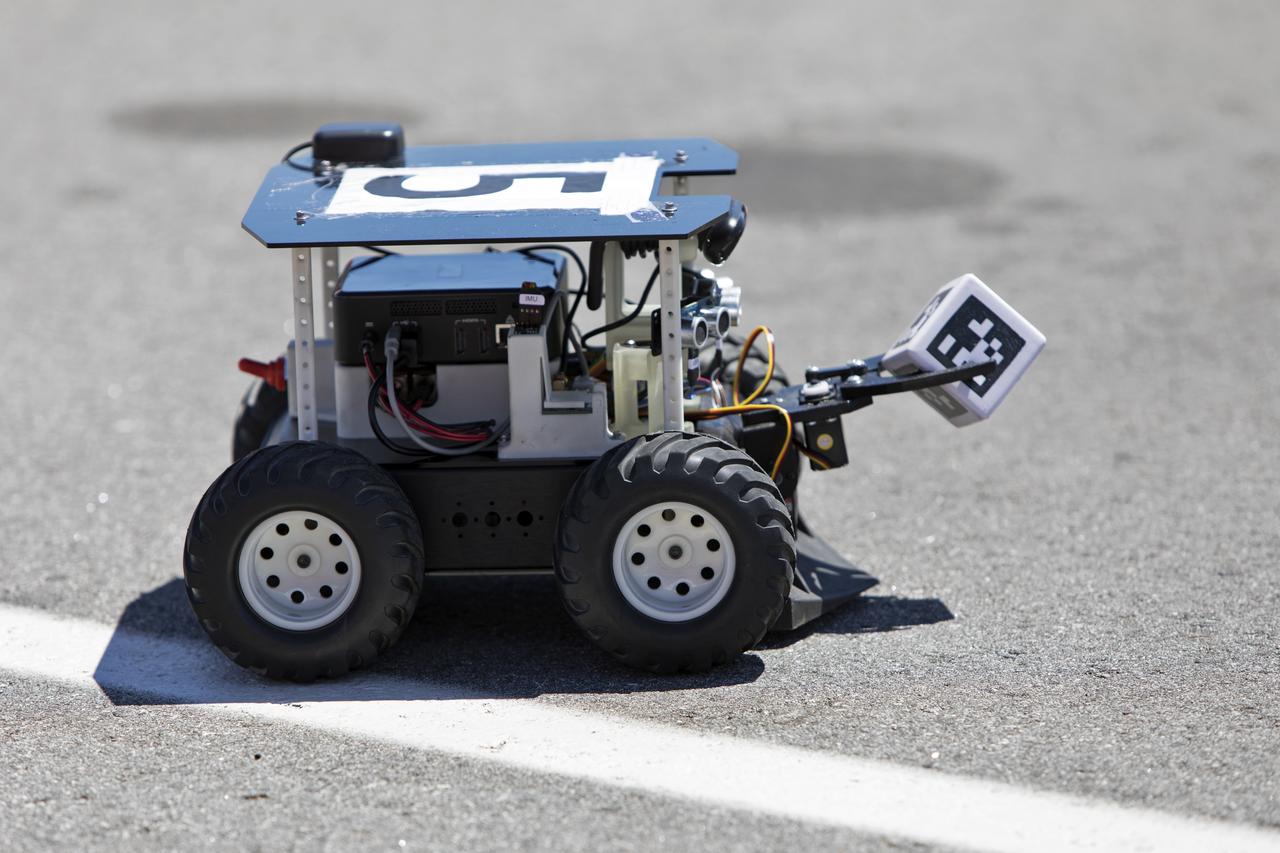
In the Swarmathon competition at the Kennedy Space Center Visitor Complex, students were asked to develop computer code for the small robots, programming them to look for "resources" in the form of AprilTag cubes, similar to barcodes. Teams developed search algorithms for the Swarmies to operate autonomously, communicating and interacting as a collective swarm similar to ants foraging for food. In the spaceport's third annual Swarmathon, 23 teams represented 24 minority serving universities and community colleges were invited to develop software code to operate these innovative robots known as "Swarmies" to help find resources when astronauts explore distant locations, such as the Moon or Mars.
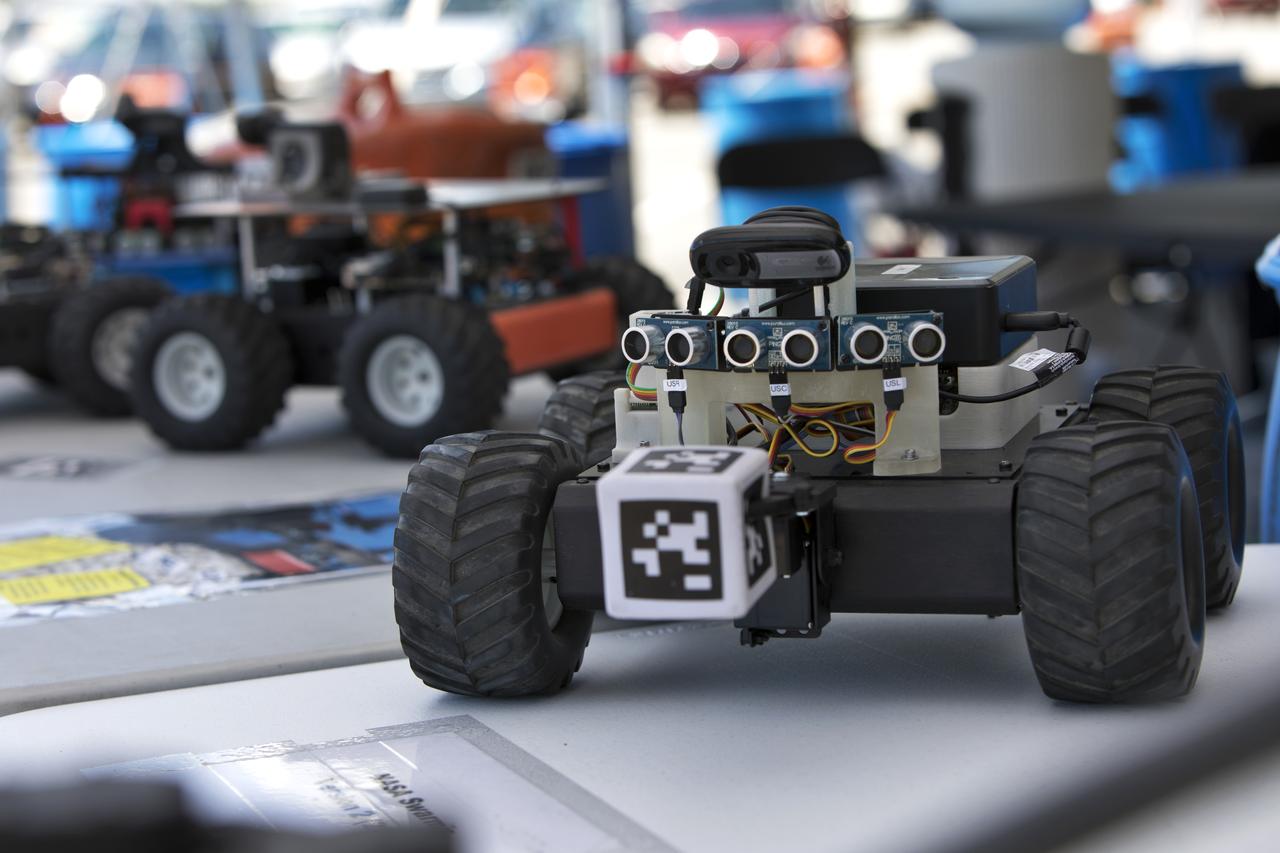
In the Swarmathon competition at the Kennedy Space Center Visitor Complex, students were asked to develop computer code for the small robots, programming them to look for "resources" in the form of AprilTag cubes, similar to barcodes. Teams developed search algorithms for the Swarmies to operate autonomously, communicating and interacting as a collective swarm similar to ants foraging for food. In the spaceport's third annual Swarmathon, 23 teams represented 24 minority serving universities and community colleges were invited to develop software code to operate these innovative robots known as "Swarmies" to help find resources when astronauts explore distant locations, such as the Moon or Mars.
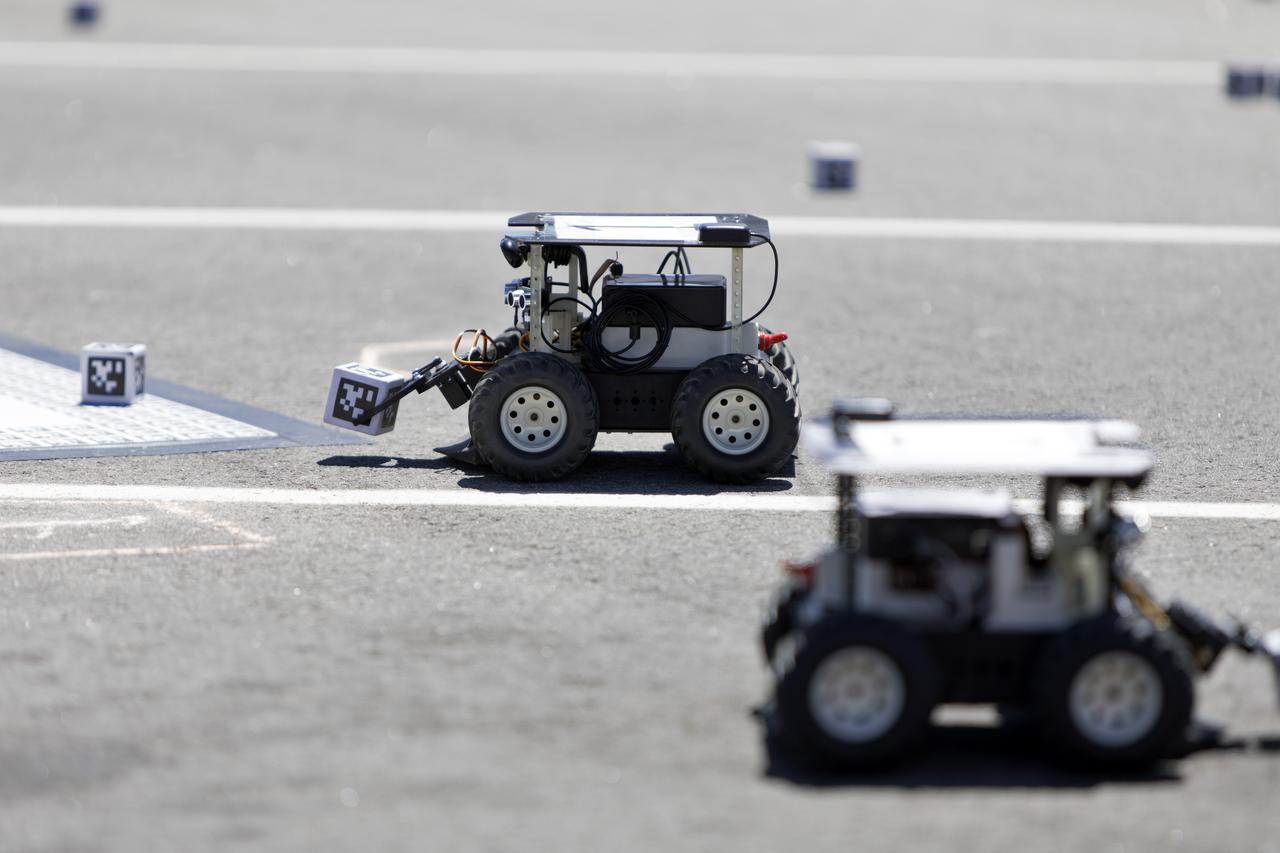
In the Swarmathon competition at the Kennedy Space Center Visitor Complex, students were asked to develop computer code for the small robots, programming them to look for "resources" in the form of AprilTag cubes, similar to barcodes. Teams developed search algorithms for the Swarmies to operate autonomously, communicating and interacting as a collective swarm similar to ants foraging for food. In the spaceport's third annual Swarmathon, 23 teams represented 24 minority serving universities and community colleges were invited to develop software code to operate these innovative robots known as "Swarmies" to help find resources when astronauts explore distant locations, such as the Moon or Mars.
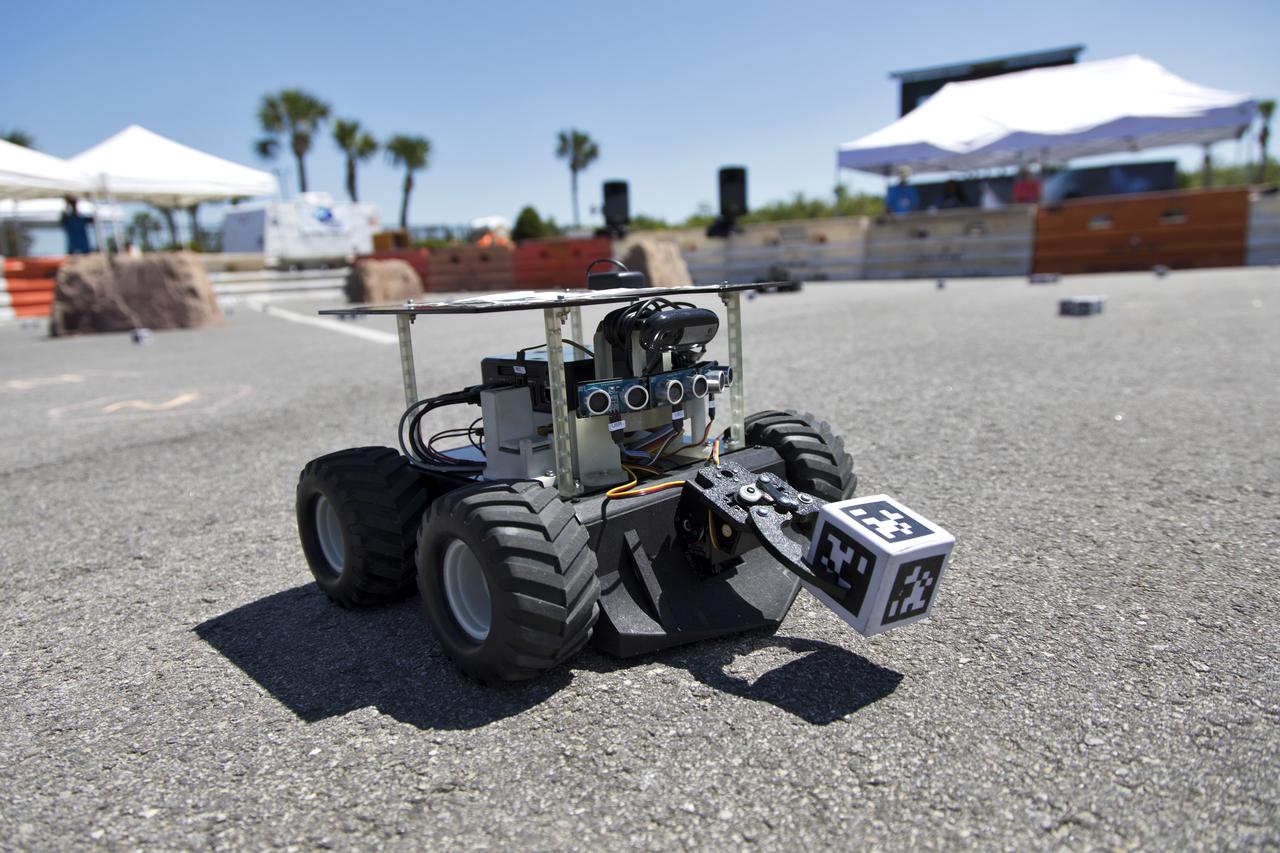
In the Swarmathon competition at the Kennedy Space Center Visitor Complex, students were asked to develop computer code for the small robots, programming them to look for "resources" in the form of AprilTag cubes, similar to barcodes. Teams developed search algorithms for the Swarmies to operate autonomously, communicating and interacting as a collective swarm similar to ants foraging for food. In the spaceport's third annual Swarmathon, 23 teams represented 24 minority serving universities and community colleges were invited to develop software code to operate these innovative robots known as "Swarmies" to help find resources when astronauts explore distant locations, such as the Moon or Mars.
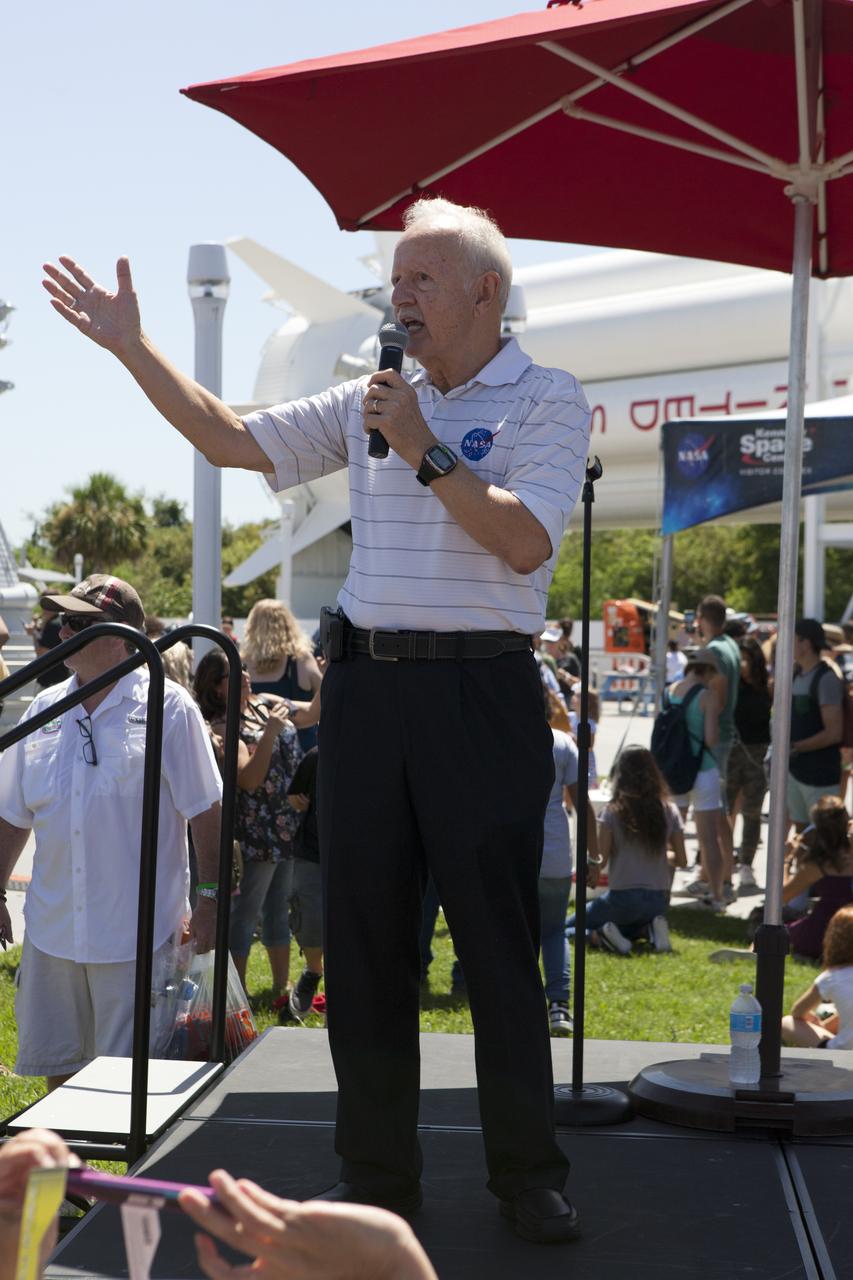
From the Kennedy Space Center Visitor Complex, guests joined Americans from coast to coast following the solar eclipse. Speaking at the event was astronaut John-David Bartoe. Although a partial eclipse on Florida's Space Coast, young and old alike found many ways to watch the rare astronomical event. As the Moon passed between Earth and the midafternoon Sun, a shadow moved across the landscape. The 70-mile-wide totality path, or "umbral cone" -- where the entire Sun will vanish behind the Moon -- stretched across 14 states, from Oregon to South Carolina.
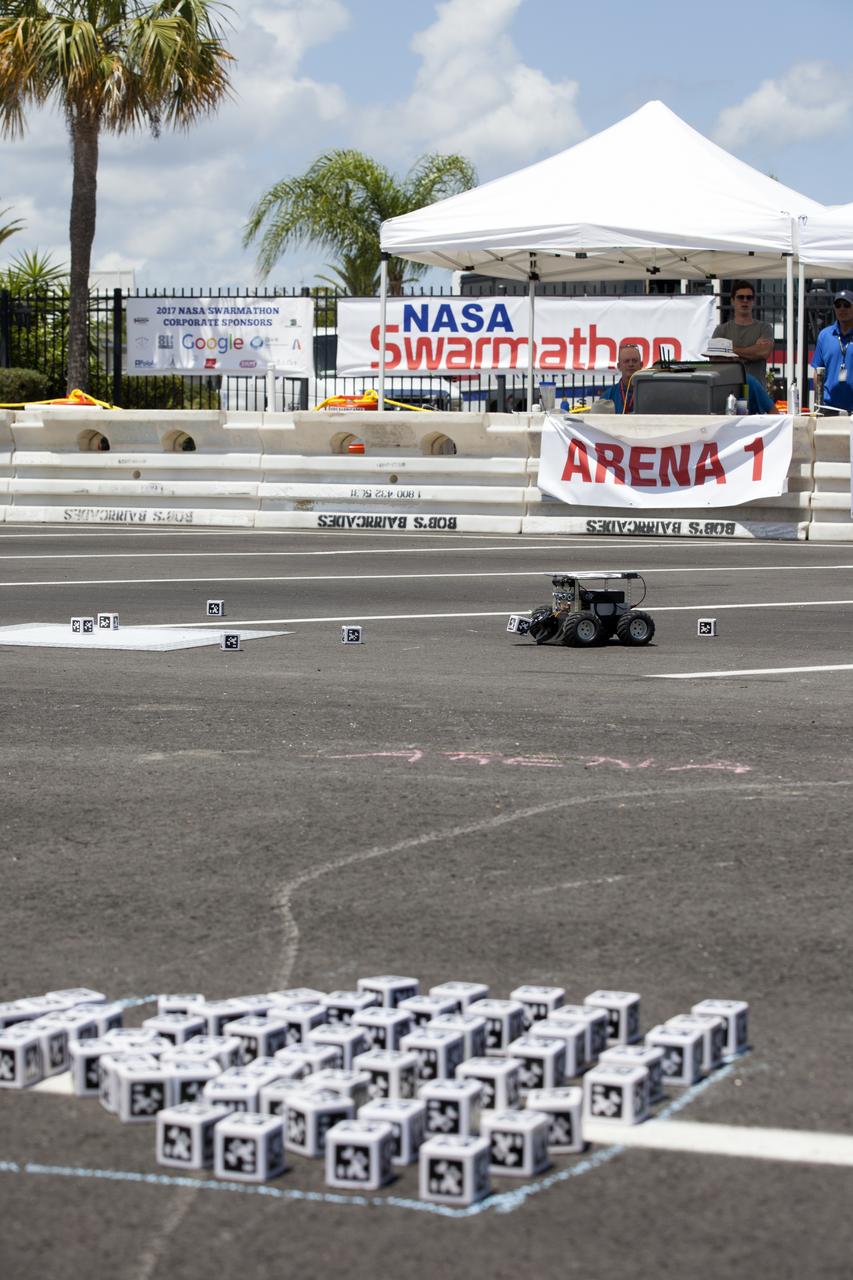
In the Swarmathon competition at the Kennedy Space Center Visitor Complex, students were asked to develop computer code for the small robots, programming them to look for "resources" in the form of AprilTag cubes, similar to barcodes. Teams developed search algorithms for the Swarmies to operate autonomously, communicating and interacting as a collective swarm similar to ants foraging for food. In the spaceport's second annual Swarmathon, 20 teams representing 22 minority serving universities and community colleges were invited to develop software code to operate these innovative robots known as "Swarmies" to help find resources when astronauts explore distant locations, such as the moon or Mars.
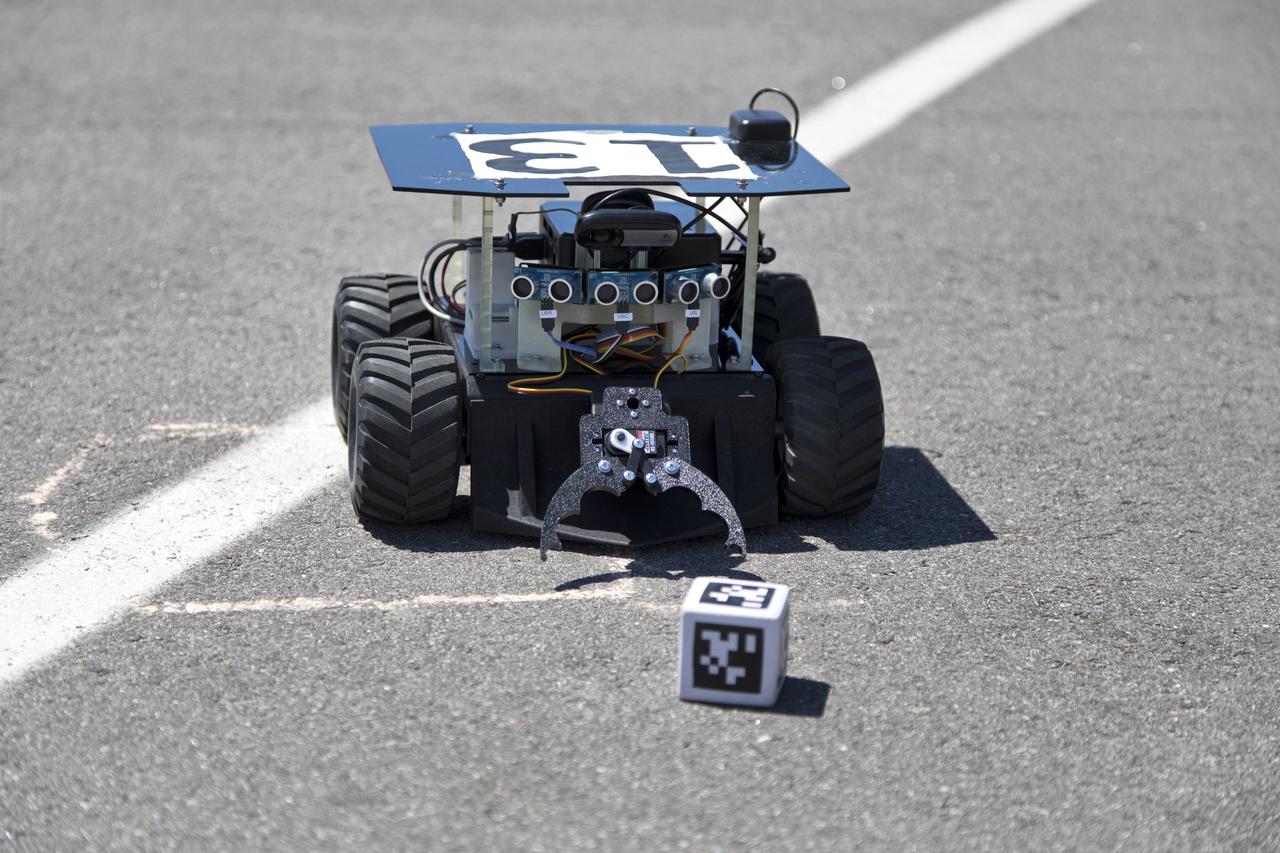
In the Swarmathon competition at the Kennedy Space Center Visitor Complex, students were asked to develop computer code for the small robots, programming them to look for "resources" in the form of AprilTag cubes, similar to barcodes. Teams developed search algorithms for the Swarmies to operate autonomously, communicating and interacting as a collective swarm similar to ants foraging for food. In the spaceport's third annual Swarmathon, 23 teams represented 24 minority serving universities and community colleges were invited to develop software code to operate these innovative robots known as "Swarmies" to help find resources when astronauts explore distant locations, such as the Moon or Mars.