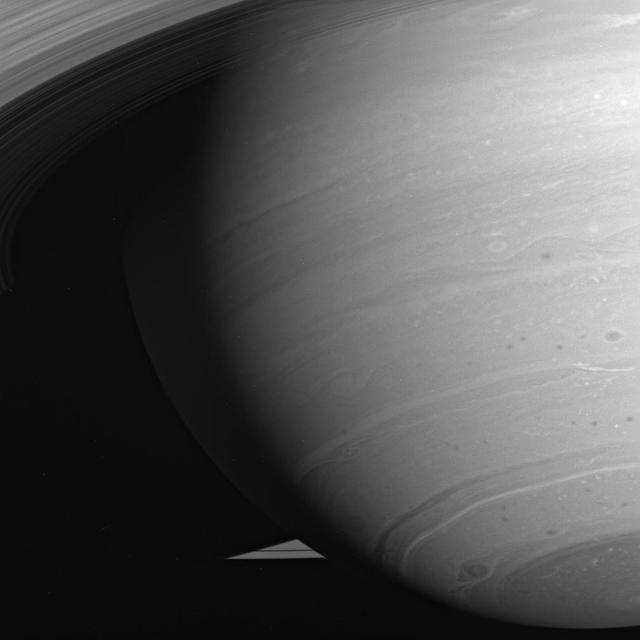
Vortex Variety
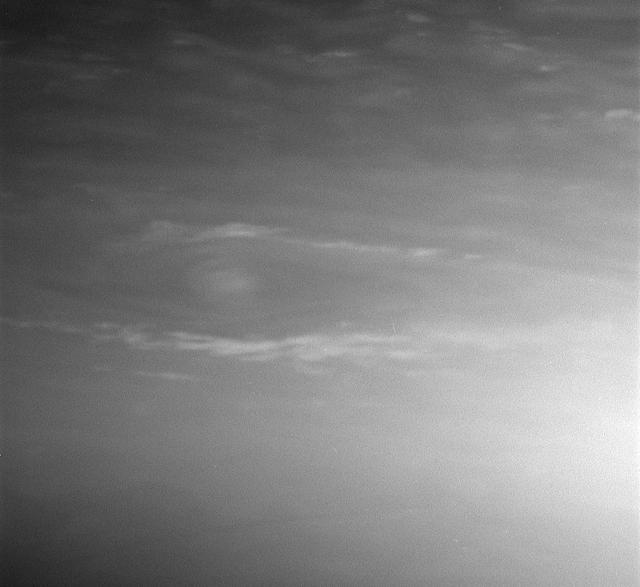
Accented Vortex

Vortex Flow
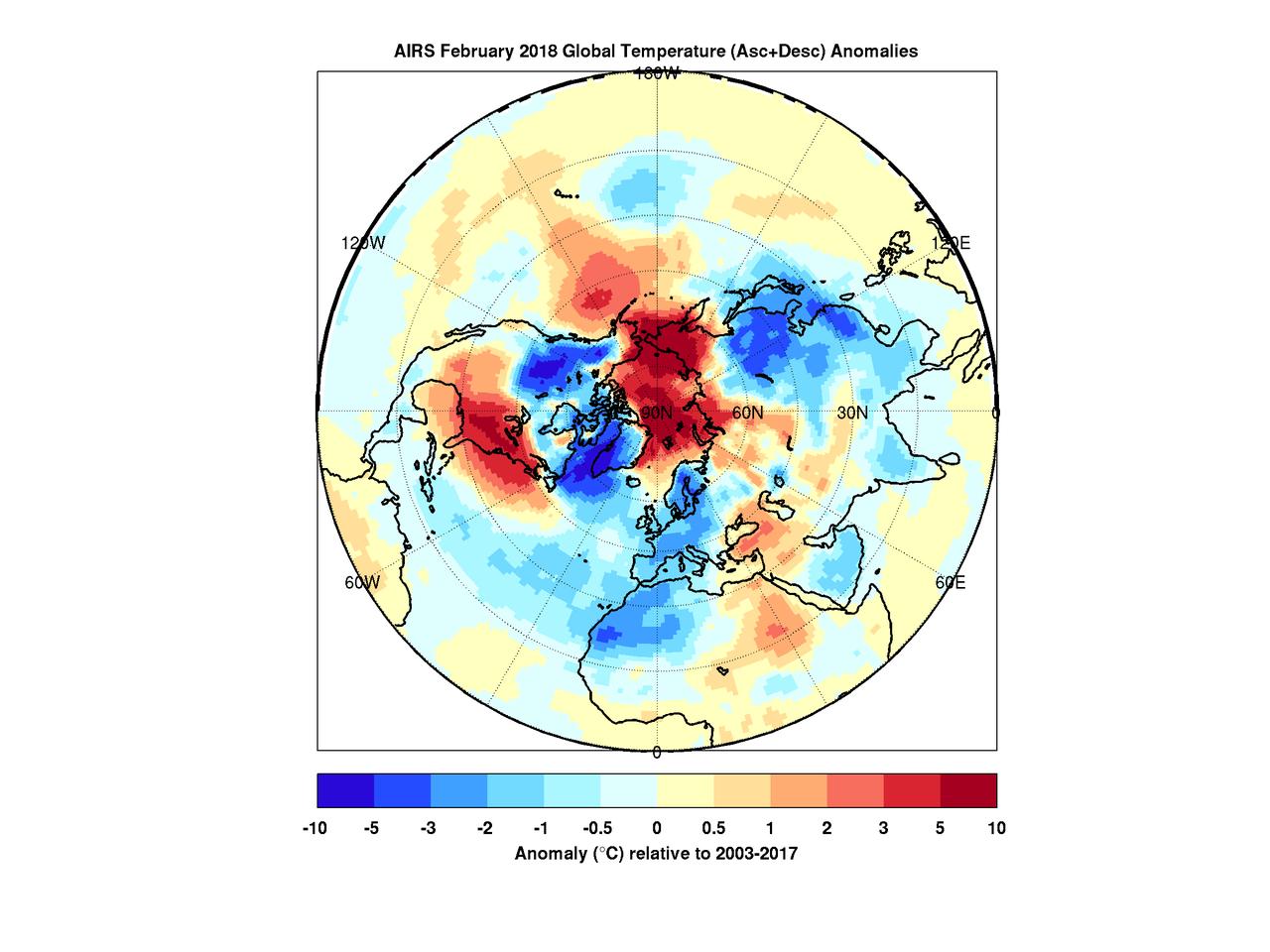
When the polar vortex dips south it often makes headlines. Frigid air, usually confined to the arctic, spills into lower parts of the continent making it a chilly challenge for people going about their day. But there's a warm part to the story as well. While the eastern and southern United States were shivering in January the arctic was experiencing above average temperatures. In maps created with data by the Atmospheric Infrared Sounder (AIRS) on NASA's Aqua satellite, warmer-than-normal temperatures are colored in red and below average temperatures are colored in blue. Provided in geographic and polar projections, the maps show regions of unusually cold air hovering over the eastern and southern U.S., eastern Canada and Greenland in January. February shows colder-than-normal air blanketing the northwest U.S., Canada, Western Europe, northwest Africa and East Asia. In both cases, the arctic remains exceptionally warm. During most winters the polar vortex is like a giant counterclockwise whirlpool spinning around the north pole with cold air at its center. Occasionally the vortex splits and its parts move south, usually over the continents. At the same time, warm air from the south moves in to fill the gap, and that northward movement usually occurs over the oceans. The cold air movement gets the most attention because it typically affects many millions of people. However, that cooling is very often accompanied by warming somewhere over the Arctic -- an equally important part of the polar vortex story that usually goes unnoticed but is very apparent in the images shown here. More images are available at https://photojournal.jpl.nasa.gov/catalog/PIA22344
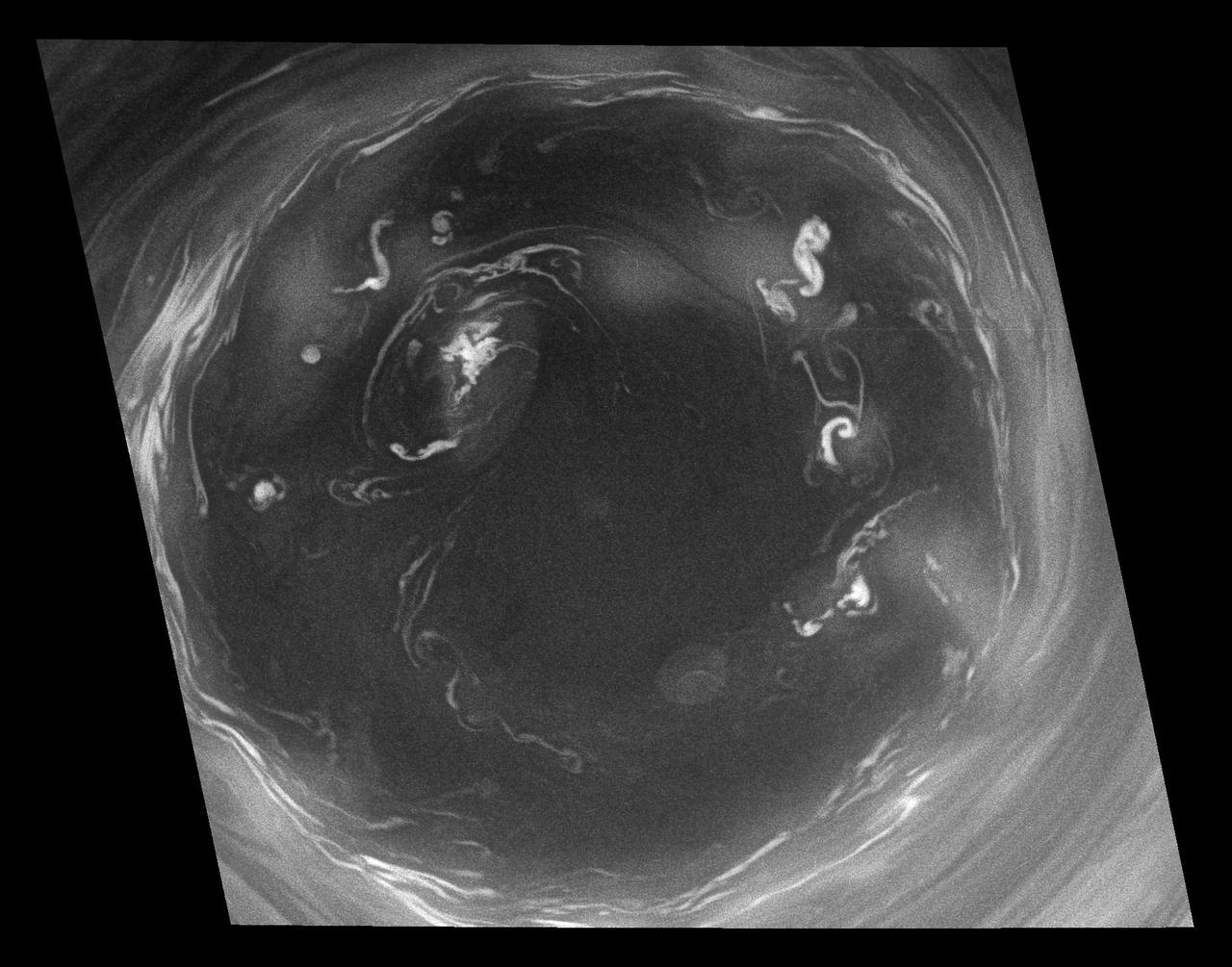
Convection in Saturn Southern Vortex
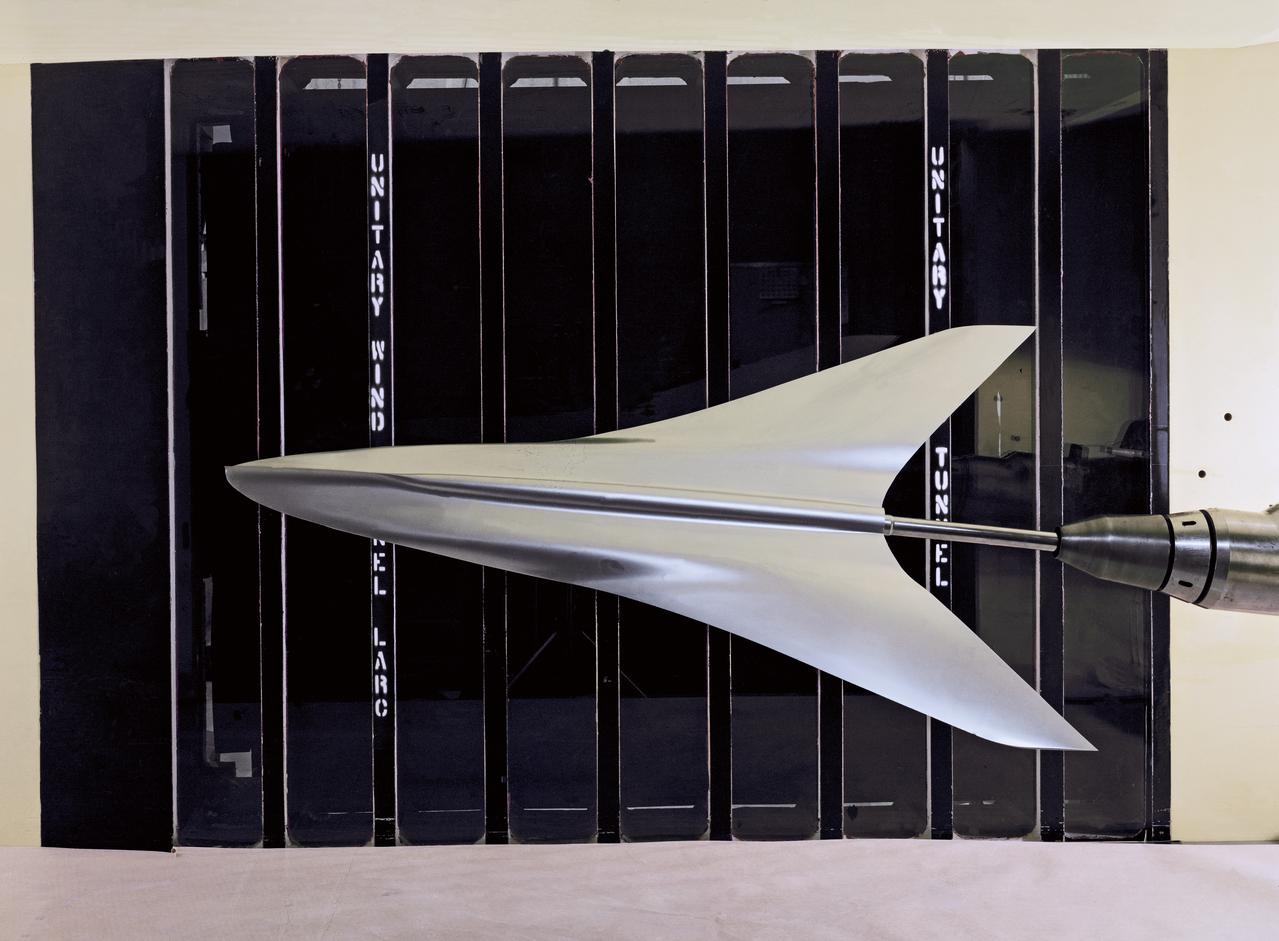
Leading Edge Vortex Suppression Series
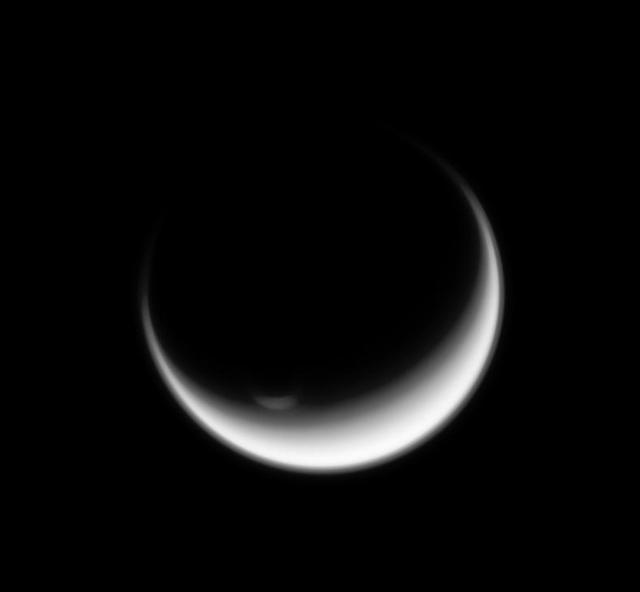
Titan polar vortex stands illuminated where all else is in shadow in this image from NASA Cassini spacecraft.
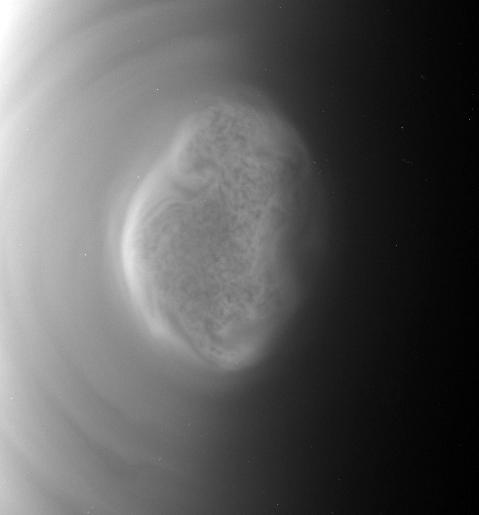
This image from a movie captured by NASAS Cassini spacecraft shows a south polar vortex, or shows a south polar vortex, or a swirling mass of gas around the pole in the atmosphere, at Saturn moon Titan.
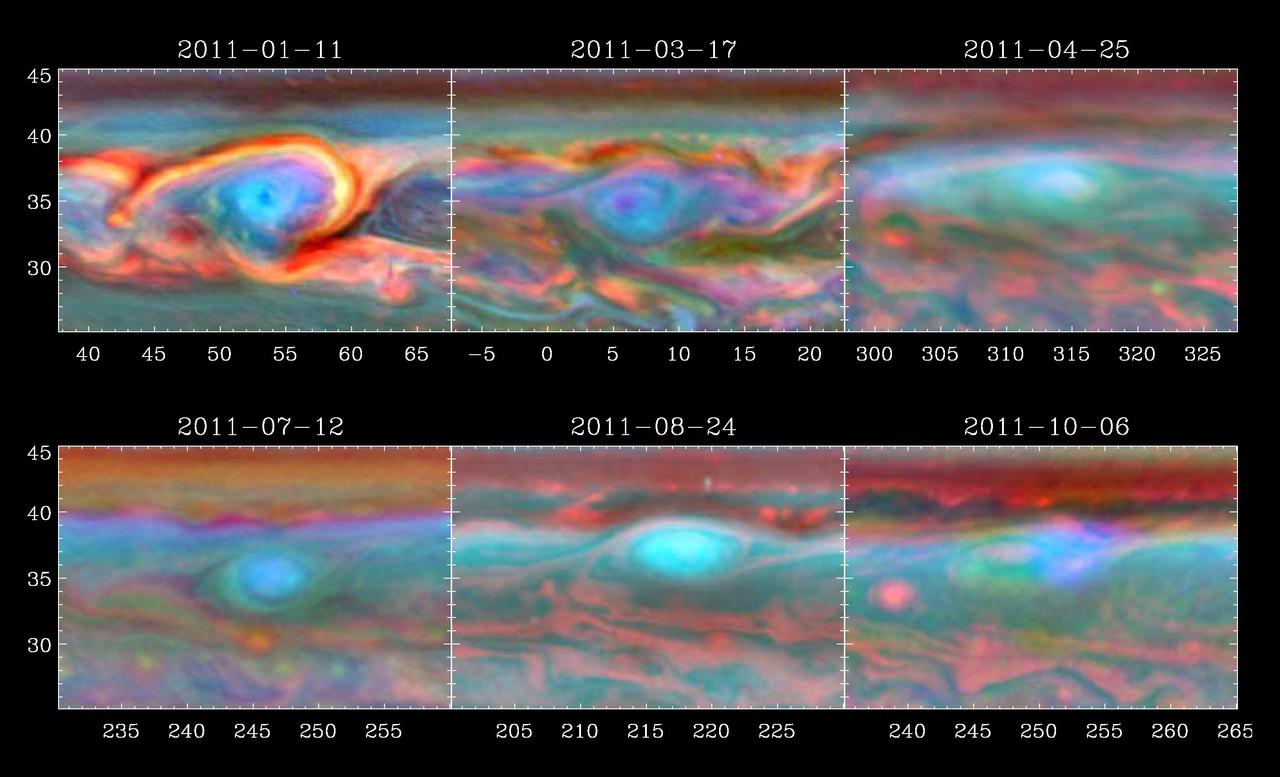
A vortex that was part of a giant storm on Saturn slowly dissipates over time in this set of false color images from NASA Cassini spacecraft.
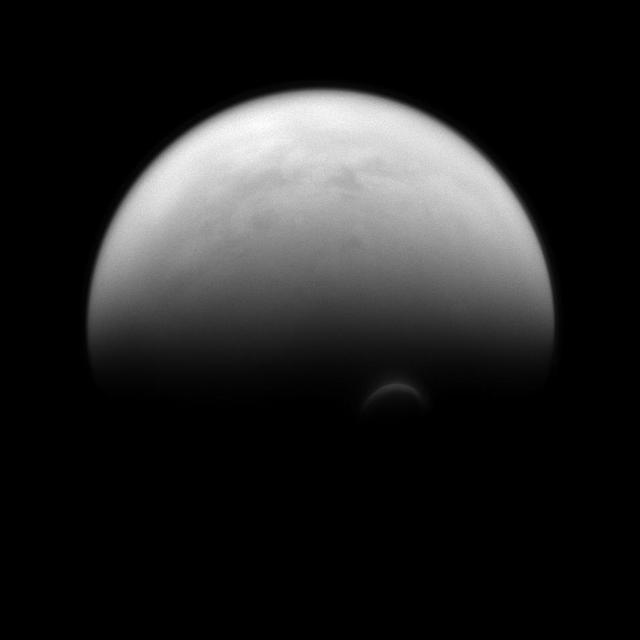
The sunlit edge of Titan south polar vortex stands out distinctly against the darkness of the moon unilluminated hazy atmosphere as seen by NASA Cassini spacecraft.
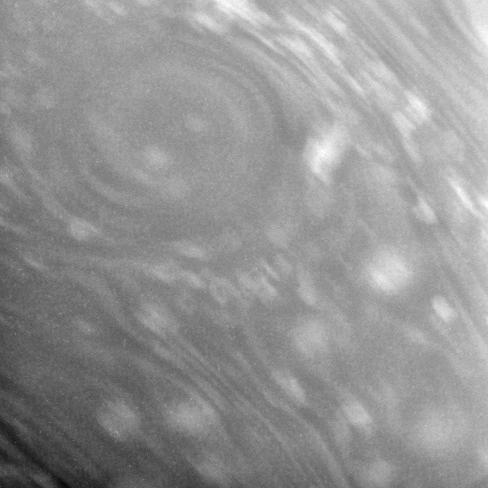
This close-up view of Saturn atmosphere shows a circular vortex surrounded by numerous attendant bright clouds. Some blurring due to spacecraft motion is apparent in this view

This frame from an animation from NASA Cassini spacecraft shows the swirling clouds in a vortex spawned by a great northern storm on Saturn. The clouds are moving in a clockwise direction.
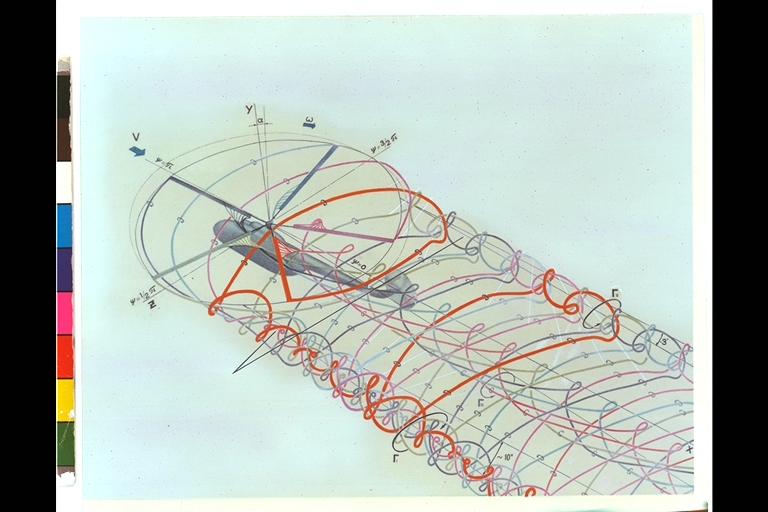
Wake Vortex behind a helicopter (Illustration)
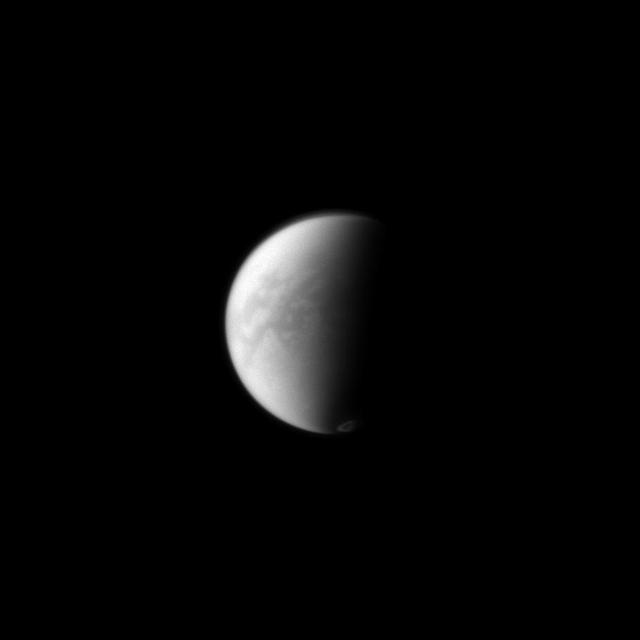
NASA Cassini spacecraft simultaneously peers through the haze in Titan equatorial region down to its surface and captures the vortex of clouds hovering over its south pole just to the right of the terminator on the moon dark side.

Wake Vortex behind a helicopter describing Longitudinal Cores (Secondary Vortes Generation) from Aviatsiya / Kosmonautika, 1973 (Illustration)
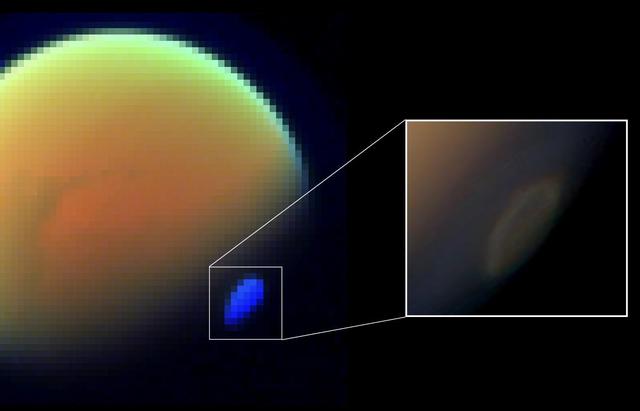
These two views of Saturn moon Titan show the southern polar vortex, a huge, swirling cloud that was first observed by NASA Cassini spacecraft in 2012.

The Polar Vortex is a whirling and persistent large area of low pressure, found typically over both north and south poles. The northern Polar Vortex is pushing southward over western Wisconsin/eastern Minnesota today, Monday, January 6, 2014 and is bringing frigid temperatures to half of the continental United States. It is expected to move northward back over Canada toward the end of the week. This image was captured by NOAA's GOES-East satellite on January 6, 2014 at 1601 UTC/11:01 a.m. EST. A frontal system that brought rain to the coast is draped from north to south along the U.S. East Coast. Behind the front lies the clearer skies bitter cold air associated with the Polar Vortex. The GOES image also revealed snow on the ground in Minnesota, Wisconsin, Illinois, Indiana, Ohio, Michigan, Iowa and Missouri, stretching into the Great Plains. Cloudiness over Texas is associated with a low pressure system centered over western Oklahoma that is part of the cold front connected to the movement of the Polar Vortex. The GOES image was created at NASA's GOES Project, located at NASA's Goddard Space Flight Center in Greenbelt, Md. Both the northern and southern polar vortices are located in the middle and upper troposphere (lowest level of the atmosphere) and the stratosphere (next level up in the atmosphere). The polar vortex is a winter phenomenon. It develops and strengthens in its respective hemisphere's winter as the sun sets over the polar region and temperatures cool. They weaken in the summer. In the northern hemisphere, they circulate in a counter-clockwise direction, so the vortex sitting over western Wisconsin is sweeping in cold Arctic air around it. The Arctic Polar Vortex peaks in the Northern Hemisphere's wintertime and has already moved southward several times this winter. In the past, it has also moved southward over Europe.On January 21, 1985, the National Oceanic and Atmospheric Administration Daily Weather Map series showed a strong polar vortex centered over Maine. The Polar Vortex also affects ozone. For more information on the Polar Vortex and how it affects ozone, visit NASA's Ozone Watch page: <a href="http://ozonewatch.gsfc.nasa.gov/facts/vortex_NH.html" rel="nofollow">ozonewatch.gsfc.nasa.gov/facts/vortex_NH.html</a> Rob Gutro NASA's Goddard Space Flight Center <b><a href="http://goes.gsfc.nasa.gov/" rel="nofollow">Credit: NOAA/NASA GOES Project</a></b> <b><a href="http://www.nasa.gov/audience/formedia/features/MP_Photo_Guidelines.html" rel="nofollow">NASA image use policy.</a></b> <b><a href="http://www.nasa.gov/centers/goddard/home/index.html" rel="nofollow">NASA Goddard Space Flight Center</a></b> enables NASA’s mission through four scientific endeavors: Earth Science, Heliophysics, Solar System Exploration, and Astrophysics. Goddard plays a leading role in NASA’s accomplishments by contributing compelling scientific knowledge to advance the Agency’s mission. <b>Follow us on <a href="http://twitter.com/NASA_GoddardPix" rel="nofollow">Twitter</a></b> <b>Like us on <a href="http://www.facebook.com/pages/Greenbelt-MD/NASA-Goddard/395013845897?ref=tsd" rel="nofollow">Facebook</a></b> <b>Find us on <a href="http://instagram.com/nasagoddard?vm=grid" rel="nofollow">Instagram</a></b>
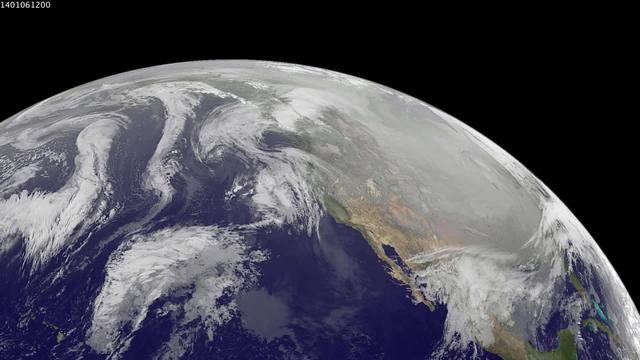
1-9 January 2014. The full-disk images every 3 hours from GOES-WEST capture the sweep of a polar vortex that emerged from the arctic at the beginning of the new year, pushing a blizzard into the northeastern USA on January 3, followed by extensive bitter cold (-20 F, windchill -50 F) around the Great Lakes, and single digit temperatures as far south as Atlanta, Georgia. This western viewpoint displays the persistent flow of arctic air from northern Alaska and Yukon into North America. <b><a href="http://goes.gsfc.nasa.gov/" rel="nofollow">Credit: NOAA/NASA GOES Project</a></b> <b><a href="http://www.nasa.gov/audience/formedia/features/MP_Photo_Guidelines.html" rel="nofollow">NASA image use policy.</a></b> <b><a href="http://www.nasa.gov/centers/goddard/home/index.html" rel="nofollow">NASA Goddard Space Flight Center</a></b> enables NASA’s mission through four scientific endeavors: Earth Science, Heliophysics, Solar System Exploration, and Astrophysics. Goddard plays a leading role in NASA’s accomplishments by contributing compelling scientific knowledge to advance the Agency’s mission. <b>Follow us on <a href="http://twitter.com/NASA_GoddardPix" rel="nofollow">Twitter</a></b> <b>Like us on <a href="http://www.facebook.com/pages/Greenbelt-MD/NASA-Goddard/395013845897?ref=tsd" rel="nofollow">Facebook</a></b> <b>Find us on <a href="http://instagram.com/nasagoddard?vm=grid" rel="nofollow">Instagram</a></b>
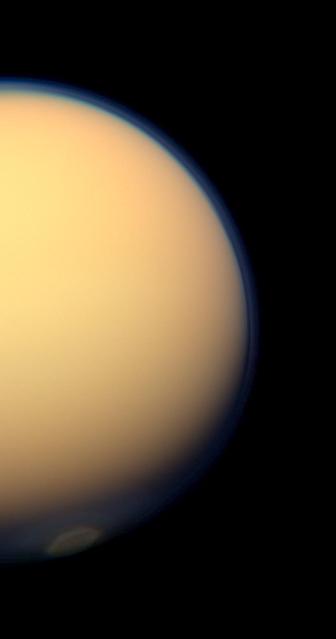
The recently formed south polar vortex stands out in the color-swaddled atmosphere of Saturn largest moon, Titan, in this natural color view from NASA Cassini spacecraft.

NASA's Atmospheric Infrared Sounder (AIRS) instrument captures a polar vortex moving from Central Canada into the U.S. Midwest from January 20 through January 29, 2019. The images show air temperatures at 600 millibars, around 2.5 miles (4 kilometers) high in Earth's troposphere. This polar vortex is responsible for surface air temperatures as low as -40 degrees Fahrenheit (also -40 degrees Celsius) and wind chill readings as low as the -50s and -60s Fahrenheit (-46 and -51 Celsius). Animation available at https://photojournal.jpl.nasa.gov/catalog/PIA22823
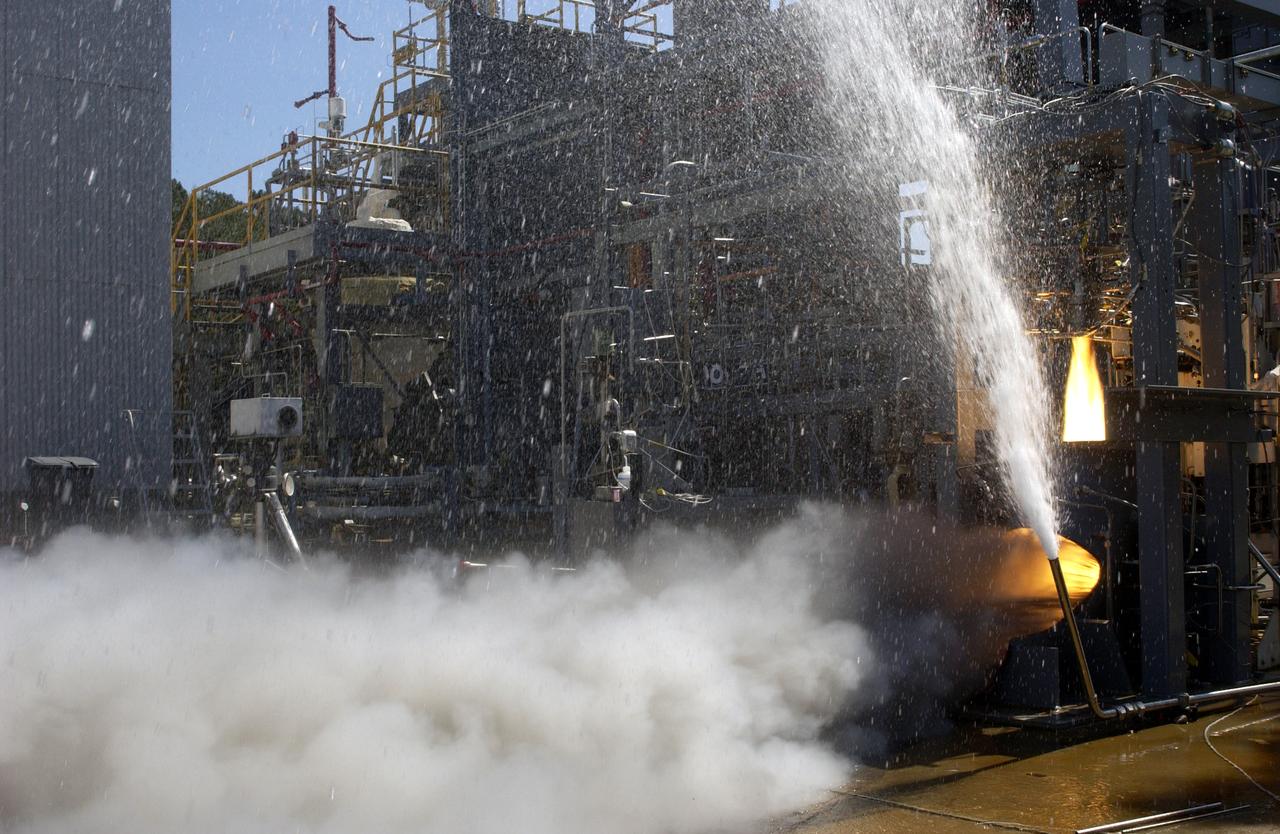
This photograph depicts one of over thirty tests conducted on the Vortex Combustion Chamber Engine at Marshall Space Flight Center's (MSFC) test stand 115, a joint effort between NASA's MSFC and the U.S. Army AMCOM of Redstone Arsenal. The engine tests were conducted to evaluate an irnovative, "self-cooled", vortex combustion chamber, which relies on tangentially injected propellants from the chamber wall producing centrifugal forces that keep the relatively cold liquid propellants near the wall.
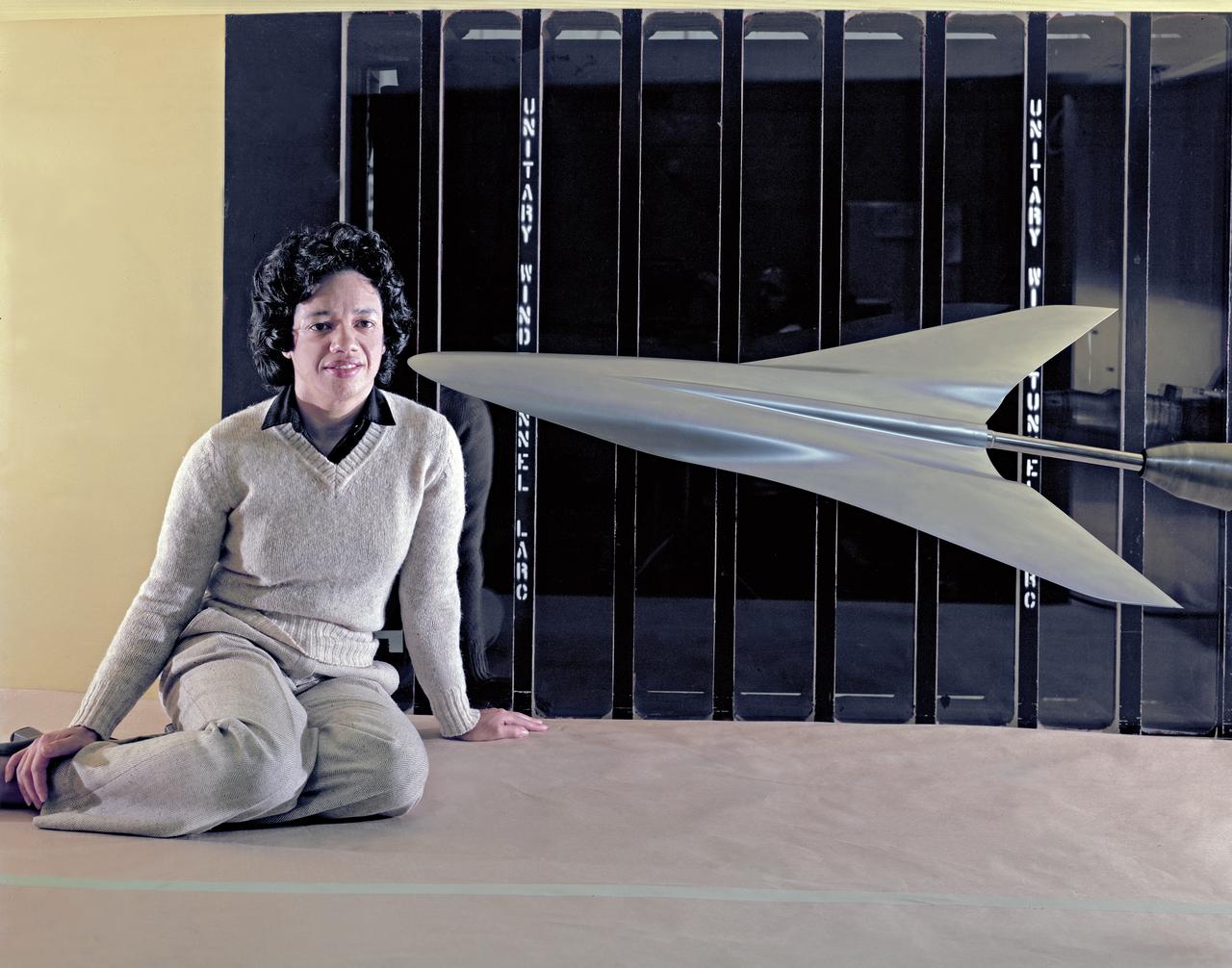
Leading Edge Vortex Suppression Series with Christine Darden in photos
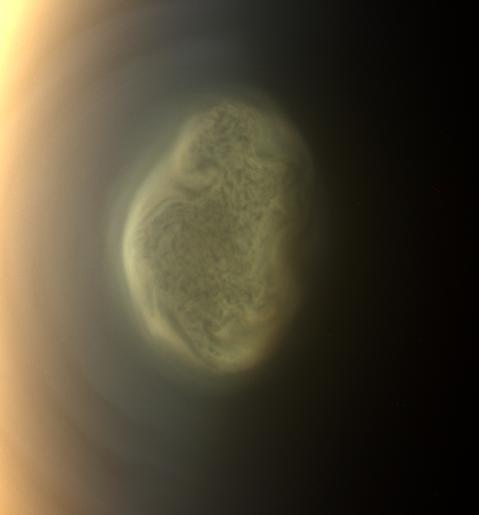
This true color image captured by NASAS Cassini spacecraft before a distant flyby of Saturn moon Titan on June 27, 2012, shows a south polar vortex, or a mass of fluid-like clouds and haze swirling around the pole in the atmosphere of the moon.
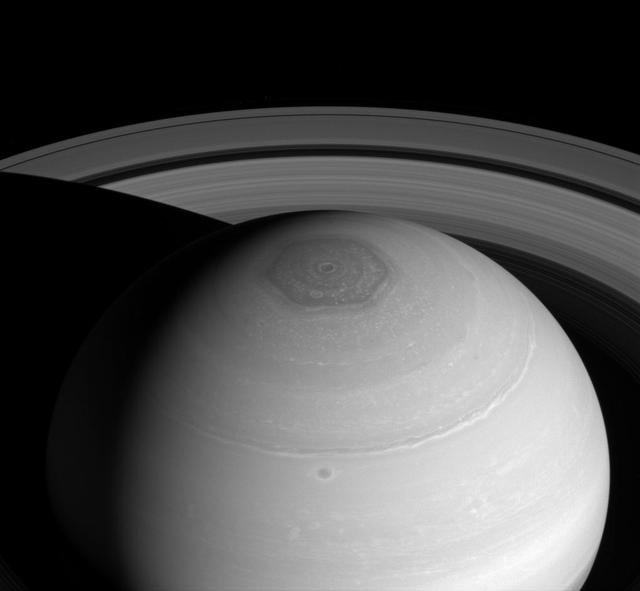
NASA Cassini spacecraft captures three magnificent sights at once: Saturn north polar vortex and hexagon along with its expansive rings. The hexagon, which is wider than two Earths, owes its appearance to the jet stream that forms its perimeter. The jet stream forms a six-lobed, stationary wave which wraps around the north polar regions at a latitude of roughly 77 degrees North. This view looks toward the sunlit side of the rings from about 37 degrees above the ringplane. The image was taken with the Cassini spacecraft wide-angle camera on April 2, 2014 using a spectral filter which preferentially admits wavelengths of near-infrared light centered at 752 nanometers. The view was obtained at a distance of approximately 1.4 million miles (2.2 million kilometers) from Saturn and at a Sun-Saturn-spacecraft, or phase, angle of 43 degrees. Image scale is 81 miles (131 kilometers) per pixel. http://photojournal.jpl.nasa.gov/catalog/PIA18274
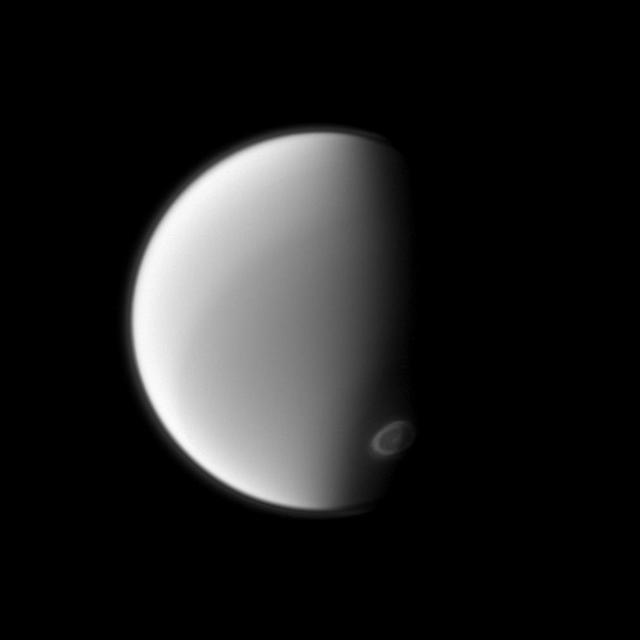
NASA Cassini spacecraft spies Titan south polar vortex from below the moon in this image. Imaging scientists are monitoring the vortex to study its seasonal development.
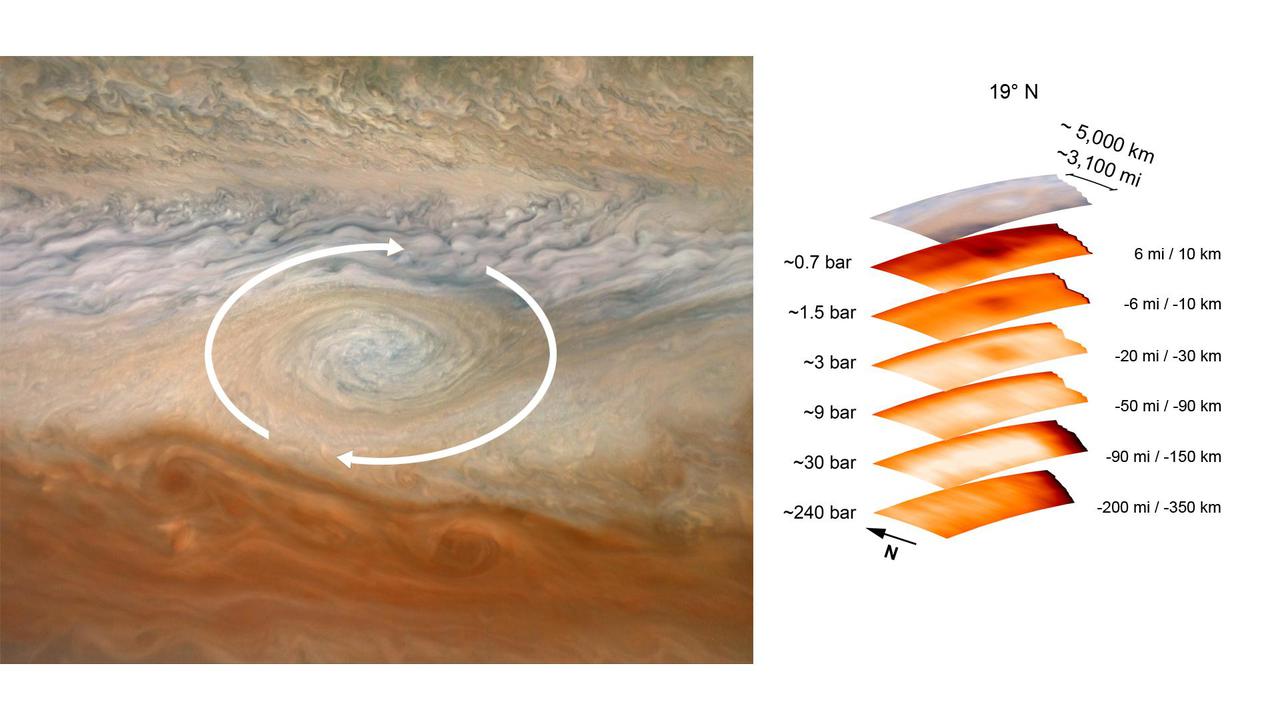
The image on the left, taken by the JunoCam imager aboard NASA's Juno spacecraft, has been annotated to depict the clockwise rotation of a vortex at Jupiter. The graphic on the right highlights the large-scale structure of the feature as seen by the spacecraft's microwave radiometer (MWR) instrument. Data for the image and the microwave radiometer results were collected during a low flyby of Jupiter that took place on July 21, 2019. The radiometer data was acquired from the six channels of MWR. Each MWR channel peers progressively deeper below the visible cloud tops. In fact, the MWR instrument enables Juno to see deeper into Jupiter than any previous spacecraft or Earth-based observations. Unlike Earth, which as a solid surface, Jupiter is a gas giant with no discernable solid surface. So the planetary science community has defined the "base" of Jupiter's atmosphere as the location where its pressure is equivalent to 1 bar. A bar is a metric unit of pressure that, at 14.5 pounds per square inch, is slightly less than the average atmospheric pressure on Earth at sea level. The numbers to the left of each layer of MWR data above indicate the pressure at the location in the atmosphere where the MWR reading occurred. The measurements to the right of each layer of MWR data provide the distance – either above or below the 1 bar level – from which the corresponding MWR measurement was taken. For context, the top layer in the figure is a visible-light image depicting Jupiter's different levels of clouds, with an average altitude about 6 miles above the 1 bar pressure region. https://photojournal.jpl.nasa.gov/catalog/PIA24975
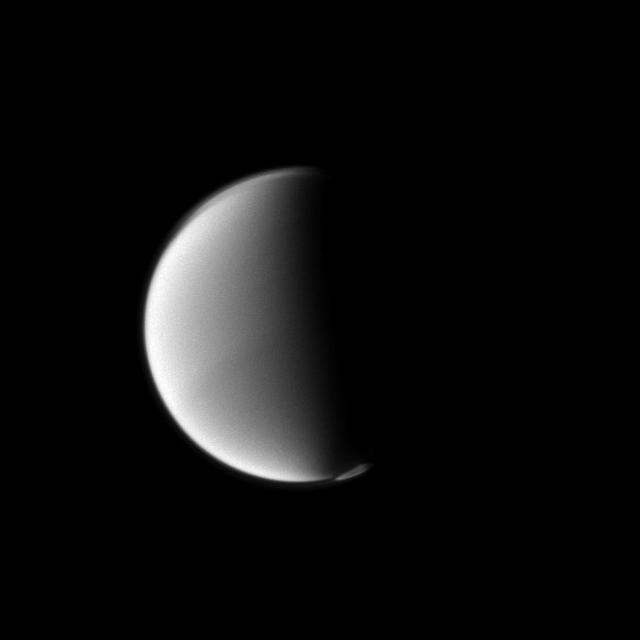
Titan south polar vortex seems to float above the moon south pole in this Cassini spacecraft view. The vortex, which is a mass of gas swirling around the south pole high in the moon atmosphere, can be seen in the lower right of this view.
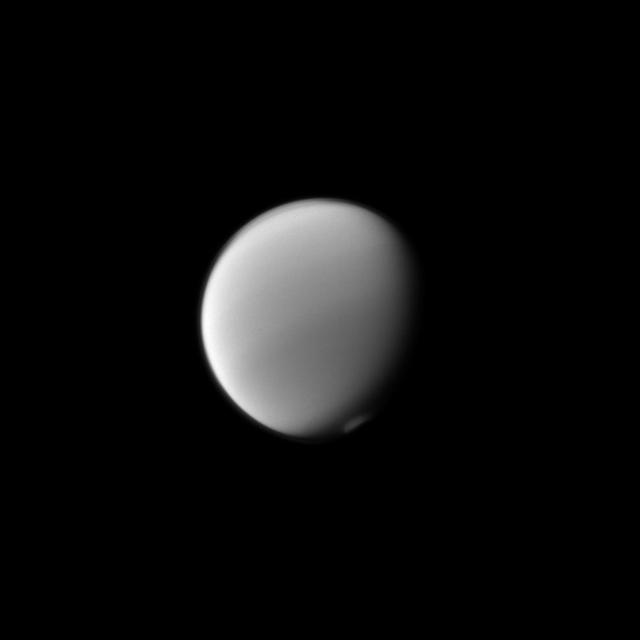
Titan atmosphere puts on a display with the detached haze to the north top of image and the polar vortex to the south as seen by NASA Cassini spacecraft.
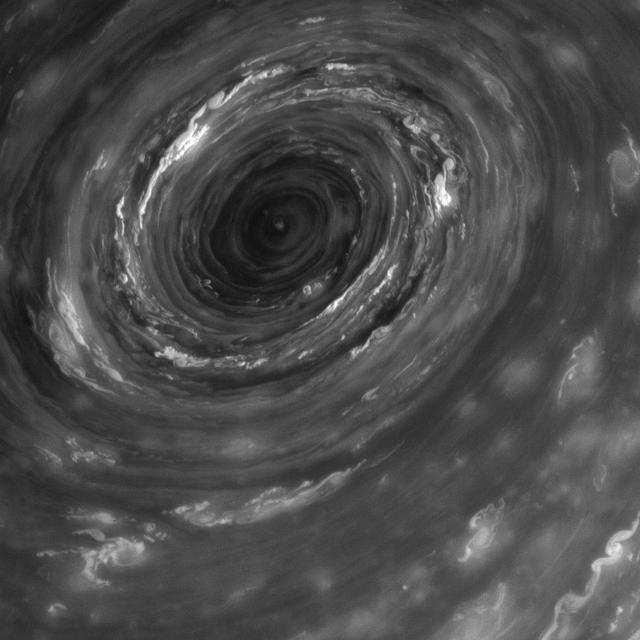
The vortex at Saturn north pole, seen here in the infrared by NASA Cassini spacecraft, takes on the menacing look.
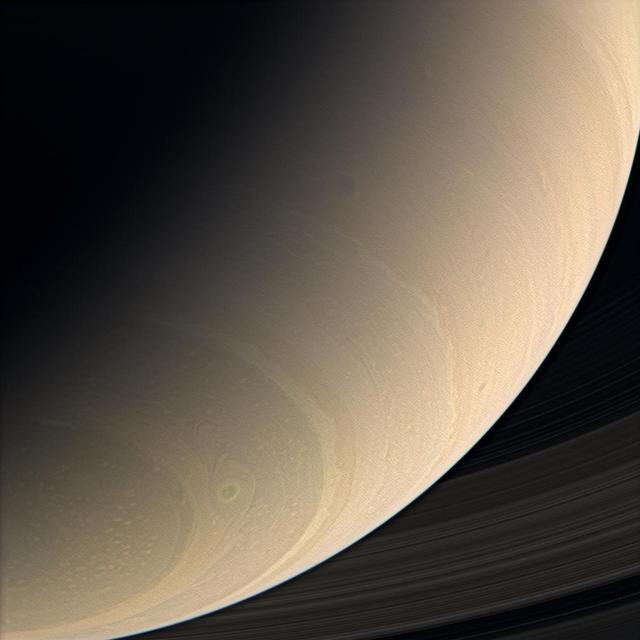
The Cassini spacecraft views Saturn southern latitudes in color, spying a great, eye-shaped vortex just northward of the south polar region
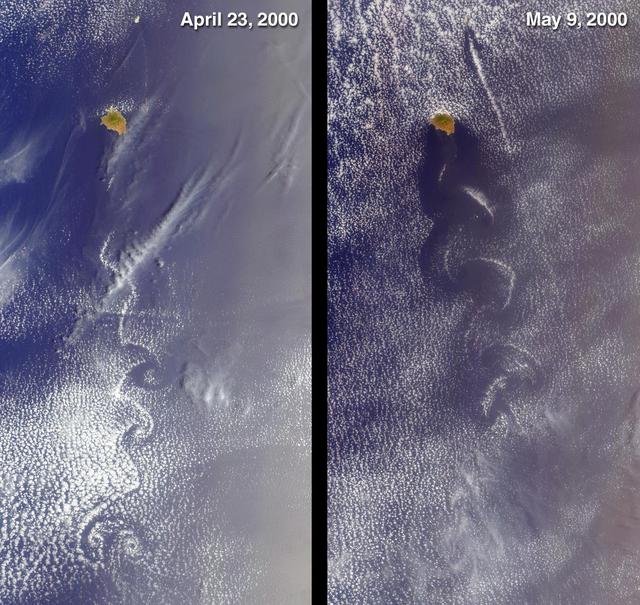
Socorro, Mexico was captured by NASA Terra satellite in 2000 showing cloud swirls, like delicate lace, forming patterns known as von Karman vortex streets.
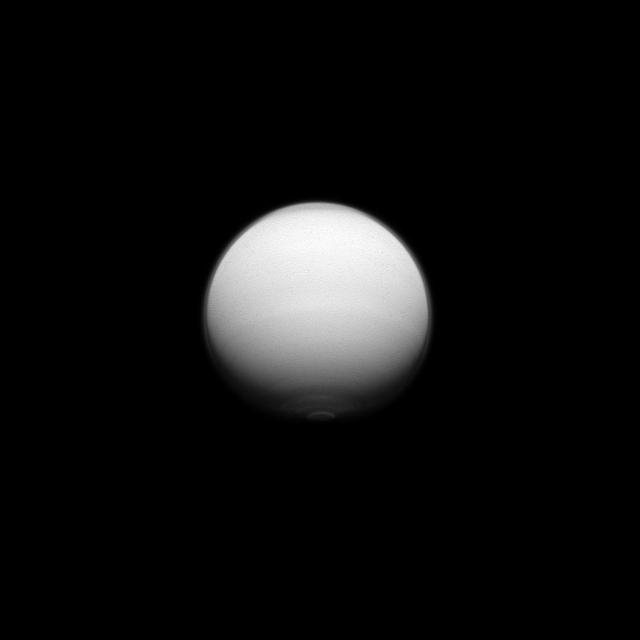
Titan shows us its active polar atmosphere with the north polar hood and south polar vortex both on display in this image captured by NASA Cassini spacecraft.
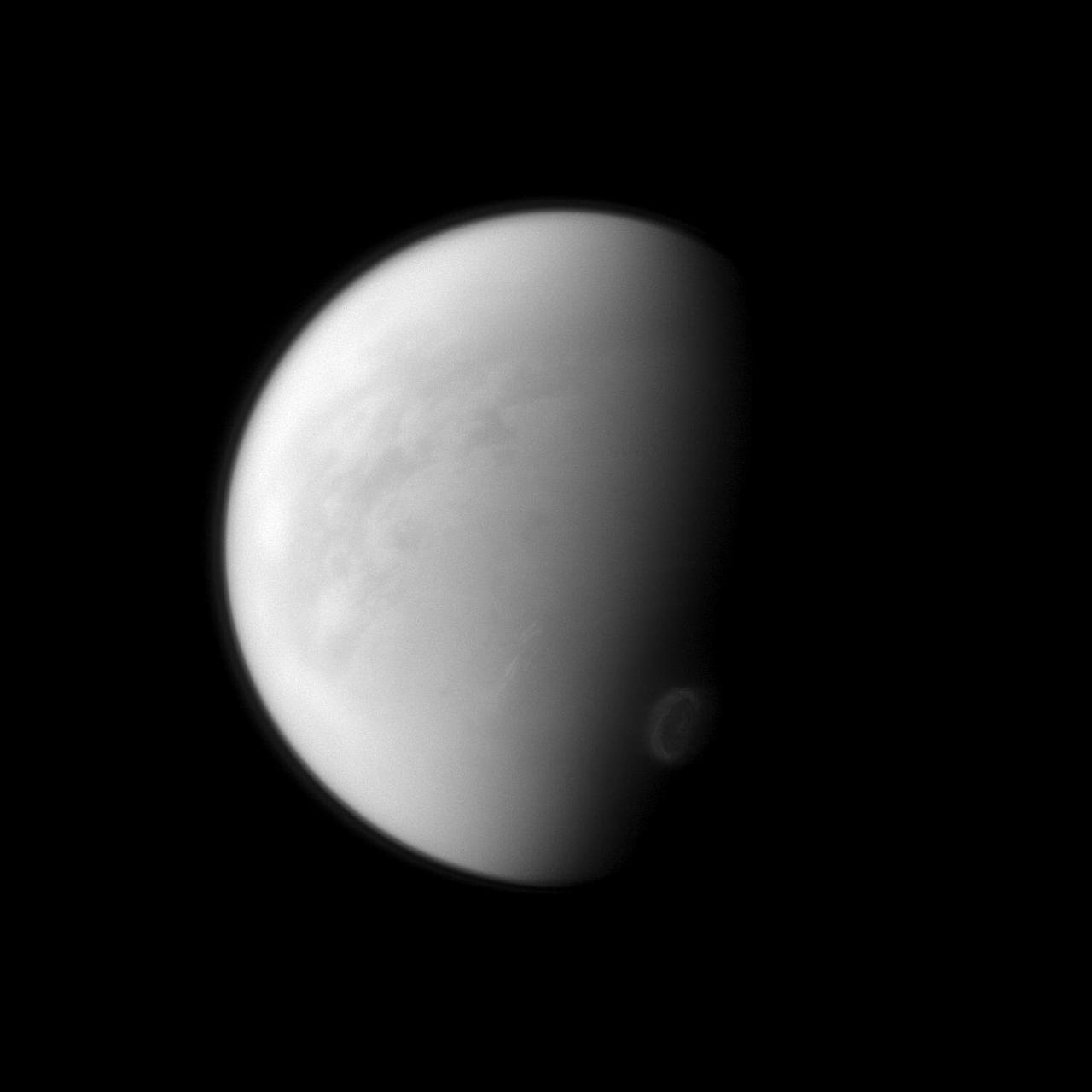
Titan swirling south-polar vortex stands out brightly against the other clouds of the south pole lower right in this image captured by NASA Cassini spacecraft.
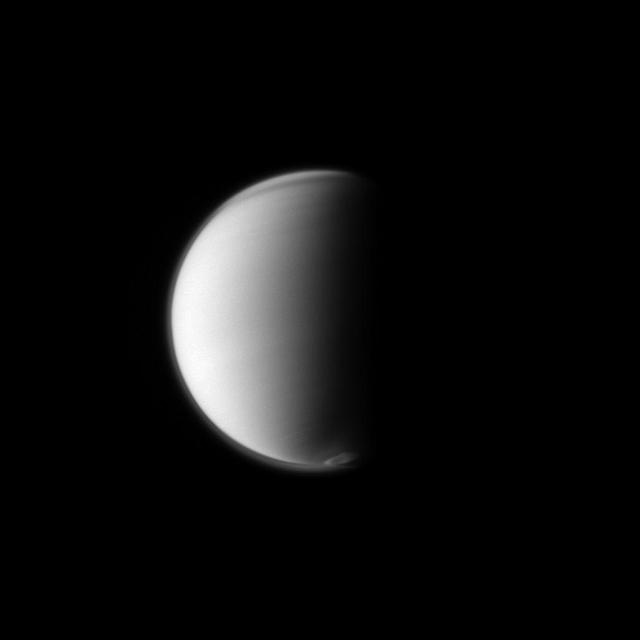
NASA Cassini spacecraft monitors Titan developing south polar vortex, which is a mass of swirling gas around the pole in the atmosphere of the moon.
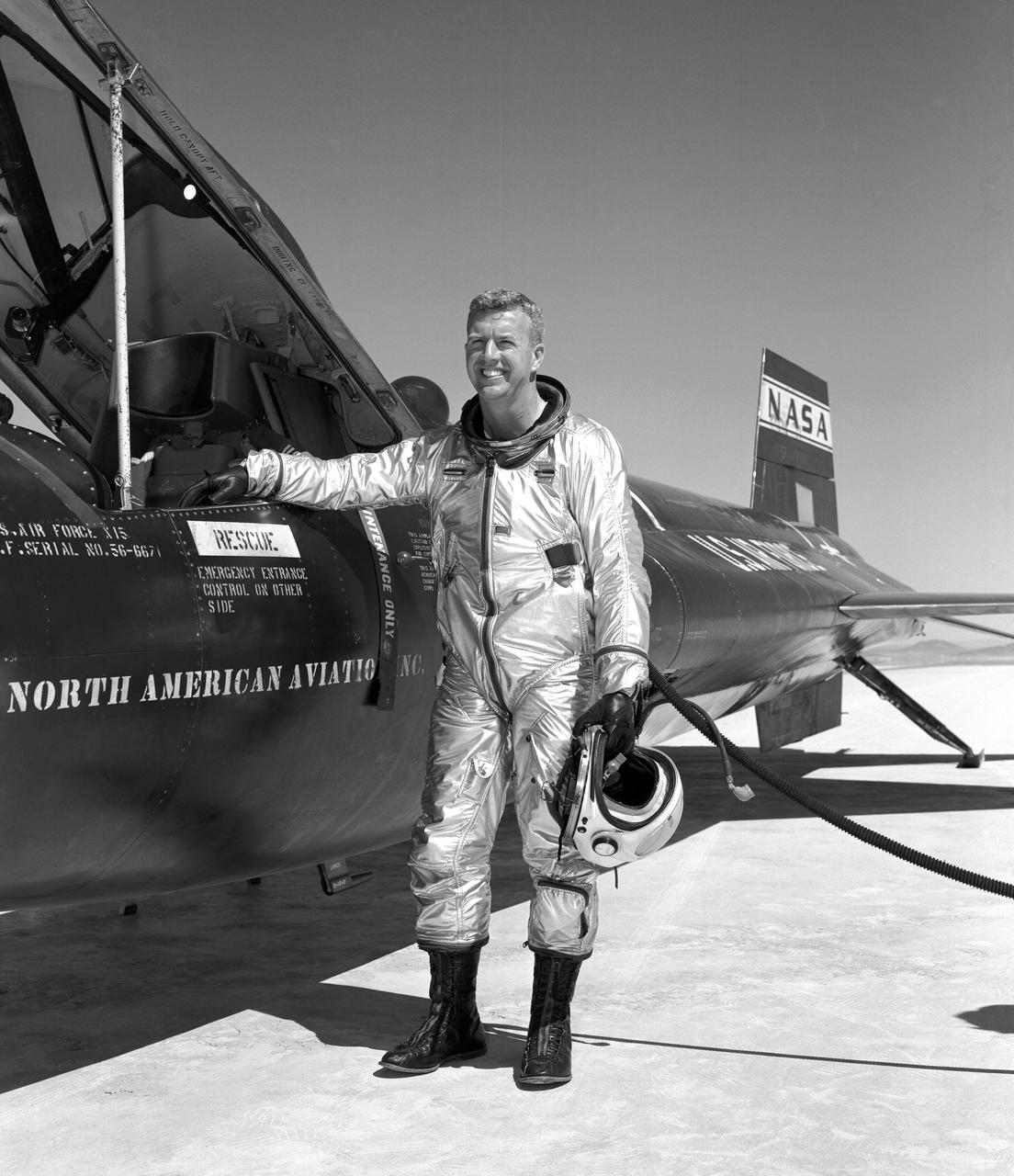
Walker made the first NASA-piloted X-15 flight March 25, 1960, and flew the aircraft 24 times, achieving its highest altitude (354,300 ft.) Aug. 22, 1963. He died piloting a F-104 that was caught up in a vortex of the XB-70.
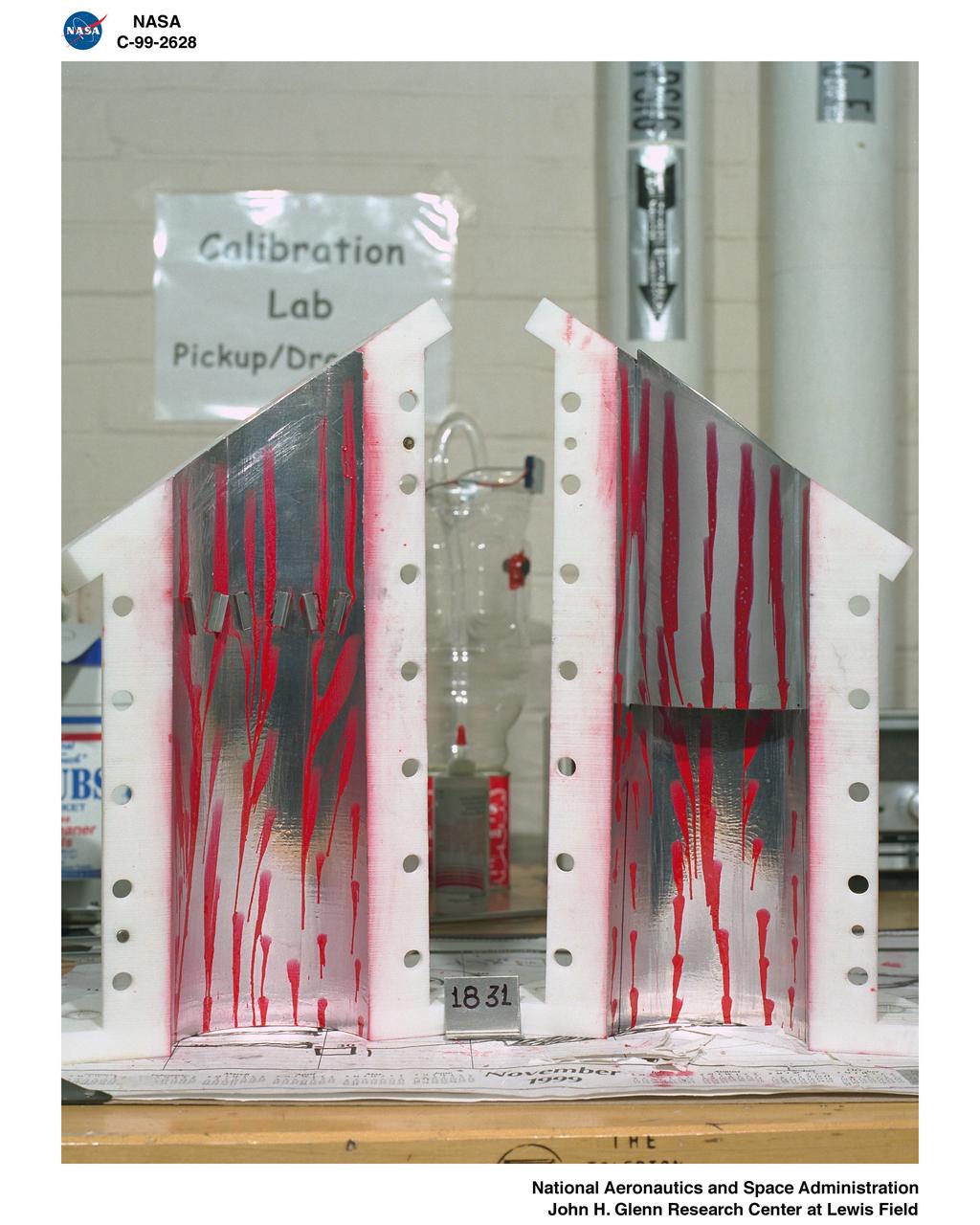
VORTEX GENERATOR TEST FOR WAVE ROTOR APPLICATIONS
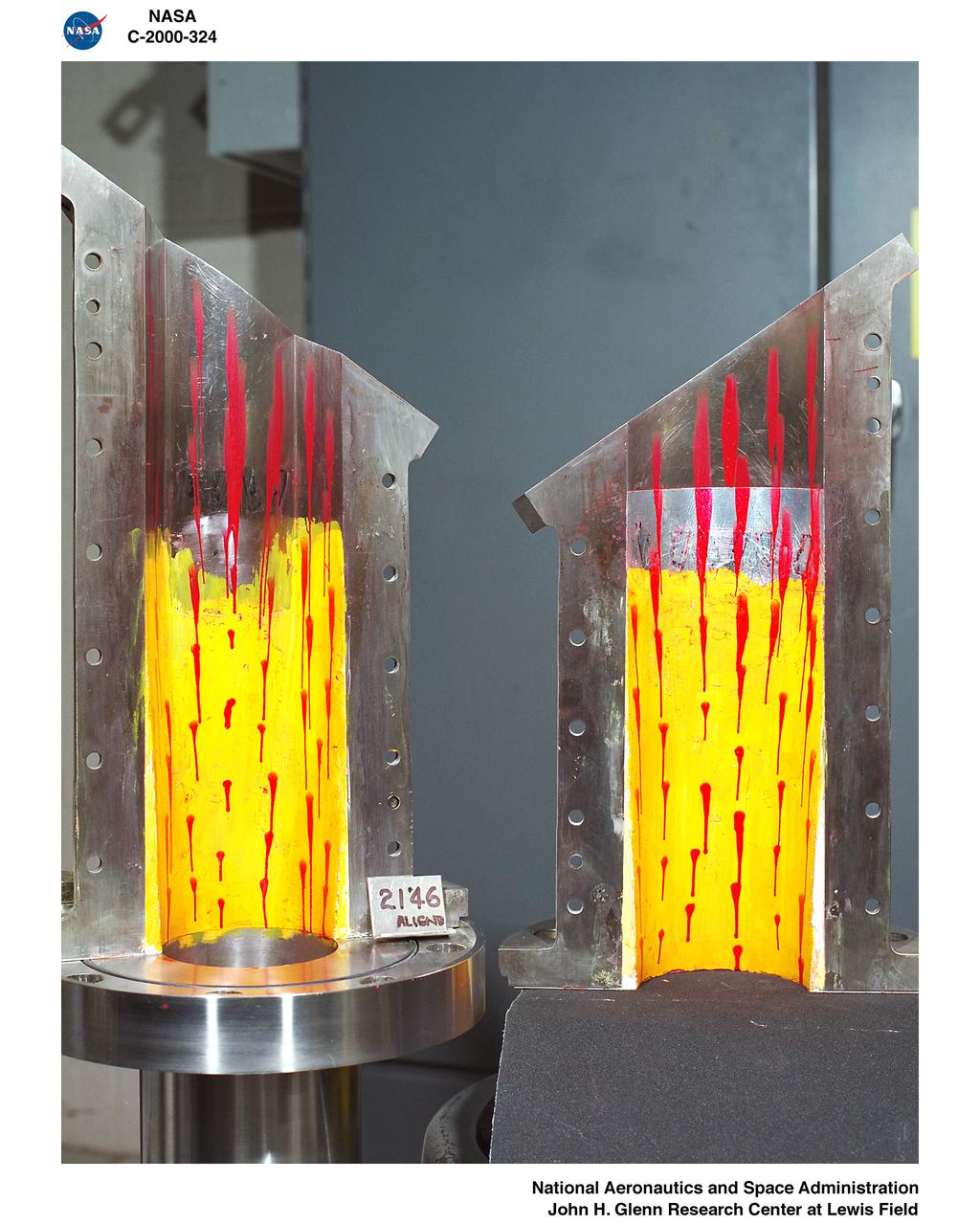
VORTEX GENERATOR TEST FOR WAVE ROTOR APPLICATIONS
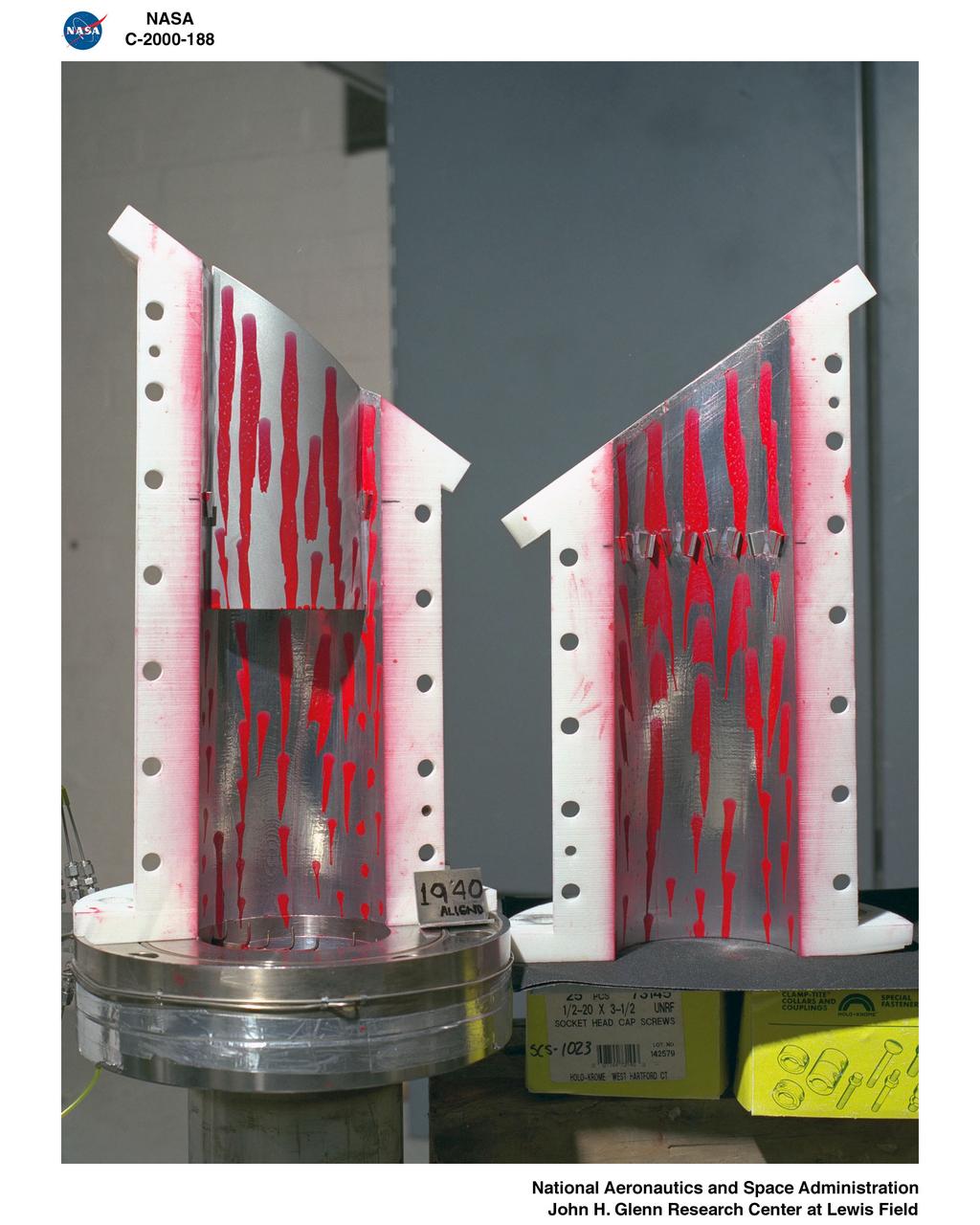
VORTEX GENERATOR TEST FOR WAVE ROTOR APPLICATIONS
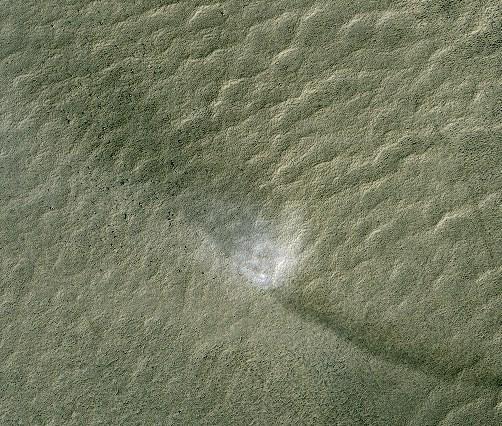
This telescopic view from orbit around Mars catches a Martian dust devil in action in the planet southern hemisphere. The swirling vortex of dust can be seen near the center of the image.
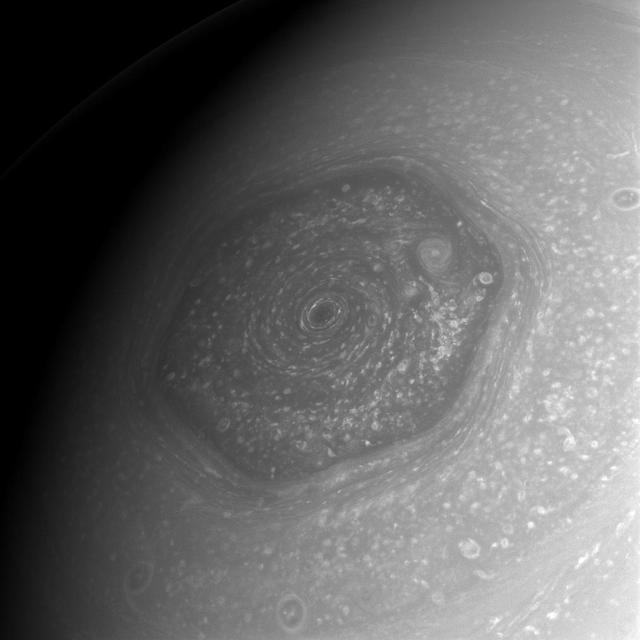
The area within Saturn north polar hexagon is shown by NASA Cassini spacecraft to contain myriad storms of various sizes, not the least of which is the remarkable and imposing vortex situated over the planet north pole.
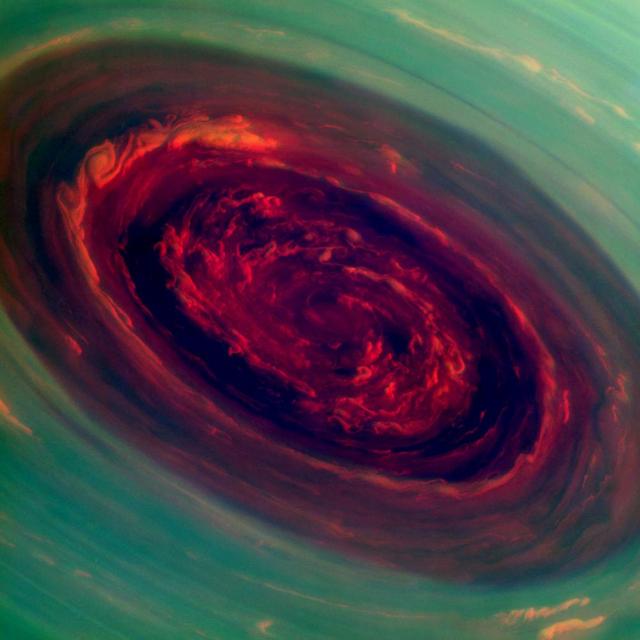
The spinning vortex of Saturn north polar storm resembles a deep red rose of giant proportions surrounded by green foliage in this false-color image from NASA Cassini spacecraft.

Dunes in the Vastitas Borealis region of Mars are seen in this image from NASA Mars Odyssey spacecraft. These sand seas migrate around the north polar cap following the strong polar vortex winds.
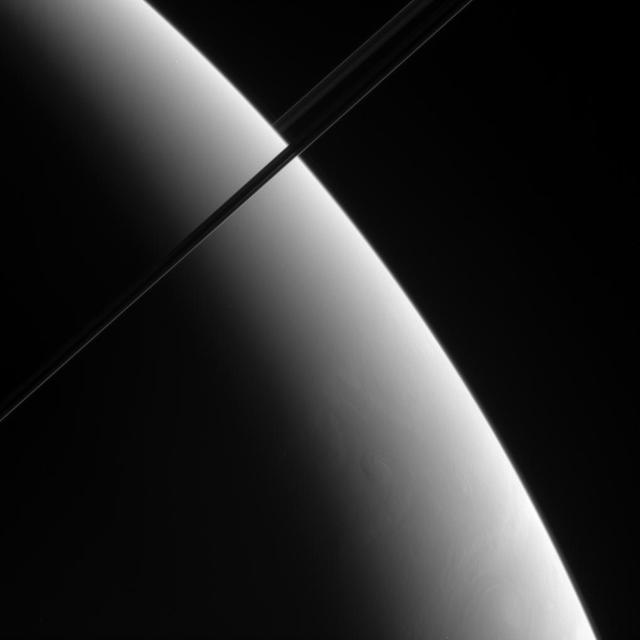
This oblique view of Saturn shows what may be localized upwellings in the clouds of Saturn southern hemisphere. Although the contrast is low, a vortex is visible near lower right.This view looks toward the unlit side of the rings
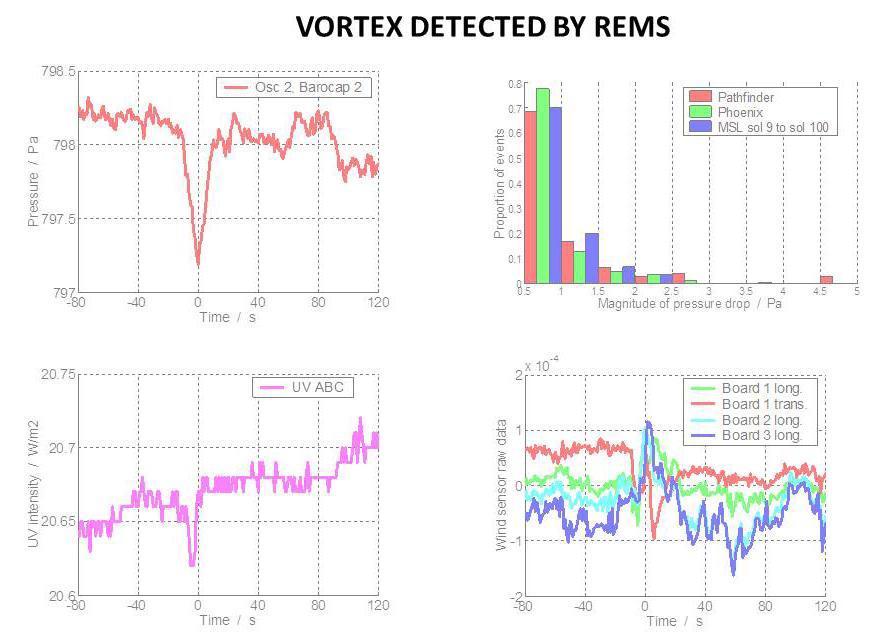
The Rover Environmental Monitoring Station REMS on NASA Curiosity Mars rover has detected dozens of whirlwinds, or vortex events, causing brief dips in atmospheric pressure, and sometimes other measurable effects.
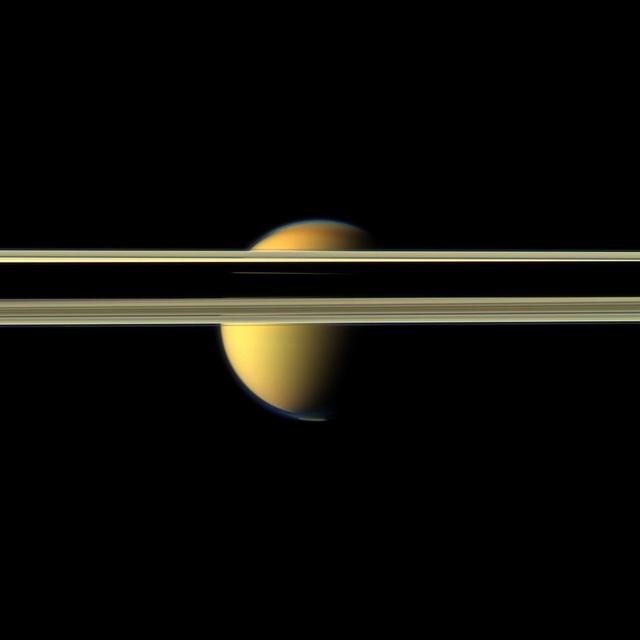
Saturn rings obscure part of Titan colorful visage in this image from NASA Cassini spacecraft. The south polar vortex that first appeared in Titan atmosphere in 2012 is visible at the bottom of this view.
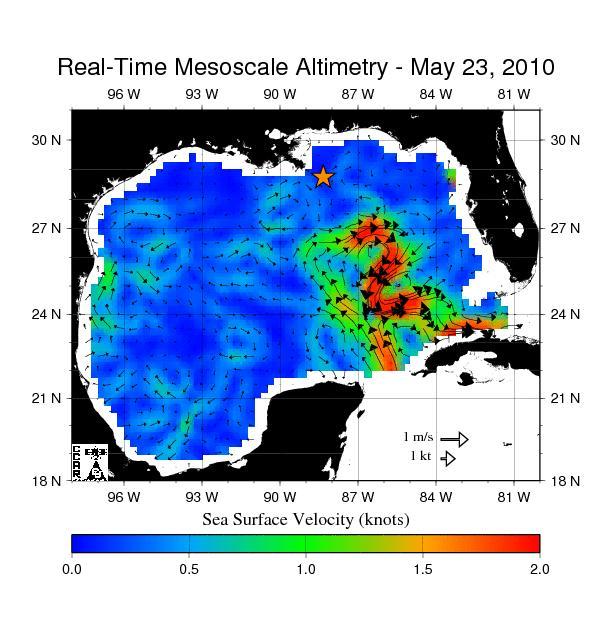
The northern portion of the Gulf of Mexico Loop Current, shown in red, appears about to detach a large ring of current, creating a separate eddy. An eddy is a large, warm, clockwise-spinning vortex of water -- the ocean version of a cyclone.
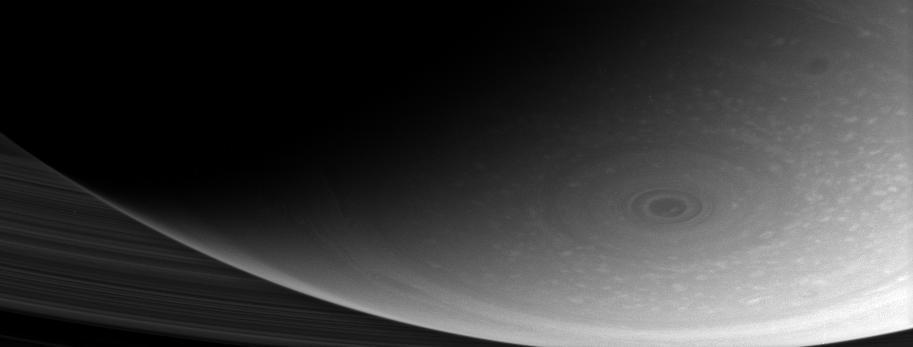
This dramatic close-up of Saturn south pole shows the hurricane-like vortex that resides there. The entire polar region is dotted with bright clouds, including one that appears to be inside the central ring of the polar storm
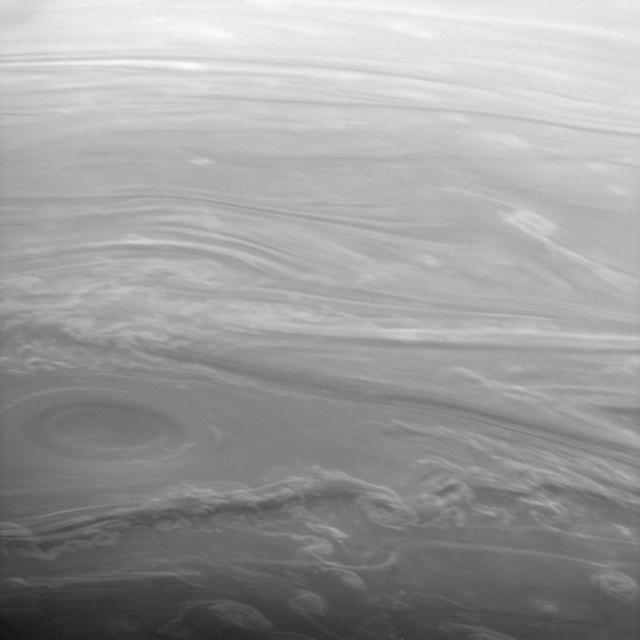
This spectacular image of Saturn clouds looks obliquely across the high northern latitudes. The Sun is low on the horizon here, making the vertical extent of the clouds easier to see. Cloud bands surrounding the vortex

This comparison view shows a common, large vortex on Saturn as it plows through the atmosphere. The right image was taken about two Saturn rotations -- about 20 hours -- after the left image
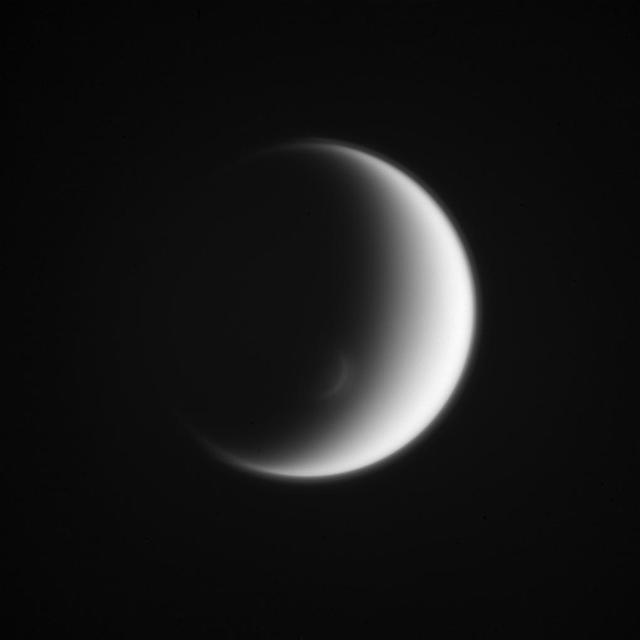
This view captured by NASA Cassini spacecraft looks toward the trailing hemisphere of Titan. Titan south polar vortex mimics the moon itself, creating an elegant crescent within a crescent.
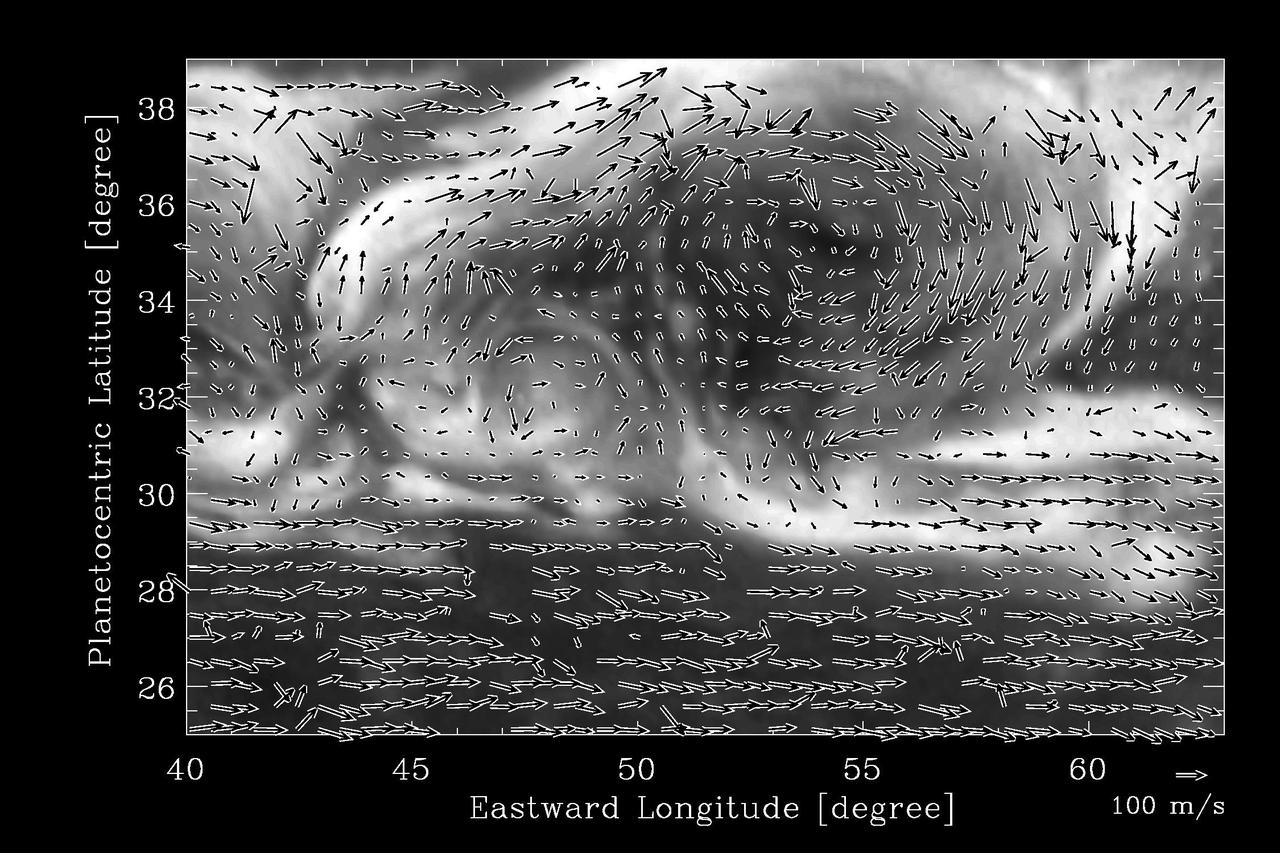
This image from NASA Cassini spacecraft reveals the wind patterns within a large vortex that was spawned by a giant northern storm on Saturn. The arrows indicate the local direction of the winds.

These images near Guadalupe Island from NASA Terra satellite from June 11, 2000 Terra orbit 2569 demonstrate a turbulent atmospheric flow pattern known as the von Karman vortex.
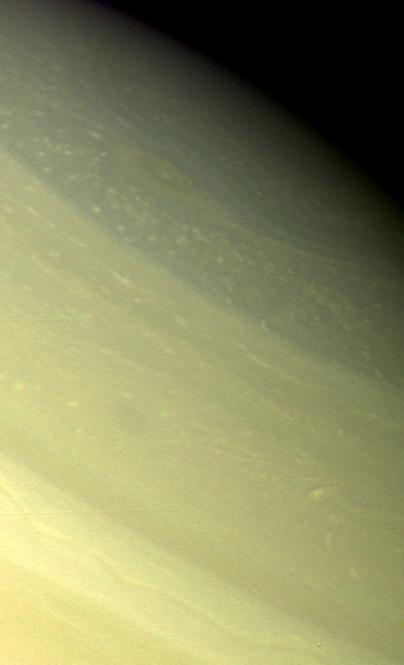
A vortex, or large atmospheric storm, is visible in this color composite of NASA Voyager 2 Saturn images obtained Aug. 25, 1979 from a range of 1 million kilometers 620,000 miles.
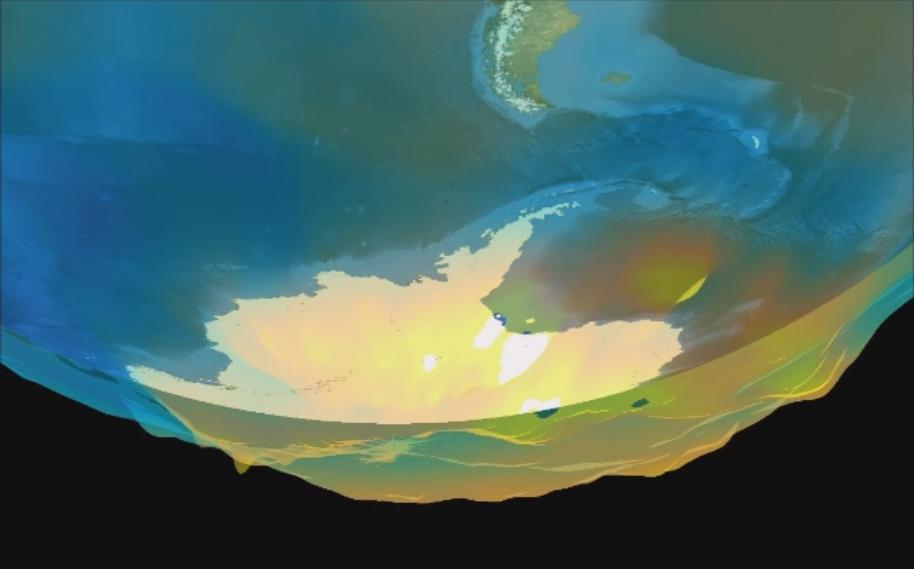
Visualization of the formation and evolution of the Antarctic Vortex ozone hole over the South Pole from Sept. 1 to Dec. 4, 2014, created using data from NASA Aqua spacecraft.
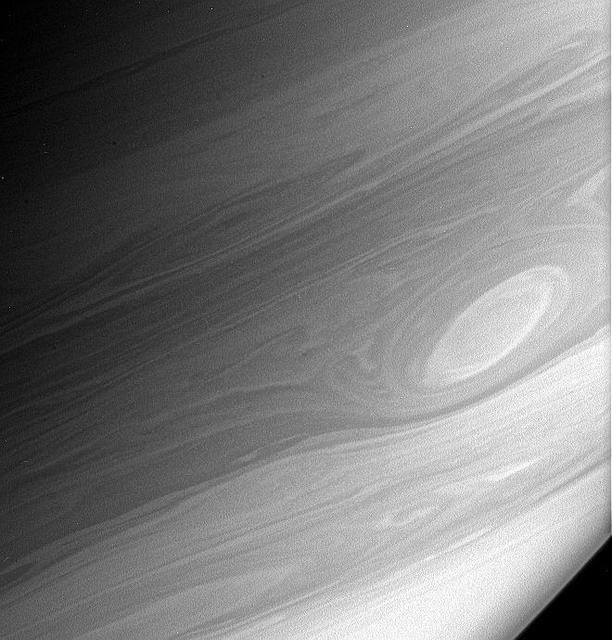
Gaseous Saturn rotates quickly -- once every approximately 10.8 hours -- and its horizontal cloud bands rotate at different rates relative to each other
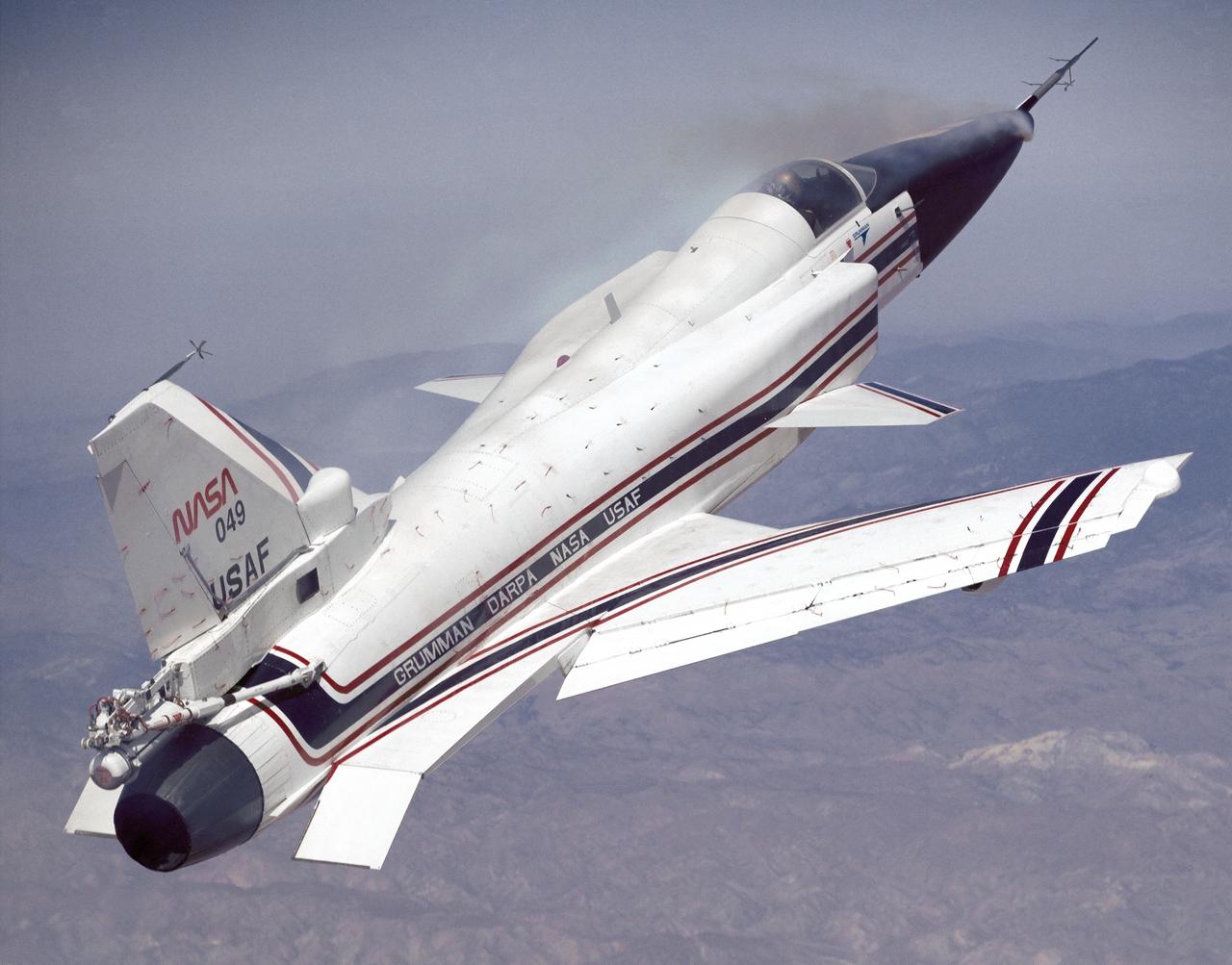
This photo shows the X-29 during a 1991 research flight. Smoke generators in the nose of the aircraft were used to help researchers see the behavior of the air flowing over the aircraft. The smoke here is demonstrating forebody vortex flow. This mission was flown September 10, 1991, by NASA research pilot Rogers Smith.
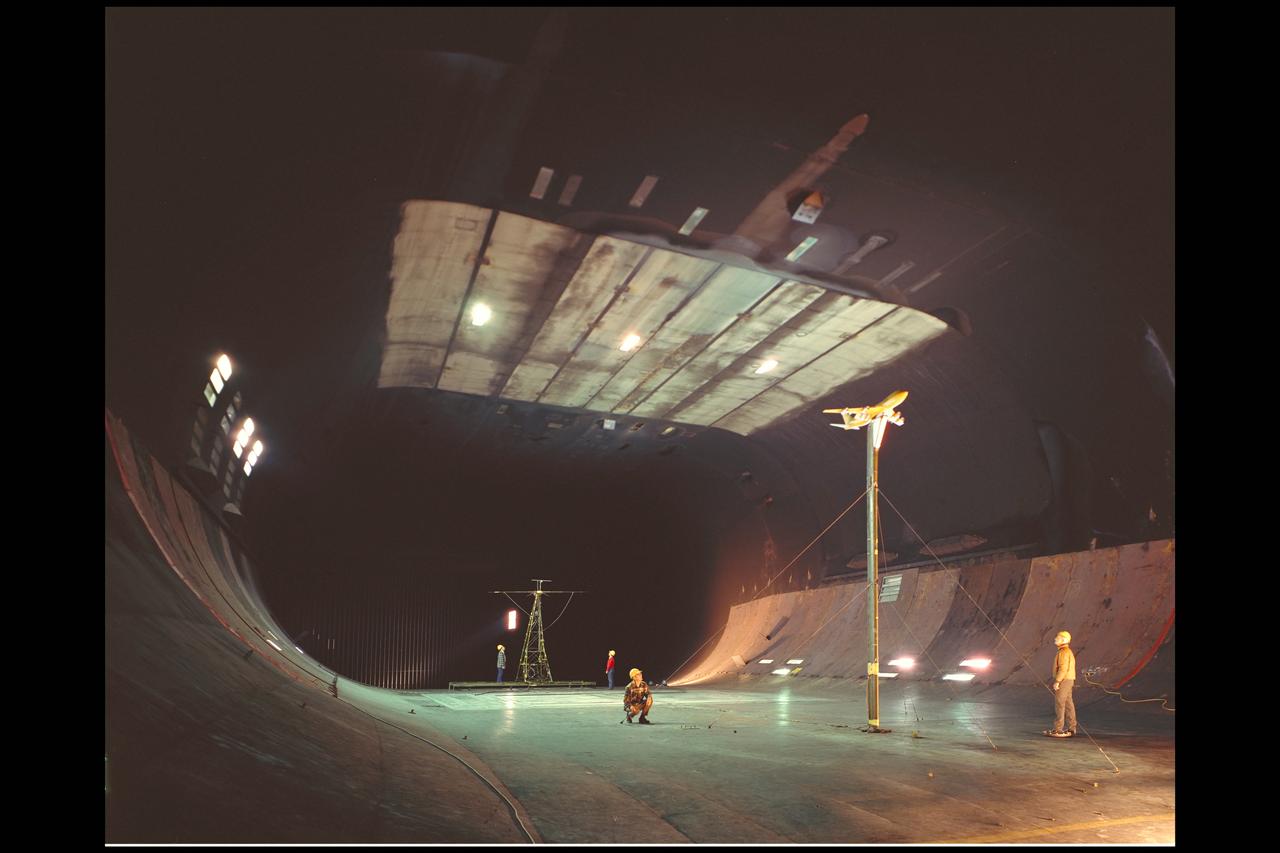
Boeing 747 wake vortex test-440 in thr 40x80ft. w.t. with Rufiange, Vern Rossow, Eloy Martinez
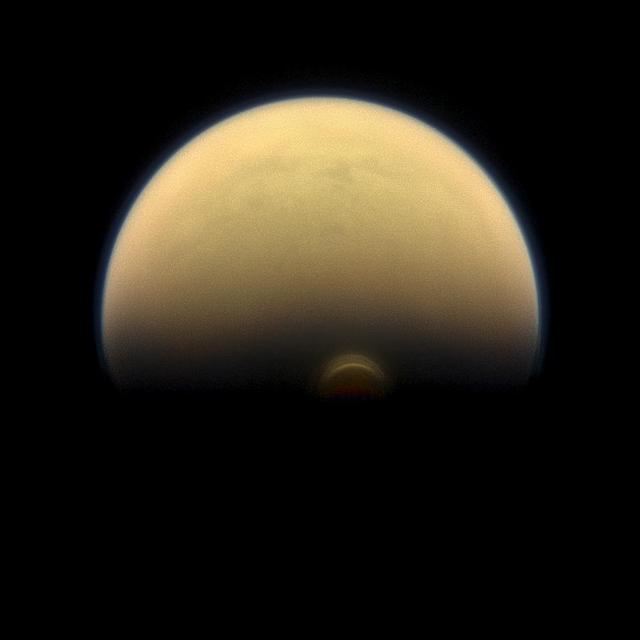
Slipping into shadow, the south polar vortex at Saturn's moon Titan still stands out against the orange and blue haze layers that are characteristic of Titan's atmosphere. Images like this, from NASA's Cassini spacecraft, lead scientists to conclude that the polar vortex clouds form at a much higher altitude -- where sunlight can still reach -- than the lower-altitude surrounding haze. This view looks towards the trailing hemisphere of Titan (3,200 miles or 5,150 kilometers across). North on Titan is up and rotated 17 degrees to the left. Images taken using red, green and blue spectral filters were combined to create this natural-color view. The image was taken with the Cassini spacecraft narrow-angle camera on July 30, 2013. The view was acquired at a distance of approximately 895,000 miles (1.441 million kilometers) from Titan. Image scale is 5 miles (9 kilometers) per pixel. http://photojournal.jpl.nasa.gov/catalog/PIA17177
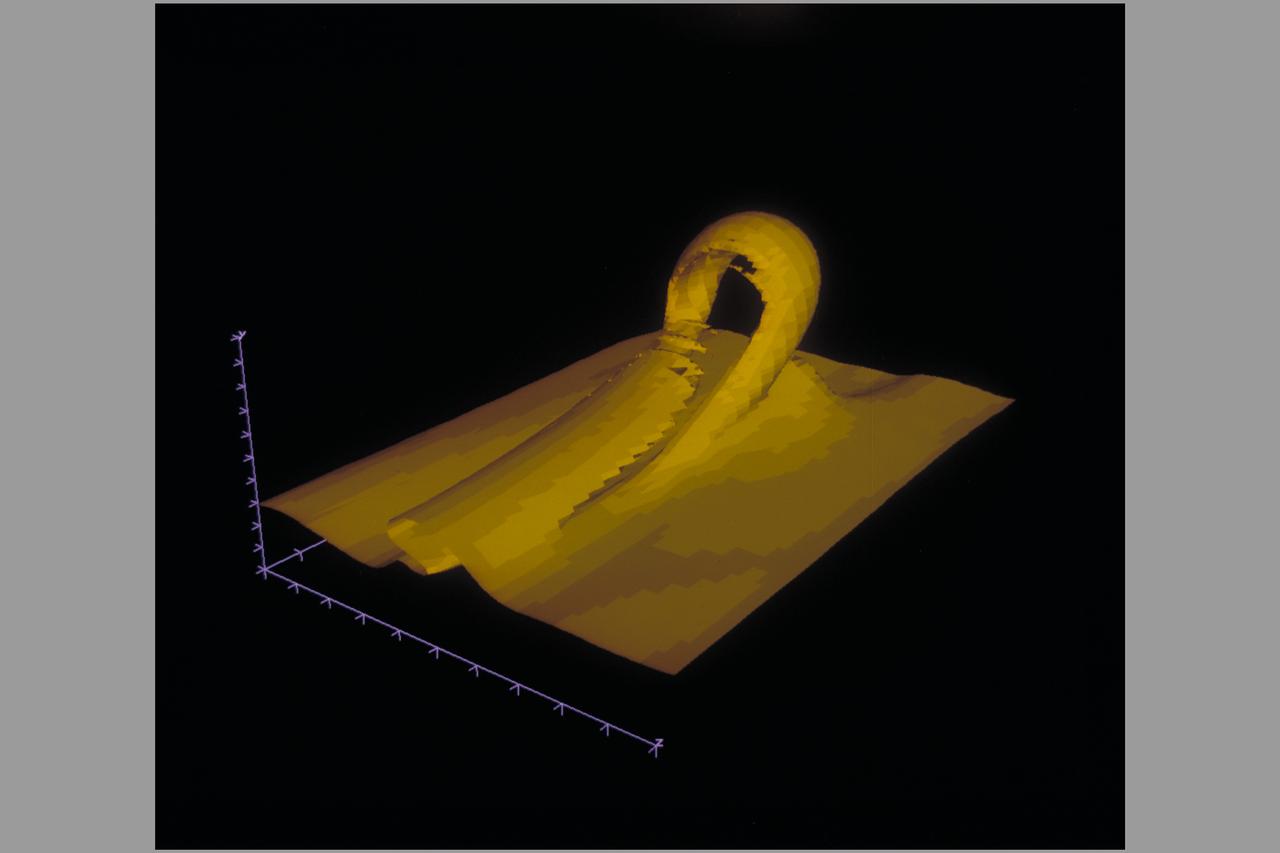
Date: Feb 11, 1987 Photographer: CFD Reynolds Shear Stress: Horseshoe Vortex and Bursting Process Turbulent Boundry Layer (Vertical Wire)
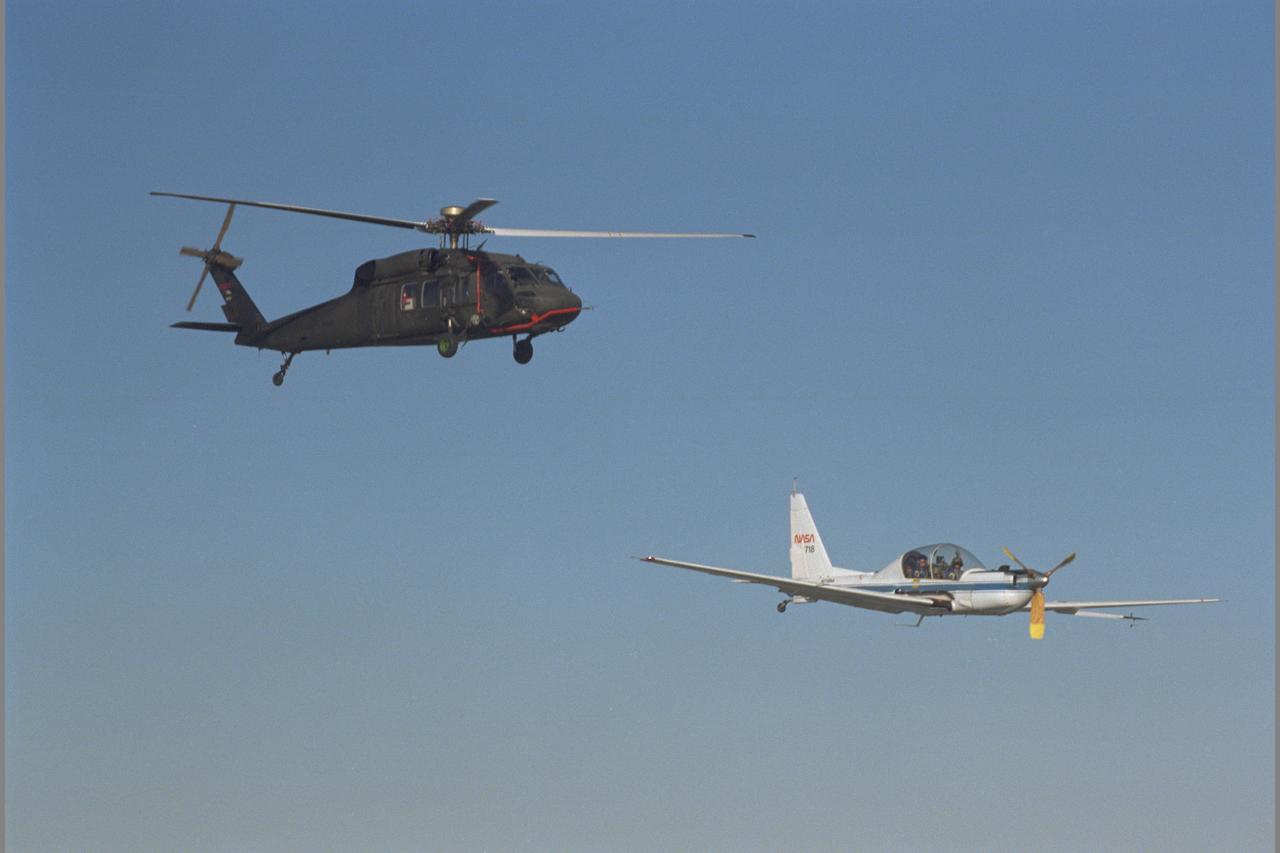
UH-60 Blackhawk (NASA 748) and YO-3A (NASA-718) inflight over Altamont Pass, CA - Blade Vortex Interaction Noise experiment
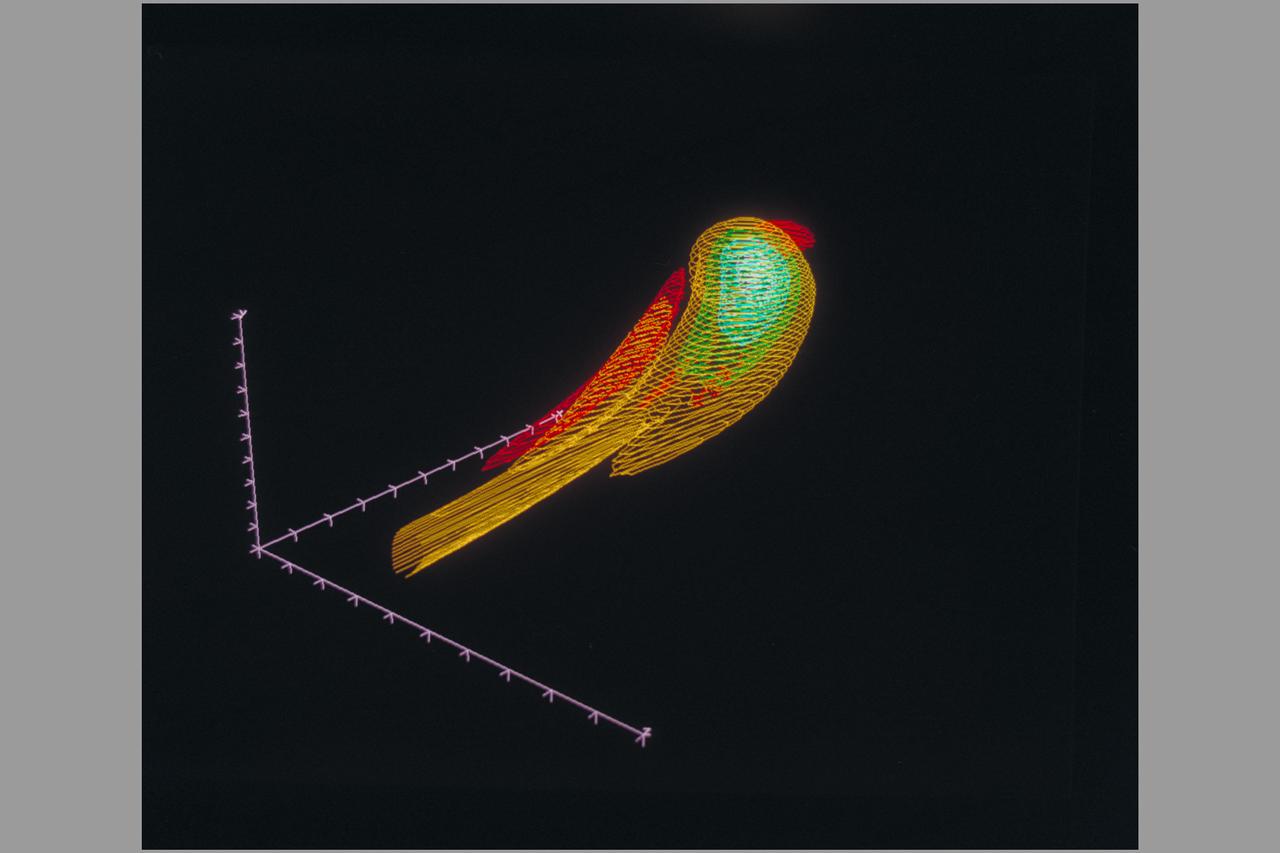
Date: Feb 11, 1987 Photographer: CFD Reynolds Shear Stress: Horseshoe Vortex and Bursting Process Turbulent Boundry Layer (Vertical Wire)
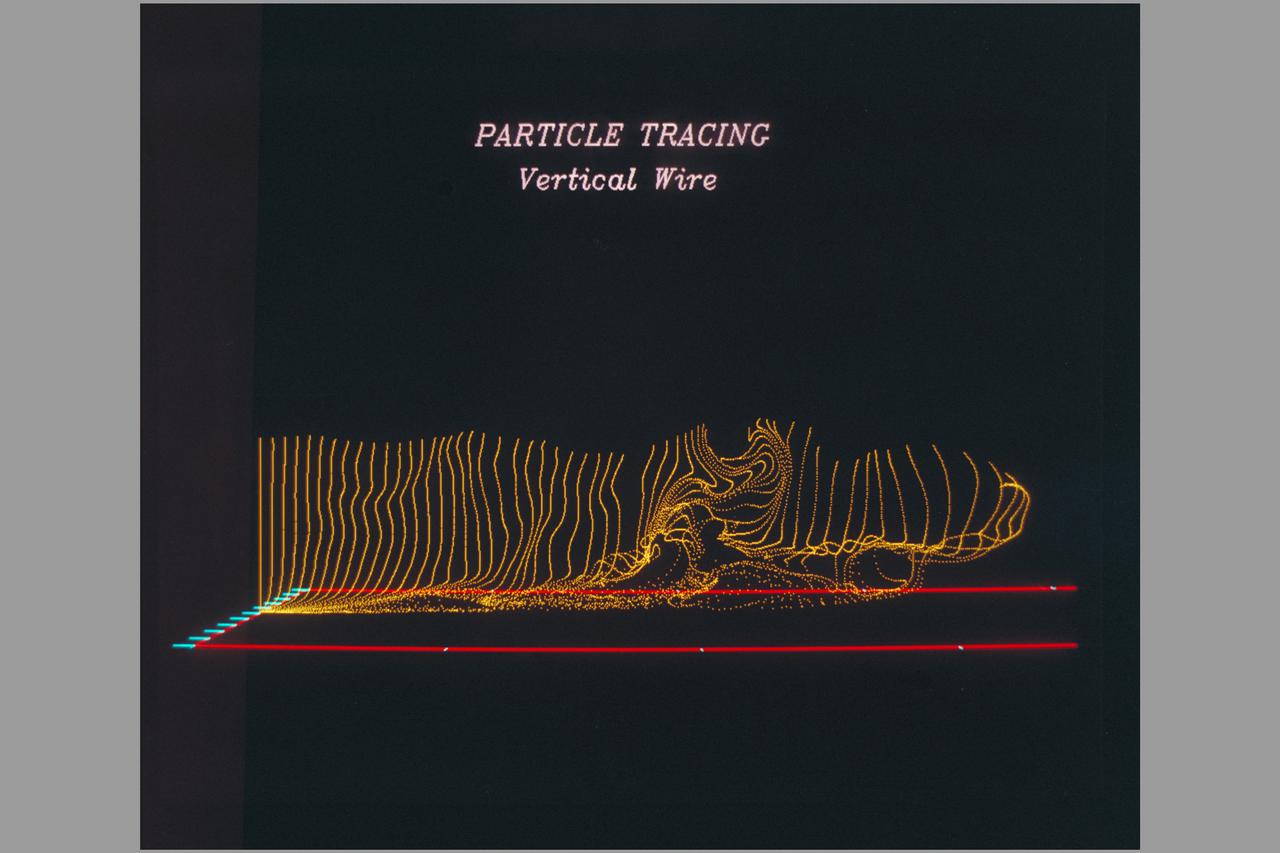
Date: Feb 11, 1987 Photographer: CFD Reynolds Shear Stress: Horseshoe Vortex and Bursting Process Turbulent Boundry Layer (Vertical Wire)
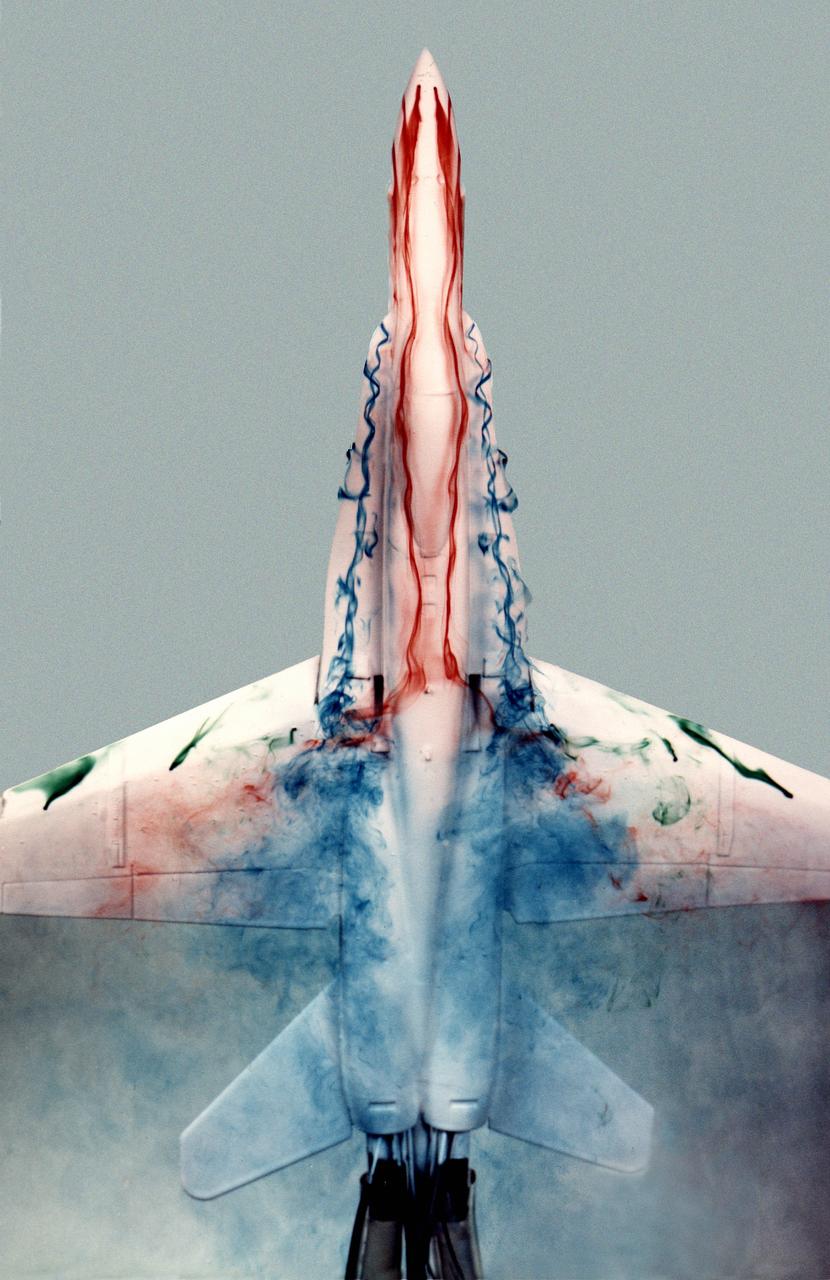
This image shows a plastic 1/48-scale model of an F-18 aircraft inside the "Water Tunnel" more formally known as the NASA Dryden Flow Visualization Facility. Water is pumped through the tunnel in the direction of normal airflow over the aircraft; then, colored dyes are pumped through tubes with needle valves. The dyes flow back along the airframe and over the airfoils highlighting their aerodynamic characteristics. The aircraft can also be moved through its pitch axis to observe airflow disruptions while simulating actual flight at high angles of attack. The Water Tunnel at NASA's Dryden Flight Research Center, Edwards, CA, became operational in 1983 when Dryden was a Flight Research Facility under the management of the Ames Research Center in Mountain View, CA. As a medium for visualizing fluid flow, water has played a significant role. Its use dates back to Leonardo da Vinci (1452-1519), the Renaissance Italian engineer, architect, painter, and sculptor. In more recent times, water tunnels have assisted the study of complex flows and flow-field interactions on aircraft shapes that generate strong vortex flows. Flow visualization in water tunnels assists in determining the strength of vortices, their location, and possible methods of controlling them. The design of the Dryden Water Tunnel imitated that of the Northrop Corporation's tunnel in Hawthorne, CA. Called the Flow Visualization Facility, the Dryden tunnel was built to assist researchers in understanding the aerodynamics of aircraft configured in such a way that they create strong vortex flows, particularly at high angles of attack. The tunnel provides results that compare well with data from aircraft in actual flight in another fluid-air. Other uses of the tunnel have included study of how such flight hardware as antennas, probes, pylons, parachutes, and experimental fixtures affect airflow. The facility has also been helpful in finding the best locations for emitting smoke from flight vehicles for flow vi
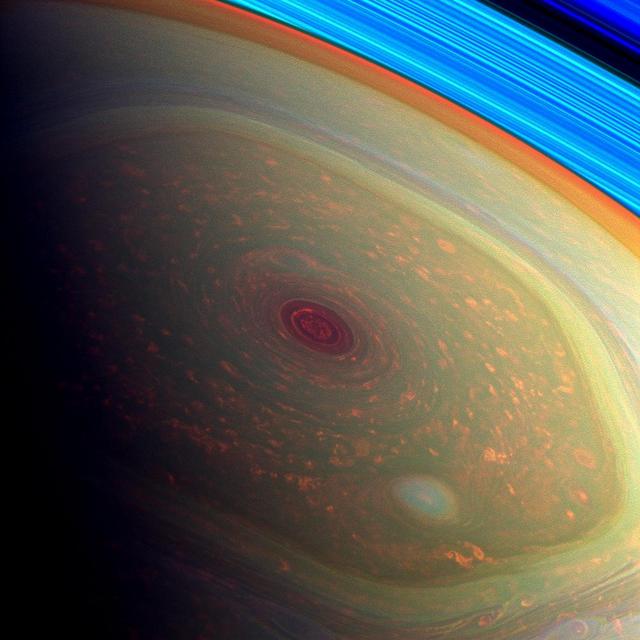
This spectacular, vertigo inducing, false-color image from NASA Cassini mission highlights the storms at Saturn north pole. The angry eye of a hurricane-like storm appears dark red.
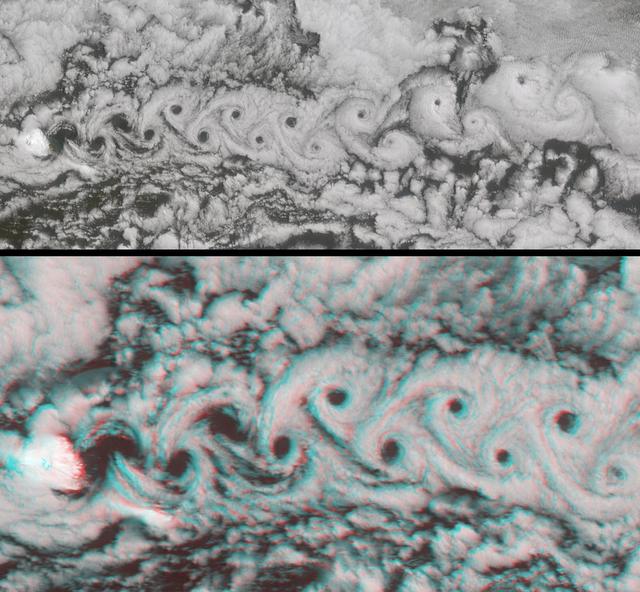
Marine stratocumulus clouds frequently form parallel rows, or cloud streets, along the direction of wind flow. NASA Terra spacecraft captured this stereo image of Jan Mayen island Beerenberg volcano. 3D glasses are necessary to view this image.
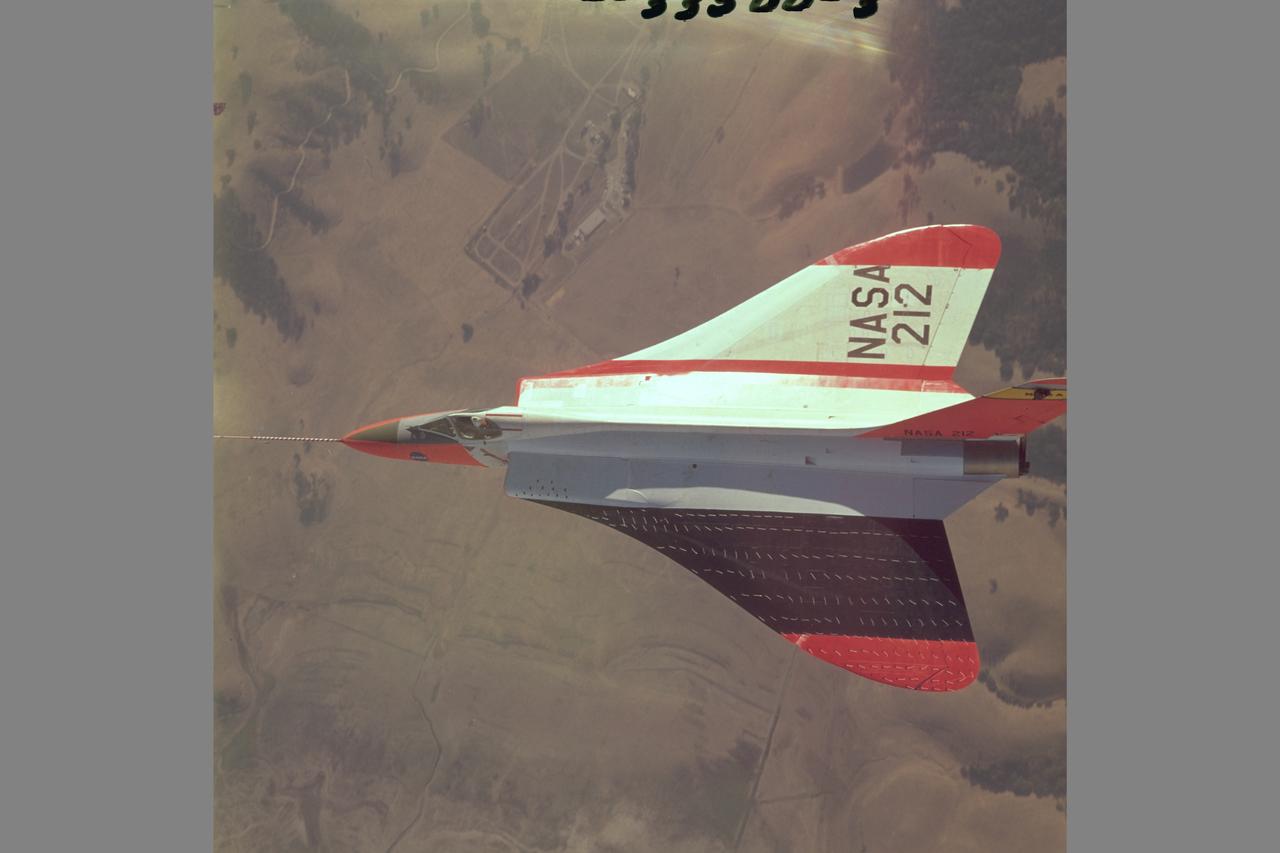
Douglas F5D Skylancer fighter modified with ogee wing planform designed for Mach 2 flight. Shown is the effect of vortex flow on wing tuft alignment in low-speed, high angle-of-attack flight.
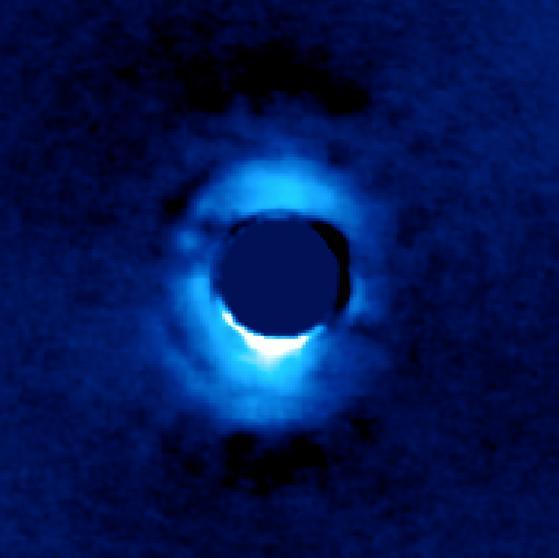
This image shows the dusty disk of planetary material surrounding the young star HD 141569, located 380 light-years away from Earth. It was taken using the vortex coronagraph on the W.M. Keck Observatory. The vortex suppressed light from the star in the center, revealing light from the innermost ring of planetary material around the star (blue). The disk around the star, made of olivine particles, extends from 23 to 70 astronomical units from the star. By comparison, Uranus is over 19 astronomical units from our sun, and Neptune about 30 astronomical units. One astronomical unit is the distance between Earth and our sun. http://photojournal.jpl.nasa.gov/catalog/PIA21090
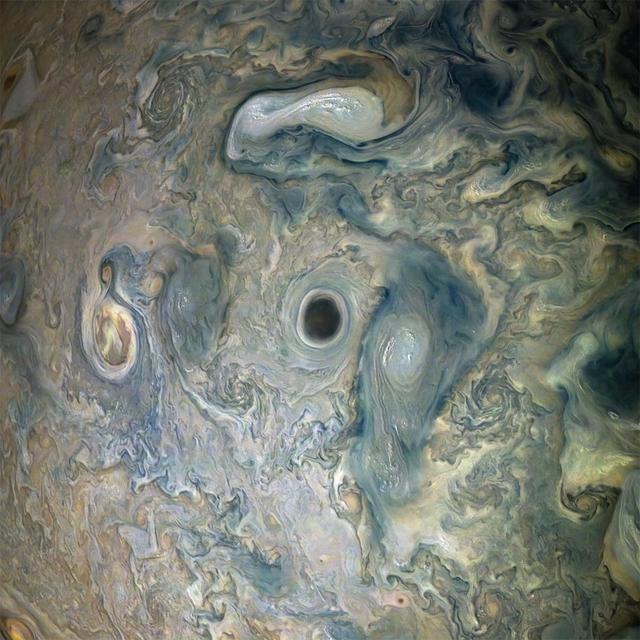
NASA's Juno spacecraft captured this view of an area within a Jovian jet stream showing a vortex that has an intensely dark center. Nearby, other features display bright, high altitude clouds that have puffed up into the sunlight. The color-enhanced image was taken at 12:55 a.m. PDT (3:55 a.m. EDT) on May 29, 2019, as the spacecraft performed its 20th science flyby of Jupiter. At the time, Juno was about 9,200 miles (14,800 kilometers) from the planet's cloud tops, above approximately 52 degrees north latitude. Citizen scientists Gerald Eichstädt and Seán Doran created this image using data from the spacecraft's JunoCam imager. https://photojournal.jpl.nasa.gov/catalog/PIA22948
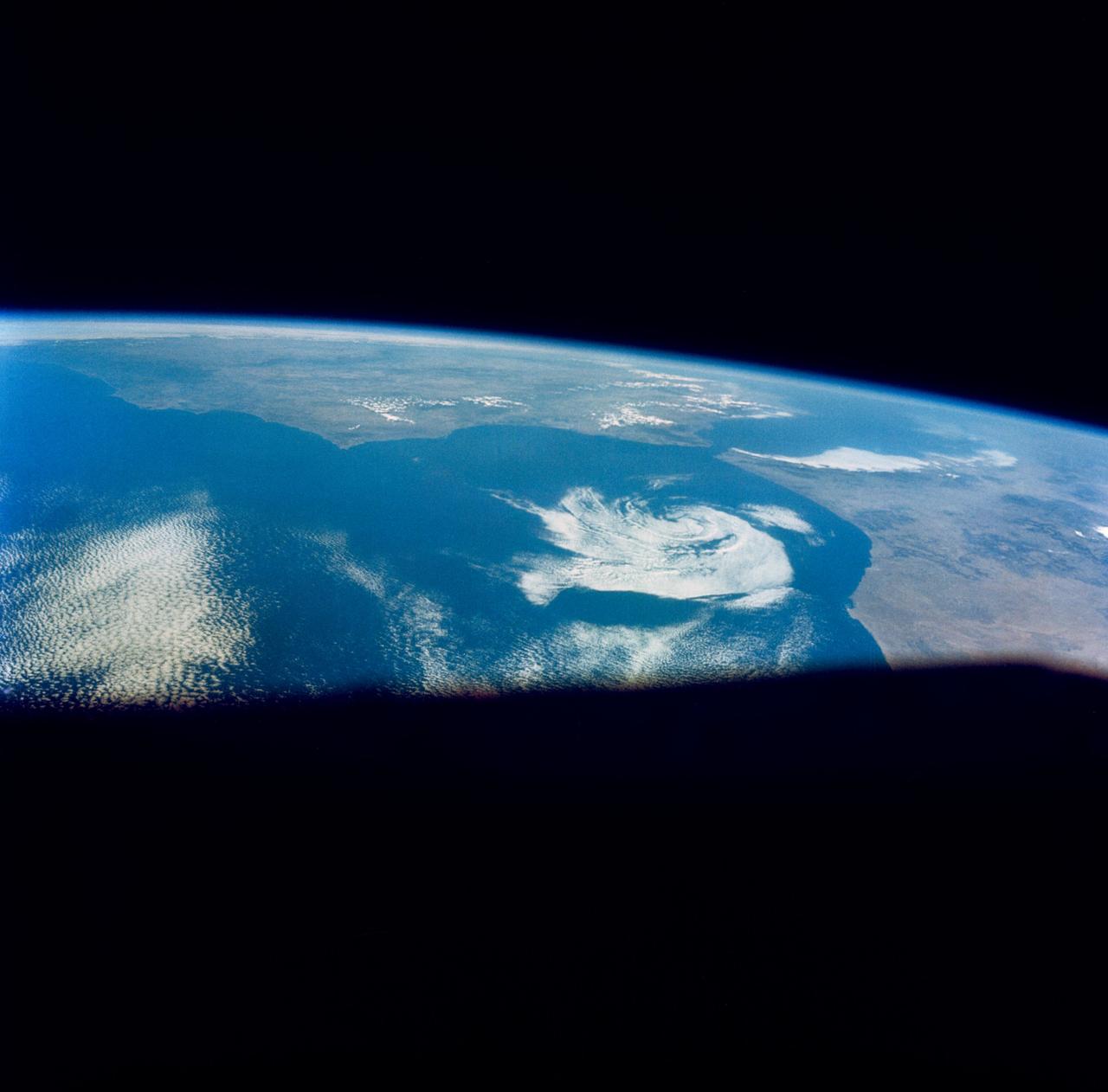
S66-46044 (18-21 July 1966) --- Straits of Gibraltar and Spain ? Portugal (left), Morocco (right), Atlantic Ocean (foreground), and unique vortex, as seen from the Gemini-10 spacecraft. Taken with J.A. Maurer 70mm camera, using Eastman Kodak, Ektachrome, MS (S.O. 217) color film. Photo credit: NASA
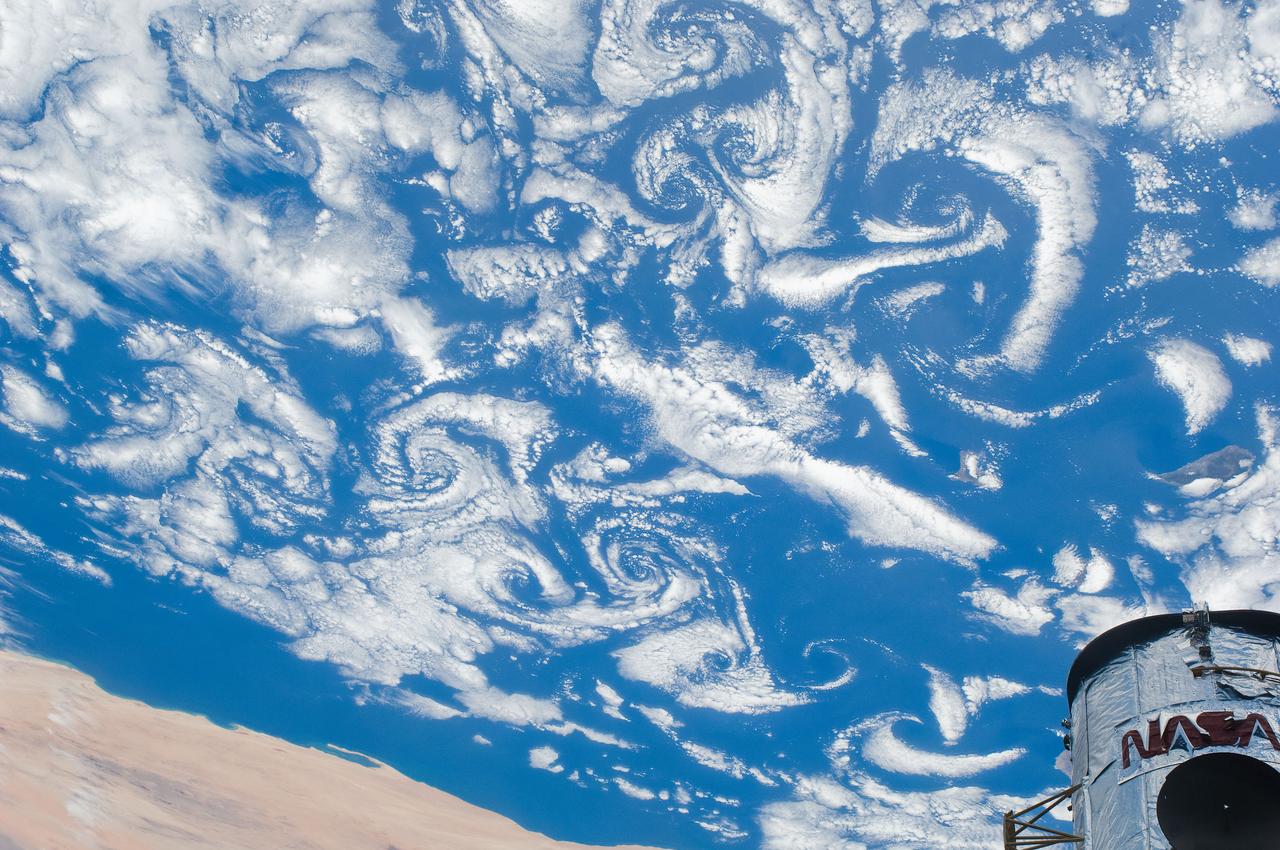
S125-E-007547 (15 May 2009) --- Low-level winds rushing over the Cape Verde Islands off the coast of northwestern Africa created cloud vortex streets which share this scene with the top of the Hubble Space Telescope locked down in the cargo bay of the Earth-orbiting Space Shuttle Atlantis.
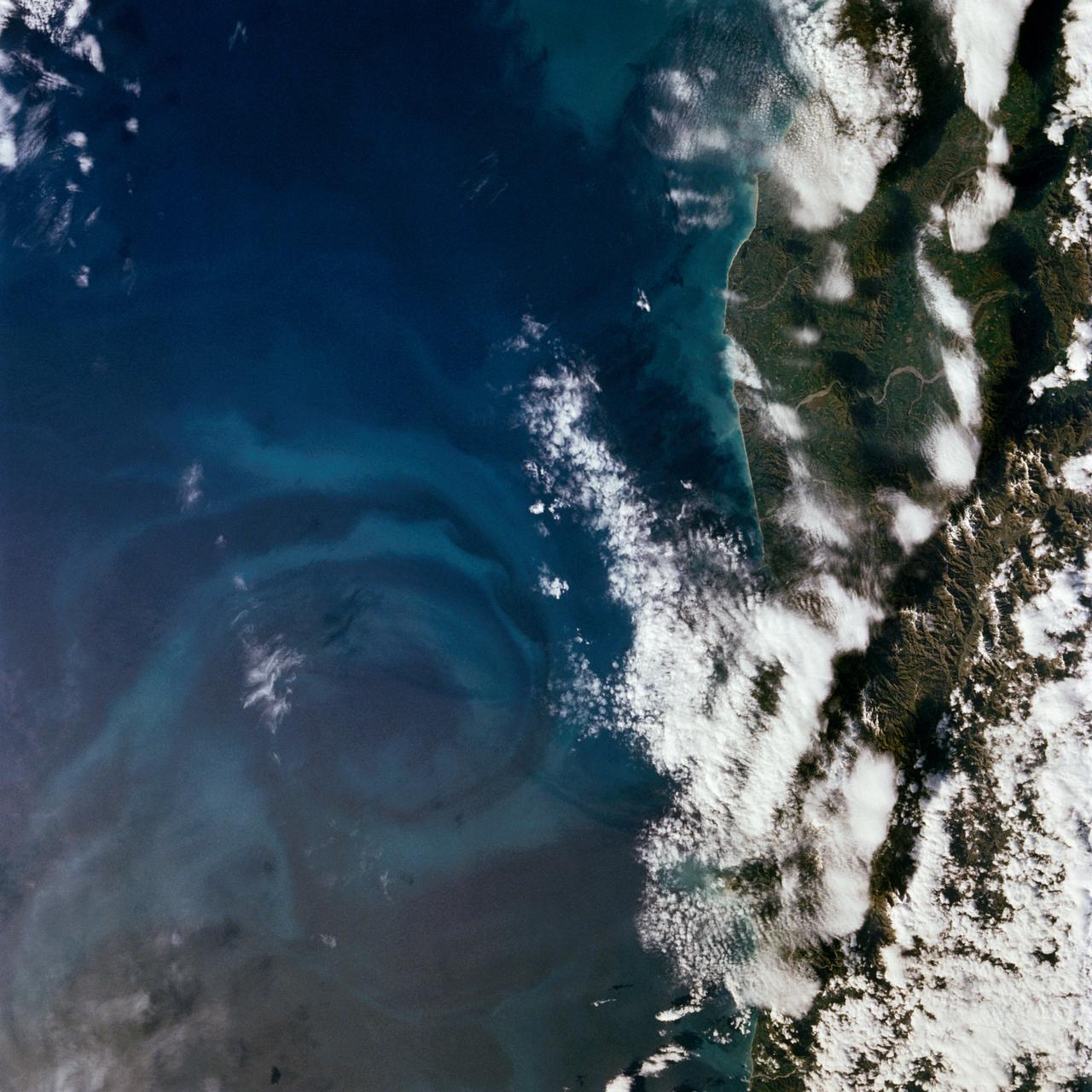
61A-50-020 (30 Oct-6 Nov 1985) --- Large photo plankton vortex along the coast of New Zealand's South Island, about 100 kilometers to the north by northeast of Christchurch. Southern hemisphere vortices are clearly clockwise as opposed to counter-clockwise in the northern hemisphere.
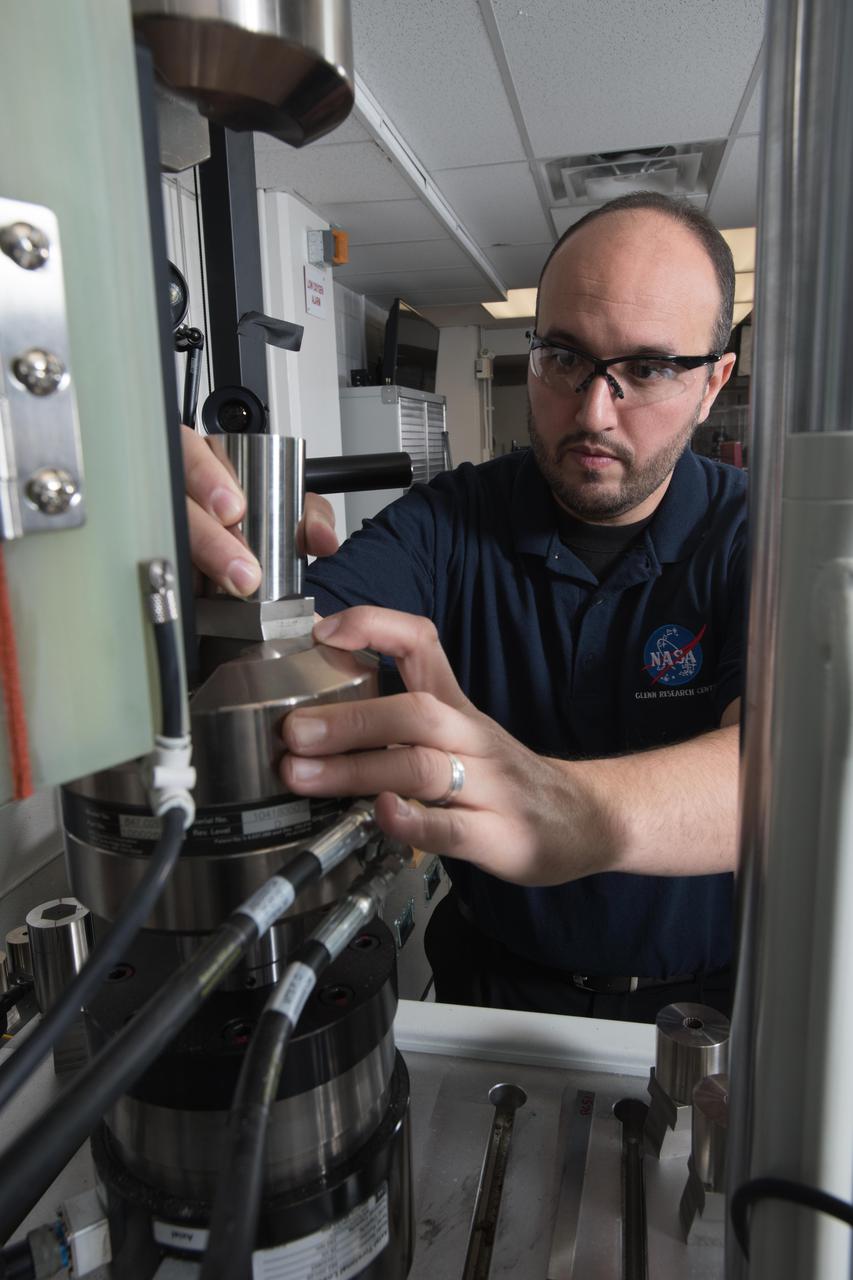
Shape Memory Alloys
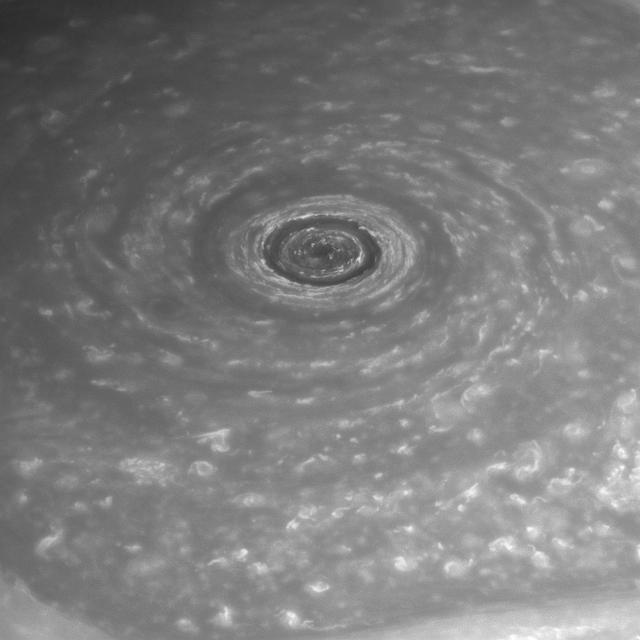
Like a giant eye for the giant planet, Saturn great vortex at its north pole appears to stare back at Cassini as NASA Cassini spacecraft stares at it. Measurements have sized the "eye" at a staggering 1,240 miles (2,000 kilometers) across with cloud speeds as fast as 330 miles per hour (150 meters per second). For color views of the eye and the surrounding region, see PIA14946 and PIA14944. The image was taken with the Cassini spacecraft narrow-angle camera on April 2, 2014 using a combination of spectral filters which preferentially admit wavelengths of near-infrared light centered at 748 nanometers. The view was obtained at a distance of approximately 1.4 million miles (2.2 million kilometers) from Saturn and at a Sun-Saturn-spacecraft, or phase, angle of 43 degrees. Image scale is 8 miles (13 kilometers) per pixel. http://photojournal.jpl.nasa.gov/catalog/PIA18273
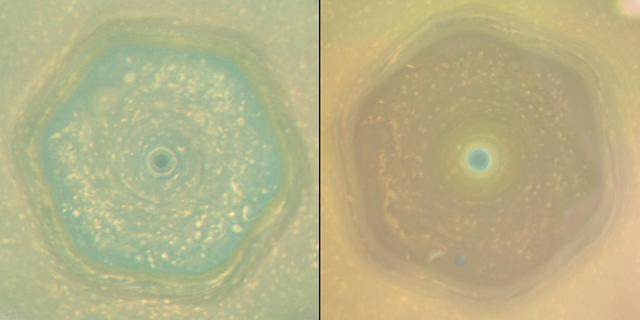
These natural color views from NASA's Cassini spacecraft compare the appearance of Saturn's north-polar region in June 2013 and April 2017. In both views, Saturn's polar hexagon dominates the scene. The comparison shows how clearly the color of the region changed in the interval between the two views, which represents the latter half of Saturn's northern hemisphere spring. In 2013, the entire interior of the hexagon appeared blue. By 2017, most of the hexagon's interior was covered in yellowish haze, and only the center of the polar vortex retained the blue color. The seasonal arrival of the sun's ultraviolet light triggers the formation of photochemical aerosols, leading to haze formation. The general yellowing of the polar region is believed to be caused by smog particles produced by increasing solar radiation shining on the polar region as Saturn approached the northern summer solstice on May 24, 2017. Scientists are considering several ideas to explain why the center of the polar vortex remains blue while the rest of the polar region has turned yellow. One idea is that, because the atmosphere in the vortex's interior is the last place in the northern hemisphere to be exposed to spring and summer sunlight, smog particles have not yet changed the color of the region. A second explanation hypothesizes that the polar vortex may have an internal circulation similar to hurricanes on Earth. If the Saturnian polar vortex indeed has an analogous structure to terrestrial hurricanes, the circulation should be downward in the eye of the vortex. The downward circulation should keep the atmosphere clear of the photochemical smog particles, and may explain the blue color. Images captured with Cassini's wide-angle camera using red, green and blue spectral filters were combined to create these natural-color views. The 2013 view (left in the combined view), was captured on June 25, 2013, when the spacecraft was about 430,000 miles (700,000 kilometers) away from Saturn. The original versions of these images, as sent by the spacecraft, have a size of 512 by 512 pixels and an image scale of about 52 miles (80 kilometers) per pixel; the images have been mapped in polar stereographic projection to the resolution of approximately 16 miles (25 kilometers) per pixel. The second and third frames in the animation were taken approximately 130 and 260 minutes after the first image. The 2017 sequence (right in the combined view) was captured on April 25, 2017, just before Cassini made its first dive between Saturn and its rings. During the imaging sequence, the spacecraft's distance from the center of the planet changed from 450,000 miles (725,000 kilometers) to 143,000 miles (230,000 kilometers). The original versions of these images, as sent by the spacecraft, have a size of 512 by 512 pixels. The resolution of the original images changed from about 52 miles (80 kilometers) per pixel at the beginning to about 9 miles (14 kilometers) per pixel at the end. The images have been mapped in polar stereographic projection to the resolution of approximately 16 miles (25 kilometers) per pixel. The average interval between the frames in the movie sequence is 230 minutes. Corresponding animated movie sequences are available at https://photojournal.jpl.nasa.gov/catalog/PIA21611 https://photojournal.jpl.nasa.gov/catalog/PIA21611
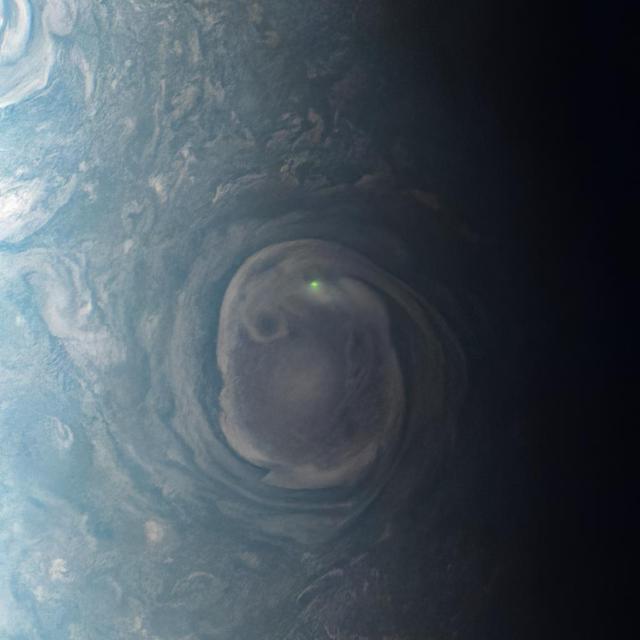
In this view of a vortex near Jupiter's north pole, NASA's Juno mission observed the glow from a bolt of lightning. On Earth, lightning bolts originate from water clouds, and happen most frequently near the equator, while on Jupiter lightning likely also occurs in clouds containing an ammonia-water solution, and can be seen most often near the poles. In the coming months, Juno's orbits will repeatedly take it close to Jupiter as the spacecraft passes over the giant planet's night side, which will provide even more opportunities for Juno's suite of science instruments to catch lightning in the act. Juno captured this view as Juno completed its 31st close flyby of Jupiter on Dec. 30, 2020. In 2022, Citizen scientist Kevin M. Gill processed the image from raw data from the JunoCam instrument aboard the spacecraft. At the time the raw image was taken, Juno was about 19,900 miles (32,000 kilometers) above Jupiter's cloud tops, at a latitude of about 78 degrees as it approached the planet. https://photojournal.jpl.nasa.gov/catalog/PIA25020

DURING APPROACH. OGEE Wing Planform on modified F5D-1 SkylancerAirplane Flight Tests. 'Flow Visualization Photographs'. In landing approach trials at Moffett Field, vapor trails are generated by low pressure in votex flow near wing leading edge on upper wing surface. Studies were undertaken in efforts to determine if there were adverse effects of vortex flow on the dynamic stability of the aircraft.

This image shows brown dwarf HIP 79124 B, located 23 times as far from its host star as Earth is from the sun. The vortex coronagraph, an instrument at the W.M. Keck Observatory, was used to suppress light from the much brighter host star, allowing its dim companion to be imaged for the first time. http://photojournal.jpl.nasa.gov/catalog/PIA21417

Ames Mars Wind Tunnel Facility N-245: NASA is simulating small martian 'dust devils' and wind in a laboraotry to determine how they may affect the landscape and environment of the red planet. Dust Devils on Mars are often a great deal biggger than those on Earth and can at times cover the whole planet. Martian winds & dust devils, big and little, collectively are a great force that is constantly changing the planet's environment. shown here: vortex generator inside vacuum chamber using dry ice w/ Jaimie Chhu
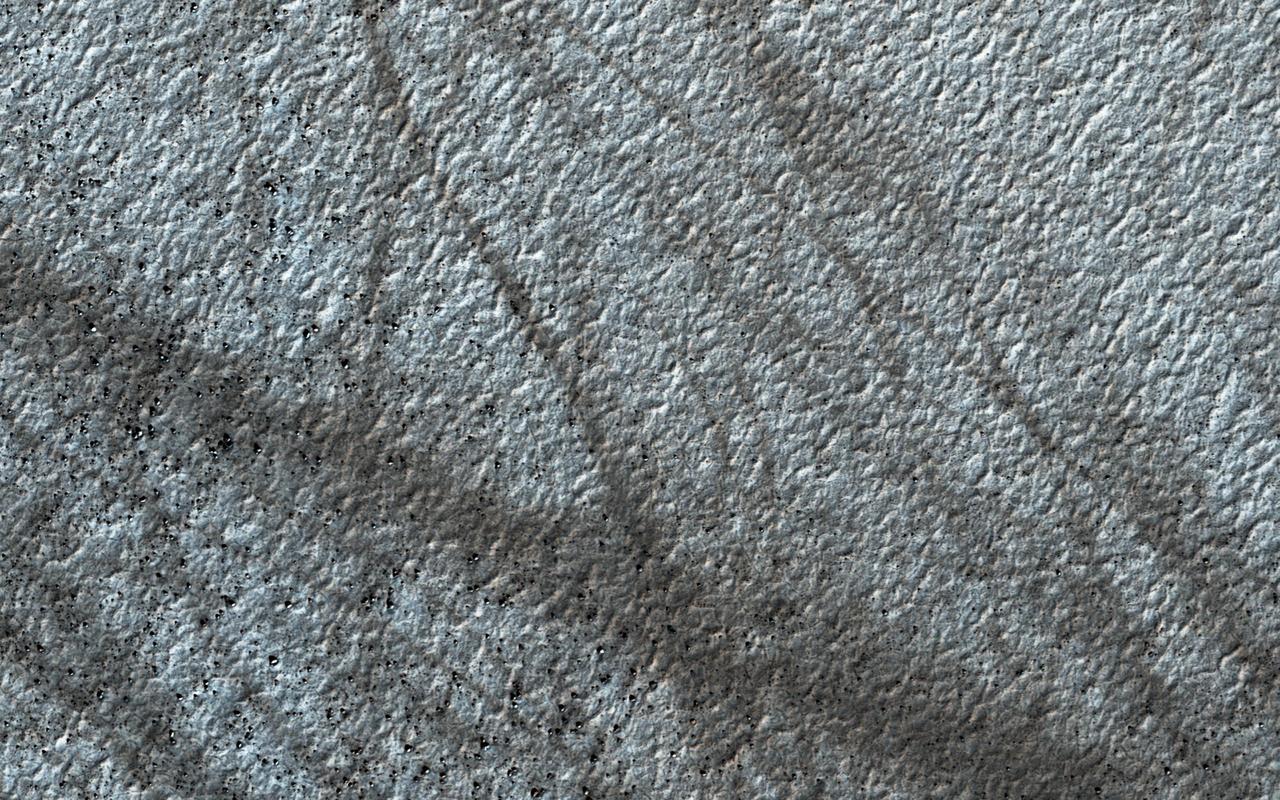
Dust devils on Mars often create long, dark markings where they pull a thin coat of dust off the surface. This image shows a cluster of these tracks on the flat ground below the south polar layered deposits, but none on the layers themselves. This tells us that either dust devils do not cross the layers, or they do not leave a track there. There are several possible reasons for this. For instance, the dust might be thick enough that the vortex of the dust devil doesn't expose darker material from underneath the surface. https://photojournal.jpl.nasa.gov/catalog/PIA23064

Ames Mars Wind Tunnel Facility N-245: NASA is simulating small martian 'dust devils' and wind in a laboraotry to determine how they may affect the landscape and environment of the red planet. Dust Devils on Mars are often a great deal biggger than those on Earth and can at times cover the whole planet. Martian winds & dust devils, big and little, collectively are a great force that is constantly changing the planet's environment. shown here walnut shell particles used in vortex generator to simulate quartz dust on Mars
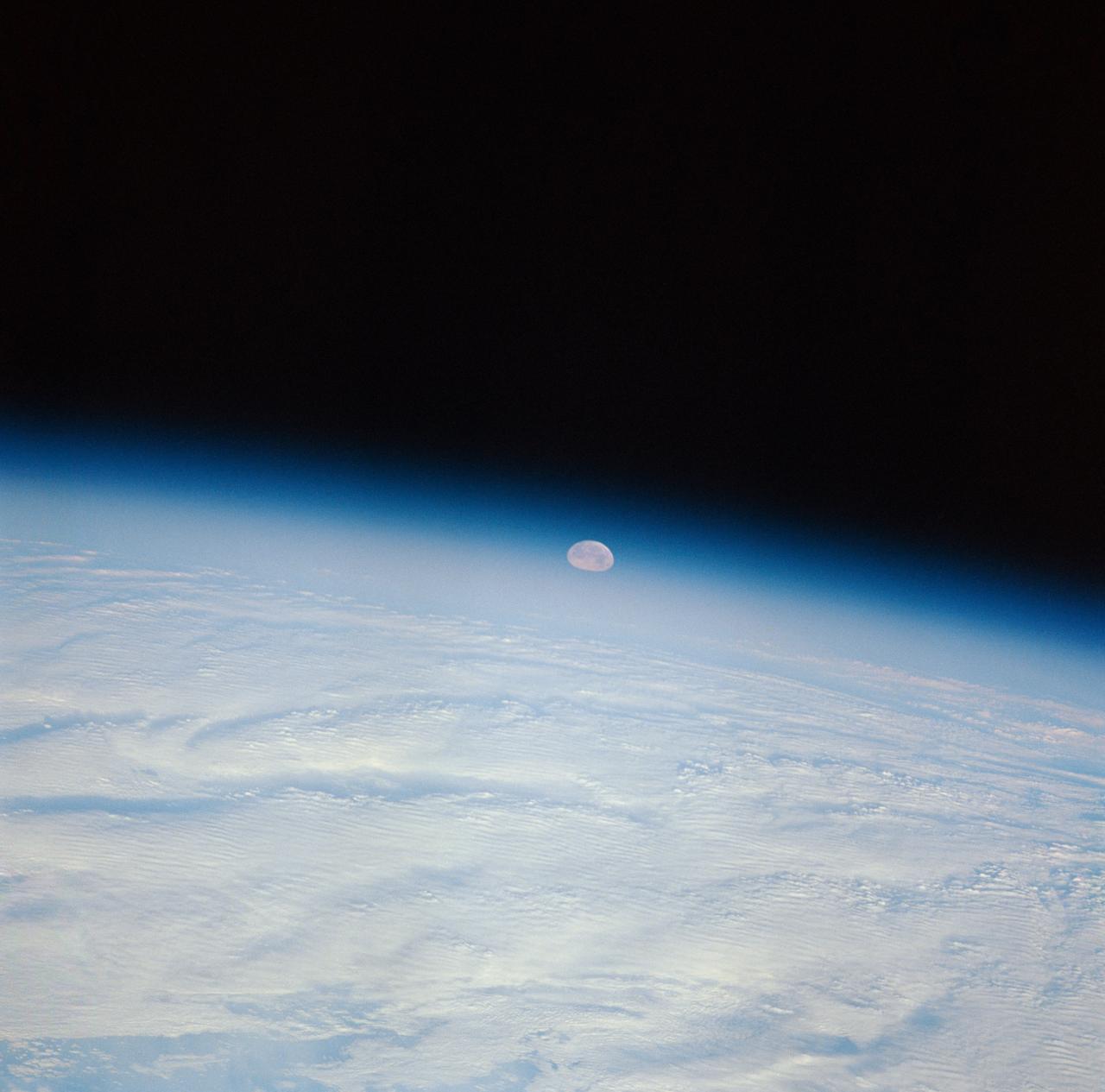
STS-32 crew took this view of the moon setting over the Earth's limb. Near the center is a semi-vortex in the clouds - a storm system in the early stages of formation. The moon's image is distorted due to refraction through the Earth's atmosphere. The near side of the moon is visible showing the vast area of the moon's western seas (Mare Occidental), Apollo landing sites: Apollo 14 at Fra Mauro and Apollo 16 at Central Highlands near Descartes.
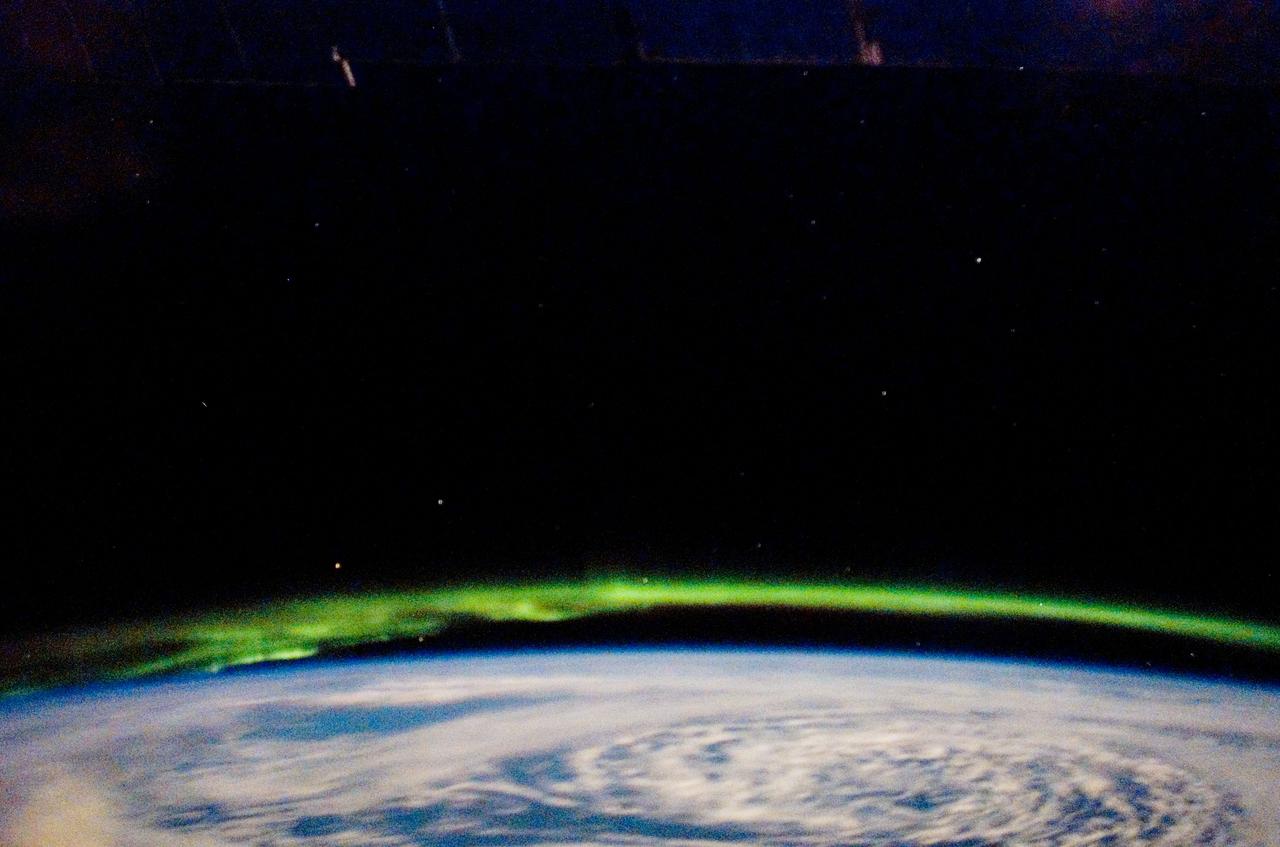
S123-E-008018 (21 March 2008) --- While docked and onboard the International Space Station, a STS-123 Endeavour crewmember captured the glowing green beauty of the Aurora Borealis. Looking northward across the Gulf of Alaska, over a low pressure area (cloud vortex), the aurora brightens the night sky. This image was taken on March 21, 2008 at 09:08:46 (GMT) with a 28 mm lens from the nadir point of 47.9 degrees north latitude and 146.8 degrees west longitude.

Ames Mars Wind Tunnel Facility N-245: NASA is simulating small martian 'dust devils' and wind in a laboraotry to determine how they may affect the landscape and environment of the red planet. Dust Devils on Mars are often a great deal biggger than those on Earth and can at times cover the whole planet. Martian winds & dust devils, big and little, collectively are a great force that is constantly changing the planet's environment. shown here: Silica Sand (Oklahoma 90) particles used in vortex generatory and Mars Wind Tunnel

The Atmospheric Infrared Sounder (AIRS) provides a daily global 3-dimensional view of Earth's ozone layer. Since AIRS observes in the thermal infrared spectral range, it also allows scientists to view from space the Antarctic ozone hole for the first time continuously during polar winter. This image sequence captures the intensification of the annual ozone hole in the Antarctic Polar Vortex. http://photojournal.jpl.nasa.gov/catalog/PIA09938
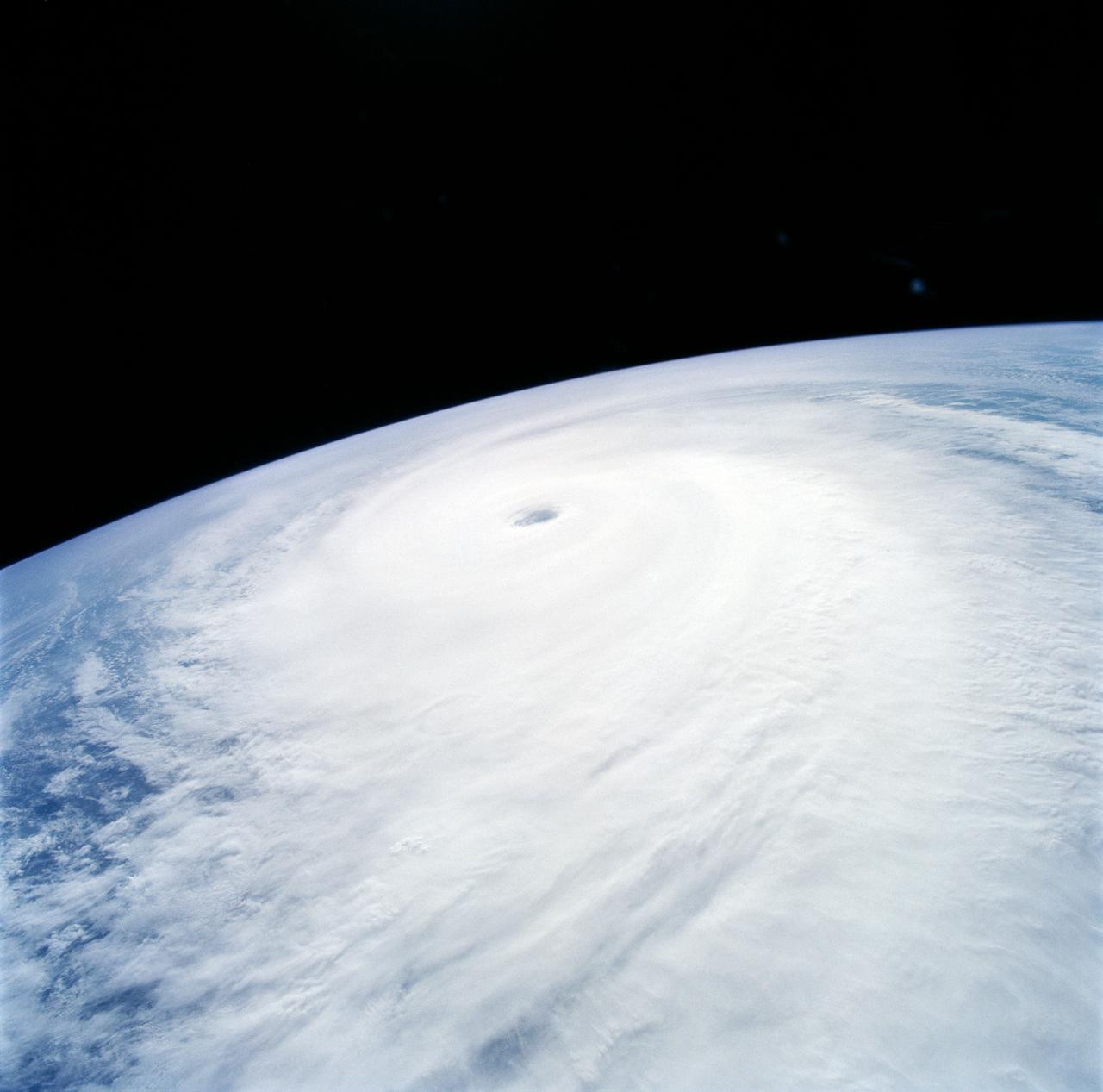
Supertyphoon Yuri began development approximately 1000 miles east of the Philippine Islands. At the time this photo was taken, Yuri was about 1000 nautical miles in diameter and had estimated maximum sustained wind speeds of 145 mph, gusting to 170 mph. This oblique view shows the well formed eye of Yuri and the raised segment of clouds at the cusp of the eye indicating very high wind speeds within the vortex.

Ames Mars Wind Tunnel Facility N-245: NASA is simulating small martian 'dust devils' and wind in a laboraotry to determine how they may affect the landscape and environment of the red planet. Dust Devils on Mars are often a great deal biggger than those on Earth and can at times cover the whole planet. Martian winds & dust devils, big and little, collectively are a great force that is constantly changing the planet's environment. shown here: Carbondale Red Clay dust used in vortex generatory and Mars Wind Tunnel
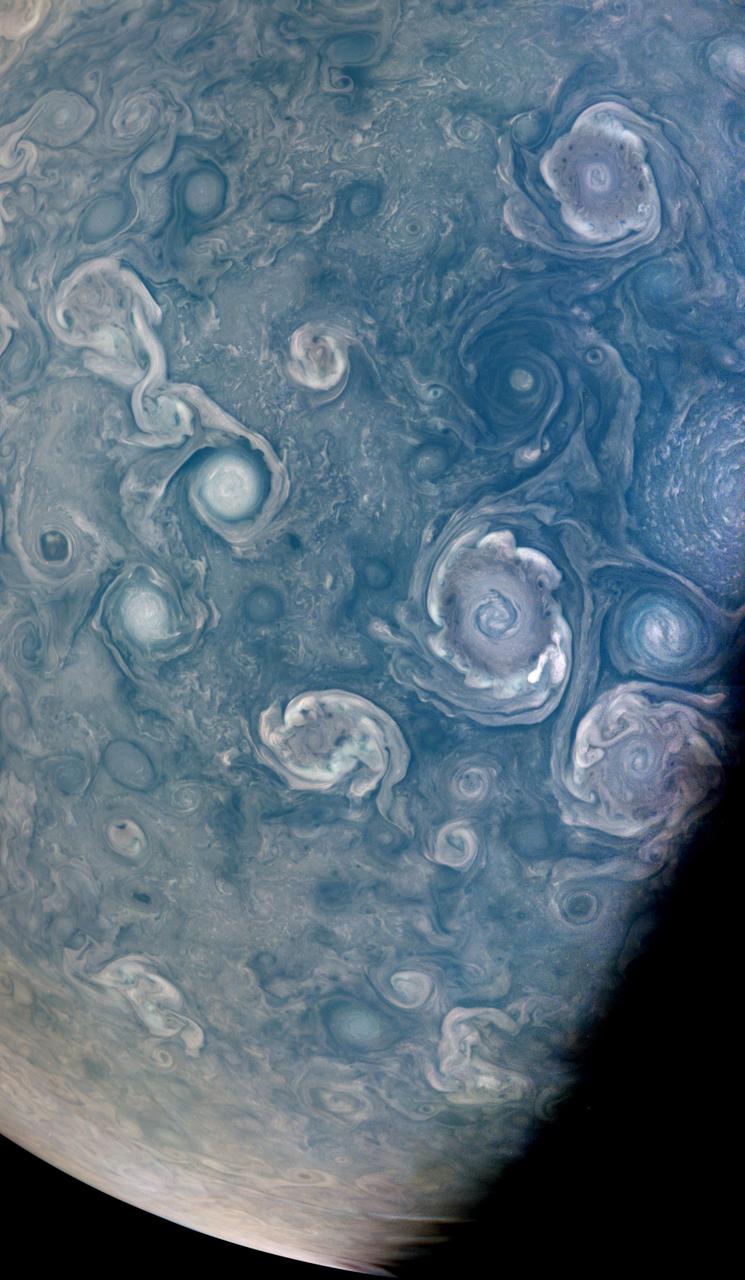
As NASA's Juno mission completed its 43rd close flyby of Jupiter on July 5, 2022, its JunoCam instrument captured this striking view of vortices – hurricane-like spiral wind patterns – near the planet's north pole. These powerful storms can be over 30 miles (50 kilometers) in height and hundreds of miles across. Figuring out how they form is key to understanding Jupiter's atmosphere, as well as the fluid dynamics and cloud chemistry that create the planet's other atmospheric features. Scientists are particularly interested in the vortices' varying shapes, sizes, and colors. For example, cyclones, which spin counter-clockwise in the northern hemisphere and clockwise in the southern, and anti-cyclones, which rotate clockwise in the northern hemisphere and counter-clockwise in the southern hemisphere, exhibit very different colors and shapes. A NASA citizen science project, Jovian Vortex Hunter, seeks help from volunteer members of the public to spot and help categorize vortices and other atmospheric phenomena visible in JunoCam photos of Jupiter. This process does not require specialized training or software, and can be done by anyone, anywhere, with a cellphone or laptop. As of July 2022, 2,404 volunteers had made 376,725 classifications using the Jovian Vortex Hunter project web site at https://www.zooniverse.org/projects/ramanakumars/jovian-vortex-hunter. Another citizen scientist, Brian Swift, created this enhanced color and contrast view of vortices using raw JunoCam image data. At the time the raw image was taken, the Juno spacecraft was about 15,600 miles (25,100 kilometers) above Jupiter's cloud tops, at a latitude of about 84 degrees. https://photojournal.jpl.nasa.gov/catalog/PIA25017
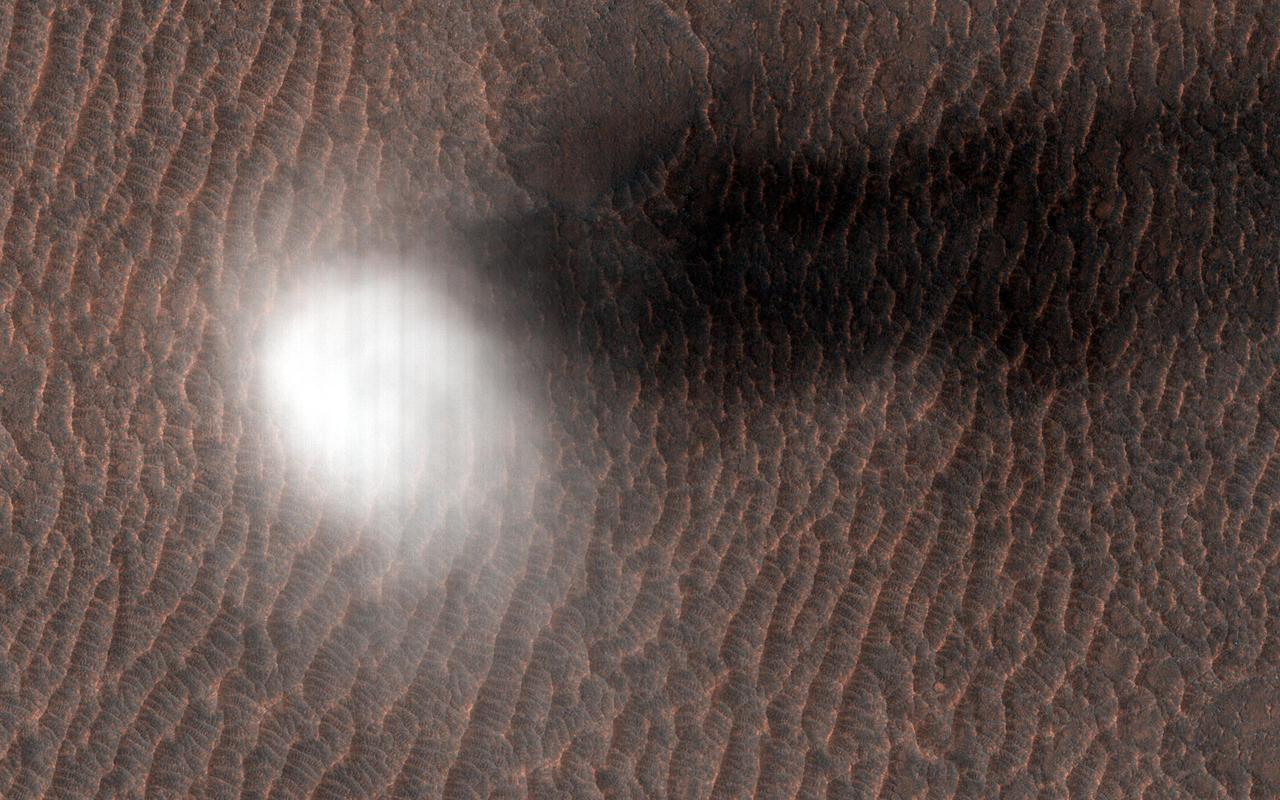
Dust devils form by rising and rotating warm air pockets. Air near the soil surface can become heated by contact with the warmer ground during the day. The warm air is less dense and rises through the cooler air above it. As additional air moves inward along the surface to replace the rising pocket, it begins to rotate driven by Coriolis forces, and forms a vortex of spinning air. When the incoming air rises into the column, its rotation picks up speed like a spinning ice skater bring their arms closer to their body. This faster moving air near the soil surface can cause sand grains to bounce and kick up dust which easily rises up into the growing vortex. In this way a dust devil is born. The study of dust devils is important because they indicate atmospheric conditions such prevailing wind directions and speed. They also periodically cleanse the surface of the dust that gradually settles from the atmosphere. This is something that can be extremely helpful to robotic missions like InSight and Curiosity to keep their solar panels from getting too dusty. https://photojournal.jpl.nasa.gov/catalog/PIA24465
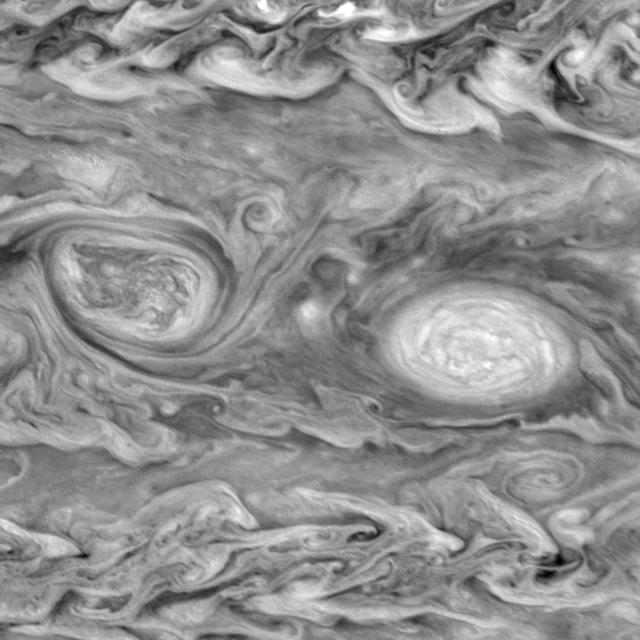
Two frame "movie" of a pair of vortices in Jupiter's southern hemisphere. The two frames are separated by ten hours. The right oval is rotating counterclockwise, like other anticyclonic bright vortices in Jupiter's atmosphere. The left vortex is a cyclonic (clockwise) vortex. The differences between them (their brightness, their symmetry, and their behavior) are clues to how Jupiter's atmosphere works. The frames span about fifteen degrees in latitude and longitude and are centered at 141 degrees west longitude and 36 degrees south planetocentric latitude. Both vortices are about 3500 kilometers in diameter in the north-south direction. The images were taken in near infrared light at 756 nanometers and show clouds that are at a pressure level of about 1 bar in Jupiter's atmosphere. North is at the top. The smallest resolved features are tens of kilometers in size. These images were taken on May 7, 1997, at a range of 1.5 million kilometers by the Solid State Imaging system on NASA's Galileo spacecraft. An animation is available at http://photojournal.jpl.nasa.gov/catalog/PIA01230
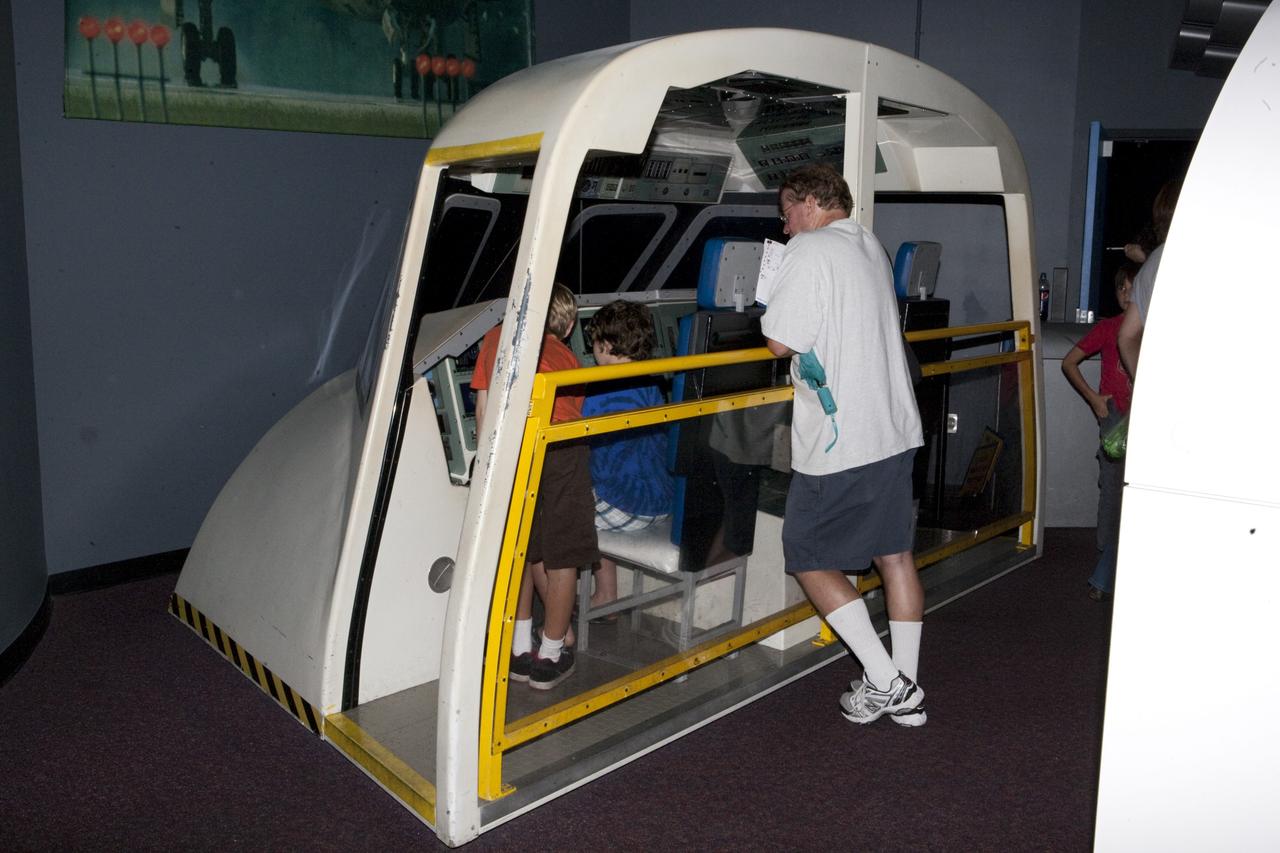
CAPE CANAVERAL, Fla. – Children participate in educational activities during Kennedy Space Center’s Family Night, Sept. 10, at the U.S. Astronaut Hall of Fame in Florida. NASA and the Kennedy Space Center Visitor Complex hosted the annual NASA family education night. The event, for fifth- through eighth-grade students and their parents, focuses on science, technology, engineering and mathematics (STEM) education activities that included astronaut appearances, a hovercraft, vortex cannon and alternative fuel vehicles. The back-to-school event is part of NASA’s Summer of Innovation initiative to provide interactive learning experiences to middle school students nationwide. Photo credit: NASA/Amanda Diller
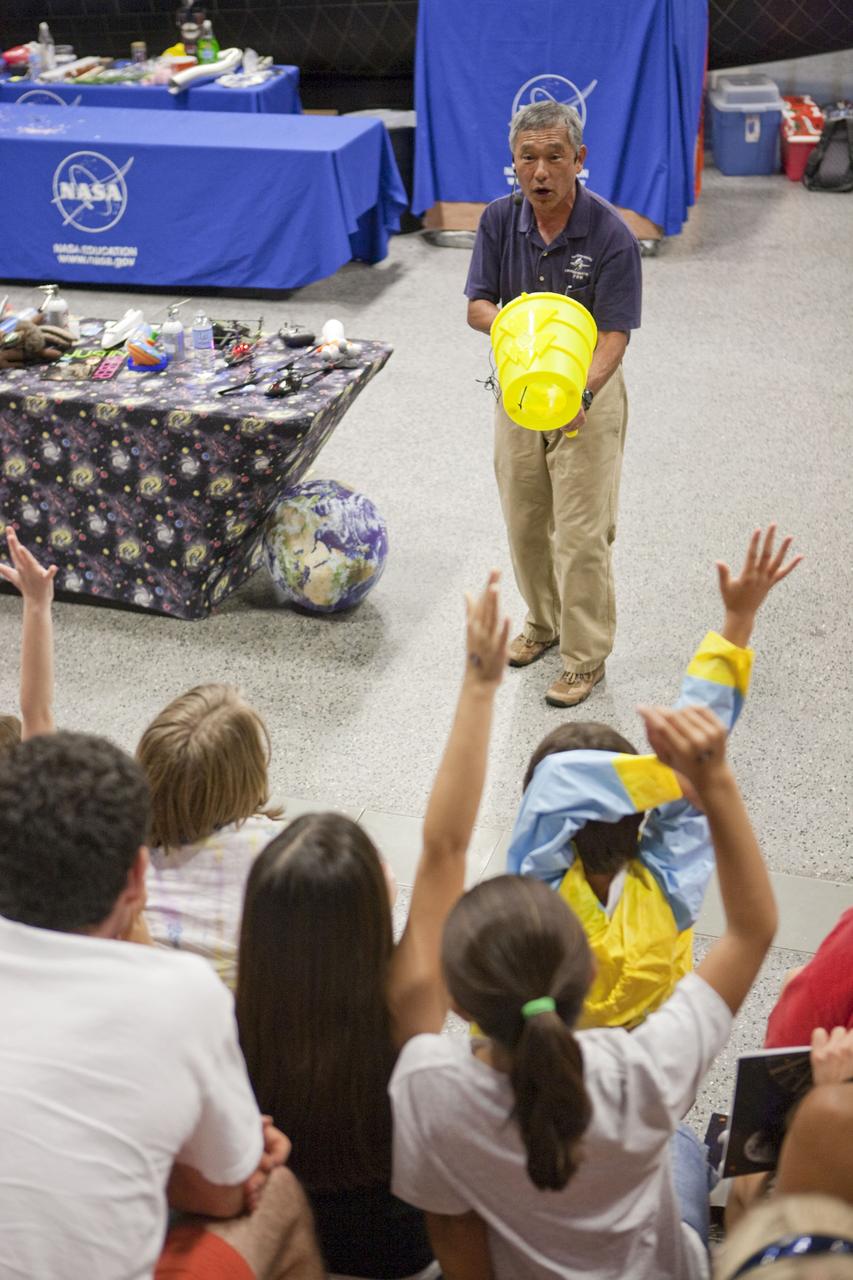
CAPE CANAVERAL, Fla. – An education specialist engages children in an educational activity during Kennedy Space Center’s Family Night, Sept. 10, at the U.S. Astronaut Hall of Fame in Florida. NASA and the Kennedy Space Center Visitor Complex hosted the annual NASA family education night. The event, for fifth- through eighth-grade students and their parents, focuses on science, technology, engineering and mathematics (STEM) education activities that included astronaut appearances, a hovercraft, vortex cannon and alternative fuel vehicles. The back-to-school event is part of NASA’s Summer of Innovation initiative to provide interactive learning experiences to middle school students nationwide. Photo credit: NASA/Amanda Diller
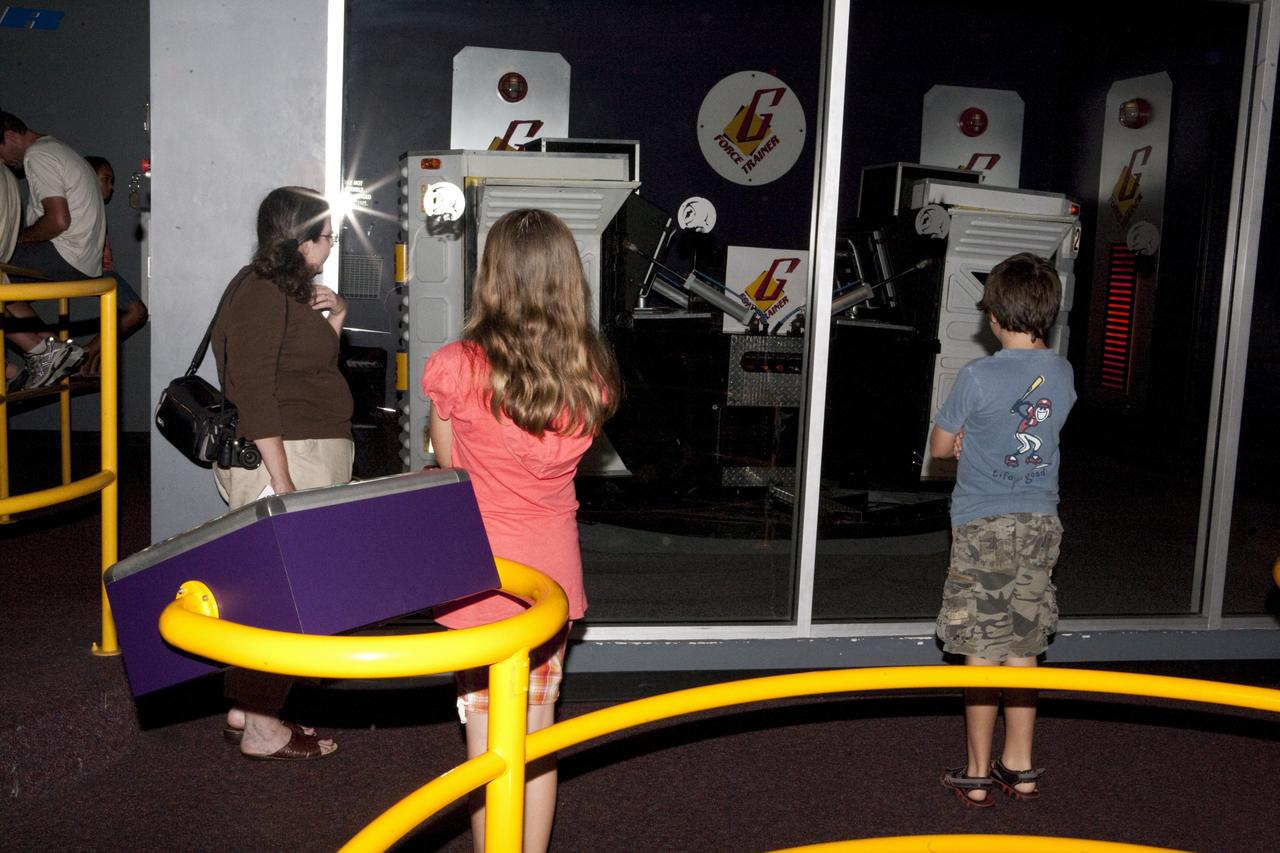
CAPE CANAVERAL, Fla. – Children view educational displays during Kennedy Space Center’s Family Night, Sept. 10, at the U.S. Astronaut Hall of Fame in Florida. NASA and the Kennedy Space Center Visitor Complex hosted the annual NASA family education night. The event, for fifth- through eighth-grade students and their parents, focuses on science, technology, engineering and mathematics (STEM) education activities that included astronaut appearances, a hovercraft, vortex cannon and alternative fuel vehicles. The back-to-school event is part of NASA’s Summer of Innovation initiative to provide interactive learning experiences to middle school students nationwide. Photo credit: NASA/Amanda Diller
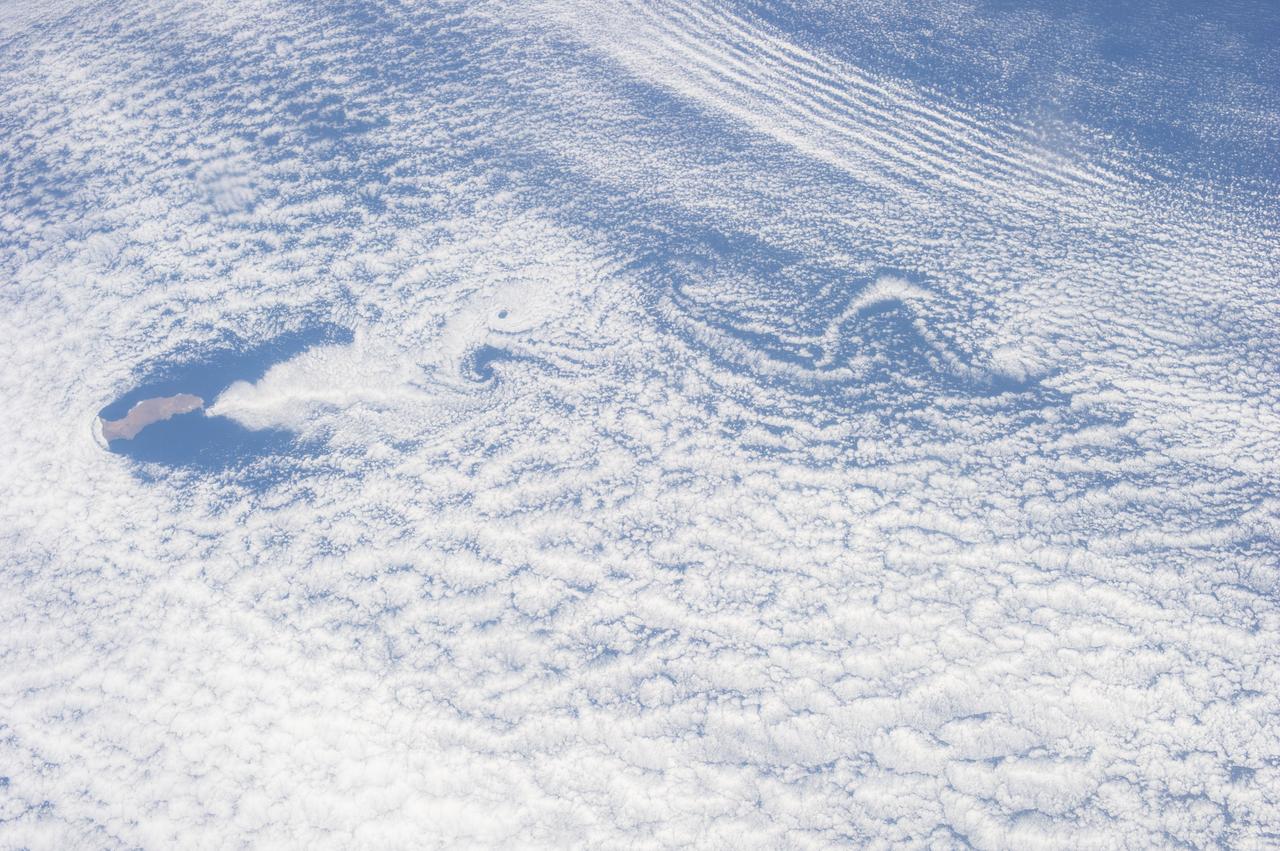
ISS036-E-035663 (24 Aug. 2013) --- One of the Expedition 36 crew members aboard the International Space Station recorded this still image of unusual cloud patterns surrounding Guadalupe Island in the Pacific Ocean (left center). These are the result of a ubiquitous occurrence in the motion of fluids—a vortex street, which is a linear chain of spiral eddies called von Karman vortices. Von Karman vortices are named after Theodore von Karman, a co-founder of NASA's Jet Propulsion Laboratory. who first described the phenomenon in the atmosphere. Guadalupe Island or Isla Guadalupe is a volcanic island located 241 kilometers (150 statute miles) off the west coast of Mexico's Baja California peninsula.
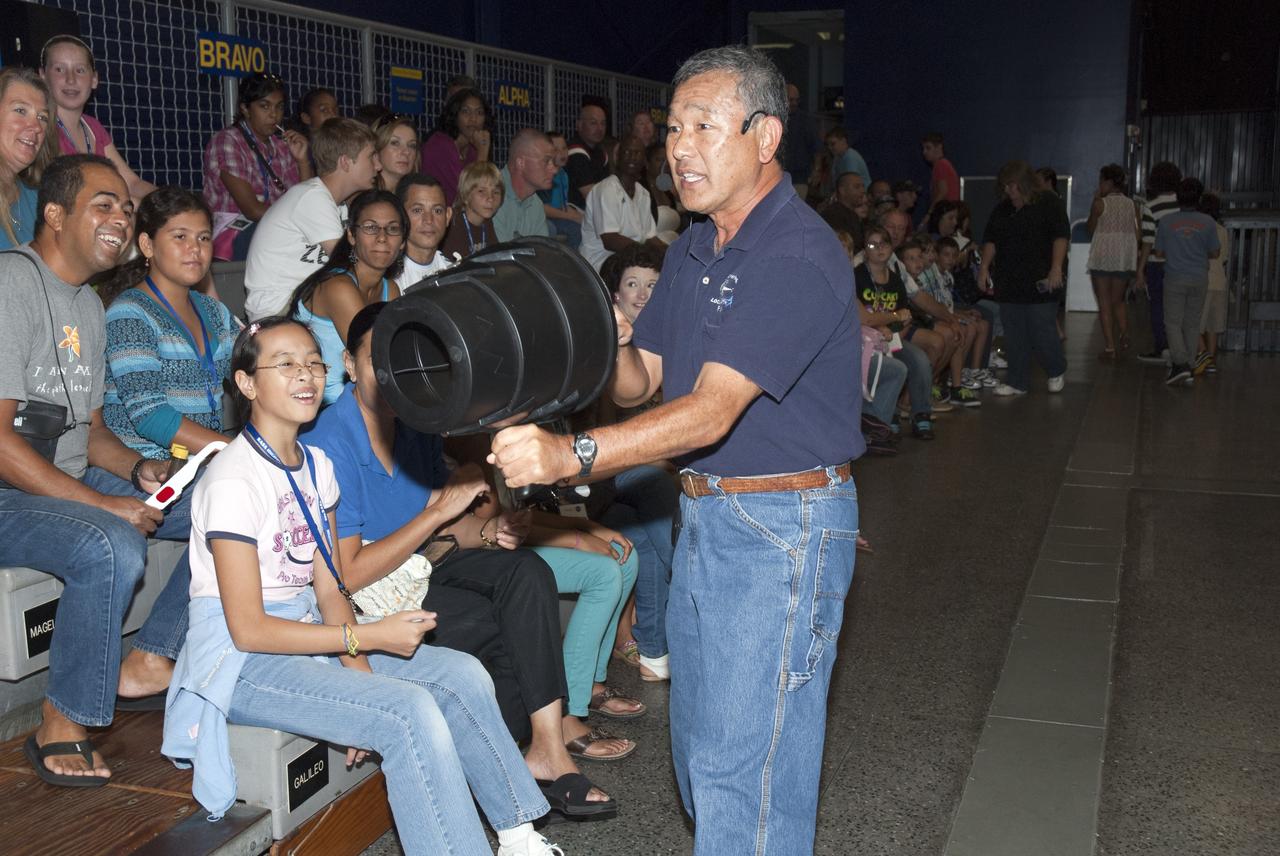
CAPE CANAVERAL, Fla. -- At the Astronaut Hall of Fame near the Kennedy Space Center Visitor Complex in Florida, fifth- through eighth-grade students and their parents participate in a vortex cannon experiment during the last NASA family education night event. Other activities included "gee-whiz" presentations, astronaut appearances, a hovercraft and alternative fuel vehicles, which promote science, technology, engineering and mathematics (STEM) education. The event is part of NASA's Summer of Innovation initiative to provide interactive learning experiences to middle school students nationwide during the summer months. The program is a cornerstone of the Educate to Innovate campaign announced by President Barack Obama in November 2009. Photo credit: NASA/Charisse Nahser
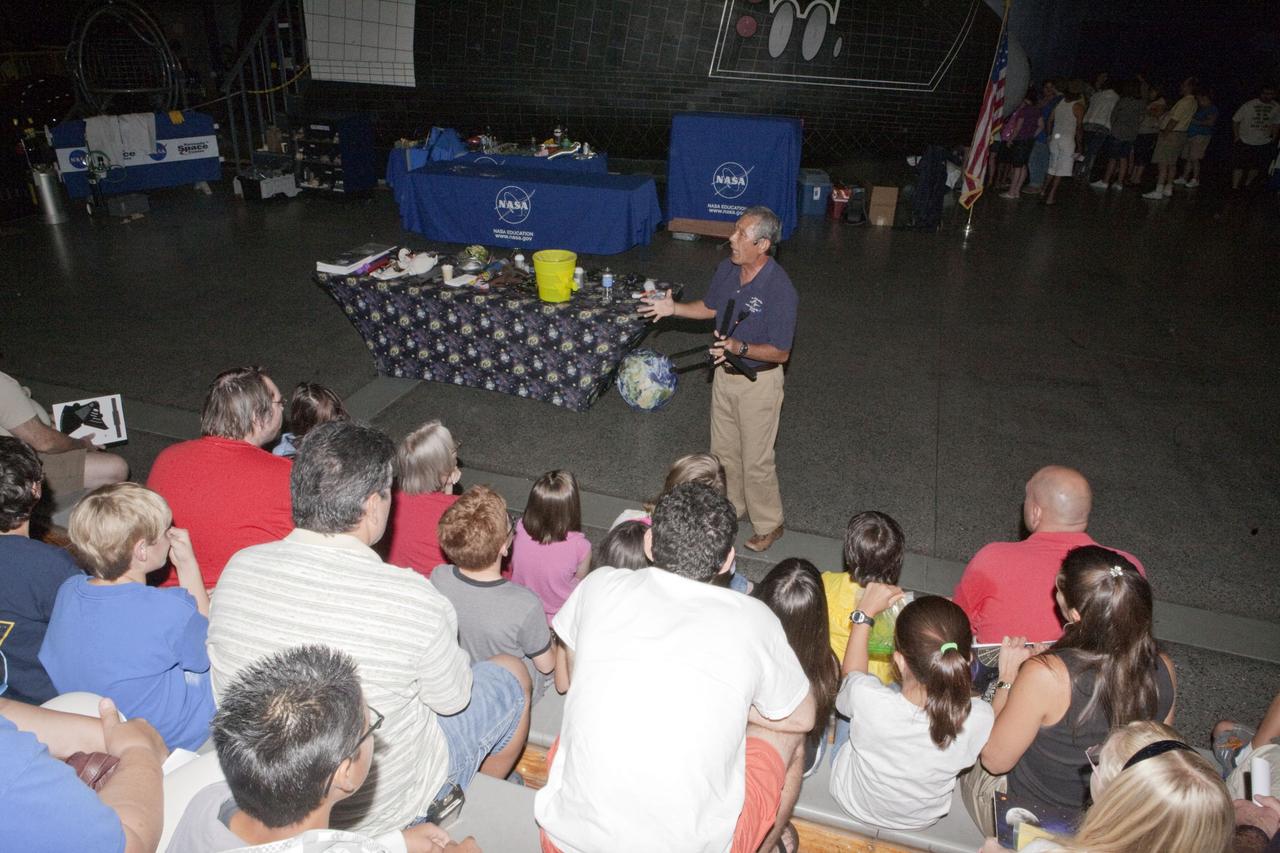
CAPE CANAVERAL, Fla. – An education specialist talks to children and their parents during Kennedy Space Center’s Family Night, Sept. 10, at the U.S. Astronaut Hall of Fame in Florida. NASA and the Kennedy Space Center Visitor Complex hosted the annual NASA family education night. The event, for fifth- through eighth-grade students and their parents, focuses on science, technology, engineering and mathematics (STEM) education activities that included astronaut appearances, a hovercraft, vortex cannon and alternative fuel vehicles. The back-to-school event is part of NASA’s Summer of Innovation initiative to provide interactive learning experiences to middle school students nationwide. Photo credit: NASA/Amanda Diller
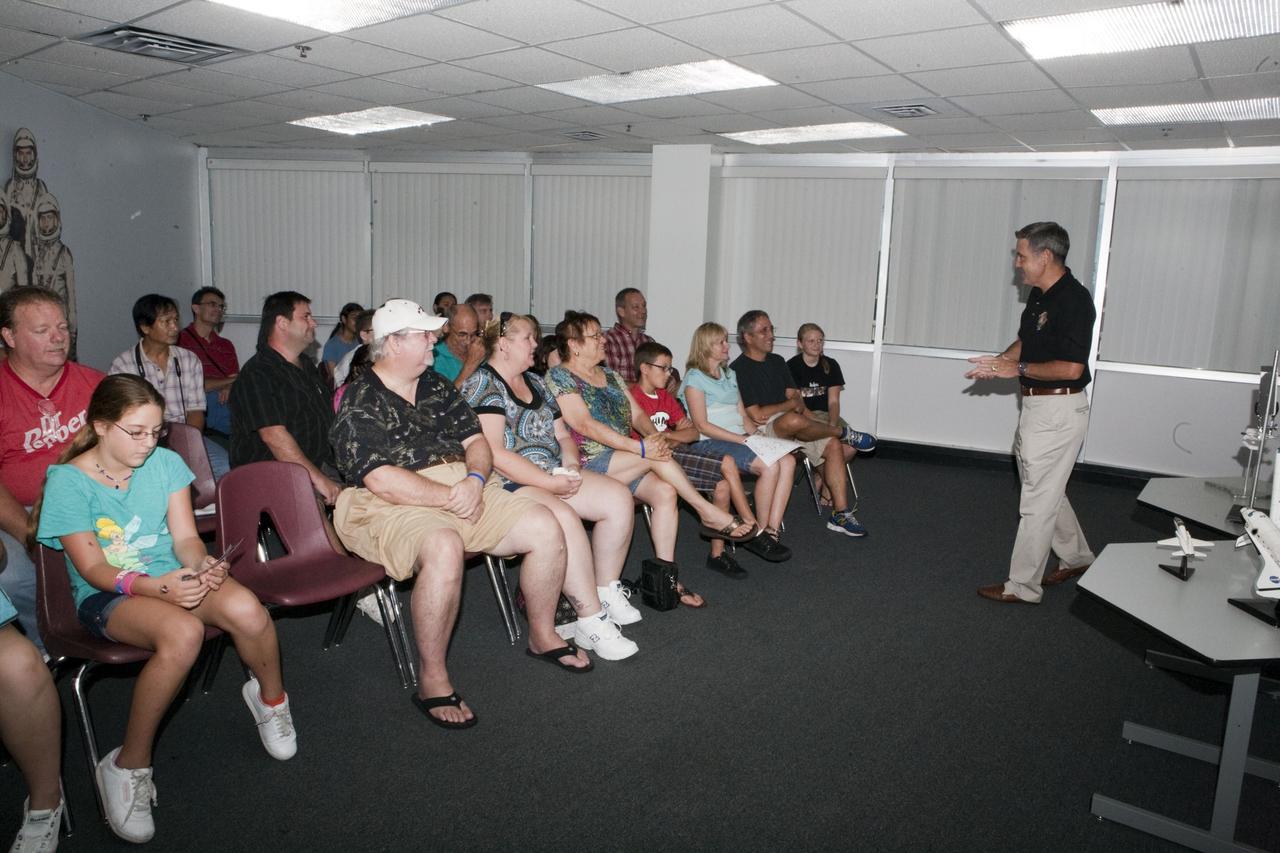
CAPE CANAVERAL, Fla. – Kennedy Space Center Director Bob Cabana speaks to children and their parents during Family Night, Sept. 10, at the U.S. Astronaut Hall of Fame in Florida. NASA and the Kennedy Space Center Visitor Complex hosted the annual NASA family education night. The event, for fifth- through eighth-grade students and their parents, focuses on science, technology, engineering and mathematics (STEM) education activities that included astronaut appearances, a hovercraft, vortex cannon and alternative fuel vehicles. The back-to-school event is part of NASA’s Summer of Innovation initiative to provide interactive learning experiences to middle school students nationwide. Photo credit: NASA/Amanda Diller
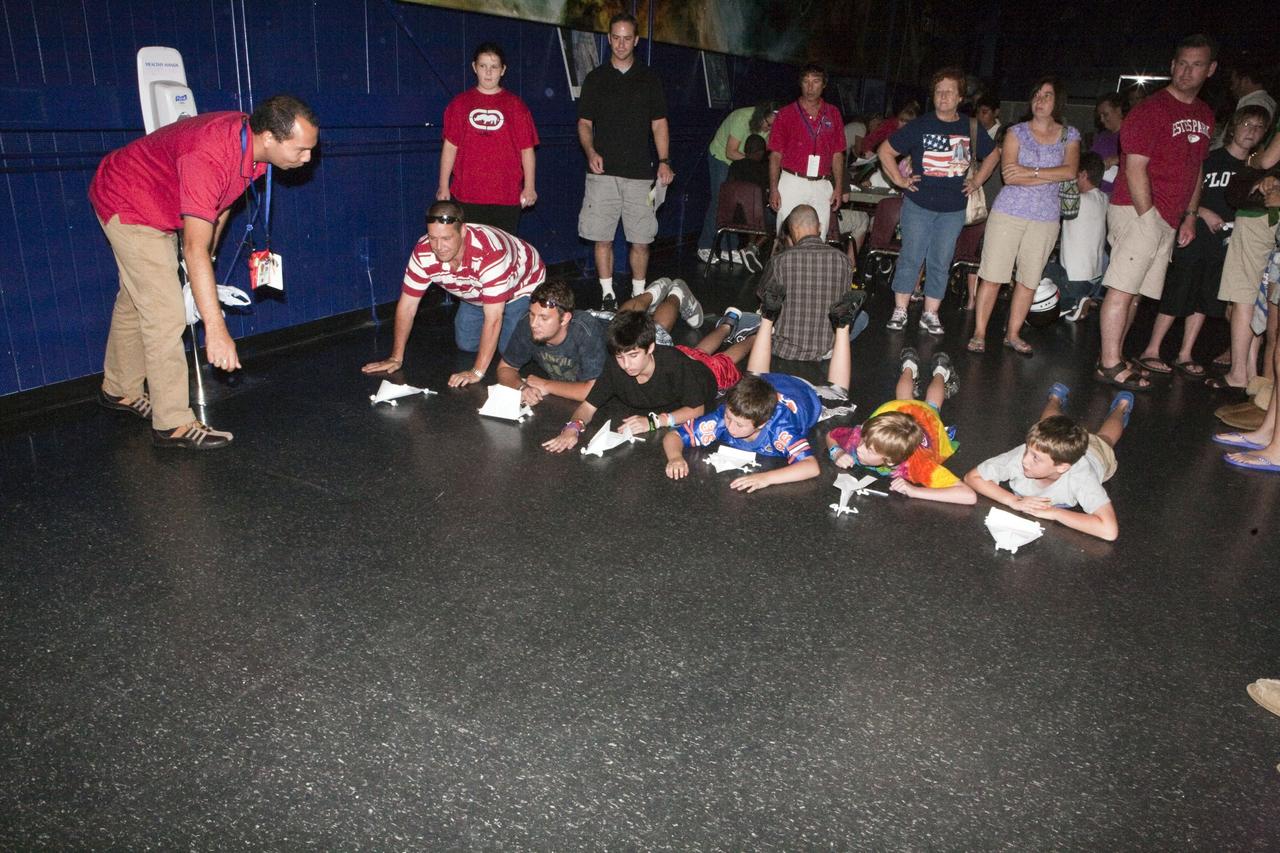
CAPE CANAVERAL, Fla. – Children participate in educational activities during Kennedy Space Center’s Family Night, Sept. 10, at the U.S. Astronaut Hall of Fame in Florida. NASA and the Kennedy Space Center Visitor Complex hosted the annual NASA family education night. The event, for fifth- through eighth-grade students and their parents, focuses on science, technology, engineering and mathematics (STEM) education activities that included astronaut appearances, a hovercraft, vortex cannon and alternative fuel vehicles. The back-to-school event is part of NASA’s Summer of Innovation initiative to provide interactive learning experiences to middle school students nationwide. Photo credit: NASA/Amanda Diller
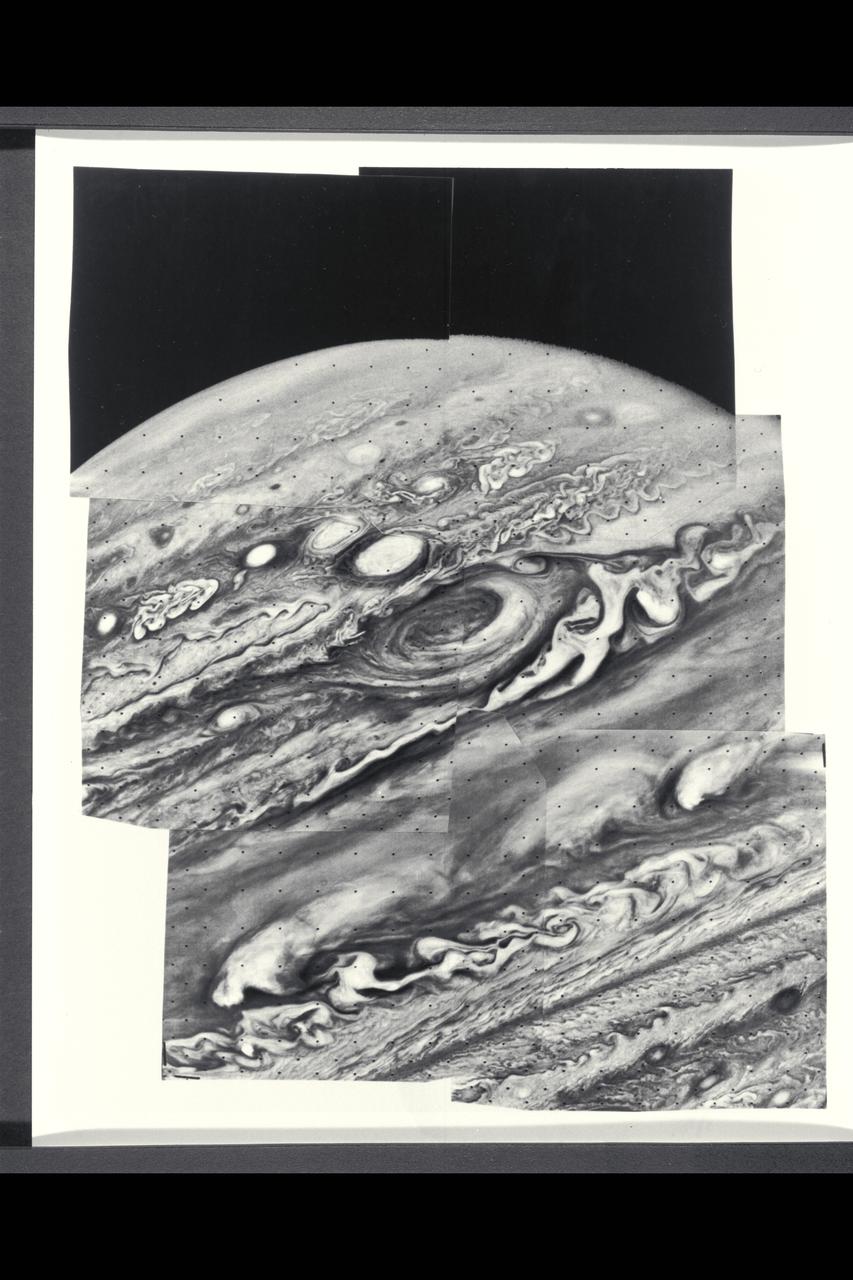
Range : 6.5 million kilometers (4 million miles) Six violet images of Jupiter makes the mosaic photo, showing the Great Red Spot as a swirling vortex type motion. This motion is also seen in several nearby white clouds. These bright white clouds and the Red Spot are rotating in a counter clockwise direction, except the peculiar filimentary cloud to the right of the Red Spot is going clockwise. The top of the picture shows the turbulence from the equatorial jet and more northerly atmospheric currents. The smallest clouds shown are only 70 miles (120 km) across.
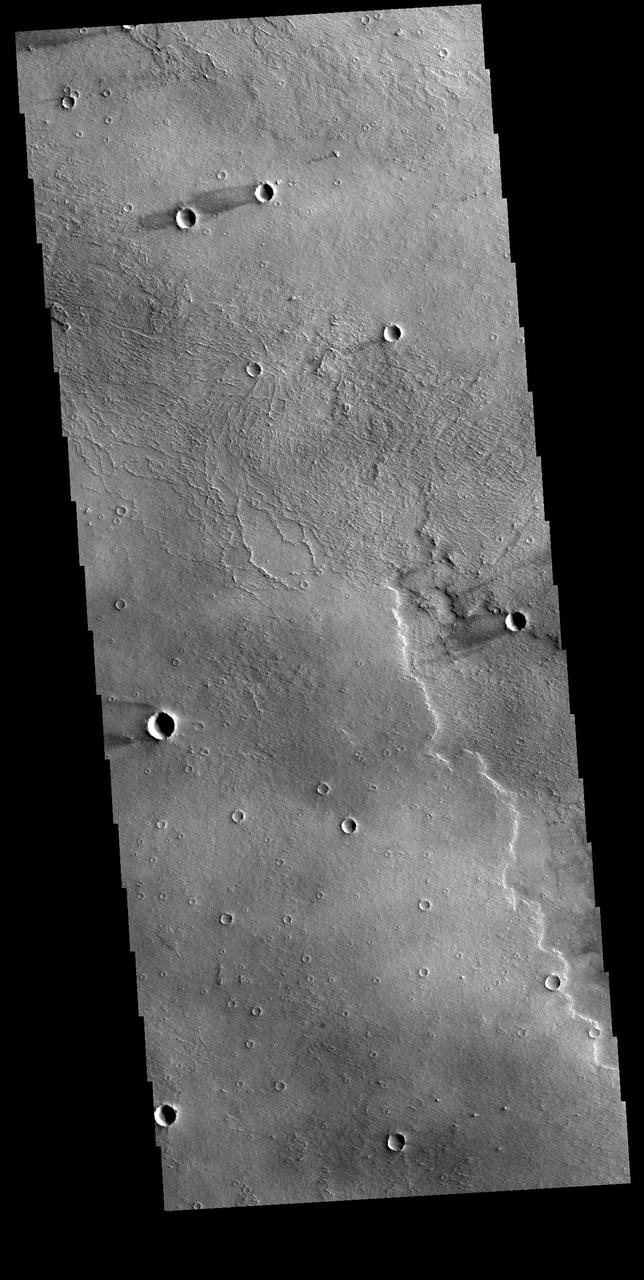
This VIS images shows several windstreaks located on the volcanic plains of Daedalia Planum. The dark and bright material forming "tails" behind the craters were created by surface winds funneled over and around the crater. The raised rims and bowls of impact craters causes a complex interaction such that the wind vortex in the lee of the crater can both scour away the surface dust and deposit it back in the center of the lee. The "tail" shows the direction of the wind, in this case blowing from the right to the left. Orbit Number: 80441 Latitude: -13.1034 Longitude: 223.8 Instrument: VIS Captured: 2020-02-01 19:50 https://photojournal.jpl.nasa.gov/catalog/PIA23838
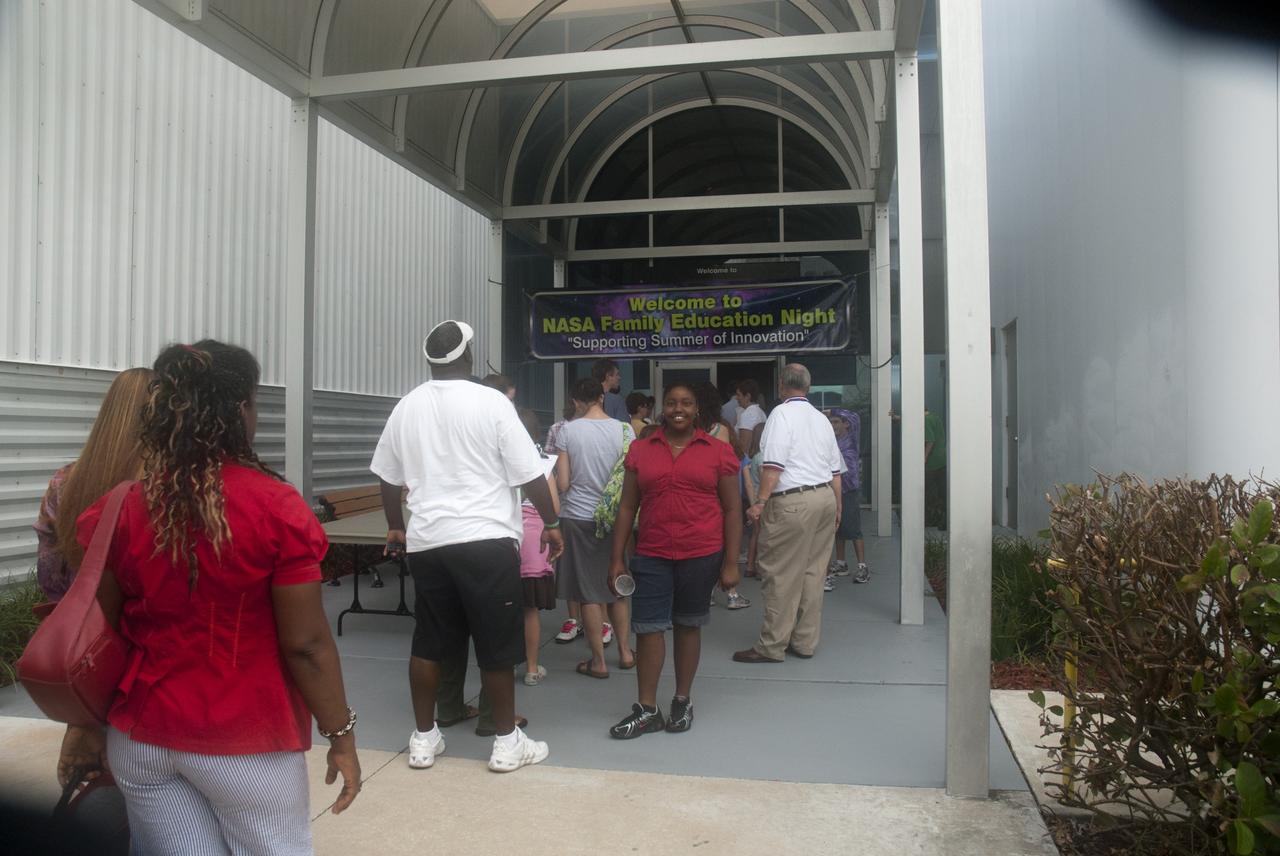
CAPE CANAVERAL, Fla. -- Fifth- through eighth-grade students and their parents enter the Astronaut Hall of Fame near the Kennedy Space Center Visitor Complex in Florida for the last NASA family education night event. Inside, they participated in science, technology, engineering and mathematics (STEM) activities, such as "gee-whiz" presentations, astronaut appearances, a hovercraft, vortex cannon and alternative fuel vehicles. The event is part of NASA's Summer of Innovation initiative to provide interactive learning experiences to middle school students nationwide during the summer months. The program is a cornerstone of the Educate to Innovate campaign announced by President Barack Obama in November 2009. Photo credit: NASA/Charisse Nahser