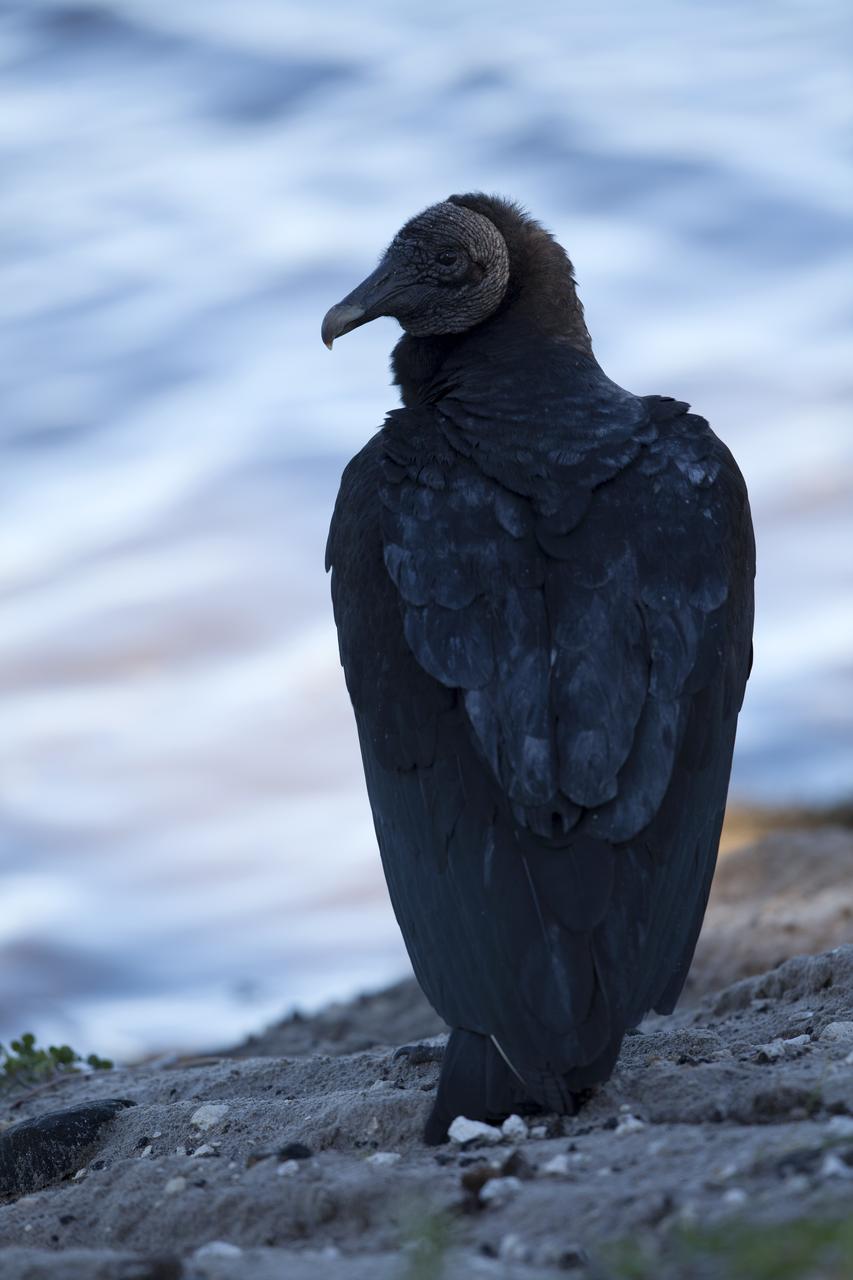
A vulture watches from a perch on sandy dunes at NASA's Kennedy Space Center in Florida. The center shares a border with the Merritt Island National Wildlife Refuge. The bird is one of more than 330 native and migratory bird species, 25 mammals, 117 fishes and 65 amphibians and reptiles that call Kennedy and the wildlife refuge home.
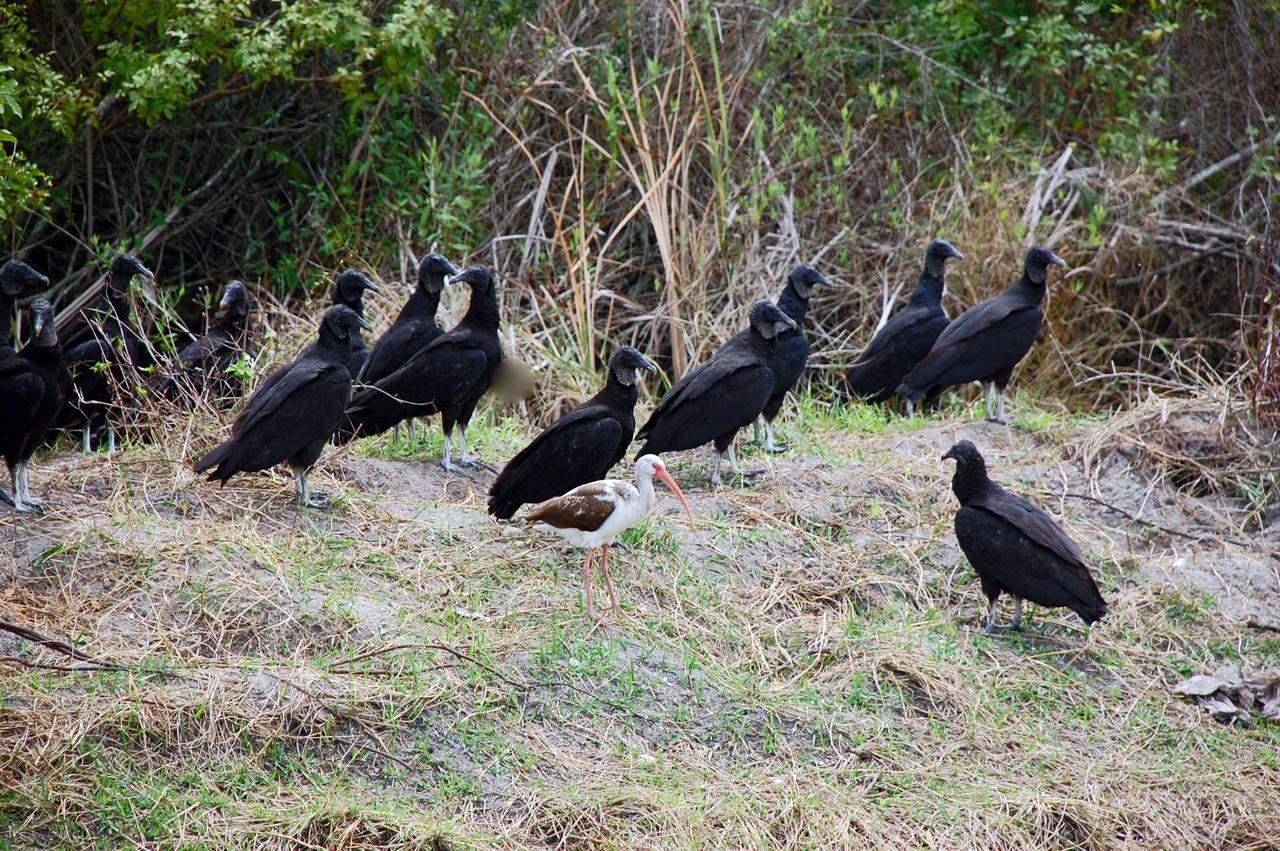
CAPE CANAVERAL, Fla. – Black vultures gather near woods in NASA's Kennedy Space Center in Florida. They are accompanied by a young white ibis. Ranging across the south and southeast, black vultures scavenge for both carrion and weak, sick or unprotected prey. They differ from turkey vultures in that they depend on vision to find food. They can be found all around Kennedy, on the ground or any higher landing spot, from buildings to utility poles. The center shares a boundary with the Merritt Island Wildlife Nature Refuge, which is a habitat for more than 310 species of birds, 25 mammals, 117 fishes and 65 amphibians and reptiles. Photo credit: NASA/Ben Smegelsky
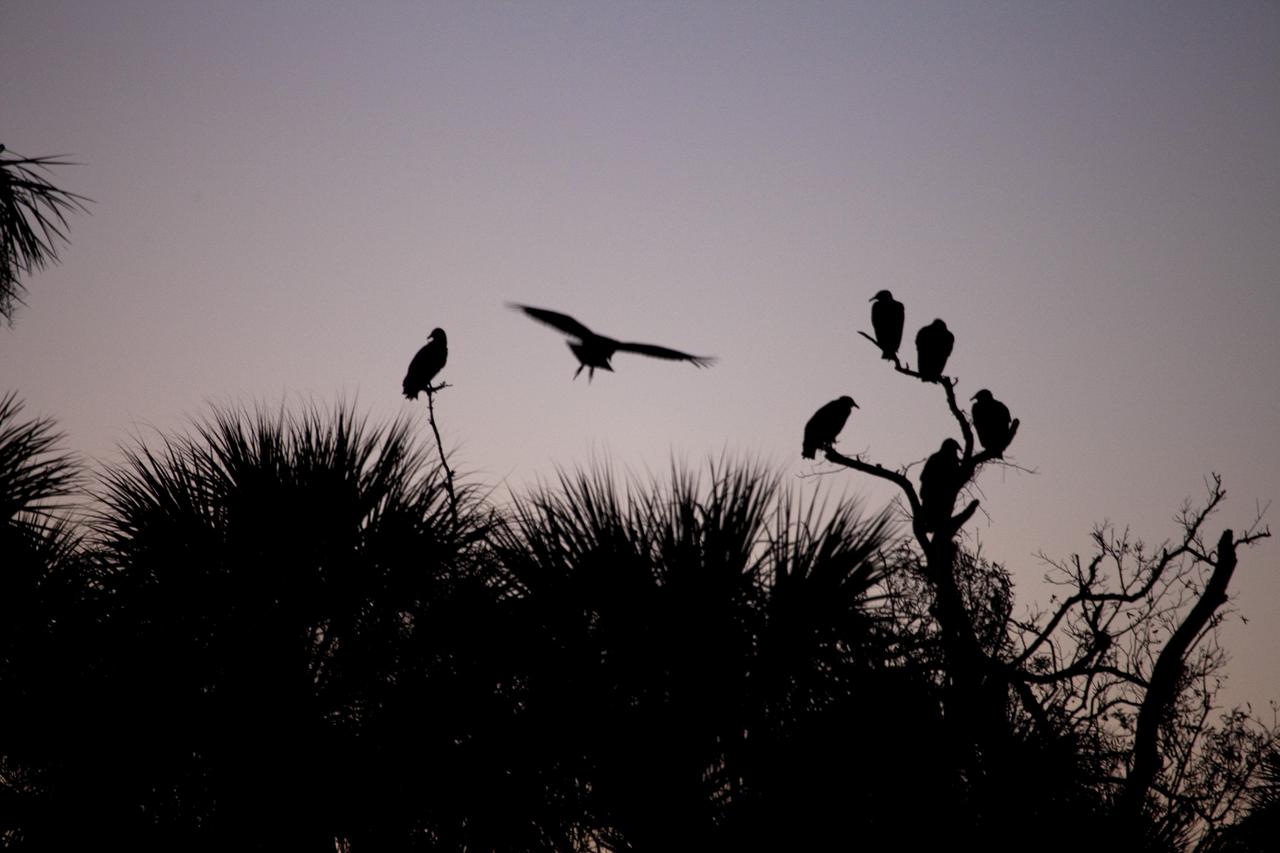
CAPE CANAVERAL, Fla. -- Black vultures gather at dawn at NASA's Kennedy Space Center in Florida. NASA's Environmental Management Branch monitors the movement and activity of about 250 black and turkey vultures using satellite trackers and radio transmitters. Kennedy coexists with the Merritt Island National Wildlife Refuge, habitat to more than 310 species of birds, 25 mammals, 117 fish and 65 amphibians and reptiles. Photo credit: NASA/Frank Michaux
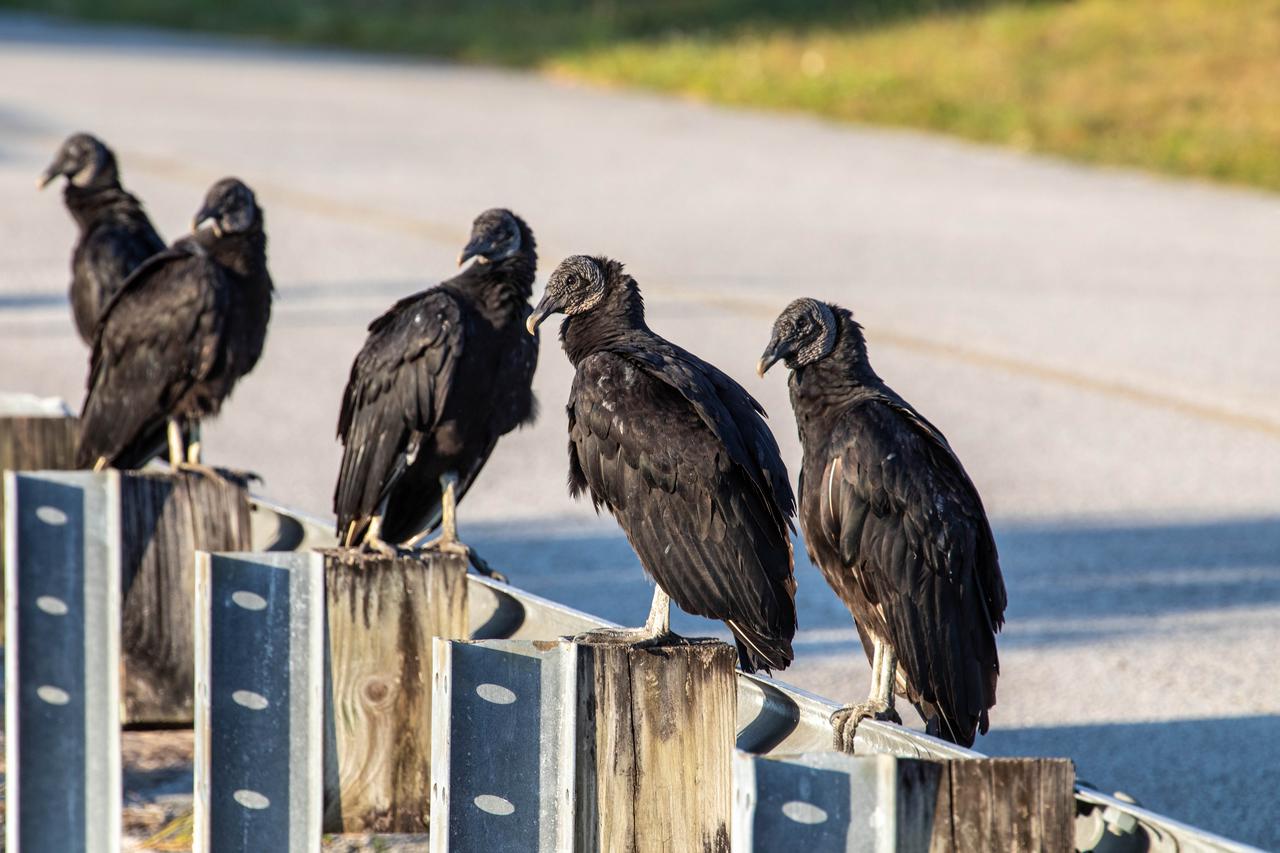
A row of vultures sit on a wooden fence near a road at NASA’s Kennedy Space Center in Florida on May 16, 2022. The center shares a border with the Merritt Island National Wildlife Refuge. More than 330 native and migratory bird species call Kennedy and the wildlife refuge home.
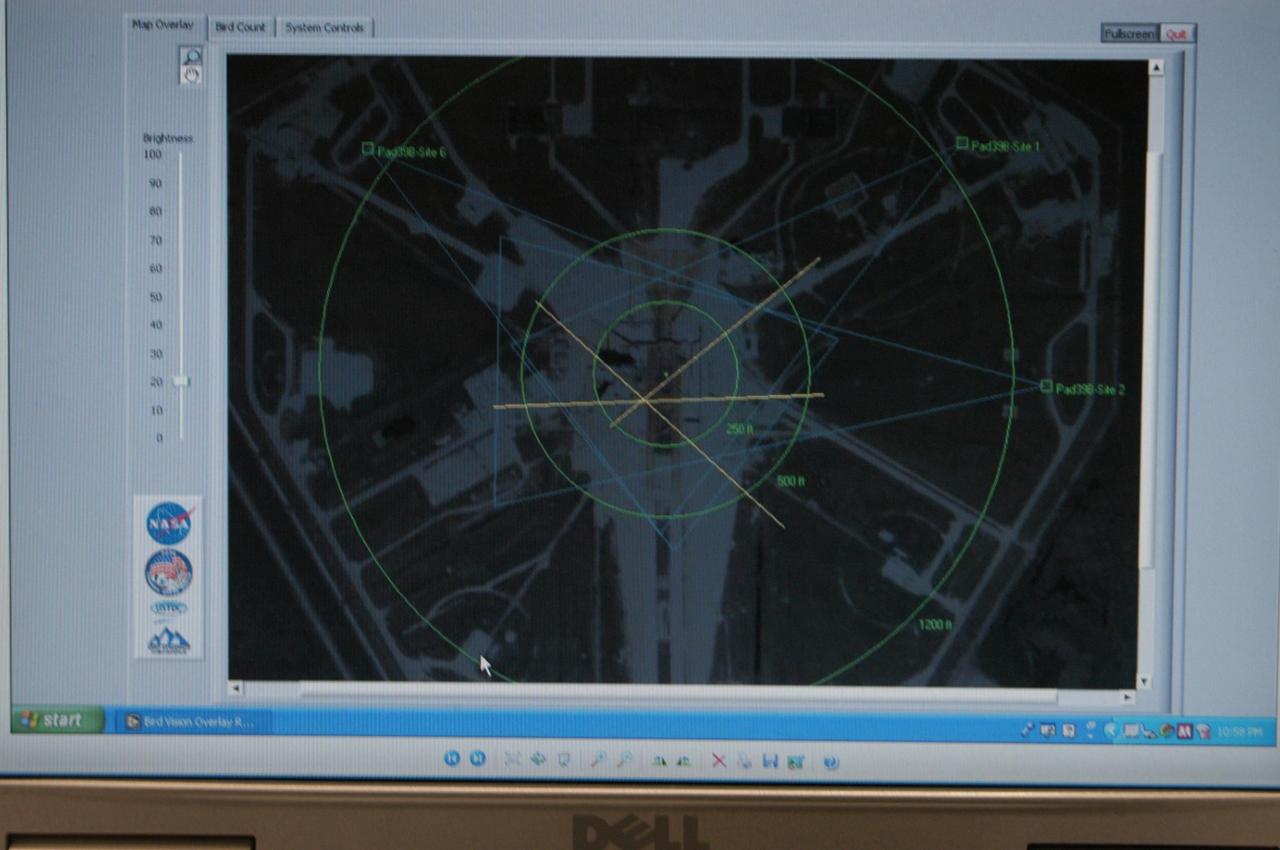
KENNEDY SPACE CENTER, FLA. - This associated computer image shows data being relayed from the avian radars recently set up on Launch Pad 39B. The computer is one of two in Firing Room 4 of the Launch Control Center. When birds, especially vultures, are near the shuttle during a launch, impact on a critical area is possible and could cause catastrophic damage to the vehicle. Already proven affective for aviation where threats posed by bird strikes have been a problem, the avian radar, known as Aircraft Birdstrike Avoidance Radar, provides horizontal and vertical scanning and can monitor either launch pad for movement of vultures around them. If data relayed from the avian radar indicates large birds are dangerously close to the vehicle, controllers could hold the countdown. Photo credit: NASA/George Shelton
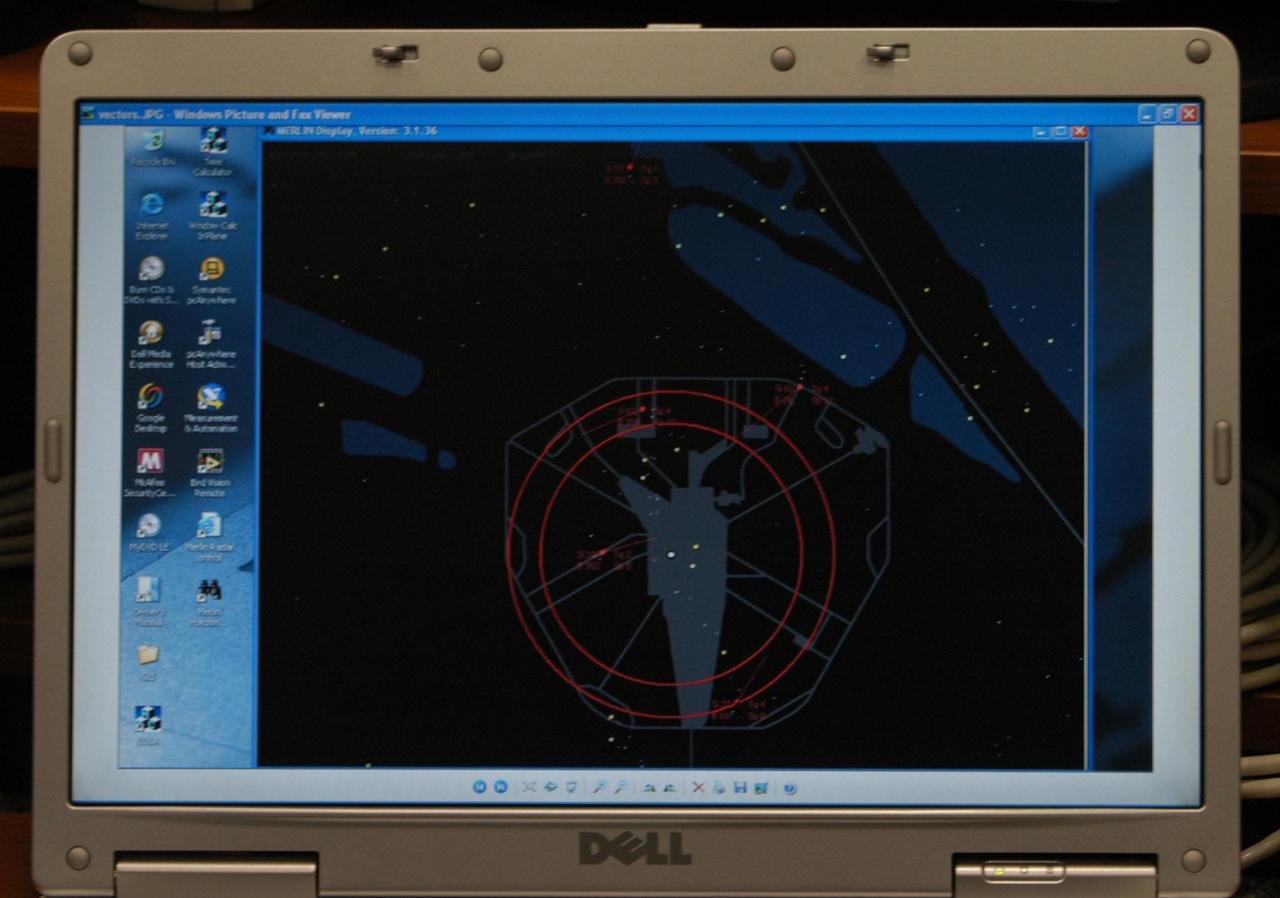
KENNEDY SPACE CENTER, FLA. - This radar image shows the presence of large birds around Launch Pad 39B. The data is being relayed from the avian radars recently set up on the pad. The computer is one of two set up in Firing Room 4 of the Launch Control Center. When birds, especially vultures, are near the shuttle during a launch, impact on a critical area is possible and could cause catastrophic damage to the vehicle. Already proven affective for aviation where threats posed by bird strikes have been a problem, the avian radar, known as Aircraft Birdstrike Avoidance Radar, provides horizontal and vertical scanning and can monitor either launch pad for movement of vultures around them. If data relayed from the avian radar indicates large birds are dangerously close to the vehicle, controllers could hold the countdown. Photo credit: NASA/George Shelton
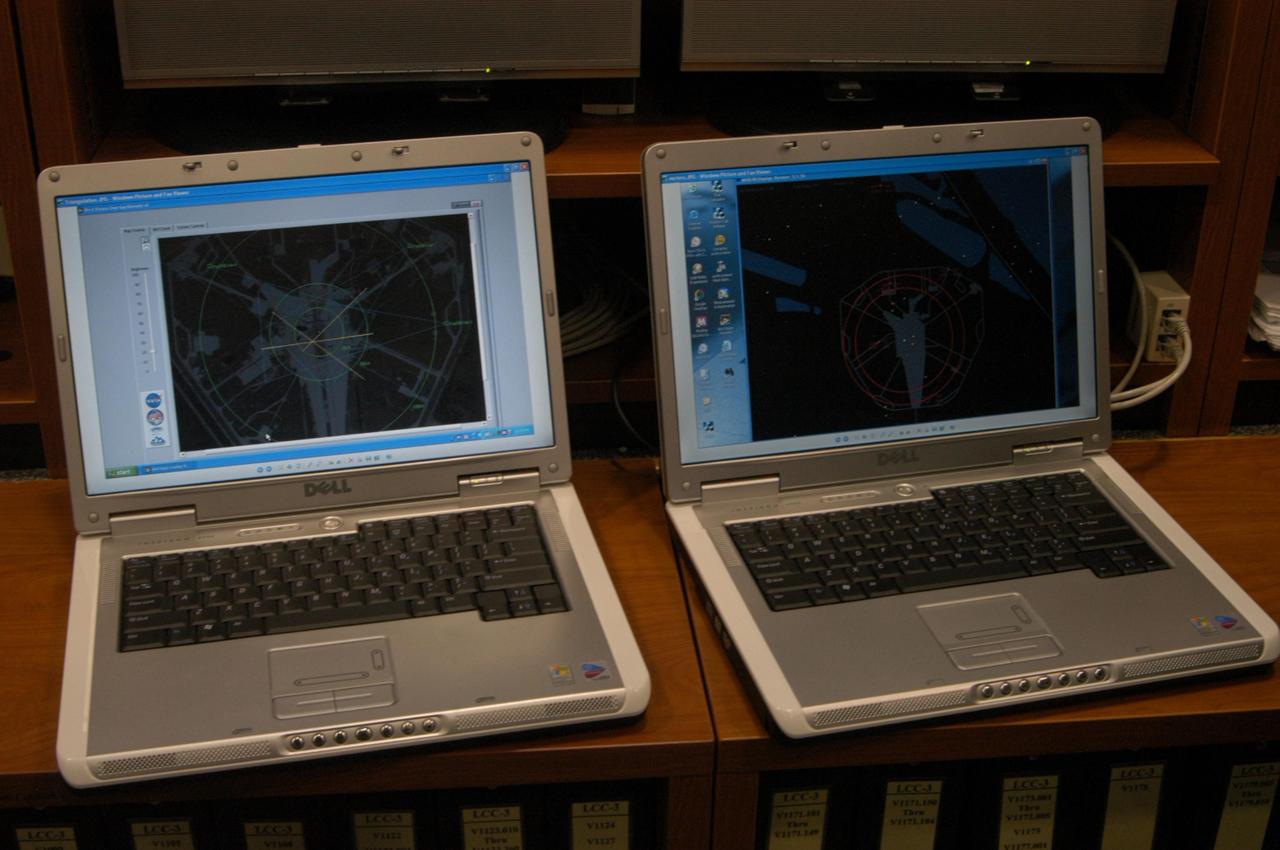
KENNEDY SPACE CENTER, FLA. - These laptop computers in Firing Room 4 of the Launch Control Center reveal data being relayed from the avian radars recently set up on Launch Pad 39B. On the left is an associated camera image. On the right is the radar image. When birds, especially vultures, are near the shuttle during a launch, impact on a critical area is possible and could cause catastrophic damage to the vehicle. Already proven affective for aviation where threats posed by bird strikes have been a problem, the avian radar, known as Aircraft Birdstrike Avoidance Radar, provides horizontal and vertical scanning and can monitor either launch pad for movement of vultures around them. If data relayed from the avian radar indicates large birds are dangerously close to the vehicle, controllers could hold the countdown. Photo credit: NASA/George Shelton
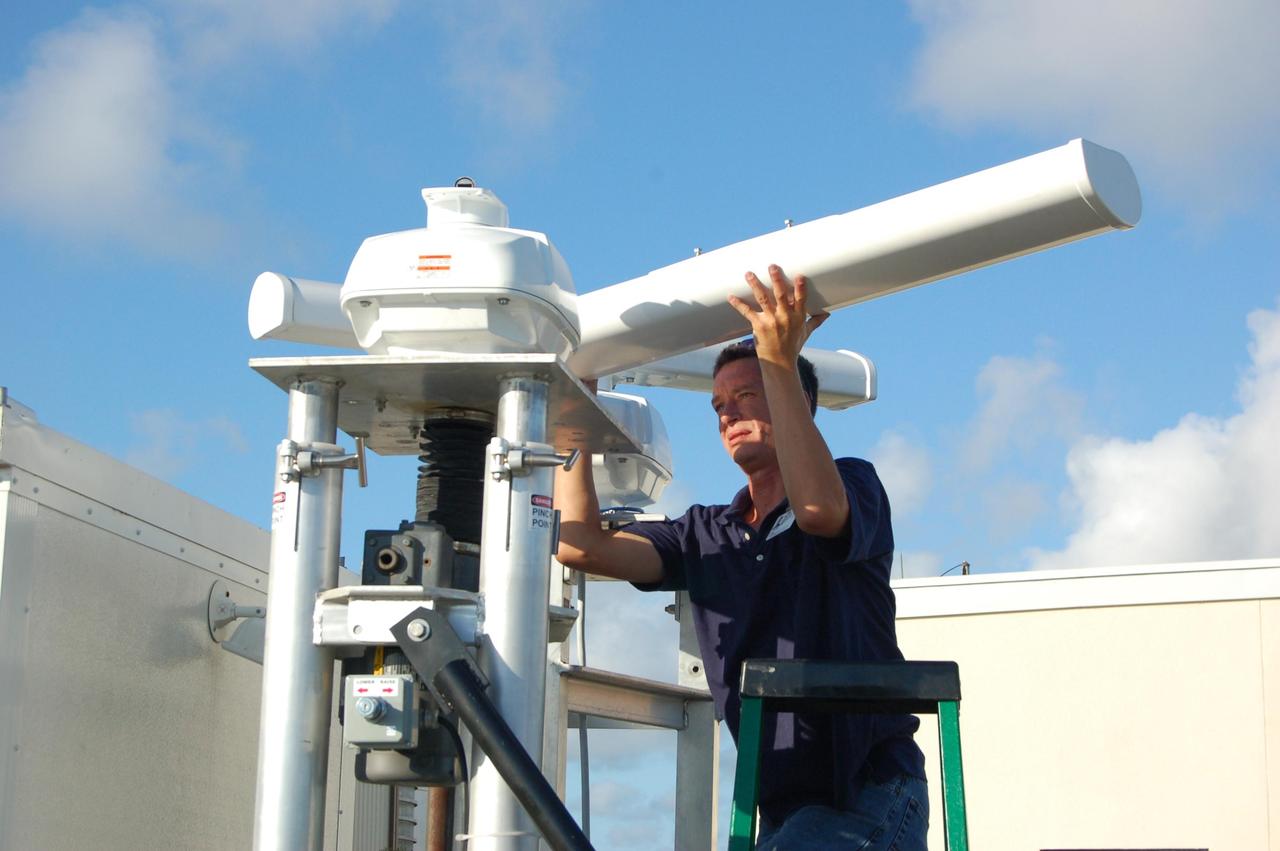
KENNEDY SPACE CENTER, FLA. - Bird detection radar is set up near Launch Pad 39B before the July 1 launch of Space Shuttle Discovery on mission STS-121. When birds, especially vultures, are near the shuttle during a launch, impact on a critical area is possible and could cause catastrophic damage to the vehicle. Already proven affective for aviation where threats posed by bird strikes have been a problem, the avian radar, known as Aircraft Birdstrike Avoidance Radar, provides horizontal and vertical scanning and can monitor either launch pad for movement of vultures around them. If data relayed from the avian radar indicates large birds are dangerously close to the vehicle, controllers could hold the countdown. Photo credit: NASA/Gianni Woods
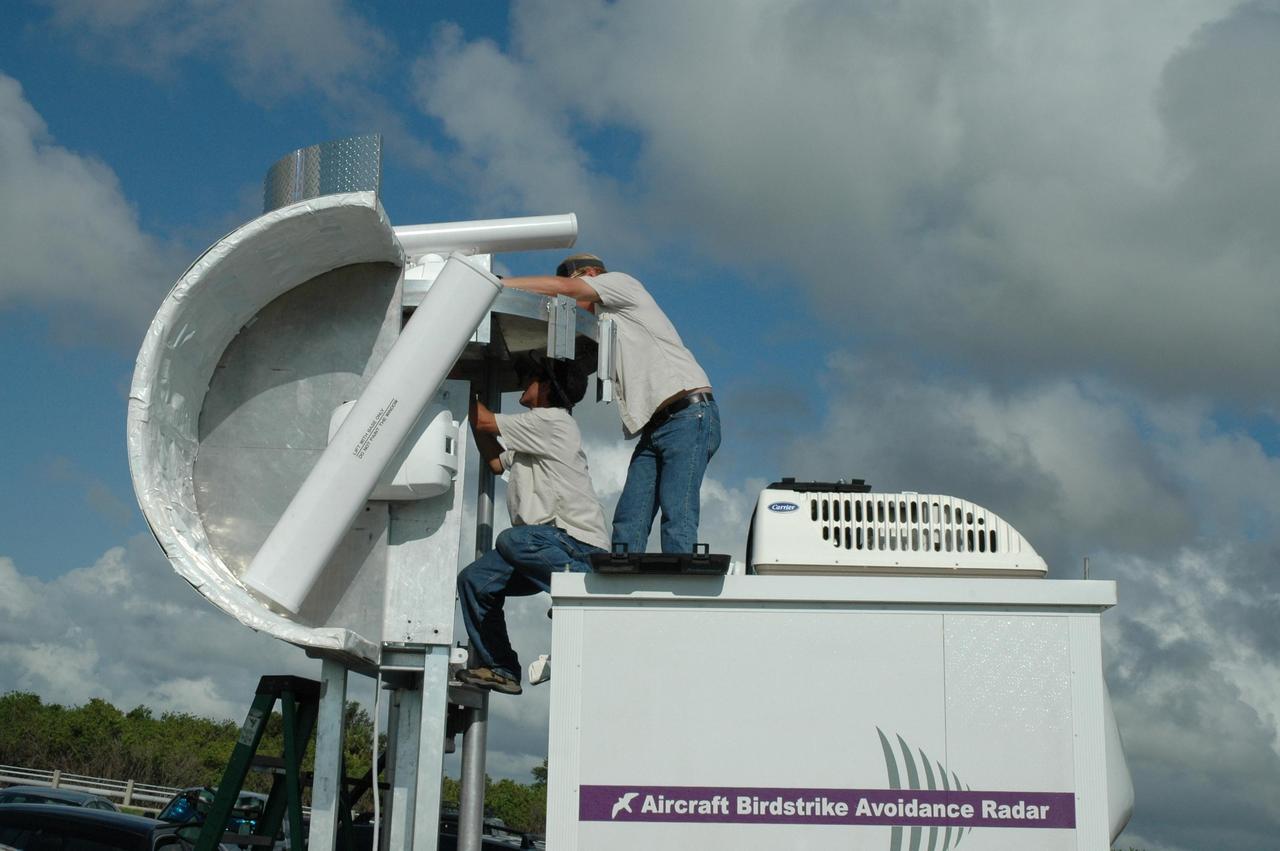
KENNEDY SPACE CENTER, FLA. - Radar technicians adjust two bird detection radars near Launch Pad 39B before the July 1 launch of Space Shuttle Discovery on mission STS-121. When birds, especially vultures, are near the shuttle during a launch, impact on a critical area is possible and could cause catastrophic damage to the vehicle. Already proven affective for aviation where threats posed by bird strikes have been a problem, the avian radar, known as Aircraft Birdstrike Avoidance Radar, provides horizontal and vertical scanning and can monitor either launch pad for movement of vultures around them. If data relayed from the avian radar indicates large birds are dangerously close to the vehicle, controllers could hold the countdown. Photo credit: NASA/Dimitri Gerondidakis
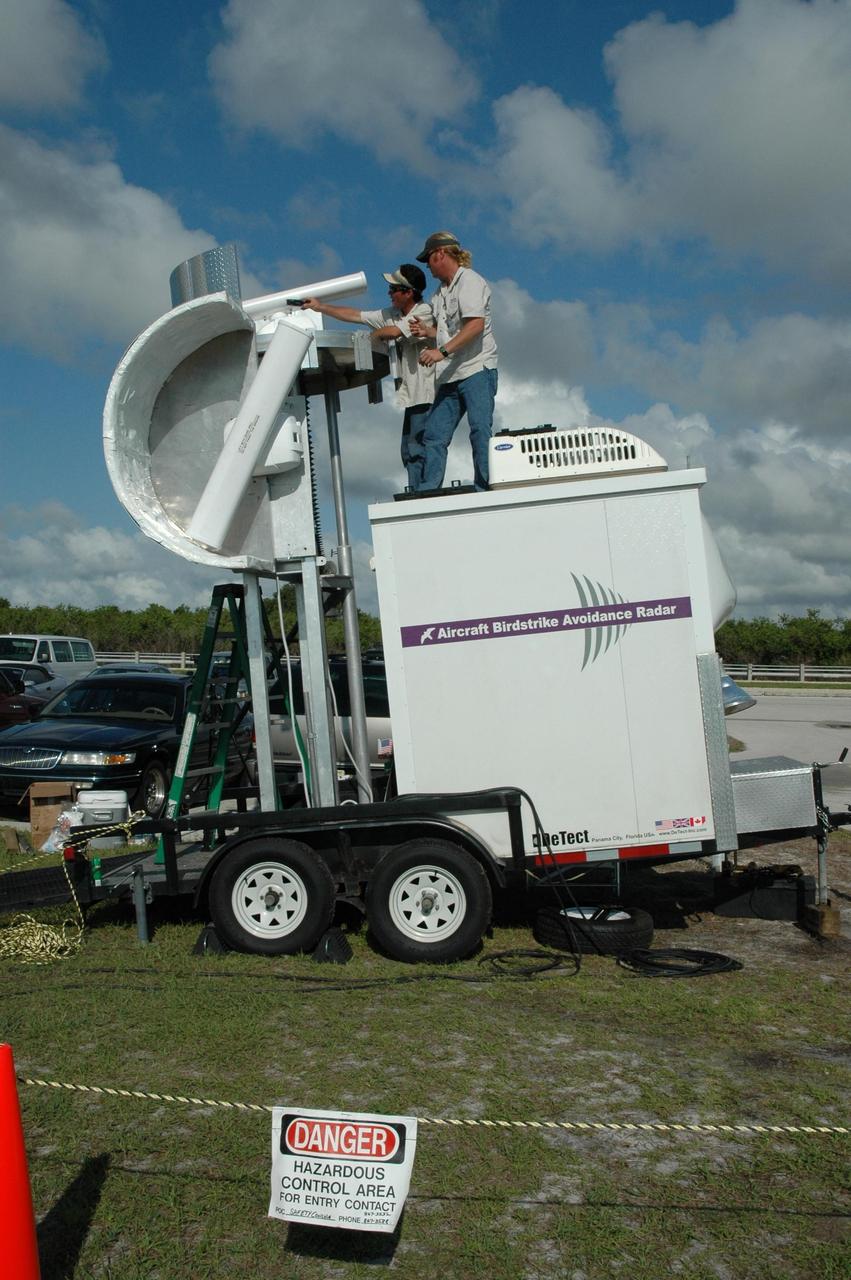
KENNEDY SPACE CENTER, FLA. - Radar technicians adjust two bird detection radars near Launch Pad 39B before the July 1 launch of Space Shuttle Discovery on mission STS-121. When birds, especially vultures, are near the shuttle during a launch, impact on a critical area is possible and could cause catastrophic damage to the vehicle. Already proven affective for aviation where threats posed by bird strikes have been a problem, the avian radar, known as Aircraft Birdstrike Avoidance Radar, provides horizontal and vertical scanning and can monitor either launch pad for movement of vultures around them. If data relayed from the avian radar indicates large birds are dangerously close to the vehicle, controllers could hold the countdown. Photo credit: NASA/Dimitri Gerondidakis
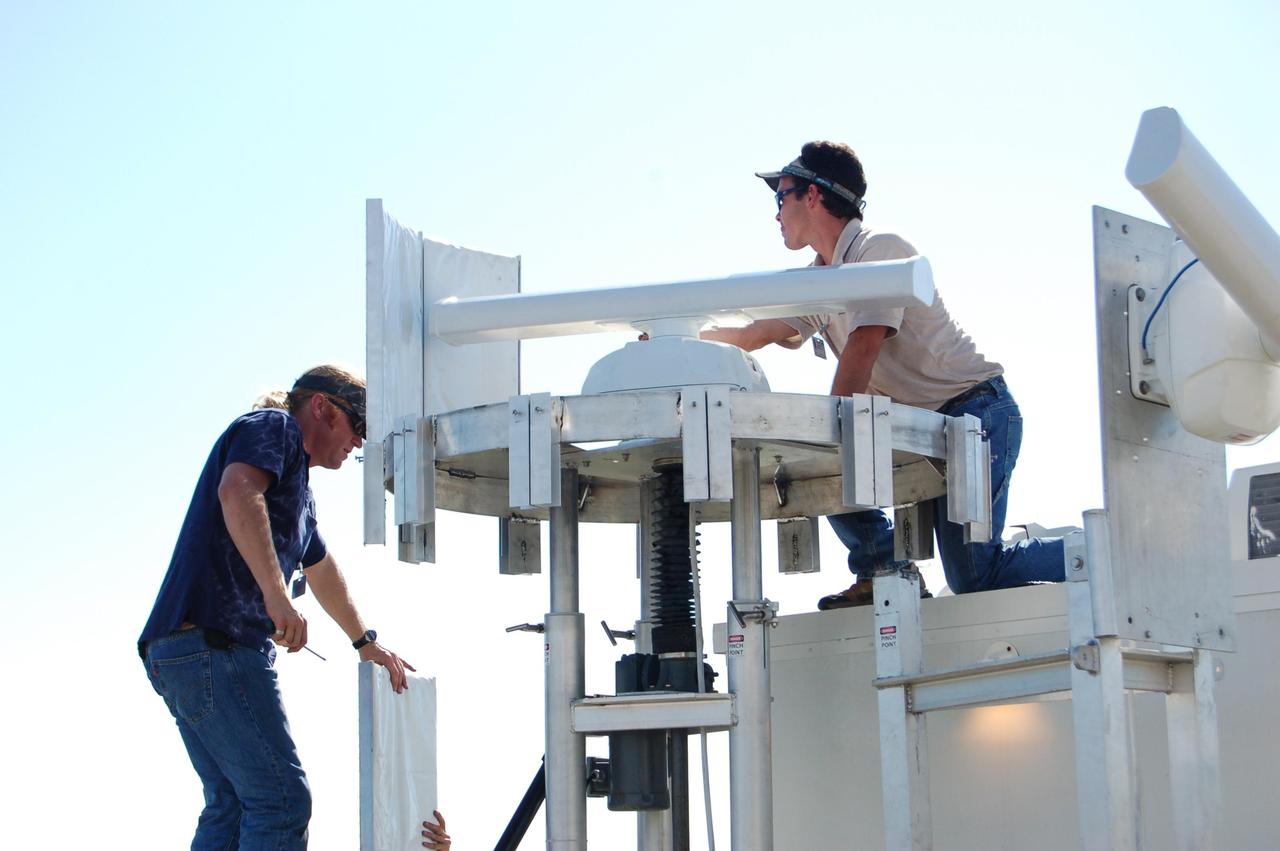
KENNEDY SPACE CENTER, FLA. - Radar technicians set up bird detection radar near Launch Pad 39B before the July 1 launch of Space Shuttle Discovery on mission STS-121. When birds, especially vultures, are near the shuttle during a launch, impact on a critical area is possible and could cause catastrophic damage to the vehicle. Already proven affective for aviation where threats posed by bird strikes have been a problem, the avian radar, known as Aircraft Birdstrike Avoidance Radar, provides horizontal and vertical scanning and can monitor either launch pad for movement of vultures around them. If data relayed from the avian radar indicates large birds are dangerously close to the vehicle, controllers could hold the countdown. Photo credit: NASA/Gianni Woods
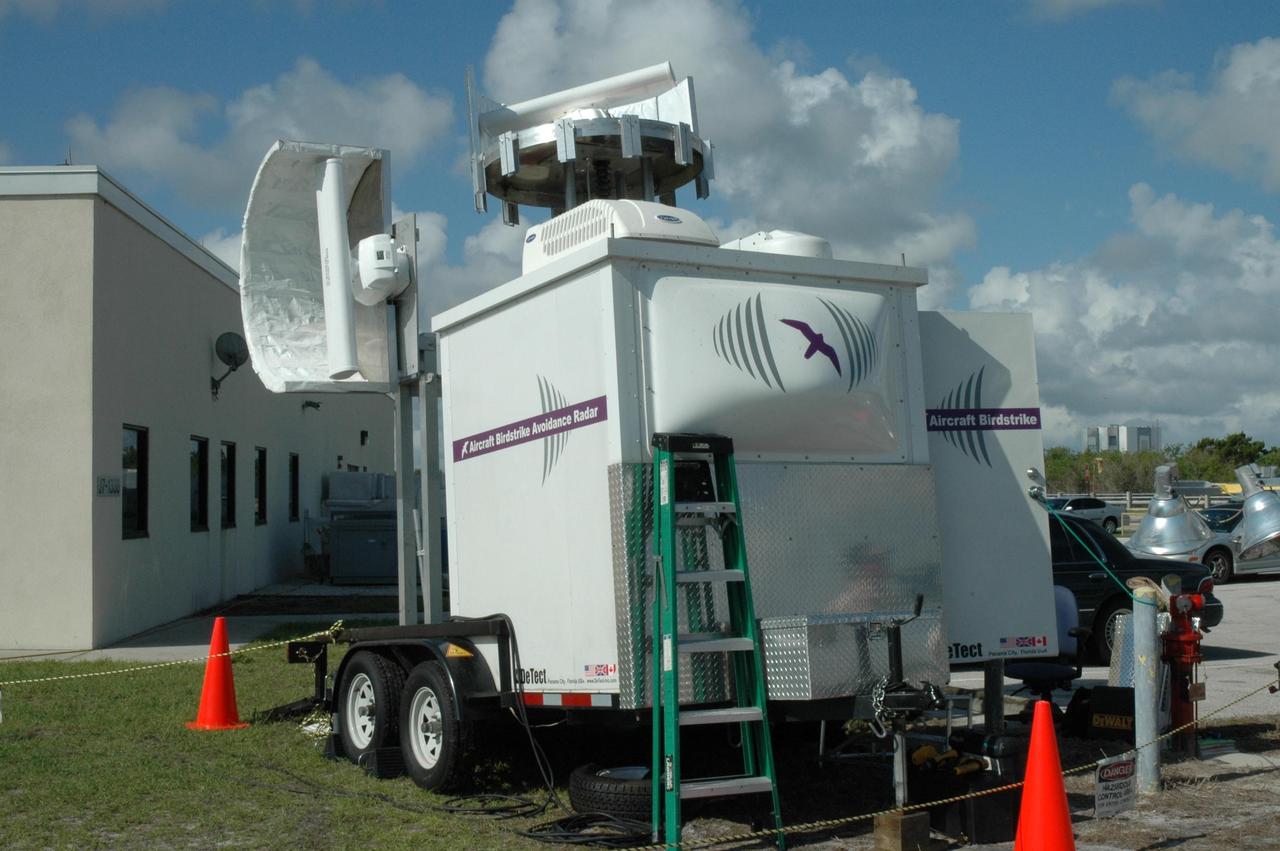
KENNEDY SPACE CENTER, FLA. - Two bird detection radars have been set up near Launch Pad 39B to get ready for the July 1 launch of Space Shuttle Discovery on mission STS-121. When birds, especially vultures, are near the shuttle during a launch, impact on a critical area is possible and could cause catastrophic damage to the vehicle. Already proven affective for aviation where threats posed by bird strikes have been a problem, the avian radar, known as Aircraft Birdstrike Avoidance Radar, provides horizontal and vertical scanning and can monitor either launch pad for movement of vultures around them. If data relayed from the avian radar indicates large birds are dangerously close to the vehicle, controllers could hold the countdown. Photo credit: NASA/Dimitri Gerondidakis
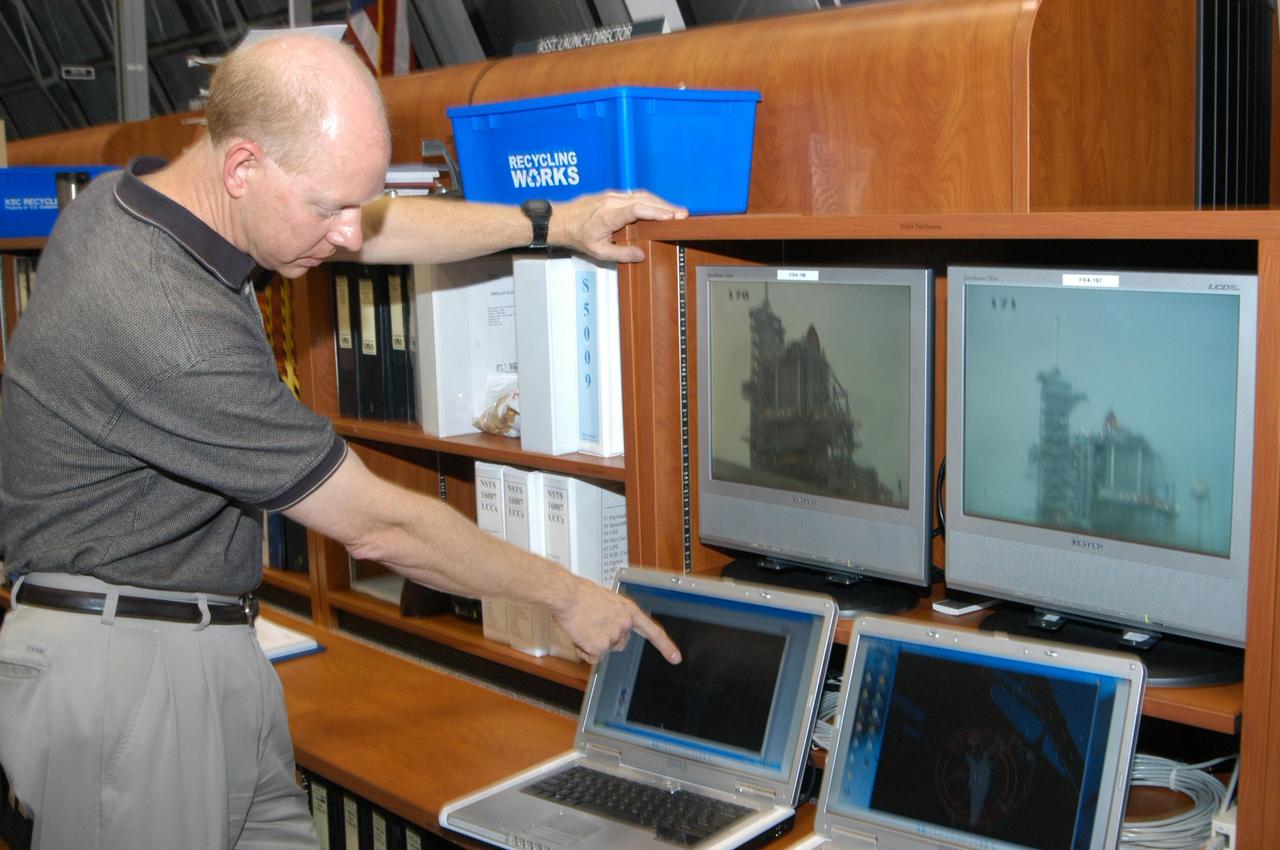
KENNEDY SPACE CENTER, FLA. - In Firing Room 4 of the Launch Control Center, NASA Test Director Steve Payne points to laptop computers that will display data relayed from the avian radars recently set up on Launch Pad 39B. When birds, especially vultures, are near the shuttle during a launch, impact on a critical area is possible and could cause catastrophic damage to the vehicle. Already proven affective for aviation where threats posed by bird strikes have been a problem, the avian radar, known as Aircraft Birdstrike Avoidance Radar, provides horizontal and vertical scanning and can monitor either launch pad for movement of vultures around them. If data relayed from the avian radar indicates large birds are dangerously close to the vehicle, controllers could hold the countdown. Photo credit: NASA/George Shelton
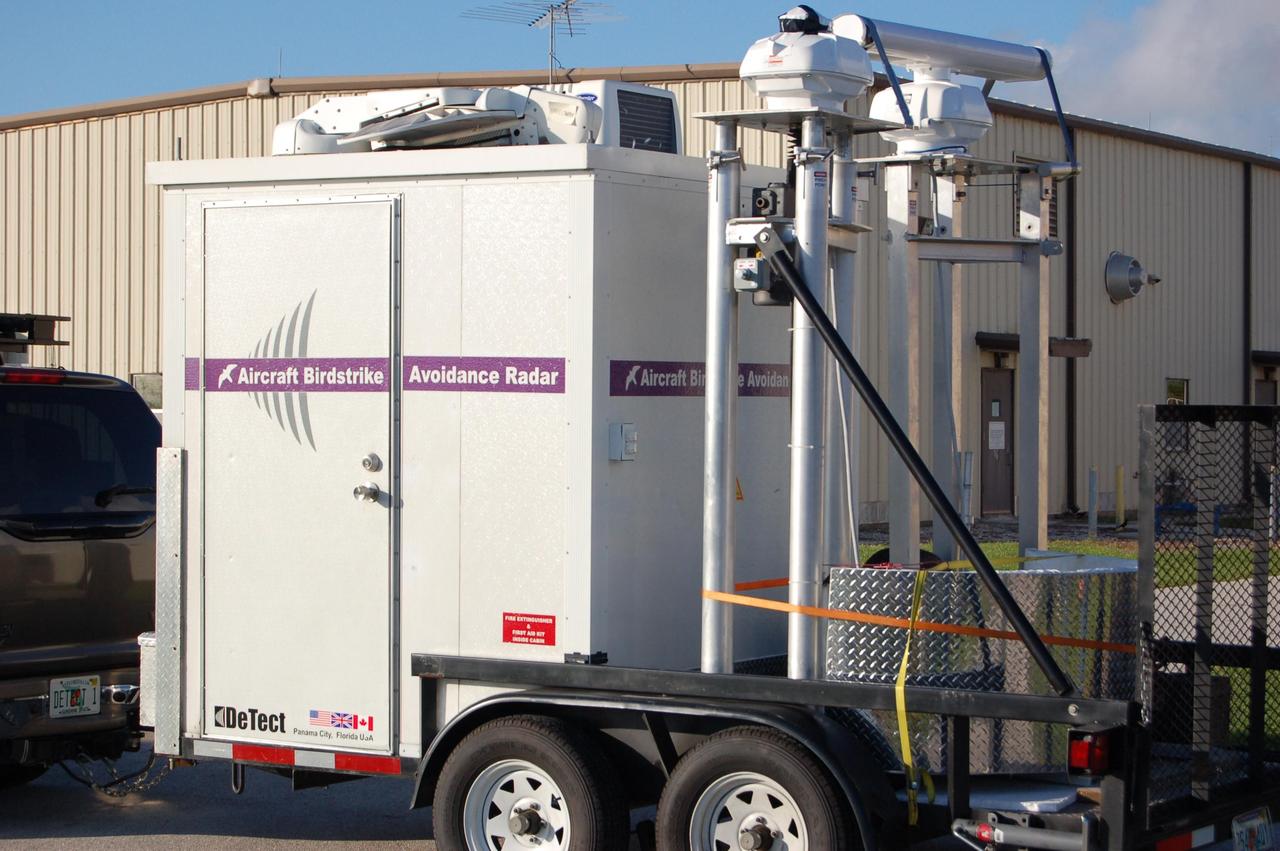
KENNEDY SPACE CENTER, FLA. - Bird detection radar is delivered near Launch Pad 39B before the July 1 launch of Space Shuttle Discovery on mission STS-121. When birds, especially vultures, are near the shuttle during a launch, impact on a critical area is possible and could cause catastrophic damage to the vehicle. Already proven affective for aviation where threats posed by bird strikes have been a problem, the avian radar, known as Aircraft Birdstrike Avoidance Radar, provides horizontal and vertical scanning and can monitor either launch pad for movement of vultures around them. If data relayed from the avian radar indicates large birds are dangerously close to the vehicle, controllers could hold the countdown. Photo credit: NASA/Gianni Woods
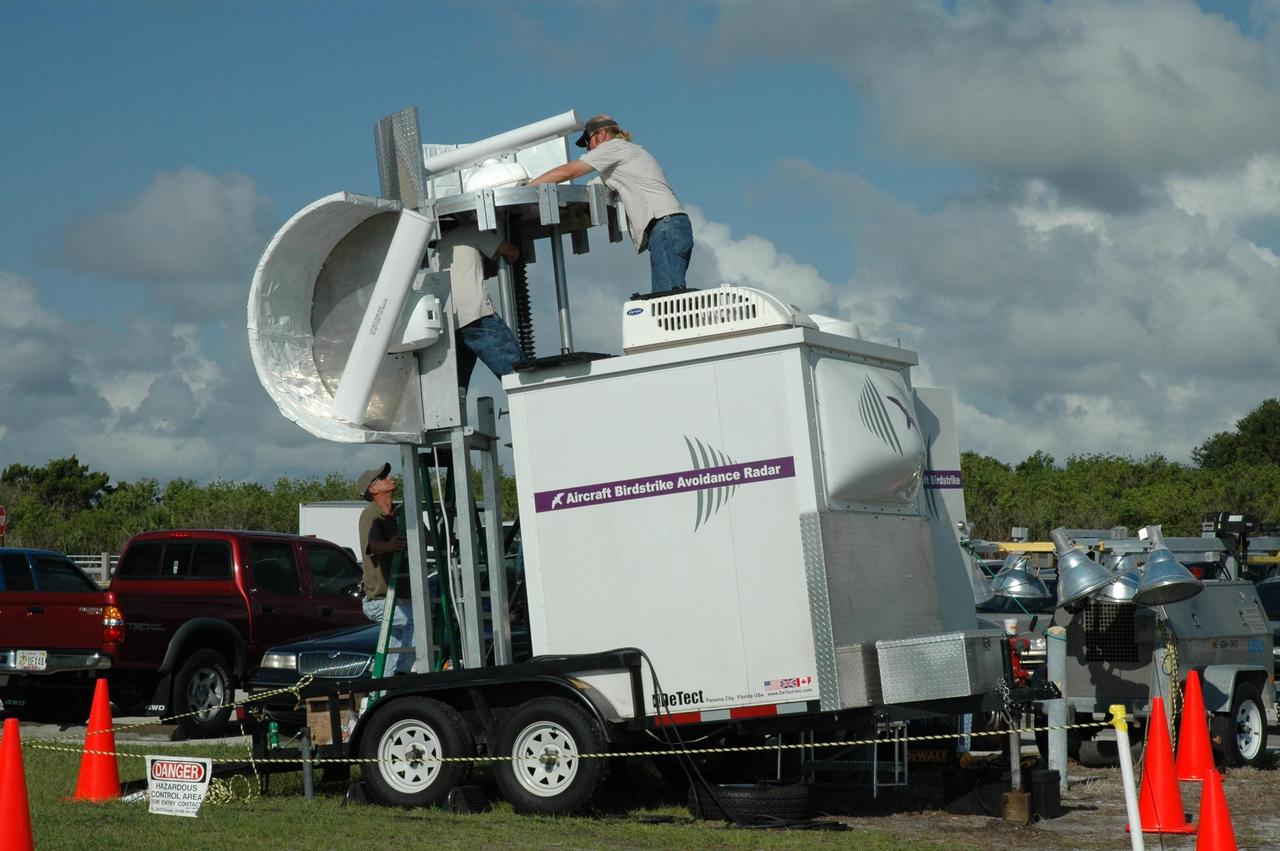
KENNEDY SPACE CENTER, FLA. - Radar technicians adjust two bird detection radars near Launch Pad 39B before the July 1 launch of Space Shuttle Discovery on mission STS-121. When birds, especially vultures, are near the shuttle during a launch, impact on a critical area is possible and could cause catastrophic damage to the vehicle. Already proven affective for aviation where threats posed by bird strikes have been a problem, the avian radar, known as Aircraft Birdstrike Avoidance Radar, provides horizontal and vertical scanning and can monitor either launch pad for movement of vultures around them. If data relayed from the avian radar indicates large birds are dangerously close to the vehicle, controllers could hold the countdown. Photo credit: NASA/Dimitri Gerondidakis
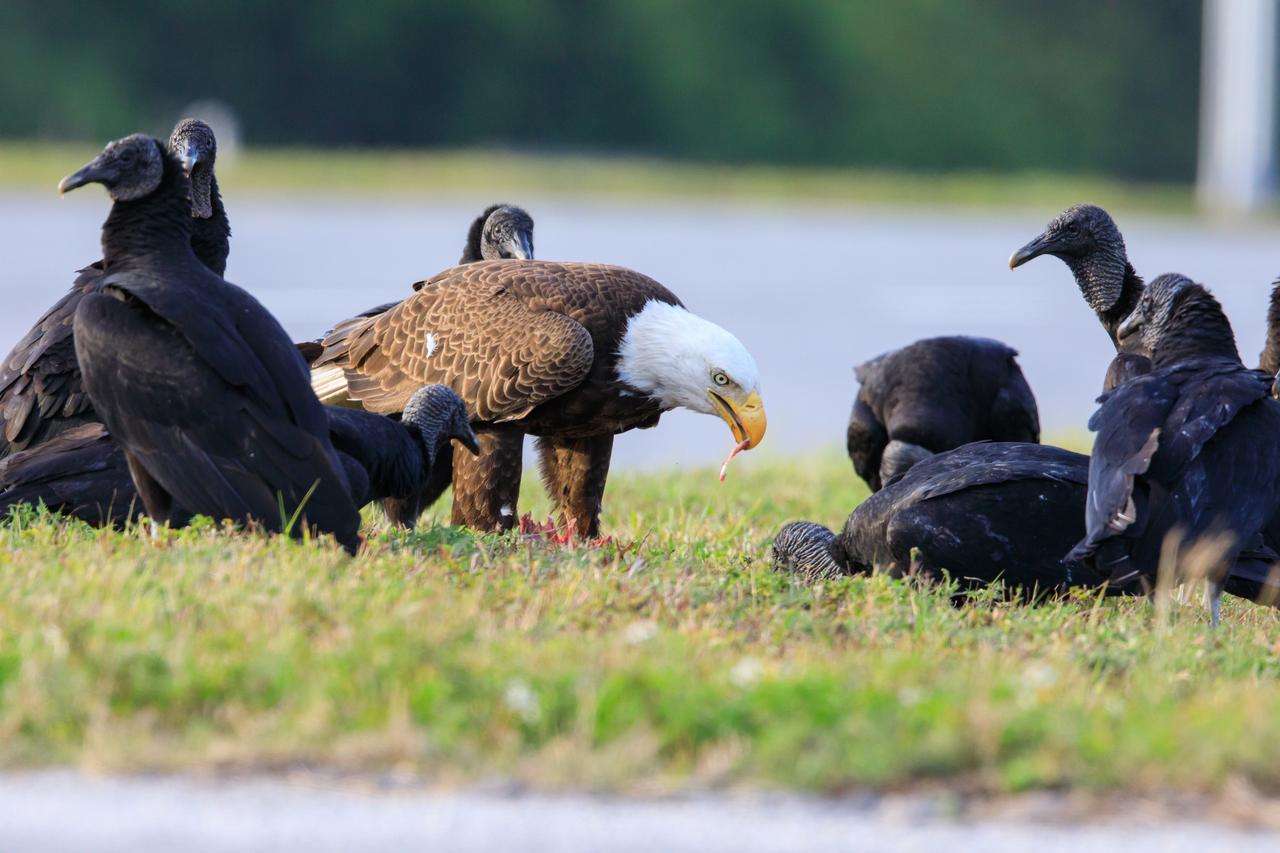
An American bald eagle feeds alongside some vultures at NASA’s Kennedy Space Center on April 10, 2023. The eagle is part of a mated pair that takes up residence at the Florida spaceport during nesting season. The pair is raising a baby eagle in their nest located off of Kennedy Parkway, about two miles from the Vehicle Assembly Building. Kennedy currently is home to approximately 20 nesting pairs of bald eagles.
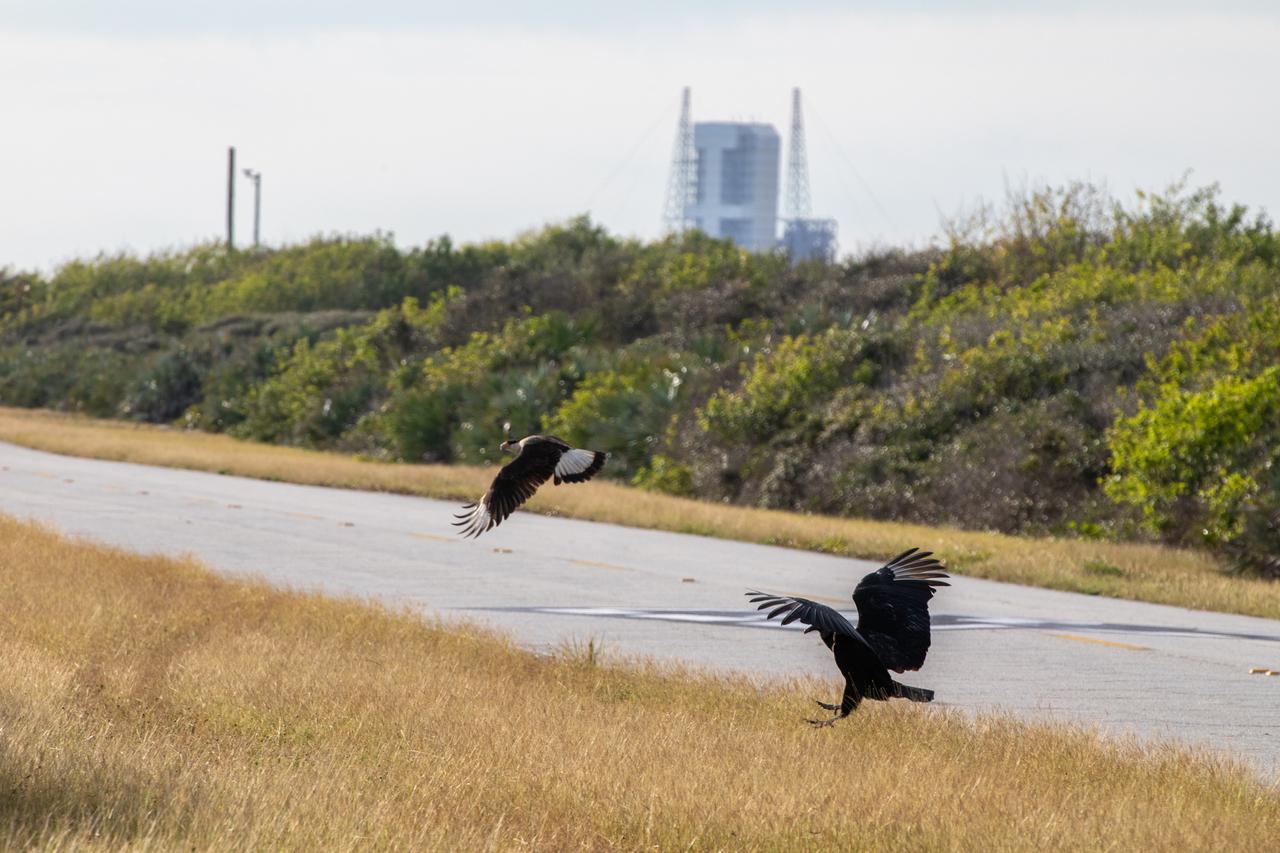
An adult crested caracara, left, and a vulture swoop down near the roadway at NASA’s Kennedy Space Center in Florida. Kennedy shares a border with the Merritt Island National Wildlife Refuge, spanning 140,000 acres of land, water, and marshes. More than 330 bird species, 117 species of fish, 68 amphibians and reptiles, and 31 different mammals call Kennedy and its surrounding borders home.

KENNEDY SPACE CENTER, FLA. - Near the top of the 525-foot-tall Vehicle Assembly Building, workers repair one of the huge nets strung across the upper door opening to prevent vultures from flying inside. The North Transfer Aisle and the High Bay 3 Vertical and Horizontal doors have entered a 13-month restoration period to repair damage caused by prolonged exposure to the Florida environment - one of the most corrosive in the nation. Extensive corrosion damage exists on the interior of the framework of the existing doors in both locations. All exterior siding is to be replaced, as well as all the hardware. The work contributes to the ongoing safety infrastructure upgrade efforts at Kennedy Space Center.
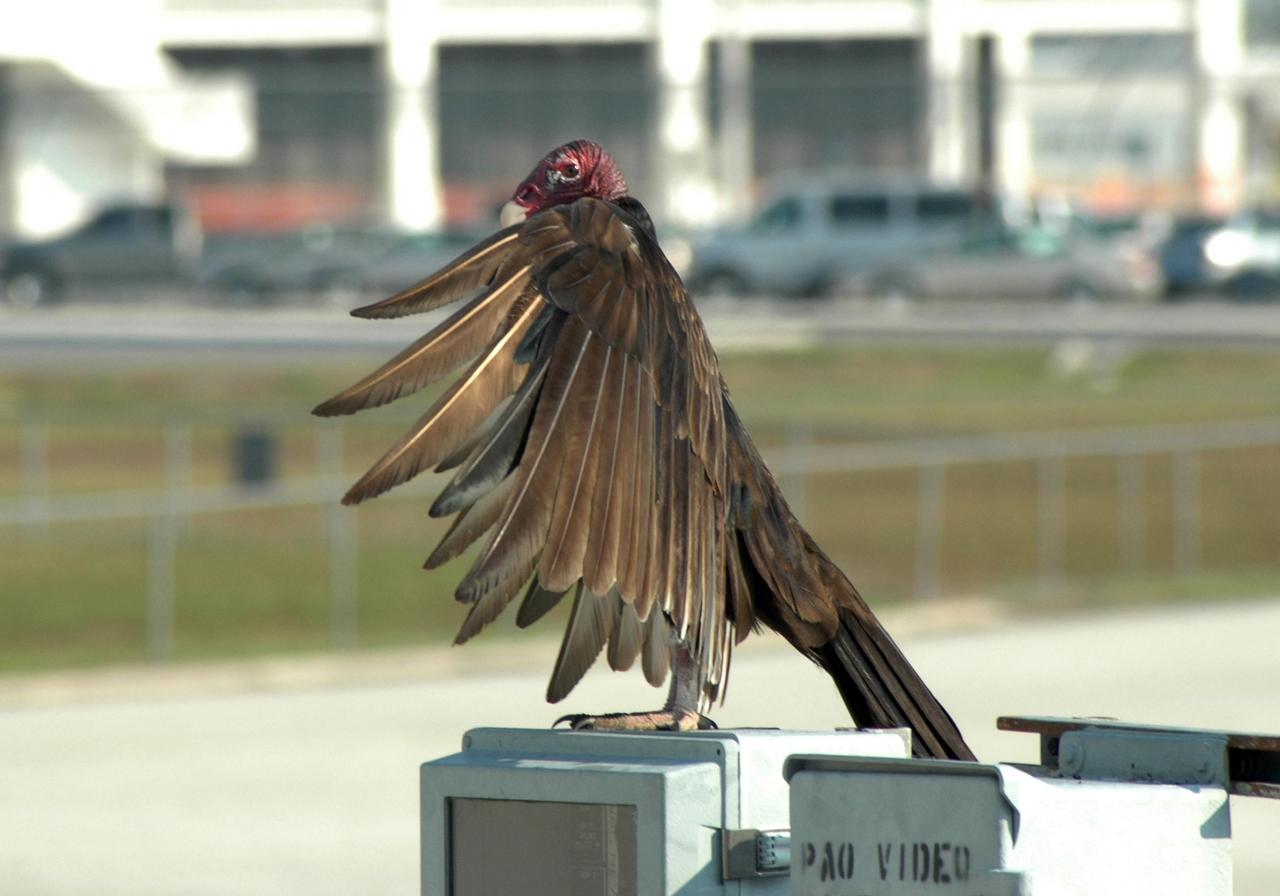
KENNEDY SPACE CENTER, FLA. - A turkey vulture appears to hide from the camera at a site near the NASA News Center at Kennedy Space Center. A wide-ranging bird, it is seen throughout Florida and the Space Coast. It is a common site around KSC. The Center, which shares a boundary with the Merritt Island National Wildlife Refuge, is a habitat for more than 310 species of birds, 25 mammals, 117 fishes and 65 amphibians and reptiles. In addition, the Refuge supports 19 endangered or threatened wildlife species on Federal or State lists, more than any other single refuge in the U.S. Photo credit: NASA/Ken Thornsley
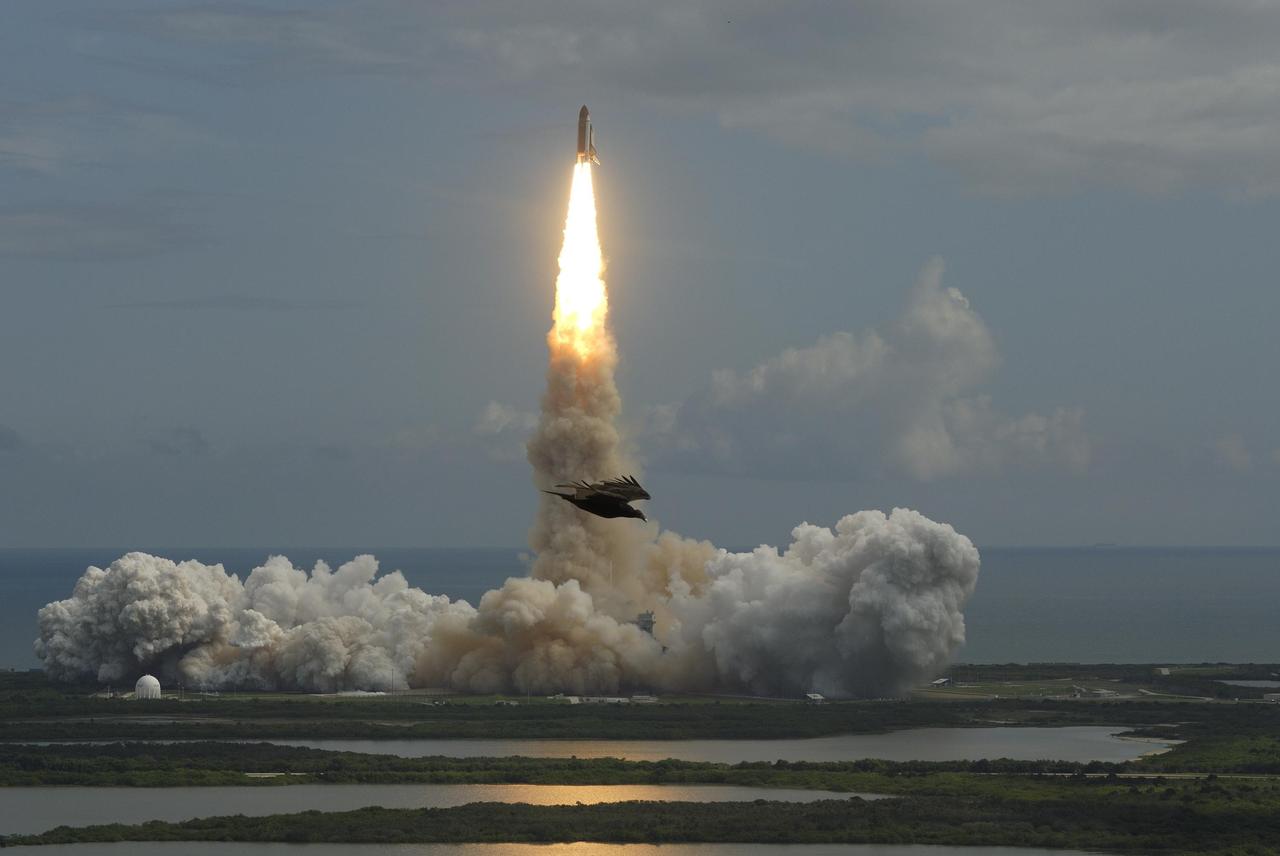
KENNEDY SPACE CENTER, FLA. -- The vulture in the foreground may have been startled to flight by the roar of space shuttle Discovery, in the background, as it hurtles into space atop a column of fire. Discovery is headed to the International Space Station on mission STS-120. Beyond the billows of smoke is the Atlantic Ocean. Liftoff was on time at 11:38:19 a.m. EDT. Discovery carries the Italian-built U.S. Node 2, called Harmony. During the 14-day STS-120 mission, the crew will install Harmony and move the P6 solar arrays to their permanent position and deploy them. Discovery is expected to complete its mission and return home at 4:47 a.m. EST on Nov. 6. Photo courtesy of Nikon/Scott Andrews.
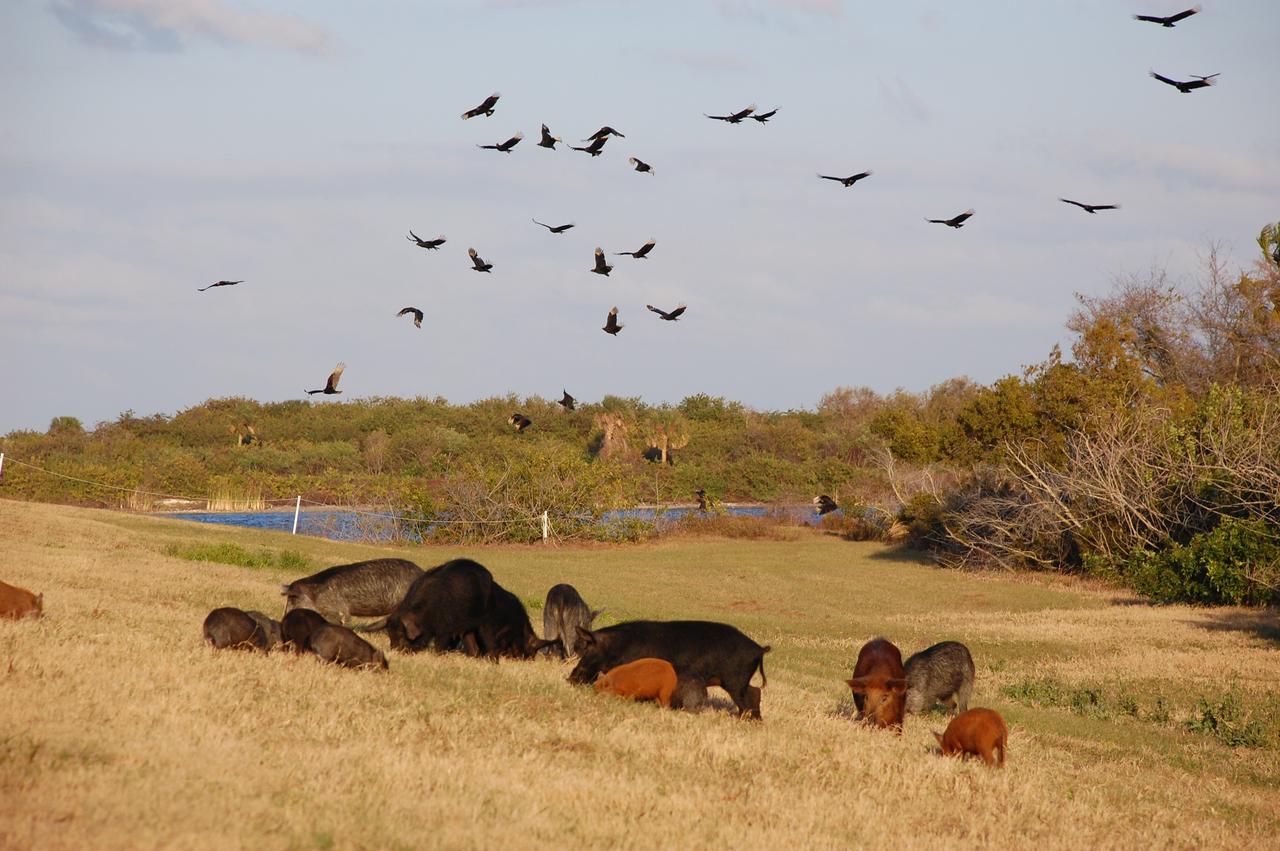
CAPE CANAVERAL, Fla. – At NASA's Kennedy Space Center in Florida, a family of wild pigs roots through the grass for food. Overhead, vultures circle, hunting for their share of food. The wild pigs have flourished in the environs around Kennedy, which shares a border with the Merritt Island National Wildlife Refuge, without many predators other than panthers and humans. Pigs were introduced to Florida in the 1500s and are now found statewide in wooded areas close to water. Pigs are omnivores, foraging on the ground and rooting just beneath the surface, which damages the groundcover. Wild pigs eat almost anything that has nutritional value, including tubers, roots, shoots, acorns, fruits, berries, earthworms, amphibians, reptiles and rodents. Their appearance is similar to domestic hogs, but leaner, with a longer, narrower head and a coarser, denser coat. Females may have two litters per year. The piglets are weaned in a few weeks but remain with the mother for several months. Photo credit: NASA/Ben Smegelsky
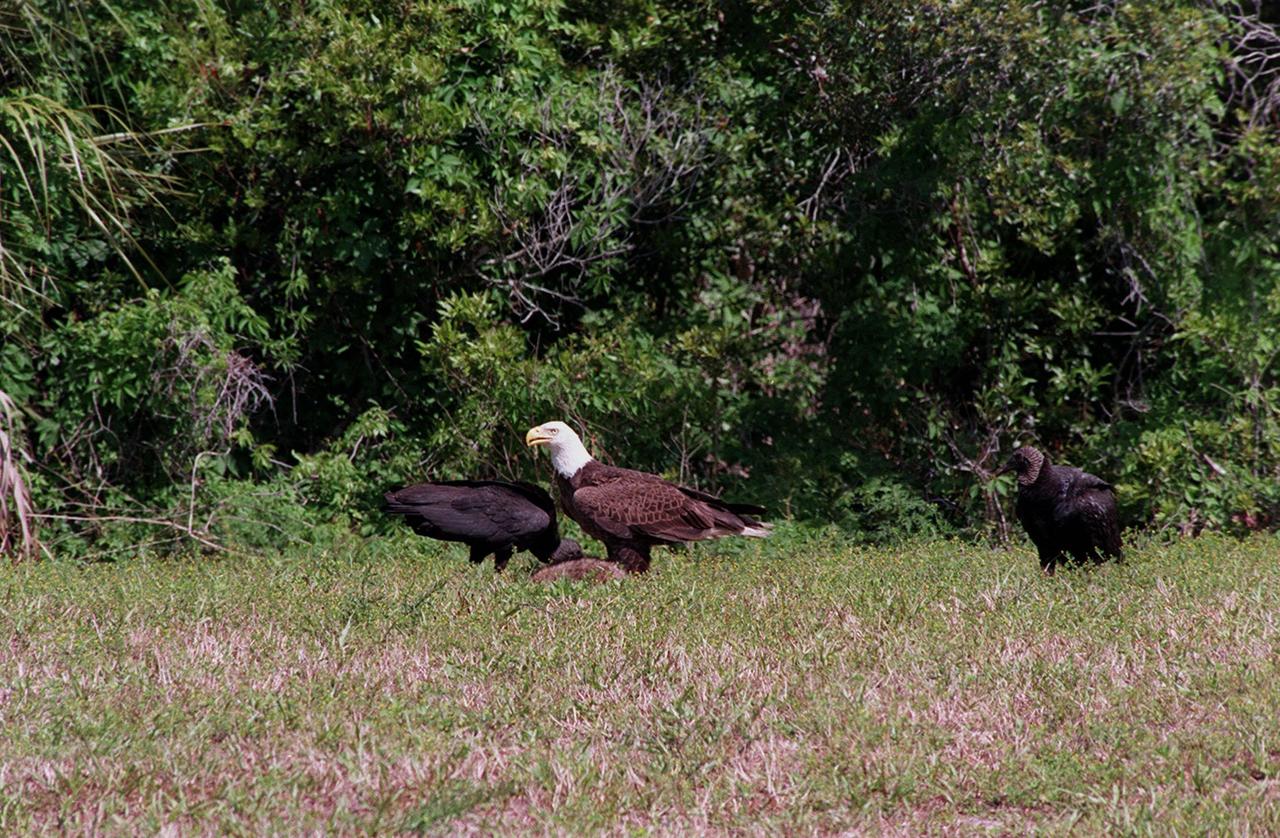
KENNEDY SPACE CENTER, FLA. -- A bald eagle joins two vultures at the site of an undetermined carcass on the grounds of the Kennedy Space Center. The Southern Bald Eagle ranges throughout Florida and along the coasts of California, Texas, Louisiana, and the south Atlantic states. Bald eagles are listed as endangered in the U.S., except in five states where they are listed as threatened. The number of nesting pairs of the southern race once numbered several thousand; recent estimates are only 350-375. Most of the southern race nests in Florida. Eagles arrive at KSC during late summer and leave for the north in late spring. They move to nest sites in October and November and lay one to three eggs. The young fledge from February to April. KSC shares a boundary with the Merritt Island National Wildlife Refuge, which encompasses 92,000 acres that are a habitat for more than 331 species of birds, 31 mammals, 117 fishes, and 65 amphibians and reptiles. The marshes and open water of the refuge provide wintering areas for 23 species of migratory waterfowl, as well as a year-round home for great blue herons, great egrets, wood storks, cormorants, brown pelicans and other species of marsh and shore birds, as well as a variety of insects

KENNEDY SPACE CENTER, FLA. -- On the grounds of the Kennedy Space Center, a bald eagle takes wing away from two vultures at the site of an undetermined carcass. The Southern Bald Eagle ranges throughout Florida and along the coasts of California, Texas, Louisiana, and the south Atlantic states. Bald eagles are listed as endangered in the U.S., except in five states where they are listed as threatened. The number of nesting pairs of the southern race once numbered several thousand; recent estimates are only 350-375. Most of the southern race nests in Florida. Eagles arrive at KSC during late summer and leave for the north in late spring. They move to nest sites in October and November and lay one to three eggs. The young fledge from February to April. KSC shares a boundary with the Merritt Island National Wildlife Refuge, which encompasses 92,000 acres that are a habitat for more than 331 species of birds, 31 mammals, 117 fishes, and 65 amphibians and reptiles. The marshes and open water of the refuge provide wintering areas for 23 species of migratory waterfowl, as well as a year-round home for great blue herons, great egrets, wood storks, cormorants, brown pelicans and other species of marsh and shore birds, as well as a variety of insects
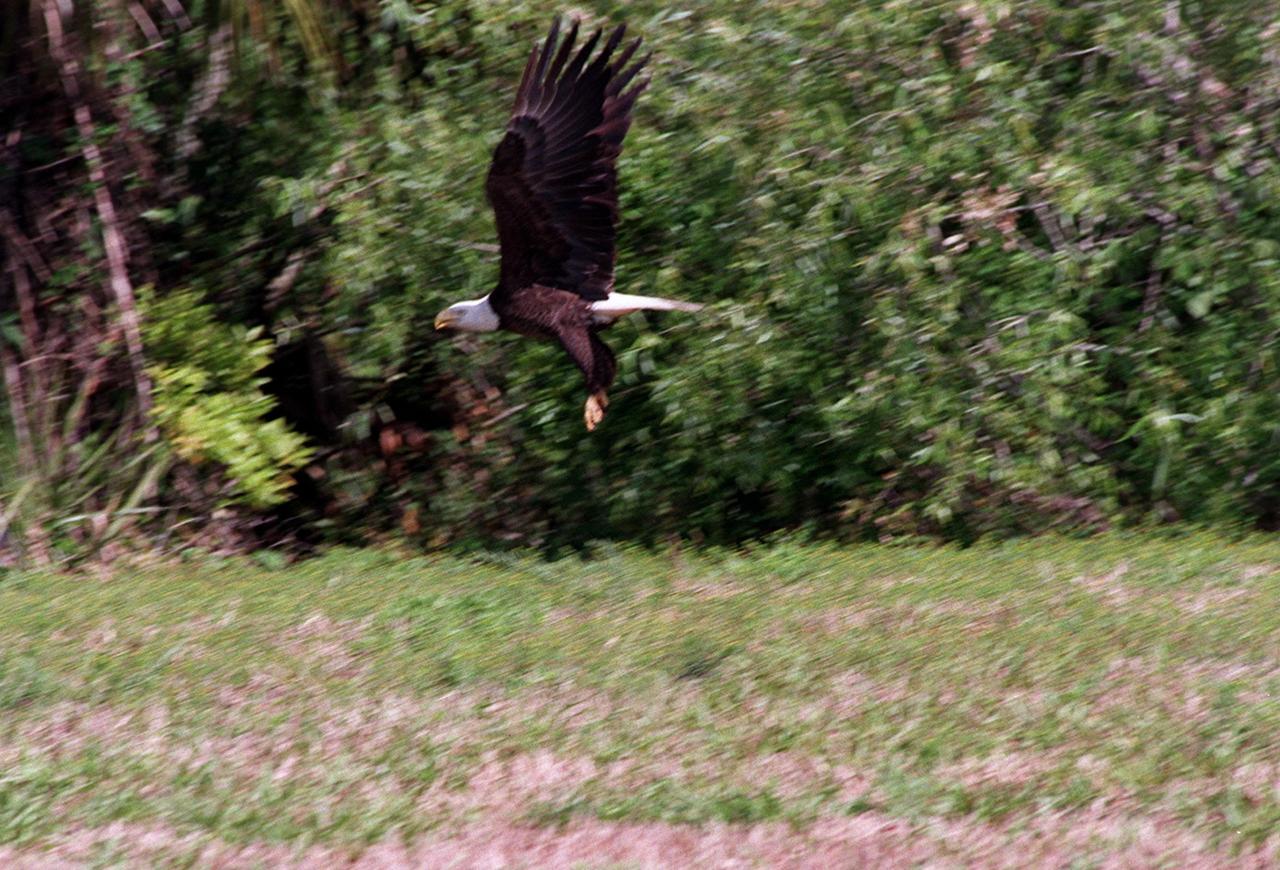
KENNEDY SPACE CENTER, FLA. -- On the grounds of the Kennedy Space Center, a bald eagle takes wing away from two vultures at the site of an undetermined carcass. The Southern Bald Eagle ranges throughout Florida and along the coasts of California, Texas, Louisiana, and the south Atlantic states. Bald eagles are listed as endangered in the U.S., except in five states where they are listed as threatened. The number of nesting pairs of the southern race once numbered several thousand; recent estimates are only 350-375. Most of the southern race nests in Florida. Eagles arrive at KSC during late summer and leave for the north in late spring. They move to nest sites in October and November and lay one to three eggs. The young fledge from February to April. KSC shares a boundary with the Merritt Island National Wildlife Refuge, which encompasses 92,000 acres that are a habitat for more than 331 species of birds, 31 mammals, 117 fishes, and 65 amphibians and reptiles. The marshes and open water of the refuge provide wintering areas for 23 species of migratory waterfowl, as well as a year-round home for great blue herons, great egrets, wood storks, cormorants, brown pelicans and other species of marsh and shore birds, as well as a variety of insects
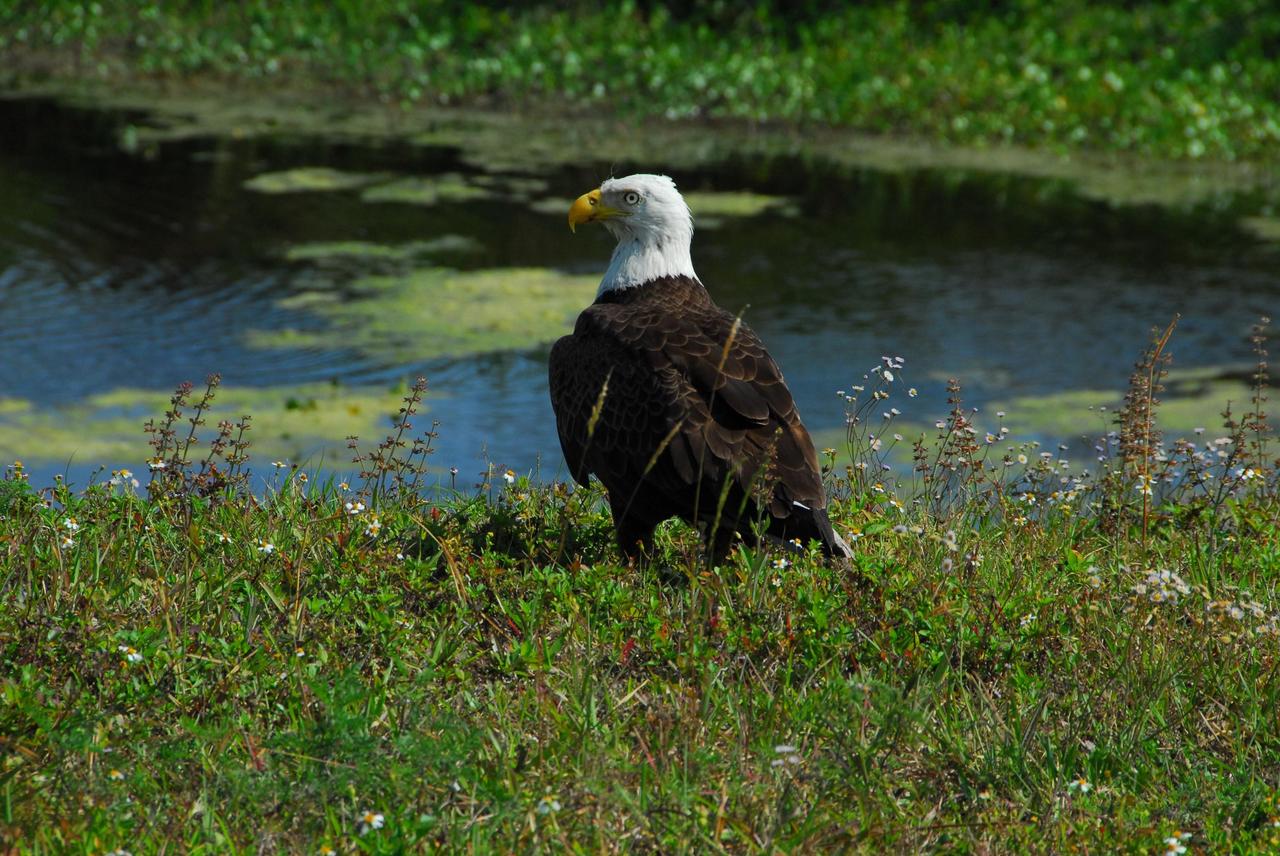
KENNEDY SPACE CENTER, FLA. -- This adult bald eagle rests on the ground near a pond close to S.R. 3 in NASA's Kennedy Space Center. Bald eagles live near large bodies of open water such as lakes, marshes, seacoasts and rivers, where there are plenty of fish to eat and tall trees for nesting and roosting. Bald eagles feed primarily on fish, but also eat small animals (ducks, coots, muskrats, turtles, rabbits, snakes, etc.) and occasional carrion (dead animals). They are sometimes seen among a gathering of vultures at the site of a fresh meal. Bald eagles have a presence in every U. S. state except Hawaii. Bald eagles use a specific territory for nesting (they mate for life), winter feeding or a year-round residence. Its natural domain is from Alaska to Baja, California, and from Maine to Florida. There are a dozen eagle nests both in KSC and in the Merritt Island National Wildlife Refuge, which surrounds KSC. The refuge includes several wading bird rookeries, many osprey nests, up to 400 manatees during the spring, and approximately 2,500 Florida scrub jays. It also is a major wintering area for migratory birds. More than 500 species of wildlife inhabit the refuge, with 15 considered federally threatened or endangered. Photo credit: NASA/George Shelton
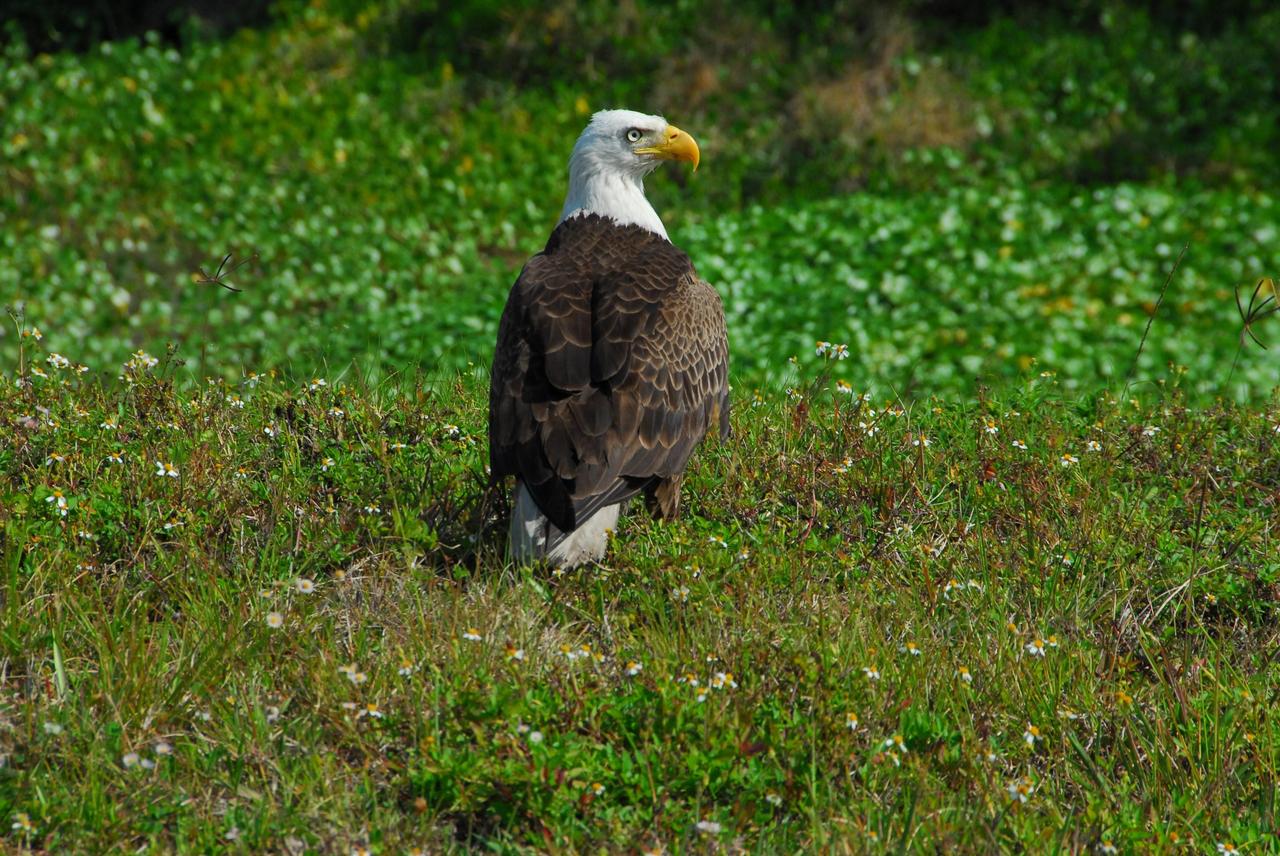
KENNEDY SPACE CENTER, FLA. -- This adult bald eagle rests on the ground near a pond close to S.R. 3 in NASA's Kennedy Space Center. Bald eagles live near large bodies of open water such as lakes, marshes, seacoasts and rivers, where there are plenty of fish to eat and tall trees for nesting and roosting. Bald eagles feed primarily on fish, but also eat small animals (ducks, coots, muskrats, turtles, rabbits, snakes, etc.) and occasional carrion (dead animals). They are sometimes seen among a gathering of vultures at the site of a fresh meal. Bald eagles have a presence in every U. S. state except Hawaii. Bald eagles use a specific territory for nesting (they mate for life), winter feeding or a year-round residence. Its natural domain is from Alaska to Baja, California, and from Maine to Florida. There are a dozen eagle nests both in KSC and in the Merritt Island National Wildlife Refuge, which surrounds KSC. The refuge includes several wading bird rookeries, many osprey nests, up to 400 manatees during the spring, and approximately 2,500 Florida scrub jays. It also is a major wintering area for migratory birds. More than 500 species of wildlife inhabit the refuge, with 15 considered federally threatened or endangered. Photo credit: NASA/George Shelton
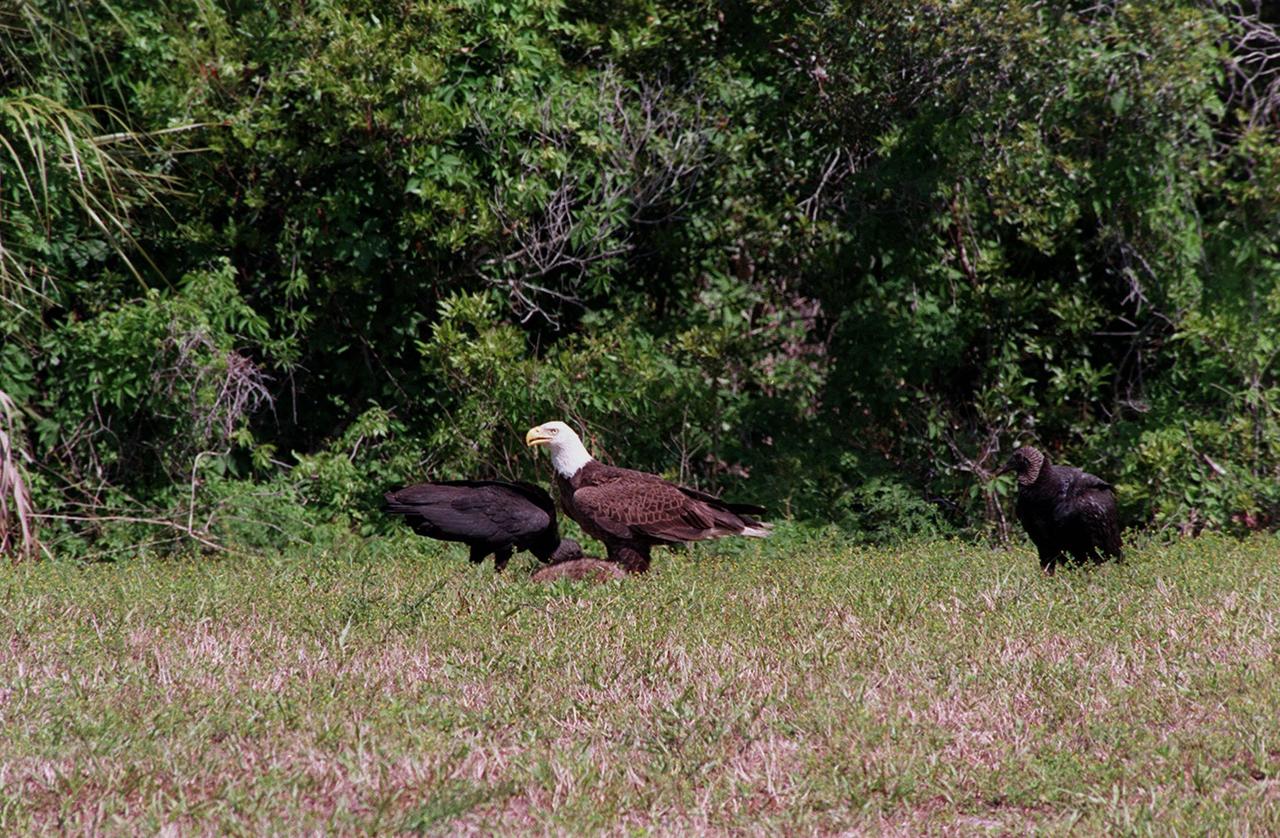
KENNEDY SPACE CENTER, FLA. -- A bald eagle joins two vultures at the site of an undetermined carcass on the grounds of the Kennedy Space Center. The Southern Bald Eagle ranges throughout Florida and along the coasts of California, Texas, Louisiana, and the south Atlantic states. Bald eagles are listed as endangered in the U.S., except in five states where they are listed as threatened. The number of nesting pairs of the southern race once numbered several thousand; recent estimates are only 350-375. Most of the southern race nests in Florida. Eagles arrive at KSC during late summer and leave for the north in late spring. They move to nest sites in October and November and lay one to three eggs. The young fledge from February to April. KSC shares a boundary with the Merritt Island National Wildlife Refuge, which encompasses 92,000 acres that are a habitat for more than 331 species of birds, 31 mammals, 117 fishes, and 65 amphibians and reptiles. The marshes and open water of the refuge provide wintering areas for 23 species of migratory waterfowl, as well as a year-round home for great blue herons, great egrets, wood storks, cormorants, brown pelicans and other species of marsh and shore birds, as well as a variety of insects