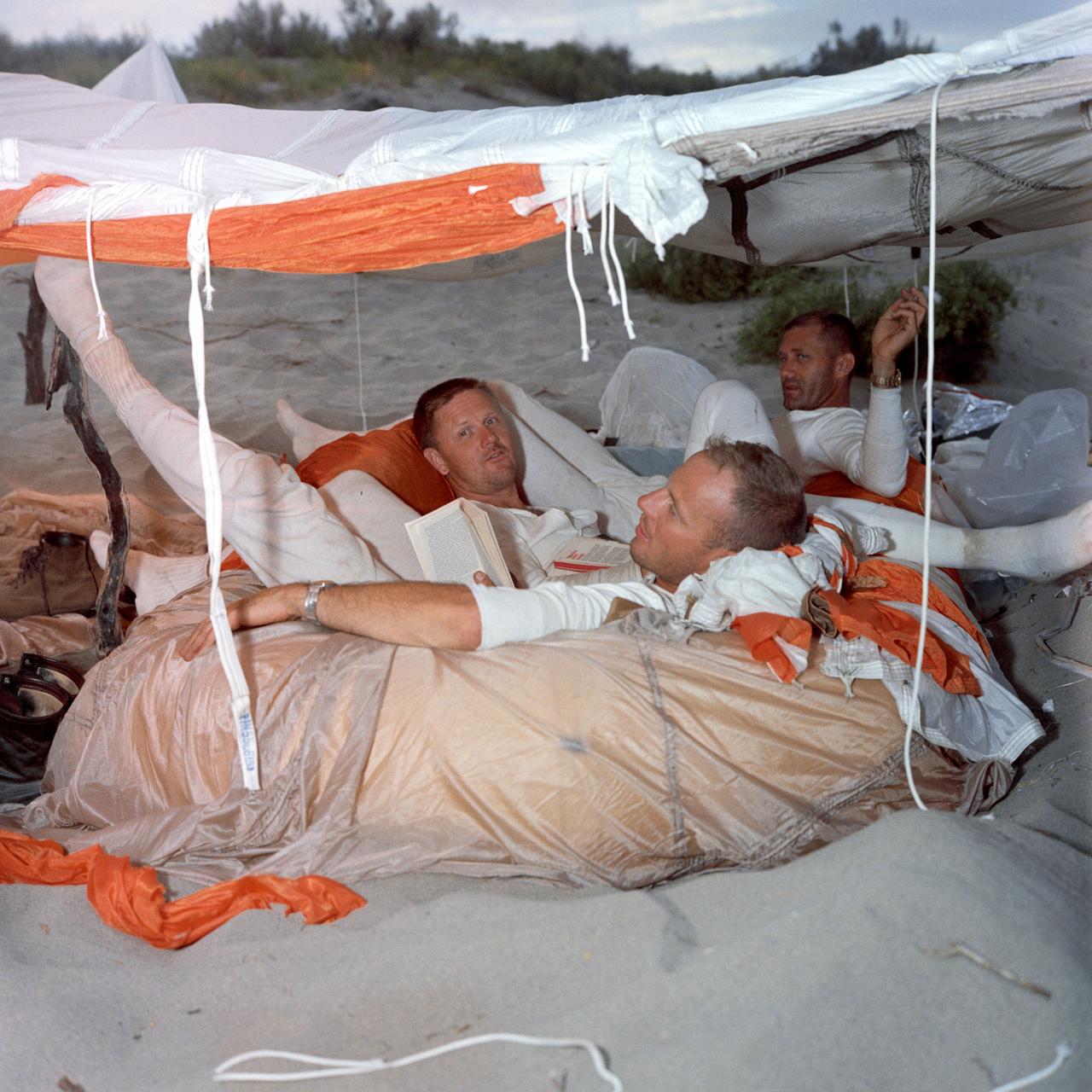
Desert Survival Training with Astronauts Lousma, Ling, and Pogue. PASCO, WA
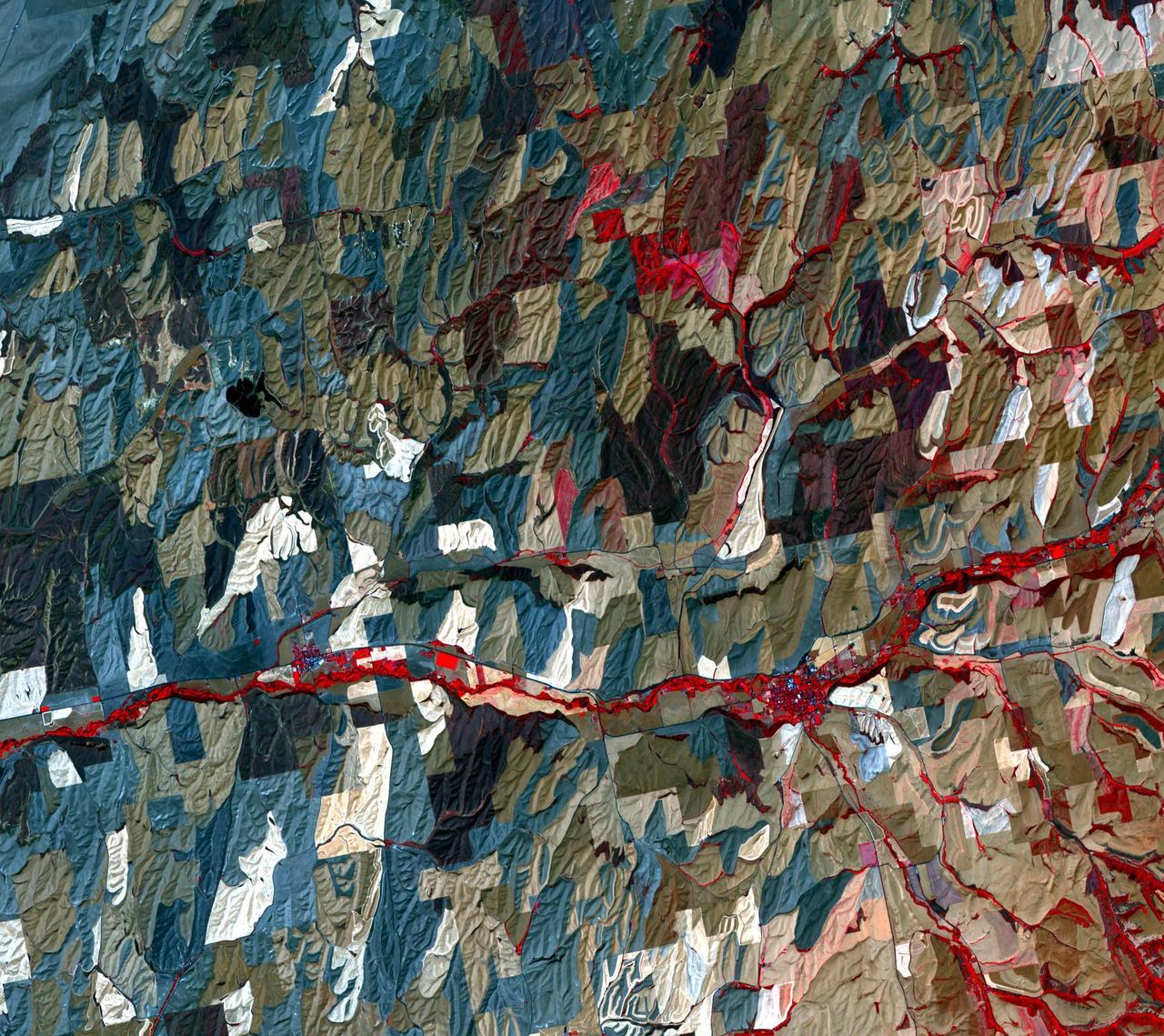
This image from NASA Terra spacecraft shows Palouse, a rich farming area of some 7,000 square kilometers, reminiscent of Tuscany. But instead of vineyards, the main crops are wheat and rapeseed.
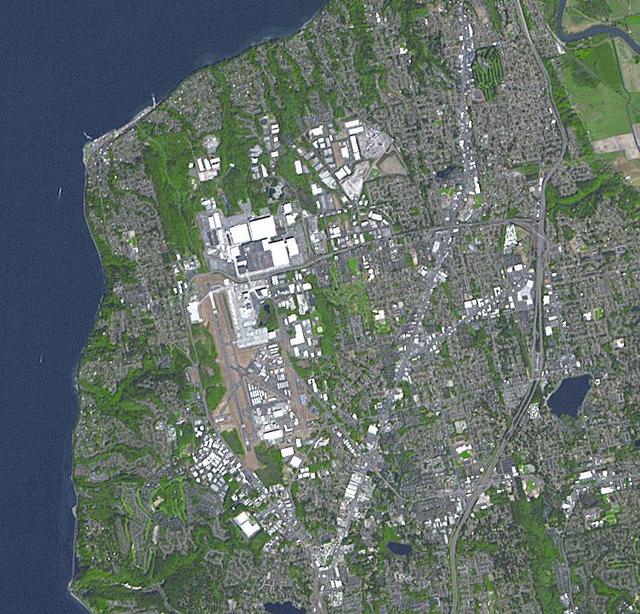
When Boeing decided to build the 747, they had to build a factory large enough to construct several at the same time. They started building the factory in 1967, in Everett, Washington, 35 km north of Seattle. The main building covers 39 hectares (98 acres), and encloses 13.3 million cubic meters (472 million cubic feet). This is the largest building in the world. The image was acquired September 15, 2017, covers an area of 10.8 by 11.3 kilometers, and is located at 47.9 degrees north, 122.3 degrees west. https://photojournal.jpl.nasa.gov/catalog/PIA23000
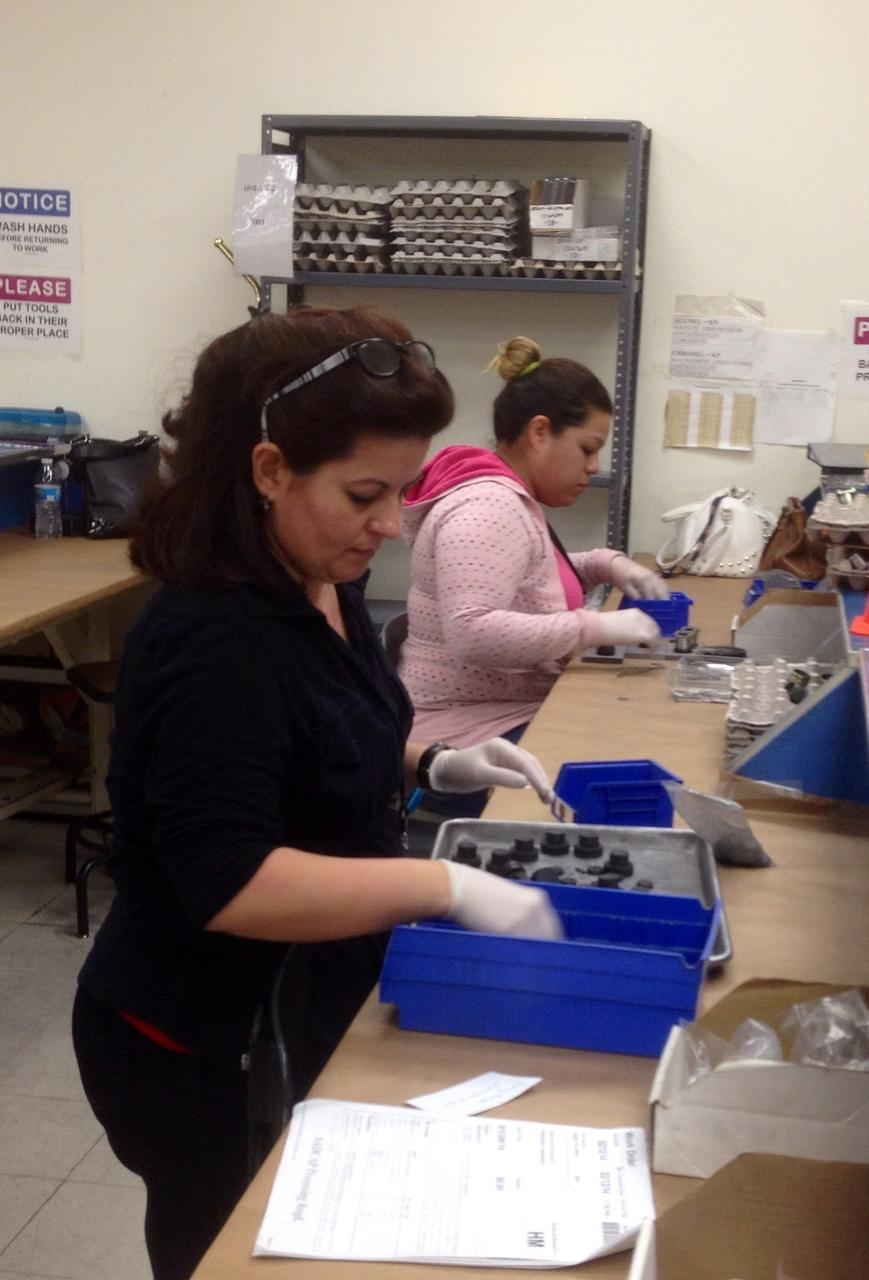
The Orion team visits Hi-Rel Laboratories in Spokane, WA on Jan. 27, 2014. Part of Batch image transfer from Flickr.
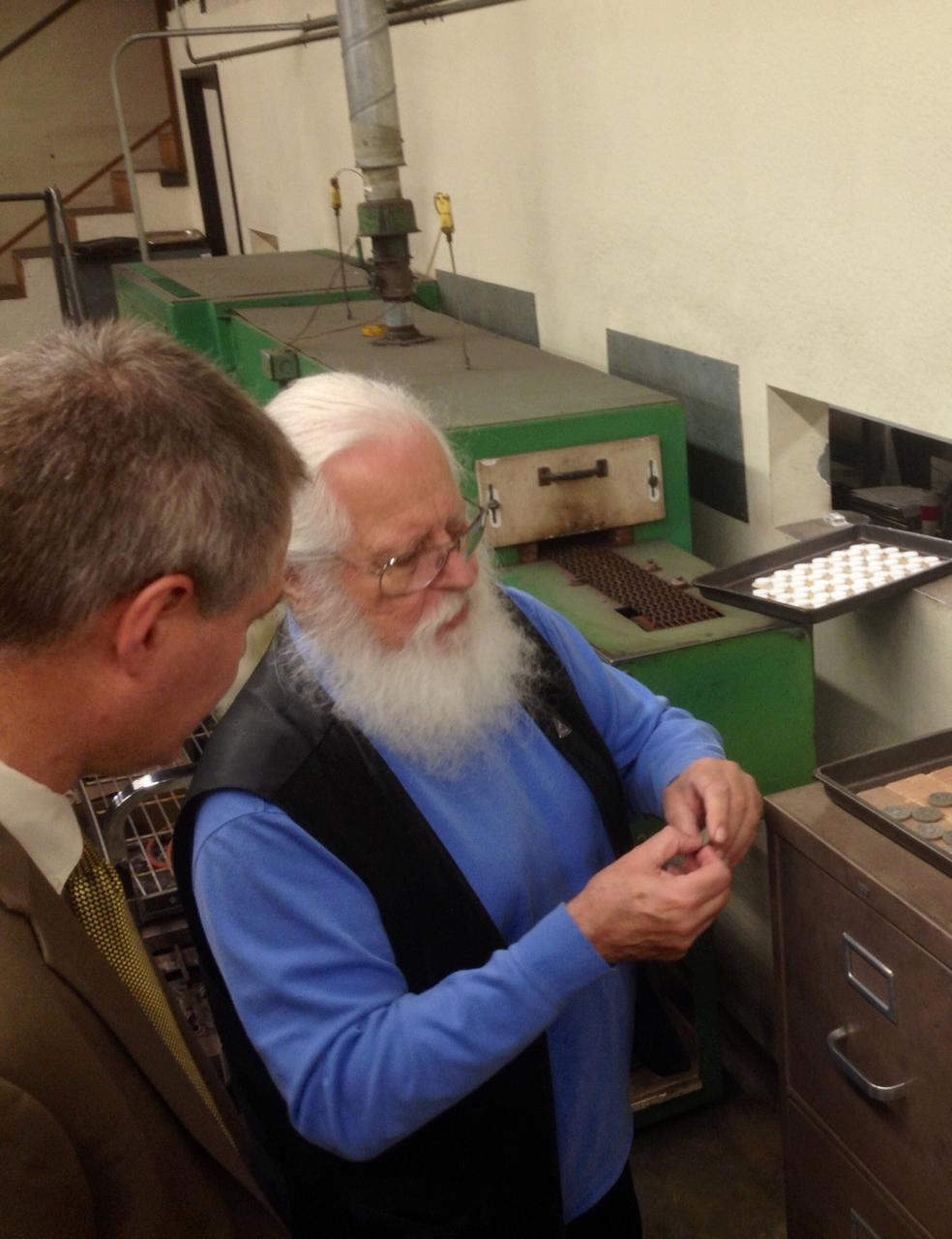
The Orion team visits Hi-Rel Laboratories in Spokane, WA on Jan. 27, 2014. Part of Batch image transfer from Flickr.
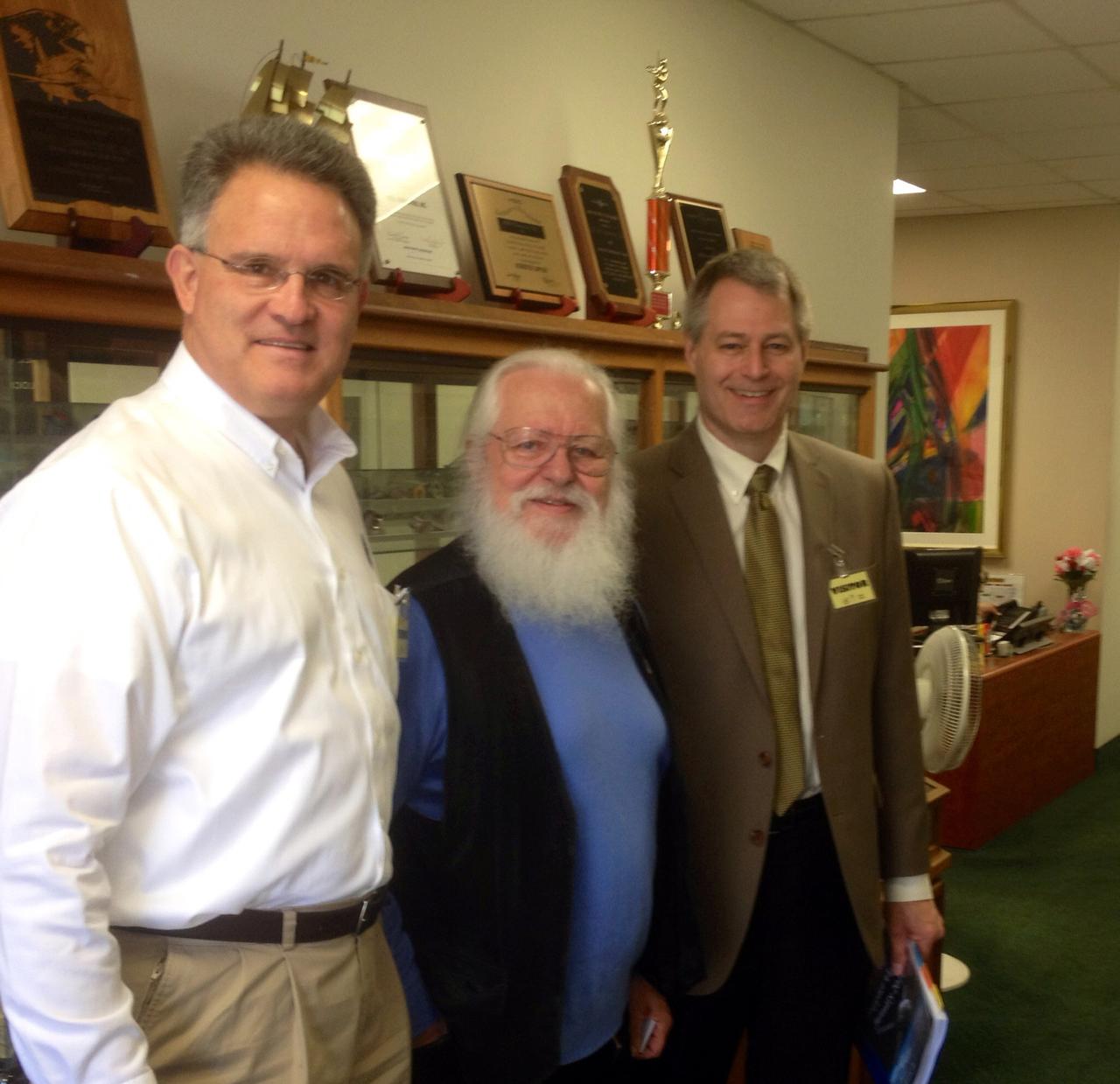
The Orion team visits Hi-Rel Laboratories in Spokane, WA on Jan. 27, 2014. Part of Batch image transfer from Flickr.
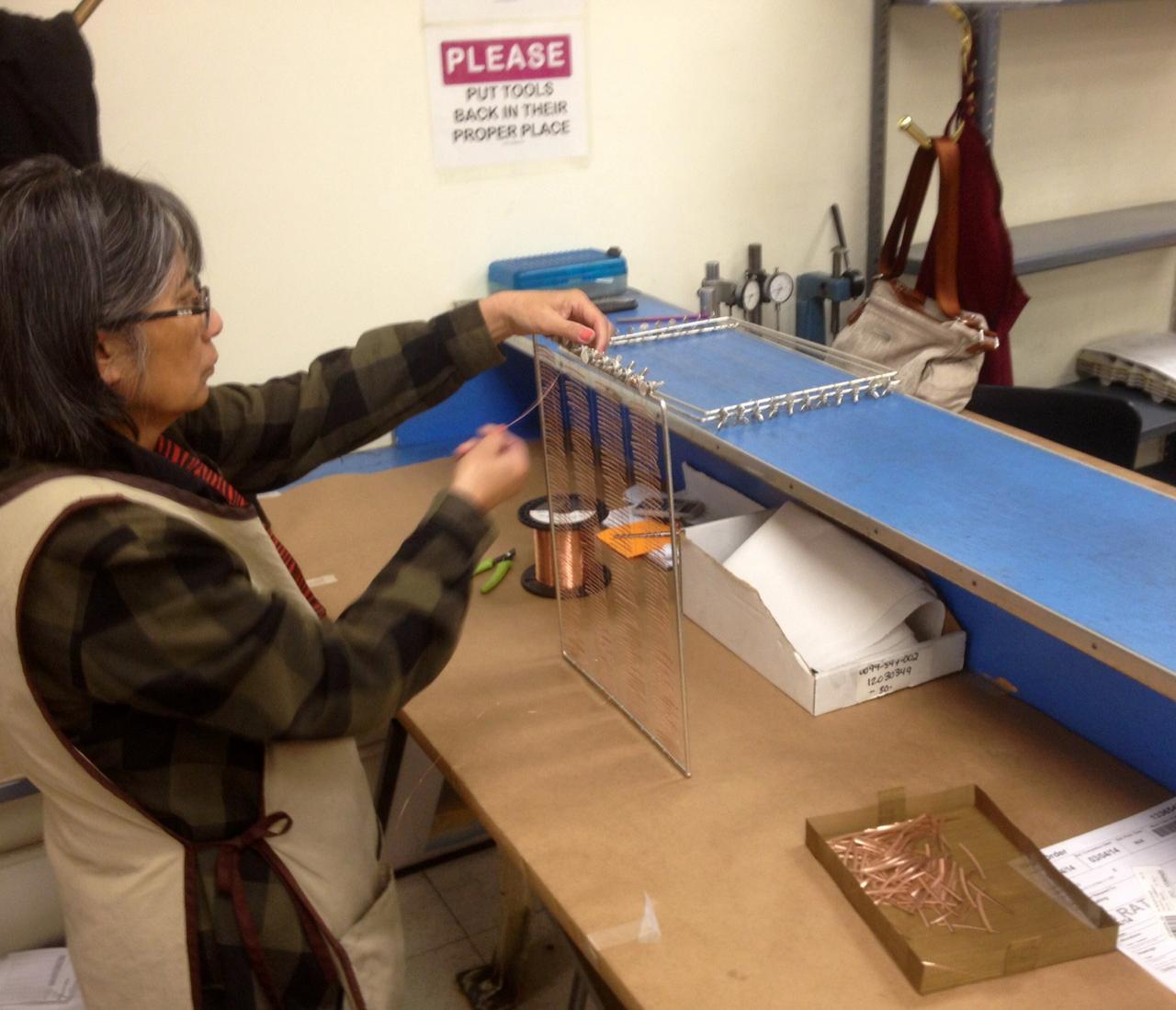
The Orion team visits Hi-Rel Laboratories in Spokane, WA on Jan. 27, 2014. Part of Batch image transfer from Flickr.
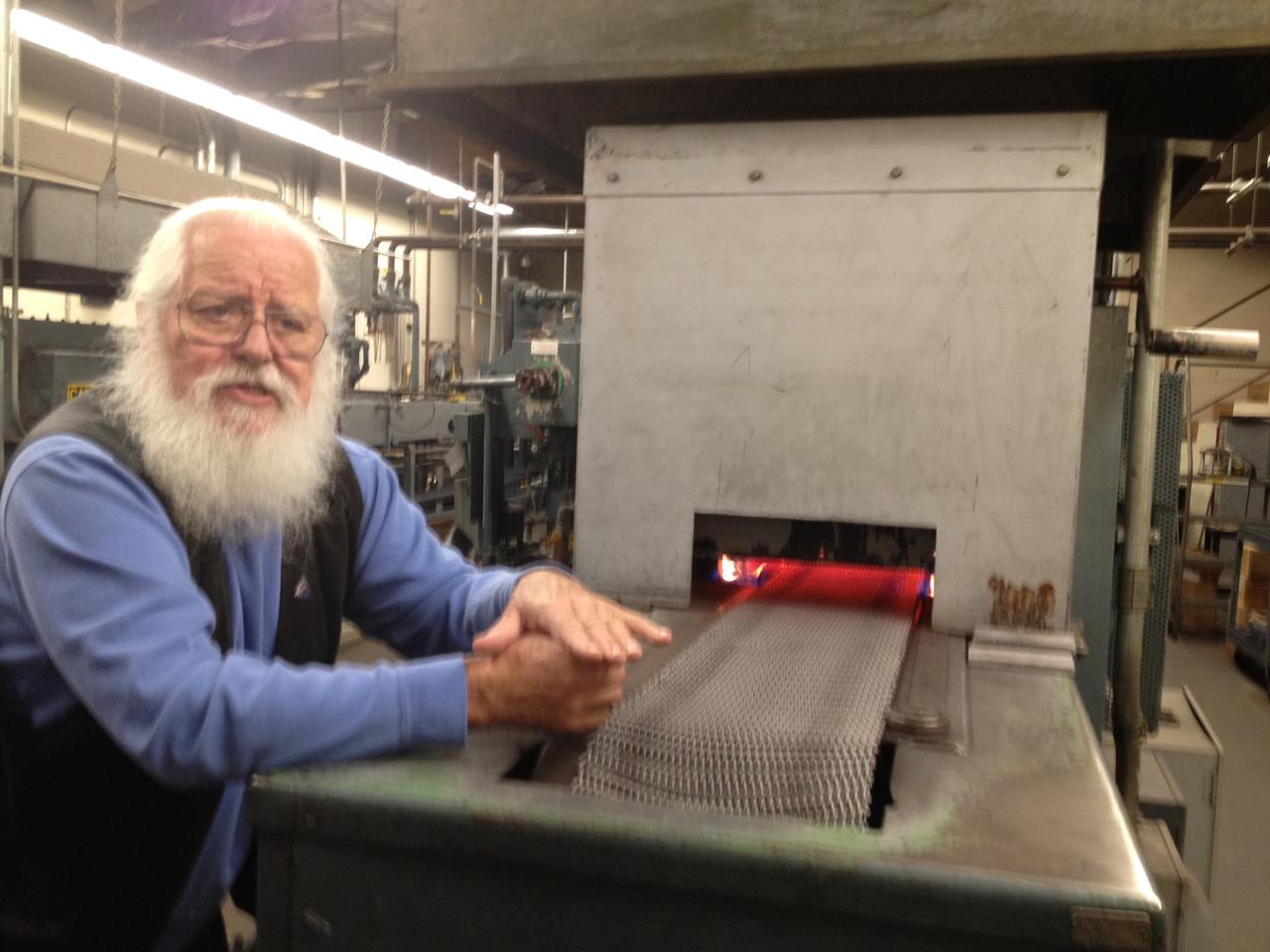
The Orion team visits Hi-Rel Laboratories in Spokane, WA on Jan. 27, 2014. Part of Batch image transfer from Flickr.
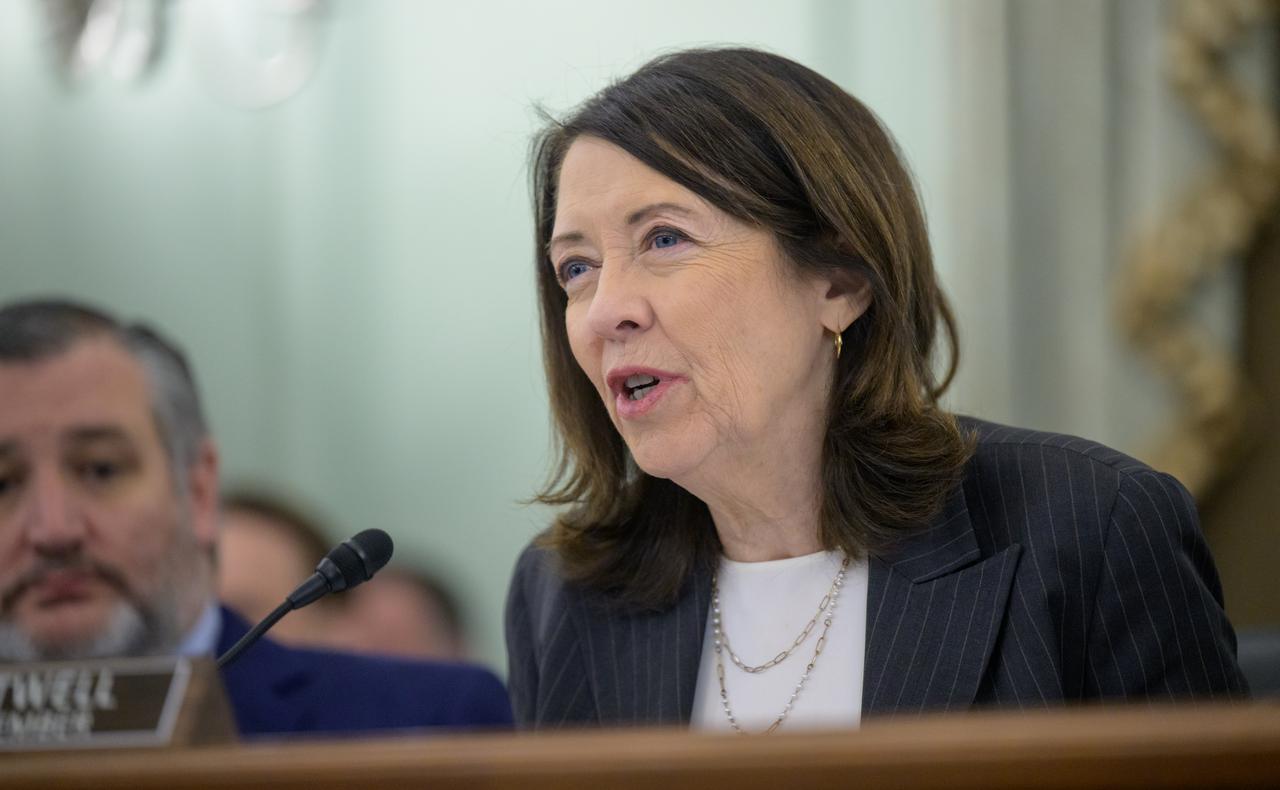
Sen. Maria Cantwell, D-WA, Ranking Member of the Senate Committee on Commerce, Science, and Transportation, questions Jared Isaacman, President Donald Trump’s nominee to be the next administrator of NASA, during a hearing, Wednesday, April 9, 2025, at the Russell Senate Office Building in Washington. Photo Credit: (NASA/Bill Ingalls)
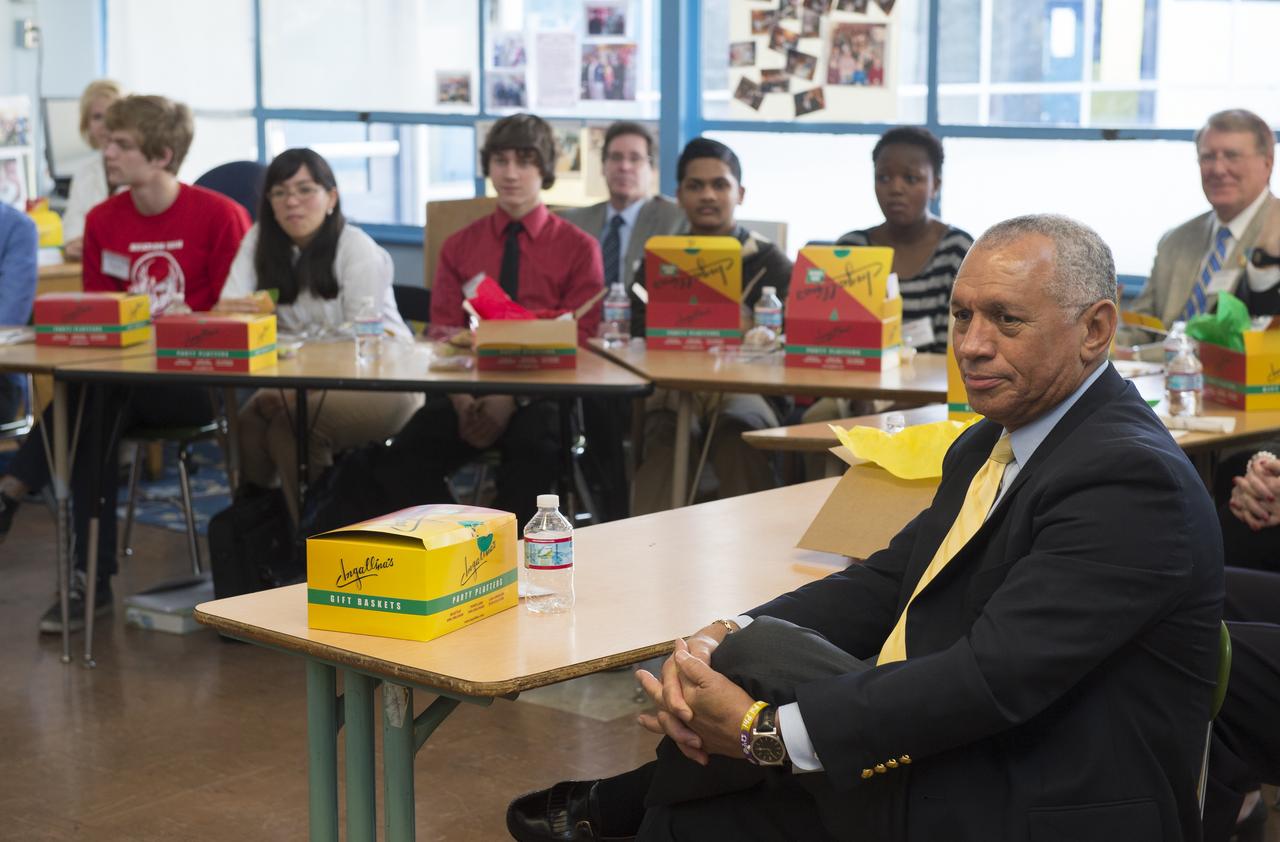
NASA Administrator Charles Bolden listens to students at Aviation High School at a lunch and learn session Tuesday, Jan. 15, 2013 in Des Moines, WA. Aviation High School is a college preparatory aviation- and aerospace-themed school and a premier school of choice for science, technology, engineering and math (STEM) in the Pacific Northwest. Photo Credit: (NASA/Carla Cioffi)
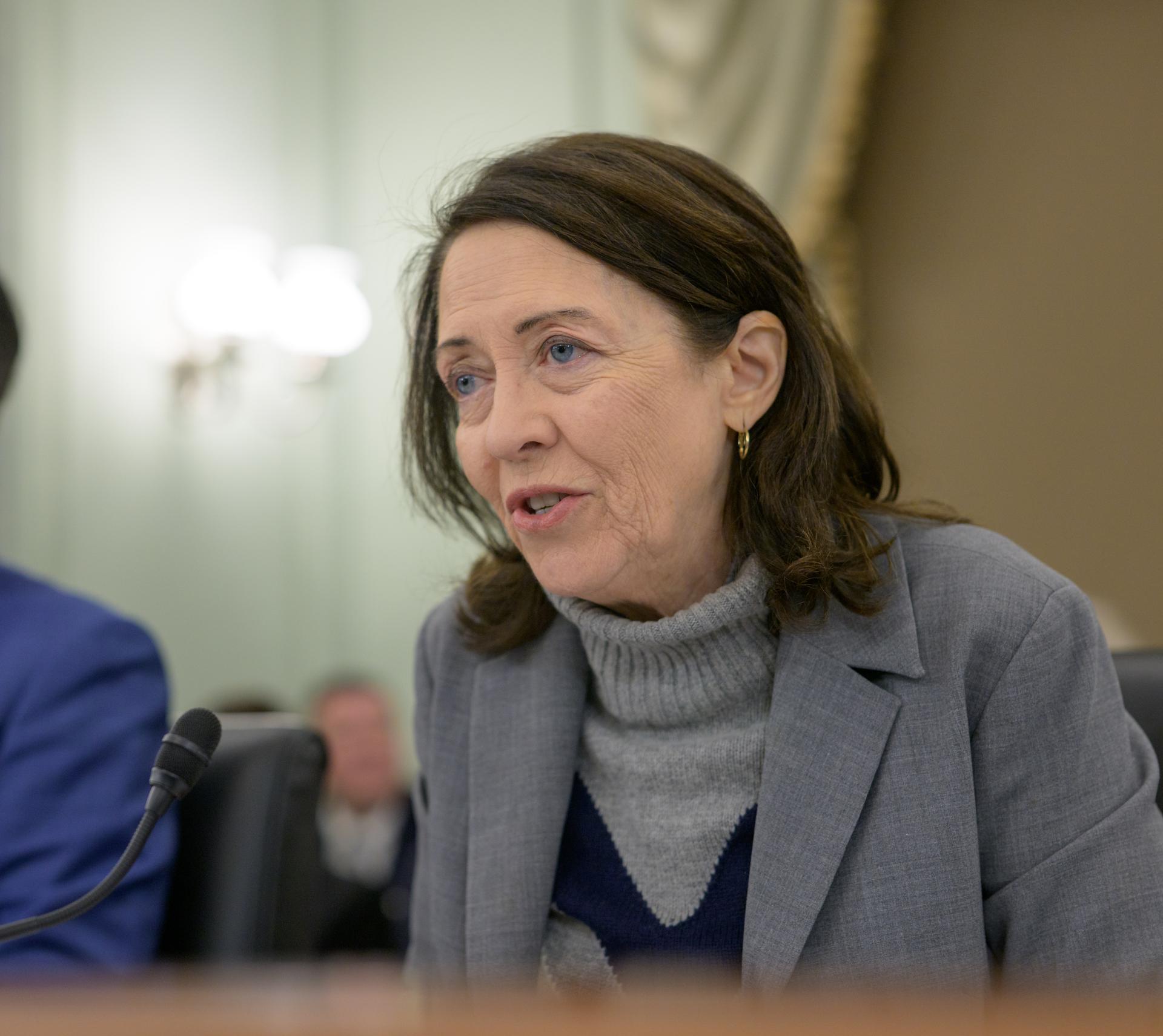
Sen. Maria Cantwell, D-WA, Ranking Member of the Senate Committee on Commerce, Science, and Transportation Maria Cantwell, questions Matthew Anderson, President Trumps' nominee to be Deputy Administrator of the National Aeronautics and Space Administration, during a confirmation hearing, Thursday, March 5, 2026, at the Russell Senate Office Building in Washington. Photo Credit: (NASA/Bill Ingalls)
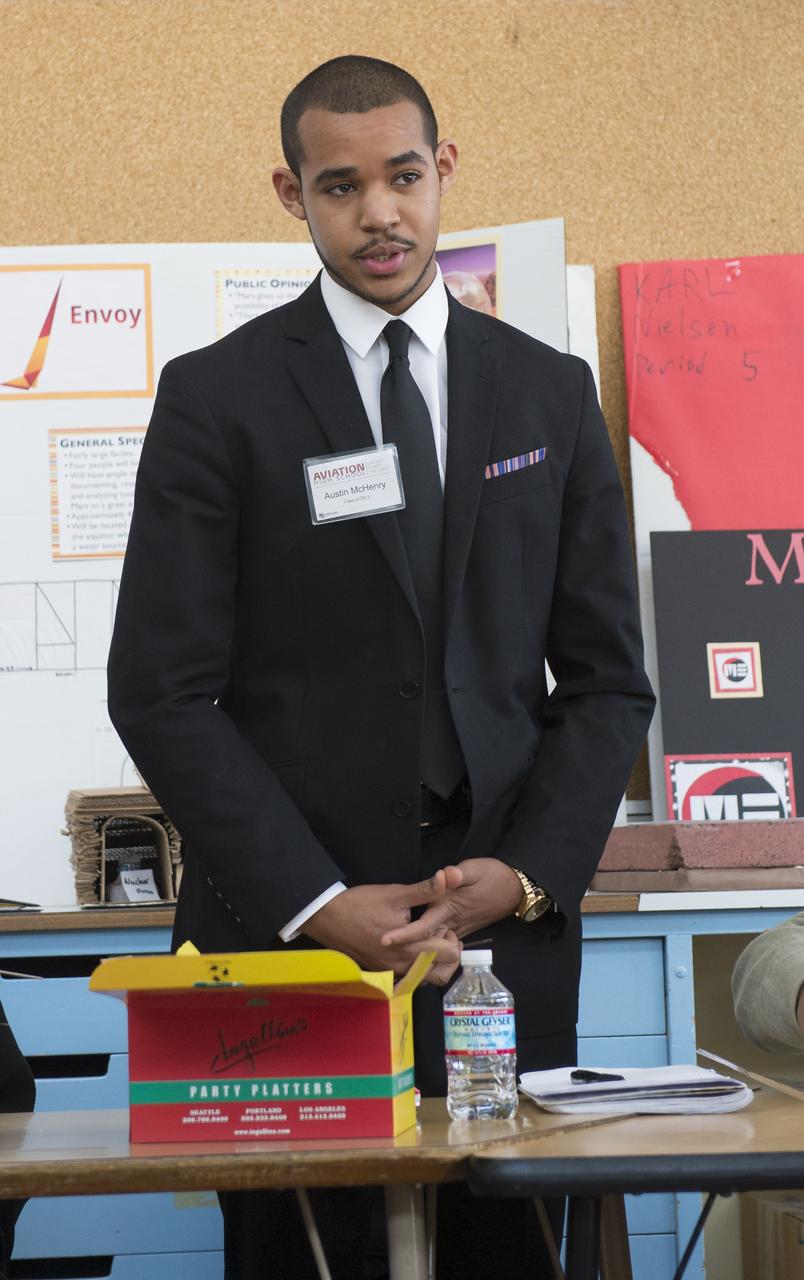
Austin McHenry, a student at Aviation High School, introduces himself at a lunch and learn session with NASA Administrator Charles Bolden, Tuesday, Jan. 15, 2013 in Des Moines, WA. Aviation High School is a college preparatory aviation- and aerospace-themed school and a premier school of choice for science, technology, engineering and math (STEM) in the Pacific Northwest. Photo Credit: (NASA/Carla Cioffi)
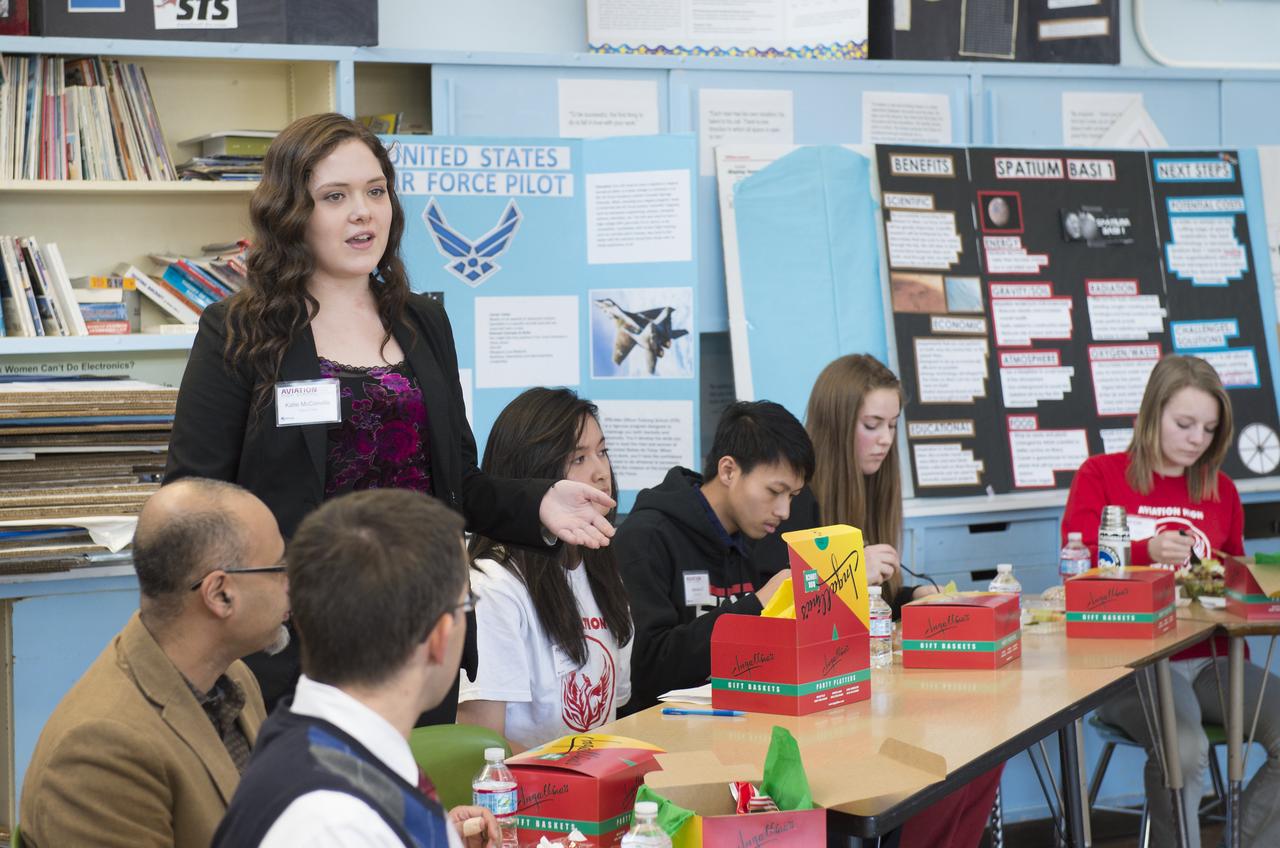
Aviation High School student, Katie McConville, introduces herself at a lunch and learn session with NASA Administrator Charles Bolden, Tuesday, Jan. 15, 2013 in Des Moines, WA. Aviation High School is a college preparatory aviation- and aerospace-themed school and a premier school of choice for science, technology, engineering and math (STEM) in the Pacific Northwest. Photo Credit: (NASA/Carla Cioffi)
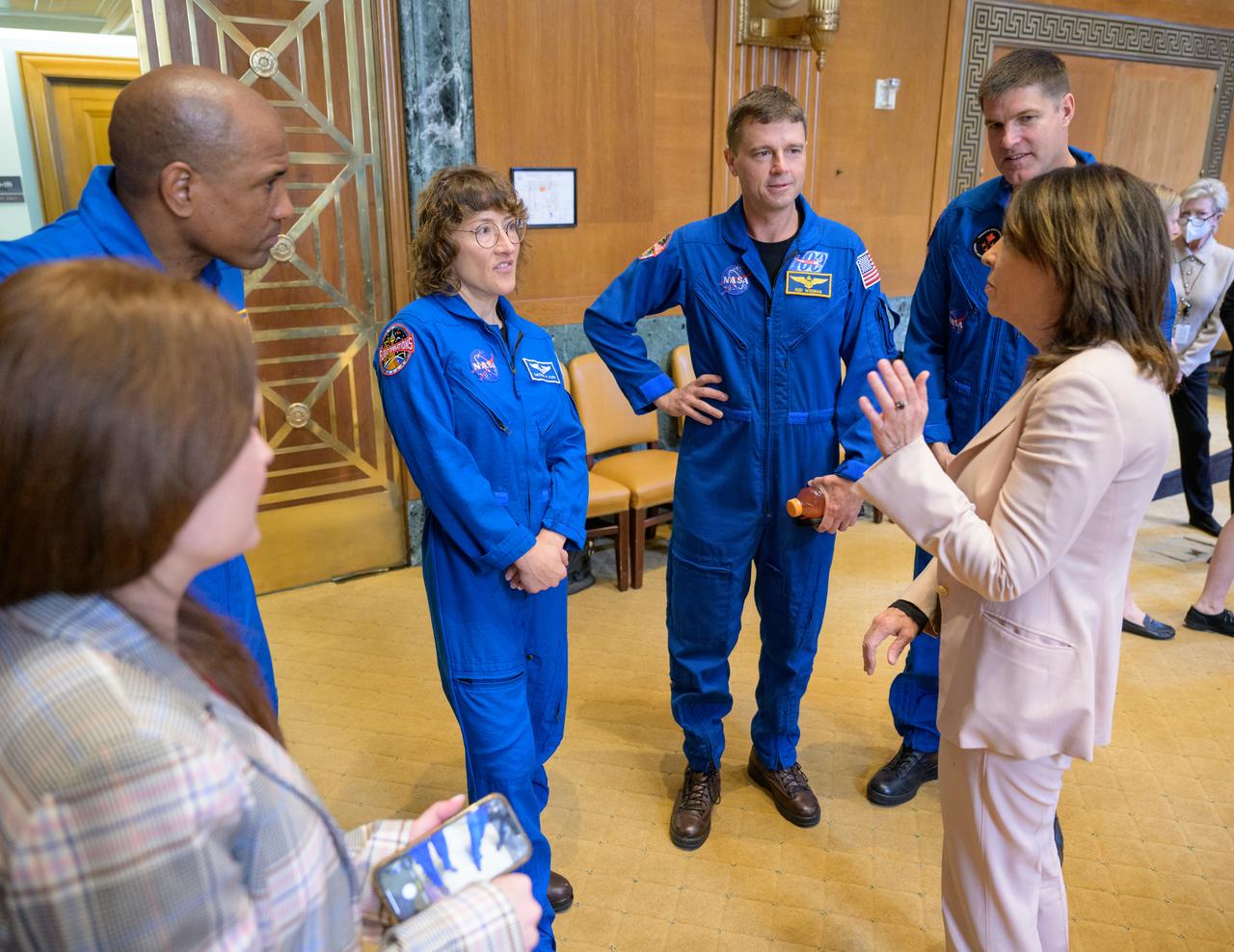
Senator Maria Cantwell, D-WA., meets with NASA astronauts Victor Glover, left, Christina Hammock Koch, Reid Wiseman, and CSA (Canadian Space Agency) astronaut Jeremy Hansen, right, during a meet and greet, Wednesday, May 17, 2023, at the Dirksen Senate Office Building in Washington. Wiseman, Glover, Hammock Koch, and Hansen, who will fly around the Moon on NASA’s Artemis II flight test, visited Washington to discuss their upcoming mission with members of Congress and others. Photo Credit: (NASA/Bill Ingalls)
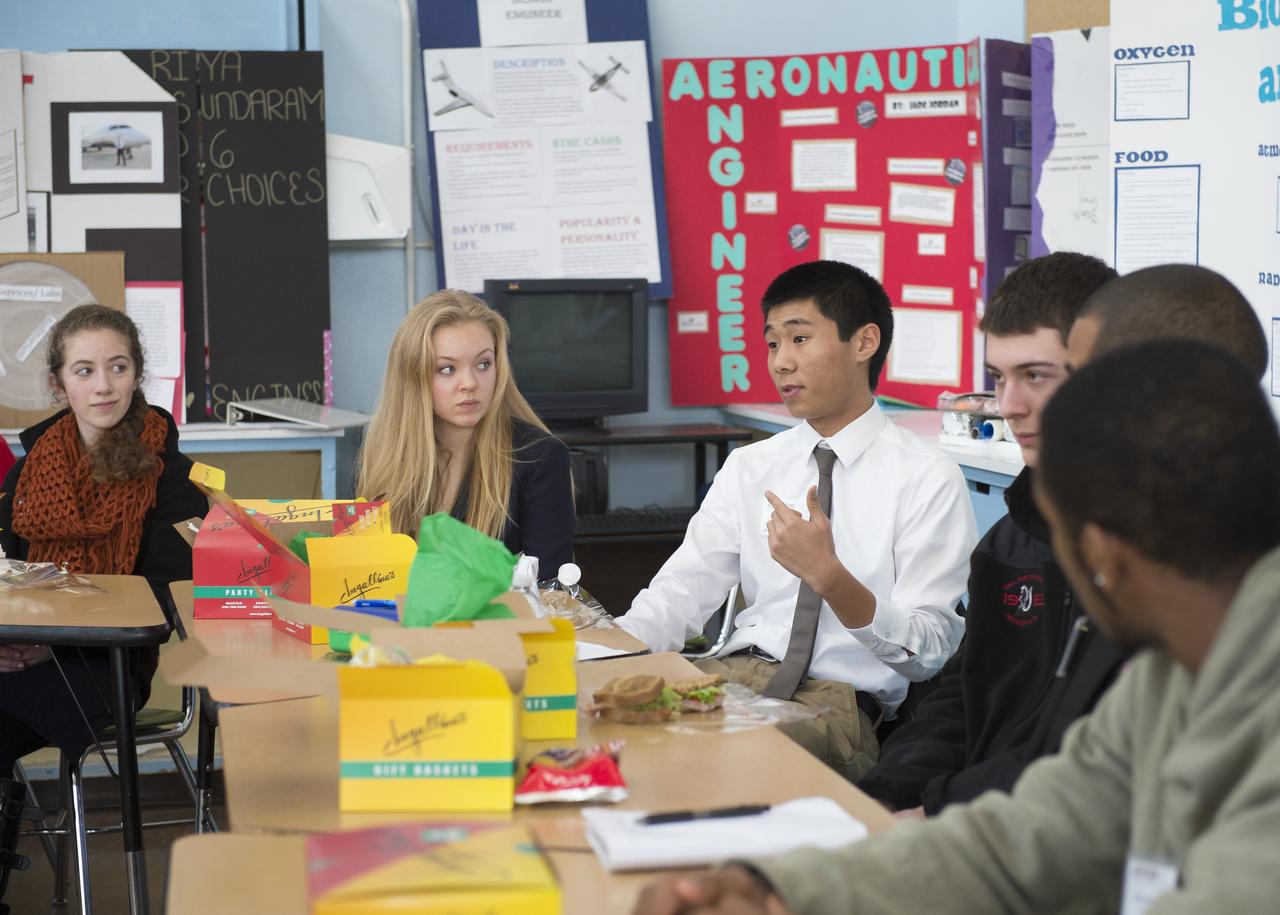
Chris Lu (third from left), a student at Aviation High School, asks a question at a lunch and learn session with NASA Administrator Charles Bolden, Tuesday, Jan. 15, 2013 in Des Moines, WA. Aviation High School is a college preparatory aviation- and aerospace-themed school and a premier school of choice for science, technology, engineering and math (STEM) in the Pacific Northwest. Photo Credit: (NASA/Carla Cioffi)
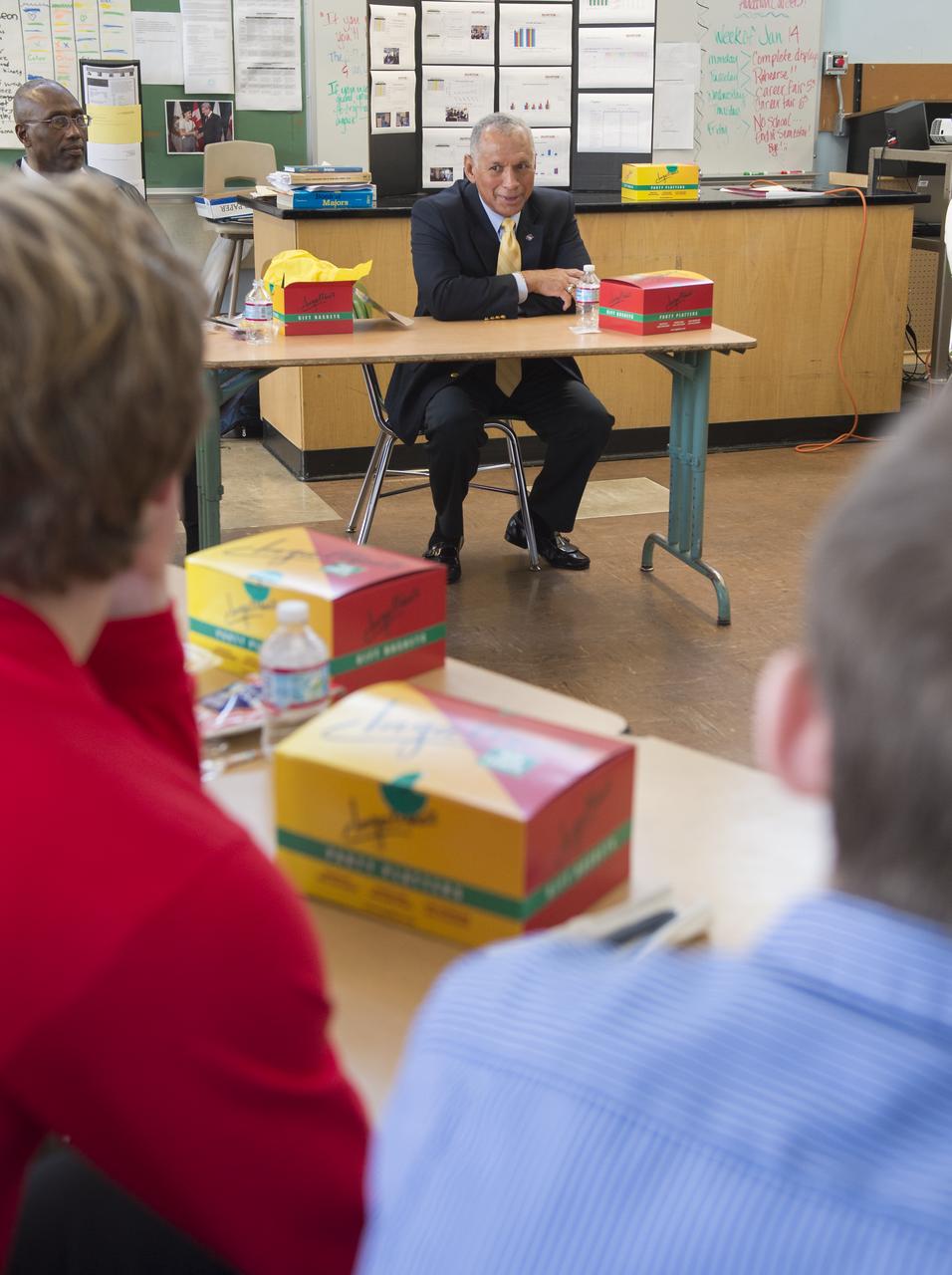
NASA Administrator Charles Bolden speaks to students at Aviation High School at a lunch and learn session Tuesday, Jan. 15, 2013 in Des Moines, WA. Aviation High School is a college preparatory aviation- and aerospace-themed school and a premier school of choice for science, technology, engineering and math (STEM) in the Pacific Northwest. Photo Credit: (NASA/Carla Cioffi)
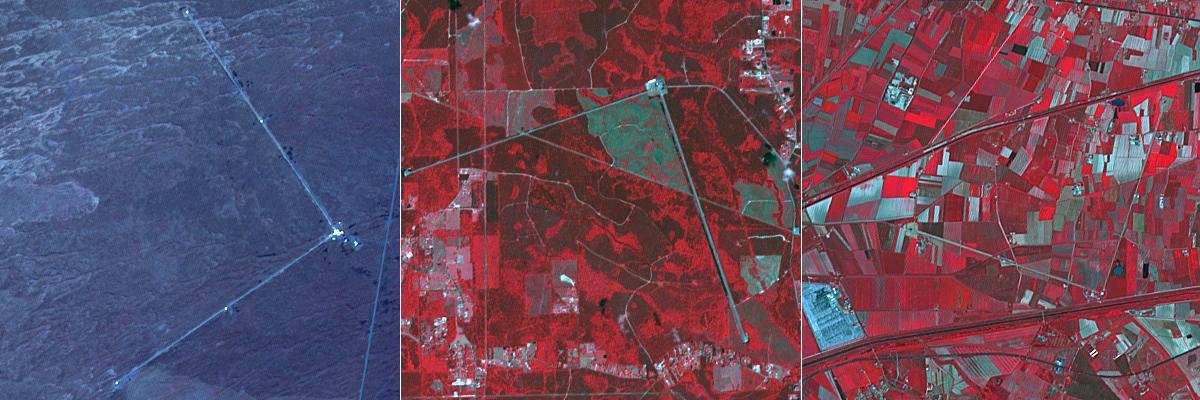
The biggest merger yet between two black holes produced gravity waves that were detected by gravitational wave detection systems. This analysis is the latest to come out of the international LIGO-VIRGO collaboration, which operates three super-sensitive gravitational wave-detection systems in America and Europe (Information from BBC News, September 2). The systems consist of two interferometers at right angles to each other. The two American LIGO systems are located near Livingston, LA (left image) and near Hanford, WA (center image); the European VIRGO system is located near Pisa, Italy (right image). The three ASTER cutouts each cover an area of 6 by 6 km. https://photojournal.jpl.nasa.gov/catalog/PIA24129
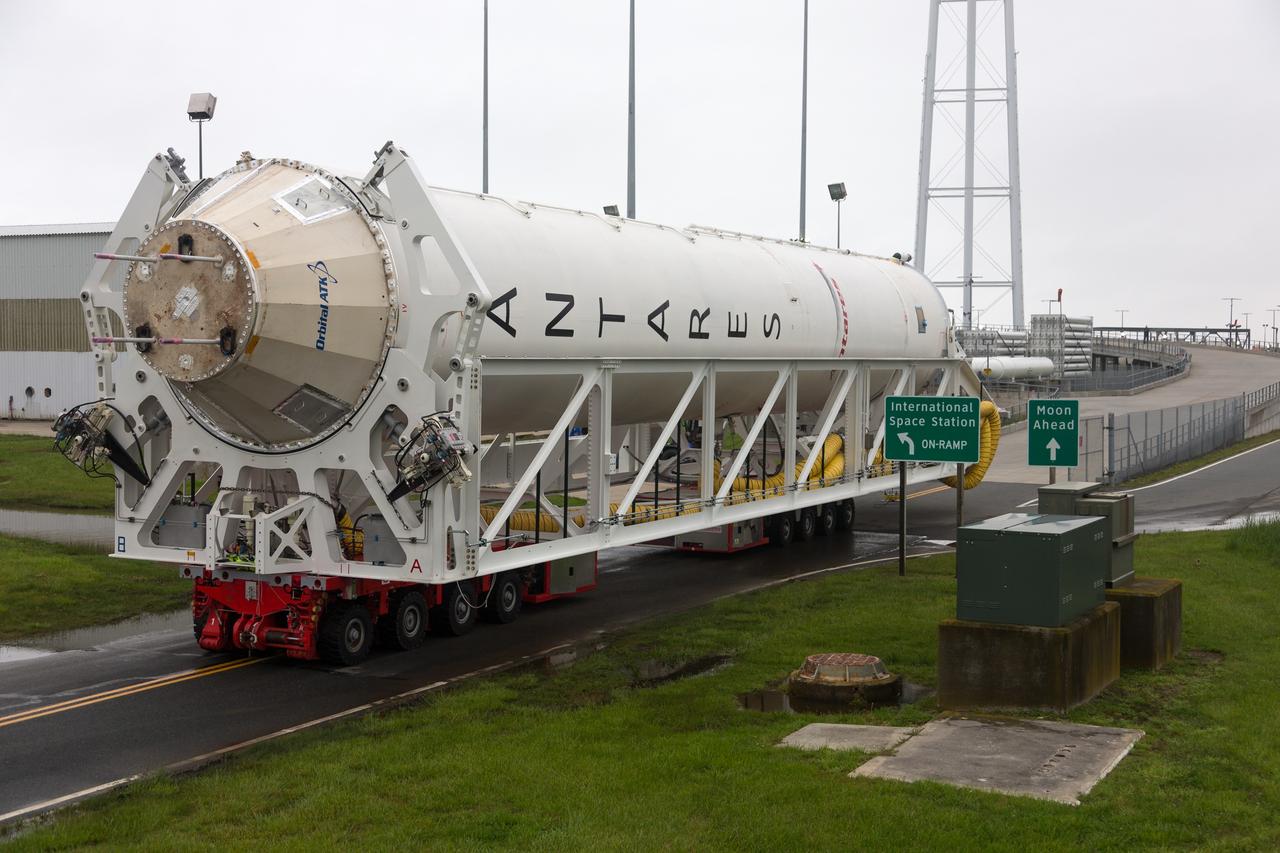
Orbital ATK’s Antares first stage with the new engines is rolled from NASA Wallops Flight Facility’s Horizontal Integration Facility to Virginia Space’s Mid-Atlantic Regional Spaceport Pad-0A on May 12, 2016, in preparation for the upcoming stage test in the next few weeks. The team will continue to work meticulously as they begin final integration and check outs on the pad and several readiness reviews prior to the test. The window for the stage test will be over multiple days to ensure technical and weather conditions are acceptable. Credit: NASA's Wallops Flight Facility/Allison Stancil <b><a href="http://www.nasa.gov/audience/formedia/features/MP_Photo_Guidelines.html" rel="nofollow">NASA image use policy.</a></b> <b><a href="http://www.nasa.gov/centers/goddard/home/index.html" rel="nofollow">NASA Goddard Space Flight Center</a></b> enables NASA’s mission through four scientific endeavors: Earth Science, Heliophysics, Solar System Exploration, and Astrophysics. Goddard plays a leading role in NASA’s accomplishments by contributing compelling scientific knowledge to advance the Agency’s mission. <b>Follow us on <a href="http://twitter.com/NASAGoddardPix" rel="nofollow">Twitter</a></b> <b>Like us on <a href="http://www.facebook.com/pages/Greenbelt-MD/NASA-Goddard/395013845897?ref=tsd" rel="nofollow">Facebook</a></b> <b>Find us on <a href="http://instagrid.me/nasagoddard/?vm=grid" rel="nofollow">Instagram</a></b>
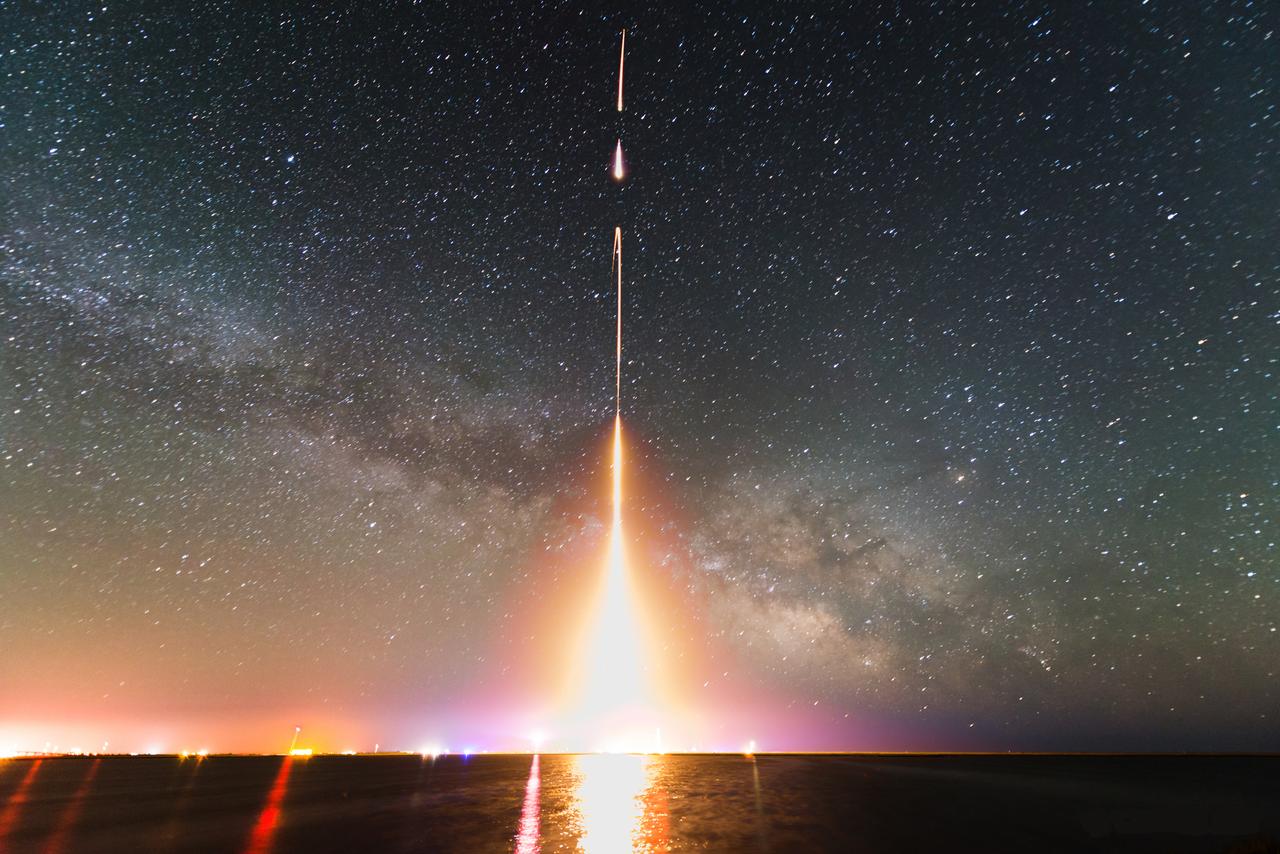
A NASA sounding rocket experiment has detected a surprising surplus of infrared light in the dark space between galaxies, a diffuse cosmic glow as bright as all known galaxies combined. The glow is thought to be from orphaned stars flung out of galaxies. The findings redefine what scientists think of as galaxies. Galaxies may not have a set boundary of stars, but instead stretch out to great distances, forming a vast, interconnected sea of stars. Observations from the Cosmic Infrared Background Experiment, or CIBER, are helping settle a debate on whether this background infrared light in the universe, previously detected by NASA’s Spitzer Space Telescope, comes from these streams of stripped stars too distant to be seen individually, or alternatively from the first galaxies to form in the universe. This is a time-lapse photograph of the Cosmic Infrared Background Experiment (CIBER) rocket launch, taken from NASA's Wallops Flight Facility in Virginia in 2013. The image is from the last of four launches. Read more: <a href="http://www.nasa.gov/press/2014/november/nasa-rocket-experiment-finds-the-universe-brighter-than-we-thought/index.html#.VFveFd6FxgM" rel="nofollow">www.nasa.gov/press/2014/november/nasa-rocket-experiment-f...</a> Image Credit: T. Arai/University of Tokyo <b><a href="http://www.nasa.gov/audience/formedia/features/MP_Photo_Guidelines.html" rel="nofollow">NASA image use policy.</a></b> <b><a href="http://www.nasa.gov/centers/goddard/home/index.html" rel="nofollow">NASA Goddard Space Flight Center</a></b> enables NASA’s mission through four scientific endeavors: Earth Science, Heliophysics, Solar System Exploration, and Astrophysics. Goddard plays a leading role in NASA’s accomplishments by contributing compelling scientific knowledge to advance the Agency’s mission. <b>Follow us on <a href="http://twitter.com/NASAGoddardPix" rel="nofollow">Twitter</a></b> <b>Like us on <a href="http://www.facebook.com/pages/Greenbelt-MD/NASA-Goddard/395013845897?ref=tsd" rel="nofollow">Facebook</a></b> <b>Find us on <a href="http://instagram.com/nasagoddard?vm=grid" rel="nofollow">Instagram</a></b>
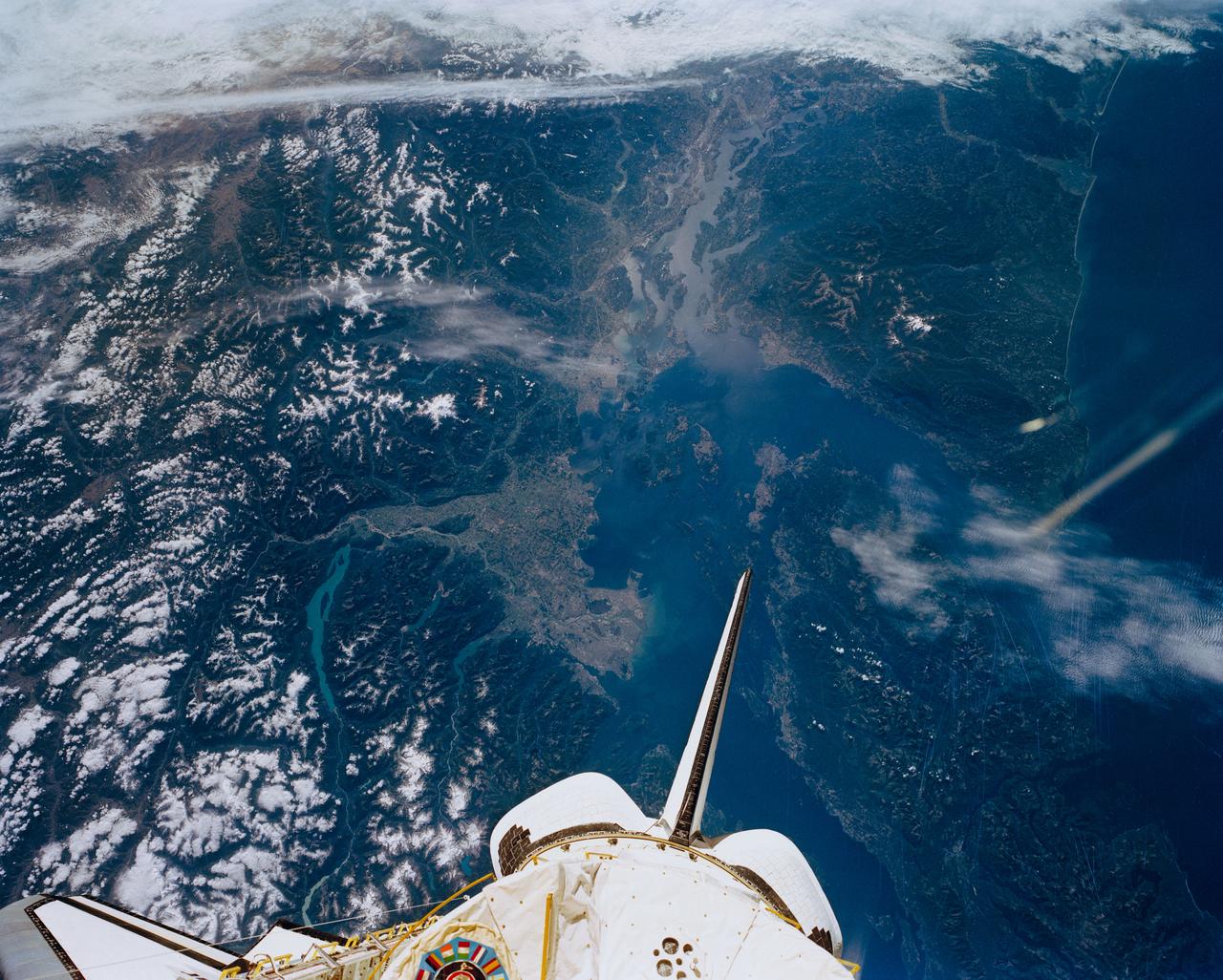
STS047-151-488 (12 - 20 Sept 1992) --- In this large format camera image, the forested Cascade Range appears along the left side; the Pacific Ocean, on the right. The frame was photographed as the Space Shuttle Endeavour flew north to south over Vancouver and Seattle. Many peaks in the Cascades reach altitudes greater than 9,000 feet and remain snowcapped even in mid-summer. The Strait of Juan de Fuca separates the Olympic Peninsula (top right) from Vancouver Island (bottom right). Snowcapped Mt. Olympus (7,965 feet) is one of the wettest places in the continental United States, with rainfall in excess of 120 inches per year. The port cities of Seattle and Tacoma occupy the heavily indented coastline of Puget Sound (top center). They appear as light-colored areas on the left side of the Sound. The angular street pattern of Tacoma is visible at the top of the picture. The international boundary between Canada and the United States of America runs across the middle of the view. The city of Victoria (center) is the light patch on the tip of Vancouver Island. Canada's Fraser River Delta provides flat topography on which the cities of Vancouver, Burnaby, and New Westminster were built. These cities appear as the light-colored area just left of center. The Fraser River can be seen snaking its way out of the mountains at the apex of the delta. Numerous ski resorts dot the slopes of the mountains (bottom left) that rise immediately to the north of Vancouver. In the same area the blue water of Harrison and other, smaller lakes fills some of the valleys that were excavated by glaciers in the "recent" geological past, according to NASA scientists studying the photography. A Linhof camera was used to expose the frame.
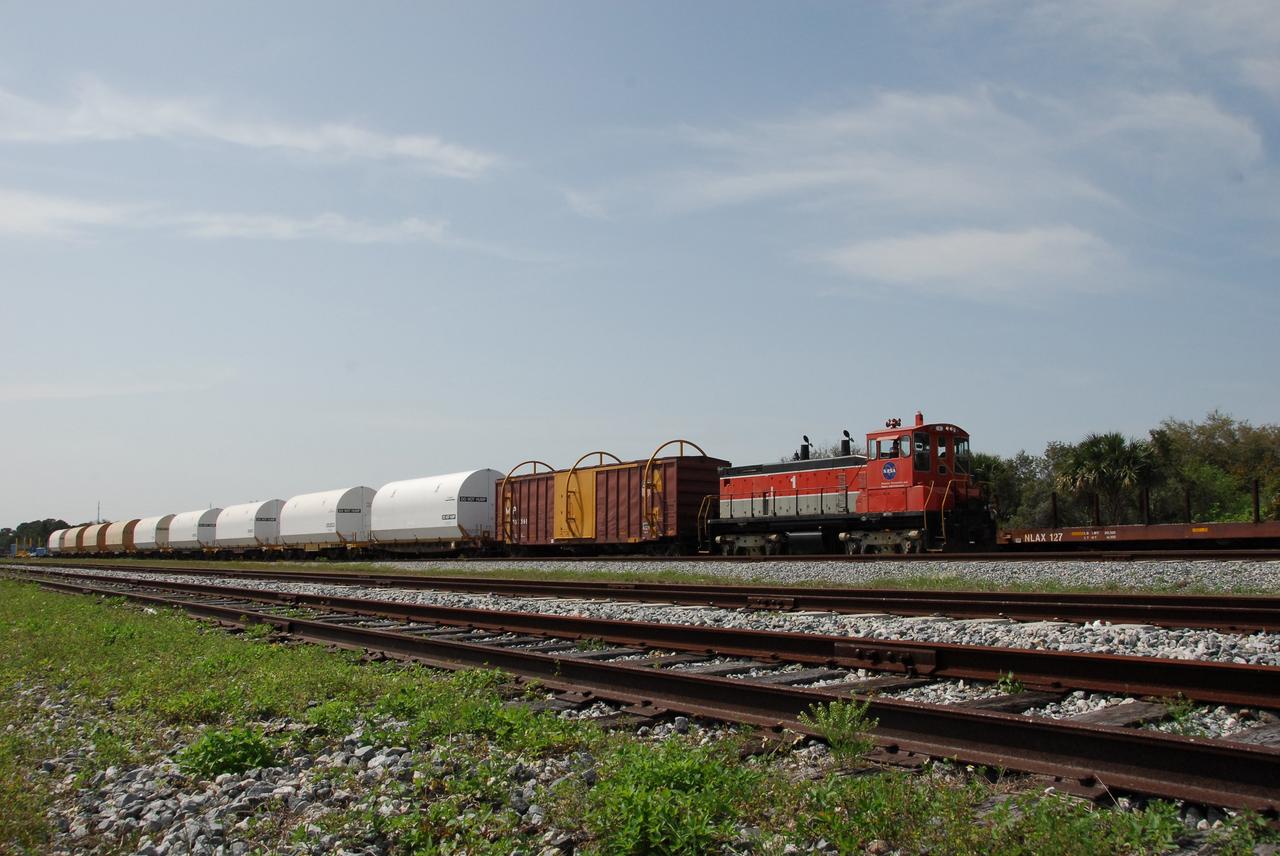
KENNEDY SPACE CENTER, FLA. -- The NASA Railroad train moves along the track through NASA's Kennedy Space Center. The train is hauling the solid rocket booster segments from the STS-122 mission. After a mission, the spent boosters are recovered, cleaned, disassembled, refurbished and reused after each launch. After hydrolasing the interior of each segment, they are placed on flatbed trucks. The individual booster segments are transferred to a railhead located at the railroad yard. The covered segments will be moved to Titusville for interchange with Florida East Coast Railway to begin the trip back to the Thiokol plant in Wa¬satch, Utah. Photo credit: NASA/Jack Pfaller
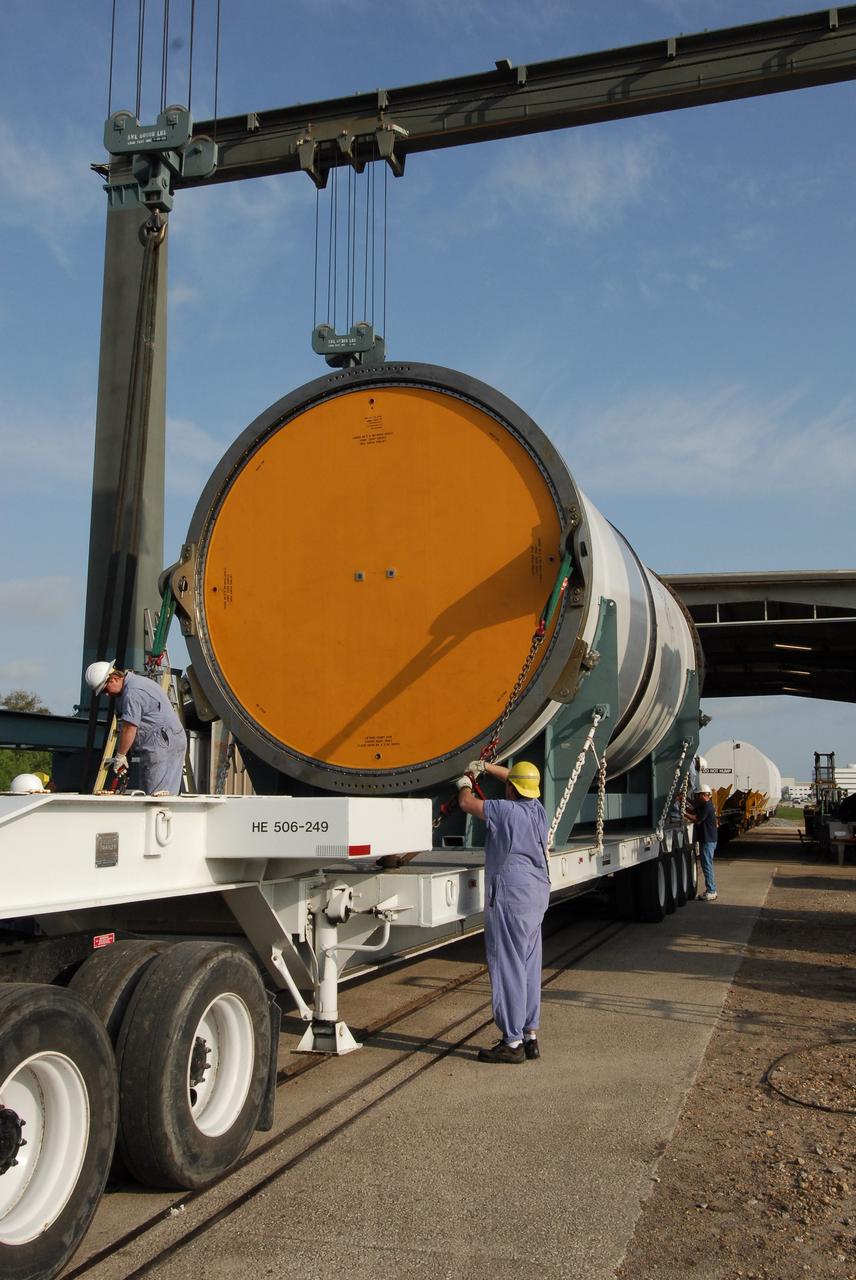
KENNEDY SPACE CENTER, FLA. -- Workers at the Railroad yard at NASA's Kennedy Space Center prepare one of the segments of a solid rocket booster from the STS-122 mission to be moved onto a railroad car for transportation to Utah. After a mission, the spent boosters are recovered, cleaned, disassembled, refurbished and reused after each launch. After hydrolasing the interior of each segment, they are placed on flatbed trucks. The individual booster segments are transferred to a railhead located at the railroad yard. The covered segments will be moved to Titusville for interchange with Florida East Coast Railway to begin the trip back to the Thiokol plant in Wa¬satch, Utah. Photo credit: NASA/Jack Pfaller
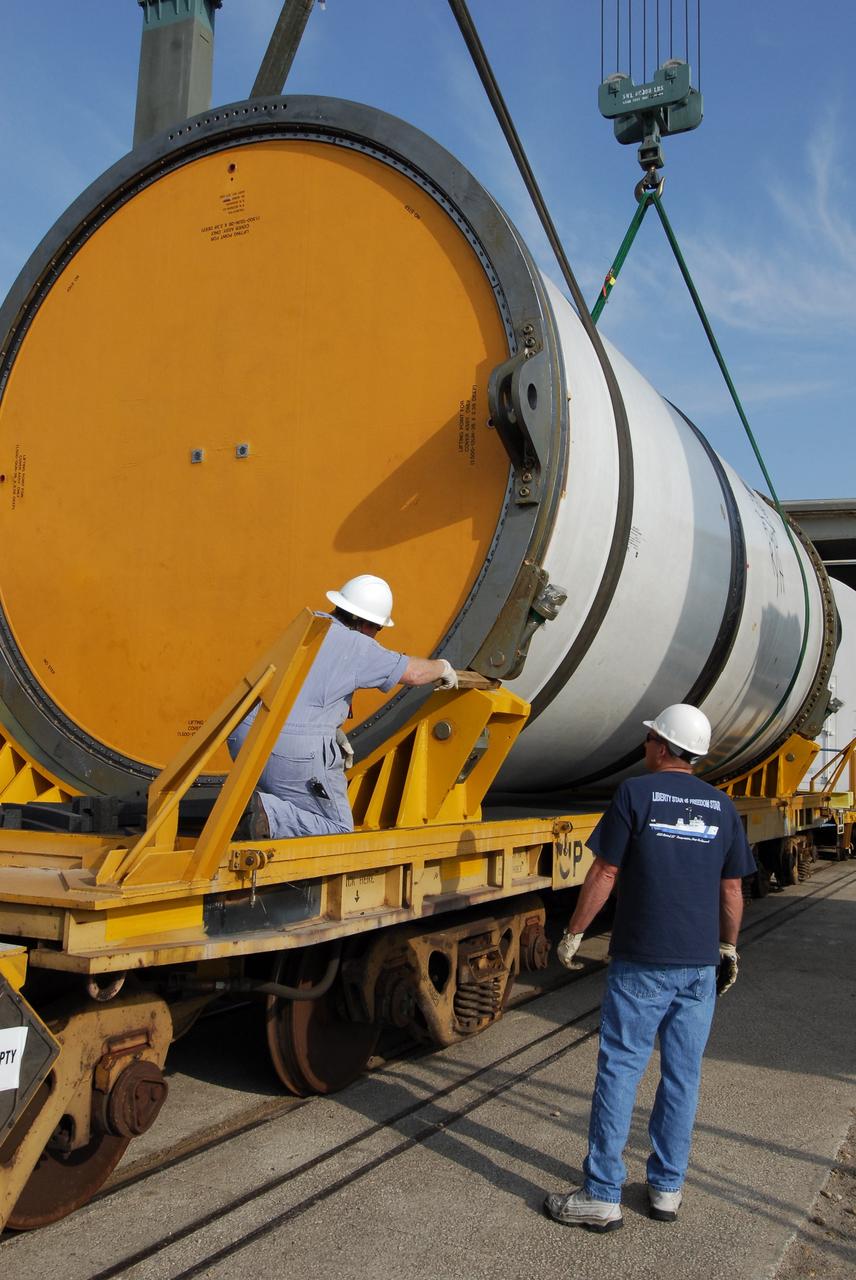
KENNEDY SPACE CENTER, FLA. -- At the Railroad yard at NASA's Kennedy Space Center, a solid rocket booster segment from the STS-122 mission is lowered onto a railroad car for transportation to Utah. After a mission, the spent boosters are recovered, cleaned, disassembled, refurbished and reused after each launch. After hydrolasing the interior of each segment, they are placed on flatbed trucks. The individual booster segments are transferred to a railhead located at the railroad yard. The covered segments will be moved to Titusville for interchange with Florida East Coast Railway to begin the trip back to the Thiokol plant in Wa¬satch, Utah. Photo credit: NASA/Jack Pfaller
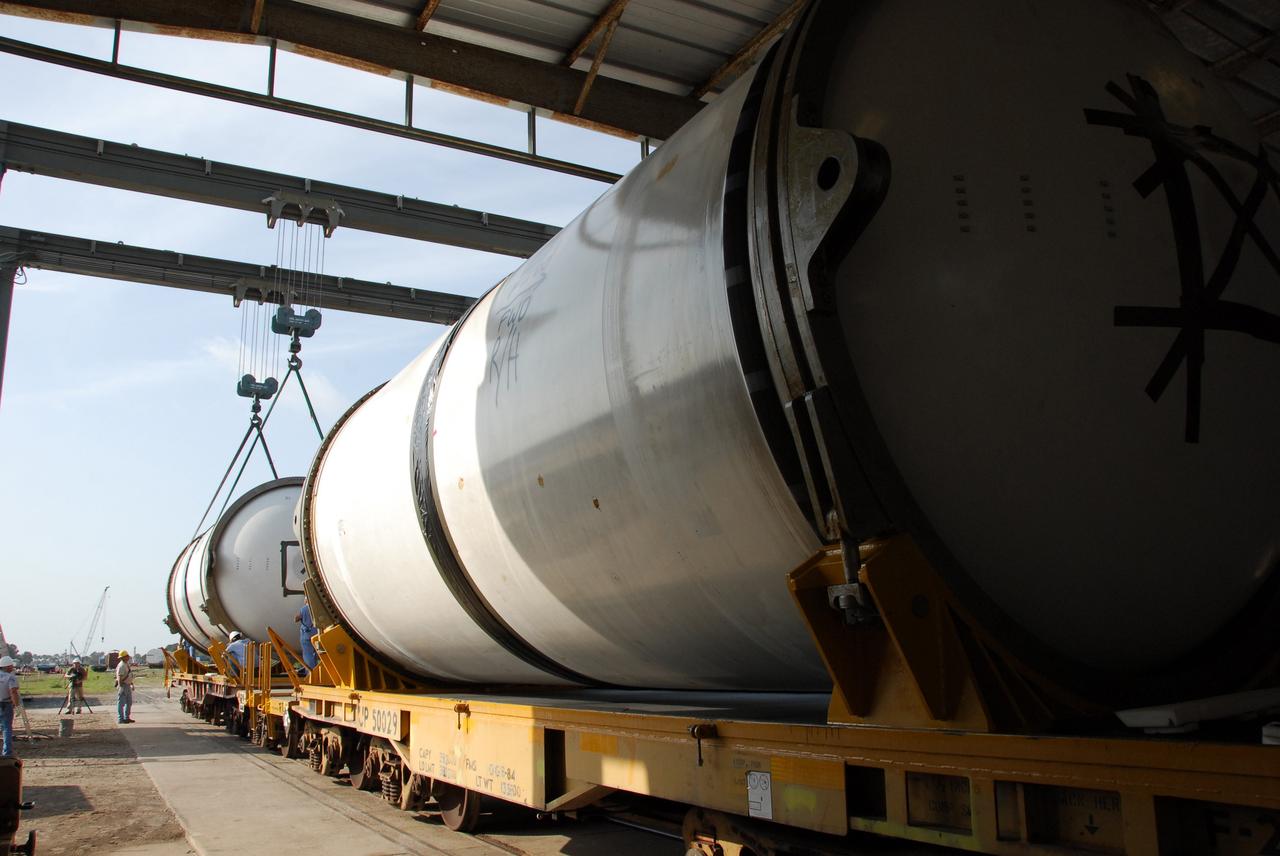
KENNEDY SPACE CENTER, FLA. -- At the Railroad yard at NASA's Kennedy Space Center, solid rocket booster segments from the STS-122 mission are being loaded onto railroad cars and covered for transportation to Utah. After a mission, the spent boosters are recovered, cleaned, disassembled, refurbished and reused after each launch. After hydrolasing the interior of each segment, they are placed on flatbed trucks. The individual booster segments are transferred to a railhead located at the railroad yard. The covered segments will be moved to Titusville for interchange with Florida East Coast Railway to begin the trip back to the Thiokol plant in Wa¬satch, Utah. Photo credit: NASA/Jack Pfaller
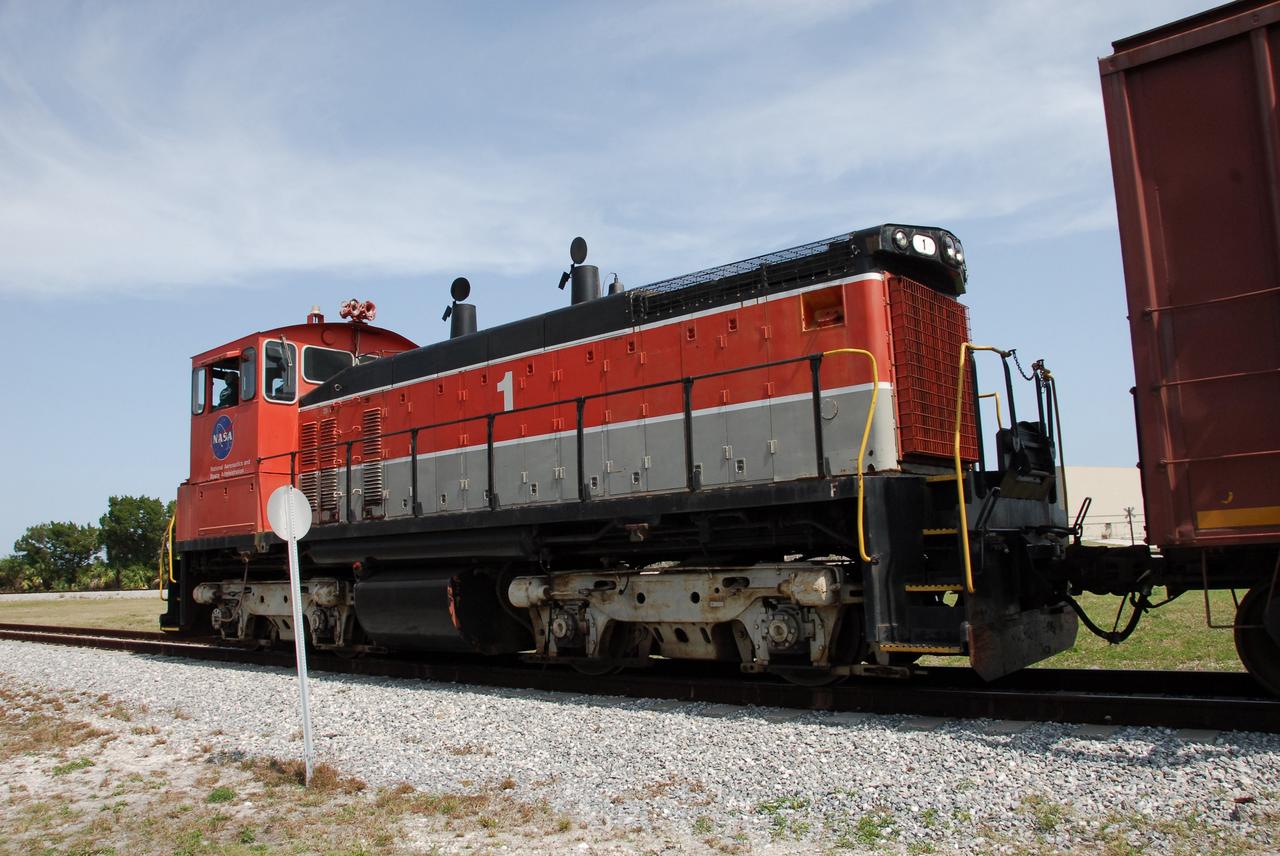
KENNEDY SPACE CENTER, FLA. -- The NASA Railroad train moves along the track through NASA Kennedy Space Center's Launch Complex 39 Area. The train is hauling the solid rocket booster segments from the STS-122 mission. After a mission, the spent boosters are recovered, cleaned, disassembled, refurbished and reused after each launch. After hydrolasing the interior of each segment, they are placed on flatbed trucks. The individual booster segments are transferred to a railhead located at the railroad yard. The covered segments will be moved to Titusville for interchange with Florida East Coast Railway to begin the trip back to the Thiokol plant in Wa¬satch, Utah. Photo credit: NASA/Jack Pfaller
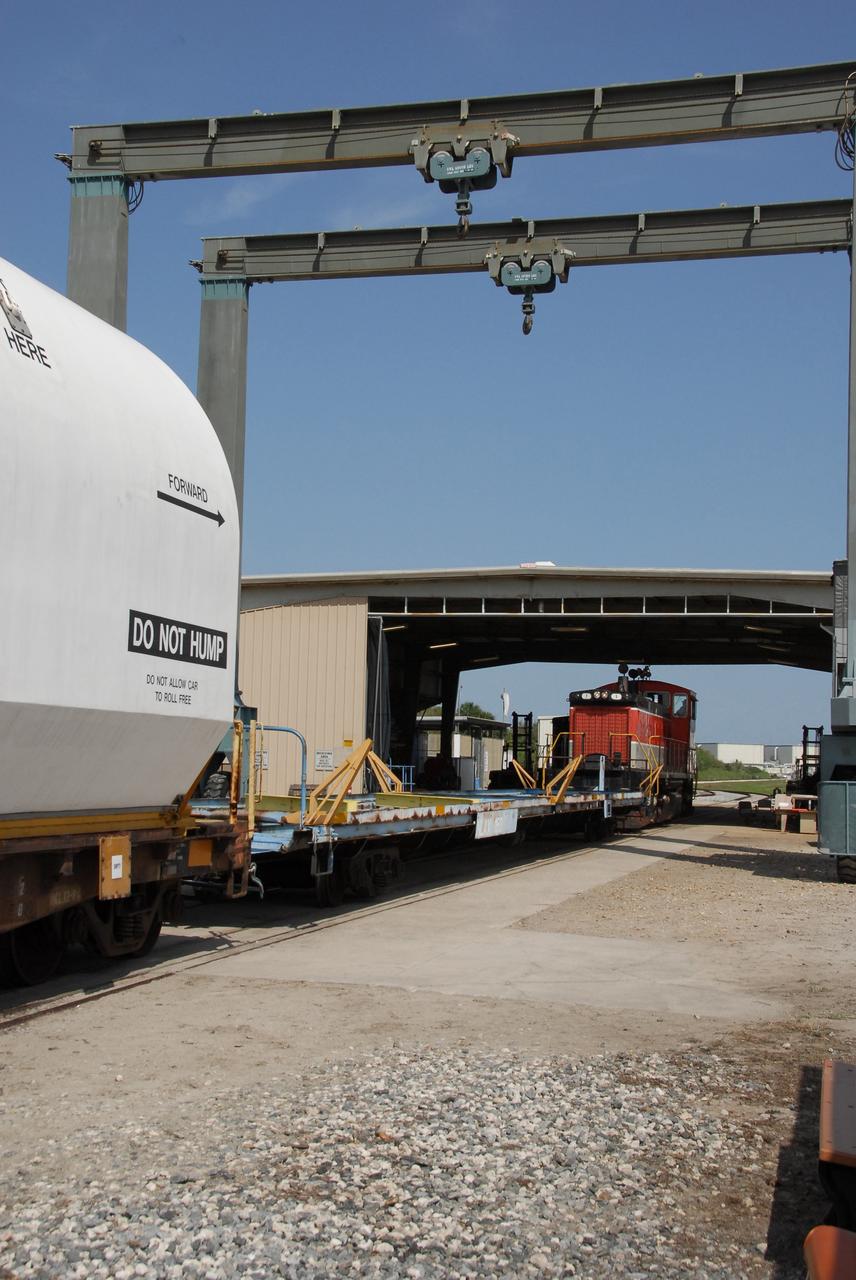
KENNEDY SPACE CENTER, FLA. -- At NASA's Kennedy Space Center, the NASA Railroad train hauling the solid rocket booster segments from the STS-122 mission begins rolling on the long journey to Utah. After a mission, the spent boosters are recovered, cleaned, disassembled, refurbished and reused after each launch. After hydrolasing the interior of each segment, they are placed on flatbed trucks. The individual booster segments are transferred to a railhead located at the railroad yard. The covered segments will be moved to Titusville for interchange with Florida East Coast Railway to begin the trip back to the Thiokol plant in Wa¬satch, Utah. Photo credit: NASA/Jack Pfaller
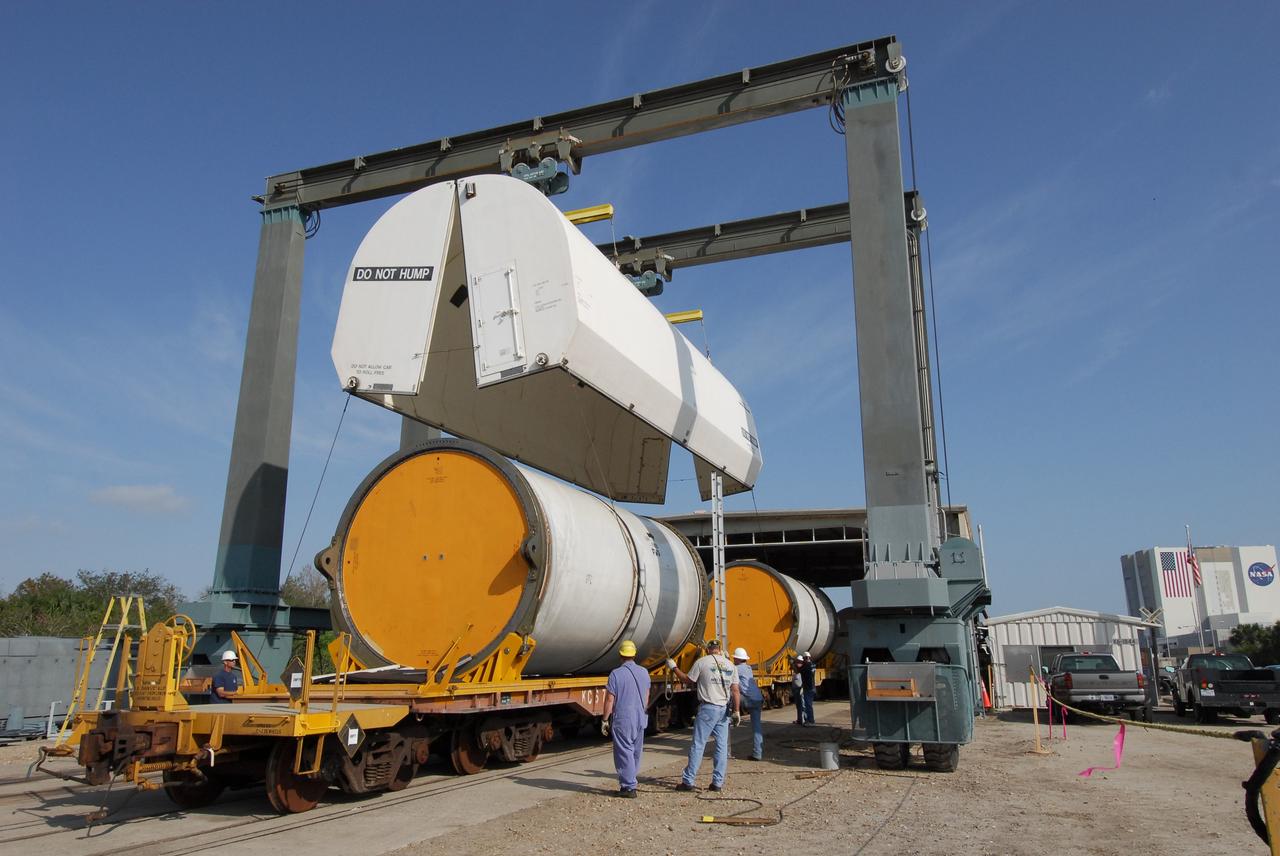
KENNEDY SPACE CENTER, FLA. -- At the NASA Railroad yard at NASA's Kennedy Space Center, workers lower a transportation cover over a solid rocket booster segment from the STS-122 mission. Loaded on the railroad cars, the segments will be transported to Utah. After a mission, the spent boosters are recovered, cleaned, disassembled, refurbished and reused after each launch. After hydrolasing the interior of each segment, they are placed on flatbed trucks. The individual booster segments are transferred to a railhead located at the railroad yard. The covered segments will be moved to Titusville for interchange with Florida East Coast Railway to begin the trip back to the Thiokol plant in Wa¬satch, Utah. Photo credit: NASA/Jack Pfaller
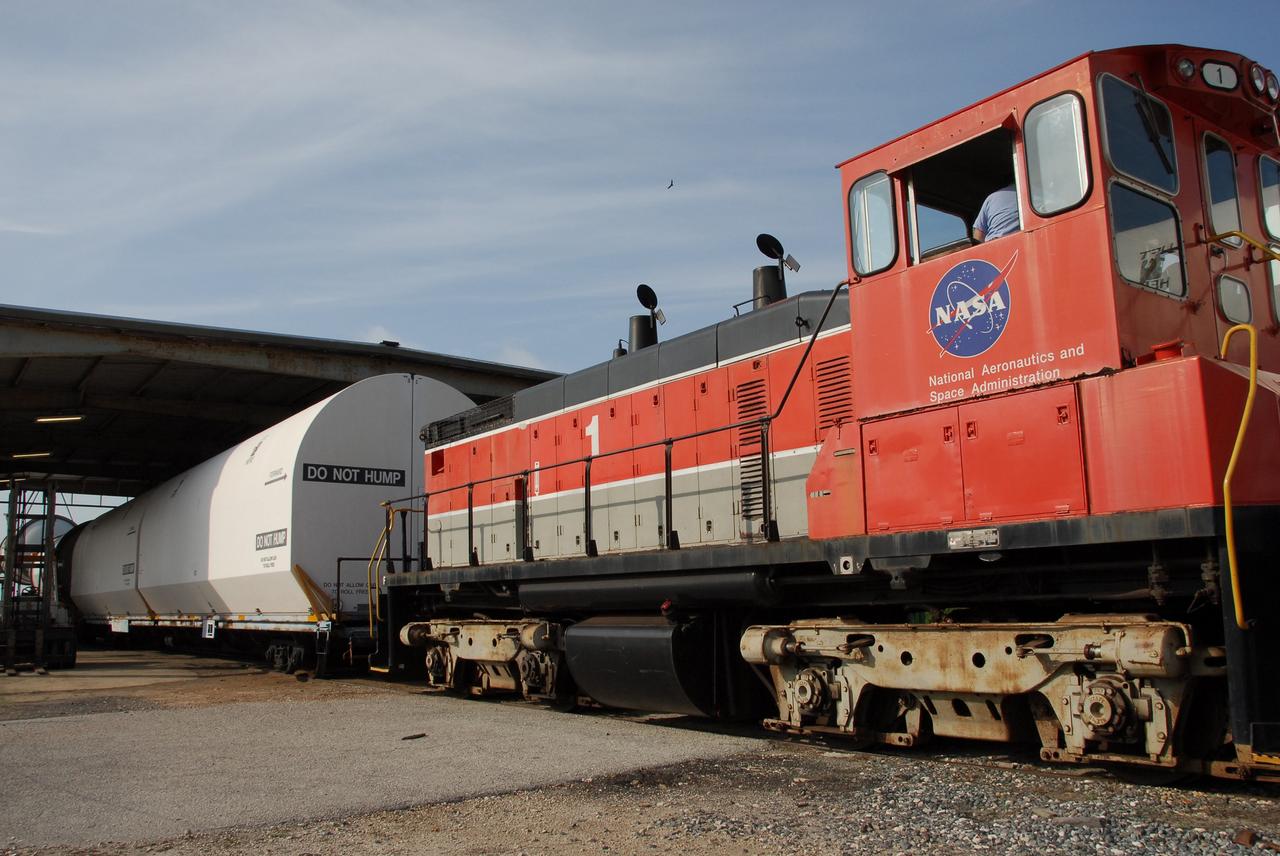
KENNEDY SPACE CENTER, FLA. -- At the Railroad yard at NASA's Kennedy Space Center, solid rocket booster segments from the STS-122 mission are being loaded onto railroad cars and covered for transportation to Utah. After a mission, the spent boosters are recovered, cleaned, disassembled, refurbished and reused after each launch. After hydrolasing the interior of each segment, they are placed on flatbed trucks. The individual booster segments are transferred to a railhead located at the railroad yard. The covered segments will be moved to Titusville for interchange with Florida East Coast Railway to begin the trip back to the Thiokol plant in Wa¬satch, Utah. Photo credit: NASA/Jack Pfaller
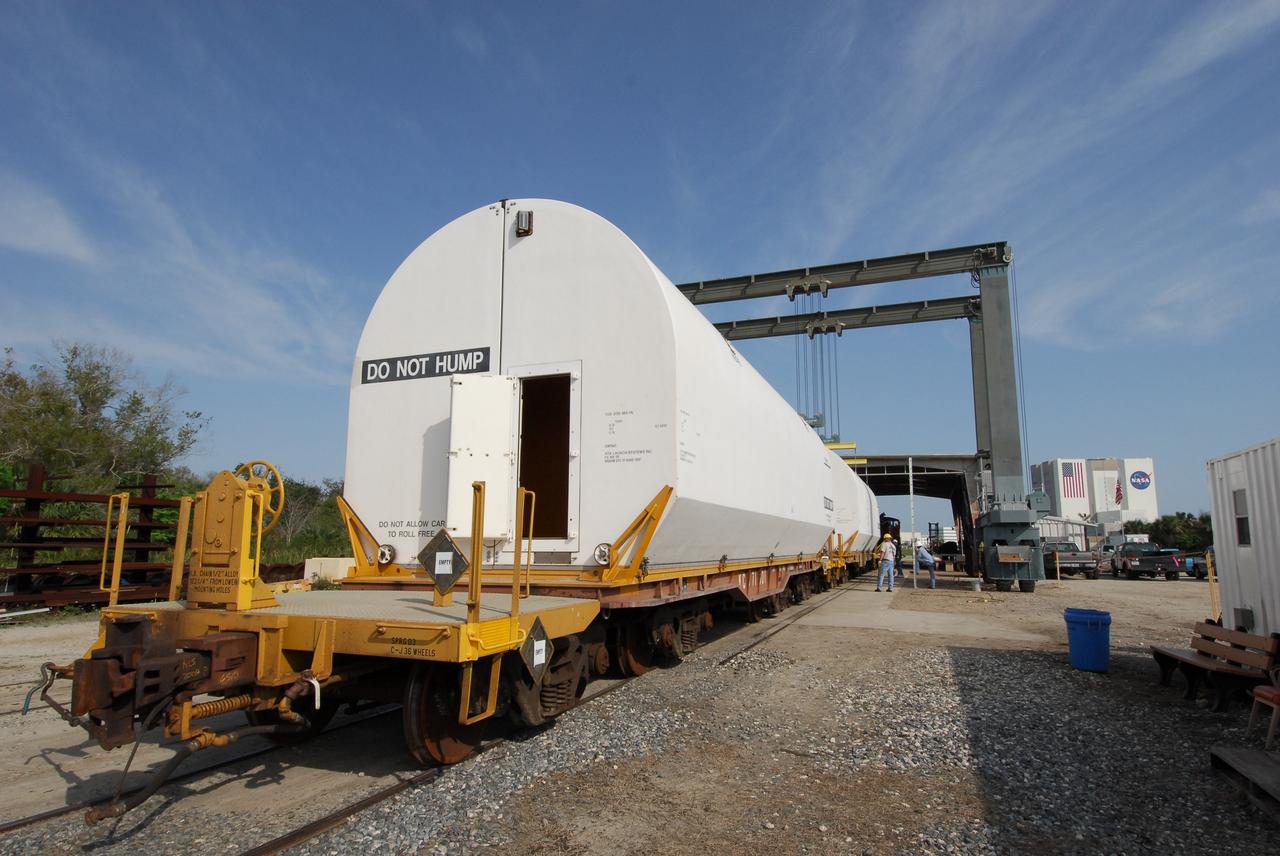
KENNEDY SPACE CENTER, FLA. -- At the NASA Railroad yard at NASA's Kennedy Space Center, all the solid rocket booster segments from the STS-122 mission are covered and secure on the train for transportation to Utah. After a mission, the spent boosters are recovered, cleaned, disassembled, refurbished and reused after each launch. After hydrolasing the interior of each segment, they are placed on flatbed trucks. The individual booster segments are transferred to a railhead located at the railroad yard. The covered segments will be moved to Titusville for interchange with Florida East Coast Railway to begin the trip back to the Thiokol plant in Wa¬satch, Utah. Photo credit: NASA/Jack Pfaller
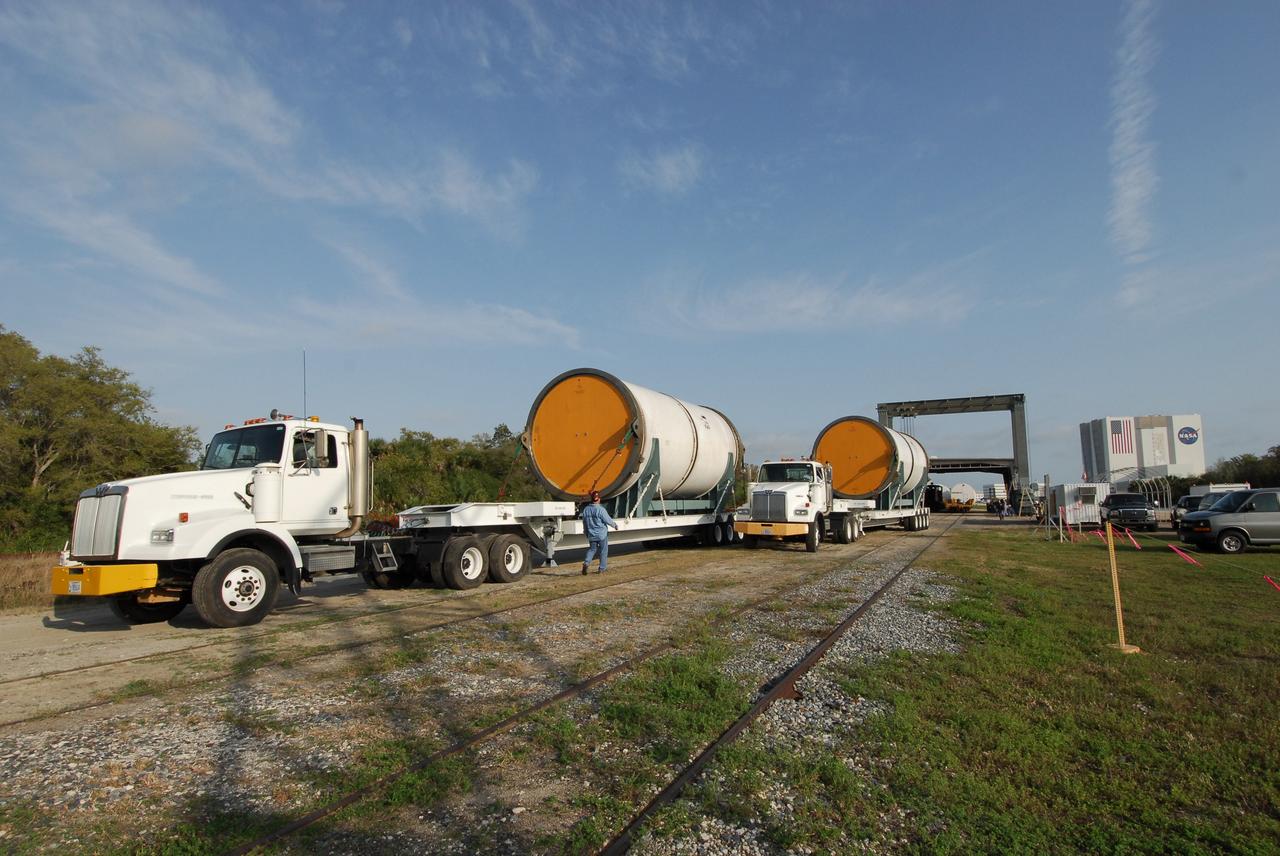
KENNEDY SPACE CENTER, FLA. -- Spent segments of the solid rocket boosters from the STS-122 mission arrive at the Railroad yard at NASA's Kennedy Space Center. The segments will be loaded onto the railroad cars for transportation to Utah. After a mission, the spent boosters are recovered, cleaned, disassembled, refurbished and reused after each launch. After hydrolasing the interior of each segment, they are placed on flatbed trucks. The individual booster segments are transferred to a railhead located at the railroad yard. The covered segments will be moved to Titusville for interchange with Florida East Coast Railway to begin the trip back to the Thiokol plant in Wa¬satch, Utah. Photo credit: NASA/Jack Pfaller
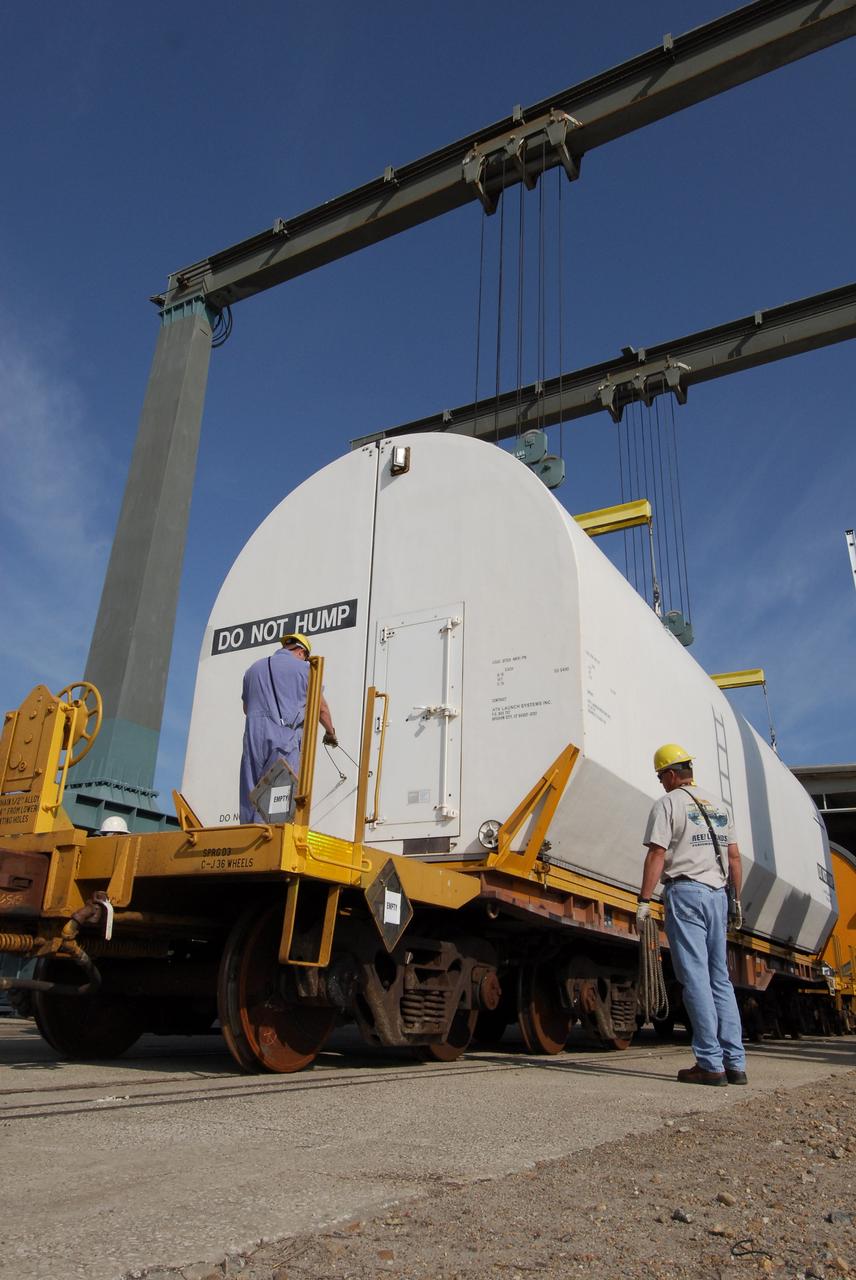
KENNEDY SPACE CENTER, FLA. -- At the NASA Railroad yard at NASA's Kennedy Space Center, a worker secures a transportation cover over a solid rocket booster segment from the STS-122 mission. Loaded on the railroad cars, the segments will be transported to Utah. After a mission, the spent boosters are recovered, cleaned, disassembled, refurbished and reused after each launch. After hydrolasing the interior of each segment, they are placed on flatbed trucks. The individual booster segments are transferred to a railhead located at the railroad yard. The covered segments will be moved to Titusville for interchange with Florida East Coast Railway to begin the trip back to the Thiokol plant in Wa¬satch, Utah. Photo credit: NASA/Jack Pfaller
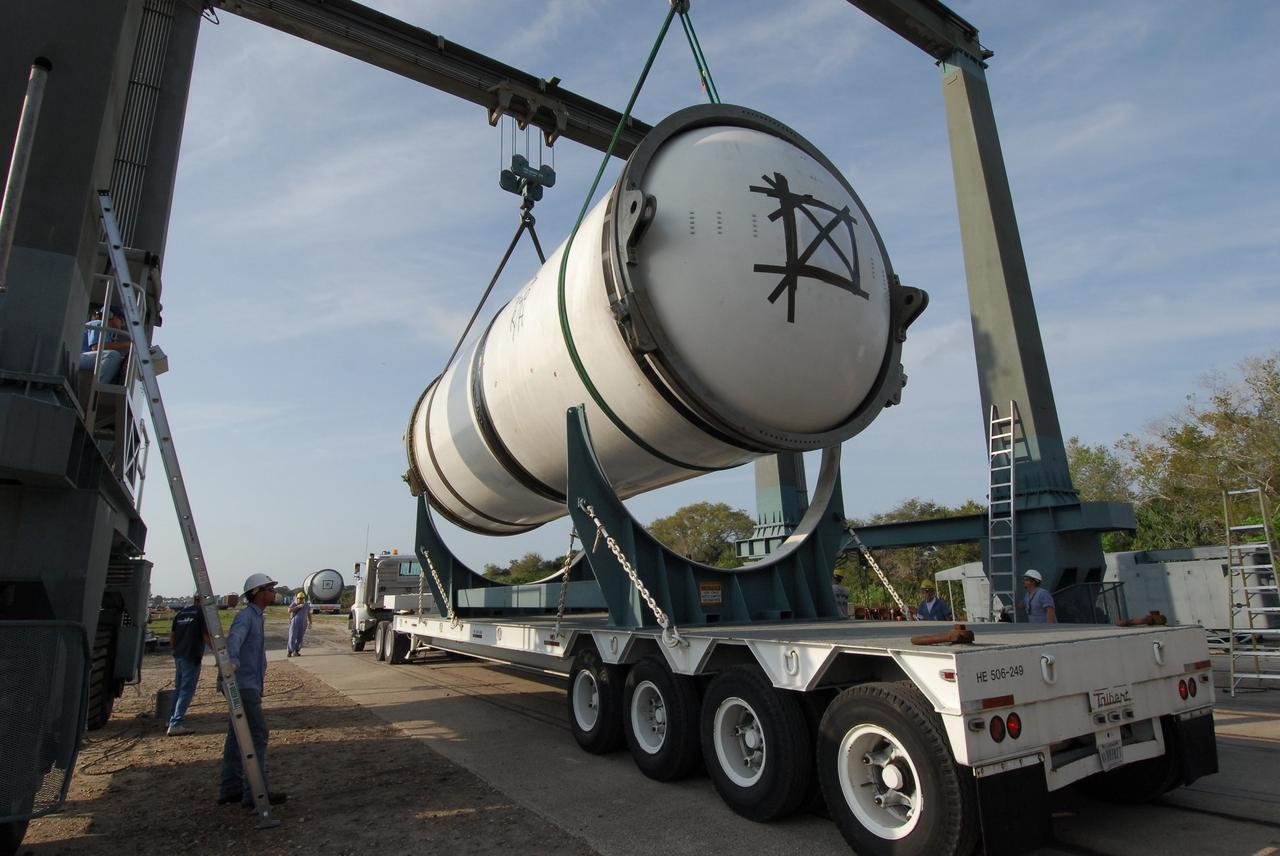
KENNEDY SPACE CENTER, FLA. -- At the Railroad yard at NASA's Kennedy Space Center, one of the spent segments of a solid rocket booster from the STS-122 mission is lifted off the flatbed truck. The segment will be placed onto a railroad car for transportation to Utah. After a mission, the spent boosters are recovered, cleaned, disassembled, refurbished and reused after each launch. After hydrolasing the interior of each segment, they are placed on flatbed trucks. The individual booster segments are transferred to a railhead located at the railroad yard. The covered segments will be moved to Titusville for interchange with Florida East Coast Railway to begin the trip back to the Thiokol plant in Wa¬satch, Utah. Photo credit: NASA/Jack Pfaller
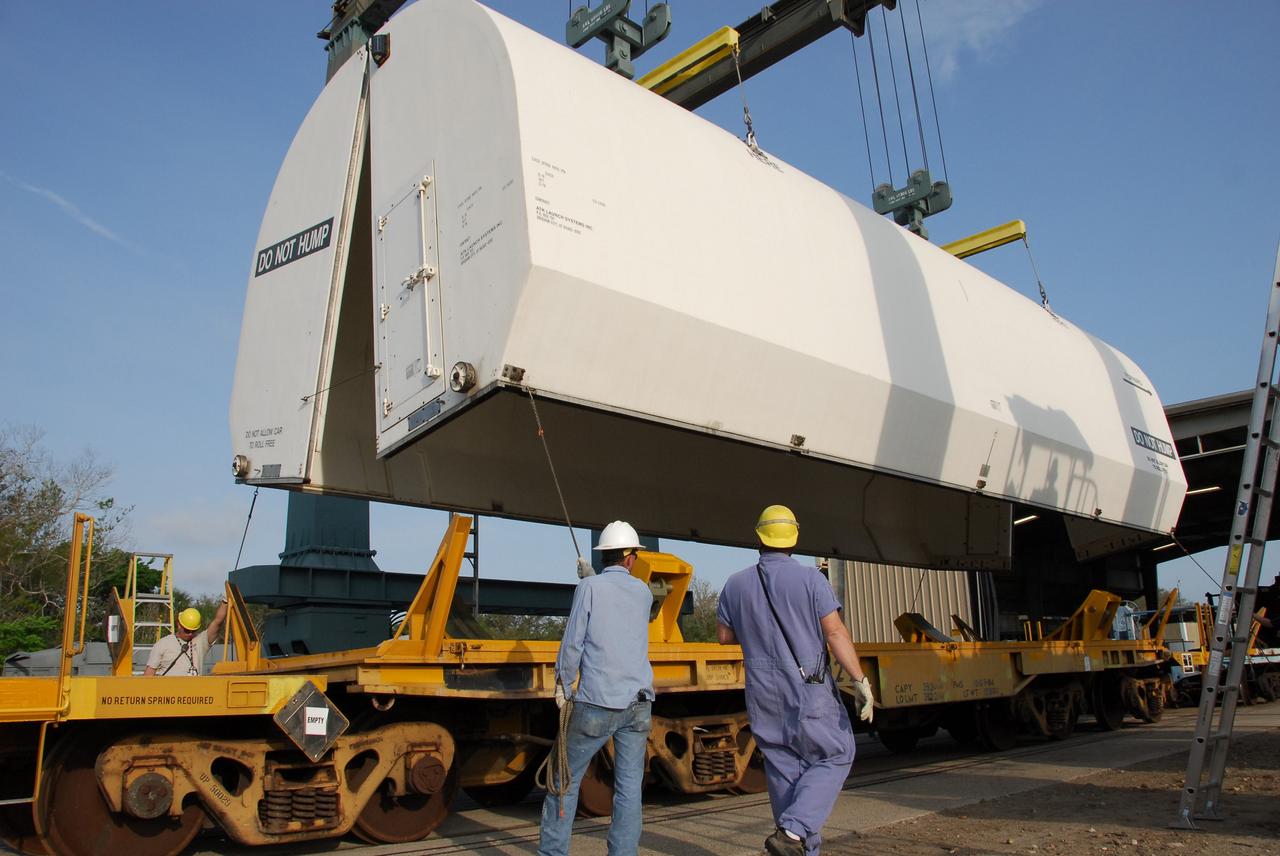
KENNEDY SPACE CENTER, FLA. -- Workers at the Railroad yard at NASA's Kennedy Space Center lift the transportation cover that will be used on solid rocket booster segments being transported to Utah. After a mission, the spent boosters are recovered, cleaned, disassembled, refurbished and reused after each launch. After hydrolasing the interior of each segment, they are placed on flatbed trucks. The individual booster segments are transferred to a railhead located at the railroad yard. The covered segments will be moved to Titusville for interchange with Florida East Coast Railway to begin the trip back to the Thiokol plant in Wa¬satch, Utah. Photo credit: NASA/Jack Pfaller
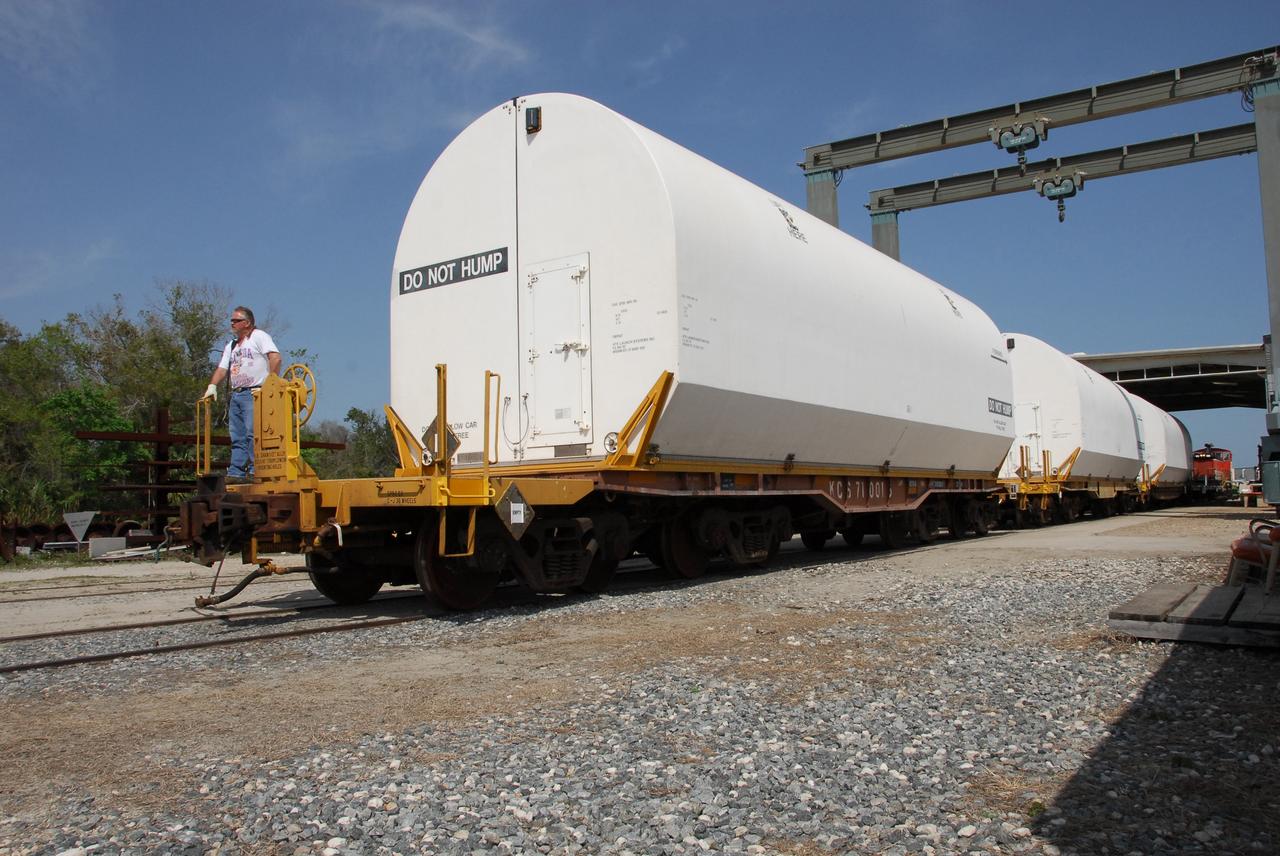
KENNEDY SPACE CENTER, FLA. -- At the NASA Railroad yard at NASA's Kennedy Space Center, all the solid rocket booster segments from the STS-122 mission are covered and secure on the train for transportation to Utah. After a mission, the spent boosters are recovered, cleaned, disassembled, refurbished and reused after each launch. After hydrolasing the interior of each segment, they are placed on flatbed trucks. The individual booster segments are transferred to a railhead located at the railroad yard. The covered segments will be moved to Titusville for interchange with Florida East Coast Railway to begin the trip back to the Thiokol plant in Wa¬satch, Utah. Photo credit: NASA/Jack Pfaller
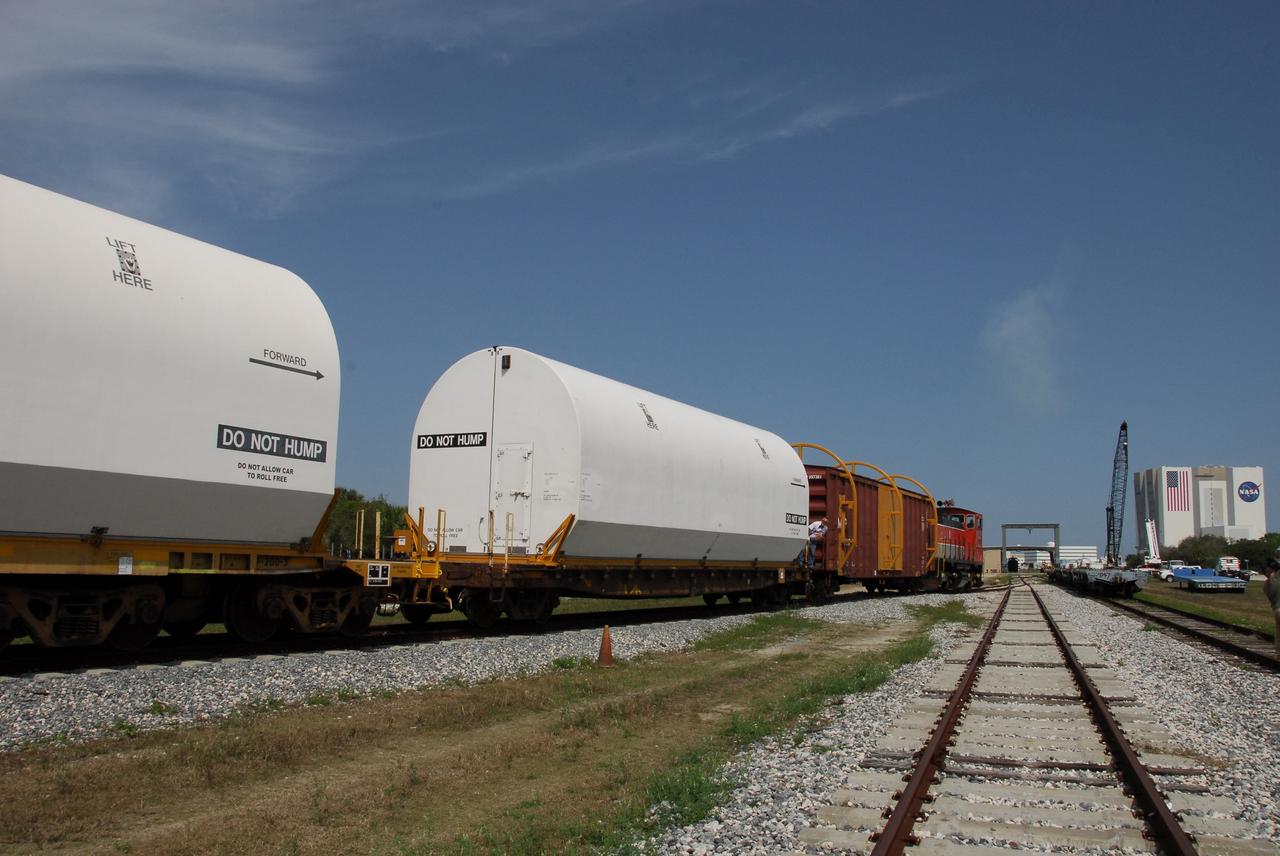
KENNEDY SPACE CENTER, FLA. -- The NASA Railroad train moves along the track through NASA's Kennedy Space Center. In the distance, at right, is the Vehicle Assembly Building. The train is hauling the solid rocket booster segments from the STS-122 mission. After a mission, the spent boosters are recovered, cleaned, disassembled, refurbished and reused after each launch. After hydrolasing the interior of each segment, they are placed on flatbed trucks. The individual booster segments are transferred to a railhead located at the railroad yard. The covered segments will be moved to Titusville for interchange with Florida East Coast Railway to begin the trip back to the Thiokol plant in Wa¬satch, Utah. Photo credit: NASA/Jack Pfaller
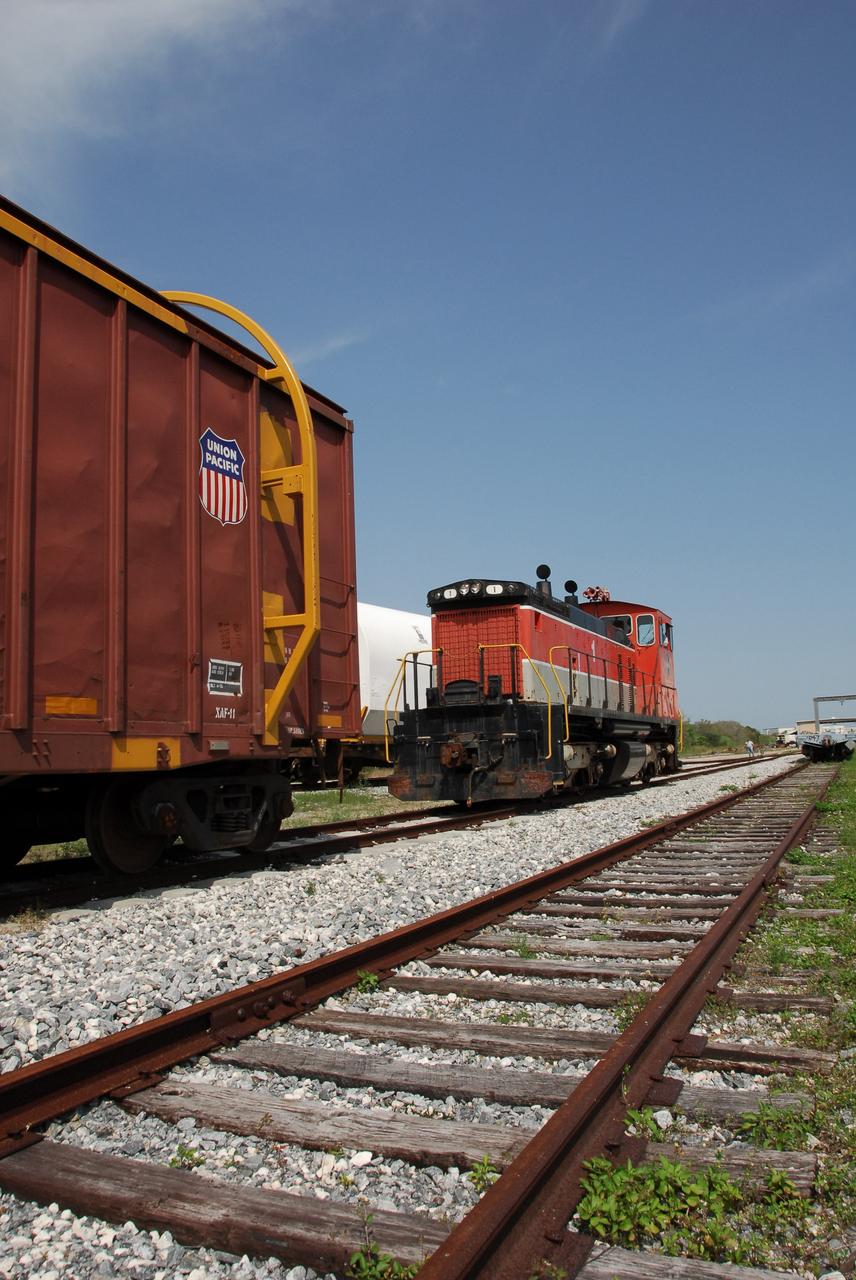
KENNEDY SPACE CENTER, FLA. -- The NASA Railroad train moves along the track in NASA Kennedy Space Center's railroad yard. The train is hauling the solid rocket booster segments from the STS-122 mission. After a mission, the spent boosters are recovered, cleaned, disassembled, refurbished and reused after each launch. After hydrolasing the interior of each segment, they are placed on flatbed trucks. The individual booster segments are transferred to a railhead located at the railroad yard. The covered segments will be moved to Titusville for interchange with Florida East Coast Railway to begin the trip back to the Thiokol plant in Wa¬satch, Utah. Photo credit: NASA/Jack Pfaller
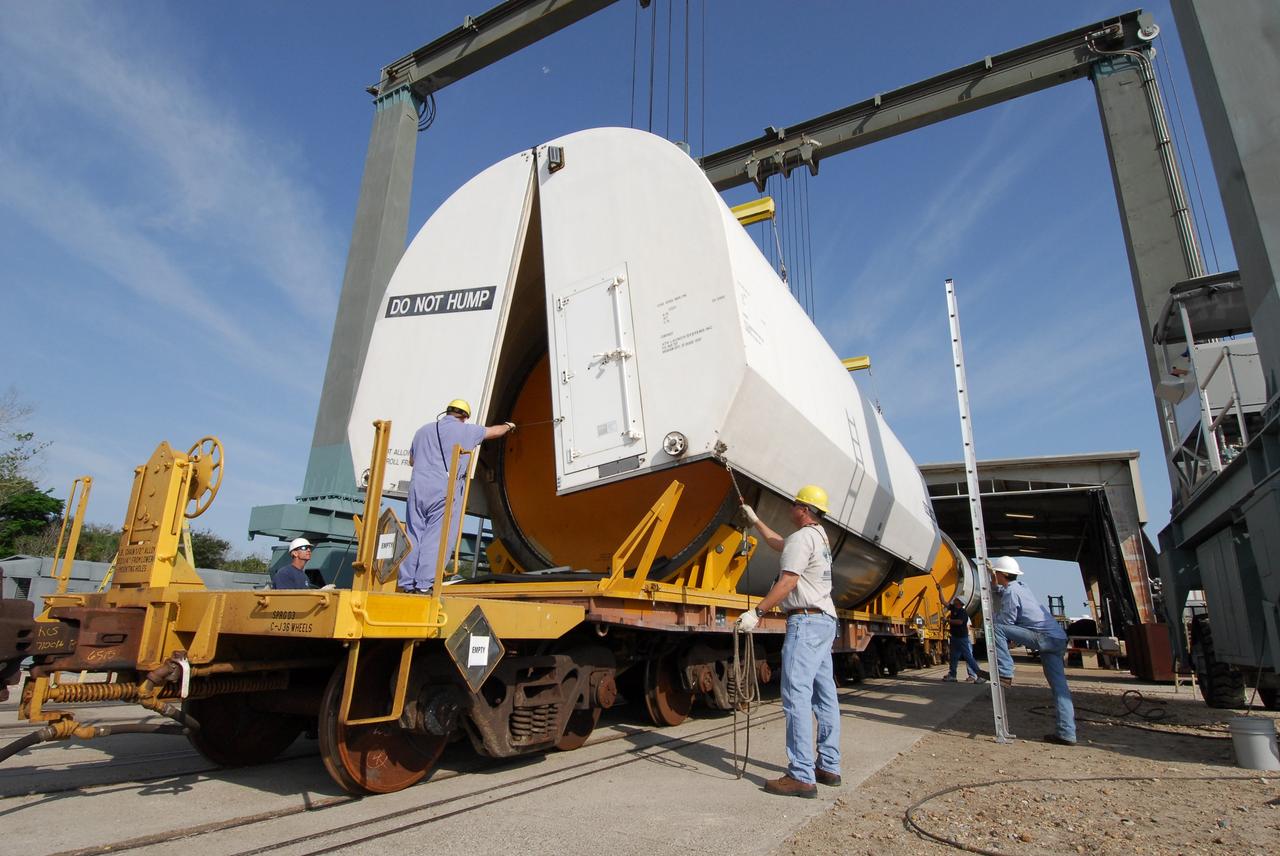
KENNEDY SPACE CENTER, FLA. -- At the NASA Railroad yard at NASA's Kennedy Space Center, workers lower a transportation cover over a solid rocket booster segment from the STS-122 mission. Loaded on the railroad cars, the segments will be transported to Utah. After a mission, the spent boosters are recovered, cleaned, disassembled, refurbished and reused after each launch. After hydrolasing the interior of each segment, they are placed on flatbed trucks. The individual booster segments are transferred to a railhead located at the railroad yard. The covered segments will be moved to Titusville for interchange with Florida East Coast Railway to begin the trip back to the Thiokol plant in Wa¬satch, Utah. Photo credit: NASA/Jack Pfaller
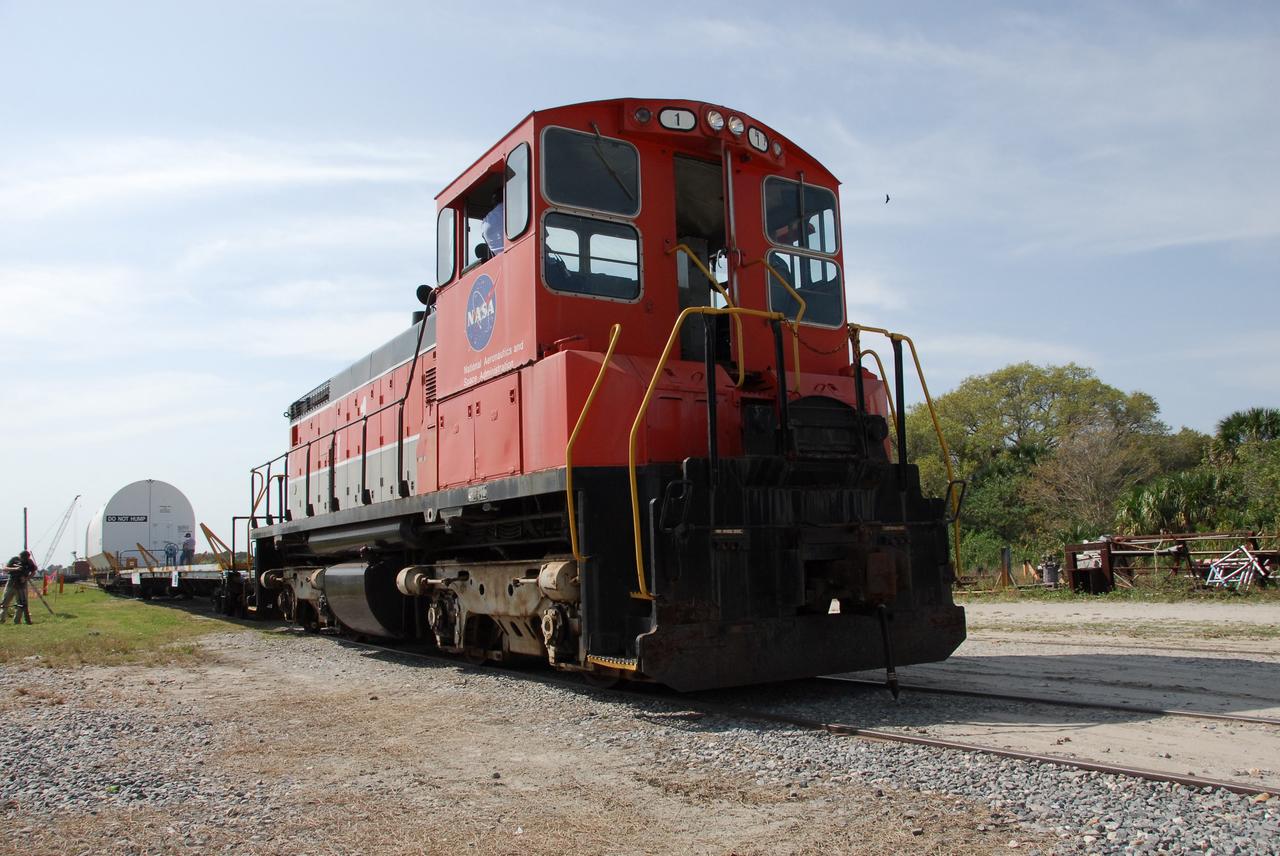
KENNEDY SPACE CENTER, FLA. -- The NASA Railroad train moves along the track away from NASA Kennedy Space Center's railroad yard. The train is hauling the solid rocket booster segments from the STS-122 mission. After a mission, the spent boosters are recovered, cleaned, disassembled, refurbished and reused after each launch. After hydrolasing the interior of each segment, they are placed on flatbed trucks. The individual booster segments are transferred to a railhead located at the railroad yard. The covered segments will be moved to Titusville for interchange with Florida East Coast Railway to begin the trip back to the Thiokol plant in Wa¬satch, Utah. Photo credit: NASA/Jack Pfaller
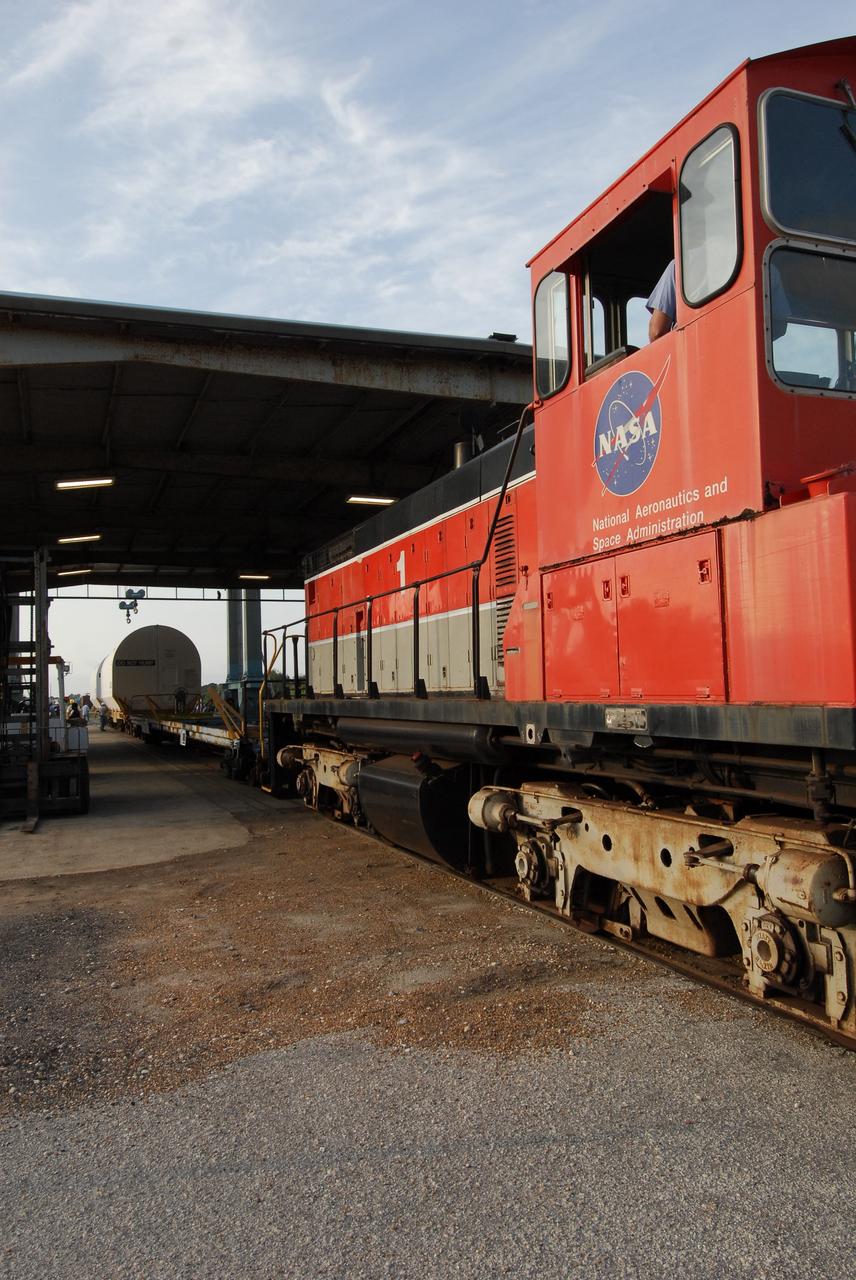
KENNEDY SPACE CENTER, FLA. -- A segment of a solid rocket booster from the STS-122 mission is loaded on the NASA Railroad at NASA's Kennedy Space Center. After a mission, the spent boosters are recovered, cleaned, disassembled, refurbished and reused after each launch. After hydrolasing the interior of each segment, they are placed on flatbed trucks. The individual booster segments are transferred to a railhead located at the railroad yard. The covered segments will be moved to Titusville for interchange with Florida East Coast Railway to begin the trip back to the Thiokol plant in Wa¬satch, Utah. Photo credit: NASA/Jack Pfaller
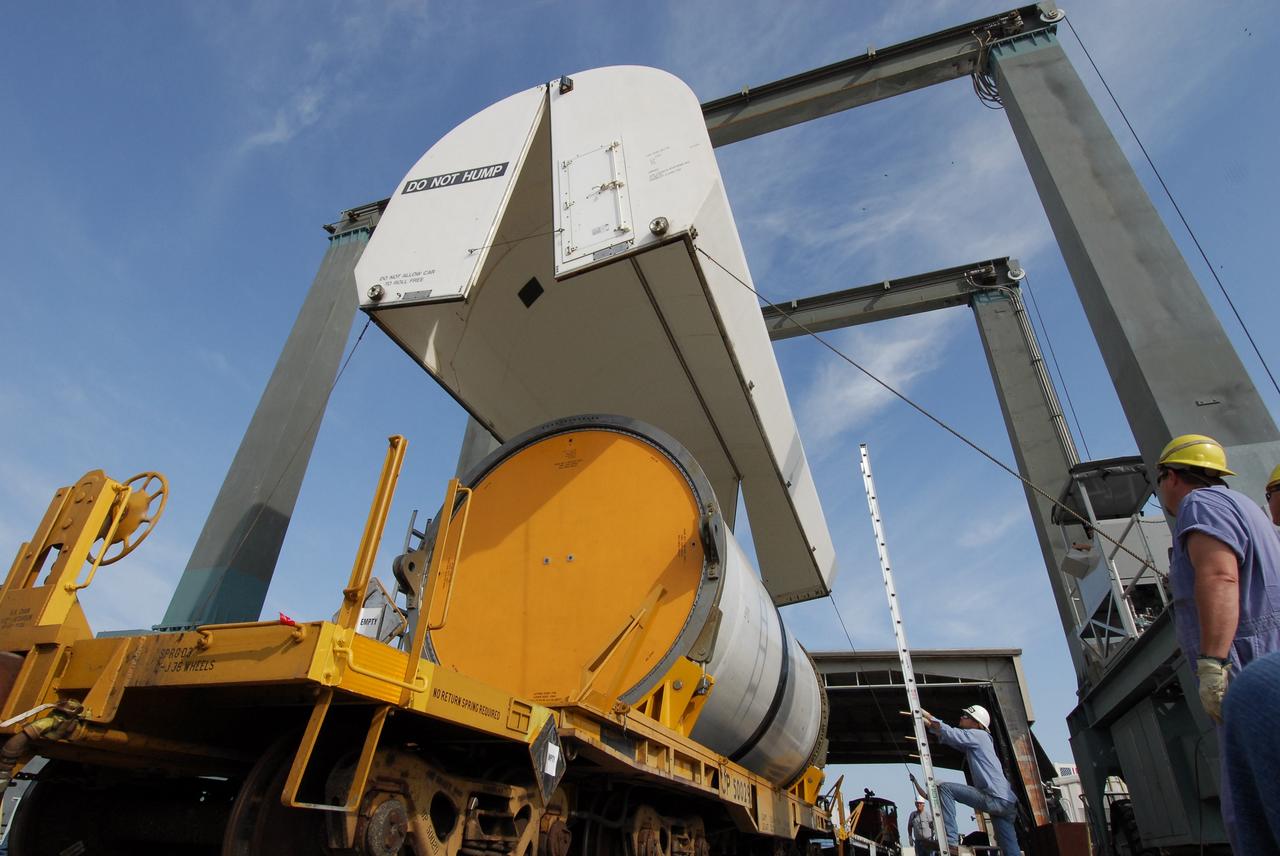
KENNEDY SPACE CENTER, FLA. -- At the NASA Railroad yard at NASA's Kennedy Space Center, workers lower a transportation cover over another solid rocket booster segment from the STS-122 mission. Loaded on the railroad cars, the segments will be transported to Utah. After a mission, the spent boosters are recovered, cleaned, disassembled, refurbished and reused after each launch. After hydrolasing the interior of each segment, they are placed on flatbed trucks. The individual booster segments are transferred to a railhead located at the railroad yard. The covered segments will be moved to Titusville for interchange with Florida East Coast Railway to begin the trip back to the Thiokol plant in Wa¬satch, Utah. Photo credit: NASA/Jack Pfaller

U.S. Senator Maria Cantwell (D-WA) provides remarks during an event at the Russell Senate Office Building with the crew of the Artemis II mission NASA astronauts Reid Wiseman, commander; Victor Glover, pilot; Christina Koch, mission specialist; and CSA (Canadian Space Agency) astronaut Jeremy Hansen, mission specialist, Tuesday, May 12, 2026, in Washington. NASA’s Artemis II mission took Wiseman, Glover, Koch, and Hansen on a nearly 10-day journey around the Moon and back to Earth in April 2026. Photo Credit: (NASA/Aubrey Gemignani)

U.S. Senator Amy Klobuchar (D-MN), front left, and U.S. Senator Maria Cantwell (D-WA), back left, speak with NASA astronauts Reid Wiseman, commander; Victor Glover, pilot; Christina Koch, mission specialist; and CSA (Canadian Space Agency) astronaut Jeremy Hansen, mission specialist before an event at the Russell Senate Office Building, Tuesday, May 12, 2026, in Washington. NASA’s Artemis II mission took Wiseman, Glover, Koch, and Hansen on a nearly 10-day journey around the Moon and back to Earth in April 2026. Photo Credit: (NASA/Aubrey Gemignani)
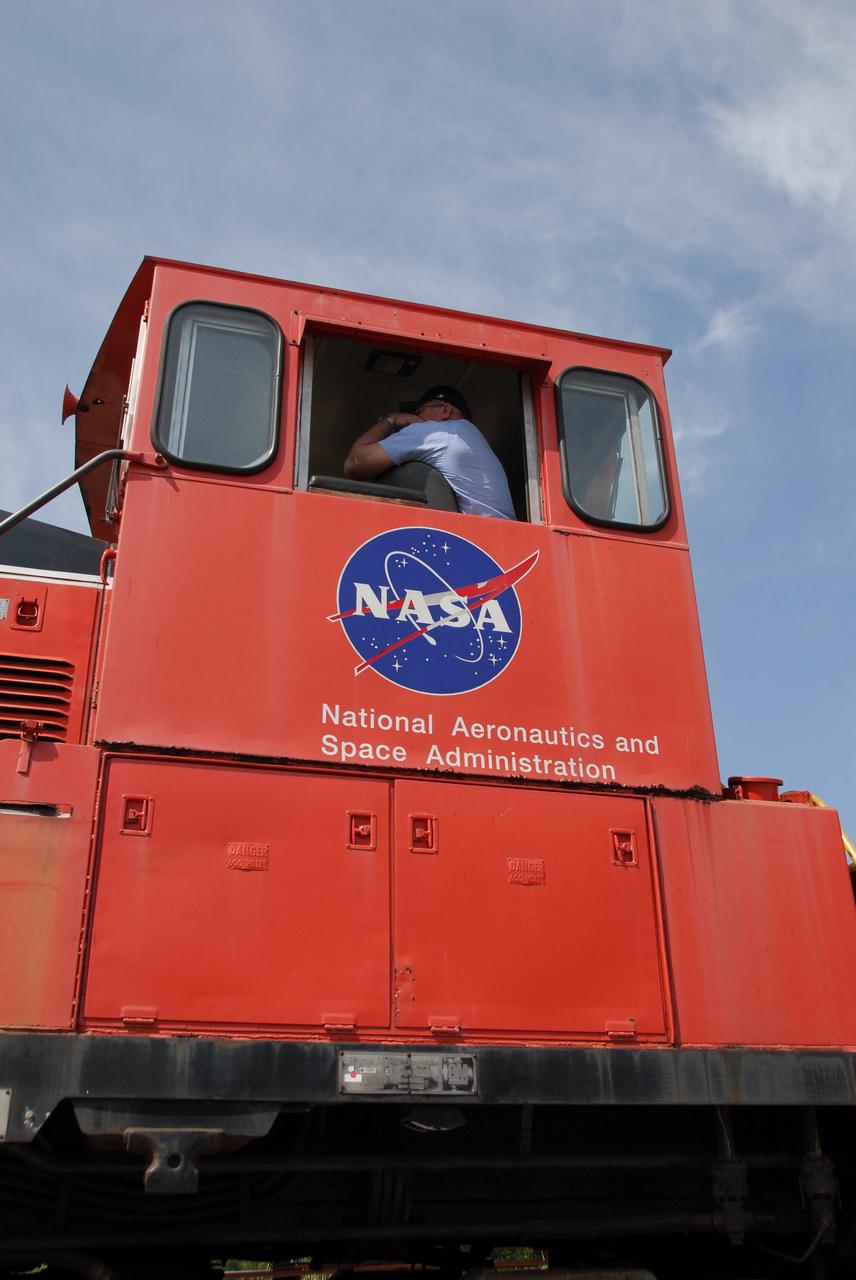
KENNEDY SPACE CENTER, FLA. -- The driver of the NASA Railroad train keeps his eye on the track ahead as the train moves through NASA Kennedy Space Center's Launch Complex 39 Area. The train is hauling the solid rocket booster segments from the STS-122 mission. After a mission, the spent boosters are recovered, cleaned, disassembled, refurbished and reused after each launch. After hydrolasing the interior of each segment, they are placed on flatbed trucks. The individual booster segments are transferred to a railhead located at the railroad yard. The covered segments will be moved to Titusville for interchange with Florida East Coast Railway to begin the trip back to the Thiokol plant in Wa¬satch, Utah. Photo credit: NASA/Jack Pfaller
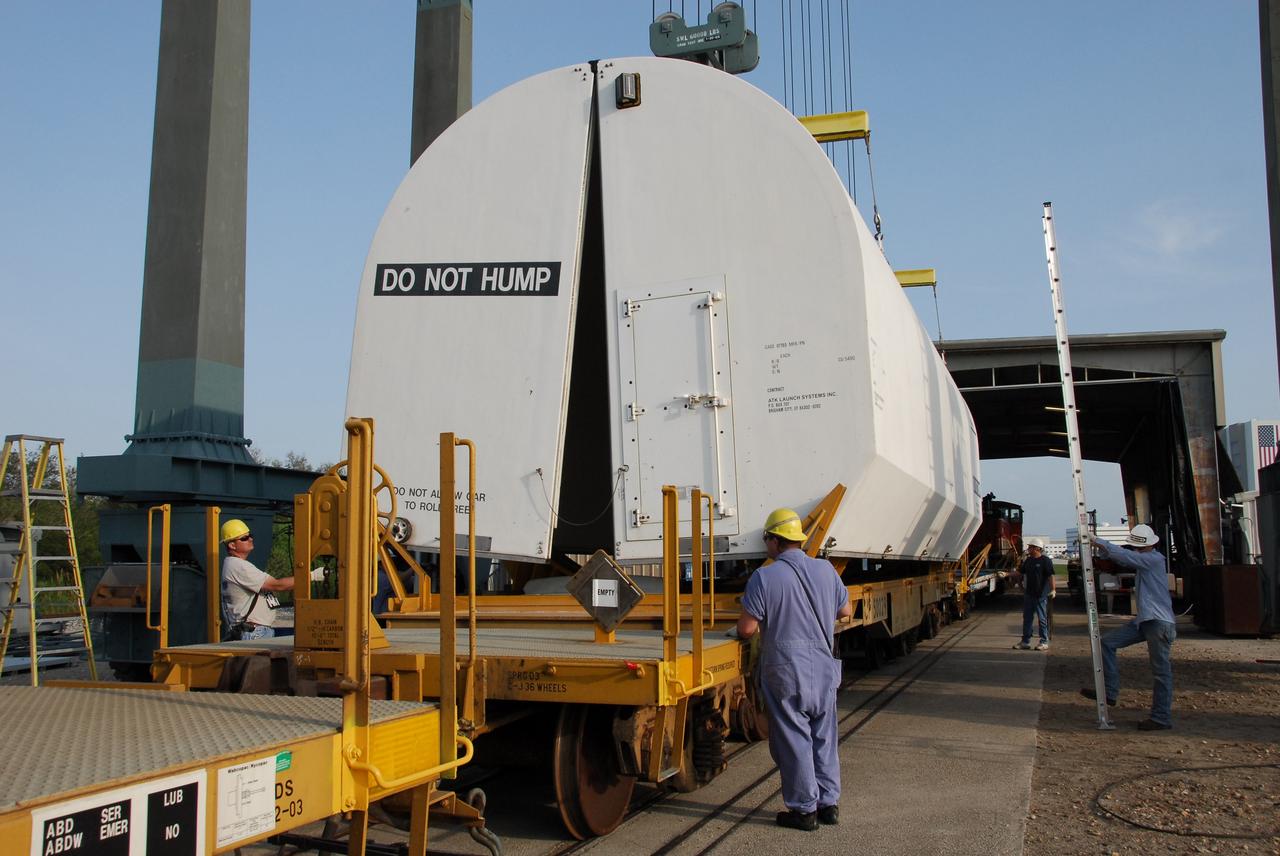
KENNEDY SPACE CENTER, FLA. -- Workers at the Railroad yard at NASA's Kennedy Space Center stand ready to secure the transportation cover over the solid rocket booster segment that is being transported to Utah. The spent segments are part of the booster used to launch space shuttle Atlantis on the STS-122 mission in February. After a mission, the spent boosters are recovered, cleaned, disassembled, refurbished and reused after each launch. After hydrolasing the interior of each segment, they are placed on flatbed trucks. The individual booster segments are transferred to a railhead located at the railroad yard. The covered segments will be moved to Titusville for interchange with Florida East Coast Railway to begin the trip back to the Thiokol plant in Wa¬satch, Utah. Photo credit: NASA/Jack Pfaller
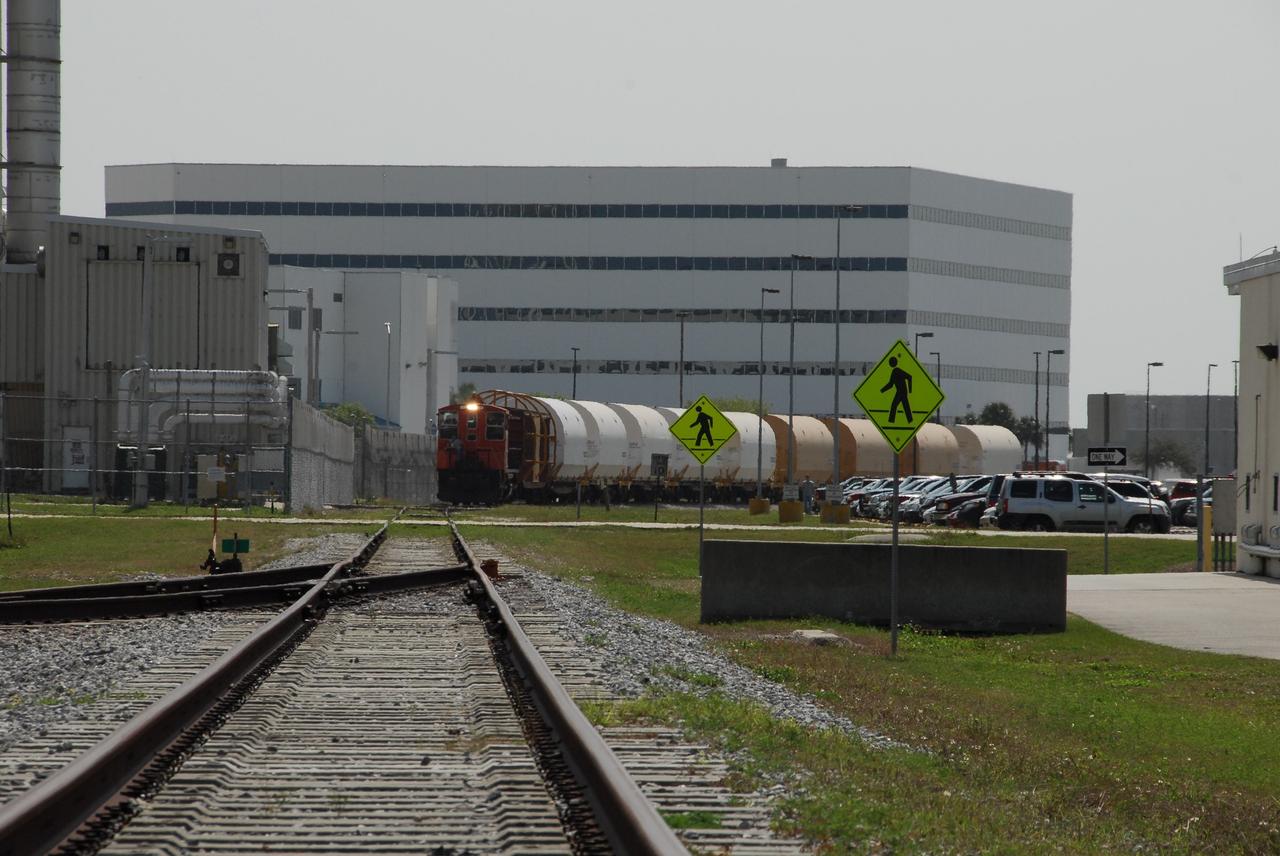
KENNEDY SPACE CENTER, FLA. -- The NASA Railroad train moves along the track through NASA's Kennedy Space Center. Behind it is the Operations and Support Building I in the Launch Complex 39 Area. The train is hauling the solid rocket booster segments from the STS-122 mission. After a mission, the spent boosters are recovered, cleaned, disassembled, refurbished and reused after each launch. After hydrolasing the interior of each segment, they are placed on flatbed trucks. The individual booster segments are transferred to a railhead located at the railroad yard. The covered segments will be moved to Titusville for interchange with Florida East Coast Railway to begin the trip back to the Thiokol plant in Wa¬satch, Utah. Photo credit: NASA/Jack Pfaller
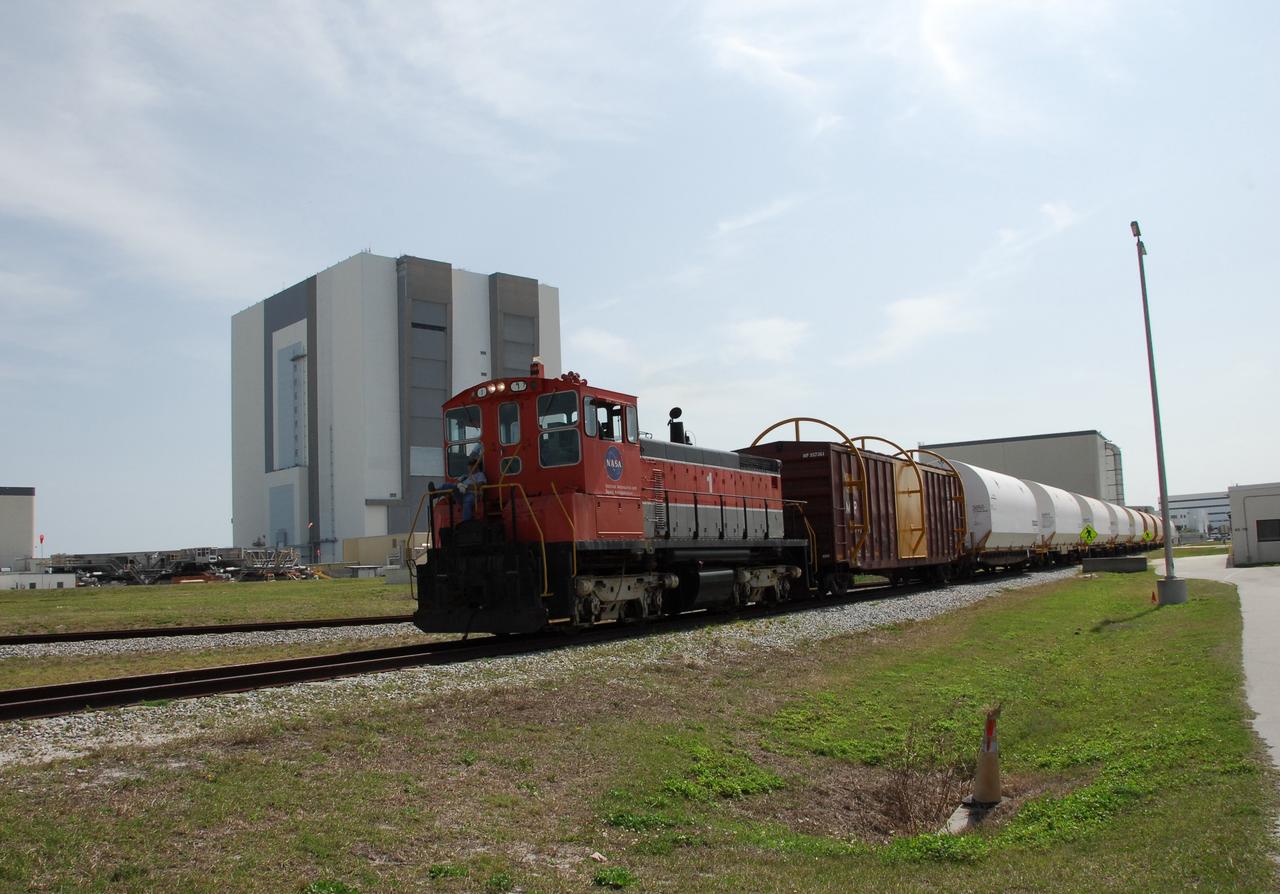
KENNEDY SPACE CENTER, FLA. -- The NASA Railroad train moves along the track through NASA Kennedy Space Center's Launch Complex 39 Area. Behind the locomotive car is the Vehicle Assembly Building. The train is hauling the solid rocket booster segments from the STS-122 mission. After a mission, the spent boosters are recovered, cleaned, disassembled, refurbished and reused after each launch. After hydrolasing the interior of each segment, they are placed on flatbed trucks. The individual booster segments are transferred to a railhead located at the railroad yard. The covered segments will be moved to Titusville for interchange with Florida East Coast Railway to begin the trip back to the Thiokol plant in Wa¬satch, Utah. Photo credit: NASA/Jack Pfaller
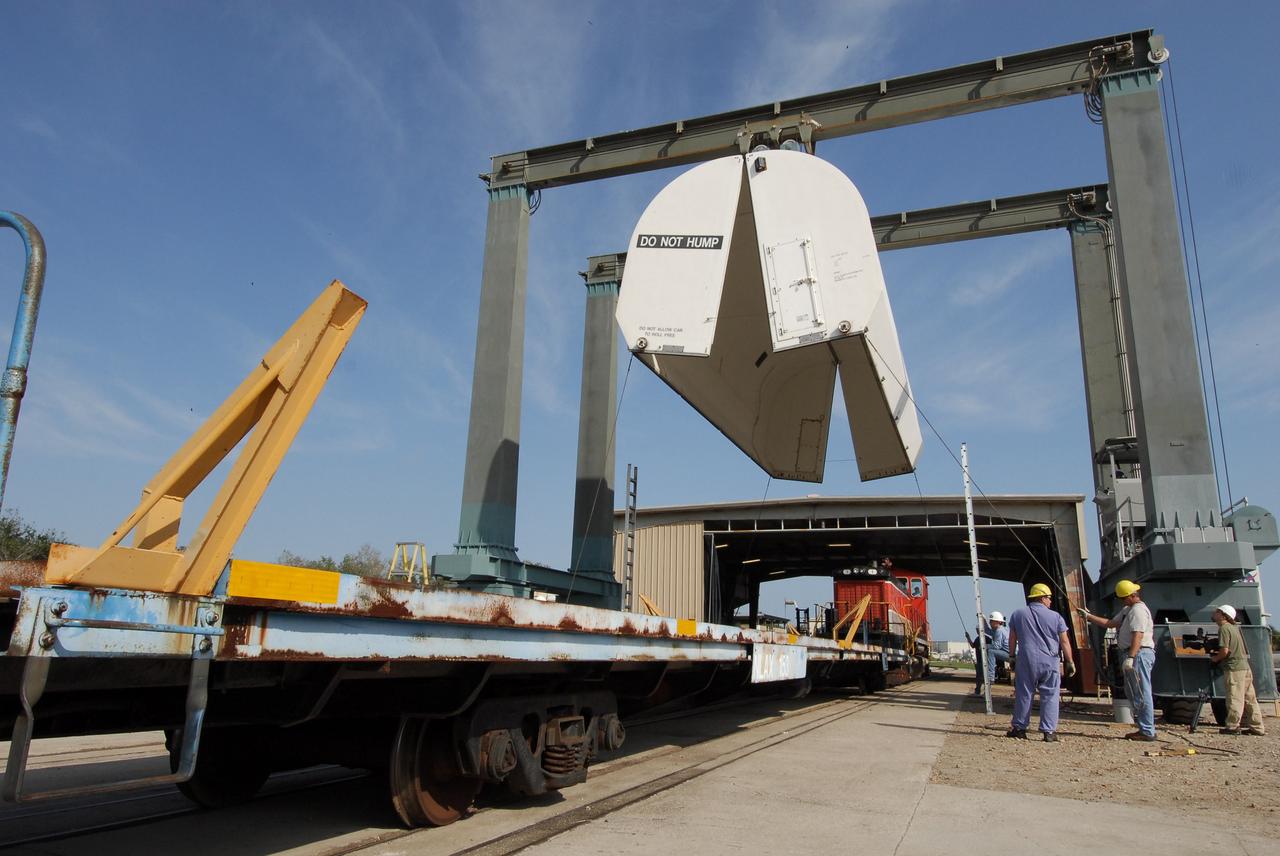
KENNEDY SPACE CENTER, FLA. -- At the NASA Railroad yard at NASA's Kennedy Space Center, a transportation cover is suspended above the railroad, waiting to be placed over another solid rocket booster segment from the STS-122 mission. Loaded on the railroad cars, the segments will be transported to Utah. After a mission, the spent boosters are recovered, cleaned, disassembled, refurbished and reused after each launch. After hydrolasing the interior of each segment, they are placed on flatbed trucks. The individual booster segments are transferred to a railhead located at the railroad yard. The covered segments will be moved to Titusville for interchange with Florida East Coast Railway to begin the trip back to the Thiokol plant in Wa¬satch, Utah. Photo credit: NASA/Jack Pfaller

NASA astronaut Reid Wiseman, Artemis II commander provides remarks as, from left to right, NASA Administrator Jared Isaacman; CSA (Canadian Space Agency) astronaut Jeremy Hansen, Artemis II mission specialist; NASA astronaut Christina Koch, Artemis II mission specialist; U.S. Senator Ted Cruz (R-Texas); U.S. Senator Maria Cantwell (D-WA); and U.S. Senator Amy Klobuchar (D-MN), look on during an event at the Russell Senate Office Building, Tuesday, May 12, 2026, in Washington. NASA’s Artemis II mission took Wiseman, Koch, Hansen, and NASA astronaut Victor Glover, Artemis II pilot, on a nearly 10-day journey around the Moon and back to Earth in April 2026. Photo Credit: (NASA/Aubrey Gemignani)

U.S. Senator Ted Cruz (R-Texas) provides remarks as from left to right, CSA (Canadian Space Agency) astronaut Jeremy Hansen, Artemis II mission specialist; NASA astronaut Christina Koch, Artemis II mission specialist; U.S. Senator Maria Cantwell (D-WA); NASA astronaut Reid Wiseman, Artemis II commander; U.S. Senator Amy Klobuchar (D-MN); and NASA astronaut Victor Glover, Artemis II pilot look on during an event at the Russell Senate Office Building, Tuesday, May 12, 2026, in Washington. NASA’s Artemis II mission took Wiseman, Glover, Koch, and Hansen on a nearly 10-day journey around the Moon and back to Earth in April 2026. Photo Credit: (NASA/Aubrey Gemignani)

U.S. Senator Ted Cruz (R-Texas) provides remarks as from left to right, CSA (Canadian Space Agency) astronaut Jeremy Hansen, Artemis II mission specialist; NASA astronaut Christina Koch, Artemis II mission specialist; U.S. Senator Maria Cantwell (D-WA); NASA astronaut Reid Wiseman, Artemis II commander; U.S. Senator Amy Klobuchar (D-MN); NASA astronaut Victor Glover, Artemis II pilot; U.S. Senator Lisa Blunt Rochester (D-DE); and U.S. Senator Andy Kim (D-NJ) look on during an event at the Russell Senate Office Building, Tuesday, May 12, 2026, in Washington. NASA’s Artemis II mission took Wiseman, Glover, Koch, and Hansen on a nearly 10-day journey around the Moon and back to Earth in April 2026. Photo Credit: (NASA/Aubrey Gemignani)

U.S. Senator Maria Cantwell (D-WA) provides remarks as from left to right, U.S. Senator Ted Cruz (R-Texas); NASA astronaut Reid Wiseman, Artemis II commander; U.S. Senator Amy Klobuchar (D-MN); NASA astronaut Victor Glover, Artemis II pilot; U.S. Senator Lisa Blunt Rochester (D-DE); and U.S. Senator Andy Kim (D-NJ) look on during an event at the Russell Senate Office Building, Tuesday, May 12, 2026, in Washington. NASA’s Artemis II mission took Wiseman, Glover, Koch, and Hansen on a nearly 10-day journey around the Moon and back to Earth in April 2026. Photo Credit: (NASA/Aubrey Gemignani)

U.S. Senator Maria Cantwell (D-WA) provides remarks as from left to right, NASA Administrator Jared Isaacman; CSA (Canadian Space Agency) astronaut Jeremy Hansen, Artemis II mission specialist; NASA astronaut Christina Koch, Artemis II mission specialist; U.S. Senator Ted Cruz (R-Texas); NASA astronaut Reid Wiseman, Artemis II commander; U.S. Senator Amy Klobuchar (D-MN); NASA astronaut Victor Glover, Artemis II pilot; U.S. Senator Lisa Blunt Rochester (D-DE); U.S. Senator Andy Kim (D-NJ); and U.S. Senator Edward Markey (D-Mass.), look on during an event at the Russell Senate Office Building, Tuesday, May 12, 2026, in Washington. NASA’s Artemis II mission took Wiseman, Glover, Koch, and Hansen on a nearly 10-day journey around the Moon and back to Earth in April 2026. Photo Credit: (NASA/Aubrey Gemignani)