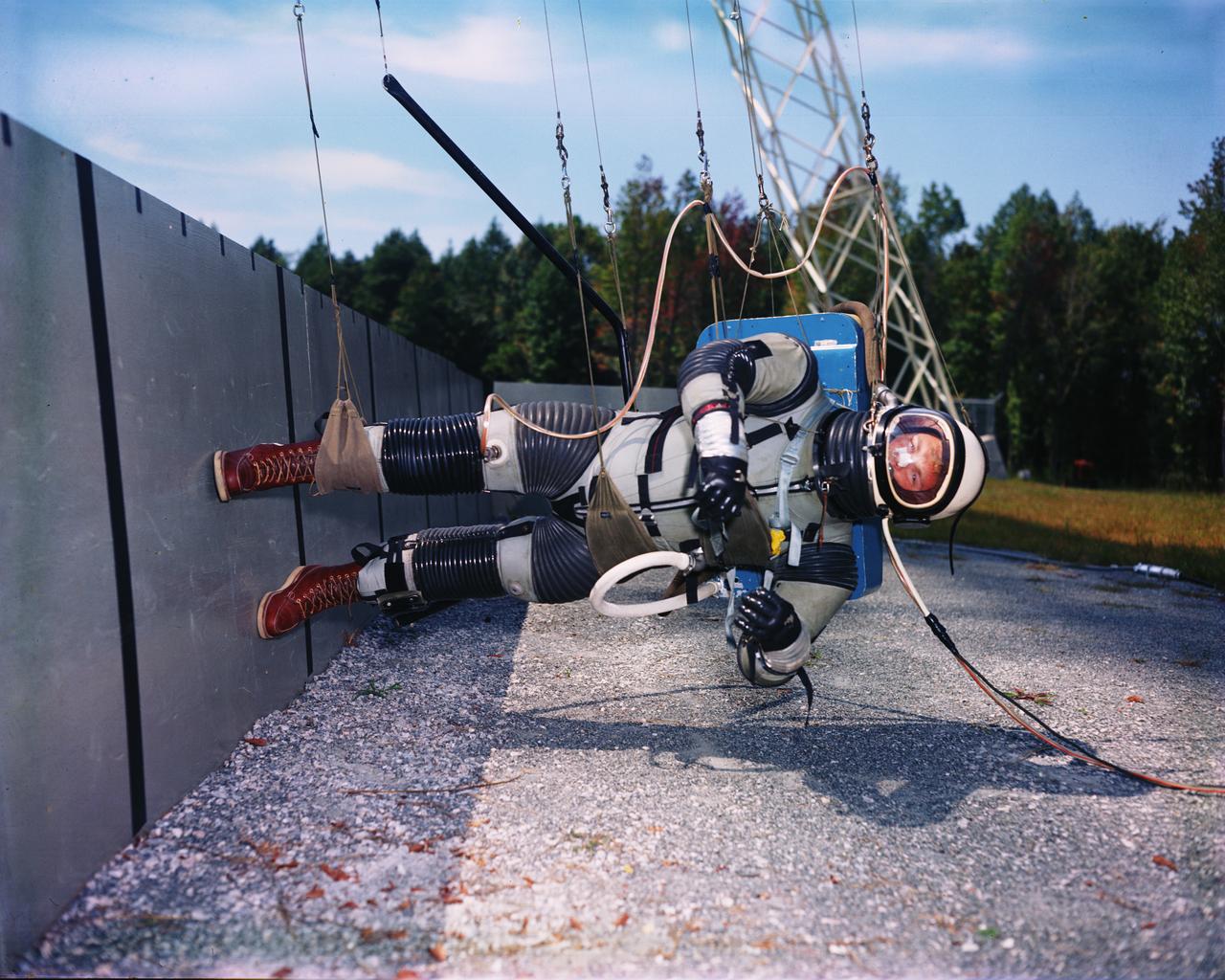
Lunar Landing Walking Simulator: Researchers at Langley study the ability of astronauts to walk, run and perform other tasks required during lunar exploration. The Reduced Gravity Simulator gave researchers the opportunity to look at the effects of one-sixth normal gravity on self-locomotion. Several Apollo astronauts practiced lunar waling at the facility.
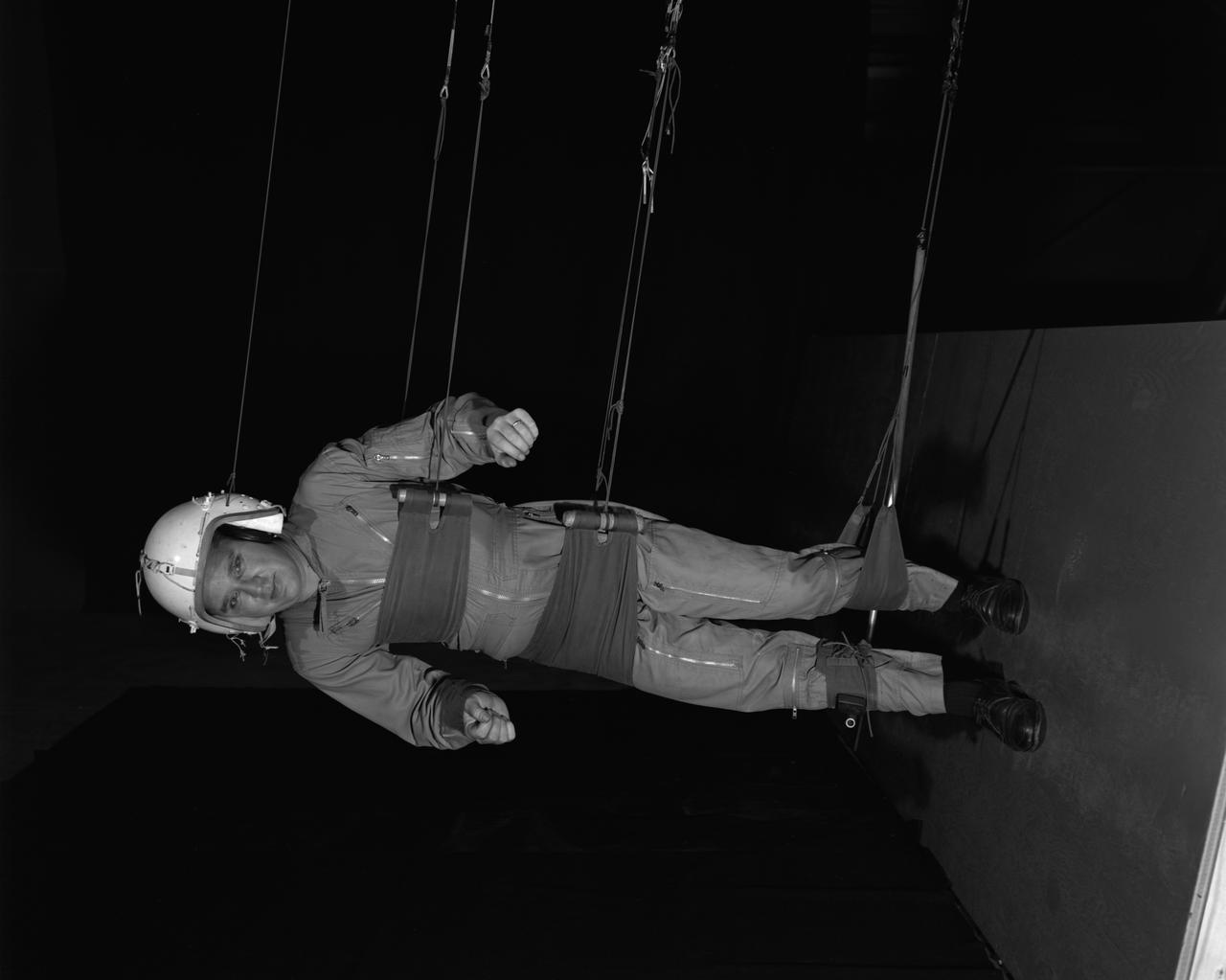
Reduced Gravity Walking Simulator located in the hangar at Langley Research Center. The initial version of this simulator was located inside the hangar. Later a larger version would be located at the Lunar Landing Facility. The purpose of this simulator was to study the subject while walking, jumping or running. Researchers conducted studies of various factors such as fatigue limit, energy expenditure, and speed of locomotion. A.W. Vigil wrote in his paper Discussion of Existing and Planned Simulators for Space Research, When the astronauts land on the moon they will be in an unfamiliar environment involving, particularly, a gravitational field only one-sixth as strong as on earth. A novel method of simulating lunar gravity has been developed and is supported by a puppet-type suspension system at the end of a long pendulum. A floor is provided at the proper angle so that one-sixth of the subject' s weight is supported by the floor with the remainder being supported by the suspension system. This simulator allows almost complete freedom in vertical translation and pitch and is considered to be a very realistic simulation of the lunar walking problem. For this problem this simulator suffers only slightly from the restrictions in lateral movement it puts on the test subject. This is not considered a strong disadvantage for ordinary walking problems since most of the motions do, in fact, occur in the vertical plane. However, this simulation technique would be severely restrictive if applied to the study of the extra-vehicular locomotion problem, for example, because in this situation complete six degrees of freedom are rather necessary. This technique, in effect, automatically introduces a two-axis attitude stabilization system into the problem. The technique could, however, be used in preliminary studies of extra-vehicular locomotion where, for example, it might be assumed that one axis of the attitude control system on the astronaut maneuvering unit may have failed. -- Published in James R. Hansen, Spaceflight Revolution: NASA Langley Research Center From Sputnik to Apollo, NASA SP-4308, p. 377 A.W. Vigil, Discussion of Existing and Planned Simulators for Space Research, Paper presented at Conference on the Role of Simulation in Space Technology, Blacksburg, VA, August 17-21, 1964.
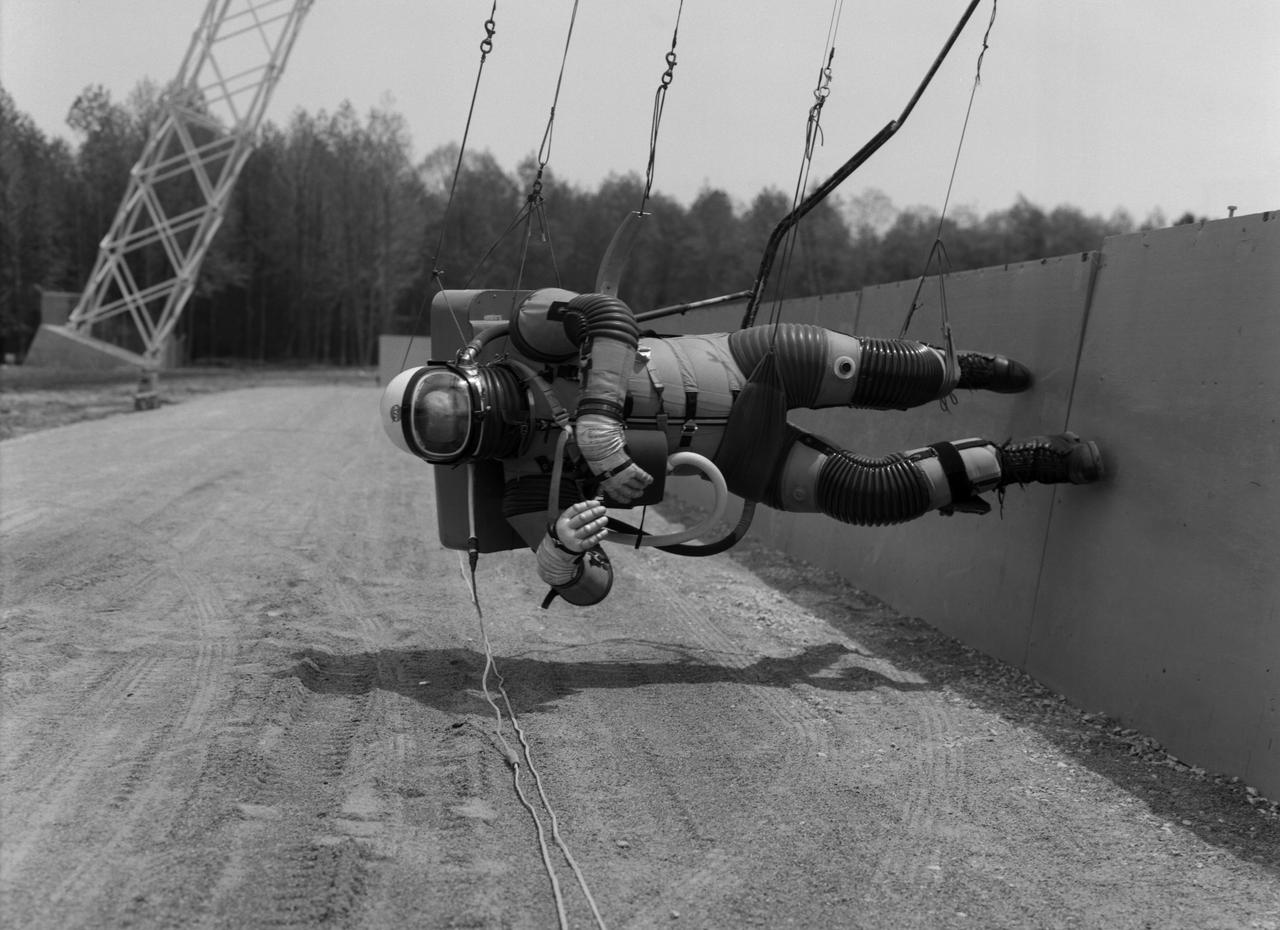
Test subject wearing the pressurized "space" suit for the Reduced Gravity Walking Simulator located at the Lunar Landing Facility. The purpose of this simulator was to study the subject while walking, jumping or running. Researchers conducted studies of various factors such as fatigue limit, energy expenditure, and speed of locomotion. A.W. Vigil described the purpose of the simulator in his paper "Discussion of Existing and Planned Simulators for Space Research," "When the astronauts land on the moon they will be in an unfamiliar environment involving, particularly, a gravitational field only one-sixth as strong as on earth. A novel method of simulating lunar gravity has been developed and is supported by a puppet-type suspension system at the end of a long pendulum. A floor is provided at the proper angle so that one-sixth of the subject's weight is supported by the floor with the remainder being supported by the suspension system. This simulator allows almost complete freedom in vertical translation and pitch and is considered to be a very realistic simulation of the lunar walking problem. For this problem this simulator suffers only slightly from the restrictions in lateral movement it puts on the test subject. This is not considered a strong disadvantage for ordinary walking problems since most of the motions do, in fact, occur in the vertical plane. However, this simulation technique would be severely restrictive if applied to the study of the extra-vehicular locomotion problem, for example, because in this situation complete six degrees of freedom are rather necessary. This technique, in effect, automatically introduces a two-axis attitude stabilization system into the problem. The technique could, however, be used in preliminary studies of extra-vehicular locomotion where, for example, it might be assumed that one axis of the attitude control system on the astronaut maneuvering unit may have failed." -- Published in James R. Hansen, Spaceflight Revolution: NASA Langley Research Center From Sputnik to Apollo, (Washington: NASA, 1995), p. 377; A.W. Vigil, "Discussion of Existing and Planned Simulators for Space Research," Paper presented at Conference on the Role of Simulation in Space Technology," Blacksburg, VA, August 17-21, 1964.
Cable system which supports the test subject on the Reduced Gravity Walking Simulator. The purpose of this simulator was to study the subject while walking, jumping or running. Researchers conducted studies of various factors such as fatigue limit, energy expenditure, and speed of locomotion. A.W. Vigil described the purpose of the simulator as follows: "When the astronauts land on the moon they will be in an unfamiliar environment involving, particularly, a gravitational field only one-sixth as strong as on earth. A novel method of simulating lunar gravity has been developed and is supported by a puppet-type suspension system at the end of a long pendulum. A floor is provided at the proper angle so that one-sixth of the subject's weight is supported by the floor with the remainder being supported by the suspension system. This simulator allows almost complete freedom in vertical translation and pitch and is considered to be a very realistic simulation of the lunar walking problem. For this problem this simulator suffers only slightly from the restrictions in lateral movement it puts on the test subject. This is not considered a strong disadvantage for ordinary walking problems since most of the motions do, in fact, occur in the vertical plane. However, this simulation technique would be severely restrictive if applied to the study of the extra-vehicular locomotion problem, for example, because in this situation complete six degrees of freedom are rather necessary. This technique, in effect, automatically introduces a two-axis attitude stabilization system into the problem. The technique could, however, be used in preliminary studies of extra-vehicular locomotion where, for example, it might be assumed that one axis of the attitude control system on the astronaut maneuvering unit may have failed." -- Published in James R. Hansen, Spaceflight Revolution: NASA Langley Research Center From Sputnik to Apollo, (Washington: NASA, 1995); A.W. Vigil, "Discussion of Existing and Planned Simulators for Space Research," Paper presented at Conference on the Role of Simulation in Space Technology," Blacksburg, VA, August 17-21, 1964.
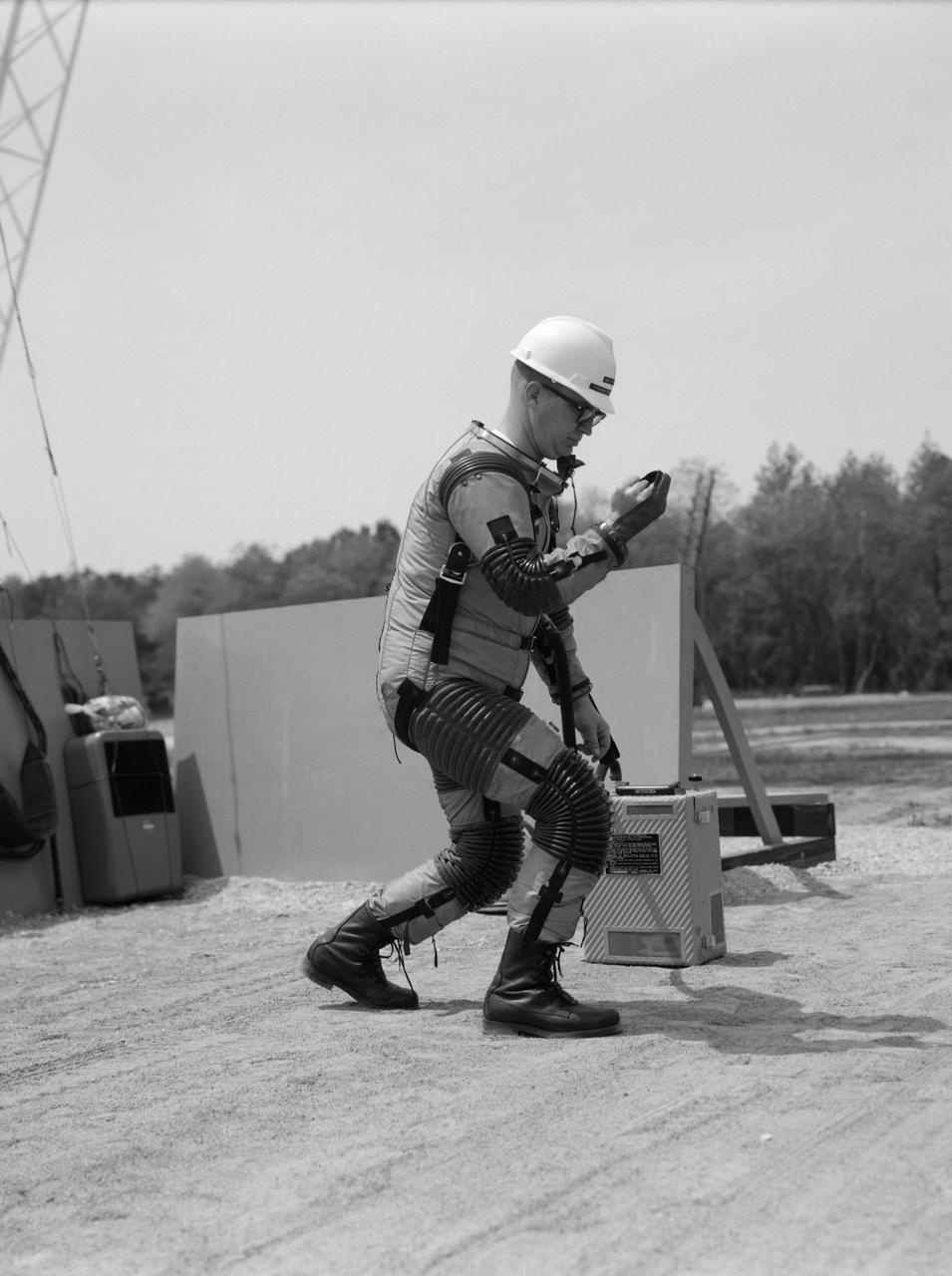
Special "space" suit for the Reduced Gravity Walking Simulator located at the Lunar Landing Facility. The purpose of this simulator was to study the subject while walking, jumping or running. Researchers conducted studies of various factors such as fatigue limit, energy expenditure, and speed of locomotion. A.W. Vigil described the purpose of the simulator in his paper "Discussion of Existing and Planned Simulators for Space Research," "When the astronauts land on the moon they will be in an unfamiliar environment involving, particularly, a gravitational field only one-sixth as strong as on earth. A novel method of simulating lunar gravity has been developed and is supported by a puppet-type suspension system at the end of a long pendulum. A floor is provided at the proper angle so that one-sixth of the subject's weight is supported by the floor with the remainder being supported by the suspension system. This simulator allows almost complete freedom in vertical translation and pitch and is considered to be a very realistic simulation of the lunar walking problem. For this problem this simulator suffers only slightly from the restrictions in lateral movement it puts on the test subject. This is not considered a strong disadvantage for ordinary walking problems since most of the motions do, in fact, occur in the vertical plane. However, this simulation technique would be severely restrictive if applied to the study of the extra-vehicular locomotion problem, for example, because in this situation complete six degrees of freedom are rather necessary. This technique, in effect, automatically introduces a two-axis attitude stabilization system into the problem. The technique could, however, be used in preliminary studies of extra-vehicular locomotion where, for example, it might be assumed that one axis of the attitude control system on the astronaut maneuvering unit may have failed." -- Published in James R. Hansen, Spaceflight Revolution: NASA Langley Research Center From Sputnik to Apollo, (Washington: NASA, 1995), p. 377; A.W. Vigil, "Discussion of Existing and Planned Simulators for Space Research," Paper presented at Conference on the Role of Simulation in Space Technology," Blacksburg, VA, August 17-21, 1964.
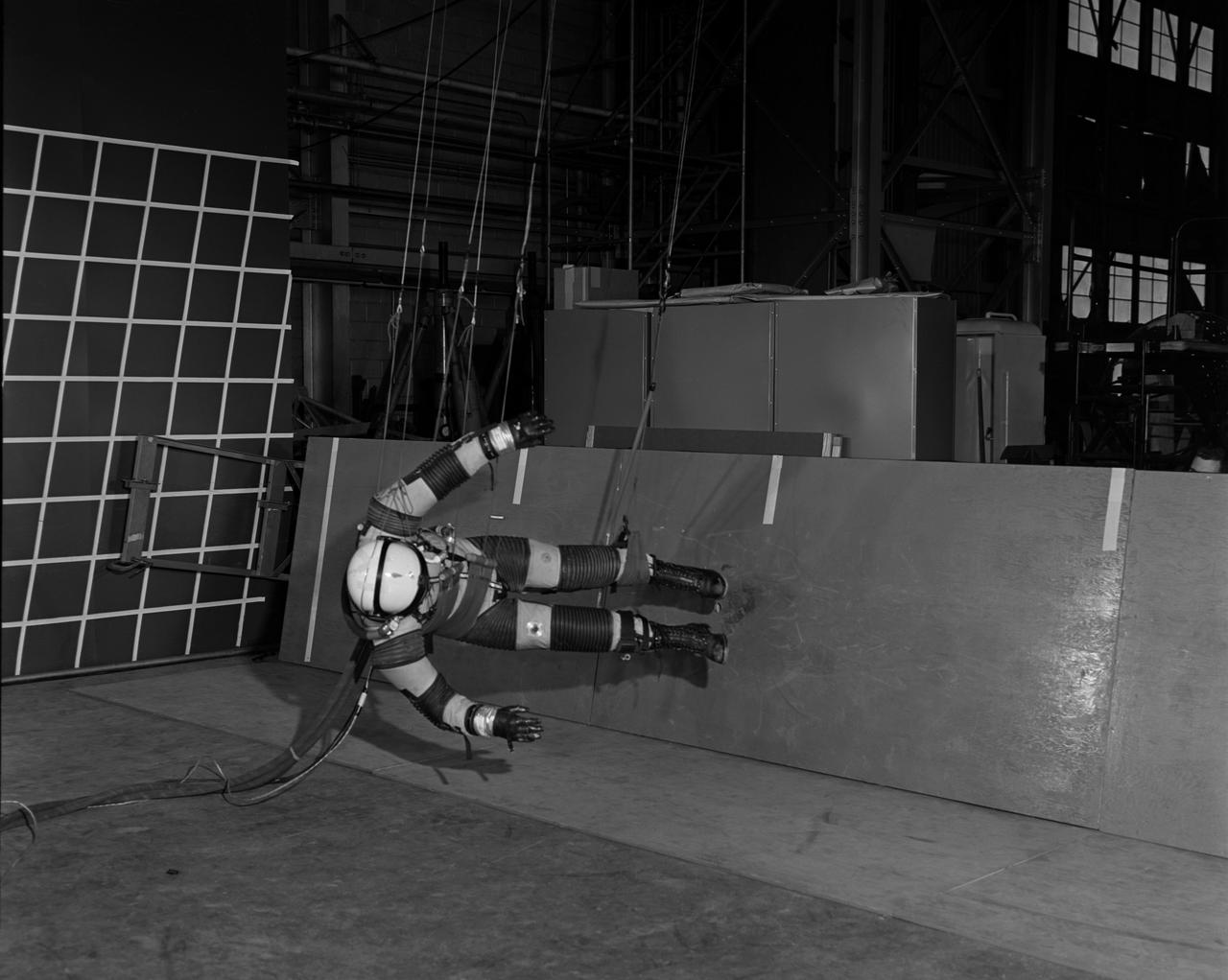
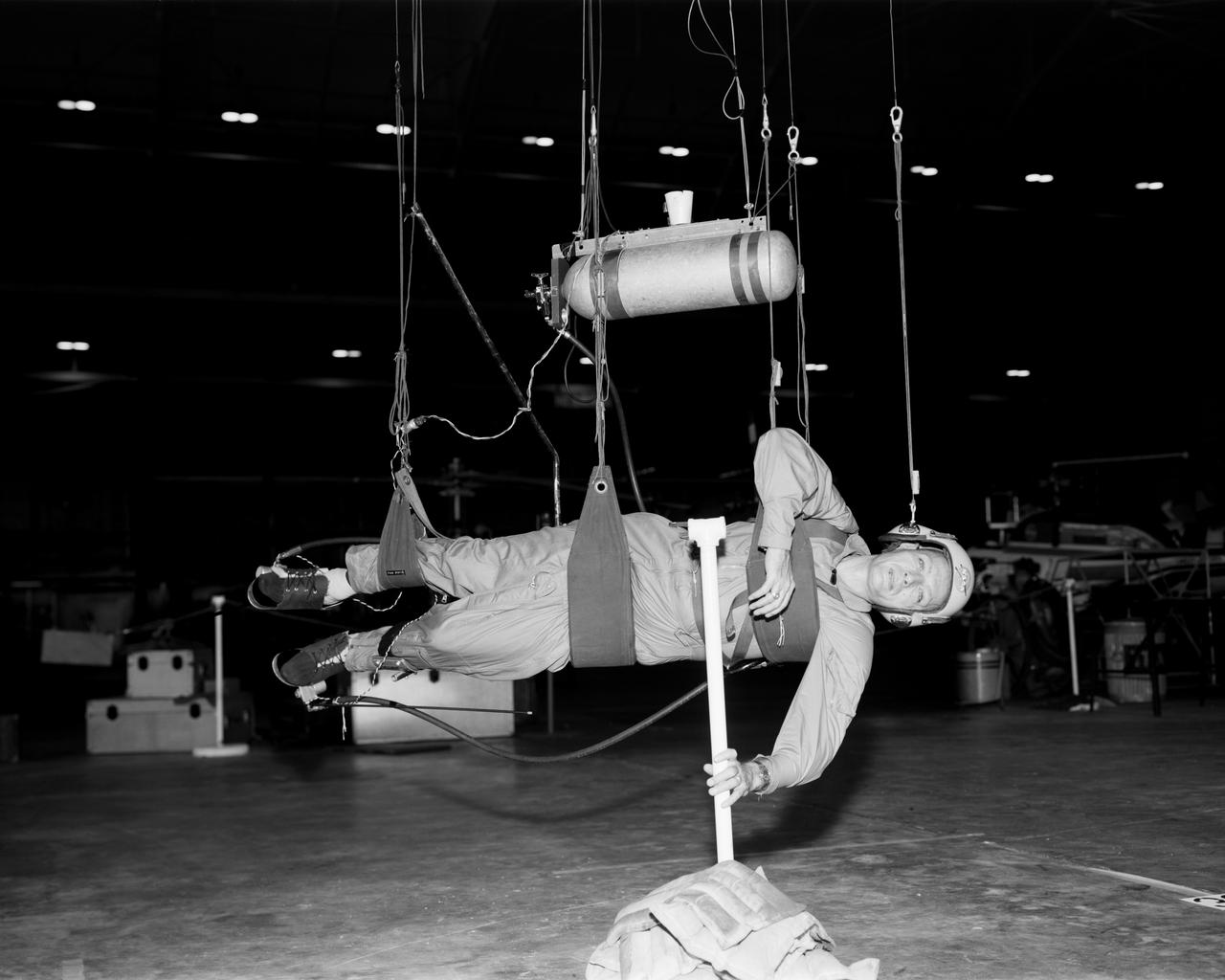
A "suited" test subject on the Reduced Gravity Walking Simulator located in the hangar at Langley Research Center. The initial version of this simulator was located inside the hangar. Later a larger version would be located at the Lunar Landing Facility. The purpose of this simulator was to study the subject while walking, jumping or running. Researchers conducted studies of various factors such as fatigue limit, energy expenditure, and speed of locomotion. Francis B. Smith wrote in "Simulators For Manned Space Research:" "The cables which support the astronaut are supported by an overhead trolley about 150 feet above the center line of the walkway and the support is arranged so that the subject is free to walk, run, jump, and perform other self-locomotive tasks in a more-or-less normal manner, even though he is constrained to move in one place." "The studies thus far show that an astronaut should have no particular difficulty in walking in a pressurized space suit on a hard lunar surface. Rather, the pace was faster and the suit was found to be more comfortable and less fatiguing under lunar "g" than under earth "g." When the test subject wished to travel hurriedly any appreciable distance, a long loping gait at about 10 feet per second was found to be most comfortable." -- Published in James R. Hansen, Spaceflight Revolution: NASA Langley Research Center From Sputnik to Apollo, (Washington: NASA, 1995), p. 377; Francis B. Smith, "Simulators For Manned Space Research," Paper for 1966 IEEE International Convention, New York, NY, March 21-25, 1966.
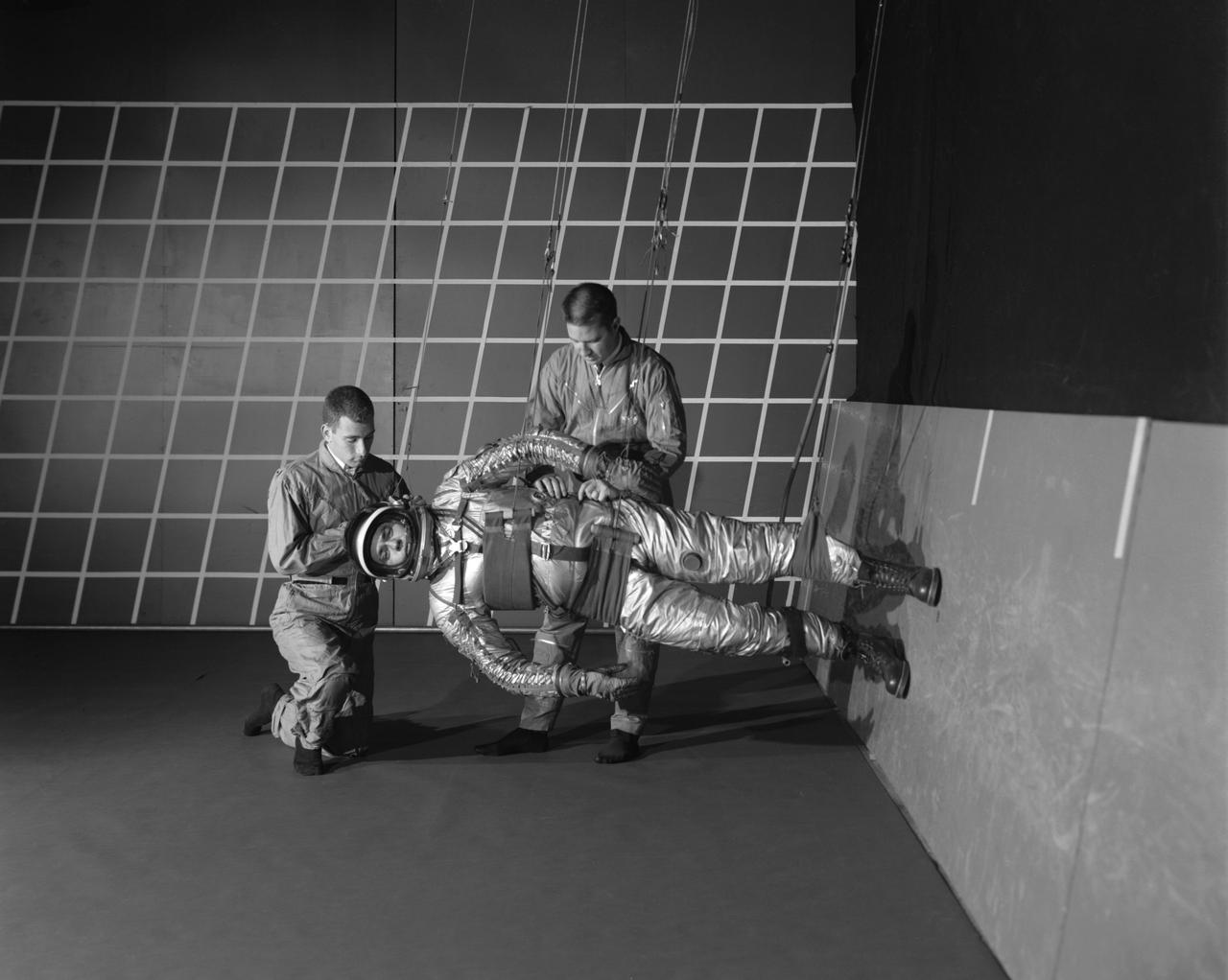
A test subject being suited up for studies on the Reduced Gravity Walking Simulator located in the hangar at Langley Research Center. The initial version of this simulator was located inside the hangar. Later a larger version would be located at the Lunar Landing Facility. The purpose of this simulator was to study the subject while walking, jumping or running. Researchers conducted studies of various factors such as fatigue limit, energy expenditure, and speed of locomotion. Francis B. Smith wrote in his paper "Simulators For Manned Space Research," "I would like to conclude this talk with a discussion of a device for simulating lunar gravity which is very effective and yet which is so simple that its cost is in the order of a few thousand dollars at most, rather than hundreds of thousands. With a little ingenuity, one could almost build this type simulator in his backyard for children to play on. The principle is ...if a test subject is suspended in a sling so that his body axis makes an angle of 9 1/2 degrees with the horizontal and if he then "stands" on a platform perpendicular to his body axis, the component of the earth's gravity forcing him toward the platform is one times the sine of 9 1/2 degrees or approximately 1/6 of the earth's normal gravity field. That is, a 180 pound astronaut "standing" on the platform would exert a force of only 30 pounds - the same as if he were standing upright on the lunar surface." -- Published in James R. Hansen, Spaceflight Revolution: NASA Langley Research Center From Sputnik to Apollo, NASA SP-4308; Francis B. Smith, "Simulators For Manned Space Research," Paper for 1966 IEEE International Convention, New York, NY, March 21-25, 1966
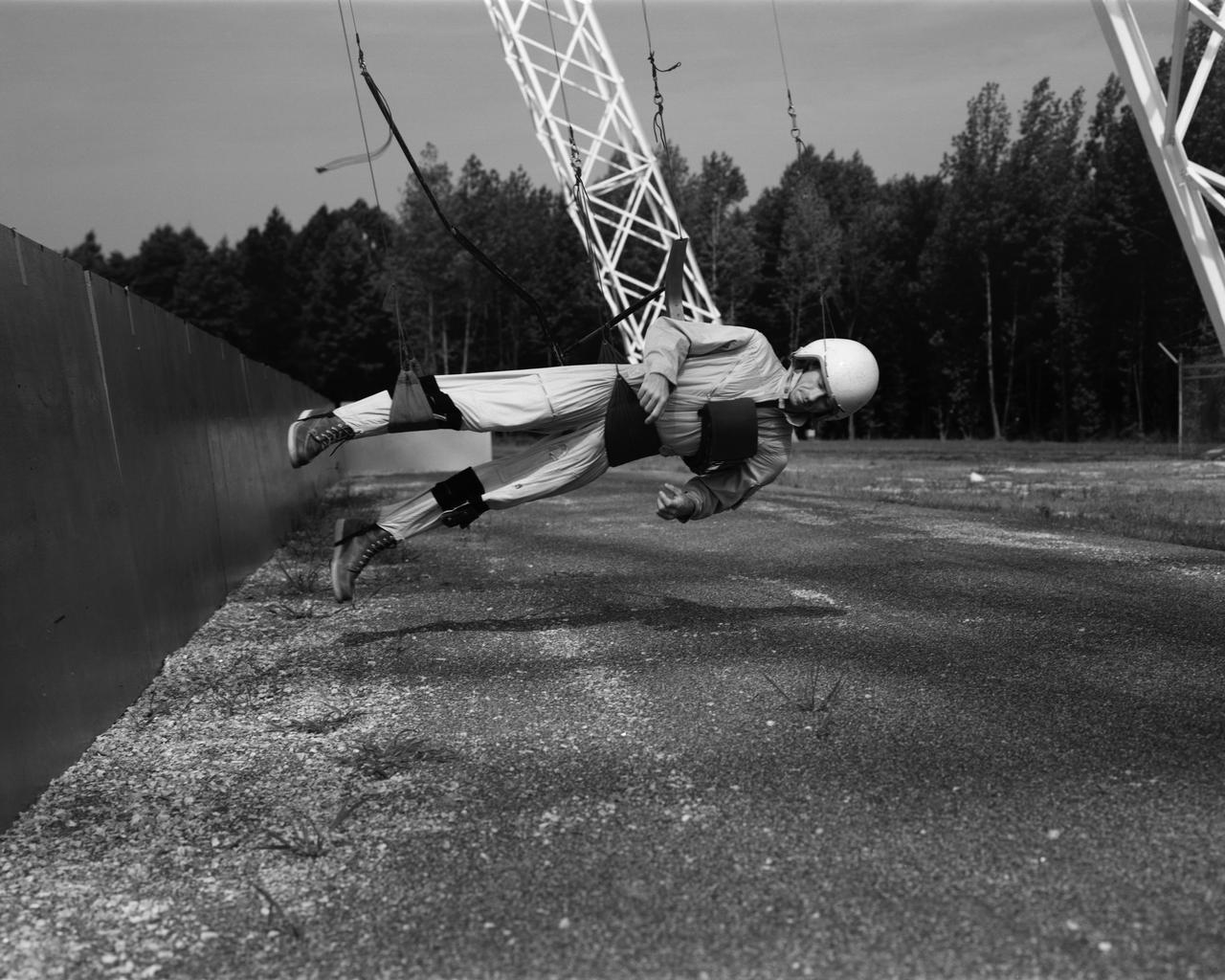
Astronaut Walt Cunningham on the Reduced Gravity Walking Simulator located at the Lunar Landing Facility. The purpose of this simulator was to study the subject while walking, jumping or running. Researchers conducted studies of various factors such as fatigue limit, energy expenditure, and speed of locomotion. A.W. Vigil described the purpose of the simulator in his paper "Discussion of Existing and Planned Simulators for Space Research," "When the astronauts land on the moon they will be in an unfamiliar environment involving, particularly, a gravitational field only one-sixth as strong as on earth. A novel method of simulating lunar gravity has been developed and is supported by a puppet-type suspension system at the end of a long pendulum. A floor is provided at the proper angle so that one-sixth of the subject's weight is supported by the floor with the remainder being supported by the suspension system. This simulator allows almost complete freedom in vertical translation and pitch and is considered to be a very realistic simulation of the lunar walking problem. For this problem this simulator suffers only slightly from the restrictions in lateral movement it puts on the test subject. This is not considered a strong disadvantage for ordinary walking problems since most of the motions do, in fact, occur in the vertical plane. However, this simulation technique would be severely restrictive if applied to the study of the extra-vehicular locomotion problem, for example, because in this situation complete six degrees of freedom are rather necessary. This technique, in effect, automatically introduces a two-axis attitude stabilization system into the problem. The technique could, however, be used in preliminary studies of extra-vehicular locomotion where, for example, it might be assumed that one axis of the attitude control system on the astronaut maneuvering unit may have failed." -- Published in James R. Hansen, Spaceflight Revolution: NASA Langley Research Center From Sputnik to Apollo, (Washington: NASA, 1995), p. 377; A.W. Vigil, "Discussion of Existing and Planned Simulators for Space Research," Paper presented at Conference on the Role of Simulation in Space Technology," Blacksburg, VA, August 17-21, 1964.

Astronaut Roger Chaffee on the Reduced Gravity Walking Simulator located at the Lunar Landing Facility. The purpose of this simulator was to study the subject while walking, jumping or running. Researchers conducted studies of various factors such as fatigue limit, energy expenditure, and speed of locomotion. A.W. Vigil, described the simulator as follows: "When the astronauts land on the moon they will be in an unfamiliar environment involving, particularly, a gravitational field only one-sixth as strong as on earth. A novel method of simulating lunar gravity has been developed and is supported by a puppet-type suspension system at the end of a long pendulum. A floor is provided at the proper angle so that one-sixth of the subject's weight is supported by the floor with the remainder being supported by the suspension system. This simulator allows almost complete freedom in vertical translation and pitch and is considered to be a very realistic simulation of the lunar walking problem. For this problem this simulator suffers only slightly from the restrictions in lateral movement it puts on the test subject. This is not considered a strong disadvantage for ordinary walking problems since most of the motions do, in fact, occur in the vertical plane. However, this simulation technique would be severely restrictive if applied to the study of the extra-vehicular locomotion problem, for example, because in this situation complete six degrees of freedom are rather necessary. This technique, in effect, automatically introduces a two-axis attitude stabilization system into the problem. The technique could, however, be used in preliminary studies of extra-vehicular locomotion where, for example, it might be assumed that one axis of the attitude control system on the astronaut maneuvering unit may have failed." -- Published in James R. Hansen, Spaceflight Revolution: NASA Langley Research Center From Sputnik to Apollo, NASA SP-4308, p. 377; A.W. Vigil, "Discussion of Existing and Planned Simulators for Space Research," Paper presented at Conference on the Role of Simulation in Space Technology," Blacksburg, VA, August 17-21, 1964.
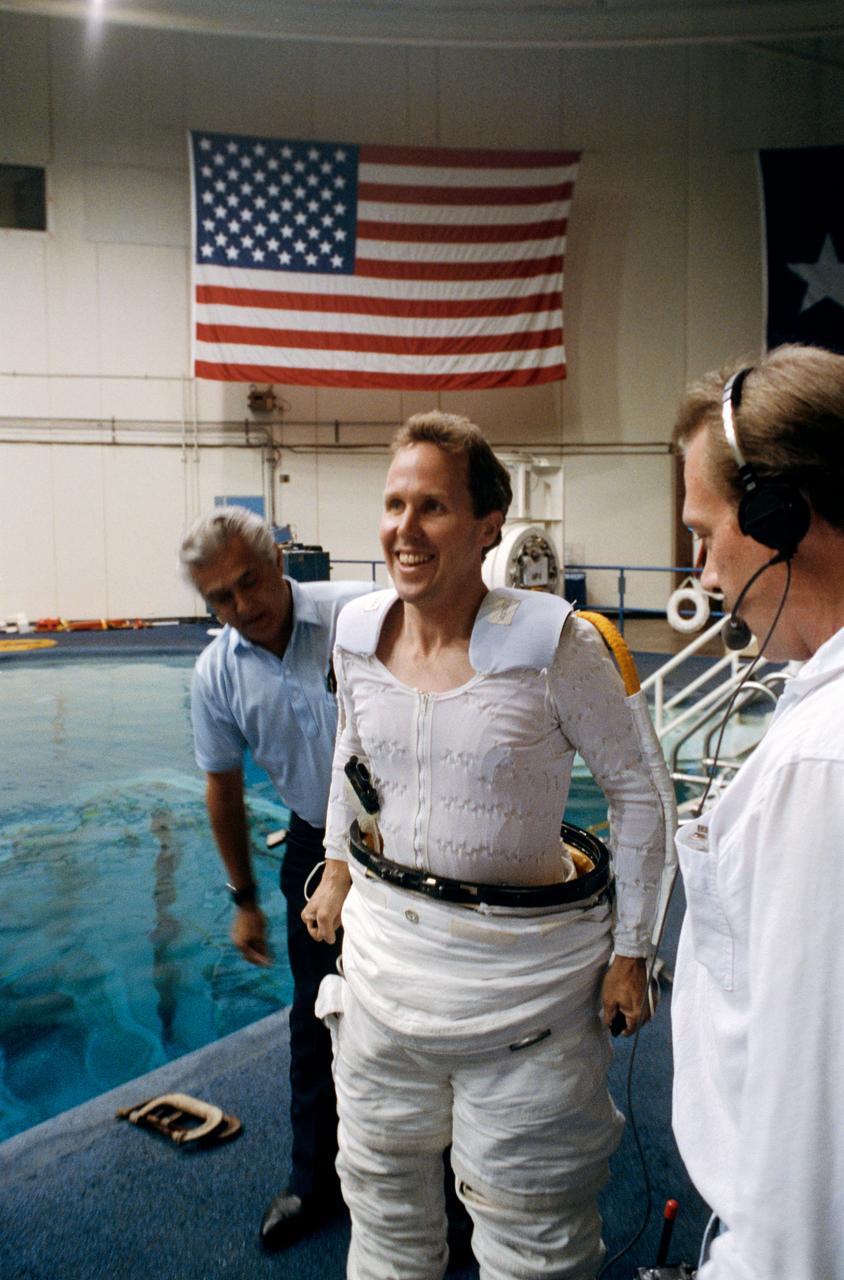
Astronaut Thomas D. Jones, mission specialist, dons a space suit prior to participating in contingency space walk simulations at the JSC Weightless Environment Training Facility (WETF). Jones is assisted by Frank Hernandez (left) and suit technician Charles Hudson of Hamilton Standard. Jones suit is weighted to that he can achieve a neutrally buoyant state once under water. Extravehicular tasks are not planned for the STS-59 mission, but a number of chores are rehearsed in case of failure of remote systems to perform those jobs.
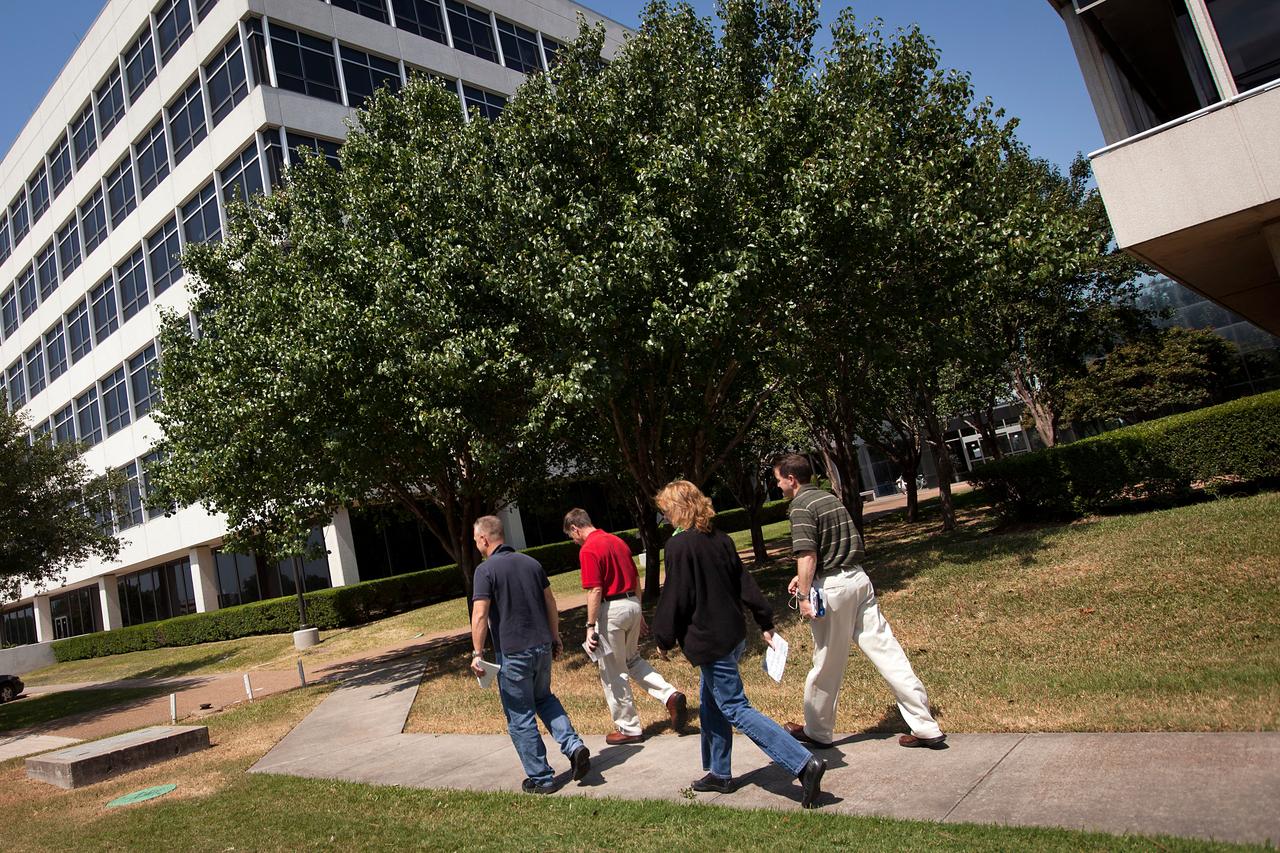
The crew of STS-135, from left, Doug Hurley, Chris Ferguson, Sandy Magnus and Rex Walheim walk between buildings at the Johnson Space Center after a simulation in the motion based simulator on Friday, May 6, 2011, in Houston. ( NASA Photo / Houston Chronicle, Smiley N. Pool ).
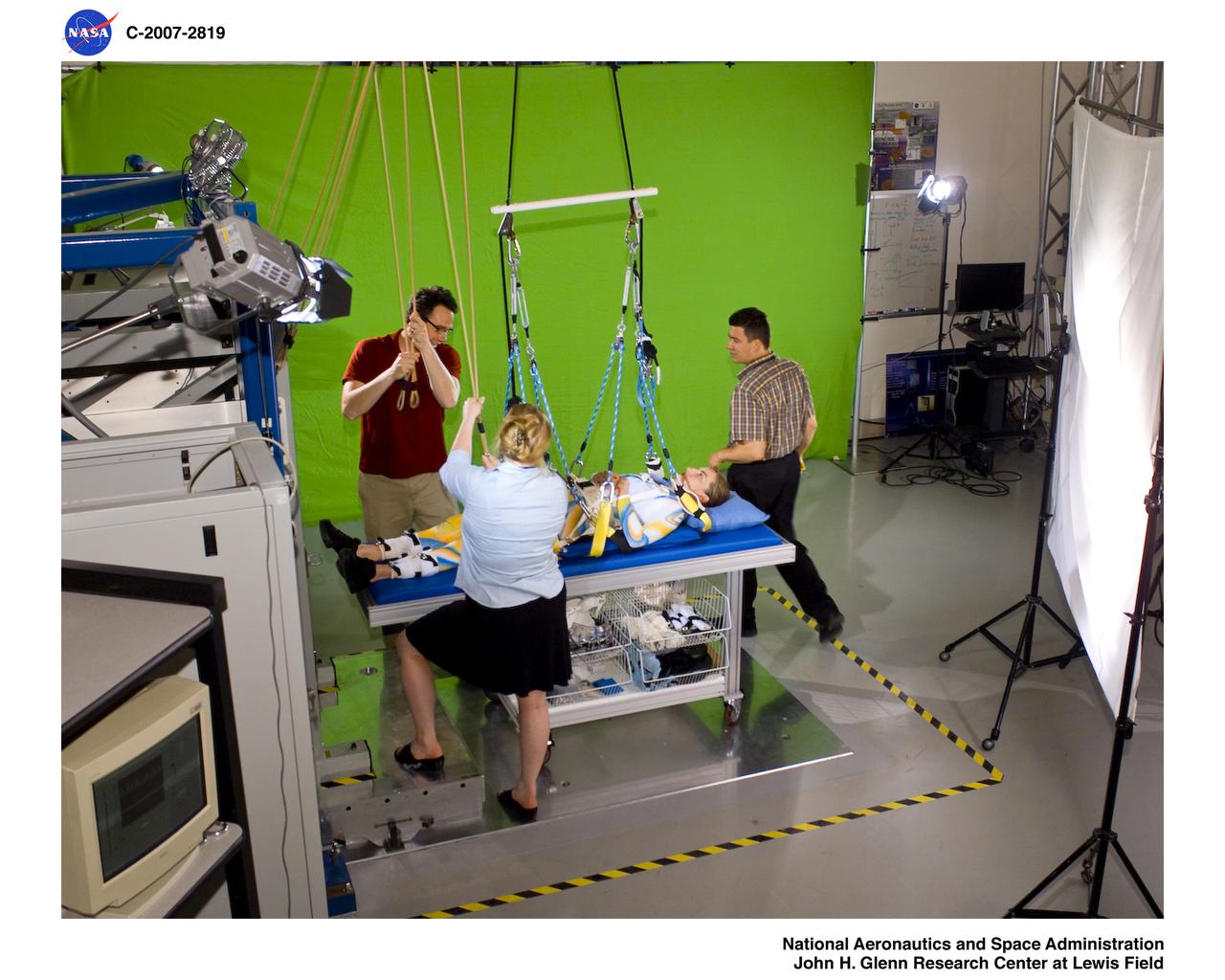
Members of Glen's Exercise Countermeasures Lab work to prepare dancer Sarah Morrison in the Enhanced Zero-gravity Locomotion Simulator for a choreographed video performance entitled "Walking on Other Worlds" produced for IngenuityFest 2007
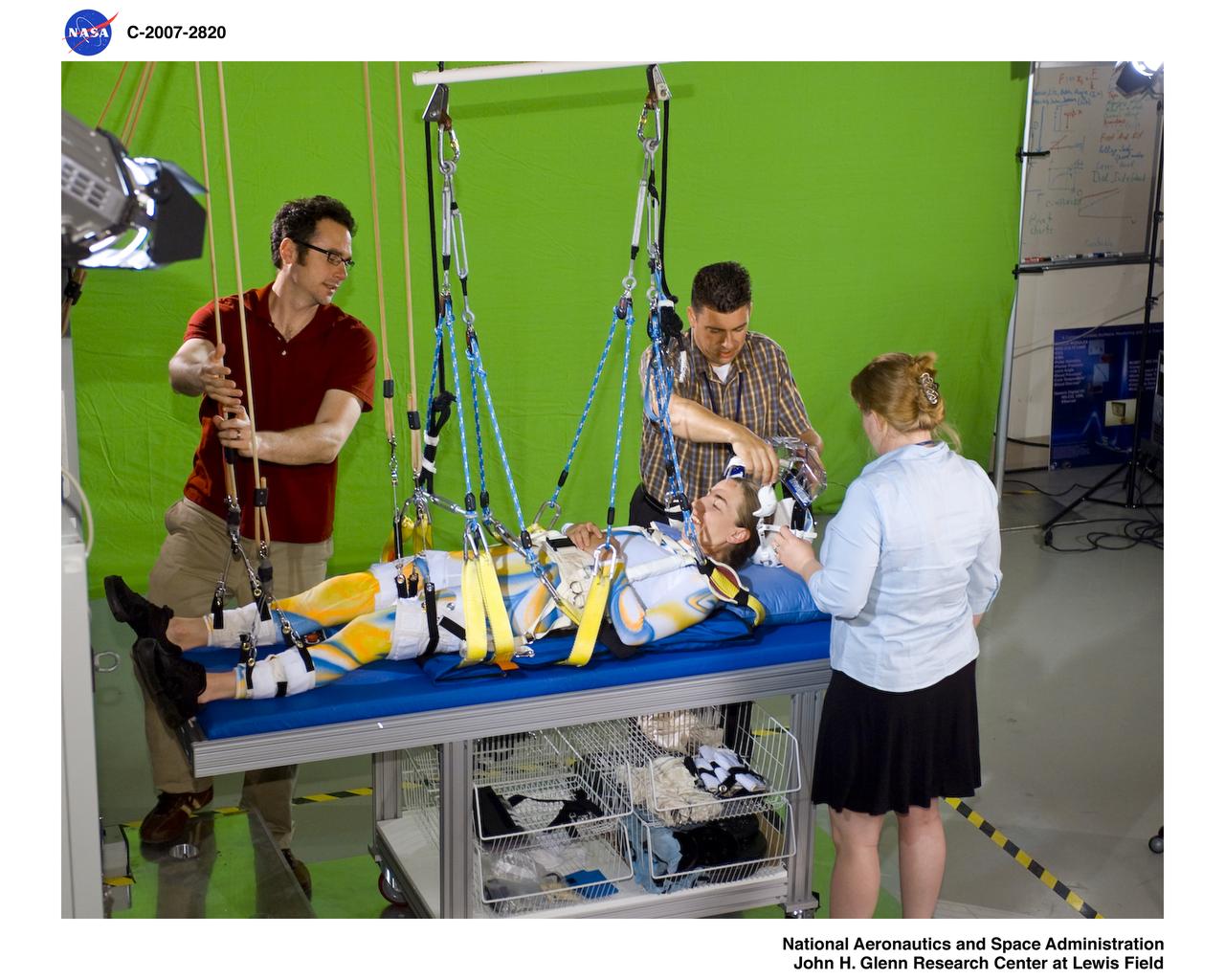
Members of Glen's Exercise Countermeasures Lab work to prepare dancer Sarah Morrison in the Enhanced Zero-gravity Locomotion Simulator for a choreographed video performance entitled "Walking on Other Worlds" produced for IngenuityFest 2007

NASA astronaut Kate Rubins walks in the lunar-like landscape during a nighttime simulated moonwalk in the San Francisco Volcanic Field in Northern Arizona on May 16, 2024. Credit: NASA/Josh Valcarcel
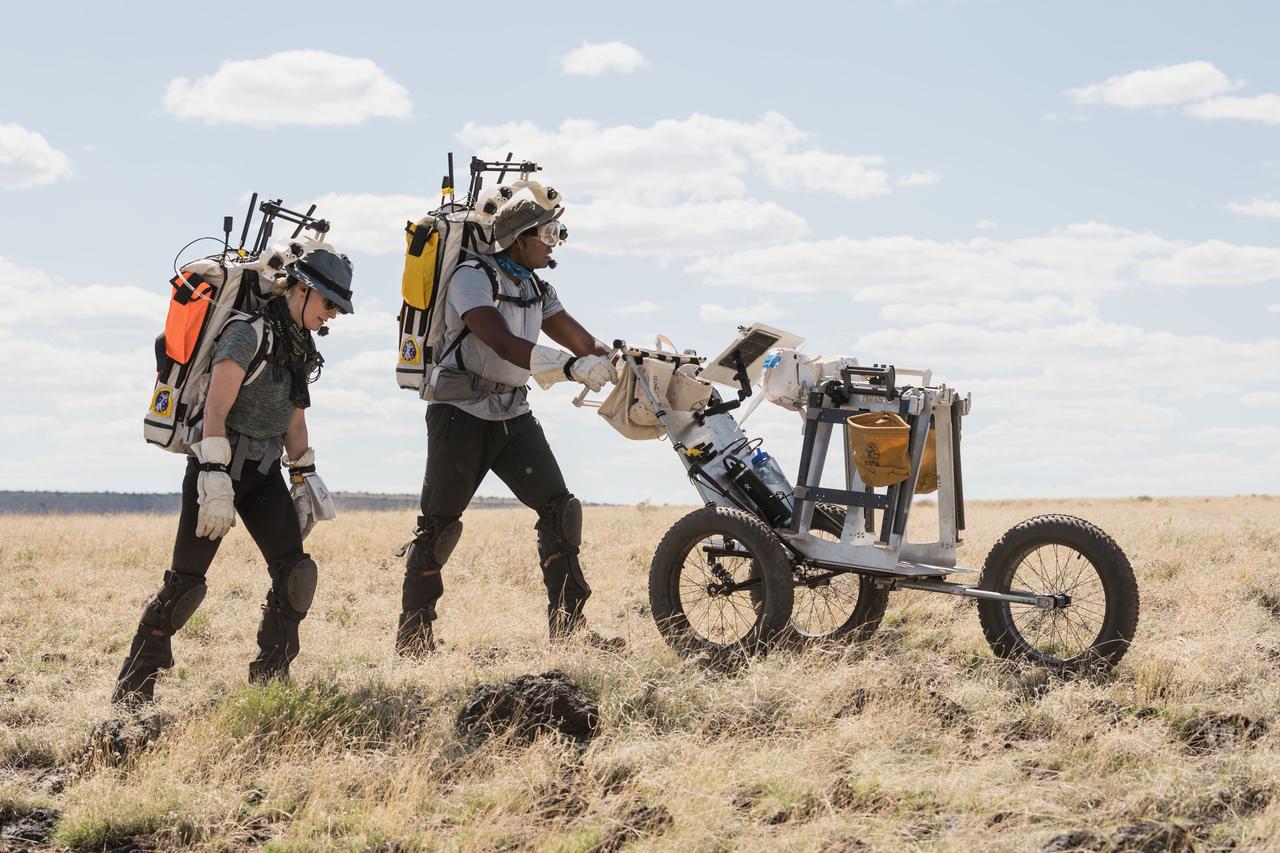
NASA astronauts Kate Rubins and Andre Douglas walk through the lunar-like landscape during a simulated moonwalk in the San Francisco Volcanic Field in Northern Arizona on May 17, 2024. Credit: NASA/Josh Valcarcel
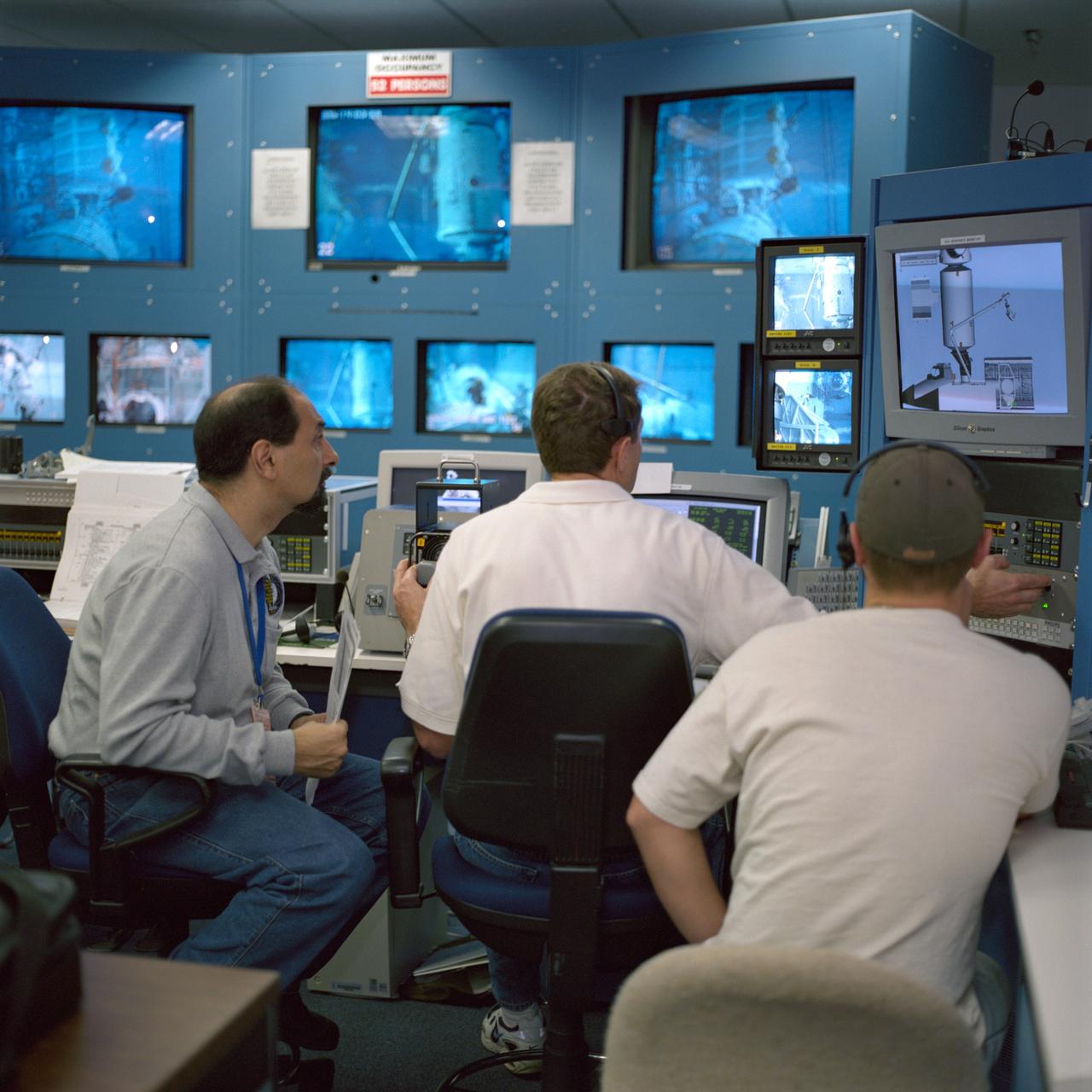
JSC2000-07406 (1 December 2000) --- Astronaut Umberto Guidoni (left), STS-100 mission specialist representing the European Space Agency (ESA), views a closed-circuit televising of an underwater space walk simulation performed by two crew mates. The simulation of the scheduled spring 2001 space walk took place at the Neutral Buoyancy Laboratory (NBL) at the Sonny Carter Training Facility. Astronaut Jeffrey S. Ashby, pilot, is at center. Astronauts Scott E. Parazynski of the NASA-Johnson Space Center and Chris A. Hadfield of the Canadian Space Agency (CSA), both mission specialists and both equipped with training versions of the extravehicular mobility unit (EMU) space suits, were in the water at the time.
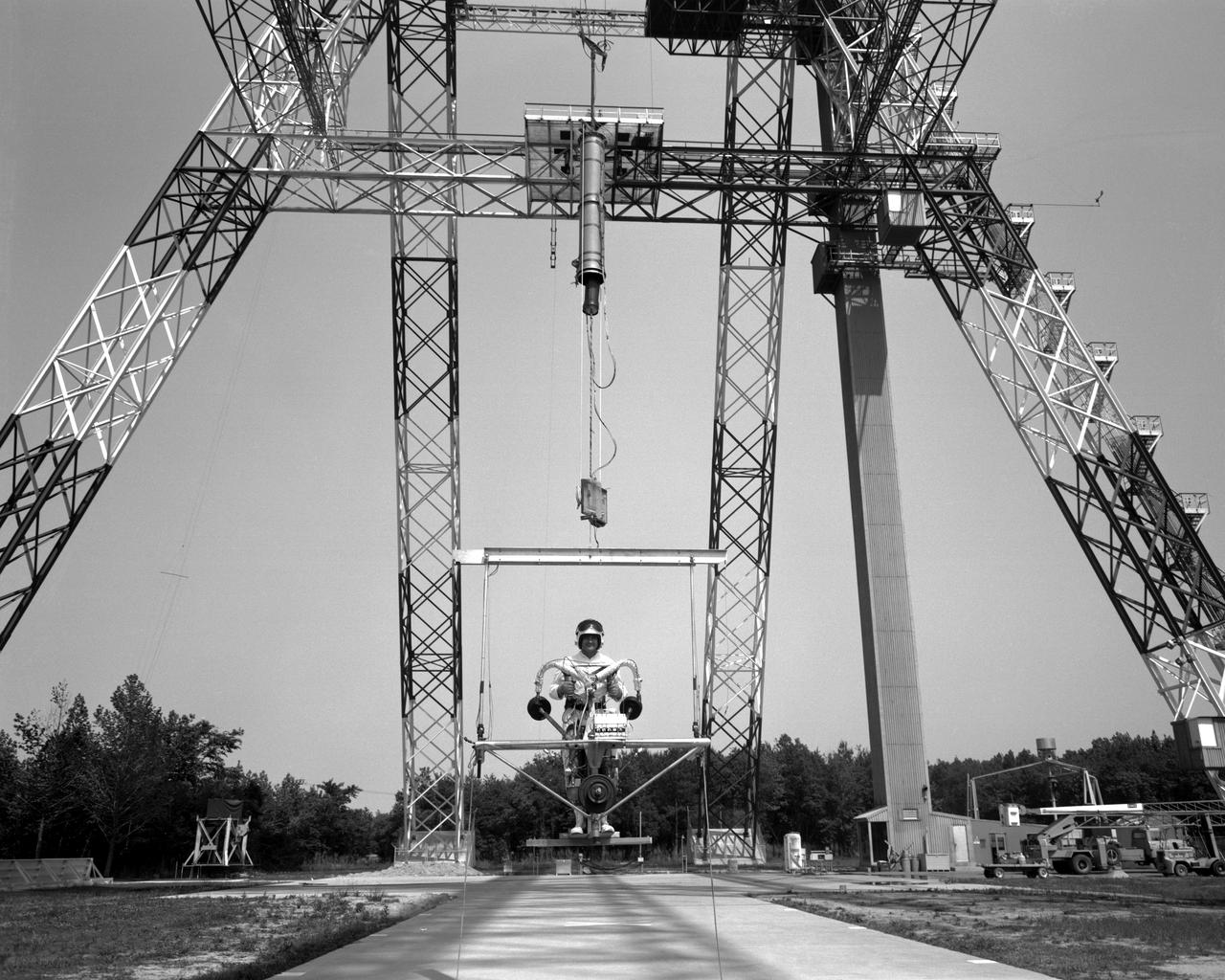
POGO is a device that uses cables connected to the ceiling to suspend an astronaut. POGO supports five-sixths of a person's weight; it mimics the one-sixth gravity of the moon. An astronaut walking around on POGO has the sensation of walking on the moon. POGO has been around since the Apollo days - in fact, the device gets its name from the way Apollo astronauts tended to bounce when suspended from it. The real name for POGO is the Partial Gravity Simulator.
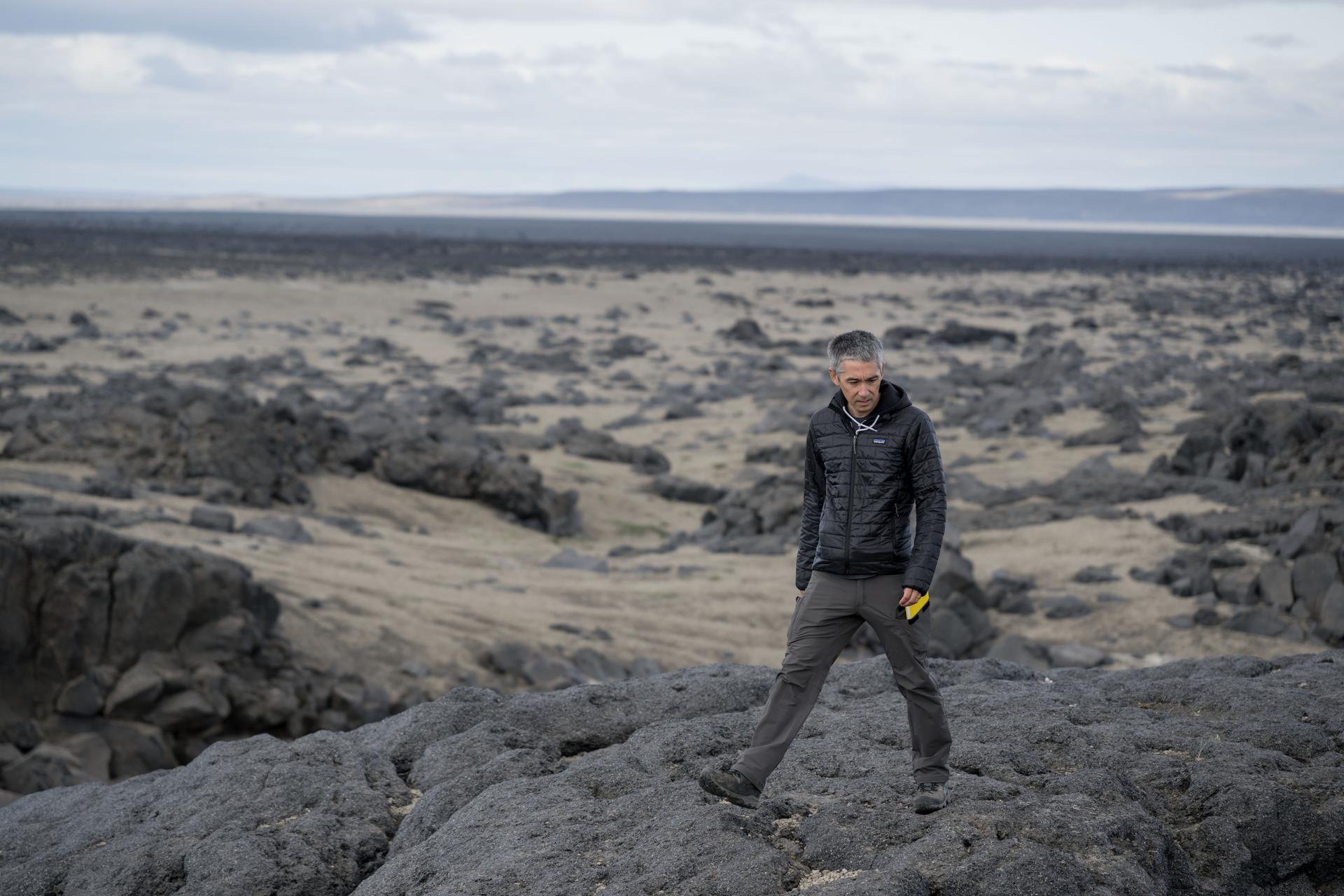
NASA astronaut candidate Yuri Kubo walks across a lava flow in Iceland during an Artemis geology field training expedition. Iceland’s diverse volcanic terrain is an excellent stand-in for lunar and planetary processes and provides an ideal environment in which to simulate surface science operations. Credit: NASA/James Blair
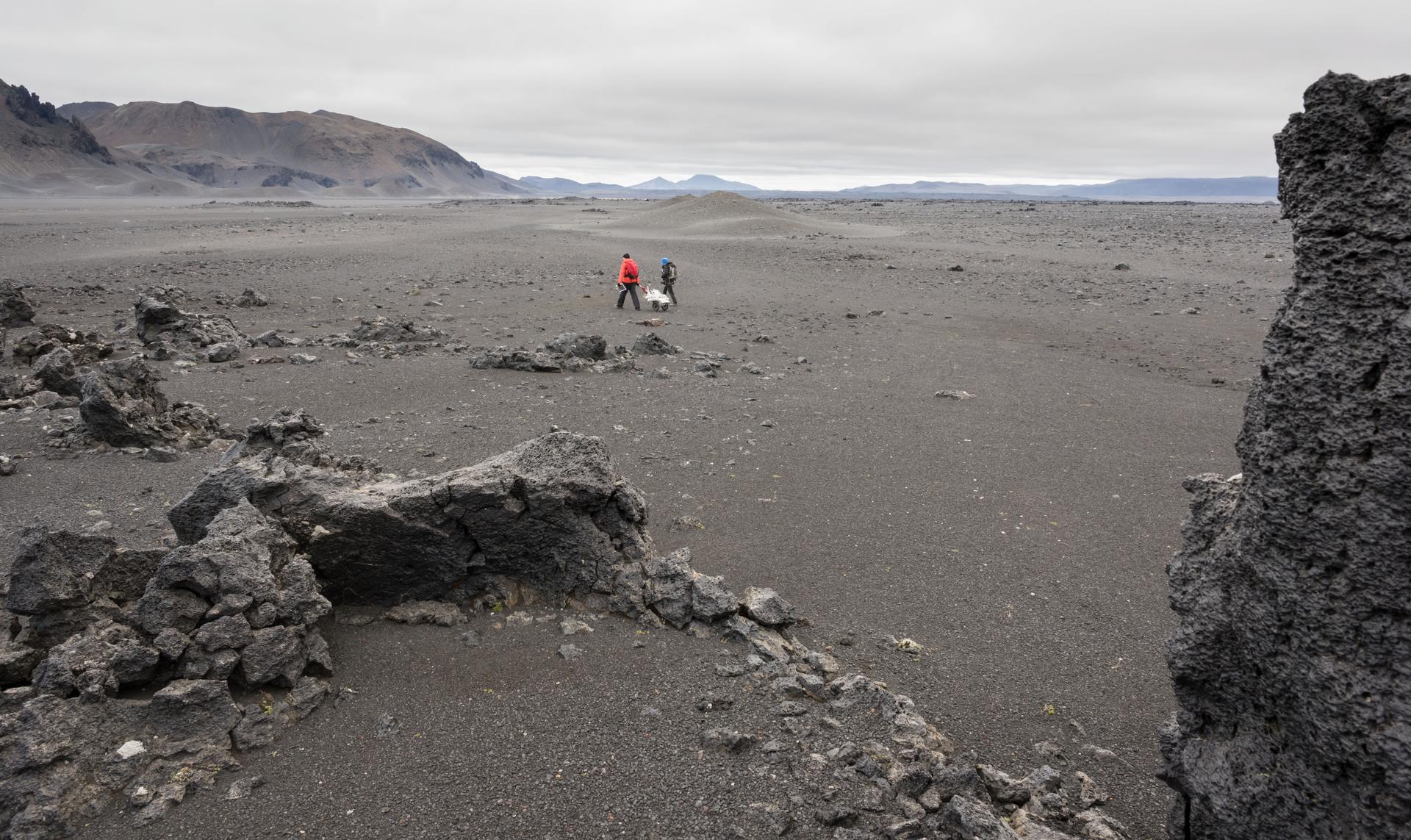
Participants in Artemis geology field training expedition walk a tool cart across a volcanic landscape in Iceland. Iceland’s diverse volcanic terrain is an excellent stand-in for lunar and planetary processes and provides an ideal environment in which to simulate surface science operations. Credit: NASA/James Blair
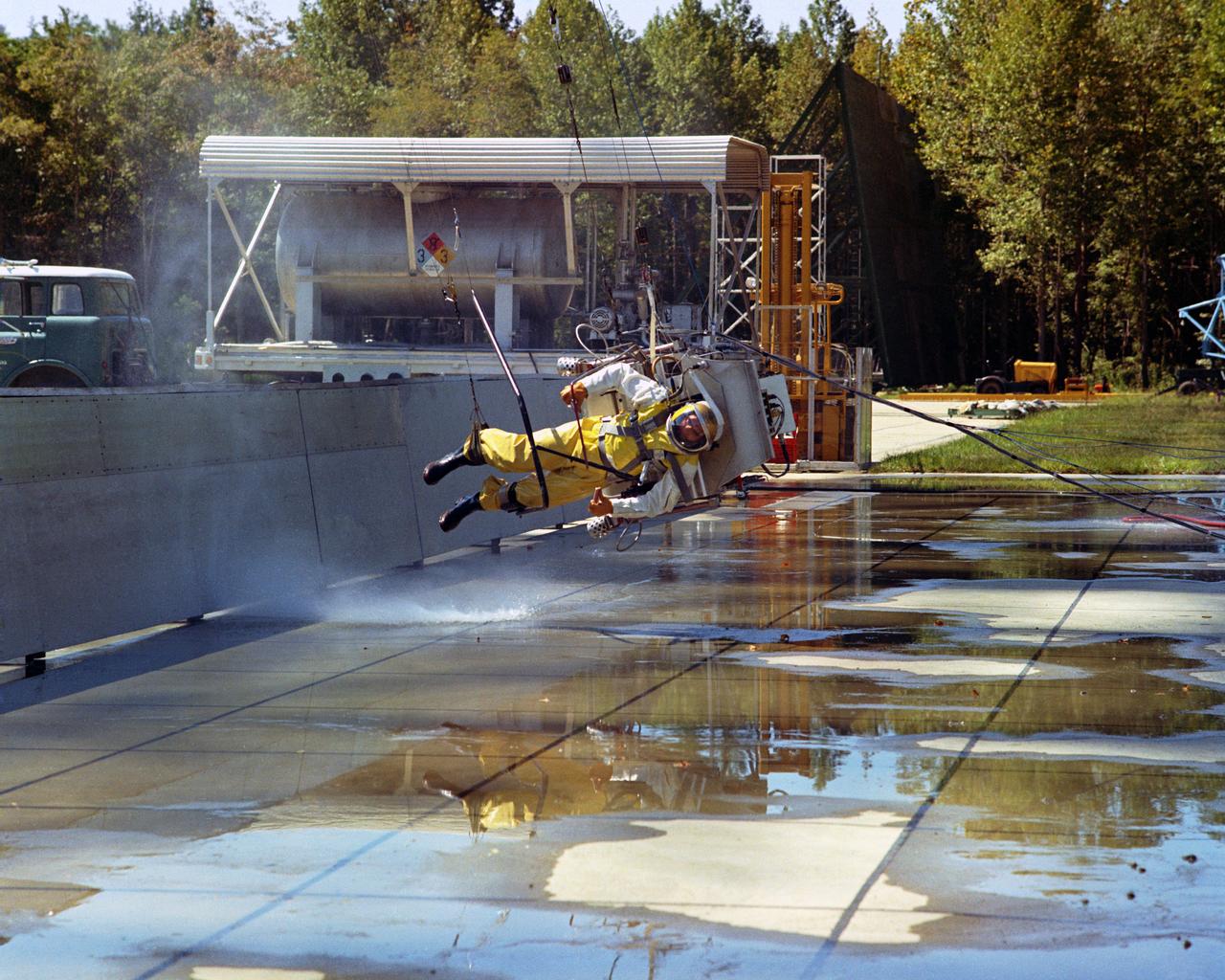
Icarus Lunar Walker,Lunar Landing Research Facility. Langley study of the backpack propulsion unit, by Bell Aerosystems. Icarus full scale test at Lunar Landing Research Facility - low gravity simulator. A NASA Langley researcher moon walks under the Lunar Landing Research Facility's gantry. More information on this can be read in the Document. "STUDIES OF PILOTING PROBLEMS OF ONE-MAN FLYING UNITS OPERATED IN SIMULATED LUNAR GRAVITY" BY Donald E. Hewes
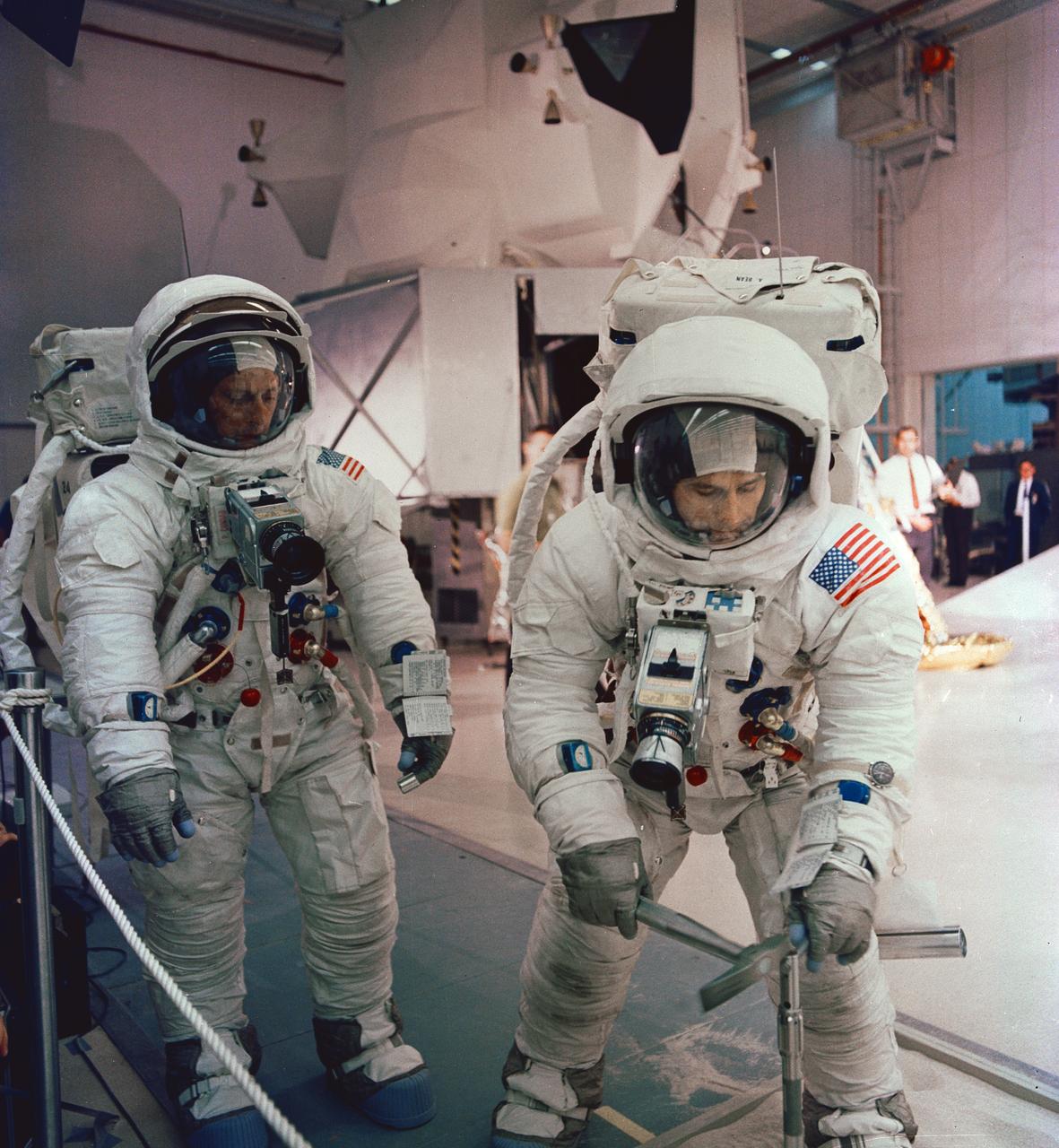
S69-55362 (6 Oct. 1969) --- The two assigned moon-walking crew members for the Apollo 12 lunar landing mission participate in lunar surface extravehicular activity simulations in the Kennedy Space Center's Flight Crew Training Building. Here, astronaut Alan L. Bean, lunar module pilot, simulates driving core tube into lunar surface to obtain a sample. Astronaut Charles Conrad Jr., commander, looks on. A Lunar Module mock-up is in the center background. Photo credit: NASA or National Aeronautics and Space Administration
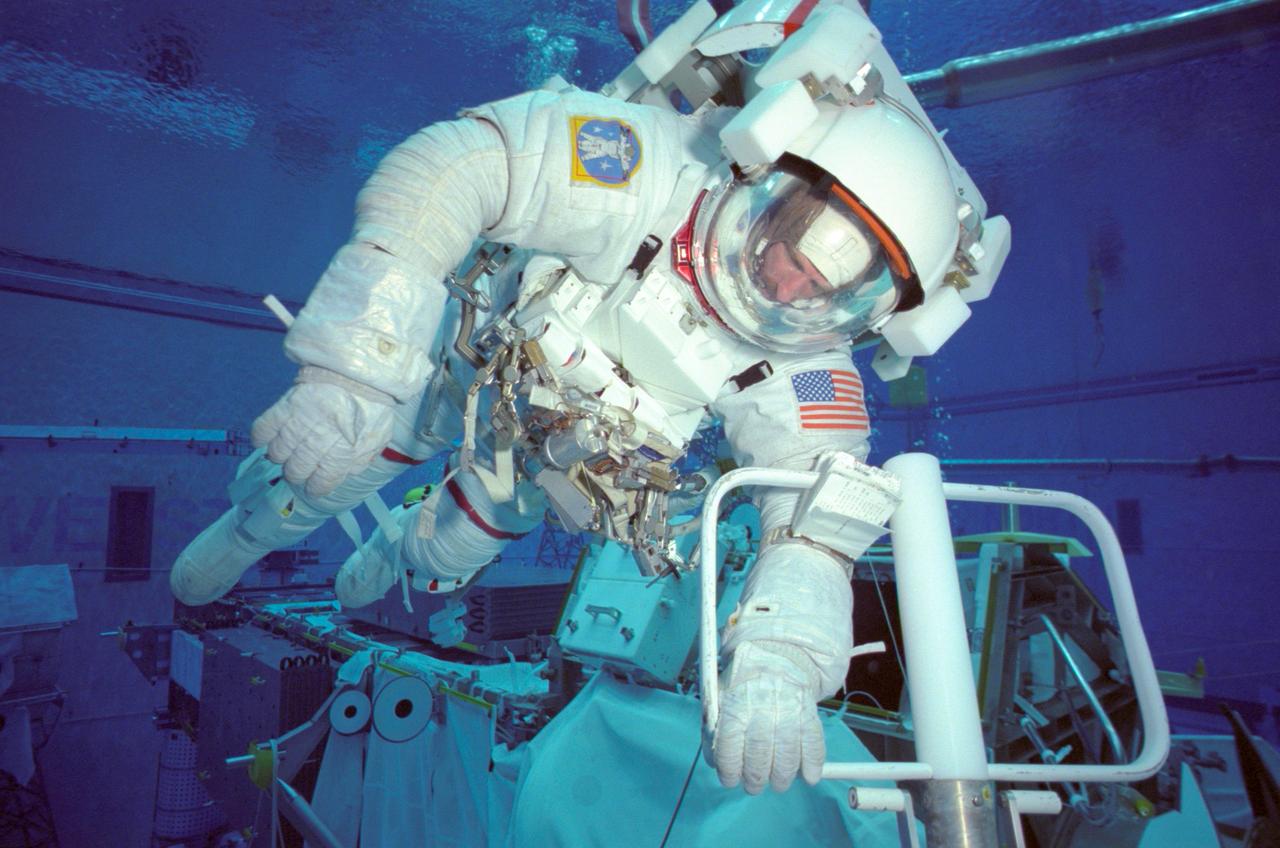
JSC2000-07082 (October 2000)--- Wearing a training version of the shuttle extravehicular mobility unit (EMU) space suit, astronaut Joseph R. Tanner, STS-97 mission specialist, simulates a space walk underwater in the giant Neutral Buoyancy Laboratory (NBL). Tanner was there, along with astronaut Carlos I. Noriega, to rehearse one of three scheduled space walks to make additions to the International Space Station (ISS). The five-man crew in early December will deliver the P6 Integrated Truss Segment, which includes the first US Solar arrays and a power distribution system.
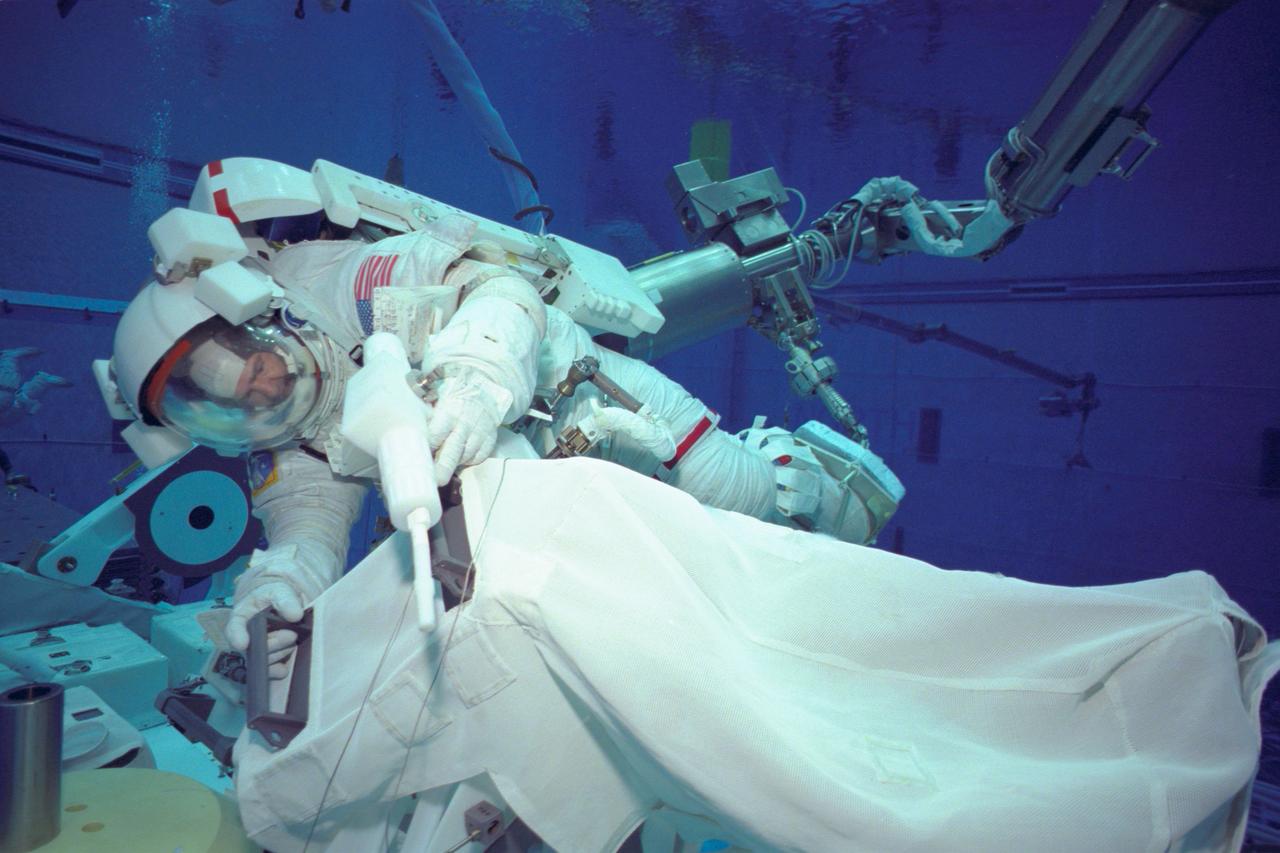
JSC2000-07072 (23 October 2000) --- Equipped with mockup tools and attached to a training version of the shuttle's remote manipulator system (RMS)robotic arm, astronaut Marc Garneau simulates a space walk task in the Neutral Buoyancy Laboratory (NBL). Garneau, an STS-97 mission specialist representing the Canadian Space Agency (CSA), has been assigned an alternate's role for extravehicular activity (EVA) on the ISS 4a mission. The prime EVA crew is composed of astronauts Joseph R. Tanner and Carlos I. Noriega, who are expected to share three different days of space walks during the December mission.
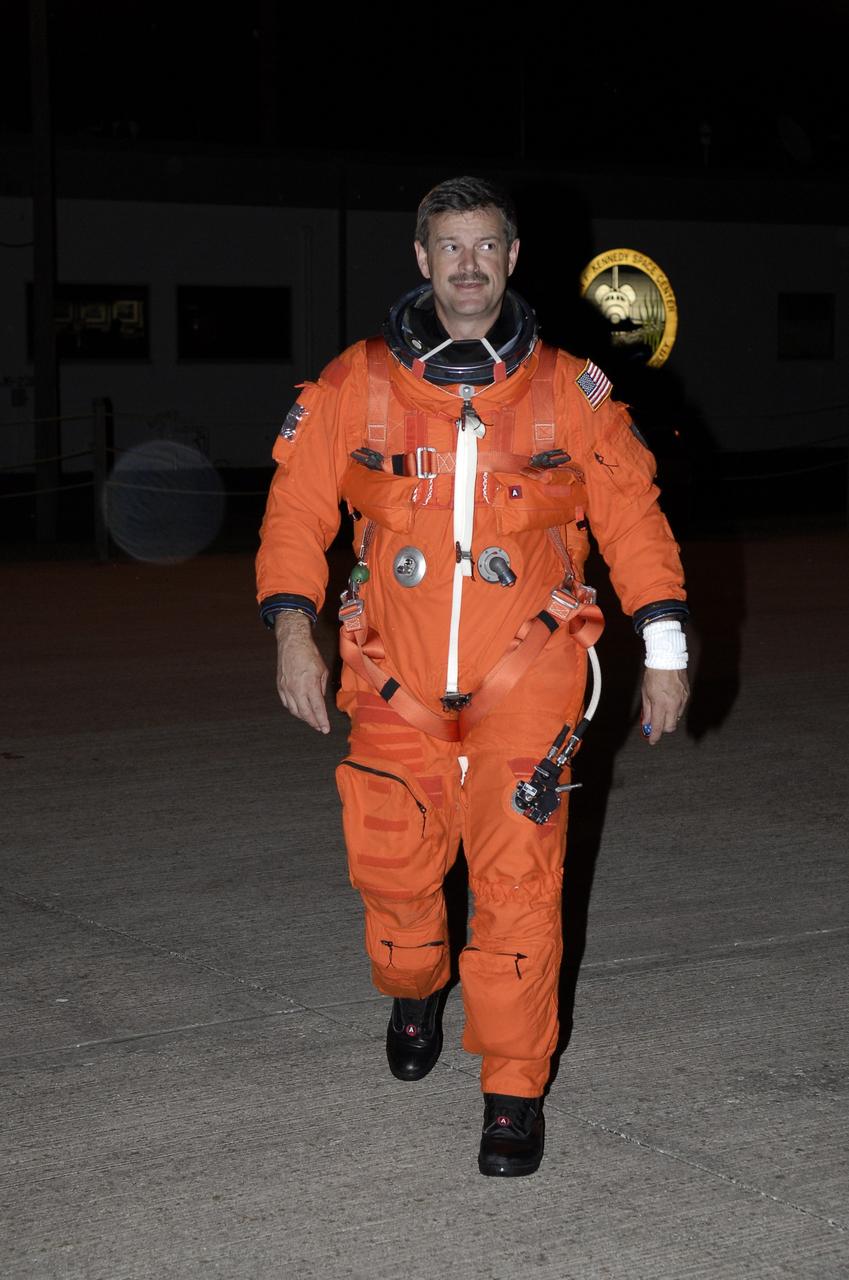
CAPE CANAVERAL, Fla. - STS-125 Commander Scott Altman walks toward the shuttle training aircraft on the Shuttle Landing Facility at NASA's Kennedy Space Center in Florida. He will practice shuttle landings on the runway. The STA is a Grumman American Aviation-built Gulf Stream II jet that was modified to simulate a shuttle’s cockpit, motion and visual cues, and handling qualities. In flight, the aircraft duplicates the shuttle’s atmospheric descent trajectory from approximately 35,000 feet altitude to landing on a runway. The practice is part of a terminal countdown demonstration test, or TCDT, to prepare for launch. TCDT provides astronauts and ground crews with an opportunity to participate in various simulated countdown activities, including equipment familiarization, emergency training and a simulated launch countdown. Space shuttle Atlantis’ STS-125 mission to service NASA’s Hubble Space Telescope is targeted to launch Oct. 10. Photo credit: NASA/Kim Shiflett
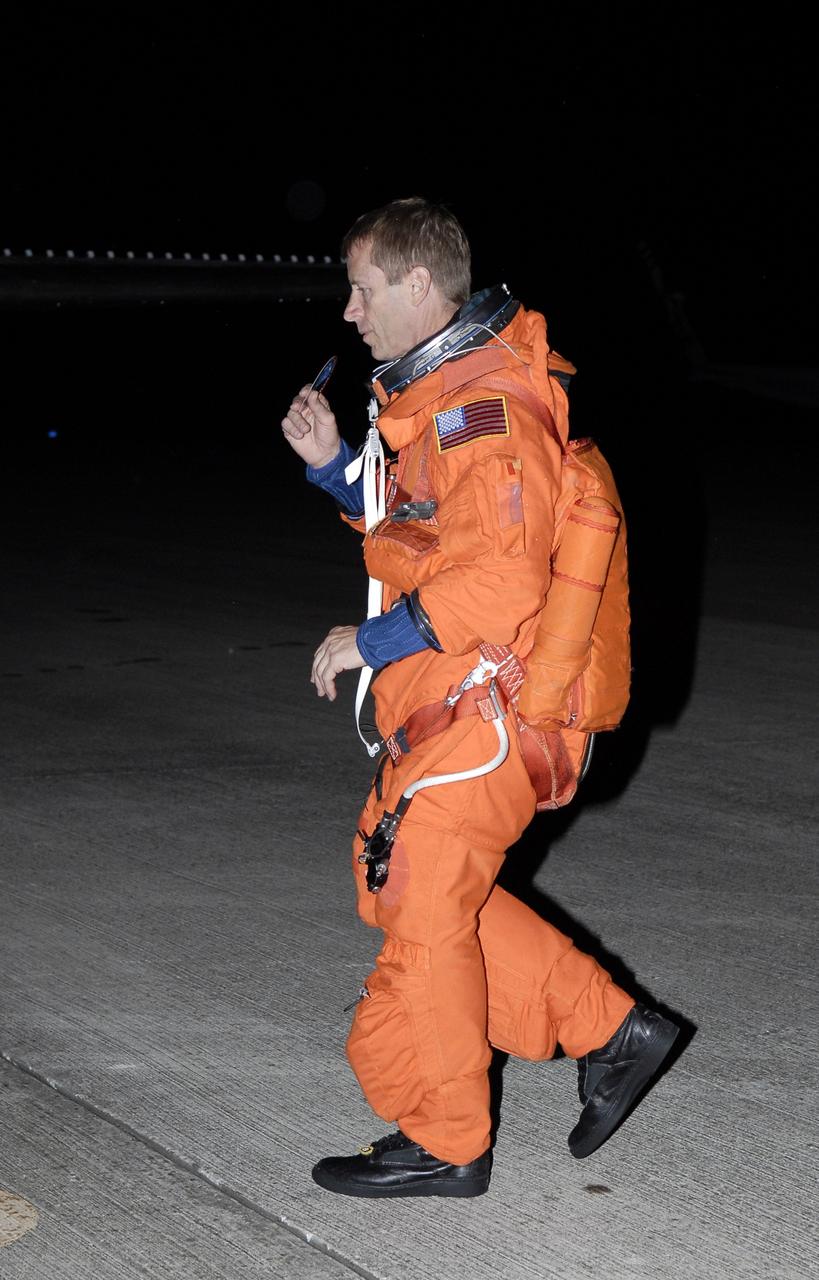
CAPE CANAVERAL, Fla. - STS-125 Pilot Gregory C. Johnson walks toward the shuttle training aircraft on the Shuttle Landing Facility at NASA's Kennedy Space Center in Florida. He will practice shuttle landings on the runway. The STA is a Grumman American Aviation-built Gulf Stream II jet that was modified to simulate a shuttle’s cockpit, motion and visual cues, and handling qualities. In flight, the aircraft duplicates the shuttle’s atmospheric descent trajectory from approximately 35,000 feet altitude to landing on a runway. The practice is part of a terminal countdown demonstration test, or TCDT, to prepare for launch. TCDT provides astronauts and ground crews with an opportunity to participate in various simulated countdown activities, including equipment familiarization, emergency training and a simulated launch countdown. Space shuttle Atlantis’ STS-125 mission to service NASA’s Hubble Space Telescope is targeted to launch Oct. 10. Photo credit: NASA/Kim Shiflett

JSC2000-07397 (1 December 2000)--- Astronaut Chris A. Hadfield, representing the Canadian Space Agency (CSA), is about to be submerged in a giant pool of water as part of a training session in the Neutral Buoyancy Laboratory (NBL) near the Johnson Space Center (JSC). Hadfield is designated for space walk duty on the STS-100 flight, and underwater simulations of his duties help prepare him for the mission, scheduled for spring of next year.
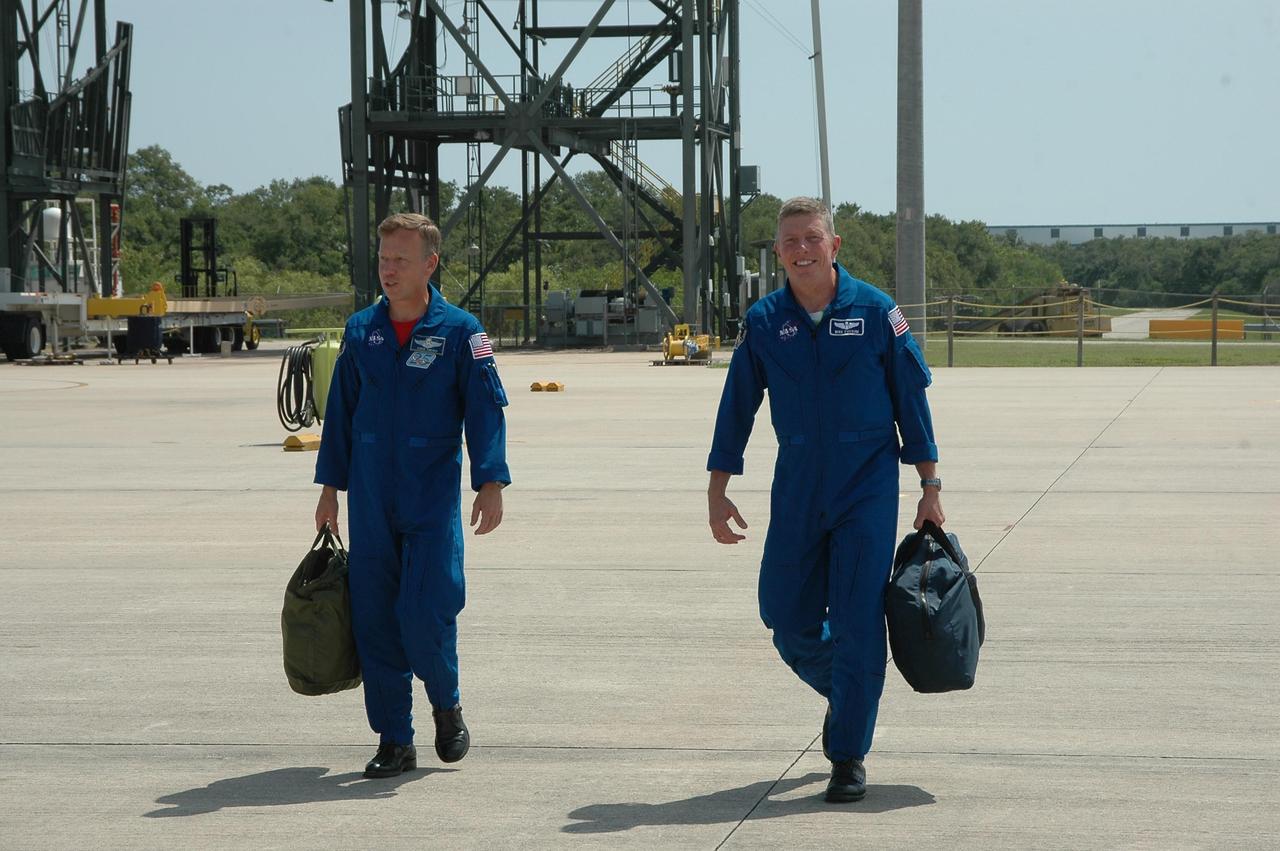
KENNEDY SPACE CENTER, FLA. - After a three-day series of Terminal Countdown Demonstration Test (TCDT) activities, the crew of mission STS-121 are leaving NASA's Kennedy Space Center to return to Houston. Walking to the plane at the Shuttle Landing Facility are Commander Steven Lindsey (left) and Mission Specialist Michael Fossum. The TCDT includes equipment familiarization, emergency egress training and a simulated launch countdown. Mission STS-121 is scheduled to launch July 1. Photo credit: NASA/Kim Shiflett
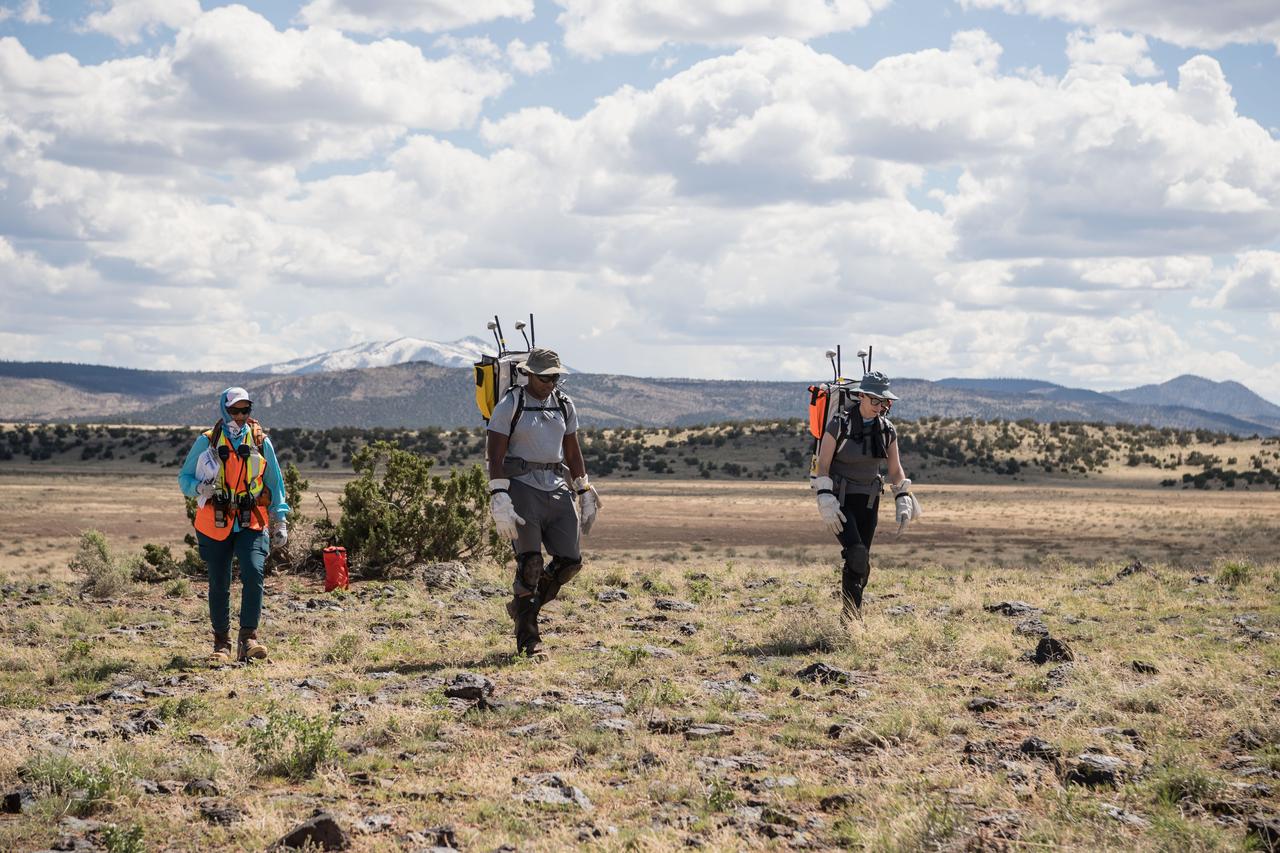
NASA astronauts Andre Douglas (middle) and Kate Rubins (right) walk through the desert during an engineering dry run before the start of a week-long field test consisting of four simulated moonwalks and six advanced technology runs in the San Francisco Volcanic Field in Northern Arizona on May 12, 2024. Image: NASA/Josh Valcarcel
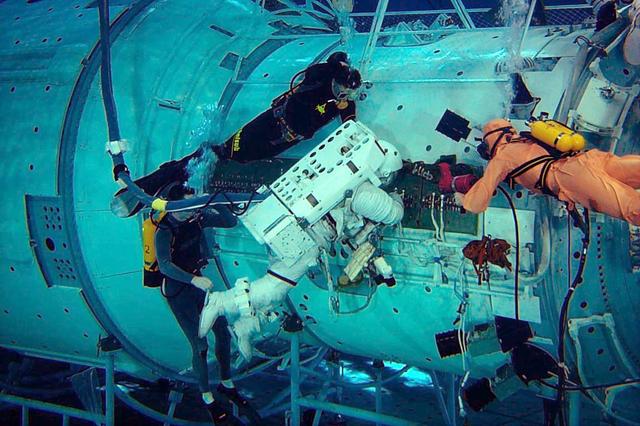
99-E-14654 (October 1999) --- Astronaut Edward T. Lu, mission specialist, is assisted by SCUBA-equipped divers during a rehearsal of STS-106 space walk chores in the Hydrolab facility at Star City, Russia. Also participating in this simulation but out of frame here was cosmonaut Yuri I. Malenchenko, mission specialist who represents the Russian Space Agency (RSA).

Richard F. Gordon Jr. climbing into training simulator. Astronaut Richard (Dick) Gordon, died in November 2017, at his home in California. He was 88. Gordon orbited the Moon on Apollo 12 in 1969 while two other astronauts walked on it. The Apollo 12 crew capsule can be seen at Langley's official visitor center, the Virginia Air and Space Center in Hampton VA. NASA 2017 Annual report, Celebrating 100 years.page 23 Milestones.
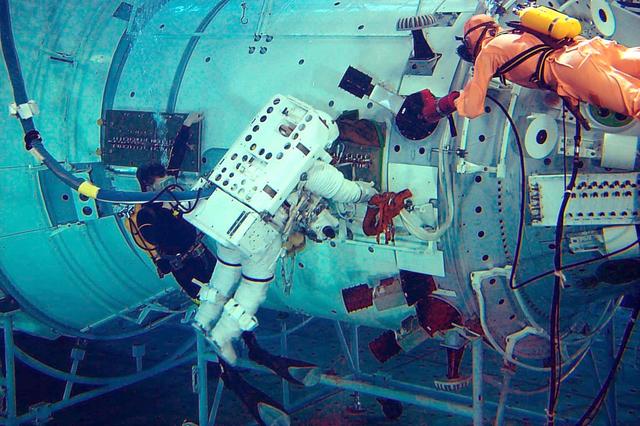
99-E-14657 (October 1999) --- Astronaut Edward T. Lu, mission specialist, is assisted by SCUBA-equipped divers during an underwater rehearsal of STS-106 space walk chores in the Hydrolab facility at Star City, Russia. Also participating in this simulation but out of frame here was cosmonaut Yuri I. Malenchenko, mission specialist representing the Russian Space Agency (RSA).
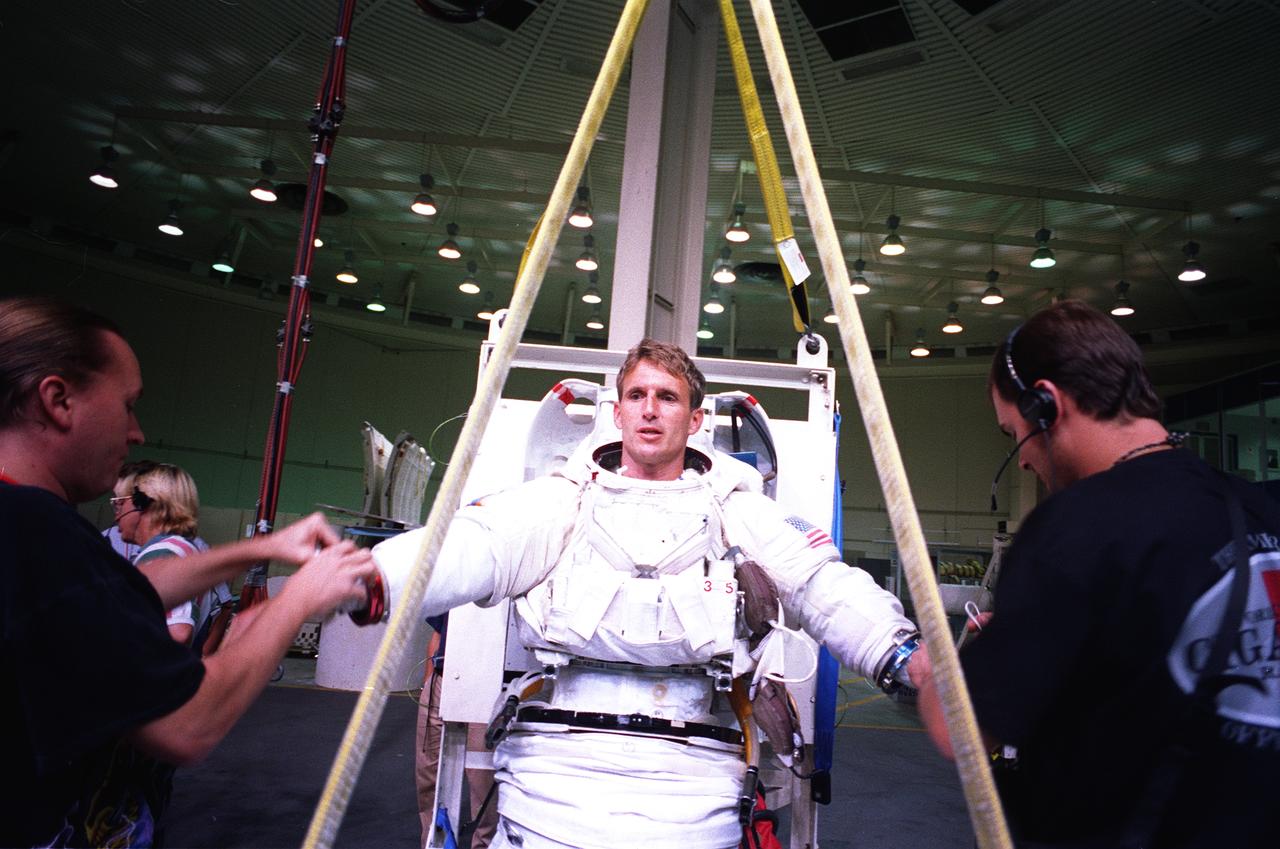
S96-14344 (13 Sept. 1996) --- In the Johnson Space Center's weightless environment training facility, astronaut Jerry M. Linenger, STS-81 mission specialist, prepares for an underwater simulation of a contingency space walk. Linenger, attired in a training version of the Extravehicular Mobility Unit (EMU ) will utilize the nearby 25-ft. deep pool, in which he will be able to achieve a neutrally buoyant state.
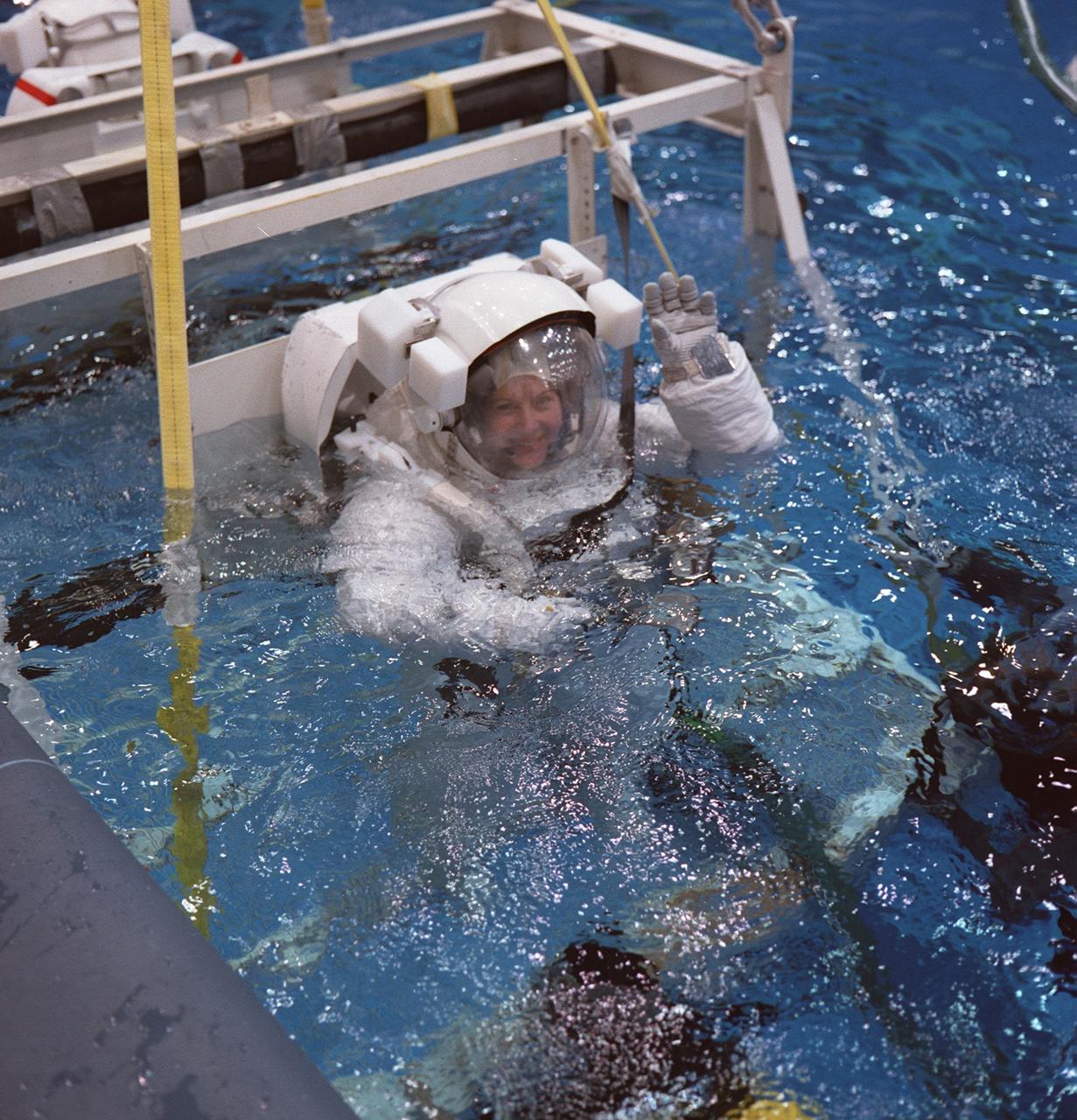
S98-08181 (March 1998) --- Standing on a mobile platform, astronaut Catherine G. Coleman is in the processing of being submerged in the deep pool of JSC's Neutral Buoyancy Laboratory (NBL). Coleman was participating in a simulation of a contingency space walk in preparation for the STS-93 mission next year. The mission specialist will join four other NASA astronauts for the Space Shuttle Columbia flight, scheduled for spring. The training version of the extravehicular mobility unit (EMU) that Coleman is wearing is weighted and otherwise accommodated to afford neutral buoyancy in the deep pool.
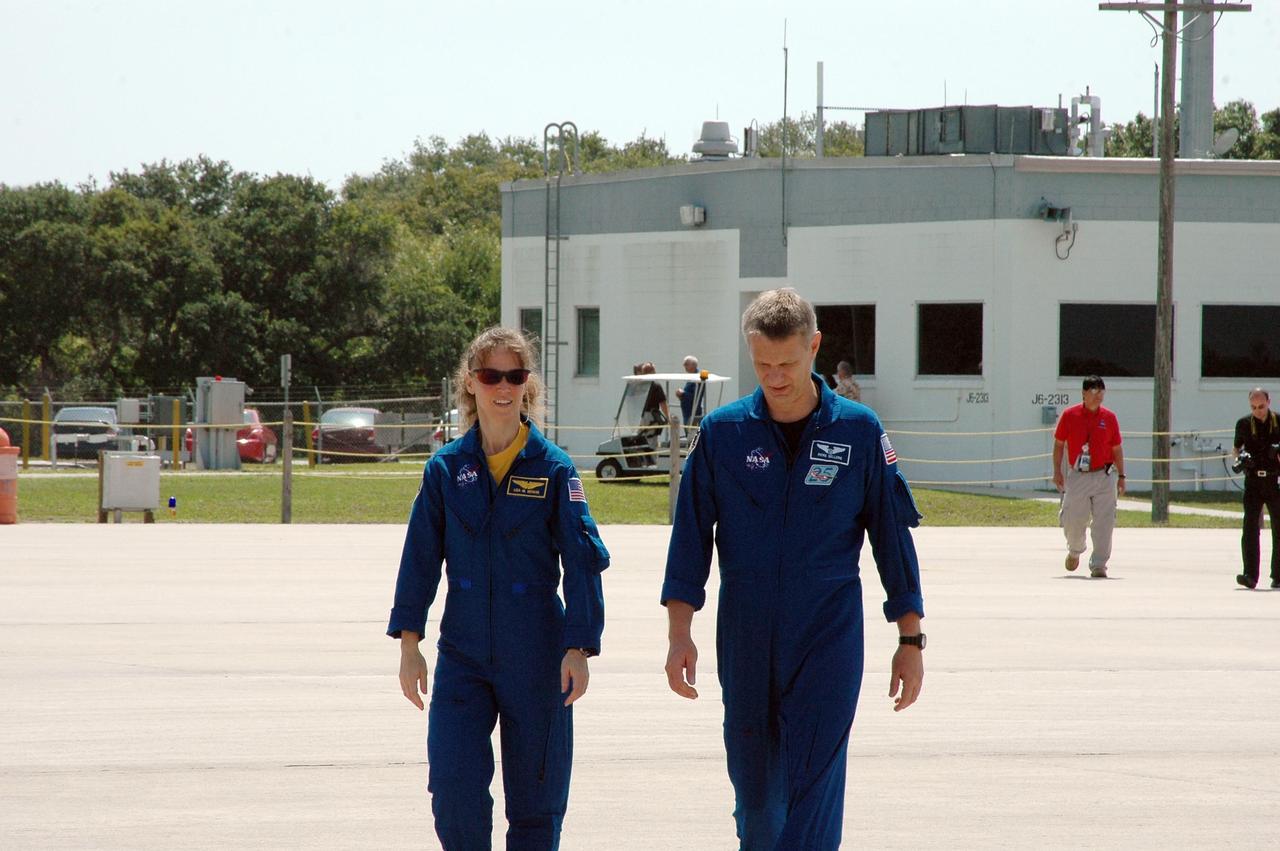
KENNEDY SPACE CENTER, FLA. - After a three-day series of Terminal Countdown Demonstration Test (TCDT) activities, the crew of mission STS-121 are leaving NASA's Kennedy Space Center to return to Houston. Walking toward the plane at the Shuttle Landing Facility are Mission Specialists Lisa Nowak and Piers Sellers. The TCDT includes equipment familiarization, emergency egress training and a simulated launch countdown. Mission STS-121 is scheduled to launch July 1. Photo credit: NASA/Kim Shiflett
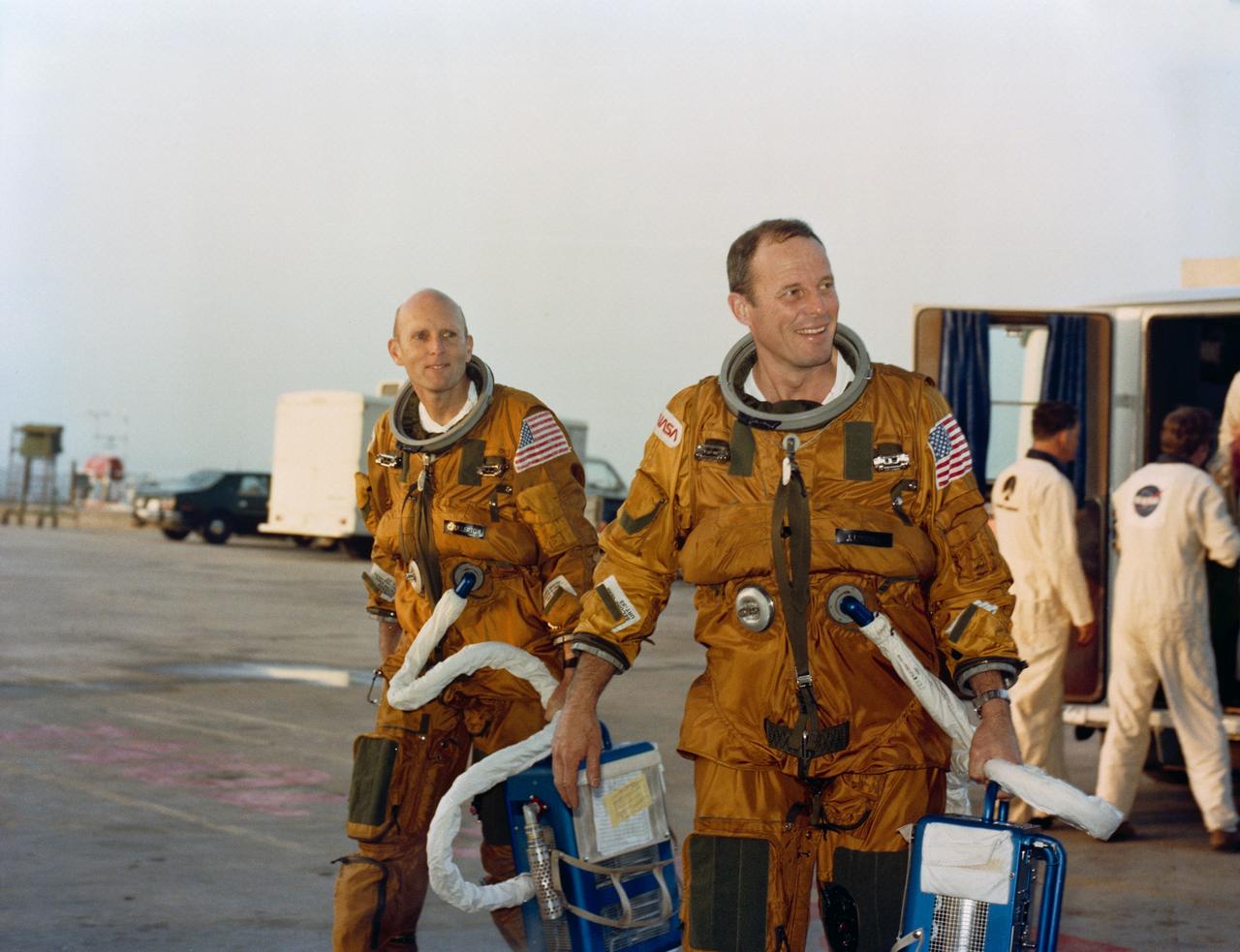
S82-28454 (19 Feb. 1982) --- Astronaut Jack R. Lousma, right, STS-3 commander, and C. Gordon Fullerton, pilot, carry portable spacesuit air controllers as they walk from a transport van to Launch Pad 39A to participate in a simulated countdown and launch. This countdown demonstration test (CDDT) is part of the preparations for NASA?s third orbital flight test in the space shuttle Columbia. The two are scheduled to spend a week orbiting Earth in Columbia this spring. Photo credit: NASA
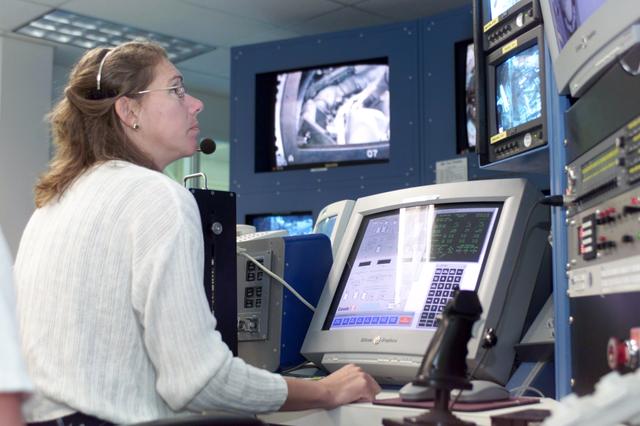
JSC2002-E-27067 (1 July 2002) --- Astronaut Sandra H. Magnus prepares for the STS-112 mission by participating in a hardware-moving simulation. The mission specialist rehearses setting up work for assigned space-walking crewmates in the nearby giant pool of the Neutral Buoyancy Laboratory (NBL) at the Sonny Carter Training Facility. Magnus and Expedition Five flight engineer Peggy A. Whitson (already aboard the orbital outpost when this training took place) will be operating the controls of the Space Station Remote Manipulator System (SSRMS or Canadarm2) during the mission's task of installing the station's S-1 truss. Astronauts David A. Wolf and Piers J. Sellers, who would be suited up and standing by in the airlock during this activity, will follow Magnus' set-up work with a space walk.
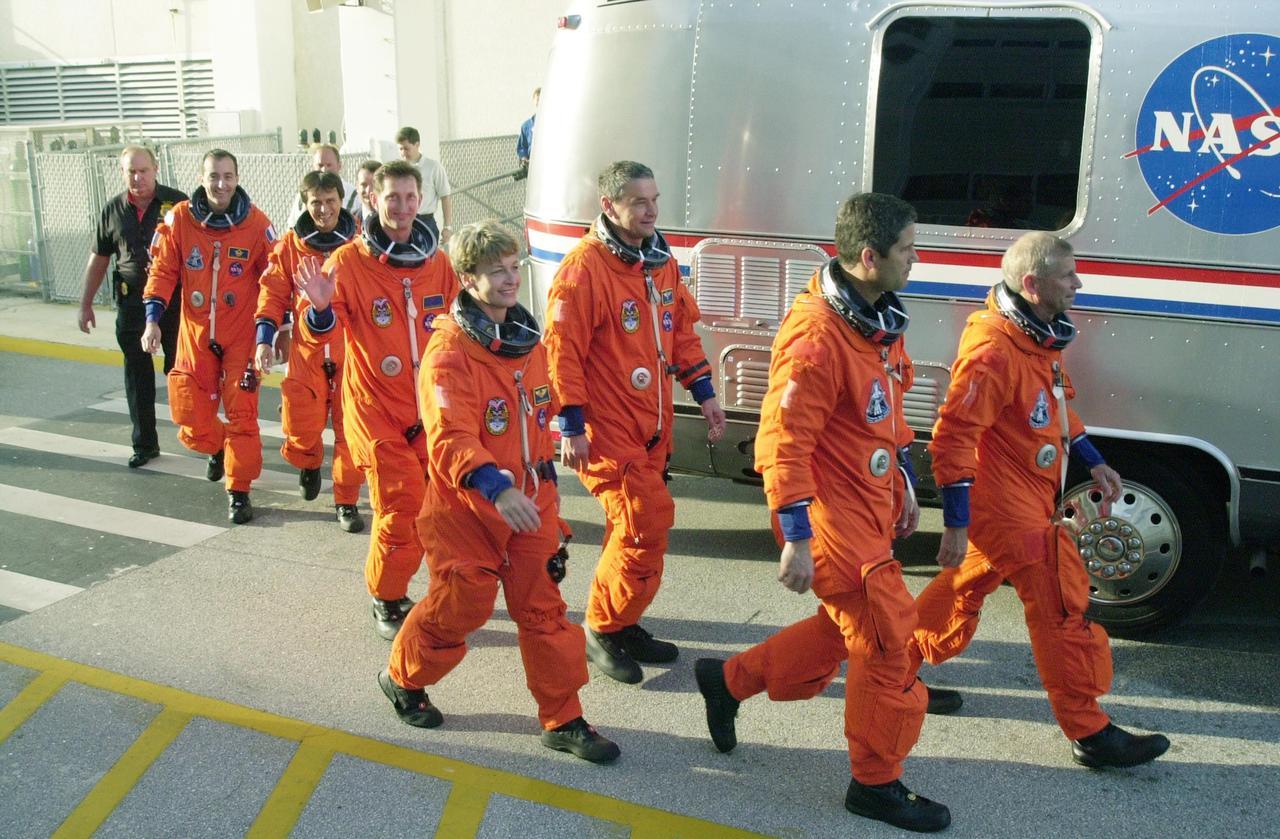
KENNEDY SPACE CENTER, FLA. -- The STS-111 crew and Expedition 5 walk eagerly to the Astrovan that will take them to Launch Pad 39A for a simulated countdown. From left are Mission Specialists Philippe Perrin and Franklin Chang-Diaz; the Expedition 5 crew, Sergei Treschev, Peggy Whitson and Valeri Korzun; Pilot Paul Lockhart; and Commander Kenneth Cockrell. The simulation is part of STS-111 Terminal Countdown Demonstration Test activities for the crew and Expedition 5. The payload on the mission to the International Space Station includes the Mobile Base System (MBS), an Orbital Replacement Unit and Multi-Purpose Logistics Module Leonardo. The MBS will be installed on the Mobile Transporter to complete the Canadian Mobile Servicing System, or MSS, enabling Canadarm 2 to "inchworm" from the U.S. Lab Destiny to the MSS and travel along the truss to work sites. The Expedition 5 crew is traveling on Endeavour to replace the Expedition 4 crew on the Station. Launch of Endeavour is scheduled for May 30, 2002
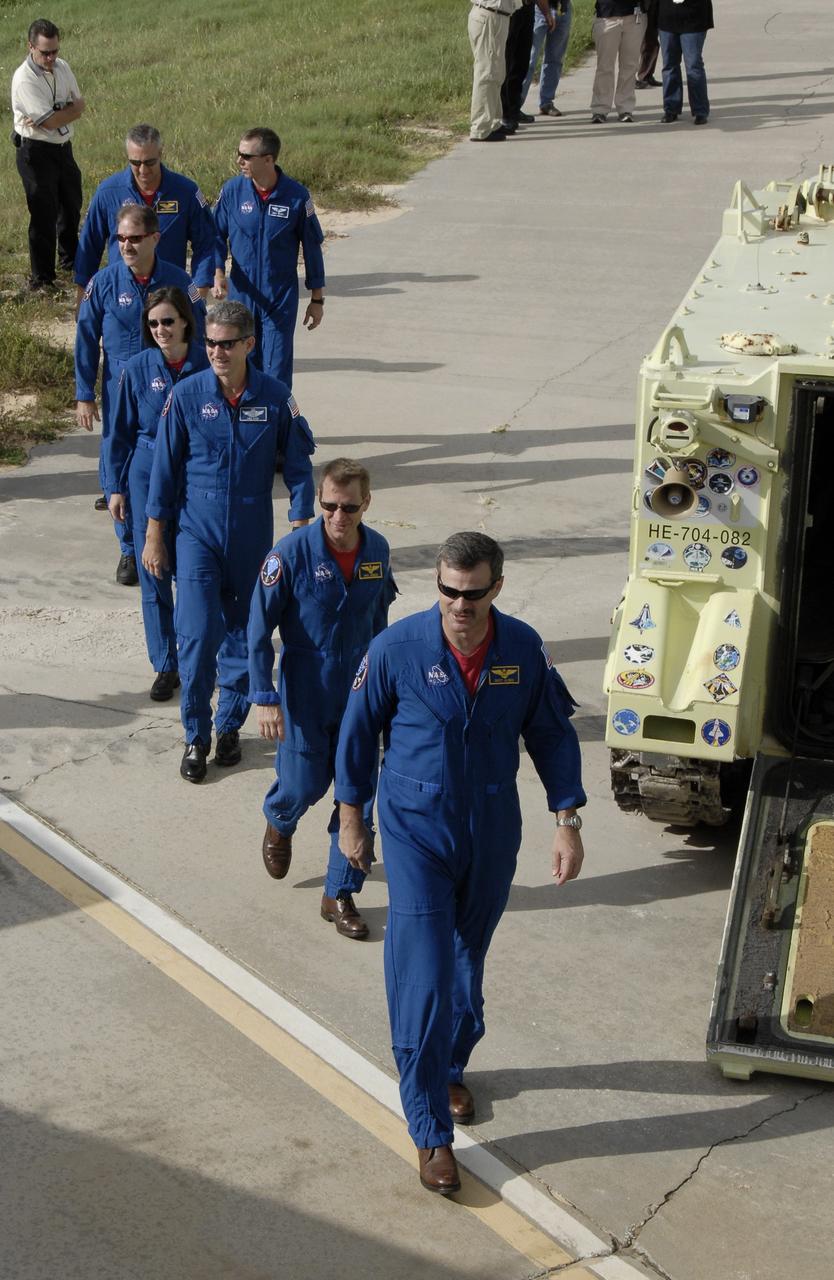
CAPE CANAVERAL, Fla. - The STS-125 crew walks toward the emergency landing area on Launch Pad 39A at NASA's Kennedy Space Center in Florida to greet the media. Leading the way, at right, is Commander Scott Altman. Behind him, right to left, are Pilot Gregory C. Johnson and Mission Specialists Michael Good, Megan McArthur, John Grunsfeld, Mike Massimino and Andrew Feustel. The crew is at Kennedy to take part in terminal countdown demonstration test, or TCDT, activities before launching on space shuttle Atlantis’ mission to service NASA’s Hubble Space Telescope. TCDT provides astronauts and ground crews with an opportunity to participate in various simulated countdown activities, including equipment familiarization, emergency training and a simulated launch countdown. Atlantis is targeted to launch Oct. 10. Photo credit: NASA/Kim Shiflett
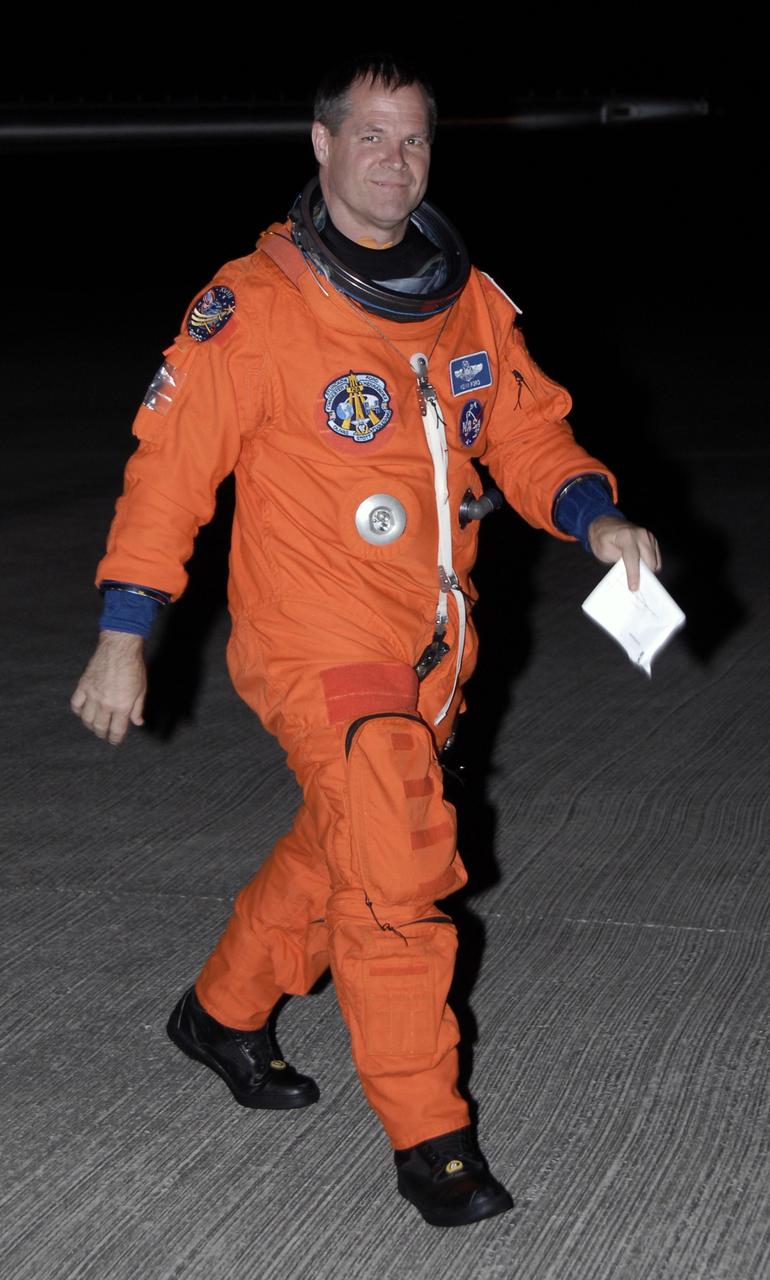
CAPE CANAVERAL, Fla. –At the Shuttle Landing Facility at NASA's Kennedy Space Center in Florida, STS-128 Pilot Kevin Ford walks away from the Shuttle Training Aircraft, or STA, after completing shuttle landing practice. The practice is in preparation for launch of space shuttle Discovery's STS-128 mission in late August to the International Space Station. The STA is a Grumman American Aviation-built Gulfstream II jet that was modified to simulate a shuttle’s cockpit, motion and visual cues, and handling qualities. The STS-128 crew is at Kennedy for a launch dress rehearsal called the terminal countdown demonstration test, or TCDT, which includes emergency exit training and equipment familiarization, as well as a simulated launch countdown. Discovery will deliver 33,000 pounds of equipment to the station, including science and storage racks, a freezer to store research samples, a new sleeping compartment and the COLBERT treadmill. Photo credit: NASA/Kim Shiflett
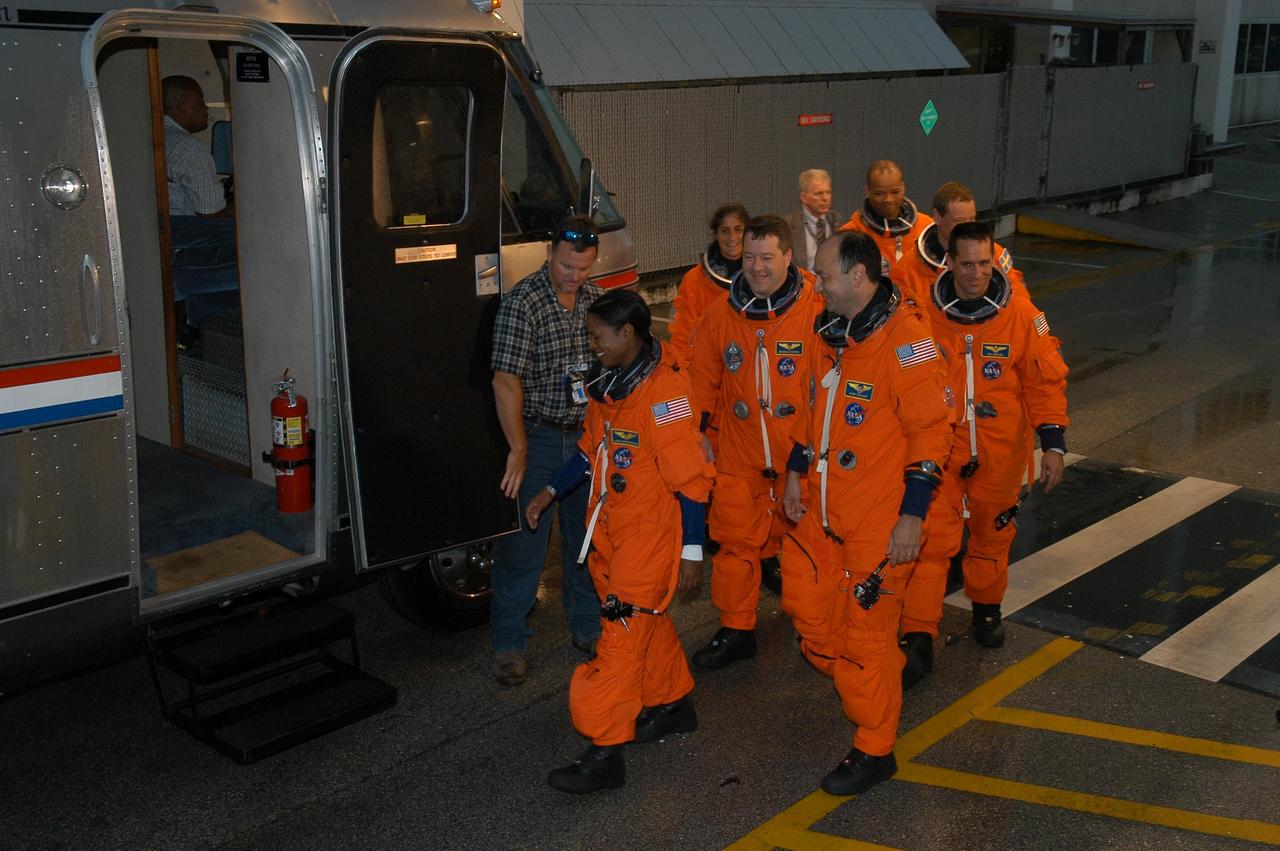
KENNEDY SPACE CENTER, FLA. -- The STS-116 crew eagerly walks to the Astrovan that will take them to Launch Pad 39B and the simulated countdown. The crew is practicing for launch with a simulation of activities, from crew breakfast and suit-up to countdown in the orbiter. From left are Mission Specialists Joan Higginbotham, Sunita Williams and Nicholas Patrick; Commander Mark Polansky; Mission Specialists Robert Curbeam and Christer Fuglesang; and Pilot William Oefelein. The STS-116 mission is No. 20 to the International Space Station and construction flight 12A.1. The mission payload is the SPACEHAB module, the P5 integrated truss structure and other key components. Launch is scheduled for no earlier than Dec. 7. Photo credit: NASA/Kim Shiflett
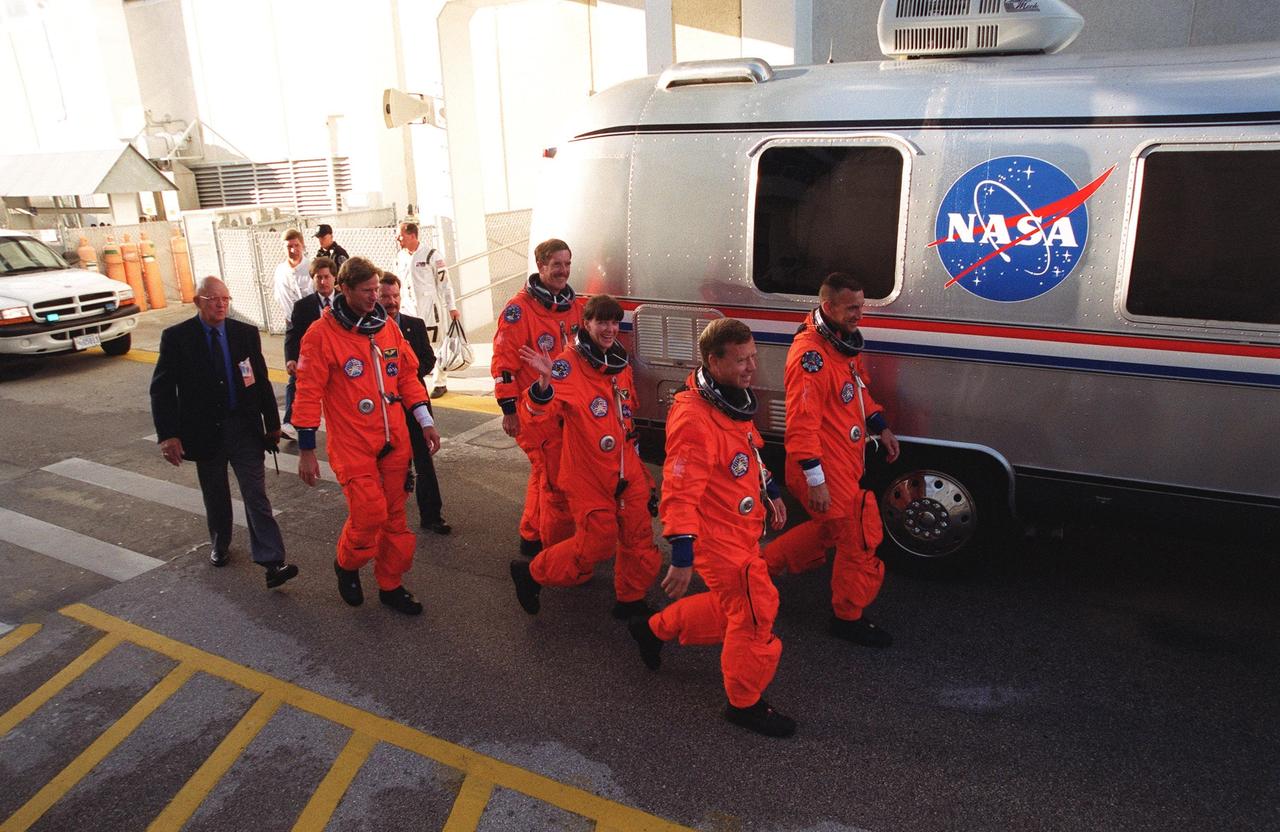
KENNEDY SPACE CENTER, Fla. -- Dressed in their orange launch and entry suits, the STS-104 crew eagerly walk to the Astrovan that will take them to Launch Pad 39B and a simulated countdown exercise. From left are Mission Specialists Michael L. Gernhardt, James F. Reilly and Janet Lynn Kavandi; Commander Steven W. Lindsey and Pilot Charles O. Hobaugh. The crew is taking part in Terminal Countdown Demonstration Test activities, which include emergency exit training from the orbiter, opportunities to inspect their mission payloads in the orbiter’s payload bay and simulated countdown exercises. The launch of Atlantis on mission STS-104 is scheduled July 12 from Launch Pad 39B. The mission is the 10th flight to the International Space Station and carries the Joint Airlock Module
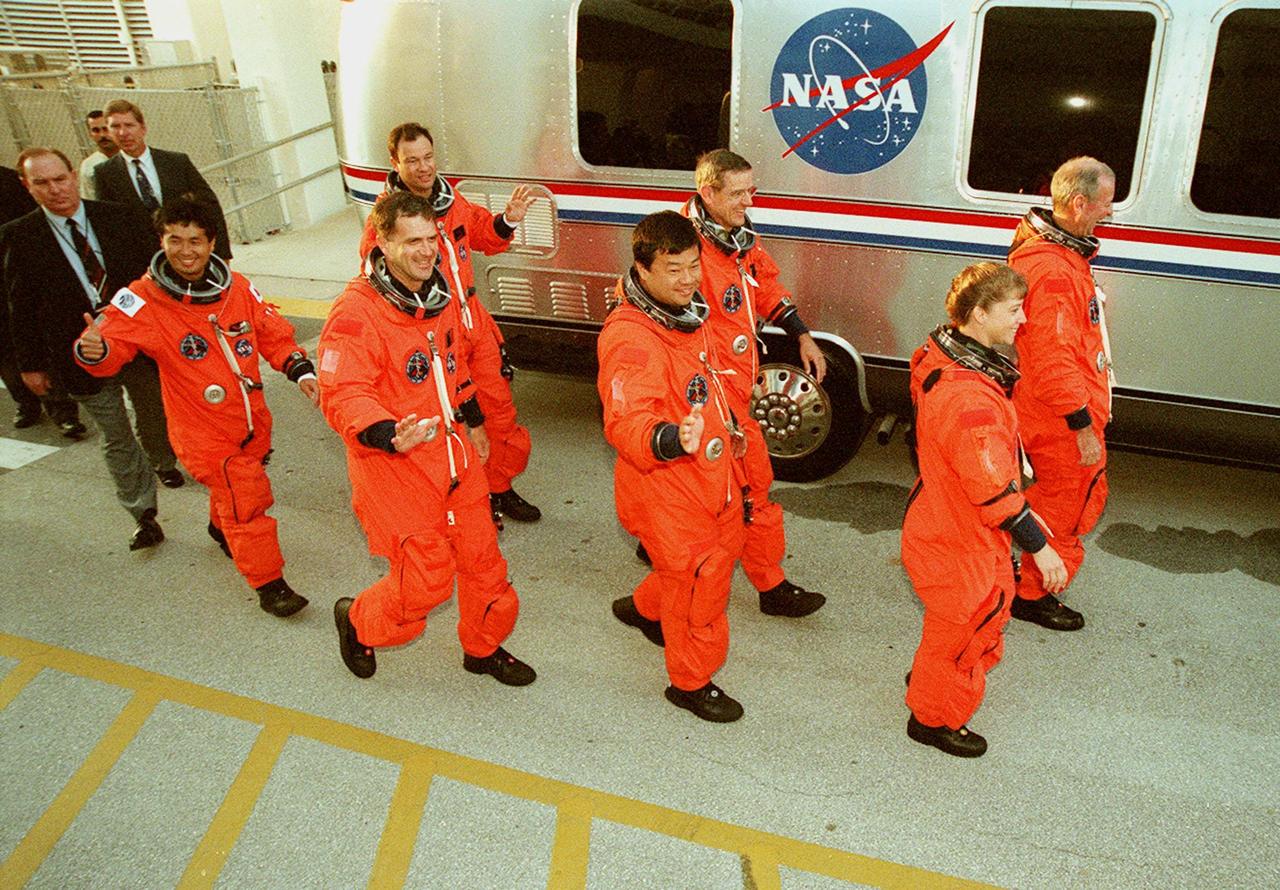
The STS-92 crew exits the Operations and Checkout Building on their way to the Astrovan and Launch Pad 39A for a simulated countdown. Walking left to right are (foreground) Mission Specialists Koichi Wakata of Japan, Peter J.K. “Jeff” Wisoff and Leroy Chiao; and Pilot Pamela Ann Melroy. Behind them are Mission Specialists Michael E. Lopez-Alegria and William S. McArthur Jr.; and Commander Brian Duffy. The crew is taking part in Terminal Countdown Demonstration Test activities that provide emergency egress training, opportunities to inspect the mission payload, and the simulated countdown. STS-92 is scheduled to launch Oct. 5 at 9:38 p.m. EDT on the fifth flight to the International Space Station. It will carry two elements of the Space Station, the Integrated Truss Structure Z1 and the third Pressurized Mating Adapter. The mission is also the 100th flight in the Shuttle program
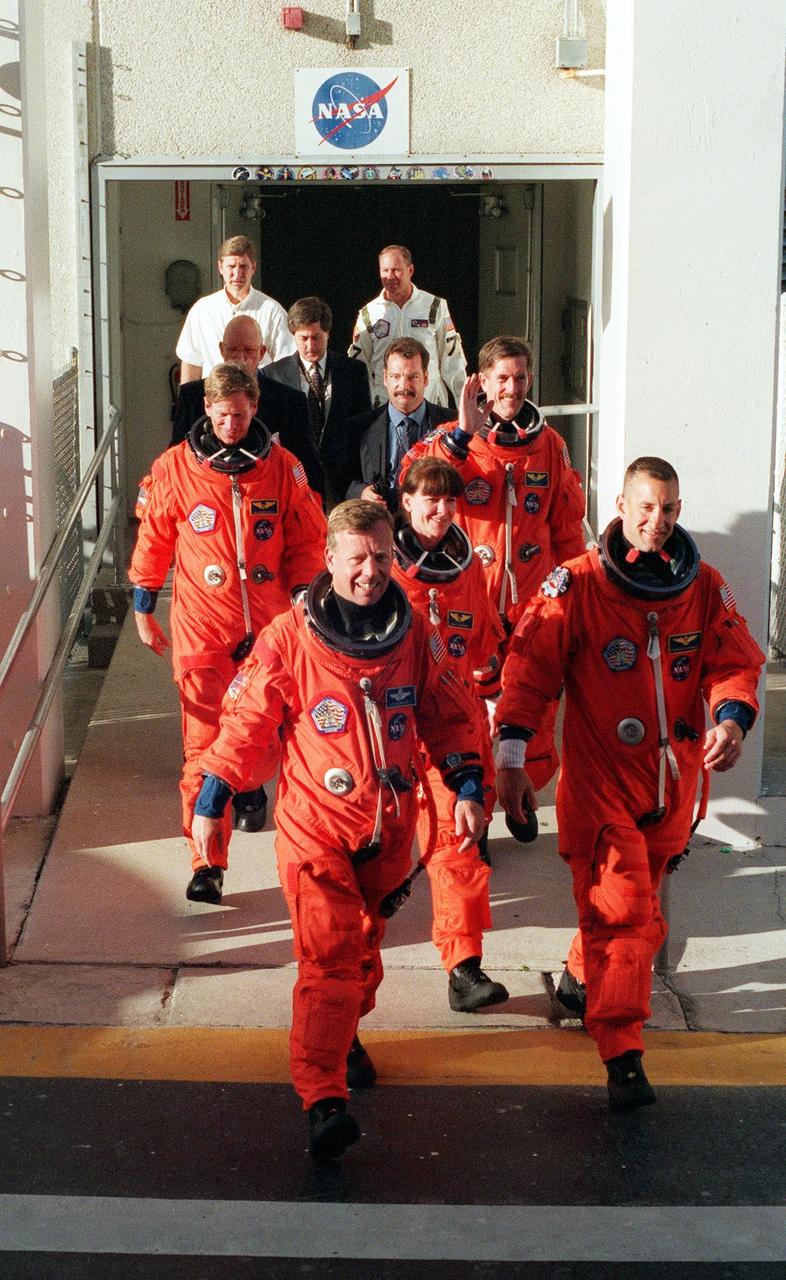
KENNEDY SPACE CENTER, Fla. -- The STS-104 crew walks out of the Operations and Checkout Building, on their way to Launch Pad 39B and a simulated countdown exercise. From back to front are Mission Specialists Michael L. Gernhardt (left) and James F. Reilly (right); middle, Mission Specialist Janet Lynn Kavandi; front, Commander Steven W. Lindsey (left) and Pilot Charles O. Hobaugh (right). The crew is taking part in Terminal Countdown Demonstration Test activities, which include emergency exit training from the orbiter, opportunities to inspect their mission payloads in the orbiter’s payload bay and simulated countdown exercises. The launch of Atlantis on mission STS-104 is scheduled July 12 from Launch Pad 39B. The mission is the 10th flight to the International Space Station and carries the Joint Airlock Module
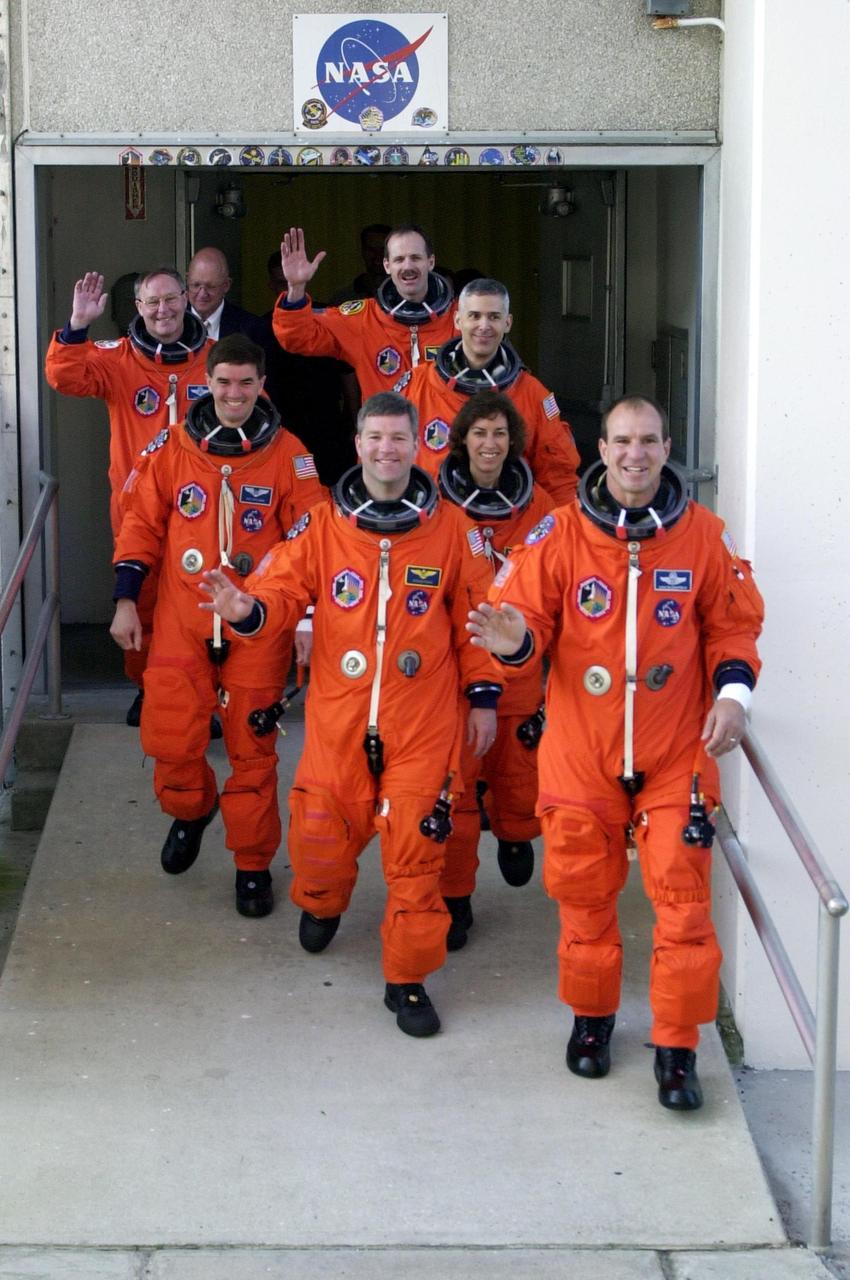
KENNEDY SPACE CENTER, FLA. -- The STS-110 crew walks out of the Operations and Checkout Building on their way to the launch pad for a simulated launch countdown. From the rear, left row, are Mission Specialists Jerry Ross and Rex Walheim, Pilot Stephen Frick; right row, Mission Specialists Steven Smith, Lee Morin and Ellen Ocho, and Commander Michael Bloomfield. The simulation is part of Terminal Countdown Demonstration Test activities. TCDT also includes emergency egress training and is held at KSC prior to each Space Shuttle flight. Scheduled for launch April 4, the 11-day mission will feature Shuttle Atlantis docking with the International Space Station (ISS) and delivering the S0 truss, the centerpiece-segment of the primary truss structure that will eventually extend over 300 feet
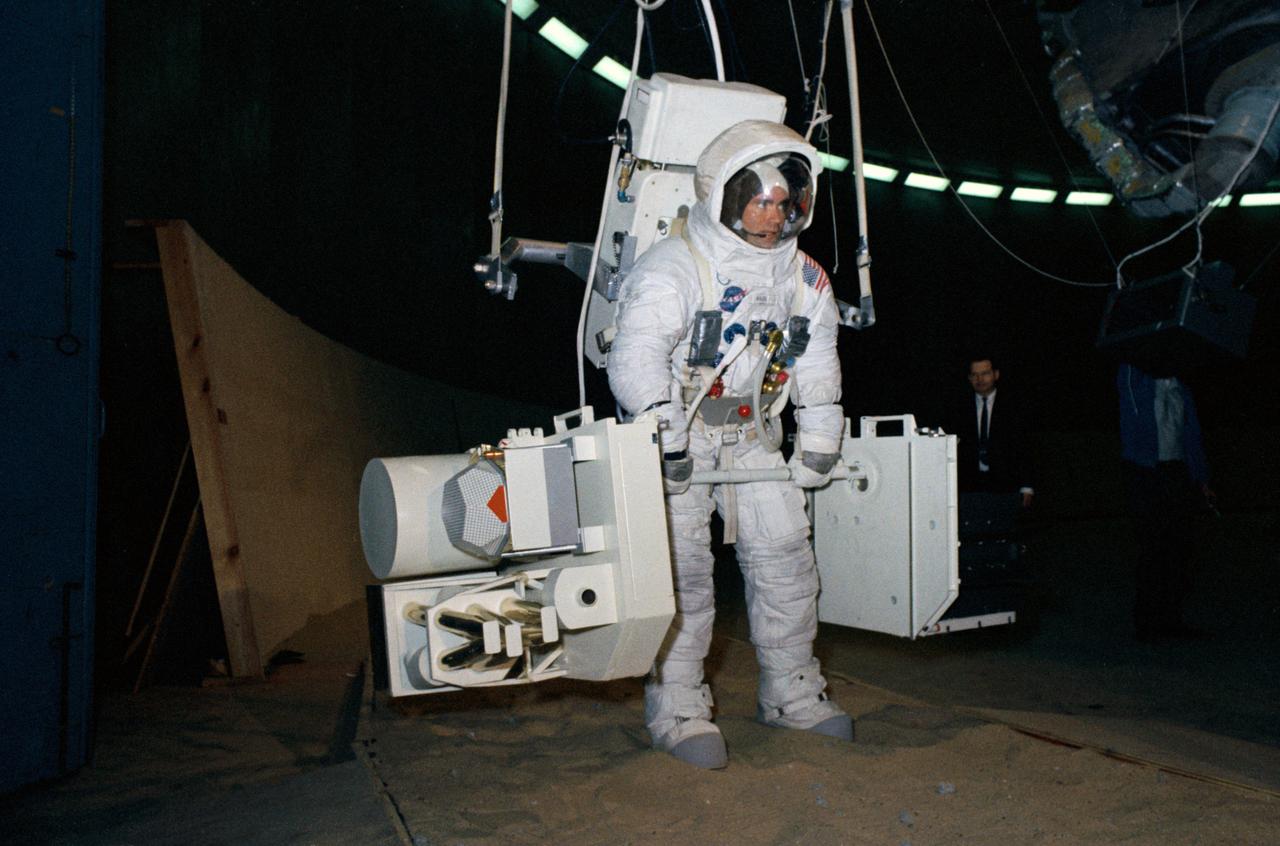
S70-24009 (19 Jan. 1970) --- Astronaut Fred W. Haise Jr., Apollo 13 lunar module pilot, trains for his scheduled April lunar space walk at the Manned Spacecraft Center (MSC). Haise carries a training version of the Apollo Lunar Surface Experiments Package (ALSEP), while connected to a "Six Degrees of Freedom" simulator. Out of frame is astronaut James A. Lovell Jr., commander, who will share the lunar extravehicular activity (EVA) with Haise. EDITOR'S NOTE: In April 1970 the Apollo 13 Service Module (SM) experienced an explosion en route to the moon. The three-man crew was forced to circumnavigate the moon and return to Earth.
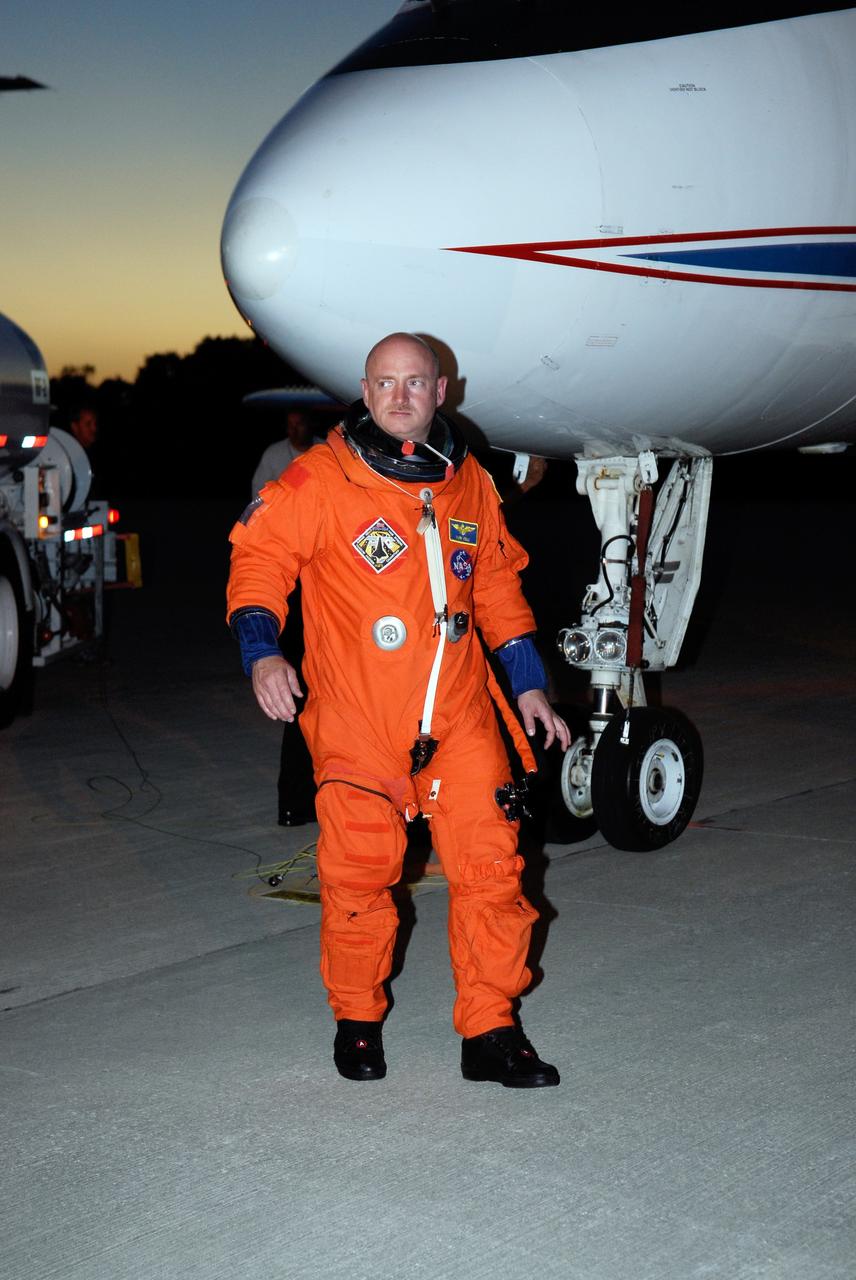
CAPE CANAVERAL, Fla. -- On the Shuttle Landing Facility at NASA's Kennedy Space Center, STS-124 Commander Mark Kelly walks away from the shuttle training aircraft after landing practice. The STA is a Grumman American Aviation-built Gulf Stream II jet that was modified to simulate an orbiter's cockpit, motion and visual cues, and handling qualities. In flight, the aircraft duplicates the orbiter's atmospheric descent trajectory from approximately 35,000 feet altitude to landing on a runway. Space shuttle Discovery is scheduled to lift off on the STS-124 mission at 5:02 p.m. May 31. Photo credit: NASA/Kim Shiflett
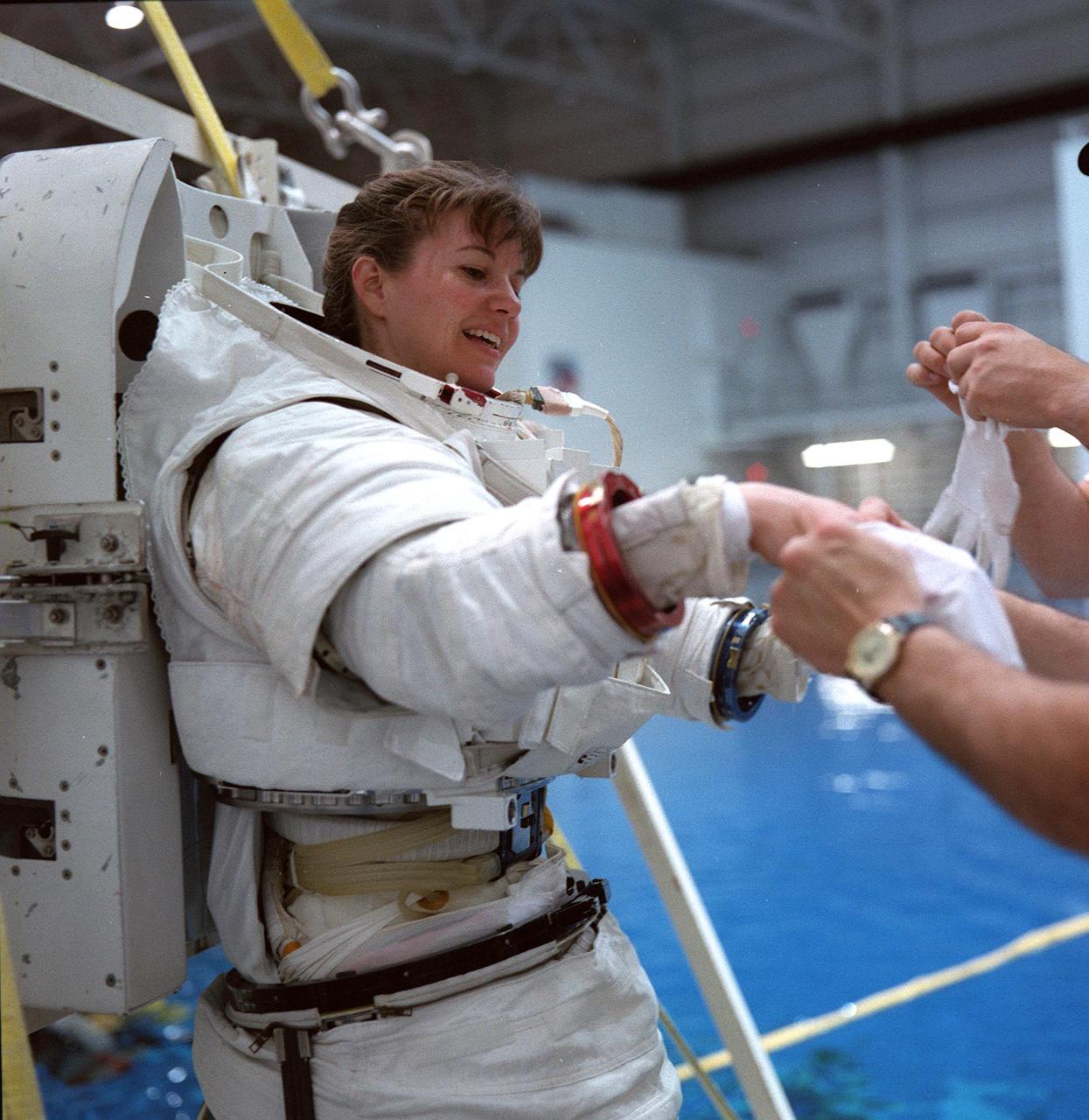
S98-08195 (March 1998) --- Standing on a mobile platform, astronaut Catherine G. Coleman is assisted with final touches for suiting up for a training exercise in the deep pool of JSC's Neutral Buoyancy Laboratory (NBL). Coleman was participating in a simulation of a contingency space walk in preparation for the STS-93 mission next year. The mission specialist will join four other NASA astronauts for the Space Shuttle Columbia flight, scheduled for spring. The training version of the extravehicular mobility unit (EMU) that Coleman is wearing is weighted and otherwise accommodated to afford neutral buoyancy in the deep pool.
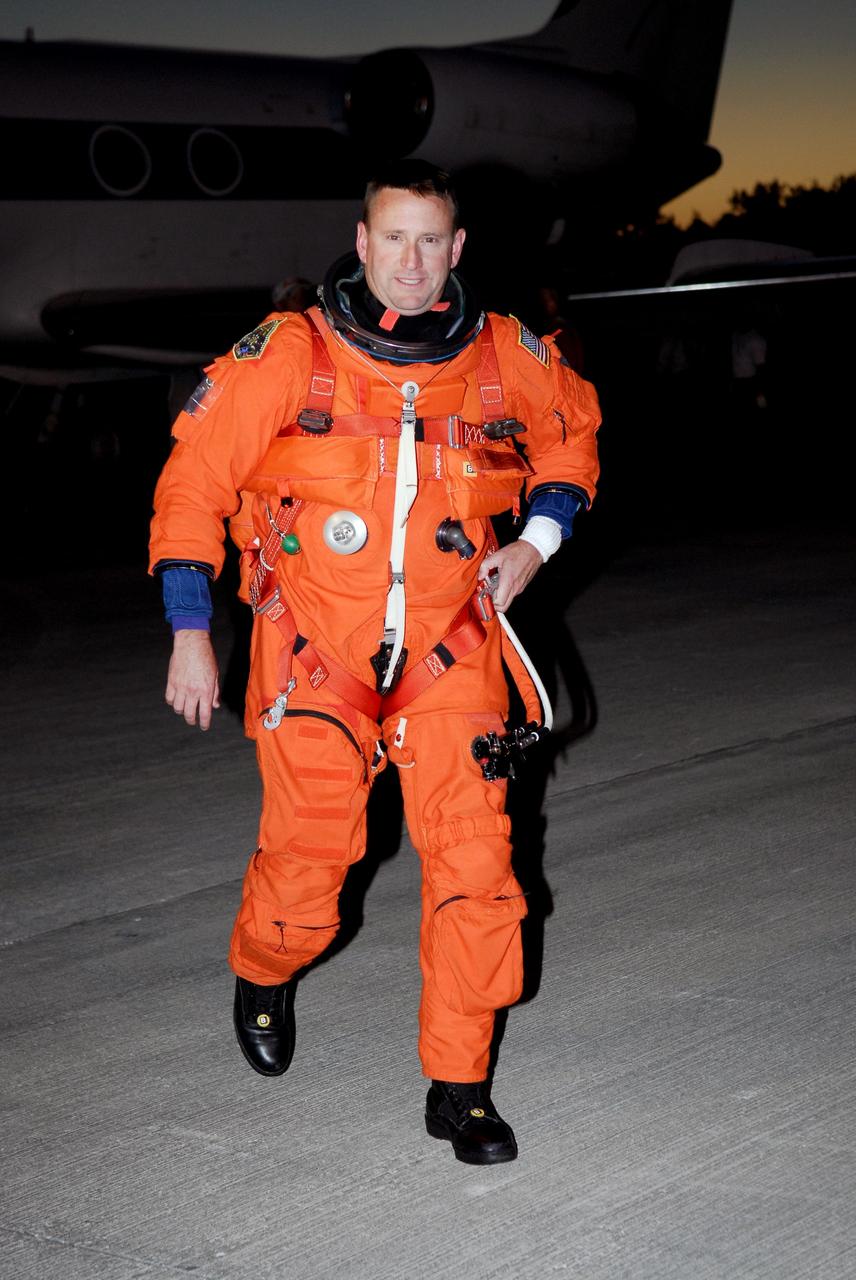
CAPE CANAVERAL, Fla. -- On the Shuttle Landing Facility at NASA's Kennedy Space Center, STS-124 Pilot Ken Ham walks away from the shuttle training aircraft after landing practice. The STA is a Grumman American Aviation-built Gulf Stream II jet that was modified to simulate an orbiter's cockpit, motion and visual cues, and handling qualities. In flight, the aircraft duplicates the orbiter's atmospheric descent trajectory from approximately 35,000 feet altitude to landing on a runway. Space shuttle Discovery is scheduled to lift off on the STS-124 mission at 5:02 p.m. May 31. Photo credit: NASA/Kim Shiflett
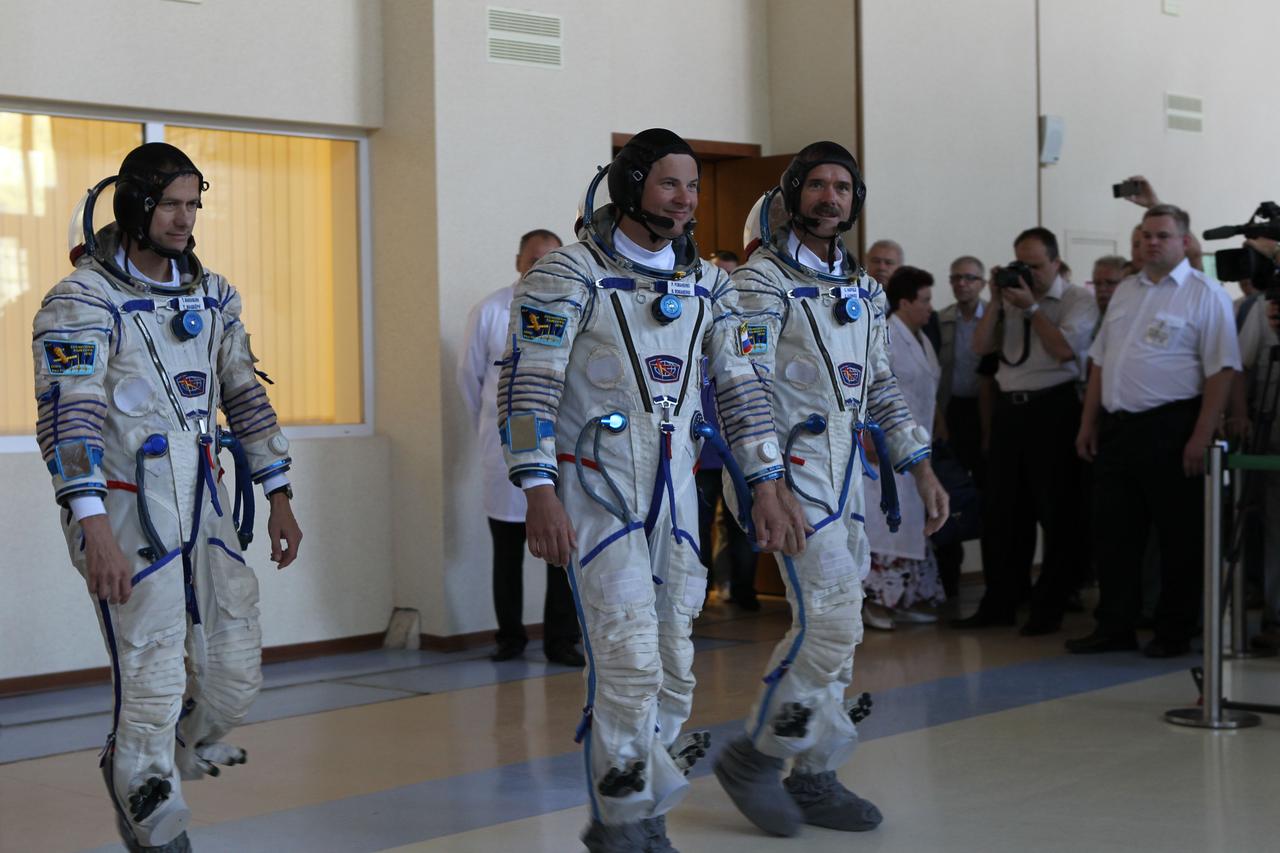
(19 June 2012) --- Expedition 32/33 backup crew members Tom Marshburn of NASA (left), Soyuz Commander Roman Romanenko (center) and Chris Hadfield of the Canadian Space Agency walked to a Soyuz simulator as they prepared for their final Soyuz qualification test June 19, 2012 at the Gagarin Cosmonaut Training Center in Star City, Russia. Expedition 32 Soyuz Commander Yuri Malenchenko and Flight Engineers Suni Williams and Aki Hoshide practiced similar scenarios nearby in advance of their final approval for launch to the International Space Station, scheduled for July 15, 2012. Photo credit: NASA
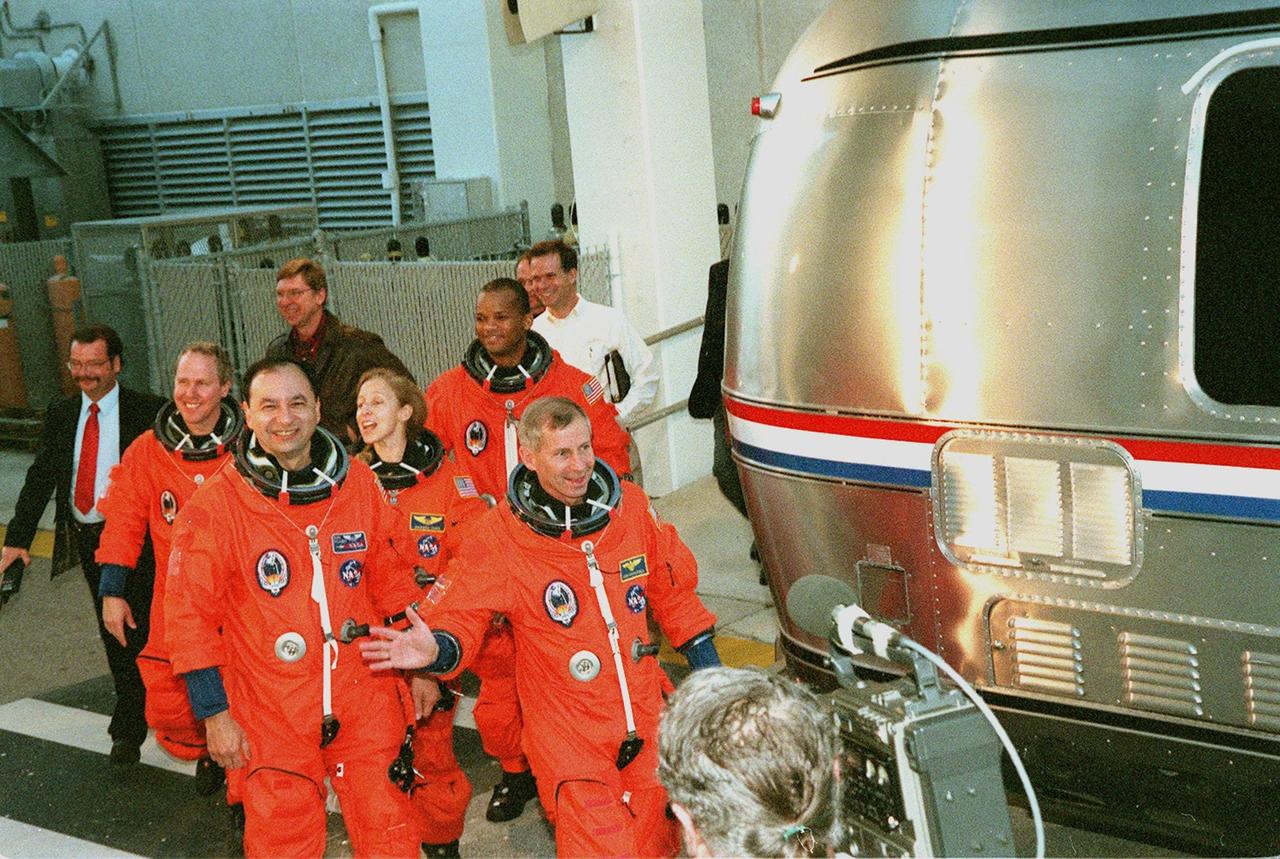
The STS-98 crew wave to onlookers as they walk out of the Operations and Checkout Building dressed for a simulated launch countdown at Launch Pad 39A. From left to right, they are Mission Specialist Thomas Jones, Pilot Mark Polansky, Mission Specialists Marsh Ivins and Robert Curbeam, being led by Commander Ken Cockrell. The crew is taking part in Terminal Countdown Demonstration Test activities, which include the countdown and emergency egress training at the pad. STS-98 is the seventh construction flight to the International Space Station, carrying as payload the U.S. Lab Destiny, a key element in the construction of the ISS. Launch of STS-98 is scheduled for Jan. 19 at 2:11 a.m. EST

JSC2000-07391 (1 December 2000)--- Astronaut Chris A. Hadfield, representing the Canadian Space Agency (CSA), puts final touches on the suit-up process in preparation for a training session in the Neutral Buoyancy Laboratory (NBL) near the Johnson Space Center (JSC). Hadfield is designated for space walk duty on the STS-100 flight, and underwater simulations of his duties help prepare him for the mission, scheduled for spring of next year. By coincidence, Hadfield is aligned beneath the Canadian flag, one of the many on NBL walls which pay tribute to the participating international partners.
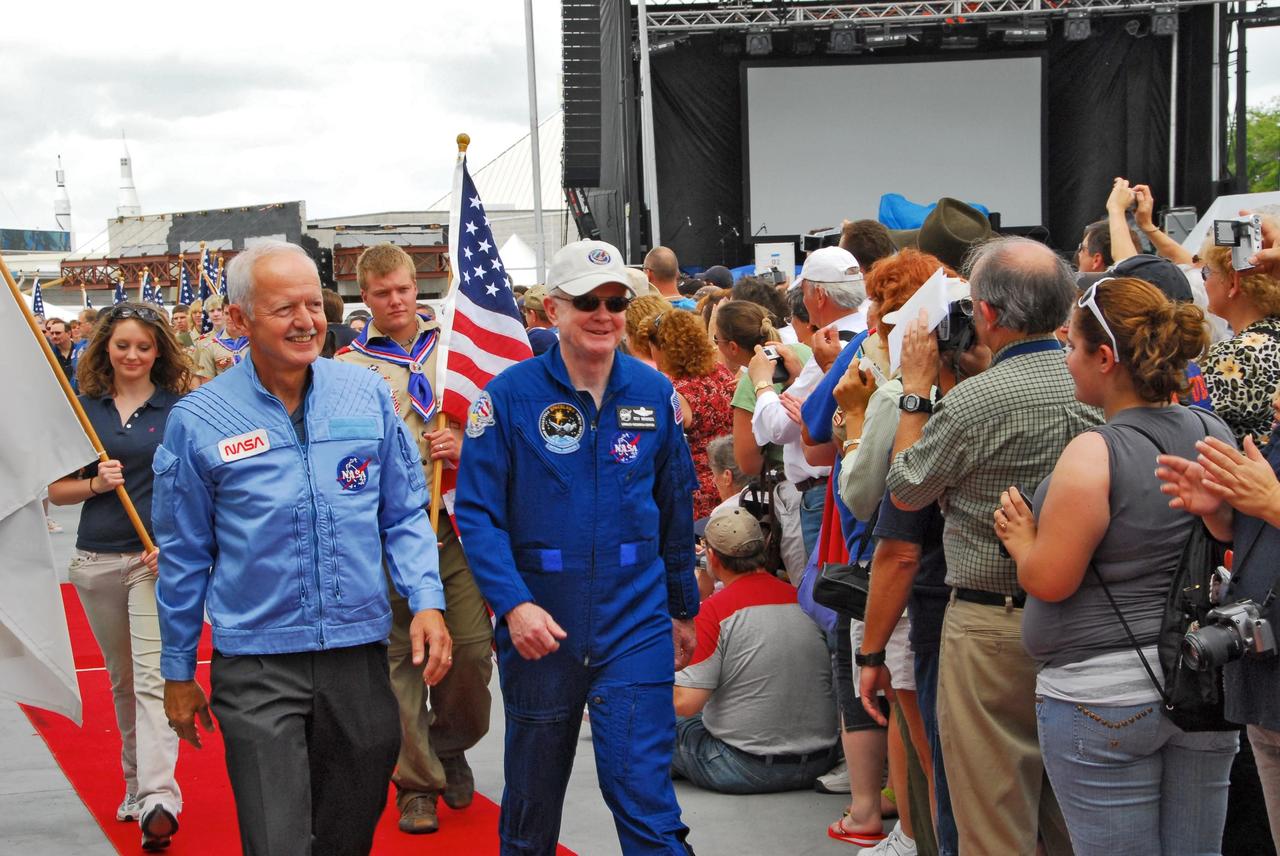
KENNEDY SPACE CENTER, FLA. -- NASA, Kennedy Space Center and State of Florida dignitaries helped launch the opening of the newest attraction at Kennedy Space Center's Visitor Complex, the Shuttle Launch Experience. Walking through the crowd is former astronaut Roy Bridges, who also is a former center director of KSC. The attraction includes a simulated launch with the sights, sounds and sensations of launching into space. Find out more about the Visitor Complex and the Shuttle Launch Experience at <b>http://www.kennedyspacecenter.com/visitKSC/attractions/index.asp</b>. Photo credit: NASA/George Shelton
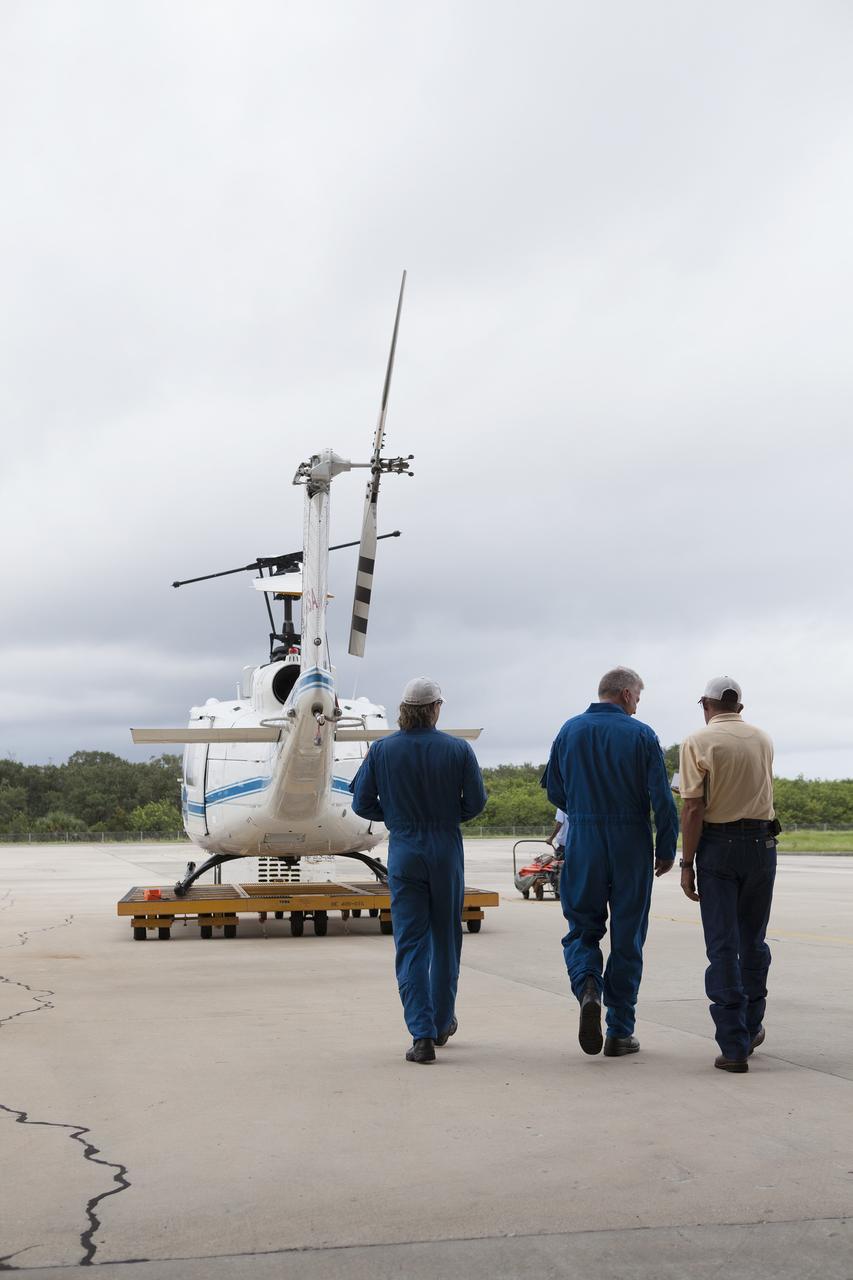
CAPE CANAVERAL, Fla. -- At NASA's Kennedy Space Center in Florida, helicopter pilots walk to their helicopter prior to practicing use of a Bambi Bucket to pick up water from a nearby waterway and dropping it on simulated targets at the center’s Shuttle Landing Facility. Firefighters respond to wildfires with teams on the ground and in the air. The most up-to-date tools include helicopters that use Bambi Buckets large quantities of water. NASA Flight Operations teams are training to perfect the skills needed to ensure they are ready to use tools, such as the Bambi Bucket, in the event of an out-of-control blaze at the spaceport. Photo credit: NASA/Frankie Martin
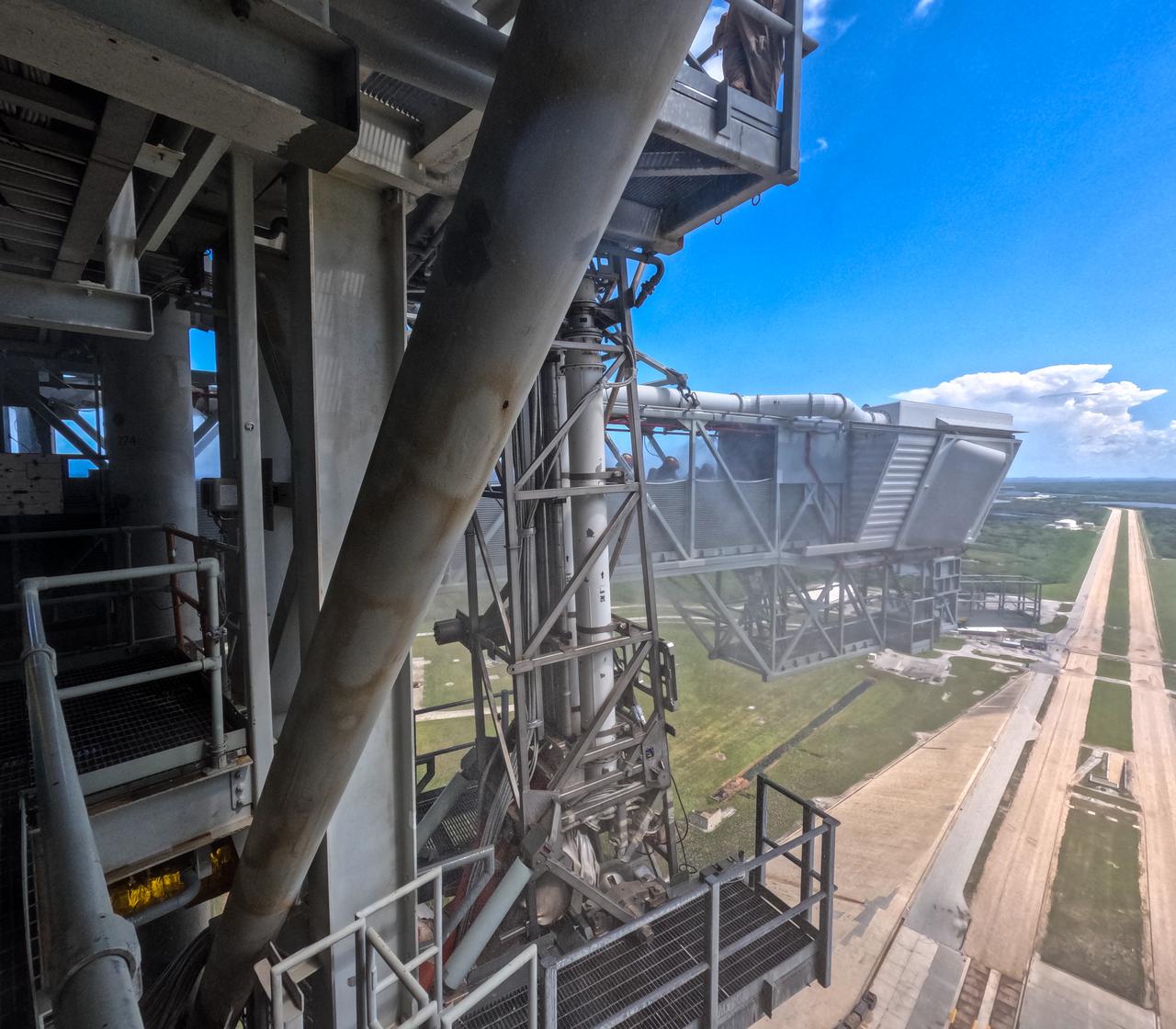
Teams at NASA’s Kennedy Space Center in Florida practice the Artemis mission emergency escape or egress procedures during a series of integrated system verification and validation tests at Launch Pad 39B on Sunday, Aug. 11, 2024. Members of the closeout crew, pad rescue team and the Exploration Ground Systems Program practiced walking to the crew access arm and getting inside and out of the emergency egress baskets. While the crew and other personnel will ride the emergency egress baskets to the terminus area in a real emergency, no one rode the baskets for this test. Instead, teams tested the baskets during separate occasions by using water tanks filled to different levels to replicate simulate the weight of passengers.
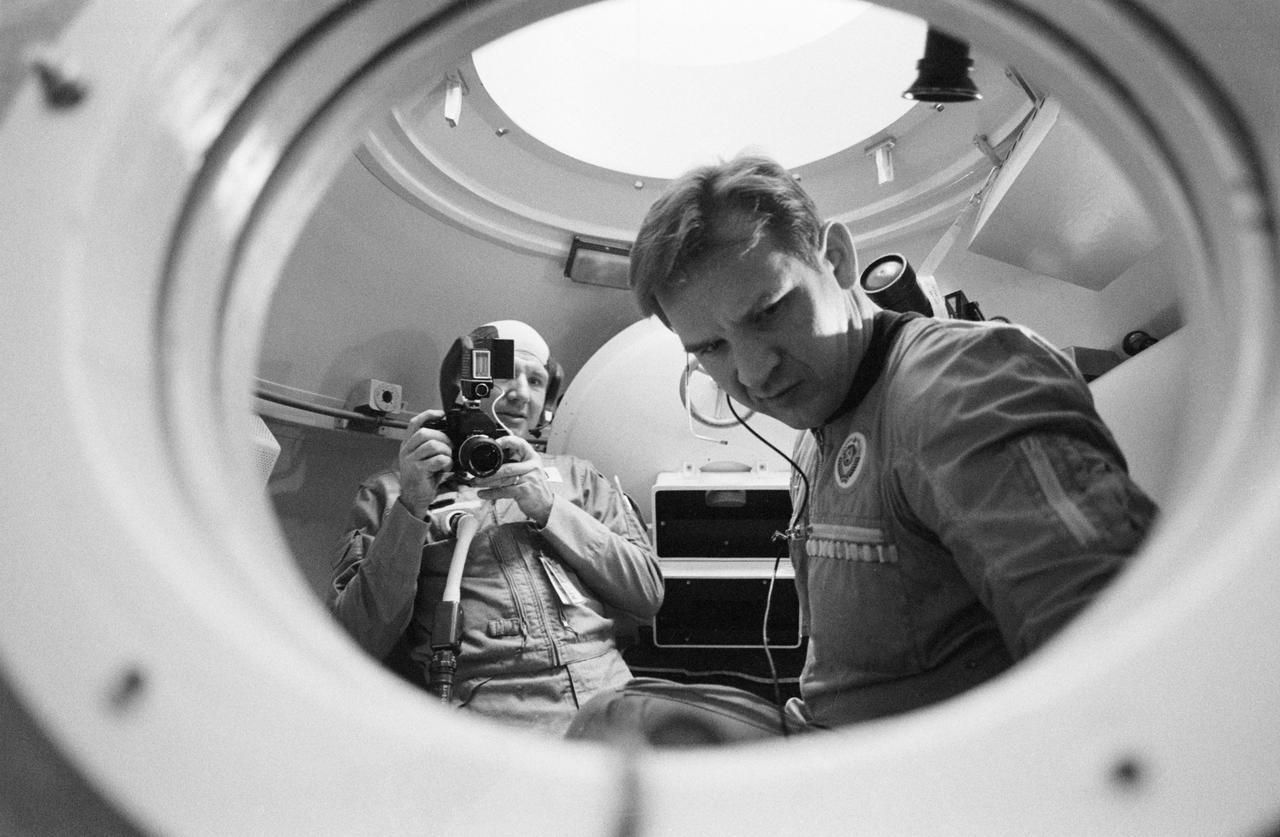
S75-21627 (13 Feb. 1975) --- Two crewmen of the joint U.S.-USSR Apollo-Soyuz Test Project mission participate in ASTP training in Building 35 at the Johnson Space Center. They are astronaut Vance D. Brand (left), command module pilot of the American ASTP prime crew; and cosmonaut Valeriy N. Kubasov, engineer on the Soviet ASTP first (prime) crew. They are in the Soyuz spacecraft orbital module mock-up. Brand and Kubasov are going through a walk-through simulation of the second day of activities in Earth orbit. Brand takes some pictures.
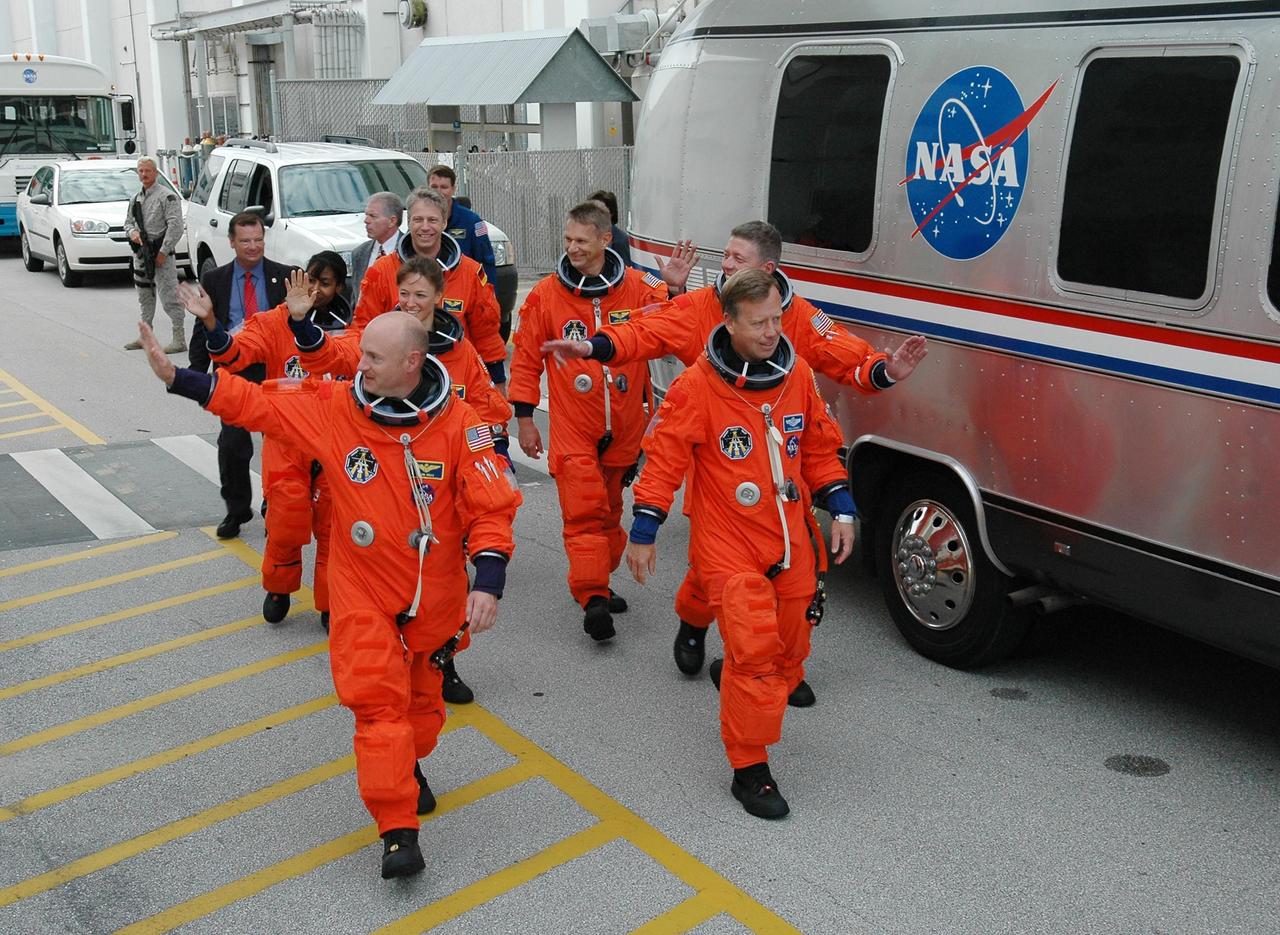
KENNEDY SPACE CENTER, FLA. - The suited STS-121 crew members walk to the bus that will take them to Launch Pad 39B for a simulated countdown. On the left, back to front, are Mission Specialists Stephanie Wilson and Lisa Nowak, and Pilot Mark Kelly. On the right, back to front, are Mission Specialists Thomas Reiter of Germany, Piers Sellers and Michael Fossum, and Commander Steven Lindsey. Reiter represents the European Space Agency. The crew is taking part in Terminal Countdown Demonstration Test activities, including the dress rehearsal for launch. Mission STS-121 is scheduled to be launched July 1. Photo credit: NASA/Kim Shiflett
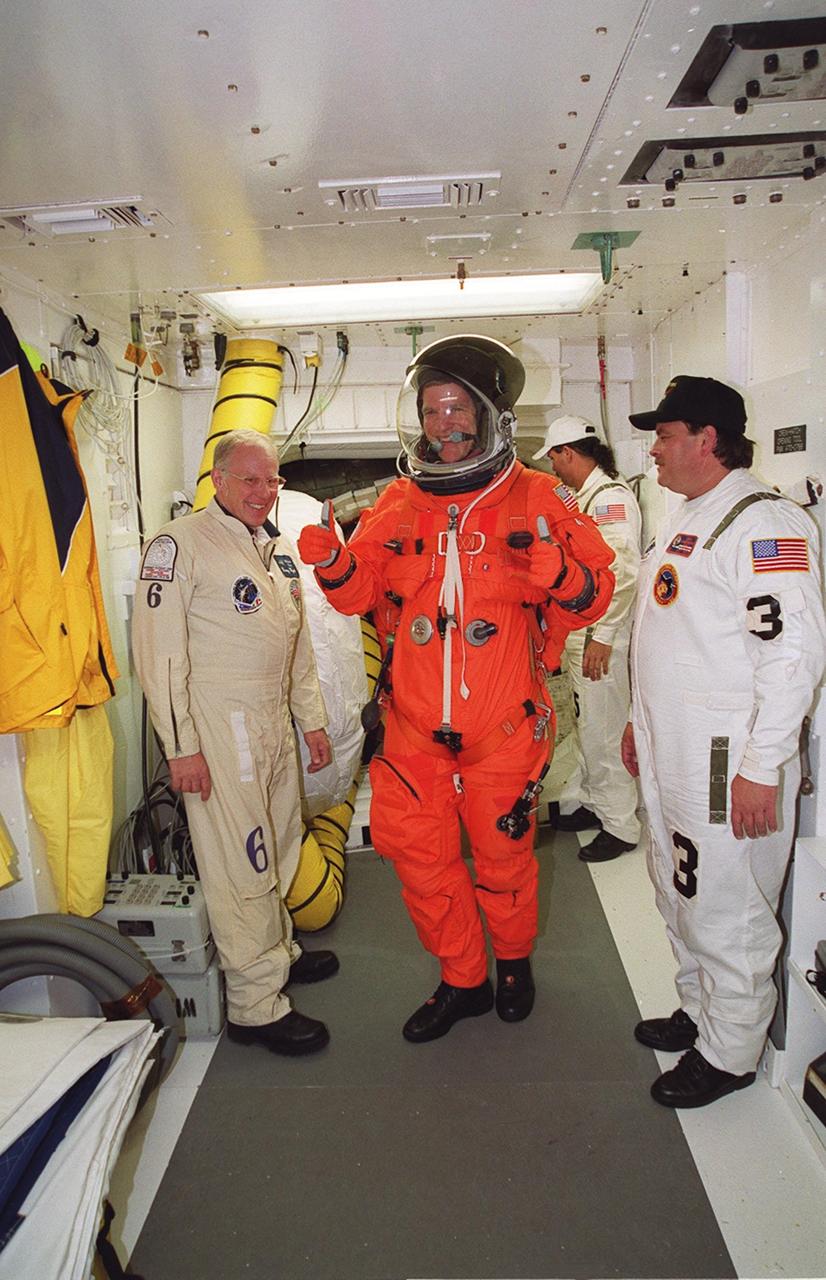
STS-100 Mission Specialist Scott E. Parazynski walks through the White Room after exiting Endeavour. He and the rest of the crew are taking part in Terminal Countdown Demonstration Test activities that include emergency escape training at the pad and the simulated launch countdown. The mission is carrying the Multi-Purpose Logistics Module Raffaello and the SSRMS, to the International Space Station. Raffaello carries six system racks and two storage racks for the U.S. Lab. The SSRMS is crucial to the continued assembly of the orbiting complex. Launch of mission STS-100 is scheduled for April 19 at 2:41 p.m. EDT from Launch Pad 39A
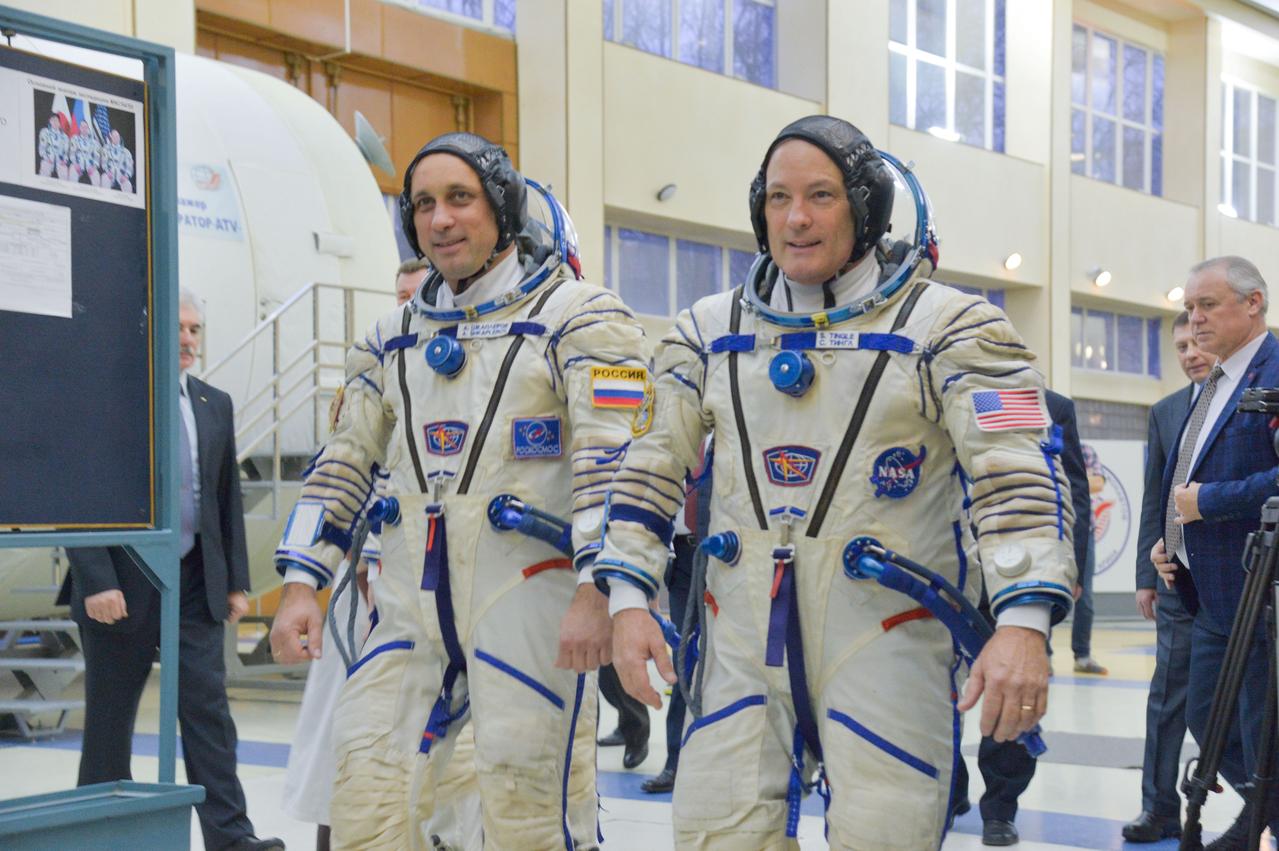
jsc2017e135203 - At the Gagarin Cosmonaut Training Center in Star City, Russia, Expedition 54-55 prime crewmembers Anton Shkaplerov of the Russian Federal Space Agency (Roscosmos, left) and Scott Tingle of NASA (right) walk through a Soyuz spacecraft simulator building Nov. 29 as part of their final crew qualification exam activities. They will launch with Norishige Kanai of the Japan Aerospace Exploration Agency (JAXA) Dec. 17 on the Soyuz MS-07 spacecraft from the Baikonur Cosmodrome in Kazakhstan for a five-month mission on the International Space Station...NASA/Elizabeth Weissinger.
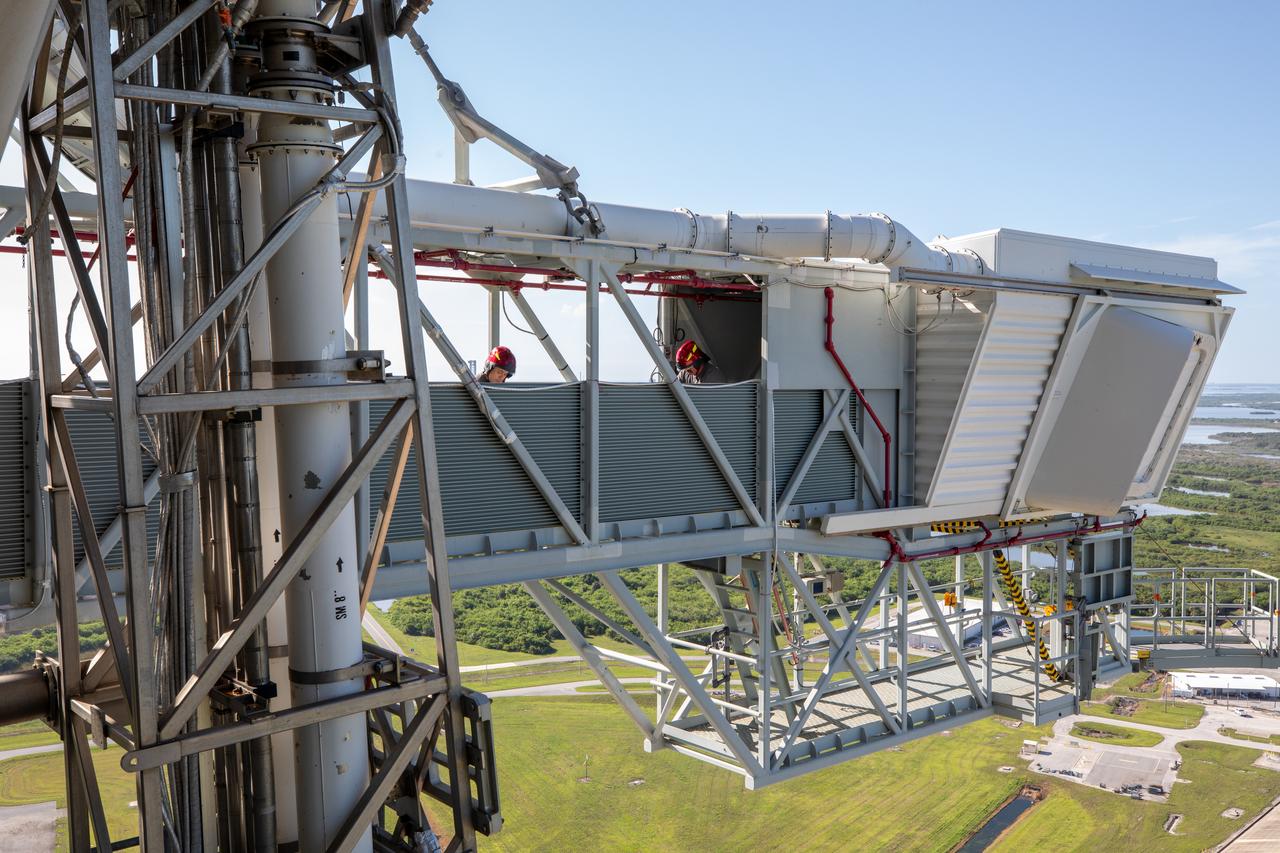
Teams at NASA’s Kennedy Space Center in Florida practice the Artemis mission emergency escape or egress procedures during a series of integrated system verification and validation tests at Launch Pad 39B on Sunday, Aug. 11, 2024. Members of the closeout crew, pad rescue team and the Exploration Ground Systems Program practiced walking to the crew access arm and getting inside and out of the emergency egress baskets. While the crew and other personnel will ride the emergency egress baskets to the terminus area in a real emergency, no one rode the baskets for this test. Instead, teams tested the baskets during separate occasions by using water tanks filled to different levels to replicate simulate the weight of passengers.
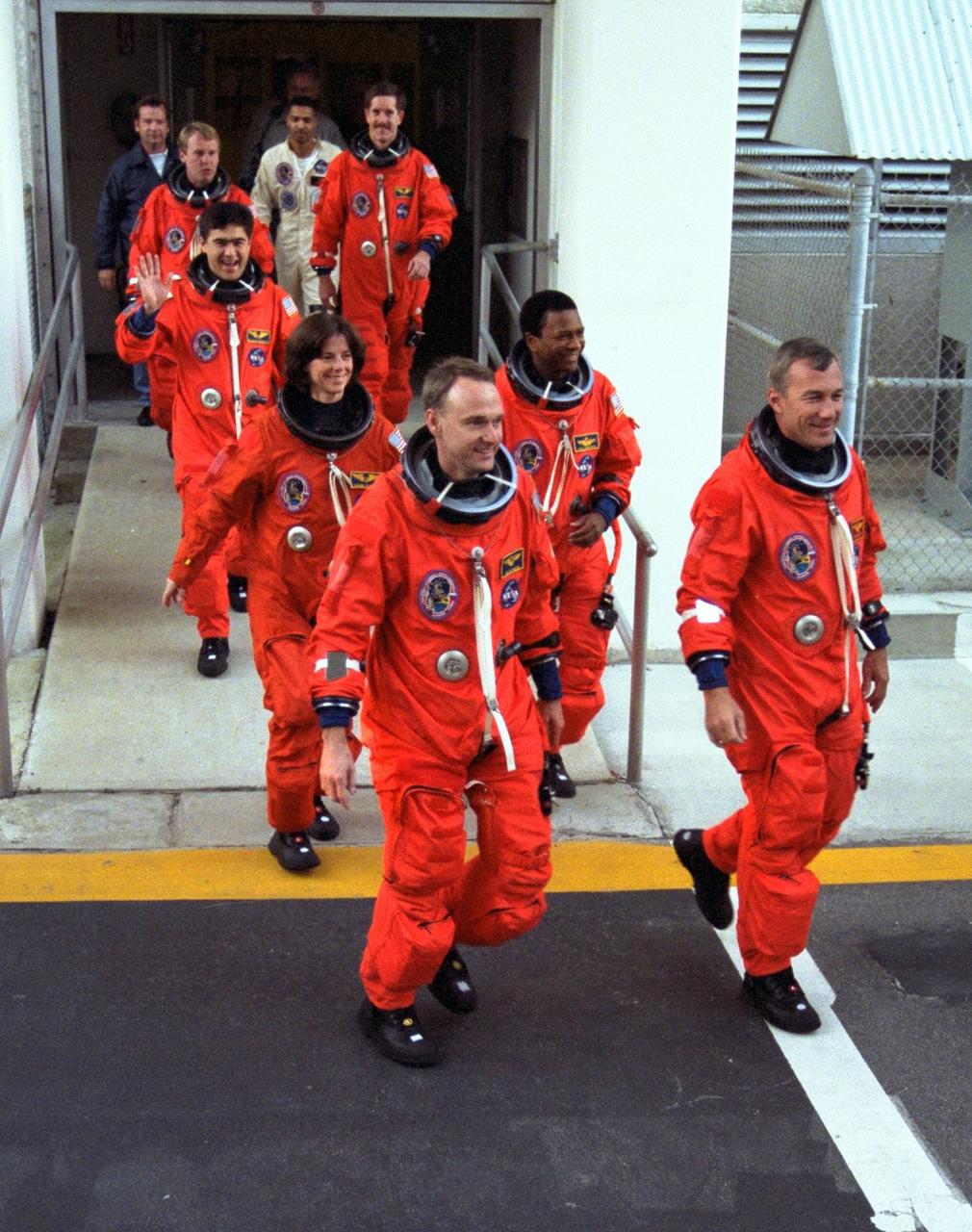
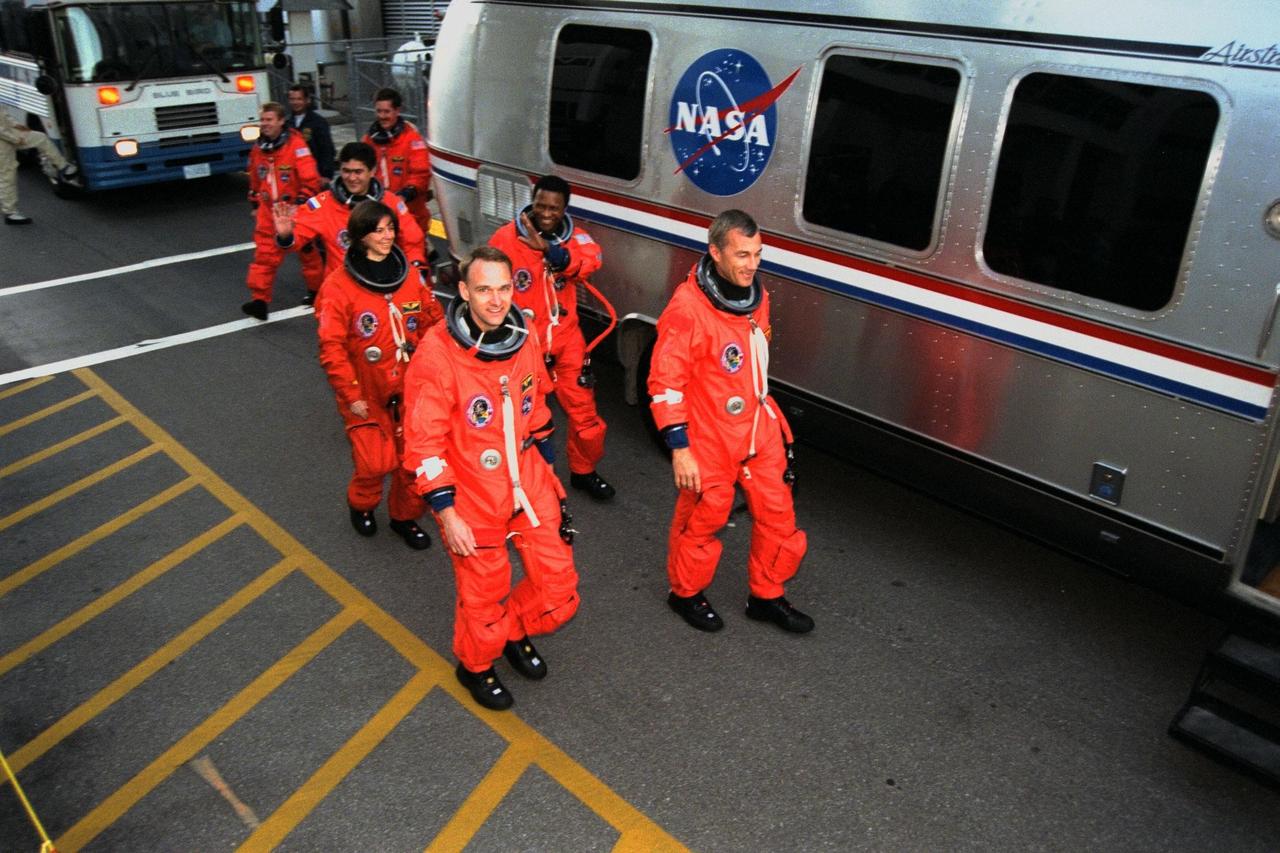
The crew of the STS-89 mission, scheduled for launch Jan. 22 aboard the Space Shuttle Endeavour from pad 39A at Kennedy Space Center (KSC), participated in the Terminal Countdown Demonstration Test (TCDT) at KSC. Simulating the walk-out from the Operations and Checkout Building before entering a van to take them to the launch pad are (front to back, left to right) Pilot Joe Edwards Jr.; Commander Terrence Wilcutt; and Mission Specialists Bonnie Dunbar, Ph.D., Michael Anderson, Salizhan Sharipov of the Russian Space Agency, Andrew Thomas, Ph.D., and James Reilly, Ph.D. The TCDT is held at KSC prior to each Space Shuttle flight to provide the crew of each mission with an opportunity to participate in simulated countdown activities. The TCDT ends with a mock launch countdown culminating in a simulated main engine cut-off. The crew also spends time undergoing emergency egress training exercises at the pad and has an opportunity to view and inspect the payloads in the orbiter's payload bay
The crew of the STS-89 mission, scheduled for launch Jan. 22 aboard the Space Shuttle Endeavour from pad 39A at Kennedy Space Center (KSC), participated in the Terminal Countdown Demonstration Test (TCDT) at KSC. Simulating the walk-out from the Operations and Checkout Building before entering a van to take them to the launch pad are (front to back, left to right) Pilot Joe Edwards Jr.; Commander Terrence Wilcutt; and Mission Specialists Bonnie Dunbar, Ph.D., Michael Anderson, Salizhan Sharipov of the Russian Space Agency, Andrew Thomas, Ph.D., and James Reilly, Ph.D. The TCDT is held at KSC prior to each Space Shuttle flight to provide the crew of each mission with an opportunity to participate in simulated countdown activities. The TCDT ends with a mock launch countdown culminating in a simulated main engine cut-off. The crew also spends time undergoing emergency egress training exercises at the pad and has an opportunity to view and inspect the payloads in the orbiter's payload bay
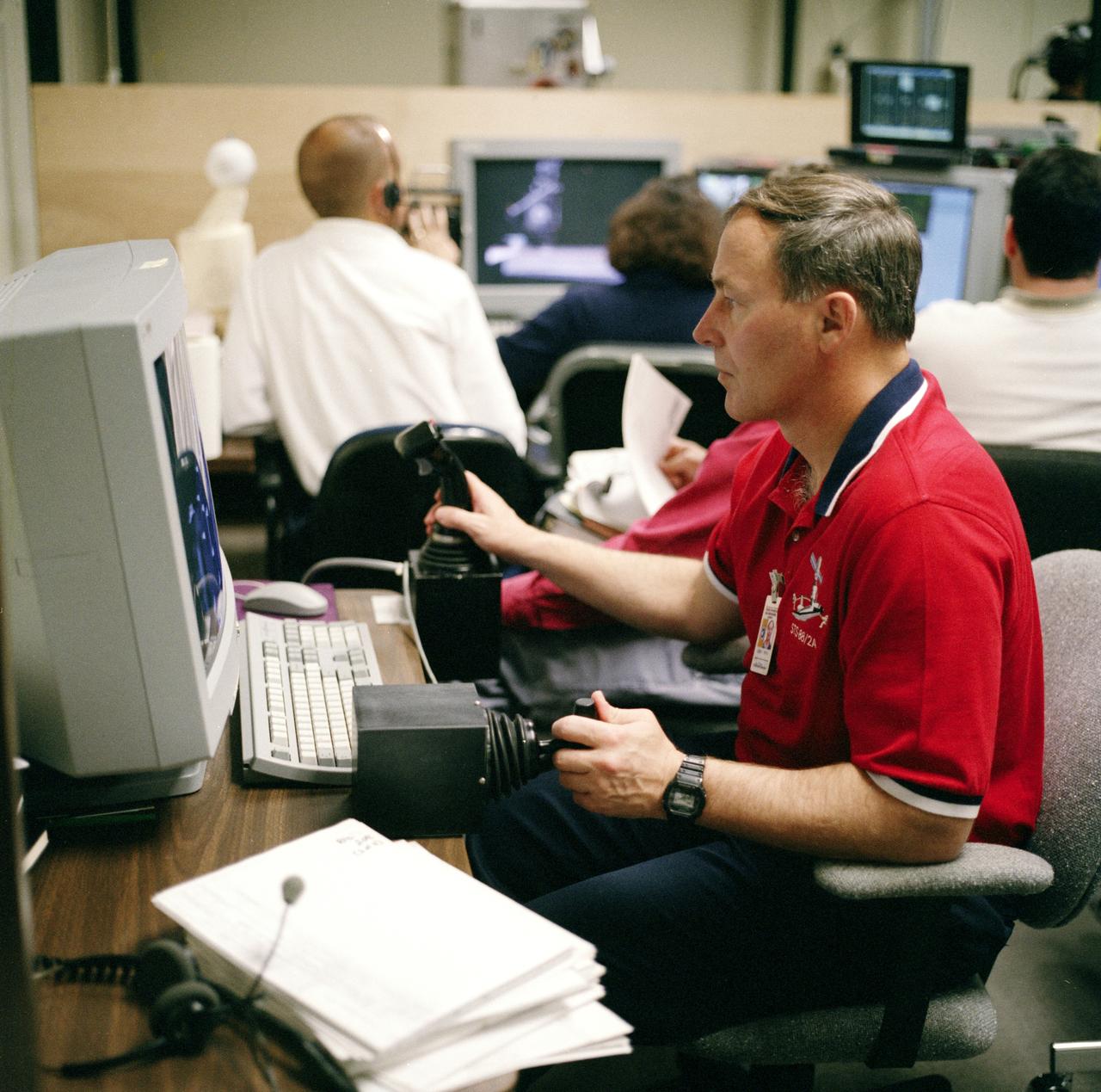
S98-05074 (8 Apr. 1998) --- Astronaut Jerry L. Ross, assigned as a mission specialist for the mission, uses special gear and software to train for his duties aboard the Space Shuttle Endeavour. This type virtual reality training supplements practice for each of the assigned space-walking astronauts -- Ross and James H. Newman -- during which they wear a helmet and special gloves to look at computer displays simulating actual movements around the various locations on the early International Space Station (ISS) hardware with which they'll be working. One of those elements will be the Functional Cargo Block (FGB), which will have been launched a couple of weeks prior to STS-88. Once the FGB is captured using the Remote Manipulator System (RMS) of the Endeavour, astronaut Nancy J. Currie will maneuver the robot arm to dock the FGB to the conical mating adapter at the top of Node 1, to be carried in the Shuttle's cargo bay. In ensuing days, three space walks by Ross and Newman will be performed to make power, data and utility connections between the two modules. Currie also uses this same lab to train for her RMS controlling duties.
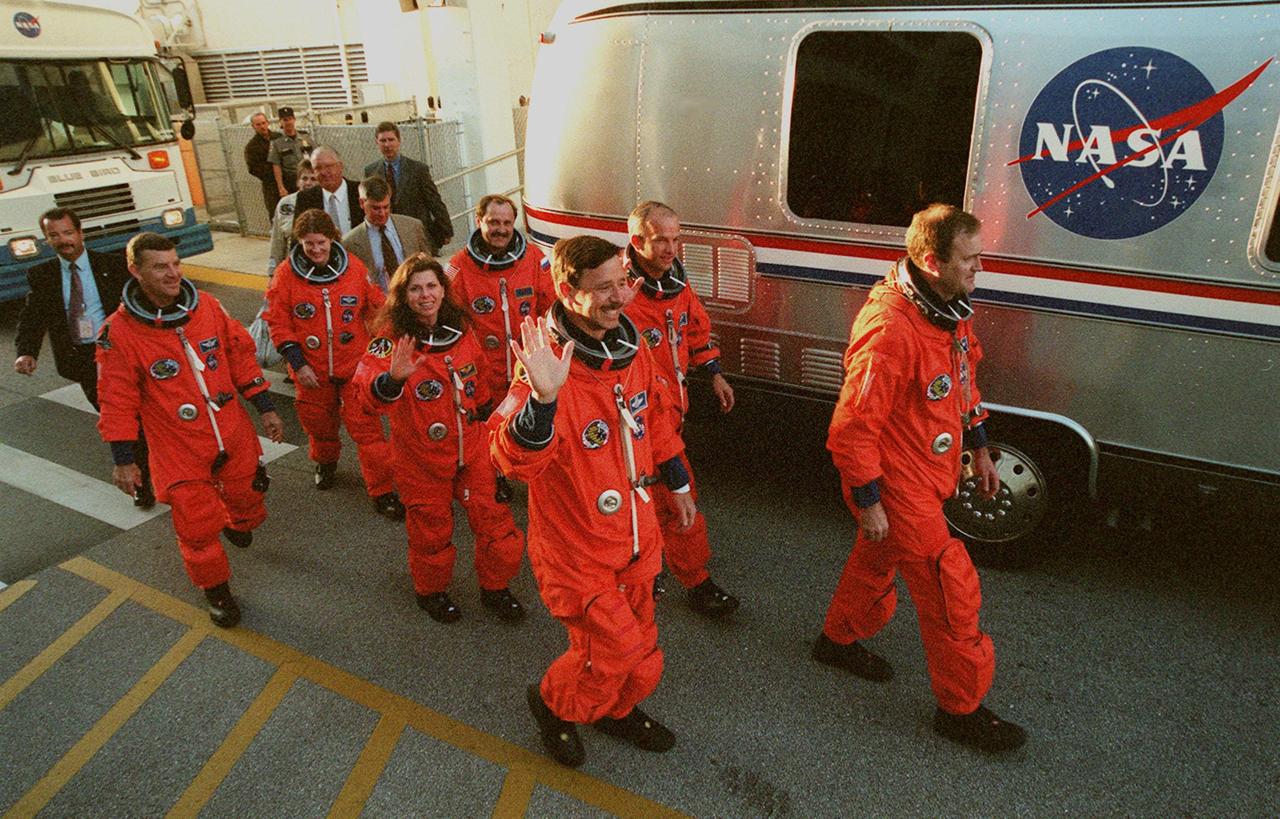
The STS-101 crew wave at onlookers as they walk from the Operations and Checkout Building to the Astrovan, which will take them to Space Shuttle Atlantis on Launch Pad 39A for a simulated countdown exercise. Leading the way are (left) Pilot Scott J. "Doc" Horowitz and (right) Commander James D. Halsell Jr. In the second row are Mission Specialists (left) Mary Ellen Weber and (right) Jeffrey N. Williams. In the third row are Mission Specialists (left) James Voss, (waving) Susan J. Helms, and (right) Yury Usachev of Russia. The dress rehearsal for launch is part of Terminal Countdown Demonstration Test (TCDT) activities that include emergency egress training and familiarization with the payload. During their mission to the International Space Station, the STS-101 crew will be delivering logistics and supplies, plus preparing the Station for the arrival of the Zvezda Service Module, expected to be launched by Russia in July 2000. Also, the crew will conduct one space walk to perform maintenance on the Space Station. This will be the third assembly flight for the Space Station. STS-101 is scheduled to launch April 24 at 4:15 p.m. from Launch Pad 39A
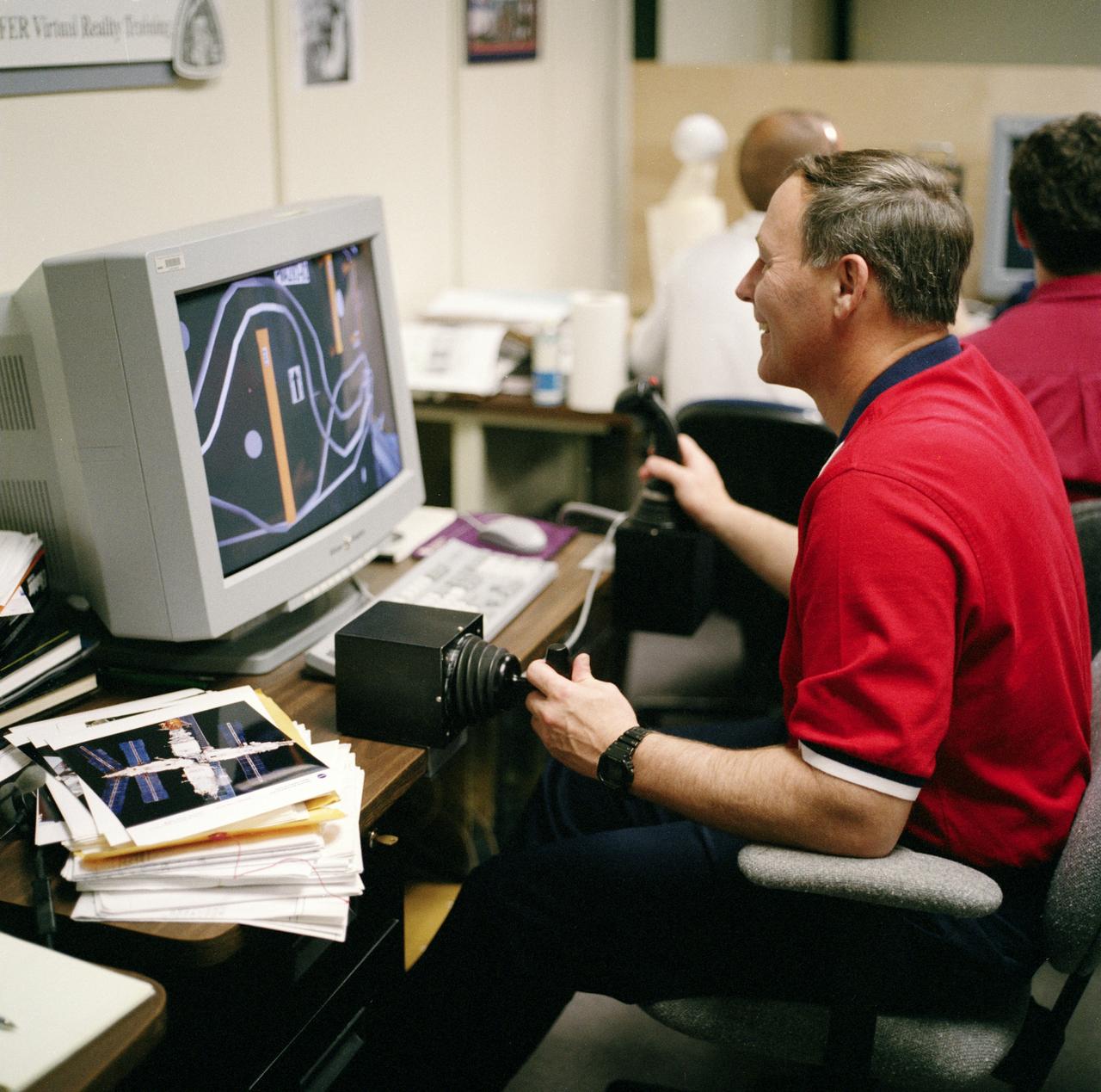
S98-05076 (8 Apr. 1998) --- Astronaut Jerry L. Ross, assigned as a mission specialist for the mission, uses special gear and software to train for his duties aboard the Space Shuttle Endeavour. This type virtual reality training supplements practice for each of the assigned space-walking astronauts -- Ross and James H. Newman -- during which they wear a helmet and special gloves to look at computer displays simulating actual movements around the various locations on the early International Space Station (ISS) hardware with which they'll be working. One of those elements will be the Functional Cargo Block (FGB), which will have been launched a couple of weeks prior to STS-88. Once the FGB is captured using the Remote Manipulator System (RMS) of the Endeavour, astronaut Nancy J. Currie will maneuver the robot arm to dock the FGB to the conical mating adapter at the top of Node 1, to be carried in the Shuttle's cargo bay. In ensuing days, three space walks by Ross and Newman will be performed to make power, data and utility connections between the two modules. Currie also uses this same lab to train for her RMS controlling duties.
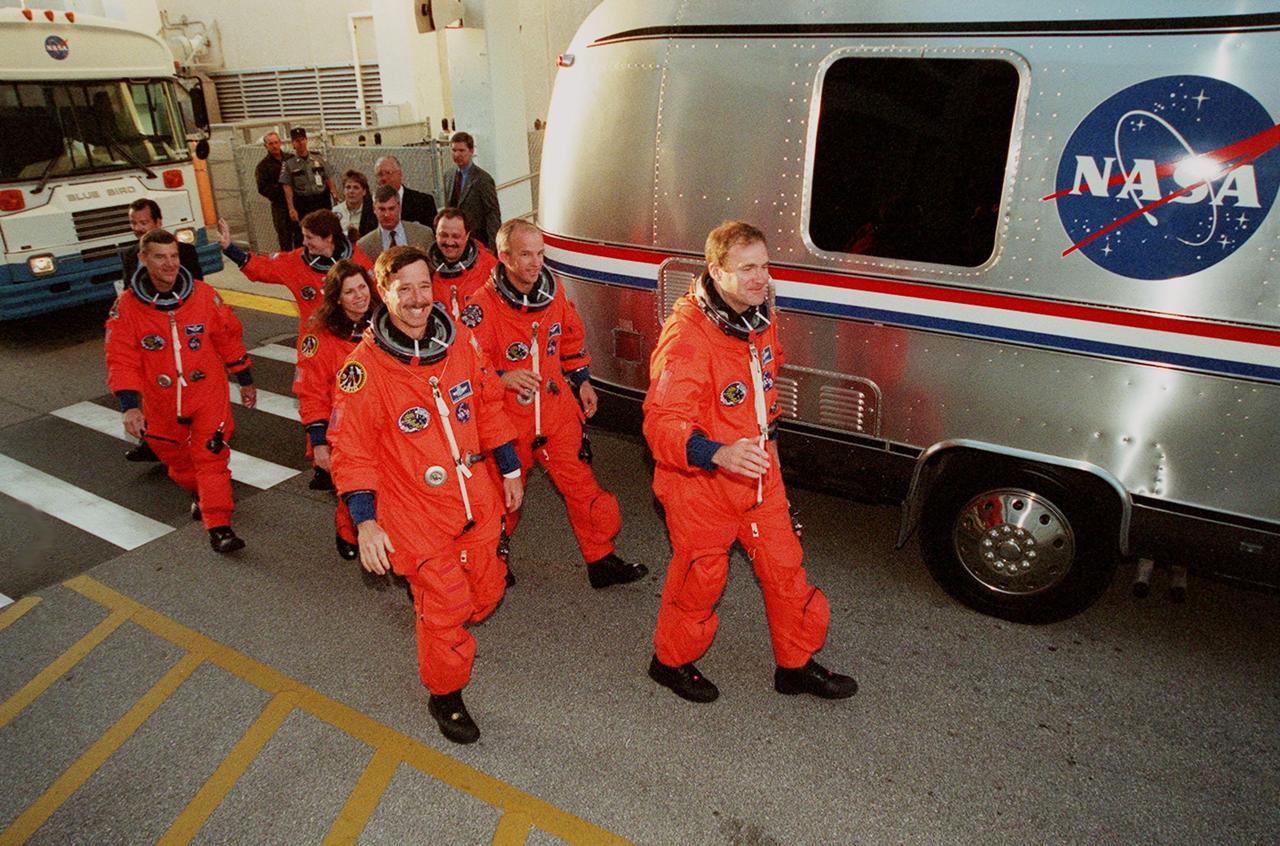
The STS-101 crew walk from the Operations and Checkout Building to the Astrovan, which will take them to Space Shuttle Atlantis on Launch Pad 39A for a simulated countdown exercise. Leading the way are (left) Pilot Scott J. "Doc" Horowitz and (right) Commander James D. Halsell Jr. In the second row are Mission Specialists (left) Mary Ellen Weber and (right) Jeffrey N. Williams. In the third row are Mission Specialists (left) James Voss, (waving) Susan J. Helms, and (right) Yury Usachev of Russia. The dress rehearsal for launch is part of Terminal Countdown Demonstration Test (TCDT) activities that include emergency egress training and familiarization with the payload. During their mission to the International Space Station, the STS-101 crew will be delivering logistics and supplies, plus preparing the Station for the arrival of the Zvezda Service Module, expected to be launched by Russia in July 2000. Also, the crew will conduct one space walk to perform maintenance on the Space Station. This will be the third assembly flight for the Space Station. STS-101 is scheduled to launch April 24 at 4:15 p.m. from Launch Pad 39A
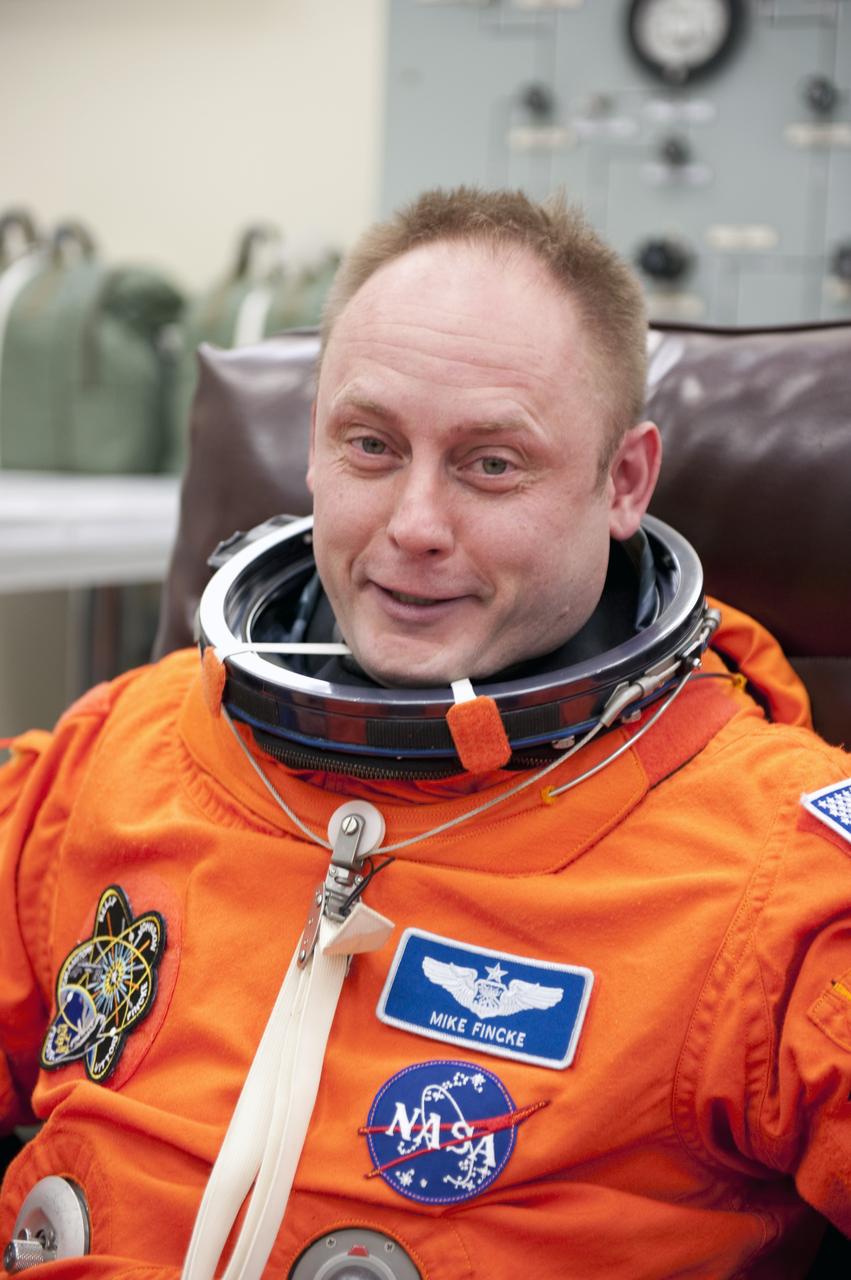
CAPE CANAVERAL, Fla. -- During a simulated launch countdown, STS-134 Mission Specialist Michael Fincke checks the fit of his bright-orange, launch-and-entry suit in the Operations and Checkout Building at NASA's Kennedy Space Center in Florida. Next, Fincke and his crewmates will walk out to the waiting Astrovan. As part of the Terminal Countdown Demonstration Test (TCDT), the crew members will ride to the pad in their silver Astrovan and strap into space shuttle Endeavour to practice the steps that will be taken on launch day. Endeavour's six crew members are targeted to launch April 19 at 7:48 p.m. EDT. They will deliver the Express Logistics Carrier-3, Alpha Magnetic Spectrometer-2 (AMS), a high-pressure gas tank, additional spare parts for the Dextre robotic helper and micrometeoroid debris shields to the International Space Station. This will be the final spaceflight for Endeavour. For more information visit, www.nasa.gov/mission_pages/shuttle/shuttlemissions/sts134/index.html. Photo credit: NASA/Kim Shiflett
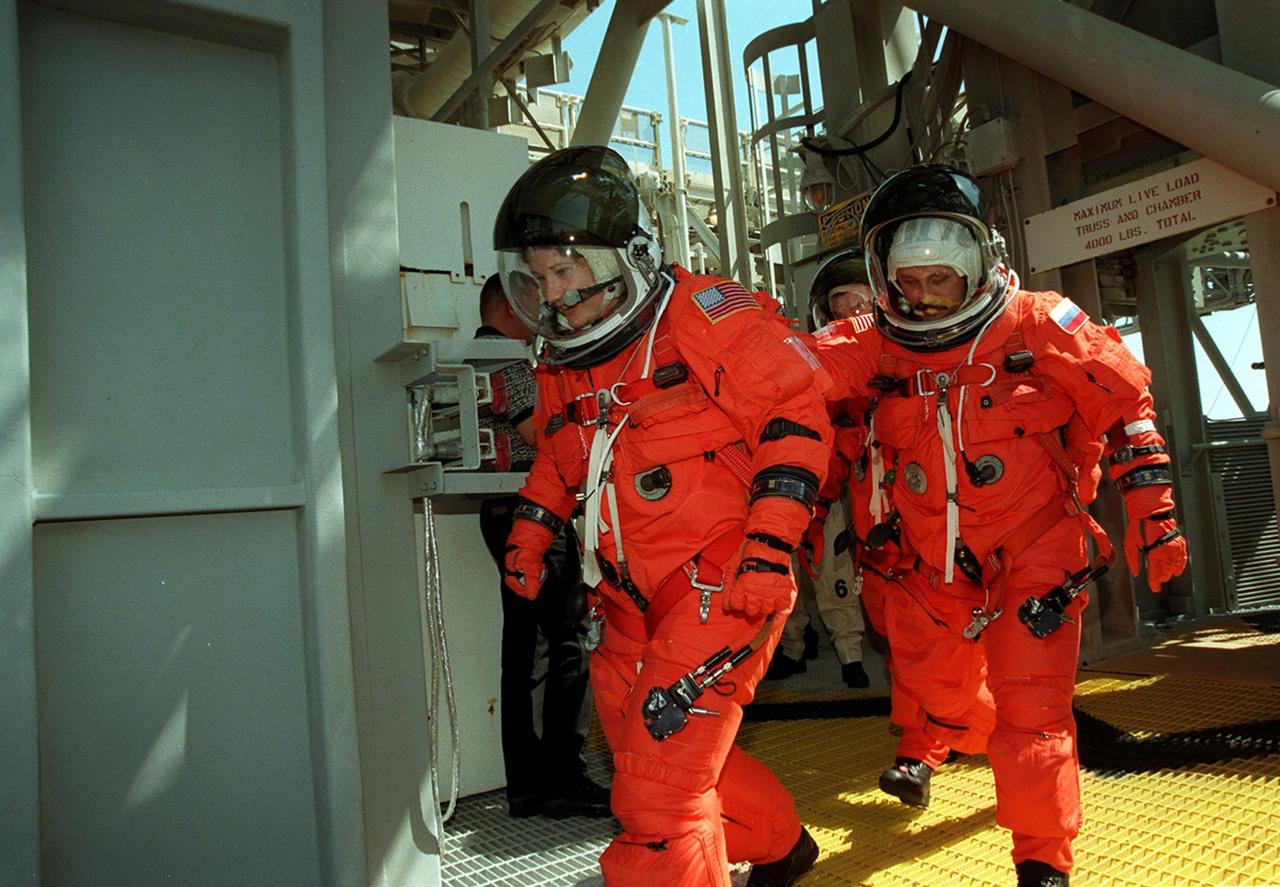
KENNEDY SPACE CENTER, FLA. -- As part of Terminal Countdown Demonstration (TCDT) activities, the STS-101 crew practices emergency egress from the orbiter at the 195-foot level of the Fixed Service Structure. Shown heading down the easily identified exit path, known as the "yellow brick road," are Mission Specialists Susan J. Helms (leading), Yury Usachev of Russia and James Voss. The TCDT also includes a simulated launch countdown and familiarization with the payload. During their mission to the International Space Station, the STS-101 crew will be delivering logistics and supplies, plus preparing the Station for the arrival of the Zvezda Service Module, expected to be launched by Russia in July 2000. Also, the crew will conduct one space walk to perform maintenance on the Space Station. This will be the third assembly flight to the Space Station. STS-101 is scheduled to launch April 24 at 4:15 p.m. from Launch Pad 39A

KENNEDY SPACE CENTER, FLA. -- Part of the Robot Scouts exhibit in the $13 million expansion to KSC's Visitor Complex, this display offers a view of how data from robotic probes might be used to build a human habitat for Mars. Visitors witness a simulated Martian sunset. Other new additions include and information center, a walk-through Robot Scouts exhibit, a wildlife exhibit, and the film Quest for Life in a new 300-seat theater, plus an International Space Station-themed ticket plaza, featuring a structure of overhanging solar panels and astronauts performing assembly tasks. The KSC Visitor Complex was inaugurated three decades ago and is now one of the top five tourist attractions in Florida. It is located on S.R. 407, east of I-95, within the Merritt Island National Wildlife Refuge
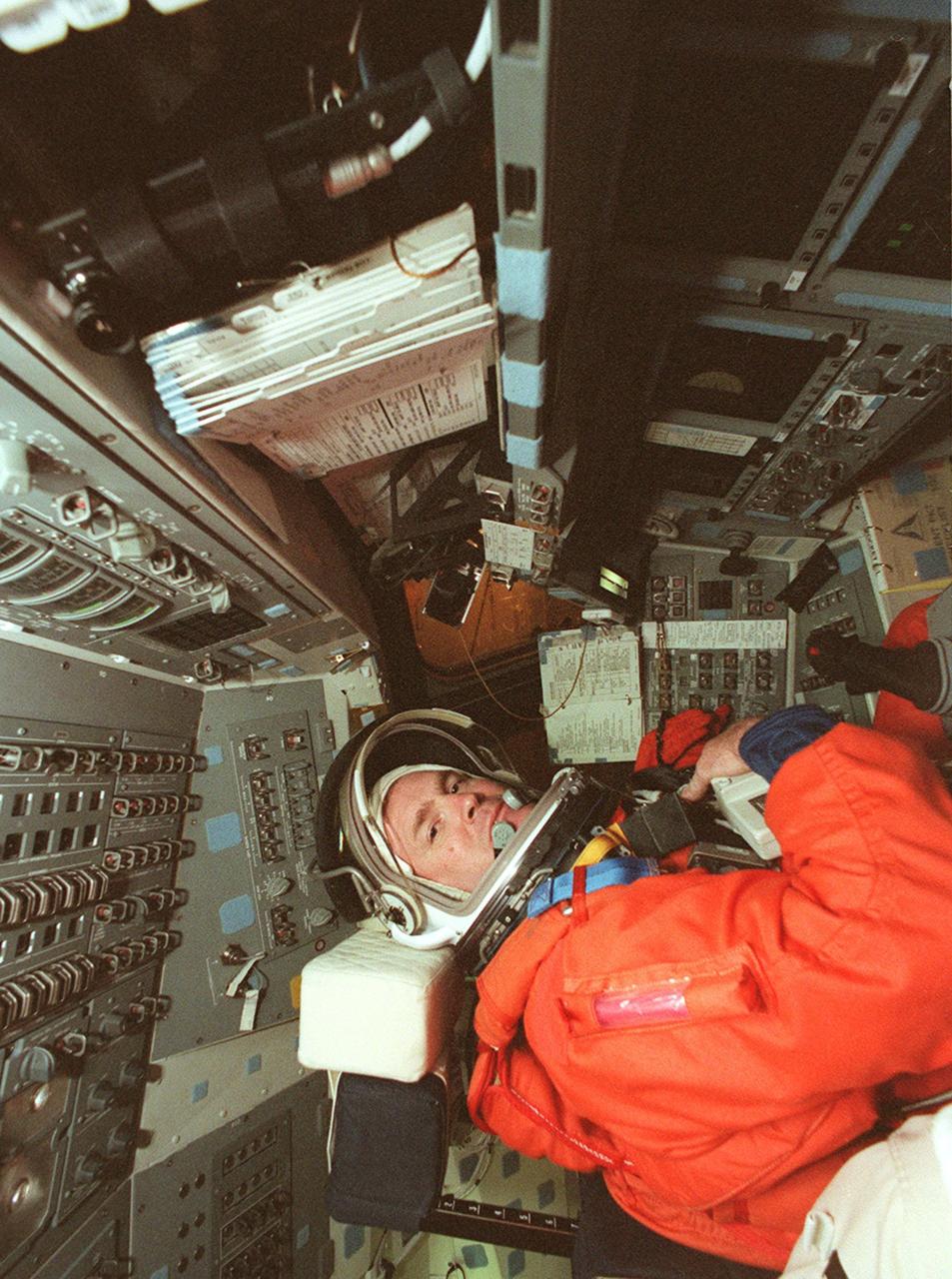
KENNEDY SPACE CENTER, FLA. -- STS-101 Commander James D. Halsell Jr. takes his seat inside Space Shuttle Atlantis for a simulated launch countdown. The countdown is part of Terminal Countdown Demonstration Test (TCDT) activities that also include emergency egress training and familiarization with the payload. Other crew members taking part are Pilot Scott J. "Doc" Horowitz and Mission Specialists Mary Ellen Weber, James Voss, Jeffrey N. Williams, Susan Helms, and Yury Usachev of Russia. During their mission to the International Space Station, the STS-101 crew will be delivering logistics and supplies, plus preparing the Station for the arrival of the Zvezda Service Module, expected to be launched by Russia in July 2000. Also, the crew will conduct one space walk to perform maintenance on the Space Station. This will be the third assembly flight for the Space Station. STS-101 is scheduled to launch April 24 at 4:15 p.m. from Launch Pad 39A
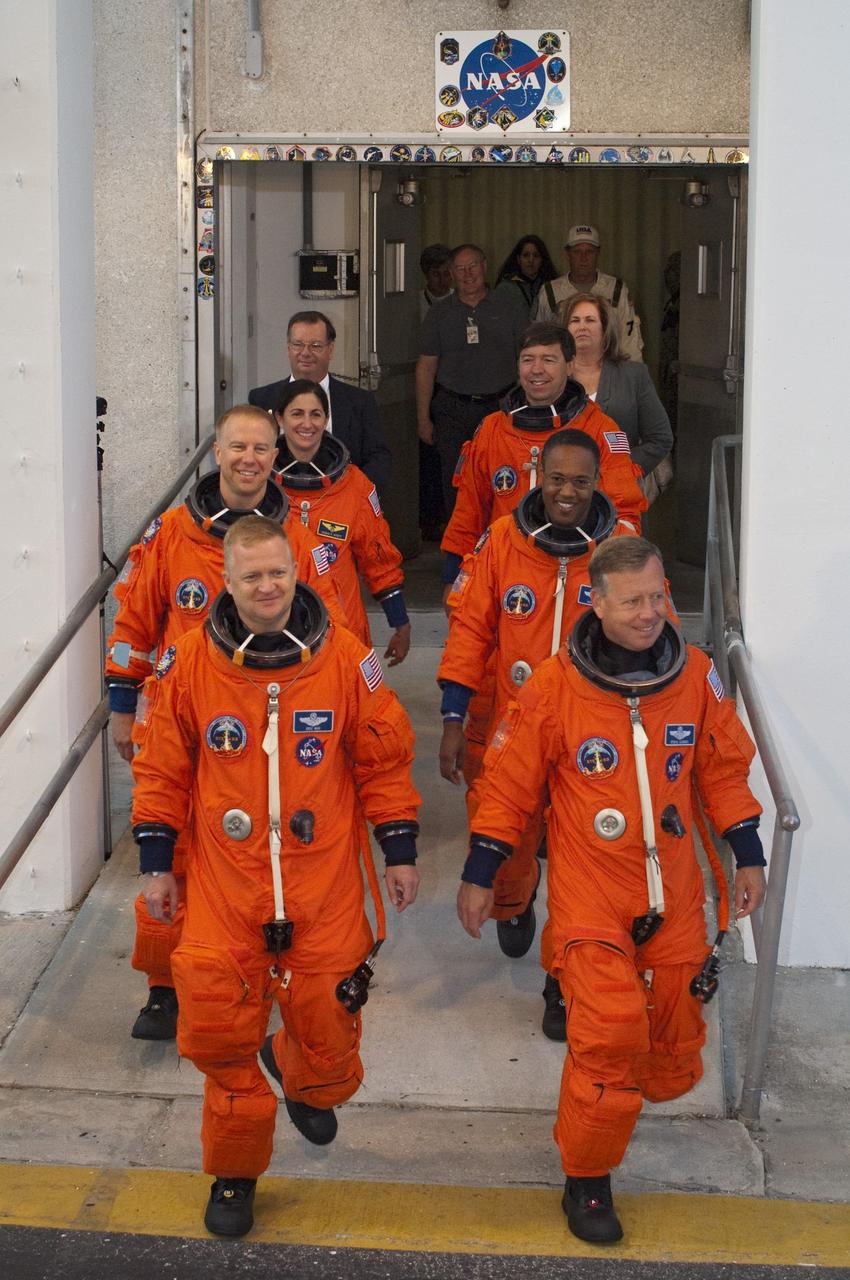
CAPE CANAVERAL, Fla. -- During a simulated launch countdown, the STS-133 crew walks out of the Operations and Checkout Building to the waiting Astrovan at NASA's Kennedy Space Center in Florida. As part of the Terminal Countdown Demonstration Test (TCDT), the crew members ride to the pad in their silver Astrovan and strap into space shuttle Discovery to practice the steps that will be taken on launch day. Discovery and its STS-133 crew will deliver the Permanent Multipurpose Module, packed with supplies and critical spare parts, as well as Robonaut 2, the dexterous humanoid astronaut helper, to the International Space Station. Launch is targeted for Nov. 1 at 4:40 p.m. For more information on the STS-133 mission, visit www.nasa.gov/mission_pages/shuttle/shuttlemissions/sts133/. Photo credit: NASA/Kim Shiflett

KENNEDY SPACE CENTER, Fla. -- After Terminal Countdown Demonstration Test (TCDT) activities at Launch Pad 39A, the STS-101 crew talk to the media. At the microphone is Commander James D. Halsell Jr. Next to him, standing left to right, are Pilot Scott J. "Doc" Horowitz and Mission Specialists Mary Ellen Weber, Jeffrey N. Williams, James Voss, Susan J. Helms and Yury Usachev of Russia. The TCDT includes emergency egress training and a simulated launch countdown. During their mission to the International Space Station, the STS-101 crew will be delivering logistics and supplies, plus preparing the Station for the arrival of the Zvezda Service Module, expected to be launched by Russia in July 2000. Also, the crew will conduct one space walk to perform maintenance on the Space Station. This will be the third assembly flight for the Space Station. STS-101 is scheduled to launch April 24 at 4:15 p.m. from Launch Pad 39A
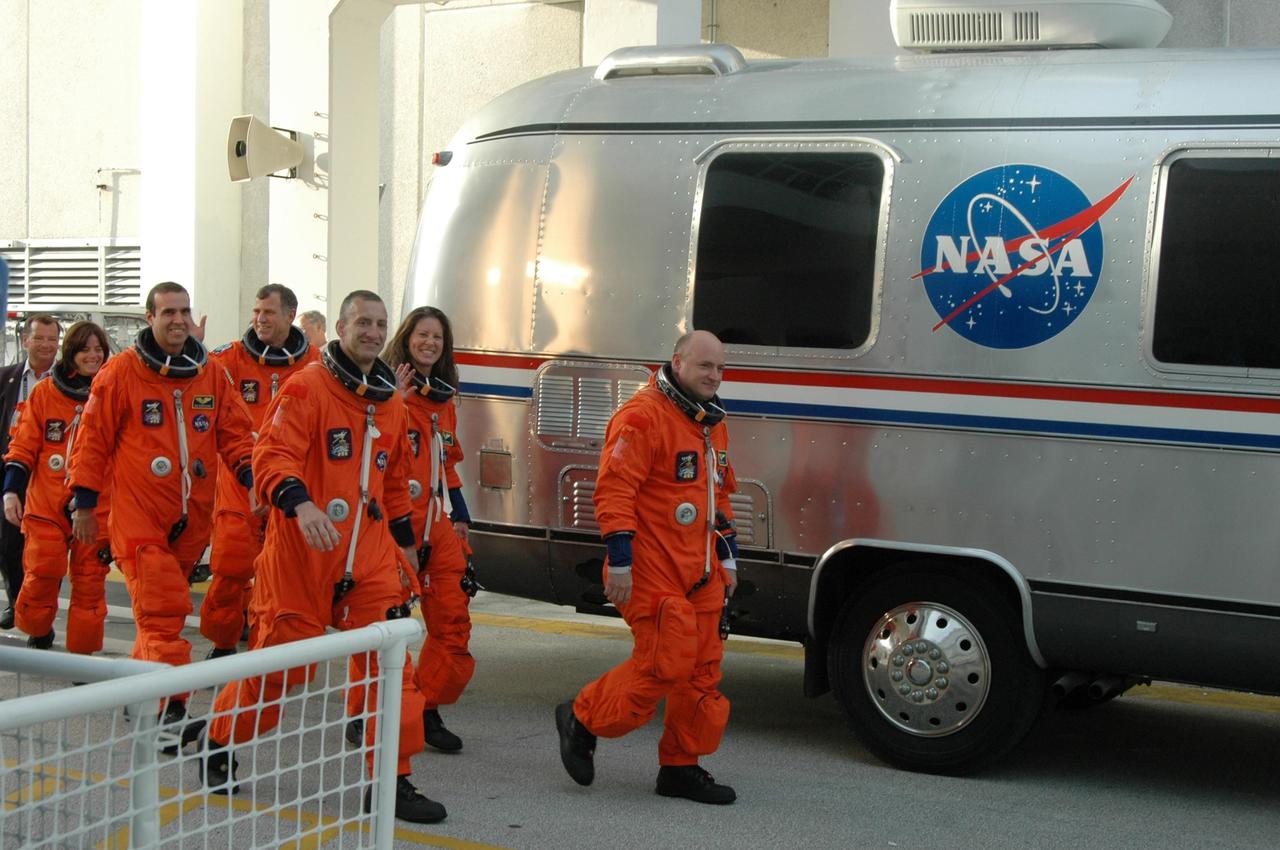
KENNEDY SPACE CENTER, Fla. -- The smiling STS-118 crew walks toward the Astrovan that will take them to Launch Pad 39A for a simulated launch countdown. From left are Mission Specialists Barbara R. Morgan and Rick Mastracchio, Pilot Charlie Hobaugh, Mission Specialists Dave Williams and Tracy Caldwell, and Commander Scott Kelly. Morgan joined NASA's Teacher in Space program in 1985 and was selected as an astronaut in 1998. The countdown concludes the terminal countdown demonstration test, or TCDT. The STS-118 crew has been at Kennedy for the TCDT activities that also include M-113 training, payload familiarization and emergency egress training at the pad. The mission is the 22nd flight to the International Space Station and Space Shuttle Endeavour will carry a payload including the S5 truss, a SPACEHAB module and external stowage platform 3. STS-118 is targeted for launch on Aug. 7. Photo credit: NASA/George Shelton
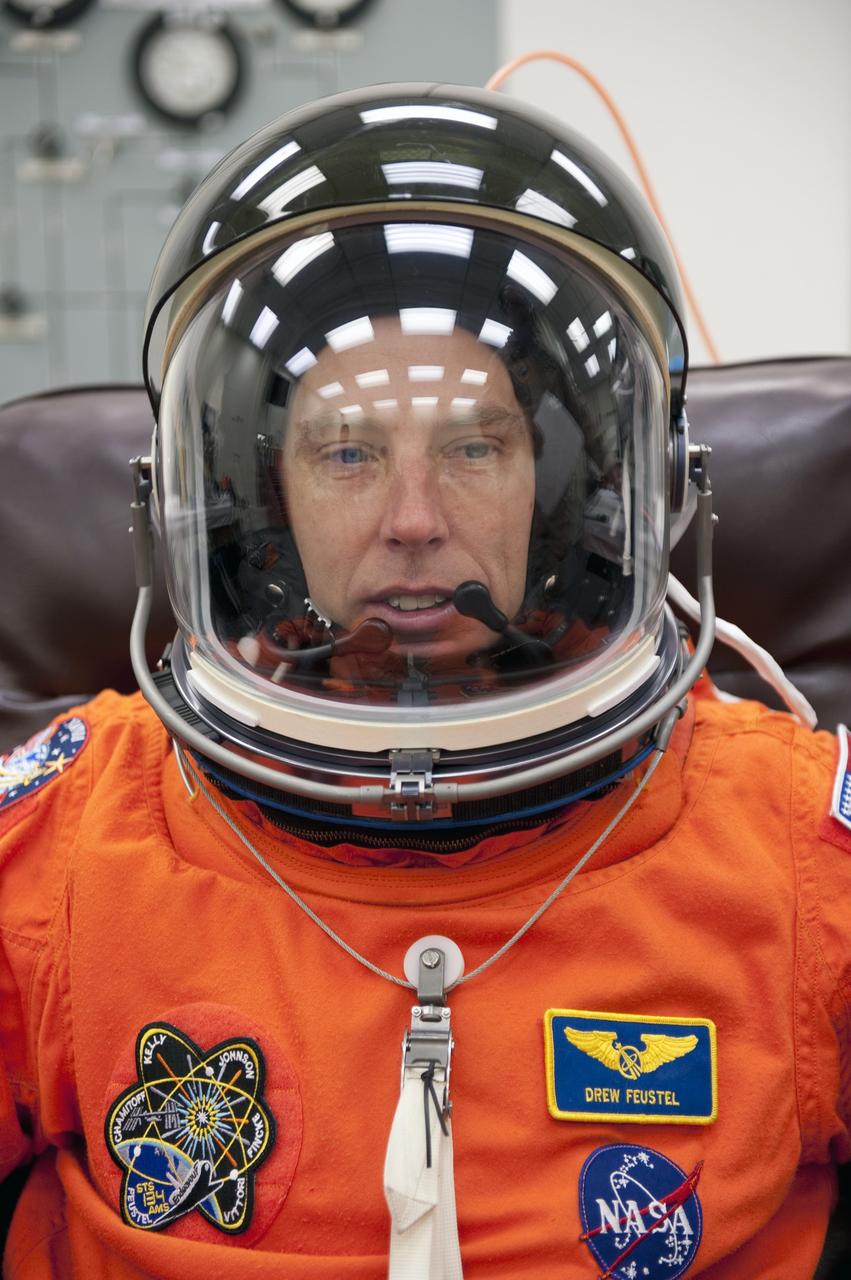
CAPE CANAVERAL, Fla. -- During a simulated launch countdown, STS-134 Mission Specialist Andrew Feustel checks the fit of his helmet in the Operations and Checkout Building at NASA's Kennedy Space Center in Florida. Next, Feustel and his crewmates will walk out to the waiting Astrovan. As part of the Terminal Countdown Demonstration Test (TCDT), the crew members will ride to the pad in their silver Astrovan and strap into space shuttle Endeavour to practice the steps that will be taken on launch day. Endeavour's six crew members are targeted to launch April 19 at 7:48 p.m. EDT. They will deliver the Express Logistics Carrier-3, Alpha Magnetic Spectrometer-2 (AMS), a high-pressure gas tank, additional spare parts for the Dextre robotic helper and micrometeoroid debris shields to the International Space Station. This will be the final spaceflight for Endeavour. For more information visit, www.nasa.gov/mission_pages/shuttle/shuttlemissions/sts134/index.html. Photo credit: NASA/Kim Shiflett
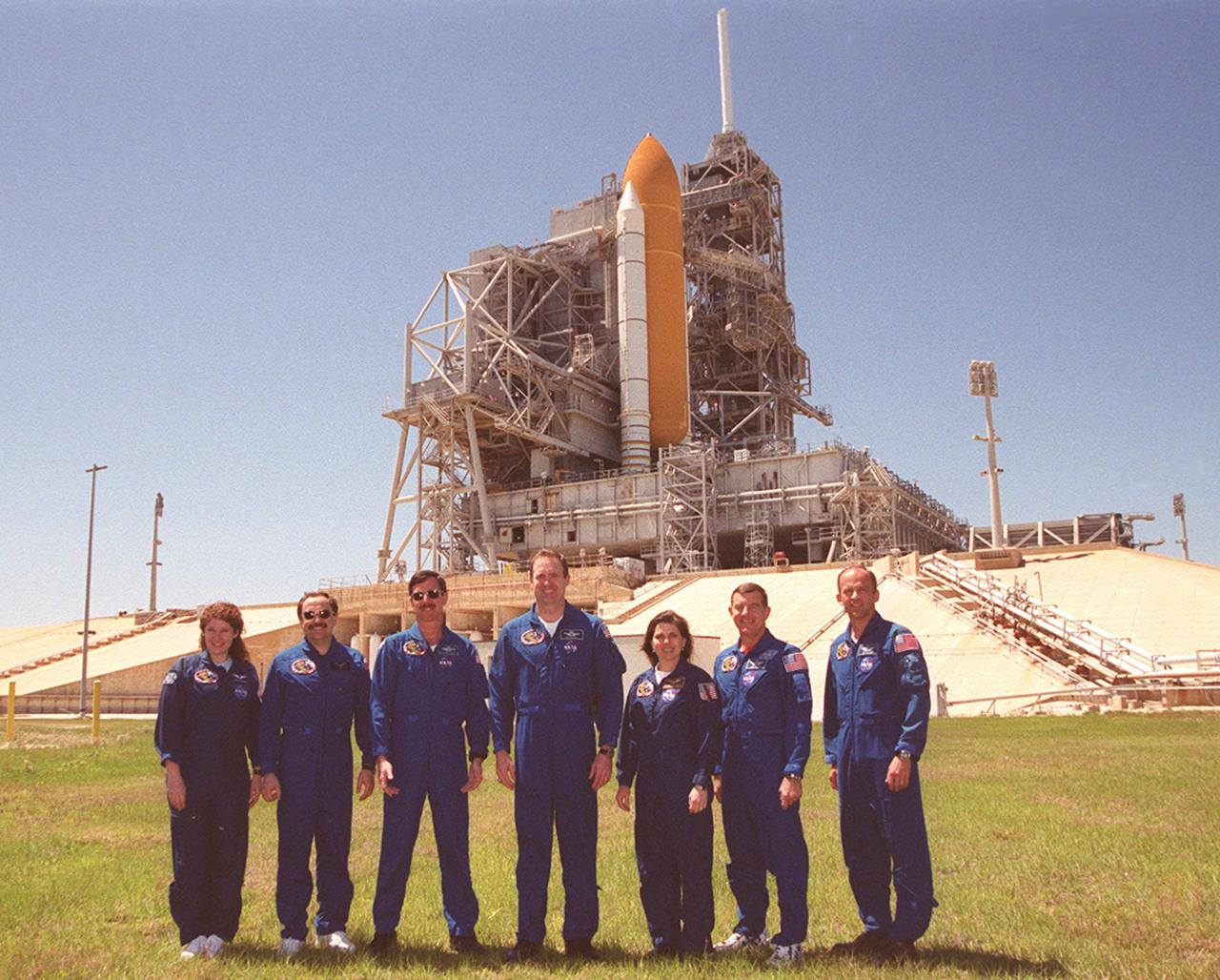
KENNEDY SPACE CENTER, Fla. -- During a break in their Terminal Countdown Demonstration Test (TCDT), the STS-101 crew poses in front of Space Shuttle Atlantis at Launch Pad 39A. Standing, left to right, are Mission Specialists Susan J. Helms and Yury Usachev of Russia; Pilot Scott J. "Doc" Horowitz; Commander James D. Halsell Jr.; and Mission Specialists Mary Ellen Weber, James Voss and Jeffrey N. Williams. The TCDT includes emergency egress training and a simulated launch countdown. During their mission to the International Space Station, the STS-101 crew will be delivering logistics and supplies, plus preparing the Station for the arrival of the Zvezda Service Module, expected to be launched by Russia in July 2000. Also, the crew will conduct one space walk to perform maintenance on the Space Station. This will be the third assembly flight for the Space Station. STS-101 is scheduled to launch April 24 at 4:15 p.m. from Launch Pad 39A
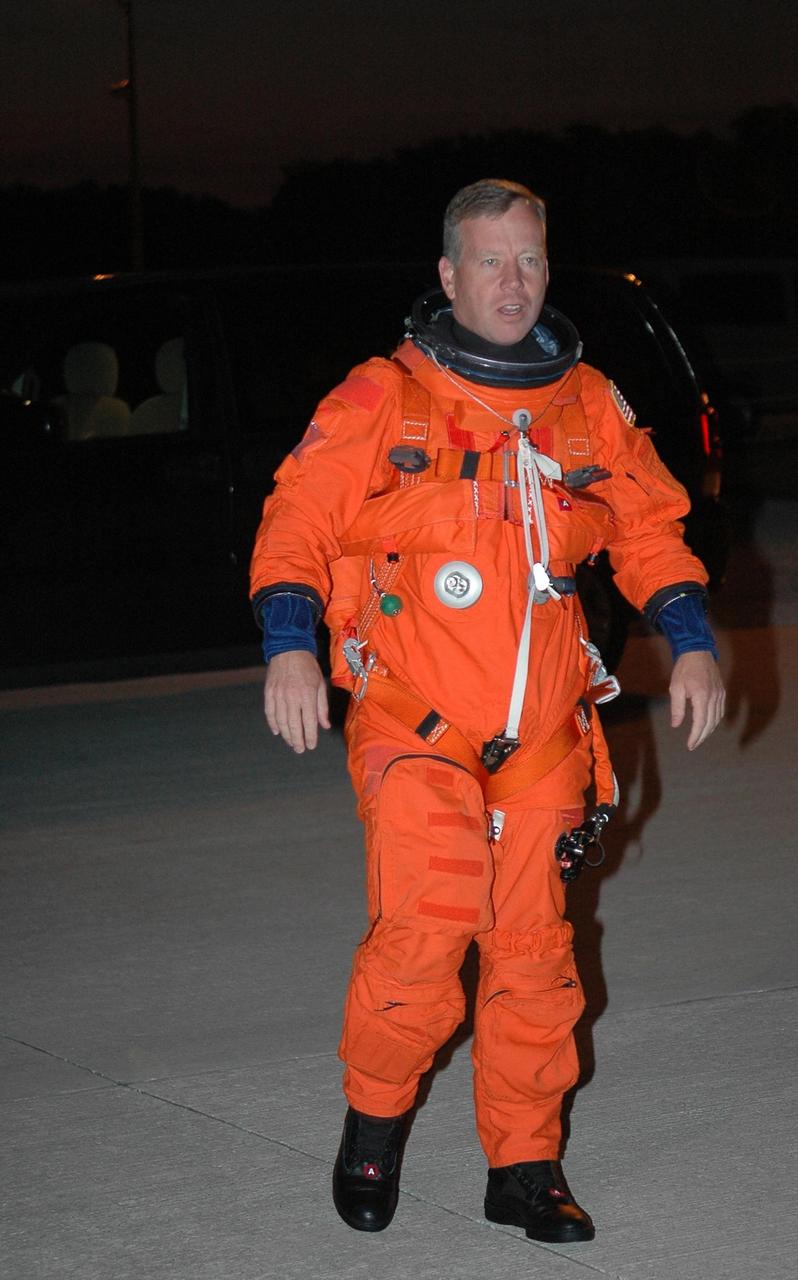
KENNEDY SPACE CENTER, FLA. - In the pre-dawn hours, STS-121 Commander Steven Lindsey walks across the Shuttle Landing Facility to the Shuttle Training Aircraft (STA). Lindsey and Pilot Mark Kelly will be making practice landings in preparation for the July 1 launch of Space Shuttle Discovery. The STA is a Grumman American Aviation-built Gulf Stream II jet that was modified to simulate an orbiter’s cockpit, motion and visual cues, and handling qualities. In flight, the STA duplicates the orbiter’s atmospheric descent trajectory from approximately 35,000 feet altitude to landing on a runway. Because the orbiter is unpowered during re-entry and landing, its high-speed glide must be perfectly executed the first time. Photo credit: NASA/Kim Shiflett
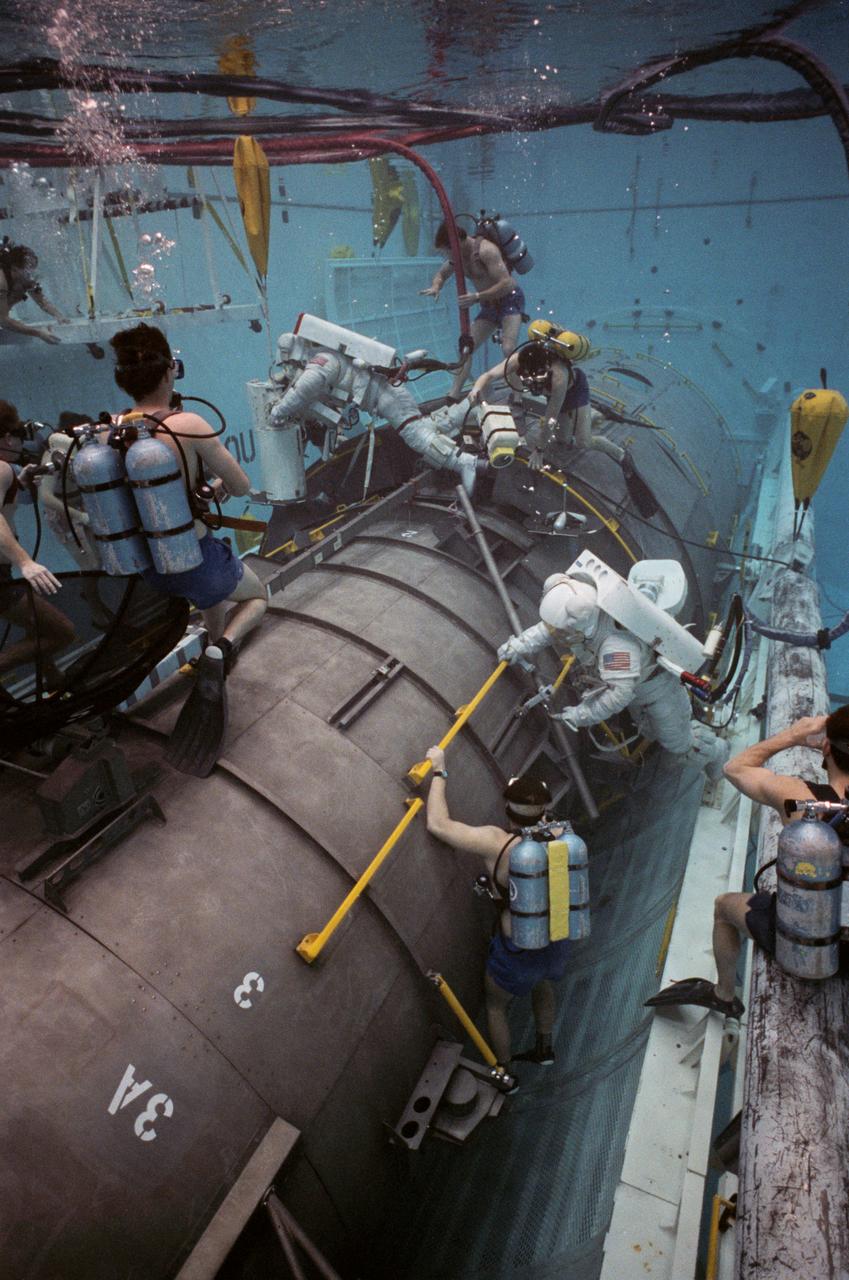
This overall view shows STS-31 Mission Specialist (MS) Bruce McCandless II (left) and MS Kathryn D. Sullivan making a practice space walk in JSC's Weightless Environment Training Facility (WETF) Bldg 29 pool. McCandless works with a mockup of the remote manipulator system (RMS) end effector which is attached to a grapple fixture on the Hubble Space Telescope (HST) mockup. Sullivan manipulates HST hardware on the Support System Module (SSM) forward shell. SCUBA-equipped divers monitor the extravehicular mobility unit (EMU) suited crewmembers during this simulated extravehicular activity (EVA). No EVA is planned for the Hubble Space Telescope (HST) deployment, but the duo has trained for contingencies which might arise during the STS-31 mission aboard Discovery, Orbiter Vehicle (OV) 103. Photo taken by NASA JSC photographer Sheri Dunnette.
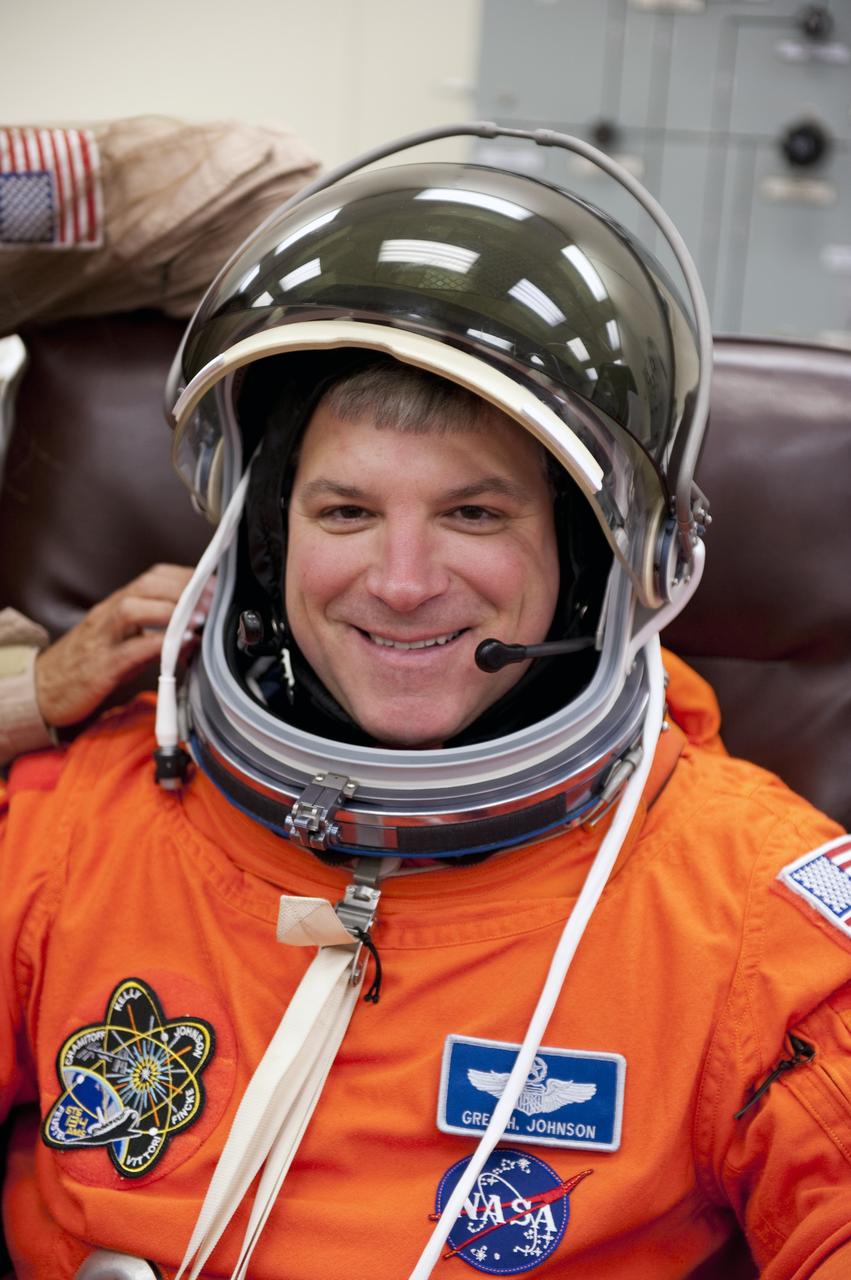
CAPE CANAVERAL, Fla. -- During a simulated launch countdown, STS-134 Pilot Greg H. Johnson checks the fit of his helmet in the Operations and Checkout Building at NASA's Kennedy Space Center in Florida. Next, Johnson and his crewmates will walk out to the waiting Astrovan. As part of the Terminal Countdown Demonstration Test (TCDT), the crew members will ride to the pad in their silver Astrovan and strap into space shuttle Endeavour to practice the steps that will be taken on launch day. Endeavour's six crew members are targeted to launch April 19 at 7:48 p.m. EDT. They will deliver the Express Logistics Carrier-3, Alpha Magnetic Spectrometer-2 (AMS), a high-pressure gas tank, additional spare parts for the Dextre robotic helper and micrometeoroid debris shields to the International Space Station. This will be the final spaceflight for Endeavour. For more information visit, www.nasa.gov/mission_pages/shuttle/shuttlemissions/sts134/index.html. Photo credit: NASA/Kim Shiflett
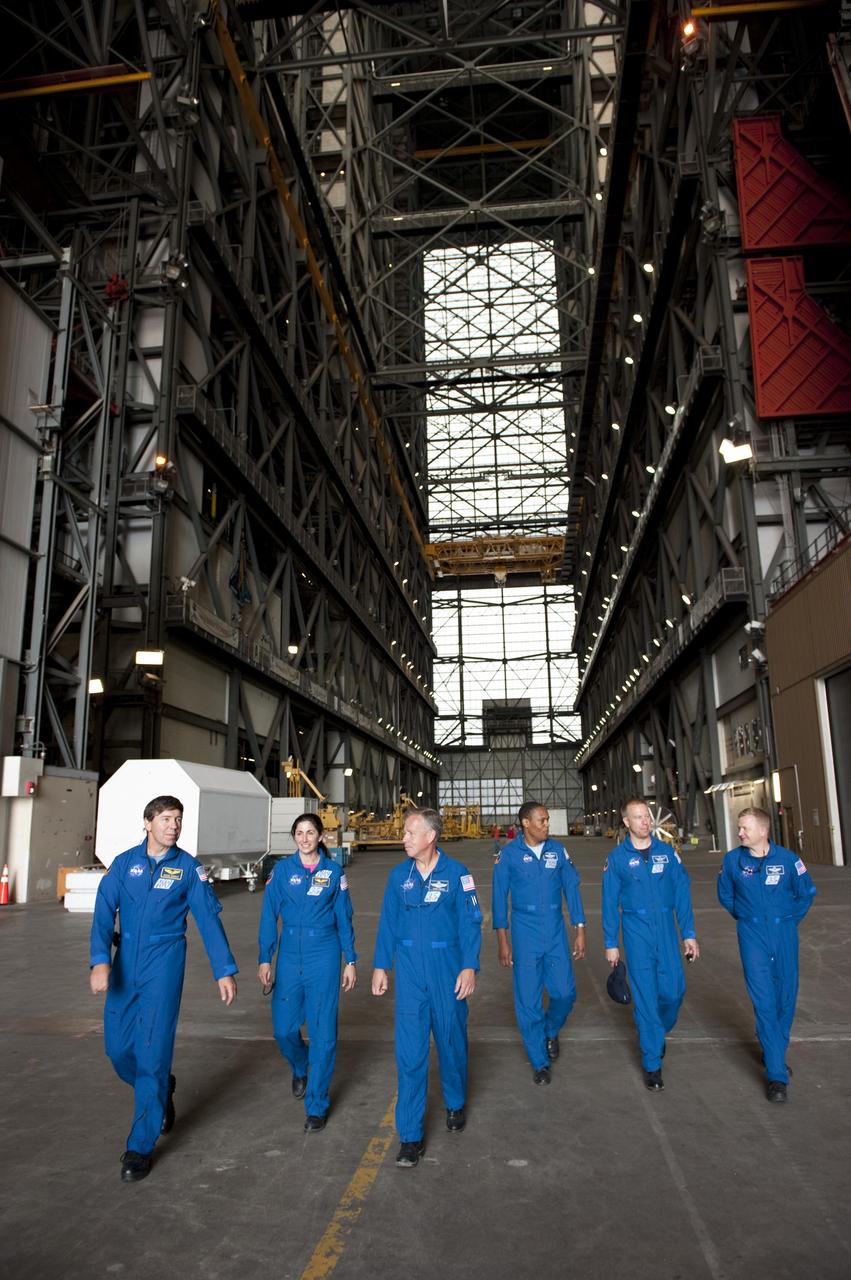
CAPE CANAVERAL, Fla. -- At NASA's Kennedy Space Center in Florida, the STS-133 crew members walk through the Vehicle Assembly Building. From left are Mission Specialists Michael Barratt and Nicole Stott, Commander Steve Lindsey, Mission Specialists Alvin Drew and Tim Kopra, and Pilot Eric Boe. The astronauts are at Kennedy for the Terminal Countdown Demonstration Test (TCDT), which provides each shuttle crew and launch team an opportunity to participate in various simulated activities, including equipment familiarization and a launch countdown. Space shuttle Discovery and its STS-133 crew will deliver the Permanent Multipurpose Module, packed with supplies and critical spare parts, as well as Robonaut 2, the dexterous humanoid astronaut helper, to the International Space Station. Launch is targeted for Nov. 1 at 4:40 p.m. For more information on the STS-133 mission, visit www.nasa.gov/mission_pages/shuttle/shuttlemissions/sts133/. Photo credit: NASA/Kim Shiflett
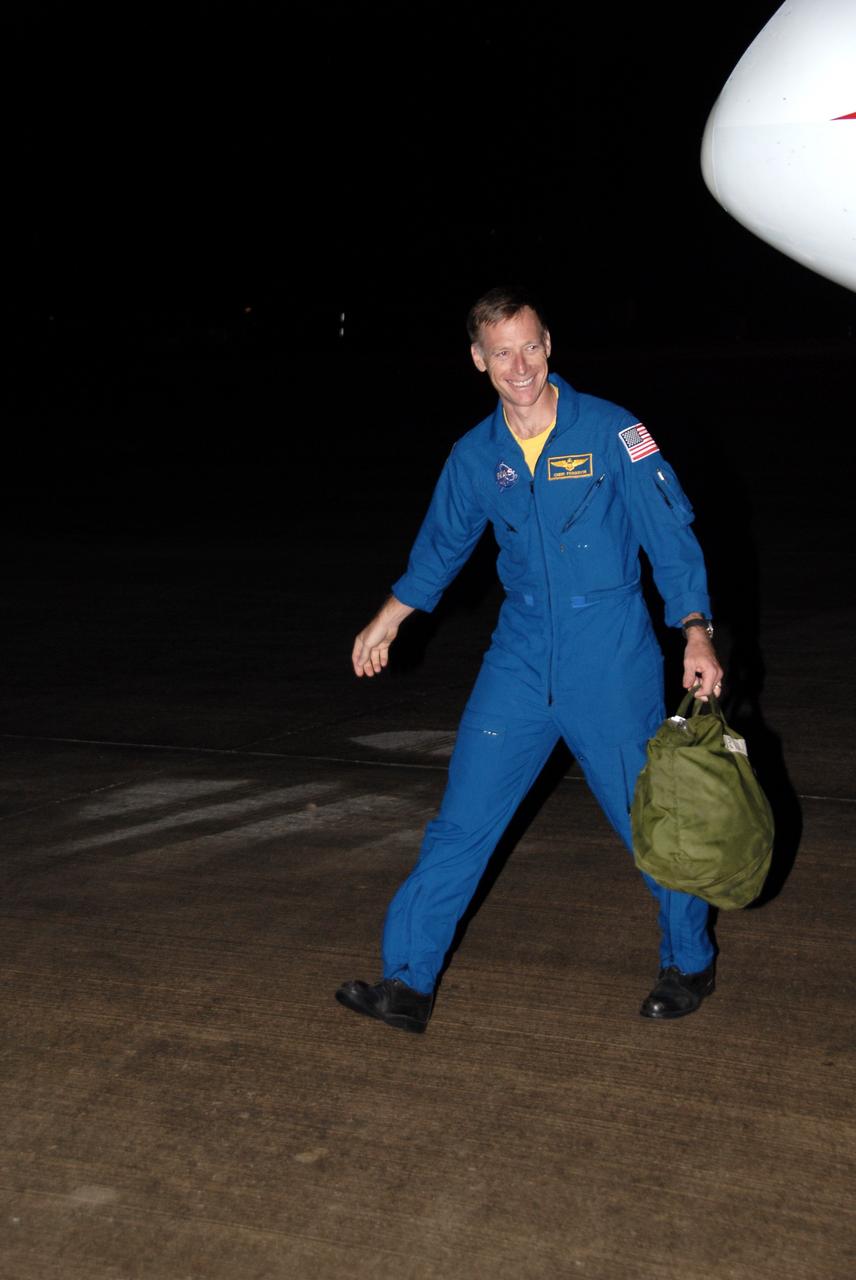
CAPE CANAVERAL, Fla. - On the Shuttle Landing Facility at NASA's Kennedy Space Center in Florida, space shuttle Endeavour’s STS-126 commander, Chris Ferguson, walks away from the Shuttle Training Aircraft, or STA. Ferguson flew the STA to practice landing the shuttle on the runway. The STA is a Grumman American Aviation-built Gulf Stream II jet that was modified to simulate a shuttle’s cockpit, motion and visual cues, and handling qualities. In flight, the aircraft duplicates the shuttle’s atmospheric descent trajectory from approximately 35,000 feet altitude to landing on a runway. Ferguson previously served as pilot on the STS-115 mission, which flew in September 2006. The STS-126 mission to the International Space Station is targeted to launch Nov. 16. Photo credit: NASA/Cory Huston
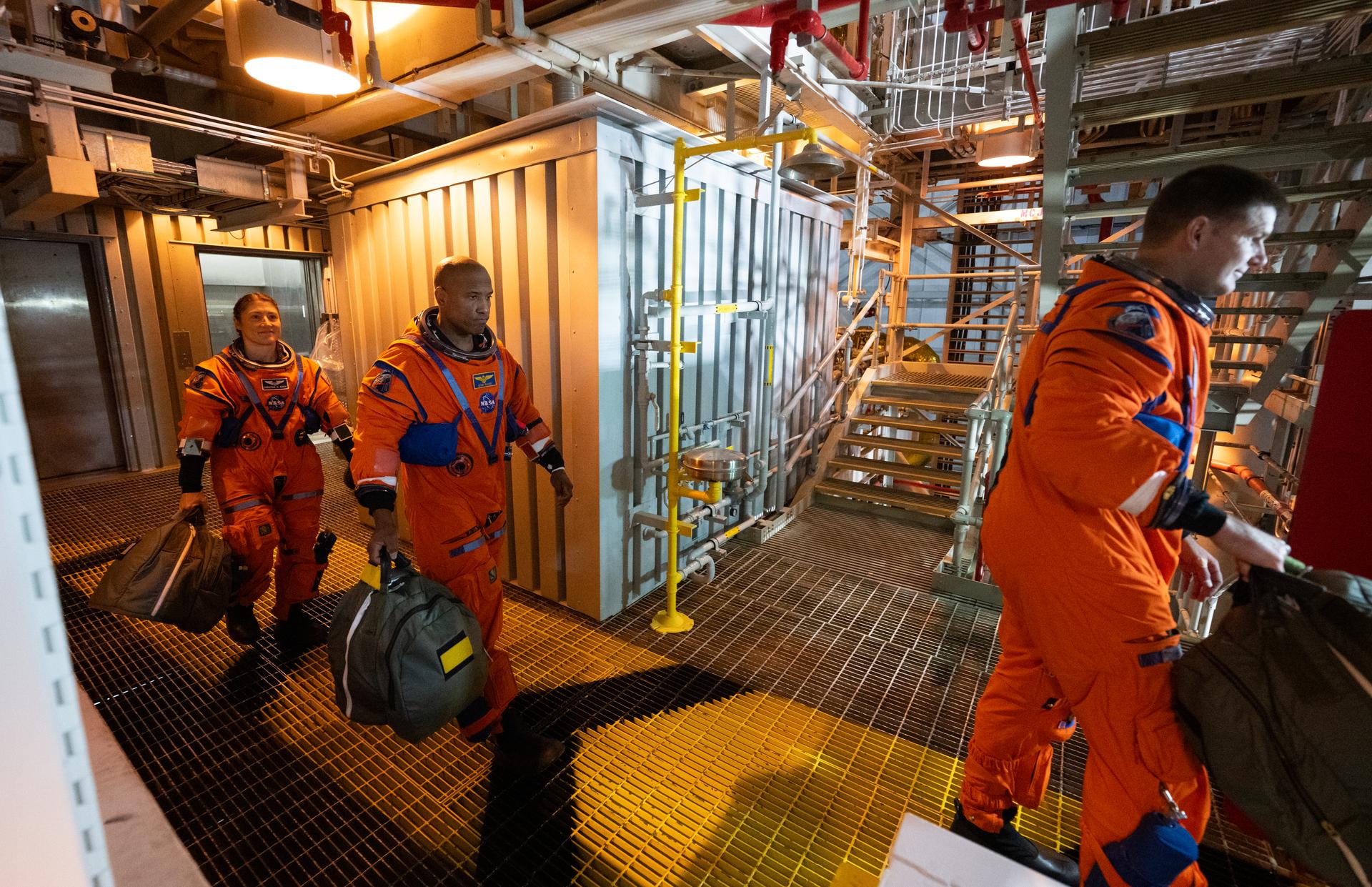
Artemis II crewmembers CSA (Canadian Space Agency) astronaut Jeremy Hansen, mission specialist, right, and NASA astronauts Victor Glover, pilot; Christina Koch, mission specialist; after exiting the elevator at the 275-foot level of the mobile launcher as they walk towards the crew access arm prepare to board their Orion spacecraft atop NASA’s Space Launch System rocket during the Artemis II countdown demonstration test, Saturday, Dec. 20, 2025, inside the Vehicle Assembly Building at NASA’s Kennedy Space Center in Florida. For this operation, the Artemis II crew and launch teams are simulating the launch day timeline including suit-up, walkout, and spacecraft ingress and egress. Through the Artemis campaign, NASA will send astronauts to explore the Moon for scientific discovery, economic benefits, and to build the foundation for the first crewed missions to Mars, for the benefit of all. Photo Credit: (NASA/Joel Kowsky)
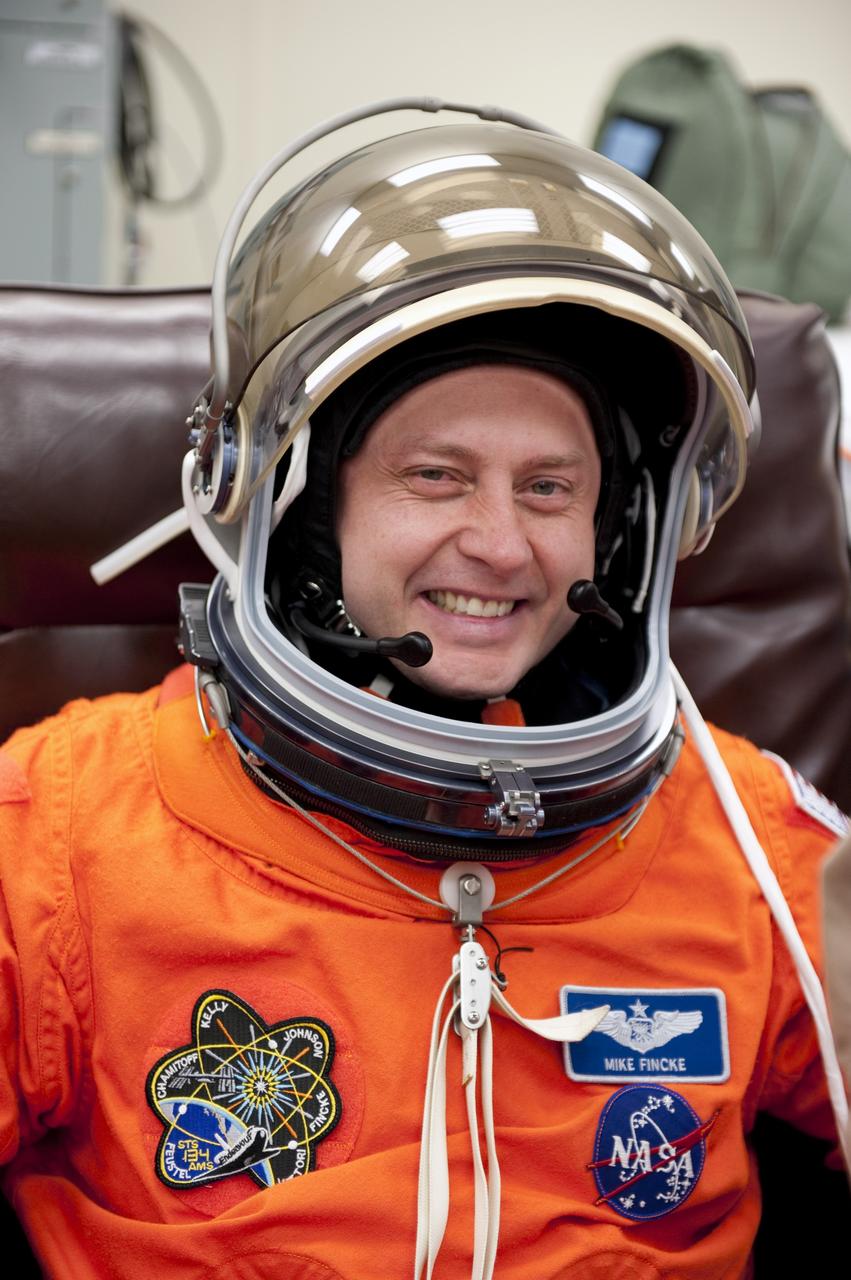
CAPE CANAVERAL, Fla. -- During a simulated launch countdown, STS-134 Mission Specialist Michael Fincke checks the fit of his helmet in the Operations and Checkout Building at NASA's Kennedy Space Center in Florida. Next, Fincke and his crewmates will walk out to the waiting Astrovan. As part of the Terminal Countdown Demonstration Test (TCDT), the crew members will ride to the pad in their silver Astrovan and strap into space shuttle Endeavour to practice the steps that will be taken on launch day. Endeavour's six crew members are targeted to launch April 19 at 7:48 p.m. EDT. They will deliver the Express Logistics Carrier-3, Alpha Magnetic Spectrometer-2 (AMS), a high-pressure gas tank, additional spare parts for the Dextre robotic helper and micrometeoroid debris shields to the International Space Station. This will be the final spaceflight for Endeavour. For more information visit, www.nasa.gov/mission_pages/shuttle/shuttlemissions/sts134/index.html. Photo credit: NASA/Kim Shiflett

KENNEDY SPACE CENTER, Fla. -- After Terminal Countdown Demonstration Test (TCDT) activities at Launch Pad 39A, the STS-101 crew talk to the media. At the microphone is Commander James D. Halsell Jr. Next to him, standing left to right, are Pilot Scott J. "Doc" Horowitz and Mission Specialists Mary Ellen Weber, Jeffrey N. Williams, James Voss, Susan J. Helms and Yury Usachev of Russia. The TCDT includes emergency egress training and a simulated launch countdown. During their mission to the International Space Station, the STS-101 crew will be delivering logistics and supplies, plus preparing the Station for the arrival of the Zvezda Service Module, expected to be launched by Russia in July 2000. Also, the crew will conduct one space walk to perform maintenance on the Space Station. This will be the third assembly flight for the Space Station. STS-101 is scheduled to launch April 24 at 4:15 p.m. from Launch Pad 39A
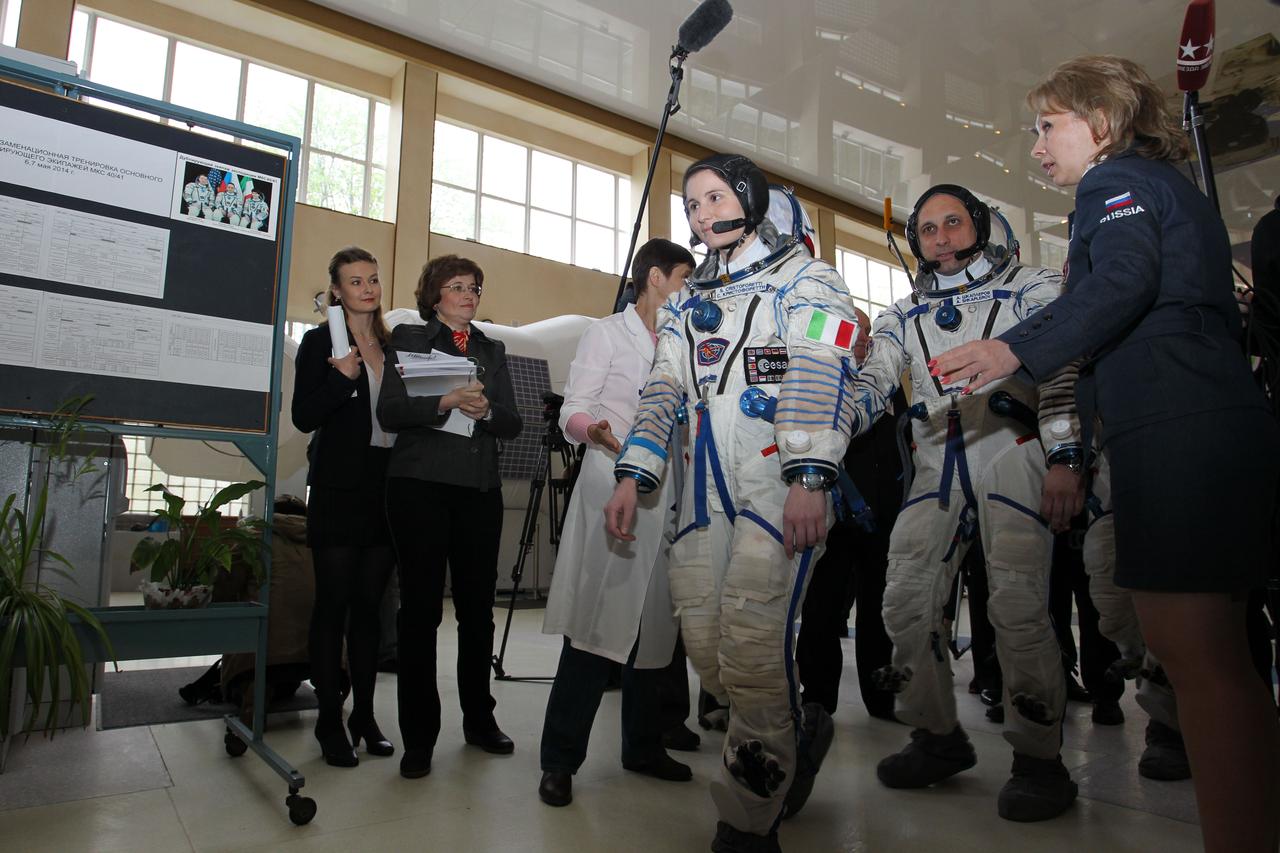
0165: At the Gagarin Cosmonaut Training Center in Star City, Russia, Expedition 40/41 backup crewmember Samantha Cristoforetti of the European Space Agency (foreground) walks to a Soyuz simulator May 6 along with Soyuz commander Anton Shkaplerov of the Russian Federal Space Agency (Roscosmos, second from the right) to begin two days of final qualification exams. Cristoforetti, Shkaplerov and Terry Virts of NASA are serving as backups to the prime crewmembers --- Reid Wiseman of NASA, Max Suraev of Roscosmos and Alexander Gerst of the European Space Agency, who are preparing for launch on May 29, Kazakh time, on the Soyuz TMA-13M spacecraft from the Baikonur Cosmodrome in Kazakhstan for a 5 ½ month mission on the International Space Station. NASA/Stephanie Stoll
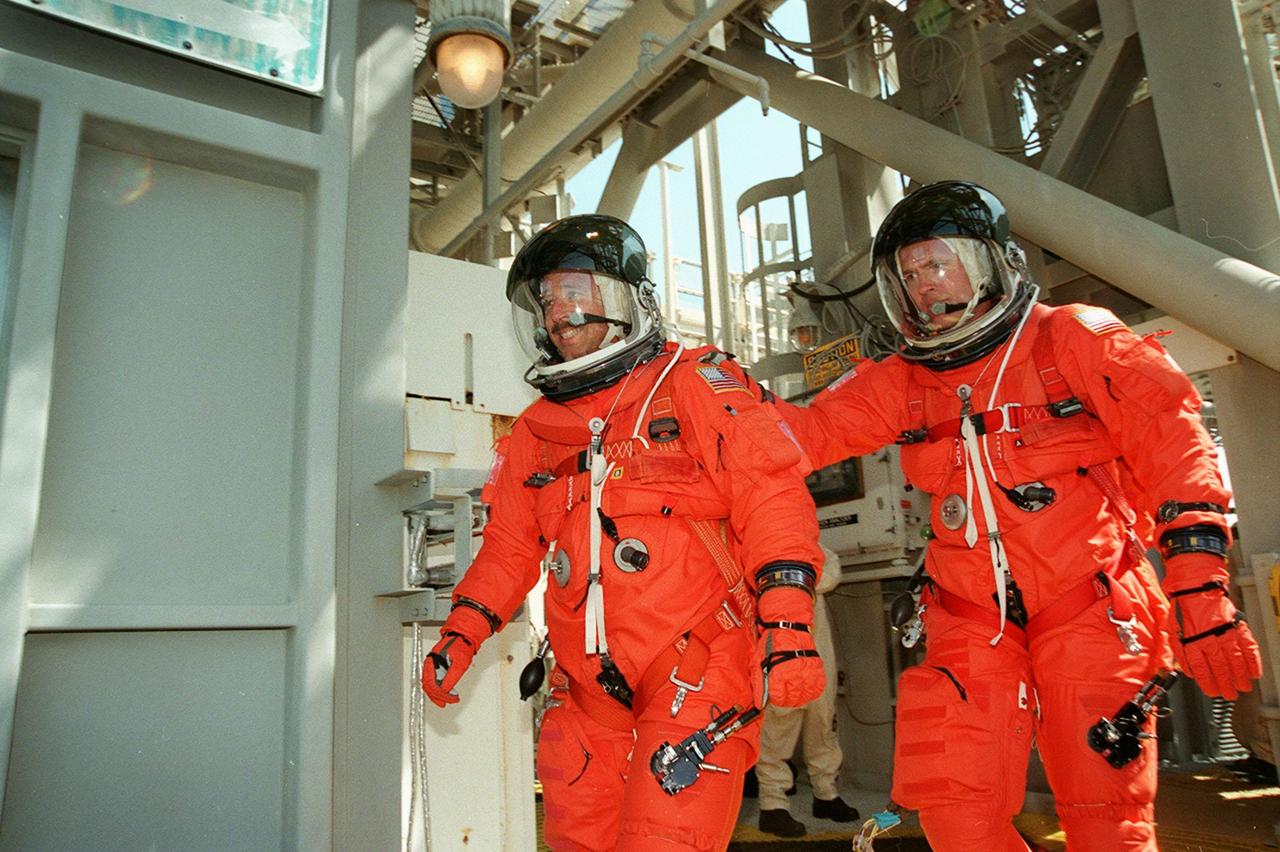
KENNEDY SPACE CENTER, FLA. -- As part of Terminal Countdown Demonstration (TCDT) activities, the STS-101 crew practices emergency egress from the orbiter at the 195-foot level of the Fixed Service Structure. Shown heading for the slidewire baskets are Pilot Scott J. "Doc" Horowitz (left) and Commander James D. Halsell Jr. The TCDT also includes a simulated launch countdown and familiarization with the payload. During their mission to the International Space Station, the STS-101 crew will be delivering logistics and supplies, plus preparing the Station for the arrival of the Zvezda Service Module, expected to be launched by Russia in July 2000. Also, the crew will conduct one space walk to perform maintenance on the Space Station. This will be the third assembly flight to the Space Station. STS-101 is scheduled to launch April 24 at 4:15 p.m. from Launch Pad 39A
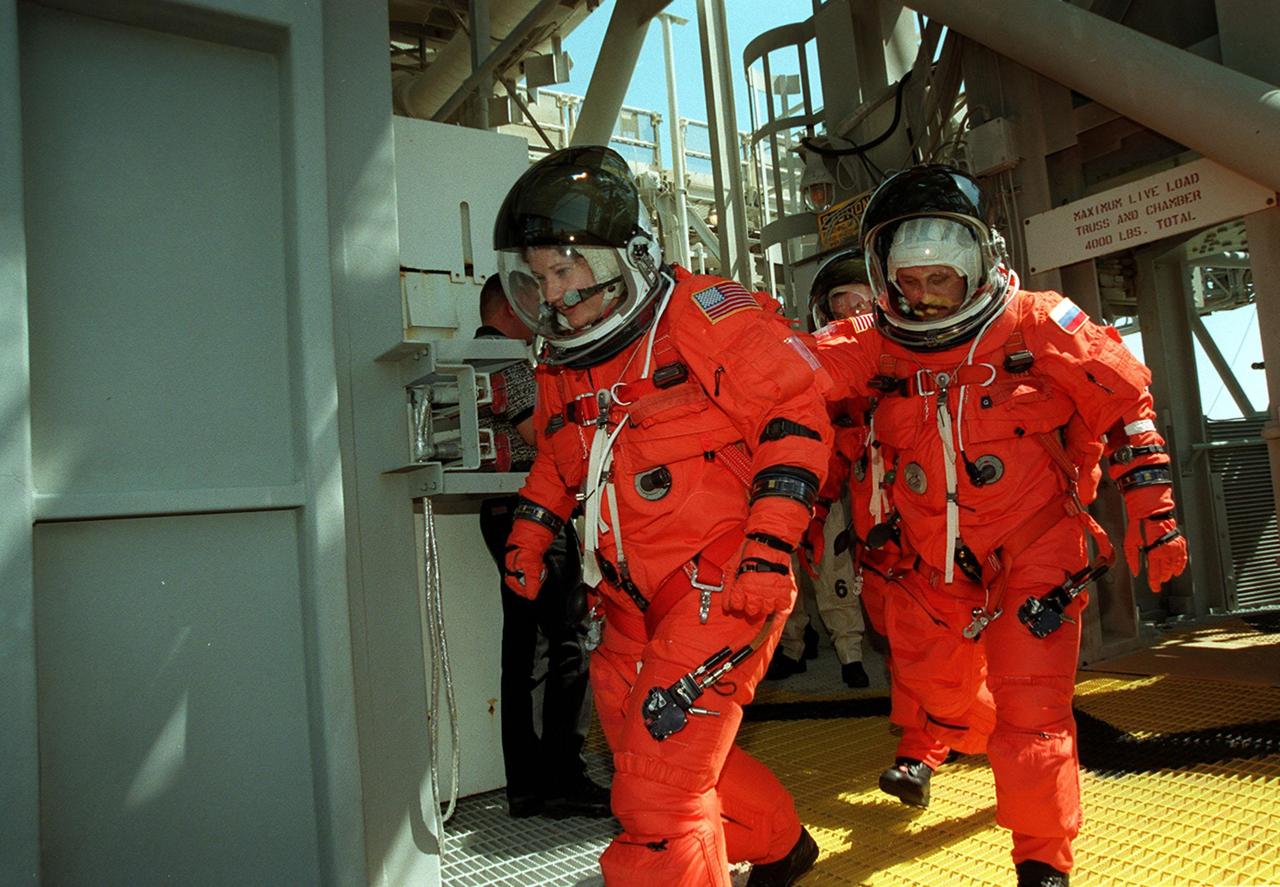
KENNEDY SPACE CENTER, FLA. -- As part of Terminal Countdown Demonstration (TCDT) activities, the STS-101 crew practices emergency egress from the orbiter at the 195-foot level of the Fixed Service Structure. Shown heading down the easily identified exit path, known as the "yellow brick road," are Mission Specialists Susan J. Helms (leading), Yury Usachev of Russia and James Voss. The TCDT also includes a simulated launch countdown and familiarization with the payload. During their mission to the International Space Station, the STS-101 crew will be delivering logistics and supplies, plus preparing the Station for the arrival of the Zvezda Service Module, expected to be launched by Russia in July 2000. Also, the crew will conduct one space walk to perform maintenance on the Space Station. This will be the third assembly flight to the Space Station. STS-101 is scheduled to launch April 24 at 4:15 p.m. from Launch Pad 39A

CAPE CANAVERAL, Fla. -- During a simulated launch countdown, STS-134 Mission Specialist Roberto Vittori, with the European Space Agency, checks the fit of his helmet in the Operations and Checkout Building at NASA's Kennedy Space Center in Florida. Next, Vittori and his crewmates will walk out to the waiting Astrovan. As part of the Terminal Countdown Demonstration Test (TCDT), the crew members will ride to the pad in their silver Astrovan and strap into space shuttle Endeavour to practice the steps that will be taken on launch day. Endeavour's six crew members are targeted to launch April 19 at 7:48 p.m. EDT. They will deliver the Express Logistics Carrier-3, Alpha Magnetic Spectrometer-2 (AMS), a high-pressure gas tank, additional spare parts for the Dextre robotic helper and micrometeoroid debris shields to the International Space Station. This will be the final spaceflight for Endeavour. For more information visit, www.nasa.gov/mission_pages/shuttle/shuttlemissions/sts134/index.html. Photo credit: NASA/Kim Shiflett
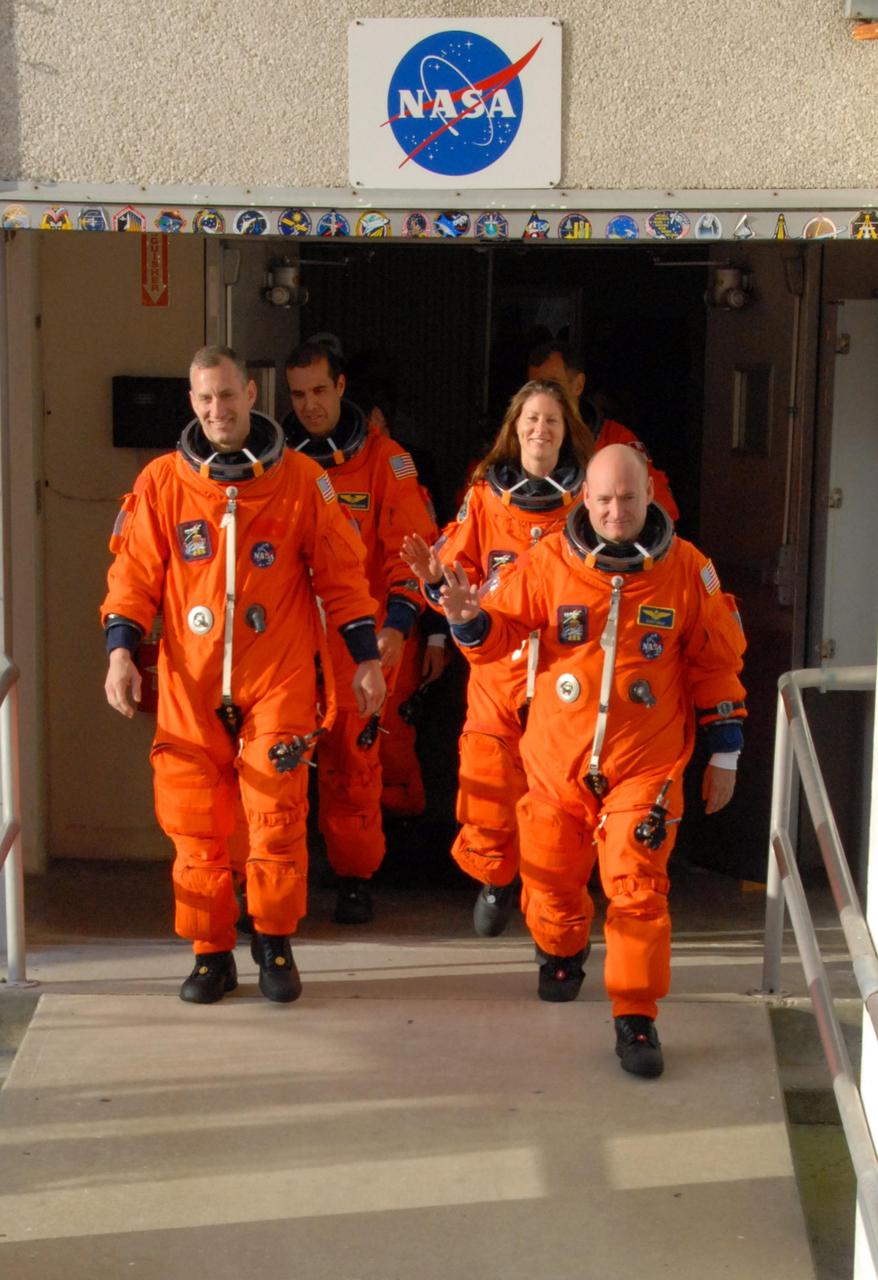
KENNEDY SPACE CENTER, Fla. -- The STS-118 crew walks out of the Operations and Checkout Building, heading for Launch Pad 39A and a simulated launch countdown. On the left, Pilot Charlie Hobaugh leads one column, with Mission Specialist Rick Mastracchio behind him. On the right, Commander Scott Kelly leads, with Mission Specialists Tracy Caldwell and Dave Williams behind. Not pictured are Mission Specialists Alvin Drew and teacher-turned-astronaut Barbara R. Morgan. The countdown concludes the terminal countdown demonstration test, or TCDT. The STS-118 crew has been at Kennedy for the TCDT activities that also include M-113 training, payload familiarization and emergency egress training at the pad. The mission is the 22nd flight to the International Space Station and Space Shuttle Endeavour will carry a payload including the S5 truss, a SPACEHAB module and external stowage platform 3. STS-118 is targeted for launch on Aug. 7. Photo credit: NASA/George Shelton
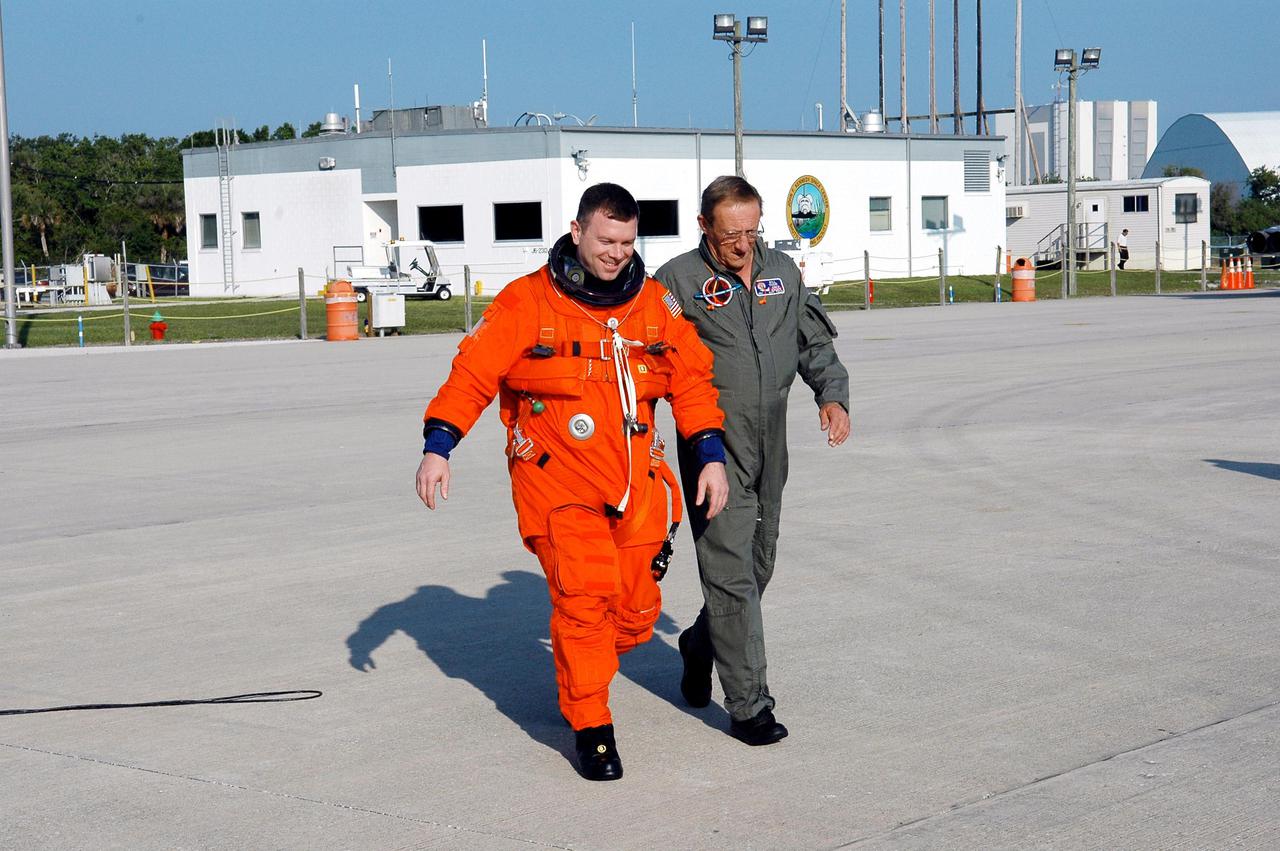
KENNEDY SPACE CENTER, FLA. - STS-114 Pilot James Kelly walks across the Shuttle Landing Facility to a Shuttle Training Aircraft (STA) to practice landing the orbiter. The STA is a modified Grumman American Aviation-built Gulfstream II executive jet that was modified to simulate an orbiter’s cockpit, motion and visual cues, and handling qualities. In flight, the STA duplicates the orbiter’s atmospheric descent trajectory from approximately 35,000 feet altitude to landing on a runway. The orbiter differs in at least one major aspect from conventional aircraft; it is unpowered during re-entry and landing so its high-speed glide must be perfectly executed the first time. There is no go-around capability. The orbiter touchdown speed is 213 to 226 miles per hour. There are two STAs, based in Houston. STS-114 is the first Return to Flight mission, scheduled to launch July 13 in a window that extends through July 31.
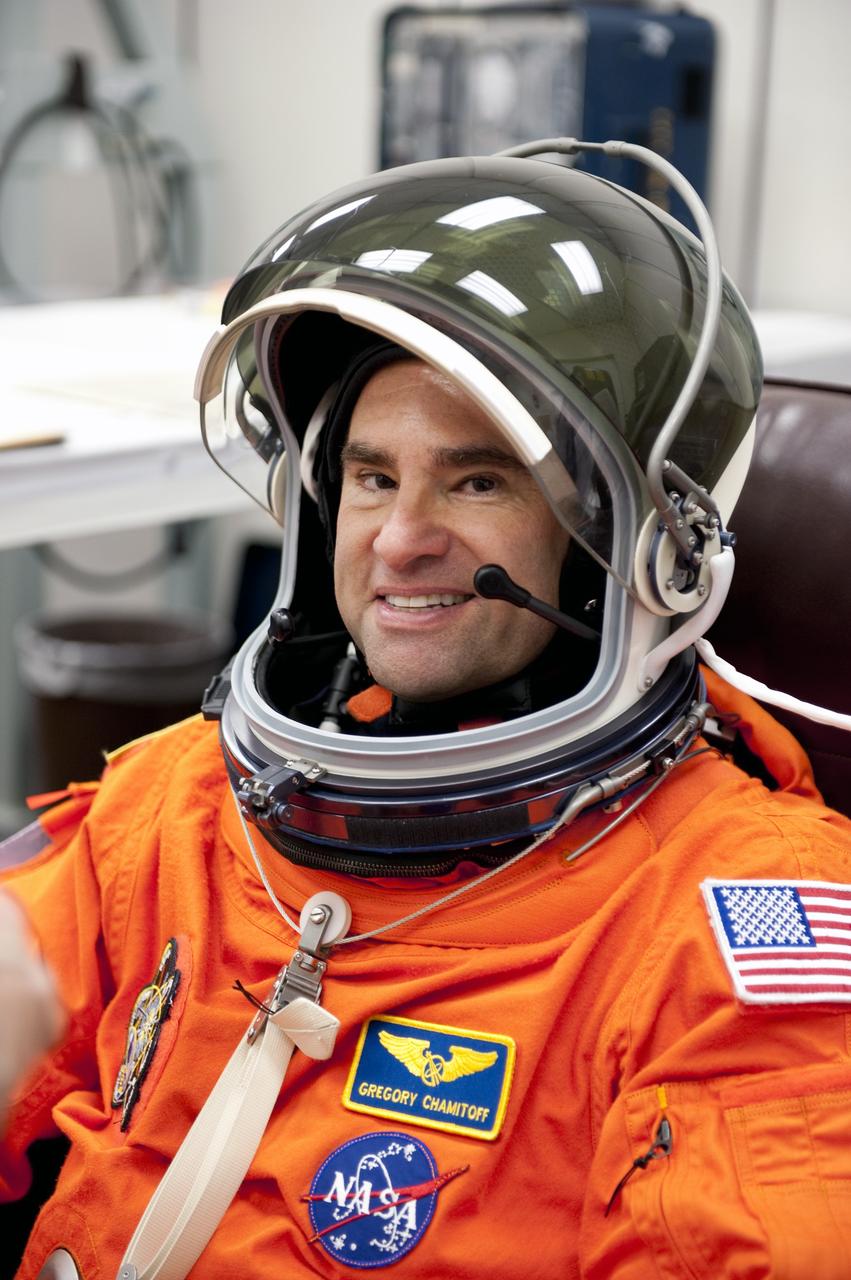
CAPE CANAVERAL, Fla. -- During a simulated launch countdown, STS-134 Mission Specialist Greg Chamitoff checks the fit of his helmet in the Operations and Checkout Building at NASA's Kennedy Space Center in Florida. Next, Chamitoff and his crewmates will walk out to the waiting Astrovan. As part of the Terminal Countdown Demonstration Test (TCDT), the crew members will ride to the pad in their silver Astrovan and strap into space shuttle Endeavour to practice the steps that will be taken on launch day. Endeavour's six crew members are targeted to launch April 19 at 7:48 p.m. EDT. They will deliver the Express Logistics Carrier-3, Alpha Magnetic Spectrometer-2 (AMS), a high-pressure gas tank, additional spare parts for the Dextre robotic helper and micrometeoroid debris shields to the International Space Station. This will be the final spaceflight for Endeavour. For more information visit, www.nasa.gov/mission_pages/shuttle/shuttlemissions/sts134/index.html. Photo credit: NASA/Kim Shiflett
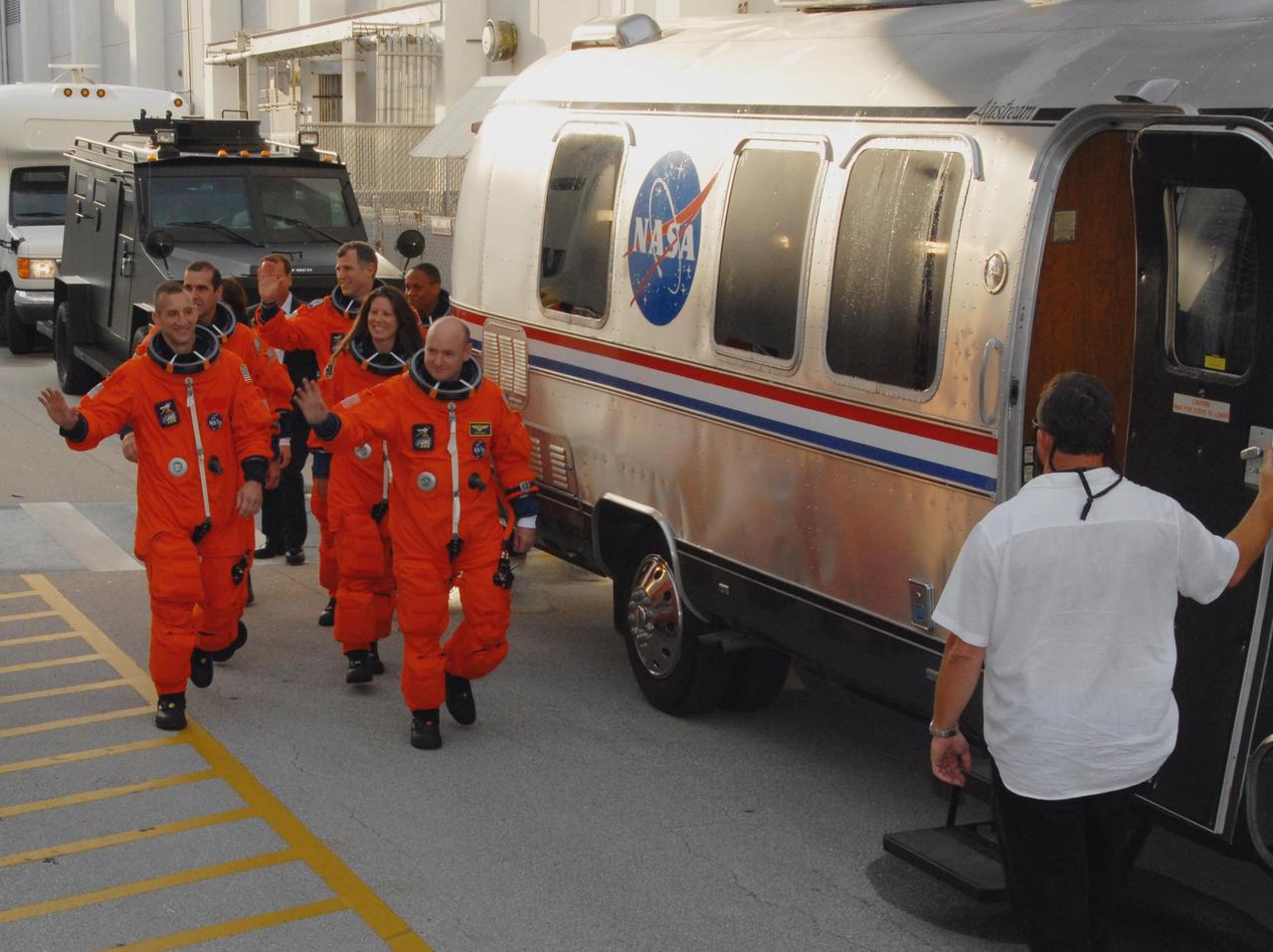
KENNEDY SPACE CENTER, Fla. -- The STS-118 crew walks toward the Astrovan that will take them to Launch Pad 39A for a simulated launch countdown. On the left are Pilot Charlie Hobaugh leading the way and Mission Specialist Rick Mastracchio. ON the right, Commander Scott Kelly leads with (front to back) Mission Specialists Tracy Caldwell, Dave Williams and Alvin Drew. Not visible is teacher-turned-astronaut Barbara R. Morgan, also a mission specialist. The countdown concludes the terminal countdown demonstration test, or TCDT. The STS-118 crew has been at Kennedy for the TCDT activities that also include M-113 training, payload familiarization and emergency egress training at the pad. The mission is the 22nd flight to the International Space Station and Space Shuttle Endeavour will carry a payload including the S5 truss, a SPACEHAB module and external stowage platform 3. STS-118 is targeted for launch on Aug. 7. Photo credit: NASA/George Shelton
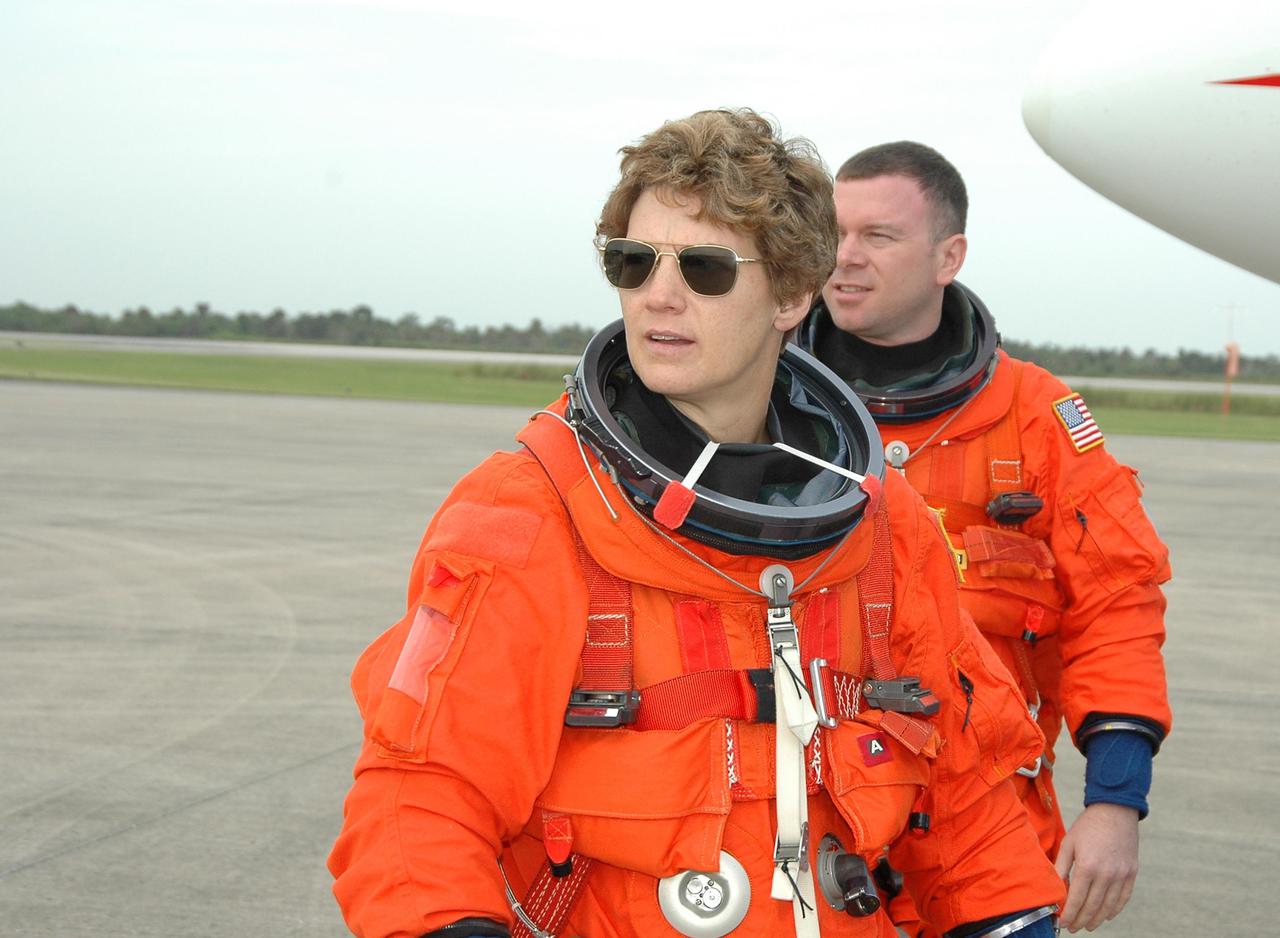
KENNEDY SPACE CENTER, FLA. -- Eileen Collins, mission commander on Return to Flight STS-114, and Pilot James Kelly walk away from the Shuttle Training Aircraft (STA) at the Shuttle Landing Facility on NASA’s Kennedy Space Center. They are practicing landing the orbiter using the STA, which is a modified Grumman American Aviation-built Gulf Stream II executive jet that was modified to simulate an orbiter’s cockpit, motion and visual cues, and handling qualities. In flight, the STA duplicates the orbiter’s atmospheric descent trajectory from approximately 35,000 feet altitude to landing on a runway. Because the orbiter is unpowered during re-entry and landing, its high-speed glide must be perfectly executed the first time. Mission STS-114 is scheduled to launch aboard Space Shuttle Discovery with a crew of seven on July 13 at 3:51 p.m. from Launch Pad 39B.
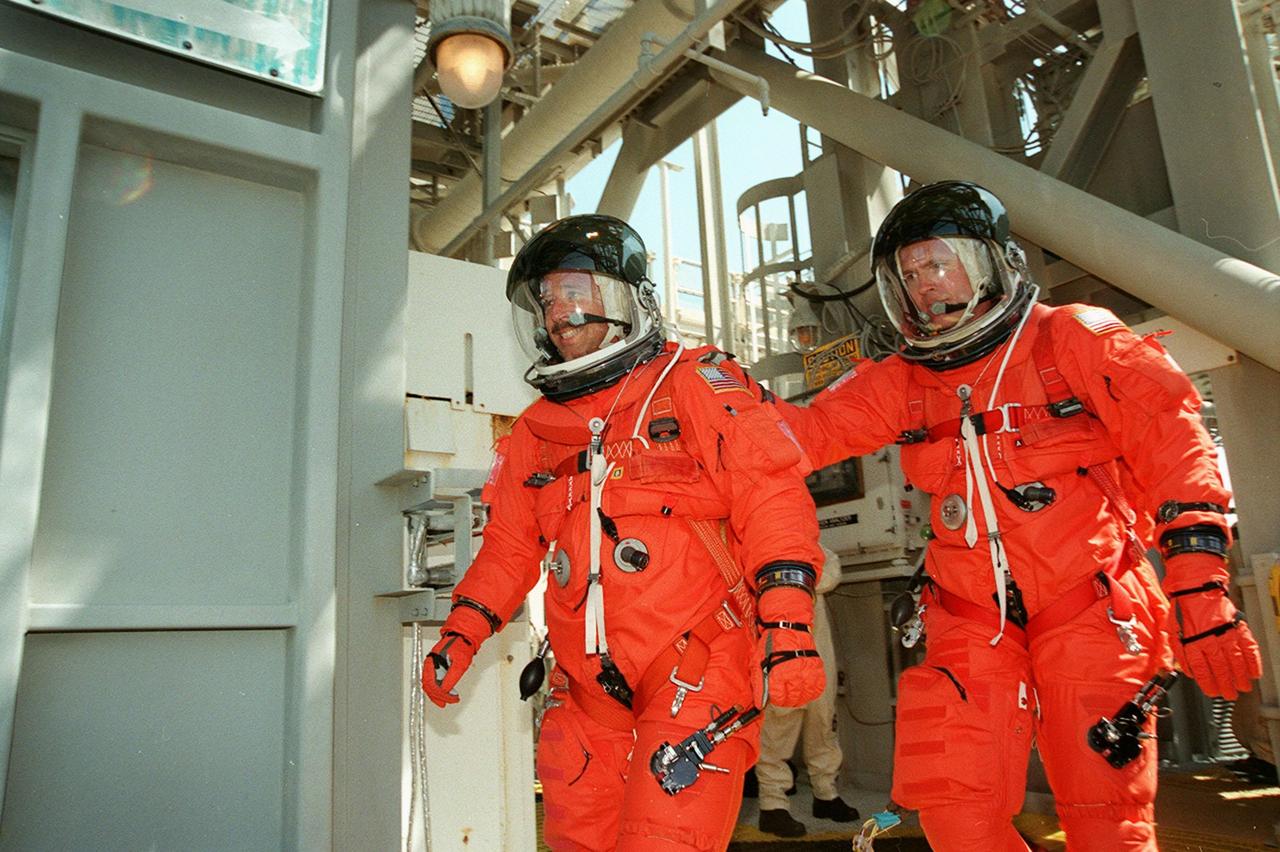
KENNEDY SPACE CENTER, FLA. -- As part of Terminal Countdown Demonstration (TCDT) activities, the STS-101 crew practices emergency egress from the orbiter at the 195-foot level of the Fixed Service Structure. Shown heading for the slidewire baskets are Pilot Scott J. "Doc" Horowitz (left) and Commander James D. Halsell Jr. The TCDT also includes a simulated launch countdown and familiarization with the payload. During their mission to the International Space Station, the STS-101 crew will be delivering logistics and supplies, plus preparing the Station for the arrival of the Zvezda Service Module, expected to be launched by Russia in July 2000. Also, the crew will conduct one space walk to perform maintenance on the Space Station. This will be the third assembly flight to the Space Station. STS-101 is scheduled to launch April 24 at 4:15 p.m. from Launch Pad 39A
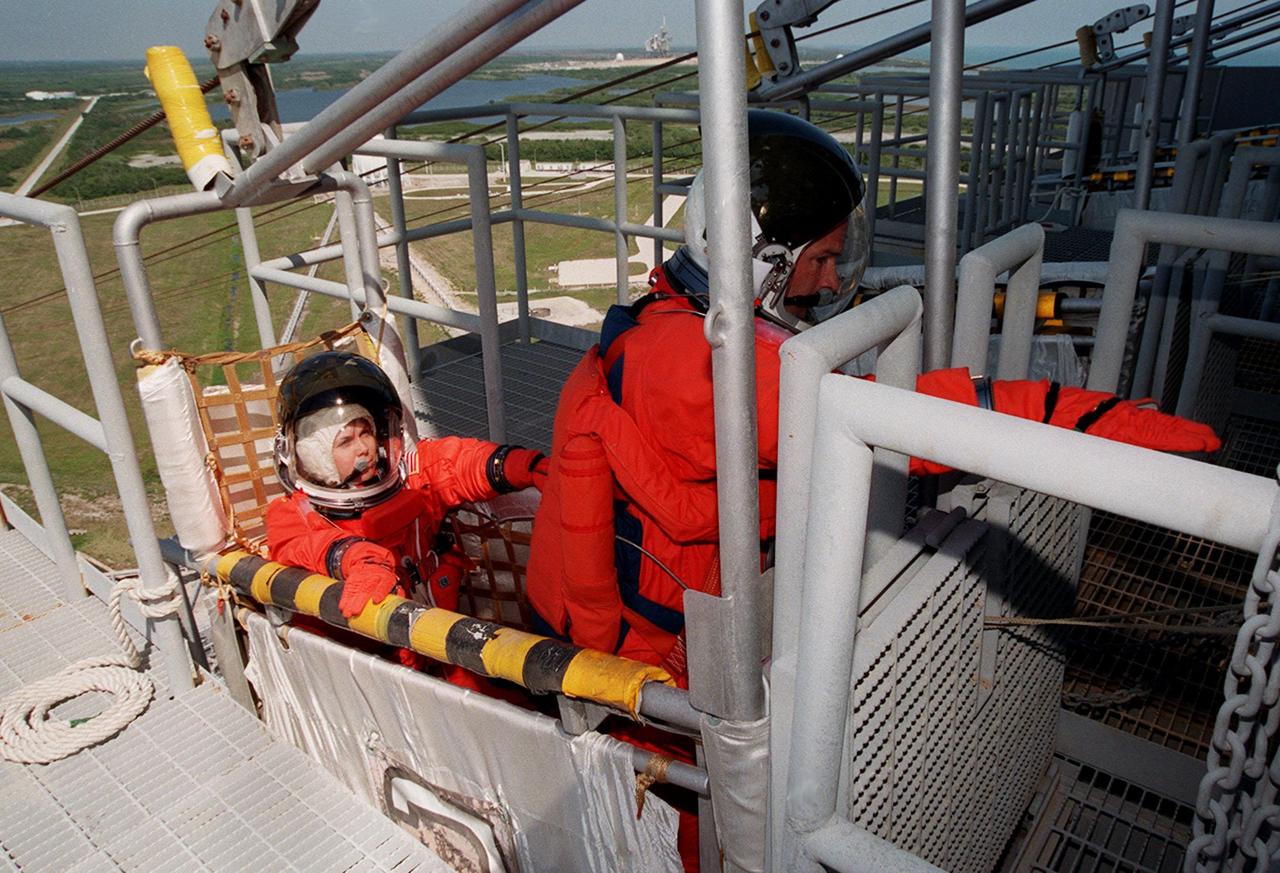
KENNEDY SPACE CENTER, FLA. -- Seated in a slidewire basket at the 195-foot level of the Fixed Service Structure, Launch Pad 39A, are (left to right) STS-101 Mission Specialists Mary Ellen Weber and Jeffrey N. Williams, who is reaching for the release lever. The release of the basket will send it shooting down the 1,200-foot slidewire to a bunker west of the launch pad. The crew is practicing emergency egress from the orbiter as part of Terminal Countdown Demonstration (TCDT) activities that include a simulated launch countdown and familiarization with the payload. During their mission to the International Space Station, the STS-101 crew will be delivering logistics and supplies, plus preparing the Station for the arrival of the Zvezda Service Module, expected to be launched by Russia in July 2000. Also, the crew will conduct one space walk to perform maintenance on the Space Station. This will be the third assembly flight to the Space Station. STS-101 is scheduled to launch April 24 at 4:15 p.m. from Launch Pad 39A
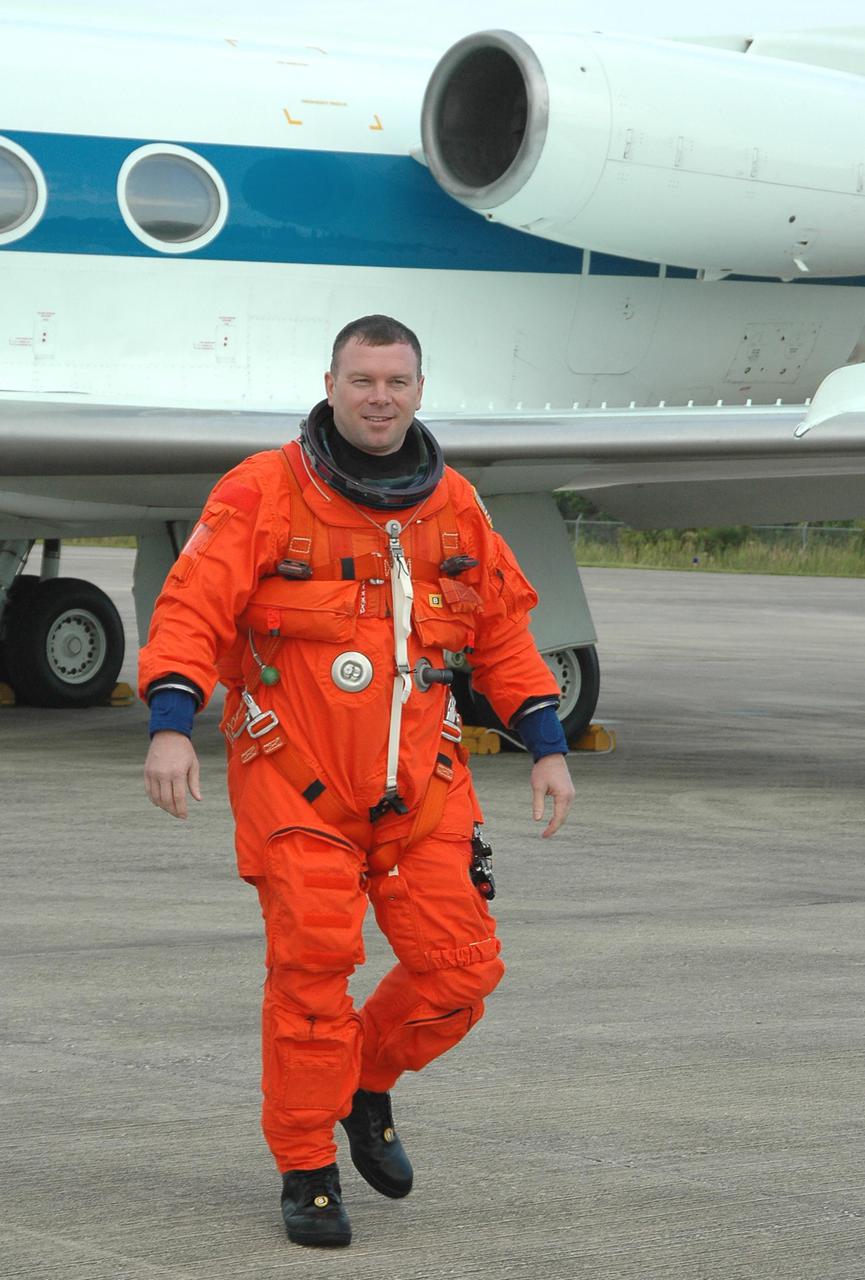
KENNEDY SPACE CENTER, FLA. -- James Kelly, pilot on Return to Flight mission STS-114, walks away from the Shuttle Training Aircraft (STA) at the Shuttle Landing Facility on NASA’s Kennedy Space Center. He and Mission Commander Eileen Collins are practicing landing the orbiter using the STA, which is a modified Grumman American Aviation-built Gulf Stream II executive jet that was modified to simulate an orbiter’s cockpit, motion and visual cues, and handling qualities. In flight, the STA duplicates the orbiter’s atmospheric descent trajectory from approximately 35,000 feet altitude to landing on a runway. Because the orbiter is unpowered during re-entry and landing, its high-speed glide must be perfectly executed the first time. Mission STS-114 is scheduled to launch aboard Space Shuttle Discovery with a crew of seven on July 13 at 3:51 p.m. from Launch Pad 39B.
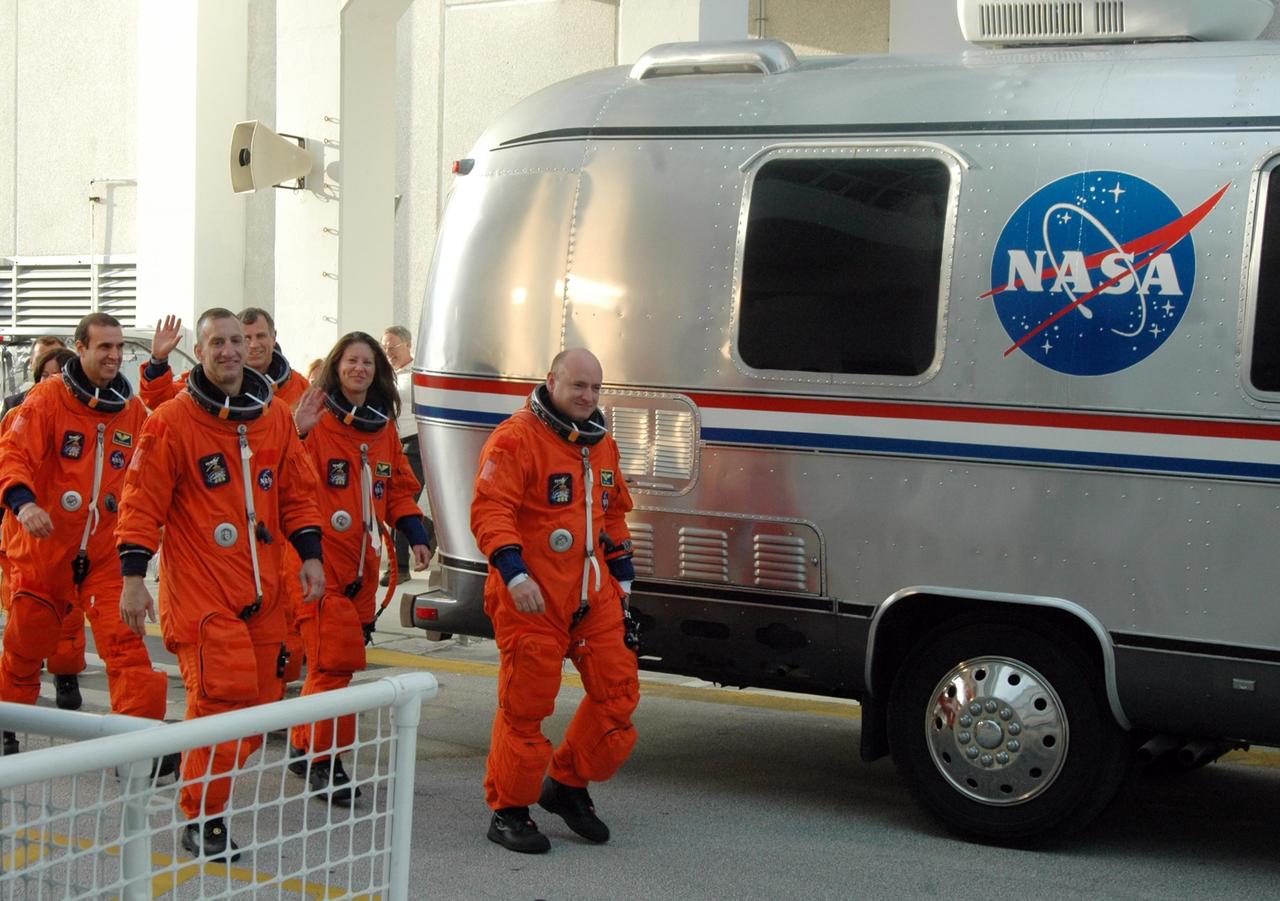
KENNEDY SPACE CENTER, Fla. -- The STS-118 crew walks toward the Astrovan that will take them to Launch Pad 39A for a simulated launch countdown. From left are Mission Specialists Barbara R. Morgan and Rick Mastracchio, Pilot Charlie Hobaugh, Mission Specialists Dave Williams and Tracy Caldwell, and Commander Scott Kelly. Morgan joined NASA's Teacher in Space program in 1985 and was selected as an astronaut in 1998. The countdown concludes the terminal countdown demonstration test, or TCDT. The STS-118 crew has been at Kennedy for the TCDT activities that also include M-113 training, payload familiarization and emergency egress training at the pad. The mission is the 22nd flight to the International Space Station and Space Shuttle Endeavour will carry a payload including the S5 truss, a SPACEHAB module and external stowage platform 3. STS-118 is targeted for launch on Aug. 7. Photo credit: NASA/George Shelton
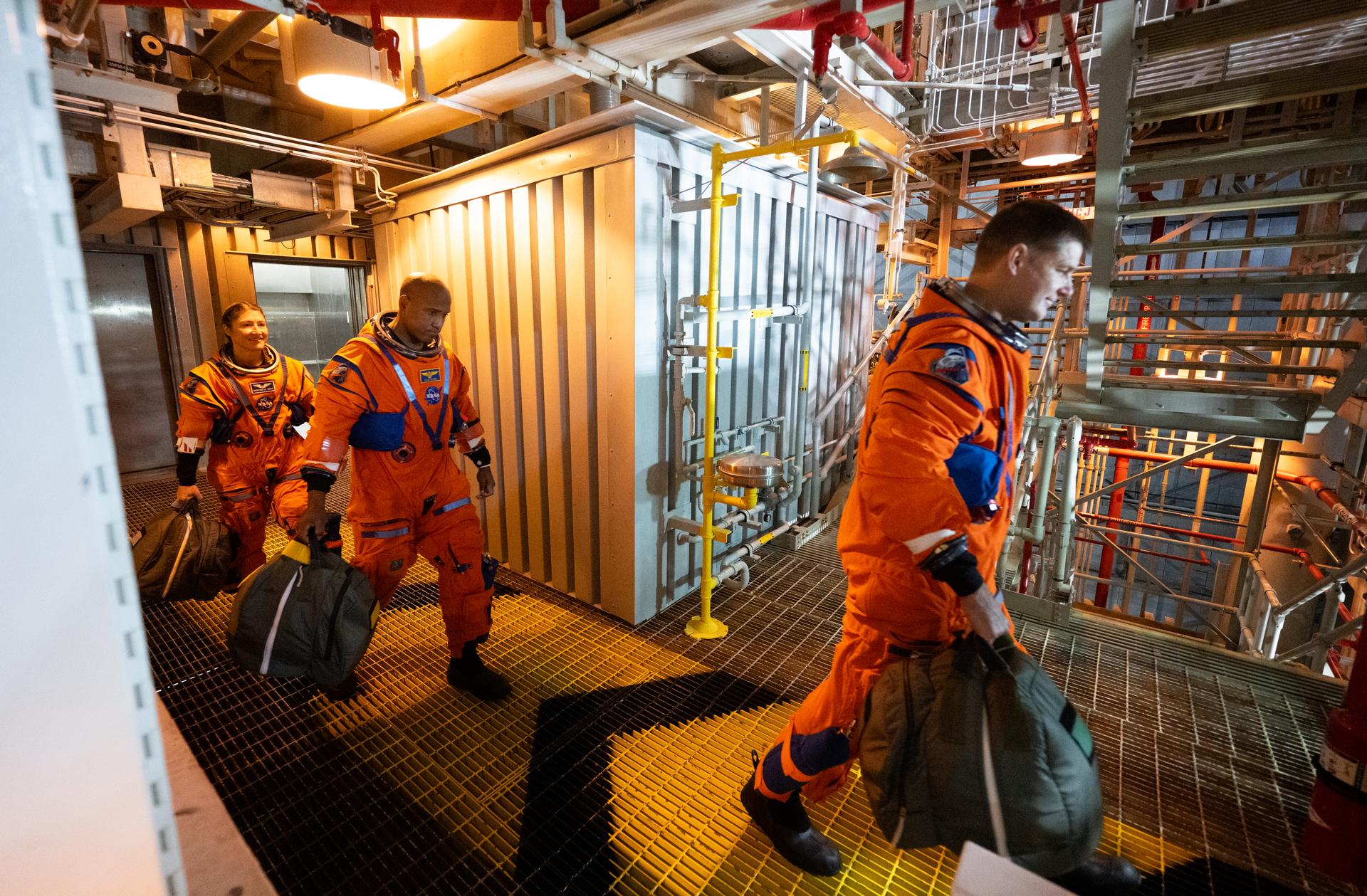
Artemis II crewmembers CSA (Canadian Space Agency) astronaut Jeremy Hansen, mission specialist, right, and NASA astronauts Victor Glover, pilot; Christina Koch, mission specialist; after exiting the elevator at the 275-foot level of the mobile launcher as they walk towards the crew access arm prepare to board their Orion spacecraft atop NASA’s Space Launch System rocket during the Artemis II countdown demonstration test, Saturday, Dec. 20, 2025, inside the Vehicle Assembly Building at NASA’s Kennedy Space Center in Florida. For this operation, the Artemis II crew and launch teams are simulating the launch day timeline including suit-up, walkout, and spacecraft ingress and egress. Through the Artemis campaign, NASA will send astronauts to explore the Moon for scientific discovery, economic benefits, and to build the foundation for the first crewed missions to Mars, for the benefit of all. Photo Credit: (NASA/Joel Kowsky)
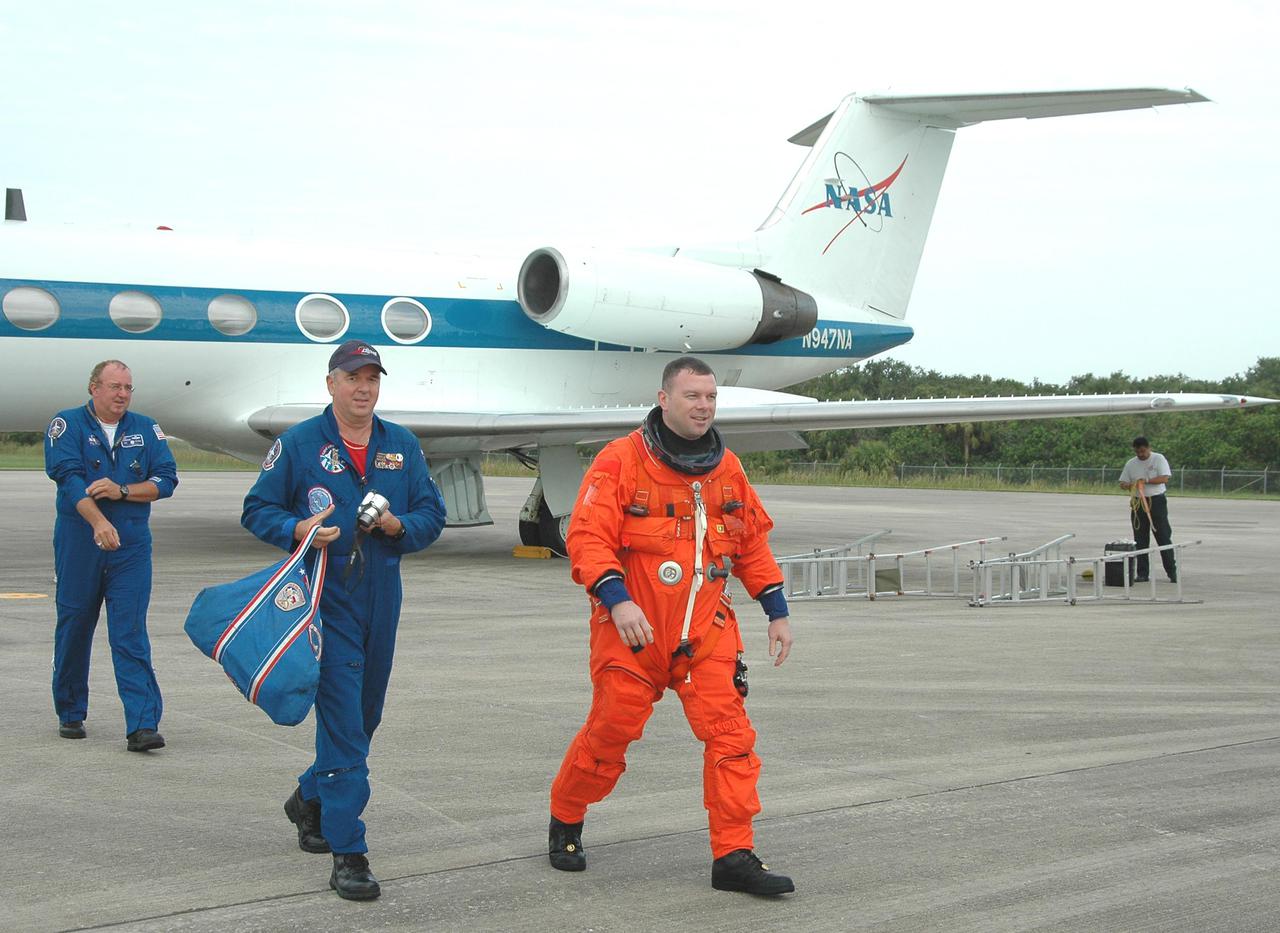
KENNEDY SPACE CENTER, FLA. -- James Kelly (at right), pilot on Return to Flight mission STS-114, walks away from the Shuttle Training Aircraft (STA) at the Shuttle Landing Facility on NASA’s Kennedy Space Center. He and Mission Commander Eileen Collins are practicing landing the orbiter using the STA, which is a modified Grumman American Aviation-built Gulf Stream II executive jet that was modified to simulate an orbiter’s cockpit, motion and visual cues, and handling qualities. In flight, the STA duplicates the orbiter’s atmospheric descent trajectory from approximately 35,000 feet altitude to landing on a runway. Because the orbiter is unpowered during re-entry and landing, its high-speed glide must be perfectly executed the first time. Mission STS-114 is scheduled to launch aboard Space Shuttle Discovery with a crew of seven on July 13 at 3:51 p.m. from Launch Pad 39B.
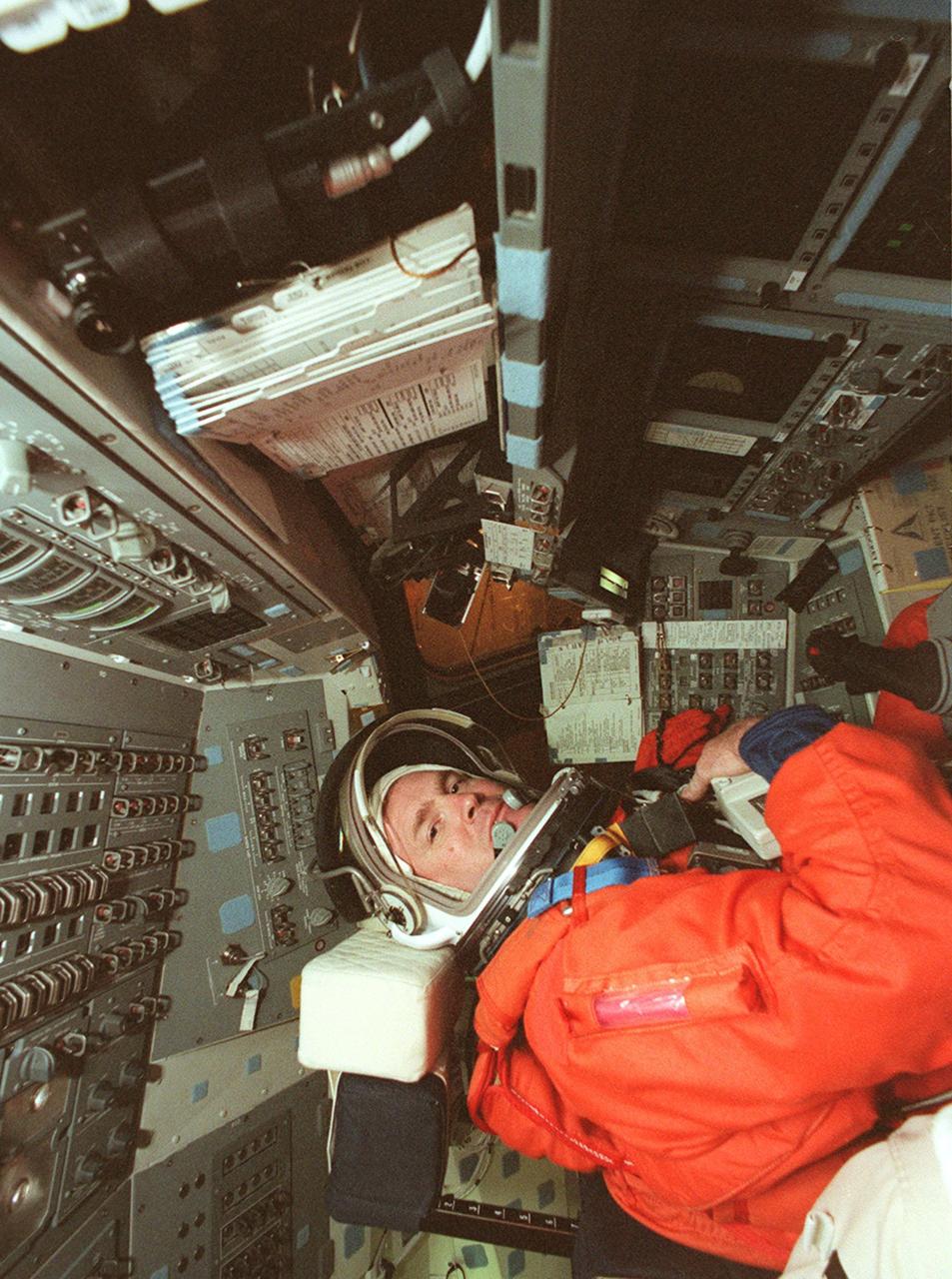
KENNEDY SPACE CENTER, FLA. -- STS-101 Commander James D. Halsell Jr. takes his seat inside Space Shuttle Atlantis for a simulated launch countdown. The countdown is part of Terminal Countdown Demonstration Test (TCDT) activities that also include emergency egress training and familiarization with the payload. Other crew members taking part are Pilot Scott J. "Doc" Horowitz and Mission Specialists Mary Ellen Weber, James Voss, Jeffrey N. Williams, Susan Helms, and Yury Usachev of Russia. During their mission to the International Space Station, the STS-101 crew will be delivering logistics and supplies, plus preparing the Station for the arrival of the Zvezda Service Module, expected to be launched by Russia in July 2000. Also, the crew will conduct one space walk to perform maintenance on the Space Station. This will be the third assembly flight for the Space Station. STS-101 is scheduled to launch April 24 at 4:15 p.m. from Launch Pad 39A
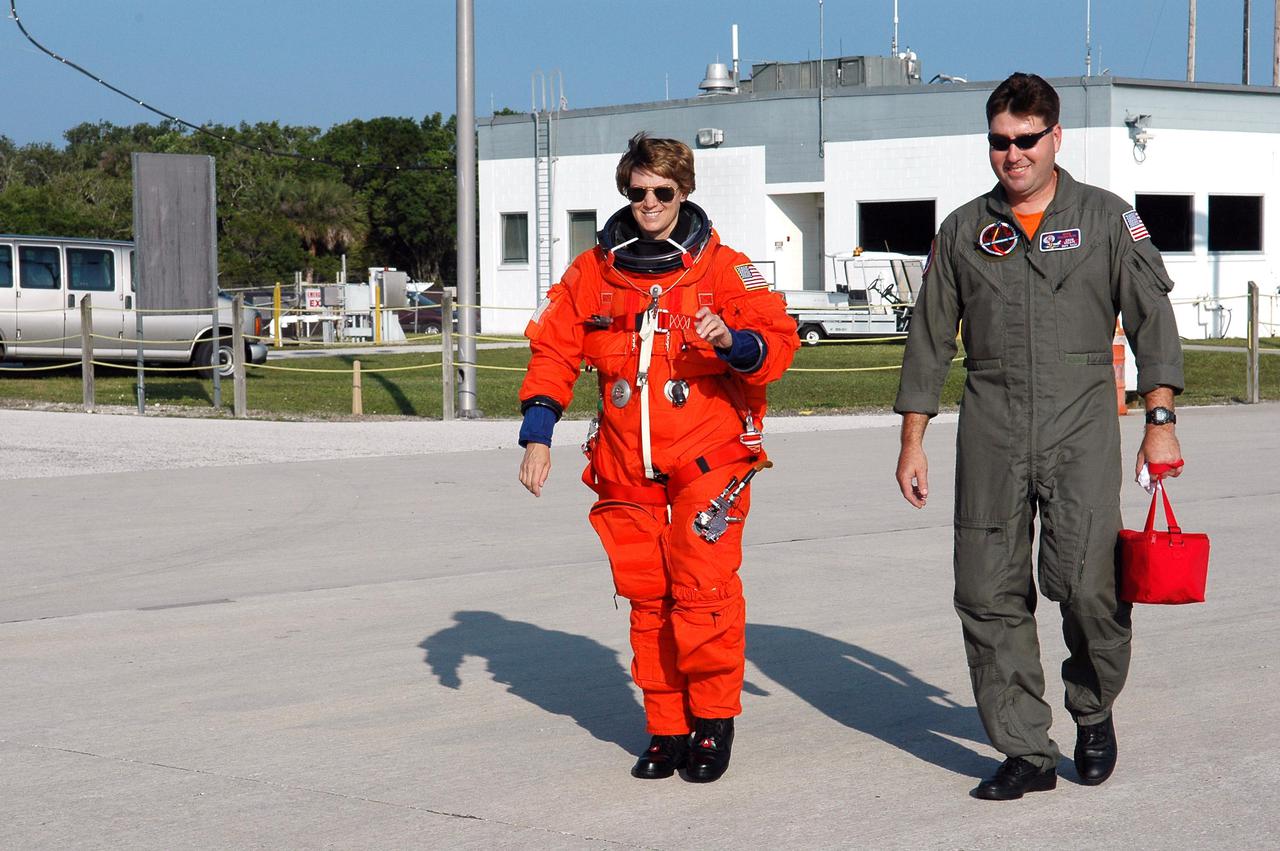
KENNEDY SPACE CENTER, FLA. - STS-114 Commander Eileen Collins walks across the Shuttle Landing Facility to a Shuttle Training Aircraft (STA) to practice landing the orbiter. The STA is a modified Grumman American Aviation-built Gulfstream II executive jet that was modified to simulate an orbiter’s cockpit, motion and visual cues, and handling qualities. In flight, the STA duplicates the orbiter’s atmospheric descent trajectory from approximately 35,000 feet altitude to landing on a runway. The orbiter differs in at least one major aspect from conventional aircraft; it is unpowered during re-entry and landing so its high-speed glide must be perfectly executed the first time. There is no go-around capability. The orbiter touchdown speed is 213 to 226 miles per hour. There are two STAs, based in Houston. STS-114 is the first Return to Flight mission, scheduled to launch July 13 in a window that extends through July 31.
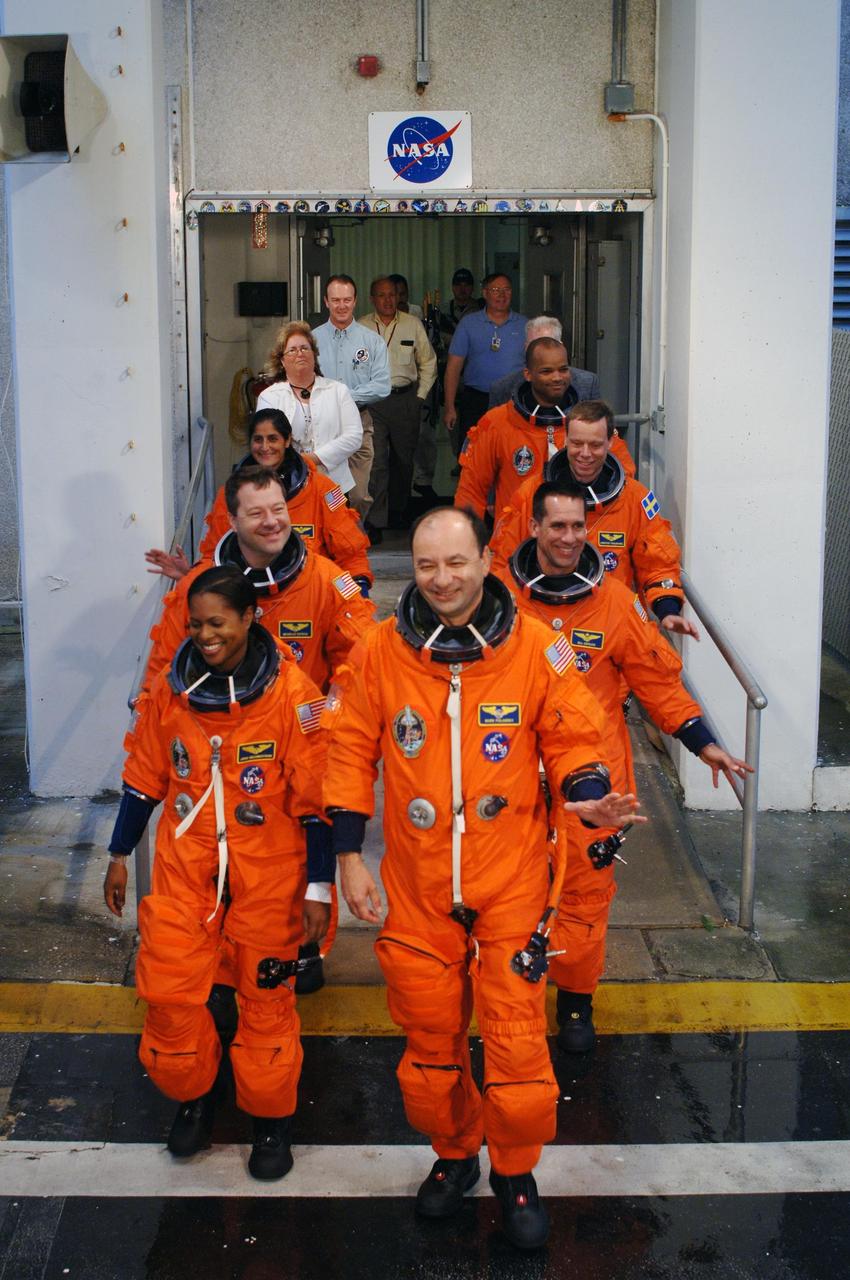
KENNEDY SPACE CENTER, FLA. -- The STS-116 crew walks out of the Operations and Checkout Building on their way to Launch Pad 39B during the terminal countdown demonstration test. The crew is practicing for launch with a simulation of activities, from crew breakfast and suit-up to countdown in the orbiter. Leading the way are Commander Mark Polansky (right) and Mission Specialist Joan Higginbotham (left). Behind them are (left and right) Mission Specialist Nicholas Patrick and Pilot William Oefelein; Mission Specialists Sunita Williams and Christer Fuglesang, who represents the European Space Agency; and Mission Specialist Robert Curbeam (right). The STS-116 mission is No. 20 to the International Space Station and construction flight 12A.1. The mission payload is the SPACEHAB module, the P5 integrated truss structure and other key components. Launch is scheduled for no earlier than Dec. 7. Photo credit: NASA/Kim Shiflett