
War and Peace
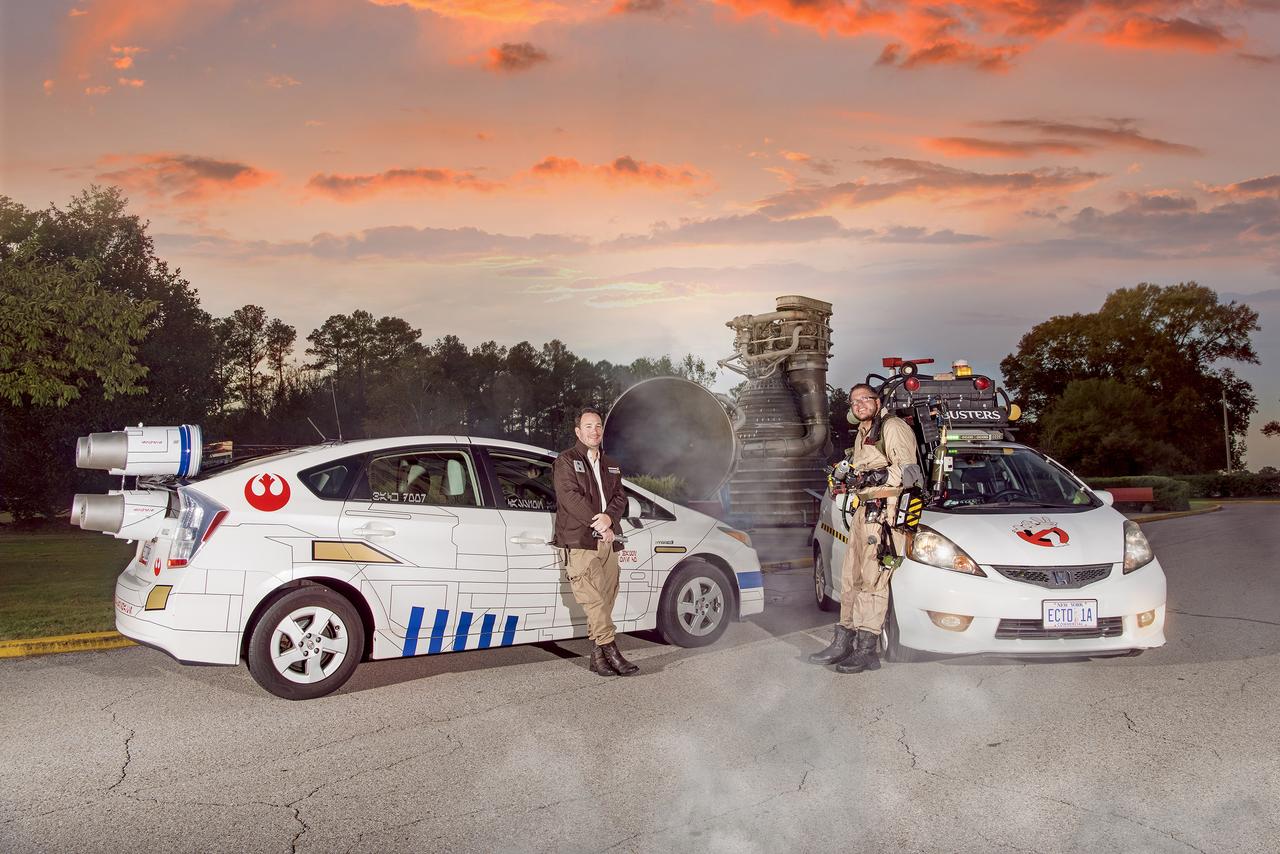
Andrew Denio, a Marshall information technology specialist in the Office of the Chief Information Officer, and Judson Hudson, a lab technician and computer-aided designer in Marshall’s Valve & Component Laboratory, show off their Ghostbusters and Star Wars themed vehicles in front of MSFC building 4200, for Halloween 2019.
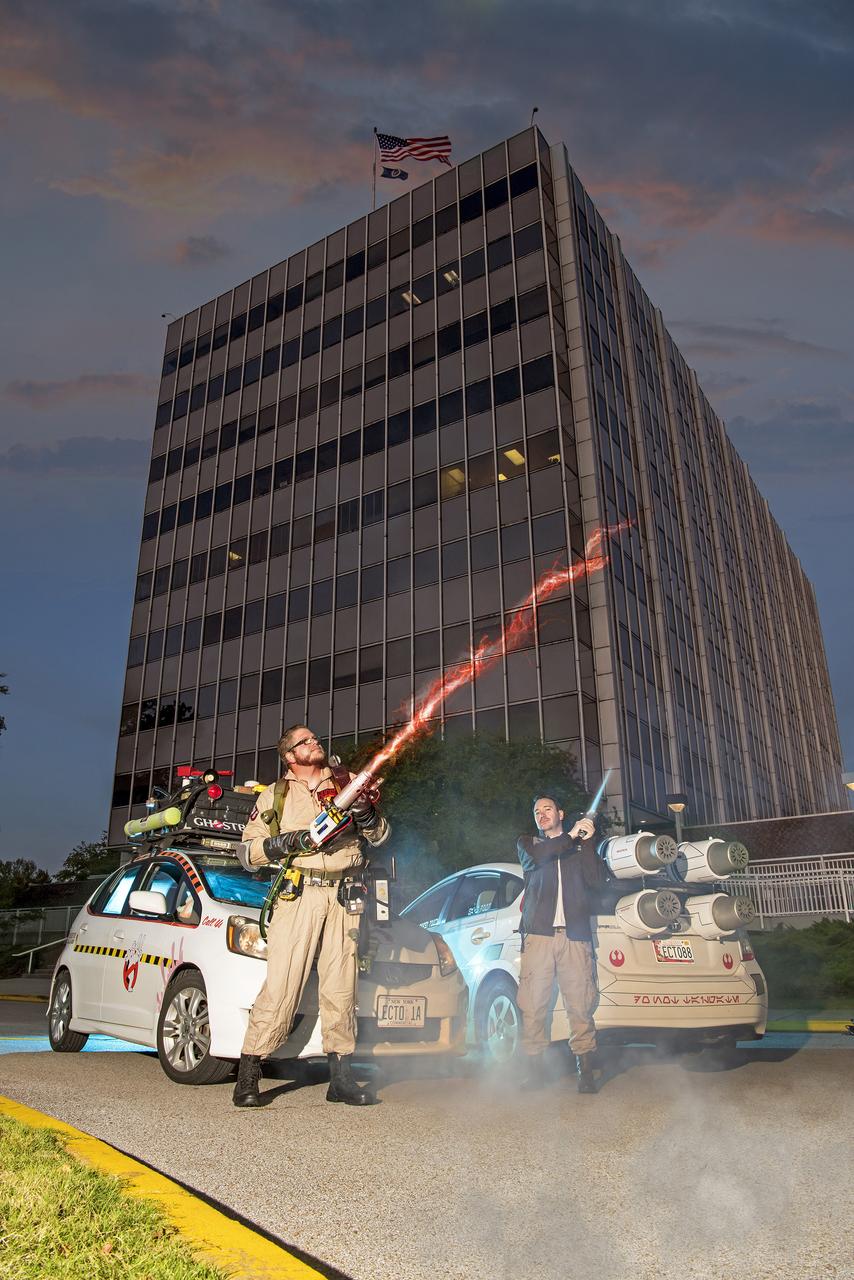
Andrew Denio, a Marshall information technology specialist in the Office of the Chief Information Officer, and Judson Hudson, a lab technician and computer-aided designer in Marshall’s Valve & Component Laboratory, show off their Ghostbusters and Star Wars themed vehicles in front of MSFC building 4200, for Halloween 2019.
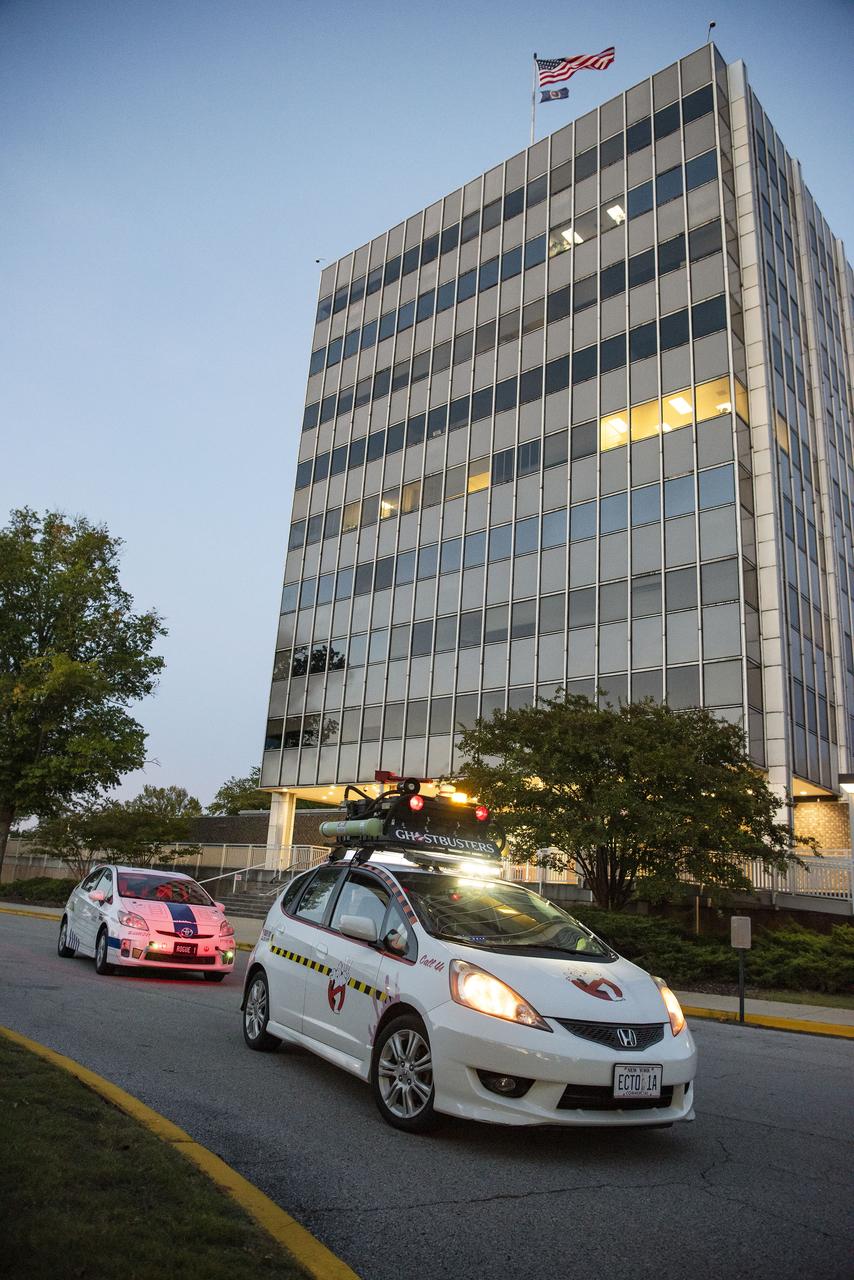
Andrew Denio, a Marshall information technology specialist in the Office of the Chief Information Officer, and Judson Hudson, a lab technician and computer-aided designer in Marshall’s Valve & Component Laboratory, show off their Ghostbusters and Star Wars themed vehicles in front of MSFC building 4200, for Halloween 2019.
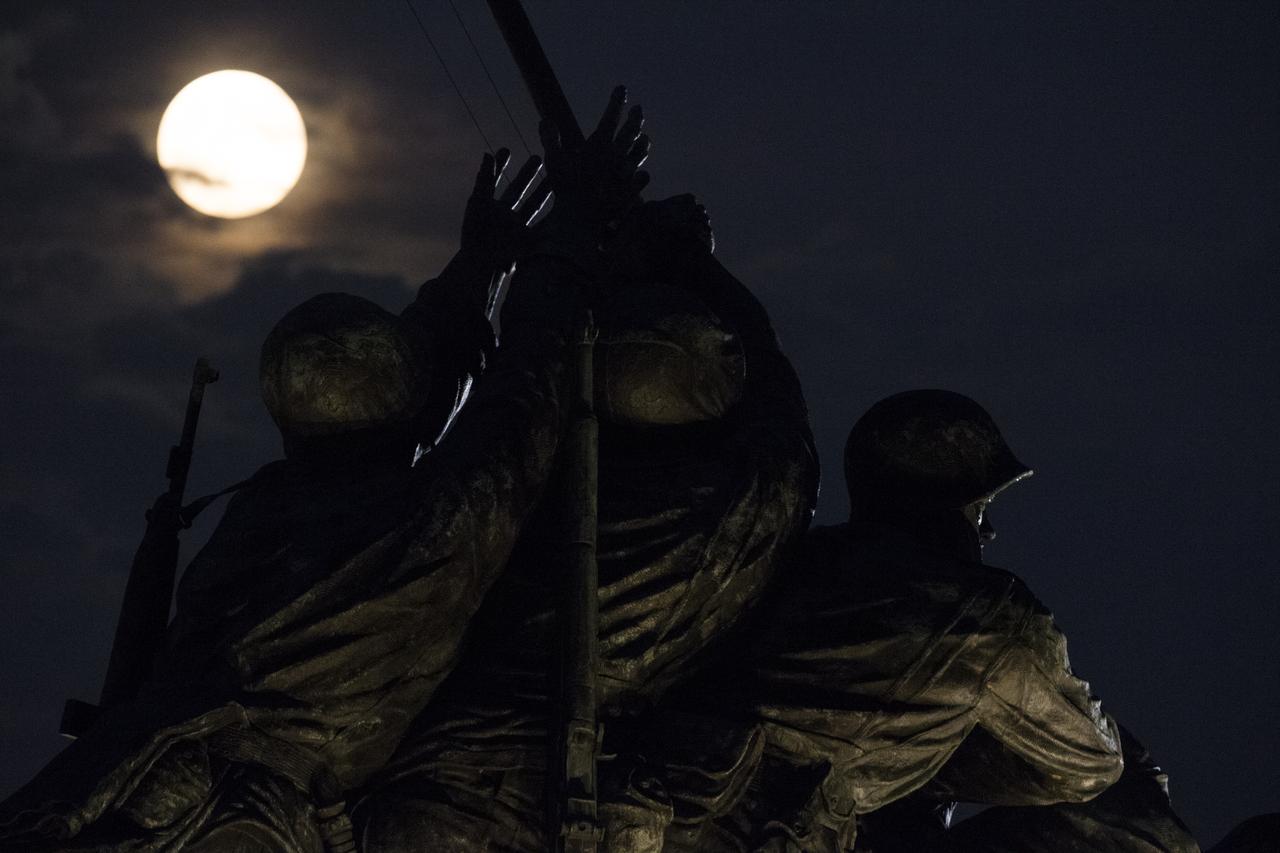
A perigree full moon or supermoon is seen over the US Marine Corps War Memorial, Sunday, August 10, 2014, in Arlington, Virginia. A supermoon occurs when the moon’s orbit is closest (perigee) to Earth at the same time it is full. Photo Credit: (NASA/Joel Kowsky)
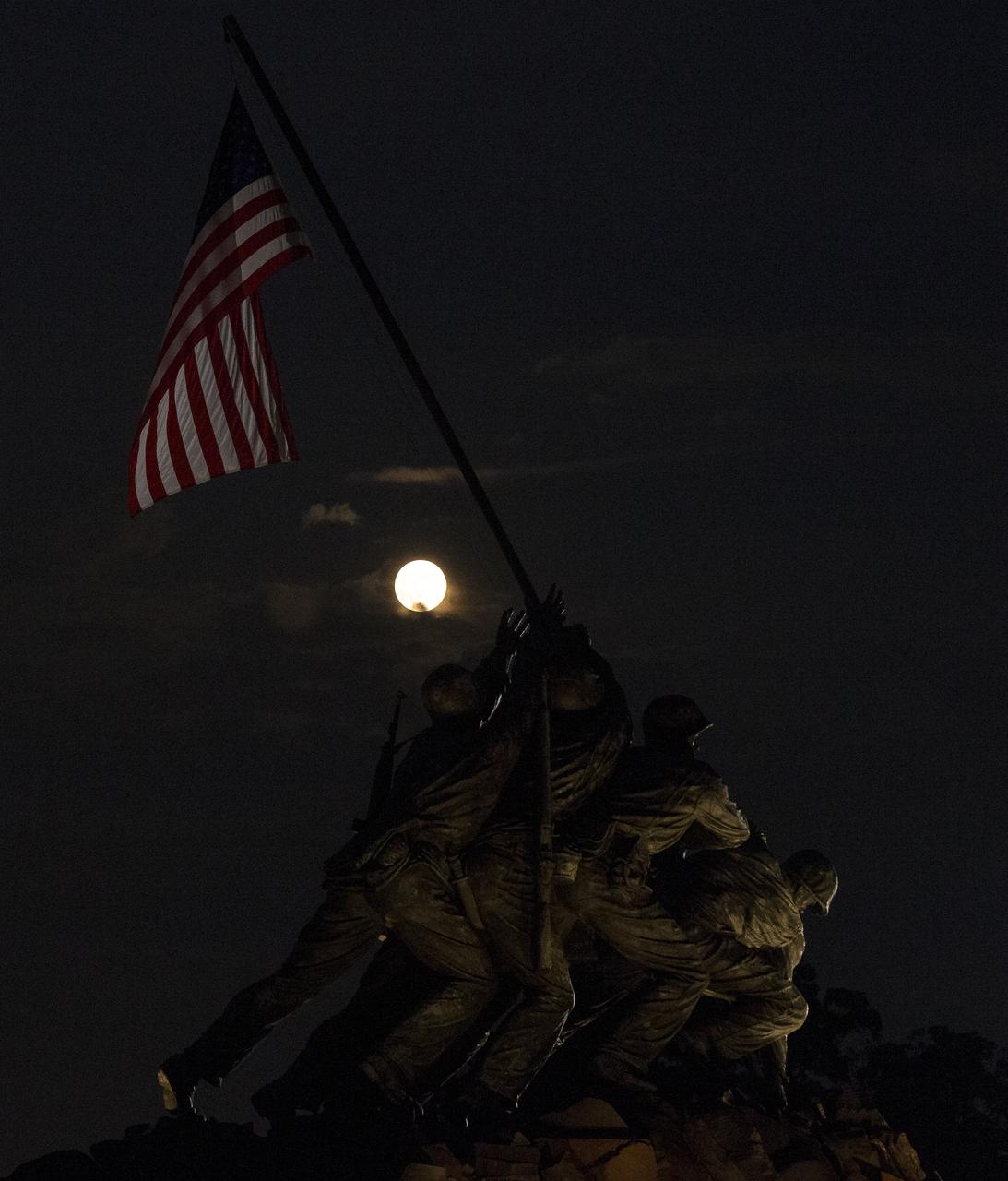
A perigree full moon or supermoon is seen over the US Marine Corps War Memorial, Sunday, August 10, 2014, in Arlington, Virginia. A supermoon occurs when the moon’s orbit is closest (perigee) to Earth at the same time it is full. Photo Credit: (NASA/Joel Kowsky)
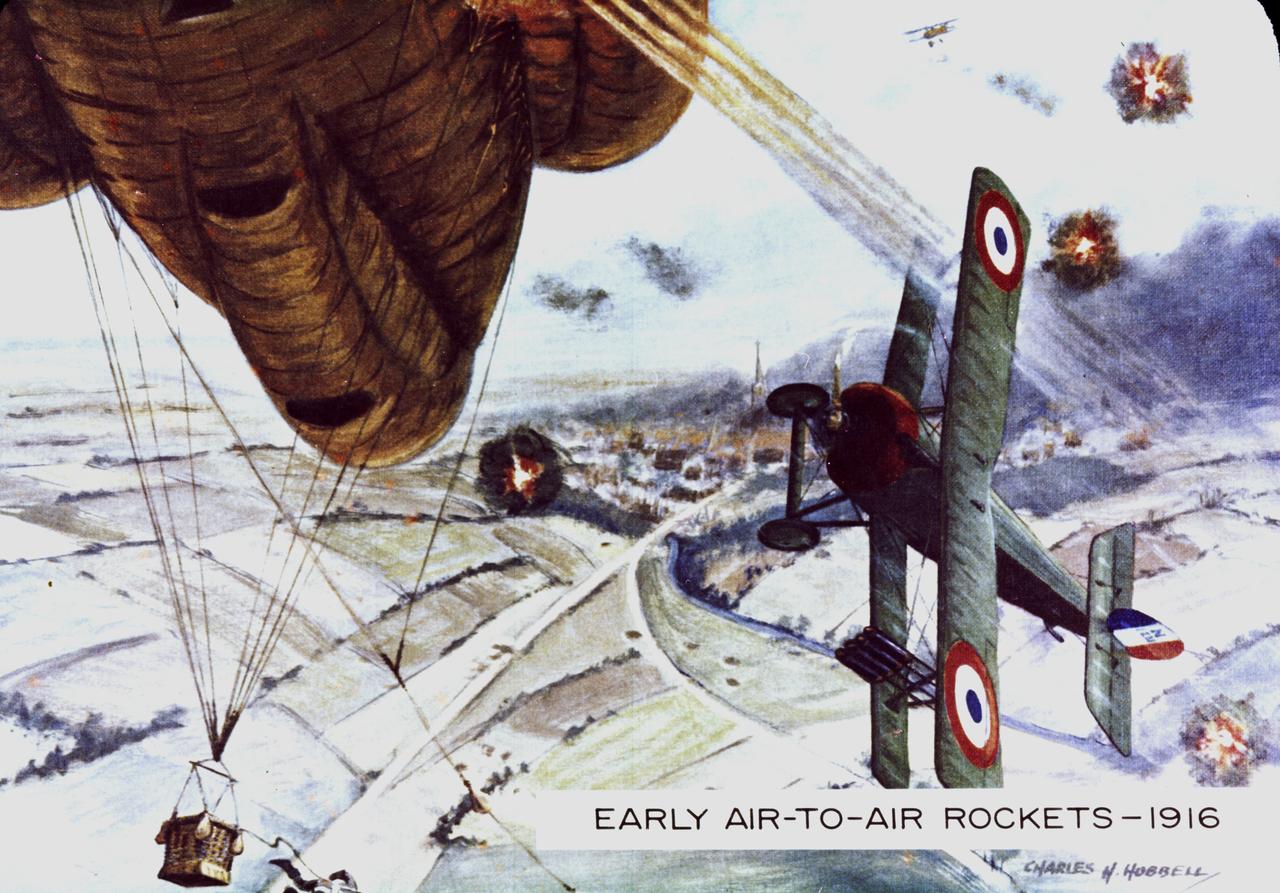
World War I enlisted rockets once again for military purposes. French pilots rigged rockets to the wing struts of their airplanes and aimed them at enemy observation balloons filled with highly inflammable hydrogen.
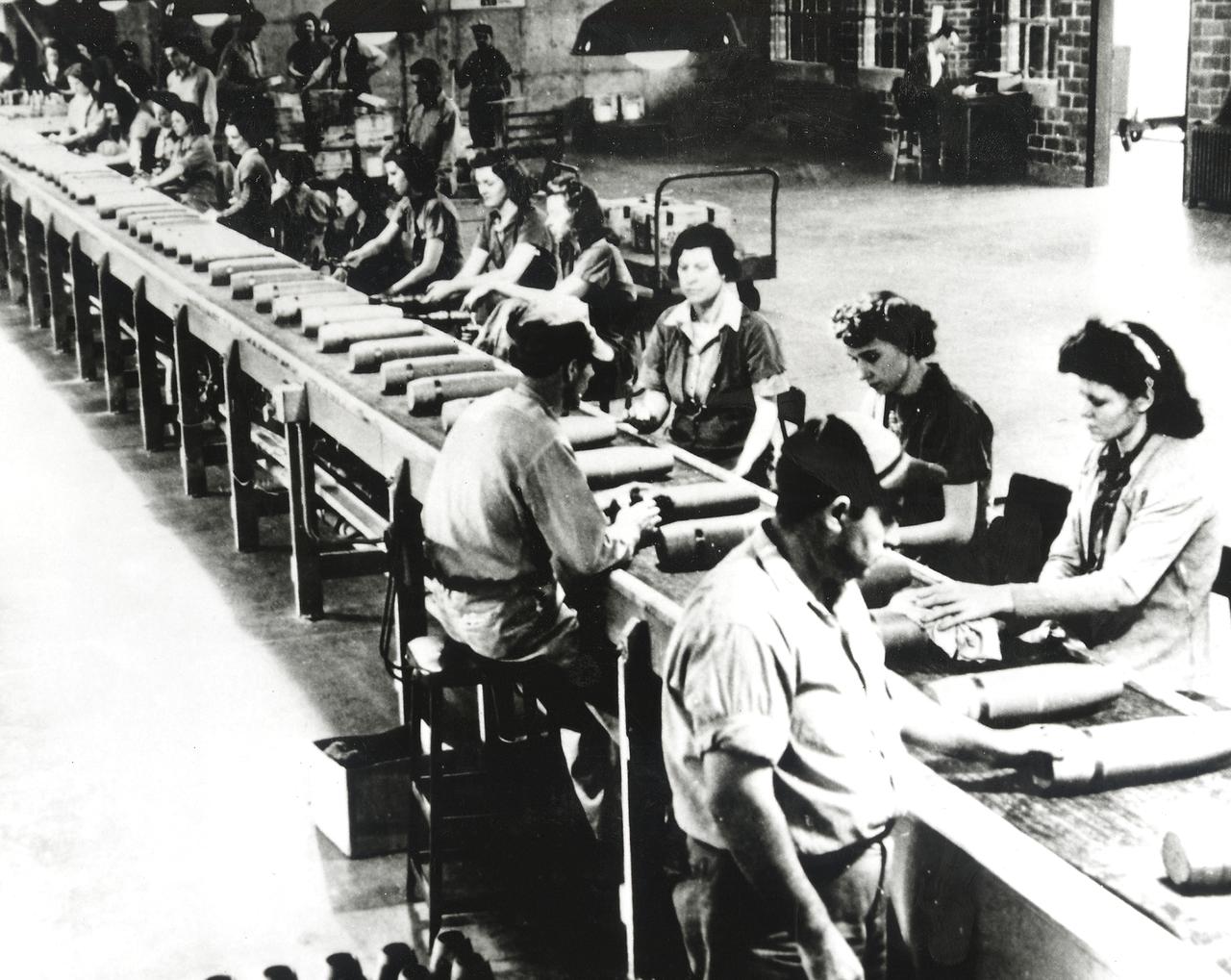
During World War II, Arsenal workers from Huntsville, Alabama, and surrounding areas responded to the call for civilian defense workers.
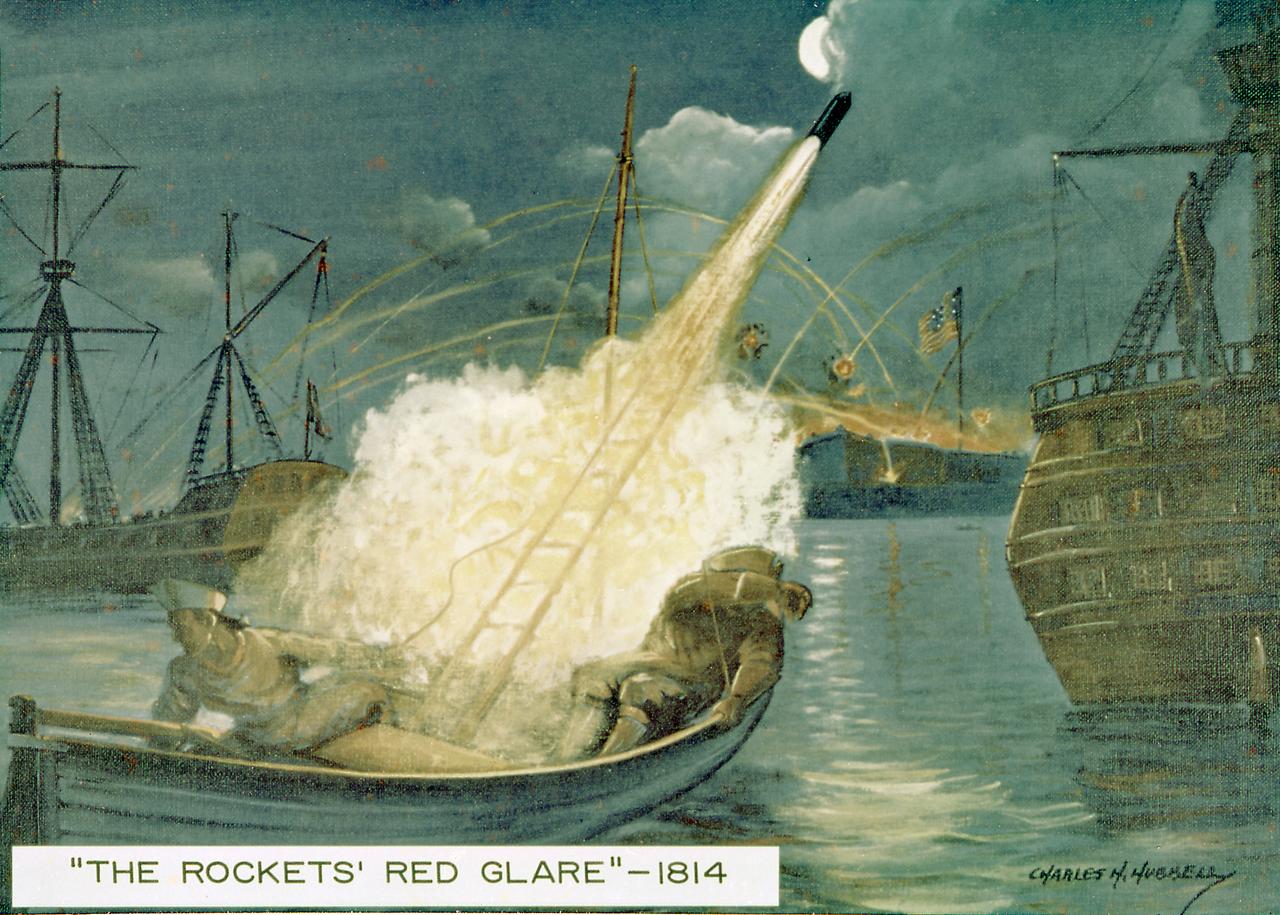
The British fired Congreve rockets against the United States in the War of 1812. As a result Francis Scott Key coined the phrase the "rocket's red glare." Congreve had used a 16-foot guide stick to help stabilize his rocket. William Hale, another British inventor, invented the stickless rocket in 1846. The U.S. Army used the Hale rocket more than 100 years ago in the war with Mexico. Rockets were also used to a limited extent by both sides in the American Civil War.
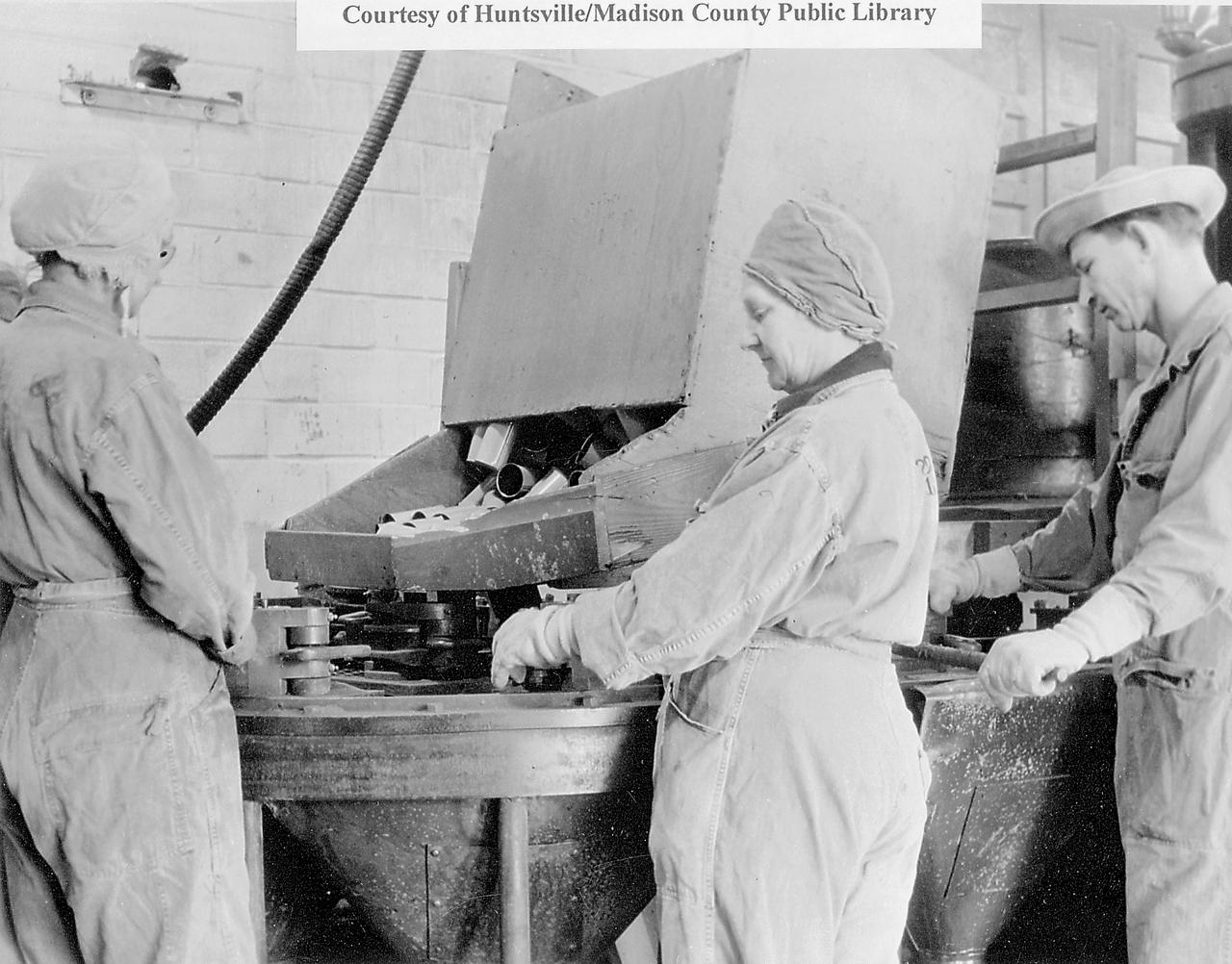
During World War II, Arsenal workers from Huntsville, Alabama. and surrounding areas responded to the call for civilian defense workers. This February 20, 1945 photo shows workers filling colored smoke grenades that were used for signaling. (Courtesy of Huntsville/Madison County Public Library)
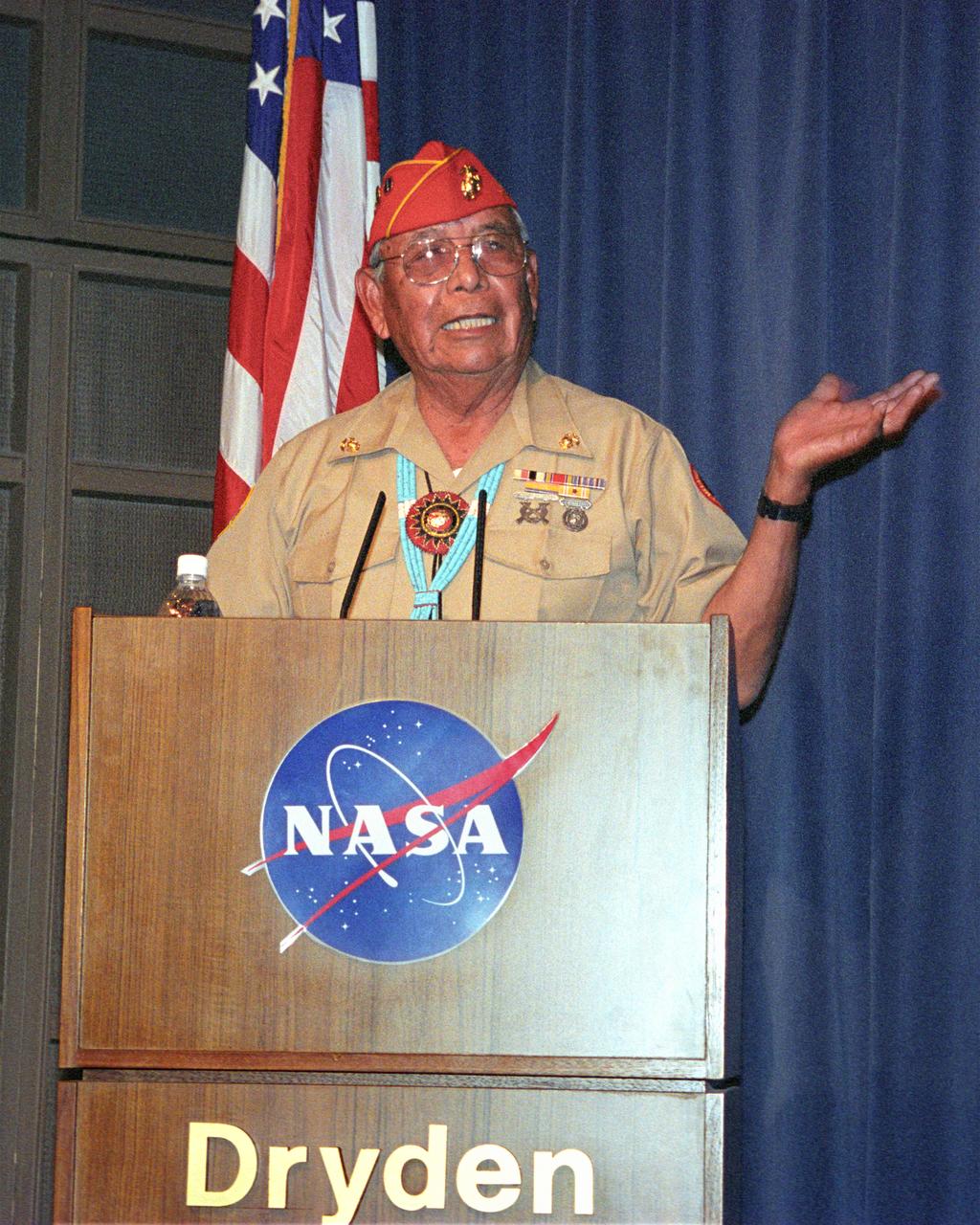
Navajo Code Talker Joe Morris, Sr. shared insights from his time as a secret World War Two messenger with his audience at NASA's Dryden Flight Research Center on Nov. 26, 2002. NASA Dryden is located on Edwards Air Force Base in California's Mojave Desert.
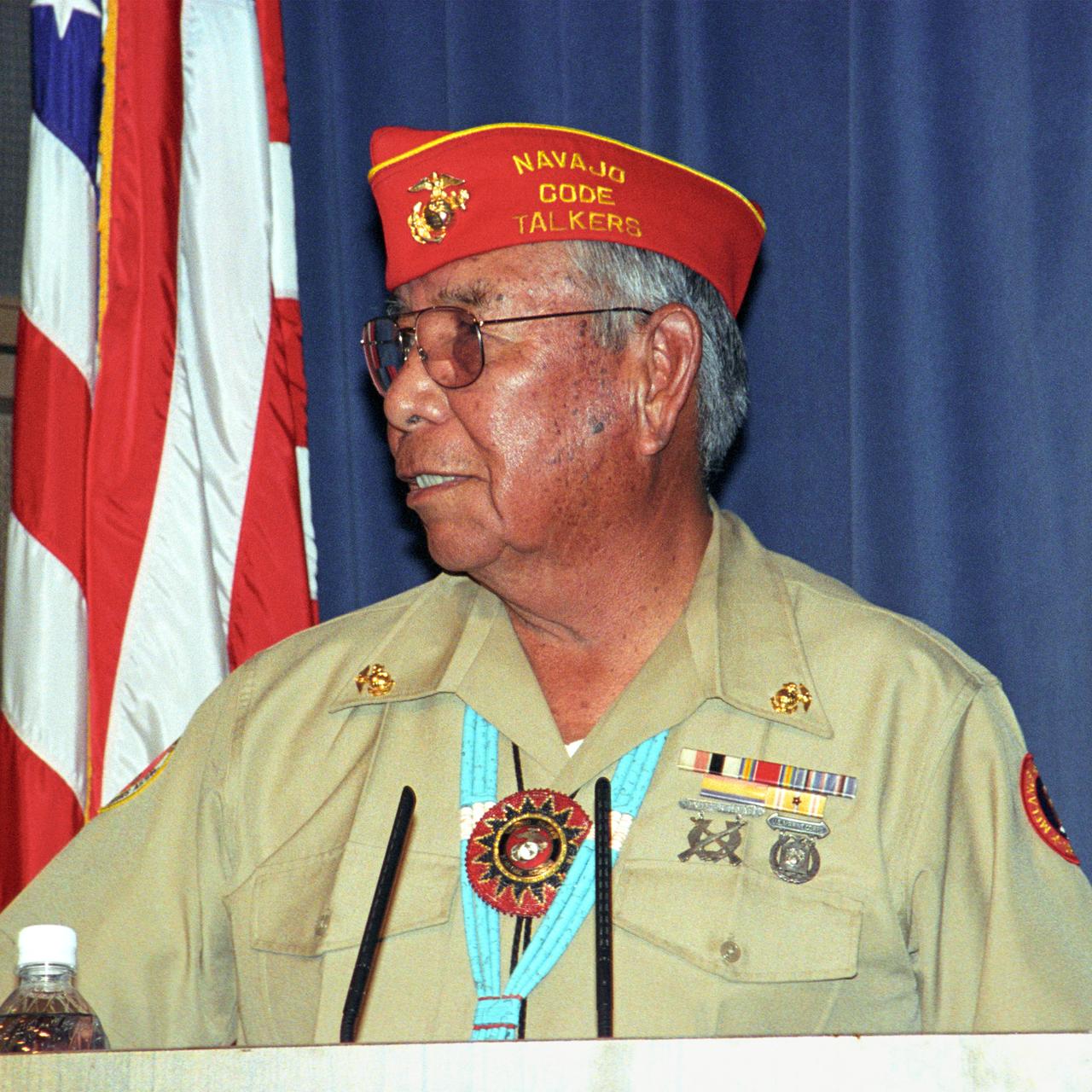
Navajo Code Talker Joe Morris, Sr. shared insights from his time as a secret World War Two messenger with his audience at NASA's Dryden Flight Research Center on Nov. 26, 2002. NASA Dryden is located on Edwards Air Force Base in California's Mojave Desert.
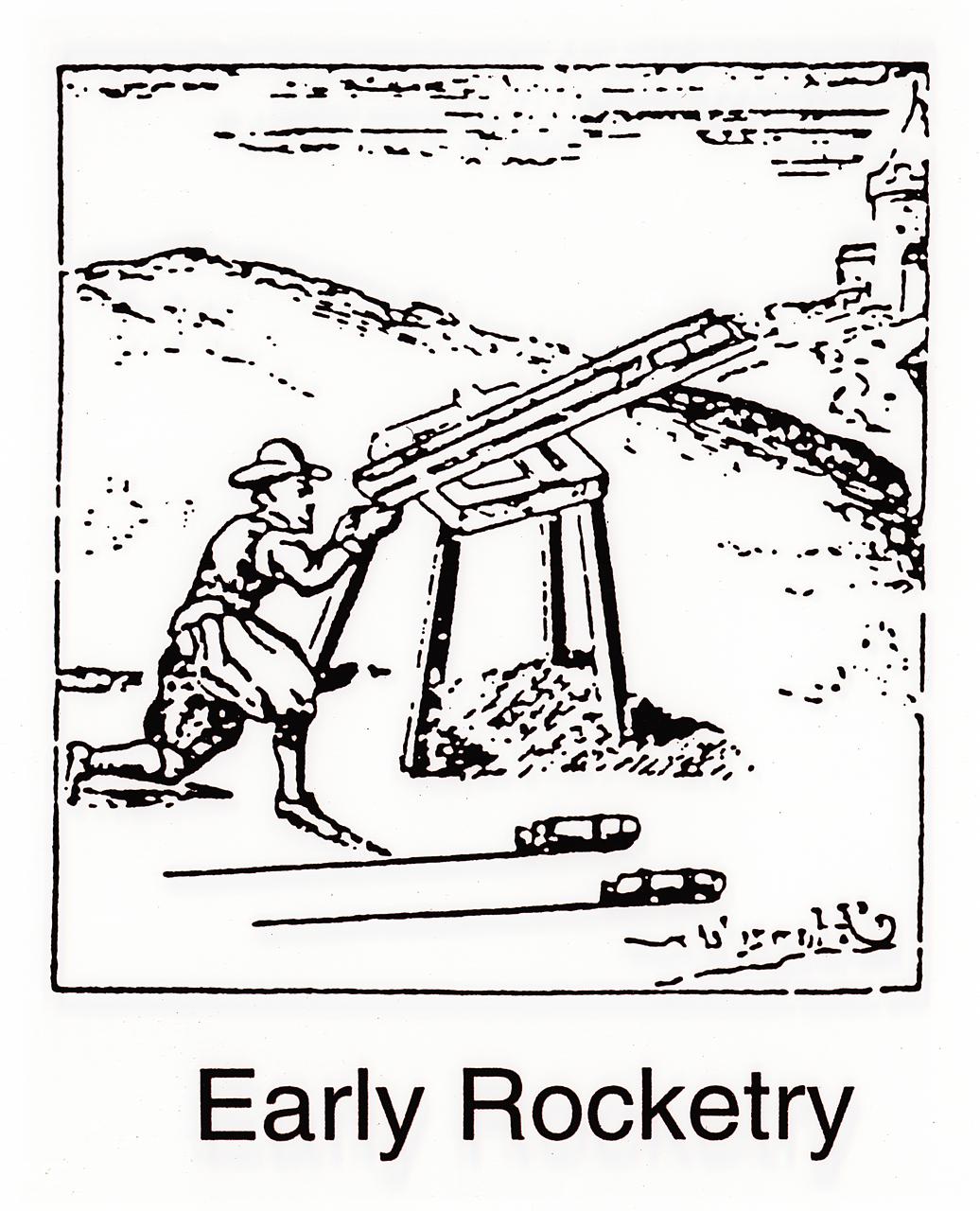
During the early introduction of rockets to Europe, they were used only as weapons. Enemy troops in India repulsed the British with rockets. Later, in Britain, Sir William Congreve developed a rocket that could fire to about 9,000 feet. The British fired Congreve rockets against the United States in the War of 1812.
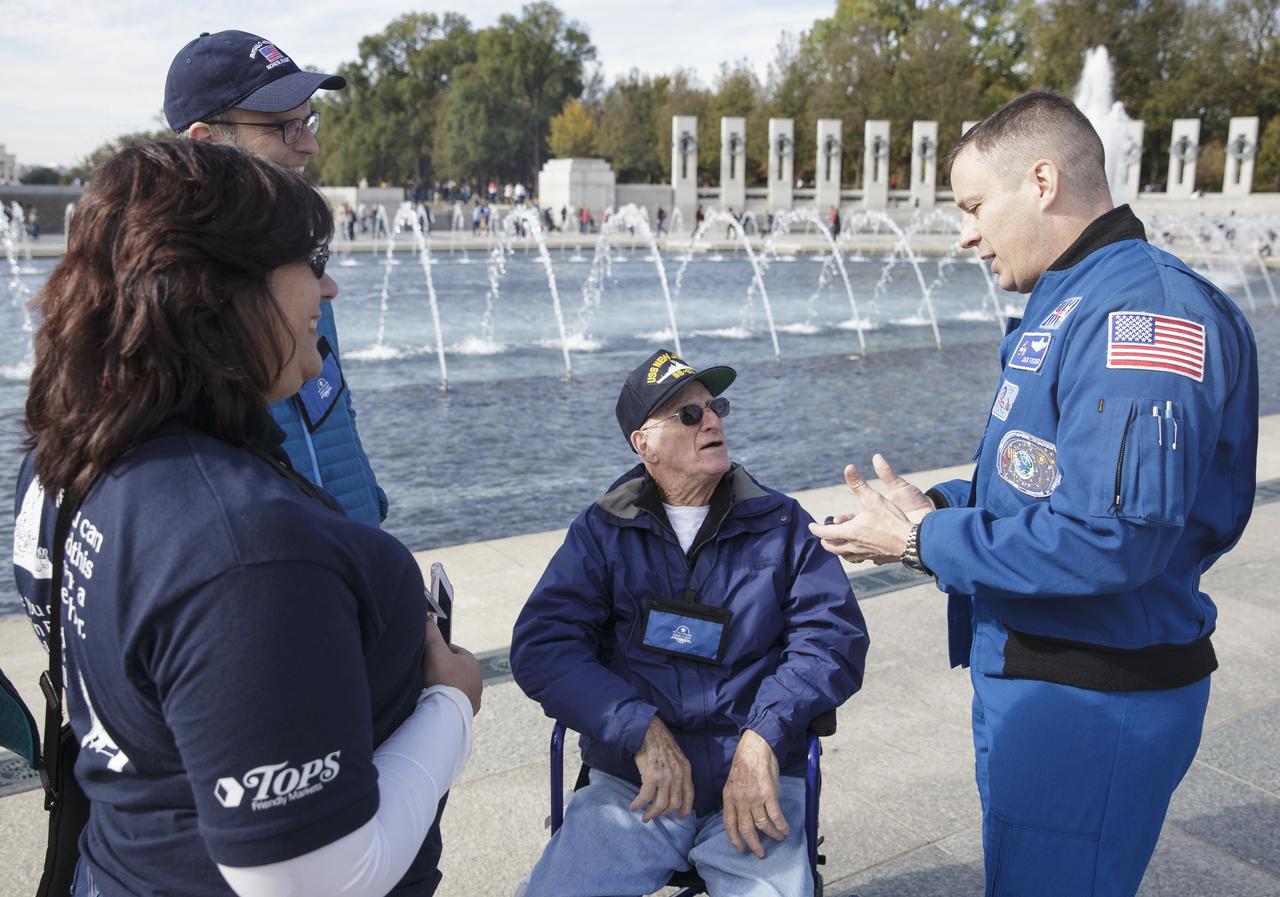
NASA astronaut Jack Fischer talks with veterans at the World War II Memorial who traveled to Washington, DC with the Buffalo Niagara Honor Flight, Saturday, Nov. 4, 2017. Photo Credit: (NASA/Joel Kowsky)
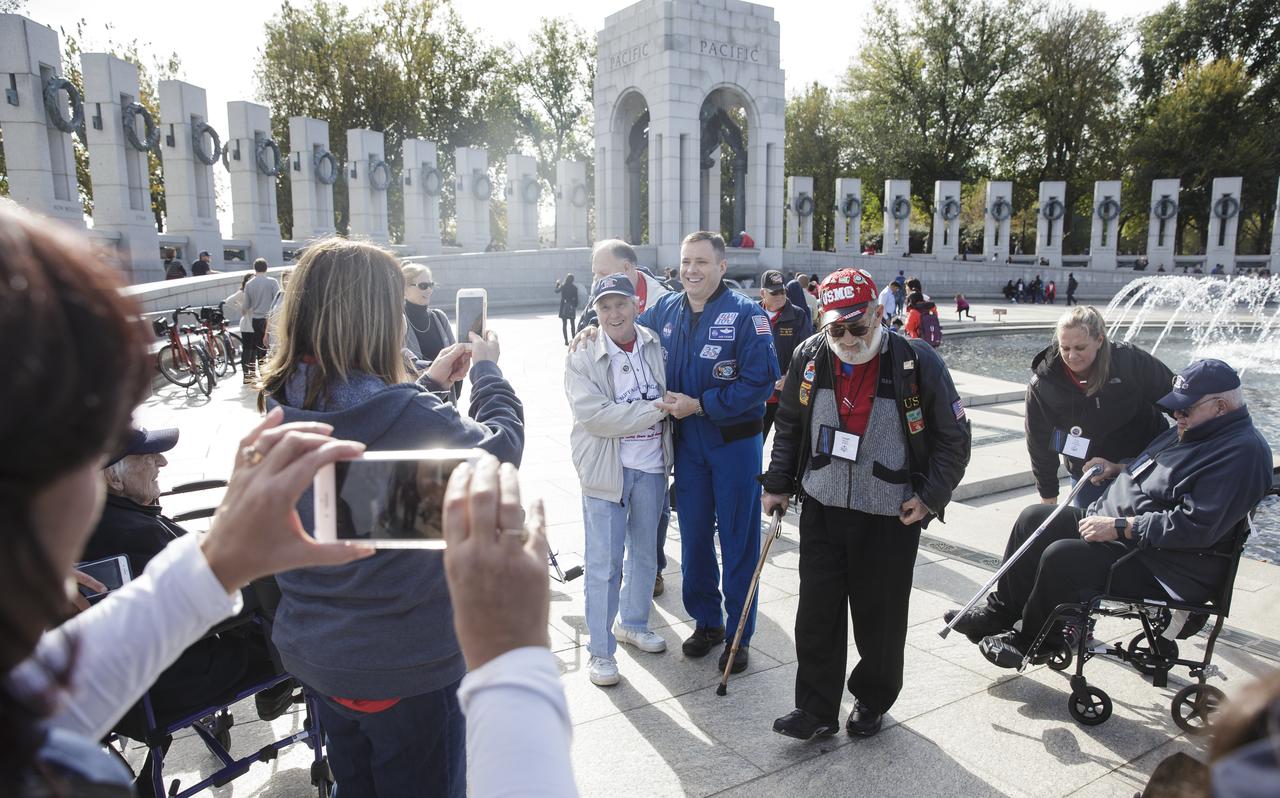
NASA astronaut Jack Fischer talks with veterans at the World War II Memorial who traveled to Washington, DC with the Buffalo Niagara Honor Flight, Saturday, Nov. 4, 2017. Photo Credit: (NASA/Joel Kowsky)
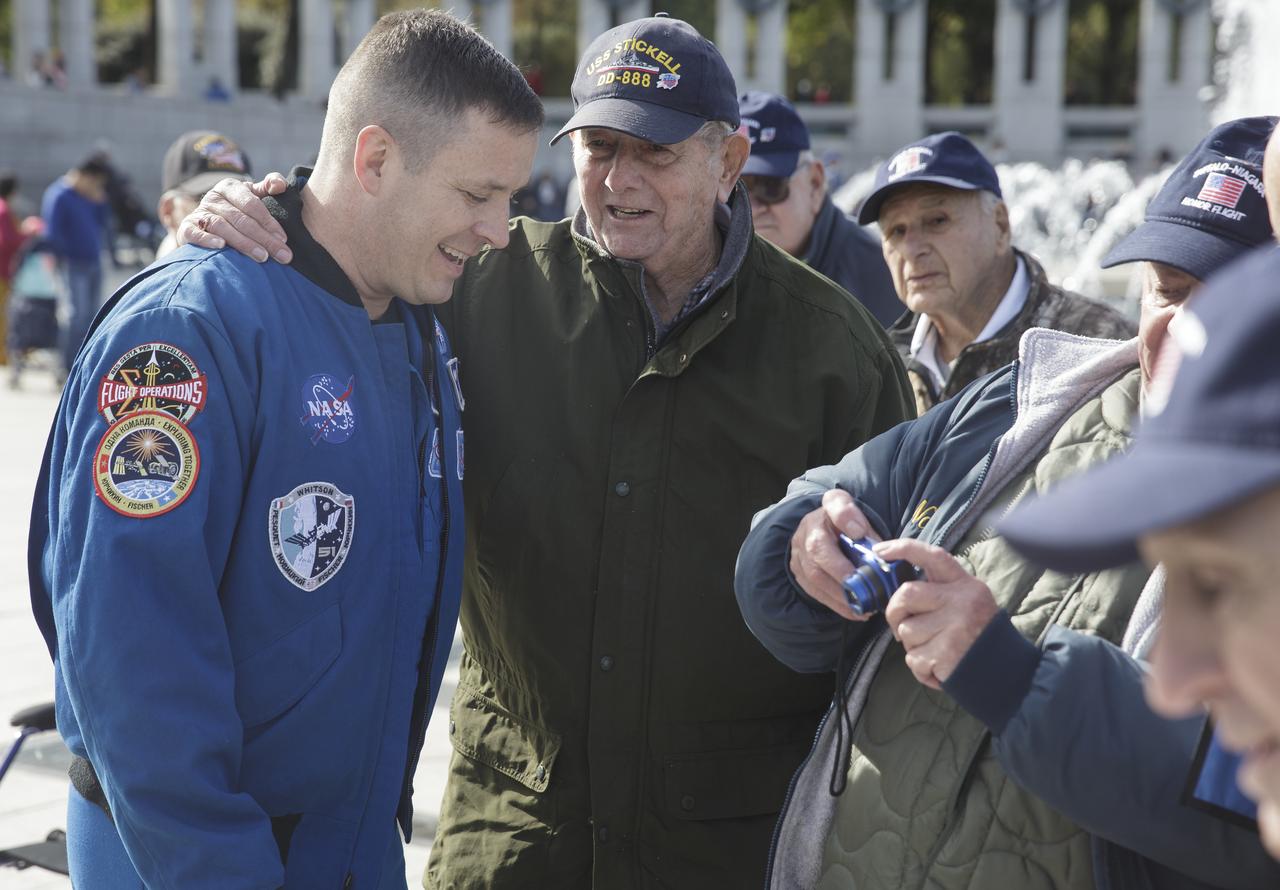
NASA astronaut Jack Fischer talks with veterans at the World War II Memorial who traveled to Washington, DC with the Buffalo Niagara Honor Flight, Saturday, Nov. 4, 2017. Photo Credit: (NASA/Joel Kowsky)
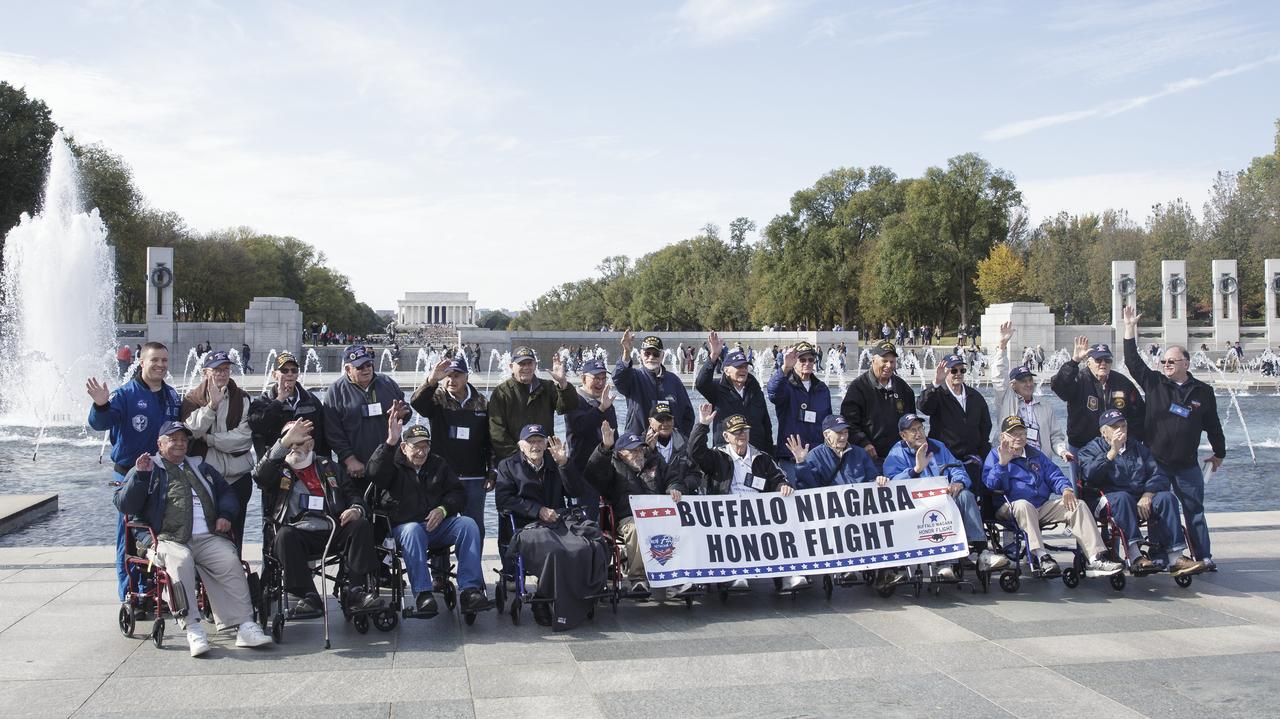
NASA astronaut Jack Fischer poses for a group photo at the World War II Memorial with veterans who traveled to Washington, DC with the Buffalo Niagara Honor Flight, Saturday, Nov. 4, 2017. Photo Credit: (NASA/Joel Kowsky)
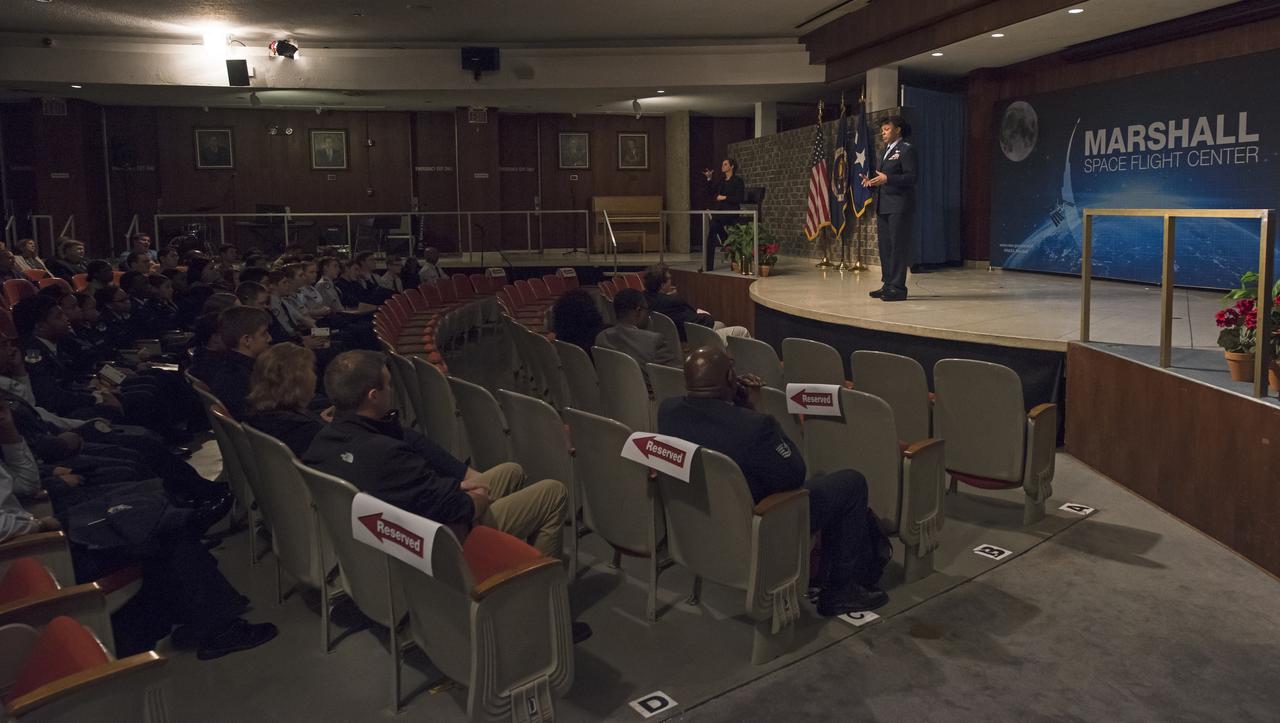
The Black History Month program was presented at Marshall Space Flight Center with guest speaker Lt. General Stayce Harris. General Harris is the Inspector General of the Air Force and she is the first African American female Lieutenant General in the American military. The topic of her presentation was "African Americans in Times of War". The presentation was followed by an ethnic food sampling.
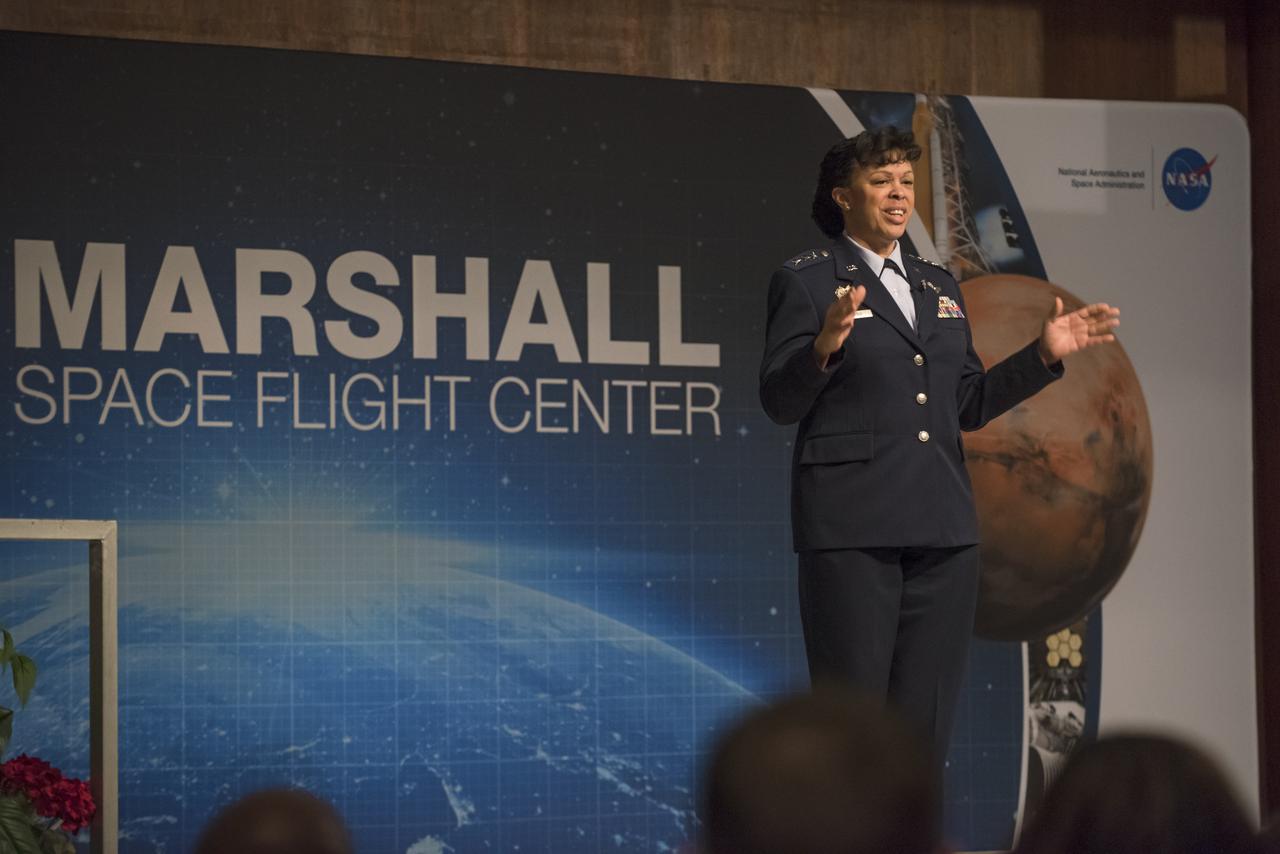
The Black History Month program was presented at Marshall Space Flight Center with guest speaker Lt. General Stayce Harris. General Harris is the Inspector General of the Air Force and she is the first African American female Lieutenant General in the American military. The topic of her presentation was "African Americans in Times of War". The presentation was followed by an ethnic food sampling.
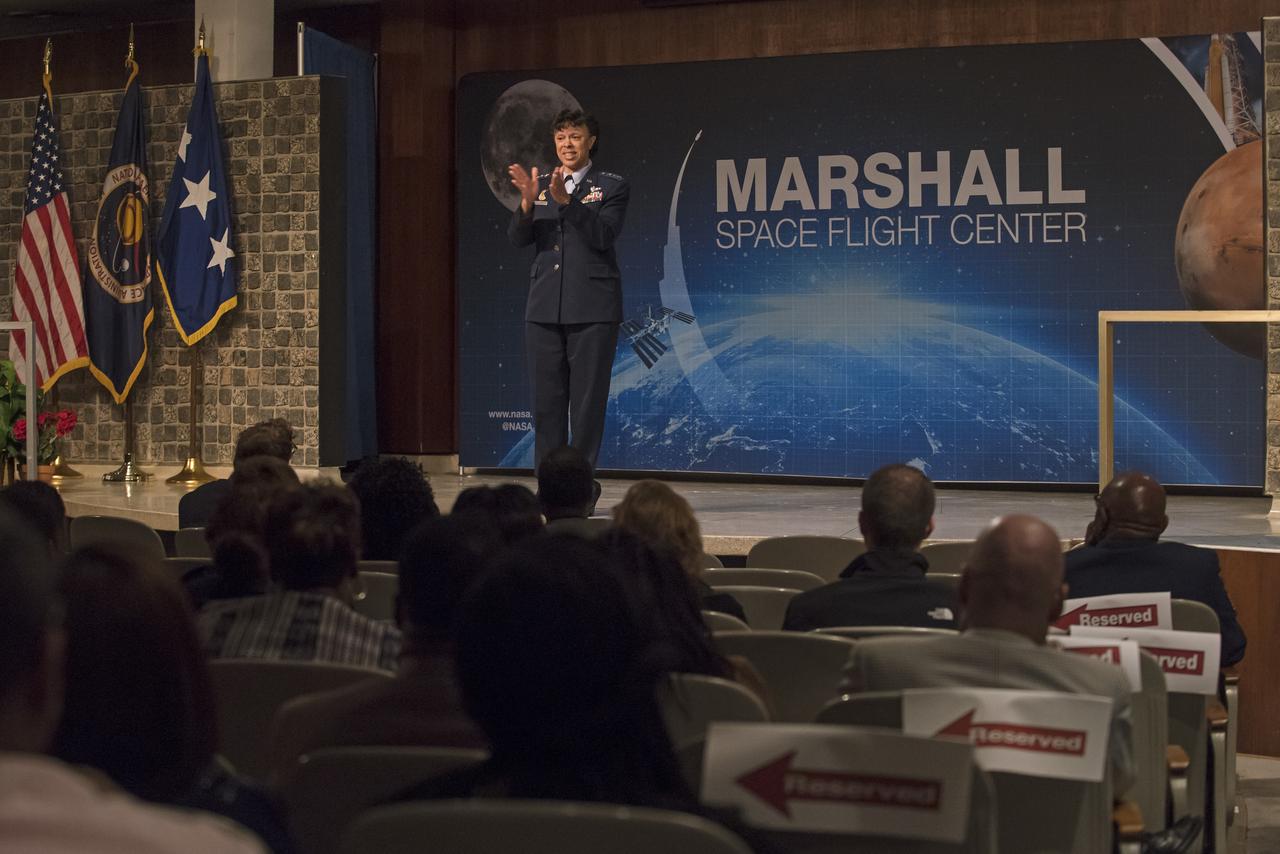
The Black History Month program was presented at Marshall Space Flight Center with guest speaker Lt. General Stayce Harris. General Harris is the Inspector General of the Air Force and she is the first African American female Lieutenant General in the American military. The topic of her presentation was "African Americans in Times of War". The presentation was followed by an ethnic food sampling.
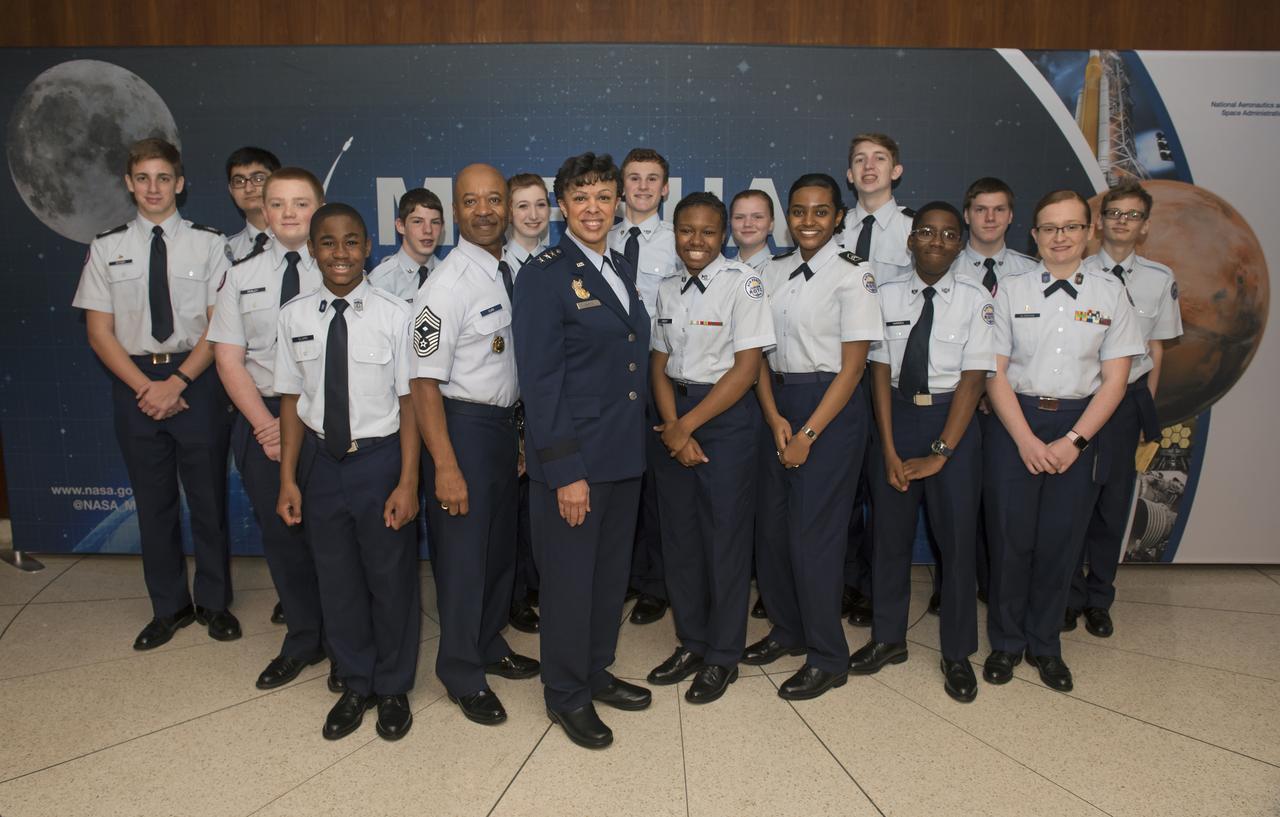
The Black History Month program was presented at Marshall Space Flight Center with guest speaker Lt. General Stayce Harris. General Harris is the Inspector General of the Air Force and she is the first African American female Lieutenant General in the American military. The topic of her presentation was "African Americans in Times of War". The presentation was followed by an ethnic food sampling. General Harris is pictured here with local area Air Force JROTC cadets who attended the program.
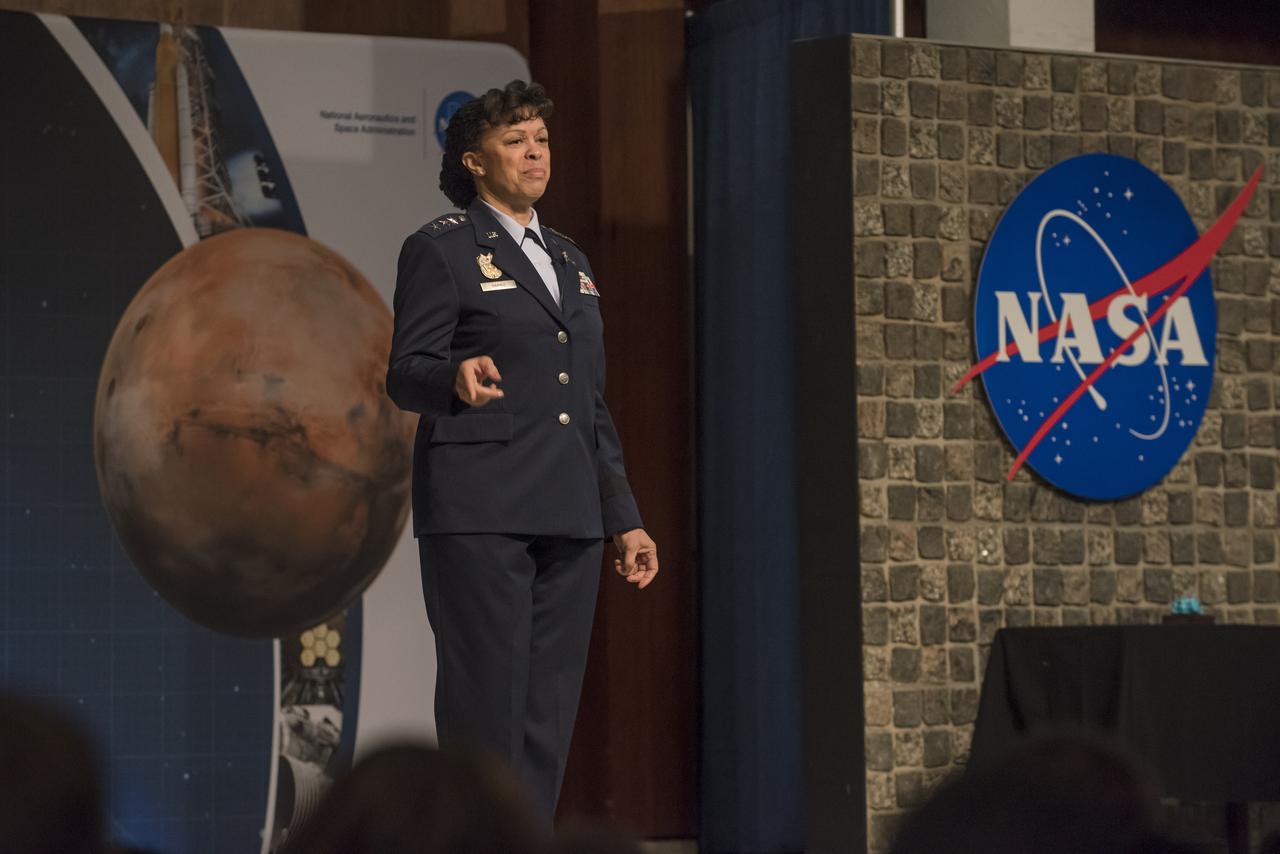
The Black History Month program was presented at Marshall Space Flight Center with guest speaker Lt. General Stayce Harris. General Harris is the Inspector General of the Air Force and she is the first African American female Lieutenant General in the American military. The topic of her presentation was "African Americans in Times of War". The presentation was followed by an ethnic food sampling.
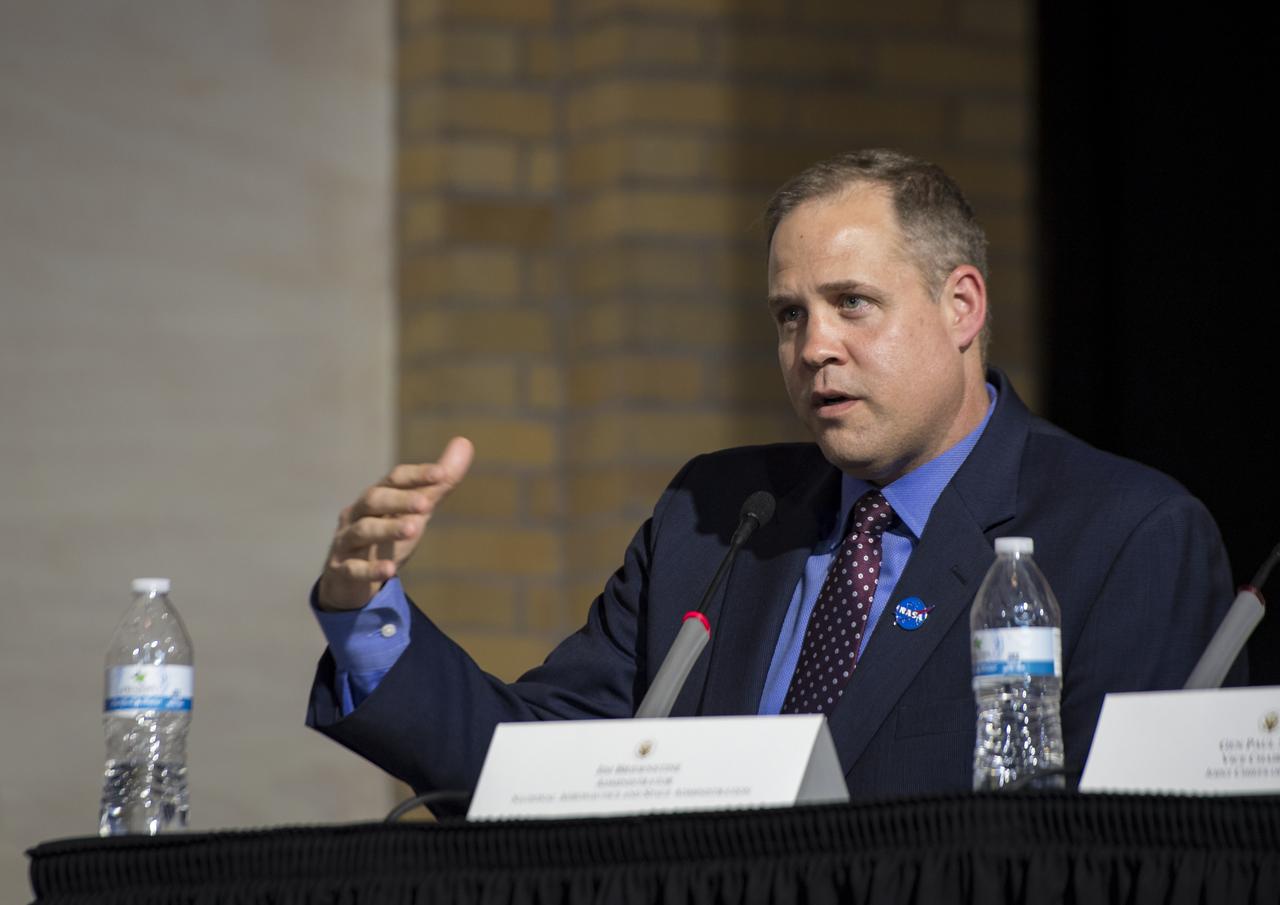
NASA Administrator Jim Bridenstine asks panelists a question during the National Space Council meeting titled, Moon, Mars, and Worlds Beyond, Winning the Next Frontier, Tuesday, Oct. 23, 2018 at the National War College at Fort Lesley J. McNair in Washington. Chaired by the Vice President, the council's role is to advise the President regarding national space policy and strategy, and review the nation's long-range goals for space activities.Photo Credit: (NASA/Aubrey Gemignani)
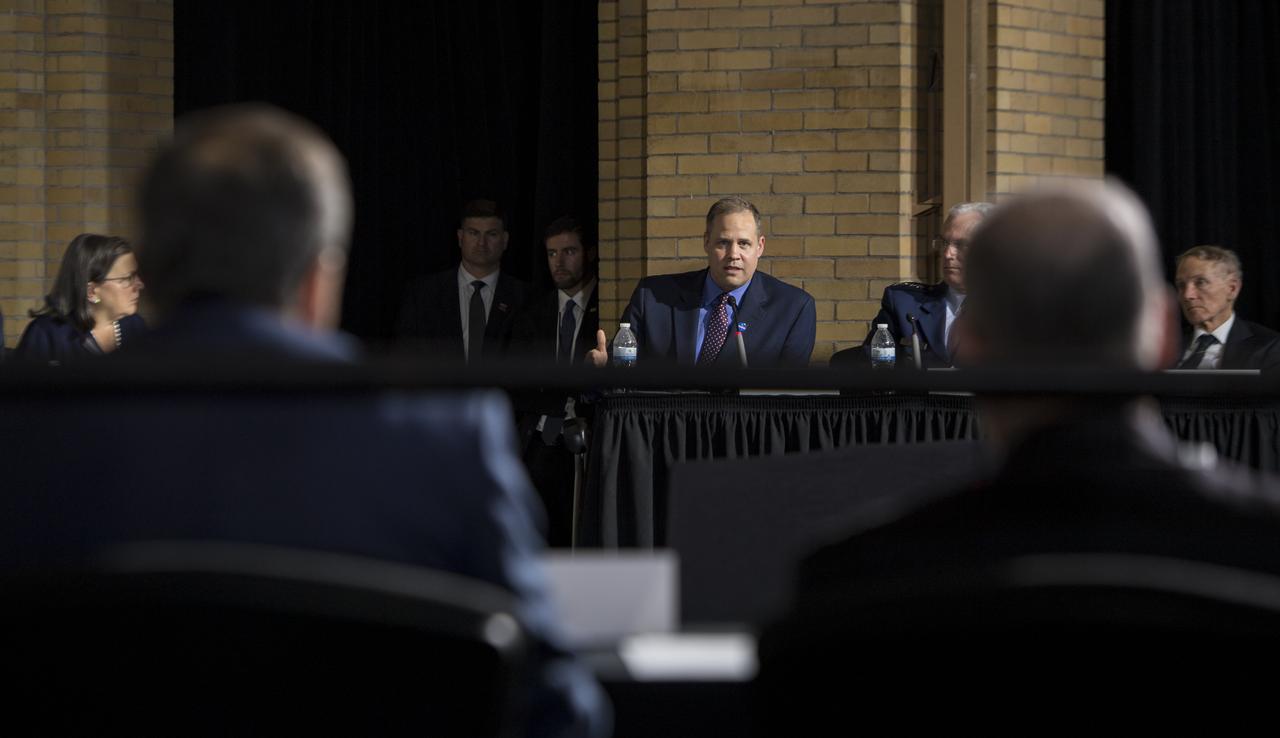
NASA Administrator Jim Bridenstine asks panelists a question during the National Space Council meeting titled, Moon, Mars, and Worlds Beyond, Winning the Next Frontier, Tuesday, Oct. 23, 2018 at the National War College at Fort Lesley J. McNair in Washington. Chaired by the Vice President, the council's role is to advise the President regarding national space policy and strategy, and review the nation's long-range goals for space activities.Photo Credit: (NASA/Aubrey Gemignani)
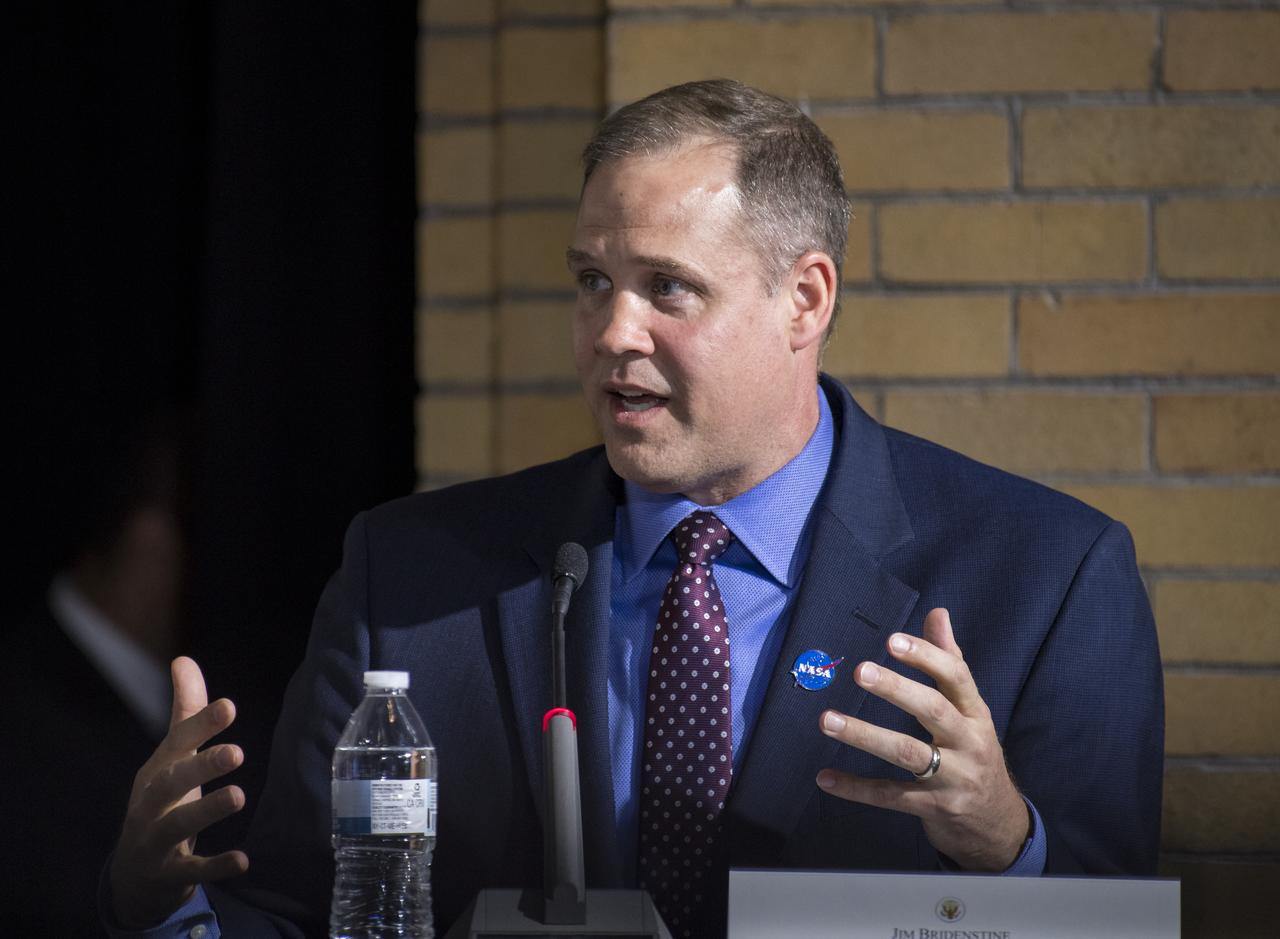
NASA Administrator Jim Bridenstine speaks during the National Space Council meeting titled, Moon, Mars, and Worlds Beyond, Winning the Next Frontier, Tuesday, Oct. 23, 2018 at the National War College at Fort Lesley J. McNair in Washington. Chaired by the Vice President, the council's role is to advise the President regarding national space policy and strategy, and review the nation's long-range goals for space activities.Photo Credit: (NASA/Aubrey Gemignani)
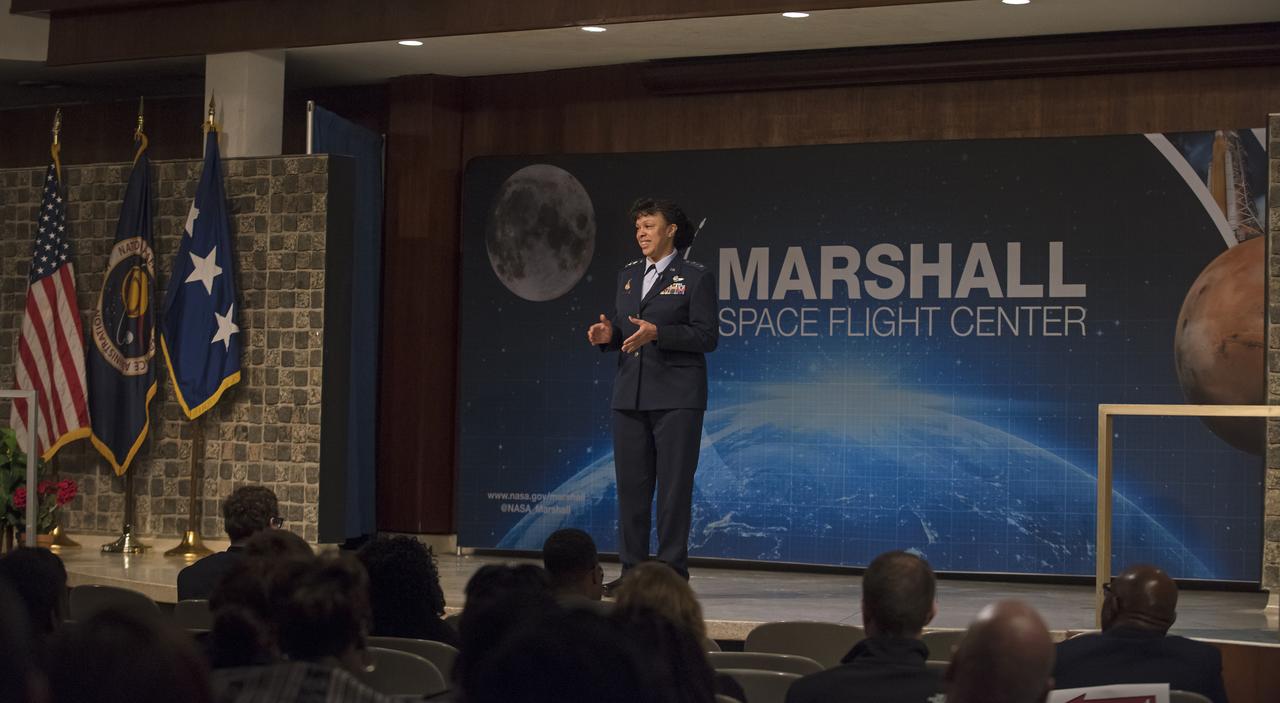
The Black History Month program was presented at Marshall Space Flight Center with guest speaker Lt. General Stayce Harris. General Harris is the Inspector General of the Air Force and she is the first African American female Lieutenant General in the American military. The topic of her presentation was "African Americans in Times of War". The presentation was followed by an ethnic food sampling.
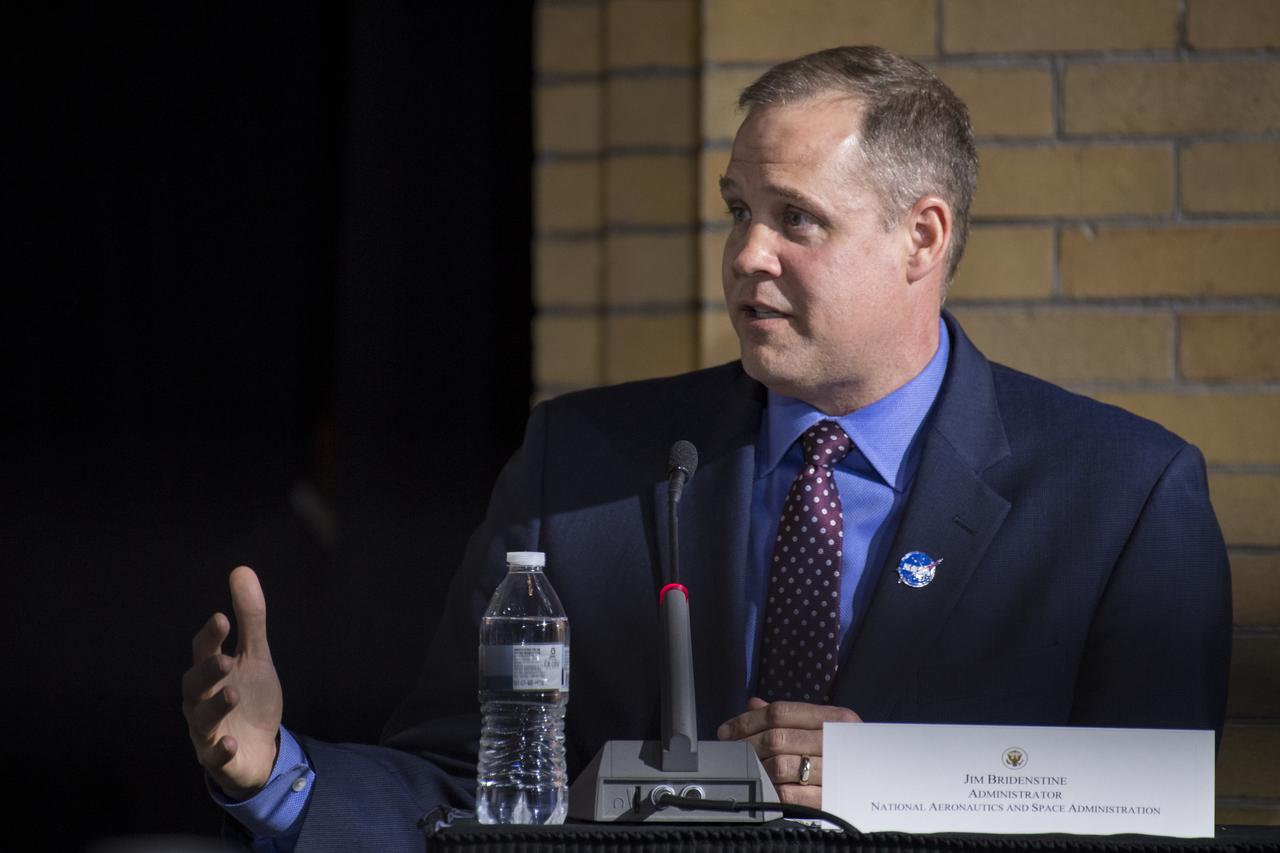
NASA Administrator Jim Bridenstine speaks during the National Space Council meeting titled, Moon, Mars, and Worlds Beyond, Winning the Next Frontier, Tuesday, Oct. 23, 2018 at the National War College at Fort Lesley J. McNair in Washington. Chaired by the Vice President, the council's role is to advise the President regarding national space policy and strategy, and review the nation's long-range goals for space activities.Photo Credit: (NASA/Aubrey Gemignani)
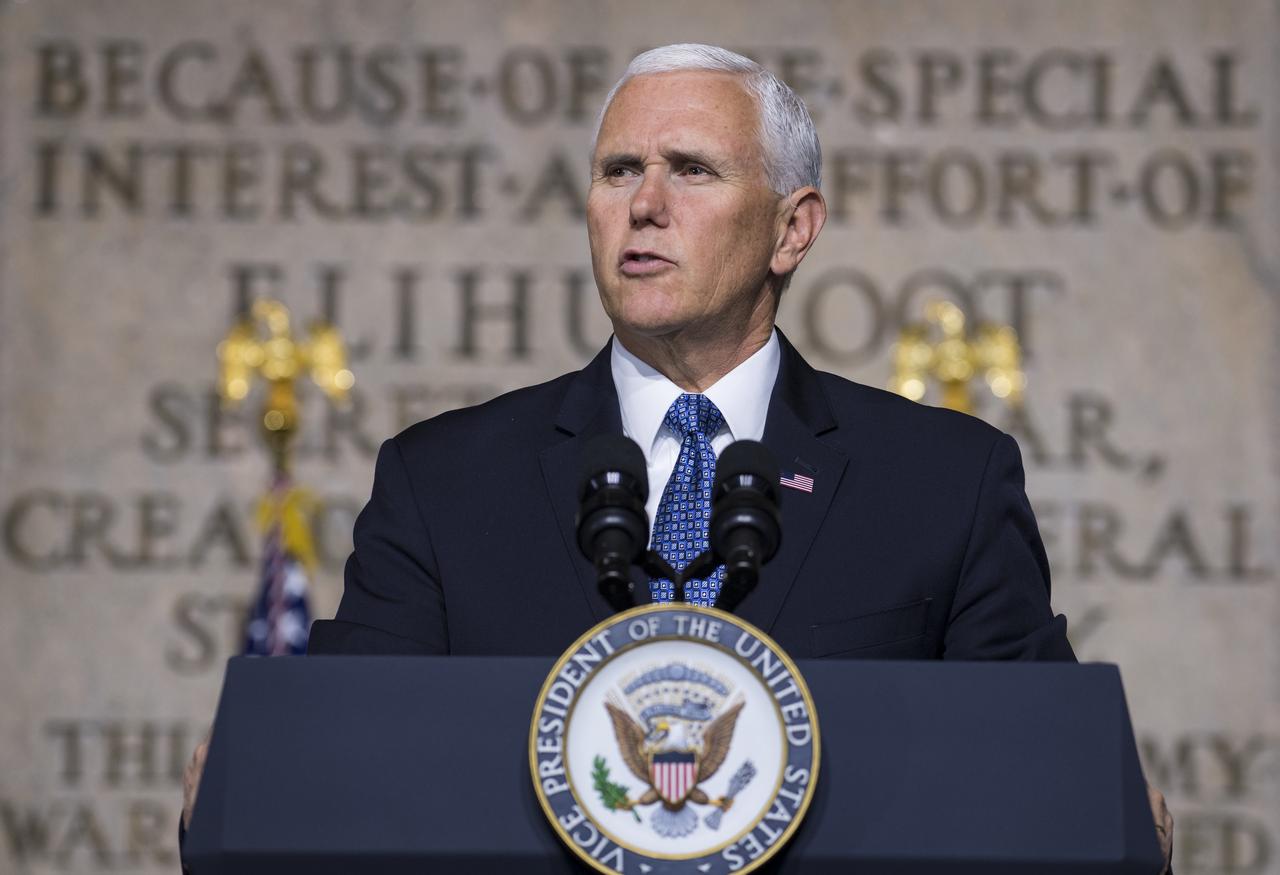
Vice President Mike Pence delivers opening remarks during the National Space Council meeting titled, Moon, Mars, and Worlds Beyond, Winning the Next Frontier, Tuesday, Oct. 23, 2018 at the National War College at Fort Lesley J. McNair in Washington. Chaired by the Vice President, the council's role is to advise the President regarding national space policy and strategy, and review the nation's long-range goals for space activities.Photo Credit: (NASA/Aubrey Gemignani)
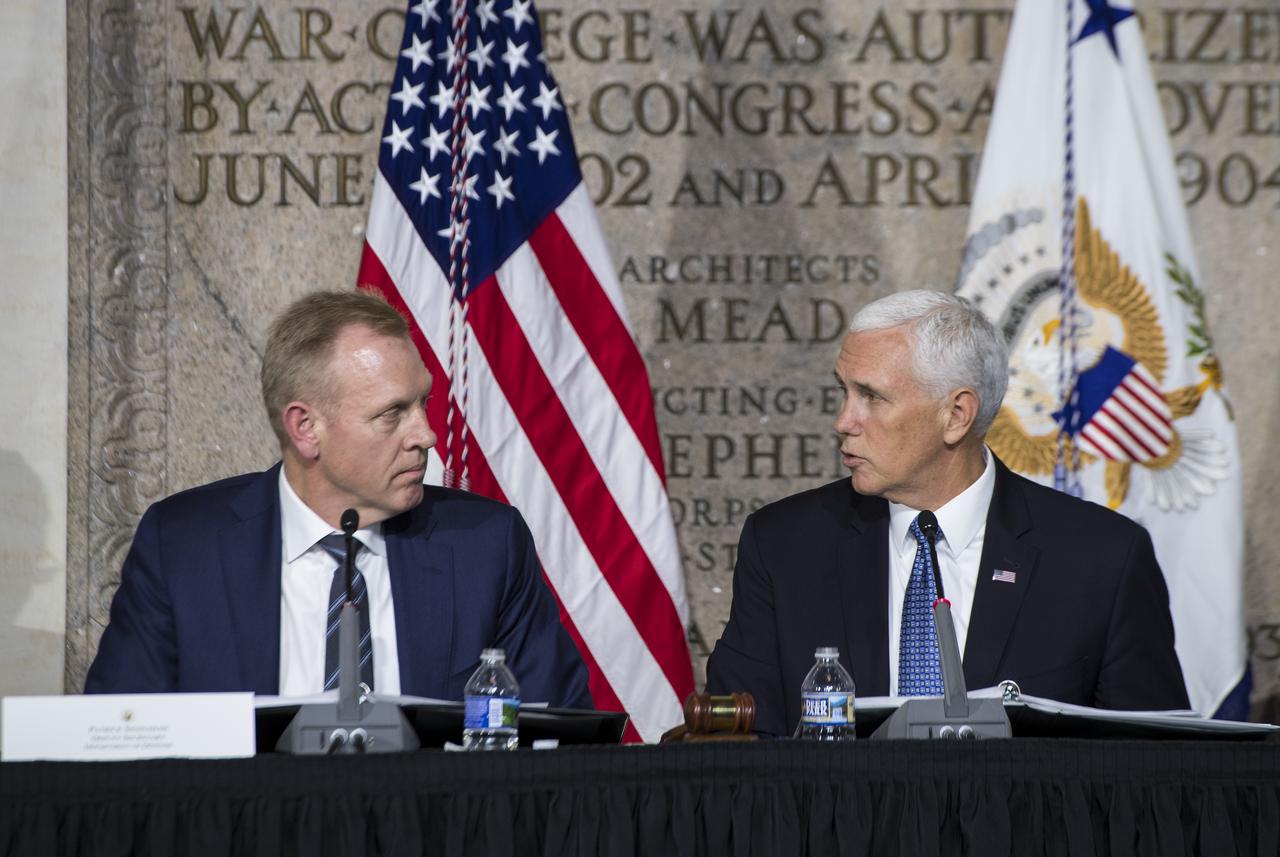
Vice President Mike Pence, right, speaks to Patrick Shanahan, deputy secretary, Department of Defense, during the National Space Council meeting titled, Moon, Mars, and Worlds Beyond, Winning the Next Frontier, Tuesday, Oct. 23, 2018 at the National War College at Fort Lesley J. McNair in Washington. Chaired by the Vice President, the council's role is to advise the President regarding national space policy and strategy, and review the nation's long-range goals for space activities.Photo Credit: (NASA/Aubrey Gemignani)
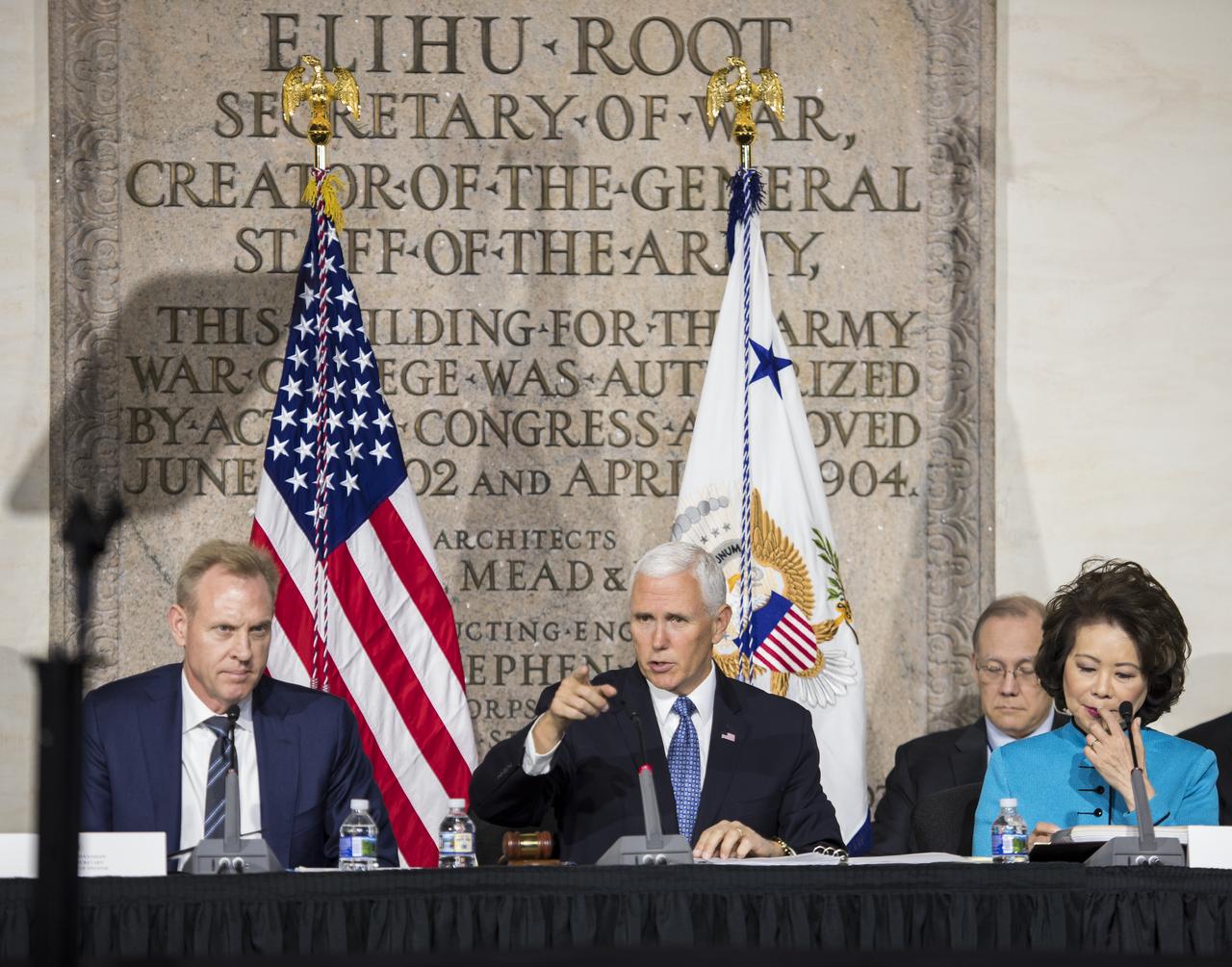
Vice President Mike Pence, center, speaks during the National Space Council meeting titled, Moon, Mars, and Worlds Beyond, Winning the Next Frontier, Tuesday, Oct. 23, 2018 at the National War College at Fort Lesley J. McNair in Washington. Chaired by the Vice President, the council's role is to advise the President regarding national space policy and strategy, and review the nation's long-range goals for space activities.Photo Credit: (NASA/Aubrey Gemignani)
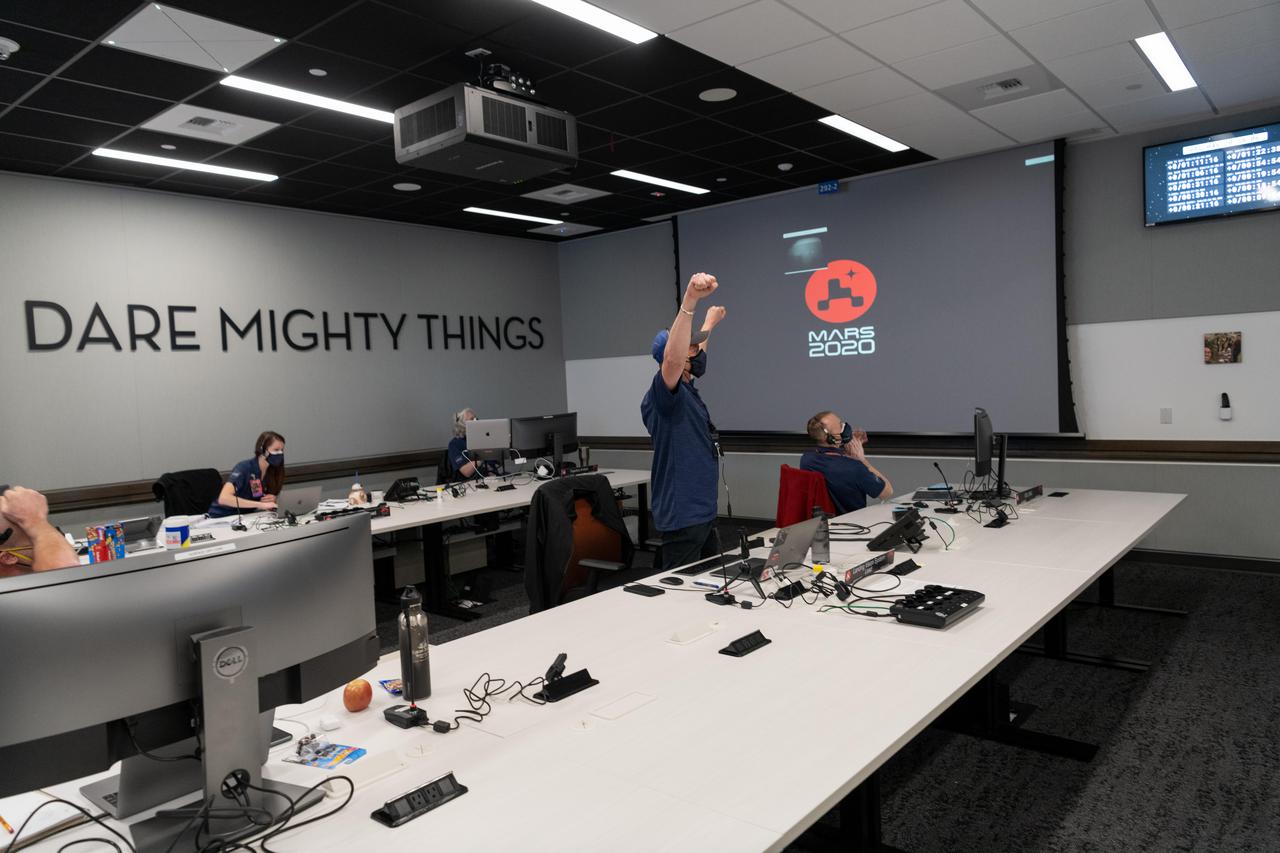
Members of NASA's Mars 2020 Perseverance rover mission celebrate on Feb. 18, 2021, after learning the spacecraft has touched down on Mars. They are in the Entry, Descent and Landing War Room at NASA's Jet Propulsion Laboratory in Southern California. A key objective for Perseverance's mission on Mars is astrobiology, including the search for signs of ancient microbial life. The rover will characterize the planet's geology and past climate, pave the way for human exploration of the Red Planet, and be the first mission to collect and cache Martian rock and regolith. Subsequent missions, currently under consideration by NASA in cooperation with ESA (European Space Agency), would send spacecraft to Mars to collect these cached samples from the surface and return them to Earth for in-depth analysis. https://photojournal.jpl.nasa.gov/catalog/PIA24267

In this view captured by NASA Cassini spacecraft on its closest-ever flyby of Saturn moon Mimas, large Herschel Crater dominates Mimas, making the moon look like the Death Star in the movie Star Wars.
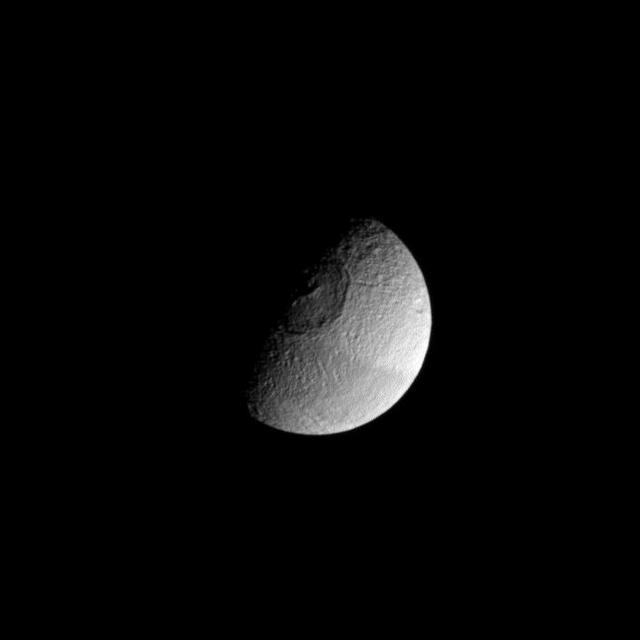
Although Mimas holds the unofficial designation of Death Star moon, Tethys is seen here also vaguely resembling the space station from Star Wars. Apparently, Tethys doesnt want Mimas to have all the fun!
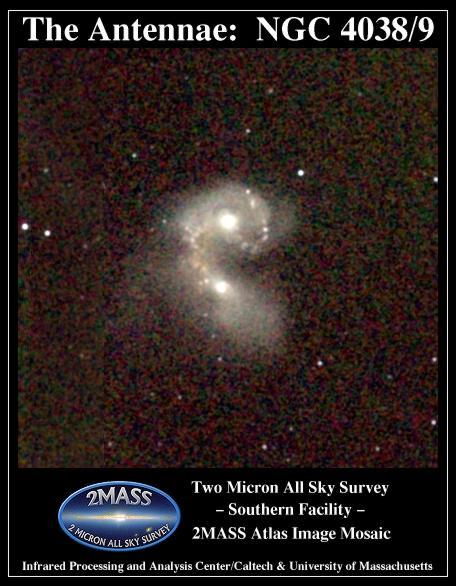
Atlas Image mosaic, covering 7 x 7 on the sky of the interacting galaxies NGC 4038 and NGC 4039, better known as the Antennae, or Ring Tail galaxies. The two galaxies are engaged in a tug-of-war as they collide.
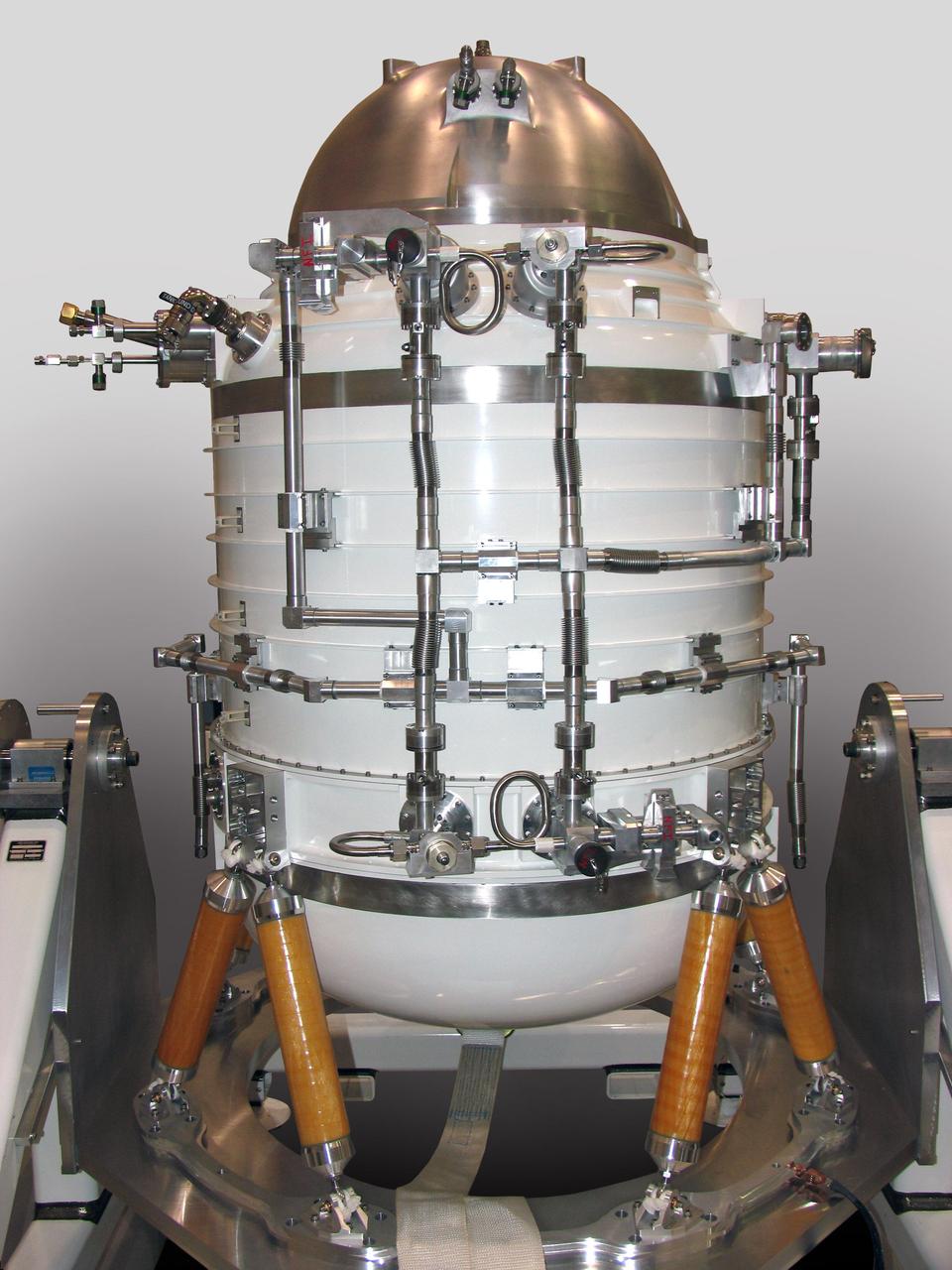
Some say the science instrument on NASA Wide-field Infrared Survey Explorer mission resembles the Star Wars robot R2-D2. The instrument is enclosed in a solid-hydrogen cryostat, which cools the WISE telescope and detectors.
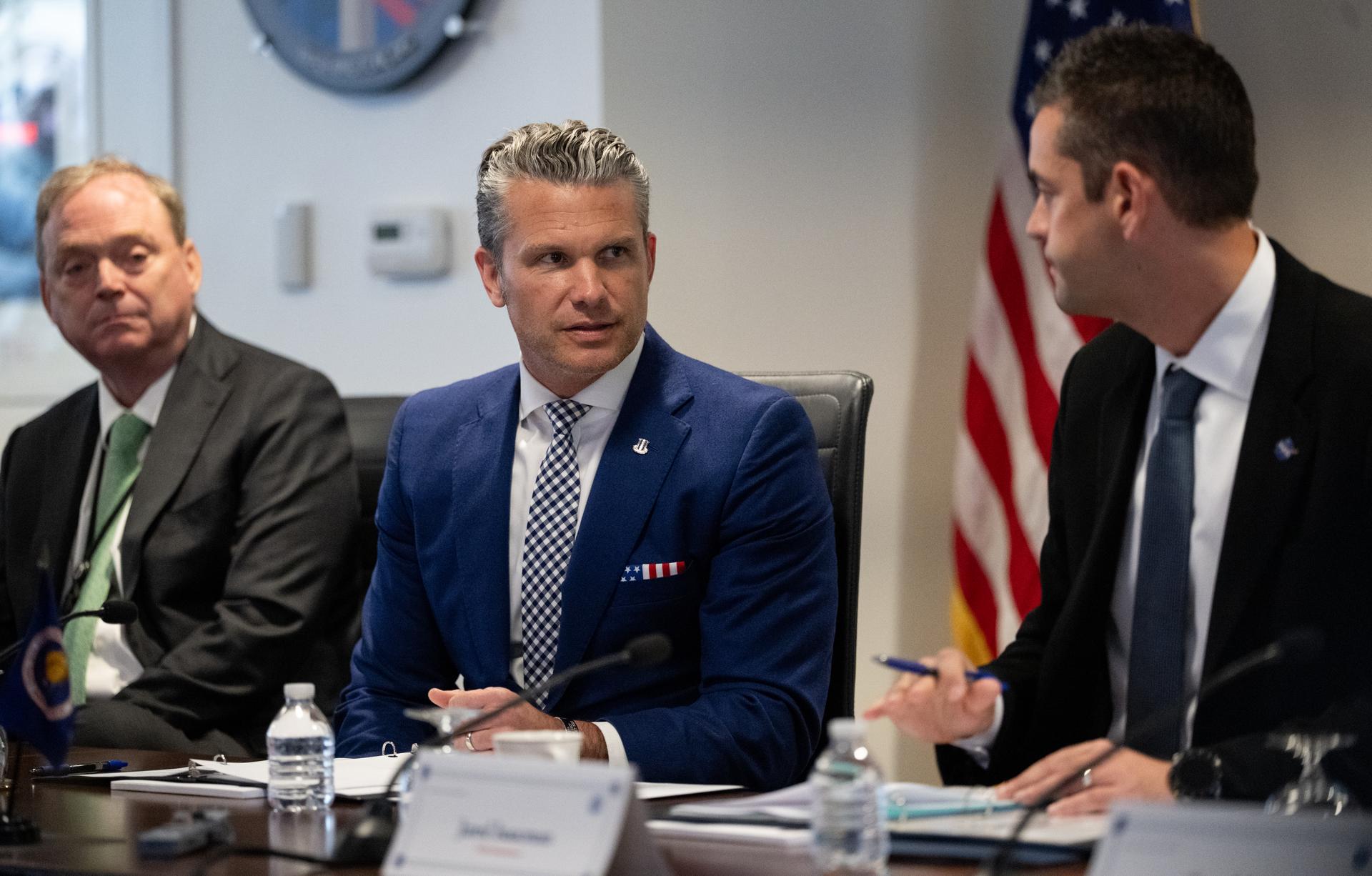
Secretary of War Pete Hegseth is seen during a meeting of the Presidential Commission on the United States Space Academy in the Space Operations Center, Wednesday, Sept. 9, 2026, at the Mary W. Jackson NASA Headquarters Building in Washington. The commission will meet and submit a report proposing recommendations for the establishment of the Space Academy. Photo Credit (NASA/Joel Kowsky)
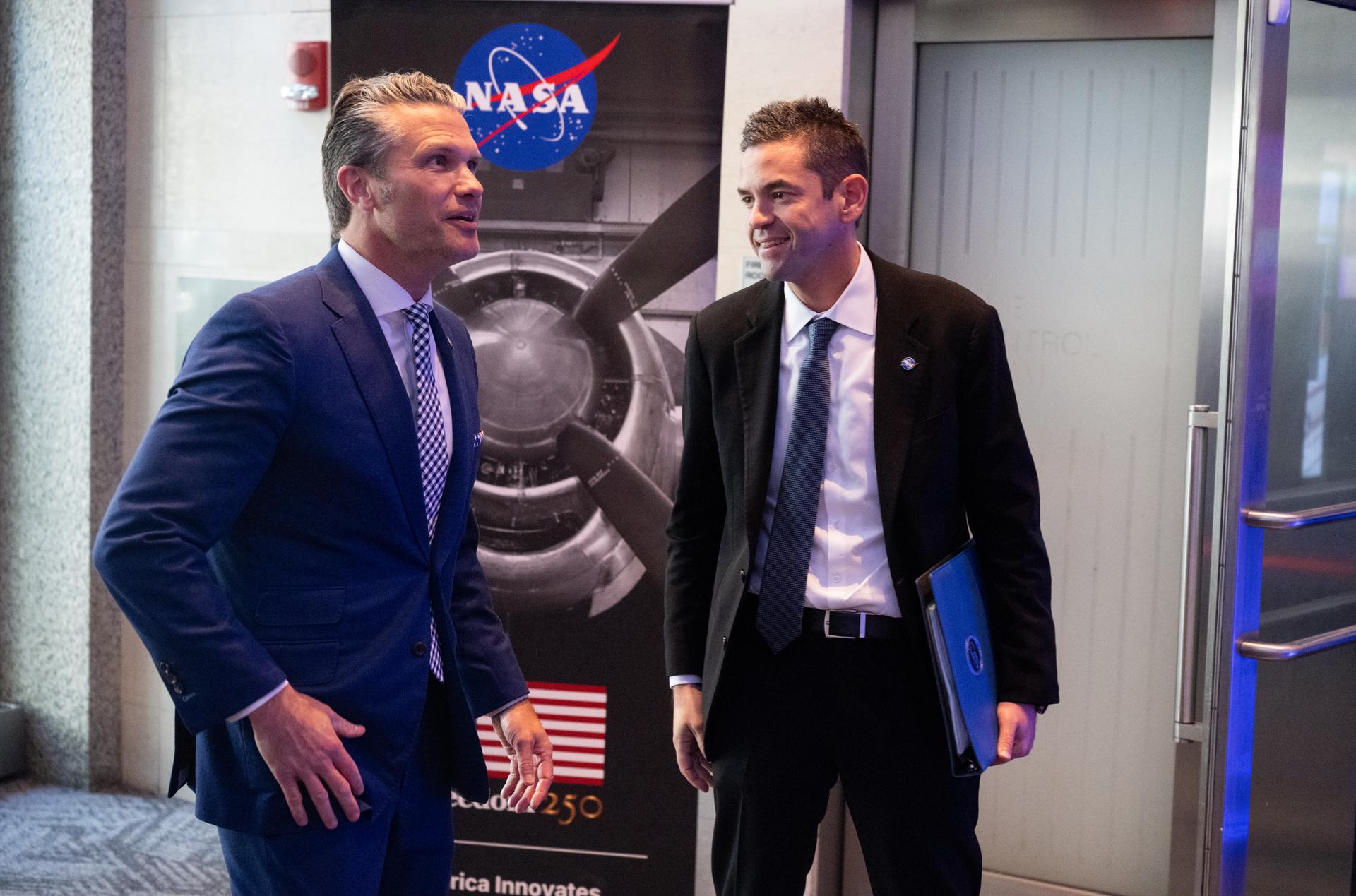
Secretary of War Pete Hegseth, left, is greeted by NASA Administrator Jared Isaacman as he arrives for a meeting of the Presidential Commission on the United States Space Academy at the Mary W. Jackson NASA Headquarters Building, Wednesday, Sept. 9, 2026, in Washington. The commission will meet and submit a report proposing recommendations for the establishment of the Space Academy. Photo Credit (NASA/Joel Kowsky)
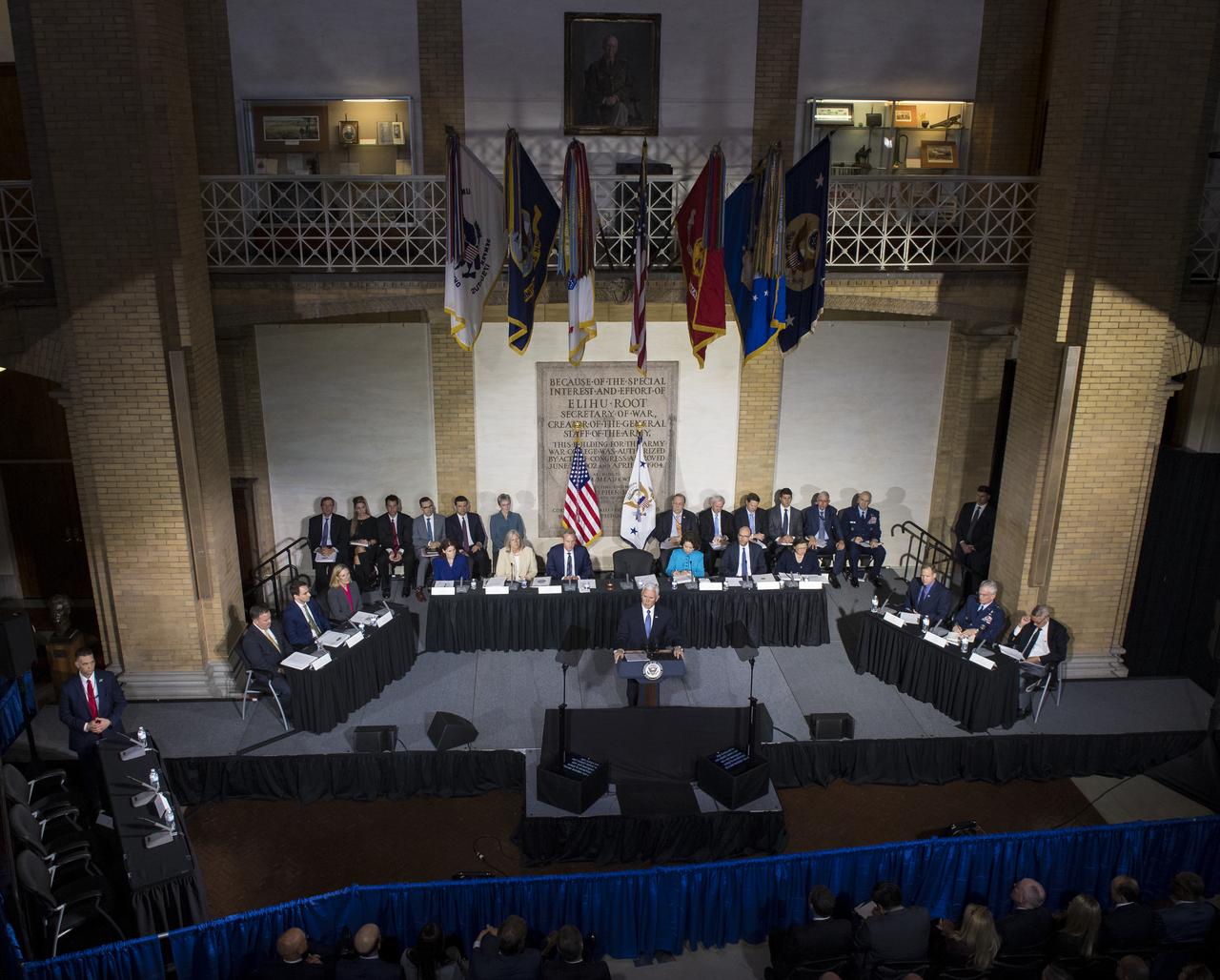
Vice President Mike Pence delivers opening remarks during the National Space Council meeting titled, Moon, Mars, and Worlds Beyond, Winning the Next Frontier, Tuesday, Oct. 23, 2018 at the National War College at Fort Lesley J. McNair in Washington. Chaired by the Vice President, the council's role is to advise the President regarding national space policy and strategy, and review the nation's long-range goals for space activities.Photo Credit: (NASA/Aubrey Gemignani)
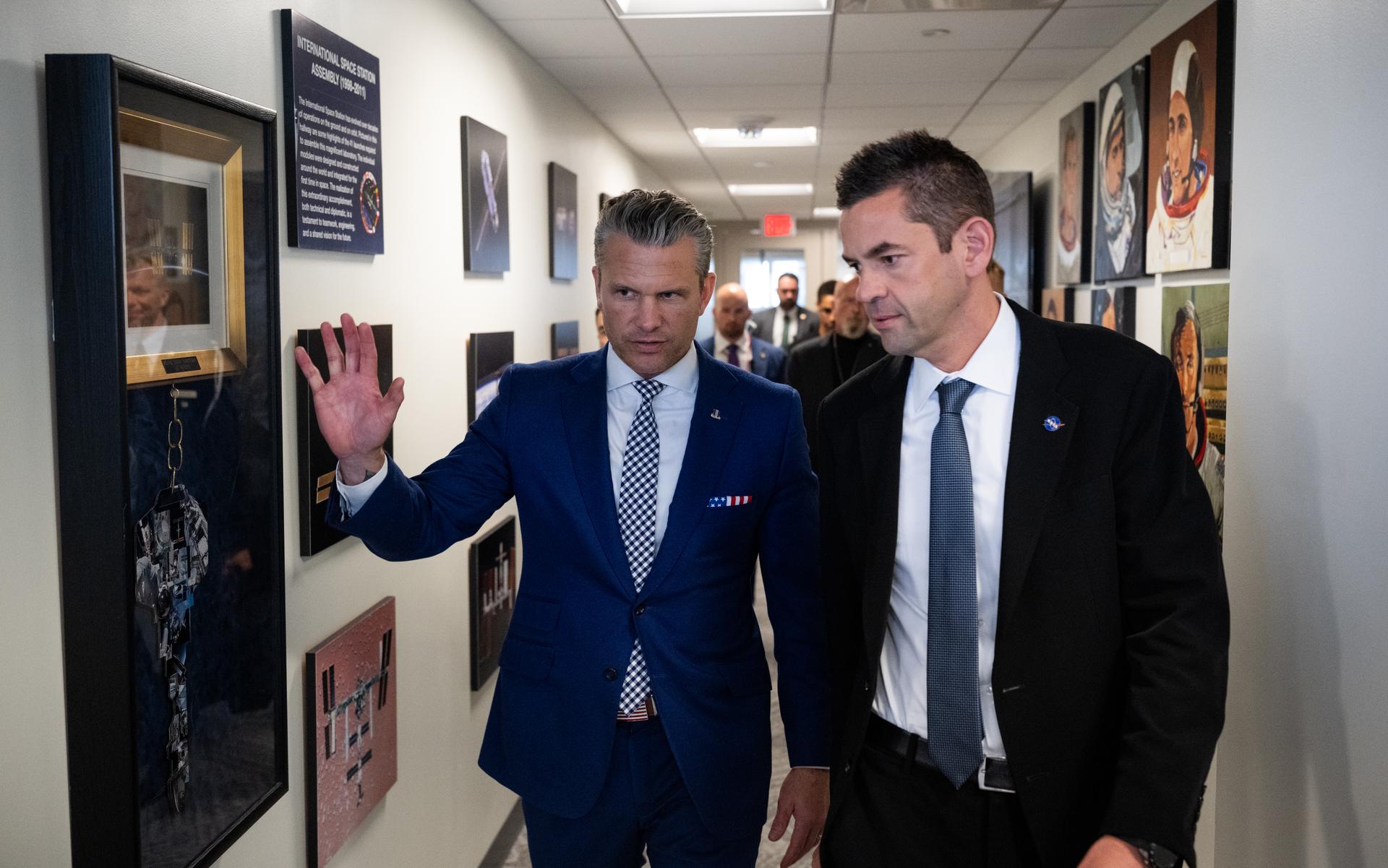
Secretary of War Pete Hegseth, left, and NASA Administrator Jared Isaacman are seen as they arrive at a meeting of the Presidential Commission on the United States Space Academy in the Space Operations Center, Wednesday, Sept. 9, 2026, at the Mary W. Jackson NASA Headquarters Building in Washington. The commission will meet and submit a report proposing recommendations for the establishment of the Space Academy. Photo Credit (NASA/Joel Kowsky)
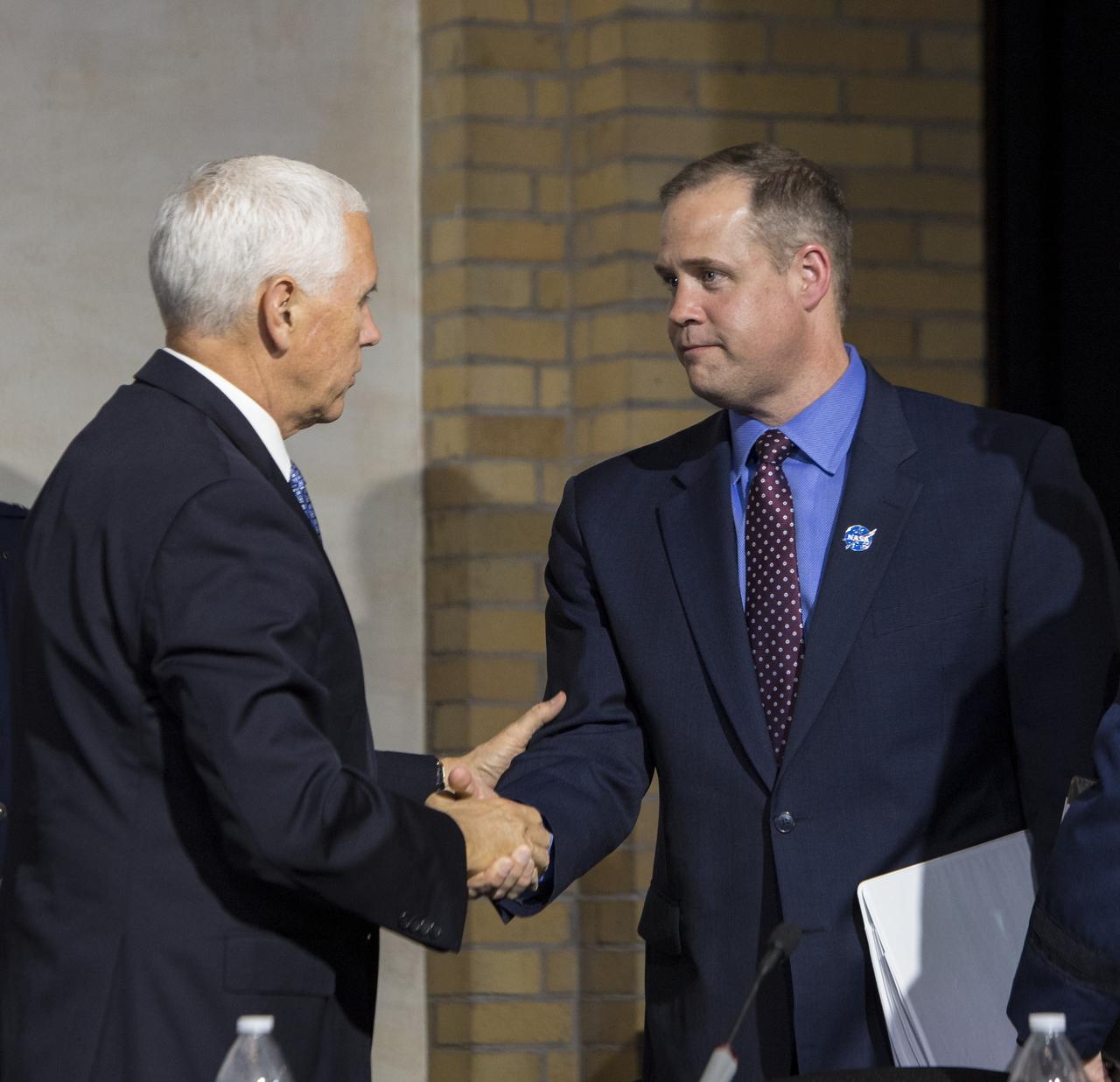
Vice President Mike Pence shakes hands with NASA Administrator Jim Bridenstine, right, at the conclusion of a National Space Council meeting titled, Moon, Mars, and Worlds Beyond, Winning the Next Frontier, at the National War College at Fort Lesley J. McNair, Tuesday, Oct. 23, 2018, in Washington. Chaired by the Vice President, the council's role is to advise the President regarding national space policy and strategy, and review the nation's long-range goals for space activities. Photo Credit: (NASA/Aubrey Gemignani)
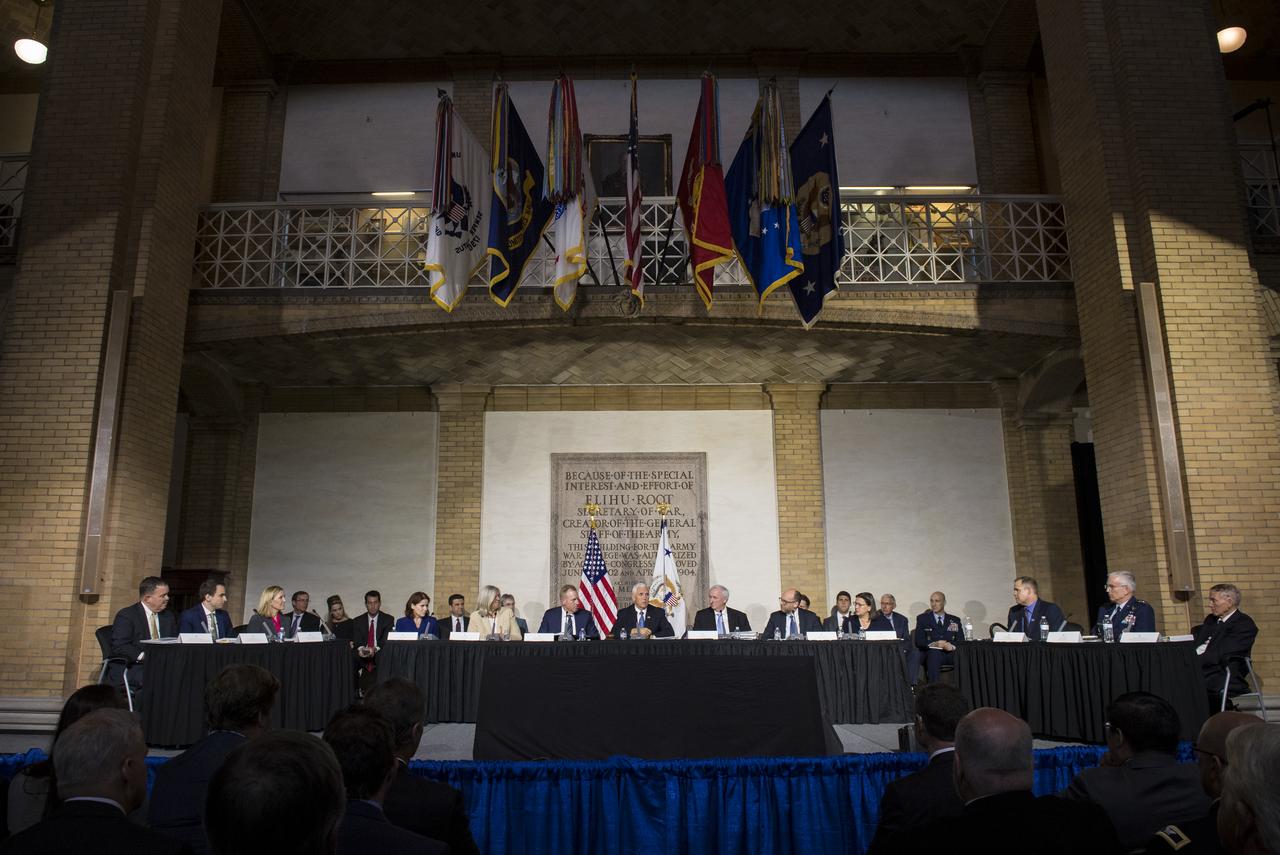
Members of the National Space Council are seen during a meeting titled, Moon, Mars, and Worlds Beyond, Winning the Next Frontier, at the National War College at Fort Lesley J. McNair, Tuesday, Oct. 23, 2018, in Washington. Chaired by the Vice President, the council's role is to advise the President regarding national space policy and strategy, and review the nation's long-range goals for space activities. Photo Credit: (NASA/Aubrey Gemignani)
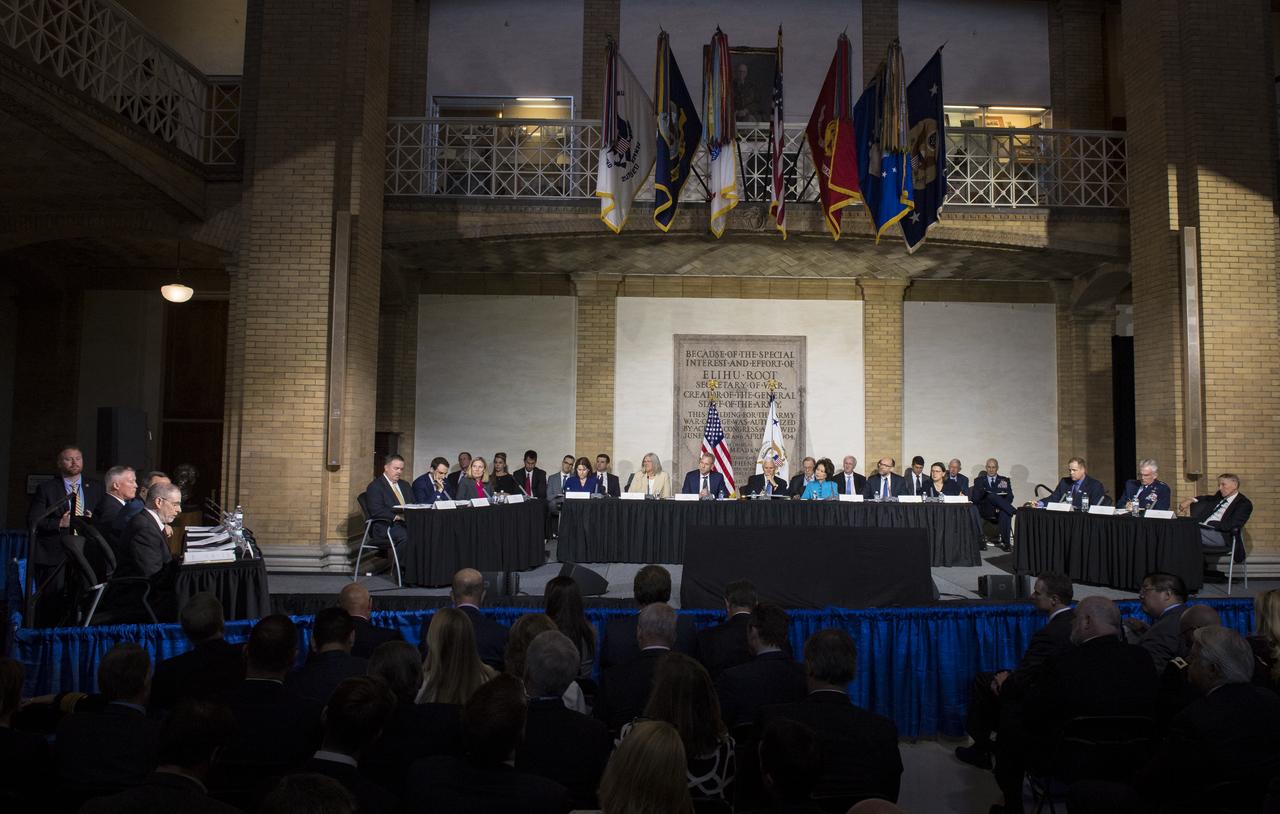
Members of the National Space Council are seen during a meeting titled, Moon, Mars, and Worlds Beyond, Winning the Next Frontier, at the National War College at Fort Lesley J. McNair, Tuesday, Oct. 23, 2018, in Washington. Chaired by the Vice President, the council's role is to advise the President regarding national space policy and strategy, and review the nation's long-range goals for space activities. Photo Credit: (NASA/Aubrey Gemignani)
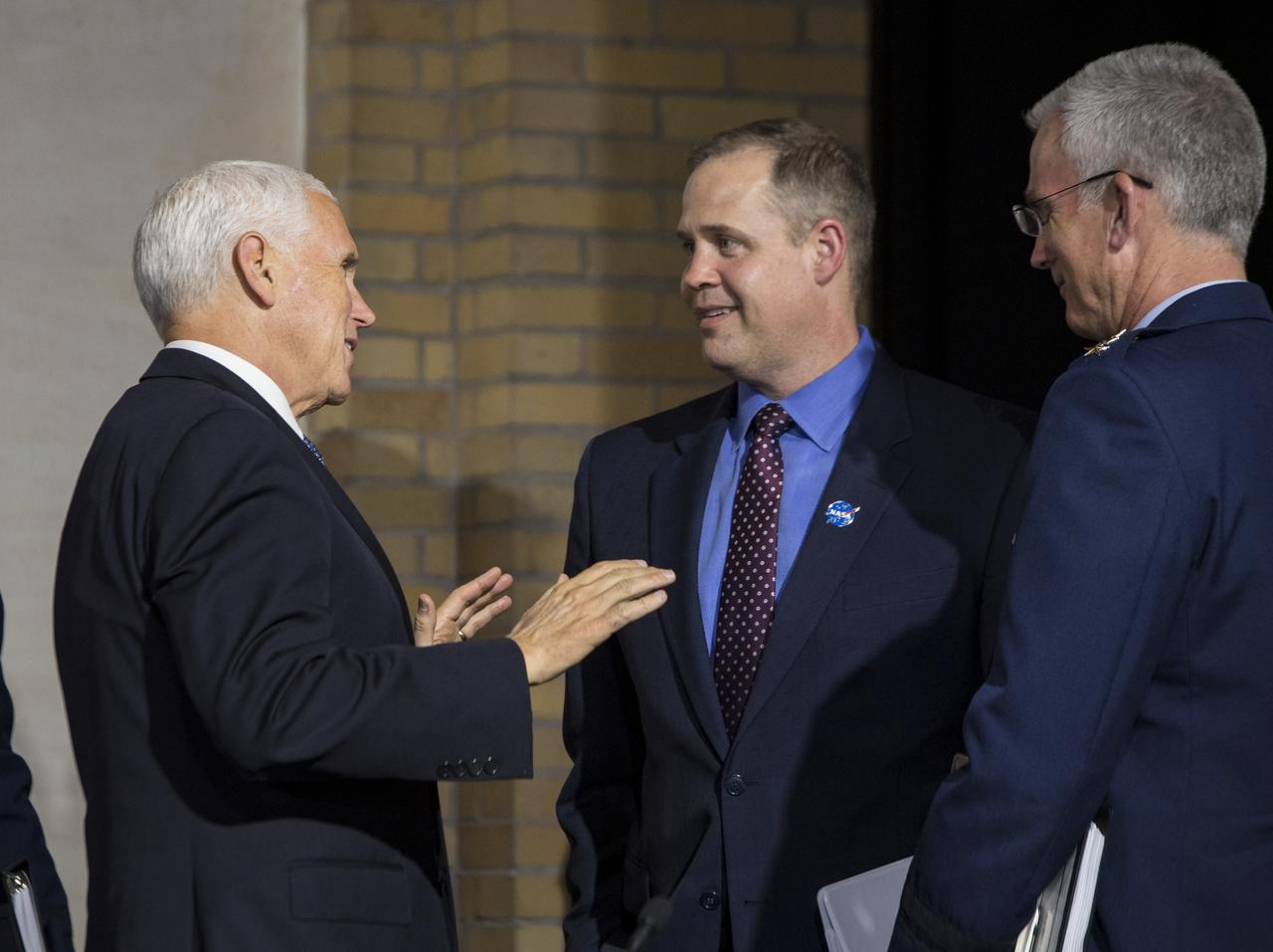
Vice President Mike Pence speaks with NASA Administrator Jim Bridenstine, right, at the conclusion of a National Space Council meeting titled, Moon, Mars, and Worlds Beyond, Winning the Next Frontier, at the National War College at Fort Lesley J. McNair, Tuesday, Oct. 23, 2018, in Washington. Chaired by the Vice President, the council's role is to advise the President regarding national space policy and strategy, and review the nation's long-range goals for space activities. Photo Credit: (NASA/Aubrey Gemignani)
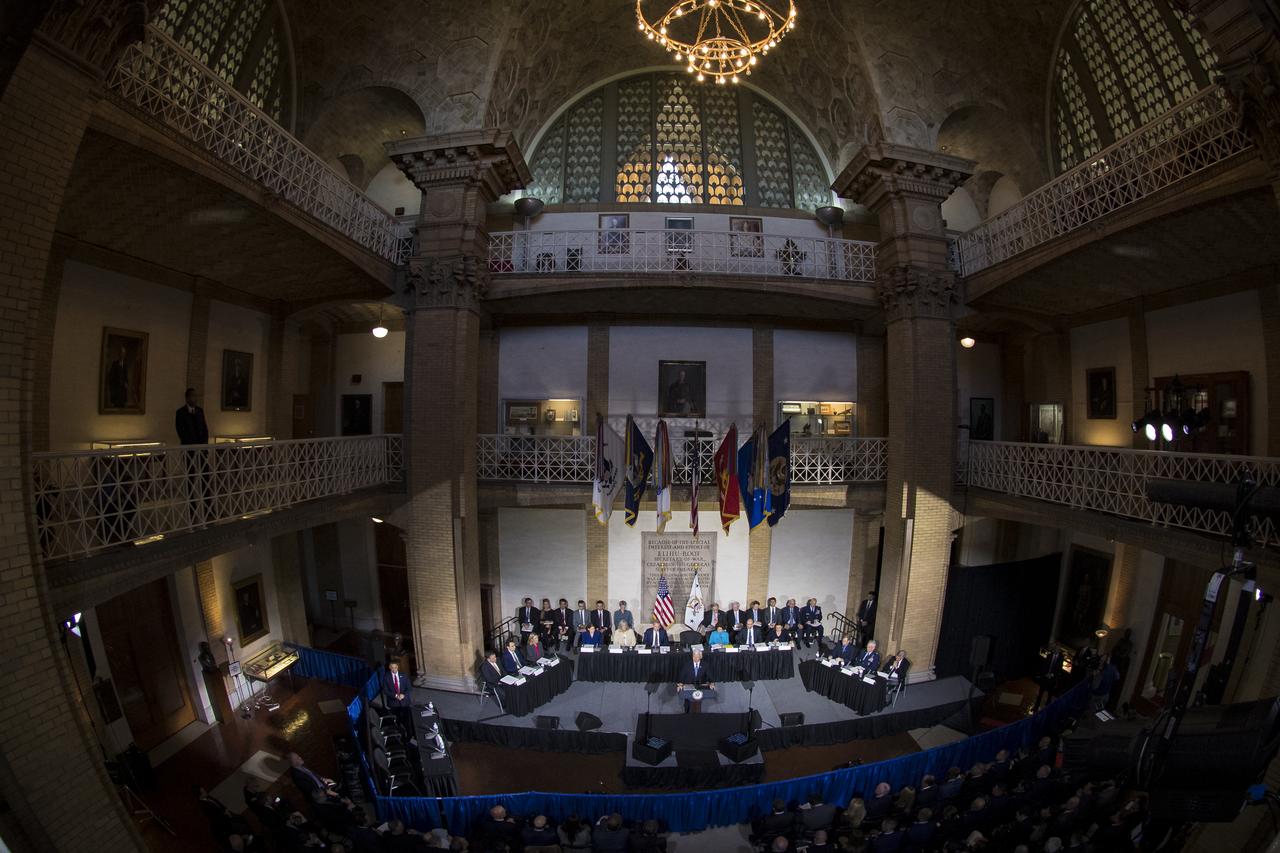
Vice President Mike Pence delivers opening remarks during the National Space Council meeting titled, Moon, Mars, and Worlds Beyond, Winning the Next Frontier, Tuesday, Oct. 23, 2018 at the National War College at Fort Lesley J. McNair in Washington. Chaired by the Vice President, the council's role is to advise the President regarding national space policy and strategy, and review the nation's long-range goals for space activities.Photo Credit: (NASA/Aubrey Gemignani)
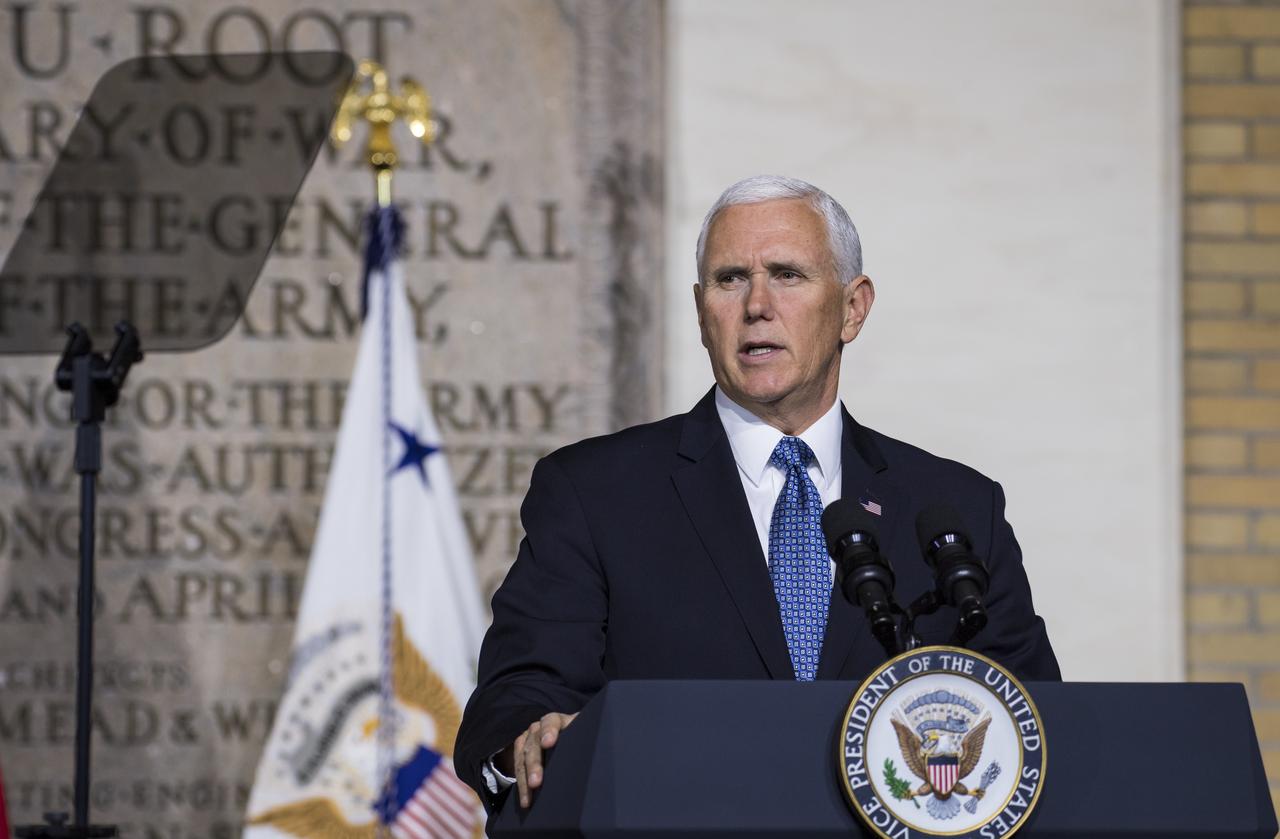
Vice President Mike Pence delivers opening remarks during the National Space Council meeting titled, "Moon, Mars, and Worlds Beyond, Winning the Next Frontier," Tuesday, Oct. 23, 2018 at the National War College at Fort Lesley J. McNair in Washington. Chaired by the Vice President, the council's role is to advise the President regarding national space policy and strategy, and review the nation's long-range goals for space activities.Photo Credit: (NASA/Aubrey Gemignani)
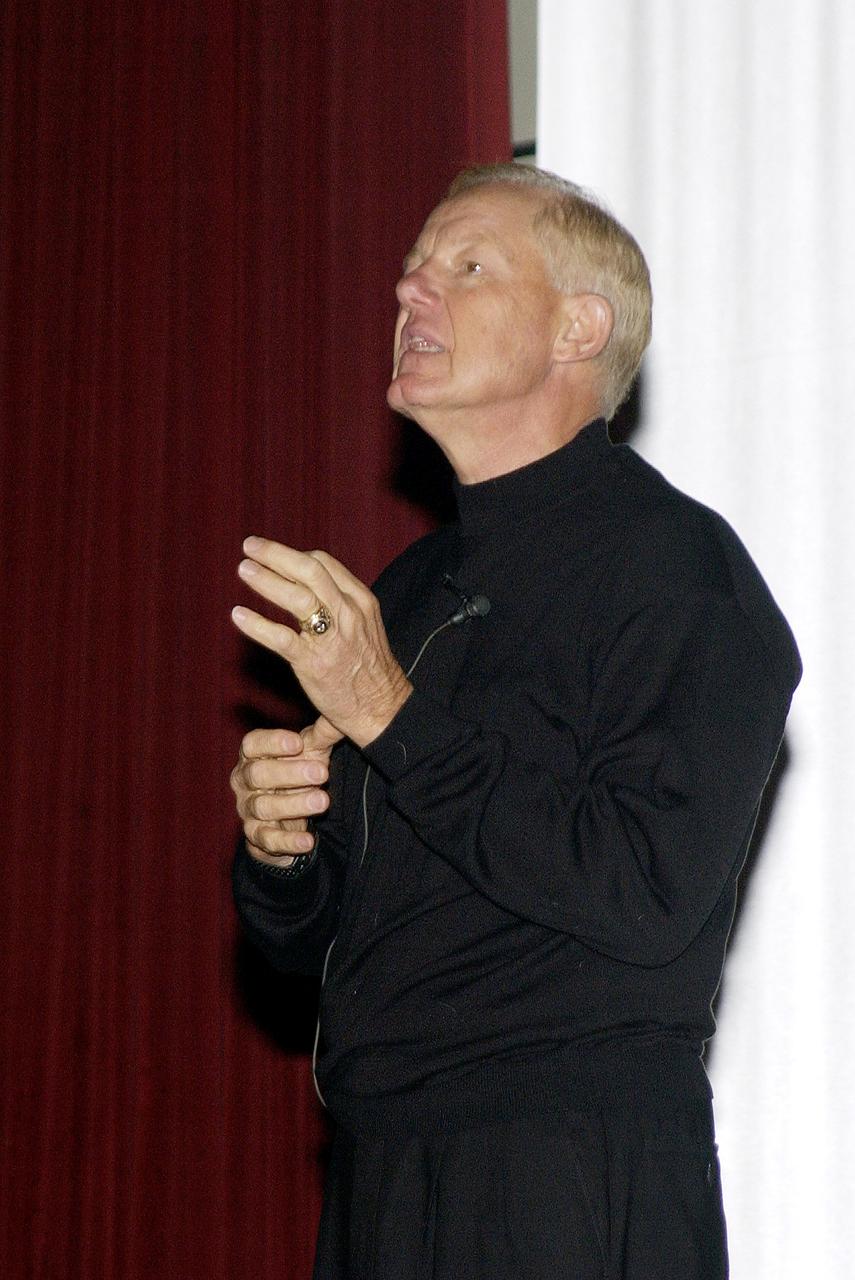
KENNEDY SPACE CENTER, FLA. - Capt. Charles Plumb (USNR retired) dramatically describes some of his six years as a prisoner of war in Vietnam. Plumb was keynote speaker for the kickoff of Spaceport Super Safety and Health Day at KSC, an annual event dedicated to reinforcing safe and healthful behaviors in the workforce.
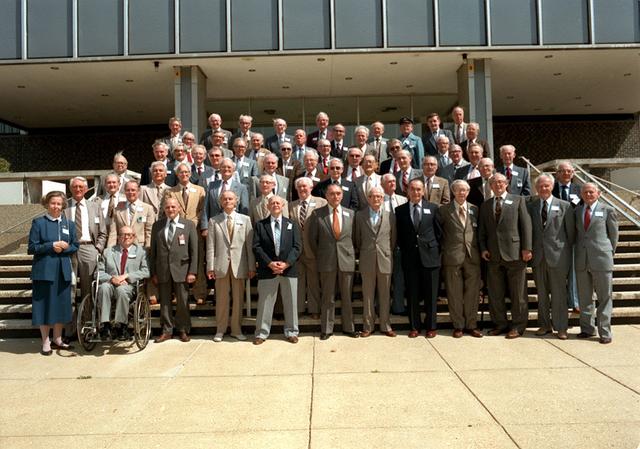
The Peenemunde Rocket Team reunited on the steps of Marshall Space Flight Center's (MSFC) Headquarter Building 4200 for a reunion. The Peenemunde Rocket team were first assembled in Germany prior to World War II. They came to the United States at the end of the War and became the nucleus of the United States Army's rocket program.
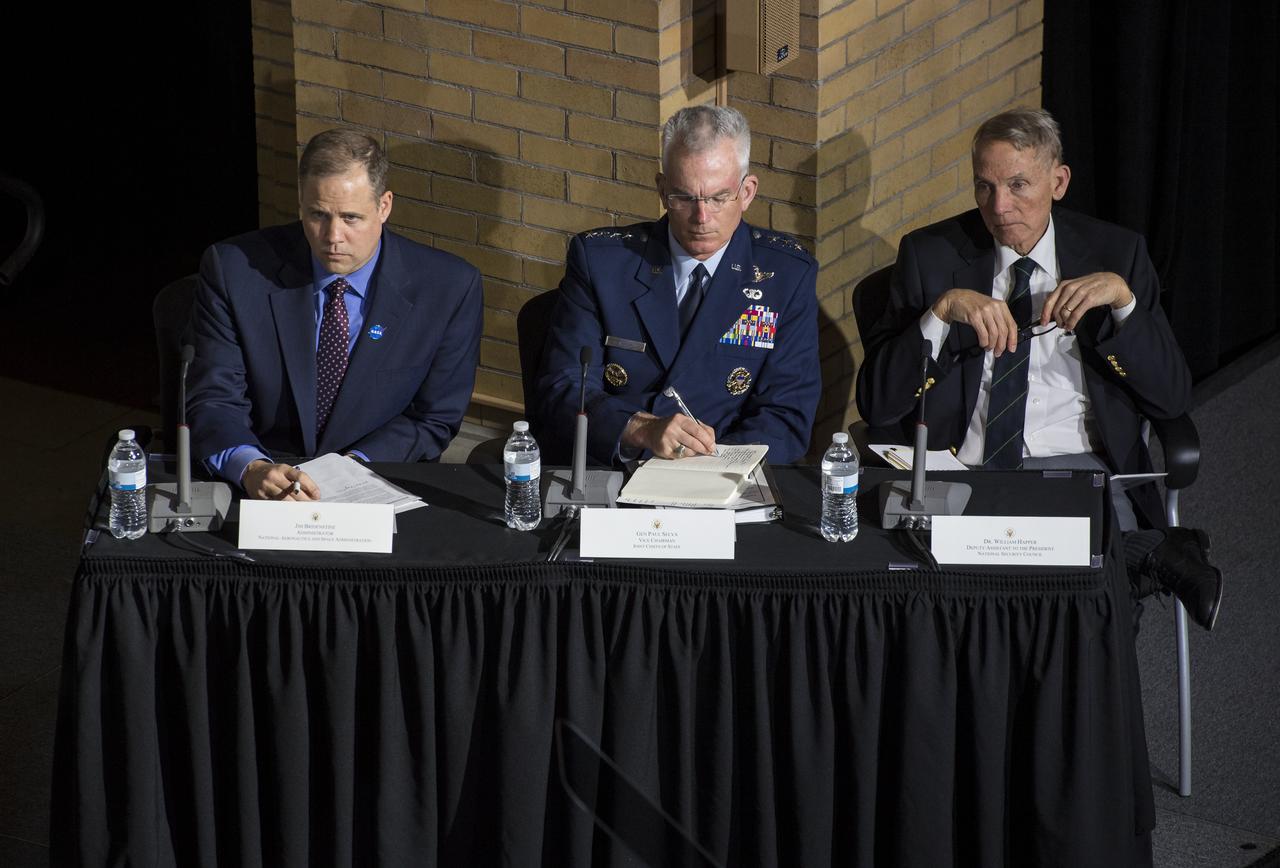
NASA Administrator Jim Bridenstine, left, General Paul Selva, vice chairman, Joint Chiefs of Staff, center, and Dr. William Happer, deputy assistant to the president, National Security Council, listen as Vice President Mike Pence delivers opening remarks during the National Space Council meeting titled, Moon, Mars, and Worlds Beyond, Winning the Next Frontier, Tuesday, Oct. 23, 2018 at the National War College at Fort Lesley J. McNair in Washington. Chaired by the Vice President, the council's role is to advise the President regarding national space policy and strategy, and review the nation's long-range goals for space activities.Photo Credit: (NASA/Aubrey Gemignani)
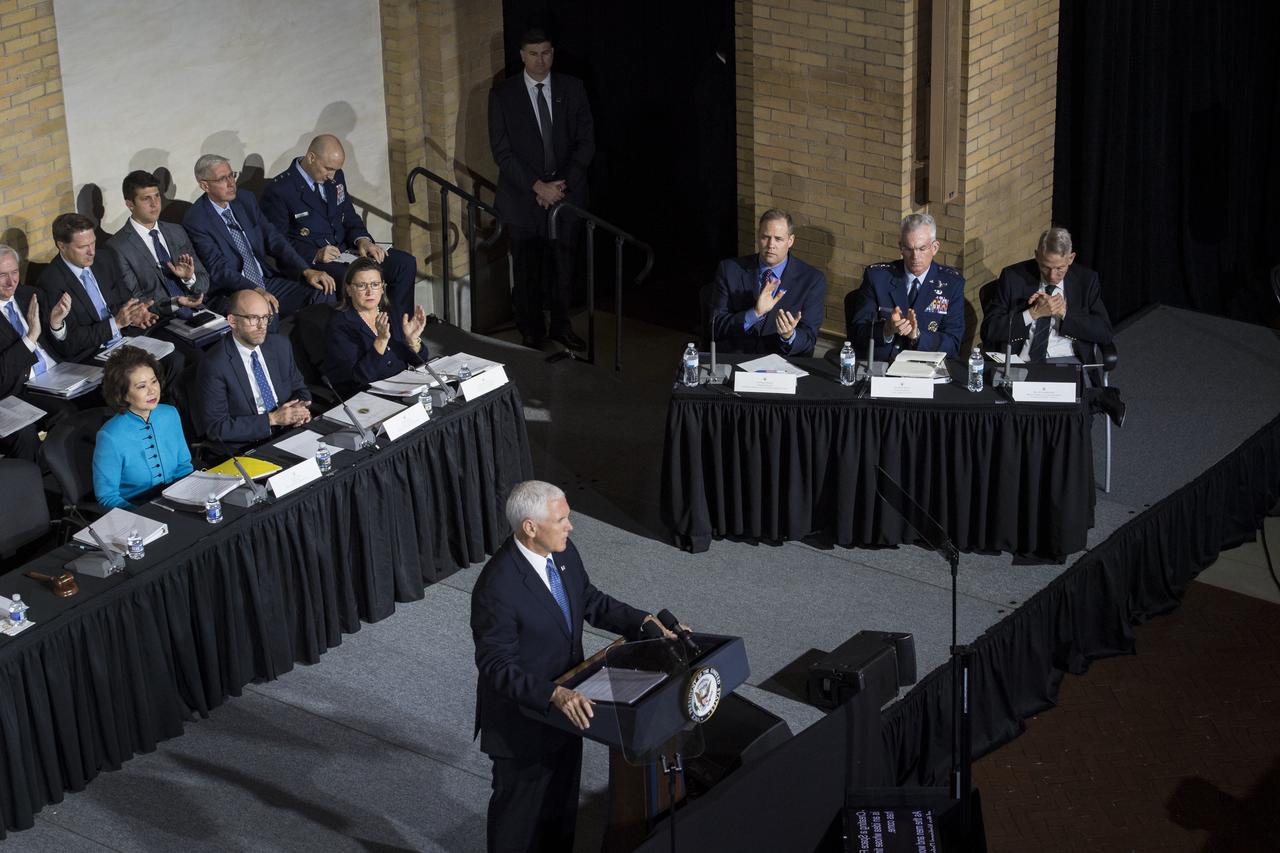
NASA Administrator Jim Bridenstine, third from right, applauds as Vice President Mike Pence delivers opening remarks during the National Space Council meeting titled, Moon, Mars, and Worlds Beyond, Winning the Next Frontier, Tuesday, Oct. 23, 2018 at the National War College at Fort Lesley J. McNair in Washington. Chaired by the Vice President, the council's role is to advise the President regarding national space policy and strategy, and review the nation's long-range goals for space activities.Photo Credit: (NASA/Aubrey Gemignani)
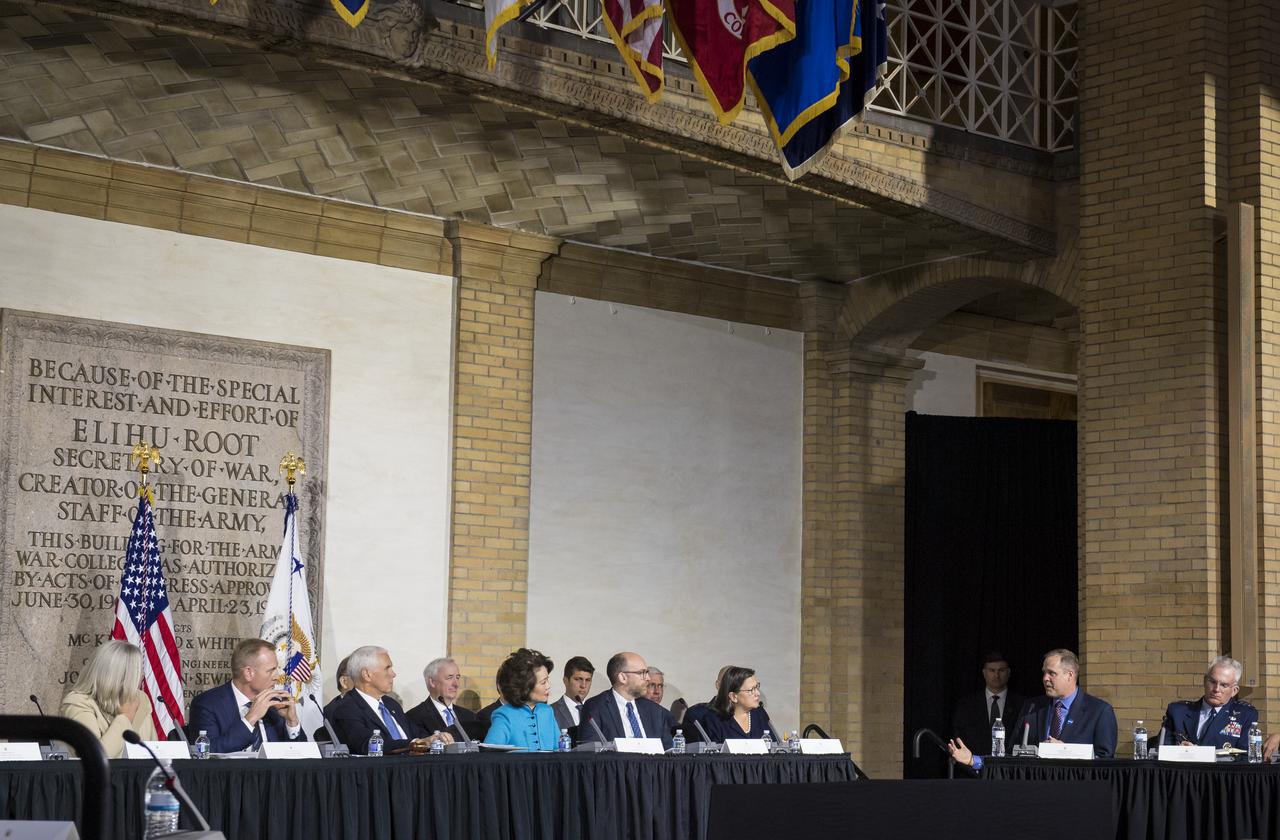
NASA Administrator Jim Bridenstine speaks during the National Space Council meeting titled, Moon, Mars, and Worlds Beyond, Winning the Next Frontier, Tuesday, Oct. 23, 2018 at the National War College at Fort Lesley J. McNair in Washington. Chaired by the Vice President, the council's role is to advise the President regarding national space policy and strategy, and review the nation's long-range goals for space activities.Photo Credit: (NASA/Aubrey Gemignani)

This still image from an animation from NASA GSFC Solar Dynamics Observatory shows dark strands of plasma hovering above the Sun surface beginning to interact with each other in a form of tug of war over two and a half days June 28-30, 2015.
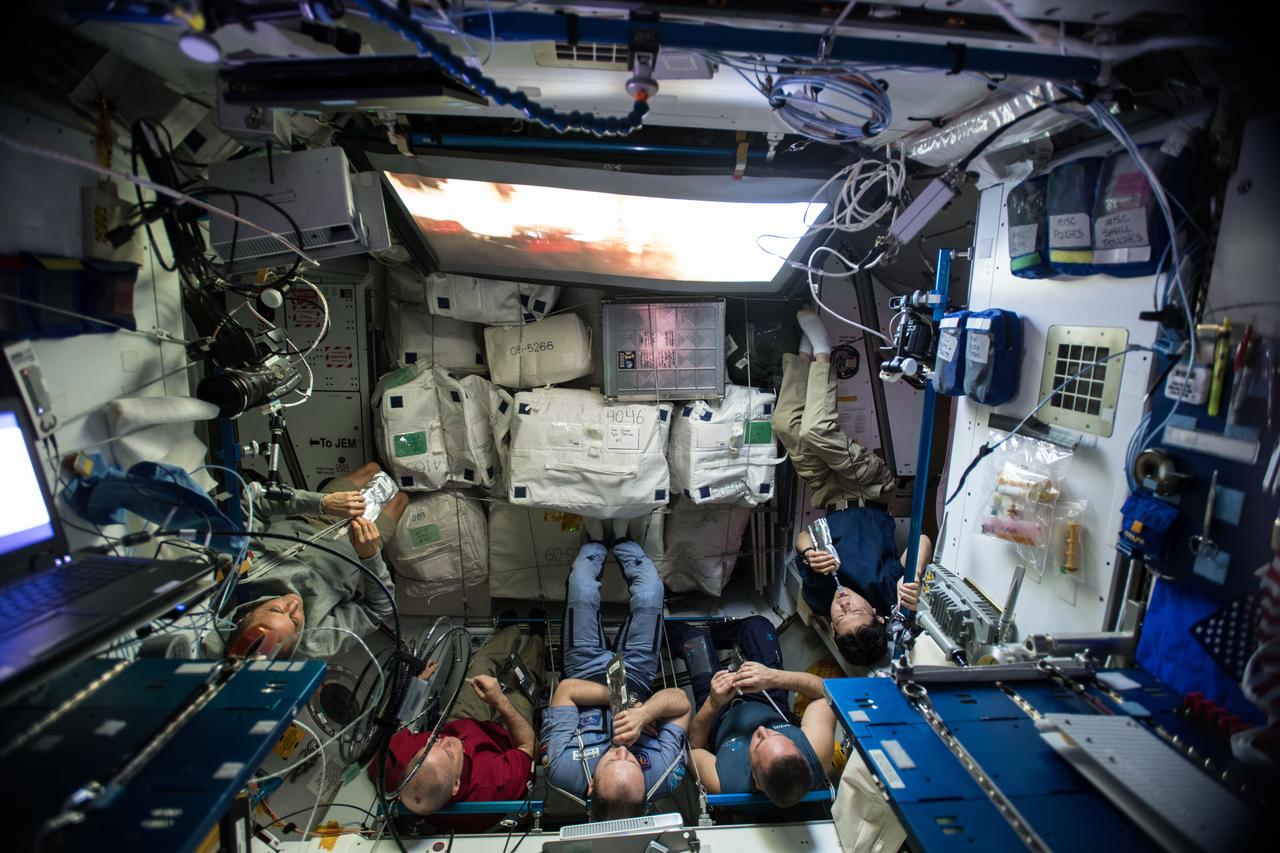
iss054e004175 (Dec. 23, 2017) --- Expedition 54 crew members watch the movie "Star Wars: The Last Jedi" on the big screen in the Harmony module. From left, are Flight Engineers Joe Acaba and Scott Tingle, Commander Alexander Misurkin, and Flight Engineers Anton Shkaplerov and Norishige Kanai.

Just in time for the release of the movie “Star Wars Episode VII: The Force Awakens,” NASA’s Hubble Space Telescope has photographed what looks like a cosmic, double-bladed lightsaber. In the center of the image, partially obscured by a dark, Jedi-like cloak of dust, a newborn star shoots twin jets out into space as a sort of birth announcement to the universe. “Science fiction has been an inspiration to generations of scientists and engineers, and the film series Star Wars is no exception,” said John Grunsfeld, astronaut and associate administrator for the NASA Science Mission directorate. “There is no stronger case for the motivational power of real science than the discoveries that come from the Hubble Space Telescope as it unravels the mysteries of the universe." This celestial lightsaber does not lie in a galaxy far, far away, but rather inside our home galaxy, the Milky Way. It’s inside a turbulent birthing ground for new stars known as the Orion B molecular cloud complex, located 1,350 light-years away. When stars form within giant clouds of cool molecular hydrogen, some of the surrounding material collapses under gravity to form a rotating, flattened disk encircling the newborn star. Though planets will later congeal in the disk, at this early stage the protostar is feeding on the disk with a Jabba-like appetite. Gas from the disk rains down onto the protostar and engorges it. Superheated material spills away and is shot outward from the star in opposite directions along an uncluttered escape route — the star’s rotation axis. Shock fronts develop along the jets and heat the surrounding gas to thousands of degrees Fahrenheit. The jets collide with the surrounding gas and dust and clear vast spaces, like a stream of water plowing into a hill of sand. The shock fronts form tangled, knotted clumps of nebulosity and are collectively known as Herbig-Haro (HH) objects. The prominent HH object shown in this image is HH 24. Just to the right of the cloaked star, a couple of bright points are young stars peeking through and showing off their own faint lightsabers — including one that has bored a tunnel through the cloud towards the upper-right side of the picture. Overall, just a handful of HH jets have been spotted in this region in visible light, and about the same number in the infrared. Hubble’s observations for this image were performed in infrared light, which enabled the telescope to peer through the gas and dust cocooning the newly forming stars and capture a clear view of the HH objects. These young stellar jets are ideal targets for NASA’s upcoming James Webb Space Telescope, which will have even greater infrared wavelength vision to see deeper into the dust surrounding newly forming stars. The Hubble Space Telescope is a project of international cooperation between NASA and the European Space Agency. NASA’s Goddard Space Flight Center in Greenbelt, Maryland, manages the telescope. The Space Telescope Science Institute (STScI) in Baltimore, Maryland, conducts Hubble science operations. STScI is operated for NASA by the Association of Universities for Research in Astronomy, in Washington, D.C. Credits: NASA/ESA <b><a href="http://www.nasa.gov/audience/formedia/features/MP_Photo_Guidelines.html" rel="nofollow">NASA image use policy.</a></b> <b><a href="http://www.nasa.gov/centers/goddard/home/index.html" rel="nofollow">NASA Goddard Space Flight Center</a></b> enables NASA’s mission through four scientific endeavors: Earth Science, Heliophysics, Solar System Exploration, and Astrophysics. Goddard plays a leading role in NASA’s accomplishments by contributing compelling scientific knowledge to advance the Agency’s mission. <b>Follow us on <a href="http://twitter.com/NASAGoddardPix" rel="nofollow">Twitter</a></b> <b>Like us on <a href="http://www.facebook.com/pages/Greenbelt-MD/NASA-Goddard/395013845897?ref=tsd" rel="nofollow">Facebook</a></b> <b>Find us on <a href="http://instagrid.me/nasagoddard/?vm=grid" rel="nofollow">Instagram</a></b>

One of many safety posters produced by NACA artists during World War II. The Aircraft Engine Research Laboratory established a Safety Office in 1942 to coordinate and oversee safety-related activities. The lab struggled to maintain a full staff during the war when military research projects were at a peak. NACA management mandated six-day work weeks without overtime and the elimination of holidays. As such, workplace injuries were a serious threat to maintaining productivity needed to sustain the military’s aeronautics efforts.
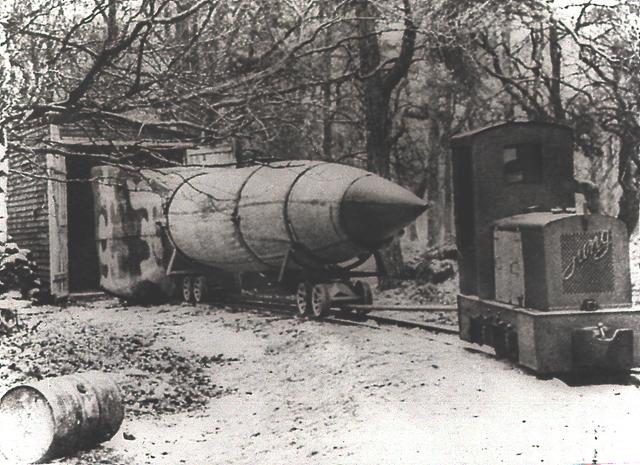
In this undated file photo, probably from World War II, a V-2 rocket emerges from its camouflaged shelter. The team of German engineers and scientists who developed the V-2 came to the United States after World War II and worked for the U. S. Army at Fort Bliss, Texas and Redstone Arsenal in Huntsville, Alabama.
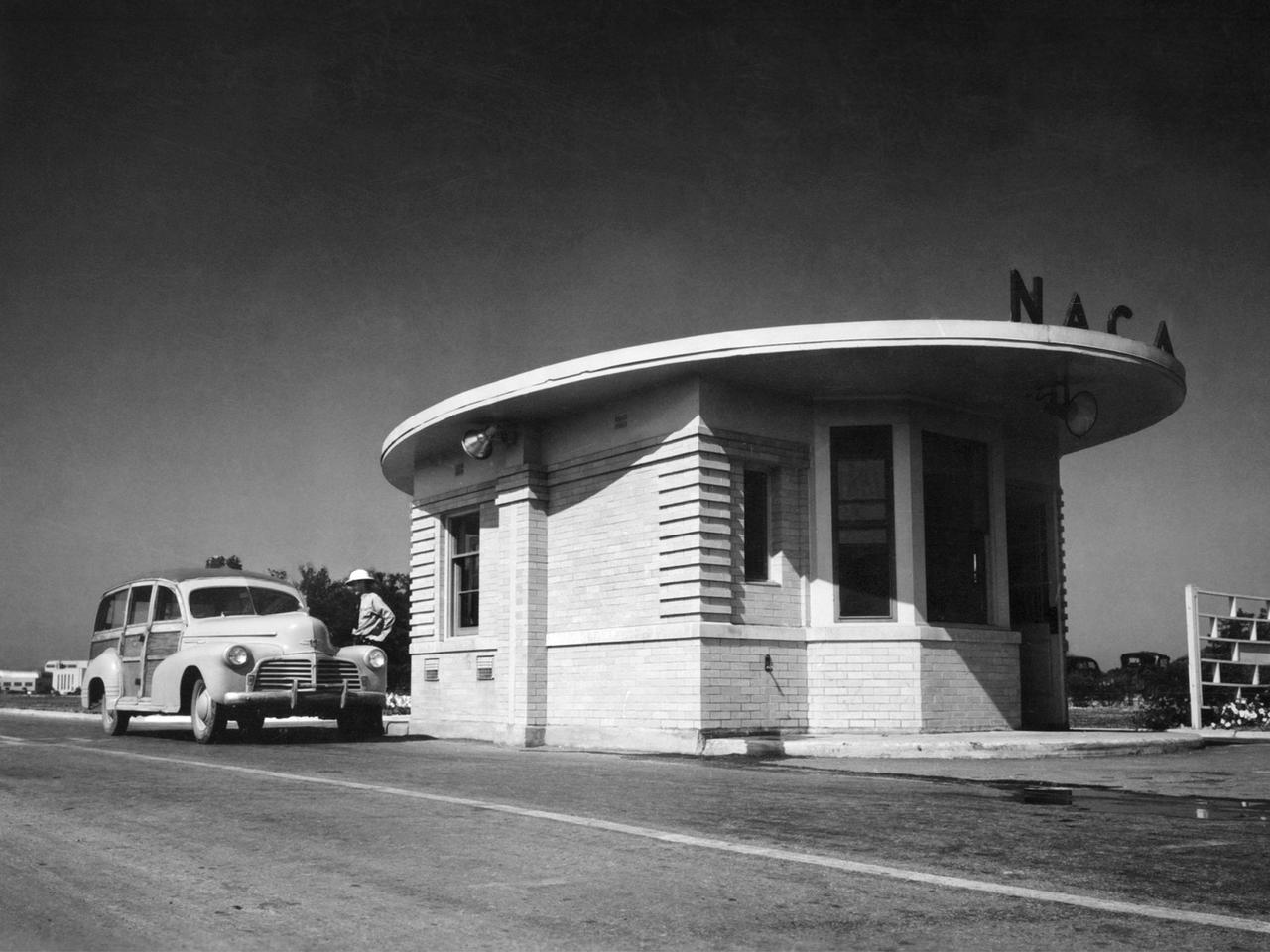
A vehicle leaves the National Advisory Committee for Aeronautics (NACA) Aircraft Engine Research Laboratory on August 14, 1945. At 7 p.m. that evening President Truman announced that Japan had accepted terms for surrender and World War II was over. The end of the war brought significant changes for the laboratory. The NACA would cease its troubleshooting of military aircraft and return to research. Researchers would increase their efforts to address the new technologies that emerged during the war. The entire laboratory was reorganized in October to better investigate turbojets, ramjets, and rockets. The guard house sat on the main entrance to the laboratory off of Brookpark Road. The building was fairly small and easily crowded. In the early 1960s a new security facility was built several hundred feet beyond the original guard house. The original structure remained in place for several years but was not utilized. The subsequent structure was replaced in 2011 by a new building and entrance configuration.
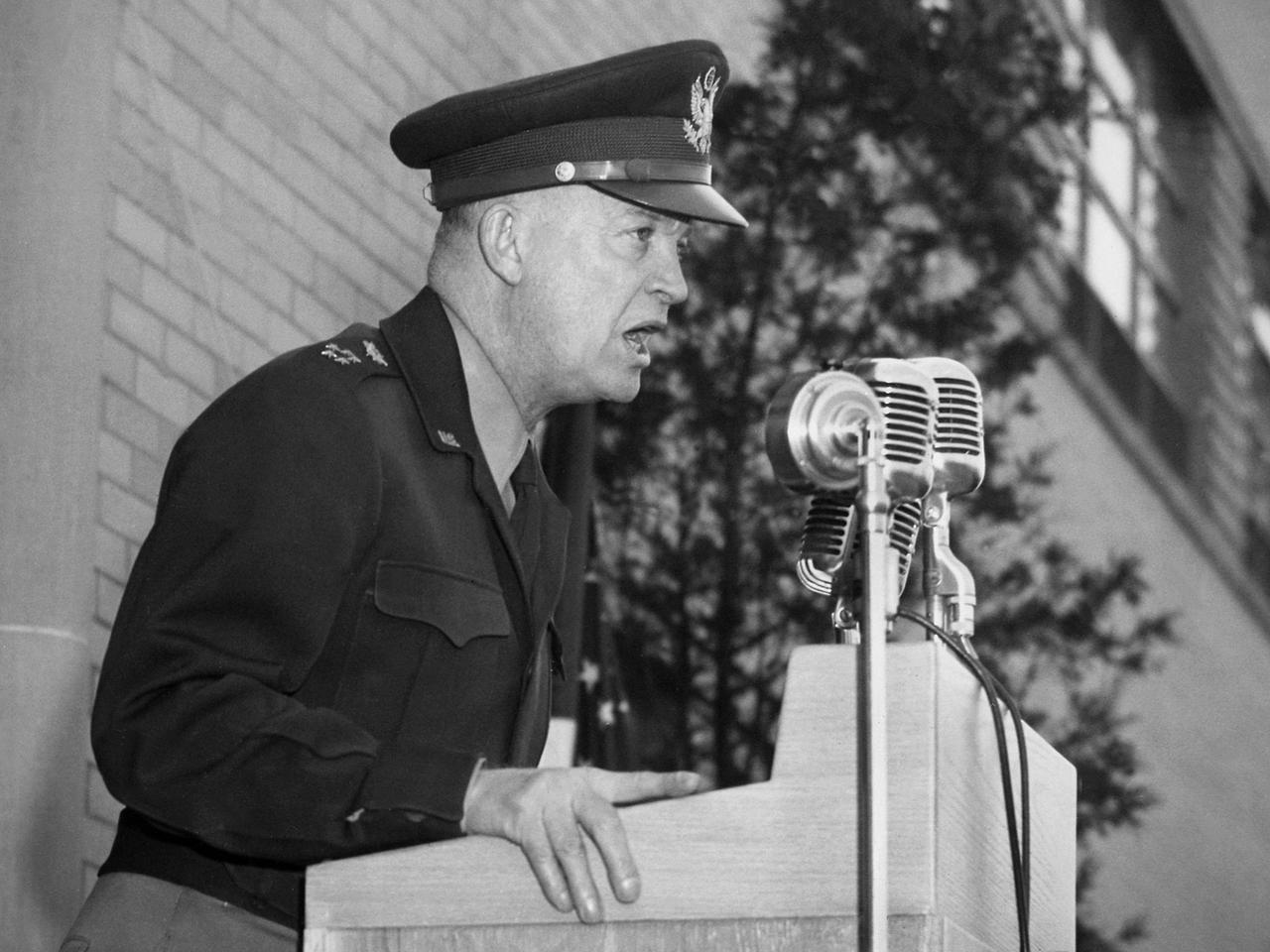
General Dwight Eisenhower addressed the staff of the National Advisory Committee for Aeronautics (NACA) Lewis Flight Propulsion Laboratory during an April 11, 1946 visit to Cleveland. The former supreme commander of Allied Expeditionary Forces in Europe was on a tour of several US cities in the months following the end of World War II. The general arrived in Cleveland on his Douglas C-54 Skymaster, the 'Sunflower II'. Eisenhower employed this aircraft while leading forces during the war. Skymasters, the military version of the DC–4 transport aircraft, were used extensively by both the army and navy throughout the war years. NACA Secretary John Victory, Lewis Director Raymond Sharp, and local politicians formally greeted Eisenhower as he deplaned at the NACA hangar. After patiently posing for the press photographers, Eisenhower accompanied Victory and Sharp to the Administration Building for a press conference. The general made a point of downplaying the prospects for another imminent war. Afterwards Eisenhower was given a tour of the laboratory and addressed the NACA Lewis staff assembled outside the Administration Building on the importance of research and development. Eisenhower left the laboratory in a motorcade for a banquet being held in his honor downtown with the Cleveland Aviation Club.
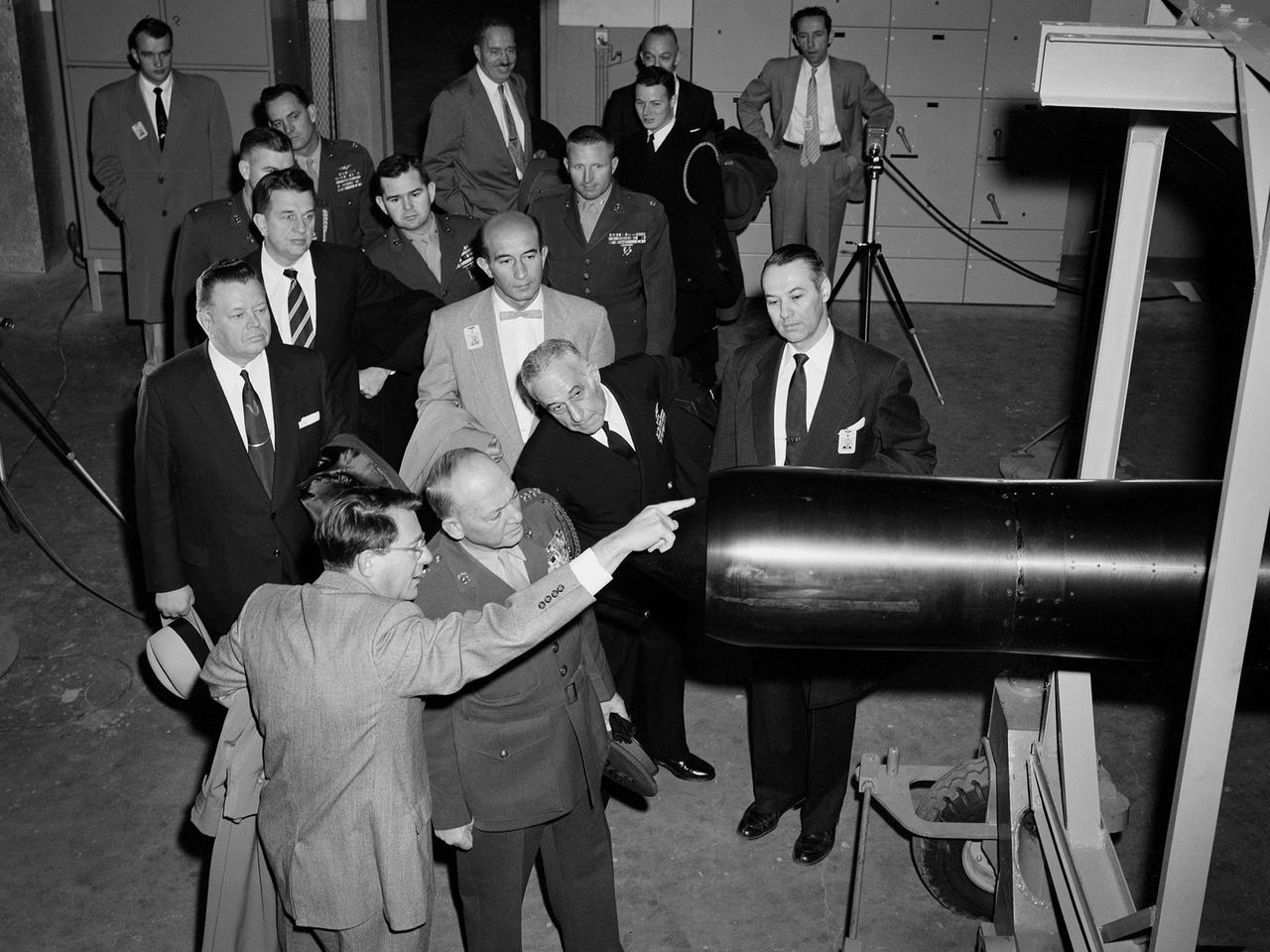
Abe Silverstein, Associate Director of the National Advisory Committee for Aeronautics (NACA) Lewis Flight Propulsion Laboratory, provides a personal tour of the new 10- by 10-Foot Supersonic Wind Tunnel for US Senator George Bender (hat in hand) and General Lemuel Shepherd. Shepherd was Commandant of the Marine Corps and had served in World War I, World War II, and the Korean War. The general was accompanied by Admiral Herbert Leary, in dark uniform. Bender was a Republican Senator from Ohio. Behind Bender is President of the Cleveland Chamber of Commerce Curtis Smith. NACA Lewis managers Eugene Manganiello and Wilson Hunter assist with the tour. Abe Silverstein oversaw all research at the laboratory. Upon taking his post in 1952 he reorganized the research staff and began shifting the focus away from airbreathing aircraft engines to new fields such as high energy fuels, electric propulsion, and nuclear power and propulsion. He was an early advocate of the NACA’s involvement in the space program and crucial to the founding of National Aeronautics and Space Administration in 1958. Silverstein began his career helping design and conduct research in the Full Scale Tunnel in 1929 at the Langley Memorial Aeronautical Laboratory. Silverstein advocated a series of increasingly large supersonic wind tunnels after the war, culminating in the 10- by 10.
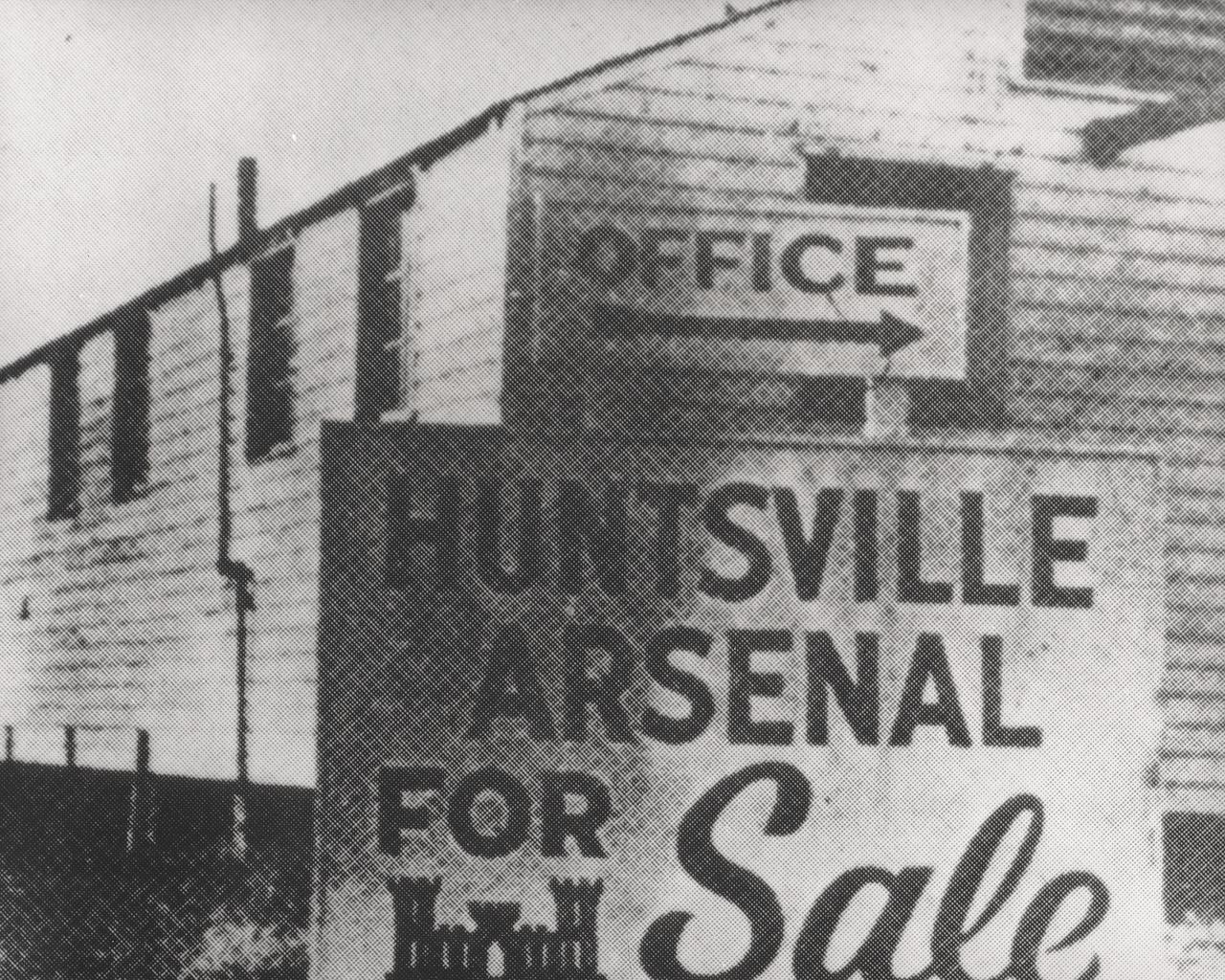
In the years following World War II, the Army directed that the Huntsville, Alabama Arsenal be advertised for sale. The decision was reversed because the Army found it needed this land for the new missile work that would occur at Redstone Arsenal.
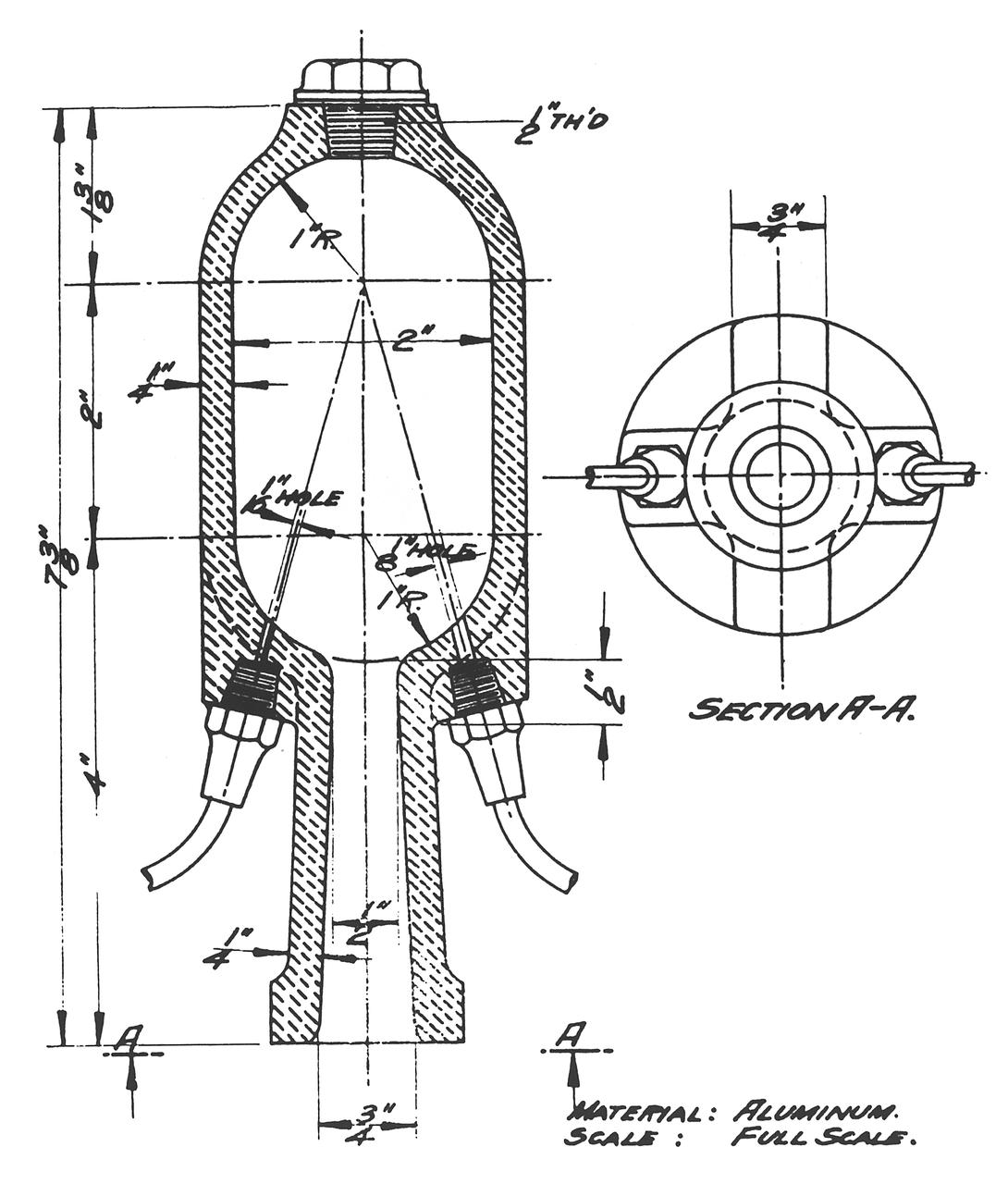
In addition to Dr. Robert Goddard's pioneering work, American experimentation in rocketry prior to World War II grew, primarily in technical societies. This is an early rocket motor designed and developed by the American Rocket Society in 1932.
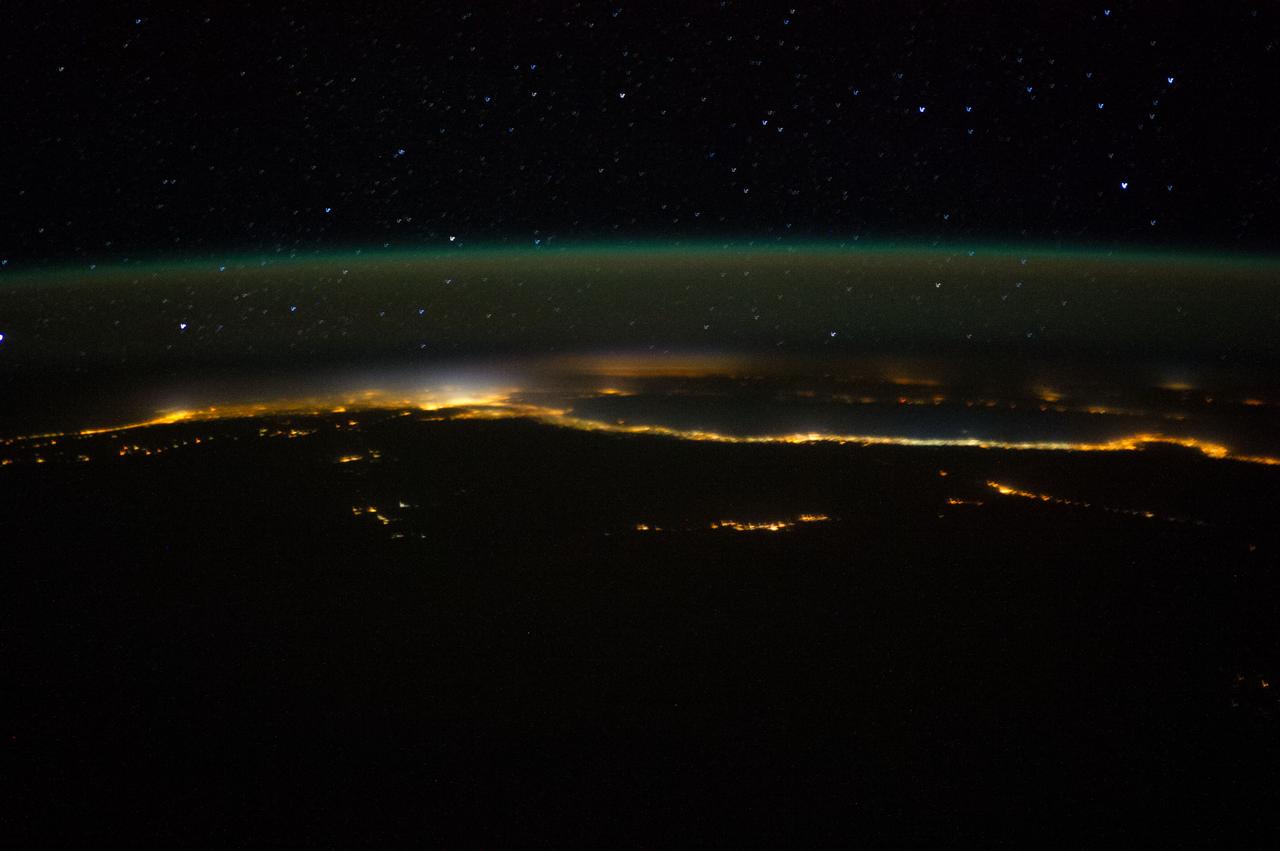
Earth observation taken during a night pass by the Expedition 40 crew aboard the International Space Station. Folder lists this as: Night-Egypt & war in Israel - missile impacts.

S78-35306 (31 Jan. 1978) --- Astronaut S. David Griggs. (NOTE: He died on June 17, 1989, near Earle, Arkansas, in the crash of a vintage World War II airplane.)
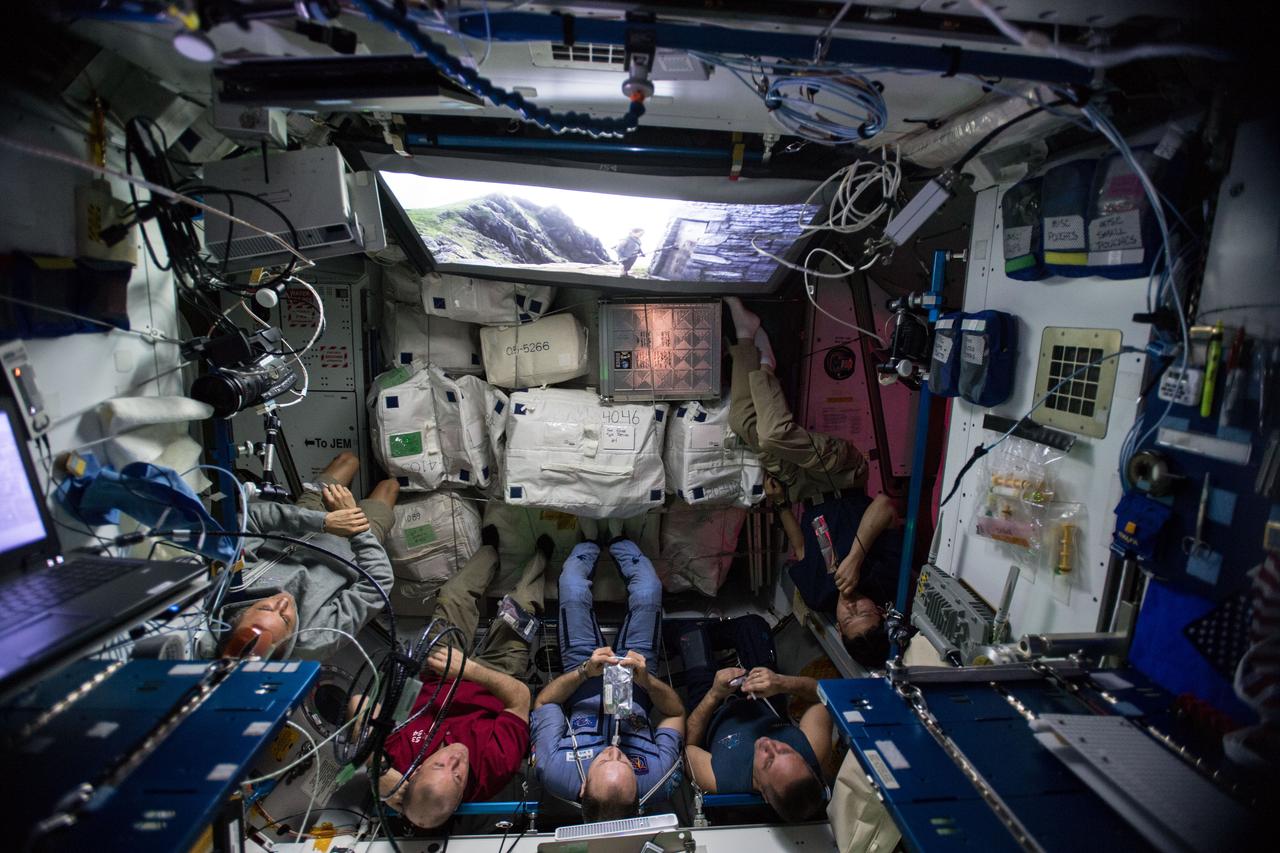
iss054e004241 (Dec. 23, 2017) --- The Expedition 54 crew aboard the International Space Station gathers in the Unity module for an out-of-this-world screening of the latest chapter of the Star Wars saga, The Last Jedi.
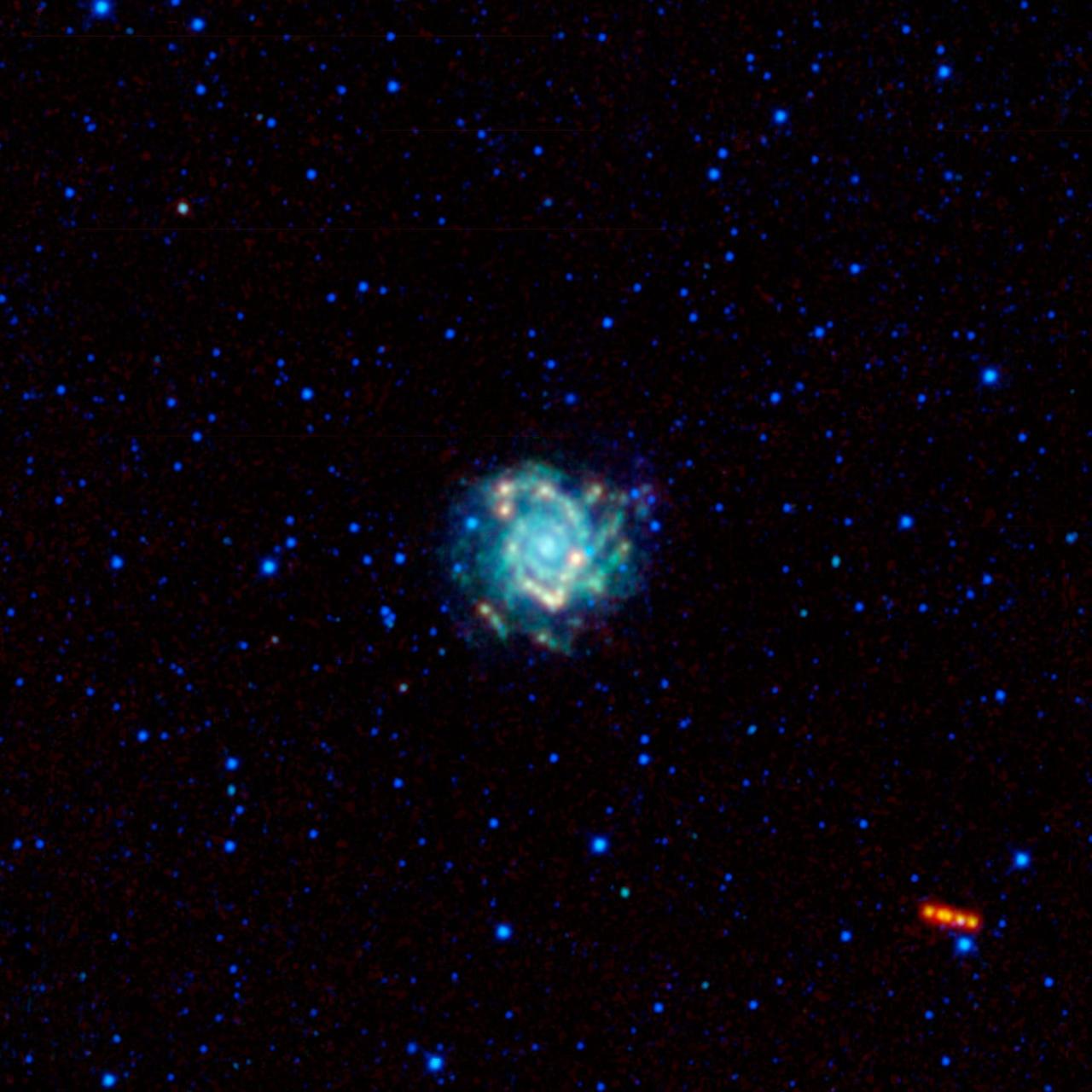
Galaxy Messier 74, with its spiral arms seen face-on, is in the center of this image captured by NASA Wide-field Infrared Survey Explorer, or WISE, while an asteroid tracks its way across the sky.
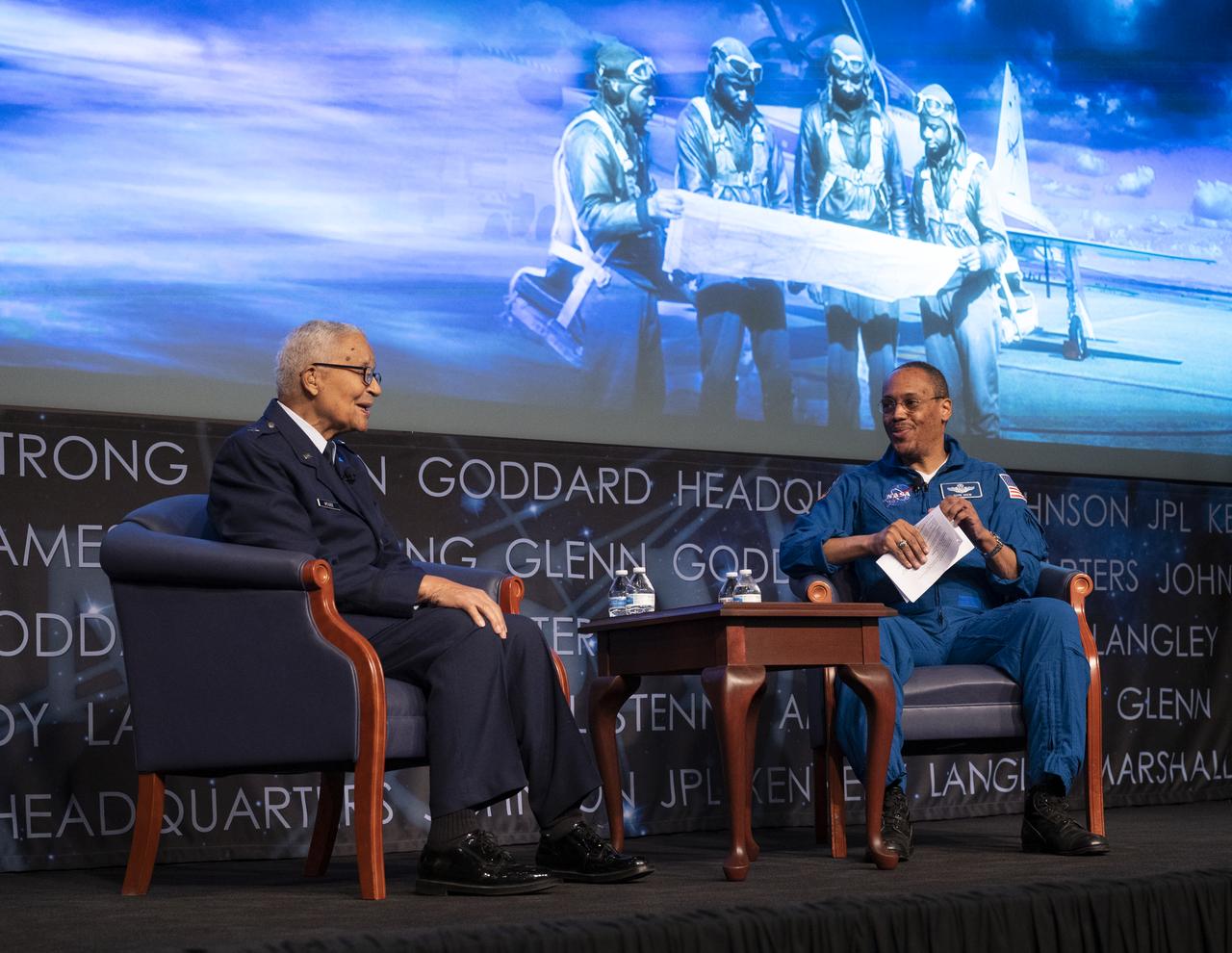
Retired U.S. Air Force Honorary Brigadier General Charles McGee, left, speaks with NASA astronaut Alvin Drew during a Black History Month program titled “Trailblazers, The Story of a Tuskegee Airman,” Wednesday, Feb. 5, 2020, at NASA Headquarters in Washington, DC. McGee, a pilot with the Tuskegee Airmen during World War II, was a career officer in the Air Force also serving during the Korean and Vietnam Wars. Over his 30 years of service he flew 409 combat missions. Of the 355 Tuskegee pilots who flew in combat, McGee is one of only nine surviving. Photo Credit: (NASA/Joel Kowsky)
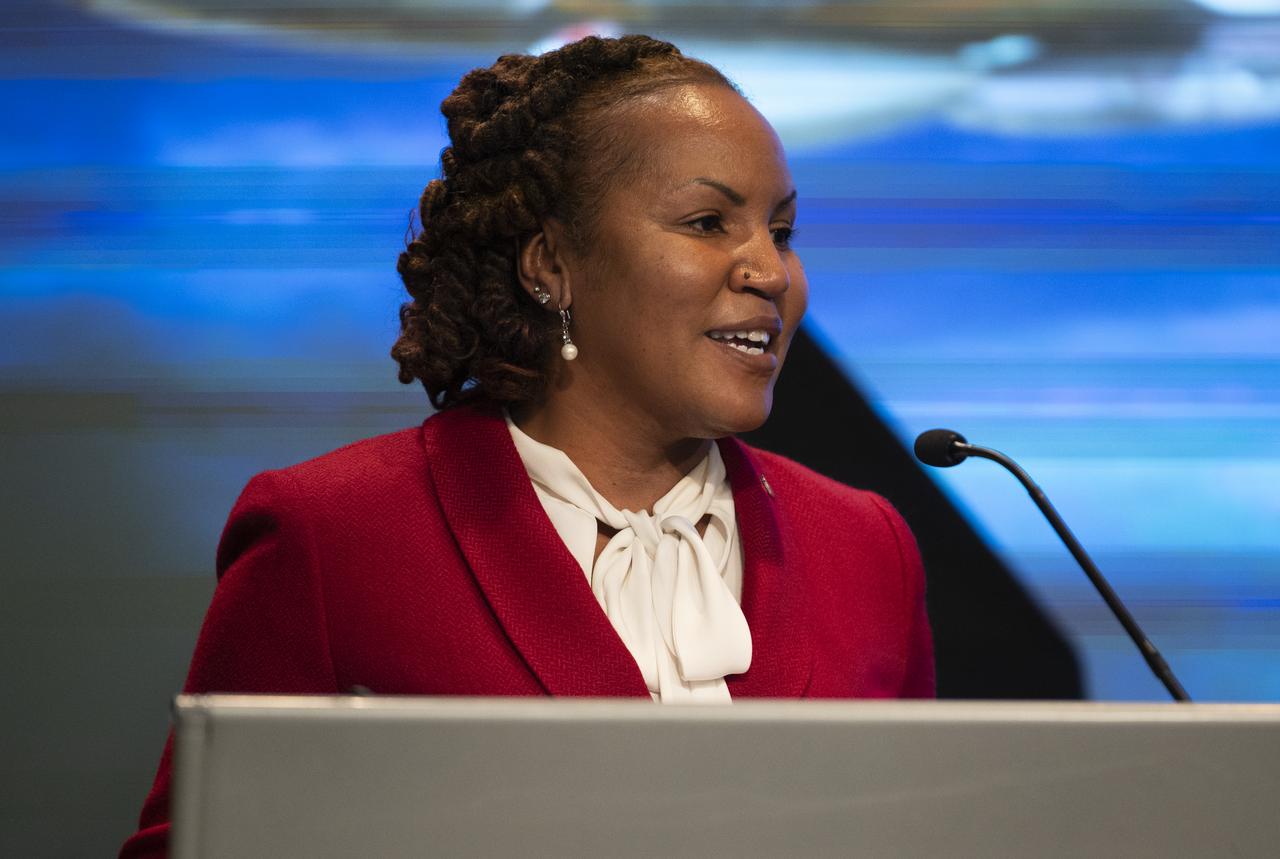
Monica Manning, Assistant Administrator for Procurement at NASA, introduces Retired U.S. Air Force Honorary Brigadier General Charles McGee and NASA astronaut Alvin Drew during a Black History Month program titled “Trailblazers, The Story of a Tuskegee Airman,” Wednesday, Feb. 5, 2020, at NASA Headquarters in Washington, DC. McGee, a pilot with the Tuskegee Airmen during World War II, was a career officer in the Air Force also serving during the Korean and Vietnam Wars. Over his 30 years of service he flew 409 combat missions. Of the 355 Tuskegee pilots who flew in combat, McGee is one of only nine surviving. Photo Credit: (NASA/Joel Kowsky)
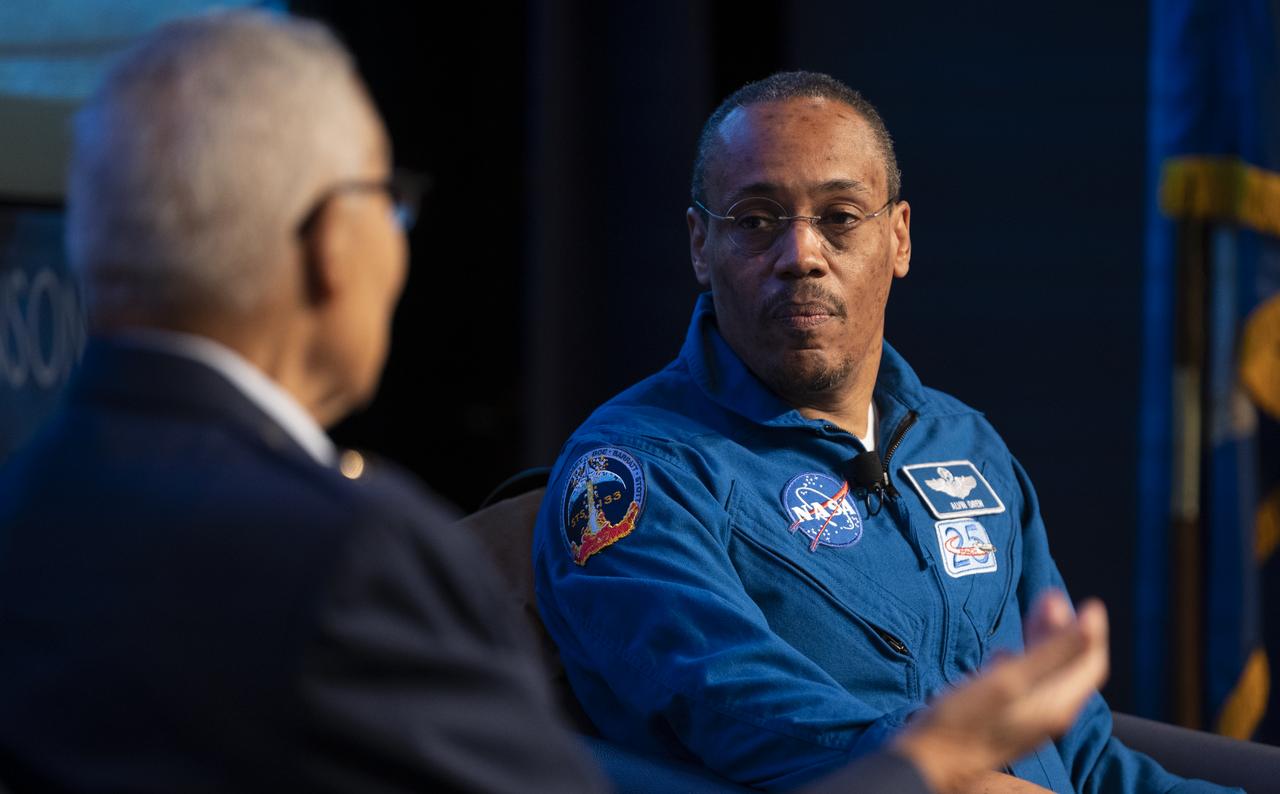
NASA astronaut Alvin Drew speaks with retired U.S. Air Force Honorary Brigadier General Charles McGee during a Black History Month program titled “Trailblazers, The Story of a Tuskegee Airman,” Wednesday, Feb. 5, 2020, at NASA Headquarters in Washington, DC. McGee, a pilot with the Tuskegee Airmen during World War II, was a career officer in the Air Force also serving during the Korean and Vietnam Wars. Over his 30 years of service he flew 409 combat missions. Of the 355 Tuskegee pilots who flew in combat, McGee is one of only nine surviving. Photo Credit: (NASA/Joel Kowsky)
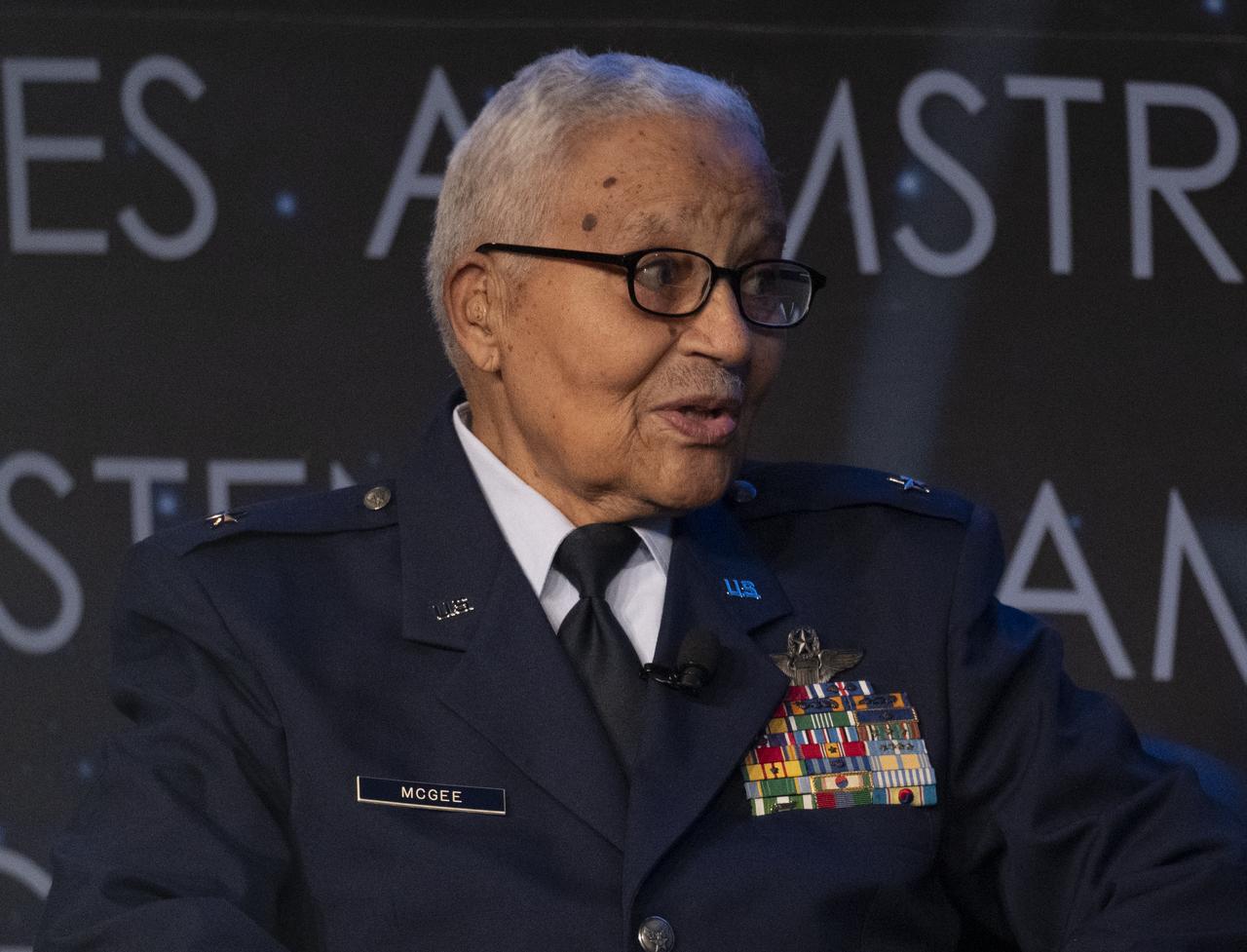
Retired U.S. Air Force Honorary Brigadier General Charles McGee is seen as he speaks with NASA astronaut Alvin Drew during a Black History Month program titled “Trailblazers, The Story of a Tuskegee Airman,” Wednesday, Feb. 5, 2020, at NASA Headquarters in Washington, DC. McGee, a pilot with the Tuskegee Airmen during World War II, was a career officer in the Air Force also serving during the Korean and Vietnam Wars. Over his 30 years of service he flew 409 combat missions. Of the 355 Tuskegee pilots who flew in combat, McGee is one of only nine surviving. Photo Credit: (NASA/Joel Kowsky)
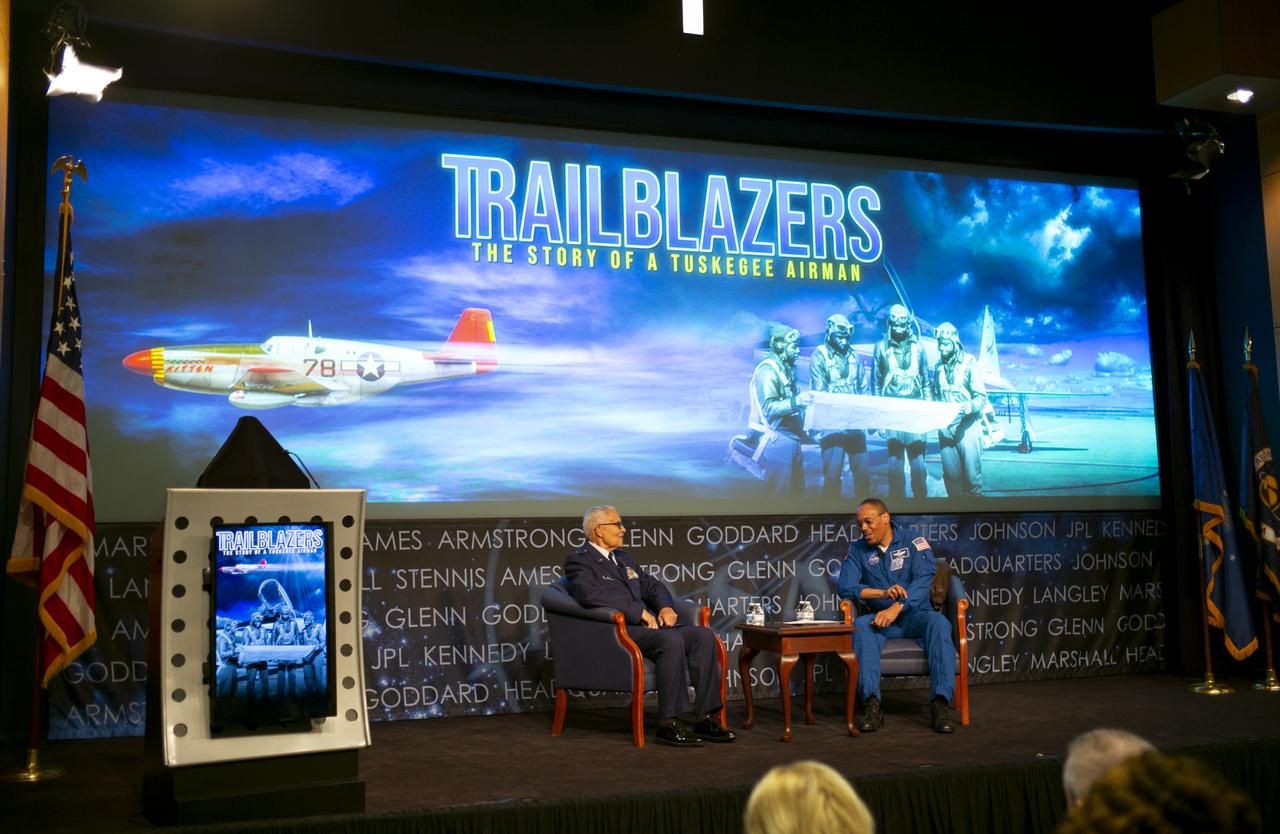
Retired U.S. Air Force Honorary Brigadier General Charles McGee, left, speaks with NASA astronaut Alvin Drew during a Black History Month program titled “Trailblazers, The Story of a Tuskegee Airman,” Wednesday, Feb. 5, 2020, at NASA Headquarters in Washington, DC. McGee, a pilot with the Tuskegee Airmen during World War II, was a career officer in the Air Force also serving during the Korean and Vietnam Wars. Over his 30 years of service he flew 409 combat missions. Of the 355 Tuskegee pilots who flew in combat, McGee is one of only nine surviving. Photo Credit: (NASA/Joel Kowsky)
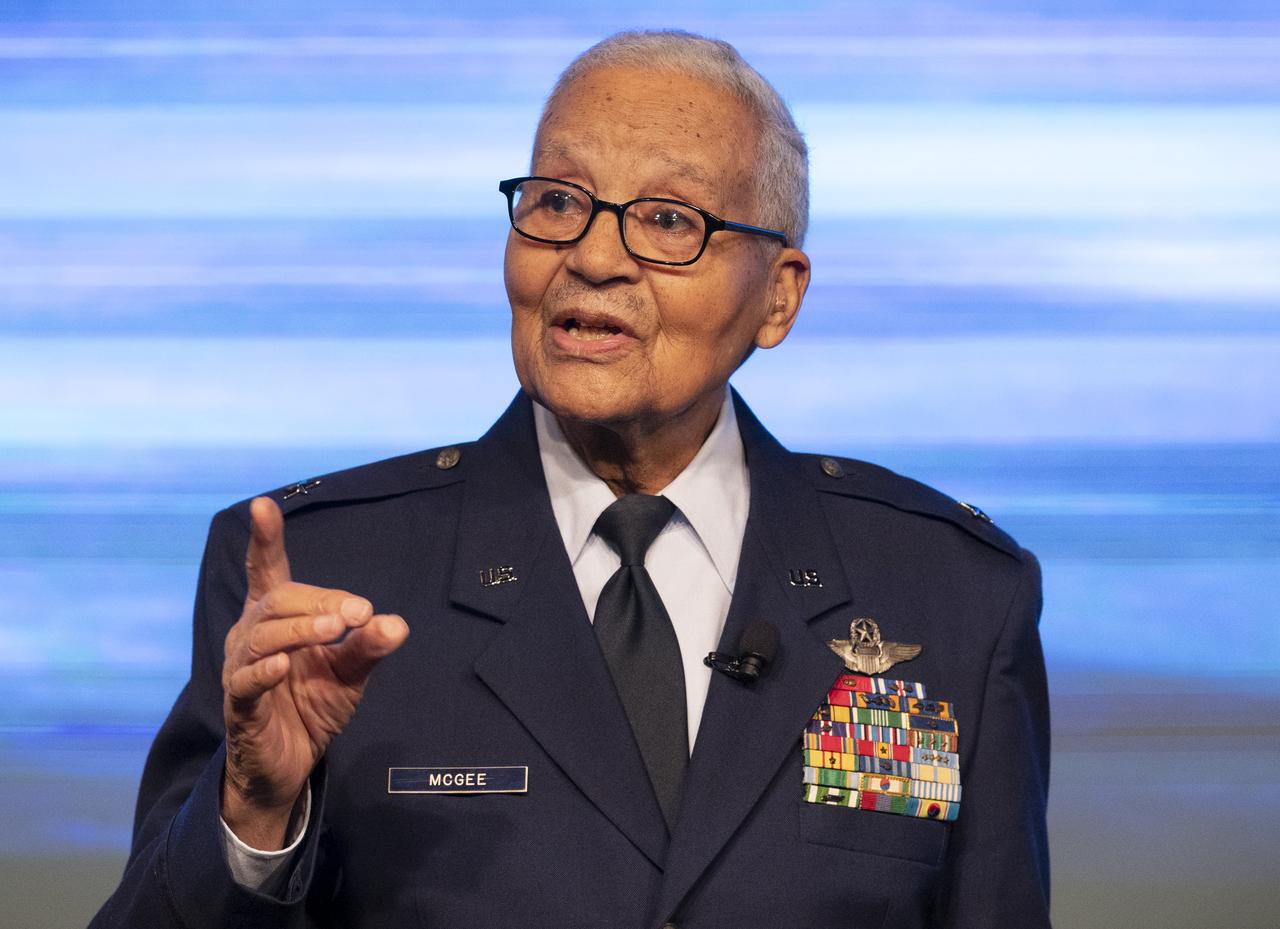
Retired U.S. Air Force Honorary Brigadier General Charles McGee is seen during a Black History Month program titled “Trailblazers, The Story of a Tuskegee Airman,” Wednesday, Feb. 5, 2020, at NASA Headquarters in Washington, DC. McGee, a pilot with the Tuskegee Airmen during World War II, was a career officer in the Air Force also serving during the Korean and Vietnam Wars. Over his 30 years of service he flew 409 combat missions. Of the 355 Tuskegee pilots who flew in combat, McGee is one of only nine surviving. Photo Credit: (NASA/Joel Kowsky)
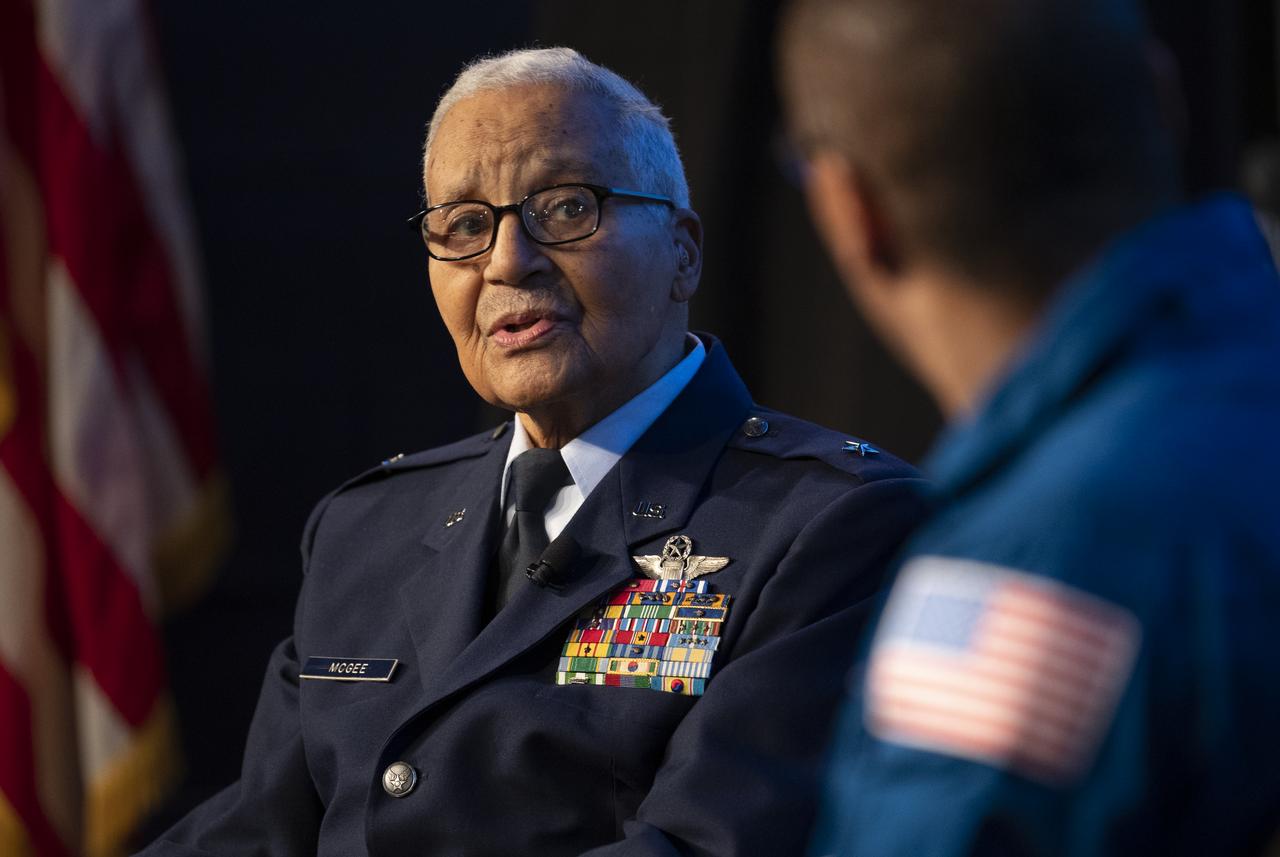
Retired U.S. Air Force Honorary Brigadier General Charles McGee speaks with NASA astronaut Alvin Drew during a Black History Month program titled “Trailblazers, The Story of a Tuskegee Airman,” Wednesday, Feb. 5, 2020, at NASA Headquarters in Washington, DC. McGee, a pilot with the Tuskegee Airmen during World War II, was a career officer in the Air Force also serving during the Korean and Vietnam Wars. Over his 30 years of service he flew 409 combat missions. Of the 355 Tuskegee pilots who flew in combat, McGee is one of only nine surviving. Photo Credit: (NASA/Joel Kowsky)
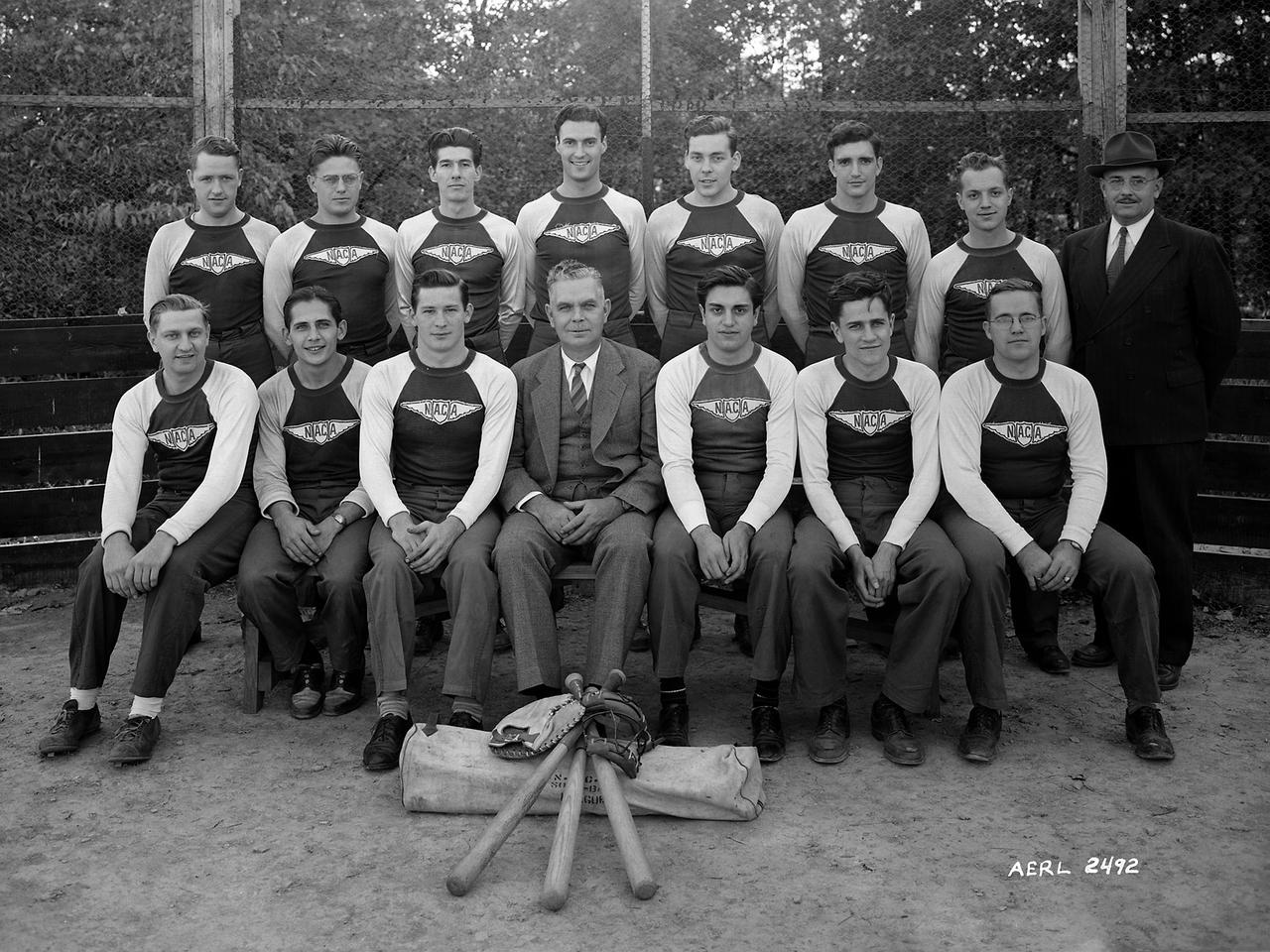
The NACA’s Aircraft Engine Research Laboratory’s baseball team photographed with director Raymond Sharp. The Exchange, which operated the non-profit cafeteria, sponsored several sports teams that participated in local leagues. The laboratory also had several intramural sports leagues. The baseball team, seen here in 1943, was suspended shortly thereafter as many of its members entered the military during World War II. The team was reconstituted after the war and became somewhat successful in the Class A Westlake League. After winning the championship in 1949 and 1950, the team was placed in the more advanced Middleberg League where they struggled.
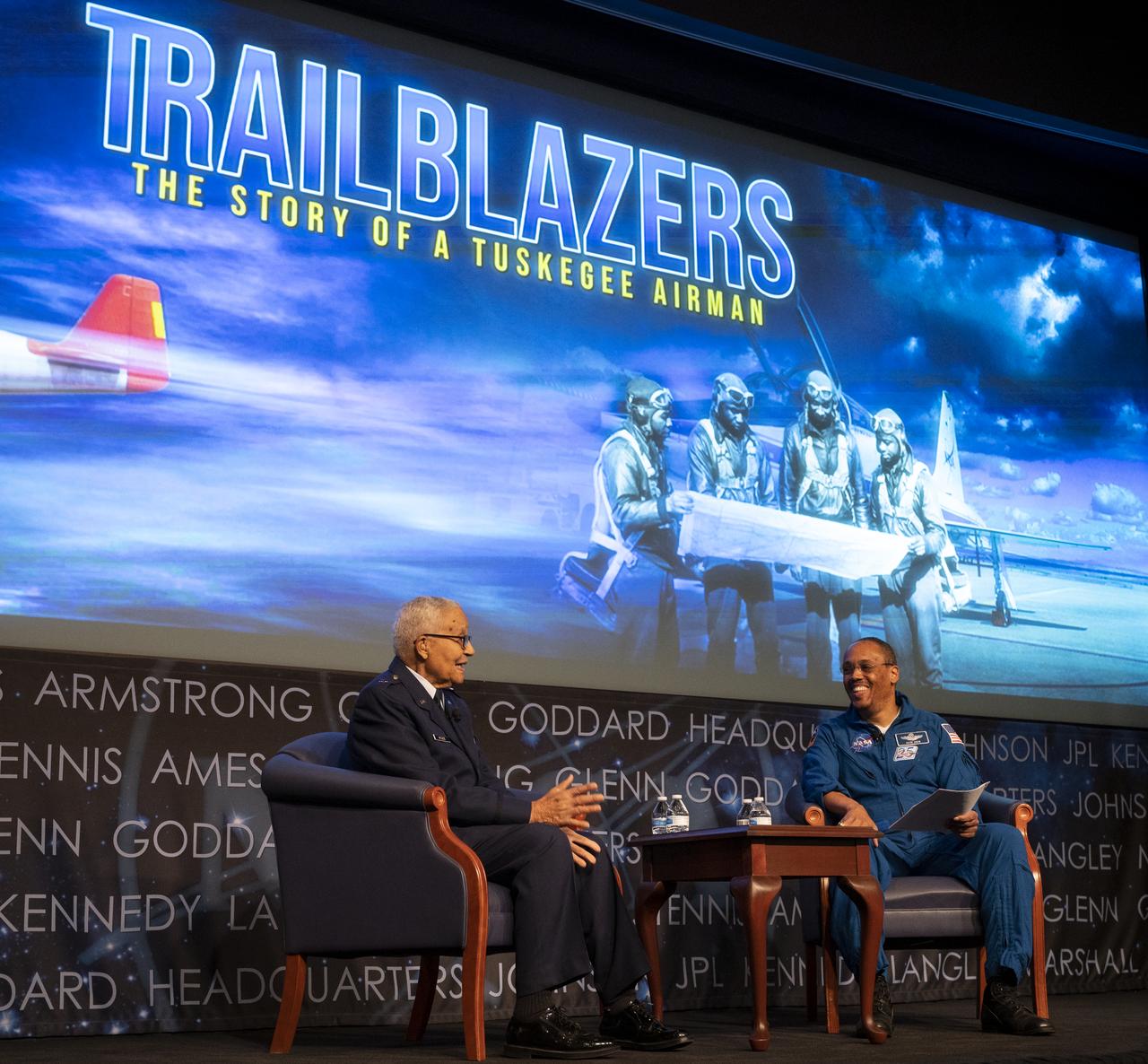
Retired U.S. Air Force Honorary Brigadier General Charles McGee, left, speaks with NASA astronaut Alvin Drew during a Black History Month program titled “Trailblazers, The Story of a Tuskegee Airman,” Wednesday, Feb. 5, 2020, at NASA Headquarters in Washington, DC. McGee, a pilot with the Tuskegee Airmen during World War II, was a career officer in the Air Force also serving during the Korean and Vietnam Wars. Over his 30 years of service he flew 409 combat missions. Of the 355 Tuskegee pilots who flew in combat, McGee is one of only nine surviving. Photo Credit: (NASA/Joel Kowsky)
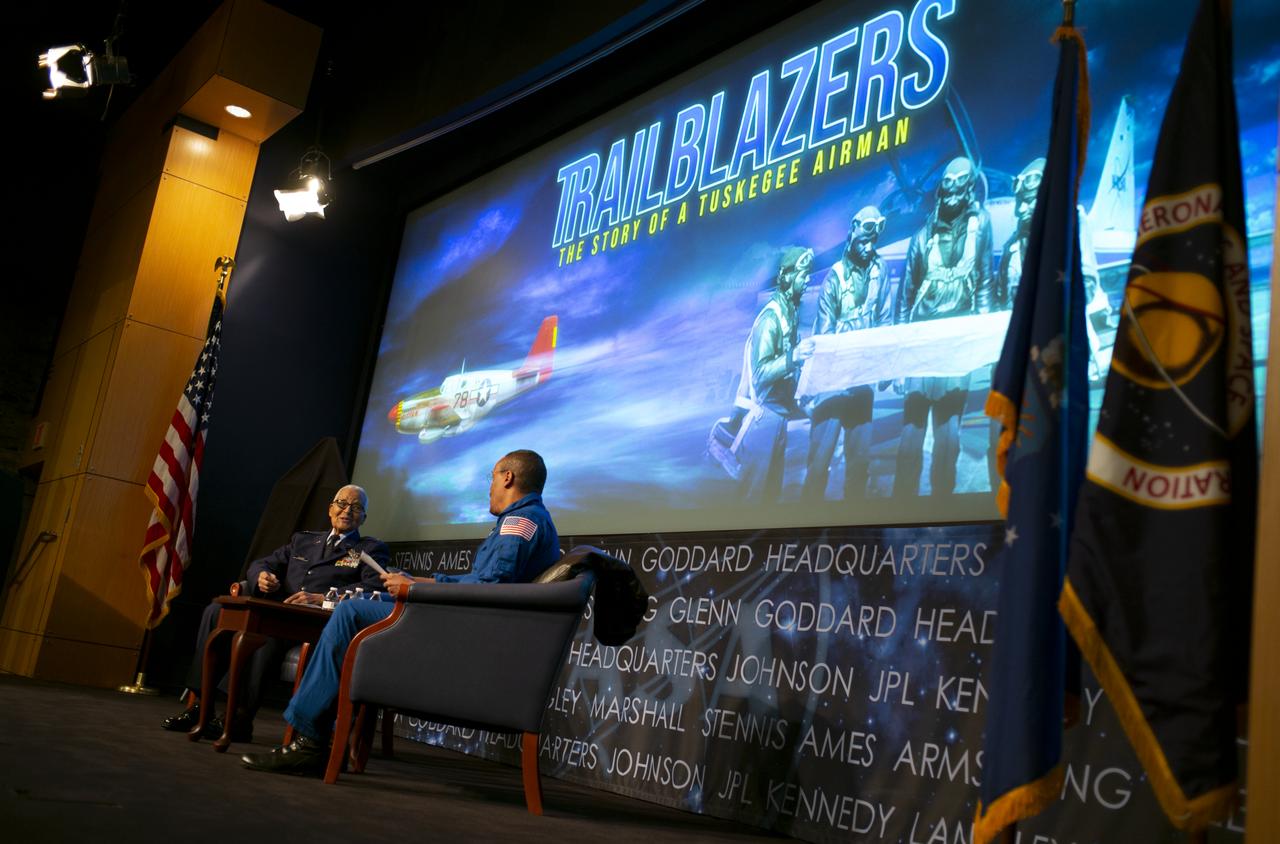
Retired U.S. Air Force Honorary Brigadier General Charles McGee, left, speaks with NASA astronaut Alvin Drew during a Black History Month program titled “Trailblazers, The Story of a Tuskegee Airman,” Wednesday, Feb. 5, 2020, at NASA Headquarters in Washington, DC. McGee, a pilot with the Tuskegee Airmen during World War II, was a career officer in the Air Force also serving during the Korean and Vietnam Wars. Over his 30 years of service he flew 409 combat missions. Of the 355 Tuskegee pilots who flew in combat, McGee is one of only nine surviving. Photo Credit: (NASA/Joel Kowsky)
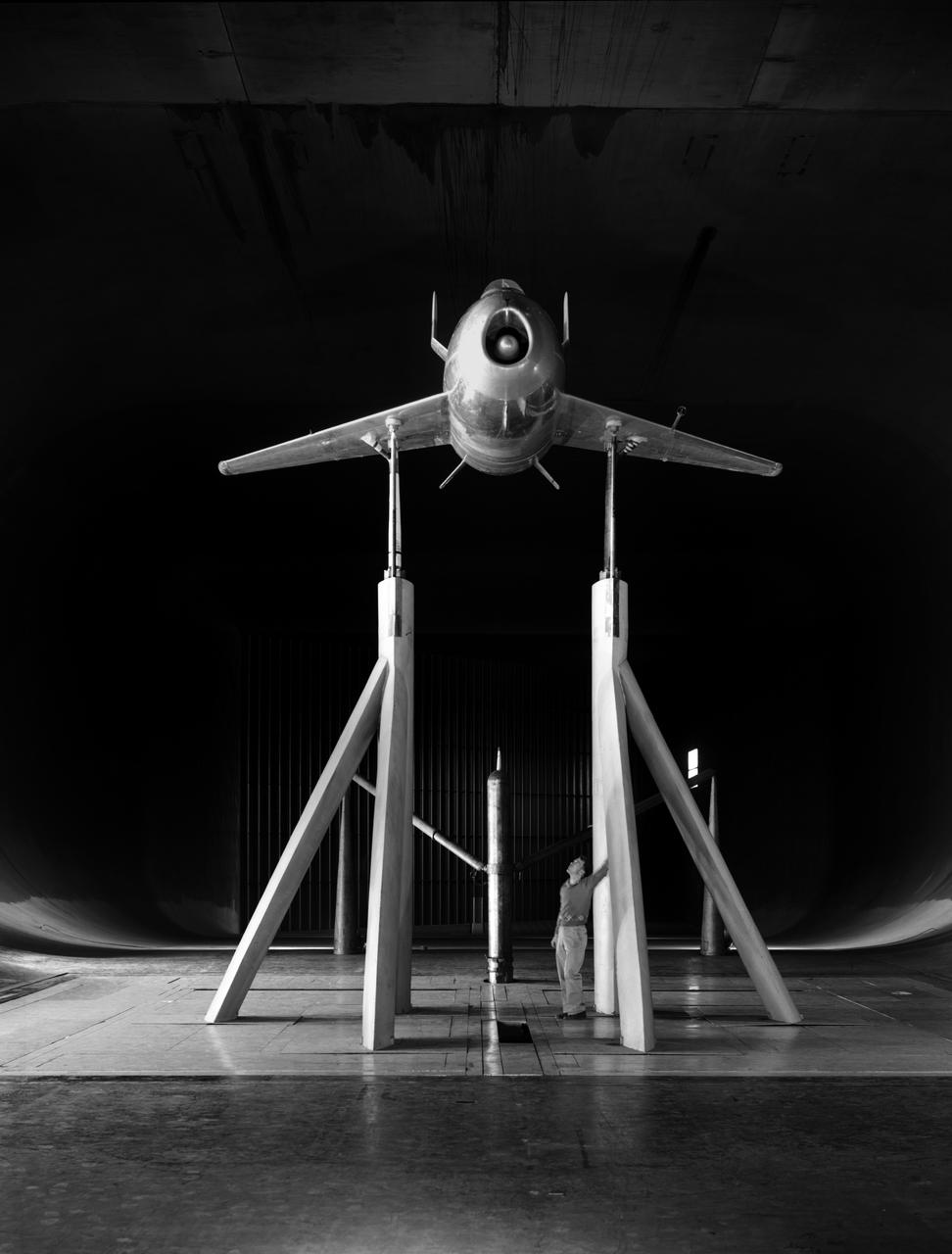
Front View of McDonald XP-85 Plan Model. Parasite Airplane designed to be carried in the B-36 bombay (never built) At the time it was the smallest Jet powered airplane. The McDonnell XF-85 Goblin was an American prototype fighter aircraft conceived during World War II by McDonnell Aircraft. It was intended to be deployed from the bomb bay of the giant Convair B-36 bomber as a parasite fighter. The XF-85's intended role was to defend bombers from hostile interceptor aircraft, a need demonstrated during World War II
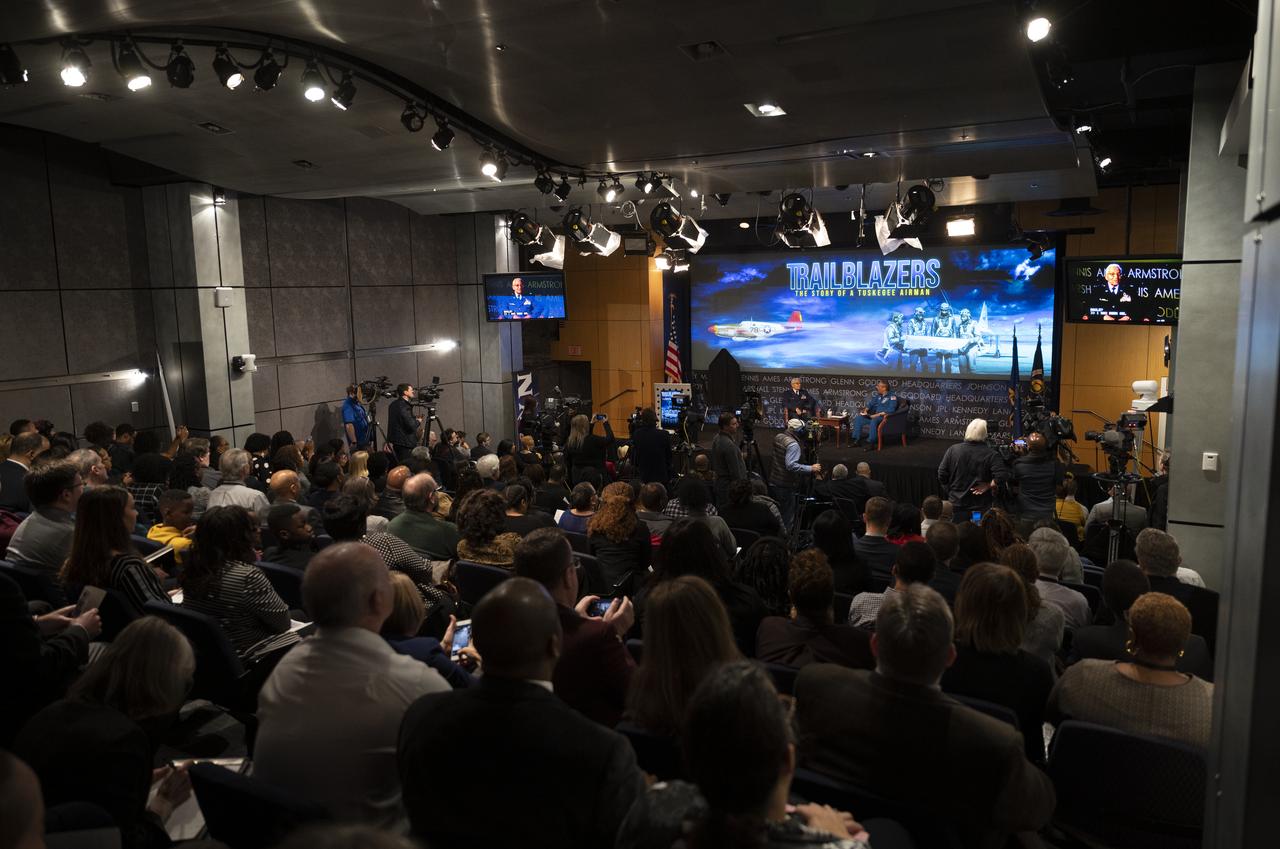
Retired U.S. Air Force Honorary Brigadier General Charles McGee, left, speaks with NASA astronaut Alvin Drew during a Black History Month program titled “Trailblazers, The Story of a Tuskegee Airman,” Wednesday, Feb. 5, 2020, at NASA Headquarters in Washington, DC. McGee, a pilot with the Tuskegee Airmen during World War II, was a career officer in the Air Force also serving during the Korean and Vietnam Wars. Over his 30 years of service he flew 409 combat missions. Of the 355 Tuskegee pilots who flew in combat, McGee is one of only nine surviving. Photo Credit: (NASA/Joel Kowsky)
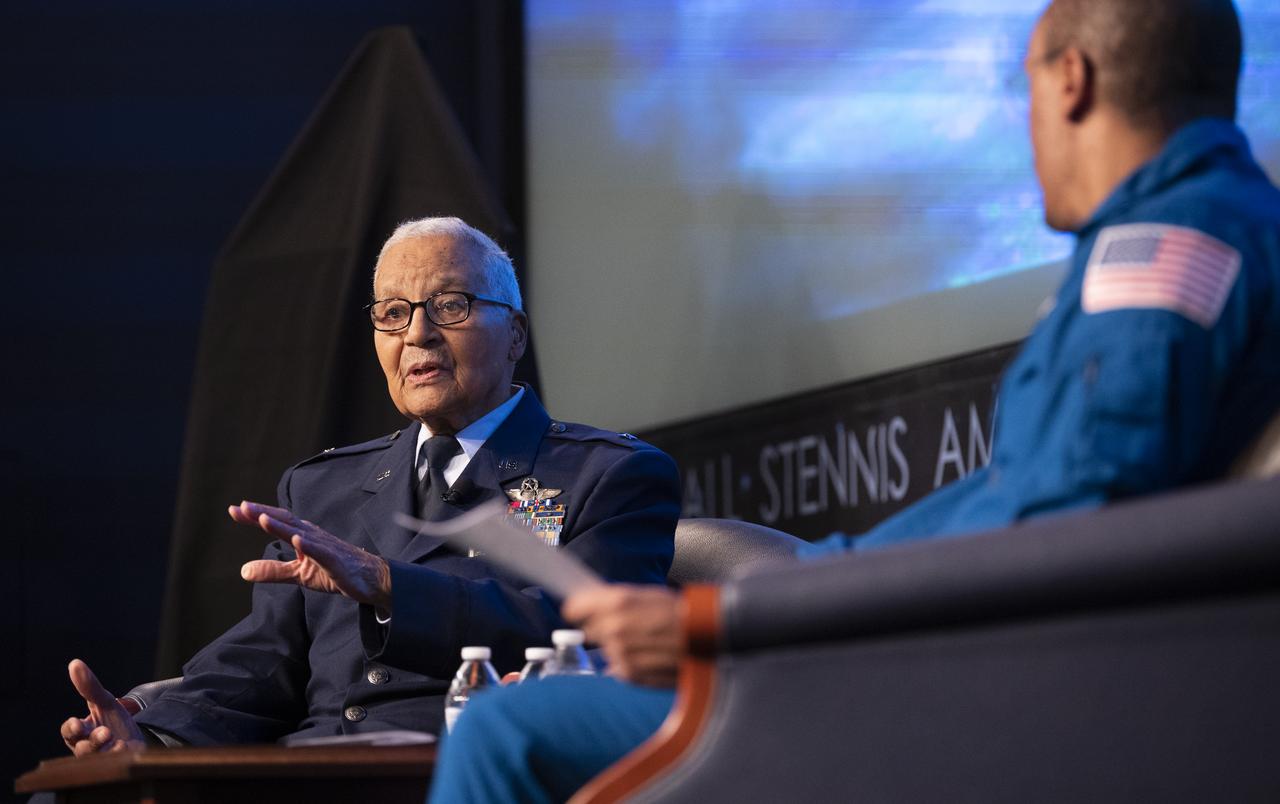
Retired U.S. Air Force Honorary Brigadier General Charles McGee speaks with NASA astronaut Alvin Drew during a Black History Month program titled “Trailblazers, The Story of a Tuskegee Airman,” Wednesday, Feb. 5, 2020, at NASA Headquarters in Washington, DC. McGee, a pilot with the Tuskegee Airmen during World War II, was a career officer in the Air Force also serving during the Korean and Vietnam Wars. Over his 30 years of service he flew 409 combat missions. Of the 355 Tuskegee pilots who flew in combat, McGee is one of only nine surviving. Photo Credit: (NASA/Joel Kowsky)
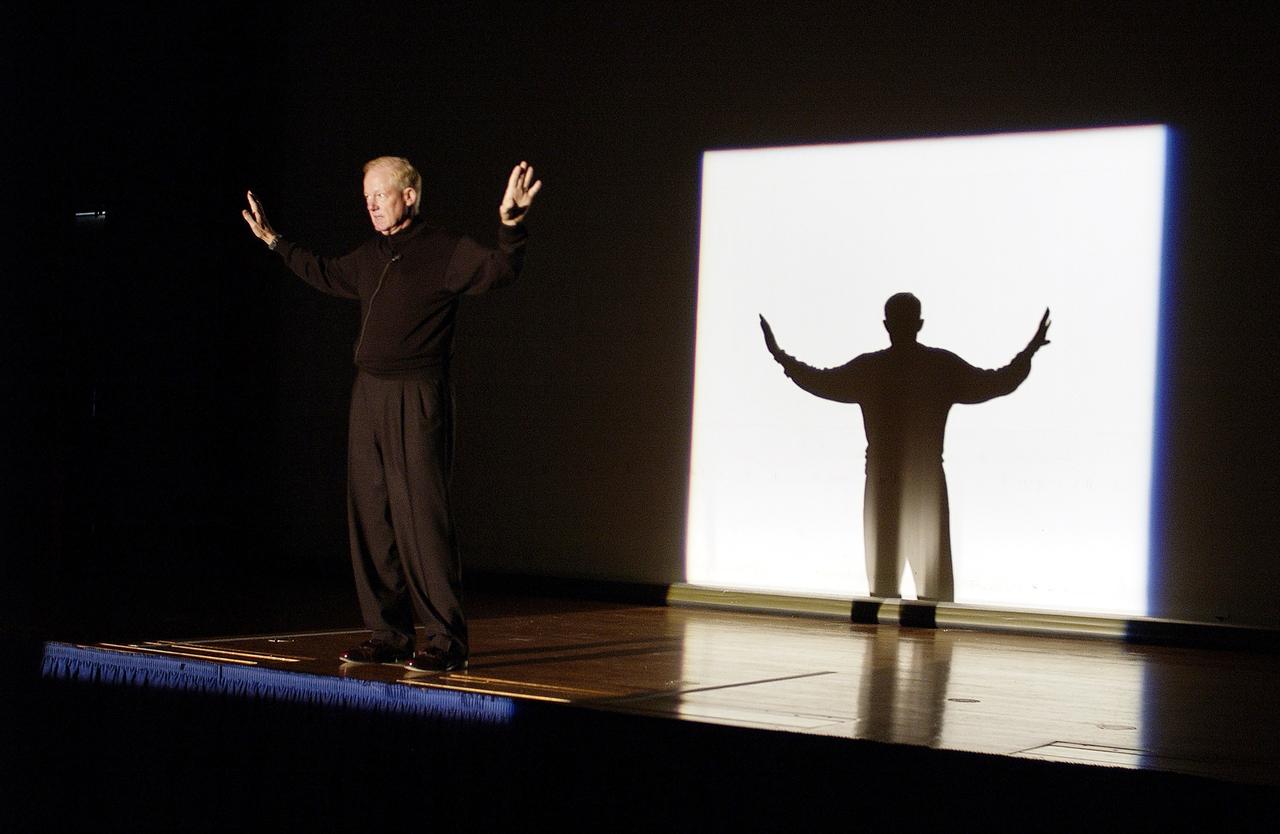
KENNEDY SPACE CENTER, FLA. - Capt. Charles Plumb (USNR retired) begins his dramatic presentation of his six years as a prisoner of war in Vietnam. The block of light on the stage represented the size of the cell he was confined in. Plumb was keynote speaker for the kickoff of Spaceport Super Safety and Health Day at KSC, an annual event dedicated to reinforcing safe and healthful behaviors in the workforce.

This archival image was released as part of a gallery comparing JPL's past and present, commemorating the 80th anniversary of NASA's Jet Propulsion Laboratory on Oct. 31, 2016. During World War II, the Jet Propulsion Laboratory had a contract with the U.S. Army to develop rocket torpedoes. This picture from August 1944 shows the test facility, known as the "Tow Channel." It was used for storage for many years before being torn out to make space for the Earth and Space Science Laboratory (Building 300) and the Microdevices Laboratory (Building 302). http://photojournal.jpl.nasa.gov/catalog/PIA21124
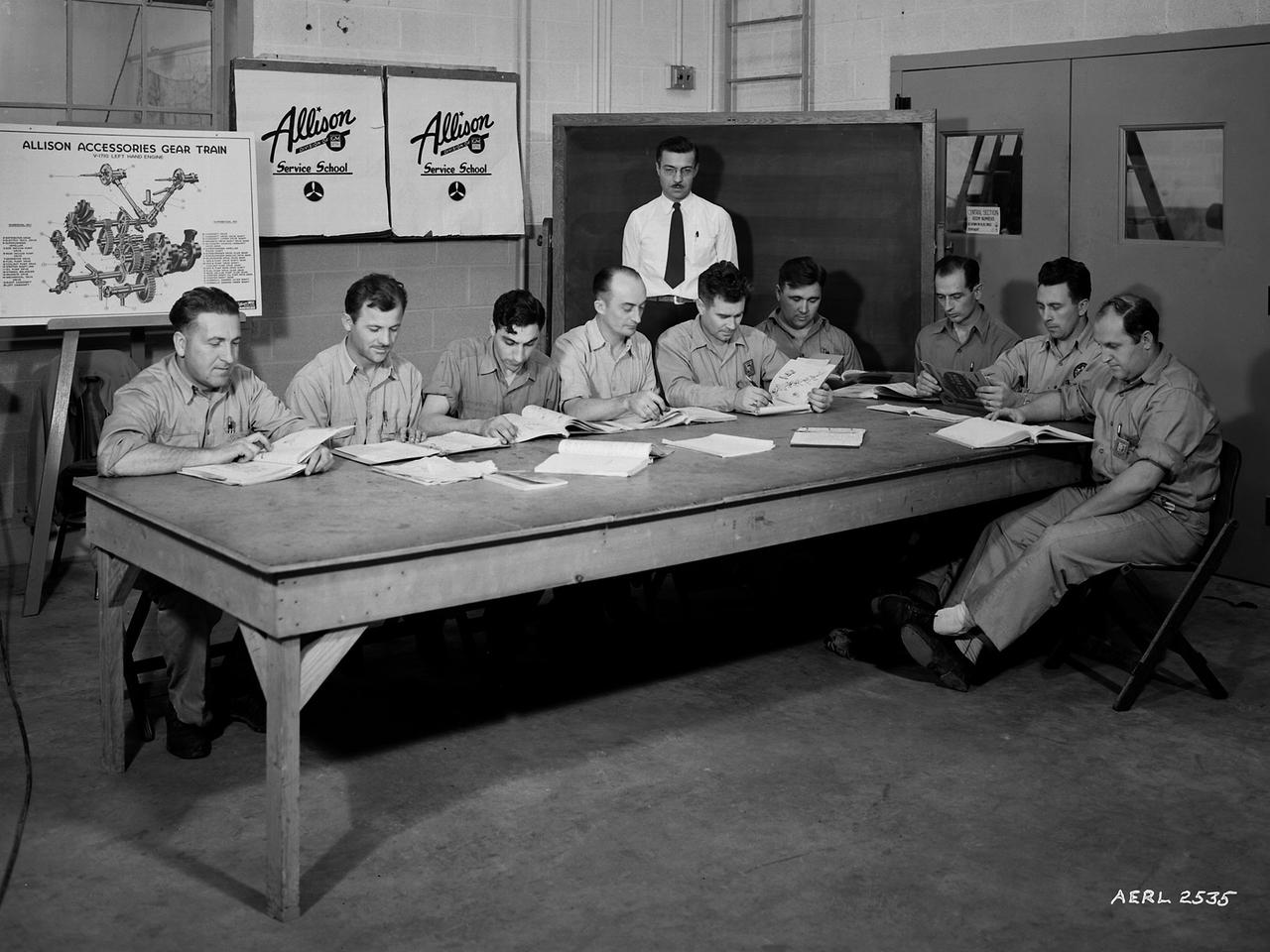
The Allison Engine Company's A.G. Covell instructs mechanics from various divisions at the National Advisory Committee for Aeronautics (NACA) Aircraft Engine Research Laboratory on the operation of the Allison Basic Engine. The military had asked that the laboratory undertake an extensive program to improve the performance of the Allison V–1710 engine. The V–1710 was the only liquid-cooled engine used during World War II, and the military counted on it to power several types of fighter aircraft. The NACA instituted an Apprentice Program during the war to educate future mechanics, technicians, and electricians. The program was suspended for a number of years due to the increasing rates of military service by its participants. The laboratory continued its in-house education during the war, however, by offering a number of classes to its employees and lectures for the research staff. The classes and lectures were usually taught by fellow members of the staff, but occasionally external experts were brought in. The students in the Allison class in the Engine Research Building were taught how to completely disassemble and reassemble the engine components and systems. From left to right are Don Vining, Ed Cudlin, Gus DiNovo, George Larsen, Charles Diggs, Martin Lipes, Harley Roberts, Martin Berwaldt and John Dempsey. A.G. Covell is standing.
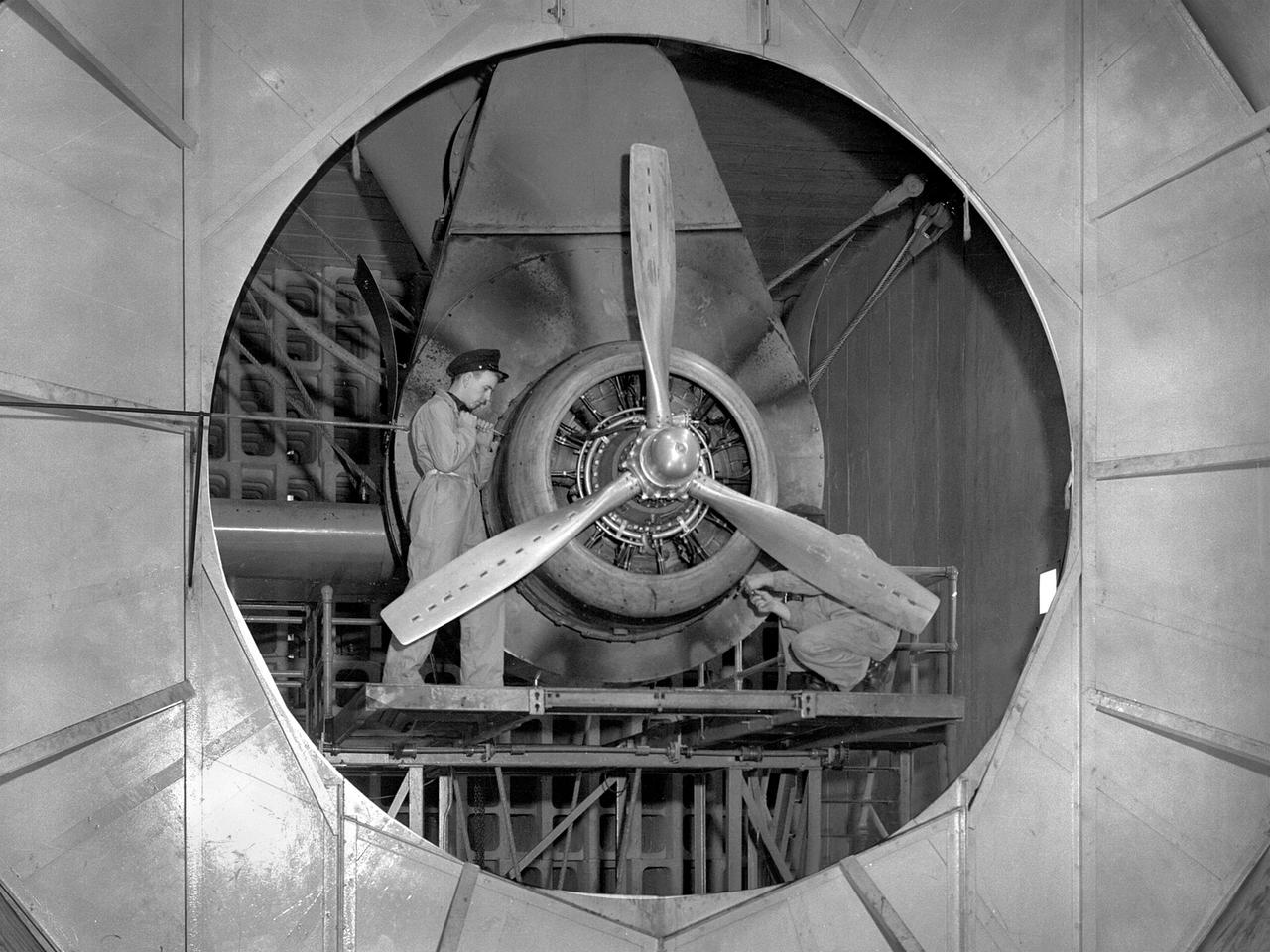
A Wright Aeronautical R–2600 Cyclone piston engine installed in the Engine Propeller Research Building, or Prop House, at the National Advisory Committee for Aeronautics (NACA) Aircraft Engine Research Laboratory. The R–2600 was among the most powerful engines that emerged during World War II. The engine, which was developed for commercial applications in 1939, was used to power the North American B–25 bomber and several other midsize military aircraft. The higher altitudes required by the military caused problems with the engine's cooling and fuel systems. The military requested that the Aircraft Engine Research Laboratory analyze the performance of the R–2600, improve its cooling system, and reduce engine knock. The NACA researchers subjected the engine to numerous tests in its Prop House. The R–2600 was the subject of the laboratory's first technical report, which was written by members of the Fuels and Lubricants Division. The Prop House contained soundproof test cells in which piston engines and propellers were mounted and operated at high powers. Electrically driven fans drew air through ducts to create a stream of cooling air over the engines. Researchers tested the performance of fuels, turbochargers, water-injection and cooling systems here during World War II. The facility was also investigated a captured German V–I buzz bomb during the war.
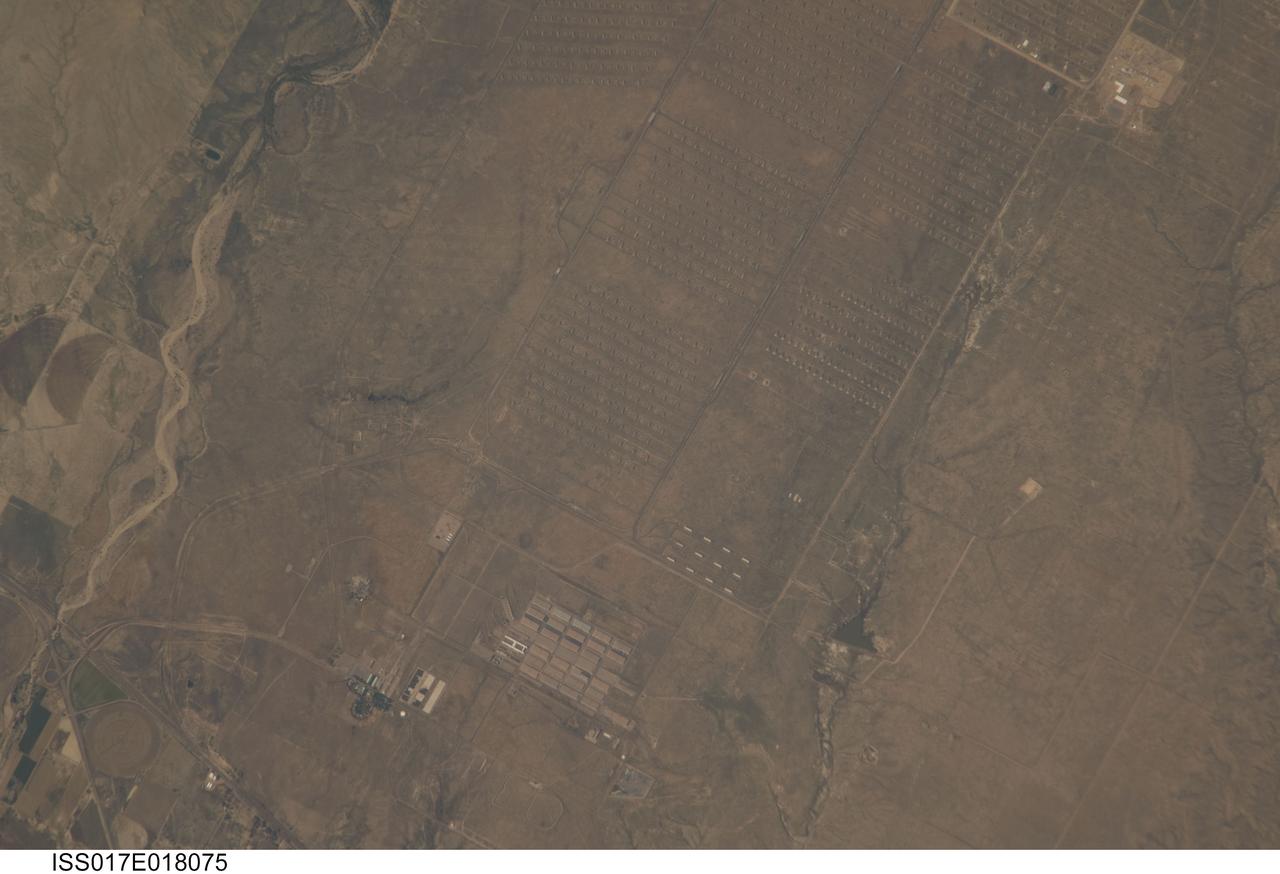
ISS017-E-018075 (1 Oct. 2008) --- The Pueblo Chemical Depot in Colorado is featured in this image photographed by an Expedition 17 crewmember on the International Space Station. This view illustrates the unusual man-made landscape of the Pueblo Chemical Depot located near the city of Pueblo, Colorado. The Depot was built during World War II by the U.S. Army to house and ship ammunition needed for war efforts, and this role transitioned to missile repair and maintenance during the Cold War with the Soviet Union. The current use of the Depot is to house chemical munitions, but changes are underway by the U.S. Army Chemical Materials Agency to destroy these munitions and make the site environmentally safe for reuse -- while also protecting the surrounding local environment. The stippled landscape pattern visible from low Earth orbit is due to hundreds of concrete and earth-covered storage "igloos" that form ordered rows across the site (top). It is within these igloos that chemical munitions and other materials are stored. Larger, white roofed maintenance buildings once used for munitions storage were built with separate compartments to minimize potential damage from explosions. Other features visible in this detailed image include linear roadway (light tan) and rail (dark brown) lines, black irregular surface impoundments of water, and various rectangular office and industrial buildings at lower left.
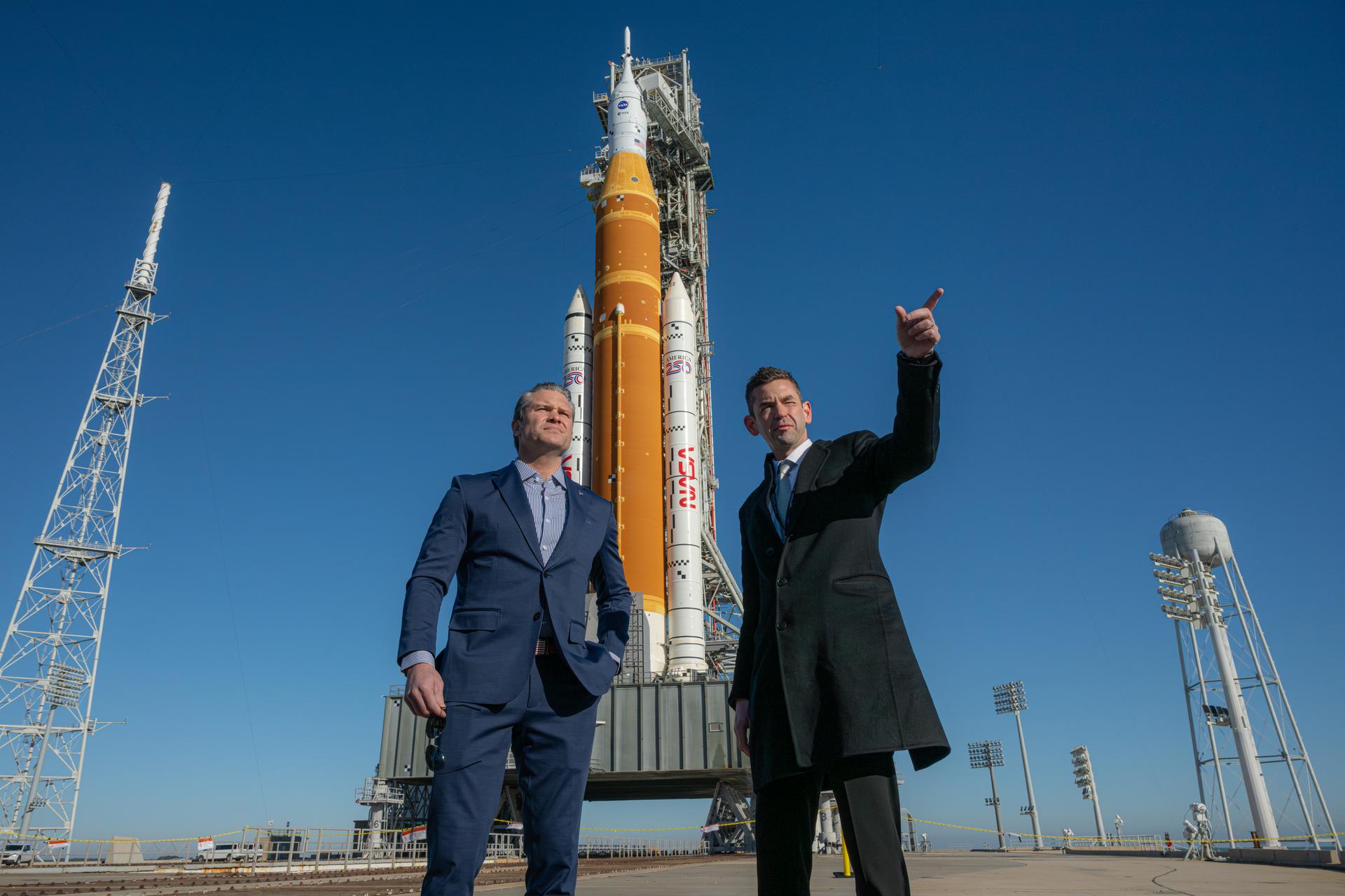
NASA Administrator Jared Isaacman, right, and Secretary of War Pete Hegseth, left, visit NASA’s Artemis II SLS (Space Launch System) rocket and Orion spacecraft at Launch Complex 39B, Monday, Feb. 2, 2026, at NASA’s Kennedy Space Center in Florida. Photo Credit: (NASA/John Kraus)
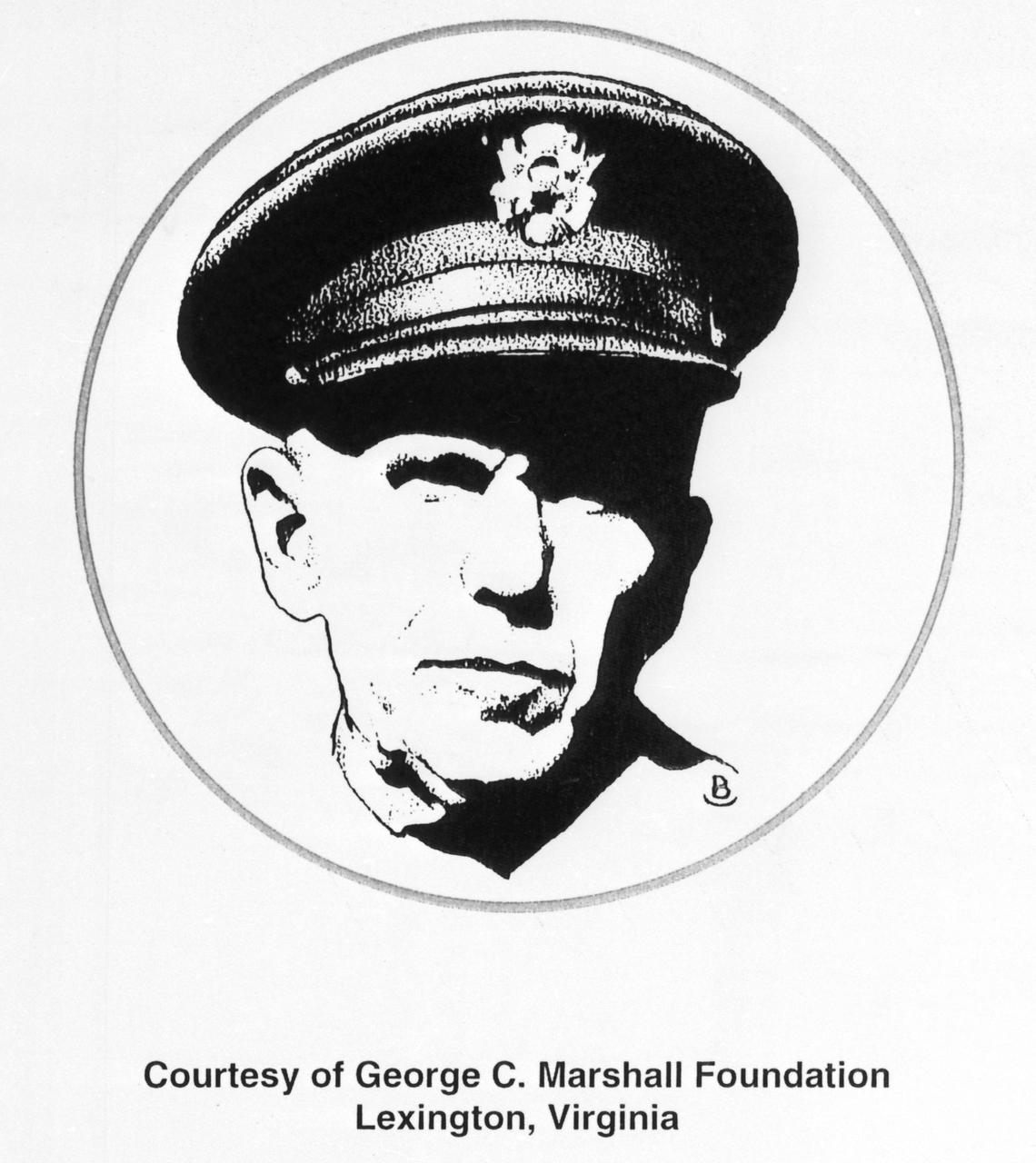
The Marshall Space Flight Center, a NASA field installation, was established at Huntsville, Alabama, in 1960. The Center was named in honor of General George C. Marshall, the Army Chief of Staff during World War II, Secretary of State, and Nobel Prize Wirner for his world-renowned Marshall Plan.
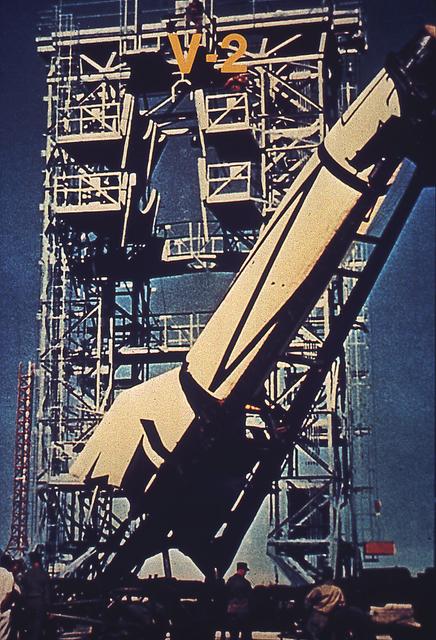
A V-2 rocket is hoisted into a static test facility at White Sands, New Mexico. The German engineers and scientists who developed the V-2 came to the United States at the end of World War II and continued rocket testing under the direction of the U. S. Army, launching more than sixty V-2s.
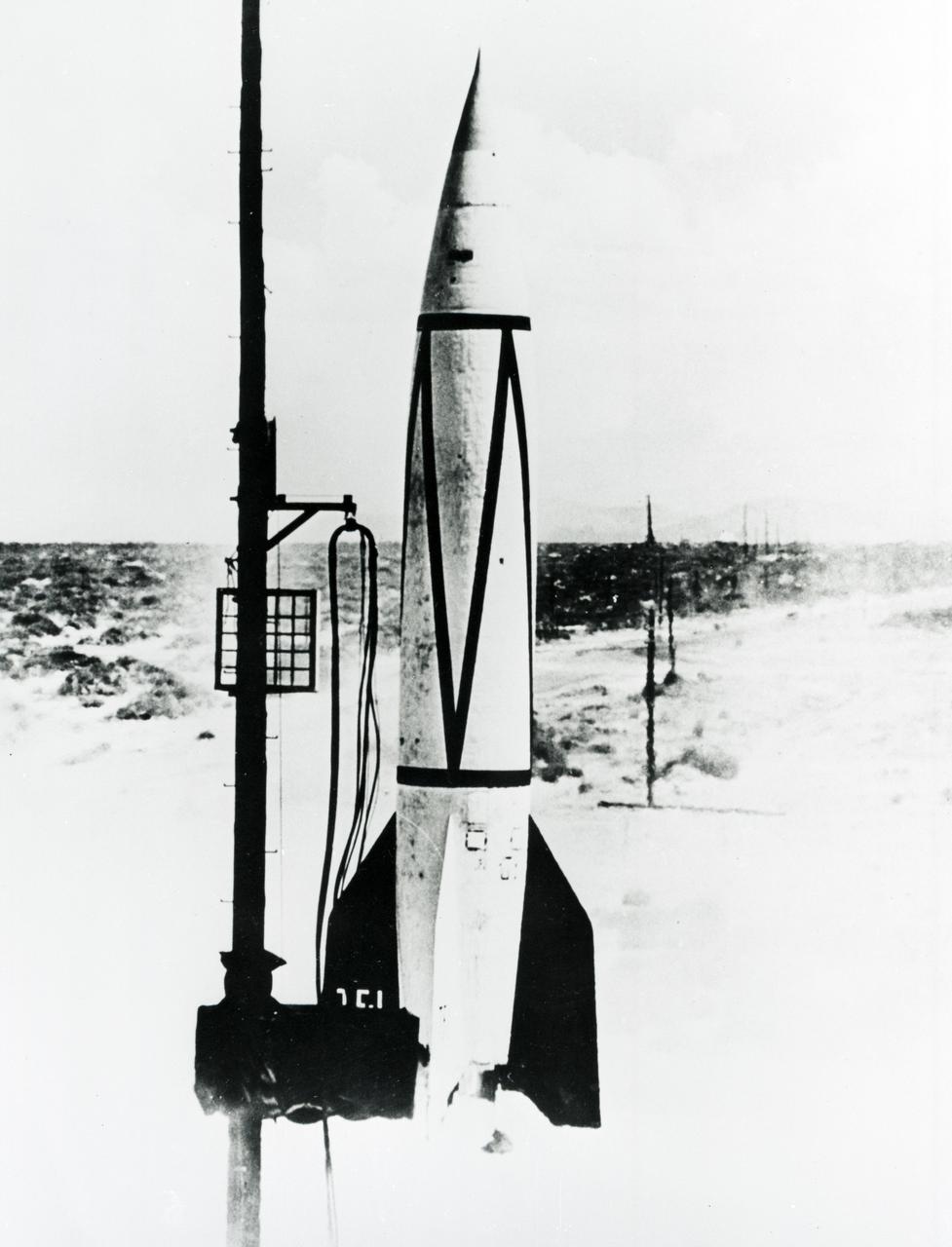
A V-2 rocket takes flight at White Sands, New Mexico, in 1946. The German engineers and scientists who developed the V-2 came to the United States at the end of World War II and continued rocket testing under the direction of the U. S. Army, launching more than sixty V-2s.
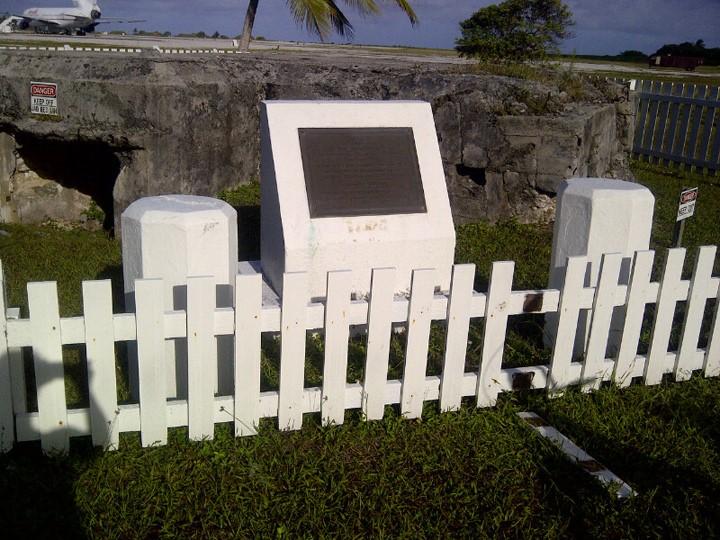
KWAJALEIN ATOLL, Marshall Islands - Orbital Science Corp.'s L-1011 aircraft "Stargazer" stands near the runway on Kwajalein Atoll with the company's Pegasus rocket slung underneath in the background near this World War II-era bunker built by the Japanese forces who occupied the island. Photo credit: NASA

Gareth Edwards, film director, Rogue One: A Star Wars Story, speaks on a panel after a showing of the Project Mars Competition's short films and the Mars series, Monday, November 5, 2018 at National Geographic Society Headquarters in Washington. Photo Credit: (NASA/Aubrey Gemignani)
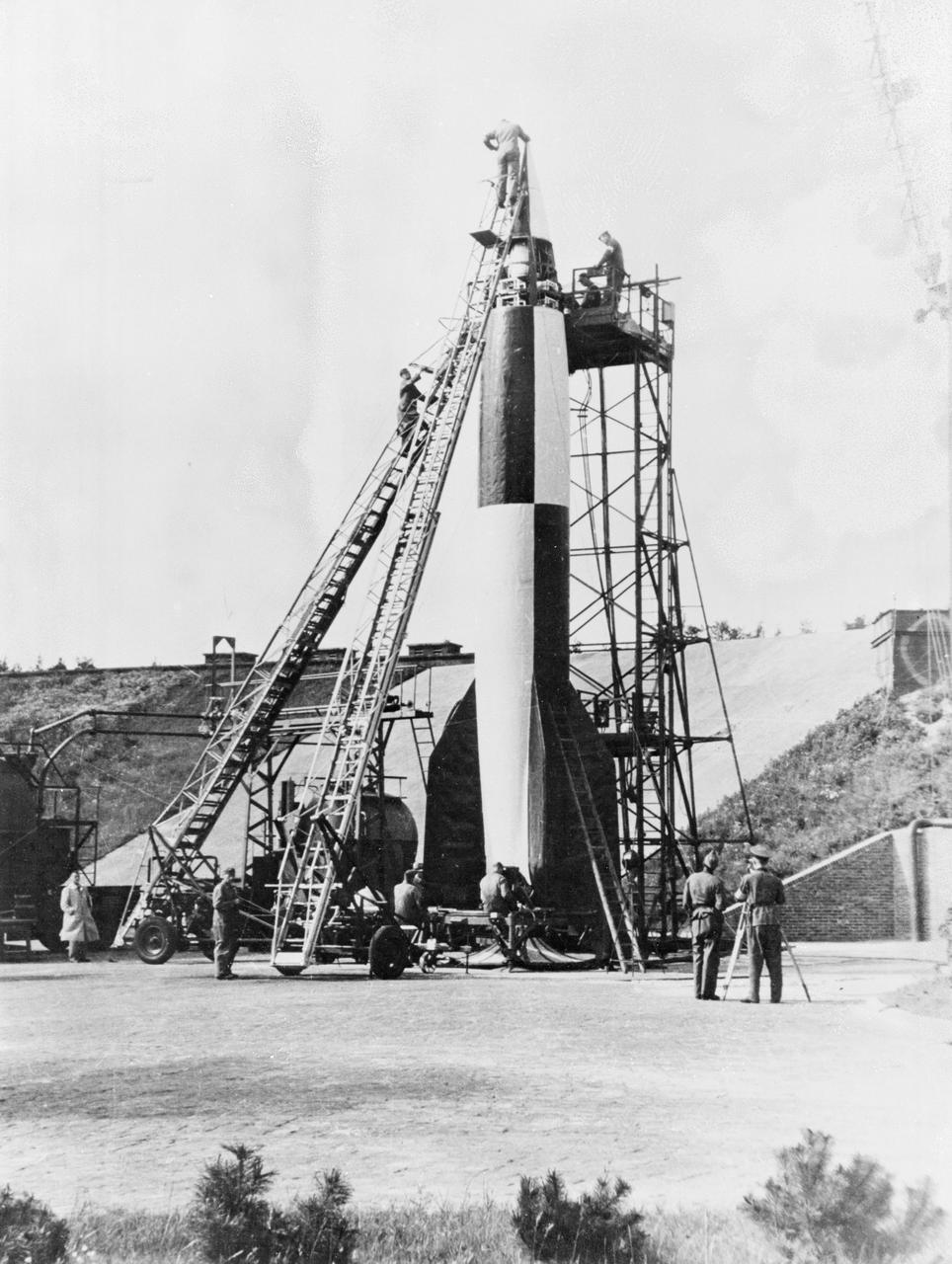
German technicians stack the various stages of the V-2 rocket in this undated photograph. The team of German engineers and scientists who developed the V-2 came to the United States at the end of World War II and worked for the U. S. Army at Fort Bliss, Texas, and Redstone Arsenal in Huntsville, Alabama.
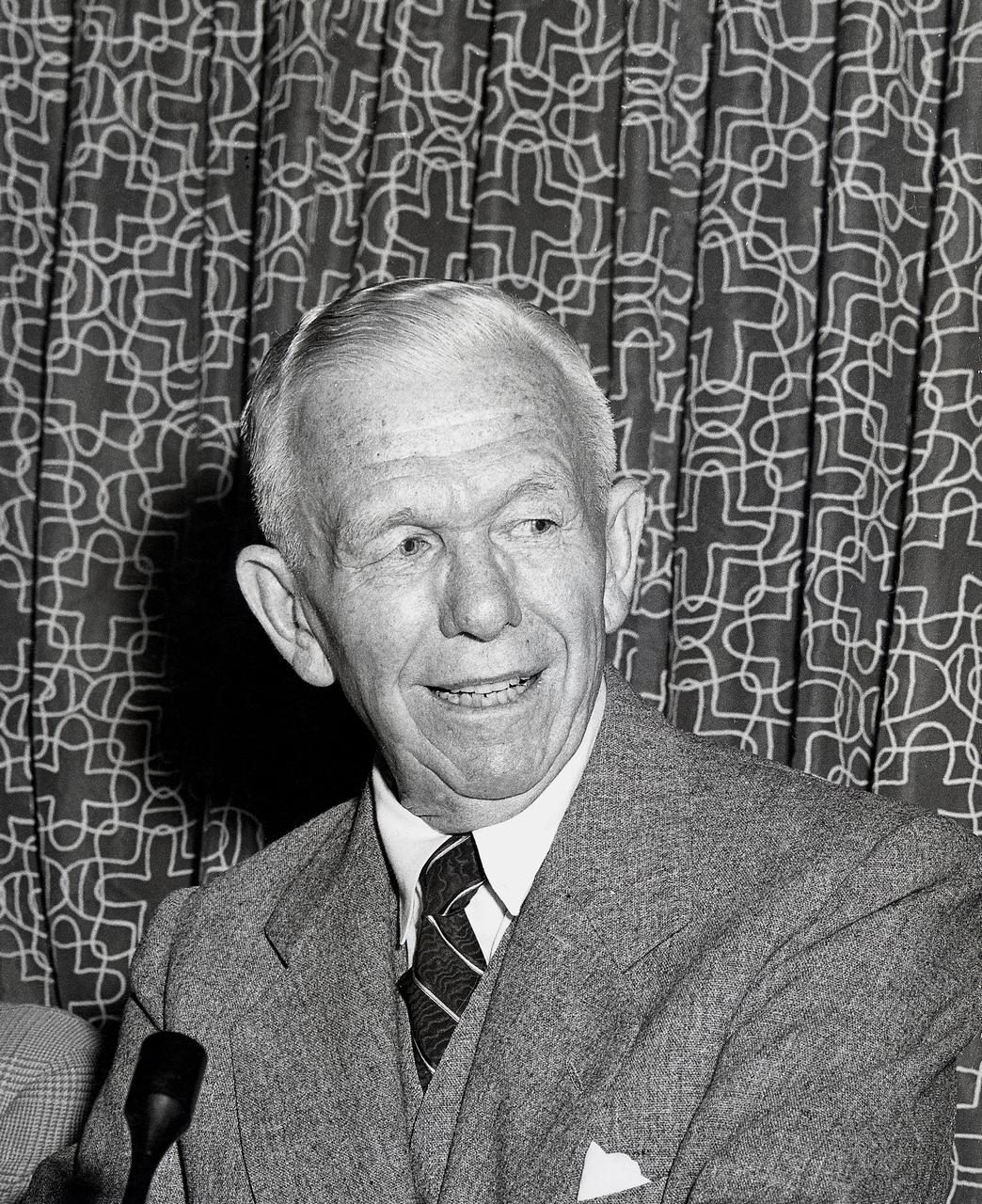
The Marshall Space Flight Center, a NASA field installation, was established at Huntsville, Alabama, in 1960. The Center was named in honor of General George C. Marshall, the Army Chief of Staff during World War II, Secretary of State, and Nobel Prize Wirner for his world-renowned Marshall Plan.
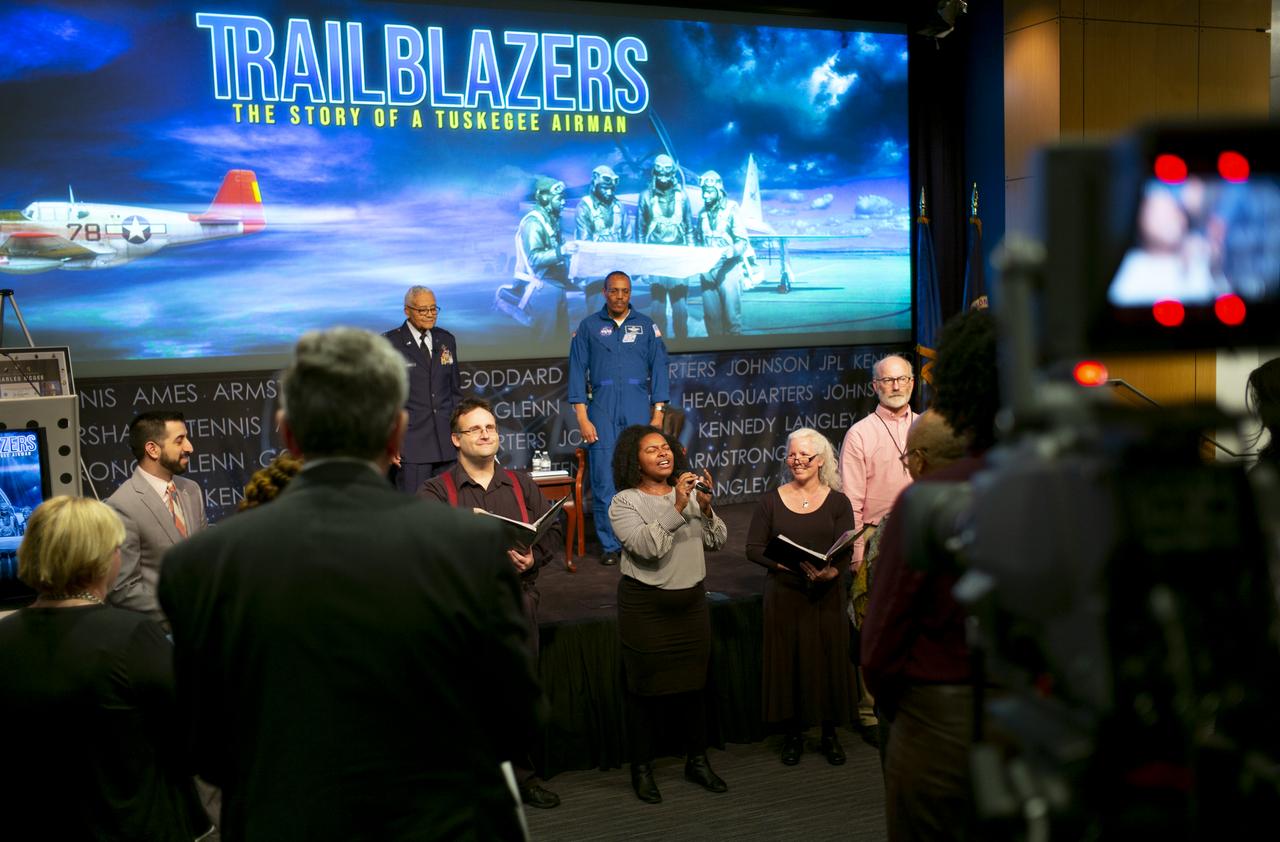
Members of the All Souls Church Unitarian Choir lead the audience in “Lift Ev’ry Voice and Sing” after a duscussion between Retired U.S. Air Force Honorary Brigadier General Charles McGee and NASA astronaut Alvin Drew during a Black History Month program titled “Trailblazers, The Story of a Tuskegee Airman,” Wednesday, Feb. 5, 2020, at NASA Headquarters in Washington, DC. McGee, a pilot with the Tuskegee Airmen during World War II, was a career officer in the Air Force also serving during the Korean and Vietnam Wars. Over his 30 years of service he flew 409 combat missions. Of the 355 Tuskegee pilots who flew in combat, McGee is one of only nine surviving. Photo Credit: (NASA/Joel Kowsky)
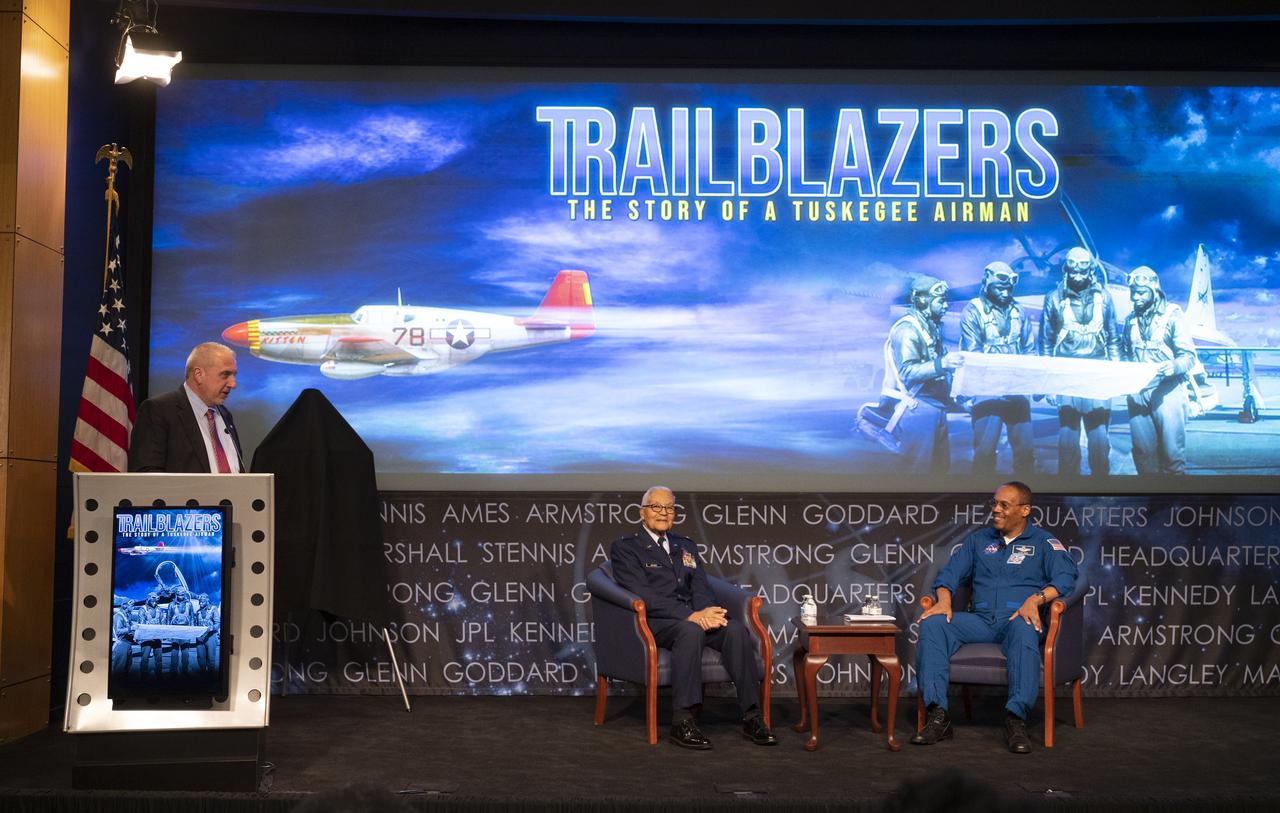
Robert Pearce, Associate Administrator for NASA’s Aeronautics Research Mission Directorate, left, moderates questions from the audience for retired U.S. Air Force Honorary Brigadier General Charles McGee speaks with NASA astronaut Alvin Drew during a Black History Month program titled “Trailblazers, The Story of a Tuskegee Airman,” Wednesday, Feb. 5, 2020, at NASA Headquarters in Washington, DC. McGee, a pilot with the Tuskegee Airmen during World War II, was a career officer in the Air Force also serving during the Korean and Vietnam Wars. Over his 30 years of service he flew 409 combat missions. Of the 355 Tuskegee pilots who flew in combat, McGee is one of only nine surviving. Photo Credit: (NASA/Joel Kowsky)
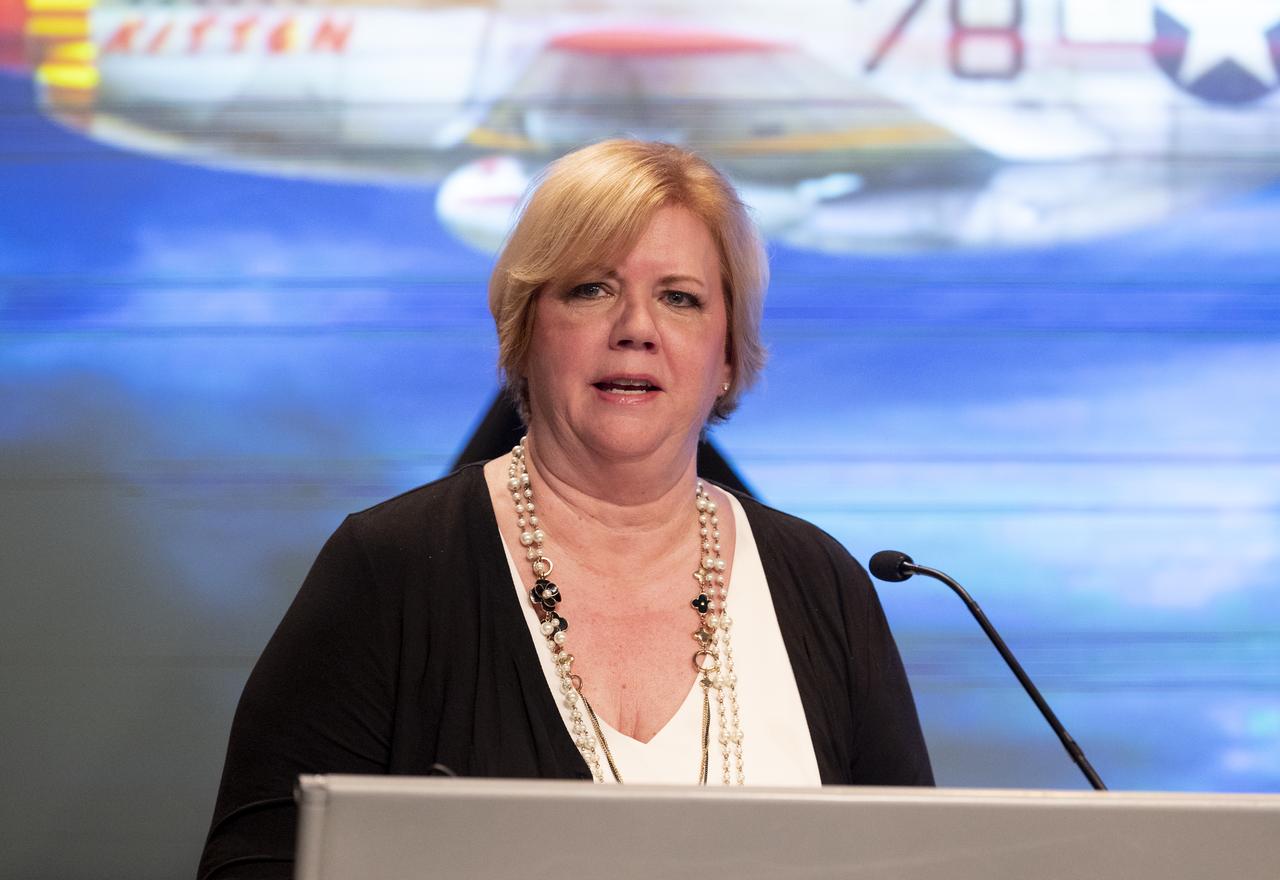
NASA Deputy Associate Administrator Melanie Saunders speaks before a discussion between retired U.S. Air Force Honorary Brigadier General Charles McGee and NASA astronaut Alvin Drew during a Black History Month program titled “Trailblazers, The Story of a Tuskegee Airman,” Wednesday, Feb. 5, 2020, at NASA Headquarters in Washington, DC. McGee, a pilot with the Tuskegee Airmen during World War II, was a career officer in the Air Force also serving during the Korean and Vietnam Wars. Over his 30 years of service he flew 409 combat missions. Of the 355 Tuskegee pilots who flew in combat, McGee is one of only nine surviving. Photo Credit: (NASA/Joel Kowsky)
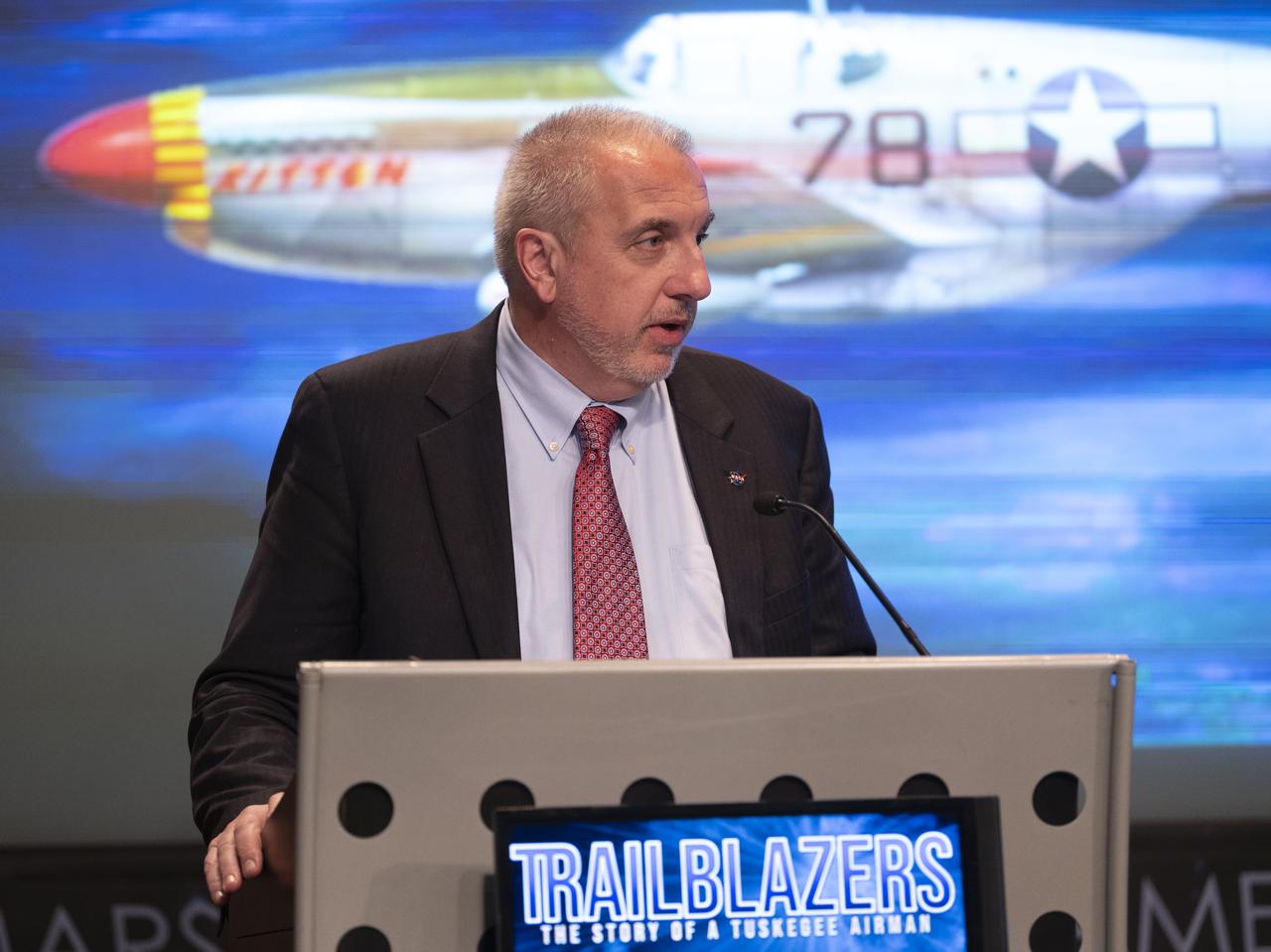
Robert Pearce, Associate Administrator for NASA’s Aeronautics Research Mission Directorate, speaks before a discussion between retired U.S. Air Force Honorary Brigadier General Charles McGee speaks with NASA astronaut Alvin Drew during a Black History Month program titled “Trailblazers, The Story of a Tuskegee Airman,” Wednesday, Feb. 5, 2020, at NASA Headquarters in Washington, DC. McGee, a pilot with the Tuskegee Airmen during World War II, was a career officer in the Air Force also serving during the Korean and Vietnam Wars. Over his 30 years of service he flew 409 combat missions. Of the 355 Tuskegee pilots who flew in combat, McGee is one of only nine surviving. Photo Credit: (NASA/Joel Kowsky)
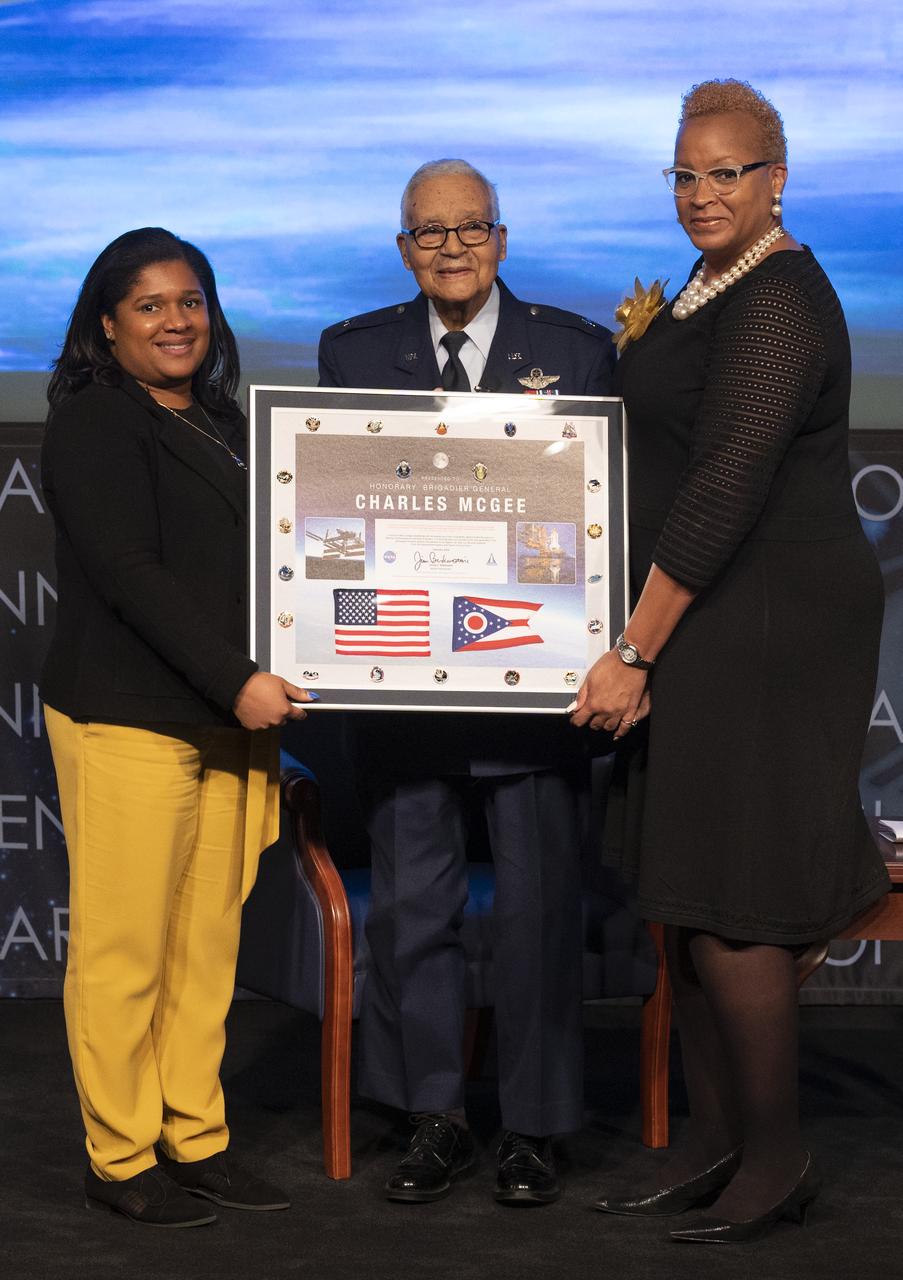
Zudayyah Taylor-Dunn, president of the NASA Headquarters Chapter of Blacks in Government (BIG), left, and LaVerne Randolph, vice president of the NASA Headquarters Chapter of BIG, present a montage containing an American Flag and Ohio State flag flown in space to Retired U.S. Air Force Honorary Brigadier General Charles McGee during a Black History Month program titled “Trailblazers, The Story of a Tuskegee Airman,” Wednesday, Feb. 5, 2020, at NASA Headquarters in Washington, DC. McGee, a pilot with the Tuskegee Airmen during World War II, was a career officer in the Air Force also serving during the Korean and Vietnam Wars. Over his 30 years of service he flew 409 combat missions. Of the 355 Tuskegee pilots who flew in combat, McGee is one of only nine surviving. Photo Credit: (NASA/Joel Kowsky)

NASA digital content strategist Andres Almeida sings the National Anthem before a discussion between Retired U.S. Air Force Honorary Brigadier General Charles McGee and NASA astronaut Alvin Drew during a Black History Month program titled “Trailblazers, The Story of a Tuskegee Airman,” Wednesday, Feb. 5, 2020, at NASA Headquarters in Washington, DC. McGee, a pilot with the Tuskegee Airmen during World War II, was a career officer in the Air Force also serving during the Korean and Vietnam Wars. Over his 30 years of service he flew 409 combat missions. Of the 355 Tuskegee pilots who flew in combat, McGee is one of only nine surviving. Photo Credit: (NASA/Joel Kowsky)
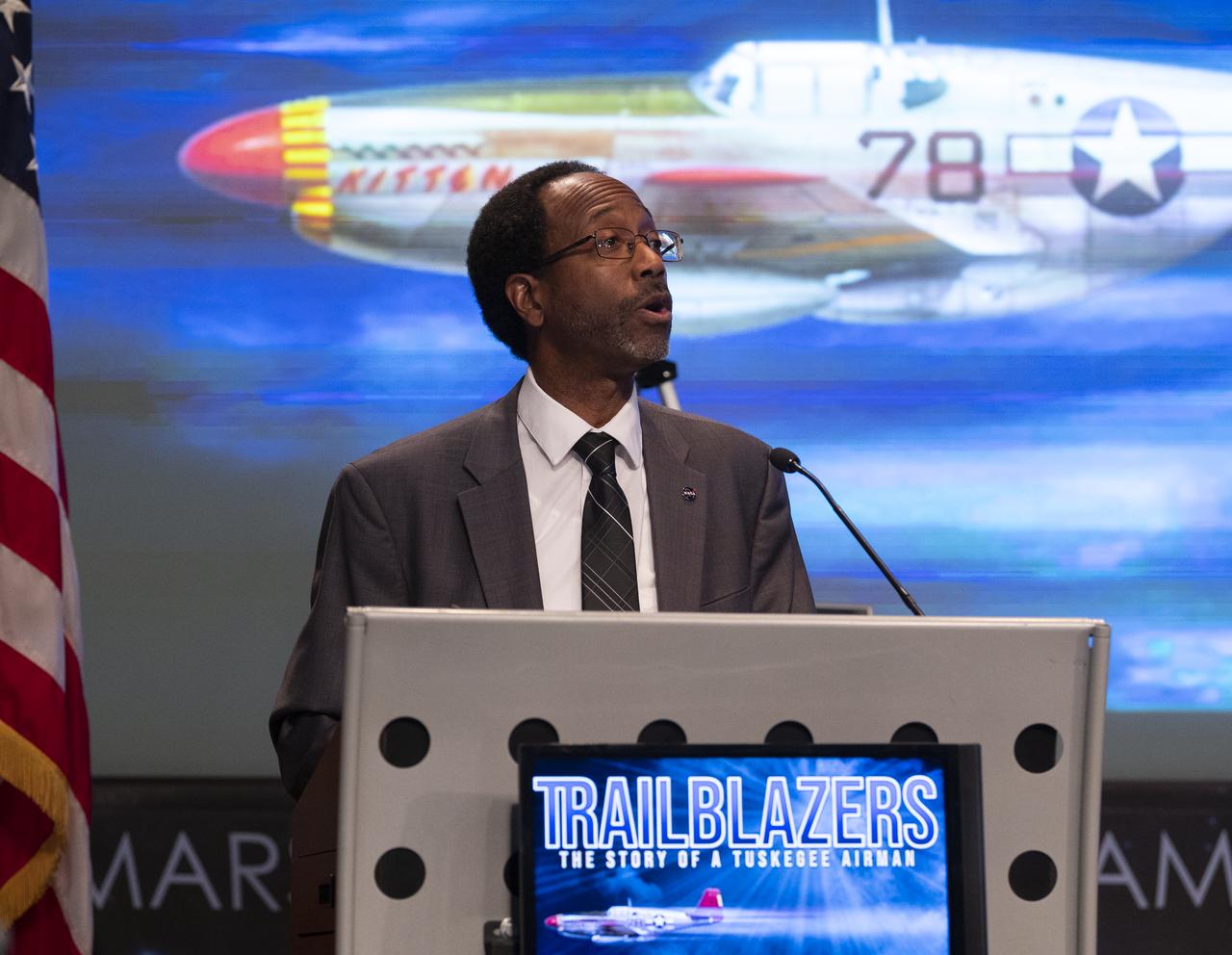
Clayton Turner, Director of NASA’s Langley Research Center, delivers closing remarks following a discussion between Retired U.S. Air Force Honorary Brigadier General Charles McGee and NASA astronaut Alvin Drew during a Black History Month program titled “Trailblazers, The Story of a Tuskegee Airman,” Wednesday, Feb. 5, 2020, at NASA Headquarters in Washington, DC. McGee, a pilot with the Tuskegee Airmen during World War II, was a career officer in the Air Force also serving during the Korean and Vietnam Wars. Over his 30 years of service he flew 409 combat missions. Of the 355 Tuskegee pilots who flew in combat, McGee is one of only nine surviving. Photo Credit: (NASA/Joel Kowsky)
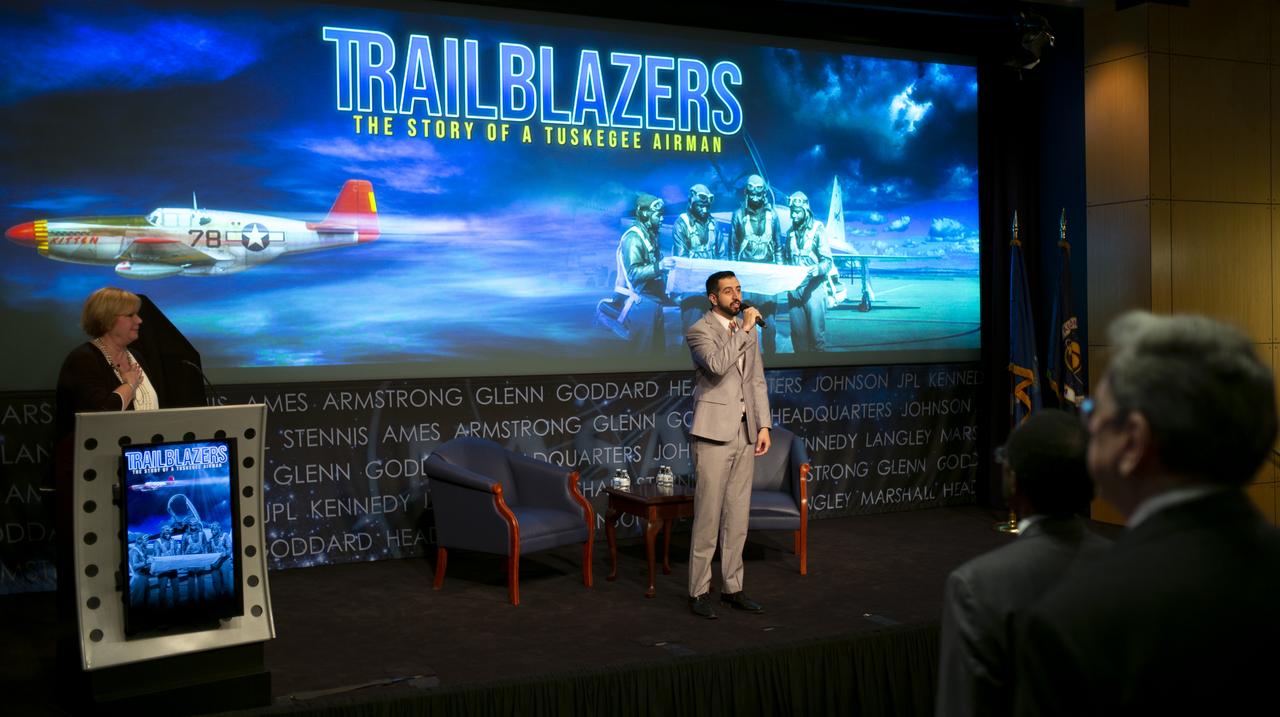
NASA digital content strategist Andres Almeida sings the National Anthem before a discussion between Retired U.S. Air Force Honorary Brigadier General Charles McGee and NASA astronaut Alvin Drew during a Black History Month program titled “Trailblazers, The Story of a Tuskegee Airman,” Wednesday, Feb. 5, 2020, at NASA Headquarters in Washington, DC. McGee, a pilot with the Tuskegee Airmen during World War II, was a career officer in the Air Force also serving during the Korean and Vietnam Wars. Over his 30 years of service he flew 409 combat missions. Of the 355 Tuskegee pilots who flew in combat, McGee is one of only nine surviving. Photo Credit: (NASA/Joel Kowsky)
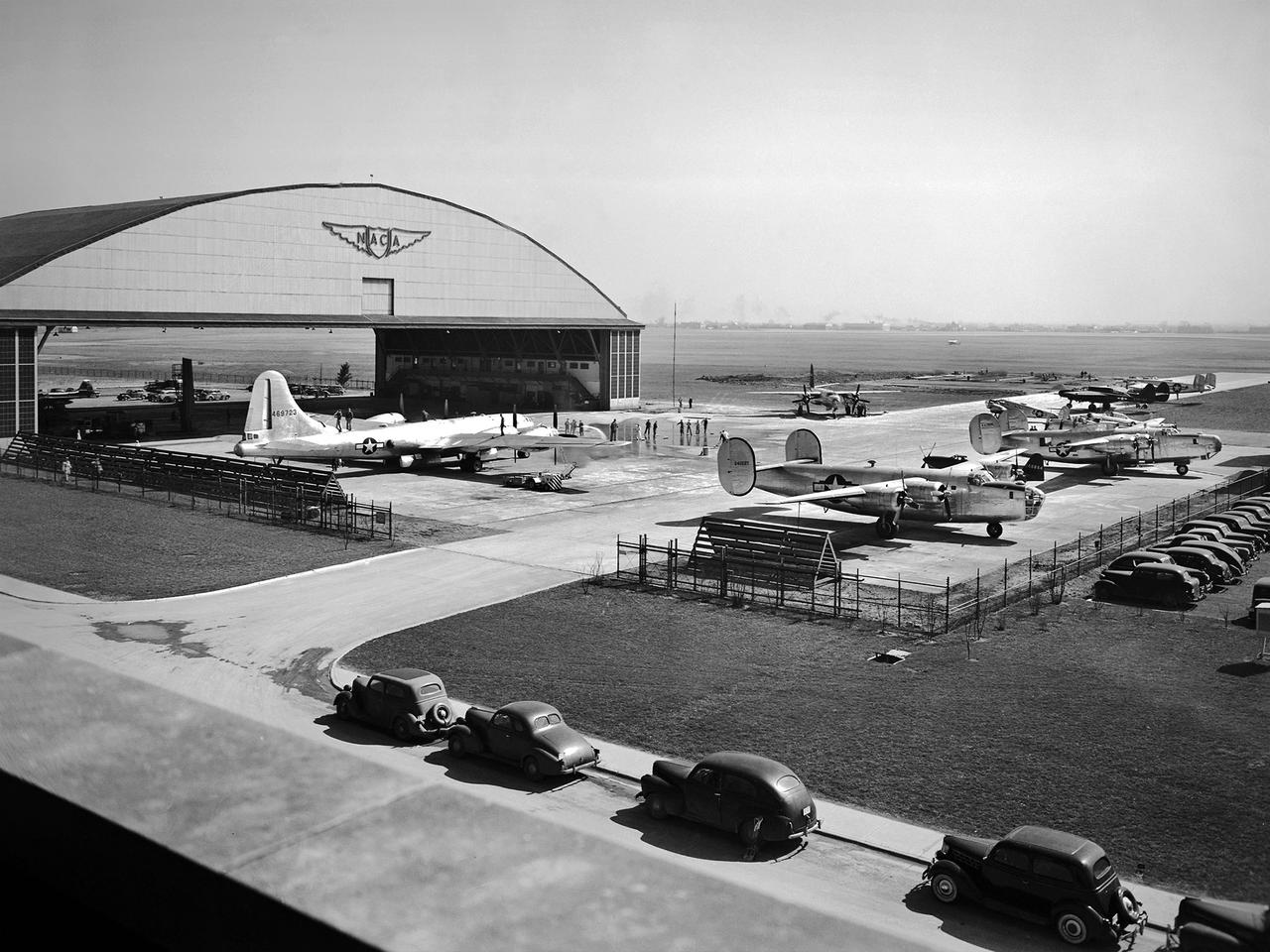
This fleet of military aircraft was used in the 1940s for research at the National Advisory Committee for Aeronautics (NACA) Lewis Flight Propulsion Laboratory in Cleveland, Ohio. The NACA Lewis flight research program was established in March 1943 to augment the lab’s wartime research efforts. NACA Lewis possessed a host of wind tunnels, test stands, and other ground facilities designed to replicate flight conditions, but actual flight tests remained an integral research tool. The military loaned NACA Lewis 15 different aircraft during World War II and six others in the six months following the end of hostilities. During the war these aircraft supported three main efforts: the improved performance of reciprocating engines, better fuel additives and mixtures, and deicing systems. The wartime researchers used the types of aircraft which the studies were intended to improve. After the war the research aircraft served as test beds to investigate engines or systems that often had little to do with the research aircraft. During the war, NACA Lewis’ three pilots were supported by 16 flight engineers, 36 mechanics, and 10 instrumentation specialists. The visible aircraft, from left to right, are a Boeing B-29 Superfortress, a Martin B-26A Marauder, two Consolidated B-24 Liberators, a Cessna UC-78 Bobcat, and a Northrop P-61 Black Widow. Partially obscured are a North American P-51 Mustang, a Bell P-63 King Cobra, a North American AT-6 Texan, and a Lockheed RA-29 Hudson.
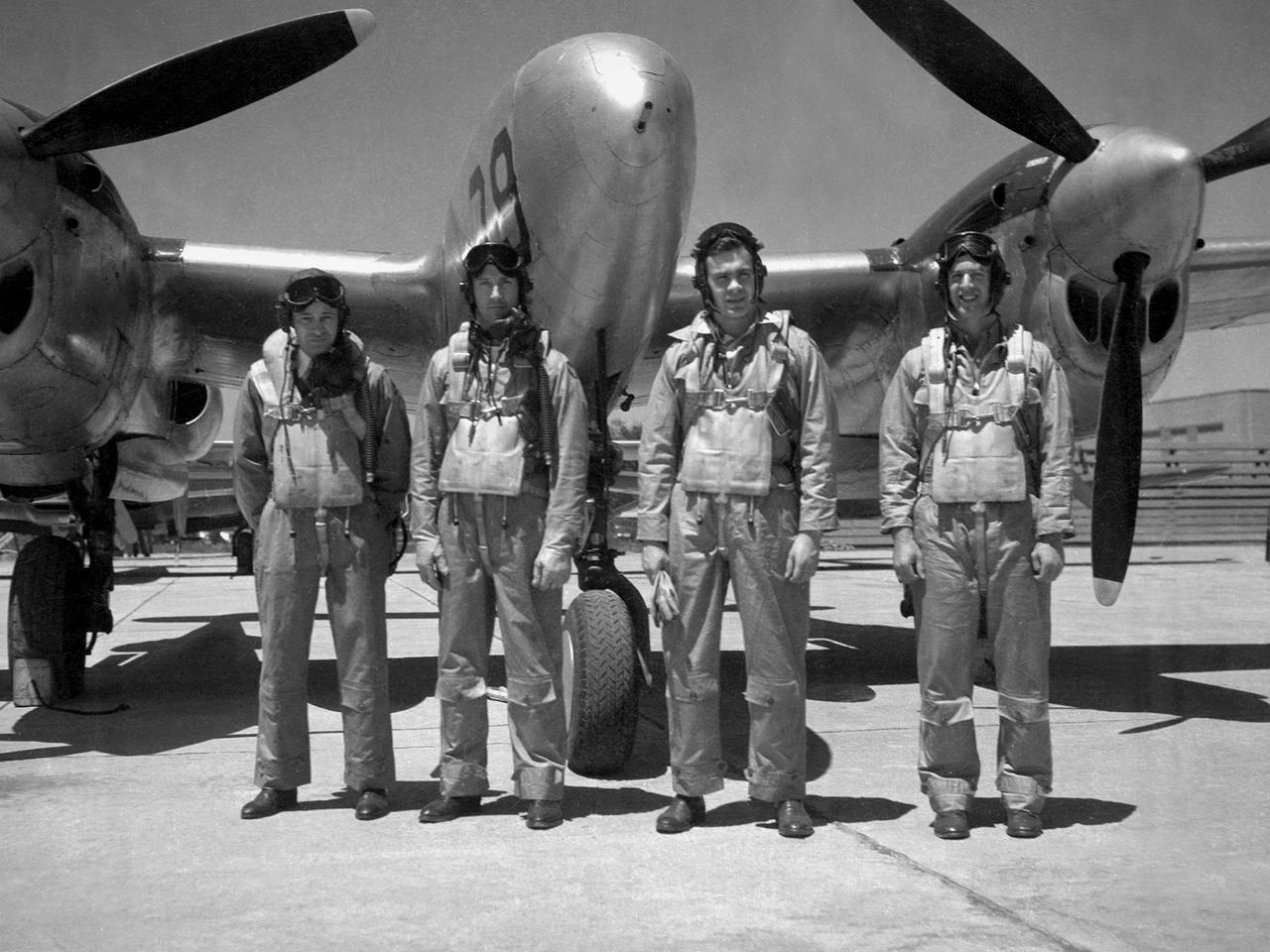
The Aircraft Engine Research Laboratory’s pilot corps during the final days of World War II: from left to right, Joseph Vensel, Howard Lilly, William Swann, and Joseph Walker. William “Eb” Gough joined the group months after this photograph. These men were responsible for flying the various National Advisory Committee for Aeronautics (NACA) aircraft to test new engine modifications, study ice buildup, and determine fuel performance. Vensel, a veteran pilot from Langley, was the Chief of Flight Operations and a voice of reason at the laboratory. In April 1947 Vensel was transferred to lead the new Muroc Flight Tests Unit in California until 1966. Lilly was a young pilot with recent Navy experience. Lilly also flew in the 1946 National Air Races. He followed Vensel to Muroc in July 1947 where he became the first NACA pilot to penetrate the sound barrier. On May 3, 1948, Lilly became the first NACA pilot to die in the line of duty. Swann was a young civilian pilot when he joined the NACA. He spent his entire career at the Cleveland laboratory, and led the flight operations group from the early 1960s until 1979. Two World War II veterans joined the crew after the war. Walker was a 24-year-old P–38 reconnaissance pilot. He joined the NACA as a physicist in early 1945 but soon worked his way into the cadre of pilots. Walker later gained fame as an X-plane pilot at Muroc and was killed in a June 1966 fatal crash. Gough survived being shot down twice during the war and was decorated for flying rescue missions in occupied areas.