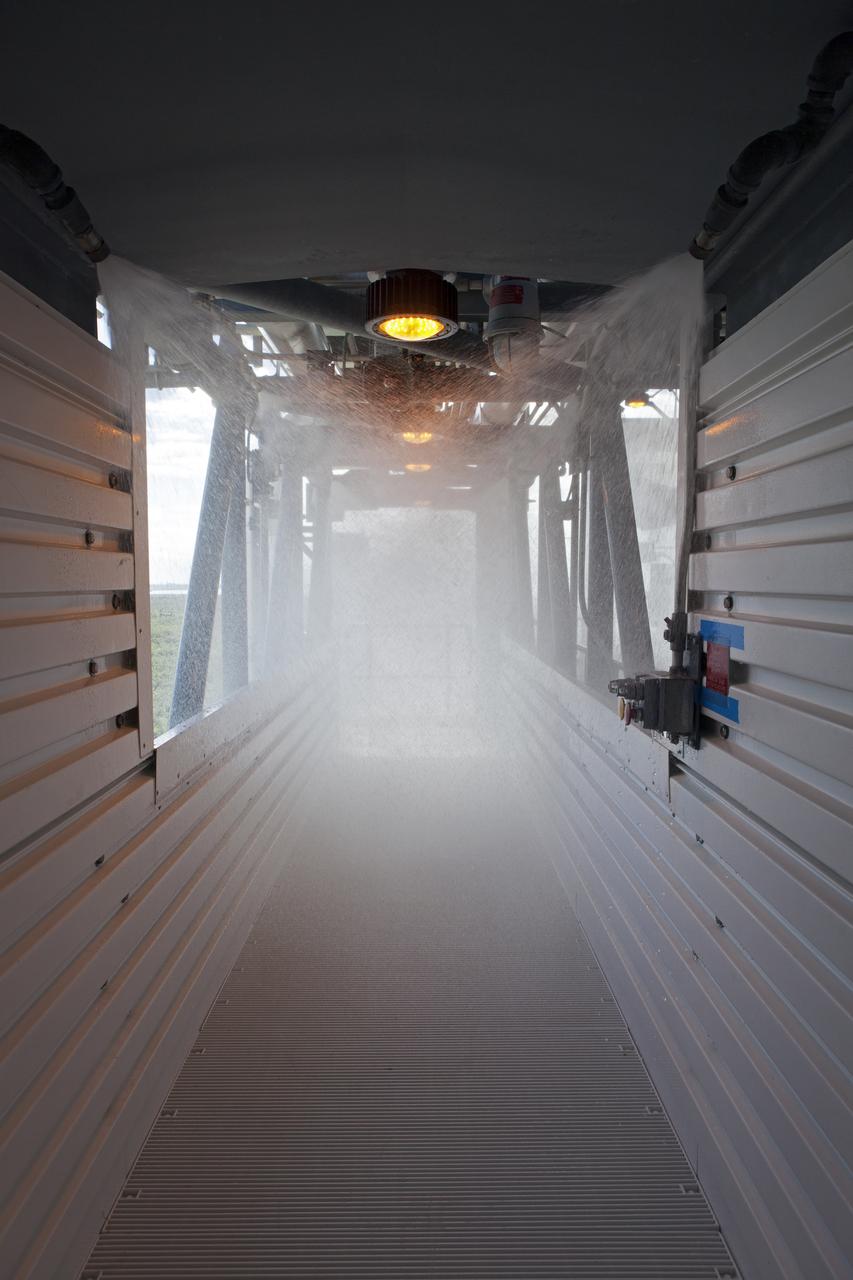
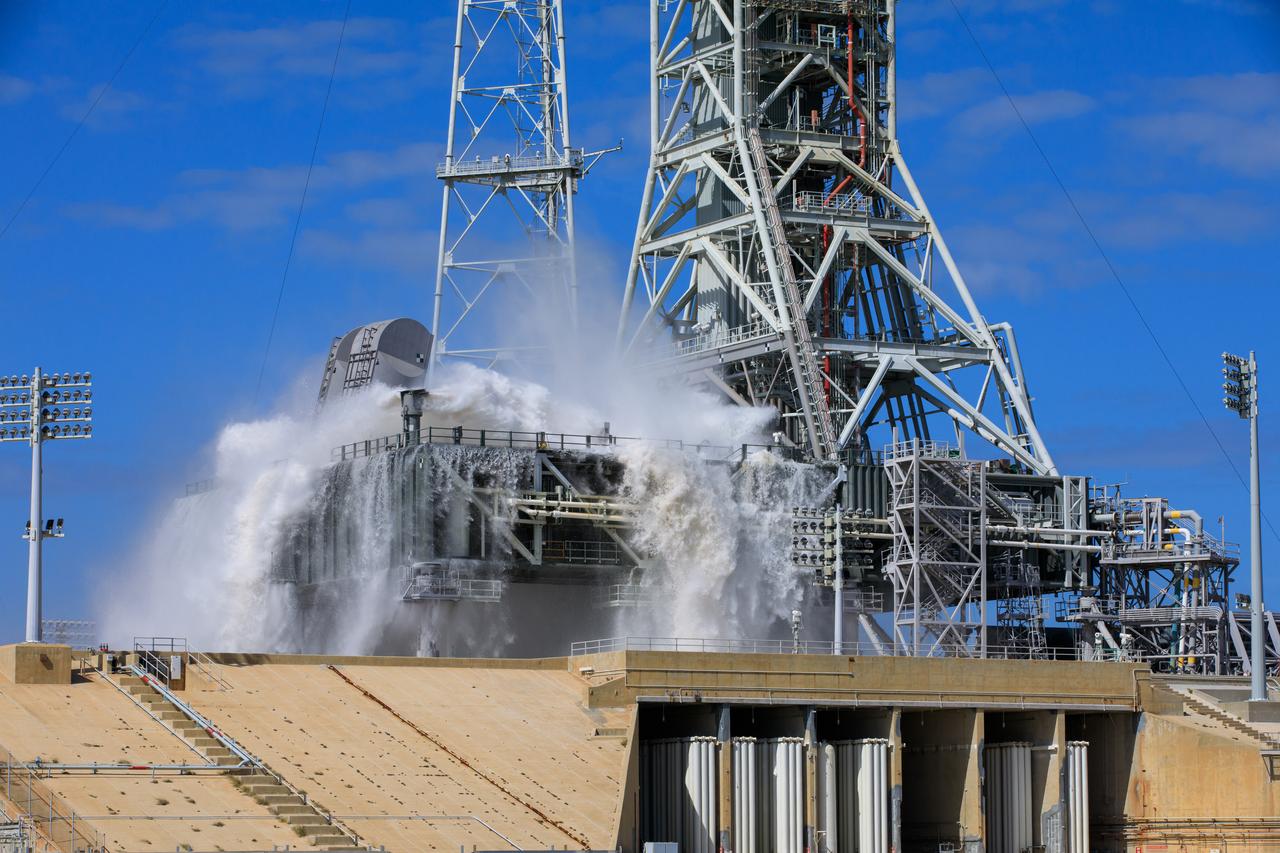
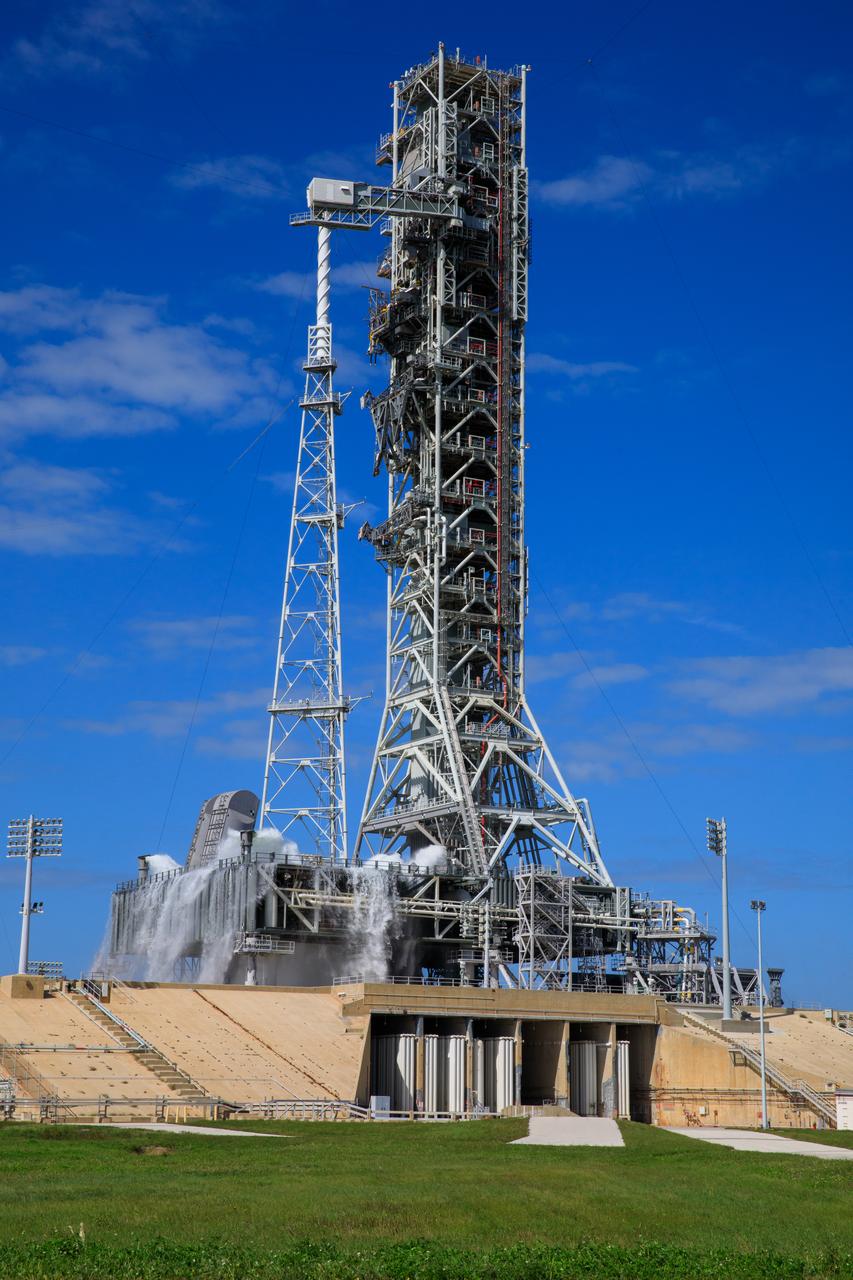
NASA, Boeing and United Launch Alliance personnel run a water deluge test on the Crew Access Tower at Space Launch Complex 41 on Cape Canaveral Air Force Station in Florida. The test gathered data on how launch site and astronaut crews would exit in the event of an emergency from the white room at the end of the crew access arm to the emergency escape system on the pad. Boeing’s Starliner will launch on a United Launch Alliance Atlas V rocket to the International Space Station as part of NASA’s Commercial Crew Program.
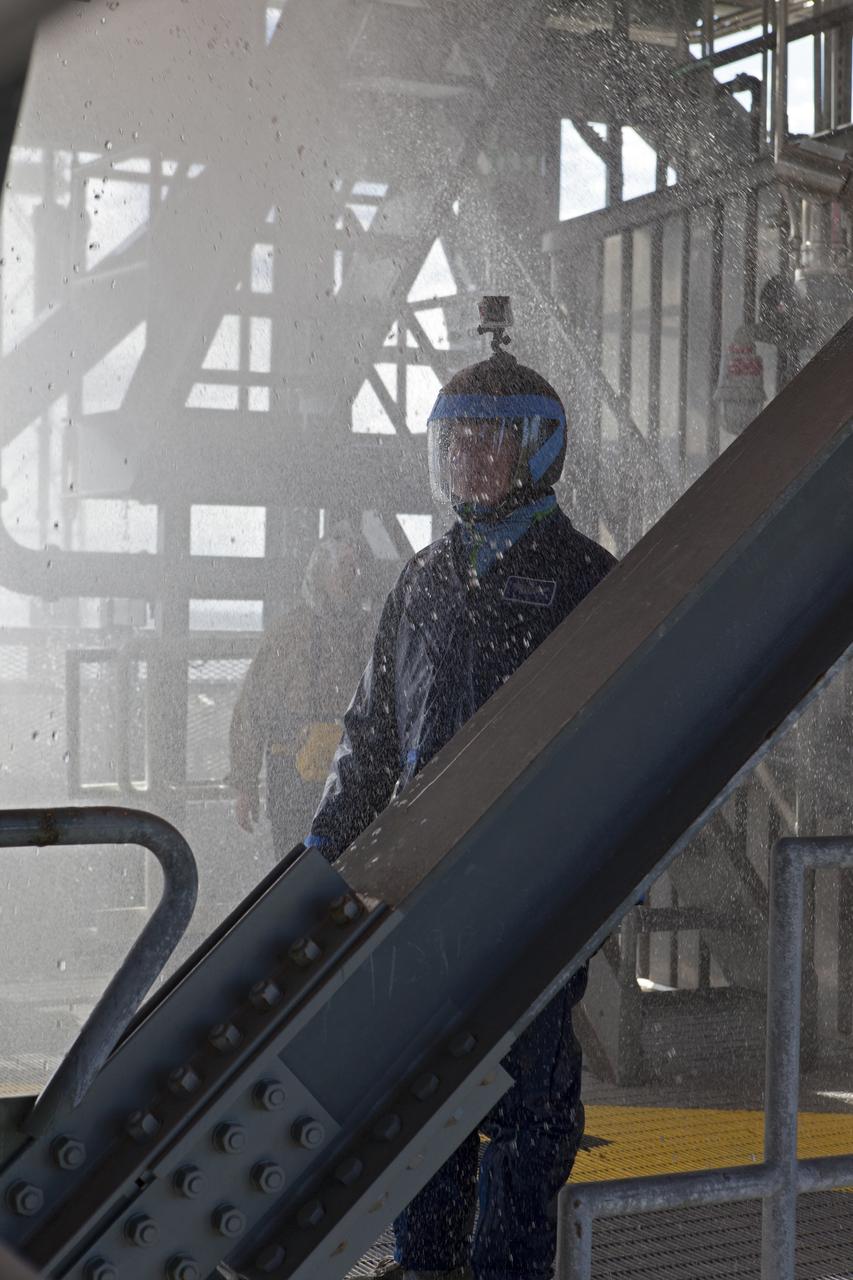
NASA and Boeing personnel experience conditions during a water deluge test on the Crew Access Tower at Space Launch Complex 41 on Cape Canaveral Air Force Station in Florida. The test gathered data on how launch site and astronaut crews would exit in the event of an emergency from the white room at the end of the crew access arm to the emergency escape system on the pad. Boeing’s Starliner will launch on a United Launch Alliance Atlas V rocket to the International Space Station as part of NASA’s Commercial Crew Program.
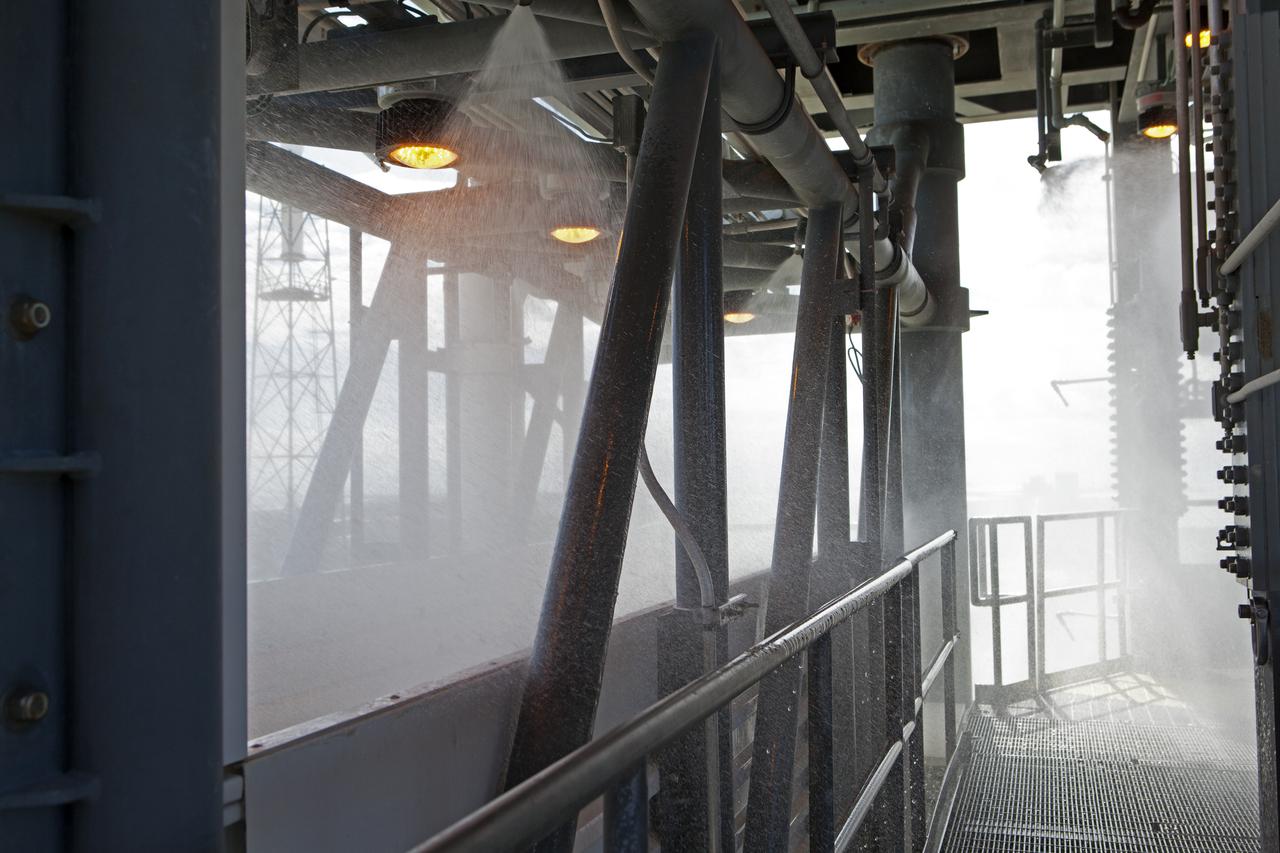
NASA, Boeing and United Launch Alliance personnel begin a water deluge test on the Crew Access Tower at Space Launch Complex 41 on Cape Canaveral Air Force Station in Florida. The test gathered data on how launch site and astronaut crews would exit in the event of an emergency from the white room at the end of the crew access arm to the emergency escape system on the pad. Boeing’s Starliner will launch on a United Launch Alliance Atlas V rocket to the International Space Station as part of NASA’s Commercial Crew Program.
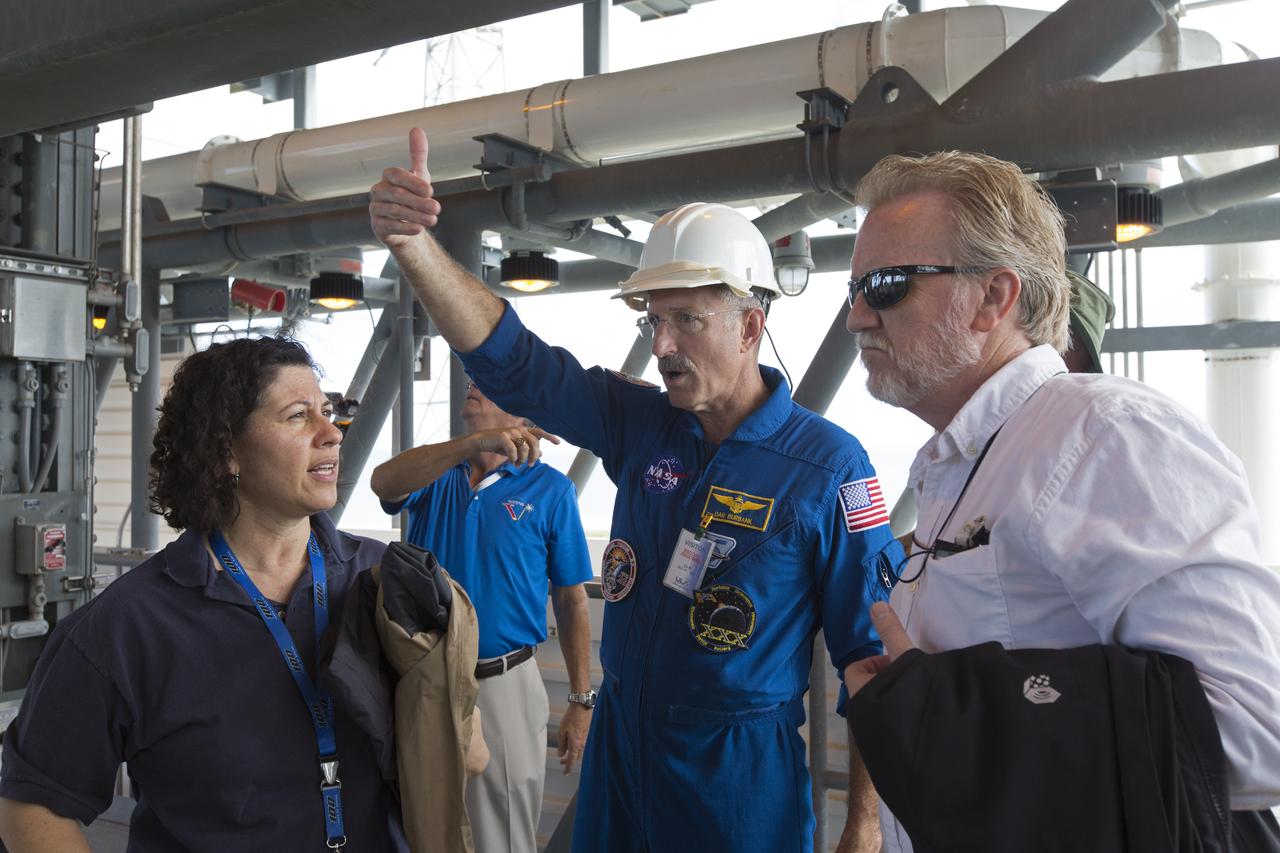
NASA, Boeing and United Launch Alliance personnel discuss procedures for an upcoming water deluge test on the Crew Access Tower at Space Launch Complex 41 on Cape Canaveral Air Force Station in Florida. The test gathered data on how launch site and astronaut crews would exit in the event of an emergency from the white room at the end of the crew access arm to the emergency escape system on the pad. Boeing’s Starliner will launch on a United Launch Alliance Atlas V rocket to the International Space Station as part of NASA’s Commercial Crew Program.
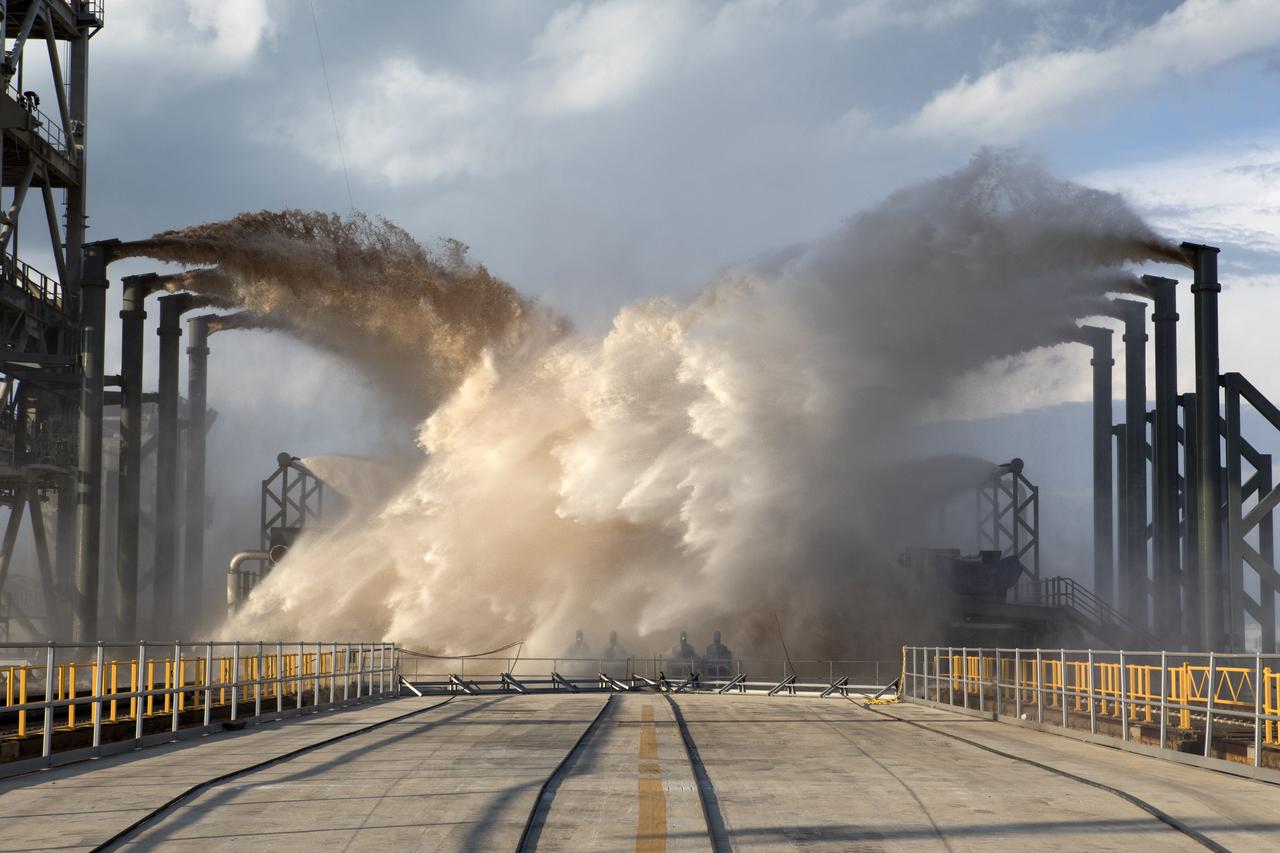
Water sprays onto Launch Complex 39A during a test by SpaceX of the sound suppression system at the launch pad. The water deluge diminishes vibration at the pad during a liftoff to protect the pad structures and rocket itself from excessive shaking. Photo credit: NASA/Kim Shiflett
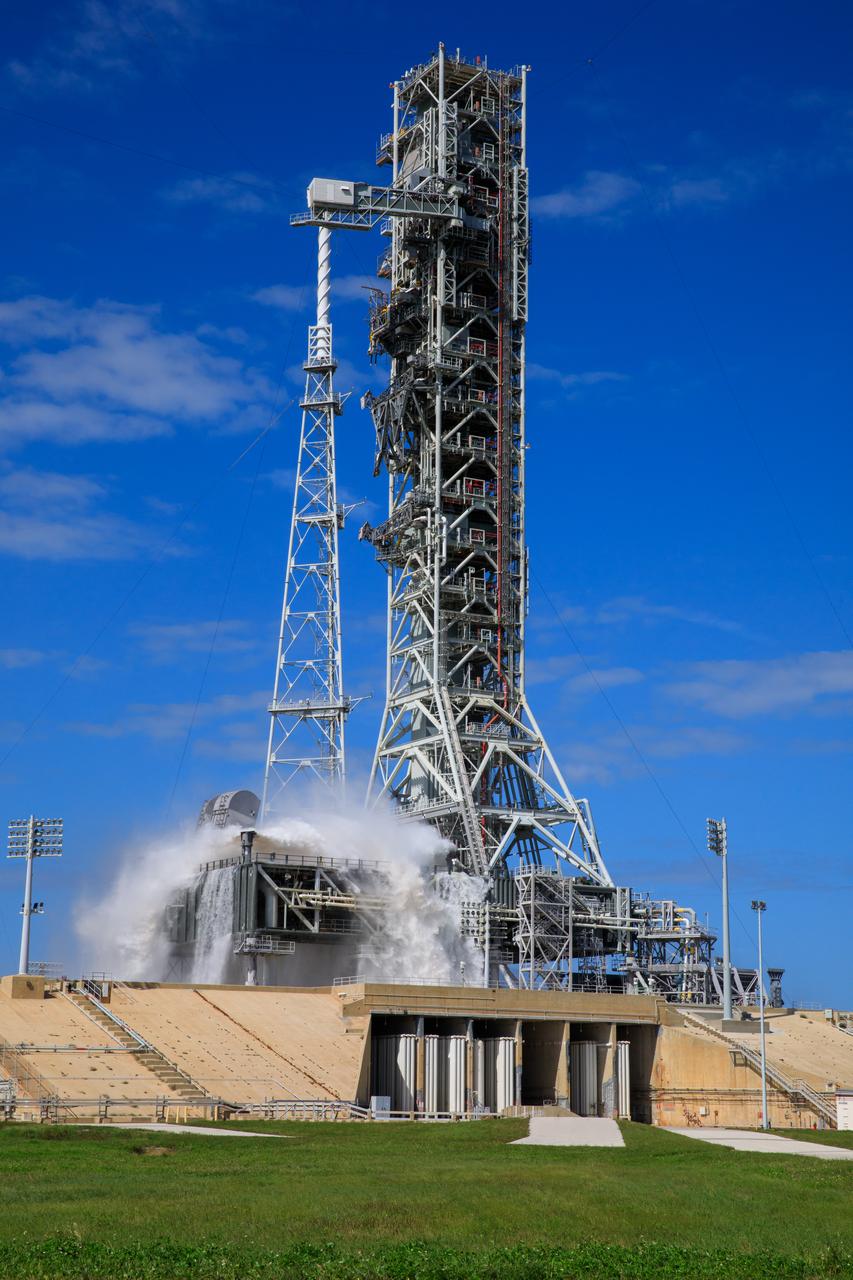
NASA’s Exploration Ground Systems conducts a water flow test with the mobile launcher at Kennedy Space Center’s Launch Complex 39B in Florida on Oct. 24, 2023. It is the third in a series of tests to verify the overpressure protection and sound suppression system is ready for launch of the Artemis II mission. During liftoff, 400,000 gallons of water will rush onto the pad to help protect NASA’s SLS (Space Launch System) rocket, Orion spacecraft, mobile launcher, and launch pad from any over pressurization and extreme sound produced during ignition and liftoff.
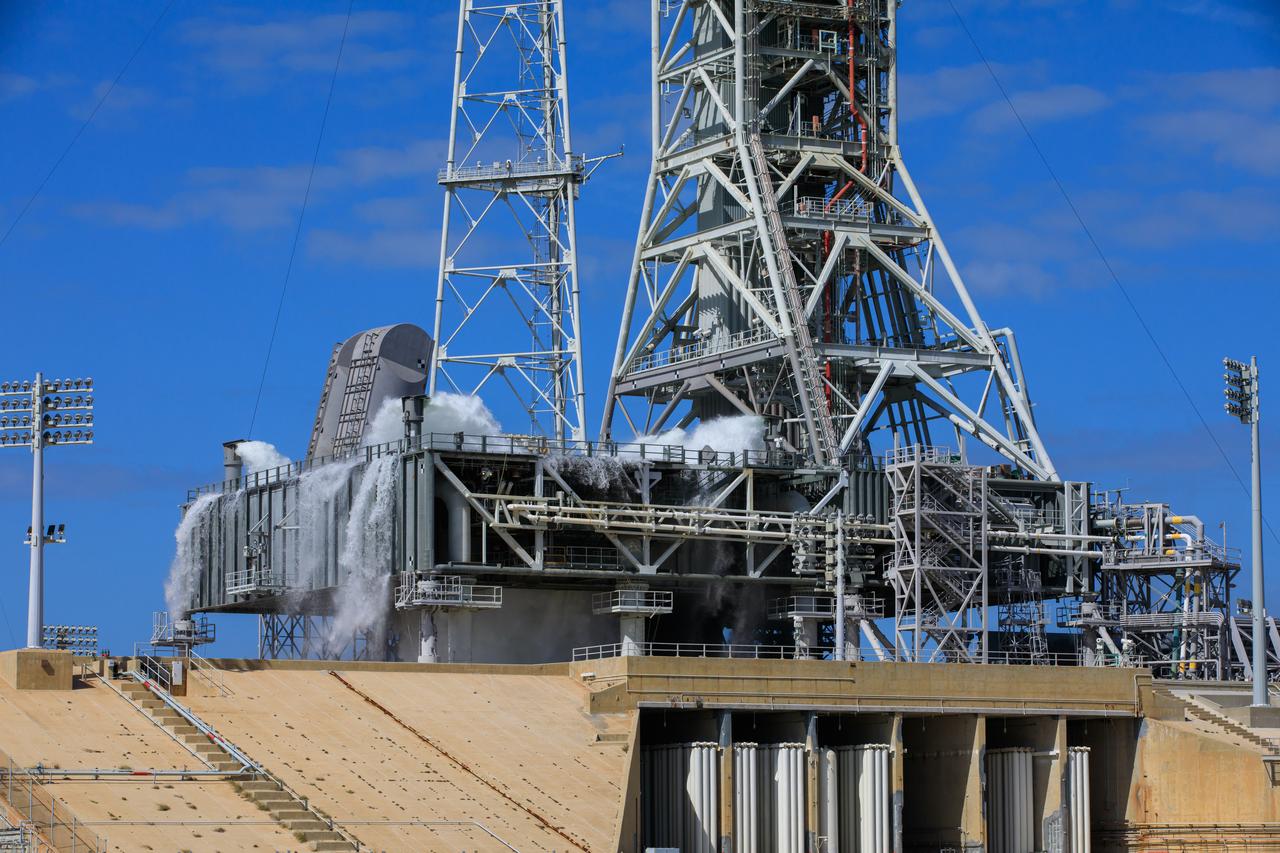
NASA’s Exploration Ground Systems conducts a water flow test with the mobile launcher at Kennedy Space Center’s Launch Complex 39B in Florida on Oct. 24, 2023. It is the third in a series of tests to verify the overpressure protection and sound suppression system is ready for launch of the Artemis II mission. During liftoff, 400,000 gallons of water will rush onto the pad to help protect NASA’s SLS (Space Launch System) rocket, Orion spacecraft, mobile launcher, and launch pad from any over pressurization and extreme sound produced during ignition and liftoff.
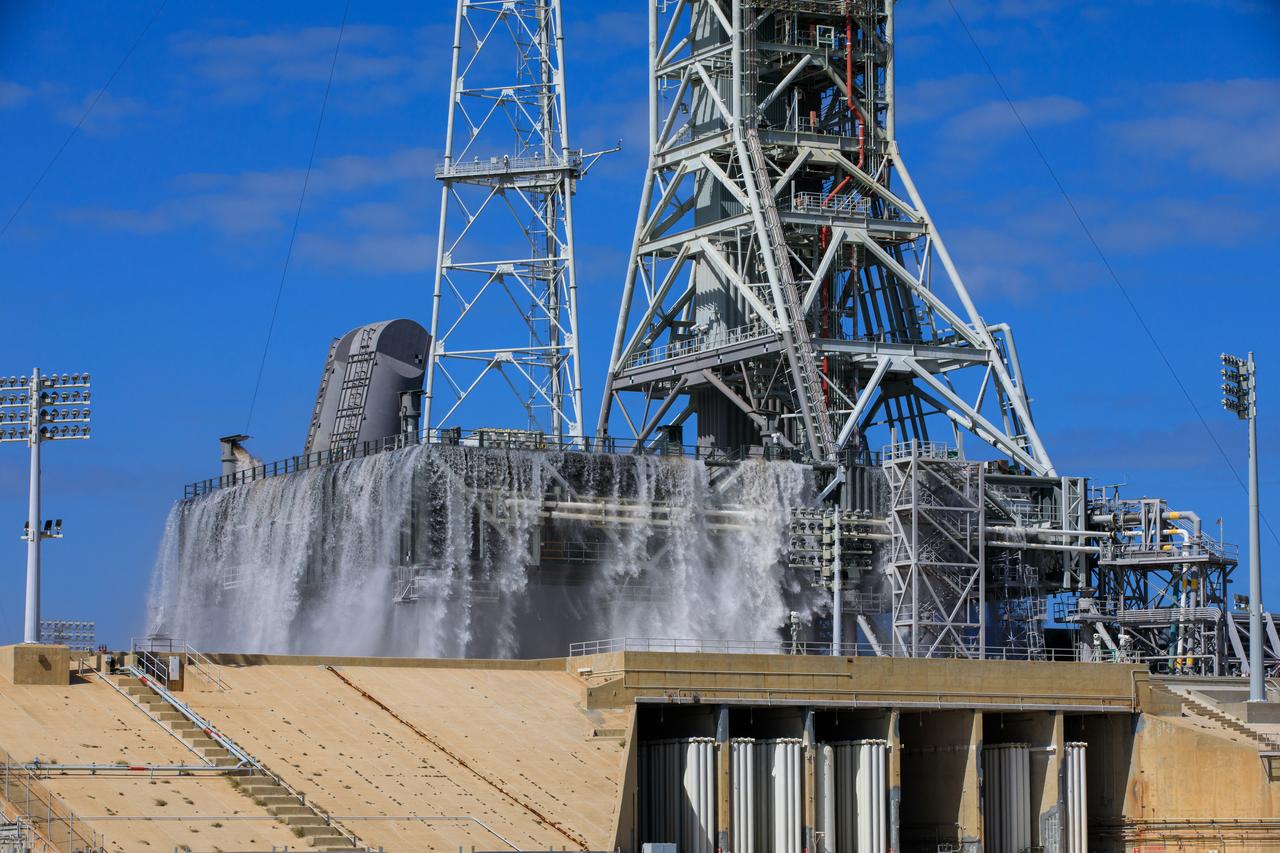
NASA’s Exploration Ground Systems conducts a water flow test with the mobile launcher at Kennedy Space Center’s Launch Complex 39B in Florida on Oct. 24, 2023. It is the third in a series of tests to verify the overpressure protection and sound suppression system is ready for launch of the Artemis II mission. During liftoff, 400,000 gallons of water will rush onto the pad to help protect NASA’s SLS (Space Launch System) rocket, Orion spacecraft, mobile launcher, and launch pad from any over pressurization and extreme sound produced during ignition and liftoff.
NASA’s Exploration Ground Systems conducts a water flow test with the mobile launcher at Kennedy Space Center’s Launch Complex 39B in Florida on Oct. 24, 2023. It is the third in a series of tests to verify the overpressure protection and sound suppression system is ready for launch of the Artemis II mission. During liftoff, 400,000 gallons of water will rush onto the pad to help protect NASA’s SLS (Space Launch System) rocket, Orion spacecraft, mobile launcher, and launch pad from any over pressurization and extreme sound produced during ignition and liftoff.

NASA’s Exploration Ground Systems conducts a water flow test with the mobile launcher at Kennedy Space Center’s Launch Complex 39B in Florida on Oct. 24, 2023. It is the third in a series of tests to verify the overpressure protection and sound suppression system is ready for launch of the Artemis II mission. During liftoff, 400,000 gallons of water will rush onto the pad to help protect NASA’s SLS (Space Launch System) rocket, Orion spacecraft, mobile launcher, and launch pad from any over pressurization and extreme sound produced during ignition and liftoff.
NASA’s Exploration Ground Systems conducts a water flow test with the mobile launcher at Kennedy Space Center’s Launch Complex 39B in Florida on Oct. 24, 2023. It is the third in a series of tests to verify the overpressure protection and sound suppression system is ready for launch of the Artemis II mission. During liftoff, 400,000 gallons of water will rush onto the pad to help protect NASA’s SLS (Space Launch System) rocket, Orion spacecraft, mobile launcher, and launch pad from any over pressurization and extreme sound produced during ignition and liftoff.

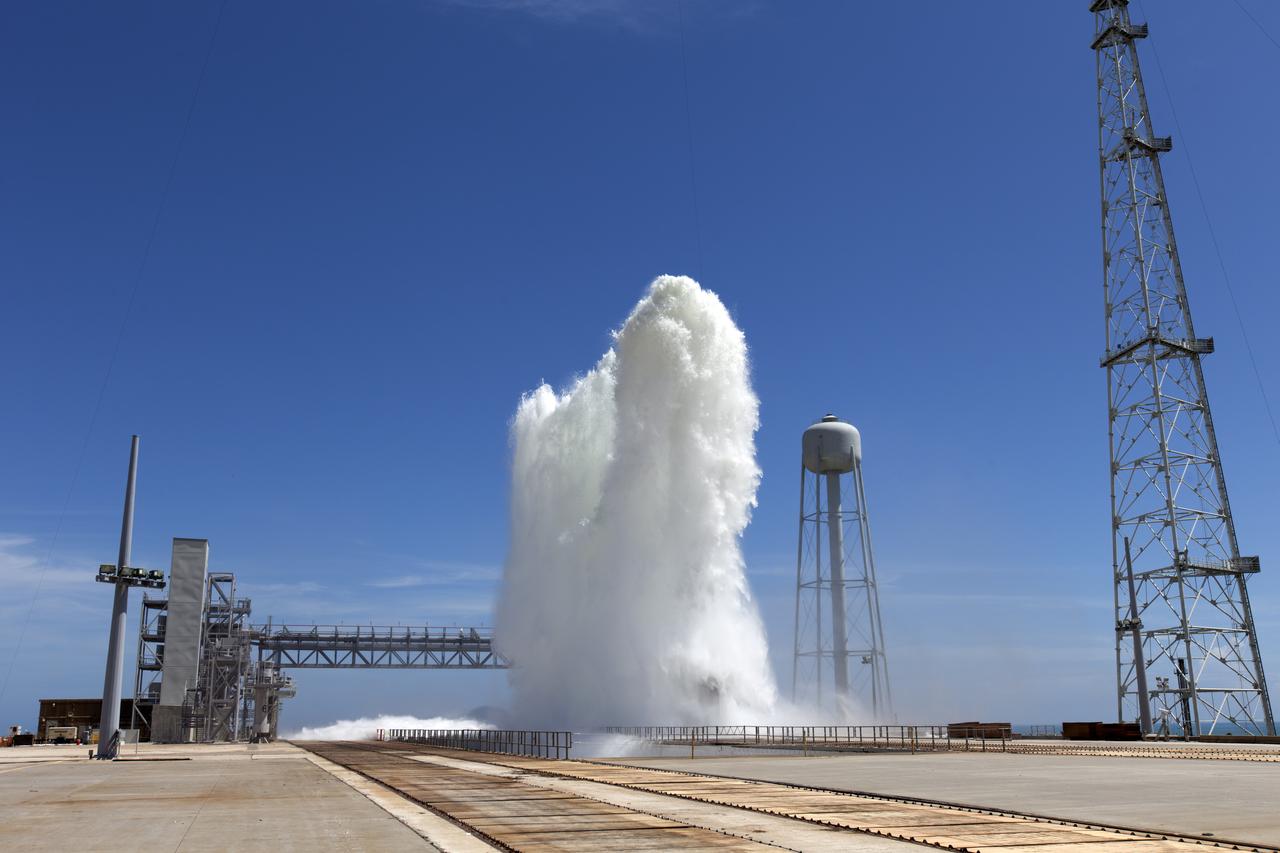
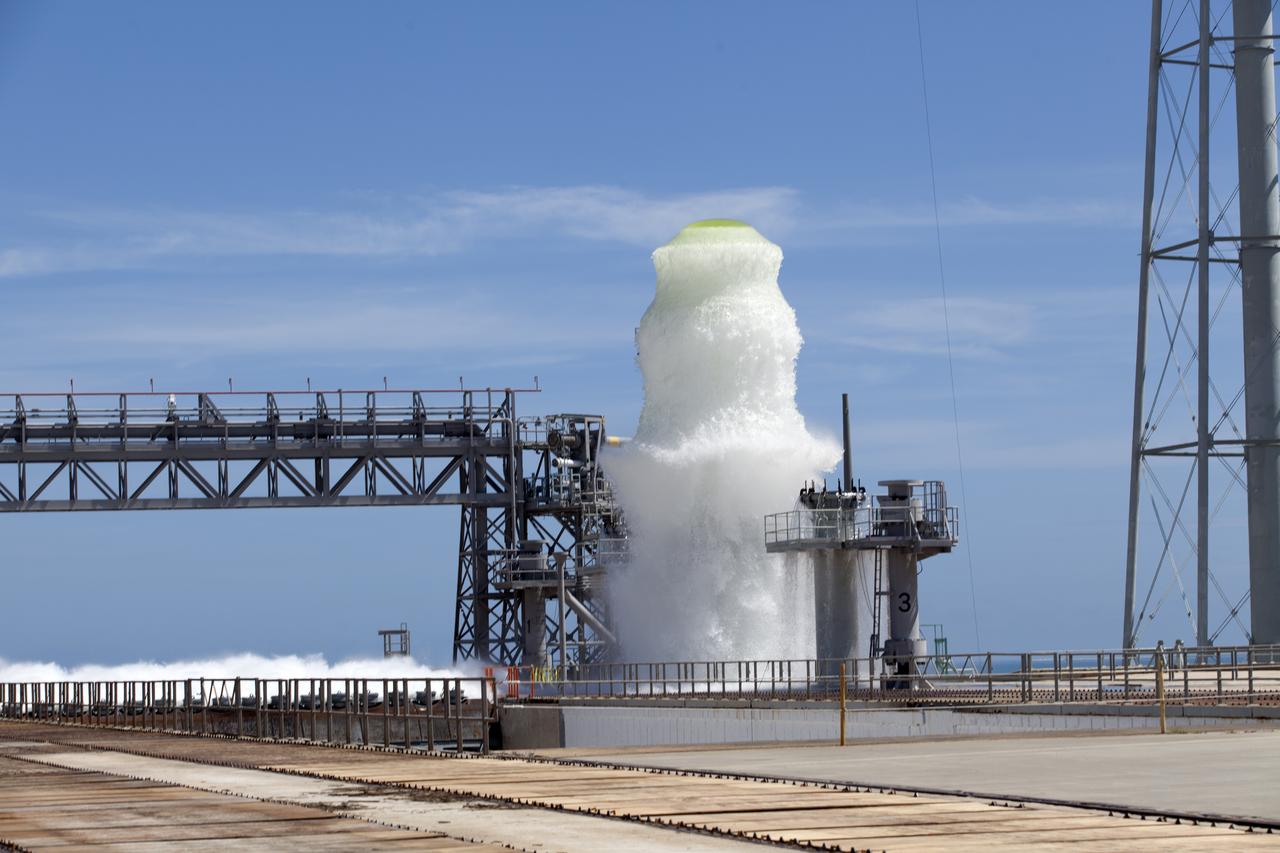
About 450,000 gallons of water flow at high speed from a holding tank through new and modified piping and valves, the flame trench, flame deflector nozzles and mobile launcher interface risers during a wet flow test on May 24, 2018, at Launch Pad 39B at NASA's Kennedy Space Center in Florida. At peak flow, the water reached about 100 feet in the air above the pad surface. The test was performed by Exploration Ground Systems to confirm the performance of the Ignition Overpressure/Sound Suppression system. During launch of NASA's Space Launch System rocket and Orion spacecraft, the high-speed water flow will help protect the vehicle from the extreme acoustic and temperature environment during ignition and liftoff.
About 450,000 gallons of water flow at high speed from a holding tank through new and modified piping and valves, the flame trench, flame deflector nozzles and mobile launcher interface risers during a wet flow test on May 24, 2018, at Launch Pad 39B at NASA's Kennedy Space Center in Florida. At peak flow, the water reached about 100 feet in the air above the pad surface. The test was performed by Exploration Ground Systems to confirm the performance of the Ignition Overpressure/Sound Suppression system. During launch of NASA's Space Launch System rocket and Orion spacecraft, the high-speed water flow will help protect the vehicle from the extreme acoustic and temperature environment during ignition and liftoff.
About 450,000 gallons of water flow at high speed from a holding tank through new and modified piping and valves, the flame trench, flame deflector nozzles and mobile launcher interface risers during a wet flow test on May 24, 2018, at Launch Pad 39B at NASA's Kennedy Space Center in Florida. At peak flow, the water reached about 100 feet in the air above the pad surface. The test was performed by Exploration Ground Systems to confirm the performance of the Ignition Overpressure/Sound Suppression system. During launch of NASA's Space Launch System rocket and Orion spacecraft, the high-speed water flow will help protect the vehicle from the extreme acoustic and temperature environment during ignition and liftoff.
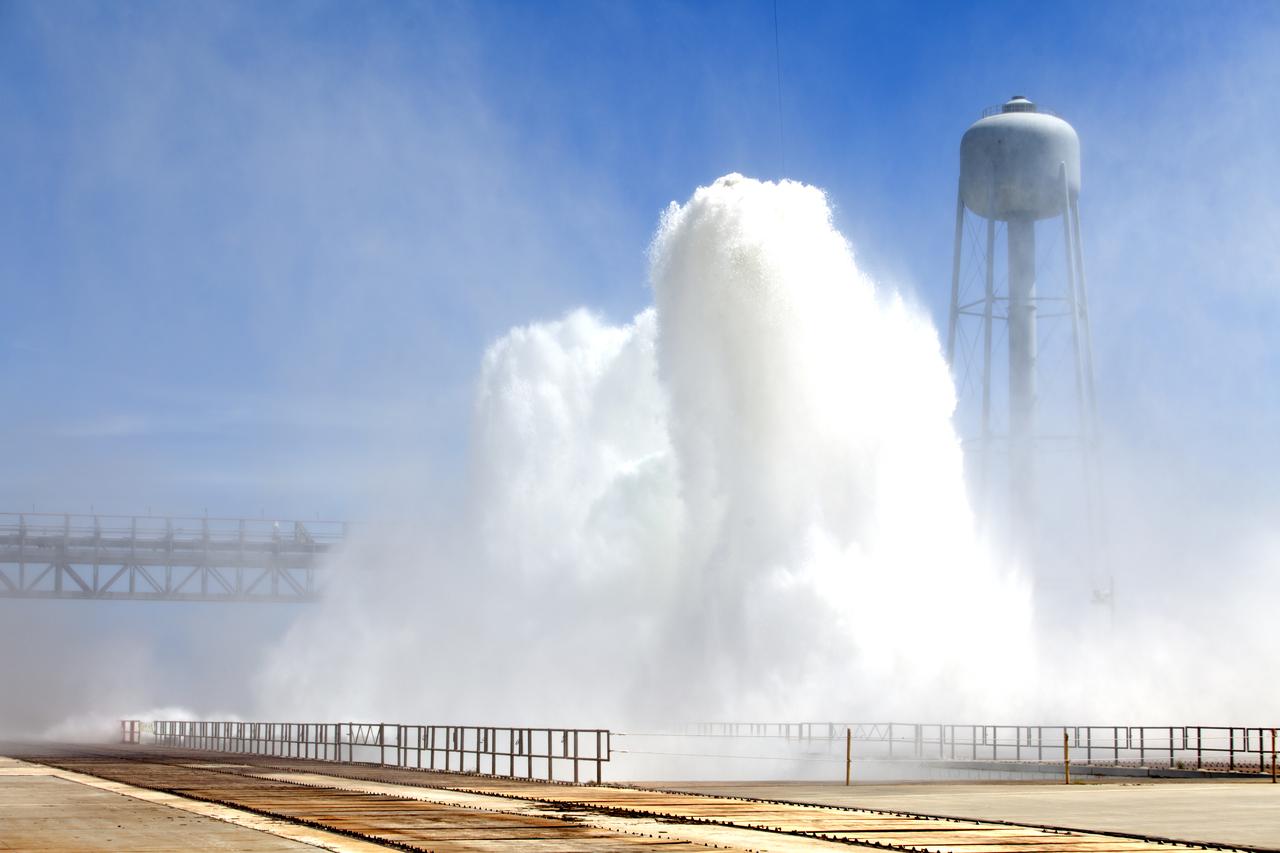
About 450,000 gallons of water flow at high speed from a holding tank through new and modified piping and valves, the flame trench, flame deflector nozzles and mobile launcher interface risers during a wet flow test on May 24, 2018, at Launch Pad 39B at NASA's Kennedy Space Center in Florida. At peak flow, the water reached about 100 feet in the air above the pad surface. The test was performed by Exploration Ground Systems to confirm the performance of the Ignition Overpressure/Sound Suppression system. During launch of NASA's Space Launch System rocket and Orion spacecraft, the high-speed water flow will help protect the vehicle from the extreme acoustic and temperature environment during ignition and liftoff.
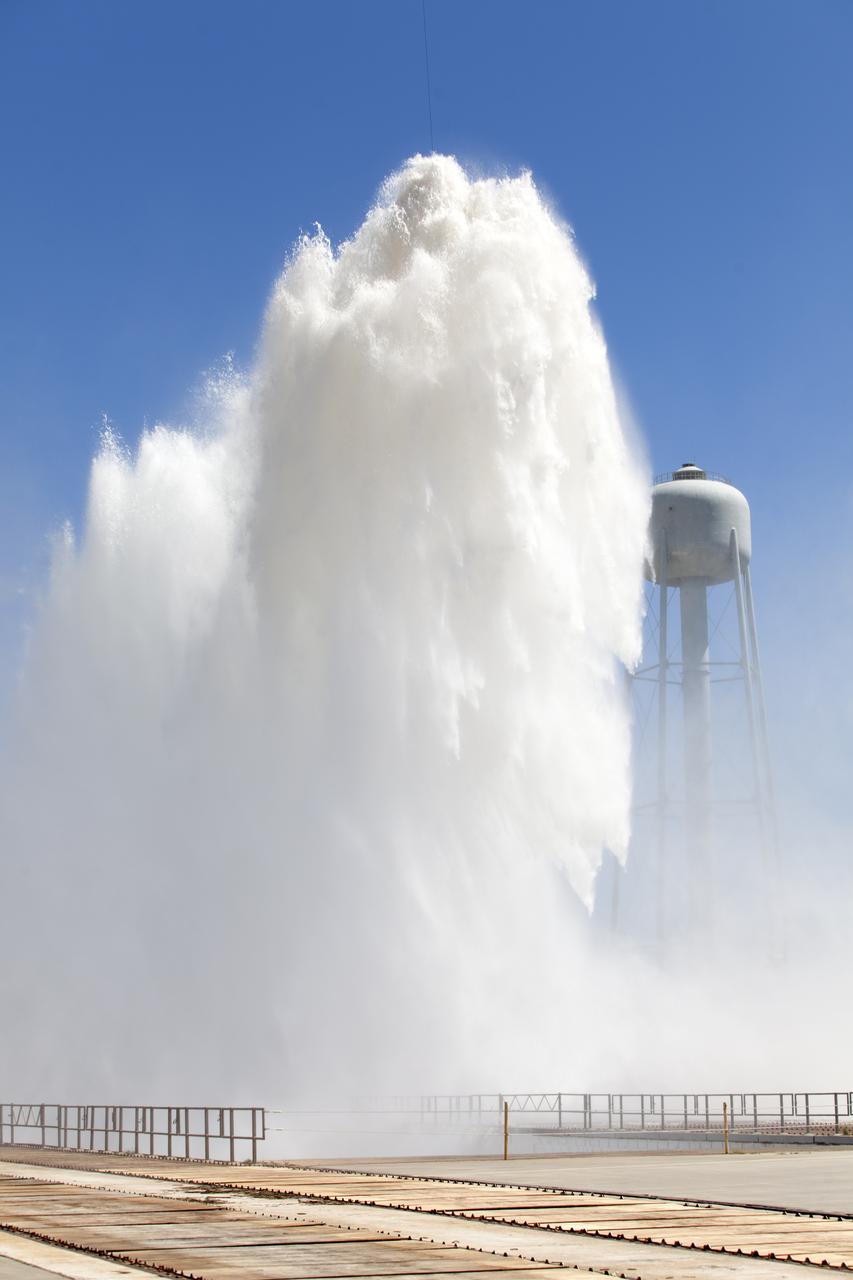
About 450,000 gallons of water flow at high speed from a holding tank through new and modified piping and valves, the flame trench, flame deflector nozzles and mobile launcher interface risers during a wet flow test on May 24, 2018, at Launch Pad 39B at NASA's Kennedy Space Center in Florida. At peak flow, the water reached about 100 feet in the air above the pad surface. The test was performed by Exploration Ground Systems to confirm the performance of the Ignition Overpressure/Sound Suppression system. During launch of NASA's Space Launch System rocket and Orion spacecraft, the high-speed water flow will help protect the vehicle from the extreme acoustic and temperature environment during ignition and liftoff.
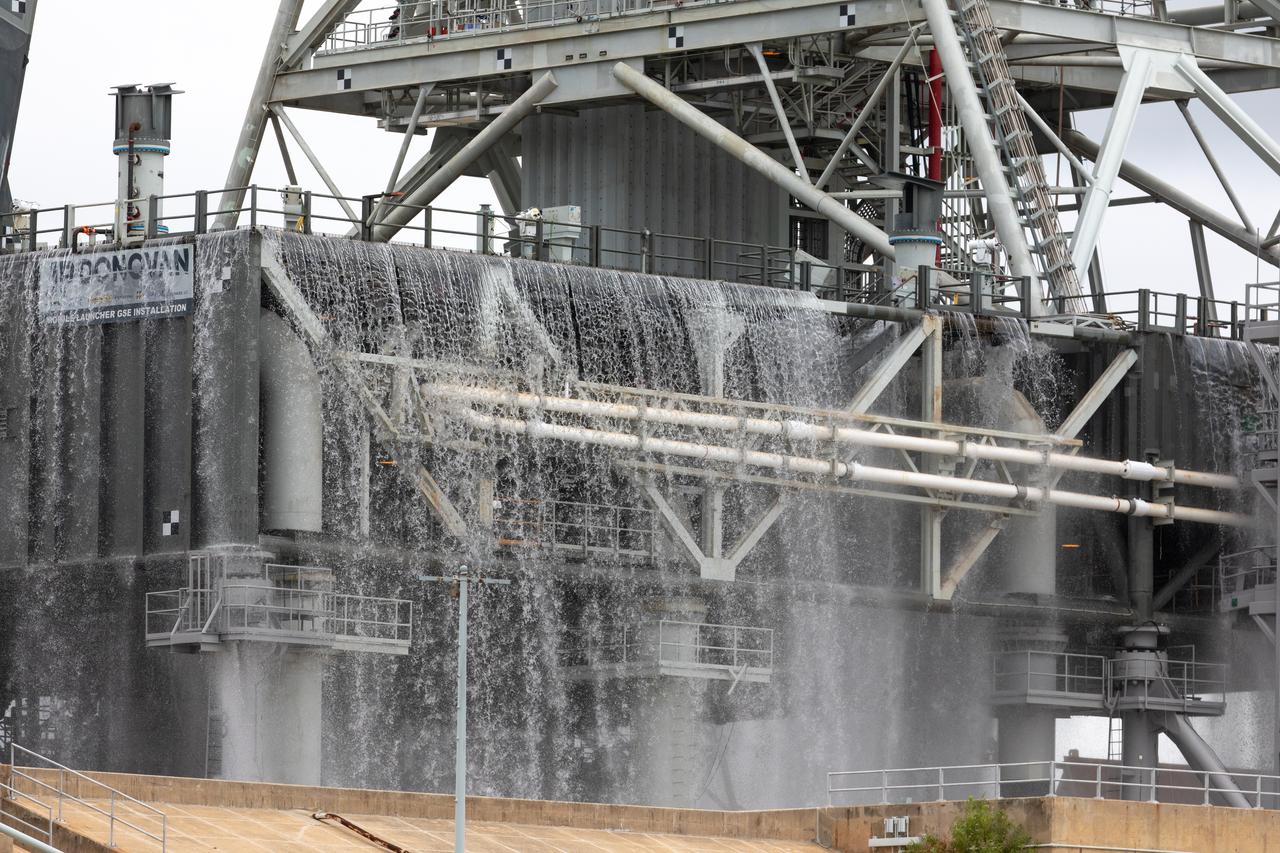
A flow test of the Ignition Overpressure Protection and Sound Suppression water deluge system is underway on the mobile launcher at Launch Pad 39B at NASA's Kennedy Space Center in Florida, on July 25, 2019. The testing is part of a series of tests that Exploration Ground System is doing to verify the system is ready for the new Space Launch System rocket. Modifications were made to the pad after a previous wet flow test, increasing the performance of the system. During the launch of Artemis 1 and subsequent missions, this water deluge system will release about 450,000 gallons of water across the mobile launcher and Flame Deflector to reduce the extreme heat and energy generated by the rocket during ignition and liftoff.
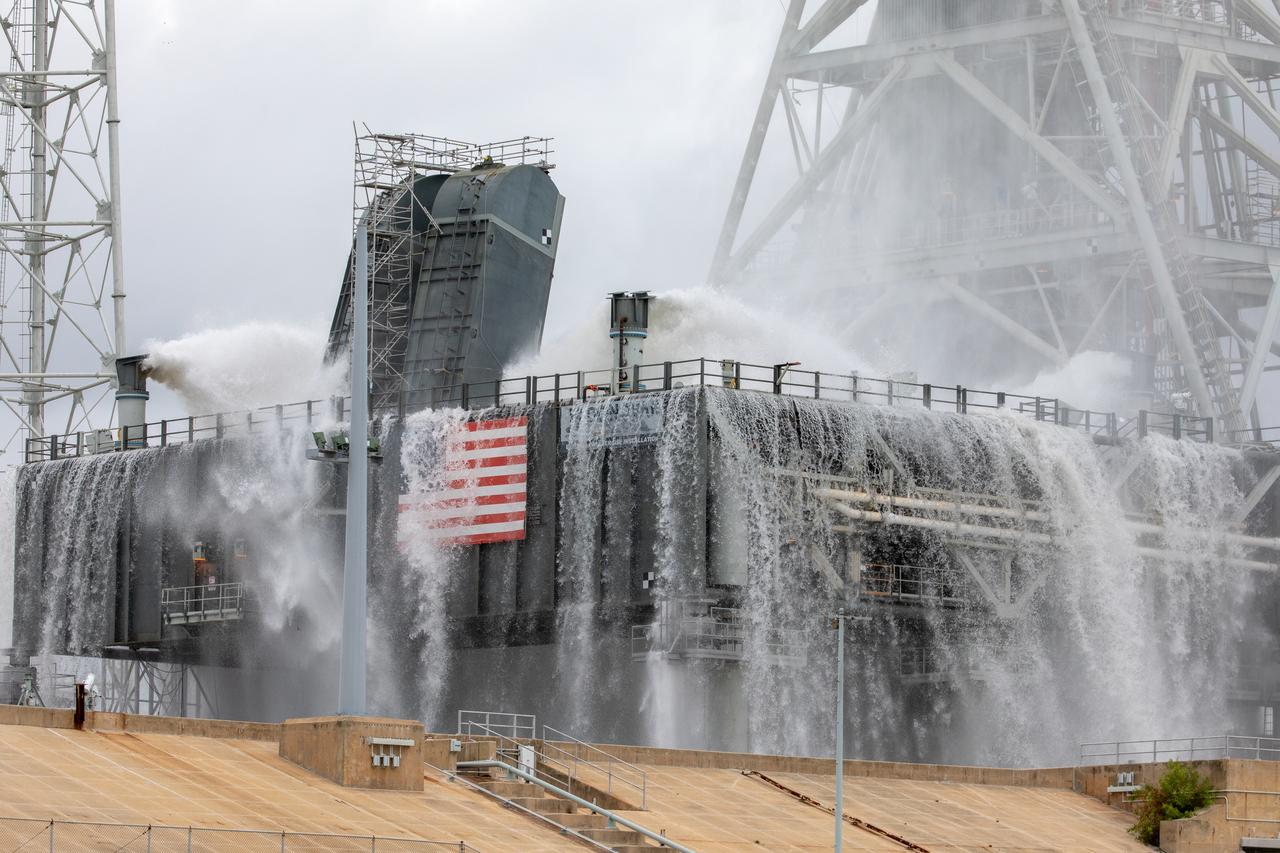
A flow test of the Ignition Overpressure Protection and Sound Suppression water deluge system is underway on the mobile launcher at Launch Pad 39B at NASA's Kennedy Space Center in Florida, on July 25, 2019. The testing is part of a series of tests that Exploration Ground System is doing to verify the system is ready for the new Space Launch System rocket. Modifications were made to the pad after a previous wet flow test, increasing the performance of the system. During the launch of Artemis 1 and subsequent missions, this water deluge system will release about 450,000 gallons of water across the mobile launcher and Flame Deflector to reduce the extreme heat and energy generated by the rocket during ignition and liftoff.
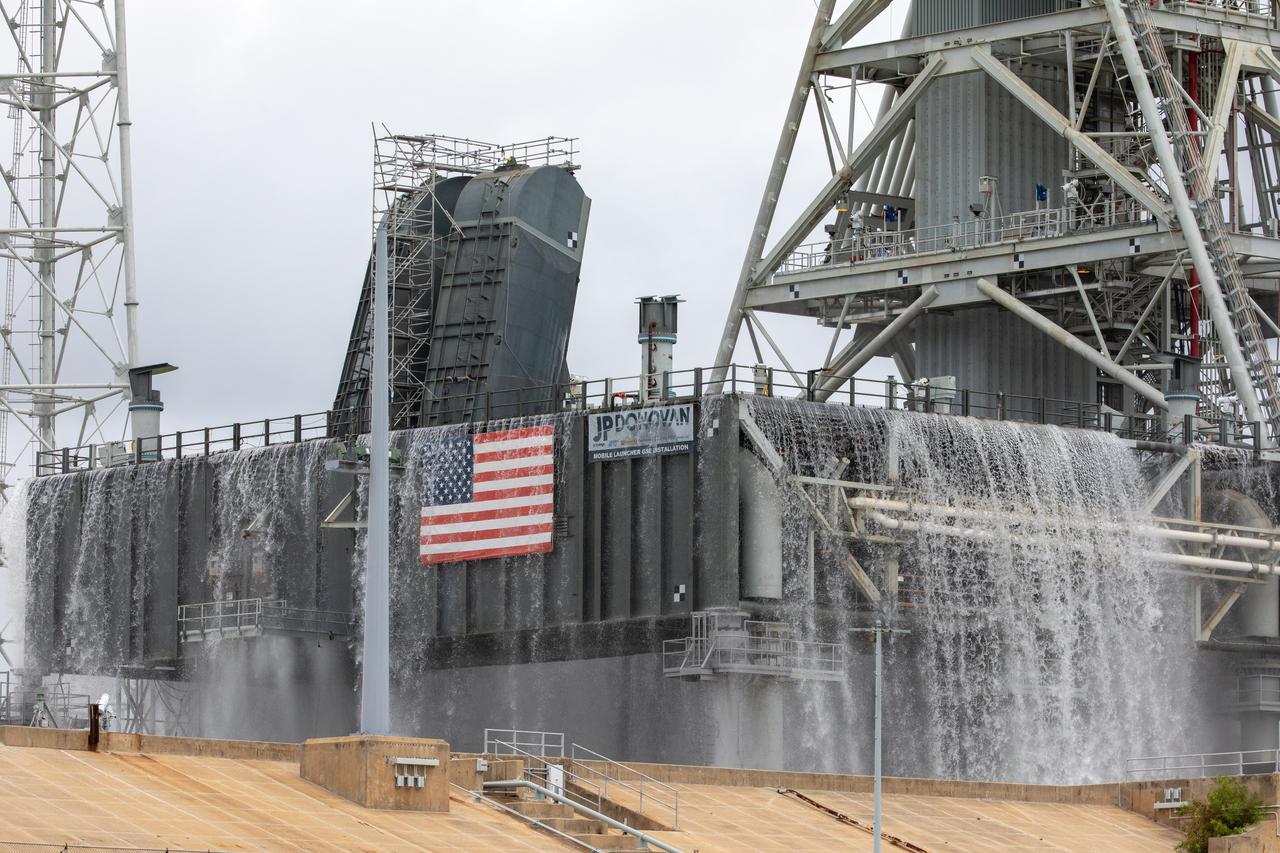
A flow test of the Ignition Overpressure Protection and Sound Suppression water deluge system is underway on the mobile launcher at Launch Pad 39B at NASA's Kennedy Space Center in Florida, on July 25, 2019. The testing is part of a series of tests that Exploration Ground System is doing to verify the system is ready for the new Space Launch System rocket. Modifications were made to the pad after a previous wet flow test, increasing the performance of the system. During the launch of Artemis 1 and subsequent missions, this water deluge system will release about 450,000 gallons of water across the mobile launcher and Flame Deflector to reduce the extreme heat and energy generated by the rocket during ignition and liftoff.
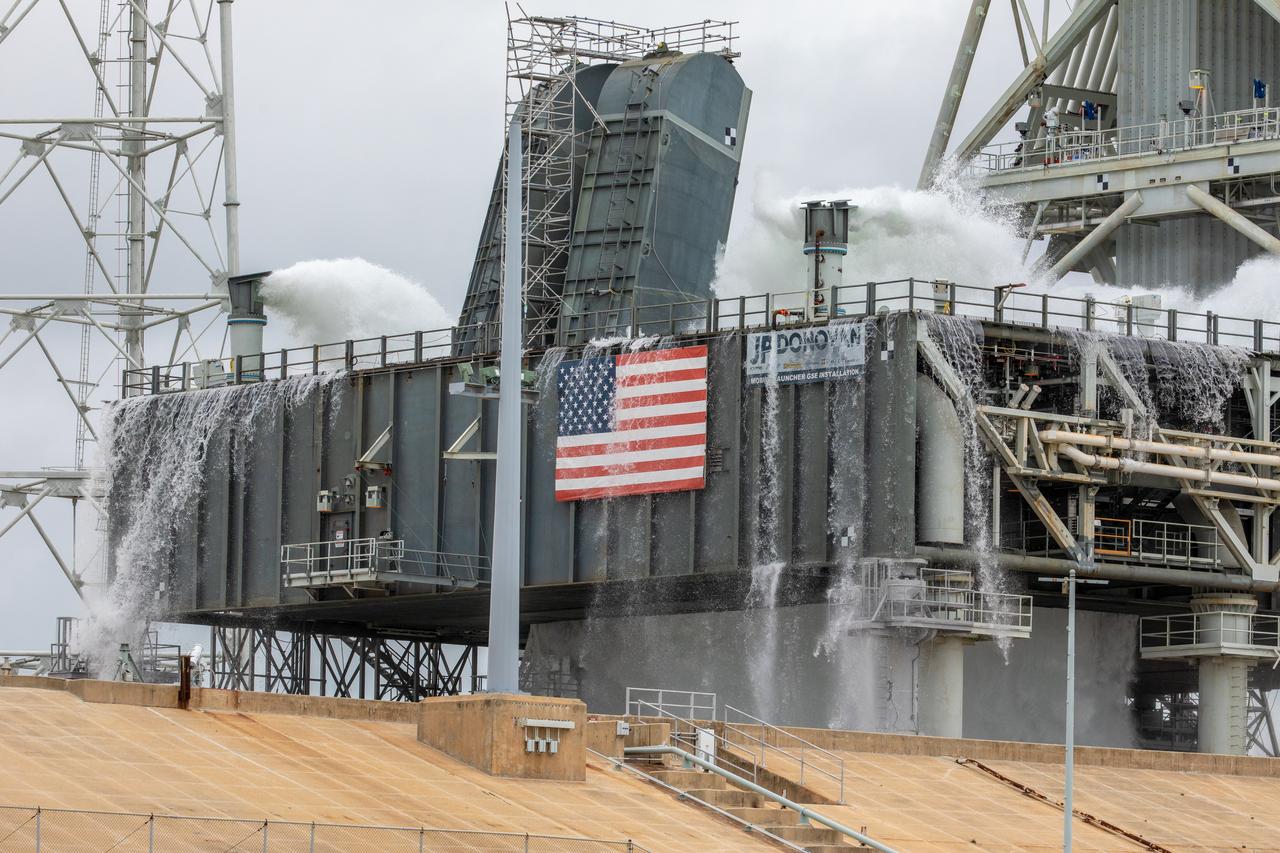
A flow test of the Ignition Overpressure Protection and Sound Suppression water deluge system begins on the mobile launcher at Launch Pad 39B at NASA's Kennedy Space Center in Florida, on July 25, 2019. The testing is part of a series of tests that Exploration Ground System is doing to verify the system is ready for the new Space Launch System rocket. Modifications were made to the pad after a previous wet flow test, increasing the performance of the system. During the launch of Artemis 1 and subsequent missions, this water deluge system will release about 450,000 gallons of water across the mobile launcher and Flame Deflector to reduce the extreme heat and energy generated by the rocket during ignition and liftoff.

A flow test of the Ignition Overpressure Protection and Sound Suppression water deluge system is underway on the mobile launcher at Launch Pad 39B at NASA's Kennedy Space Center in Florida, on July 25, 2019. The testing is part of a series of tests that Exploration Ground System is doing to verify the system is ready for the new Space Launch System rocket. Modifications were made to the pad after a previous wet flow test, increasing the performance of the system. During the launch of Artemis 1 and subsequent missions, this water deluge system will release about 450,000 gallons of water across the mobile launcher and Flame Deflector to reduce the extreme heat and energy generated by the rocket during ignition and liftoff.
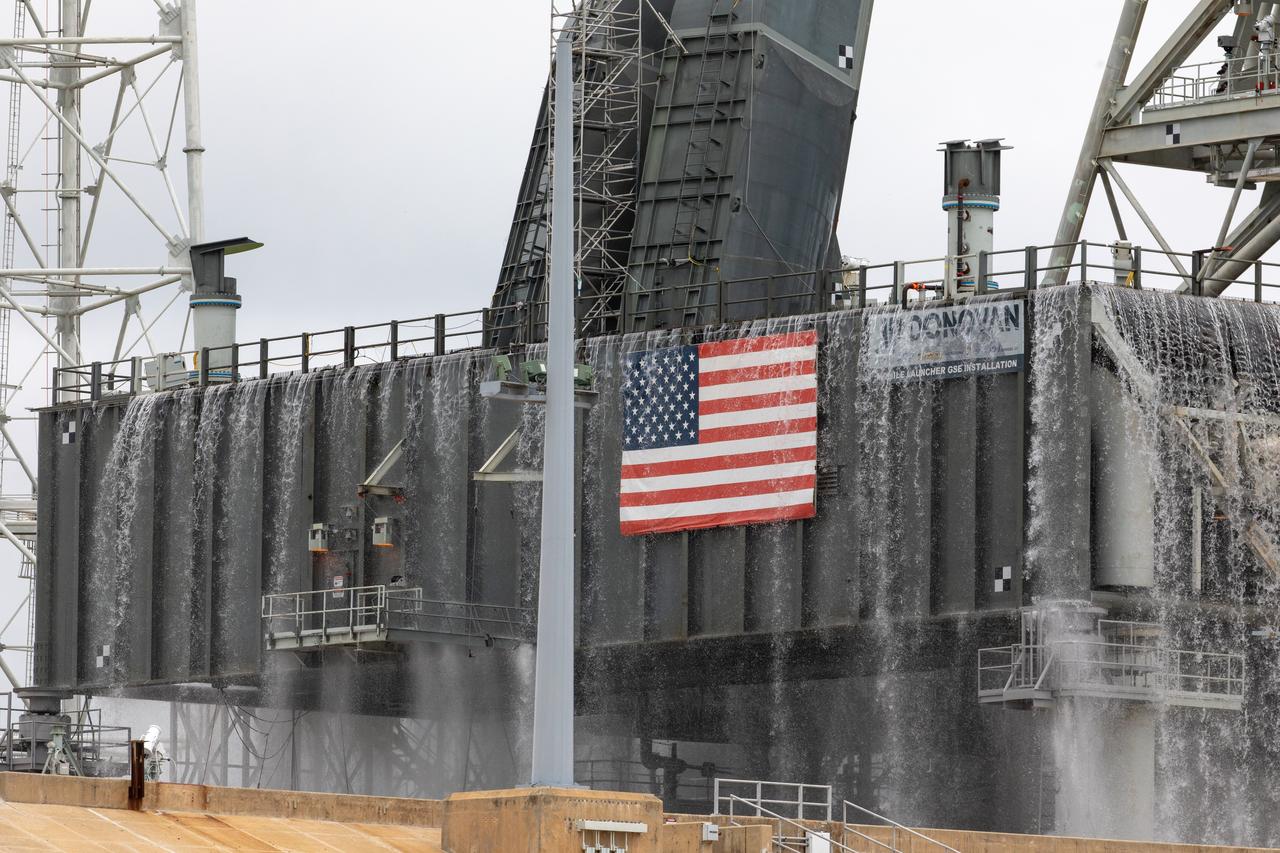
A flow test of the Ignition Overpressure Protection and Sound Suppression water deluge system is underway on the mobile launcher at Launch Pad 39B at NASA's Kennedy Space Center in Florida, on July 25, 2019. The testing is part of a series of tests that Exploration Ground System is doing to verify the system is ready for the new Space Launch System rocket. Modifications were made to the pad after a previous wet flow test, increasing the performance of the system. During the launch of Artemis 1 and subsequent missions, this water deluge system will release about 450,000 gallons of water across the mobile launcher and Flame Deflector to reduce the extreme heat and energy generated by the rocket during ignition and liftoff.
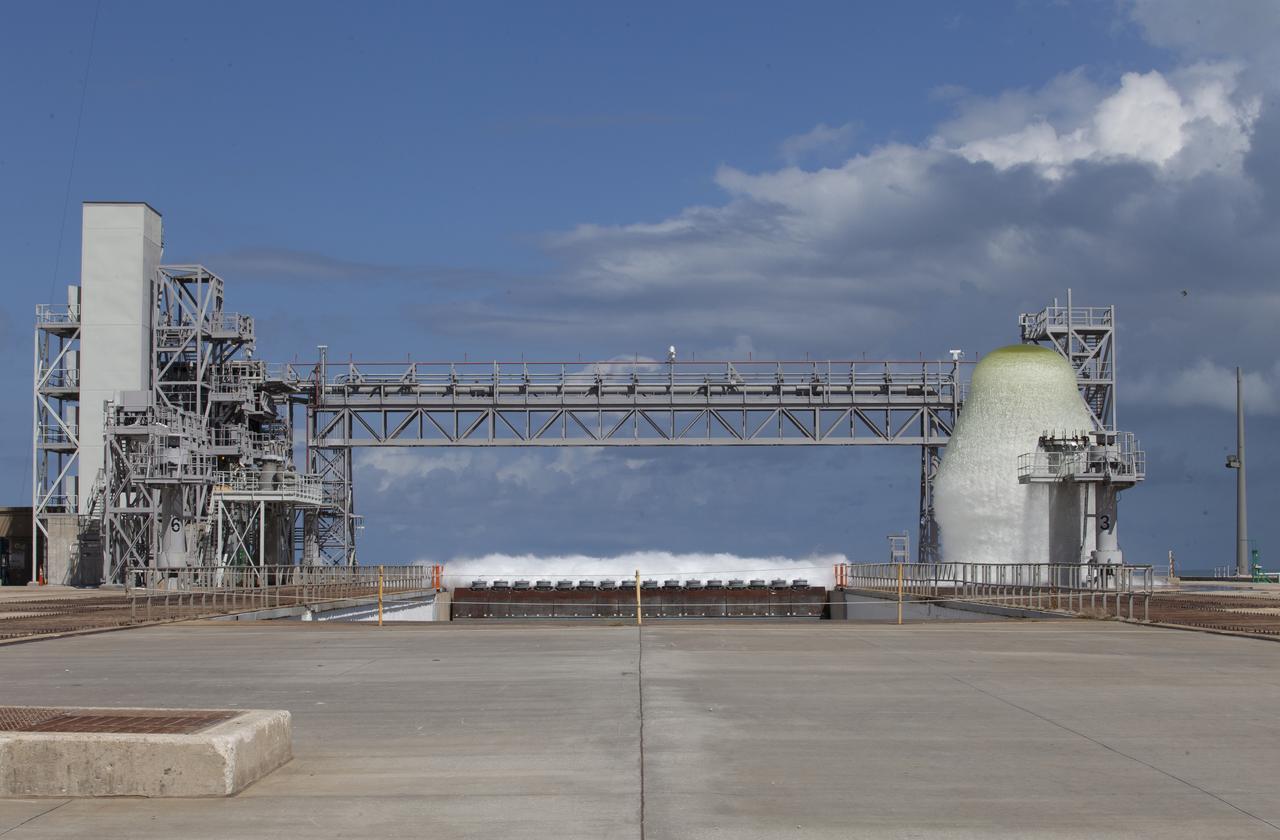
A flow test of the Ignition Overpressure Protection and Sound Suppression water deluge system is in progress at Launch Pad 39B at NASA's Kennedy Space Center in Florida, on Oct. 15, 2018. At peak flow, the water will reach about 100 feet in the air above the pad surface. It will flow at high speed from a holding tank through new and modified piping and valves, the flame trench, flame deflector nozzles and mobile launcher interface risers. The testing is part of Exploration Ground System's preparation for the new Space Launch System rocket. Modifications were made to the pad after a previous wet flow test, increasing the performance of the system. During the launch of Exploration Mission-1 and subsequent missions, this water deluge system will release about 450,000 gallons of water across the mobile launcher and Flame Deflector to reduce the extreme heat and energy generated by the rocket during ignition and liftoff.
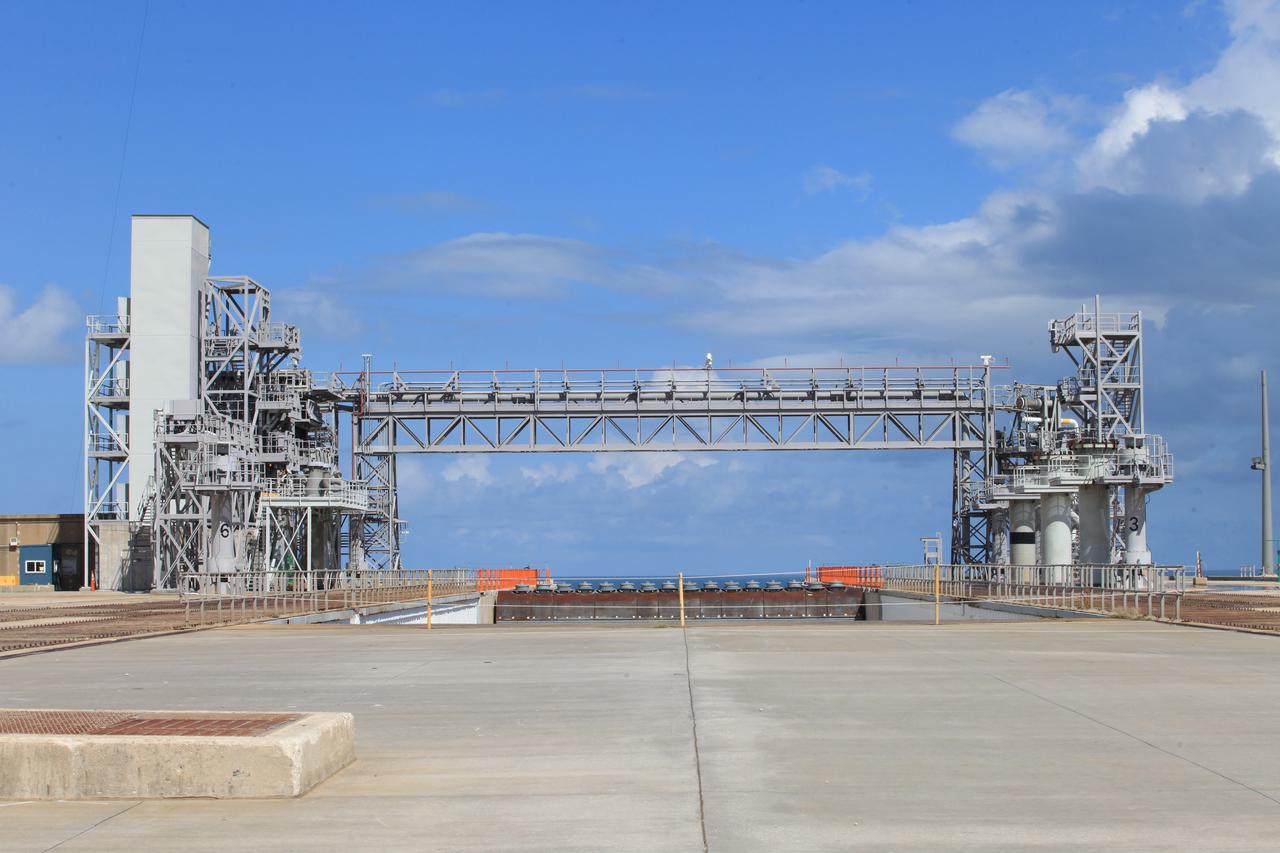
A flow test of the Ignition Overpressure Protection and Sound Suppression water deluge system begins at Launch Pad 39B at NASA's Kennedy Space Center in Florida, on Oct. 15, 2018. At peak flow, the water will reach about 100 feet in the air above the pad surface. The testing is part of Exploration Ground System's preparation for the new Space Launch System rocket. Modifications were made to the pad after a previous wet flow test, increasing the performance of the system. During the launch of Exploration Mission-1 and subsequent missions, this water deluge system will release about 450,000 gallons of water across the mobile launcher and Flame Deflector to reduce the extreme heat and energy generated by the rocket during ignition and liftoff.
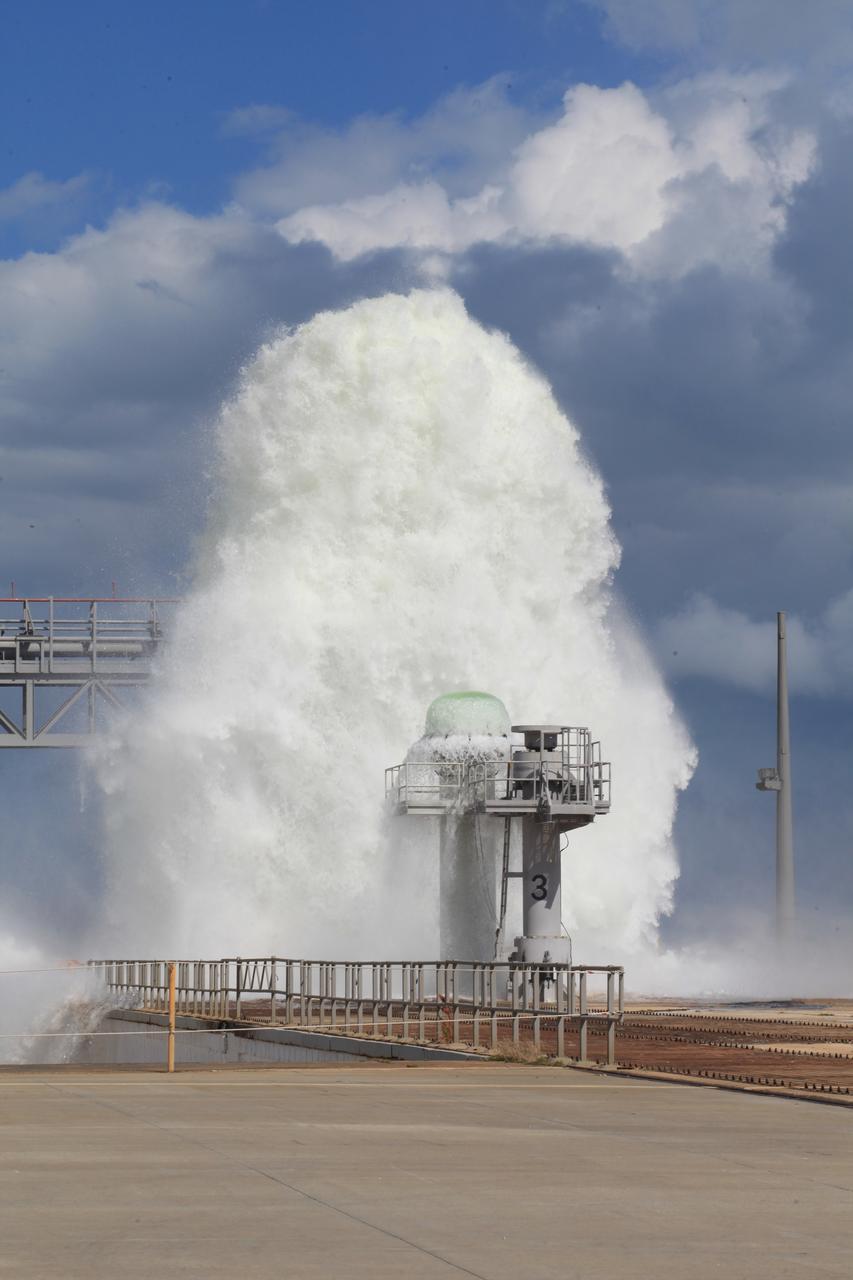
A flow test of the Ignition Overpressure Protection and Sound Suppression water deluge system is in progress at Launch Pad 39B at NASA's Kennedy Space Center in Florida, on Oct. 15, 2018. At peak flow, the water reaches about 100 feet in the air above the pad surface. It flows at high speed from a holding tank through new and modified piping and valves, the flame trench, flame deflector nozzles and mobile launcher interface risers. The testing is part of Exploration Ground System's preparation for the new Space Launch System rocket. Modifications were made to the pad after a previous wet flow test, increasing the performance of the system. During the launch of Exploration Mission-1 and subsequent missions, this water deluge system will release about 450,000 gallons of water across the mobile launcher and Flame Deflector to reduce the extreme heat and energy generated by the rocket during ignition and liftoff.

A flow test of the Ignition Overpressure Protection and Sound Suppression water deluge system is in progress at Launch Pad 39B at NASA's Kennedy Space Center in Florida, on Oct. 15, 2018. At peak flow, the water reaches about 100 feet in the air above the pad surface. It flows at high speed from a holding tank through new and modified piping and valves, the flame trench, flame deflector nozzles and mobile launcher interface risers. The testing is part of Exploration Ground System's preparation for the new Space Launch System rocket. Modifications were made to the pad after a previous wet flow test, increasing the performance of the system. During the launch of Exploration Mission-1 and subsequent missions, this water deluge system will release about 450,000 gallons of water across the mobile launcher and Flame Deflector to reduce the extreme heat and energy generated by the rocket during ignition and liftoff.

A flow test of the Ignition Overpressure Protection and Sound Suppression water deluge system is in progress at Launch Pad 39B at NASA's Kennedy Space Center in Florida, on Oct. 15, 2018. At peak flow, the water reaches about 100 feet in the air above the pad surface. It flows at high speed from a holding tank through new and modified piping and valves, the flame trench, flame deflector nozzles and mobile launcher interface risers. The testing is part of Exploration Ground System's preparation for the new Space Launch System rocket. Modifications were made to the pad after a previous wet flow test, increasing the performance of the system. During the launch of Exploration Mission-1 and subsequent missions, this water deluge system will release about 450,000 gallons of water across the mobile launcher and Flame Deflector to reduce the extreme heat and energy generated by the rocket during ignition and liftoff.
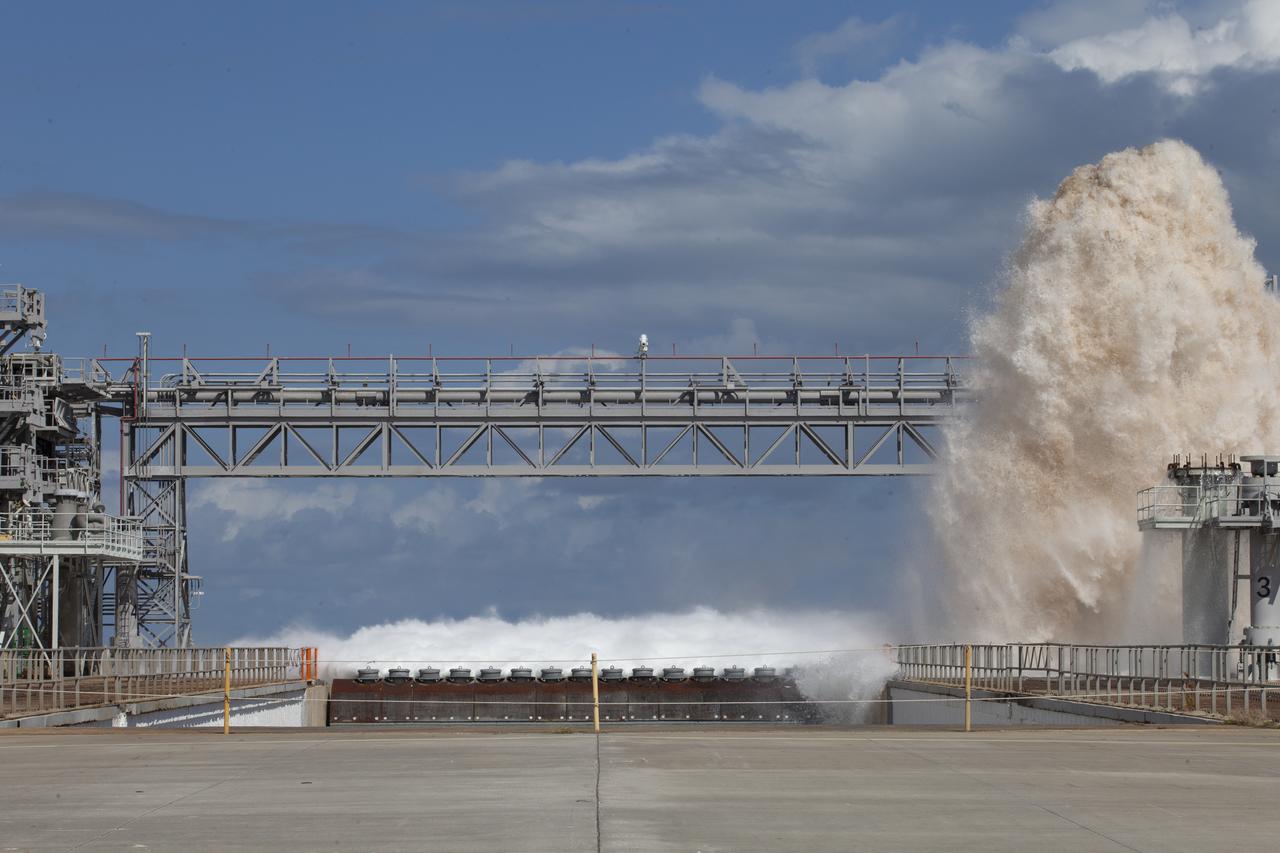
A flow test of the Ignition Overpressure Protection and Sound Suppression water deluge system is in progress at Launch Pad 39B at NASA's Kennedy Space Center in Florida, on Oct. 15, 2018. At peak flow, the water reaches about 100 feet in the air above the pad surface. It flows at high speed from a holding tank through new and modified piping and valves, the flame trench, flame deflector nozzles and mobile launcher interface risers. The testing is part of Exploration Ground System's preparation for the new Space Launch System rocket. Modifications were made to the pad after a previous wet flow test, increasing the performance of the system. During the launch of Exploration Mission-1 and subsequent missions, this water deluge system will release about 450,000 gallons of water across the mobile launcher and Flame Deflector to reduce the extreme heat and energy generated by the rocket during ignition and liftoff.

A flow test of the Ignition Overpressure Protection and Sound Suppression water deluge system is in progress at Launch Pad 39B at NASA's Kennedy Space Center in Florida, on Oct. 15, 2018. At peak flow, the water reaches about 100 feet in the air above the pad surface. It flows at high speed from a holding tank through new and modified piping and valves, the flame trench, flame deflector nozzles and mobile launcher interface risers. The testing is part of Exploration Ground System's preparation for the new Space Launch System rocket. Modifications were made to the pad after a previous wet flow test, increasing the performance of the system. During the launch of Exploration Mission-1 and subsequent missions, this water deluge system will release about 450,000 gallons of water across the mobile launcher and Flame Deflector to reduce the extreme heat and energy generated by the rocket during ignition and liftoff.
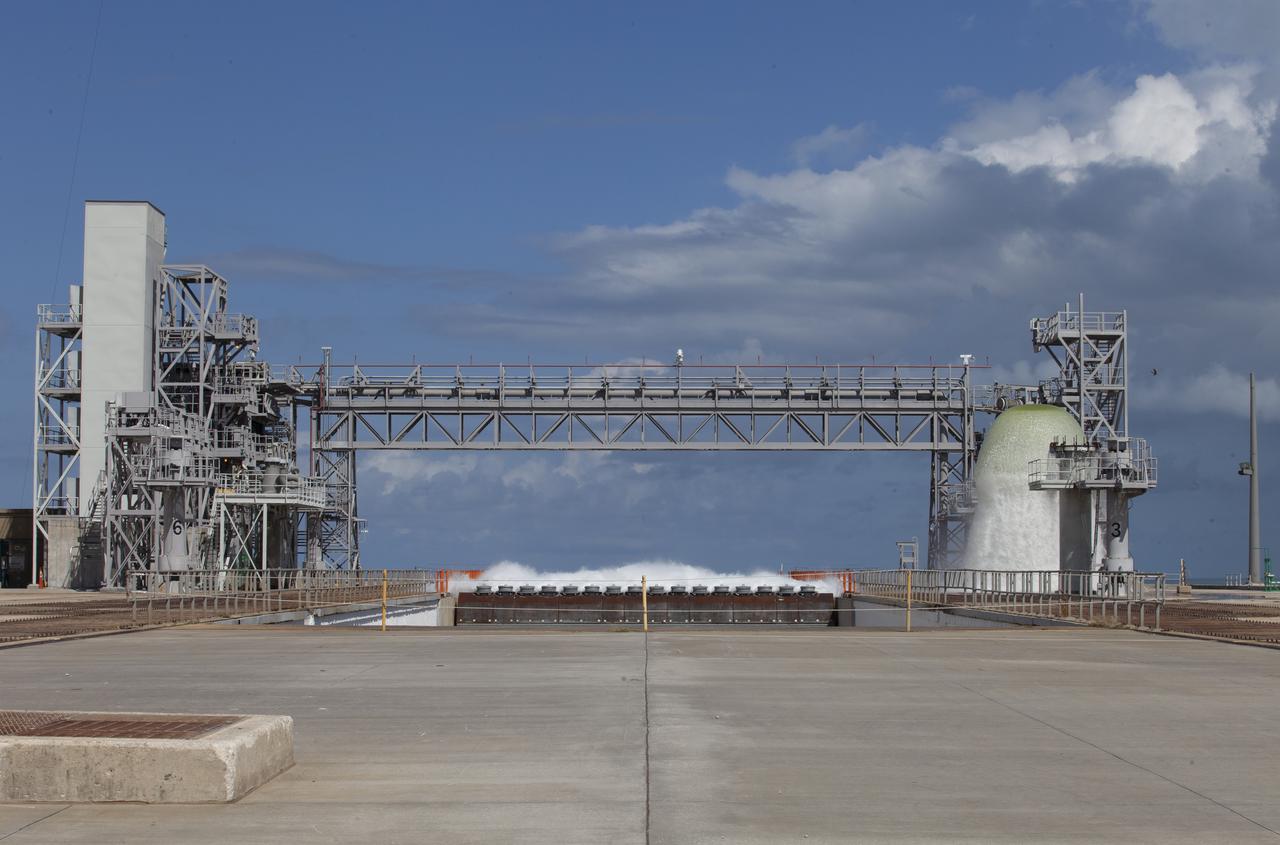
A flow test of the Ignition Overpressure Protection and Sound Suppression water deluge system begins at Launch Pad 39B at NASA's Kennedy Space Center in Florida, on Oct. 15, 2018. At peak flow, the water will reach about 100 feet in the air above the pad surface. It will flow at high speed from a holding tank through new and modified piping and valves, the flame trench, flame deflector nozzles and mobile launcher interface risers. The testing is part of Exploration Ground System's preparation for the new Space Launch System rocket. Modifications were made to the pad after a previous wet flow test, increasing the performance of the system. During the launch of Exploration Mission-1 and subsequent missions, this water deluge system will release about 450,000 gallons of water across the mobile launcher and Flame Deflector to reduce the extreme heat and energy generated by the rocket during ignition and liftoff.

A flow test of the Ignition Overpressure Protection and Sound Suppression water deluge system is in progress at Launch Pad 39B at NASA's Kennedy Space Center in Florida, on Oct. 15, 2018. At peak flow, the water reaches about 100 feet in the air above the pad surface. It flows at high speed from a holding tank through new and modified piping and valves, the flame trench, flame deflector nozzles and mobile launcher interface risers. The testing is part of Exploration Ground System's preparation for the new Space Launch System rocket. Modifications were made to the pad after a previous wet flow test, increasing the performance of the system. During the launch of Exploration Mission-1 and subsequent missions, this water deluge system will release about 450,000 gallons of water across the mobile launcher and Flame Deflector to reduce the extreme heat and energy generated by the rocket during ignition and liftoff.
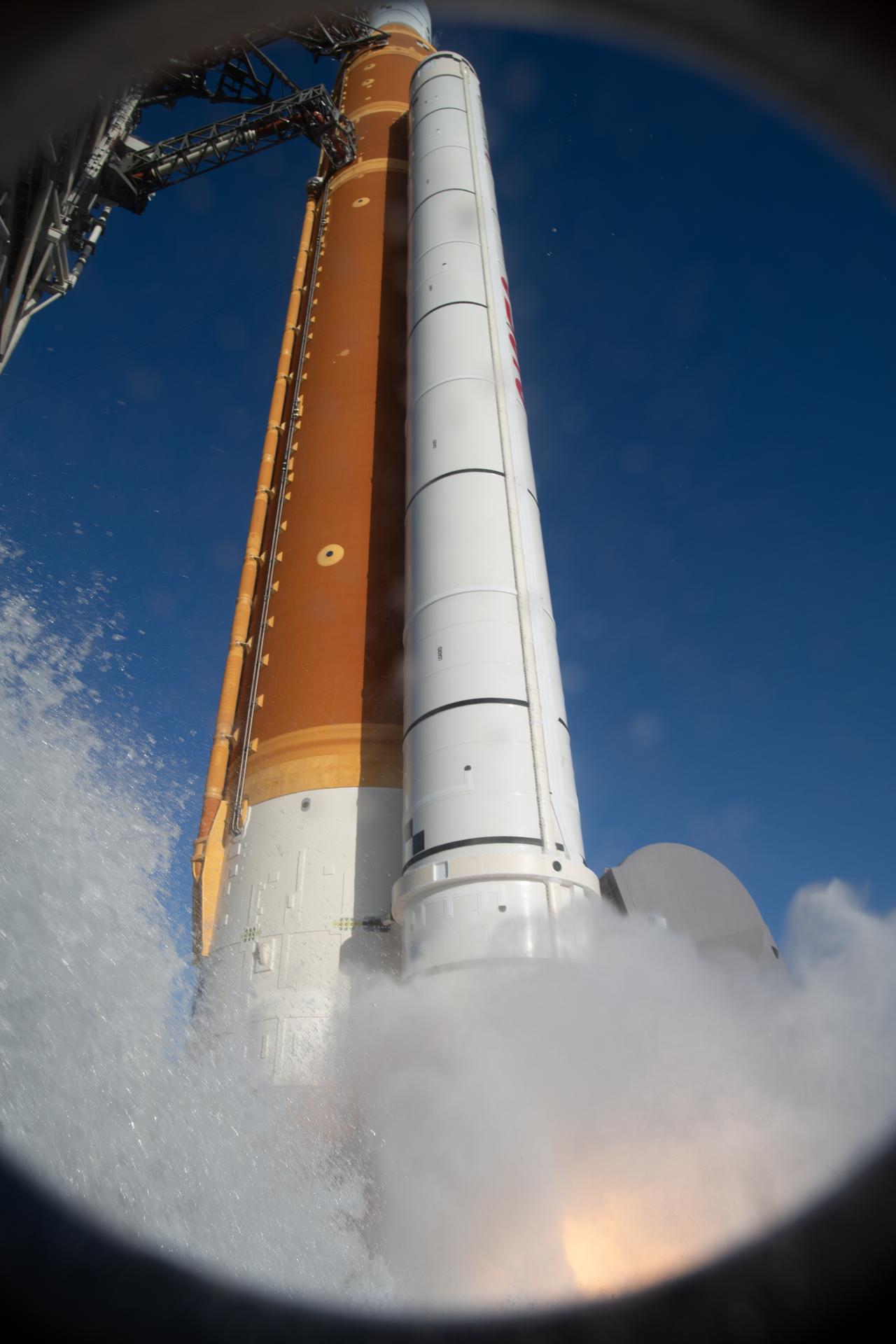
The Ignition Overpressure Protection and Sound Suppression water deluge system activates during launch of NASA’s Artemis II test flight at Launch Complex 39B at NASA’s Kennedy Space Center in Florida at 6:35 p.m. EDT on Wednesday, April 1, 2026. The water deluge system releases about 450,000 gallons of water across the mobile launcher and flame deflector to reduce the extreme heat and energy generated by the rocket during ignition and liftoff. Artemis II Commander Reid Wiseman, Pilot Victor Glover, and Mission Specialist Christina Koch from NASA, along with Mission Specialist Jeremy Hansen from the CSA (Canadian Space Agency), are on a 10-day journey around the Moon and back with splashdown in the Pacific Ocean off the coast of San Diego, California on Friday, April 10.
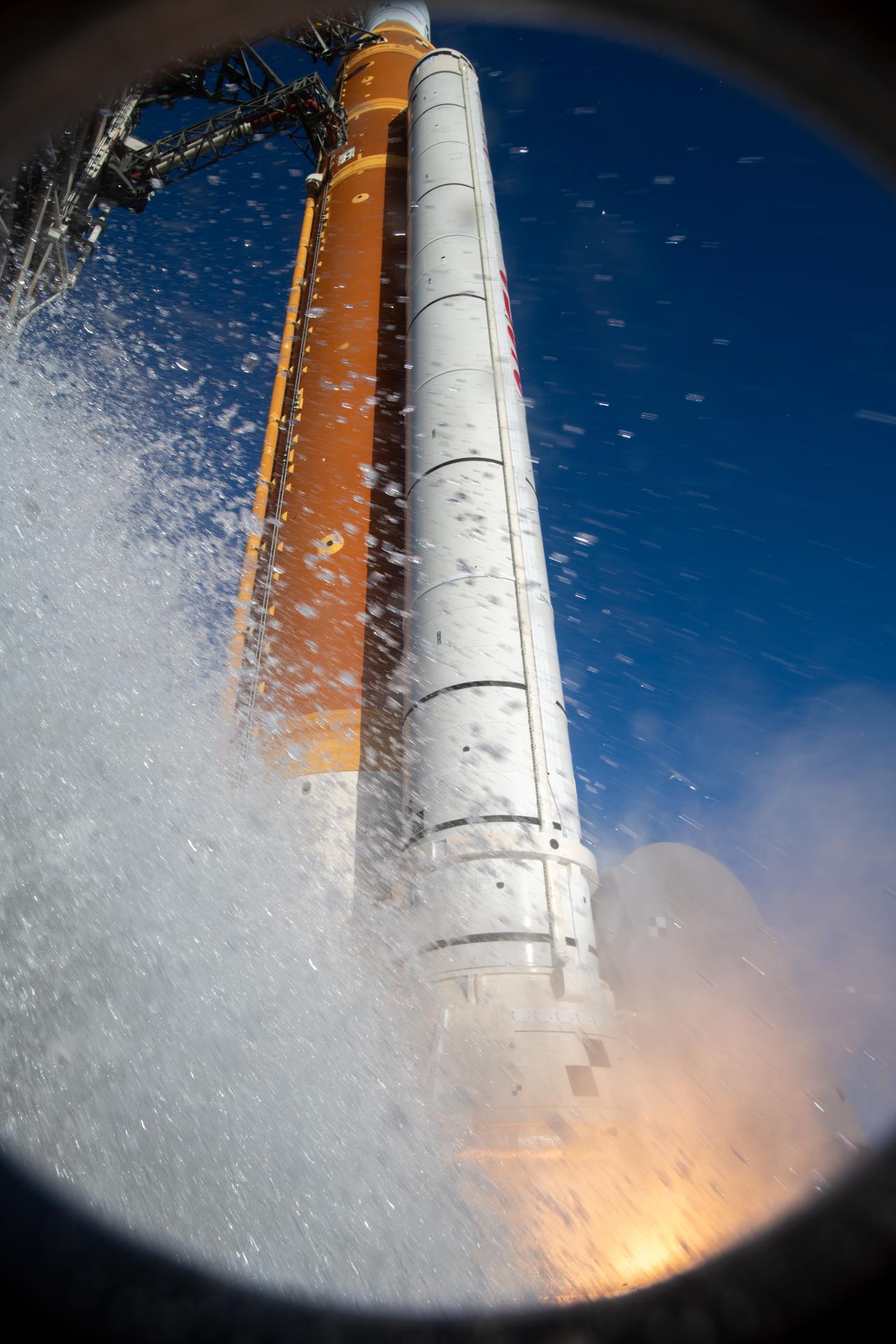
The Ignition Overpressure Protection and Sound Suppression water deluge system activates during launch of NASA’s Artemis II test flight at Launch Complex 39B at NASA’s Kennedy Space Center in Florida at 6:35 p.m. EDT on Wednesday, April 1, 2026. The water deluge system releases about 450,000 gallons of water across the mobile launcher and flame deflector to reduce the extreme heat and energy generated by the rocket during ignition and liftoff. Artemis II Commander Reid Wiseman, Pilot Victor Glover, and Mission Specialist Christina Koch from NASA, along with Mission Specialist Jeremy Hansen from the CSA (Canadian Space Agency), are on a 10-day journey around the Moon and back with splashdown in the Pacific Ocean off the coast of San Diego, California on Friday, April 10.
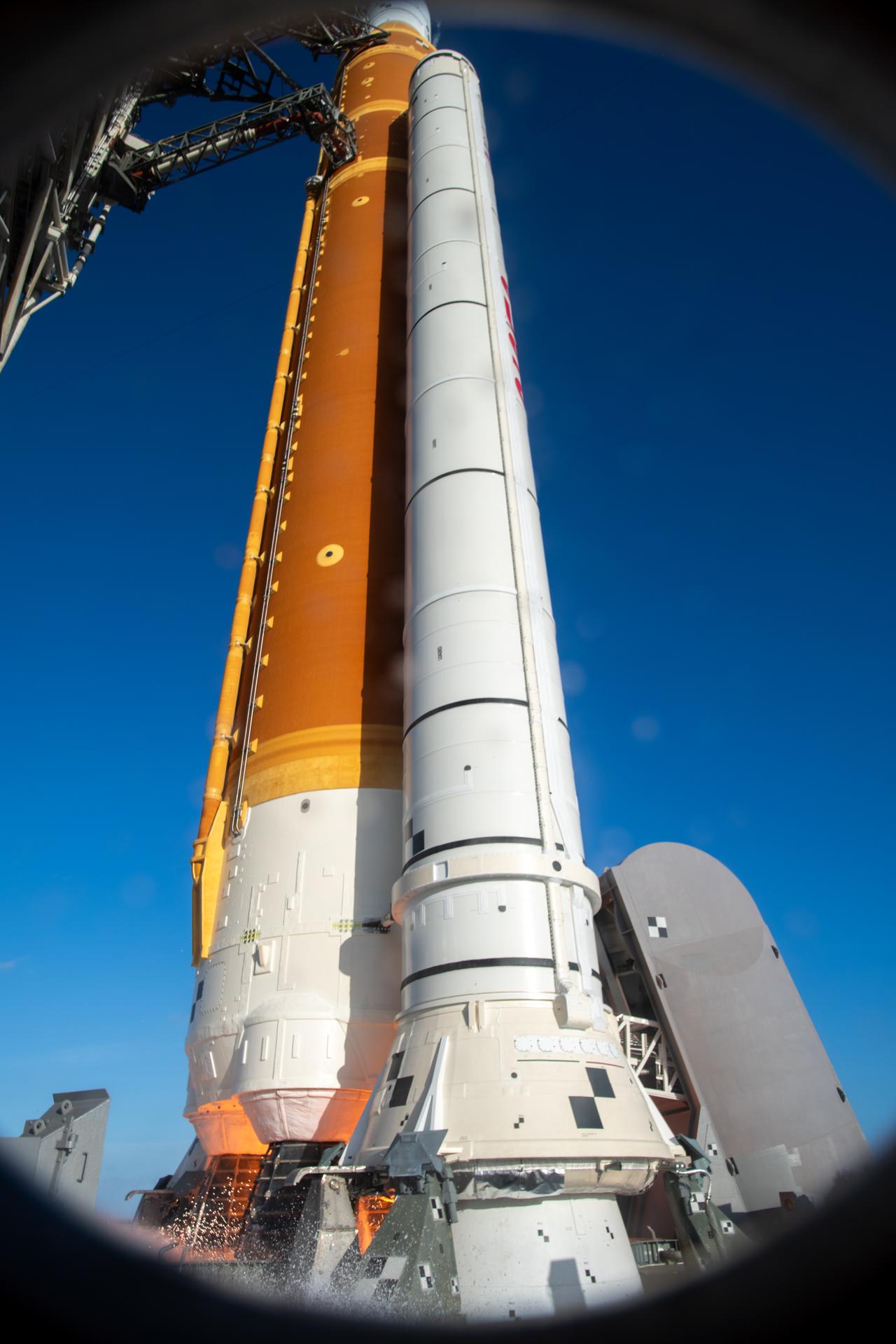
The Ignition Overpressure Protection and Sound Suppression water deluge system activates during launch of NASA’s Artemis II test flight at Launch Complex 39B at NASA’s Kennedy Space Center in Florida at 6:35 p.m. EDT on Wednesday, April 1, 2026. The water deluge system releases about 450,000 gallons of water across the mobile launcher and flame deflector to reduce the extreme heat and energy generated by the rocket during ignition and liftoff. Artemis II Commander Reid Wiseman, Pilot Victor Glover, and Mission Specialist Christina Koch from NASA, along with Mission Specialist Jeremy Hansen from the CSA (Canadian Space Agency), are on a 10-day journey around the Moon and back with splashdown in the Pacific Ocean off the coast of San Diego, California on Friday, April 10.
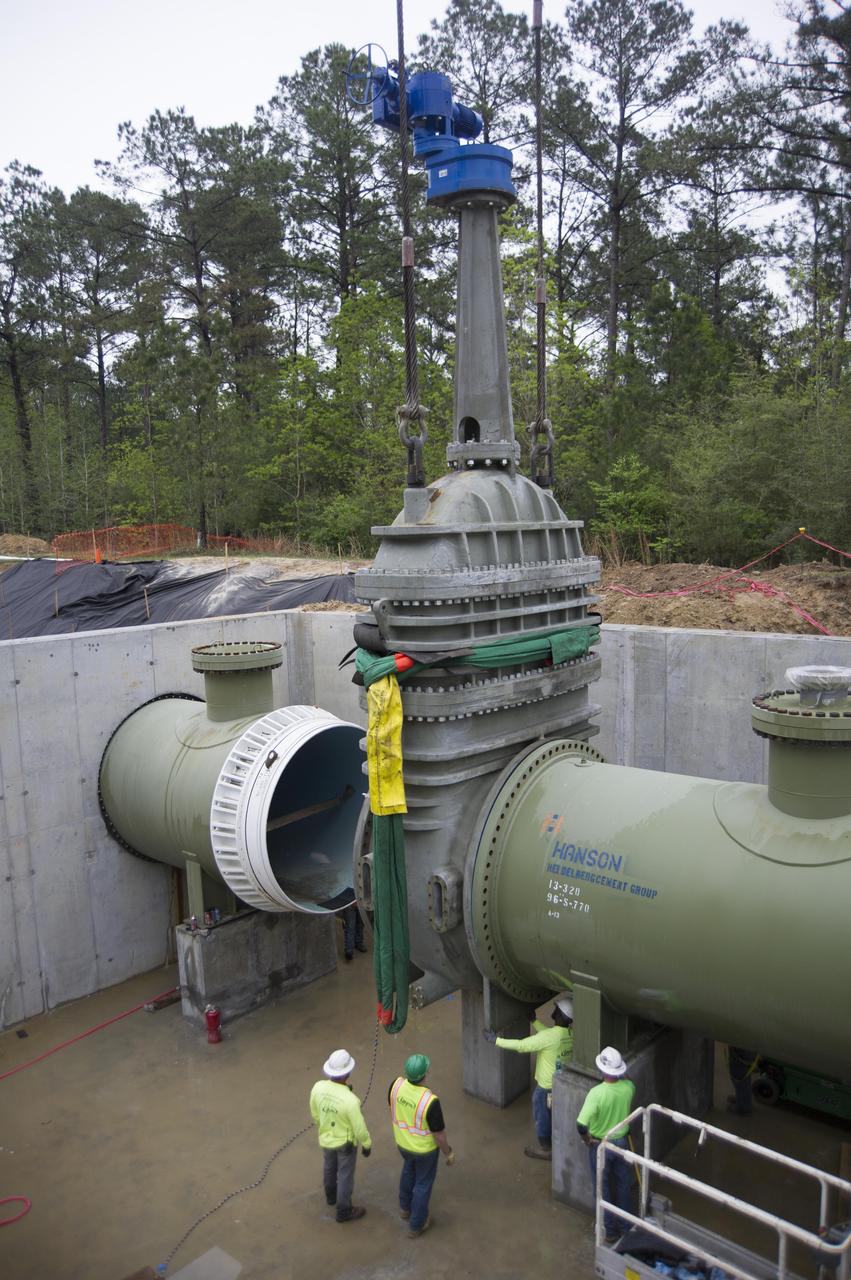
Stennis Space Center employees install a 96-inch valve during a recent upgrade of the high-pressure industrial water system that serves the site’s large rocket engine test stands. The upgraded system has a capacity to flow 335,000 gallons of water a minute, which is a critical element for testing. At Stennis, engines are anchored in place on large test stands and fired just as they are during an actual space flight. The fire and exhaust from the test is redirected out of the stand by a large flame trench. A water deluge system directs thousands of gallons of water needed to cool the exhaust. Water also must be available for fire suppression in the event of a mishap. The new system supports RS-25 engine testing on the A-1 Test Stand, as well as testing of the core stage of NASA’s new Space Launch System on the B-2 Test Stand at Stennis.
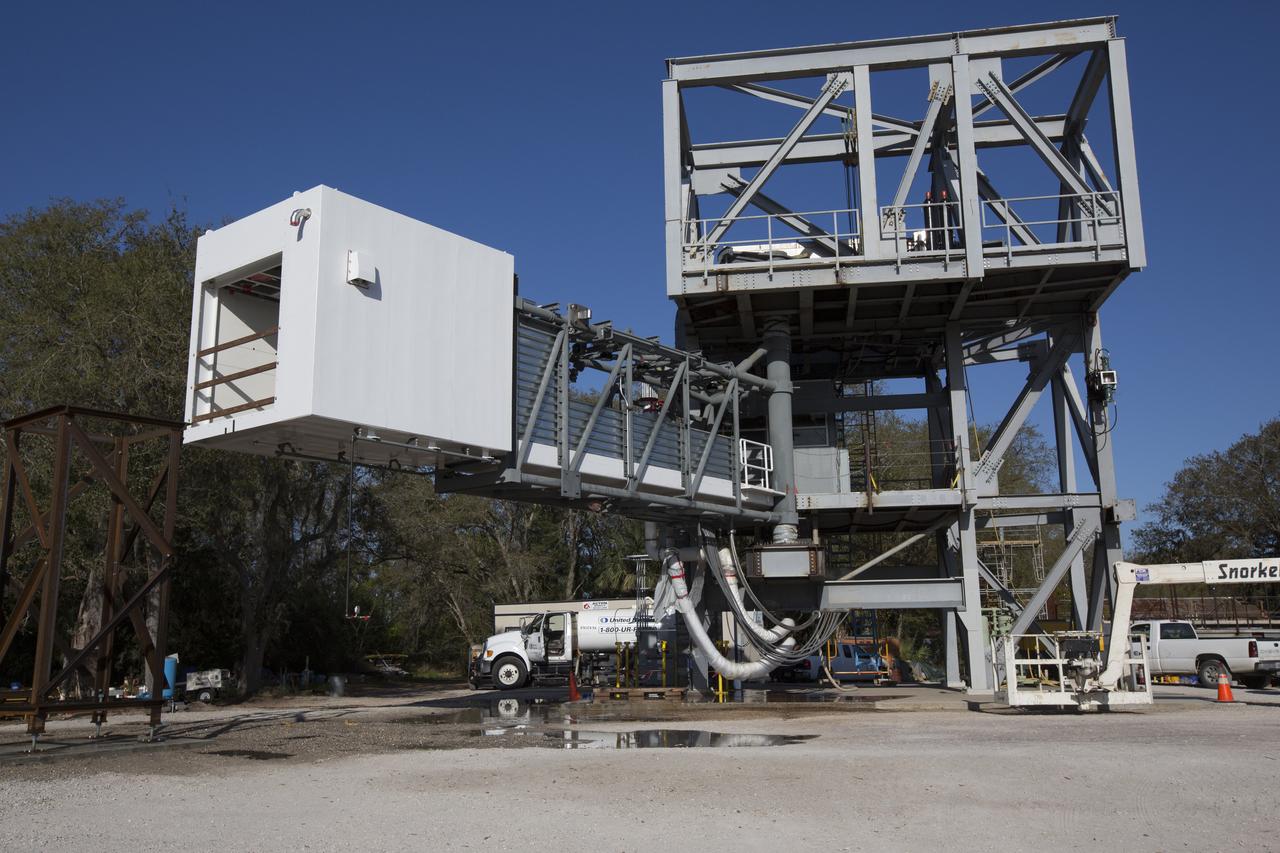
The Crew Access Arm is seen following a water deluge systems test March 23 at a construction yard near NASA's Kennedy Space Center in Florida. The arm is being tested before being installed on Space Launch Complex 41 Crew Access Tower later this year. It will be used as a bridge by astronauts to board Boeing's CST-100 Starliner spacecraft as it stands on the launch pad atop a United Launch Alliance Atlas V rocket.
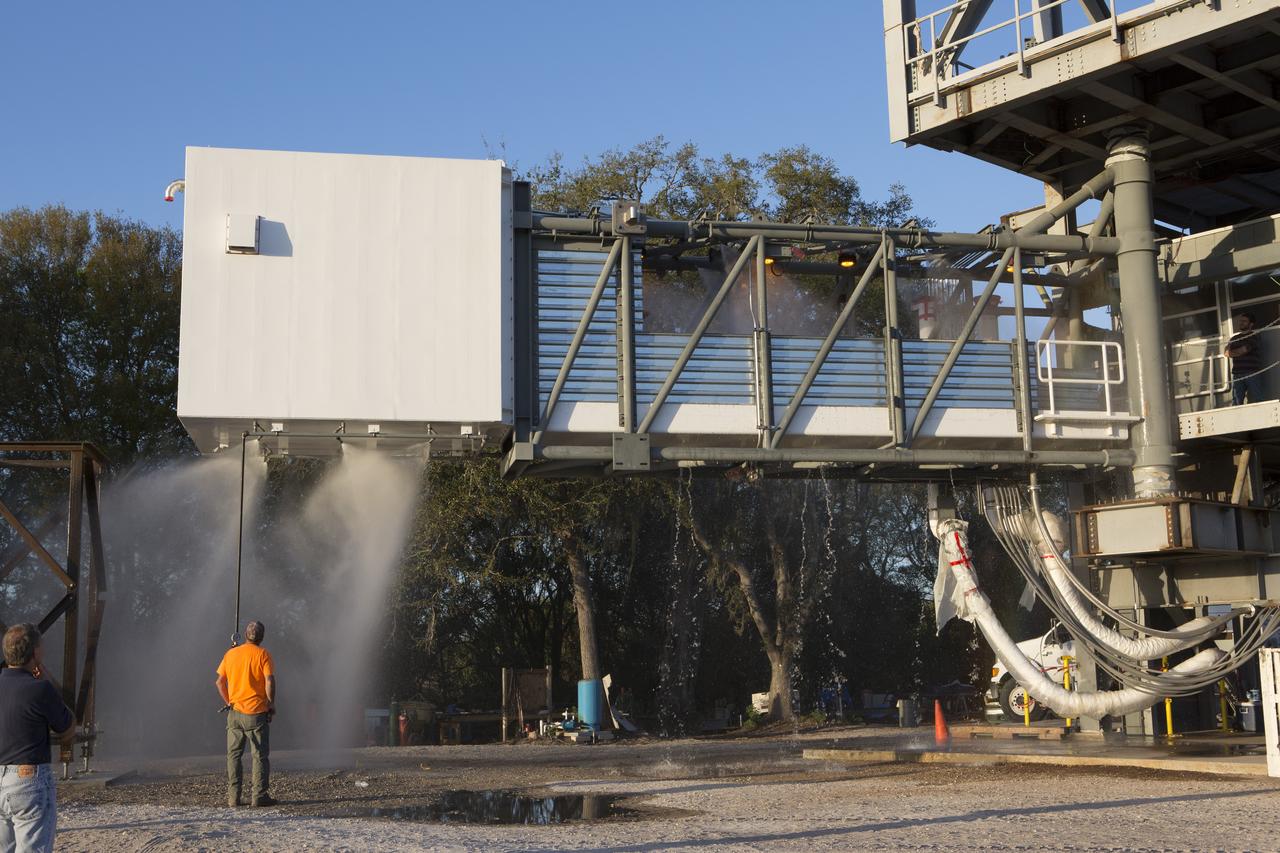
Water sprays on the Crew Access Arm during a deluge systems test March 23 at a construction yard near NASA's Kennedy Space Center in Florida. The arm is being tested before being installed on Space Launch Complex 41 Crew Access Tower later this year. It will be used as a bridge by astronauts to board Boeing's CST-100 Starliner spacecraft as it stands on the launch pad atop a United Launch Alliance Atlas V rocket.
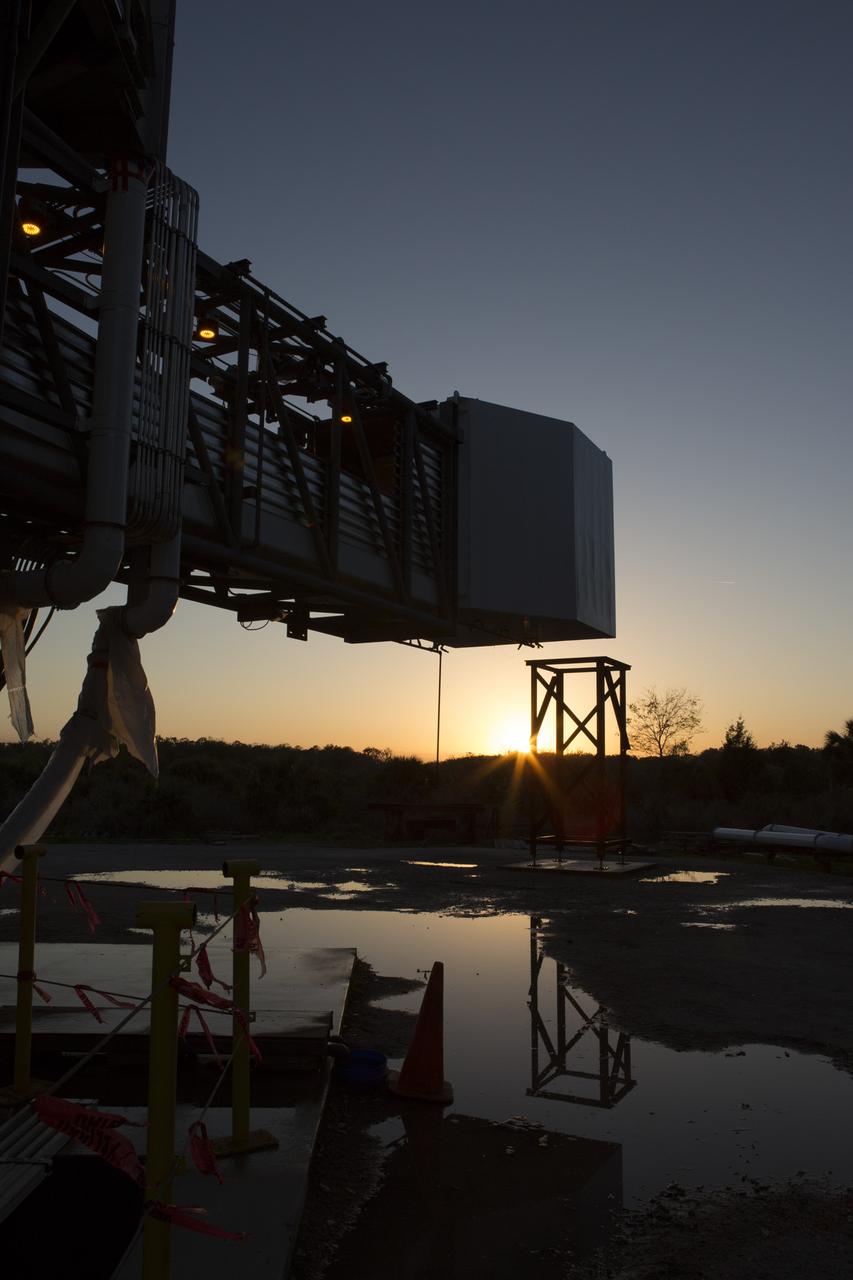
The Crew Access Arm is seen following a water deluge systems test March 23 at a construction yard near NASA's Kennedy Space Center in Florida. The arm is being tested before being installed on Space Launch Complex 41 Crew Access Tower later this year. It will be used as a bridge by astronauts to board Boeing's CST-100 Starliner spacecraft as it stands on the launch pad atop a United Launch Alliance Atlas V rocket.
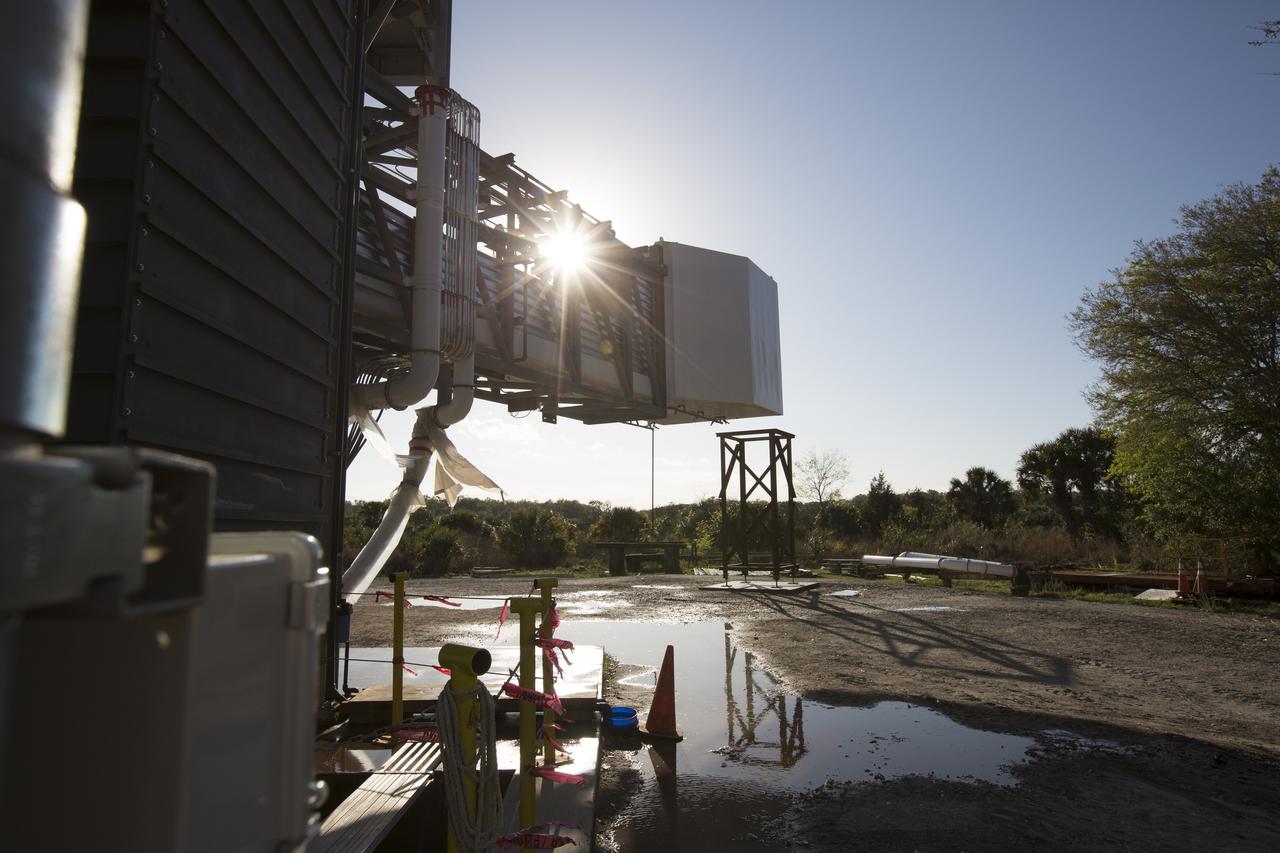
The Crew Access Arm is seen following a water deluge systems test March 23 at a construction yard near NASA's Kennedy Space Center in Florida. The arm is being tested before being installed on Space Launch Complex 41 Crew Access Tower later this year. It will be used as a bridge by astronauts to board Boeing's CST-100 Starliner spacecraft as it stands on the launch pad atop a United Launch Alliance Atlas V rocket.

Water sprays on the Crew Access Arm during a deluge systems test March 23 at a construction yard near NASA's Kennedy Space Center in Florida. The arm is being tested before being installed on Space Launch Complex 41 Crew Access Tower later this year. It will be used as a bridge by astronauts to board Boeing's CST-100 Starliner spacecraft as it stands on the launch pad atop a United Launch Alliance Atlas V rocket.
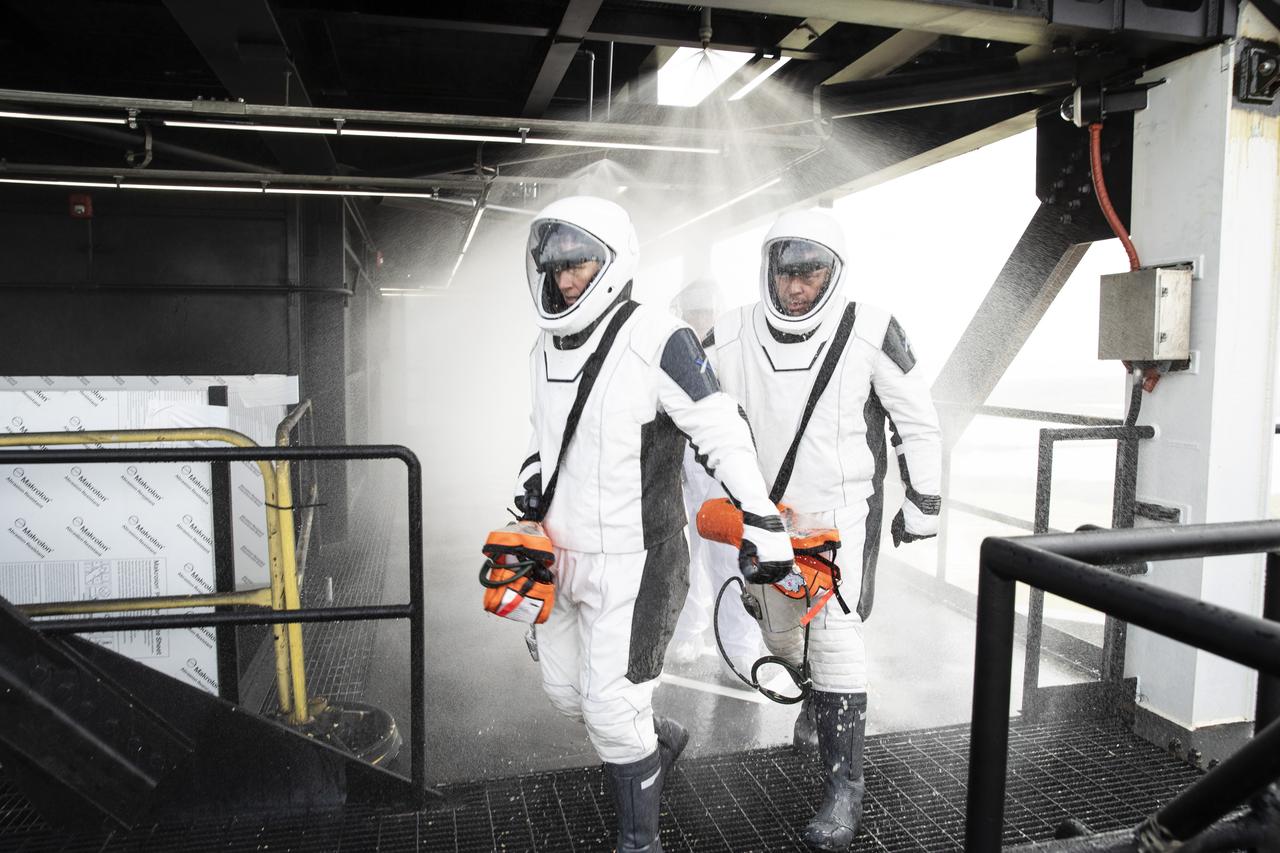
NASA and SpaceX conducted a formal verification of the company’s emergency escape system on Sept. 18, 2019, at Kennedy Space Center’s Launch Complex 39A in Florida. NASA astronauts Shannon Walker, in front, and Bob Behnken participated in the exercise to verify the crew can safely and quickly evacuate from the launch pad in the unlikely event of an emergency before liftoff of SpaceX’s first crewed flight test, called Demo-2. During the escape verification, Walker and Behnken pass through the water deluge system on the 265-foot level of the crew access tower. As Boeing and SpaceX begin to make regular flights to the International Space Station for NASA’s Commercial Crew Program, the agency will continue to advance its mission to go beyond low-Earth orbit and establish a human presence on the Moon with the ultimate goal of sending astronauts to Mars.