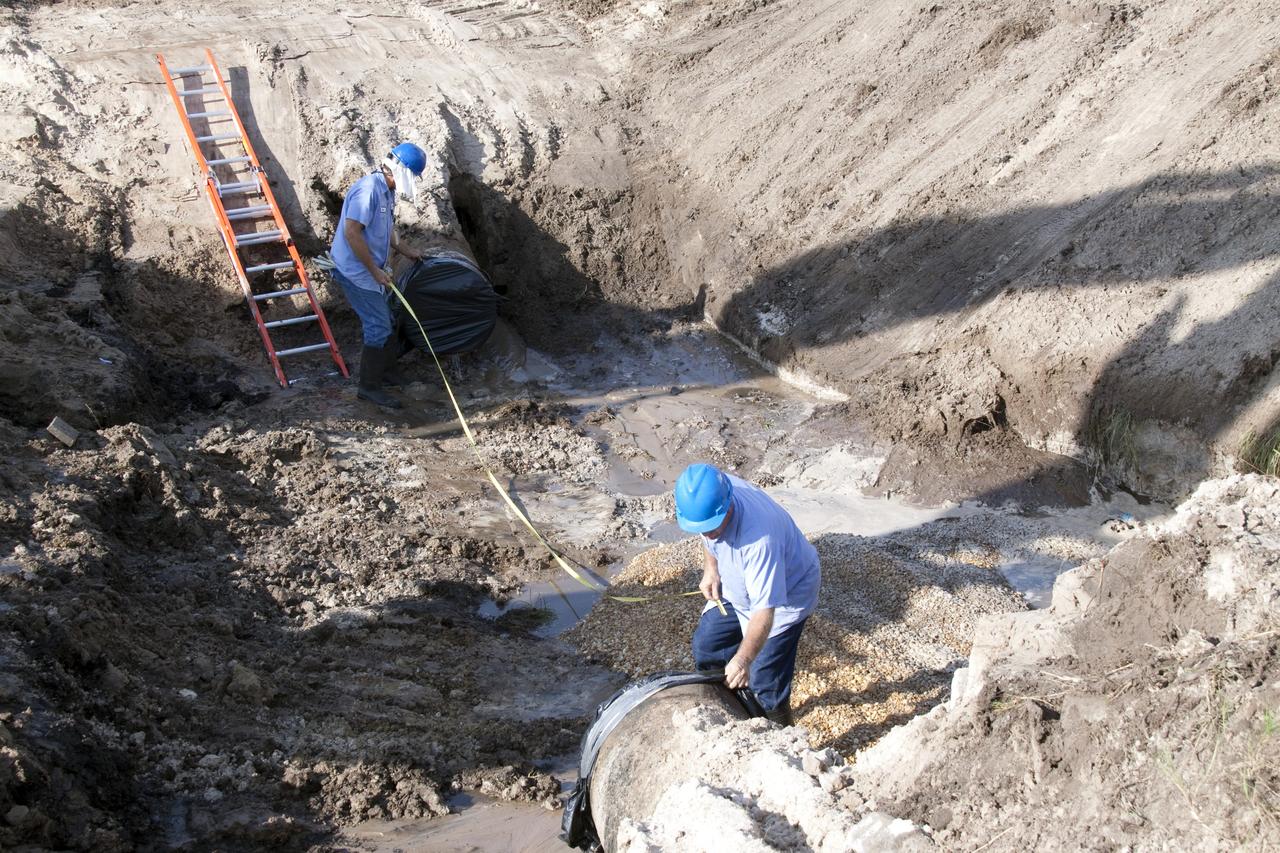
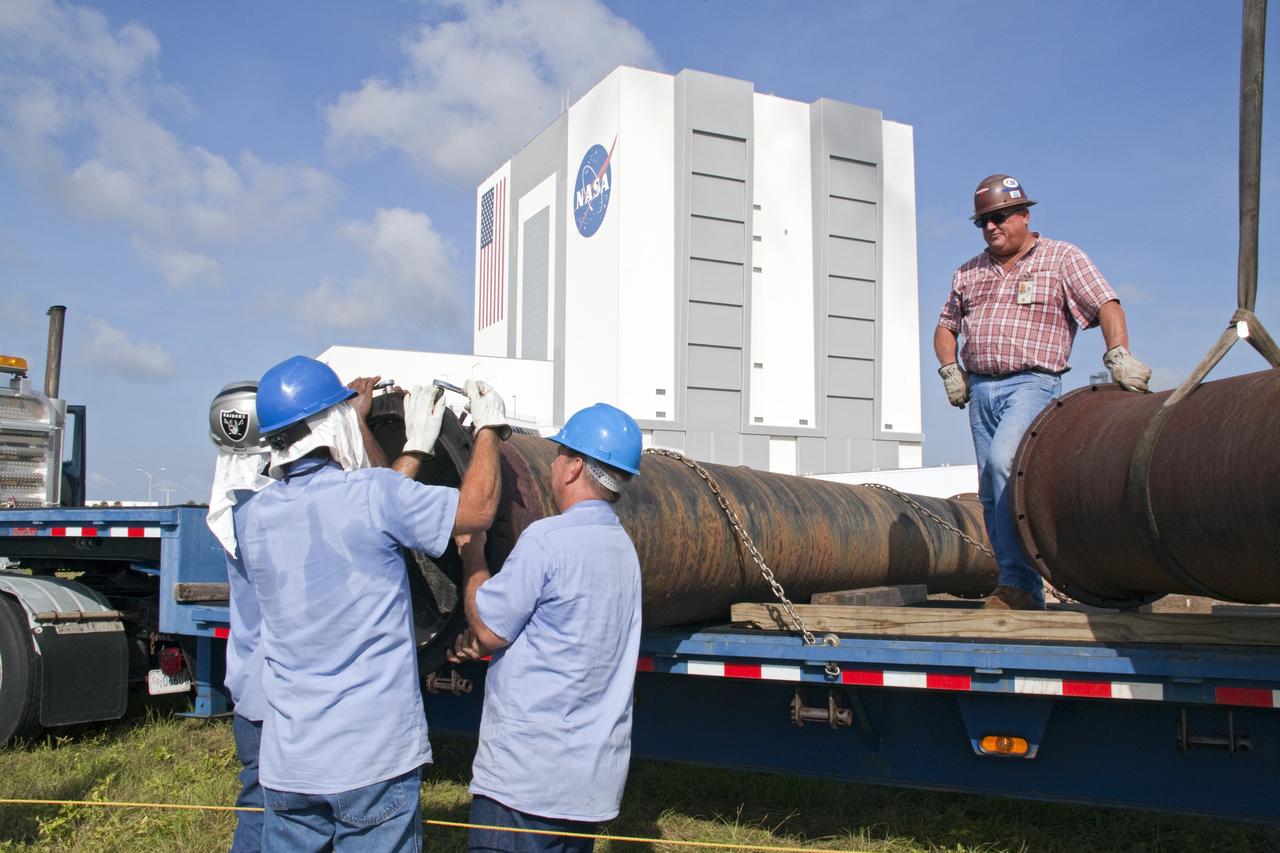
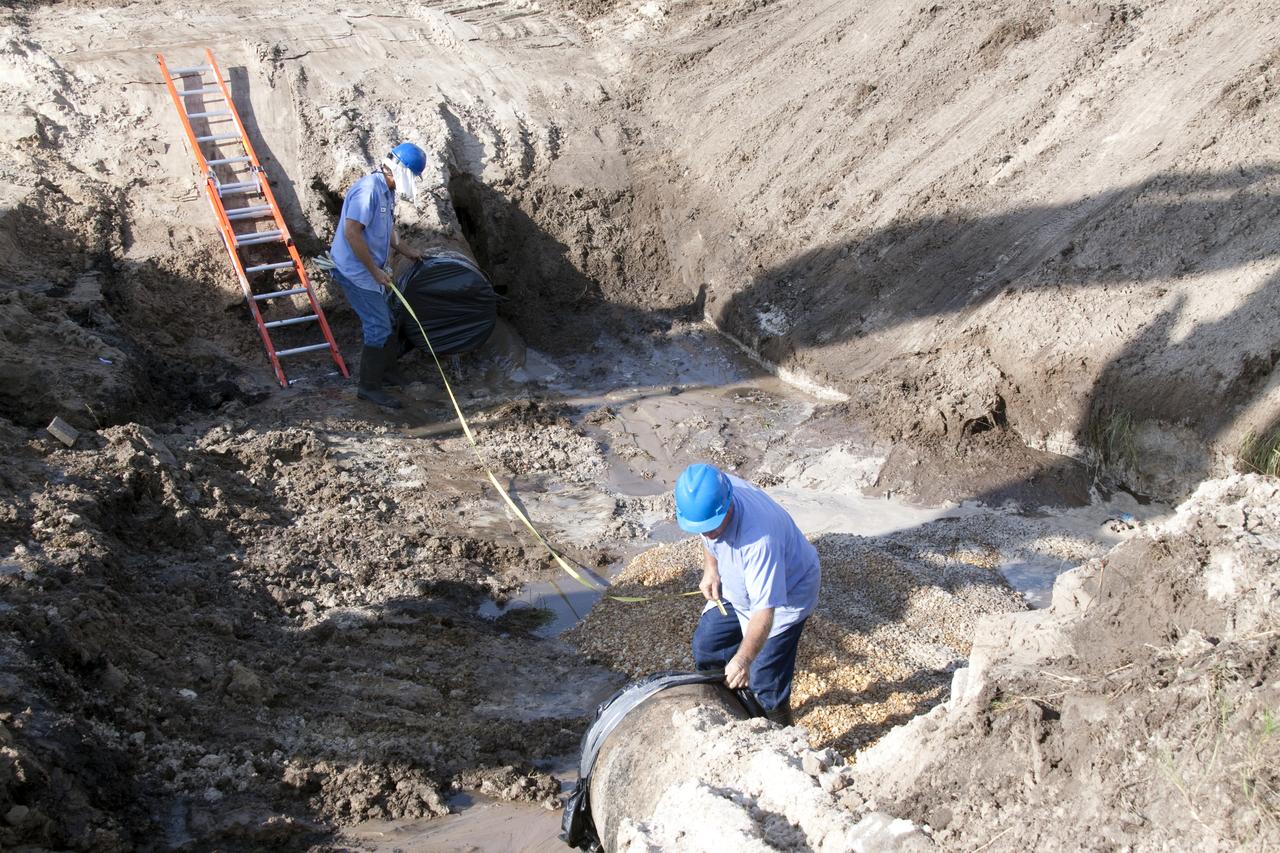
CAPE CANAVERAL, Fla. -- In the Launch Complex-39 Turn Basin area, across from the Vehicle Assembly Building at NASA's Kennedy Space Center in Florida, workers take measurements for replacement sections of a 24-inch cast iron water main pipe. Kennedy was closed to non-essential personnel the morning of Sept. 8 while crews assessed the water main break and restored water to the center. Photo credit: NASA/Jack Pfaller
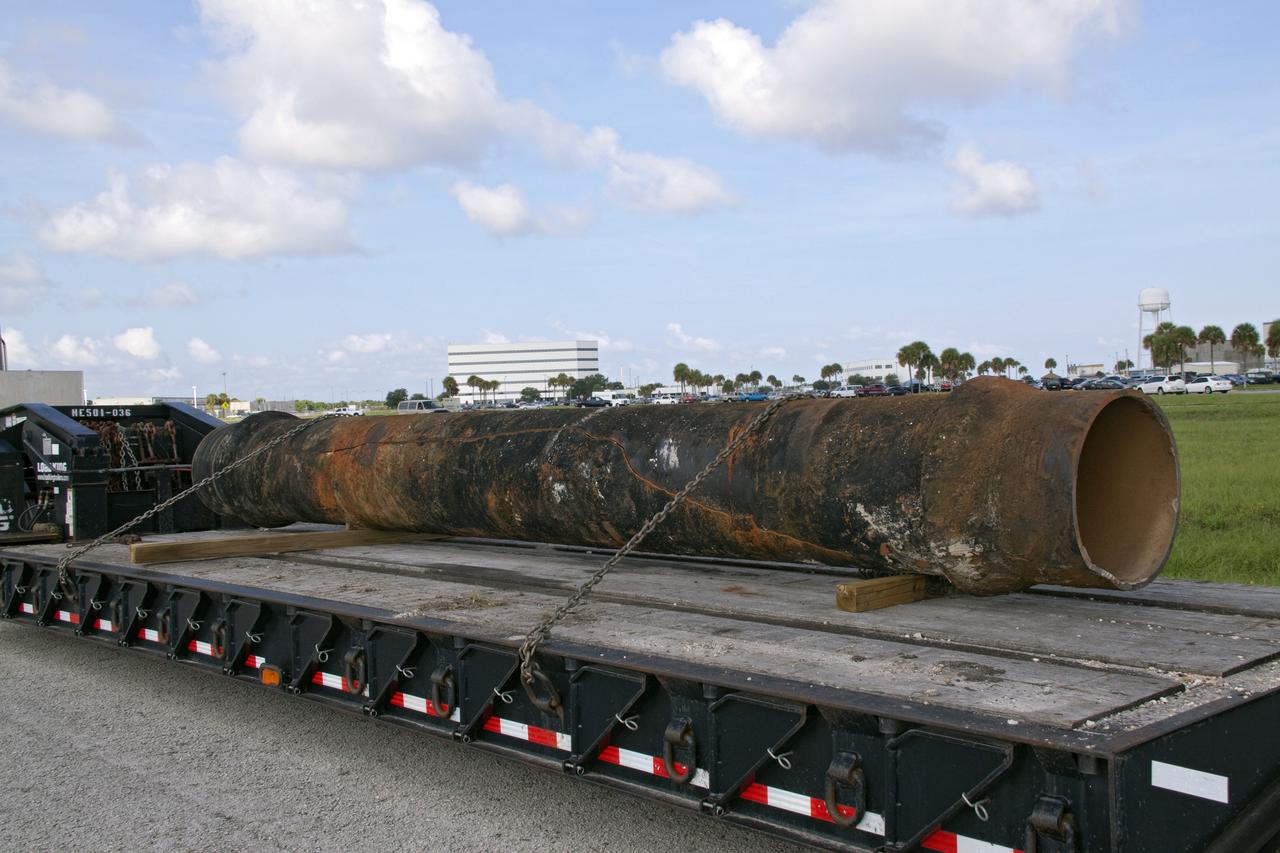
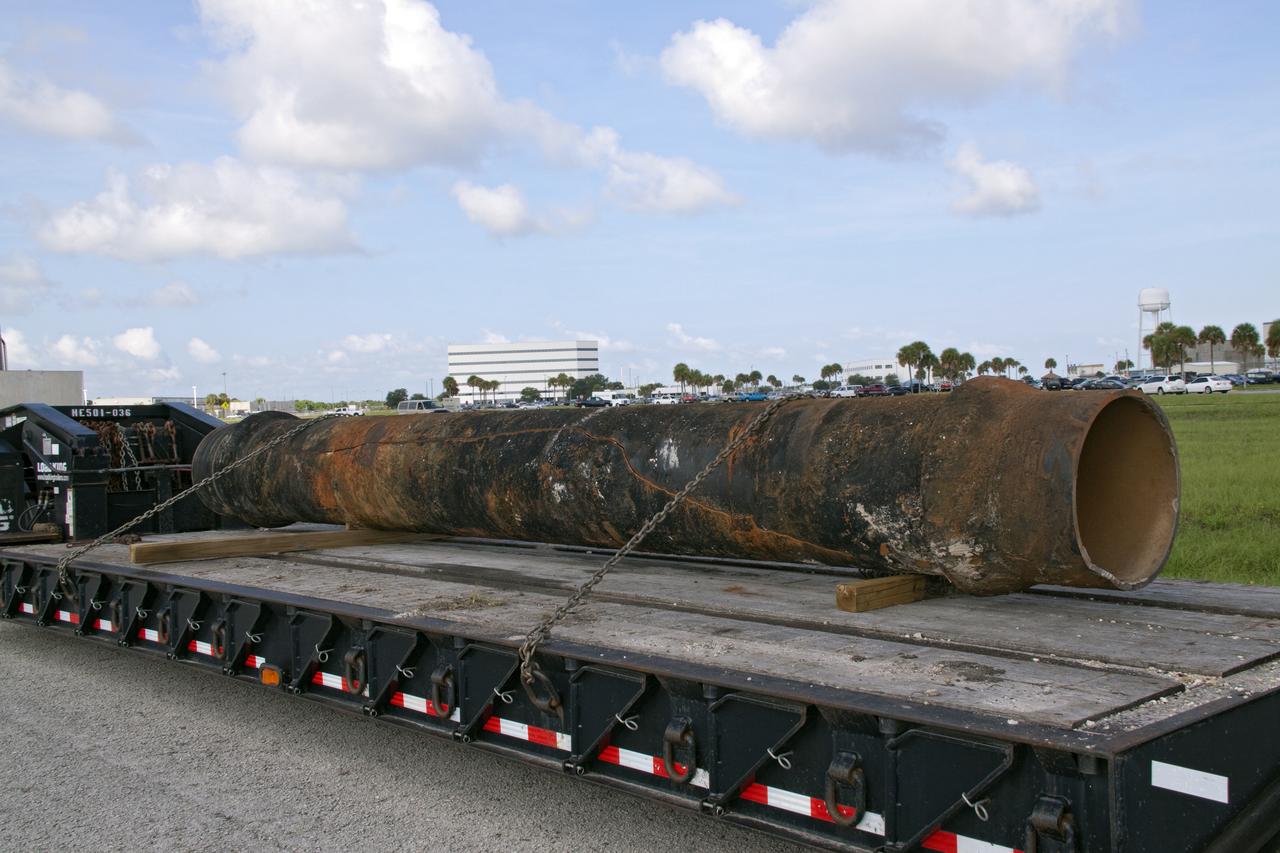
CAPE CANAVERAL, Fla. -- In the Launch Complex-39 Turn Basin area, across from the Vehicle Assembly Building at NASA's Kennedy Space Center in Florida, the section of a 24-inch cast iron water main pipe that failed is hauled away by a transport truck. Kennedy was closed to non-essential personnel the morning of Sept. 8 while crews assessed the water main break and restored water to the center. Photo credit: NASA/Jack Pfaller
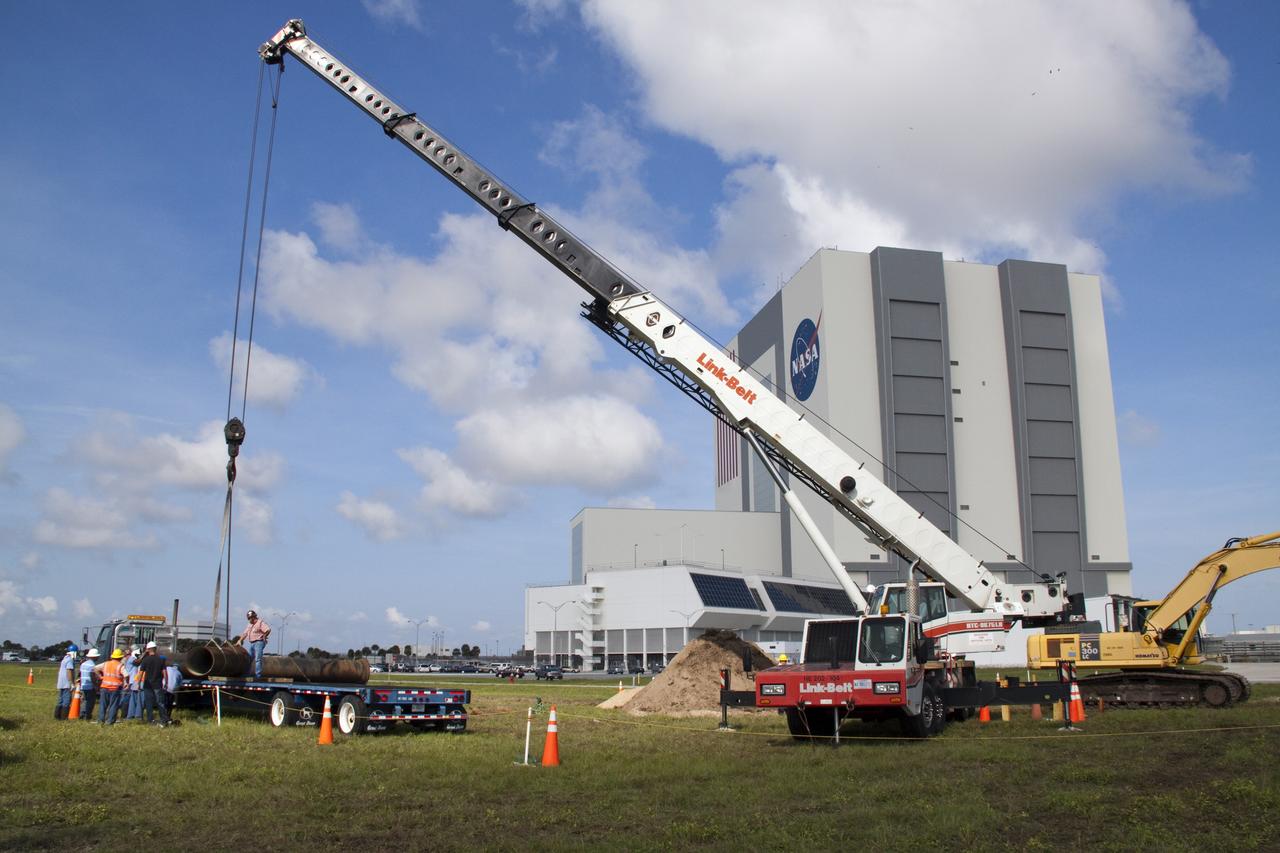
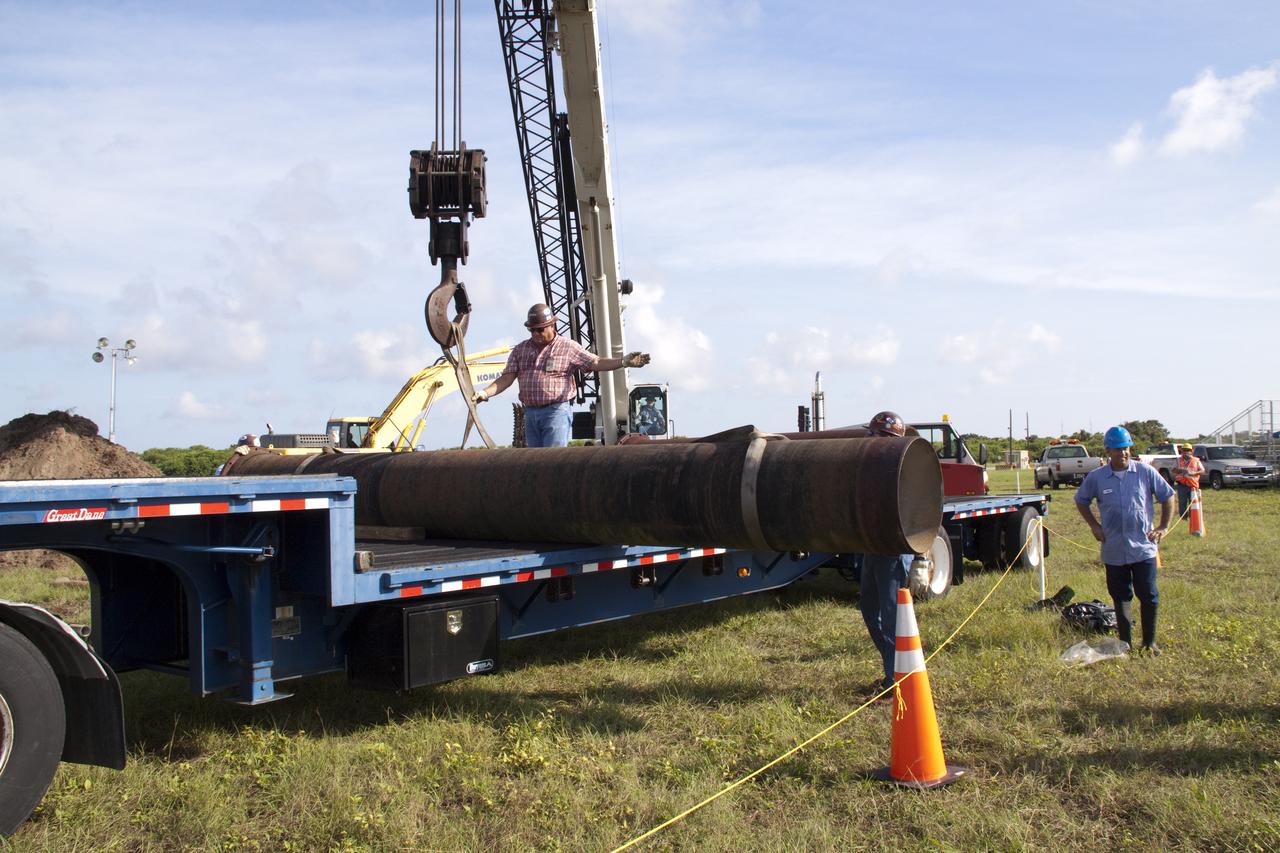
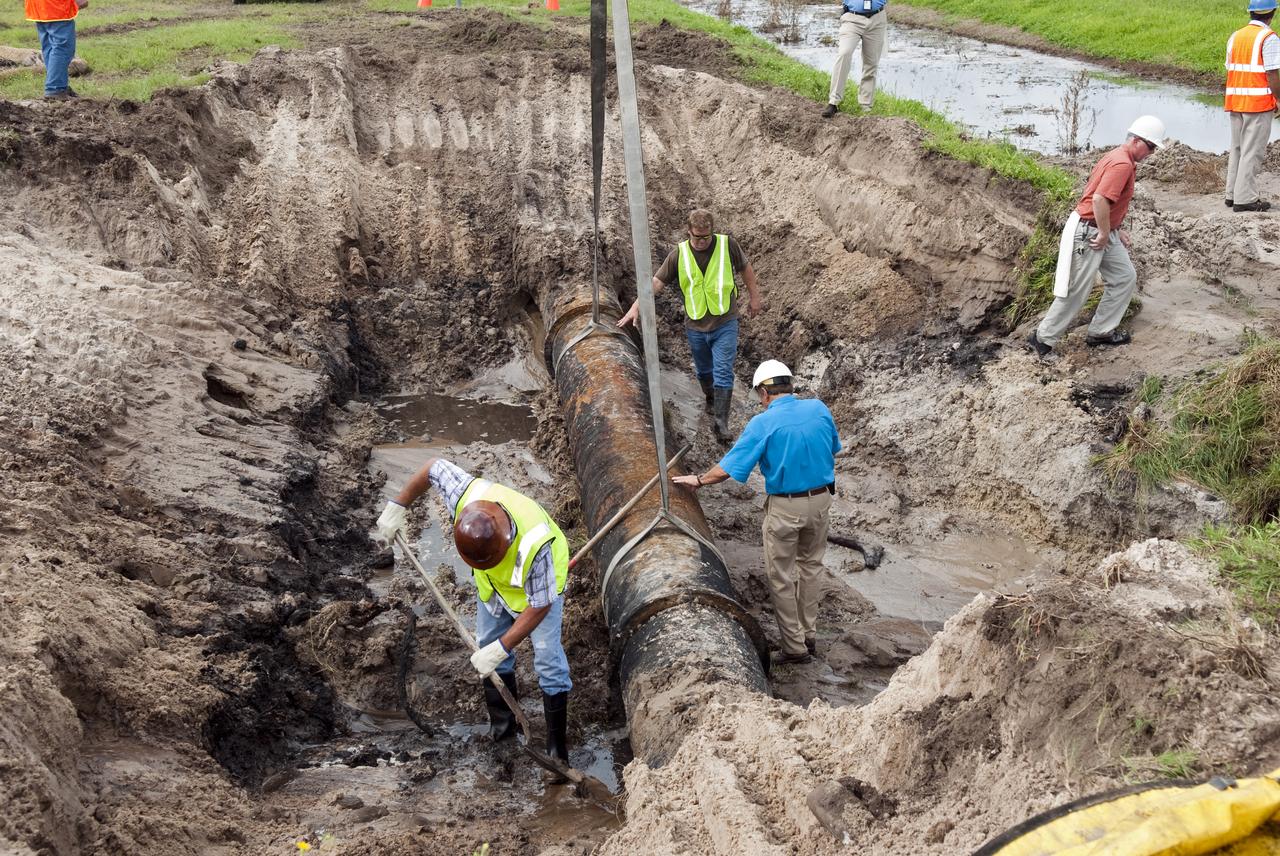
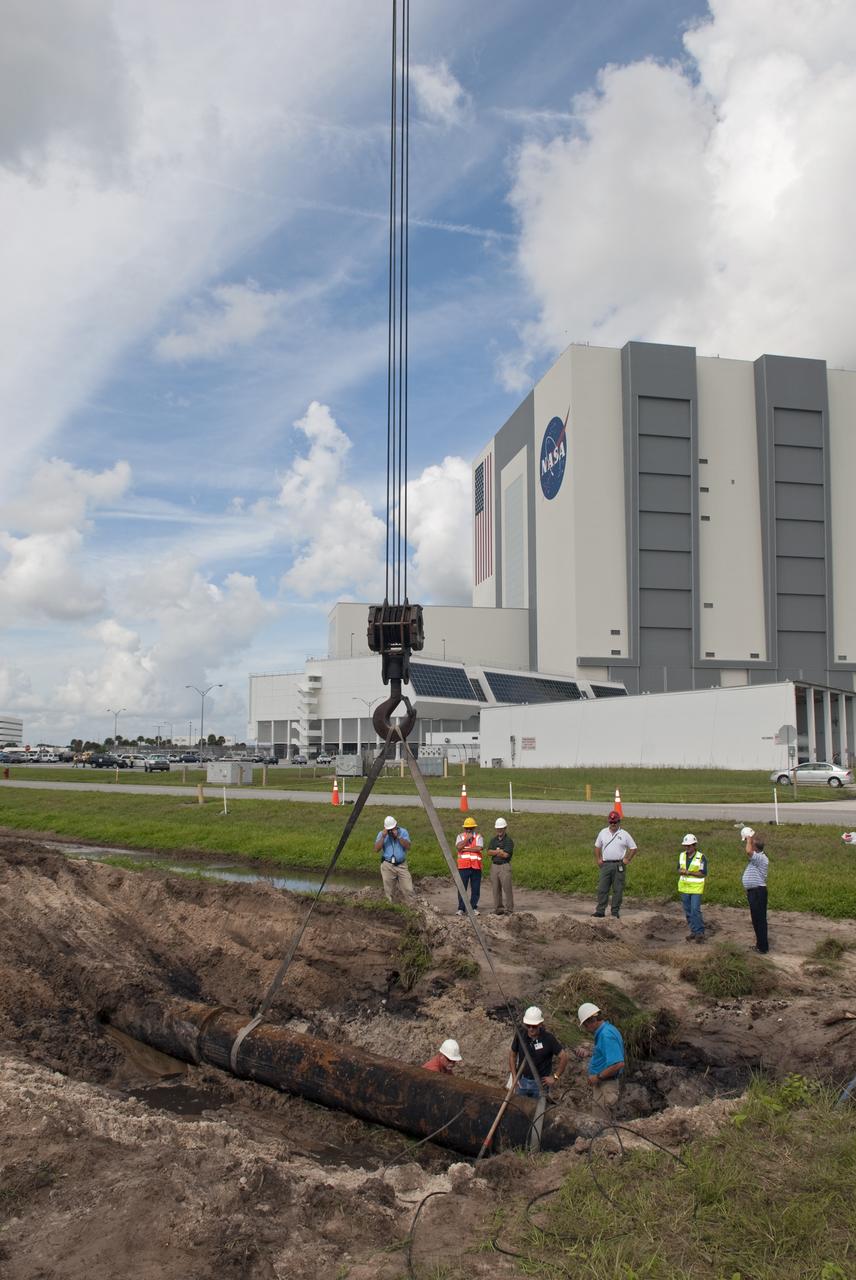
CAPE CANAVERAL, Fla. --In the Launch Complex-39 Turn Basin area, across from the Vehicle Assembly Building at NASA's Kennedy Space Center in Florida, workers, assisted by an overhead crane maneuver the replacement section of a 24-inch cast iron water main pipe off of a transport truck. Kennedy was closed to non-essential personnel the morning of Sept. 8 while crews assessed the water main break and restored water to the center. Photo credit: NASA/Jack Pfaller
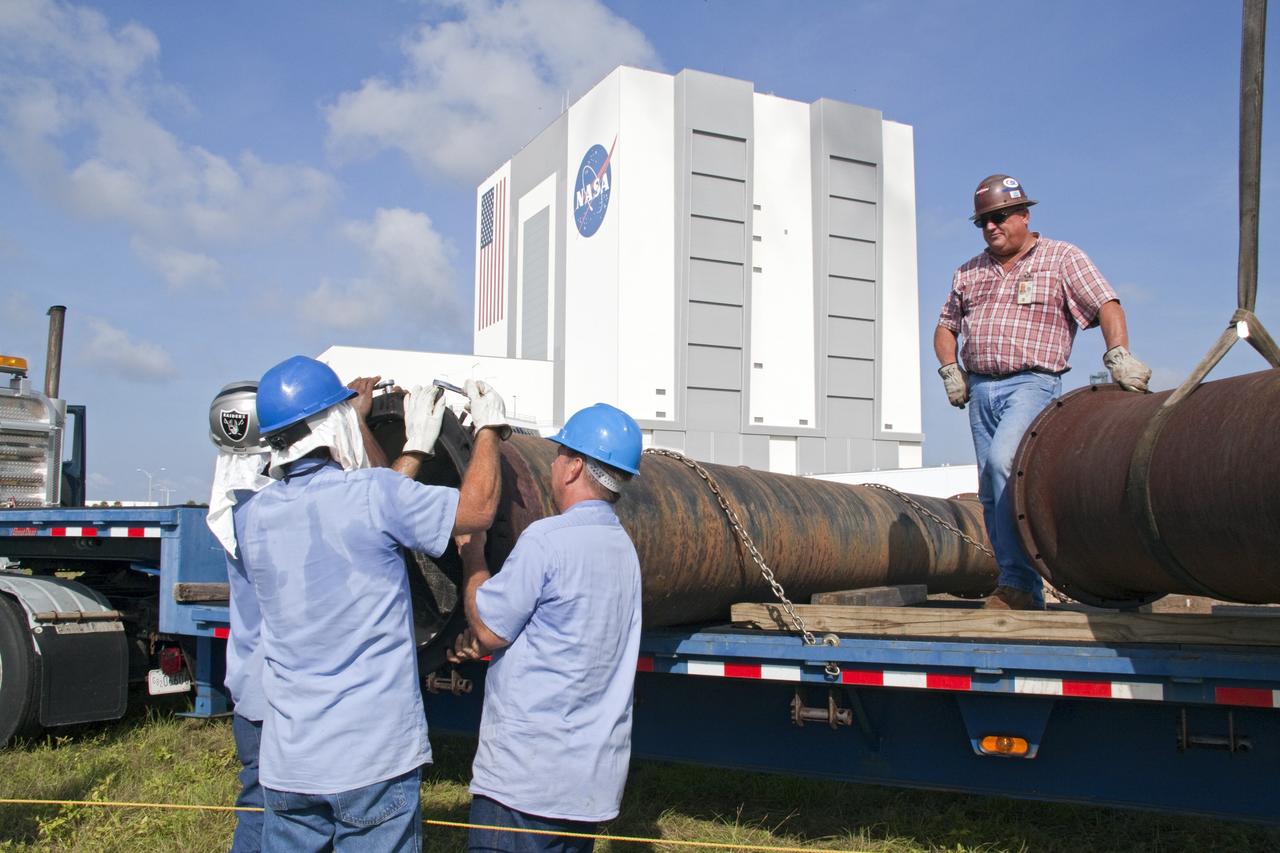
CAPE CANAVERAL, Fla. -- In the Launch Complex-39 Turn Basin area, across from the Vehicle Assembly Building at NASA's Kennedy Space Center in Florida, workers maneuver the replacement section of a 24-inch cast iron water main pipe off of a transport truck. Kennedy was closed to non-essential personnel the morning of Sept. 8 while crews assessed the water main break and restored water to the center. Photo credit: NASA/Jack Pfaller
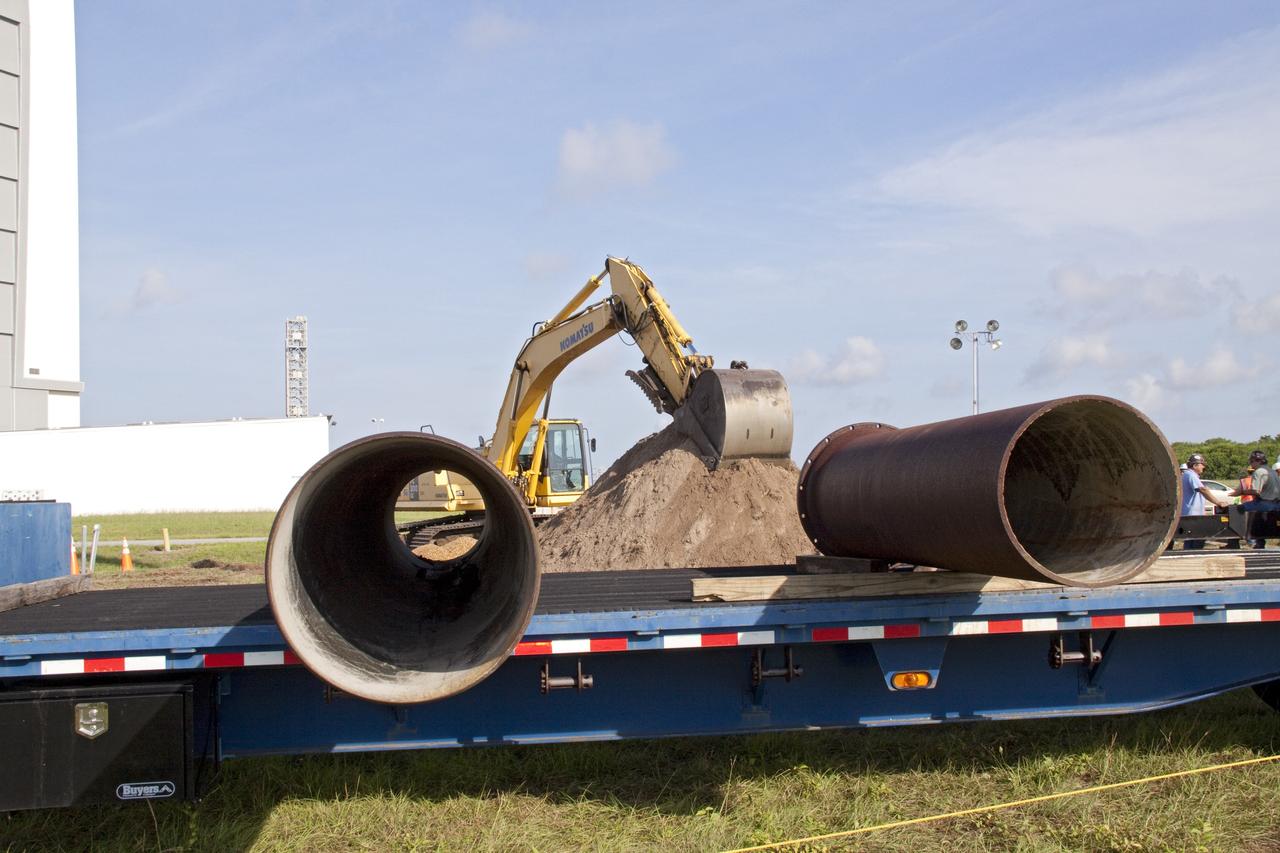
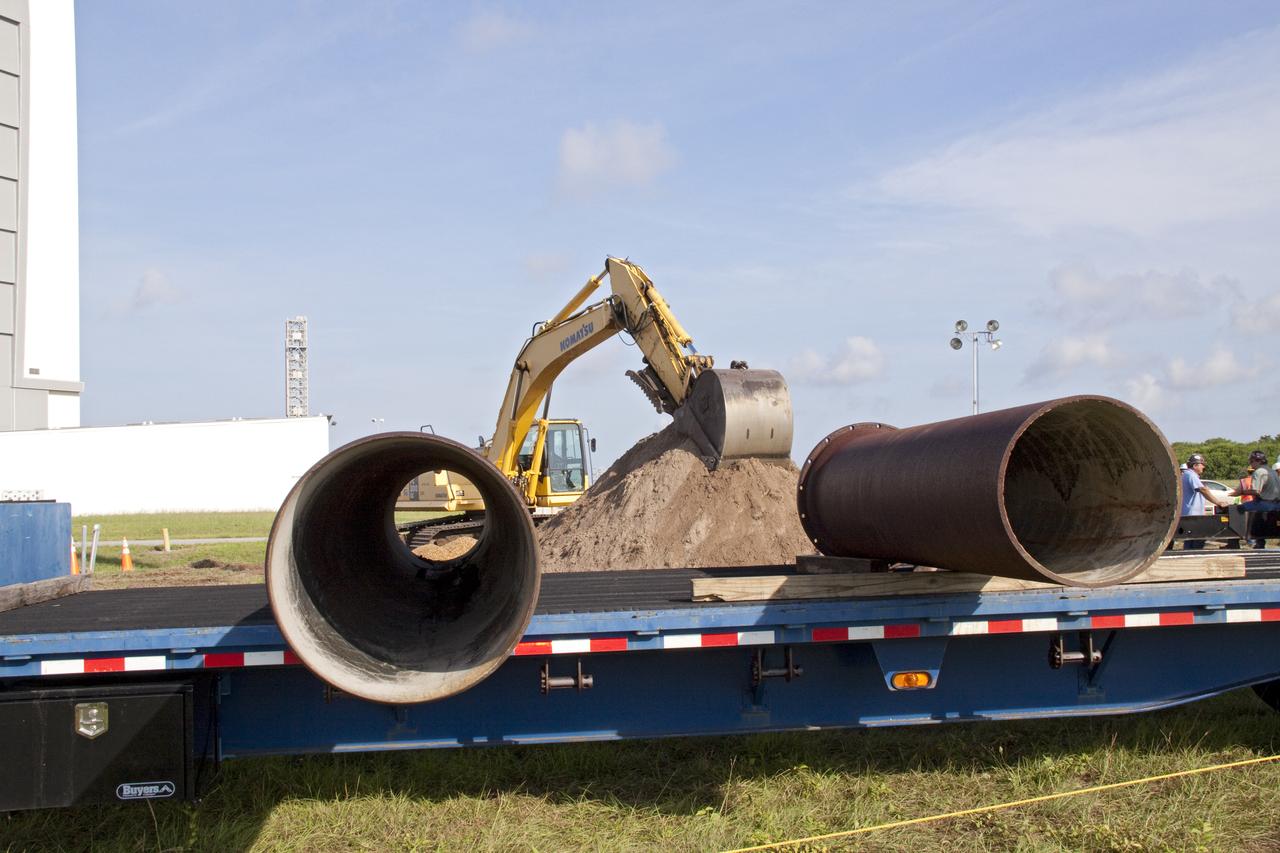
CAPE CANAVERAL, Fla. -- In the Launch Complex-39 Turn Basin area, across from the Vehicle Assembly Building at NASA's Kennedy Space Center in Florida, replacement sections of a 24-inch cast iron water main pipe awaits installation. Kennedy was closed to non-essential personnel the morning of Sept. 8 while crews assessed the water main break and restored water to the center. Photo credit: NASA/Jack Pfaller
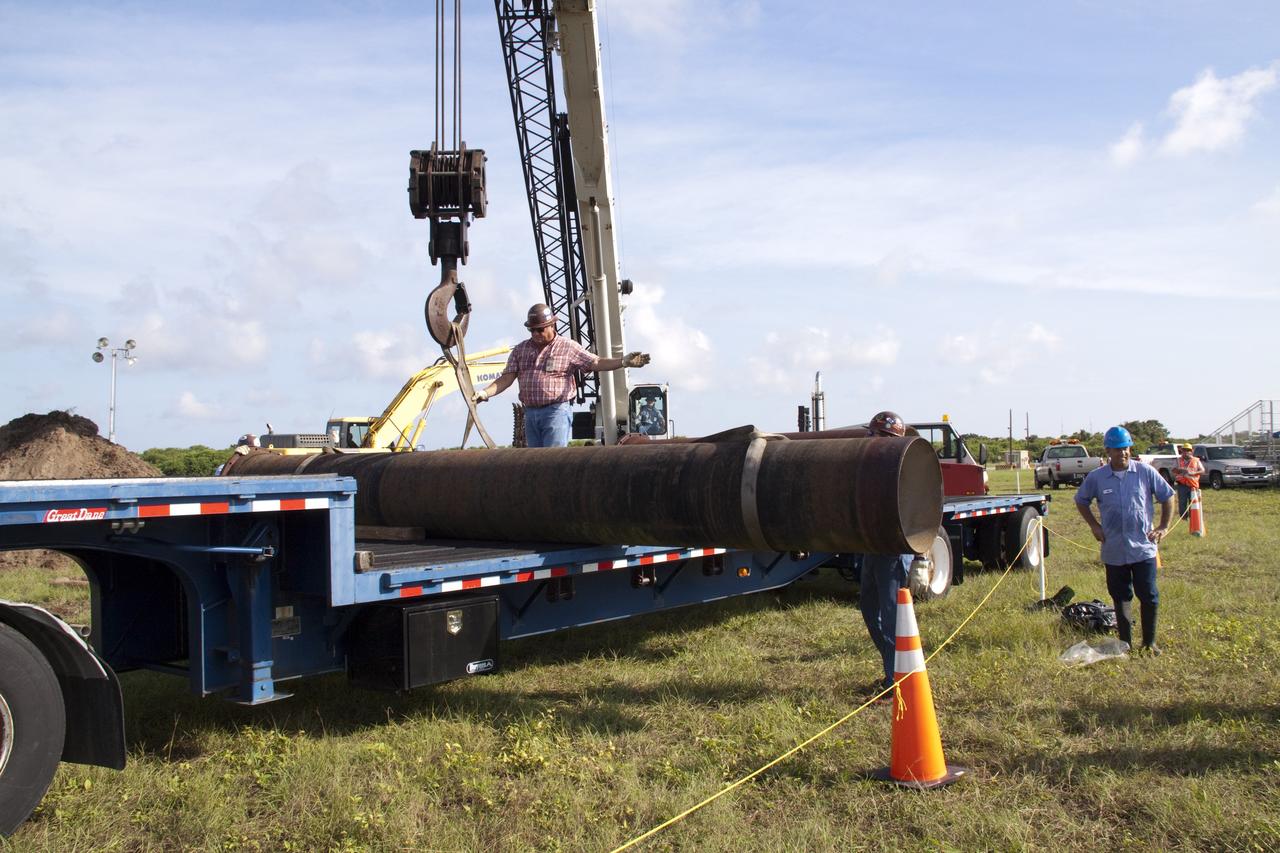
CAPE CANAVERAL, Fla. -- In the Launch Complex-39 Turn Basin area, across from the Vehicle Assembly Building at NASA's Kennedy Space Center in Florida, workers maneuver the replacement sections of a 24-inch cast iron water main pipe off of a transport truck. Kennedy was closed to non-essential personnel the morning of Sept. 8 while crews assessed the water main break and restored water to the center. Photo credit: NASA/Jack Pfaller
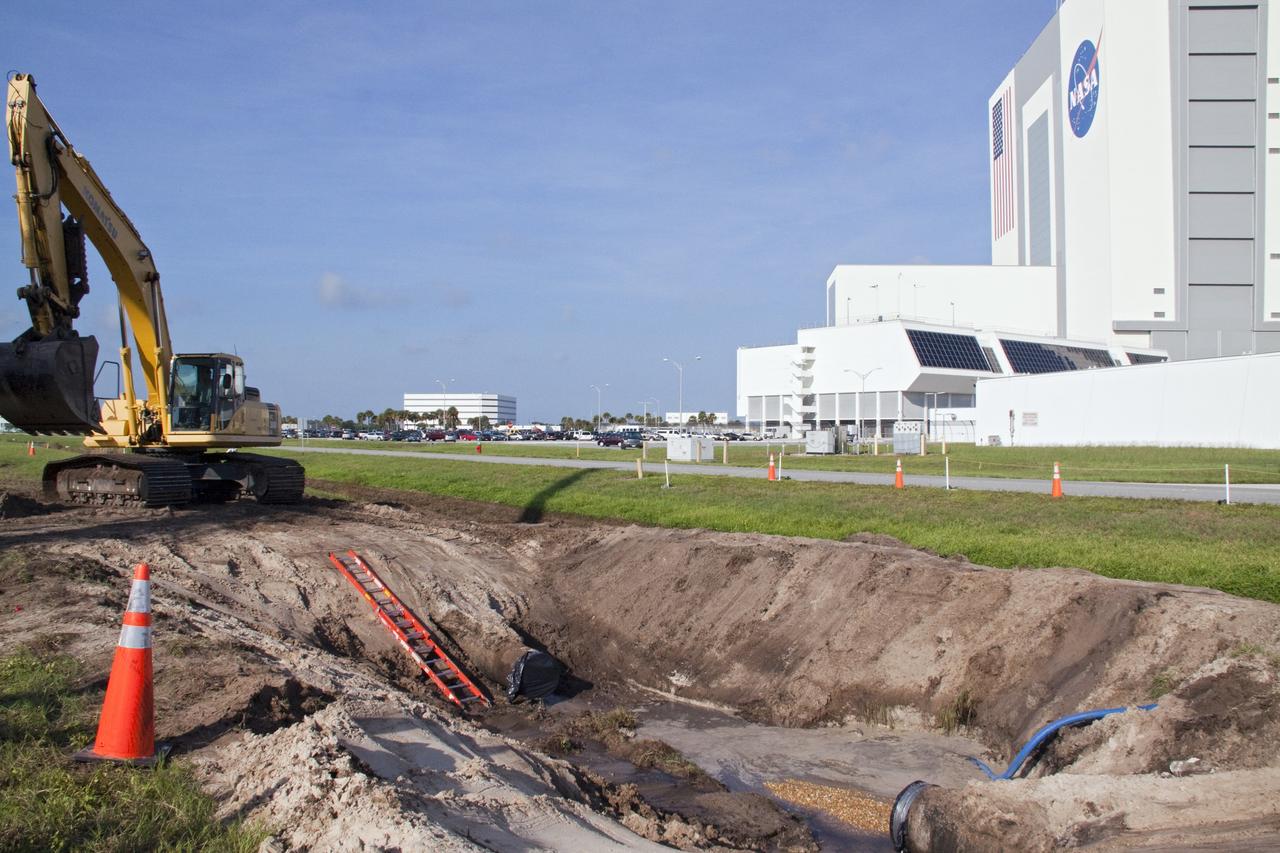
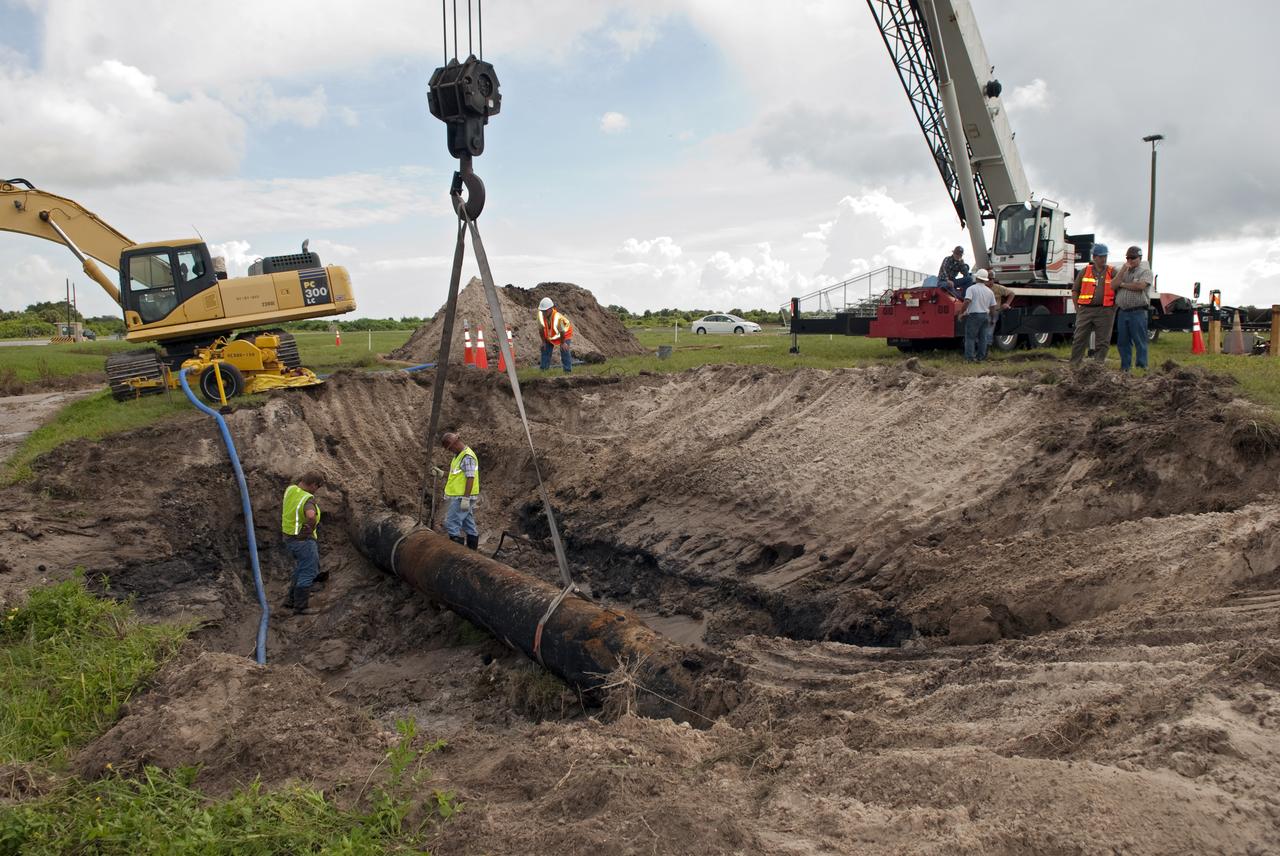
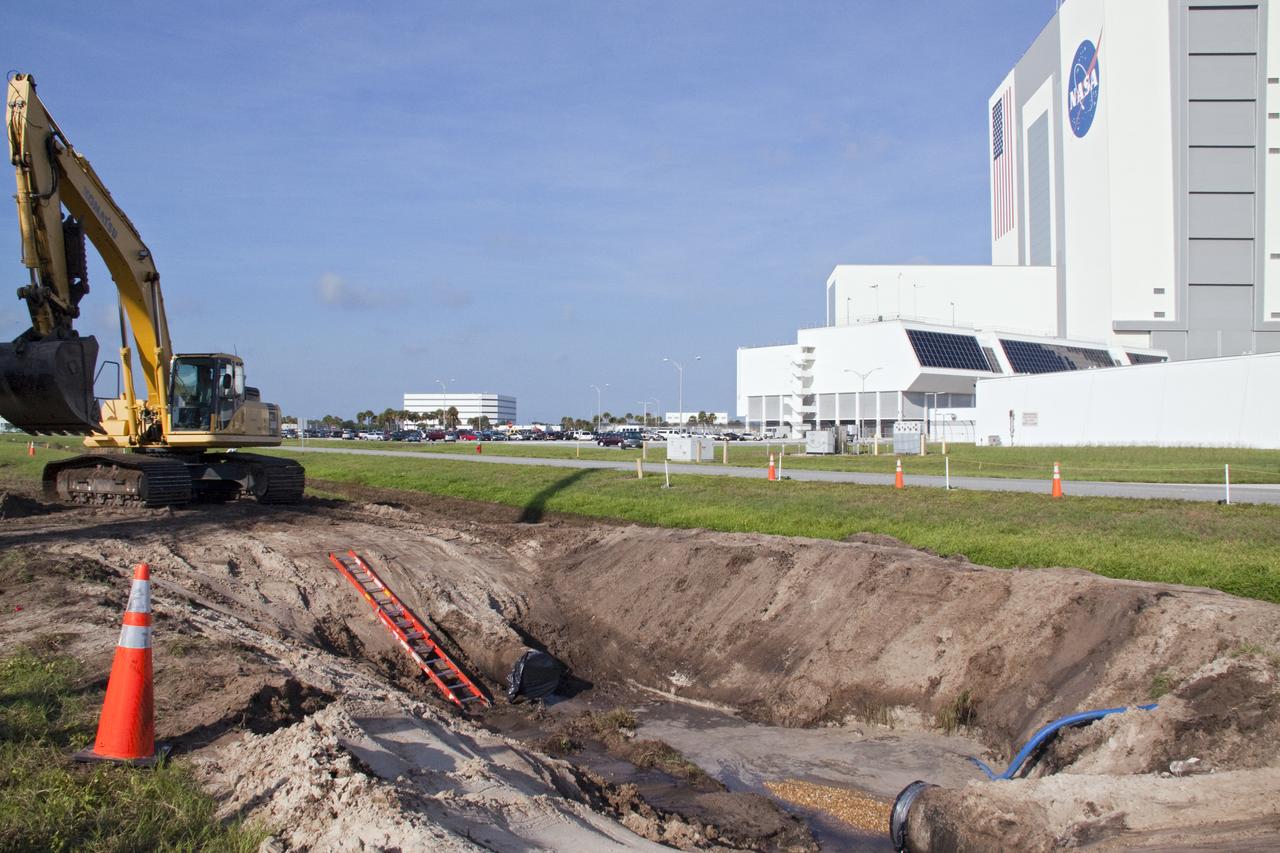
CAPE CANAVERAL, Fla. -- At NASA's Kennedy Space Center in Florida, a work crew has removed a large section of a 24-inch cast iron water main pipe located in the Launch Complex-39 Turn Basin area, across from the Vehicle Assembly Building and the Launch Control Center. Kennedy was closed to non-essential personnel the morning of Sept. 8 while crews assessed the break and restored water to the center. Photo credit: NASA/Jack Pfaller
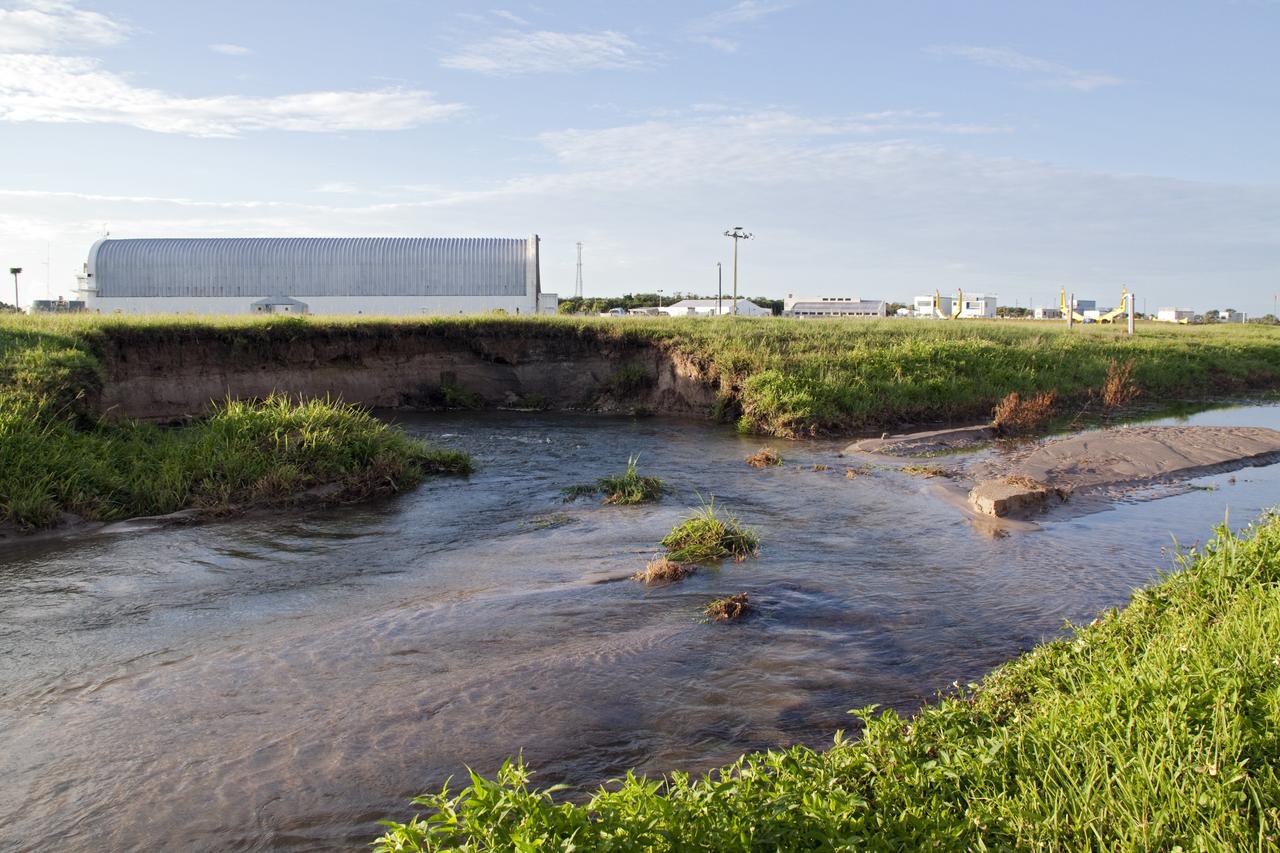
CAPE CANAVERAL, Fla. -- In the LC-39 Complex Turn Basin area across from the Vehicle Assembly Building at NASA's Kennedy Space Center in Florida, a major water main leak in a 24-inch pipe caused soil to wash away near the Press Site. The center was closed for the morning while workers assessed and repaired the break. In the background is the Pegasus barge docked at the Turn Basin which is used to deliver the space shuttle external fuel tank. Photo credit: NASA/Jack Pfaller
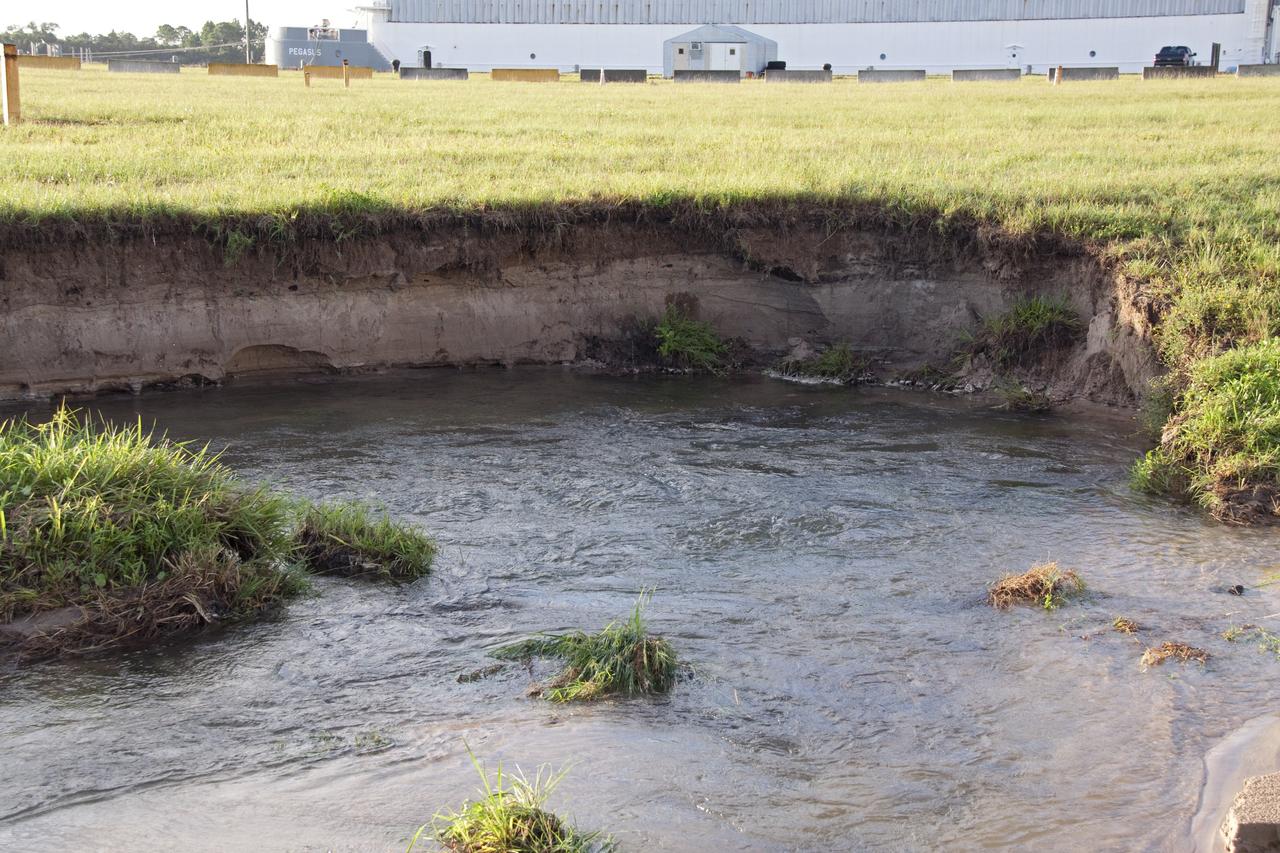
CAPE CANAVERAL, Fla. -- In the LC-39 Complex Turn Basin area across from the Vehicle Assembly Building at NASA's Kennedy Space Center in Florida, a major water main leak in a 24-inch pipe caused soil to wash away near the Press Site. The center was closed for the morning while workers assessed and repaired the break. In the background is the Pegasus barge docked at the Turn Basin which is used to deliver the space shuttle external fuel tank. Photo credit: NASA/Jack Pfaller
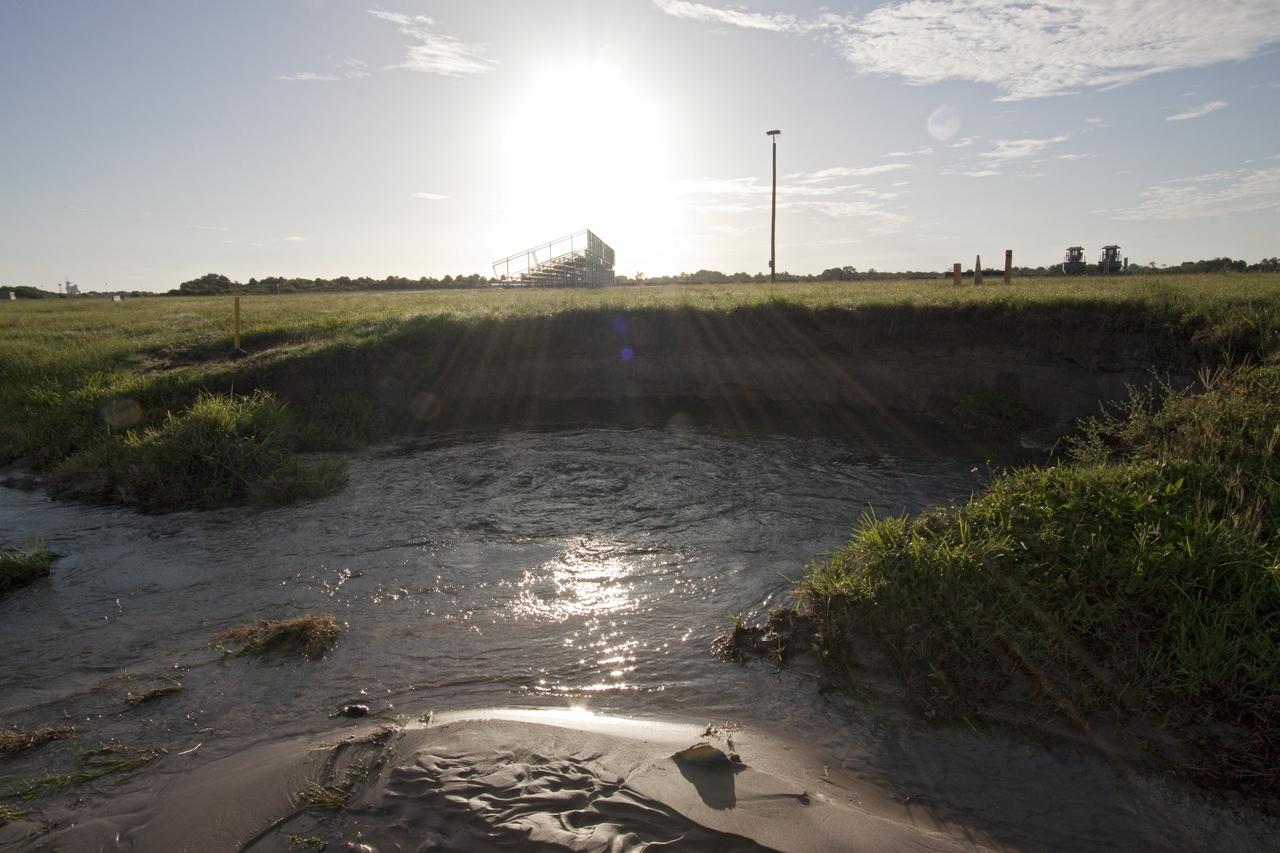
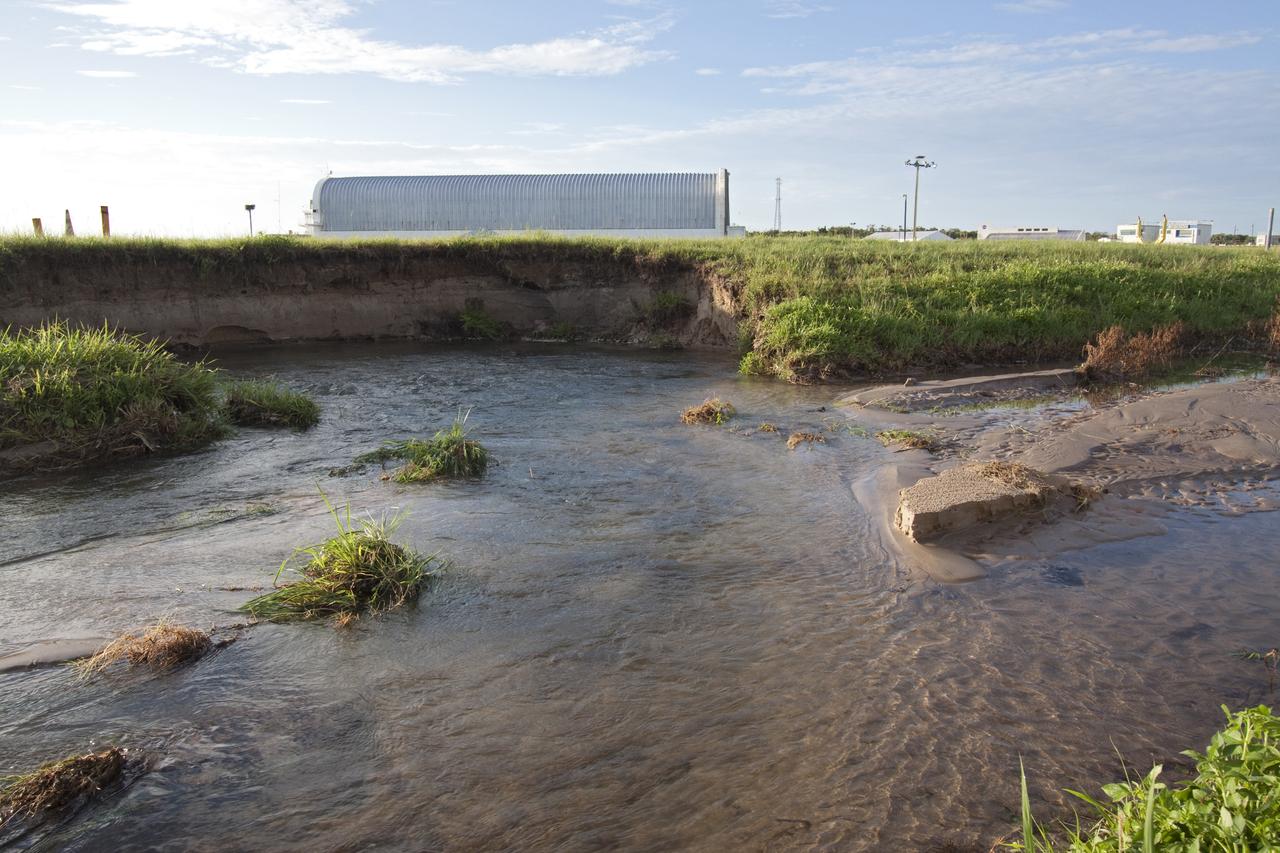
CAPE CANAVERAL, Fla. -- Looking towards a shuttle launch viewing stand is the result of a major water main leak in a 24-inch pipe that caused soil to wash away near the Press Site in the LC-39 Complex Turn Basin area across from the Vehicle Assembly Building at NASA's Kennedy Space Center in Florida. The center was closed for the morning while workers assessed and repaired the break. Photo credit: NASA/Jack Pfaller
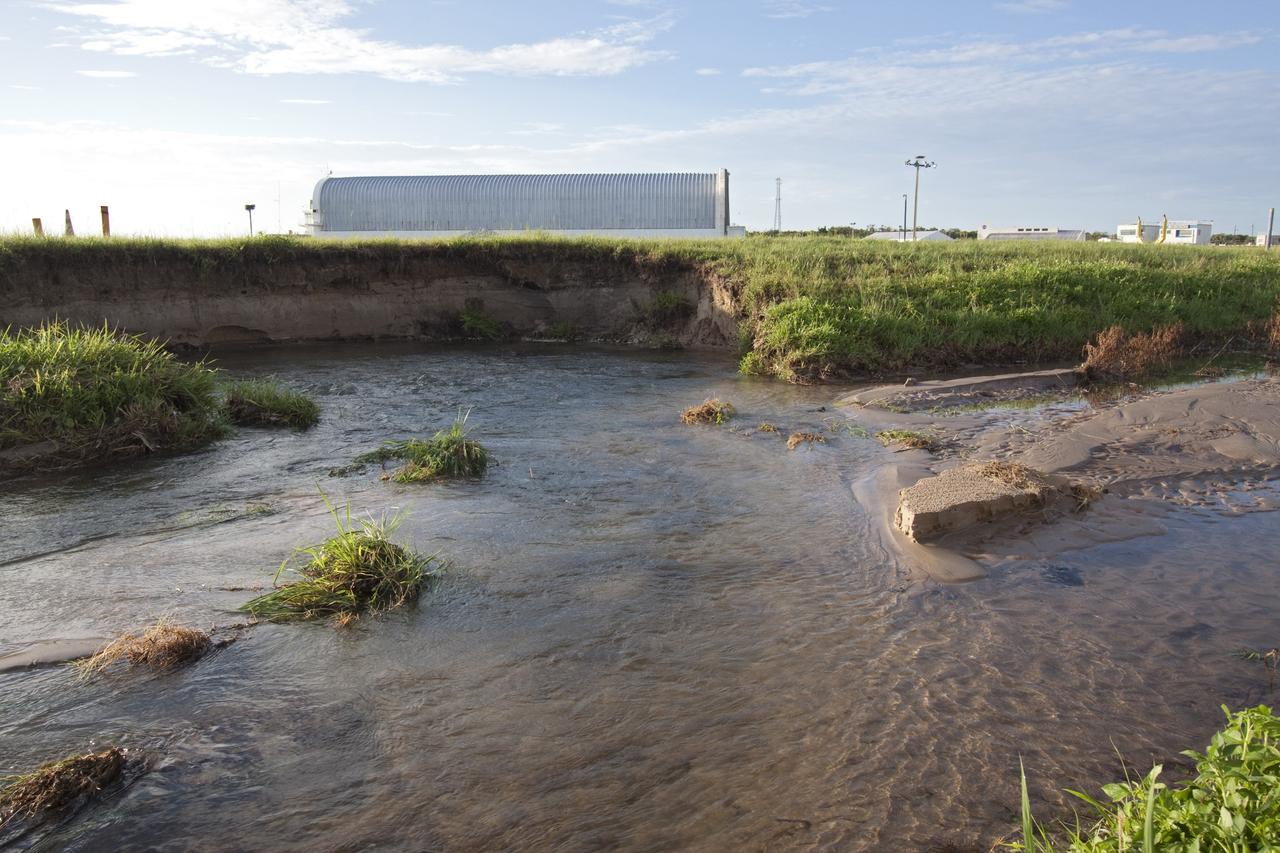
CAPE CANAVERAL, Fla. -- In the LC-39 Complex Turn Basin area across from the Vehicle Assembly Building at NASA's Kennedy Space Center in Florida, a major water main leak in a 24-inch pipe caused soil to wash away near the Press Site. The center was closed for the morning while workers assessed and repaired the break. In the background is the Pegasus barge docked at the Turn Basin which is used to deliver the space shuttle external fuel tank. Photo credit: NASA/Jack Pfaller
WATER MAIN BREAK REPAIRS ON SATURN CAUSEWAY
WATER MAIN BREAK REPAIRS AT KSC-LC39
WATER MAIN BREAK REPAIRS AT KSC-LC39
WATER MAIN BREAK AT KSC - SATURN CAUSEWAY
WATER MAIN BREAK REPAIRS AT KSC-LC39

WATER MAIN BREAK REPAIRS ON SATURN CAUSEWAY
WATER MAIN BREAK REPAIRS AT KSC-LC39
WATER MAIN BREAK REPAIRS AT KSC-LC39
WATER MAIN BREAK REPAIRS AT KSC-LC39
WATER MAIN BREAK REPAIRS ON SATURN CAUSEWAY
WATER MAIN BREAK REPAIRS ON SATURN CAUSEWAY
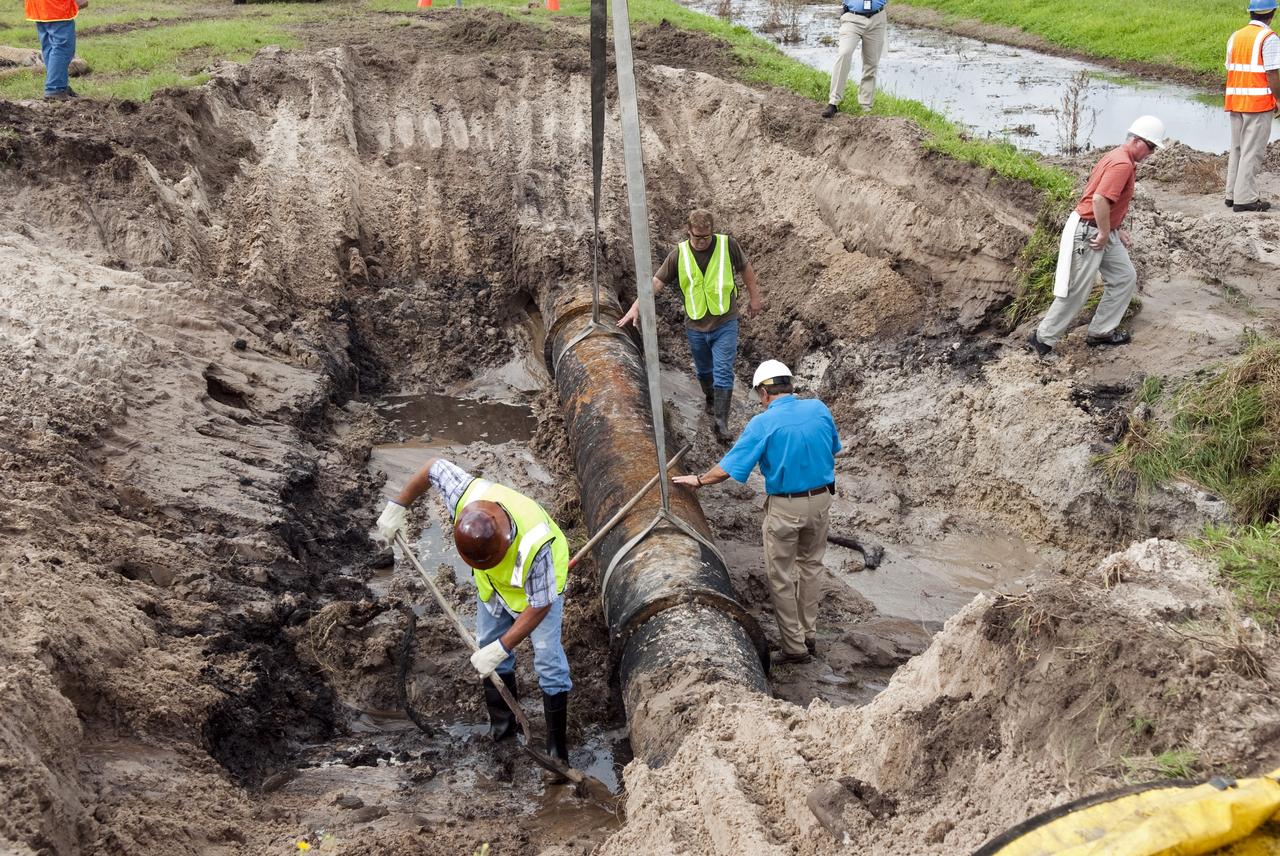
CAPE CANAVERAL, Fla. -- At NASA's Kennedy Space Center in Florida, a crew begins to fix a major water main break in a 24-inch cast iron pipe in the Launch Complex-39 Turn Basin area, across from the Vehicle Assembly Building and the Launch Control Center. Kennedy was closed to non-essential personnel the morning of Sept. 8 while crews assessed the break and restored water to the center. Photo credit: NASA/Jim Grossmann
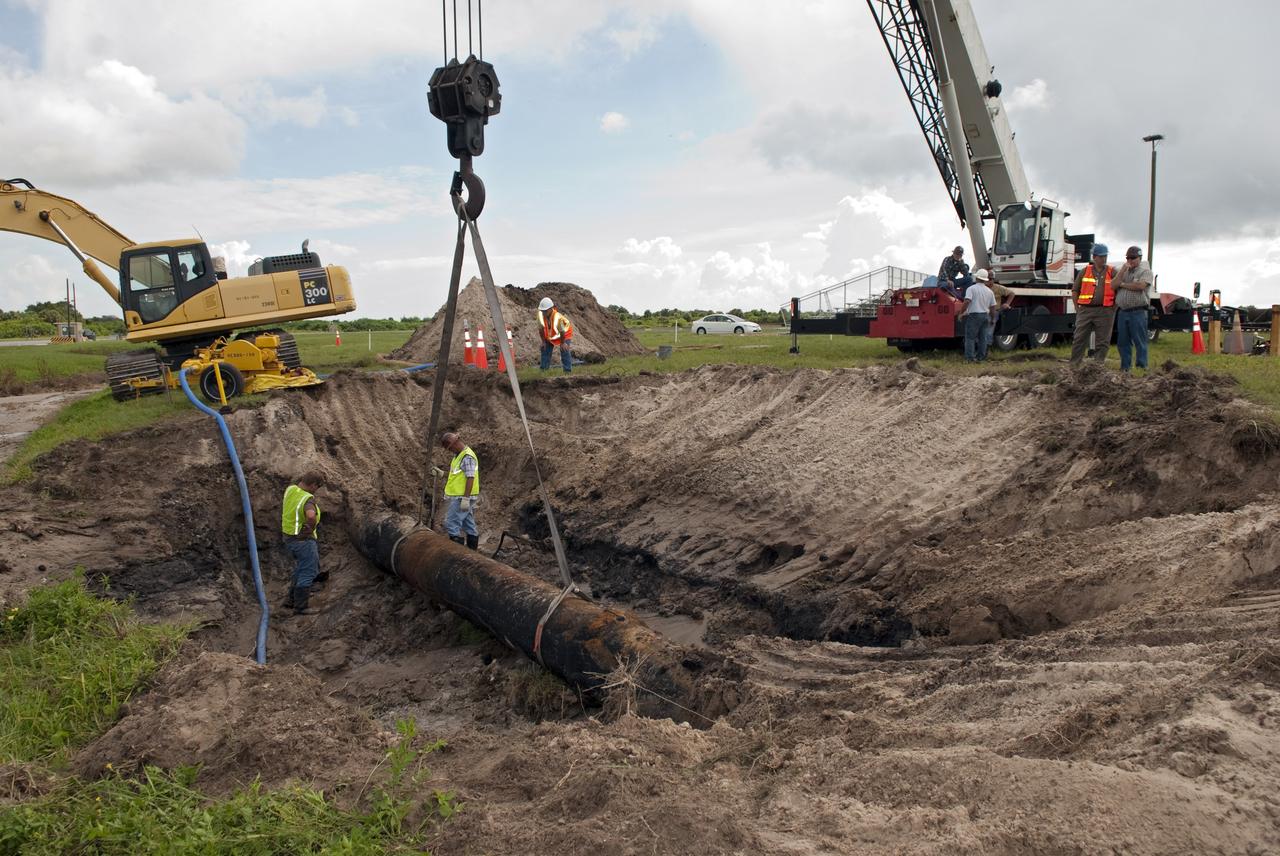
CAPE CANAVERAL, Fla. -- At NASA's Kennedy Space Center in Florida, a crew begins to fix a major water main break in a 24-inch cast iron pipe in the Launch Complex-39 Turn Basin area, across from the Vehicle Assembly Building and the Launch Control Center. Kennedy was closed to non-essential personnel the morning of Sept. 8 while crews assessed the break and restored water to the center. Photo credit: NASA/Jim Grossmann
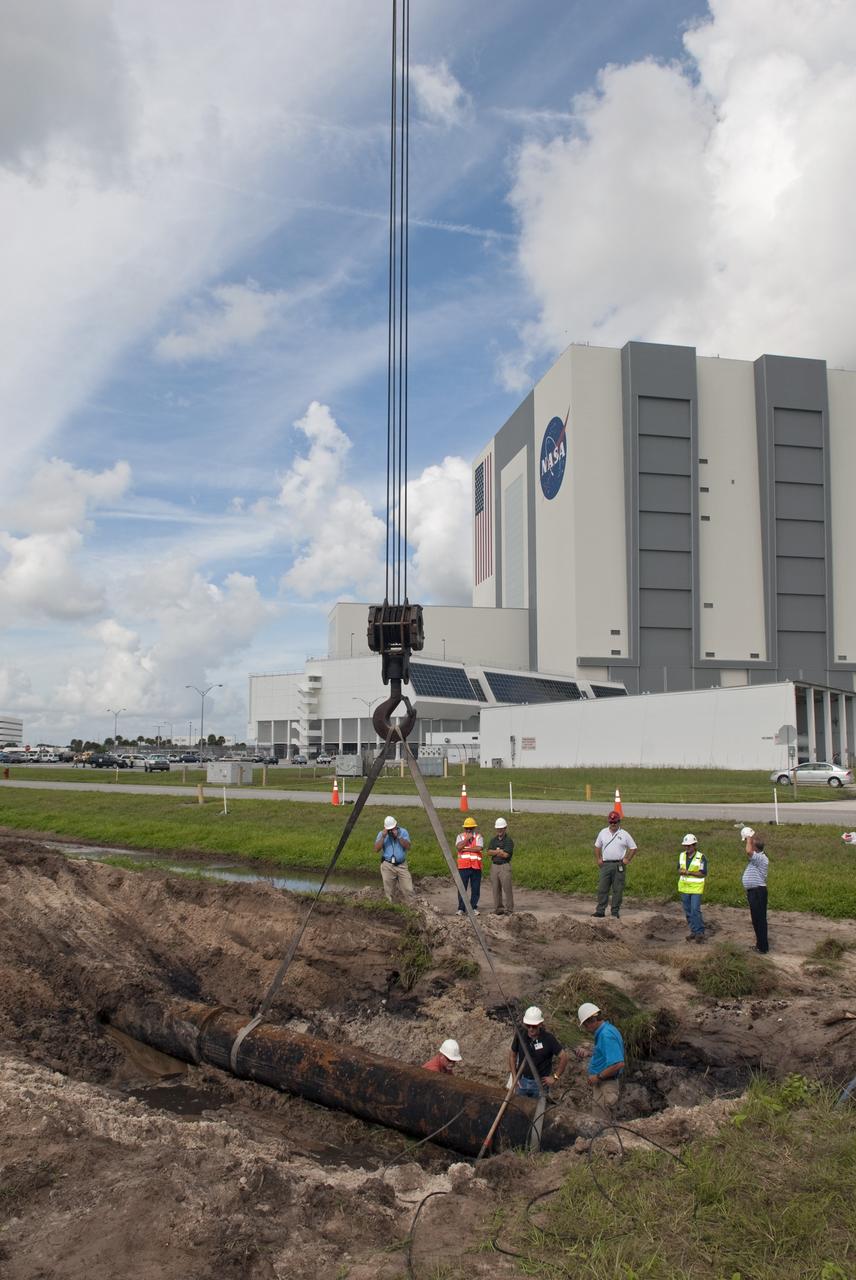
CAPE CANAVERAL, Fla. -- At NASA's Kennedy Space Center in Florida, a crew begins to fix a major water main break in a 24-inch cast iron pipe in the Launch Complex-39 Turn Basin area, across from the Vehicle Assembly Building and the Launch Control Center. Kennedy was closed to non-essential personnel the morning of Sept. 8 while crews assessed the break and restored water to the center. Photo credit: NASA/Jim Grossmann
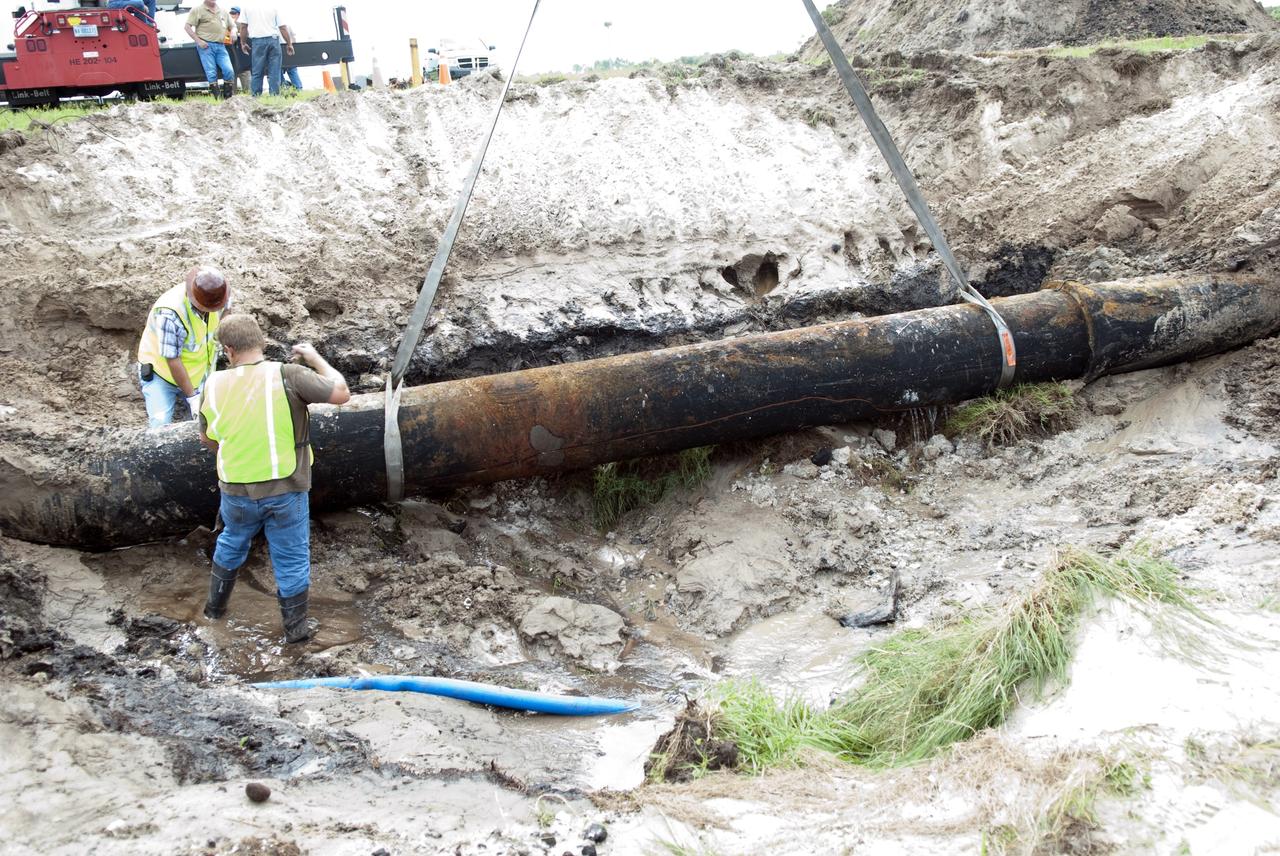
CAPE CANAVERAL, Fla. -- At NASA's Kennedy Space Center in Florida, a crew begins to fix a major water main break in a 24-inch cast iron pipe in the Launch Complex-39 Turn Basin area, across from the Vehicle Assembly Building and the Launch Control Center. This photo shows the approximately 15-foot-long crack along the bottom of pipe and water draining out. Kennedy was closed to non-essential personnel the morning of Sept. 8 while crews assessed the break and restored water to the center. Photo credit: NASA/Jim Grossmann

This is a cutaway illustration of the Space Shuttle external tank (ET) with callouts. The giant cylinder, higher than a 15-story building, with a length of 154-feet (47-meters) and a diameter of 27.5-feet (8.4-meters), is the largest single piece of the Space Shuttle. During launch, the ET also acts as a backbone for the orbiter and solid rocket boosters. Separate pressurized tank sections within the external tank hold the liquid hydrogen fuel and liquid oxygen oxidizer for the Shuttle's three main engines. During launch, the ET feeds the fuel under pressure through 17-inch (43.2-centimeter) ducts that branch off into smaller lines that feed directly into the main engines. The main engines consume 64,000 gallons (242,260 liters) of fuel each minute. Machined from aluminum alloys, the Space Shuttle's external tank is currently the only part of the launch vehicle that is not reused. After its 526,000-gallons (1,991,071 liters) of propellants are consumed during the first 8.5-minutes of flight, it is jettisoned from the orbiter and breaks up in the upper atmosphere, its pieces falling into remote ocean waters. The Marshall Space Flight Center was responsible for developing the ET.
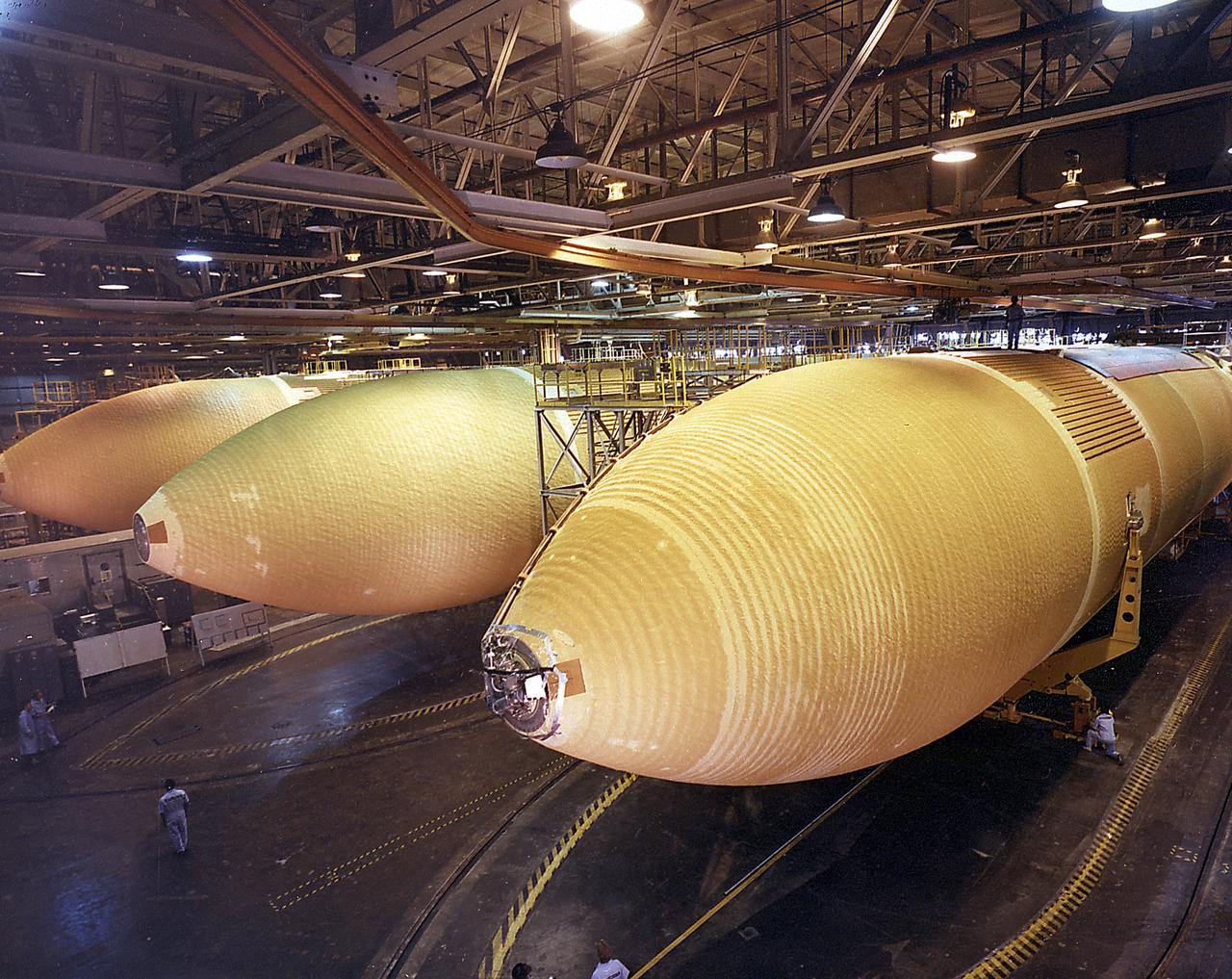
This photograph was taken during the final assembly phase of the Space Shuttle light weight external tanks (LWT) 5, 6, and 7 at the Michoud Assembly Facility in New Orleans, Louisiana. The giant cylinder, higher than a 15-story building, with a length of 154-feet (47-meters) and a diameter of 27.5-feet (8.4-meters), is the largest single piece of the Space Shuttle. During launch, the external tank (ET) acts as a backbone for the orbiter and solid rocket boosters. In separate, internal pressurized tank sections, the ET holds the liquid hydrogen fuel and liquid oxygen oxidizer for the Shuttle's three main engines. During launch, the ET feeds the fuel under pressure through 17-inch (43.2-centimeter) ducts which branch off into smaller lines that feed directly into the main engines. Some 64,000 gallons (242,260 liters) of fuel are consumed by the main engines each minute. Machined from aluminum alloys, the Space Shuttle's ET is the only part of the launch vehicle that currently is not reused. After its 526,000 gallons (1,991,071 liters) of propellants are consumed during the first 8.5 minutes of flight, it is jettisoned from the orbiter and breaks up in the upper atmosphere, its pieces falling into remote ocean waters. The Marshall Space Flight Center was responsible for developing the ET
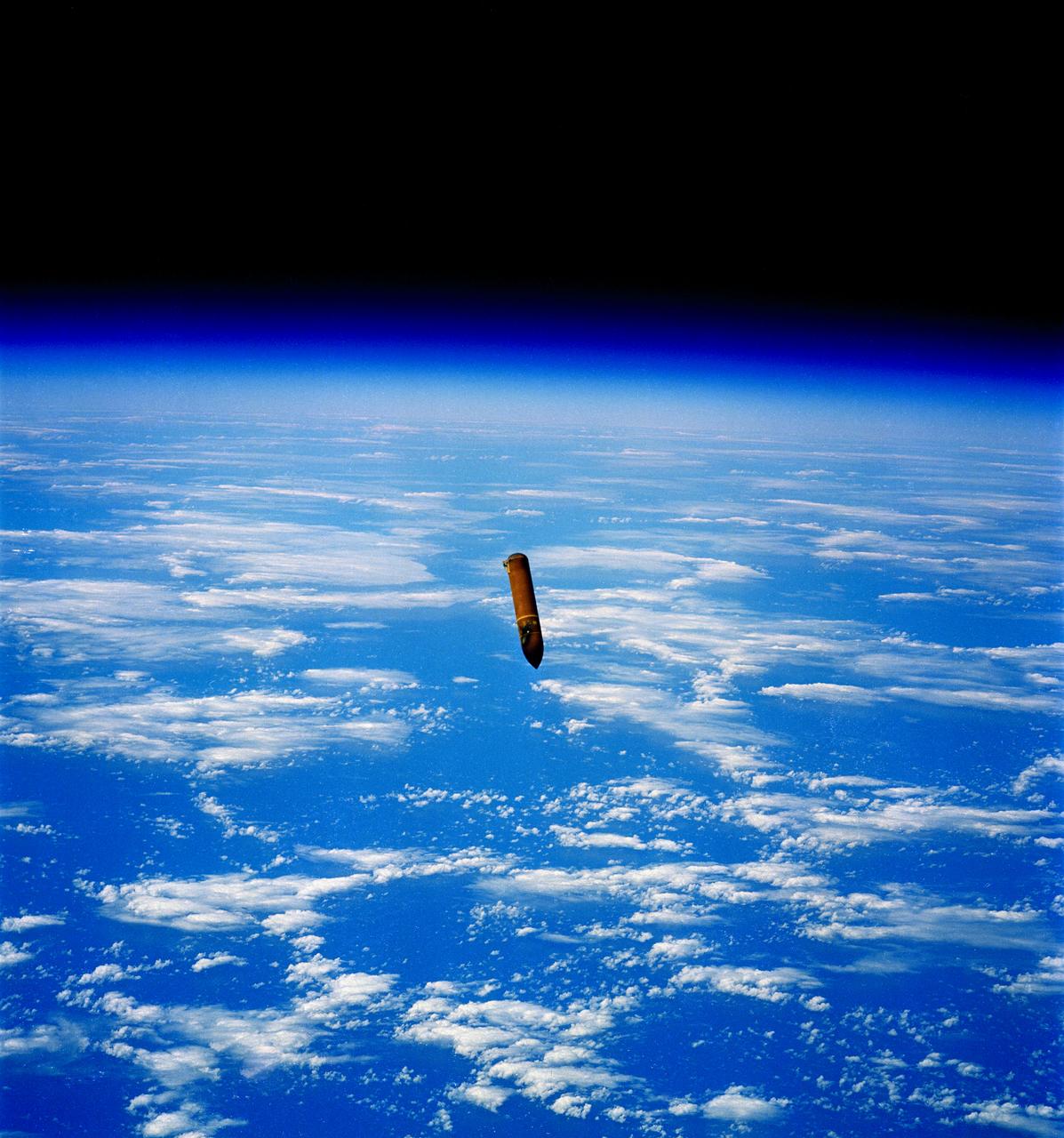
This STS-29 mission onboard photo depicts the External Tank (ET) falling toward the ocean after separation from the Shuttle orbiter Discovery. The giant cylinder, higher than a 15-story building, with a length of 154-feet (47-meters) and a diameter of 27,5-feet (8.4-meters), is the largest single piece of the Space Shuttle. During launch, the ET also acts as a backbone for the orbiter and solid rocket boosters. In separate, internal pressurized tank sections, the ET holds the liquid hydrogen fuel and liquid oxygen oxidizer for the Shuttle's three main engines. During launch, the ET feeds the fuel under pressure through 17-inch (43.2-centimeter) ducts which branch off into smaller lines that feed directly into the main engines. Some 64,000 gallons (242,260 liters) of fuel are consumed by the main engines each minute. Machined from aluminum alloys, the Space Shuttle's ET is the only part of the launch vehicle that currently is not reused. After its 526,000 gallons (1,991,071 liters) of propellants are consumed during the first 8.5 minutes of flight, it is jettisoned from the orbiter and breaks up in the upper atmosphere, its pieces falling into remote ocean waters. The Marshall Space Flight Center was responsible for developing the ET.
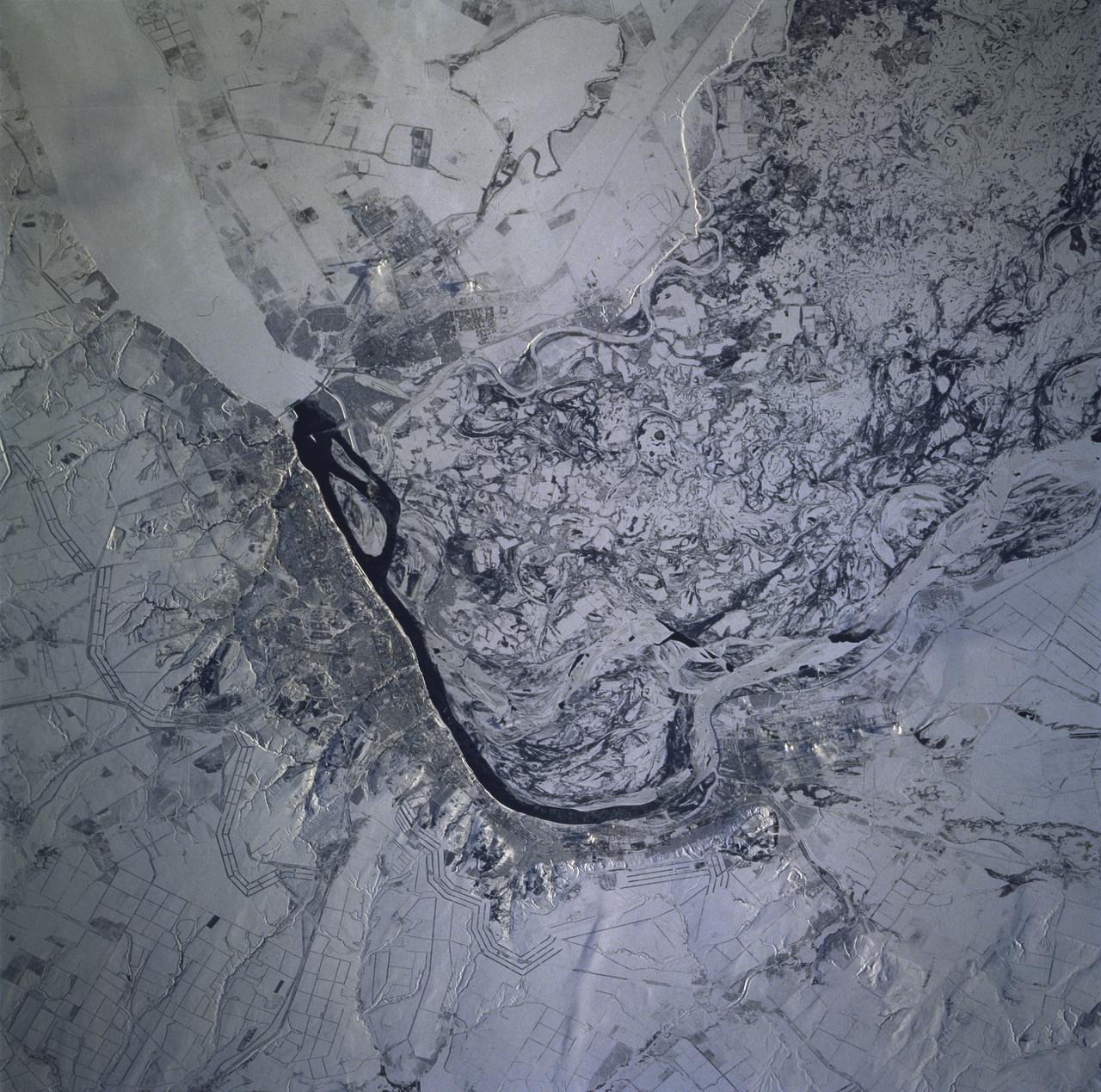
STS081-715-004 (12-22 Jan. 1997) --- As photographed with a 70mm camera aboard the Space Shuttle Atlantis, this scene features the Volga River and Volgograd under snow. Contrast in brightness shows up many features in this near-vertical view of the great bend of the Volga River's dark, open strip of water, center. The Volga flows south into the view from top right, then southeast from the center to the bottom. Volgograd appears as the gray zone along the left (west) side of the open water. Presumably the ice-free part of the river opposite Volgograd relates to the slightly warmer water which is spilled from prominent, ice-covered Lake Volgograd (top right). The wide patterns of swirls, center to lower right, are numerous meander bends on the Volga's floodplain (up to 20 miles wide), highlighted by snow. The main course of the Volga is once again ice covered in this floodplain belt. The Volga-Don Canal can be seen leaving the river just south of the bend, exiting the view center left. This canal, with others in the Moscow region, allows barge traffic to move through the Russian heartland, from the Black Sea to the Baltic at Leningrad. The long parallel lines in threes and fours are lines of trees used as wind breaks. They stretch across Russia for hundreds of miles.