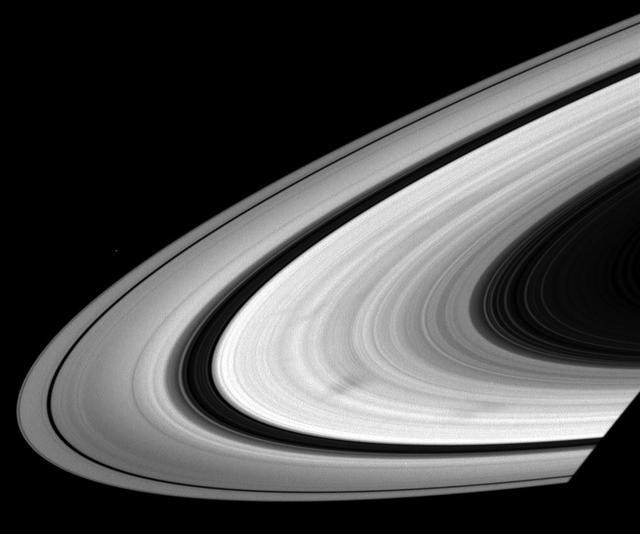
Spokes on the Wheel
Six Wheels on the Soil
Rover Wheel & Tracks - Color
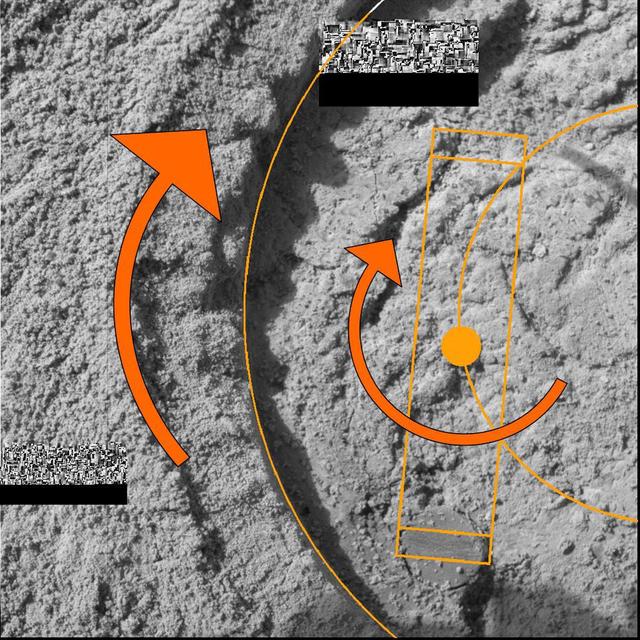
Grinding Wheel Profile
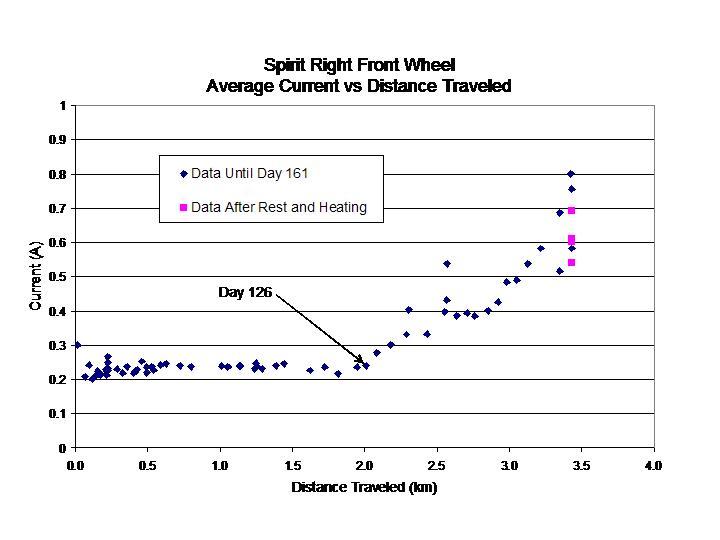
Portrait of an Aging Wheel
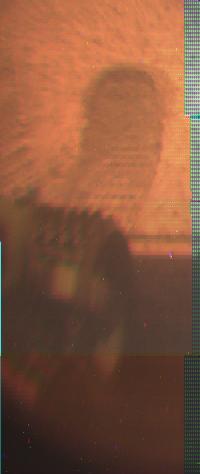
A Rover Wheel in Soil - Color

Track of Right-Wheel Drag
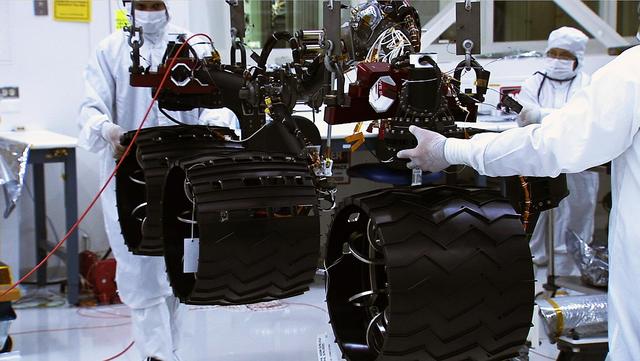
In the middle of this image, three wheels are shown raised by a lift, with engineers on both sides of the wheels in the cleanroom, where NASA Curiosity rover is being assembled.
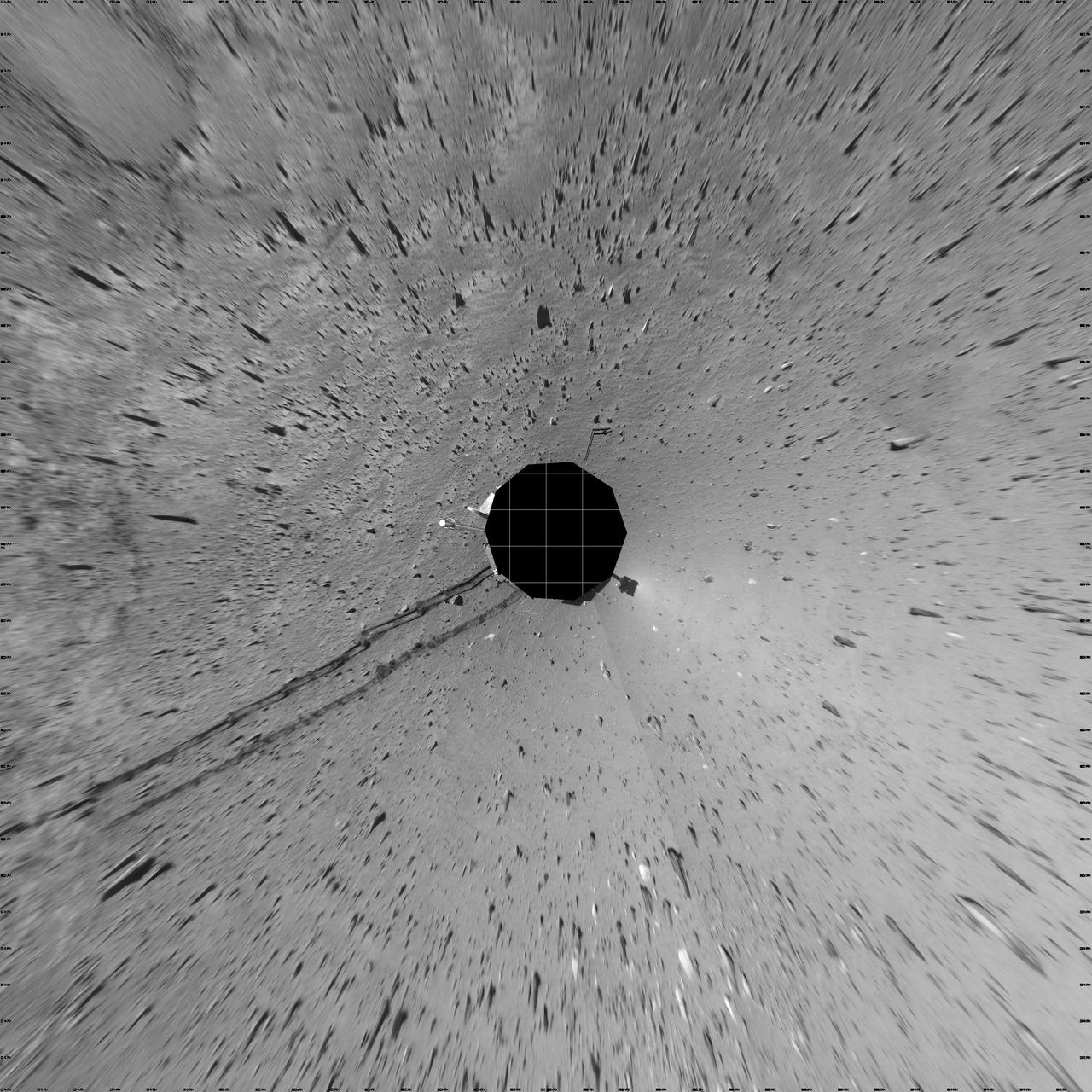
Track of Right-Wheel Drag Vertical
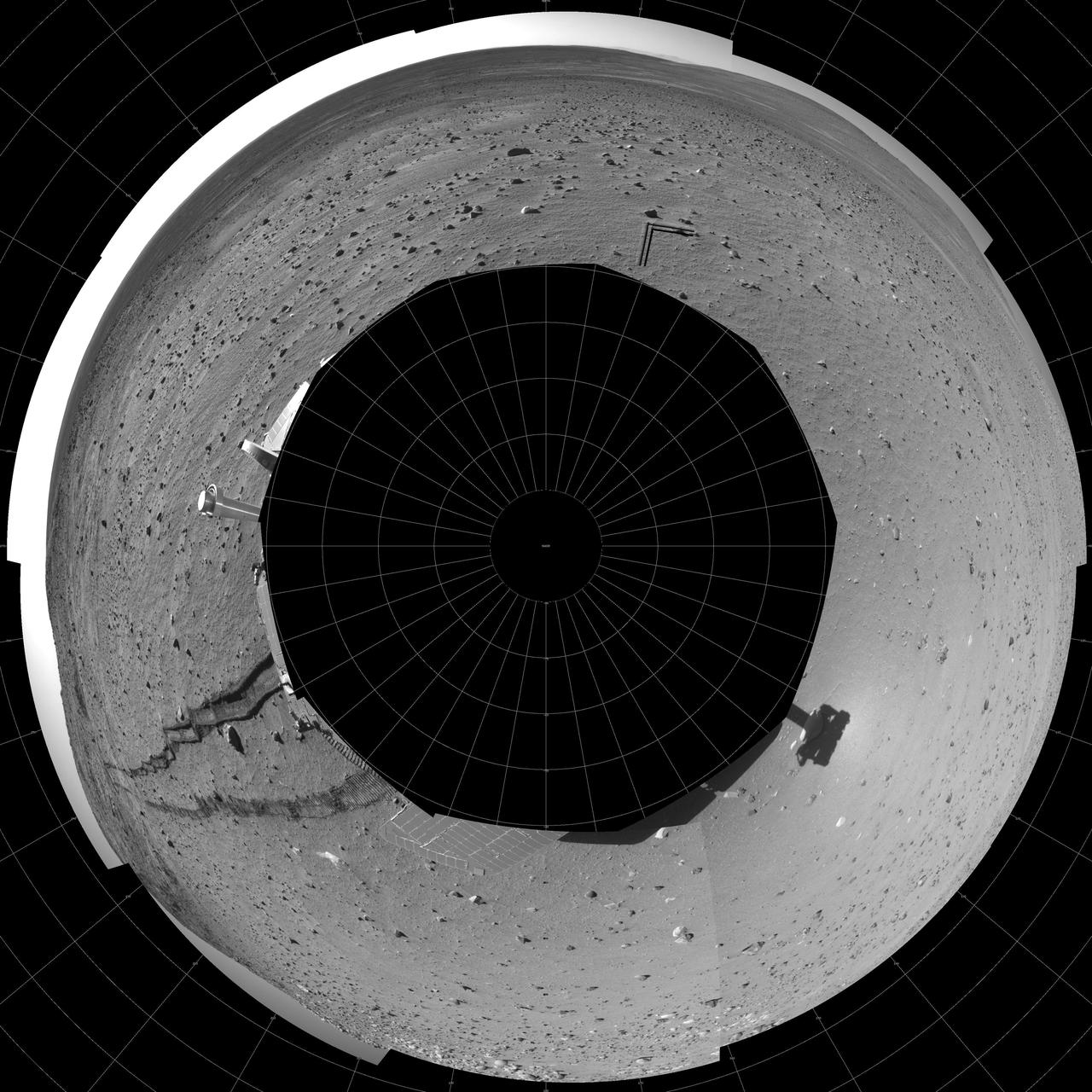
Track of Right-Wheel Drag Polar
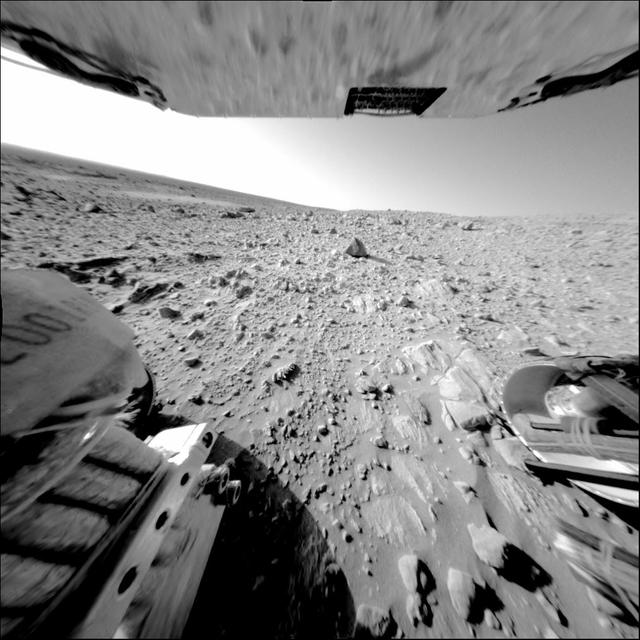
Rock Outcrop Under Spirit Wheels
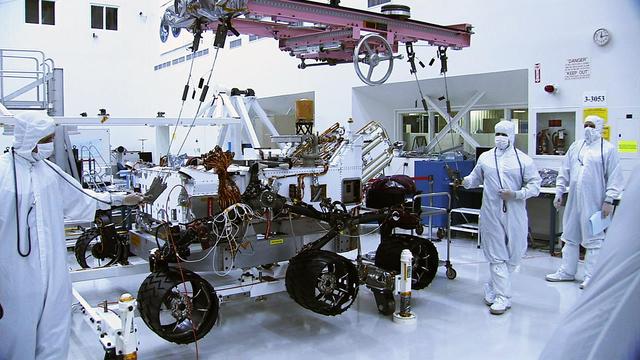
In this picture, the Curiosity rover sports a set of six new wheels. The wheels were installed on June 28 and 29 in the Spacecraft Assembly Facility at NASA Jet Propulsion Laboratory, Pasadena, Calif.
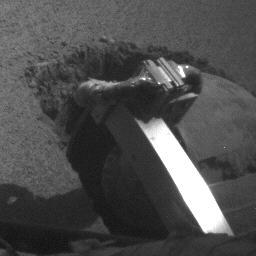
Slow Progress in Dune Left Rear Wheel
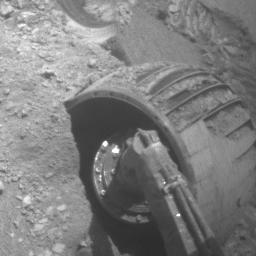
Opportunity Rolls Free Again Right Front Wheel
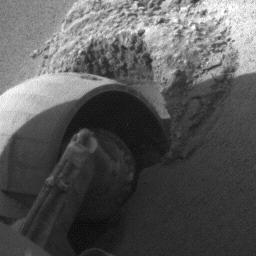
Slow Progress in Dune Left Front Wheel
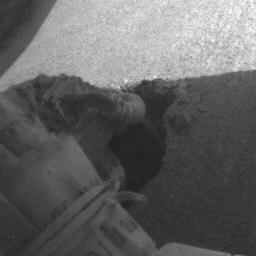
Slow Progress in Dune Right Rear Wheel
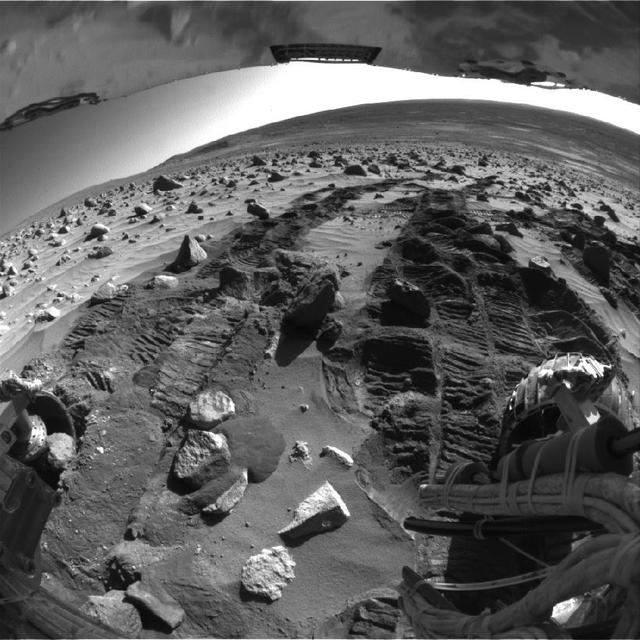
Potato-size Rock in Spirit Wheel Well
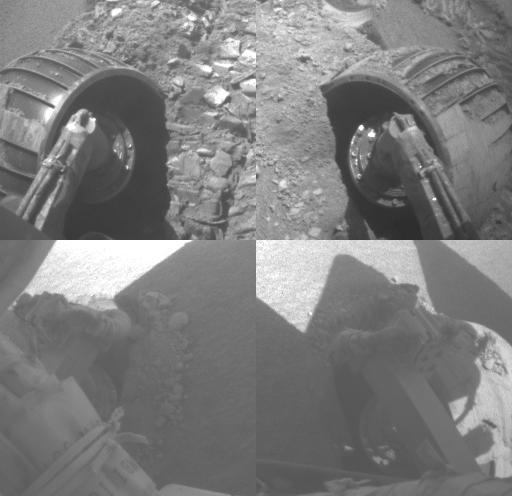
Opportunity Rolls Free Again Four Wheels
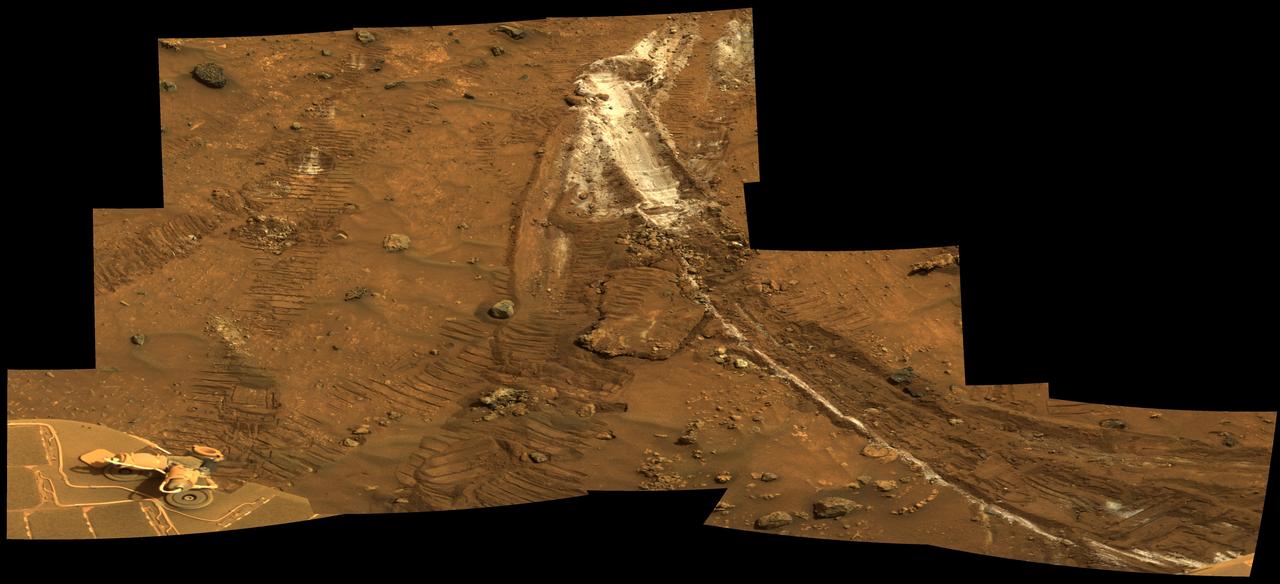
Rover Wheel Churns Up Bright Martian Soil
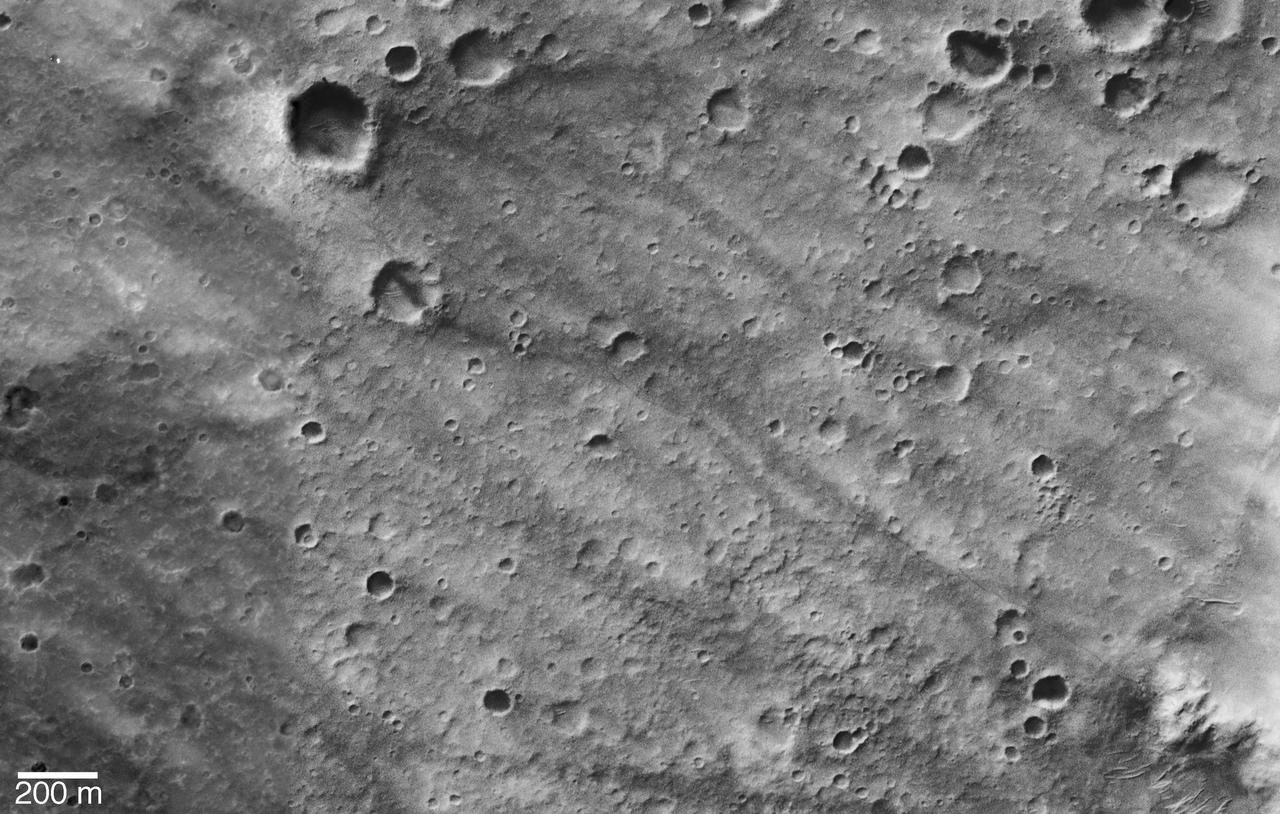
Wheel Tracks from Landing Site to Hills
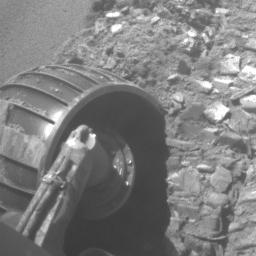
Opportunity Rolls Free Again Left Front Wheel
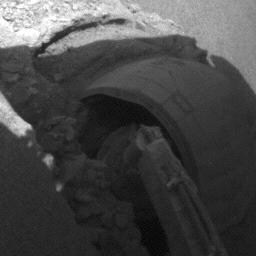
Slow Progress in Dune Right Front Wheel
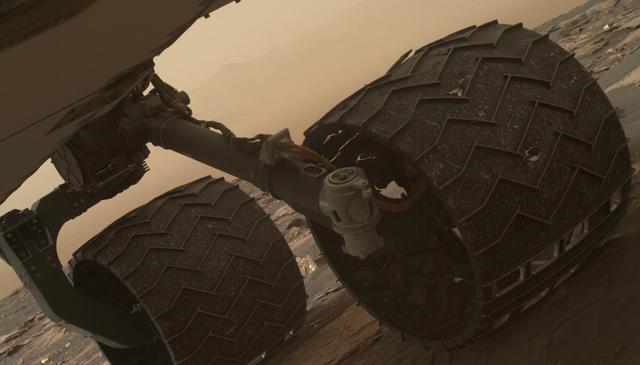
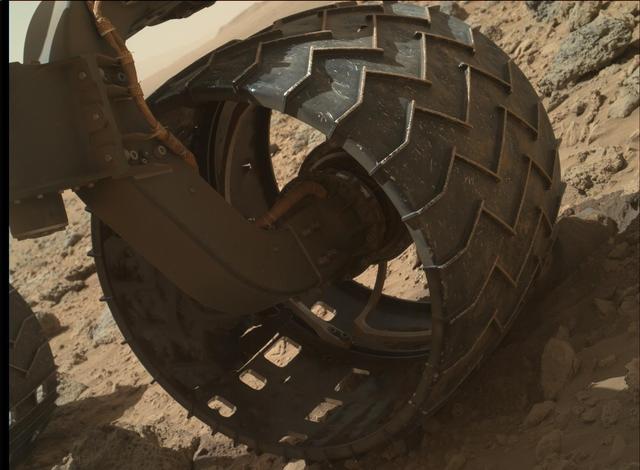
Two of the raised treads, called grousers, on the left middle wheel of NASA's Curiosity Mars rover broke during the first quarter of 2017, including the one seen partially detached at the top of the wheel in this image from the Mars Hand Lens Imager (MAHLI) camera on the rover's arm. This image was taken on March 19, 2017, as part of a set used by rover team members to inspect the condition of the rover's six wheels during the 1,641st Martian day, or sol, of Curiosity's work on Mars. Holes and tears in the wheels worsened significantly during 2013 as Curiosity was crossing terrain studded with sharp rocks on the route from near its 2012 landing site to the base of Mount Sharp. Team members have used MAHLI systematically since then to watch for when any of the zig-zag shaped grousers begin to break. The last prior set of wheel-inspection images from before Sol 1641 was taken on Jan. 27, 2017, (Sol 1591) and revealed no broken grousers. Longevity testing with identical aluminum wheels on Earth indicates that when three grousers on a given wheel have broken, that wheel has reached about 60 percent of its useful life. Curiosity has driven well over 60 percent of the amount needed for reaching all the geological layers planned as the mission's science destinations, so the start of seeing broken grousers is not expected to affect the mission's operations. Curiosity's six aluminum wheels are about 20 inches (50 centimeters) in diameter and 16 inches (40 centimeters) wide. Each of the six wheels has its own drive motor, and the four corner wheels also have steering motors. http://photojournal.jpl.nasa.gov/catalog/PIA21486
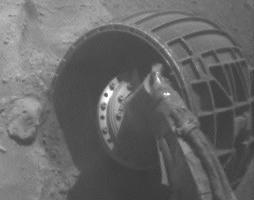
Diagnostic tests were run on the right-rear wheel and right-front wheel on NASA Spirit. The right-rear wheel continued to show no motion in the latest tests and exhibited very high resistance in the motor winding.
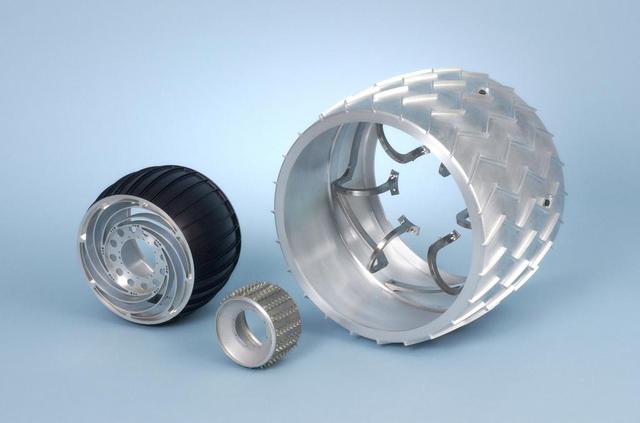
NASA Mars rovers keep getting bigger. This photo provides a comparison of the wheel sizes for three generations of them.
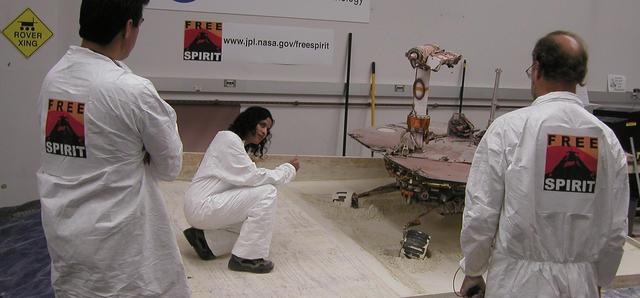
Mars Exploration Rover team members on July 21, 2009, tested how altering the order in which individual wheels turn for steering affects how those turns dig the wheels deeper into soft soil. From left: Alfonso Herrera, Vandana Verma, Bruce Banerdt.
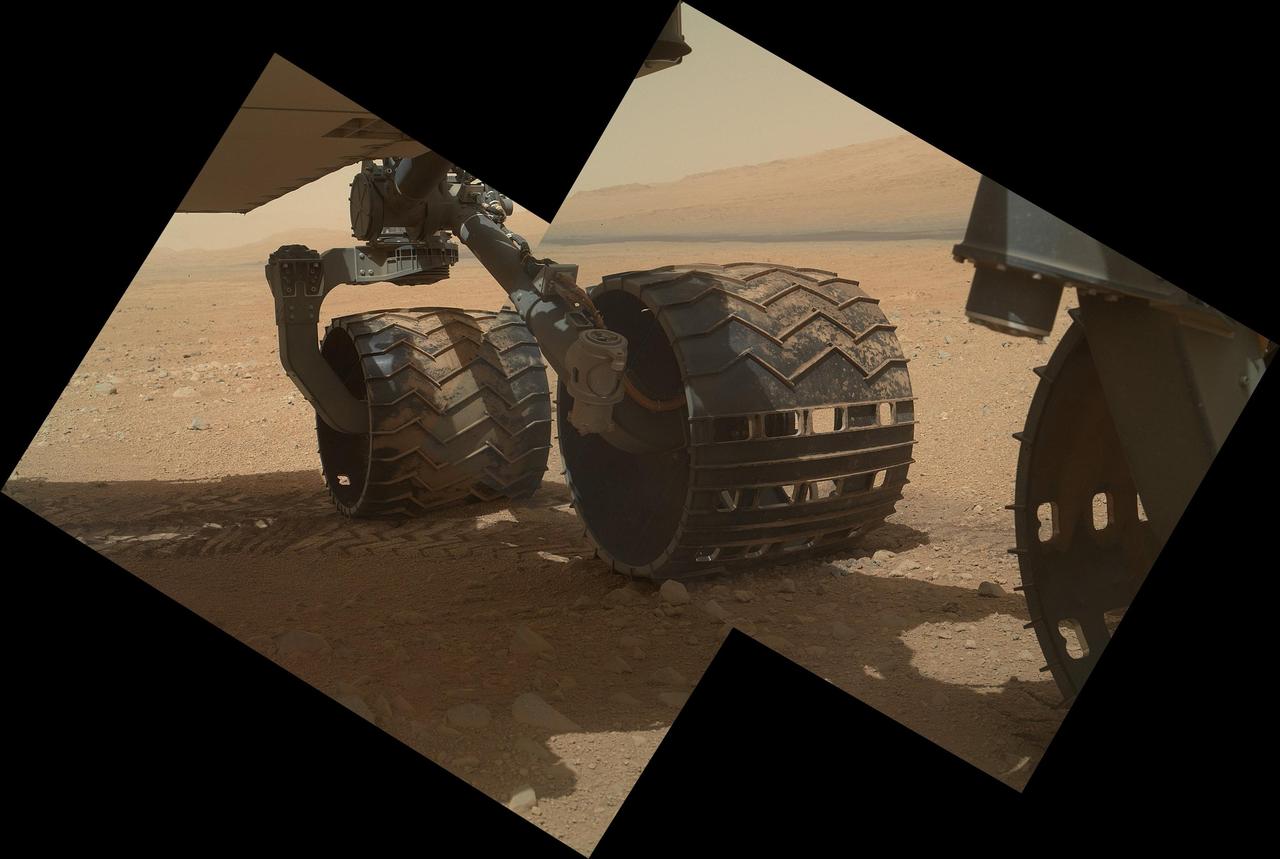
This view of the three left wheels of NASA Mars rover Curiosity combines two images that were taken by the rover Mars Hand Lens Imager MAHLI during the 34th Martian day, or sol, on Mars Sept. 9, 2012.
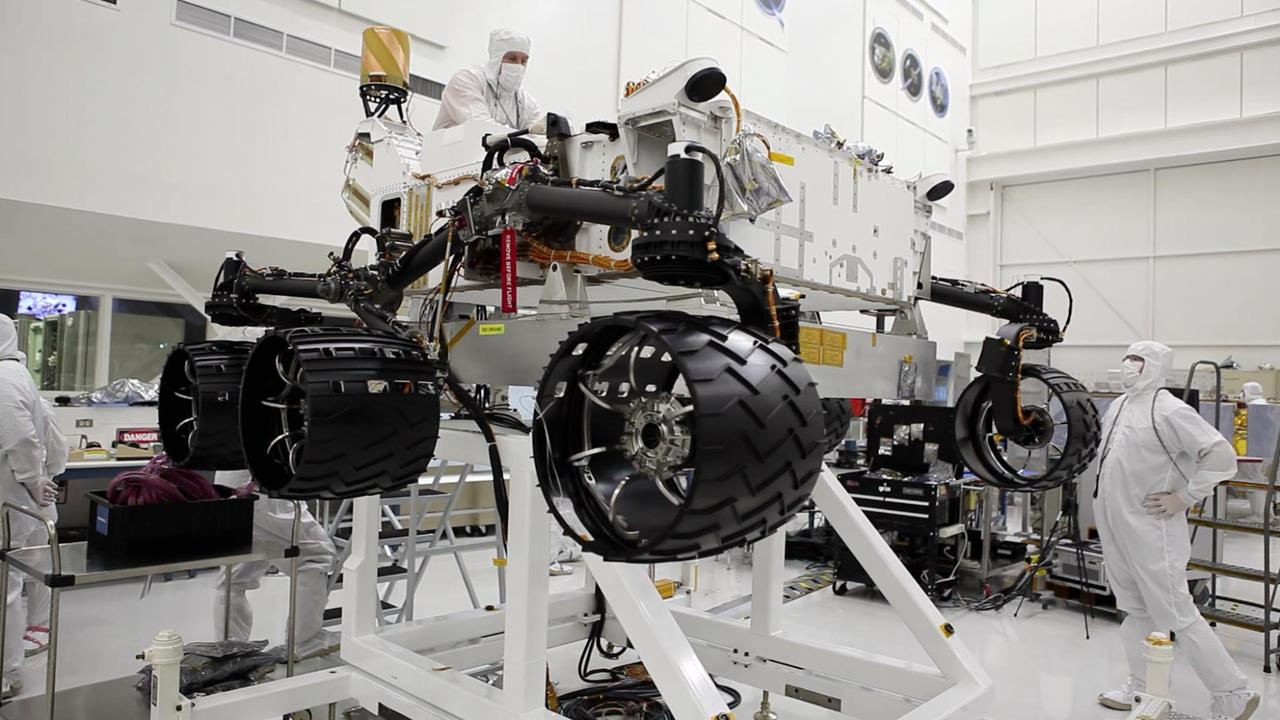
This image was taken in the cleanroom where NASA Curiosity rover is being assembled. It shows the rover, which is about the size of an SUV, hoisted on a white lift, with its black wheels suspended in the air.
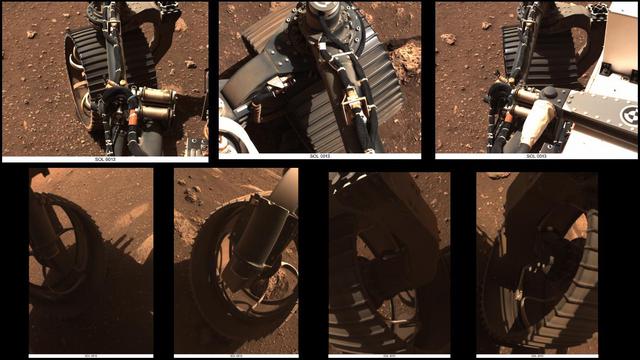
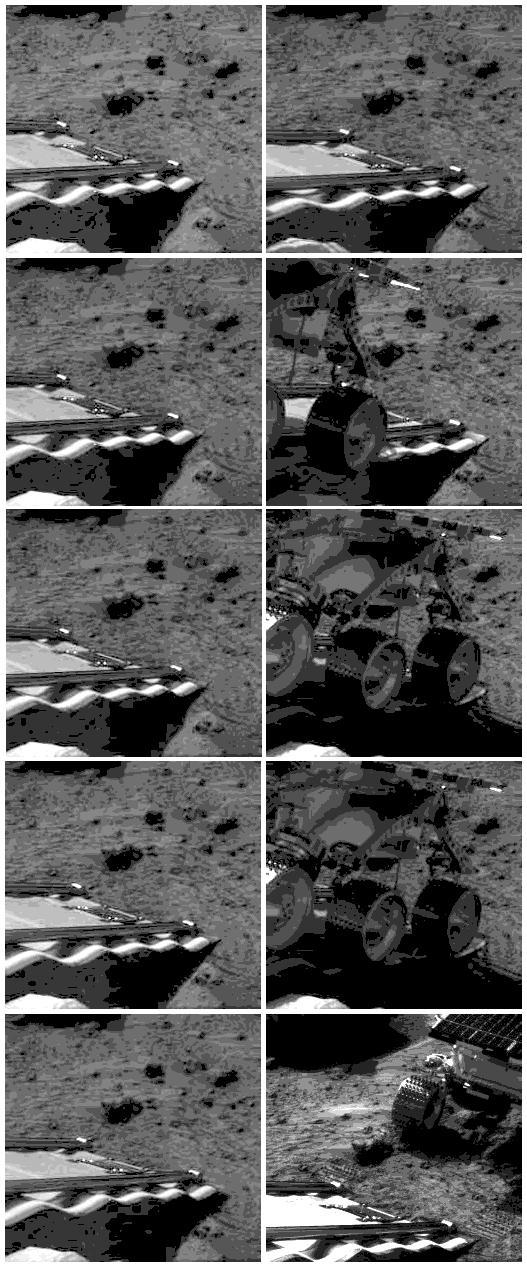
These sets of animated GIFs show seven views of NASA's Perseverance Mars rover wiggling its wheels on March 4, 2021, the day Perseverance completed its first drive on Mars. The first three sets of GIFs come from the Navigation Cameras (Navcams). The first view shows the front left wheel; the second the front right wheel; the third the rear right wheel. The next four sets come from the Hazard Avoidance Cameras (Hazcams). The fourth GIF shows the front left wheel again; the fifth the front right wheel again; the sixth the rear left wheel; and the seventh the rear right wheel again. A key objective for Perseverance's mission on Mars is astrobiology, including the search for signs of ancient microbial life. The rover will characterize the planet's geology and past climate, pave the way for human exploration of the Red Planet, and be the first mission to collect and cache Martian rock and regolith (broken rock and dust). Subsequent NASA missions, in cooperation with ESA (European Space Agency), would send spacecraft to Mars to collect these sealed samples from the surface and return them to Earth for in-depth analysis. The Mars 2020 Perseverance mission is part of NASA's Moon to Mars exploration approach, which includes Artemis missions to the Moon that will help prepare for human exploration of the Red Planet. Animations available at https://photojournal.jpl.nasa.gov/catalog/PIA24489
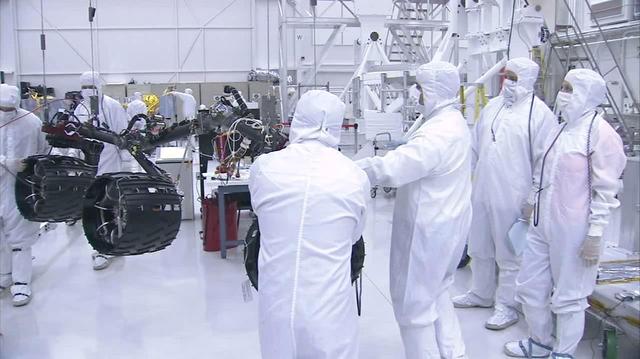
In this image taken from a video clip, NASA Curiosity rover wheels are shown hoisted on a pink crane and moving closer to the rover body. Video is available at the Photojournal.
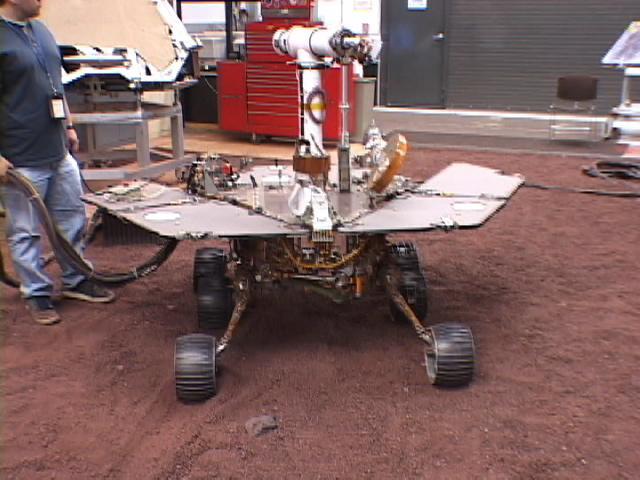
This picture shows a model of NASA Mars Exploration Rover Spirit being tested for performance on five wheels at NASA Jet Propulsion Laboratory.
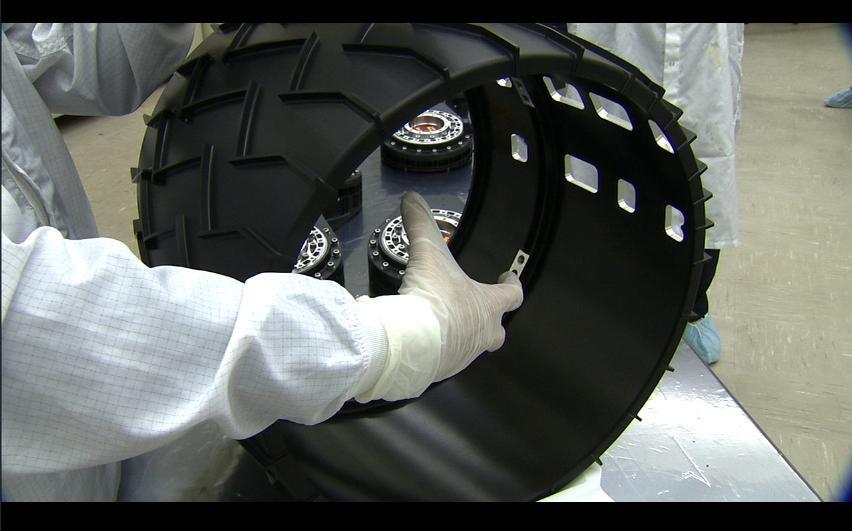
Each of the six wheels for NASA Mars Science Laboratory rover is about half a meter 20 inches in diameter.
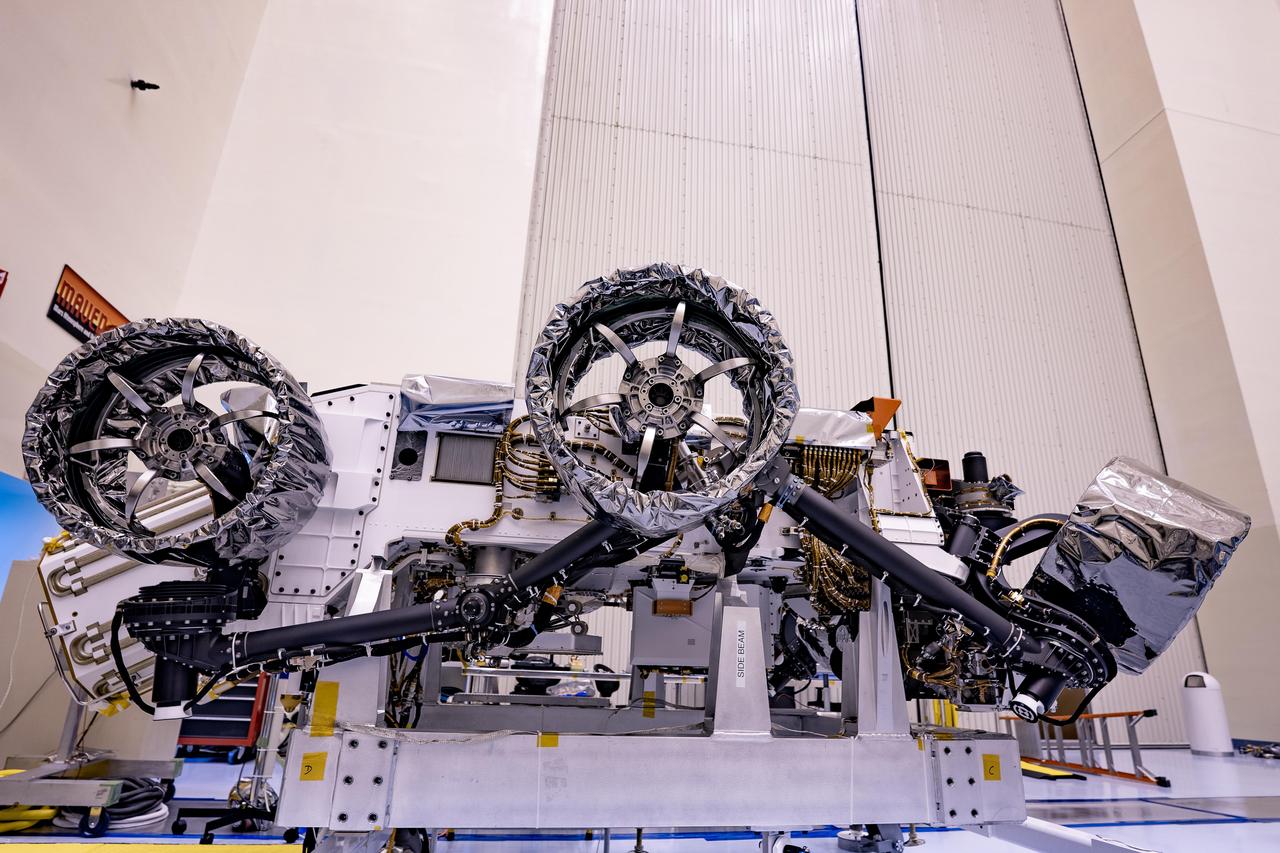
Three of the six flight wheels that will travel to Mars can be seen attached to NASA's Perseverance rover (which is inverted on a handling fixture) on March 30, 2020 at the Kennedy Space Center in Florida. The protective antistatic foil covering the wheels will be removed before launch; the launch window opens July 17, 2020. https://photojournal.jpl.nasa.gov/catalog/PIA23821
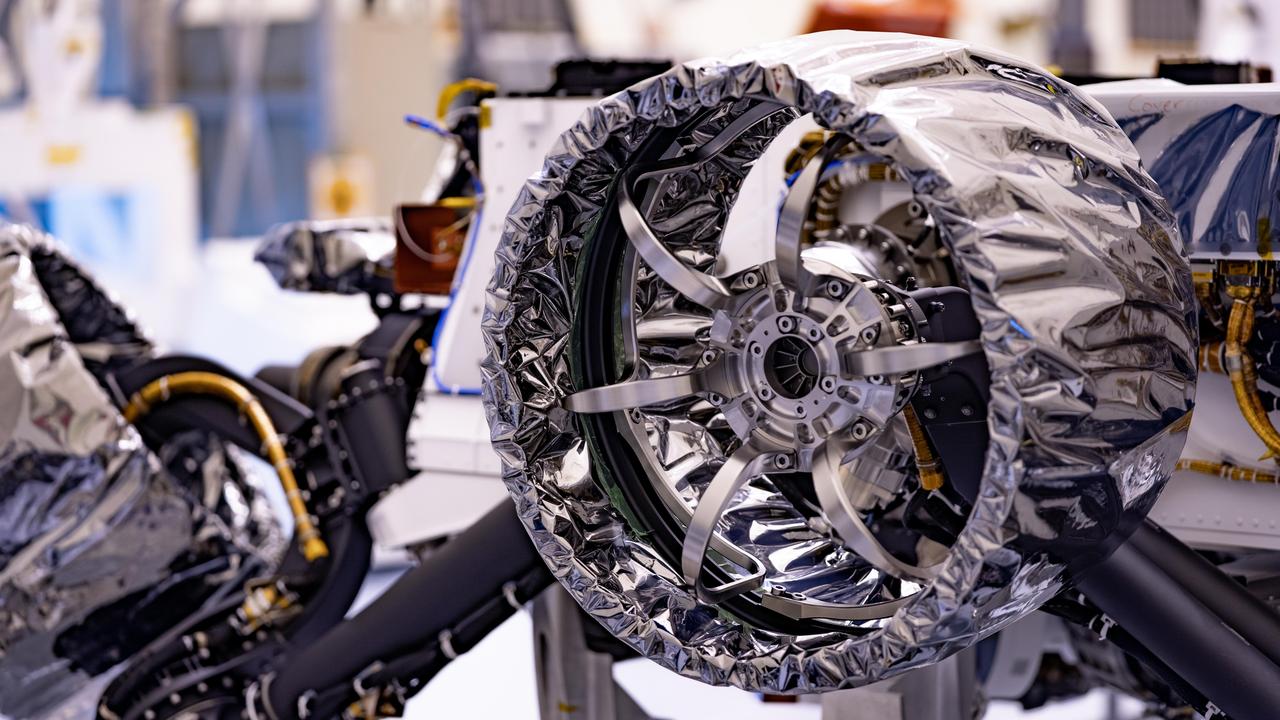
This wheel, and five others just like it, is headed to Mars on NASA's Perseverance rover; the launch window opens July 17, 2020. Wrapped in a protective antistatic foil that will be removed before launch, the wheel is 20.7 inches (52.6 centimeters) in diameter and machined from a solid block of aluminum; the spokes are titanium. The image was taken on March 30, 2020, at a payload processing facility at NASA's Kennedy Space Center in Florida. https://photojournal.jpl.nasa.gov/catalog/PIA23822
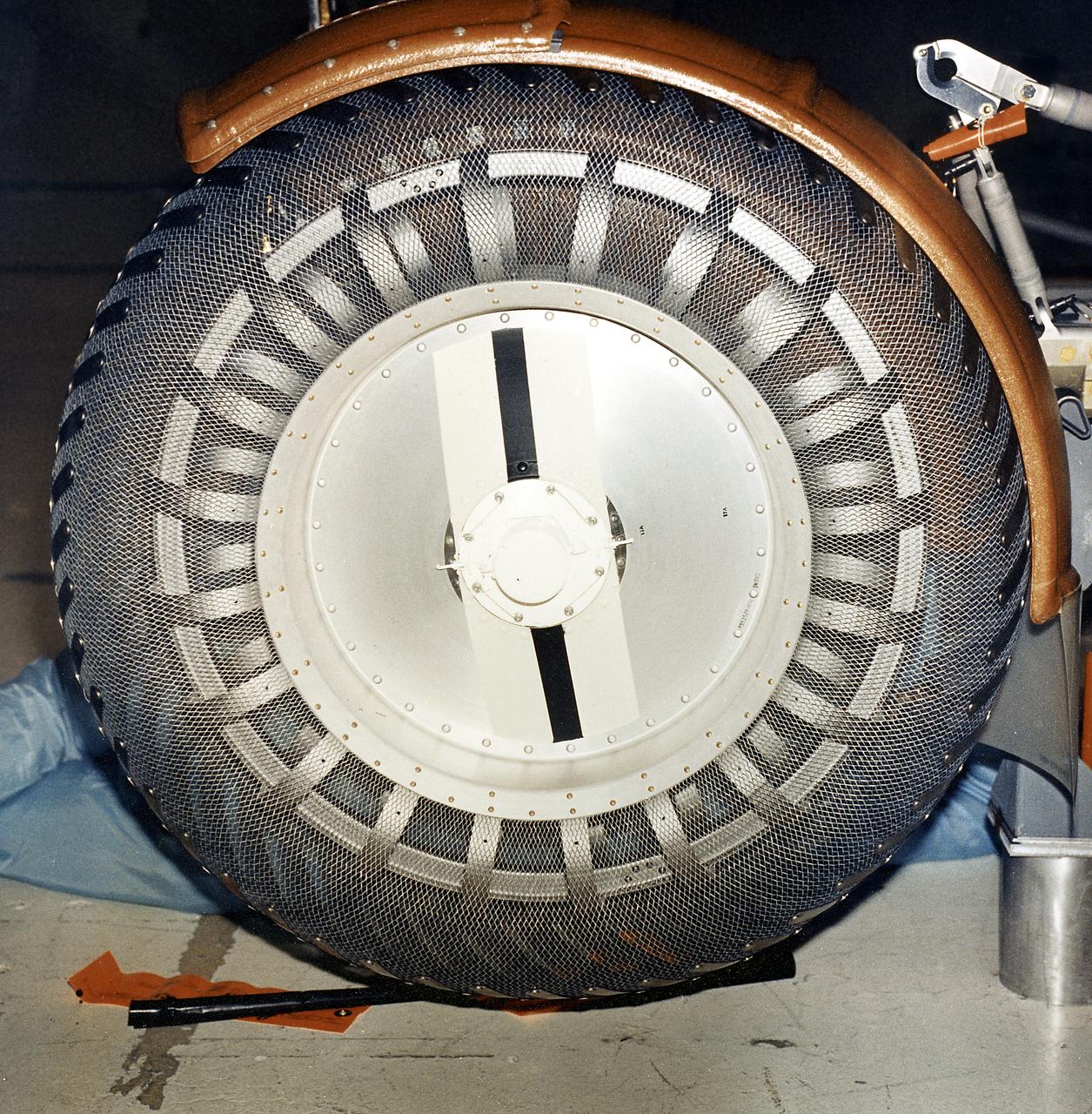
This is a close-up view of a left front wheel of the Lunar Roving Vehicle (LRV) No. 1. The LRV was built to give Apollo astronauts a greater range of mobility during lunar exploration. It was an open-space and collapsible vehicle about 10 feet long with large mesh wheels, anterna, appendages, tool caddies, and camera. An LRV was used on each of the last three Apollo missions; Apollo 15, Apollo 16, and Apollo 17. It was built by the Boeing Company under the direction of the Marshall Space Flight Center.
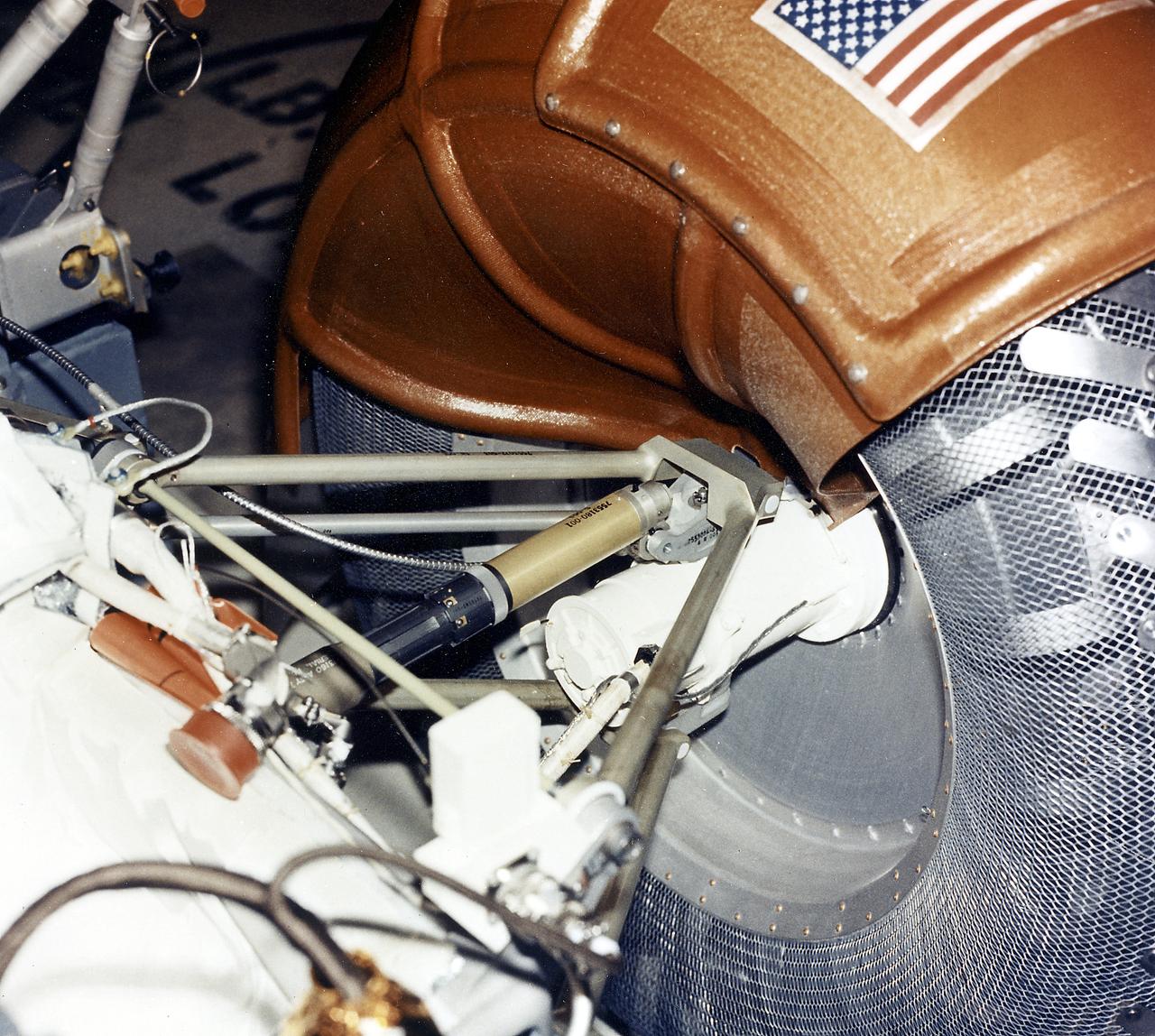
This is a close-up inboard view of a left front wheel of the Lunar Roving Vehicle (LRV) No. 1. The LRV was built to give Apollo astronauts a greater Range of mobility during lunar exploration. It was an open-space and collapsible vehicle about 10 feet long with large mesh wheels, anterna, appendages, tool caddies, and camera. An LRV was used on each of the last three Apollo missions; Apollo 15, Apollo 16, and Apollo 17. It was built by the Boeing Company under the direction of the Marshall Space Flight Center.
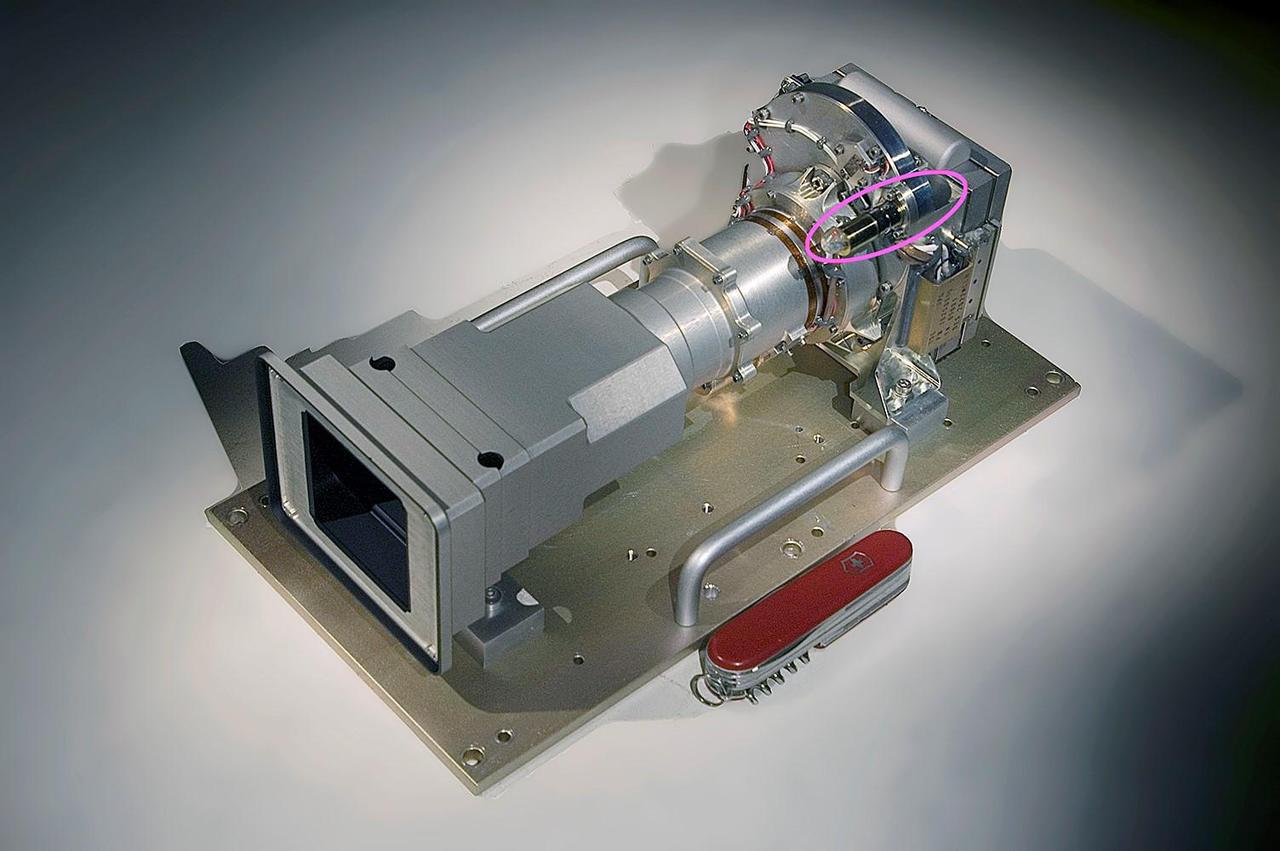
The Mast Camera, or Mastcam, aboard NASA's Curiosity Mars rover is built with two cameras – the left has a 34 mm focal length; the right, a 100 mm focal length. Behind each lens is a rotating wheel (circled in pink) arranged with filters. In addition to providing color images of the rover's surroundings, the cameras and their filters help scientists determine from afar the composition of rocks by the wavelengths of light, or spectra, they reflect in different colors. On Sept. 19, 2023, the left camera's filter wheel became stuck between the green and clear filter positions, the effects of which can be seen on the mission's raw, or unprocessed, images. The filter wheel is part of a spur-and-pinion mechanism, with the spur teeth around the filter wheel. The actuation uses a small motor that drives the pinion gear both forward and backward. Despite having been commanded at more than twice its normal torque, this motor has been unable to move in the counterclockwise direction. If unable to nudge the wheel back to the clear filter, the mission would rely on the higher resolution 100 mm right camera as the primary color-imaging system. The camera needs to take nine times more images than the left to cover the same area, which could affect how the team scouts for science targets and rover routes. The ability to observe detailed color spectra of rocks from afar would also be degraded. https://photojournal.jpl.nasa.gov/catalog/PIA26043
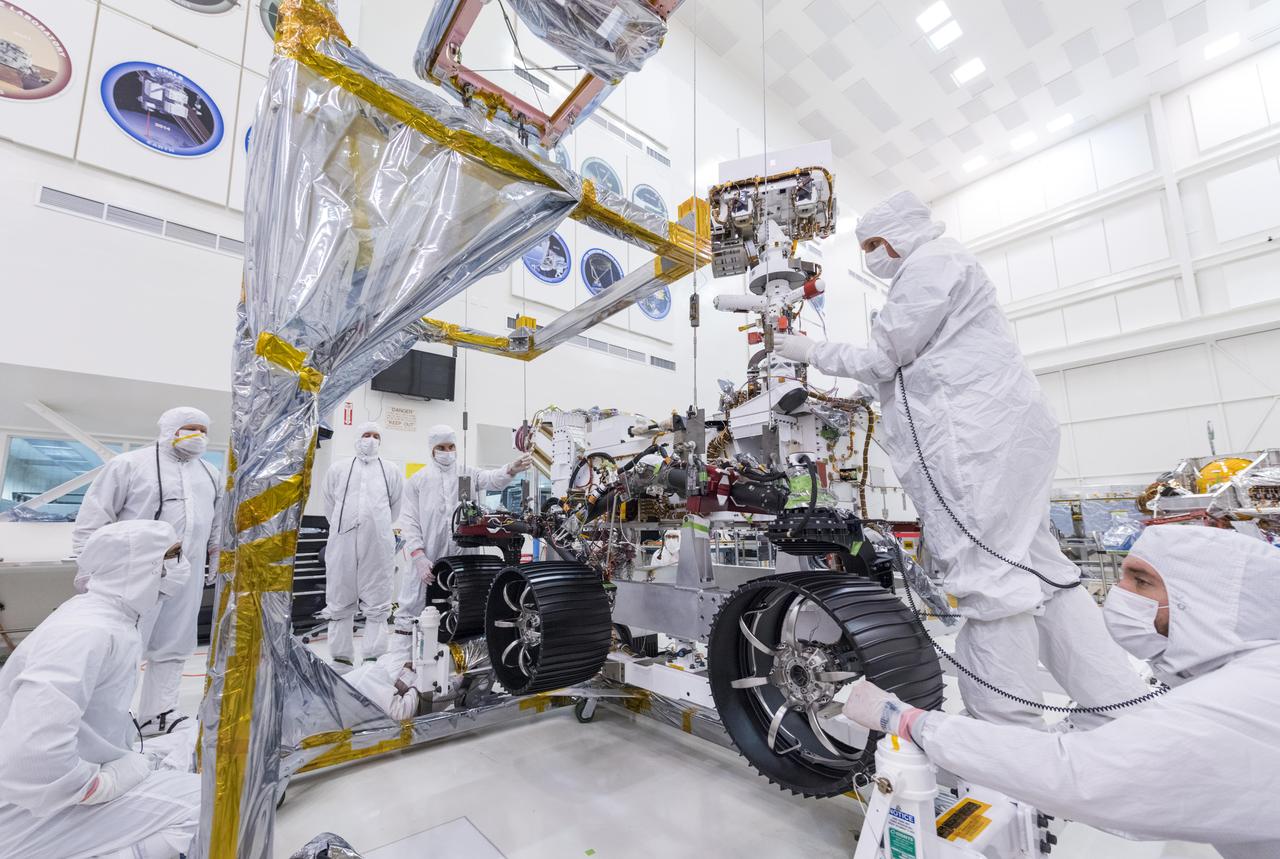
In this image, taken on June 13, 2019, engineers at JPL install the starboard legs and wheels — otherwise known as the mobility suspension — on the Mars 2020 rover. https://photojournal.jpl.nasa.gov/catalog/PIA23269
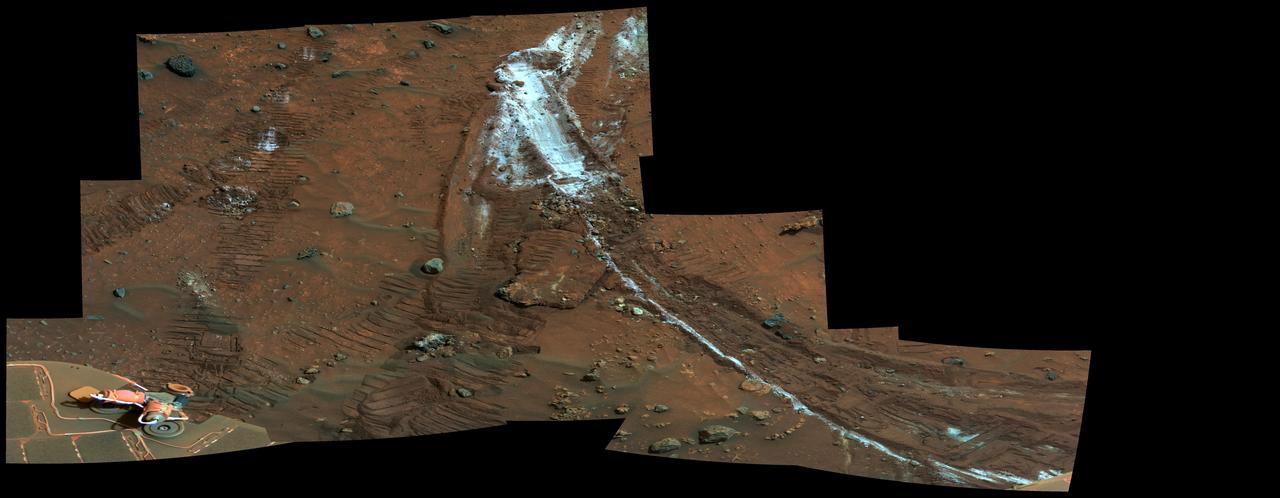
Rover Wheel Churns Up Bright Martian Soil False Color
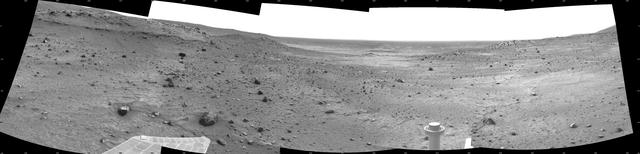
New Record Five-Wheel Drive, Spirit Sol 1856
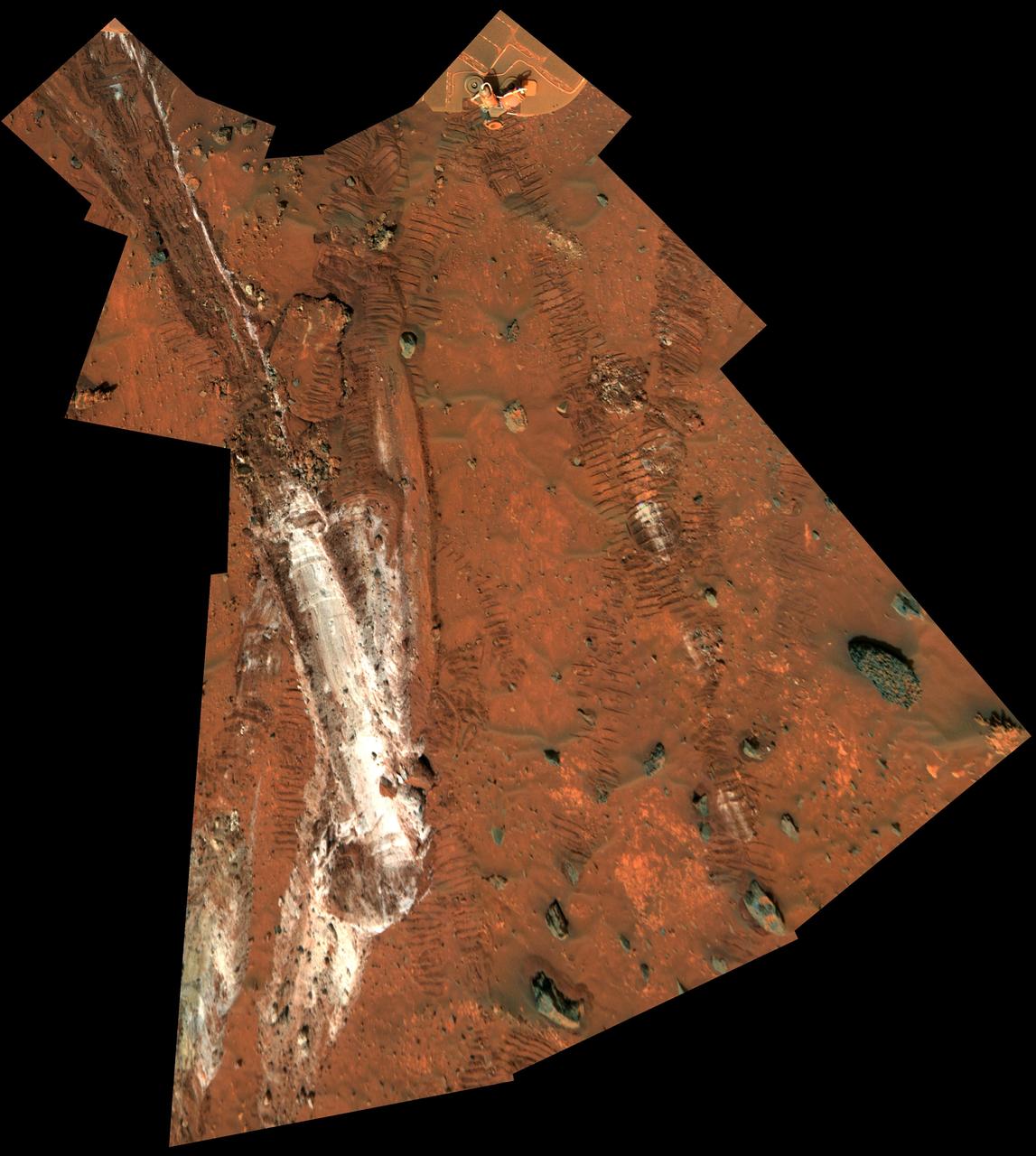
Rover Wheel Churns Up Bright Martian Soil Vertical

This color thumbnail image was obtained by NASA Curiosity rover illustrating the first appearance of the left front wheel of the Curiosity rover after deployment of the suspension system as the vehicle was about to touch down on Mars.
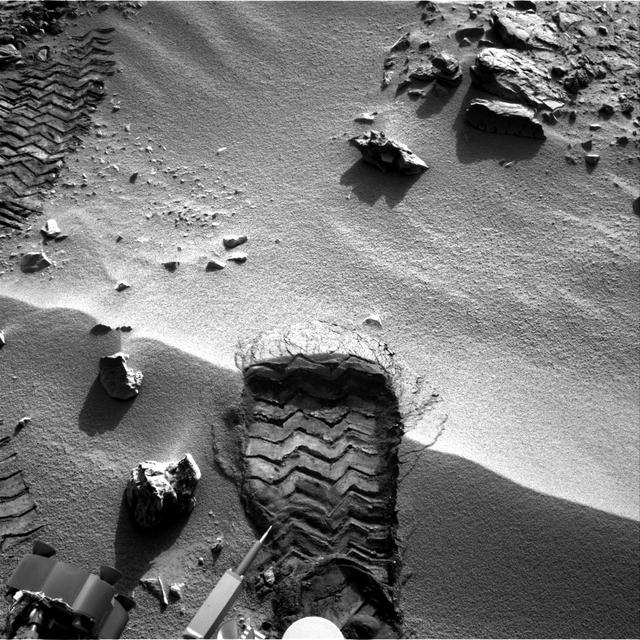
NASA Mars rover Curiosity cut a wheel scuff mark into a wind-formed ripple at the Rocknest site to give researchers a better opportunity to examine the particle-size distribution of the material forming the ripple.
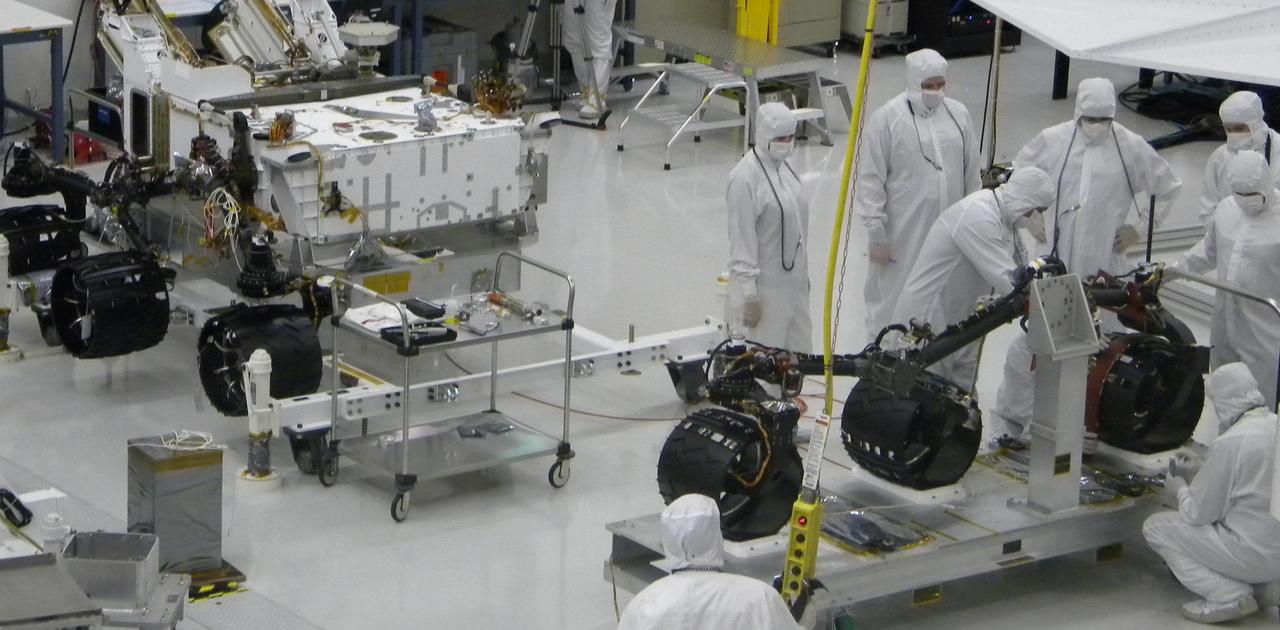
With the wheels and suspension system already installed onto one side of NASA Mars rover Curiosity the previous day, spacecraft engineers and technicians prepare the other side mobility subsystem for installation on June 29, 2010.
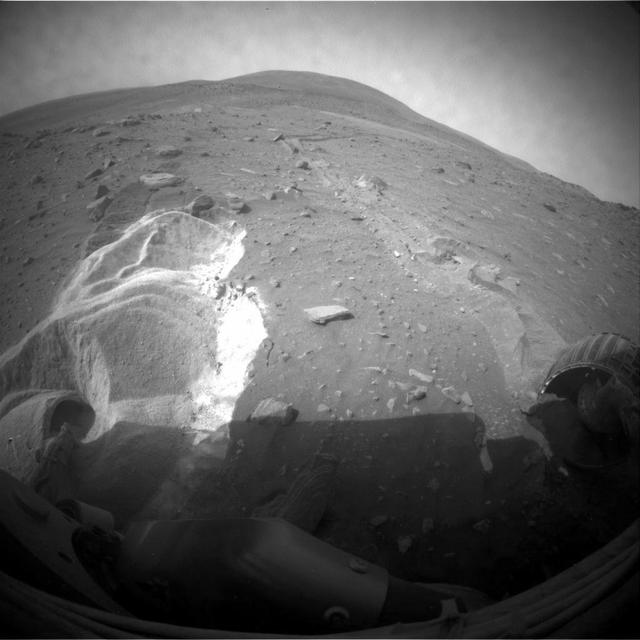
Wheel slippage during attempts to extricate NASA Mars Rover Spirit from a patch of soft ground during the preceding two weeks had partially buried the wheels by the 1,899th Martian day, or sol, of the Spirit mission on Mars May 6, 2009.
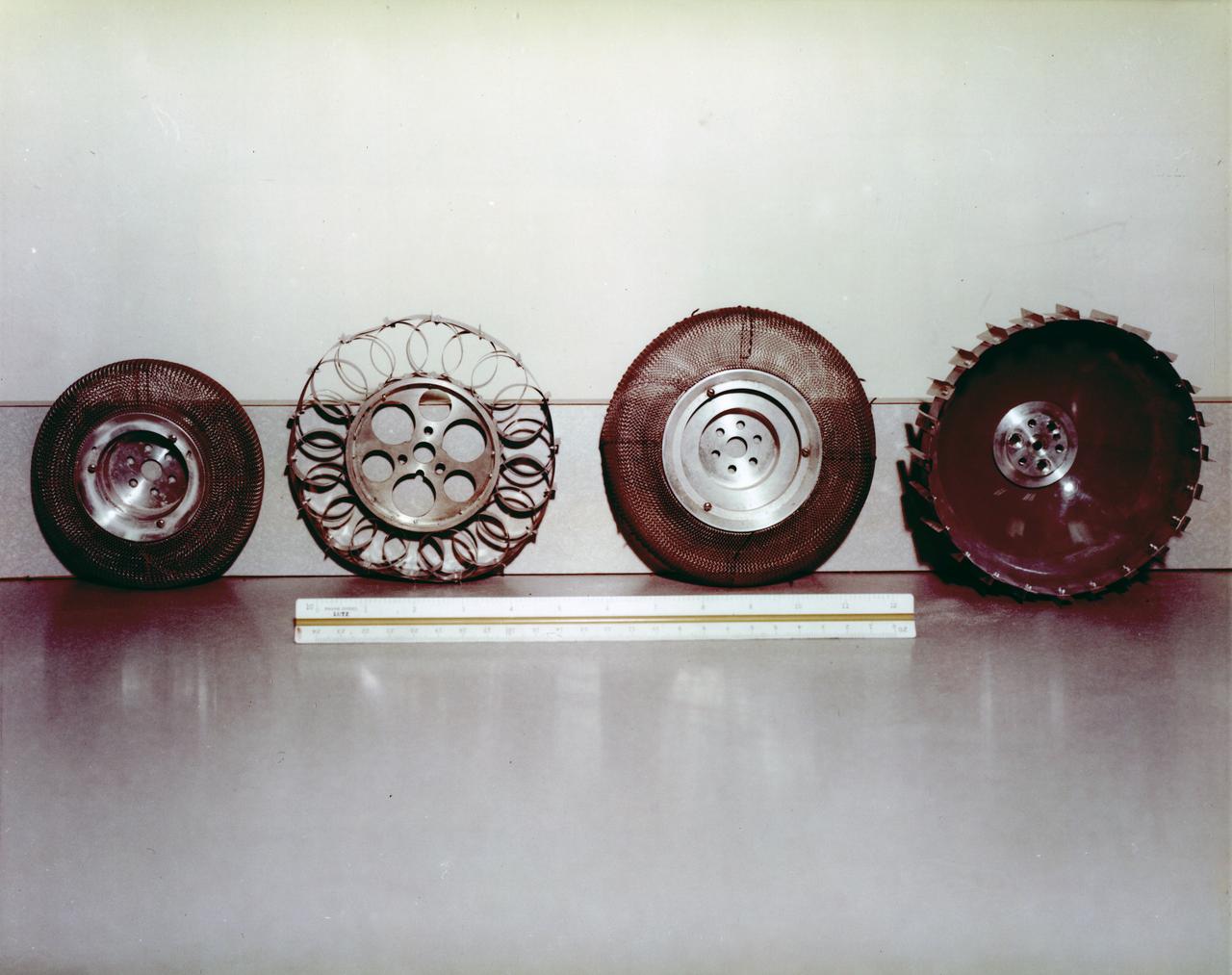
Under the direction of Marshall Space Flight Center (MSFC), the Lunar Roving Vehicle (LRV) was designed to allow Apollo astronauts a greater range of mobility during lunar exploration missions. During the development process, LRV prototype wheels underwent soil tests in building 4481 at Marshall Space Flight Center (MSFC). Pictured from left to right are the wheels for: LRV, Bendix Corporation, Local Scientific Survey Module (LSSM), and Grumman Industries.
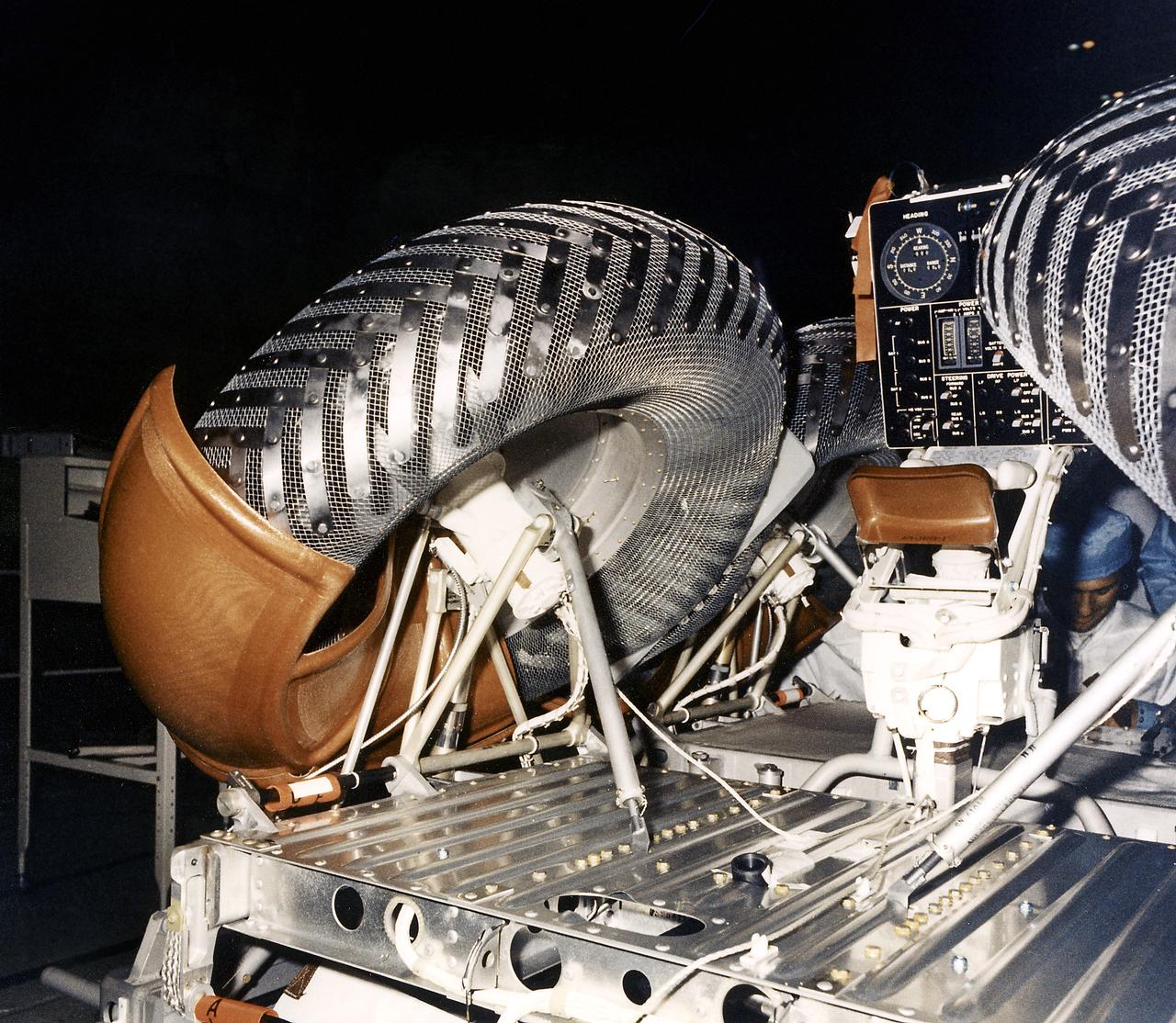
This is a close-up view of a right rear wheel strut of the Lunar Roving Vehicle (LRV) No. 1. The LRV was built to give Apollo astronauts a greater range of mobility during lunar exploration. It was an open-space and collapsible vehicle about 10 feet long with large mesh wheels, anterna, appendages, tool caddies, and camera. An LRV was used on each of the last three Apollo missions; Apollo 15, Apollo 16, and Apollo 17. It was built by the Boeing Company under the direction of the Marshall Space Flight Center.
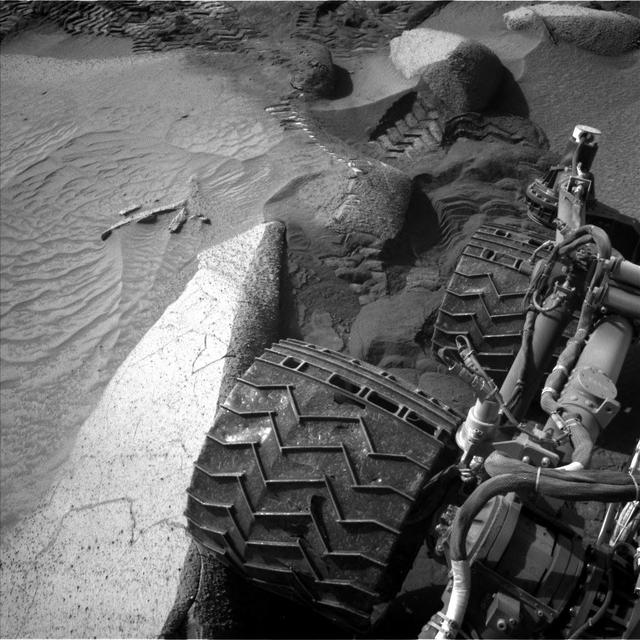
NASA's Curiosity Mars rover captured this image of its right rear wheels using its navigation cameras on June 1, the 3,846th Martian day, or sol, of the mission. The image was taken while the rover was attempting to climb a 23-degree slope covered with slippery sand and wheel-size boulders. Rover tracks from the approach to this location can be seen in the sand at the top of the image. The rover slipped in the sand, causing it to veer off its intended route and prompting its right middle wheel to drive up on to the bright, long rock seen at the left of the image. Driving over this rock was not intended, and the large movement of the suspension triggered a safety fault, stopping the drive. In response, rover planners chose to back away from this spot and try climbing the slope a few feet from here. Curiosity experienced several more faulted drives before a decision was made to pursue a detour on less difficult terrain about 492 feet (150 meters) away. https://photojournal.jpl.nasa.gov/catalog/PIA26016
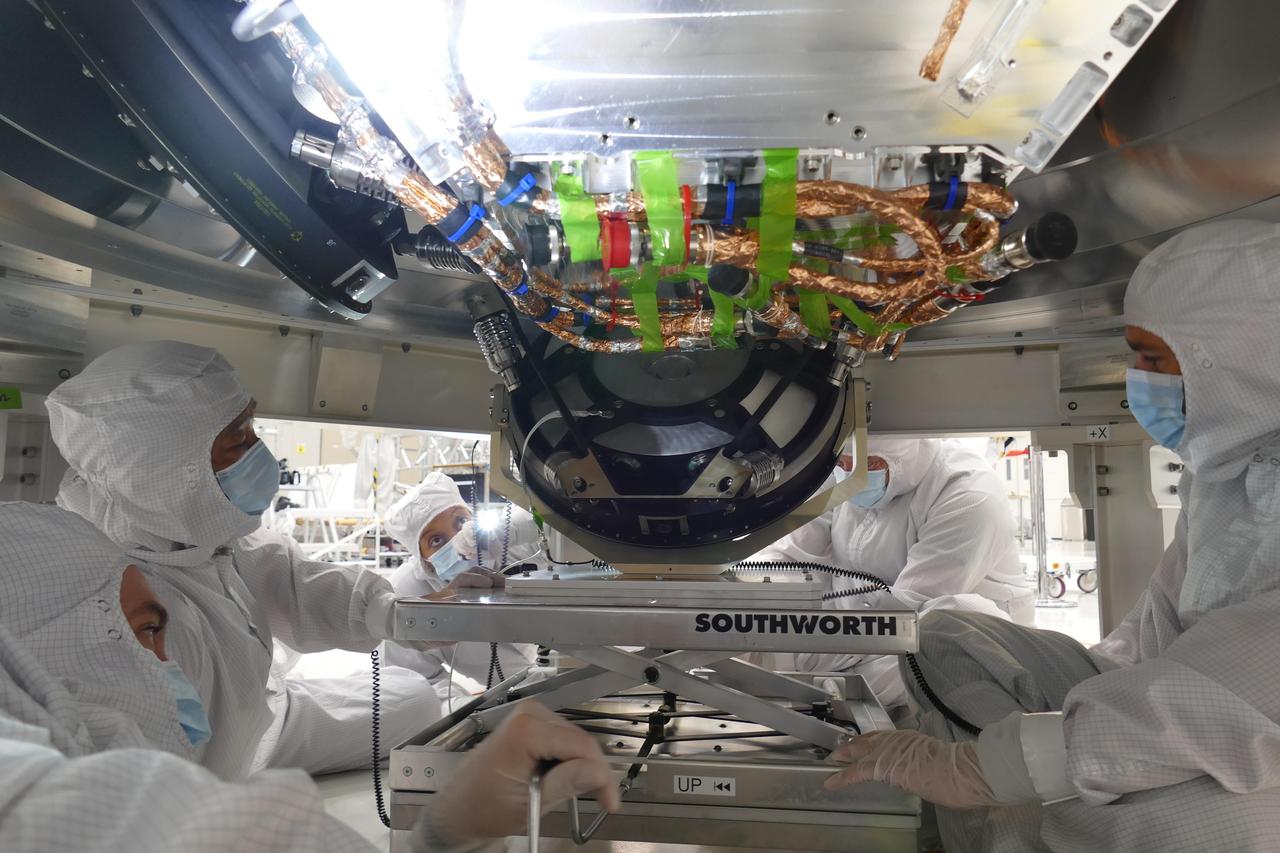
Engineers install a 2-foot-wide reaction wheel onto the main body of NASA's Europa Clipper spacecraft at the agency's Jet Propulsion Laboratory in Southern California. In all, four wheels were integrated onto the spacecraft, which is being assembled for its launch to Jupiter's moon Europa in October 2024. When the spacecraft heads through deep space, slips into orbit around Jupiter, and collects science observations while flying dozens of times by Europa, the wheels rotate the orbiter so that its antennas can communicate with Earth and so its science instruments, including cameras, can stay oriented toward Europa. Two feet wide and made of steel, aluminum, and titanium, the wheels spin rapidly to create a force that causes the orbiter to rotate in the opposite direction. The wheels will run on electricity provided by the spacecraft's vast solar arrays. Scientists believe the icy moon Europa harbors a vast internal ocean that may have conditions suitable for supporting life. Europa Clipper will fly by the moon about 50 times while its suite of science instruments gathers data on the moon's atmosphere, surface, and interior – information that will help scientists learn more about the ocean, the ice crust, and potential plumes that may be venting subsurface water into space. https://photojournal.jpl.nasa.gov/catalog/PIA25497
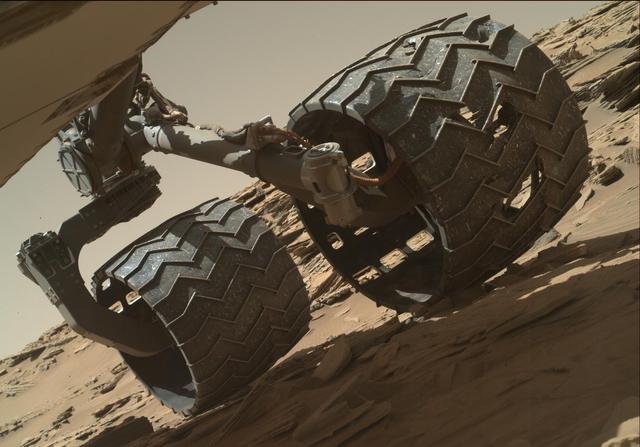
The team operating NASA Curiosity Mars rover uses the Mars Hand Lens Imager MAHLI camera on the rover arm to check the condition of the wheels at routine intervals.
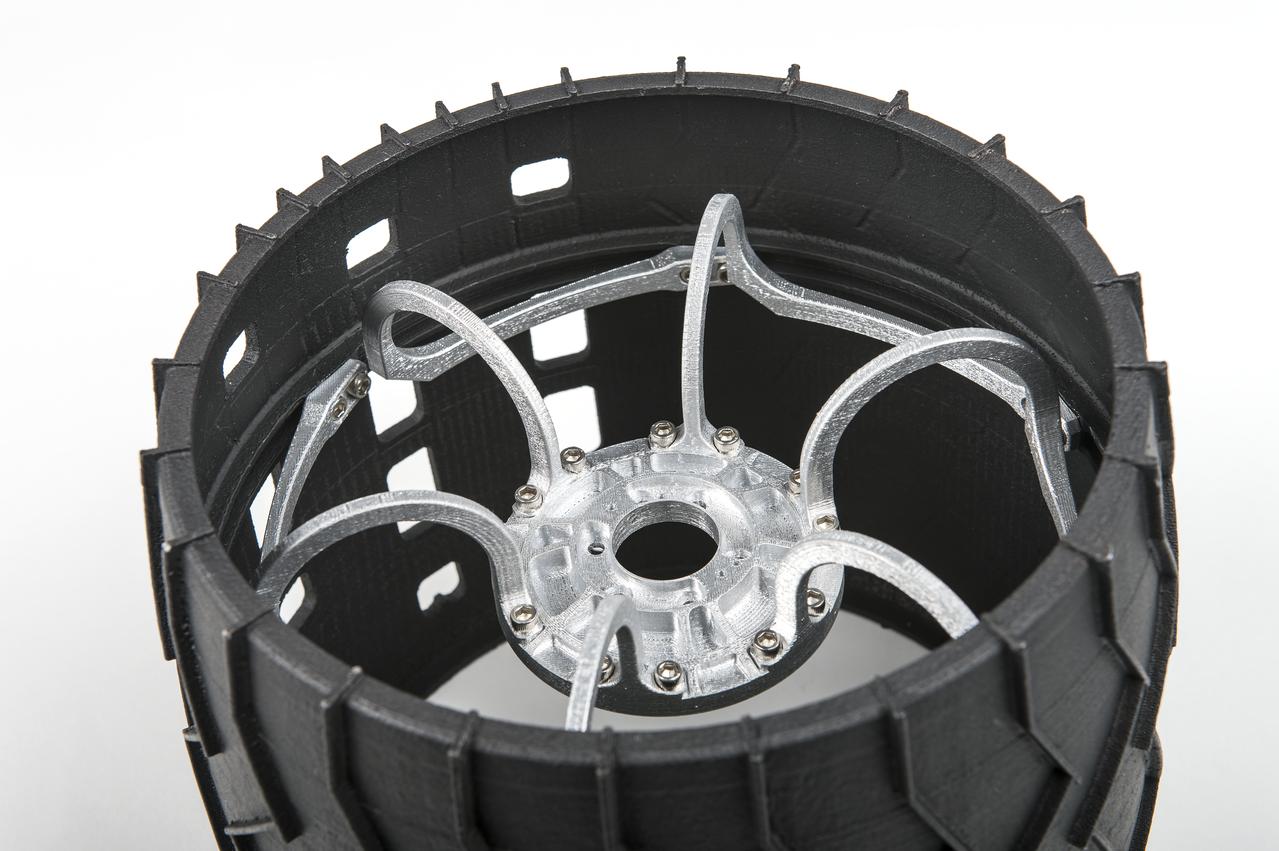
Mars Curiosity Wheel Mock-up
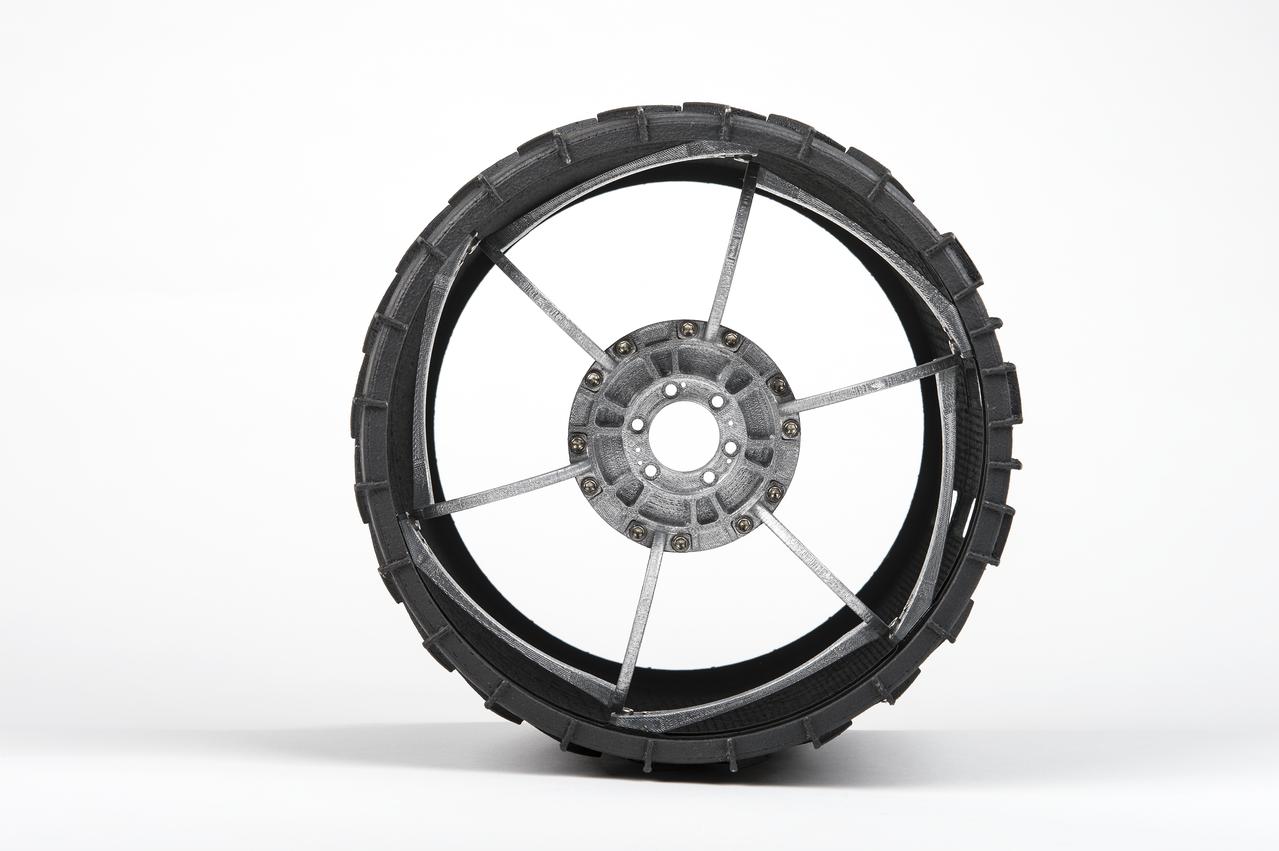
Mars Curiosity Wheel Mock-up
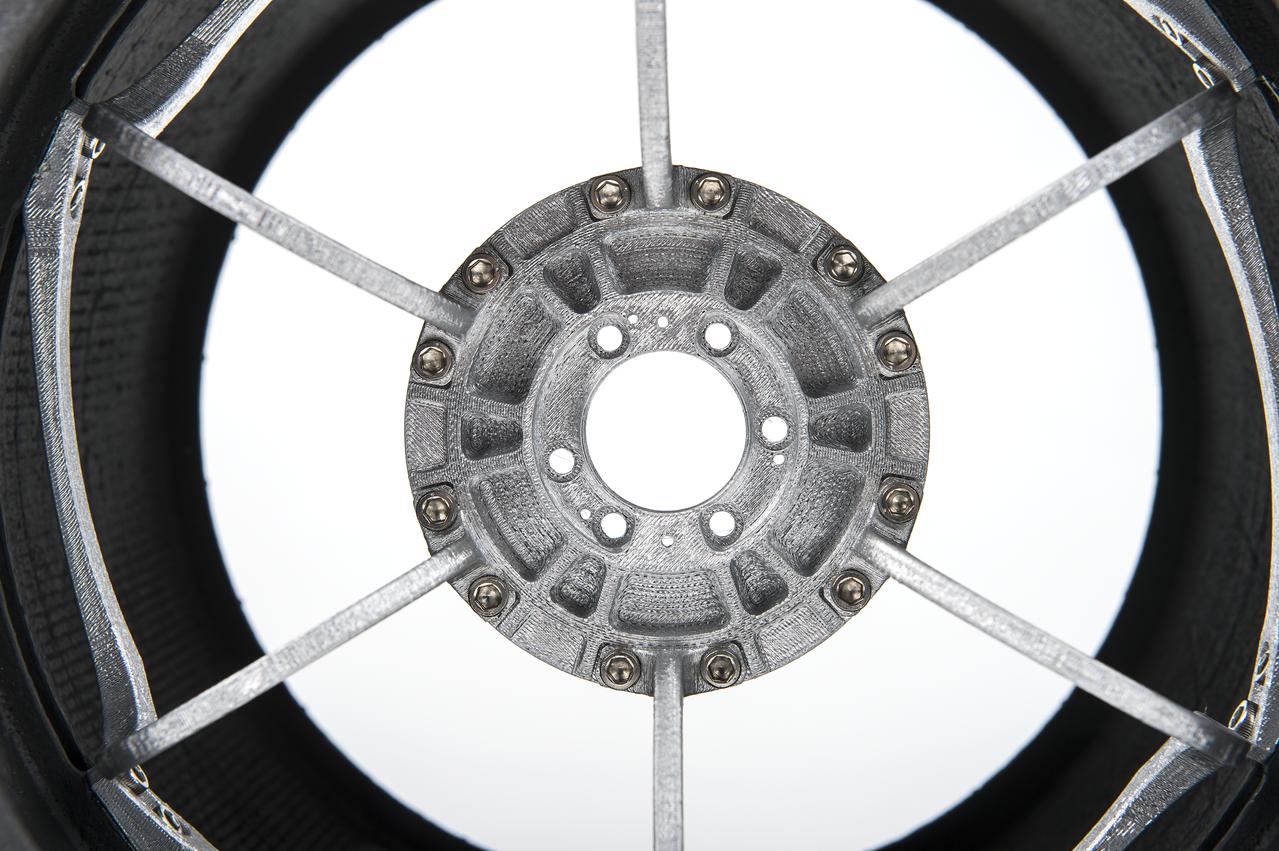
Mars Curiosity Wheel Mock-up
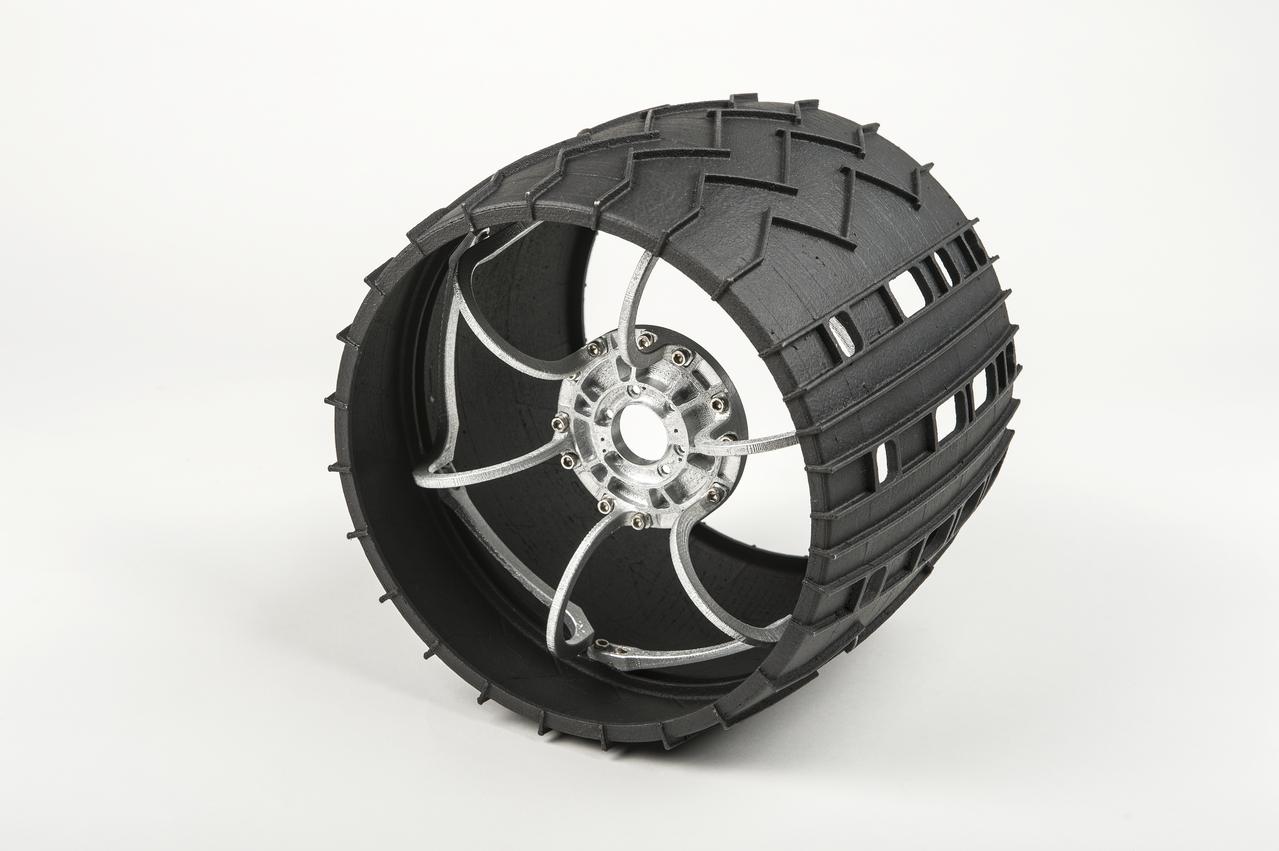
Mars Curiosity Wheel Mock-up
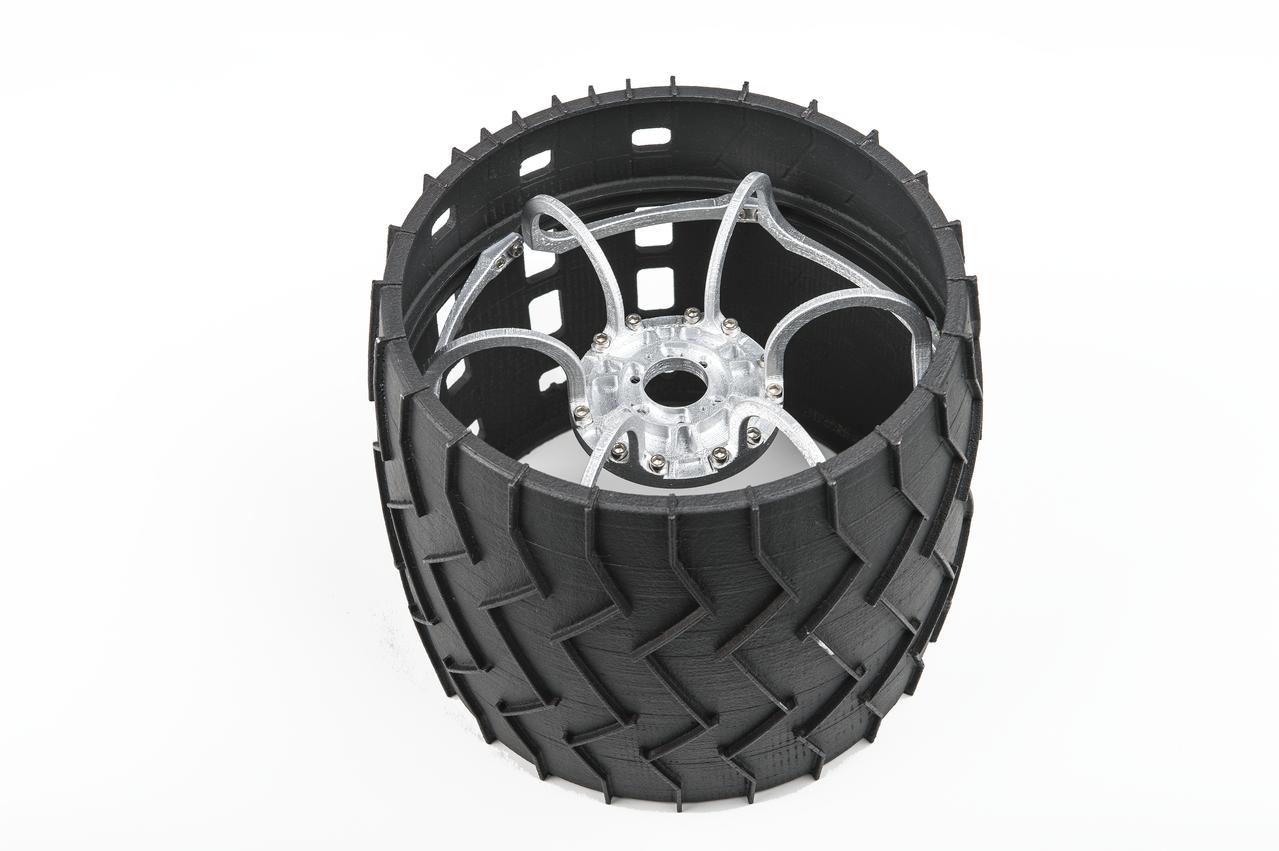
Mars Curiosity Wheel Mock-up
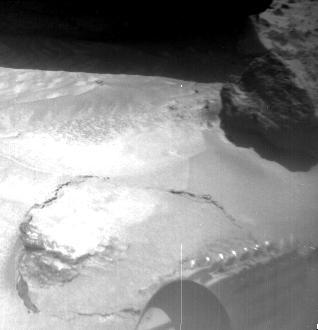
Lower Portions of Yogi & Rover Wheel
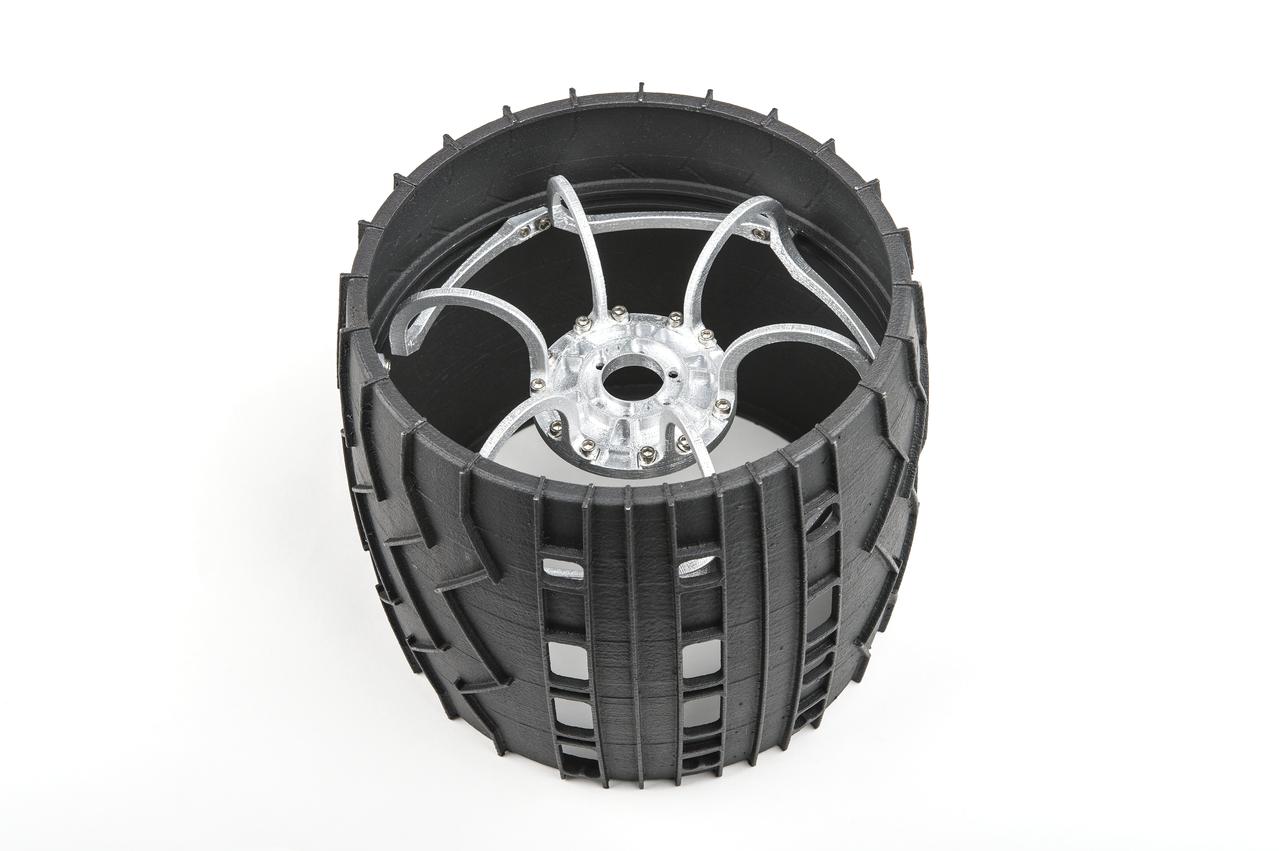
Mars Curiosity Wheel Mock-up
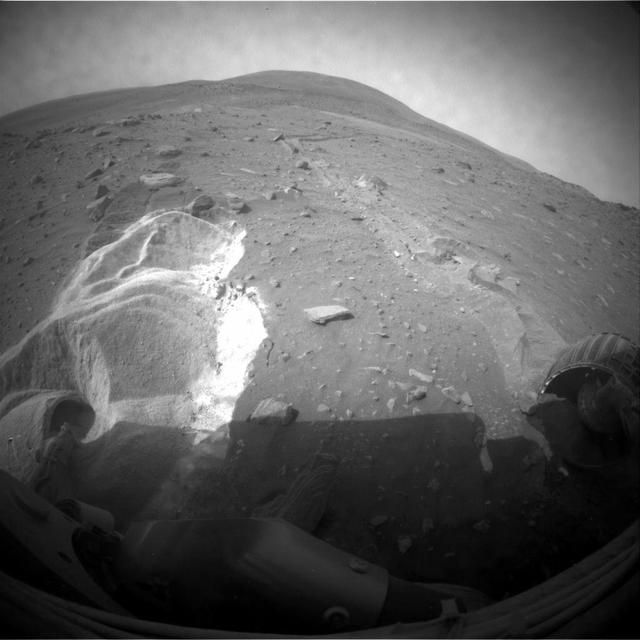
Wheel slippage during attempts to extricate NASA's Mars Rover Spirit from a patch of soft ground during the preceding two weeks had partially buried the wheels by the 1,899th Martian day, or sol, of the Spirit's mission on Mars (May 6, 2009). Spirit took this image with its front hazard-avoidance camera on Sol 1899. With Spirit in the position shown here, the rover team temporarily suspended driving attempts while studying the ground around Spirit and planning simulation tests of driving options with a test rover at NASA's Jet Propulsion Laboratory in Pasadena, Calif. Driving attempts between the time Spirit took a similar image (PIA12002) 10 sols earlier and when this image was taken moved the rover a total of about 36 centimeters (14 inches). While driving backwards, the rover drags its right front wheel, which no longer rotates. For scale, the distance between the wheel tracks is about 1 meter (40 inches). This view is looking northward, with Husband Hill on the horizon. http://photojournal.jpl.nasa.gov/catalog/PIA12007
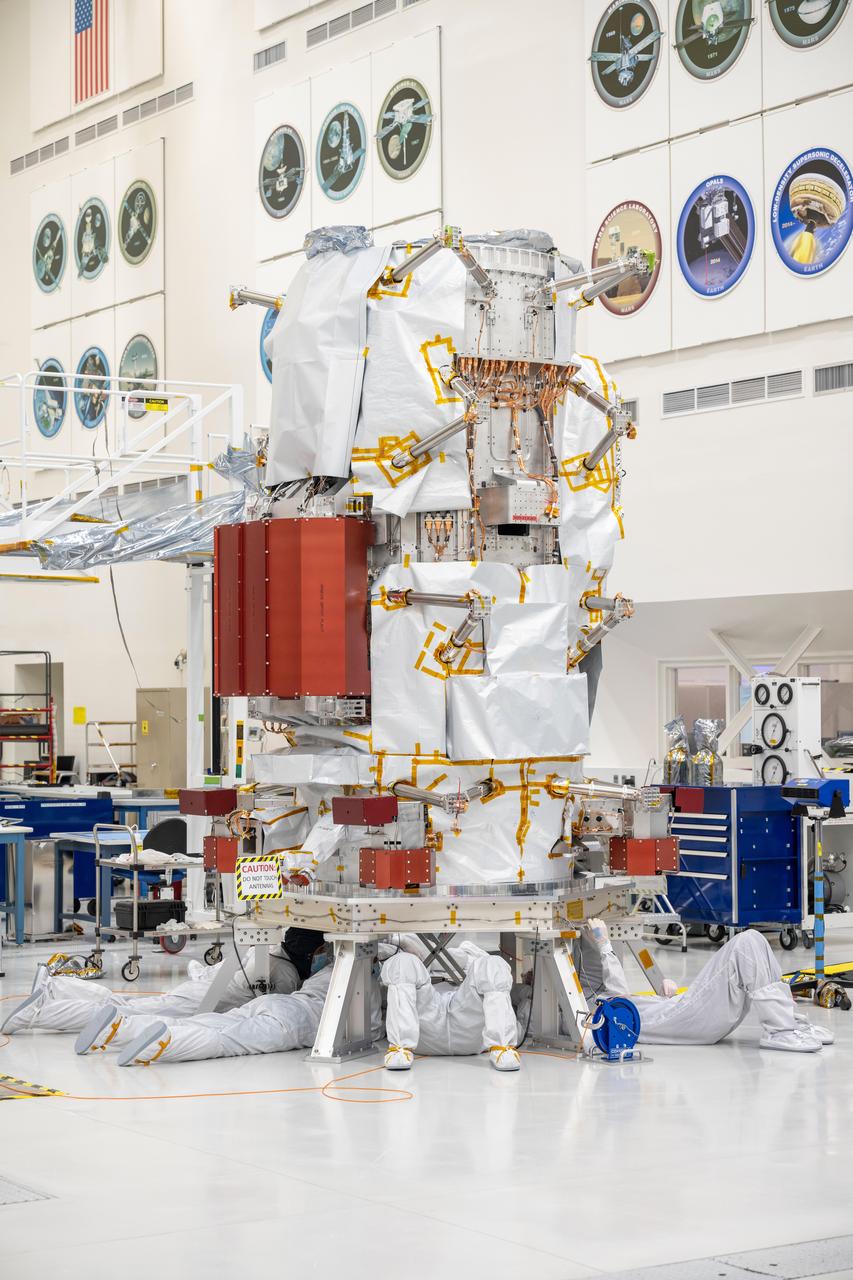
Engineers and technicians work together to install reaction wheels on the underside of the main body of NASA's Europa Clipper spacecraft. The integration of the wheels was one of the latest steps of the spacecraft's assembly, test, and launch operations phase, now underway way in the Spacecraft Assembly Facility at the agency's Jet Propulsion Laboratory in Southern California. Europa Clipper is set to launch to Jupiter's moon Europa in October 2024. When the spacecraft heads through deep space, slips into orbit around Jupiter, and collects science observations while flying dozens of times by Europa, the wheels rotate the orbiter so that its antennas can communicate with Earth and so its science instruments, including cameras, can stay oriented toward Europa. Two feet wide and made of steel, aluminum, and titanium, the wheels spin rapidly to create a force that causes the orbiter to rotate in the opposite direction. The wheels will run on electricity provided by the spacecraft's vast solar arrays. Scientists believe the icy moon Europa harbors a vast internal ocean that may have conditions suitable for supporting life. Europa Clipper will fly by the moon about 50 times while its suite of science instruments gathers data on the moon's atmosphere, surface, and interior – information that will help scientists learn more about the ocean, the ice crust, and potential plumes that may be venting subsurface water into space. https://photojournal.jpl.nasa.gov/catalog/PIA25496
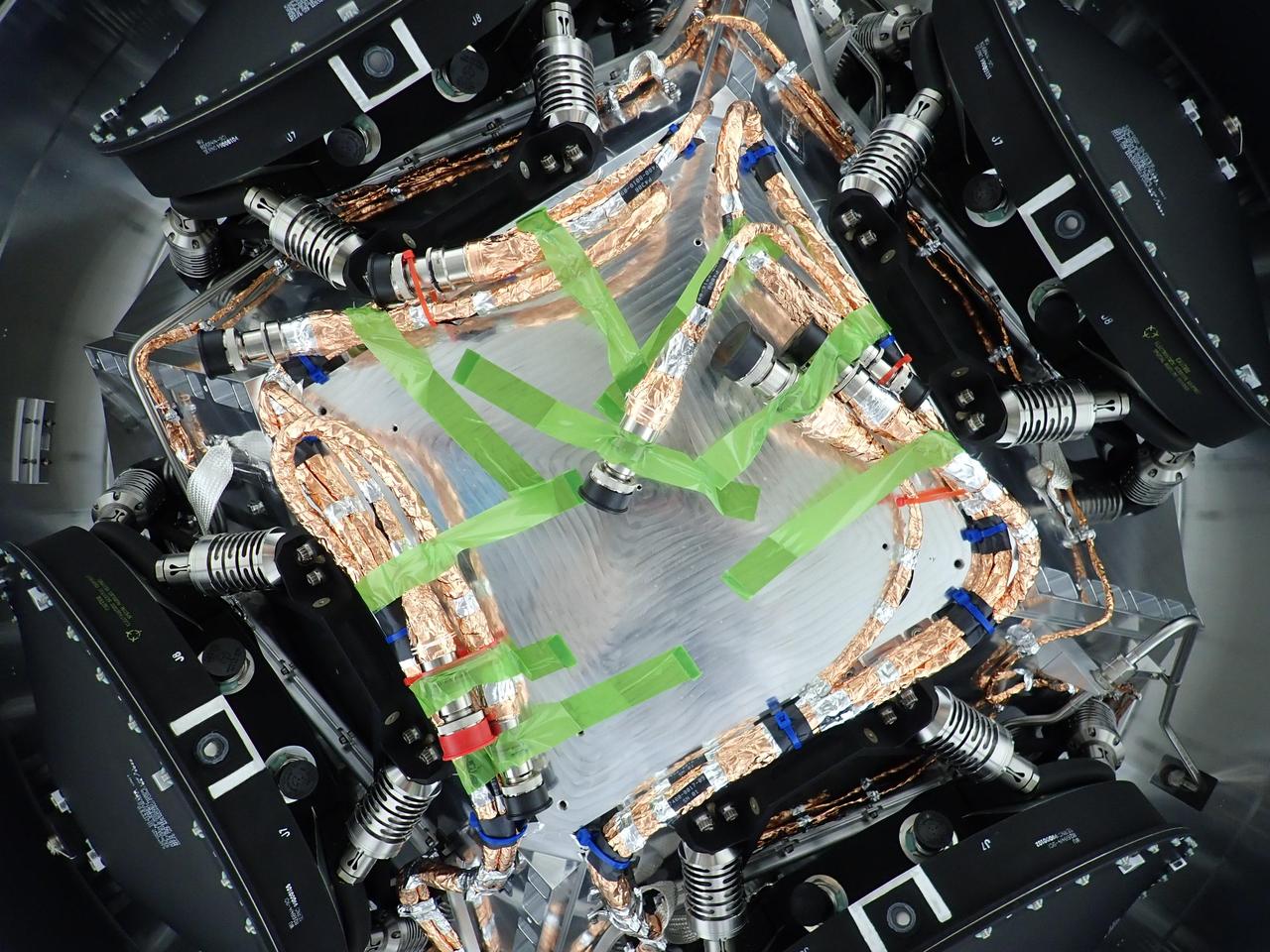
All four of the reaction wheels installed onto NASA's Europa Clipper are visible in this photo, which was shot from underneath the main body of the spacecraft while it is being assembled at the agency's Jet Propulsion Laboratory in Southern California. The spacecraft is set to launch in October 2024 and will head toward Jupiter's moon Europa, where it will collect science observations while flying by the icy moon dozens of times. During its journey through deep space and its flybys of Europa, the spacecraft's reaction wheels rotate the orbiter so its antennas can communicate with Earth and so its science instruments, including cameras, can stay oriented toward Europa. Two feet wide and made of steel, aluminum, and titanium, the wheels spin rapidly to create a force that causes the orbiter to rotate in the opposite direction. The wheels will run on electricity provided by the spacecraft's vast solar arrays. The green tape that is visible here keeps cables temporarily secured during the wheel installation. Scientists believe Europa harbors a vast internal ocean that may have conditions suitable for supporting life. Europa Clipper's suite of science instruments gathers data on the moon's atmosphere, surface, and interior – information that will help scientists learn more about the ocean, the ice crust, and potential plumes that may be venting subsurface water into space. https://photojournal.jpl.nasa.gov/catalog/PIA25495
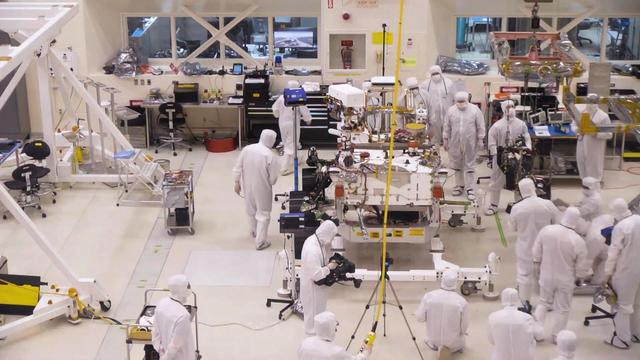
A team of engineers at NASA's Jet Propulsion Laboratory in Pasadena, California, install the legs and wheels — otherwise known as the mobility suspension — on the Mars 2020 rover. The imagery for this accelerated time-lapse was taken on June 13, 2019, from a camera above the Spacecraft Assembly Facility's High Bay 1 clean room. https://photojournal.jpl.nasa.gov/catalog/PIA23261
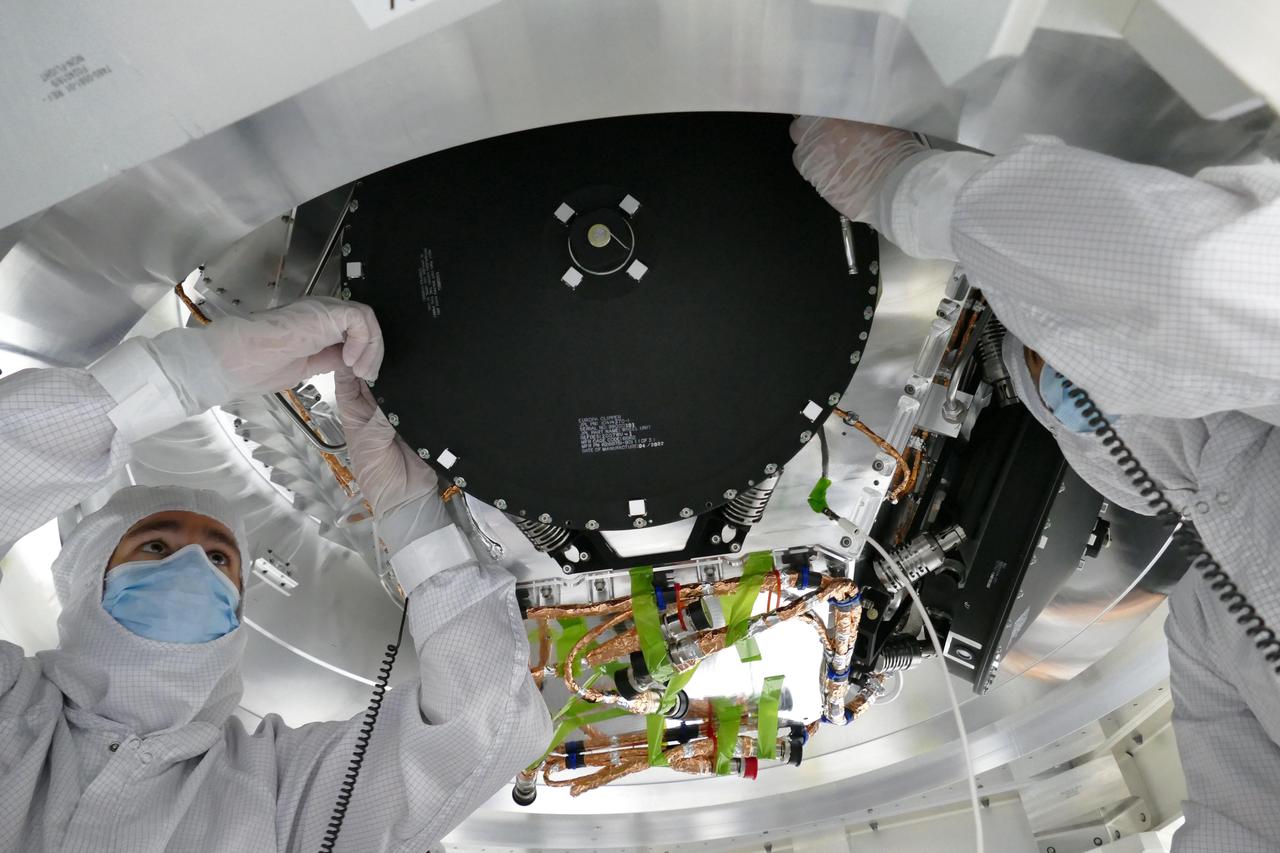
Engineers install 2-foot-wide reaction wheels onto the main body of NASA's Europa Clipper spacecraft at the agency's Jet Propulsion Laboratory in Southern California. In all, four wheels were integrated onto the spacecraft, which is being assembled for its launch to Jupiter's moon Europa in October 2024. When the spacecraft heads through deep space, slips into orbit around Jupiter, and collects science observations while flying dozens of times by Europa, the wheels rotate the orbiter so that its antennas can communicate with Earth and so its science instruments, including cameras, can stay oriented toward Europa. Two feet wide and made of steel, aluminum, and titanium, the wheels spin rapidly to create a force that causes the orbiter to rotate in the opposite direction. The wheels will run on electricity provided by the spacecraft's vast solar arrays. The green tape that is visible here keeps cables temporarily secured during the wheel installation. Scientists believe the icy moon Europa harbors a vast internal ocean that may have conditions suitable for supporting life. Europa Clipper will fly by the moon about 50 times while its suite of science instruments gathers data on the moon's atmosphere, surface, and interior – information that will help scientists learn more about the ocean, the ice crust, and potential plumes that may be venting subsurface water into space. https://photojournal.jpl.nasa.gov/catalog/PIA25494
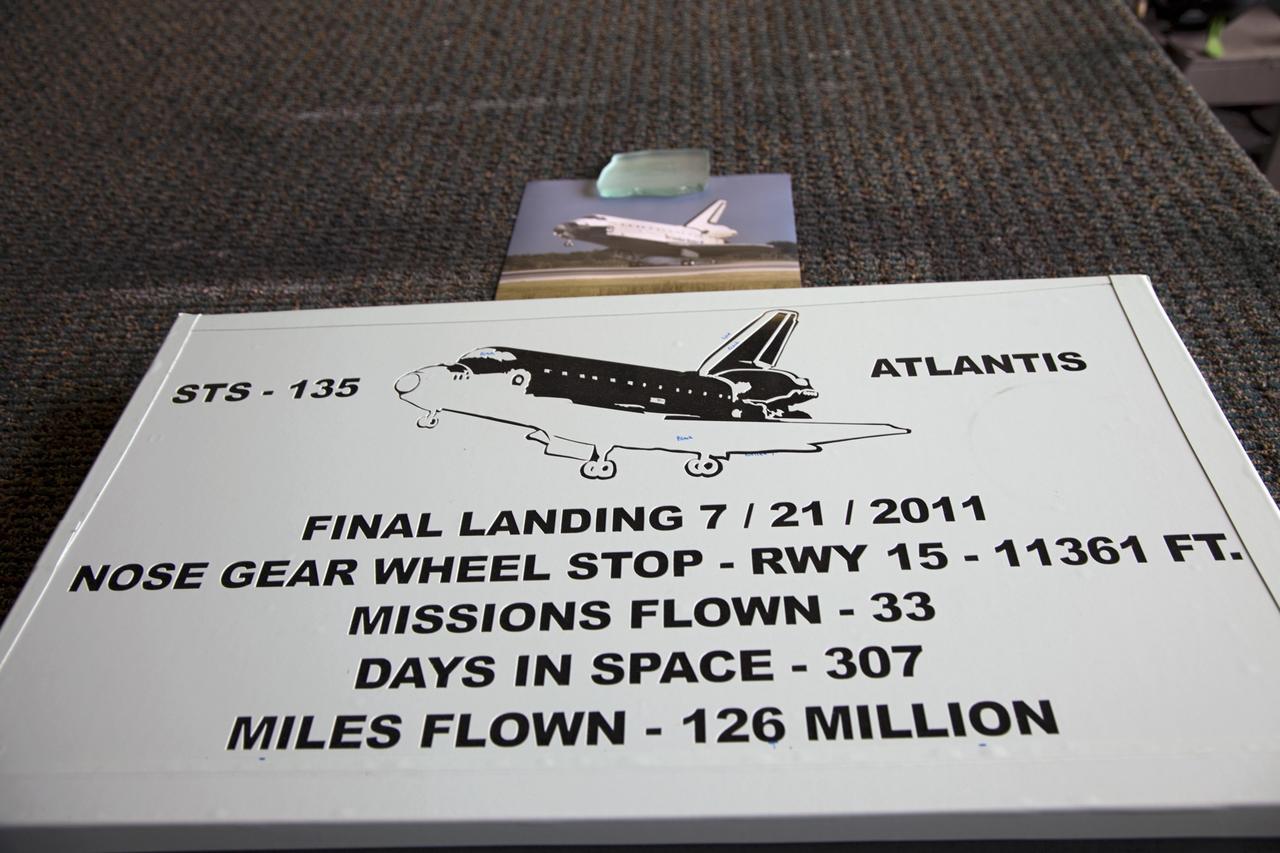
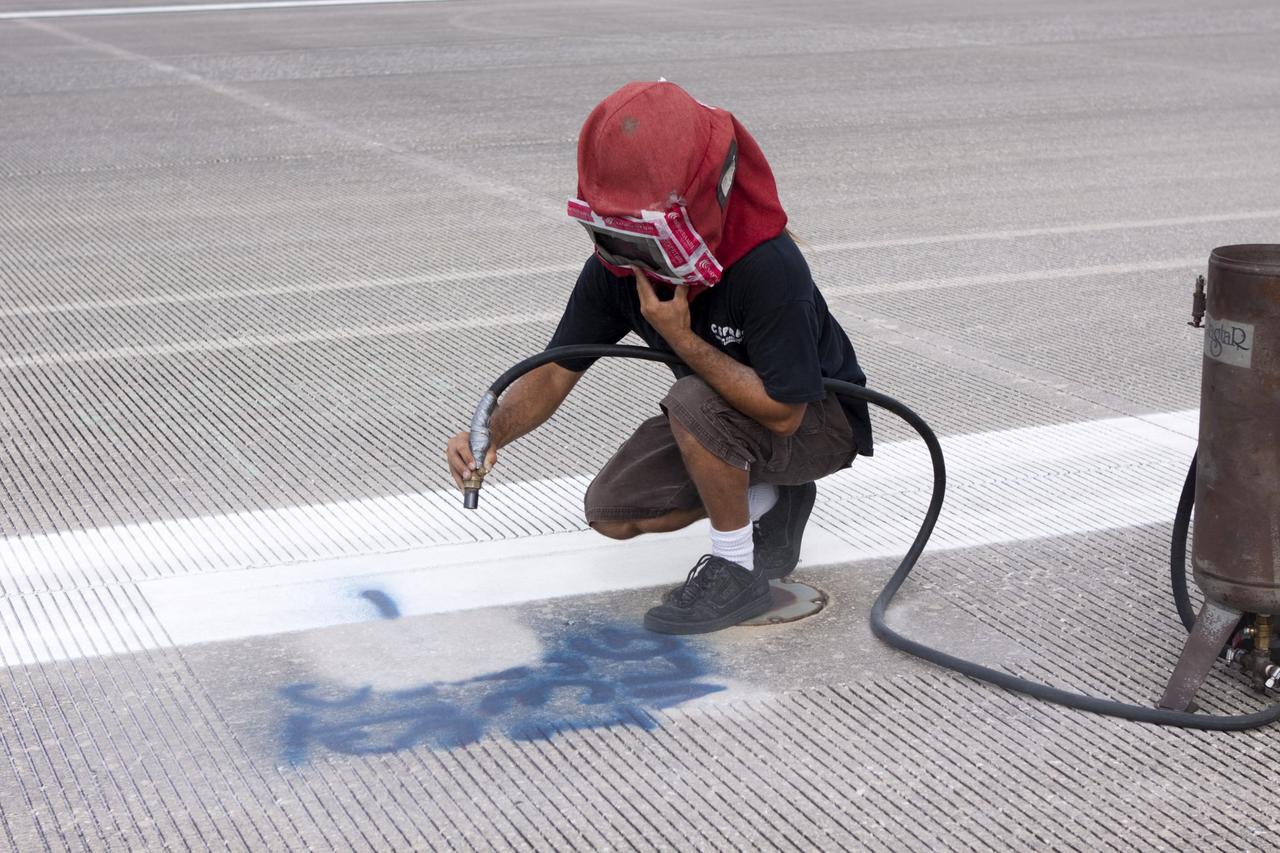
CAPE CANAVERAL, Fla. – At C Spray Glass Blasting of Cocoa Beach, Fla., the commemorative plaque to mark space shuttle Atlantis’ wheel stop location has been completed. The special plaque will be permanently mounted at the Shuttle Landing Facility, or SLF, runway edge at NASA’s Kennedy Space Center in Florida to commemorate the final space shuttle landing. Atlantis completed the STS-135 mission by landing at the SLF on July 21, 2011, at 5:57 a.m. EDT. Atlantis flew 33 missions, completed 4,848 orbits of the Earth, traveled nearly 126 million miles and spent 307 days in space. Atlantis carried 207 astronauts to space. Photo credit: NASA/Lorne Mathre
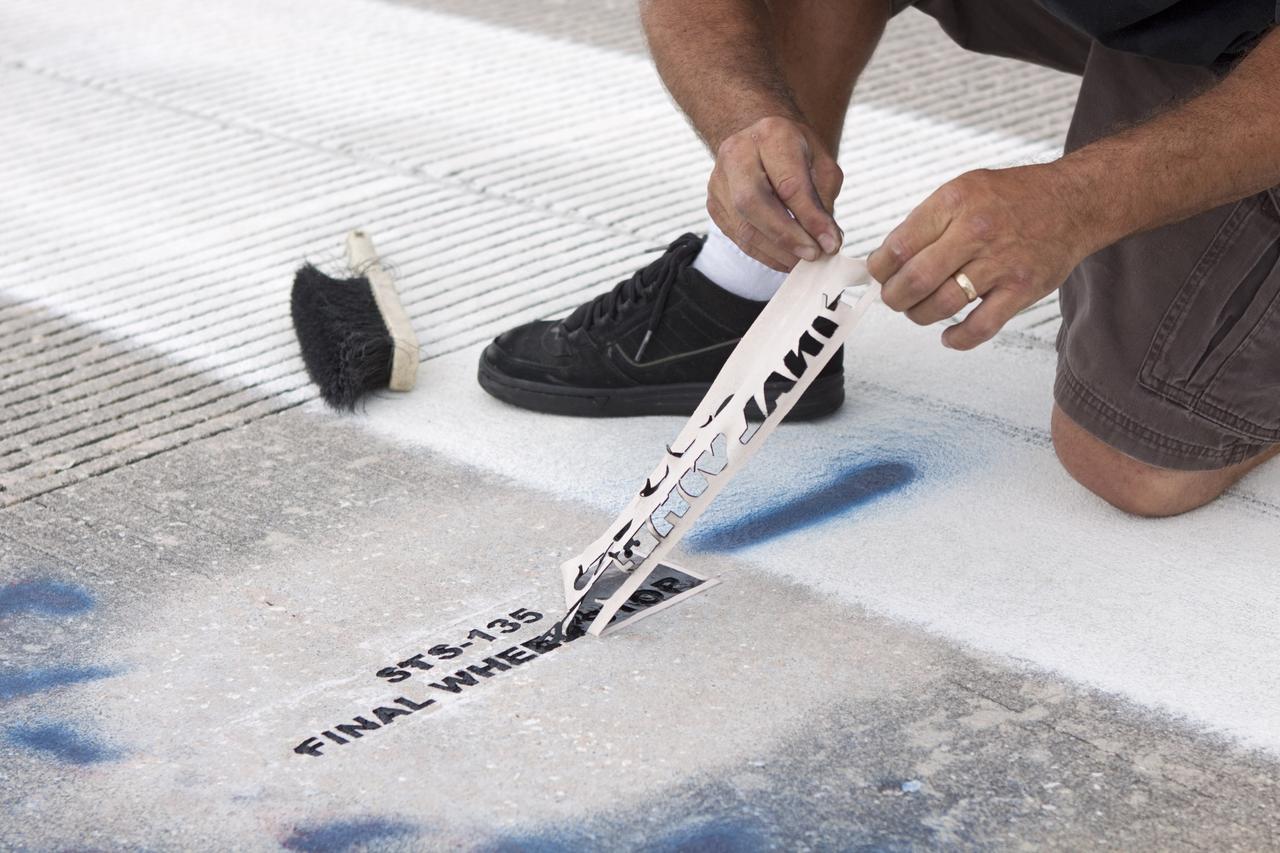
CAPE CANAVERAL, Fla. - At the Shuttle Landing Facility SLF at NASA’s Kennedy Space Center in Florida, a United Space Alliance technician marks the final front and rear wheel stop locations of an orbiter. Space shuttle Atlantis completed the STS-135 mission by landing at the SLF on July 21, 2011, at 5:57 a.m. A special plaque will be permanently mounted at the runway’s edge to commemorate the final shuttle landing. Atlantis flew 33 missions, completed 4,848 orbits of the Earth, traveled nearly 126 million miles and spent 307 days in space. Atlantis carried 207 astronauts to space. Photo credit: NASA/Jim Grossmann
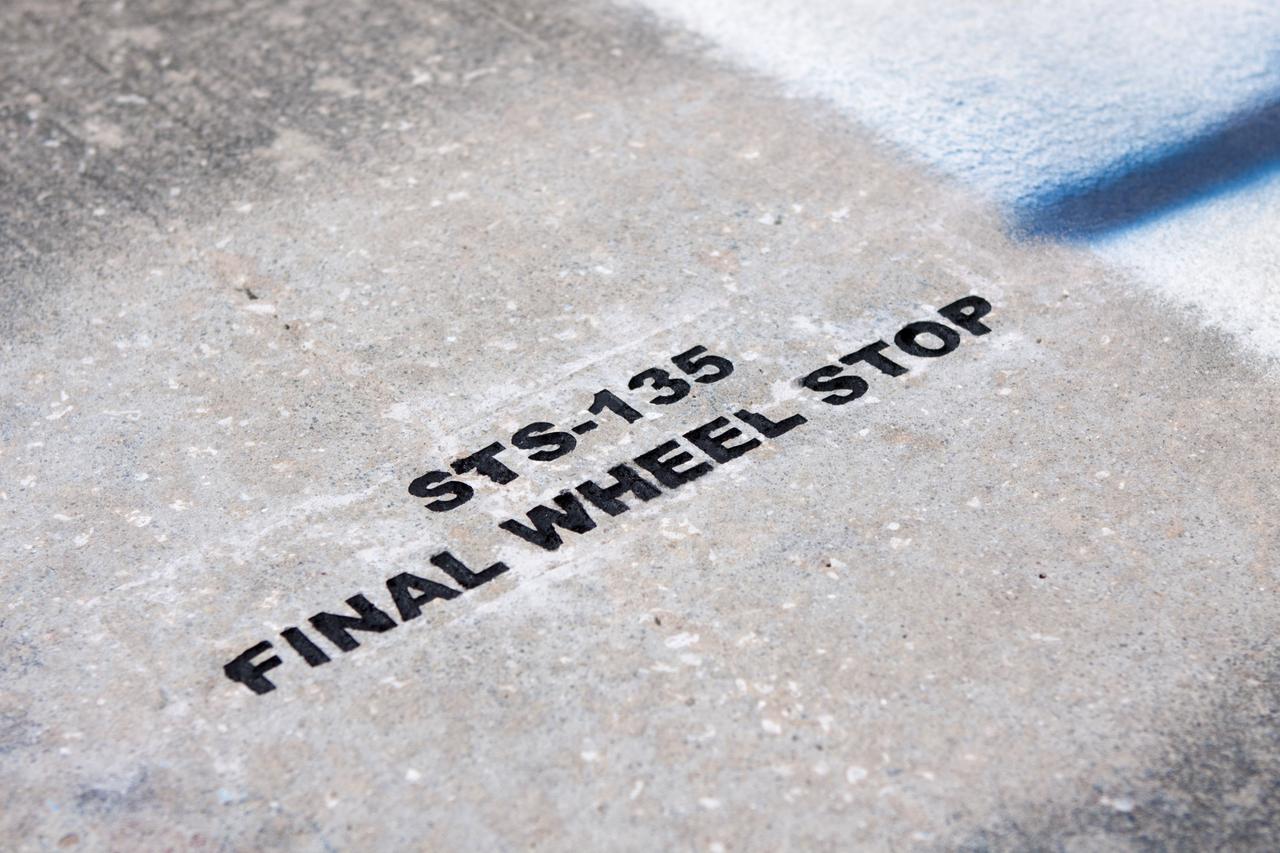
CAPE CANAVERAL, Fla. - At the Shuttle Landing Facility SLF at NASA’s Kennedy Space Center in Florida, the final wheel stop of an orbiter is marked. Space shuttle Atlantis completed the STS-135 mission by landing at the SLF on July 21, 2011, at 5:57 a.m. A special plaque will be permanently mounted at the runway’s edge to commemorate the final shuttle landing. Atlantis flew 33 missions, completed 4,848 orbits of the Earth, traveled nearly 126 million miles and spent 307 days in space. Atlantis carried 207 astronauts to space. Photo credit: NASA/Jim Grossmann
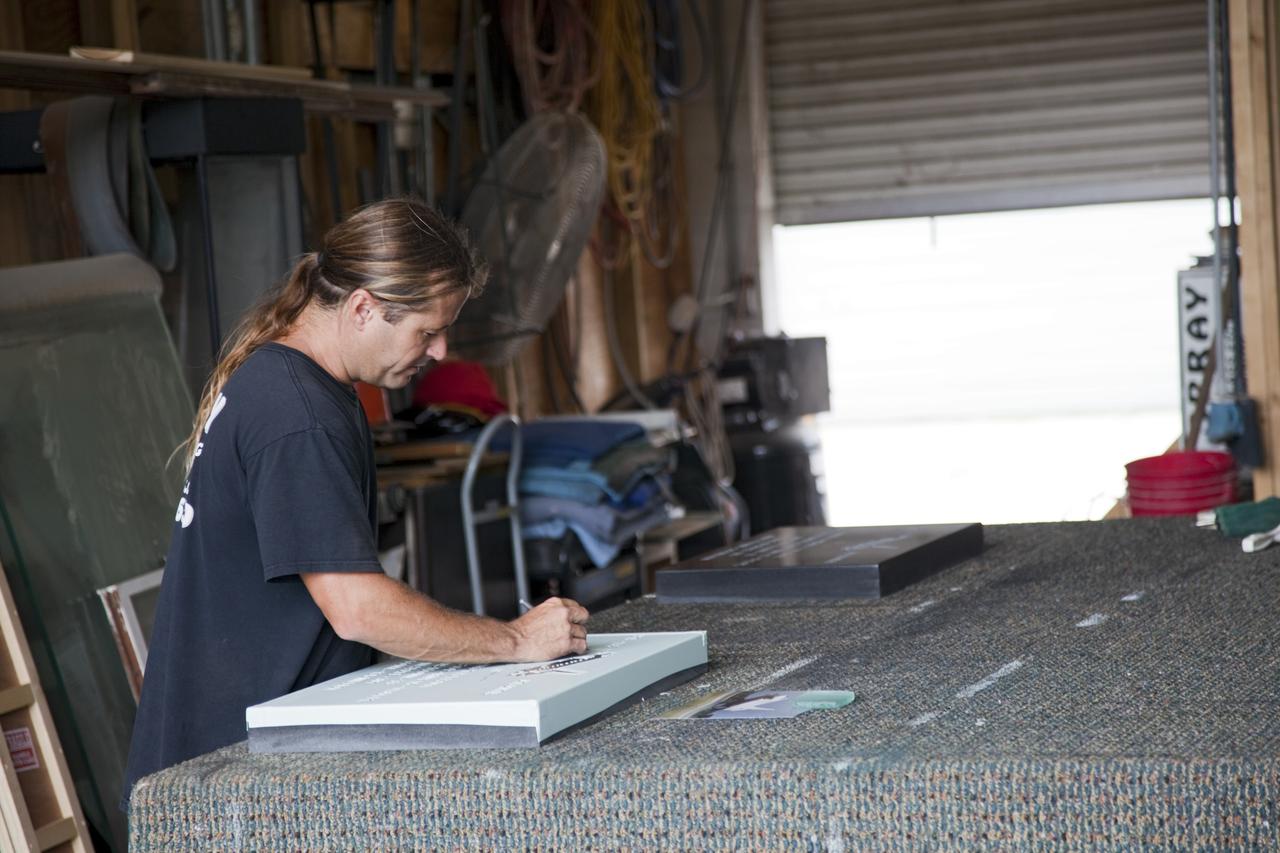
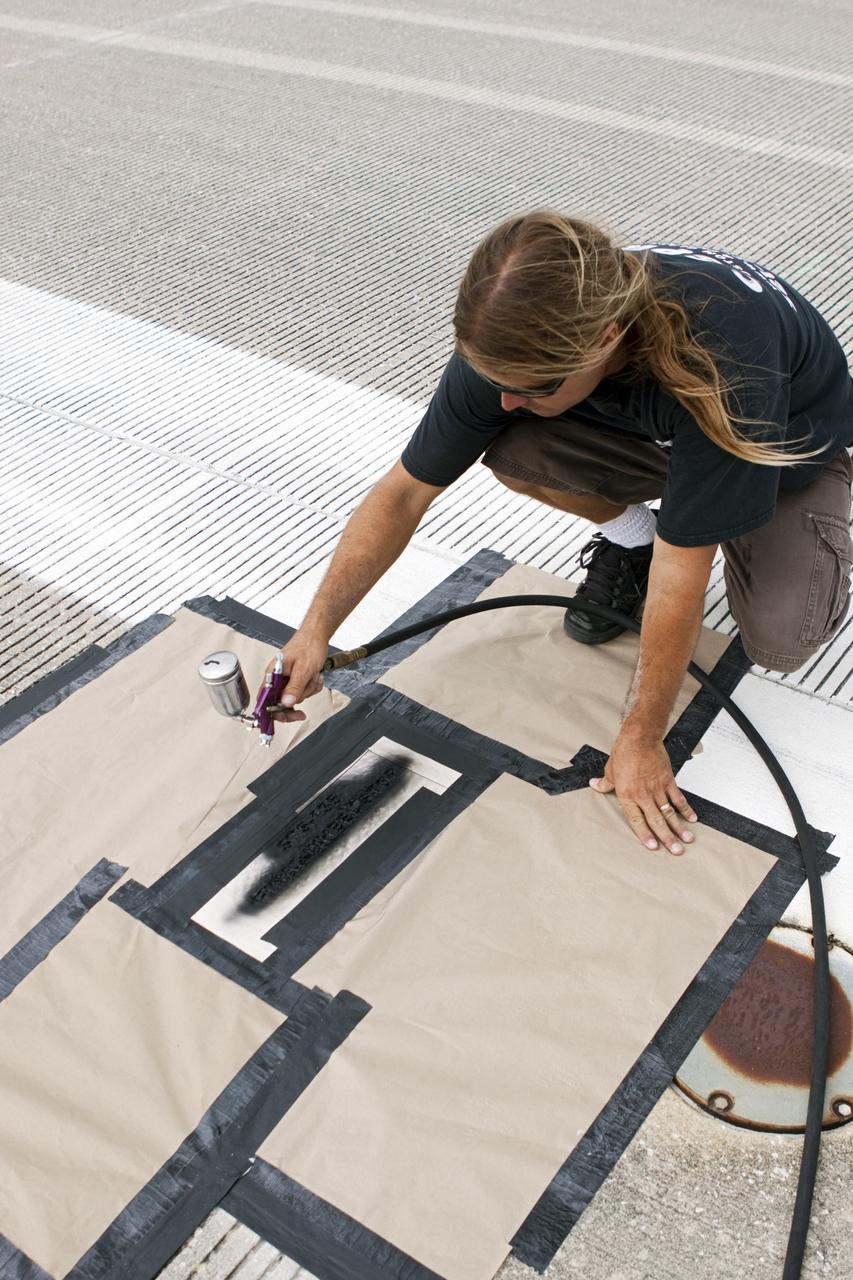
CAPE CANAVERAL, Fla. – At C Spray Glass Blasting of Cocoa Beach, Fla., a worker completes the commemorative plaque to mark space shuttle Atlantis’ wheel stop location. The special plaque will be permanently mounted at the Shuttle Landing Facility, or SLF, runway edge at NASA’s Kennedy Space Center in Florida to commemorate the final space shuttle landing. Atlantis completed the STS-135 mission by landing at the SLF on July 21, 2011, at 5:57 a.m. EDT. Atlantis flew 33 missions, completed 4,848 orbits of the Earth, traveled nearly 126 million miles and spent 307 days in space. Atlantis carried 207 astronauts to space. Photo credit: NASA/Lorne Mathre
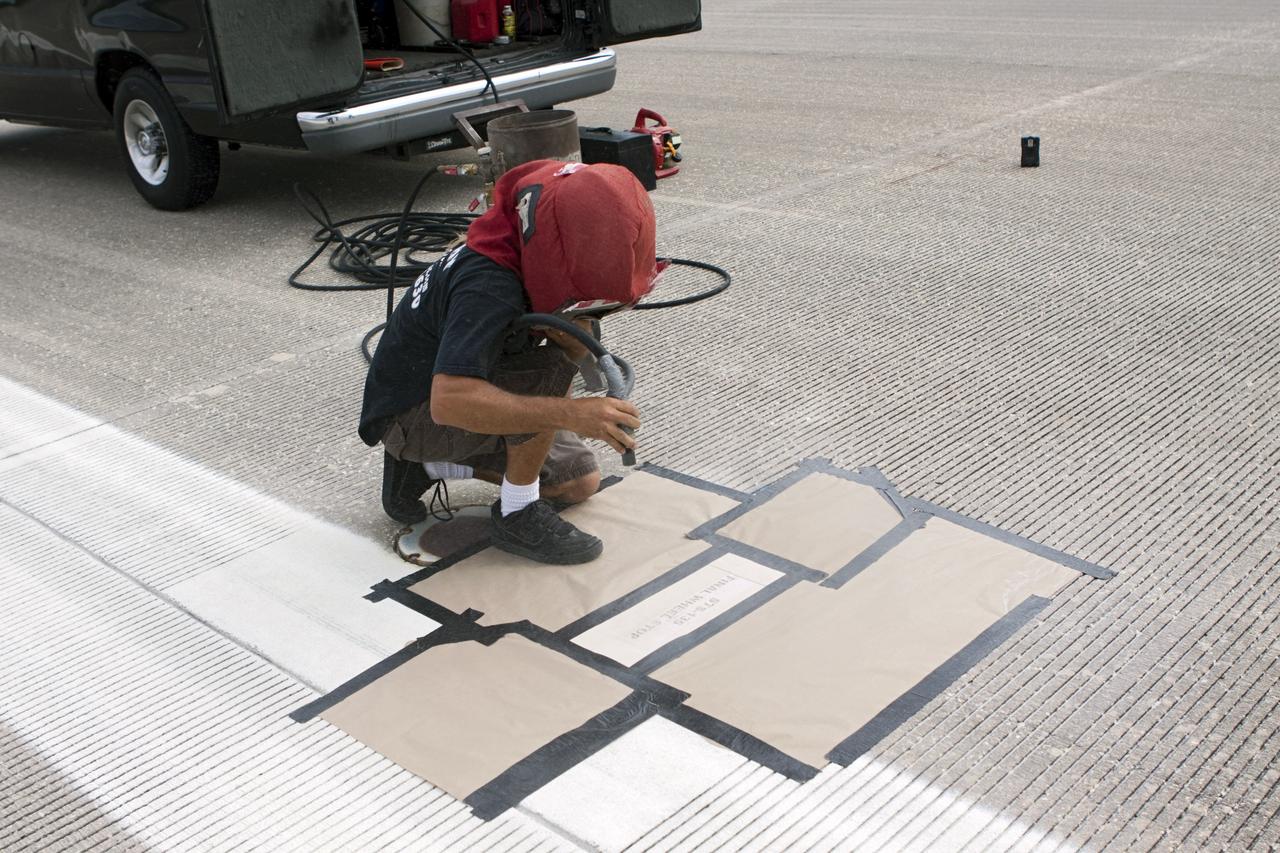
CAPE CANAVERAL, Fla. - At the Shuttle Landing Facility SLF at NASA’s Kennedy Space Center in Florida, a United Space Alliance technician marks the final front and rear wheel stop locations of an orbiter. Space shuttle Atlantis completed the STS-135 mission by landing at the SLF on July 21, 2011, at 5:57 a.m. A special plaque will be permanently mounted at the runway’s edge to commemorate the final shuttle landing. Atlantis flew 33 missions, completed 4,848 orbits of the Earth, traveled nearly 126 million miles and spent 307 days in space. Atlantis carried 207 astronauts to space. Photo credit: NASA/Jim Grossmann
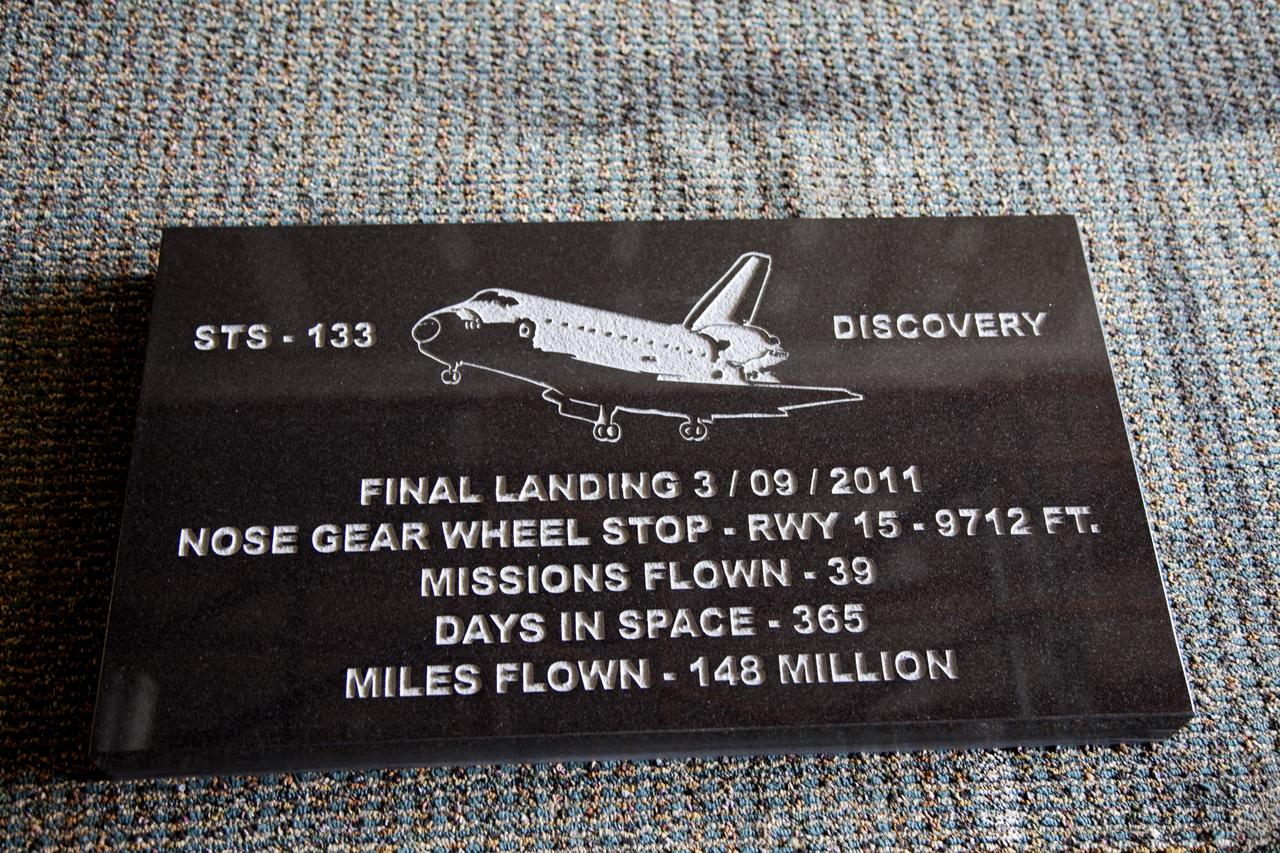
CAPE CANAVERAL, Fla. – At C Spray Glass Blasting of Cocoa Beach, Fla., the commemorative plaque to mark space shuttle Discovery’s wheel stop location has been completed. The special plaque will be permanently mounted at the Shuttle Landing Facility, or SLF, runway edge at NASA’s Kennedy Space Center in Florida to commemorate Discovery’s final landing. Discovery completed the STS-133 mission by landing at the SLF on March 9, 2011, at 11:57 a.m. EST. Discovery flew 39 missions, completed 5,830 orbits of the Earth, traveled 148 million miles and spent 365 days in space. Atlantis carried 252 astronauts to space. Photo credit: NASA/Lorne Mathre
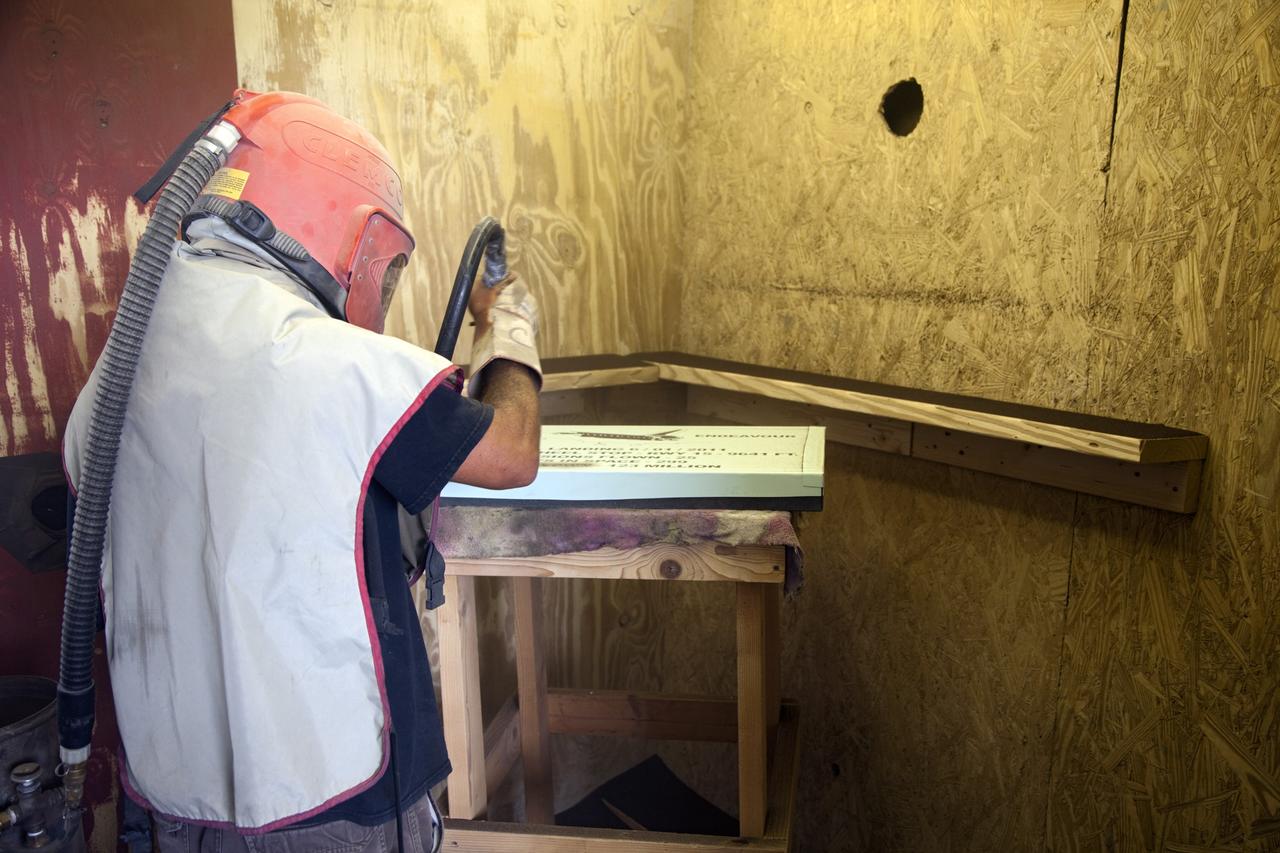
CAPE CANAVERAL, Fla. – At C Spray Glass Blasting of Cocoa Beach, Fla., a worker completes the commemorative plaque to mark space shuttle Atlantis’ wheel stop location. The special plaque will be permanently mounted at the Shuttle Landing Facility, or SLF, runway edge at NASA’s Kennedy Space Center in Florida to commemorate the final space shuttle landing. Atlantis completed the STS-135 mission by landing at the SLF on July 21, 2011, at 5:57 a.m. EDT. Atlantis flew 33 missions, completed 4,848 orbits of the Earth, traveled nearly 126 million miles and spent 307 days in space. Atlantis carried 207 astronauts to space. Photo credit: NASA/Lorne Mathre
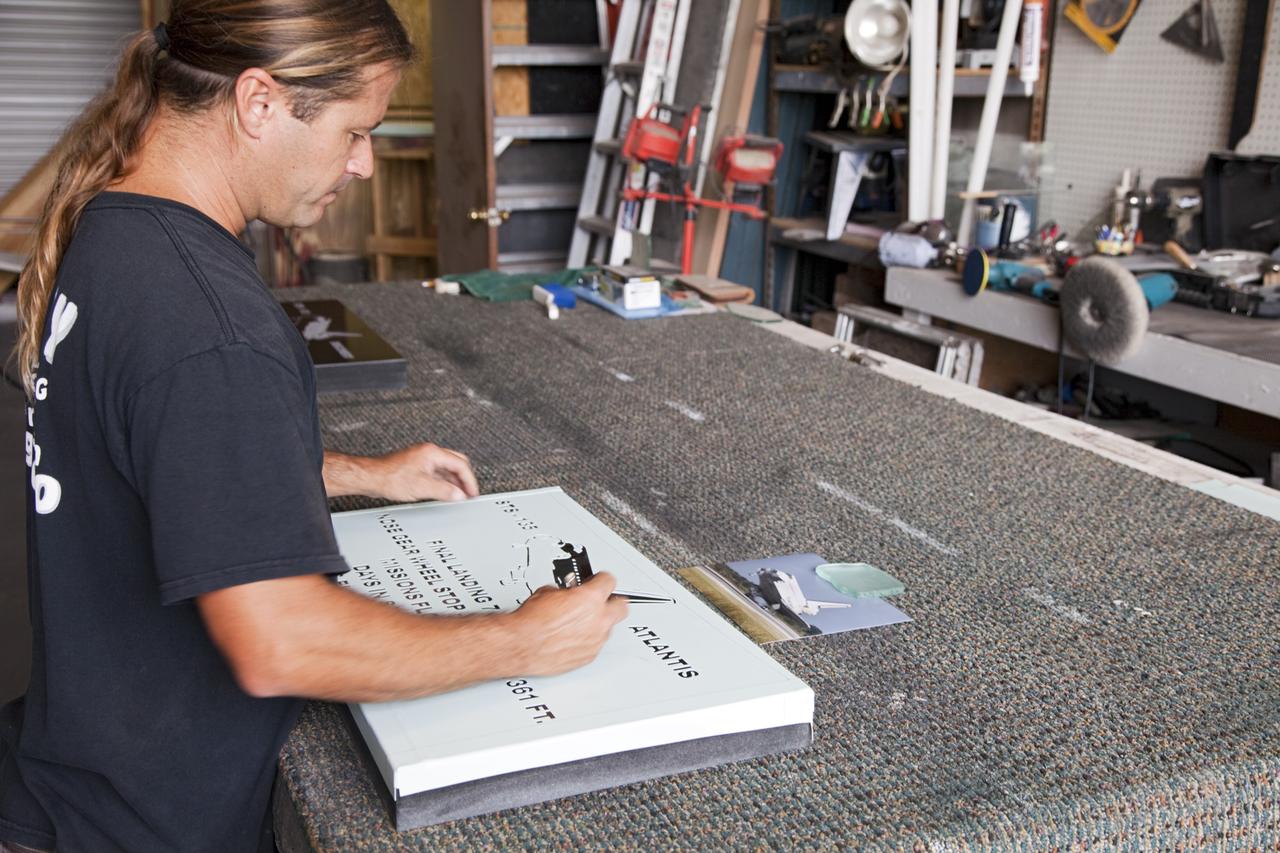
CAPE CANAVERAL, Fla. – At C Spray Glass Blasting of Cocoa Beach, Fla., a worker completes the commemorative plaque to mark space shuttle Atlantis’ wheel stop location. The special plaque will be permanently mounted at the Shuttle Landing Facility, or SLF, runway edge at NASA’s Kennedy Space Center in Florida to commemorate the final space shuttle landing. Atlantis completed the STS-135 mission by landing at the SLF on July 21, 2011, at 5:57 a.m. EDT. Atlantis flew 33 missions, completed 4,848 orbits of the Earth, traveled nearly 126 million miles and spent 307 days in space. Atlantis carried 207 astronauts to space. Photo credit: NASA/Lorne Mathre
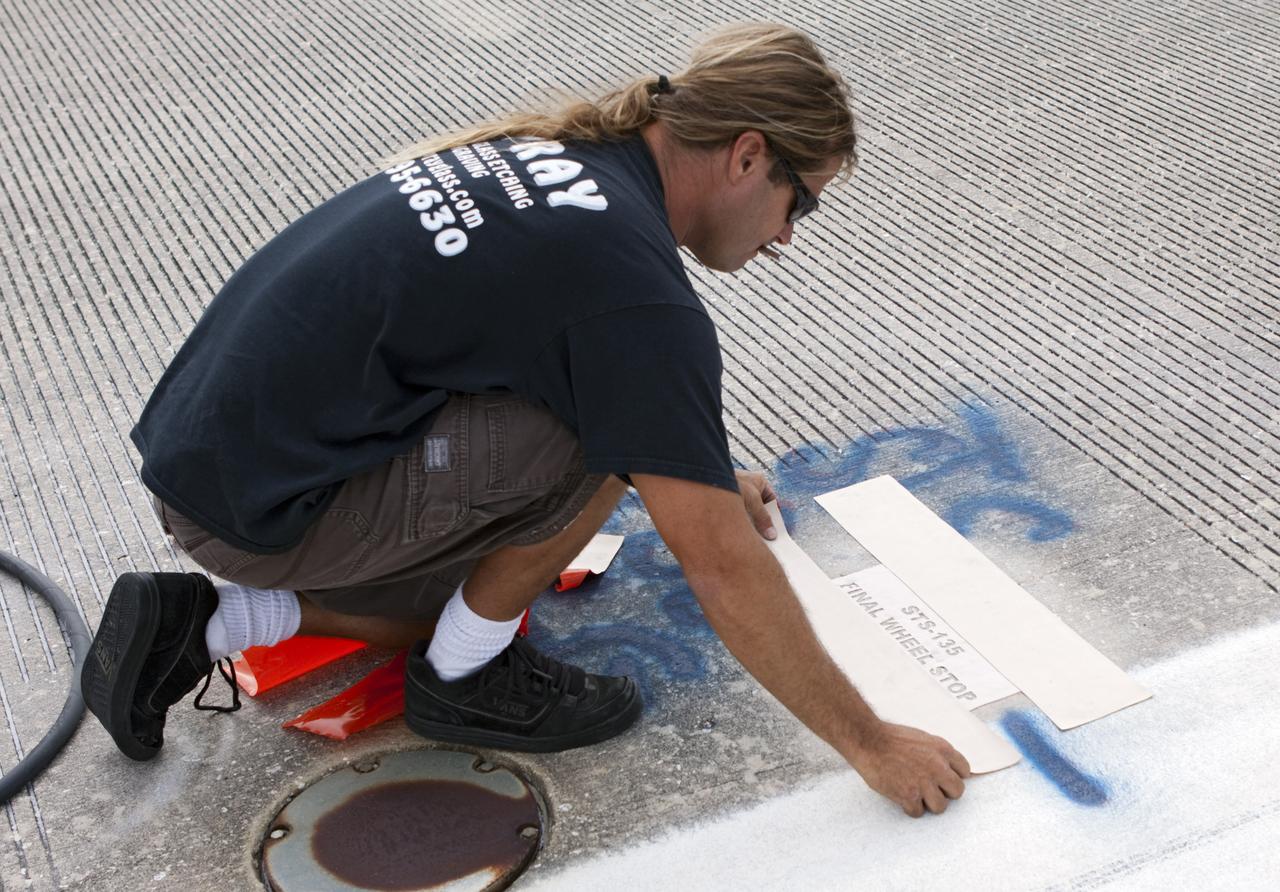
CAPE CANAVERAL, Fla. - At the Shuttle Landing Facility SLF at NASA’s Kennedy Space Center in Florida, a United Space Alliance technician marks the final front and rear wheel stop locations of an orbiter. Space shuttle Atlantis completed the STS-135 mission by landing at the SLF on July 21, 2011, at 5:57 a.m. A special plaque will be permanently mounted at the runway’s edge to commemorate the final shuttle landing. Atlantis flew 33 missions, completed 4,848 orbits of the Earth, traveled nearly 126 million miles and spent 307 days in space. Atlantis carried 207 astronauts to space. Photo credit: NASA/Jim Grossmann
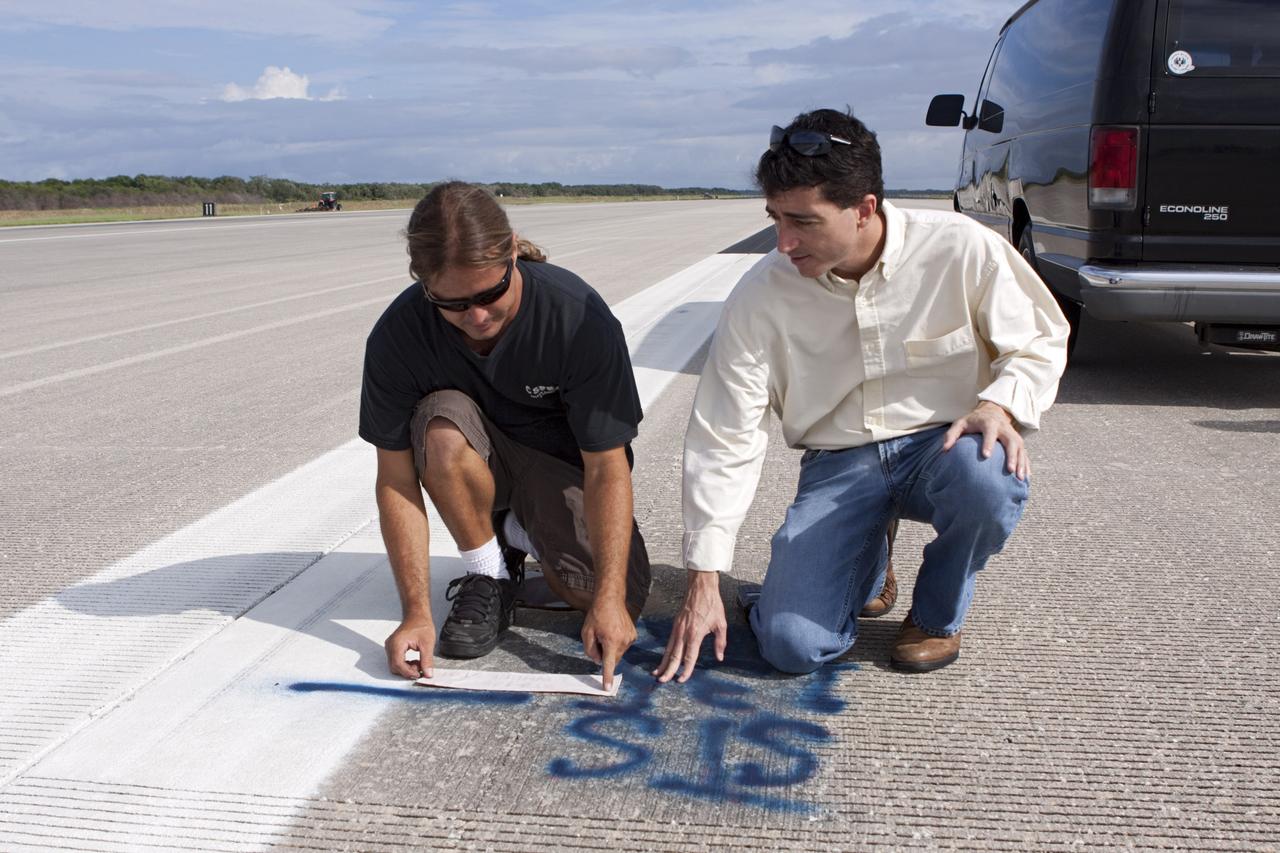
CAPE CANAVERAL, Fla. - At the Shuttle Landing Facility SLF at NASA’s Kennedy Space Center in Florida, United Space Alliance technicians make preparations to mark the final front and rear wheel stop locations of an orbiter. Space shuttle Atlantis completed the STS-135 mission by landing at the SLF on July 21, 2011, at 5:57 a.m. A special plaque will be permanently mounted at the runway’s edge to commemorate the final shuttle landing. Atlantis flew 33 missions, completed 4,848 orbits of the Earth, traveled nearly 126 million miles and spent 307 days in space. Atlantis carried 207 astronauts to space. Photo credit: NASA/Jim Grossmann
CAPE CANAVERAL, Fla. - At the Shuttle Landing Facility SLF at NASA’s Kennedy Space Center in Florida, a United Space Alliance technician marks the final front and rear wheel stop locations of an orbiter. Space shuttle Atlantis completed the STS-135 mission by landing at the SLF on July 21, 2011, at 5:57 a.m. A special plaque will be permanently mounted at the runway’s edge to commemorate the final shuttle landing. Atlantis flew 33 missions, completed 4,848 orbits of the Earth, traveled nearly 126 million miles and spent 307 days in space. Atlantis carried 207 astronauts to space. Photo credit: NASA/Jim Grossmann
CAPE CANAVERAL, Fla. - At the Shuttle Landing Facility SLF at NASA’s Kennedy Space Center in Florida, United Space Alliance technicians make preparations to mark the final front and rear wheel stop locations of an orbiter. Space shuttle Atlantis completed the STS-135 mission by landing at the SLF on July 21, 2011, at 5:57 a.m. A special plaque will be permanently mounted at the runway’s edge to commemorate the final shuttle landing. Atlantis flew 33 missions, completed 4,848 orbits of the Earth, traveled nearly 126 million miles and spent 307 days in space. Atlantis carried 207 astronauts to space. Photo credit: NASA/Jim Grossmann
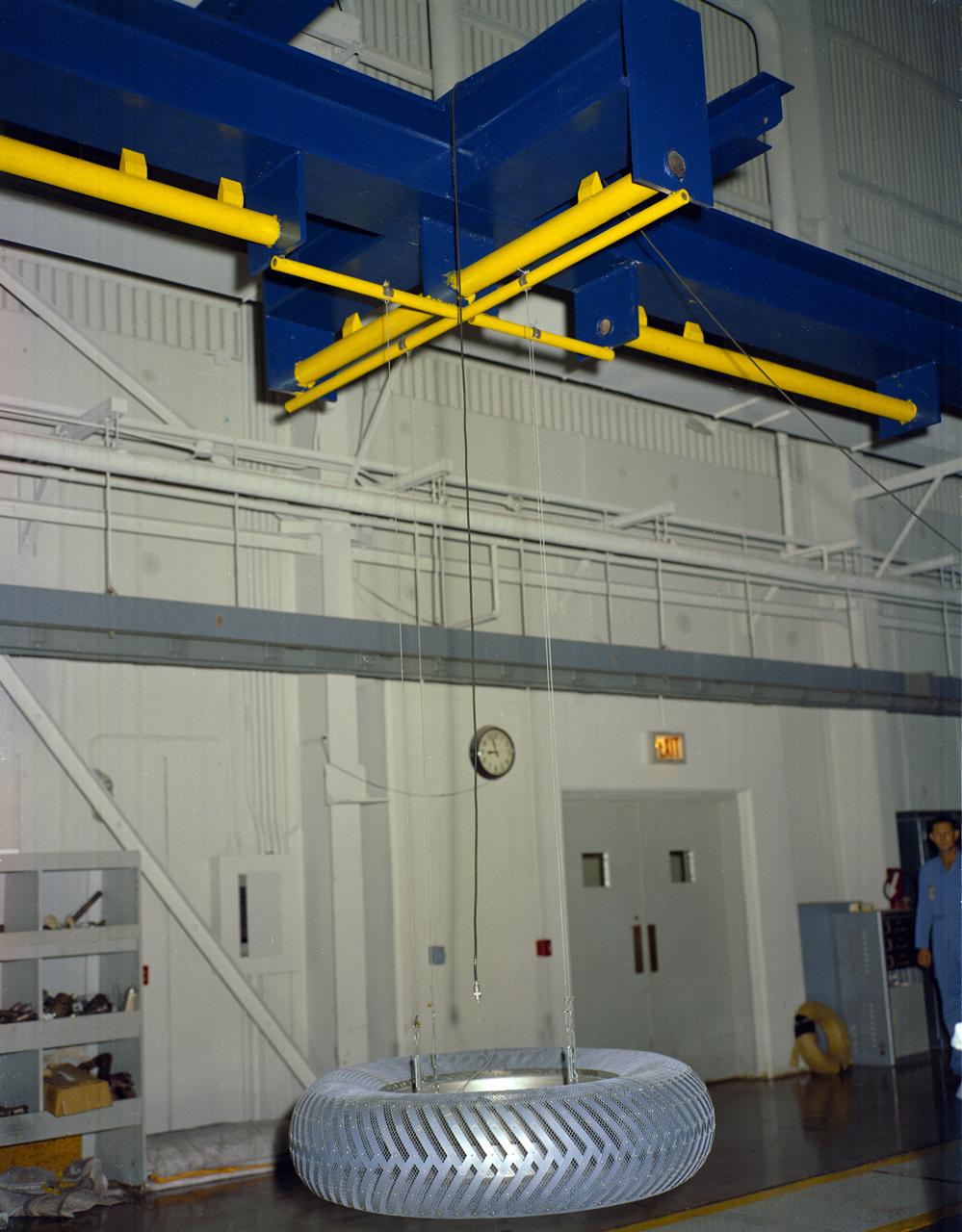
Under the direction of Marshall Space Flight Center (MSFC), the Lunar Roving Vehicle (LRV) was designed to allow Apollo astronauts a greater range of mobility during lunar exploration missions. During the development process, LRV prototype wheels underwent soil tests in building 4481 at Marshall Space Flight Center (MSFC). Pictured is the GM wheel design.
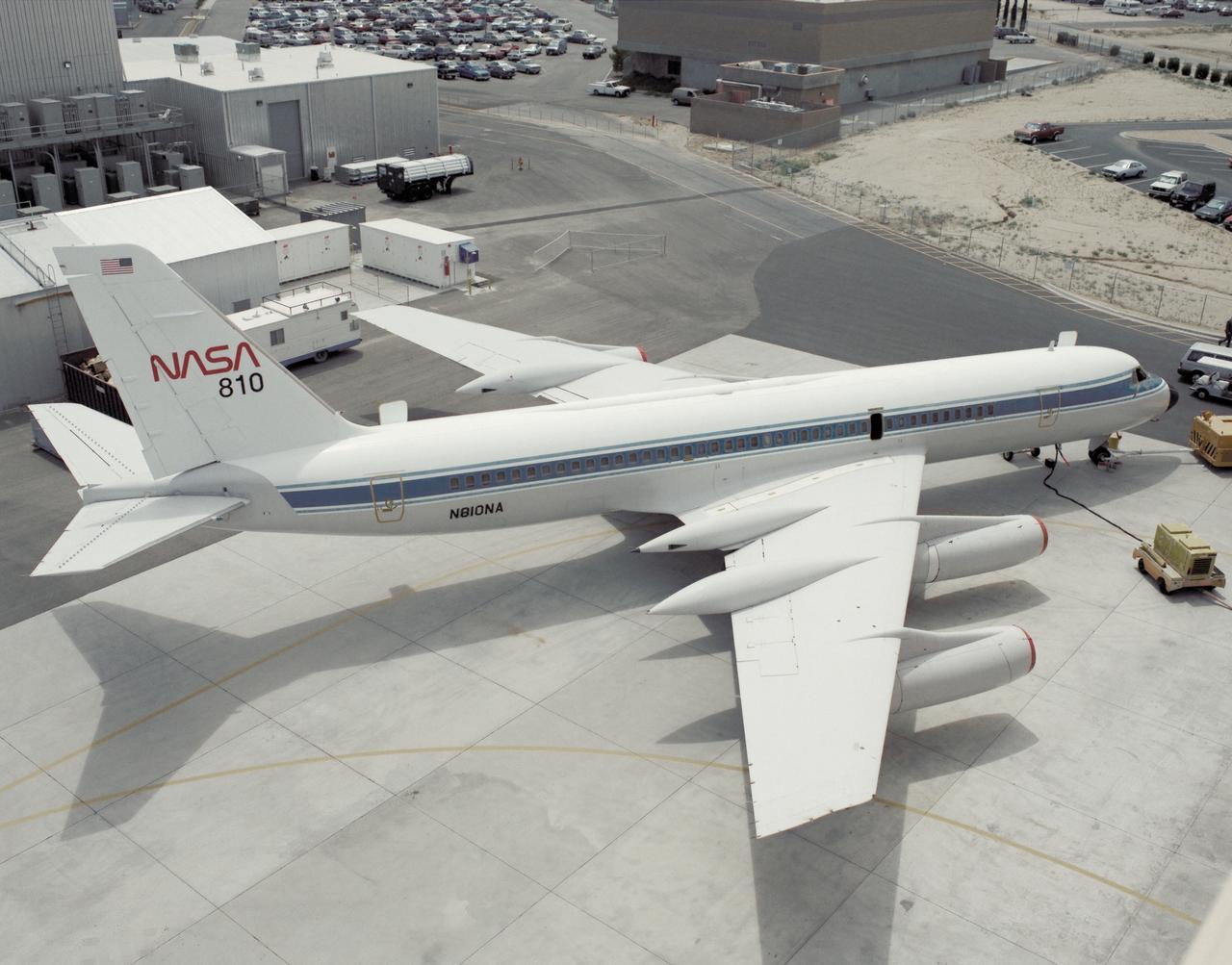
A NASA CV-990, modified as a Landing Systems Research Aircraft (LSRA), is serviced on the ramp at NASA's Dryden Flight Research Center, Edwards, California, before a test of the space shuttle landing gear system. The space shuttle landing gear test unit, operated by a high-pressure hydraulic system, allowed engineers to assess and document the performance of space shuttle main and nose landing gear systems, tires and wheel assemblies, plus braking and nose wheel steering performance. The series of 155 test missions for the space shuttle program provided extensive data about the life and endurance of the shuttle tire systems and helped raise the shuttle crosswind landing limits at Kennedy.

This frame taken from a three-frame animation aids evaluation of performance of the right-front wheel on NASA Mars Exploration Rover Spirit during a drive on the rover 2,117th Martian day, or sol Dec. 16, 2009.
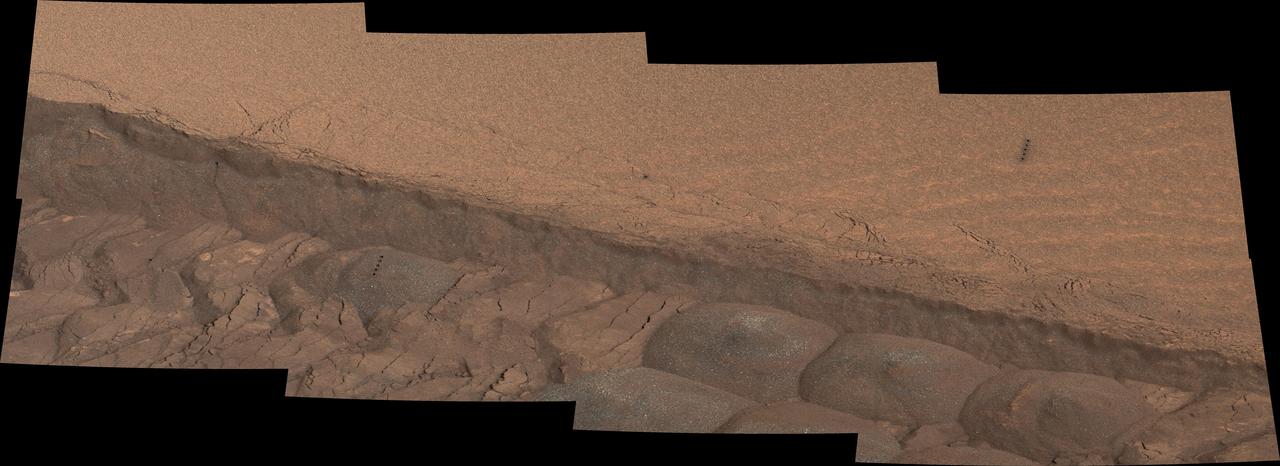
A wheel track cuts through a windblown ripple of dusty sand in this Nov. 7, 2014, image from the Mastcam on NASA Curiosity rover. The view spans about four feet across.
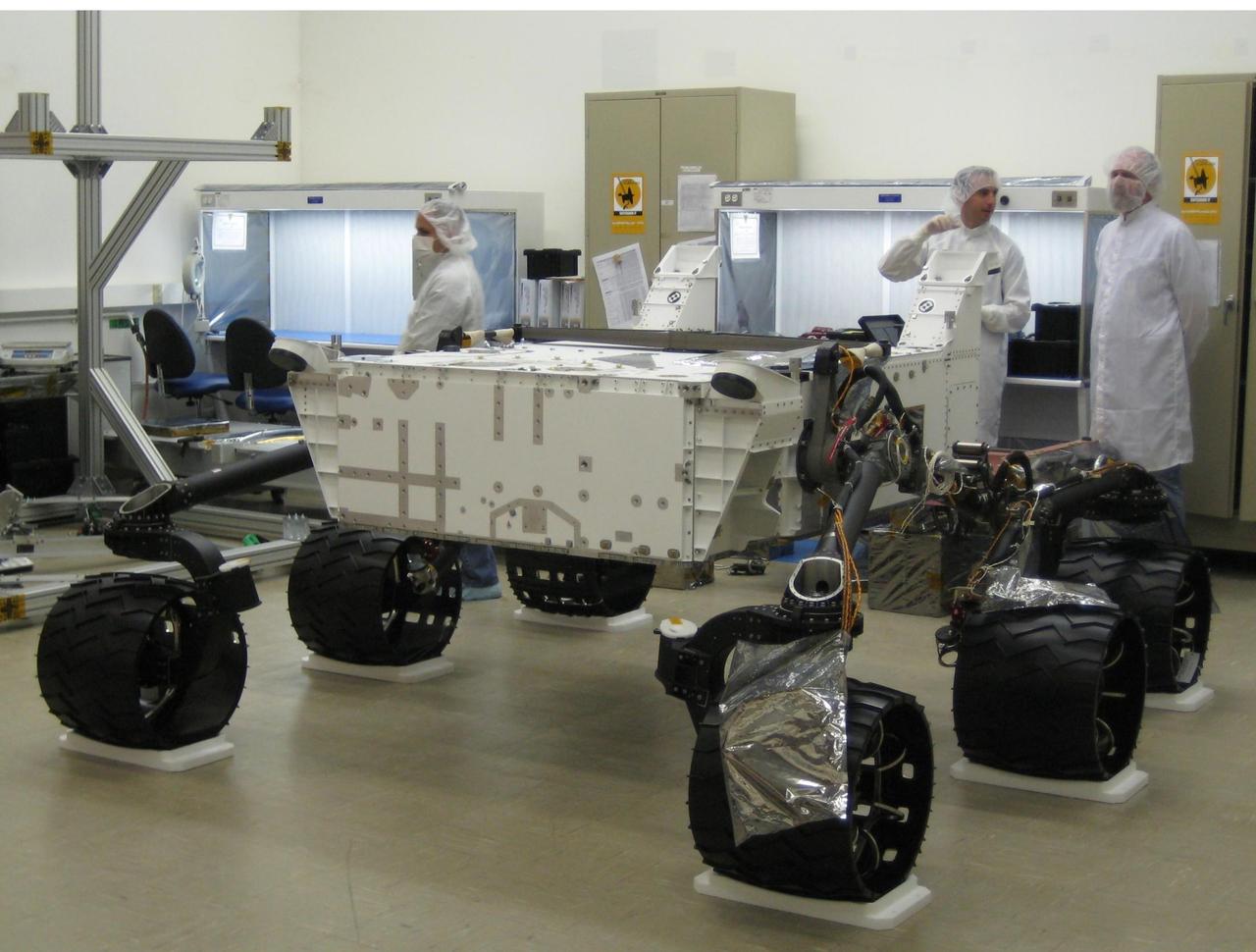
Wheels were first attached to NASA Mars Science Laboratory rover in August 2008. The rover and its descent stage and cruise stage were assembled and tested at NASA Jet Propulsion Laboratory, Pasadena, Calif., for launch in 2009.
The left-front wheel of NASA Curiosity Mars rover shows dents and holes in this image taken by the MAHLI camera, which is mounted at the end of Curiosity robotic arm.

NASA's Perseverance rover wiggles one of its wheels in this set of images obtained by the rover's left Navigation Camera on March 4, 2021. A key objective for Perseverance's mission on Mars is astrobiology, including the search for signs of ancient microbial life. The rover will characterize the planet's geology and past climate, pave the way for human exploration of the Red Planet, and be the first mission to collect and cache Martian rock and regolith (broken rock and dust). Subsequent NASA missions, in cooperation with ESA (European Space Agency), would send spacecraft to Mars to collect these sealed samples from the surface and return them to Earth for in-depth analysis. The Mars 2020 Perseverance mission is part of NASA's Moon to Mars exploration approach, which includes Artemis missions to the Moon that will help prepare for human exploration of the Red Planet. Movie available at https://photojournal.jpl.nasa.gov/catalog/PIA24340
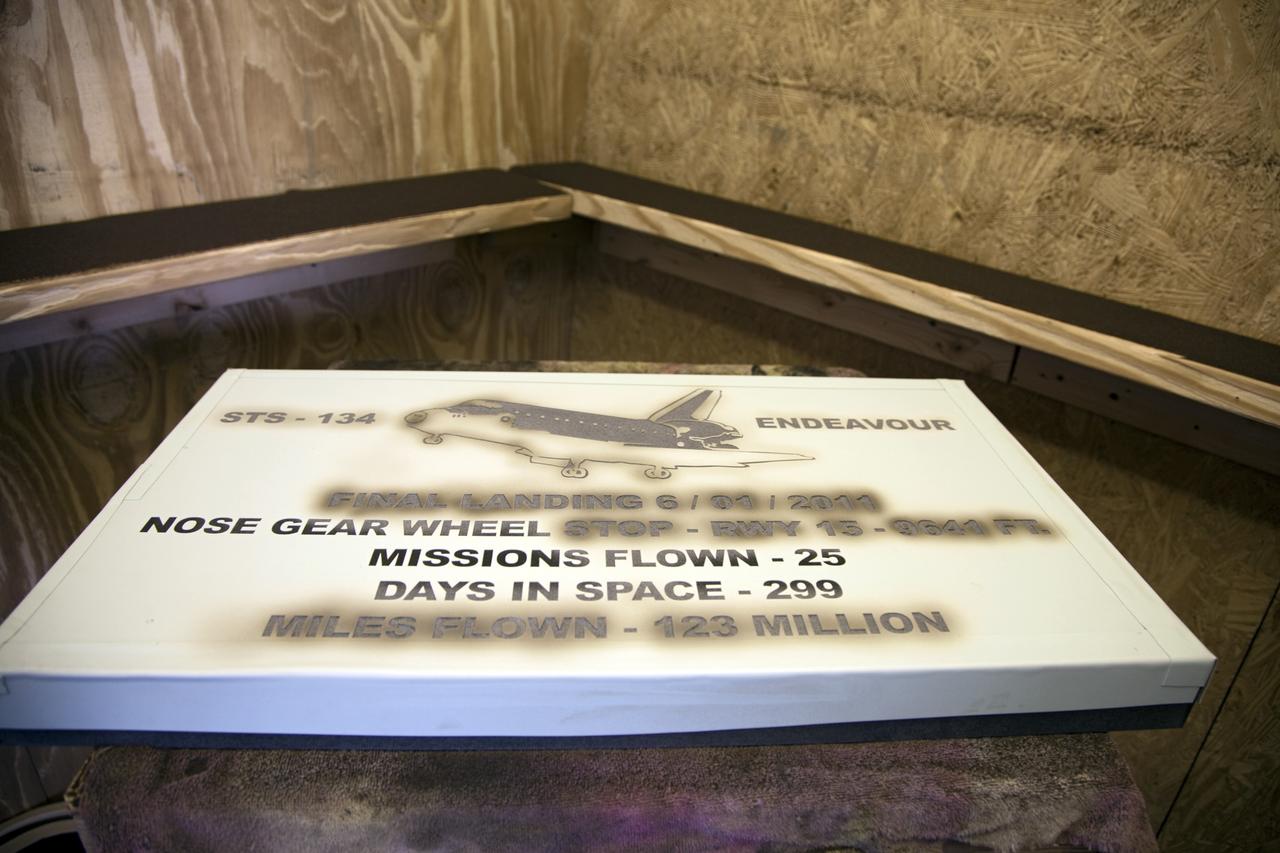
CAPE CANAVERAL, Fla. – At C Spray Glass Blasting of Cocoa Beach, Fla., a worker completes the commemorative plaque to mark space shuttle Endeavour’s wheel stop location. The special plaque will be permanently mounted at the Shuttle Landing Facility, or SLF, runway edge at NASA’s Kennedy Space Center in Florida to commemorate Endeavour’s final space shuttle landing. Endeavour completed the STS-134 mission by landing at the SLF on June 1, 2011, at 2:35 a.m. EDT. Endeavour flew 25 missions, completed 4,671 orbits of the Earth, traveled more than 122 million miles and spent 299 days in space. Endeavour carried 173 astronauts to space. Photo credit: NASA/Lorne Mathre
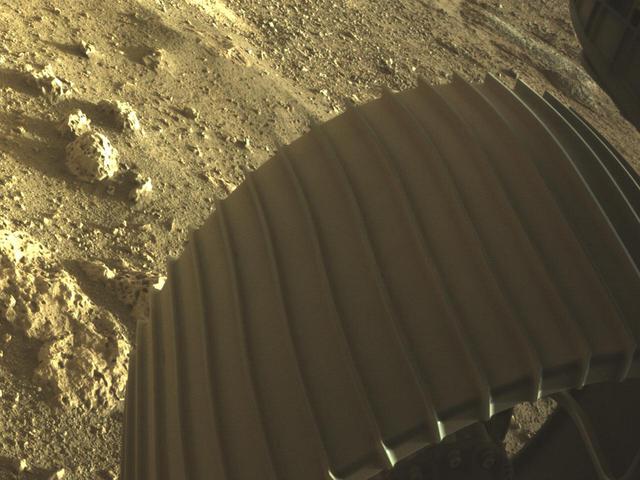
This high-resolution image shows one of the six wheels aboard NASA's Perseverance Mars rover, which landed on Feb. 18, 2021. The image was taken by one of Perseverance's color Hazard Cameras (Hazcams). A key objective for Perseverance's mission on Mars is astrobiology, including the search for signs of ancient microbial life. The rover will characterize the planet's geology and past climate, pave the way for human exploration of the Red Planet, and be the first mission to collect and cache Martian rock and regolith (broken rock and dust). Subsequent NASA missions, in cooperation with ESA (the European Space Agency), would send spacecraft to Mars to collect these cached samples from the surface and return them to Earth for in-depth analysis. https://photojournal.jpl.nasa.gov/catalog/PIA24429
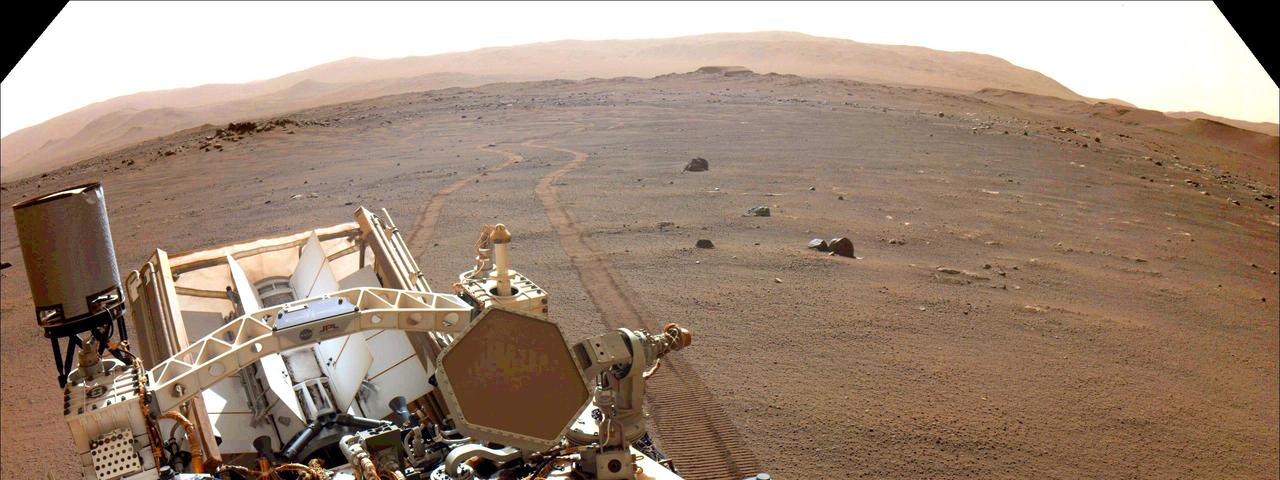
NASA's Perseverance Mars rover looks back at its wheel tracks on March 17, 2022, the 381st Martian day, or sol, of the mission. A key objective for Perseverance's mission on Mars is astrobiology, including the search for signs of ancient microbial life. The rover will characterize the planet's geology and past climate, pave the way for human exploration of the Red Planet, and be the first mission to collect and cache Martian rock and regolith (broken rock and dust). Subsequent NASA missions, in cooperation with ESA (European Space Agency), would send spacecraft to Mars to collect these sealed samples from the surface and return them to Earth for in-depth analysis. The Mars 2020 Perseverance mission is part of NASA's Moon to Mars exploration approach, which includes Artemis missions to the Moon that will help prepare for human exploration of the Red Planet. https://photojournal.jpl.nasa.gov/catalog/PIA25171
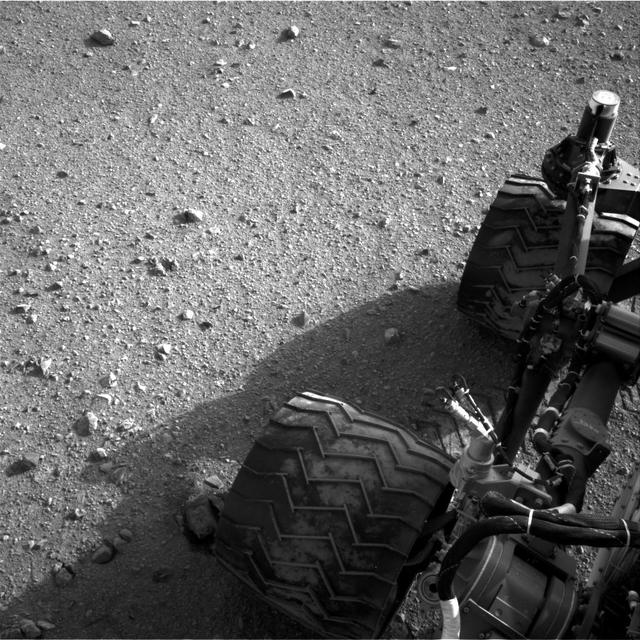
Soil clinging to the right middle and rear wheels of NASA Mars rover Curiosity can be seen in this image taken by the Curiosity Navigation Camera after the rover third drive on Mars.
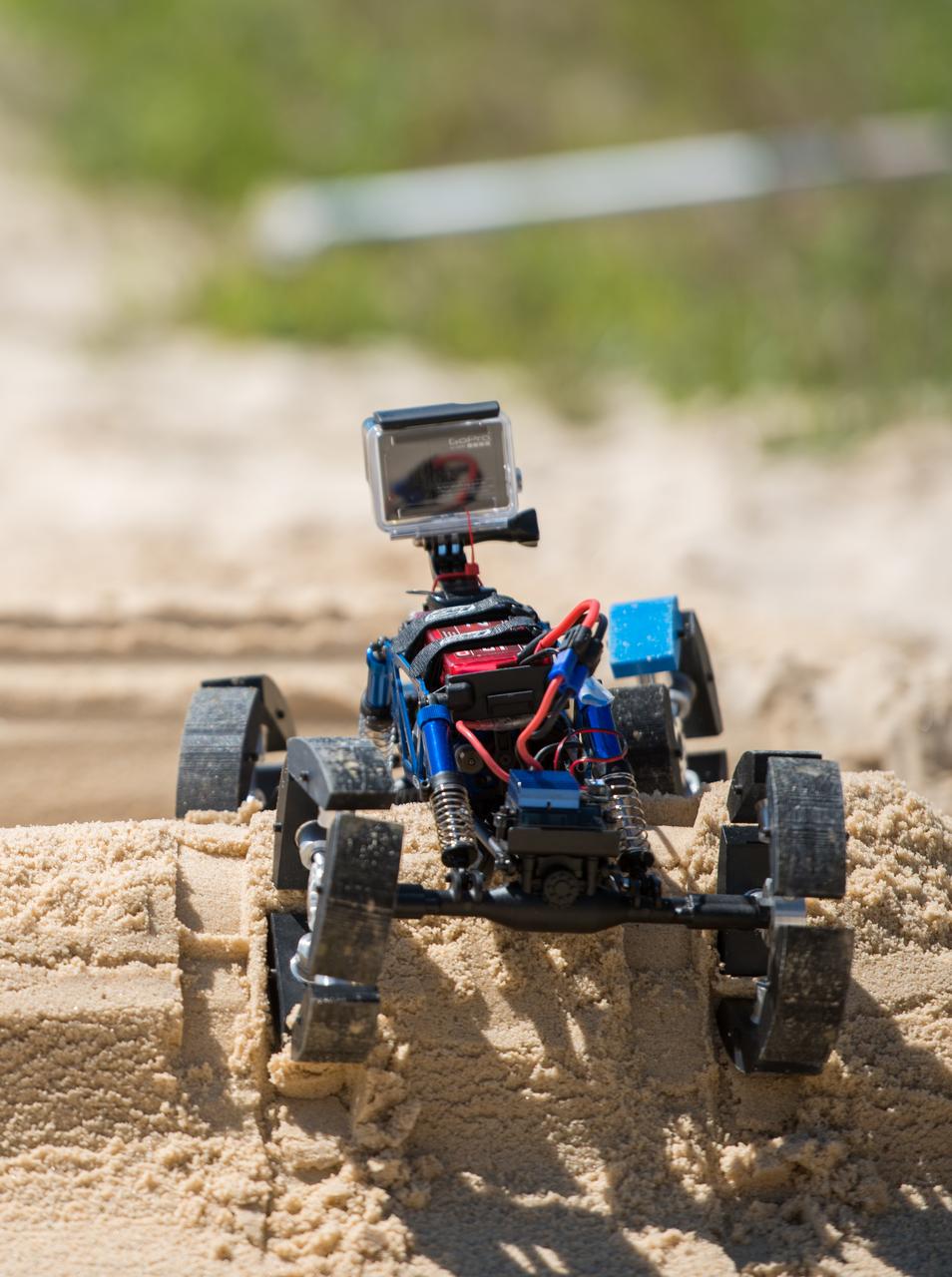
Toledo, Bowser and Scott High School Students, Mars and Moon Wheel, Engineering Design Project, Hardware Test on the Dunes
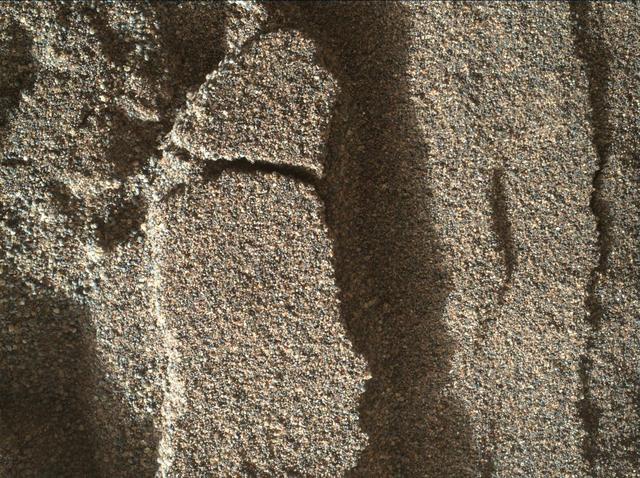
This view shows grains of sand where NASA's Curiosity Mars rover was driven into a shallow sand sheet near a large dune. The disturbance by the wheel exposed interior material of the sand body, including finer sand grains than on the undisturbed surface. Sunlight is coming from the left. The scene covers an area 1.3 inches by 1.0 inch (3.3 by 2.5 centimeters). This is a focus-merge product from Curiosity's Mars Hand Lens Imager (MAHLI), combining multiple images taken at different focus settings to yield sharper focus at varying distances from the lens. The component images were taken on Dec. 3, 2015, during the 1,182nd Martian day, or sol, of Curiosity's work on Mars. http://photojournal.jpl.nasa.gov/catalog/PIA20170
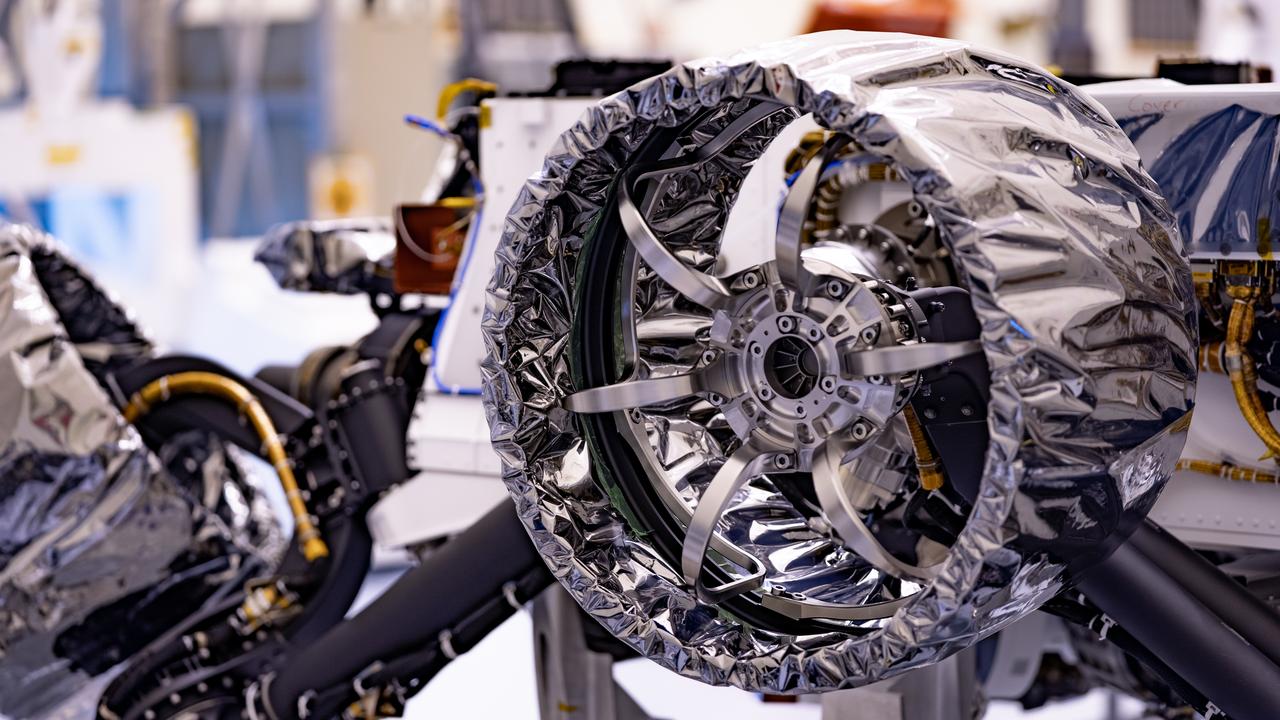
Wheels are installed on NASA’s Mars Perseverance rover inside Kennedy Space Center’s Payload Hazardous Servicing Facility on March 30, 2020. Perseverance will liftoff aboard a United Launch Alliance Atlas V 541 rocket from Cape Canaveral Air Force Station in July 2020. NASA’s Launch Services Program based at Kennedy is managing the launch. The rover will land on Mars on Feb. 18, 2021.
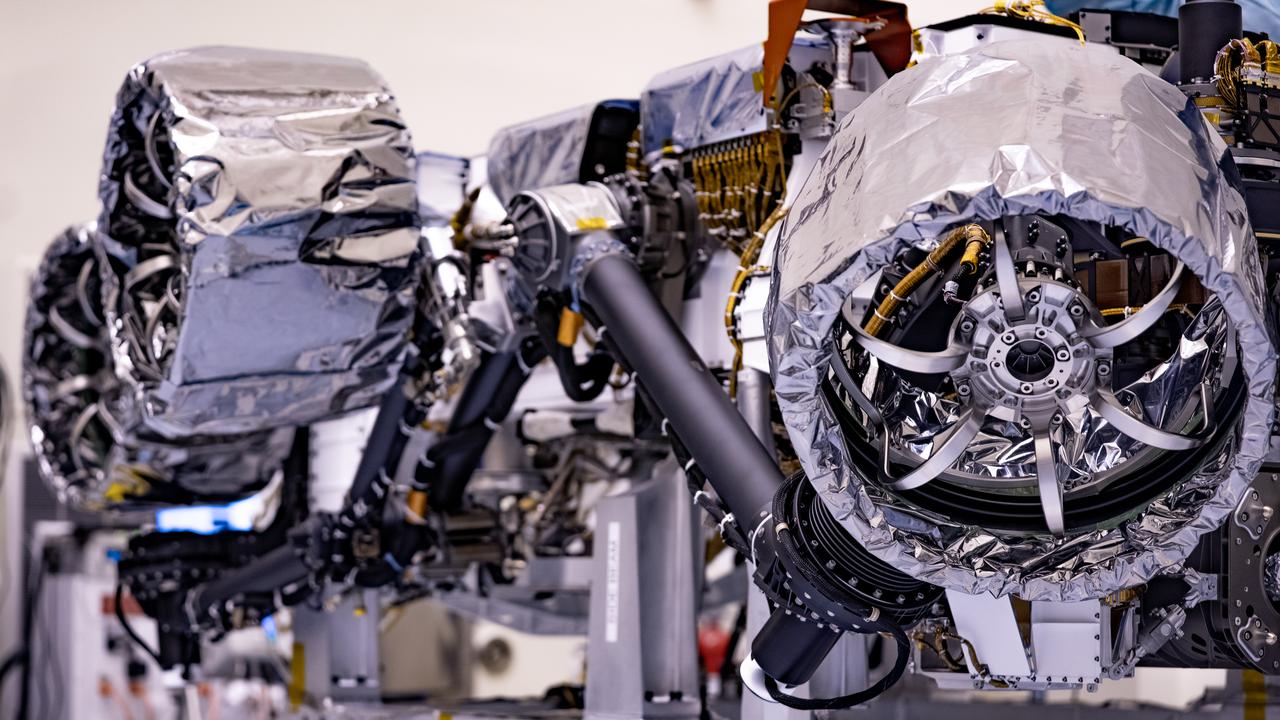
Wheels are installed on NASA’s Mars Perseverance rover inside Kennedy Space Center’s Payload Hazardous Servicing Facility on March 30, 2020. Perseverance will liftoff aboard a United Launch Alliance Atlas V 541 rocket from Cape Canaveral Air Force Station in July 2020. NASA’s Launch Services Program based at Kennedy is managing the launch. The rover will land on Mars on Feb. 18, 2021.
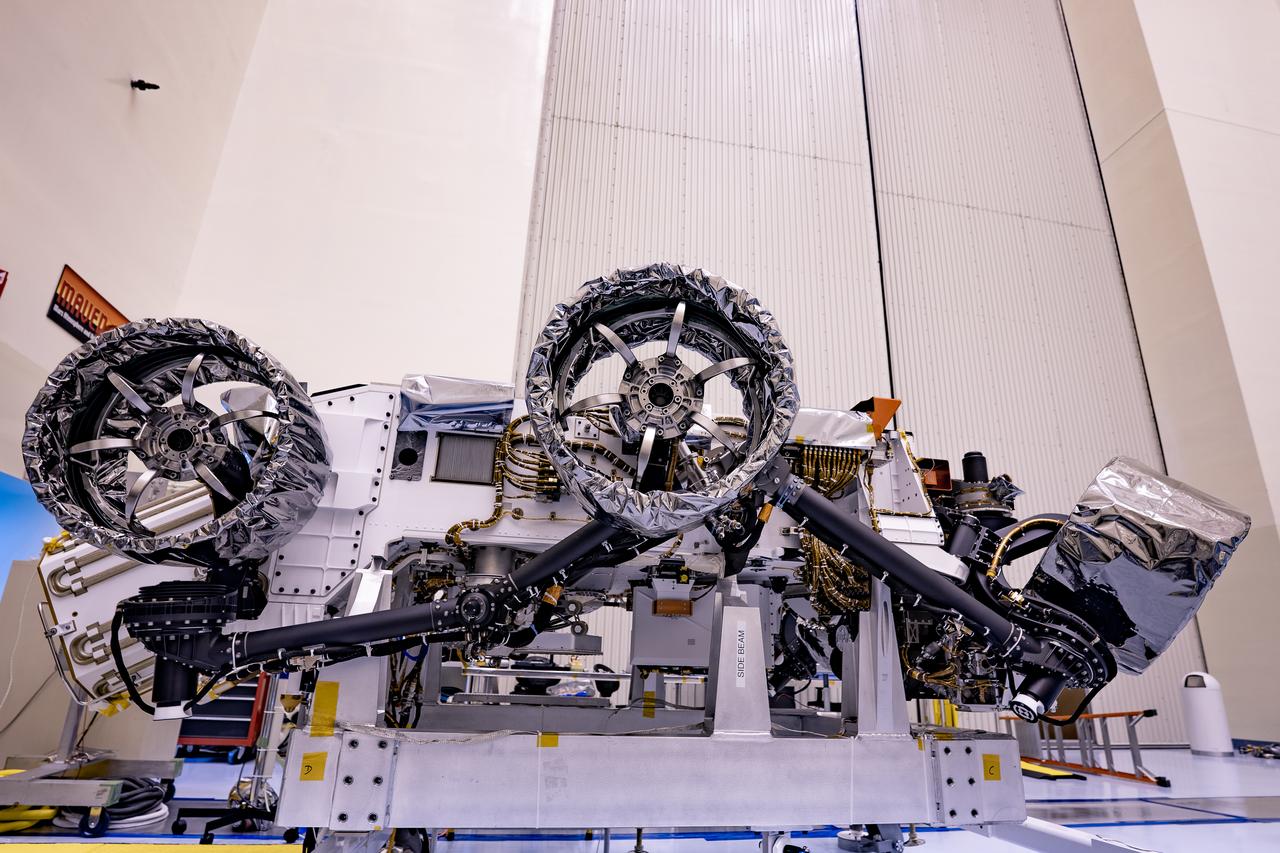
Wheels are installed on NASA’s Mars Perseverance rover inside Kennedy Space Center’s Payload Hazardous Servicing Facility on March 30, 2020. Perseverance will liftoff aboard a United Launch Alliance Atlas V 541 rocket from Cape Canaveral Air Force Station in July 2020. NASA’s Launch Services Program based at Kennedy is managing the launch. The rover will land on Mars on Feb. 18, 2021.
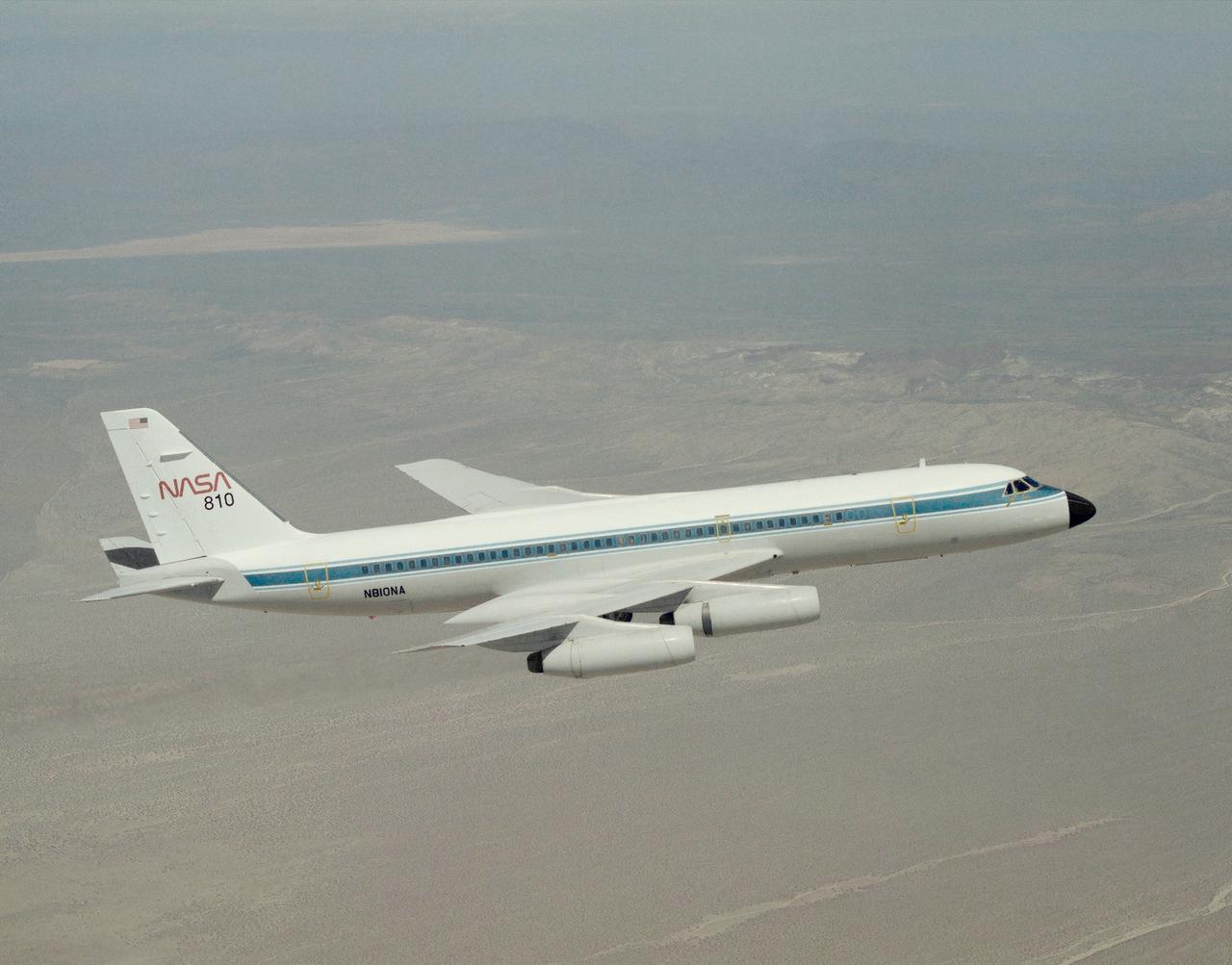
A NASA CV-990, modified as a Landing Systems Research Aircraft (LSRA), in flight over NASA's Dryden Flight Research Center, Edwards, California, for a test of the space shuttle landing gear system. The space shuttle landing gear test unit, operated by a high-pressure hydraulic system, allowed engineers to assess and document the performance of space shuttle main and nose landing gear systems, tires and wheel assemblies, plus braking and nose wheel steering performance. The series of 155 test missions for the space shuttle program provided extensive data about the life and endurance of the shuttle tire systems and helped raise the shuttle crosswind landing limits at Kennedy.
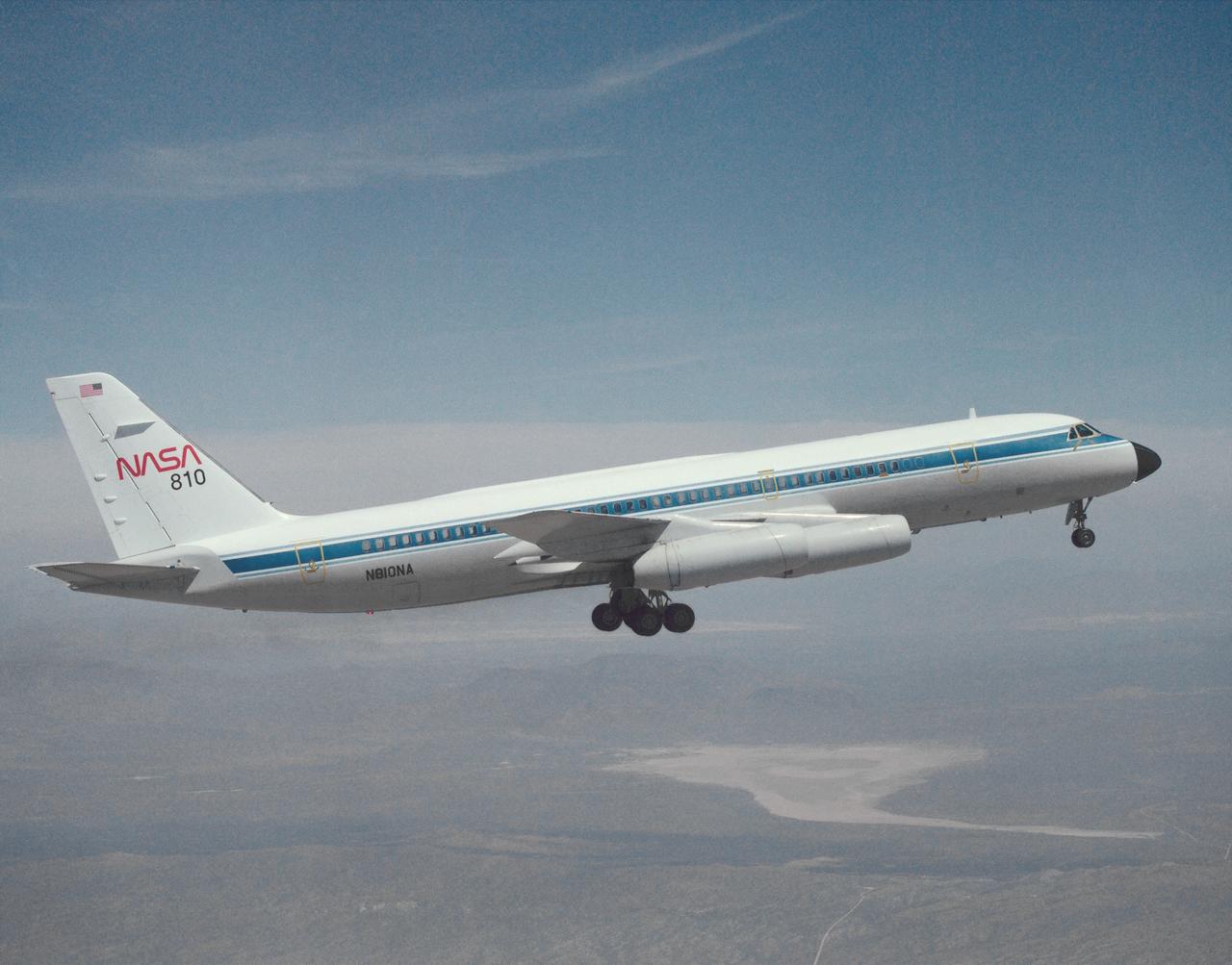
A NASA CV-990, modified as a Landing Systems Research Aircraft (LSRA), in flight over NASA's Dryden Flight Research Center, Edwards, California, for a test of the space shuttle landing gear system. The space shuttle landing gear test unit, operated by a high-pressure hydraulic system, allowed engineers to assess and document the performance of space shuttle main and nose landing gear systems, tires and wheel assemblies, plus braking and nose wheel steering performance. The series of 155 test missions for the space shuttle program provided extensive data about the life and endurance of the shuttle tire systems and helped raise the shuttle crosswind landing limits at Kennedy.
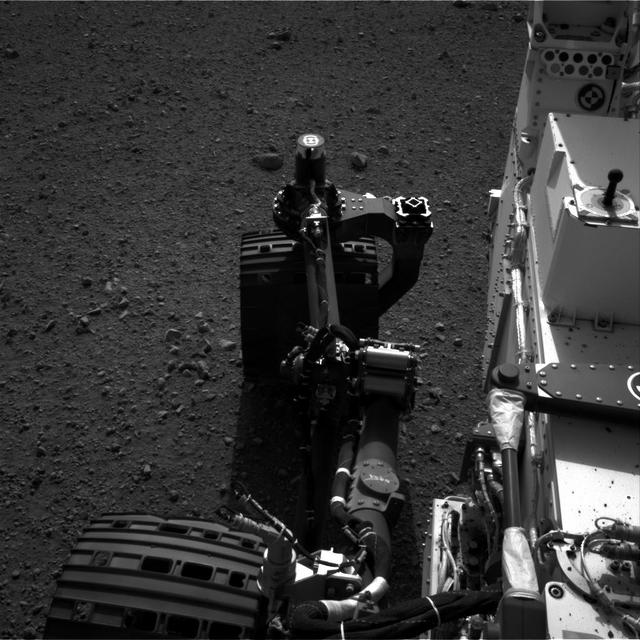
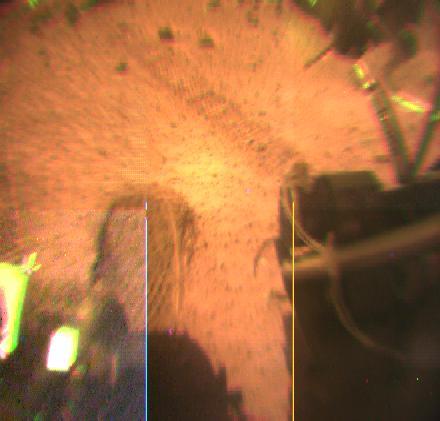
This image from an animated gif shows the movement of the rear right wheel of NASA Curiosity as rover drivers turned the wheels in place at the landing site on Mars.
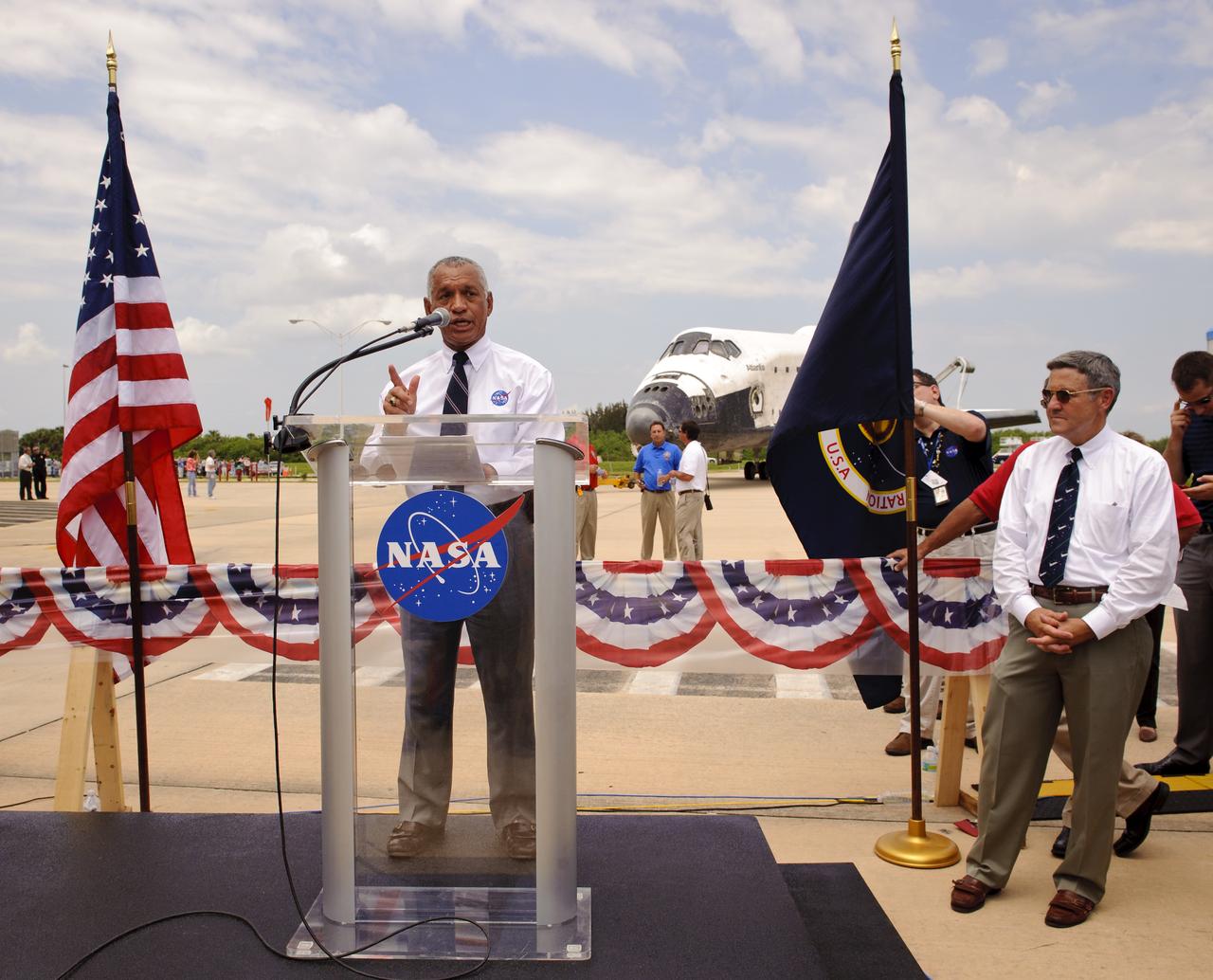
NASA administrator Charles Bolden addresses Kennedy Space Center employees and contractors as Kennedy Space Center director Robert Cabana, right, looks on as space shuttle Atlantis (STS-135) sits in the background near the Orbiter Processing Facility (OPF) at a wheels stop event, Thursday, July 21, 2011, in Cape Canaveral, Fla. Atlantis returned to Kennedy early Thursday following a 13-day mission to the International Space Station (ISS) and marking the end of the 30-year Space Shuttle Program. Overall, Atlantis spent 307 days in space and traveled nearly 126 million miles during its 33 flights. Atlantis, the fourth orbiter built, launched on its first mission on Oct. 3, 1985. Photo Credit: (NASA/Paul E. Alers)

NASA employees and contractors wave flags and make pictures as space shuttle Atlantis (STS-135) rolls toward the Orbiter Processing Facility (OPF) at a wheels stop event, Thursday, July 21, 2011, at NASA's Kennedy Space Center in Cape Canaveral, Fla. Atlantis returned to Kennedy early Thursday following a 13-day mission to the International Space Station (ISS) and marking the end of the 30-year Space Shuttle Program. Overall, Atlantis spent 307 days in space and traveled nearly 126 million miles during its 33 flights. Atlantis, the fourth orbiter built, launched on its first mission on Oct. 3, 1985. Photo Credit: (NASA/Paul E. Alers)
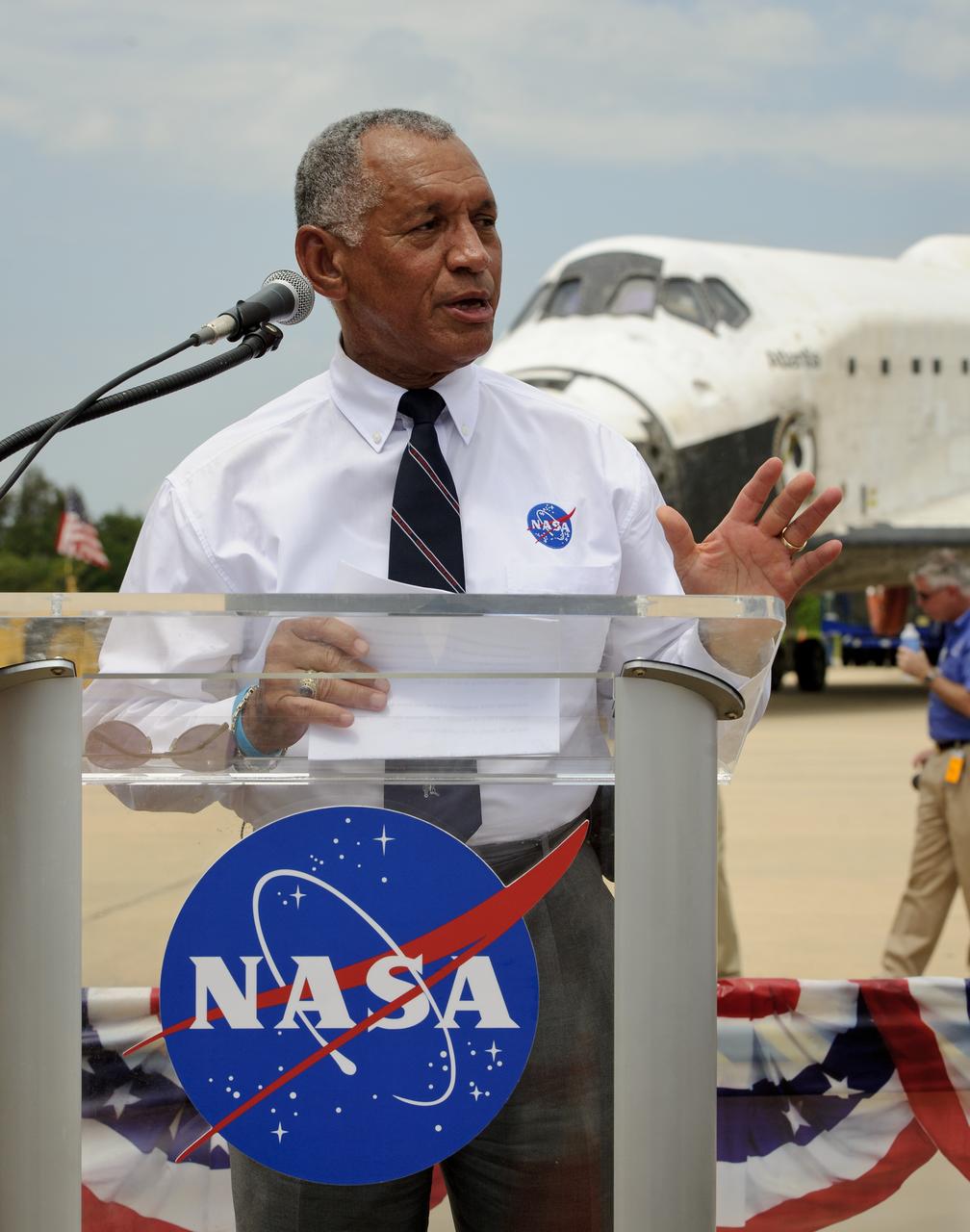
NASA administrator Charles Bolden addresses Kennedy Space Center employees and contractors as space shuttle Atlantis (STS-135) sits in the background near the Orbiter Processing Facility (OPF) at a wheels stop event, Thursday, July 21, 2011, in Cape Canaveral, Fla. Atlantis returned to Kennedy early Thursday following a 13-day mission to the International Space Station (ISS) and marking the end of the 30-year Space Shuttle Program. Overall, Atlantis spent 307 days in space and traveled nearly 126 million miles during its 33 flights. Atlantis, the fourth orbiter built, launched on its first mission on Oct. 3, 1985. Photo Credit: (NASA/Paul E. Alers)
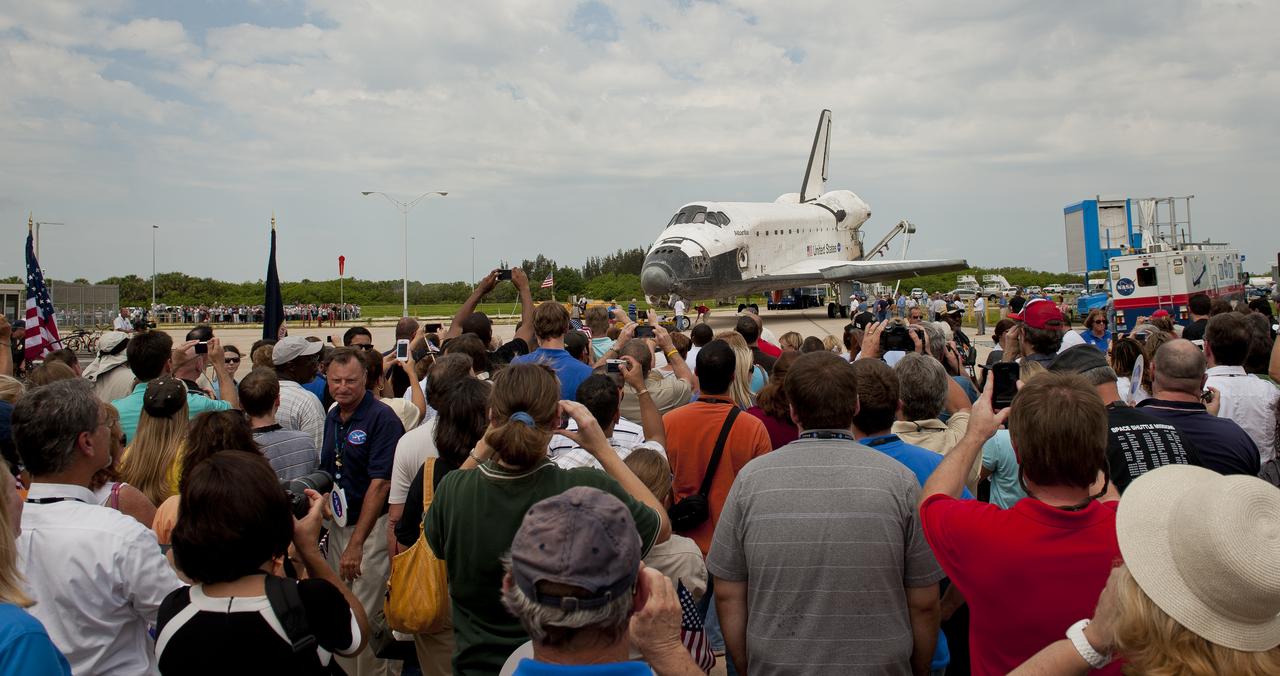
NASA employees and contractors crowd together to get a glimpse of space shuttle Atlantis (STS-135) as it rolls toward the Orbiter Processing Facility (OPF) at a wheels stop event, Thursday, July 21, 2011, at NASA's Kennedy Space Center in Cape Canaveral, Fla. Atlantis returned to Kennedy early Thursday following a 13-day mission to the International Space Station (ISS) and marking the end of the 30-year Space Shuttle Program. Overall, Atlantis spent 307 days in space and traveled nearly 126 million miles during its 33 flights. Atlantis, the fourth orbiter built, launched on its first mission on Oct. 3, 1985. Photo Credit: (NASA/Paul E. Alers)

NASA administrator Charles Bolden along with Deputy Administrator Lori Garver addresses Kennedy Space Center employees and contractors as space shuttle Atlantis (STS-135) sits in the background near the Orbiter Processing Facility (OPF) at a wheels stop event, Thursday, July 21, 2011, in Cape Canaveral, Fla. Atlantis returned to Kennedy early Thursday following a 13-day mission to the International Space Station (ISS) and marking the end of the 30-year Space Shuttle Program. Overall, Atlantis spent 307 days in space and traveled nearly 126 million miles during its 33 flights. Atlantis, the fourth orbiter built, launched on its first mission on Oct. 3, 1985. Photo Credit: (NASA/Paul E. Alers)
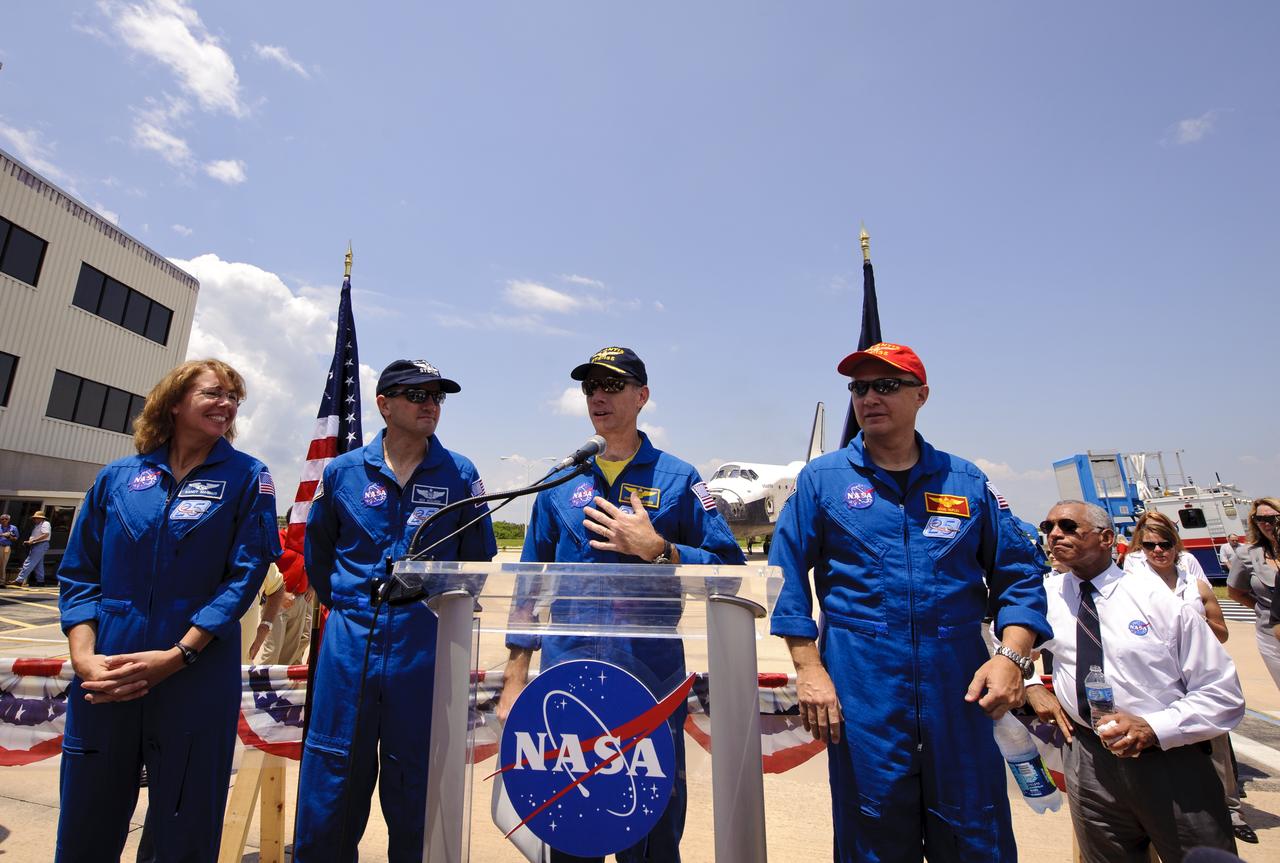
Space shuttle Atlantis (STS-135) Commander Chris Furgeson, at podium, is flanked by his crew pilot Doug Hurley, right, and mission specialists Rex Walheim and Sandy Mangus, left, as he addresses employees and contractors gathered at a wheels stop event at NASA's Kennedy Space Center, Thursday, July 21, 2011, in Cape Cape Canaveral, Fla. Atlantis returned to Kennedy early Thursday following a 13-day mission to the International Space Station (ISS) and marking the end of the 30-year Space Shuttle Program. Overall, Atlantis spent 307 days in space and traveled nearly 126 million miles during its 33 flights. Atlantis, the fourth orbiter built, launched on its first mission on Oct. 3, 1985. Photo Credit: (NASA/Paul E. Alers)

How many rings do you see in this new image of galaxy Messier 94, also known as NGC 4736? At first glance one might see a number of them, astronomers believe there is just one. This image was captured in infrared light by NASA Spitzer Space Telescope.