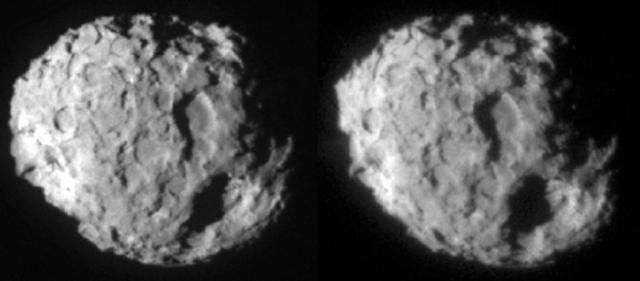
Stereo image pair of comet Wild 2 as seen by NASA's Stardust spacecraft. http://photojournal.jpl.nasa.gov/catalog/PIA05579
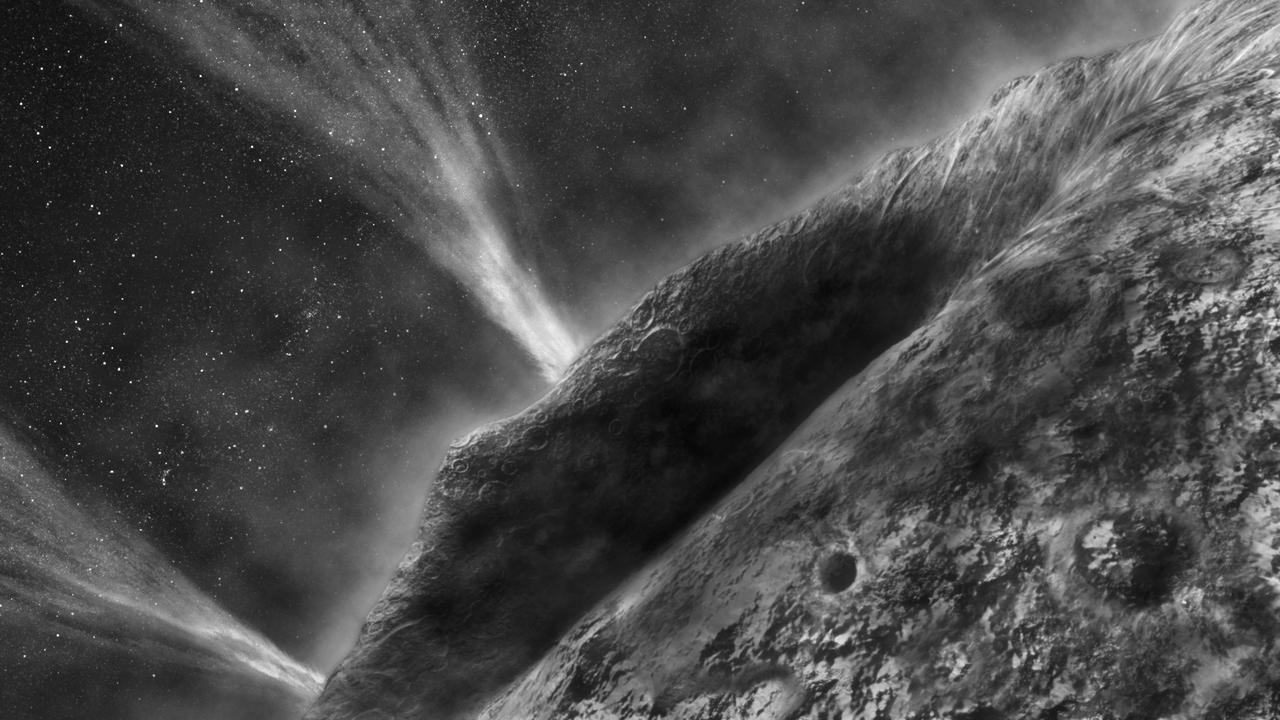
This is an artist's concept depicting a view of comet Wild 2 as seen from NASA's Stardust spacecraft during its flyby of the comet on Jan. 2, 2004. http://photojournal.jpl.nasa.gov/catalog/PIA06283
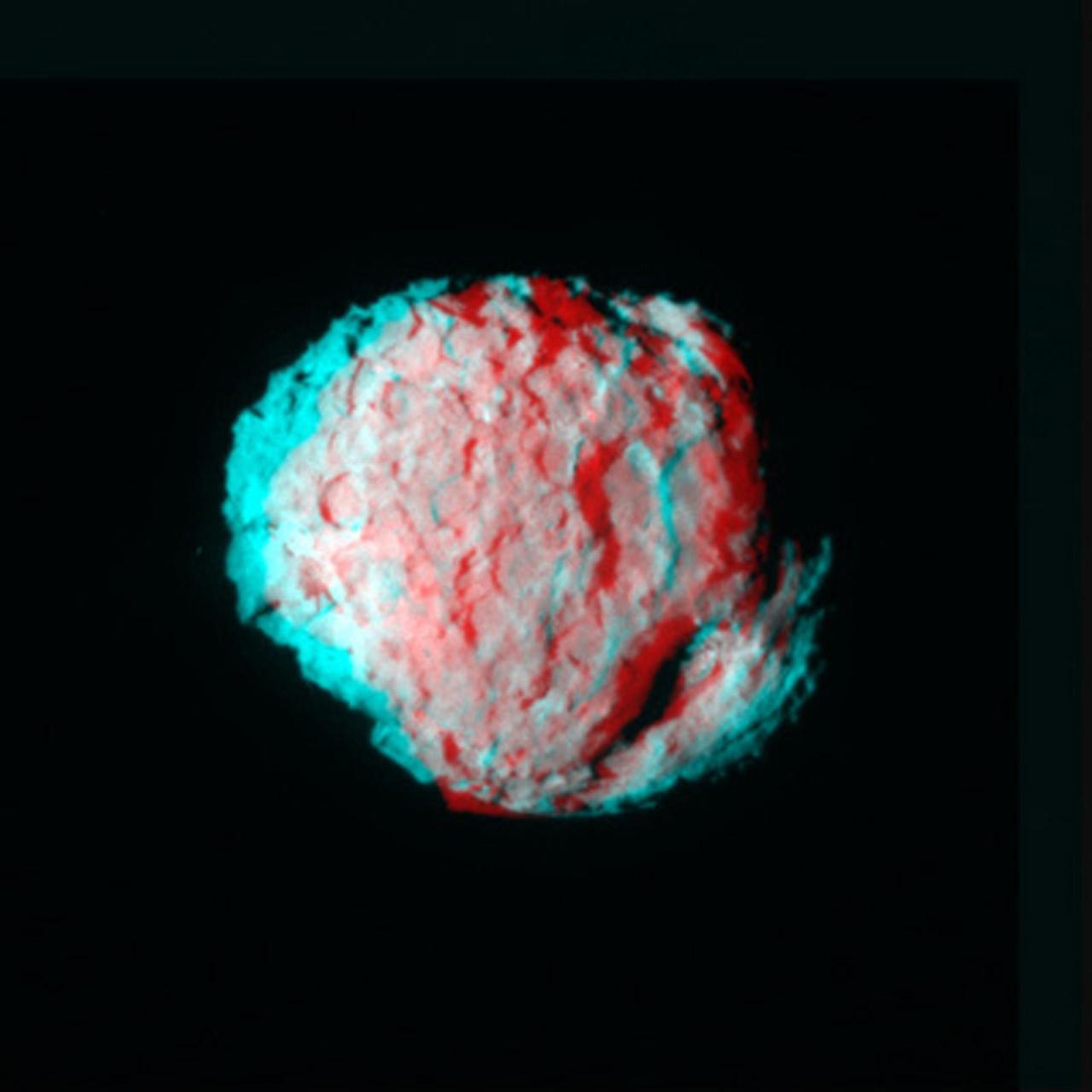
NASA Stardust Navigation Camera captured this anaglyph of the comet Wild 2. 3D glasses are necessary to view this image.
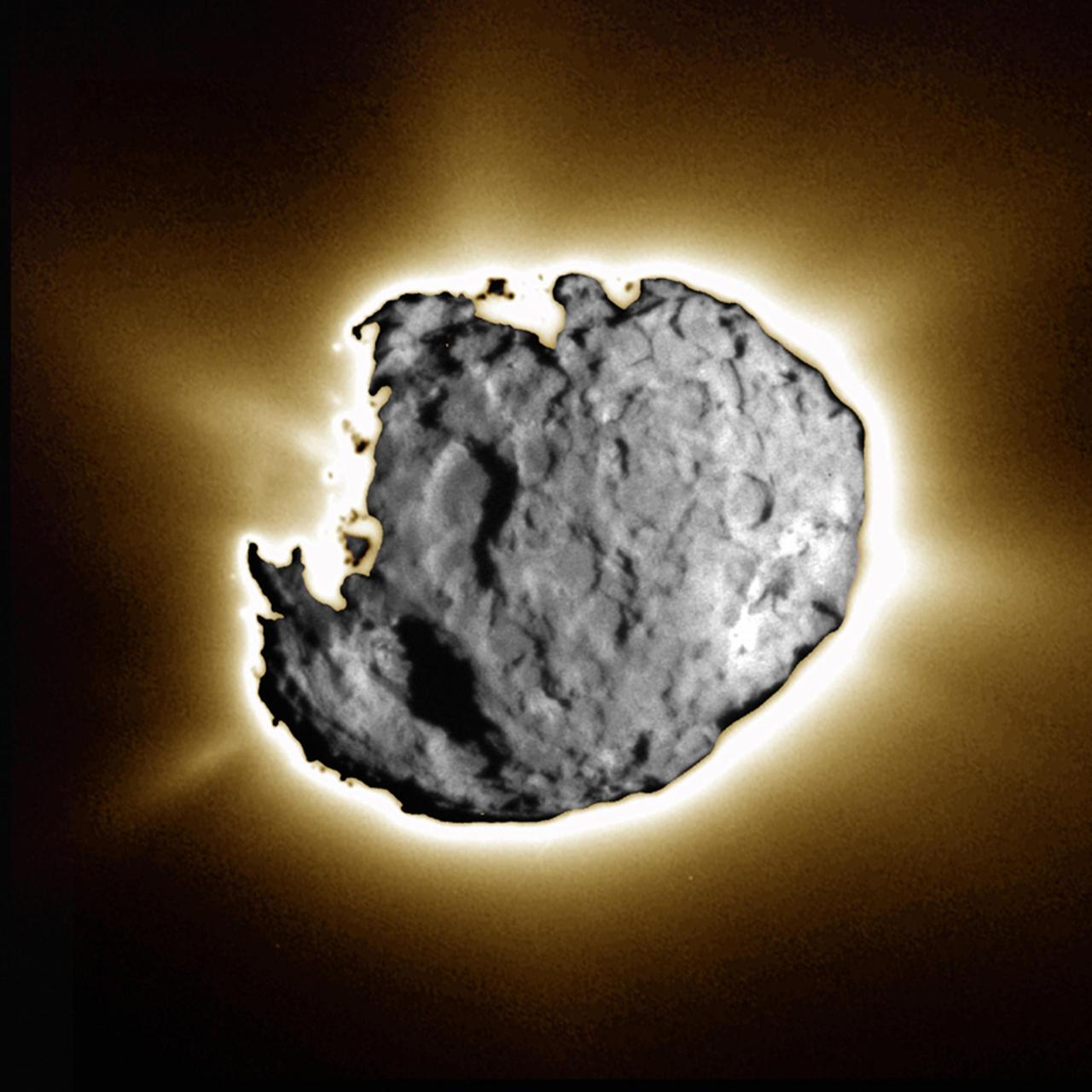
This composite image was taken by the navigation camera during the close approach phase of Stardust's Jan 2, 2004 flyby of comet Wild 2. Several large depressed regions can be seen. Comet Wild 2 is about five kilometers (3.1 miles) in diameter. To create this image, a short exposure image showing tremendous surface detail was overlain on a long exposure image taken just 10 seconds later showing jets. Together, the images show an intensely active surface, jetting dust and gas streams into space and leaving a trail millions of kilometers long. http://photojournal.jpl.nasa.gov/catalog/PIA05578
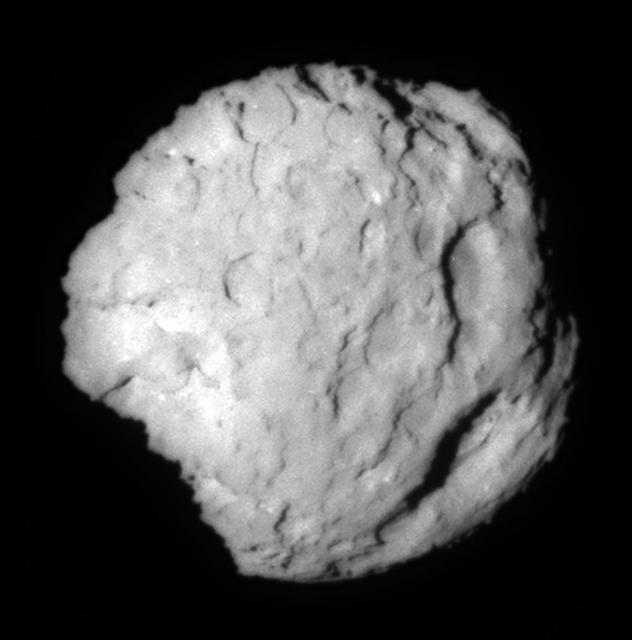
This image shows the comet Wild 2, which NASA's Stardust spacecraft flew by on Jan. 2, 2004. This image is the closest short exposure of the comet, taken at an11.4-degree phase angle, the angle between the camera, comet and the Sun. http://photojournal.jpl.nasa.gov/catalog/PIA06285
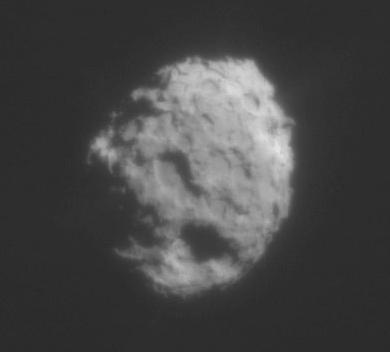
On January 2, 2004 NASA's Stardust spacecraft made a close flyby of comet Wild 2 (pronounced "Vilt-2"). Among the equipment the spacecraft carried on board was a navigation camera. This is the 34th of the 72 images taken by Stardust's navigation camera during close encounter. The exposure time was 10 milliseconds. The two frames are actually of 1 single exposure. The frame on the left depicts the comet as the human eye would see it. The frame on the right depicts the same image but "stretched" so that the faint jets emanating from Wild 2 can be plainly seen. Comet Wild 2 is about five kilometers (3.1 miles) in diameter. http://photojournal.jpl.nasa.gov/catalog/PIA05571
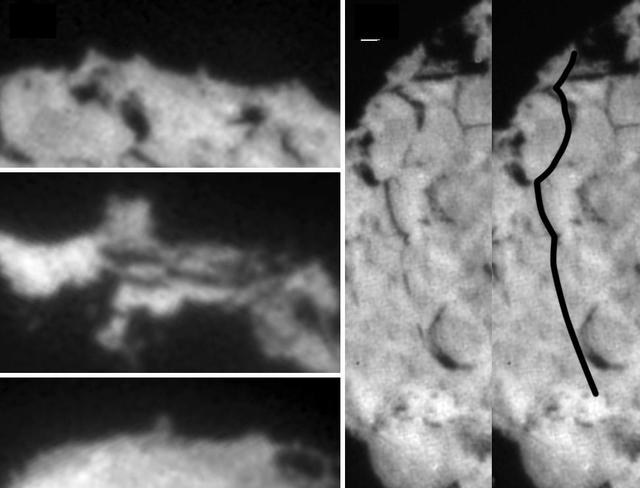
These images taken by NASA's Stardust spacecraft highlight the diverse features that make up the surface of comet Wild 2, showing a variety of small pinnacles and mesas seen on the limb of the comet and the location of a 2-kilometer (1.2-mile) series of aligned scarps, or cliffs, that are best seen in the stereo images. http://photojournal.jpl.nasa.gov/catalog/PIA06284
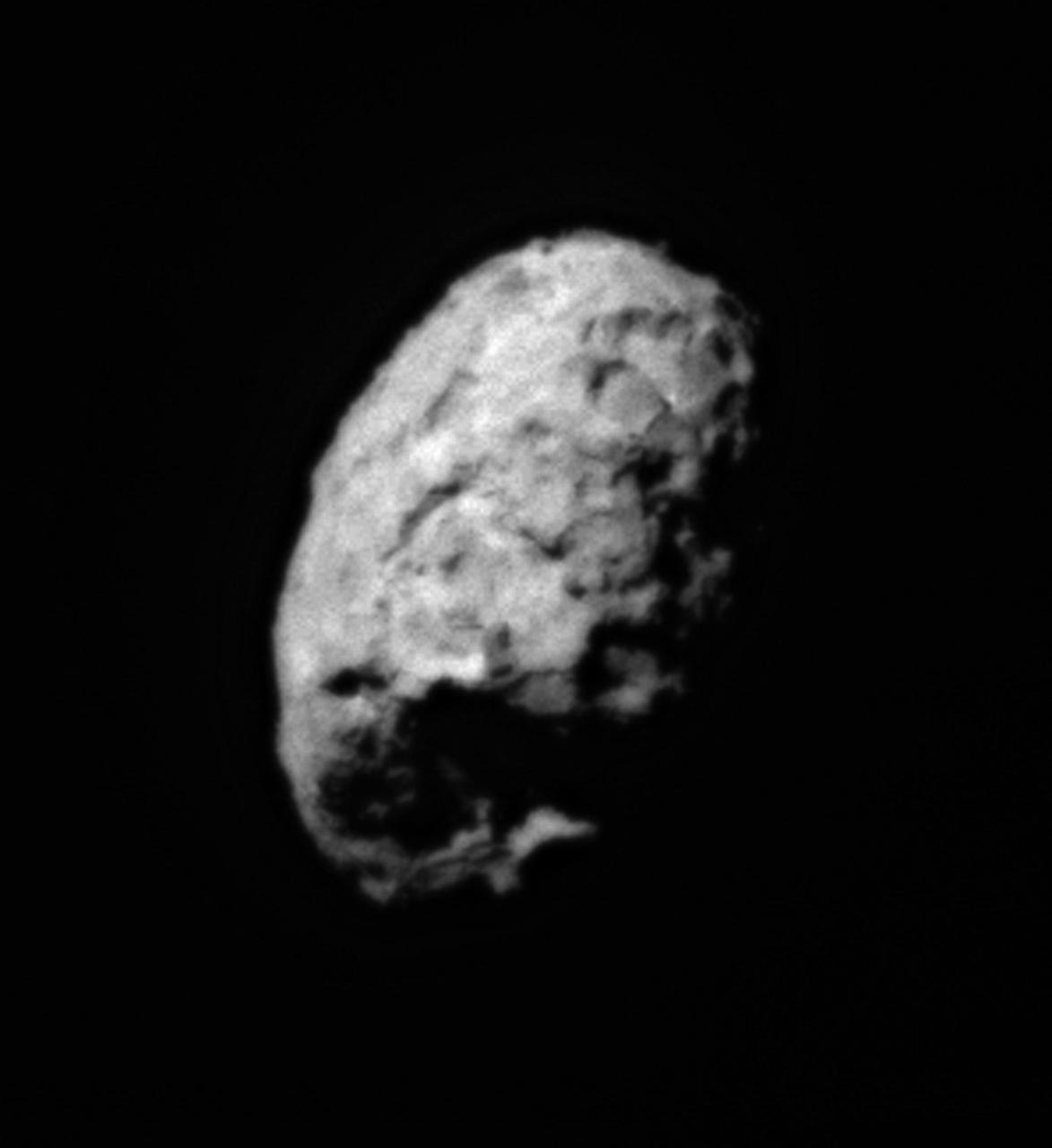
This image was taken during the close approach phase of NASA Stardust Jan 2, 2004 flyby of comet Wild 2. It is a distant side view of the roughly spherical comet nucleus.
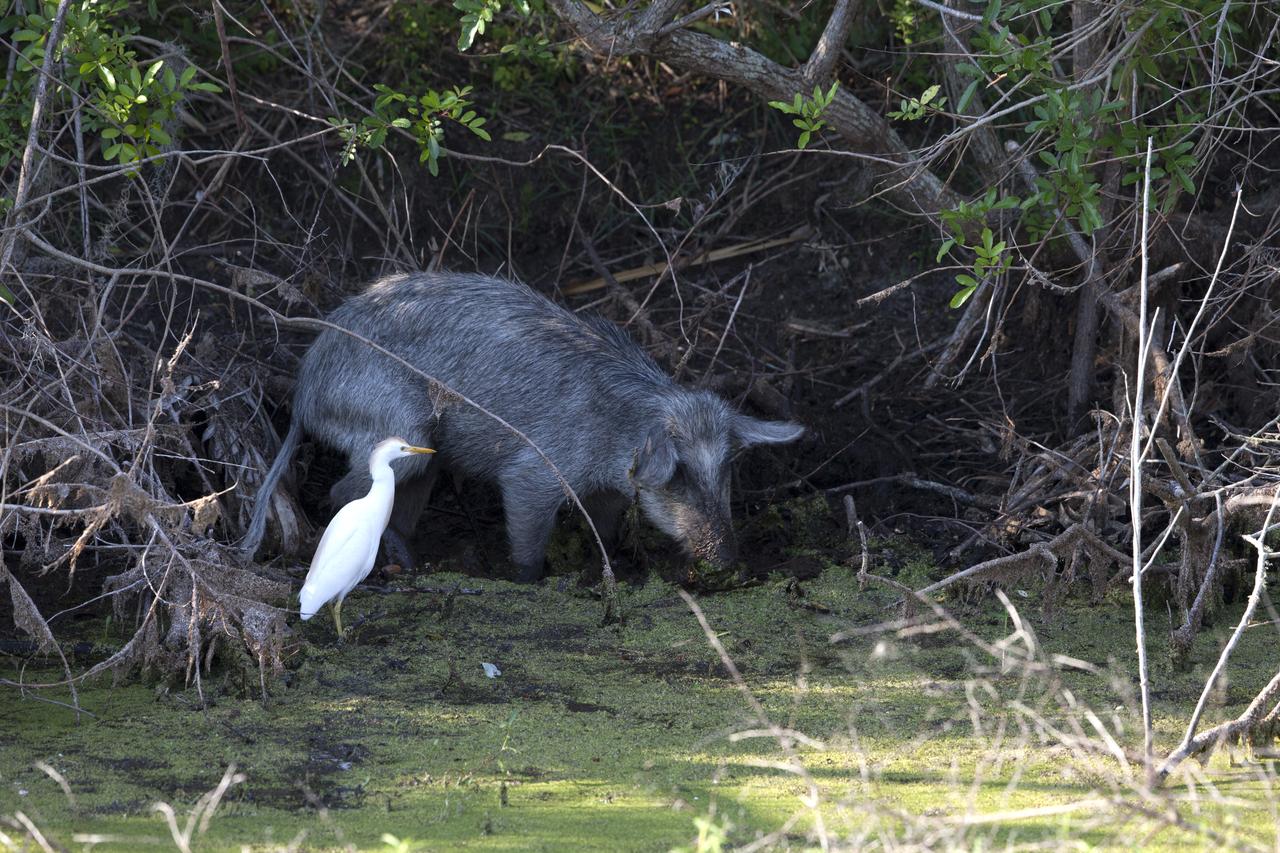
A wild pig finds food in the underbrush at NASA's Kennedy Space Center in Florida. The center shares a border with the Merritt Island National Wildlife Refuge. More than 330 native and migratory bird species, 25 mammals, 117 fishes and 65 amphibians and reptiles call Kennedy and the wildlife refuge home.
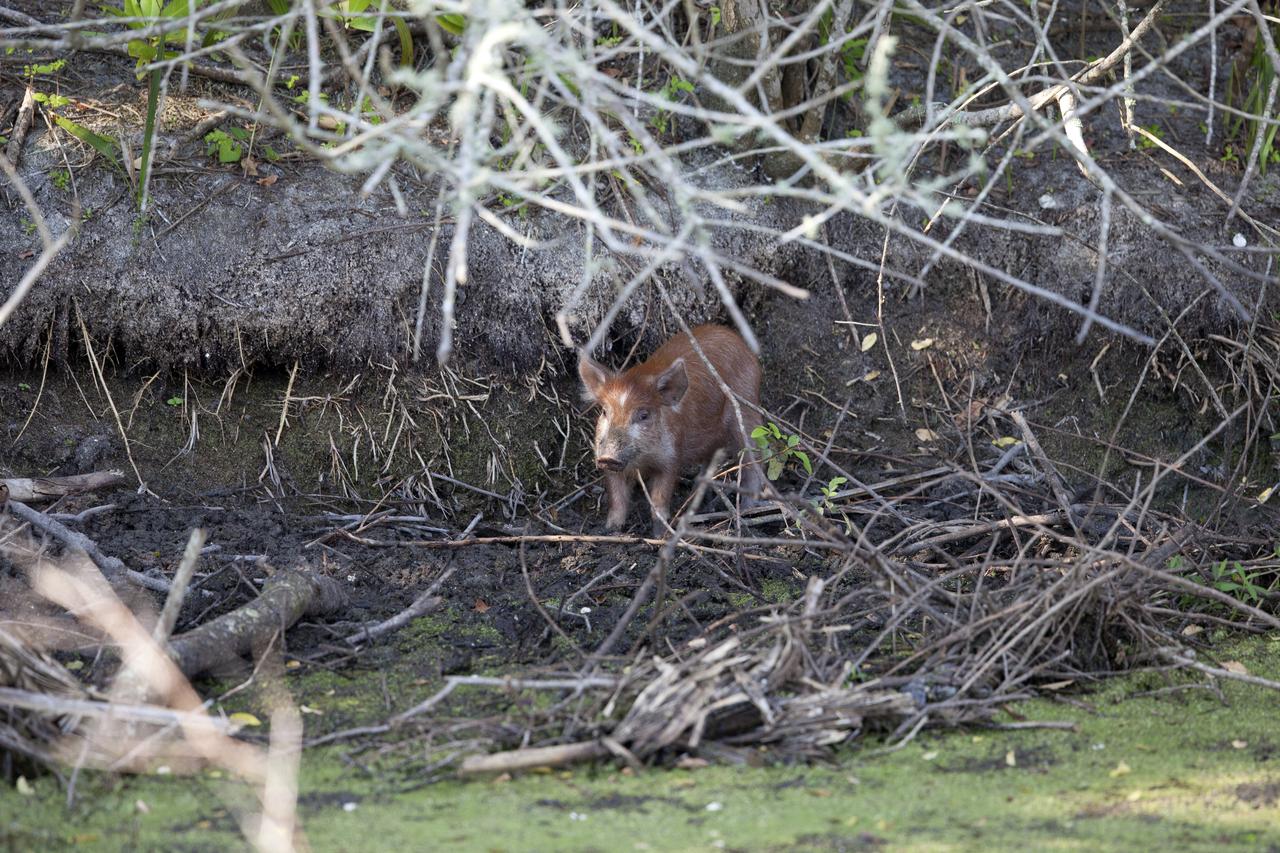
A baby pig stands in the underbrush near a bog at NASA's Kennedy Space Center in Florida. The center shares a border with the Merritt Island National Wildlife Refuge. More than 330 native and migratory bird species, 25 mammals, 117 fishes and 65 amphibians and reptiles call Kennedy and the wildlife refuge home.
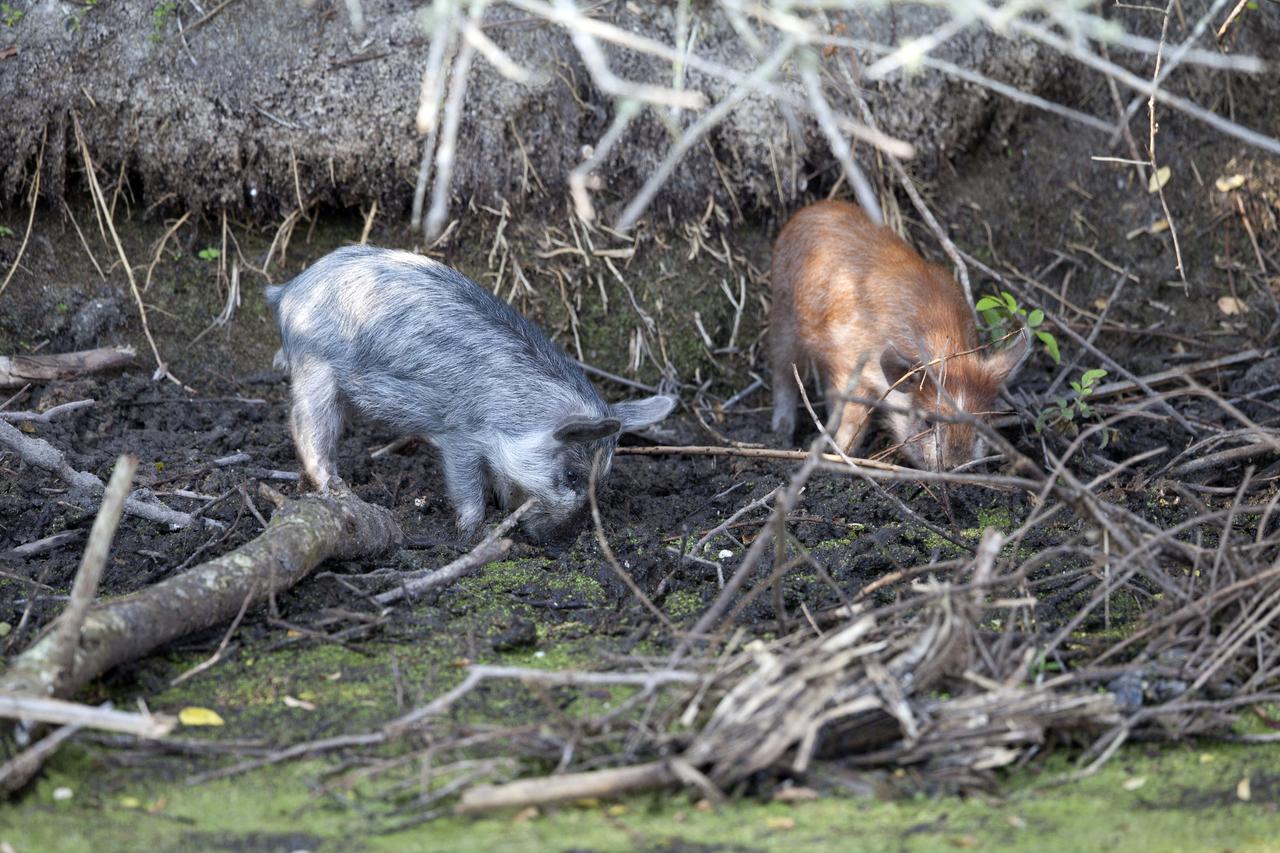
Two baby pigs dig in the underbrush at NASA's Kennedy Space Center in Florida. The center shares a border with the Merritt Island National Wildlife Refuge. More than 330 native and migratory bird species, 25 mammals, 117 fishes and 65 amphibians and reptiles call Kennedy and the wildlife refuge home.
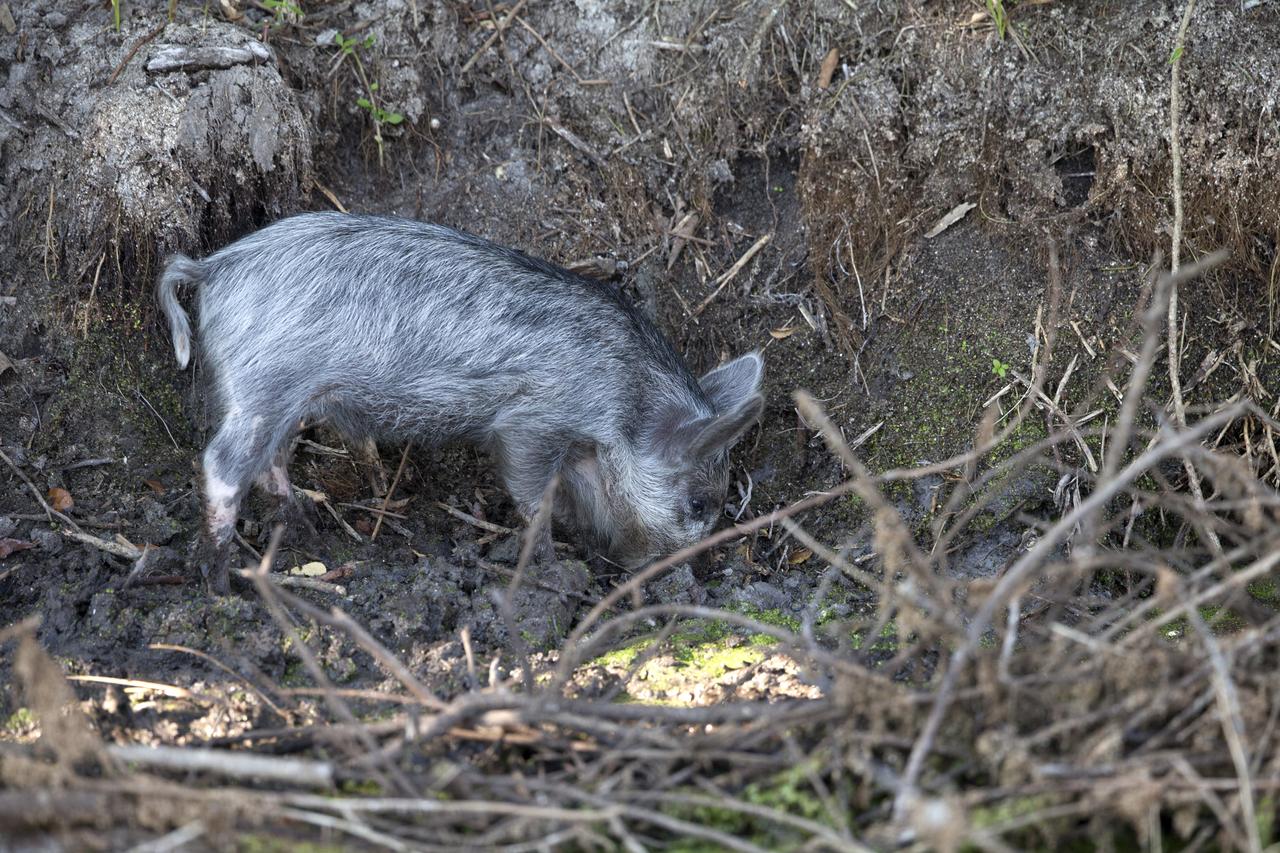
A baby pig digs in the underbrush at NASA's Kennedy Space Center in Florida. The center shares a border with the Merritt Island National Wildlife Refuge. More than 330 native and migratory bird species, 25 mammals, 117 fishes and 65 amphibians and reptiles call Kennedy and the wildlife refuge home.
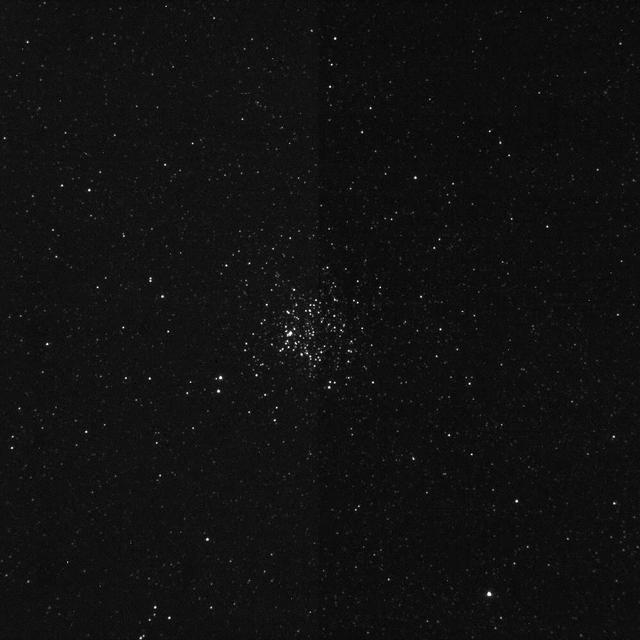
On April 7, 2005, NASA Deep Impact spacecraft Impactor Target Sensor camera recorded this image of M11, the Wild Duck cluster, a galactic open cluster located 6 thousand light years away.
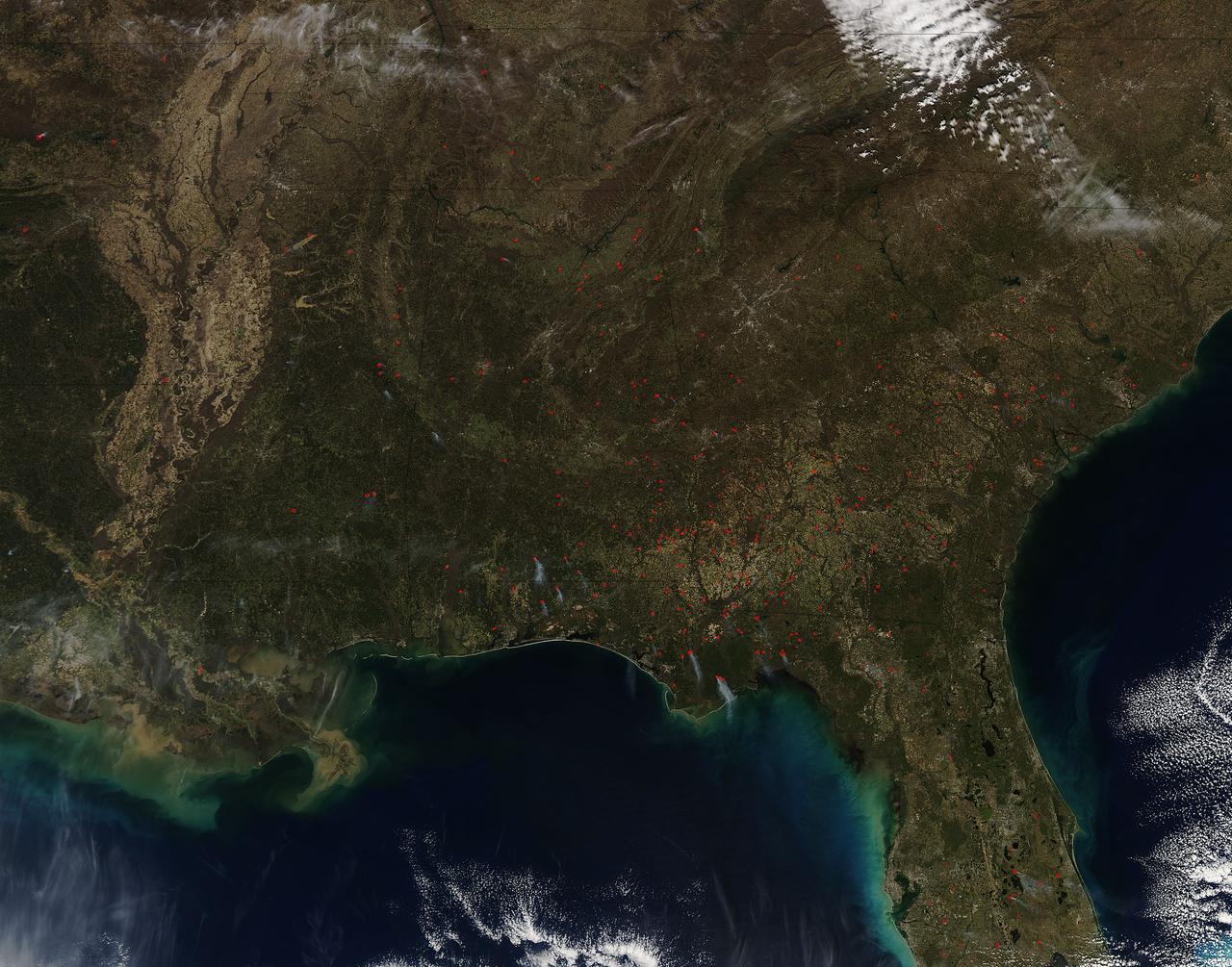
Fires both wild and prescribed dot the landscape of the southeastern portion of the United States. Wildfires are those that occur naturally with lightning strikes or are set by careless humans. Prescribed fires are those deliberately set by land management authorities to take out underlying brush and dead grass so that in the event of a wildfire there is not sufficient fuel for that fire to spread too far. The Southern Area Coordination Center for fire management has this information on its report for February 21, 2017. • Fires that have broken out recently (known as Initial Attack Activity): 198 fires for 2,292 acres • Ongoing Uncontained Large Fires: 3 fires for 5,947 acres • Other Fires reported through alternate channels: 56 fires for 1,400 acres • Prescribed Fire Activity: State and/or Federal Lands – 1,974 prescribed fires for 38,533 acres in AL, FL & GA The bulk of the fires seen in the image taken by the Aqua satellite using the onboard MODIS (Moderate Resolution Imaging Spectroradiometer) instrument on February 16, 2017 appear to be prescribed fires. Actively burning areas, detected by MODIS’s thermal bands, are outlined in red and when combined with smoke are indicative of fire. NASA image courtesy Jeff Schmaltz LANCE/EOSDIS MODIS Rapid Response Team, GSFC. Caption by Lynn Jenner with information from the Southern Area Coordination Center. <b><a href="http://www.nasa.gov/audience/formedia/features/MP_Photo_Guidelines.html" rel="nofollow">NASA image use policy.</a></b> <b><a href="http://www.nasa.gov/centers/goddard/home/index.html" rel="nofollow">NASA Goddard Space Flight Center</a></b> enables NASA’s mission through four scientific endeavors: Earth Science, Heliophysics, Solar System Exploration, and Astrophysics. Goddard plays a leading role in NASA’s accomplishments by contributing compelling scientific knowledge to advance the Agency’s mission. <b>Follow us on <a href="http://twitter.com/NASAGoddardPix" rel="nofollow">Twitter</a></b> <b>Like us on <a href="http://www.facebook.com/pages/Greenbelt-MD/NASA-Goddard/395013845897?ref=tsd" rel="nofollow">Facebook</a></b> <b>Find us on <a href="http://instagrid.me/nasagoddard/?vm=grid" rel="nofollow">Instagram</a></b>
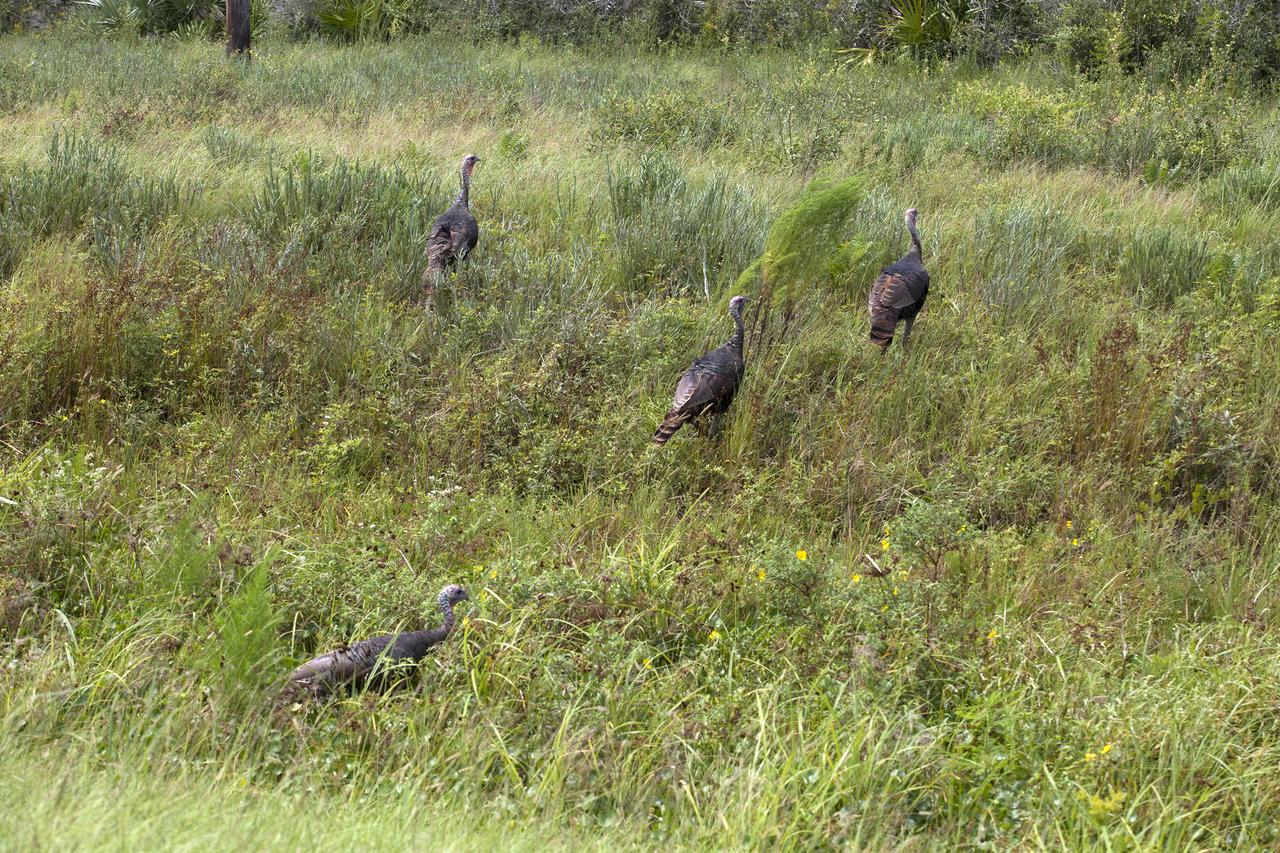
Four wild turkeys walk through tall grass at NASA’s Kennedy Space Center in Florida. Kennedy shares a boundary with the Merritt Island National Wildlife Refuge. The Refuge encompasses 140,000 acres that are a habitat for more than 331 species of birds, 31 mammals, 117 fishes, and 65 amphibians and reptiles. The marshes and open water of the refuge provide wintering areas for 23 species of migratory waterfowl, as well as a year-round home for great blue herons, great egrets, wood storks, cormorants, brown pelicans and other species of marsh and shore birds, as well as a variety of insects.
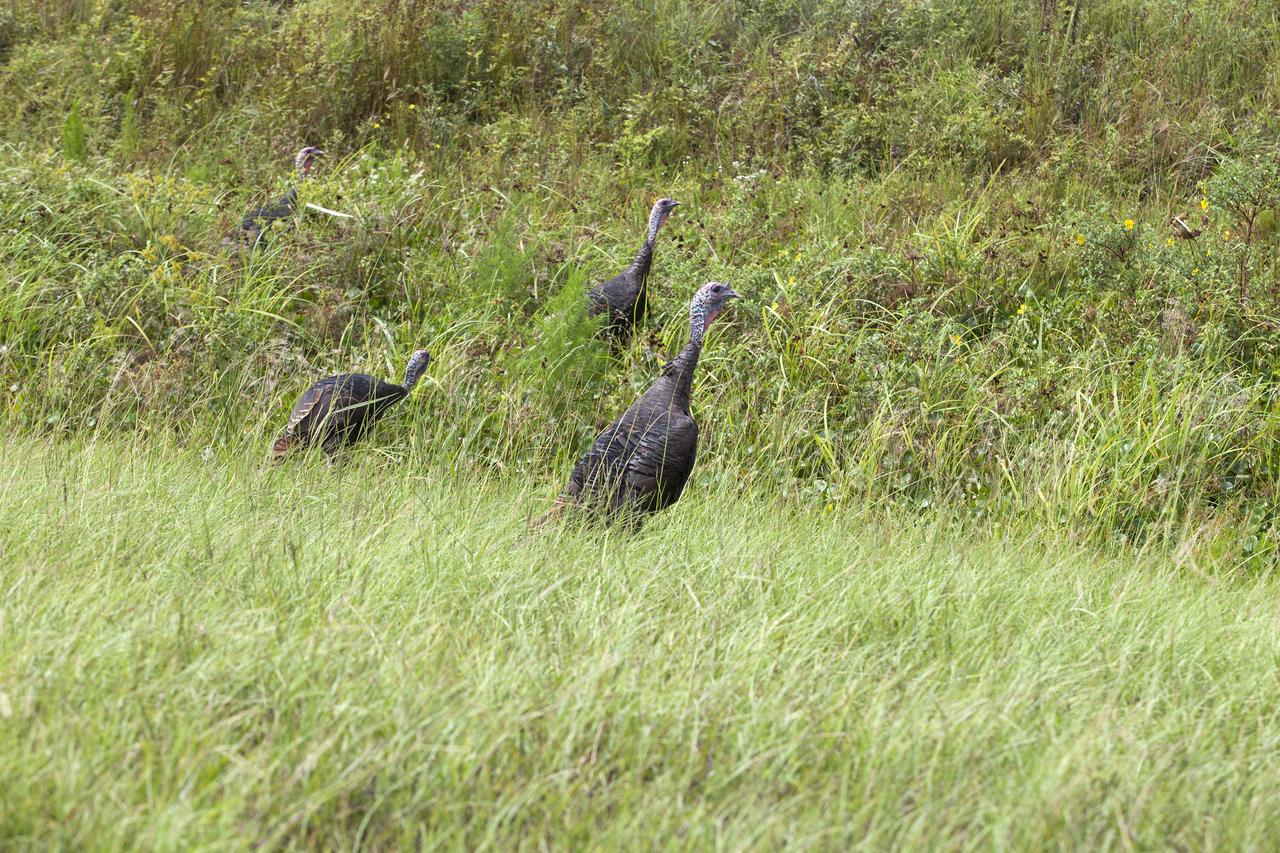
Four wild turkeys walk through tall grass at NASA’s Kennedy Space Center in Florida. Kennedy shares a boundary with the Merritt Island National Wildlife Refuge. The Refuge encompasses 140,000 acres that are a habitat for more than 331 species of birds, 31 mammals, 117 fishes, and 65 amphibians and reptiles. The marshes and open water of the refuge provide wintering areas for 23 species of migratory waterfowl, as well as a year-round home for great blue herons, great egrets, wood storks, cormorants, brown pelicans and other species of marsh and shore birds, as well as a variety of insects.
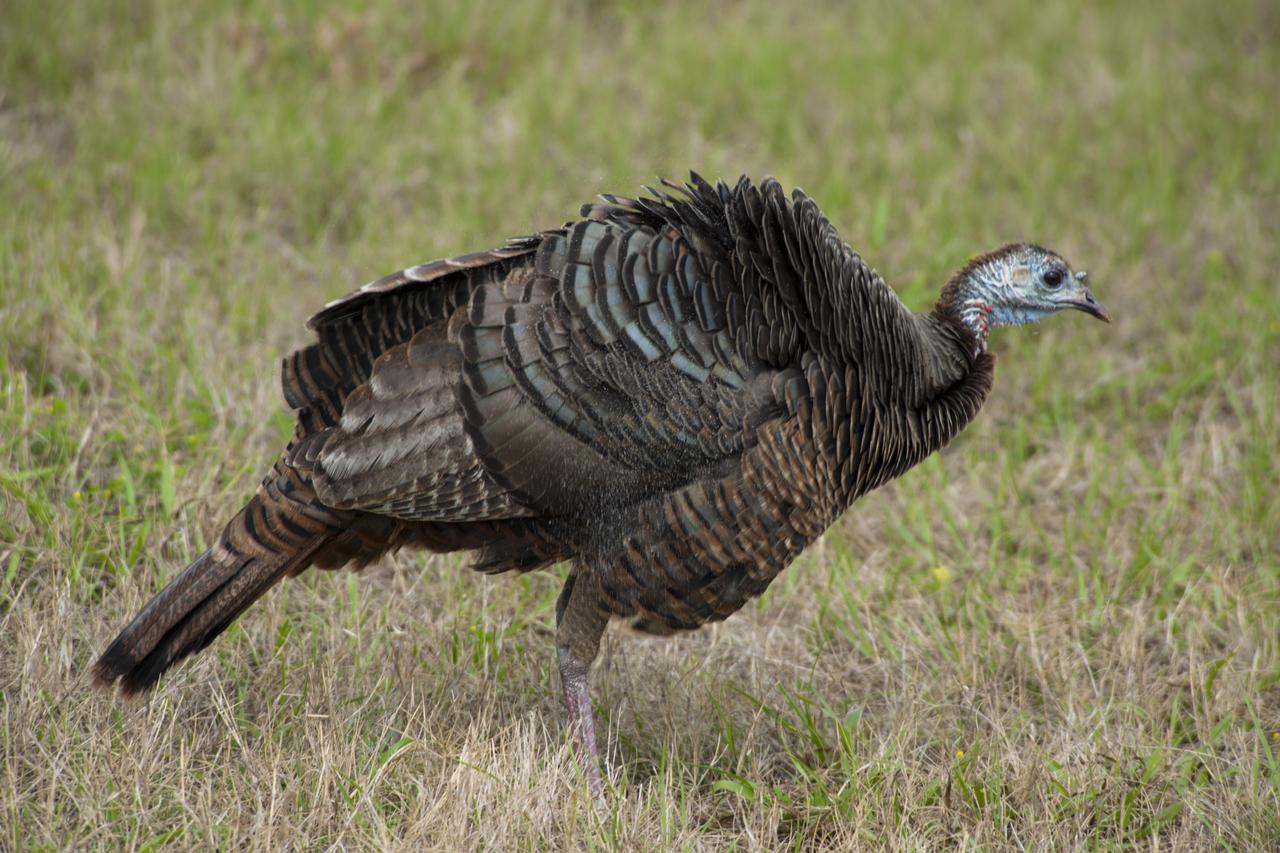
CAPE CANAVERAL, Fla. – At NASA’s Kennedy Space Center in Florida, a female Osceola wild turkey roams a grassy area near Launch Complex 39. The center shares a boundary with the Merritt Island National Wildlife Refuge. The refuge encompasses 140,000 acres that are a habitat for more than 330 species of birds, 31 mammals, 117 fishes, and 65 amphibians and reptiles. It contains more than 1,000 known plant species. The marshes and open water of the refuge provide wintering areas for 23 species of migratory waterfowl, as well as a year-round home for great blue herons, great egrets, wood storks, cormorants, brown pelicans and other species of marsh and shore birds, and a variety of insects. Photo credit: NASA/Tony Gray
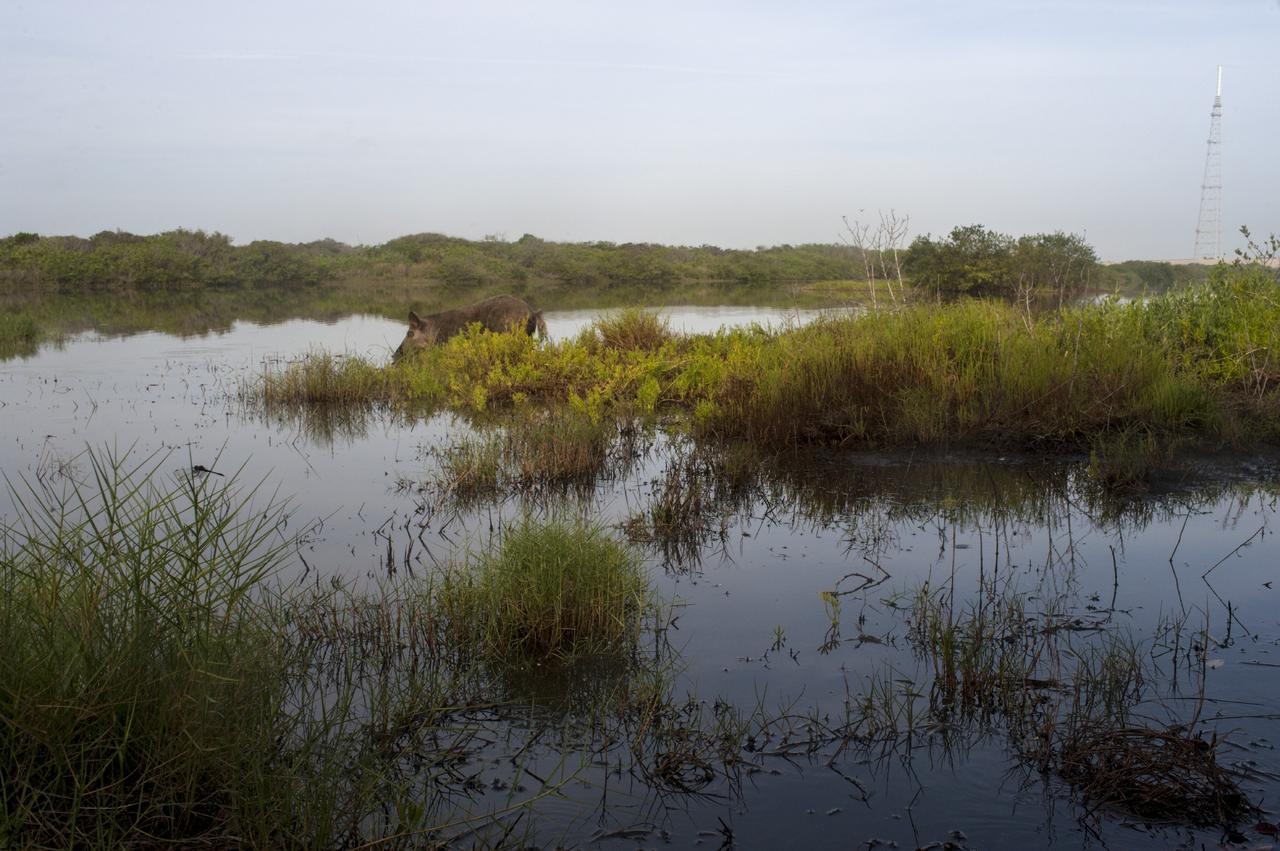
CAPE CANAVERAL, Fla. – At NASA’s Kennedy Space Center in Florida, a wild boar forages for food in the one of the waterways near Launch Pad 39B. The center shares a boundary with the Merritt Island National Wildlife Refuge. The refuge encompasses 140,000 acres that are a habitat for more than 330 species of birds, 31 mammals, 117 fishes, and 65 amphibians and reptiles. It contains more than 1,000 known plant species. The marshes and open water of the refuge provide wintering areas for 23 species of migratory waterfowl, as well as a year-round home for great blue herons, great egrets, wood storks, cormorants, brown pelicans and other species of marsh and shore birds, and a variety of insects. Photo credit: NASA/Tony Gray
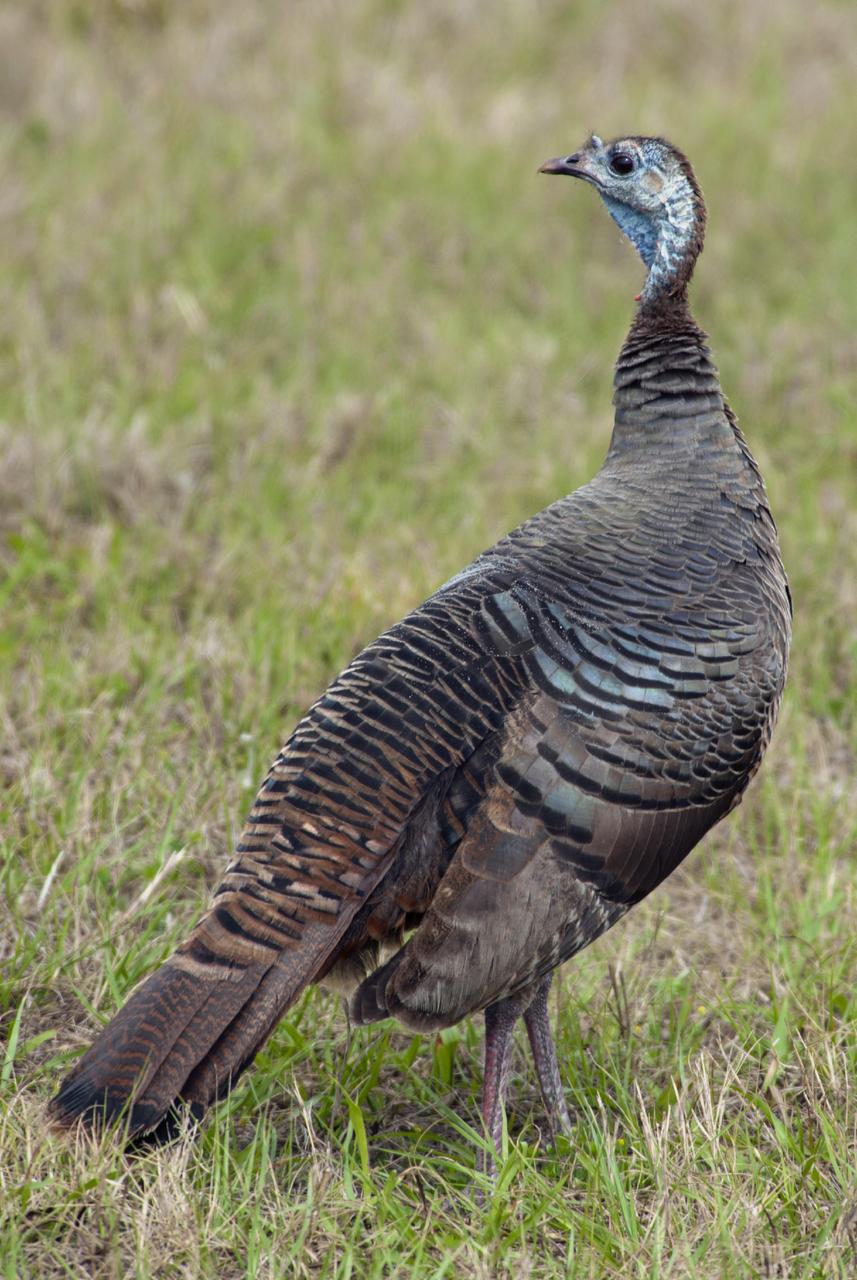
CAPE CANAVERAL, Fla. – At NASA’s Kennedy Space Center in Florida, a female Osceola wild turkey roams a grassy area near Launch Complex 39. The center shares a boundary with the Merritt Island National Wildlife Refuge. The refuge encompasses 140,000 acres that are a habitat for more than 330 species of birds, 31 mammals, 117 fishes, and 65 amphibians and reptiles. It contains more than 1,000 known plant species. The marshes and open water of the refuge provide wintering areas for 23 species of migratory waterfowl, as well as a year-round home for great blue herons, great egrets, wood storks, cormorants, brown pelicans and other species of marsh and shore birds, and a variety of insects. Photo credit: NASA/Tony Gray
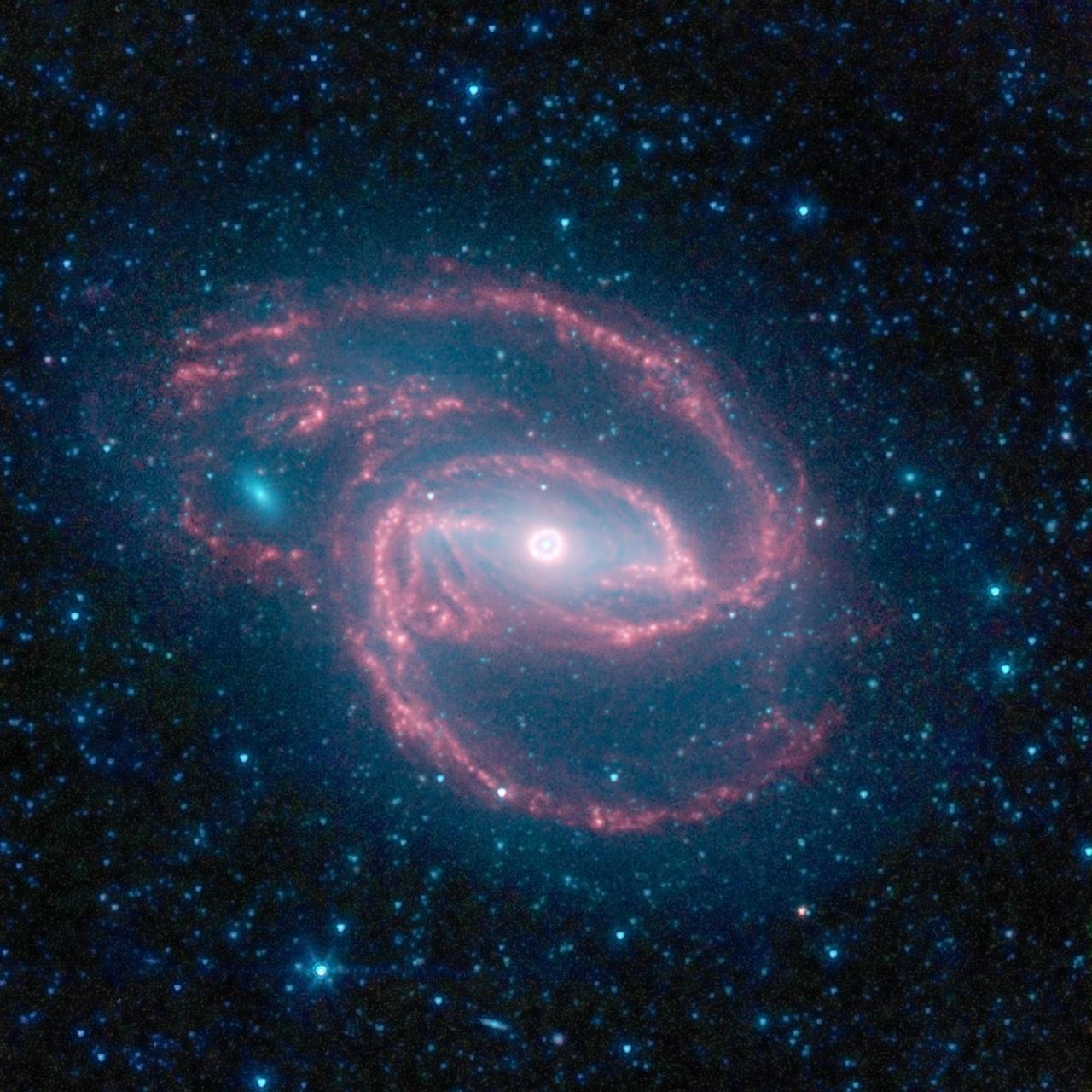
NASA Spitzer Space Telescope has imaged a wild creature of the dark -- a coiled galaxy with an eye-like object at its center.
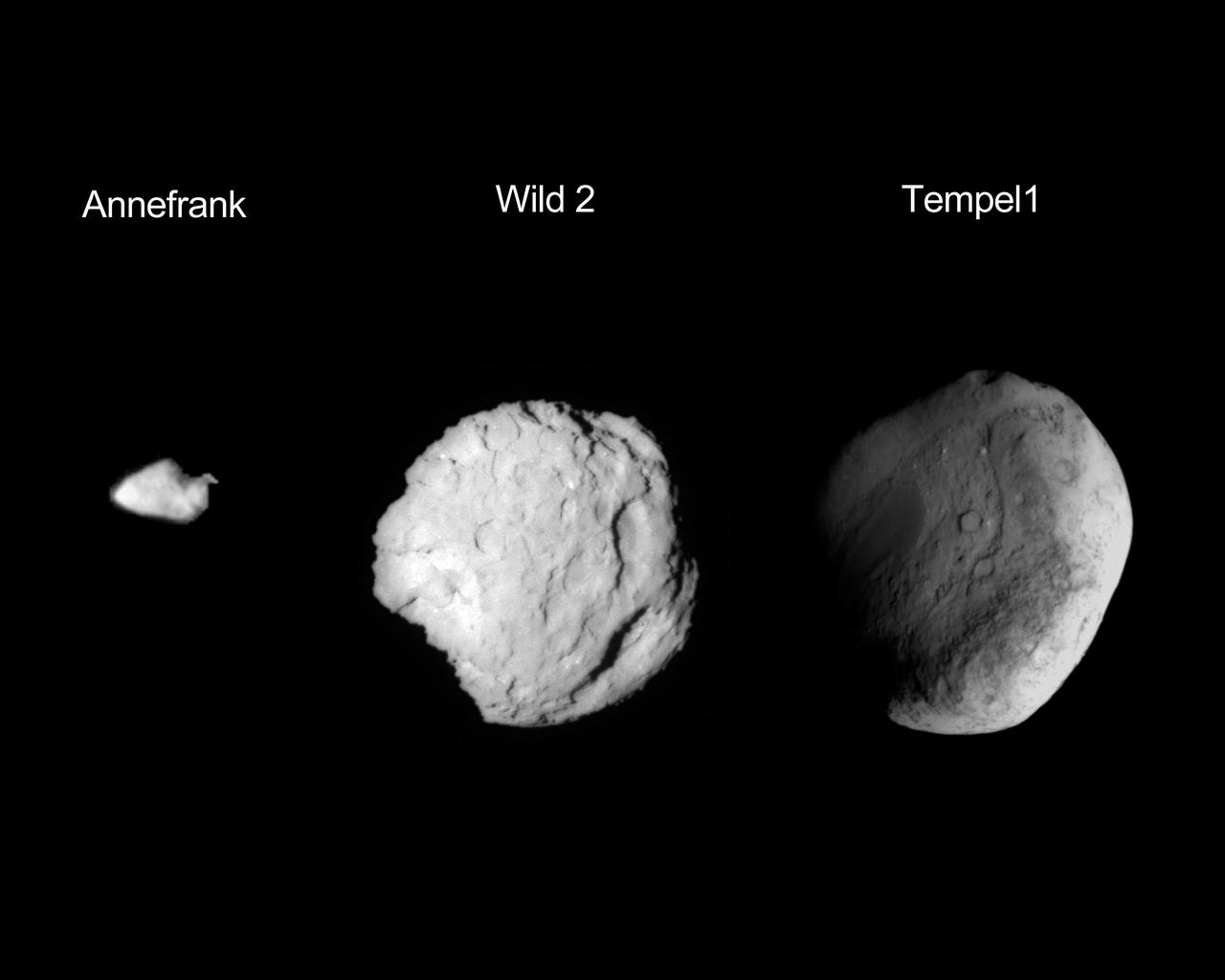
This composite image shows the three small worlds NASA Stardust spacecraft encountered during its 12 year mission. Stardust performed a flyby of asteroid Annefrank in 2002, Comet Wild in 2004, and Tempel 1 in 2011.
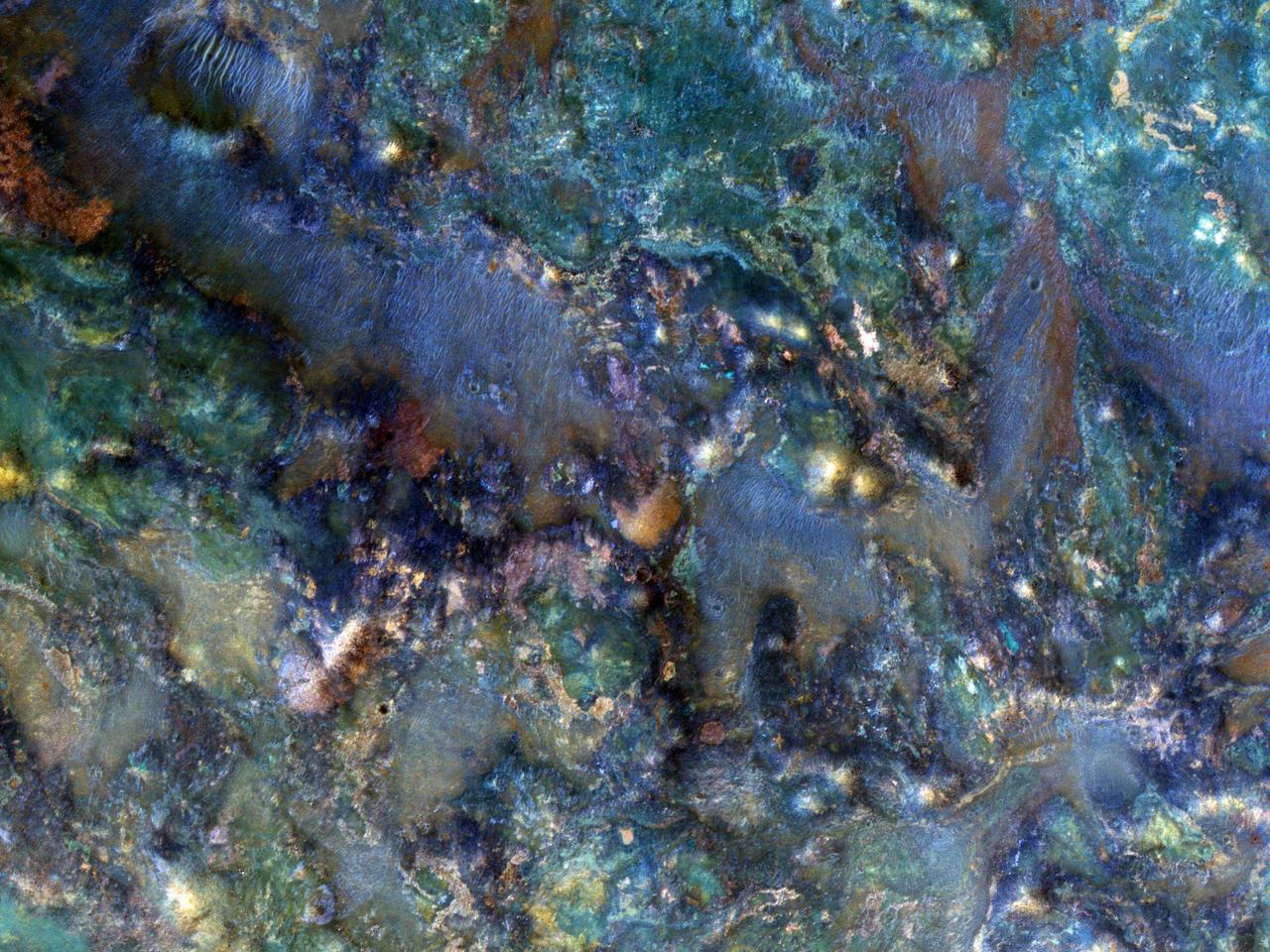
This image from NASA Mars Reconnaissance Orbiter covers a region of Mars near Nili Fossae that contains some of the best exposures of ancient bedrock on Mars.
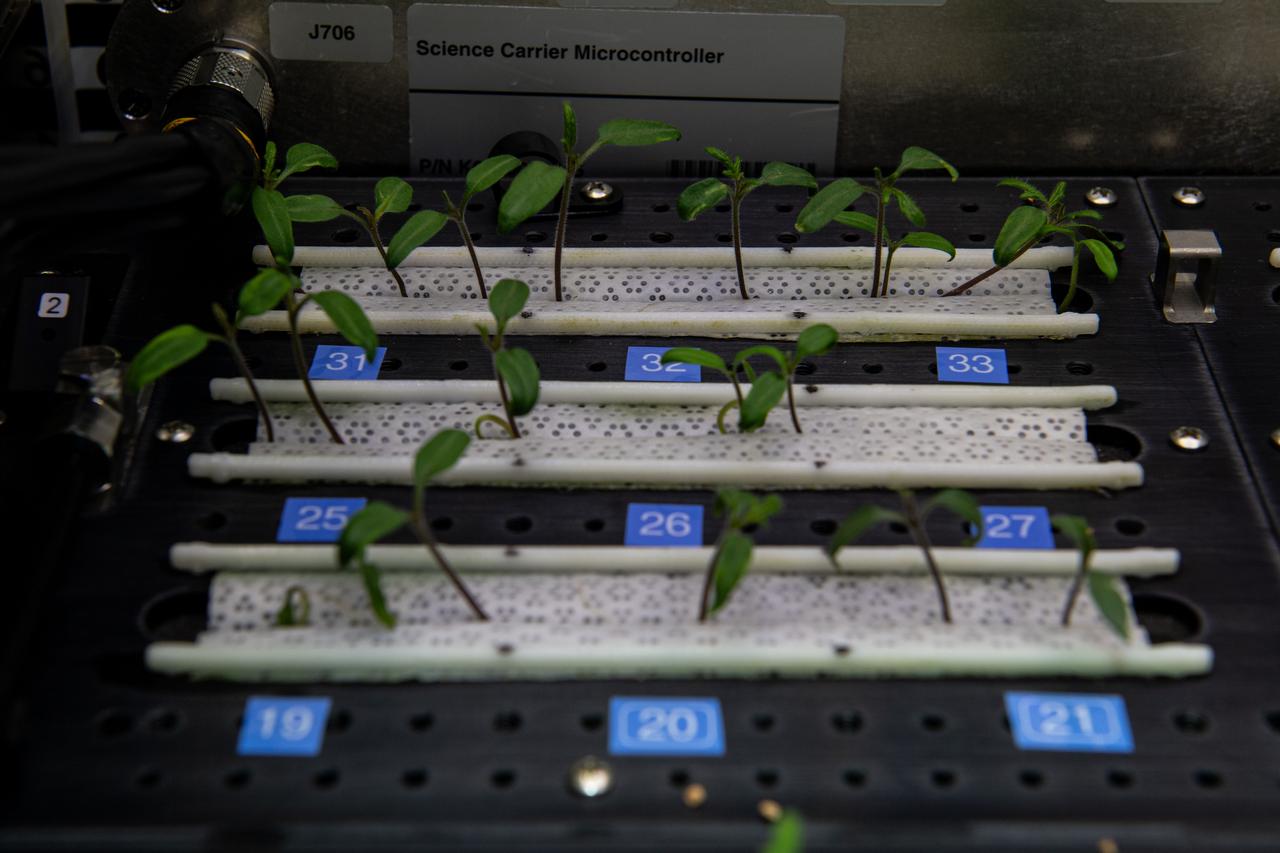
iss070e064263 (Jan. 12, 2024) -- Inside the Plant Habitat-06 facility, the early stages of seedling growth of wild-type tomatoes is visible. This specific investigation takes a look at the physiological and genetic responses to defense activation in wild-type and immune-deficient tomatoes during spaceflight.
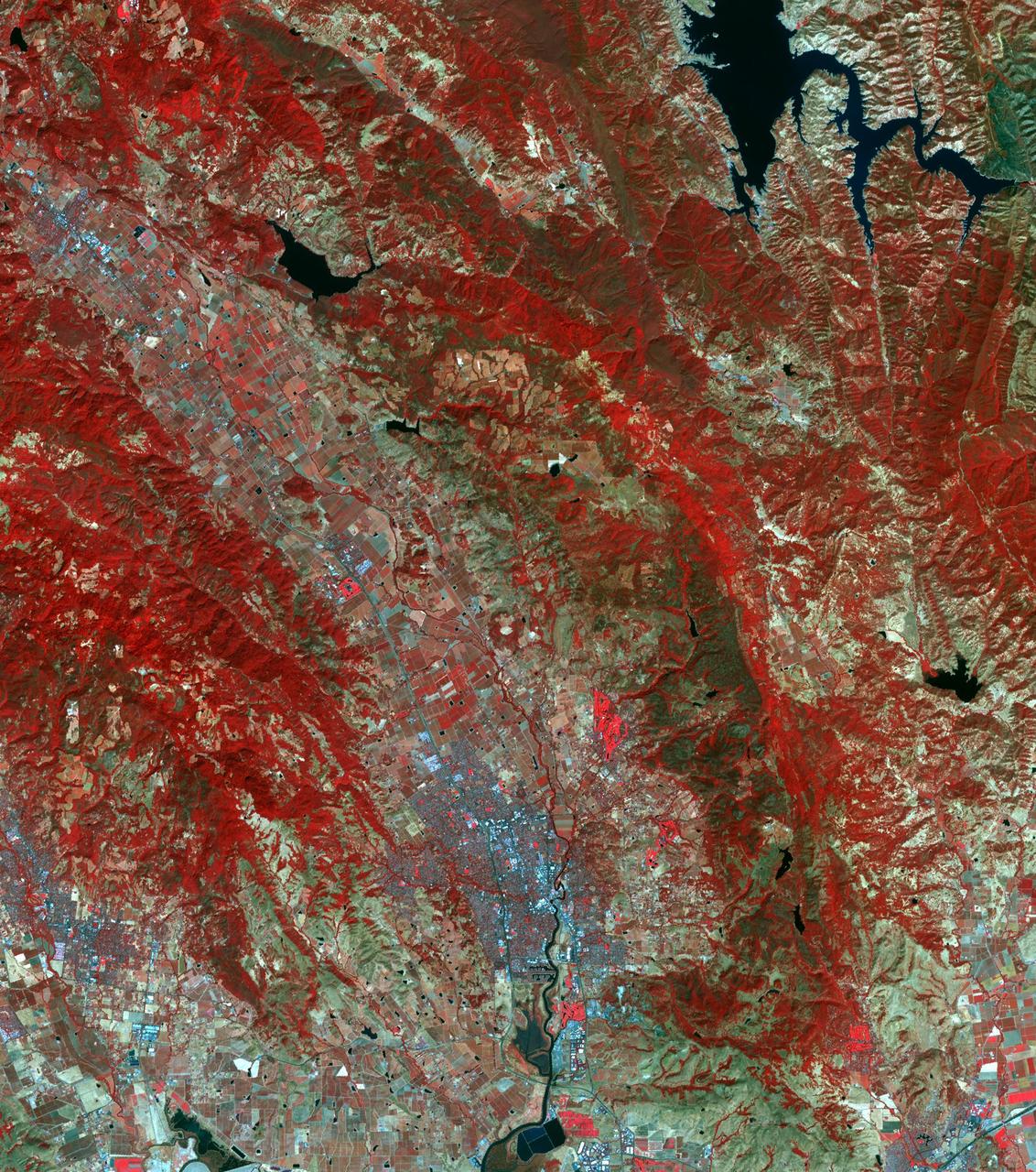
The October fires in Northern California were some of the most destructive in the state's history. The burned area on the right side of the image is the ATLAS fire, that burned east of Napa; the fire consumed 51,000 acres and destroyed almost 500 structures. The burned area on the left is part of the Nuns fire that burned between Sonoma and Napa; it consumed 110,000 acres, and destroyed almost 7,000 structures. The images were acquired September 7, 2016 and October 28, 2017, cover an area of 34.5 by 39 kilometers, and are located near 38.3 degrees north, 122.3 degrees east. https://photojournal.jpl.nasa.gov/catalog/PIA22019
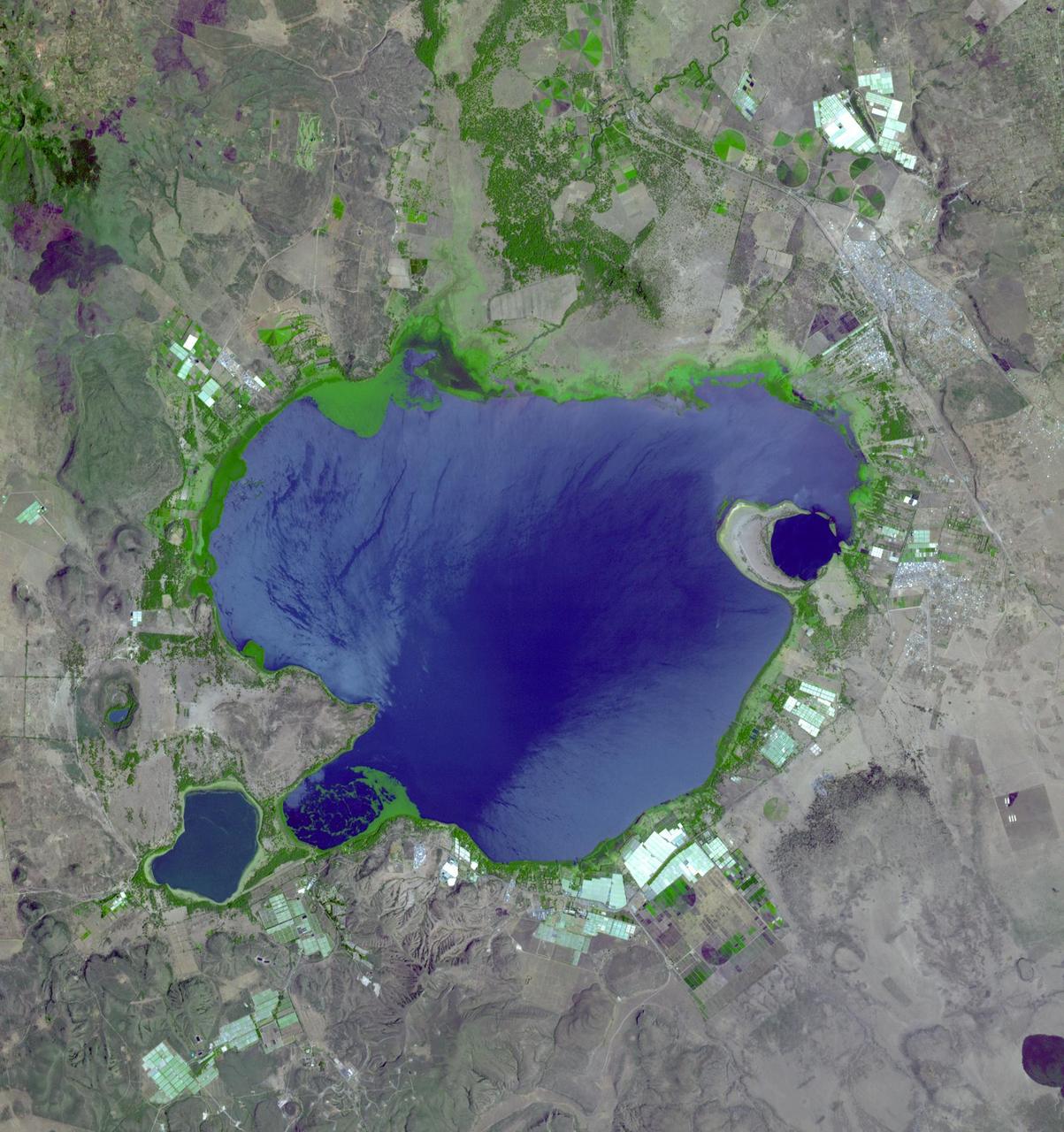
If you live in Europe and buy roses, the chance is good that they were grown in Kenya -- specifically, in one of the colossal greenhouses that blot out the once wild shores of Lake Naivasha, 90km north-west of Nairobi. Image from NASA Terra satellite.
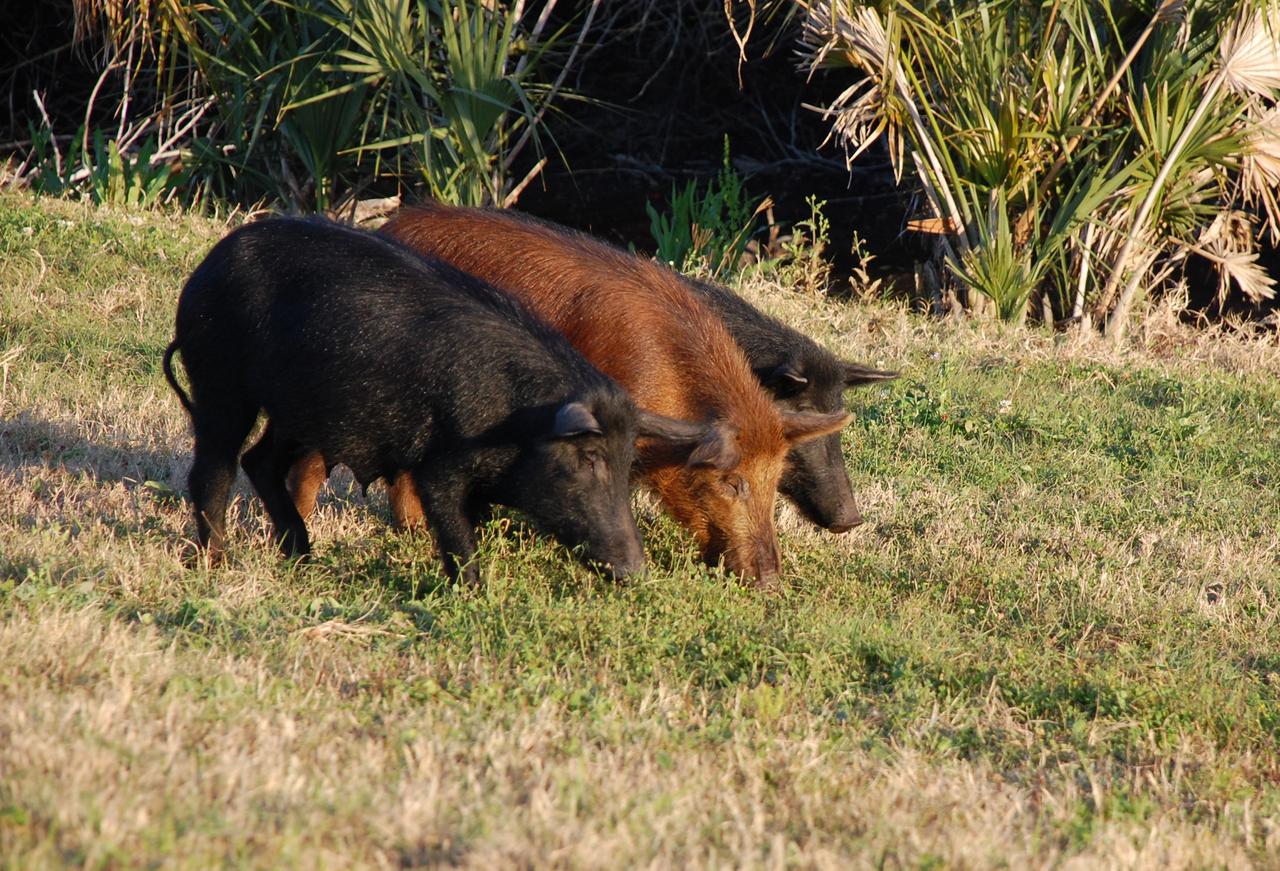
CAPE CANAVERAL, Fla. – – At NASA's Kennedy Space Center in Florida, adult wild pigs line up for their food hunt in the grassy field The wild pigs have flourished in the environs around Kennedy, which shares a border with the Merritt Island National Wildlife Refuge, without many predators other than panthers and humans. Pigs were introduced to Florida in the 1500s and are now found statewide in wooded areas close to water. Pigs are omnivores, foraging on the ground and rooting just beneath the surface, which damages the groundcover. Wild pigs eat almost anything that has nutritional value, including tubers, roots, shoots, acorns, fruits, berries, earthworms, amphibians, reptiles and rodents. Their appearance is similar to domestic hogs, but leaner, with a longer, narrower head and a coarser, denser coat. Females may have two litters per year. The piglets are weaned in a few weeks but remain with the mother for several months. Photo credit: NASA/Ben Smegelsky
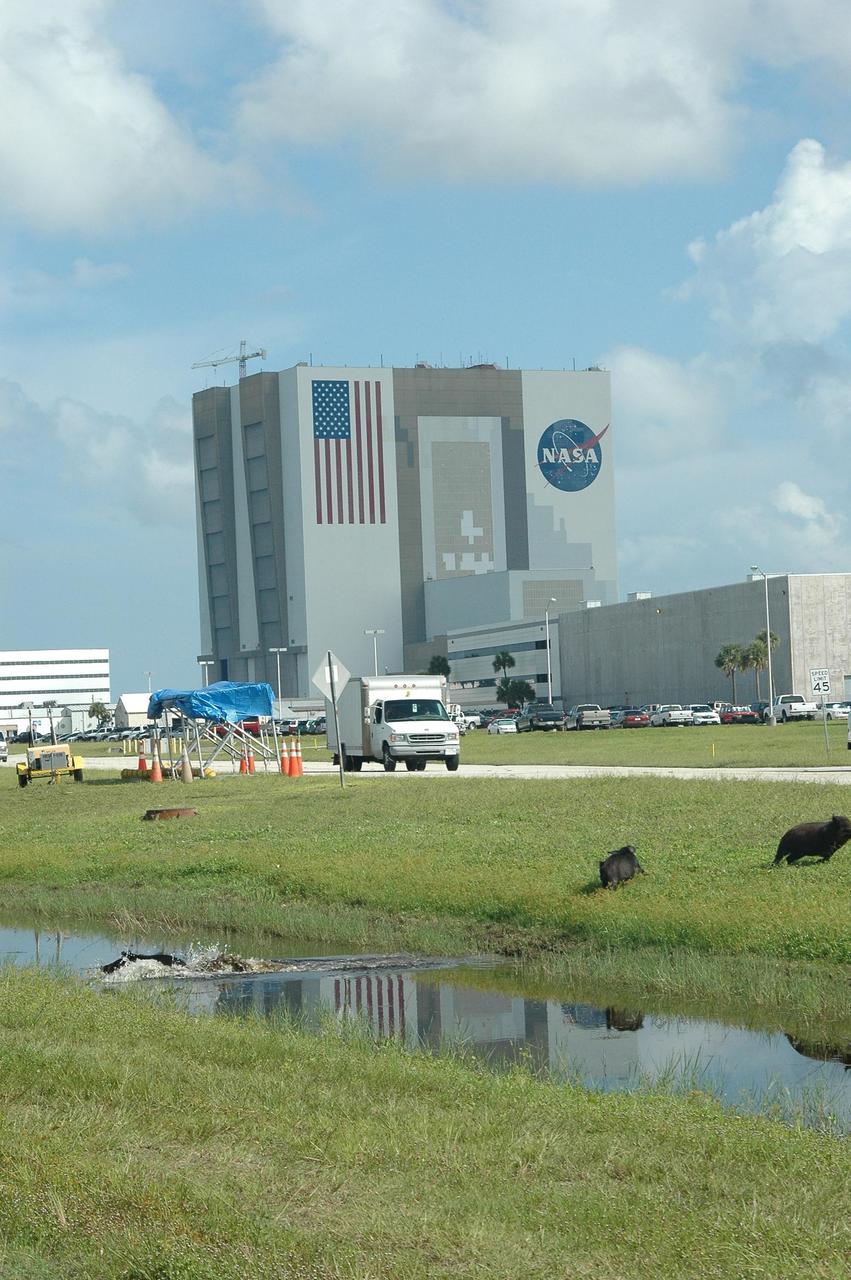
KENNEDY SPACE CENTER, FLA. - A wild pig splashes through a canal near NASA Kennedy Space Center’s Vehicle Assembly Building while its companions stay nearby on the bank. The wild pigs have flourished in the environs around KSC, which shares a border with the Merritt Island National Wildlife Refuge, without many predators other than panthers and humans. Pigs were introduced to Florida in the 1500s and are now found statewide in wooded areas close to water. Pigs are omnivores, foraging on the ground and rooting just beneath the surface, which damages the groundcover. Wild pigs eat almost anything that has nutritional value, including tubers, roots, shoots, acorns, fruits, berries, earthworms, amphibians, reptiles and rodents. Appearance is similar to domestic hogs, but leaner, with a longer, narrower head and a coarser, denser coat. Females may have two litters per year. The piglets are weaned in a few weeks but remain with the mother for several months.
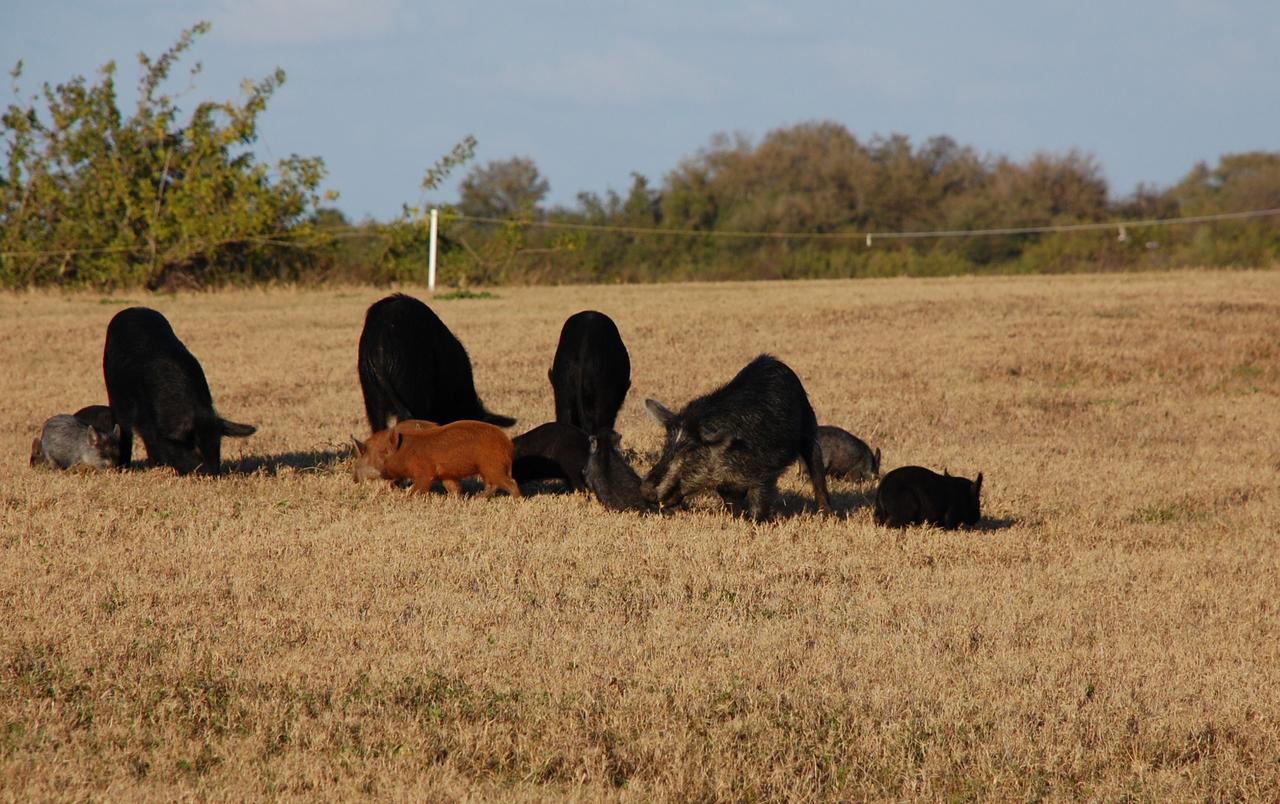
CAPE CANAVERAL, Fla. – At NASA's Kennedy Space Center in Florida, a family of wild pigs roots through the grass for food. The wild pigs have flourished in the environs around Kennedy, which shares a border with the Merritt Island National Wildlife Refuge, without many predators other than panthers and humans. Pigs were introduced to Florida in the 1500s and are now found statewide in wooded areas close to water. Pigs are omnivores, foraging on the ground and rooting just beneath the surface, which damages the groundcover. Wild pigs eat almost anything that has nutritional value, including tubers, roots, shoots, acorns, fruits, berries, earthworms, amphibians, reptiles and rodents. Their appearance is similar to domestic hogs, but leaner, with a longer, narrower head and a coarser, denser coat. Females may have two litters per year. The piglets are weaned in a few weeks but remain with the mother for several months. Photo credit: NASA/Ben Smegelsky
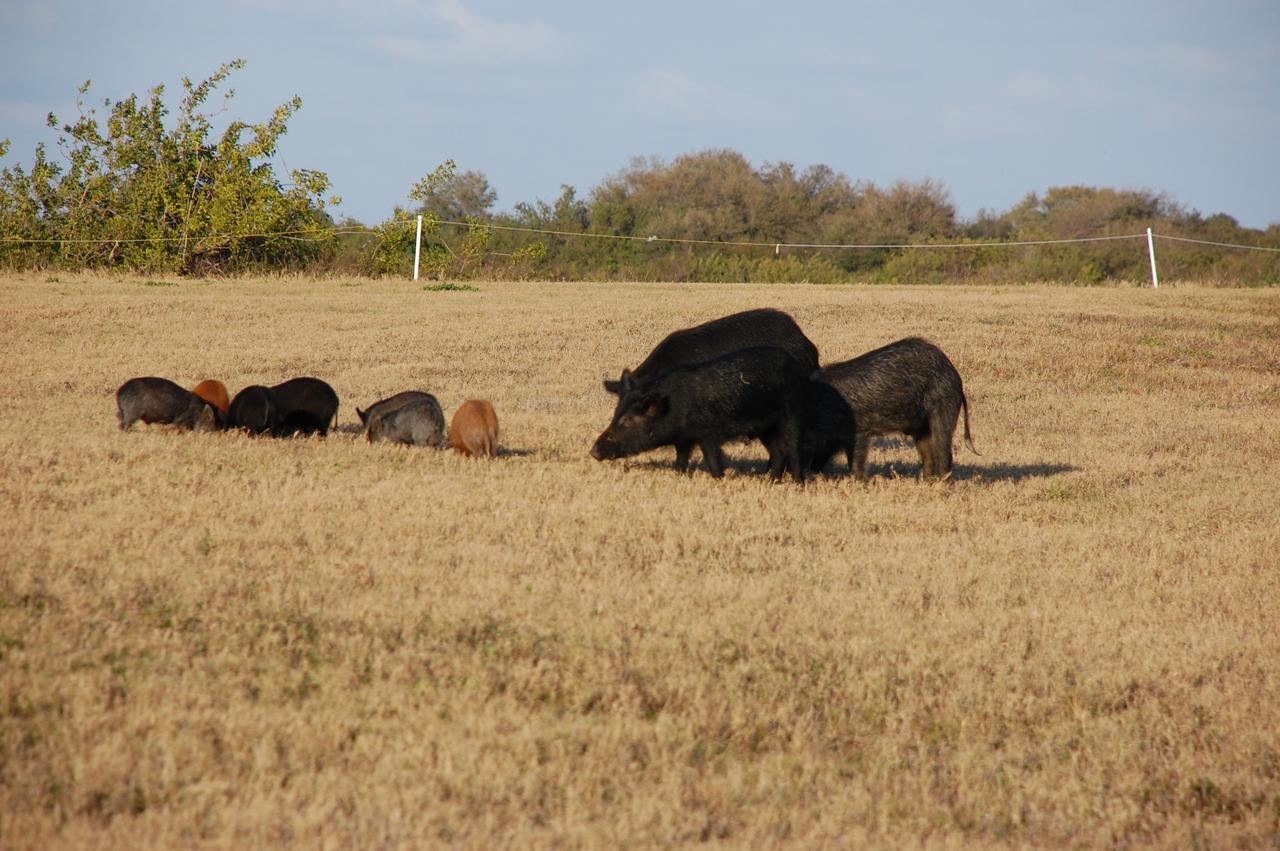
CAPE CANAVERAL, Fla. – At NASA's Kennedy Space Center in Florida, a family of wild pigs roots through the grass for food. The wild pigs have flourished in the environs around Kennedy, which shares a border with the Merritt Island National Wildlife Refuge, without many predators other than panthers and humans. Pigs were introduced to Florida in the 1500s and are now found statewide in wooded areas close to water. Pigs are omnivores, foraging on the ground and rooting just beneath the surface, which damages the groundcover. Wild pigs eat almost anything that has nutritional value, including tubers, roots, shoots, acorns, fruits, berries, earthworms, amphibians, reptiles and rodents. Their appearance is similar to domestic hogs, but leaner, with a longer, narrower head and a coarser, denser coat. Females may have two litters per year. The piglets are weaned in a few weeks but remain with the mother for several months. Photo credit: NASA/Ben Smegelsky
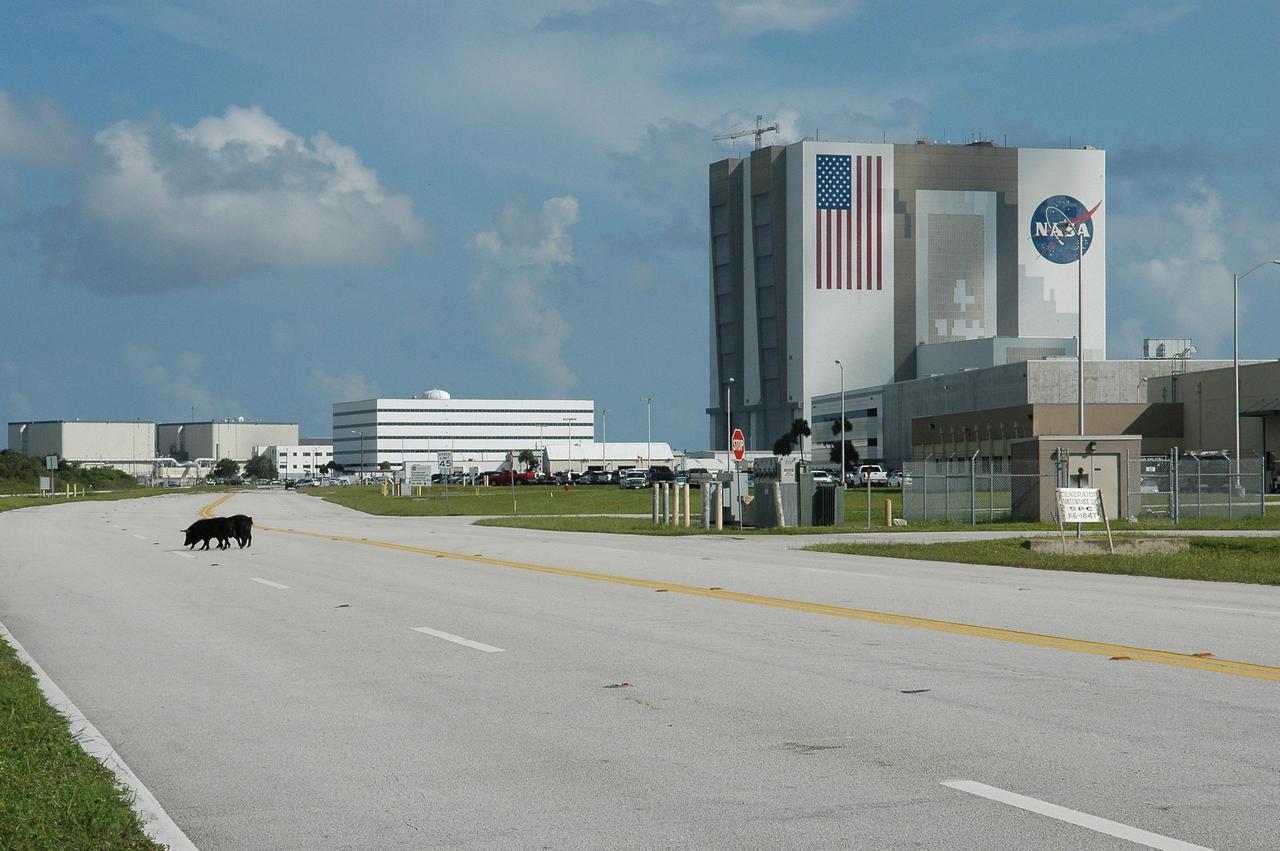
KENNEDY SPACE CENTER, FLA. - Out for a stroll on a sunny Florida day, a trio of wild pigs cross the road near NASA Kennedy Space Center’s Vehicle Assembly Building, in the background. The wild pigs have flourished in the environs around KSC, which shares a border with the Merritt Island National Wildlife Refuge, without many predators other than panthers and humans. Pigs were introduced to Florida in the 1500s and are now found statewide in wooded areas close to water. Pigs are omnivores, foraging on the ground and rooting just beneath the surface, which damages the groundcover. Wild pigs eat almost anything that has nutritional value, including tubers, roots, shoots, acorns, fruits, berries, earthworms, amphibians, reptiles and rodents. Appearance is similar to domestic hogs, but leaner, with a longer, narrower head and a coarser, denser coat. Females may have two litters per year. The piglets are weaned in a few weeks but remain with the mother for several months.
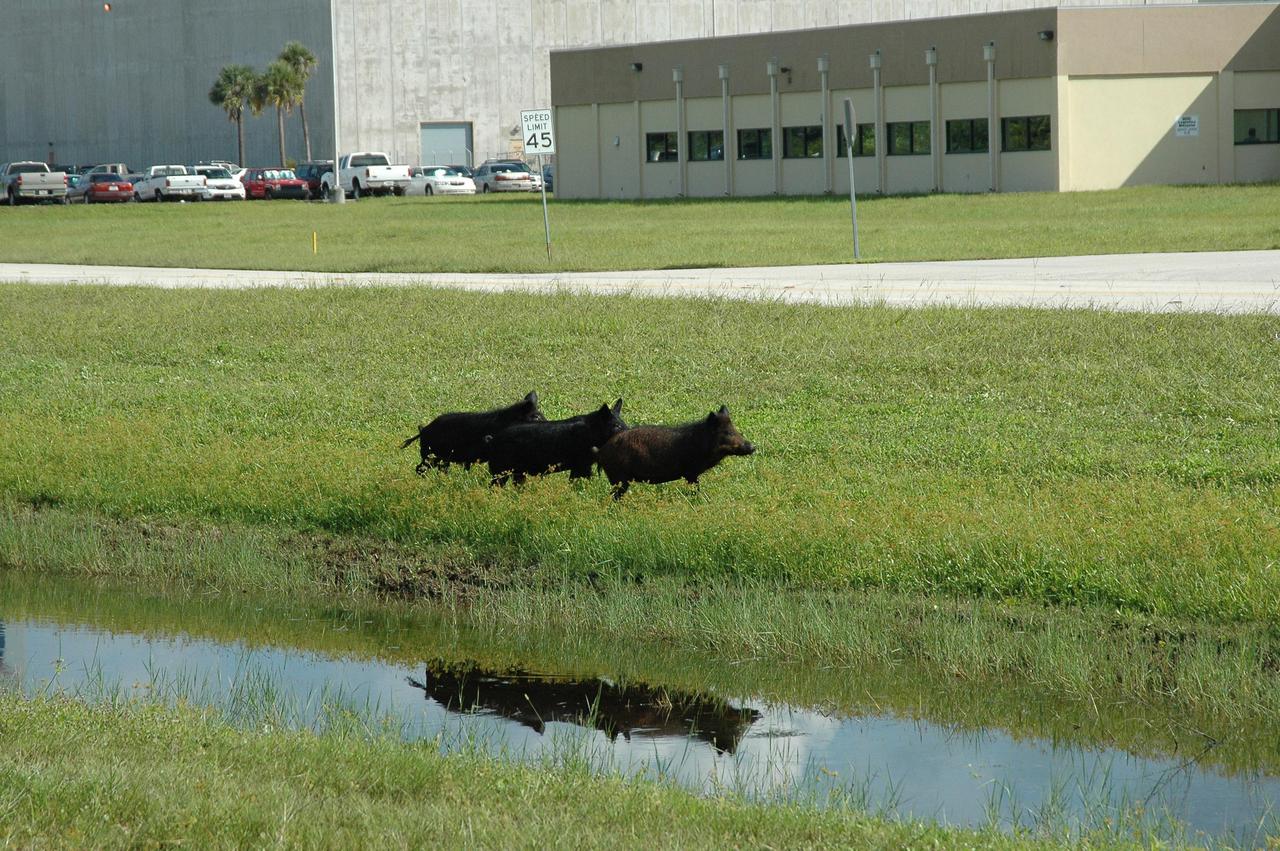
KENNEDY SPACE CENTER, FLA. - As if posing for the photographer, a trio of wild pigs pause during their stroll along a canal near NASA Kennedy Space Center’s Launch Control Center, in the background. The wild pigs have flourished in the environs around KSC, which shares a border with the Merritt Island National Wildlife Refuge, without many predators other than panthers and humans. Pigs were introduced to Florida in the 1500s and are now found statewide in wooded areas close to water. Pigs are omnivores, foraging on the ground and rooting just beneath the surface, which damages the groundcover. Wild pigs eat almost anything that has nutritional value, including tubers, roots, shoots, acorns, fruits, berries, earthworms, amphibians, reptiles and rodents. Appearance is similar to domestic hogs, but leaner, with a longer, narrower head and a coarser, denser coat. Females may have two litters per year. The piglets are weaned in a few weeks but remain with the mother for several months.
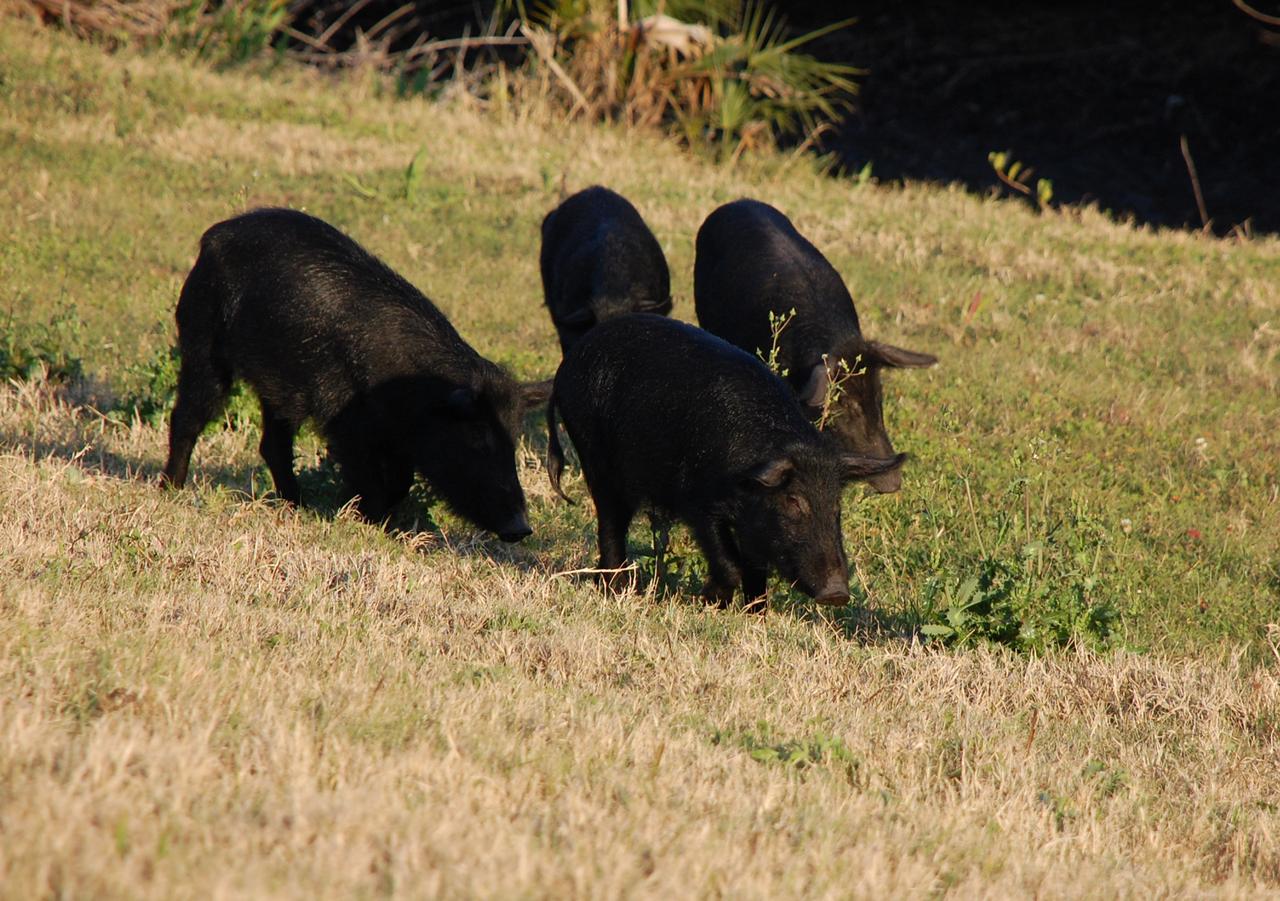
CAPE CANAVERAL, Fla. – At NASA's Kennedy Space Center in Florida, adult wild pigs hunt for food in the grassy field. The wild pigs have flourished in the environs around Kennedy, which shares a border with the Merritt Island National Wildlife Refuge, without many predators other than panthers and humans. Pigs were introduced to Florida in the 1500s and are now found statewide in wooded areas close to water. Pigs are omnivores, foraging on the ground and rooting just beneath the surface, which damages the groundcover. Wild pigs eat almost anything that has nutritional value, including tubers, roots, shoots, acorns, fruits, berries, earthworms, amphibians, reptiles and rodents. Their appearance is similar to domestic hogs, but leaner, with a longer, narrower head and a coarser, denser coat. Females may have two litters per year. The piglets are weaned in a few weeks but remain with the mother for several months. Photo credit: NASA/Ben Smegelsky
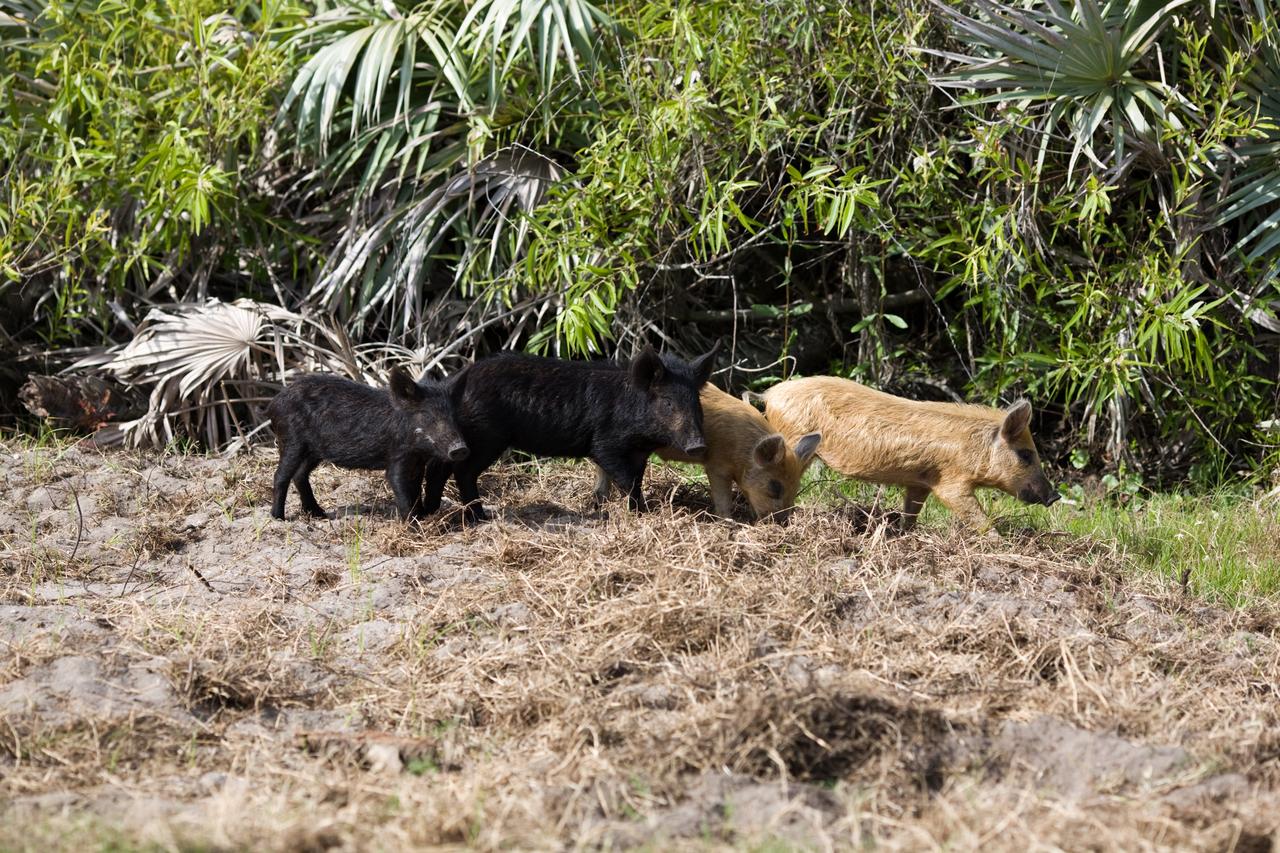
CAPE CANAVERAL, Fla. –– Wild pigs forage for food near a road through NASA's Kennedy Space Center in Florida. The wild pigs have flourished in the environs around Kennedy, which shares a border with the Merritt Island National Wildlife Refuge, without many predators other than panthers and humans. Pigs were introduced to Florida in the 1500s and are now found statewide in wooded areas close to water. Pigs are omnivores, foraging on the ground and rooting just beneath the surface, which damages the groundcover. Wild pigs eat almost anything that has nutritional value, including tubers, roots, shoots, acorns, fruits, berries, earthworms, amphibians, reptiles and rodents. Their appearance is similar to domestic hogs, but leaner, with a longer, narrower head and a coarser, denser coat. Females may have two litters per year. The piglets are weaned in a few weeks but remain with the mother for several months. Photo credit: NASA/Dimitri Gerondidakis
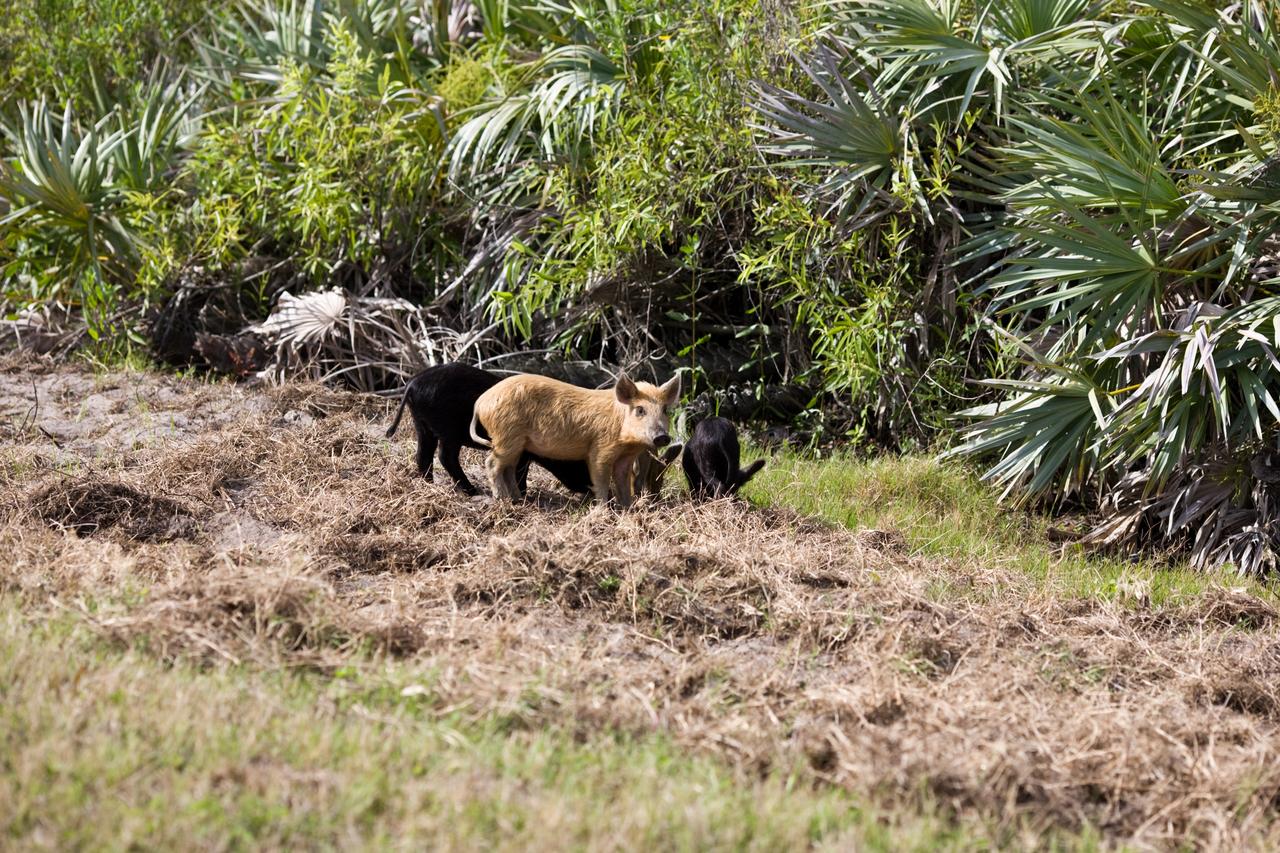
CAPE CANAVERAL, Fla. –– Wild pigs forage for food near a road through NASA's Kennedy Space Center in Florida. The wild pigs have flourished in the environs around Kennedy, which shares a border with the Merritt Island National Wildlife Refuge, without many predators other than panthers and humans. Pigs were introduced to Florida in the 1500s and are now found statewide in wooded areas close to water. Pigs are omnivores, foraging on the ground and rooting just beneath the surface, which damages the groundcover. Wild pigs eat almost anything that has nutritional value, including tubers, roots, shoots, acorns, fruits, berries, earthworms, amphibians, reptiles and rodents. Their appearance is similar to domestic hogs, but leaner, with a longer, narrower head and a coarser, denser coat. Females may have two litters per year. The piglets are weaned in a few weeks but remain with the mother for several months. Photo credit: NASA/Dimitri Gerondidakis
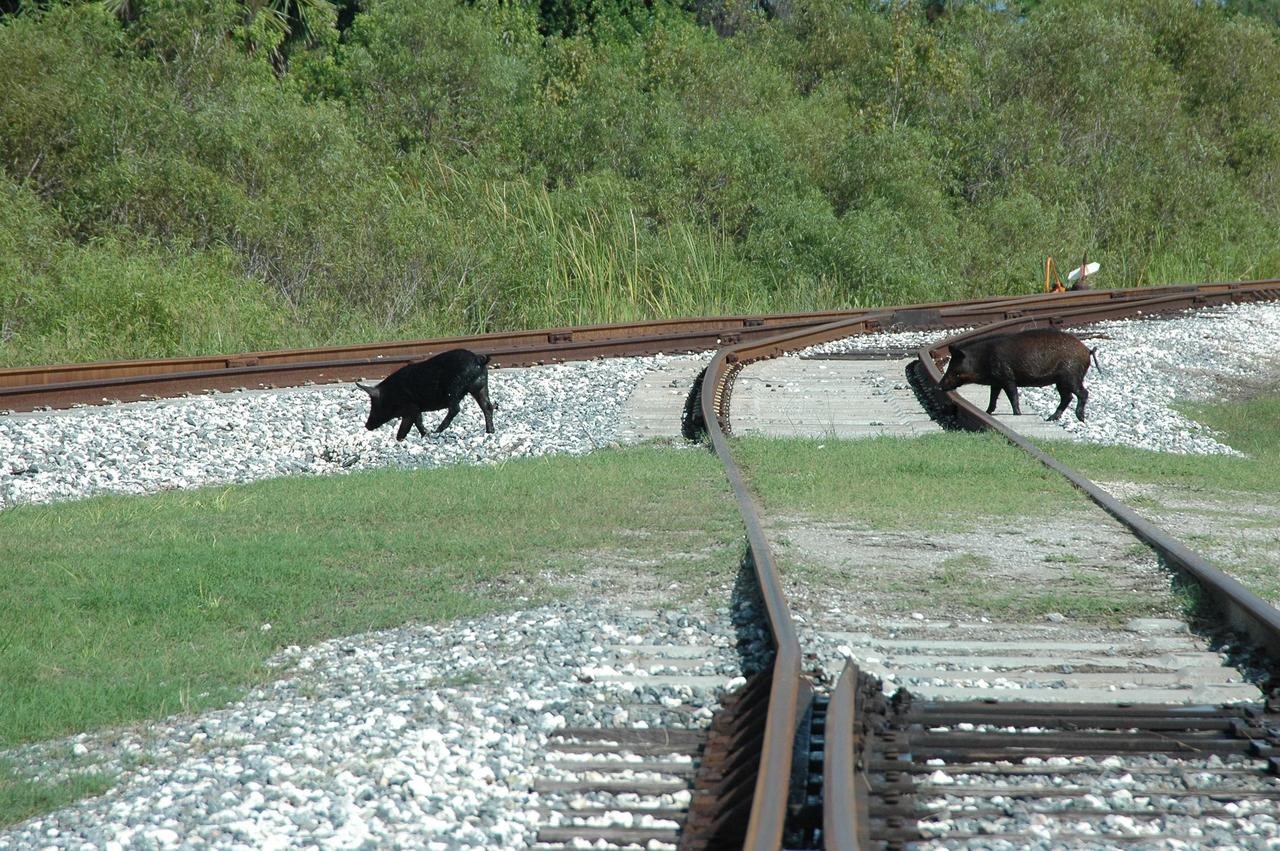
KENNEDY SPACE CENTER, FLA. - Two wild pigs cross railroad tracks on grounds at NASA Kennedy Space Center. The wild pigs have flourished in the environs around KSC, which shares a border with the Merritt Island National Wildlife Refuge, without many predators other than panthers and humans. Pigs were introduced to Florida in the 1500s and are now found statewide in wooded areas close to water. Pigs are omnivores, foraging on the ground and rooting just beneath the surface, which damages the groundcover. Wild pigs eat almost anything that has nutritional value, including tubers, roots, shoots, acorns, fruits, berries, earthworms, amphibians, reptiles and rodents. Appearance is similar to domestic hogs, but leaner, with a longer, narrower head and a coarser, denser coat. Females may have two litters per year. The piglets are weaned in a few weeks but remain with the mother for several months.
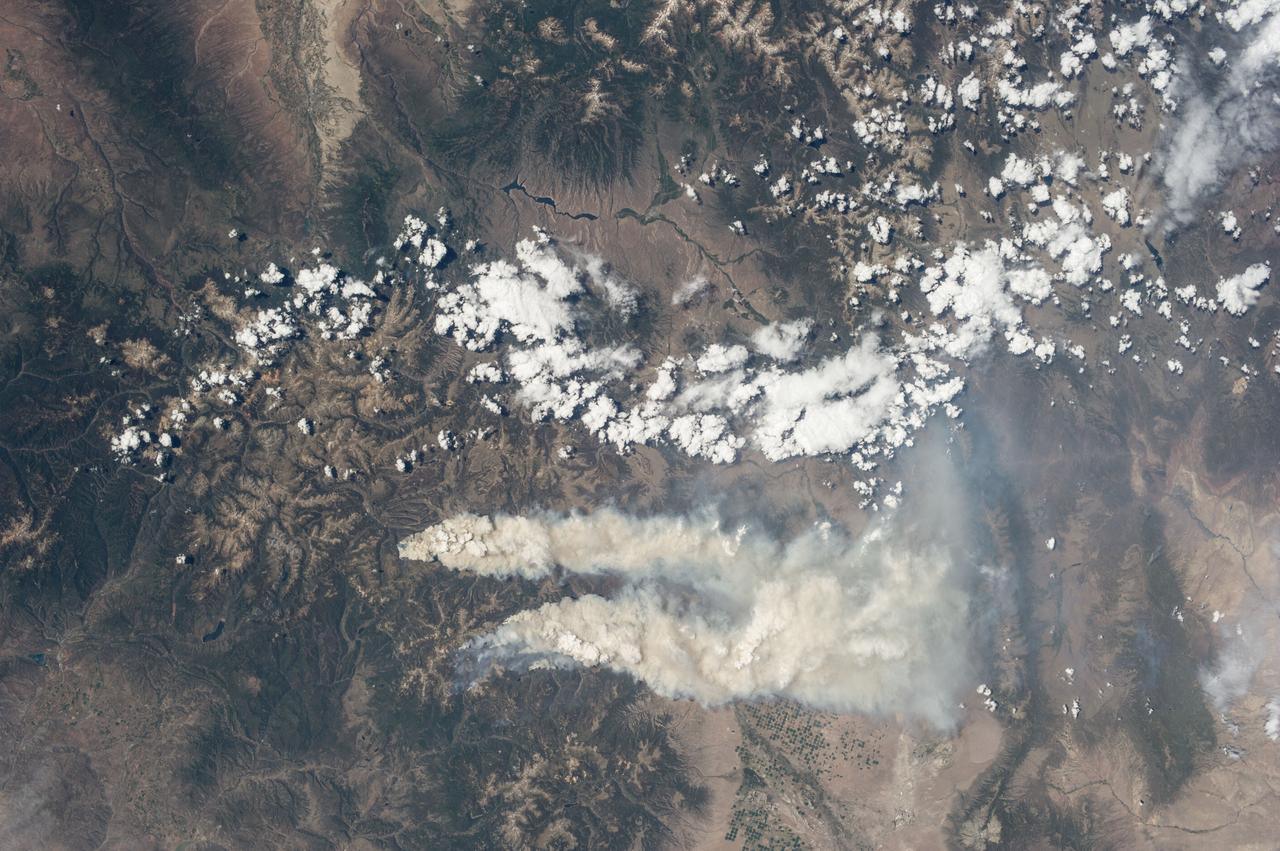
Earth observation taken during a day pass by an Expedition 36 crew member on board the International Space Station (ISS). Photo downlinked to folder: Colorado wild fires.
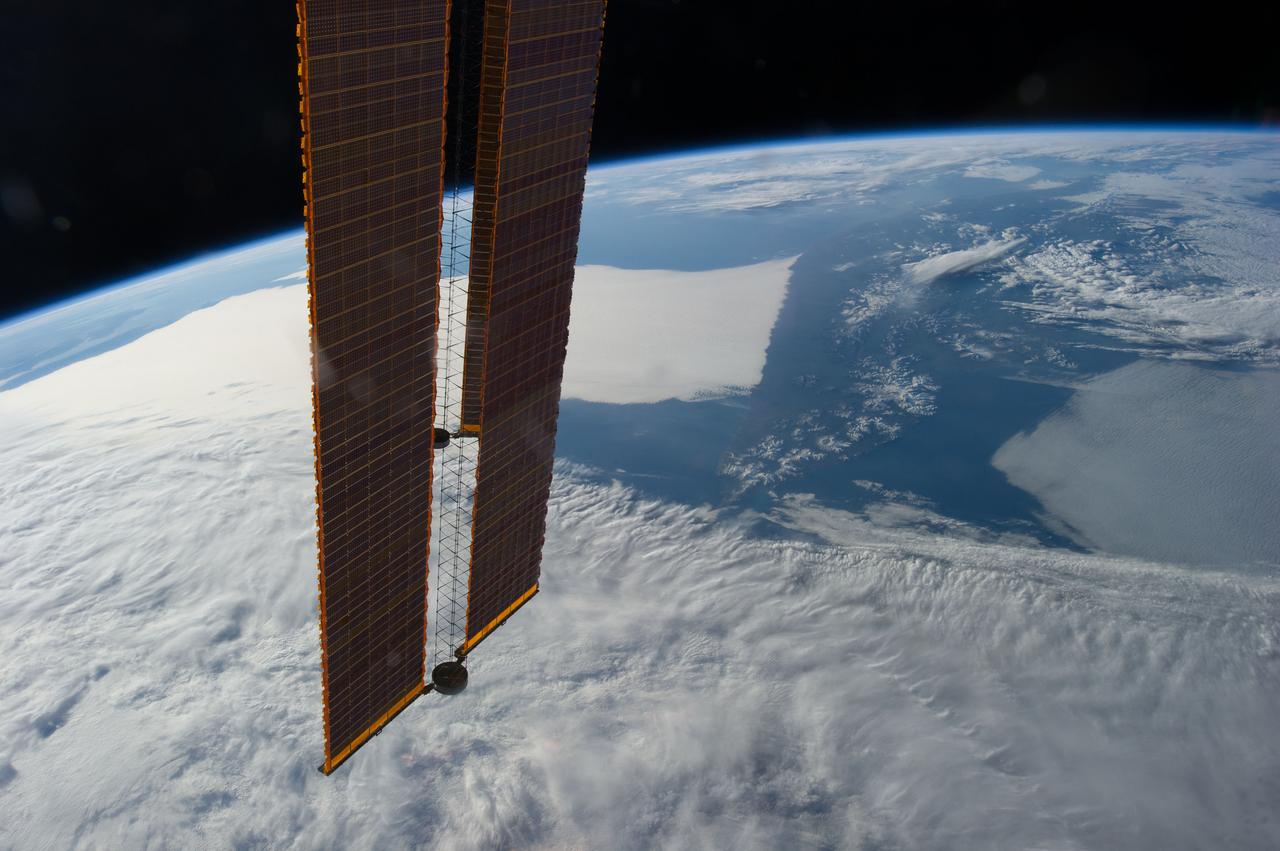
Earth Observation taken during a day pass by the Expedition 40 crew aboard the International Space Station (ISS). Folder lists this as: Moon, Japan, Kamchatka with a wild cloud. Part of a solar array is also visible.
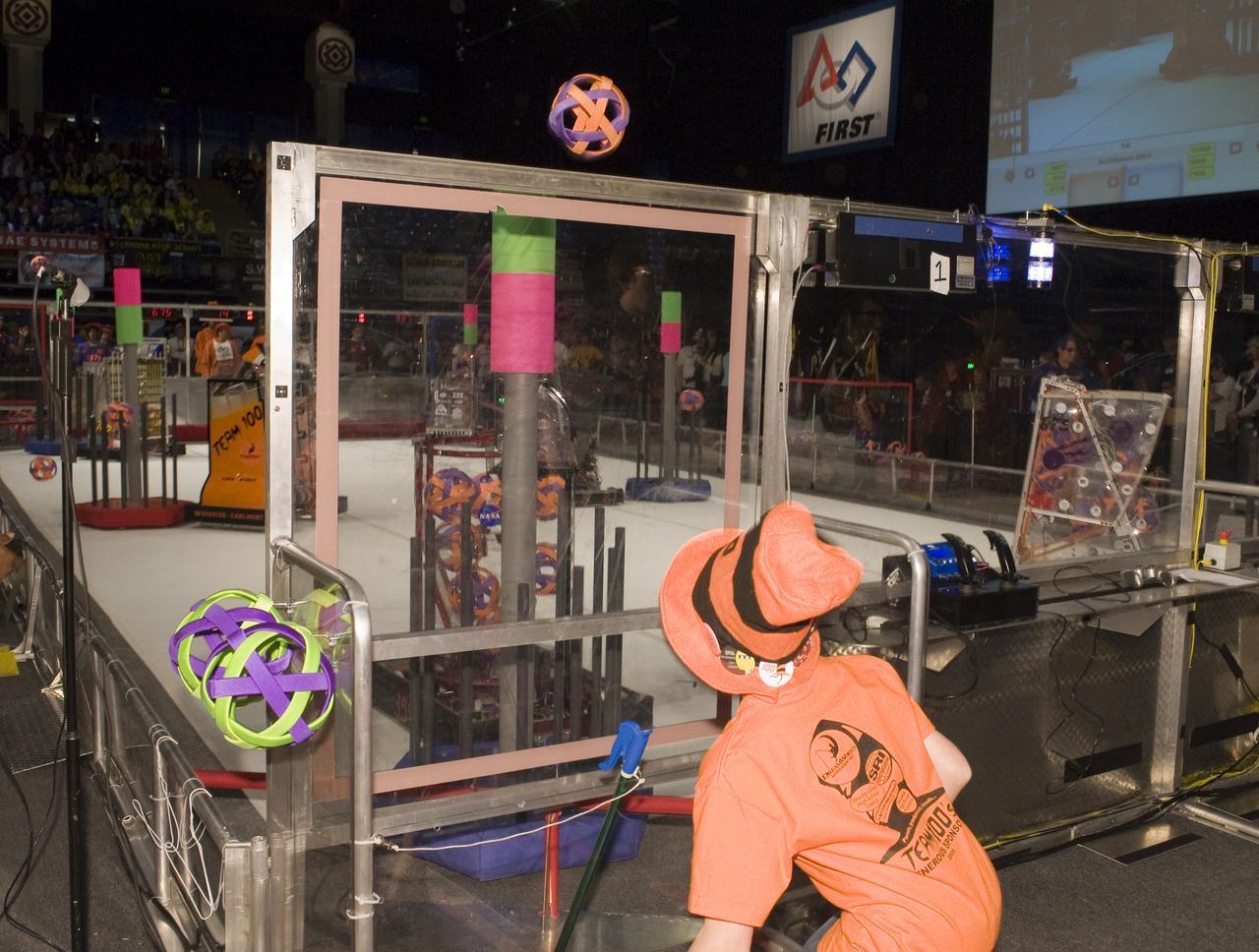
FIRST Robotics Competition 'Lunacy' hosted by NASA at San Jose State University Event Center. For Inspiration and Recognition of Science and Technology let the games begin. the Wild Hats team #100 take a sideways vies of their bot on the field
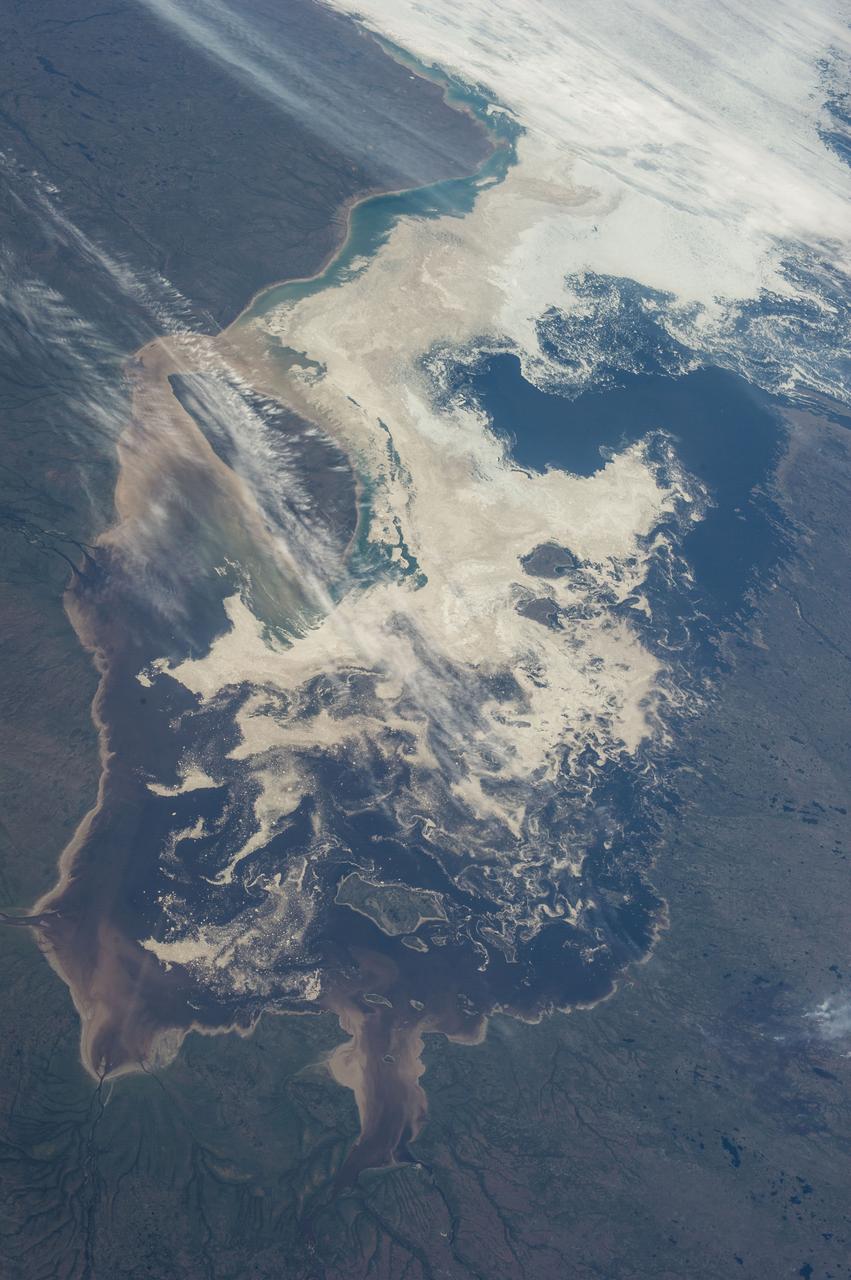
Earth observation taken during a day pass by an Expedition 36 crew member on board the International Space Station (ISS). Photo downlinked to folder: Colorado wild fires.
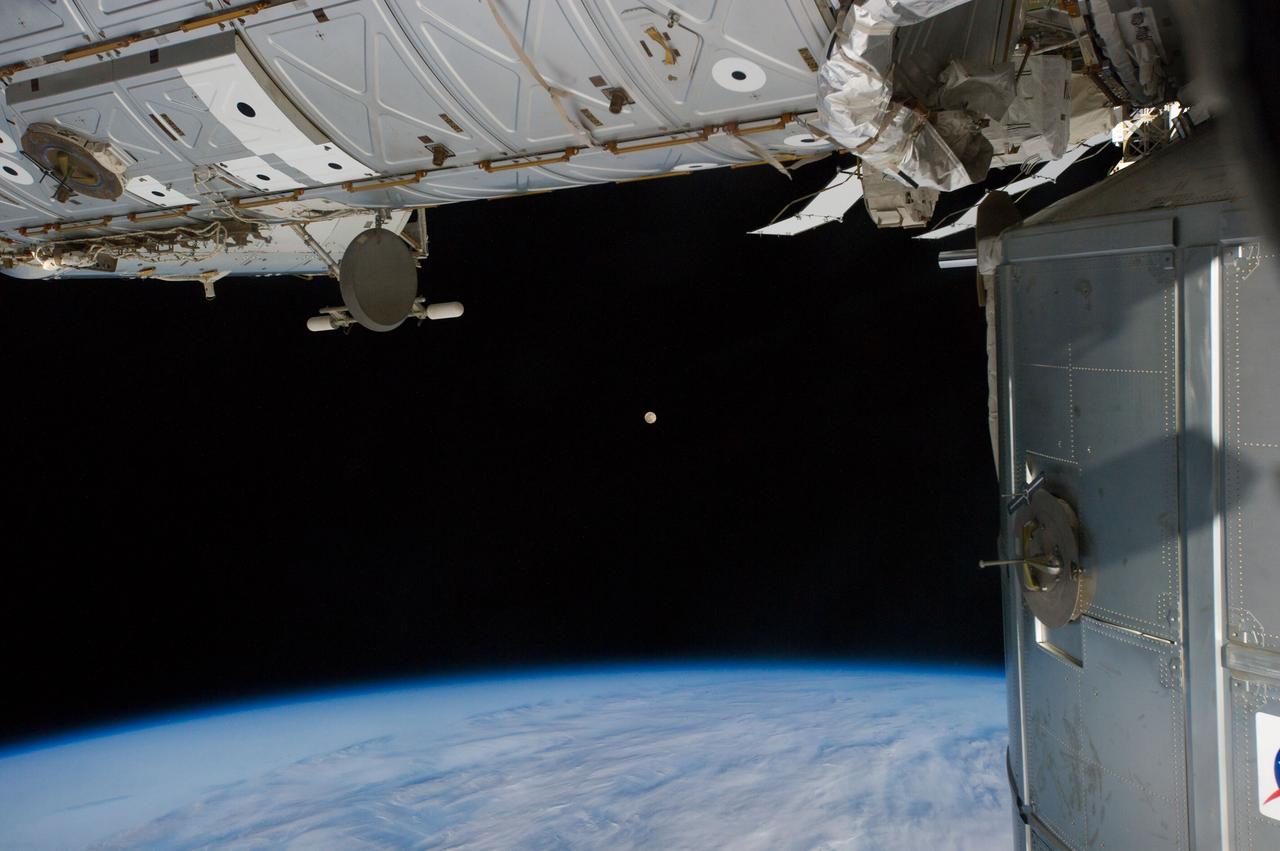
Earth Observation taken during a day pass by the Expedition 40 crew aboard the International Space Station (ISS). Folder lists this as: Moon, Japan, Kamchatka with a wild cloud. Part of the U.S. Lab and PMM are also visible.
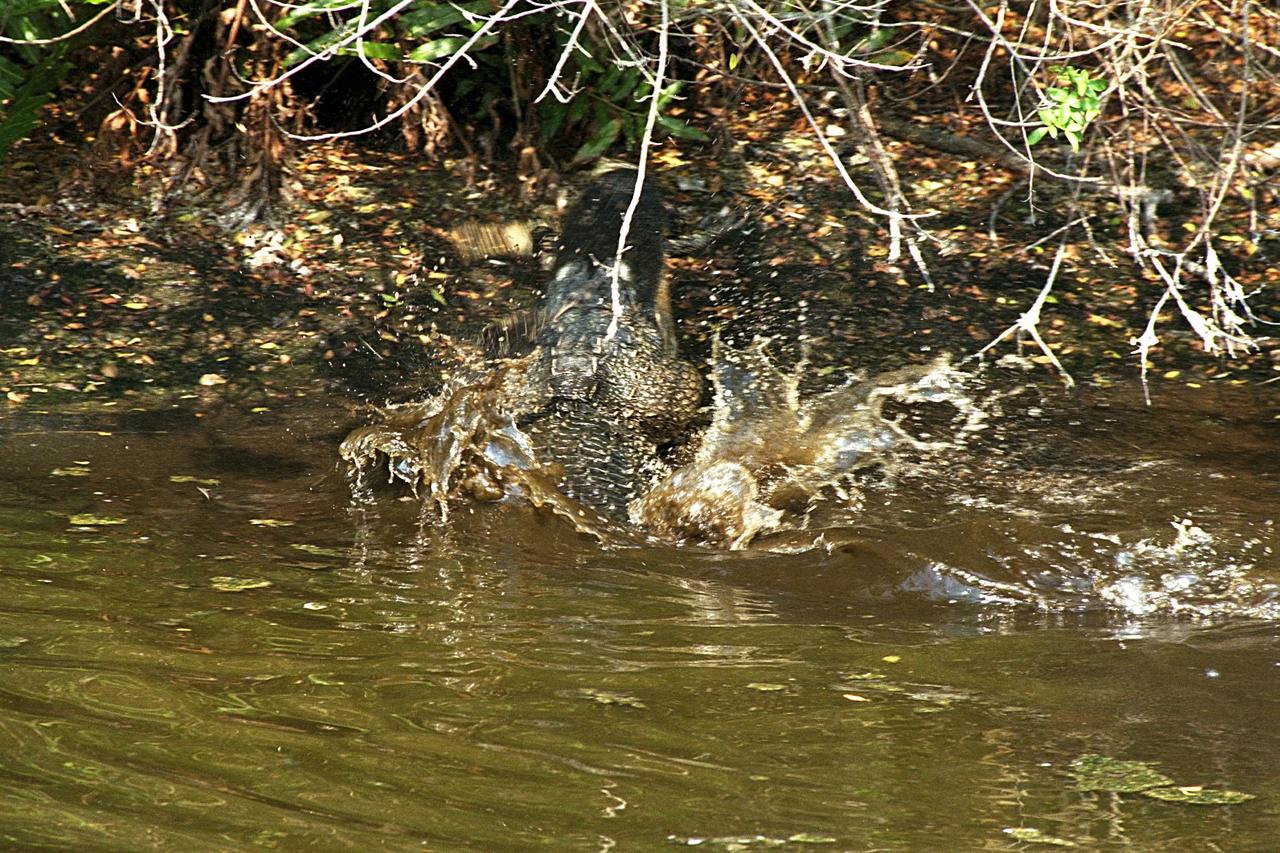
KENNEDY SPACE CENTER, FLA. -- A large alligator attacks and eats a smaller one in a natural display of cannibalism. Although this event has been observed infrequently by Kennedy Space Center's staff photographers, it is common feeding behavior among the wild alligator population on the space center. Alligators are carnivorous and will eat any living thing that crosses their paths and is small enough for them to kill. For this reason, it is dangerous to feed wild alligators, and in Florida, it is also illegal. The Merritt Island National Wildlife Refuge, which is operated by the U.S. Fish and Wildlife Service, is located on Kennedy Space Center property.
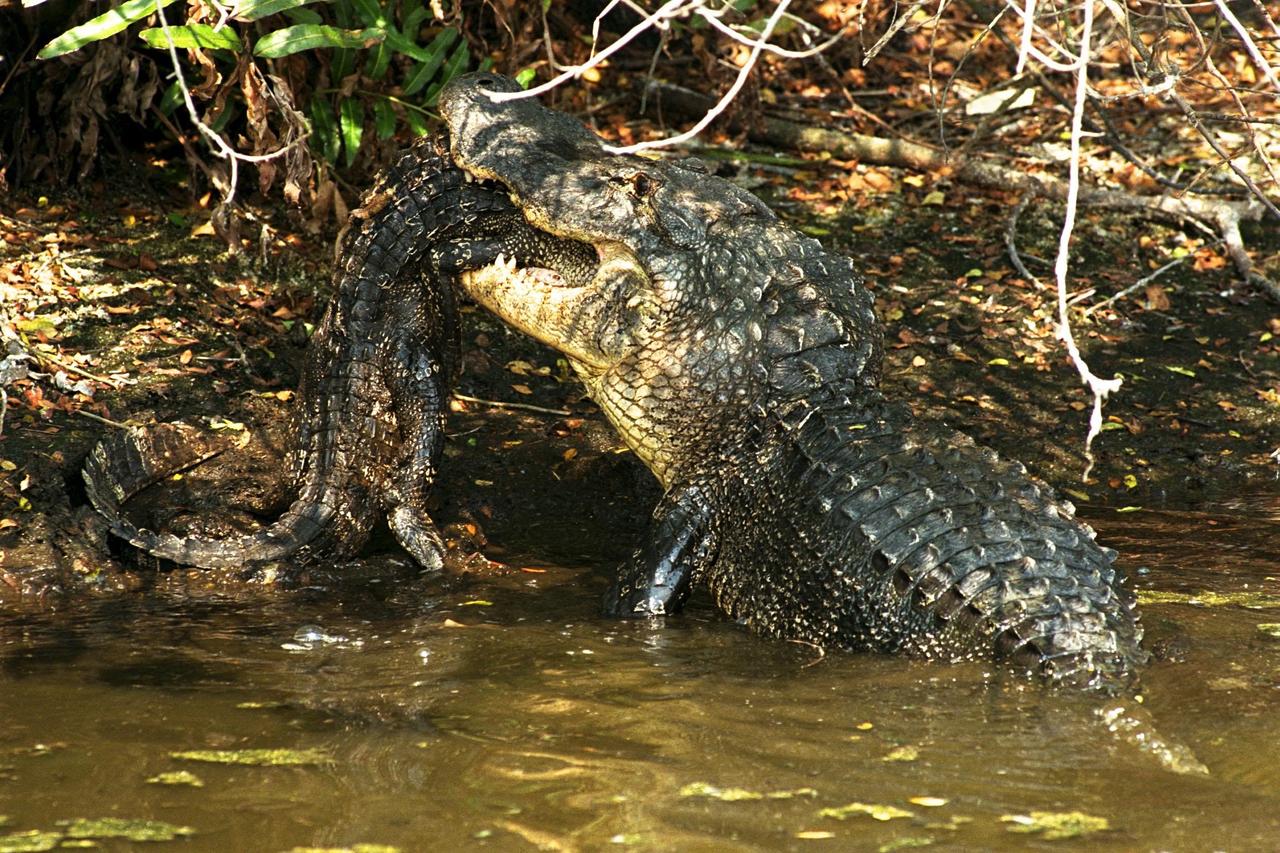
KENNEDY SPACE CENTER, FLA. -- A large alligator attacks and eats a smaller one in a natural display of cannibalism. Although this event has been observed infrequently by Kennedy Space Center's staff photographers, it is common feeding behavior among the wild alligator population on the space center. Alligators are carnivorous and will eat any living thing that crosses their paths and is small enough for them to kill. For this reason, it is dangerous to feed wild alligators, and in Florida, it is also illegal. The Merritt Island National Wildlife Refuge, which is operated by the U.S. Fish and Wildlife Service, is located on Kennedy Space Center property.

KENNEDY SPACE CENTER, FLA. -- A large alligator attacks and eats a smaller one in a natural display of cannibalism. Although this event has been observed infrequently by Kennedy Space Center's staff photographers, it is common feeding behavior among the wild alligator population on the space center. Alligators are carnivorous and will eat any living thing that crosses their paths and is small enough for them to kill. For this reason, it is dangerous to feed wild alligators, and in Florida, it is also illegal. The Merritt Island National Wildlife Refuge, which is operated by the U.S. Fish and Wildlife Service, is located on Kennedy Space Center property.
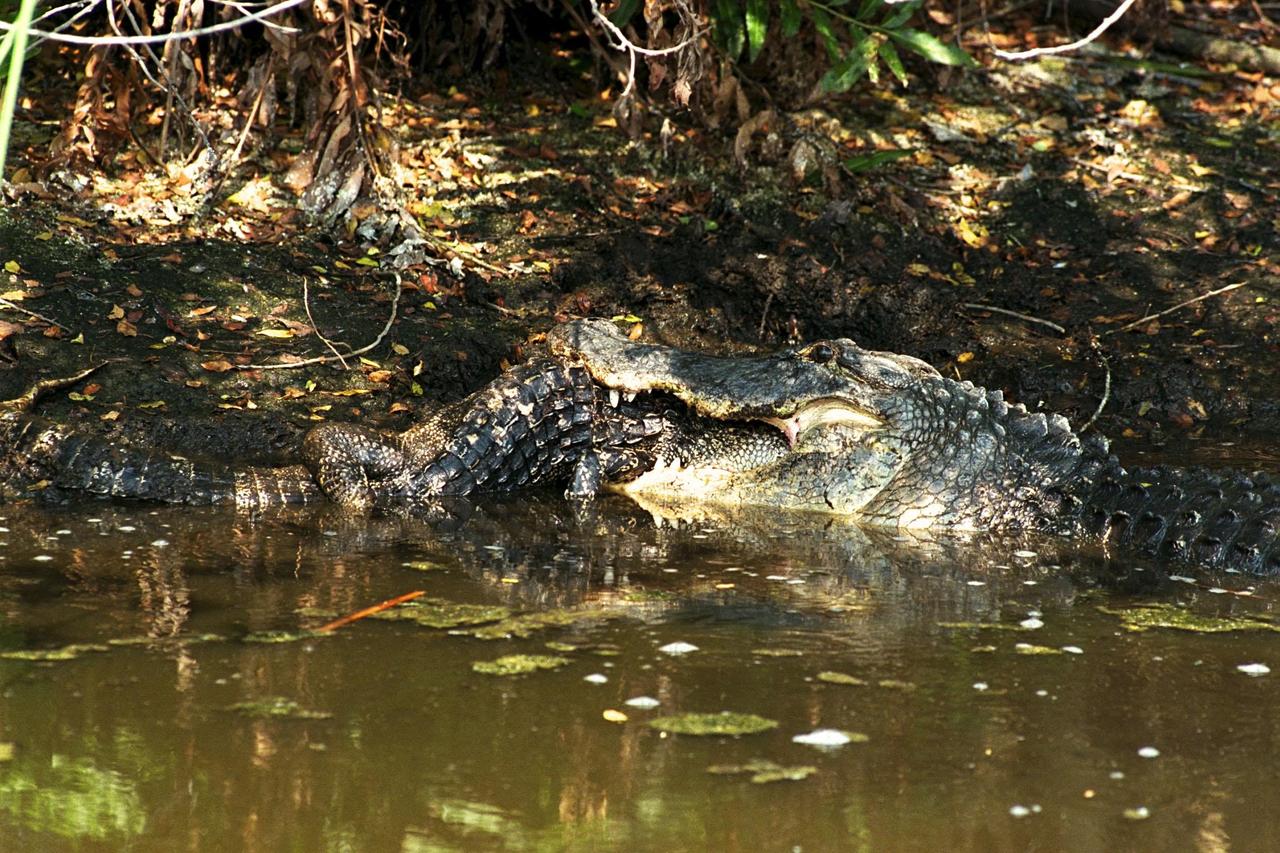
KENNEDY SPACE CENTER, FLA. -- A large alligator attacks and eats a smaller one in a natural display of cannibalism. Although this event has been observed infrequently by Kennedy Space Center's staff photographers, it is common feeding behavior among the wild alligator population on the space center. Alligators are carnivorous and will eat any living thing that crosses their paths and is small enough for them to kill. For this reason, it is dangerous to feed wild alligators, and in Florida, it is also illegal. The Merritt Island National Wildlife Refuge, which is operated by the U.S. Fish and Wildlife Service, is located on Kennedy Space Center property.
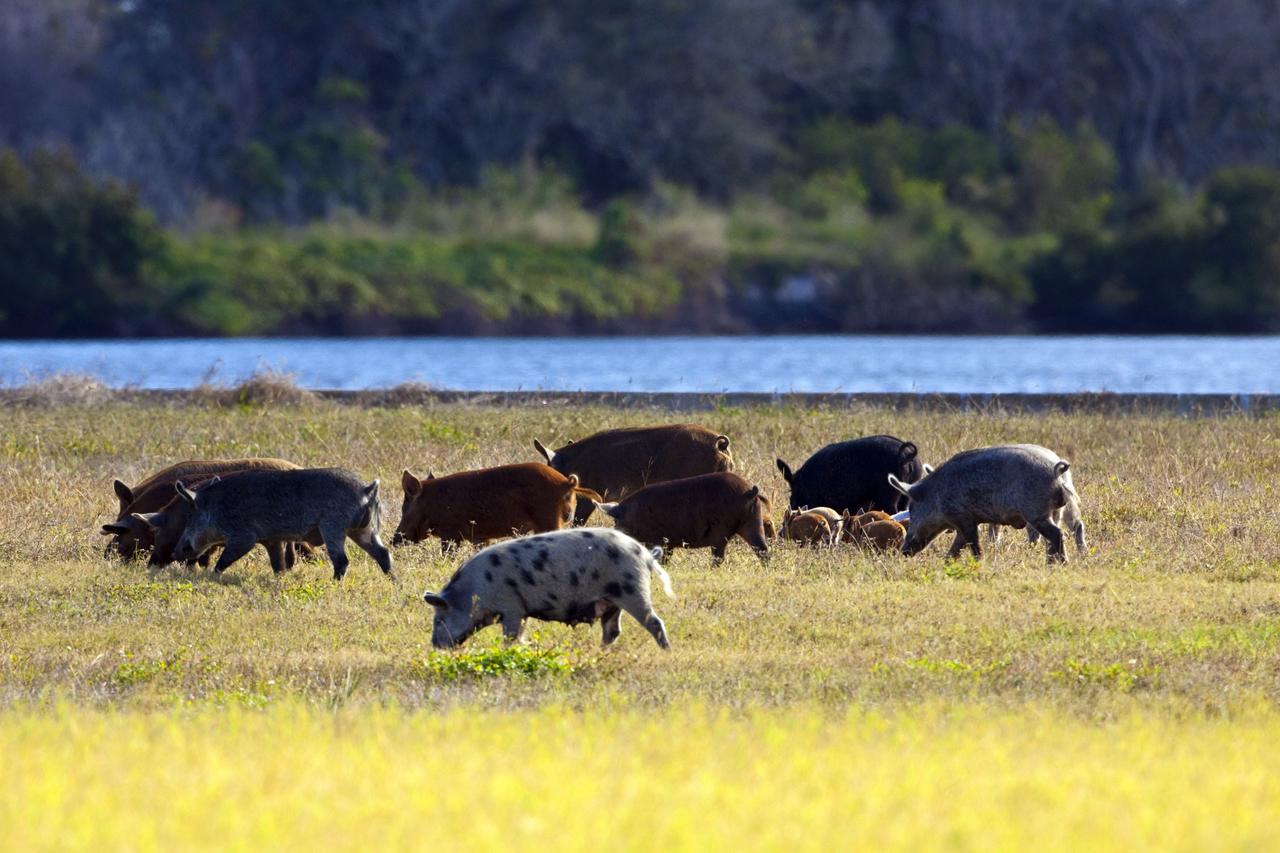
CAPE CANAVERAL, Fla. -- Several adult and baby wild pigs, in a variety of colors and patterns, graze in a grassy field at NASA's Kennedy Space Center in Florida. The wild pigs have flourished in the environs around Kennedy. The center shares a boundary with the Merritt Island National Wildlife Refuge, consisting of 140,000 acres. The refuge provides a wide variety of habitats -- coastal dunes, saltwater estuaries and marshes, freshwater impoundments, scrub, pine flatwoods, and hardwood hammocks -- that provide sanctuary for more than 1,500 species of plants and animals, including about 331 species of birds. Photo credit: NASA/Jim Grossmann
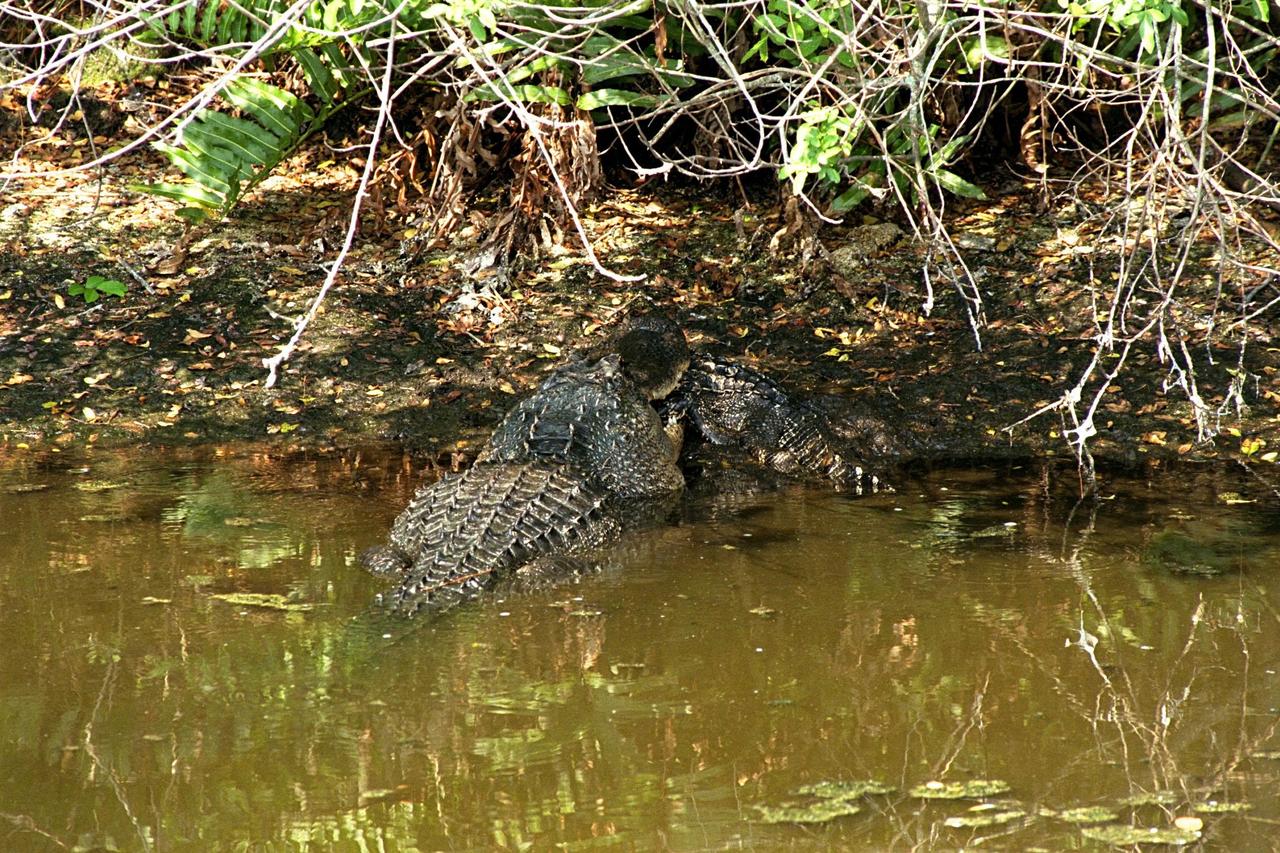
KENNEDY SPACE CENTER, FLA. -- A large alligator attacks and eats a smaller one in a natural display of cannibalism. Although this event has been observed infrequently by Kennedy Space Center's staff photographers, it is common feeding behavior among the wild alligator population on the space center. Alligators are carnivorous and will eat any living thing that crosses their paths and is small enough for them to kill. For this reason, it is dangerous to feed wild alligators, and in Florida, it is also illegal. The Merritt Island National Wildlife Refuge, which is operated by the U.S. Fish and Wildlife Service, is located on Kennedy Space Center property.
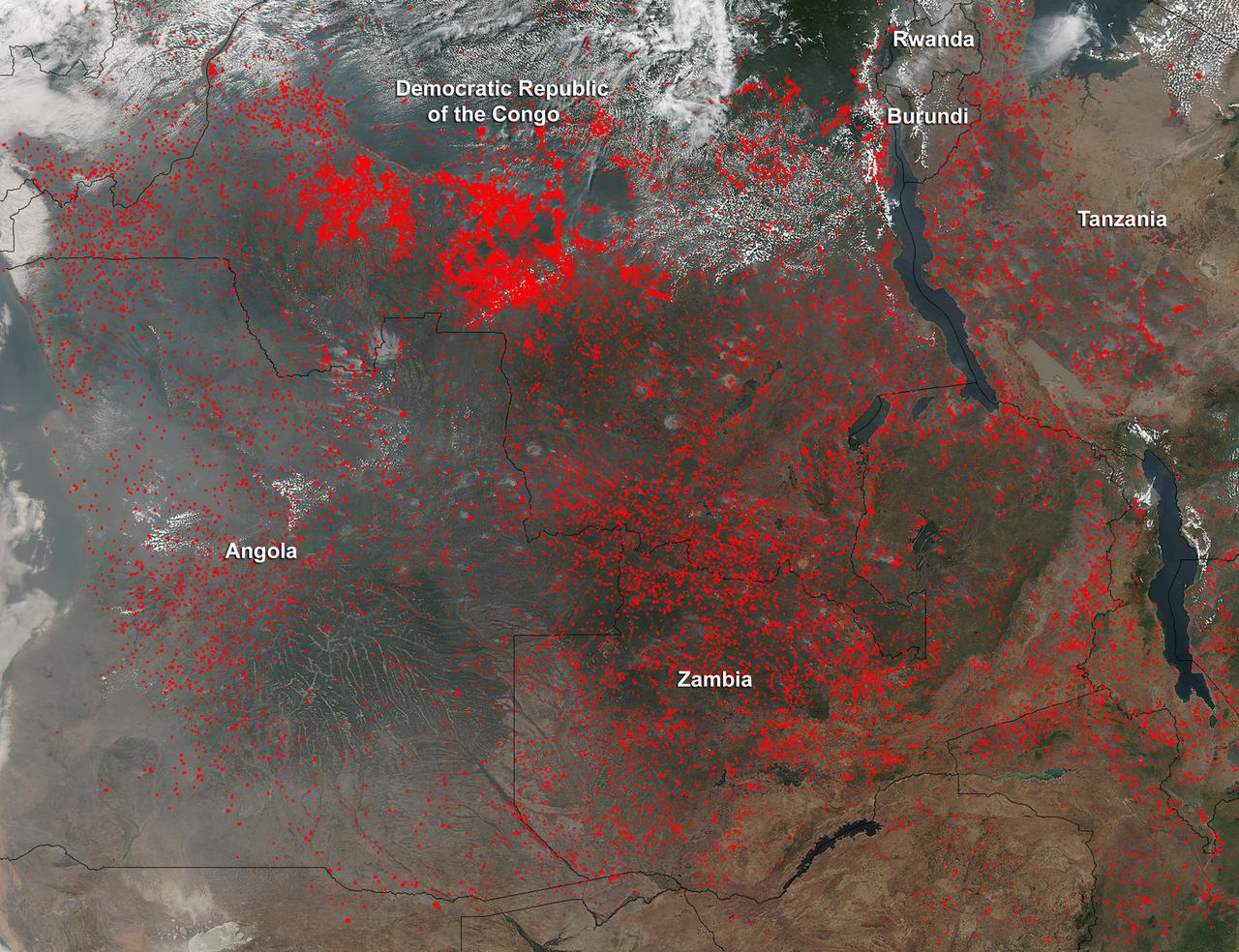
Widespread agricultural burning continues throughout central Africa. Smoke and fires in several countries were seen by the Suomi NPP satellite. Most of the fires were burning in the southern region of the Democratic Republic of the Congo, Tanzania, Zambia and Angola. NASA-NOAA's Suomi NPP satellite's Visible Infrared Imaging Radiometer Suite (VIIRS) instrument captured a look at multiple fires and smoke on August 1 at 7:55 a.m. EDT (11:55 UTC). Actively burning areas, detected by VIIRS are outlined in red. Credit: NASA/Jeff Schmaltz/NASA Goddard Rapid Response Team <b><a href="http://www.nasa.gov/audience/formedia/features/MP_Photo_Guidelines.html" rel="nofollow">NASA image use policy.</a></b> <b><a href="http://www.nasa.gov/centers/goddard/home/index.html" rel="nofollow">NASA Goddard Space Flight Center</a></b> enables NASA’s mission through four scientific endeavors: Earth Science, Heliophysics, Solar System Exploration, and Astrophysics. Goddard plays a leading role in NASA’s accomplishments by contributing compelling scientific knowledge to advance the Agency’s mission. <b>Follow us on <a href="http://twitter.com/NASAGoddardPix" rel="nofollow">Twitter</a></b> <b>Like us on <a href="http://www.facebook.com/pages/Greenbelt-MD/NASA-Goddard/395013845897?ref=tsd" rel="nofollow">Facebook</a></b> <b>Find us on <a href="http://instagrid.me/nasagoddard/?vm=grid" rel="nofollow">Instagram</a></b>
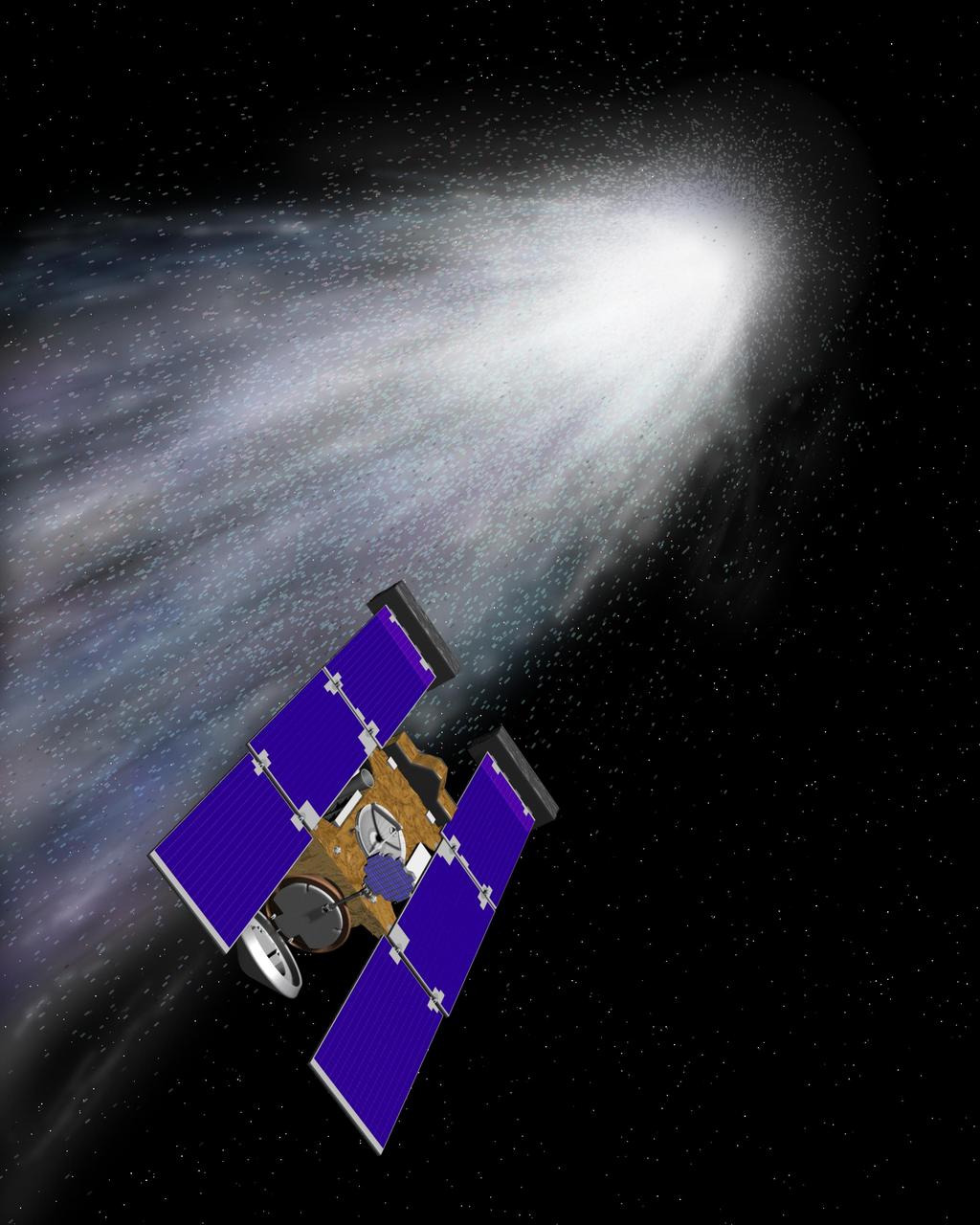
Artist rendering of NASA Stardust spacecraft. The spacecraft was launched on February 7, 1999, from Cape Canaveral Air Station, Florida, aboard a Delta II rocket.
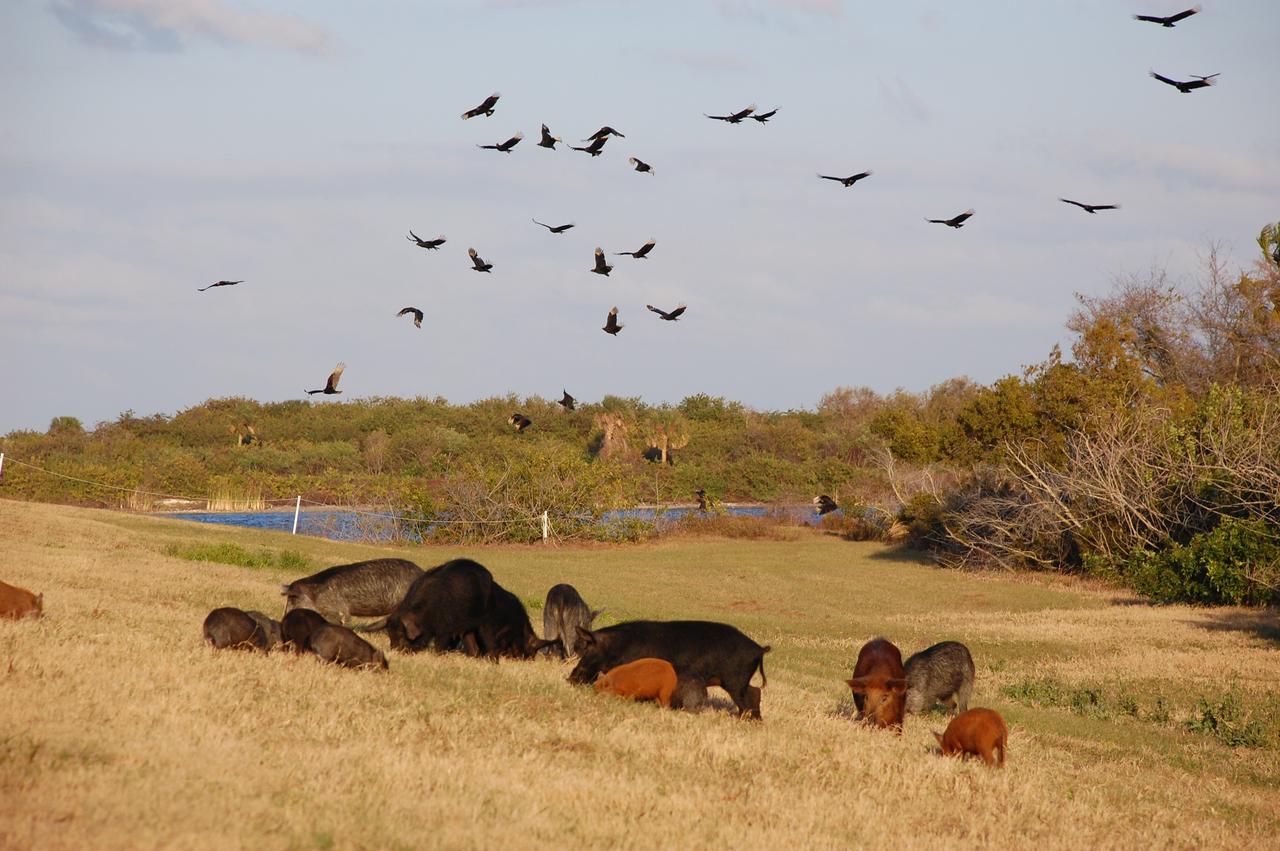
CAPE CANAVERAL, Fla. – At NASA's Kennedy Space Center in Florida, a family of wild pigs roots through the grass for food. Overhead, vultures circle, hunting for their share of food. The wild pigs have flourished in the environs around Kennedy, which shares a border with the Merritt Island National Wildlife Refuge, without many predators other than panthers and humans. Pigs were introduced to Florida in the 1500s and are now found statewide in wooded areas close to water. Pigs are omnivores, foraging on the ground and rooting just beneath the surface, which damages the groundcover. Wild pigs eat almost anything that has nutritional value, including tubers, roots, shoots, acorns, fruits, berries, earthworms, amphibians, reptiles and rodents. Their appearance is similar to domestic hogs, but leaner, with a longer, narrower head and a coarser, denser coat. Females may have two litters per year. The piglets are weaned in a few weeks but remain with the mother for several months. Photo credit: NASA/Ben Smegelsky

CAPE CANAVERAL, Fla. – At NASA's Kennedy Space Center in Florida, a wild pig stops hunting for food to eye the photographer. This pig is part of a larger family in the area. The wild pigs have flourished in the environs around Kennedy, which shares a border with the Merritt Island National Wildlife Refuge, without many predators other than panthers and humans. Pigs were introduced to Florida in the 1500s and are now found statewide in wooded areas close to water. Pigs are omnivores, foraging on the ground and rooting just beneath the surface, which damages the groundcover. Wild pigs eat almost anything that has nutritional value, including tubers, roots, shoots, acorns, fruits, berries, earthworms, amphibians, reptiles and rodents. Their appearance is similar to domestic hogs, but leaner, with a longer, narrower head and a coarser, denser coat. Females may have two litters per year. The piglets are weaned in a few weeks but remain with the mother for several months. Photo credit: NASA/Ben Smegelsky
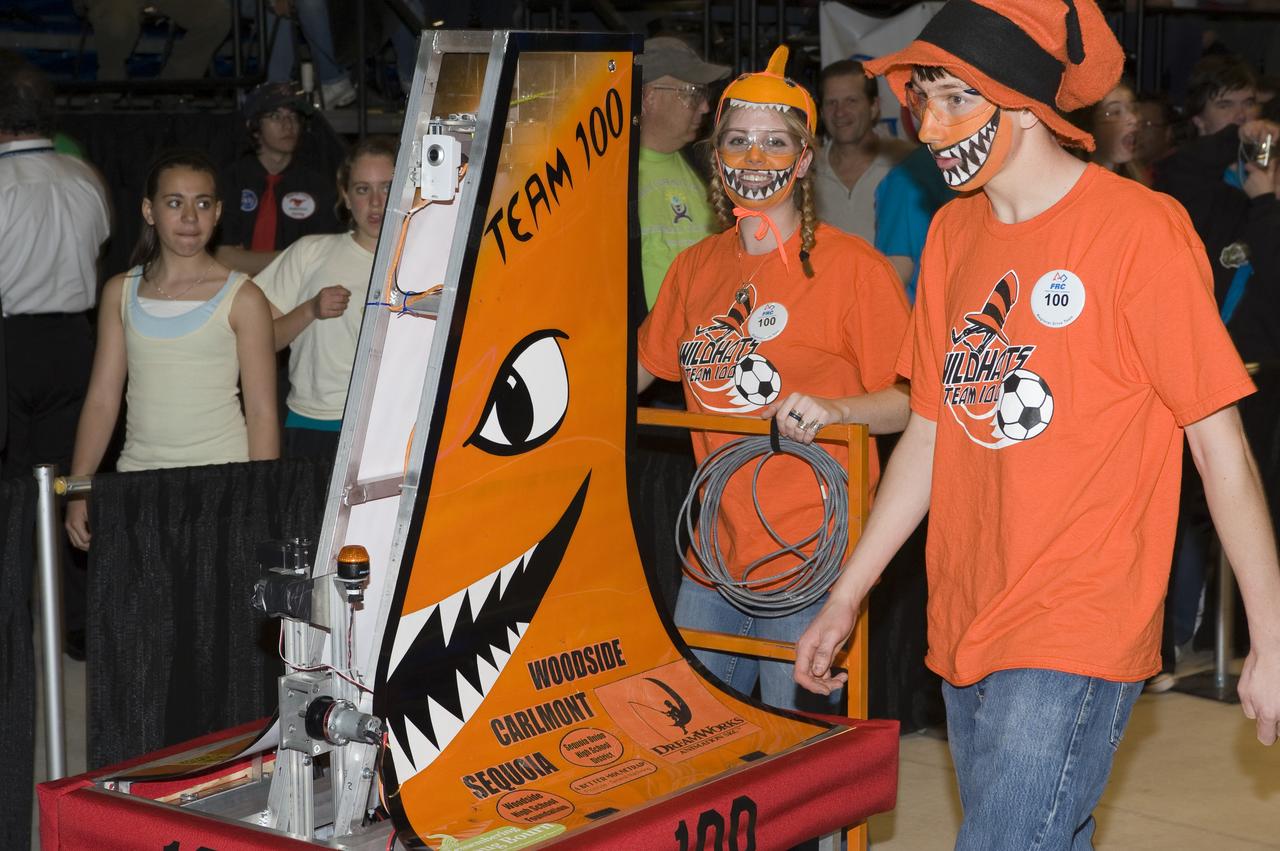
For Inspiration and Recognition of Science and Technology; FIRST Robotics Competition 2010 Silicon Valley Regional held at San Jose State University, San Jose, California The Wild Hats of Woodside H.S. & Carlmont H. S. & Sequoia H.S & Sequoia H.S. District, CA - Team 100
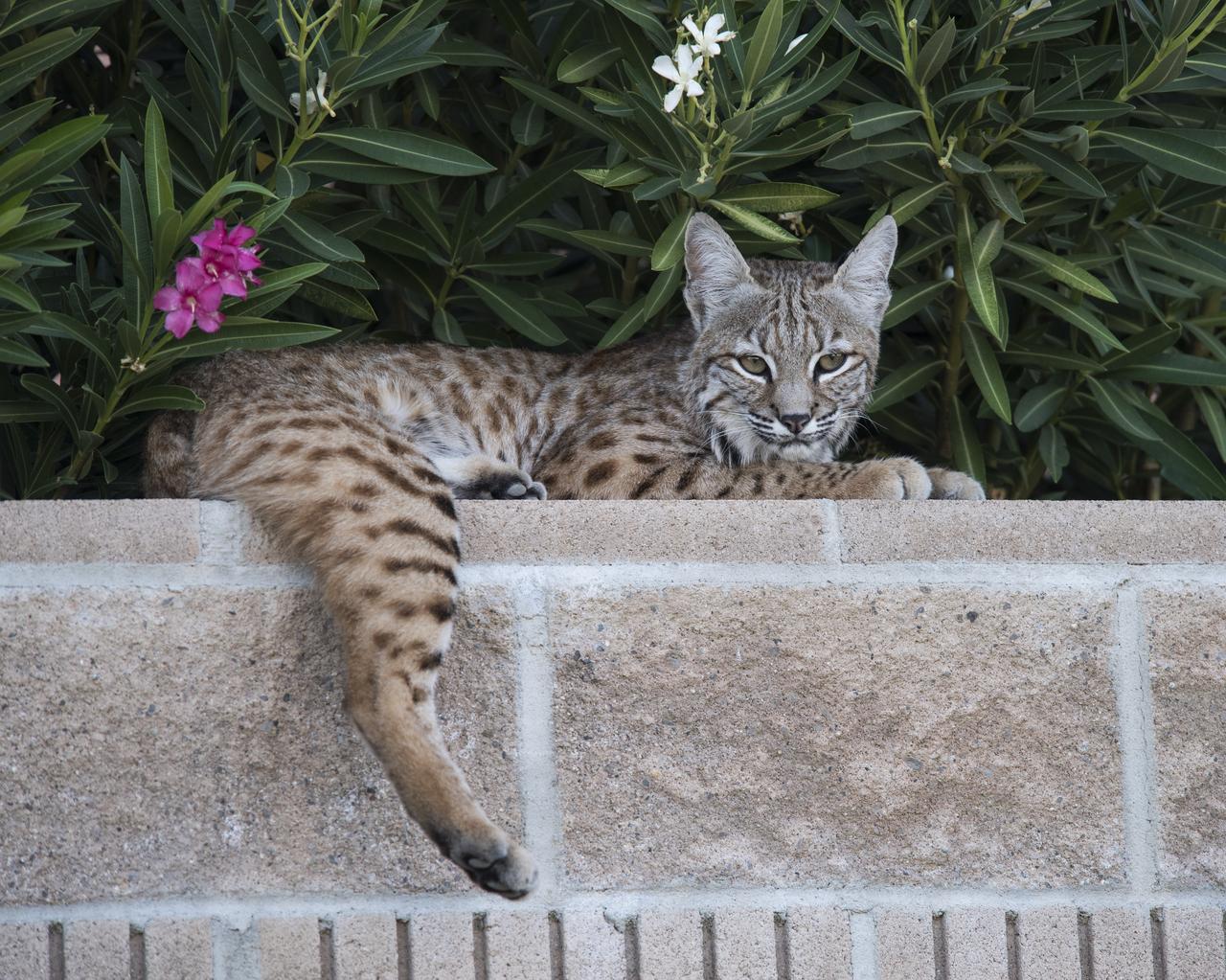
A bobcat resting leisurely on a retaining wall among the flowering bushes at Armstrong Flight Research Center in Edwards, California. The facility is home to a number of wild animals including the bobcats which are free to roam the more than 300,000 acres of Mojave Desert.
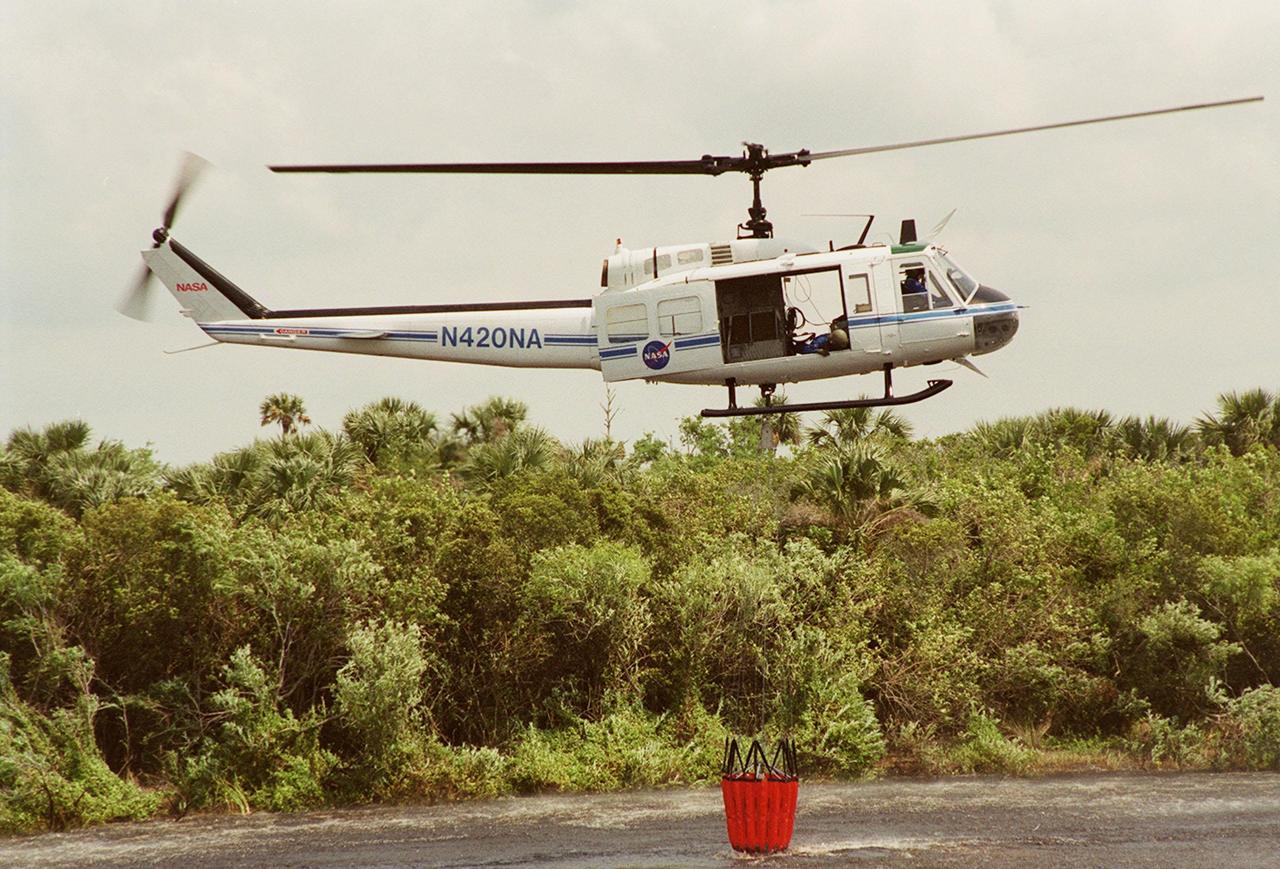
KENNEDY SPACE CENTER, FLA. -- A NASA helicopter lifts a high-impact-resistant flexible plastic bucket filled with water. The container will be used for fire protection on property and buildings at Kennedy Space Center.. Known as the "Bambi" bucket, it will also support the Fish and Wildlife Service for controlled burns plus any wild fires in the area.
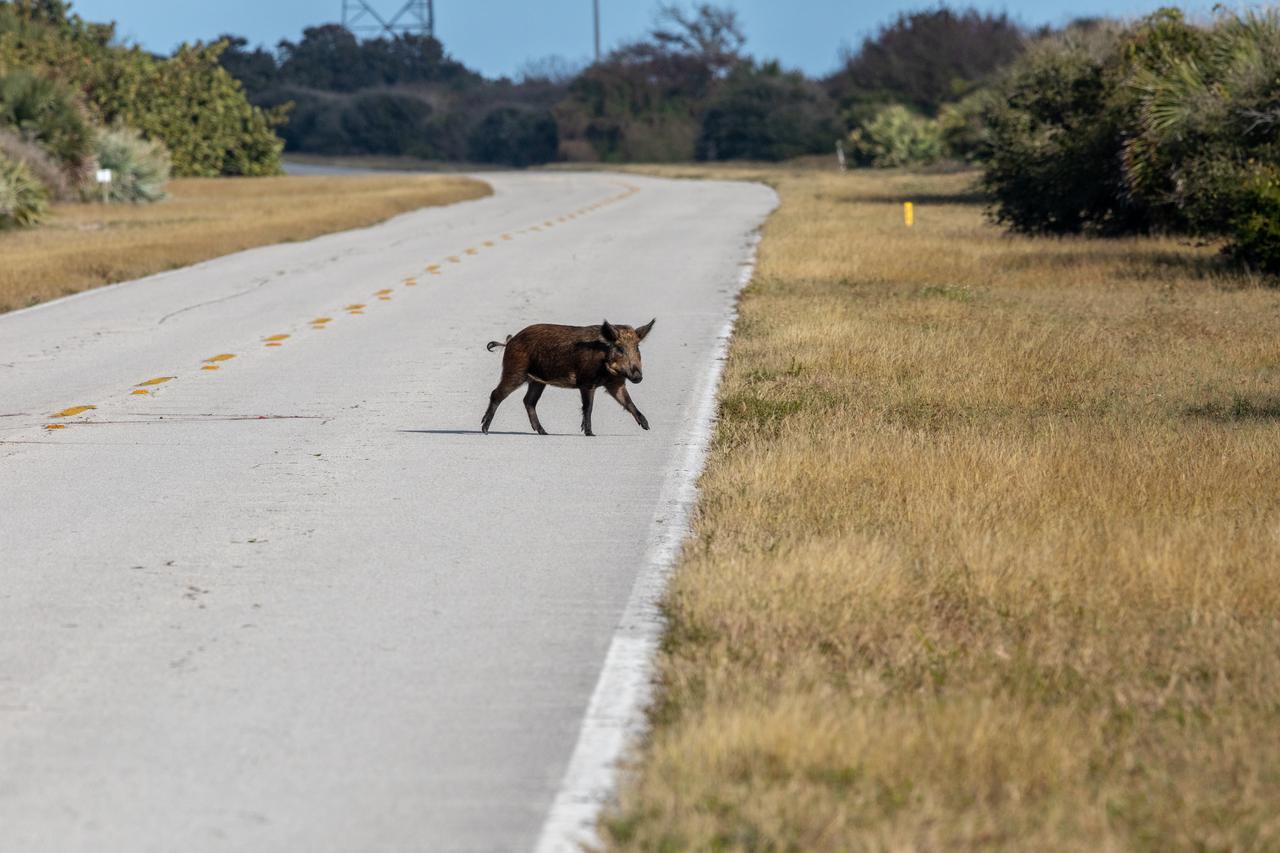
A wild pig crosses a roadway at NASA's Kennedy Space Center in Florida on Jan. 11, 2021. The center shares a border with the Merritt Island National Wildlife Refuge. More than 330 native and migratory bird species, 25 mammal, 117 fish and 65 amphibian and reptile species call Kennedy and the wildlife refuge home.
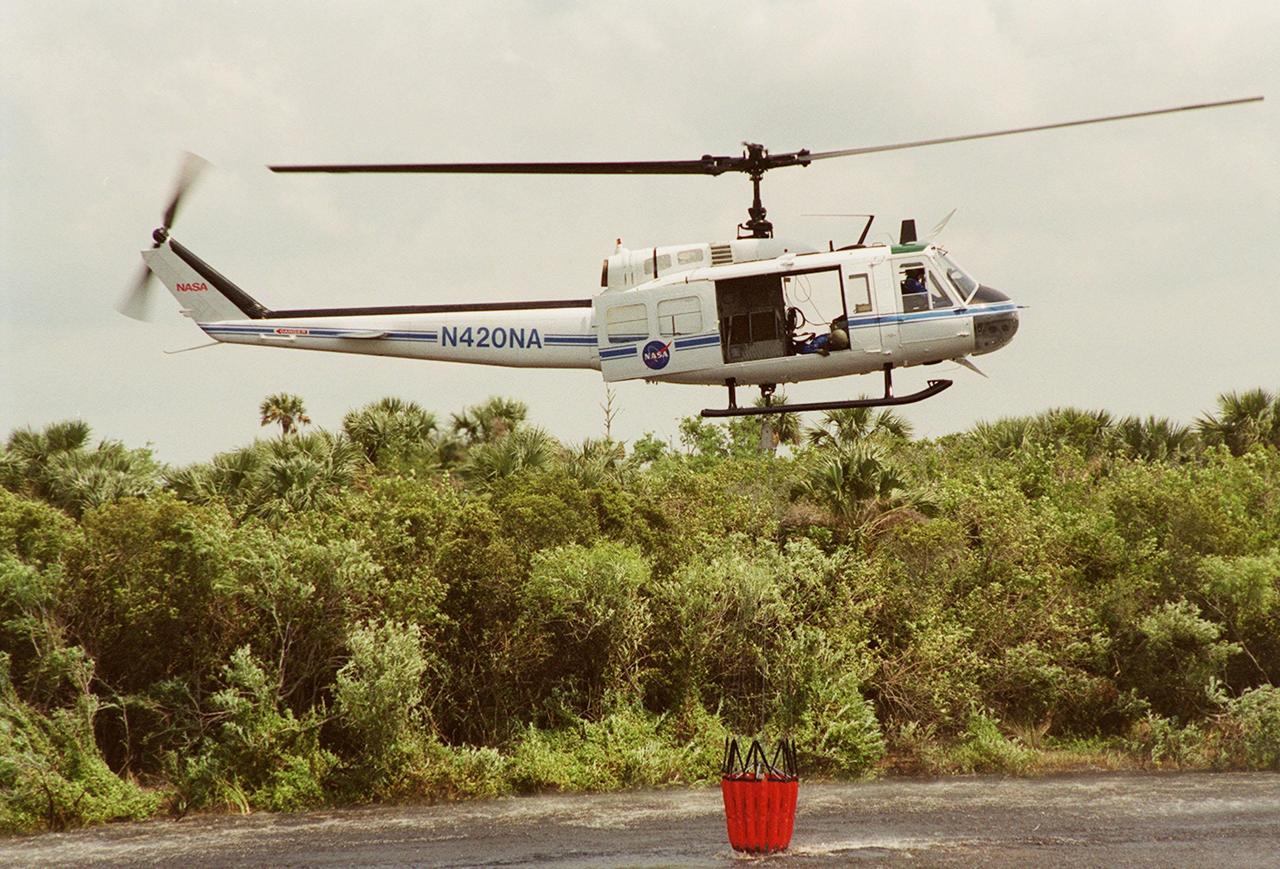
KENNEDY SPACE CENTER, FLA. -- A NASA helicopter lifts a high-impact-resistant flexible plastic bucket filled with water. The container will be used for fire protection on property and buildings at Kennedy Space Center.. Known as the "Bambi" bucket, it will also support the Fish and Wildlife Service for controlled burns plus any wild fires in the area.
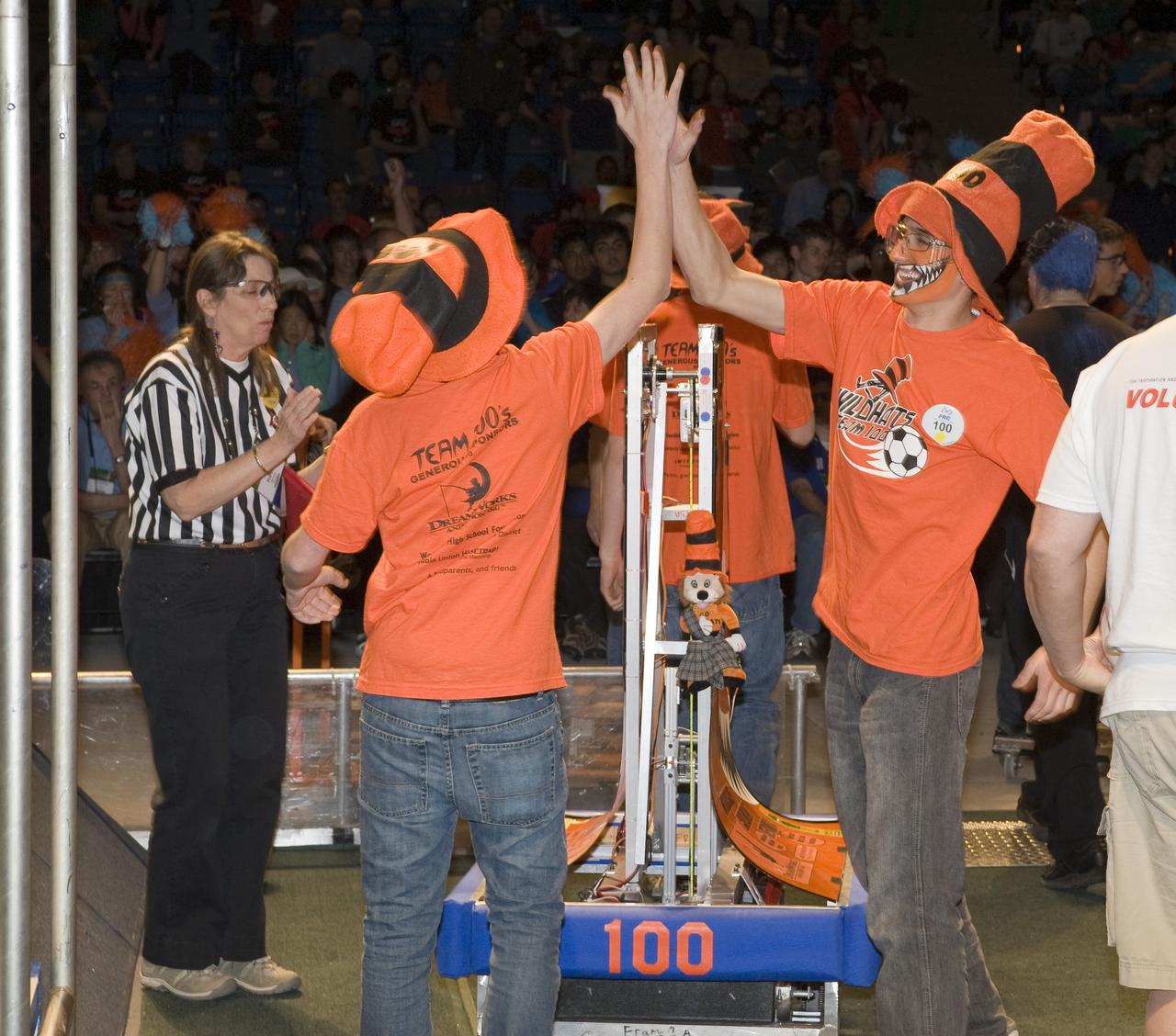
For Inspiration and Recognition of Science and Technology; FIRST Robotics Competition 2010 Silicon Valley Regional held at San Jose State University, San Jose, California The Wild Hats of Woodside H.S. & Carlmont H. S. & Sequoia H.S & Sequoia H.S. District, CA - Team 100
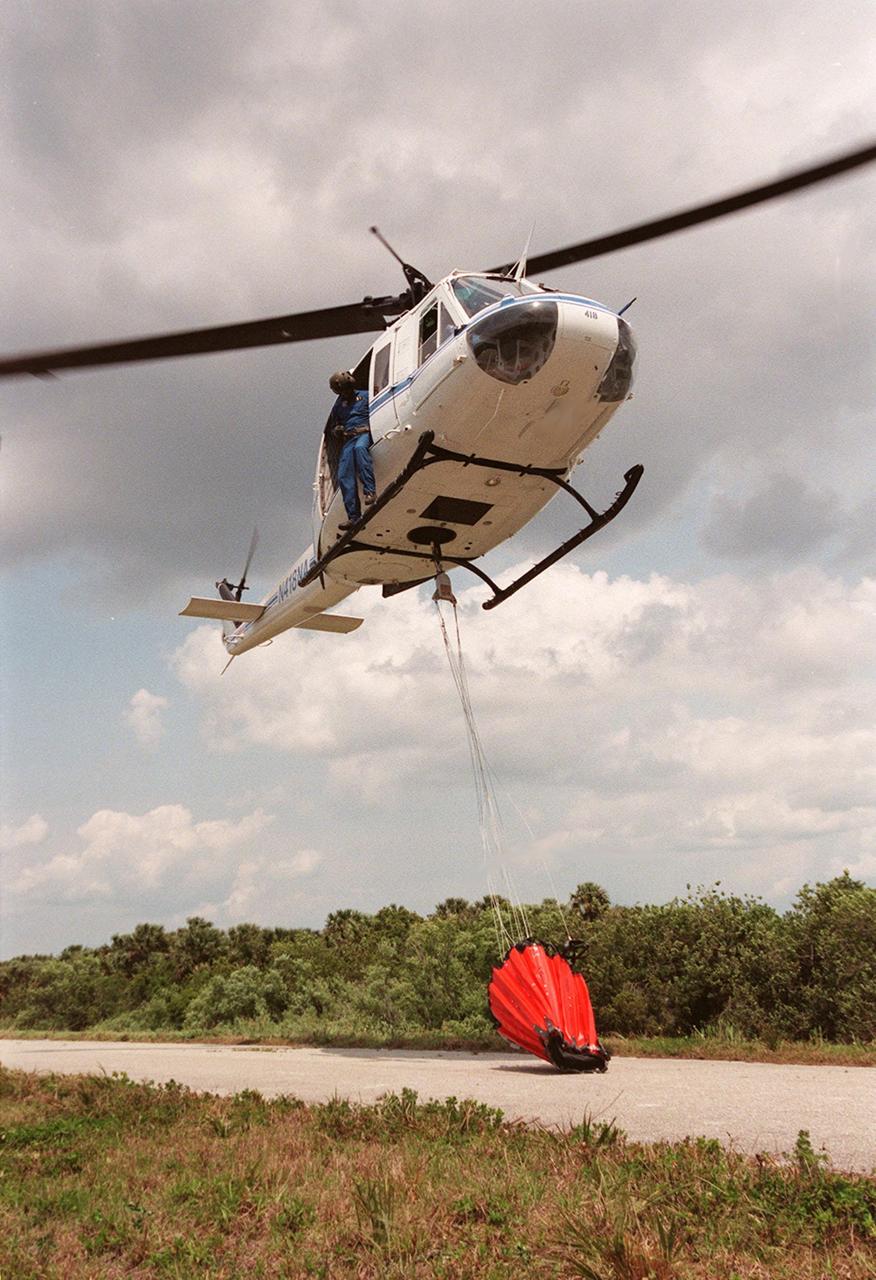
KENNEDY SPACE CENTER, FLA. -- A NASA helicopter lifts a high-impact-resistant flexible plastic bucket that will be used for fire protection on property and buildings at Kennedy Space Center. Known as the "Bambi" bucket, the 324-gallon container will also support the Fish and Wildlife Service for controlled burns plus any wild fires in the area
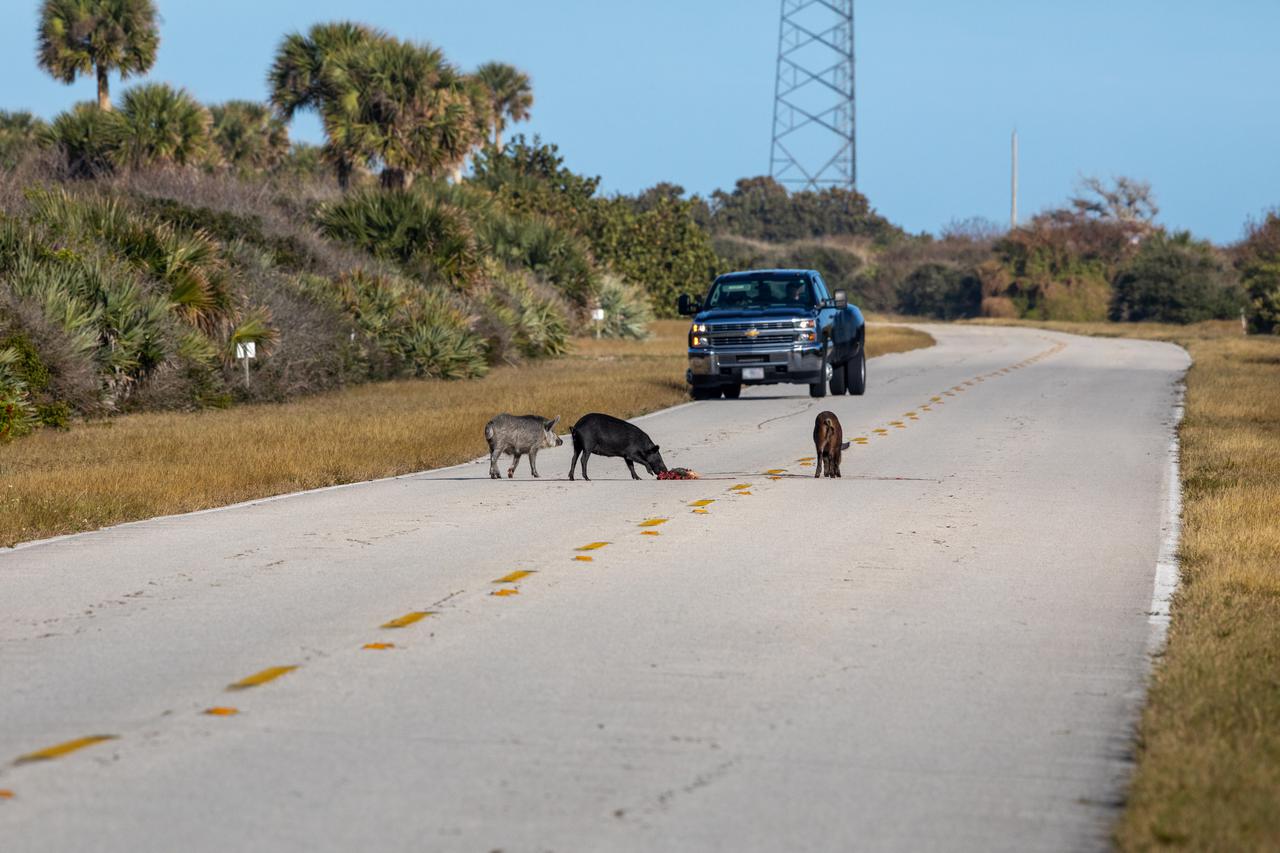
Wild pigs cross a roadway at NASA's Kennedy Space Center in Florida on Jan. 11, 2021. The center shares a border with the Merritt Island National Wildlife Refuge. More than 330 native and migratory bird species, 25 mammal, 117 fish and 65 amphibian and reptile species call Kennedy and the wildlife refuge home.
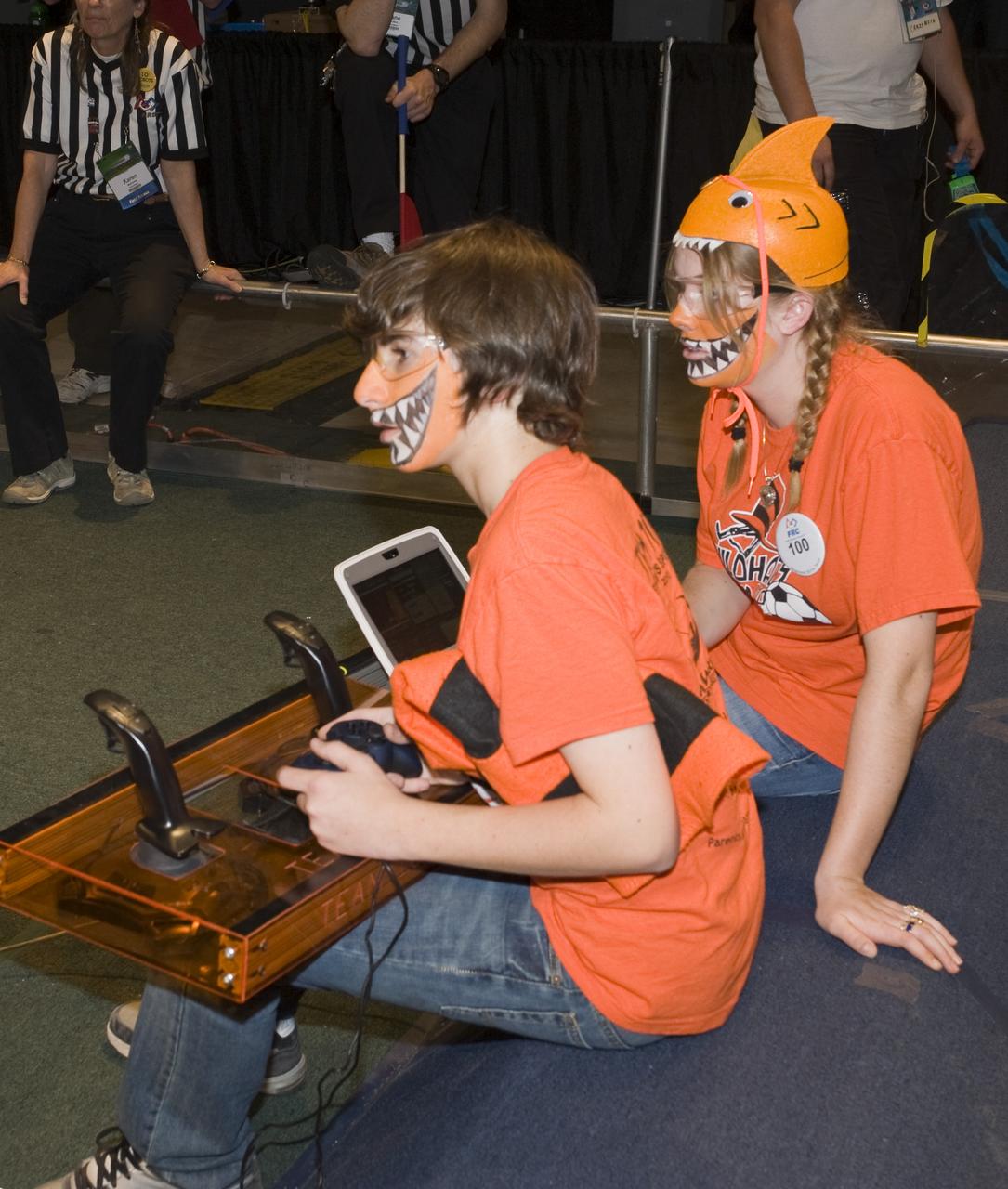
For Inspiration and Recognition of Science and Technology; FIRST Robotics Competition 2010 Silicon Valley Regional held at San Jose State University, San Jose, CaliforniaThe Wild Hats of Woodside H.S. & Carlmont H. S. & Sequoia H.S & Sequoia H.S. District, CA
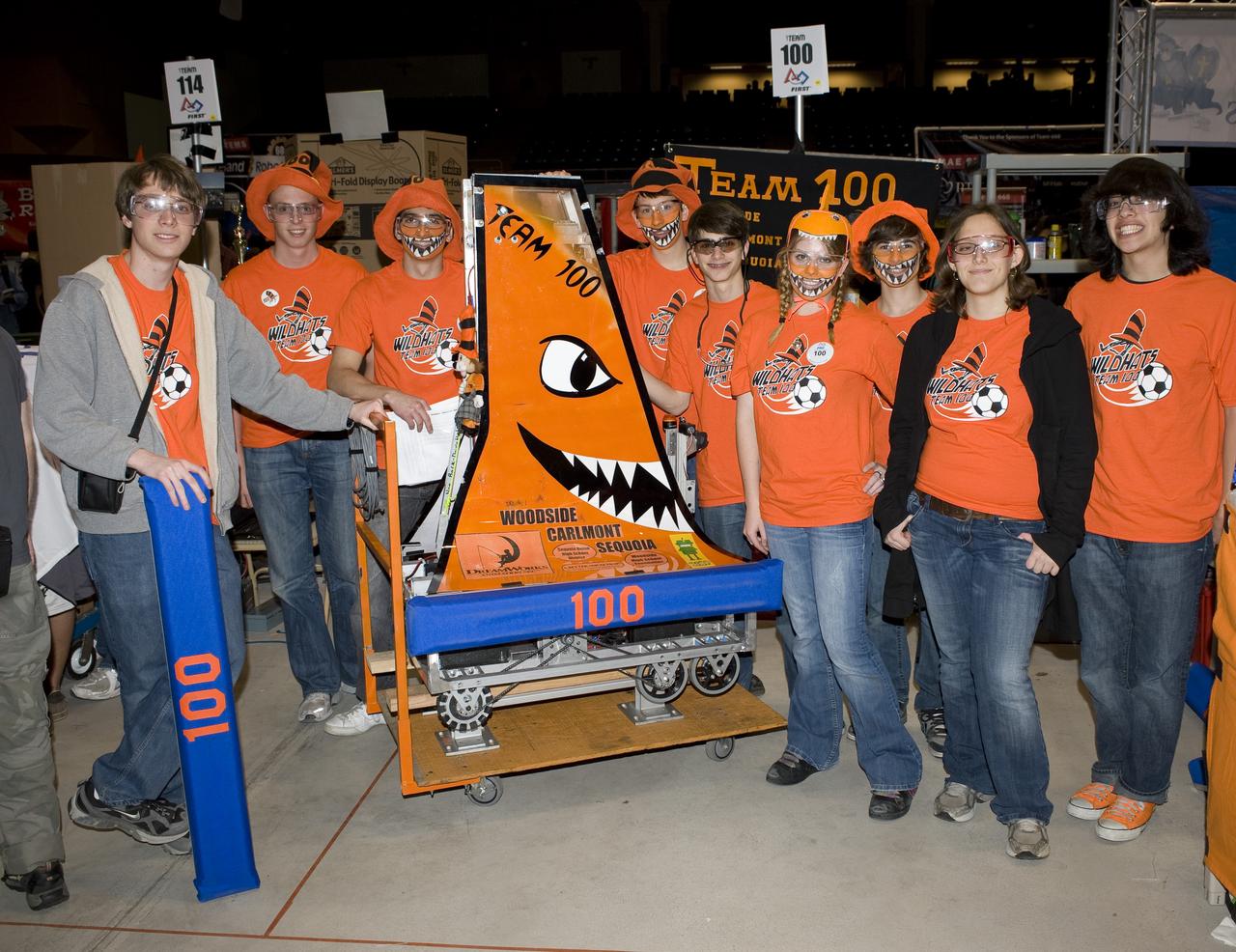
For Inspiration and Recognition of Science and Technology; FIRST Robotics Competition 2010 Silicon Valley Regional held at San Jose State University, San Jose, California The Wild Hats of Woodside H.S. & Carlmont H. S. & Sequoia H.S & Sequoia H.S. District, CA - Team 100
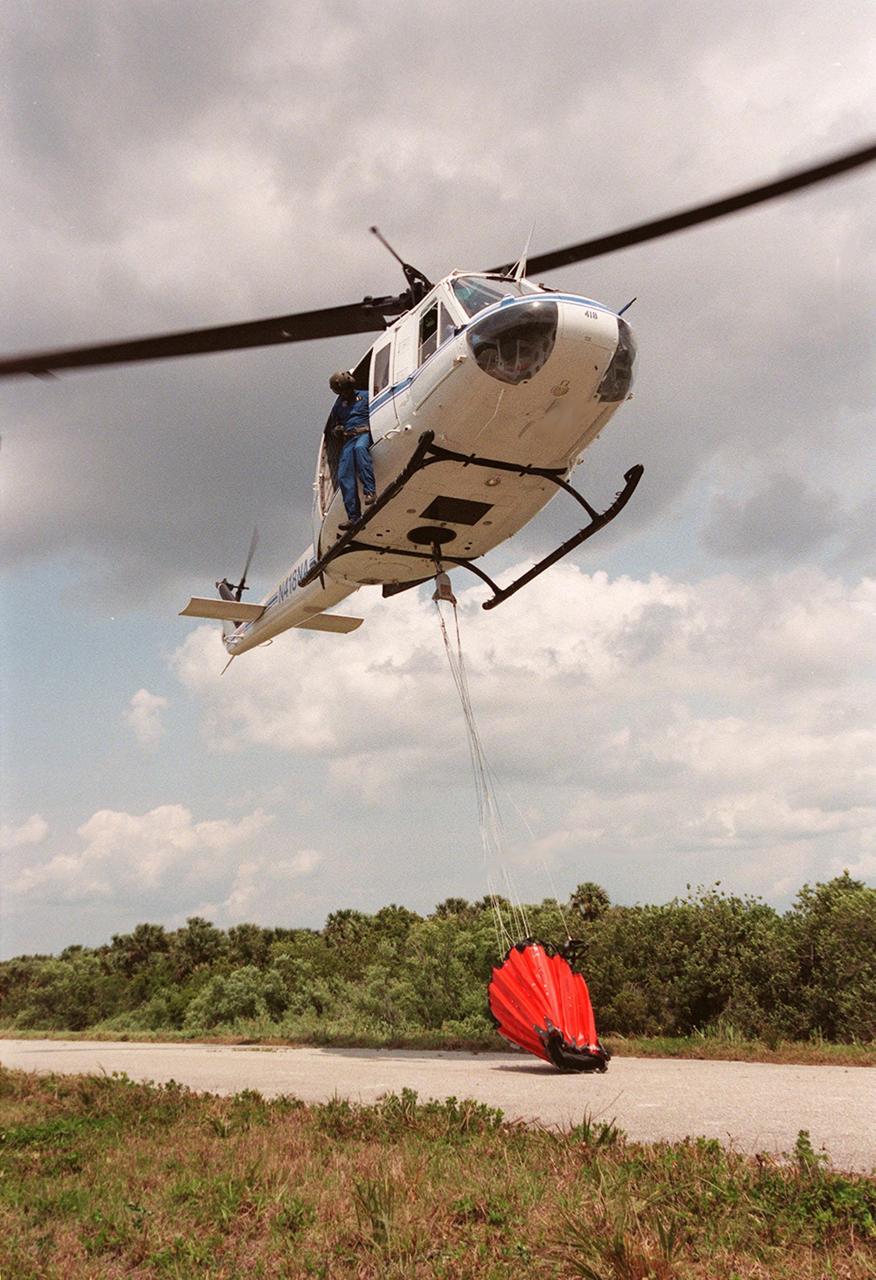
KENNEDY SPACE CENTER, FLA. -- A NASA helicopter lifts a high-impact-resistant flexible plastic bucket that will be used for fire protection on property and buildings at Kennedy Space Center. Known as the "Bambi" bucket, the 324-gallon container will also support the Fish and Wildlife Service for controlled burns plus any wild fires in the area
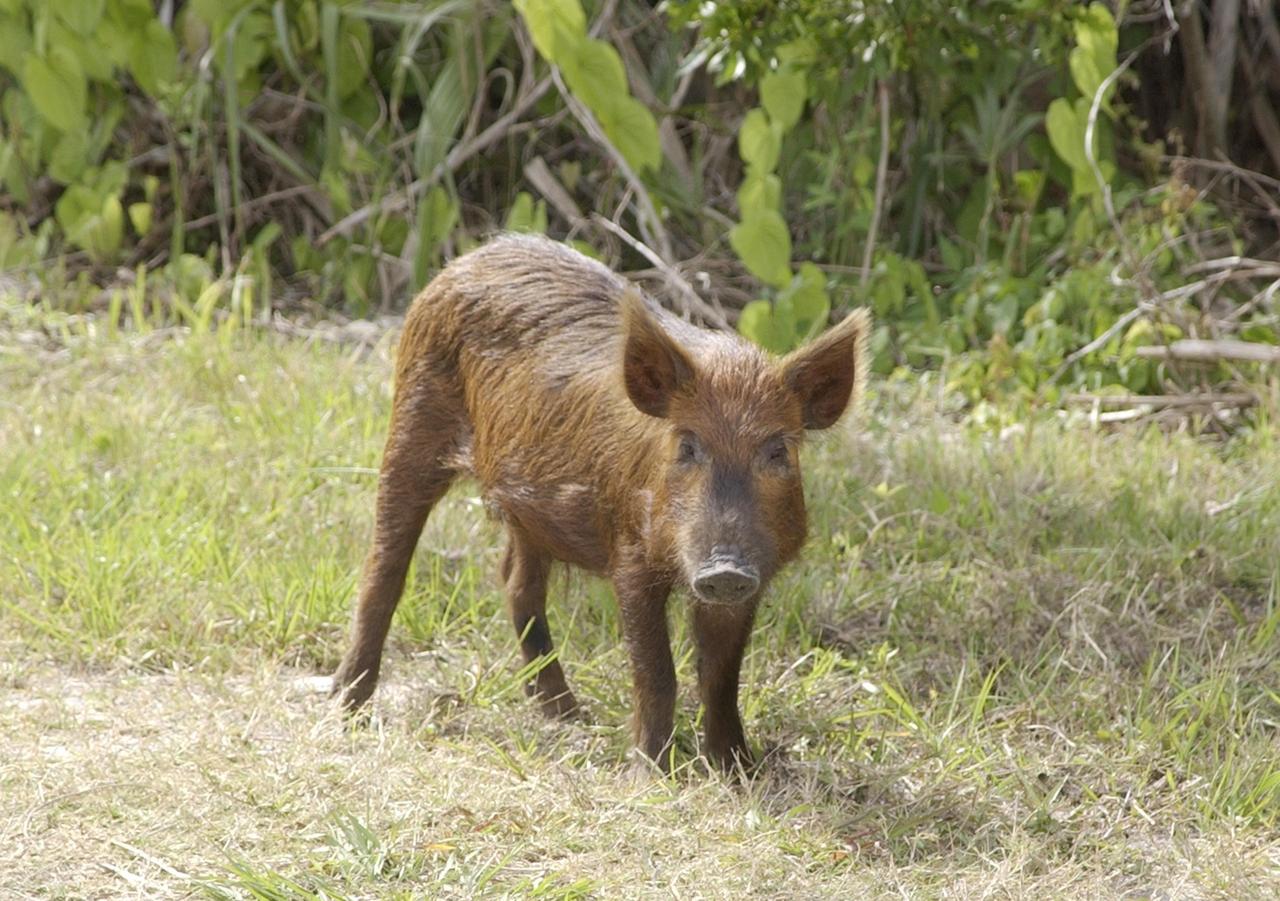
KENNEDY SPACE CENTER, FLA. - A wild pig is spotted near the KSC Press Site on its daily foraging rounds. Not a native in the environment, the pigs around KSC are believed to be descendants from those brought to Florida by the early Spanish explorers. Without many predators other than human, the pigs have flourished in the surrounding environs
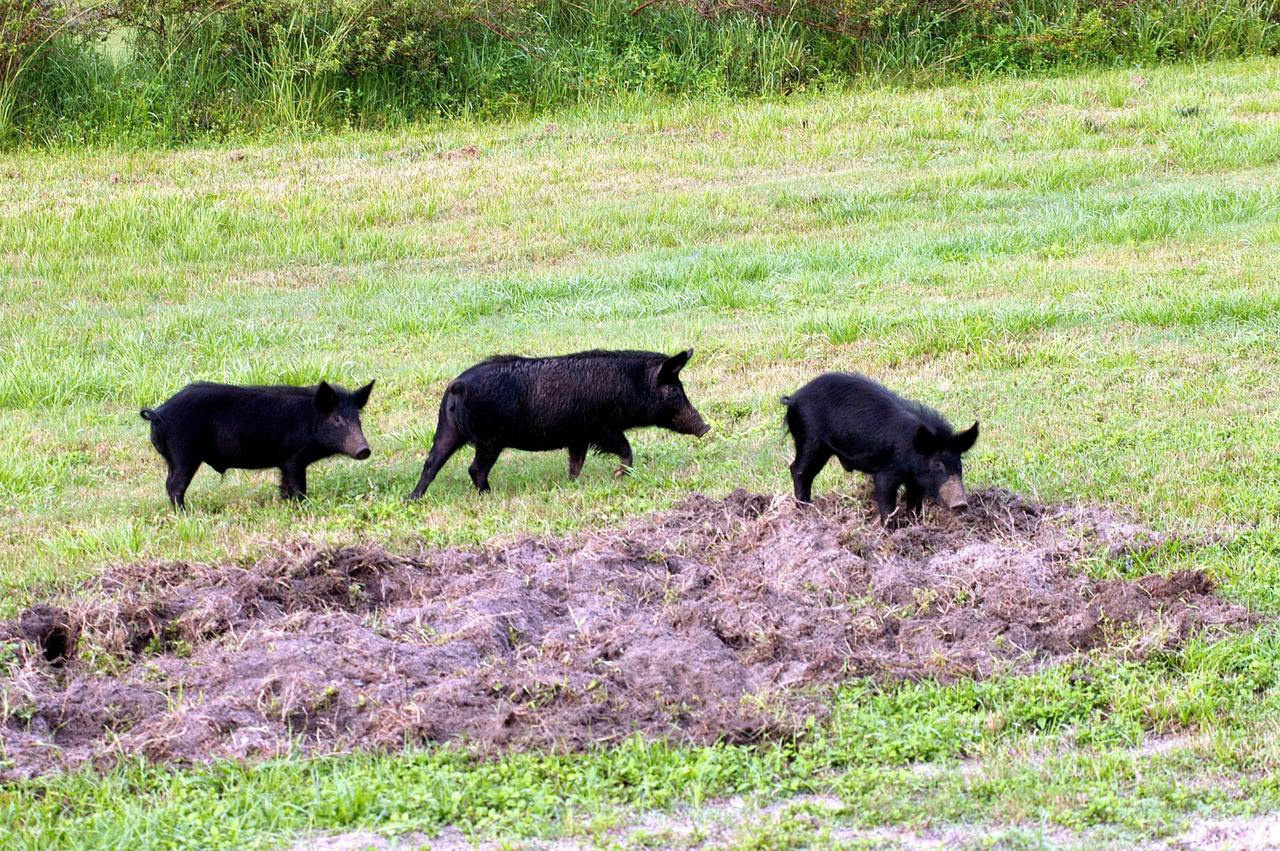
KENNEDY SPACE CENTER, FLA. - Three wild pigs - a mother and her two offspring - root for food in the grass near the NASA News Center at KSC. Feral pigs were introduced to Florida in the 1500s and are now found statewide in wooded areas close to water. The pigs have flourished in the environs around KSC, which shares a border with the Merritt Island National Wildlife Refuge, without many predators other than panthers and humans. Pigs are omnivores, foraging on the ground and rooting just beneath the surface, which damages the groundcover. Wild pigs eat almost anything that has nutritional value, including tubers, roots, shoots, acorns, fruits, berries, earthworms, amphibians, reptiles and rodents. Appearance is similar to domestic hogs, but leaner, with a longer, narrower head and a coarser, denser coat. Females may have two litters per year. The piglets are weaned in a few weeks but remain with the mother for several months.
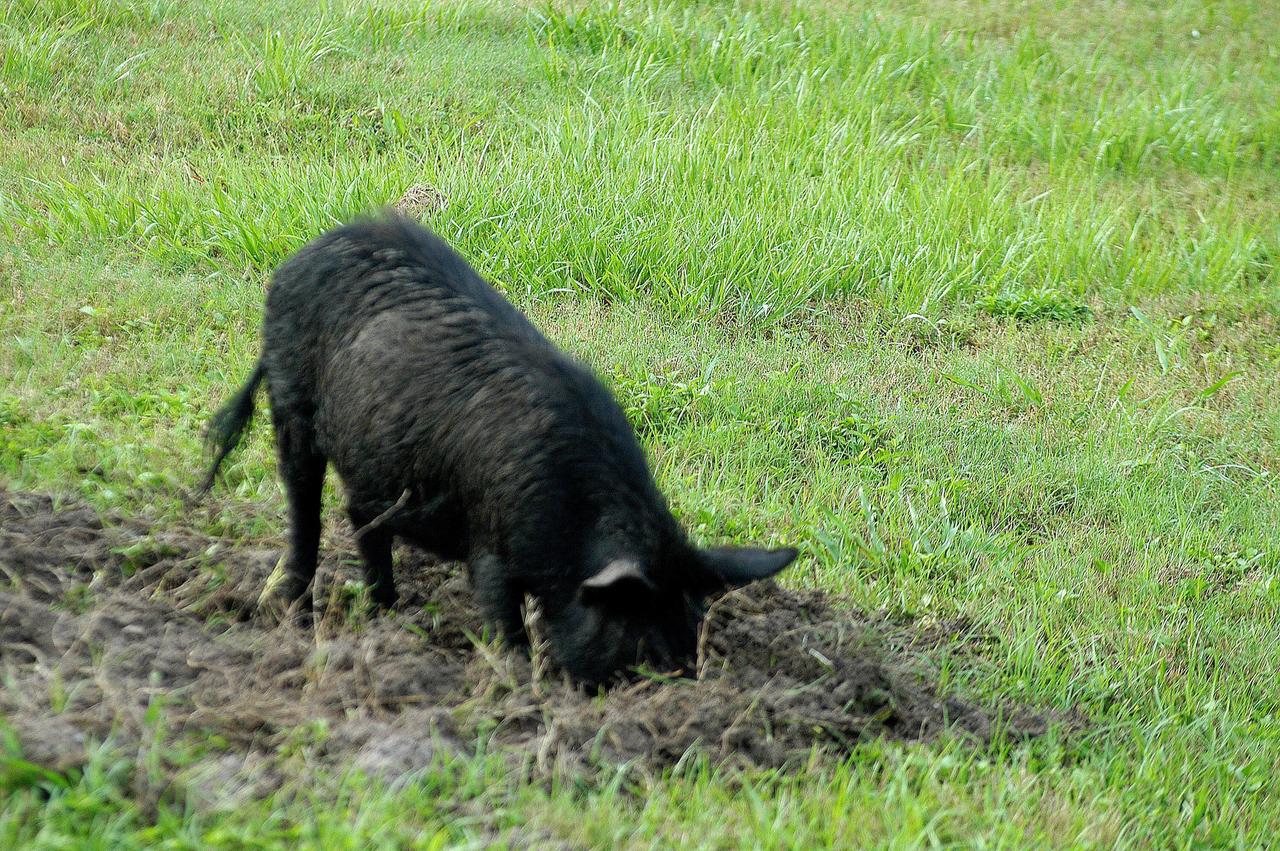
KENNEDY SPACE CENTER, FLA. - A young wild pig roots in the grass for food in an area near the NASA News Center at KSC. Feral pigs were introduced to Florida in the 1500s and are now found statewide in wooded areas close to water. The pigs have flourished in the environs around KSC, which shares a border with the Merritt Island National Wildlife Refuge, without many predators other than panthers and humans. Pigs are omnivores, foraging on the ground and rooting just beneath the surface, which damages the groundcover. Wild pigs eat almost anything that has nutritional value, including tubers, roots, shoots, acorns, fruits, berries, earthworms, amphibians, reptiles and rodents. Appearance is similar to domestic hogs, but leaner, with a longer, narrower head and a coarser, denser coat. Females may have two litters per year. The piglets are weaned in a few weeks but remain with the mother for several months.
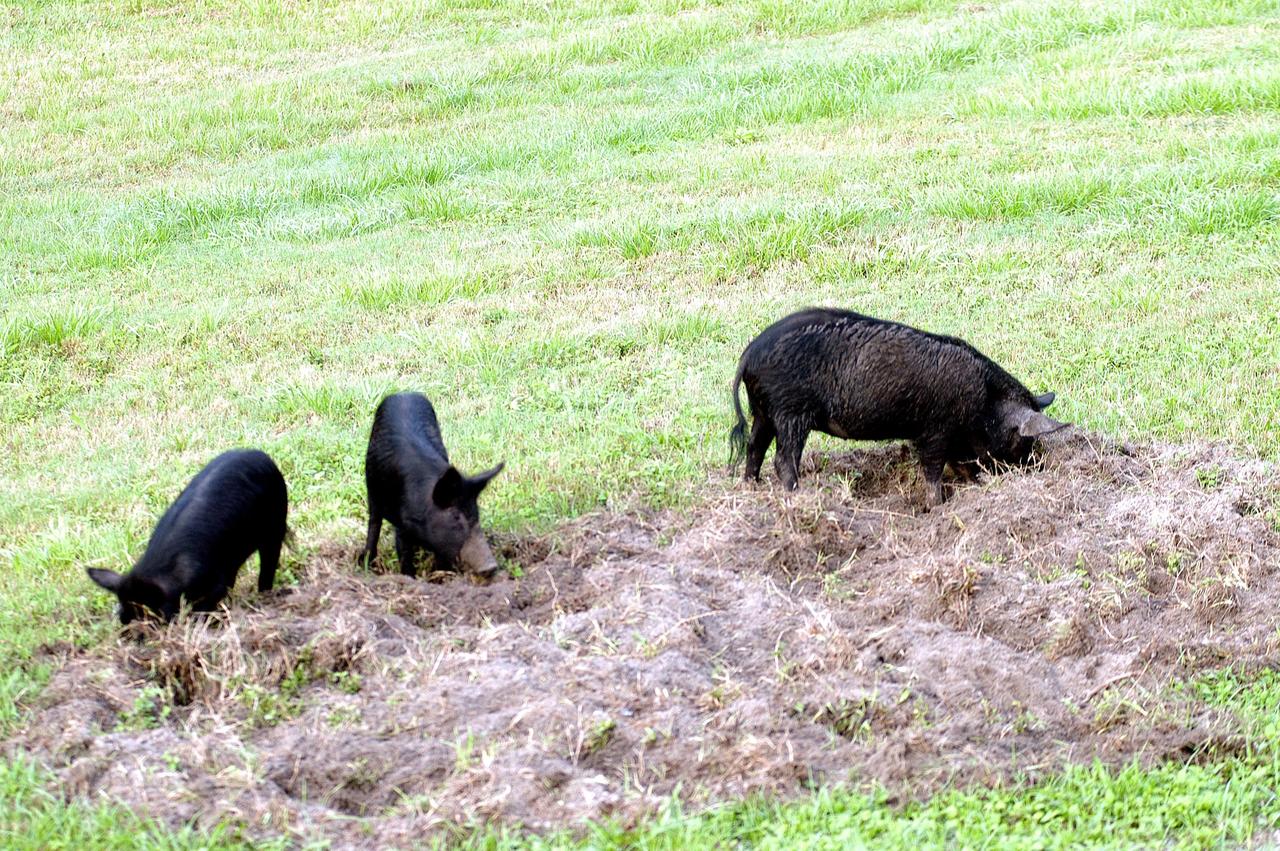
KENNEDY SPACE CENTER, FLA. - Three wild pigs - a mother and her two offspring - root for food in the grass near the NASA News Center at KSC. Feral pigs were introduced to Florida in the 1500s and are now found statewide in wooded areas close to water. The pigs have flourished in the environs around KSC, which shares a border with the Merritt Island National Wildlife Refuge, without many predators other than panthers and humans. Pigs are omnivores, foraging on the ground and rooting just beneath the surface, which damages the groundcover. Wild pigs eat almost anything that has nutritional value, including tubers, roots, shoots, acorns, fruits, berries, earthworms, amphibians, reptiles and rodents. Appearance is similar to domestic hogs, but leaner, with a longer, narrower head and a coarser, denser coat. Females may have two litters per year. The piglets are weaned in a few weeks but remain with the mother for several months.
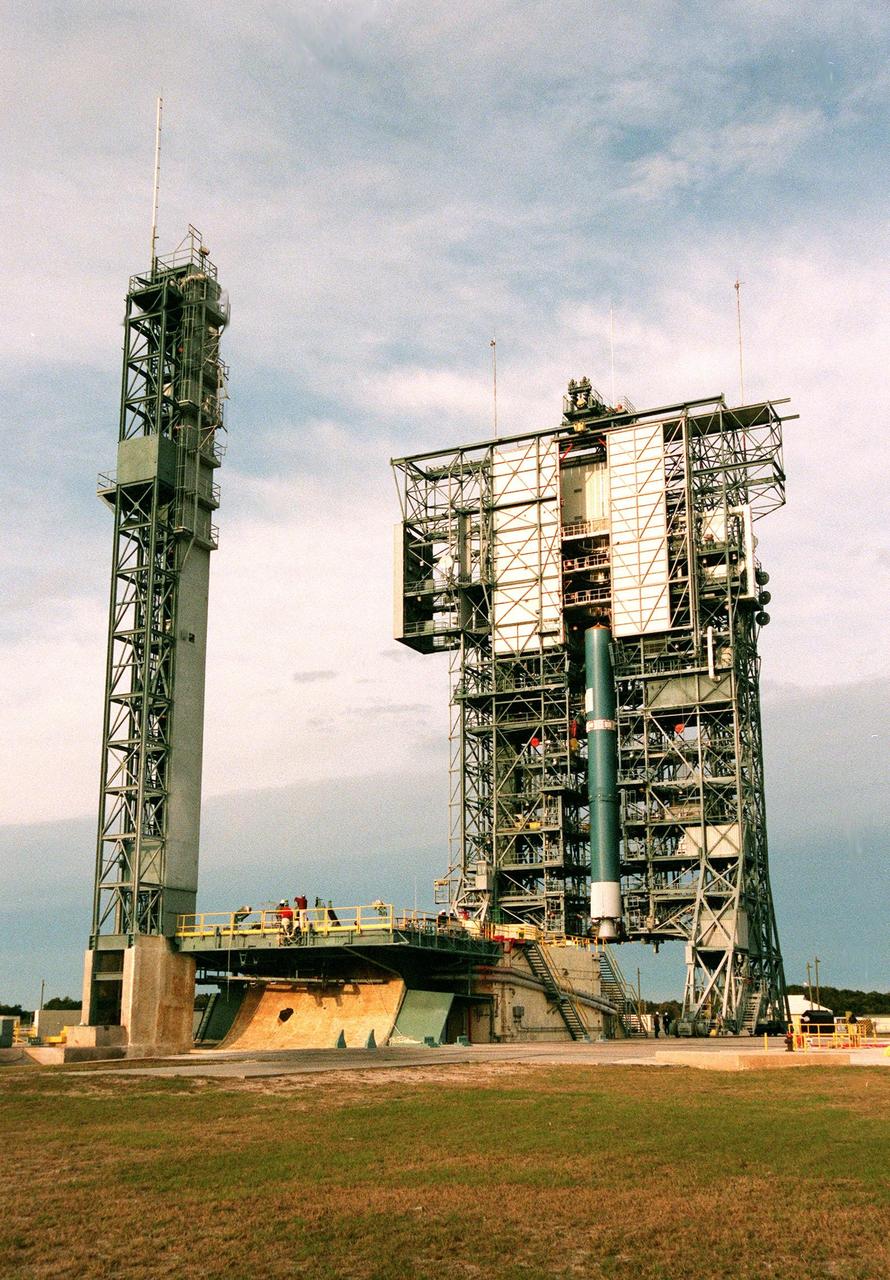
The first stage of a Boeing Delta II rocket is in position on the mobile tower (at right) at Launch Complex 17. At left is the launch tower. The rocket will carry the Stardust spacecraft into space for a close encounter with the comet Wild 2 in January 2004. Using a medium called aerogel, it will capture comet particles flying off the nucleus of the comet, plus collect interstellar dust for later analysis. The collected samples will return to Earth in a Sample Return Capsule to be jettisoned as Stardust swings by Earth in January 2006. Stardust is scheduled to be launched on Feb. 6, 1999
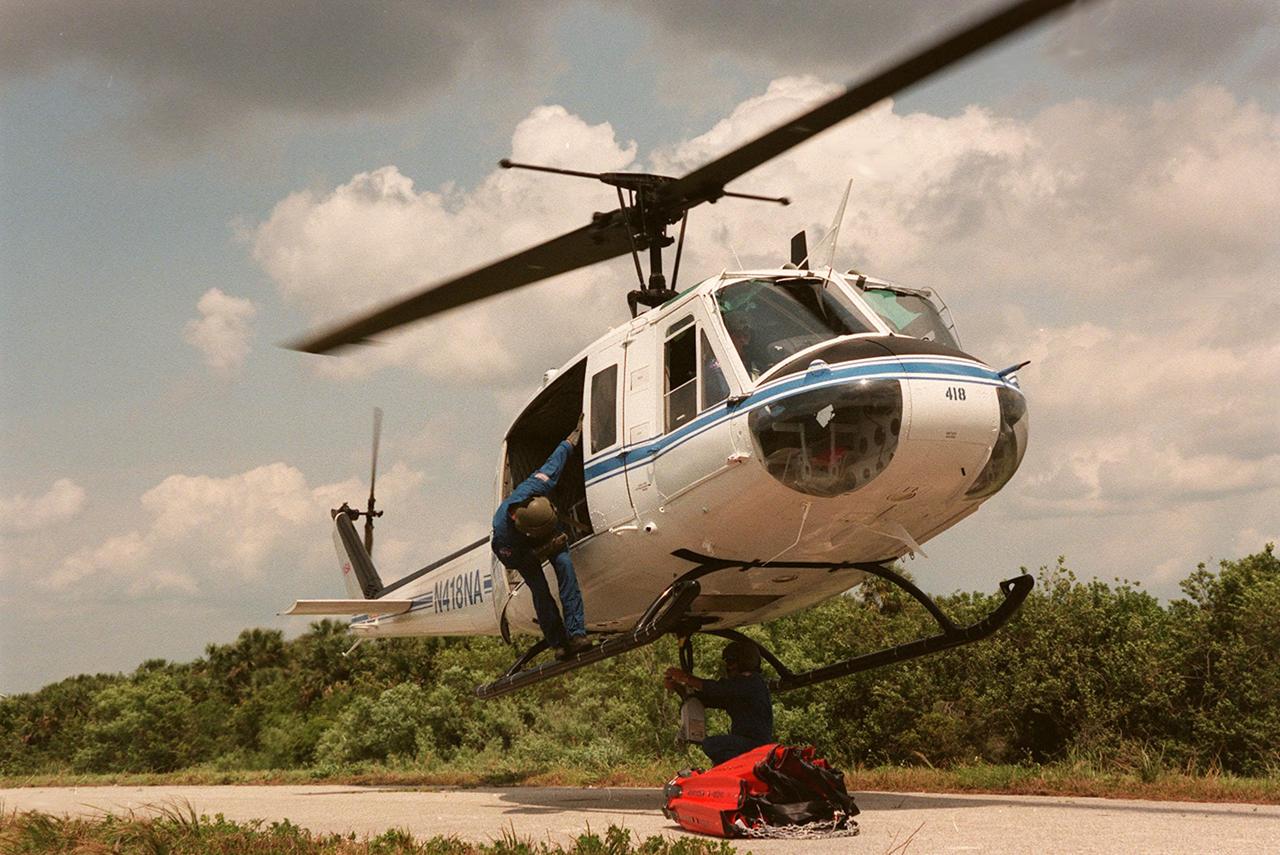
KENNEDY SPACE CENTER, FLA. -- Workers attach a high-impact-resistant flexible plastic bucket to a NASA helicopter. Holding 324 gallons of water, it will be used for fire protection on property and buildings at Kennedy Space Center. Known as the "Bambi" bucket, it will also support the Fish and Wildlife Service for controlled burns plus any wild fires in the area.
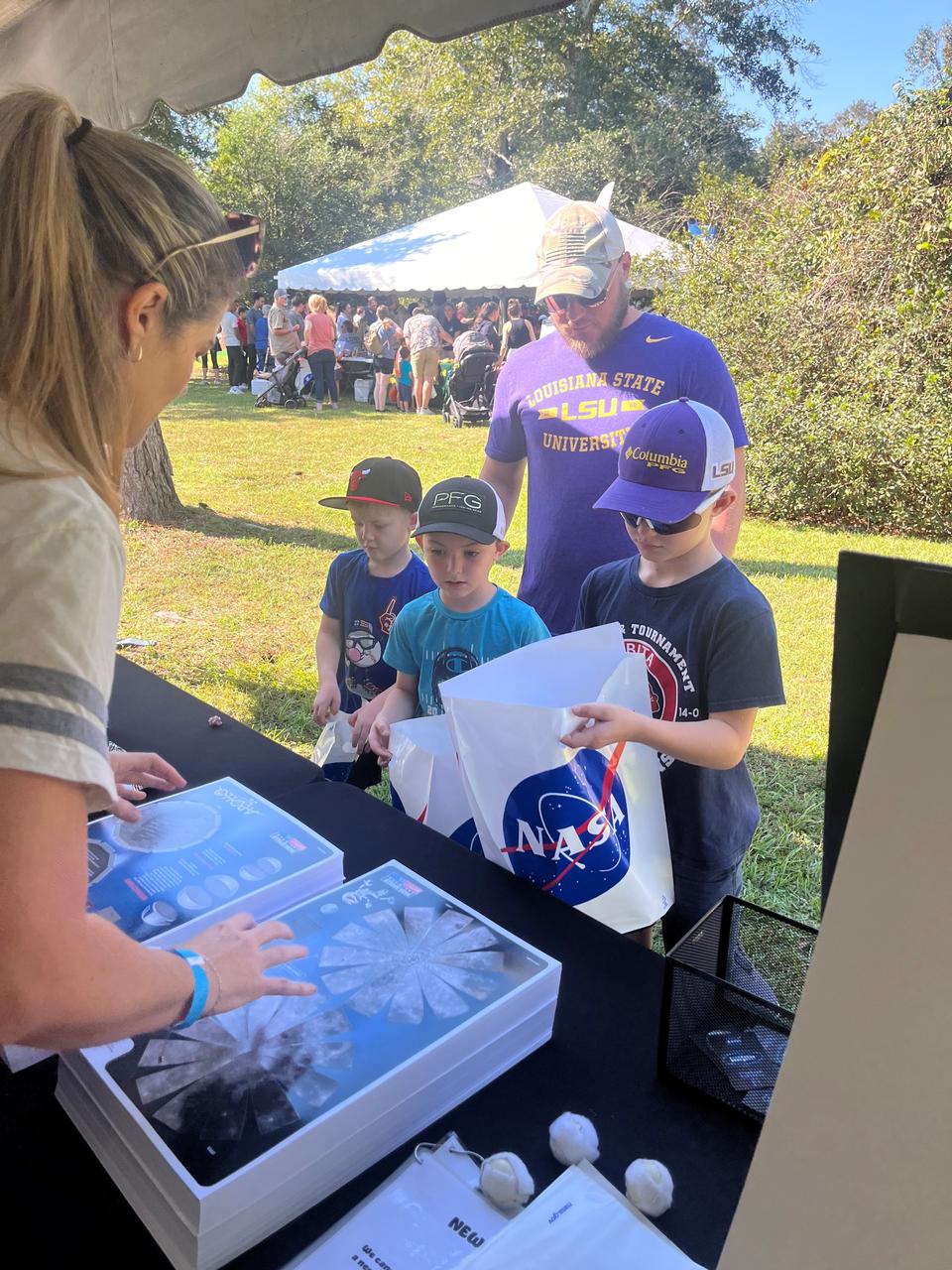
NASA Stennis representatives inspire the Artemis Generation Oct. 12 at the Wild Things event celebrating National Wildlife Refuge Week in Lacombe, Louisiana. Participants played a game to identify different phases of the Moon and learned more about NASA’s return to the Moon. The event was hosted by Friends of Louisiana Wildlife Refuges, Inc. and Southeast Louisiana National Wildlife Refuges Complex at Bayou Lacombe Center, headquarters for the nine National Wildlife Refuges in southeast Louisiana.
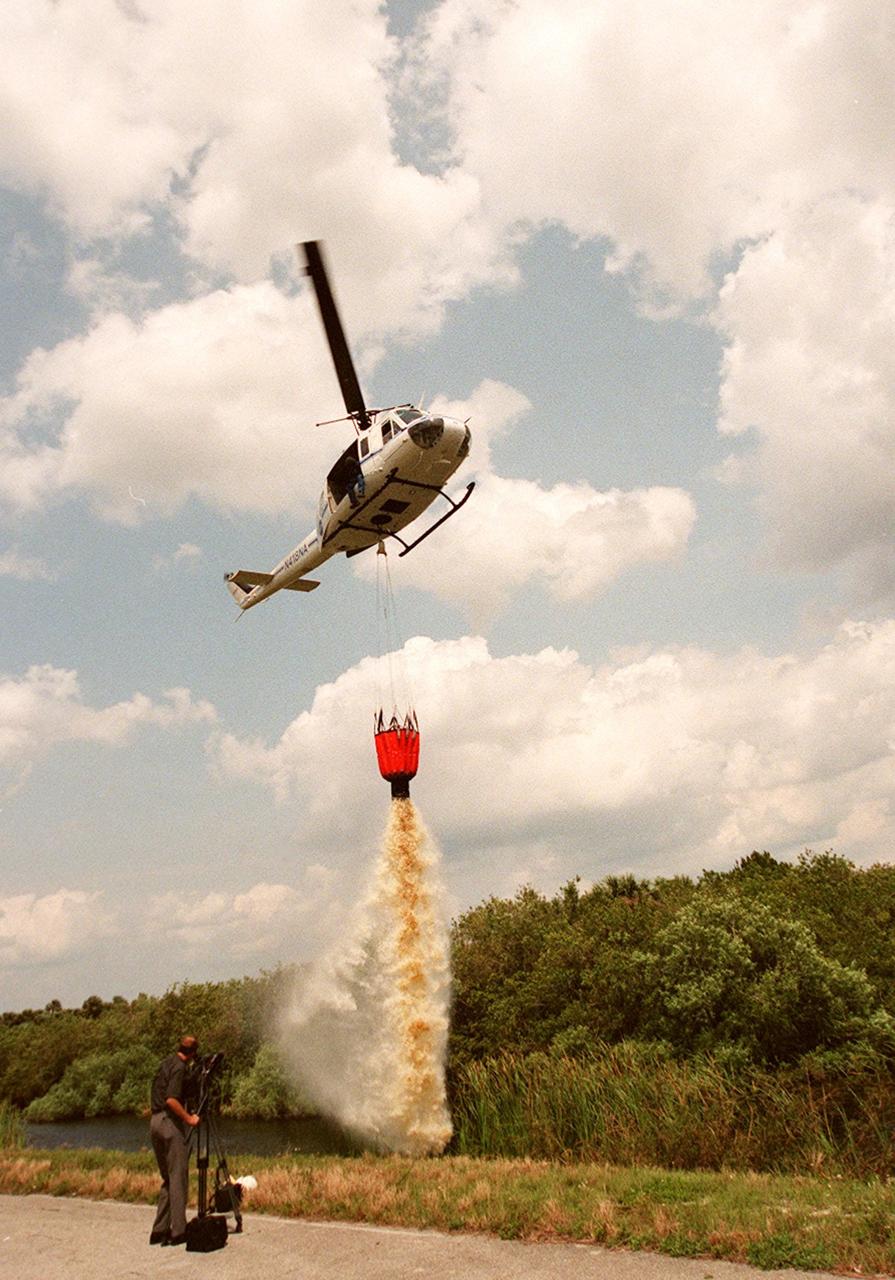
KENNEDY SPACE CENTER, FLA. -- A NASA helicopter releases the contents of the high-impact-resistant flexible plastic bucket it holds. The 324-gallon container will be used for fire protection on property and buildings at Kennedy Space Center. Known as the "Bambi" bucket, it will also support the Fish and Wildlife Service for controlled burns plus any wild fires in the area.
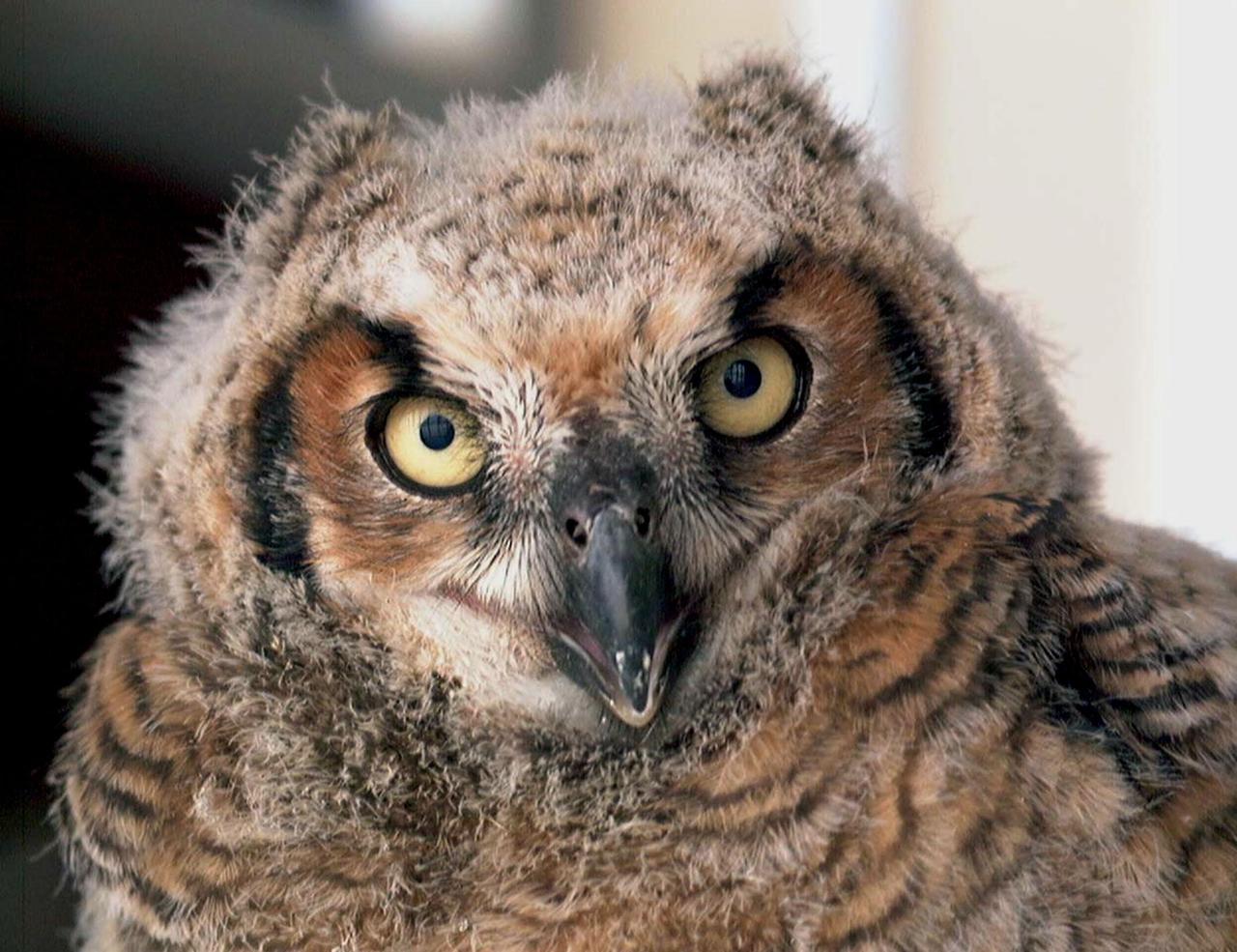
KENNEDY SPACE CENTER, FLA. -- A baby owl, possibly a screech owl, stares at the photographer snapping its picture. The owl was found on the stairs inside Hangar G, Cape Canaveral Air Force Station. It had apparently tried to fly from a nest near the ceiling but couldn't get back to it. Workers called an Audubon rescue center near Orlando, which captured it and will ensure the bird is returned to the wild when it's ready
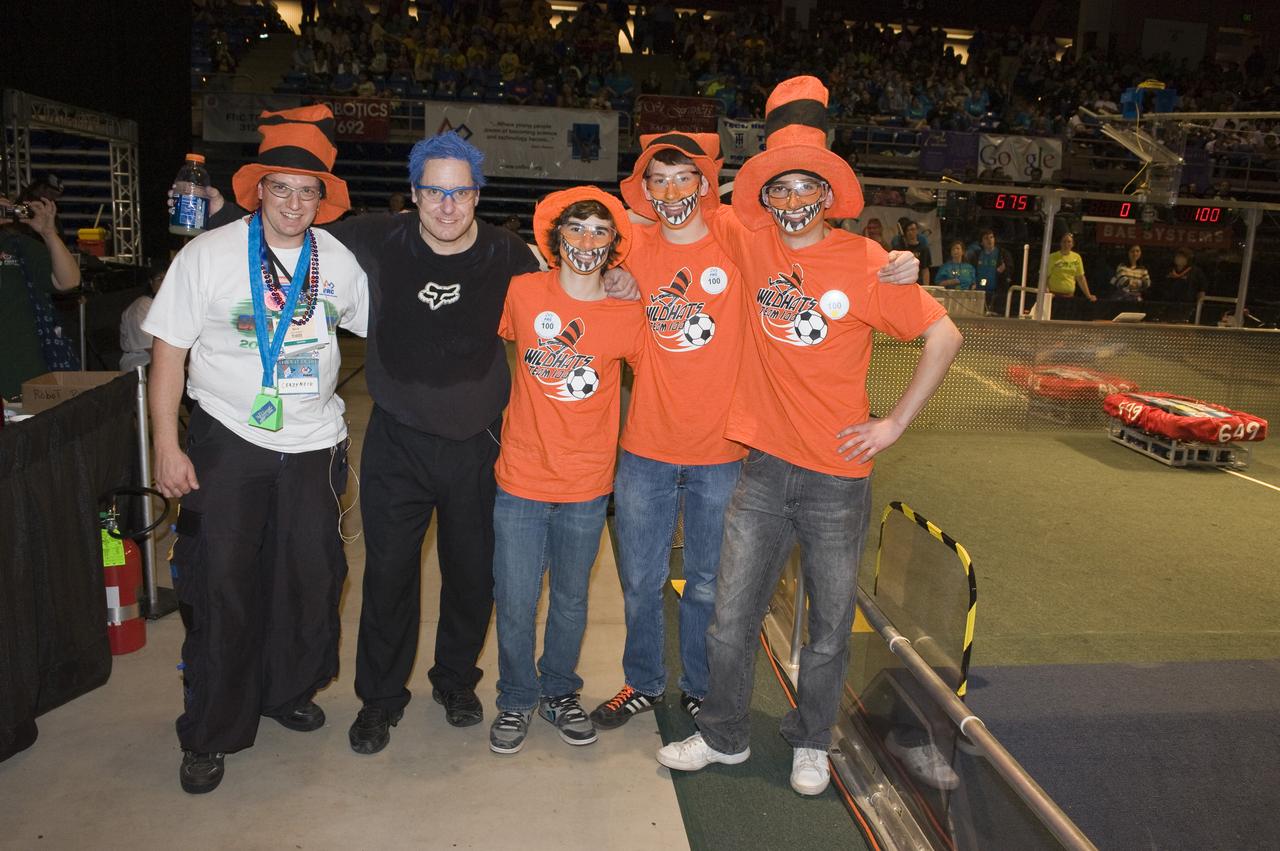
For Inspiration and Recognition of Science and Technology; FIRST Robotics Competition 2010 Silicon Valley Regional held at San Jose State University, San Jose, California The Wild Hats of Woodside H.S. & Carlmont H. S. & Sequoia H.S & Sequoia H.S. District, CA Team 100 with Mark Leon, NASA Ames Reseach Center (in trademark blue hair)
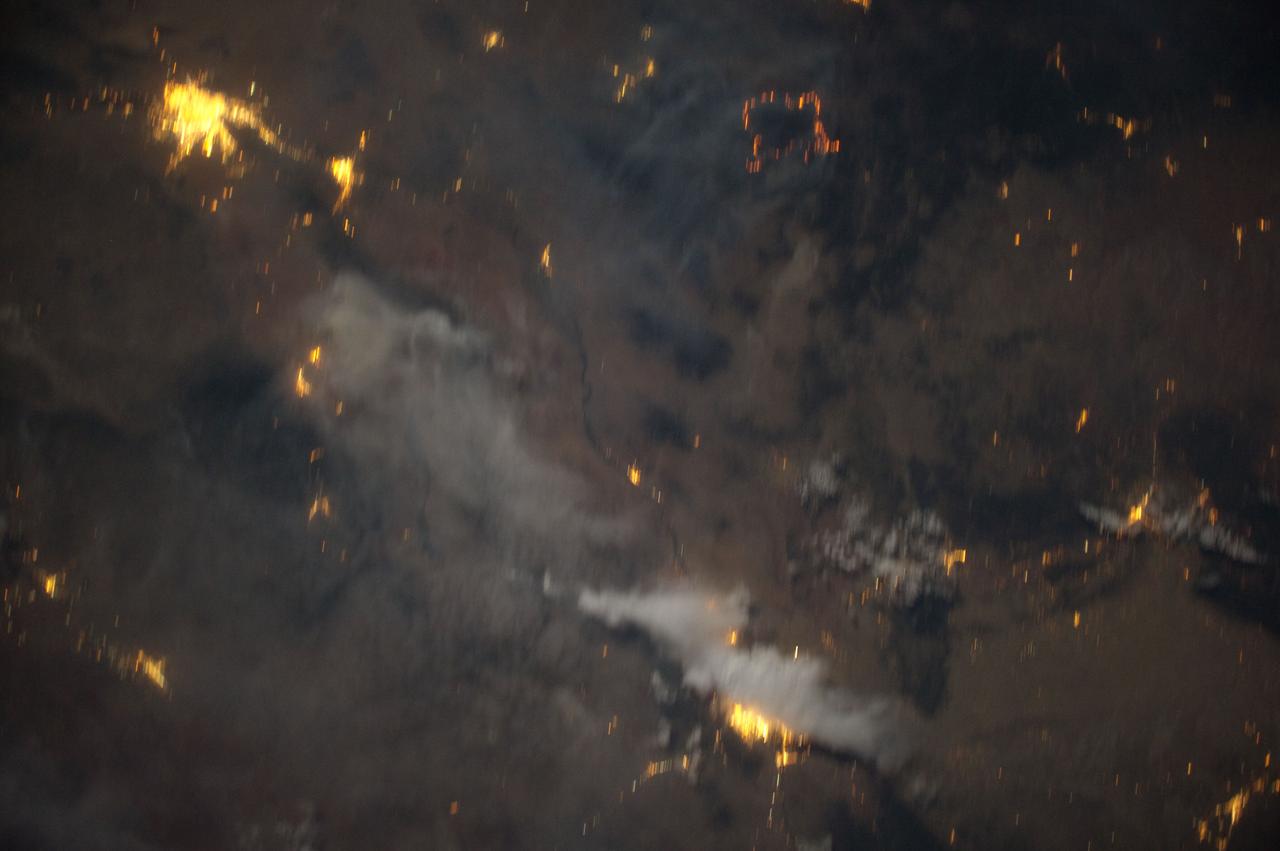
ISS031-E-83789 (2 June 2012) --- Downlinked from the International Space Station this still image – part of a series from a mounted, automated, twilight session -- when viewed in sequence shows the flame ring associated with wild fires in the Southwest move from bottom to top-center framed at a distance by the bright urban areas of Tucson, Phoenix, El Paso-Las Cruces, and finally Albuquerque (mostly under cloud).
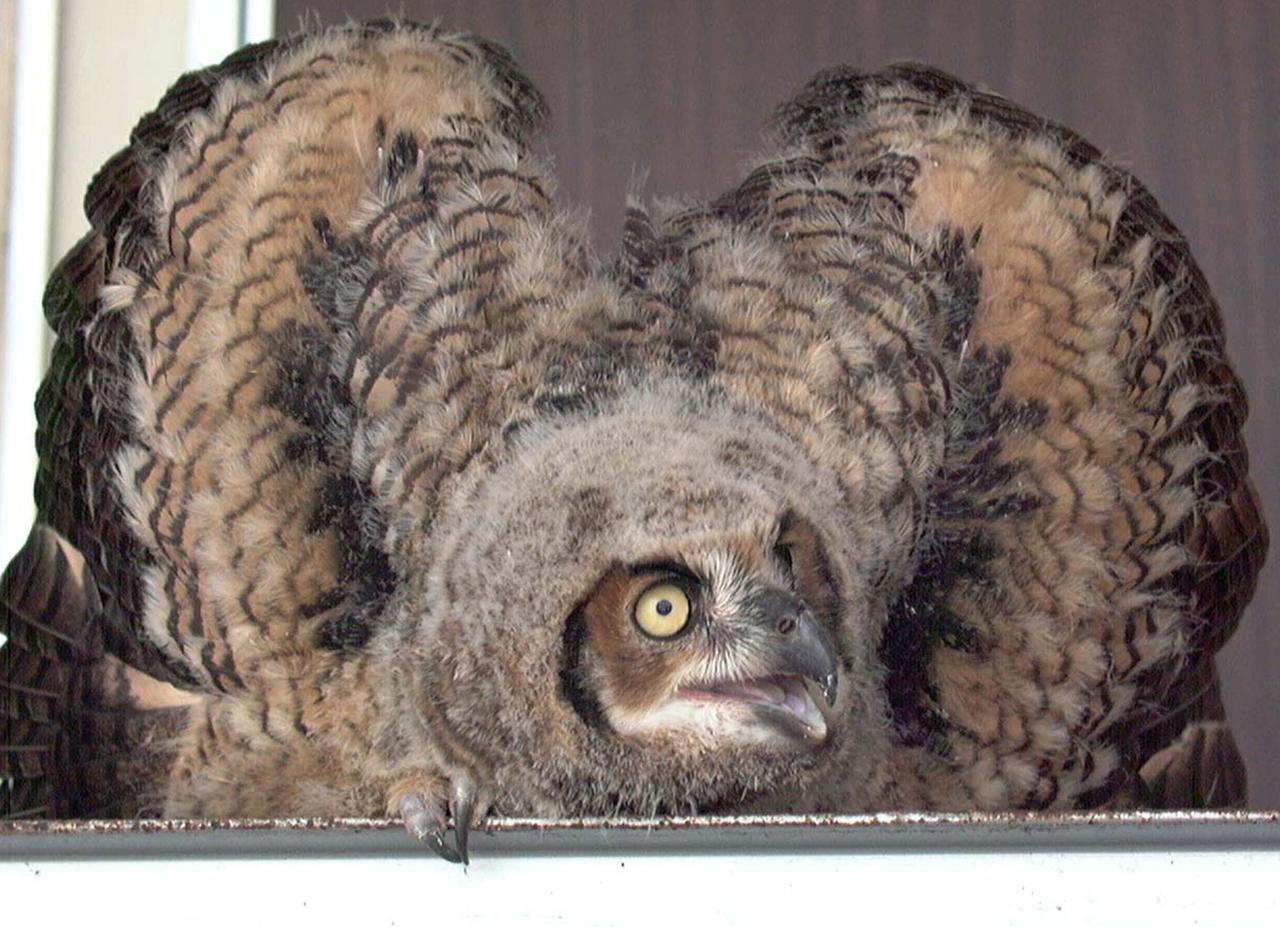
KENNEDY SPACE CENTER, FLA. -- A baby owl, possibly a screech owl, shows its fear and resentment of the photographer snapping its picture. The owl was found on the stairs inside Hangar G, Cape Canaveral Air Force Station. It had apparently tried to fly from a nest near the ceiling but couldn't get back to it. Workers called an Audubon rescue center near Orlando, which captured it and will ensure the bird is returned to the wild when it's ready
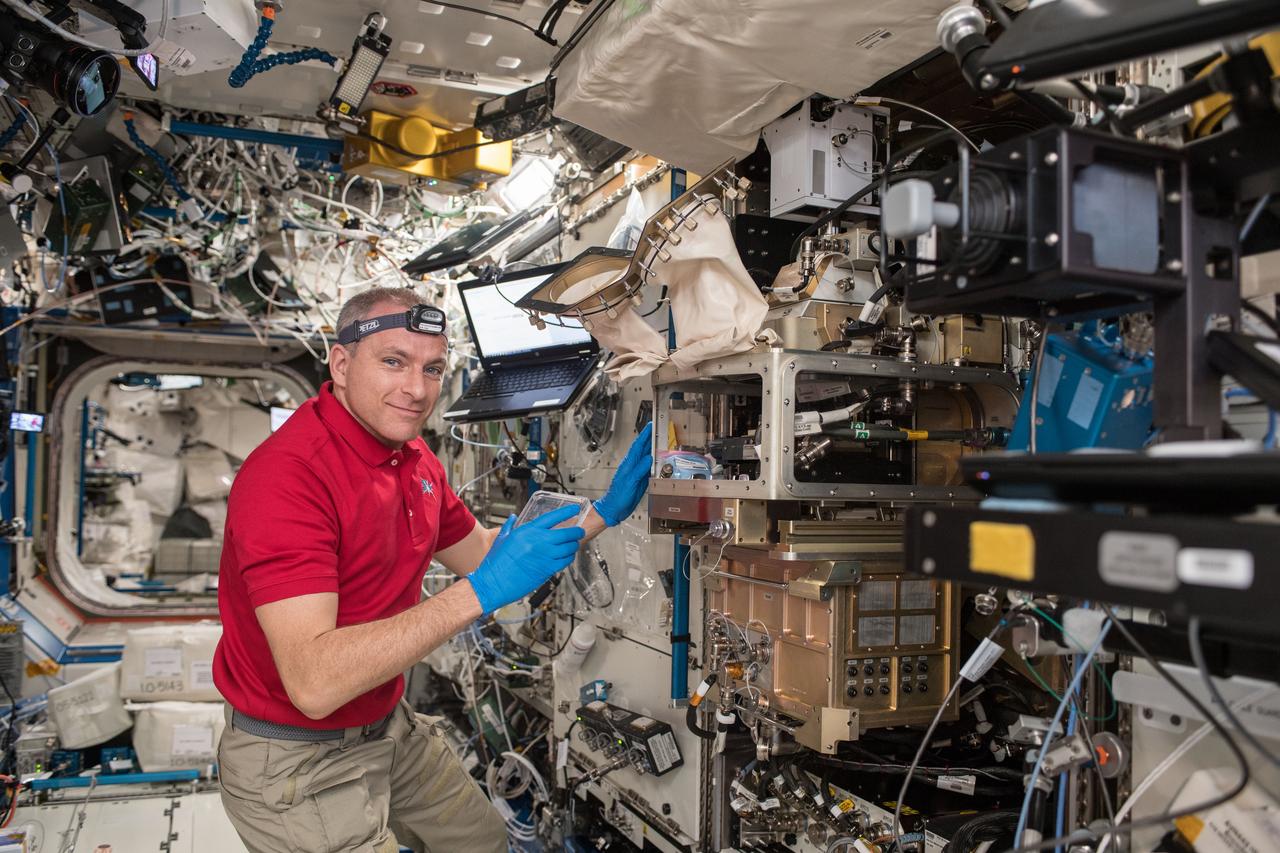
iss057e135002 (12/18/2018) --- Canadian Space Agency (CSA) astronaut David Saint-Jacques removes the APEX-05 Petri Plate from the FIR/LMM (Fluids Integrated Rack/Light Microscopy Module). The Spaceflight-induced Hypoxic/ROS Signaling (APEX-05) experiment grows different wild and mutant varieties of Arabidopsis thaliana, in order to understand how their genetic and molecular stress response systems work in space.
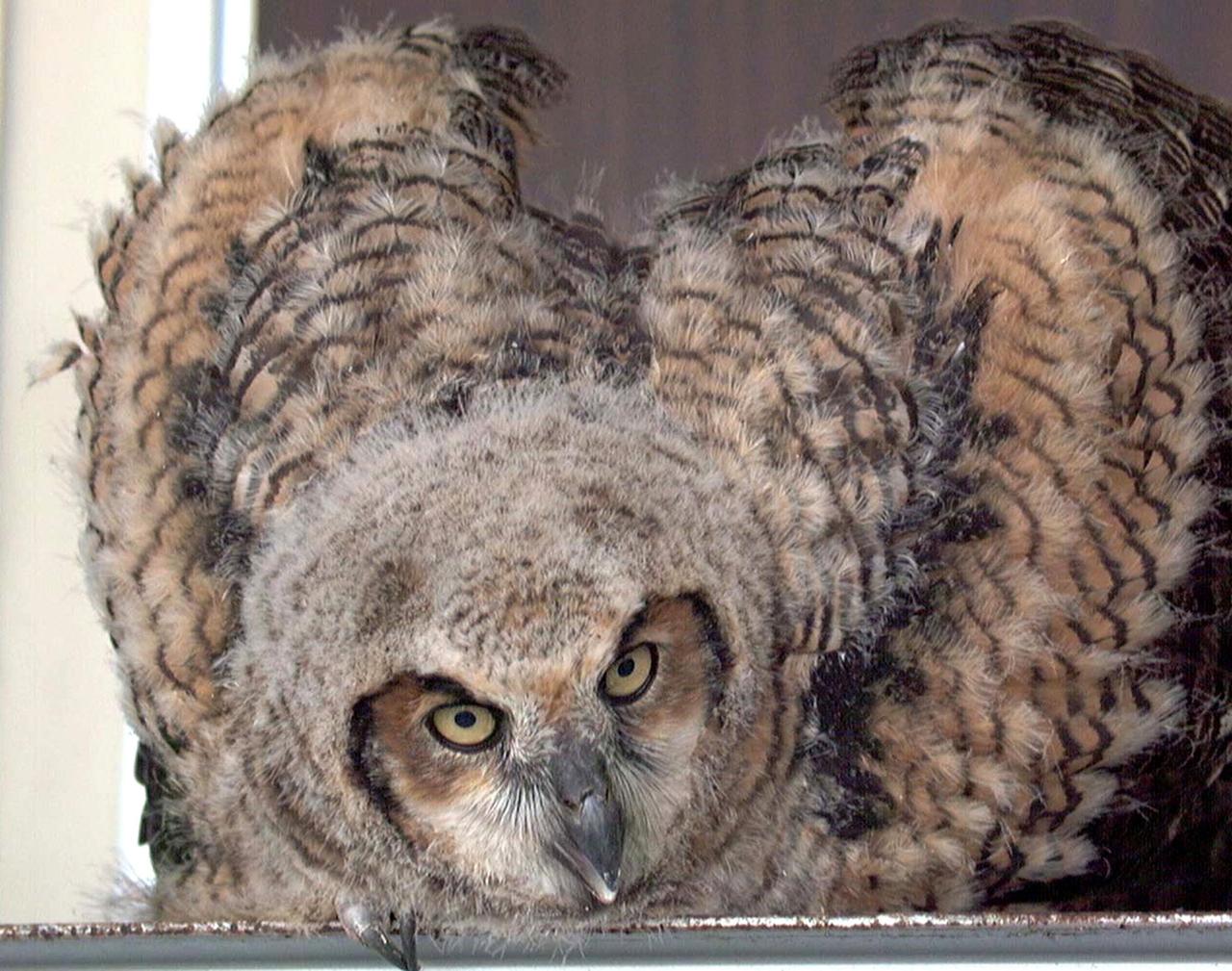
KENNEDY SPACE CENTER, FLA. -- A baby owl displays its wings at the photographer snapping its picture. The owl was found on the stairs inside Hangar G, Cape Canaveral Air Force Station. It had apparently tried to fly from a nest near the ceiling but couldn't get back to it. Workers called an Audubon rescue center near Orlando, which captured it and will ensure the bird is returned to the wild when it's ready.
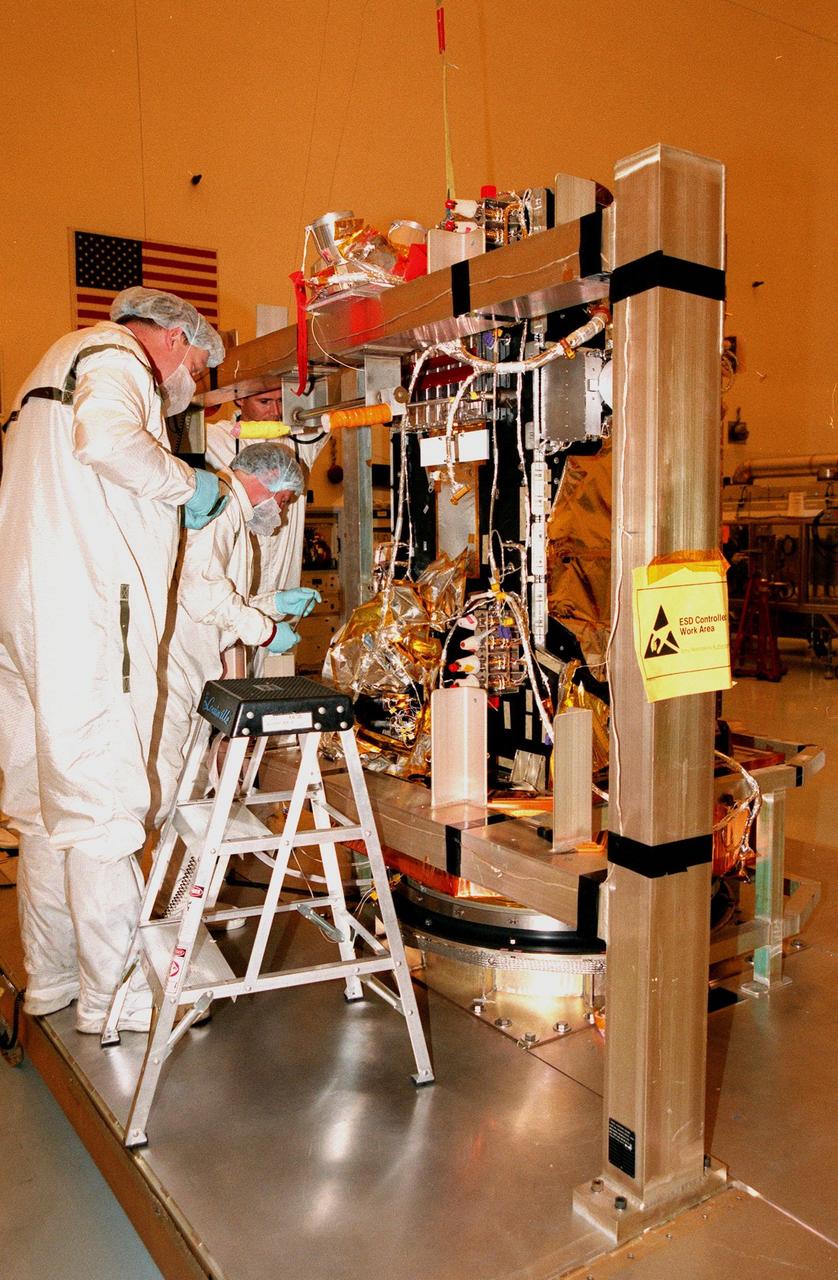
In the Payload Hazardous Servicing Facility, workers install a science panel on the spacecraft Stardust. Scheduled to be launched aboard a Boeing Delta 7426 rocket from Complex 17, Cape Canaveral Air Station, on Feb. 6, 1999, Stardust will use a unique medium called aerogel to capture comet particles flying off the nucleus of comet Wild 2 in January 2004, plus collect interstellar dust for later analysis. The collected samples will return to Earth in a re-entry capsule to be jettisoned as it swings by Earth in January 2006
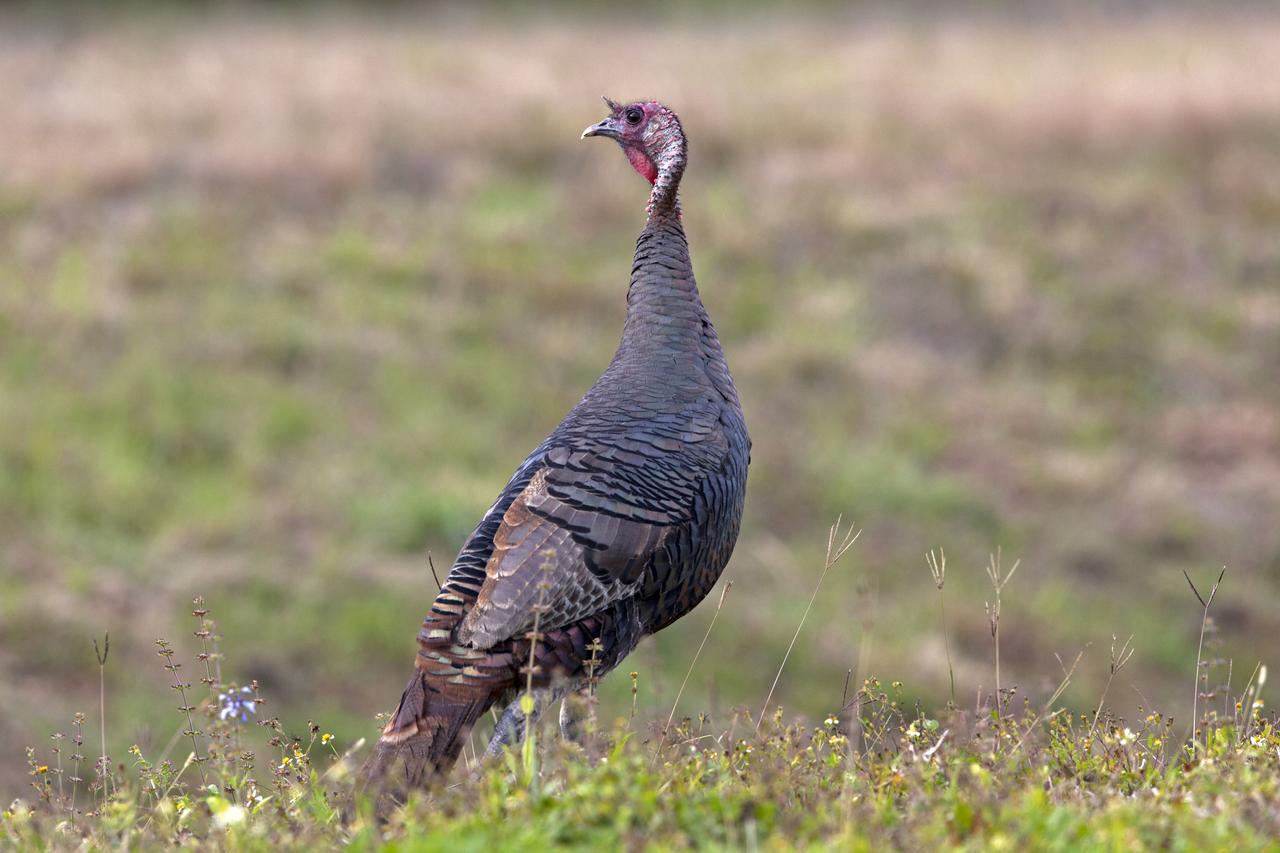
A wild turkey is seen at NASA's Kennedy Space Center in Florida. Kennedy shares a boundary with the Merritt Island National Wildlife Refuge. The refuge encompasses 140,000 acres that are a habitat for more than 331 species of birds, 31 mammals, 117 fish, and 65 amphibians and reptiles. The marshes and open water of the refuge provide wintering areas for 23 species of migratory waterfowl, as well as a year-round home for great blue herons, great egrets, wood storks, cormorants, brown pelicans and other species of marsh and shore birds.
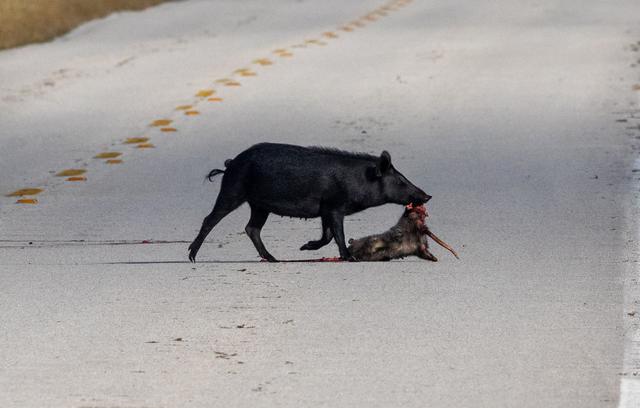
A wild pig is spotted with its prey on a roadway at NASA's Kennedy Space Center in Florida on Jan. 11, 2021. The center shares a border with the Merritt Island National Wildlife Refuge. More than 330 native and migratory bird species, 25 mammal, 117 fish and 65 amphibian and reptile species call Kennedy and the wildlife refuge home.
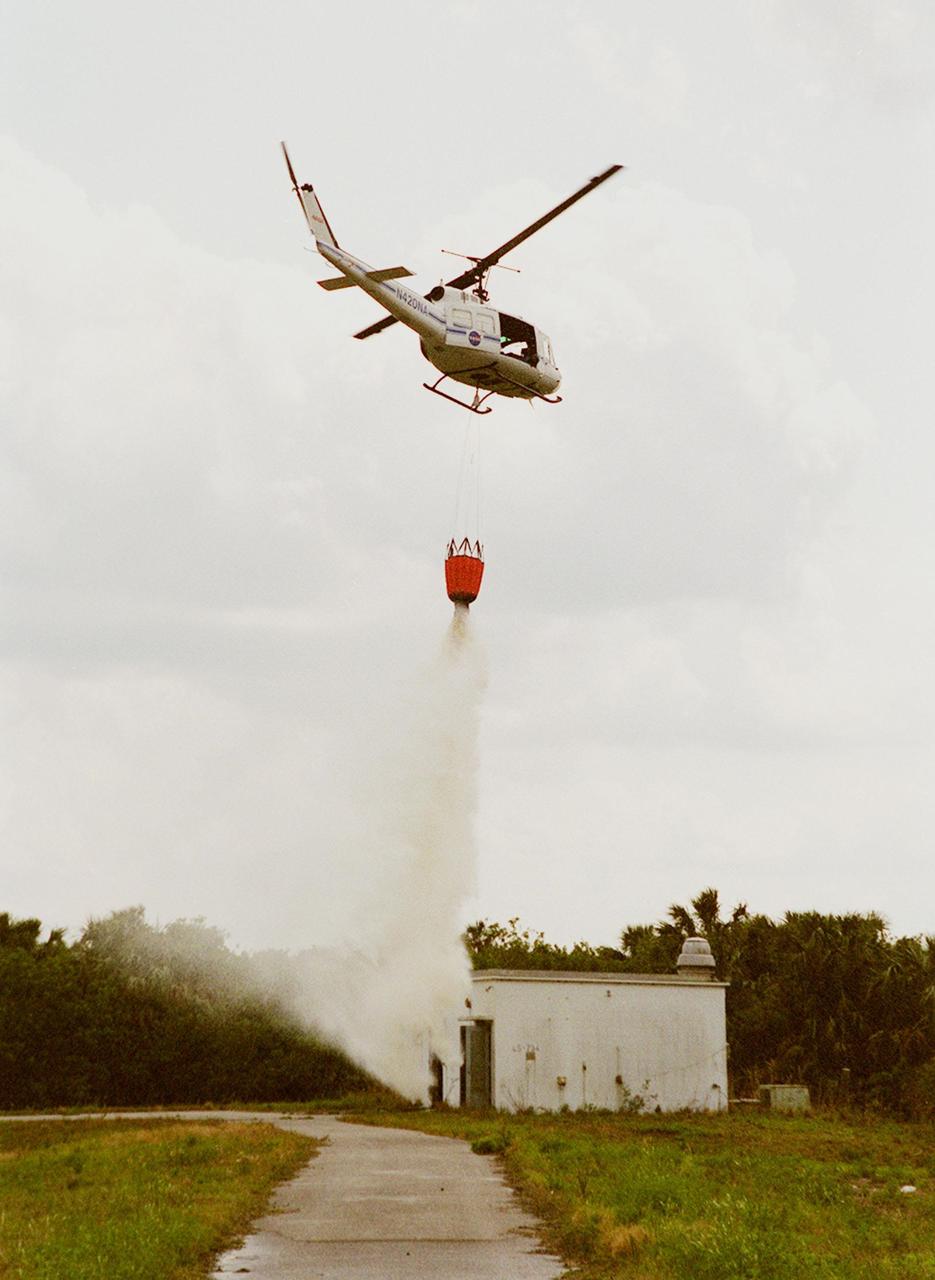
KENNEDY SPACE CENTER, FLA. -- A NASA helicopter releases 324 gallons of water onto a building in a simulated fire control demonstration. The high-impact-resistant flexible plastic bucket will be used for fire protection on property and buildings at Kennedy Space Center. Known as the "Bambi" bucket, it will also support the Fish and Wildlife Service for controlled burns plus any wild fires in the area.
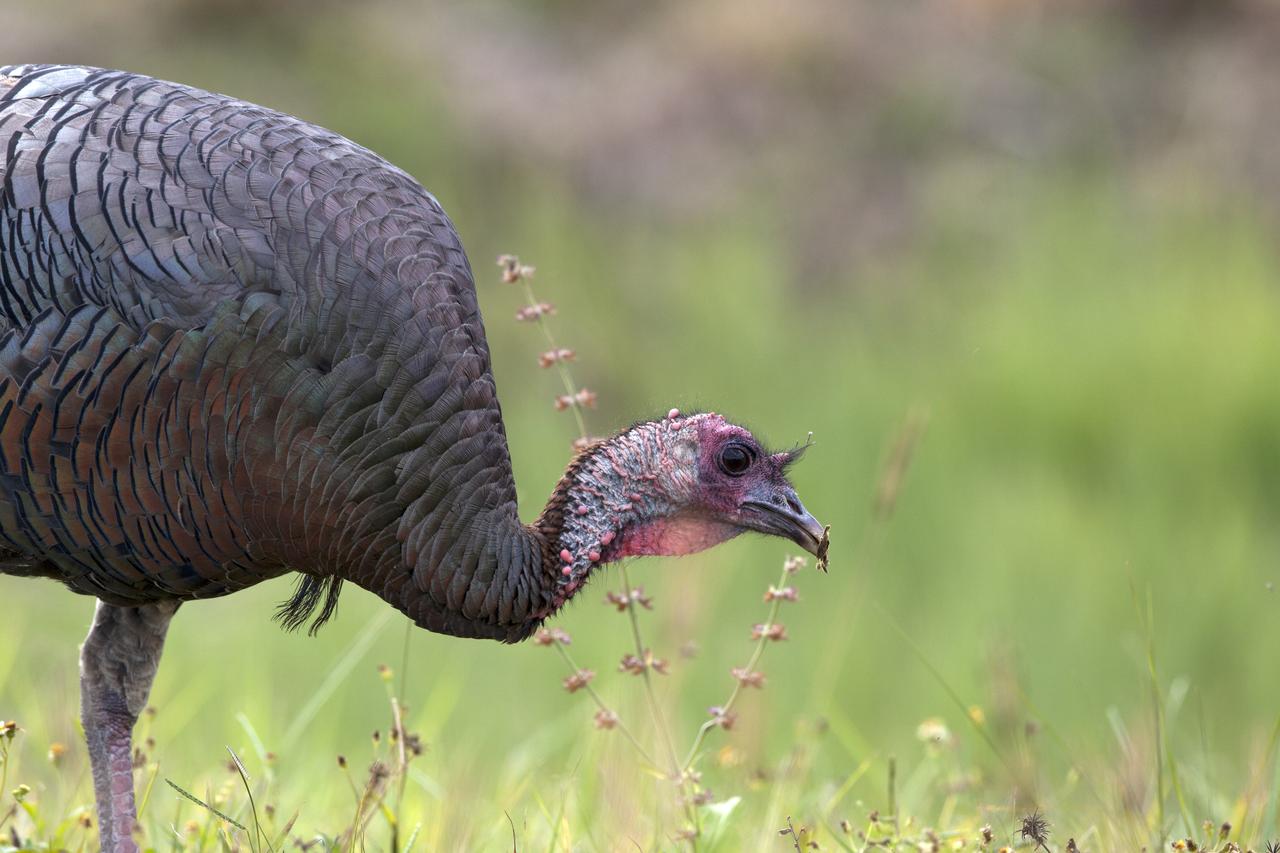
A wild turkey is seen at NASA's Kennedy Space Center in Florida. Kennedy shares a boundary with the Merritt Island National Wildlife Refuge. The refuge encompasses 140,000 acres that are a habitat for more than 331 species of birds, 31 mammals, 117 fish, and 65 amphibians and reptiles. The marshes and open water of the refuge provide wintering areas for 23 species of migratory waterfowl, as well as a year-round home for great blue herons, great egrets, wood storks, cormorants, brown pelicans and other species of marsh and shore birds.
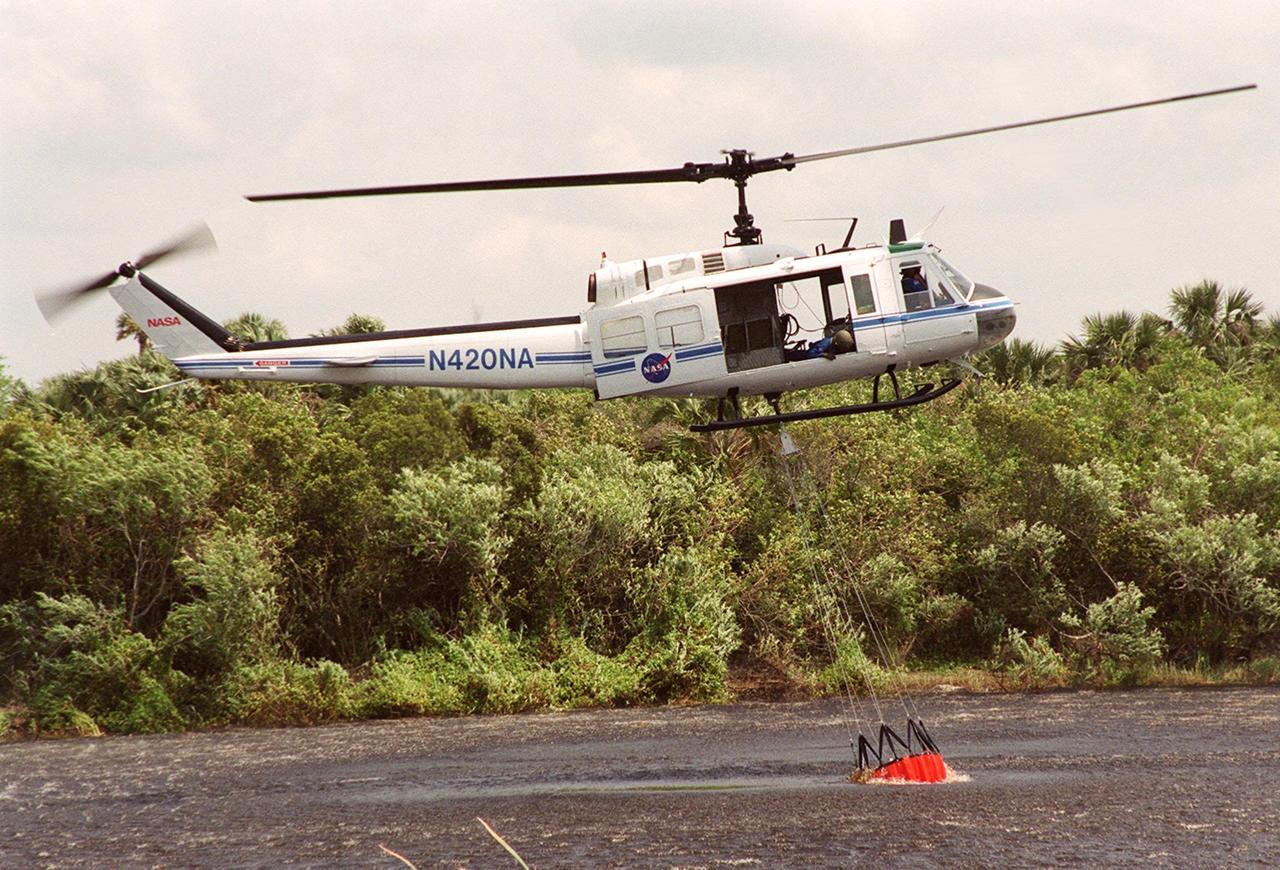
KENNEDY SPACE CENTER, FLA. -- A NASA helicopter hovers over the water while a high-impact-resistant flexible plastic bucket fills. The 324-gallon container will be used for fire protection on property and buildings at Kennedy Space Center. Known as the "Bambi" bucket, it will also support the Fish and Wildlife Service for controlled burns plus any wild fires in the area
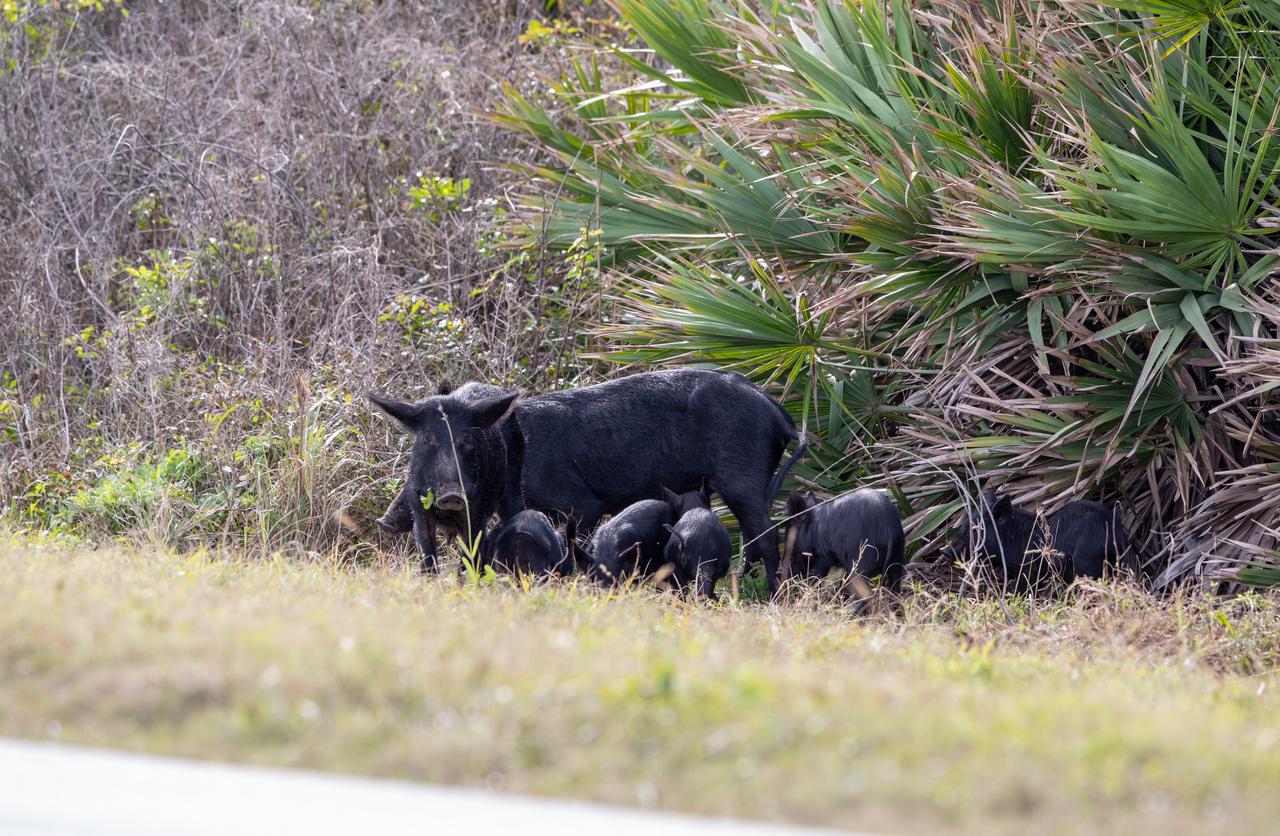
A family of wild hogs forages for food near the foliage at NASA’s Kennedy Space Center in Florida. Kennedy shares a border with the Merritt Island National Wildlife Refuge, spanning 140,000 acres of land, water, and marshes. More than 330 bird species, 117 species of fish, 68 amphibians and reptiles, and 31 different mammals call Kennedy and its surrounding borders home.
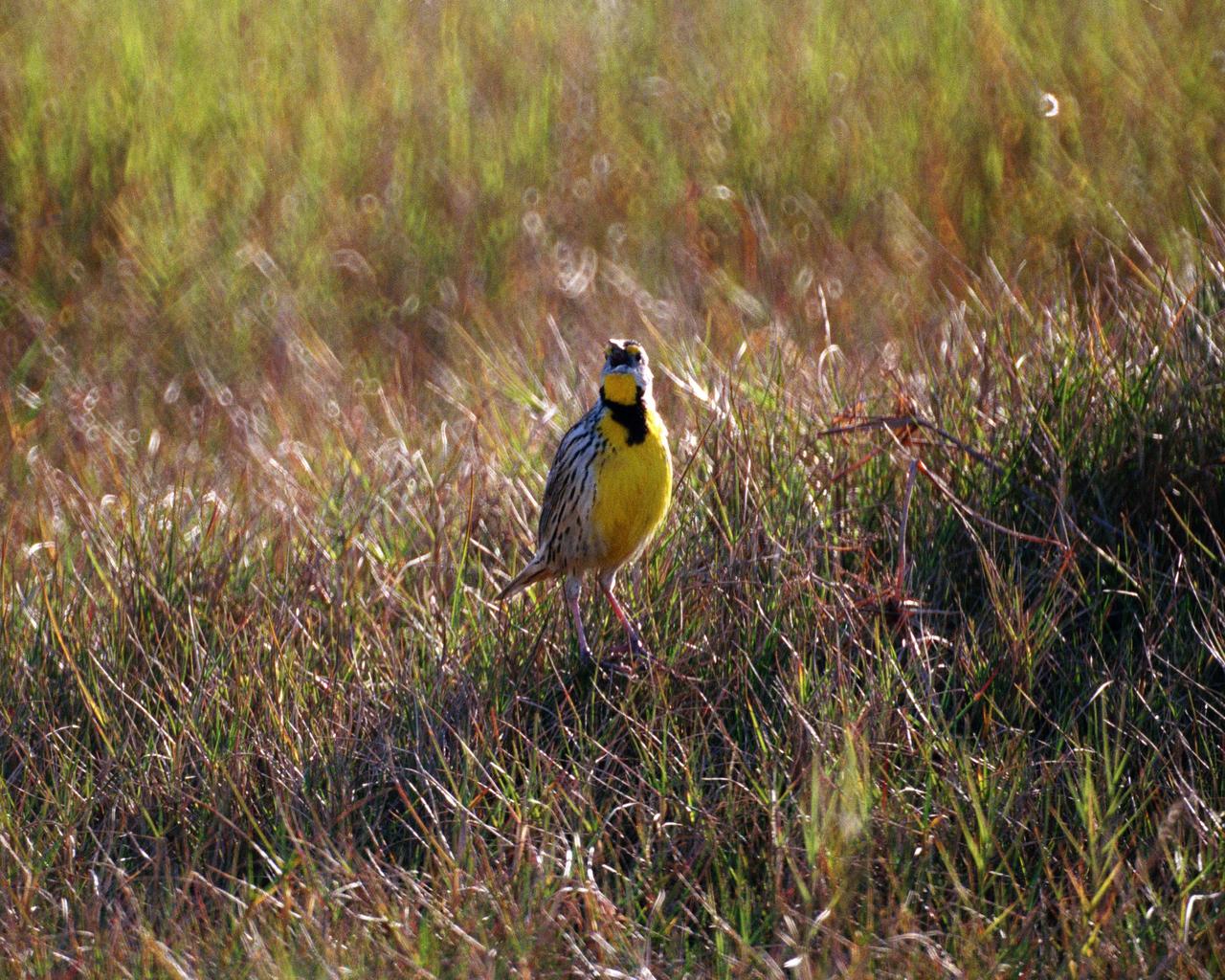
KENNEDY SPACE CENTER, FLA. - Co-located on the Kennedy Space Center is the Merritt Island National Wildlife Refuge, one of the finest refuges in the world. Here, birds, amphibians, mammals and other wild creatures thrive in a multitude of habitats untouched by the human hand. The refuge is living proof that high technology and nature can successfully co-exist. Photo credit: NASA
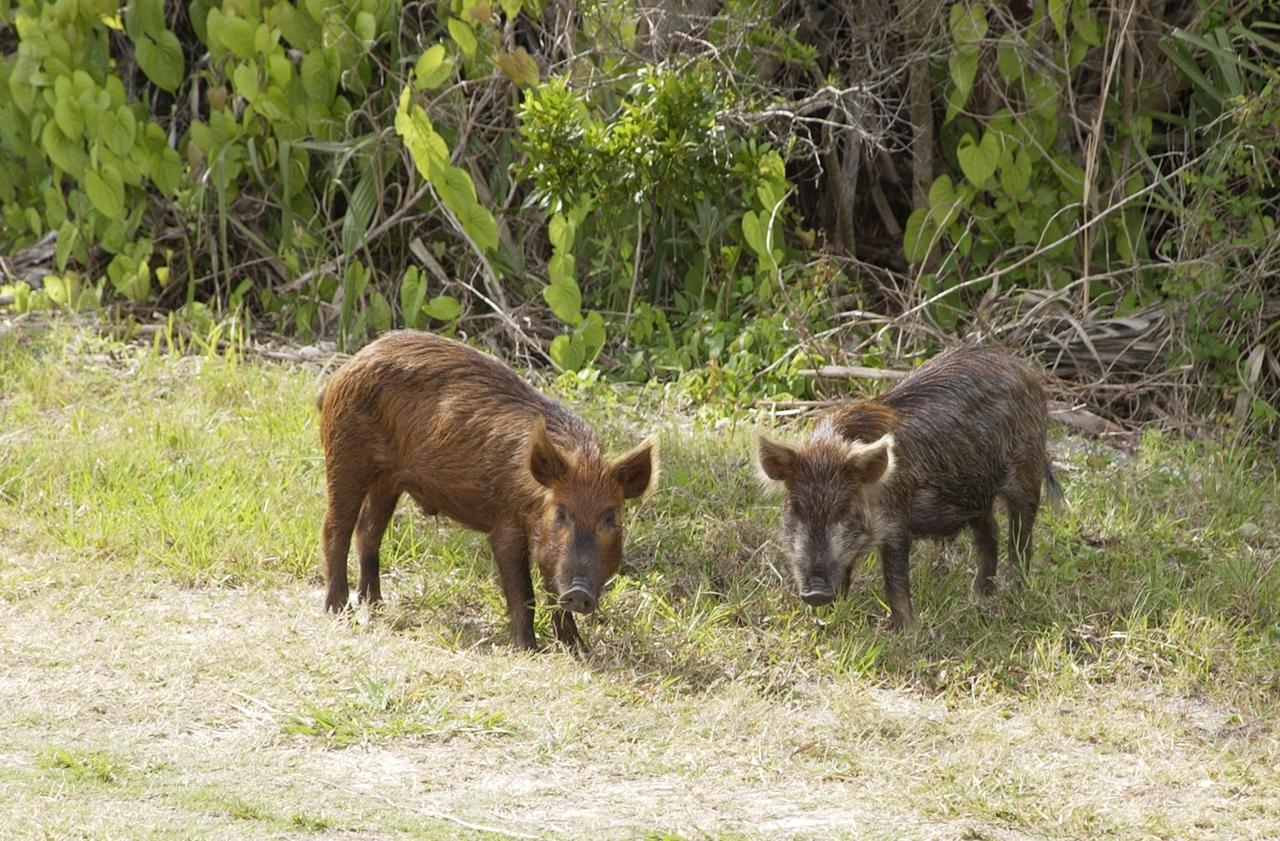
KENNEDY SPACE CENTER, FLA. - Wild pigs stop near the KSC Press Site in the Launch Complex 39 Area on their daily foraging rounds. Not a native in the environment, the pigs are believed to be descendants from those brought to Florida by the early Spanish explorers. Without many predators other than human, the pigs have flourished in the surrounding environs
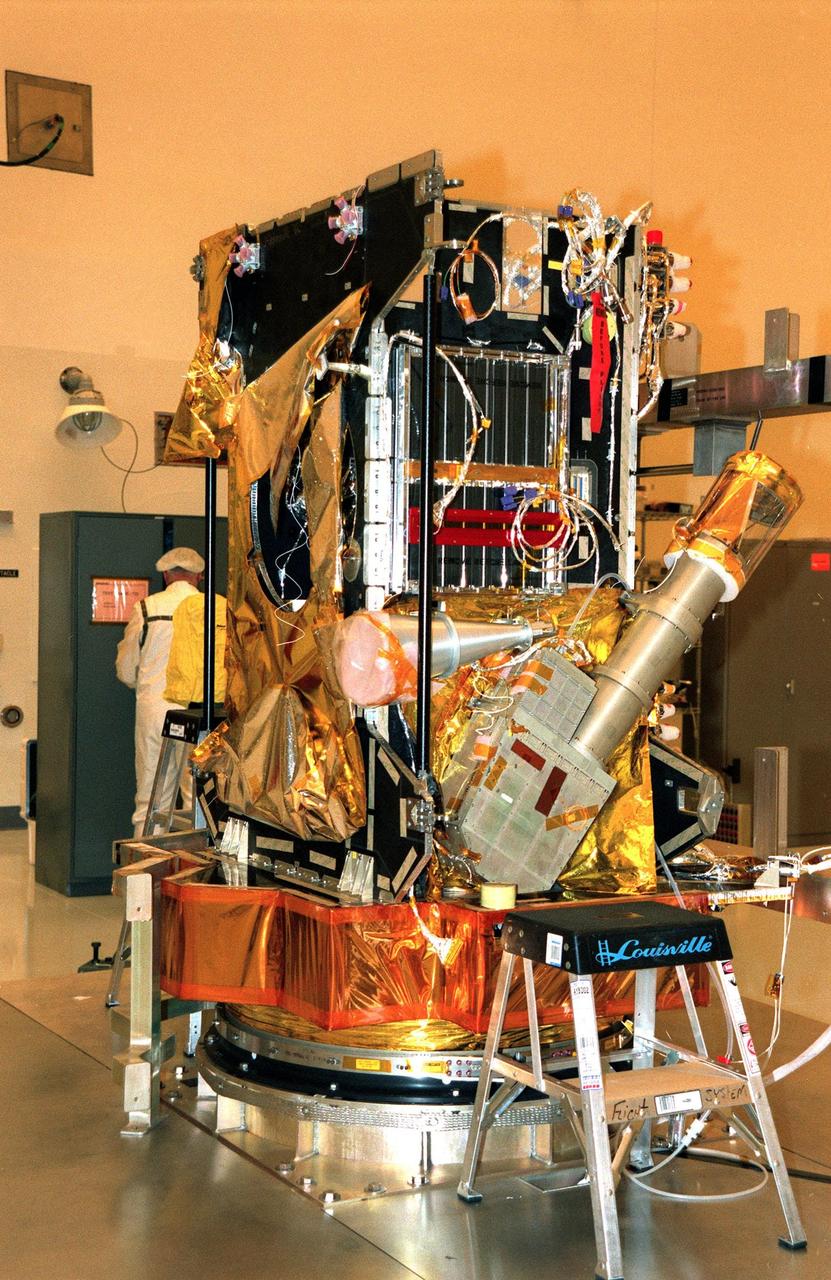
In the Payload Hazardous Servicing Facility, the Stardust spacecraft is ready for the sample return capsule to be attached. Stardust will use a unique medium called aerogel to capture comet particles flying off the nucleus of comet Wild 2 in January 2004, plus collect interstellar dust for later analysis. The collected samples will return to Earth in the re-entry capsule to be jettisoned as it swings by Earth in January 2006. Stardust is scheduled to be launched aboard a Boeing Delta 7426 rocket from Complex 17, Cape Canaveral Air Station, on Feb. 6, 1999
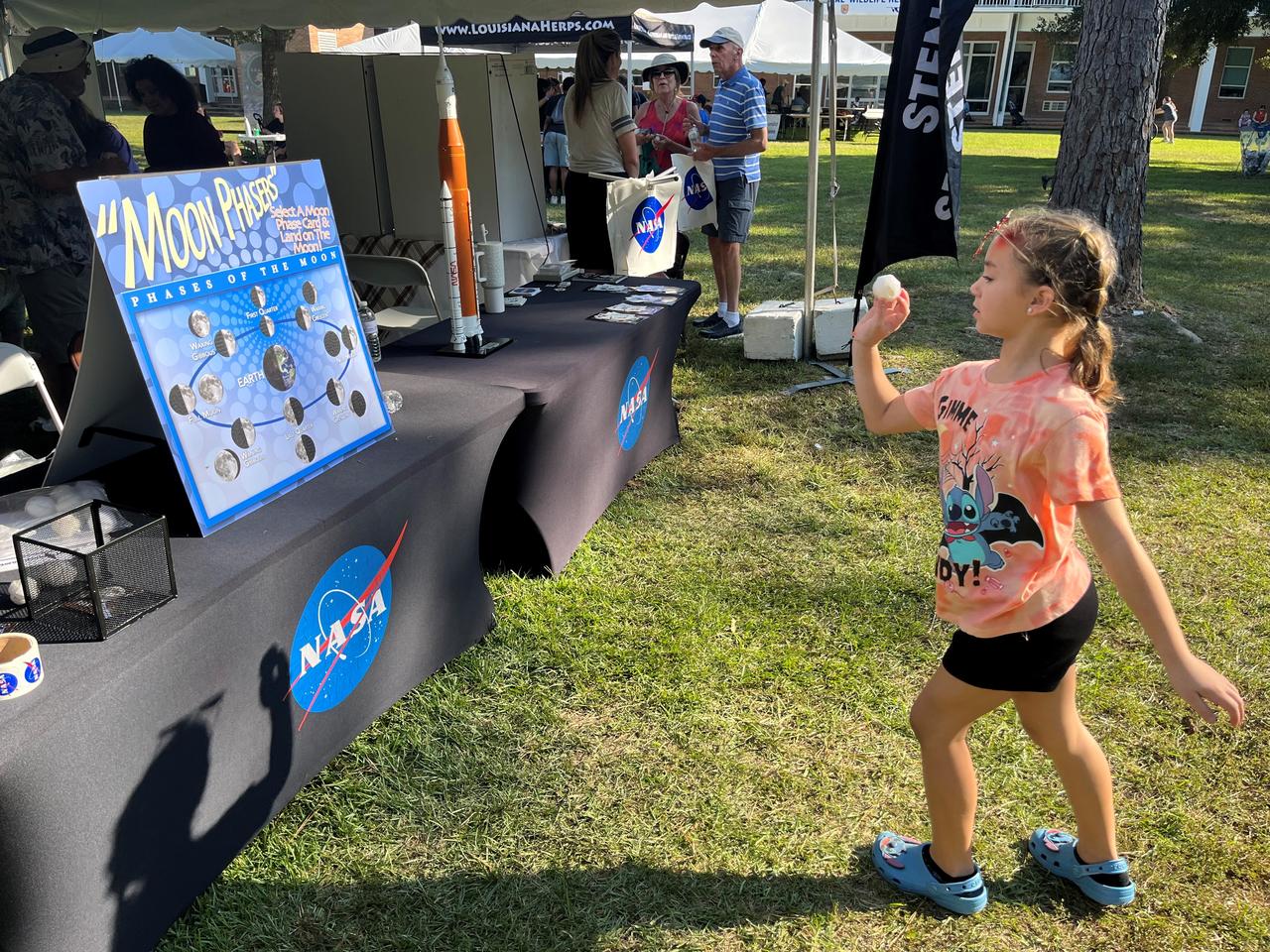
NASA Stennis representatives inspire the Artemis Generation Oct. 12 at the Wild Things event celebrating National Wildlife Refuge Week in Lacombe, Louisiana. Participants played a game to identify different phases of the Moon and learned more about NASA’s return to the Moon. The event was hosted by Friends of Louisiana Wildlife Refuges, Inc. and Southeast Louisiana National Wildlife Refuges Complex at Bayou Lacombe Center, headquarters for the nine National Wildlife Refuges in southeast Louisiana.
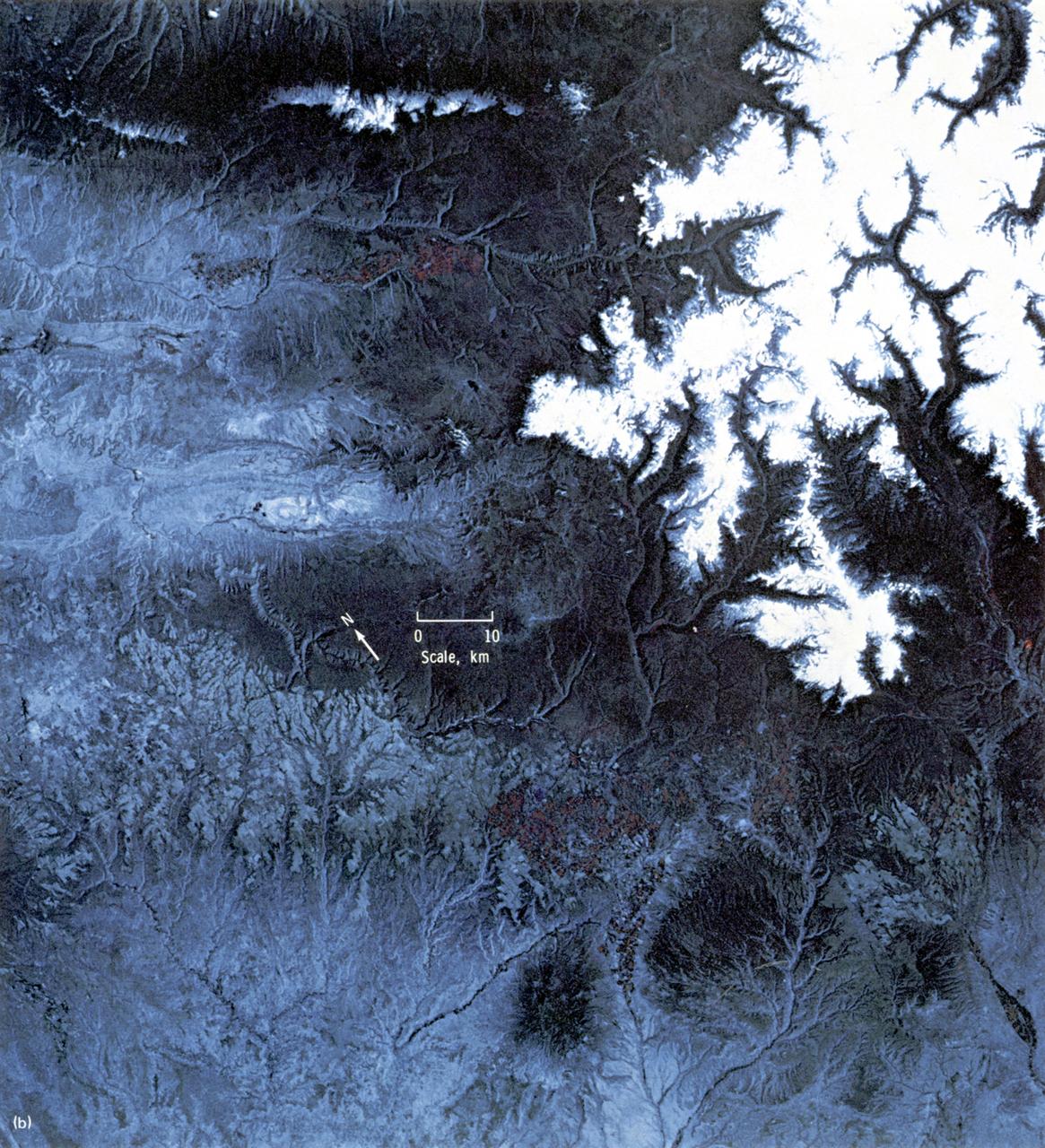
This EREP color infrared photograph of the Uncompahgre Plateau area of Colorado was taken in June of 1973 by the Earth Terrain Camera (Skylab EREP Experiment S190B) of the Skylab's Multi-spectral Photographic Facility during the Skylab-2 mission. Skylab stereoscopic data provided the best identification of vegetation complexes and delineation of vegetation boundaries, particularly in areas where changes in relief were related to changes in vegetation type (a common occurrence in wild-land vegetation communities).
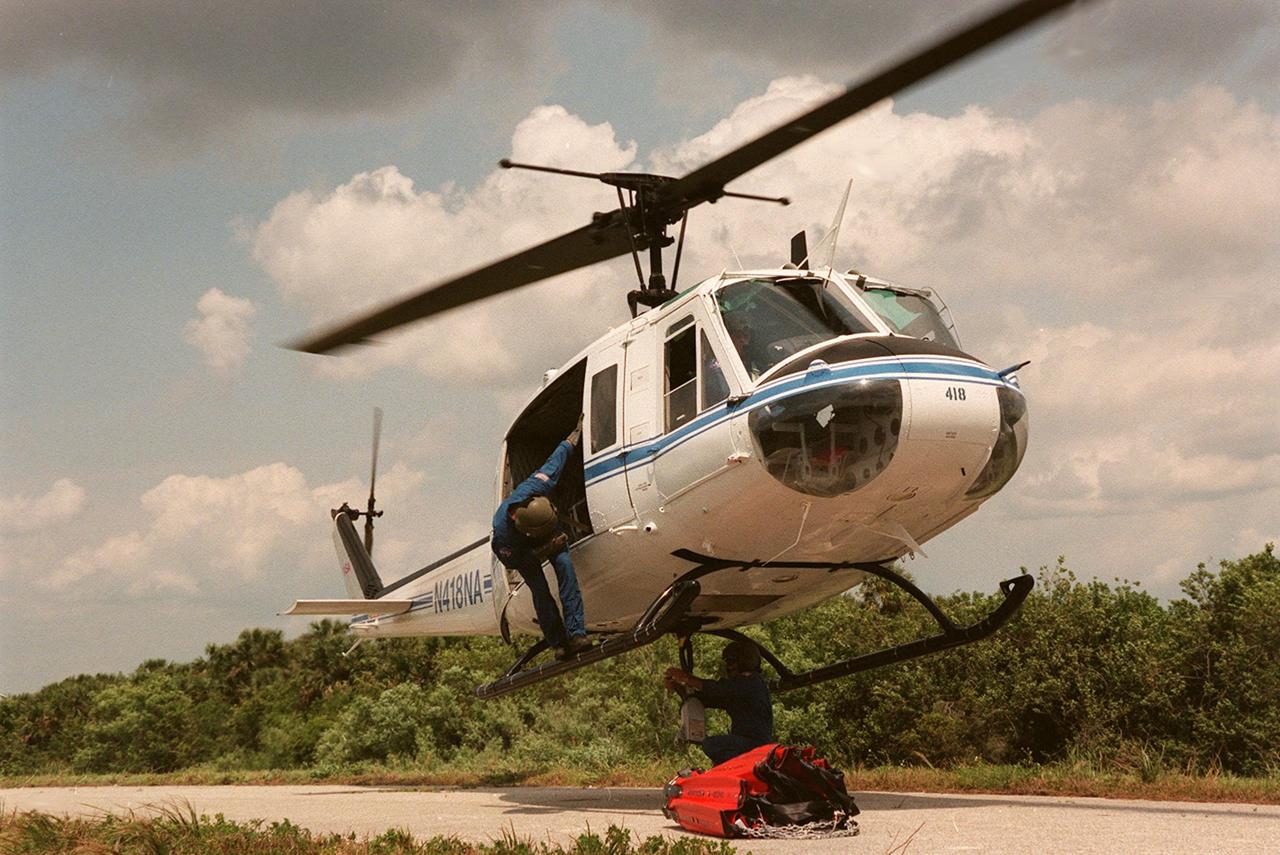
KENNEDY SPACE CENTER, FLA. -- Workers attach a high-impact-resistant flexible plastic bucket to a NASA helicopter. Holding 324 gallons of water, it will be used for fire protection on property and buildings at Kennedy Space Center. Known as the "Bambi" bucket, it will also support the Fish and Wildlife Service for controlled burns plus any wild fires in the area.
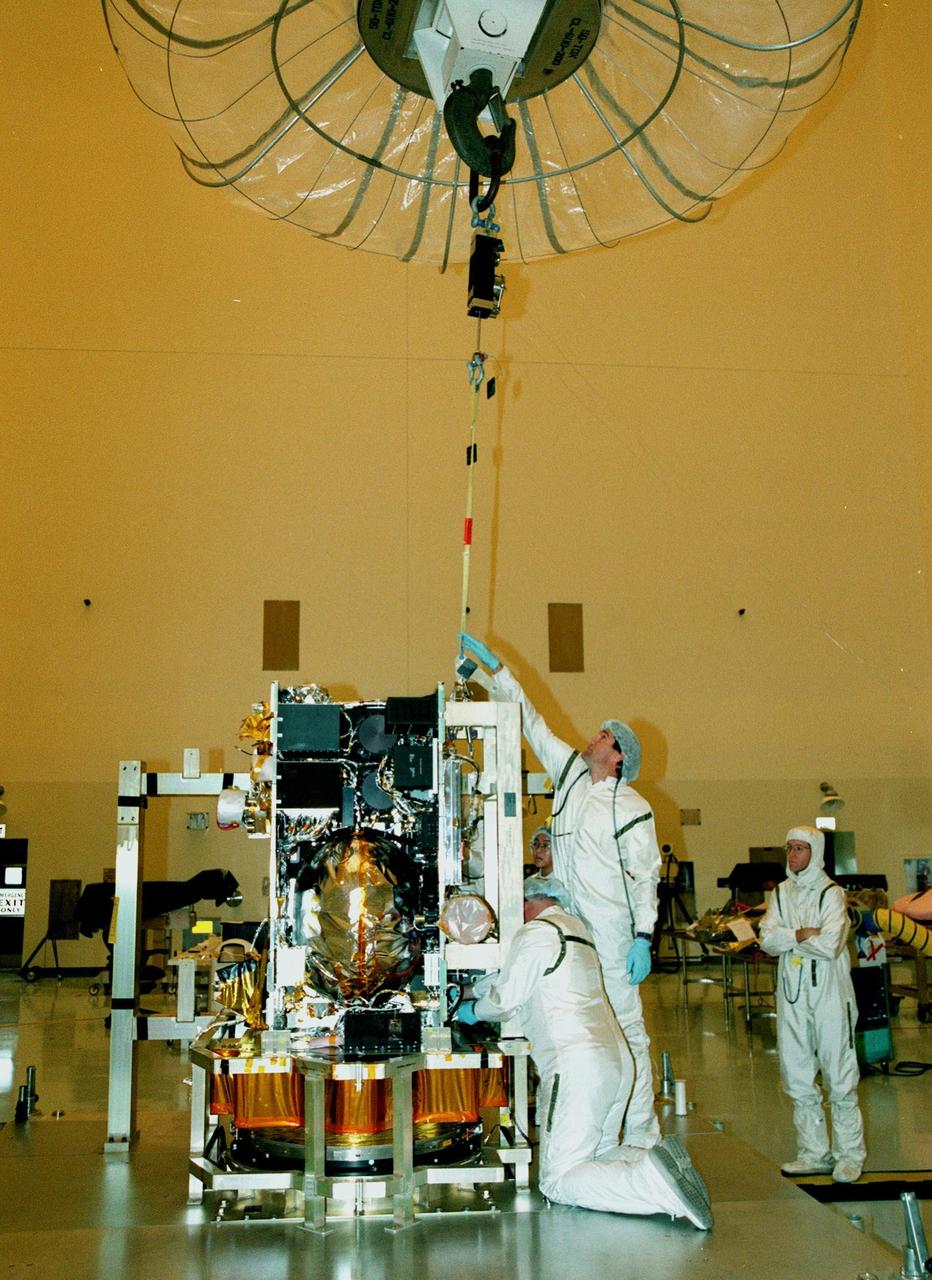
In the Payload Hazardous Servicing Facility, workers adjust a science panel they are installing on the spacecraft Stardust. Scheduled to be launched aboard a Boeing Delta 7426 rocket from Complex 17, Cape Canaveral Air Station, on Feb. 6, 1999, Stardust will use a unique medium called aerogel to capture comet particles flying off the nucleus of comet Wild 2 in January 2004, plus collect interstellar dust for later analysis. The collected samples will return to Earth in a re-entry capsule to be jettisoned as it swings by Earth in January 2006
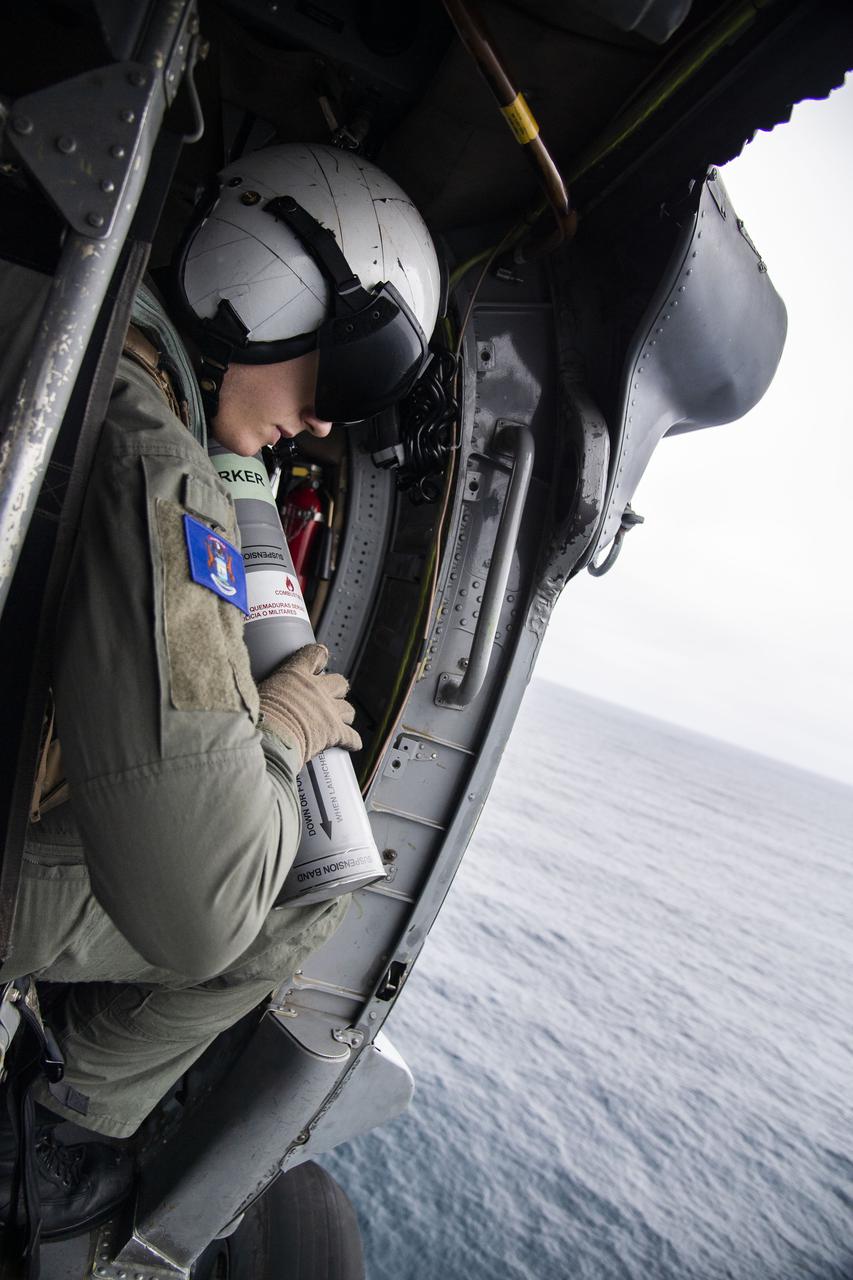
Naval Aircrewman 2nd Class Kanon Brooks, assigned to the “Wild Cards” of Helicopter Sea Combat Squadron (HSC) 23, prepares to drop a smoke canister from an MH-60S Seahawk helicopter near a mock Orion capsule to indicate the spacecraft’s location. During Underway Recovery Test 9 (URT-9) aboard amphibious transport dock ship USS John P. Murtha (LPD 26), NASA’s Landing and Recovery Team conducted a full mission profile simulation to certify the team for Artemis I.
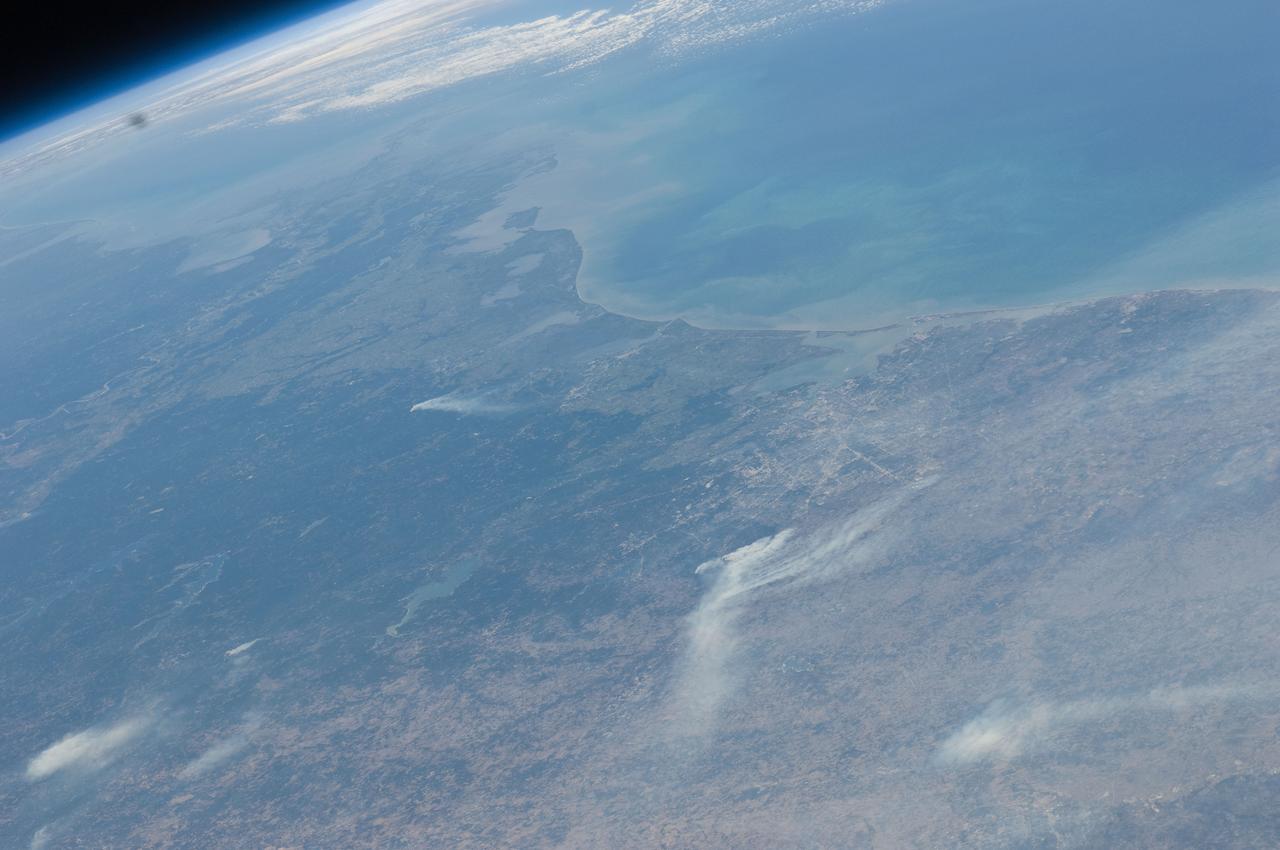
ISS028-E-043559 (7 Sept. 2011) --- This view, from the camera of an Expedition 28 crew member onboard the International Space Station, looks from the northwest toward southeast and covers many counties in southeast Texas that have been heavily affected by dozens of wild fires. Houston can be seen near frame center and the Gulf of Mexico takes up the upper right quadrant of the frame.
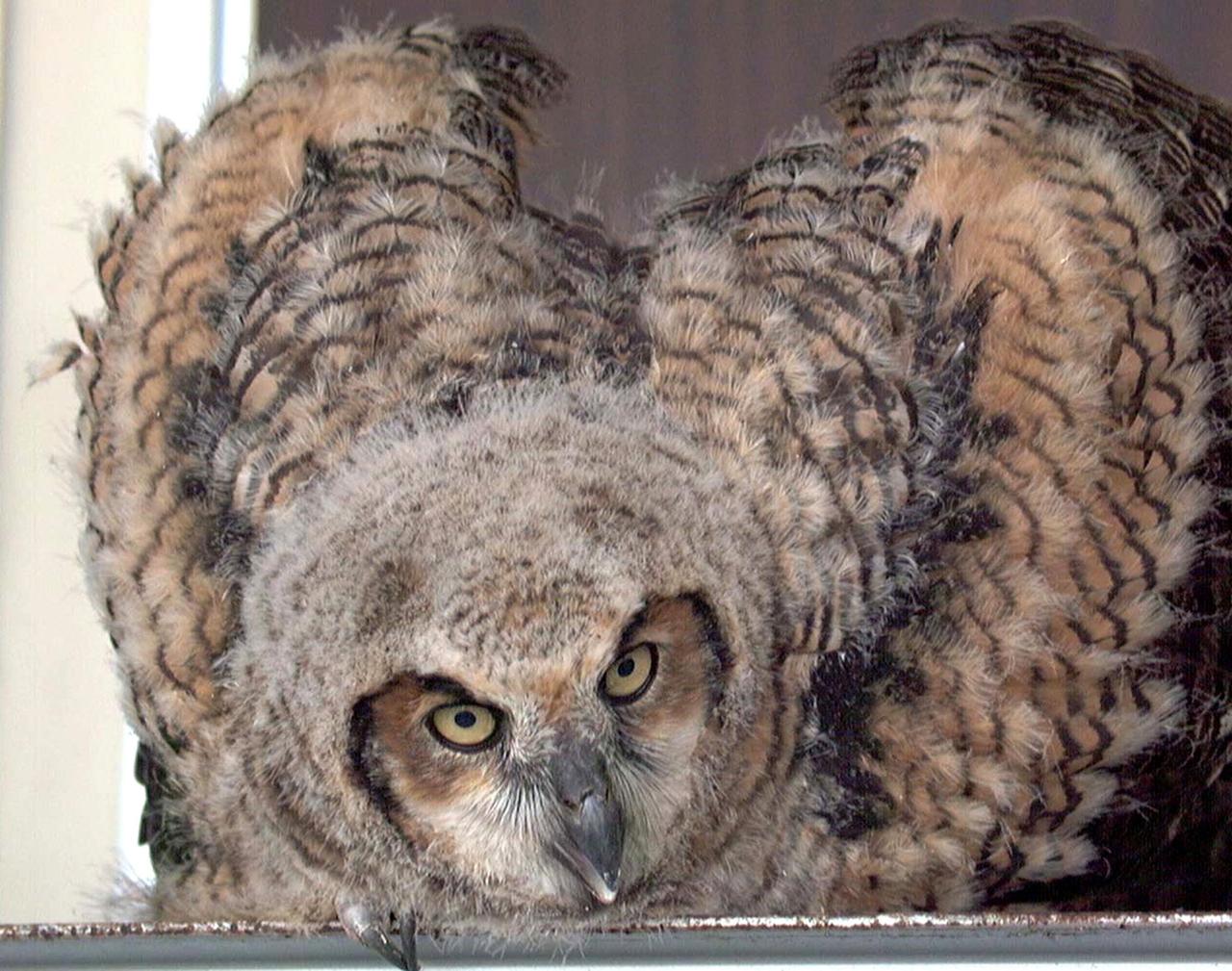
KENNEDY SPACE CENTER, FLA. -- A baby owl displays its wings at the photographer snapping its picture. The owl was found on the stairs inside Hangar G, Cape Canaveral Air Force Station. It had apparently tried to fly from a nest near the ceiling but couldn't get back to it. Workers called an Audubon rescue center near Orlando, which captured it and will ensure the bird is returned to the wild when it's ready.
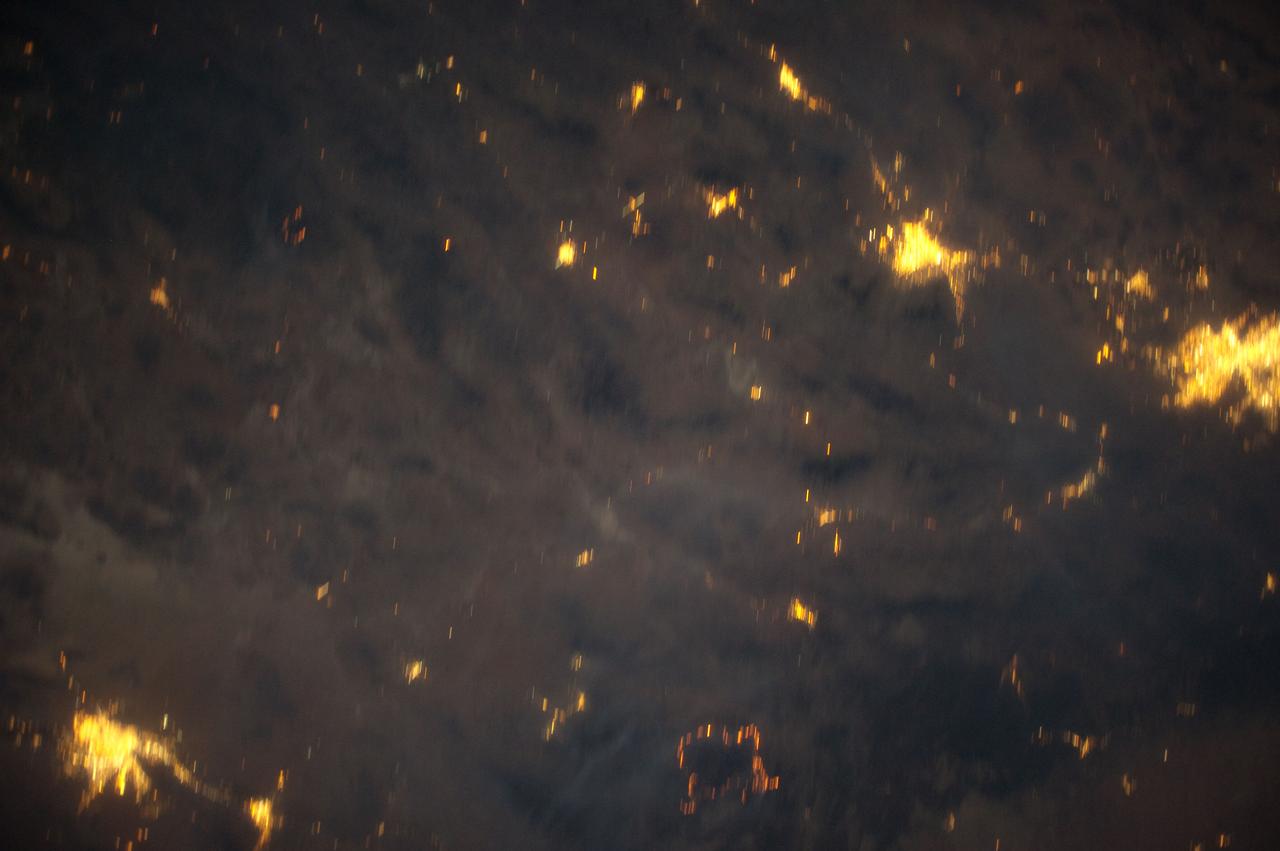
ISS031-E-83747 (2 June 2012) --- Downlinked from the International Space Station this still image -– part of a series from a mounted, automated, twilight session -- when viewed in sequence shows the flame ring associated with wild fires in the Southwest move from bottom to top-center framed at a distance by the bright urban areas of Tucson, Phoenix, El Paso-Las Cruces, and finally Albuquerque (mostly under cloud).
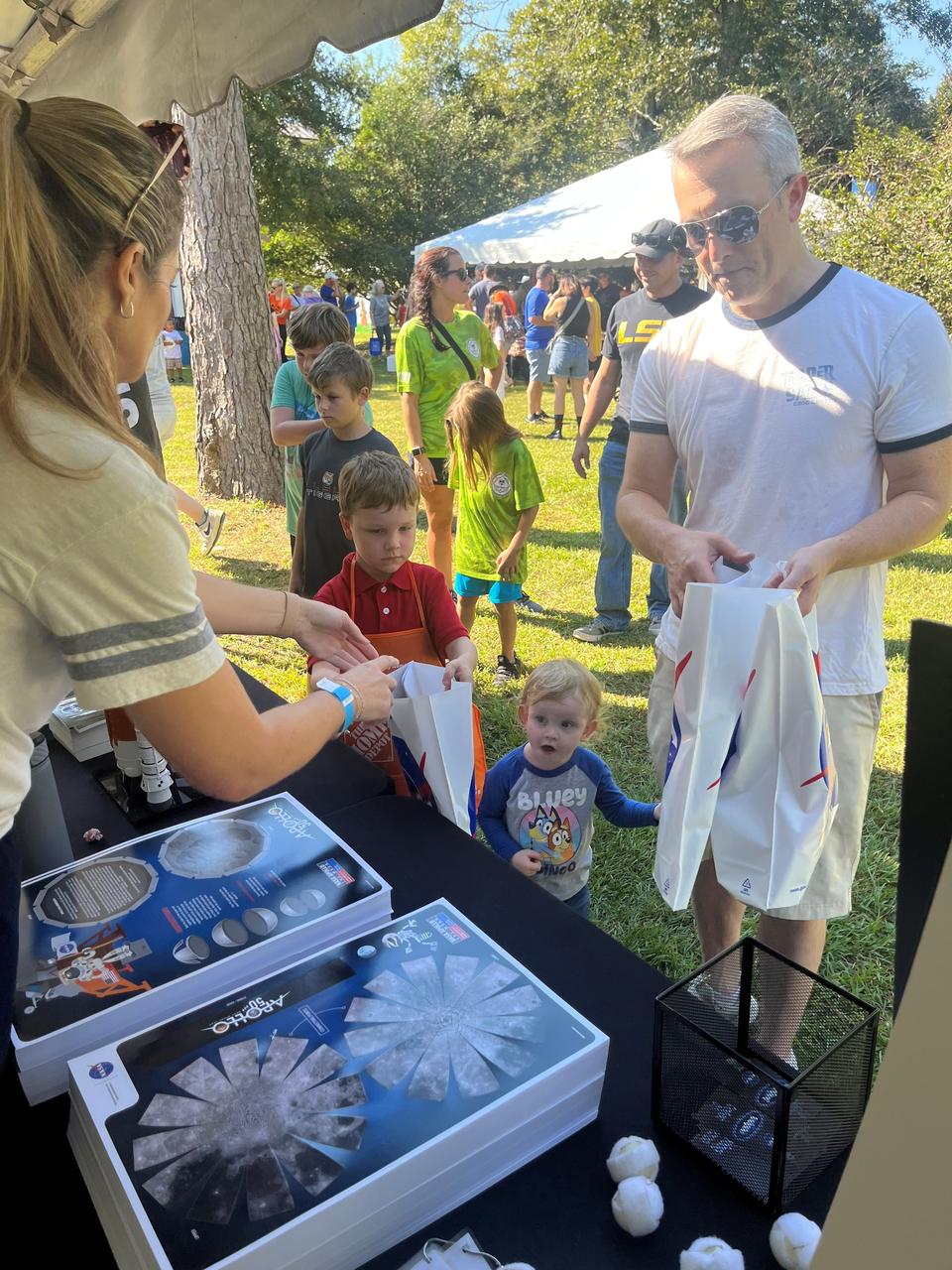
NASA Stennis representatives inspire the Artemis Generation Oct. 12 at the Wild Things event celebrating National Wildlife Refuge Week in Lacombe, Louisiana. Participants played a game to identify different phases of the Moon and learned more about NASA’s return to the Moon. The event was hosted by Friends of Louisiana Wildlife Refuges, Inc. and Southeast Louisiana National Wildlife Refuges Complex at Bayou Lacombe Center, headquarters for the nine National Wildlife Refuges in southeast Louisiana.
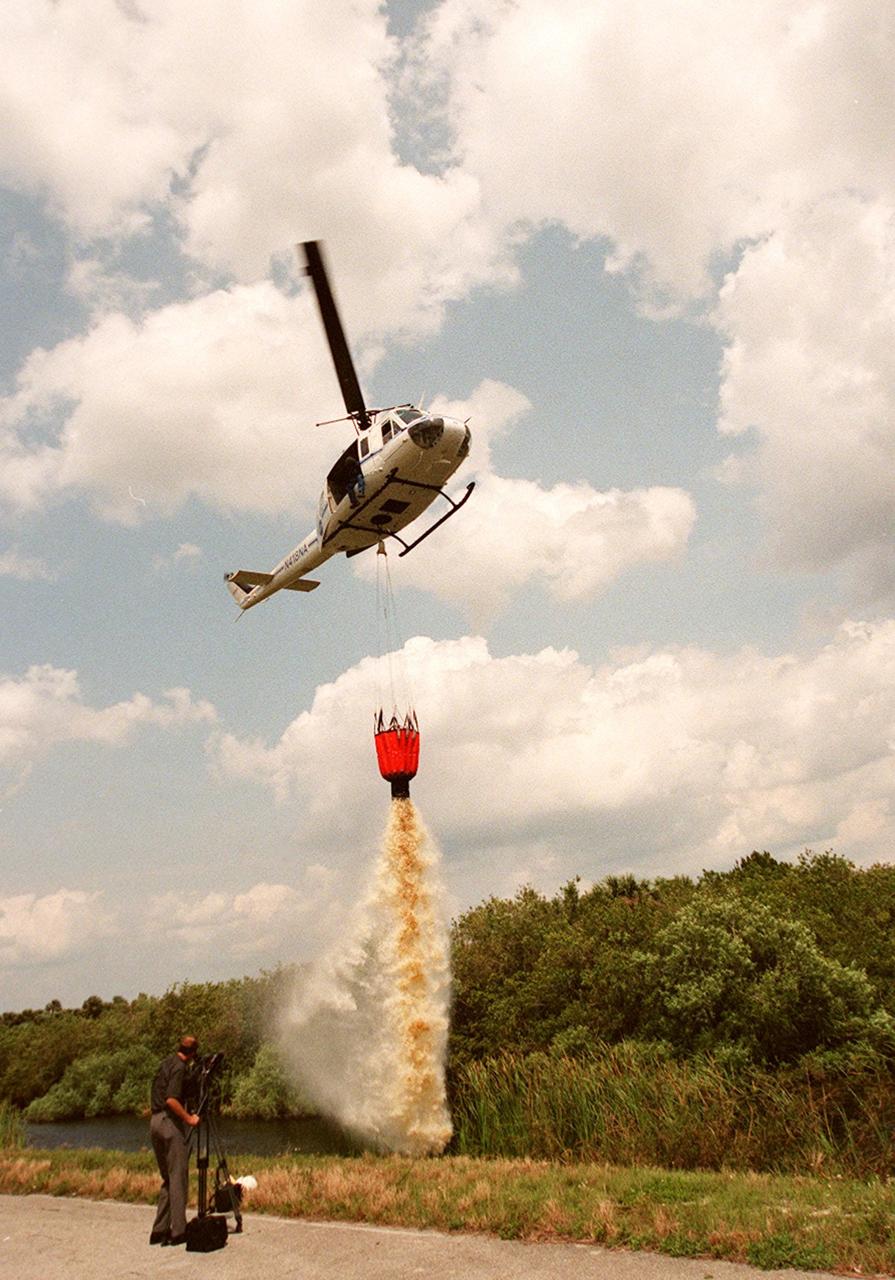
KENNEDY SPACE CENTER, FLA. -- A NASA helicopter releases the contents of the high-impact-resistant flexible plastic bucket it holds. The 324-gallon container will be used for fire protection on property and buildings at Kennedy Space Center. Known as the "Bambi" bucket, it will also support the Fish and Wildlife Service for controlled burns plus any wild fires in the area.
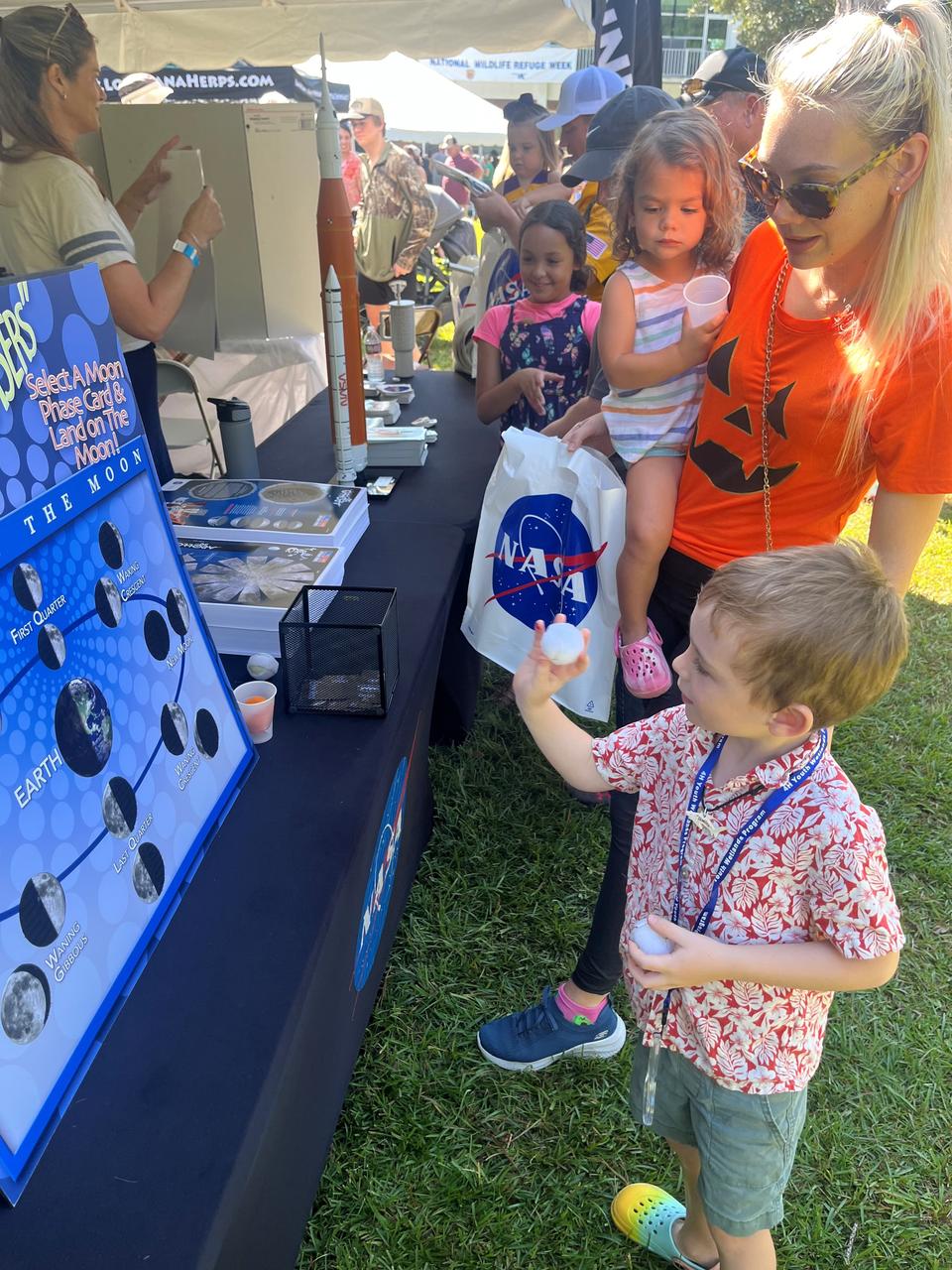
NASA Stennis representatives inspire the Artemis Generation Oct. 12 at the Wild Things event celebrating National Wildlife Refuge Week in Lacombe, Louisiana. Participants played a game to identify different phases of the Moon and learned more about NASA’s return to the Moon. The event was hosted by Friends of Louisiana Wildlife Refuges, Inc. and Southeast Louisiana National Wildlife Refuges Complex at Bayou Lacombe Center, headquarters for the nine National Wildlife Refuges in southeast Louisiana.

NASA Stennis representatives inspire the Artemis Generation Oct. 12 at the Wild Things event celebrating National Wildlife Refuge Week in Lacombe, Louisiana. Participants played a game to identify different phases of the Moon and learned more about NASA’s return to the Moon. The event was hosted by Friends of Louisiana Wildlife Refuges, Inc. and Southeast Louisiana National Wildlife Refuges Complex at Bayou Lacombe Center, headquarters for the nine National Wildlife Refuges in southeast Louisiana.
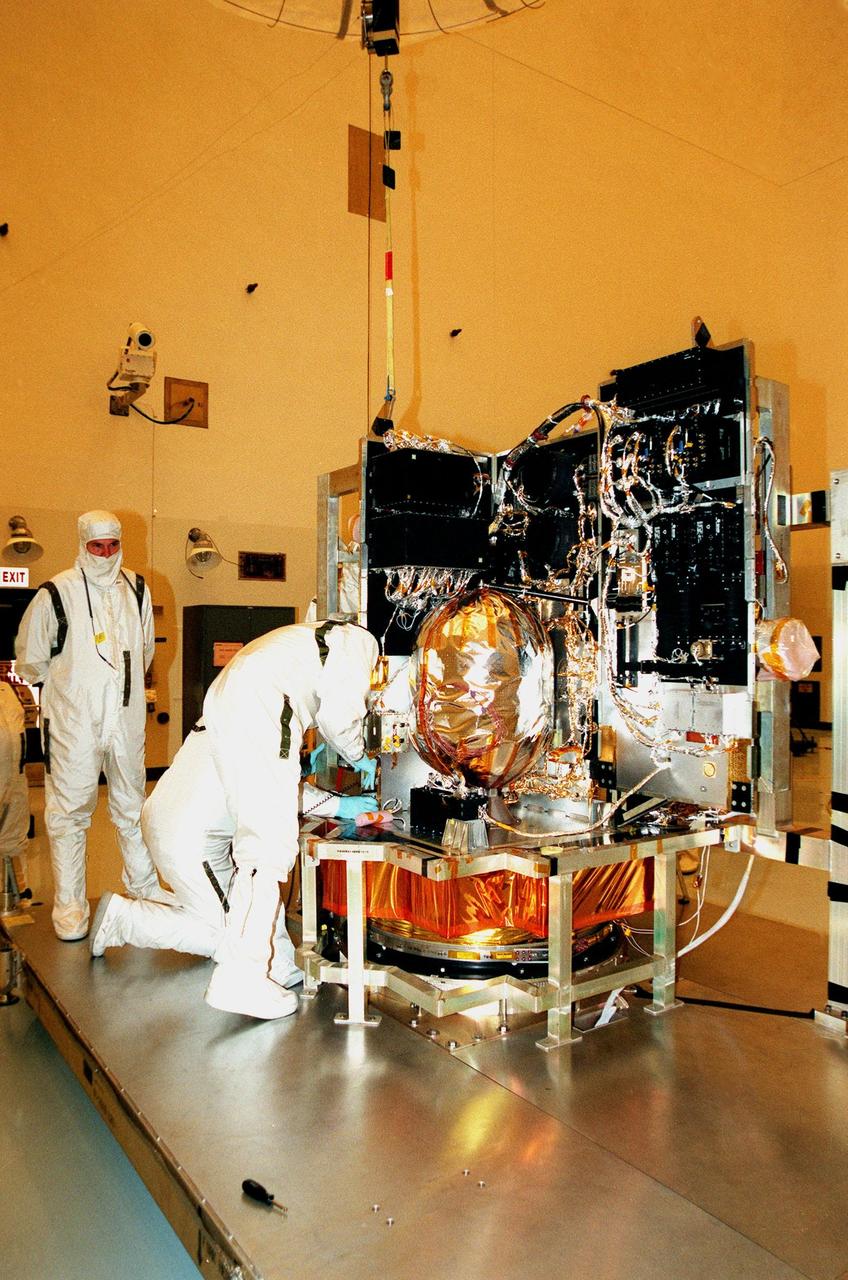
In the Payload Hazardous Servicing Facility, workers get ready to install a science panel on the spacecraft Stardust. Scheduled to be launched aboard a Boeing Delta 7426 rocket from Complex 17, Cape Canaveral Air Station, on Feb. 6, 1999, Stardust will use a unique medium called aerogel to capture comet particles flying off the nucleus of comet Wild 2 in January 2004, plus collect interstellar dust for later analysis. The collected samples will return to Earth in a re-entry capsule to be jettisoned as it swings by Earth in January 2006
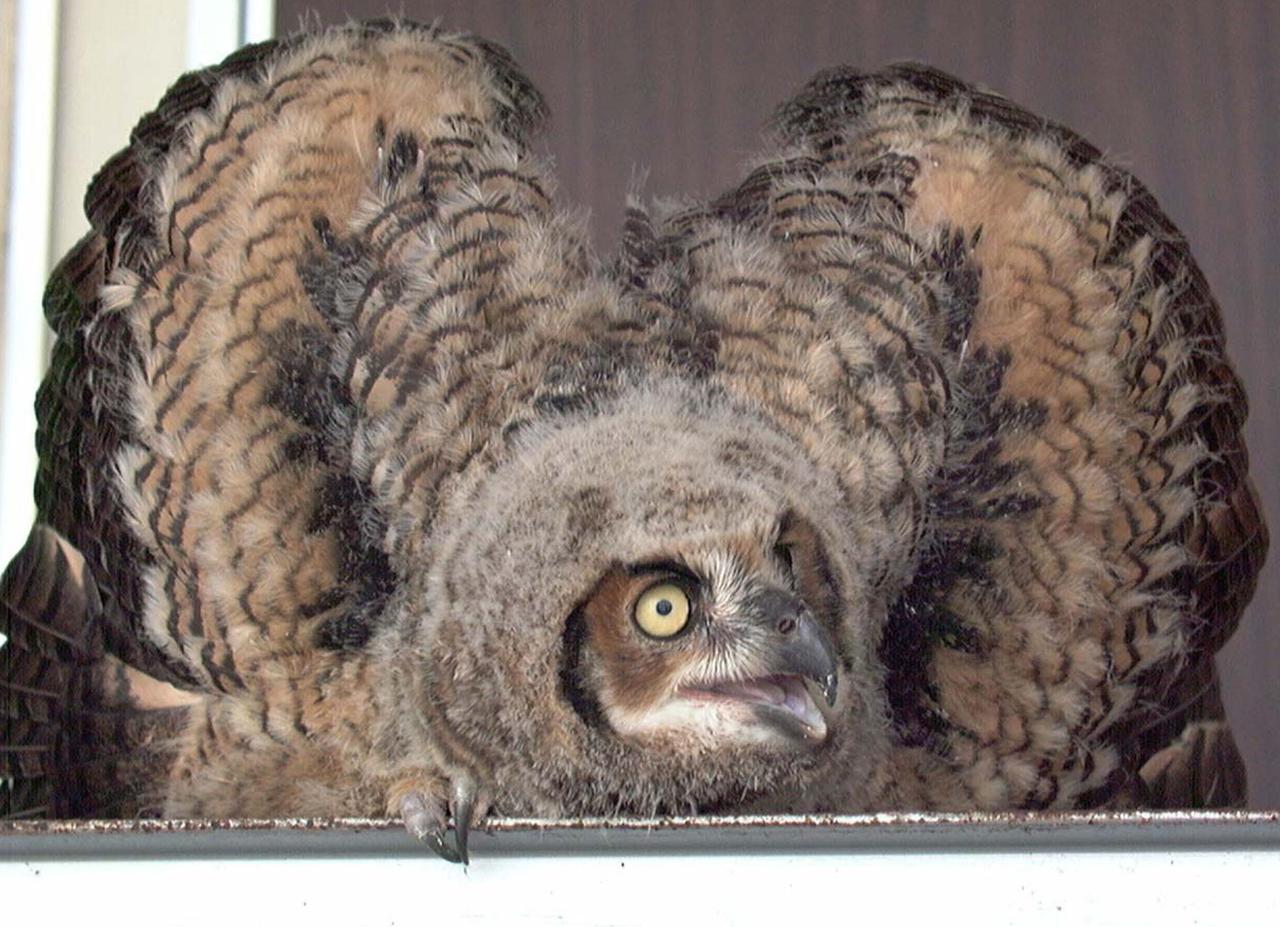
KENNEDY SPACE CENTER, FLA. -- A baby owl, possibly a screech owl, shows its fear and resentment of the photographer snapping its picture. The owl was found on the stairs inside Hangar G, Cape Canaveral Air Force Station. It had apparently tried to fly from a nest near the ceiling but couldn't get back to it. Workers called an Audubon rescue center near Orlando, which captured it and will ensure the bird is returned to the wild when it's ready
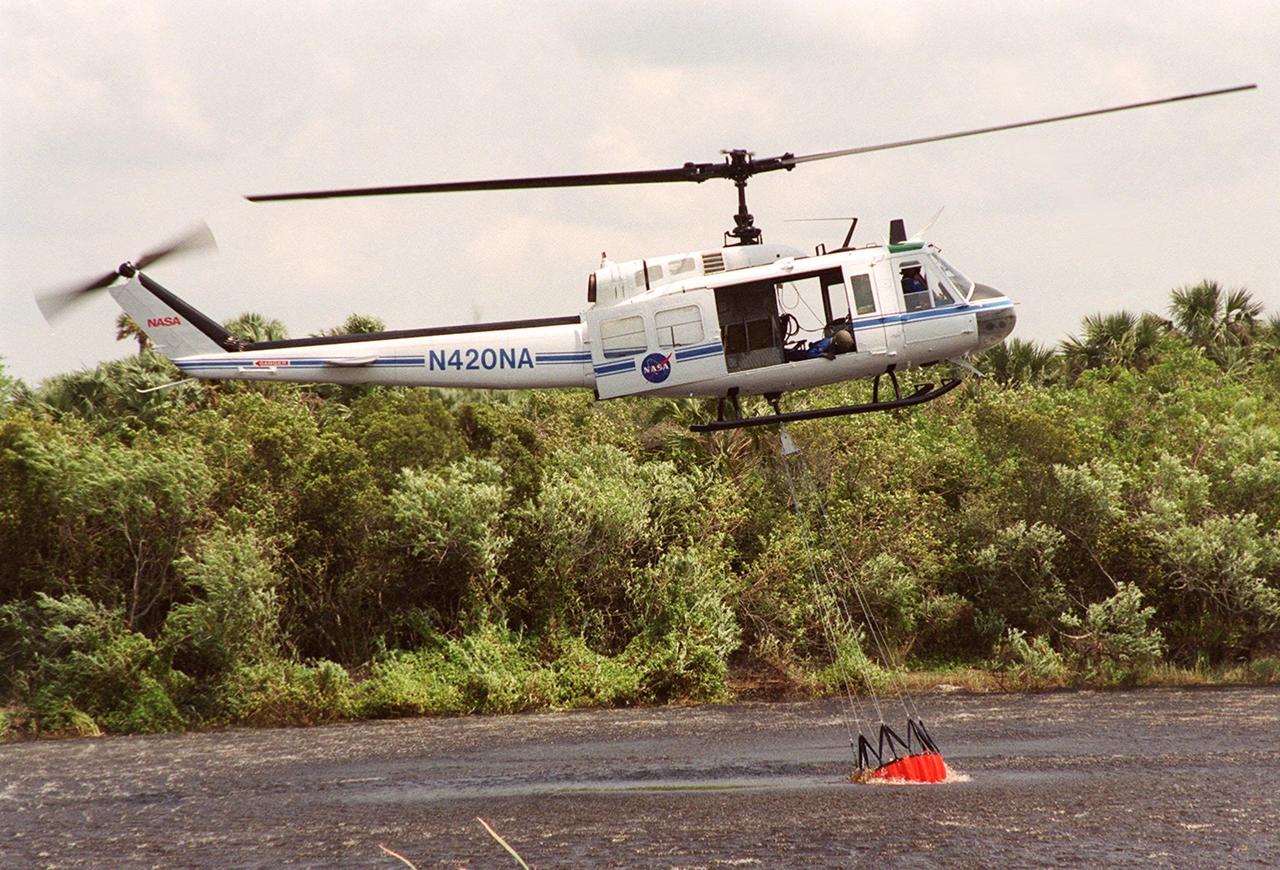
KENNEDY SPACE CENTER, FLA. -- A NASA helicopter hovers over the water while a high-impact-resistant flexible plastic bucket fills. The 324-gallon container will be used for fire protection on property and buildings at Kennedy Space Center. Known as the "Bambi" bucket, it will also support the Fish and Wildlife Service for controlled burns plus any wild fires in the area