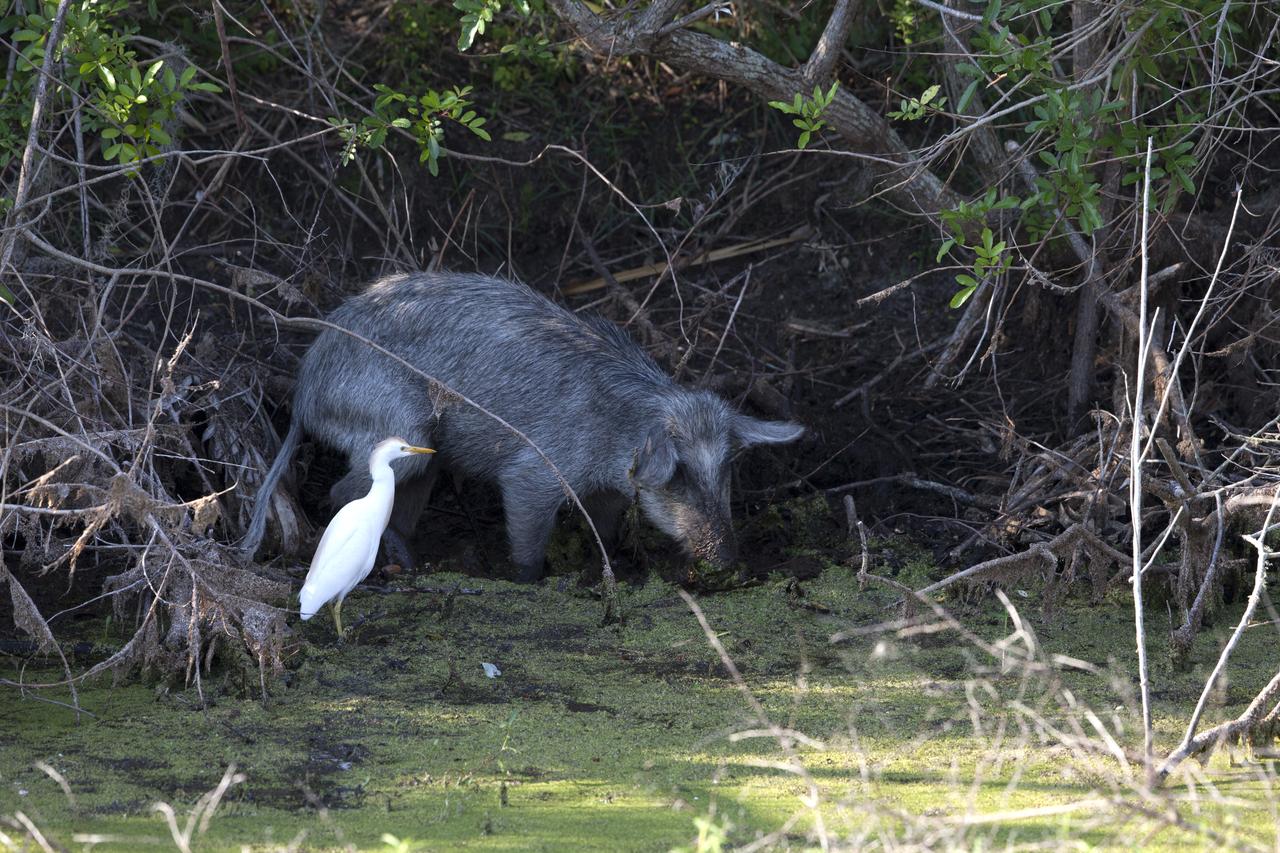
A wild pig finds food in the underbrush at NASA's Kennedy Space Center in Florida. The center shares a border with the Merritt Island National Wildlife Refuge. More than 330 native and migratory bird species, 25 mammals, 117 fishes and 65 amphibians and reptiles call Kennedy and the wildlife refuge home.
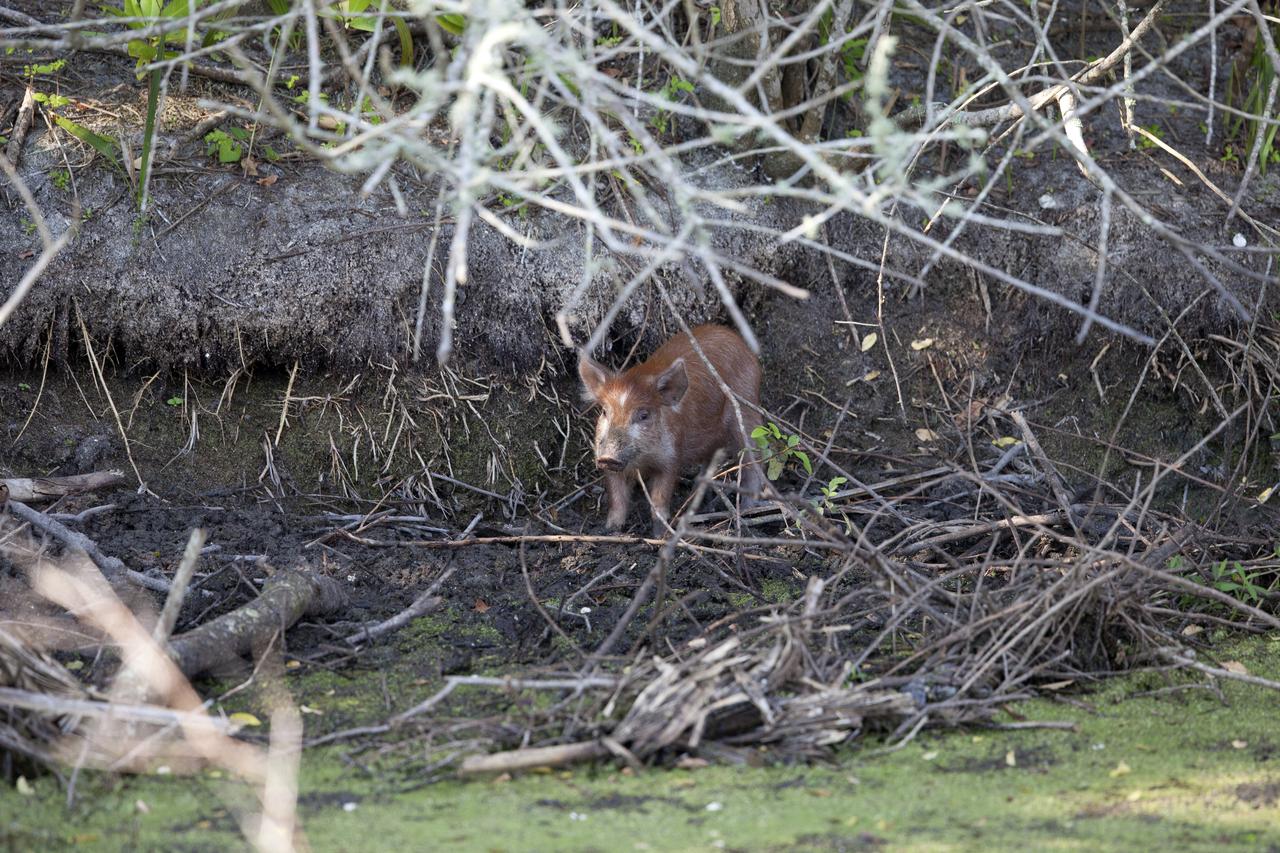
A baby pig stands in the underbrush near a bog at NASA's Kennedy Space Center in Florida. The center shares a border with the Merritt Island National Wildlife Refuge. More than 330 native and migratory bird species, 25 mammals, 117 fishes and 65 amphibians and reptiles call Kennedy and the wildlife refuge home.
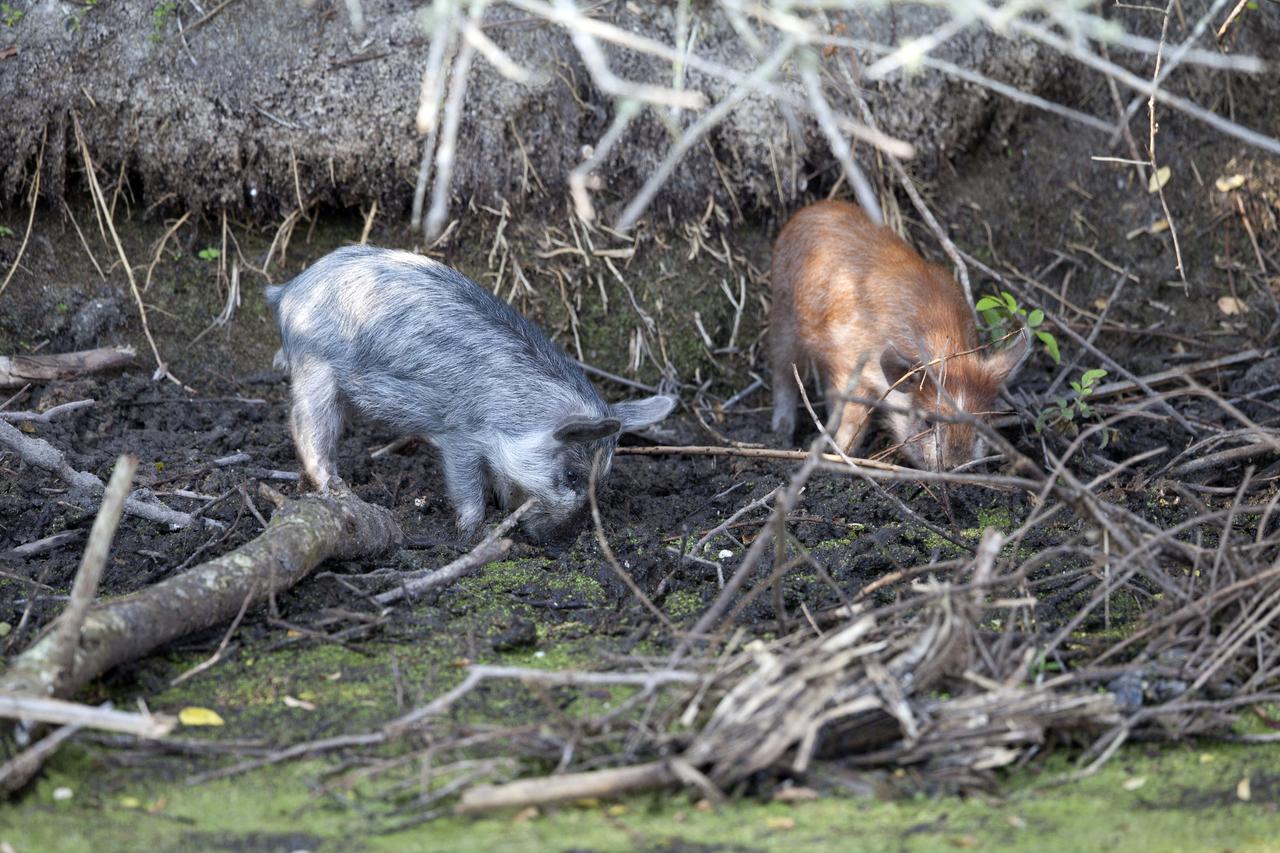
Two baby pigs dig in the underbrush at NASA's Kennedy Space Center in Florida. The center shares a border with the Merritt Island National Wildlife Refuge. More than 330 native and migratory bird species, 25 mammals, 117 fishes and 65 amphibians and reptiles call Kennedy and the wildlife refuge home.
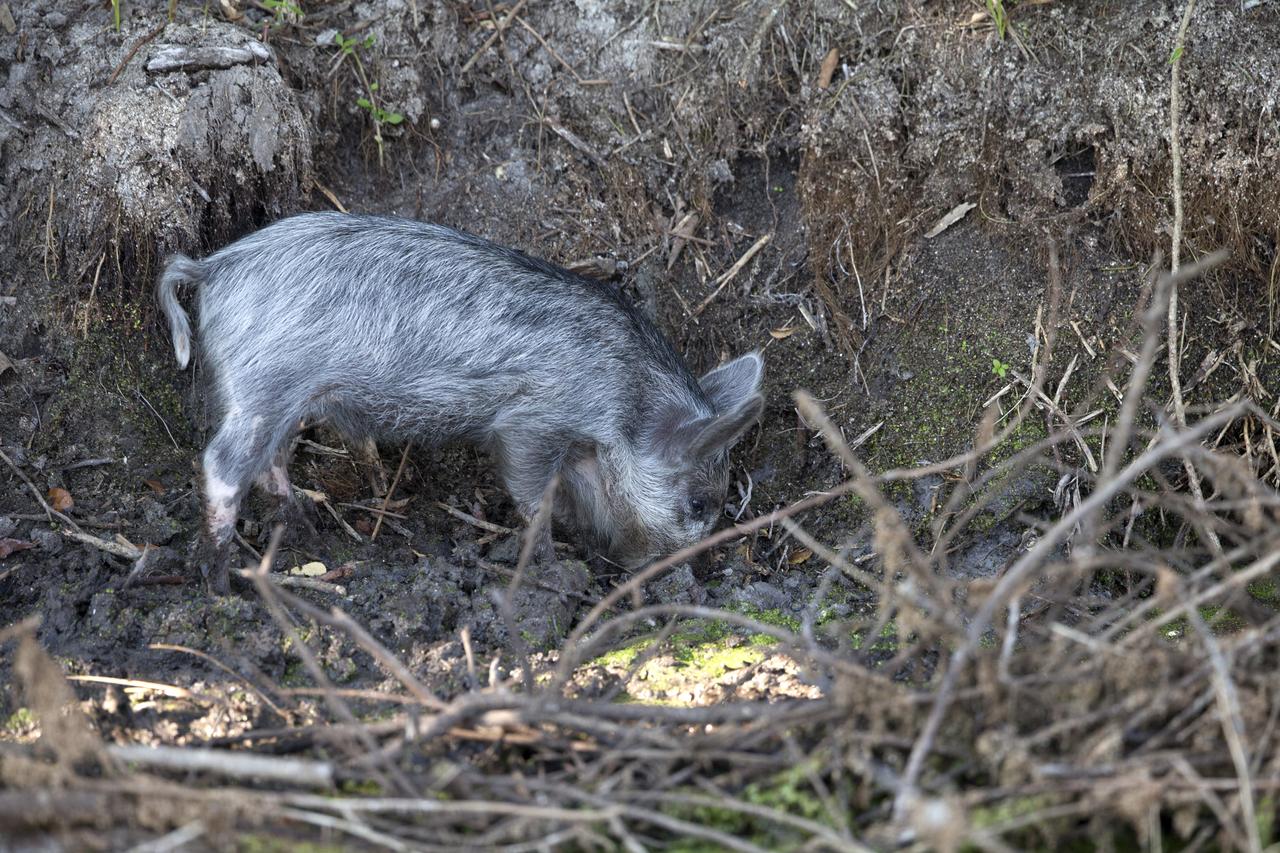
A baby pig digs in the underbrush at NASA's Kennedy Space Center in Florida. The center shares a border with the Merritt Island National Wildlife Refuge. More than 330 native and migratory bird species, 25 mammals, 117 fishes and 65 amphibians and reptiles call Kennedy and the wildlife refuge home.
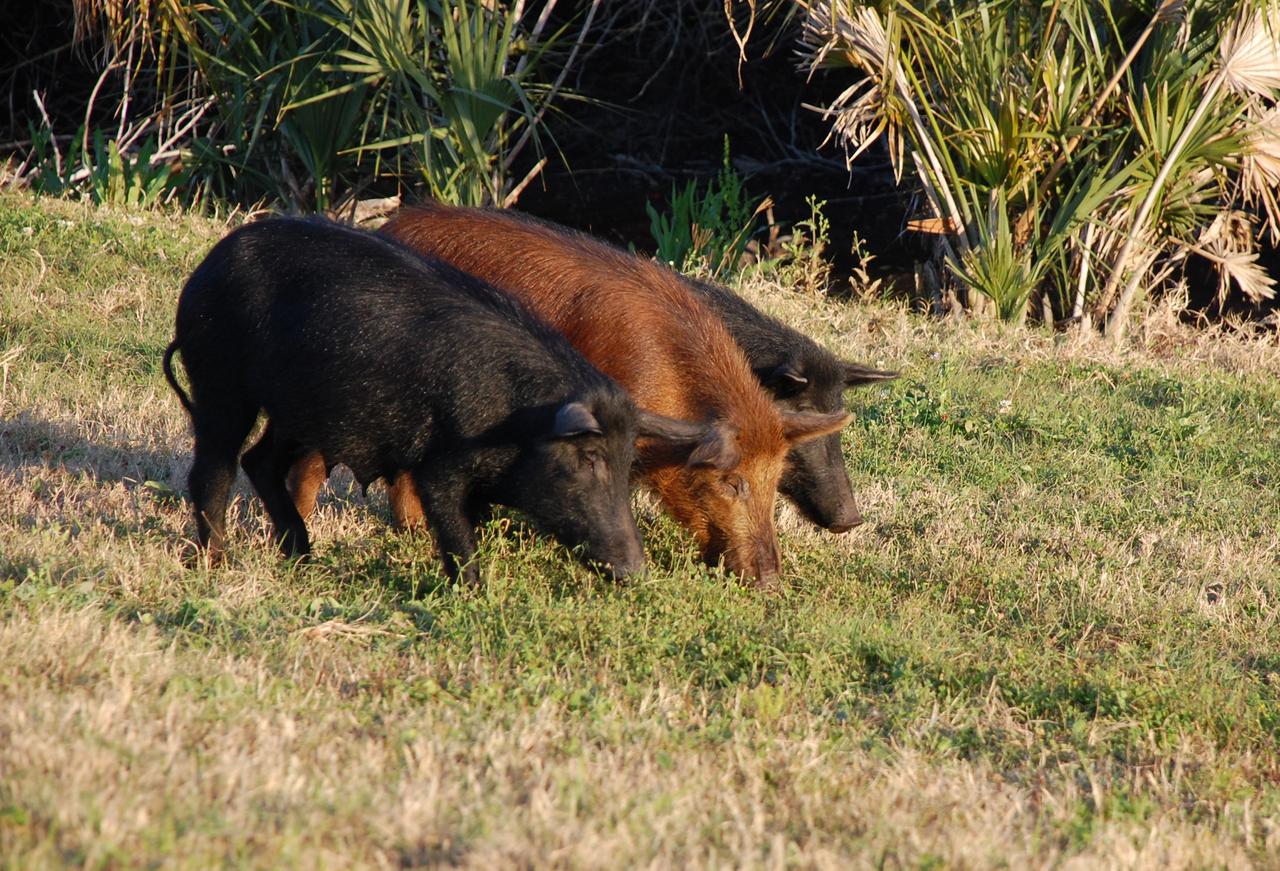
CAPE CANAVERAL, Fla. – – At NASA's Kennedy Space Center in Florida, adult wild pigs line up for their food hunt in the grassy field The wild pigs have flourished in the environs around Kennedy, which shares a border with the Merritt Island National Wildlife Refuge, without many predators other than panthers and humans. Pigs were introduced to Florida in the 1500s and are now found statewide in wooded areas close to water. Pigs are omnivores, foraging on the ground and rooting just beneath the surface, which damages the groundcover. Wild pigs eat almost anything that has nutritional value, including tubers, roots, shoots, acorns, fruits, berries, earthworms, amphibians, reptiles and rodents. Their appearance is similar to domestic hogs, but leaner, with a longer, narrower head and a coarser, denser coat. Females may have two litters per year. The piglets are weaned in a few weeks but remain with the mother for several months. Photo credit: NASA/Ben Smegelsky
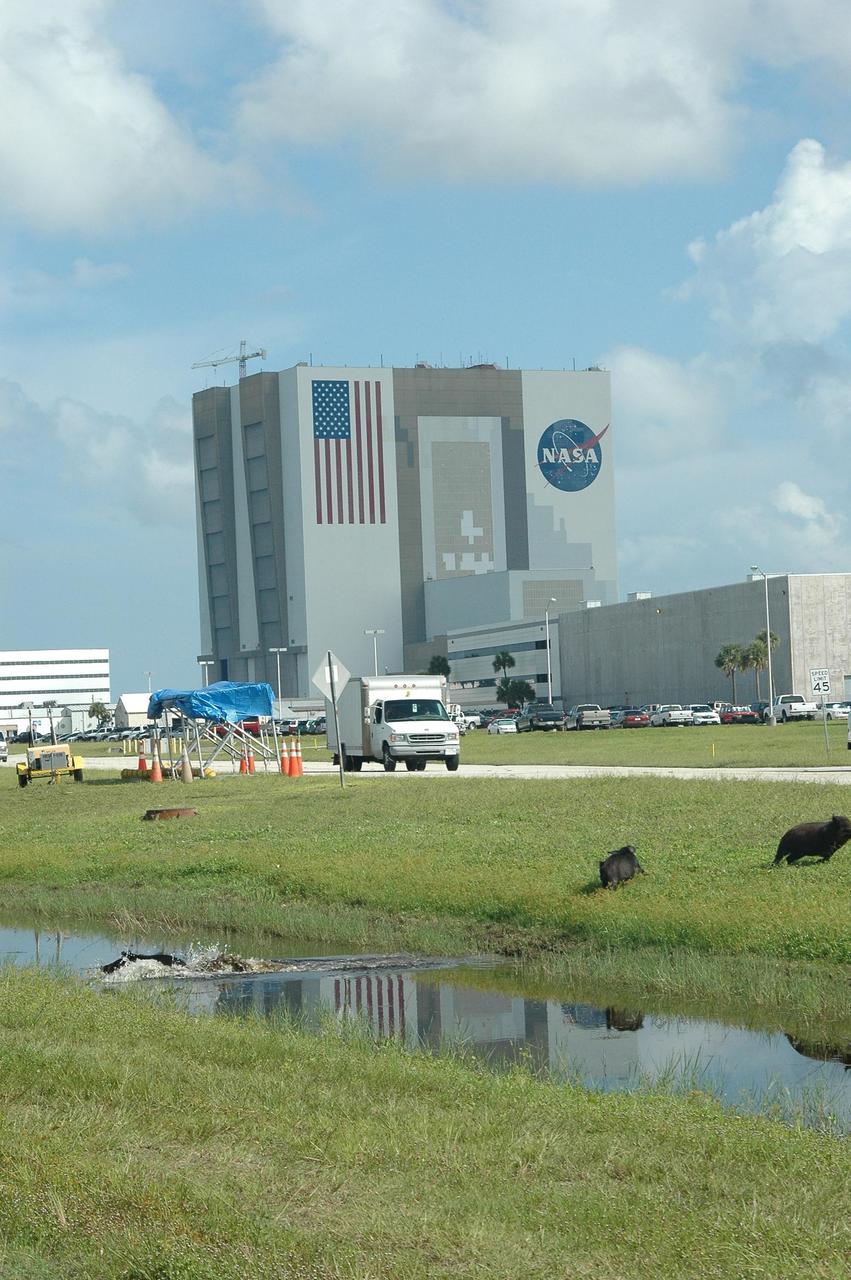
KENNEDY SPACE CENTER, FLA. - A wild pig splashes through a canal near NASA Kennedy Space Center’s Vehicle Assembly Building while its companions stay nearby on the bank. The wild pigs have flourished in the environs around KSC, which shares a border with the Merritt Island National Wildlife Refuge, without many predators other than panthers and humans. Pigs were introduced to Florida in the 1500s and are now found statewide in wooded areas close to water. Pigs are omnivores, foraging on the ground and rooting just beneath the surface, which damages the groundcover. Wild pigs eat almost anything that has nutritional value, including tubers, roots, shoots, acorns, fruits, berries, earthworms, amphibians, reptiles and rodents. Appearance is similar to domestic hogs, but leaner, with a longer, narrower head and a coarser, denser coat. Females may have two litters per year. The piglets are weaned in a few weeks but remain with the mother for several months.
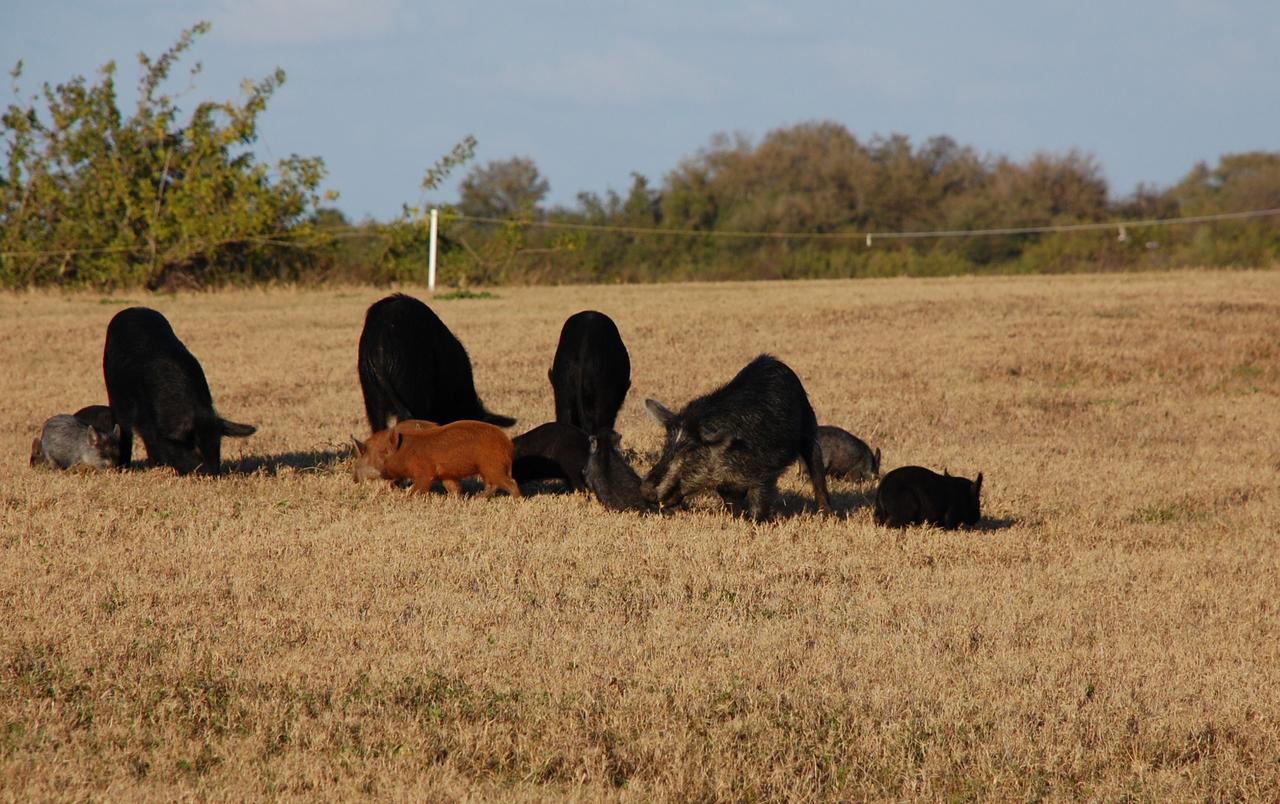
CAPE CANAVERAL, Fla. – At NASA's Kennedy Space Center in Florida, a family of wild pigs roots through the grass for food. The wild pigs have flourished in the environs around Kennedy, which shares a border with the Merritt Island National Wildlife Refuge, without many predators other than panthers and humans. Pigs were introduced to Florida in the 1500s and are now found statewide in wooded areas close to water. Pigs are omnivores, foraging on the ground and rooting just beneath the surface, which damages the groundcover. Wild pigs eat almost anything that has nutritional value, including tubers, roots, shoots, acorns, fruits, berries, earthworms, amphibians, reptiles and rodents. Their appearance is similar to domestic hogs, but leaner, with a longer, narrower head and a coarser, denser coat. Females may have two litters per year. The piglets are weaned in a few weeks but remain with the mother for several months. Photo credit: NASA/Ben Smegelsky
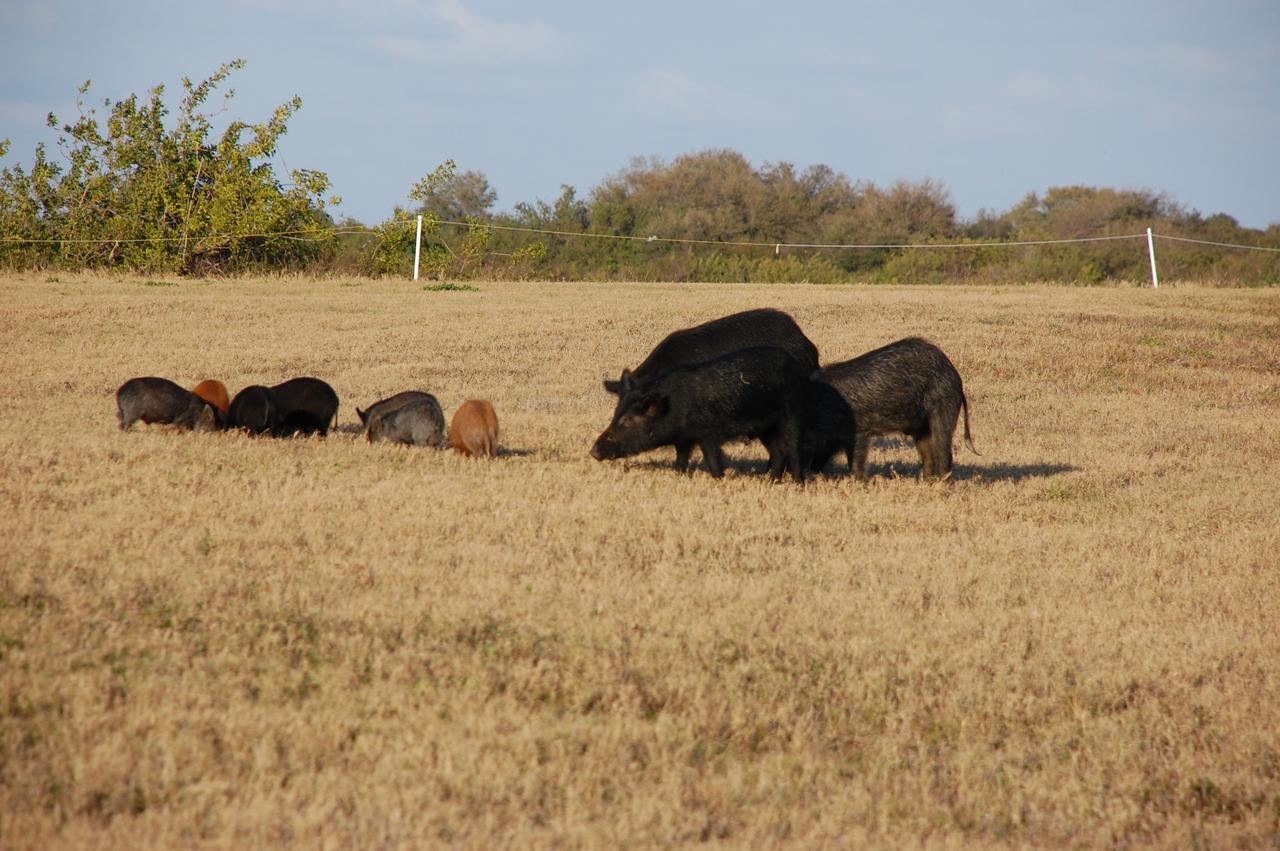
CAPE CANAVERAL, Fla. – At NASA's Kennedy Space Center in Florida, a family of wild pigs roots through the grass for food. The wild pigs have flourished in the environs around Kennedy, which shares a border with the Merritt Island National Wildlife Refuge, without many predators other than panthers and humans. Pigs were introduced to Florida in the 1500s and are now found statewide in wooded areas close to water. Pigs are omnivores, foraging on the ground and rooting just beneath the surface, which damages the groundcover. Wild pigs eat almost anything that has nutritional value, including tubers, roots, shoots, acorns, fruits, berries, earthworms, amphibians, reptiles and rodents. Their appearance is similar to domestic hogs, but leaner, with a longer, narrower head and a coarser, denser coat. Females may have two litters per year. The piglets are weaned in a few weeks but remain with the mother for several months. Photo credit: NASA/Ben Smegelsky
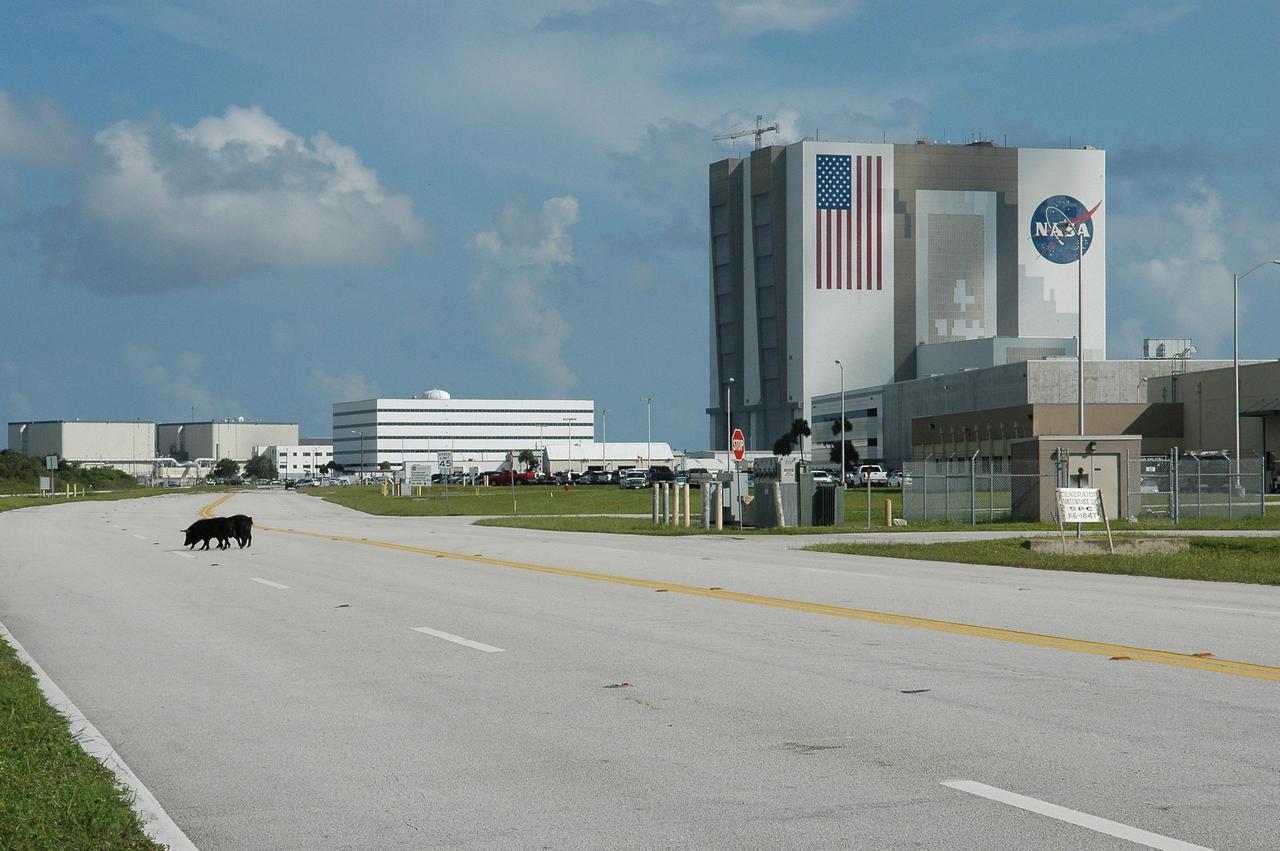
KENNEDY SPACE CENTER, FLA. - Out for a stroll on a sunny Florida day, a trio of wild pigs cross the road near NASA Kennedy Space Center’s Vehicle Assembly Building, in the background. The wild pigs have flourished in the environs around KSC, which shares a border with the Merritt Island National Wildlife Refuge, without many predators other than panthers and humans. Pigs were introduced to Florida in the 1500s and are now found statewide in wooded areas close to water. Pigs are omnivores, foraging on the ground and rooting just beneath the surface, which damages the groundcover. Wild pigs eat almost anything that has nutritional value, including tubers, roots, shoots, acorns, fruits, berries, earthworms, amphibians, reptiles and rodents. Appearance is similar to domestic hogs, but leaner, with a longer, narrower head and a coarser, denser coat. Females may have two litters per year. The piglets are weaned in a few weeks but remain with the mother for several months.
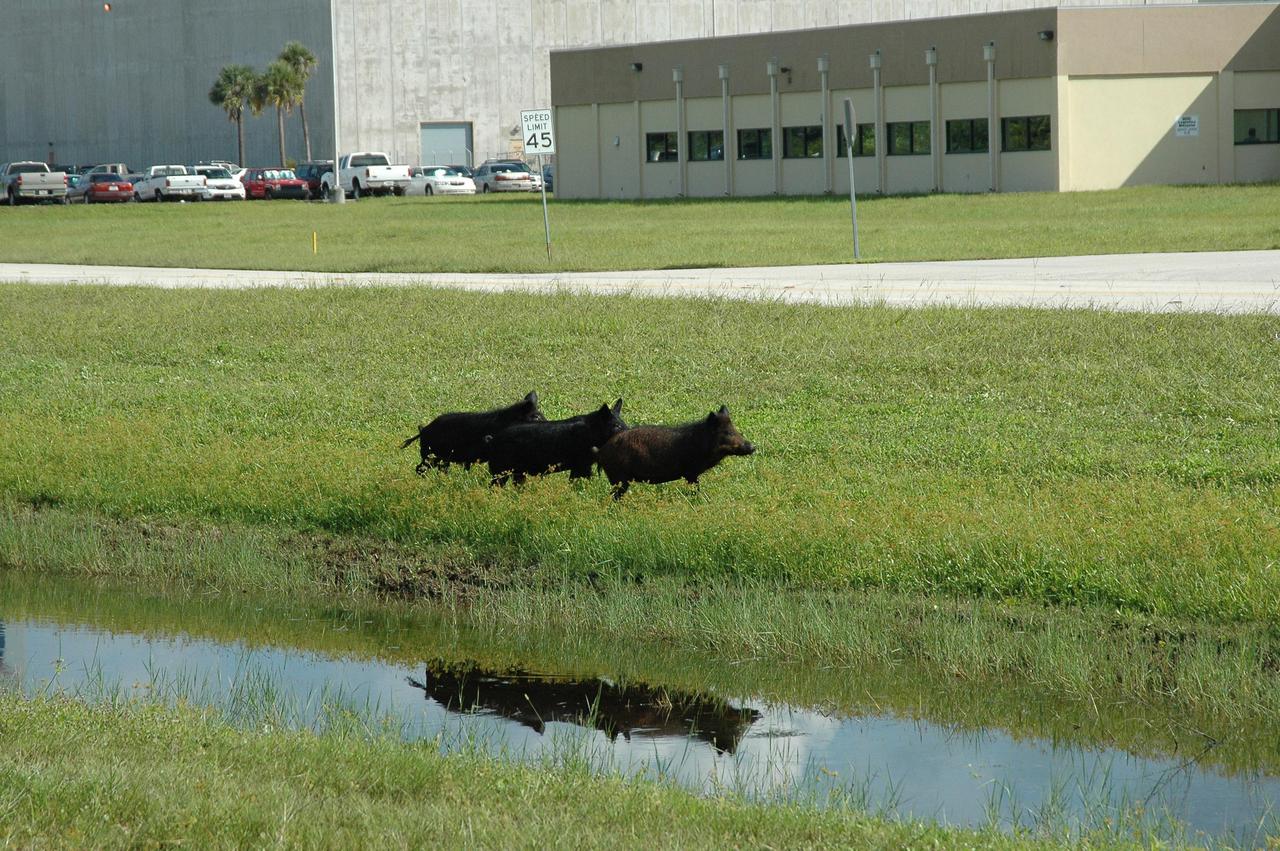
KENNEDY SPACE CENTER, FLA. - As if posing for the photographer, a trio of wild pigs pause during their stroll along a canal near NASA Kennedy Space Center’s Launch Control Center, in the background. The wild pigs have flourished in the environs around KSC, which shares a border with the Merritt Island National Wildlife Refuge, without many predators other than panthers and humans. Pigs were introduced to Florida in the 1500s and are now found statewide in wooded areas close to water. Pigs are omnivores, foraging on the ground and rooting just beneath the surface, which damages the groundcover. Wild pigs eat almost anything that has nutritional value, including tubers, roots, shoots, acorns, fruits, berries, earthworms, amphibians, reptiles and rodents. Appearance is similar to domestic hogs, but leaner, with a longer, narrower head and a coarser, denser coat. Females may have two litters per year. The piglets are weaned in a few weeks but remain with the mother for several months.
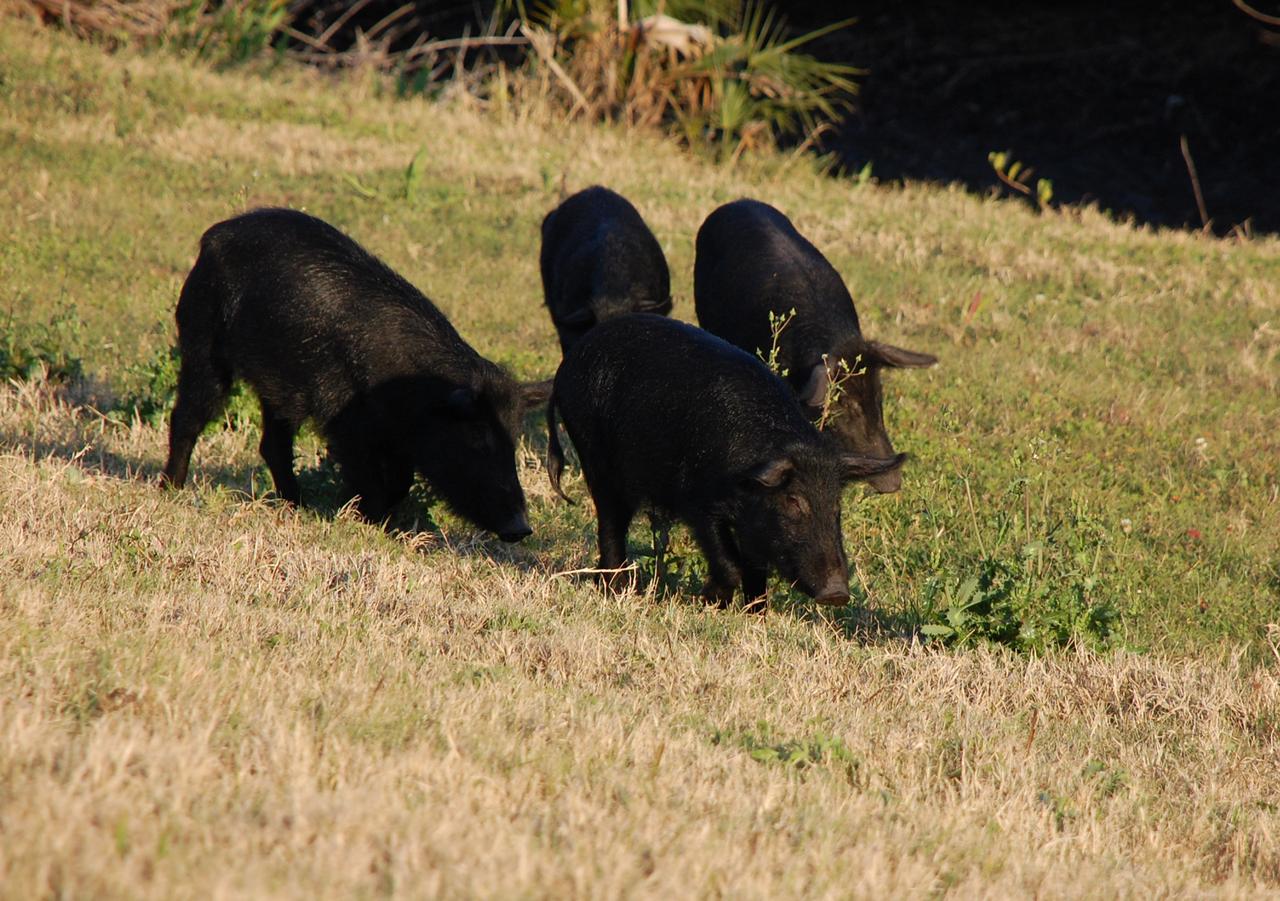
CAPE CANAVERAL, Fla. – At NASA's Kennedy Space Center in Florida, adult wild pigs hunt for food in the grassy field. The wild pigs have flourished in the environs around Kennedy, which shares a border with the Merritt Island National Wildlife Refuge, without many predators other than panthers and humans. Pigs were introduced to Florida in the 1500s and are now found statewide in wooded areas close to water. Pigs are omnivores, foraging on the ground and rooting just beneath the surface, which damages the groundcover. Wild pigs eat almost anything that has nutritional value, including tubers, roots, shoots, acorns, fruits, berries, earthworms, amphibians, reptiles and rodents. Their appearance is similar to domestic hogs, but leaner, with a longer, narrower head and a coarser, denser coat. Females may have two litters per year. The piglets are weaned in a few weeks but remain with the mother for several months. Photo credit: NASA/Ben Smegelsky
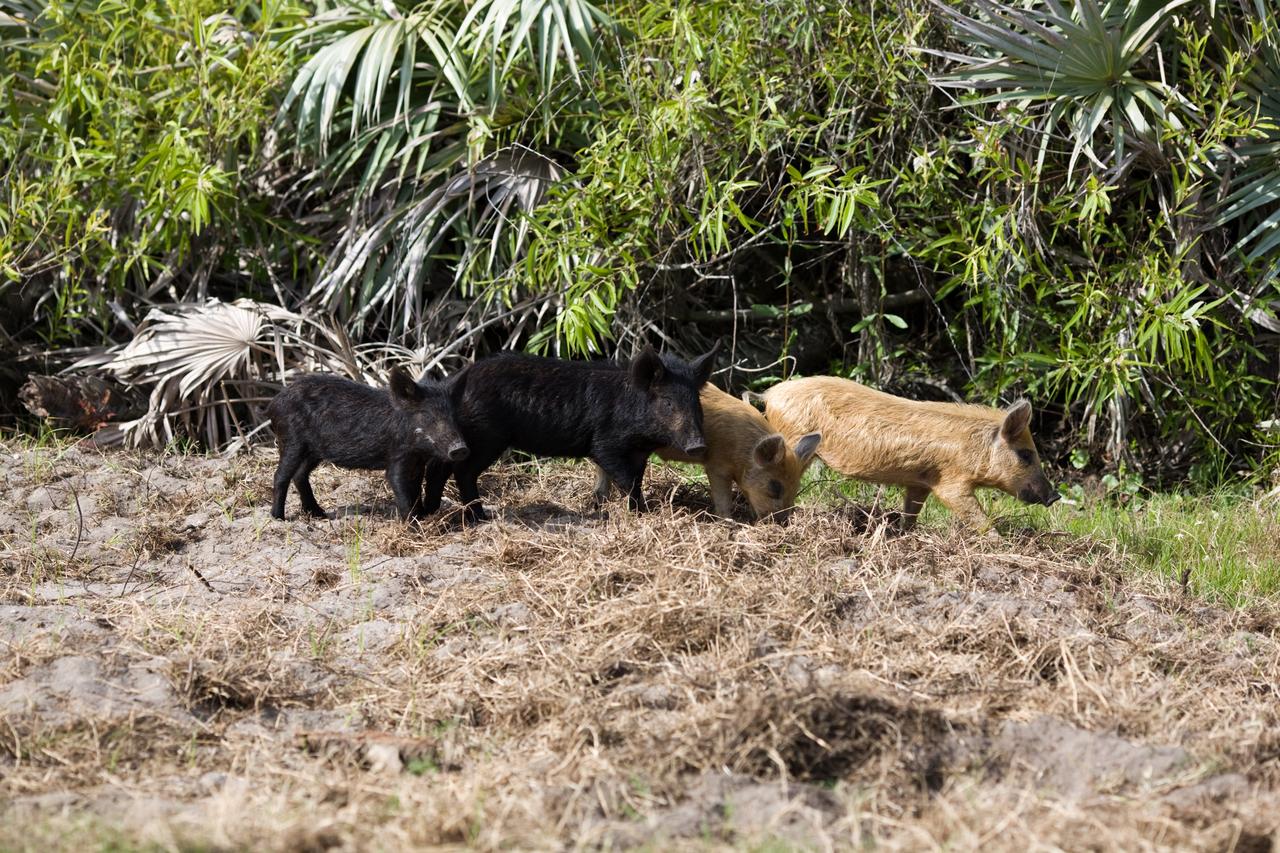
CAPE CANAVERAL, Fla. –– Wild pigs forage for food near a road through NASA's Kennedy Space Center in Florida. The wild pigs have flourished in the environs around Kennedy, which shares a border with the Merritt Island National Wildlife Refuge, without many predators other than panthers and humans. Pigs were introduced to Florida in the 1500s and are now found statewide in wooded areas close to water. Pigs are omnivores, foraging on the ground and rooting just beneath the surface, which damages the groundcover. Wild pigs eat almost anything that has nutritional value, including tubers, roots, shoots, acorns, fruits, berries, earthworms, amphibians, reptiles and rodents. Their appearance is similar to domestic hogs, but leaner, with a longer, narrower head and a coarser, denser coat. Females may have two litters per year. The piglets are weaned in a few weeks but remain with the mother for several months. Photo credit: NASA/Dimitri Gerondidakis
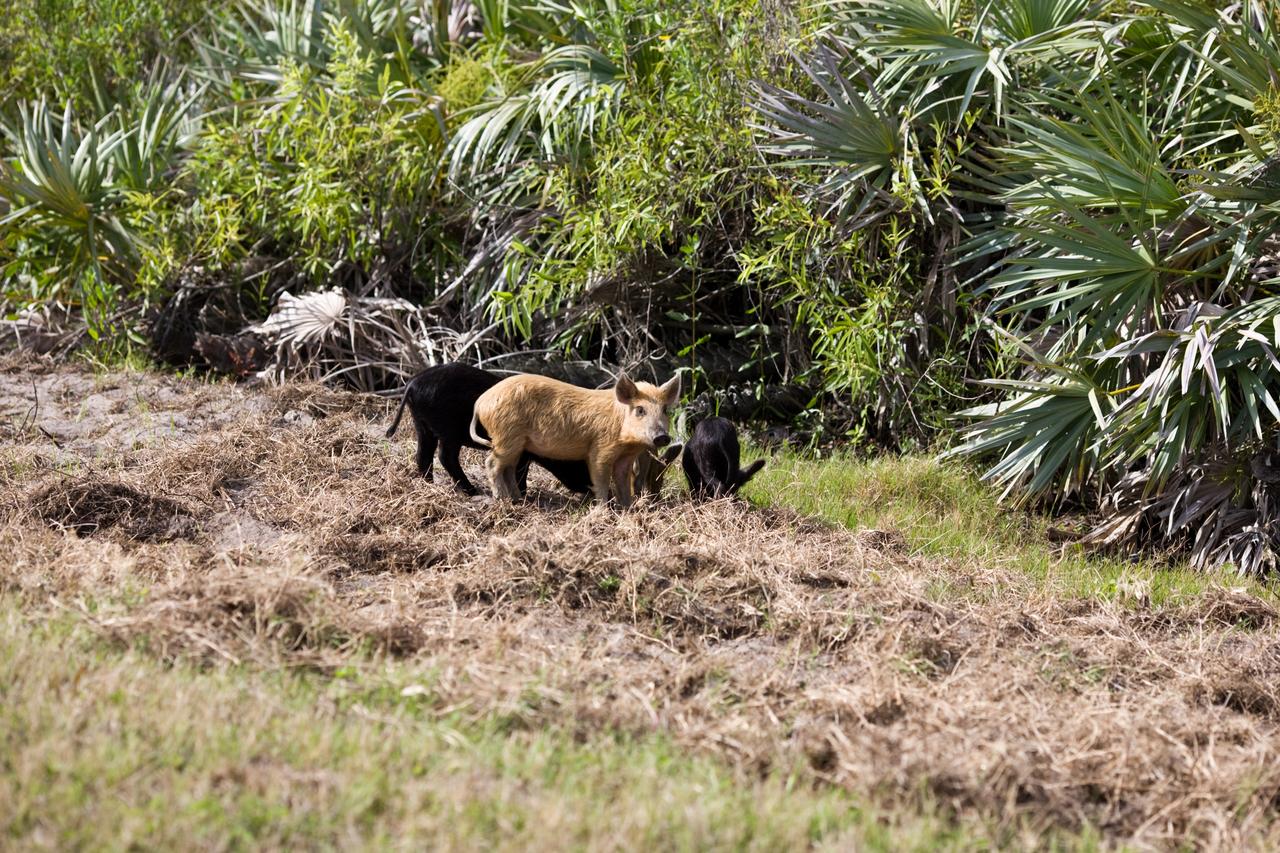
CAPE CANAVERAL, Fla. –– Wild pigs forage for food near a road through NASA's Kennedy Space Center in Florida. The wild pigs have flourished in the environs around Kennedy, which shares a border with the Merritt Island National Wildlife Refuge, without many predators other than panthers and humans. Pigs were introduced to Florida in the 1500s and are now found statewide in wooded areas close to water. Pigs are omnivores, foraging on the ground and rooting just beneath the surface, which damages the groundcover. Wild pigs eat almost anything that has nutritional value, including tubers, roots, shoots, acorns, fruits, berries, earthworms, amphibians, reptiles and rodents. Their appearance is similar to domestic hogs, but leaner, with a longer, narrower head and a coarser, denser coat. Females may have two litters per year. The piglets are weaned in a few weeks but remain with the mother for several months. Photo credit: NASA/Dimitri Gerondidakis
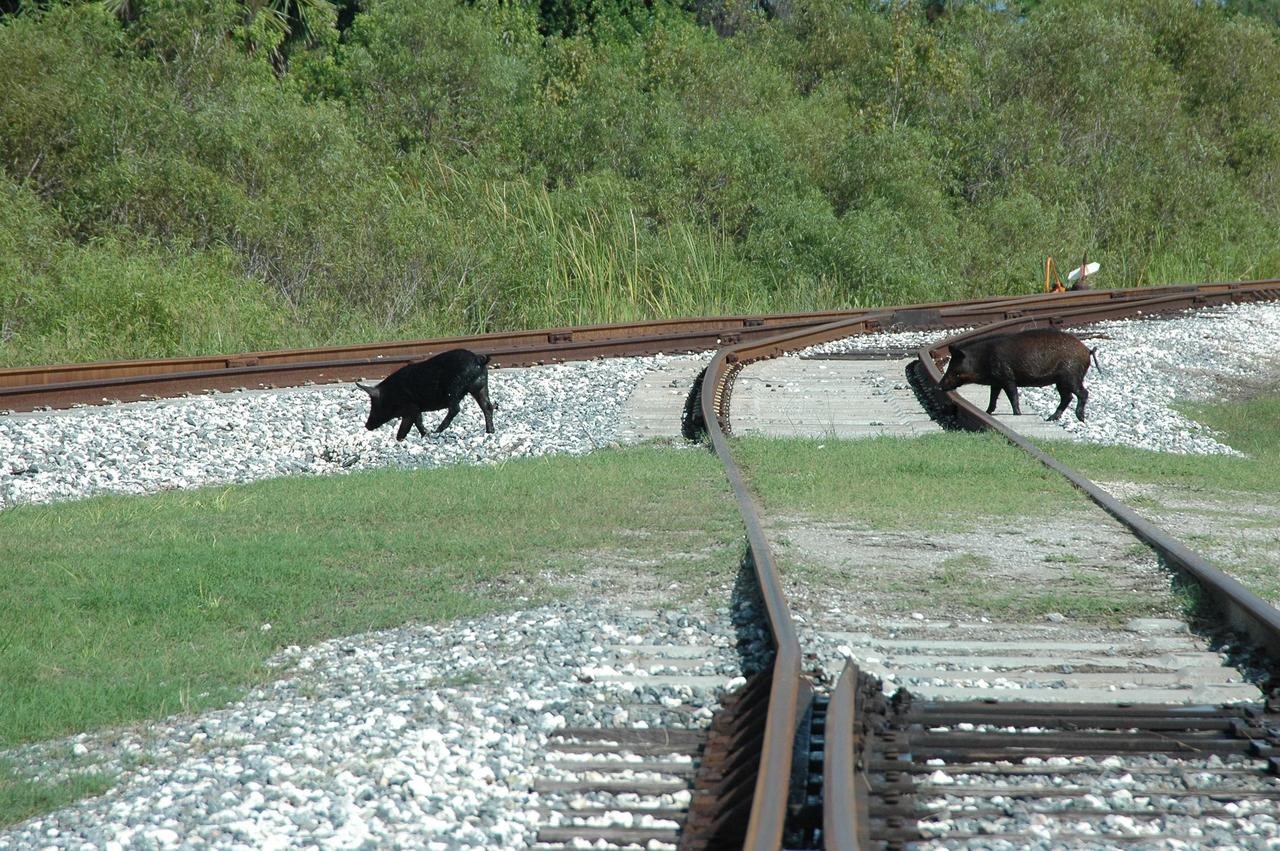
KENNEDY SPACE CENTER, FLA. - Two wild pigs cross railroad tracks on grounds at NASA Kennedy Space Center. The wild pigs have flourished in the environs around KSC, which shares a border with the Merritt Island National Wildlife Refuge, without many predators other than panthers and humans. Pigs were introduced to Florida in the 1500s and are now found statewide in wooded areas close to water. Pigs are omnivores, foraging on the ground and rooting just beneath the surface, which damages the groundcover. Wild pigs eat almost anything that has nutritional value, including tubers, roots, shoots, acorns, fruits, berries, earthworms, amphibians, reptiles and rodents. Appearance is similar to domestic hogs, but leaner, with a longer, narrower head and a coarser, denser coat. Females may have two litters per year. The piglets are weaned in a few weeks but remain with the mother for several months.
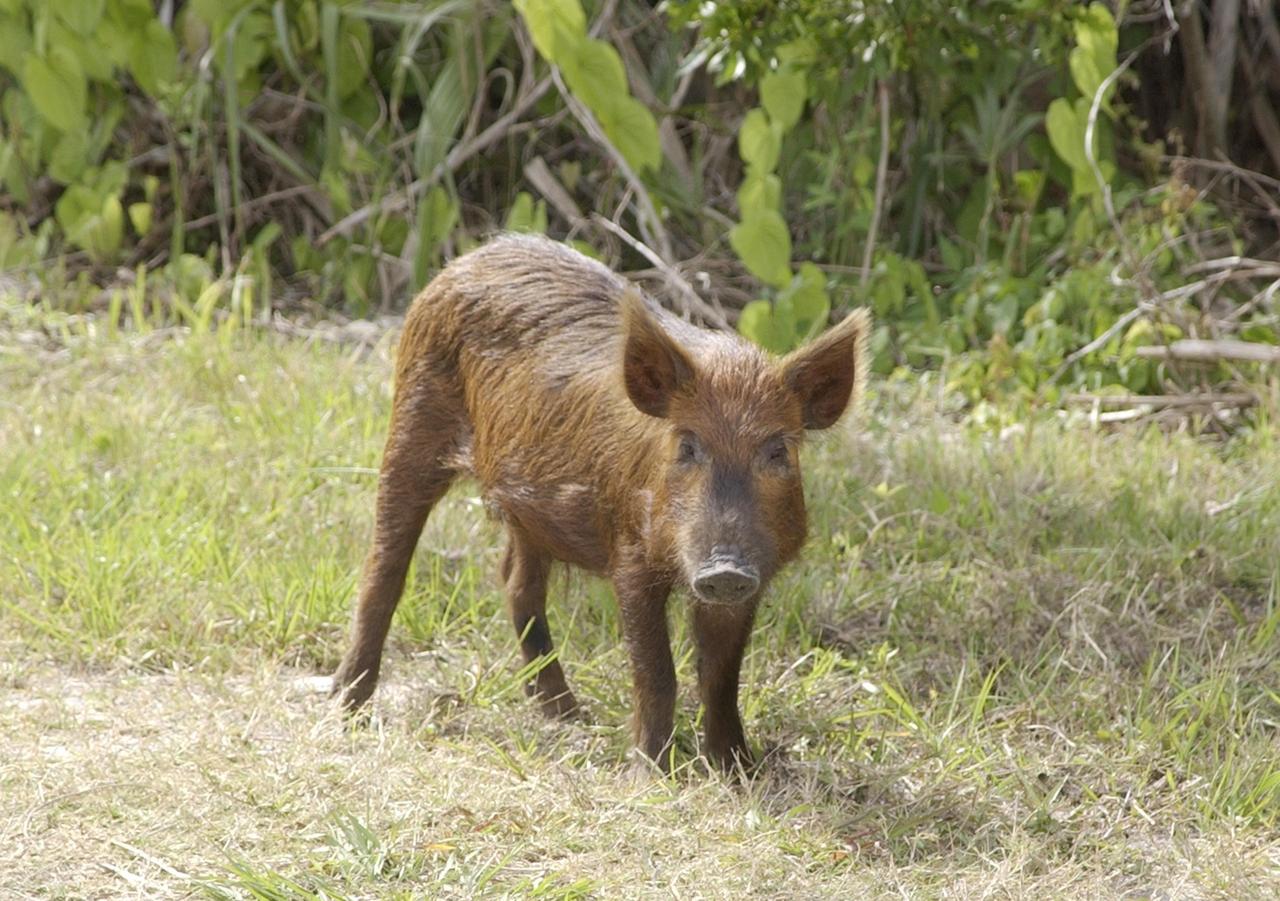
KENNEDY SPACE CENTER, FLA. - A wild pig is spotted near the KSC Press Site on its daily foraging rounds. Not a native in the environment, the pigs around KSC are believed to be descendants from those brought to Florida by the early Spanish explorers. Without many predators other than human, the pigs have flourished in the surrounding environs
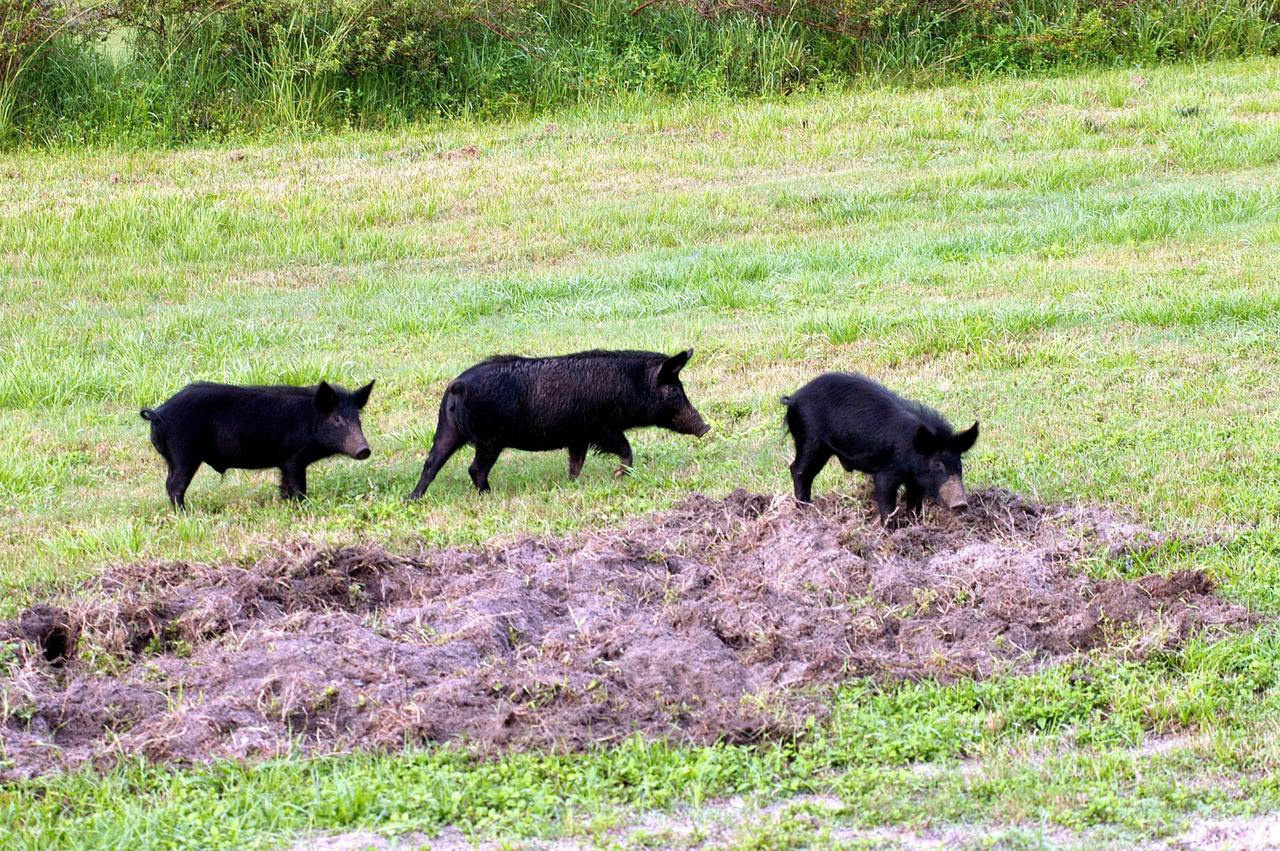
KENNEDY SPACE CENTER, FLA. - Three wild pigs - a mother and her two offspring - root for food in the grass near the NASA News Center at KSC. Feral pigs were introduced to Florida in the 1500s and are now found statewide in wooded areas close to water. The pigs have flourished in the environs around KSC, which shares a border with the Merritt Island National Wildlife Refuge, without many predators other than panthers and humans. Pigs are omnivores, foraging on the ground and rooting just beneath the surface, which damages the groundcover. Wild pigs eat almost anything that has nutritional value, including tubers, roots, shoots, acorns, fruits, berries, earthworms, amphibians, reptiles and rodents. Appearance is similar to domestic hogs, but leaner, with a longer, narrower head and a coarser, denser coat. Females may have two litters per year. The piglets are weaned in a few weeks but remain with the mother for several months.
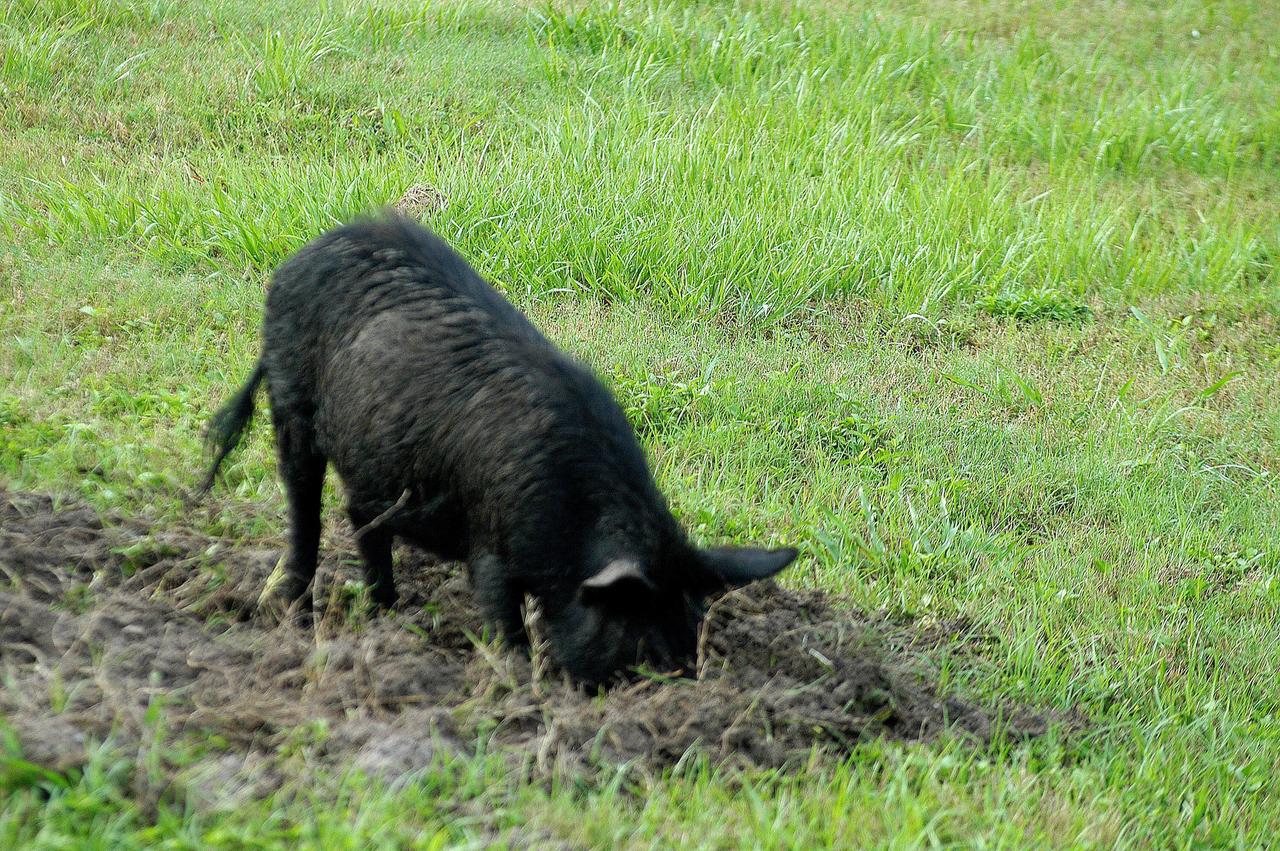
KENNEDY SPACE CENTER, FLA. - A young wild pig roots in the grass for food in an area near the NASA News Center at KSC. Feral pigs were introduced to Florida in the 1500s and are now found statewide in wooded areas close to water. The pigs have flourished in the environs around KSC, which shares a border with the Merritt Island National Wildlife Refuge, without many predators other than panthers and humans. Pigs are omnivores, foraging on the ground and rooting just beneath the surface, which damages the groundcover. Wild pigs eat almost anything that has nutritional value, including tubers, roots, shoots, acorns, fruits, berries, earthworms, amphibians, reptiles and rodents. Appearance is similar to domestic hogs, but leaner, with a longer, narrower head and a coarser, denser coat. Females may have two litters per year. The piglets are weaned in a few weeks but remain with the mother for several months.
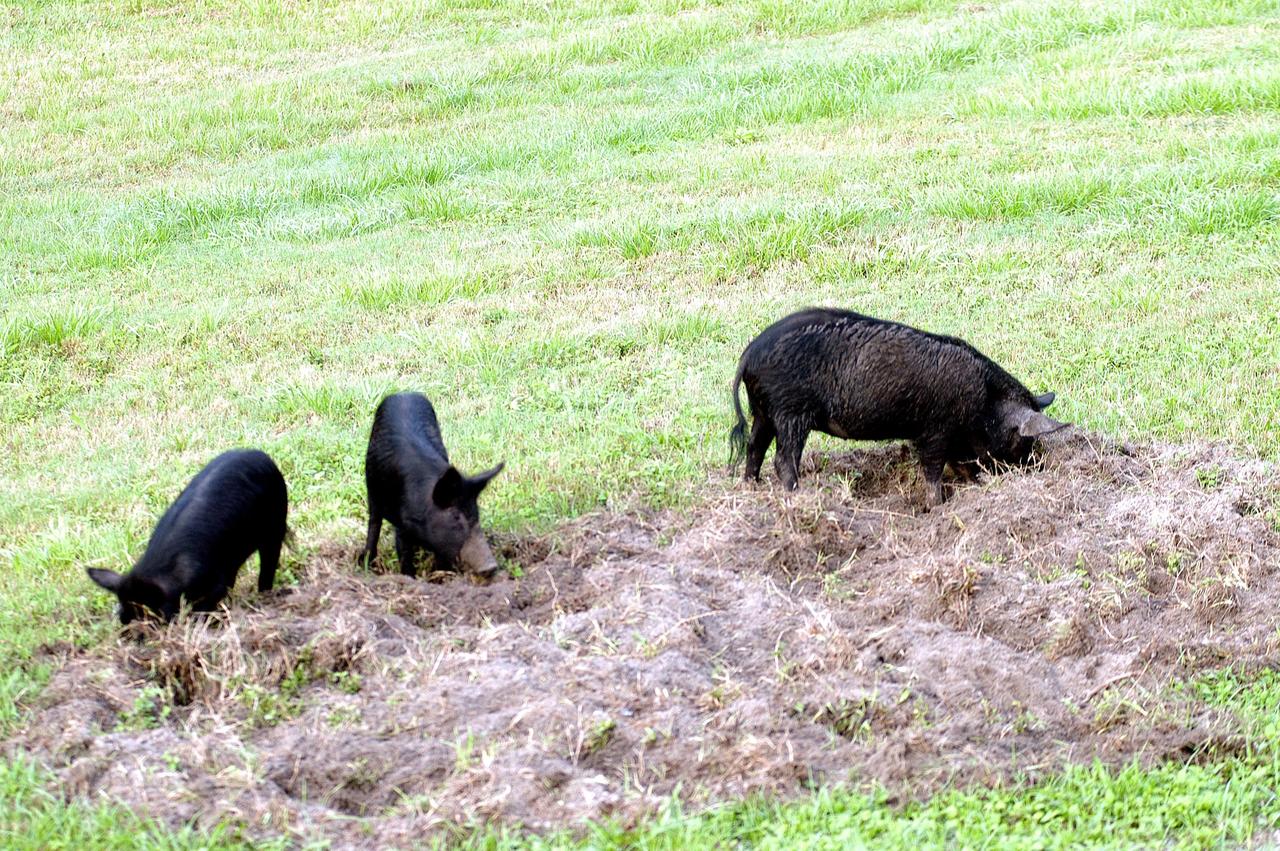
KENNEDY SPACE CENTER, FLA. - Three wild pigs - a mother and her two offspring - root for food in the grass near the NASA News Center at KSC. Feral pigs were introduced to Florida in the 1500s and are now found statewide in wooded areas close to water. The pigs have flourished in the environs around KSC, which shares a border with the Merritt Island National Wildlife Refuge, without many predators other than panthers and humans. Pigs are omnivores, foraging on the ground and rooting just beneath the surface, which damages the groundcover. Wild pigs eat almost anything that has nutritional value, including tubers, roots, shoots, acorns, fruits, berries, earthworms, amphibians, reptiles and rodents. Appearance is similar to domestic hogs, but leaner, with a longer, narrower head and a coarser, denser coat. Females may have two litters per year. The piglets are weaned in a few weeks but remain with the mother for several months.

CAPE CANAVERAL, Fla. – At NASA's Kennedy Space Center in Florida, a wild pig stops hunting for food to eye the photographer. This pig is part of a larger family in the area. The wild pigs have flourished in the environs around Kennedy, which shares a border with the Merritt Island National Wildlife Refuge, without many predators other than panthers and humans. Pigs were introduced to Florida in the 1500s and are now found statewide in wooded areas close to water. Pigs are omnivores, foraging on the ground and rooting just beneath the surface, which damages the groundcover. Wild pigs eat almost anything that has nutritional value, including tubers, roots, shoots, acorns, fruits, berries, earthworms, amphibians, reptiles and rodents. Their appearance is similar to domestic hogs, but leaner, with a longer, narrower head and a coarser, denser coat. Females may have two litters per year. The piglets are weaned in a few weeks but remain with the mother for several months. Photo credit: NASA/Ben Smegelsky
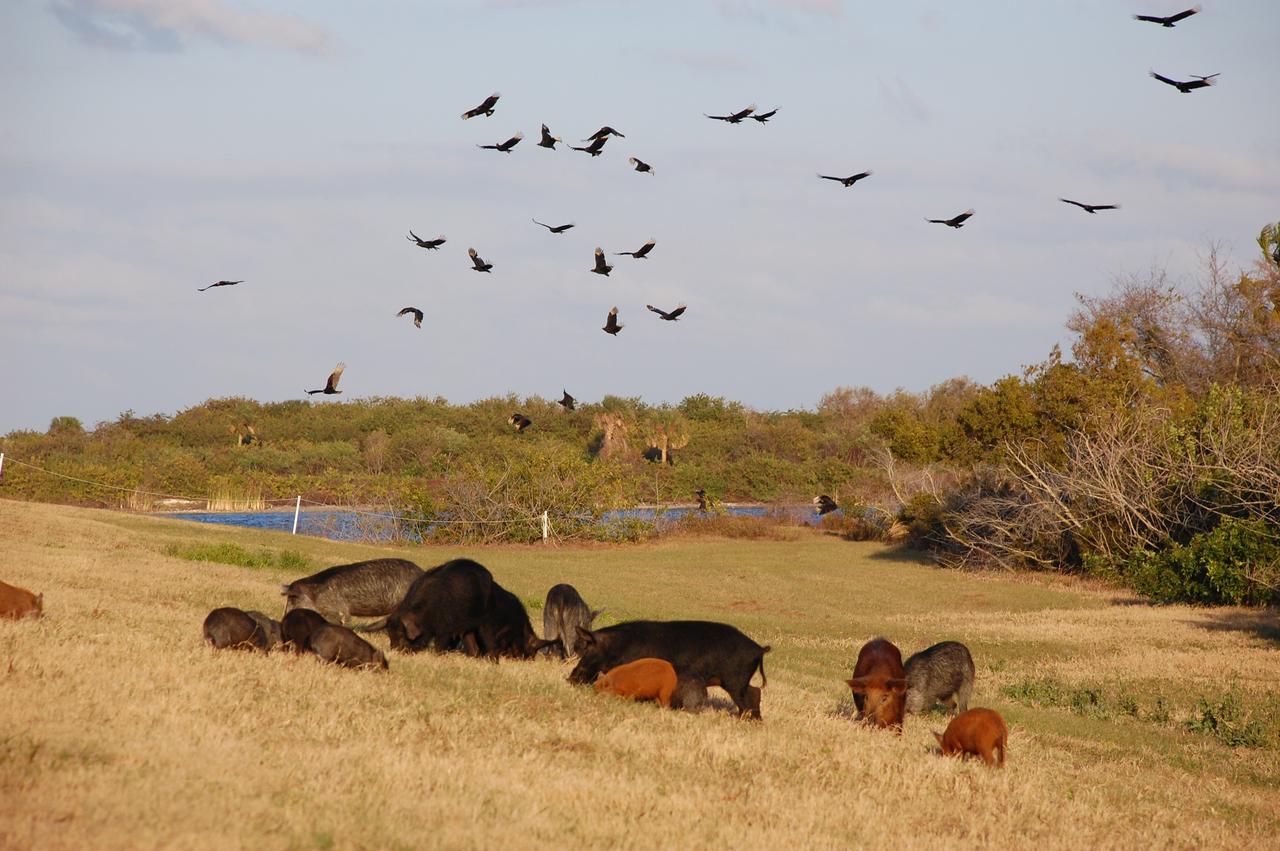
CAPE CANAVERAL, Fla. – At NASA's Kennedy Space Center in Florida, a family of wild pigs roots through the grass for food. Overhead, vultures circle, hunting for their share of food. The wild pigs have flourished in the environs around Kennedy, which shares a border with the Merritt Island National Wildlife Refuge, without many predators other than panthers and humans. Pigs were introduced to Florida in the 1500s and are now found statewide in wooded areas close to water. Pigs are omnivores, foraging on the ground and rooting just beneath the surface, which damages the groundcover. Wild pigs eat almost anything that has nutritional value, including tubers, roots, shoots, acorns, fruits, berries, earthworms, amphibians, reptiles and rodents. Their appearance is similar to domestic hogs, but leaner, with a longer, narrower head and a coarser, denser coat. Females may have two litters per year. The piglets are weaned in a few weeks but remain with the mother for several months. Photo credit: NASA/Ben Smegelsky
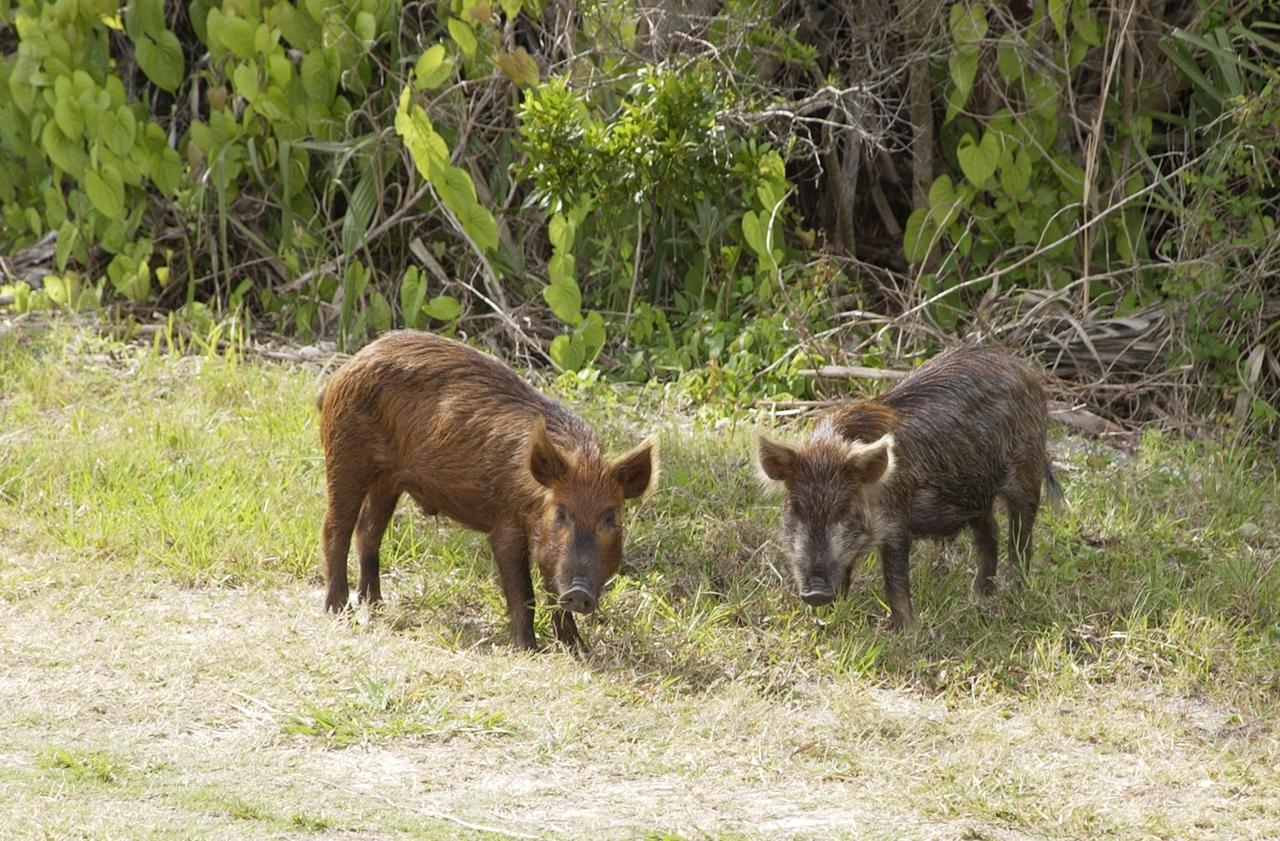
KENNEDY SPACE CENTER, FLA. - Wild pigs stop near the KSC Press Site in the Launch Complex 39 Area on their daily foraging rounds. Not a native in the environment, the pigs are believed to be descendants from those brought to Florida by the early Spanish explorers. Without many predators other than human, the pigs have flourished in the surrounding environs
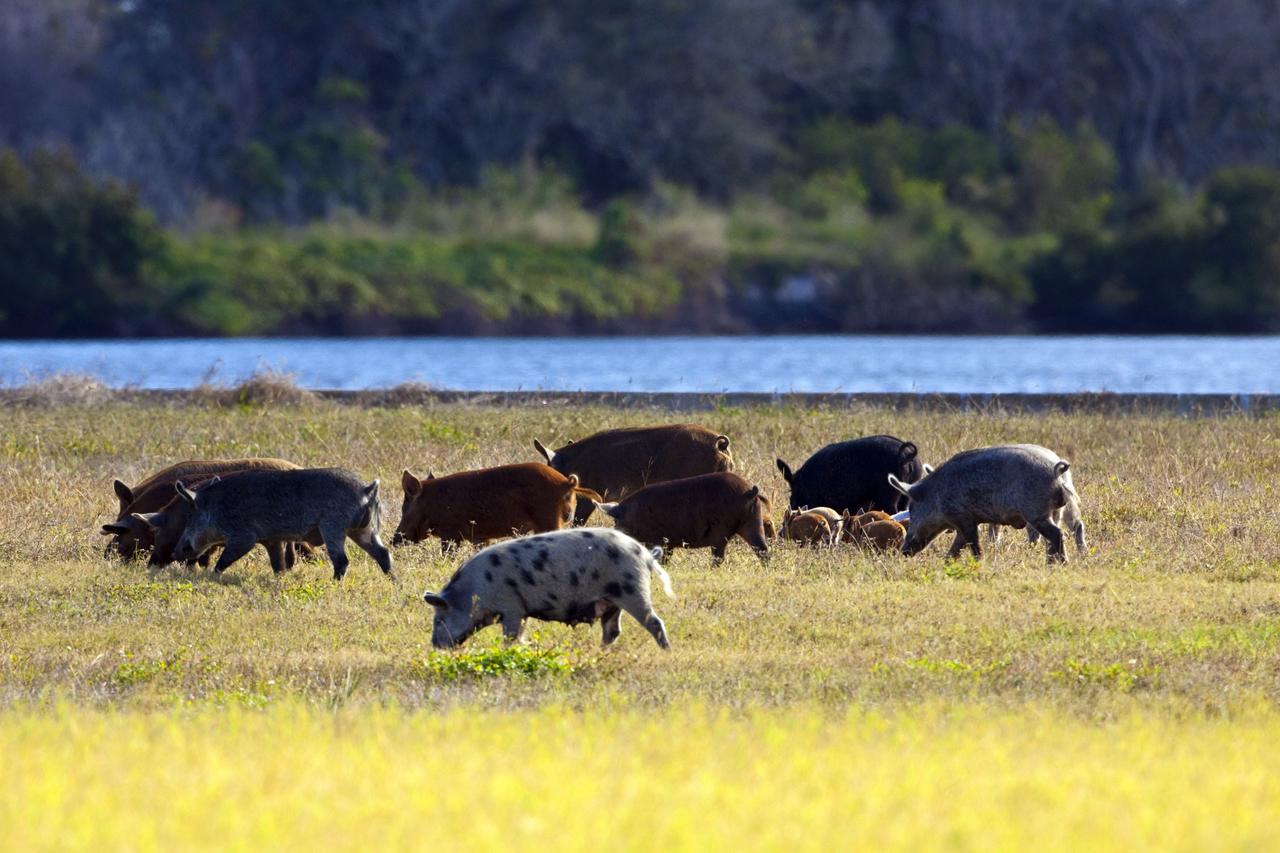
CAPE CANAVERAL, Fla. -- Several adult and baby wild pigs, in a variety of colors and patterns, graze in a grassy field at NASA's Kennedy Space Center in Florida. The wild pigs have flourished in the environs around Kennedy. The center shares a boundary with the Merritt Island National Wildlife Refuge, consisting of 140,000 acres. The refuge provides a wide variety of habitats -- coastal dunes, saltwater estuaries and marshes, freshwater impoundments, scrub, pine flatwoods, and hardwood hammocks -- that provide sanctuary for more than 1,500 species of plants and animals, including about 331 species of birds. Photo credit: NASA/Jim Grossmann
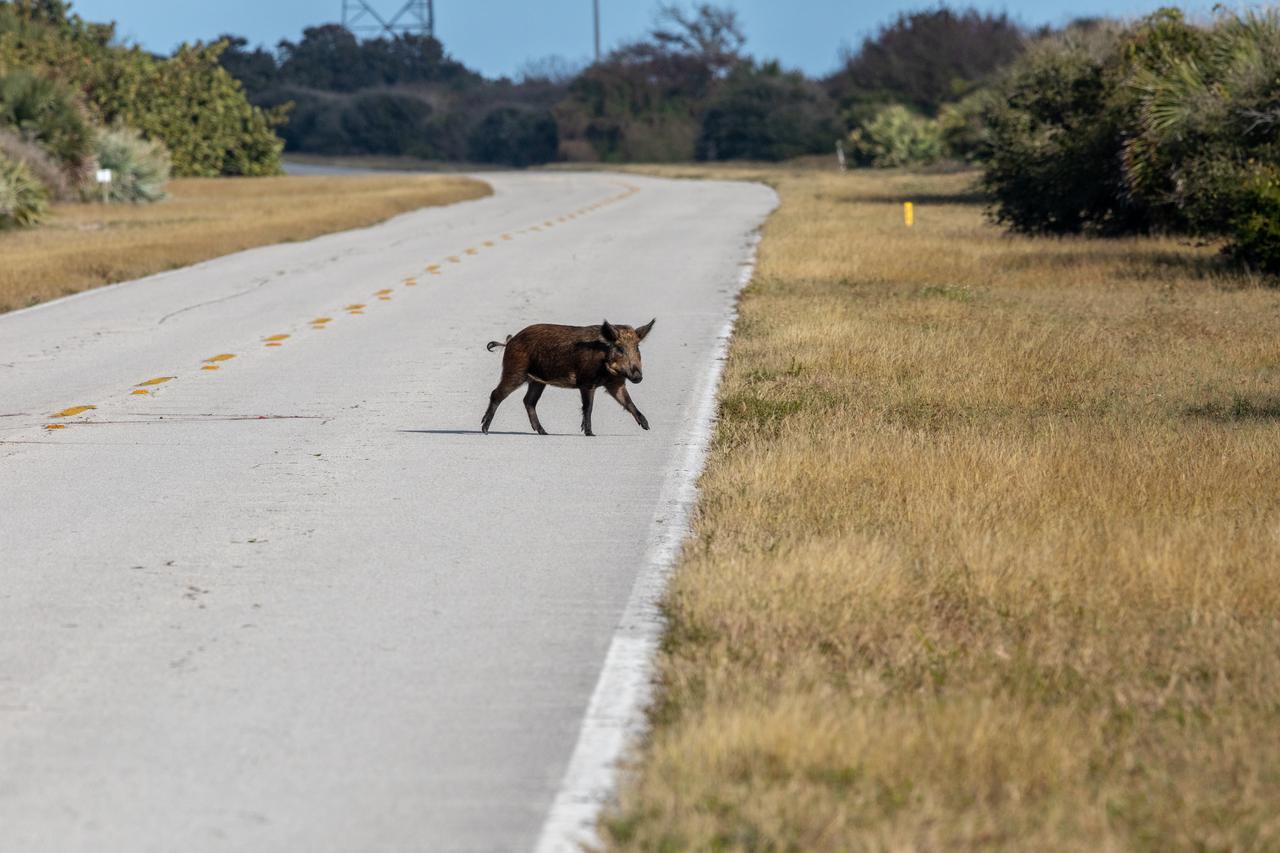
A wild pig crosses a roadway at NASA's Kennedy Space Center in Florida on Jan. 11, 2021. The center shares a border with the Merritt Island National Wildlife Refuge. More than 330 native and migratory bird species, 25 mammal, 117 fish and 65 amphibian and reptile species call Kennedy and the wildlife refuge home.
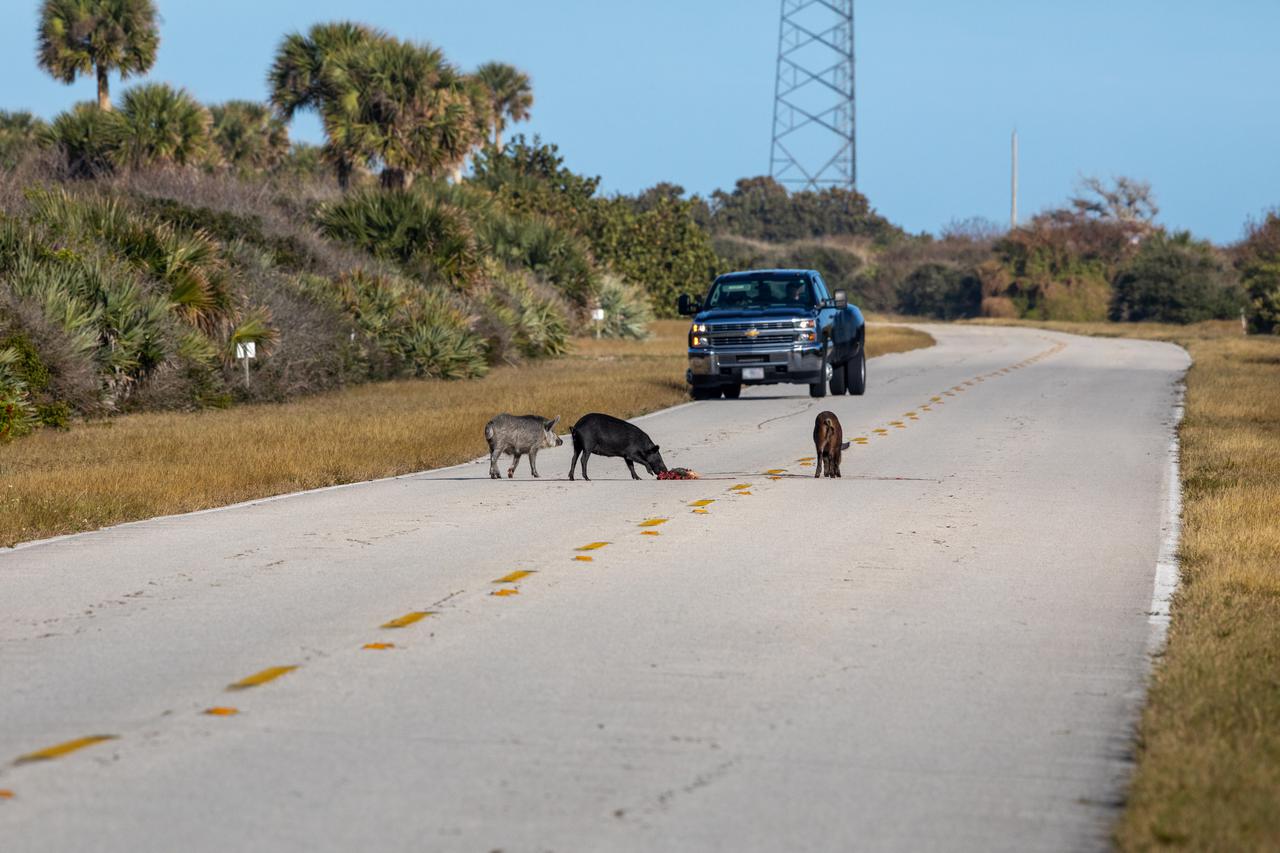
Wild pigs cross a roadway at NASA's Kennedy Space Center in Florida on Jan. 11, 2021. The center shares a border with the Merritt Island National Wildlife Refuge. More than 330 native and migratory bird species, 25 mammal, 117 fish and 65 amphibian and reptile species call Kennedy and the wildlife refuge home.
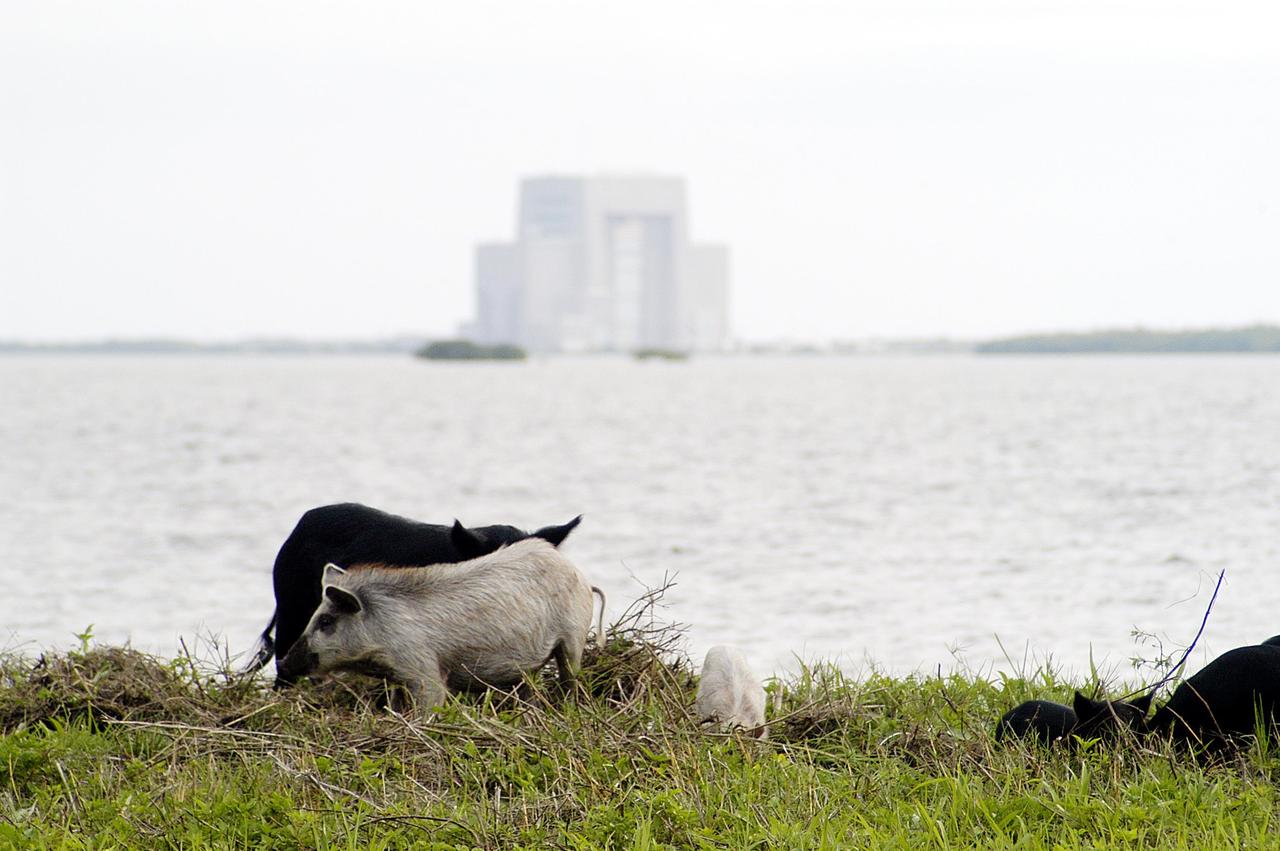
KENNEDY SPACE CENTER, Fla. - A small herd of wild pigs root for food along the bank of this body of water at Kennedy Space Center. Not a native in the environment, the pigs are believed to be descendants from those brought to Florida by the early Spanish explorers. Without many predators other than human, the pigs have flourished in the surrounding environs, primarily the Merritt Island National Wildlife Refuge, which shares a boundary with the Center. The Wildlife Refuge encompasses 92,000 acres that are a habitat for more than 331 species of birds, 31 mammals, 117 fishes, and 65 amphibians and reptiles. The marshes and open water of the refuge provide wintering areas for 23 species of migratory waterfowl, as well as a year-round home for great blue herons, great egrets, wood storks, cormorants, brown pelicans and other species of marsh and shore birds, plus a variety of insects.
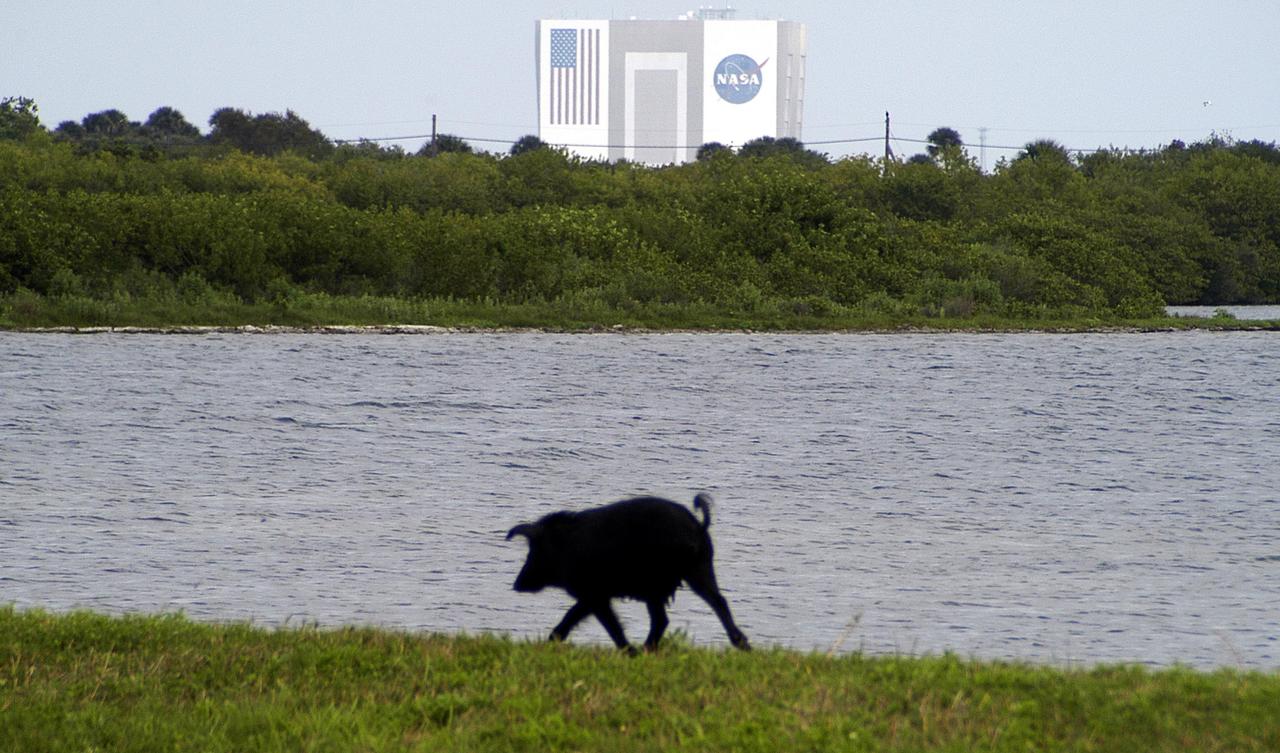
KENNEDY SPACE CENTER, Fla. - A lone wild pig travels the bank of a body of water near Kennedy Space Center. In the background is the 525-foot-high Vehicle Assembly Building. Not a native in the environment, the pigs are believed to be descendants from those brought to Florida by the early Spanish explorers. Without many predators other than human, the pigs have flourished in the surrounding environs, primarily the Merritt Island National Wildlife Refuge, which shares a boundary with the Center. The Wildlife Refuge encompasses 92,000 acres that are a habitat for more than 331 species of birds, 31 mammals, 117 fishes, and 65 amphibians and reptiles. The marshes and open water of the refuge provide wintering areas for 23 species of migratory waterfowl, as well as a year-round home for great blue herons, great egrets, wood storks, cormorants, brown pelicans and other species of marsh and shore birds, plus a variety of insects.
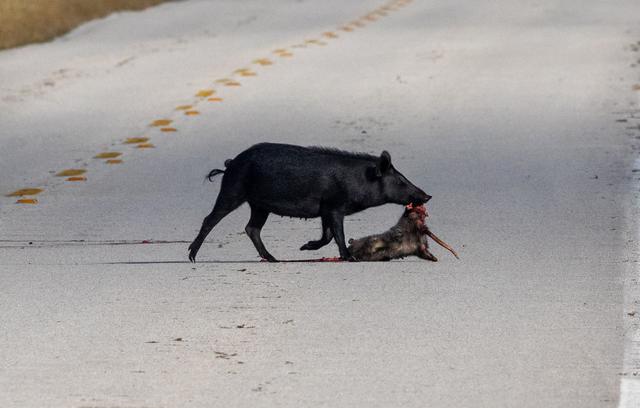
A wild pig is spotted with its prey on a roadway at NASA's Kennedy Space Center in Florida on Jan. 11, 2021. The center shares a border with the Merritt Island National Wildlife Refuge. More than 330 native and migratory bird species, 25 mammal, 117 fish and 65 amphibian and reptile species call Kennedy and the wildlife refuge home.
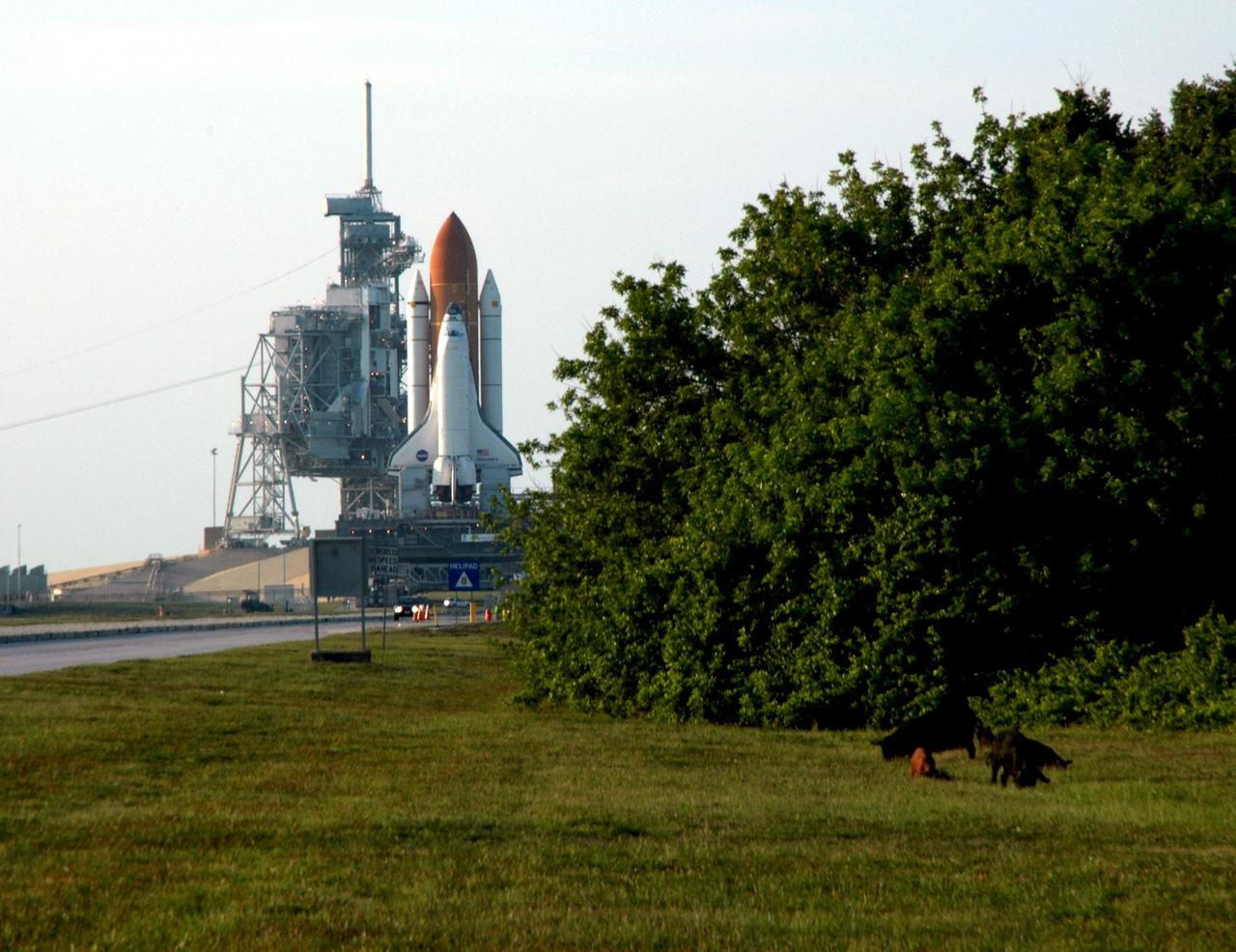
KENNEDY SPACE CENTER, FLA. -- Near Launch Pad 39B, wild pigs (at right) root for food near a stand of trees while Space Shuttle Discovery rolls out to the pad. The 4.2-mile journey from the Vehicle Assembly Building began at 12:45 p.m. EDT. The rollout is an important step before launch of Discovery on mission STS-121 to the International Space Station. Discovery's launch is targeted for July 1 in a launch window that extends to July 19. During the 12-day mission, Discovery's crew will test new hardware and techniques to improve shuttle safety, as well as deliver supplies and make repairs to the station. Photo credit: NASA/Ken Thornsley