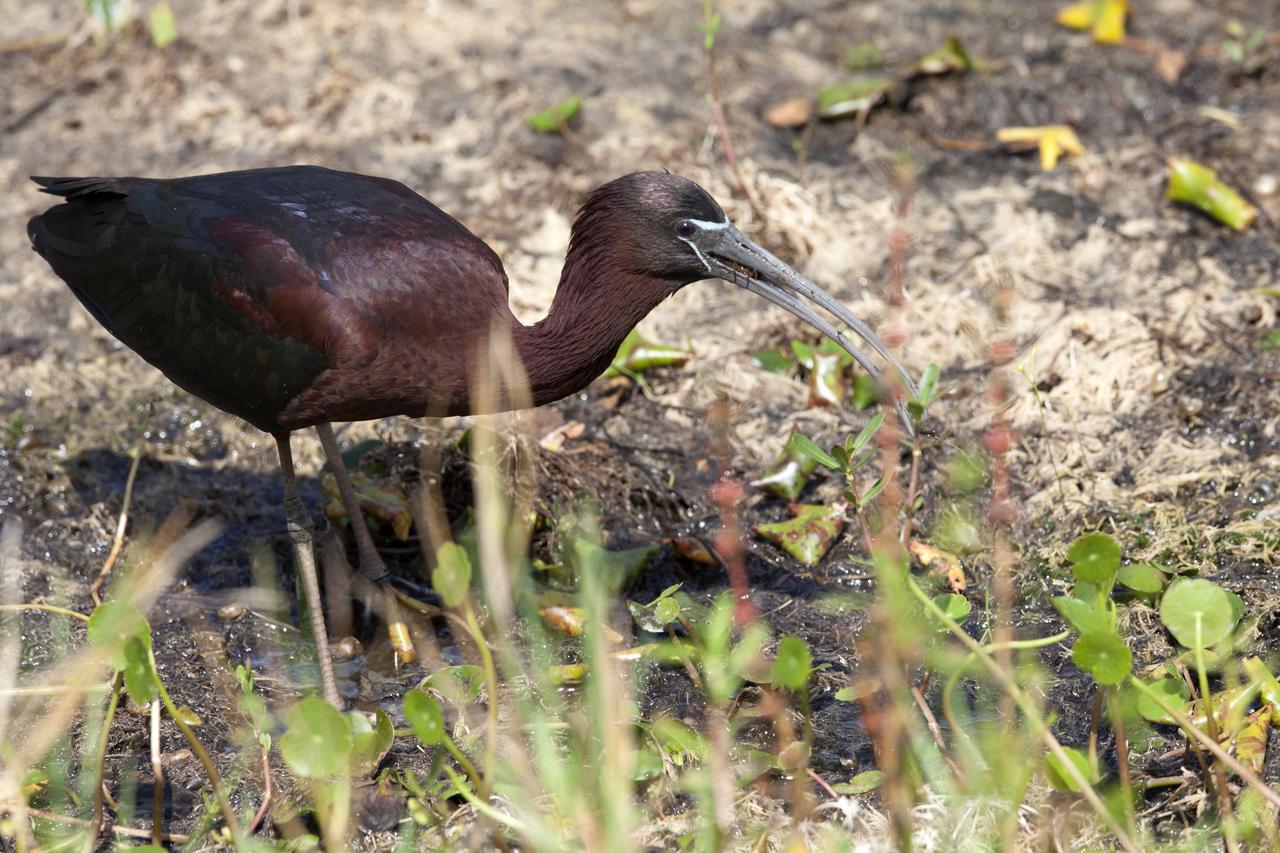
A glossy ibis searches for food in a marshy area at NASA's Kennedy Space Center in Florida. The center shares a border with the Merritt Island National Wildlife Refuge. More than 330 native and migratory bird species, 25 mammals, 117 fishes and 65 amphibians and reptiles call Kennedy and the wildlife refuge home.
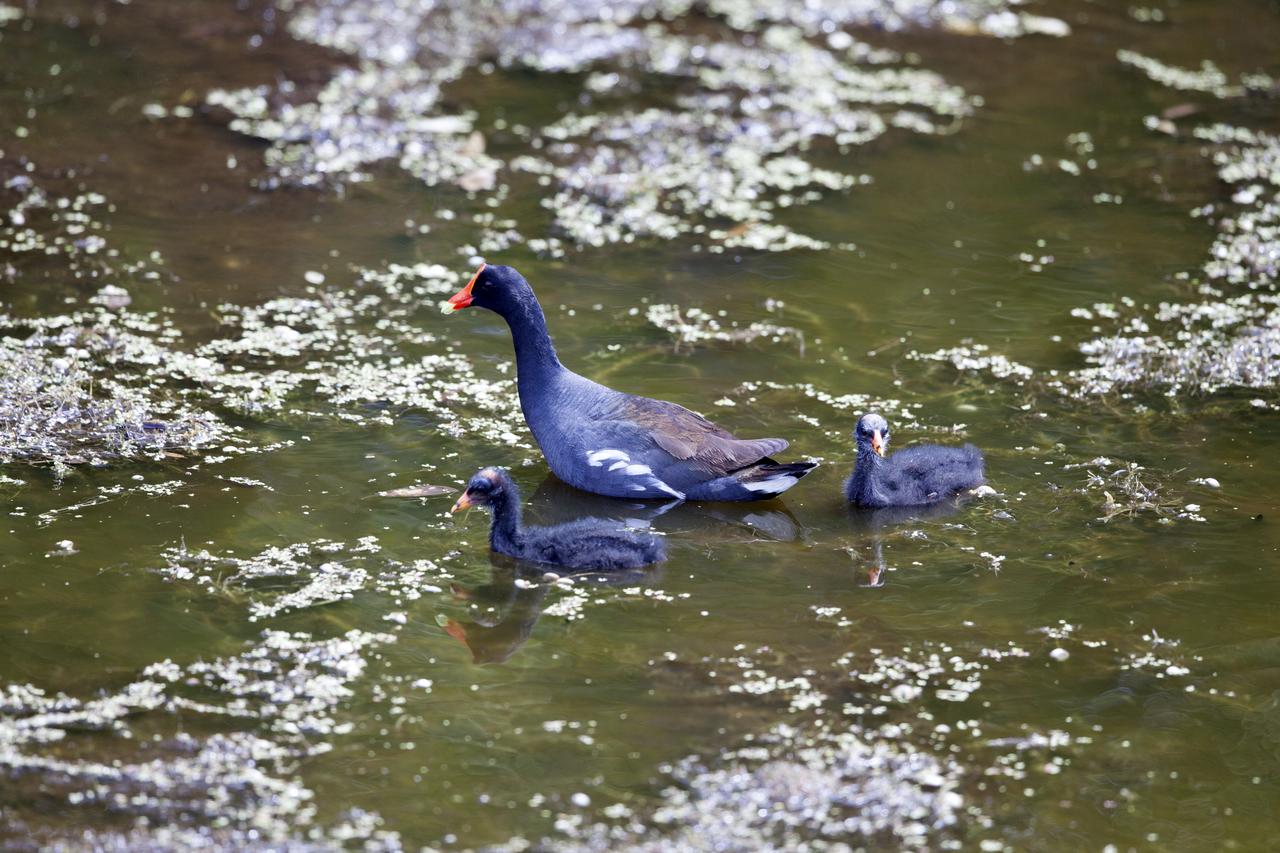
Common gallinules swim in a shallow waterway at NASA's Kennedy Space Center in Florida. The center shares a border with the Merritt Island National Wildlife Refuge. More than 330 native and migratory bird species, 25 mammals, 117 fishes and 65 amphibians and reptiles call Kennedy and the wildlife refuge home.
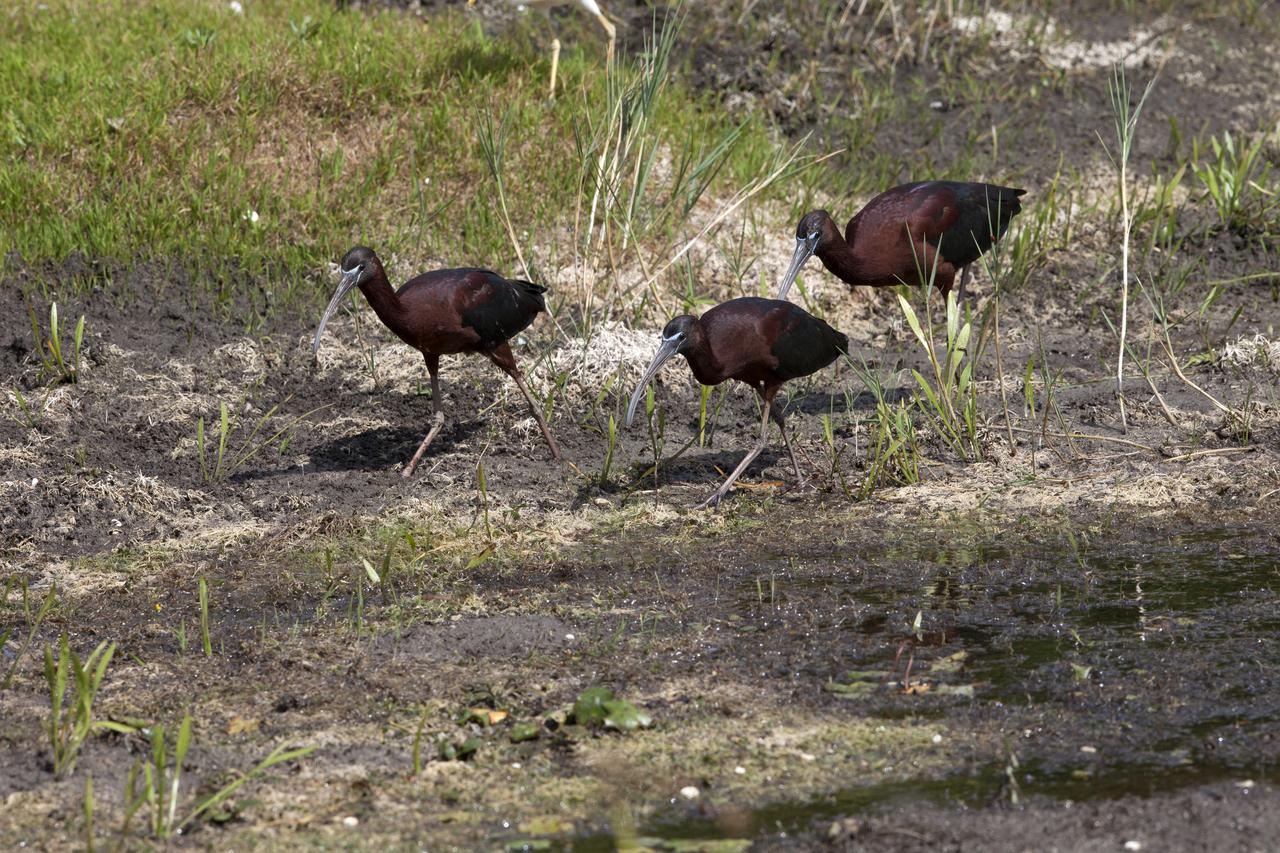
Three glossy ibises walk through a marshy area at NASA's Kennedy Space Center in Florida. The center shares a border with the Merritt Island National Wildlife Refuge. More than 330 native and migratory bird species, 25 mammals, 117 fishes and 65 amphibians and reptiles call Kennedy and the wildlife refuge home.
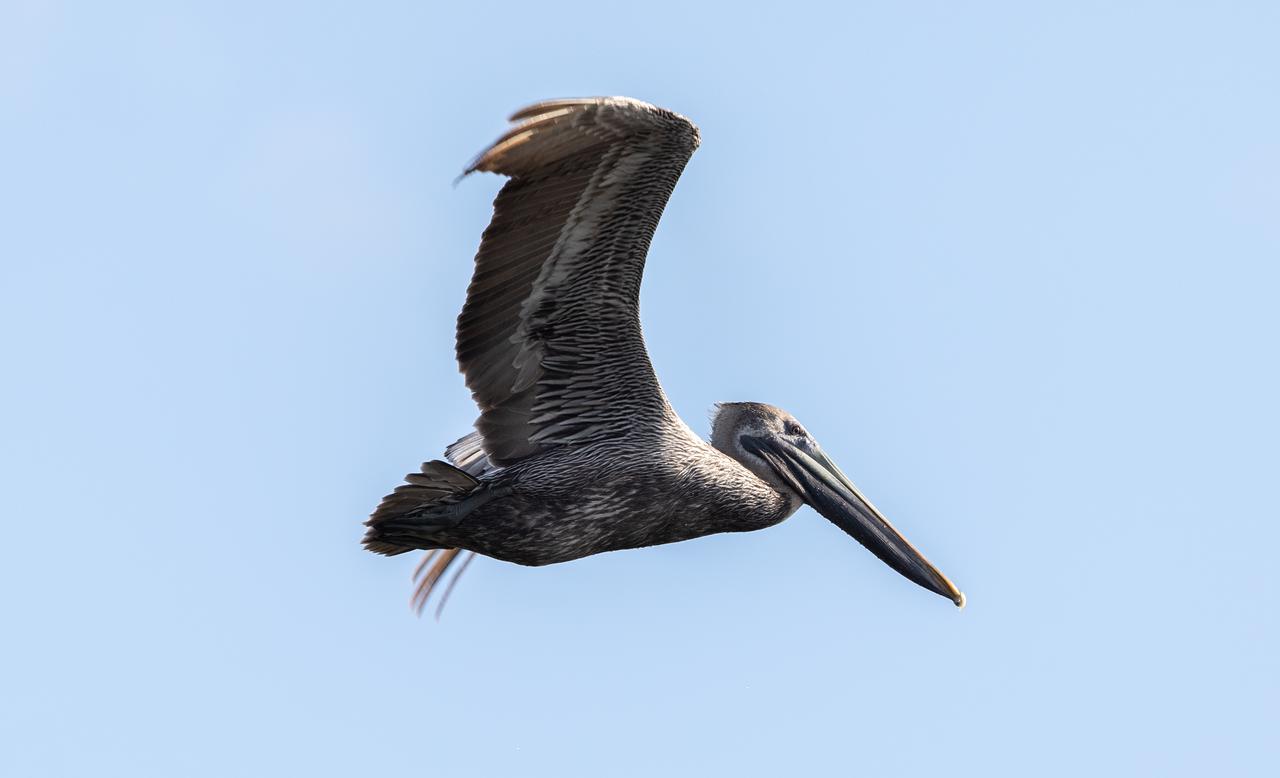
A pelican takes flight at NASA's Kennedy Space Center in Florida on Jan. 11, 2021. The center shares a border with the Merritt Island National Wildlife Refuge. More than 330 native and migratory bird species, along with 25 mammal, 117 fish, and 65 amphibian and reptile species call Kennedy and the wildlife refuge home.
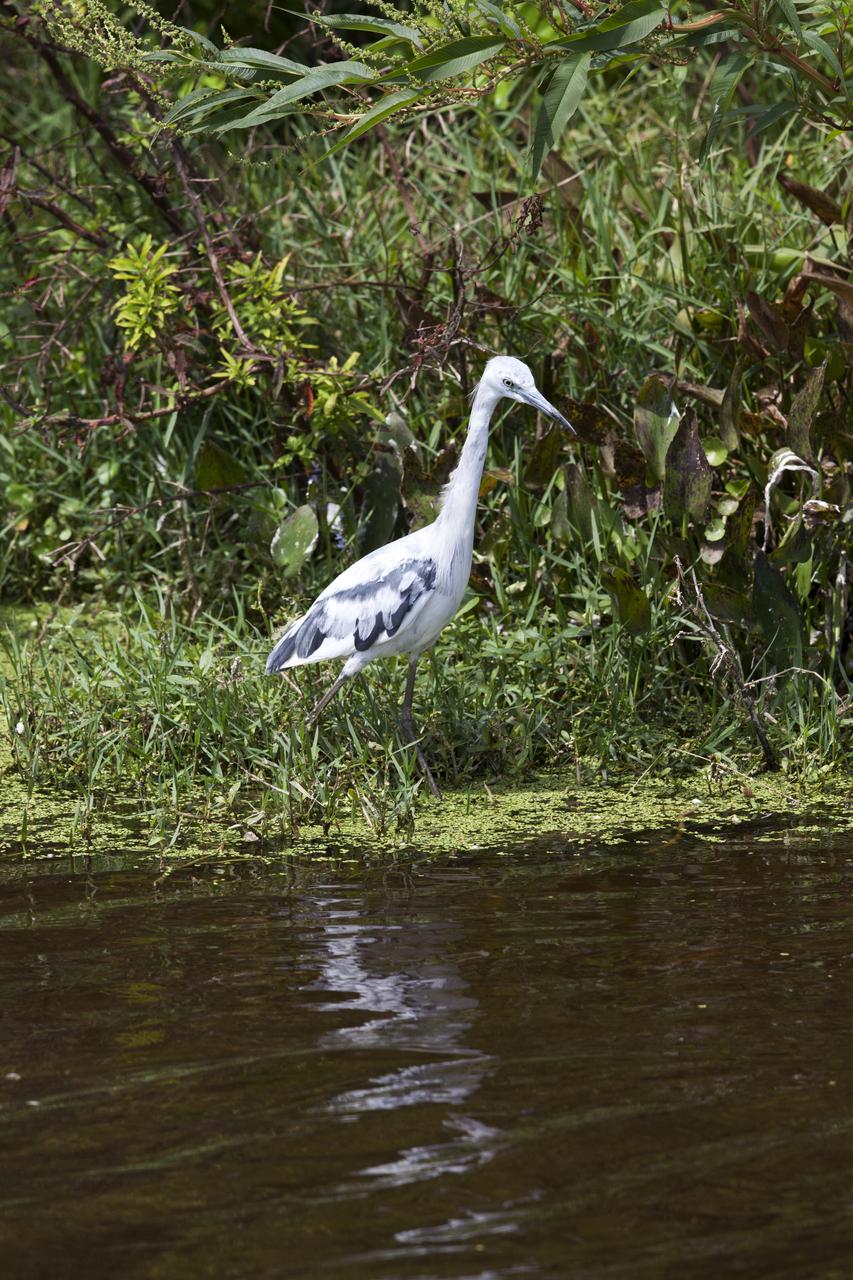
A juvenile heron wades in a waterway at NASA's Kennedy Space Center in Florida. The center shares a border with the Merritt Island National Wildlife Refuge. More than 330 native and migratory bird species, 25 mammals, 117 fishes and 65 amphibians and reptiles call Kennedy and the wildlife refuge home.
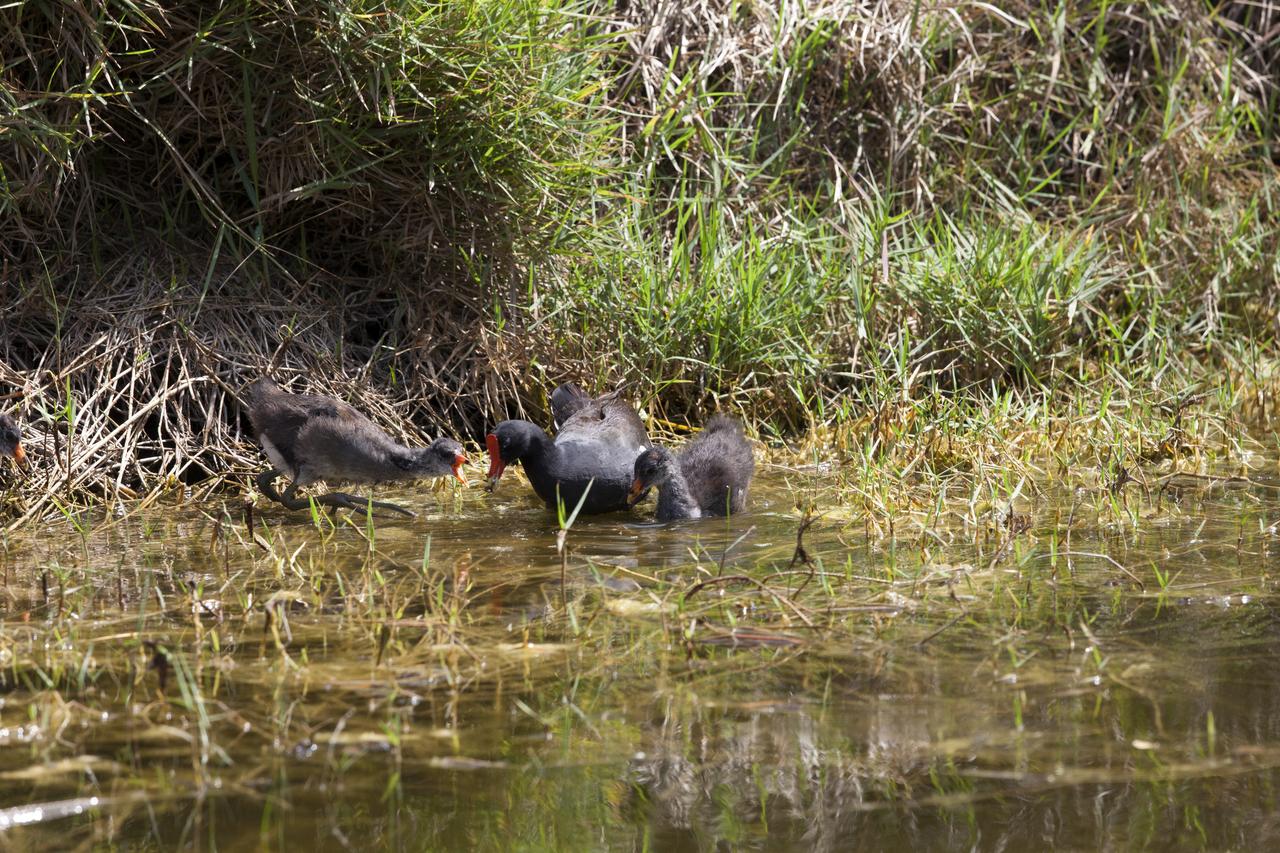
Common gallinules search for food in a waterway at NASA's Kennedy Space Center in Florida. The center shares a border with the Merritt Island National Wildlife Refuge. More than 330 native and migratory bird species, 25 mammals, 117 fishes and 65 amphibians and reptiles call Kennedy and the wildlife refuge home.
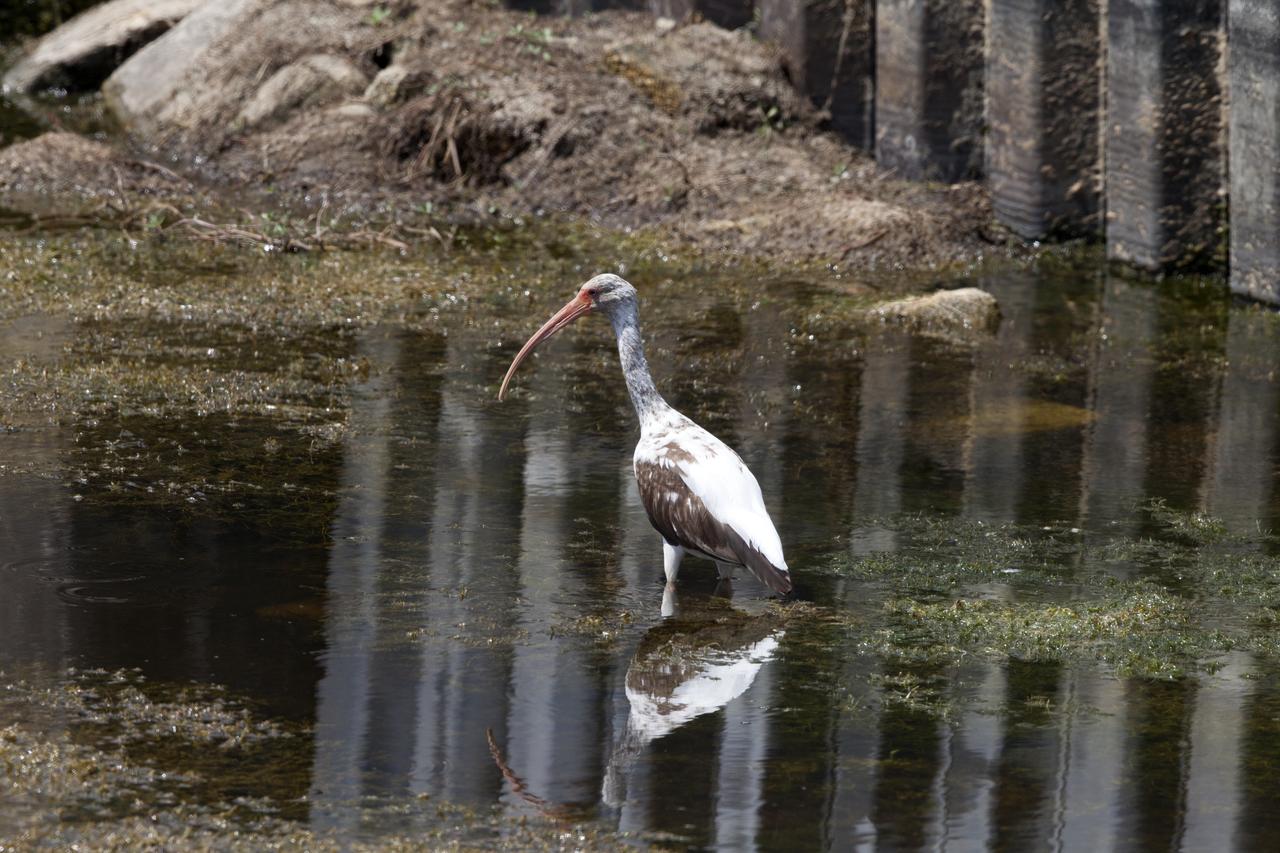
A juvenile white ibis stands in a waterway at NASA's Kennedy Space Center in Florida. The center shares a border with the Merritt Island National Wildlife Refuge. More than 330 native and migratory bird species, 25 mammals, 117 fishes and 65 amphibians and reptiles call Kennedy and the wildlife refuge home.
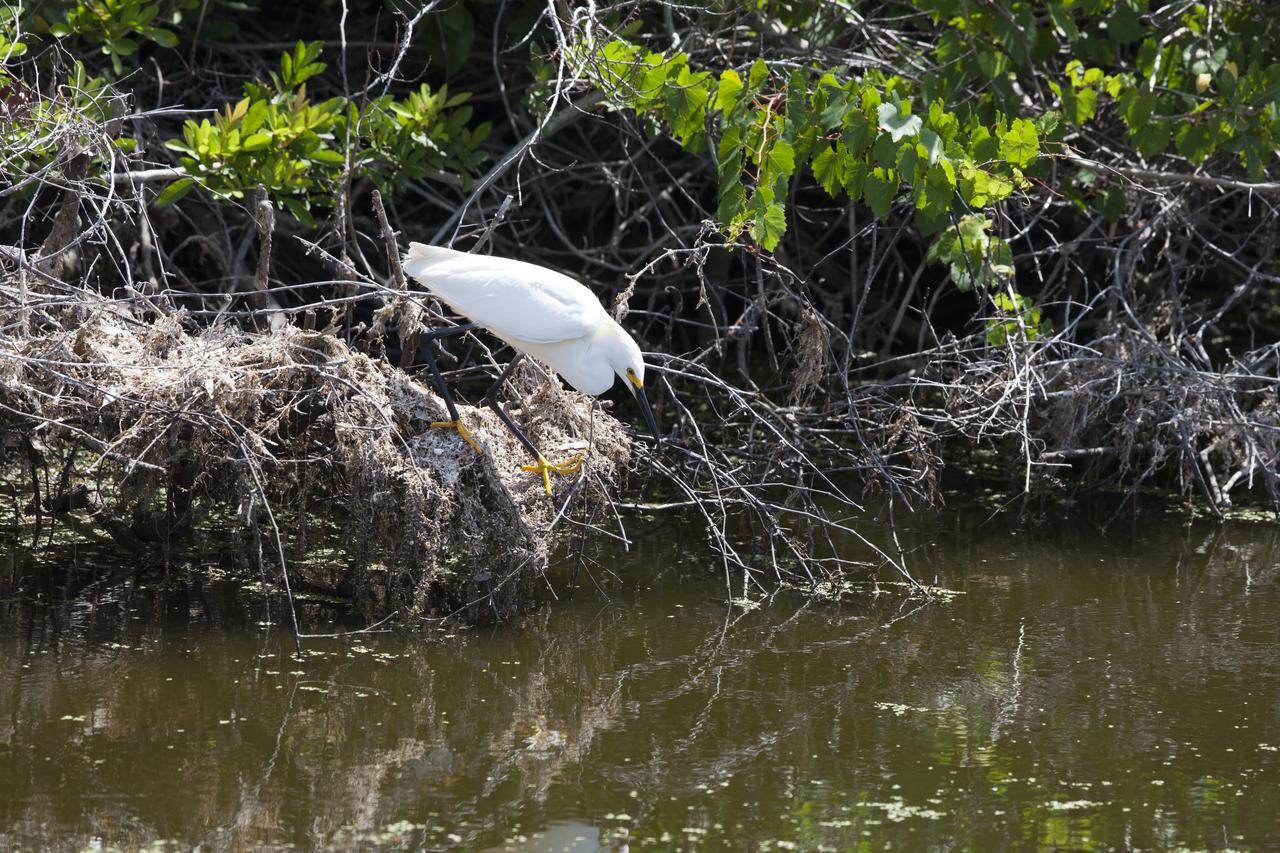
A snowy egret perches on a branch at the shoreline of a waterway at NASA's Kennedy Space Center in Florida. The center shares a border with the Merritt Island National Wildlife Refuge. More than 330 native and migratory bird species, 25 mammals, 117 fishes and 65 amphibians and reptiles call Kennedy and the wildlife refuge home.
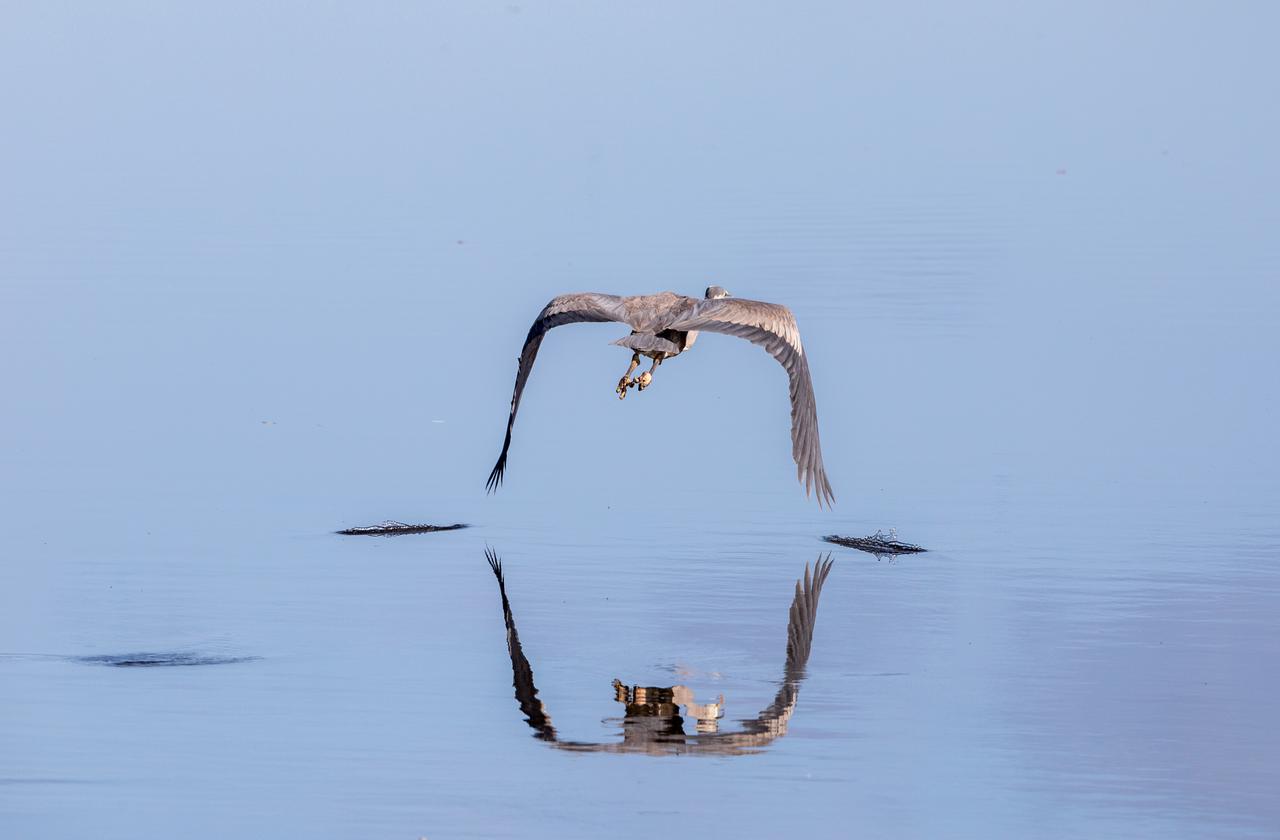
Creating an artistic reflection, a Great Blue Heron skims its wings on a waterway at NASA's Kennedy Space Center in Florida on Jan. 11, 2021. The center shares a border with the Merritt Island National Wildlife Refuge. More than 330 native and migratory bird species, along with 25 mammal, 117 fish, and 65 amphibian and reptile species call Kennedy and the wildlife refuge home.

A group of sandpipers wades in the shoreline of the Atlantic Ocean near NASA's Kennedy Space Center in Florida on Jan. 11, 2021. The center shares a border with the Merritt Island National Wildlife Refuge. More than 330 native and migratory bird species, 25 mammal, 117 fish and 65 amphibian and reptile species call Kennedy and the wildlife refuge home.
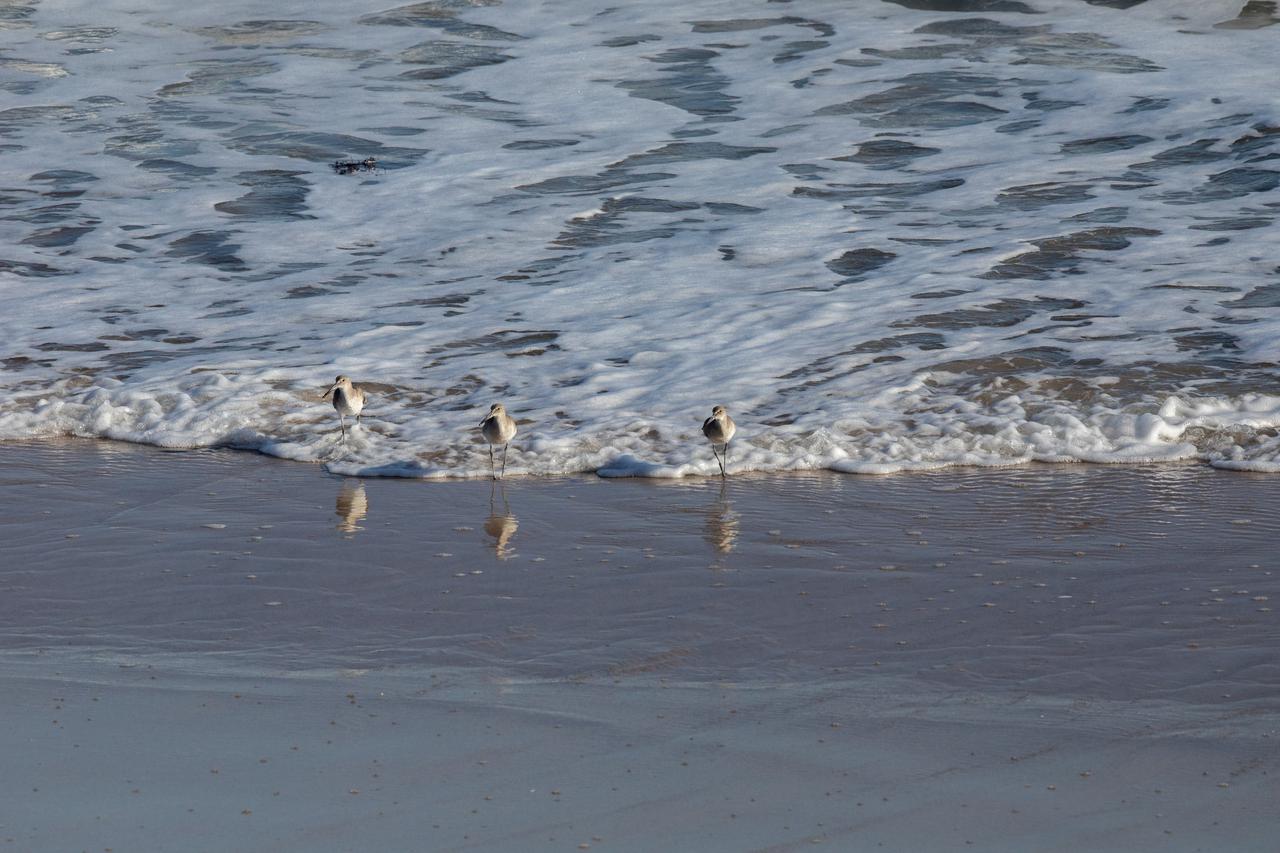
Several sandpipers wade in the shoreline of the Atlantic Ocean near NASA's Kennedy Space Center in Florida on Jan. 11, 2021. The center shares a border with the Merritt Island National Wildlife Refuge. More than 330 native and migratory bird species, 25 mammal, 117 fish and 65 amphibian and reptile species call Kennedy and the wildlife refuge home.
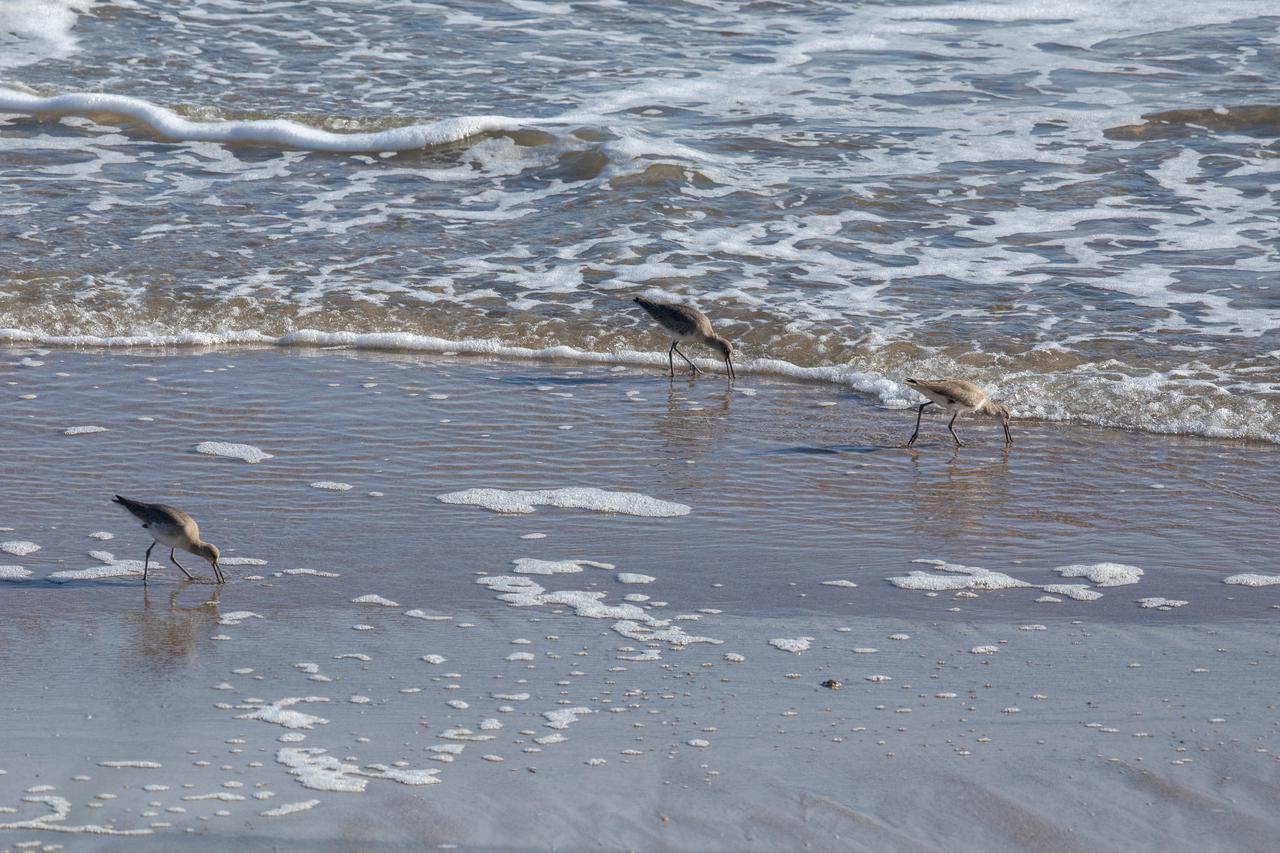
Several sandpipers search for food on the shoreline of the Atlantic Ocean near NASA's Kennedy Space Center in Florida on Jan. 11, 2021. The center shares a border with the Merritt Island National Wildlife Refuge. More than 330 native and migratory bird species, 25 mammal, 117 fish and 65 amphibian and reptile species call Kennedy and the wildlife refuge home.
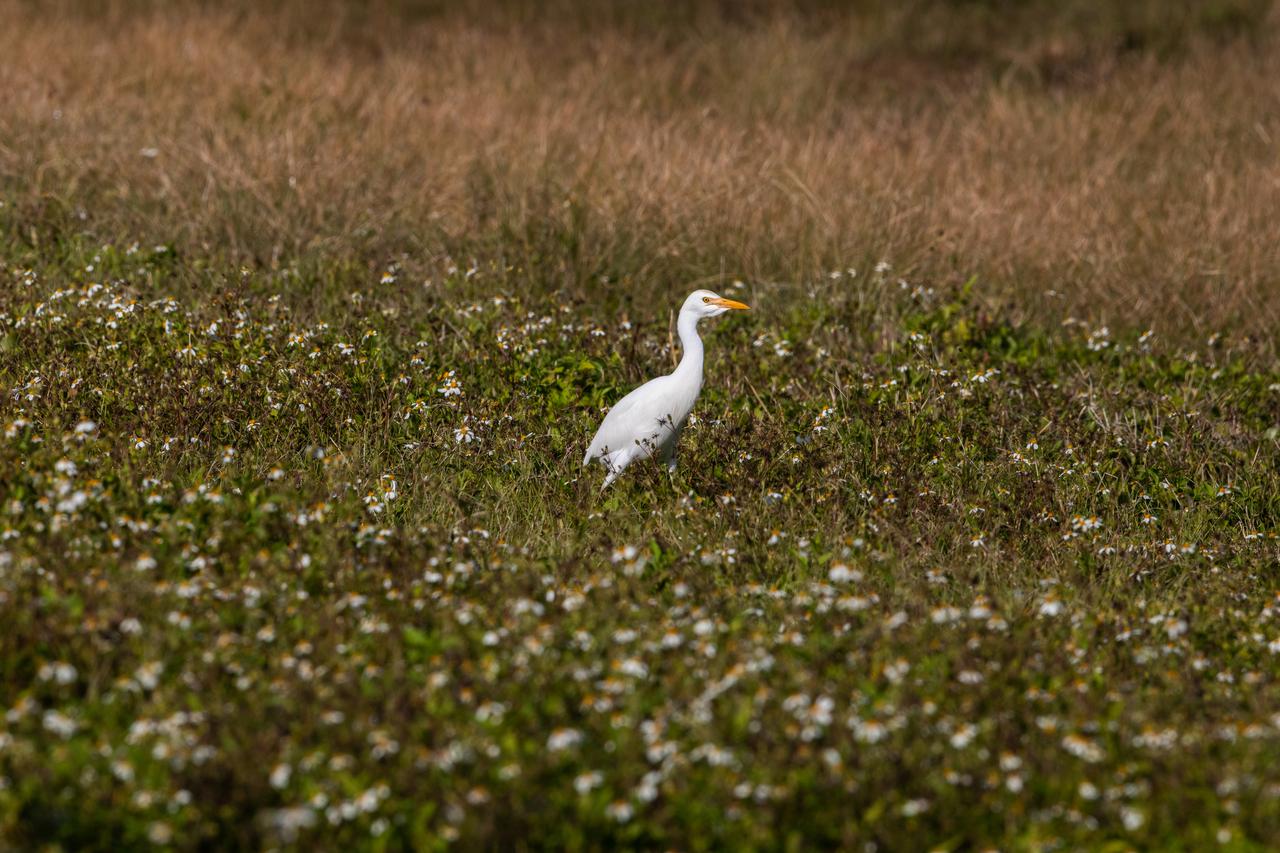
A Great Egret stands in a marsh near a waterway at NASA's Kennedy Space Center in Florida on Jan. 11, 2021. The center shares a border with the Merritt Island National Wildlife Refuge. More than 330 native and migratory bird species, along with 25 mammal, 117 fish, and 65 amphibian and reptile species call Kennedy and the wildlife refuge home.
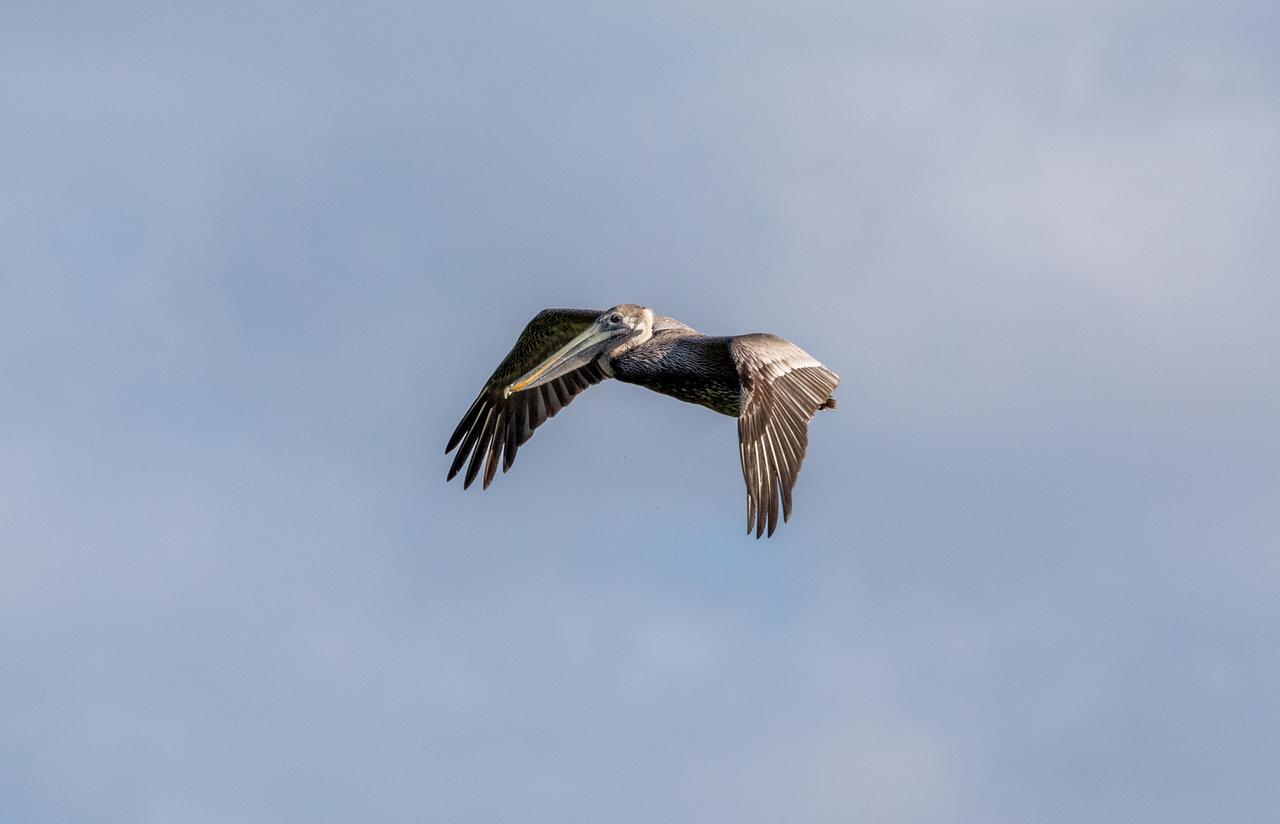
A pelican soars above a waterway at NASA's Kennedy Space Center in Florida on Jan. 11, 2021. The center shares a border with the Merritt Island National Wildlife Refuge. More than 330 native and migratory bird species, along with 25 mammal, 117 fish, and 65 amphibian and reptile species call Kennedy and the wildlife refuge home.
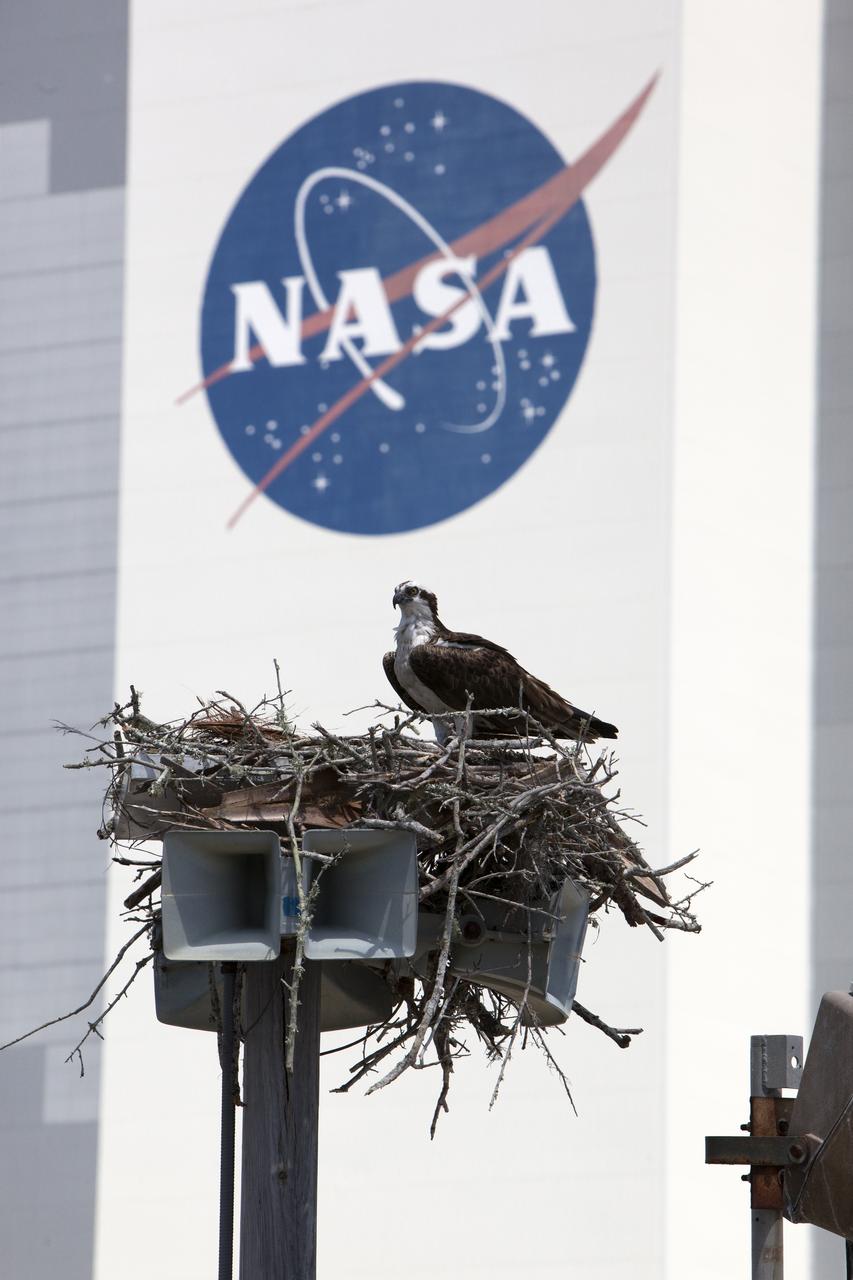
An osprey sits in its nest atop a wooden speaker pole at NASA's Kennedy Space Center in Florida. In the background is the NASA insignia on the exterior of the iconic Vehicle Assemble Building. The center shares a border with the Merritt Island National Wildlife Refuge. More than 330 native and migratory bird species, 25 mammals, 117 fishes and 65 amphibians and reptiles call Kennedy and the wildlife refuge home.
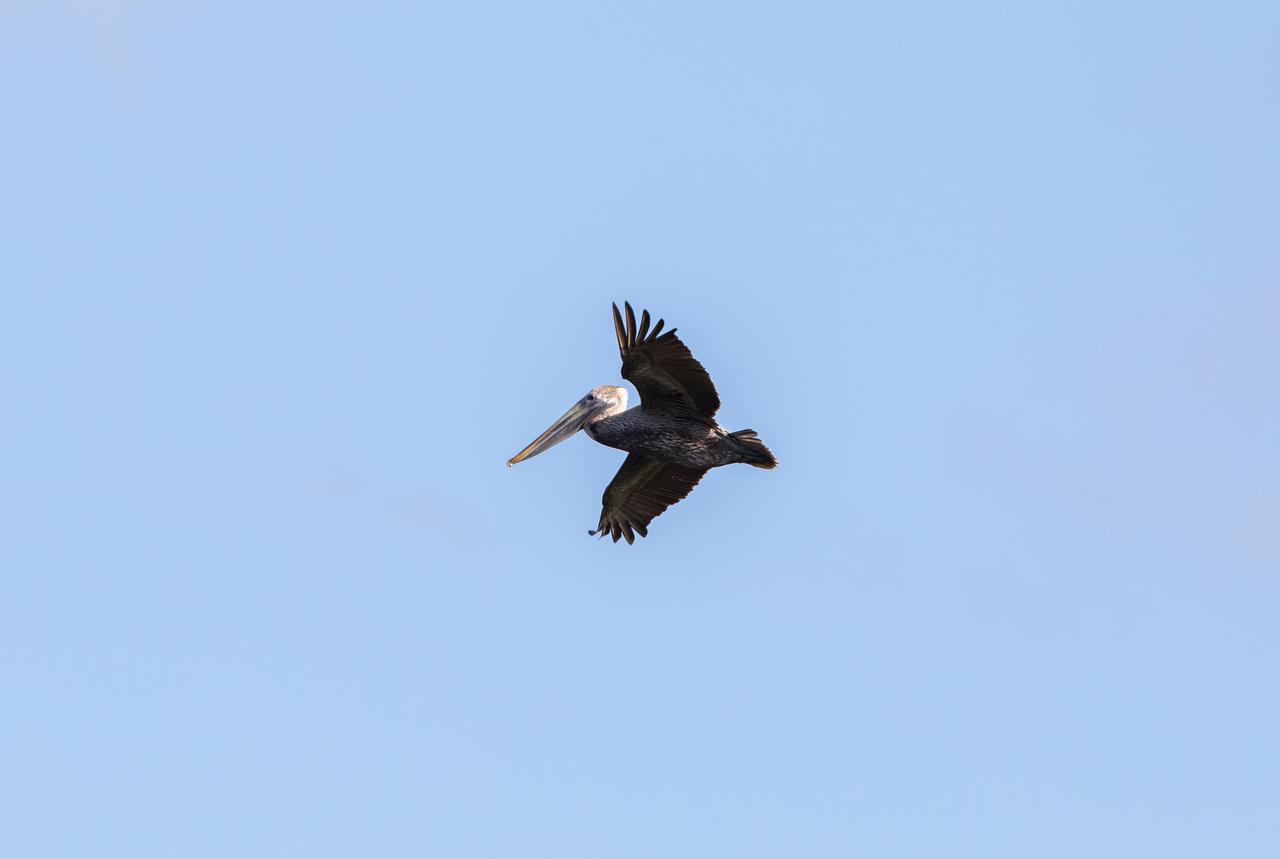
A pelican soars above a waterway at NASA's Kennedy Space Center in Florida on Jan. 11, 2021. The center shares a border with the Merritt Island National Wildlife Refuge. More than 330 native and migratory bird species, along with 25 mammal, 117 fish, and 65 amphibian and reptile species call Kennedy and the wildlife refuge home.
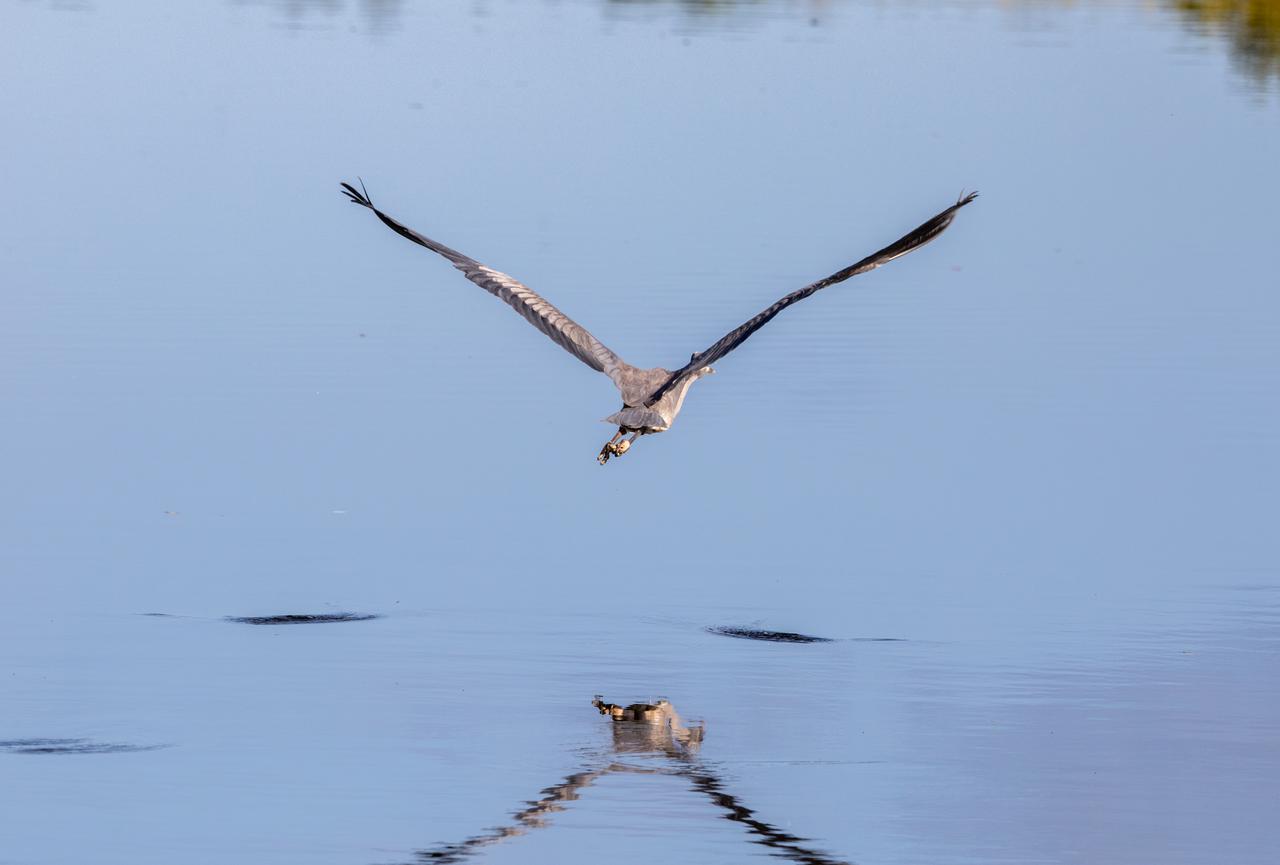
A Great Blue Heron glides close to a waterway at NASA's Kennedy Space Center in Florida on Jan. 11, 2021. The center shares a border with the Merritt Island National Wildlife Refuge. More than 330 native and migratory bird species, along with 25 mammal, 117 fish, and 65 amphibian and reptile species call Kennedy and the wildlife refuge home.
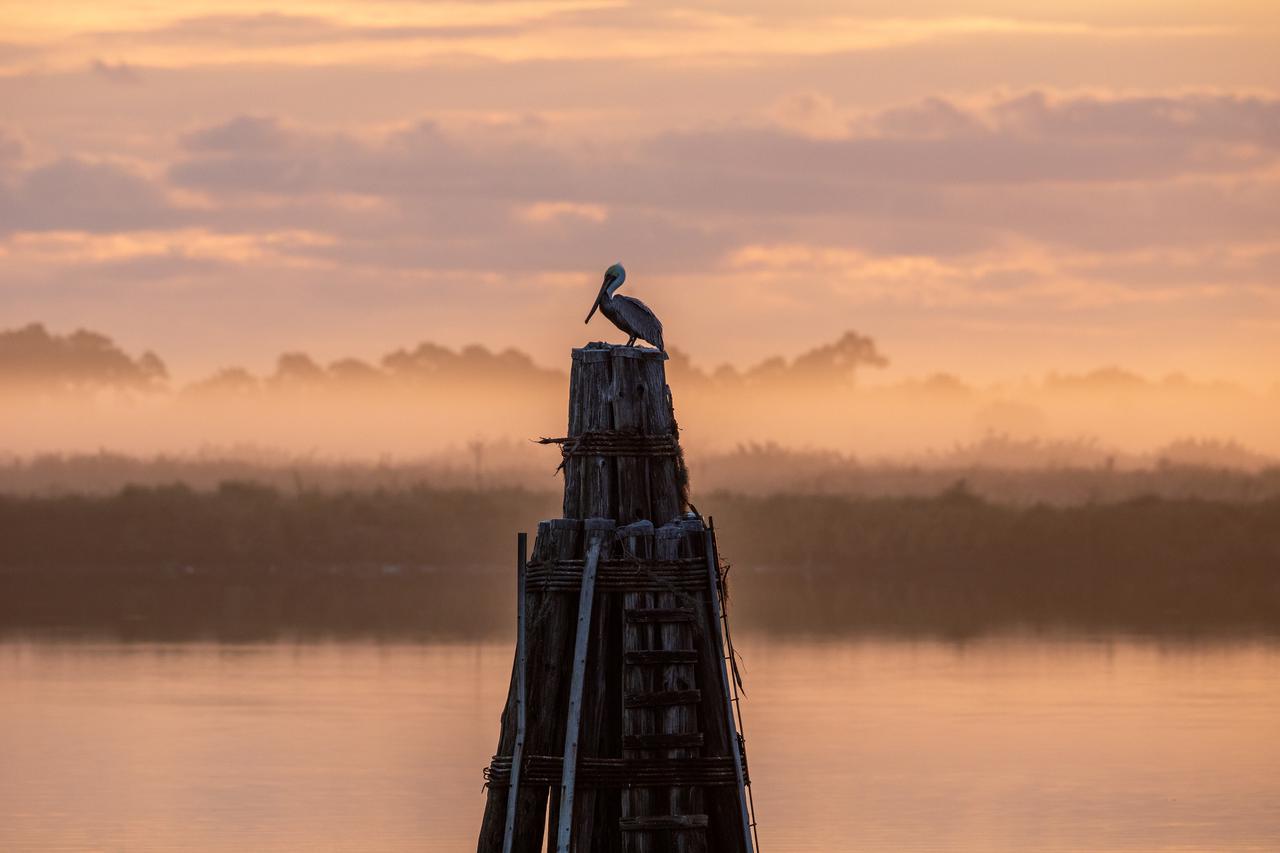
A pelican perches on the support beam of a dock on a waterway at NASA's Kennedy Space Center in Florida on Jan. 11, 2021. The center shares a border with the Merritt Island National Wildlife Refuge. More than 330 native and migratory bird species, along with 25 mammal, 117 fish, and 65 amphibian and reptile species call Kennedy and the wildlife refuge home.
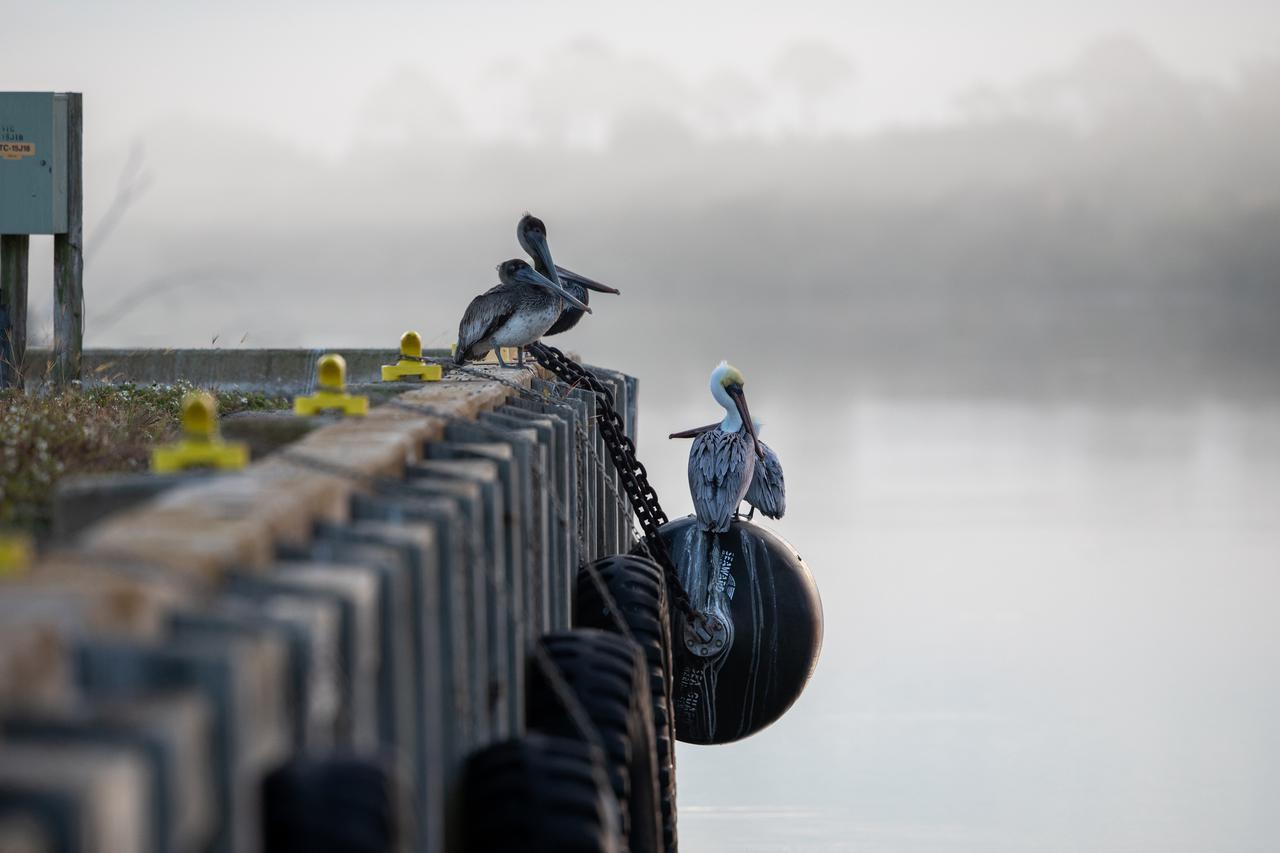
Pelicans perch on the support beams of an embankment on a waterway at NASA's Kennedy Space Center in Florida on Jan. 11, 2021. The center shares a border with the Merritt Island National Wildlife Refuge. More than 330 native and migratory bird species, along with 25 mammal, 117 fish, and 65 amphibian and reptile species call Kennedy and the wildlife refuge home.
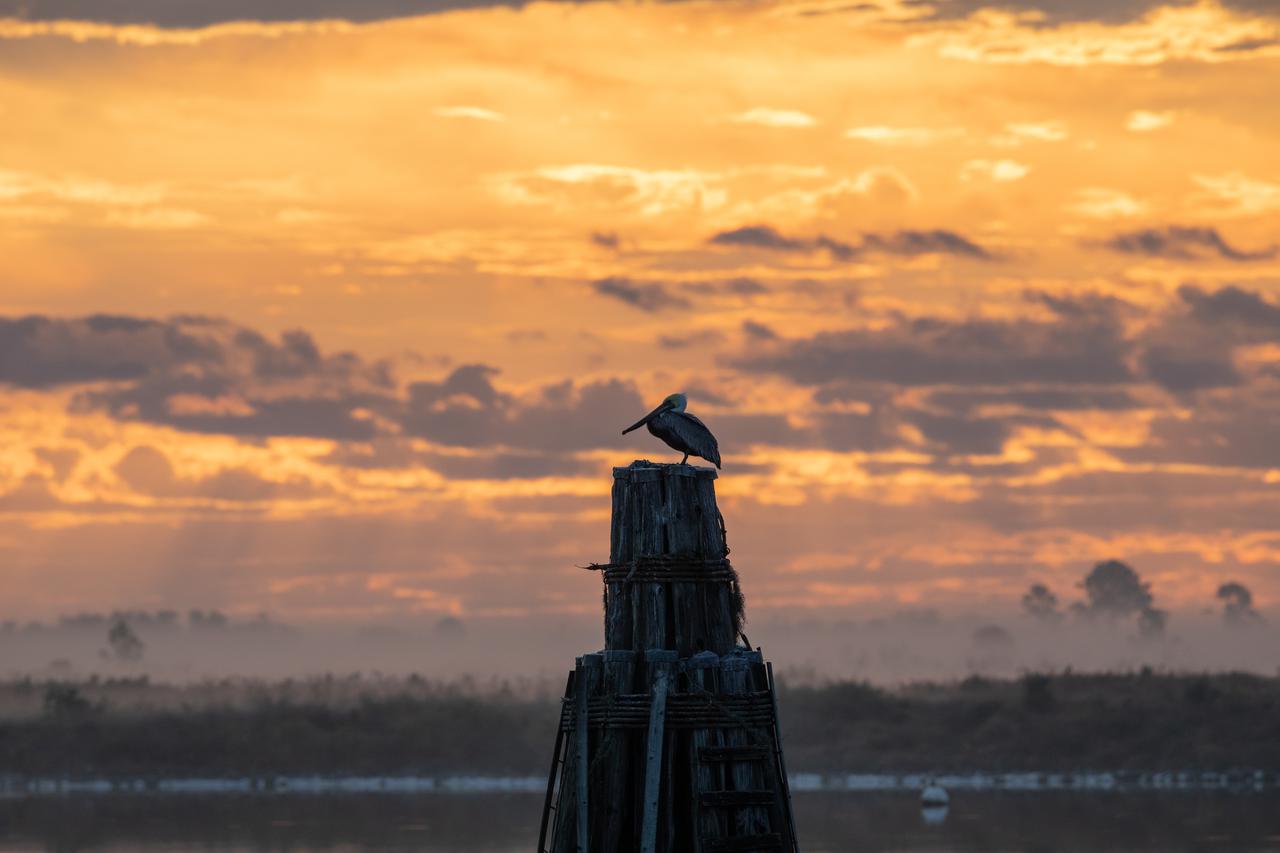
A colorful sunrise serves as the backdrop for a pelican perched on a support beam for a dock on a waterway at NASA's Kennedy Space Center in Florida on Jan. 11, 2021. The center shares a border with the Merritt Island National Wildlife Refuge. More than 330 native and migratory bird species, along with 25 mammal, 117 fish, and 65 amphibian and reptile species call Kennedy and the wildlife refuge home.
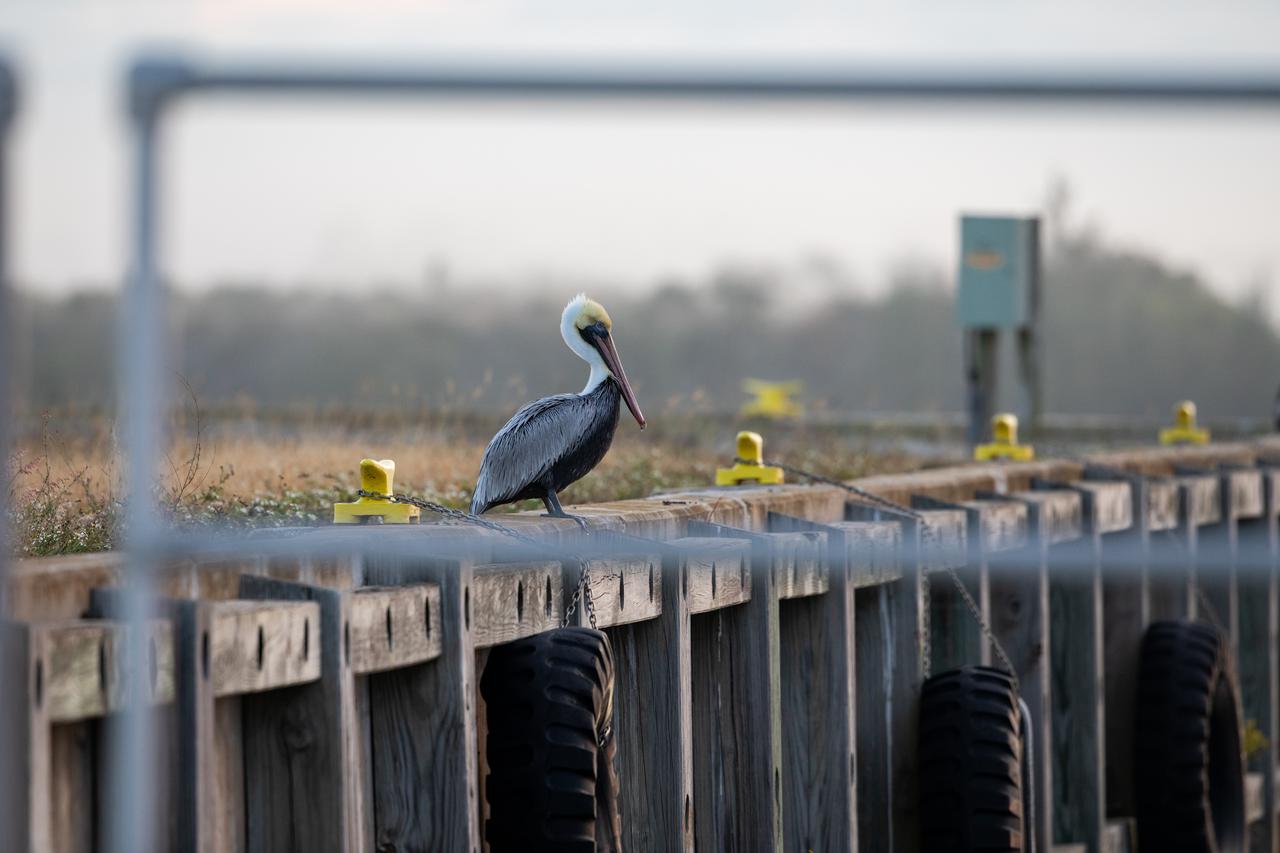
A pelican sits near a dock on a waterway at NASA's Kennedy Space Center in Florida on Jan. 11, 2021. The center shares a border with the Merritt Island National Wildlife Refuge. More than 330 native and migratory bird species, along with 25 mammal, 117 fish, and 65 amphibian and reptile species call Kennedy and the wildlife refuge home.
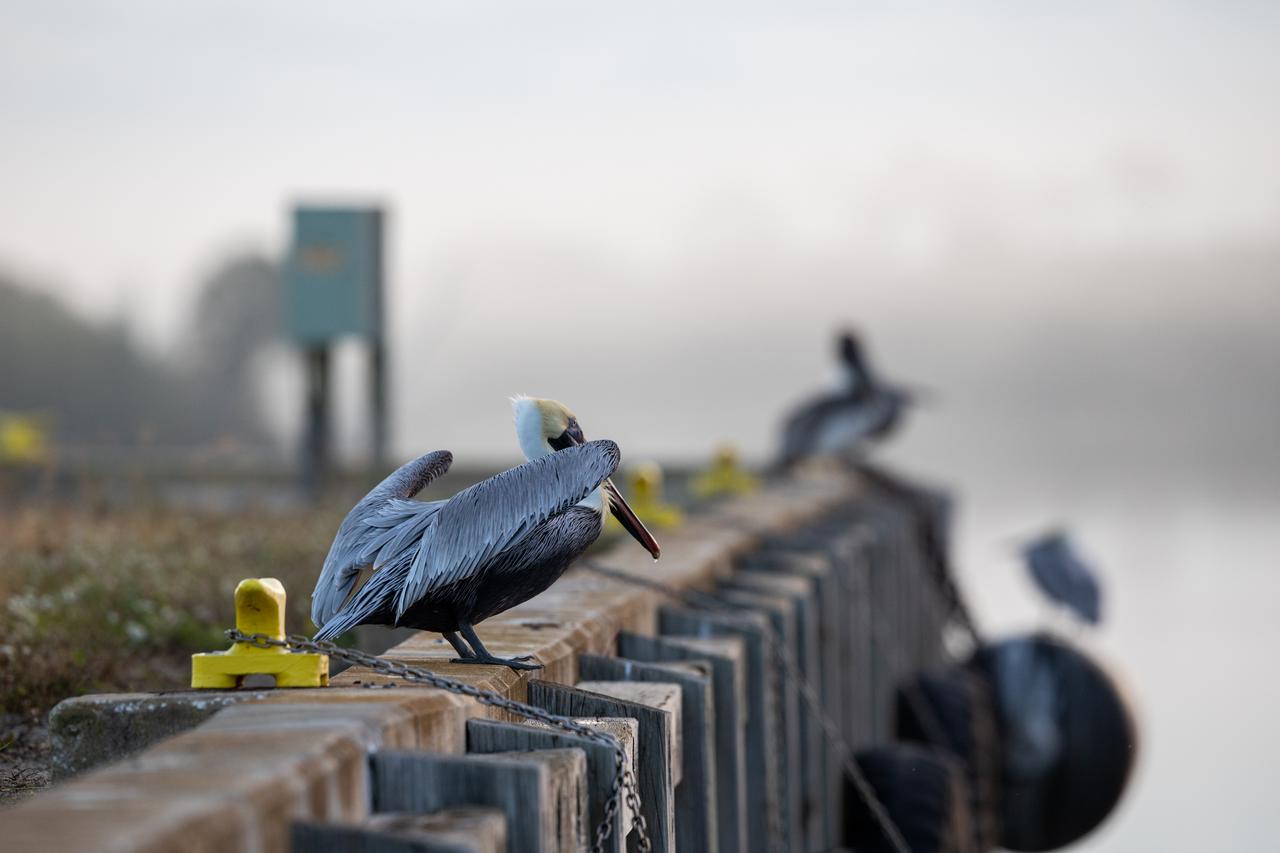
Pelicans perch on the support beams of an embankment on a waterway at NASA's Kennedy Space Center in Florida on Jan. 11, 2021. The center shares a border with the Merritt Island National Wildlife Refuge. More than 330 native and migratory bird species, along with 25 mammal, 117 fish, and 65 amphibian and reptile species call Kennedy and the wildlife refuge home.
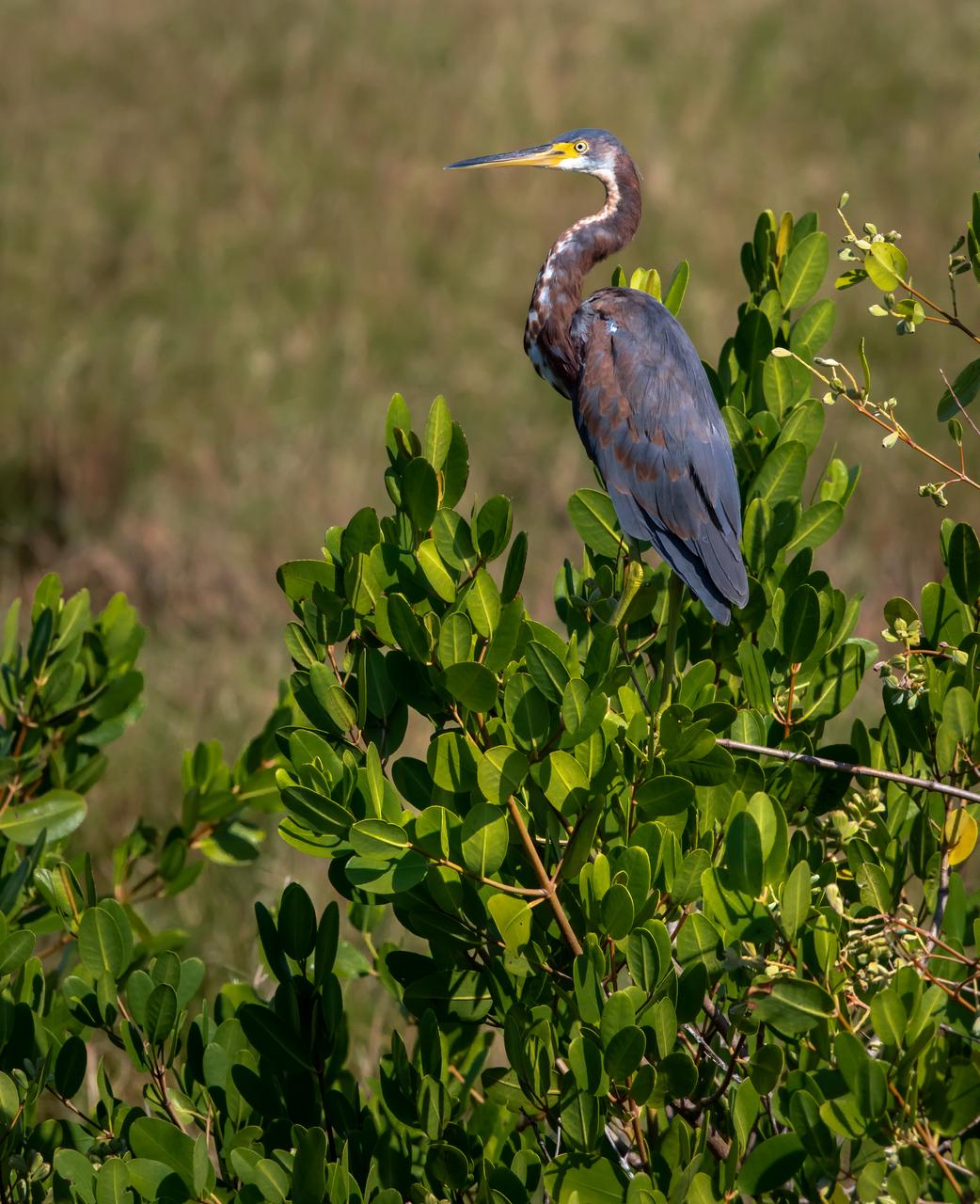
A Reddish Egret perches in a tree at NASA's Kennedy Space Center in Florida. The center shares a border with the Merritt Island National Wildlife Refuge. More than 330 native and migratory bird species, 25 mammal, 117 fish and 65 amphibian and reptile species call Kennedy and the wildlife refuge home.
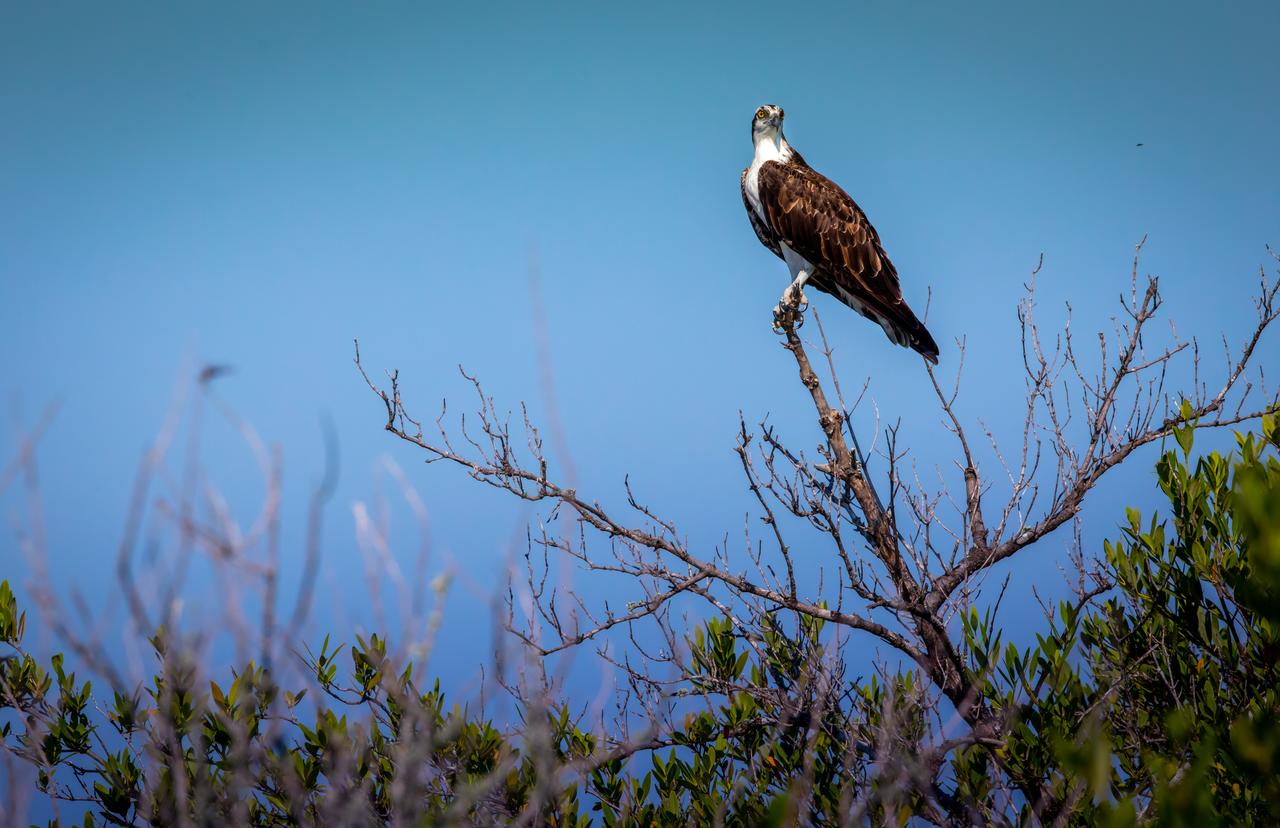
An osprey sits on a branch near a waterway at NASA's Kennedy Space Center in Florida. The center shares a border with the Merritt Island National Wildlife Refuge. More than 330 native and migratory bird species, 25 mammal, 117 fish and 65 amphibian and reptile species call Kennedy and the wildlife refuge home.
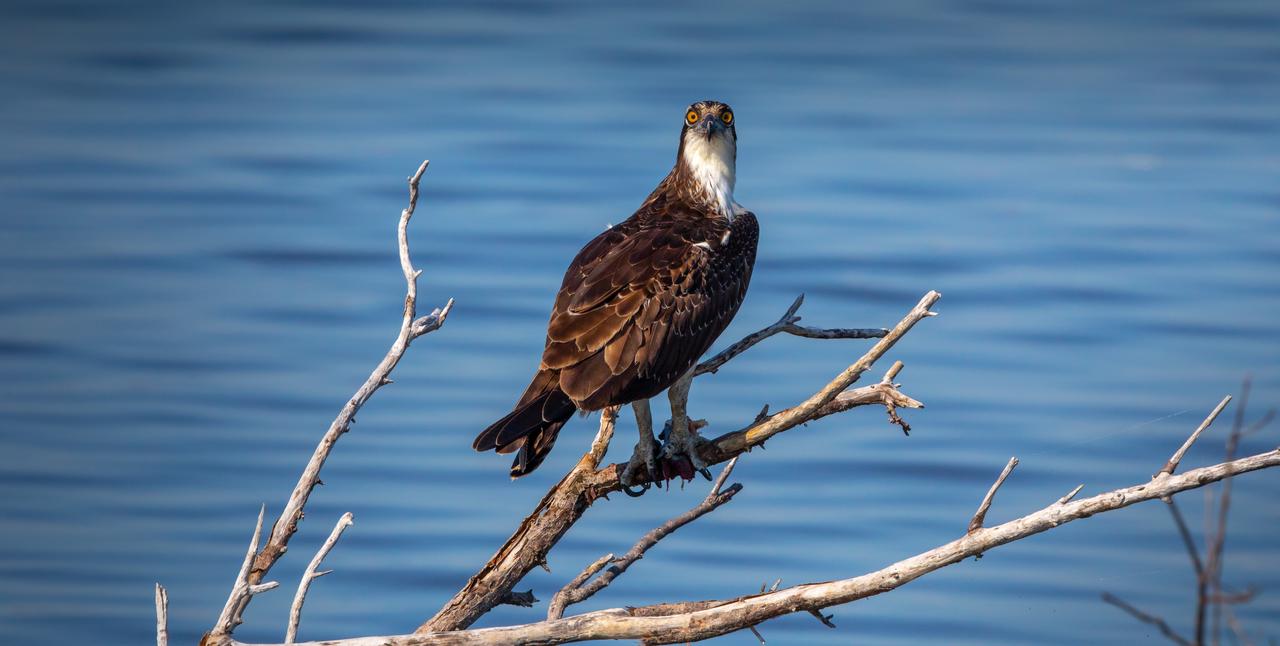
An osprey sits on a branch near a waterway at NASA's Kennedy Space Center in Florida. The center shares a border with the Merritt Island National Wildlife Refuge. More than 330 native and migratory bird species, 25 mammal, 117 fish and 65 amphibian and reptile species call Kennedy and the wildlife refuge home.
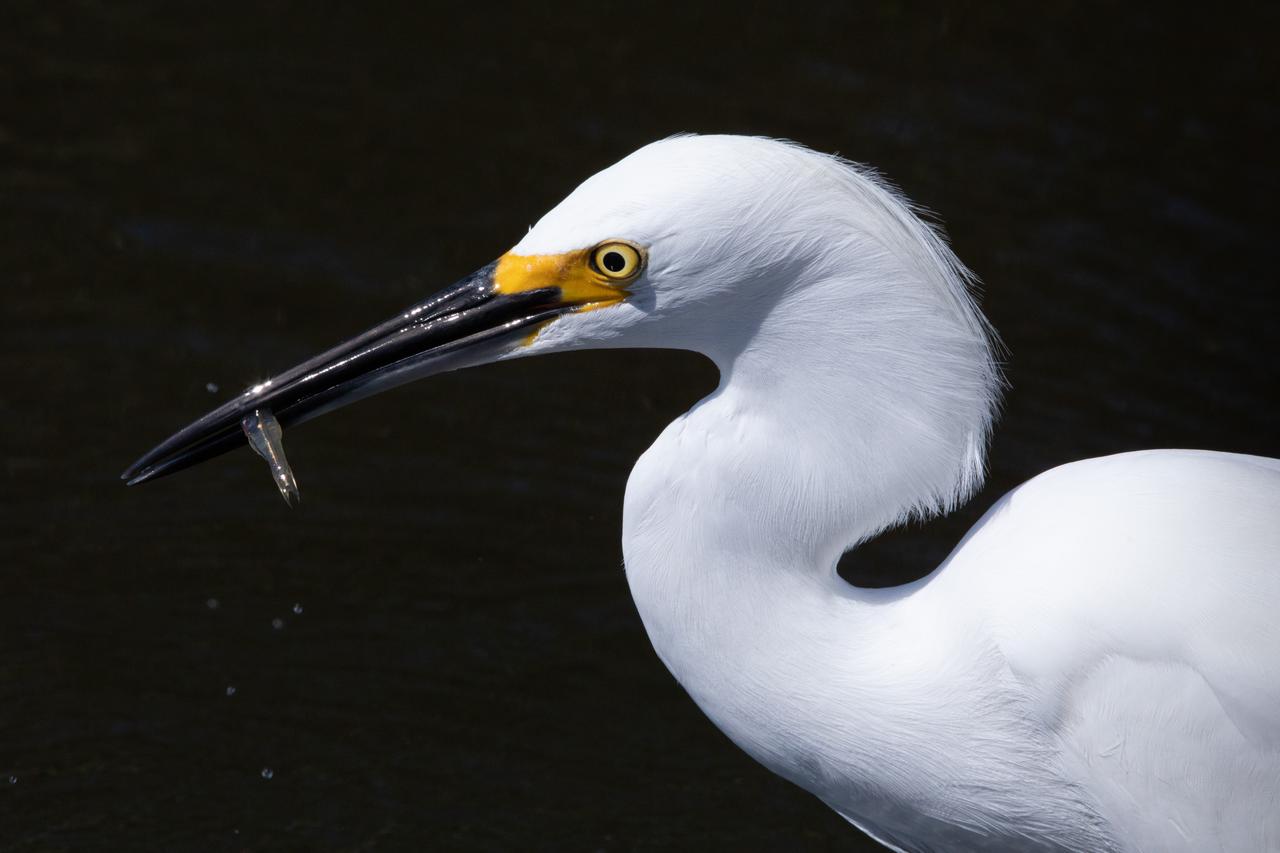
A Great Egret catches a small fish in a waterway at NASA's Kennedy Space Center in Florida. The center shares a border with the Merritt Island National Wildlife Refuge. More than 330 native and migratory bird species, 25 mammal, 117 fish and 65 amphibian and reptile species call Kennedy and the wildlife refuge home.
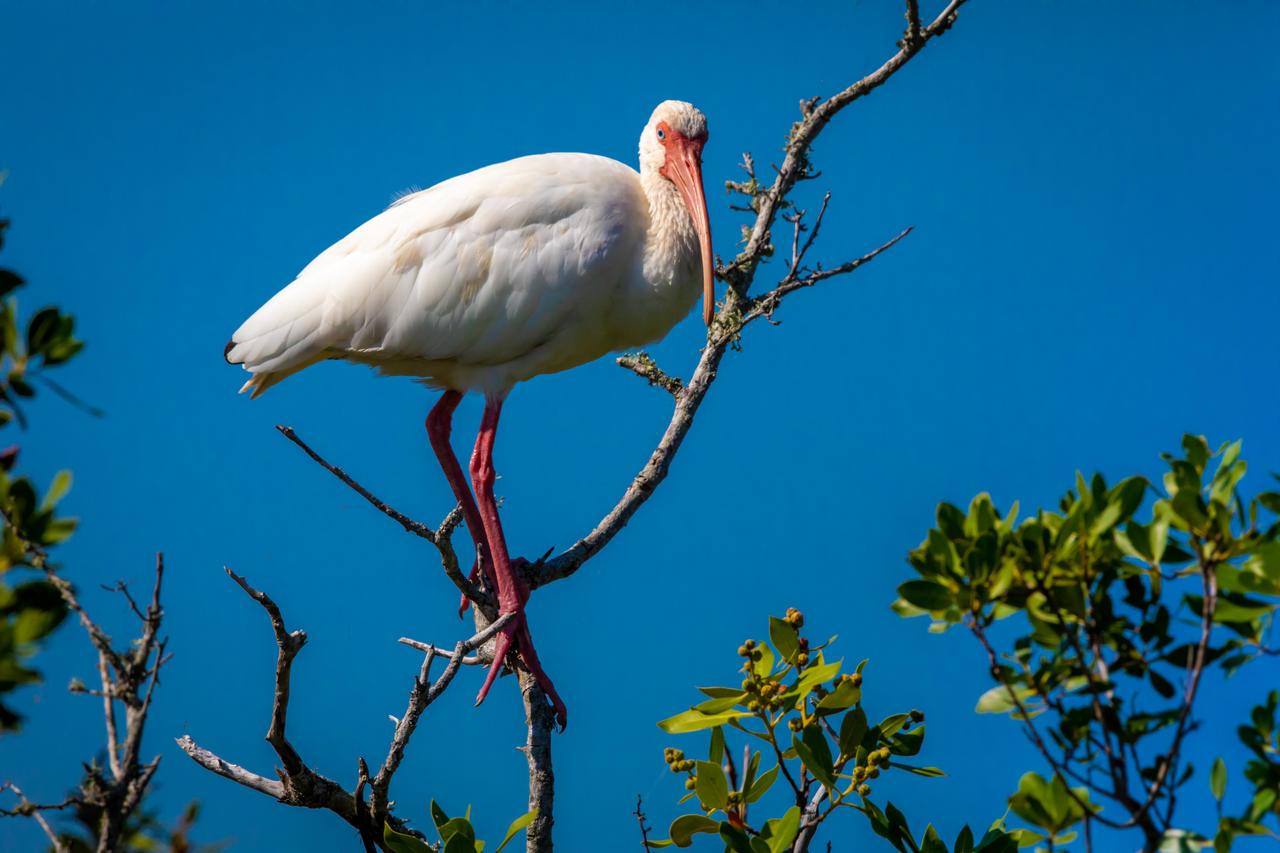
A White Ibis perches on the branch of a tree at NASA's Kennedy Space Center in Florida. The center shares a border with the Merritt Island National Wildlife Refuge. More than 330 native and migratory bird species, 25 mammal, 117 fish and 65 amphibian and reptile species call Kennedy and the wildlife refuge home.
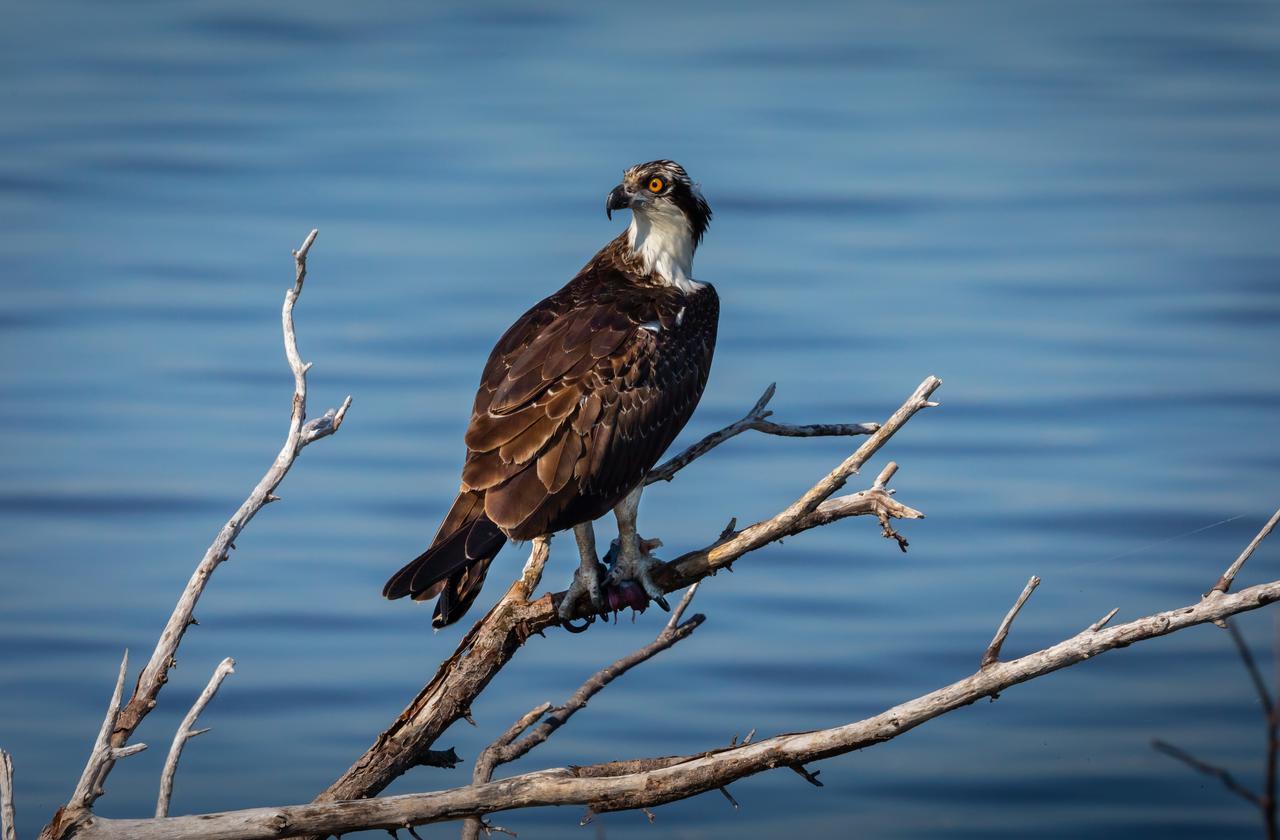
An osprey sits on a branch near a waterway at NASA's Kennedy Space Center in Florida. The center shares a border with the Merritt Island National Wildlife Refuge. More than 330 native and migratory bird species, 25 mammal, 117 fish and 65 amphibian and reptile species call Kennedy and the wildlife refuge home.
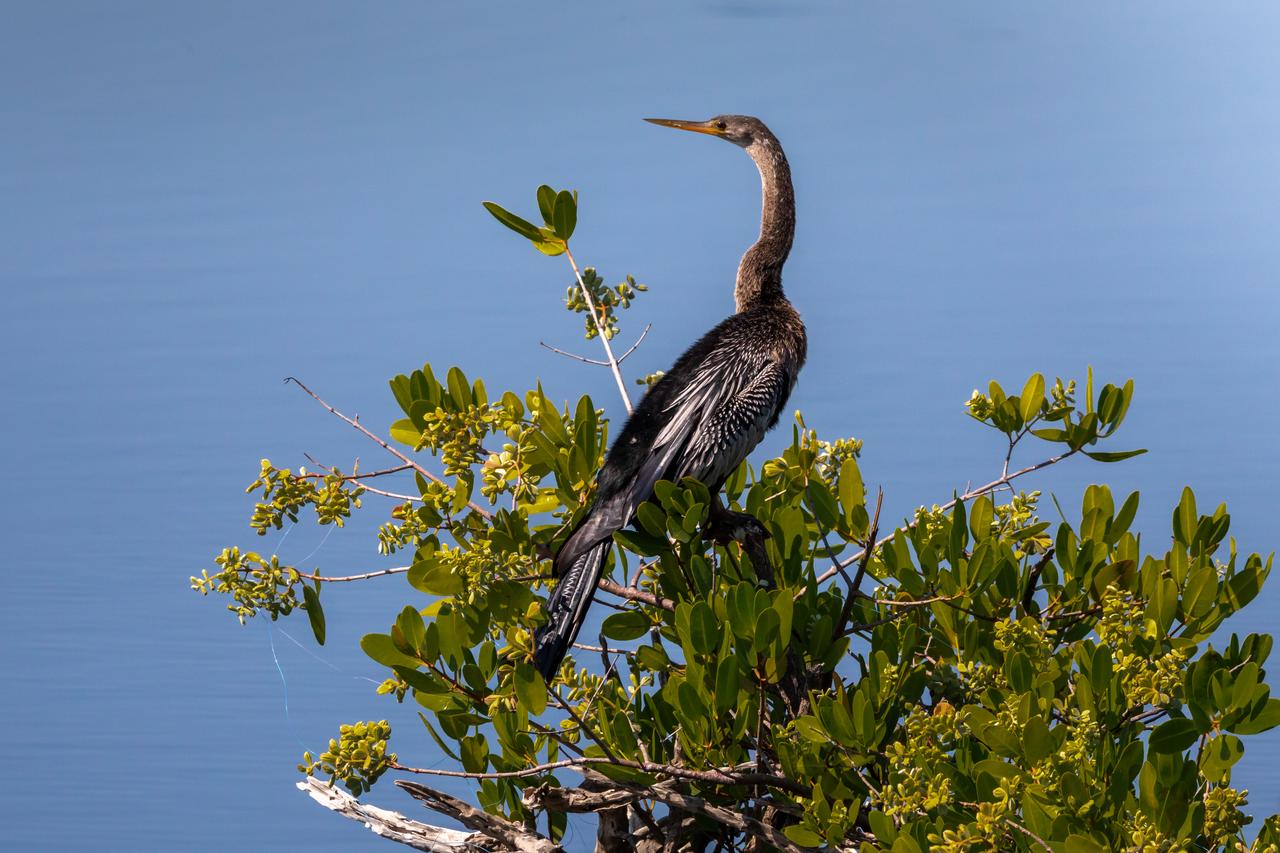
A Reddish Egret perches in a tree near a waterway at NASA's Kennedy Space Center in Florida. The center shares a border with the Merritt Island National Wildlife Refuge. More than 330 native and migratory bird species, 25 mammal, 117 fish and 65 amphibian and reptile species call Kennedy and the wildlife refuge home.
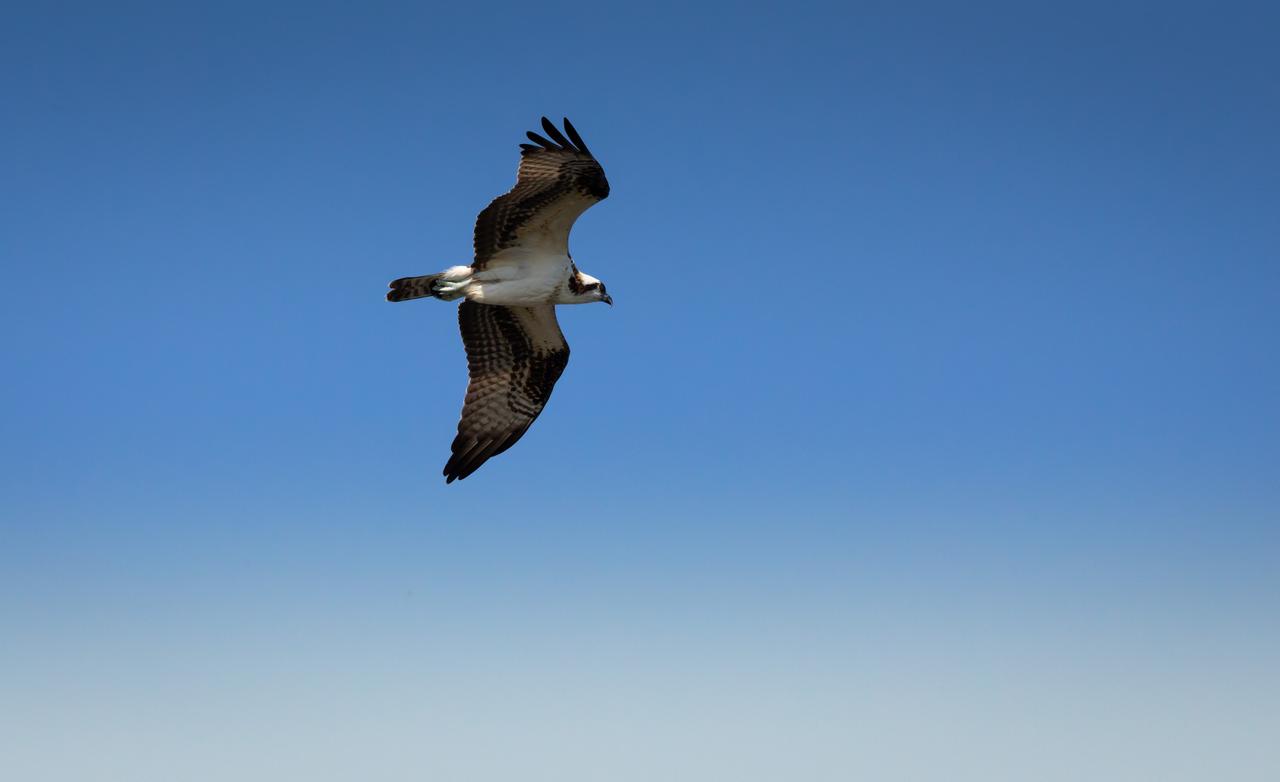
An osprey soars above NASA's Kennedy Space Center in Florida. The center shares a border with the Merritt Island National Wildlife Refuge. More than 330 native and migratory bird species, 25 mammal, 117 fish and 65 amphibian and reptile species call Kennedy and the wildlife refuge home.
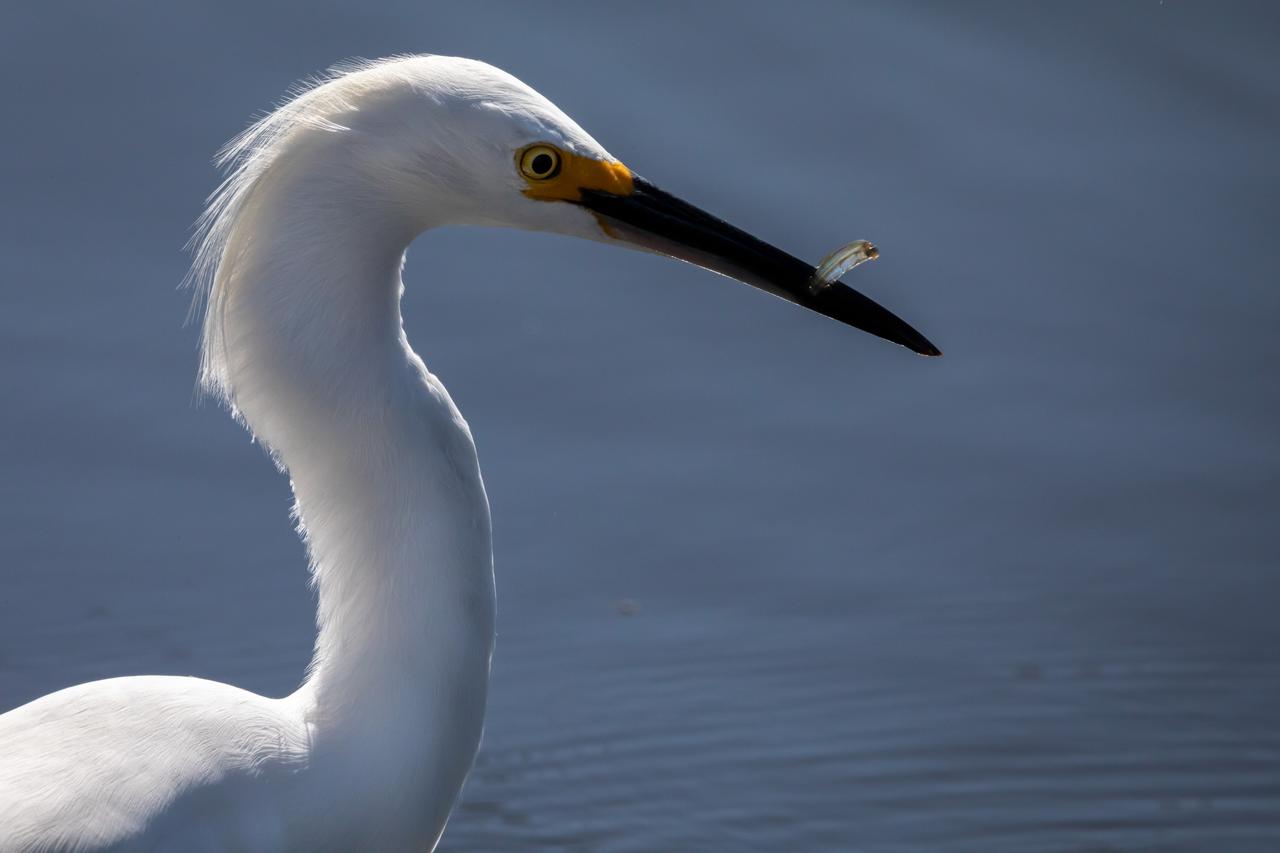
A Great Egret catches a small fish in a waterway at NASA's Kennedy Space Center in Florida. The center shares a border with the Merritt Island National Wildlife Refuge. More than 330 native and migratory bird species, 25 mammal, 117 fish and 65 amphibian and reptile species call Kennedy and the wildlife refuge home.
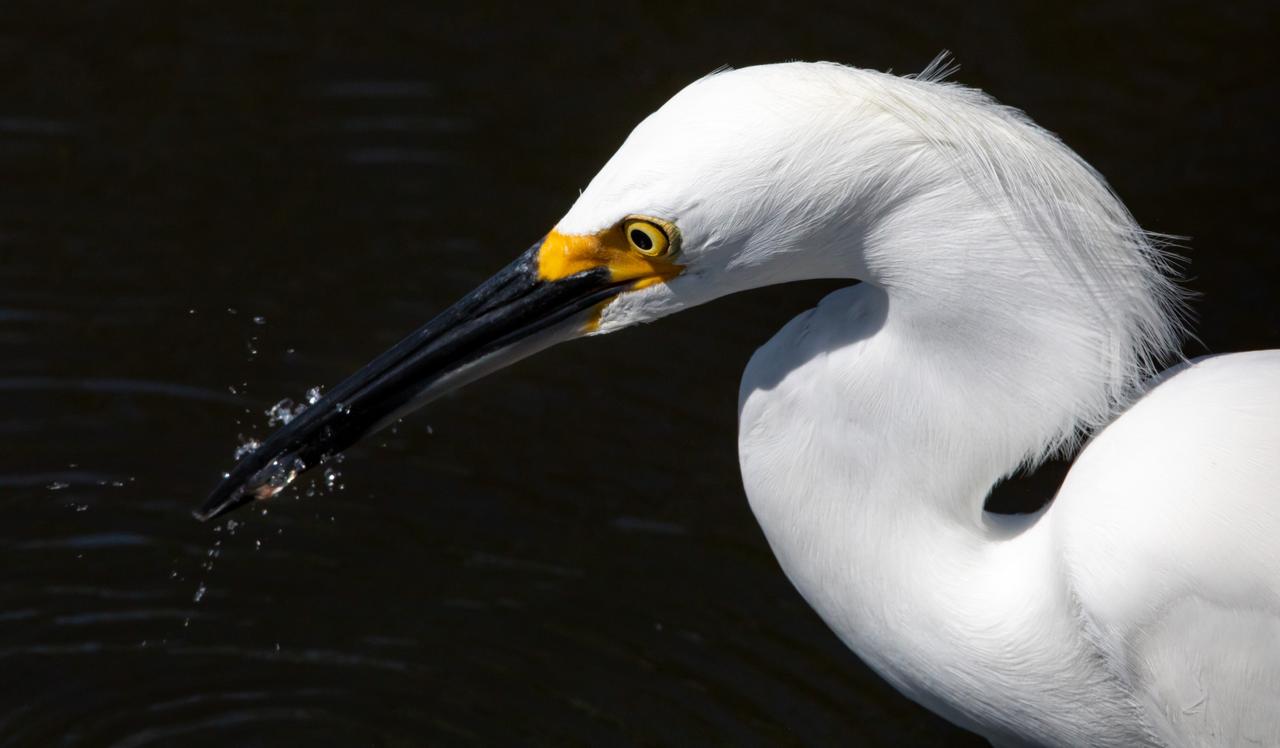
A Great Egret catches a small fish in a waterway at NASA's Kennedy Space Center in Florida. The center shares a border with the Merritt Island National Wildlife Refuge. More than 330 native and migratory bird species, 25 mammal, 117 fish and 65 amphibian and reptile species call Kennedy and the wildlife refuge home.
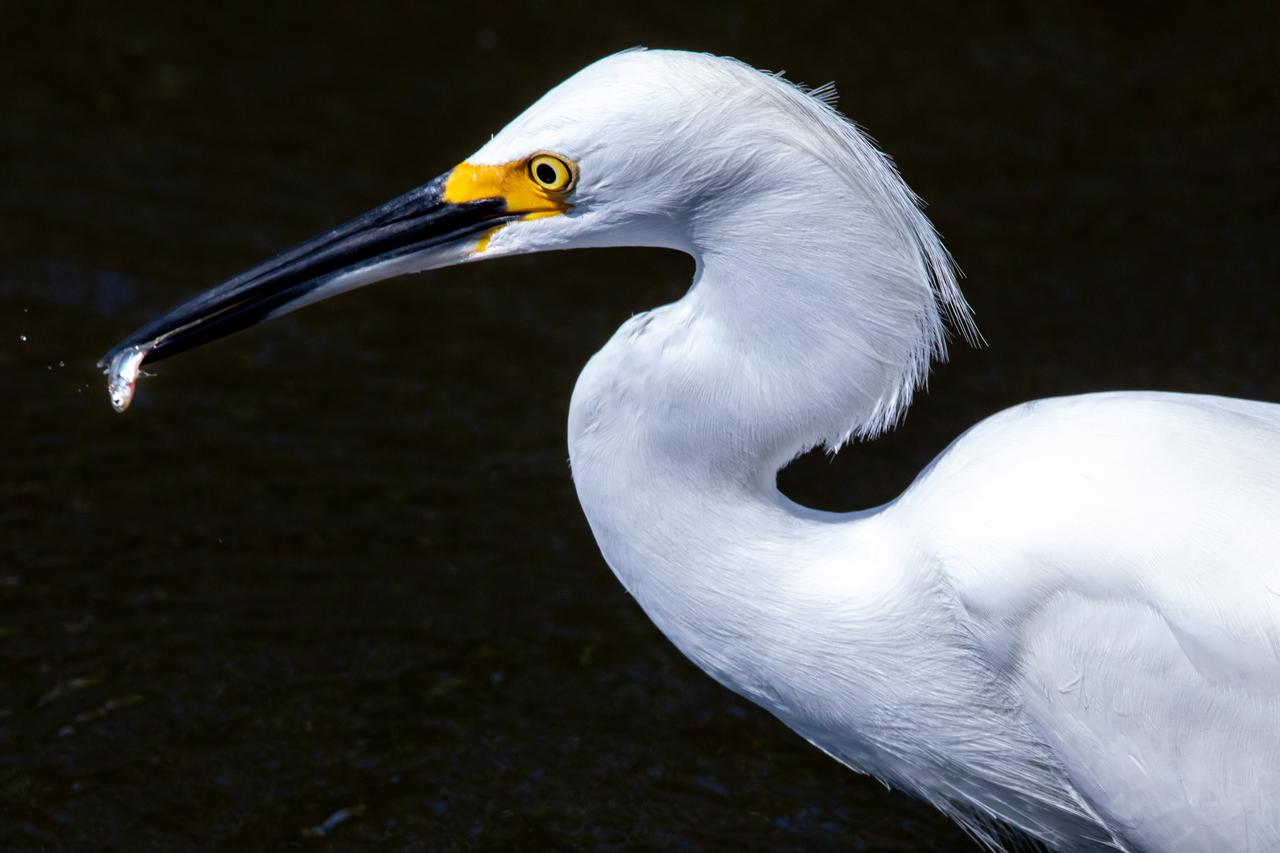
A Great Egret catches a small fish in a waterway at NASA's Kennedy Space Center in Florida. The center shares a border with the Merritt Island National Wildlife Refuge. More than 330 native and migratory bird species, 25 mammal, 117 fish and 65 amphibian and reptile species call Kennedy and the wildlife refuge home.
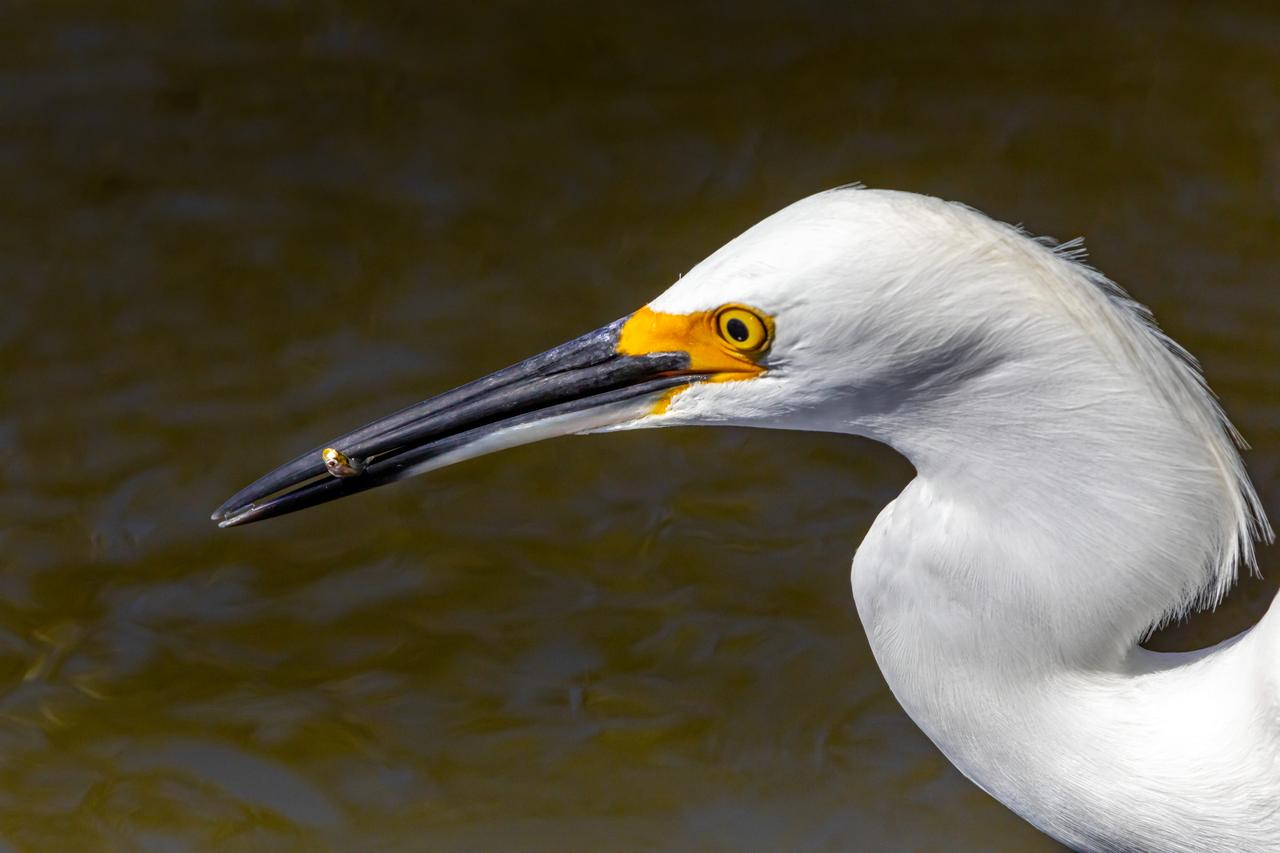
A Great Egret is in a waterway at NASA's Kennedy Space Center in Florida. The center shares a border with the Merritt Island National Wildlife Refuge. More than 330 native and migratory bird species, 25 mammal, 117 fish and 65 amphibian and reptile species call Kennedy and the wildlife refuge home.
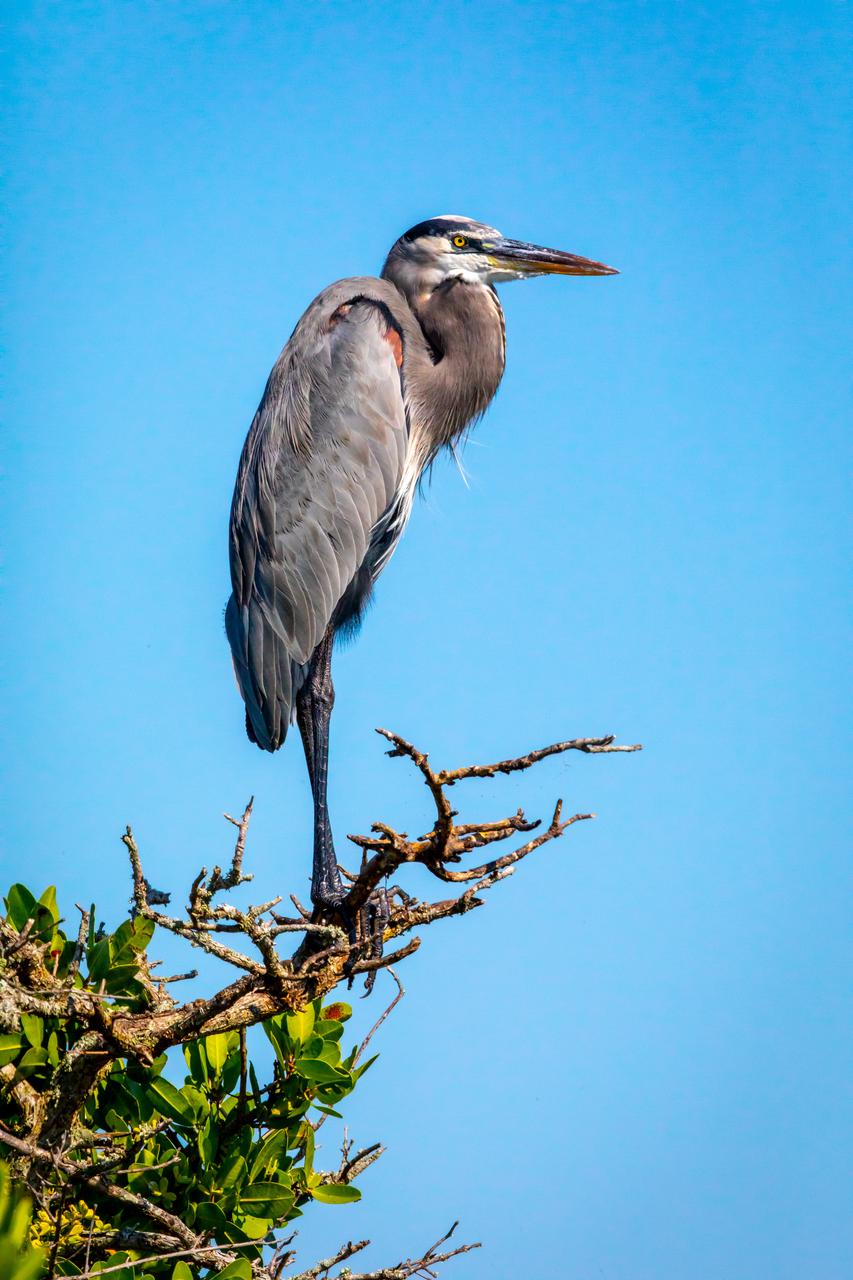
A young Great Blue Heron balances perfectly on the branch of a tree at NASA's Kennedy Space Center in Florida. The center shares a border with the Merritt Island National Wildlife Refuge. More than 330 native and migratory bird species, along 25 mammal, 117 fish and 65 amphibian and reptile species call Kennedy and the wildlife refuge home.
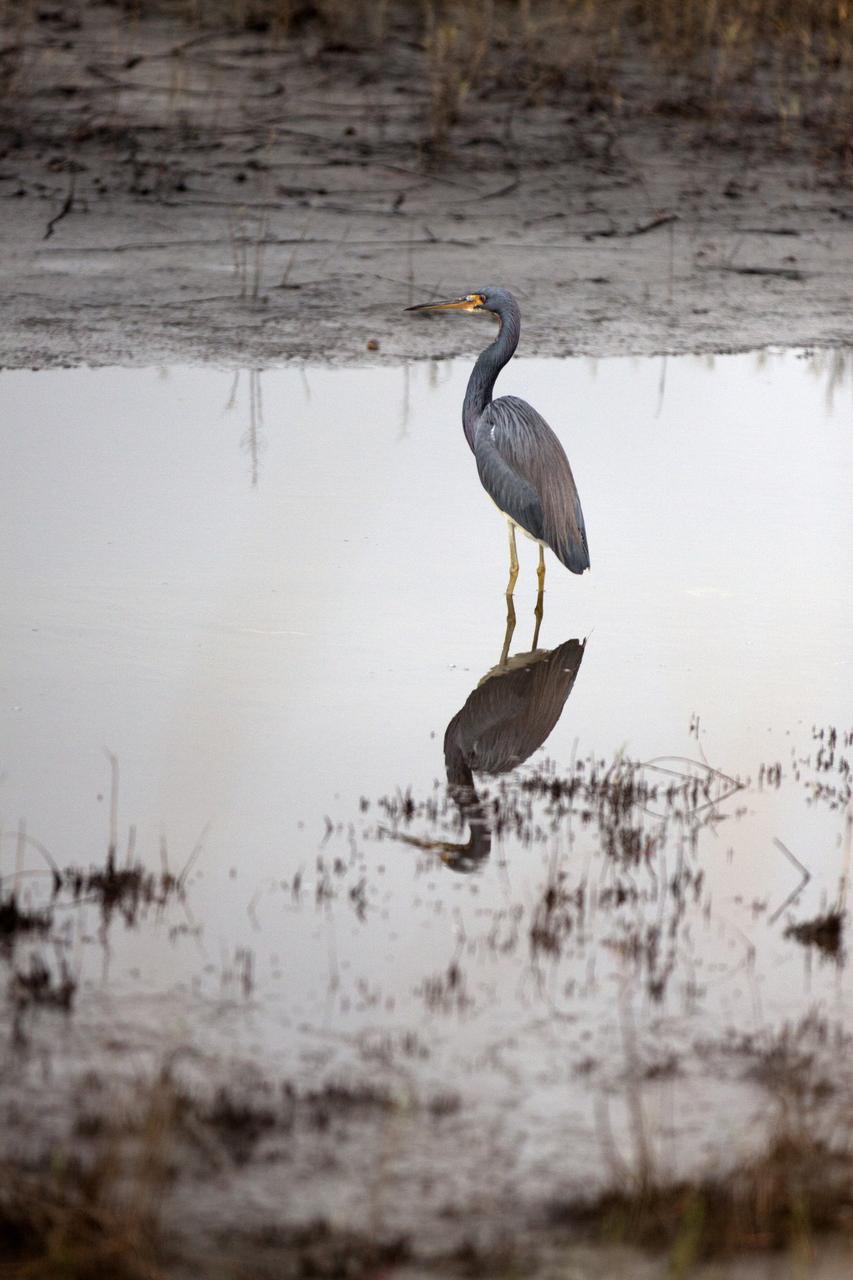
A Great Blue Heron wades in a waterway at NASA's Kennedy Space Center in Florida. The center shares a border with the Merritt Island National Wildlife Refuge. The bird is one of more than 330 native and migratory bird species, 25 mammals, 117 fishes and 65 amphibians and reptiles that call Kennedy and the wildlife refuge home.
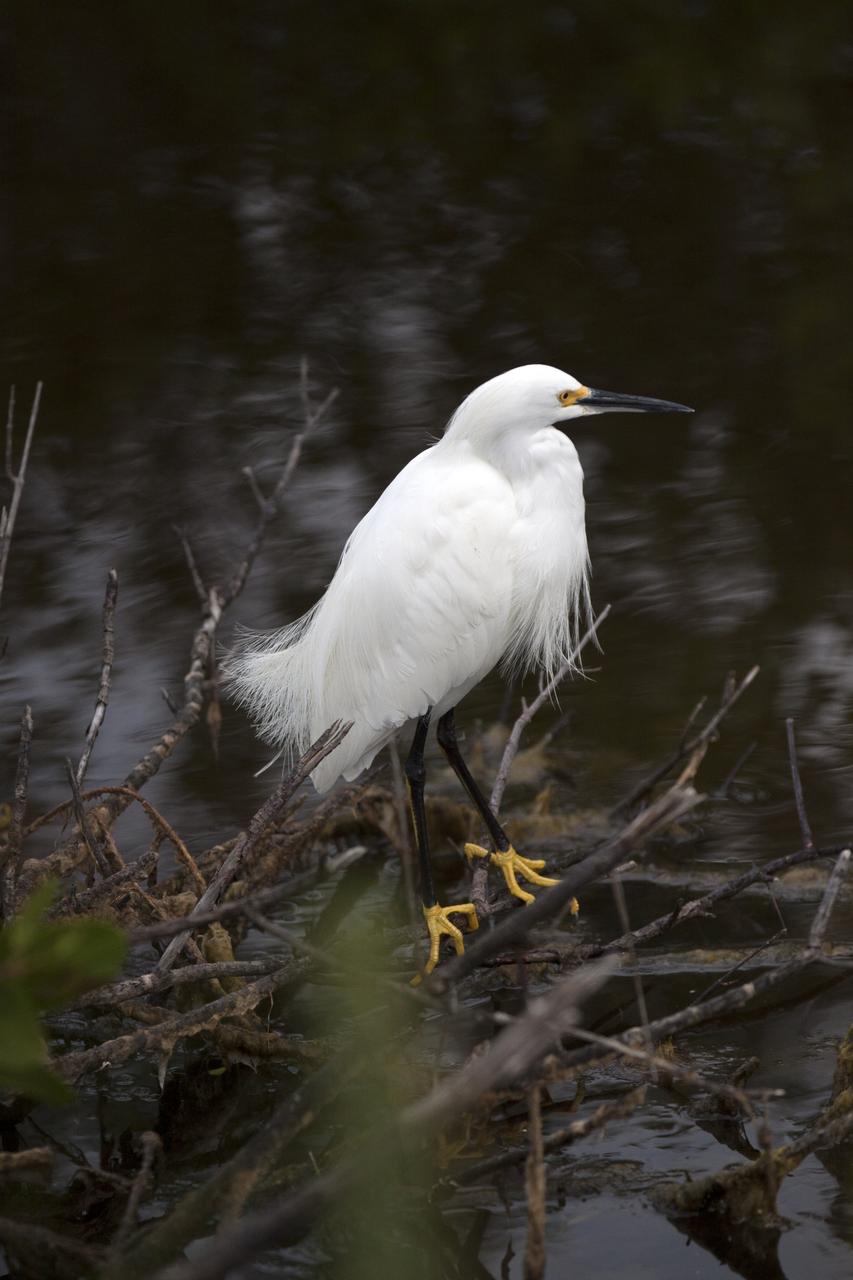
A snowy egret perches on a branch near a waterway at NASA's Kennedy Space Center in Florida. The center shares a border with the Merritt Island National Wildlife Refuge. The bird is one of more than 330 native and migratory bird species, 25 mammals, 117 fishes and 65 amphibians and reptiles that call Kennedy and the wildlife refuge home.
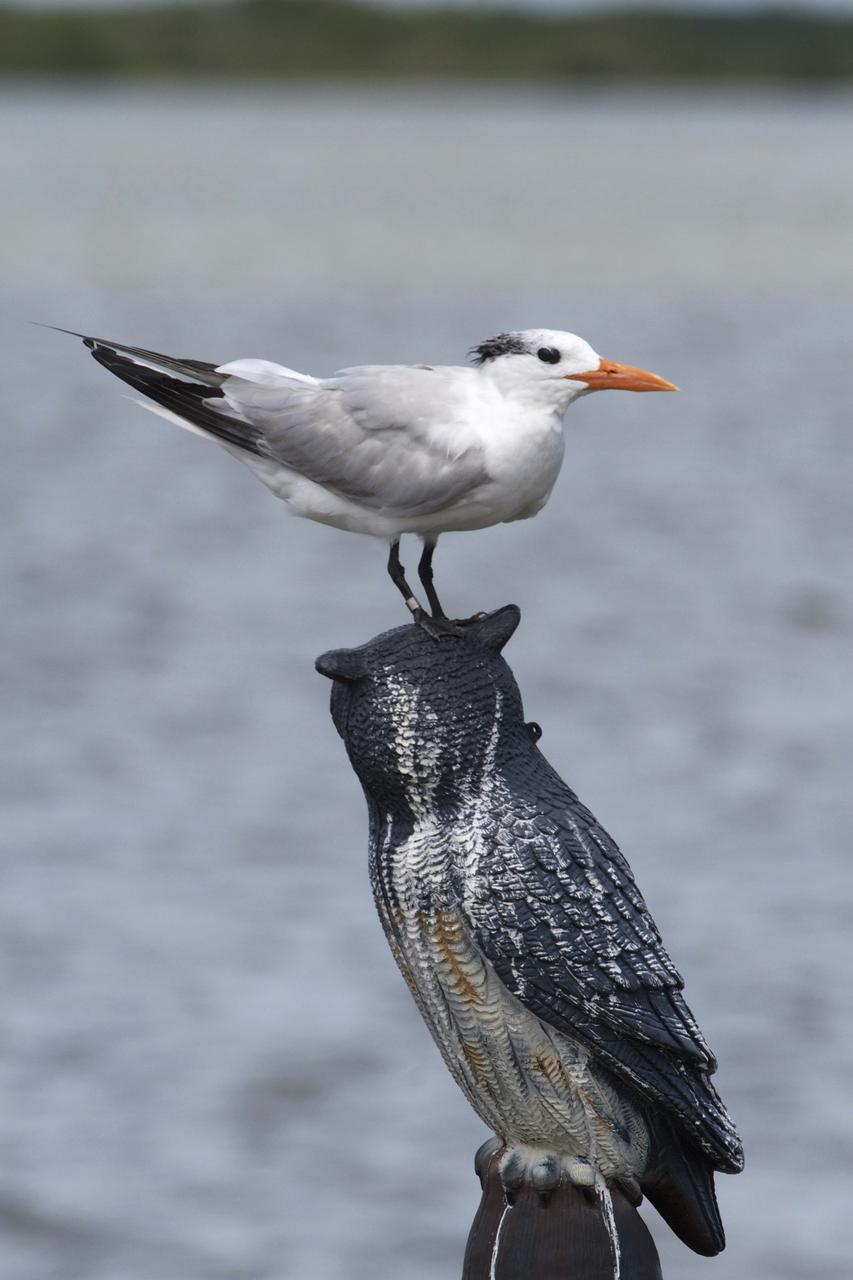
CAPE CANAVERAL, Fla. – At NASA’s Kennedy Space Center in Florida, a bird perches atop a wood-carved owl on a dock along the NASA Causeway. The center shares a boundary with the Merritt Island National Wildlife Refuge, consisting of 140,000 acres. The Refuge provides a wide variety of habitats: coastal dunes, saltwater estuaries and marshes, freshwater impoundments, scrub, pine flatwoods, and hardwood hammocks that provide habitat for more than 1,500 species of plants and animals, including about 331 species of birds. Photo credit: NASA_Ben Smegelsky
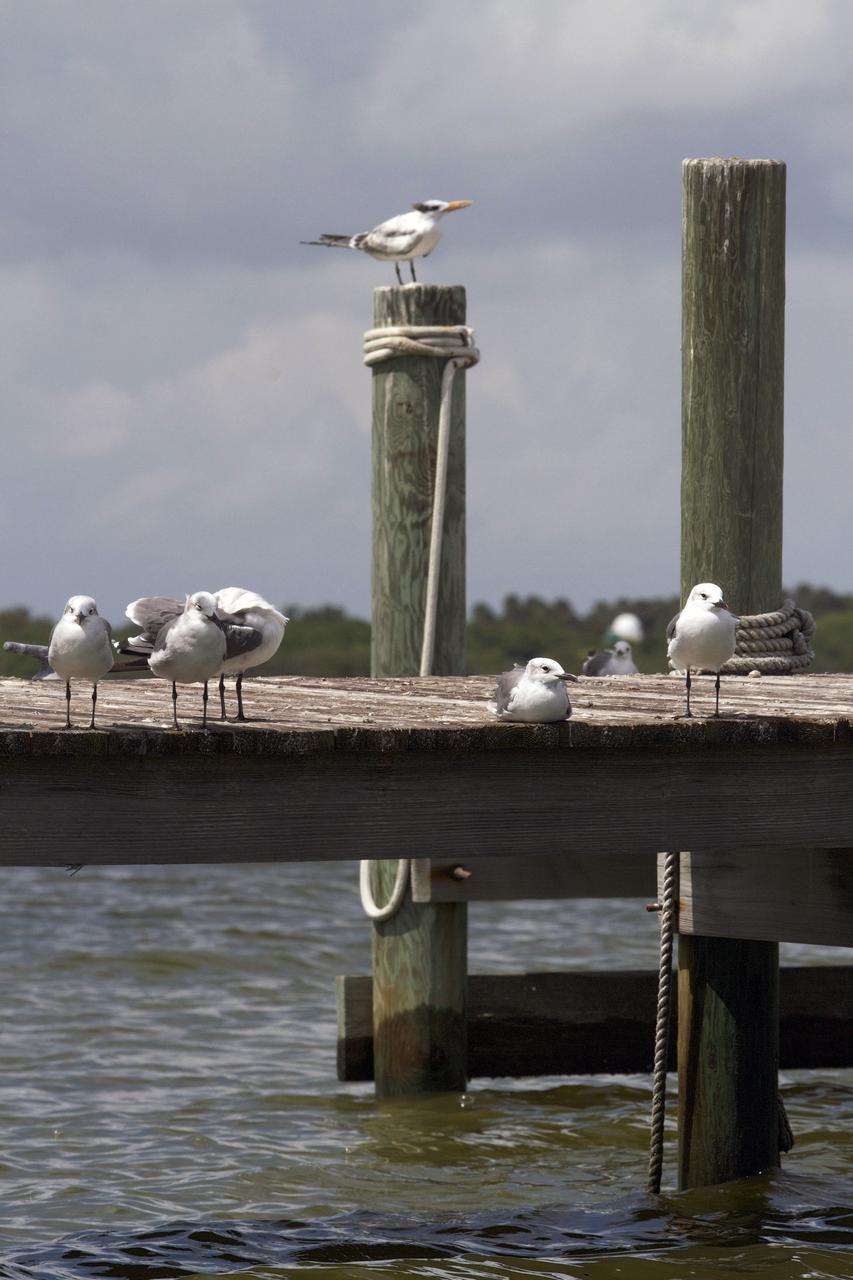
CAPE CANAVERAL, Fla. – At NASA’s Kennedy Space Center in Florida, several birds, including some seagulls, sit on a dock along the NASA Causeway. The center shares a boundary with the Merritt Island National Wildlife Refuge, consisting of 140,000 acres. The Refuge provides a wide variety of habitats: coastal dunes, saltwater estuaries and marshes, freshwater impoundments, scrub, pine flatwoods, and hardwood hammocks that provide habitat for more than 1,500 species of plants and animals, including about 331 species of birds. Photo credit: NASA_Ben Smegelsky
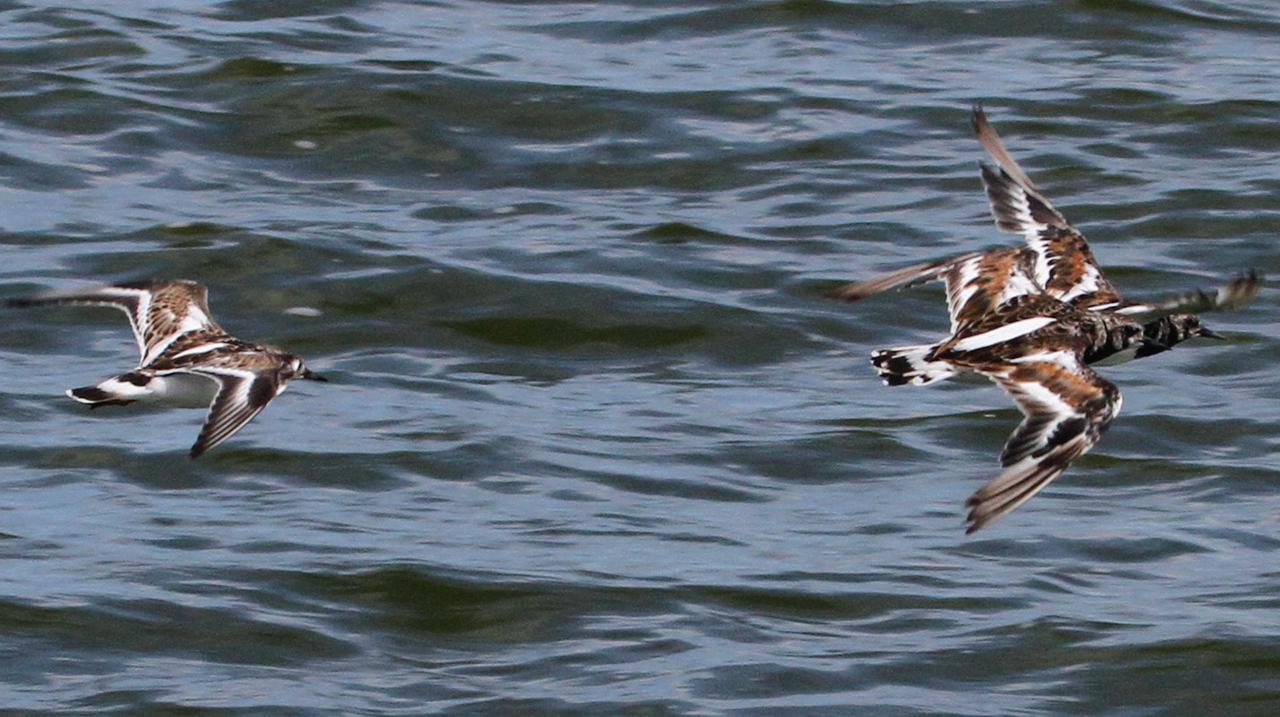
CAPE CANAVERAL, Fla. – Several colorful birds fly above the intercoastal waterway along NASA Causeway at NASA’s Kennedy Space Center in Florida. The center shares a boundary with the Merritt Island National Wildlife Refuge, consisting of 140,000 acres. The Refuge provides a wide variety of habitats: coastal dunes, saltwater estuaries and marshes, freshwater impoundments, scrub, pine flatwoods, and hardwood hammocks that provide habitat for more than 1,500 species of plants and animals, including about 331 species of birds. Photo credit: NASA_Ben Smegelsky
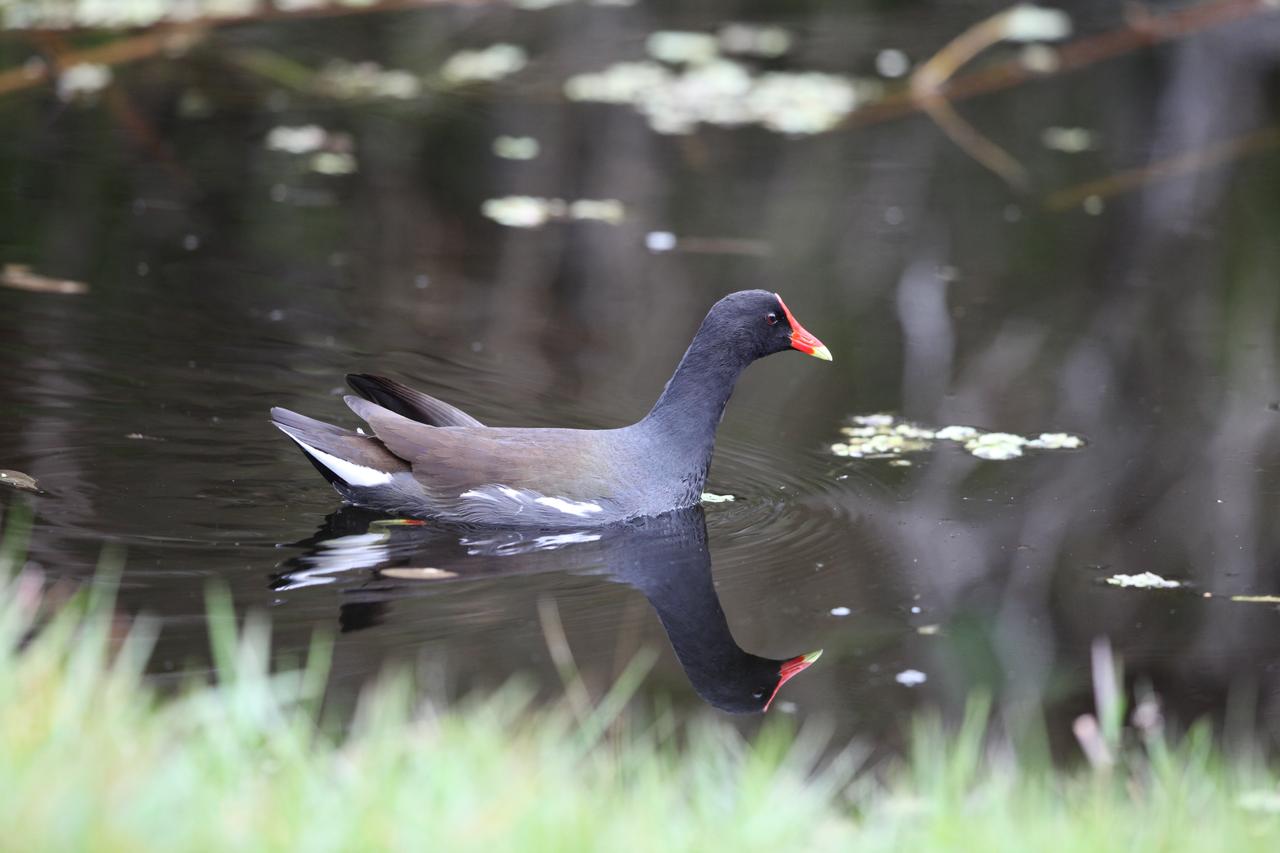
A common gallinule swims in a waterway at NASA's Kennedy Space Center in Florida. The center shares a border with the Merritt Island National Wildlife Refuge. More than 330 native and migratory bird species, 25 mammals, 117 fishes and 65 amphibians and reptiles call Kennedy and the wildlife refuge home.
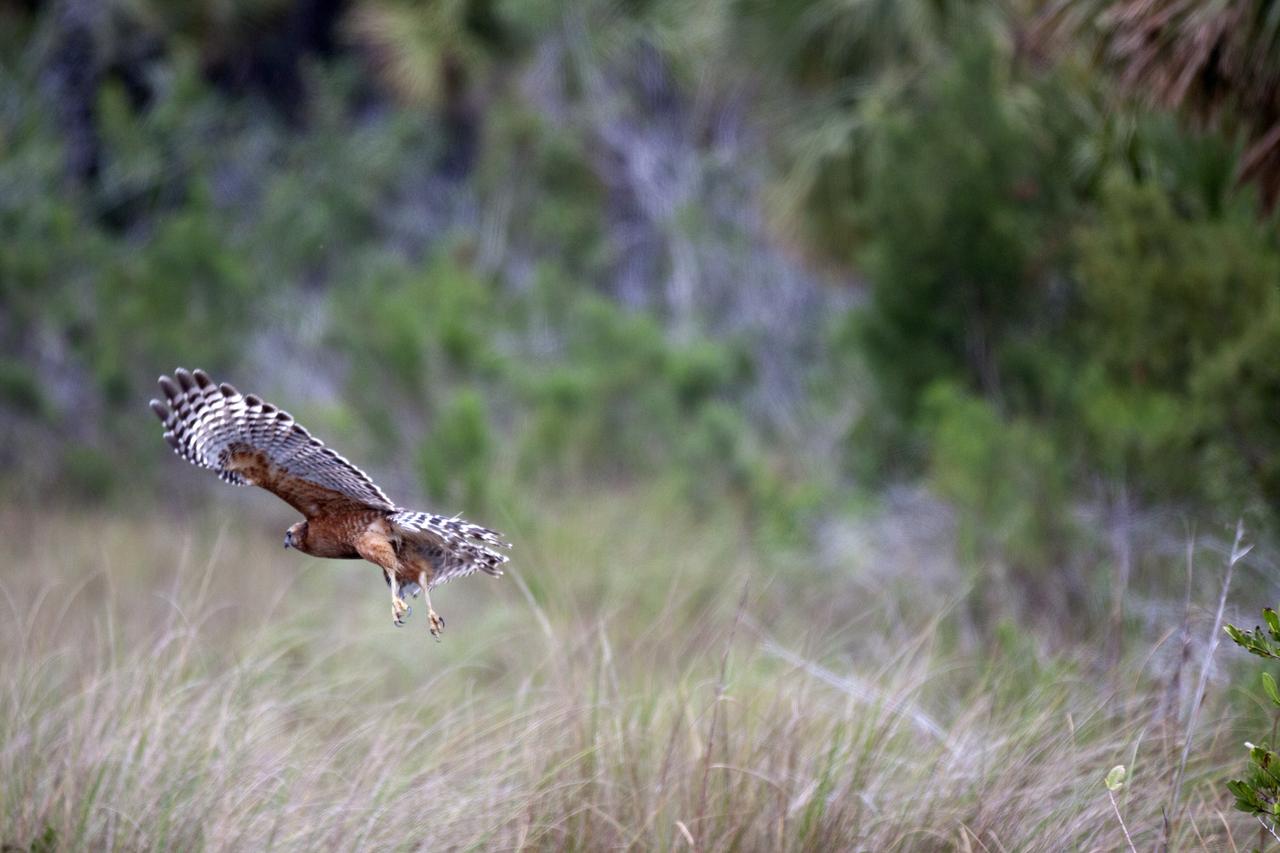
A Cooper's hawk takes flight from the branches of a small tree at NASA's Kennedy Space Center in Florida. The center shares a border with the Merritt Island National Wildlife Refuge. More than 330 native and migratory bird species, 25 mammals, 117 fishes and 65 amphibians and reptiles call Kennedy and the wildlife refuge home.
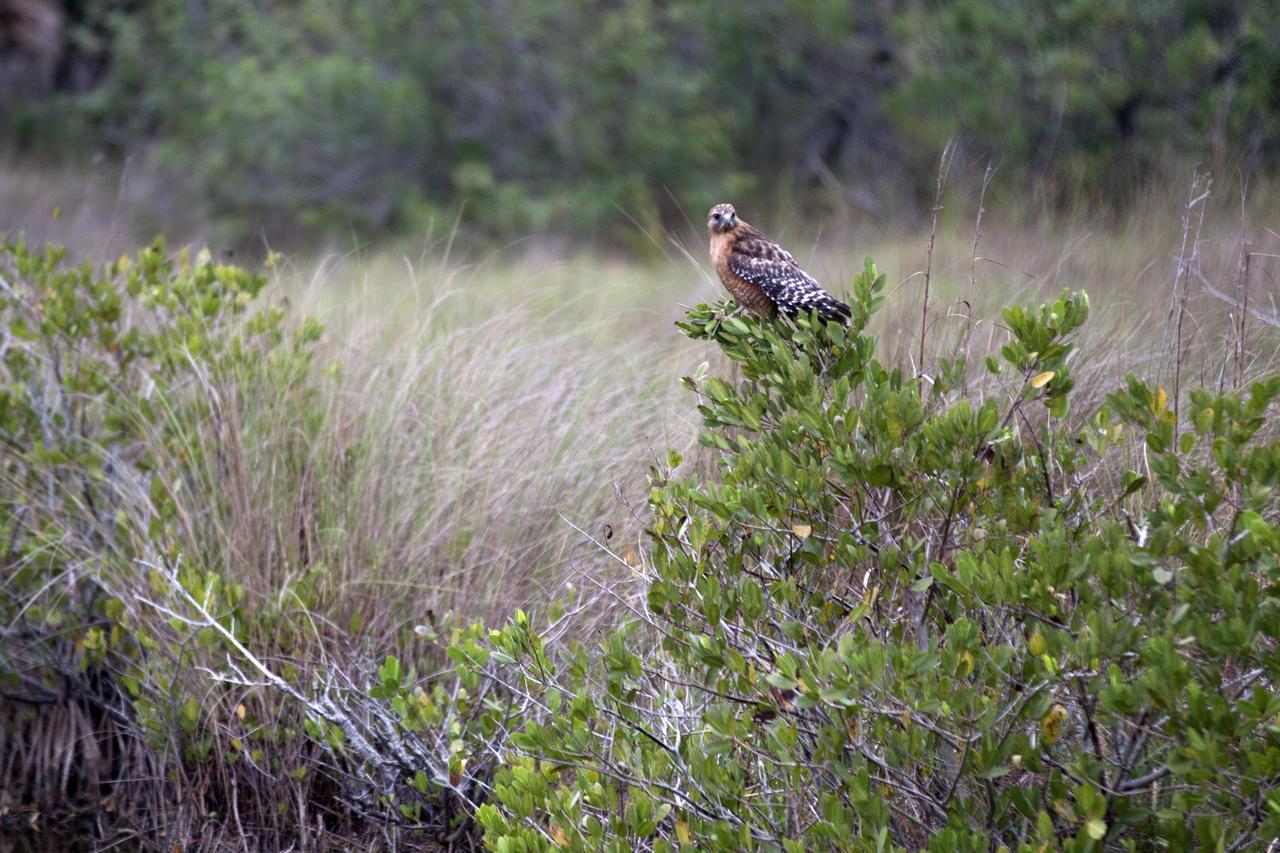
A Cooper's hawk perches on branch of a small tree at NASA's Kennedy Space Center in Florida. The center shares a border with the Merritt Island National Wildlife Refuge. More than 330 native and migratory bird species, 25 mammals, 117 fishes and 65 amphibians and reptiles call Kennedy and the wildlife refuge home.
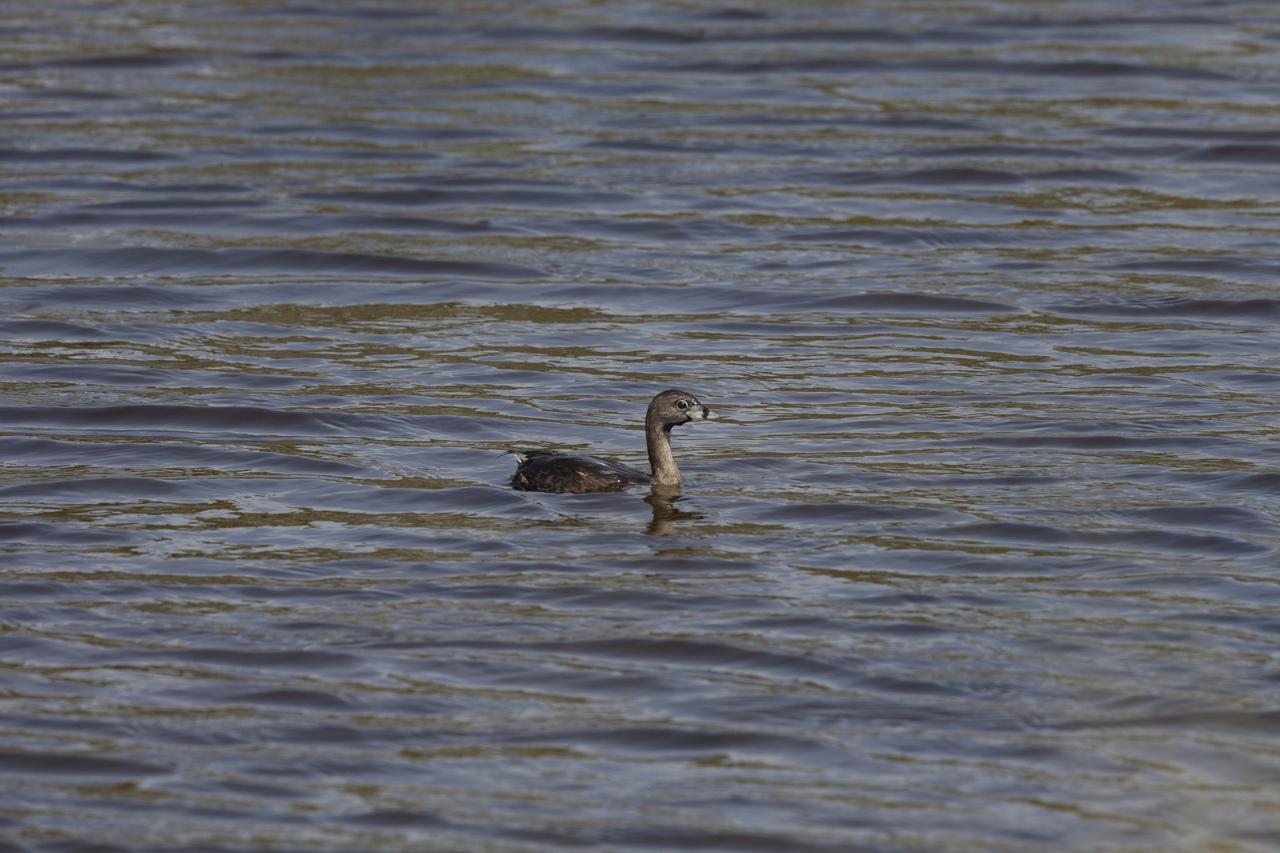
A pied-billed grebe paddles in one of the many waterways at Merritt Island National Wildlife Refuge in Florida. NASA’s Kennedy Space Center shares boundaries with the refuge, which is home to more than 330 native and migratory bird species, along with 25 mammal, 117 fish, and 65 amphibian and reptile species.
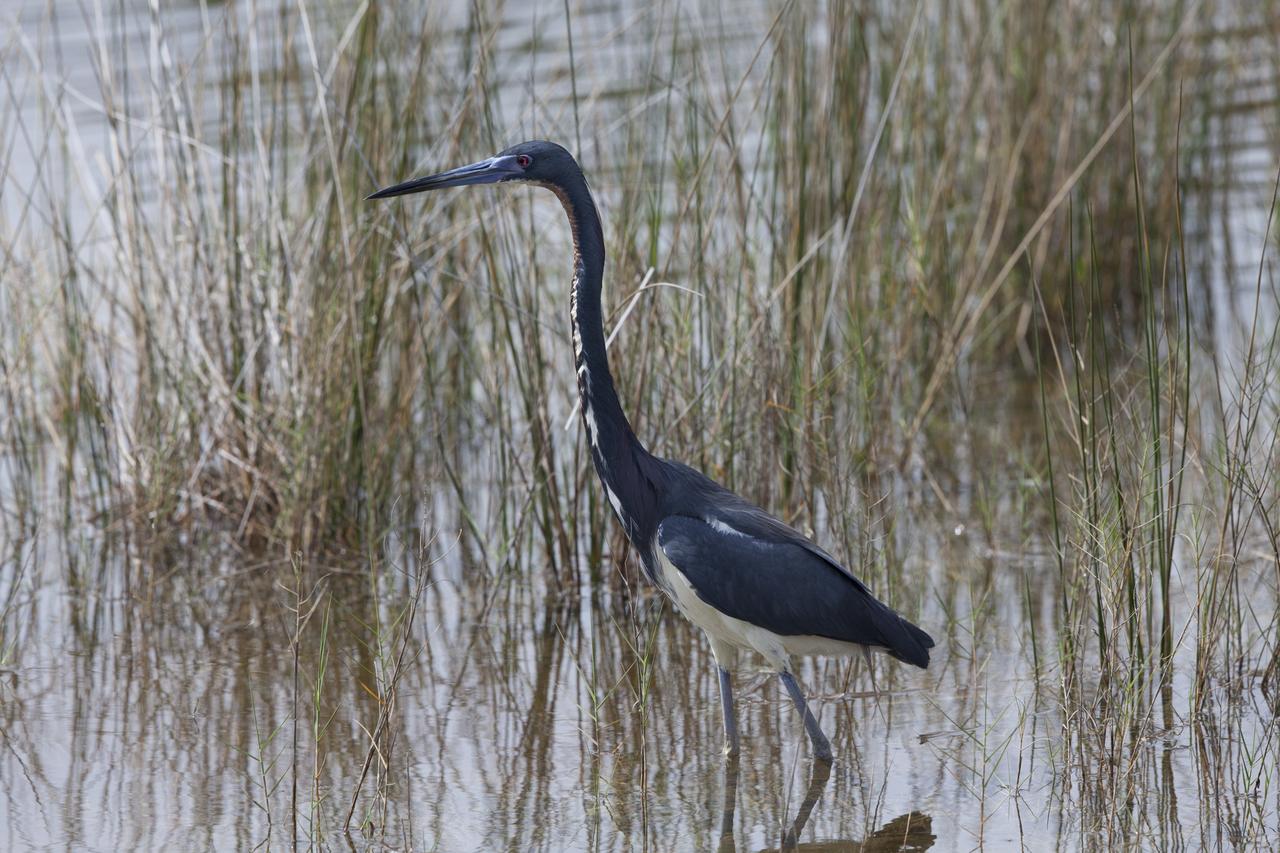
A tricolored heron wades in a shallow waterway at Merritt Island National Wildlife Refuge in Florida. NASA’s Kennedy Space Center shares boundaries with the refuge, which is home to more than 330 native and migratory bird species, along with 25 mammal, 117 fish, and 65 amphibian and reptile species.

Two juvenile roseate spoonbills pause near a waterway at Merritt Island National Wildlife Refuge in Florida. NASA’s Kennedy Space Center shares boundaries with the refuge, which is home to more than 330 native and migratory bird species, along with 25 mammal, 117 fish, and 65 amphibian and reptile species.
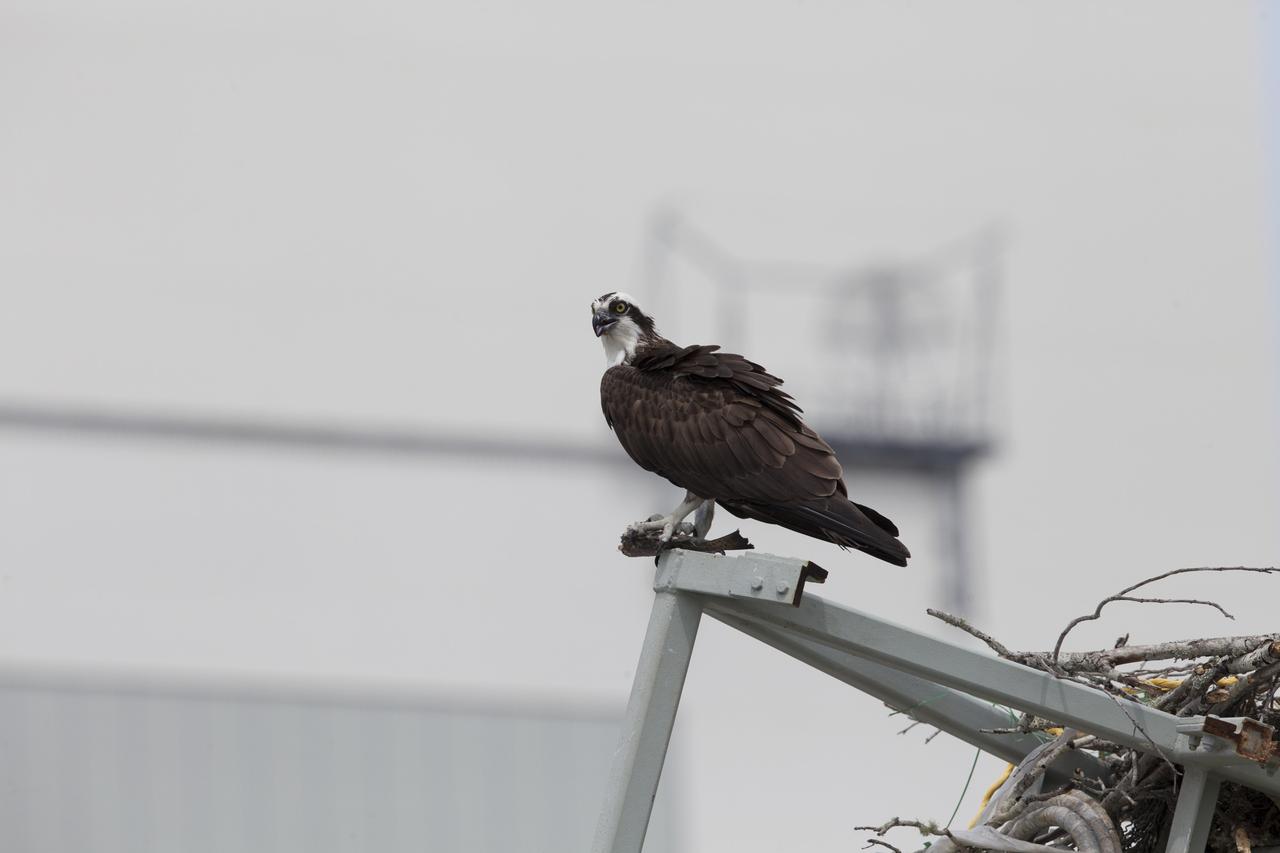
An osprey, clutching a fish, pauses for a meal atop a metal structure at NASA’s Kennedy Space Center in Florida. The spaceport shares boundaries with the Merritt Island National Wildlife Refuge, which is home to more than 330 native and migratory bird species, along with 25 mammal, 117 fish, and 65 amphibian and reptile species.
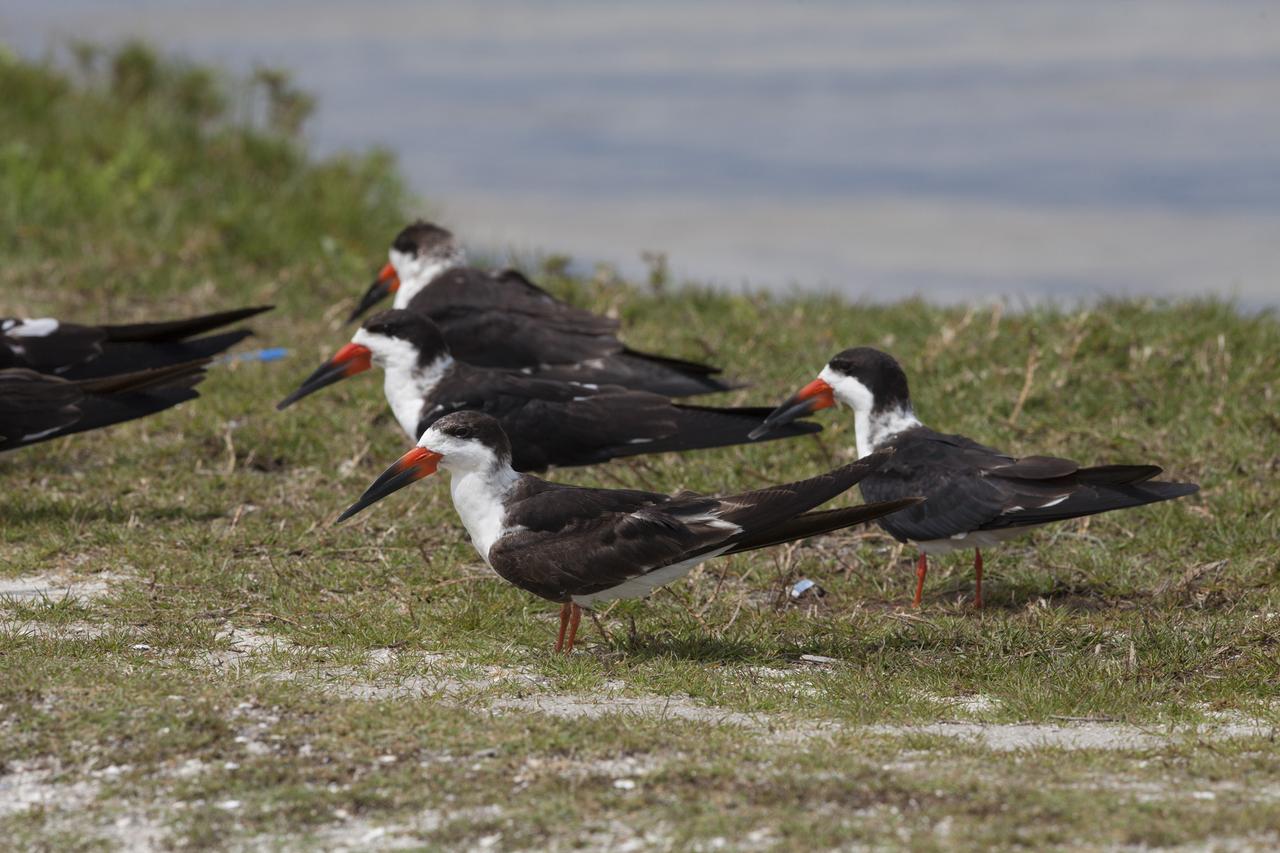
Black skimmers take a break from flying on a riverbank at Merritt Island National Wildlife Refuge in Florida. NASA’s Kennedy Space Center shares boundaries with the refuge, which is home to more than 330 native and migratory bird species, along with 25 mammal, 117 fish, and 65 amphibian and reptile species.
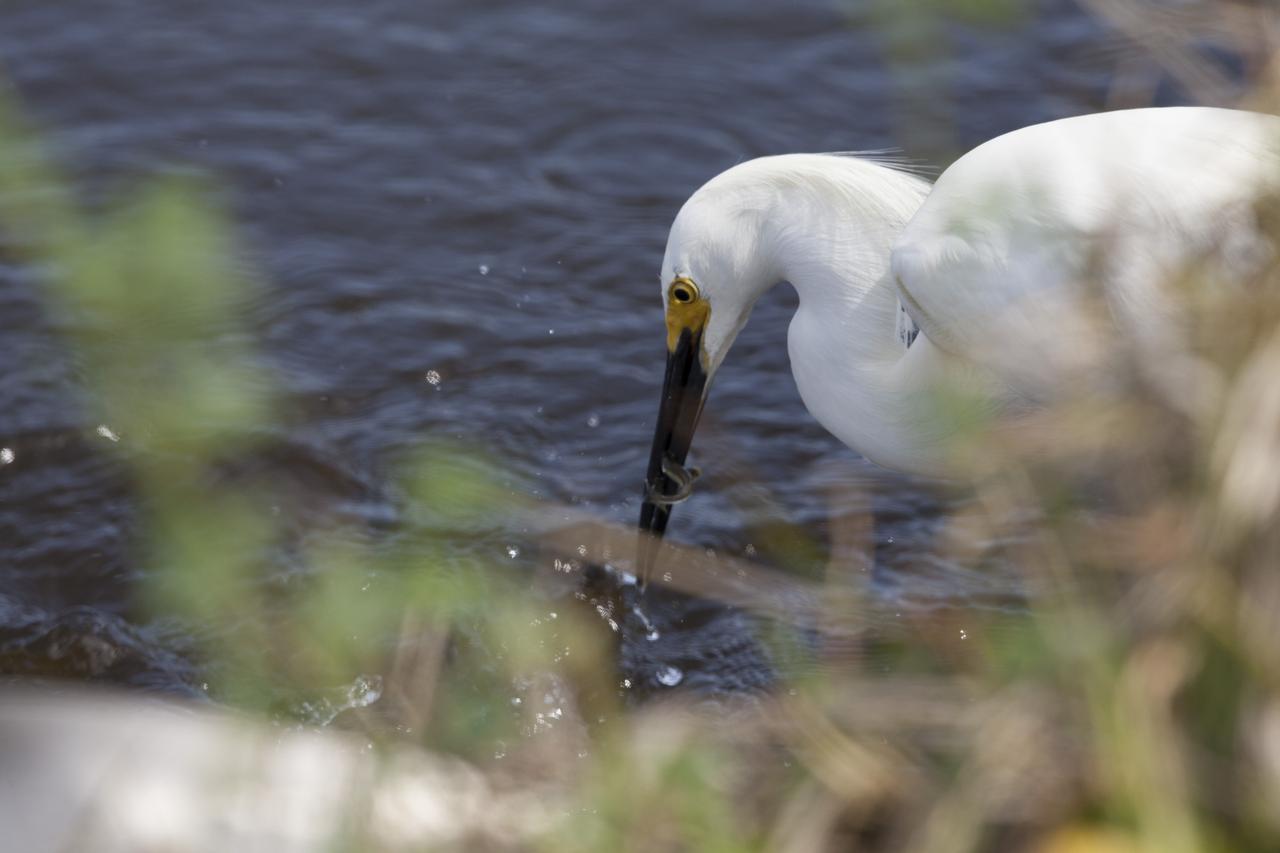
A snowy egret successfully catches a small fish in a shallow waterway at Merritt Island National Wildlife Refuge in Florida. NASA’s Kennedy Space Center shares boundaries with the refuge, which is home to more than 330 native and migratory bird species, along with 25 mammal, 117 fish, and 65 amphibian and reptile species.
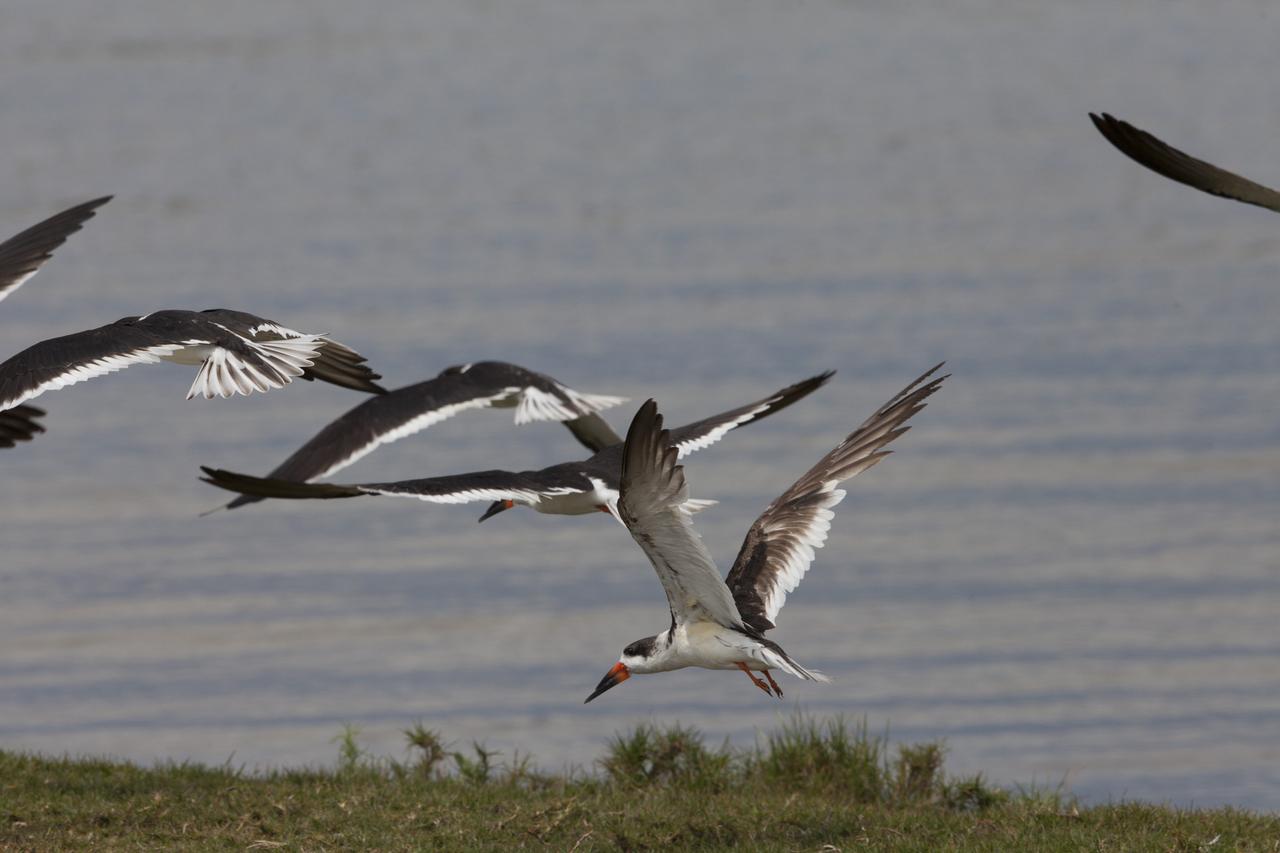
Black skimmers fly just above the waterline as they hunt for fish at Merritt Island National Wildlife Refuge in Florida. NASA’s Kennedy Space Center shares boundaries with the refuge, which is home to more than 330 native and migratory bird species, along with 25 mammal, 117 fish, and 65 amphibian and reptile species.
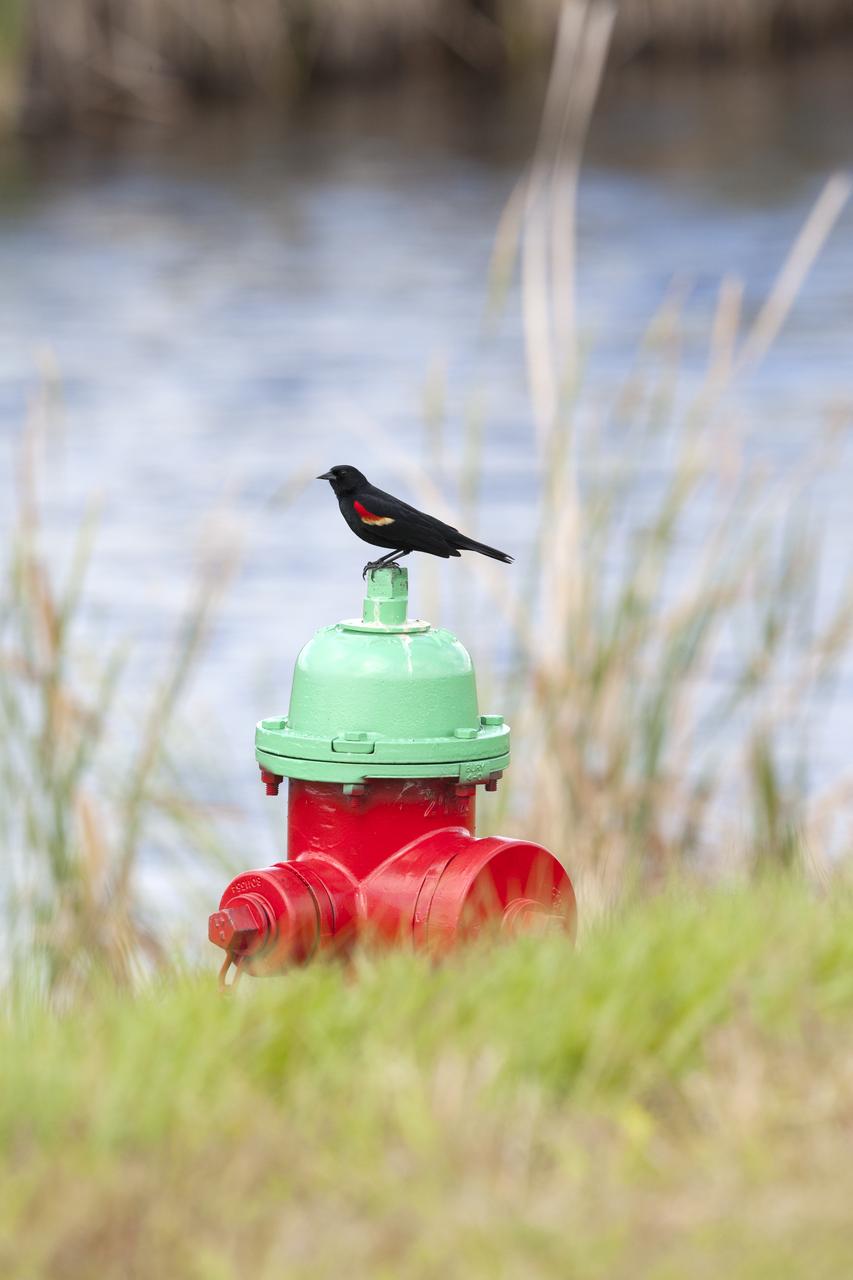
A red-winged blackbird perches on a fire hydrant at NASA's Kennedy Space Center in Florida. The center shares a border with the Merritt Island National Wildlife Refuge. More than 330 native and migratory bird species, 25 mammals, 117 fishes and 65 amphibians and reptiles call Kennedy and the wildlife refuge home.
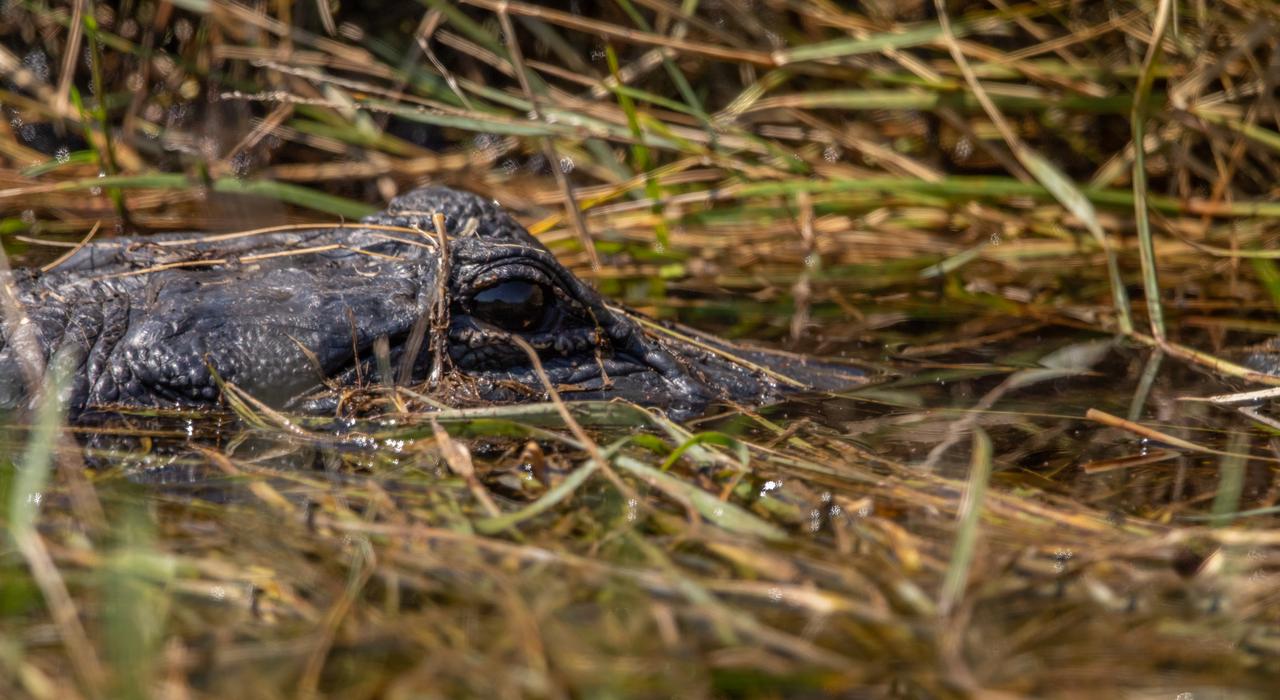
An alligator lurks in a marshy waterway at NASA's Kennedy Space Center in Florida. The center shares a border with the Merritt Island National Wildlife Refuge. More than 330 native and migratory bird species, 25 mammal, 117 fish and 65 amphibian and reptile species call Kennedy and the wildlife refuge home.
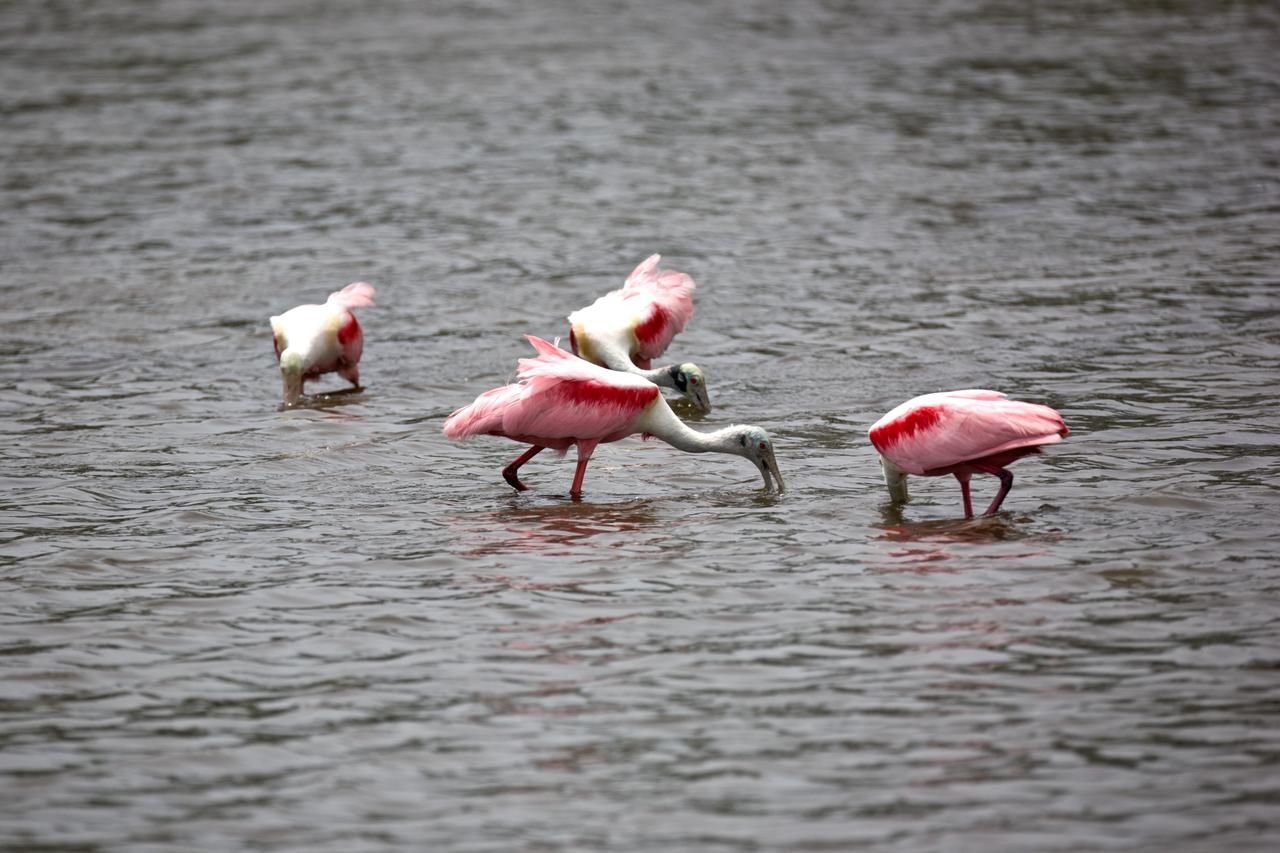
CAPE CANAVERAL, Fla. –– On NASA's Kennedy Space Center in Florida, scarlet-feathered roseate spoonbills feed in the water. Spoonbills inhabit areas of mangrove such as on the coasts of southern Florida and Texas. These birds feed on shrimps and fish in the shallow water, sweeping their bills from side to side. This and other wildlife abound throughout Kennedy as the center shares a boundary with the Merritt Island National Wildlife Refuge. The marshes and open water of the refuge provide wintering areas for 23 species of migratory waterfowl, as well as a year-round home for great blue herons, great egrets, wood storks, cormorants, brown pelicans and other species of marsh and shore birds. Photo credit: NASA/Dimitri Gerondidakis
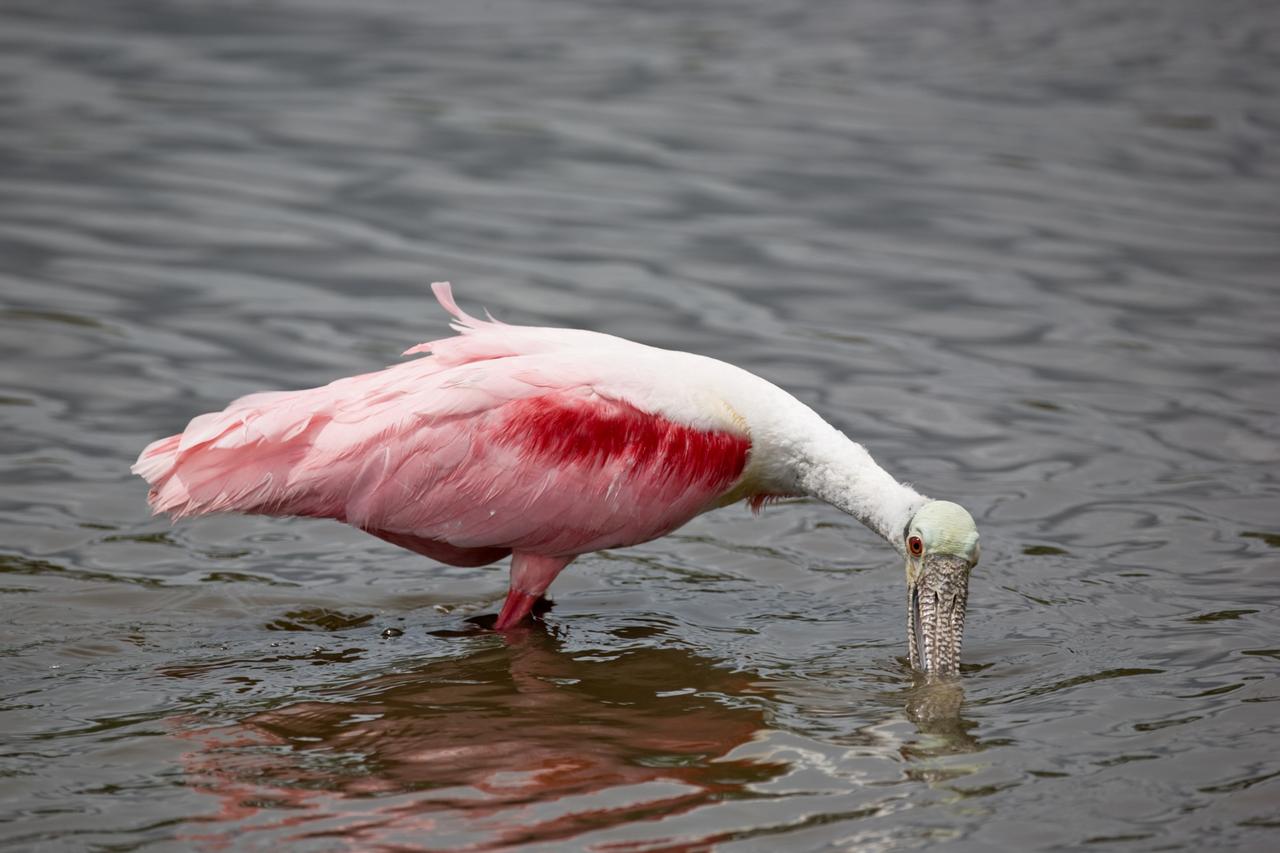
CAPE CANAVERAL, Fla. –– On NASA's Kennedy Space Center in Florida, the scarlet-feathered roseate spoonbill feeds in the water. Spoonbills inhabit areas of mangrove such as on the coasts of southern Florida and Texas. These birds feed on shrimps and fish in the shallow water, sweeping their bills from side to side. This and other wildlife abound throughout Kennedy as the center shares a boundary with the Merritt Island National Wildlife Refuge. The marshes and open water of the refuge provide wintering areas for 23 species of migratory waterfowl, as well as a year-round home for great blue herons, great egrets, wood storks, cormorants, brown pelicans and other species of marsh and shore birds. Photo credit: NASA/Dimitri Gerondidakis
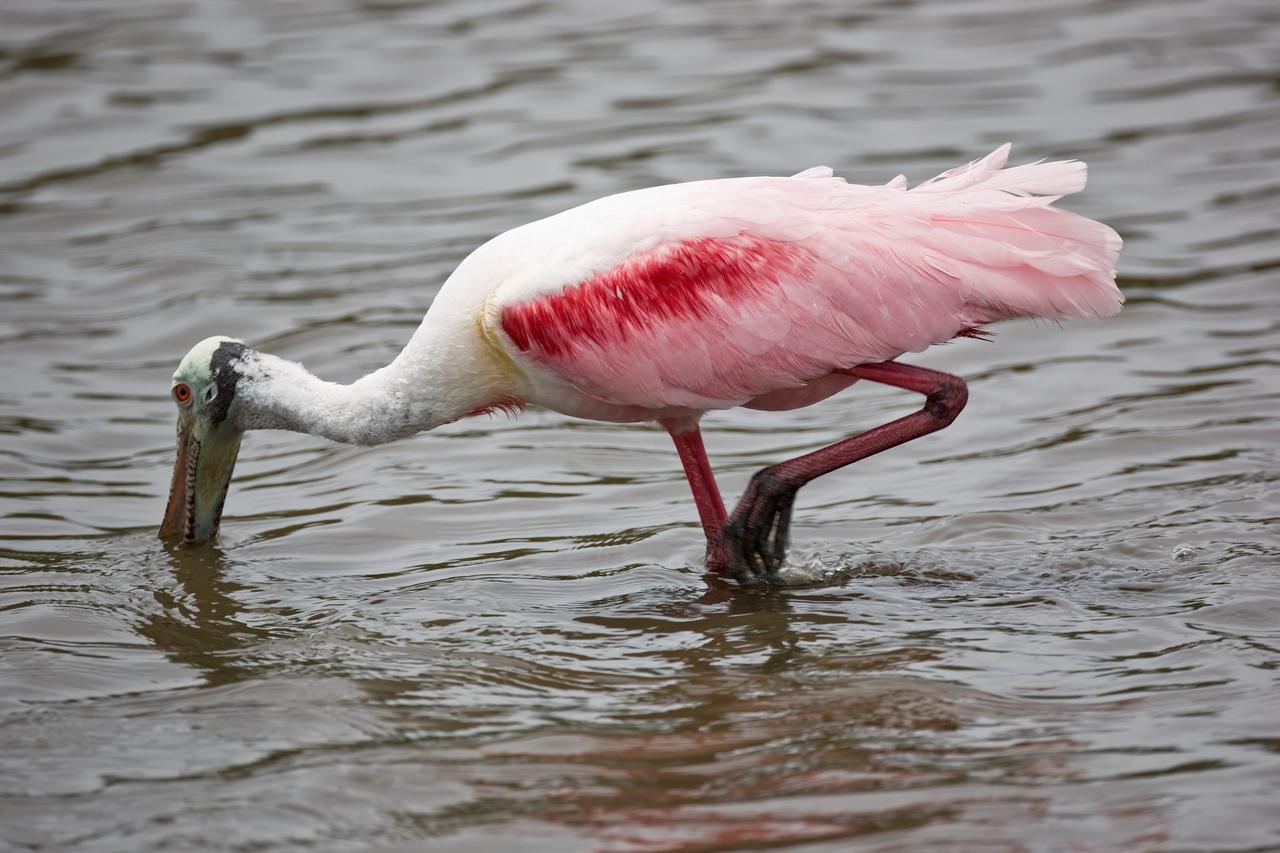
CAPE CANAVERAL, Fla. –– On NASA's Kennedy Space Center in Florida, the scarlet-feathered roseate spoonbill feeds in the water. Spoonbills inhabit areas of mangrove such as on the coasts of southern Florida and Texas. These birds feed on shrimps and fish in the shallow water, sweeping their bills from side to side. This and other wildlife abound throughout Kennedy as the center shares a boundary with the Merritt Island National Wildlife Refuge. The marshes and open water of the refuge provide wintering areas for 23 species of migratory waterfowl, as well as a year-round home for great blue herons, great egrets, wood storks, cormorants, brown pelicans and other species of marsh and shore birds. Photo credit: NASA/Dimitri Gerondidakis
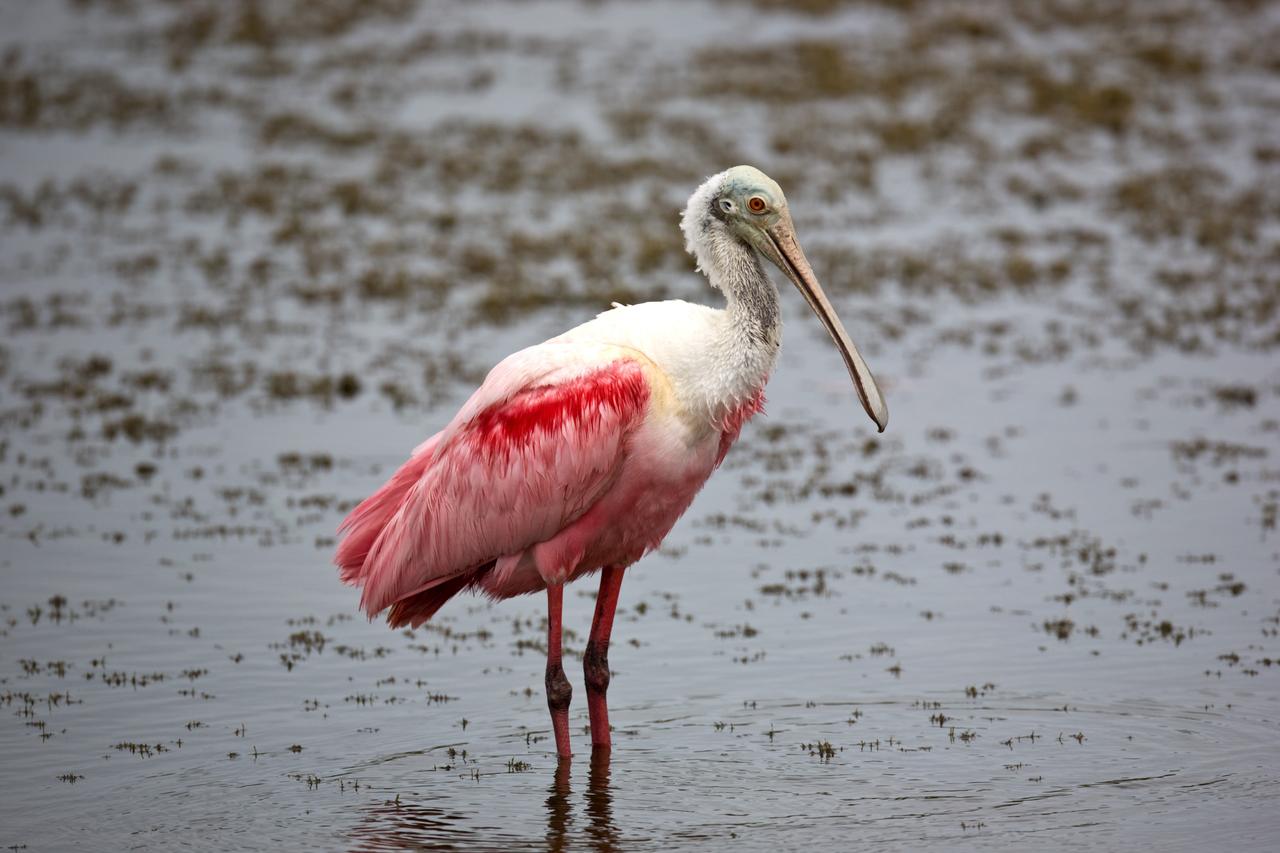
CAPE CANAVERAL, Fla. –– On NASA's Kennedy Space Center in Florida, the scarlet-feathered roseate spoonbill eyes the camera. Spoonbills inhabit areas of mangrove such as on the coasts of southern Florida and Texas. These birds feed on shrimps and fish in the shallow water, sweeping their bills from side to side. This and other wildlife abound throughout Kennedy as the center shares a boundary with the Merritt Island National Wildlife Refuge. The marshes and open water of the refuge provide wintering areas for 23 species of migratory waterfowl, as well as a year-round home for great blue herons, great egrets, wood storks, cormorants, brown pelicans and other species of marsh and shore birds. Photo credit: NASA/Dimitri Gerondidakis
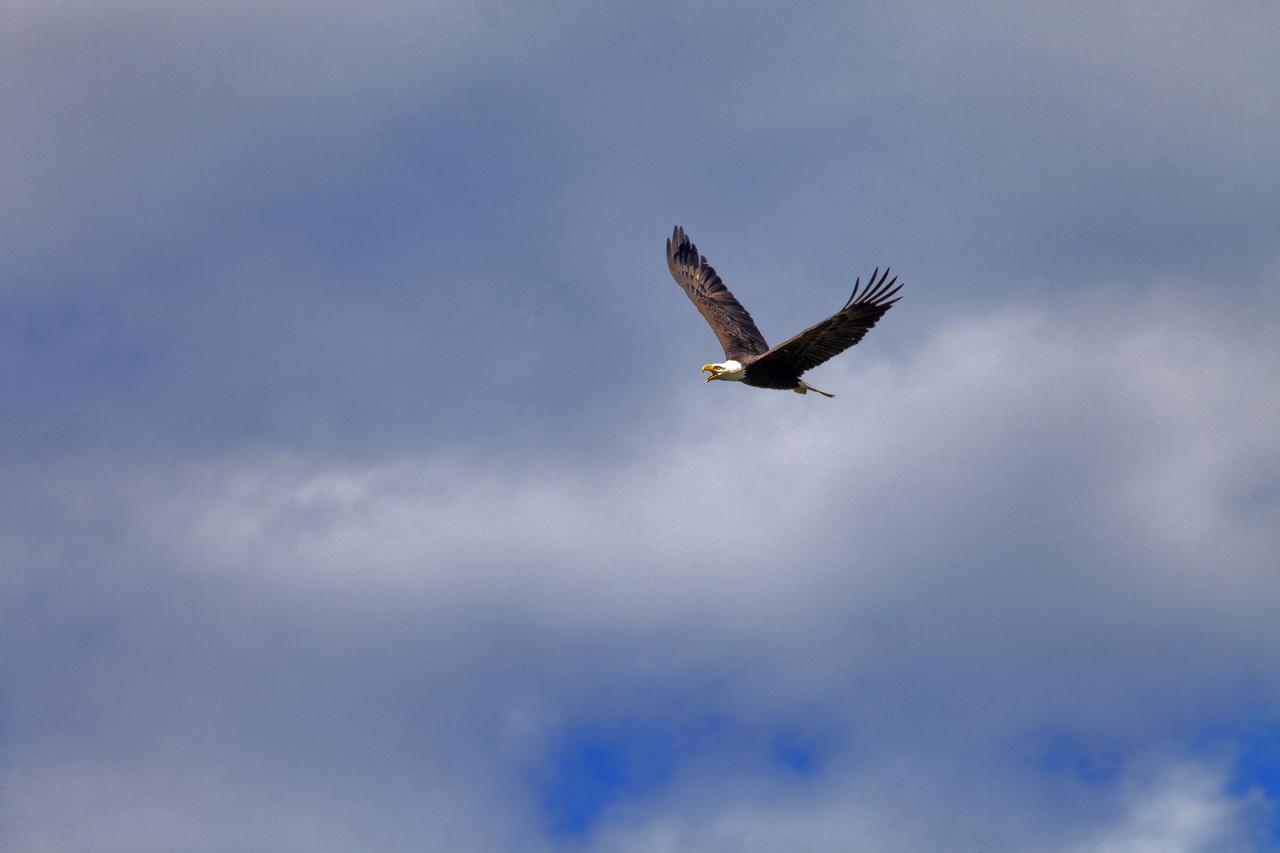
An American bald eagle soars through the air above NASA's Kennedy Space Center in Florida. The center shares a border with the Merritt Island National Wildlife Refuge. The bird is one of more than 330 native and migratory bird species, 25 mammals, 117 fishes and 65 amphibians and reptiles that call Kennedy and the wildlife refuge home.
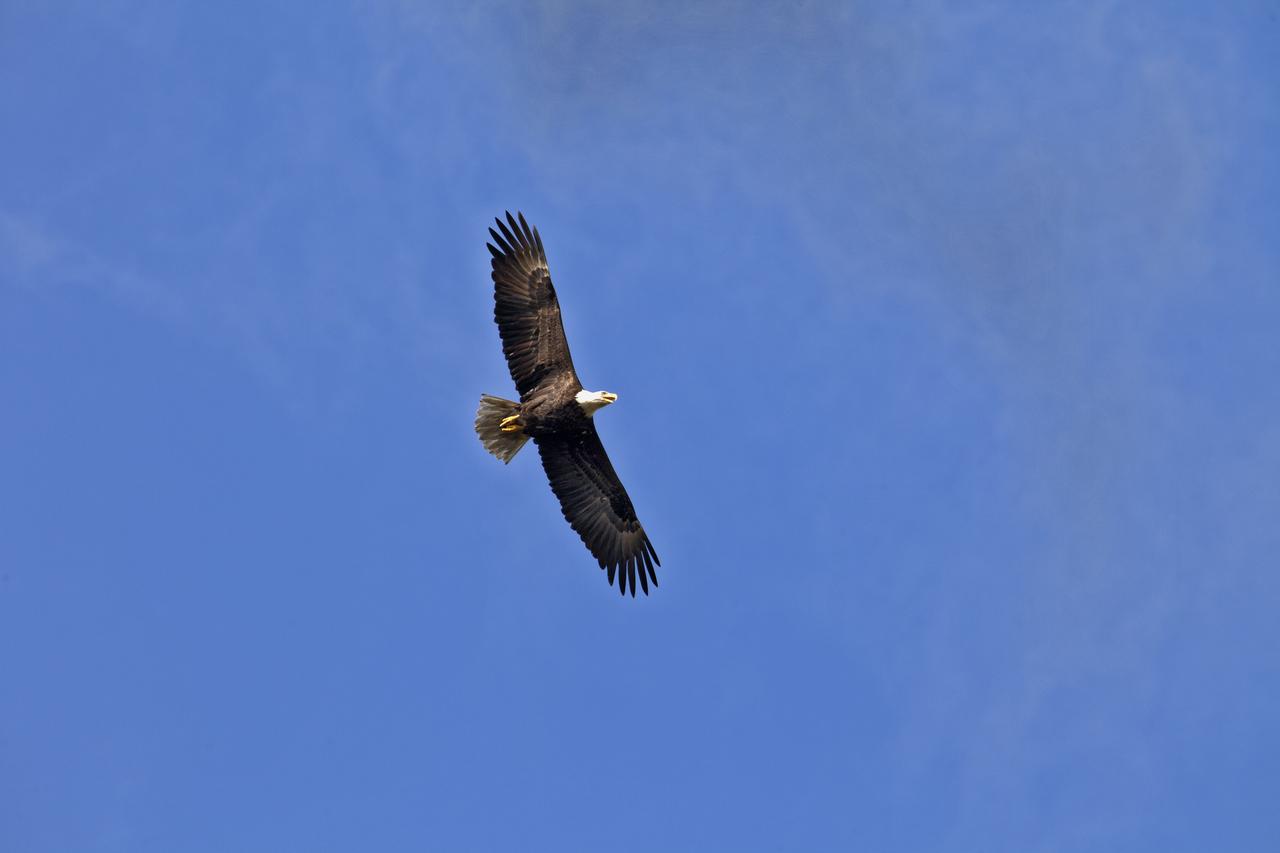
With wings outstretched, an American bald eagle soars through the air above NASA's Kennedy Space Center in Florida. The center shares a border with the Merritt Island National Wildlife Refuge. The bird is one of more than 330 native and migratory bird species, 25 mammals, 117 fishes and 65 amphibians and reptiles that call Kennedy and the wildlife refuge home.
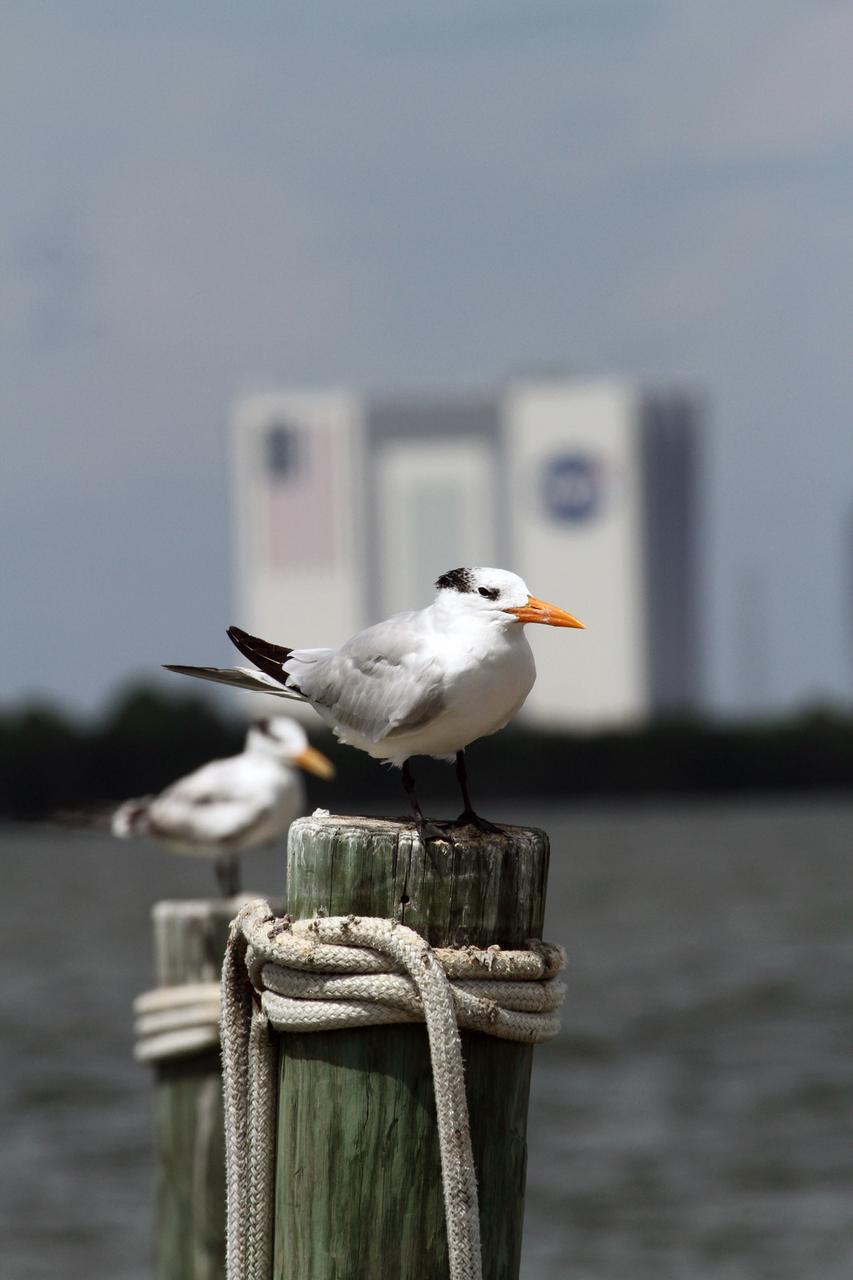
CAPE CANAVERAL, Fla. – At NASA’s Kennedy Space Center in Florida, two birds sit on a dock along the NASA Causeway admiring the view of the Vehicle Assembly building from across the intercoastal waterway. The center shares a boundary with the Merritt Island National Wildlife Refuge, consisting of 140,000 acres. The Refuge provides a wide variety of habitats: coastal dunes, saltwater estuaries and marshes, freshwater impoundments, scrub, pine flatwoods, and hardwood hammocks that provide habitat for more than 1,500 species of plants and animals, including about 331 species of birds. Photo credit: NASA_Ben Smegelsky
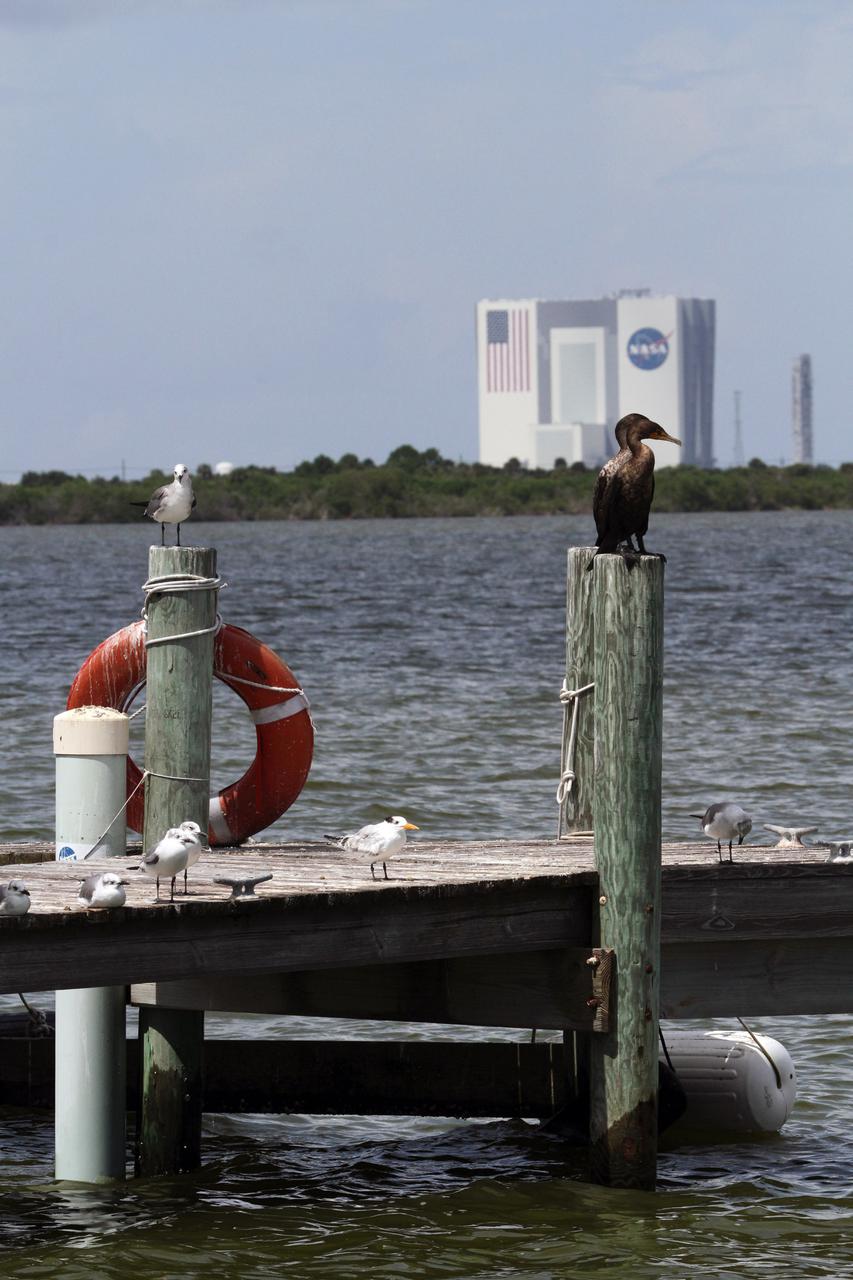
CAPE CANAVERAL, Fla. – At NASA’s Kennedy Space Center in Florida, several birds sit on a dock along the NASA Causeway admiring the view of the Vehicle Assembly building from across the intercoastal waterway. The center shares a boundary with the Merritt Island National Wildlife Refuge, consisting of 140,000 acres. The Refuge provides a wide variety of habitats: coastal dunes, saltwater estuaries and marshes, freshwater impoundments, scrub, pine flatwoods, and hardwood hammocks that provide habitat for more than 1,500 species of plants and animals, including about 331 species of birds. Photo credit: NASA_Ben Smegelsky
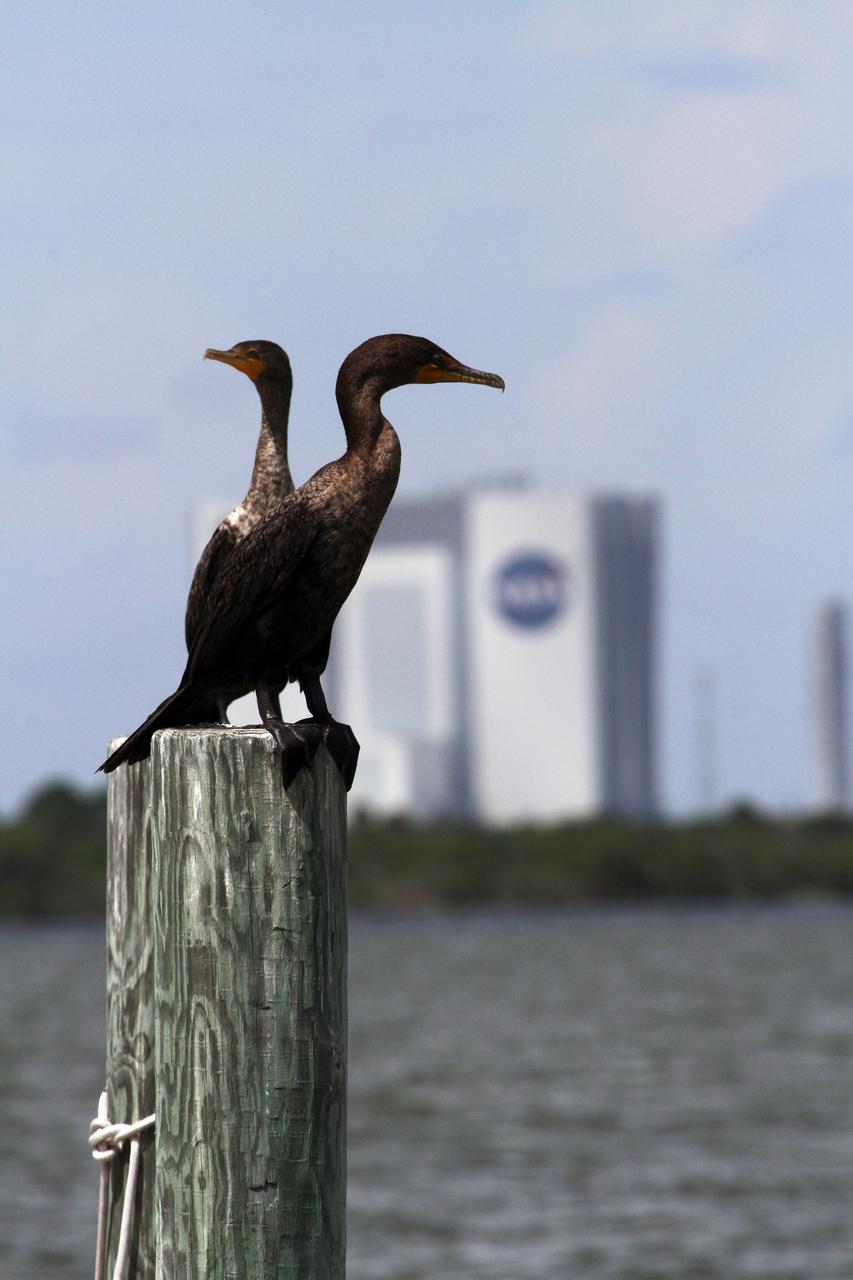
CAPE CANAVERAL, Fla. – At NASA’s Kennedy Space Center in Florida, two birds sit on a dock along the NASA Causeway admiring the view of the Vehicle Assembly building from across the intercoastal waterway. The center shares a boundary with the Merritt Island National Wildlife Refuge, consisting of 140,000 acres. The Refuge provides a wide variety of habitats: coastal dunes, saltwater estuaries and marshes, freshwater impoundments, scrub, pine flatwoods, and hardwood hammocks that provide habitat for more than 1,500 species of plants and animals, including about 331 species of birds. Photo credit: NASA_Ben Smegelsky
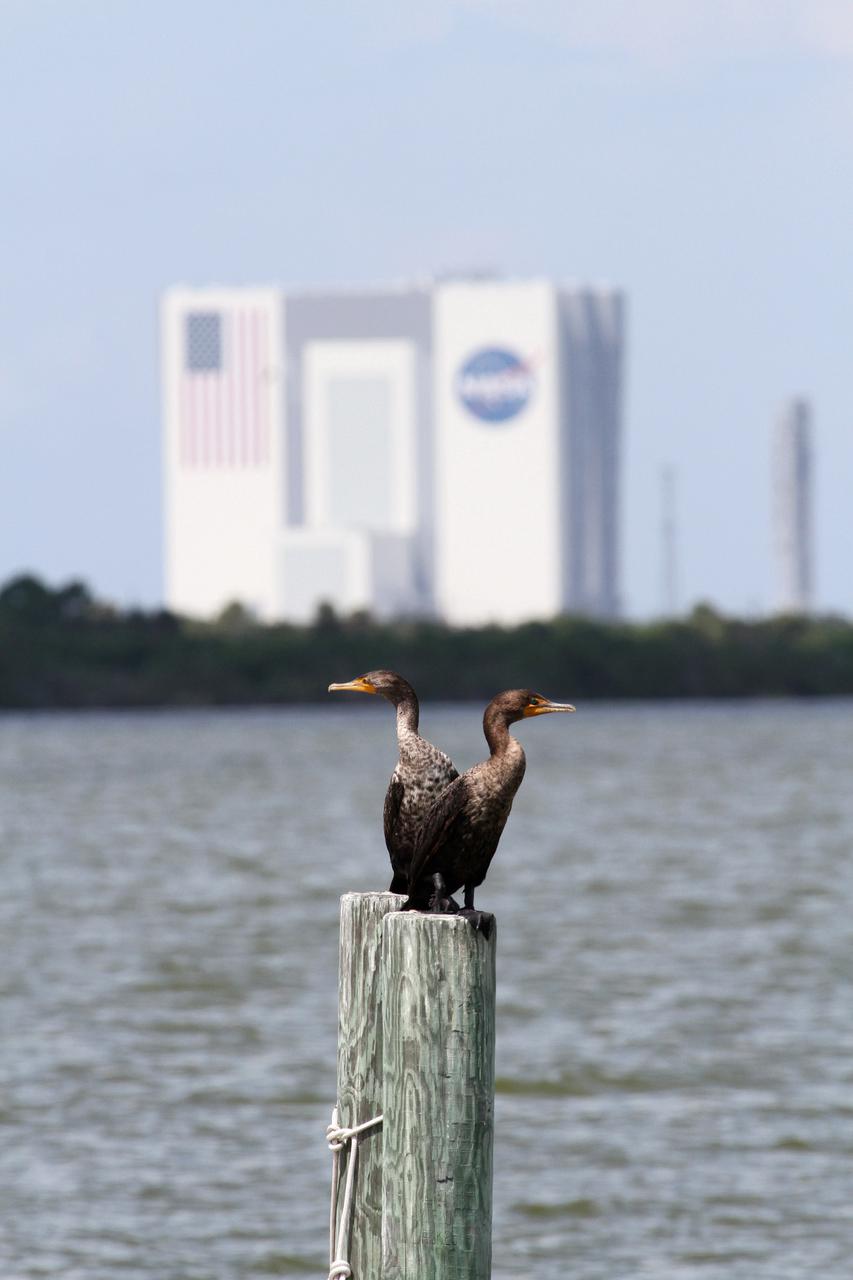
CAPE CANAVERAL, Fla. – At NASA’s Kennedy Space Center in Florida, two birds sit on the post of a dock along the NASA Causeway with a view of the Vehicle Assembly building across the intercoastal waterway. The center shares a boundary with the Merritt Island National Wildlife Refuge, consisting of 140,000 acres. The Refuge provides a wide variety of habitats: coastal dunes, saltwater estuaries and marshes, freshwater impoundments, scrub, pine flatwoods, and hardwood hammocks that provide habitat for more than 1,500 species of plants and animals, including about 331 species of birds. Photo credit: NASA_Ben Smegelsky
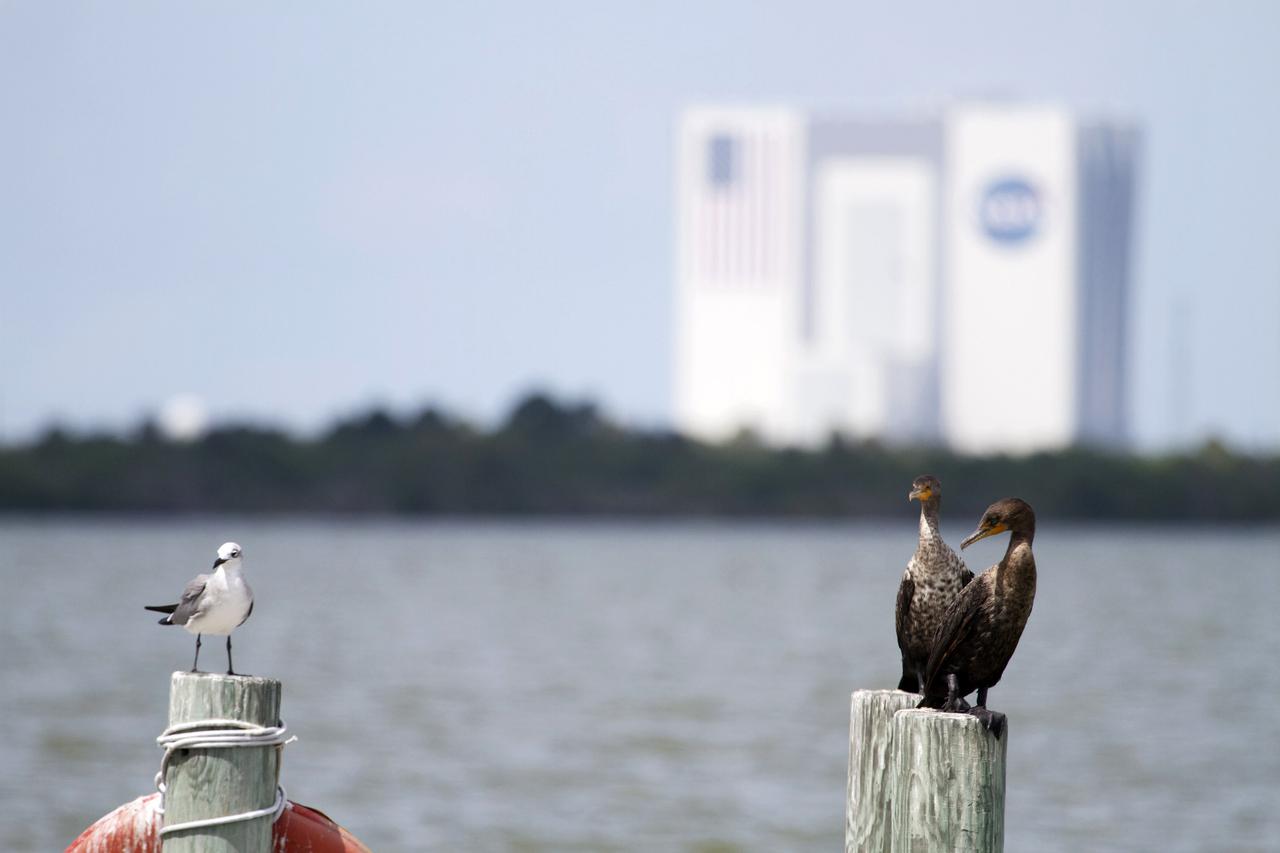
CAPE CANAVERAL, Fla. – At NASA’s Kennedy Space Center in Florida, several birds sit on the posts of a dock along the NASA Causeway with a view of the Vehicle Assembly building across the intercoastal waterway. The center shares a boundary with the Merritt Island National Wildlife Refuge, consisting of 140,000 acres. The Refuge provides a wide variety of habitats: coastal dunes, saltwater estuaries and marshes, freshwater impoundments, scrub, pine flatwoods, and hardwood hammocks that provide habitat for more than 1,500 species of plants and animals, including about 331 species of birds. Photo credit: NASA_Ben Smegelsky
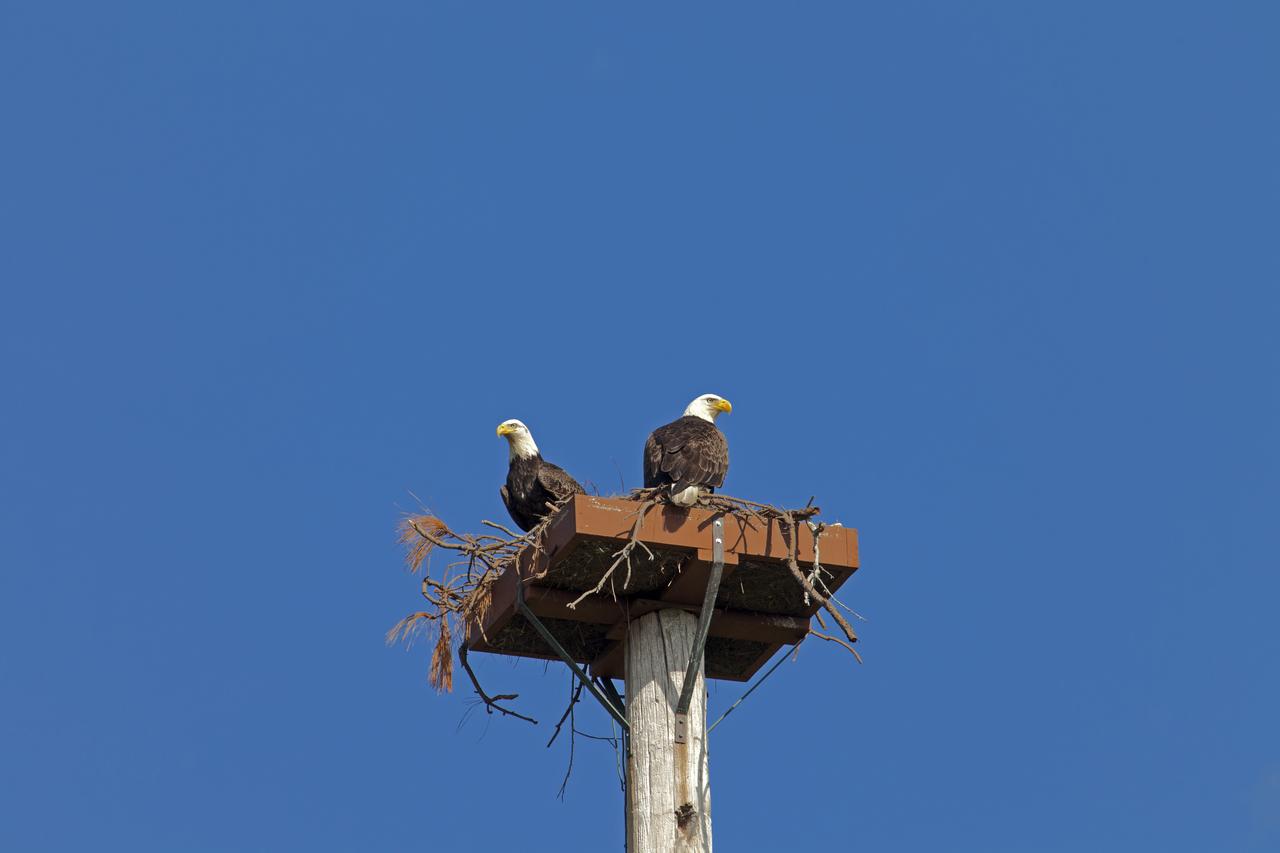
Two American bald eagles are perched in a nest atop a pole at NASA's Kennedy Space Center in Florida. The center shares a border with the Merritt Island National Wildlife Refuge. More than 330 native and migratory bird species, 25 mammals, 117 fishes and 65 amphibians and reptiles call Kennedy and the wildlife refuge home.
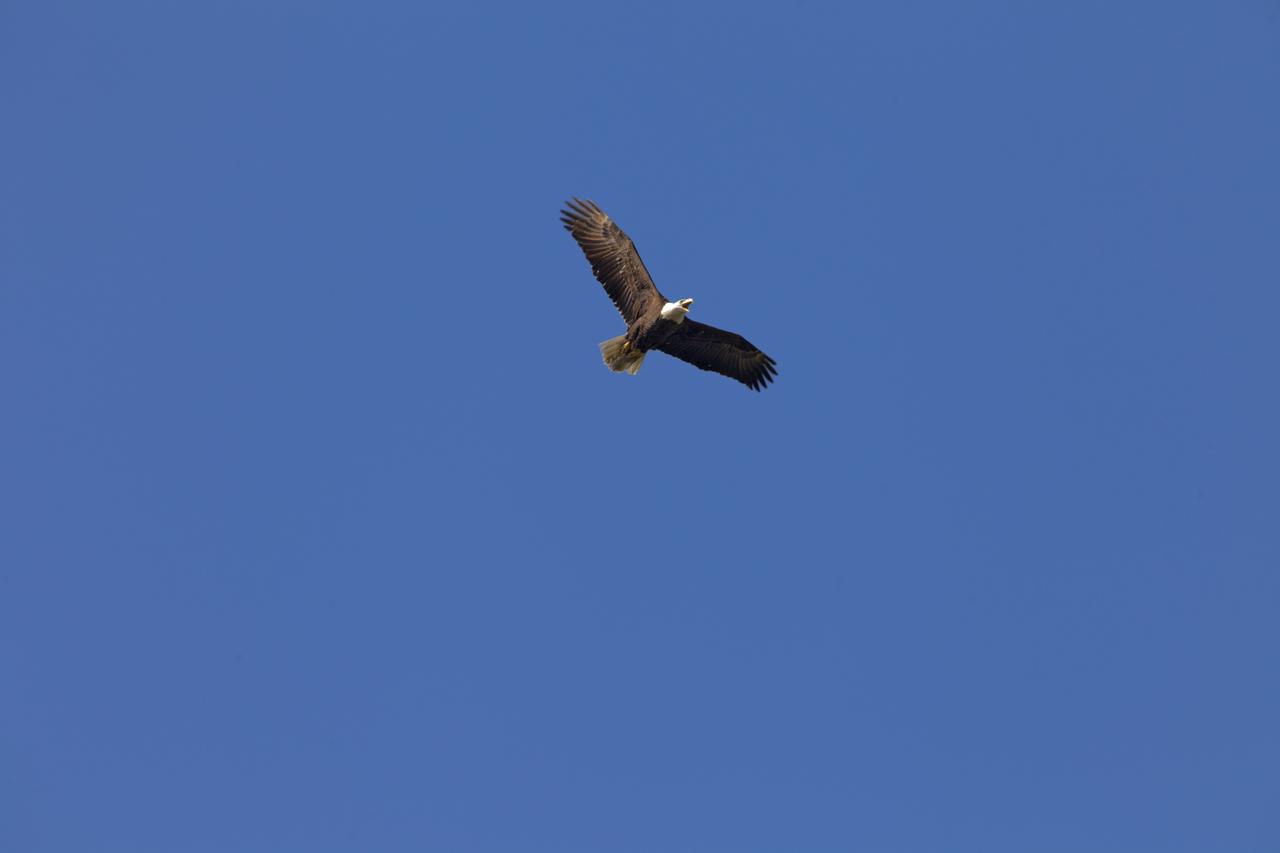
An American bald eagle soars through the air above NASA's Kennedy Space Center in Florida. The center shares a border with the Merritt Island National Wildlife Refuge. More than 330 native and migratory bird species, 25 mammals, 117 fishes and 65 amphibians and reptiles call Kennedy and the wildlife refuge home.

CAPE CANAVERAL, Fla. –– A cormorant enjoys the sunshine while standing in the water on NASA's Kennedy Space Center in Florida. The bird is a common sight around Kennedy, which shares a boundary with the Merritt Island National Wildlife Refuge. The marshes and open water of the refuge provide wintering areas for 23 species of migratory waterfowl, as well as a year-round home for great blue herons, great egrets, wood storks, cormorants, brown pelicans and other species of marsh and shore birds. Photo credit: NASA/Dimitri Gerondidakis
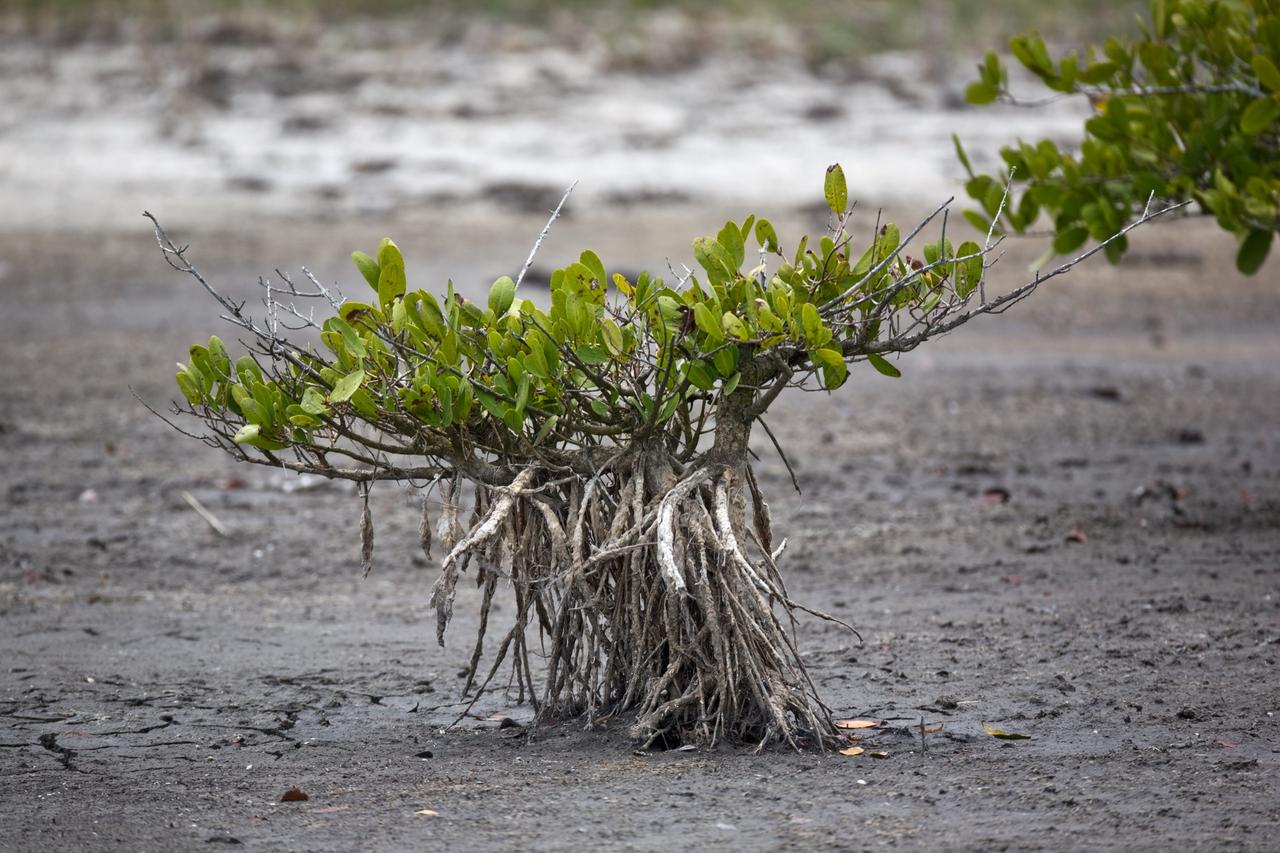
CAPE CANAVERAL, Fla. –– Mangrove roots are exposed in the drought-affected waters on NASA's Kennedy Space Center in Florida. Mangroves generally are trees and shrubs that grow in saline (brackish) coastal habitats in the tropics and subtropics. They provide food, habitat and refuge for a variety of animals, birds and sea creatures. The center shares a boundary with the Merritt Island Wildlife Nature Refuge, which is a habitat for more than 310 species of birds, 25 mammals, 117 fishes and 65 amphibians and reptiles. Photo credit: NASA/Dimitri Gerondidakis
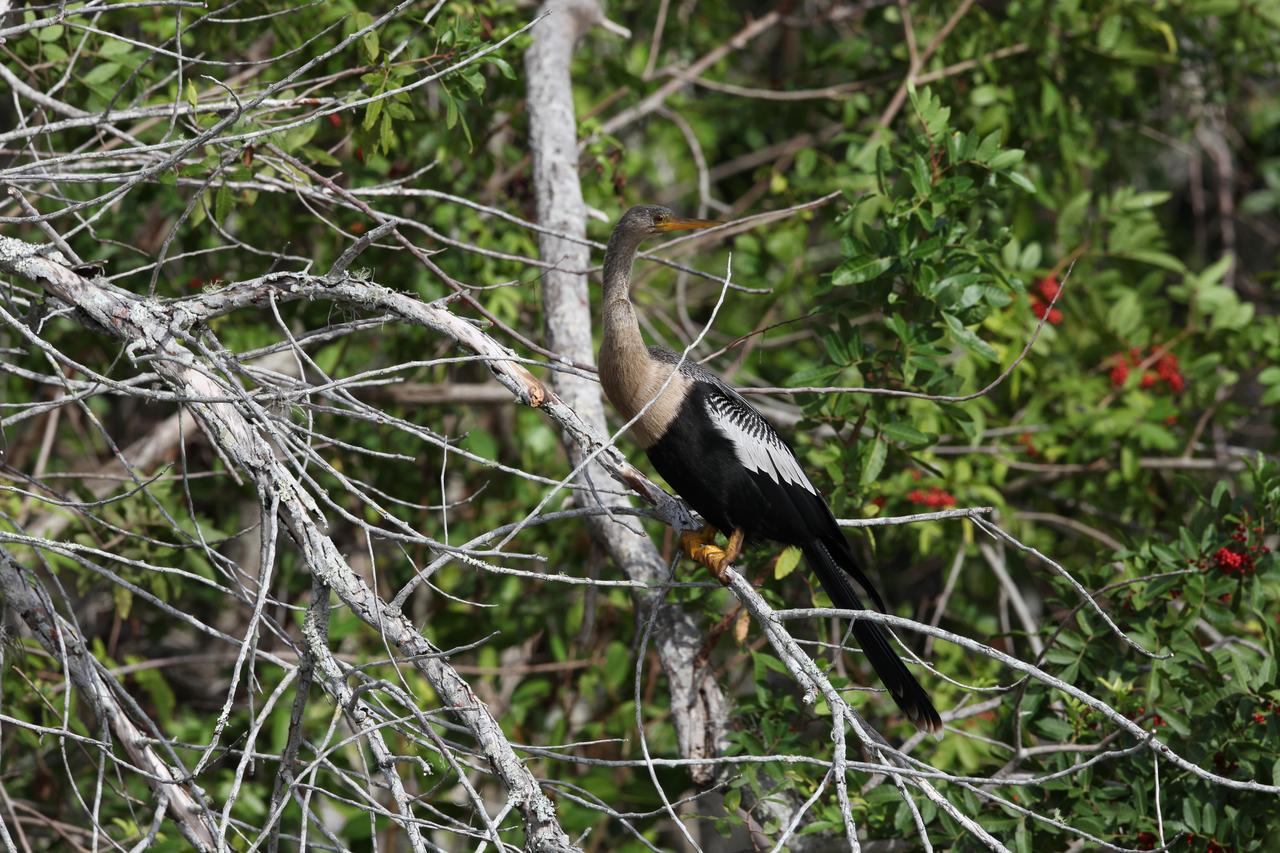
An Anhinga perches on a branch in an area of underbrush at NASA's Kennedy Space Center in Florida. The Anhinga is also known as a Water-Turkey for its swimming habits and broad tail. The center shares a border with the Merritt Island National Wildlife Refuge. More than 330 native and migratory bird species, 25 mammals, 117 fishes and 65 amphibians and reptiles call Kennedy and the wildlife refuge home.
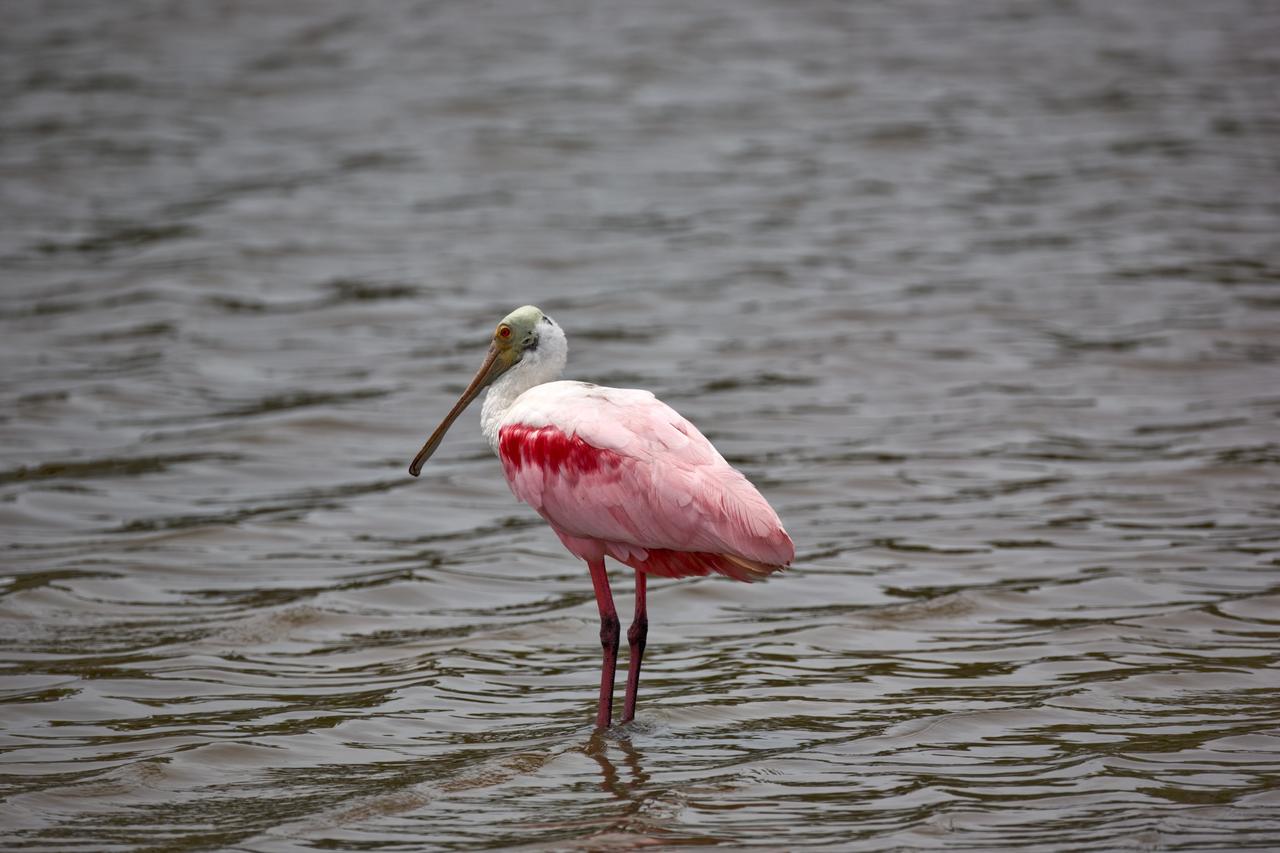
CAPE CANAVERAL, Fla. –– On NASA's Kennedy Space Center in Florida, the scarlet-feathered roseate spoonbill waits in the water for a tempting meal . Spoonbills inhabit areas of mangrove such as on the coasts of southern Florida and Texas. These birds feed on shrimps and fish in the shallow water, sweeping their bills from side to side. This and other wildlife abound throughout Kennedy as the center shares a boundary with the Merritt Island National Wildlife Refuge. Photo credit: NASA/Dimitri Gerondidakis
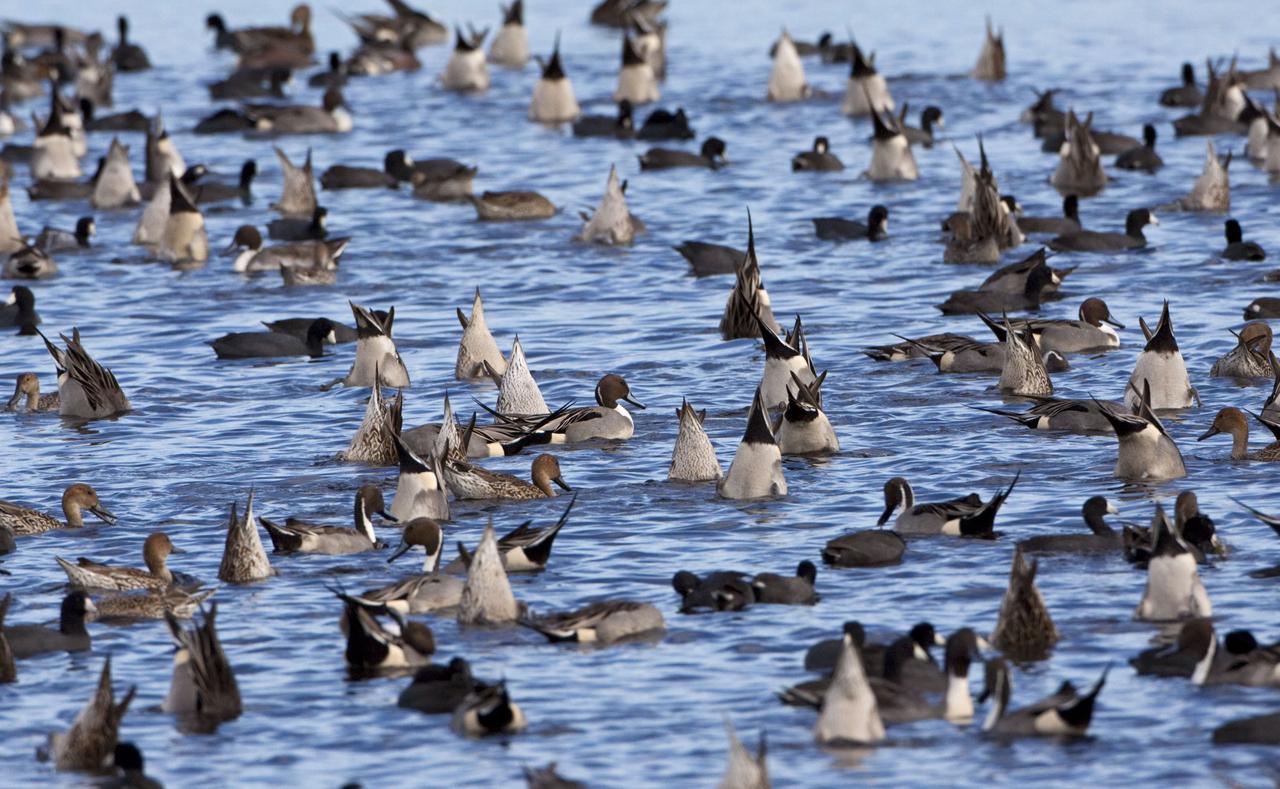
CAPE CANAVERAL, Fla. – Northern pintail ducks fill a pond at Black Point Wildlife Drive, part of the Merritt Island National Wildlife Refuge. NASA's Kennedy Space Center shares a boundary with the refuge, consisting of 140,000 acres. The Refuge provides a wide variety of habitats: coastal dunes, saltwater estuaries and marshes, freshwater impoundments, scrub, pine flatwoods, and hardwood hammocks that provide habitat for more than 1,500 species of plants and animals, including about 331 species of birds. Photo credit: NASA/Jim Grossmann
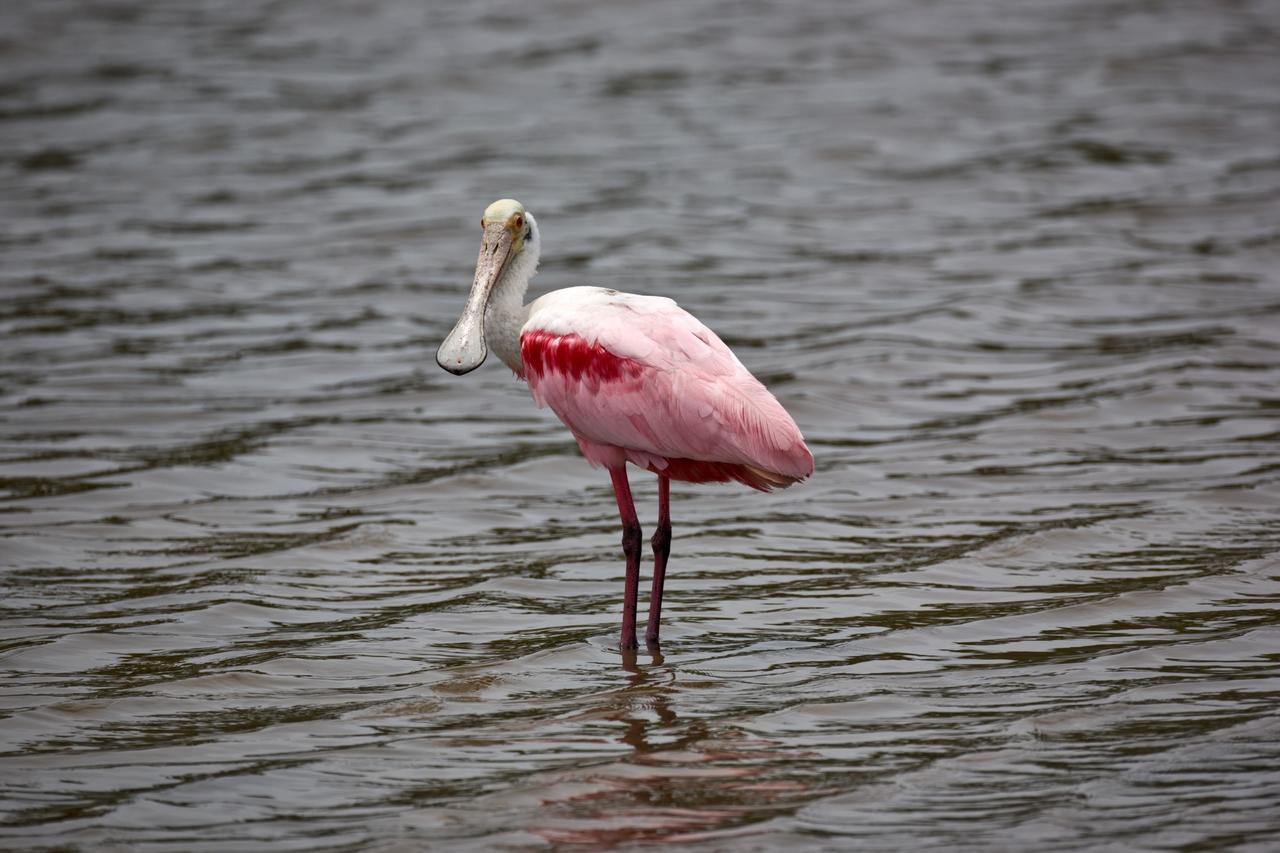
CAPE CANAVERAL, Fla. –– On NASA's Kennedy Space Center in Florida, the scarlet-feathered roseate spoonbill eyes the camera. Spoonbills inhabit areas of mangrove such as on the coasts of southern Florida and Texas. These birds feed on shrimps and fish in the shallow water, sweeping their bills from side to side. This and other wildlife abound throughout Kennedy as the center shares a boundary with the Merritt Island National Wildlife Refuge. Photo credit: NASA/Dimitri Gerondidakis
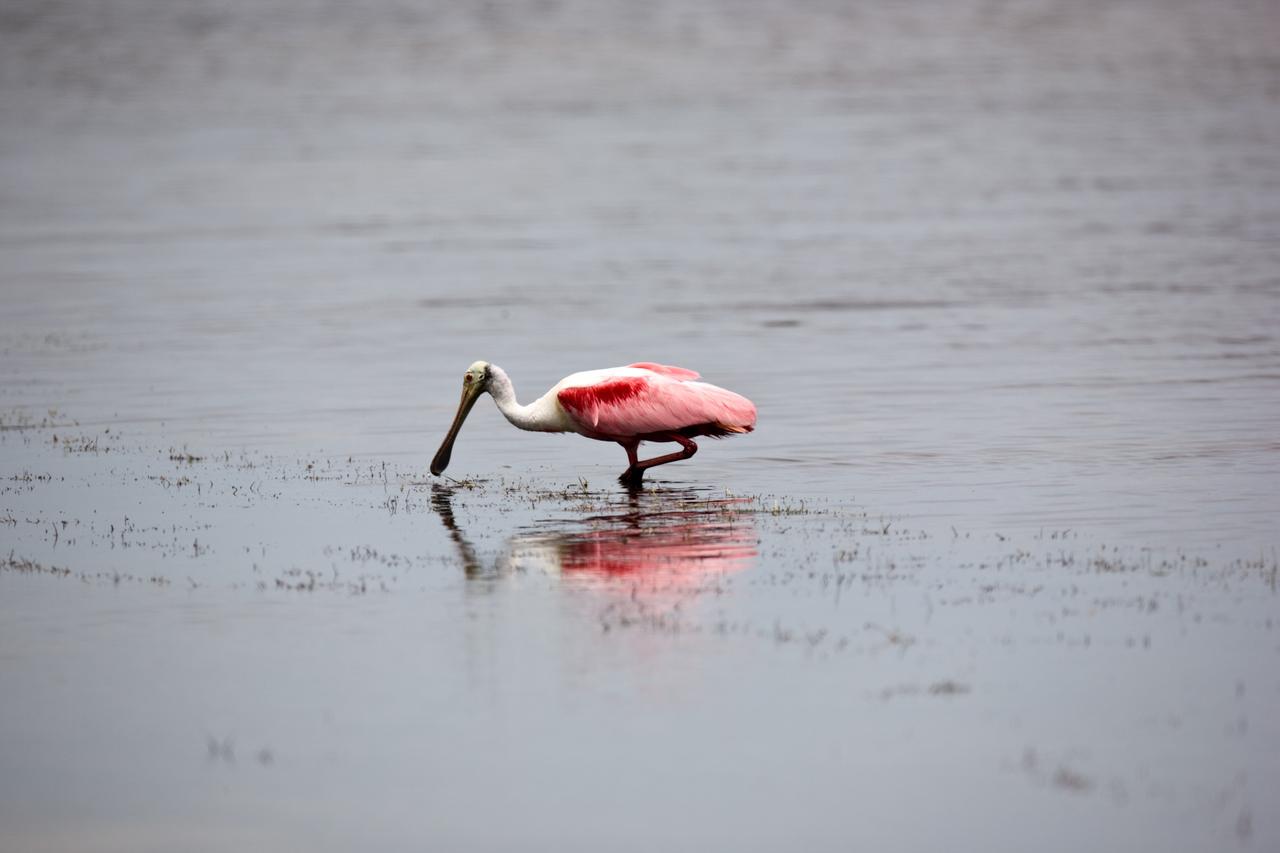
CAPE CANAVERAL, Fla. –– The scarlet-feathered roseate spoonbill searches for food in the water on NASA's Kennedy Space Center in Florida. Spoonbills inhabit areas of mangrove such as on the coasts of southern Florida and Texas. These birds feed on shrimps and fish in the shallow water, sweeping their bills from side to side. This and other wildlife abound throughout Kennedy as the center shares a boundary with the Merritt Island National Wildlife Refuge. Photo credit: NASA/Dimitri Gerondidakis
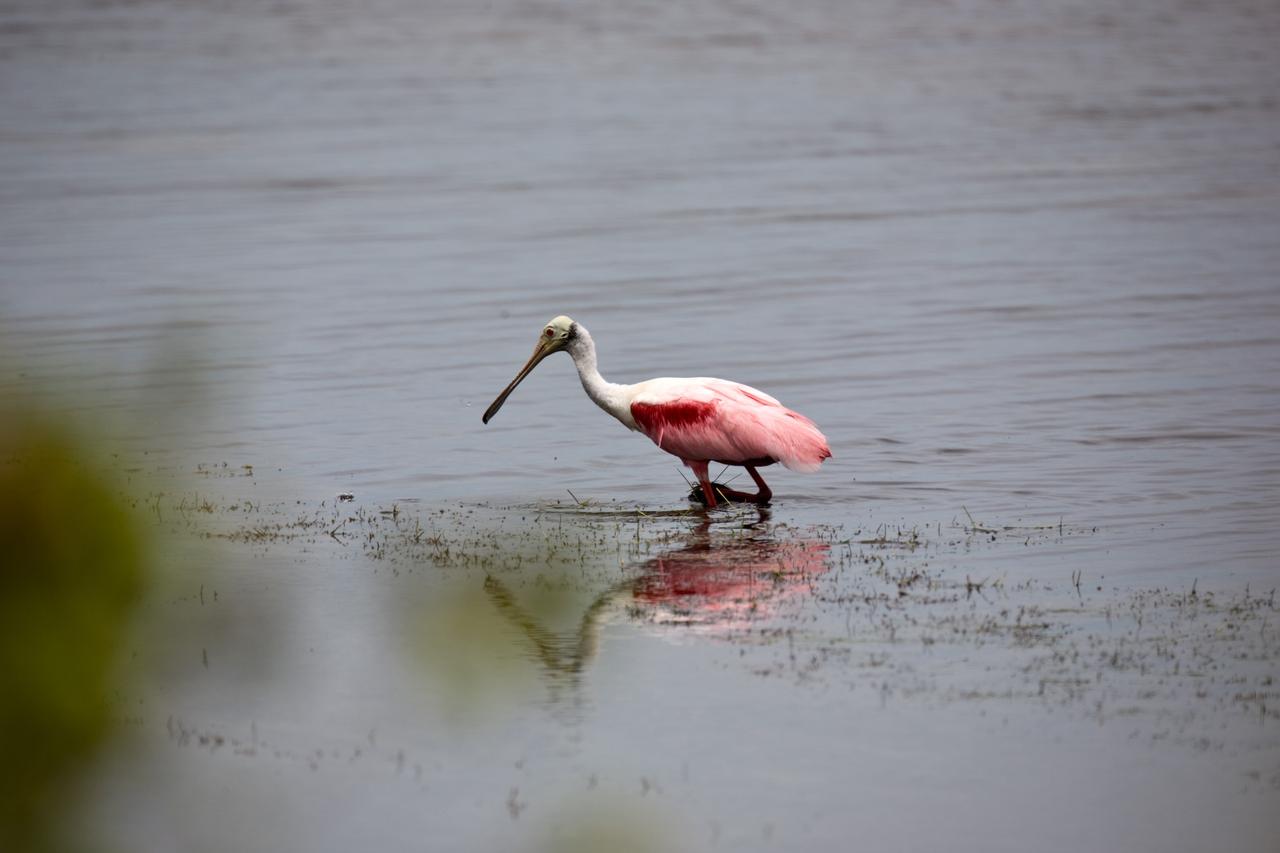
CAPE CANAVERAL, Fla. –– The scarlet-feathered roseate spoonbill wades through water on NASA's Kennedy Space Center in Florida. Spoonbills inhabit areas of mangrove such as on the coasts of southern Florida and Texas. These birds feed on shrimps and fish in the shallow water, sweeping their bills from side to side. This and other wildlife abound throughout Kennedy as the center shares a boundary with the Merritt Island National Wildlife Refuge. Photo credit: NASA/Dimitri Gerondidakis
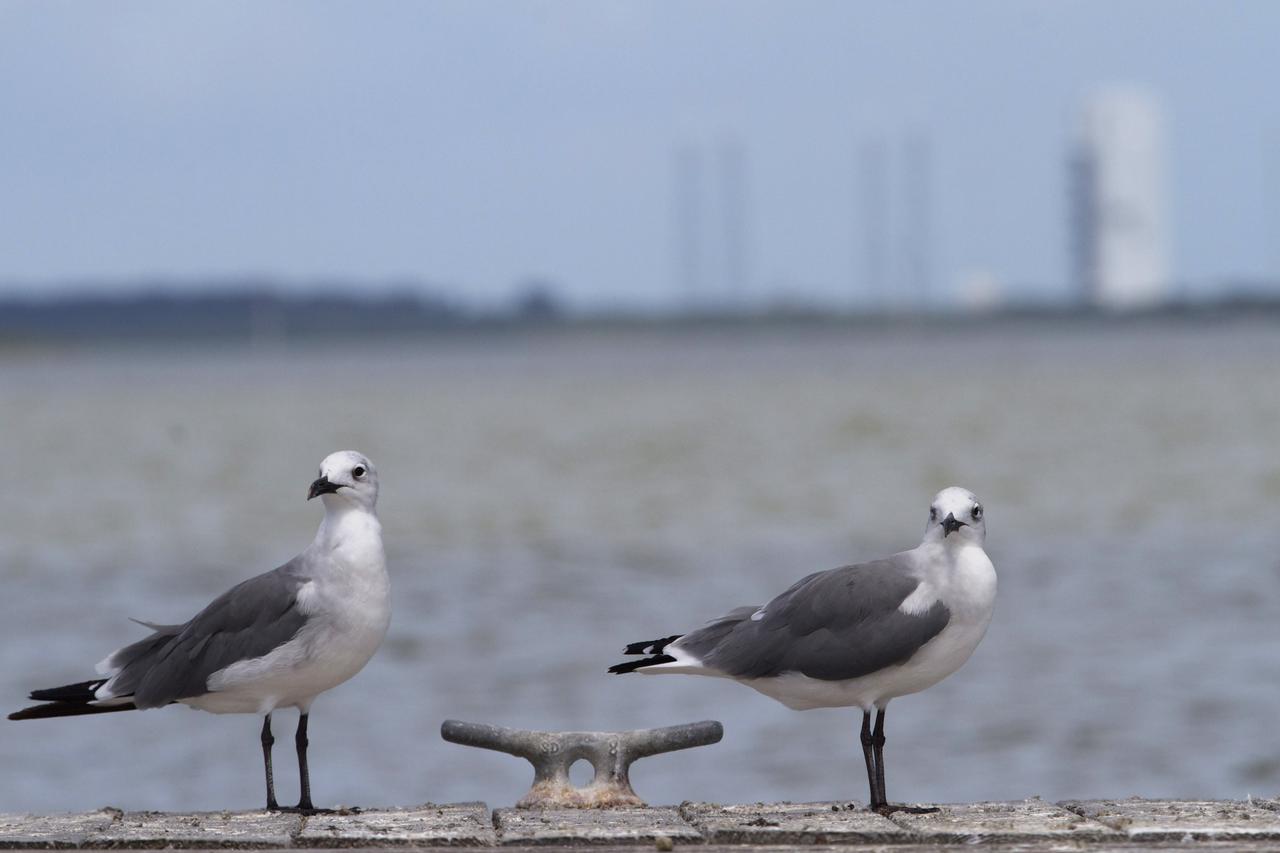
CAPE CANAVERAL, Fla. – At NASA’s Kennedy Space Center in Florida, two seagulls sit on a dock along the NASA Causeway admiring the view of the intercoastal waterway. The center shares a boundary with the Merritt Island National Wildlife Refuge, consisting of 140,000 acres. The Refuge provides a wide variety of habitats: coastal dunes, saltwater estuaries and marshes, freshwater impoundments, scrub, pine flatwoods, and hardwood hammocks that provide habitat for more than 1,500 species of plants and animals, including about 331 species of birds. Photo credit: NASA_Ben Smegelsky
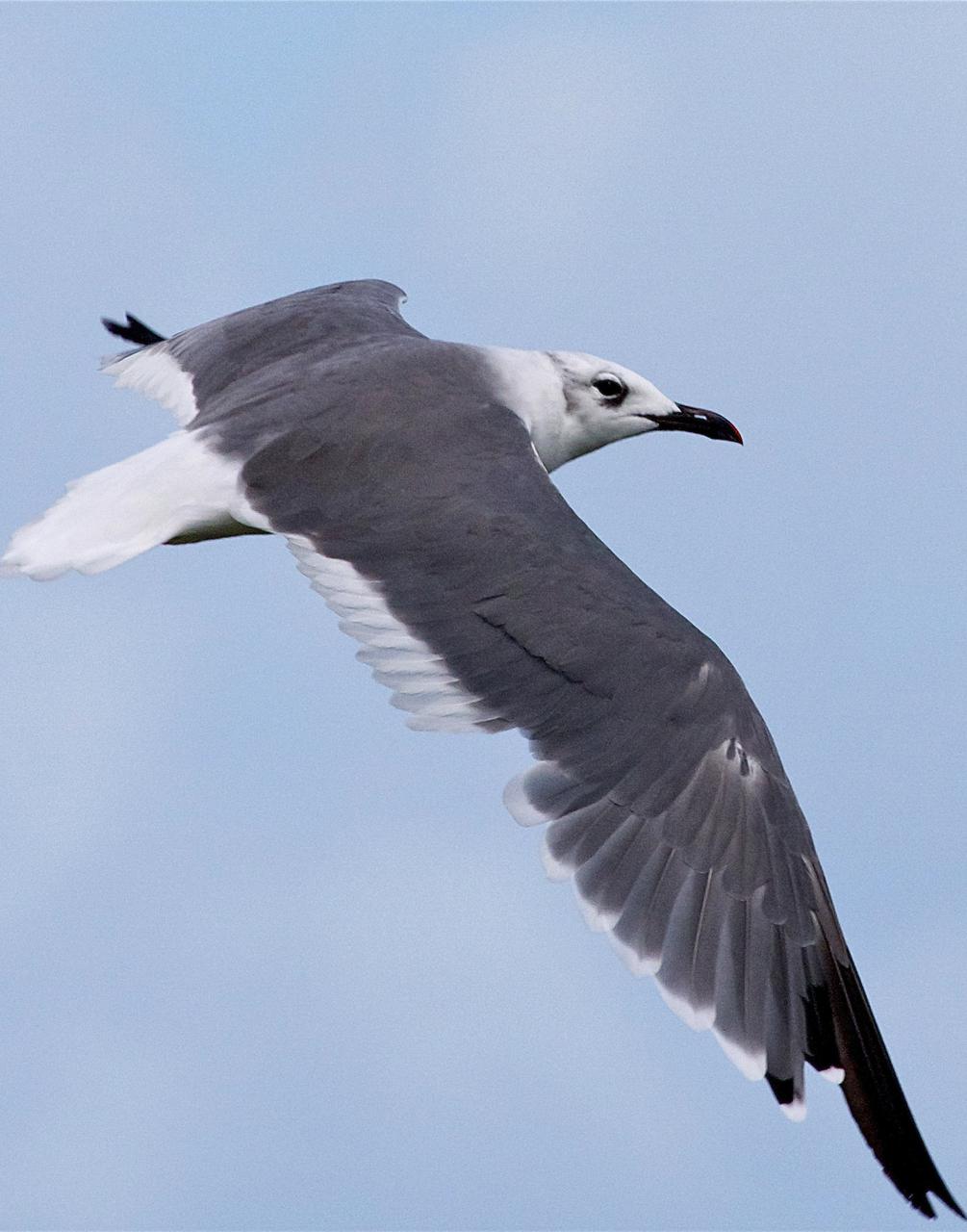
CAPE CANAVERAL, Fla. – A seagull soars through the air near the NASA Causeway at NASA’s Kennedy Space Center in Florida. The center shares a boundary with the Merritt Island National Wildlife Refuge, consisting of 140,000 acres. The Refuge provides a wide variety of habitats: coastal dunes, saltwater estuaries and marshes, freshwater impoundments, scrub, pine flatwoods, and hardwood hammocks that provide habitat for more than 1,500 species of plants and animals, including about 331 species of birds. Photo credit: NASA_Ben Smegelsky
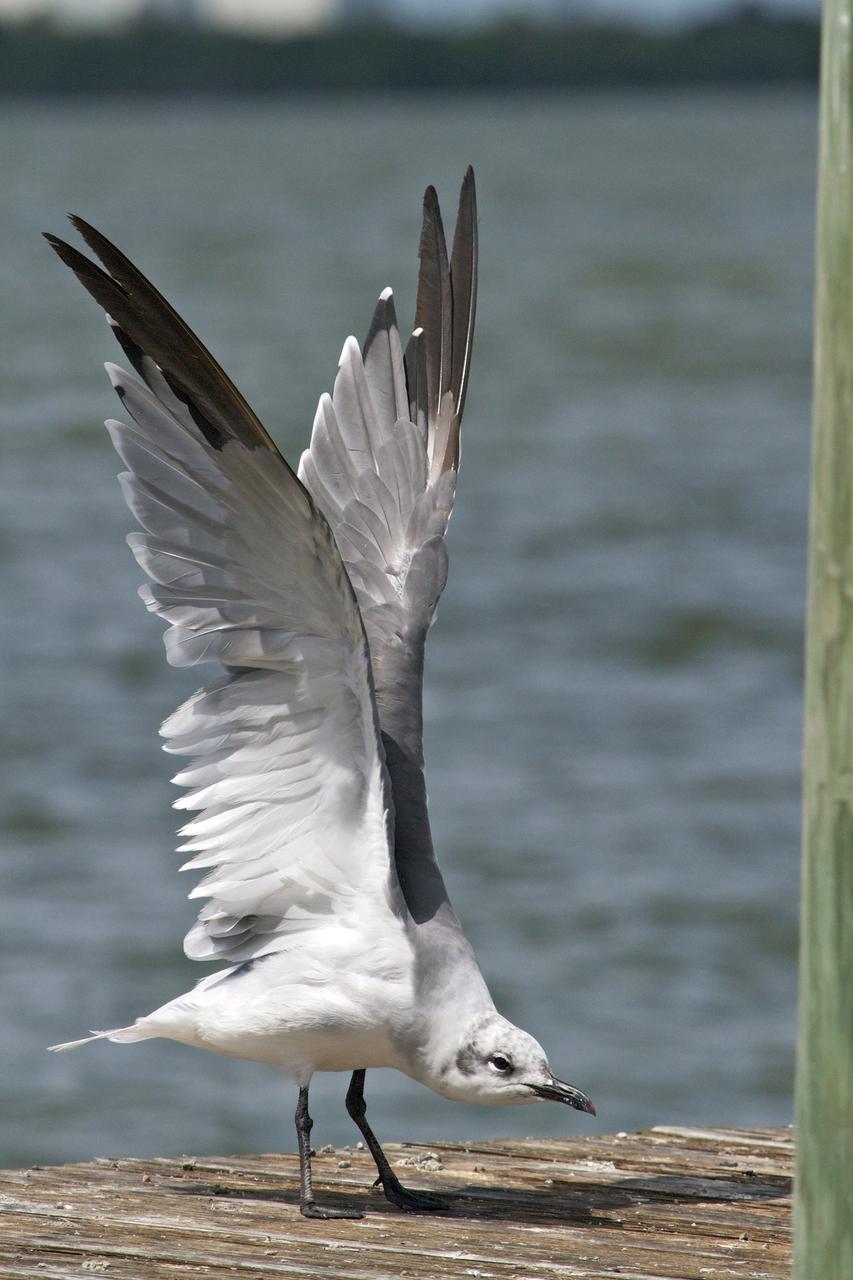
CAPE CANAVERAL, Fla. – At NASA’s Kennedy Space Center in Florida, a seagull flexes his wings while sitting on a dock along the NASA Causeway. The center shares a boundary with the Merritt Island National Wildlife Refuge, consisting of 140,000 acres. The Refuge provides a wide variety of habitats: coastal dunes, saltwater estuaries and marshes, freshwater impoundments, scrub, pine flatwoods, and hardwood hammocks that provide habitat for more than 1,500 species of plants and animals, including about 331 species of birds. Photo credit: NASA_Ben Smegelsky
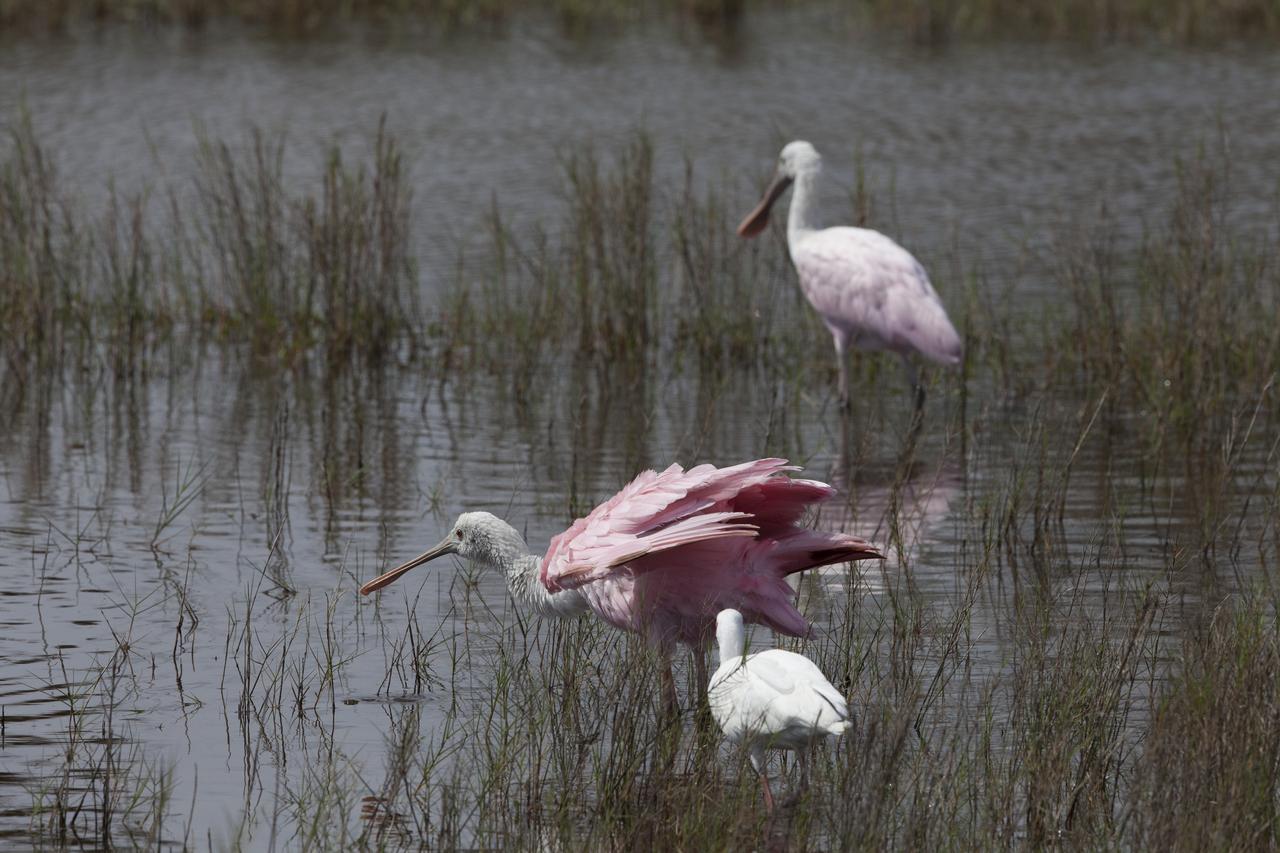
Two juvenile roseate spoonbills are joined by a white ibis, foreground, as the trio wades in a shallow waterway at Merritt Island National Wildlife Refuge in Florida. NASA’s Kennedy Space Center shares boundaries with the refuge, which is home to more than 330 native and migratory bird species, along with 25 mammal, 117 fish, and 65 amphibian and reptile species.
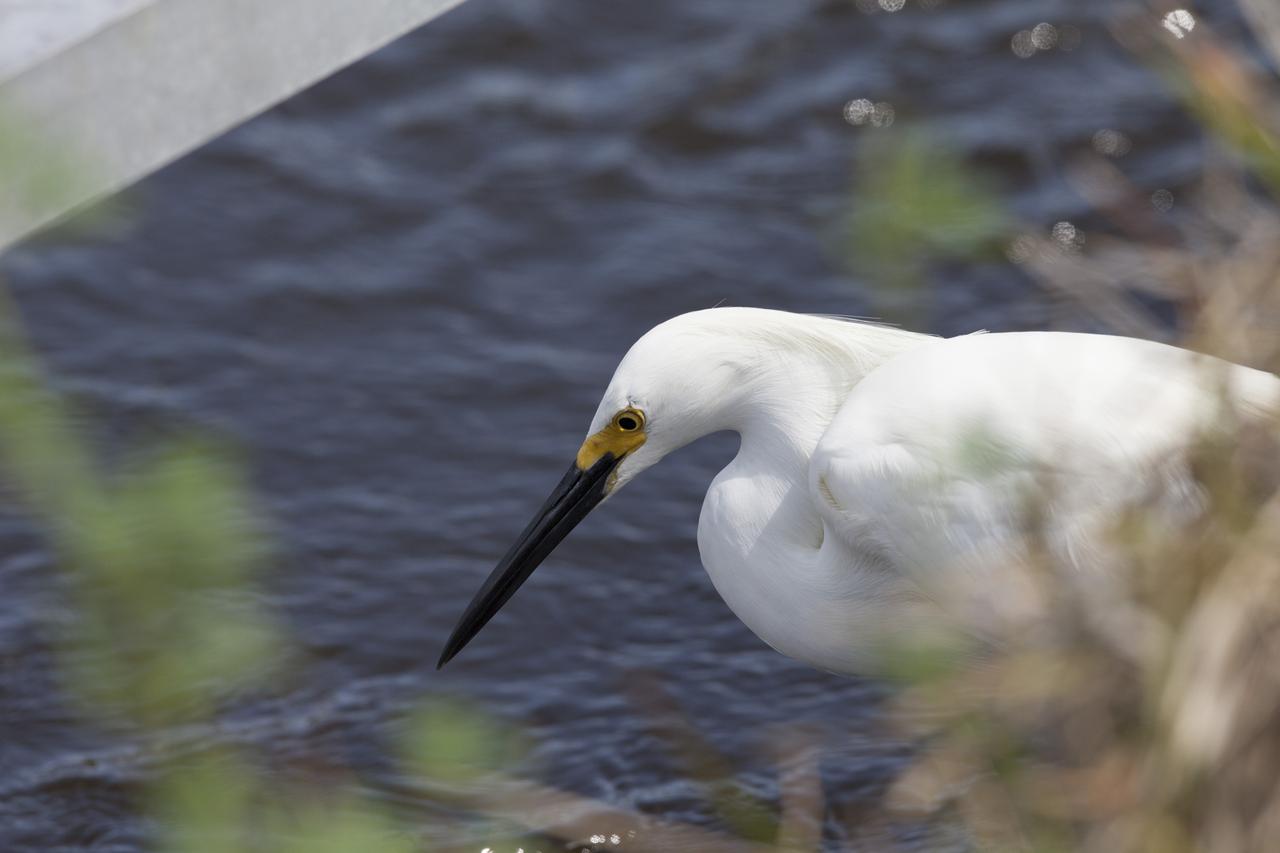
A snowy egret focuses its attention on a potential meal swimming in a shallow waterway at Merritt Island National Wildlife Refuge in Florida. NASA’s Kennedy Space Center shares boundaries with the refuge, which is home to more than 330 native and migratory bird species, along with 25 mammal, 117 fish, and 65 amphibian and reptile species.
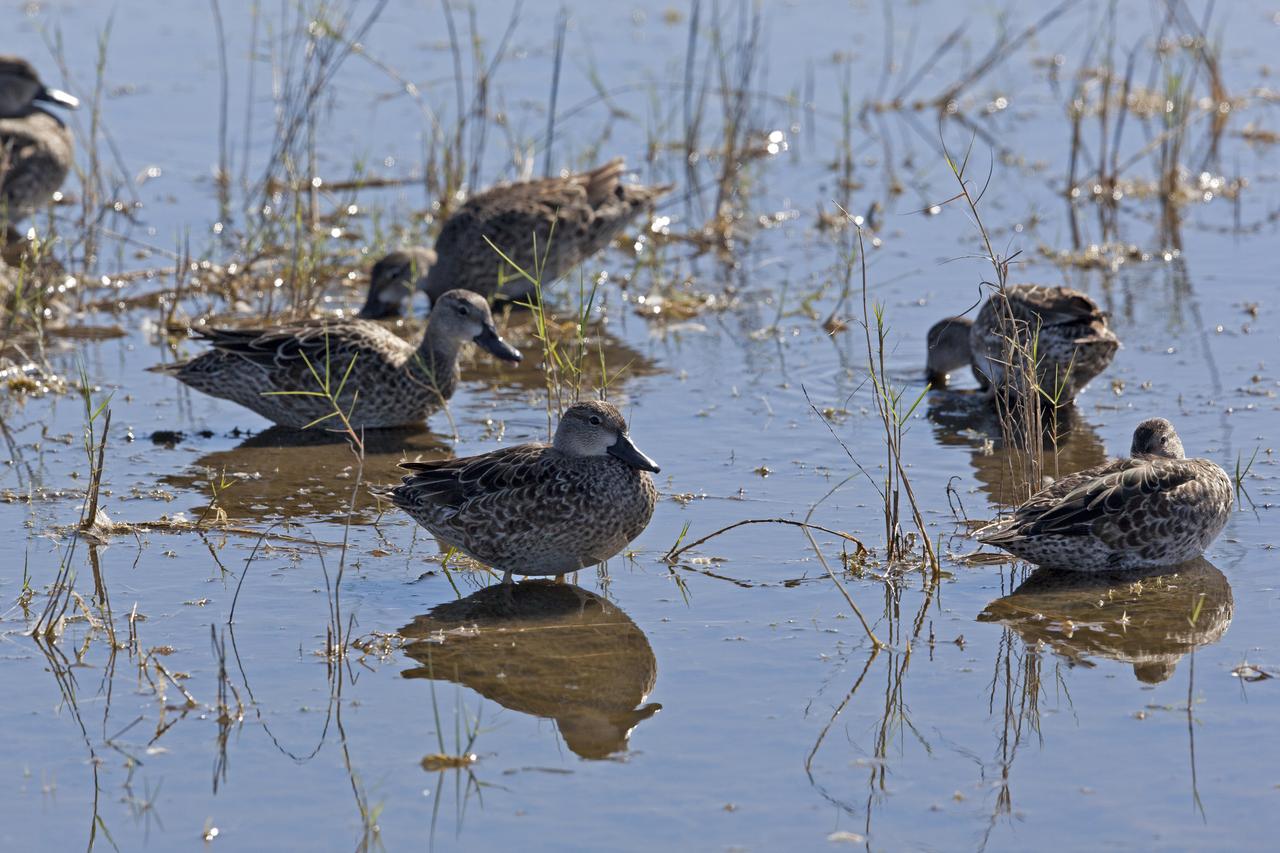
Ducks gather in a waterway at NASA's Kennedy Space Center in Florida. Kennedy shares a boundary with the Merritt Island National Wildlife Refuge. The refuge encompasses 140,000 acres that are a habitat for more than 331 species of birds, 31 mammals, 117 fish, and 65 amphibians and reptiles. The marshes and open water of the refuge provide wintering areas for 23 species of migratory waterfowl, as well as a year-round home for great blue herons, great egrets, wood storks, cormorants, brown pelicans and other species of marsh and shore birds.
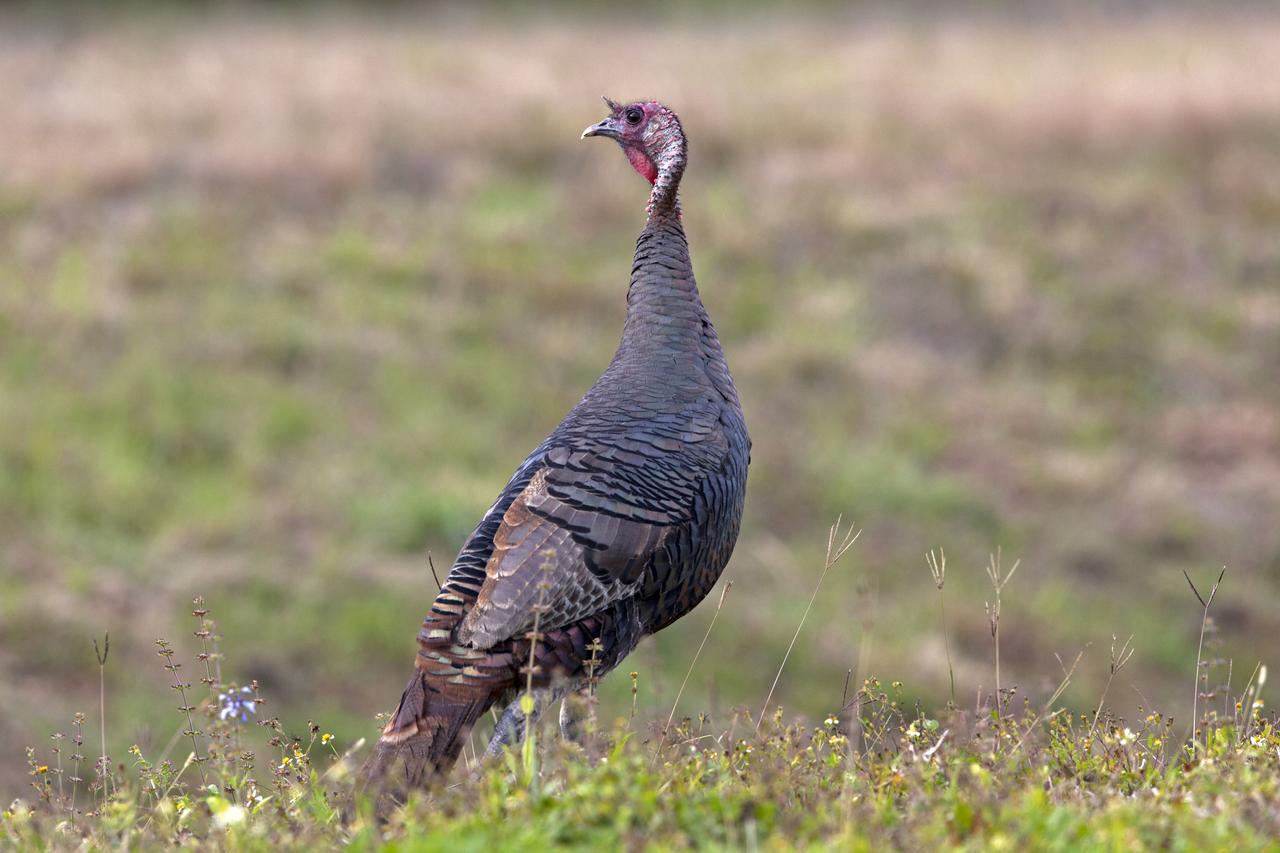
A wild turkey is seen at NASA's Kennedy Space Center in Florida. Kennedy shares a boundary with the Merritt Island National Wildlife Refuge. The refuge encompasses 140,000 acres that are a habitat for more than 331 species of birds, 31 mammals, 117 fish, and 65 amphibians and reptiles. The marshes and open water of the refuge provide wintering areas for 23 species of migratory waterfowl, as well as a year-round home for great blue herons, great egrets, wood storks, cormorants, brown pelicans and other species of marsh and shore birds.
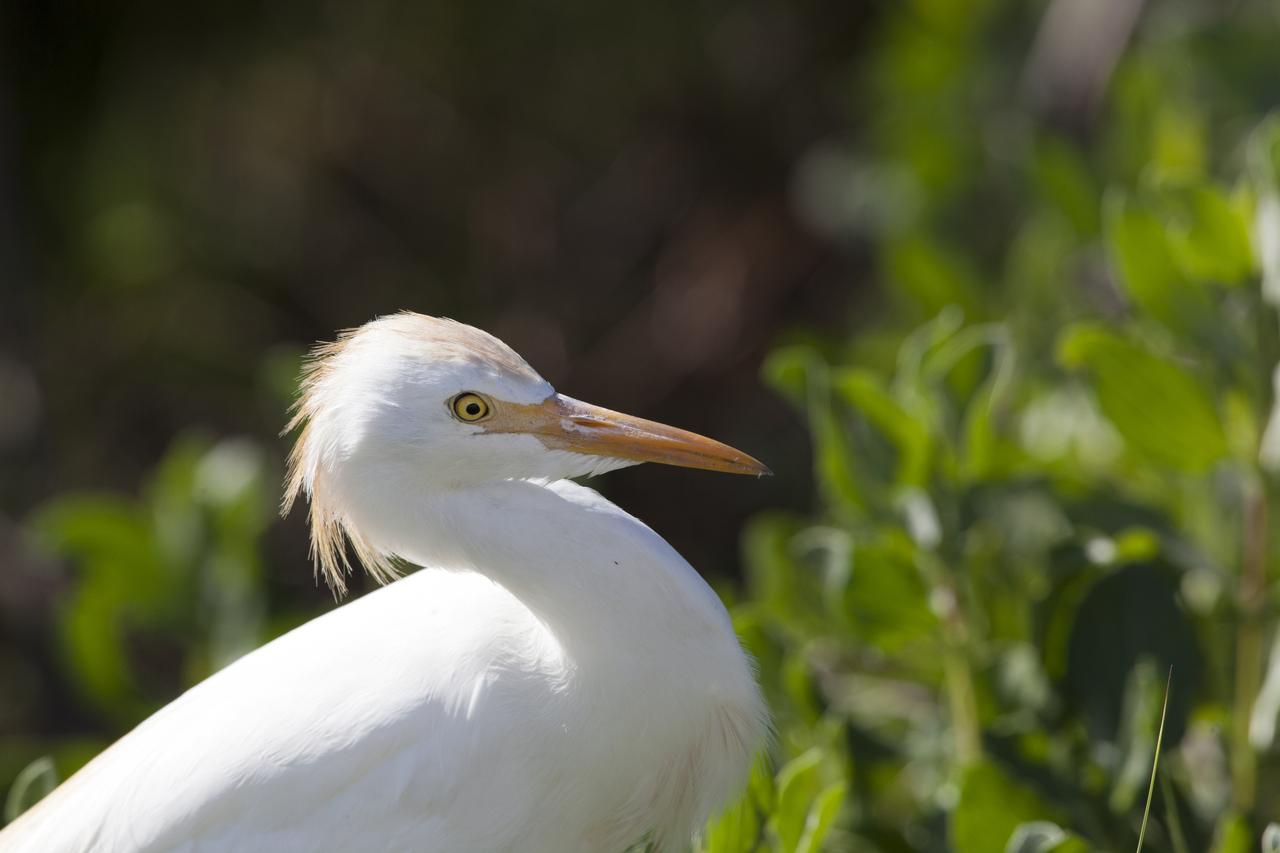
A snowy egret is seen at NASA's Kennedy Space Center in Florida. Kennedy shares a boundary with the Merritt Island National Wildlife Refuge. The refuge encompasses 140,000 acres that are a habitat for more than 331 species of birds, 31 mammals, 117 fish, and 65 amphibians and reptiles. The marshes and open water of the refuge provide wintering areas for 23 species of migratory waterfowl, as well as a year-round home for great blue herons, great egrets, wood storks, cormorants, brown pelicans and other species of marsh and shore birds.
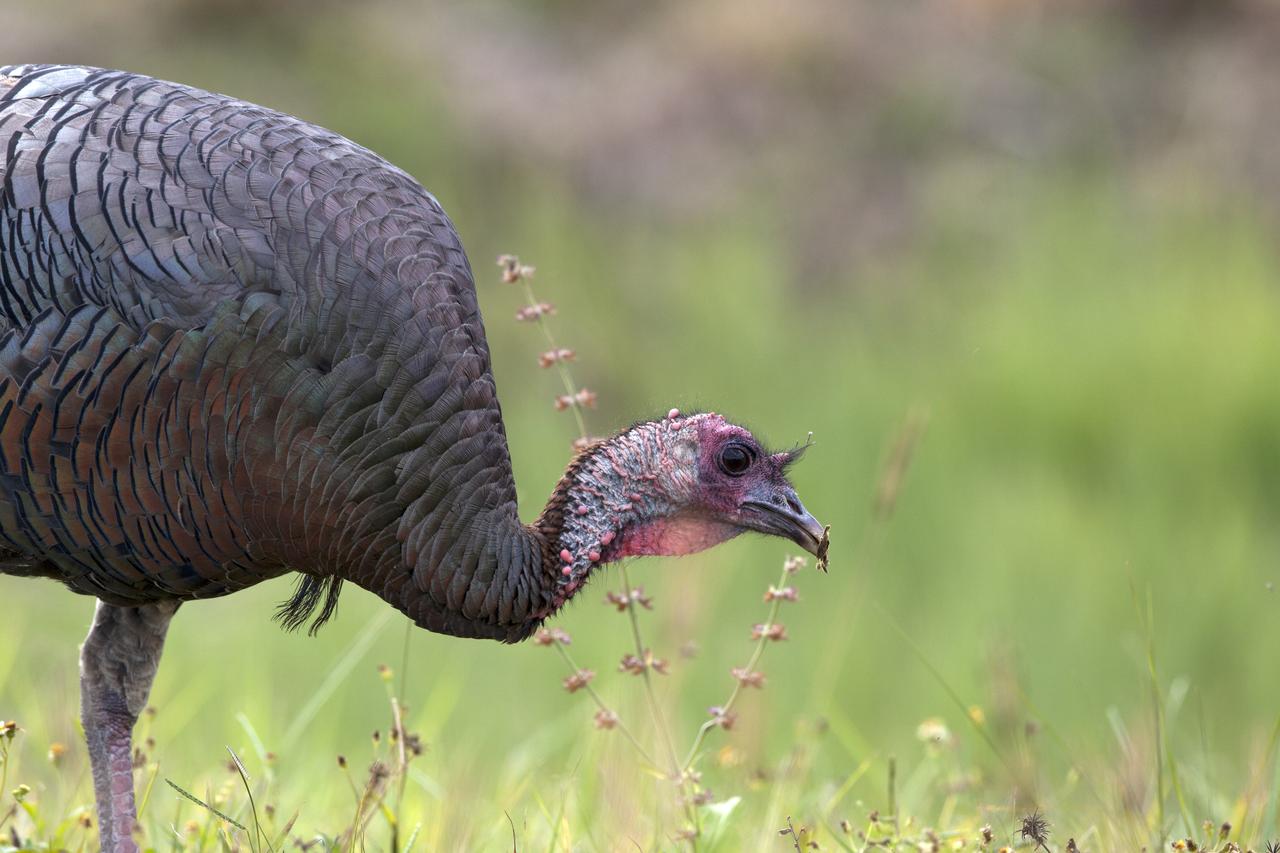
A wild turkey is seen at NASA's Kennedy Space Center in Florida. Kennedy shares a boundary with the Merritt Island National Wildlife Refuge. The refuge encompasses 140,000 acres that are a habitat for more than 331 species of birds, 31 mammals, 117 fish, and 65 amphibians and reptiles. The marshes and open water of the refuge provide wintering areas for 23 species of migratory waterfowl, as well as a year-round home for great blue herons, great egrets, wood storks, cormorants, brown pelicans and other species of marsh and shore birds.
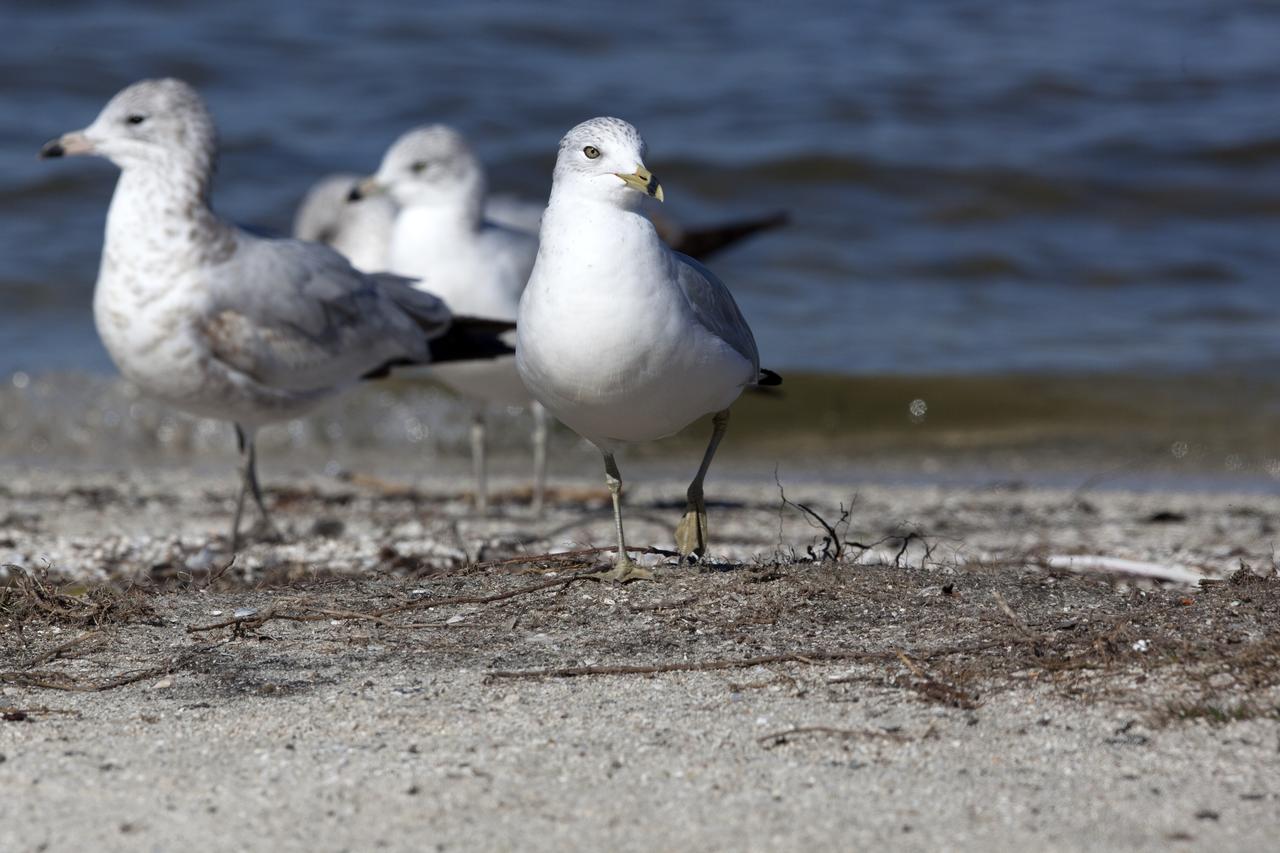
Seagulls gather along a shoreline at NASA's Kennedy Space Center in Florida. Kennedy shares a boundary with the Merritt Island National Wildlife Refuge. The refuge encompasses 140,000 acres that are a habitat for more than 331 species of birds, 31 mammals, 117 fish, and 65 amphibians and reptiles. The marshes and open water of the refuge provide wintering areas for 23 species of migratory waterfowl, as well as a year-round home for great blue herons, great egrets, wood storks, cormorants, brown pelicans and other species of marsh and shore birds.
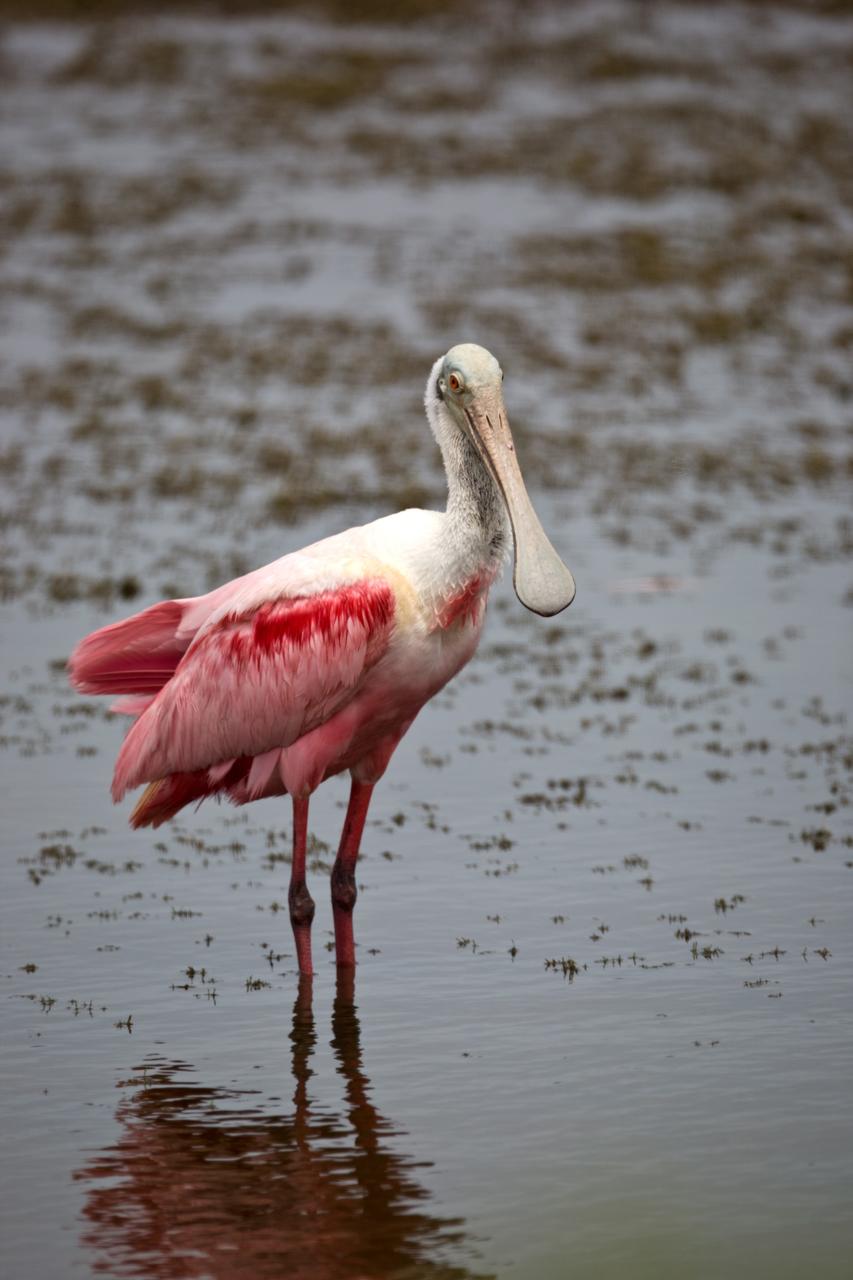
CAPE CANAVERAL, Fla. –– On NASA's Kennedy Space Center in Florida, the scarlet-feathered roseate spoonbill eyes the camera during its search for food. Spoonbills inhabit areas of mangrove such as on the coasts of southern Florida and Texas. These birds feed on shrimps and fish in the shallow water, sweeping their bills from side to side. This and other wildlife abound throughout Kennedy as the center shares a boundary with the Merritt Island National Wildlife Refuge. The marshes and open water of the refuge provide wintering areas for 23 species of migratory waterfowl, as well as a year-round home for great blue herons, great egrets, wood storks, cormorants, brown pelicans and other species of marsh and shore birds. Photo credit: NASA/Dimitri Gerondidakis
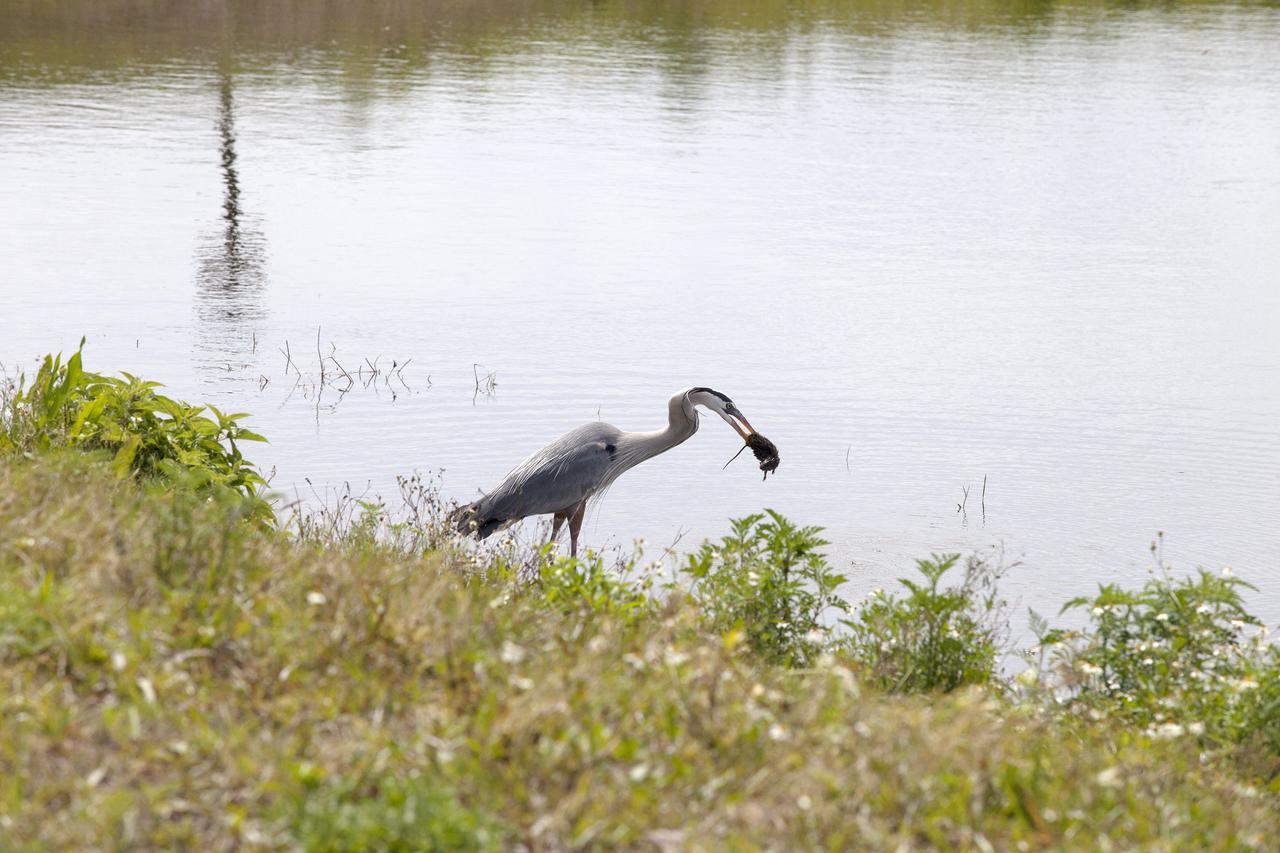
CAPE CANAVERAL, Fla. – A great blue heron catches a small rodent along the shore of an inland waterway near the former site of the Spacecraft Assembly and Encapsulation Facility-2 at NASA's Kennedy Space Center in Florida. The center shares a boundary with the Merritt Island National Wildlife Refuge. The refuge encompasses 140,000 acres that are a habitat for more than 330 species of birds, 31 mammals, 117 fishes, and 65 amphibians and reptiles. It contains more than 1,000 known plant species. The marshes and open water of the refuge provide wintering areas for 23 species of migratory waterfowl, as well as a year-round home for great blue herons, great egrets, wood storks, cormorants, brown pelicans and other species of marsh and shore birds, and a variety of insects. Photo credit: NASA/Daniel Casper
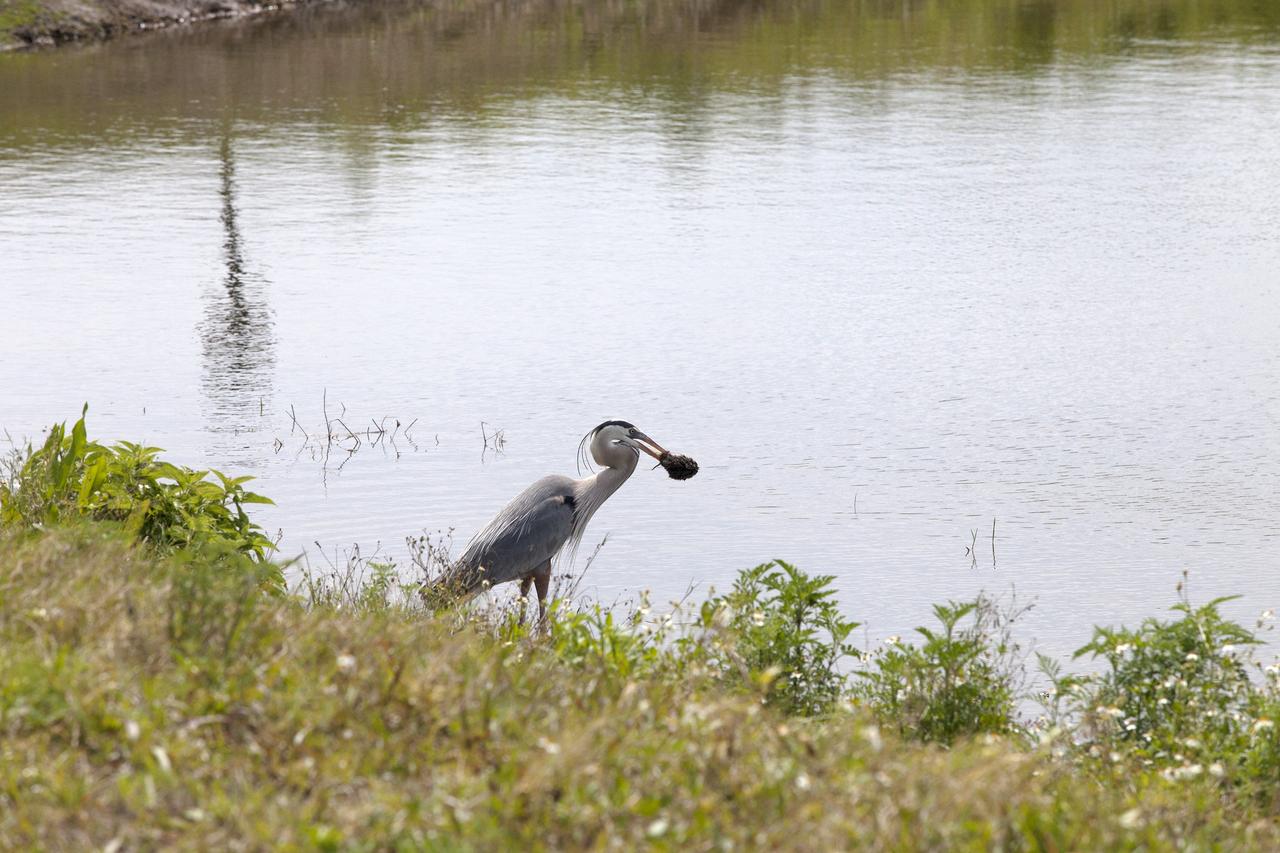
CAPE CANAVERAL, Fla. – A great blue heron catches a small rodent along the shore of an inland waterway near the former site of the Spacecraft Assembly and Encapsulation Facility-2 at NASA's Kennedy Space Center in Florida. The center shares a boundary with the Merritt Island National Wildlife Refuge. The refuge encompasses 140,000 acres that are a habitat for more than 330 species of birds, 31 mammals, 117 fishes, and 65 amphibians and reptiles. It contains more than 1,000 known plant species. The marshes and open water of the refuge provide wintering areas for 23 species of migratory waterfowl, as well as a year-round home for great blue herons, great egrets, wood storks, cormorants, brown pelicans and other species of marsh and shore birds, and a variety of insects. Photo credit: NASA/Daniel Casper
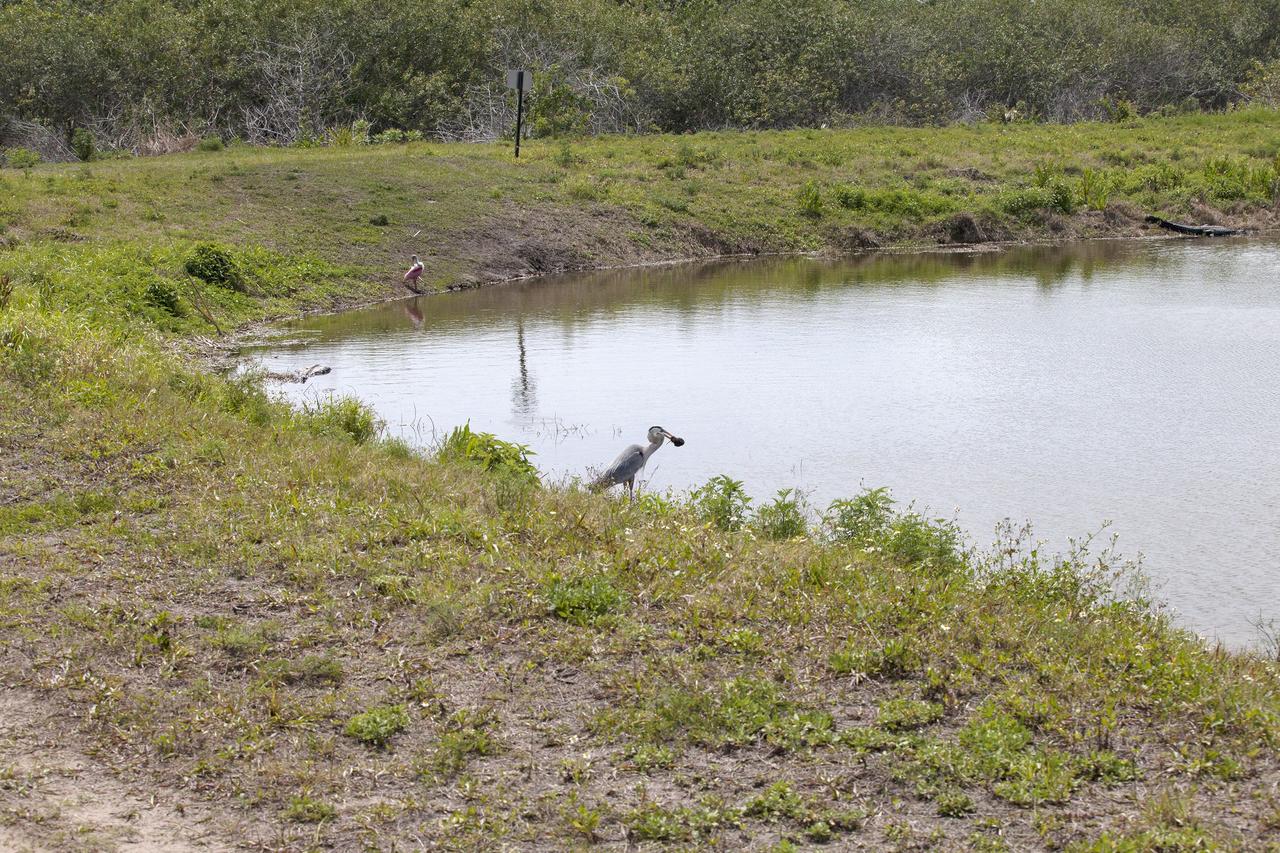
CAPE CANAVERAL, Fla. – A great blue heron catches a small rodent along the shore of an inland waterway near the former site of the Spacecraft Assembly and Encapsulation Facility-2 at NASA's Kennedy Space Center in Florida. The center shares a boundary with the Merritt Island National Wildlife Refuge. The refuge encompasses 140,000 acres that are a habitat for more than 330 species of birds, 31 mammals, 117 fishes, and 65 amphibians and reptiles. It contains more than 1,000 known plant species. The marshes and open water of the refuge provide wintering areas for 23 species of migratory waterfowl, as well as a year-round home for great blue herons, great egrets, wood storks, cormorants, brown pelicans and other species of marsh and shore birds, and a variety of insects. Photo credit: NASA/Daniel Casper
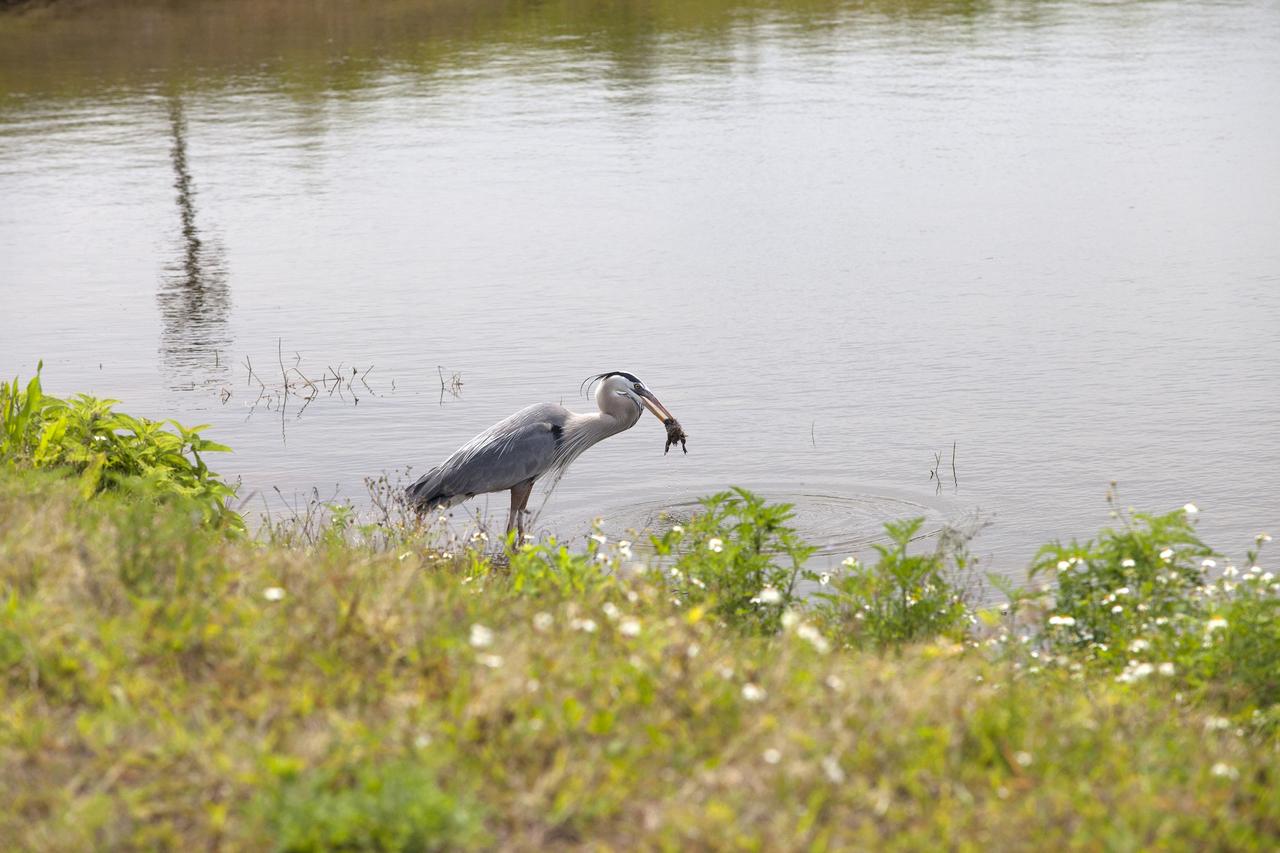
CAPE CANAVERAL, Fla. – A great blue heron catches a small rodent along the shore of an inland waterway near the former site of the Spacecraft Assembly and Encapsulation Facility-2 at NASA's Kennedy Space Center in Florida. The center shares a boundary with the Merritt Island National Wildlife Refuge. The refuge encompasses 140,000 acres that are a habitat for more than 330 species of birds, 31 mammals, 117 fishes, and 65 amphibians and reptiles. It contains more than 1,000 known plant species. The marshes and open water of the refuge provide wintering areas for 23 species of migratory waterfowl, as well as a year-round home for great blue herons, great egrets, wood storks, cormorants, brown pelicans and other species of marsh and shore birds, and a variety of insects. Photo credit: NASA/Daniel Casper
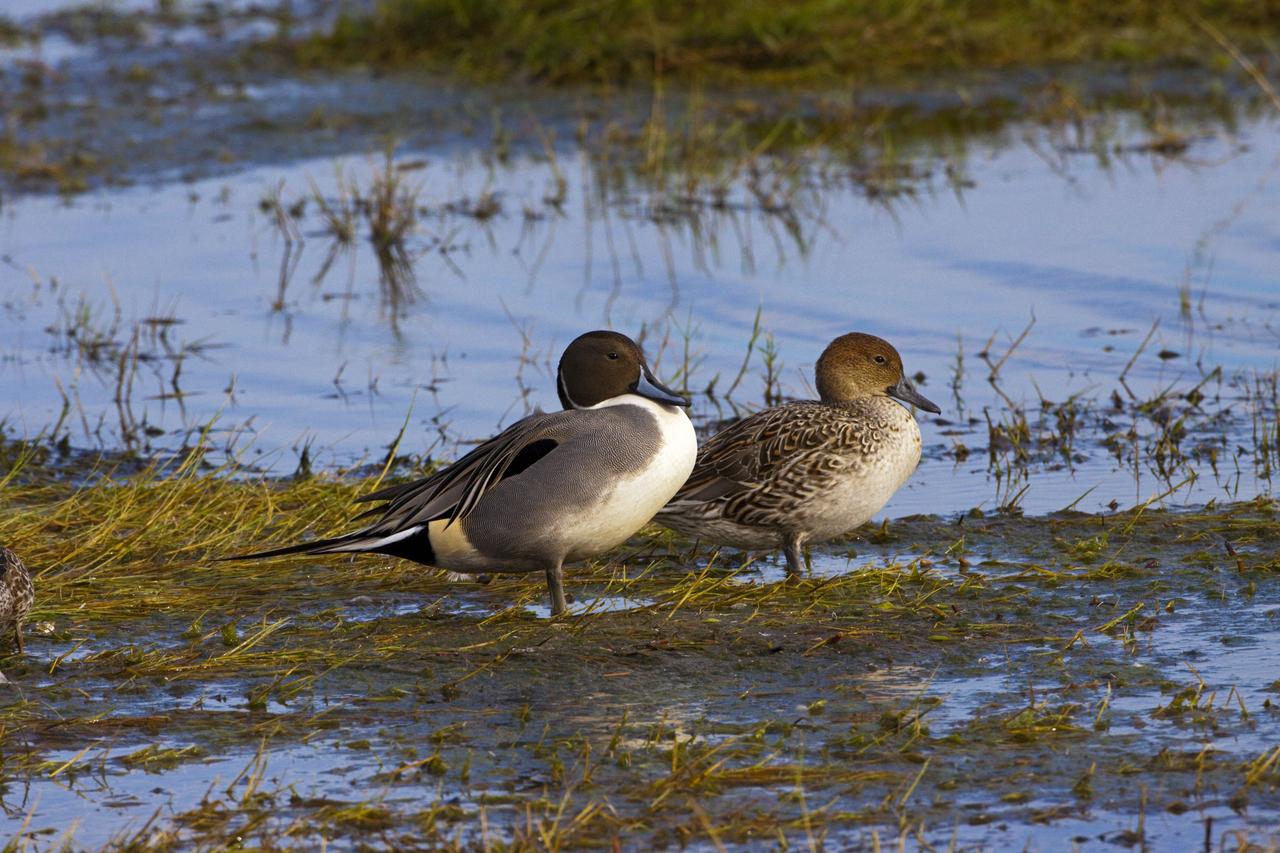
CAPE CANAVERAL, Fla. – A pair of northern pintail ducks rest on marsh grass in a pond at Black Point Wildlife Drive, part of the Merritt Island National Wildlife Refuge. NASA's Kennedy Space Center shares a boundary with the refuge, consisting of 140,000 acres. The Refuge provides a wide variety of habitats: coastal dunes, saltwater estuaries and marshes, freshwater impoundments, scrub, pine flatwoods, and hardwood hammocks that provide habitat for more than 1,500 species of plants and animals, including about 331 species of birds. Photo credit: NASA/Jim Grossmann
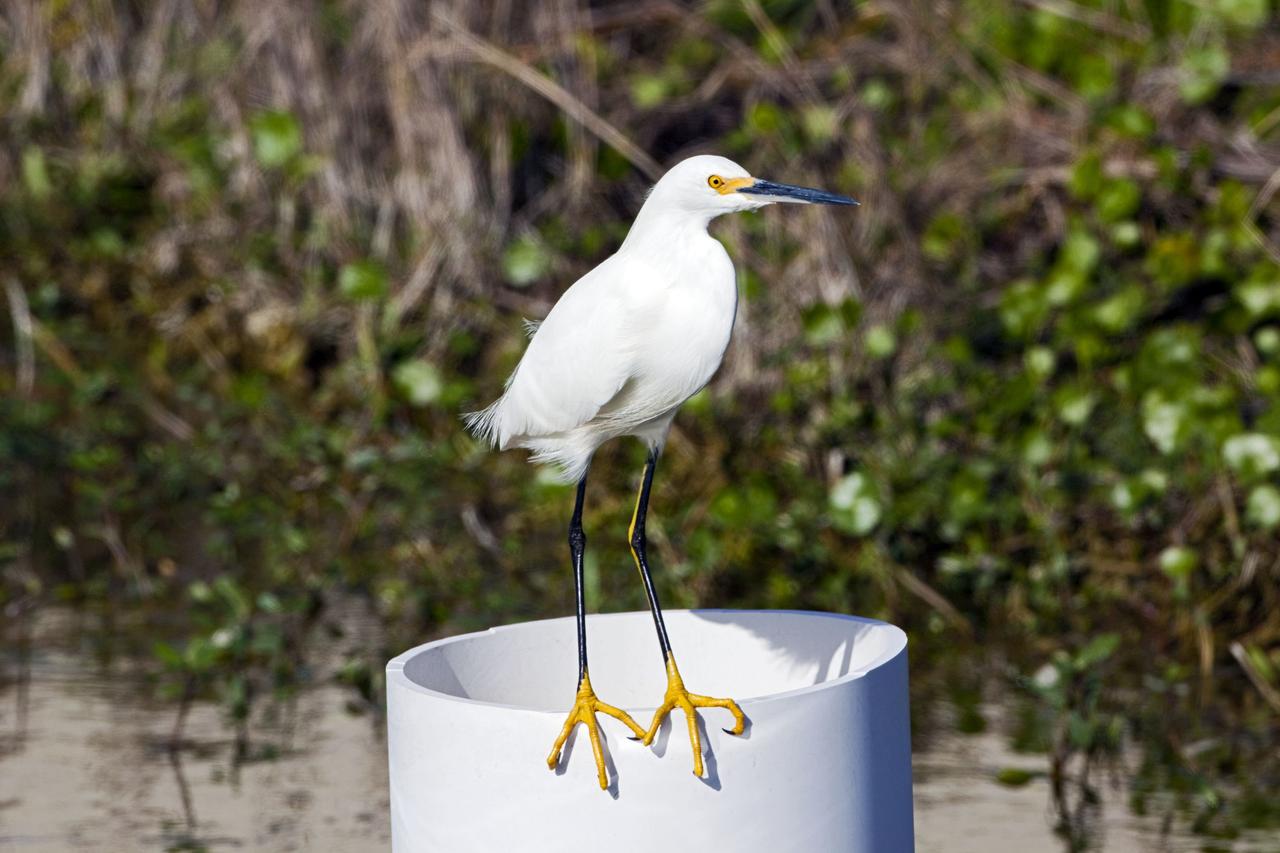
CAPE CANAVERAL, Fla. – Perched on a section of pipe, this snowy egret keeps a wary eye on the photographer on a sunny day at Black Point Wildlife Drive, part of the Merritt Island National Wildlife Refuge. NASA's Kennedy Space Center shares a boundary with the refuge, consisting of 140,000 acres. The Refuge provides a wide variety of habitats: coastal dunes, saltwater estuaries and marshes, freshwater impoundments, scrub, pine flatwoods, and hardwood hammocks that provide habitat for more than 1,500 species of plants and animals, including about 331 species of birds. Photo credit: NASA/Jim Grossmann
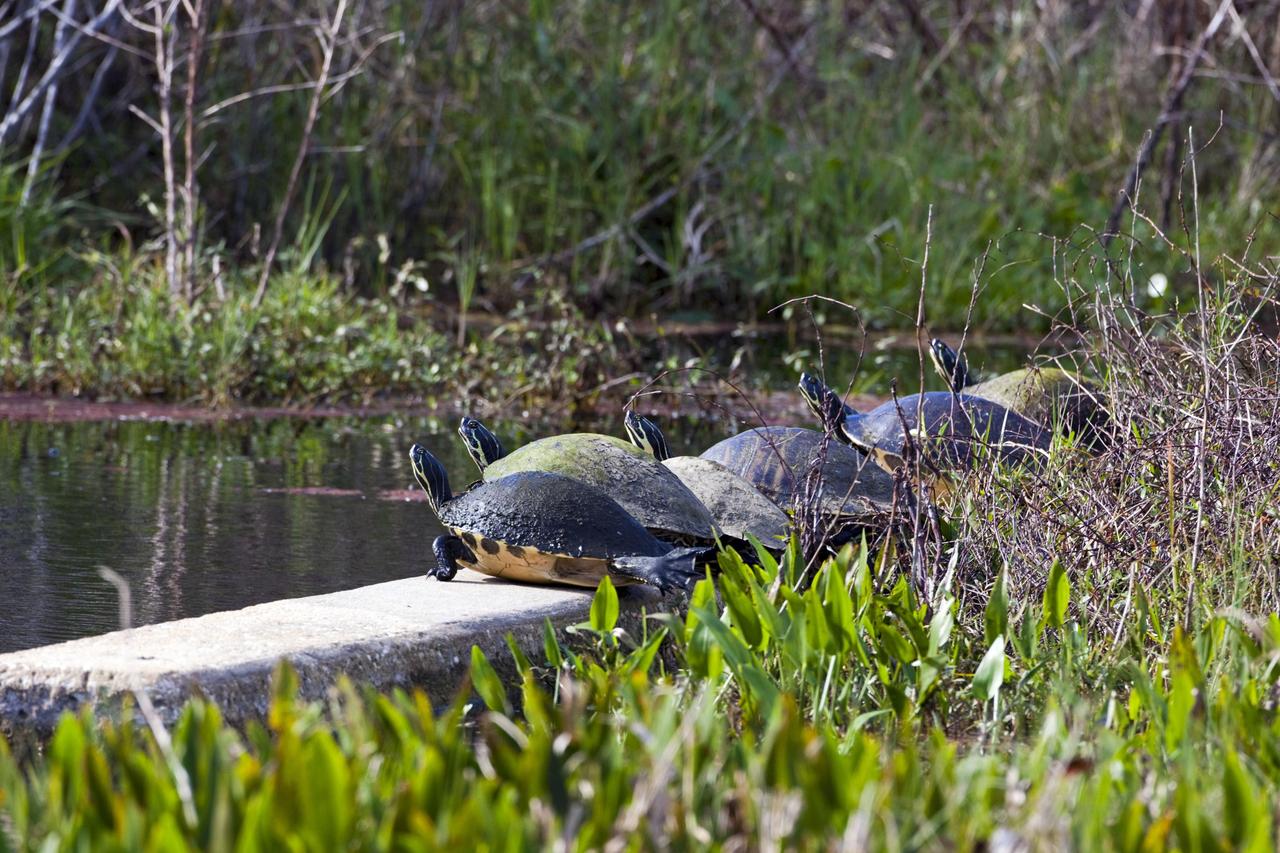
CAPE CANAVERAL, Fla. – Several Florida chicken turtles line up to sun themselves atop a concrete structure at Black Point Wildlife Drive, part of the Merritt Island National Wildlife Refuge. NASA's Kennedy Space Center shares a boundary with the refuge, consisting of 140,000 acres. The Refuge provides a wide variety of habitats: coastal dunes, saltwater estuaries and marshes, freshwater impoundments, scrub, pine flatwoods, and hardwood hammocks that provide habitat for more than 1,500 species of plants and animals, including about 331 species of birds. Photo credit: NASA/Jim Grossmann
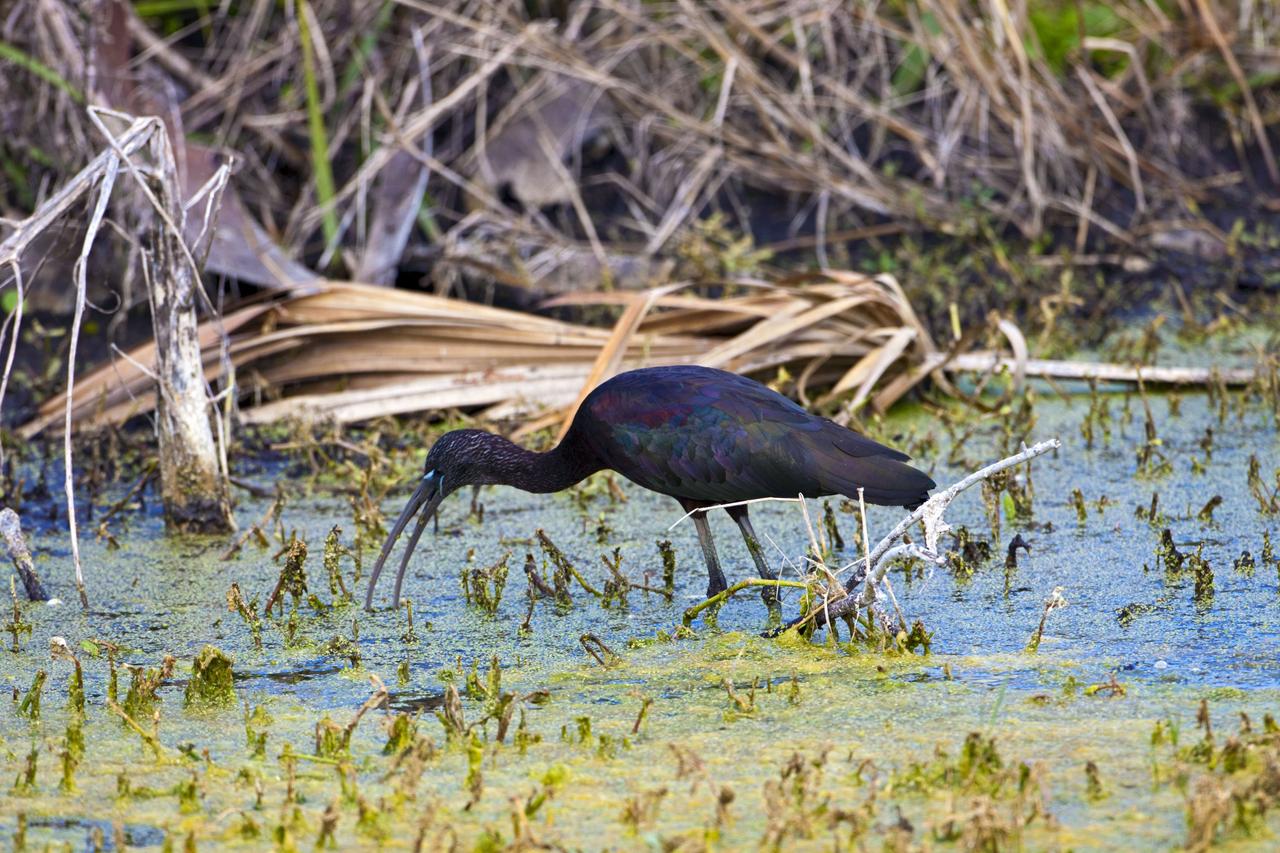
CAPE CANAVERAL, Fla. – A glossy ibis searches for food beneath the algae-covered surface of a pond at Black Point Wildlife Drive, part of the Merritt Island National Wildlife Refuge. NASA's Kennedy Space Center shares a boundary with the refuge, consisting of 140,000 acres. The Refuge provides a wide variety of habitats: coastal dunes, saltwater estuaries and marshes, freshwater impoundments, scrub, pine flatwoods, and hardwood hammocks that provide habitat for more than 1,500 species of plants and animals, including about 331 species of birds. Photo credit: NASA/Jim Grossmann
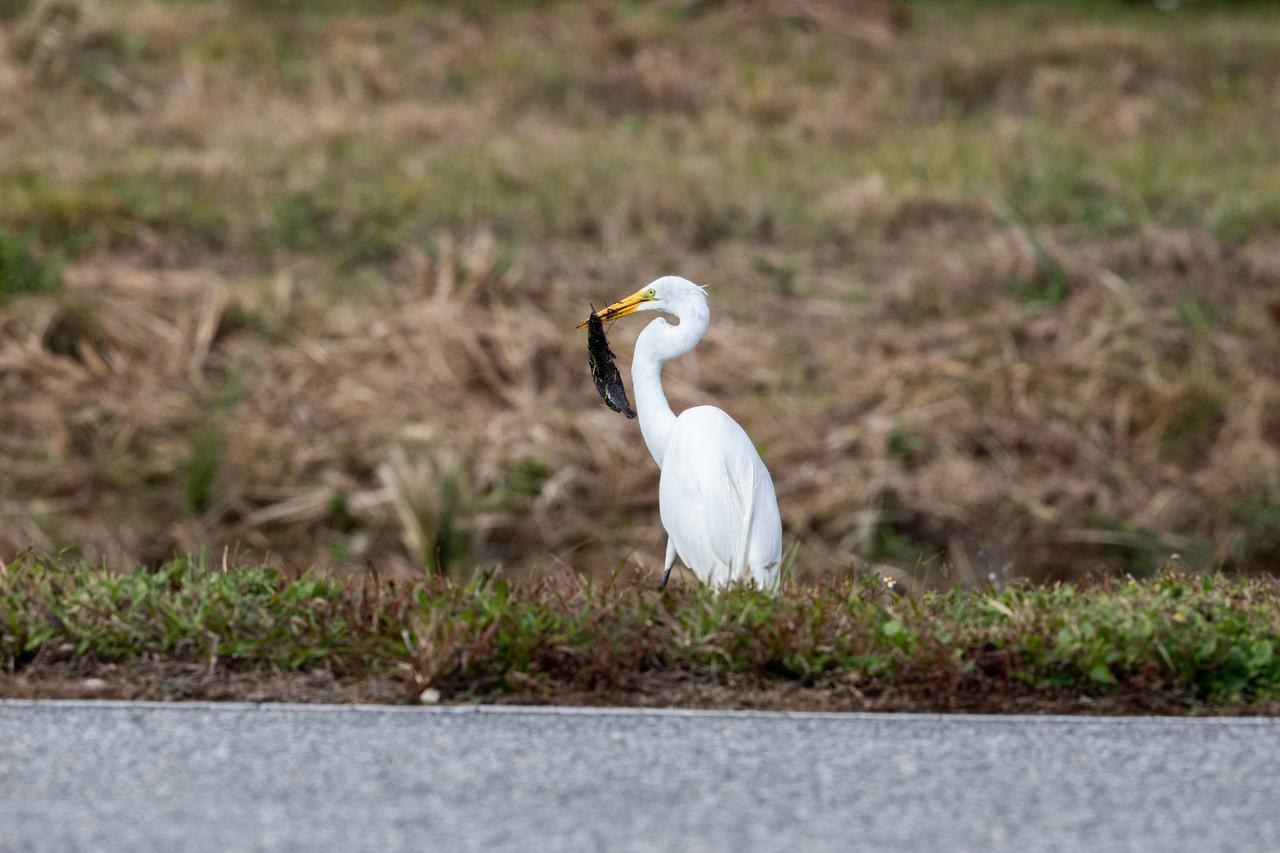
A Great Egret catches a fish in a waterway at NASA's Kennedy Space Center in Florida on Jan. 8, 2021. The center shares a border with the Merritt Island National Wildlife Refuge. More than 330 native and migratory bird species, 25 mammal, 117 fish and 65 amphibian and reptile species call Kennedy and the wildlife refuge home.
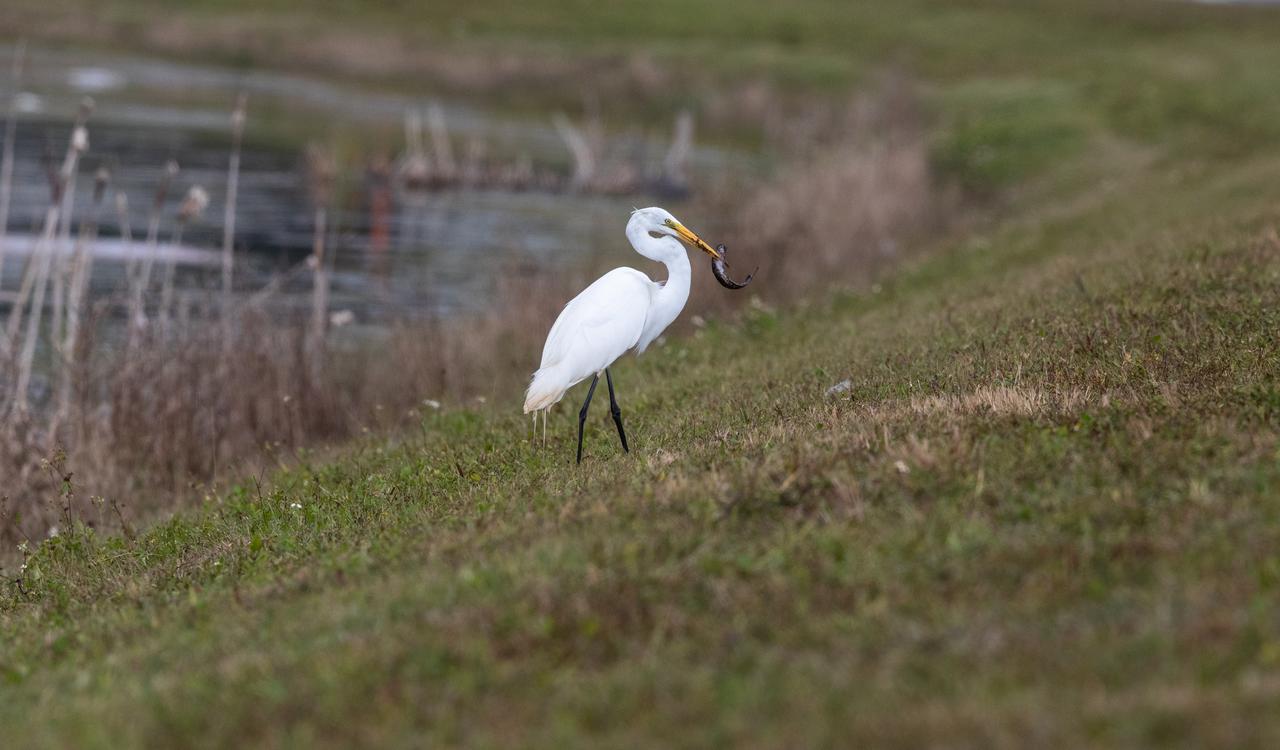
A Great Egret catches a fish in a waterway at NASA's Kennedy Space Center in Florida on Jan. 8, 2021. The center shares a border with the Merritt Island National Wildlife Refuge. More than 330 native and migratory bird species, 25 mammal, 117 fish and 65 amphibian and reptile species call Kennedy and the wildlife refuge home.
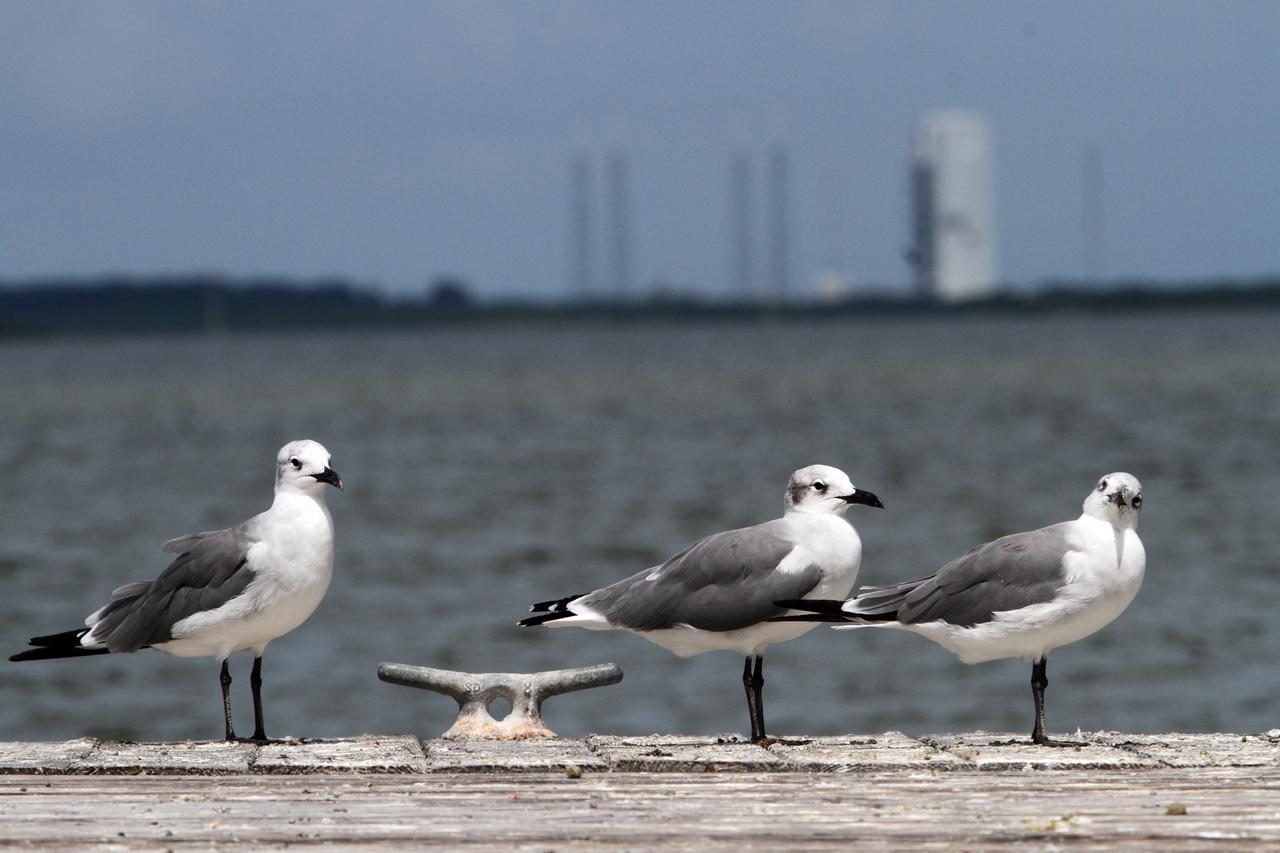
CAPE CANAVERAL, Fla. – At NASA’s Kennedy Space Center in Florida, three seagulls stand on a dock along the NASA Causeway admiring the view of the intercoastal waterway. The seagull to the right seems to have a somewhat quizzical look. The center shares a boundary with the Merritt Island National Wildlife Refuge, consisting of 140,000 acres. The Refuge provides a wide variety of habitats: coastal dunes, saltwater estuaries and marshes, freshwater impoundments, scrub, pine flatwoods, and hardwood hammocks that provide habitat for more than 1,500 species of plants and animals, including about 331 species of birds. Photo credit: NASA_Ben Smegelsky
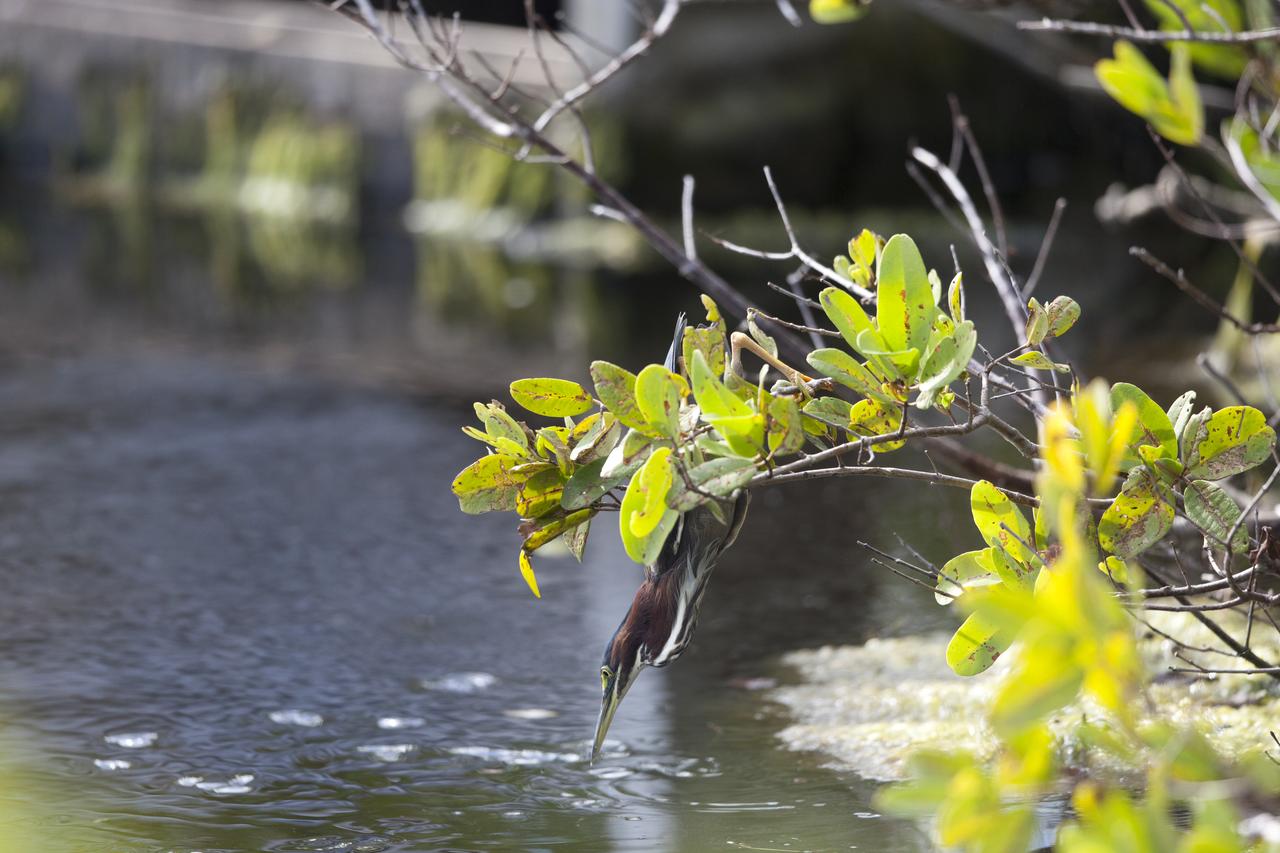
A little green heron is perched in a tree at NASA's Kennedy Space Center in Florida. Kennedy shares a boundary with the Merritt Island National Wildlife Refuge. The refuge encompasses 140,000 acres that are a habitat for more than 331 species of birds, 31 mammals, 117 fish, and 65 amphibians and reptiles. The marshes and open water of the refuge provide wintering areas for 23 species of migratory waterfowl, as well as a year-round home for great blue herons, great egrets, wood storks, cormorants, brown pelicans and other species of marsh and shore birds.
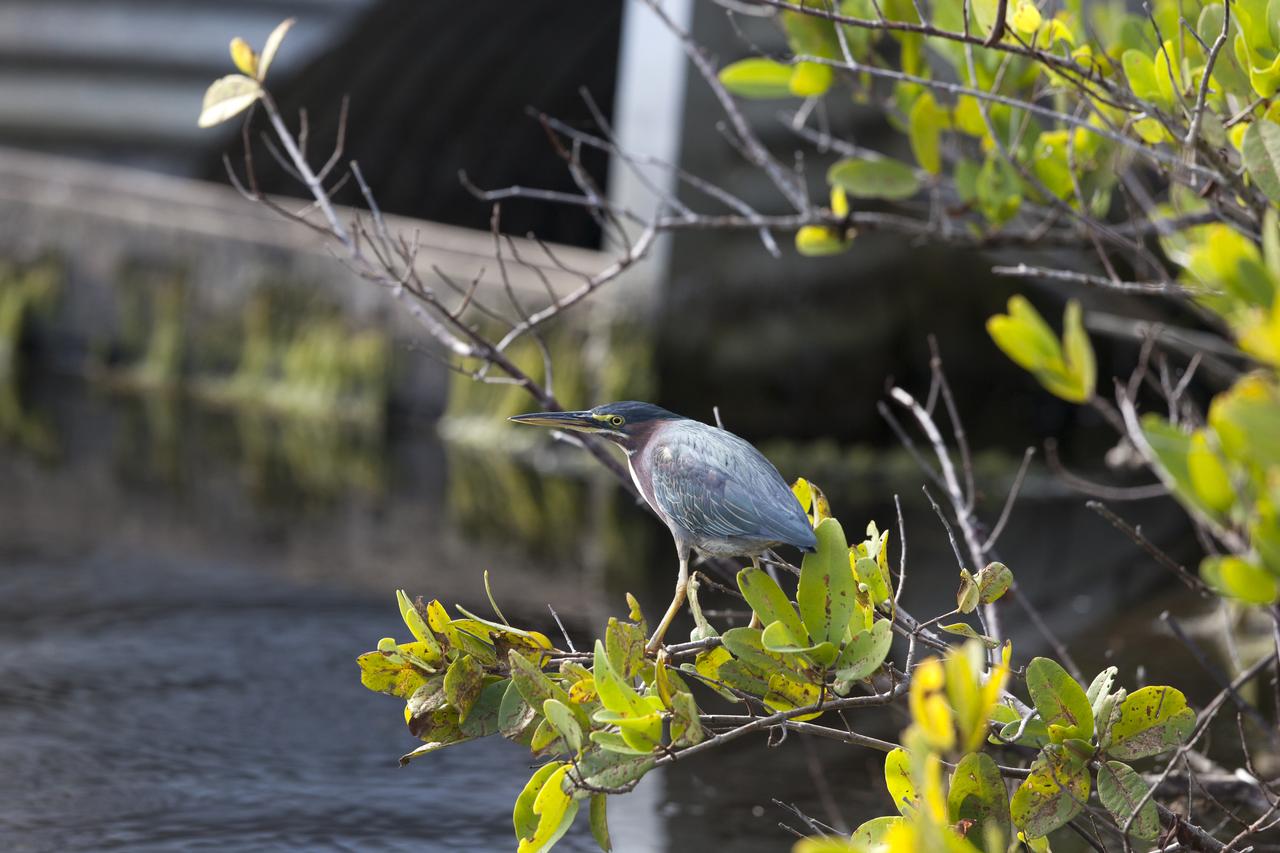
A little green heron is perched in a tree at NASA's Kennedy Space Center in Florida. Kennedy shares a boundary with the Merritt Island National Wildlife Refuge. The refuge encompasses 140,000 acres that are a habitat for more than 331 species of birds, 31 mammals, 117 fish, and 65 amphibians and reptiles. The marshes and open water of the refuge provide wintering areas for 23 species of migratory waterfowl, as well as a year-round home for great blue herons, great egrets, wood storks, cormorants, brown pelicans and other species of marsh and shore birds.
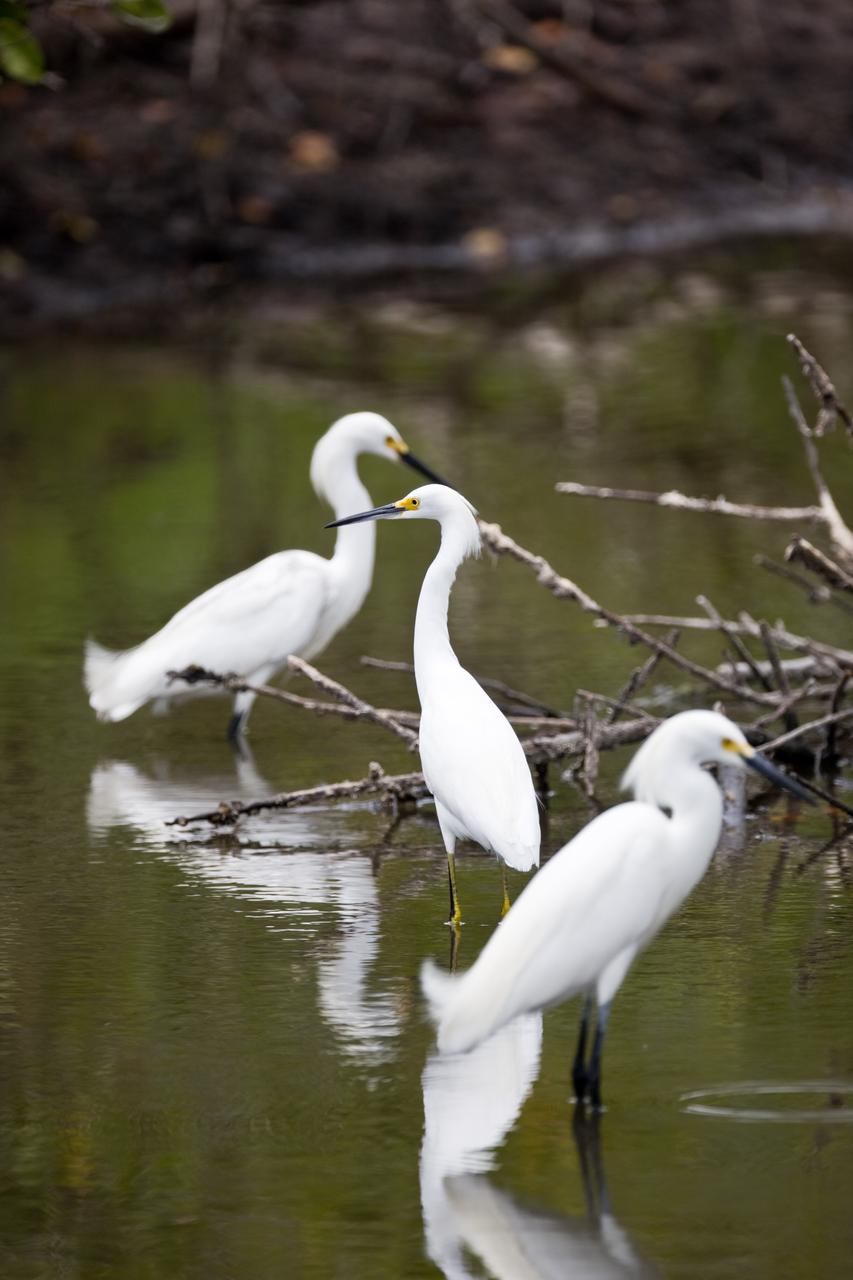
CAPE CANAVERAL, Fla. –– Snowy egrets gather in water on NASA's Kennedy Space Center in Florida. They are distinguished by their slim black beaks, black legs and yellow feet. These egrets inhabit salt marshes, ponds, rice fields and shallow coastal bays. The center shares a boundary with the Merritt Island Wildlife Nature Refuge, which is a habitat for more than 310 species of birds, 25 mammals, 117 fishes and 65 amphibians and reptiles. Photo credit: NASA/Dimitri Gerondidakis
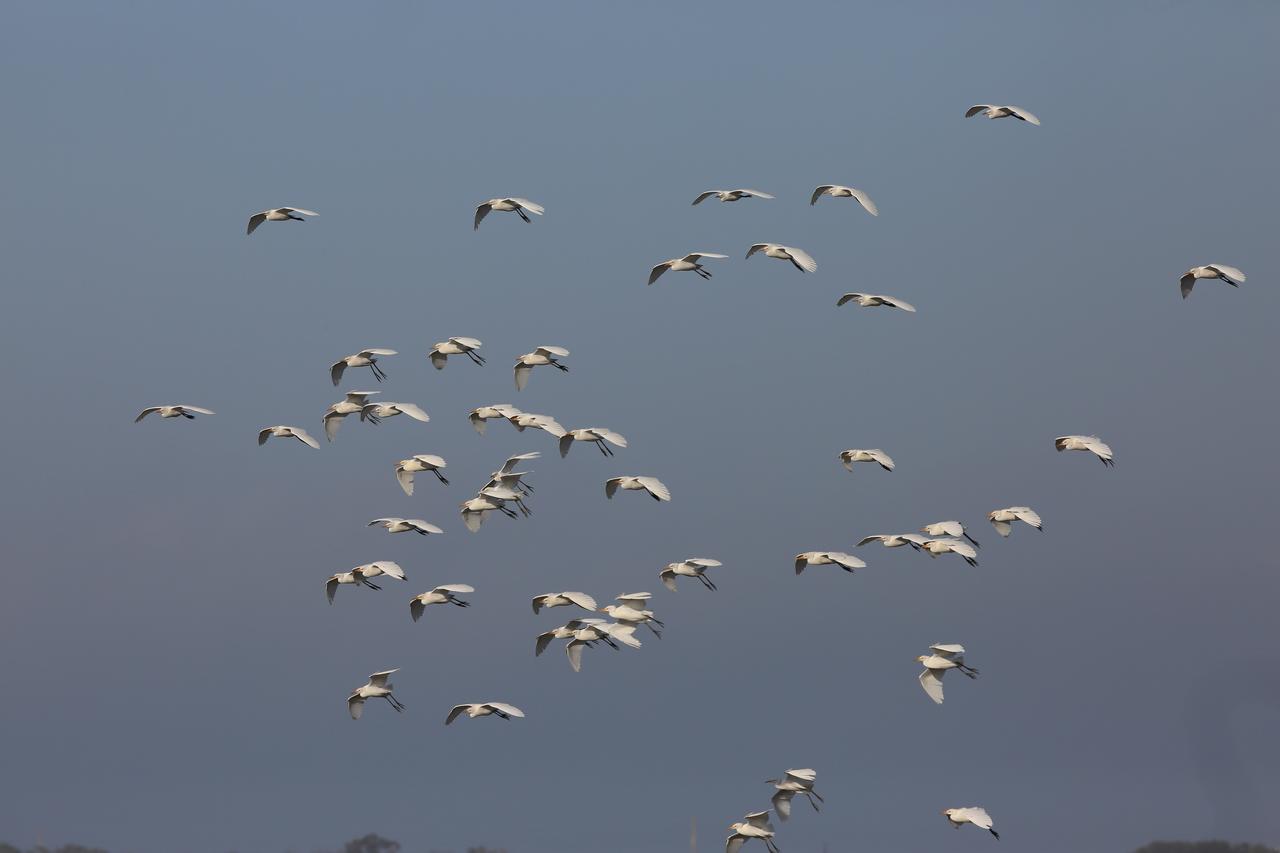
A flock of egrets soars above the Skid Strip at Cape Canaveral Air Force Station, near NASA's Kennedy Space Center in Florida. The center shares a boundary with the Merritt Island National Wildlife Refuge. The refuge is home to more than 65 amphibian and reptile species, along with 330 native and migratory bird species, 25 mammal and 117 fish species.
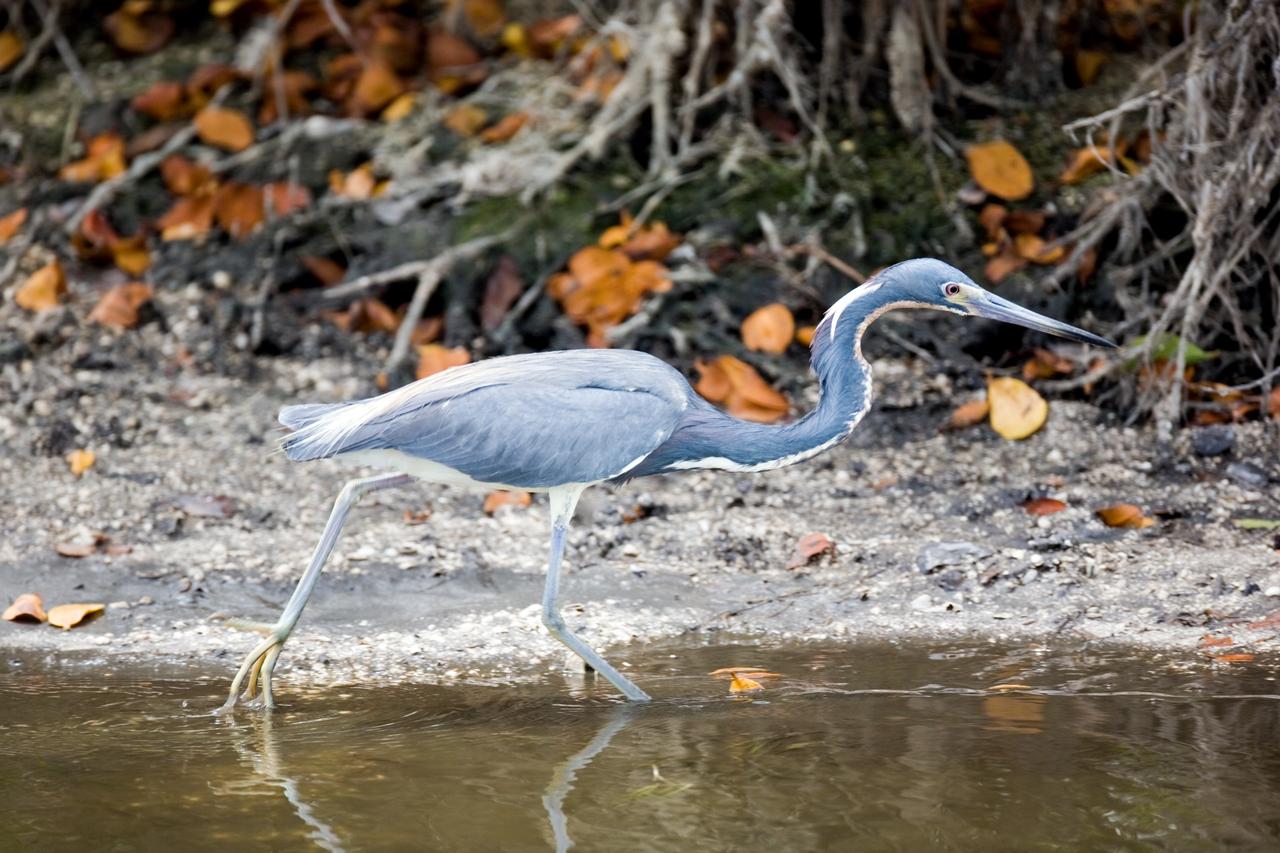
CAPE CANAVERAL, Fla. –– One of the most numerous herons in the Deep South, this Louisiana Heron stalks the water at NASA's Kennedy Space Center in Florida looking for food, usually frogs or fish. The range of this species is the Atlantic and Gulf coasts from Massachusetts south, wintering from Virginia to South America. The center shares a boundary with the Merritt Island Wildlife Nature Refuge, which is a habitat for more than 310 species of birds, 25 mammals, 117 fishes and 65 amphibians and reptiles. Photo credit: NASA/Dimitri Gerondidakis