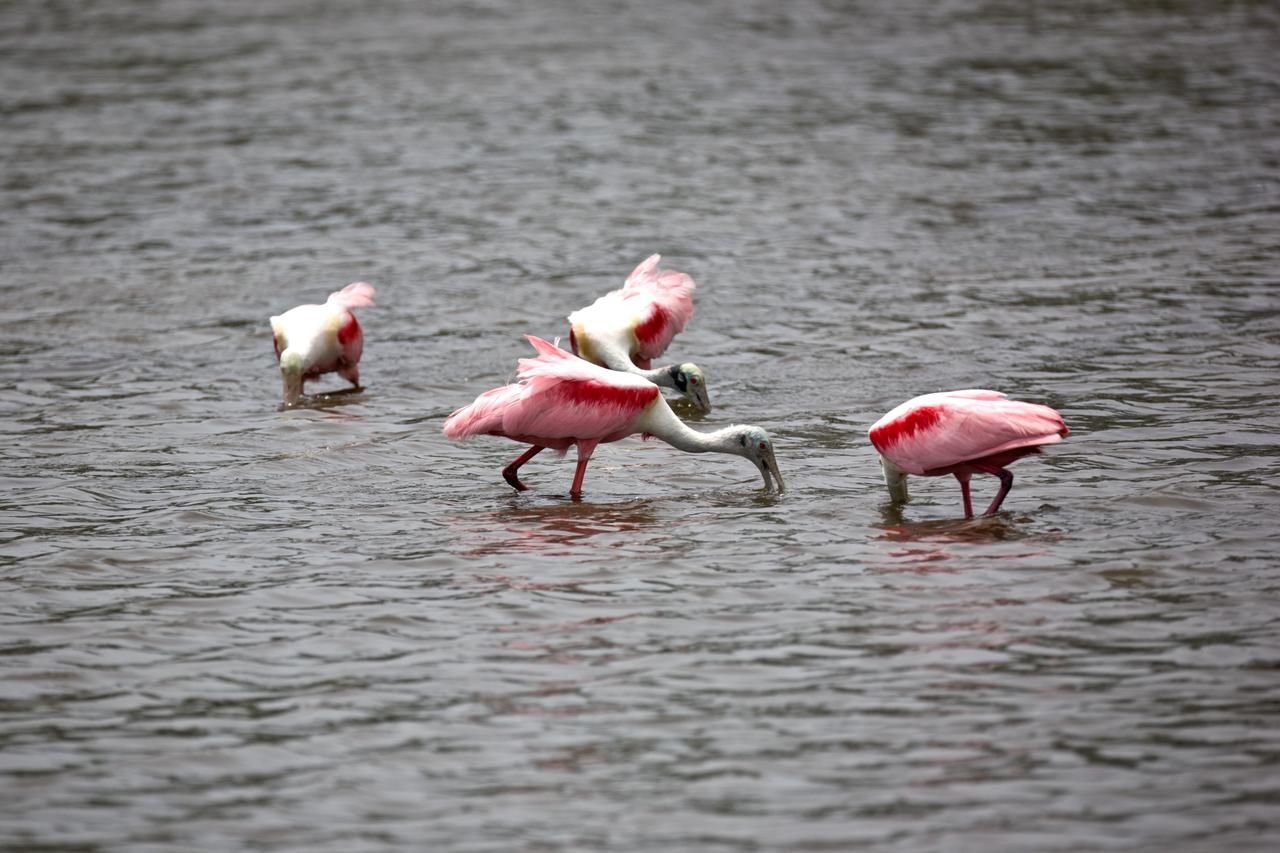
CAPE CANAVERAL, Fla. –– On NASA's Kennedy Space Center in Florida, scarlet-feathered roseate spoonbills feed in the water. Spoonbills inhabit areas of mangrove such as on the coasts of southern Florida and Texas. These birds feed on shrimps and fish in the shallow water, sweeping their bills from side to side. This and other wildlife abound throughout Kennedy as the center shares a boundary with the Merritt Island National Wildlife Refuge. The marshes and open water of the refuge provide wintering areas for 23 species of migratory waterfowl, as well as a year-round home for great blue herons, great egrets, wood storks, cormorants, brown pelicans and other species of marsh and shore birds. Photo credit: NASA/Dimitri Gerondidakis
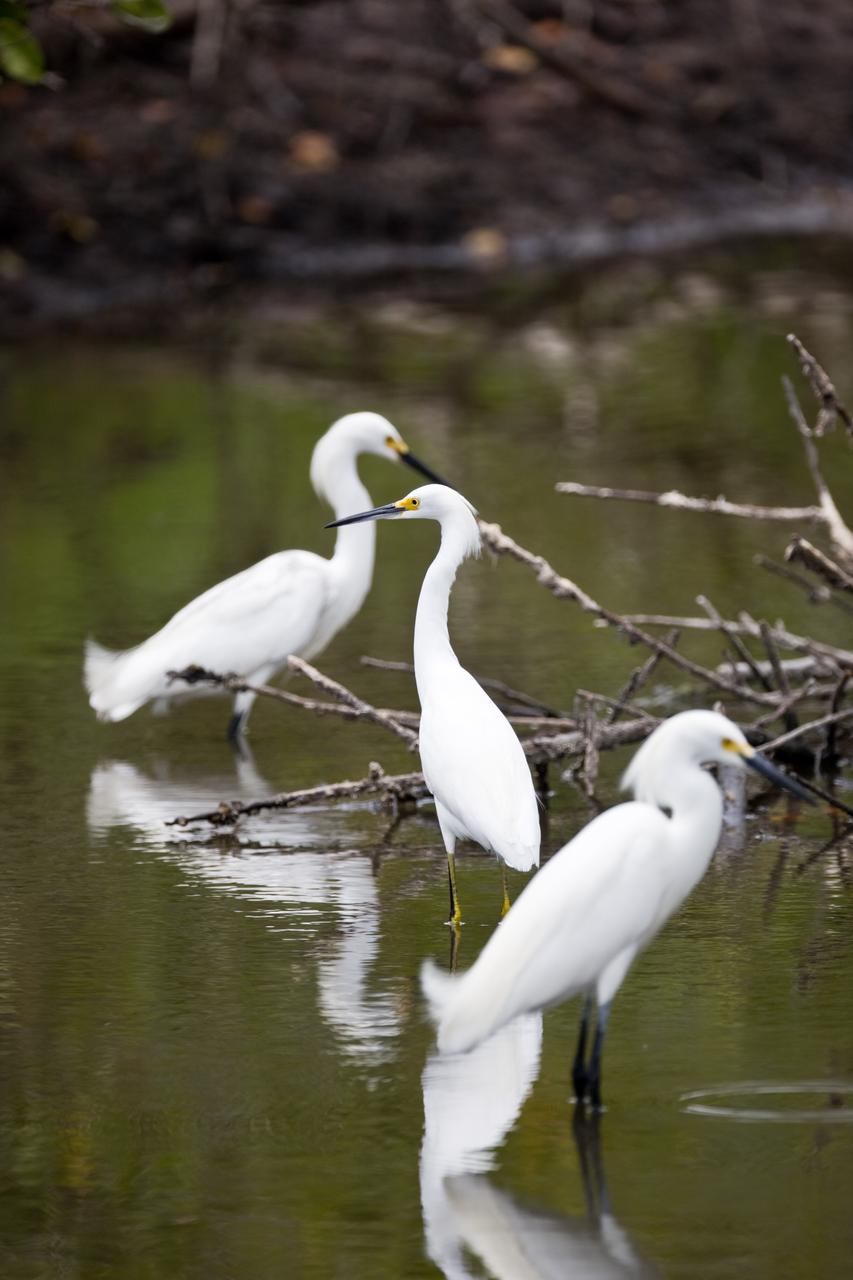
CAPE CANAVERAL, Fla. –– Snowy egrets gather in water on NASA's Kennedy Space Center in Florida. They are distinguished by their slim black beaks, black legs and yellow feet. These egrets inhabit salt marshes, ponds, rice fields and shallow coastal bays. The center shares a boundary with the Merritt Island Wildlife Nature Refuge, which is a habitat for more than 310 species of birds, 25 mammals, 117 fishes and 65 amphibians and reptiles. Photo credit: NASA/Dimitri Gerondidakis
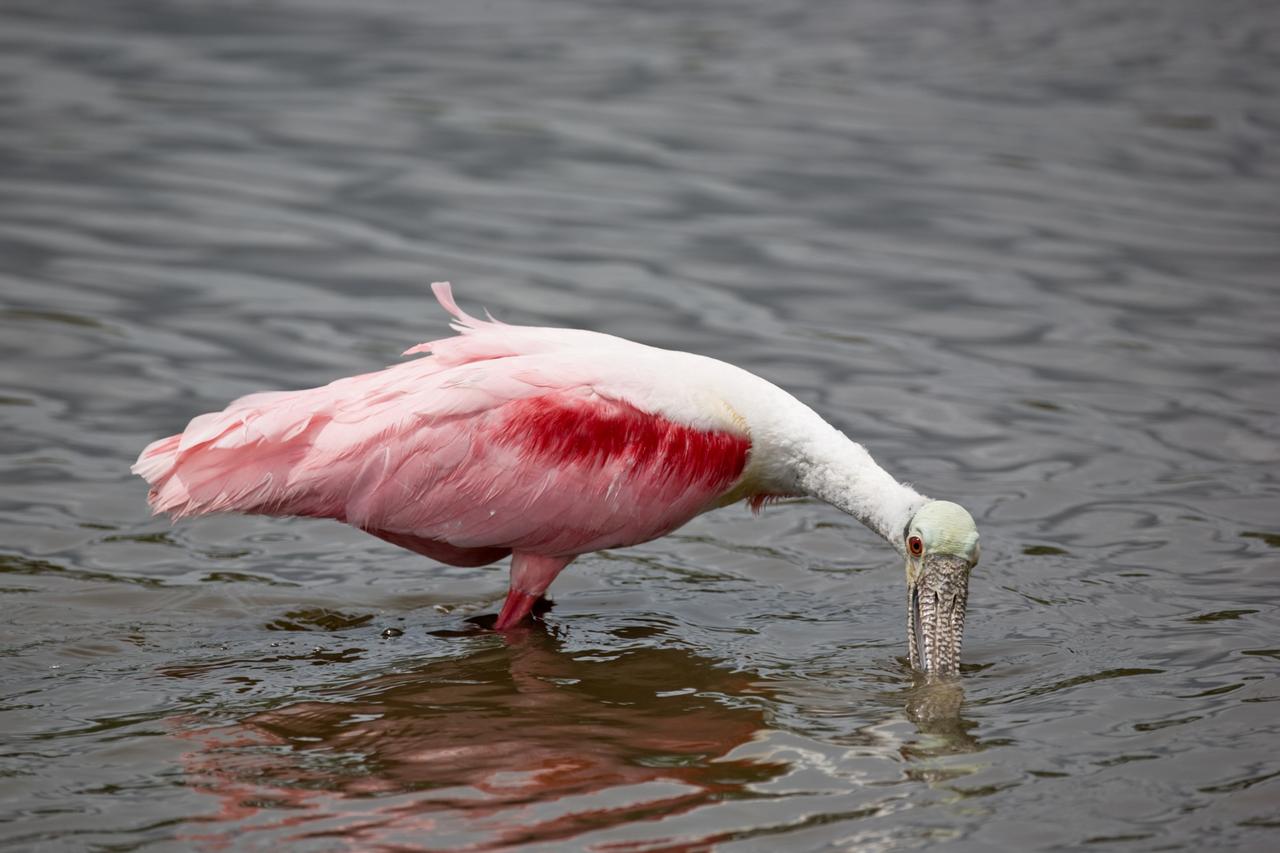
CAPE CANAVERAL, Fla. –– On NASA's Kennedy Space Center in Florida, the scarlet-feathered roseate spoonbill feeds in the water. Spoonbills inhabit areas of mangrove such as on the coasts of southern Florida and Texas. These birds feed on shrimps and fish in the shallow water, sweeping their bills from side to side. This and other wildlife abound throughout Kennedy as the center shares a boundary with the Merritt Island National Wildlife Refuge. The marshes and open water of the refuge provide wintering areas for 23 species of migratory waterfowl, as well as a year-round home for great blue herons, great egrets, wood storks, cormorants, brown pelicans and other species of marsh and shore birds. Photo credit: NASA/Dimitri Gerondidakis
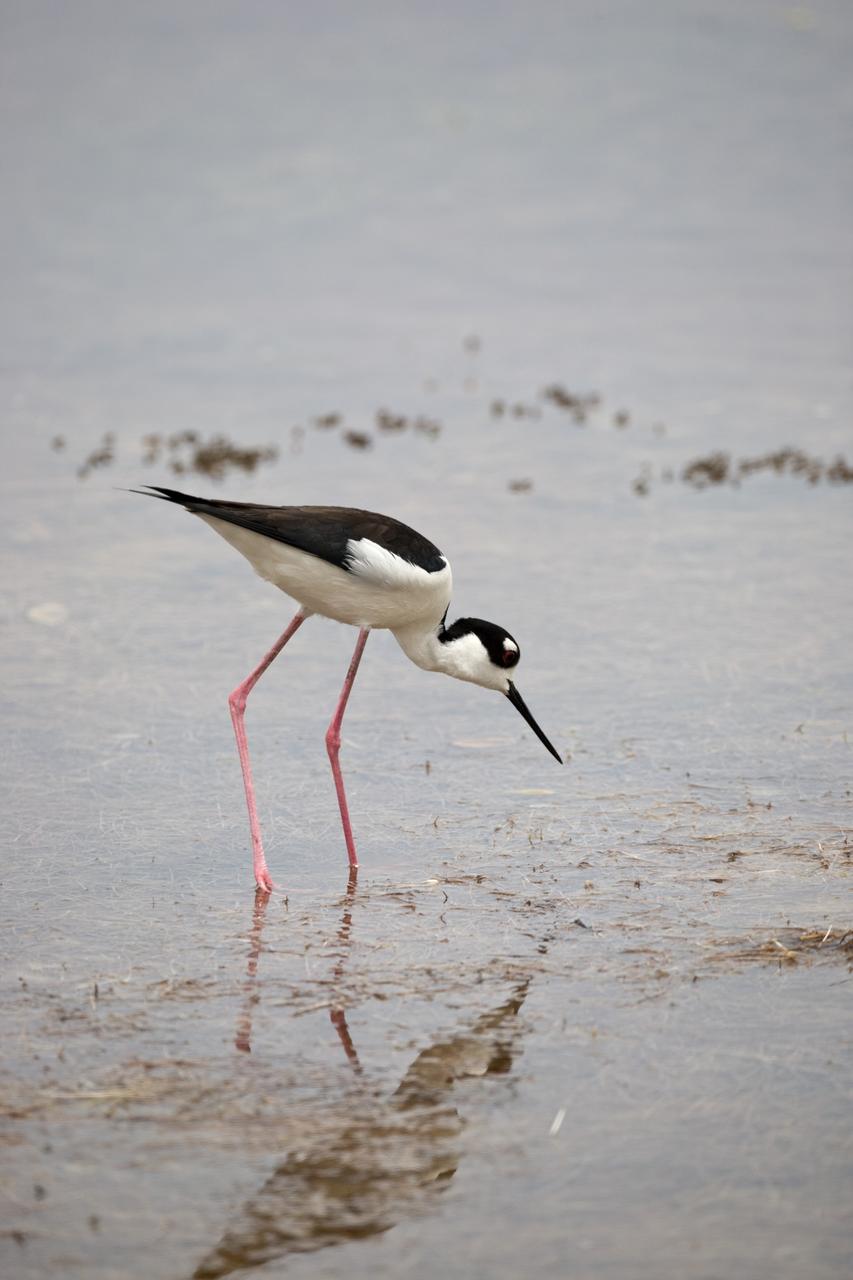
CAPE CANAVERAL, Fla. –– A black-necked stilt searches the shallow water for food at NASA's Kennedy Space Center in Florida. The species inhabits salt marshes and coastal bays in the East, ranging along the Atlantic Coast from Delaware and the Carolinas to northern South America. Kennedy shares a boundary with the Merritt Island National Wildlife Refuge that includes salt-water estuaries, brackish marshes, hardwood hammocks and pine flatwoods. The diverse landscape provides habitat for more than 310 species of birds, 25 mammals, 117 fishes and 65 amphibians and reptiles. Photo credit: NASA/Dimitri Gerondidakis
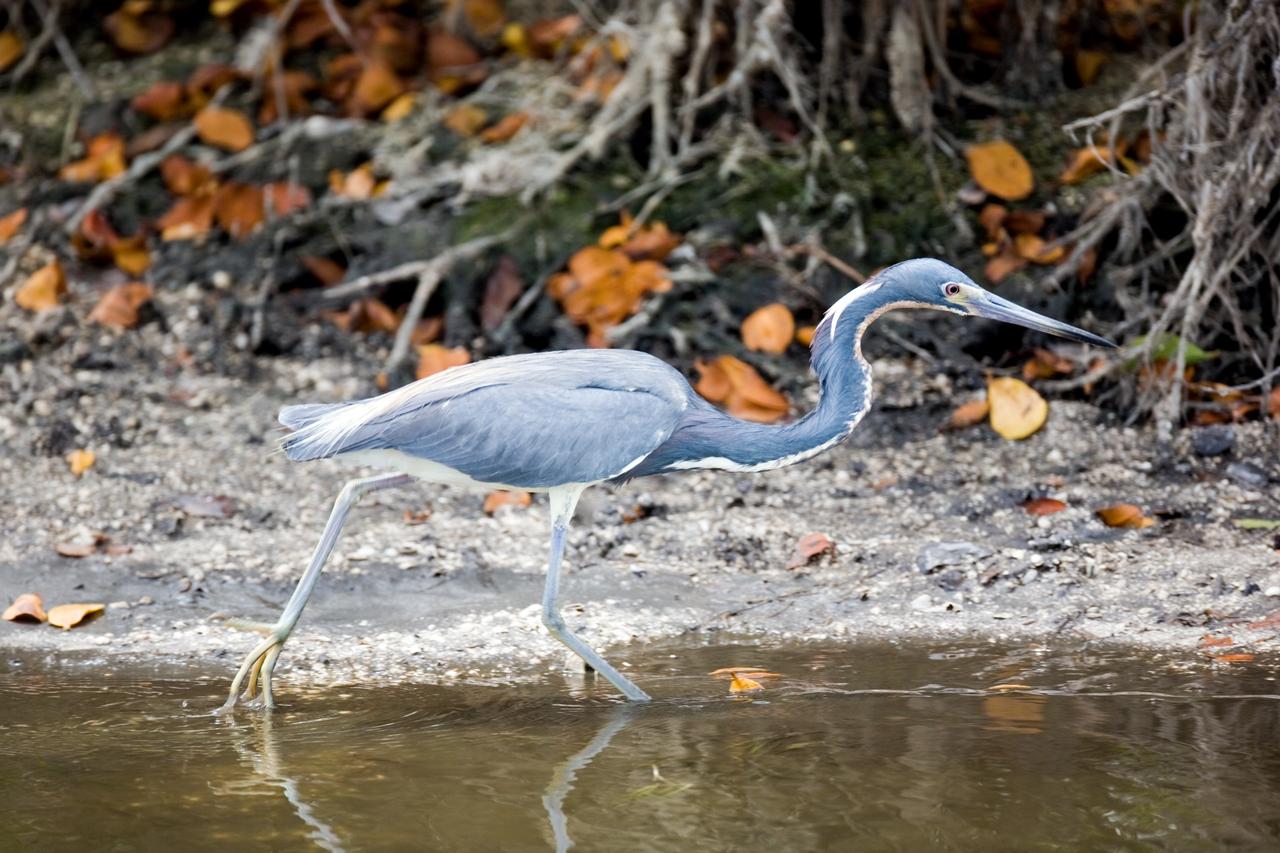
CAPE CANAVERAL, Fla. –– One of the most numerous herons in the Deep South, this Louisiana Heron stalks the water at NASA's Kennedy Space Center in Florida looking for food, usually frogs or fish. The range of this species is the Atlantic and Gulf coasts from Massachusetts south, wintering from Virginia to South America. The center shares a boundary with the Merritt Island Wildlife Nature Refuge, which is a habitat for more than 310 species of birds, 25 mammals, 117 fishes and 65 amphibians and reptiles. Photo credit: NASA/Dimitri Gerondidakis
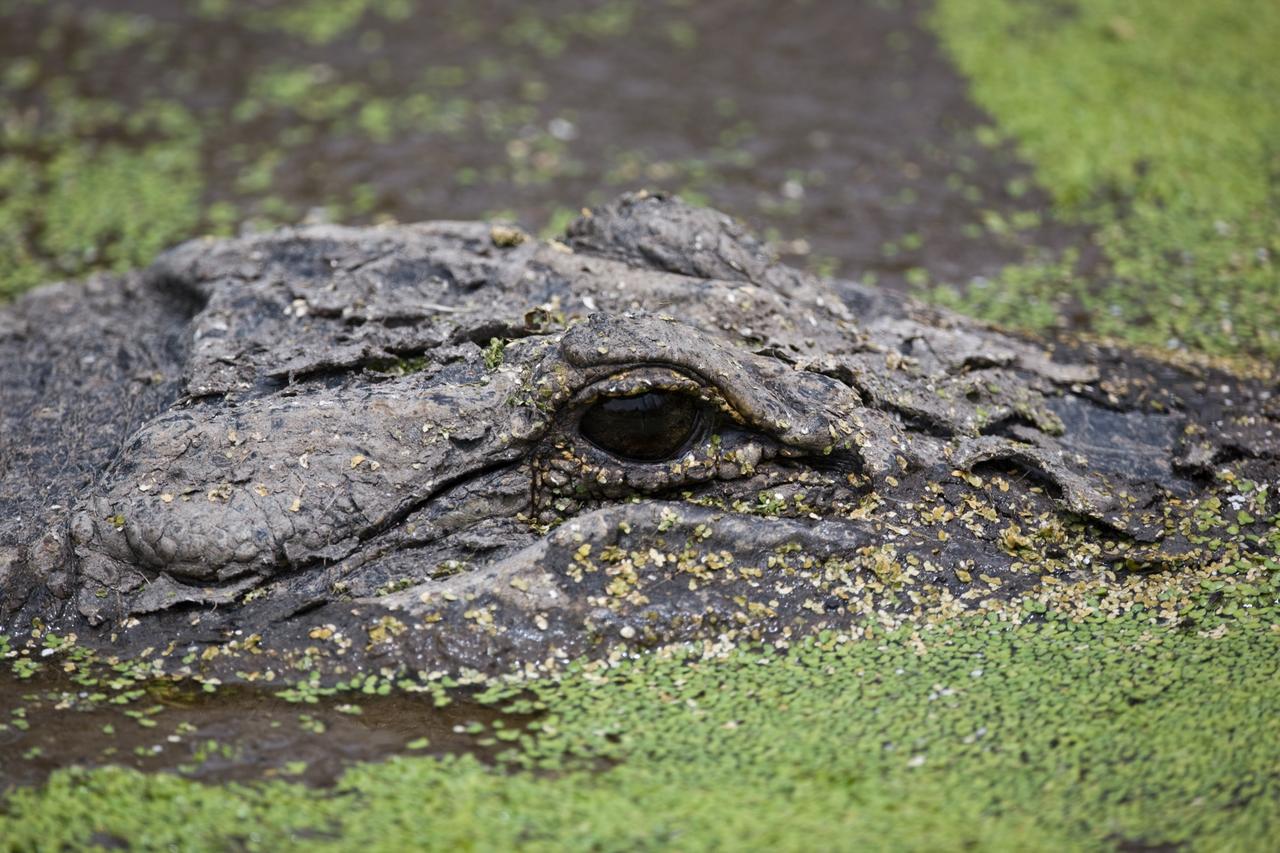
CAPE CANAVERAL, Fla. –– Who is watching whom, as this alligator appears to stare into the camera (at a safe distance away) from its watery site. Alligators can be spotted in the drainage canals and other waters surrounding Kennedy. The center shares a boundary with the Merritt Island Wildlife Nature Refuge, which is a habitat for more than 310 species of birds, 25 mammals, 117 fishes and 65 amphibians and reptiles. Photo credit: NASA/Dimitri Gerondidakis
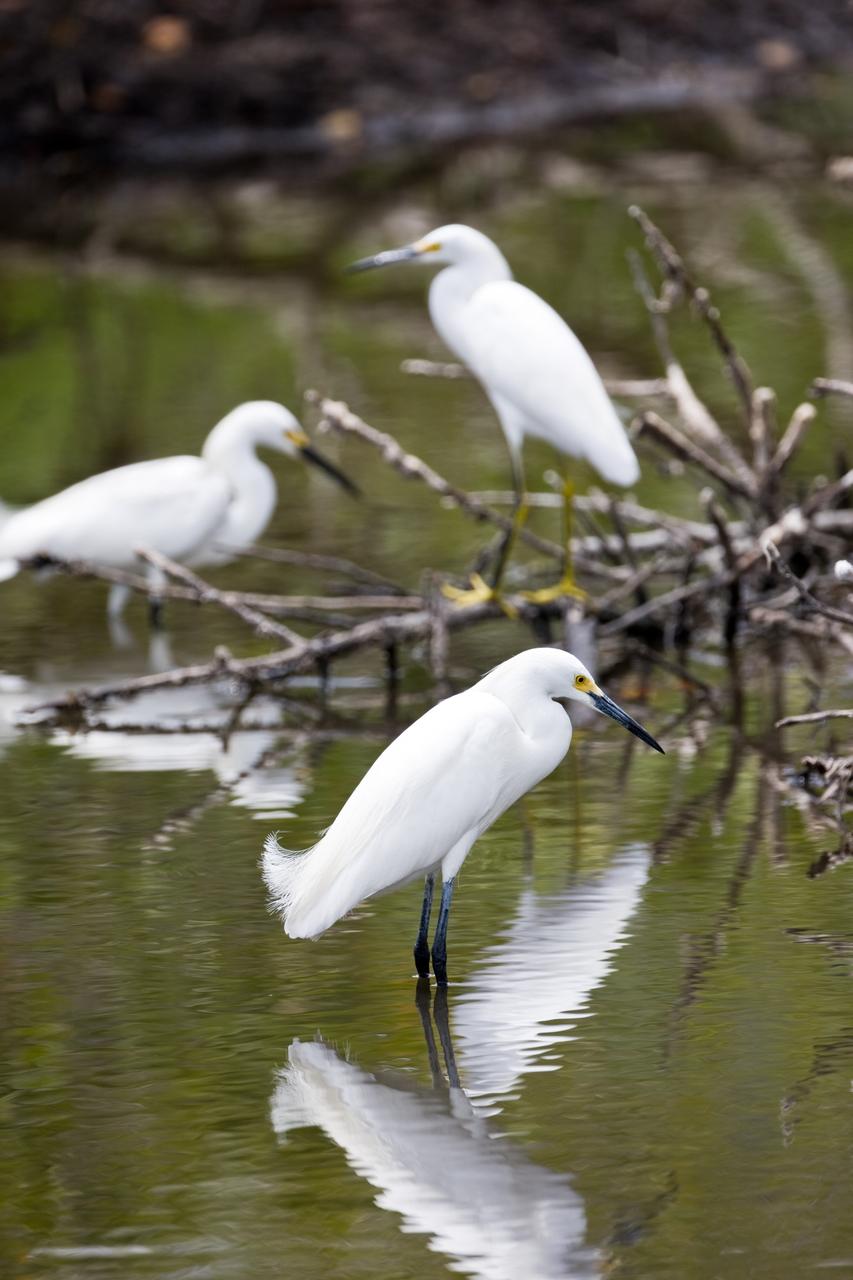
CAPE CANAVERAL, Fla. –– Snowy egrets gather in water on NASA's Kennedy Space Center in Florida. They are distinguished by their slim black beaks, black legs and yellow feet. These egrets inhabit salt marshes, ponds, rice fields and shallow coastal bays. The center shares a boundary with the Merritt Island Wildlife Nature Refuge, which is a habitat for more than 310 species of birds, 25 mammals, 117 fishes and 65 amphibians and reptiles. Photo credit: NASA/Dimitri Gerondidakis
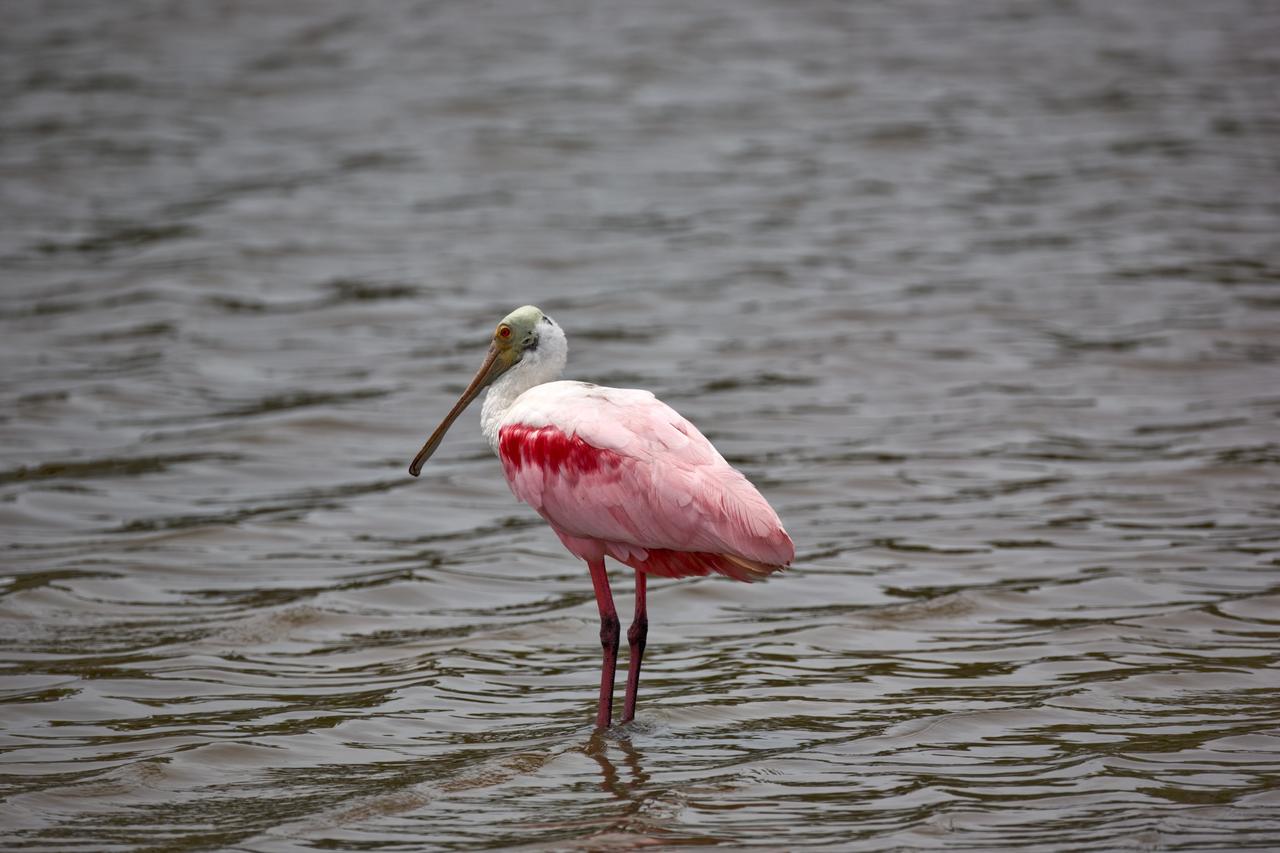
CAPE CANAVERAL, Fla. –– On NASA's Kennedy Space Center in Florida, the scarlet-feathered roseate spoonbill waits in the water for a tempting meal . Spoonbills inhabit areas of mangrove such as on the coasts of southern Florida and Texas. These birds feed on shrimps and fish in the shallow water, sweeping their bills from side to side. This and other wildlife abound throughout Kennedy as the center shares a boundary with the Merritt Island National Wildlife Refuge. Photo credit: NASA/Dimitri Gerondidakis
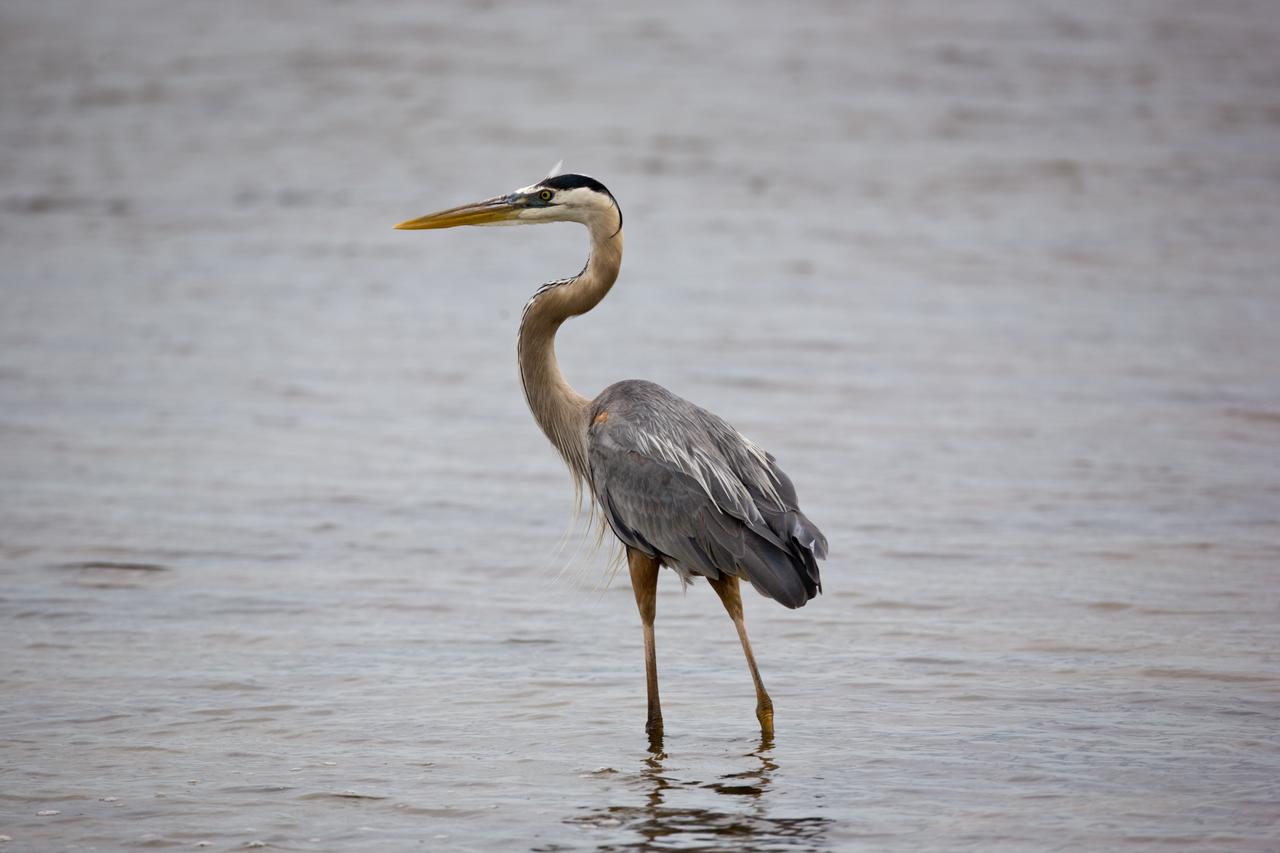
CAPE CANAVERAL, Fla. –– A great blue heron takes its familiar stance at the edge of the water, watching for fish or frogs, at NASA's Kennedy Space Center in Florida. A frequent sight around Kennedy, this large heron inhabits lakes, ponds, rivers and marshes in a range from Alaska south to Mexico and the West Indies. Kennedy shares a boundary with the Merritt Island National Wildlife Refuge that includes salt-water estuaries, brackish marshes, hardwood hammocks and pine flatwoods. Photo credit: NASA/Dimitri Gerondidakis
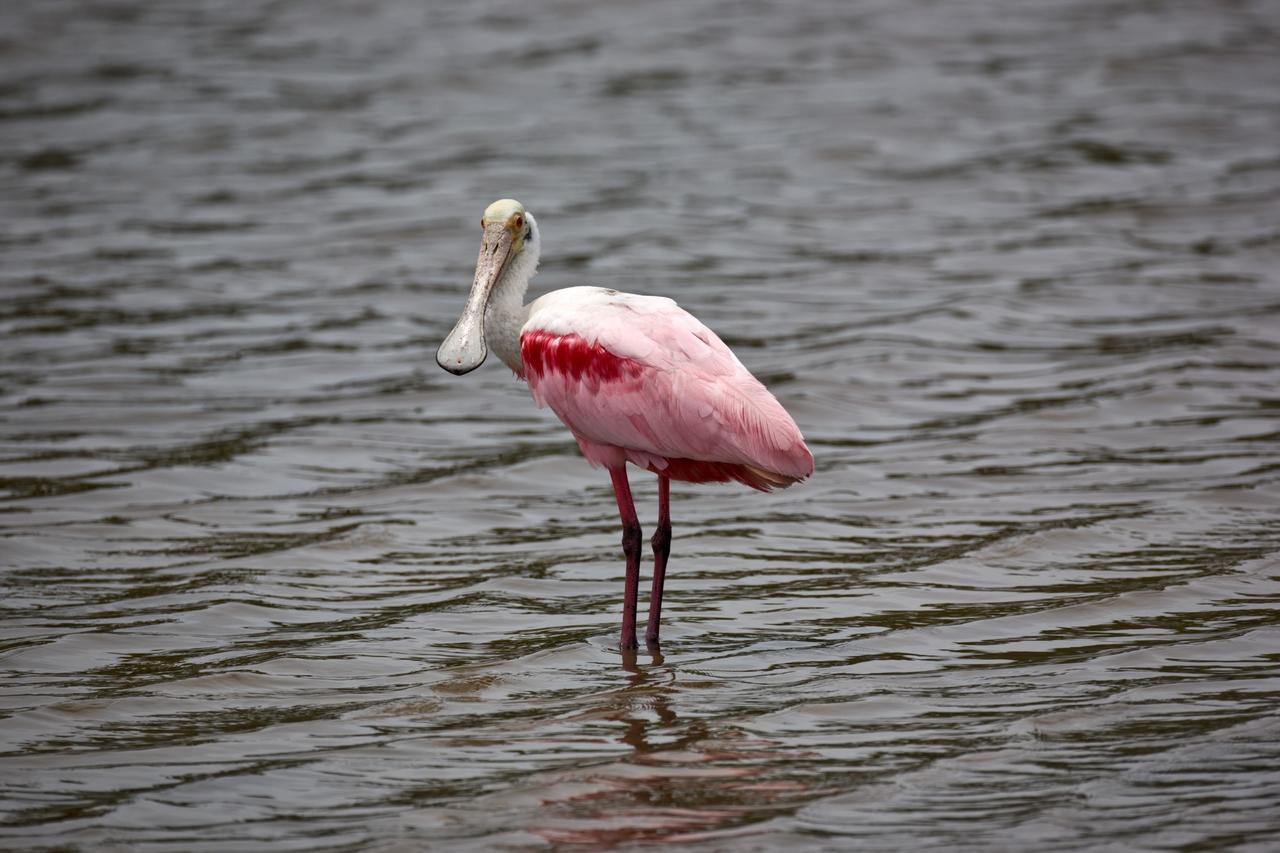
CAPE CANAVERAL, Fla. –– On NASA's Kennedy Space Center in Florida, the scarlet-feathered roseate spoonbill eyes the camera. Spoonbills inhabit areas of mangrove such as on the coasts of southern Florida and Texas. These birds feed on shrimps and fish in the shallow water, sweeping their bills from side to side. This and other wildlife abound throughout Kennedy as the center shares a boundary with the Merritt Island National Wildlife Refuge. Photo credit: NASA/Dimitri Gerondidakis

CAPE CANAVERAL, Fla. –– A cormorant enjoys the sunshine while standing in the water on NASA's Kennedy Space Center in Florida. The bird is a common sight around Kennedy, which shares a boundary with the Merritt Island National Wildlife Refuge. The marshes and open water of the refuge provide wintering areas for 23 species of migratory waterfowl, as well as a year-round home for great blue herons, great egrets, wood storks, cormorants, brown pelicans and other species of marsh and shore birds. Photo credit: NASA/Dimitri Gerondidakis
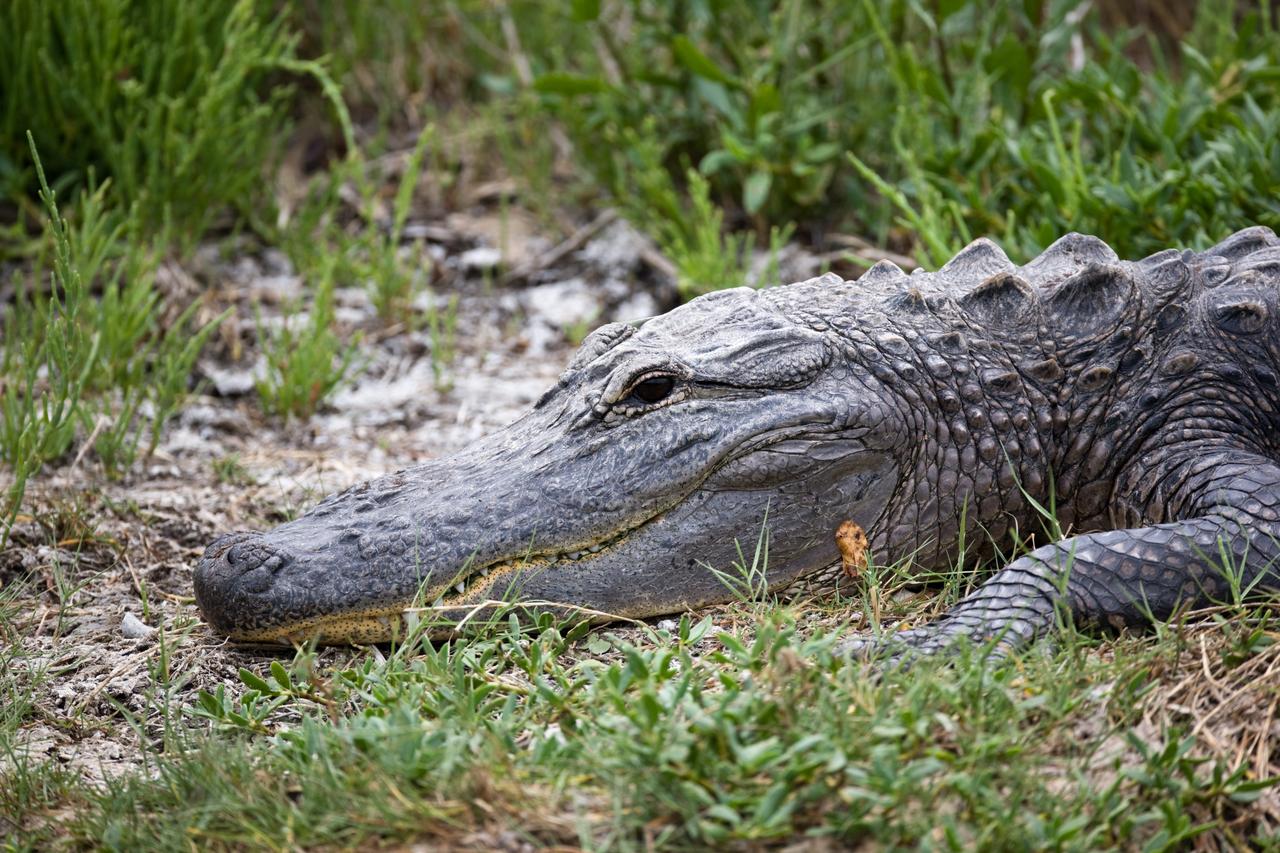
CAPE CANAVERAL, Fla. –– On NASA's Kennedy Space Center in Florida, an alligator rests on the bank of a canal. Alligators can be spotted in the drainage canals and other waters surrounding Kennedy. In Spring, they frequently roam, searching for mates. The center shares a boundary with the Merritt Island Wildlife Nature Refuge, which is a habitat for more than 310 species of birds, 25 mammals, 117 fishes and 65 amphibians and reptiles. Photo credit: NASA/Dimitri Gerondidakis
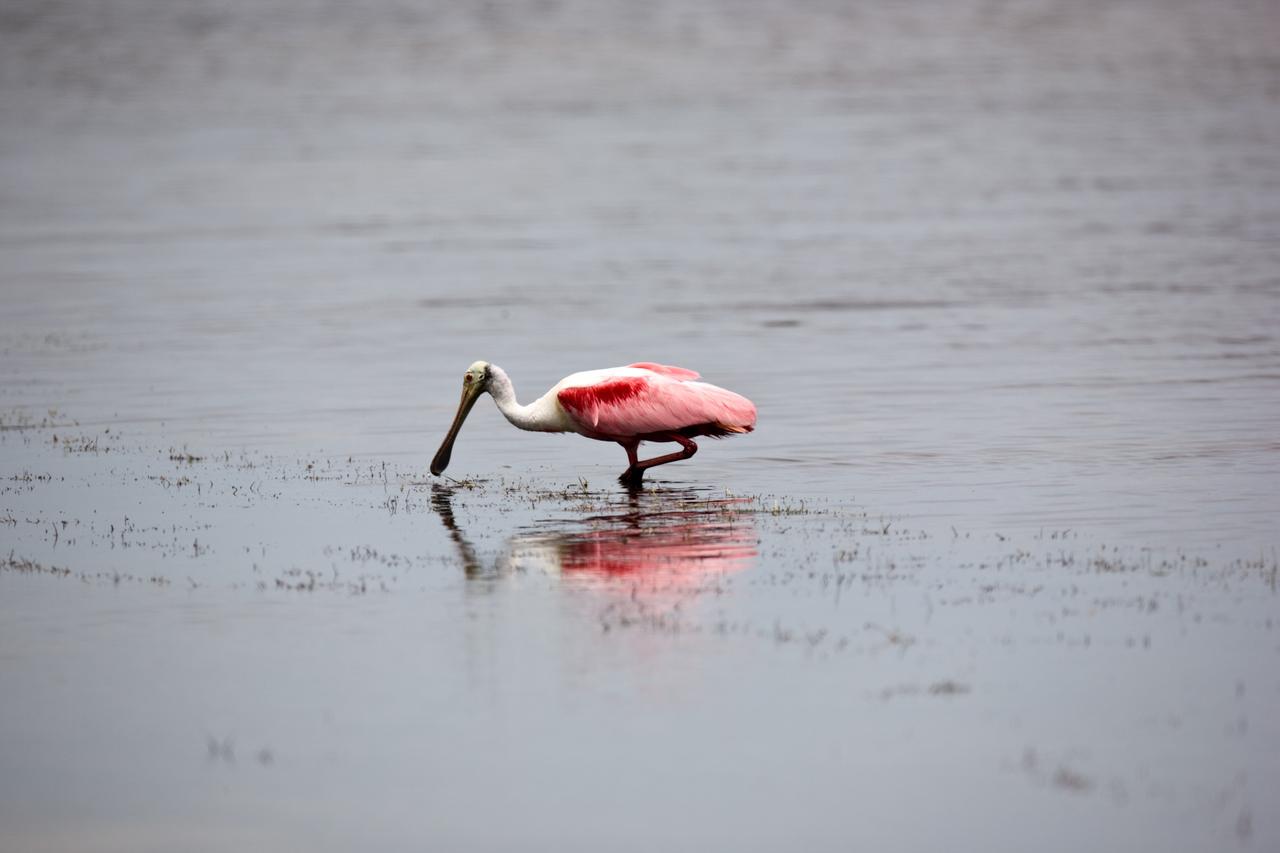
CAPE CANAVERAL, Fla. –– The scarlet-feathered roseate spoonbill searches for food in the water on NASA's Kennedy Space Center in Florida. Spoonbills inhabit areas of mangrove such as on the coasts of southern Florida and Texas. These birds feed on shrimps and fish in the shallow water, sweeping their bills from side to side. This and other wildlife abound throughout Kennedy as the center shares a boundary with the Merritt Island National Wildlife Refuge. Photo credit: NASA/Dimitri Gerondidakis
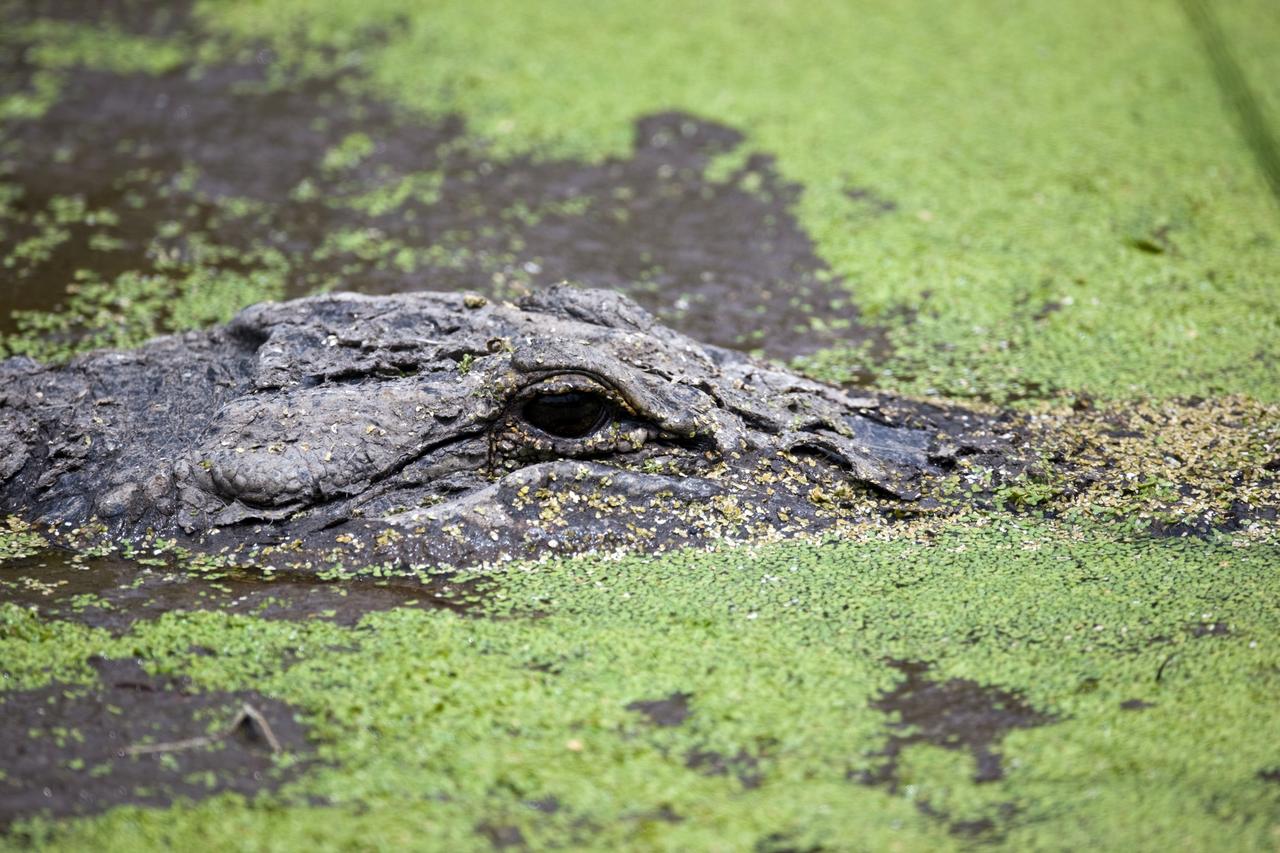
CAPE CANAVERAL, Fla. –– In the water on NASA's Kennedy Space Center in Florida, an alligator waits for a prospective meal. Alligators can be spotted in the drainage canals and other waters surrounding Kennedy. The center shares a boundary with the Merritt Island Wildlife Nature Refuge, which is a habitat for more than 310 species of birds, 25 mammals, 117 fishes and 65 amphibians and reptiles. Photo credit: NASA/Dimitri Gerondidakis
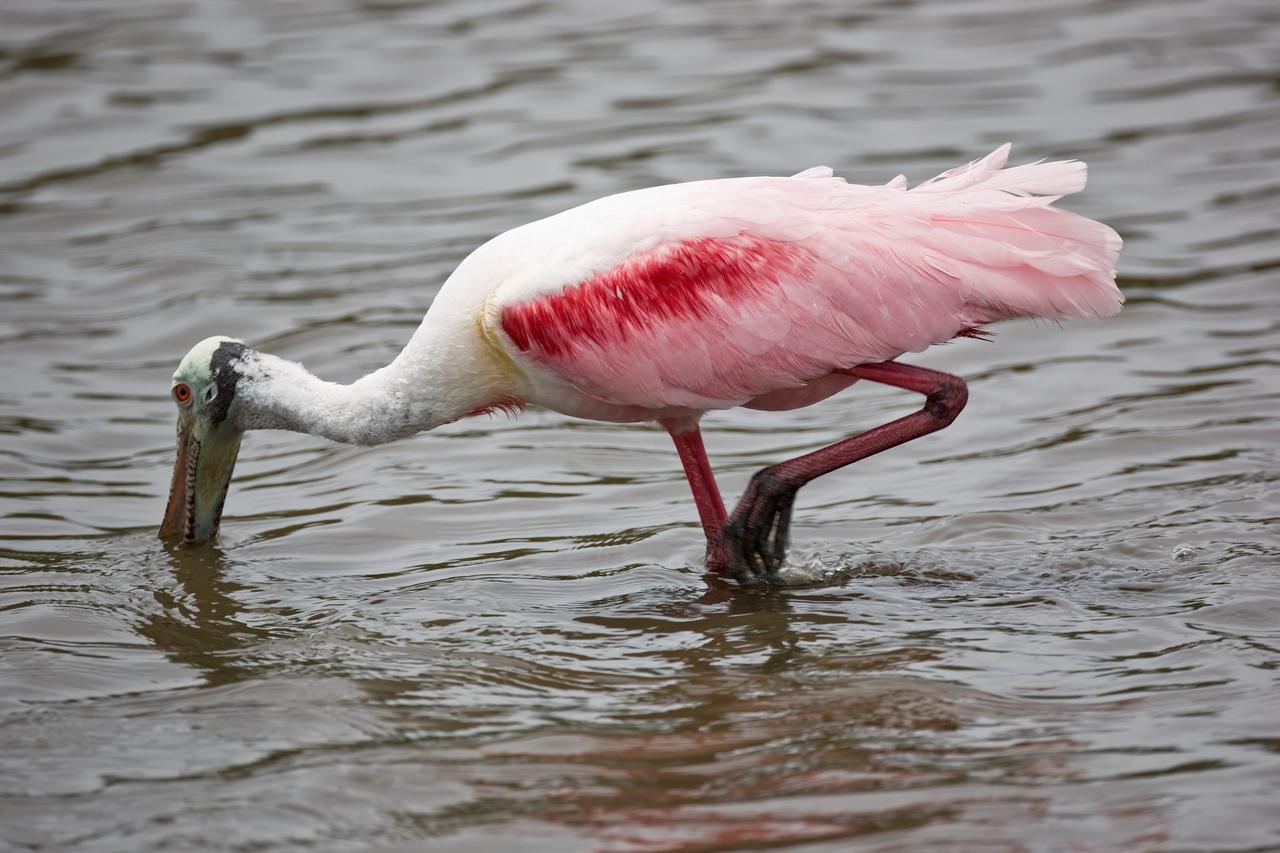
CAPE CANAVERAL, Fla. –– On NASA's Kennedy Space Center in Florida, the scarlet-feathered roseate spoonbill feeds in the water. Spoonbills inhabit areas of mangrove such as on the coasts of southern Florida and Texas. These birds feed on shrimps and fish in the shallow water, sweeping their bills from side to side. This and other wildlife abound throughout Kennedy as the center shares a boundary with the Merritt Island National Wildlife Refuge. The marshes and open water of the refuge provide wintering areas for 23 species of migratory waterfowl, as well as a year-round home for great blue herons, great egrets, wood storks, cormorants, brown pelicans and other species of marsh and shore birds. Photo credit: NASA/Dimitri Gerondidakis
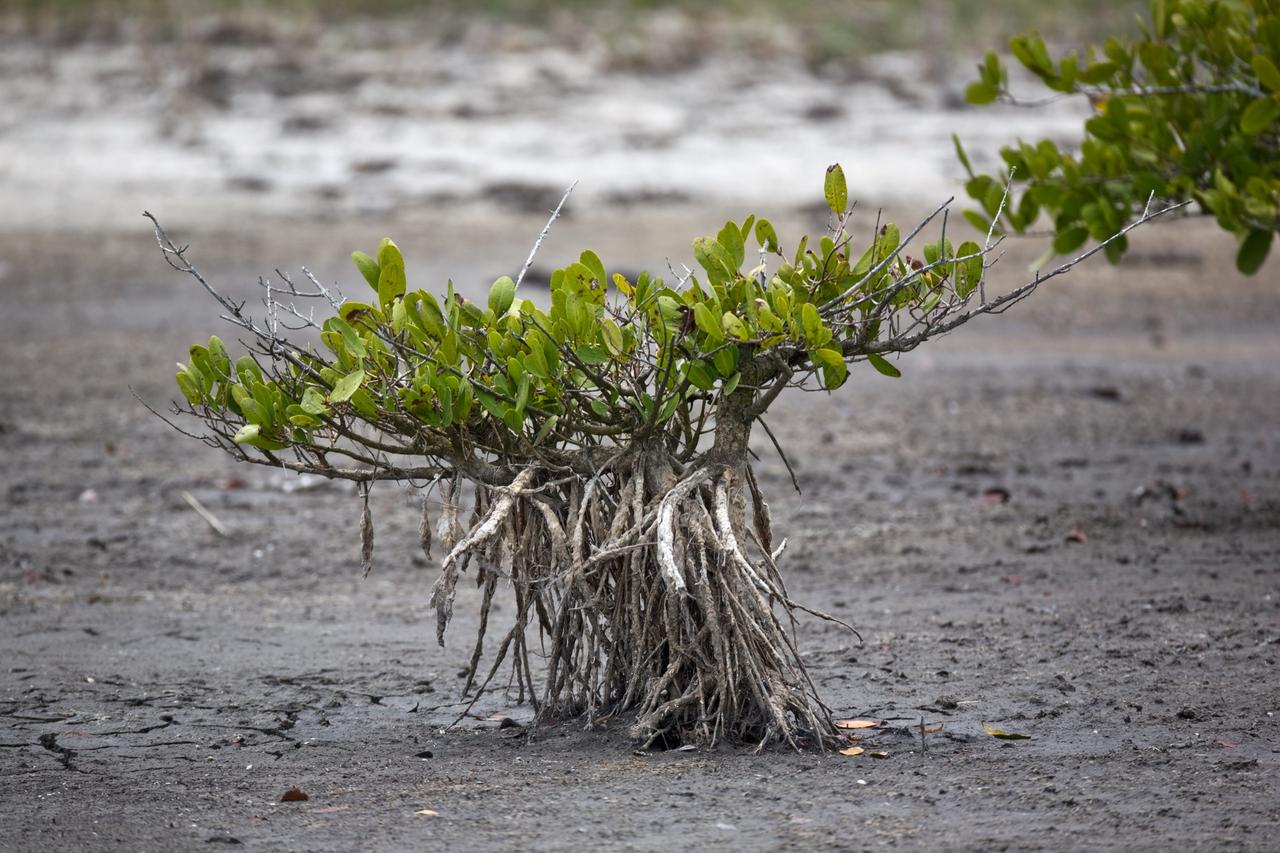
CAPE CANAVERAL, Fla. –– Mangrove roots are exposed in the drought-affected waters on NASA's Kennedy Space Center in Florida. Mangroves generally are trees and shrubs that grow in saline (brackish) coastal habitats in the tropics and subtropics. They provide food, habitat and refuge for a variety of animals, birds and sea creatures. The center shares a boundary with the Merritt Island Wildlife Nature Refuge, which is a habitat for more than 310 species of birds, 25 mammals, 117 fishes and 65 amphibians and reptiles. Photo credit: NASA/Dimitri Gerondidakis
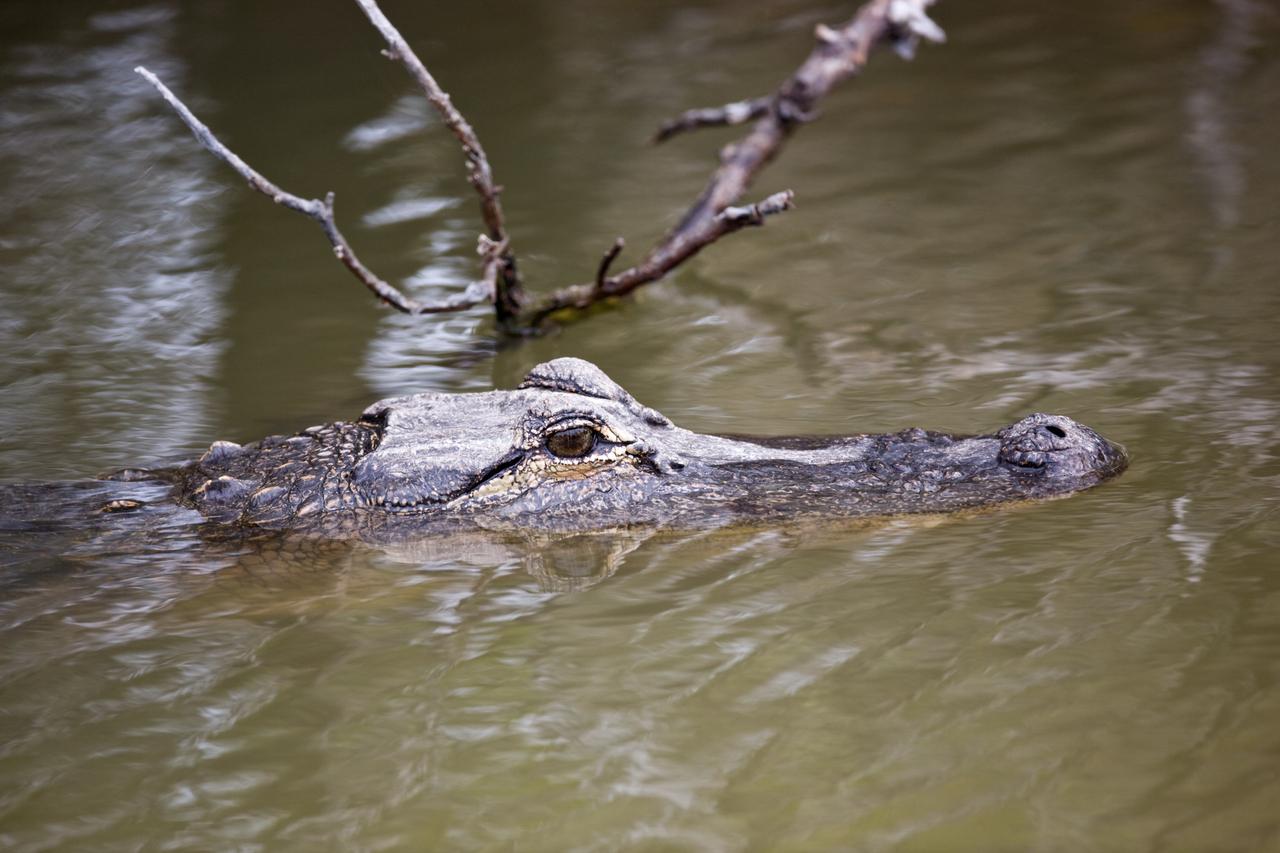
CAPE CANAVERAL, Fla. –– In the water on NASA's Kennedy Space Center in Florida, an alligator waits for a prospective meal. Alligators can be spotted in the drainage canals and other waters surrounding Kennedy. The center shares a boundary with the Merritt Island Wildlife Nature Refuge, which is a habitat for more than 310 species of birds, 25 mammals, 117 fishes and 65 amphibians and reptiles. Photo credit: NASA/Dimitri Gerondidakis
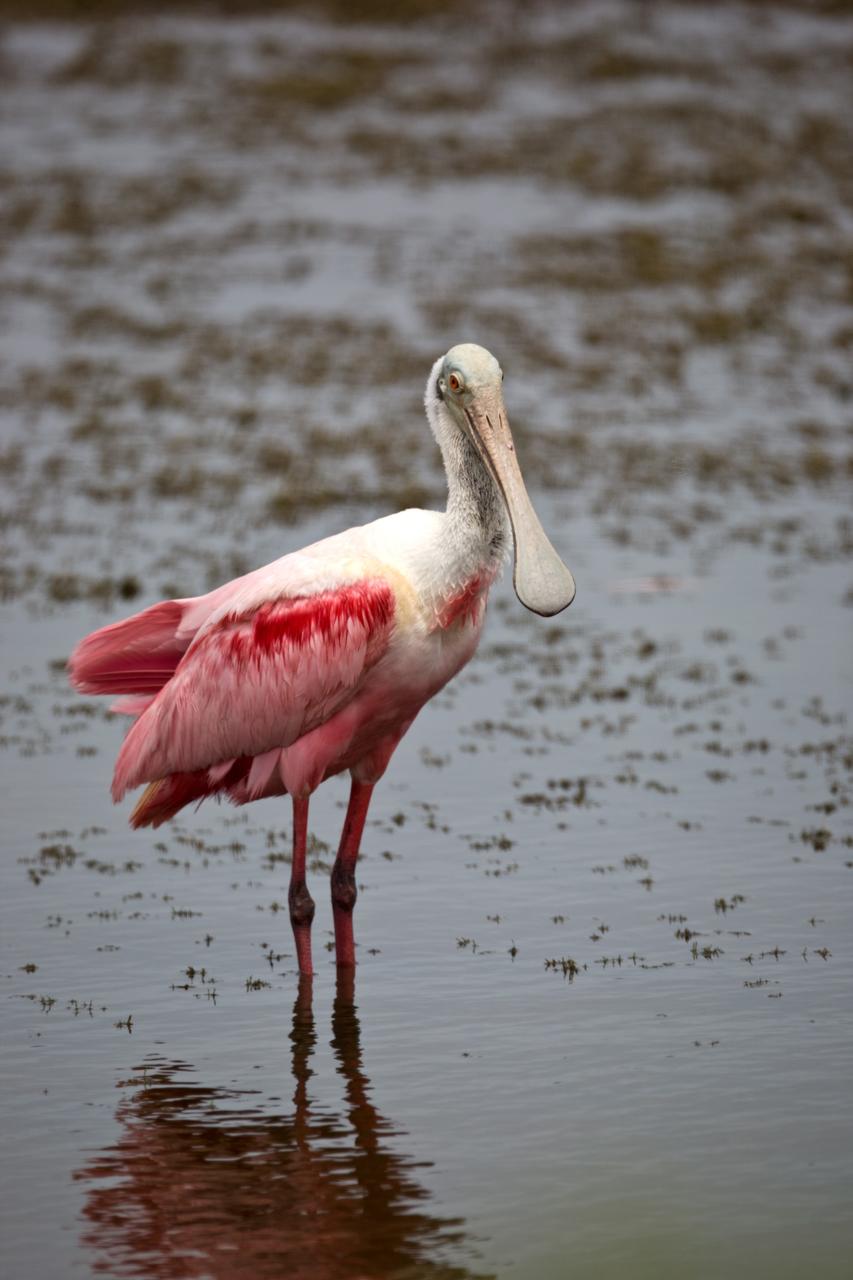
CAPE CANAVERAL, Fla. –– On NASA's Kennedy Space Center in Florida, the scarlet-feathered roseate spoonbill eyes the camera during its search for food. Spoonbills inhabit areas of mangrove such as on the coasts of southern Florida and Texas. These birds feed on shrimps and fish in the shallow water, sweeping their bills from side to side. This and other wildlife abound throughout Kennedy as the center shares a boundary with the Merritt Island National Wildlife Refuge. The marshes and open water of the refuge provide wintering areas for 23 species of migratory waterfowl, as well as a year-round home for great blue herons, great egrets, wood storks, cormorants, brown pelicans and other species of marsh and shore birds. Photo credit: NASA/Dimitri Gerondidakis
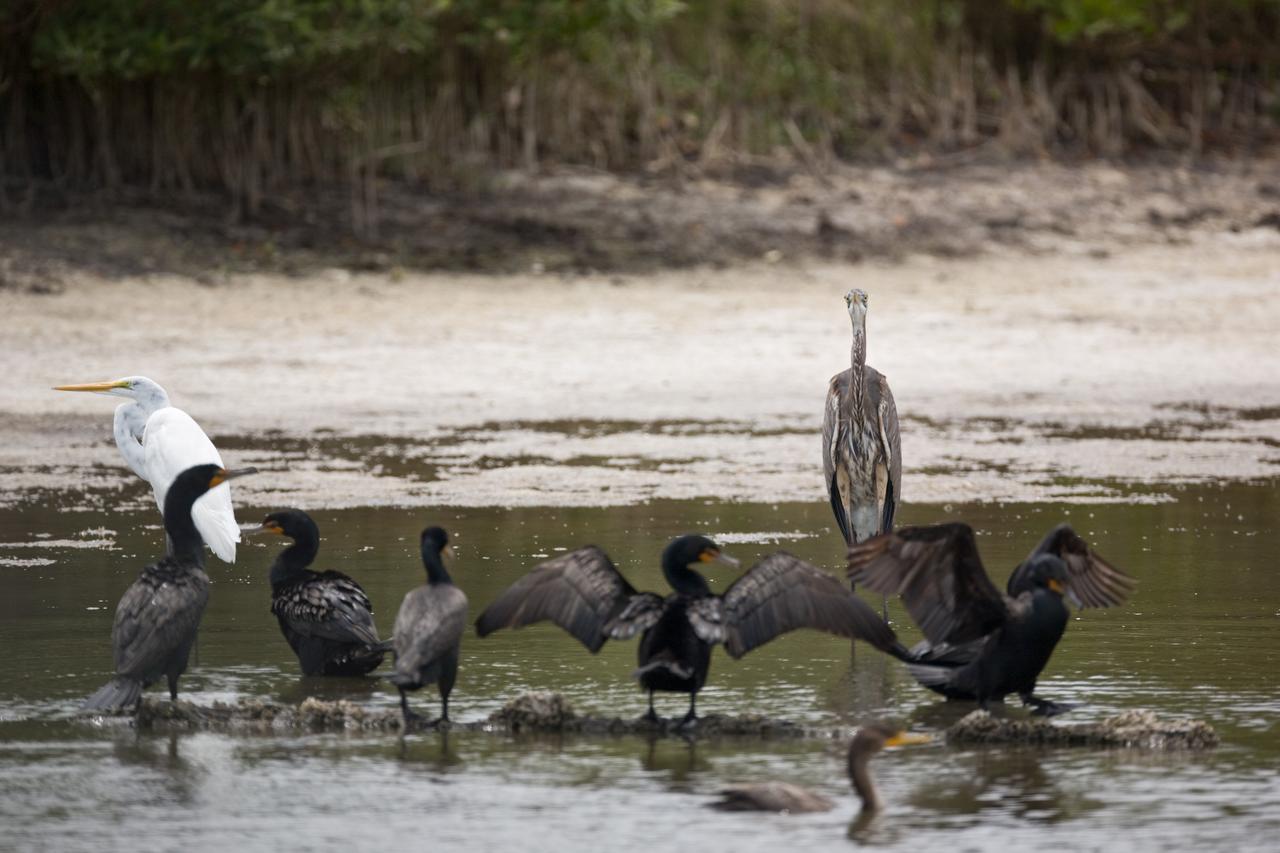
CAPE CANAVERAL, Fla. –– A great egret (left), great blue heron (far right) and cormorants (foreground) share the shallow water on NASA's Kennedy Space Center in Florida. The center shares a boundary with the Merritt Island Wildlife Nature Refuge, which is a habitat for more than 310 species of birds, 25 mammals, 117 fishes and 65 amphibians and reptiles. Photo credit: NASA/Dimitri Gerondidakis
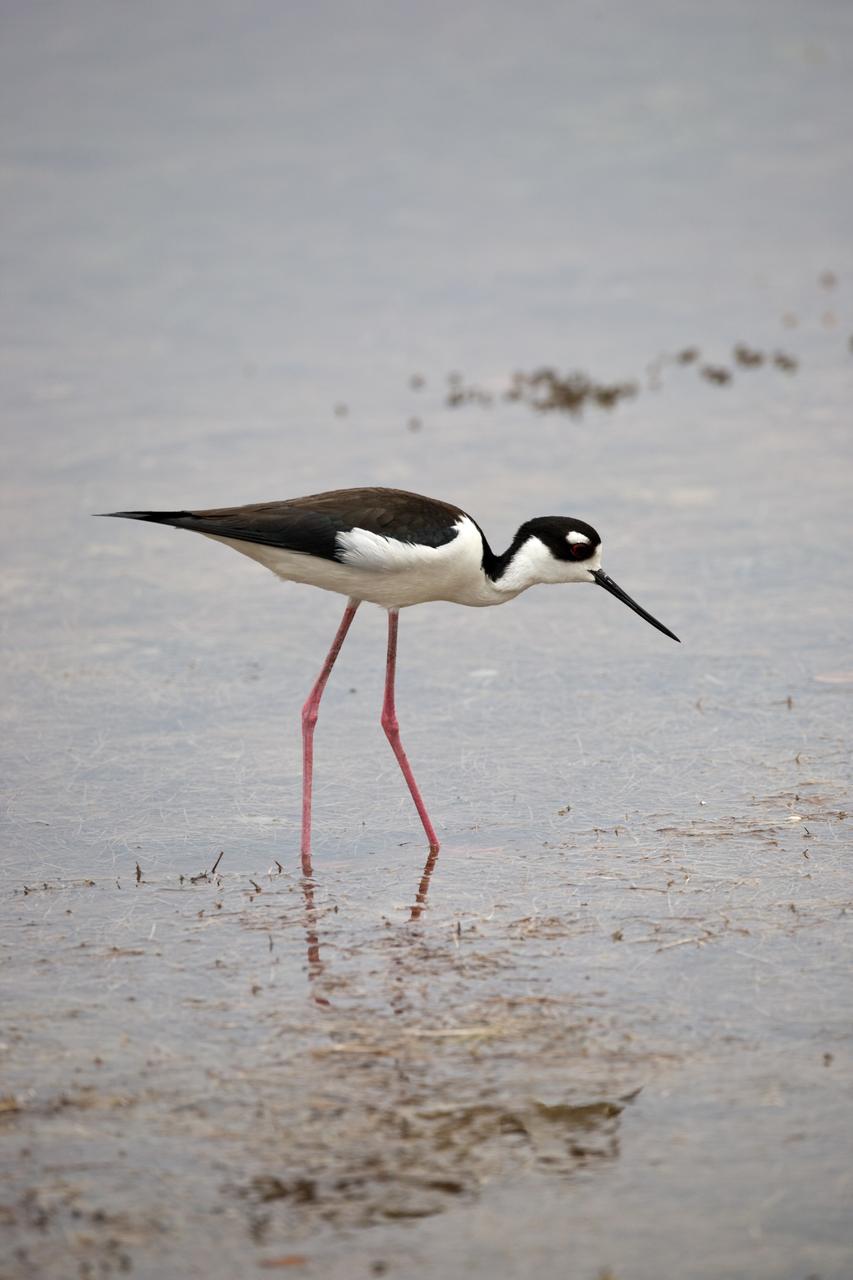
CAPE CANAVERAL, Fla. –– A black-necked stilt searches the shallow water for food at NASA's Kennedy Space Center in Florida. The species inhabits salt marshes and coastal bays in the East, ranging along the Atlantic Coast from Delaware and the Carolinas to northern South America. Kennedy shares a boundary with the Merritt Island National Wildlife Refuge that includes salt-water estuaries, brackish marshes, hardwood hammocks and pine flatwoods. The diverse landscape provides habitat for more than 310 species of birds, 25 mammals, 117 fishes and 65 amphibians and reptiles. Photo credit: NASA/Dimitri Gerondidakis
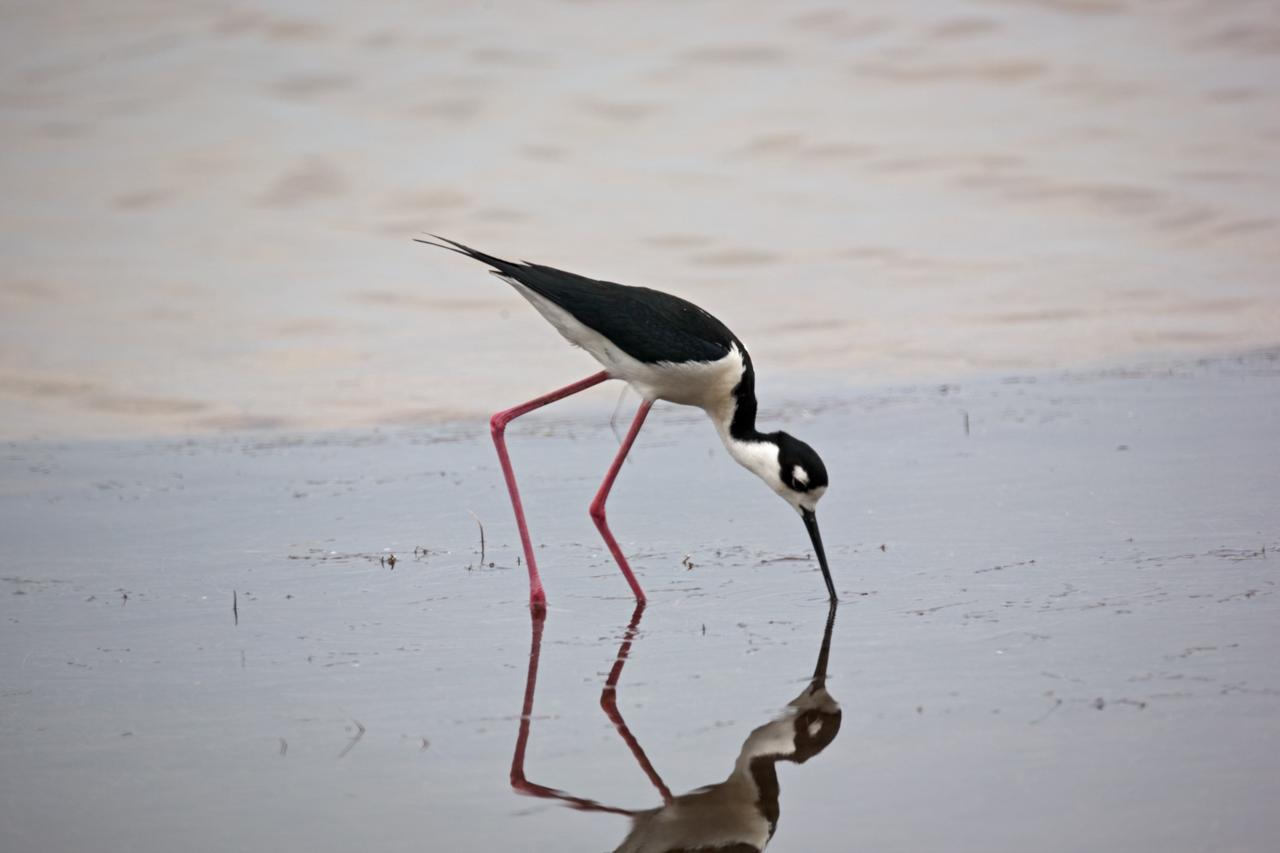
CAPE CANAVERAL, Fla. –– A black-necked stilt finds food in the shallow water at NASA's Kennedy Space Center in Florida. The species inhabits salt marshes and coastal bays in the East, ranging along the Atlantic Coast from Delaware and the Carolinas to northern South America. Kennedy shares a boundary with the Merritt Island National Wildlife Refuge that includes salt-water estuaries, brackish marshes, hardwood hammocks and pine flatwoods. The diverse landscape provides habitat for more than 310 species of birds, 25 mammals, 117 fishes and 65 amphibians and reptiles. Photo credit: NASA/Dimitri Gerondidakis
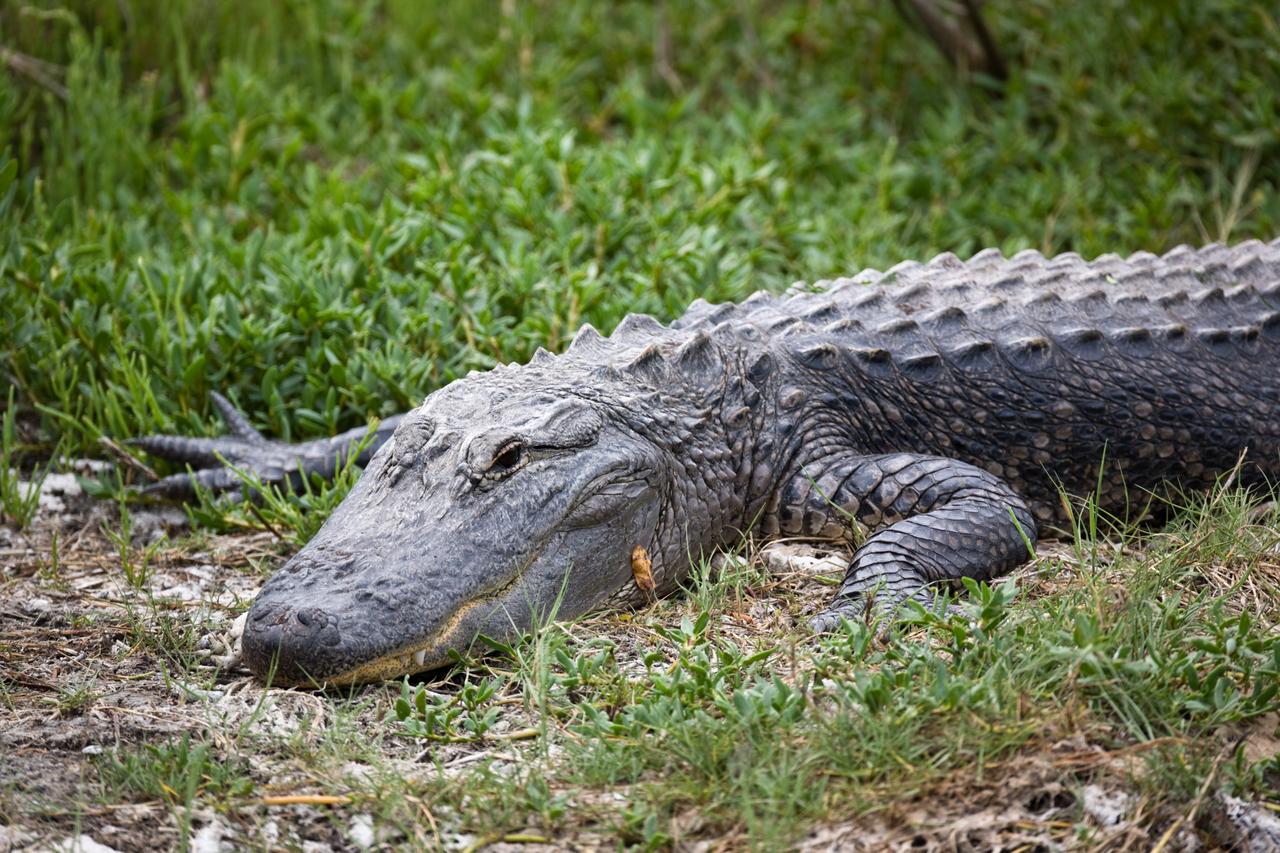
CAPE CANAVERAL, Fla. –– On NASA's Kennedy Space Center in Florida, an alligator rests on the bank of a canal. Alligators can be spotted in the drainage canals and other waters surrounding Kennedy. The center shares a boundary with the Merritt Island Wildlife Nature Refuge, which is a habitat for more than 310 species of birds, 25 mammals, 117 fishes and 65 amphibians and reptiles. Photo credit: NASA/Dimitri Gerondidakis
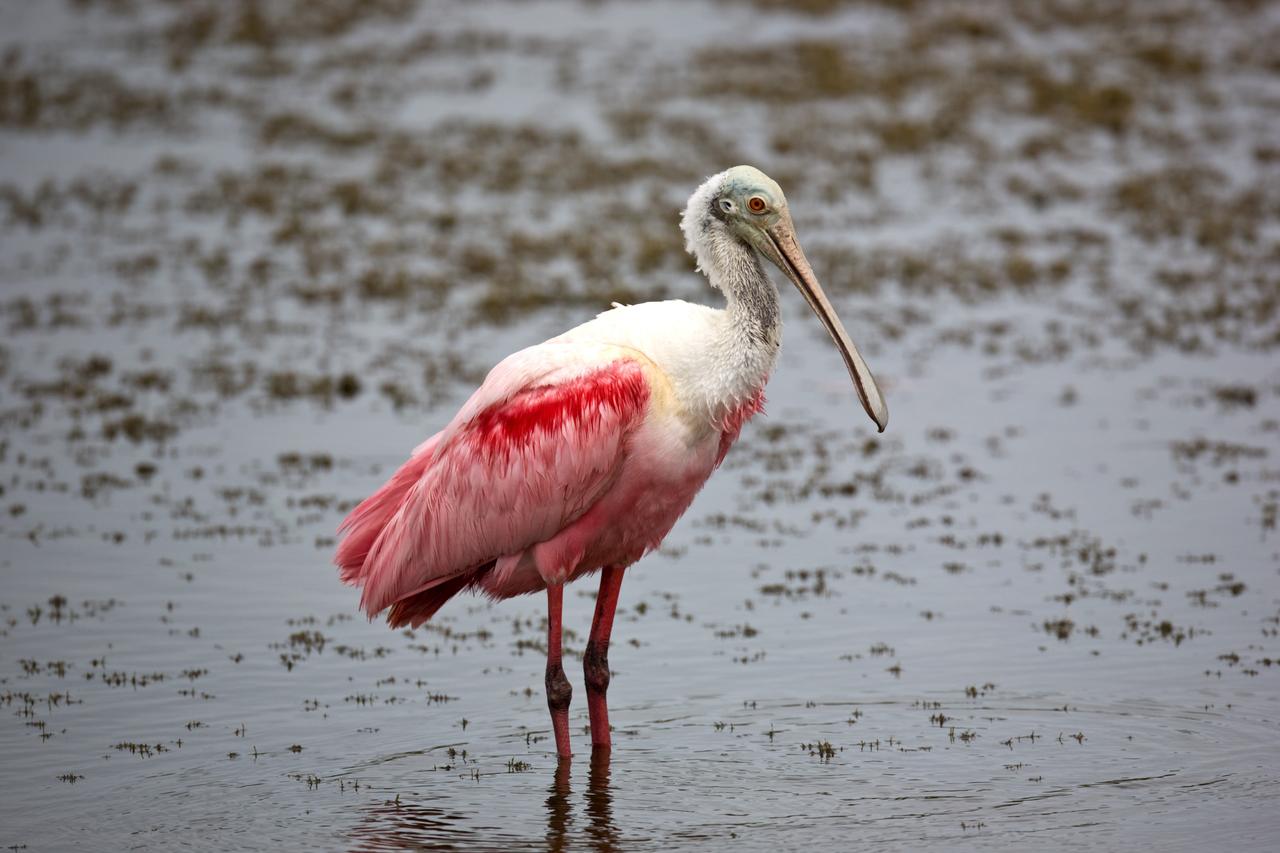
CAPE CANAVERAL, Fla. –– On NASA's Kennedy Space Center in Florida, the scarlet-feathered roseate spoonbill eyes the camera. Spoonbills inhabit areas of mangrove such as on the coasts of southern Florida and Texas. These birds feed on shrimps and fish in the shallow water, sweeping their bills from side to side. This and other wildlife abound throughout Kennedy as the center shares a boundary with the Merritt Island National Wildlife Refuge. The marshes and open water of the refuge provide wintering areas for 23 species of migratory waterfowl, as well as a year-round home for great blue herons, great egrets, wood storks, cormorants, brown pelicans and other species of marsh and shore birds. Photo credit: NASA/Dimitri Gerondidakis
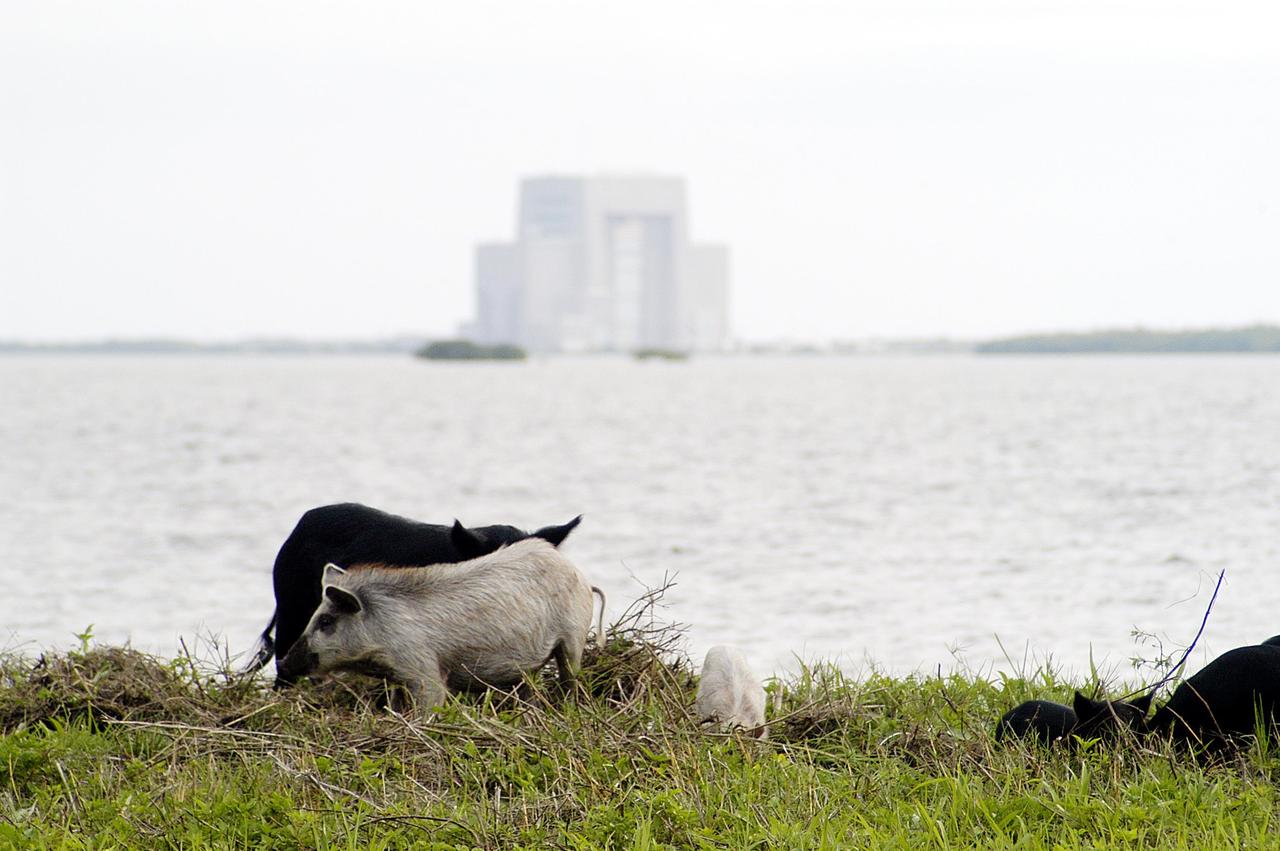
KENNEDY SPACE CENTER, Fla. - A small herd of wild pigs root for food along the bank of this body of water at Kennedy Space Center. Not a native in the environment, the pigs are believed to be descendants from those brought to Florida by the early Spanish explorers. Without many predators other than human, the pigs have flourished in the surrounding environs, primarily the Merritt Island National Wildlife Refuge, which shares a boundary with the Center. The Wildlife Refuge encompasses 92,000 acres that are a habitat for more than 331 species of birds, 31 mammals, 117 fishes, and 65 amphibians and reptiles. The marshes and open water of the refuge provide wintering areas for 23 species of migratory waterfowl, as well as a year-round home for great blue herons, great egrets, wood storks, cormorants, brown pelicans and other species of marsh and shore birds, plus a variety of insects.
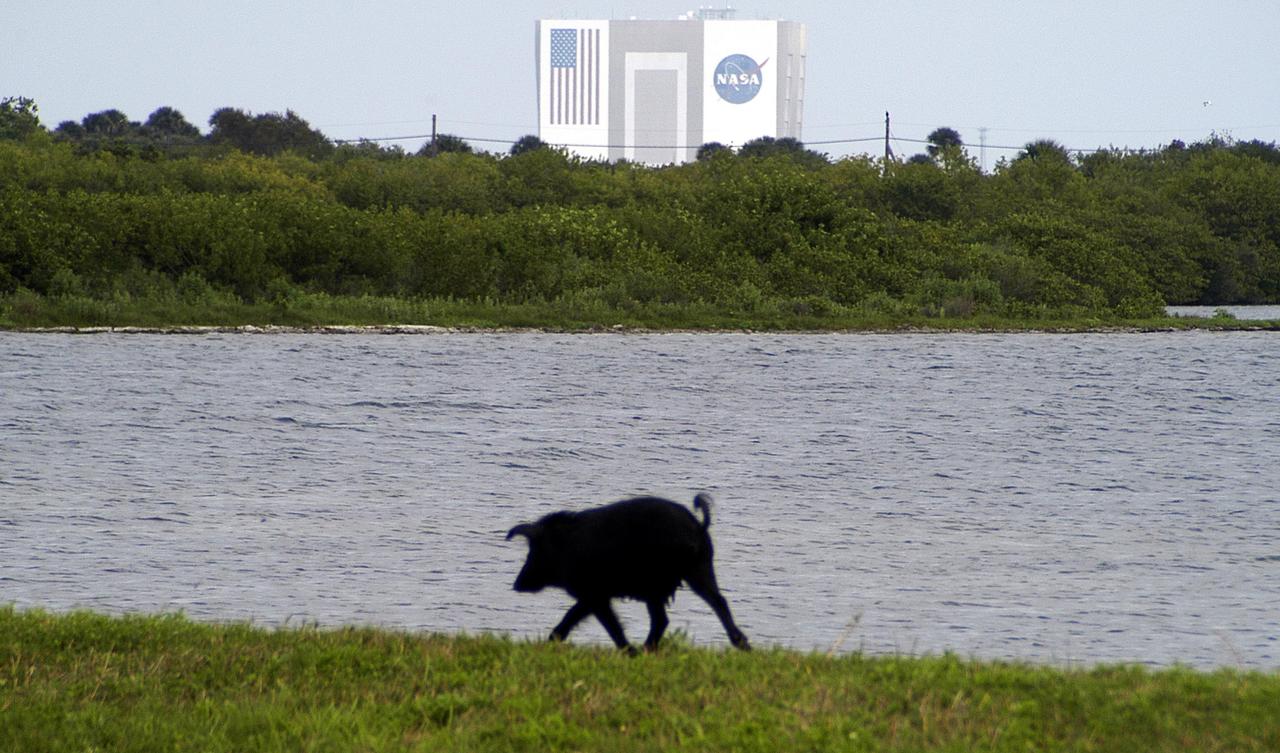
KENNEDY SPACE CENTER, Fla. - A lone wild pig travels the bank of a body of water near Kennedy Space Center. In the background is the 525-foot-high Vehicle Assembly Building. Not a native in the environment, the pigs are believed to be descendants from those brought to Florida by the early Spanish explorers. Without many predators other than human, the pigs have flourished in the surrounding environs, primarily the Merritt Island National Wildlife Refuge, which shares a boundary with the Center. The Wildlife Refuge encompasses 92,000 acres that are a habitat for more than 331 species of birds, 31 mammals, 117 fishes, and 65 amphibians and reptiles. The marshes and open water of the refuge provide wintering areas for 23 species of migratory waterfowl, as well as a year-round home for great blue herons, great egrets, wood storks, cormorants, brown pelicans and other species of marsh and shore birds, plus a variety of insects.
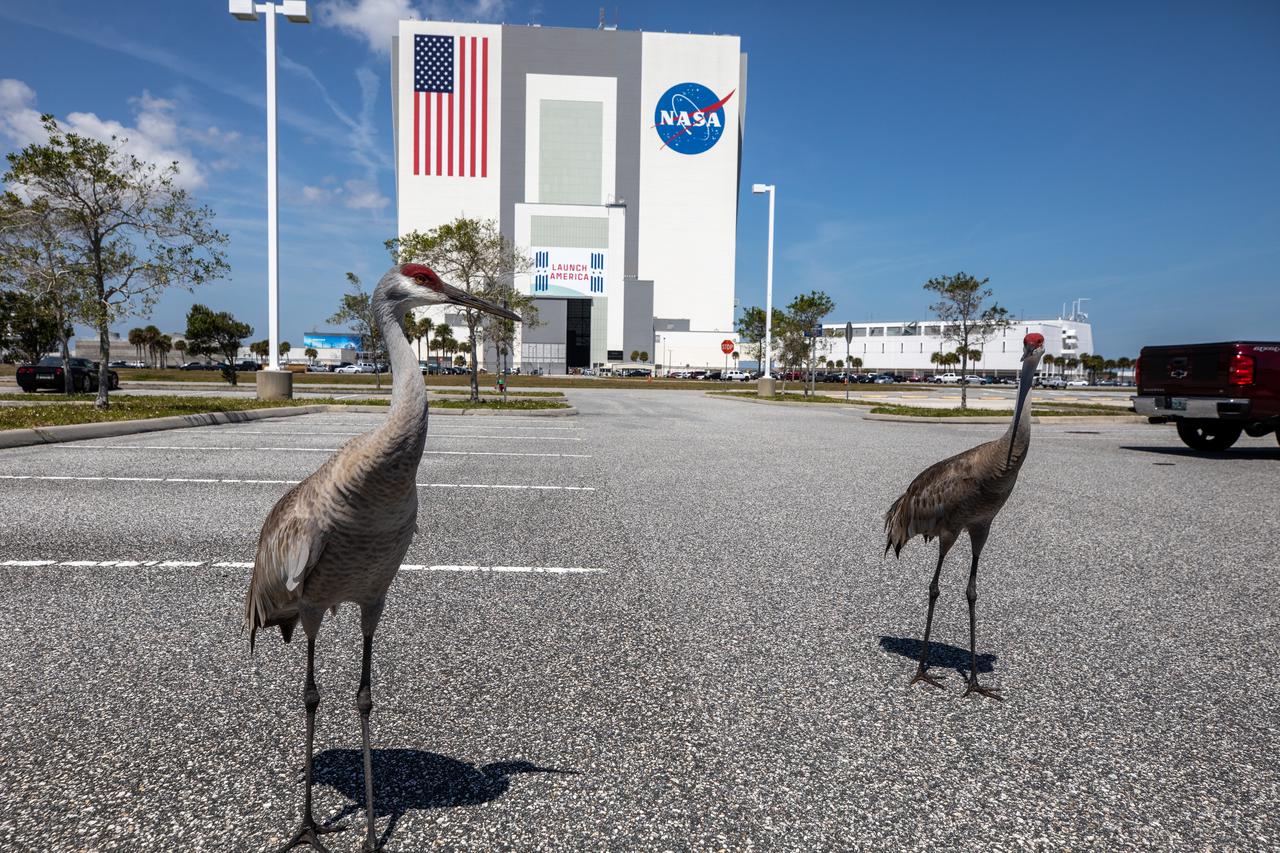
A pair of sandhill cranes explore a paved parking area near the Vehicle Assembly Building at NASA’s Kennedy Space Center in Florida on March 24, 2021. Kennedy shares space with the Merritt Island National Wildlife refuge, which is home to more than 1,000 species of plants, 117 species of fish, 68 amphibians and reptiles, 330 birds, and 31 different mammals. The refuge provides a favorable environment for the cranes as it contains shallow freshwater habitats for nesting, along with a variety of vegetation and prey to feed on.
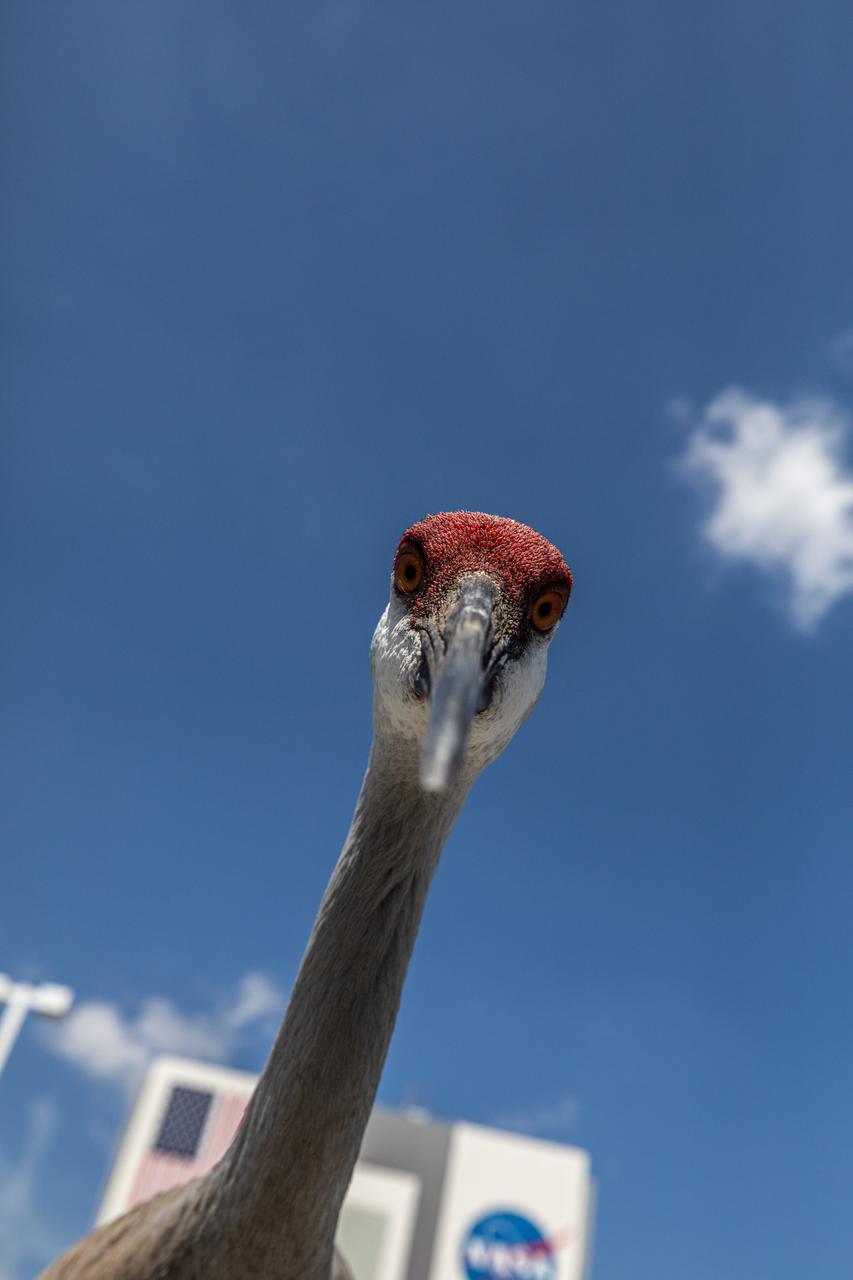
An inquisitive sandhill crane approaches the photographer near the Vehicle Assembly Building at NASA’s Kennedy Space Center in Florida on March 24, 2021. Kennedy shares space with the Merritt Island National Wildlife refuge, which is home to more than 1,000 species of plants, 117 species of fish, 68 amphibians and reptiles, 330 birds, and 31 different mammals. The refuge provides a favorable environment for sandhill cranes as it contains shallow freshwater habitats for nesting, along with a variety of vegetation and prey to feed on.
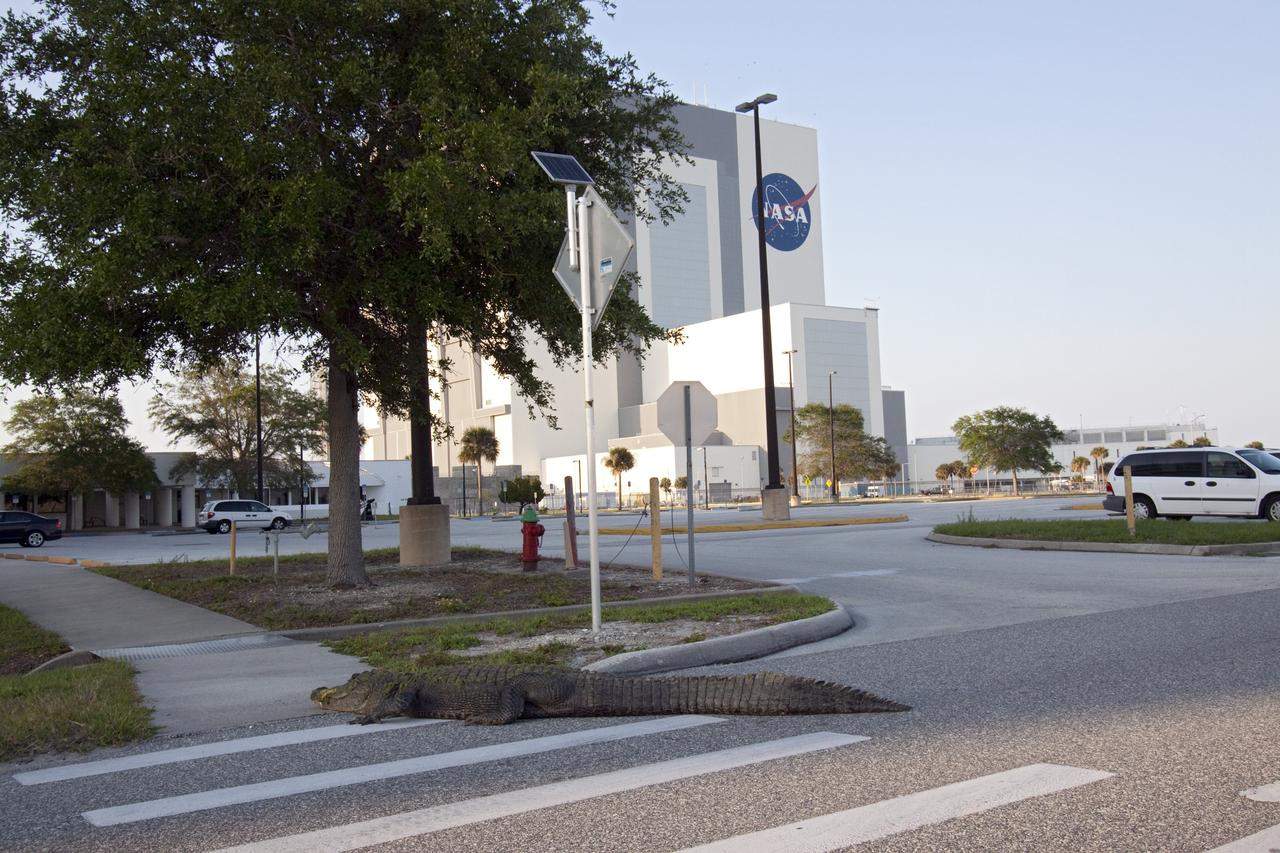
CAPE CANAVERAL, Fla. -- An alligator ambles across Saturn Causeway at NASA's Kennedy Space Center in Florida near the Vehicle Assembly Building. Alligators can be spotted in the drainage canals and other waters surrounding KSC and occasionally venture onto roads seeking new environs or mates. The center shares a boundary with the Merritt Island Wildlife Nature Refuge, which is a habitat for more than 310 species of birds, 25 mammals, 117 fishes and 65 amphibians and reptiles. Photo credit: NASA/Jack Pfaller
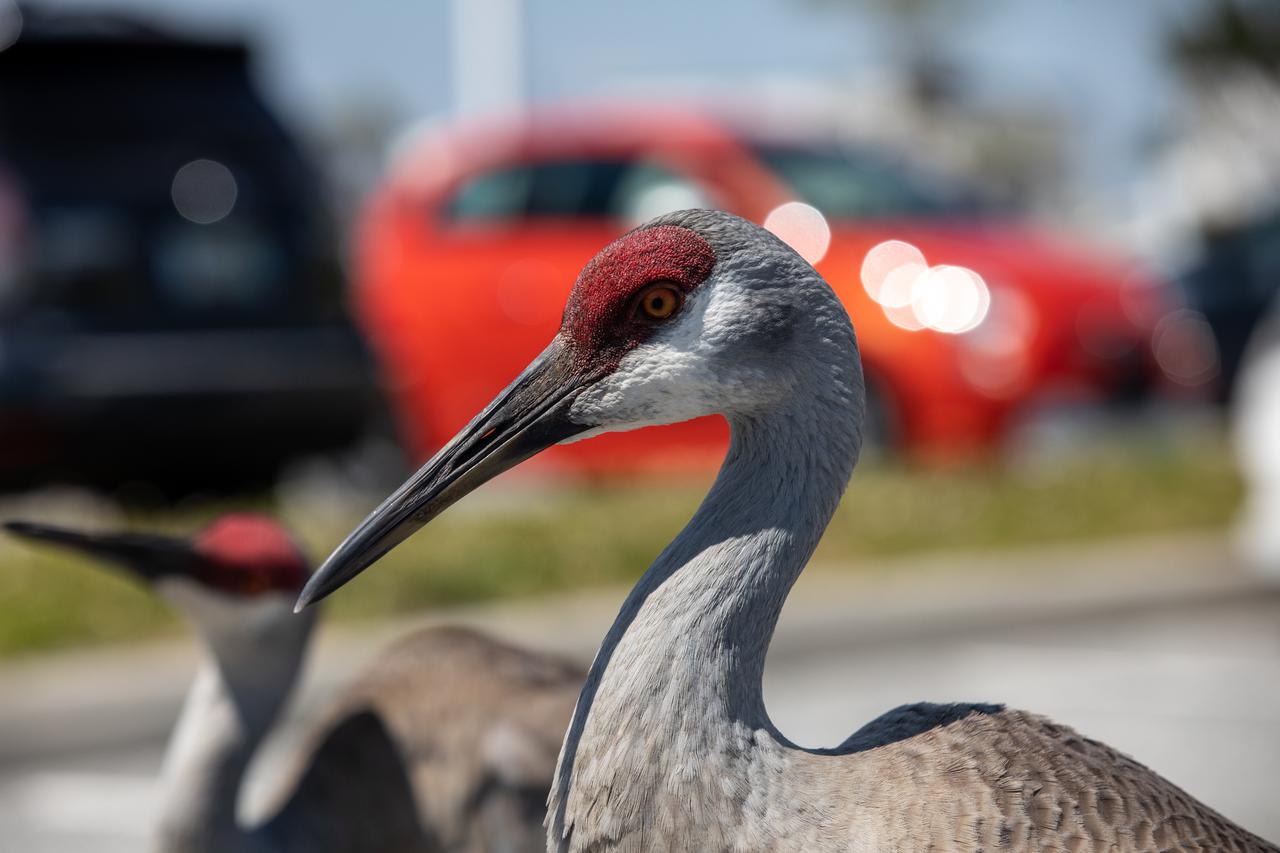
A pair of sandhill cranes explore a paved parking area at NASA’s Kennedy Space Center in Florida on March 24, 2021. Kennedy shares space with the Merritt Island National Wildlife refuge, which is home to more than 1,000 species of plants, 117 species of fish, 68 amphibians and reptiles, 330 birds, and 31 different mammals. The refuge provides a favorable environment for the cranes as it contains shallow freshwater habitats for nesting, along with a variety of vegetation and prey to feed on.

A sandhill crane explores a paved parking area near the Vehicle Assembly Building at NASA’s Kennedy Space Center in Florida on March 24, 2021. Kennedy shares space with the Merritt Island National Wildlife refuge, which is home to more than 1,000 species of plants, 117 species of fish, 68 amphibians and reptiles, 330 birds, and 31 different mammals. The refuge provides a favorable environment for sandhill cranes as it contains shallow freshwater habitats for nesting, along with a variety of vegetation and prey to feed on.
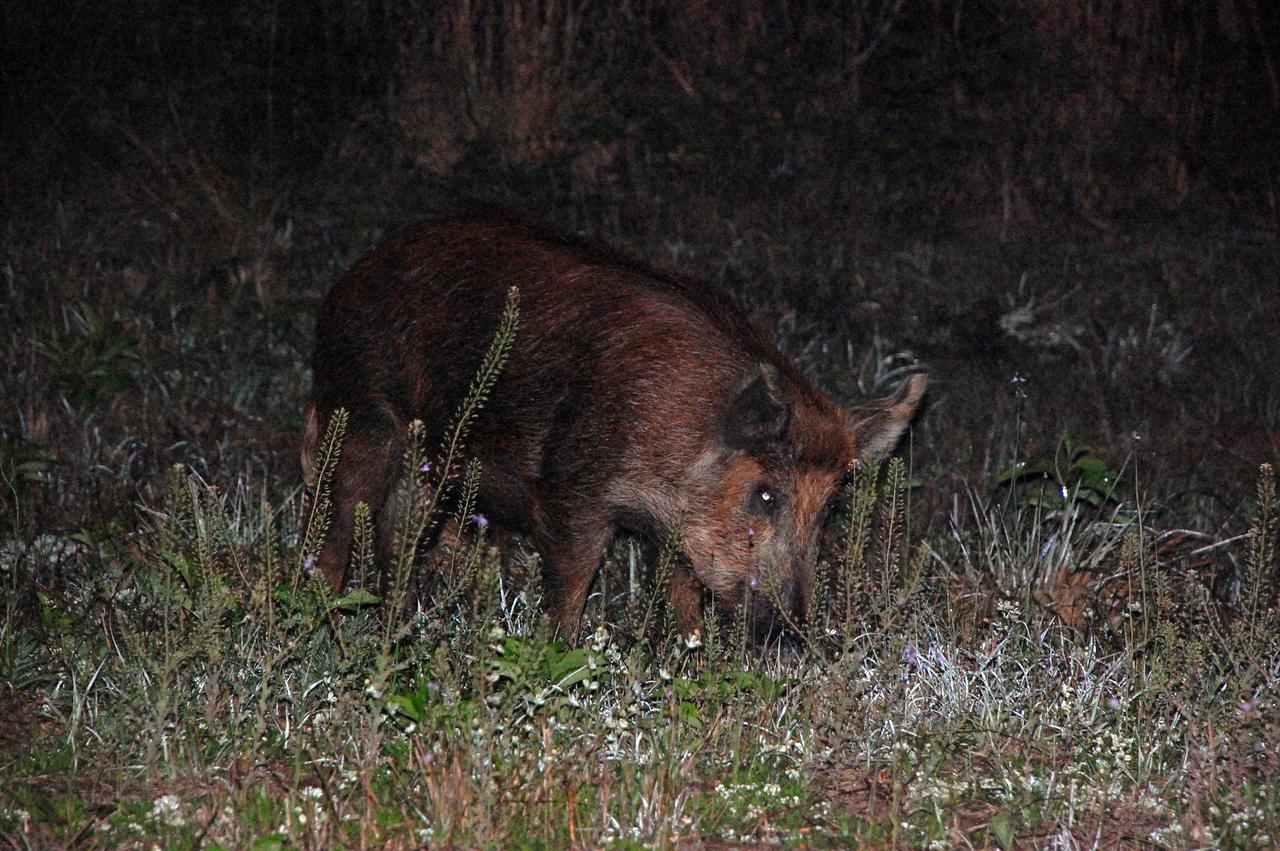
CAPE CANAVERAL, Fla. - A young feral hog roots for his breakfast at NASA's Kennedy Space Center in Florida. Wild hogs flourish in the environs around Kennedy, which coexists with the Merritt Island National Wildlife Refuge, without many predators other than panthers and humans. Hogs were introduced to Florida in the 1500s and are now found statewide in wooded areas close to water. Estimates of the hog population on the refuge vary from 5,000 to 12,000. The Merritt Island National Wildlife Refuge coexists with Kennedy Space Center and provides a habitat for 330 species of birds and a variety of other wildlife - 117 kinds of fish, 65 types of amphibians and reptiles, 31 different mammals, and 1,045 species of plants. For information on the refuge, visit http:__www.fws.gov_merrittisland_Index.html. For information on Kennedy Space Center, visit http:__www.nasa.gov_kennedy. Photo credit: NASA_Ben Smegelsky
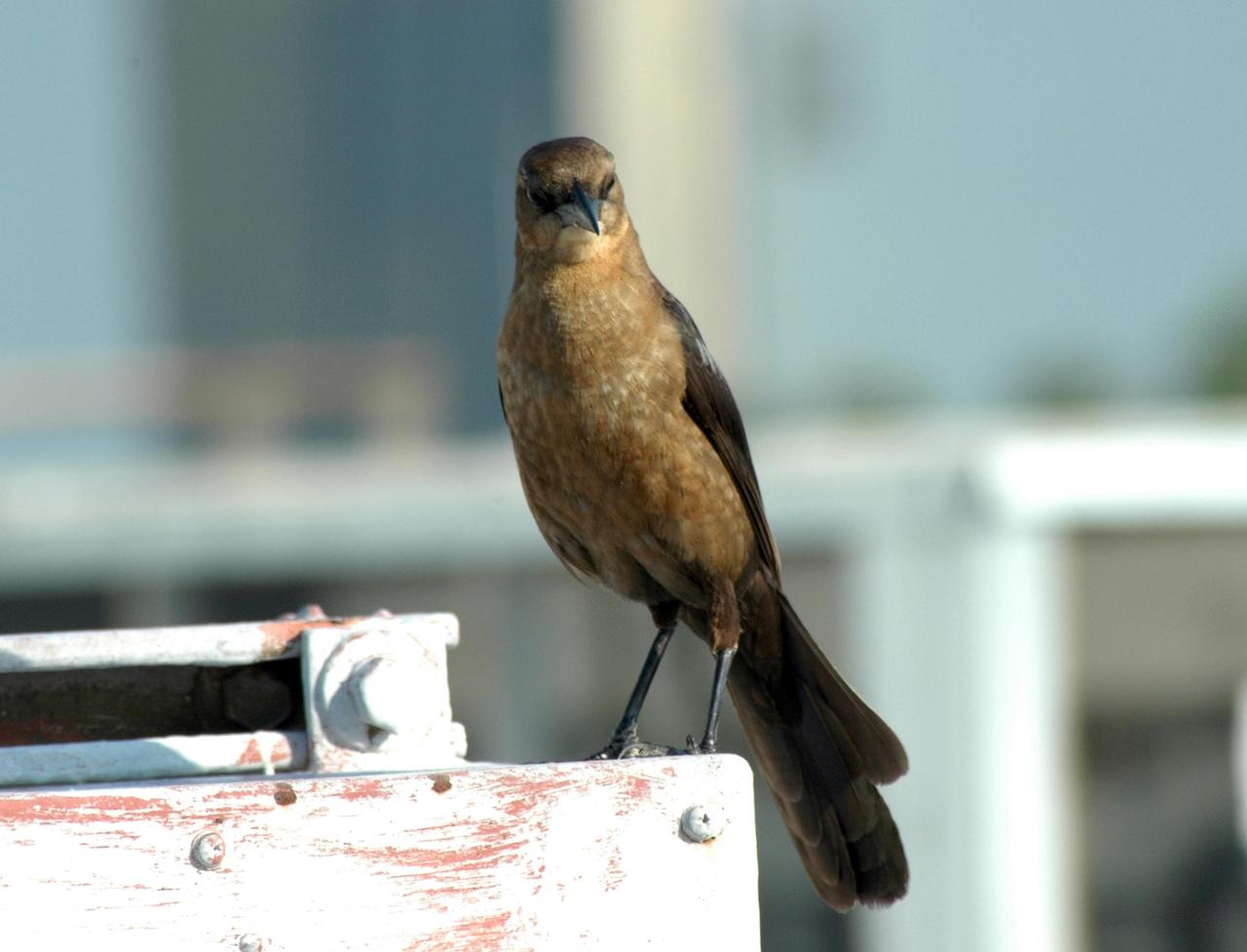
KENNEDY SPACE CENTER, FLA. - This is a female boat-tailed grackle, which is prominently seen around NASA's Kennedy Space Center. Males are an iridescent, purple-black color. Boat-tailed grackles are resident along the eastern and Gulf coasts of the United States, from New York to southeastern Texas, and throughout much of Florida. Primarily a coastal species of the salt and brackish marsh, in Florida it is also found near lakes, rivers, and freshwater marshes. It is commonly found in urban environments. The Center shares a boundary with the Merritt Island National Wildlife Refuge, which is a habitat for more than 310 species of birds, 25 mammals, 117 fishes and 65 amphibians and reptiles. In addition, the Refuge supports 19 endangered or threatened wildlife species on Federal or State lists, more than any other single refuge in the U.S. Photo credit: NASA/Ken Thornsley
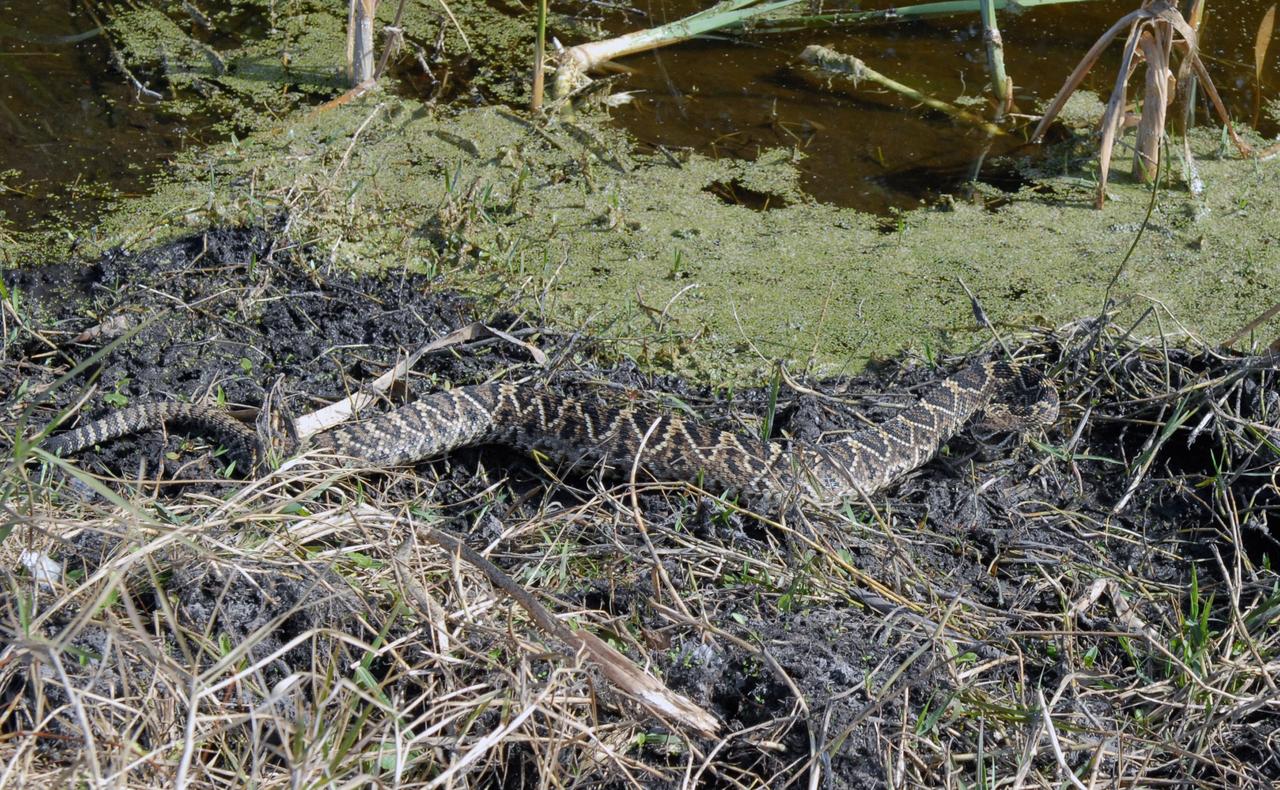
CAPE CANAVERAL, Fla. – An eastern diamondback rattlesnake returns to its natural environs farther from the NASA News Center at NASA's Kennedy Space Center in Florida. The diamondback is Florida's largest venomous snake and may exceed six feet in length. It occurs throughout Florida in a variety of dry habitats, such as pinelands, scrub and golf courses. Kennedy shares a boundary with the Merritt Island Wildlife Nature Refuge, which is a habitat for more than 310 species of birds, 25 mammals, 117 fishes and 65 amphibians and reptiles. Photo credit: NASA/Jack Pfaller
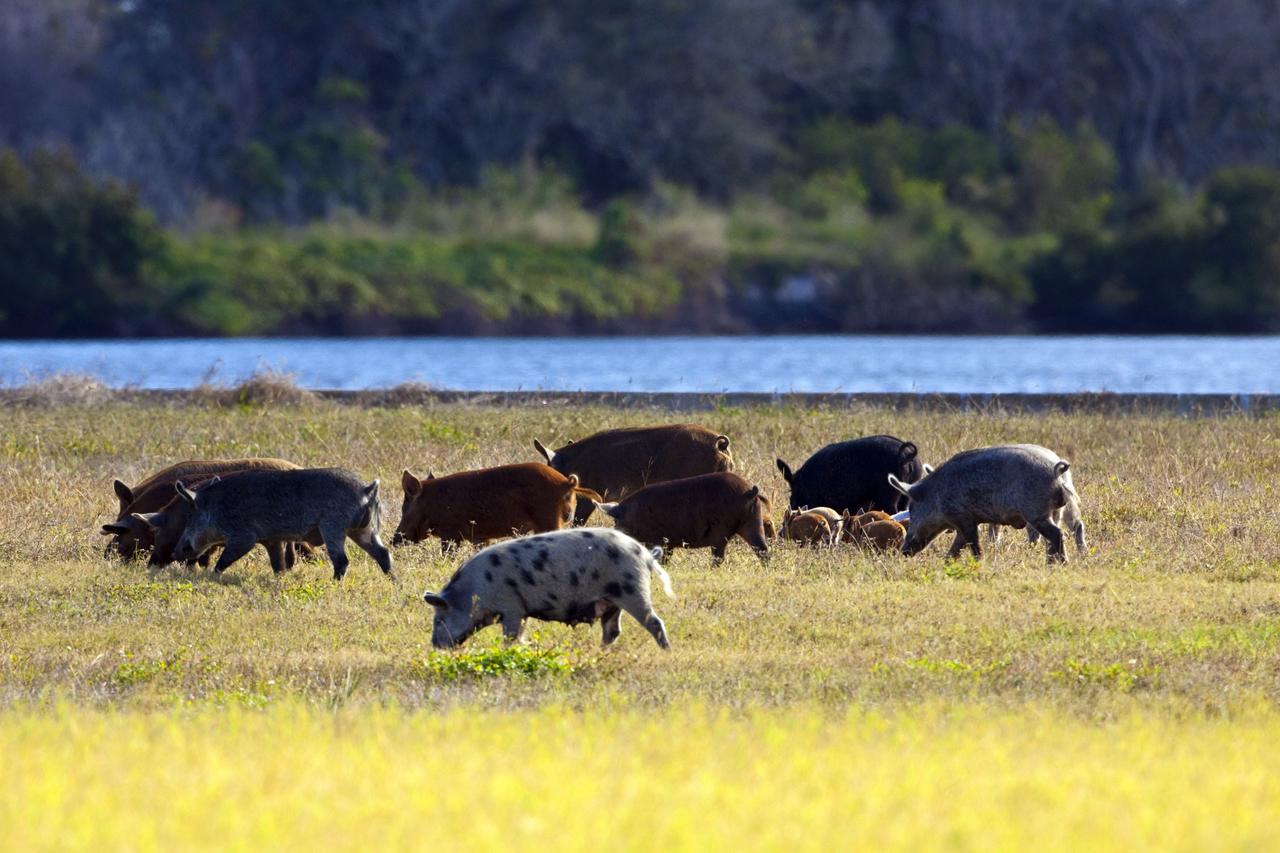
CAPE CANAVERAL, Fla. -- Several adult and baby wild pigs, in a variety of colors and patterns, graze in a grassy field at NASA's Kennedy Space Center in Florida. The wild pigs have flourished in the environs around Kennedy. The center shares a boundary with the Merritt Island National Wildlife Refuge, consisting of 140,000 acres. The refuge provides a wide variety of habitats -- coastal dunes, saltwater estuaries and marshes, freshwater impoundments, scrub, pine flatwoods, and hardwood hammocks -- that provide sanctuary for more than 1,500 species of plants and animals, including about 331 species of birds. Photo credit: NASA/Jim Grossmann
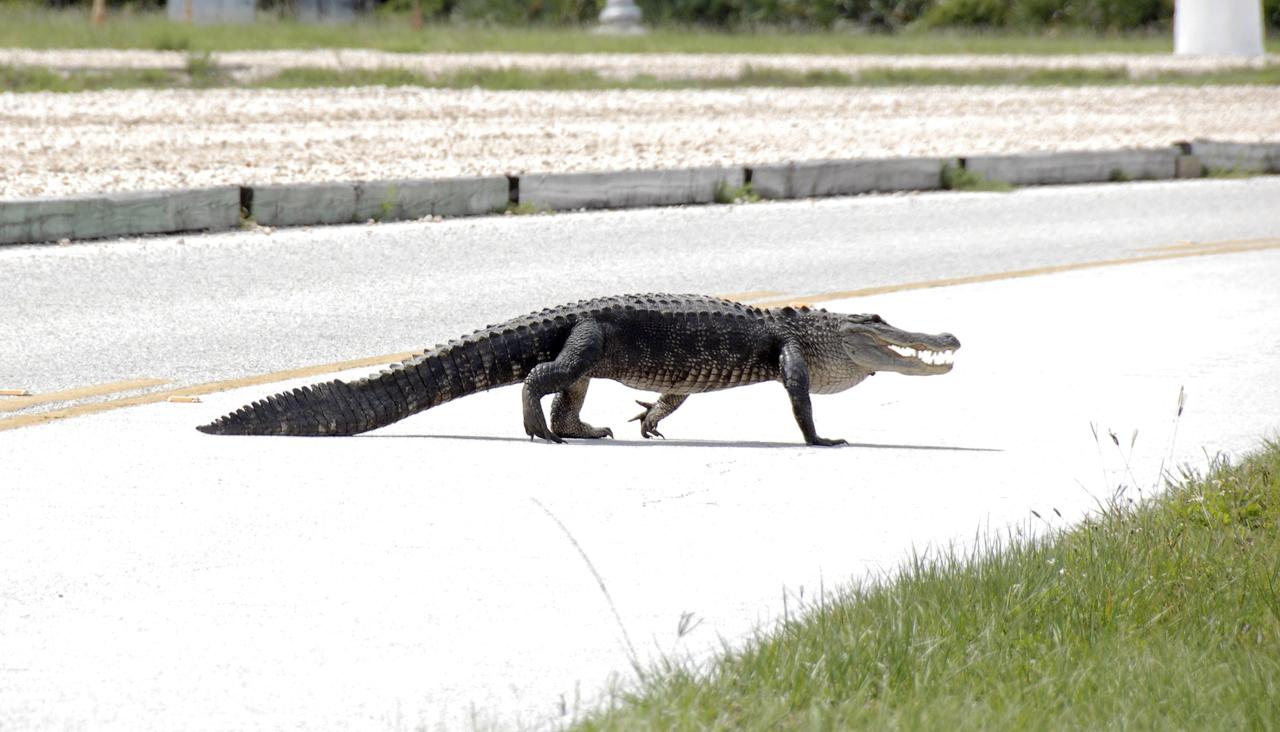
CAPE CANAVERAL, Fla. – Taking a mid-day stroll, an alligator crosses the Saturn Causeway at NASA's Kennedy Space Center in Florida in front of the Astrovan with STS-127 crew members aboard. The crew was on its way to Launch Pad 39A for a simulated launch countdown, part of the terminal countdown demonstration test. Alligators can be spotted in the drainage canals and other waters surrounding Kennedy. They occasionally venture onto roads seeking new environs or mates. The center shares a boundary with the Merritt Island Wildlife Nature Refuge, which is a habitat for more than 310 species of birds, 25 mammals, 117 fishes and 65 amphibians and reptiles. Photo credit: NASA/Kim Shiflett
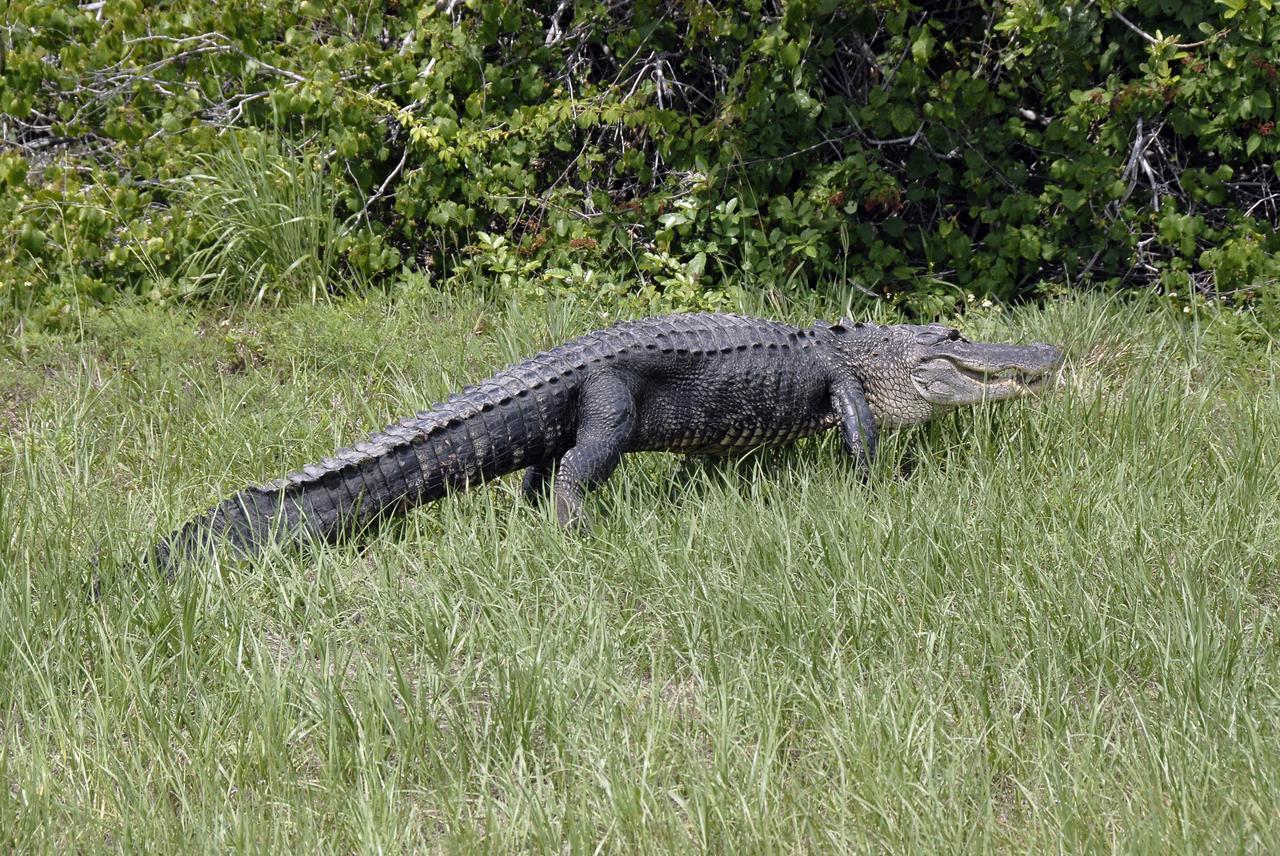
CAPE CANAVERAL, Fla. – Taking a mid-day stroll, an alligator heads for the woods after crossing the Saturn Causeway at NASA's Kennedy Space Center in Florida in front of the Astrovan with STS-127 crew members aboard. The crew was on its way to Launch Pad 39A for a simulated launch countdown, part of the terminal countdown demonstration test. Alligators can be spotted in the drainage canals and other waters surrounding Kennedy. They occasionally venture onto roads seeking new environs or mates. The center shares a boundary with the Merritt Island Wildlife Nature Refuge, which is a habitat for more than 310 species of birds, 25 mammals, 117 fishes and 65 amphibians and reptiles. Photo credit: NASA/Kim Shiflett