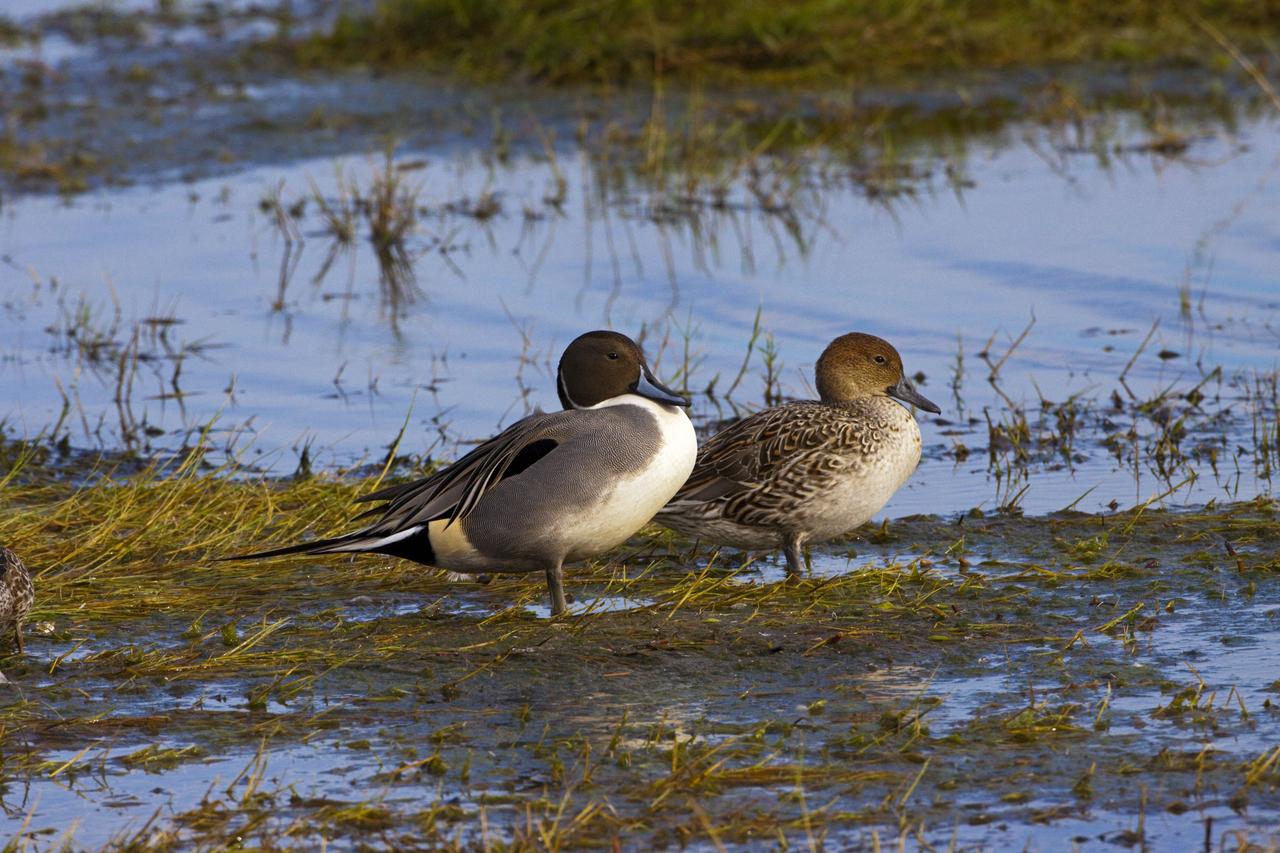
CAPE CANAVERAL, Fla. – A pair of northern pintail ducks rest on marsh grass in a pond at Black Point Wildlife Drive, part of the Merritt Island National Wildlife Refuge. NASA's Kennedy Space Center shares a boundary with the refuge, consisting of 140,000 acres. The Refuge provides a wide variety of habitats: coastal dunes, saltwater estuaries and marshes, freshwater impoundments, scrub, pine flatwoods, and hardwood hammocks that provide habitat for more than 1,500 species of plants and animals, including about 331 species of birds. Photo credit: NASA/Jim Grossmann
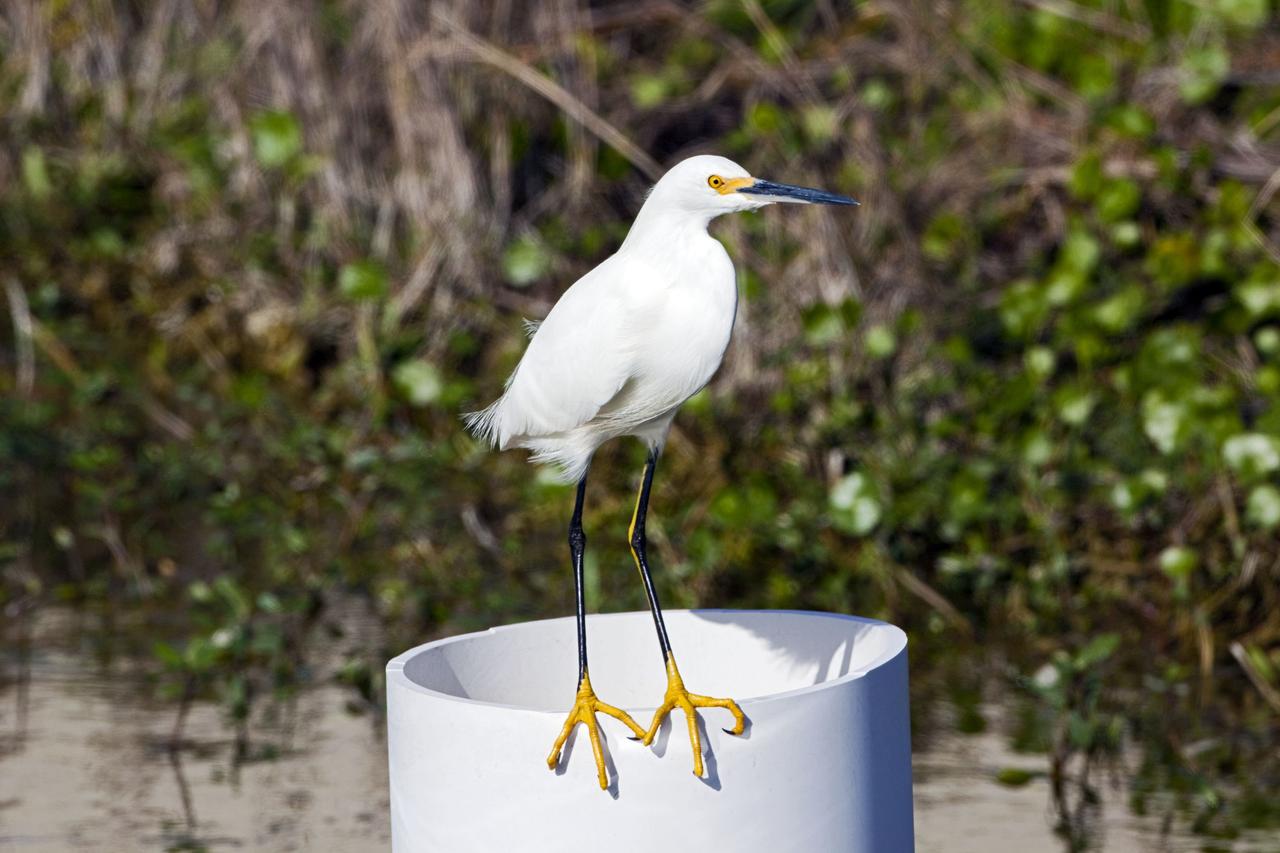
CAPE CANAVERAL, Fla. – Perched on a section of pipe, this snowy egret keeps a wary eye on the photographer on a sunny day at Black Point Wildlife Drive, part of the Merritt Island National Wildlife Refuge. NASA's Kennedy Space Center shares a boundary with the refuge, consisting of 140,000 acres. The Refuge provides a wide variety of habitats: coastal dunes, saltwater estuaries and marshes, freshwater impoundments, scrub, pine flatwoods, and hardwood hammocks that provide habitat for more than 1,500 species of plants and animals, including about 331 species of birds. Photo credit: NASA/Jim Grossmann
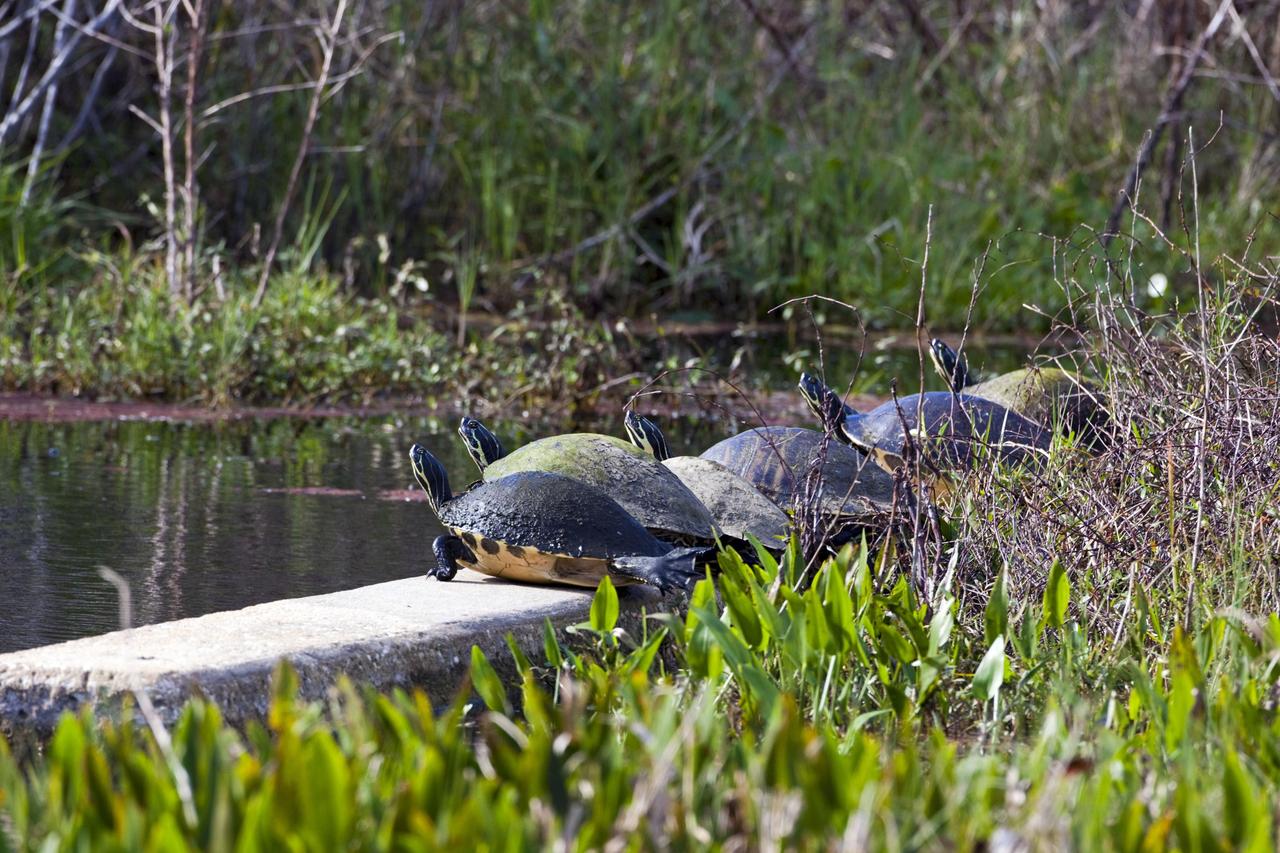
CAPE CANAVERAL, Fla. – Several Florida chicken turtles line up to sun themselves atop a concrete structure at Black Point Wildlife Drive, part of the Merritt Island National Wildlife Refuge. NASA's Kennedy Space Center shares a boundary with the refuge, consisting of 140,000 acres. The Refuge provides a wide variety of habitats: coastal dunes, saltwater estuaries and marshes, freshwater impoundments, scrub, pine flatwoods, and hardwood hammocks that provide habitat for more than 1,500 species of plants and animals, including about 331 species of birds. Photo credit: NASA/Jim Grossmann
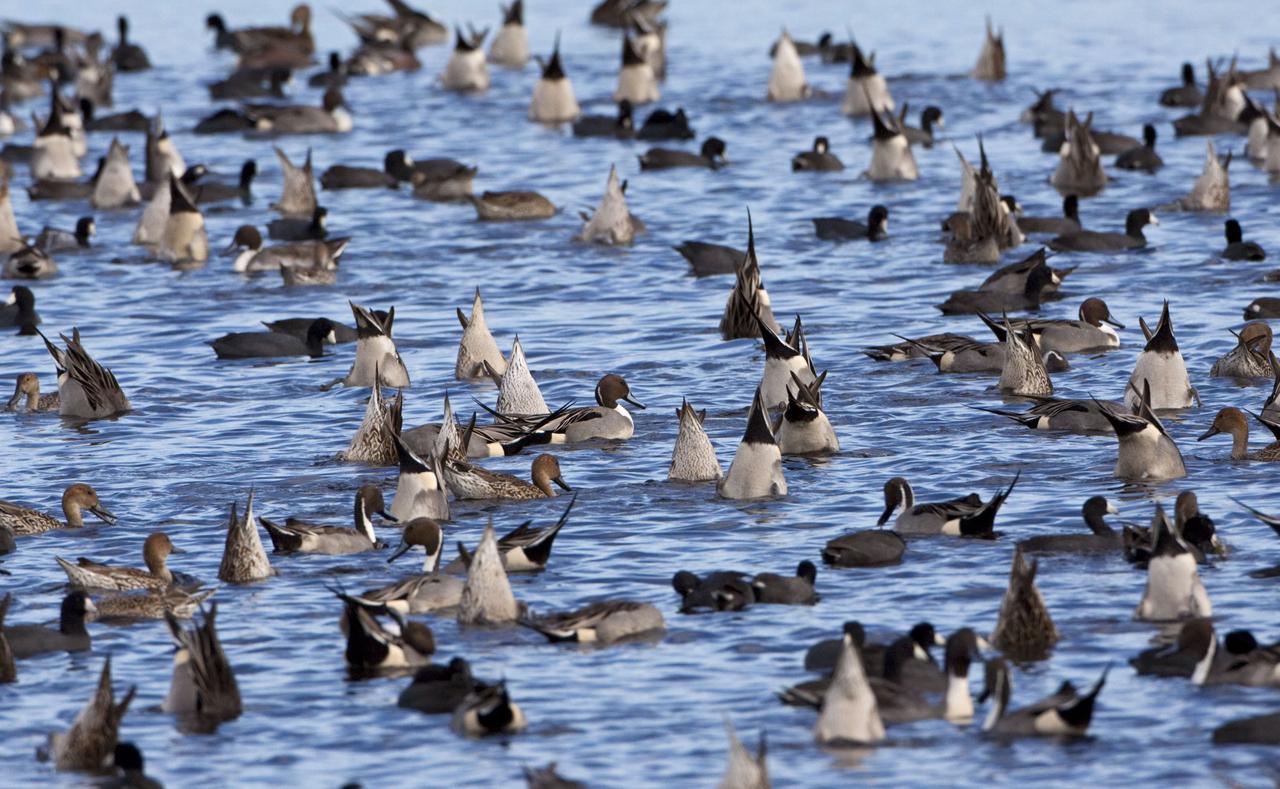
CAPE CANAVERAL, Fla. – Northern pintail ducks fill a pond at Black Point Wildlife Drive, part of the Merritt Island National Wildlife Refuge. NASA's Kennedy Space Center shares a boundary with the refuge, consisting of 140,000 acres. The Refuge provides a wide variety of habitats: coastal dunes, saltwater estuaries and marshes, freshwater impoundments, scrub, pine flatwoods, and hardwood hammocks that provide habitat for more than 1,500 species of plants and animals, including about 331 species of birds. Photo credit: NASA/Jim Grossmann
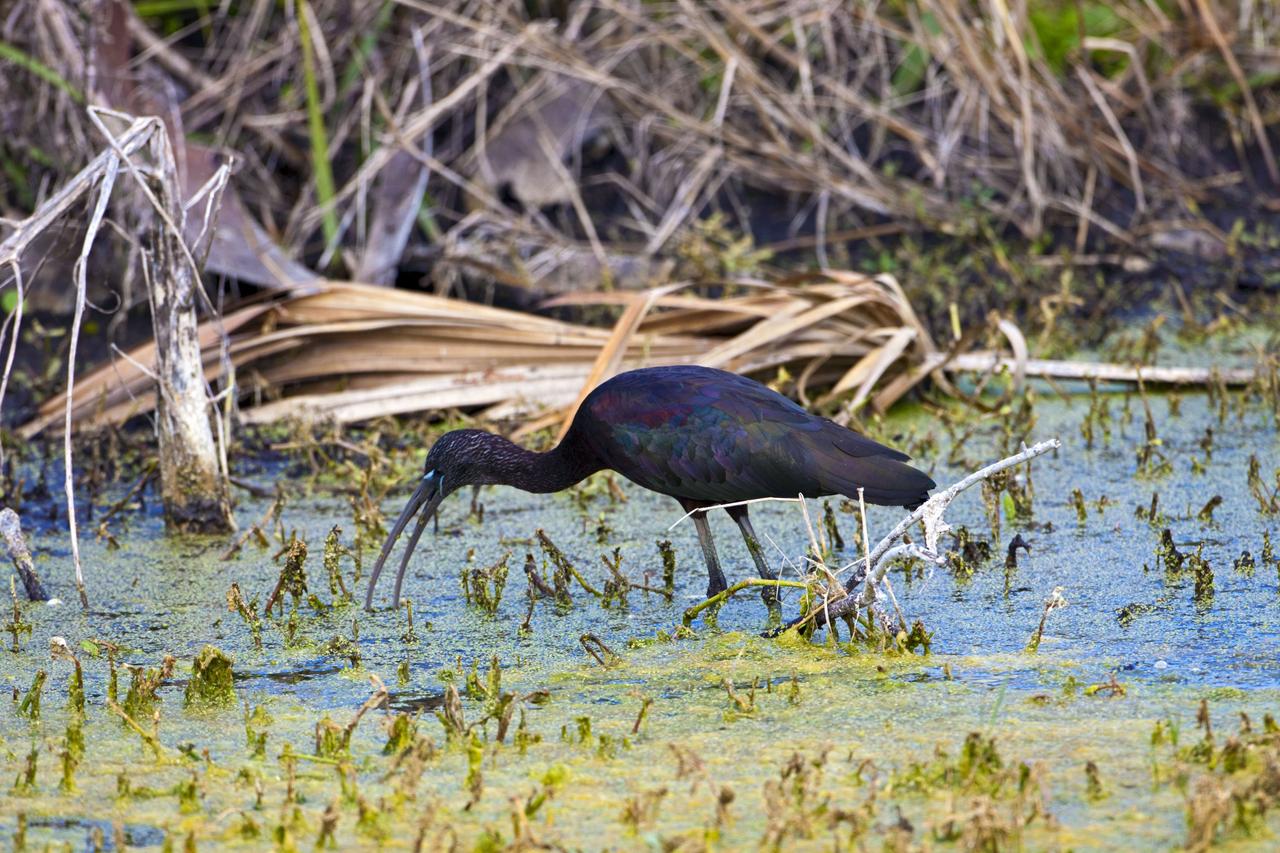
CAPE CANAVERAL, Fla. – A glossy ibis searches for food beneath the algae-covered surface of a pond at Black Point Wildlife Drive, part of the Merritt Island National Wildlife Refuge. NASA's Kennedy Space Center shares a boundary with the refuge, consisting of 140,000 acres. The Refuge provides a wide variety of habitats: coastal dunes, saltwater estuaries and marshes, freshwater impoundments, scrub, pine flatwoods, and hardwood hammocks that provide habitat for more than 1,500 species of plants and animals, including about 331 species of birds. Photo credit: NASA/Jim Grossmann
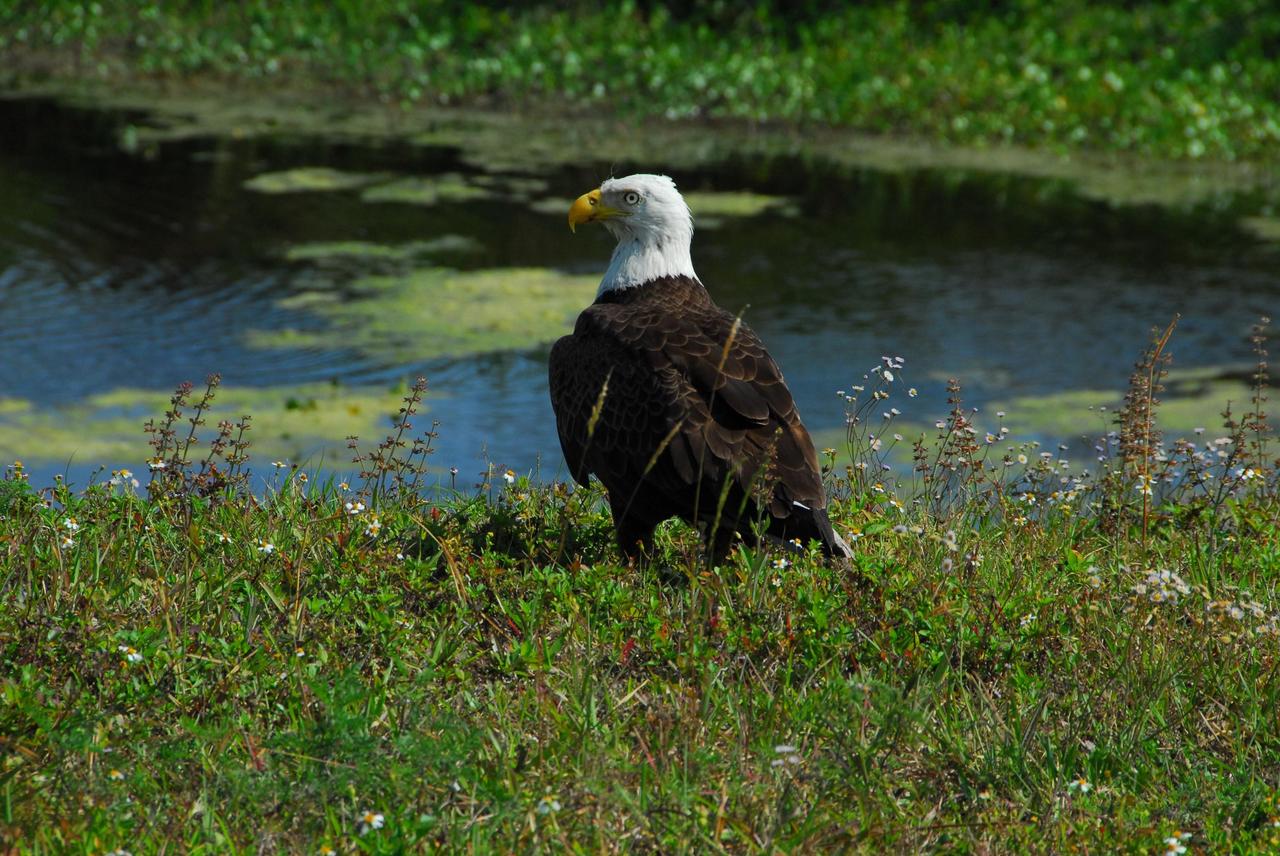
KENNEDY SPACE CENTER, FLA. -- This adult bald eagle rests on the ground near a pond close to S.R. 3 in NASA's Kennedy Space Center. Bald eagles live near large bodies of open water such as lakes, marshes, seacoasts and rivers, where there are plenty of fish to eat and tall trees for nesting and roosting. Bald eagles feed primarily on fish, but also eat small animals (ducks, coots, muskrats, turtles, rabbits, snakes, etc.) and occasional carrion (dead animals). They are sometimes seen among a gathering of vultures at the site of a fresh meal. Bald eagles have a presence in every U. S. state except Hawaii. Bald eagles use a specific territory for nesting (they mate for life), winter feeding or a year-round residence. Its natural domain is from Alaska to Baja, California, and from Maine to Florida. There are a dozen eagle nests both in KSC and in the Merritt Island National Wildlife Refuge, which surrounds KSC. The refuge includes several wading bird rookeries, many osprey nests, up to 400 manatees during the spring, and approximately 2,500 Florida scrub jays. It also is a major wintering area for migratory birds. More than 500 species of wildlife inhabit the refuge, with 15 considered federally threatened or endangered. Photo credit: NASA/George Shelton
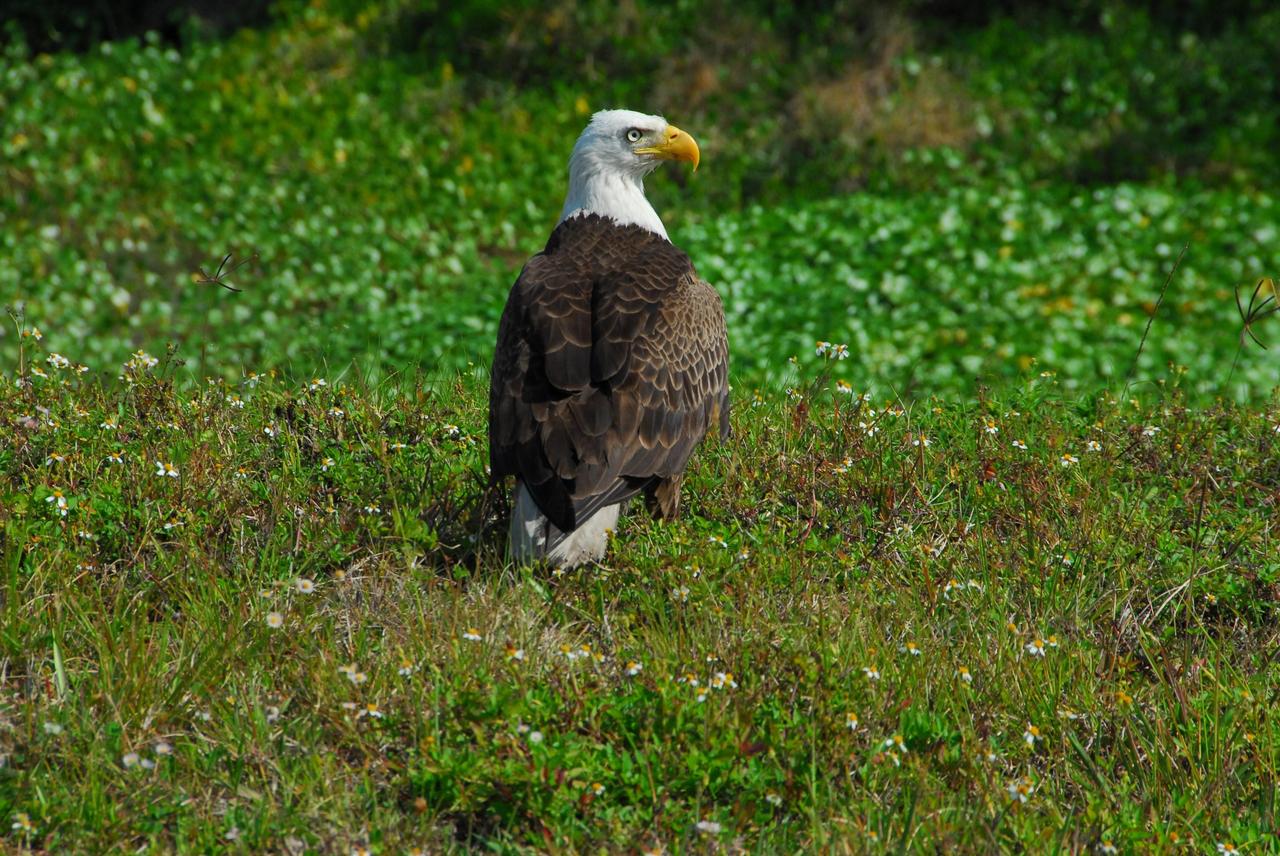
KENNEDY SPACE CENTER, FLA. -- This adult bald eagle rests on the ground near a pond close to S.R. 3 in NASA's Kennedy Space Center. Bald eagles live near large bodies of open water such as lakes, marshes, seacoasts and rivers, where there are plenty of fish to eat and tall trees for nesting and roosting. Bald eagles feed primarily on fish, but also eat small animals (ducks, coots, muskrats, turtles, rabbits, snakes, etc.) and occasional carrion (dead animals). They are sometimes seen among a gathering of vultures at the site of a fresh meal. Bald eagles have a presence in every U. S. state except Hawaii. Bald eagles use a specific territory for nesting (they mate for life), winter feeding or a year-round residence. Its natural domain is from Alaska to Baja, California, and from Maine to Florida. There are a dozen eagle nests both in KSC and in the Merritt Island National Wildlife Refuge, which surrounds KSC. The refuge includes several wading bird rookeries, many osprey nests, up to 400 manatees during the spring, and approximately 2,500 Florida scrub jays. It also is a major wintering area for migratory birds. More than 500 species of wildlife inhabit the refuge, with 15 considered federally threatened or endangered. Photo credit: NASA/George Shelton
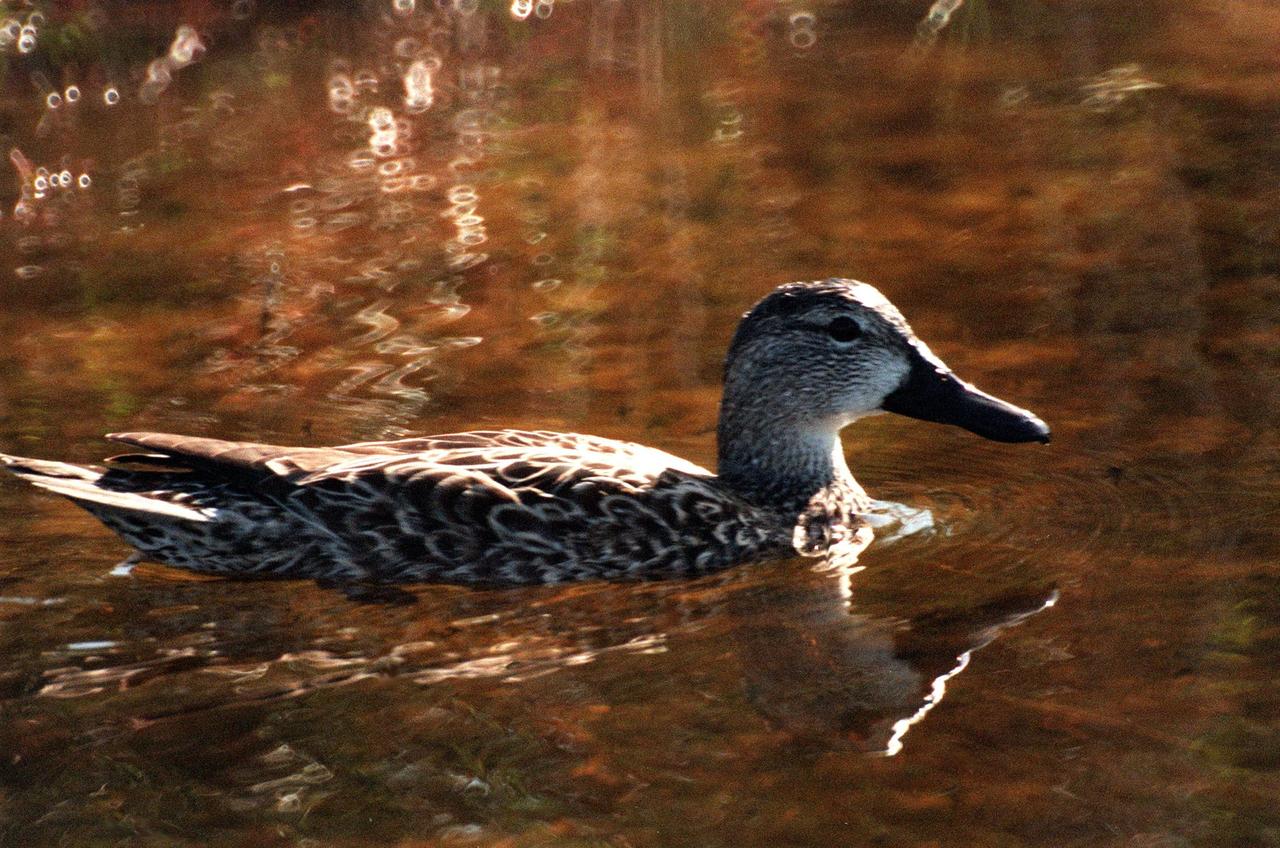
KENNEDY SPACE CENTER, FLA. -- A pintail duck swims calmly in the waters of the Merritt Island National <a href="http://www-pao.ksc.nasa.gov/kscpao/captions/subjects/wildlife.htm">Wildlife </a>Refuge, which shares a boundary with the space center. The pintail can be found in marshes, prairie ponds and tundra, and salt marshes in winter. They range from Alaska and Greenland south to Central America and the West Indies. The open waters of the Wildlife Refuge provide wintering areas for 23 species of migratory waterfowl as well as a year-round home for great blue herons, great egrets, wood storks, cormorants, brown pelicans and other species of marsh and shore birds. The refuge comprises 92,000 acres, ranging from fresh-water impoundments, salt-water estuaries and brackish marshes to hardwood hammocks and pine flatwoods. The diverse landscape provides habitat for more than 310 species of birds, 25 mammals, 117 fishes, and 65 amphibians and reptiles, including such endangered species as Southern bald eagles, wood storks, Florida scrub jays, Atlantic loggerhead and leatherback turtles, osprey, and nearly 5,000 alligators