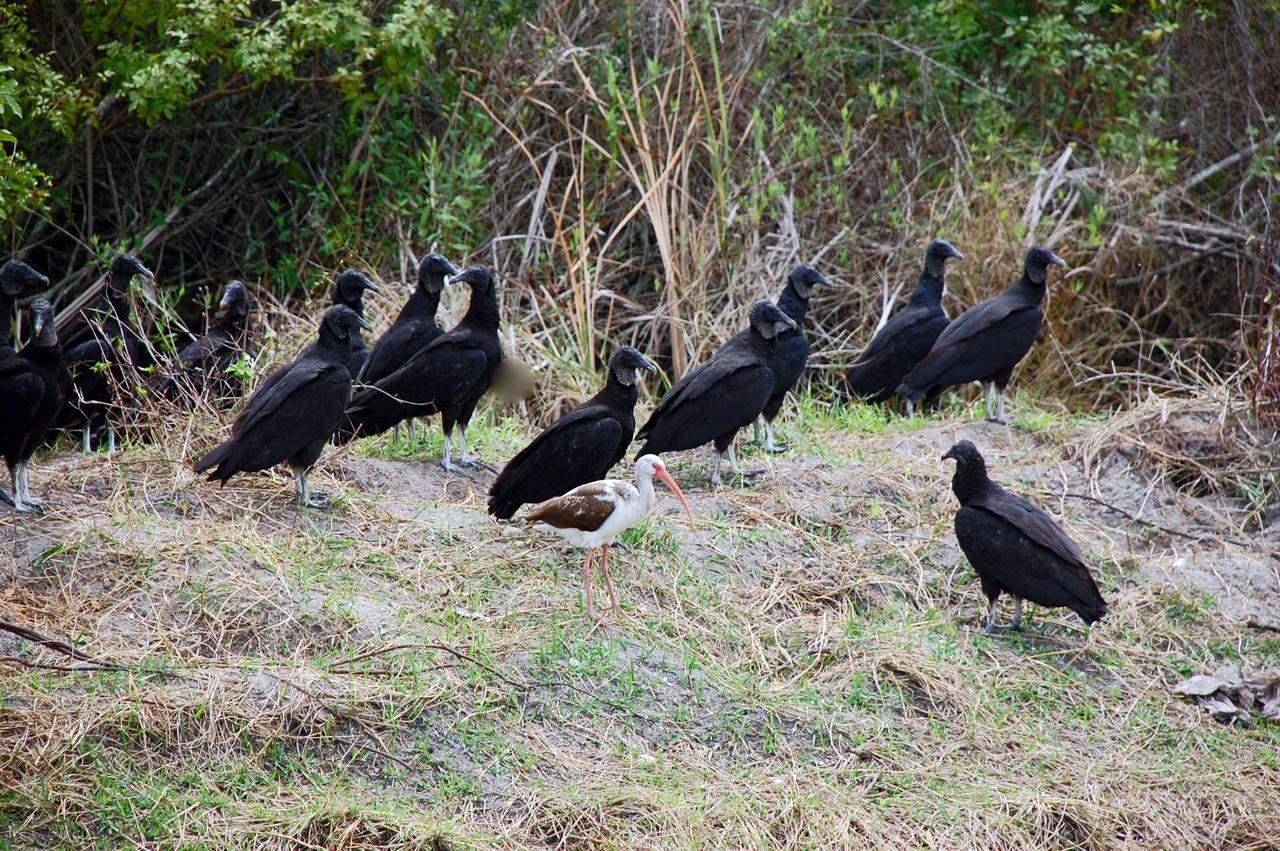
CAPE CANAVERAL, Fla. – Black vultures gather near woods in NASA's Kennedy Space Center in Florida. They are accompanied by a young white ibis. Ranging across the south and southeast, black vultures scavenge for both carrion and weak, sick or unprotected prey. They differ from turkey vultures in that they depend on vision to find food. They can be found all around Kennedy, on the ground or any higher landing spot, from buildings to utility poles. The center shares a boundary with the Merritt Island Wildlife Nature Refuge, which is a habitat for more than 310 species of birds, 25 mammals, 117 fishes and 65 amphibians and reptiles. Photo credit: NASA/Ben Smegelsky
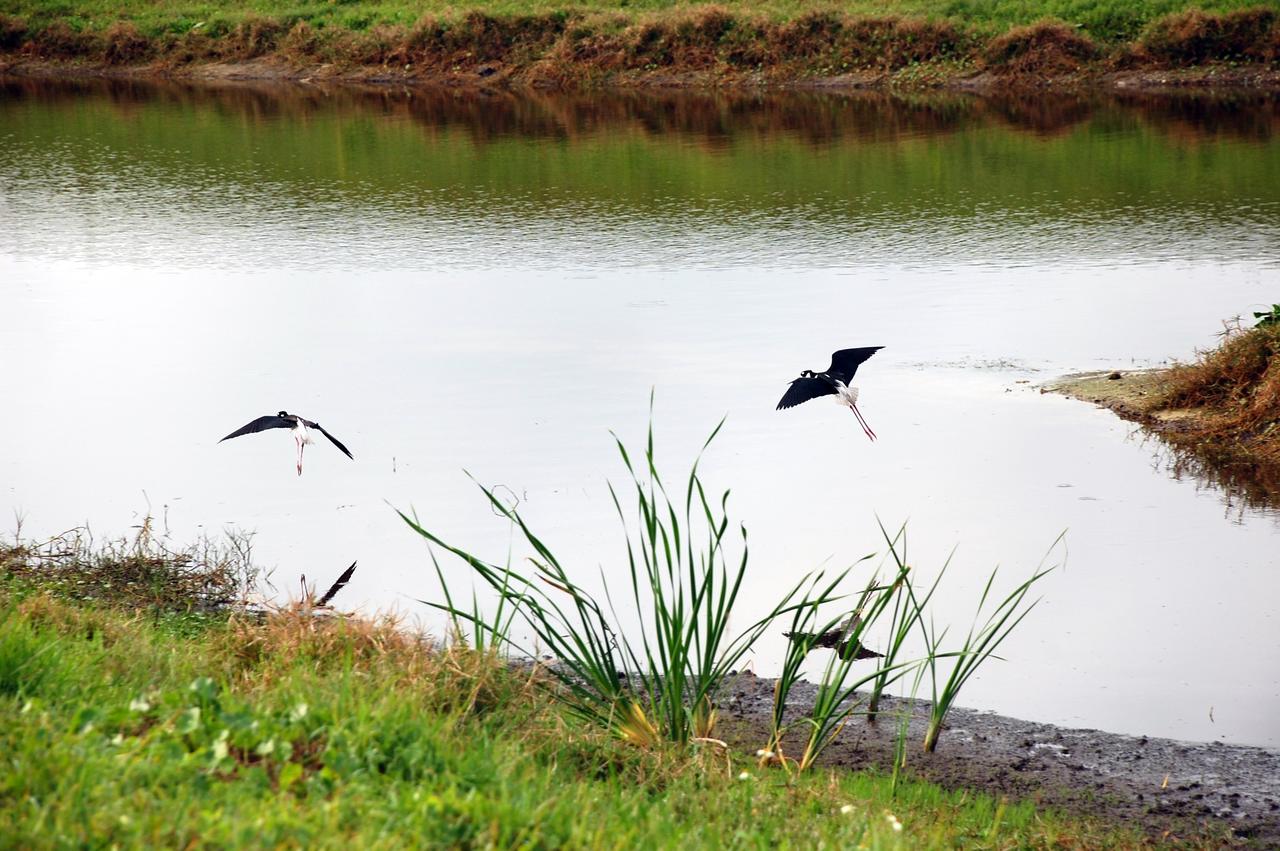
CAPE CANAVERAL, Fla. – Distinctive with its black and white coloring and very long red legs trailing behind is a black-winged stilt. The bird is a common sight around Kennedy, which shares a boundary with the Merritt Island National Wildlife Refuge. The marshes and open water of the refuge provide wintering areas for 23 species of migratory waterfowl, as well as a year-round home for great blue herons, great egrets, wood storks, cormorants, brown pelicans and other species of marsh and shore birds. Photo credit: NASA/Ben Smegelsky
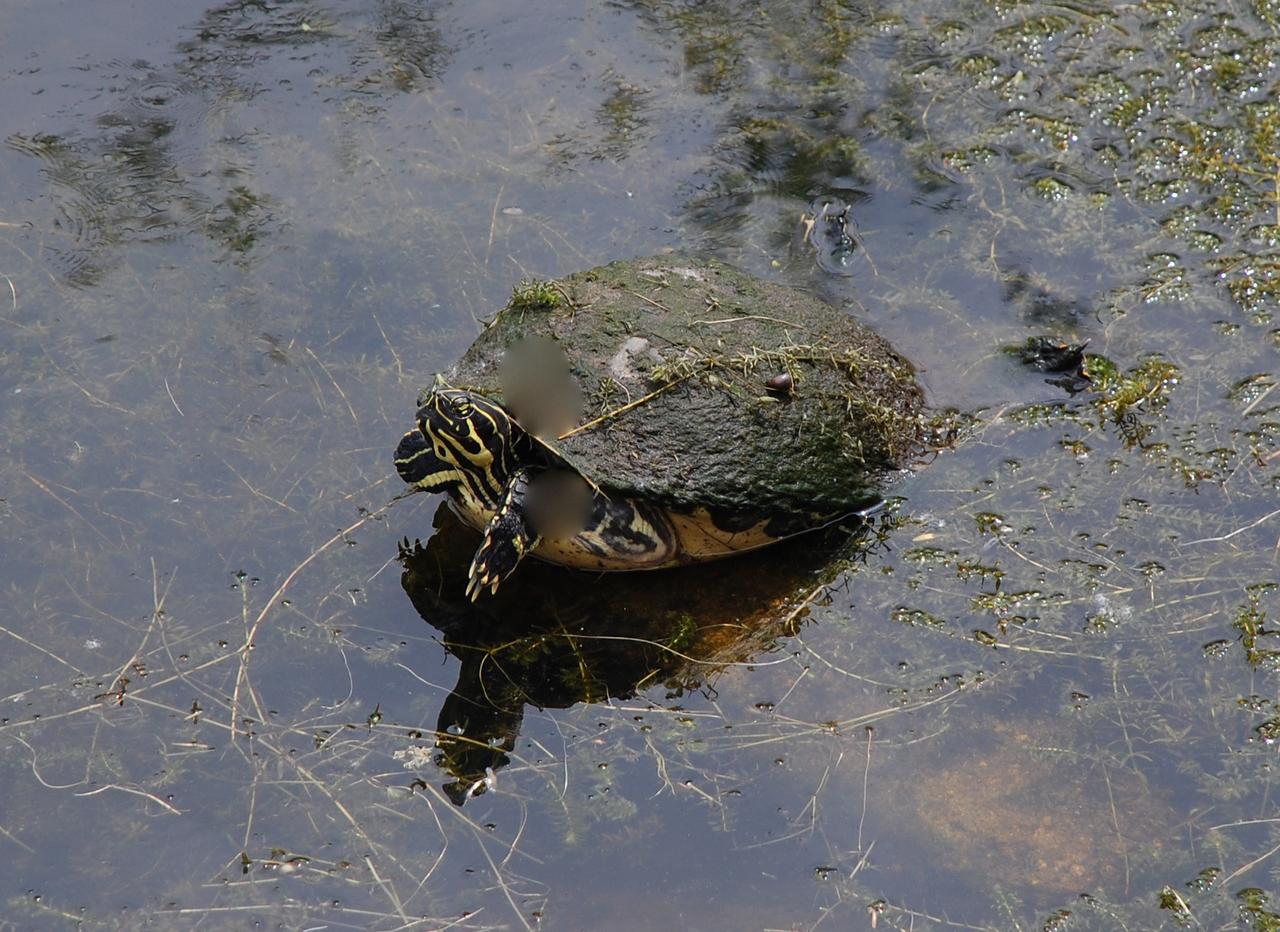
CAPE CANAVERAL, Fla. – A Florida redbelly turtle heads from shore into the water in NASA's Kennedy Space Center in Florida. The redbelly turtle's range is the Florida peninsula and Apalachicola area of the panhandle. They are active year-round and can often be seen basking on logs or floating mats of vegetation. Adults prefer a diet of aquatic plants. The center shares a boundary with the Merritt Island Wildlife Nature Refuge, which is a habitat for more than 310 species of birds, 25 mammals, 117 fishes and 65 amphibians and reptiles. Photo credit: NASA/Ben Smegelsky
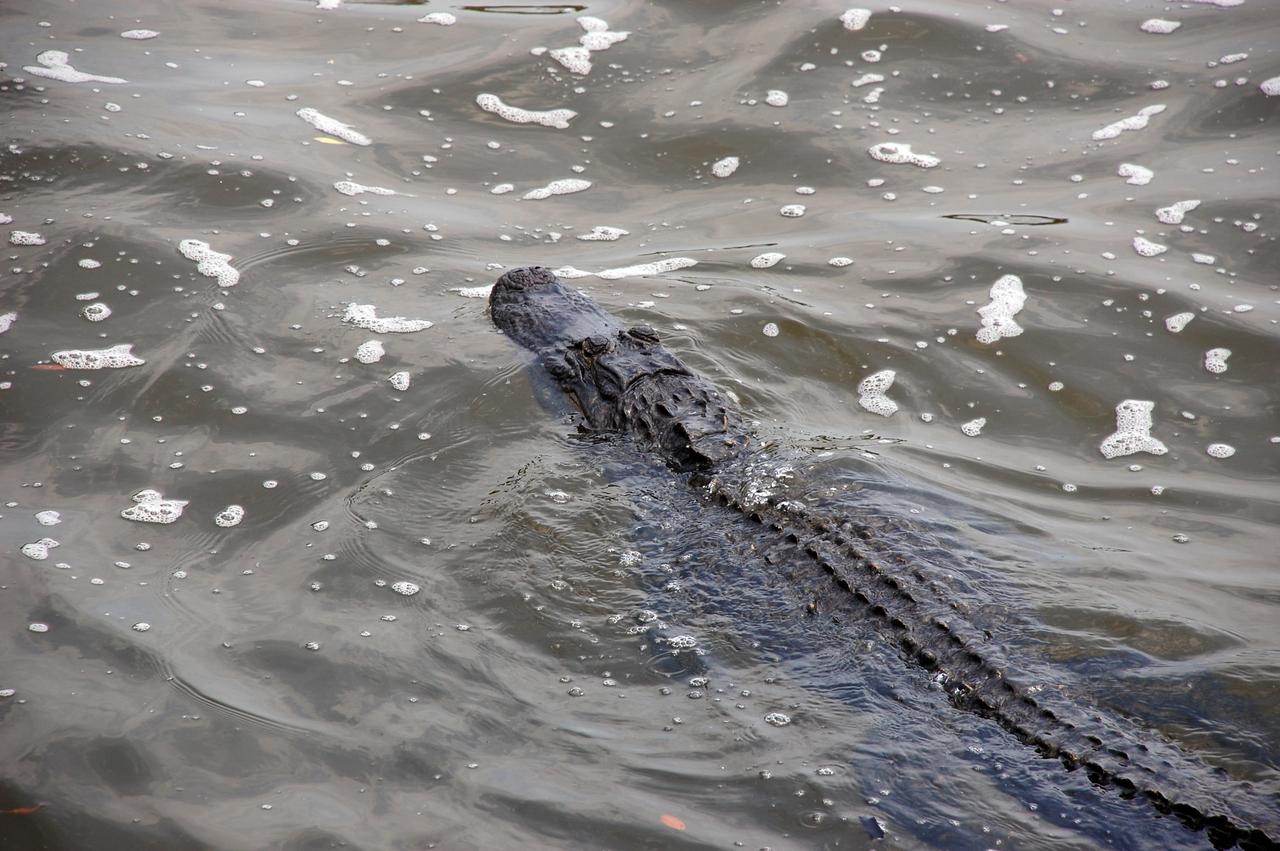
CAPE CANAVERAL, Fla. – An alligator patrols the water in NASA's Kennedy Space Center in Florida. A protected species, alligators can be spotted in the drainage canals and other waters surrounding Kennedy. The center shares a boundary with the Merritt Island Wildlife Nature Refuge, which is a habitat for more than 310 species of birds, 25 mammals, 117 fishes and 65 amphibians and reptiles. Photo credit: NASA/Ben Smegelsky