
A Mod-1 2000-kilowatt wind turbine designed by National Aeronautics and Space Administration (NASA) Lewis Research Center and constructed in Boone, North Carolina. The wind turbine program was a joint program between NASA and the Energy Research and Development Administration (ERDA) during the 1970s to develop less expensive forms of energy. NASA Lewis was assigned the responsibility of developing large horizontal-axis wind turbines. The program included a series of increasingly powerful wind turbines, designated: Mod-0A, Mod-1, WTS-4, and Mod-5. The program’s first device was a Mod-0 100-kilowatt wind turbine test bed at NASA’s Plum Brook Station. There were four Mod-0A 200-kilowatt turbines built in New Mexico, Hawaii, Puerto Rico, and Rhode Island. The 2000-kilowatt wind turbine in North Carolina, seen here, was the only Mod-1 machine constructed. The two-bladed, 200-foot diameter device was built in May 1979 and began operation that September. The Mod-1 turbine performed exceedingly well and was fully integrated into the local power grid. NASA researchers also used the North Carolina device to study its effect on noise and television transmission.

A Mod-0A 200-kilowatt wind turbine designed by National Aeronautics and Space Administration (NASA) Lewis Research Center and constructed in Block Island, Rhode Island. The wind turbine program was a joint program between NASA and the Energy Research and Development Administration (ERDA) during the 1970s to develop less expensive forms of energy. NASA Lewis was assigned the responsibility of developing large horizontal-axis wind turbines. The program included a series of increasingly powerful wind turbines, designated: Mod-0A, Mod-1, WTS-4, and Mod-5. The program’s first device was a Mod-0 100-kilowatt wind turbine test bed at NASA’s Plum Brook Station. This Mod-0A 200-kilowatt turbine, completed in 1977, was the program’s second-generation device. It included a 125-foot diameter blade atop a 100-foot tall tower. This early wind turbine was designed determine its operating problems, integrate with the local utilities, and assess the attitude of the local community. There were additional Mod-0A turbines built in Culebra, Puerto Rico; Clayton, New Mexico; and Oahu, Hawaii. The Mod-0A turbines suffered durability issues with the rotor blade and initially appeared unreliable. NASA engineers addressed the problems, and the turbines proved to be reliable and efficient devices that operated for a number of years. The information gained from these early models was vital to the design and improvement of the later generations.
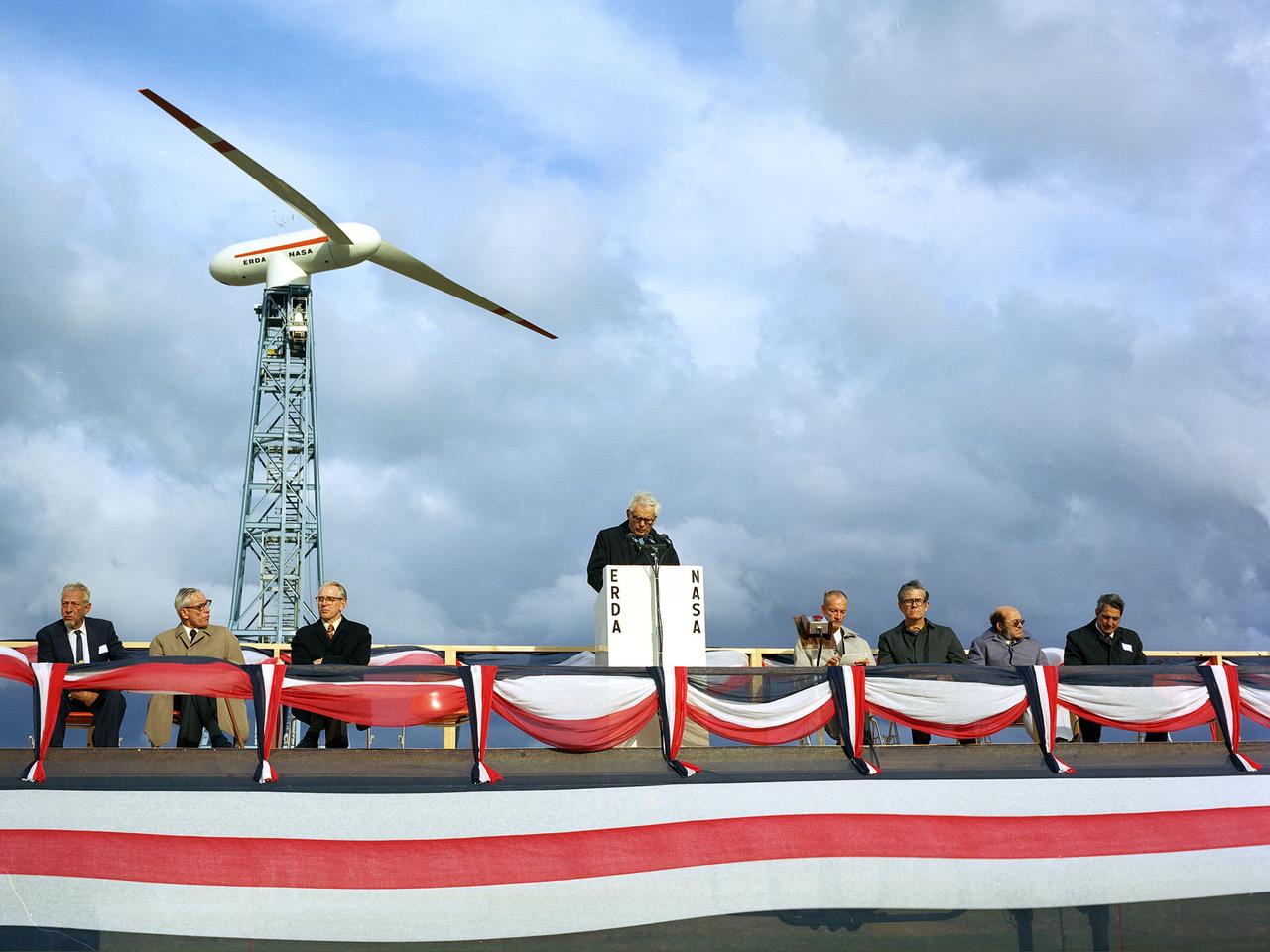
Energy Research and Development Administration (ERDA) Administrator Robert Seamans addresses the crowd at the dedication ceremony for the Mod-0 100-kilowatt wind turbine at the National Aeronautics and Space Administration’s (NASA) Plum Brook Station. The wind turbine program was a joint NASA/ERDA effort to develop less expensive forms of energy during the 1970s. NASA Lewis was able to use its experience with aerodynamics, powerplants, and energy transfer to develop efficient and cost-effective wind energy systems. The Plum Brook wind turbine was the first of a series of increasingly powerful NASA-ERDA wind turbines built around the nation. From left to right: Congressional Committee aide John Dugan, retired S. Morgan Smith Company chief engineer Carl Wilcox, windmill pioneer Beauchamp Smith, NASA Administrator James Fletcher, Seamans, and Lewis Center Director Bruce Lundin. The three men to the right are unidentified.
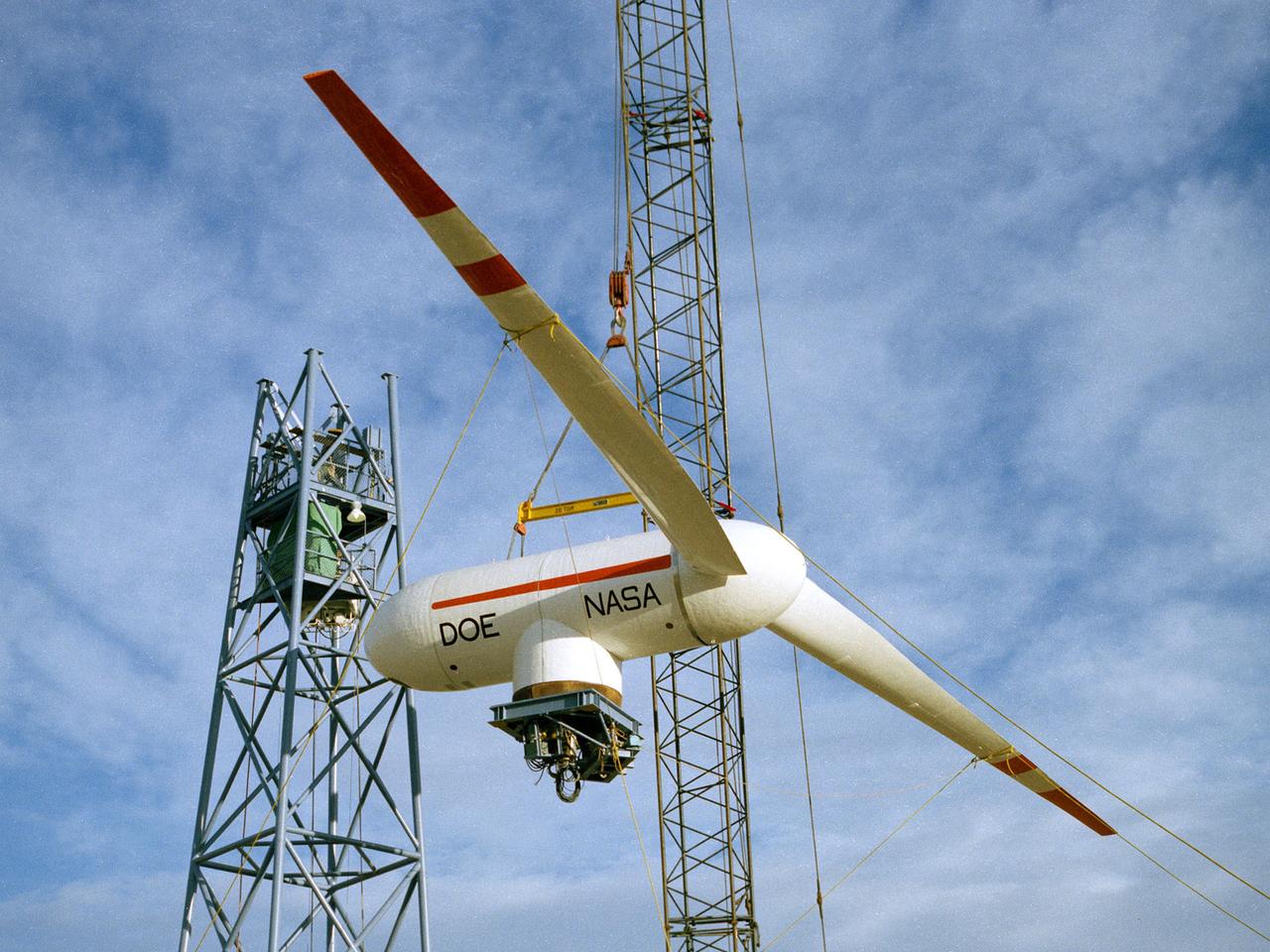
TA Mod-0A 200-kilowatt wind turbine designed by National Aeronautics and Space Administration (NASA) Lewis Research Center and constructed in Clayton, New Mexico. The wind turbine program was a joint effort by NASA and the Energy Research and Development Administration (ERDA) during the 1970s to develop less expensive forms of energy. NASA Lewis was assigned the responsibility of developing large horizontal-axis wind turbines. The program included a series of increasingly powerful wind turbines, designated: Mod-0A, Mod-1, WTS-4, and Mod-5. The program’s first device was a Mod-0 100-kilowatt wind turbine test bed built at NASA’s Plum Brook Station. This Mod-0A 200-kilowatt turbine built in Clayton in 1977 was the program’s second device. It included a 125-foot long blade atop a 100-foot tall tower. The Mod-0A was designed to determine the turbine’s operating problems, integrate the system with the local utilities, and assess the attitude of the local community. There were additional Mod-0A turbines built in Culebra, Puerto Rico; Block Island, Rhode Island; and Oahu, Hawaii. The Mod-0A turbines were initially unreliable and suffered issues with the durability of the rotor blade. Lewis engineers addressed the problems, and the wind turbines proved to be reliable and efficient devices that operated for a number of years. The information gained from these early models was vital to the design and improvement of the later generations.
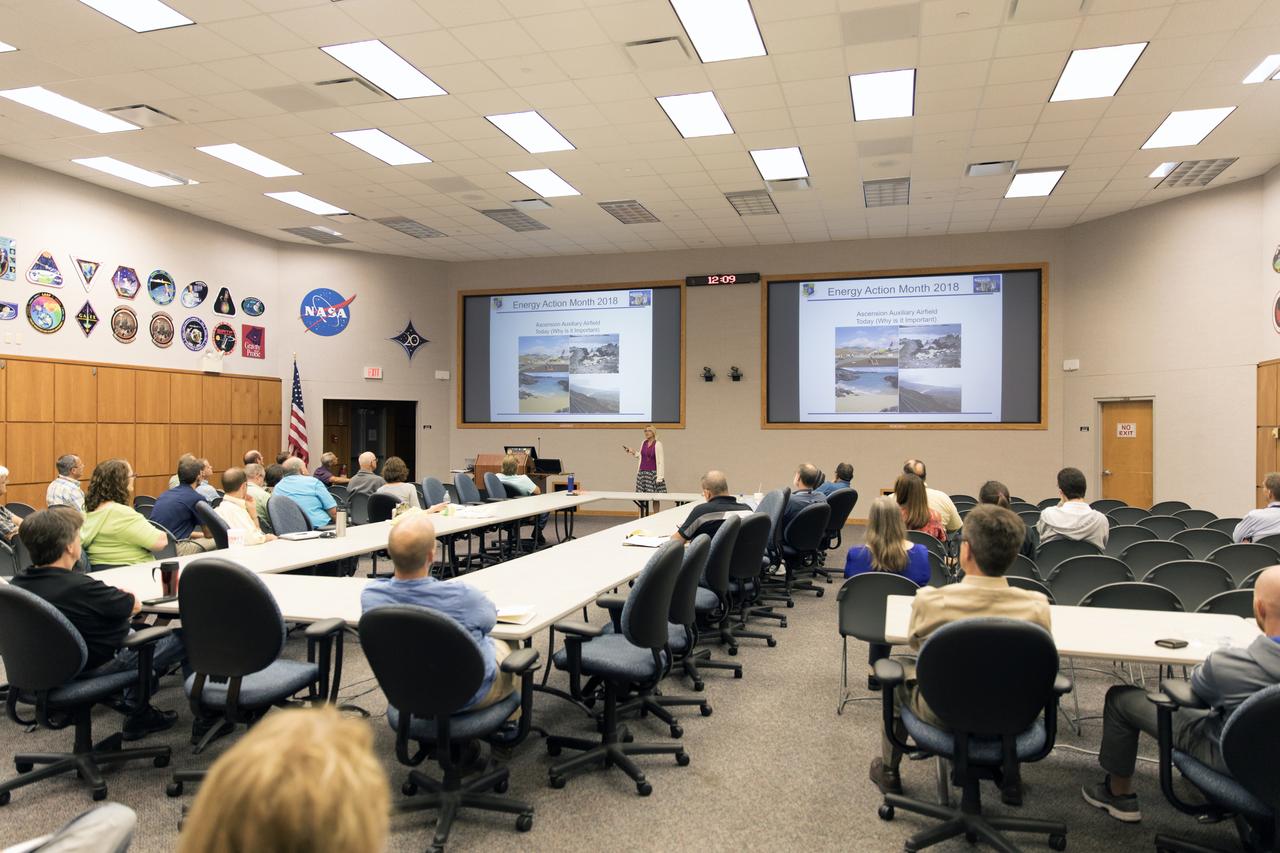
Guest speaker Robin Thomas shares a presentation focusing on energy resilience and the Ascension Island wind turbine generator project during a “lunch and learn” held Tuesday, Oct. 23, 2018, for employees at NASA’s Kennedy Space Center in Florida. Thomas is a resource efficiency manager working with the U.S. Air Force 45th Space Wing’s Civil Engineering Squadron based at Patrick Air Force Base. The event was one of two held during October in conjunction with Energy Awareness Month, which aims to recognize the importance of energy management for our national prosperity, security and environmental sustainability.
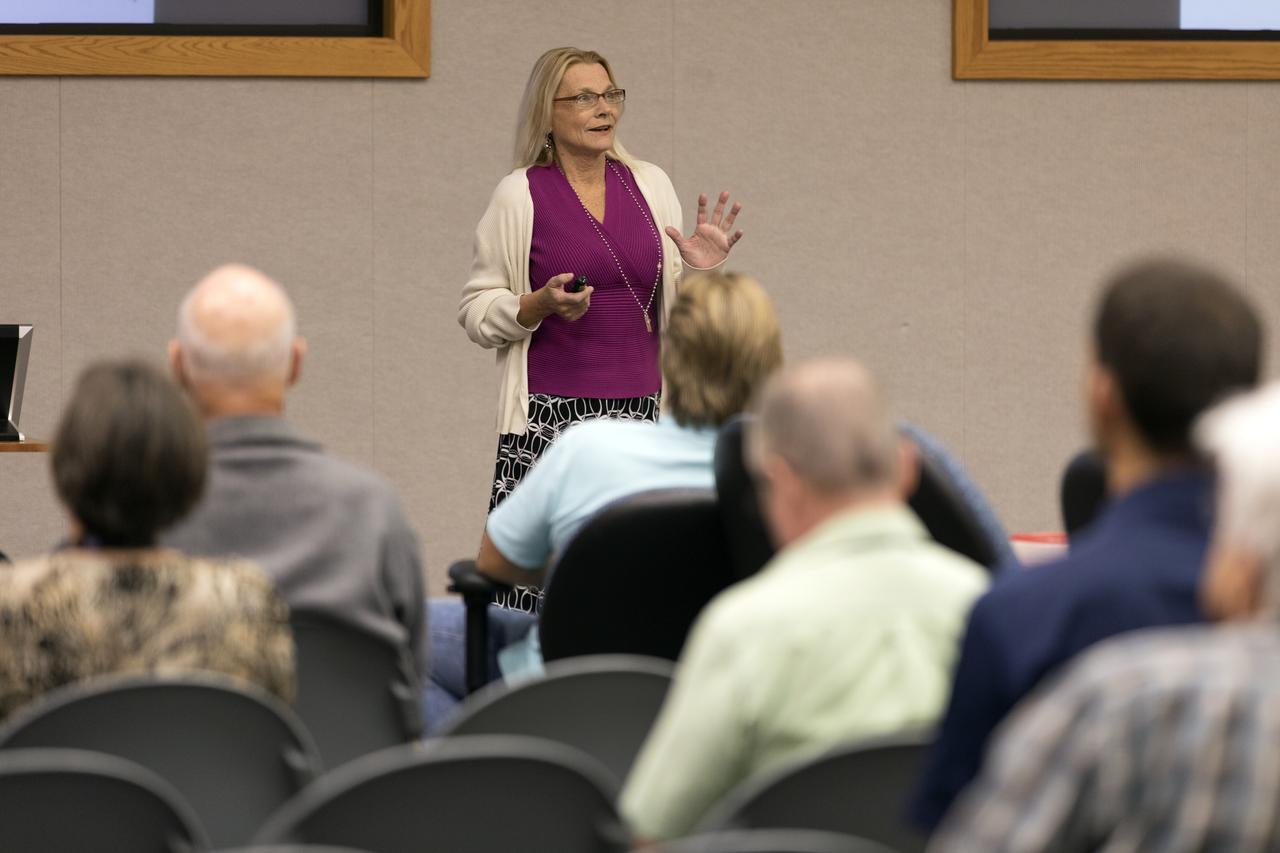
Guest speaker Robin Thomas discusses energy resilience and the Ascension Island wind turbine generator project during a “lunch and learn” held Tuesday, Oct. 23, 2018, for employees at NASA’s Kennedy Space Center in Florida. Thomas is a resource efficiency manager working with the U.S. Air Force 45th Space Wing’s Civil Engineering Squadron based at Patrick Air Force Base. The event was one of two held during October in conjunction with Energy Awareness Month, which aims to recognize the importance of energy management for our national prosperity, security and environmental sustainability.
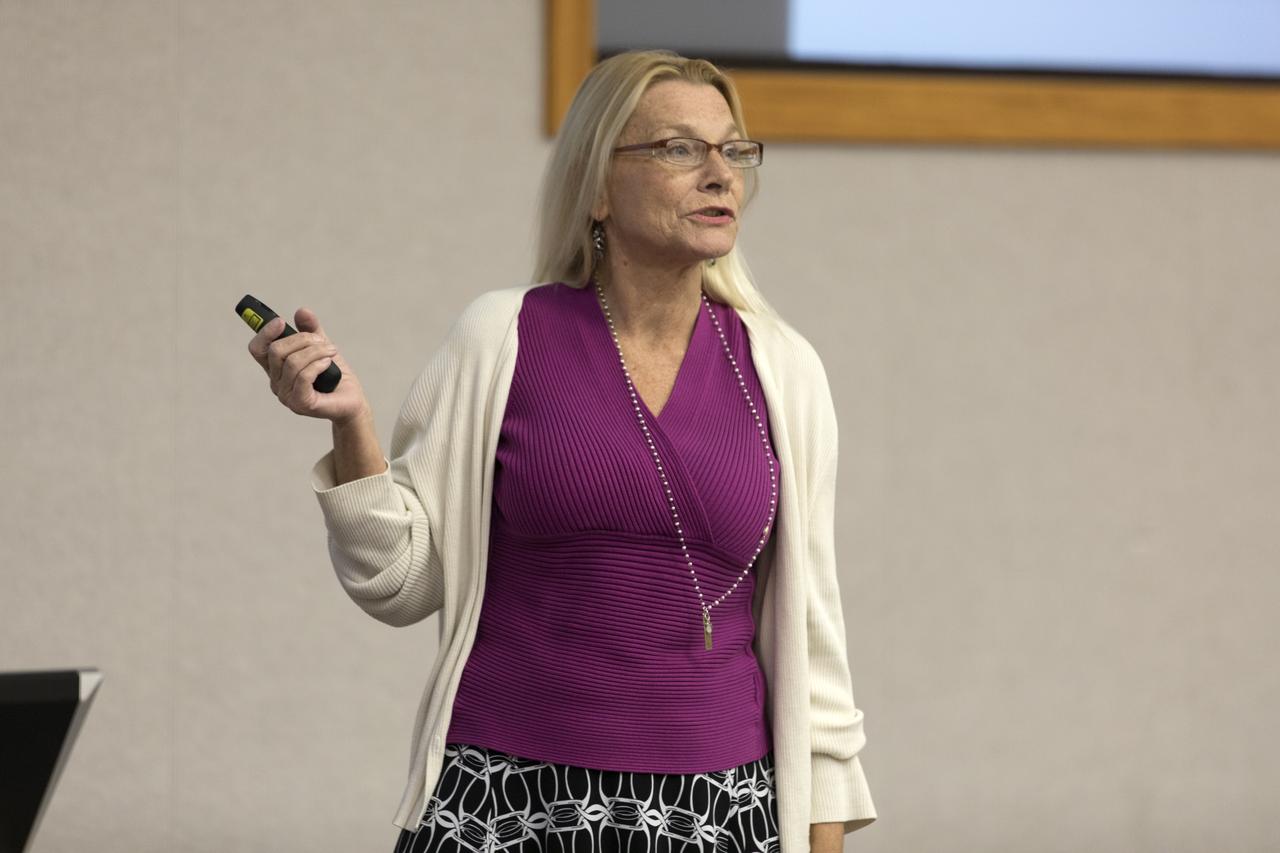
Guest speaker Robin Thomas discusses energy resilience and the Ascension Island wind turbine generator project during a “lunch and learn” held Tuesday, Oct. 23, 2018, for employees at NASA’s Kennedy Space Center in Florida. Thomas is a resource efficiency manager working with the U.S. Air Force 45th Space Wing’s Civil Engineering Squadron based at Patrick Air Force Base. The event was one of two held during October in conjunction with Energy Awareness Month, which aims to recognize the importance of energy management for our national prosperity, security and environmental sustainability.
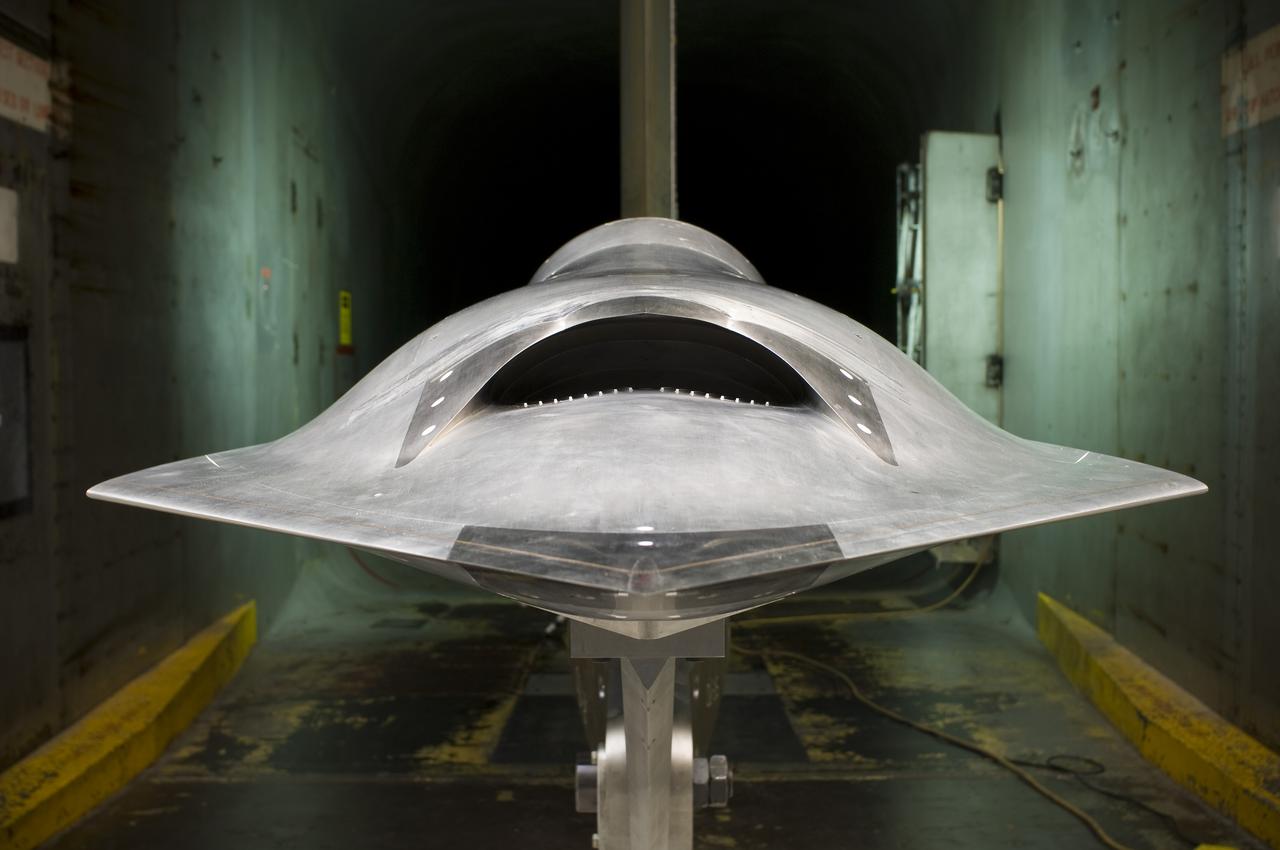
Versatile Affordable Advanced Turbine Engine (VAATE) tested in the Ames 11ft wind tunnel Test-11-0191
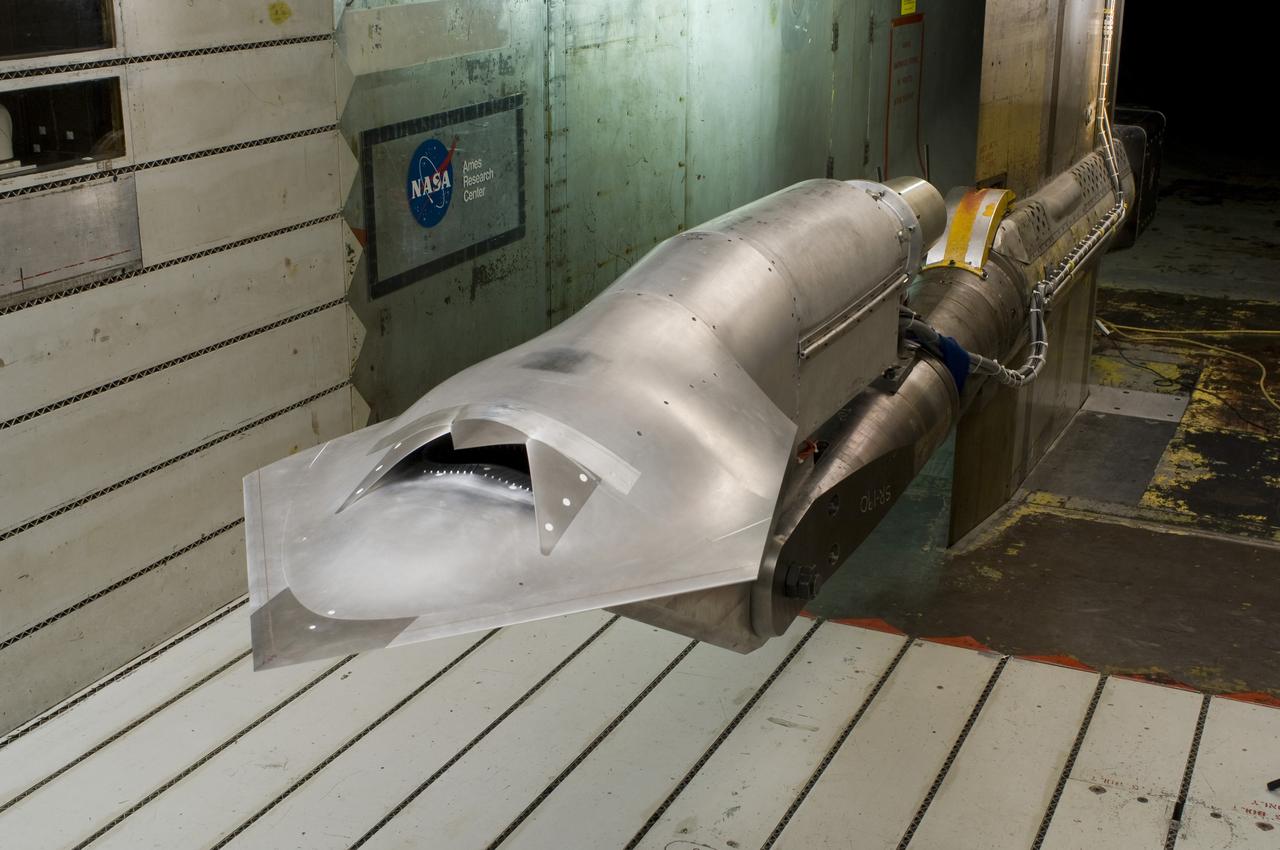
Versatile Affordable Advanced Turbine Engine (VAATE) tested in the Ames 11ft wind tunnel Test-11-0191
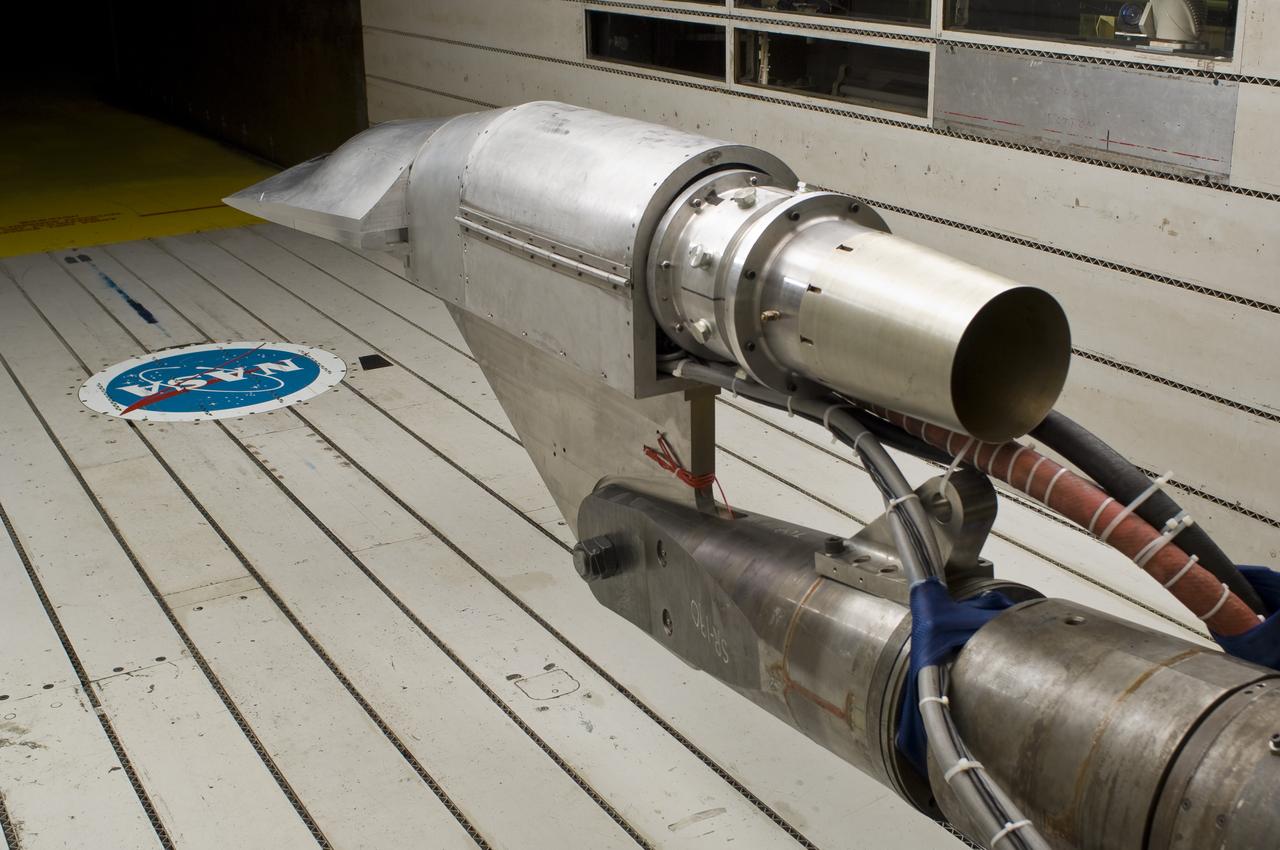
Versatile Affordable Advanced Turbine Engine (VAATE) tested in the Ames 11ft wind tunnel Test-11-0191
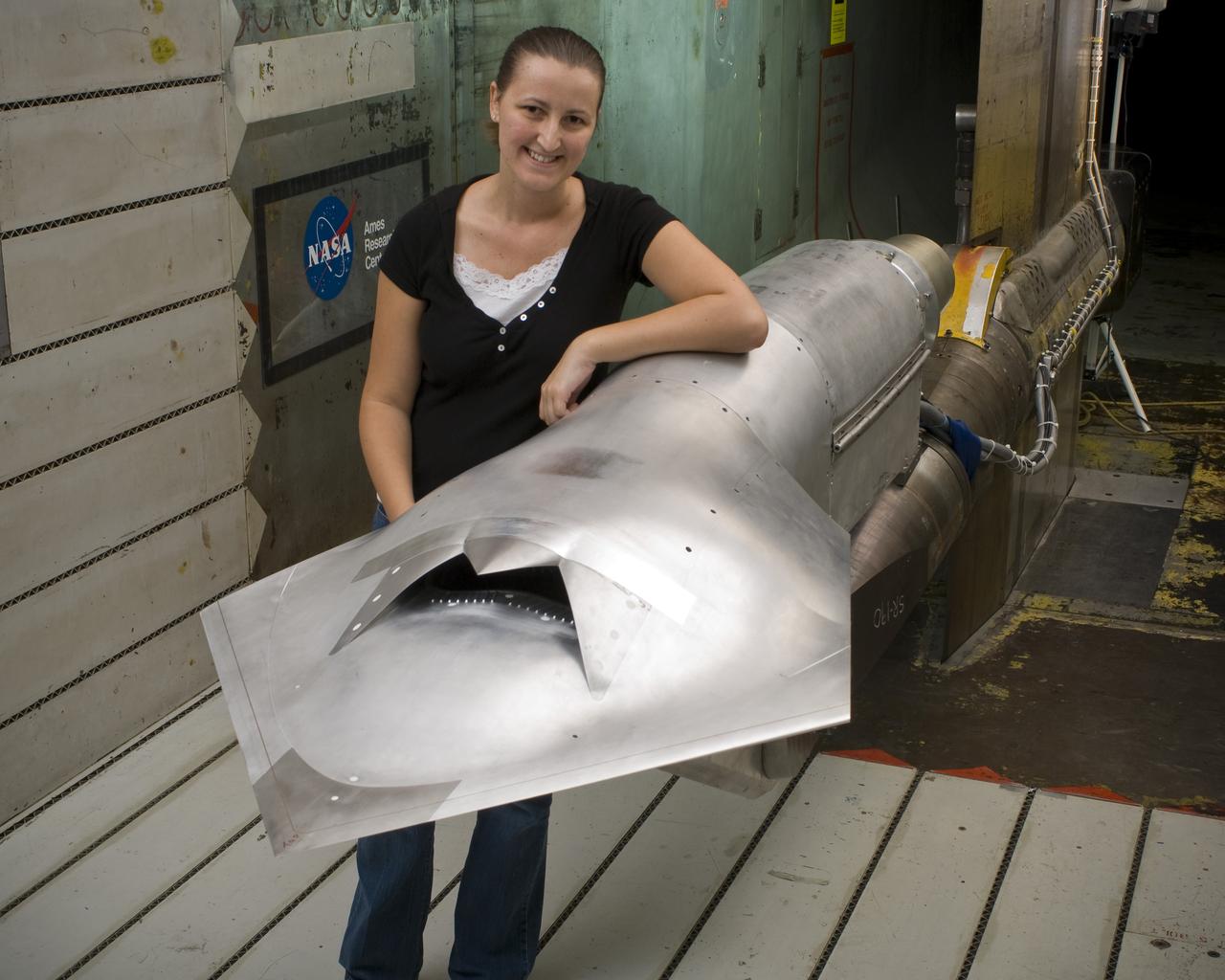
Versatile Affordable Advanced Turbine Engine (VAATE) tested in the Ames 11ft wind tunnel Test-11-0191 with Amela Zanacic, of Ames/Jacobs Technology
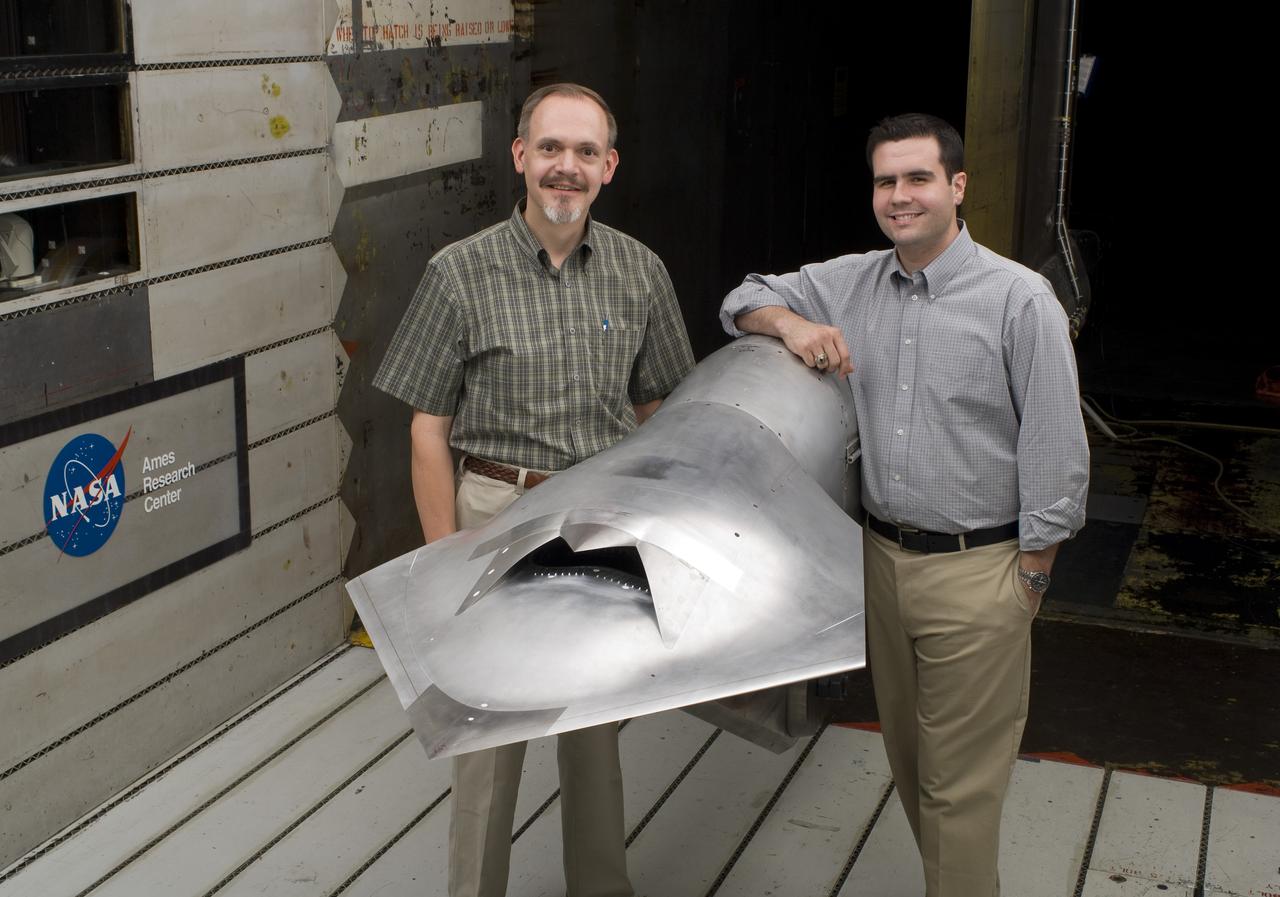
Versatile Affordable Advanced Turbine Engine (VAATE) tested in the Ames 11ft wind tunnel Test-11-0191 with Alex Giese and Jeff Aiello of the Air Force Research Laboratory.
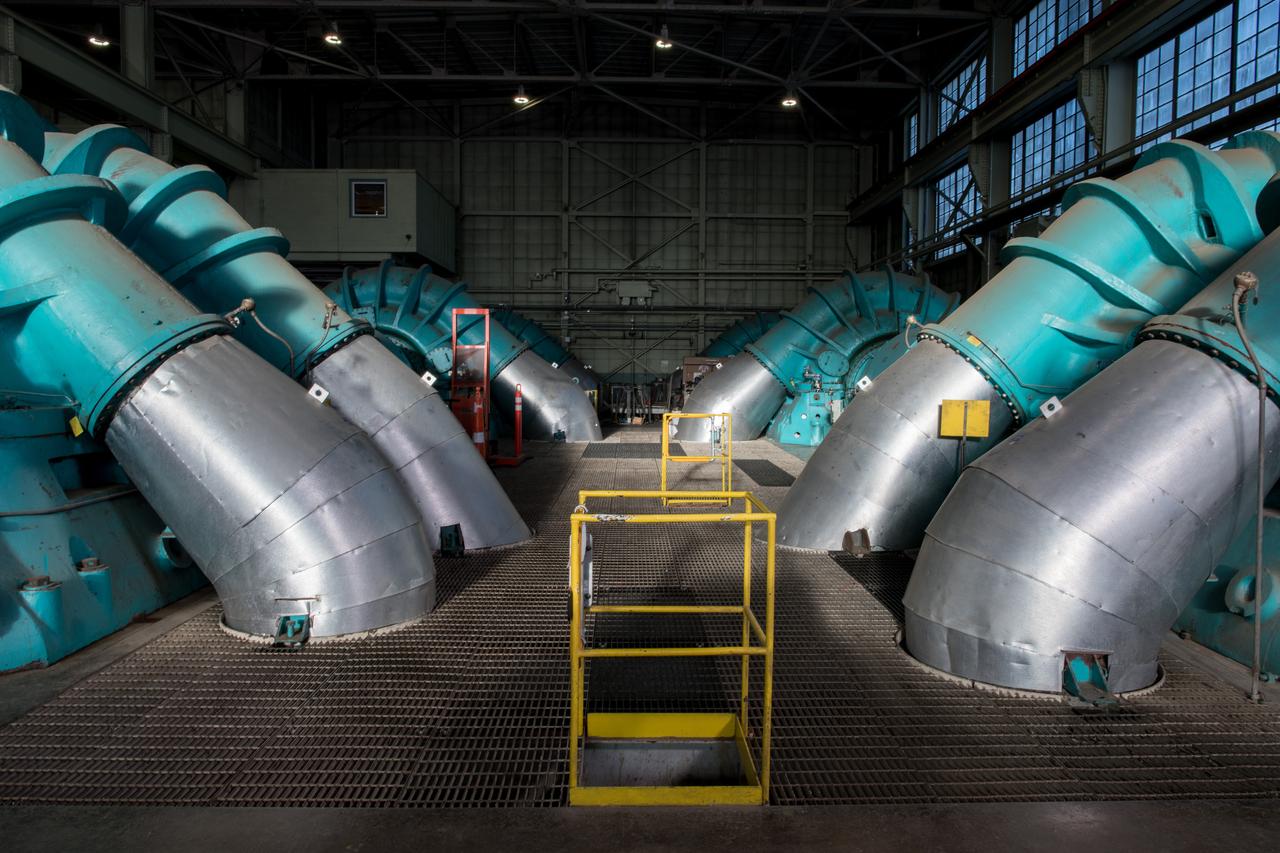
The Central Processing System at Glenn Research Center controls operations in the wind tunnels, propulsion systems lab, engine components research lab, and compressor, turbine and combustor test cells. Documentation photos of the facility were taken on December 19, 2023. Photo Credit: (NASA/Sara Lowthian-Hanna)
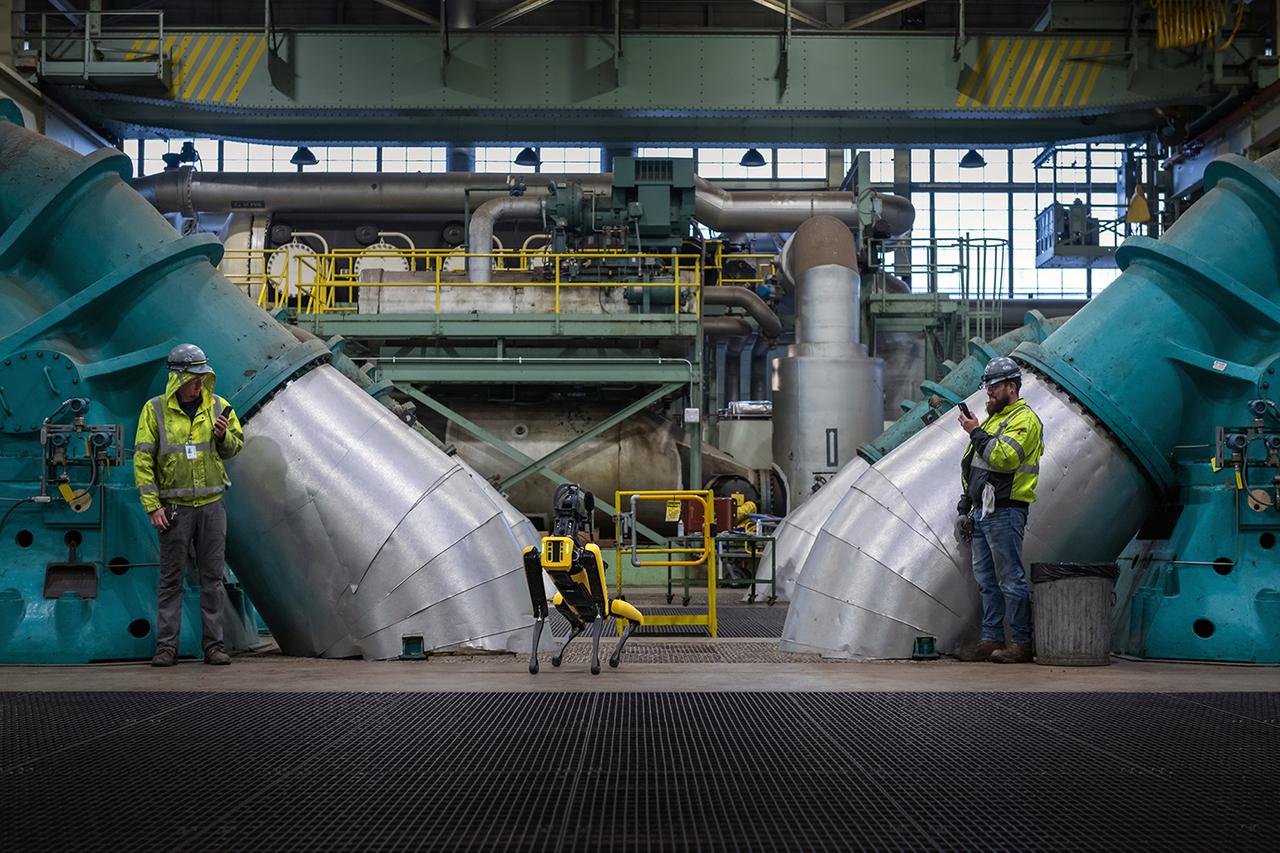
The CPS controls operations used by Glenn Research Center's wind tunnels, propulsion systems lab, engine components research lab, and compressor, turbine and combustor test cells. Used widely throughout the lab, it operates equipment such as exhausters, chillers, cooling towers, compressors, dehydrators, and other such equipment.
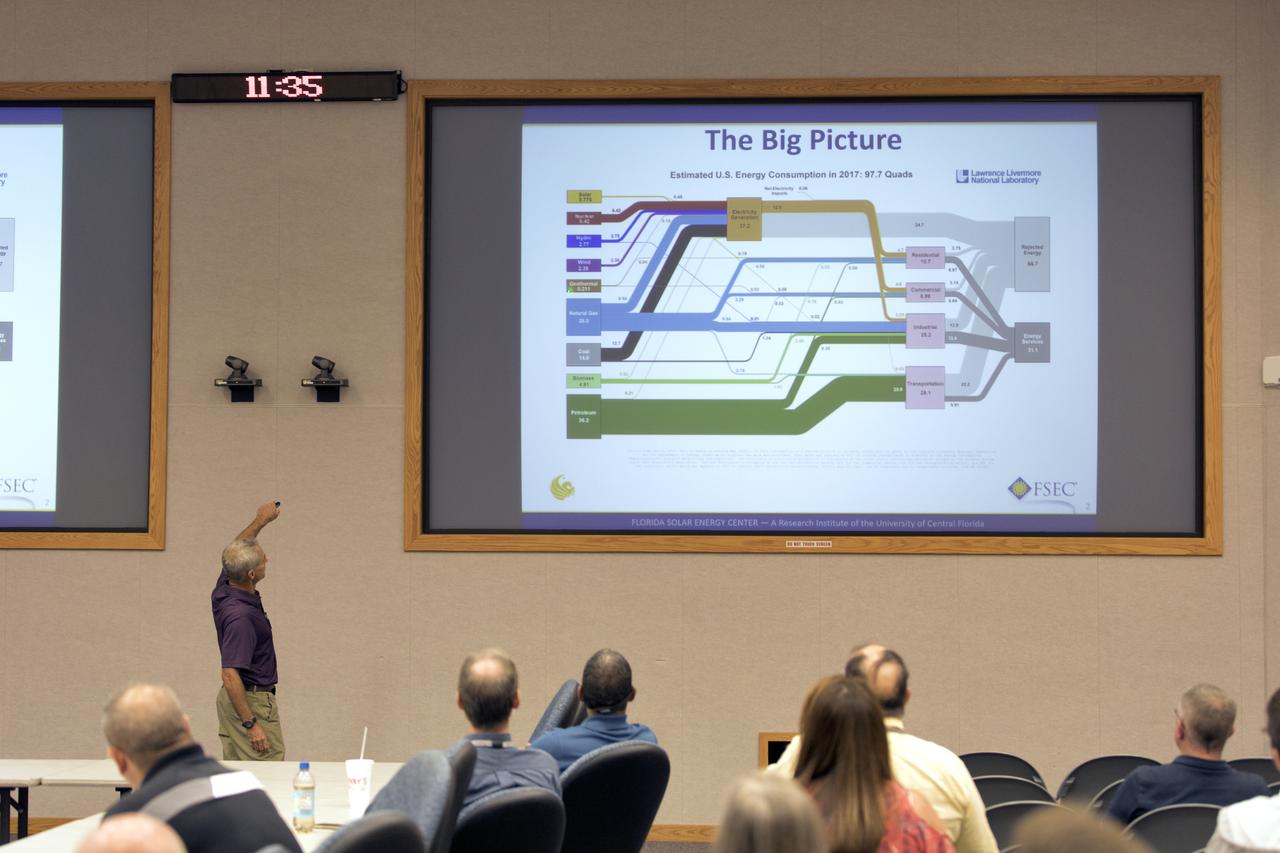
Guest speaker John Sherwin shares a presentation featuring residential solar and home energy-saving methods during a “lunch and learn” held Tuesday, Oct. 23, 2018, for employees at NASA’s Kennedy Space Center in Florida. Sherwin is the director of the Photovoltaic System Certification and Testing Program at the Florida Solar Energy Center in Cocoa. The event was one of two held during October in conjunction with Energy Awareness Month, which aims to recognize the importance of energy management for our national prosperity, security and environmental sustainability.
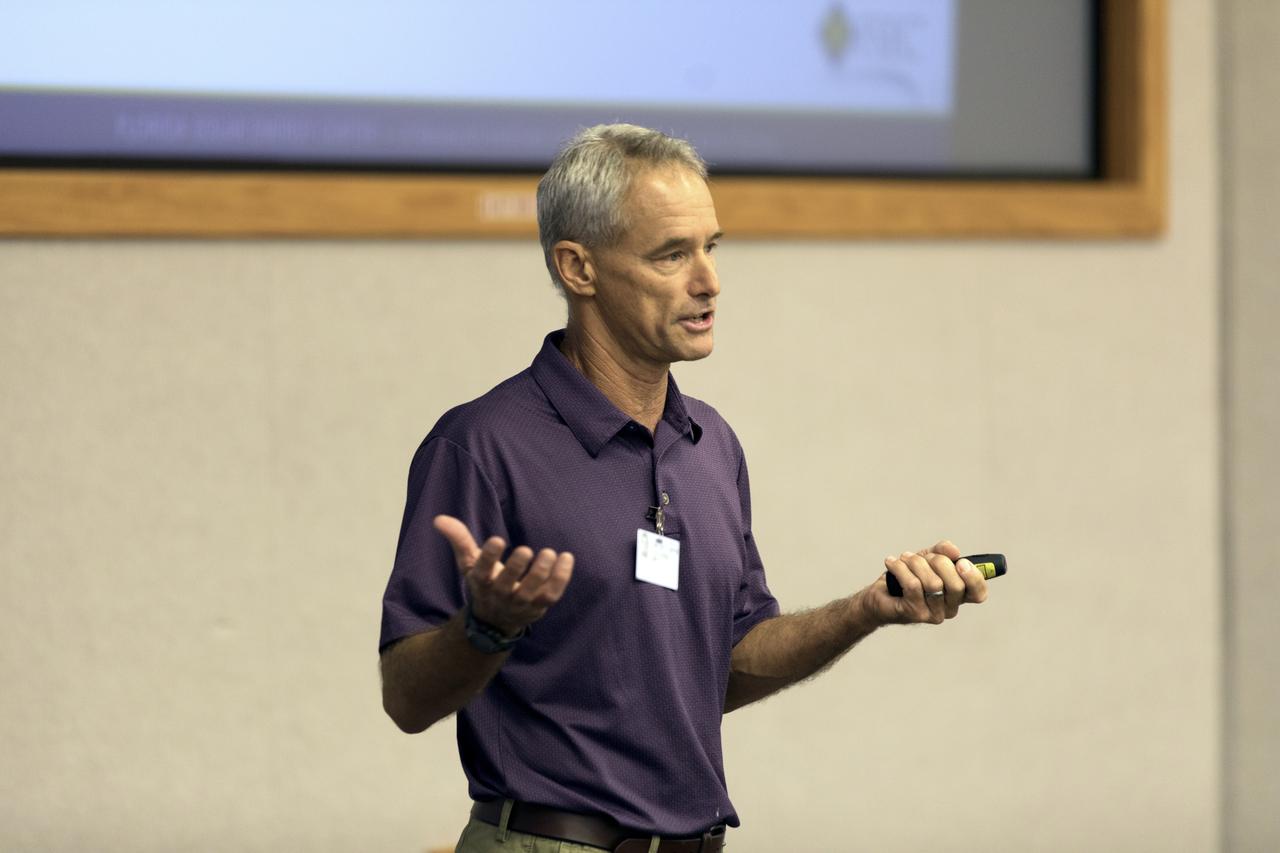
Guest speaker John Sherwin explains residential solar and home energy-saving methods during a “lunch and learn” held Tuesday, Oct. 23, 2018, for employees at NASA’s Kennedy Space Center in Florida. Sherwin is the director of the Photovoltaic System Certification and Testing Program at the Florida Solar Energy Center in Cocoa. The event was one of two held during October in conjunction with Energy Awareness Month, which aims to recognize the importance of energy management for our national prosperity, security and environmental sustainability.
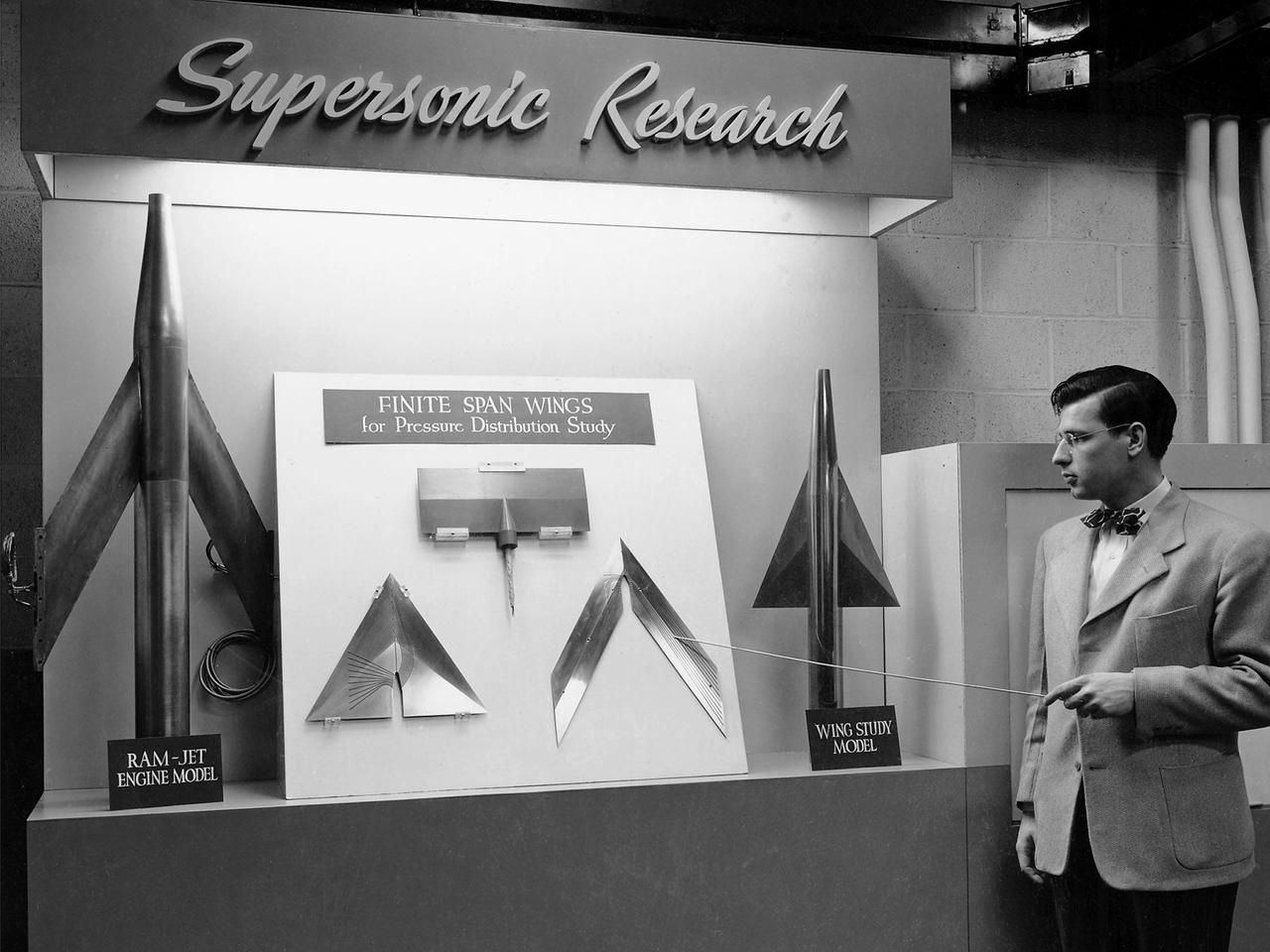
On March 22, 1946, 250 members of the Institute of Aeronautical Science toured the NACA’s Aircraft Engine Research Laboratory. NACA Chairman Jerome Hunsaker and Secretary John Victory were on hand to brief the attendees in the Administration Building before the visited the lab’s test facilities. At each of the twelve stops, researchers provided brief presentations on their work. Topics included axial flow combustors, materials for turbine blades, engine cooling, icing prevention, and supersonic flight. The laboratory reorganized itself in October 1945 as World War II came to an end to address newly emerging technologies such as the jet engine, rockets, and high-speed flight. While design work began on what would eventually become the 8- by 6-Foot Supersonic Wind Tunnel, NACA Lewis quickly built several small supersonic tunnels. These small facilities utilized the Altitude Wind Tunnel’s massive air handling equipment to generate high-speed airflow. The display seen in this photograph was set up in the building that housed the first of these wind tunnels. Eventually the building would contain three small supersonic tunnels, referred to as the “stack tunnels” because of the vertical alignment. The two other tunnels were added to this structure in 1949 and 1951. The small tunnels were used until the early 1960s to study the aerodynamic characteristics of supersonic inlets and exits.
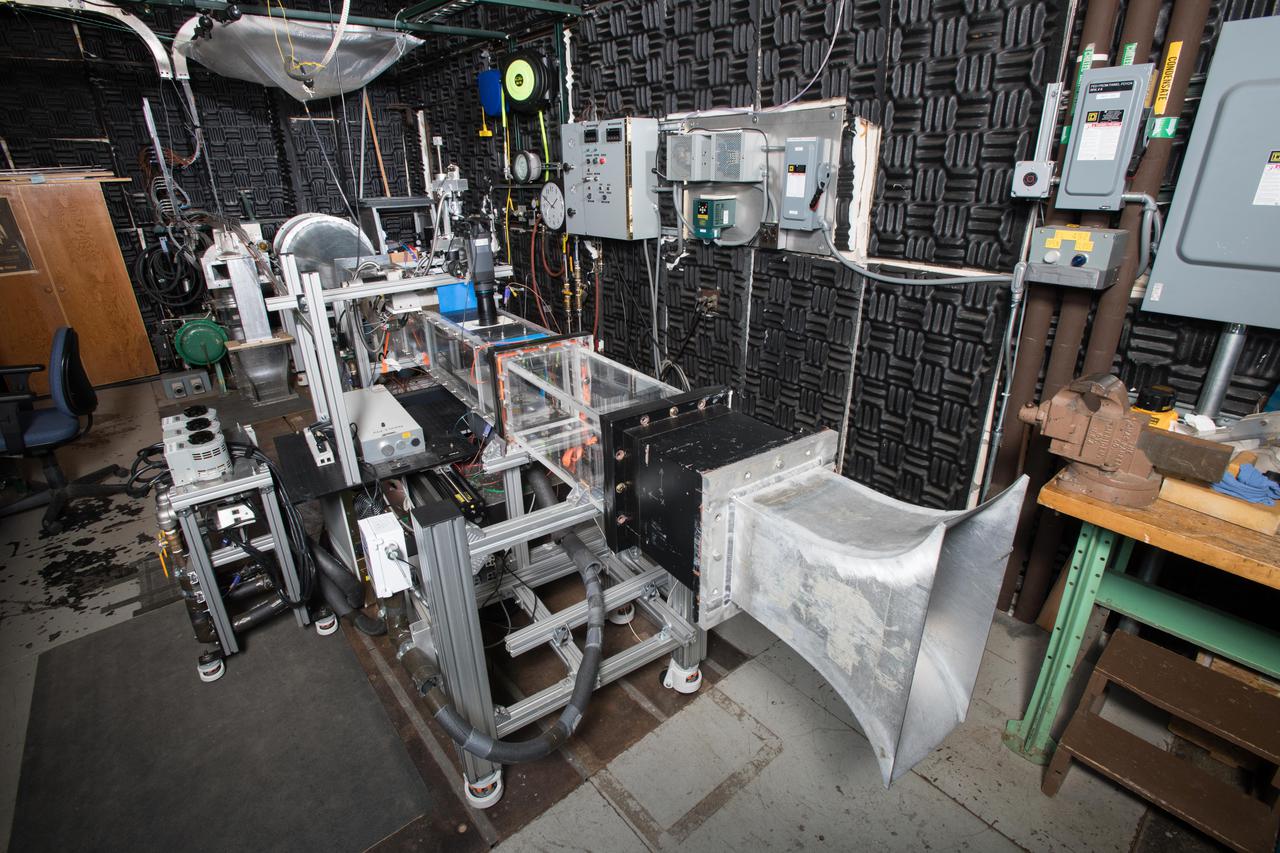
Fundamental Film Cooling and Heat Transfer Facility, Ceramic Matrix Composite High Pressure Turbine Thermal Management Project,
A General Electric TG-100A seen from the rear in the test section of the Altitude Wind Tunnel at the National Advisory Committee for Aeronautics (NACA) Lewis Flight Propulsion Laboratory in Cleveland, Ohio. The Altitude Wind Tunnel was used to study almost every model of US turbojet that emerged in the 1940s, as well as some ramjets and turboprops. In the early 1940s the military was interested in an engine that would use less fuel than the early jets but would keep up with them performance-wise. Turboprops seemed like a plausible solution. They could move a large volume of air and thus required less engine speed and less fuel. Researchers at General Electric’s plant in Schenectady, New York worked on the turboprop for several years in the 1930s. They received an army contract in 1941 to design a turboprop engine using an axial-flow compressor. The result was the 14-stage TG-100, the nation's first turboprop aircraft engine. Development of the engine was slow, however, and the military asked NACA Lewis to analyze the engine’s performance. The TG-100A was tested in the Altitude Wind Tunnel and it was determined that the compressors, combustion chamber, and turbine were impervious to changes in altitude. The researchers also established the optimal engine speed and propeller angle at simulated altitudes up to 35,000 feet. Despite these findings, development of the TG-100 was cancelled in May 1947. Twenty-eight of the engines were produced, but they were never incorporated into production aircraft.

A mechanic works on a General Electric I-40 turbojet at the National Advisory Committee for Aeronautics (NACA) Lewis Flight Propulsion Laboratory. The military selected General Electric’s West Lynn facility in 1941 to secretly replicate the centrifugal turbojet engine designed by British engineer Frank Whittle. General Electric’s first attempt, the I-A, was fraught with problems. The design was improved somewhat with the subsequent I-16 engine. It was not until the engine's next reincarnation as the I-40 in 1943 that General Electric’s efforts paid off. The 4000-pound thrust I-40 was incorporated into the Lockheed Shooting Star airframe and successfully flown in June 1944. The Shooting Star became the US’s first successful jet aircraft and the first US aircraft to reach 500 miles per hour. The NACA’s Lewis Flight Propulsion Laboratory studied all of General Electric’s centrifugal turbojets both during World War II and afterwards. The entire Shooting Star aircraft was investigated in the Altitude Wind Tunnel during 1945. The researchers studied the engine compressor performance, thrust augmentation using a water injection, and compared different fuel blends in a single combustor. The mechanic in this photograph is inserting a combustion liner into one of the 14 combustor cans. The compressor, which is not yet installed in this photograph, pushed high pressure air into these combustors. There the air mixed with the fuel and was heated. The hot air was then forced through a rotating turbine that powered the engine before being expelled out the nozzle to produce thrust.