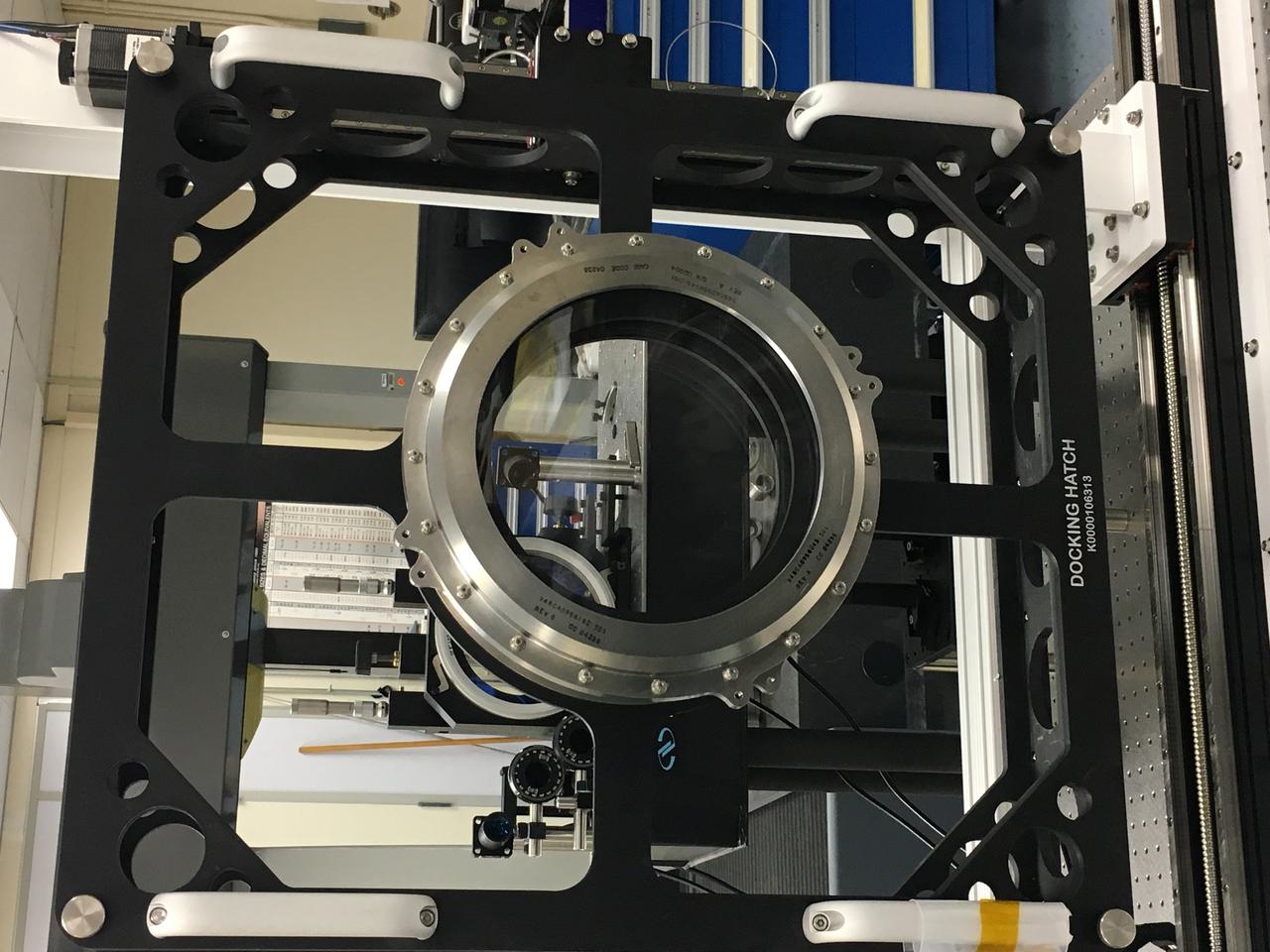
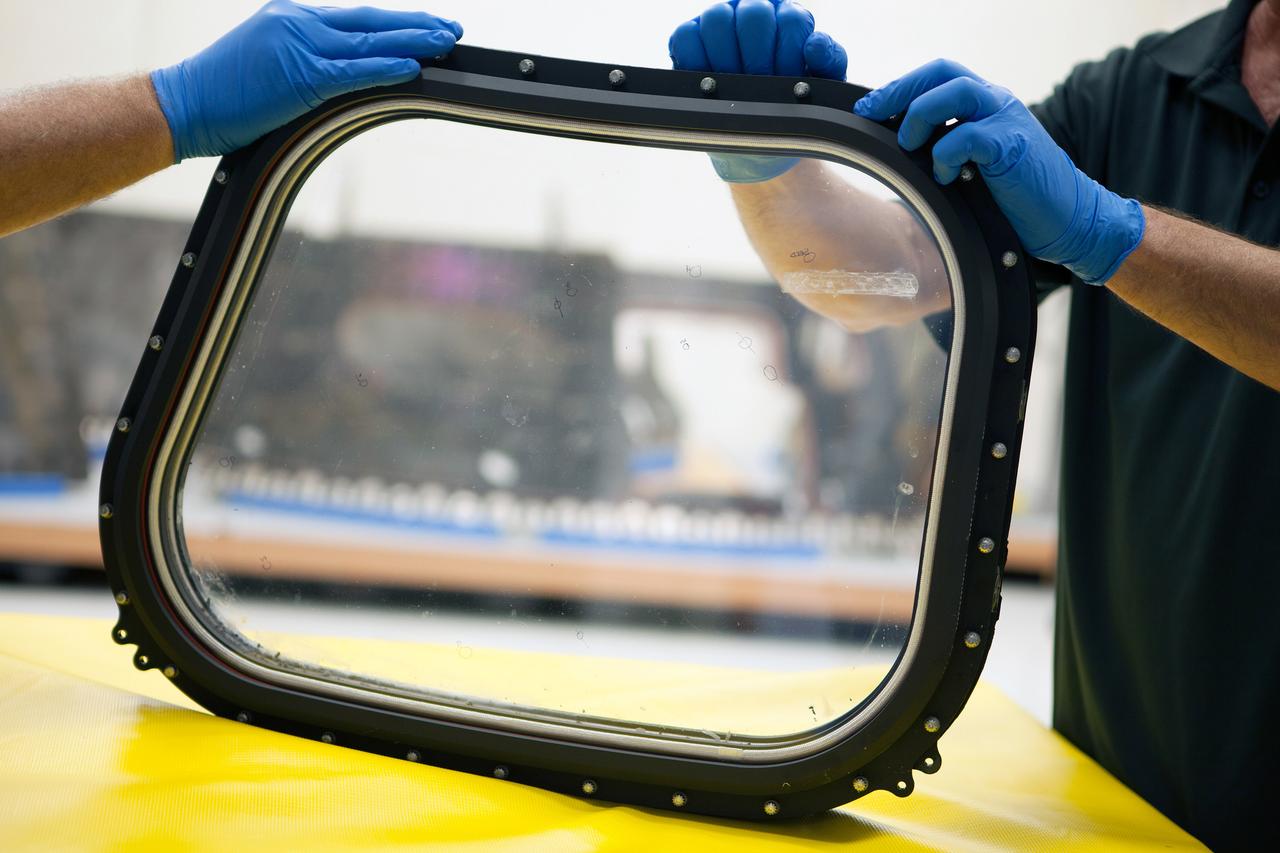
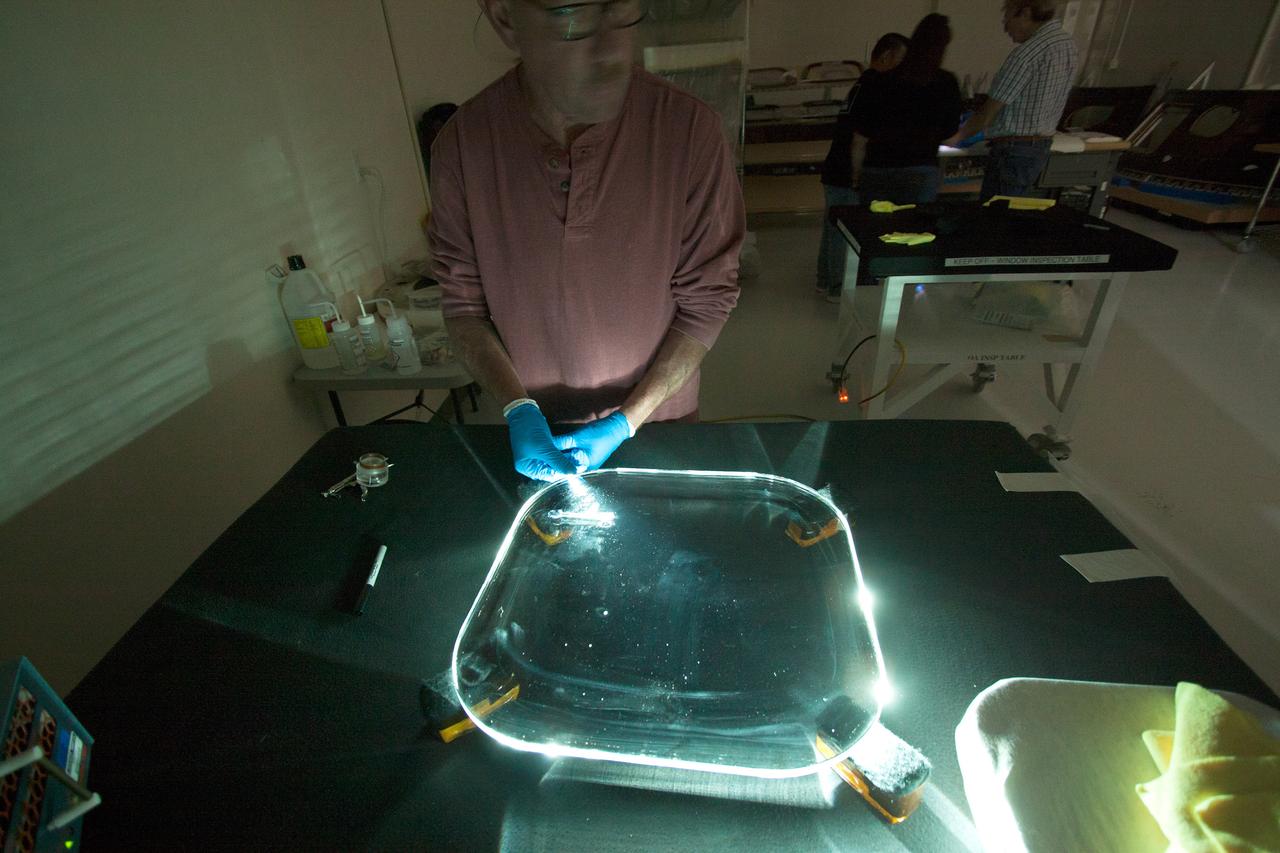
The first optical quality testing on a full window stack that is ready for installation in the docking hatch of NASA's Orion spacecraft is underway inside a laboratory in the Neil Armstrong Operations and Checkout Building at the agency's Kennedy Space Center in Florida. The test is being performed by a team from the center's Exploration Research and Technology Programs. The data from the tests will help improve the requirements for manufacturing tolerances on Orion's windows and verify how the window should perform in space. Orion is being prepared for its first integrated uncrewed flight atop NASA's Space Launch System rocket on Exploration Mission-1.
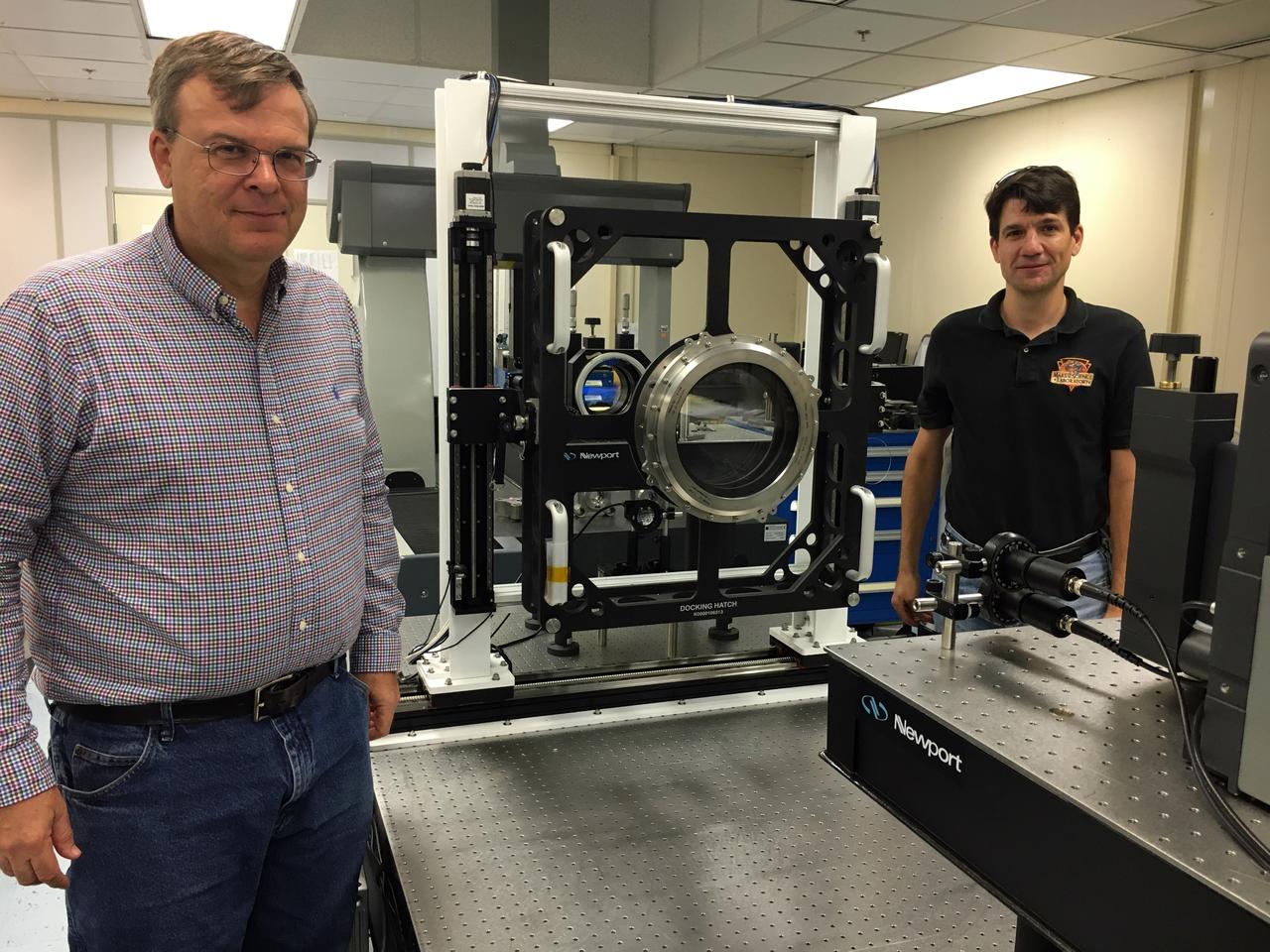
Inside a laboratory in the Neil Armstrong Operations and Checkout Building at NASA's Kennedy Space Center in Florida, Mark Nurge, Ph.D., at left, a physicist in the Applied Physics Lab with the center's Exploration Research and Technology Programs, and Bence Bartha, Ph.D., a specialist in non-destructive testing with URS Federal Services, are performing the first optical quality testing on a full window stack that is ready for installation in the docking hatch of NASA's Orion spacecraft. The data from the tests will help improve the requirements for manufacturing tolerances on Orion's windows and verify how the window should perform in space. Orion is being prepared for its first integrated uncrewed flight atop NASA's Space Launch System rocket on Exploration Mission-1.
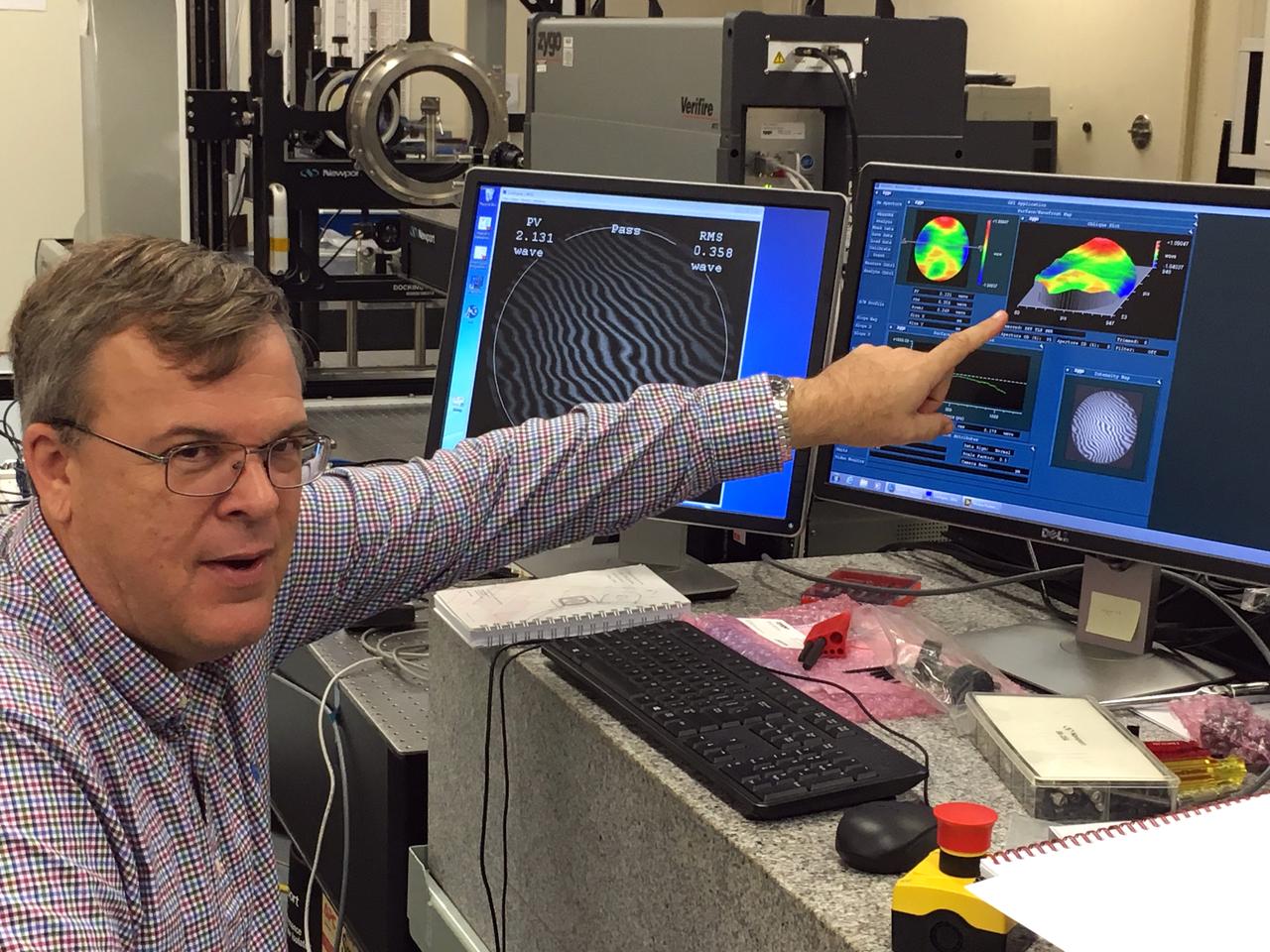
Mark Nurge, Ph.D., a physicist in the Applied Physics Lab with the Exploration Research and Technology Programs at NASA's Kennedy Space Center in Florida, looks at data during the first optical quality test on a full window stack that is ready for installation in the docking hatch of NASA's Orion spacecraft. The data from the tests will help improve the requirements for manufacturing tolerances on Orion's windows and verify how the window should perform in space. Orion is being prepared for its first integrated uncrewed flight atop NASA's Space Launch System rocket on Exploration Mission-1.
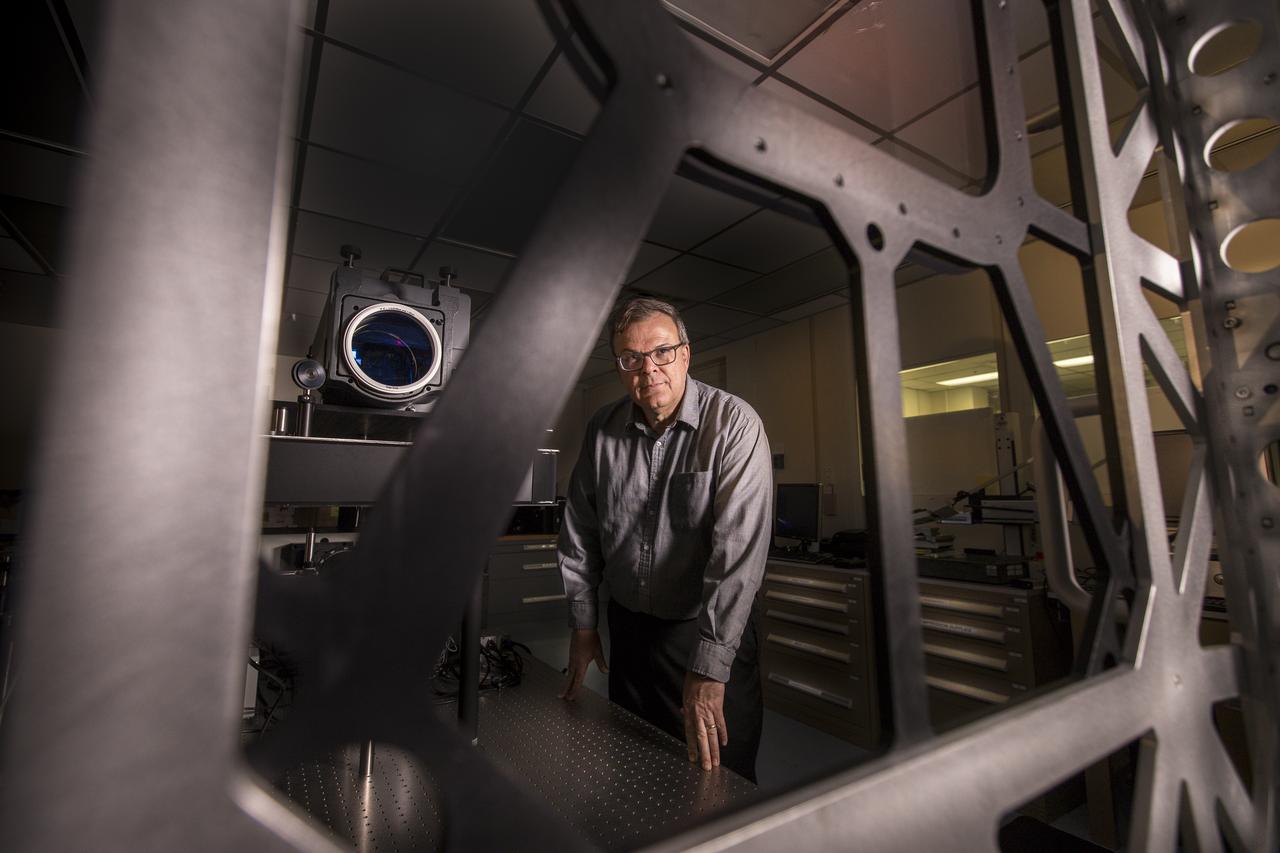
Mark Nurge, a physicist in Kennedy Space Center’s Applied Physics Lab, stands near a laser interferometer, which is used to determine if there are acceptable levels of distortion and imperfections in windows. Nurge recently completed optical metrology testing and evaluation of all flight windows on the Orion capsule for Artemis 1. The interferometer uses a laser source to do wavefront and transmission measurements, as well as evaluation of the color balance. Artemis 1 is an uncrewed flight that will pave the way for future crewed missions and enable future missions to the Moon, Mars, and beyond.
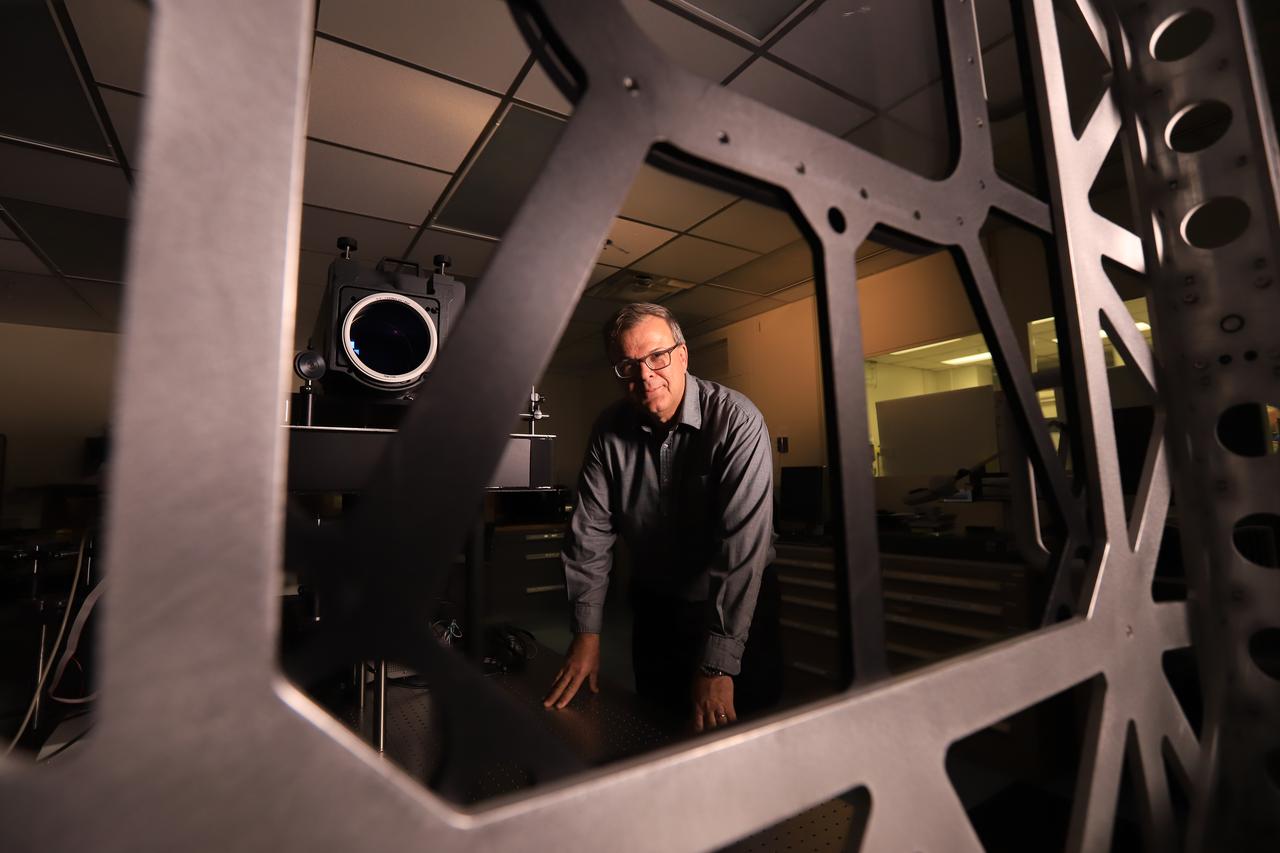
Mark Nurge, a physicist in Kennedy Space Center’s Applied Physics Lab, stands near a laser interferometer, which is used to determine if there are acceptable levels of distortion and imperfections in windows. Nurge recently completed optical metrology testing and evaluation of all flight windows on the Orion capsule for Artemis 1. The interferometer uses a laser source to do wavefront and transmission measurements, as well as evaluation of the color balance. Artemis 1 is an uncrewed flight that will pave the way for future crewed missions and enable future missions to the Moon, Mars, and beyond.
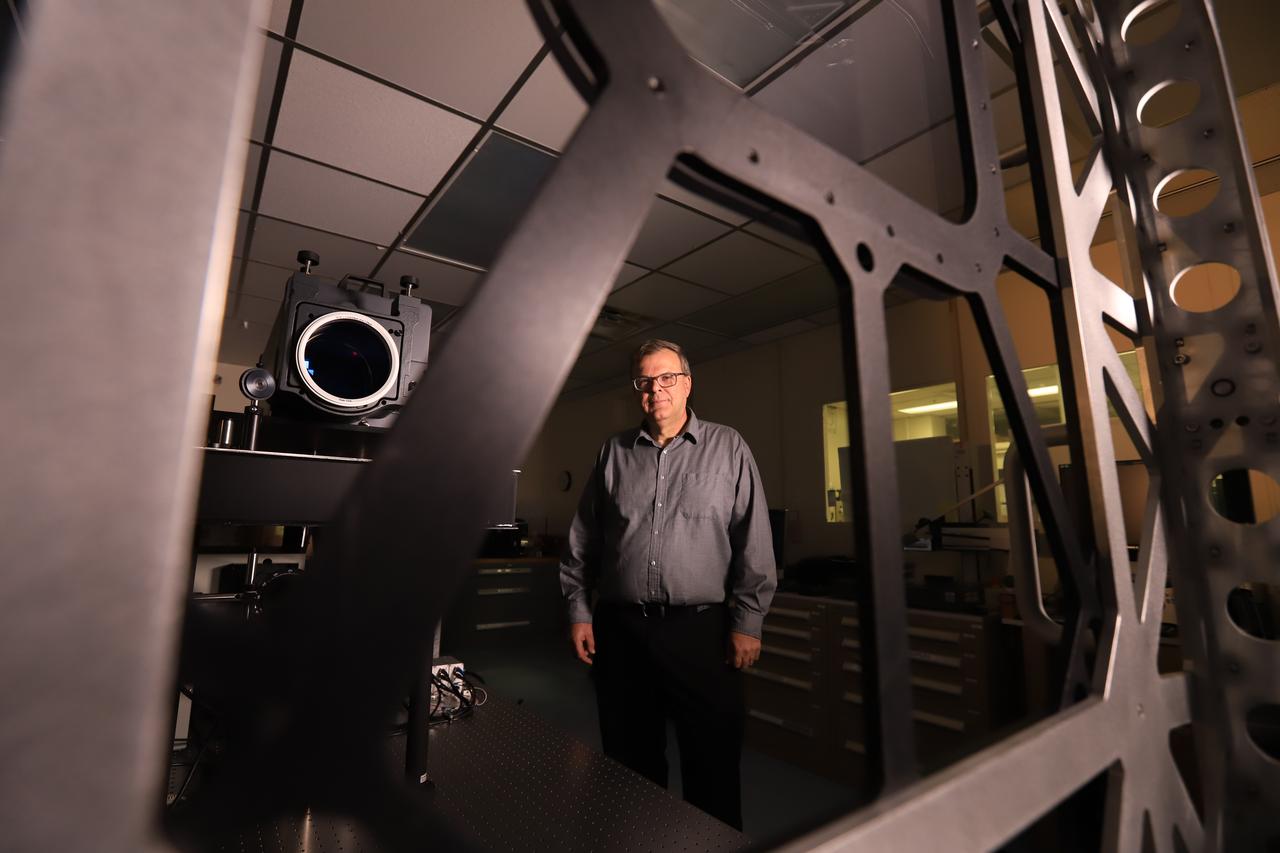
Mark Nurge, a physicist in Kennedy Space Center’s Applied Physics Lab, stands near a laser interferometer, which is used to determine if there are acceptable levels of distortion and imperfections in windows. Nurge recently completed optical metrology testing and evaluation of all flight windows on the Orion capsule for Artemis 1. The interferometer uses a laser source to do wavefront and transmission measurements, as well as evaluation of the color balance. Artemis 1 is an uncrewed flight that will pave the way for future crewed missions and enable future missions to the Moon, Mars, and beyond.
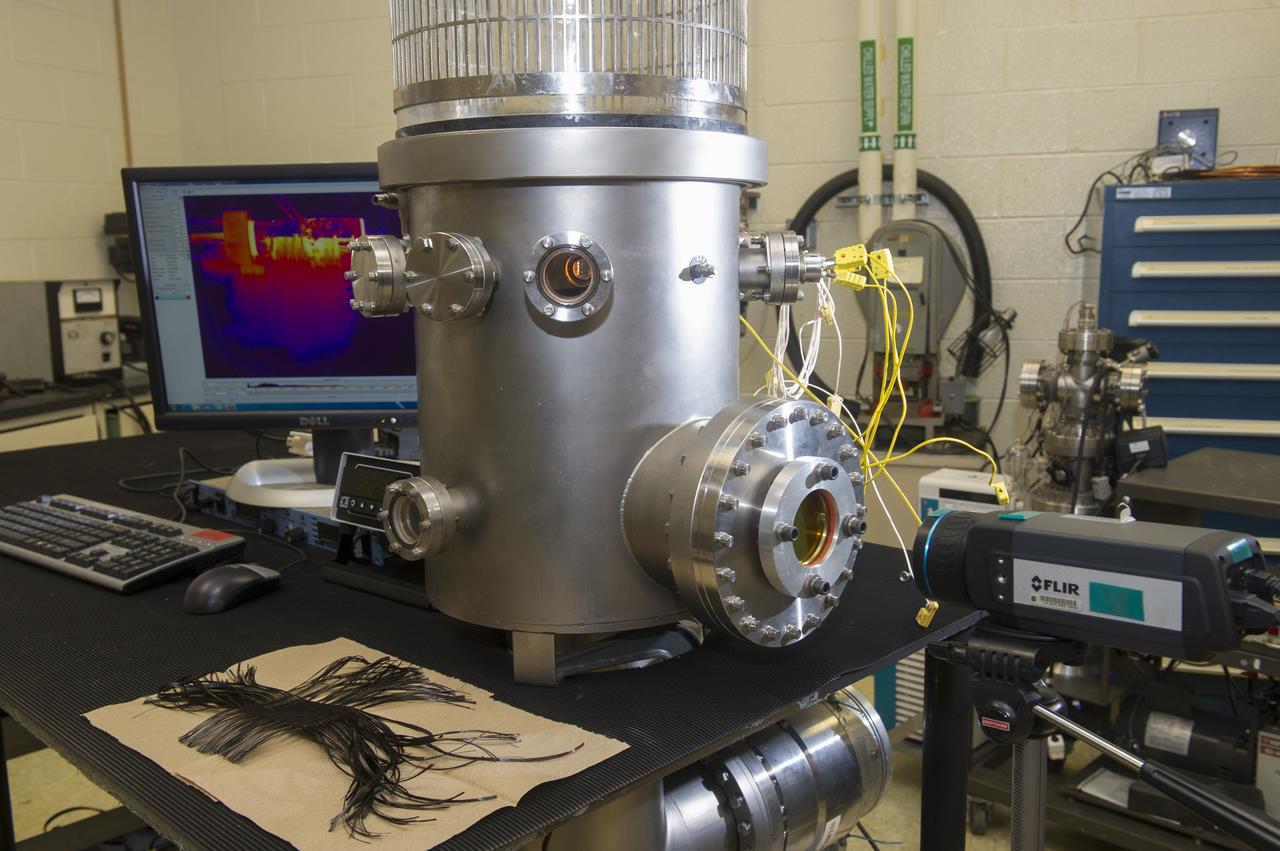
2013 MSFC RADIATOR FACILITY SHOWING THE ZINC SELENIDE WINDOW, THE IR CAMERA, AND A RECENTLY WOVEN UNTESTED CARBON FIBER TEST ARTICLE (LOWER LEFT)-
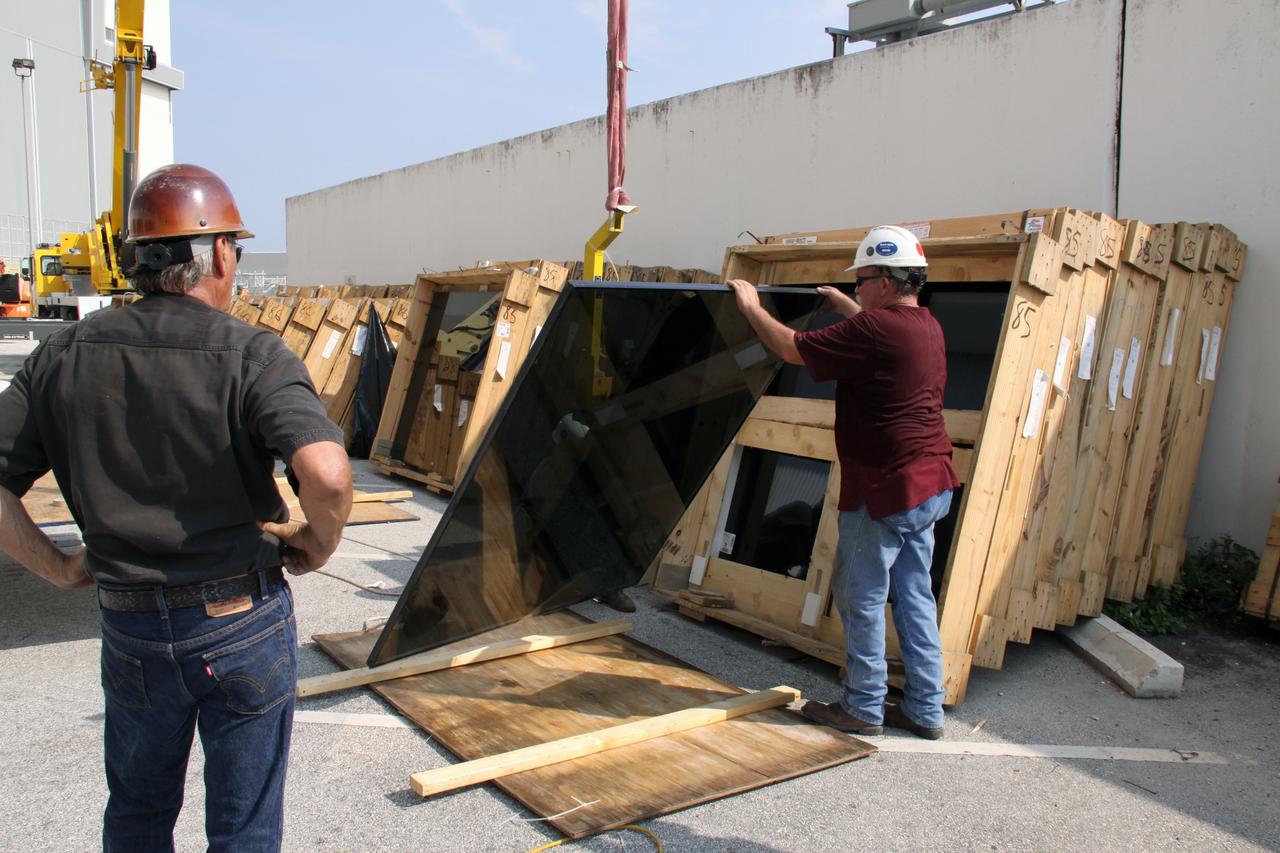
CAPE CANAVERAL, Fla. – Alongside the Launch Control Center at NASA's Kennedy Space Center in Florida, a new window is prepared to be lifted up to the existing Firing Room windows. New, hurricane-rated window systems for the four Firing Rooms and the vestibule areas between Firing Rooms 1 & 2 and Firing Rooms 3 & 4 are being installed. In order to avoid operational impacts the new windows are being installed on the outside of the existing windows, enclosing the space formerly occupied by the louvers. The old windows will remain in place until the new windows are completely installed and leak tested. This approach will continue to keep the firing rooms from being exposed to the elements. Photo credit: NASA/Jack Pfaller
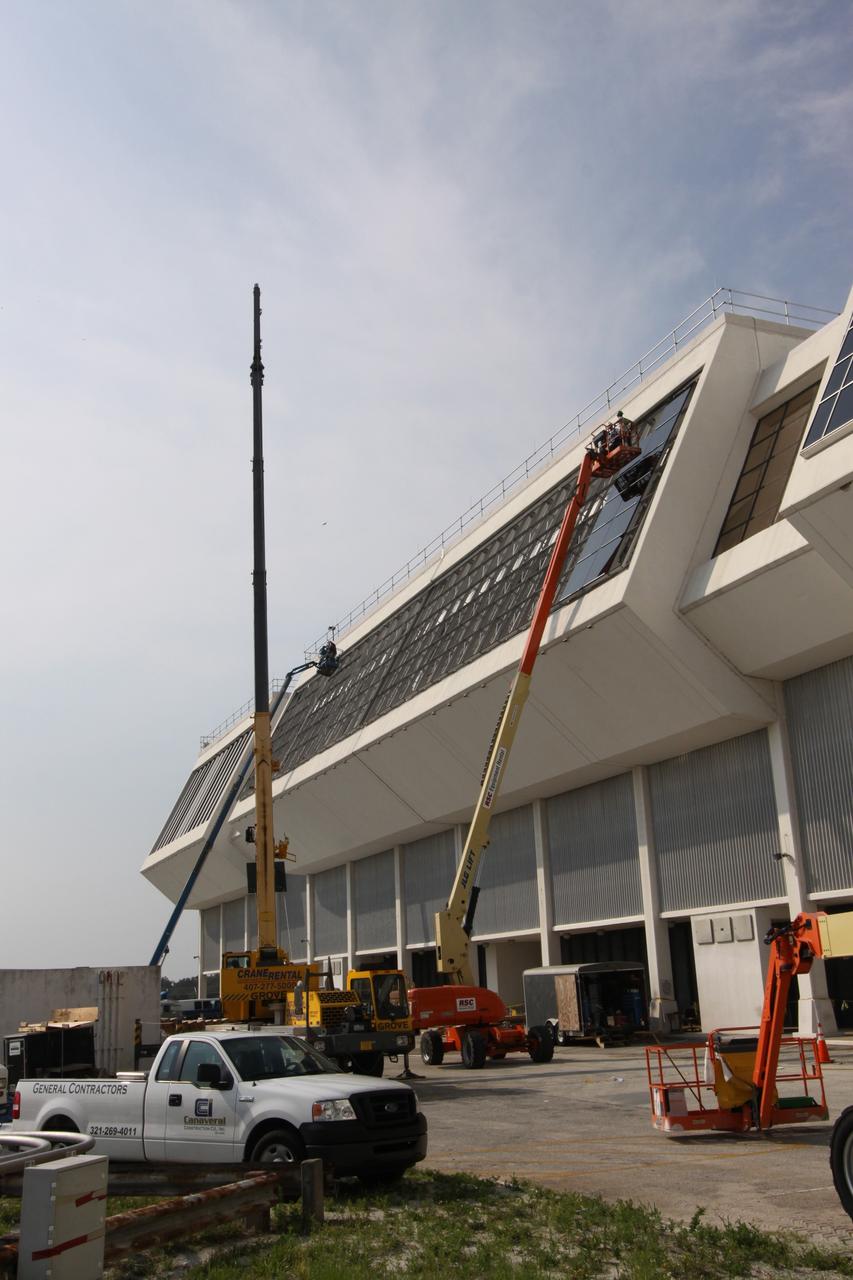
CAPE CANAVERAL, Fla. – Work continues on removing the louvers and replacing the windows on the Firing Room windows in the Launch Control Center at NASA's Kennedy Space Center in Florida. New, hurricane-rated window systems for the four Firing Rooms and the vestibule areas between Firing Rooms 1 & 2 and Firing Rooms 3 & 4 are being installed. In order to avoid operational impacts the new windows are being installed on the outside of the existing windows, enclosing the space formerly occupied by the louvers. The old windows will remain in place until the new windows are completely installed and leak tested. This approach will continue to keep the firing rooms from being exposed to the elements. Photo credit: NASA/Jack Pfaller
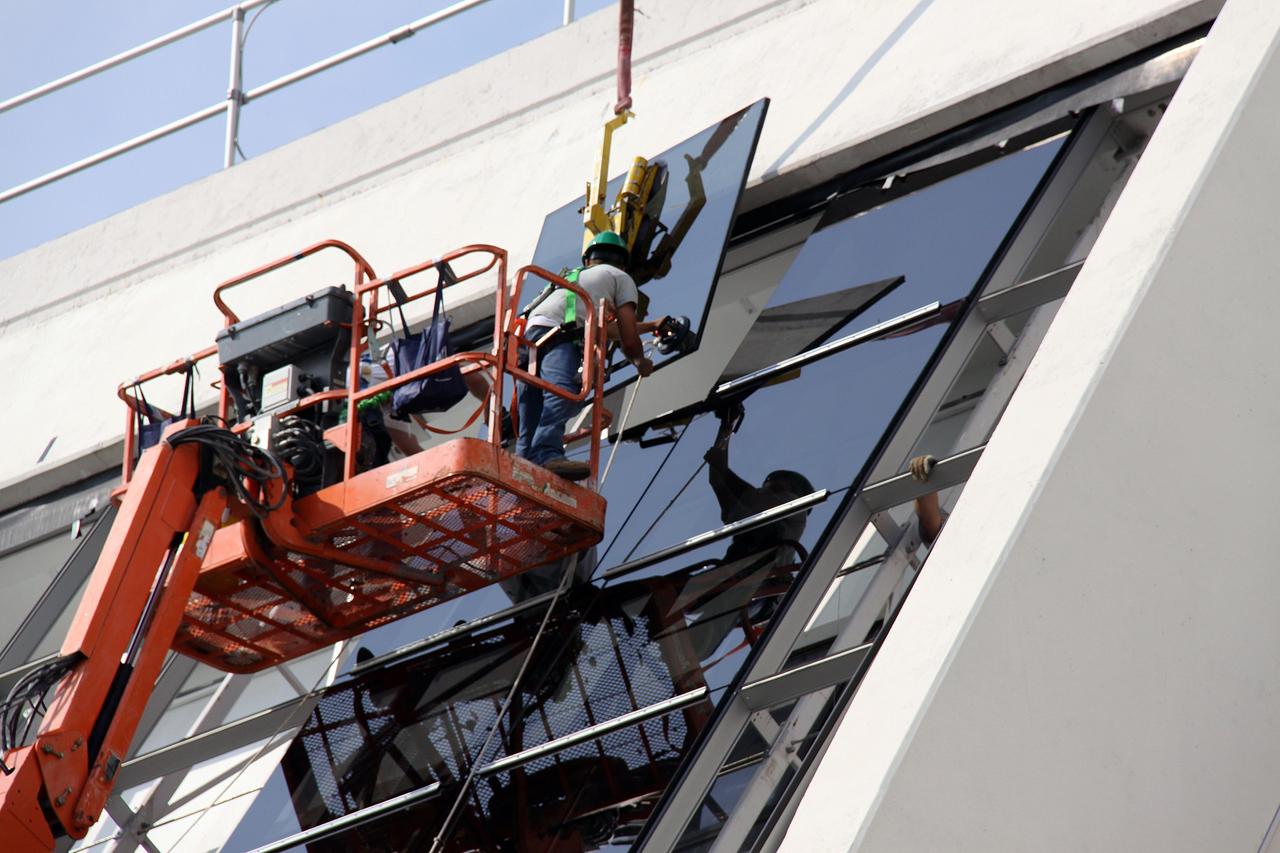
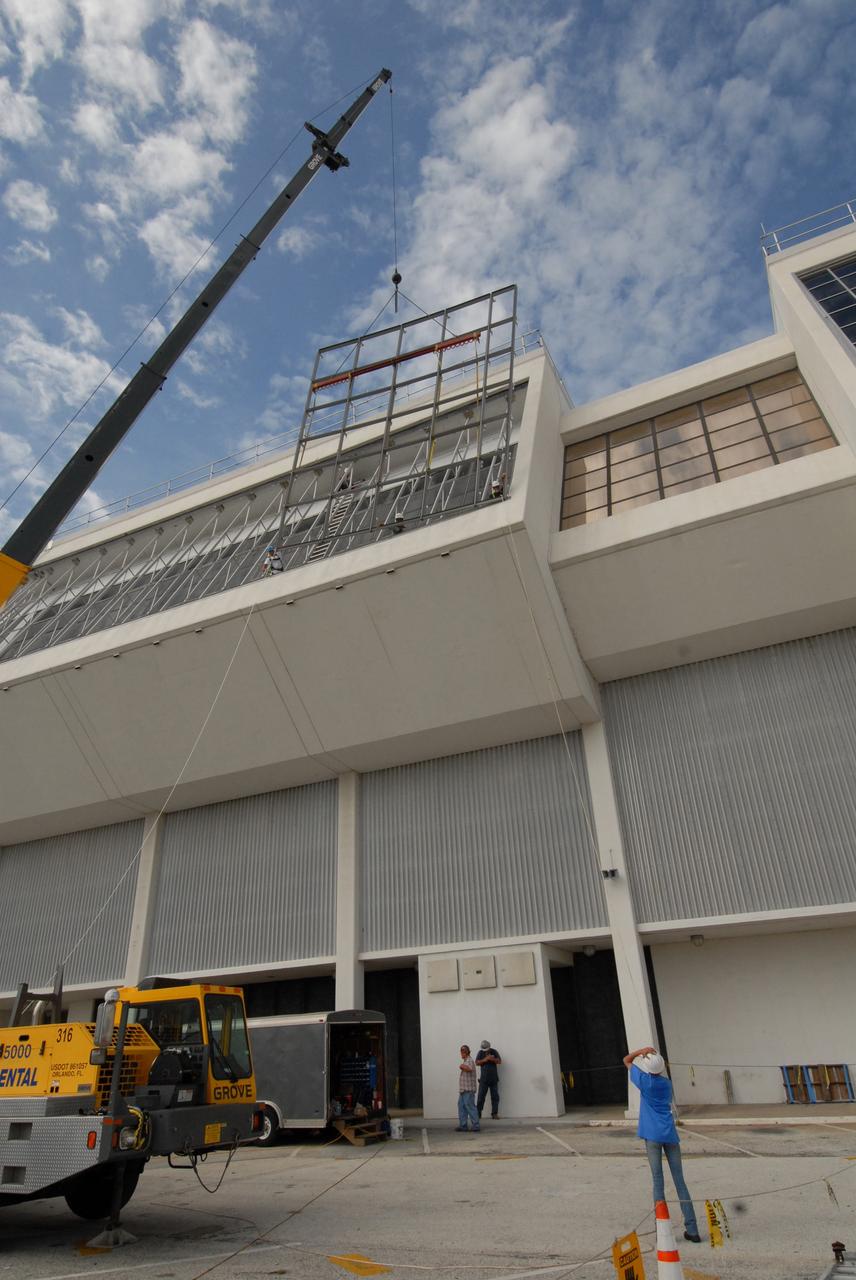
CAPE CANAVERAL, Fla. – A new window is lowered toward the existing Firing Room windows in the Launch Control Center at NASA's Kennedy Space Center in Florida. New, hurricane-rated window systems for the four Firing Rooms and the vestibule areas between Firing Rooms 1 & 2 and Firing Rooms 3 & 4 are being installed. In order to avoid operational impacts the new windows are being installed on the outside of the existing windows, enclosing the space formerly occupied by the louvers. The old windows will remain in place until the new windows are completely installed and leak tested. This approach will continue to keep the firing rooms from being exposed to the elements. Photo credit: NASA/Jack Pfaller
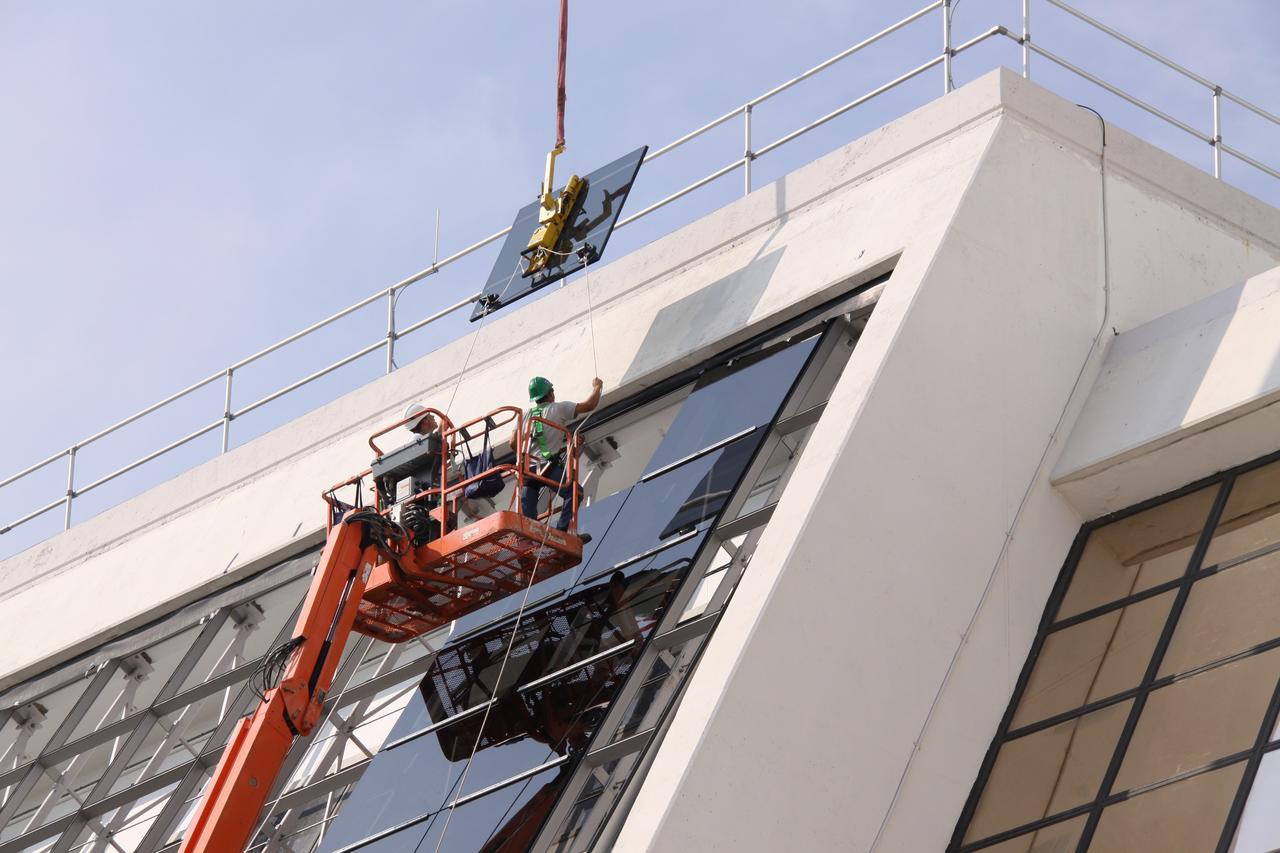
CAPE CANAVERAL, Fla. – A new window is lowered toward the existing Firing Room windows in the Launch Control Center at NASA's Kennedy Space Center in Florida. New, hurricane-rated window systems for the four Firing Rooms and the vestibule areas between Firing Rooms 1 & 2 and Firing Rooms 3 & 4 are being installed. In order to avoid operational impacts the new windows are being installed on the outside of the existing windows, enclosing the space formerly occupied by the louvers. The old windows will remain in place until the new windows are completely installed and leak tested. This approach will continue to keep the firing rooms from being exposed to the elements. Photo credit: NASA/Jack Pfaller
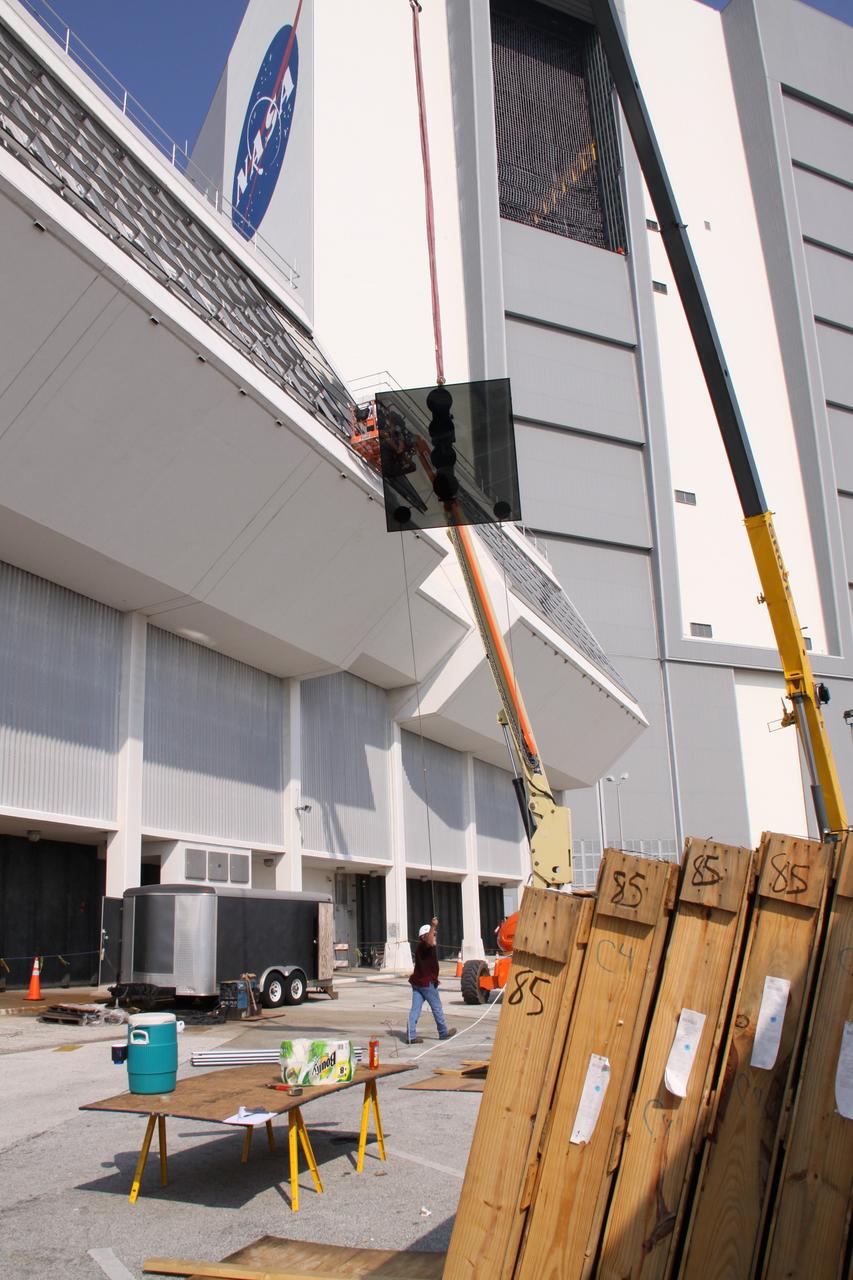
CAPE CANAVERAL, Fla. – A new window is raised toward the existing Firing Room windows in the Launch Control Center at NASA's Kennedy Space Center in Florida. New, hurricane-rated window systems for the four Firing Rooms and the vestibule areas between Firing Rooms 1 & 2 and Firing Rooms 3 & 4 are being installed. In order to avoid operational impacts the new windows are being installed on the outside of the existing windows, enclosing the space formerly occupied by the louvers. The old windows will remain in place until the new windows are completely installed and leak tested. This approach will continue to keep the firing rooms from being exposed to the elements. Photo credit: NASA/Jack Pfaller
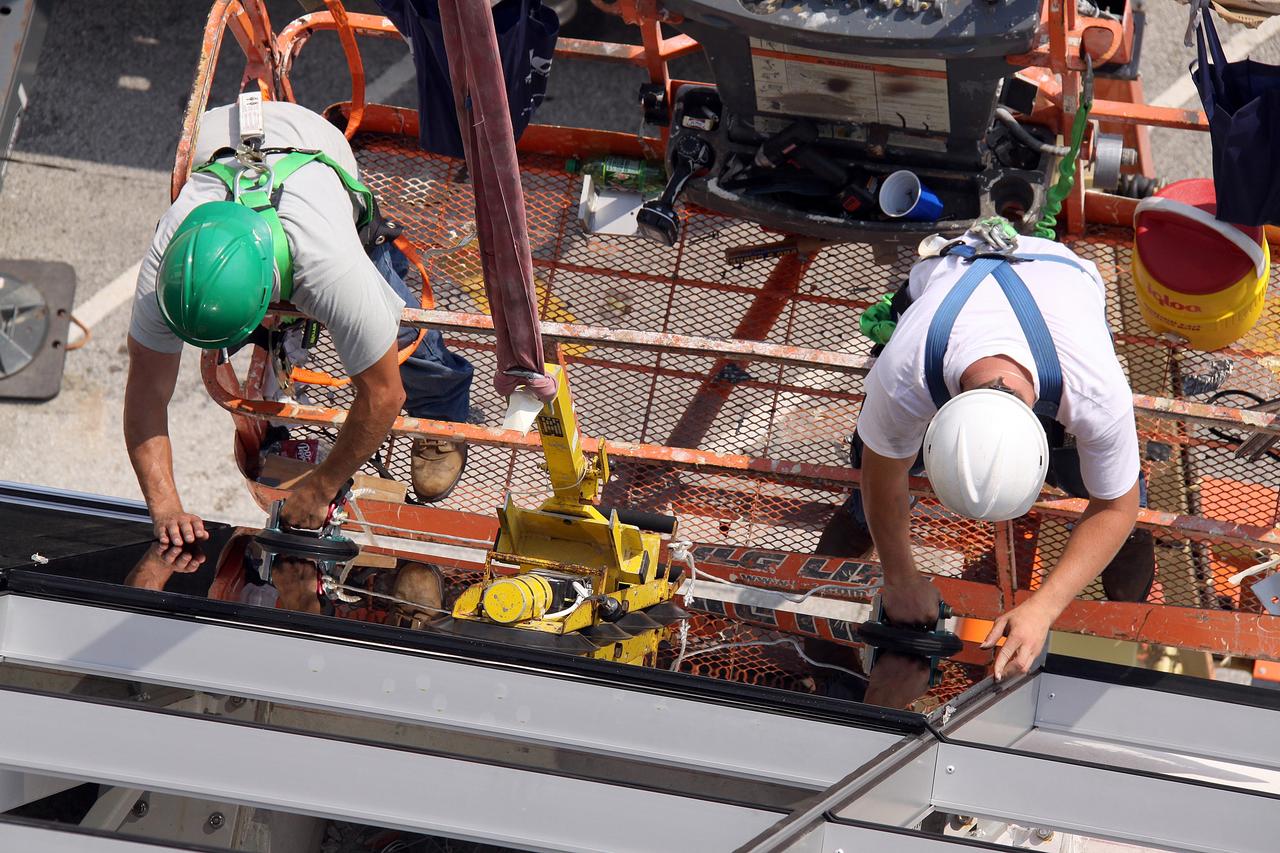
CAPE CANAVERAL, Fla. – Workers at NASA's Kennedy Space Center in Florida secure a new window on the Firing Room in the Launch Control Center. New, hurricane-rated window systems for the four Firing Rooms and the vestibule areas between Firing Rooms 1 & 2 and Firing Rooms 3 & 4 are being installed. In order to avoid operational impacts the new windows are being installed on the outside of the existing windows, enclosing the space formerly occupied by the louvers. The old windows will remain in place until the new windows are completely installed and leak tested. This approach will continue to keep the firing rooms from being exposed to the elements. Photo credit: NASA/Jack Pfaller
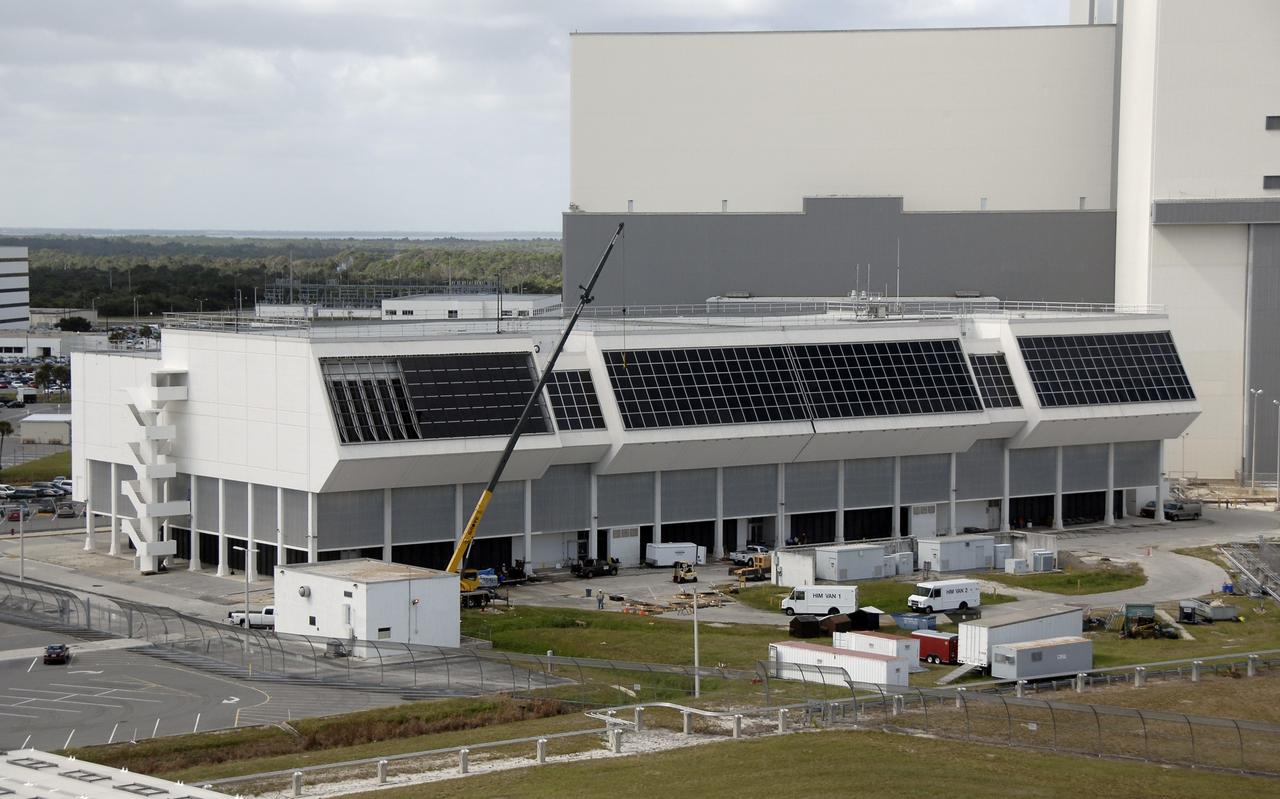
CAPE CANAVERAL, Fla. – This aerial view of the Launch Control Center at NASA's Kennedy Space Center in Florida shows the installation of new windows nearing completion. New, hurricane-rated window systems for the four Firing Rooms and the vestibule areas between Firing Rooms 1 and 2 and Firing Rooms 3 and 4 are being installed. In order to avoid operational impacts the new windows are being installed on the outside of the existing windows, enclosing the space formerly occupied by the louvers. The old windows will remain in place until the new windows are completely installed and leak tested. This approach will continue to keep the firing rooms from being exposed to the elements. Photo credit: NASA/Kim Shiflett
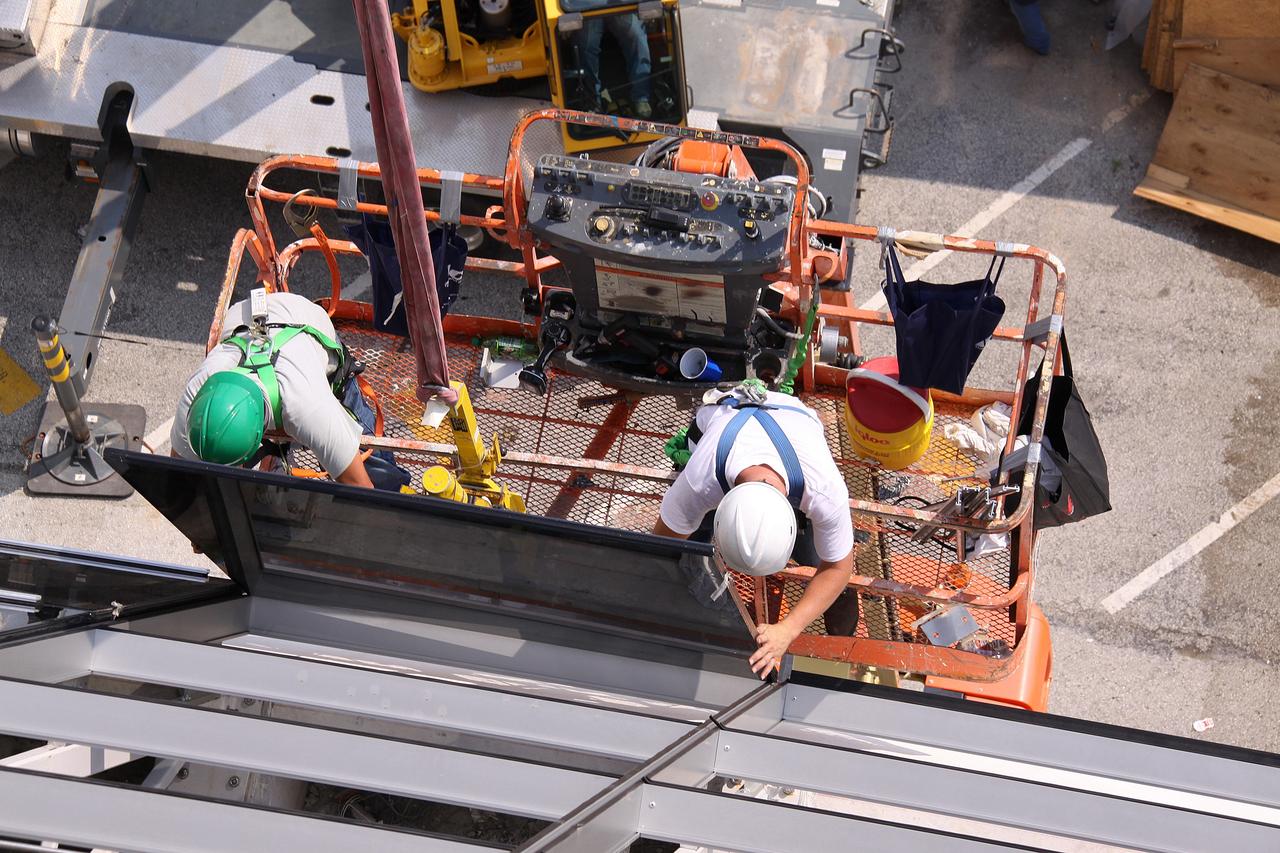
CAPE CANAVERAL, Fla. – Workers at NASA's Kennedy Space Center in Florida carefully place a new window on the Firing Room in the Launch Control Center. New, hurricane-rated window systems for the four Firing Rooms and the vestibule areas between Firing Rooms 1 & 2 and Firing Rooms 3 & 4 are being installed. In order to avoid operational impacts the new windows are being installed on the outside of the existing windows, enclosing the space formerly occupied by the louvers. The old windows will remain in place until the new windows are completely installed and leak tested. This approach will continue to keep the firing rooms from being exposed to the elements. Photo credit: NASA/Jack Pfaller
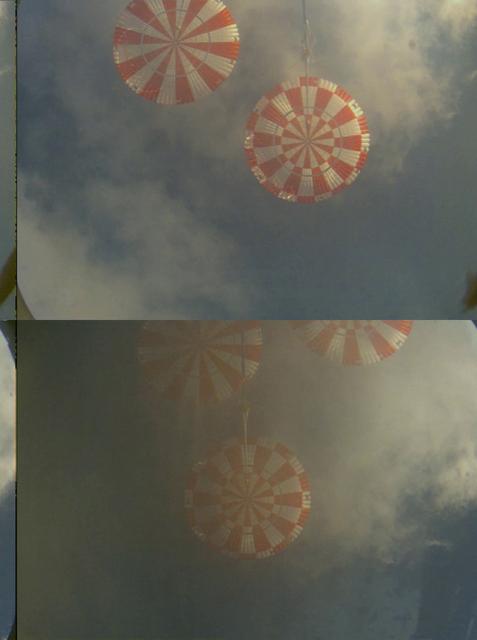
A view from the side windows as the parachutes deploy on Orion's first flight test, Exploration Flight Test-1 (EFT-1), on December 5, 2014.
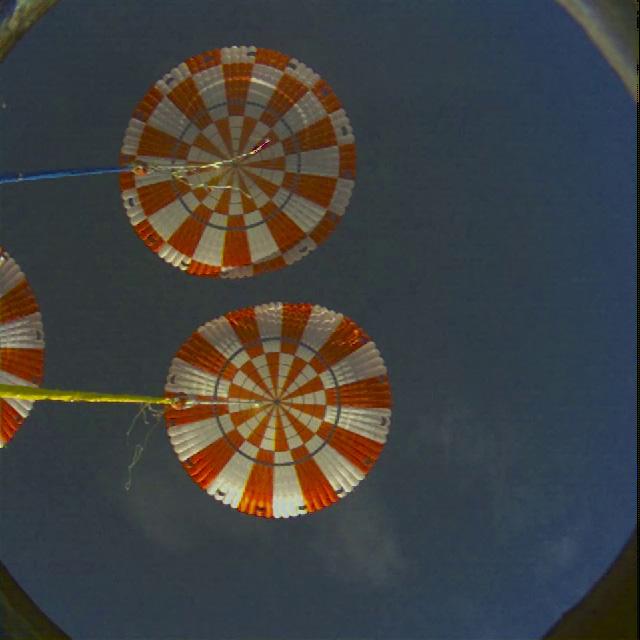
A view from the top hatch window as the parachutes deploy on Orion's first flight test, Exploration Flight Test-1 (EFT-1), on December 5, 2014.
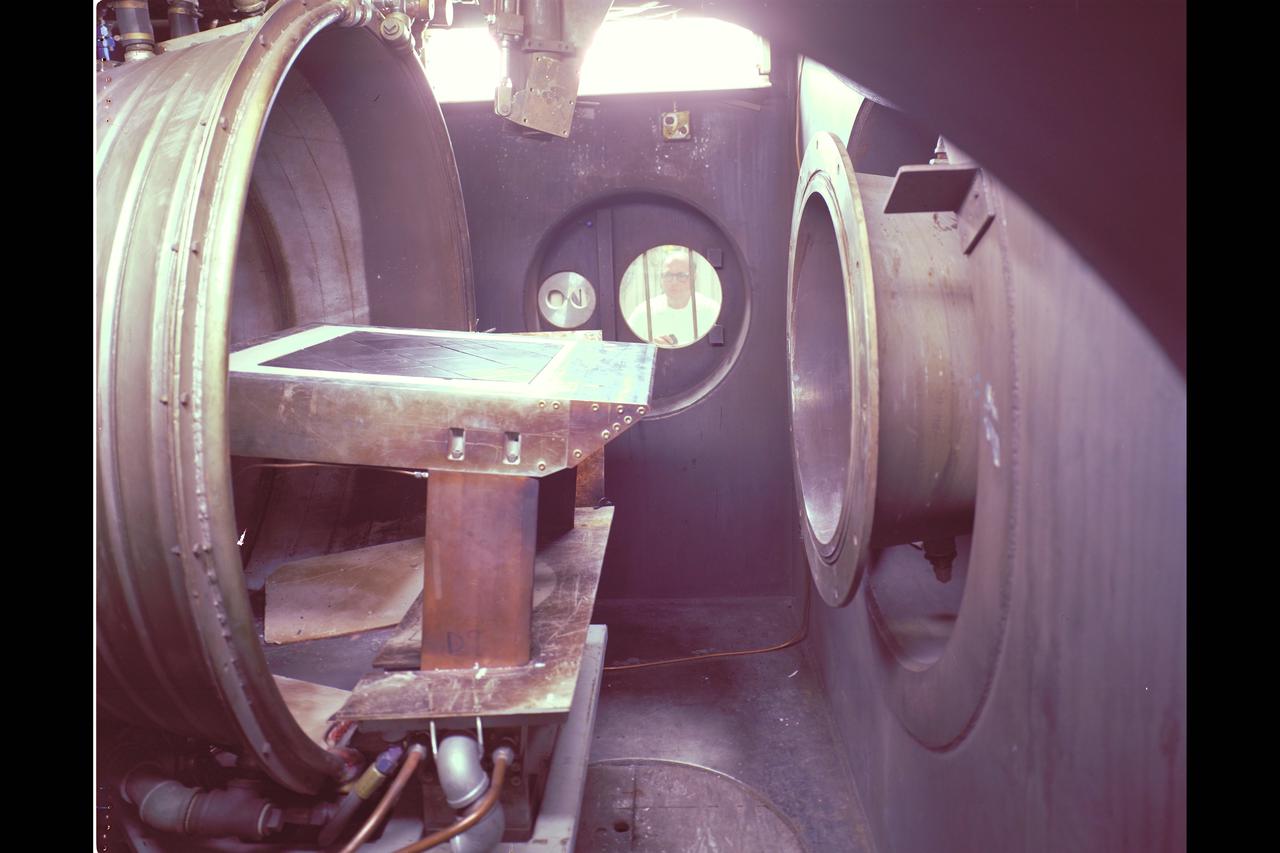
N-238 60MW Aerodynamic Heating Facility set up for TPS testing with T. Asta looking on through test section viewing window.
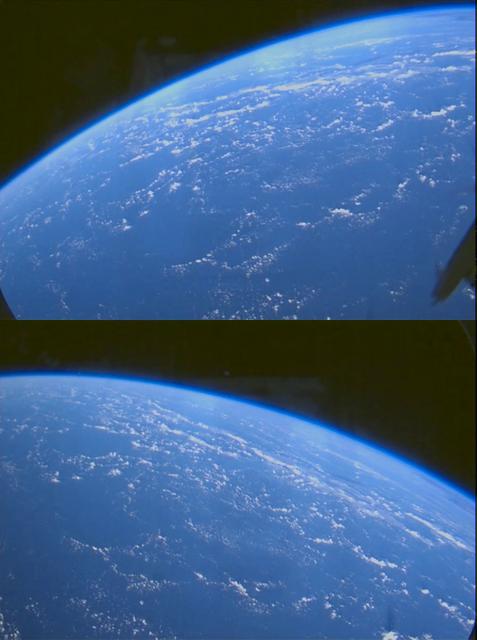
View from side windows of Earth on Orion's first flight test, Exploration Flight Test-1 (EFT-1), on December 5, 2014.
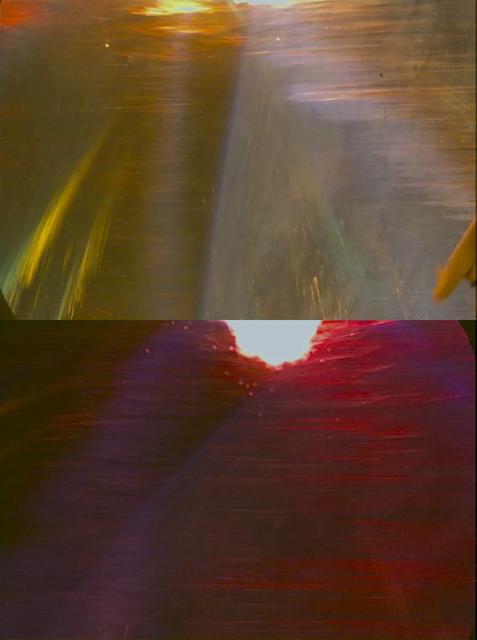
A view from side windows on Orion's first flight test, Exploration Flight Test-1 (EFT-1), on December 5, 2014.
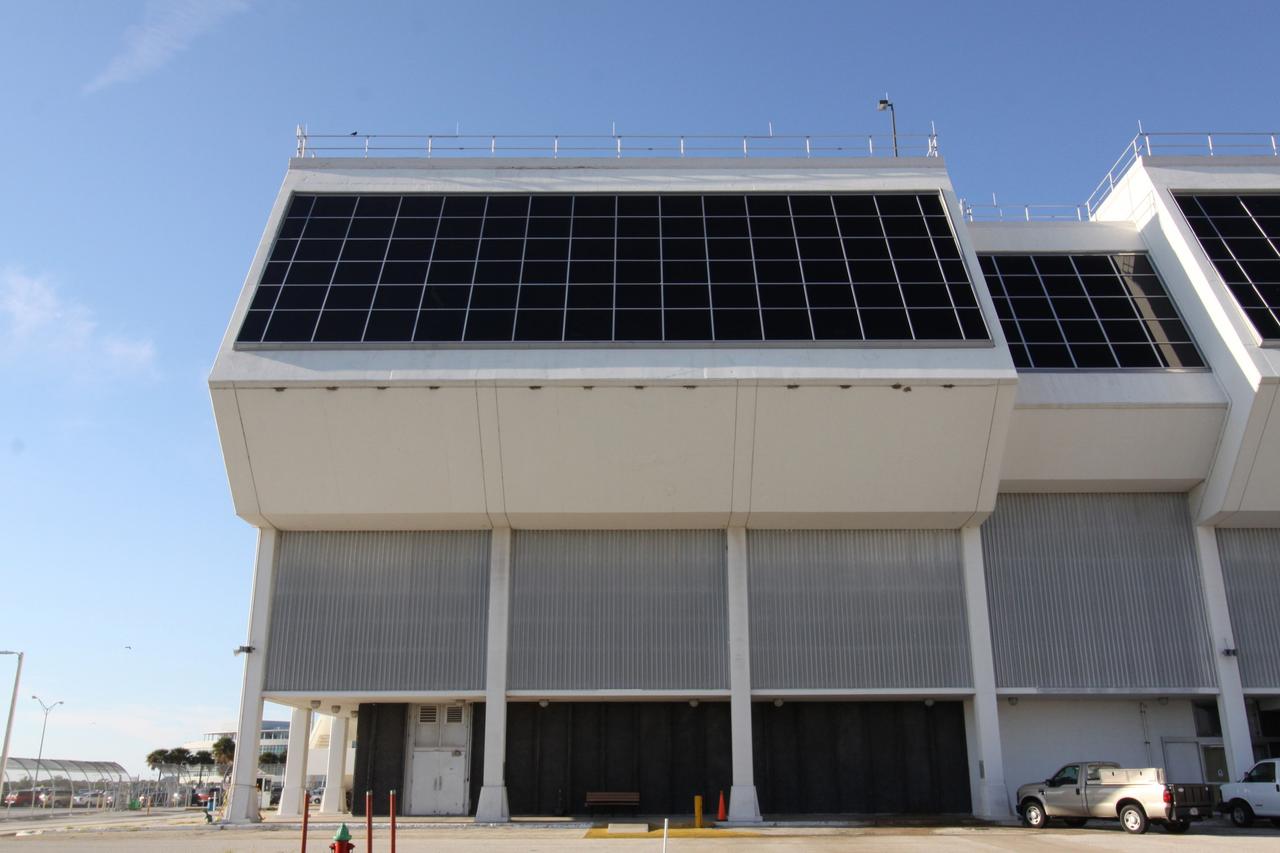
CAPE CANAVERAL, Fla. – The Launch Control Center at NASA's Kennedy Space Center in Florida is ready to support NASA's 21st century space program. The louvered windows installed during the Apollo era have been replaced with new, hurricane-rated window systems in the four firing rooms and vestibule areas between the firing rooms. To avoid operational impacts and protect the firing rooms from the elements, the new windows were installed on the outside of the original windows, enclosing the space formerly occupied by the louvers until the new windows were leak tested. Photo credit: NASA/Jack Pfaller
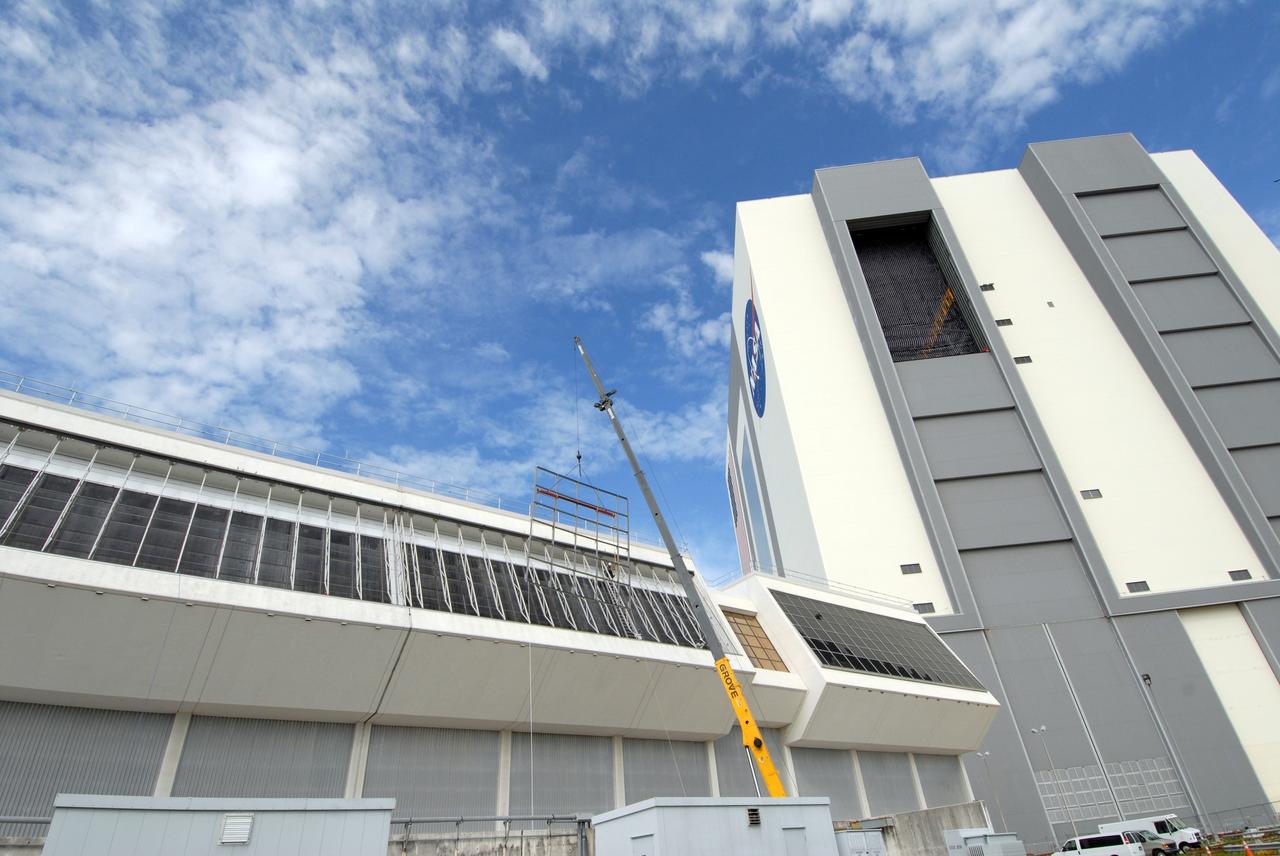
CAPE CANAVERAL, Fla. – At NASA's Kennedy Space Center in Florida, new, hurricane-rated window systems for the four Firing Rooms and the vestibule areas between Firing Rooms 1 & 2 and Firing Rooms 3 & 4 are being installed. In order to avoid operational impacts, the new windows are being installed on the outside of the existing windows, enclosing the space formerly occupied by the louvers, and the old windows will remain in place until the new windows are completely installed and leak tested. This approach will continue to keep the firing rooms from being exposed to the elements. Photo credit: NASA/Tim Jacobs
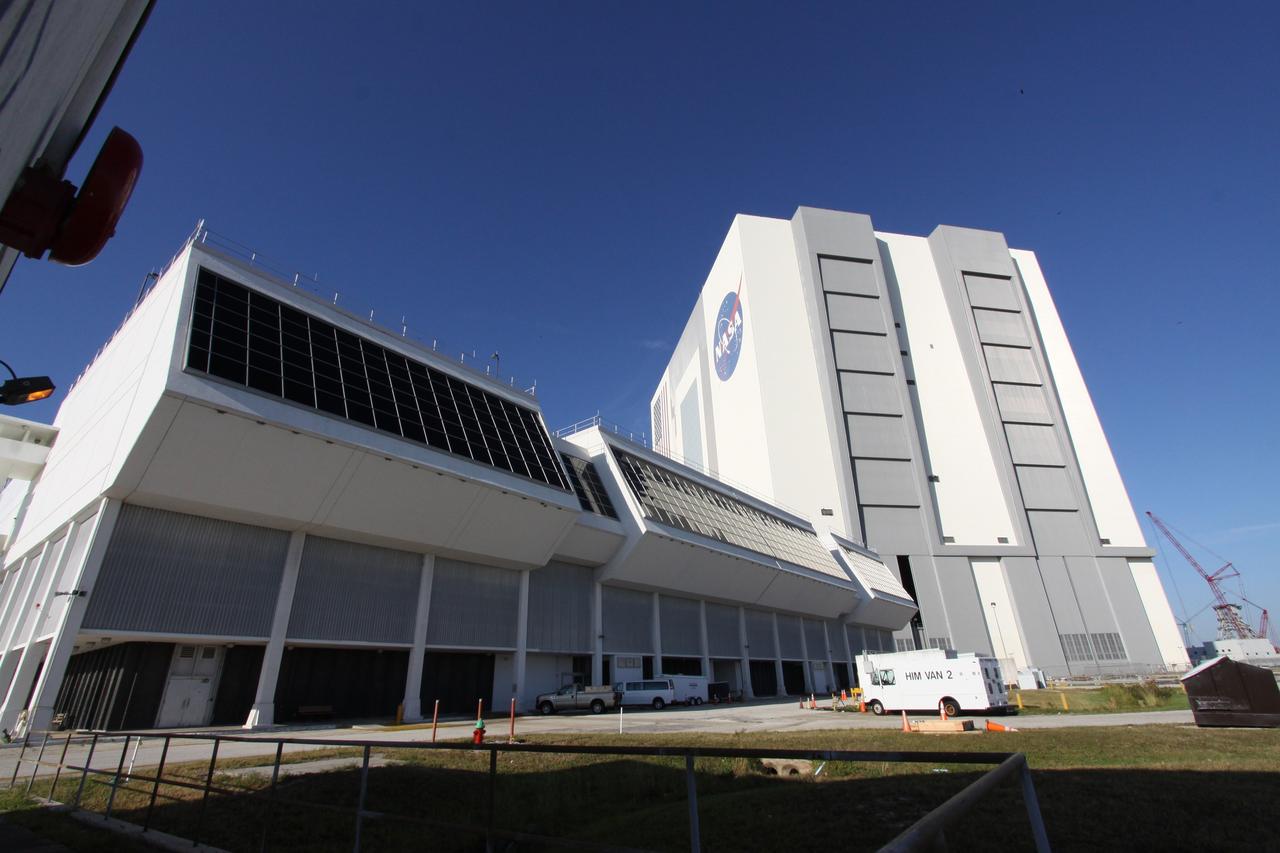
CAPE CANAVERAL, Fla. – The Launch Control Center at NASA's Kennedy Space Center in Florida is ready to support NASA's 21st century space program. The louvered windows installed during the Apollo era have been replaced with new, hurricane-rated window systems in the four firing rooms and vestibule areas between the firing rooms. To avoid operational impacts and protect the firing rooms from the elements, the new windows were installed on the outside of the original windows, enclosing the space formerly occupied by the louvers until the new windows were leak tested. Photo credit: NASA/Jack Pfaller
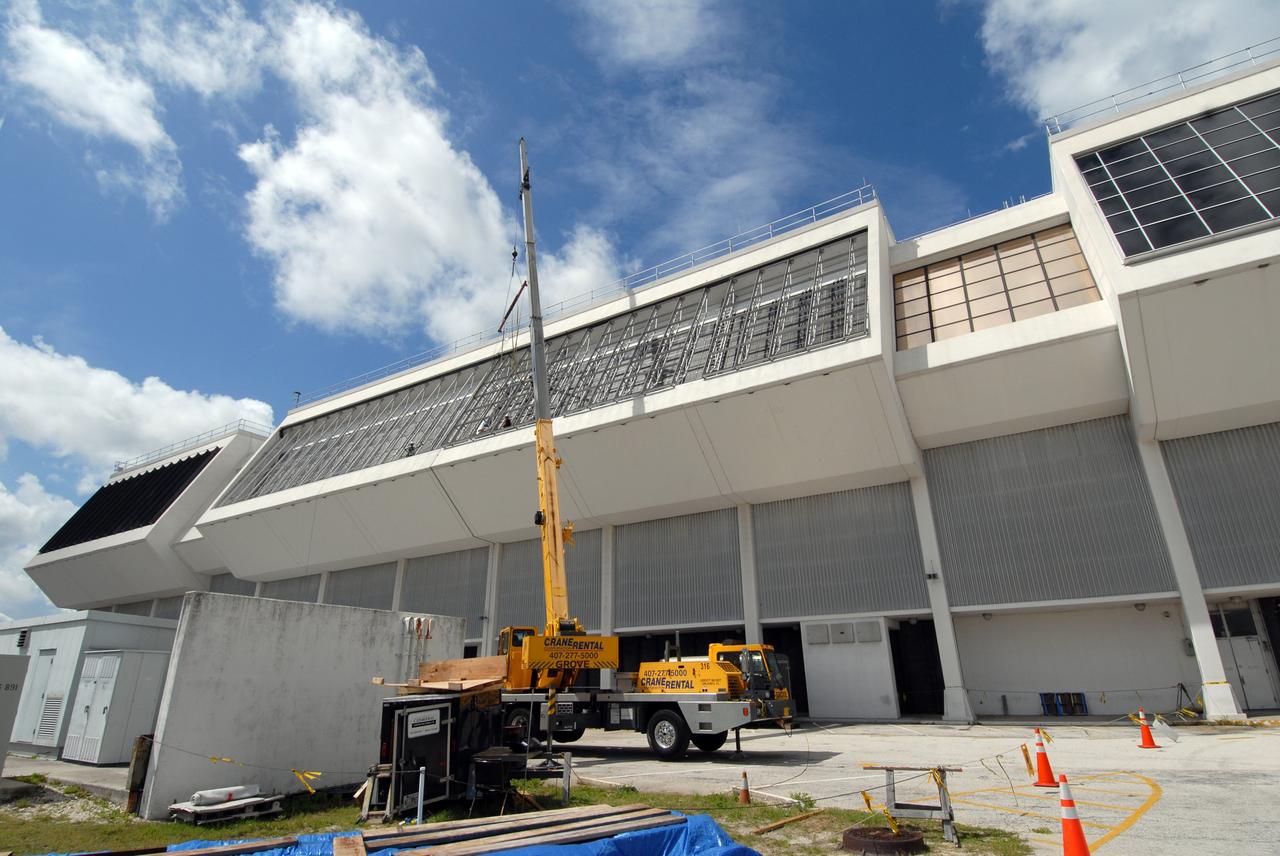
CAPE CANAVERAL, Fla. – At NASA's Kennedy Space Center in Florida, new, hurricane-rated window systems for the Launch Control Center's four Firing Rooms and the vestibule areas between Firing Rooms 1 & 2 and Firing Rooms 3 & 4 are being installed. In order to avoid operational impacts, the new windows are being installed on the outside of the existing windows, enclosing the space formerly occupied by the louvers, and the old windows will remain in place until the new windows are completely installed and leak tested. This approach will continue to keep the firing rooms from being exposed to the elements. Photo credit: NASA/Tim Jacobs
CAPE CANAVERAL, Fla. – At NASA's Kennedy Space Center in Florida, new, hurricane-rated window systems for the Launch Control Center's four Firing Rooms and the vestibule areas between Firing Rooms 1 & 2 and Firing Rooms 3 & 4 are being installed. In order to avoid operational impacts, the new windows are being installed on the outside of the existing windows, enclosing the space formerly occupied by the louvers, and the old windows will remain in place until the new windows are completely installed and leak tested. This approach will continue to keep the firing rooms from being exposed to the elements. Photo credit: NASA/Tim Jacobs
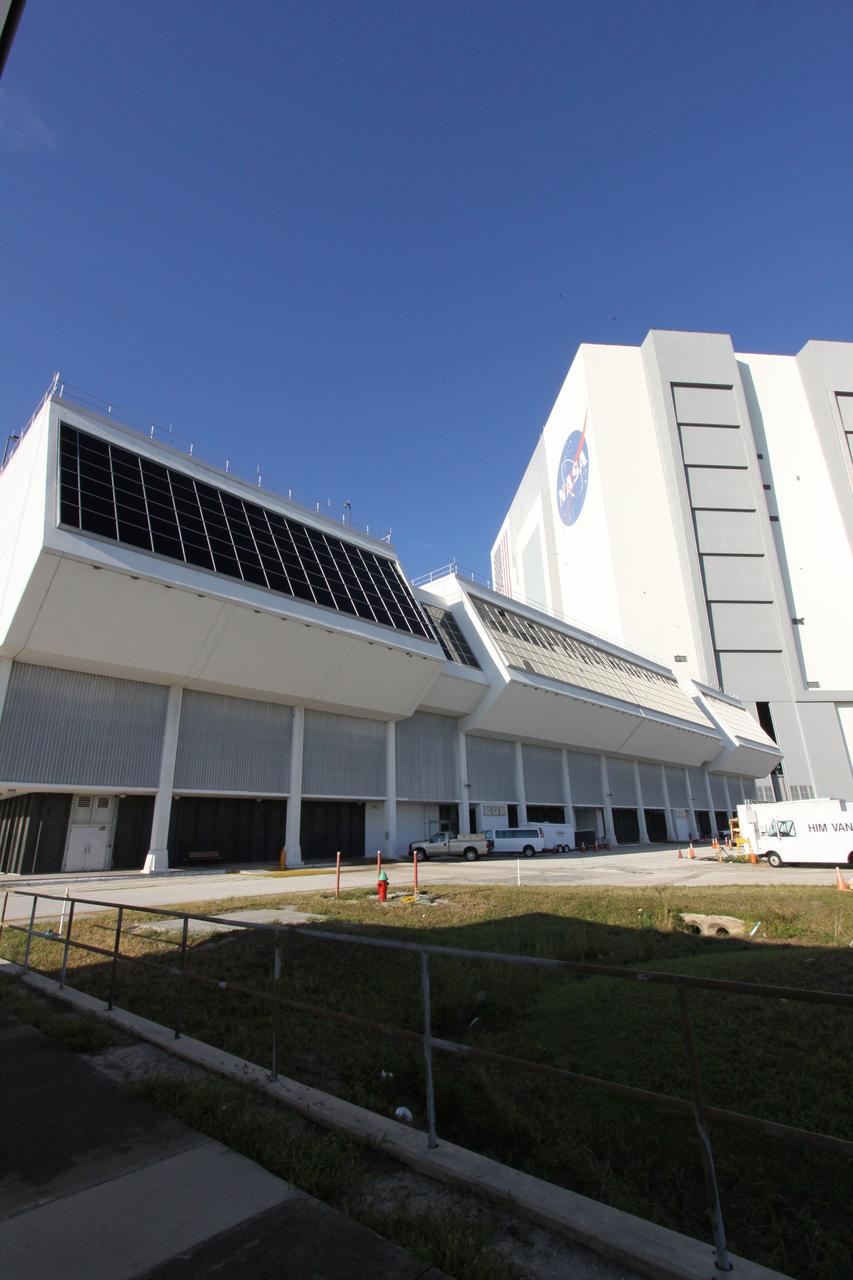
CAPE CANAVERAL, Fla. – The Launch Control Center at NASA's Kennedy Space Center in Florida is ready to support NASA's 21st century space program. The louvered windows installed during the Apollo era have been replaced with new, hurricane-rated window systems in the four firing rooms and vestibule areas between the firing rooms. To avoid operational impacts and protect the firing rooms from the elements, the new windows were installed on the outside of the original windows, enclosing the space formerly occupied by the louvers until the new windows were leak tested. Photo credit: NASA/Jack Pfaller
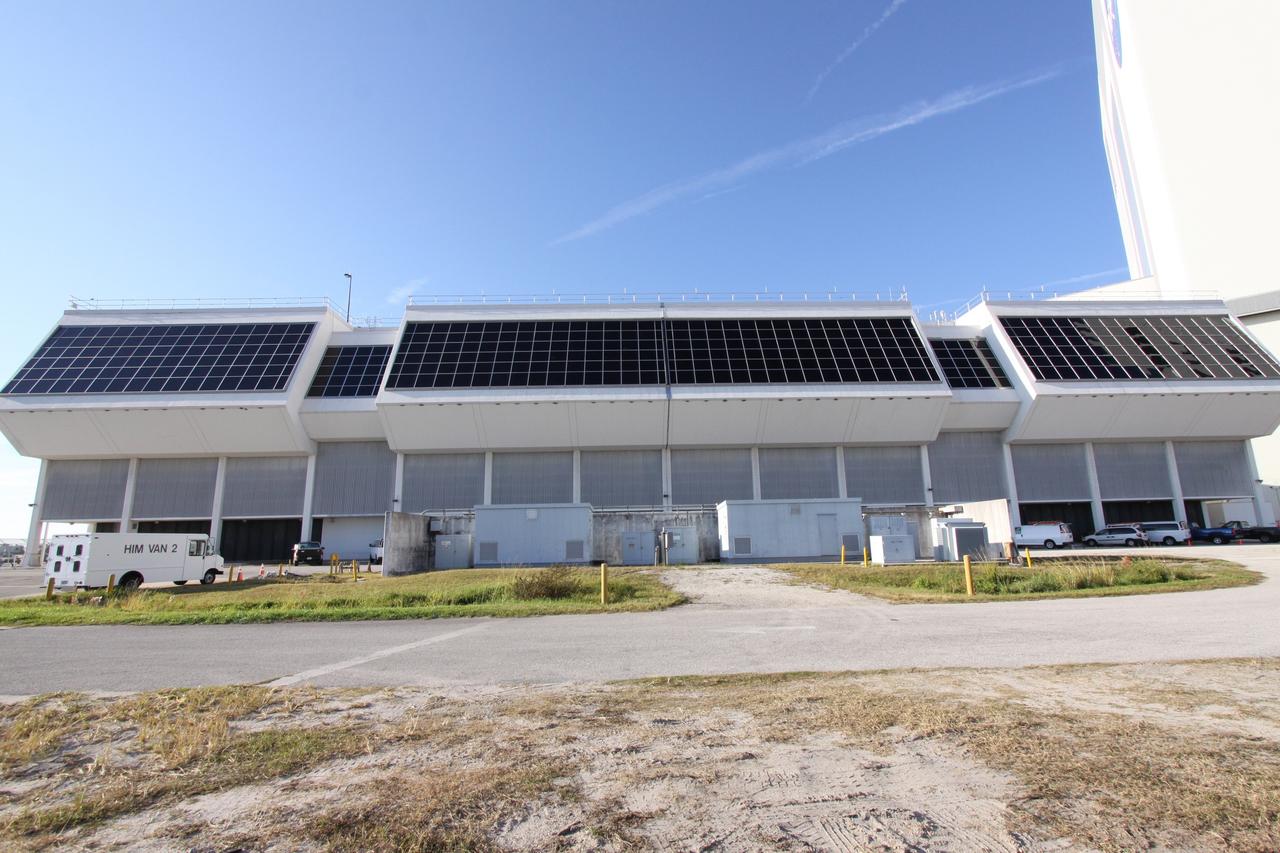
CAPE CANAVERAL, Fla. – The Launch Control Center at NASA's Kennedy Space Center in Florida is ready to support NASA's 21st century space program. The louvered windows installed during the Apollo era have been replaced with new, hurricane-rated window systems in the four firing rooms and vestibule areas between the firing rooms. To avoid operational impacts and protect the firing rooms from the elements, the new windows were installed on the outside of the original windows, enclosing the space formerly occupied by the louvers until the new windows were leak tested. Photo credit: NASA/Jack Pfaller
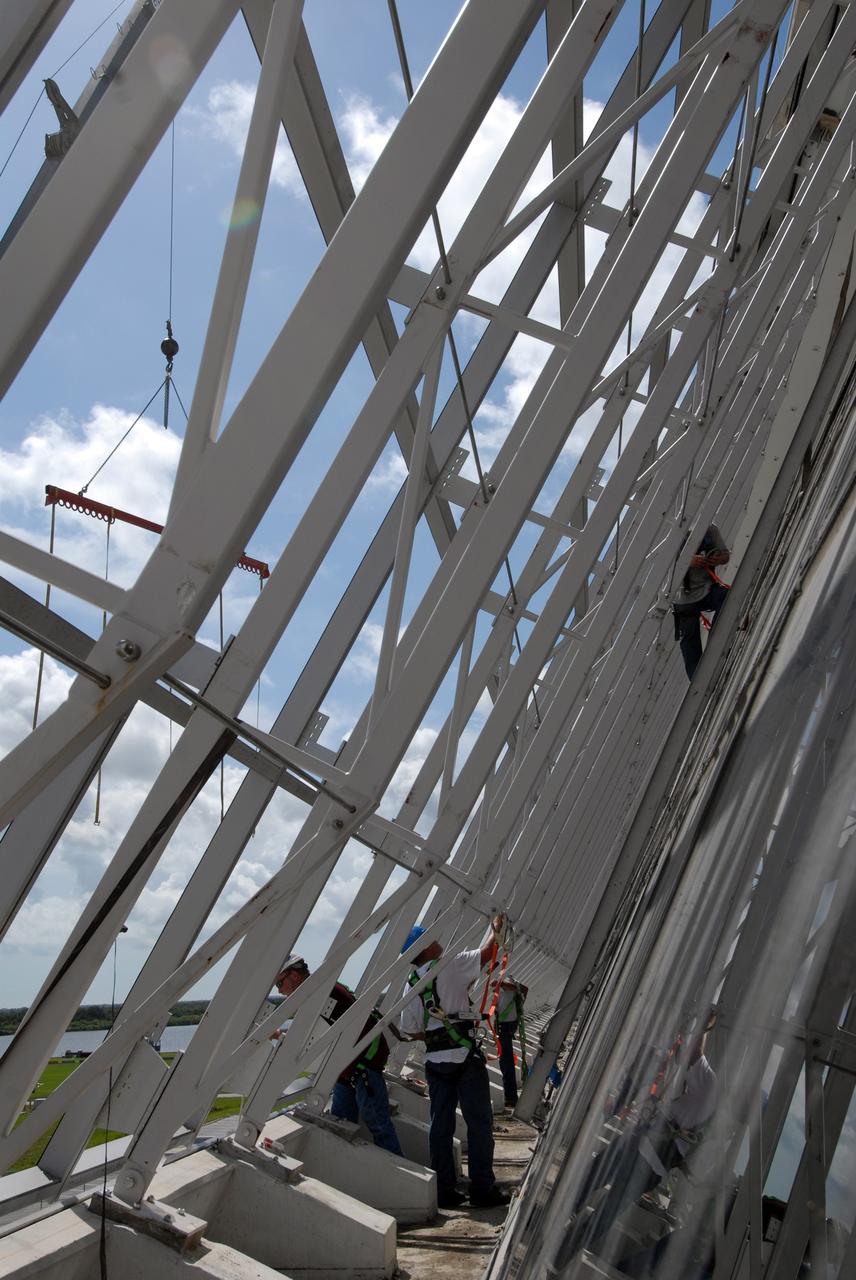
CAPE CANAVERAL, Fla. – At NASA's Kennedy Space Center in Florida, new, hurricane-rated window systems for the Launch Control Center's four Firing Rooms and the vestibule areas between Firing Rooms 1 & 2 and Firing Rooms 3 & 4 are being installed. In order to avoid operational impacts, the new windows are being installed on the outside of the existing windows, enclosing the space formerly occupied by the louvers, and the old windows will remain in place until the new windows are completely installed and leak tested. This approach will continue to keep the firing rooms from being exposed to the elements. Photo credit: NASA/Tim Jacobs
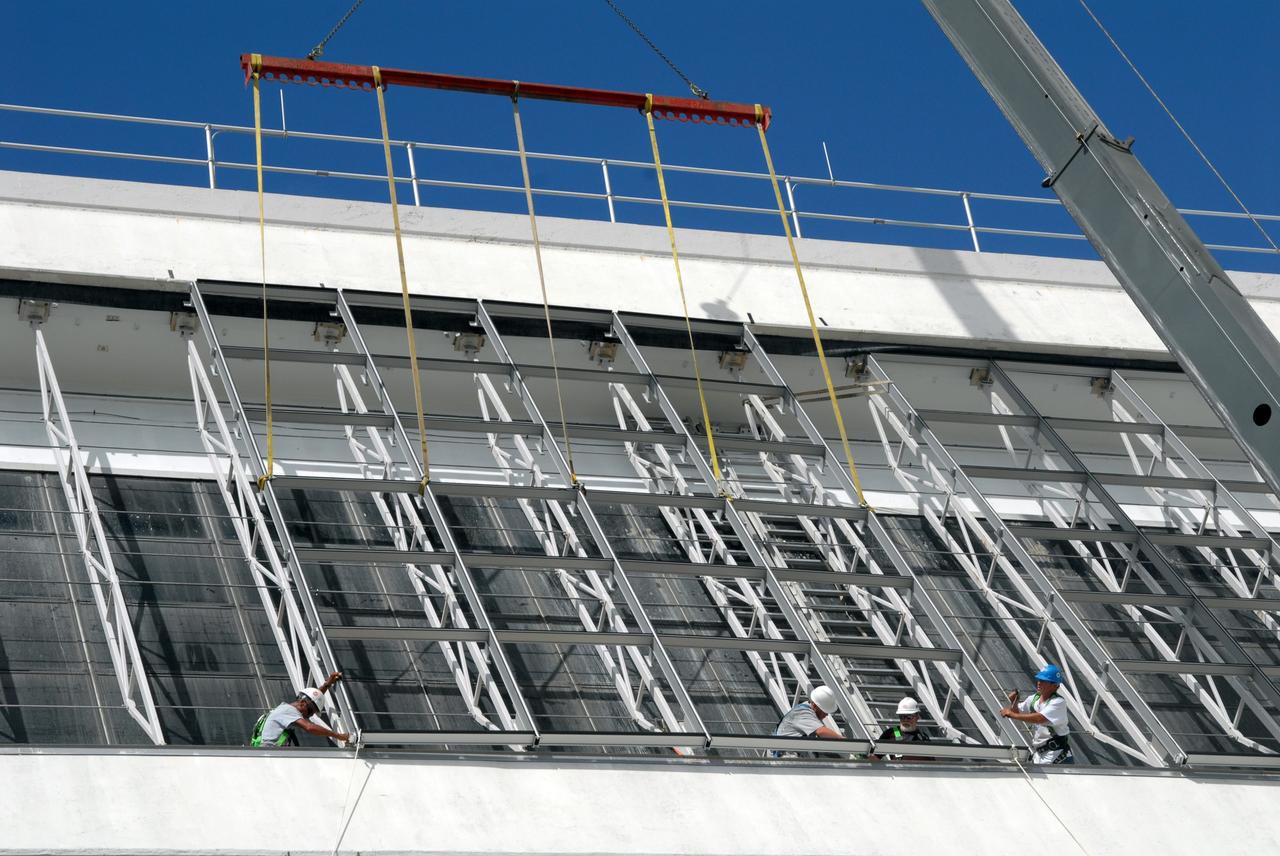
CAPE CANAVERAL, Fla. – At NASA's Kennedy Space Center in Florida, new, hurricane-rated window systems for the Launch Control Center's four Firing Rooms and the vestibule areas between Firing Rooms 1 & 2 and Firing Rooms 3 & 4 are being installed. In order to avoid operational impacts, the new windows are being installed on the outside of the existing windows, enclosing the space formerly occupied by the louvers, and the old windows will remain in place until the new windows are completely installed and leak tested. This approach will continue to keep the firing rooms from being exposed to the elements. Photo credit: NASA/Tim Jacobs
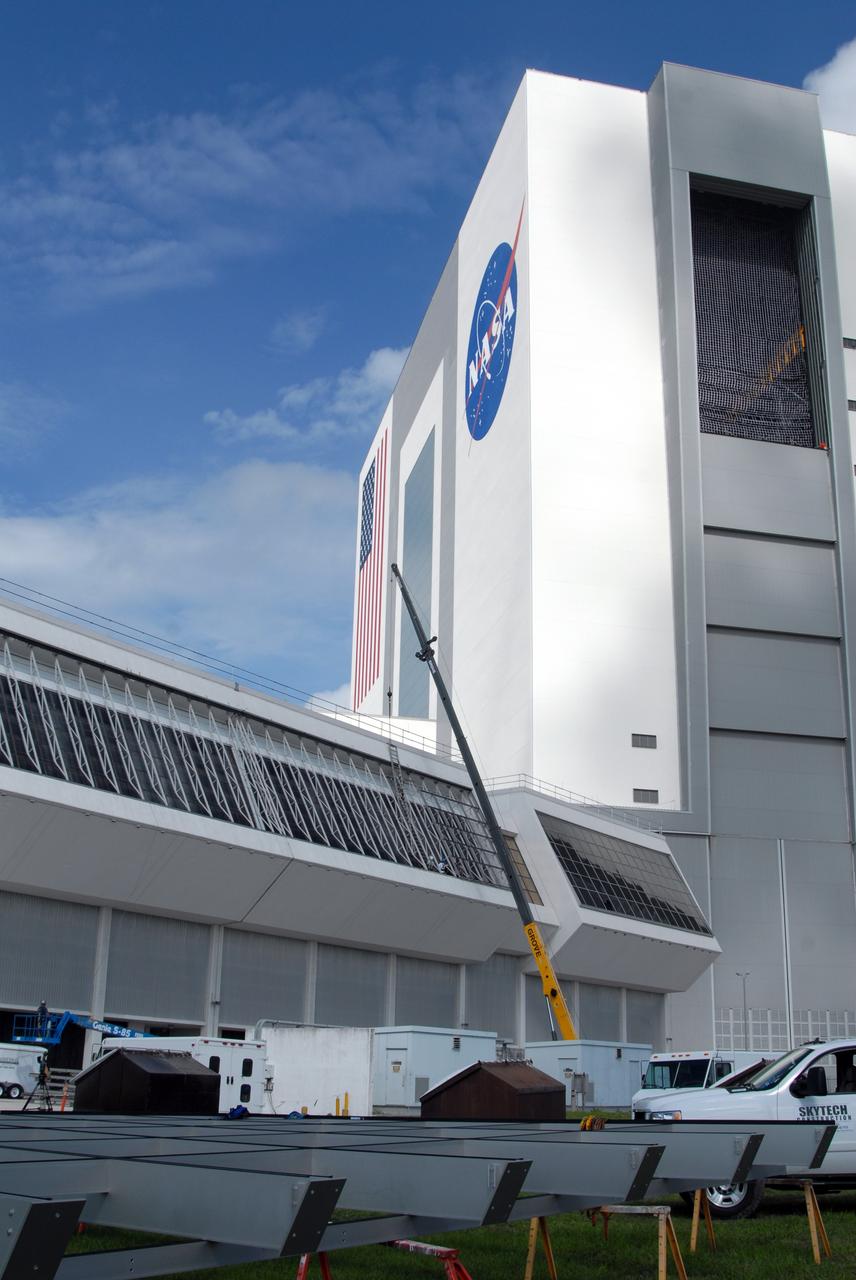
CAPE CANAVERAL, Fla. – At NASA's Kennedy Space Center in Florida, new, hurricane-rated window systems for the Launch Control Center's four Firing Rooms and the vestibule areas between Firing Rooms 1 & 2 and Firing Rooms 3 & 4 are being installed. In order to avoid operational impacts, the new windows are being installed on the outside of the existing windows, enclosing the space formerly occupied by the louvers, and the old windows will remain in place until the new windows are completely installed and leak tested. This approach will continue to keep the firing rooms from being exposed to the elements. Photo credit: NASA/Tim Jacobs
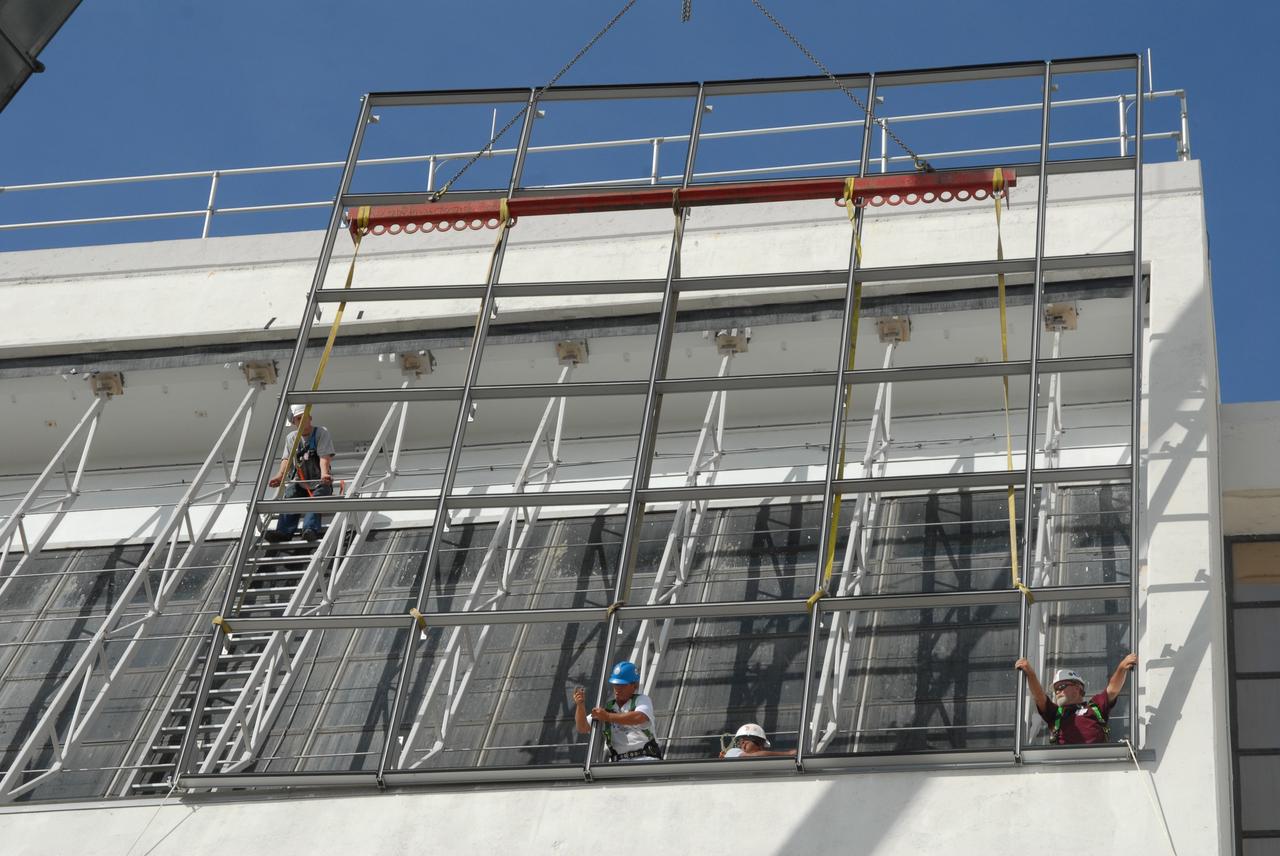
CAPE CANAVERAL, Fla. – At NASA's Kennedy Space Center in Florida, new, hurricane-rated window systems for the Launch Control Center's four Firing Rooms and the vestibule areas between Firing Rooms 1 & 2 and Firing Rooms 3 & 4 are being installed. In order to avoid operational impacts, the new windows are being installed on the outside of the existing windows, enclosing the space formerly occupied by the louvers, and the old windows will remain in place until the new windows are completely installed and leak tested. This approach will continue to keep the firing rooms from being exposed to the elements. Photo credit: NASA/Tim Jacobs
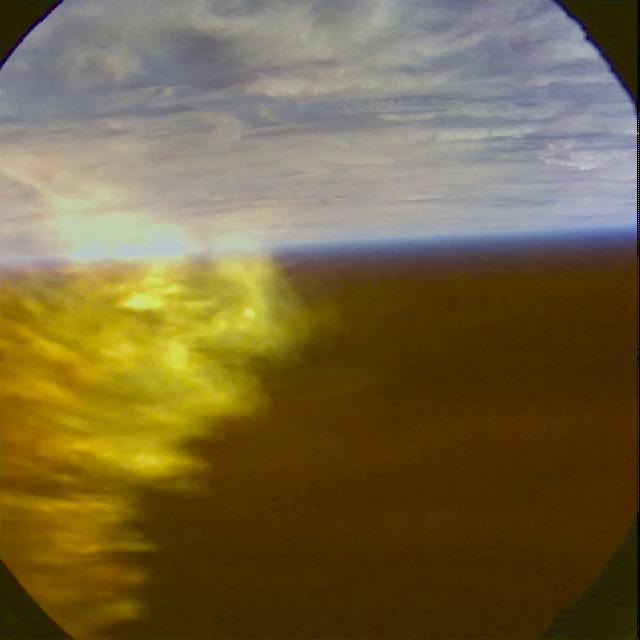
A view from the top hatch window as plasma surrounds the vehicle during reentry on Orion's first flight test, Exploration Flight Test-1 (EFT-1), on December 5, 2014.
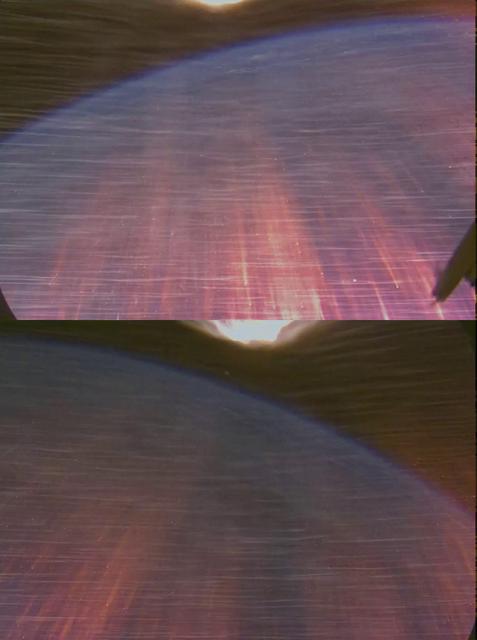
A view from the side windows as plasma surrounds the vehicle during reentry on Orion's first flight test, Exploration Flight Test-1 (EFT-1), on December 5, 2014.
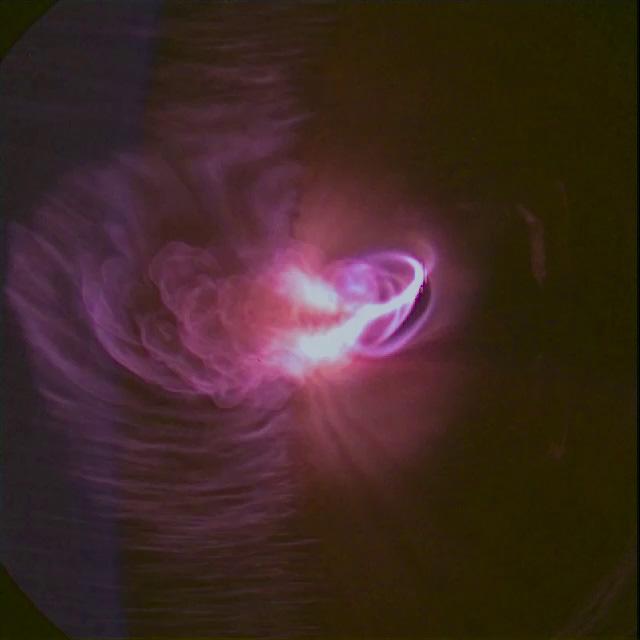
A view from the top hatch window as plasma surrounds the vehicle during reentry on Orion's first flight test, Exploration Flight Test-1 (EFT-1), on December 5, 2014.
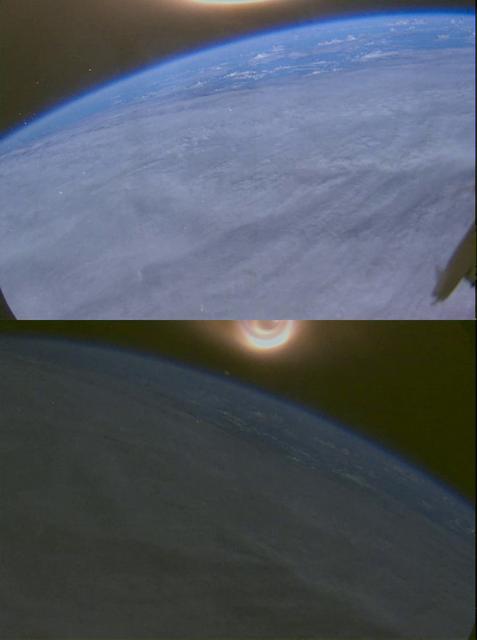
A view from the top hatch window as plasma surrounds the vehicle during reentry on Orion's first flight test, Exploration Flight Test-1 (EFT-1), on December 5, 2014.
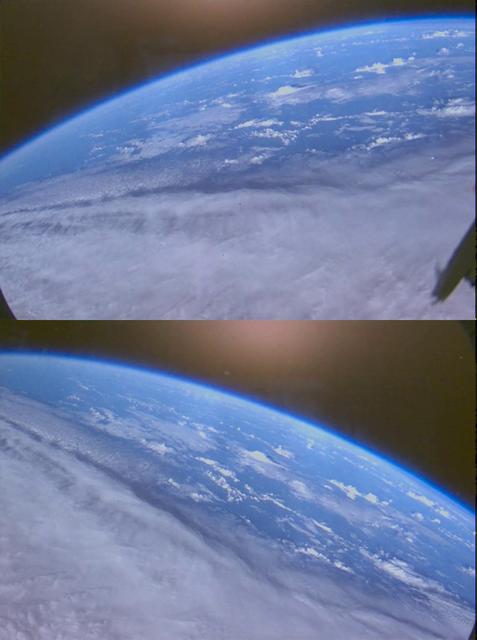
A view from the side windows as plasma surrounds the vehicle during reentry on Orion's first flight test, Exploration Flight Test-1 (EFT-1), on December 5, 2014.

iss071e257004 (July 2, 2024) --- The American flag is pictured inside the window of the Boeing Starliner spacecraft that carried NASA astronauts Butch Wilmore and Suni Williams to the International Space Station on NASA's Boeing Crew Flight Test.
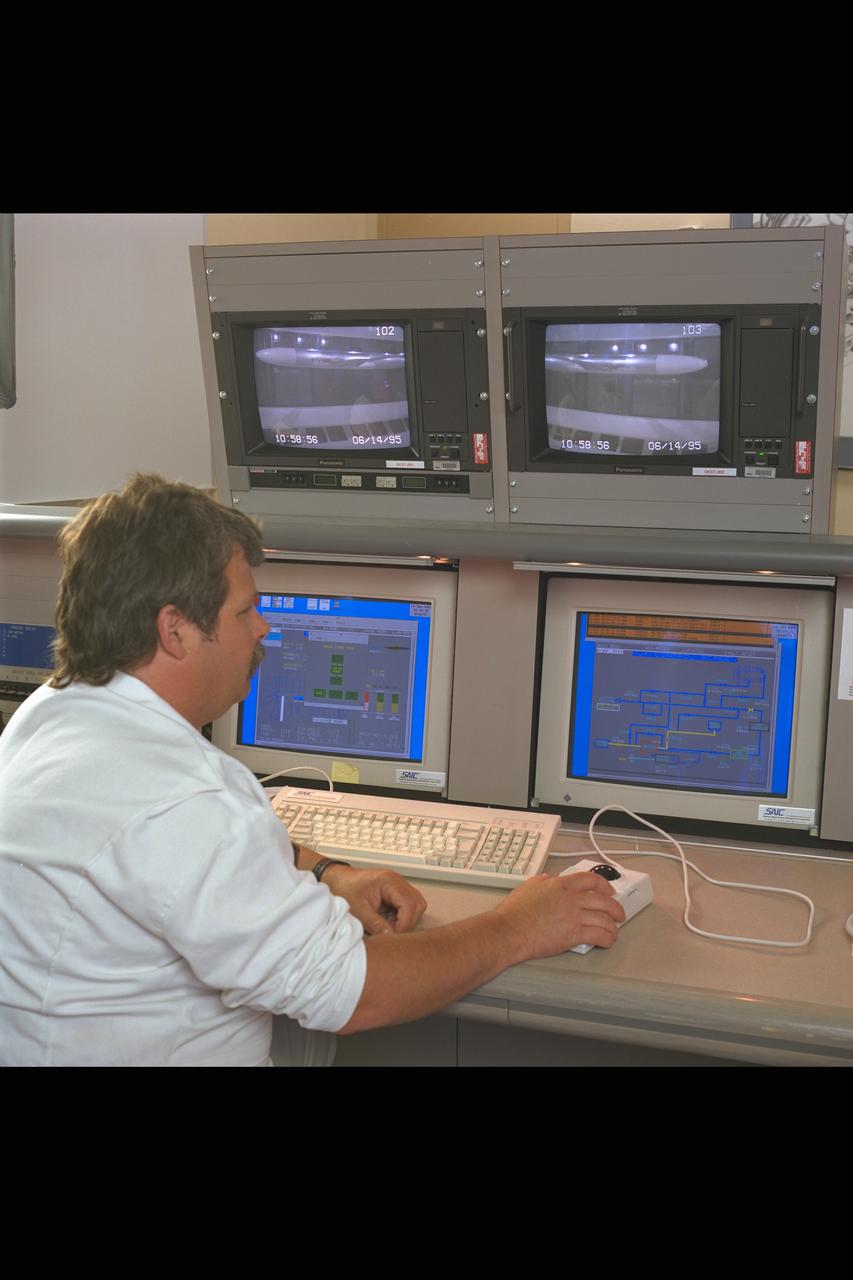
New renovated NASA Ames Research Center 12ft Pressure Wind Tunnel view of test section & mechanic with mobil command station, LB-435 model on RSS, lighting & viewing windows
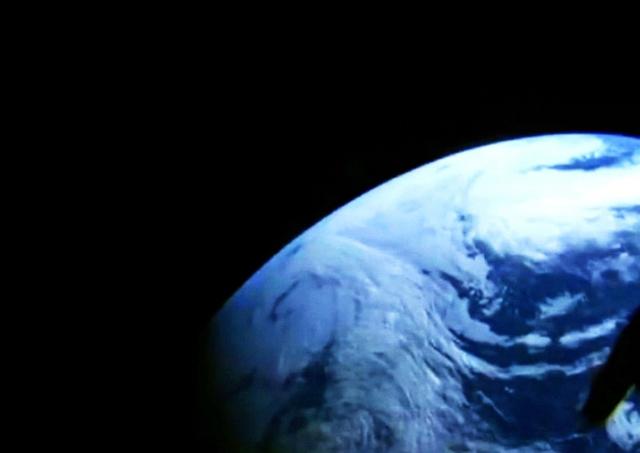
A camera in the window of NASA's Orion spacecraft looks back at Earth during its unpiloted flight test in orbit on Dec. 5, 2014 Part of Batch image transfer from Flickr.
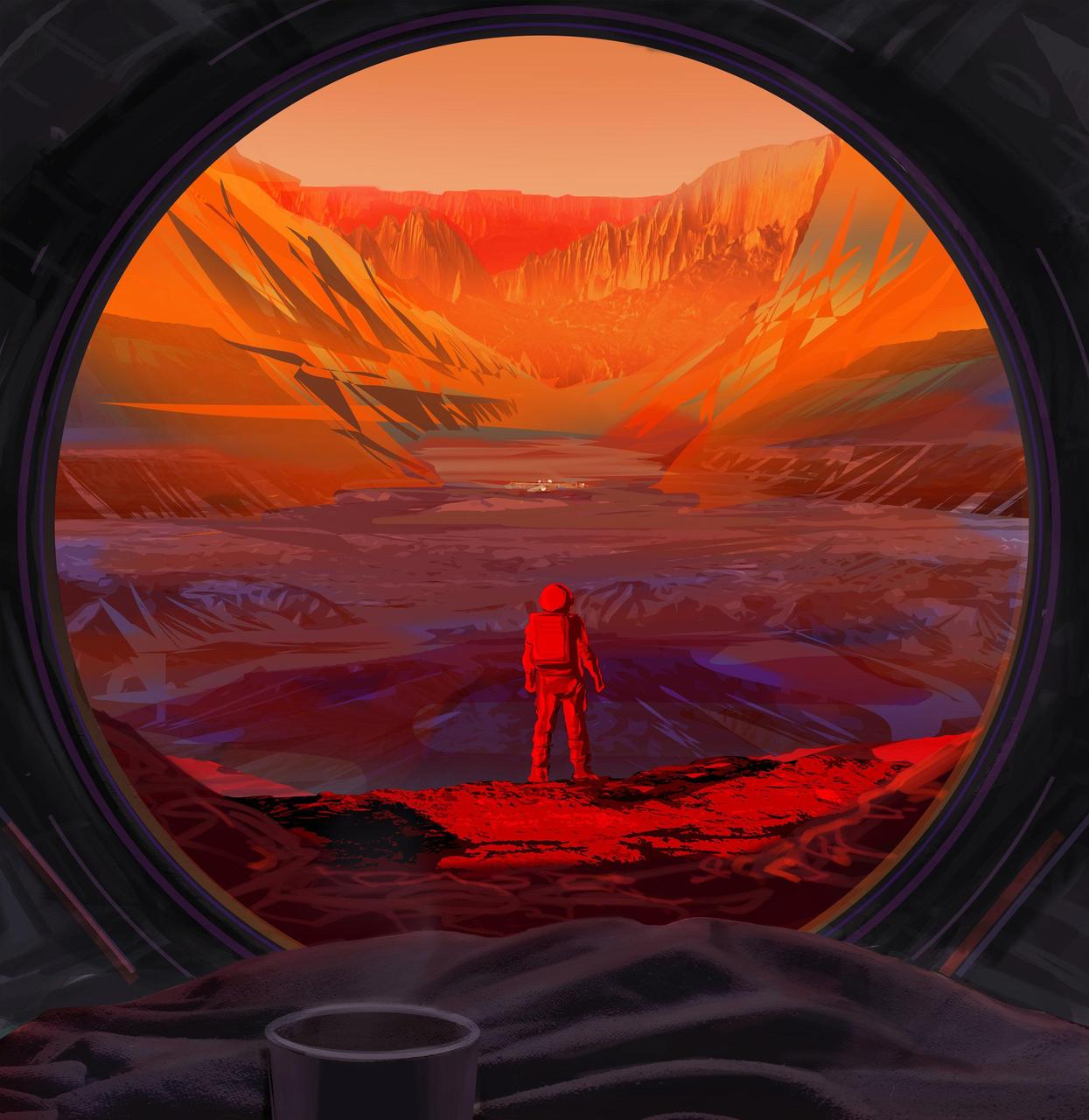
This illustration shows an astronaut on Mars, as viewed through the window of a spacecraft. NASA hopes to return astronauts to the Moon and test technology there that will be useful for sending the first astronauts to Mars. https://photojournal.jpl.nasa.gov/catalog/PIA23900
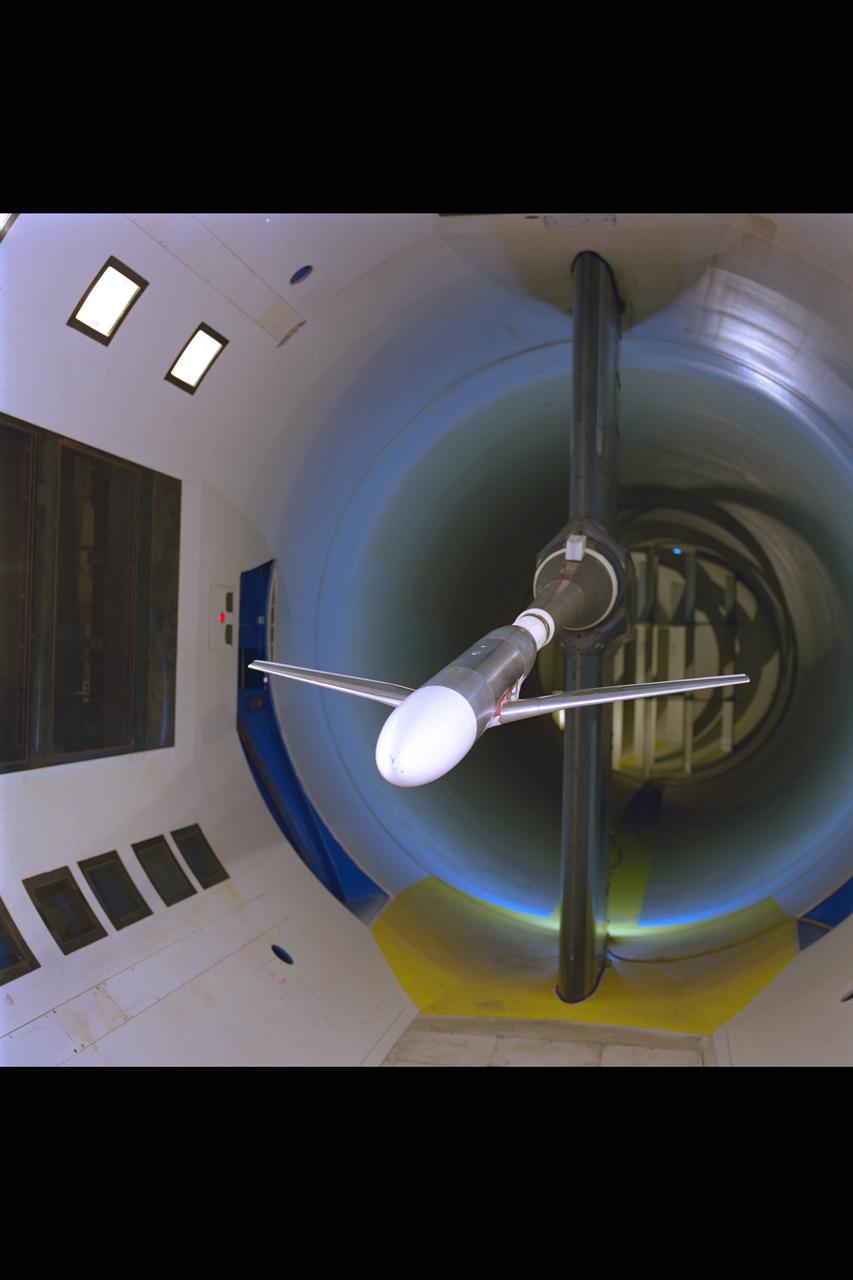
New renovated NASA Ames Research Center 12ft Pressure Wind Tunnel. View of test section with model LB-435 on RSS, showing lighting & viewing windows
Inside the Neil Armstrong Operations and Checkout Building high bay at NASA's Kennedy Space Center in Florida, technicians remove a side thermal window from one of Orion's tile panels on May 15, 2015. The tile panels with thermal windows intact were removed from Orion in the Launch Abort System Facility after the Exploration Flight Test-1 (EFT-1) spacecraft returned to Kennedy in late December. All of the windows are being removed and disassembled for post-flight inspection for any signs of micrometeoroid or orbital debris impacts or other potential glass damage. Part of Batch image transfer from Flickr.
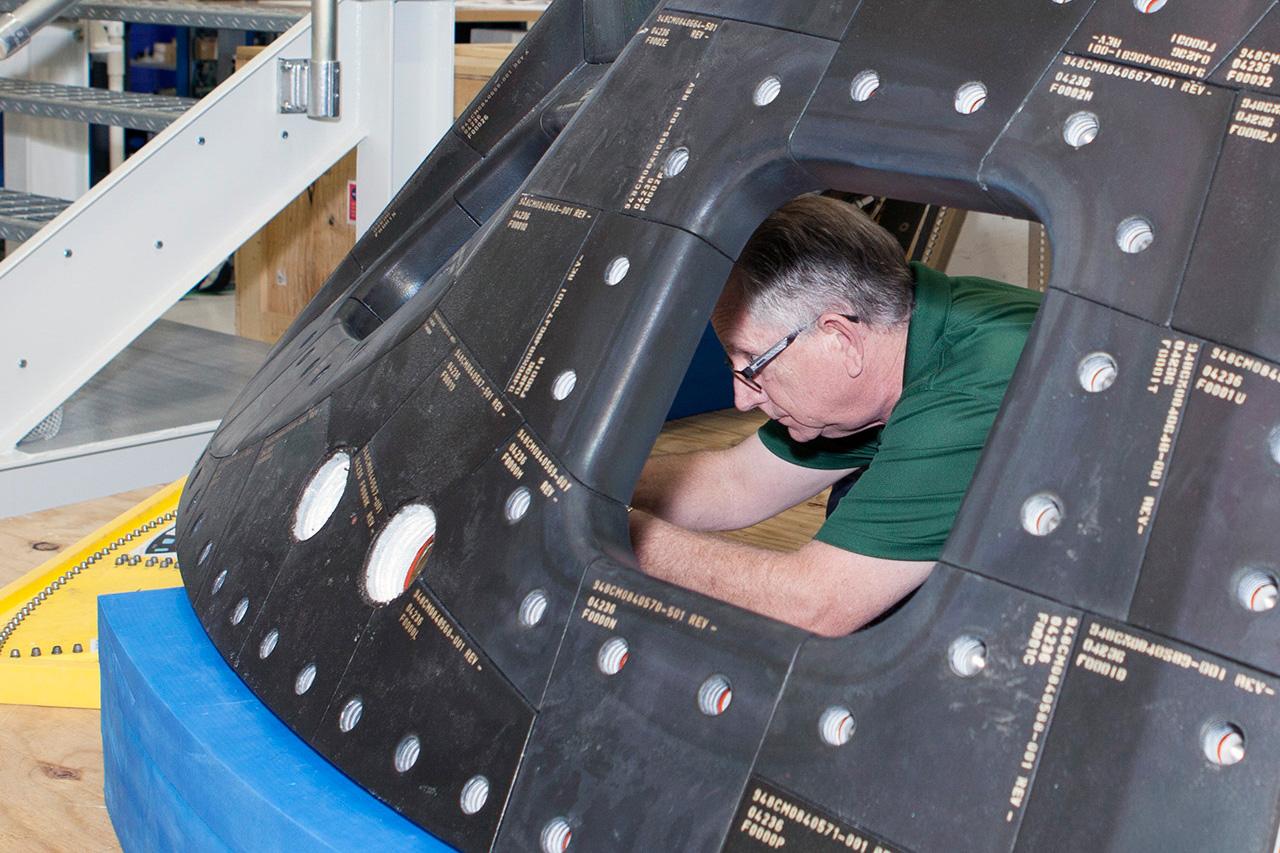
Inside the Neil Armstrong Operations and Checkout Building high bay at NASA's Kennedy Space Center in Florida, technicians remove a side thermal window from one of Orion's tile panels on May 15, 2015. The tile panels with thermal windows intact were removed from Orion in the Launch Abort System Facility after the Exploration Flight Test-1 (EFT-1) spacecraft returned to Kennedy in late December. All of the windows are being removed and disassembled for post-flight inspection for any signs of micrometeoroid or orbital debris impacts or other potential glass damage. Part of Batch image transfer from Flickr.
Inside the Neil Armstrong Operations and Checkout Building high bay at NASA's Kennedy Space Center in Florida, technicians remove a side thermal window from one of Orion's tile panels on May 15, 2015. The tile panels with thermal windows intact were removed from Orion in the Launch Abort System Facility after the Exploration Flight Test-1 (EFT-1) spacecraft returned to Kennedy in late December. All of the windows are being removed and disassembled for post-flight inspection for any signs of micrometeoroid or orbital debris impacts or other potential glass damage. Part of Batch image transfer from Flickr.
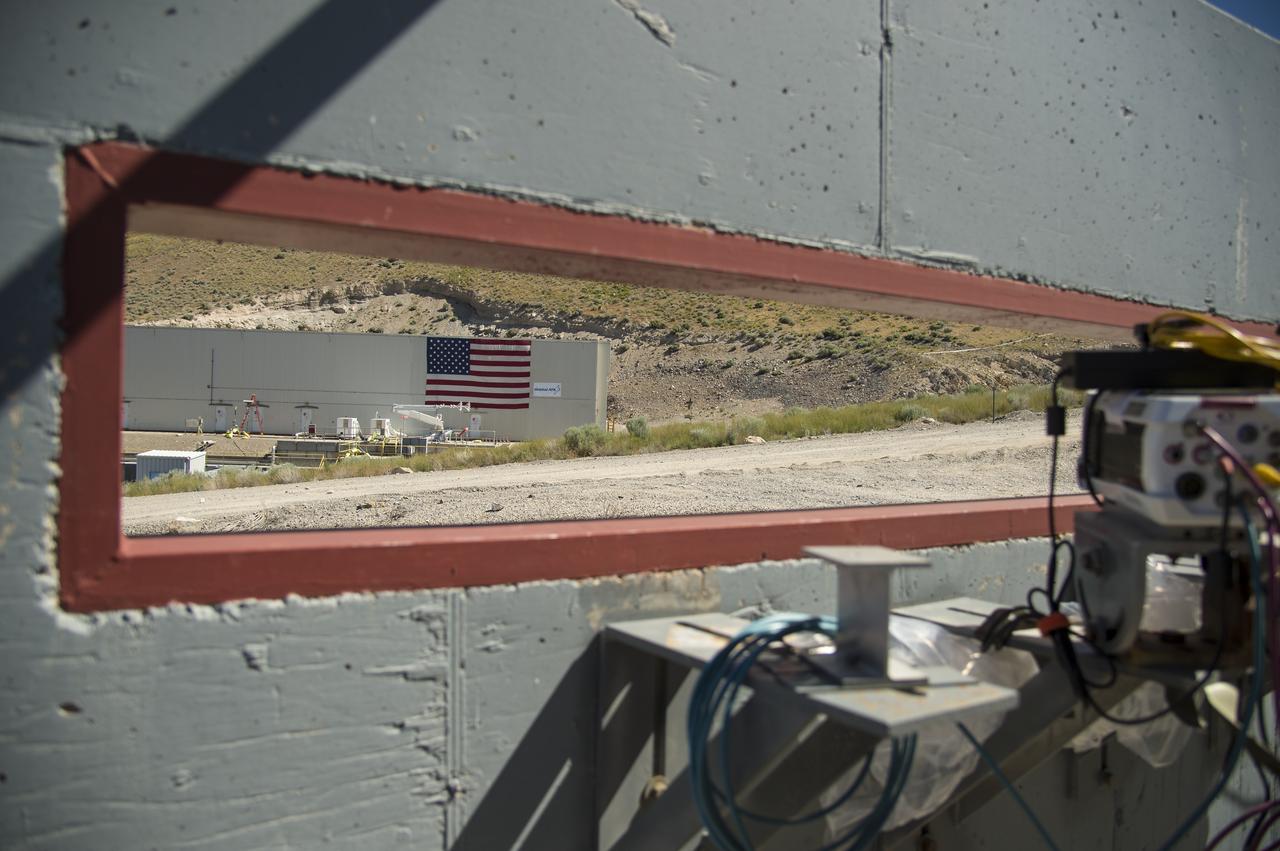
The test area where the second and final qualification motor (QM-2) test for the Space Launch System’s booster is seen through the window of a camera bunker, Sunday, June 26, 2016, at Orbital ATK Propulsion Systems test facilities in Promontory, Utah. The test is scheduled for Tuesday, June 28 at 10:05 a.m. EDT (8:05 a.m. MDT). Photo Credit: (NASA/Bill Ingalls)
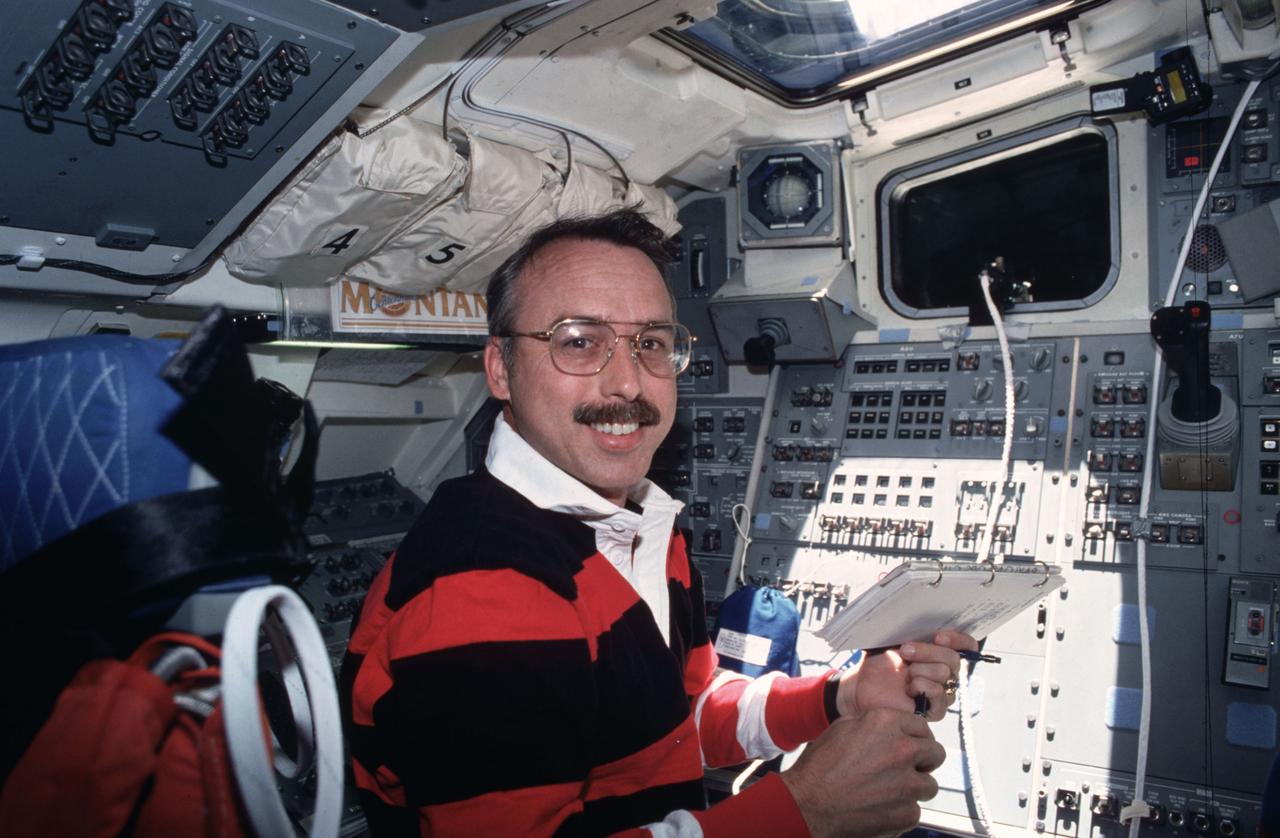
STS043-04-038 (2-11 Aug 1991) --- Astronaut James C. Adamson, STS-43 mission specialist, checks on an experiment on Atlantis? flight deck. Part of the experiment, Optical Communications Through the Shuttle Window (OCTW), can be seen mounted in upper right. The OCTW system consists of two modules, one inside the orbiter crew cabin (as pictured here) and one in the payload bay. The crew compartment version houses an optoelectronic transmitter/receiver pair for video and digital subsystems, test circuitry and interface circuitry. The payload bay module serves as a repeater station. During operation a signal is transmitted through the shuttle window to a bundle of optical fiber cables mounted in the payload bay near an aft window. The cables carry optical signals from the crew compartment equipment to the OCTW payload bay module. The signals are returned via optical fiber cable to the aft flight deck window, retransmitted through the window, and received by the crew compartment equipment.
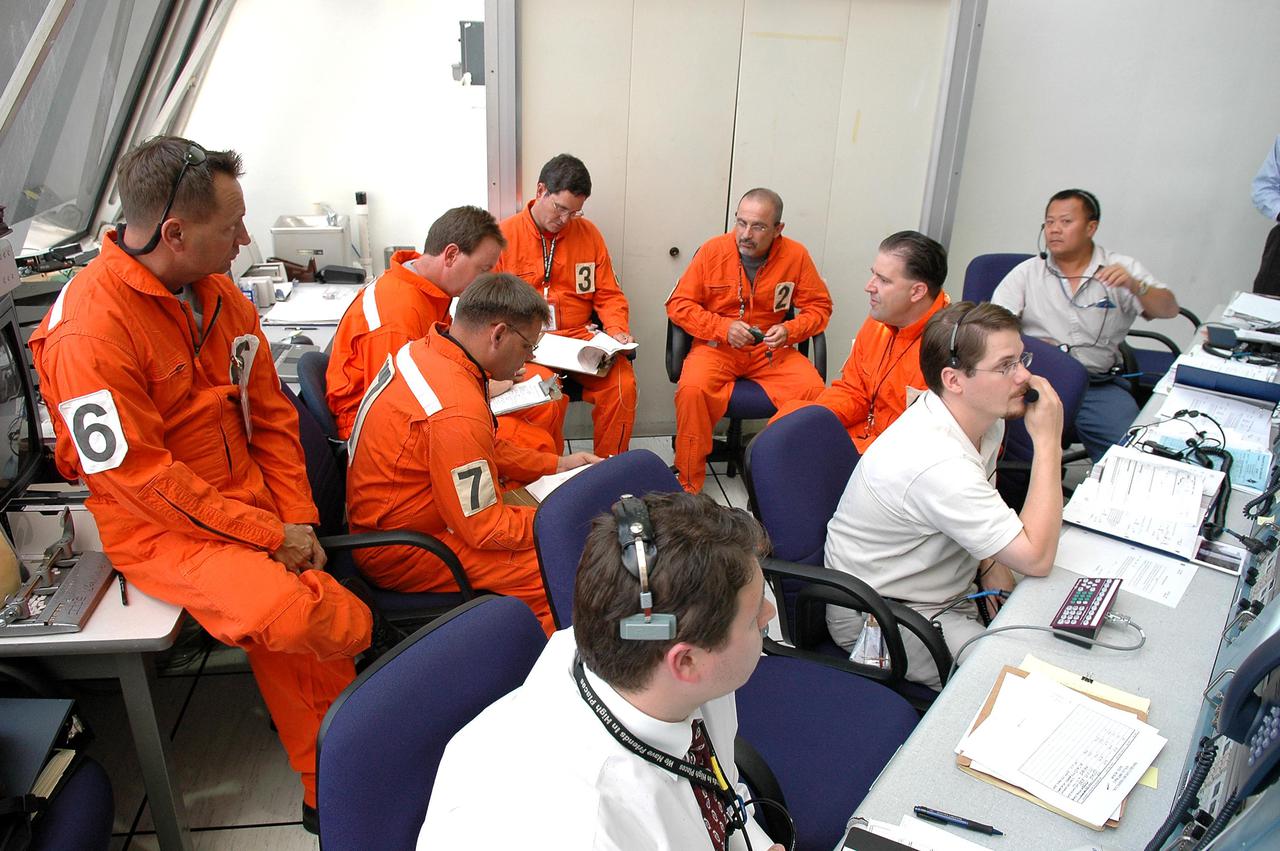
KENNEDY SPACE CENTER, FLA. - Members of the Final Inspection Team (orange suits) support an External Tank (ET) tanking test from the Launch Control Center. Launch Pad 39B, where the test is taking place, can be seen through the window. The tanking test is designed to evaluate how the tank, orbiter, solid rocket boosters and ground systems perform under 'cryo-load,' when the tank is filled with the two ultra-low-temperature propellants. The tank filling and draining portion of the test takes about 11 hours. The test also includes a simulated countdown through the hold at T-31 seconds. The test is being conducted to troubleshoot two issues identified by a tanking test held on April 14. Data is being collected to analyze the liquid hydrogen sensors that gave intermittent readings and the liquid hydrogen pressurization relief valve that cycled more times than standard. The tanking tests are part of preparations for Space Shuttle Discovery's Return to Flight mission, STS-114, to the International Space Station. The launch window extends from July 13 through July 31.
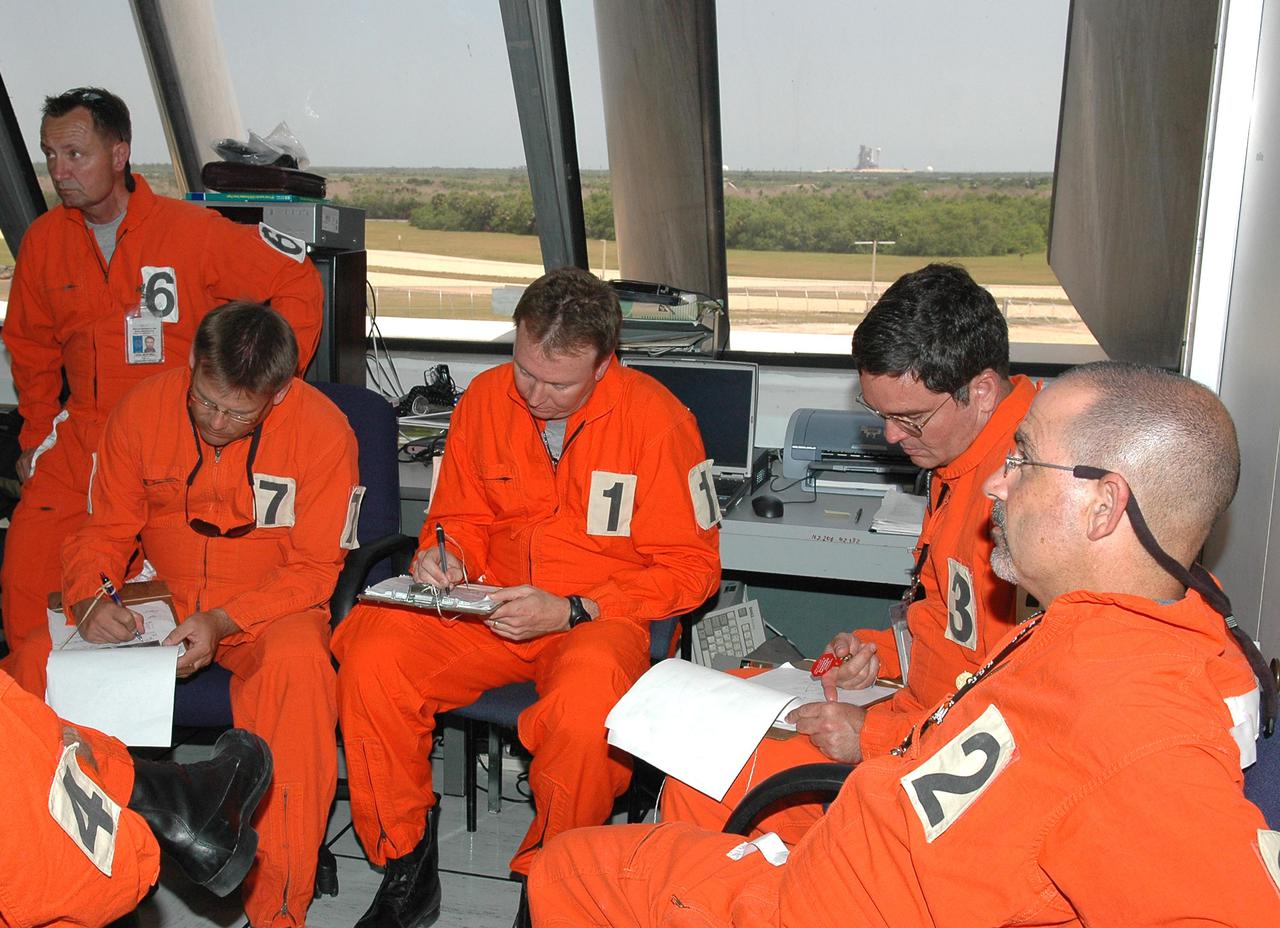
KENNEDY SPACE CENTER, FLA. - Members of the Final Inspection Team support an External Tank (ET) tanking test from the Launch Control Center. Launch Pad 39B, where the test is being conducted, can be seen through the window. From left are Doug Powell, Lockheed Martin; Scott Otto, Lockheed Martin; John Blue, NASA; Robert Speece, NASA; and Jorge Rivera, NASA. The tanking test is designed to evaluate how the tank, orbiter, solid rocket boosters and ground systems perform under 'cryo-load,' when the tank is filled with the two ultra-low-temperature propellants. The tank filling and draining portion of the test takes about 11 hours. The test also includes a simulated countdown through the hold at T-31 seconds. The test is being conducted to troubleshoot two issues identified by a tanking test held on April 14. Data is being collected to analyze the liquid hydrogen sensors that gave intermittent readings and the liquid hydrogen pressurization relief valve that cycled more times than standard. The tanking tests are part of preparations for Space Shuttle Discovery's Return to Flight mission, STS-114, to the International Space Station. The launch window extends from July 13 through July 31.
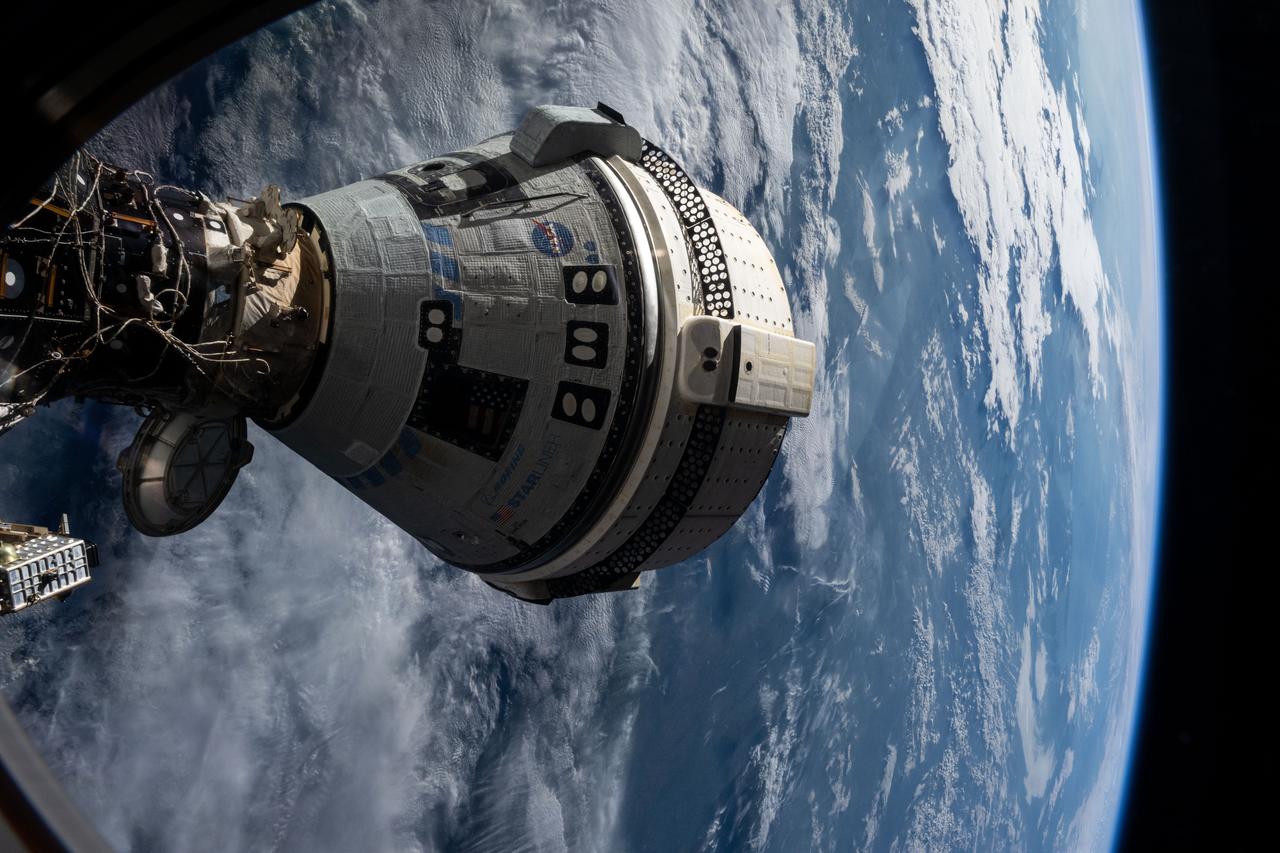
iss071e265103 (July 3, 2024) --- Boeing's Starliner spacecraft that launched NASA's Crew Flight Test astronauts Butch Wilmore and Suni Williams to the International Space Station is pictured docked to the Harmony module's forward port. This view is from a window on the SpaceX Dragon Endeavour spacecraft docked to the port adjacent to the Starliner.
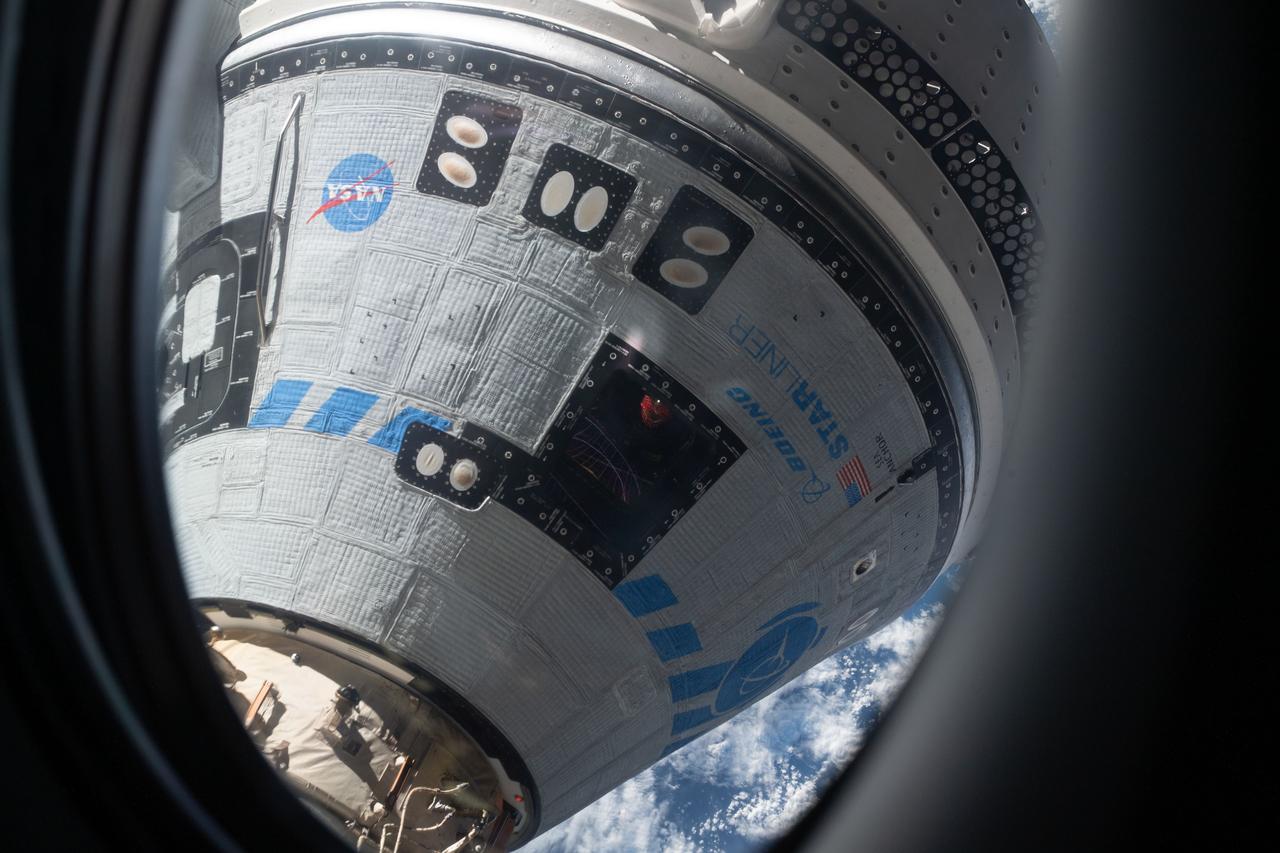
iss067e066295 (May 20, 2022) --- This view from a window on the SpaceX Crew Dragon Freedom crew ship shows Boeing's CST-100 Starliner crew ship after it had docked to the Harmony module's forward port on the International Space Station for the company's Orbital Flight Test-2 mission.
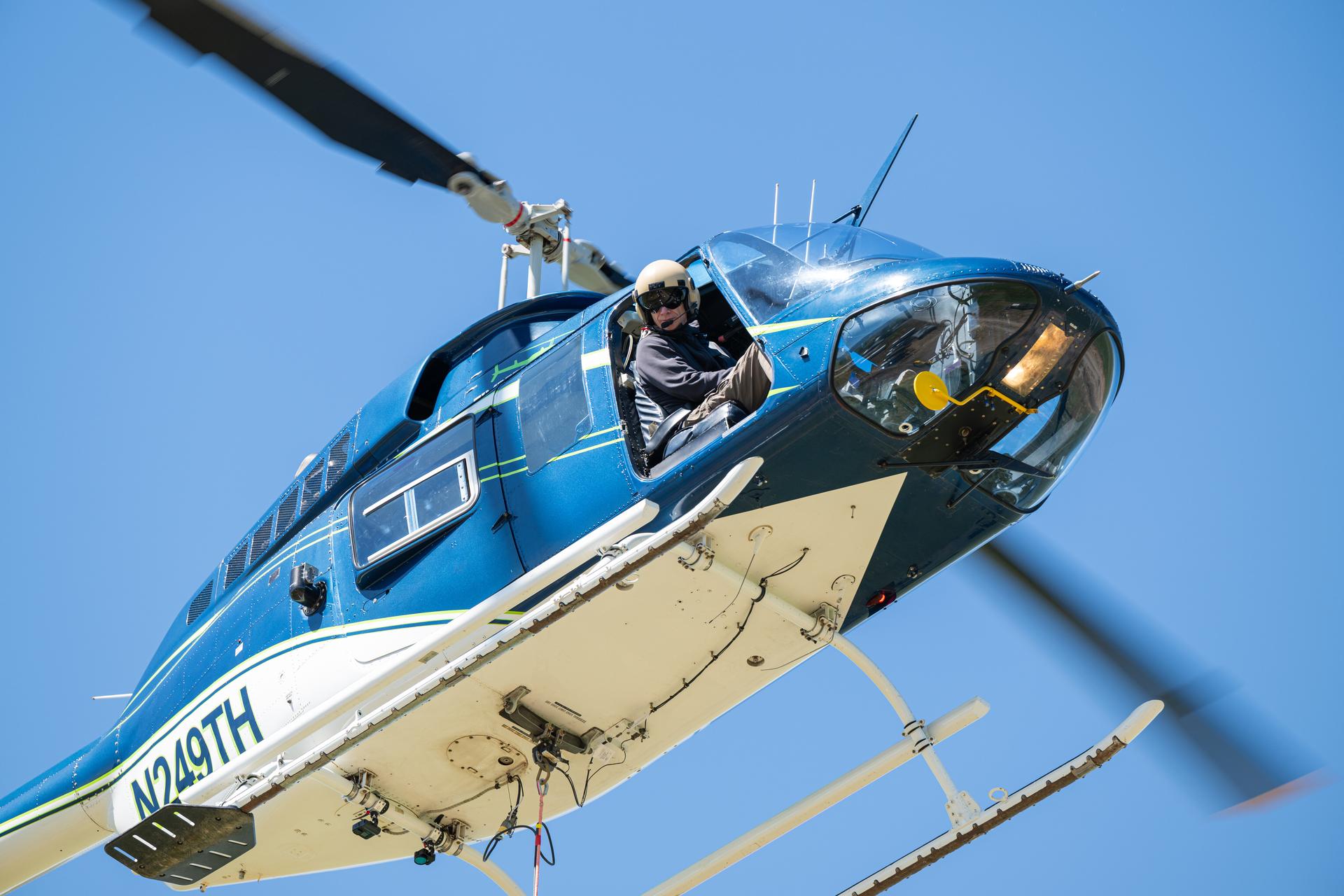
Joe Turner, a pilot with Timberland Helicopters, looks out the window of their helicopter while performing test flights with NASA's DAVINCI VADIX prototype tethered to the helicopter. VADIX is a prototype of a camera system which will one day fly on NASA's DAVINCI mission to Venus. NASA/Mike Guinto
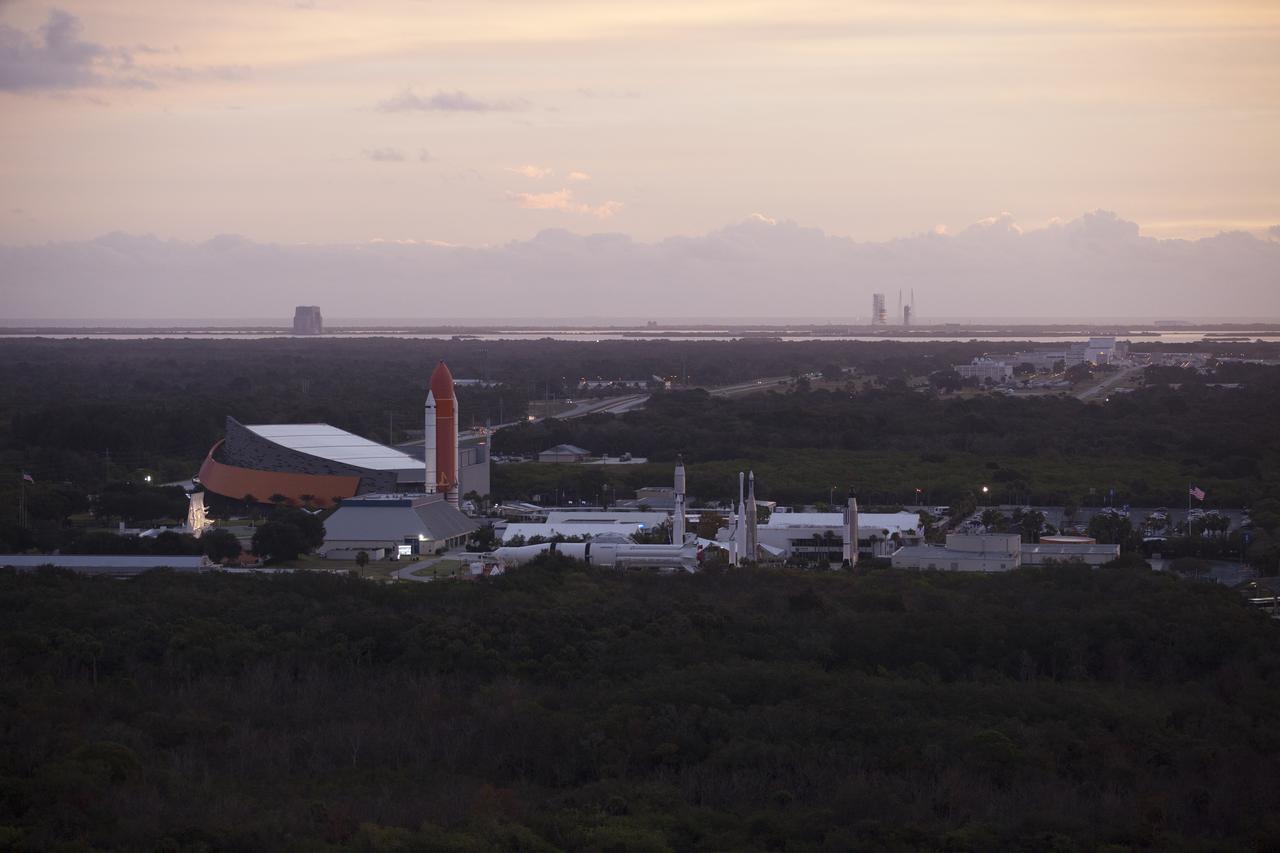
This helicopter view of the Kennedy Space Center Visitor Complex shows the thousands of vehicles parked where guests gather to see the launch of the Orion Flight Test. The liftoff was postponed because of an issue related to fill and drain valves on the Delta IV Heavy rocket that teams could not troubleshoot by the time the launch window expired.
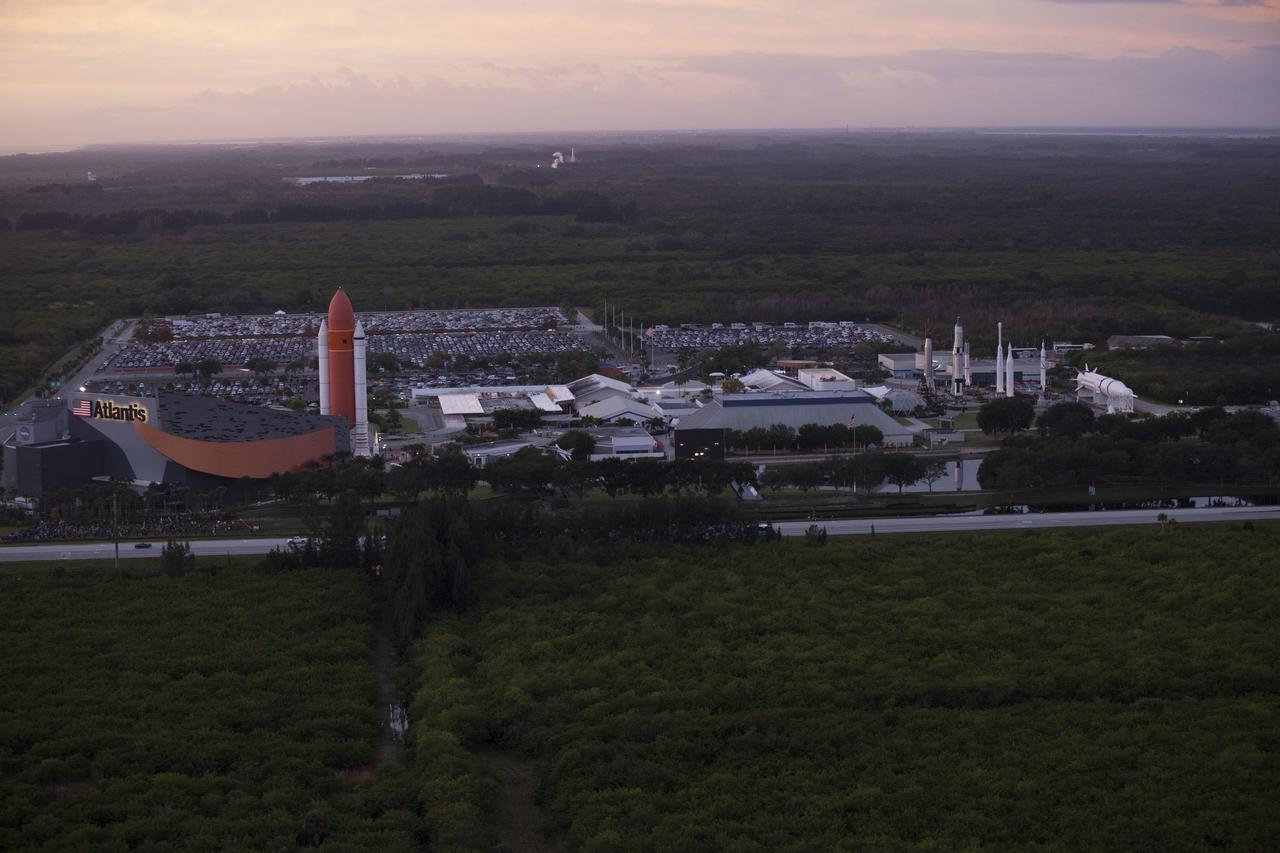
This helicopter view of the Kennedy Space Center Visitor Complex shows the thousands of vehicles parked where guests gather to see the launch of the Orion Flight Test. The liftoff was postponed because of an issue related to fill and drain valves on the Delta IV Heavy rocket that teams could not troubleshoot by the time the launch window expired.
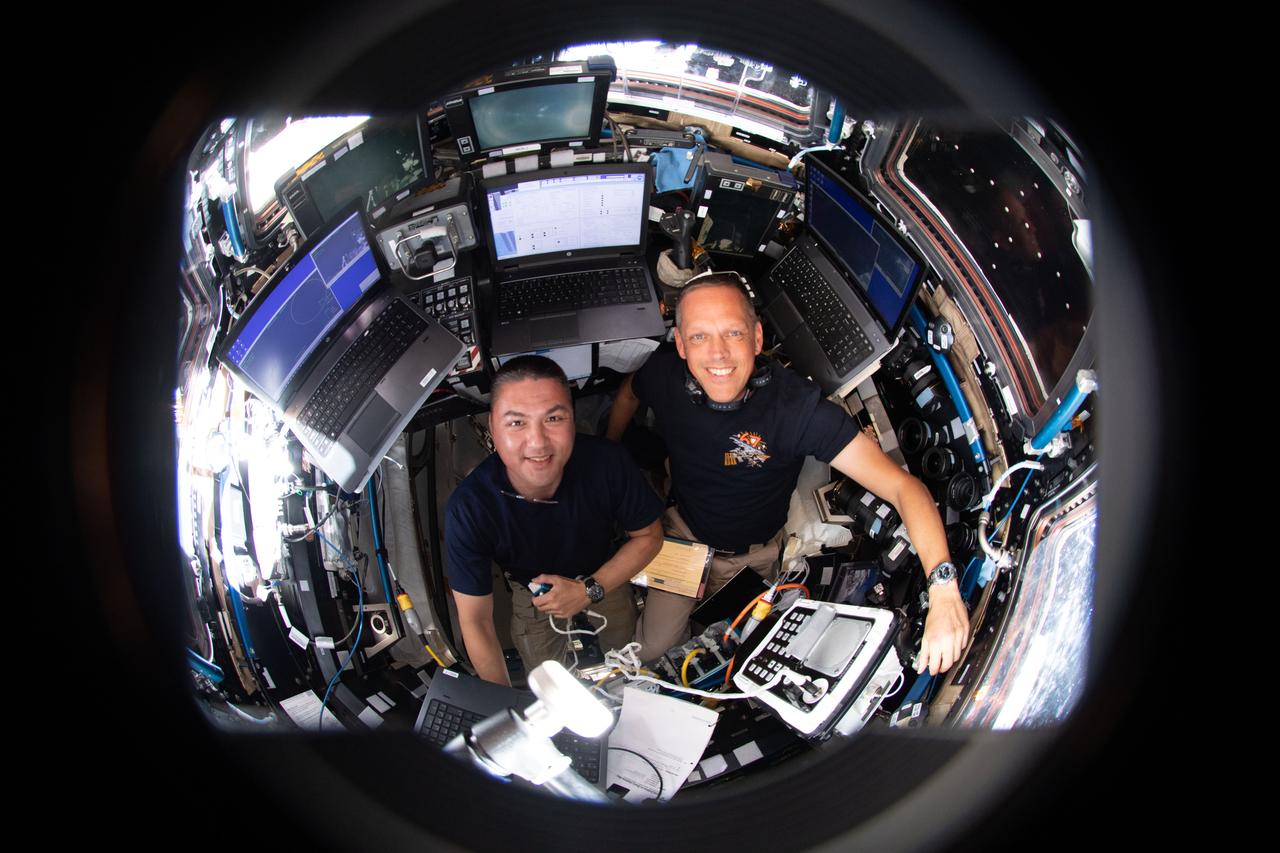
iss067e065648 (May 20, 2022) --- NASA astronauts (from left) Kjell Lindgren and Bob Hines are pictured inside the International Space Station's seven-windowed cupola monitoring the approach and rendezvous of Boeing's CST-100 Starliner spacecraft on the company's Orbital Flight Test-2 mission.
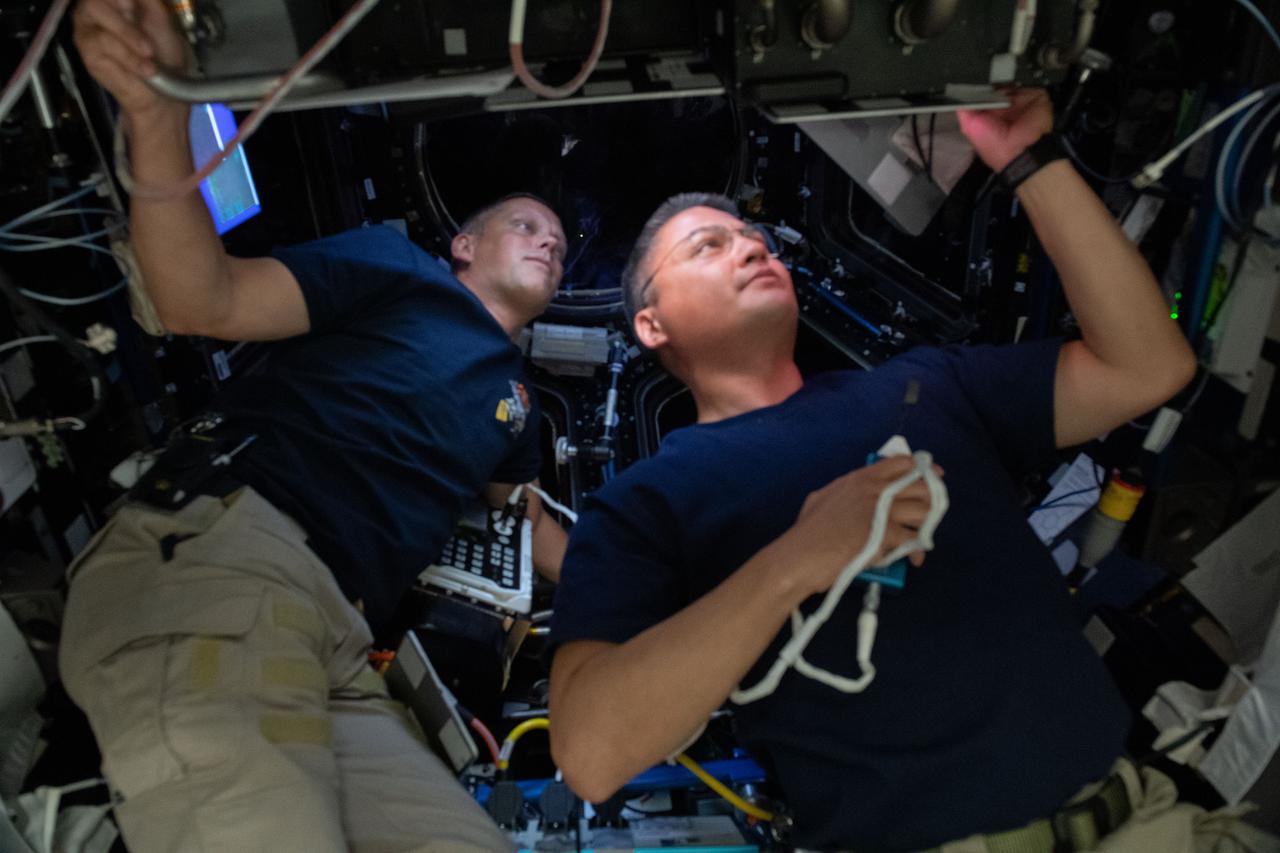
iss067e065667 (May 20, 2022) --- NASA astronauts (from left) Bob Hines and Kjell Lindgren are pictured inside the International Space Station's seven-windowed cupola monitoring the approach and rendezvous of Boeing's CST-100 Starliner spacecraft on the company's Orbital Flight Test-2 mission.
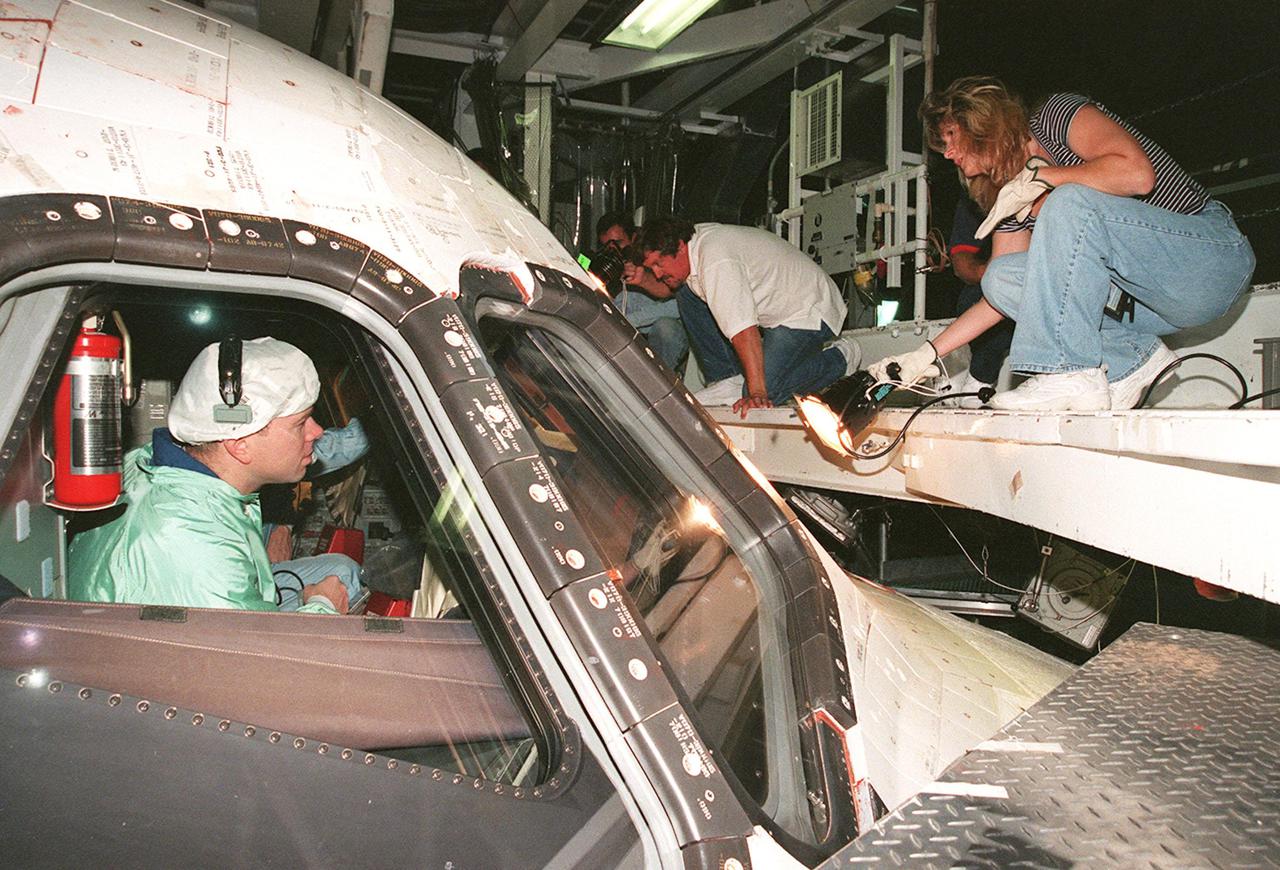
In the Orbiter Processing Facility bay 1, STS-102 Pilot James W. Kelly checks out the window of Discovery from the inside while workers (right) check the outside. The mission crew is at KSC for Crew Equipment Interface Test activities.
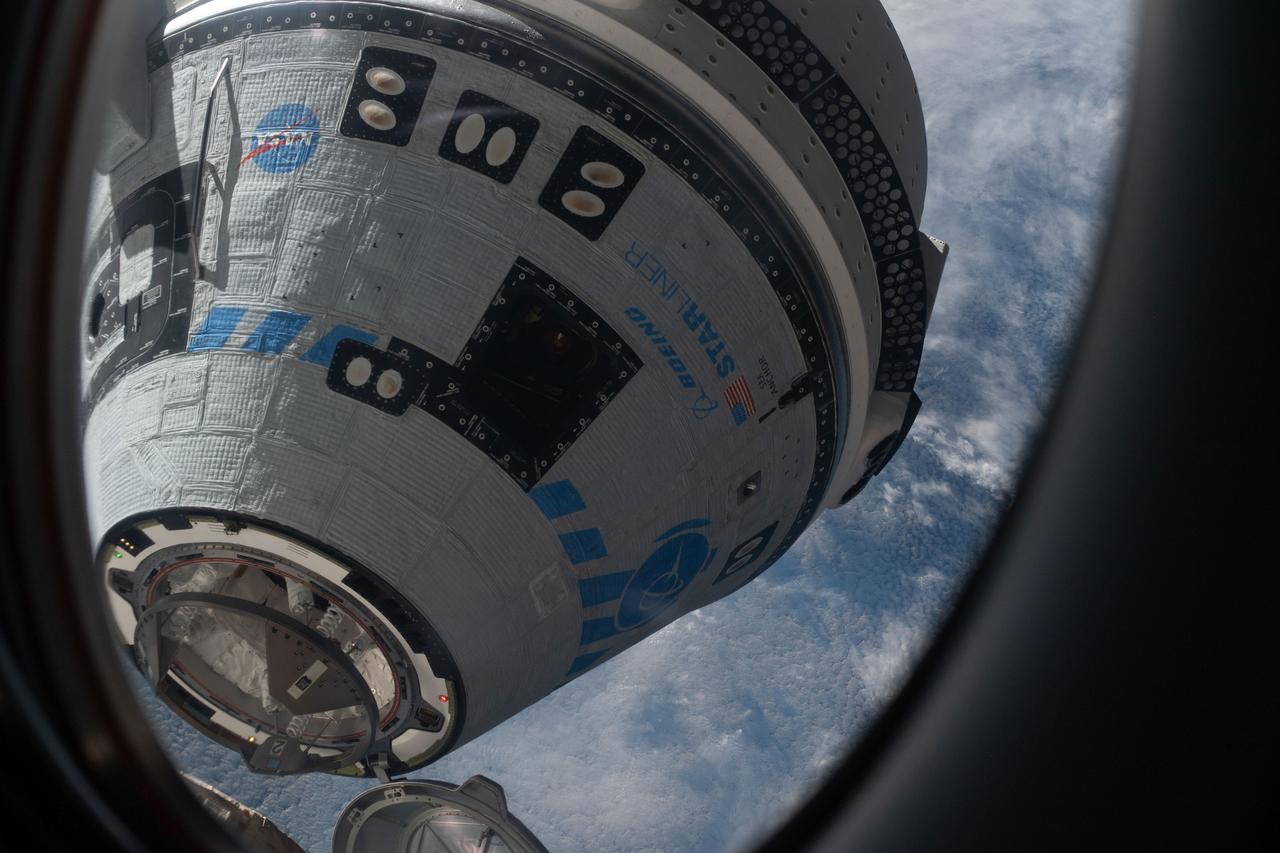
iss067e065888 (May 20, 2022) --- This view from a window on the SpaceX Crew Dragon Freedom crew ship shows Boeing's CST-100 Starliner crew ship moments away from docking to the Harmony module's forward port on the International Space Station for the company's Orbital Flight Test-2 mission.
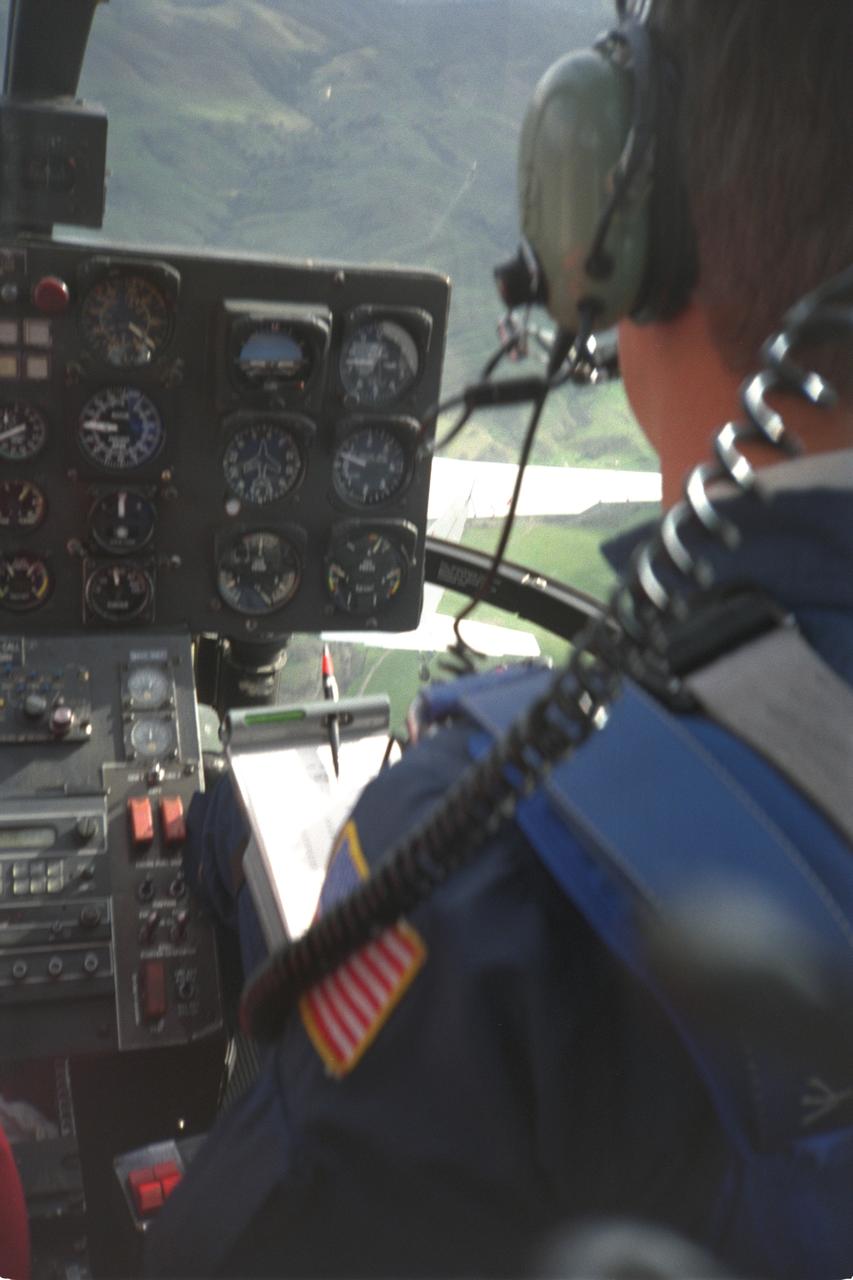
BO-105 helicopter pilot & cockpit during in flight rotorcraft acoustics program Distance Versus Noise Calibration over Livermore - Central Valley, CA. The YO-3A flying the acoustics test can just be seen through cockpit window.
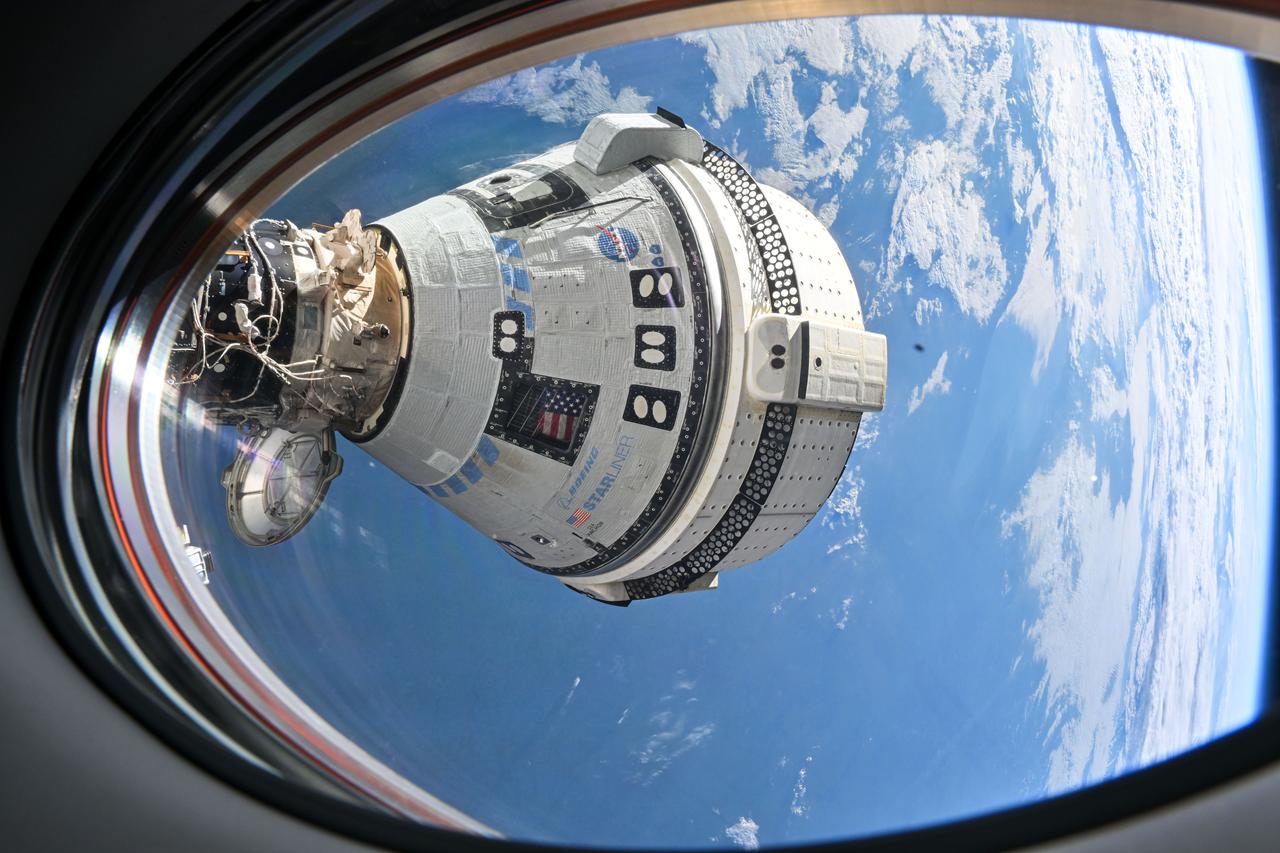
iss071e265073_stk (July 3, 2024) --- Boeing's Starliner spacecraft that launched NASA's Crew Flight Test astronauts Butch Wilmore and Suni Williams to the International Space Station is pictured docked to the Harmony module's forward port. This view is from a window on the SpaceX Dragon Endeavour spacecraft docked to the port adjacent to the Starliner.
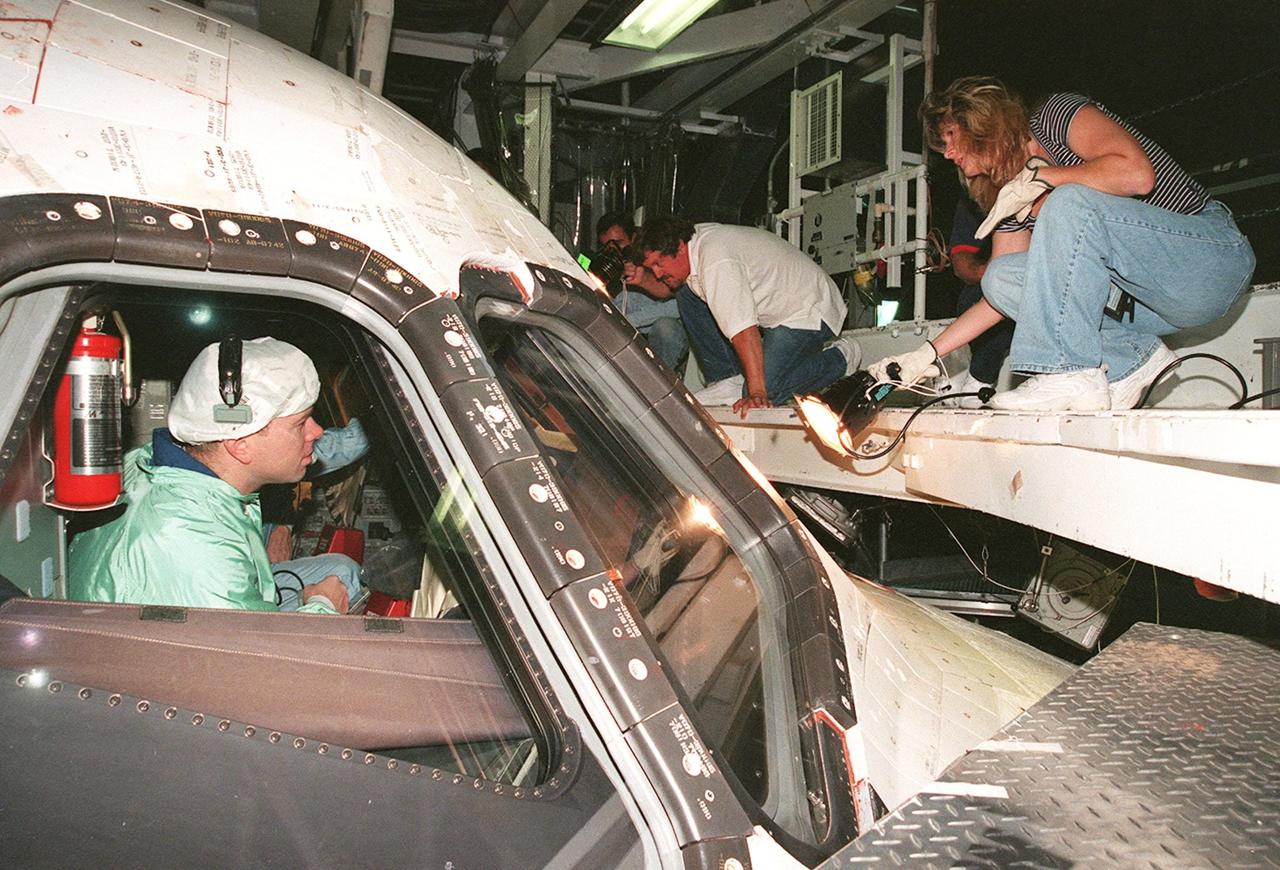
In the Orbiter Processing Facility bay 1, STS-102 Pilot James W. Kelly checks out the window of Discovery from the inside while workers (right) check the outside. The mission crew is at KSC for Crew Equipment Interface Test activities.
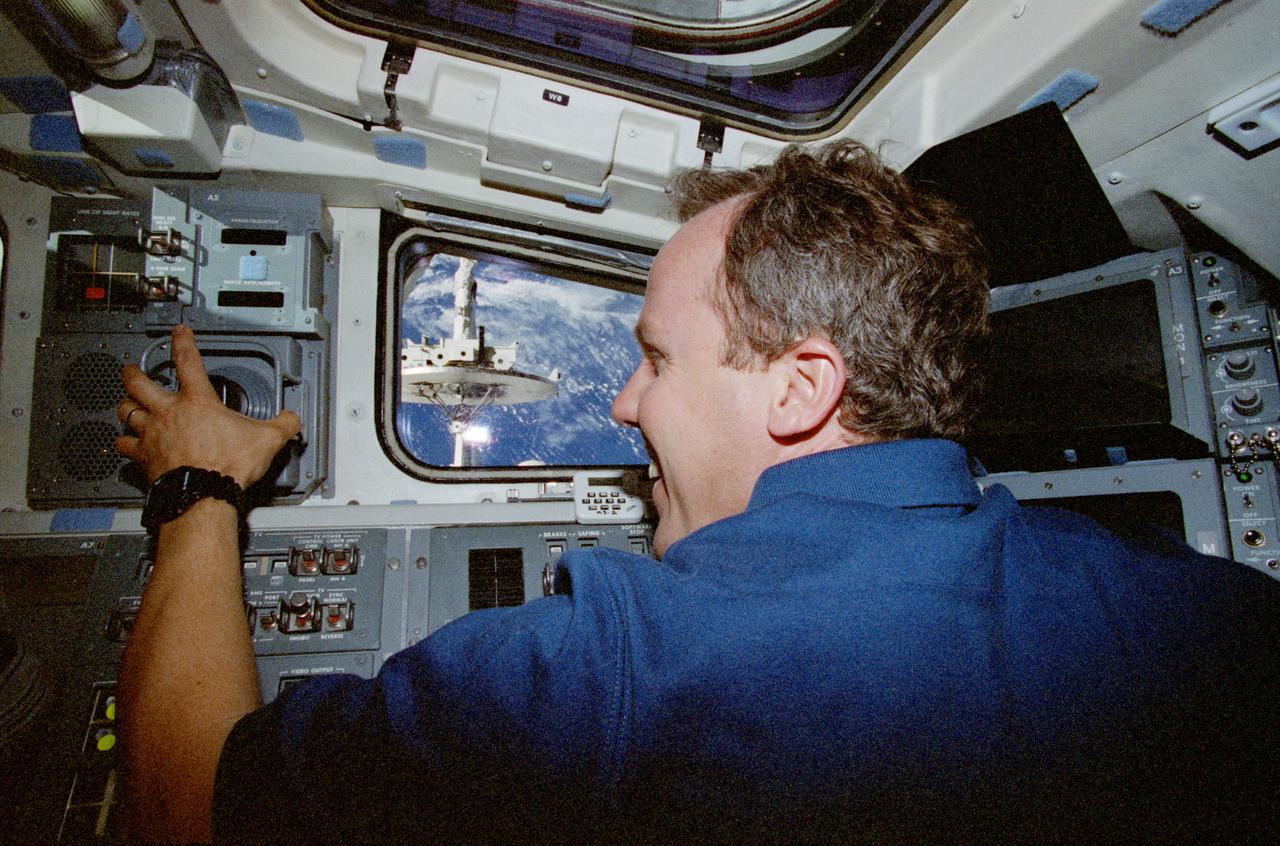
STS080-337-026 (19 Nov.-7 Dec. 1996) --- Astronaut Thomas D. Jones, STS-80 mission specialist, uses the controls of the space shuttle Columbia's Remote Manipulator System (RMS) to conduct a test with the captured Wake Shield Facility (WSF) seen through window at frame center.

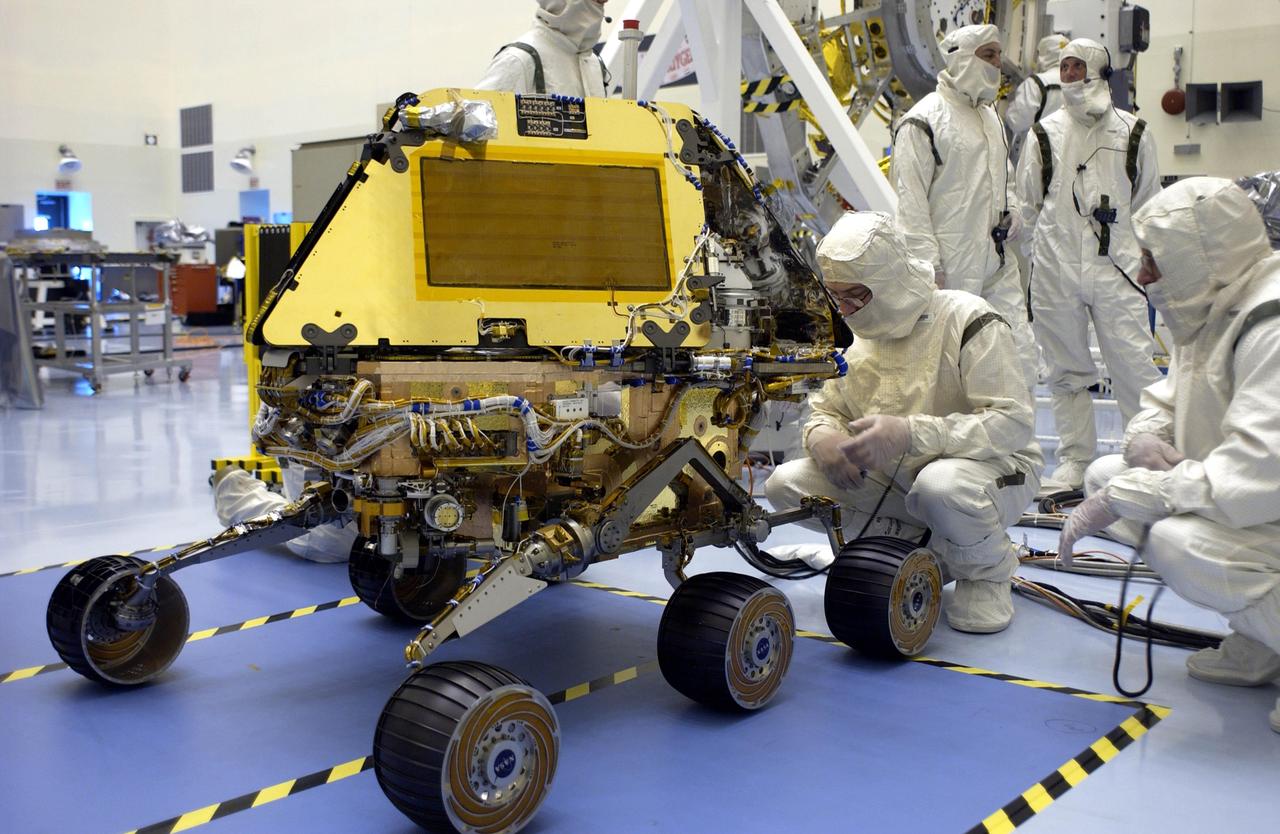
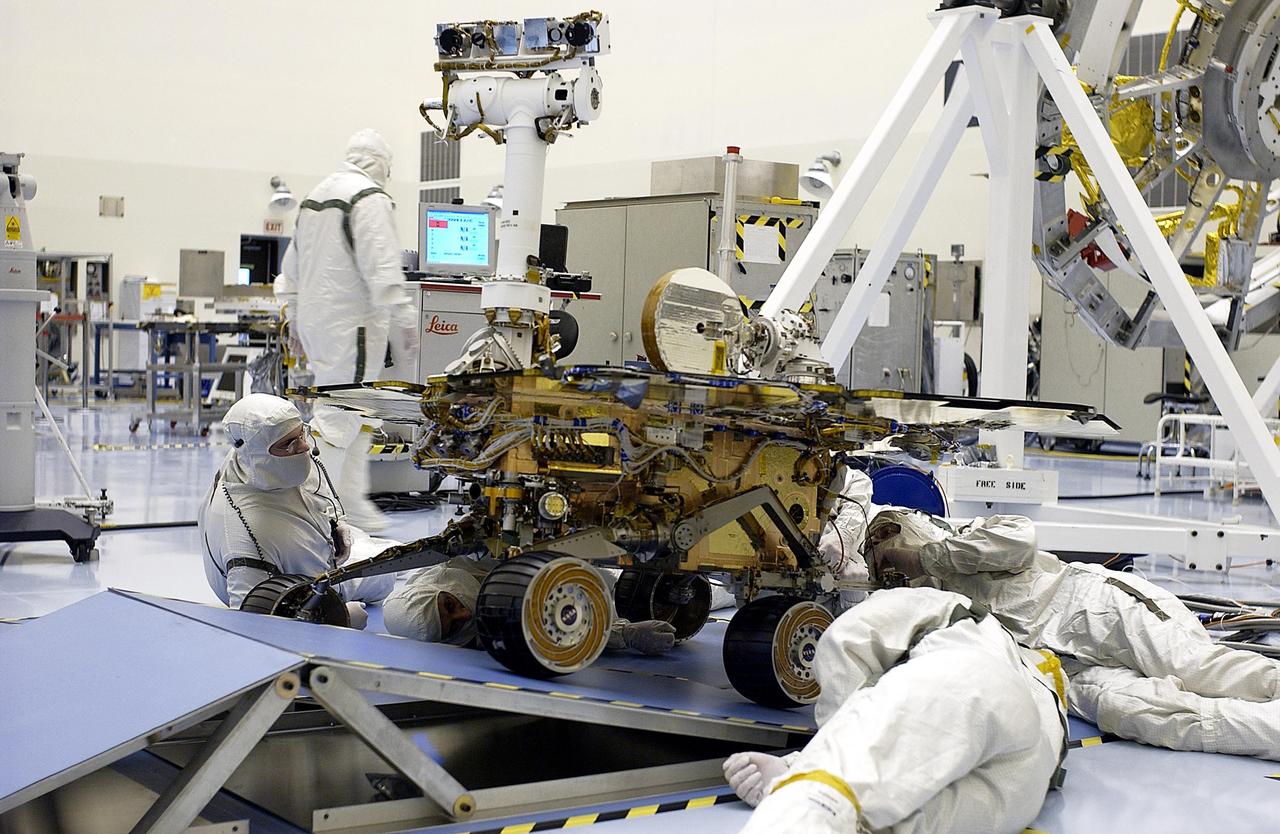
KENNEDY SPACE CENTER, Fla. - Workers in the Payload Hazardous Servicing Facility check different parts of the Mars Exploration Rover-2 (MER-2) after testing the rover's mobility and maneuverability. Set to launch in Spring 2003, the MER Mission will consist of two identical rovers designed to cover roughly 110 yards each Martian day. Each rover will carry five scientific instruments that will allow it to search for evidence of liquid water that may have been present in the planet's past. The rovers will be identical to each other, but will land at different regions of Mars. The first rover has a launch window opening May 30, and the second rover a window opening June 25.
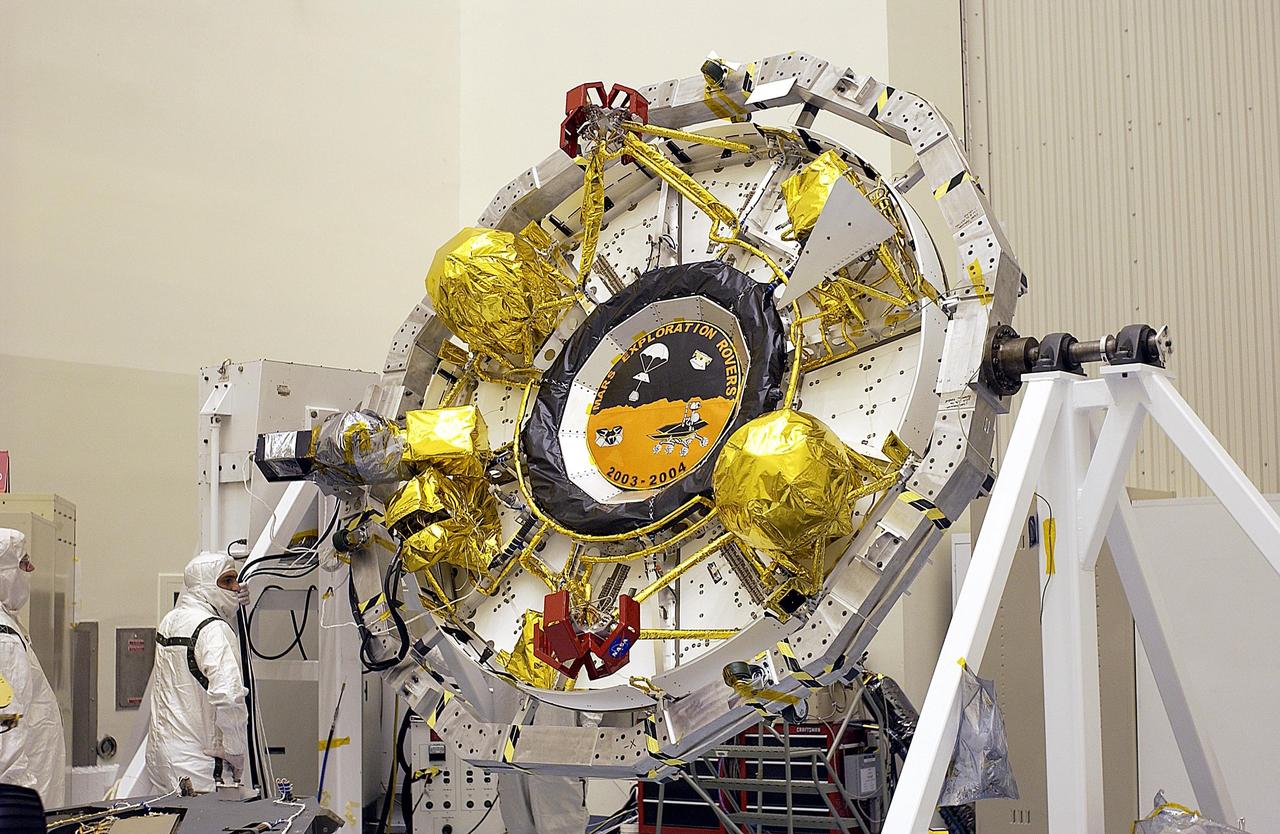
KENNEDY SPACE CENTER, FLA. -- The cruise stage for one of the Mars Exploration Rovers is rotated for processing. Once functional testing and mission simulation of the flight elements is complete, the elements will be integrated for flight. There are two rovers, identical to each other, and each will land at different regions of Mars. They are designed to cover roughly 110 yards each Martian day over various terrain. Each rover will carry five scientific instruments that will allow it to search for evidence of liquid water that may have been present in the planet's past. The first rover has a launch window opening May 30, and the second rover a window opening June 25.
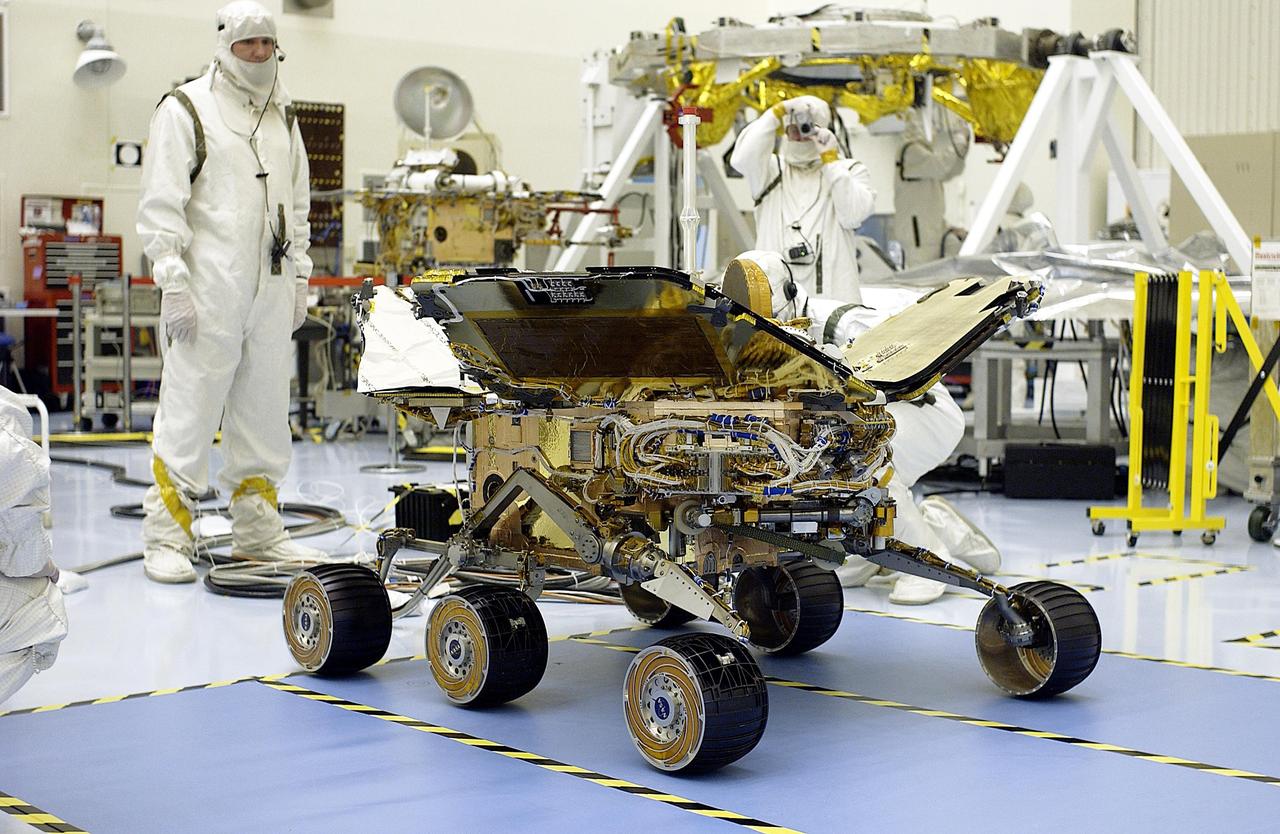
KENNEDY SPACE CENTER, Fla. - Workers in the Payload Hazardous Servicing Facility test the opening of the solar arrays on the Mars Exploration Rover-2 (MER-2). Set to launch in Spring 2003, the MER Mission will consist of two identical rovers designed to cover roughly 110 yards each Martian day. Each rover will carry five scientific instruments that will allow it to search for evidence of liquid water that may have been present in the planet's past. The rovers will be identical to each other, but will land at different regions of Mars. The first rover has a launch window opening May 30, and the second rover a window opening June 25, 2003.
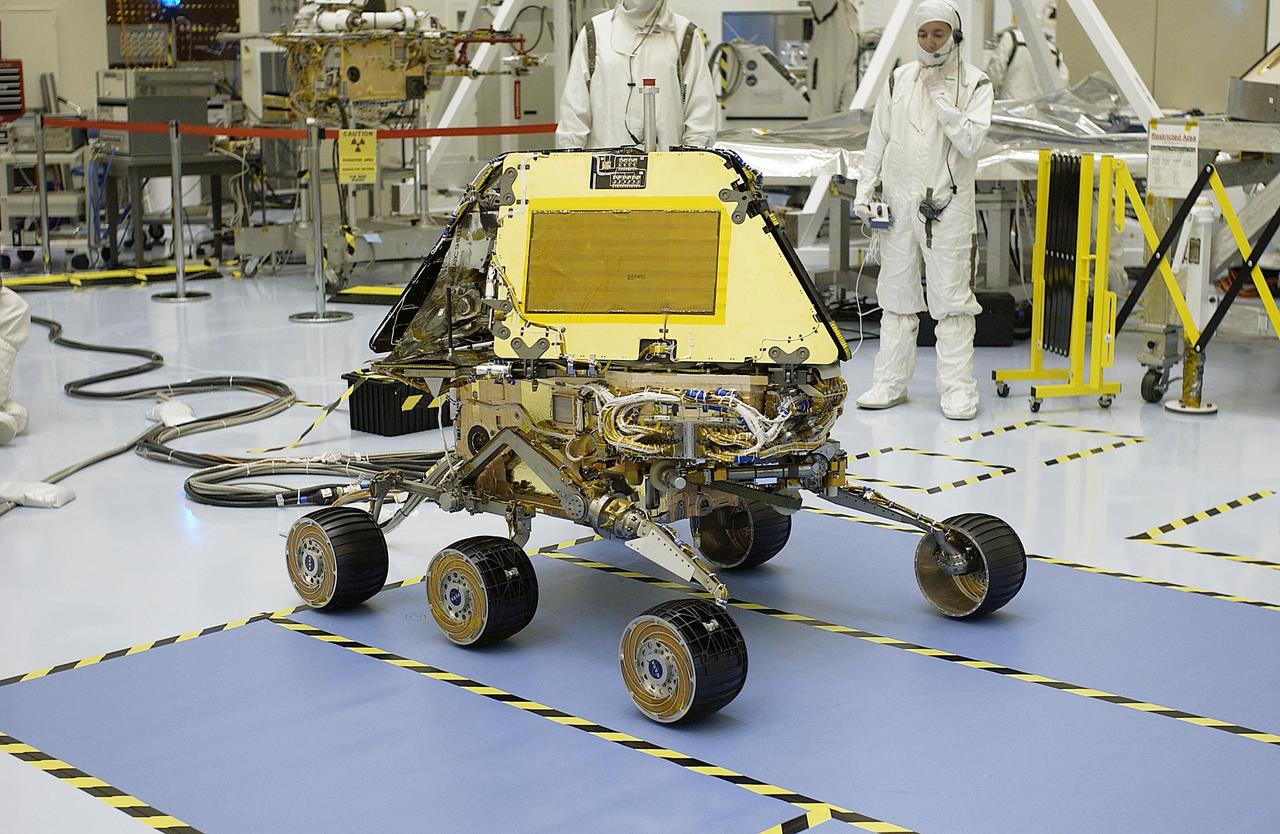
KENNEDY SPACE CENTER, Fla. - The Mars Exploration Rover-2 (MER-2) is ready for solar array testing in the Payload Hazardous Servicing Facility. Set to launch in Spring 2003, the MER Mission will consist of two identical rovers designed to cover roughly 110 yards each Martian day. Each rover will carry five scientific instruments that will allow it to search for evidence of liquid water that may have been present in the planet's past. The rovers will be identical to each other, but will land at different regions of Mars. The first rover has a launch window opening May 30, and the second rover a window opening June 25, 2003.

KENNEDY SPACE CENTER, FLA. -- Solar panels on the cruise stage of a Mars Exploration Rover are seen as the element is rotated for processing. Once functional testing and mission simulation of the flight elements is complete, the elements will be integrated for flight. There are two rovers, identical to each other, and each will land at different regions of Mars. They are designed to cover roughly 110 yards each Martian day over various terrain. Each rover will carry five scientific instruments that will allow it to search for evidence of liquid water that may have been present in the planet's past. The first rover has a launch window opening May 30, and the second rover a window opening June 25.
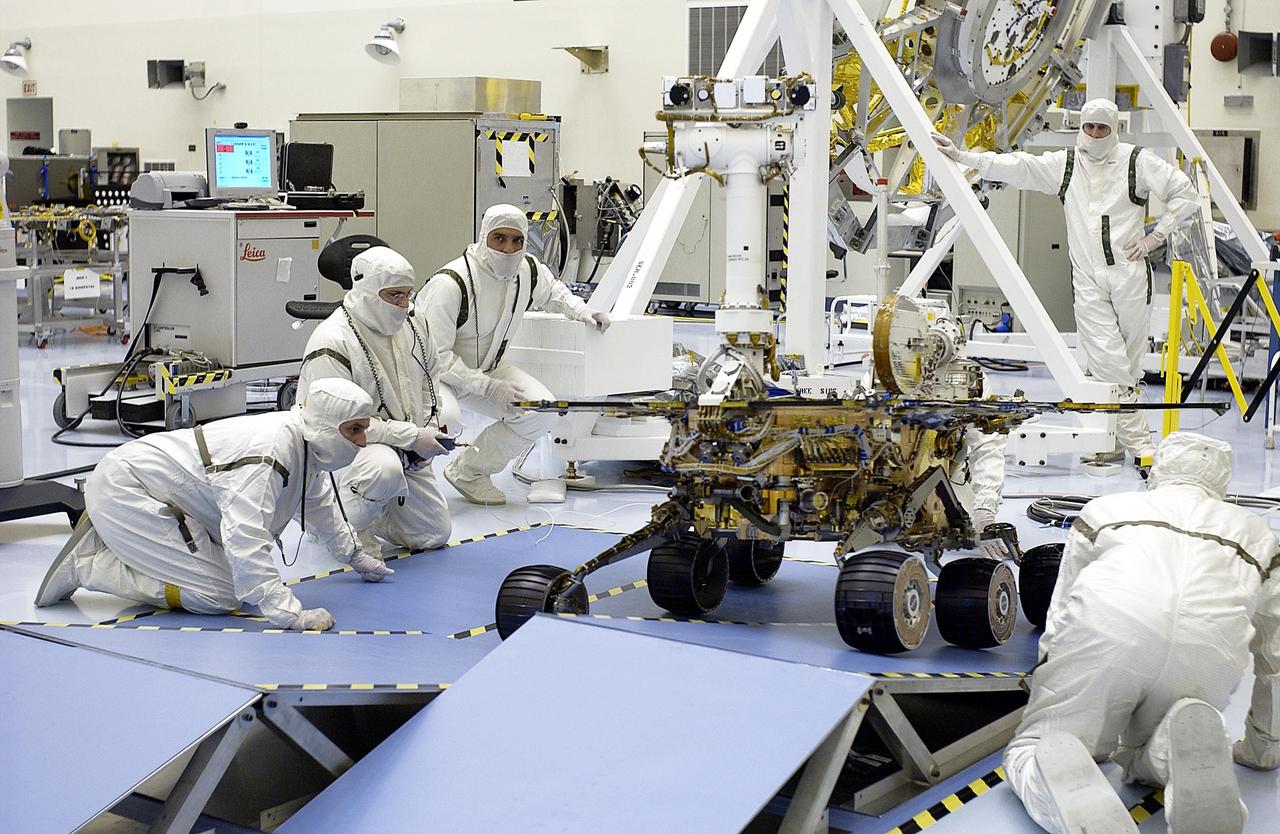
KENNEDY SPACE CENTER, FLA. -- In the Payload Hazardous Servicing Facility, the Mars Exploration Rover-2 (MER-2) is tested for mobility and maneuverability over a setup of ramps. Set to launch in Spring 2003, the MER Mission will consist of two identical rovers designed to cover roughly 110 yards each Martian day over various terrain. Each rover will carry five scientific instruments that will allow it to search for evidence of liquid water that may have been present in the planet's past. The rovers will be identical to each other, but will land at different regions of Mars. The first rover has a launch window opening May 30, and the second rover a window opening June 25.
KENNEDY SPACE CENTER, FLA. -- The Mars Exploration Rover-2 (MER-2) is ready for solar array testing in the Payload Hazardous Servicing Facility. Set to launch in Spring 2003, the MER Mission will consist of two identical rovers designed to cover roughly 110 yards each Martian day. Each rover will carry five scientific instruments that will allow it to search for evidence of liquid water that may have been present in the planet's past. The rovers will be identical to each other, but will land at different regions of Mars. The first rover has a launch window opening May 30, and the second rover a window opening June 25, 2003.

KENNEDY SPACE CENTER, FLA. -- The cruise stage for one of the Mars Exploration Rovers is rotated for processing. Once functional testing and mission simulation of the flight elements is complete, the elements will be integrated for flight. There are two rovers, identical to each other, and each will land at different regions of Mars. They are designed to cover roughly 110 yards each Martian day over various terrain. Each rover will carry five scientific instruments that will allow it to search for evidence of liquid water that may have been present in the planet's past. The first rover has a launch window opening May 30, and the second rover a window opening June 25.
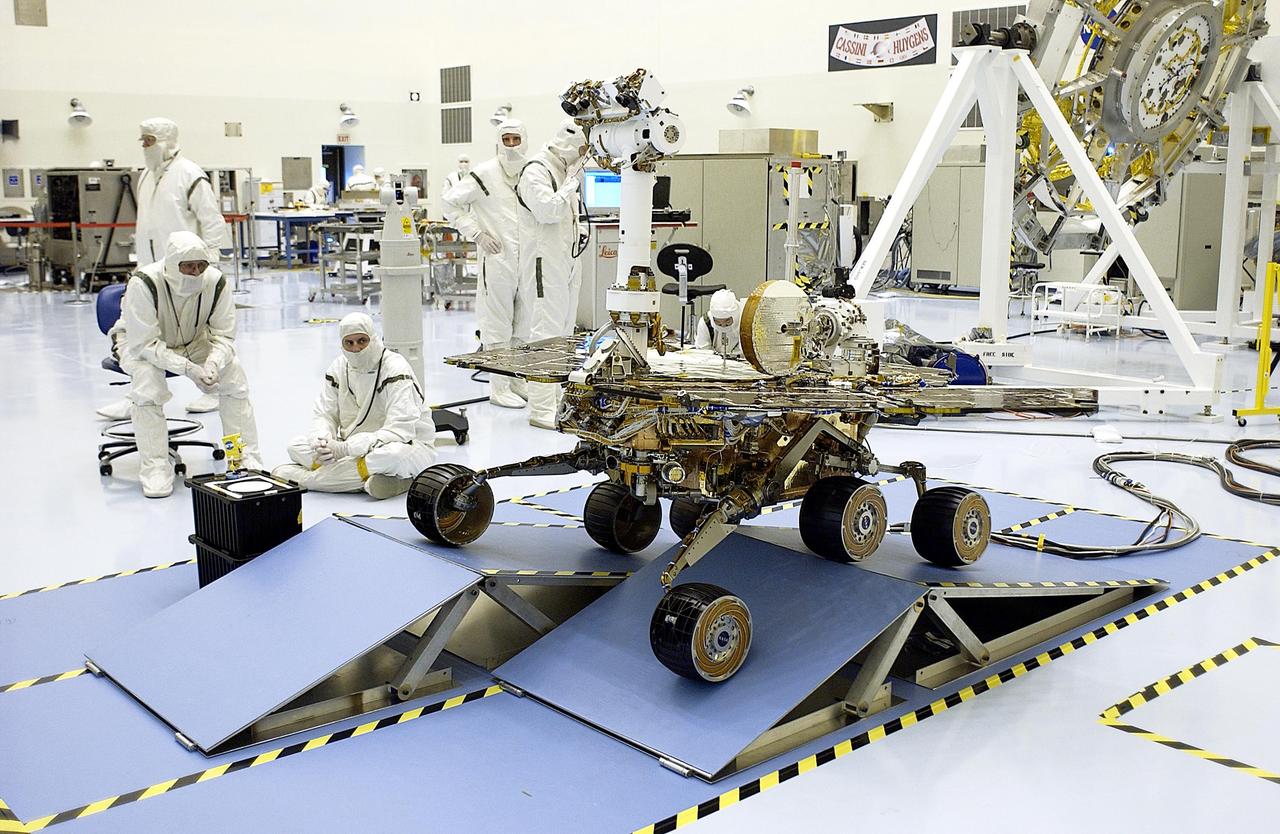
KENNEDY SPACE CENTER, Fla. - In the Payload Hazardous Servicing Facility, workers watch as the Mars Exploration Rover-2 (MER-2) rolls over ramps to test its mobility and maneuverability. Set to launch in Spring 2003, the MER Mission will consist of two identical rovers designed to cover roughly 110 yards each Martian day over various terrain. Each rover will carry five scientific instruments that will allow it to search for evidence of liquid water that may have been present in the planet's past. The rovers will be identical to each other, but will land at different regions of Mars. The first rover has a launch window opening May 30, and the second rover a window opening June 25.
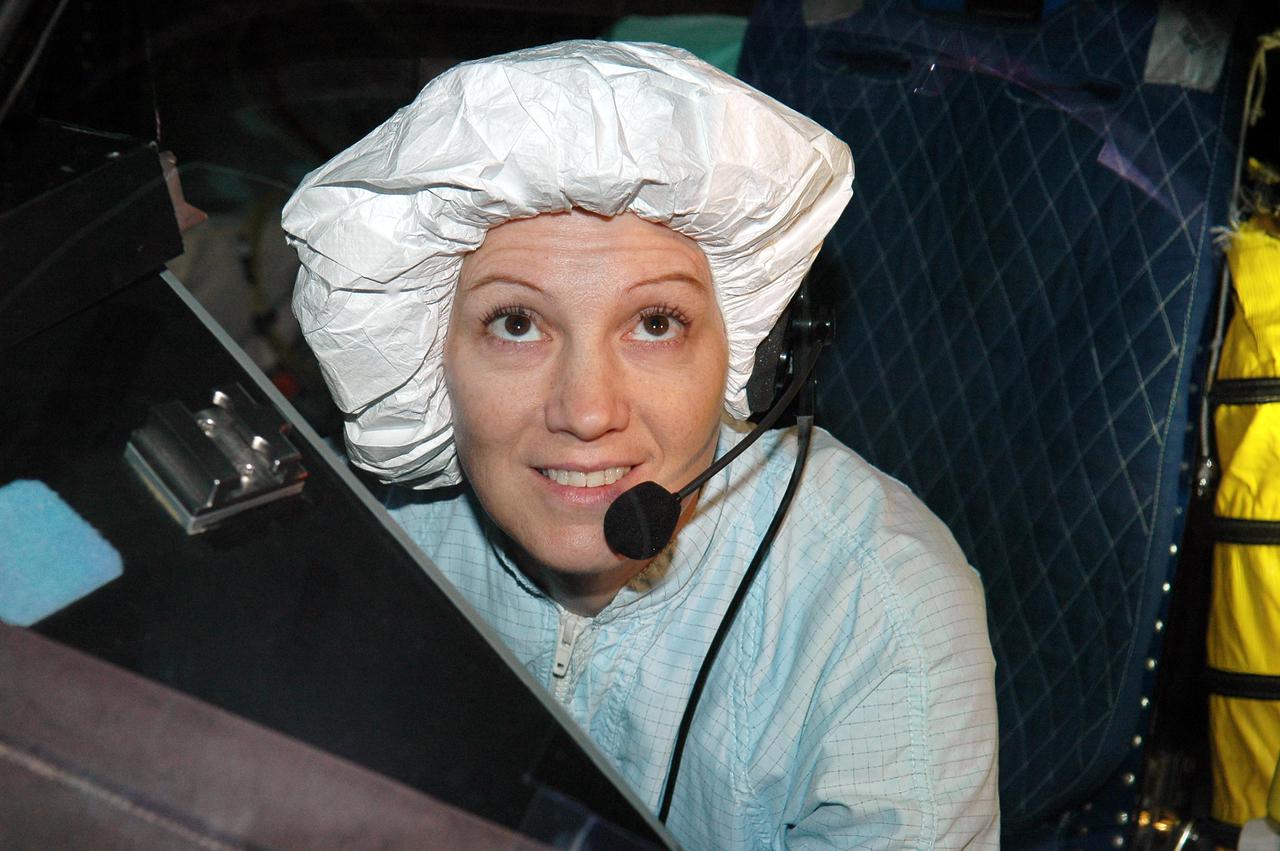
KENNEDY SPACE CENTER, FLA. - In the Orbiter Processing Facility, STS-114 Mission Commander Eileen Collins inspects the window in Discovery’s cockpit. The crew is at Kennedy for Crew Equipment Interface Test activities. During CEIT, the crew has an opportunity to get a hands-on look at the payloads with which they’ll be working on orbit. The Return to Flight mission STS-114 will carry a replacement Control Moment Gyroscope and the Multi-Purpose Logistics Module Raffaello, filled with supplies for the International Space Station. Launch of STS-114 has a launch window of May 12 to June 3.
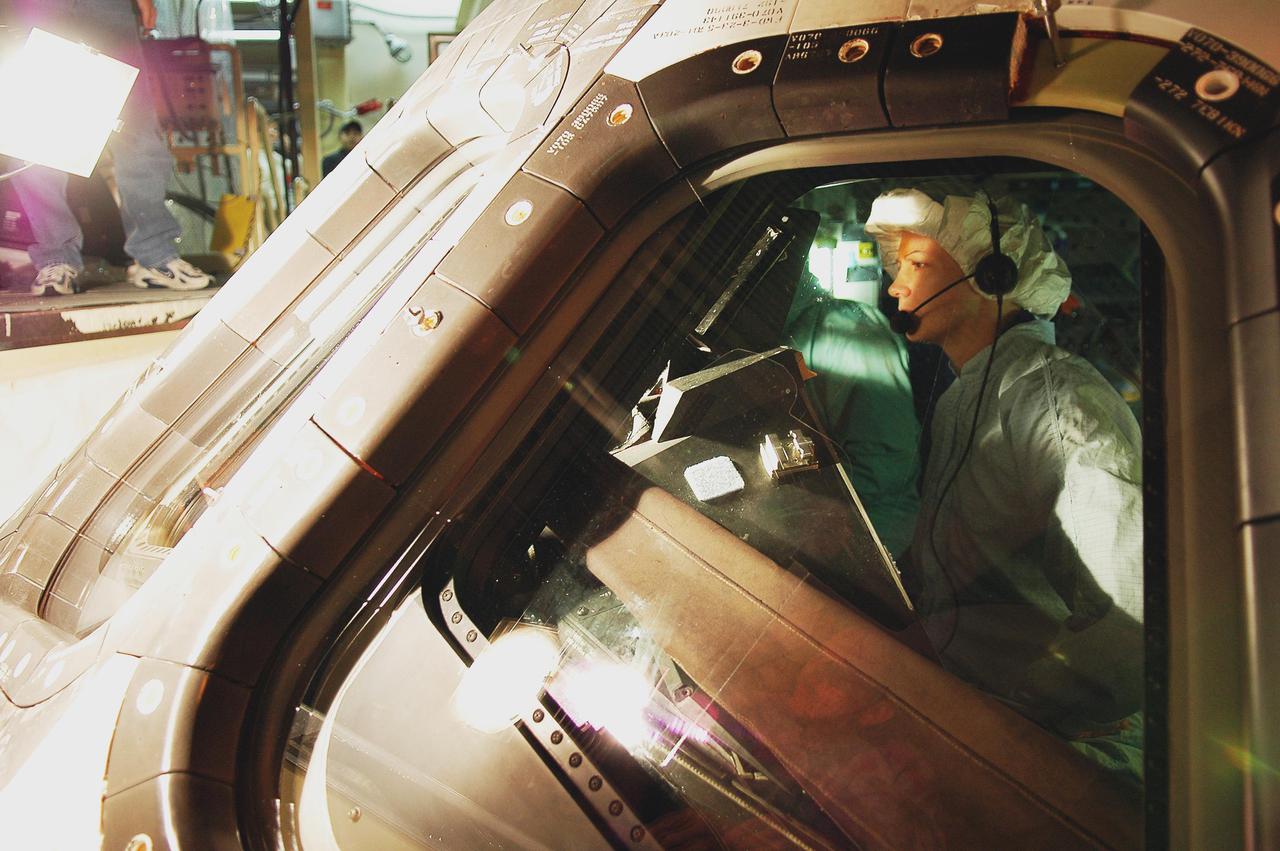
KENNEDY SPACE CENTER, FLA. - In the Orbiter Processing Facility, STS-114 Mission Commander Eileen Collins checks the window in Discovery’s cockpit. Behind her sits Pilot James Kelly. The crew is at Kennedy for Crew Equipment Interface Test activities. During CEIT, the crew has an opportunity to get a hands-on look at the payloads with which they’ll be working on orbit. The Return to Flight mission STS-114 will carry a replacement Control Moment Gyroscope and the Multi-Purpose Logistics Module Raffaello, filled with supplies for the International Space Station. Launch of STS-114 has a launch window of May 12 to June 3.
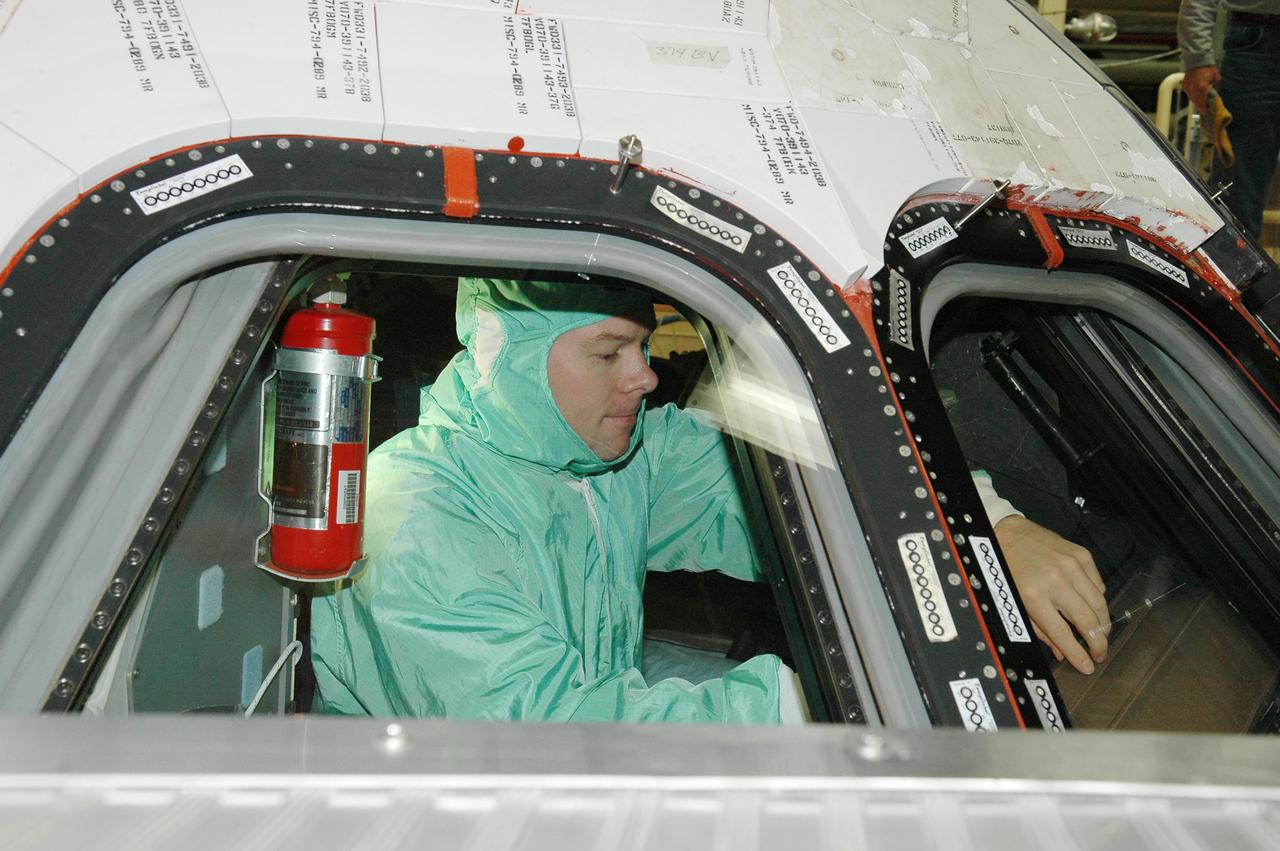
KENNEDY SPACE CENTER, FLA. - In the Orbiter Processing Facility, STS-114 Pilot James Kelly inspects the window in Discovery’s cockpit. The crew is at Kennedy for Crew Equipment Interface Test activities. During CEIT, the crew has an opportunity to get a hands-on look at the payloads with which they’ll be working on orbit. The Return to Flight mission STS-114 will carry a replacement Control Moment Gyroscope and the Multi-Purpose Logistics Module Raffaello, filled with supplies for the International Space Station. Launch of STS-114 has a launch window of May 12 to June 3.

KENNEDY SPACE CENTER, Fla. - In the Payload Hazardous Servicing Facility, the Mars Exploration Rover-2 (MER-2) is tested for mobility and maneuverability. Set to launch in Spring 2003, the MER Mission will consist of two identical rovers designed to cover roughly 110 yards each Martian day. Each rover will carry five scientific instruments that will allow it to search for evidence of liquid water that may have been present in the planet's past. The rovers will be identical to each other, but will land at different regions of Mars. The first rover has a launch window opening May 30, and the second rover a window opening June 25.
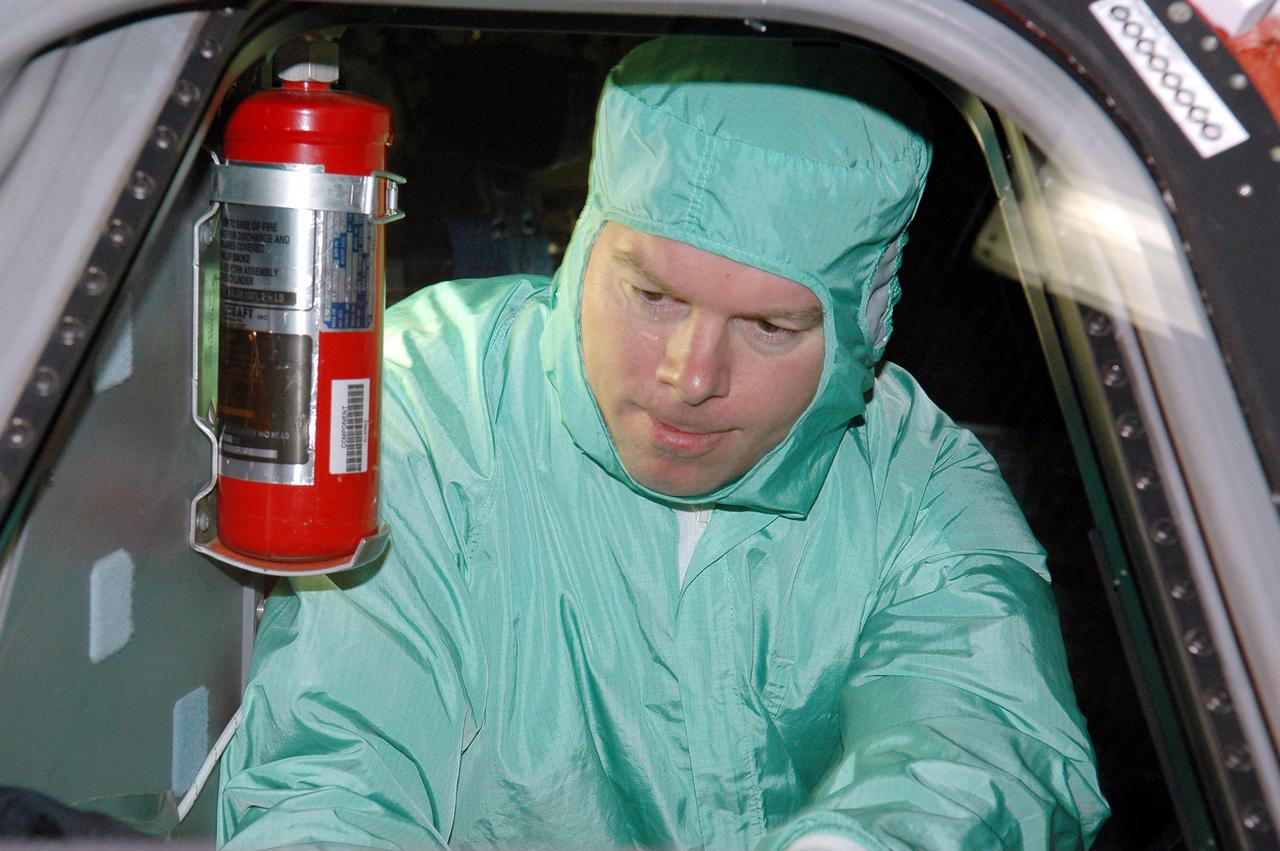
KENNEDY SPACE CENTER, FLA. - In the Orbiter Processing Facility, STS-114 Pilot James Kelly inspects the window in Discovery’s cockpit. The crew is at Kennedy for Crew Equipment Interface Test activities. During CEIT, the crew has an opportunity to get a hands-on look at the payloads with which they’ll be working on orbit. The Return to Flight mission STS-114 will carry a replacement Control Moment Gyroscope and the Multi-Purpose Logistics Module Raffaello, filled with supplies for the International Space Station. Launch of STS-114 has a launch window of May 12 to June 3.
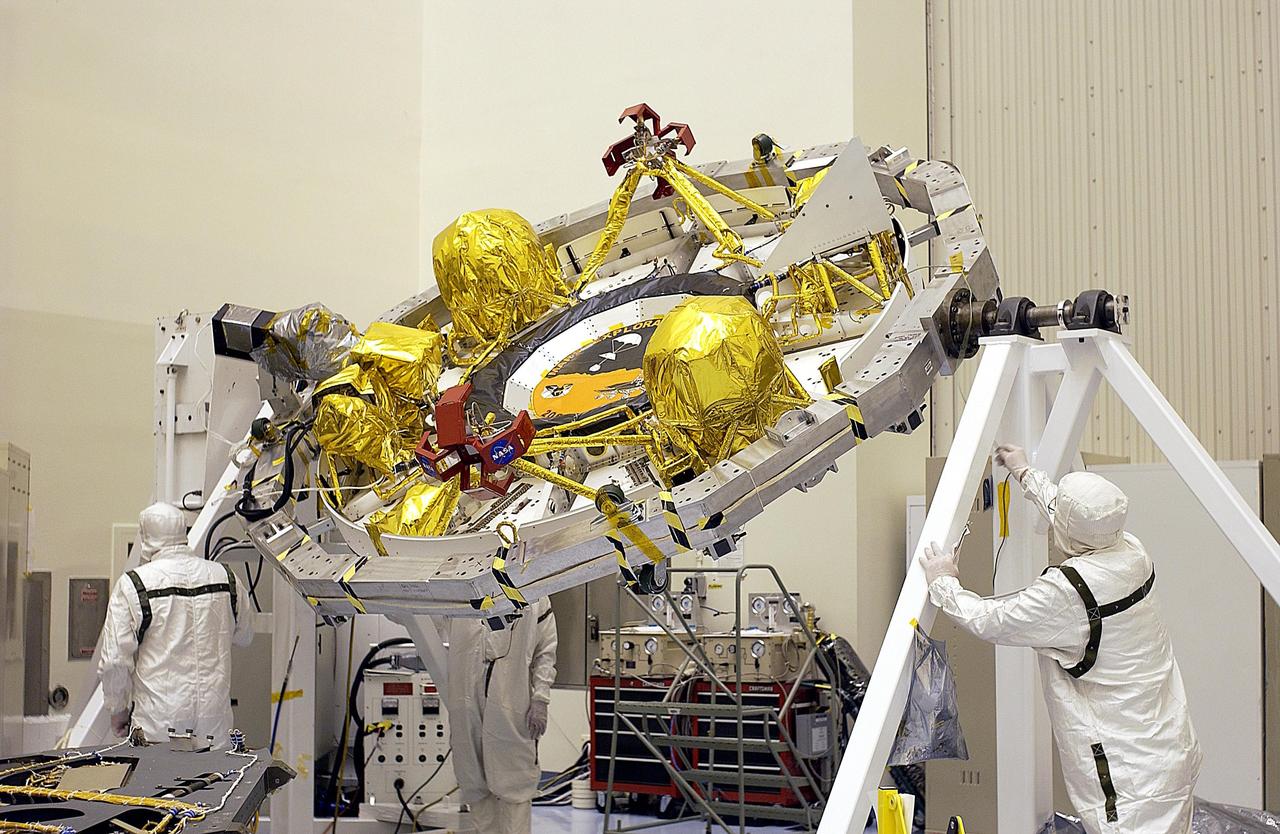
KENNEDY SPACE CENTER, FLA. -- The cruise stage for one of the Mars Exploration Rovers is rotated for processing. Once functional testing and mission simulation of the flight elements is complete, the elements will be integrated for flight. There are two rovers, identical to each other, and each will land at different regions of Mars. They are designed to cover roughly 110 yards each Martian day over various terrain. Each rover will carry five scientific instruments that will allow it to search for evidence of liquid water that may have been present in the planet's past. The first rover has a launch window opening May 30, and the second rover a window opening June 25.
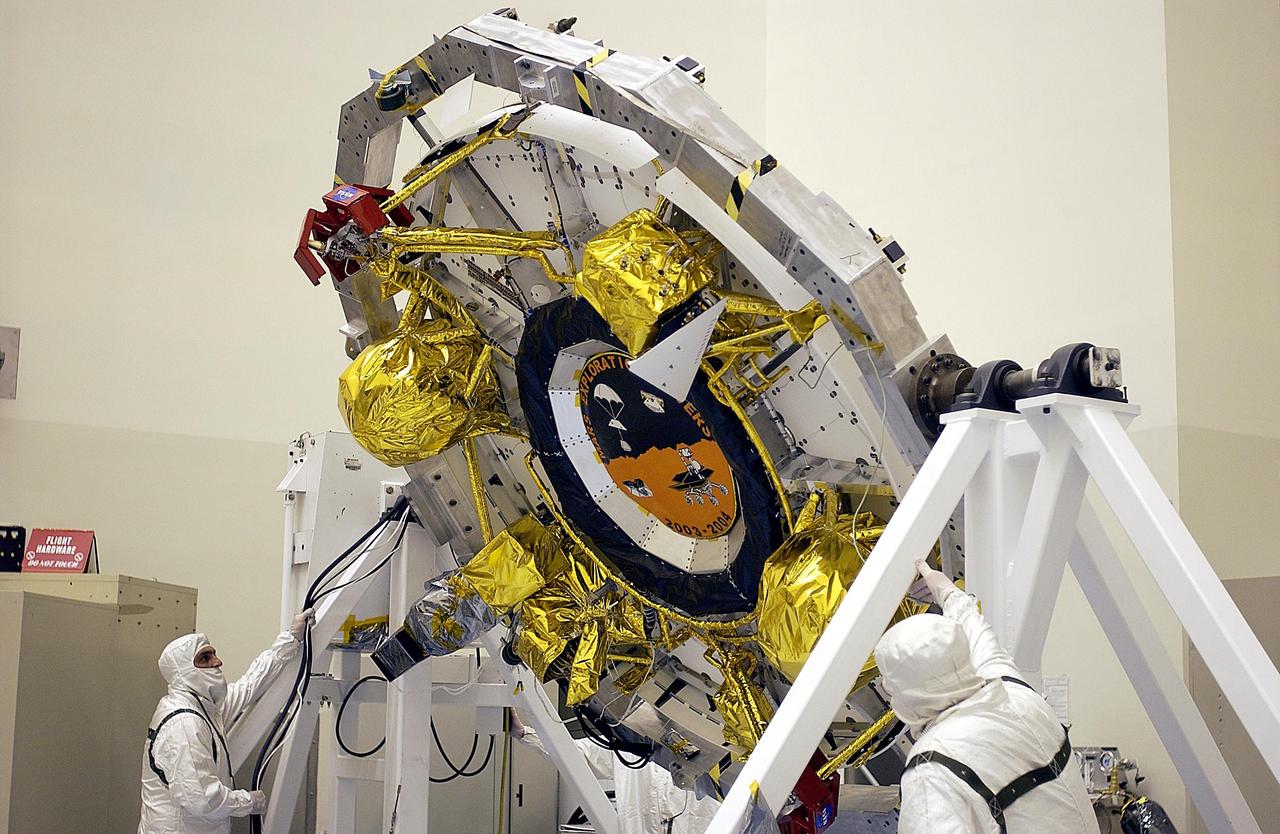
KENNEDY SPACE CENTER, FLA. -- The cruise stage for one of the Mars Exploration Rovers is rotated for processing. Once functional testing and mission simulation of the flight elements is complete, the elements will be integrated for flight. There are two rovers, identical to each other, and each will land at different regions of Mars. They are designed to cover roughly 110 yards each Martian day over various terrain. Each rover will carry five scientific instruments that will allow it to search for evidence of liquid water that may have been present in the planet's past. The first rover has a launch window opening May 30, and the second rover a window opening June 25.
KENNEDY SPACE CENTER, Fla. - In the Payload Hazardous Servicing Facility, workers watch as the Mars Exploration Rover-2 (MER-2) rolls over ramps to test its mobility and maneuverability. Set to launch in Spring 2003, the MER Mission will consist of two identical rovers designed to cover roughly 110 yards each Martian day over various terrain. Each rover will carry five scientific instruments that will allow it to search for evidence of liquid water that may have been present in the planet's past. The rovers will be identical to each other, but will land at different regions of Mars. The first rover has a launch window opening May 30, and the second rover a window opening June 25.
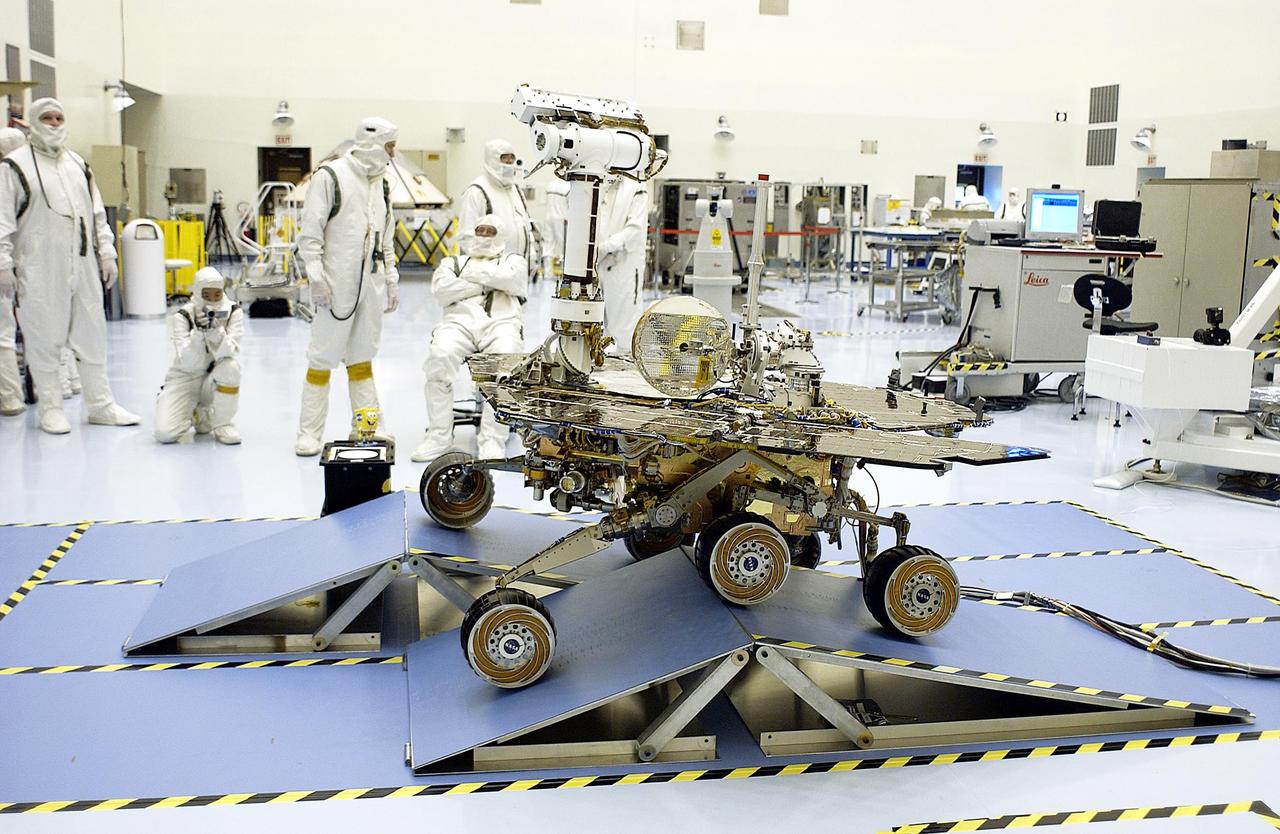
KENNEDY SPACE CENTER, Fla. - In the Payload Hazardous Servicing Facility, workers watch as the Mars Exploration Rover-2 (MER-2) rolls over ramps to test its mobility and maneuverability. Set to launch in Spring 2003, the MER Mission will consist of two identical rovers designed to cover roughly 110 yards each Martian day over various terrain. Each rover will carry five scientific instruments that will allow it to search for evidence of liquid water that may have been present in the planet's past. The rovers will be identical to each other, but will land at different regions of Mars. The first rover has a launch window opening May 30, and the second rover a window opening June 25.

KENNEDY SPACE CENTER, Fla. - In the Payload Hazardous Servicing Facility, the Mars Exploration Rover-2 (MER-2) is tested for mobility and maneuverability. Set to launch in Spring 2003, the MER Mission will consist of two identical rovers designed to cover roughly 110 yards each Martian day. Each rover will carry five scientific instruments that will allow it to search for evidence of liquid water that may have been present in the planet's past. The rovers will be identical to each other, but will land at different regions of Mars. The first rover has a launch window opening May 30, and the second rover a window opening June 25.
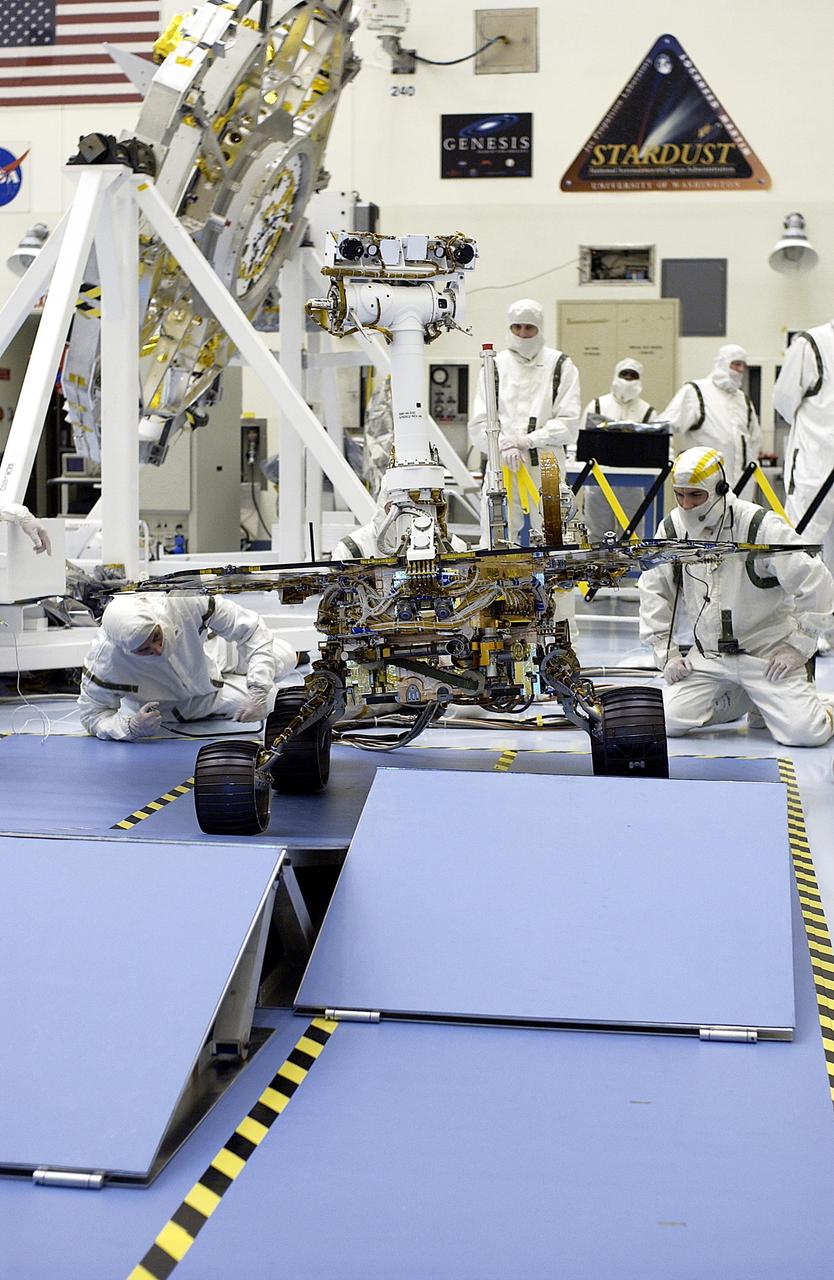
KENNEDY SPACE CENTER, Fla. - In the Payload Hazardous Servicing Facility, workers watch as the Mars Exploration Rover-2 (MER-2) rolls over ramps to test its mobility and maneuverability. Set to launch in Spring 2003, the MER Mission will consist of two identical rovers designed to cover roughly 110 yards each Martian day over various terrain. Each rover will carry five scientific instruments that will allow it to search for evidence of liquid water that may have been present in the planet's past. The rovers will be identical to each other, but will land at different regions of Mars. The first rover has a launch window opening May 30, and the second rover a window opening June 25.
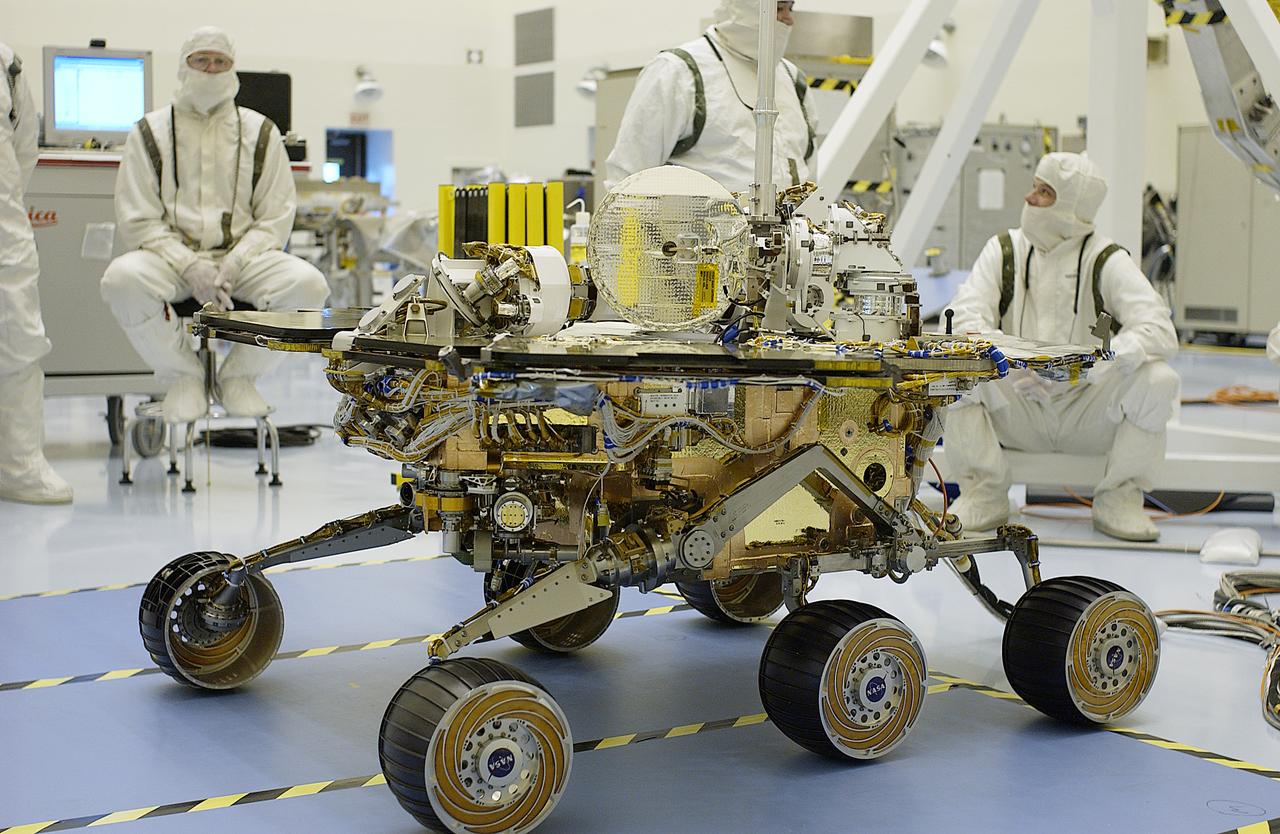
The solar arrays on the Mars Exploration Rover-2 (MER-2) are fully opened during a test in the Payload Hazardous Servicing Facility. Set to launch in Spring 2003, the MER Mission will consist of two identical rovers designed to cover roughly 110 yards each Martian day. Each rover will carry five scientific instruments that will allow it to search for evidence of liquid water that may have been present in the planet's past. The rovers will be identical to each other, but will land at different regions of Mars. The first rover has a launch window opening May 30, and the second rover a window opening June 25, 2003.

KENNEDY SPACE CENTER, FLA. -- Solar panels on the cruise stage of a Mars Exploration Rover are seen as the element is rotated for processing. Once functional testing and mission simulation of the flight elements is complete, the elements will be integrated for flight. There are two rovers, identical to each other, and each will land at different regions of Mars. They are designed to cover roughly 110 yards each Martian day over various terrain. Each rover will carry five scientific instruments that will allow it to search for evidence of liquid water that may have been present in the planet's past. The first rover has a launch window opening May 30, and the second rover a window opening June 25.
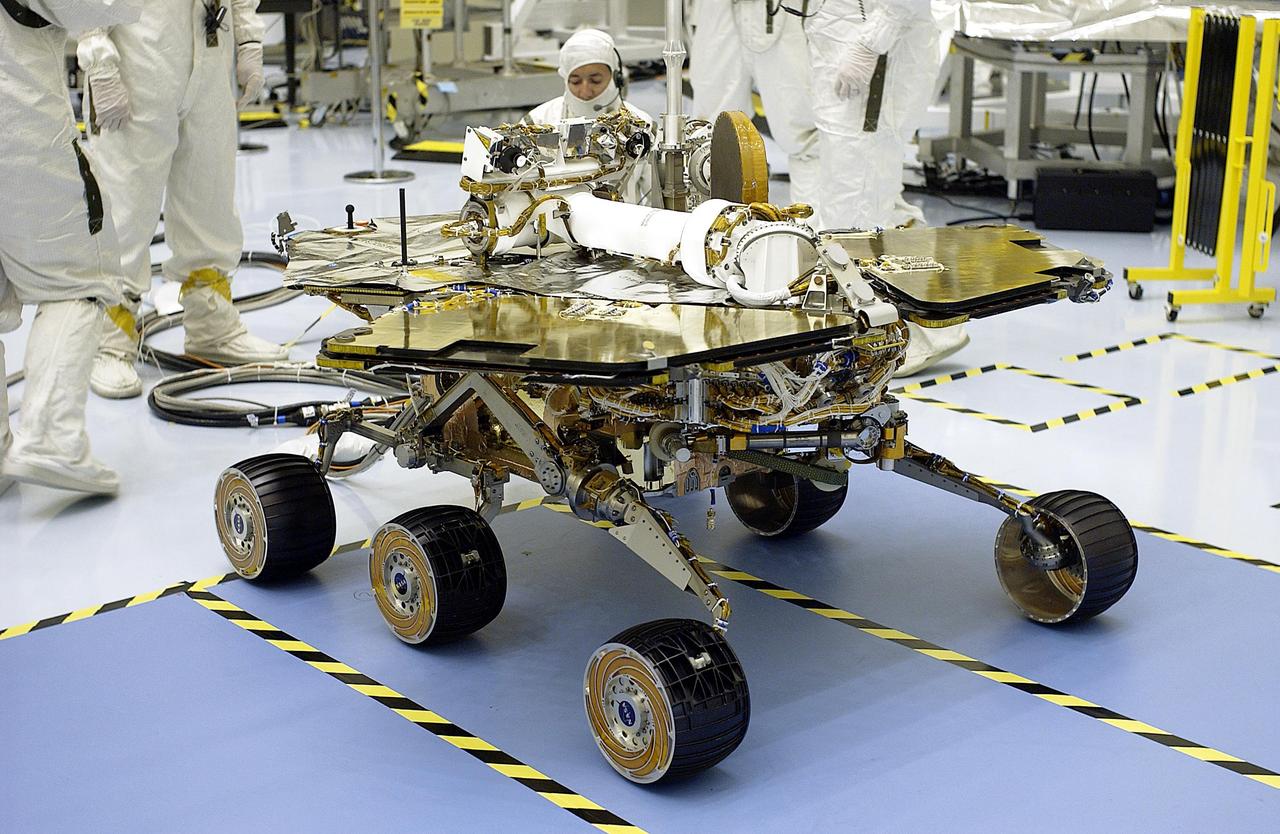
KENNEDY SPACE CENTER, Fla. - The solar arrays on the Mars Exploration Rover-2 (MER-2) are fully opened during a test in the Payload Hazardous Servicing Facility. Set to launch in Spring 2003, the MER Mission will consist of two identical rovers designed to cover roughly 110 yards each Martian day. Each rover will carry five scientific instruments that will allow it to search for evidence of liquid water that may have been present in the planet's past. The rovers will be identical to each other, but will land at different regions of Mars. The first rover has a launch window opening May 30, and the second rover a window opening June 25, 2003.

KENNEDY SPACE CENTER, Fla. - In the Payload Hazardous Servicing Facility, the Mars Exploration Rover-2 (MER-2) rolls over ramps to test its mobility and maneuverability. Set to launch in Spring 2003, the MER Mission will consist of two identical rovers designed to cover roughly 110 yards each Martian day over various terrain. Each rover will carry five scientific instruments that will allow it to search for evidence of liquid water that may have been present in the planet's past. The rovers will be identical to each other, but will land at different regions of Mars. The first rover has a launch window opening May 30, and the second rover a window opening June 25.
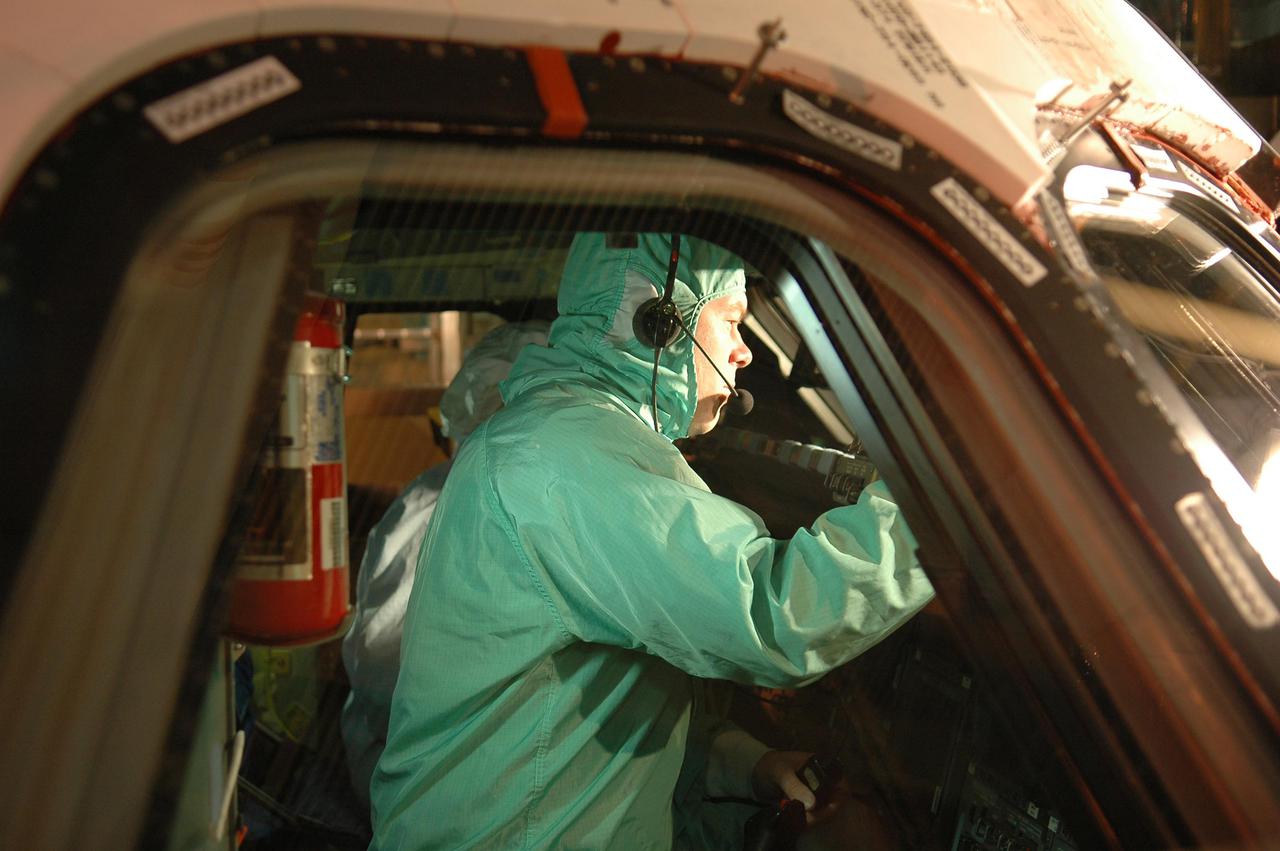
KENNEDY SPACE CENTER, FLA. - In the Orbiter Processing Facility, STS-114 Pilot James Kelly examines the window in Discovery’s cockpit. The crew is at Kennedy for Crew Equipment Interface Test activities. During CEIT, the crew has an opportunity to get a hands-on look at the payloads with which they’ll be working on orbit. The Return to Flight mission STS-114 will carry a replacement Control Moment Gyroscope and the Multi-Purpose Logistics Module Raffaello, filled with supplies for the International Space Station. Launch of STS-114 has a launch window of May 12 to June 3.
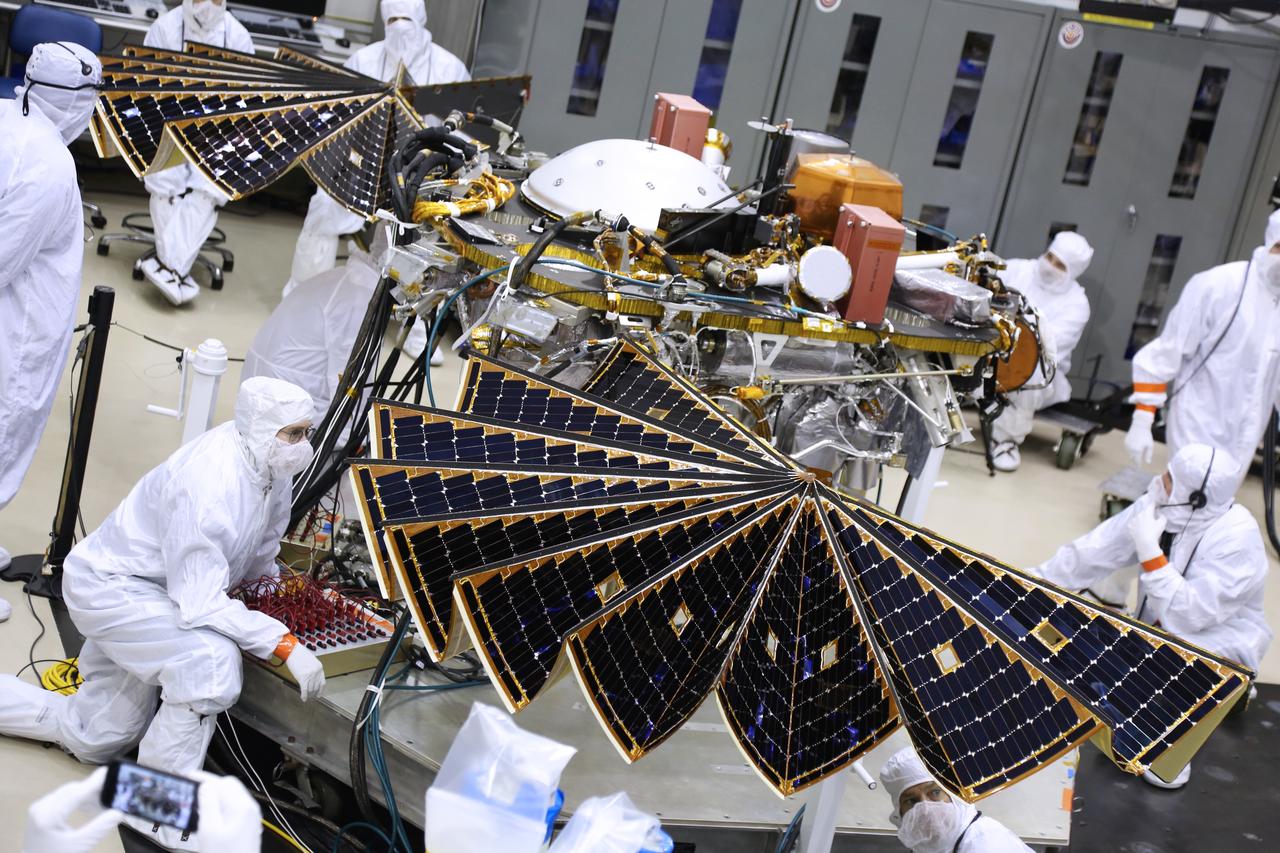
The solar arrays on NASA's InSight Mars lander were deployed as part of testing conducted Jan. 23, 2018, at Lockheed Martin Space in Littleton, Colorado. Engineers and technicians evaluated the solar arrays and performed an illumination test to confirm that the solar cells were collecting power. The launch window for InSight opens May 5, 2018. A video is available at https://photojournal.jpl.nasa.gov/catalog/PIA22205
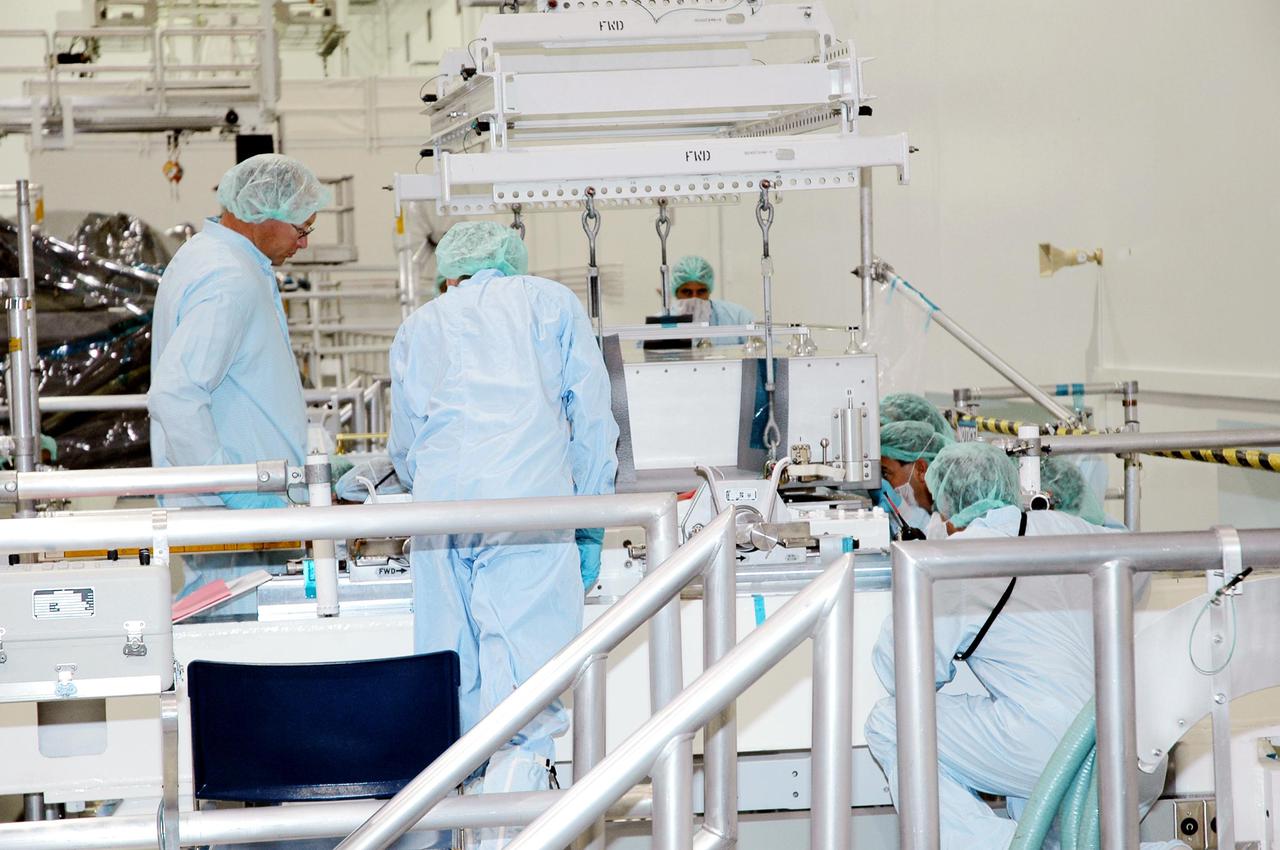
KENNEDY SPACE CENTER, FLA. - Technicians in the Space Station Processing Facility ensure the Thermal Protection System Detailed Test Objective (DTO) box is placed correctly on the Lightweight Multi-Purpose Experiment Support Structure Carrier (LMC). The LMC and DTO will fly on Space Shuttle Discovery for mission STS-114. The DTO contains tile samples that will enable astronauts to test new on-orbit Thermal Protection System repair techniques. The launch window for mission STS-114 is May 12 to June 3.
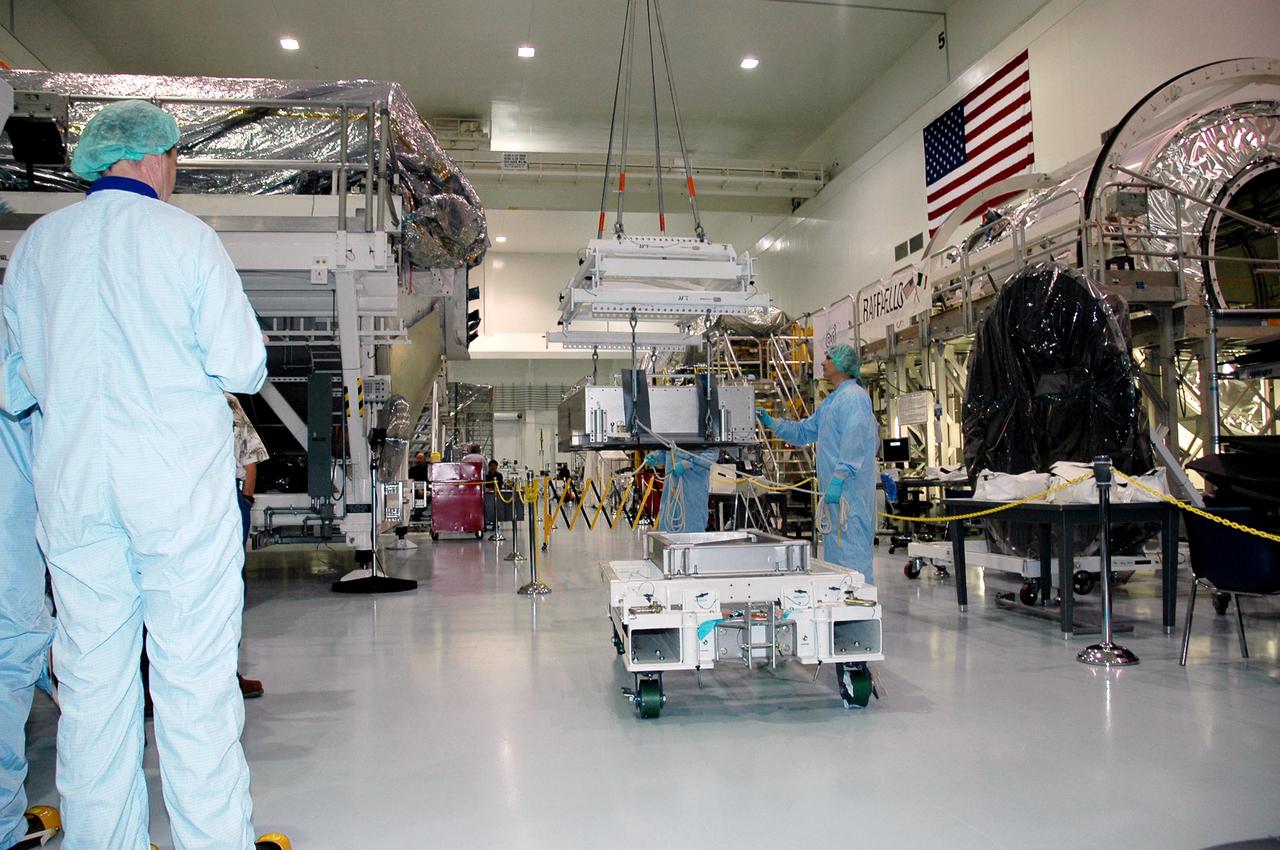
KENNEDY SPACE CENTER, FLA. - Technicians at the Space Station Processing Facility carefully watch as a crane lifts the Thermal Protection System Detailed Test Objective (DTO) box. It will be placed on the Lightweight Multi-Purpose Experiment Support Structure Carrier (LMC) to fly on Space Shuttle Discovery for mission STS-114. The DTO contains tile samples that will enable astronauts to test new on-orbit Thermal Protection System repair techniques. The launch window for mission STS-114 is May 12 to June 3.
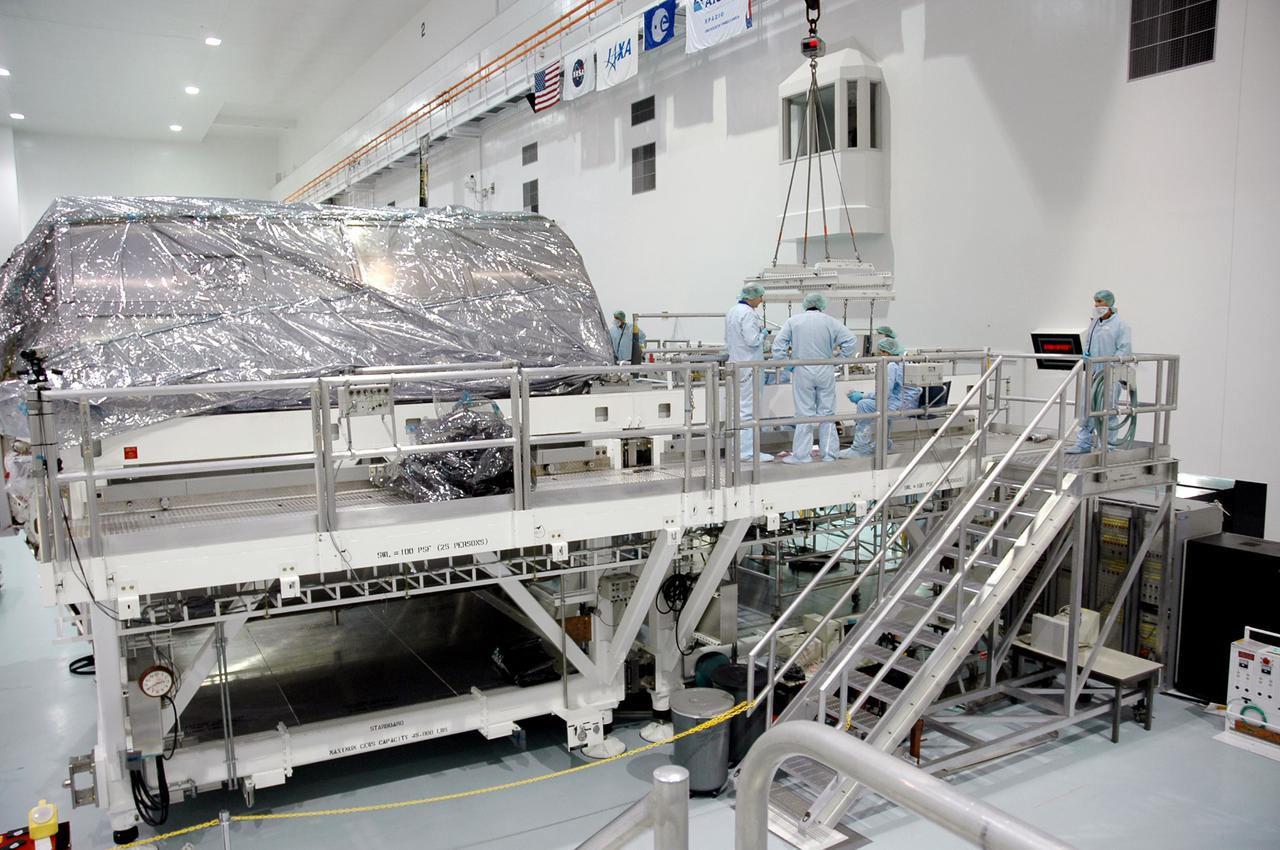
KENNEDY SPACE CENTER, FLA. - Technicians in the Space Station Processing Facility check the placement of the Thermal Protection System Detailed Test Objective (DTO) box on the Lightweight Multi-Purpose Experiment Support Structure Carrier (LMC). The LMC and DTO will fly on Space Shuttle Discovery for mission STS-114. The DTO contains tile samples that will enable astronauts to test new on-orbit Thermal Protection System repair techniques. The launch window for mission STS-114 is May 12 to June 3.
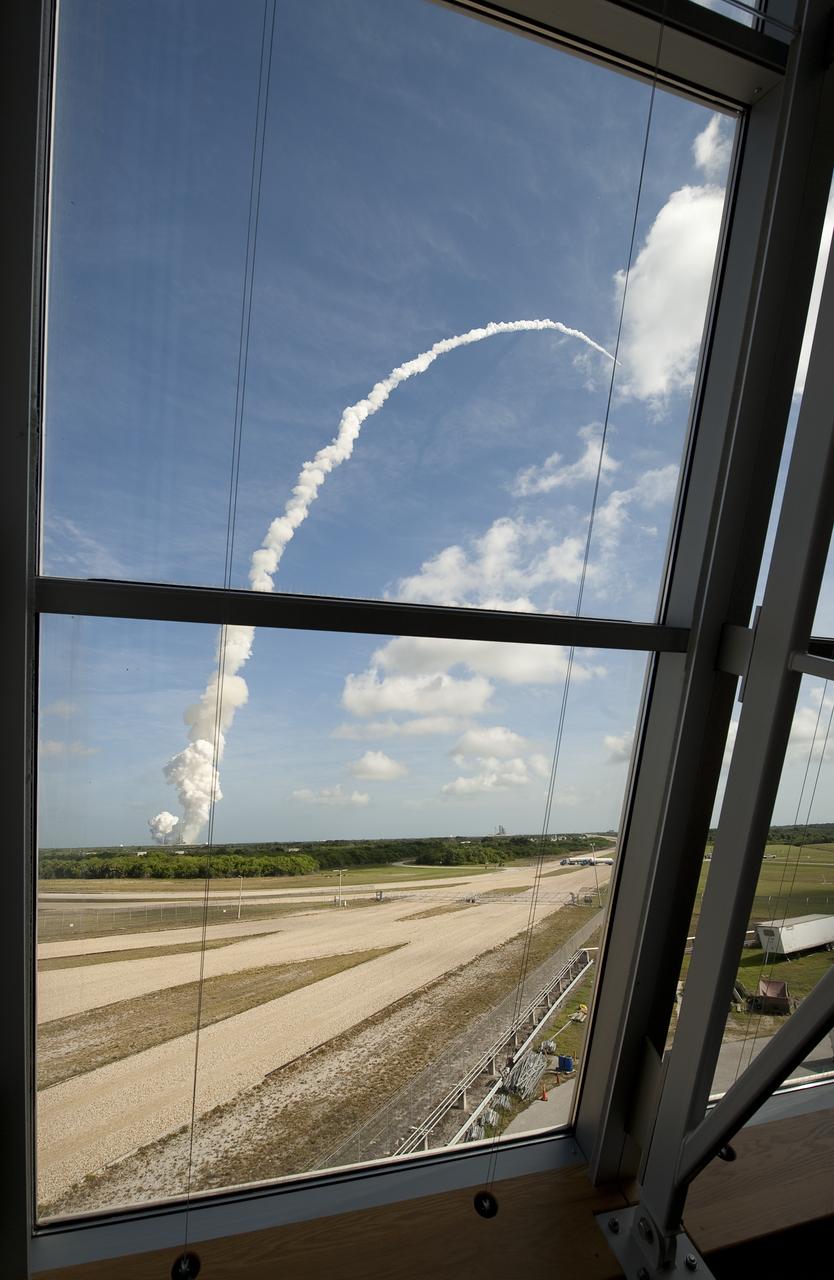
NASA's Ares I-X rocket is seen through the windows of Firing Room One of teh Launch Control Center (LCC) at the Kennedy Space Center as it launches from pad 39b in Cape Canaveral, Fla., Wednesday, Oct. 28, 2009. The flight test will provide NASA with an early opportunity to test and prove flight characteristics, hardware, facilities and ground operations associated with the Ares I. Photo Credit: (NASA/Bill Ingalls)
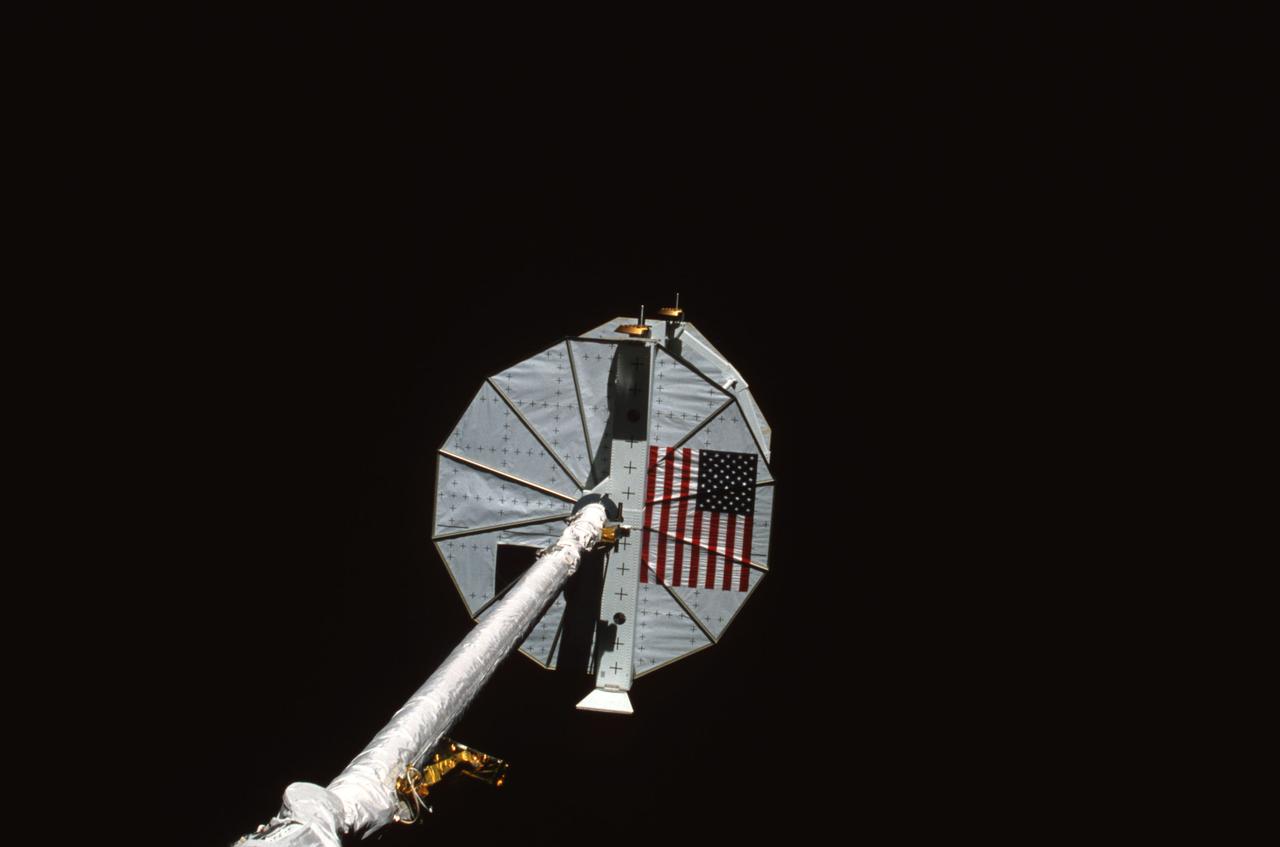
STS008-07-149 (2 Sept 1983) --- Many hours were spent, by its crew members, running tests with the Payload Flight Test Article (PFTA) and the Remote Manipulator System (RMS). The bar-bell shaped test device and the arm stand out brilliantly against the darkness of space. The two TV cameras on the "wrist" and "elbow" of the Canadian-built robot arm provided some close-up scenes of the variegated testing with the PFTA. This frame was exposed with a 35mm camera aimed through the windows on the flight deck of the Earth-orbiting Space Shuttle Challenger.
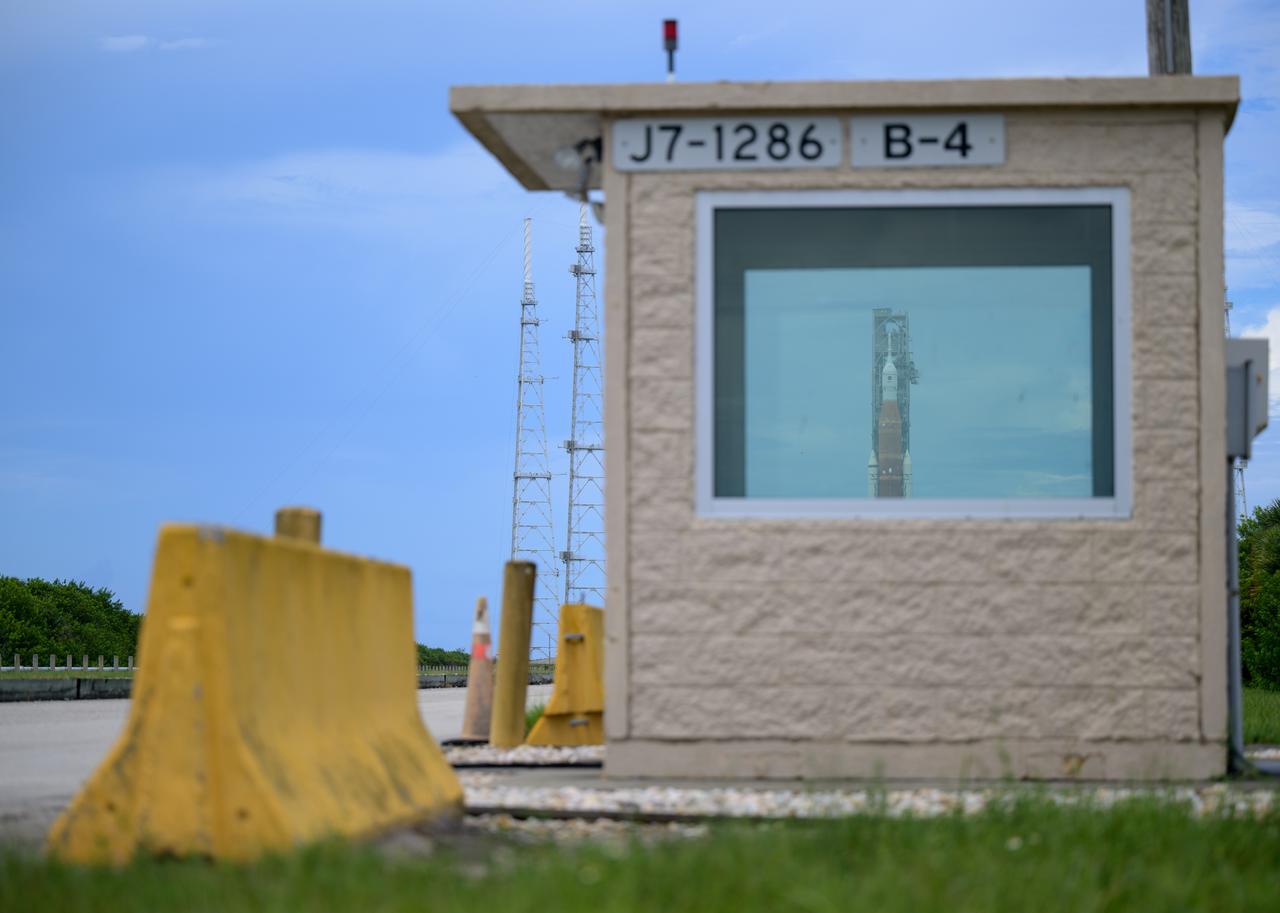
NASA’s Space Launch System (SLS) rocket with the Orion spacecraft aboard is seen through the window of a guard post at Launch Pad 39B as preparations for launch continue, Sunday, Aug. 28, 2022, at NASA’s Kennedy Space Center in Florida. NASA’s Artemis I flight test is the first integrated test of the agency’s deep space exploration systems: the Orion spacecraft, SLS rocket, and supporting ground systems. Launch of the uncrewed flight test is targeted for no earlier than Aug. 29 at 8:33 a.m. ET. Photo Credit: (NASA/Bill Ingalls)
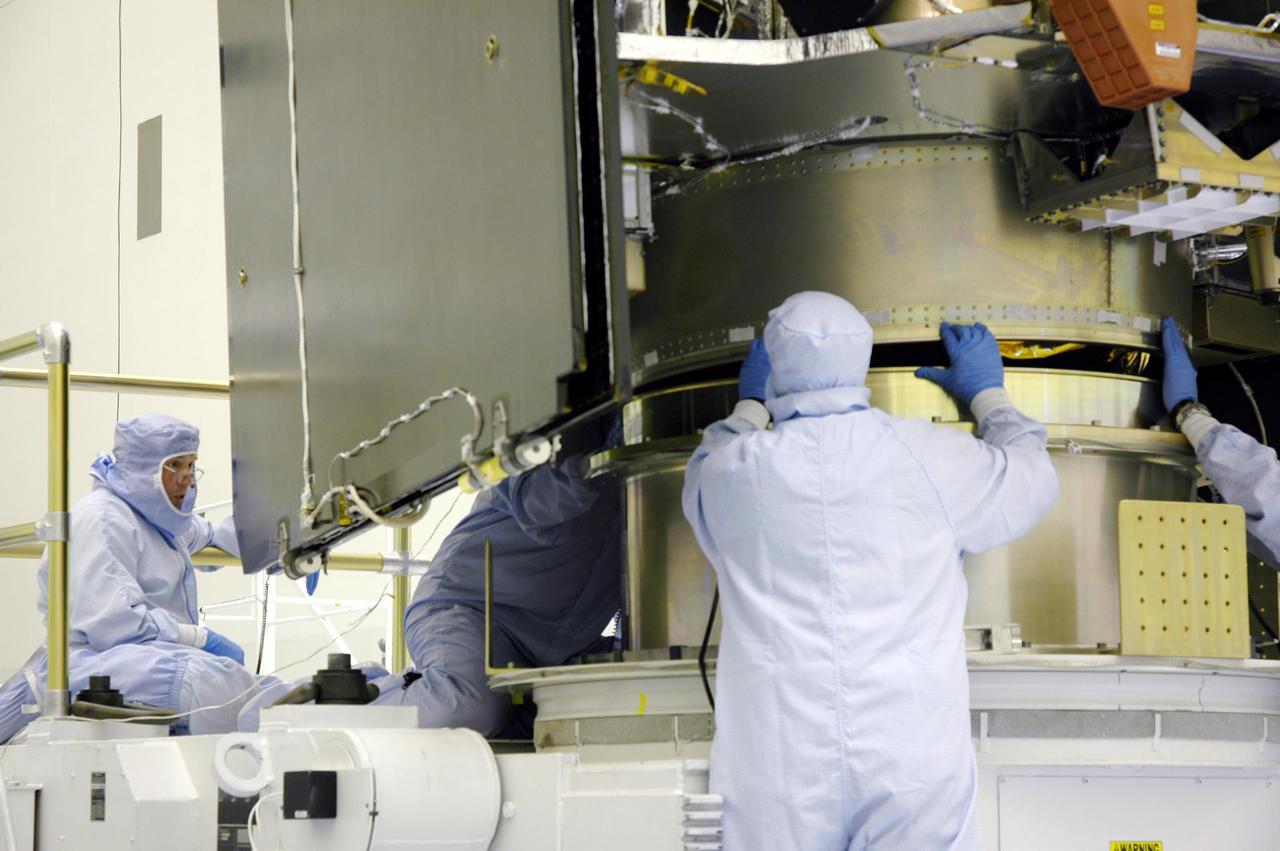
KENNEDY SPACE CENTER, FLA. - In a clean room inside the Payload Hazardous Servicing Facility (PHSF) at NASA's Kennedy Space Center, Lockheed Martin workers help guide the Mars Reconnaissance Orbiter onto the workstand for final assembly and testing. In the PHSF, the spacecraft will undergo multiple mechanical assembly operations and electrical tests to verify its readiness for launch. A test this month will verify the spacecraft's ability to communicate through NASA's Deep Space Network tracking stations. A June test will check the deployment of the spacecraft's high gain communications antenna. Another major deployment test will check out the spacecraft's large solar arrays. The MRO was built for NASA's Jet Propulsion Laboratory in California. It is the next major step in Mars exploration and scheduled for launch from Cape Canaveral Air Force Station in a window opening Aug. 10. The MRO is an important next step in fulfilling NASA's vision of space exploration and ultimately sending human explorers to Mars and beyond.
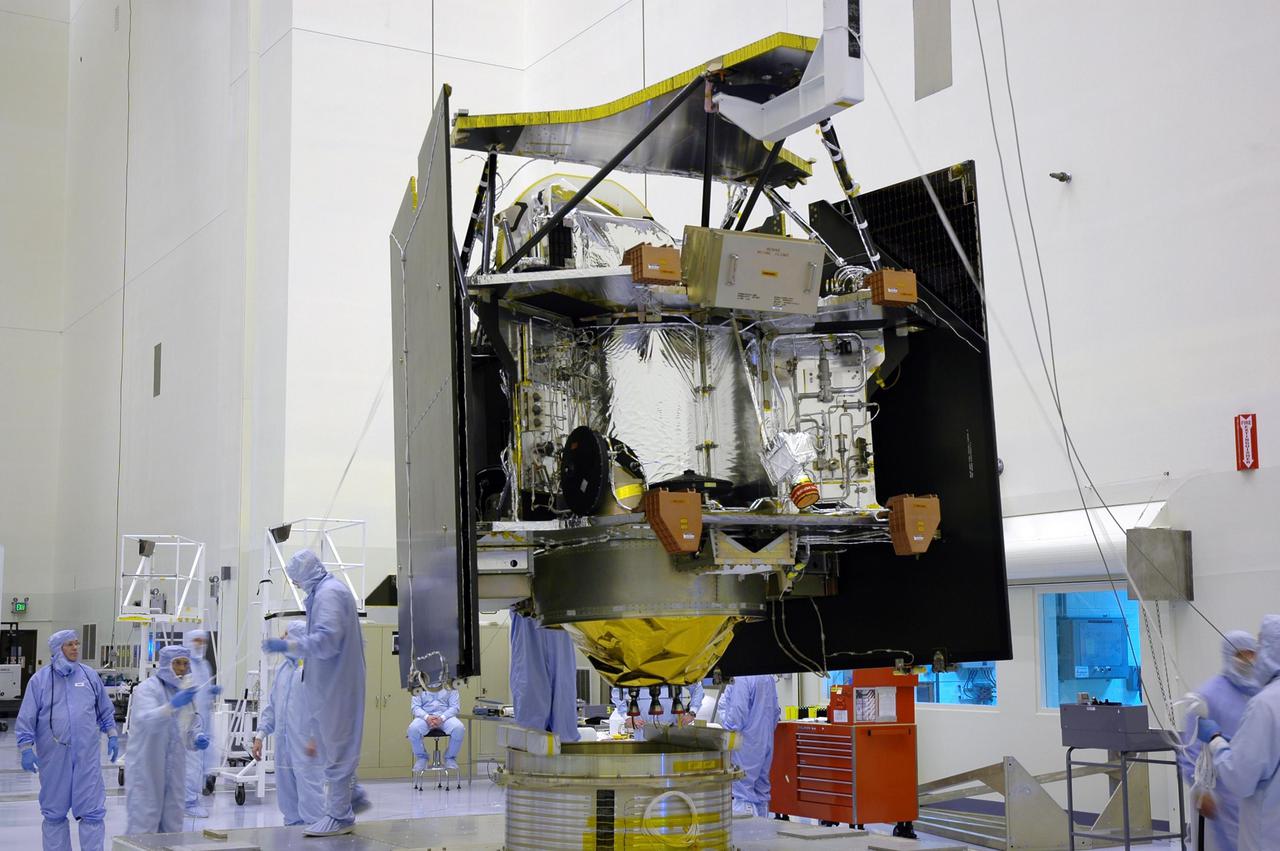
KENNEDY SPACE CENTER, FLA. -In a clean room inside the Payload Hazardous Servicing Facility (PHSF) at NASA’s Kennedy Space Center, the Mars Reconnaissance Orbiter (MRO) is lifted by an overhead crane to move it to a nearby workstand for final assembly and testing. In the PHSF, the spacecraft will undergo multiple mechanical assembly operations and electrical tests to verify its readiness for launch. A test this month will verify the spacecraft’s ability to communicate through NASA's Deep Space Network tracking stations. A June test will check the deployment of the spacecraft's high gain communications antenna. Another major deployment test will check out the spacecraft's large solar arrays. The MRO was built for NASA’s Jet Propulsion Laboratory in California. It is the next major step in Mars exploration and scheduled for launch from Cape Canaveral Air Force Station in a window opening Aug. 10. The MRO is an important next step in fulfilling NASA’s vision of space exploration and ultimately sending human explorers to Mars and beyond.
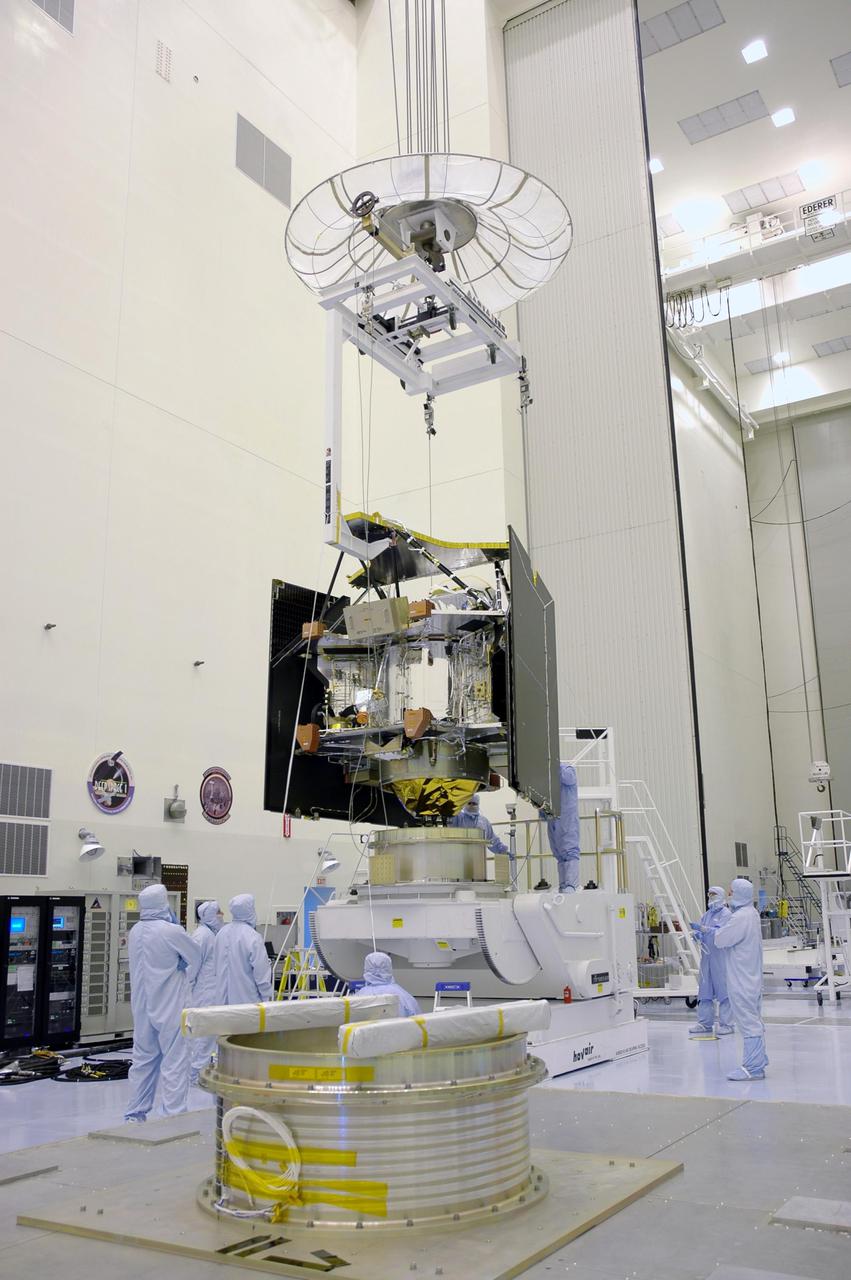
KENNEDY SPACE CENTER, FLA. - In a clean room inside the Payload Hazardous Servicing Facility (PHSF) at NASA’s Kennedy Space Center, the suspended Mars Reconnaissance Orbiter (MRO) nears the workstand in the background for final assembly and testing. In the PHSF, the spacecraft will undergo multiple mechanical assembly operations and electrical tests to verify its readiness for launch. A test this month will verify the spacecraft’s ability to communicate through NASA's Deep Space Network tracking stations. A June test will check the deployment of the spacecraft's high gain communications antenna. Another major deployment test will check out the spacecraft's large solar arrays. The MRO was built for NASA’s Jet Propulsion Laboratory in California. It is the next major step in Mars exploration and scheduled for launch from Cape Canaveral Air Force Station in a window opening Aug. 10. The MRO is an important next step in fulfilling NASA’s vision of space exploration and ultimately sending human explorers to Mars and beyond.
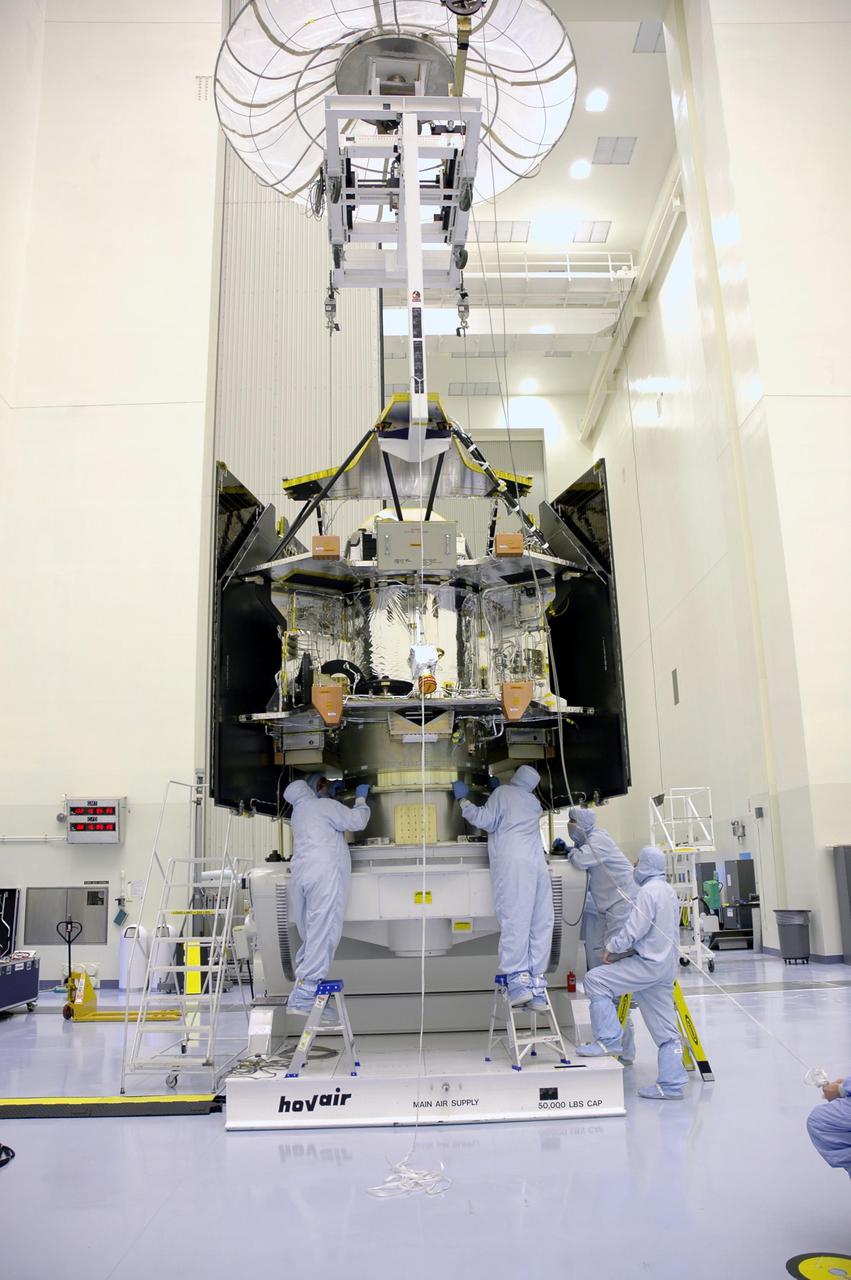
KENNEDY SPACE CENTER, FLA. - In a clean room inside the Payload Hazardous Servicing Facility (PHSF) at NASA's Kennedy Space Center, Lockheed Martin workers assure the Mars Reconnaissance Orbiter is secure on its workstand for final assembly and testing. In the PHSF, the spacecraft will undergo multiple mechanical assembly operations and electrical tests to verify its readiness for launch. A test this month will verify the spacecraft's ability to communicate through NASA's Deep Space Network tracking stations. A June test will check the deployment of the spacecraft's high gain communications antenna. Another major deployment test will check out the spacecraft's large solar arrays. The MRO was built for NASA's Jet Propulsion Laboratory in California. It is the next major step in Mars exploration and scheduled for launch from Cape Canaveral Air Force Station in a window opening Aug. 10. The MRO is an important next step in fulfilling NASA's vision of space exploration and ultimately sending human explorers to Mars and beyond.
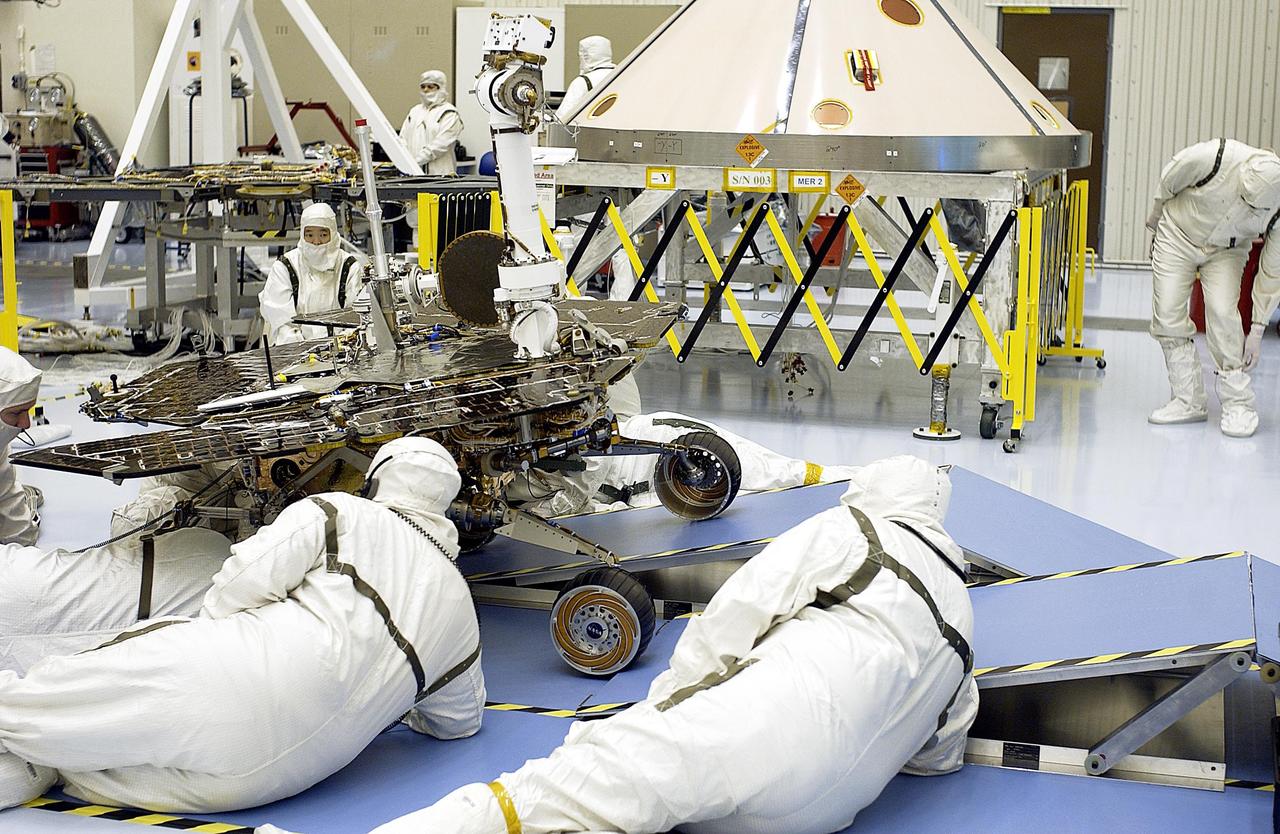
KENNEDY SPACE CENTER, Fla. - In the Payload Hazardous Servicing Facility, workers check the progress of the Mars Exploration Rover-2 (MER-2) as it rolls over ramps to test its mobility and maneuverability. Set to launch in Spring 2003, the MER Mission will consist of two identical rovers designed to cover roughly 110 yards each Martian day over various terrain. Each rover will carry five scientific instruments that will allow it to search for evidence of liquid water that may have been present in the planet's past. The rovers will be identical to each other, but will land at different regions of Mars. The first rover has a launch window opening May 30, and the second rover a window opening June 25.
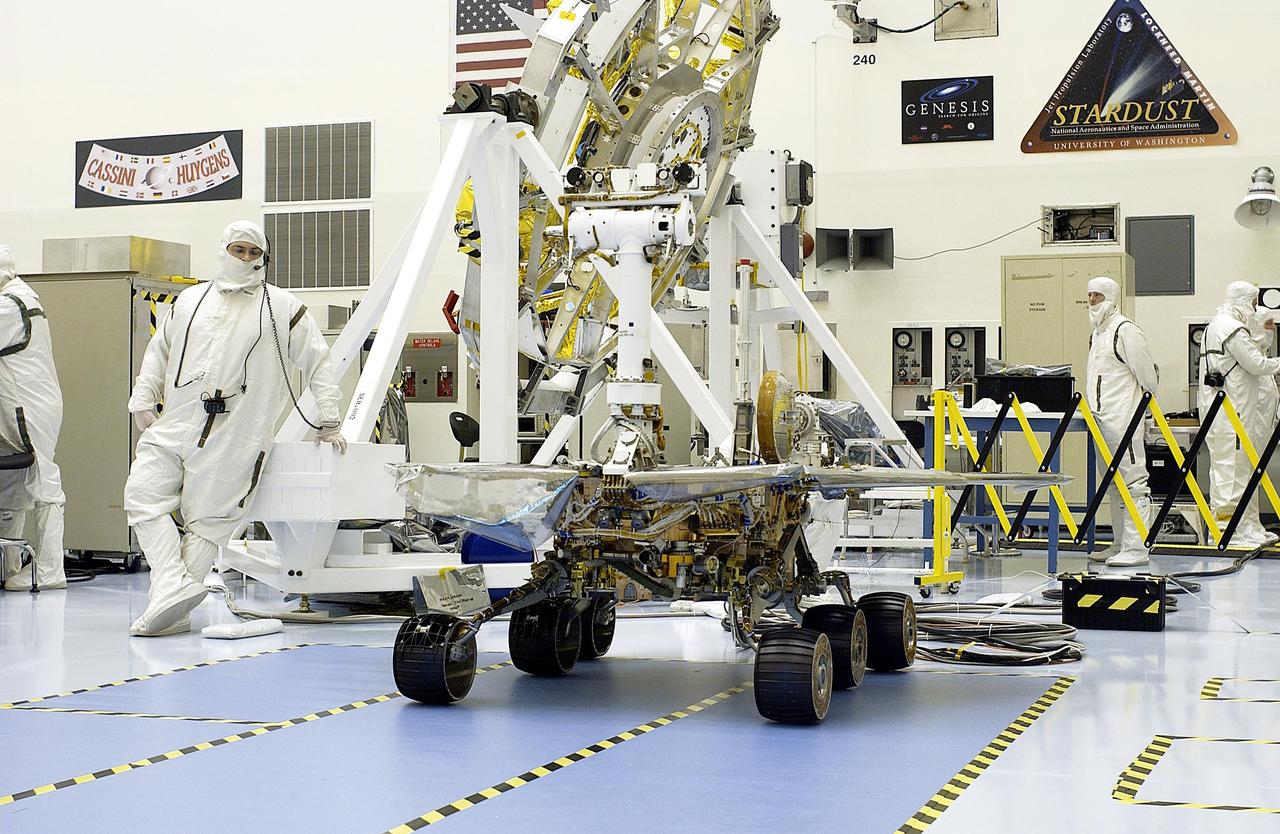
KENNEDY SPACE CENTER, FLA. -- In the Payload Hazardous Servicing Facility, the Mars Exploration Rover-2 (MER-2) is being tested for mobility and maneuverability. Atop the rover can be seen the cameras, mounted on a Pancam Mast Assembly (PMA). Set to launch in Spring 2003, the MER Mission will consist of two identical rovers designed to cover roughly 110 yards each Martian day. Each rover will carry five scientific instruments that will allow it to search for evidence of liquid water that may have been present in the planet's past. The rovers will be identical to each other, but will land at different regions of Mars. The first rover has a launch window opening May 30, and the second rover a window opening June 25.

KENNEDY SPACE CENTER, Fla. - After another test on the Mars Exploration Rover-2 (MER-2) for mobility and maneuverability, workers check the rover. Atop the rover can be seen the cameras, mounted on a Pancam Mast Assembly (PMA). Set to launch in Spring 2003, the MER Mission will consist of two identical rovers designed to cover roughly 110 yards each Martian day. Each rover will carry five scientific instruments that will allow it to search for evidence of liquid water that may have been present in the planet's past. The rovers will be identical to each other, but will land at different regions of Mars. The first rover has a launch window opening May 30, and the second rover a window opening June 25.