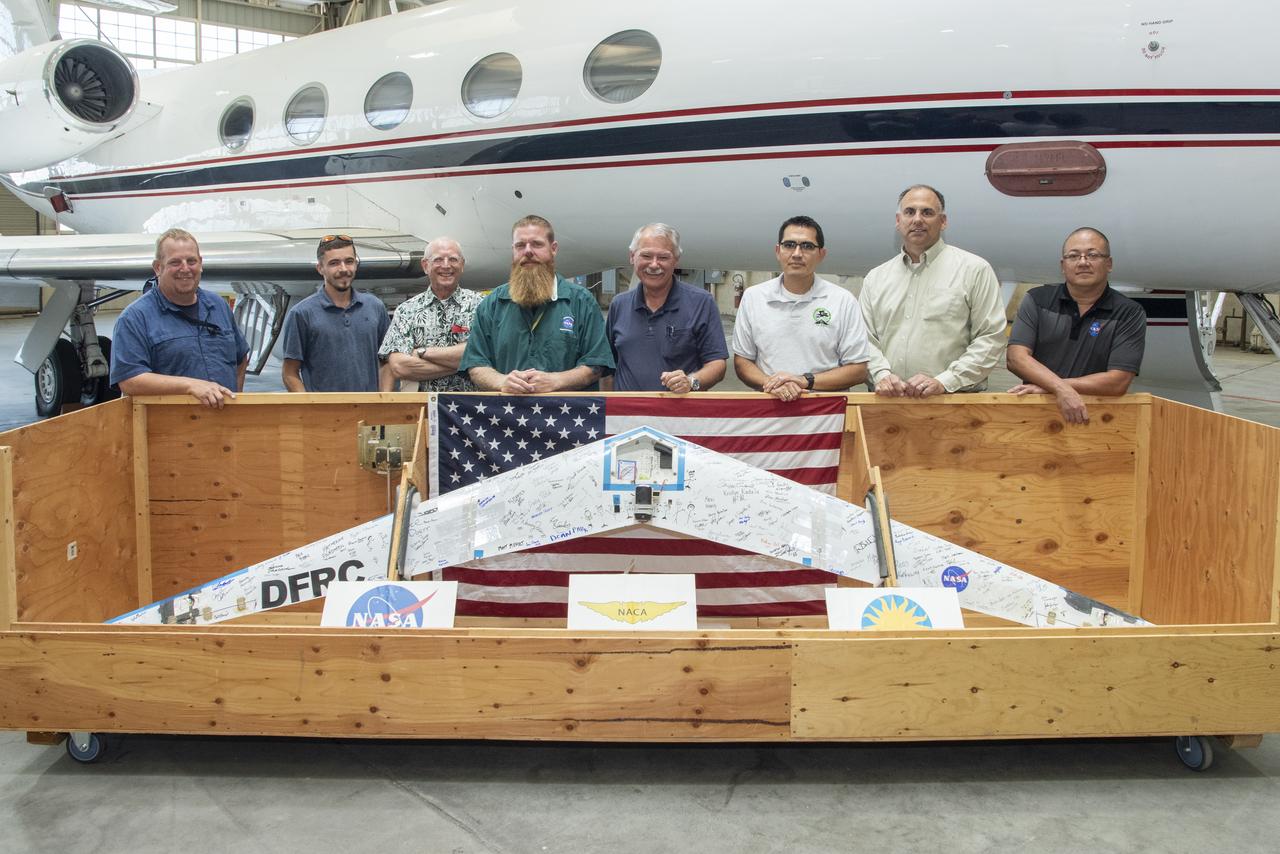
Preliminary Research Aerodynamic Design to Lower Drag, or Prandtl-D1, will be displayed in an upcoming Innovations Gallery at the National Air and Space Museum, the Smithsonian Institute. The aircraft, which flew from NASA's Armstrong Flight Research Center in California, uses a method of aircraft design that introduces a twist that results in a more efficient wing. From left are Robert "Red" Jensen, Logan Shaw, Christian Gelzer, Justin Hall, Al Bowers, Oscar Murillo, Brian Eslinger and Derek Abramson
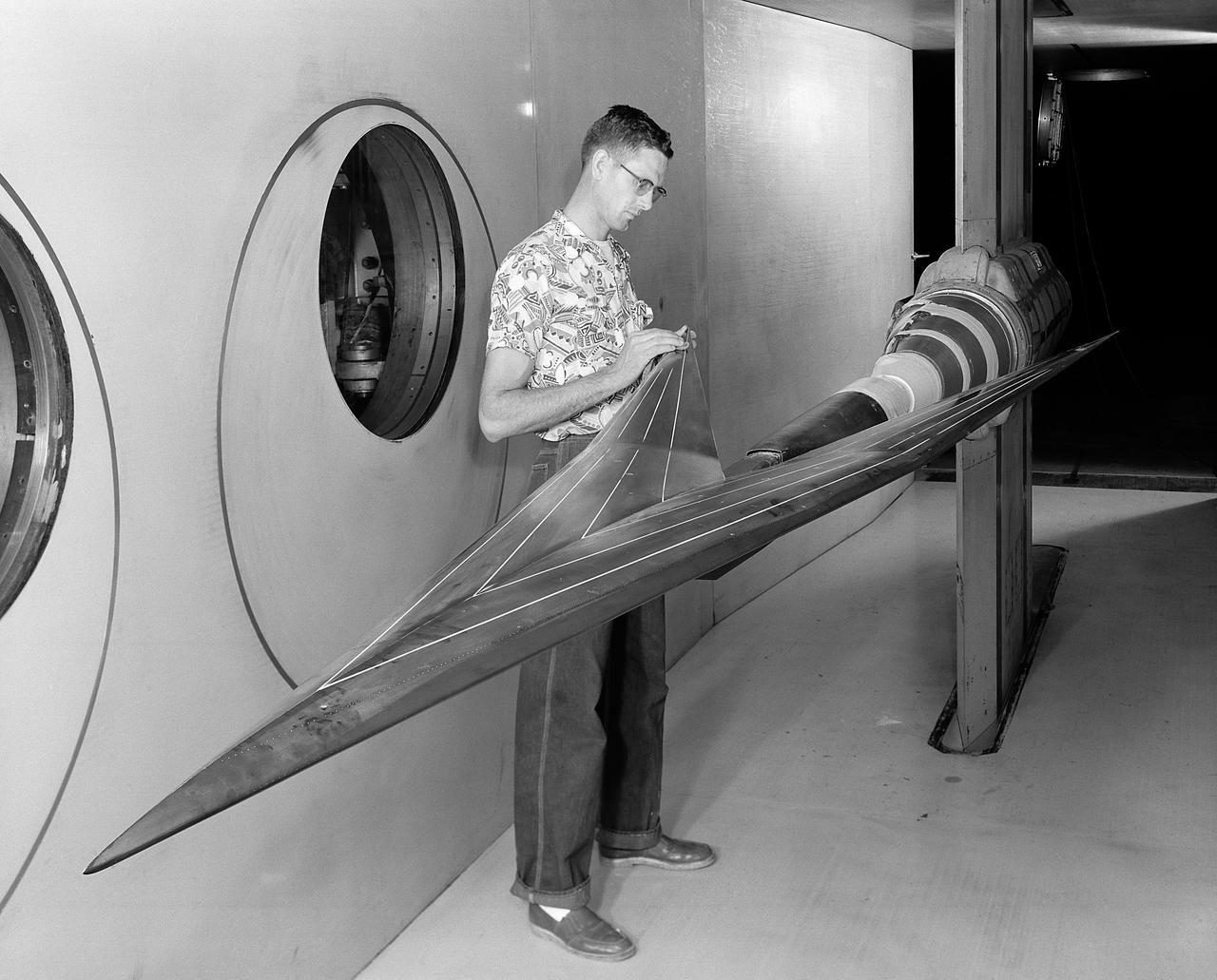
A chambered and twisted wing-body. Arrow wing hypersonic model tested in the 6x6 foot wind tunnel at the NASA Ames Research Center.
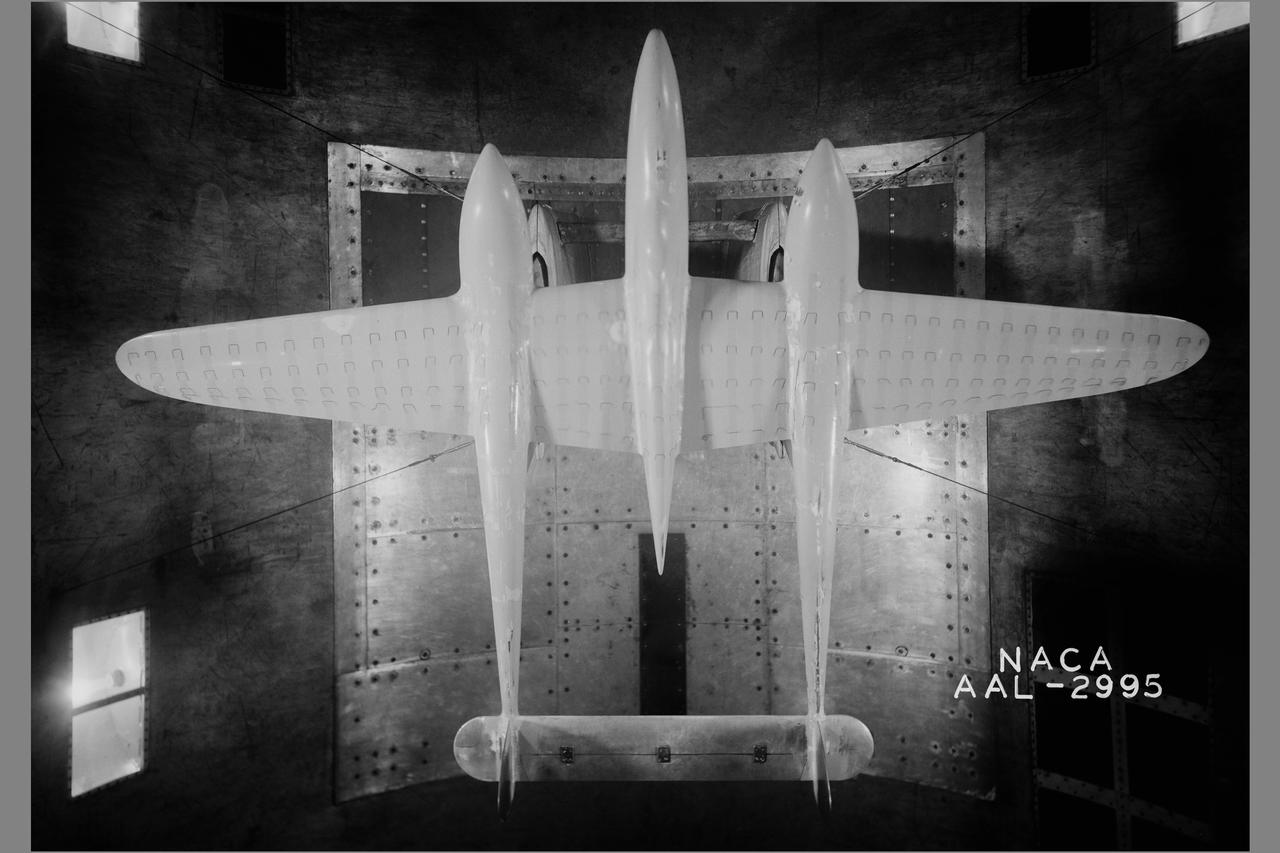
Lockheed P-38 model in 40x80ft w.t. with revised twisted wing at 10 deg. (tuft studies)
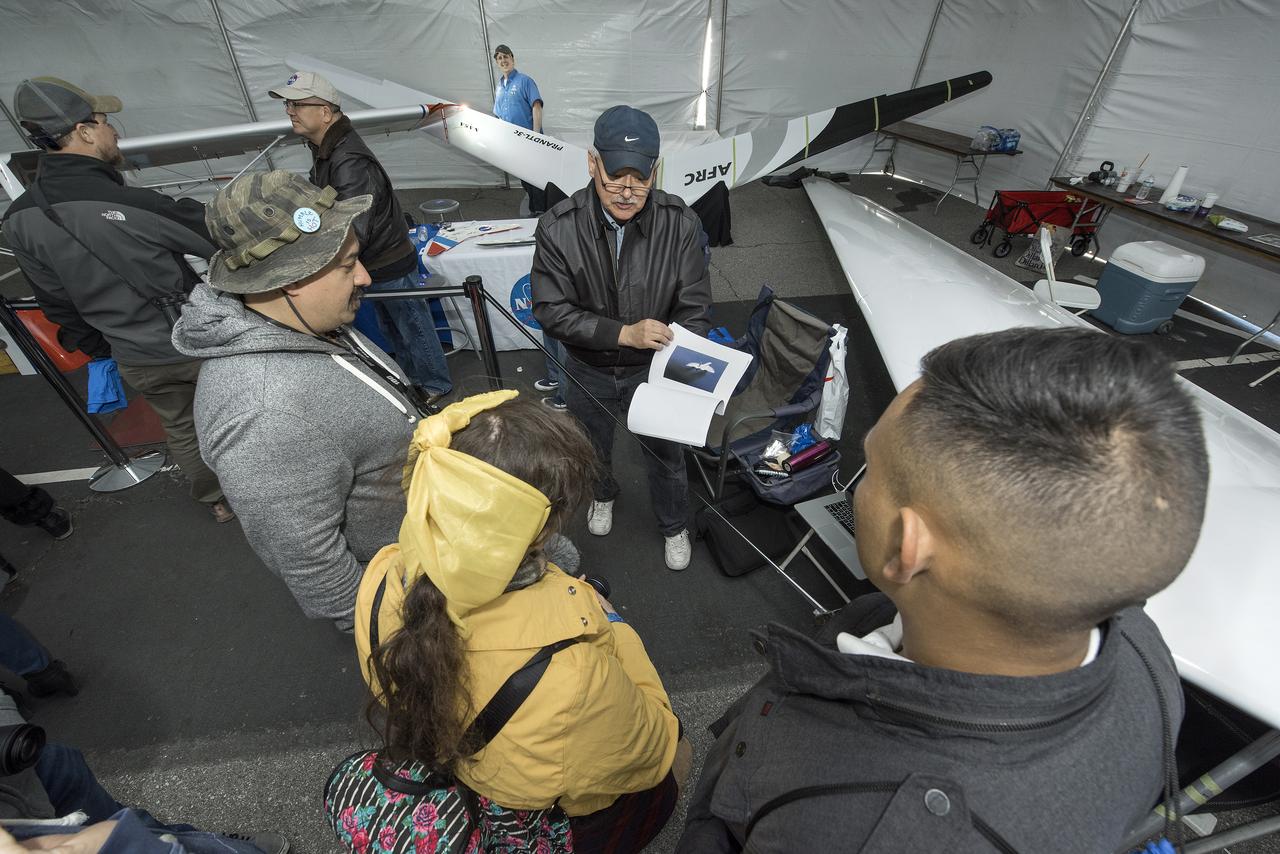
Al Bowers explains the Prandtl experimental aircraft and how its wing twist could redefine the efficiency of aircraft.
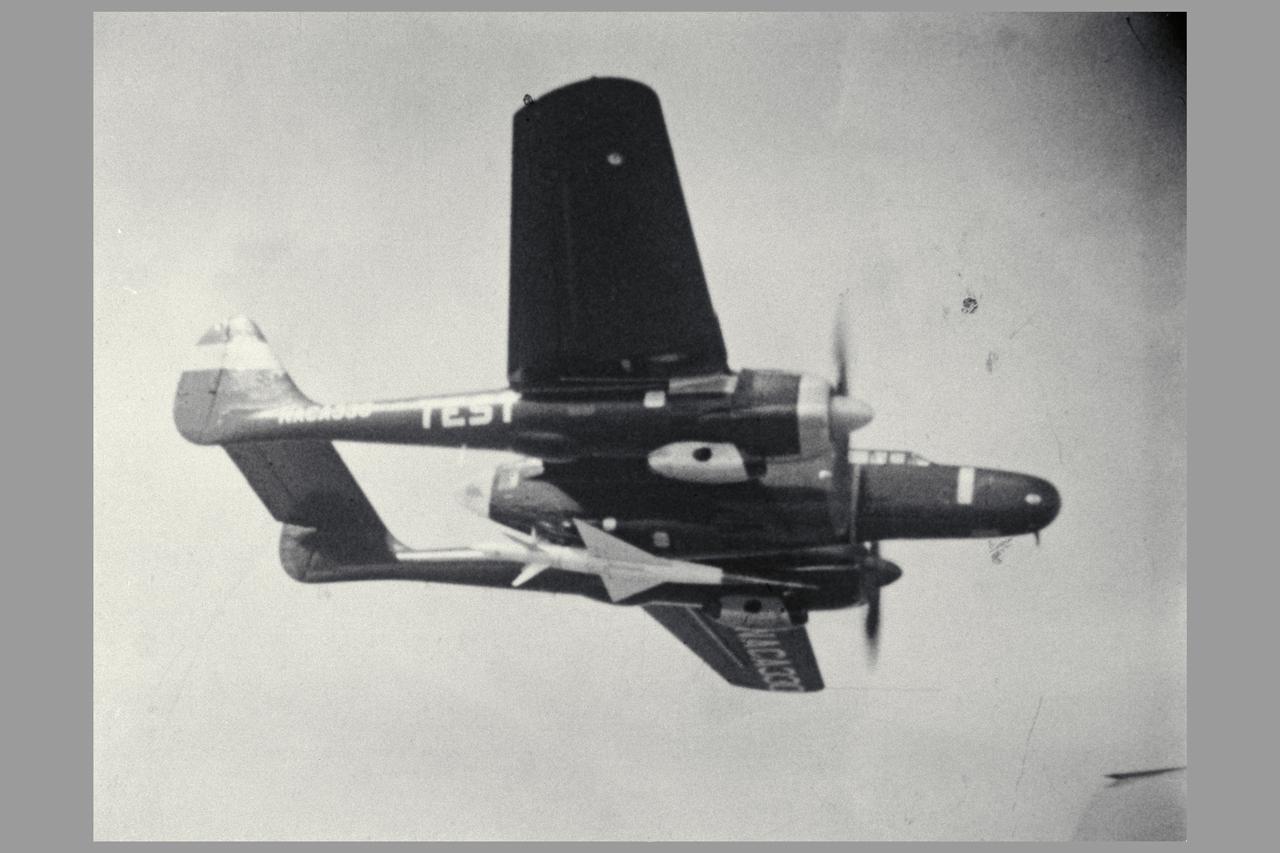
Photo by NACA 45 degree Sweptback wing model drop test Close-up of Body as it Leaves the Plane. Investigation of a Cambered and Twisted 45 degrees Swept-back Wing in the Transonic Range by the Recoverable-body Techniques.
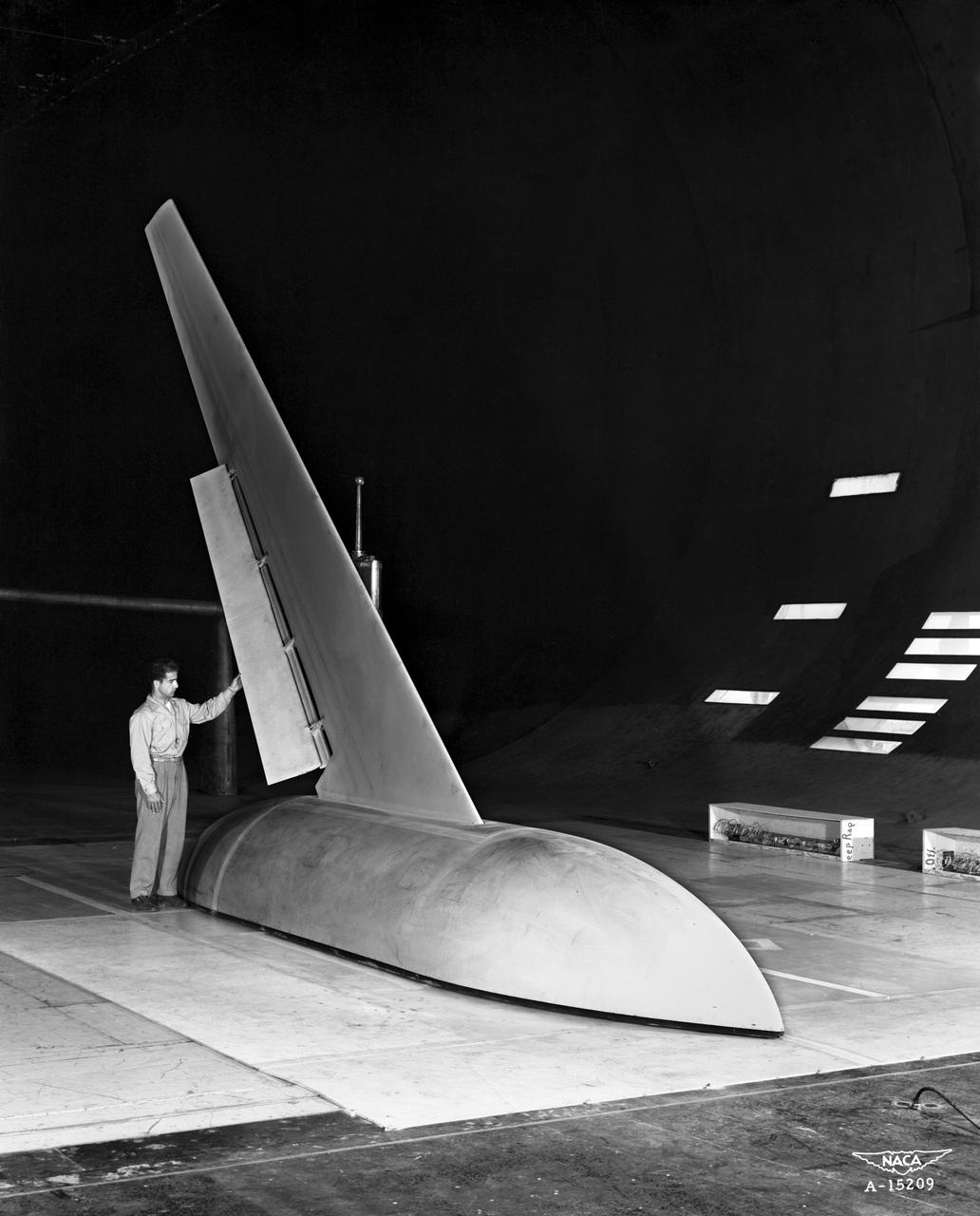
Investigation of High Lift and Stall Control on 45 deg. 3/4 front view Sweptback Cambered and Twisted Wing, in Ames 40x80 foot Wind Tunnel.
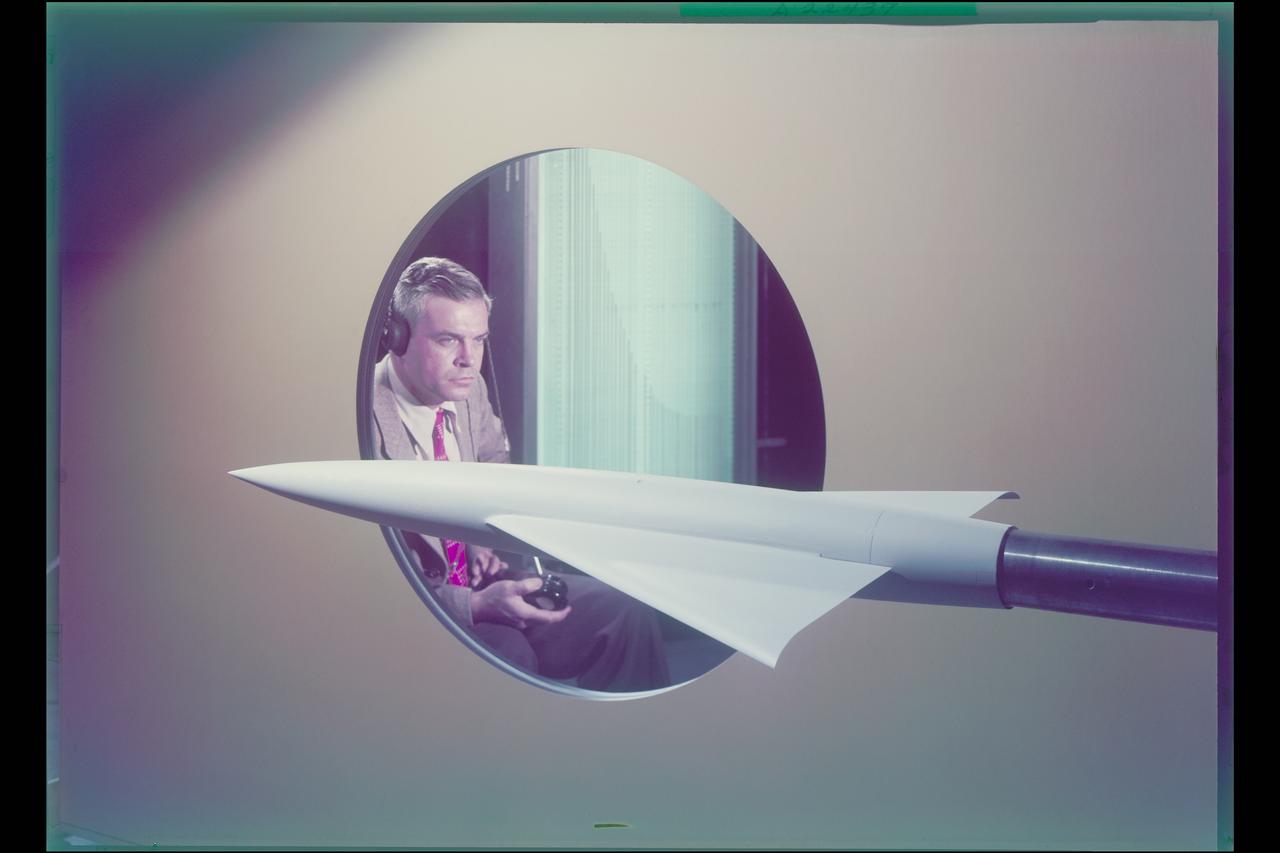
Charles Hall displaying tunnel model AR-2 which incorporates conical camber as the half-cone twist in the wings (in simulated 2x4' tunnel) Note: printed in 60 year at NASA Ames Research Center by Glenn Bugos NASA SP-2000-4314
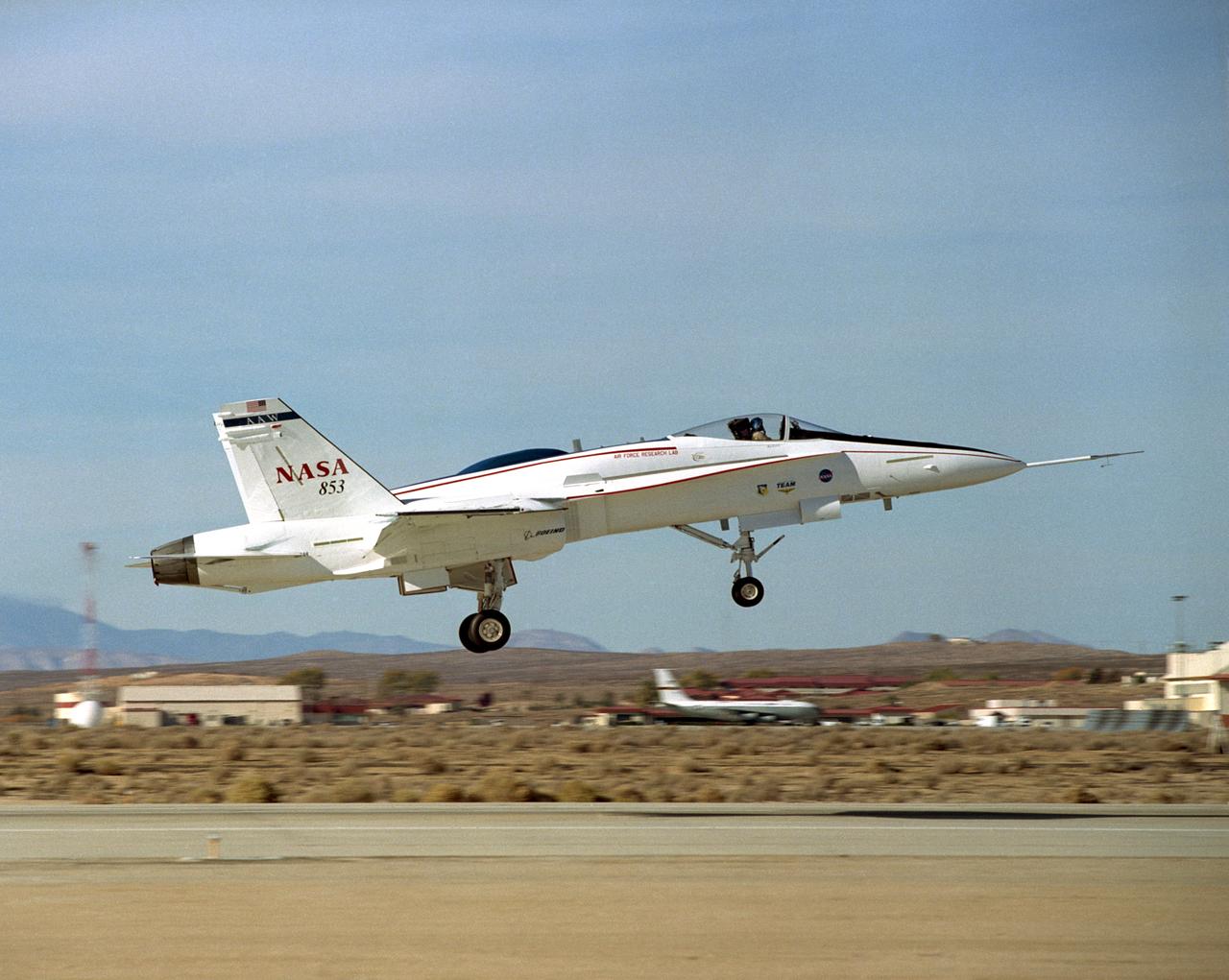
The Active Aeroelastic Wing F-18A lifts off on its first checkout flight November 15, 2002, from NASA's Dryden Flight Research Center at Edwards Air Force Base, Calif. The checkout flight initiated a two-phase NASA--Air Force flight research program that will investigate the potential of aerodynamically twisting flexible wings to improve maneuverability of high-performance aircraft at transonic and supersonic speeds.
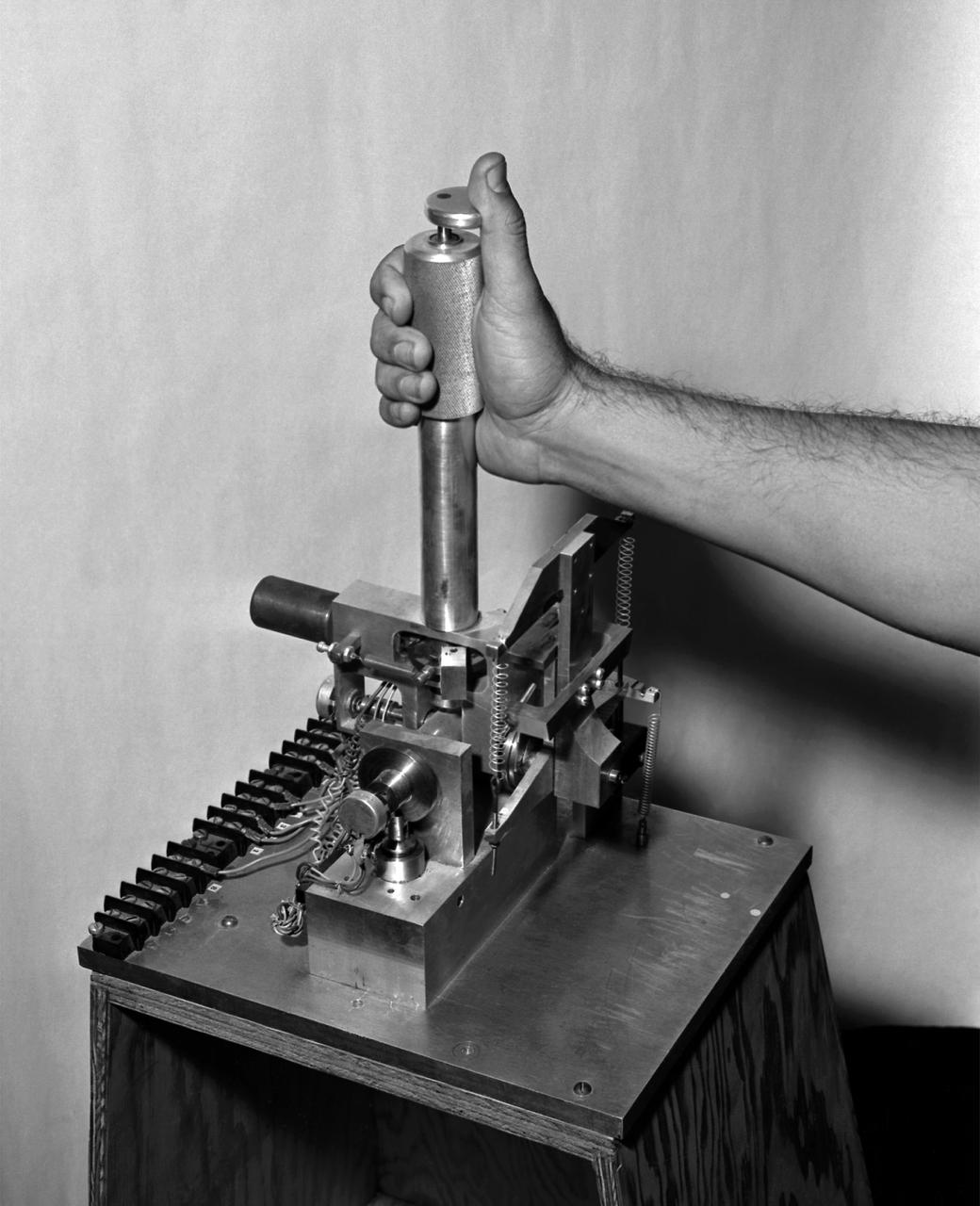
A photo of the control stick used on the Iron Cross Attitude Simulator. Although it resembled today's desktop computer flight sticks, its operation was different. As with a standard control stick, moving it back and forth raised and lowered the nose resulting in changes in pitch. Moving the stick to the right or left raised or lowered the wing, resulted in changes in roll. This control stick had a third axis, not found in standard control sticks. Twisting the stick to the right or left caused the airplane's nose to move horizontally in the same direction, resulting in changes in yaw.
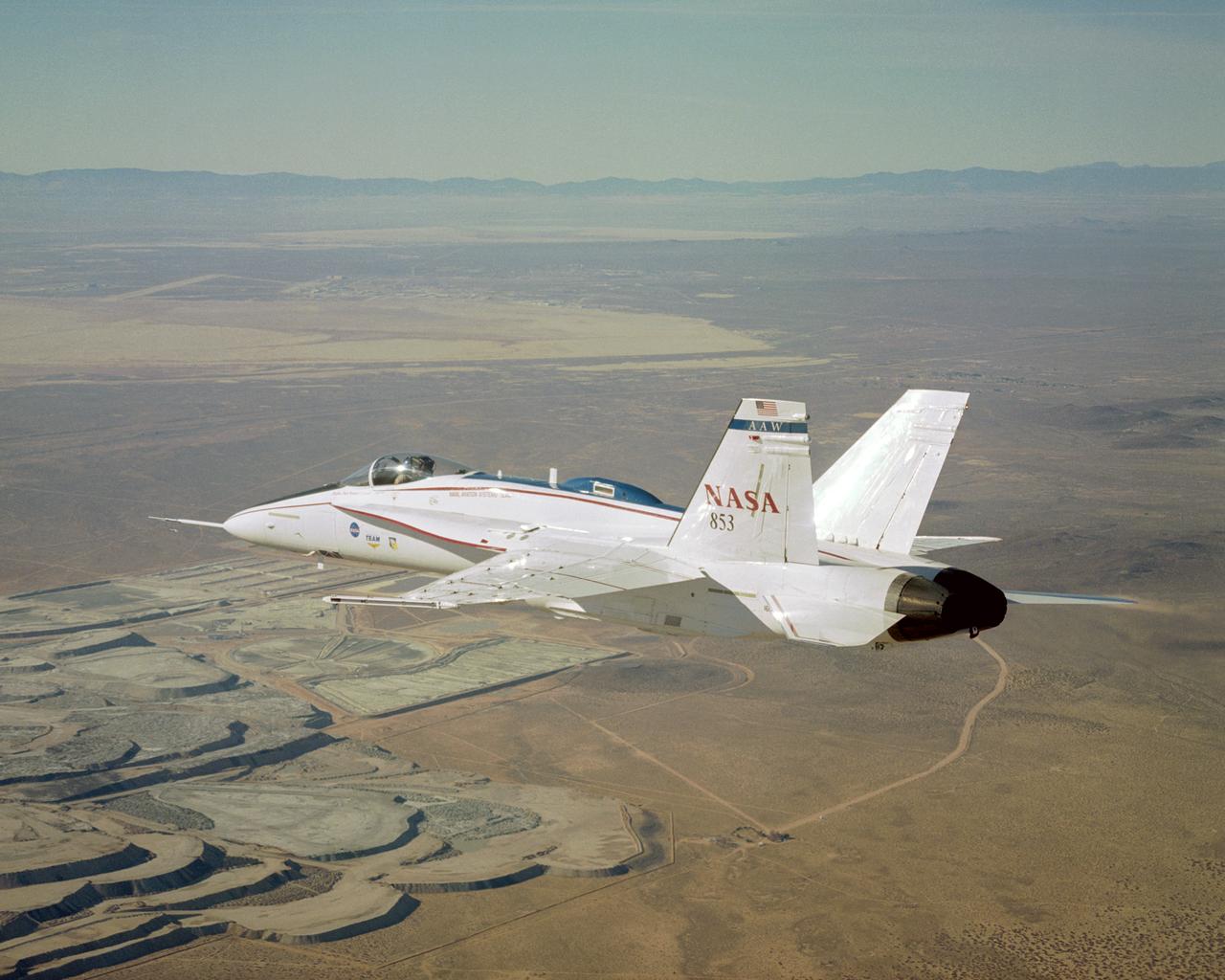
NASA's modified Active Aeroelastic Wing F/A-18 skims over portions of the U.S. Borax mine during a recent mission from the Dryden Flight Research Center.
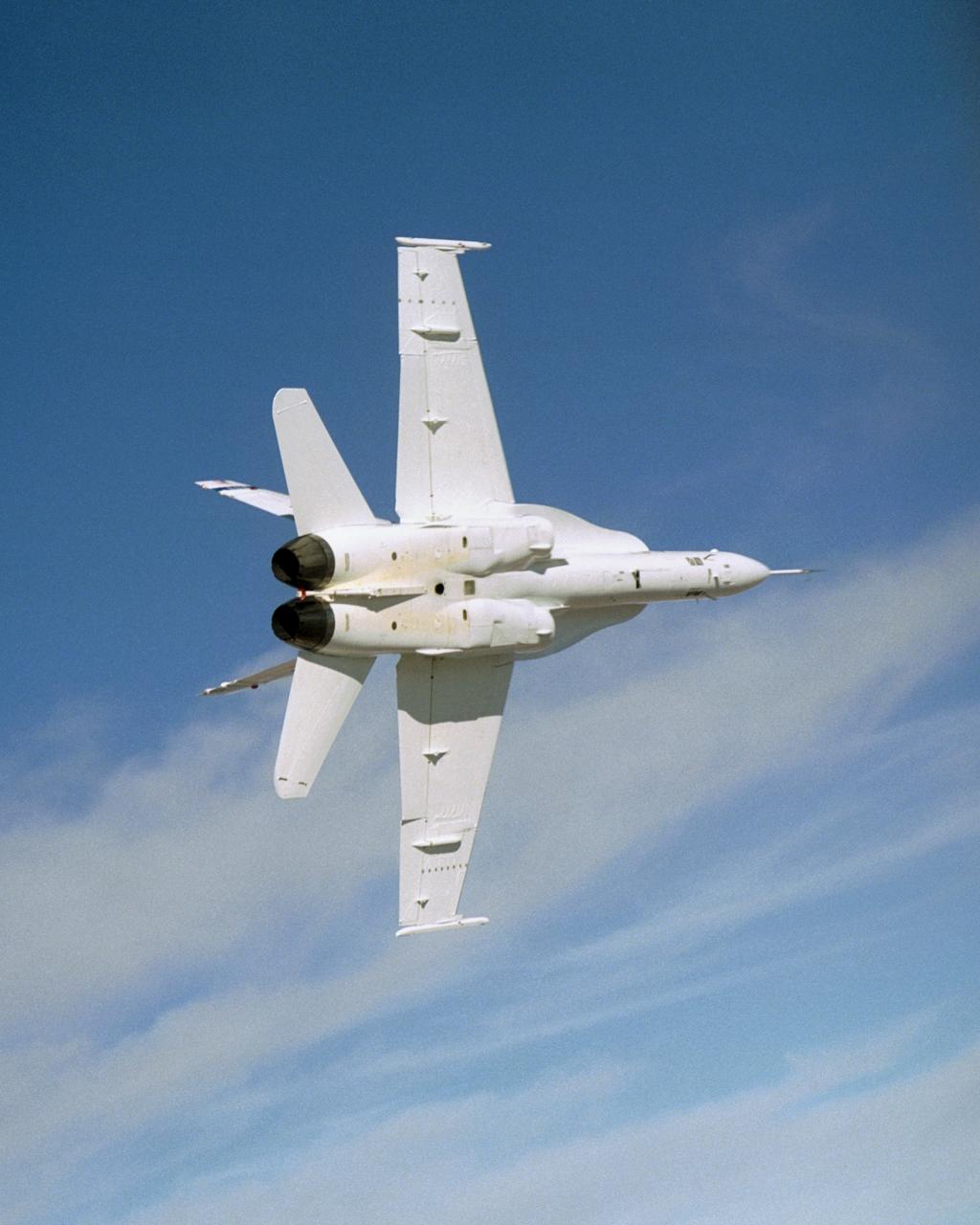
NASA's Active Aeroelastic Wing F/A-18 rolls into a hard left turn during a research flight in early December 2004 from the Dryden Flight Research Center.
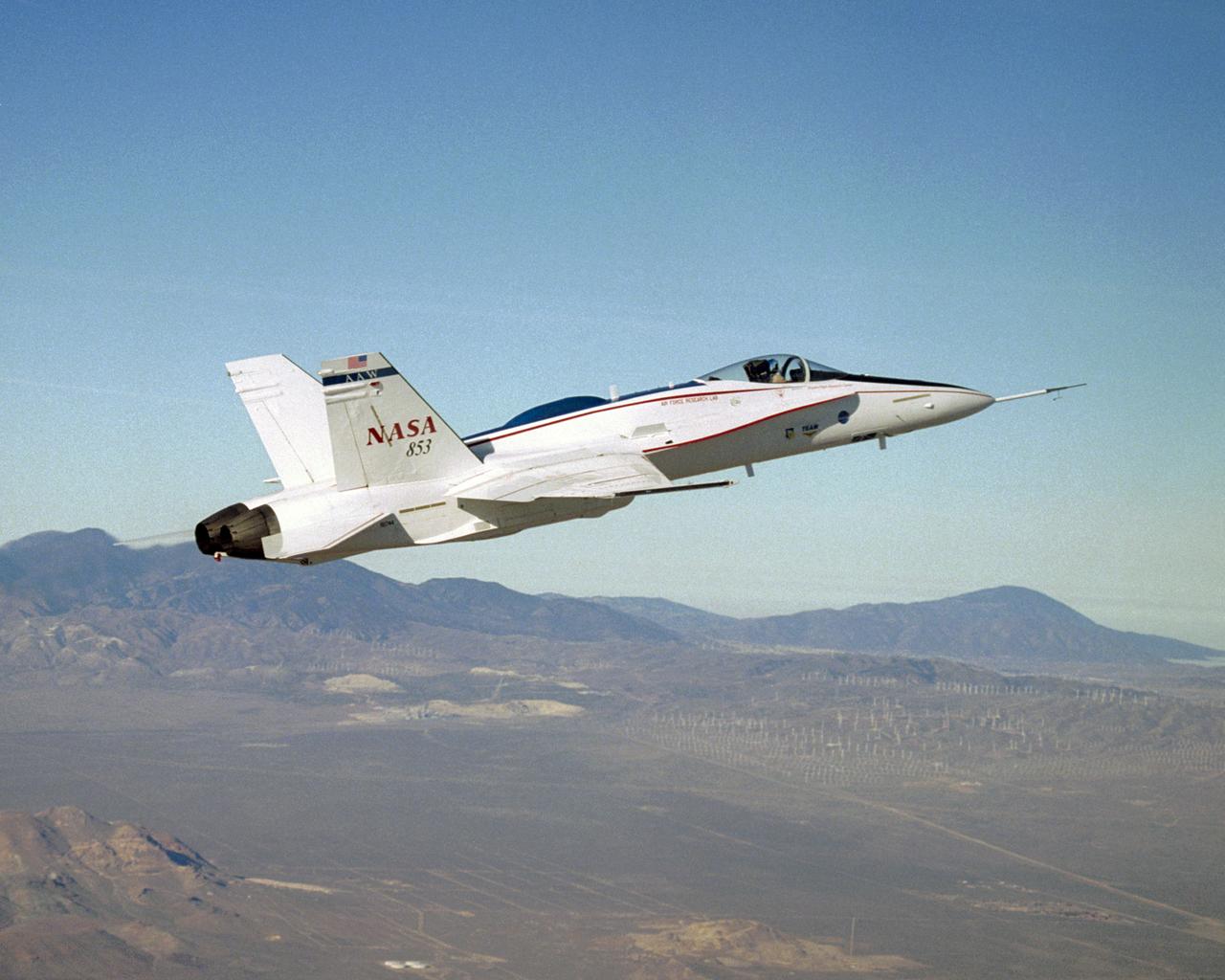
NASA's Active Aeroelastic Wing F/A-18 resumed flight tests in the second phase of the program at the Dryden Flight Research Center in early December 2004.
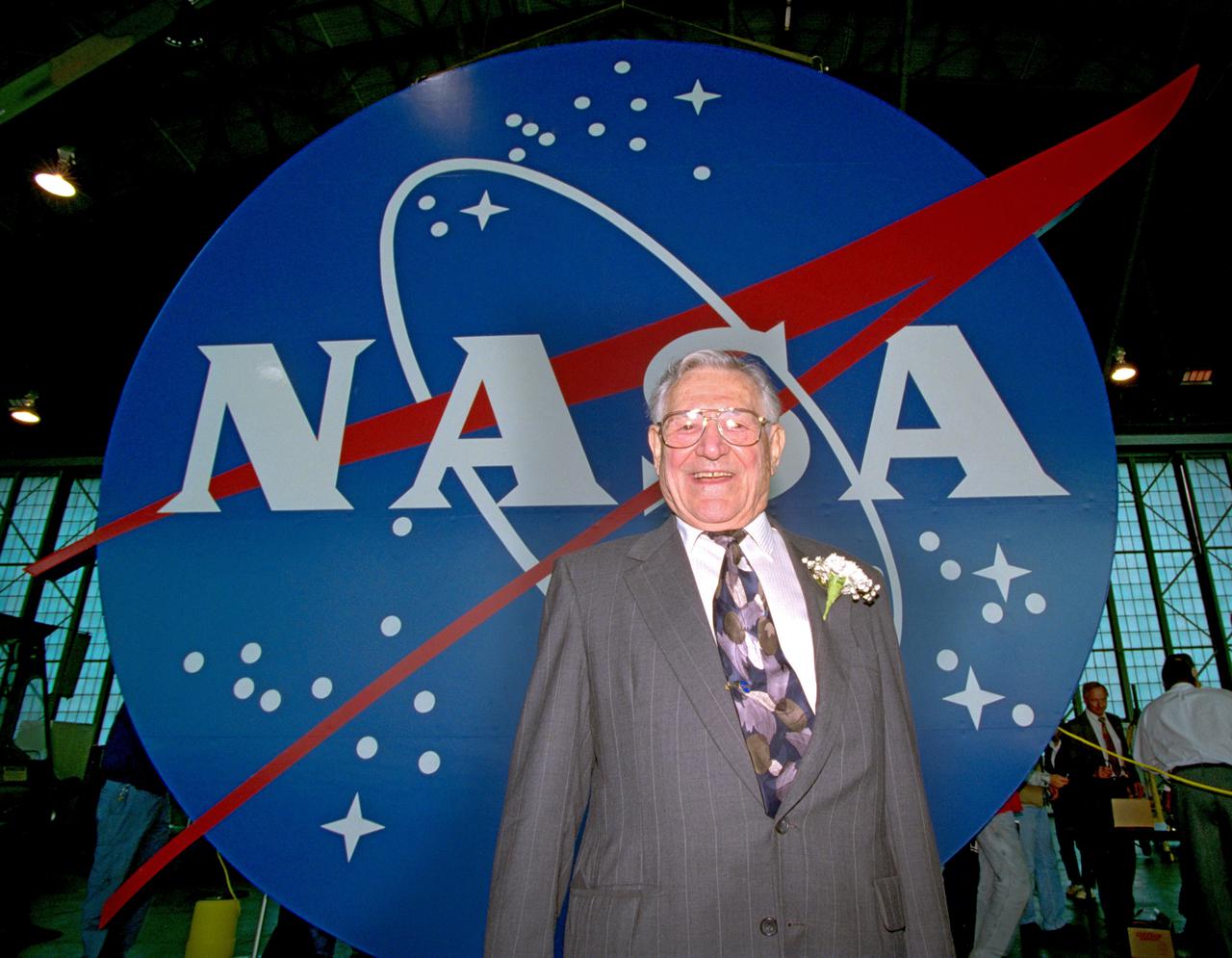
In 1949, after graduating from the Cleveland Institute of Art, James “Jim” Modarelli began his career as an artist-designer at the laboratory that would become the NASA Glenn Research Center. When the NACA was approved to be absorbed into the new space agency—NASA, employees were invited to submit designs for the Agency’s logo. Modarelli, who was serving as the Management Services Division Chief at the time, submitted the winning designs. The official NASA seal and the less formal NASA “meatball” insignia (shown here) are among the most recognized emblems in the world. The logos, which include symbols representing the space and aeronautics missions of NASA, became official in 1959. In July 1958, Modarelli participated in a tour at the Ames Unitary Plan Wind Tunnel, where he viewed a model of a radical supersonic airplane designed for flight at Mach 3.0. With a cambered, twisted arrow wing and an upturned nose, the model deeply impressed Modarelli. He later stylized the radical features of the arrow-wing configuration in his evolution of the NASA seal design; the wing would also become an element of the NASA insignia.
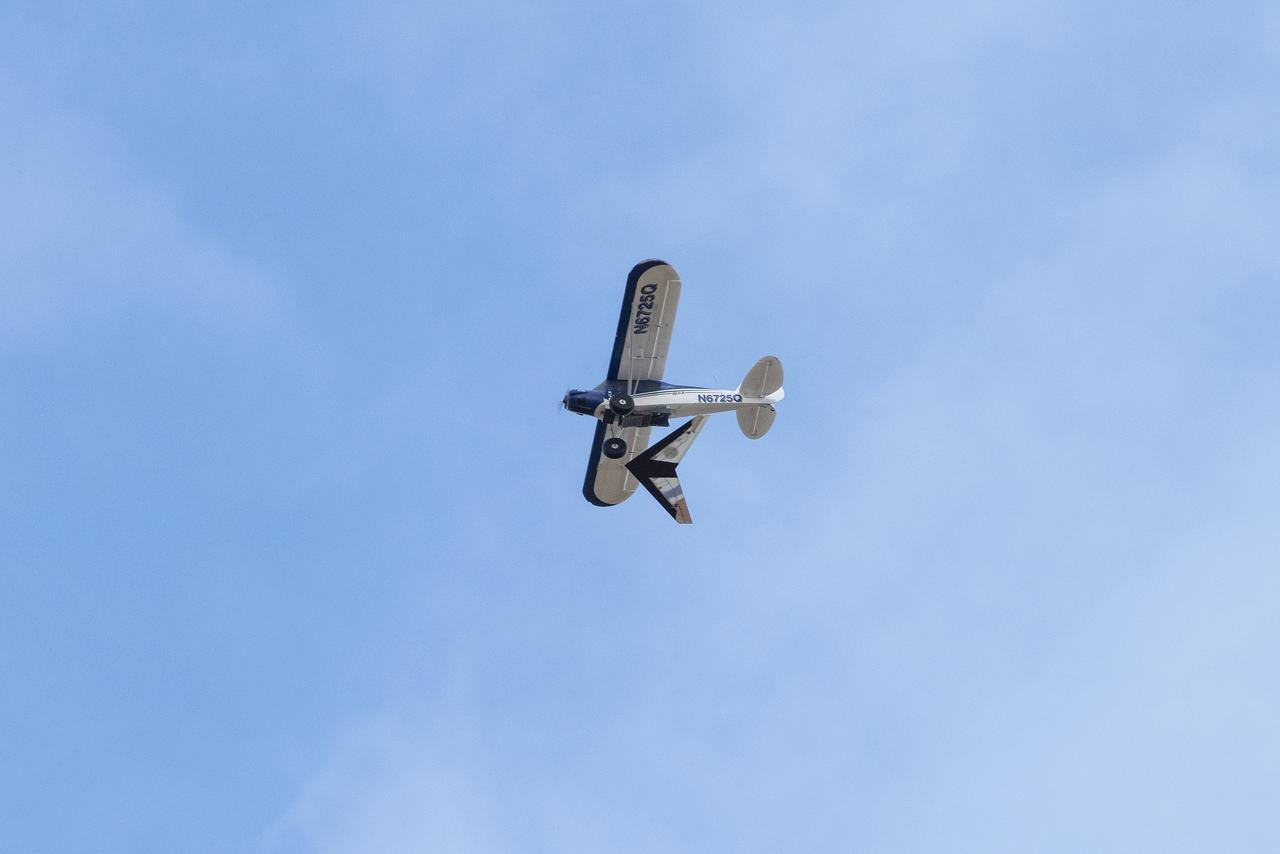
A Prandtl-M prototype is air launched from the Carbon Cub aircraft March 13, 2020, at NASA’s Armstrong Flight Research Center in California. The aircraft is the second of three prototypes of varying sizes to provide scientists with options to fly sensors in the Martian atmosphere to collect weather and landing site information for future human exploration of Mars.
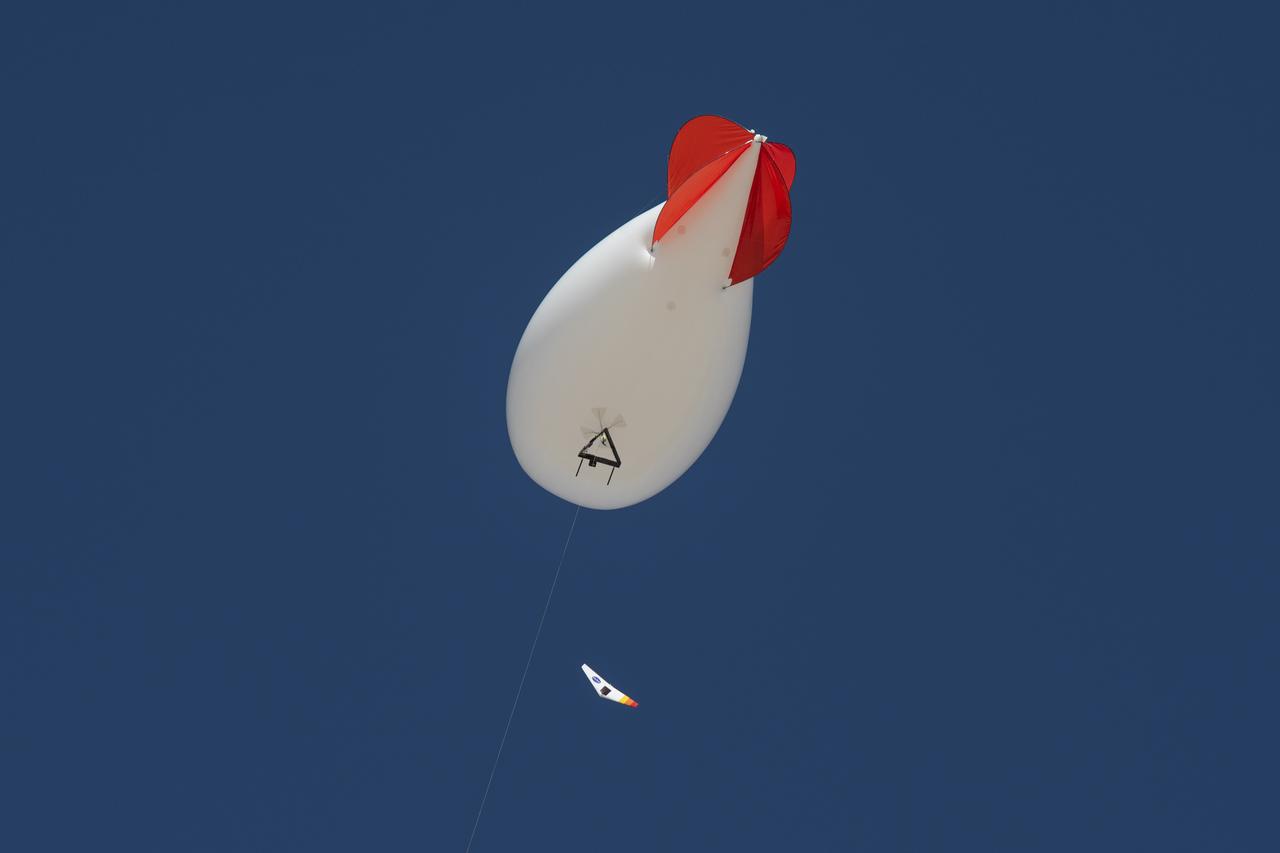
The first of three Prandtl-M prototype aircraft was air launched Aug. 16, 2019, from an Aerostat blimp at NASA’s Armstrong Flight Research Center in California. Three different prototypes of varying size, two still in development, eventually will be air launched from a weather balloon at 100,000 feet to simulate the atmosphere on Mars. The validated Prandtl-M could give scientists options to fly sensors in the Martian atmosphere to collect weather and landing site information for future human exploration of Mars.
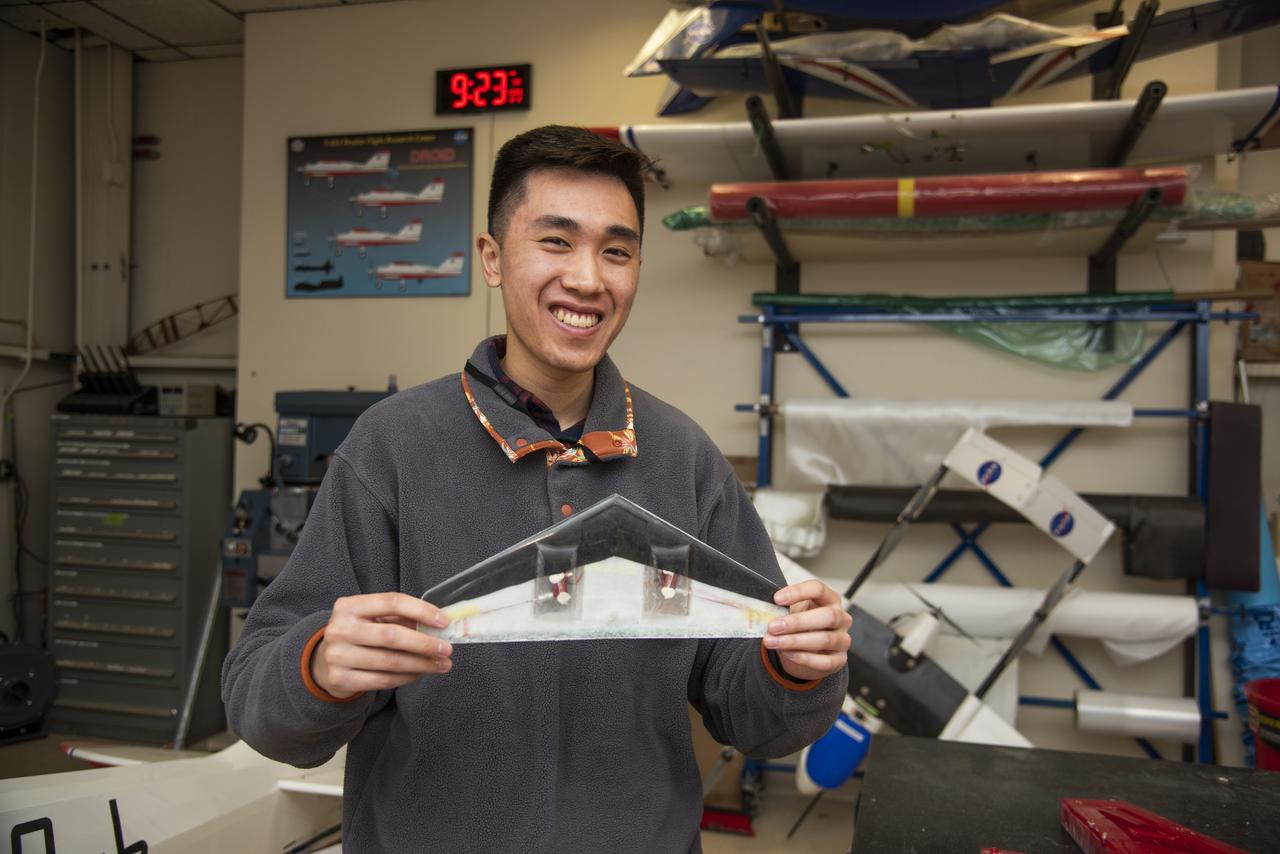
Nathan Sam shows the Prandtl-M aircraft he helped fabricate at NASA’s Armstrong Flight Research Center in California. The aircraft is the second of three prototypes of varying sizes to provide scientists with options to fly sensors in the Martian atmosphere to collect weather and landing site information for future human exploration of Mars.
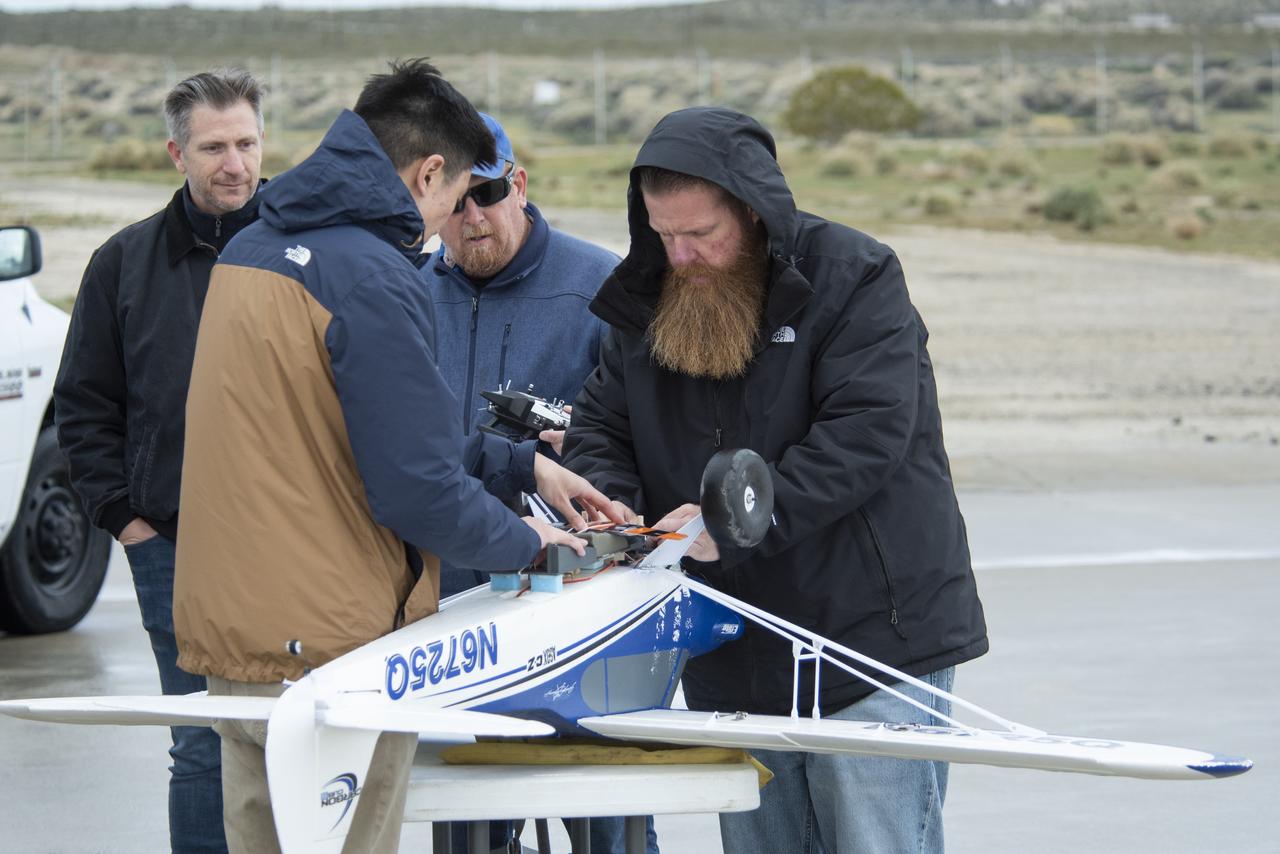
From left Eric Becker watches as Nathan Sam, Robert 'Red' Jensen and Justin Hall attach a Prandtl-M aircraft onto the Carbon Cub aircraft that air launched it at NASA's Armstrong Flight Research Center in California. The aircraft is the second of three prototypes of varying sizes to provide scientists with options to fly sensors in the Martian atmosphere to collect weather and landing site information for future human exploration of Mars.

Nathan Sam and Robert “Red†Jensen lay material into a Prandtl-M aircraft mold at NASA’s Armstrong Flight Research Center in California. The aircraft is the second of three prototypes of varying sizes to provide scientists with options to fly sensors in the Martian atmosphere to collect weather and landing site information for future human exploration of Mars.