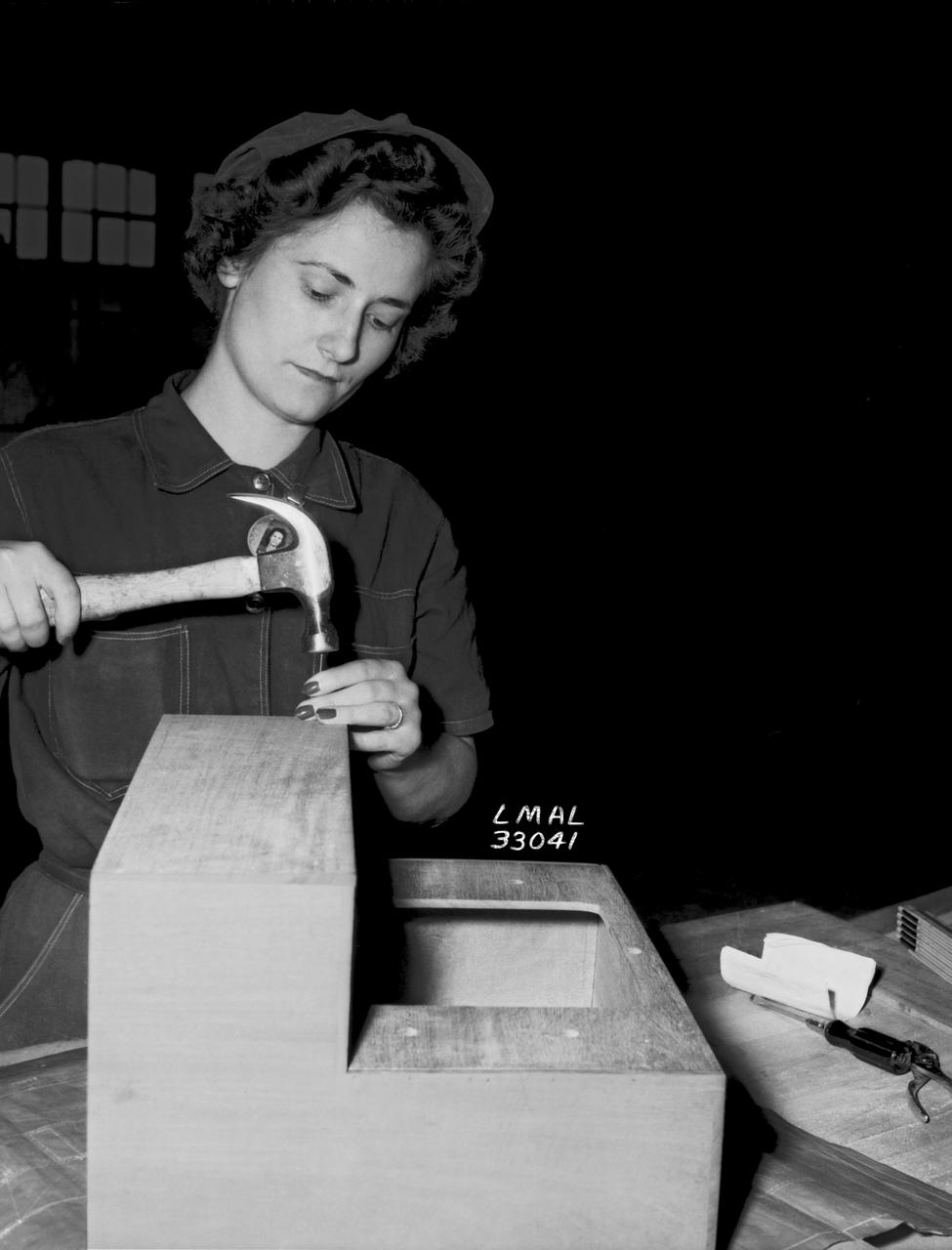
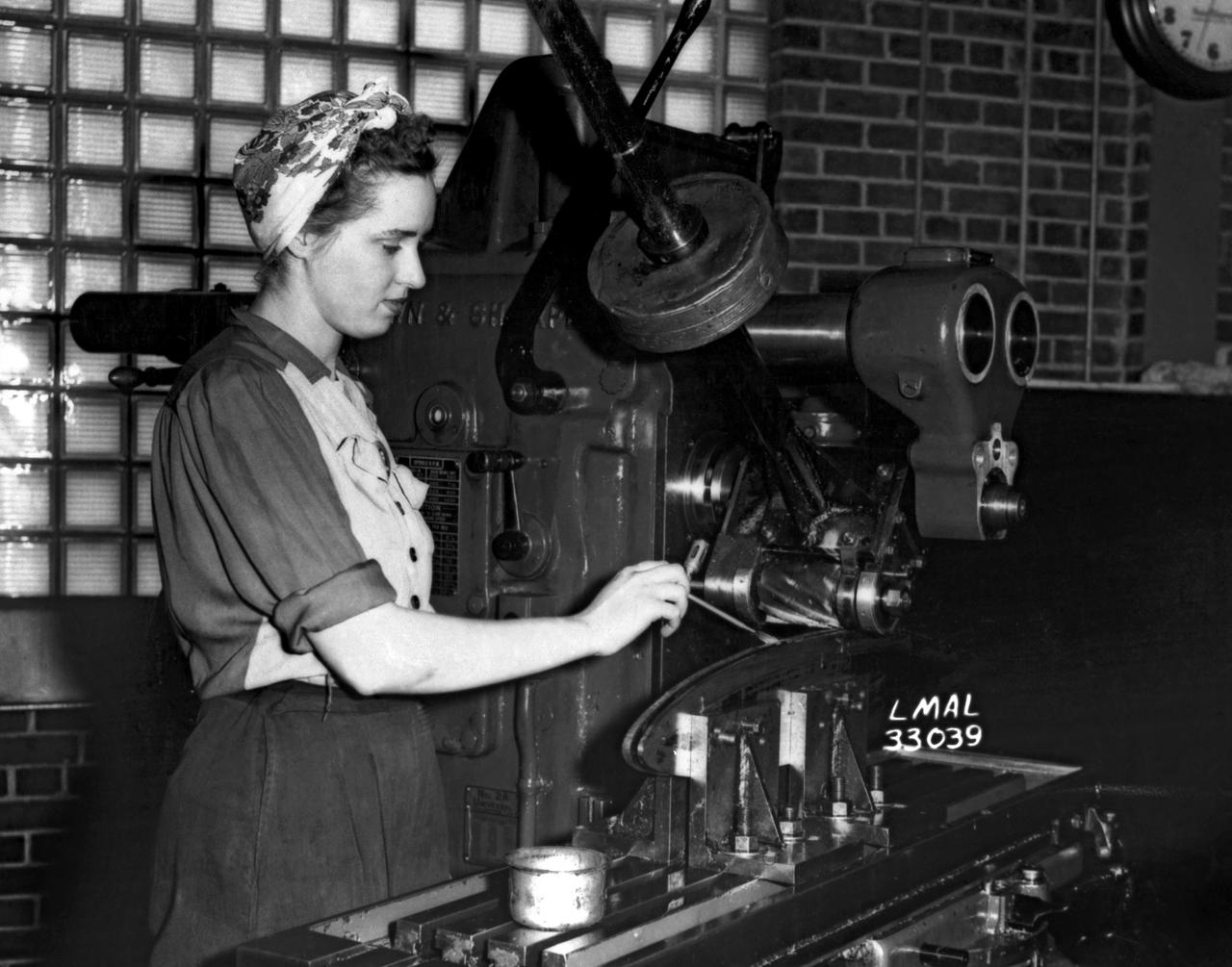
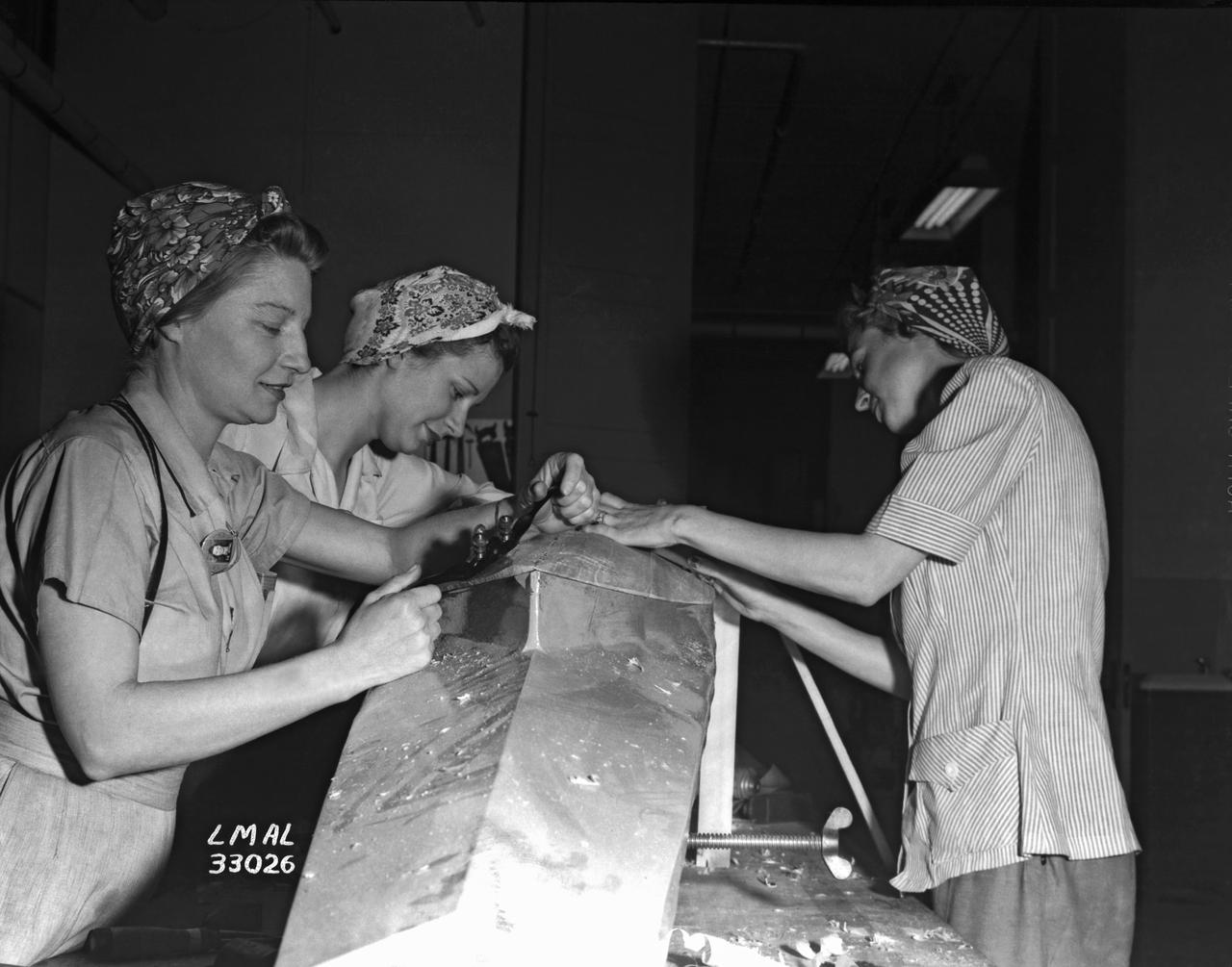
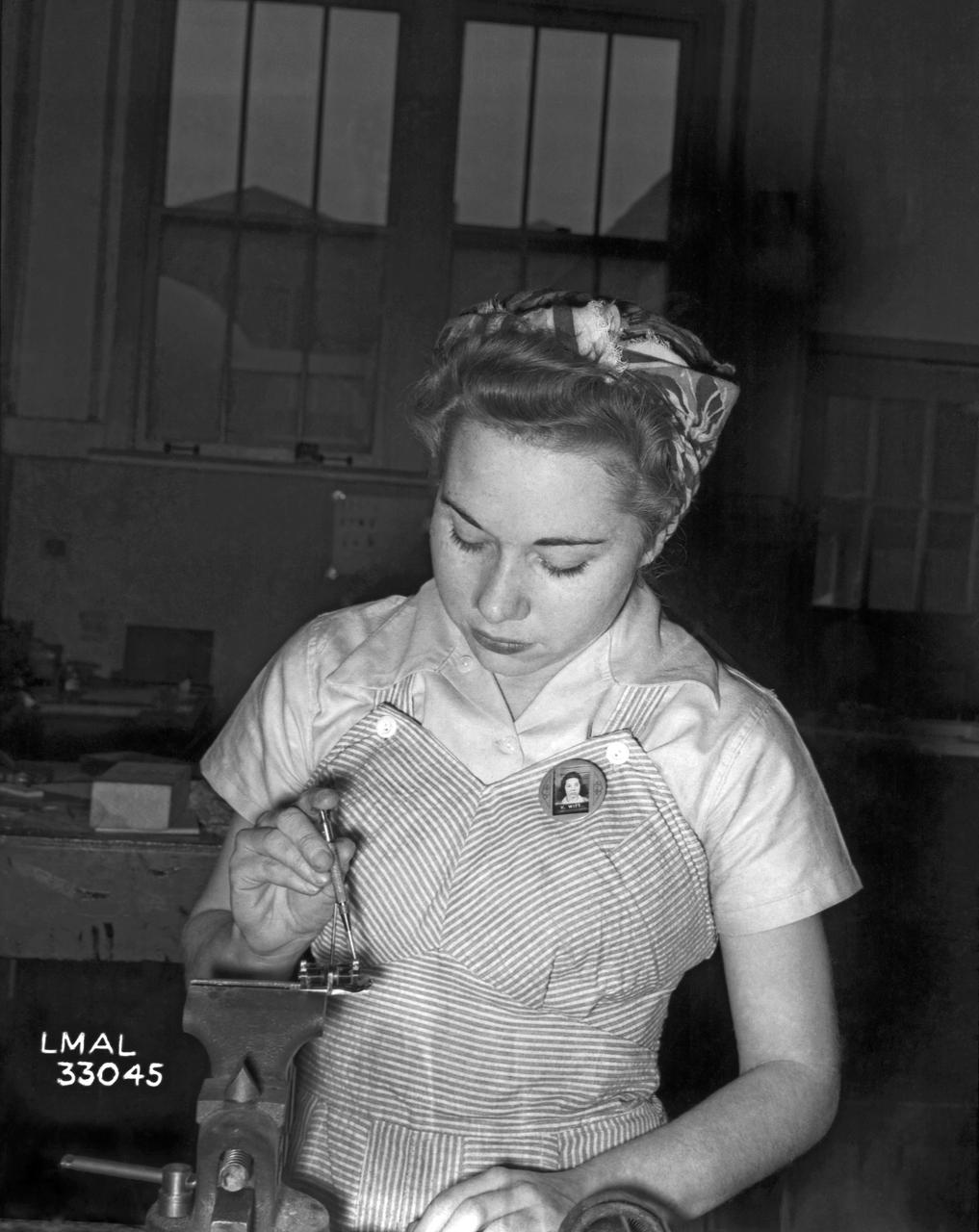
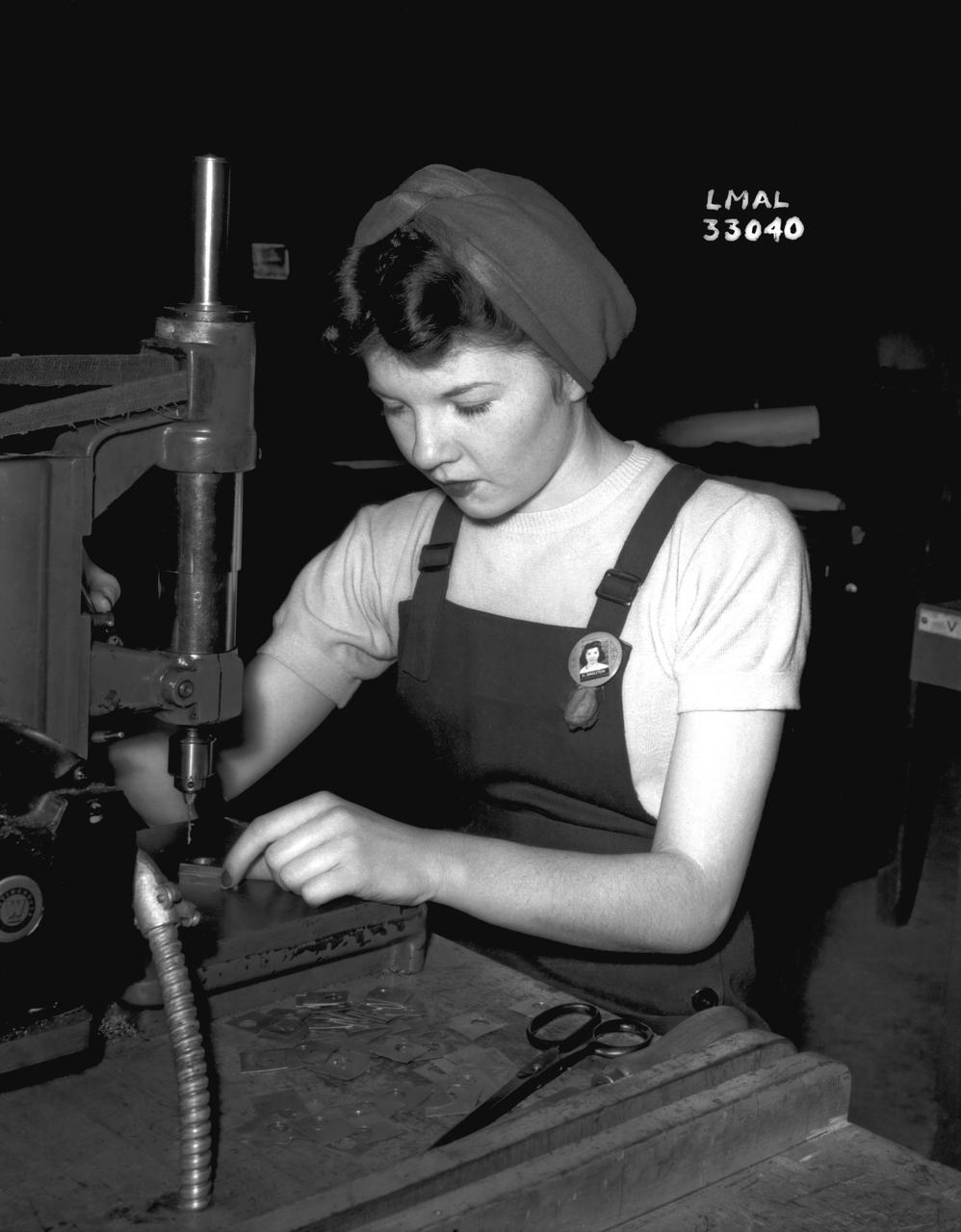
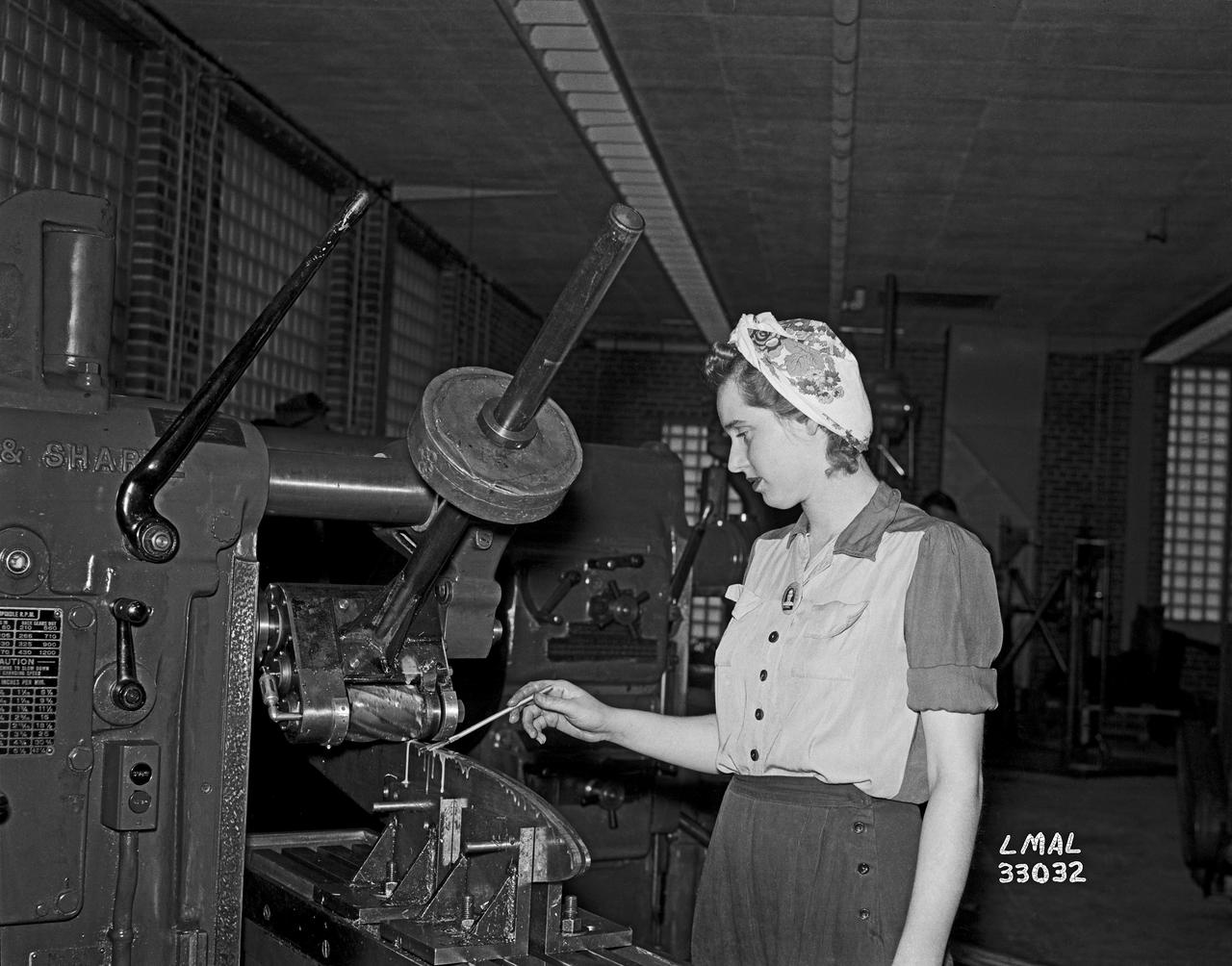
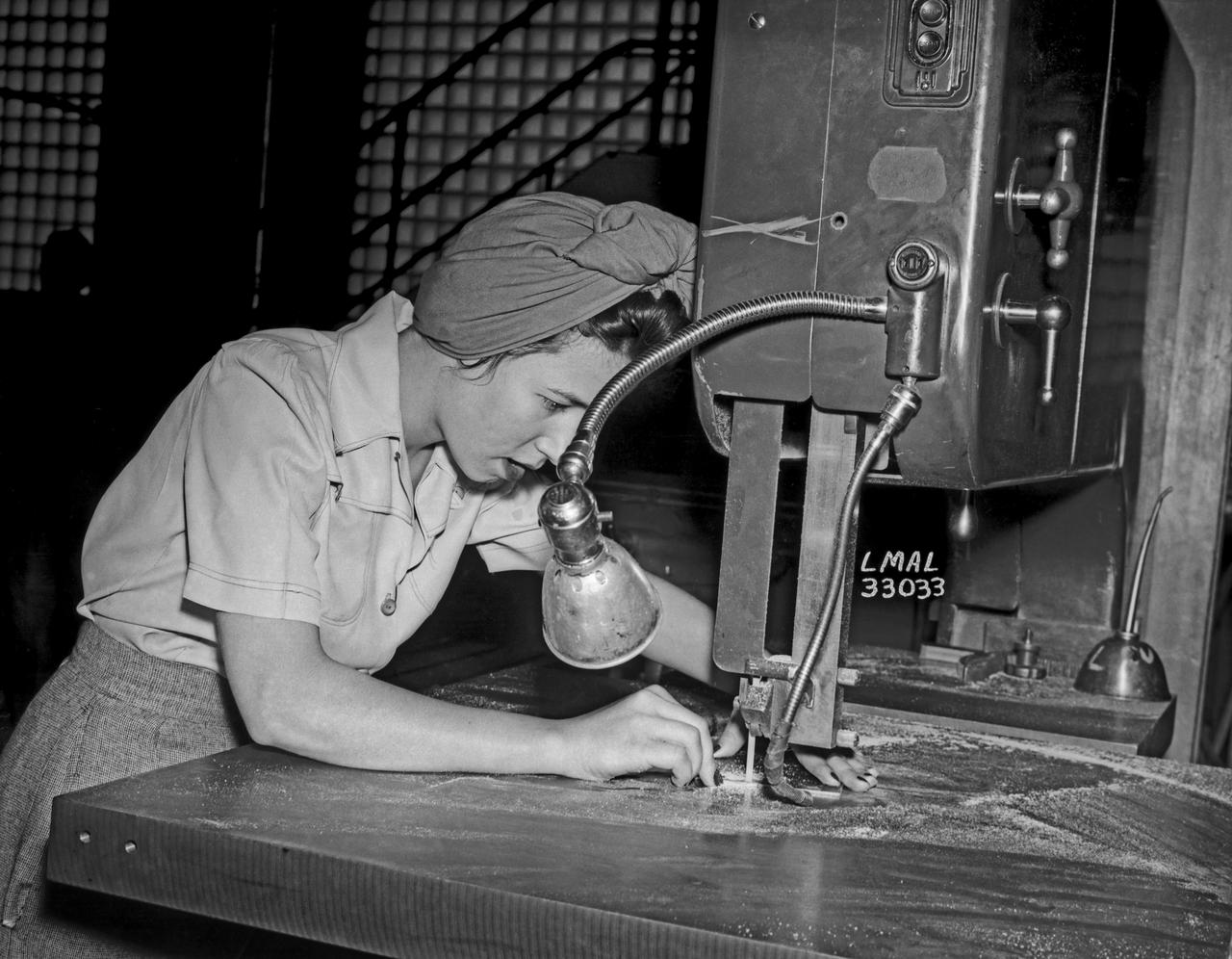
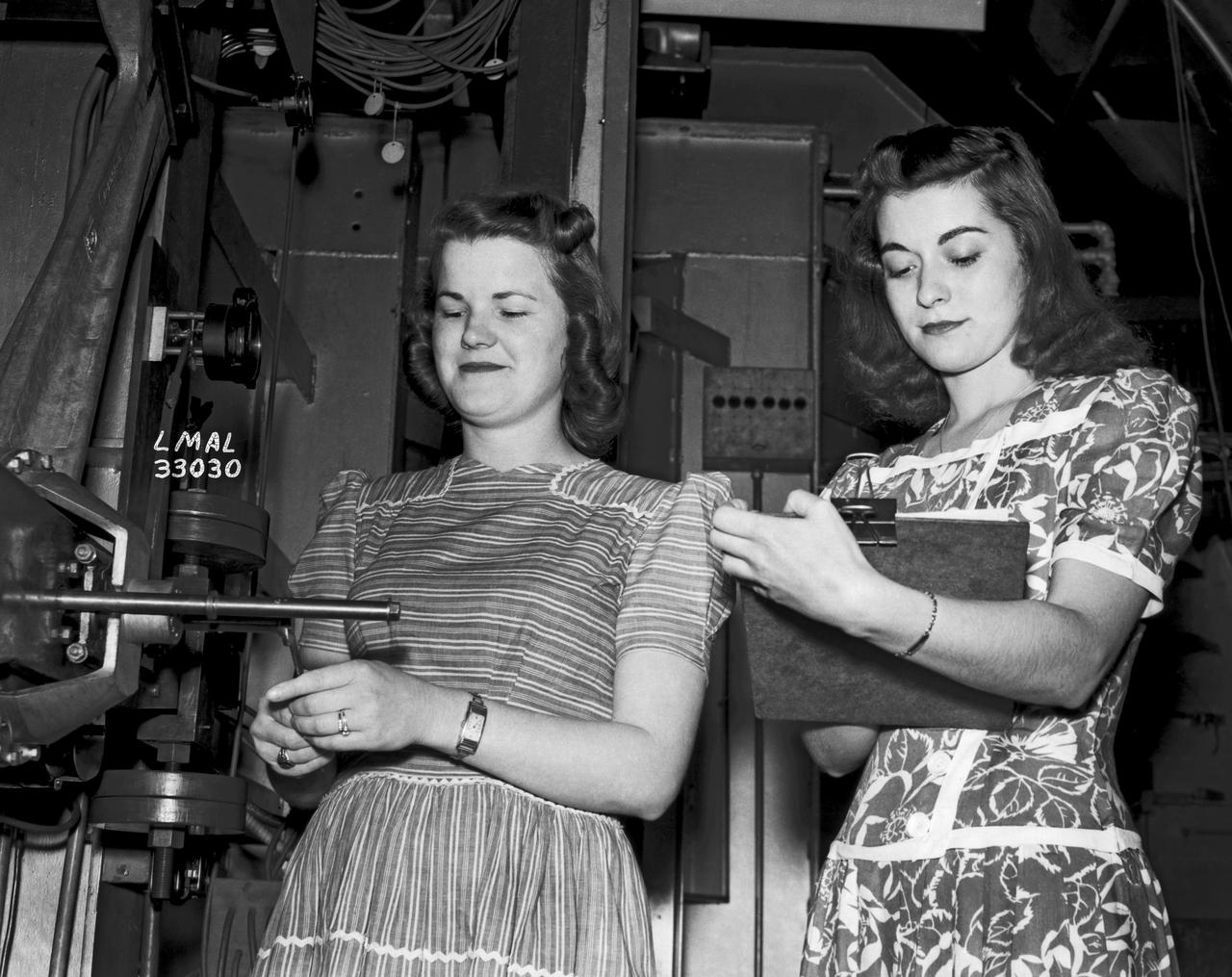
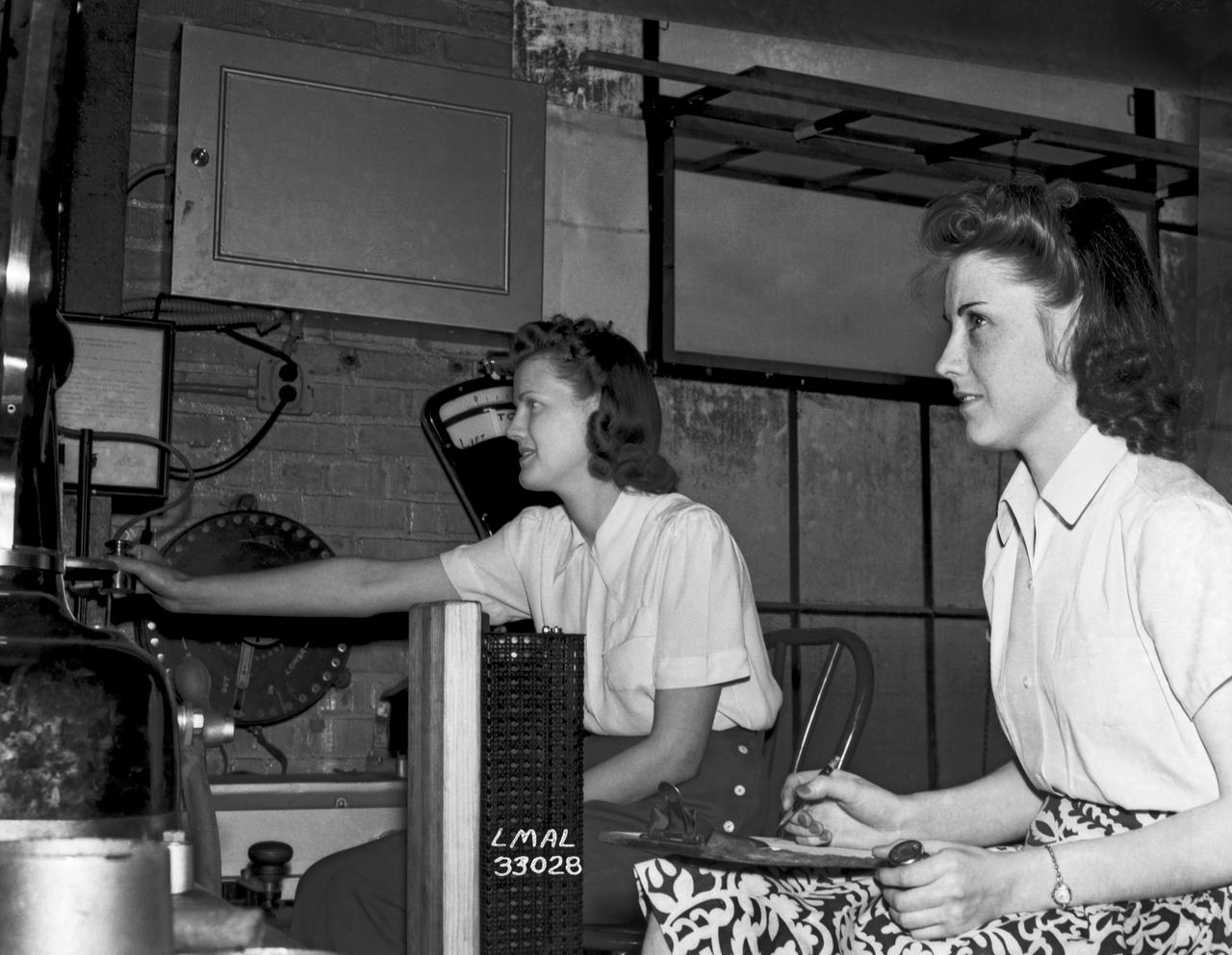
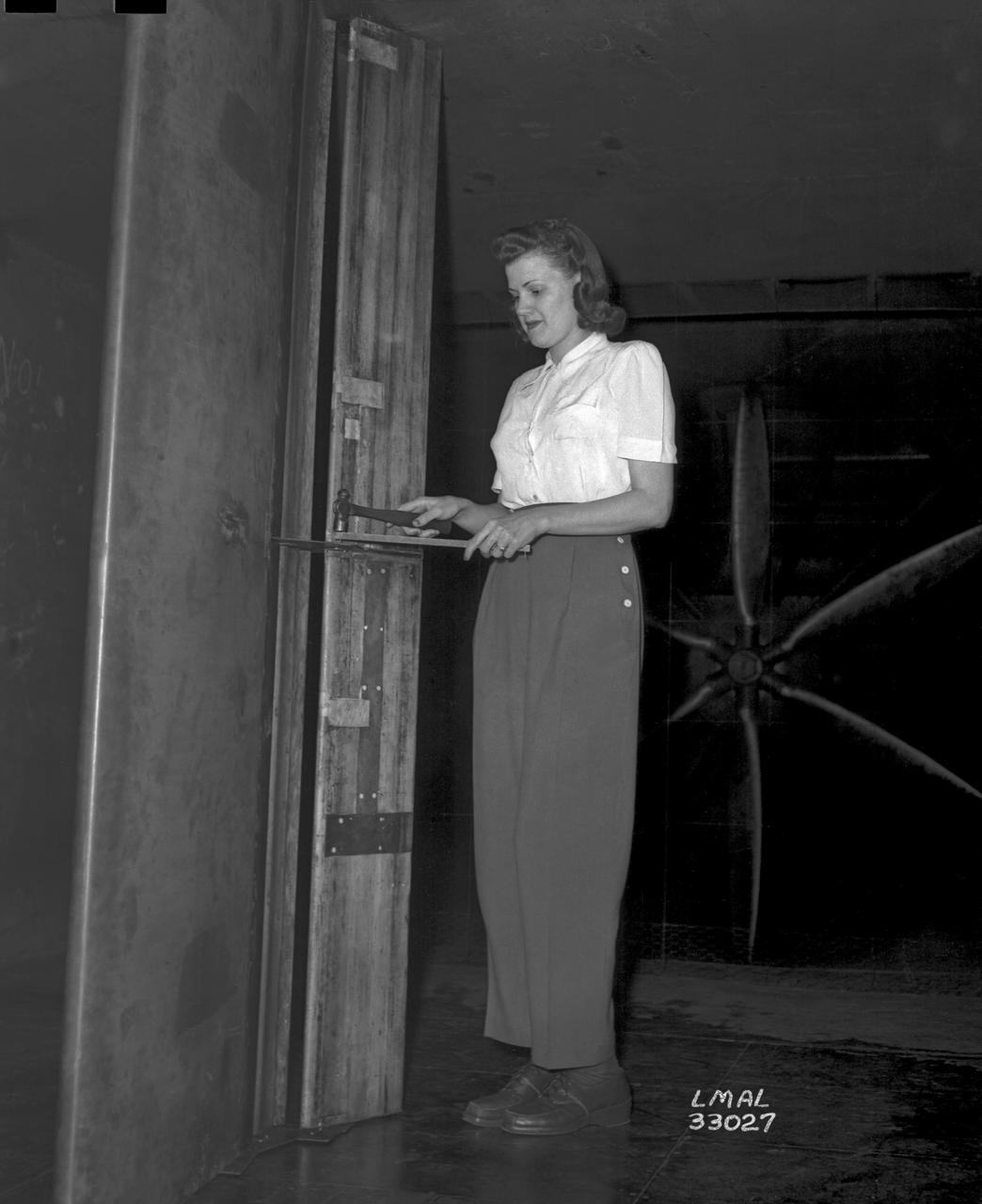
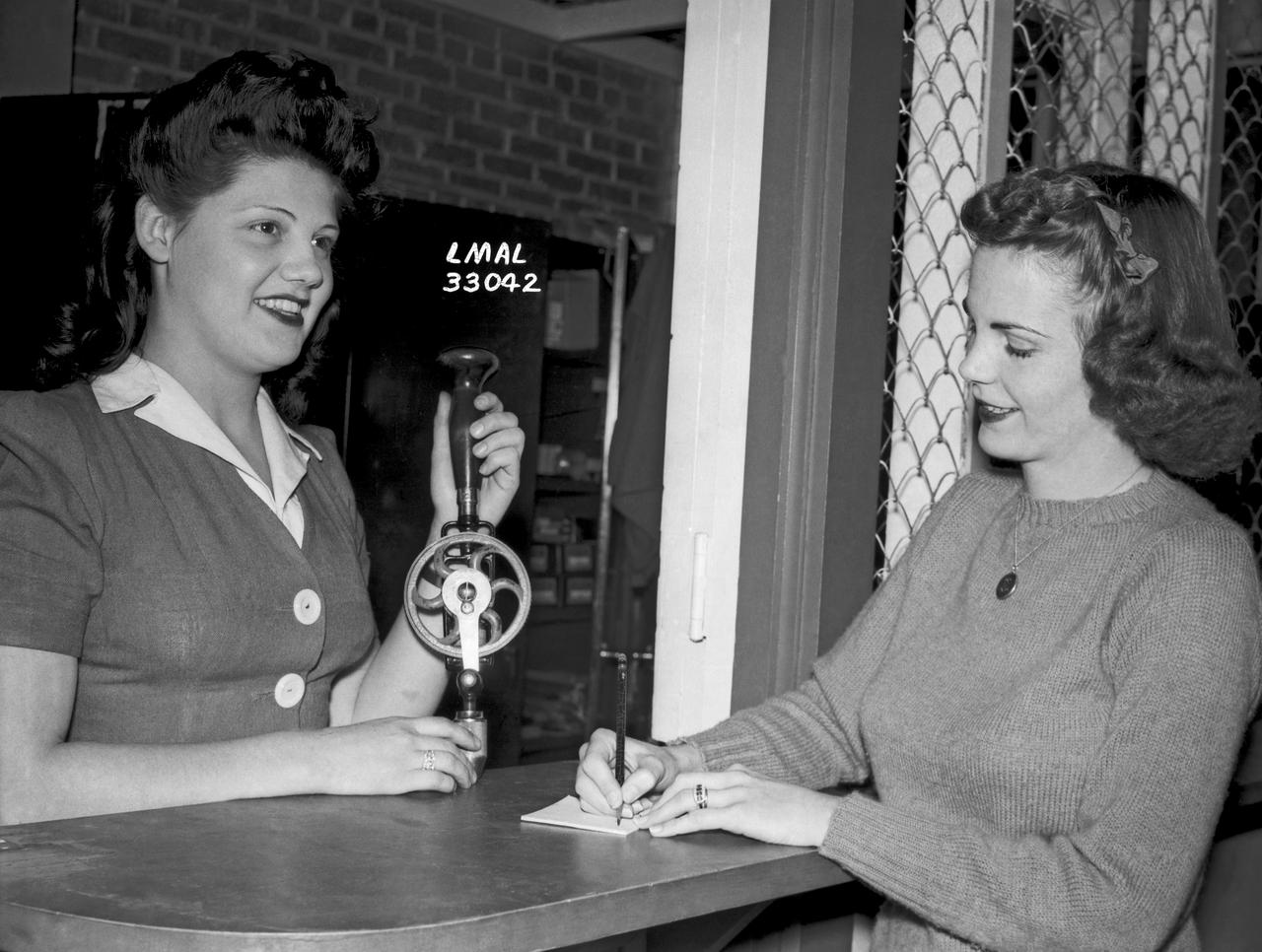
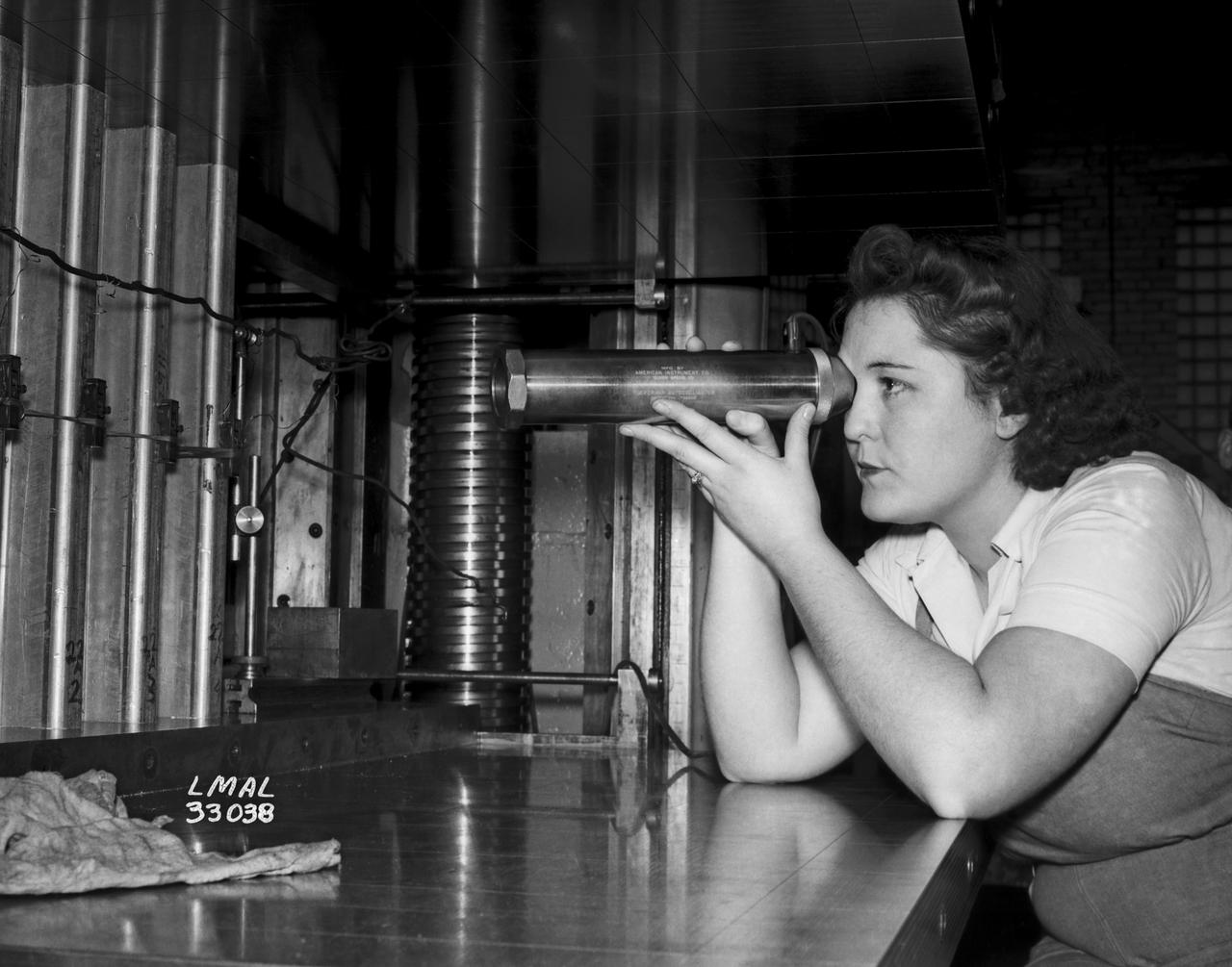
Women Adequately Filling Posts in NACA Laboratory: Nearly 200 women are employed at the Langley Laboratory of the National Advisory Committee for Aeronautics in a limited capacity as mechanics’ helpers and minor laboratory aids on the jobs formerly handled by men, according to E.H. Derring, of the Aerodynamics Division. Many phases of the operations of various wind tunnels at the laboratory are now handled by women with experienced male supervision. Mr. Derring said, pointing out that the reading of the data indicated on wind tunnel instruments during a test is done in a large measure by women. In addition to reading the instruments and computing and integrating engineering test data obtained from tunnel investigations, the minor laboratory aides assist in the preparation of aircraft models preliminary to testing. Women employees who will serve in the Aerodynamics Division of the Laboratory attend an orientation class for two weeks, during which they receive instruction on phases of the work they will do and their aptitudes for different types of work are evaluated in order that they may be properly placed. More than 100 women are employed in minor laboratory apprentices, performing mechanical work heretofore done by men. These women are employed in the various shops of the laboratory. Women in the woodworking shops are taught to operate 15 different machines in carrying out their assignments. Norfolk new paper article from 1943 by Lee Dickinson.
Women Adequately Filling Posts in NACA Laboratory: Nearly 200 women are employed at the Langley Laboratory of the National Advisory Committee for Aeronautics in a limited capacity as mechanics’ helpers and minor laboratory aids on the jobs formerly handled by men, according to E.H. Derring, of the Aerodynamics Division. Many phases of the operations of various wind tunnels at the laboratory are now handled by women with experienced male supervision. Mr. Derring said, pointing out that the reading of the data indicated on wind tunnel instruments during a test is done in a large measure by women. In addition to reading the instruments and computing and integrating engineering test data obtained from tunnel investigations, the minor laboratory aides assist in the preparation of aircraft models preliminary to testing. Women employees who will serve in the Aerodynamics Division of the Laboratory attend an orientation class for two weeks, during which they receive instruction on phases of the work they will do and their aptitudes for different types of work are evaluated in order that they may be properly placed. More than 100 women are employed in minor laboratory apprentices, performing mechanical work heretofore done by men. These women are employed in the various shops of the laboratory. Women in the woodworking shops are taught to operate 15 different machines in carrying out their assignments. Norfolk new paper article from 1943 by Lee Dickinson.
Women Adequately Filling Posts in NACA Laboratory: Nearly 200 women are employed at the Langley Laboratory of the National Advisory Committee for Aeronautics in a limited capacity as mechanics’ helpers and minor laboratory aids on the jobs formerly handled by men, according to E.H. Derring, of the Aerodynamics Division. Many phases of the operations of various wind tunnels at the laboratory are now handled by women with experienced male supervision. Mr. Derring said, pointing out that the reading of the data indicated on wind tunnel instruments during a test is done in a large measure by women. In addition to reading the instruments and computing and integrating engineering test data obtained from tunnel investigations, the minor laboratory aides assist in the preparation of aircraft models preliminary to testing. Women employees who will serve in the Aerodynamics Division of the Laboratory attend an orientation class for two weeks, during which they receive instruction on phases of the work they will do and their aptitudes for different types of work are evaluated in order that they may be properly placed. More than 100 women are employed in minor laboratory apprentices, performing mechanical work heretofore done by men. These women are employed in the various shops of the laboratory. Women in the woodworking shops are taught to operate 15 different machines in carrying out their assignments. Norfolk new paper article from 1943 by Lee Dickinson.
Women Adequately Filling Posts in NACA Laboratory: Nearly 200 women are employed at the Langley Laboratory of the National Advisory Committee for Aeronautics in a limited capacity as mechanics’ helpers and minor laboratory aids on the jobs formerly handled by men, according to E.H. Derring, of the Aerodynamics Division. Many phases of the operations of various wind tunnels at the laboratory are now handled by women with experienced male supervision. Mr. Derring said, pointing out that the reading of the data indicated on wind tunnel instruments during a test is done in a large measure by women. In addition to reading the instruments and computing and integrating engineering test data obtained from tunnel investigations, the minor laboratory aides assist in the preparation of aircraft models preliminary to testing. Women employees who will serve in the Aerodynamics Division of the Laboratory attend an orientation class for two weeks, during which they receive instruction on phases of the work they will do and their aptitudes for different types of work are evaluated in order that they may be properly placed. More than 100 women are employed in minor laboratory apprentices, performing mechanical work heretofore done by men. These women are employed in the various shops of the laboratory. Women in the woodworking shops are taught to operate 15 different machines in carrying out their assignments. Norfolk new paper article from 1943 by Lee Dickinson.
Women Adequately Filling Posts in NACA Laboratory: Nearly 200 women are employed at the Langley Laboratory of the National Advisory Committee for Aeronautics in a limited capacity as mechanics’ helpers and minor laboratory aids on the jobs formerly handled by men, according to E.H. Derring, of the Aerodynamics Division. Many phases of the operations of various wind tunnels at the laboratory are now handled by women with experienced male supervision. Mr. Derring said, pointing out that the reading of the data indicated on wind tunnel instruments during a test is done in a large measure by women. In addition to reading the instruments and computing and integrating engineering test data obtained from tunnel investigations, the minor laboratory aides assist in the preparation of aircraft models preliminary to testing. Women employees who will serve in the Aerodynamics Division of the Laboratory attend an orientation class for two weeks, during which they receive instruction on phases of the work they will do and their aptitudes for different types of work are evaluated in order that they may be properly placed. More than 100 women are employed in minor laboratory apprentices, performing mechanical work heretofore done by men. These women are employed in the various shops of the laboratory. Women in the woodworking shops are taught to operate 15 different machines in carrying out their assignments. Norfolk new paper article from 1943 by Lee Dickinson.

Women Adequately Filling Posts in NACA Laboratory: Nearly 200 women are employed at the Langley Laboratory of the National Advisory Committee for Aeronautics in a limited capacity as mechanics’ helpers and minor laboratory aids on the jobs formerly handled by men, according to E.H. Derring, of the Aerodynamics Division. Many phases of the operations of various wind tunnels at the laboratory are now handled by women with experienced male supervision. Mr. Derring said, pointing out that the reading of the data indicated on wind tunnel instruments during a test is done in a large measure by women. In addition to reading the instruments and computing and integrating engineering test data obtained from tunnel investigations, the minor laboratory aides assist in the preparation of aircraft models preliminary to testing. Women employees who will serve in the Aerodynamics Division of the Laboratory attend an orientation class for two weeks, during which they receive instruction on phases of the work they will do and their aptitudes for different types of work are evaluated in order that they may be properly placed. More than 100 women are employed in minor laboratory apprentices, performing mechanical work heretofore done by men. These women are employed in the various shops of the laboratory. Women in the woodworking shops are taught to operate 15 different machines in carrying out their assignments. Norfolk new paper article from 1943 by Lee Dickinson.
Women Adequately Filling Posts in NACA Laboratory: Nearly 200 women are employed at the Langley Laboratory of the National Advisory Committee for Aeronautics in a limited capacity as mechanics’ helpers and minor laboratory aids on the jobs formerly handled by men, according to E.H. Derring, of the Aerodynamics Division. Many phases of the operations of various wind tunnels at the laboratory are now handled by women with experienced male supervision. Mr. Derring said, pointing out that the reading of the data indicated on wind tunnel instruments during a test is done in a large measure by women. In addition to reading the instruments and computing and integrating engineering test data obtained from tunnel investigations, the minor laboratory aides assist in the preparation of aircraft models preliminary to testing. Women employees who will serve in the Aerodynamics Division of the Laboratory attend an orientation class for two weeks, during which they receive instruction on phases of the work they will do and their aptitudes for different types of work are evaluated in order that they may be properly placed. More than 100 women are employed in minor laboratory apprentices, performing mechanical work heretofore done by men. These women are employed in the various shops of the laboratory. Women in the woodworking shops are taught to operate 15 different machines in carrying out their assignments. Norfolk new paper article from 1943 by Lee Dickinson.
Women Adequately Filling Posts in NACA Laboratory: Nearly 200 women are employed at the Langley Laboratory of the National Advisory Committee for Aeronautics in a limited capacity as mechanics’ helpers and minor laboratory aids on the jobs formerly handled by men, according to E.H. Derring, of the Aerodynamics Division. Many phases of the operations of various wind tunnels at the laboratory are now handled by women with experienced male supervision. Mr. Derring said, pointing out that the reading of the data indicated on wind tunnel instruments during a test is done in a large measure by women. In addition to reading the instruments and computing and integrating engineering test data obtained from tunnel investigations, the minor laboratory aides assist in the preparation of aircraft models preliminary to testing. Women employees who will serve in the Aerodynamics Division of the Laboratory attend an orientation class for two weeks, during which they receive instruction on phases of the work they will do and their aptitudes for different types of work are evaluated in order that they may be properly placed. More than 100 women are employed in minor laboratory apprentices, performing mechanical work heretofore done by men. These women are employed in the various shops of the laboratory. Women in the woodworking shops are taught to operate 15 different machines in carrying out their assignments. Norfolk new paper article from 1943 by Lee Dickinson.
Women Adequately Filling Posts in NACA Laboratory: Nearly 200 women are employed at the Langley Laboratory of the National Advisory Committee for Aeronautics in a limited capacity as mechanics’ helpers and minor laboratory aids on the jobs formerly handled by men, according to E.H. Derring, of the Aerodynamics Division. Many phases of the operations of various wind tunnels at the laboratory are now handled by women with experienced male supervision. Mr. Derring said, pointing out that the reading of the data indicated on wind tunnel instruments during a test is done in a large measure by women. In addition to reading the instruments and computing and integrating engineering test data obtained from tunnel investigations, the minor laboratory aides assist in the preparation of aircraft models preliminary to testing. Women employees who will serve in the Aerodynamics Division of the Laboratory attend an orientation class for two weeks, during which they receive instruction on phases of the work they will do and their aptitudes for different types of work are evaluated in order that they may be properly placed. More than 100 women are employed in minor laboratory apprentices, performing mechanical work heretofore done by men. These women are employed in the various shops of the laboratory. Women in the woodworking shops are taught to operate 15 different machines in carrying out their assignments. Norfolk new paper article from 1943 by Lee Dickinson.
Women Adequately Filling Posts in NACA Laboratory: Nearly 200 women are employed at the Langley Laboratory of the National Advisory Committee for Aeronautics in a limited capacity as mechanics’ helpers and minor laboratory aids on the jobs formerly handled by men, according to E.H. Derring, of the Aerodynamics Division. Many phases of the operations of various wind tunnels at the laboratory are now handled by women with experienced male supervision. Mr. Derring said, pointing out that the reading of the data indicated on wind tunnel instruments during a test is done in a large measure by women. In addition to reading the instruments and computing and integrating engineering test data obtained from tunnel investigations, the minor laboratory aides assist in the preparation of aircraft models preliminary to testing. Women employees who will serve in the Aerodynamics Division of the Laboratory attend an orientation class for two weeks, during which they receive instruction on phases of the work they will do and their aptitudes for different types of work are evaluated in order that they may be properly placed. More than 100 women are employed in minor laboratory apprentices, performing mechanical work heretofore done by men. These women are employed in the various shops of the laboratory. Women in the woodworking shops are taught to operate 15 different machines in carrying out their assignments. Norfolk new paper article from 1943 by Lee Dickinson.
Women Adequately Filling Posts in NACA Laboratory: Nearly 200 women are employed at the Langley Laboratory of the National Advisory Committee for Aeronautics in a limited capacity as mechanics’ helpers and minor laboratory aids on the jobs formerly handled by men, according to E.H. Derring, of the Aerodynamics Division. Many phases of the operations of various wind tunnels at the laboratory are now handled by women with experienced male supervision. Mr. Derring said, pointing out that the reading of the data indicated on wind tunnel instruments during a test is done in a large measure by women. In addition to reading the instruments and computing and integrating engineering test data obtained from tunnel investigations, the minor laboratory aides assist in the preparation of aircraft models preliminary to testing. Women employees who will serve in the Aerodynamics Division of the Laboratory attend an orientation class for two weeks, during which they receive instruction on phases of the work they will do and their aptitudes for different types of work are evaluated in order that they may be properly placed. More than 100 women are employed in minor laboratory apprentices, performing mechanical work heretofore done by men. These women are employed in the various shops of the laboratory. Women in the woodworking shops are taught to operate 15 different machines in carrying out their assignments. Norfolk new paper article from 1943 by Lee Dickinson.
Women Adequately Filling Posts in NACA Laboratory: Nearly 200 women are employed at the Langley Laboratory of the National Advisory Committee for Aeronautics in a limited capacity as mechanics’ helpers and minor laboratory aids on the jobs formerly handled by men, according to E.H. Derring, of the Aerodynamics Division. Many phases of the operations of various wind tunnels at the laboratory are now handled by women with experienced male supervision. Mr. Derring said, pointing out that the reading of the data indicated on wind tunnel instruments during a test is done in a large measure by women. In addition to reading the instruments and computing and integrating engineering test data obtained from tunnel investigations, the minor laboratory aides assist in the preparation of aircraft models preliminary to testing. Women employees who will serve in the Aerodynamics Division of the Laboratory attend an orientation class for two weeks, during which they receive instruction on phases of the work they will do and their aptitudes for different types of work are evaluated in order that they may be properly placed. More than 100 women are employed in minor laboratory apprentices, performing mechanical work heretofore done by men. These women are employed in the various shops of the laboratory. Women in the woodworking shops are taught to operate 15 different machines in carrying out their assignments. Norfolk new paper article from 1943 by Lee Dickinson.
Women Adequately Filling Posts in NACA Laboratory: Nearly 200 women are employed at the Langley Laboratory of the National Advisory Committee for Aeronautics in a limited capacity as mechanics’ helpers and minor laboratory aids on the jobs formerly handled by men, according to E.H. Derring, of the Aerodynamics Division. Many phases of the operations of various wind tunnels at the laboratory are now handled by women with experienced male supervision. Mr. Derring said, pointing out that the reading of the data indicated on wind tunnel instruments during a test is done in a large measure by women. In addition to reading the instruments and computing and integrating engineering test data obtained from tunnel investigations, the minor laboratory aides assist in the preparation of aircraft models preliminary to testing. Women employees who will serve in the Aerodynamics Division of the Laboratory attend an orientation class for two weeks, during which they receive instruction on phases of the work they will do and their aptitudes for different types of work are evaluated in order that they may be properly placed. More than 100 women are employed in minor laboratory apprentices, performing mechanical work heretofore done by men. These women are employed in the various shops of the laboratory. Women in the woodworking shops are taught to operate 15 different machines in carrying out their assignments. Norfolk new paper article from 1943 by Lee Dickinson.
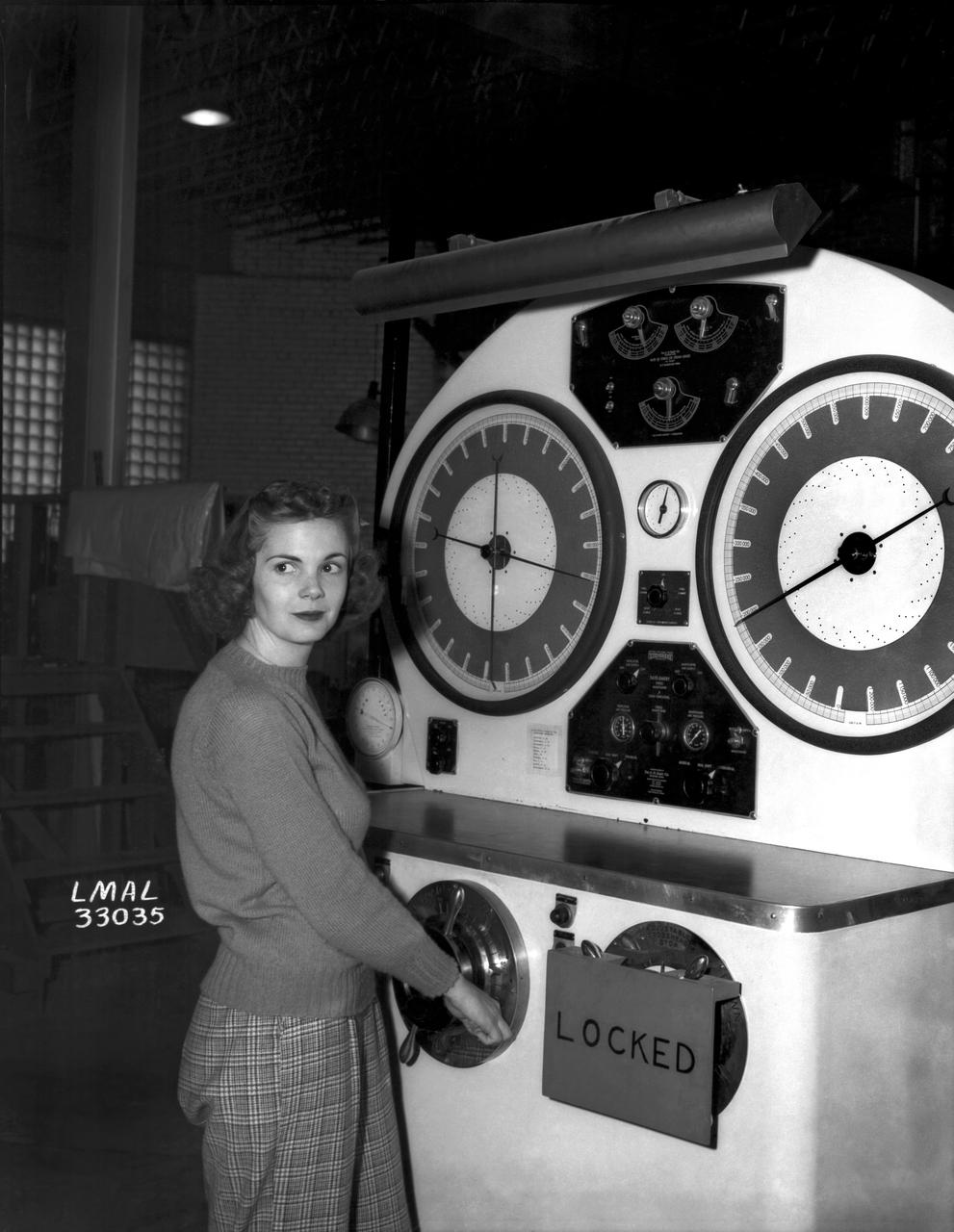
Women Adequately Filling Posts in NACA Laboratory: Nearly 200 women are employed at the Langley Laboratory of the National Advisory Committee for Aeronautics in a limited capacity as mechanics’ helpers and minor laboratory aids on the jobs formerly handled by men, according to E.H. Derring, of the Aerodynamics Division. Many phases of the operations of various wind tunnels at the laboratory are now handled by women with experienced male supervision. Mr. Derring said, pointing out that the reading of the data indicated on wind tunnel instruments during a test is done in a large measure by women. In addition to reading the instruments and computing and integrating engineering test data obtained from tunnel investigations, the minor laboratory aides assist in the preparation of aircraft models preliminary to testing. Women employees who will serve in the Aerodynamics Division of the Laboratory attend an orientation class for two weeks, during which they receive instruction on phases of the work they will do and their aptitudes for different types of work are evaluated in order that they may be properly placed. More than 100 women are employed in minor laboratory apprentices, performing mechanical work heretofore done by men. These women are employed in the various shops of the laboratory. Women in the woodworking shops are taught to operate 15 different machines in carrying out their assignments. Norfolk new paper article from 1943 by Lee Dickinson.
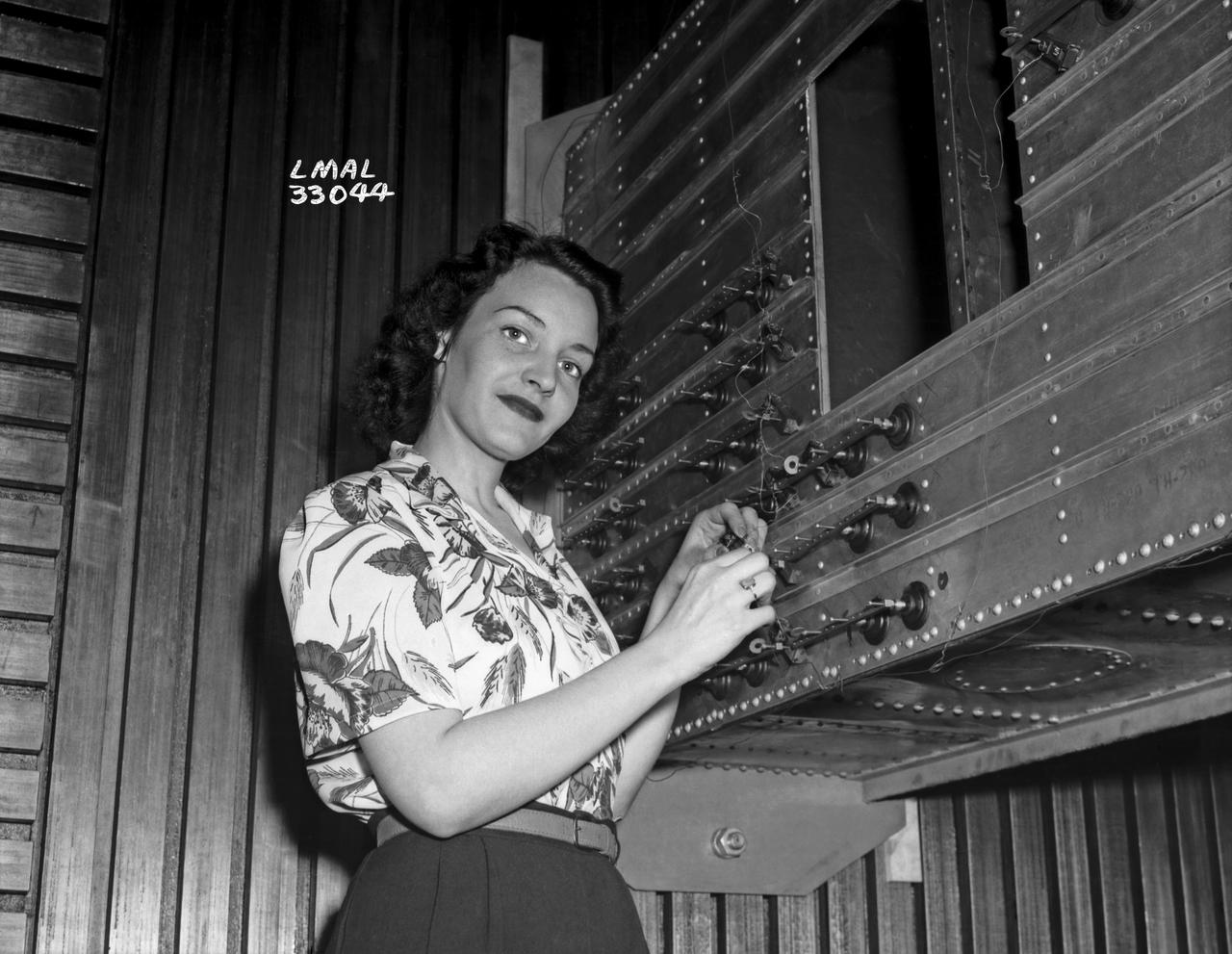
Women Adequately Filling Posts in NACA Laboratory: Nearly 200 women are employed at the Langley Laboratory of the National Advisory Committee for Aeronautics in a limited capacity as mechanics’ helpers and minor laboratory aids on the jobs formerly handled by men, according to E.H. Derring, of the Aerodynamics Division. Many phases of the operations of various wind tunnels at the laboratory are now handled by women with experienced male supervision. Mr. Derring said, pointing out that the reading of the data indicated on wind tunnel instruments during a test is done in a large measure by women. In addition to reading the instruments and computing and integrating engineering test data obtained from tunnel investigations, the minor laboratory aides assist in the preparation of aircraft models preliminary to testing. Women employees who will serve in the Aerodynamics Division of the Laboratory attend an orientation class for two weeks, during which they receive instruction on phases of the work they will do and their aptitudes for different types of work are evaluated in order that they may be properly placed. More than 100 women are employed in minor laboratory apprentices, performing mechanical work heretofore done by men. These women are employed in the various shops of the laboratory. Women in the woodworking shops are taught to operate 15 different machines in carrying out their assignments. Norfolk new paper article from 1943 by Lee Dickinson.
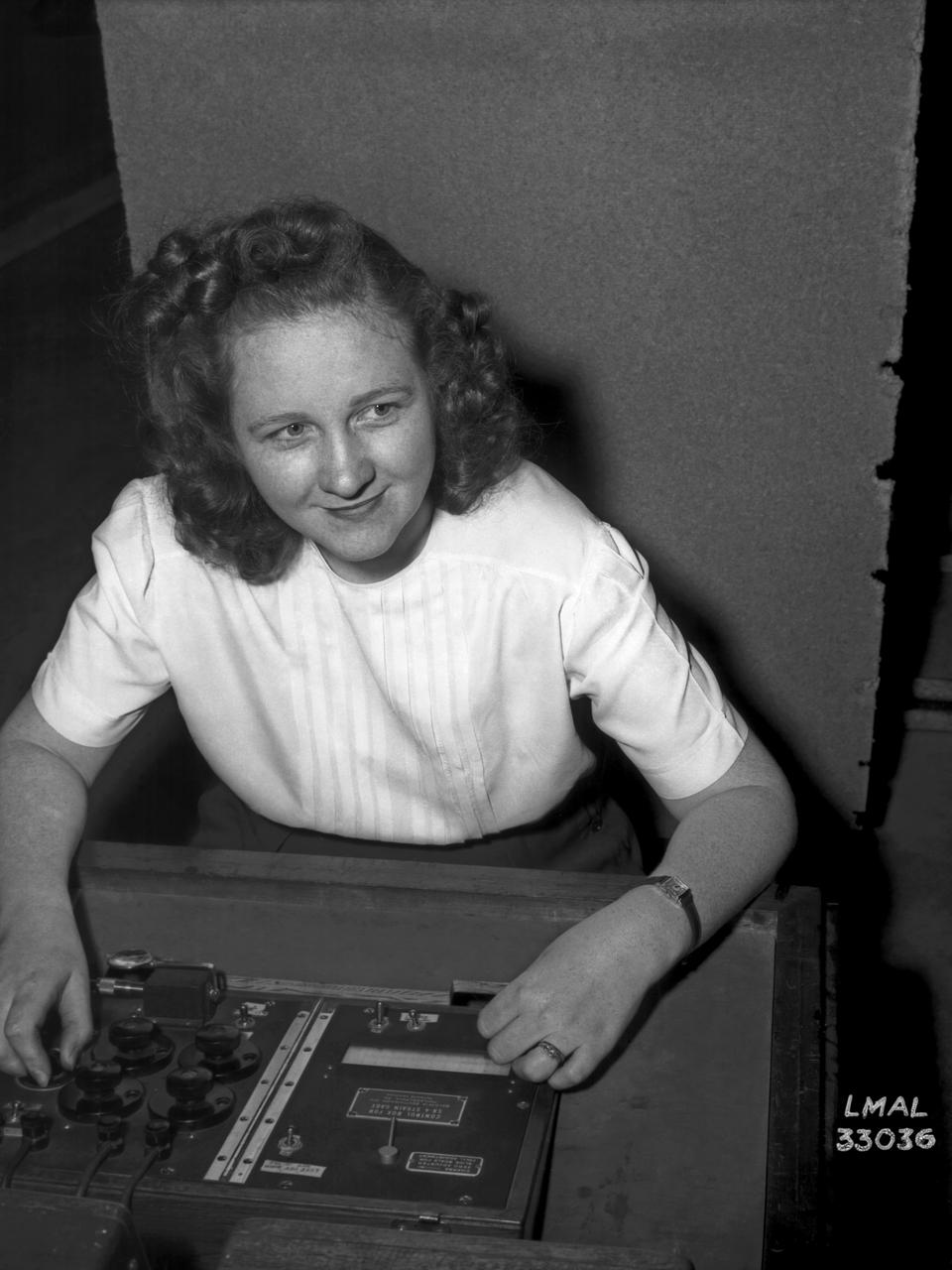
Women Adequately Filling Posts in NACA Laboratory: Nearly 200 women are employed at the Langley Laboratory of the National Advisory Committee for Aeronautics in a limited capacity as mechanics’ helpers and minor laboratory aids on the jobs formerly handled by men, according to E.H. Derring, of the Aerodynamics Division. Many phases of the operations of various wind tunnels at the laboratory are now handled by women with experienced male supervision. Mr. Derring said, pointing out that the reading of the data indicated on wind tunnel instruments during a test is done in a large measure by women. In addition to reading the instruments and computing and integrating engineering test data obtained from tunnel investigations, the minor laboratory aides assist in the preparation of aircraft models preliminary to testing. Women employees who will serve in the Aerodynamics Division of the Laboratory attend an orientation class for two weeks, during which they receive instruction on phases of the work they will do and their aptitudes for different types of work are evaluated in order that they may be properly placed. More than 100 women are employed in minor laboratory apprentices, performing mechanical work heretofore done by men. These women are employed in the various shops of the laboratory. Women in the woodworking shops are taught to operate 15 different machines in carrying out their assignments. Norfolk new paper article from 1943 by Lee Dickinson.
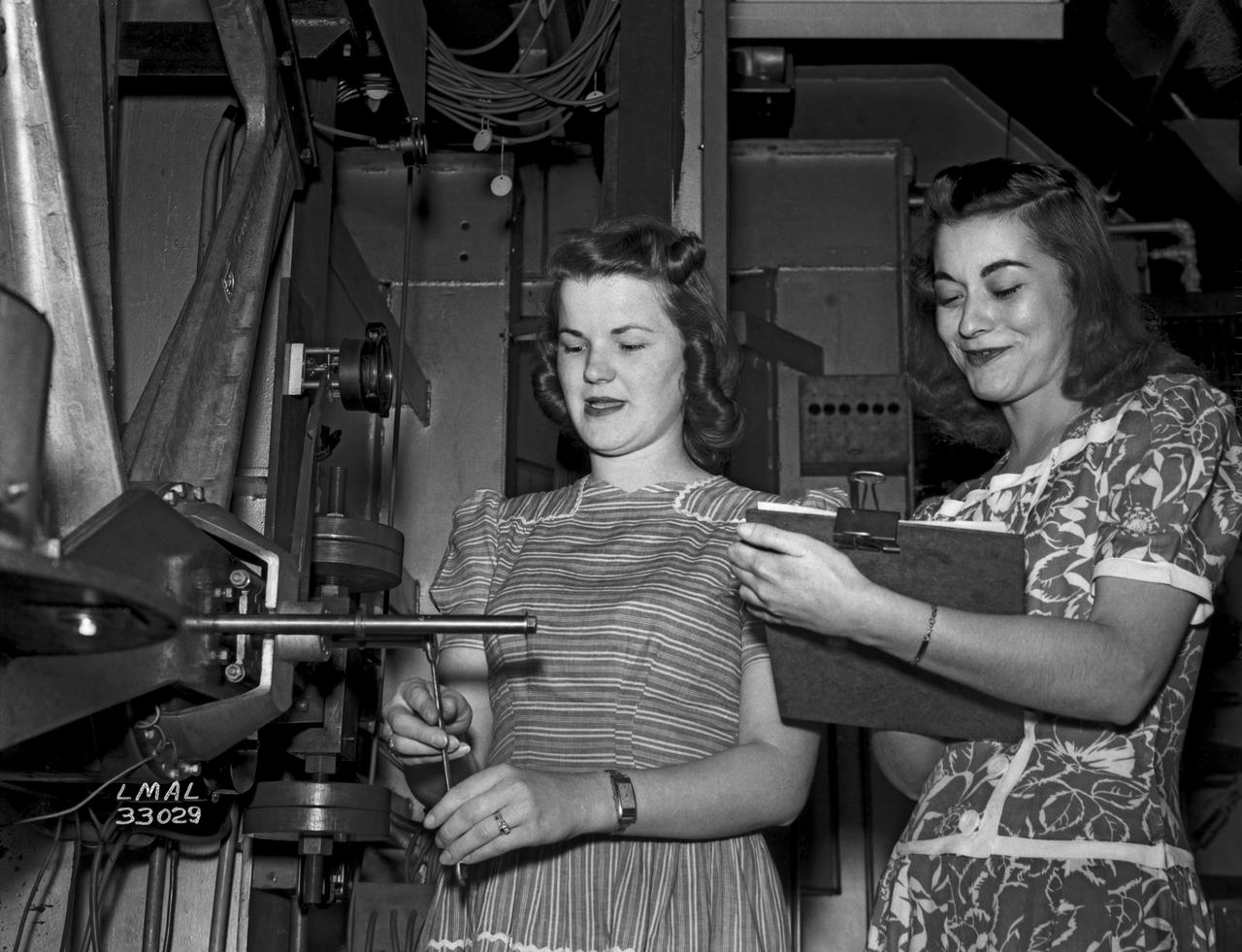
Women Adequately Filling Posts in NACA Laboratory: Nearly 200 women are employed at the Langley Laboratory of the National Advisory Committee for Aeronautics in a limited capacity as mechanics’ helpers and minor laboratory aids on the jobs formerly handled by men, according to E.H. Derring, of the Aerodynamics Division. Many phases of the operations of various wind tunnels at the laboratory are now handled by women with experienced male supervision. Mr. Derring said, pointing out that the reading of the data indicated on wind tunnel instruments during a test is done in a large measure by women. In addition to reading the instruments and computing and integrating engineering test data obtained from tunnel investigations, the minor laboratory aides assist in the preparation of aircraft models preliminary to testing. Women employees who will serve in the Aerodynamics Division of the Laboratory attend an orientation class for two weeks, during which they receive instruction on phases of the work they will do and their aptitudes for different types of work are evaluated in order that they may be properly placed. More than 100 women are employed in minor laboratory apprentices, performing mechanical work heretofore done by men. These women are employed in the various shops of the laboratory. Women in the woodworking shops are taught to operate 15 different machines in carrying out their assignments. Norfolk new paper article from 1943 by Lee Dickinson.
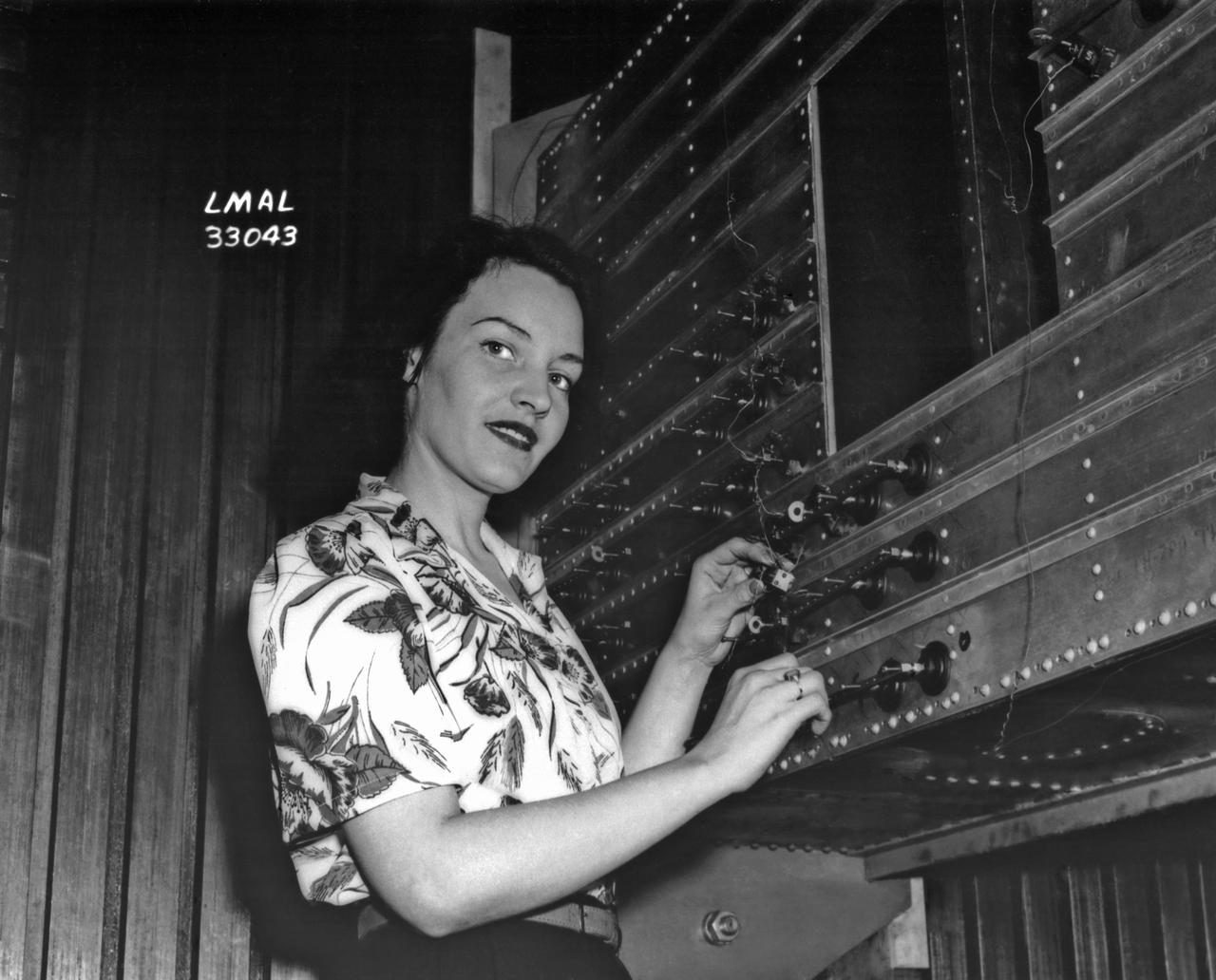
Women Adequately Filling Posts in NACA Laboratory: Nearly 200 women are employed at the Langley Laboratory of the National Advisory Committee for Aeronautics in a limited capacity as mechanics’ helpers and minor laboratory aids on the jobs formerly handled by men, according to E.H. Derring, of the Aerodynamics Division. Many phases of the operations of various wind tunnels at the laboratory are now handled by women with experienced male supervision. Mr. Derring said, pointing out that the reading of the data indicated on wind tunnel instruments during a test is done in a large measure by women. In addition to reading the instruments and computing and integrating engineering test data obtained from tunnel investigations, the minor laboratory aides assist in the preparation of aircraft models preliminary to testing. Women employees who will serve in the Aerodynamics Division of the Laboratory attend an orientation class for two weeks, during which they receive instruction on phases of the work they will do and their aptitudes for different types of work are evaluated in order that they may be properly placed. More than 100 women are employed in minor laboratory apprentices, performing mechanical work heretofore done by men. These women are employed in the various shops of the laboratory. Women in the woodworking shops are taught to operate 15 different machines in carrying out their assignments. Norfolk new paper article from 1943 by Lee Dickinson.
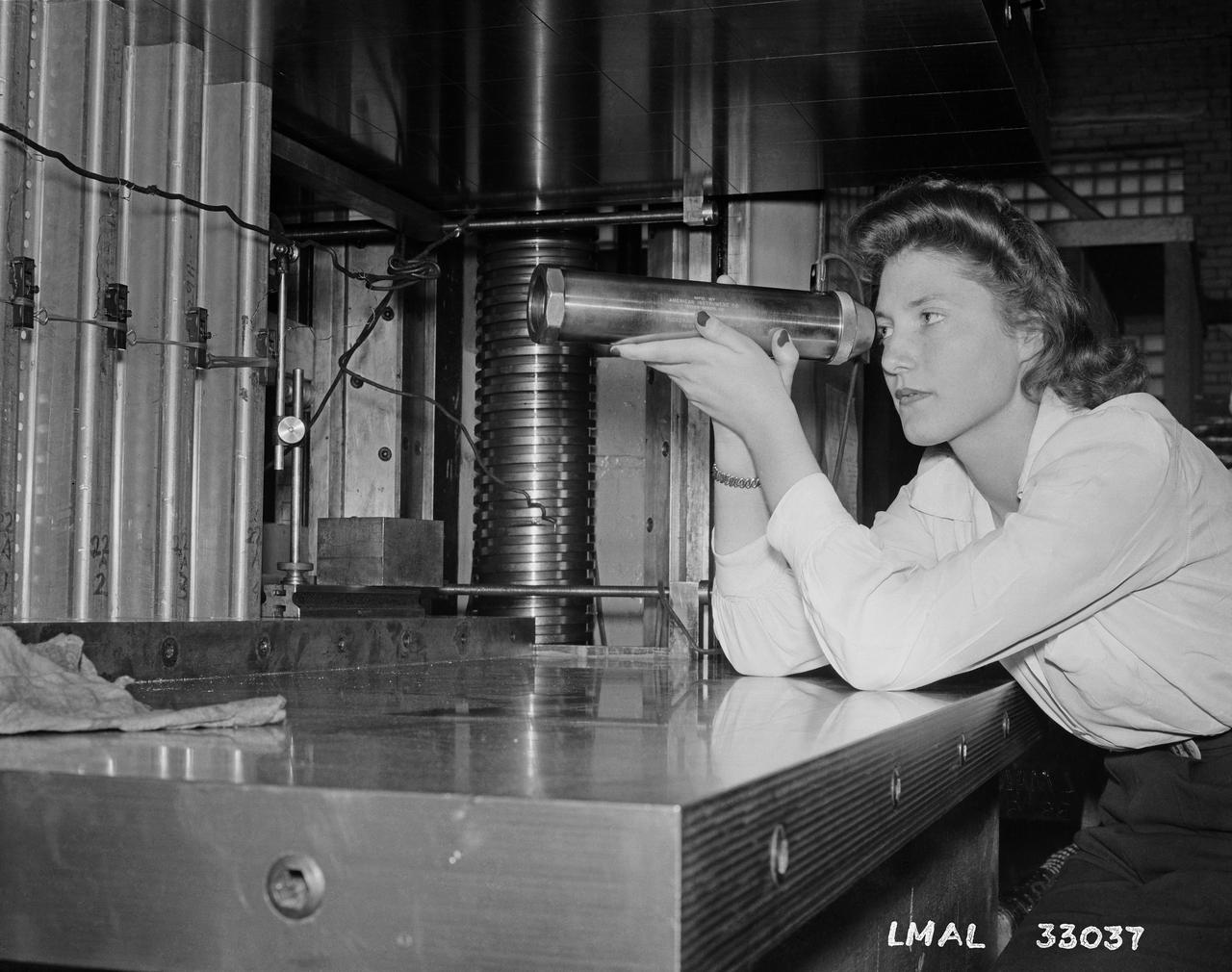
Women Adequately Filling Posts in NACA Laboratory: Nearly 200 women are employed at the Langley Laboratory of the National Advisory Committee for Aeronautics in a limited capacity as mechanics’ helpers and minor laboratory aids on the jobs formerly handled by men, according to E.H. Derring, of the Aerodynamics Division. Many phases of the operations of various wind tunnels at the laboratory are now handled by women with experienced male supervision. Mr. Derring said, pointing out that the reading of the data indicated on wind tunnel instruments during a test is done in a large measure by women. In addition to reading the instruments and computing and integrating engineering test data obtained from tunnel investigations, the minor laboratory aides assist in the preparation of aircraft models preliminary to testing. Women employees who will serve in the Aerodynamics Division of the Laboratory attend an orientation class for two weeks, during which they receive instruction on phases of the work they will do and their aptitudes for different types of work are evaluated in order that they may be properly placed. More than 100 women are employed in minor laboratory apprentices, performing mechanical work heretofore done by men. These women are employed in the various shops of the laboratory. Women in the woodworking shops are taught to operate 15 different machines in carrying out their assignments. Norfolk new paper article from 1943 by Lee Dickinson.
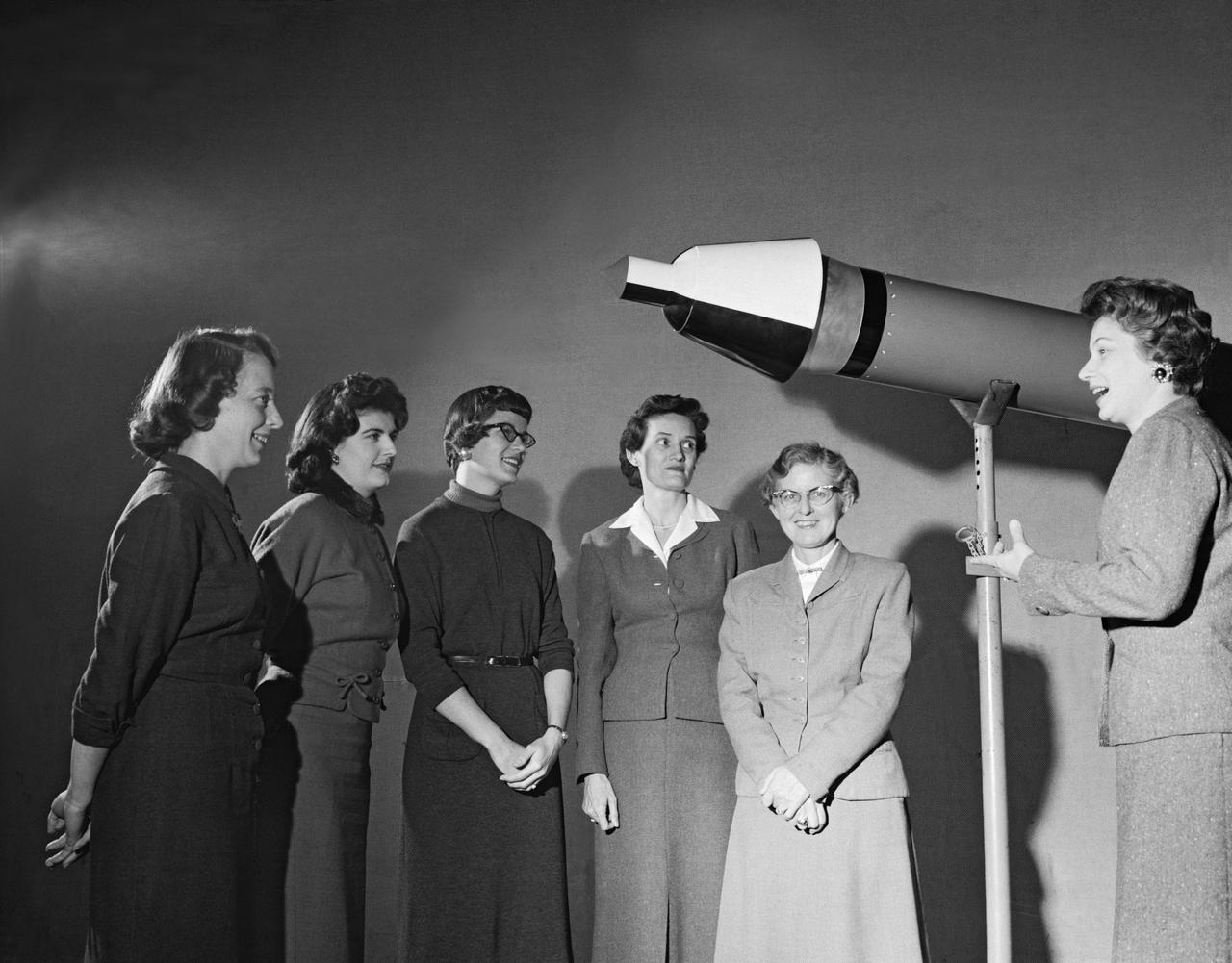
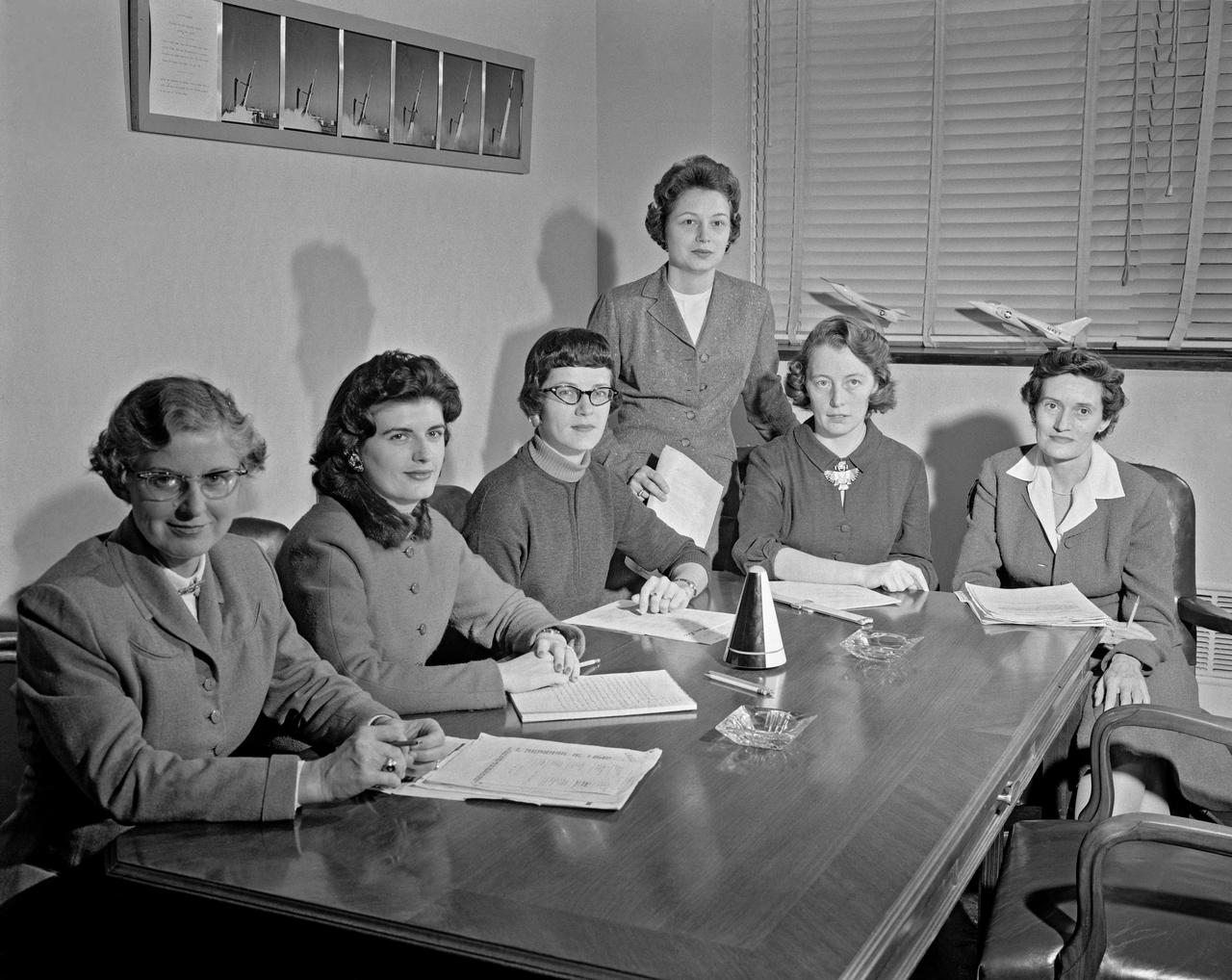
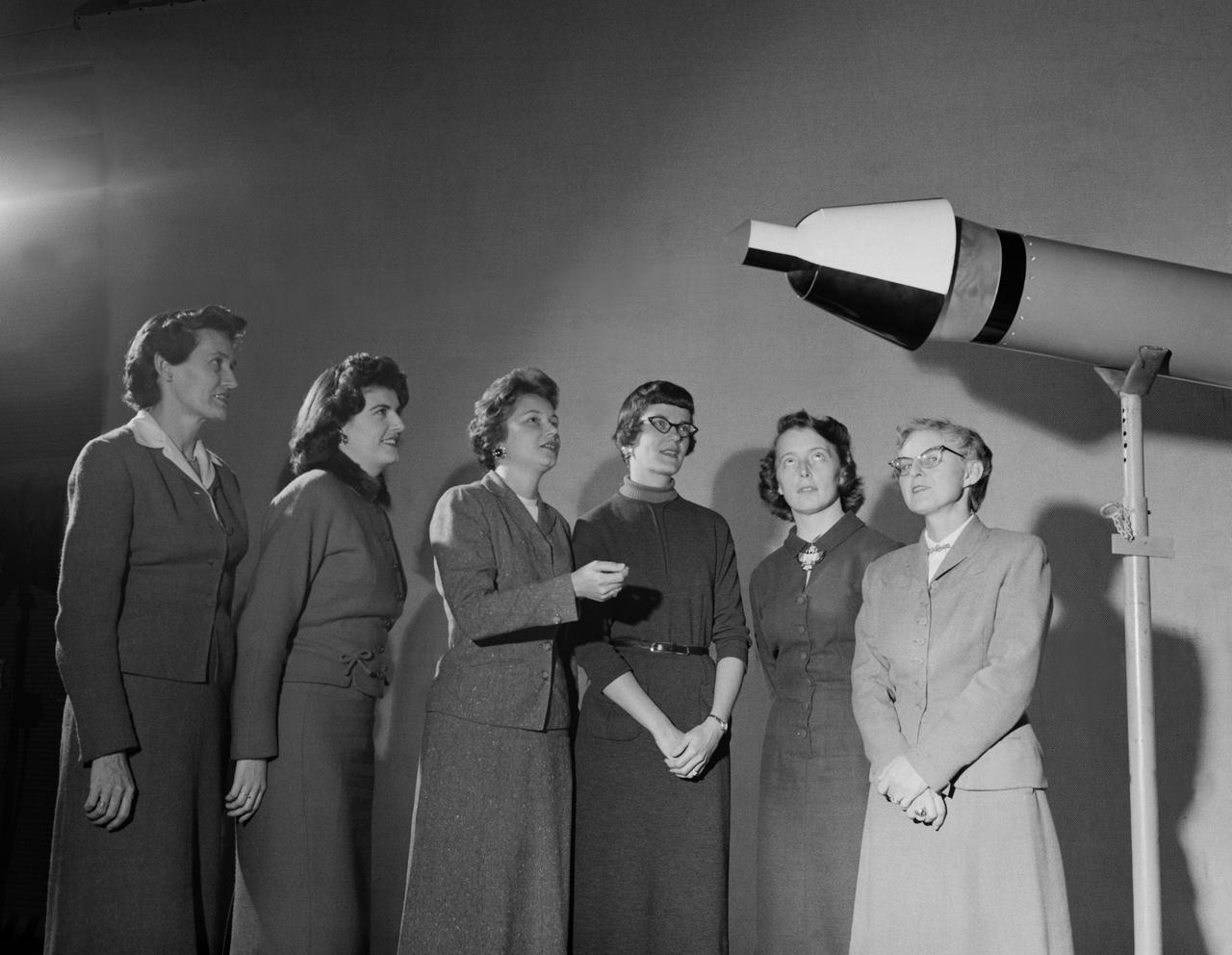
Women Scientists: Lucille Coltrane, Jean Clark Keating, Katherine Cullie Speegle, Doris "Dot" Lee, Ruth Whitman, and Emily Stephens Mueller,Lucille Coltrane is at the far left. She was a computer and worked for Norm Crabill who provided positive identification. Lucille authored a NACA Research Memorandum, Investigation of Two Bluff Shapes in Axial Free Flight Over a Mach Number Range From 0.35 to 2.15 in 1958. Next to Lucille is Jean Clark Keating. Jean was identified by Mary Woerner who said that both Jean and her husband Jerry are now deceased. The third woman from the left is Katherine Cullie Speegle. Katherine co-authored two research papers: Preliminary Results From a Free-Flight Investigation of Boundary-Layer Transition and Heat Transfer on a Highly Polished 8-Inch-Diameter Hemisphere-Cylinder at Mach Numbers up to 3 and Reynolds Numbers Based on a Length of 1 Foot up to 17.7 x 10 to the 6th and Heat Transfer For Mach Numbers Up to 2.2 and Pressure Distributions for Mach Numbers Up to 4.7 From Flight Investigations of a Flat-Face Cone and a Hemisphere-Cone. Norm remembered the woman standing as Doris. Mary Alice identified her as Doris 'Dot' Lee, who worked with Katherine Speegle. Dot was married to a NASA engineer named John Lee. Next to Doris is Ruth Whitman. Norm remembered she and her husband owned a Howard DGA 15 at the airport in WEst Point. That prompted Mary Alice to remember her name and that her husband was Jim. The woman seated on the right is Emily Stephens Mueller. Norm remembers that Emily went to Houston as part of the Space Task Group, but retired back here on the peninsula. In 2008, Emily attended the NACA Reunion X11. She walked over to a table of books about the history of NACA, former NACA facilities and the organization's aviation pioneers and saw a book about women of flight from the Dryden Research Center and paused, then pointed somewhat in amazement. "ThatÕs me," she said of a picture on the cover of her on the far left of a line of women. She was at Dryden from 1948-49.
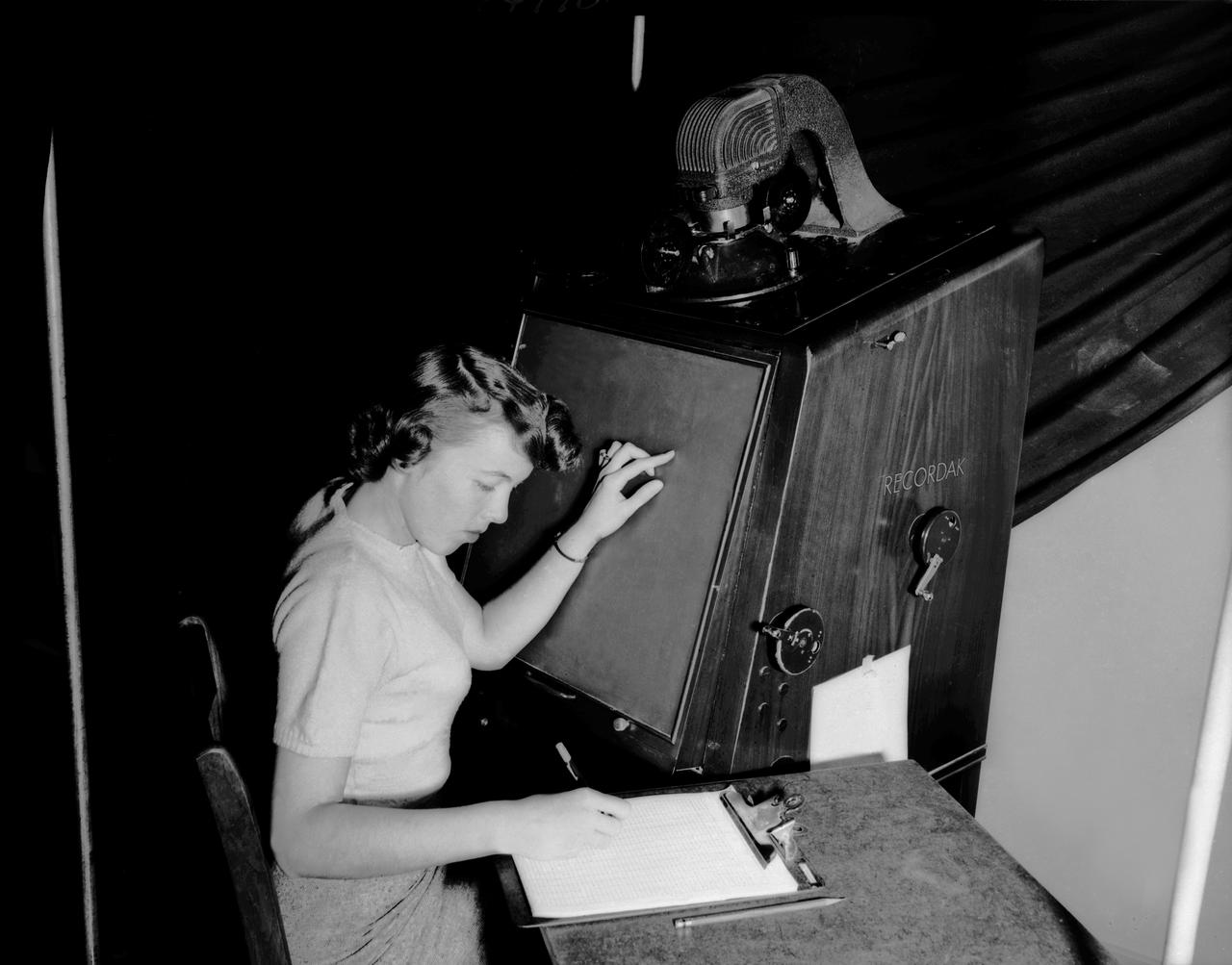
Publicity photo from Muroc California, showing female support personnel with equipment. A women working on a Kodak Recordak microfilm reader.
Women Scientists: Lucille Coltrane, Jean Clark Keating, Katherine Cullie Speegle, Doris 'Dot' Lee, Ruth Whitman, and Emily Stephens Mueller,Lucille Coltrane is at the far left. She was a computer and worked for Norm Crabill who provided positive identification. Lucille authored a NACA Research Memorandum, Investigation of Two Bluff Shapes in Axial Free Flight Over a Mach Number Range From 0.35 to 2.15 in 1958. Next to Lucille is Jean Clark Keating. Jean was identified by Mary Woerner who said that both Jean and her husband Jerry are now deceased. The third woman from the left is Katherine Cullie Speegle. Katherine co-authored two research papers: Preliminary Results From a Free-Flight Investigation of Boundary-Layer Transition and Heat Transfer on a Highly Polished 8-Inch-Diameter Hemisphere-Cylinder at Mach Numbers up to 3 and Reynolds Numbers Based on a Length of 1 Foot up to 17.7 x 10 to the 6th and Heat Transfer For Mach Numbers Up to 2.2 and Pressure Distributions for Mach Numbers Up to 4.7 From Flight Investigations of a Flat-Face Cone and a Hemisphere-Cone. Norm remembered the woman standing as Doris. Mary Alice identified her as Doris 'Dot' Lee, who worked with Katherine Speegle. Dot was married to a NASA engineer named John Lee. Next to Doris is Ruth Whitman. Norm remembered she and her husband owned a Howard DGA 15 at the airport in WEst Point. That prompted Mary Alice to remember her name and that her husband was Jim. The woman seated on the right is Emily Stephens Mueller. Norm remembers that Emily went to Houston as part of the Space Task Group, but retired back here on the peninsula. In 2008, Emily attended the NACA Reunion X11. She walked over to a table of books about the history of NACA, former NACA facilities and the organization's aviation pioneers and saw a book about women of flight from the Dryden Research Center and paused, then pointed somewhat in amazement. "That’s me," she said of a picture on the cover of her on the far left of a li
Women Scientists: Lucille Coltrane, Jean Clark Keating, Katherine Cullie Speegle, Doris 'Dot' Lee, Ruth Whitman, and Emily Stephens Mueller,Lucille Coltrane is at the far left. She was a computer and worked for Norm Crabill who provided positive identification. Lucille authored a NACA Research Memorandum, Investigation of Two Bluff Shapes in Axial Free Flight Over a Mach Number Range From 0.35 to 2.15 in 1958. Next to Lucille is Jean Clark Keating. Jean was identified by Mary Woerner who said that both Jean and her husband Jerry are now deceased. The third woman from the left is Katherine Cullie Speegle. Katherine co-authored two research papers: Preliminary Results From a Free-Flight Investigation of Boundary-Layer Transition and Heat Transfer on a Highly Polished 8-Inch-Diameter Hemisphere-Cylinder at Mach Numbers up to 3 and Reynolds Numbers Based on a Length of 1 Foot up to 17.7 x 10 to the 6th and Heat Transfer For Mach Numbers Up to 2.2 and Pressure Distributions for Mach Numbers Up to 4.7 From Flight Investigations of a Flat-Face Cone and a Hemisphere-Cone. Norm remembered the woman standing as Doris. Mary Alice identified her as Doris 'Dot' Lee, who worked with Katherine Speegle. Dot was married to a NASA engineer named John Lee. Next to Doris is Ruth Whitman. Norm remembered she and her husband owned a Howard DGA 15 at the airport in WEst Point. That prompted Mary Alice to remember her name and that her husband was Jim. The woman seated on the right is Emily Stephens Mueller. Norm remembers that Emily went to Houston as part of the Space Task Group, but retired back here on the peninsula. In 2008, Emily attended the NACA Reunion X11. She walked over to a table of books about the history of NACA, former NACA facilities and the organization's aviation pioneers and saw a book about women of flight from the Dryden Research Center and paused, then pointed somewhat in amazement. "That’s me," she said of a picture on the cover of her on the far left of a li
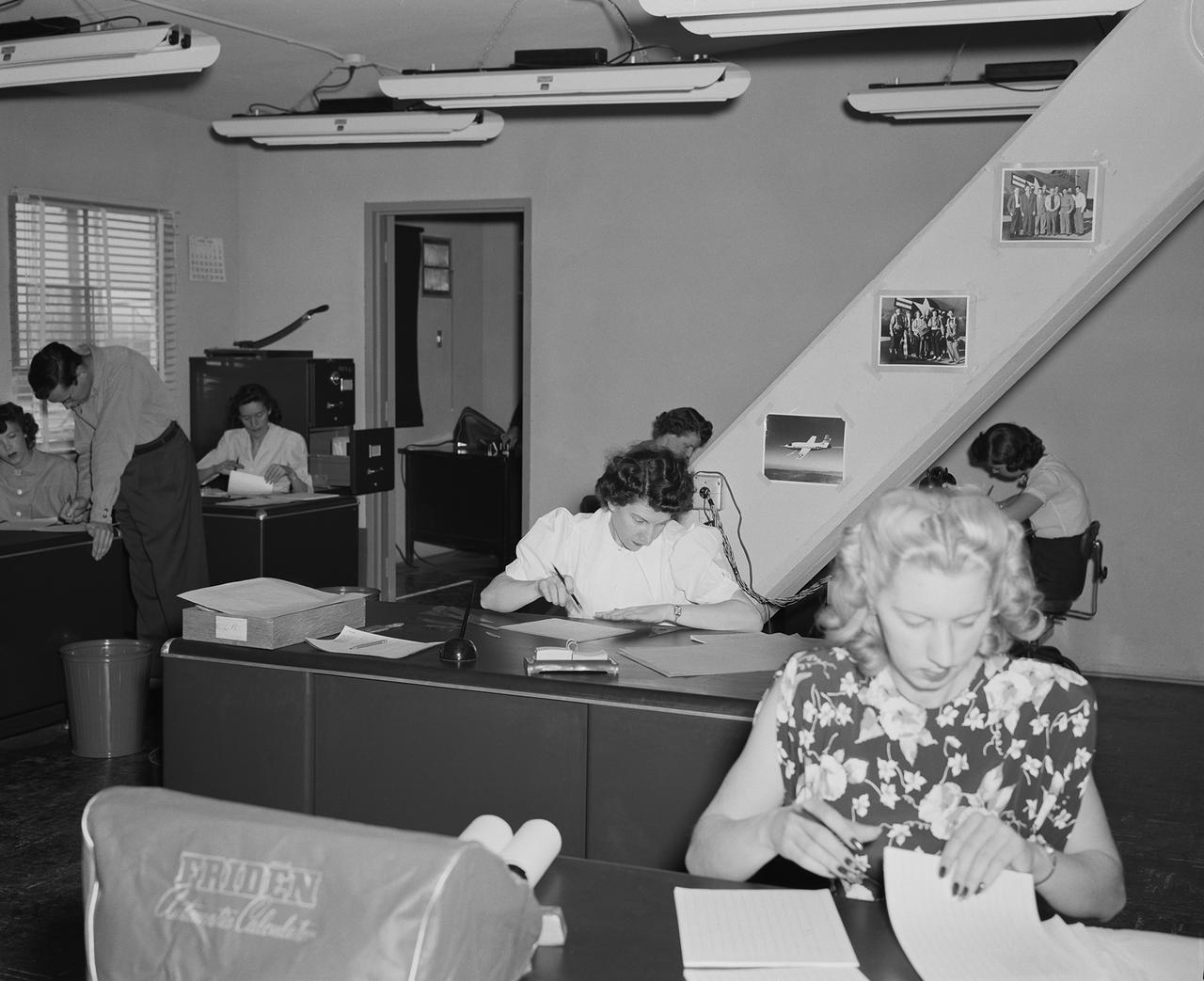
NACA women computers had degrees in mathematics or taught math before they were hired. They reduced film data and plotted it for the engineers.
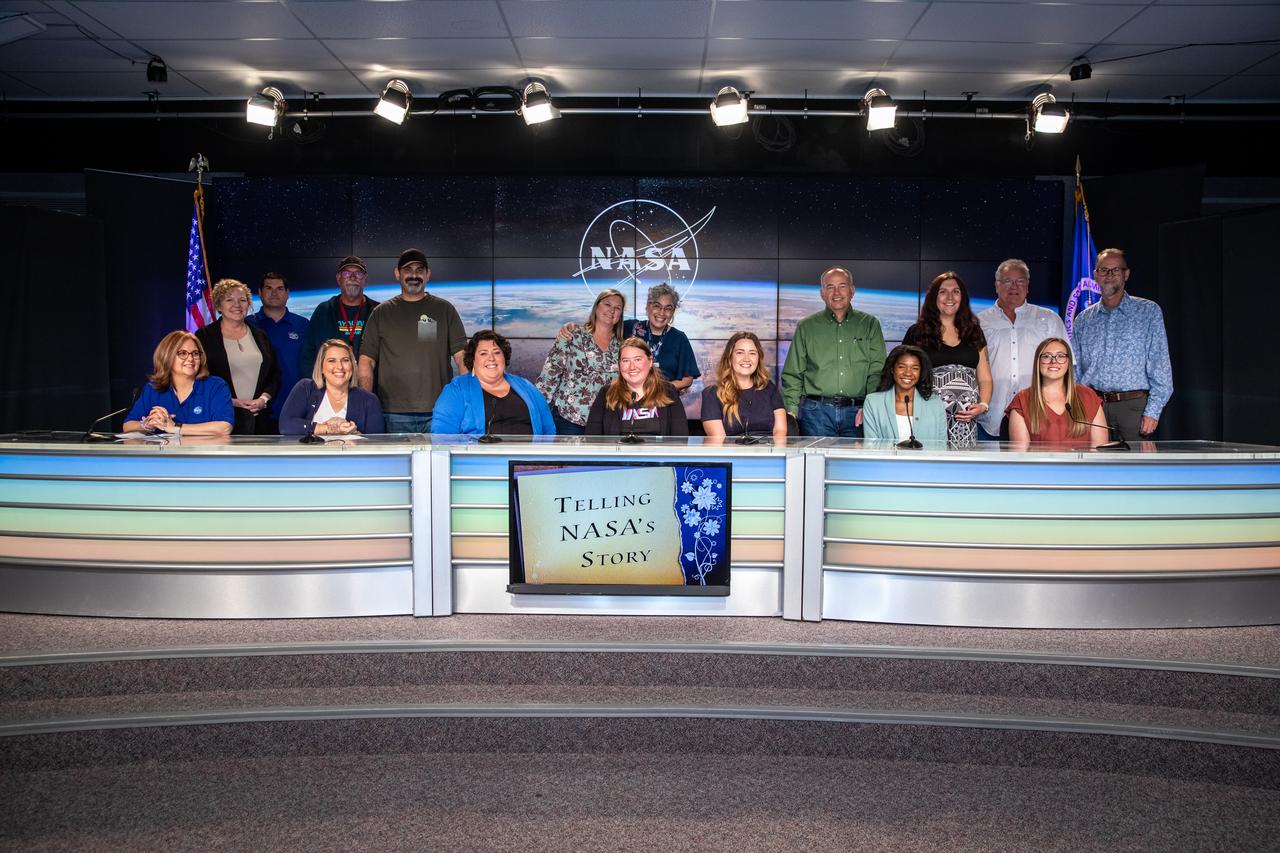
Employees who work at NASA’s Kennedy Space Center Press Site are photographed inside the News Auditorium at the Florida spaceport on March 23, 2023, following a panel discussion held to commemorate Women’s History Month. The event, titled “Celebrating the Women Who Tell Our Stories,” included women who typically work behind the scenes sharing what goes into conceiving, creating, and curating NASA stories. Panelists included Kennedy’s news chief, members of the broadcast team, public affairs specialists, a video producer, and a writer.
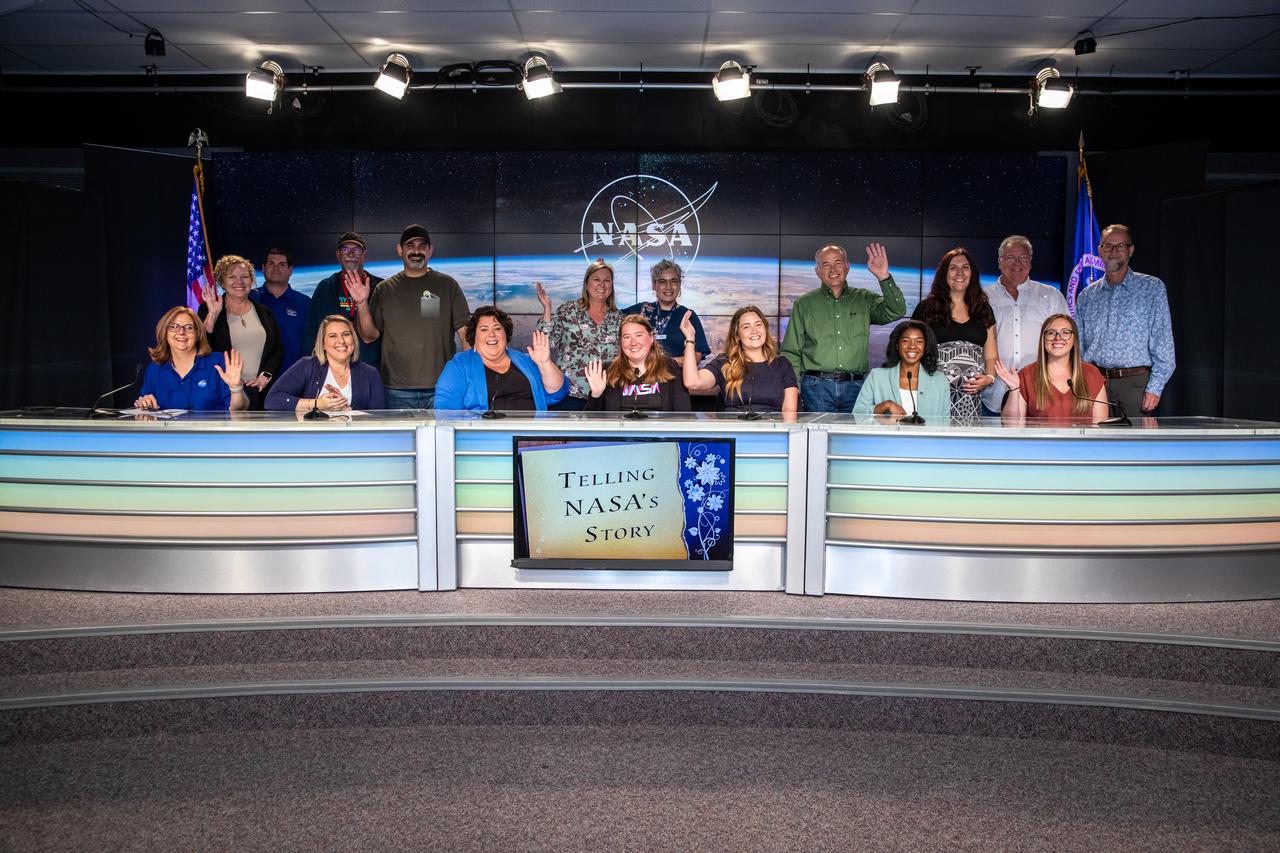
Employees who work at NASA’s Kennedy Space Center Press Site are photographed inside the News Auditorium at the Florida spaceport on March 23, 2023, following a panel discussion held to commemorate Women’s History Month. The event, titled “Celebrating the Women Who Tell Our Stories,” included women who typically work behind the scenes sharing what goes into conceiving, creating, and curating NASA stories. Panelists included Kennedy’s news chief, members of the broadcast team, public affairs specialists, a video producer, and a writer.
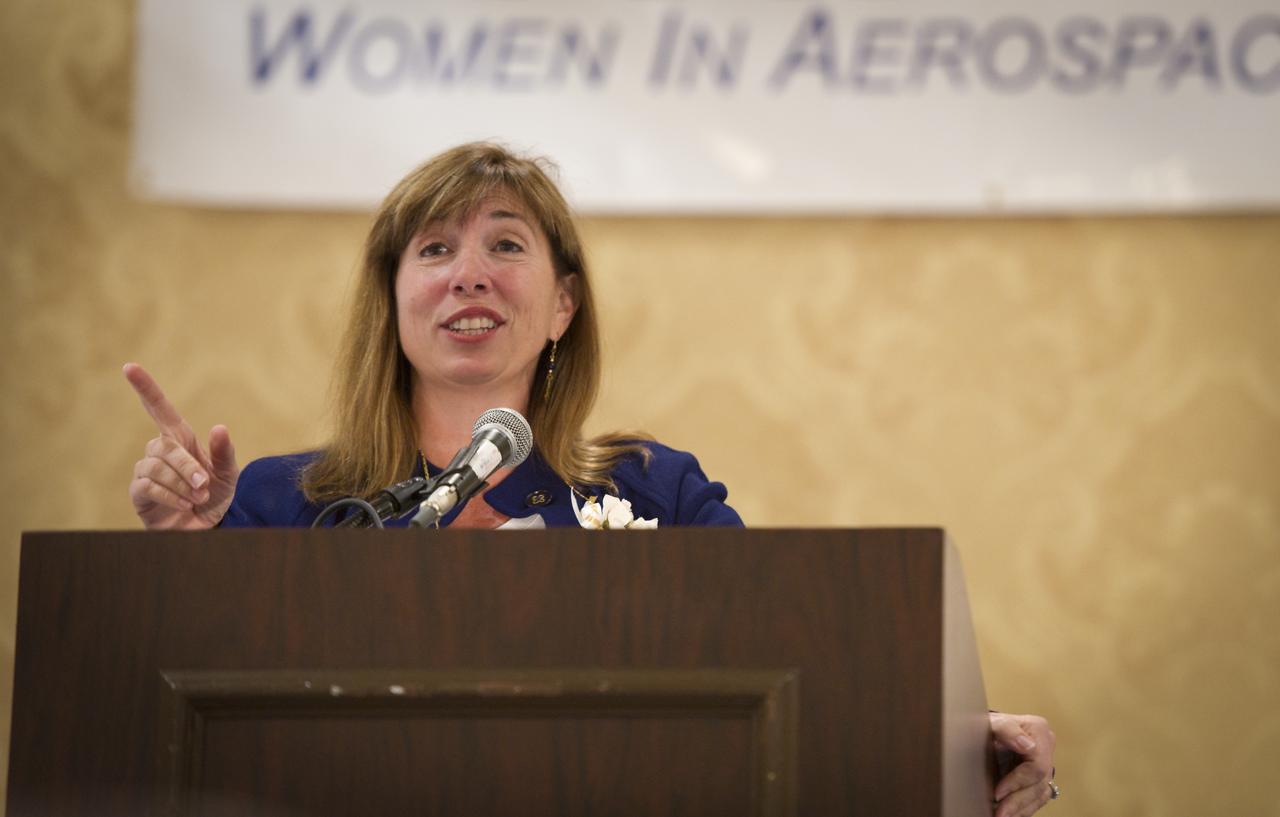
NASA Deputy Administrator Lori Garver speaks after being given the Women in Aerospace's Outstanding Member Award at the organization's annual awards ceremony and banquet held at the Ritz-Carlton Hotel in Arlington, VA on Tuesday, Oct. 26, 2010. Four current NASA leaders and one retiree were recognized for their work by Women in Aerospace. The event celebrates women's professional excellence in aerospace and honors women who have made outstanding contributions to the aerospace community. Photo Credit: (NASA/Bill Ingalls)
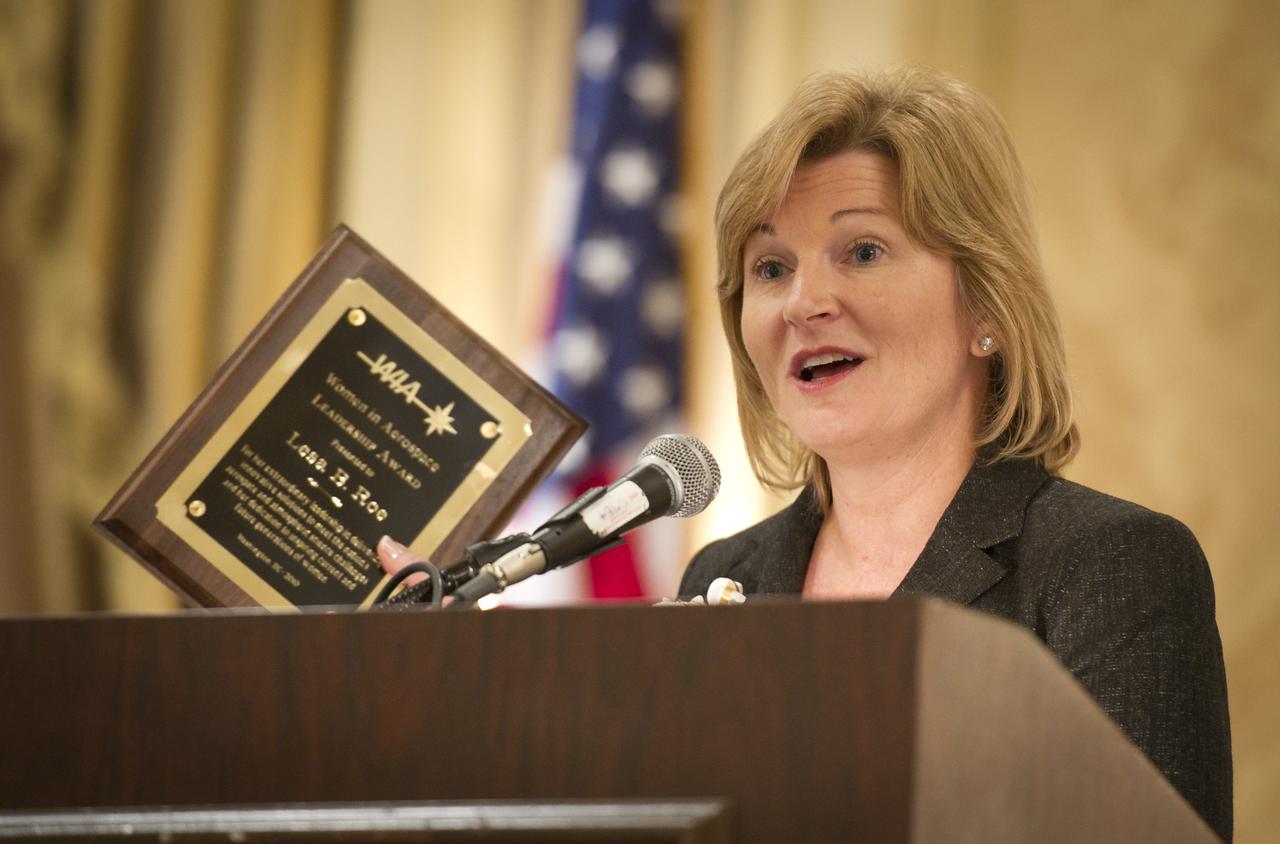
NASA's Langley Research Center Lesa Roe speaks after being given the Women in Aerospace's Leadership Award at the organization's annual awards ceremony and banquet held at the Ritz-Carlton Hotel in Arlington, VA on Tuesday, Oct. 26, 2010. Four current NASA leaders and one retiree were recognized for their work by Women in Aerospace. The event celebrates women's professional excellence in aerospace and honors women who have made outstanding contributions to the aerospace community. Photo Credit: (NASA/Bill Ingalls)
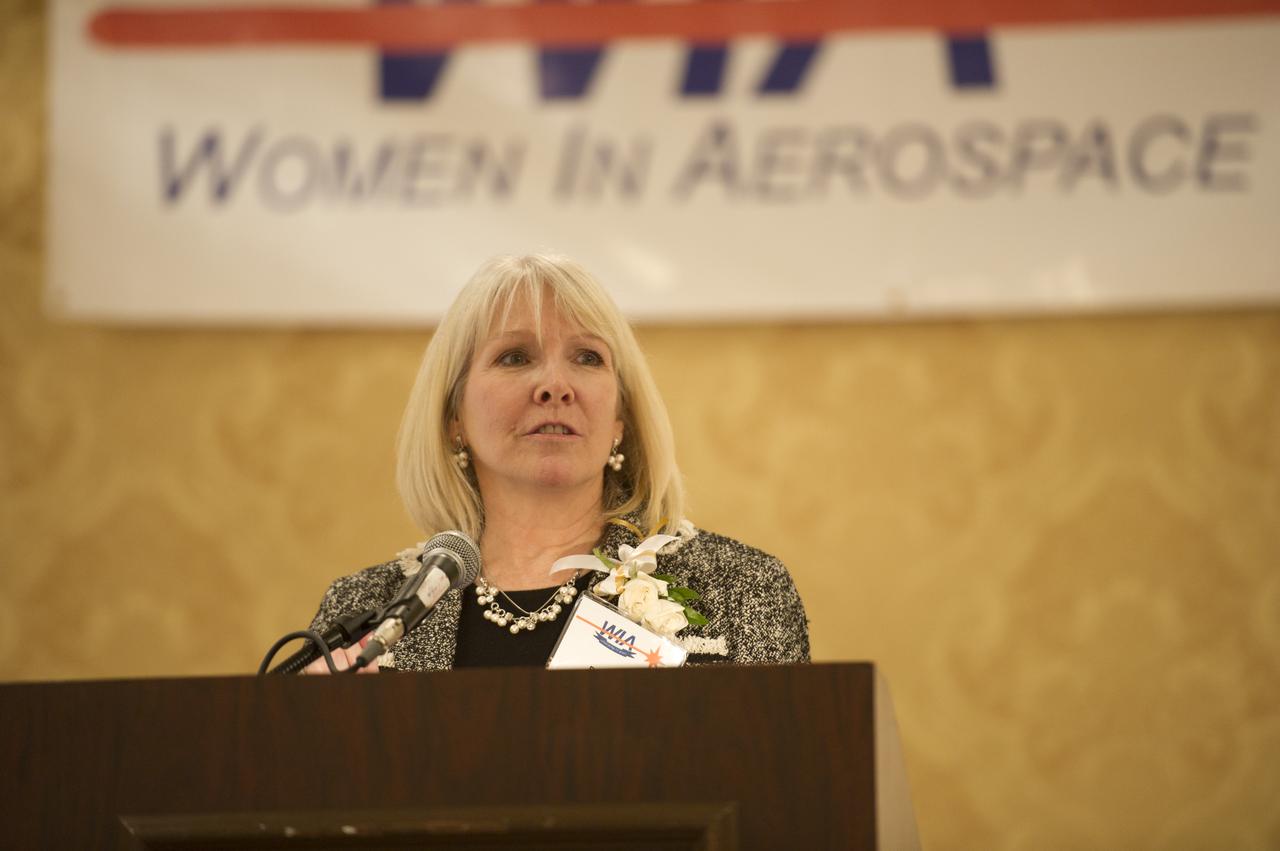
NASA Headquarters Program Planning Specialist Beth Beck speaks after being given the Women in Aerospace's Aerospace Awareness Award at the organization's annual awards ceremony and banquet held at the Ritz-Carlton Hotel in Arlington, VA on Tuesday, Oct. 26, 2010. Four current NASA leaders and one retiree were recognized for their work by Women in Aerospace. The event celebrates women's professional excellence in aerospace and honors women who have made outstanding contributions to the aerospace community. Photo Credit: (NASA/Bill Ingalls)
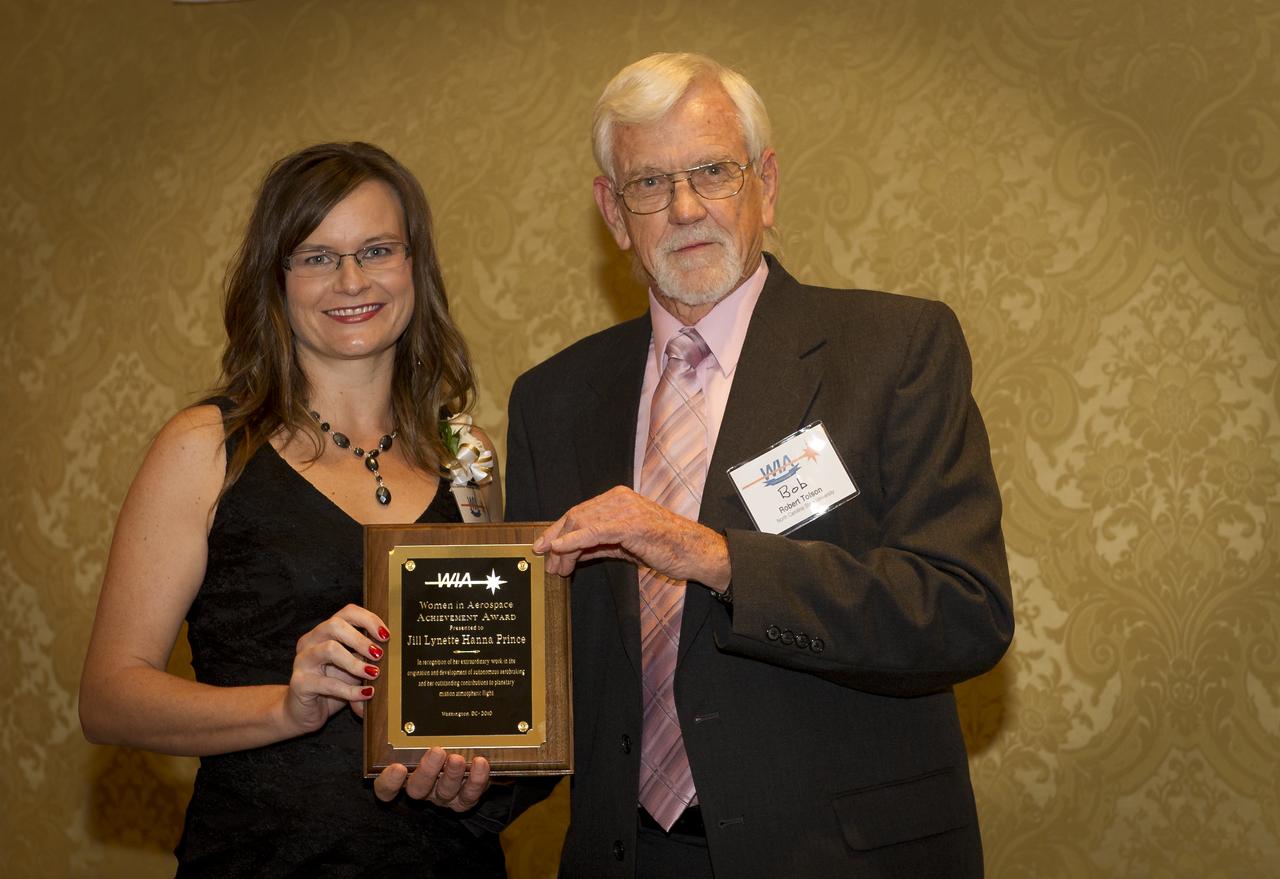
NASA Langley Aerospace Engineer Jill Lynette Hanna Prince receives the Women in Aerospace Achievement in Aerospace award from North Carolina State Professor Robert Tolson during the Women in Aerospace organization's annual awards ceremony and banquet held at the Ritz-Carlton Hotel in Arlington, VA on Tuesday, Oct. 26, 2010. Four current NASA leaders and one retiree were recognized for their work by Women in Aerospace. The event celebrates women's professional excellence in aerospace and honors women who have made outstanding contributions to the aerospace community. Photo Credit: (NASA/Bill Ingalls)
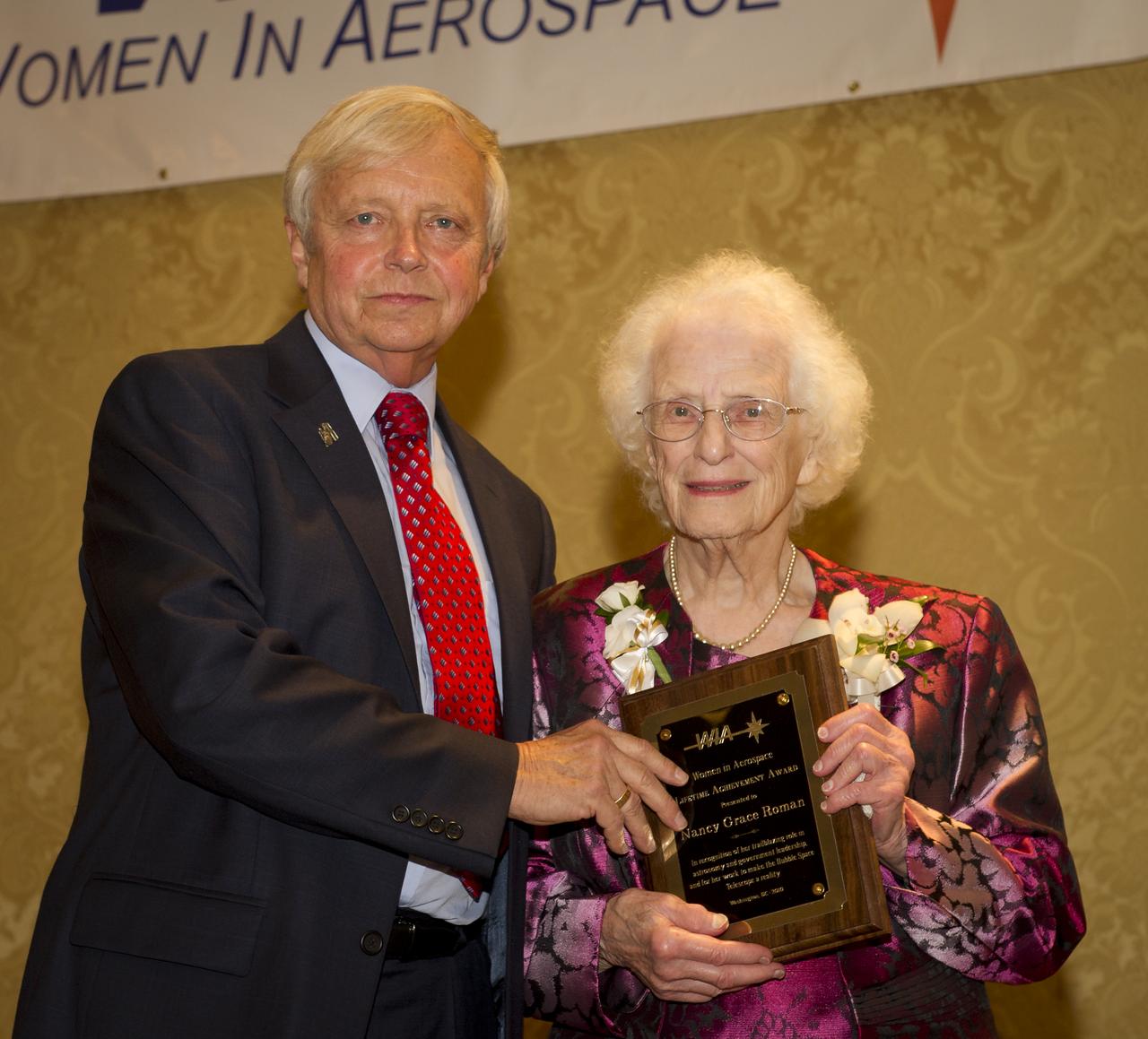
NASA's Associate Administrator of the Science Mission Directorate Dr. Edward J. Weiler presents the Women in Aerospace's Lifetime Achievement Award to retired NASA chief astronomer Nancy Grace Roman at the organization's annual awards ceremony and banquet held at the Ritz-Carlton Hotel in Arlington, VA on Tuesday, Oct. 26, 2010. Four current NASA leaders and one retiree were recognized for their work by Women in Aerospace. The event celebrates women's professional excellence in aerospace and honors women who have made outstanding contributions to the aerospace community. Photo Credit: (NASA/Bill Ingalls)
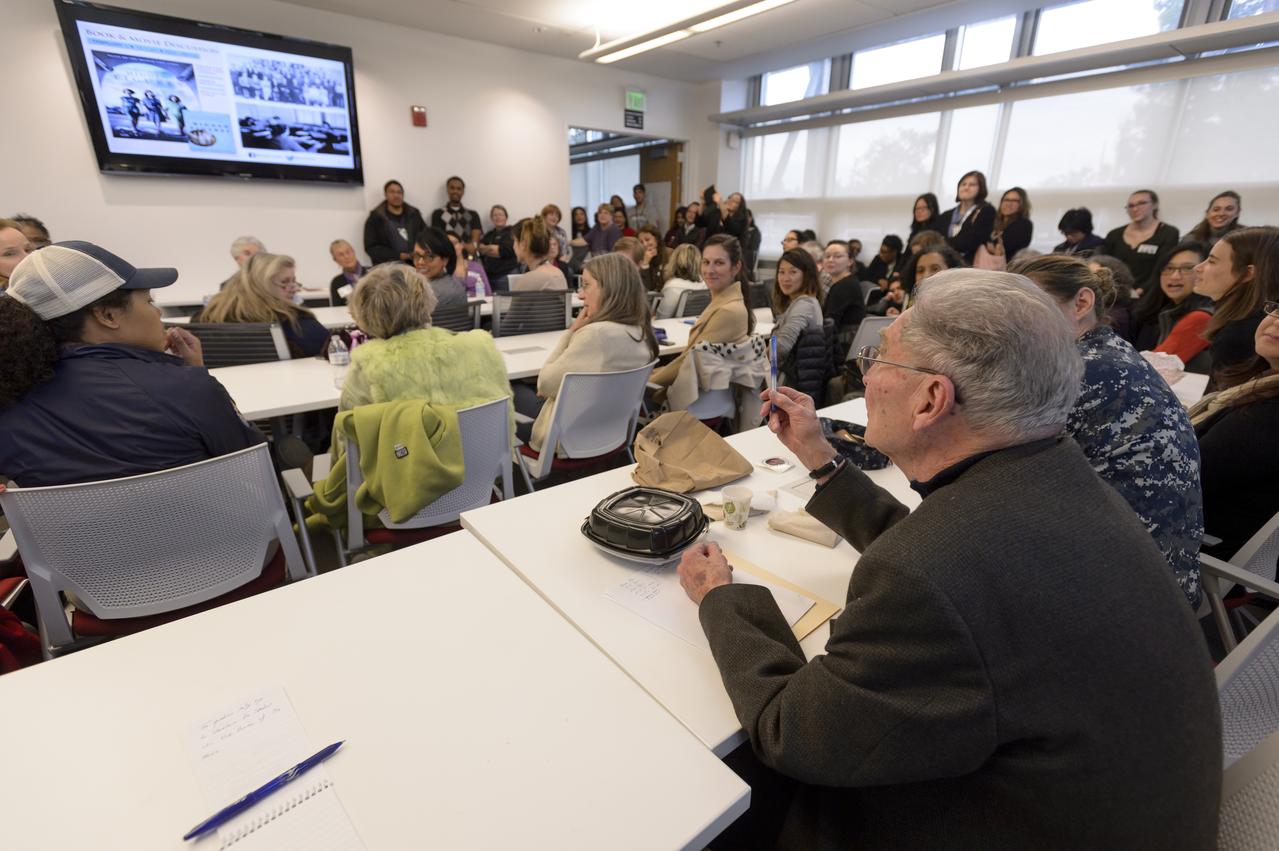
Ames Women's Influence Network (WIN) Hidden Figures talk with "Computers" Carolyn Hofstetter and Carol Mead co-sponsored by the AAAG. Jack Boyd talk of working in the same 6ft w.t. group as Carol Mead.
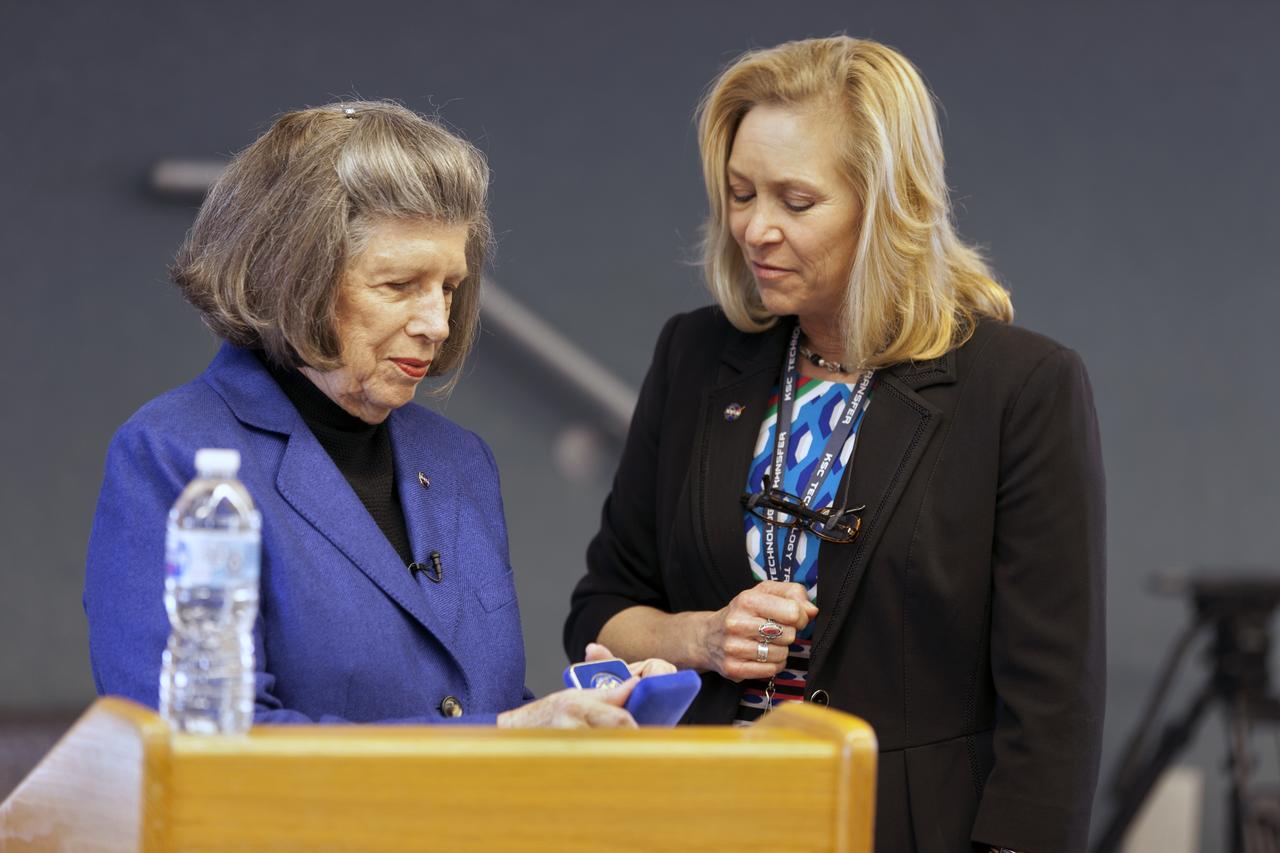
JoAnn Morgan, former associate director of Kennedy Space Center, at left, accepts a special coin from Janet Petro, deputy director of Kennedy, during a Women's History Month event at the center. With the theme "Nevertheless She Persisted," Morgan described her experience as the first female engineer working in the space program in the 1960s. Morgan was the first female in the Launch Control Center firing room during the Apollo 11 launch. The event was hosted by the center's Kennedy Networking Opportunities for Women (KNOW) and Launching Leaders organizations. The purpose of KNOW is to provide focus on issues such as employment, retention, promotion, training, career and personal development, education, and identify and eliminate barriers that hinder the advancement of women in the workforce.
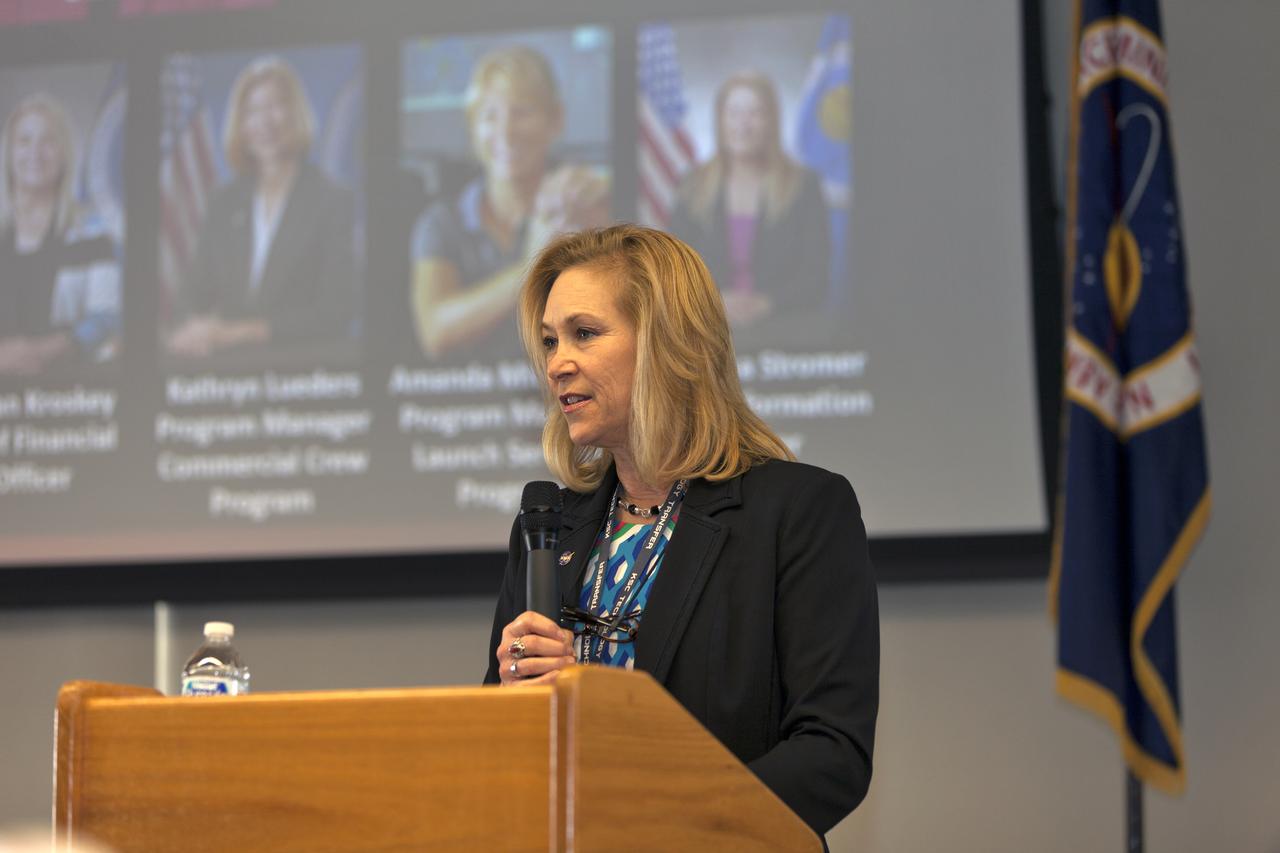
NASA Kennedy Space Center's Deputy Director Janet Petro welcomes workers to the center's Women's History Month event, with the theme "Nevertheless She Persisted." Keynote speaker, JoAnn Morgan, former associate director of the center, spoke to the group about her experience as the first female engineer working in the space program in the 1960s. Morgan was the first female in the Launch Control Center firing room during the Apollo 11 launch. The event was hosted by the center's Kennedy Networking Opportunities for Women (KNOW) and Launching Leaders organizations. The purpose of KNOW is to provide focus on issues such as employment, retention, promotion, training, career and personal development, education, and identify and eliminate barriers that hinder the advancement of women in the workforce.
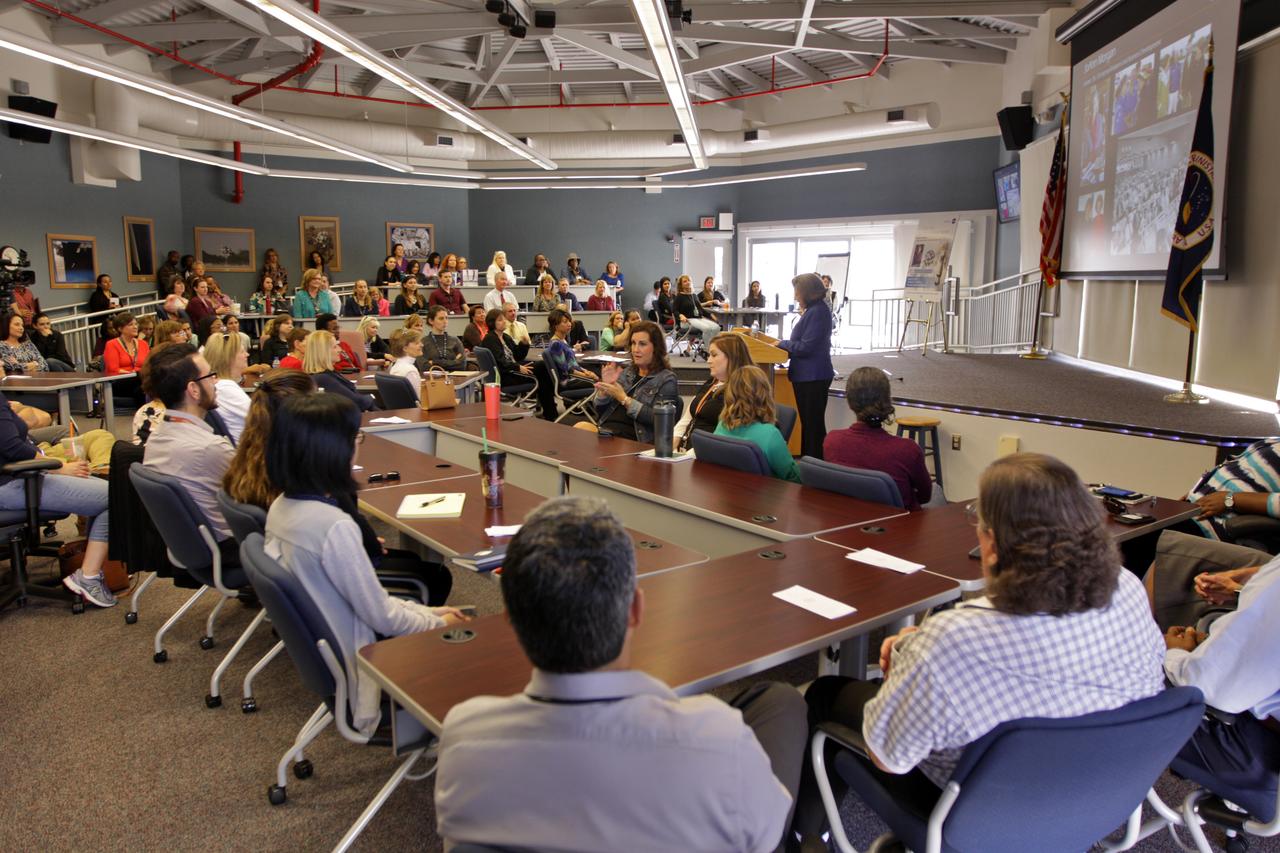
JoAnn Morgan, former associate director of NASA Kennedy Space Center, speaks to workers during a Women's History Month event at the center. With the theme "Nevertheless She Persisted," Morgan described her experience as the first female engineer working in the space program in the 1960s. Morgan was the first female in the Launch Control Center firing room during the Apollo 11 launch. The event was hosted by the center's Kennedy Networking Opportunities for Women (KNOW) and Launching Leaders organizations. The purpose of KNOW is to provide focus on issues such as employment, retention, promotion, training, career and personal development, education, and identify and eliminate barriers that hinder the advancement of women in the workforce.
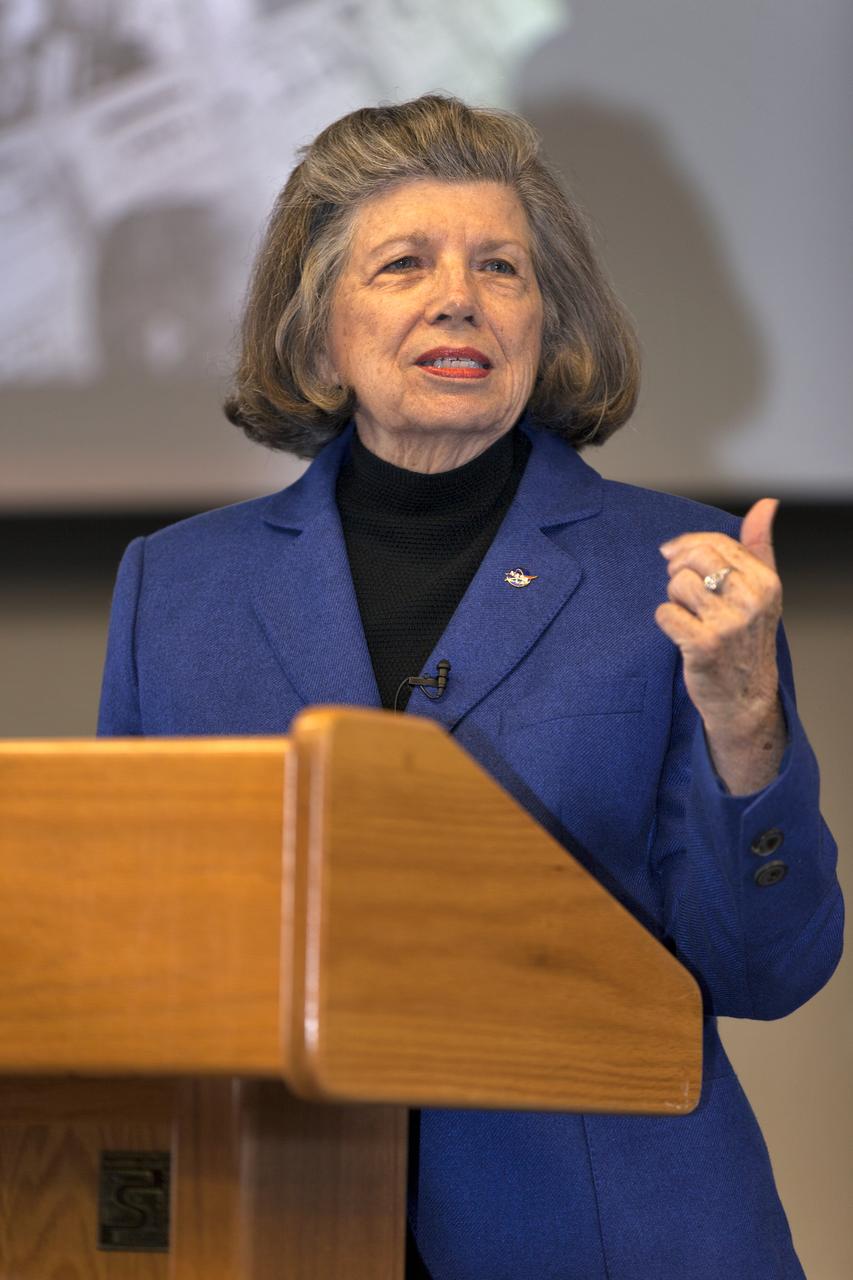
JoAnn Morgan, former associate director of NASA Kennedy Space Center, was the keynote speaker during a Women's History Month event at the center. With the theme "Nevertheless She Persisted," Morgan described her experience as the first female engineer working in the space program in the 1960s. Morgan was the first female in the Launch Control Center firing room during the Apollo 11 launch. The event was hosted by the center's Kennedy Networking Opportunities for Women (KNOW) and Launching Leaders organizations. The purpose of KNOW is to provide focus on issues such as employment, retention, promotion, training, career and personal development, education, and identify and eliminate barriers that hinder the advancement of women in the workforce.
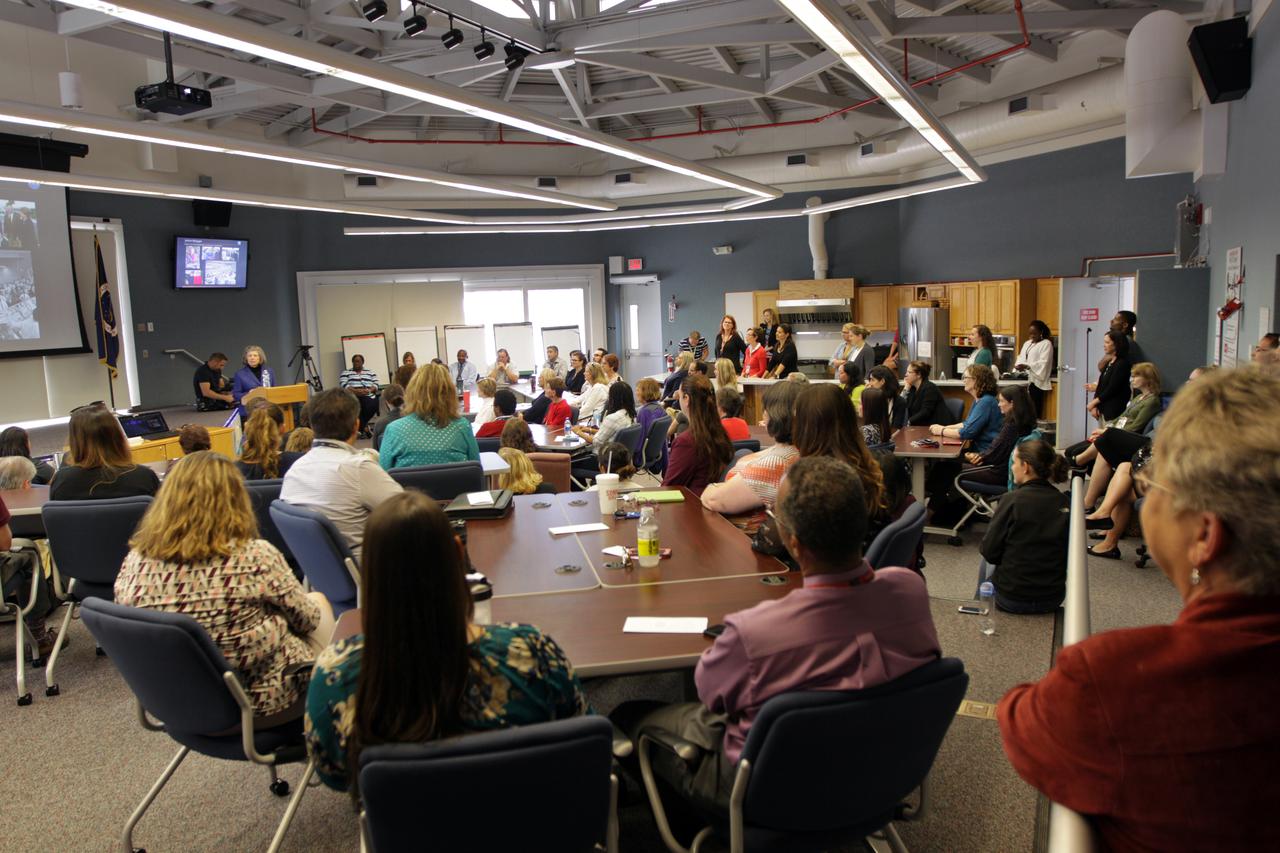
JoAnn Morgan, far left at the podium, former associate director of Kennedy Space Center, was the keynote speaker during a Women's History Month event at the center. With the theme "Nevertheless She Persisted," Morgan described her experience as the first female engineer working in the space program in the 1960s. Morgan was the first female in the Launch Control Center firing room during the Apollo 11 launch. The event was hosted by the center's Kennedy Networking Opportunities for Women (KNOW) and Launching Leaders organizations. The purpose of KNOW is to provide focus on issues such as employment, retention, promotion, training, career and personal development, education, and identify and eliminate barriers that hinder the advancement of women in the workforce.
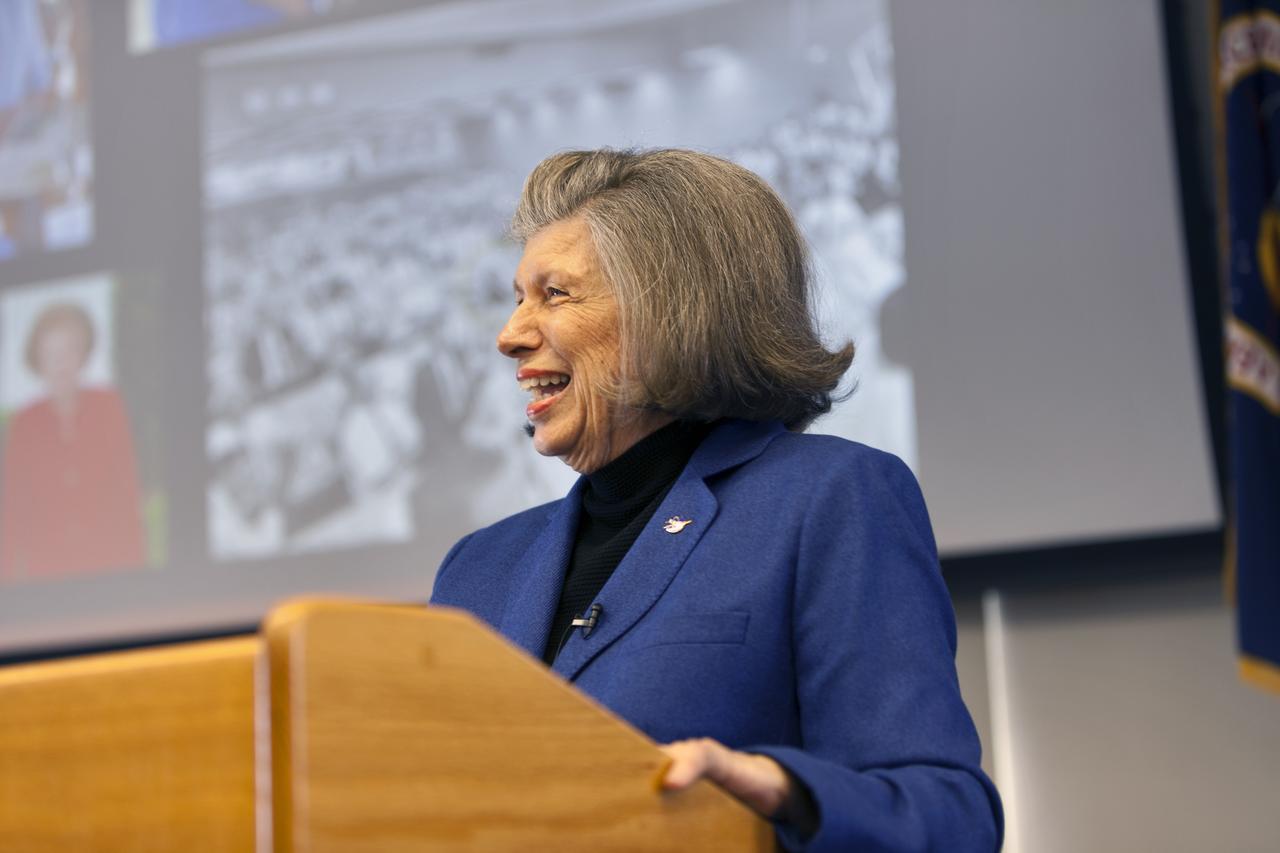
JoAnn Morgan, former associate director of Kennedy Space Center, was the keynote speaker during a Women's History Month event at the center. With the theme "Nevertheless She Persisted," Morgan described her experience as the first female engineer working in the space program in the 1960s. Morgan was the first female in the Launch Control Center firing room during the Apollo 11 launch. The event was hosted by the center's Kennedy Networking Opportunities for Women (KNOW) and Launching Leaders organizations. The purpose of KNOW is to provide focus on issues such as employment, retention, promotion, training, career and personal development, education, and identify and eliminate barriers that hinder the advancement of women in the workforce.
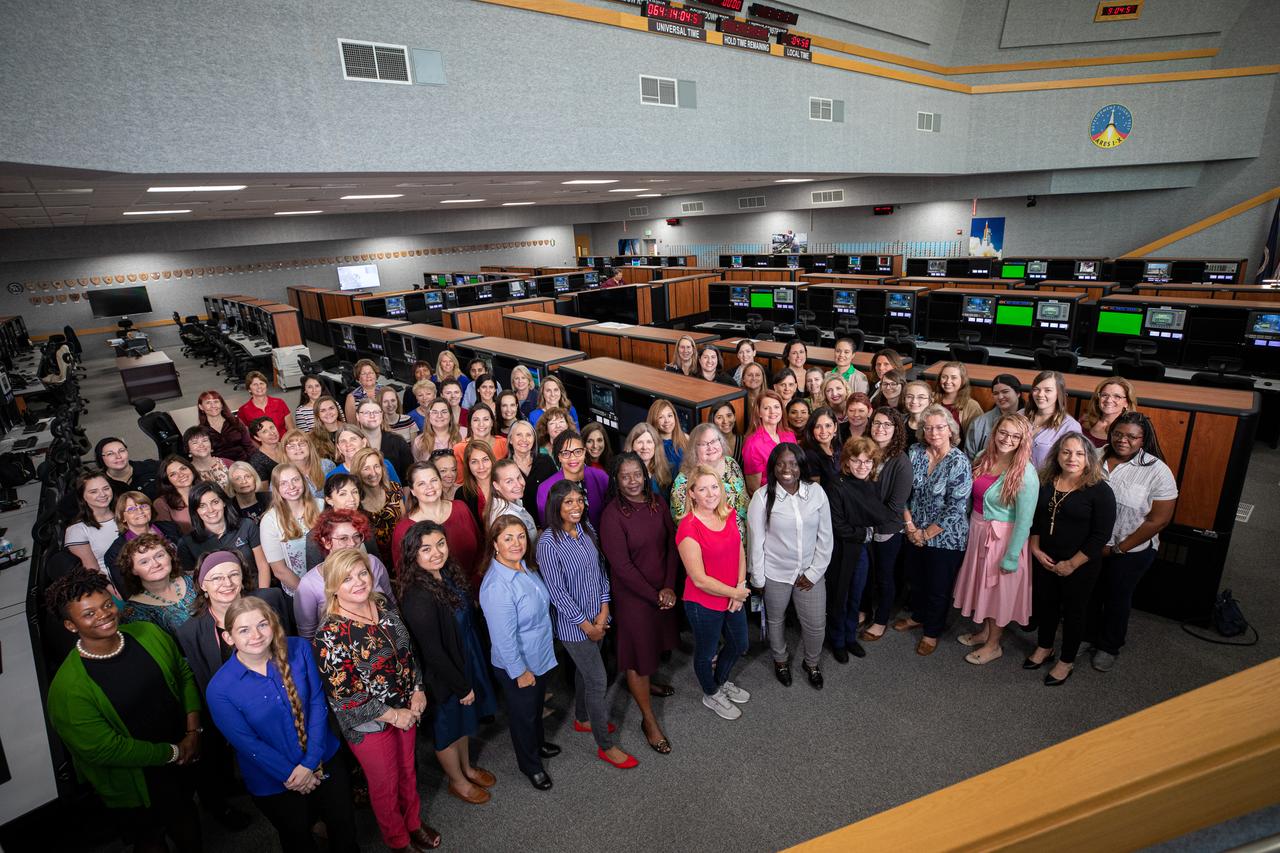
In celebration of Women’s History Month, the “Women of Launch Control” working in Exploration Ground Systems take time out of their Artemis I launch planning to pose for a photo in Firing Room 1 of the Launch Control Center at NASA’s Kennedy Space Center in Florida on March 4, 2020. Artemis I will be the first integrated flight test of the Orion spacecraft and Space Launch System rocket, the system that will ultimately land the first woman and the next man on the Moon.
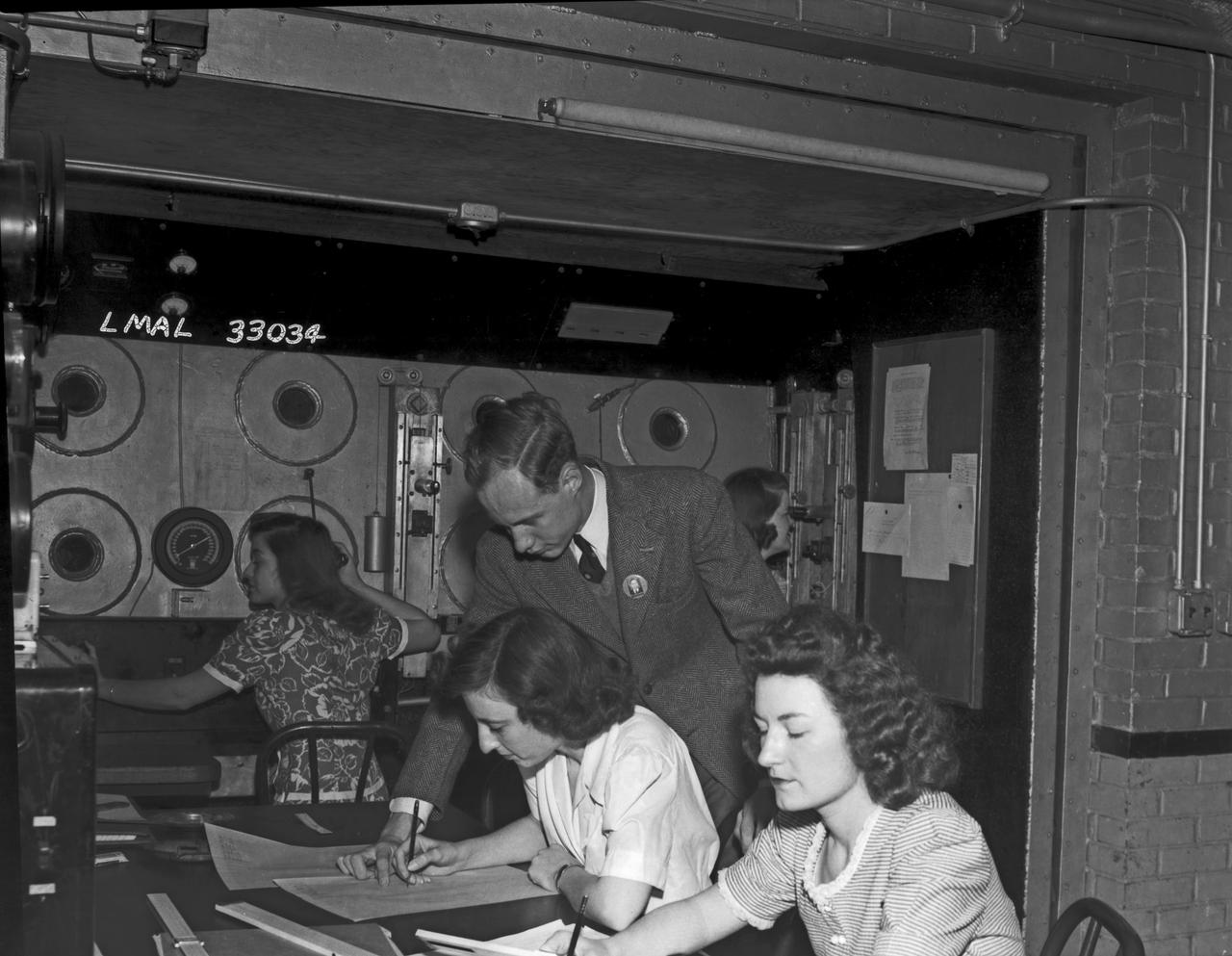
Women Adequately Filling Posts In NACA Laboratory: In the picture are F.F. Fullmer, aeronautical engineer, supervise a group of women who are helping operate the research equipment in the two-dimensional wind tunnel. Miss Elizabeth Patterson, left foreground, and Miss Katherine Thomason, right foreground obtains aerodynamic data, while Miss Lenore Woodland left background and Mrs. Blanche White help operate the tunnel. By Lee Dickinson 1943
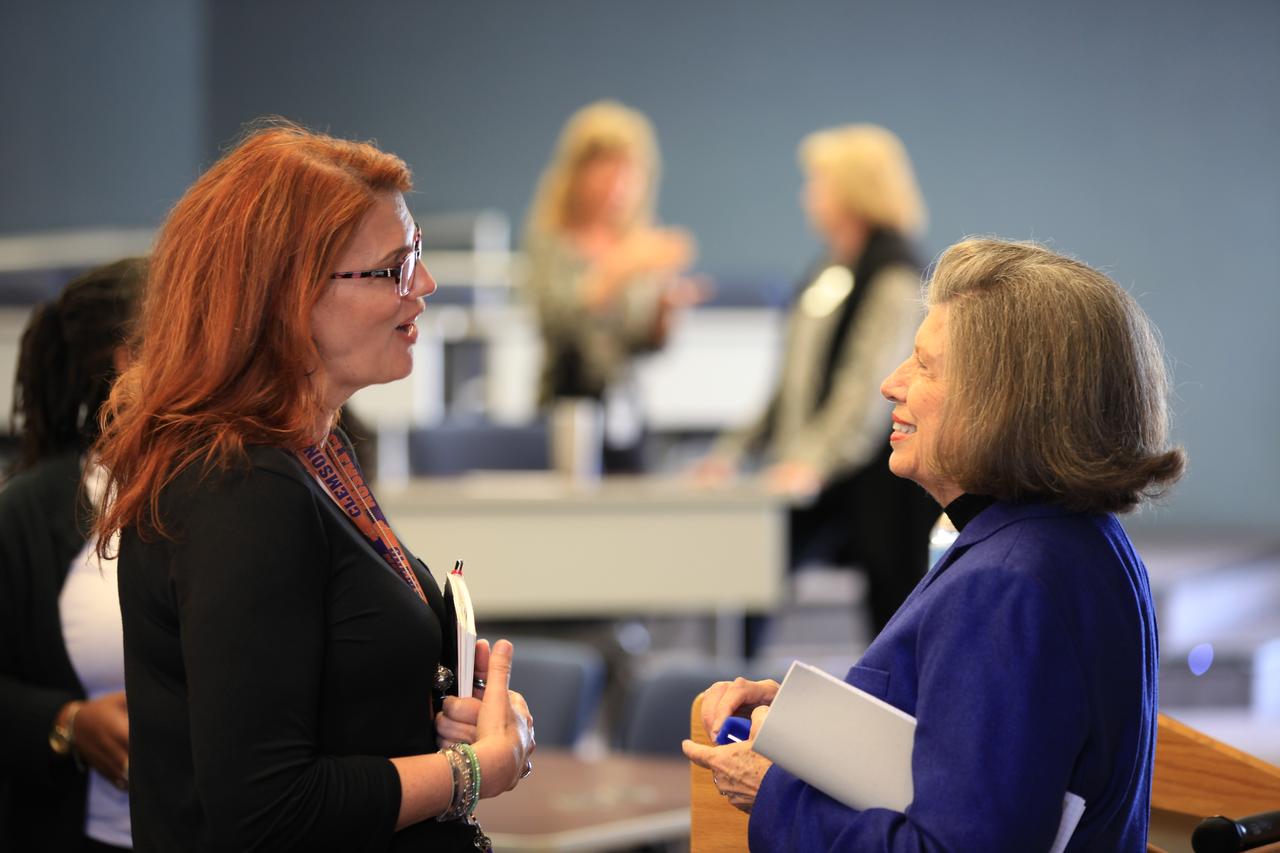
JoAnn Morgan, at right, former associate director of Kennedy Space Center, was the keynote speaker during a Women's History Month event at the center. With the theme "Nevertheless She Persisted," Morgan described her experience as the first female engineer working in the space program in the 1960s. Morgan was the first female in the Launch Control Center firing room during the Apollo 11 launch. Morgan is speaking to Charlie Blackwell-Thompson, the first female launch director, who will lead countdown and launch for Exploration Mission-1. The event was hosted by the center's Kennedy Networking Opportunities for Women (KNOW) and Launching Leaders organizations. The purpose of KNOW is to provide focus on issues such as employment, retention, promotion, training, career and personal development, education, and identify and eliminate barriers that hinder the advancement of women in the workforce.
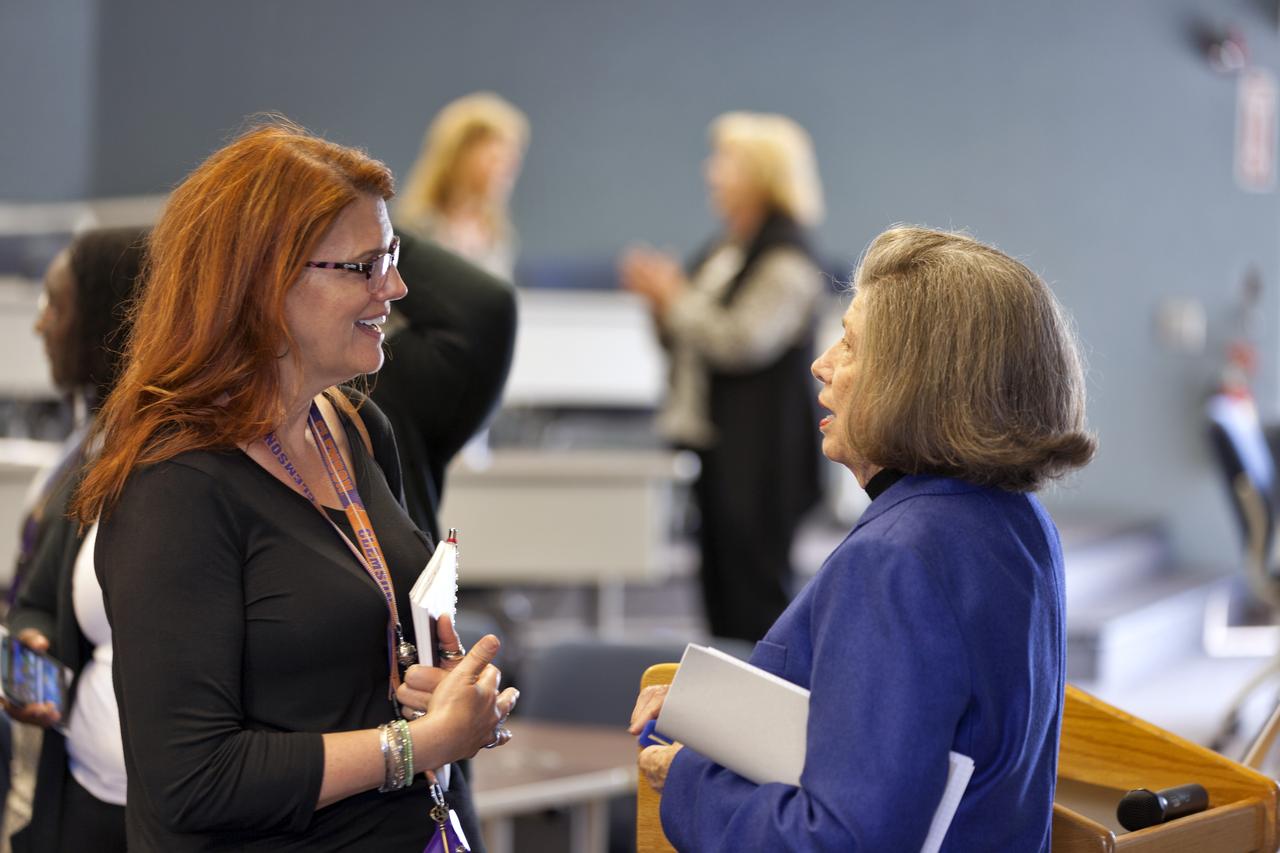
JoAnn Morgan, at right, former associate director of Kennedy Space Center, was the keynote speaker during a Women's History Month event at the center. With the theme "Nevertheless She Persisted," Morgan described her experience as the first female engineer working in the space program in the 1960s. Morgan was the first female in the Launch Control Center firing room during the Apollo 11 launch. Morgan is speaking to Charlie Blackwell-Thompson, the first female launch director, who will lead countdown and launch for Exploration Mission-1. The event was hosted by the center's Kennedy Networking Opportunities for Women (KNOW) and Launching Leaders organizations. The purpose of KNOW is to provide focus on issues such as employment, retention, promotion, training, career and personal development, education, and identify and eliminate barriers that hinder the advancement of women in the workforce.
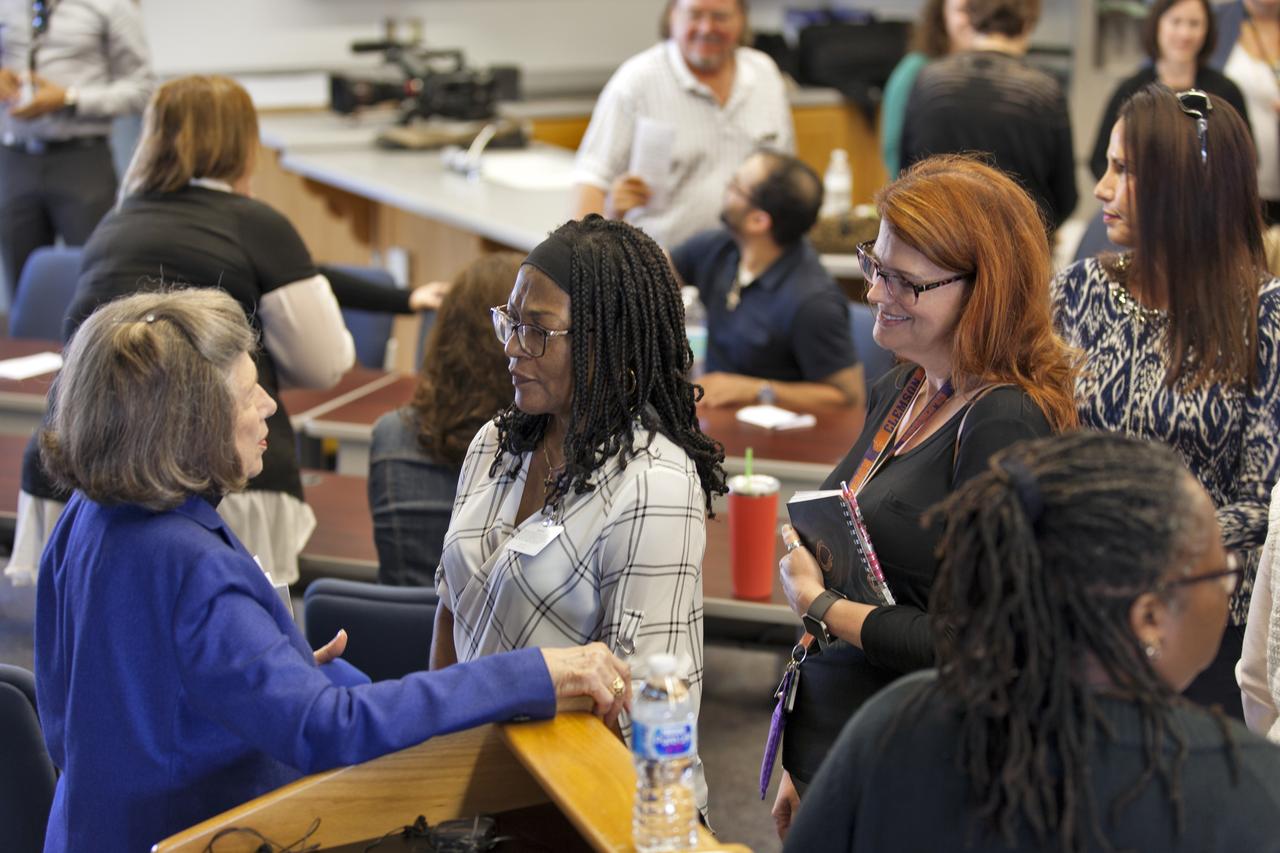
JoAnn Morgan, former associate director of Kennedy Space Center, was the keynote speaker during a Women's History Month event at the center. With the theme "Nevertheless She Persisted," Morgan described her experience as the first female engineer working in the space program in the 1960s. Morgan was the first female in the Launch Control Center firing room during the Apollo 11 launch. Third from the left is Charlie Blackwell-Thompson, launch director for Exploration Mission-1. The event was hosted by the center's Kennedy Networking Opportunities for Women (KNOW) and Launching Leaders organizations. The purpose of KNOW is to provide focus on issues such as employment, retention, promotion, training, career and personal development, education, and identify and eliminate barriers that hinder the advancement of women in the workforce.
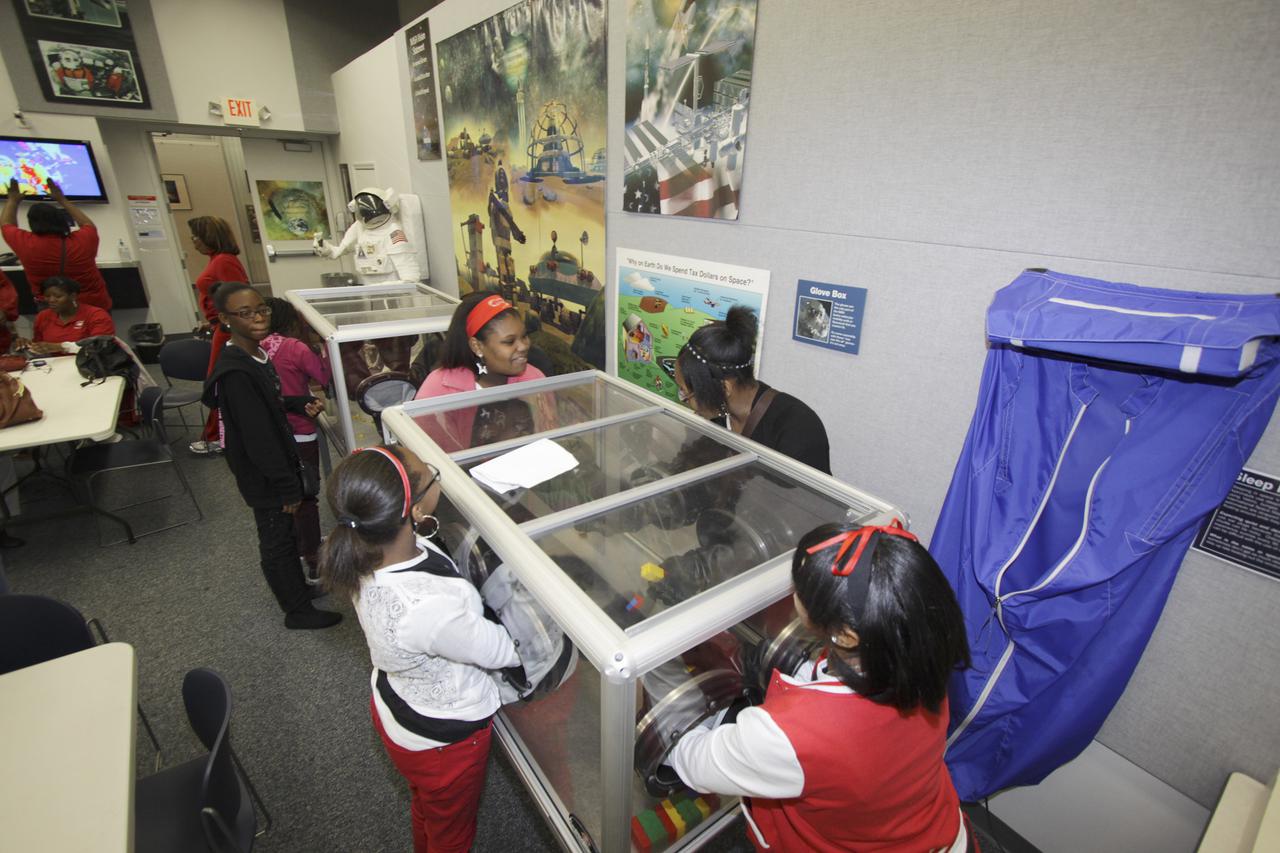
CAPE CANAVERAL, Fla. – Middle and High school students from Florida's Putnam and Volusia counties use a glove box practice working with materials with protected hands during a science demonstration at the NASA's Center for Space at the Kennedy Space Center. The 11 to 18-year-old students are part of Delta Academy and Delta GEMS, an African American women’s mentoring program affiliated with Delta Sigma Theta. The sorority uses their collective efforts to promote academic excellence, provide scholarships and support underserved students. As a part of the science program, the young scholars participated in a presentation by professional women who work at Kennedy discussing career choices and encouraging interest in science, technology, engineering and mathematics STEM careers. Photo credit: NASA_Jim Grossmann
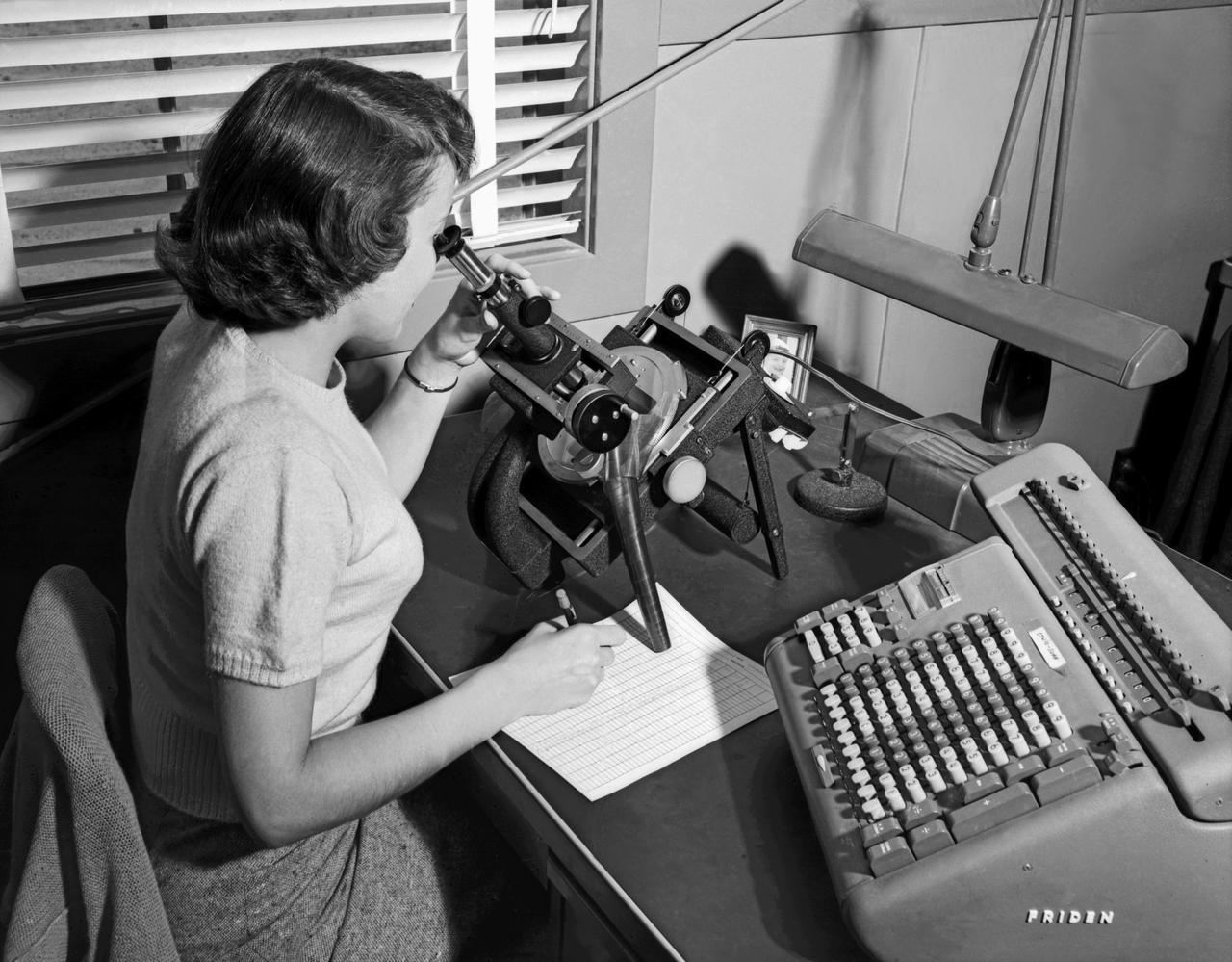
Langely Women Computer with X-4 with Friden machine. Publicity photo from Muroc California, showing female support personnel with equipment. Langley Computer with Friden machine.
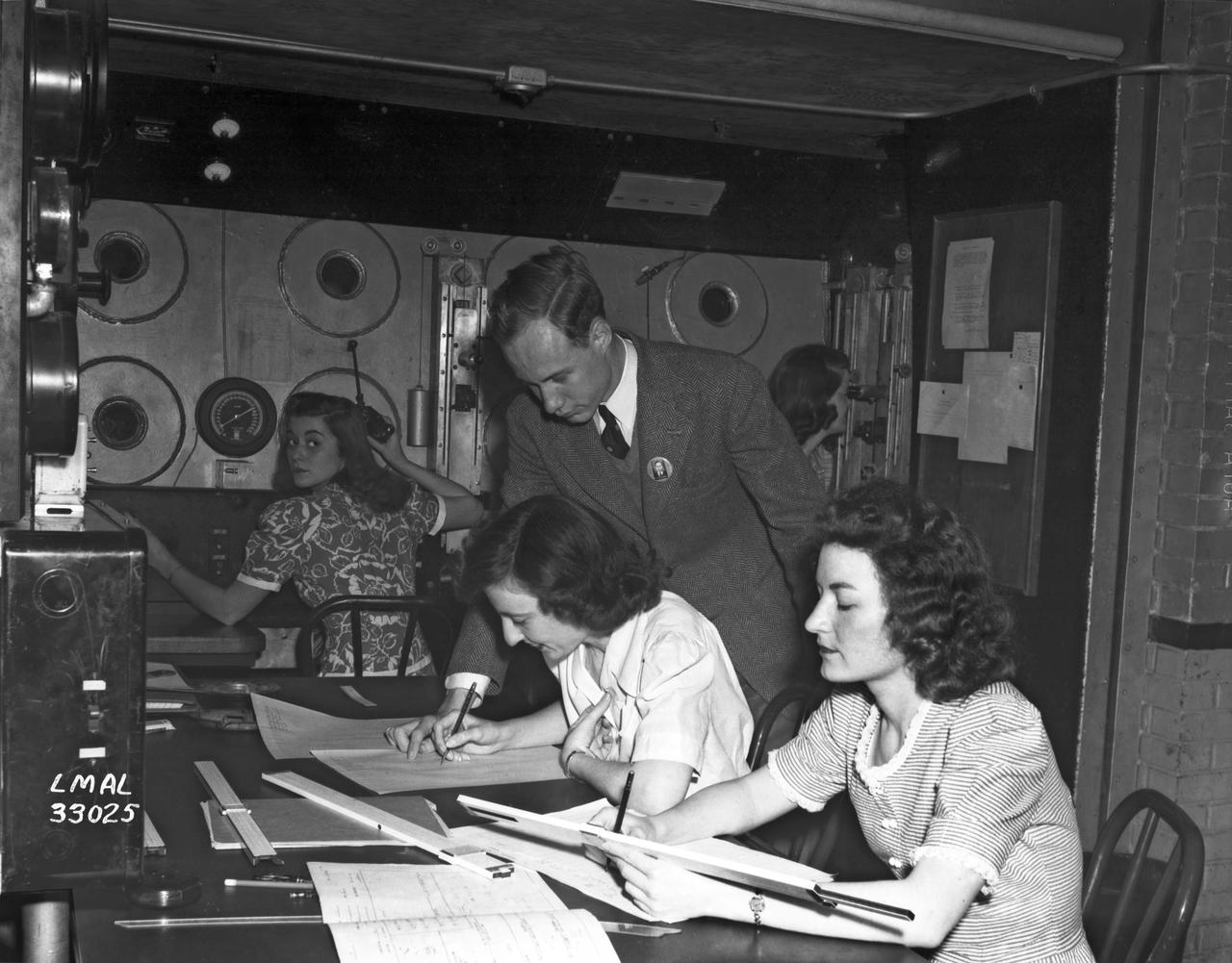
In the picture are F.F. Fullmer, aeronautical engineer, supervise a group of women who are helping operate the research equipment in the two-dimensional wind tunnel. Miss Elizabeth Patterson, left foreground, and Miss Katherine Thomason, right foreground obtains aerodynamic data, while Miss Lenore Woodland left background and Mrs. Blanche White help operate the tunnel. By Lee Dickinson 1943
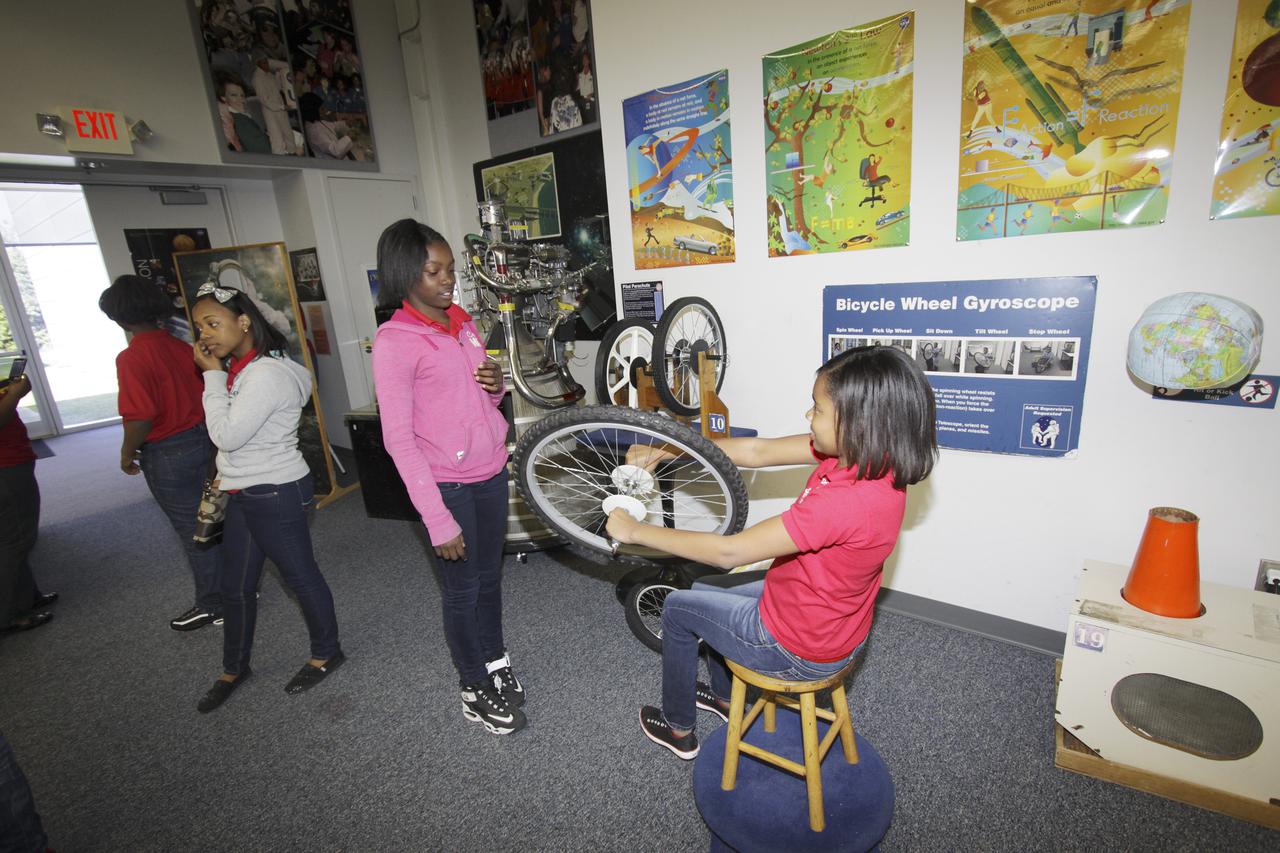
CAPE CANAVERAL, Fla. – Middle and High school students from Florida's Putnam and Volusia counties use a bicycle wheel as a gyroscope to simulate principals of motion during a science demonstration at the NASA's Center for Space Education at the Kennedy Space Center. The 11 to 18-year-old students are part of Delta Academy and Delta GEMS, an African American women’s mentoring program affiliated with Delta Sigma Theta. The sorority uses their collective efforts to promote academic excellence, provide scholarships and support underserved students. As a part of the science program, the young scholars participated in a presentation by professional women who work at Kennedy discussing career choices and encouraging interest in science, technology, engineering and mathematics STEM careers. Photo credit: NASA_Jim Grossmann
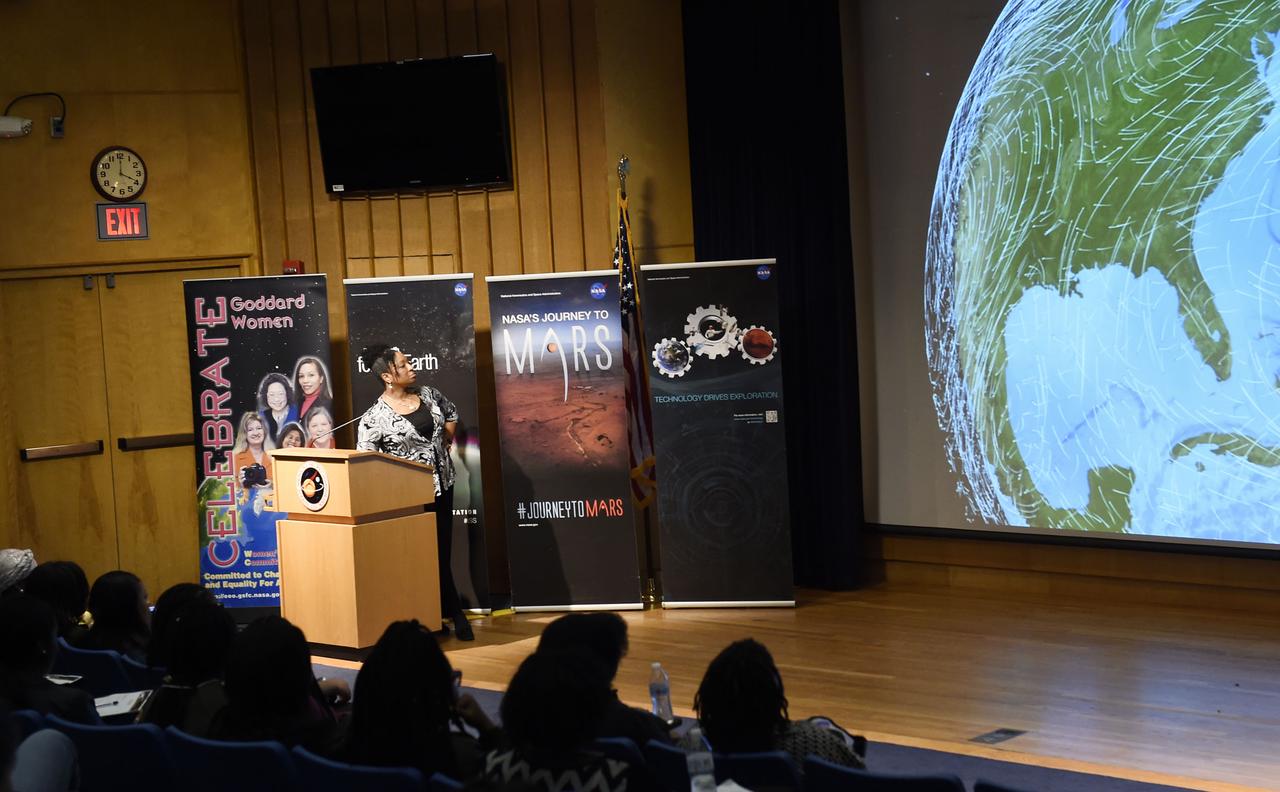
Girls Night In was held at Goddard on Nov 4-5, 2016. This is a pilot program which reinvigorates, inspires, and engages high school girls who may be struggling or not fully engaged in STEM (Science, Technology Engineering and Math) education. The program allowed NASA women to share and demonstrate the work they do, provide the girls an opportunity to completely immerse themselves in Goddard science, technology, engineering and math as well as provide them activities that will challenge and promote knowledge and discovery. Goddard invites other NASA centers tolearn from this pilot program and work towards a simultaneous multicenter event in the future. Participating schools were: DuVal, Crossland, Flowers, High Point, Northwestern and Oxon Hill
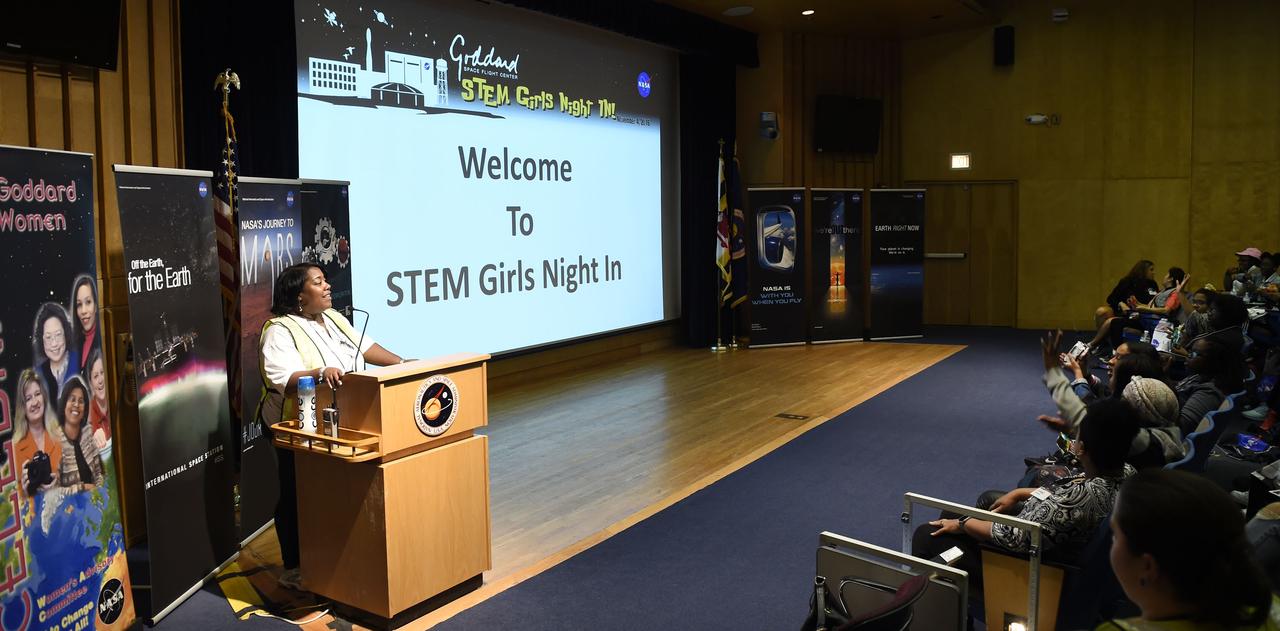
Girls Night In was held at Goddard on Nov 4-5, 2016. This is a pilot program which reinvigorates, inspires, and engages high school girls who may be struggling or not fully engaged in STEM (Science, Technology Engineering and Math) education. The program allowed NASA women to share and demonstrate the work they do, provide the girls an opportunity to completely immerse themselves in Goddard science, technology, engineering and math as well as provide them activities that will challenge and promote knowledge and discovery. Goddard invites other NASA centers tolearn from this pilot program and work towards a simultaneous multicenter event in the future. Participating schools were: DuVal, Crossland, Flowers, High Point, Northwestern and Oxon Hill
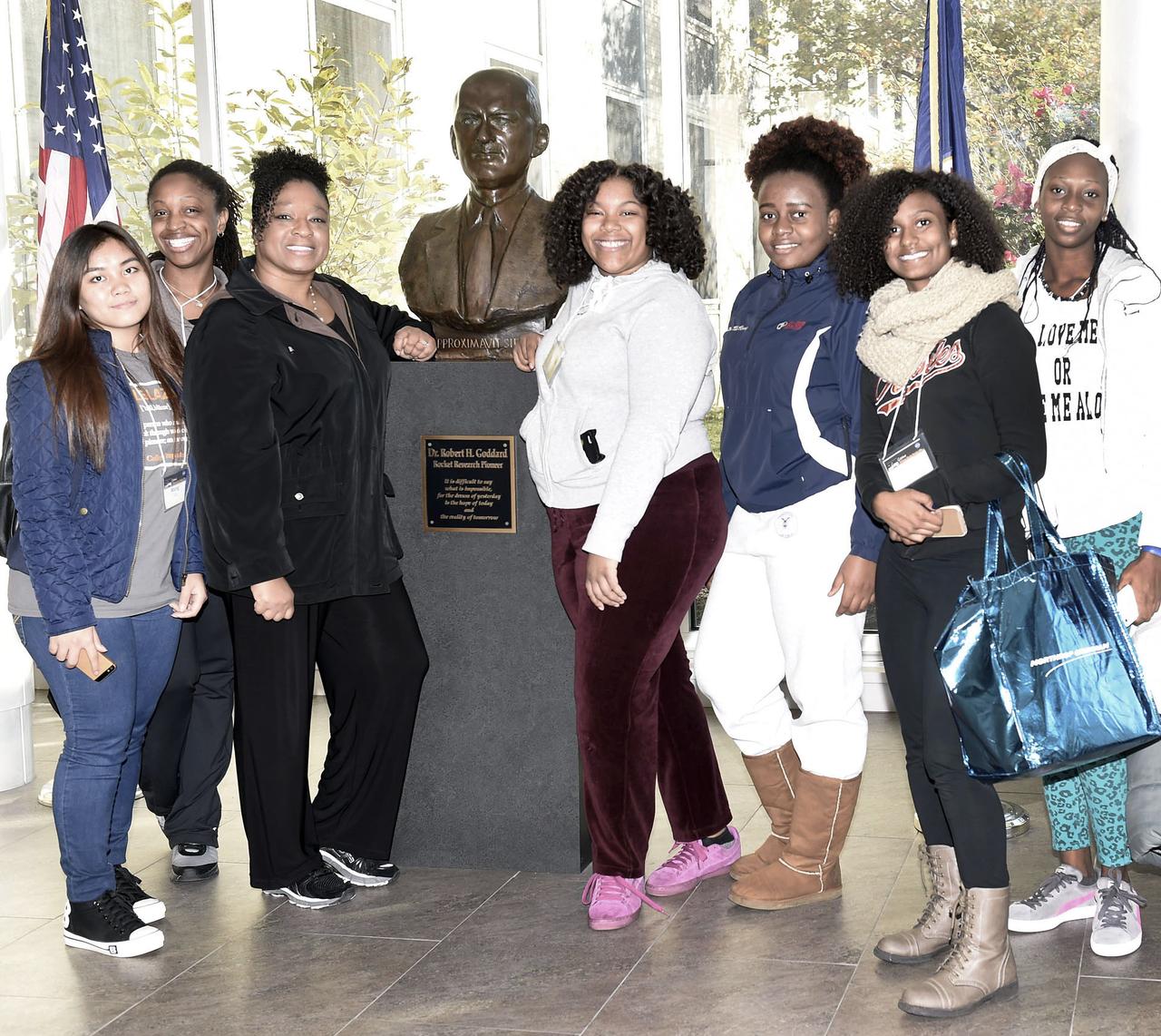
Girls Night In was held at Goddard on Nov 4-5, 2016. This is a pilot program which reinvigorates, inspires, and engages high school girls who may be struggling or not fully engaged in STEM (Science, Technology Engineering and Math) education. The program allowed NASA women to share and demonstrate the work they do, provide the girls an opportunity to completely immerse themselves in Goddard science, technology, engineering and math as well as provide them activities that will challenge and promote knowledge and discovery. Goddard invites other NASA centers tolearn from this pilot program and work towards a simultaneous multicenter event in the future. Participating schools were: DuVal, Crossland, Flowers, High Point, Northwestern and Oxon Hill
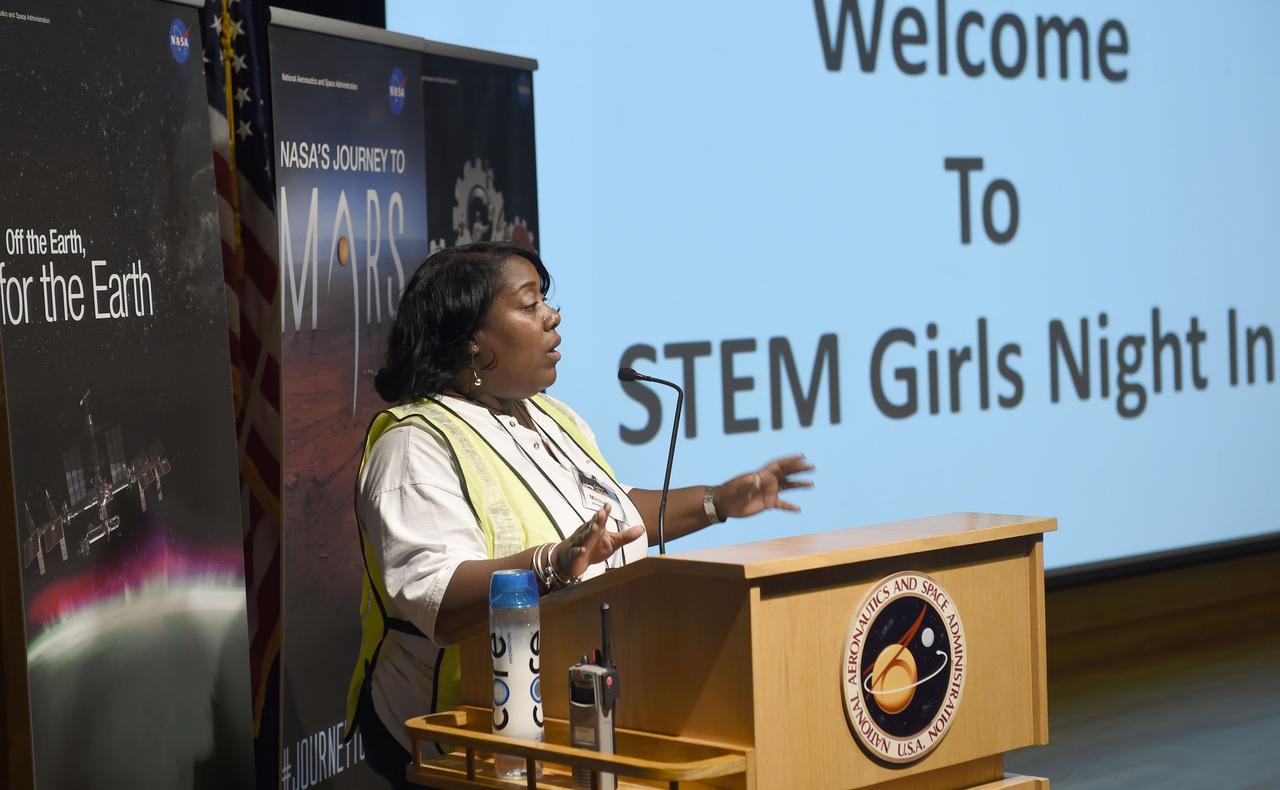
Girls Night In was held at Goddard on Nov 4-5, 2016. This is a pilot program which reinvigorates, inspires, and engages high school girls who may be struggling or not fully engaged in STEM (Science, Technology Engineering and Math) education. The program allowed NASA women to share and demonstrate the work they do, provide the girls an opportunity to completely immerse themselves in Goddard science, technology, engineering and math as well as provide them activities that will challenge and promote knowledge and discovery. Goddard invites other NASA centers tolearn from this pilot program and work towards a simultaneous multicenter event in the future. Participating schools were: DuVal, Crossland, Flowers, High Point, Northwestern and Oxon Hill
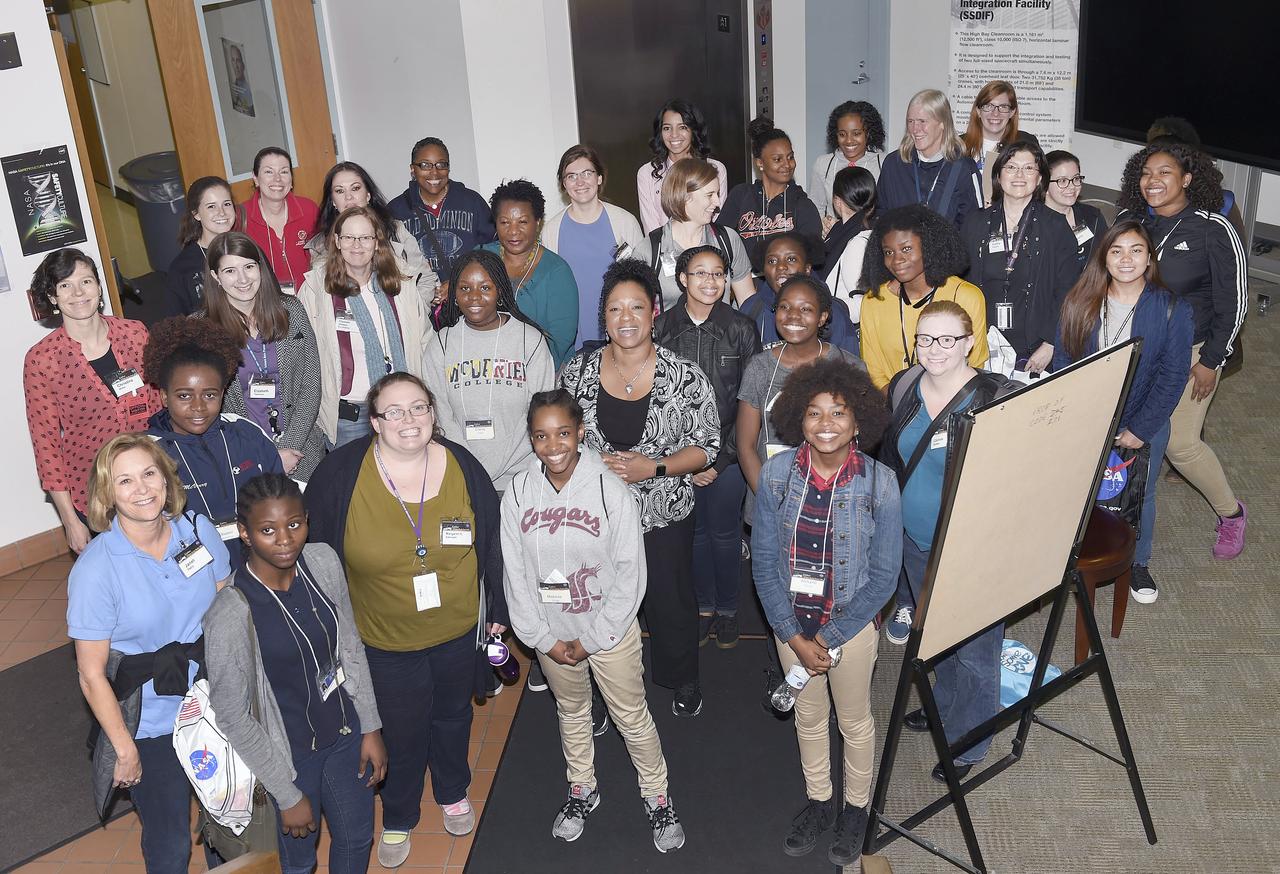
Girls Night In was held at Goddard on Nov 4-5, 2016. This is a pilot program which reinvigorates, inspires, and engages high school girls who may be struggling or not fully engaged in STEM (Science, Technology Engineering and Math) education. The program allowed NASA women to share and demonstrate the work they do, provide the girls an opportunity to completely immerse themselves in Goddard science, technology, engineering and math as well as provide them activities that will challenge and promote knowledge and discovery. Goddard invites other NASA centers tolearn from this pilot program and work towards a simultaneous multicenter event in the future. Participating schools were: DuVal, Crossland, Flowers, High Point, Northwestern and Oxon Hill
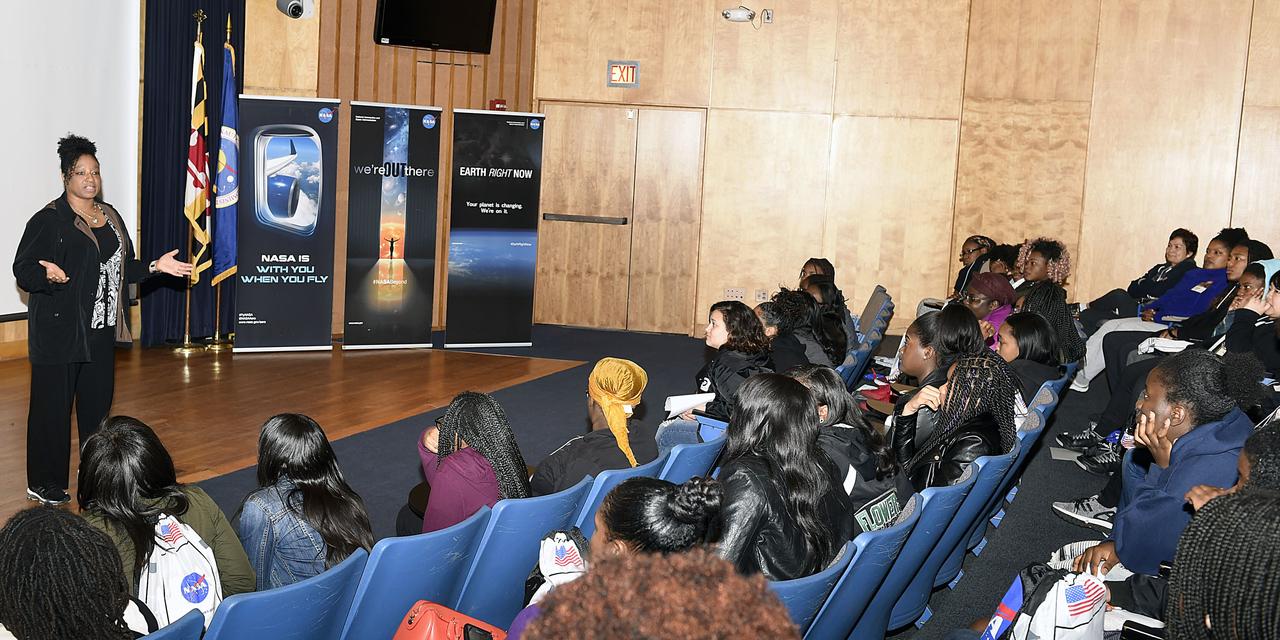
Girls Night In was held at Goddard on Nov 4-5, 2016. This is a pilot program which reinvigorates, inspires, and engages high school girls who may be struggling or not fully engaged in STEM (Science, Technology Engineering and Math) education. The program allowed NASA women to share and demonstrate the work they do, provide the girls an opportunity to completely immerse themselves in Goddard science, technology, engineering and math as well as provide them activities that will challenge and promote knowledge and discovery. Goddard invites other NASA centers tolearn from this pilot program and work towards a simultaneous multicenter event in the future. Participating schools were: DuVal, Crossland, Flowers, High Point, Northwestern and Oxon Hill
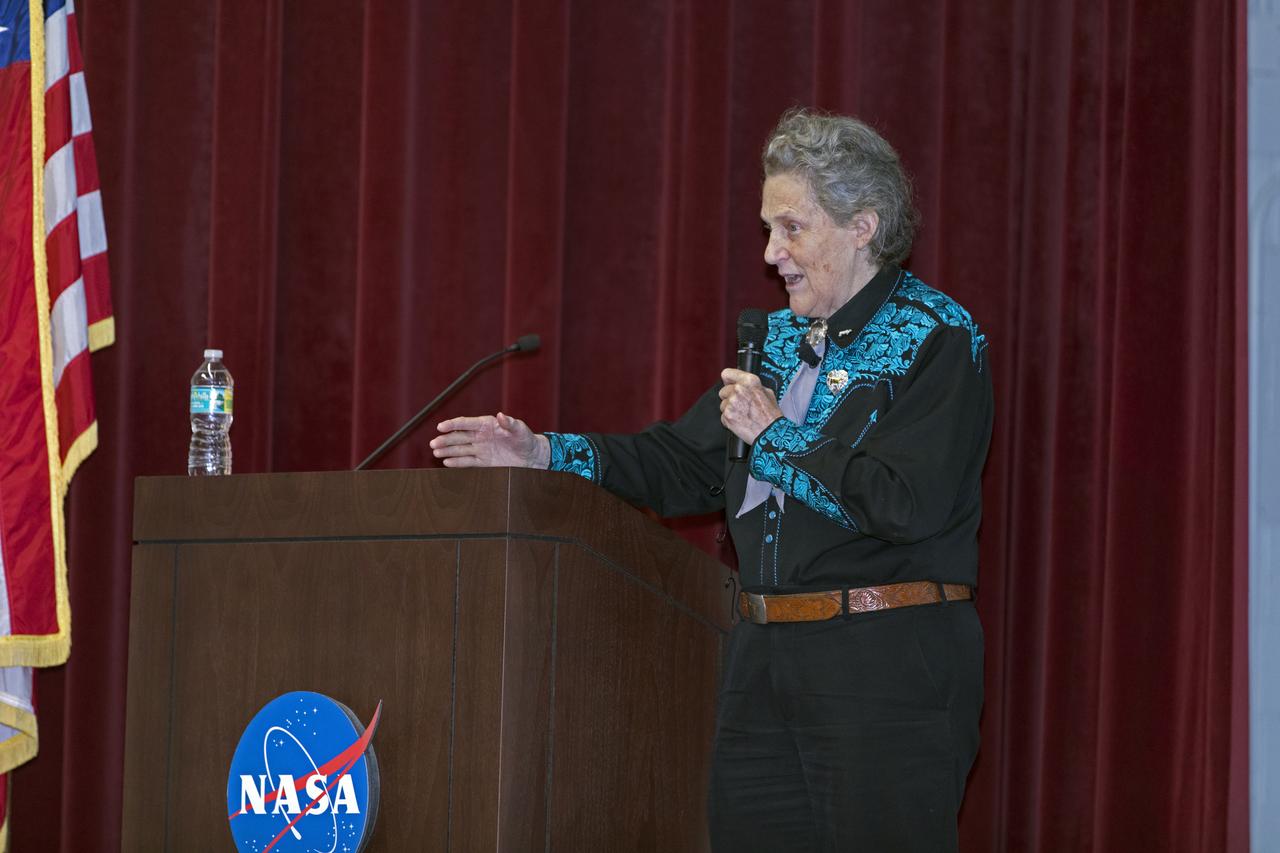
Dr. Temple Grandin addresses employees as the keynote speaker at Kennedy Space Center's annual National Disability Employment Awareness Month (NDEAM) event. A prominent author and speaker on animal behavior and autism, she is a professor of animal science at Colorado State University in Fort Collins, Colorado. Kennedy's Disability Awareness and Action Working Group partnered with the Kennedy Networking Opportunities for Women group to sponsor the presentation.
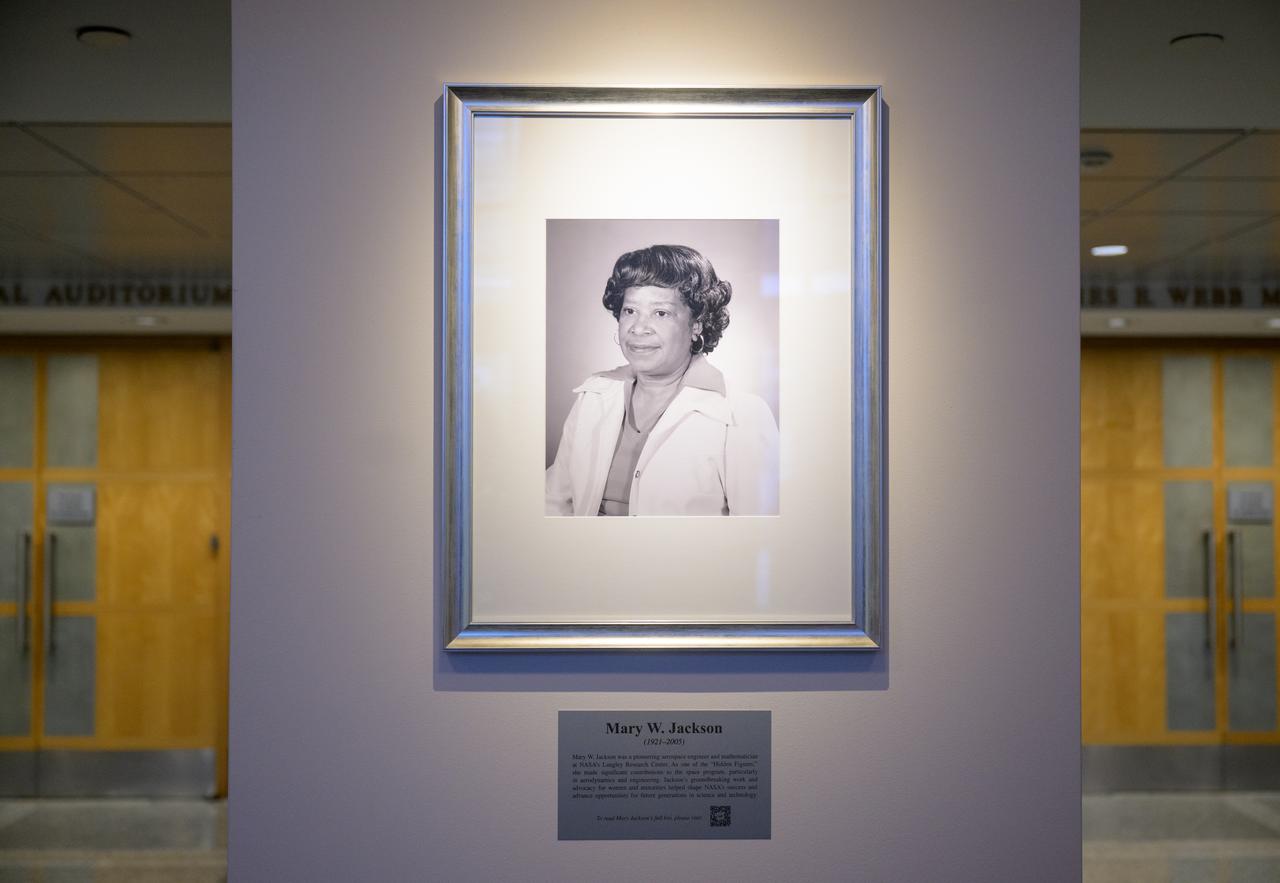
A portrait of Mary W. Jackson is seen after it was unveiled, Friday, Dec. 6, 2024, at the NASA Headquarters Mary W. Jackson Building in Washington. Mary W. Jackson was a pioneering aerospace engineer and mathematician at NASA’s Langley Research Center. As one of the “Hidden Figures,” she made significant contributions to the space program, particularly in aerodynamics and engineering. Jackson’s groundbreaking work and advocacy for women and minorities helped shape NASA’s success and advance opportunities for future generations in science and technology. Photo Credit: (NASA/Joel Kowsky)
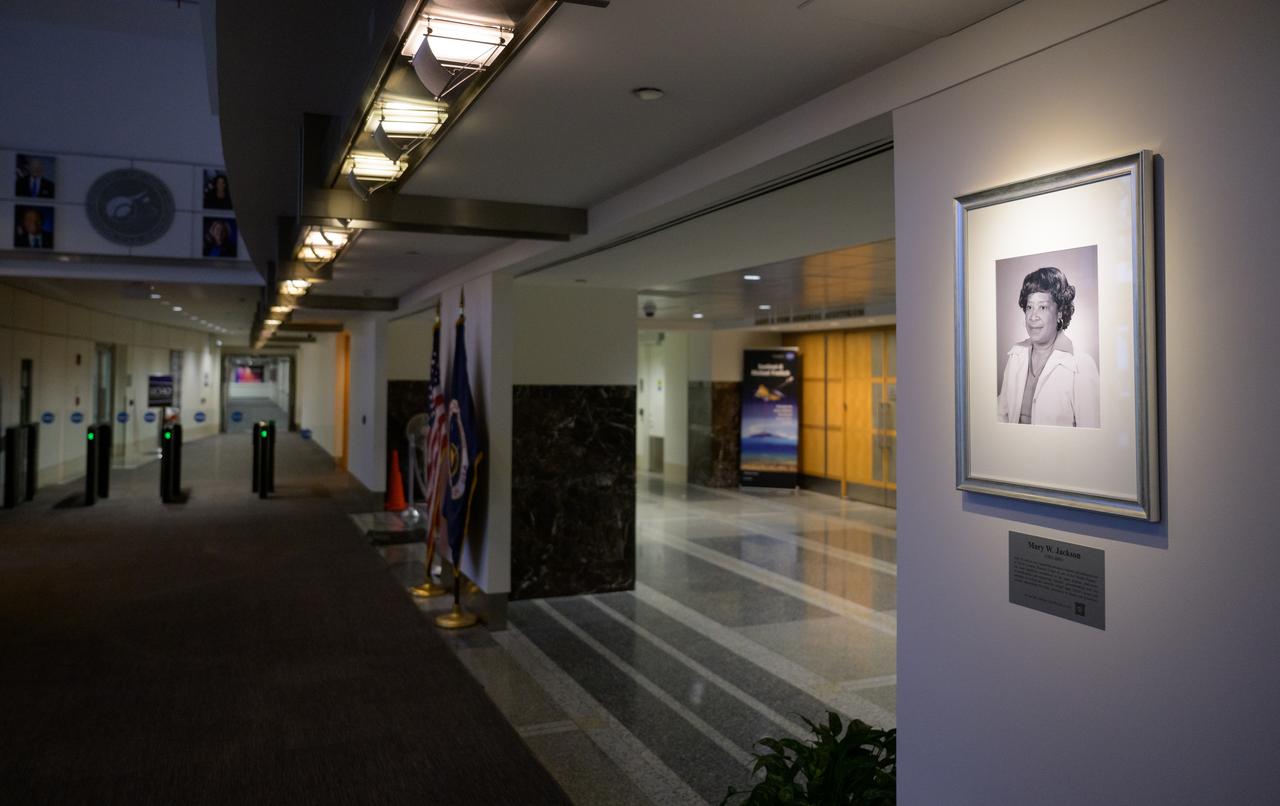
A portrait of Mary W. Jackson is seen after it was unveiled, Friday, Dec. 6, 2024, at the NASA Headquarters Mary W. Jackson Building in Washington. Mary W. Jackson was a pioneering aerospace engineer and mathematician at NASA’s Langley Research Center. As one of the “Hidden Figures,” she made significant contributions to the space program, particularly in aerodynamics and engineering. Jackson’s groundbreaking work and advocacy for women and minorities helped shape NASA’s success and advance opportunities for future generations in science and technology. Photo Credit: (NASA/Joel Kowsky)

ISS023-E-020639 (7 April 2010) --- NASA astronaut Dorothy Metcalf-Lindenburger (left) and Japan Aerospace Exploration Agency astronaut Naoko Yamazaki appear especially happy to be aboard the International Space Station shortly after the Discovery docked with the orbital outpost. Each of the two mission specialists is enjoying her first trip into space, and the two are joined by two other women and nine men for several days of joint activities as work continues on the station.
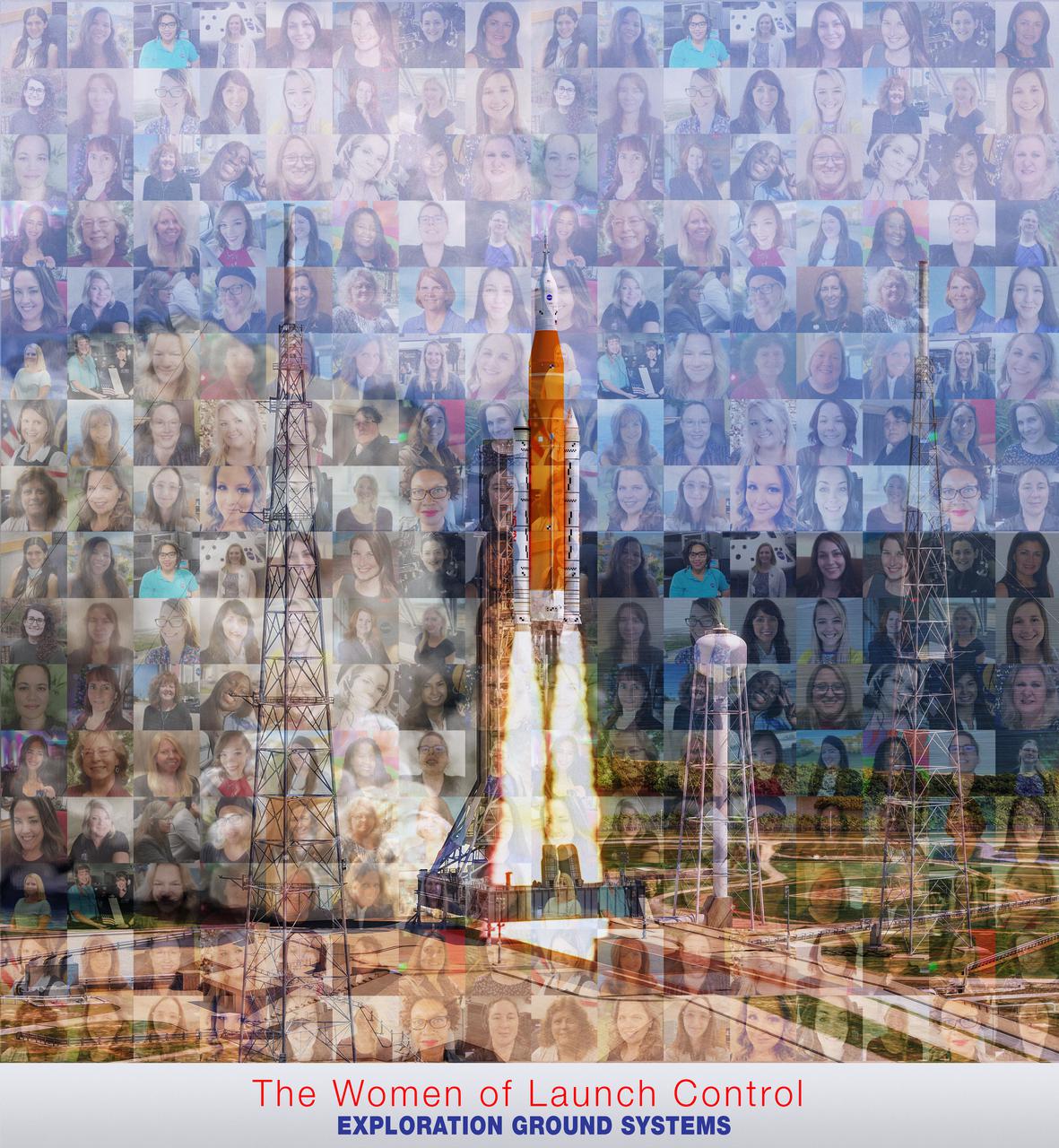
NASA has come a long way since the Apollo program when there was only one woman — JoAnn Morgan — working in Firing Room 1 of Kennedy Space Center’s Launch Control Center. Now, about 30% of the staff responsible for launching and monitoring the Space Launch System (SLS) rocket and Orion spacecraft for the Artemis program are women. Under the Artemis program, NASA will launch the first woman and next man to the lunar surface, using the Moon as a testing ground before venturing on to Mars.

Dr. Temple Grandin, right, accepts a NASA photo collage from Kennedy Space Center Chief Financial Officer Susan Kroskey at the center's annual National Disability Employment Awareness Month event. Grandin served as keynote speaker. A prominent author and speaker on animal behavior and autism, she is a professor of animal science at Colorado State University in Fort Collins, Colorado. Kroskey is the executive champion of Kennedy's Disability Awareness and Action Working Group, or DAAWG, which partnered with the Kennedy Networking Opportunities for Women group to sponsor the presentation.
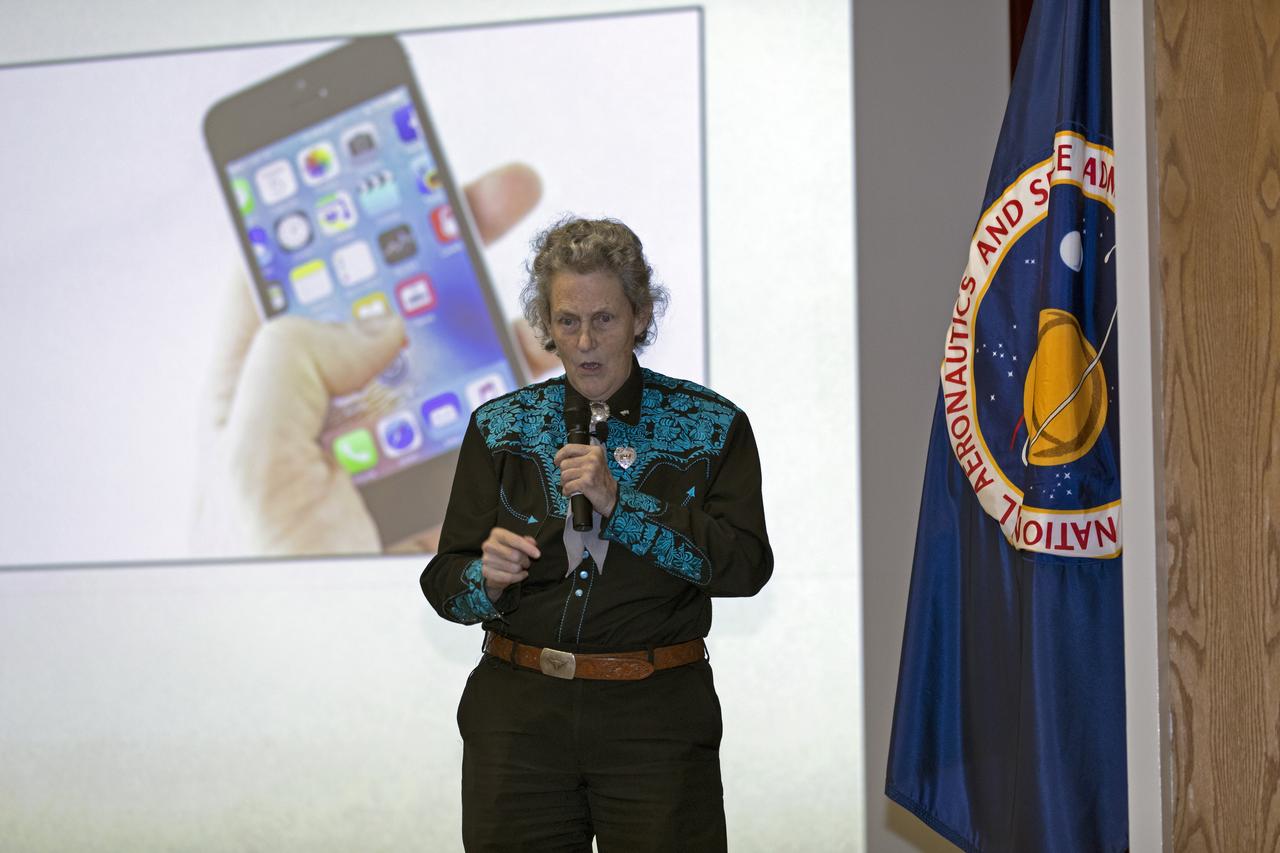
Dr. Temple Grandin addresses employees as the keynote speaker at Kennedy Space Center's annual National Disability Employment Awareness Month (NDEAM) event. A prominent author and speaker on animal behavior and autism, she is a professor of animal science at Colorado State University in Fort Collins, Colorado. Kennedy's Disability Awareness and Action Working Group partnered with the Kennedy Networking Opportunities for Women group to sponsor the presentation.
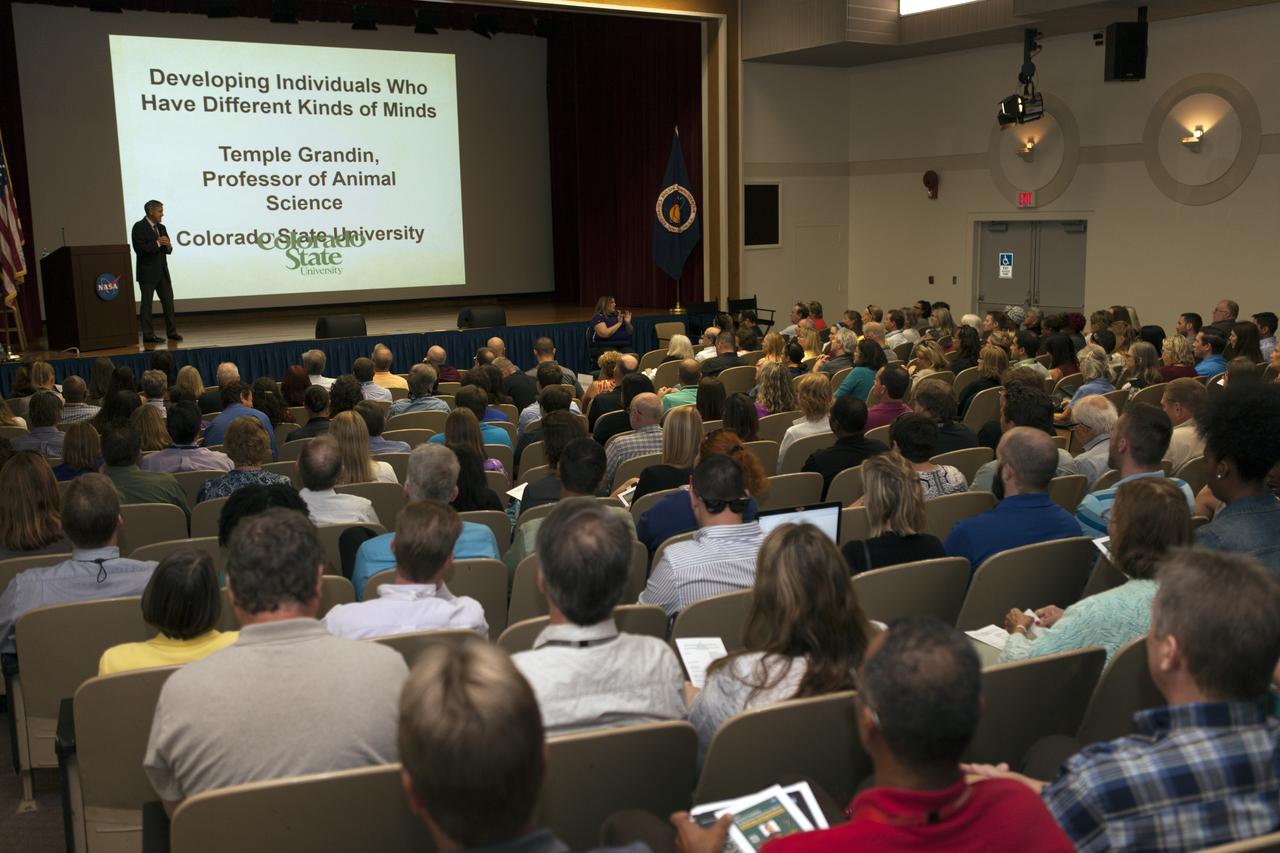
Kennedy Space Center Director Bob Cabana addresses employees at the start of the annual National Disability Employment Awareness Month (NDEAM) event, which featured Dr. Temple Grandin as keynote speaker. A prominent author and speaker on animal behavior and autism, she is a professor of animal science at Colorado State University in Fort Collins, Colorado. Kennedy's Disability Awareness and Action Working Group partnered with the Kennedy Networking Opportunities for Women group to sponsor the presentation.
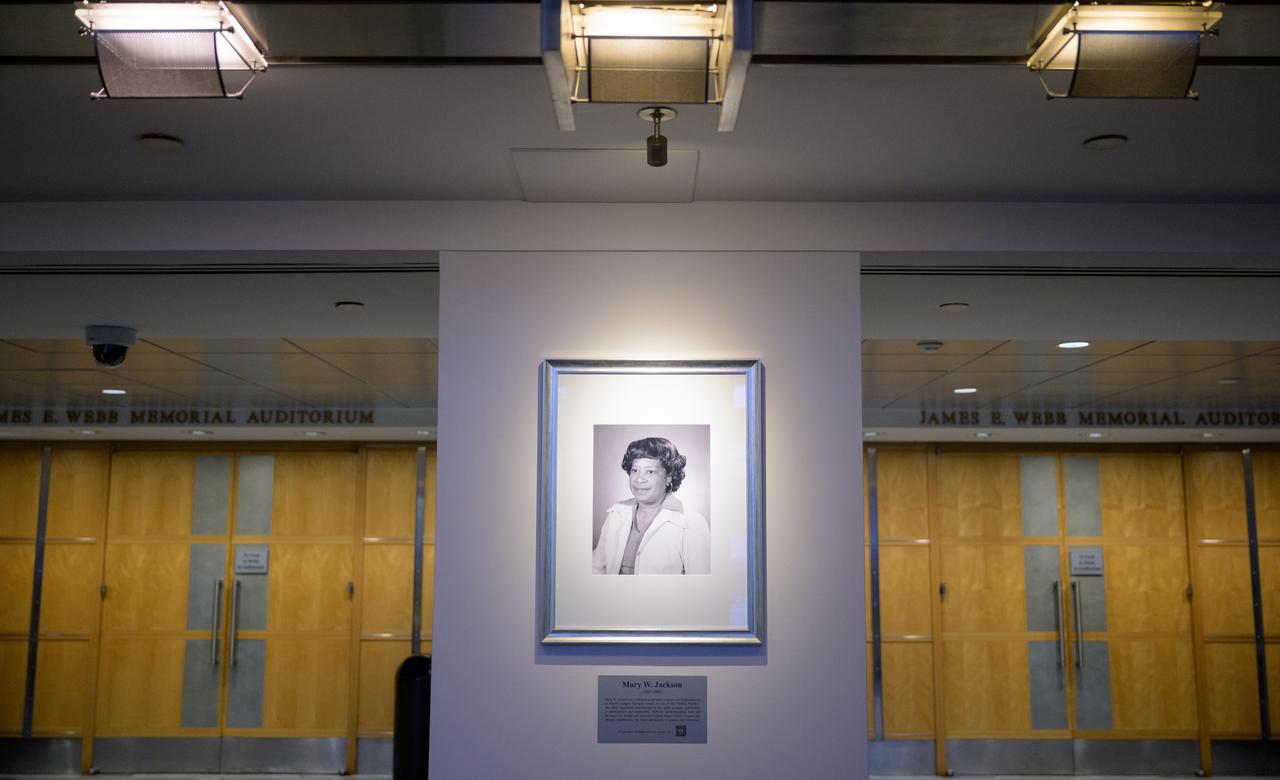
A portrait of Mary W. Jackson is seen after it was unveiled, Friday, Dec. 6, 2024, at the NASA Headquarters Mary W. Jackson Building in Washington. Mary W. Jackson was a pioneering aerospace engineer and mathematician at NASA’s Langley Research Center. As one of the “Hidden Figures,” she made significant contributions to the space program, particularly in aerodynamics and engineering. Jackson’s groundbreaking work and advocacy for women and minorities helped shape NASA’s success and advance opportunities for future generations in science and technology. Photo Credit: (NASA/Joel Kowsky)
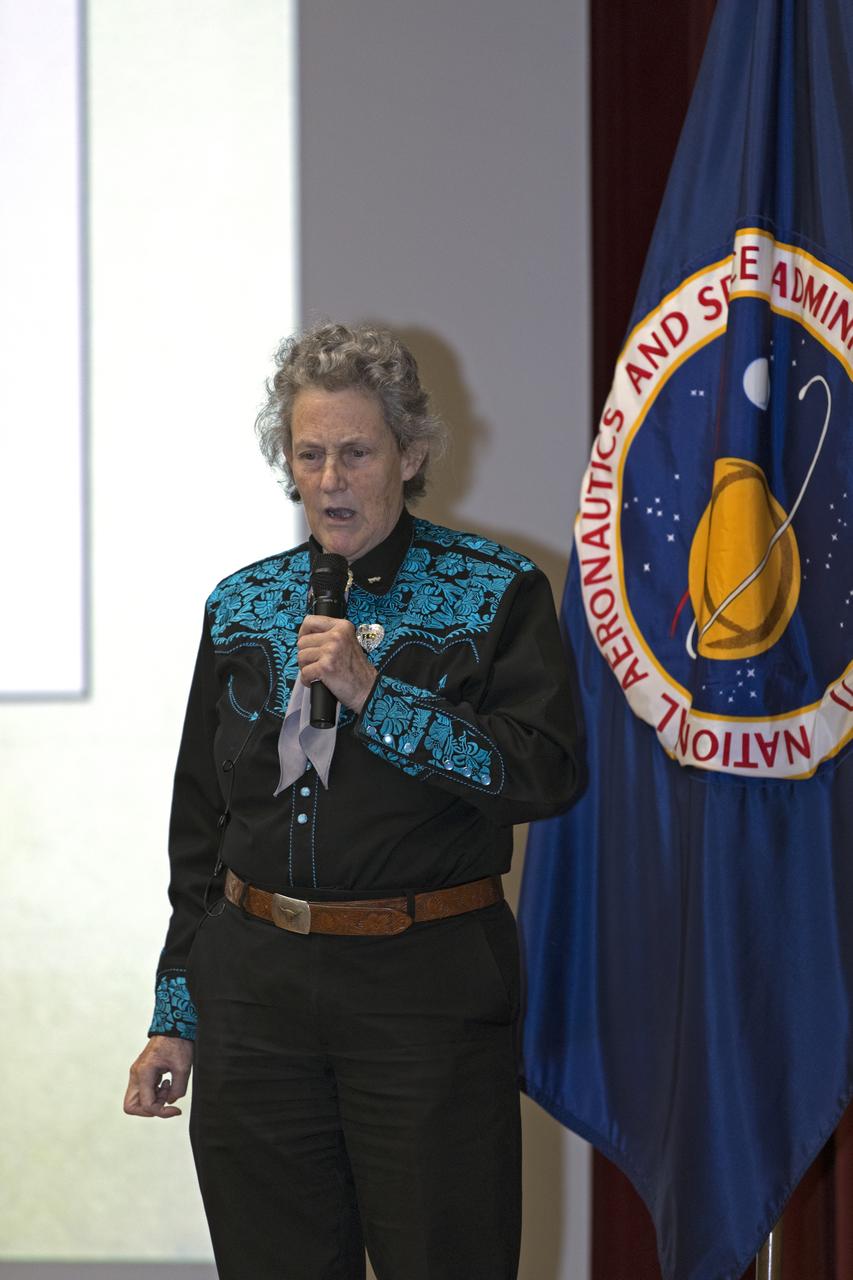
Dr. Temple Grandin addresses employees as the keynote speaker at Kennedy Space Center's annual National Disability Employment Awareness Month (NDEAM) event. A prominent author and speaker on animal behavior and autism, she is a professor of animal science at Colorado State University in Fort Collins, Colorado. Kennedy's Disability Awareness and Action Working Group partnered with the Kennedy Networking Opportunities for Women group to sponsor the presentation.
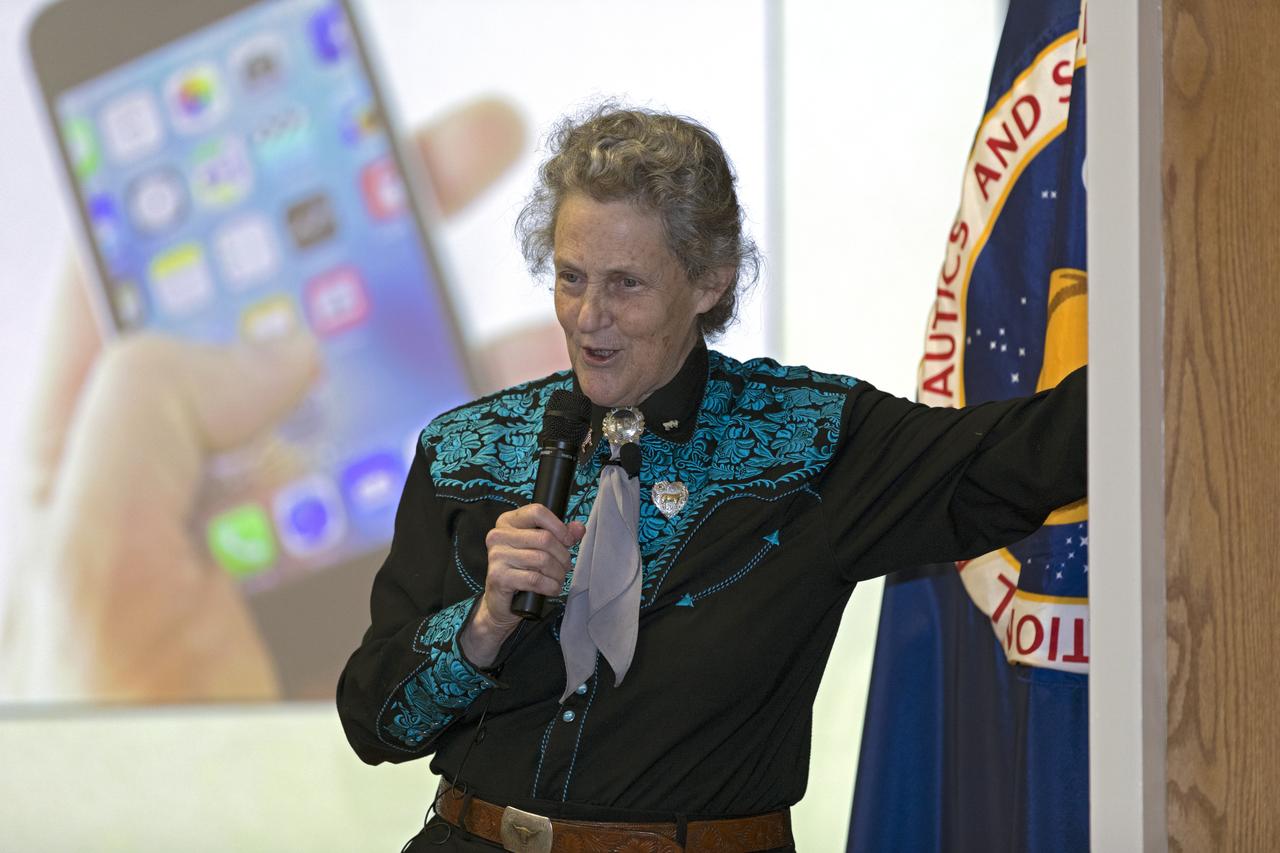
Dr. Temple Grandin addresses employees as the keynote speaker at Kennedy Space Center's annual National Disability Employment Awareness Month (NDEAM) event. A prominent author and speaker on animal behavior and autism, she is a professor of animal science at Colorado State University in Fort Collins, Colorado. Kennedy's Disability Awareness and Action Working Group partnered with the Kennedy Networking Opportunities for Women group to sponsor the presentation.
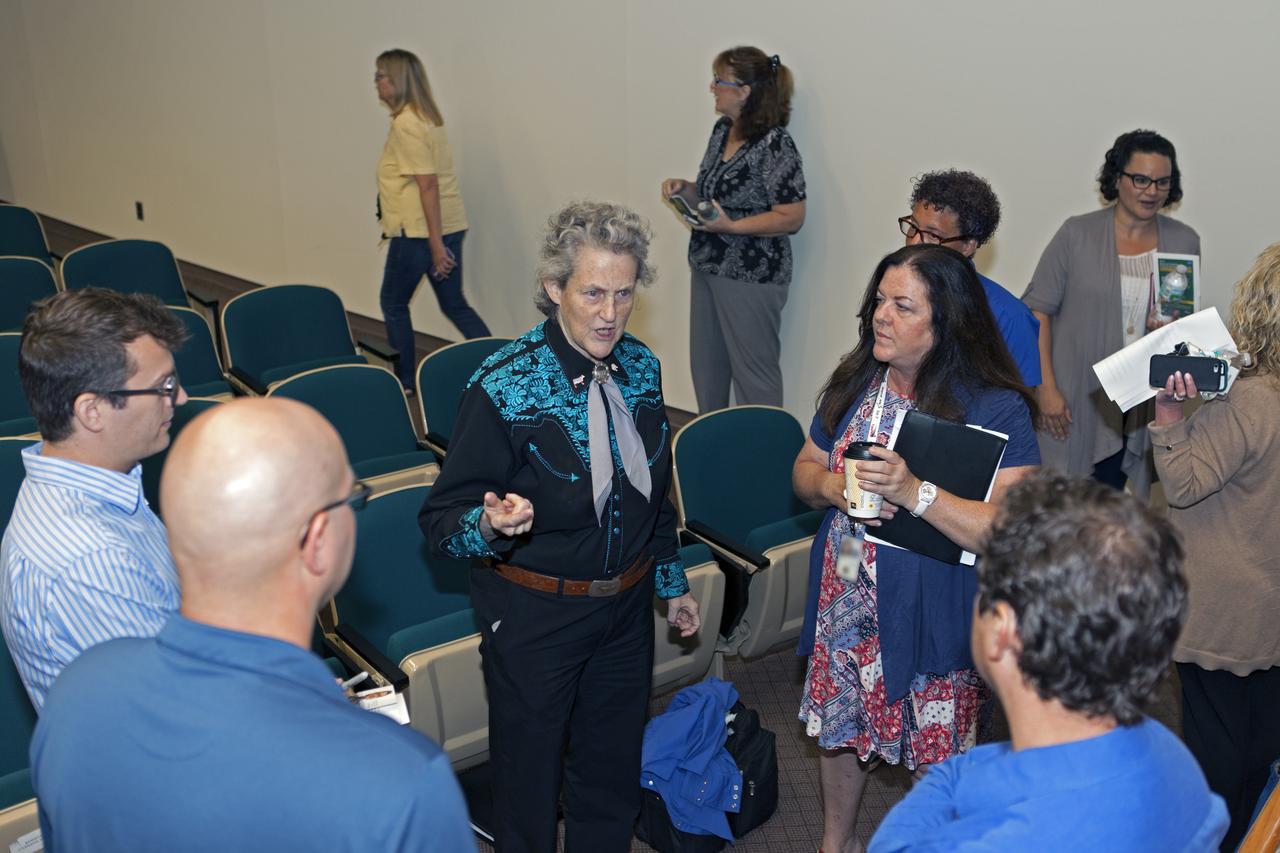
Dr. Temple Grandin speaks with employees following Kennedy Space Center's annual National Disability Employment Awareness Month (NDEAM) event. Grandin served as keynote speaker. A prominent author and speaker on animal behavior and autism, she is a professor of animal science at Colorado State University in Fort Collins, Colorado. Kennedy's Disability Awareness and Action Working Group partnered with the Kennedy Networking Opportunities for Women group to sponsor the presentation.
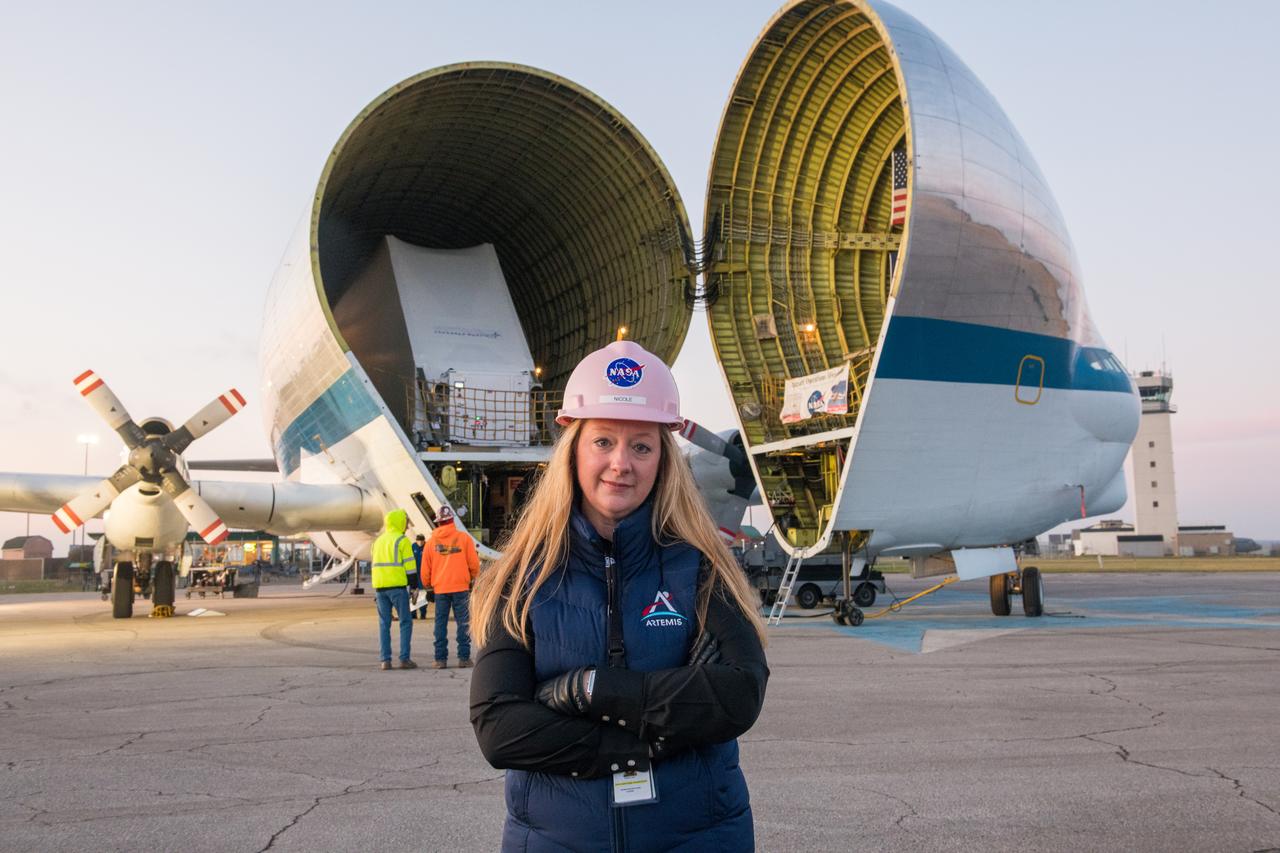
“When I started in the aerospace industry, I was shocked by how outnumbered I was. At my first job, I was the only woman in a group of 35 people. I was the youngest by 15 years. And I was like ‘wow, okay. This is surprising.’ "As I got older and had more professional experiences, I started working with American Institute of Aeronautics and Astronautics. I was the first young professional liaison to their board of directors… so I was always trying to do things to encourage young professionals to get more involved. Over time, I started to do more and more work with university students, and then high school students. "That’s the fun part of outreach — I not only get to inspire kids, I also inspire myself. It reminds me to pick my head up at that 35,000 foot-level and say, ‘you know what? This is pretty cool.' "I’m selfish. I want to see more women go into engineering. I think there’s a lot of data on how more diversity on an engineering team makes a better product. Companies that have more diversity in their leadership have better profits. I want to see more women in the workforce. I want to see more women in technical fields. I want to see more women in technical leadership.” — Nicole Smith, Chief of Exploration Systems Office, Glenn Research Center Orion - EM-1 - Artemis Spacecraft Arrival at Mansfield Lahm Airport, Transportation to Plum Brook Station and Installation in the Space Environment Complex, SEC Thermal Vacuum Chamber
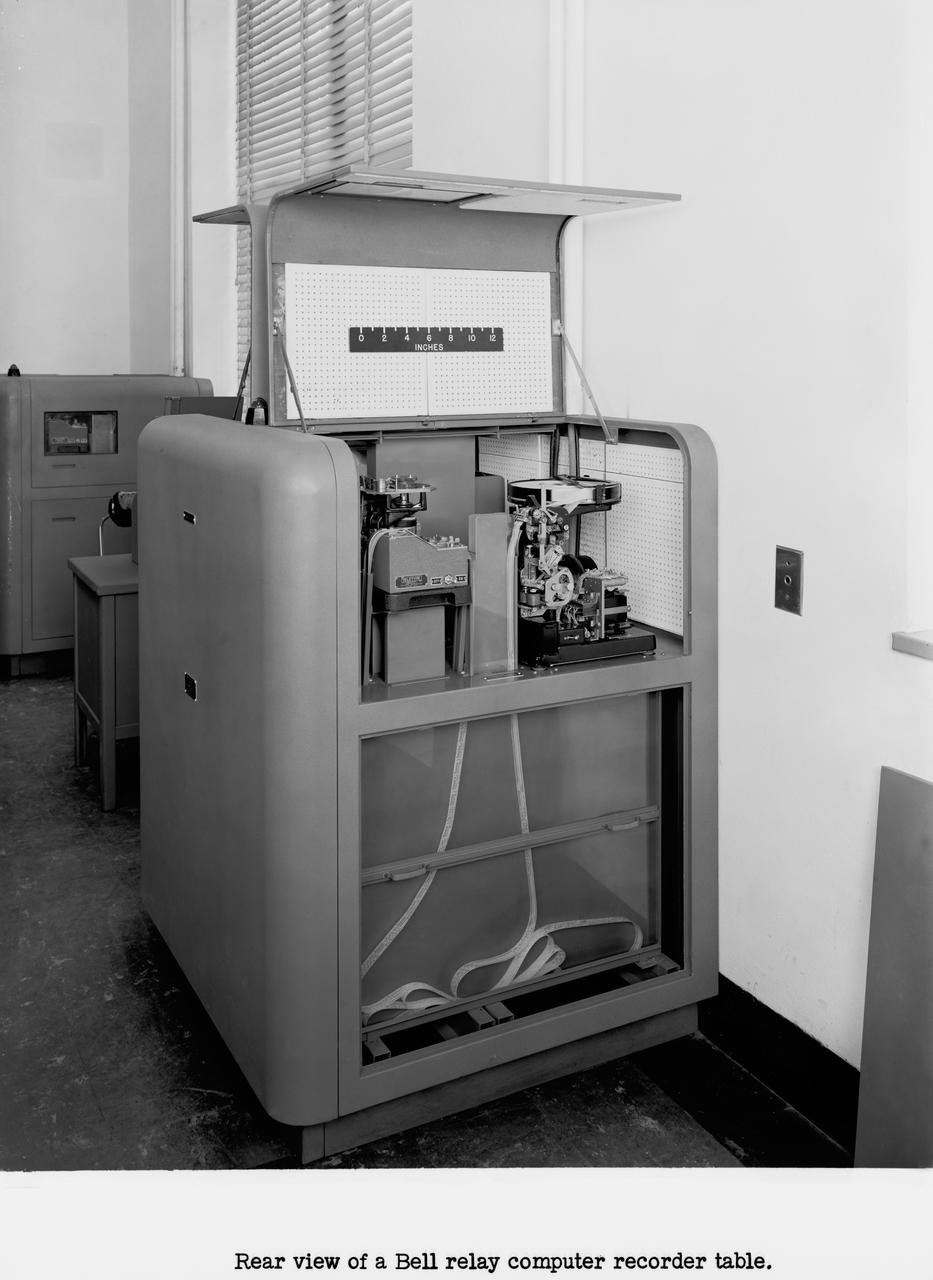
Langley's human computers at work in 1947. The female presence at Langley, who performed mathematical computations for male staff. Bell computers.
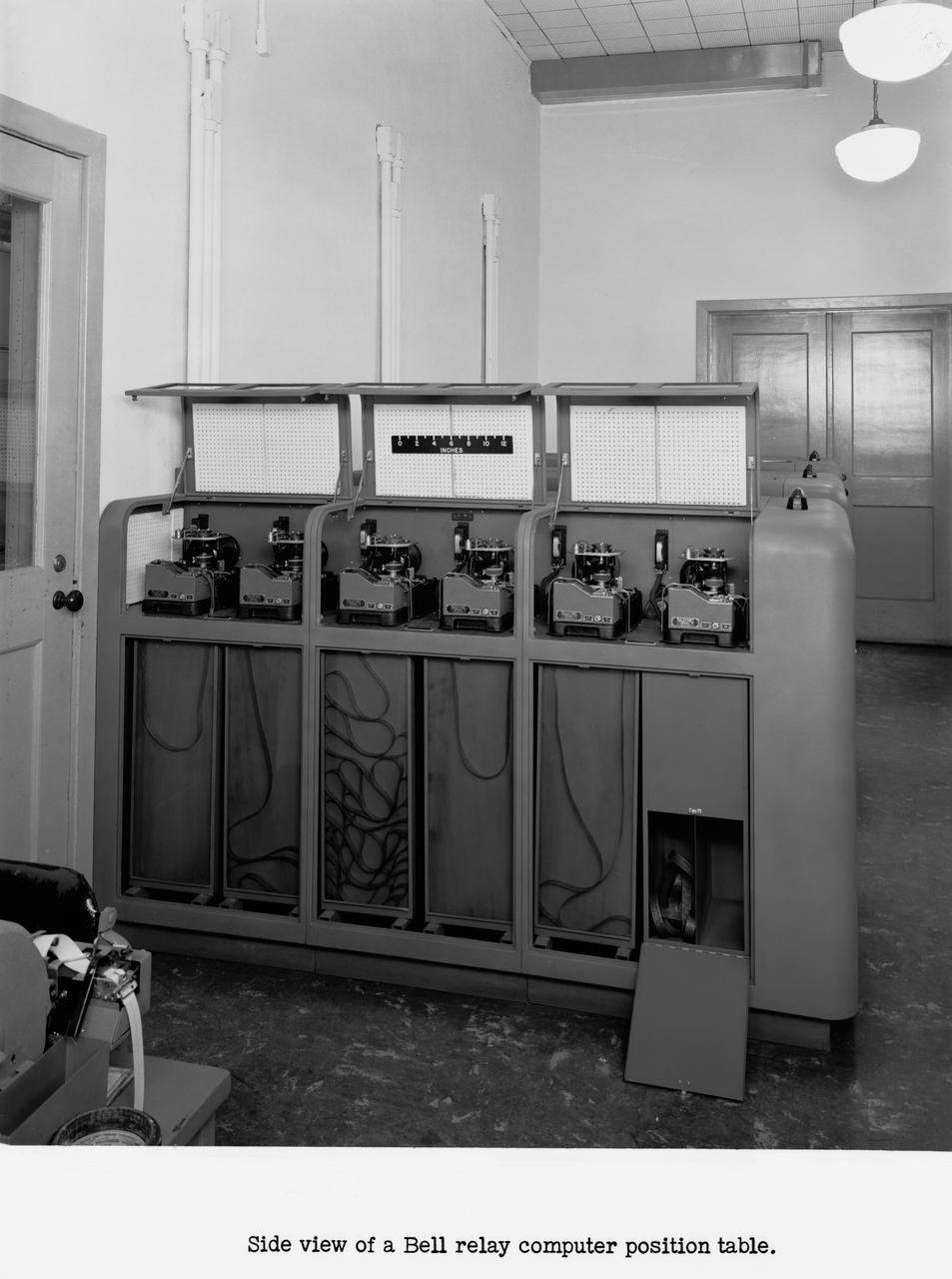
Langley's human computers at work in 1947. The female presence at Langley, who performed mathematical computations for male staff. Bell computers.
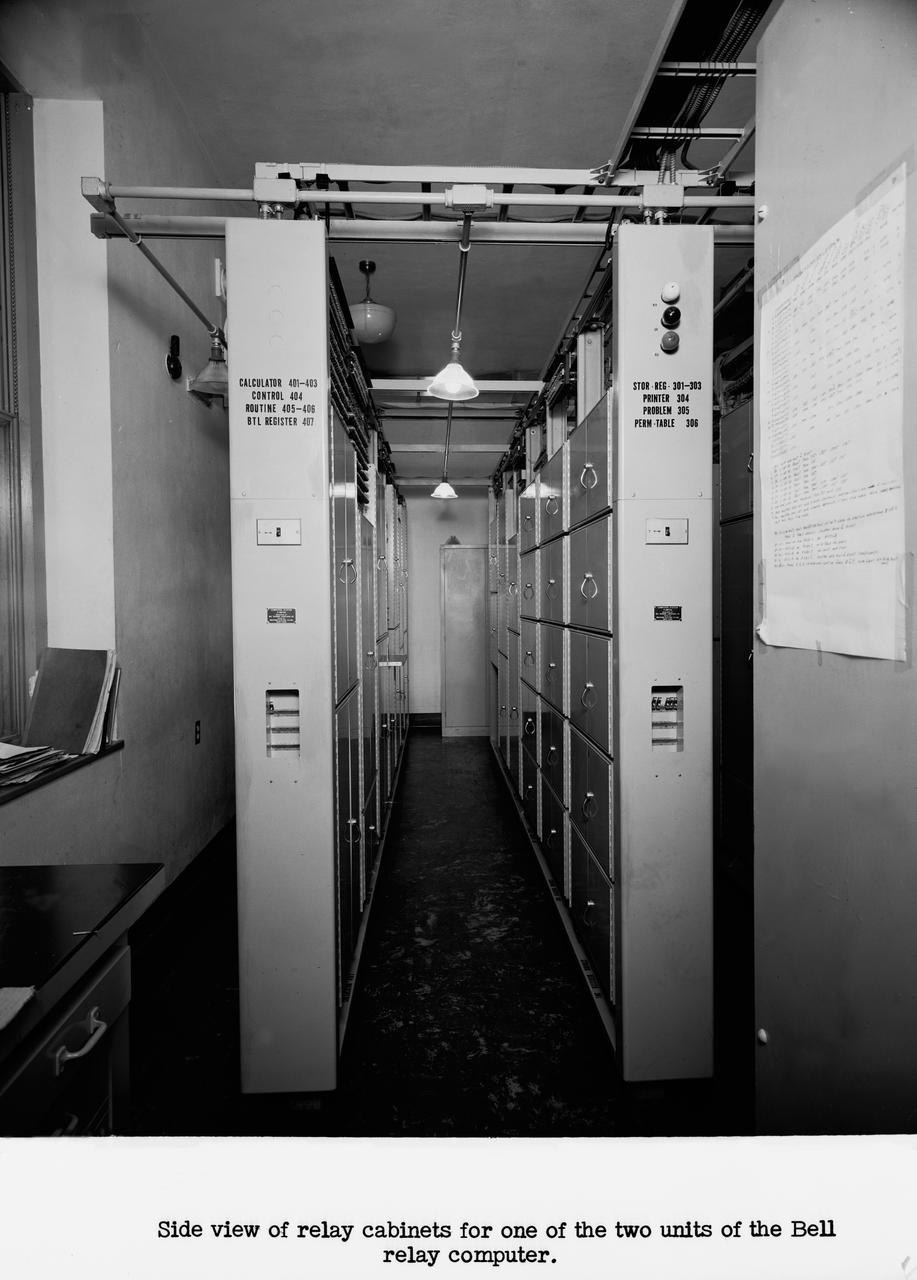
Langley's human computers at work in 1947. The female presence at Langley, who performed mathematical computations for male staff. Bell computers.
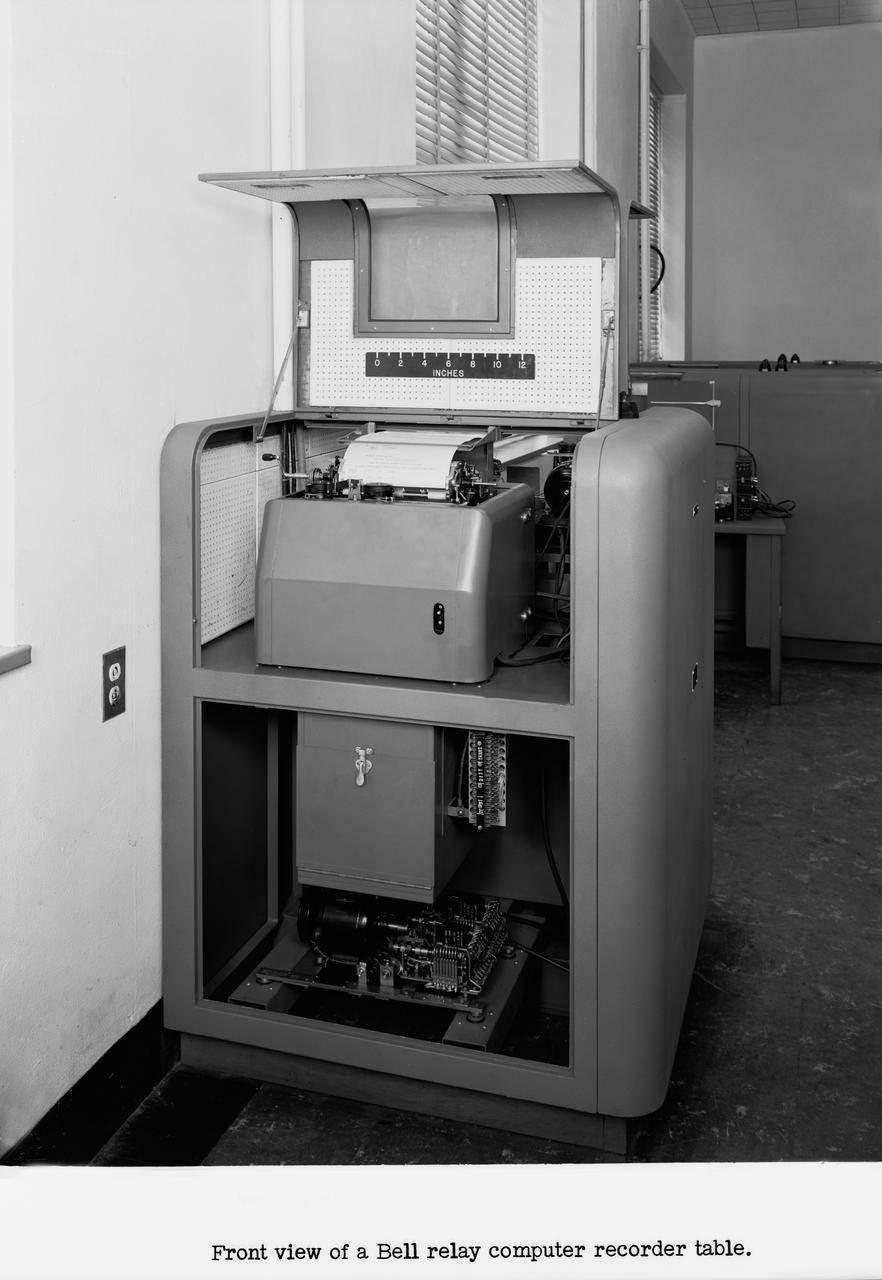
Langley's human computers at work in 1947. The female presence at Langley, who performed mathematical computations for male staff. Bell computers.
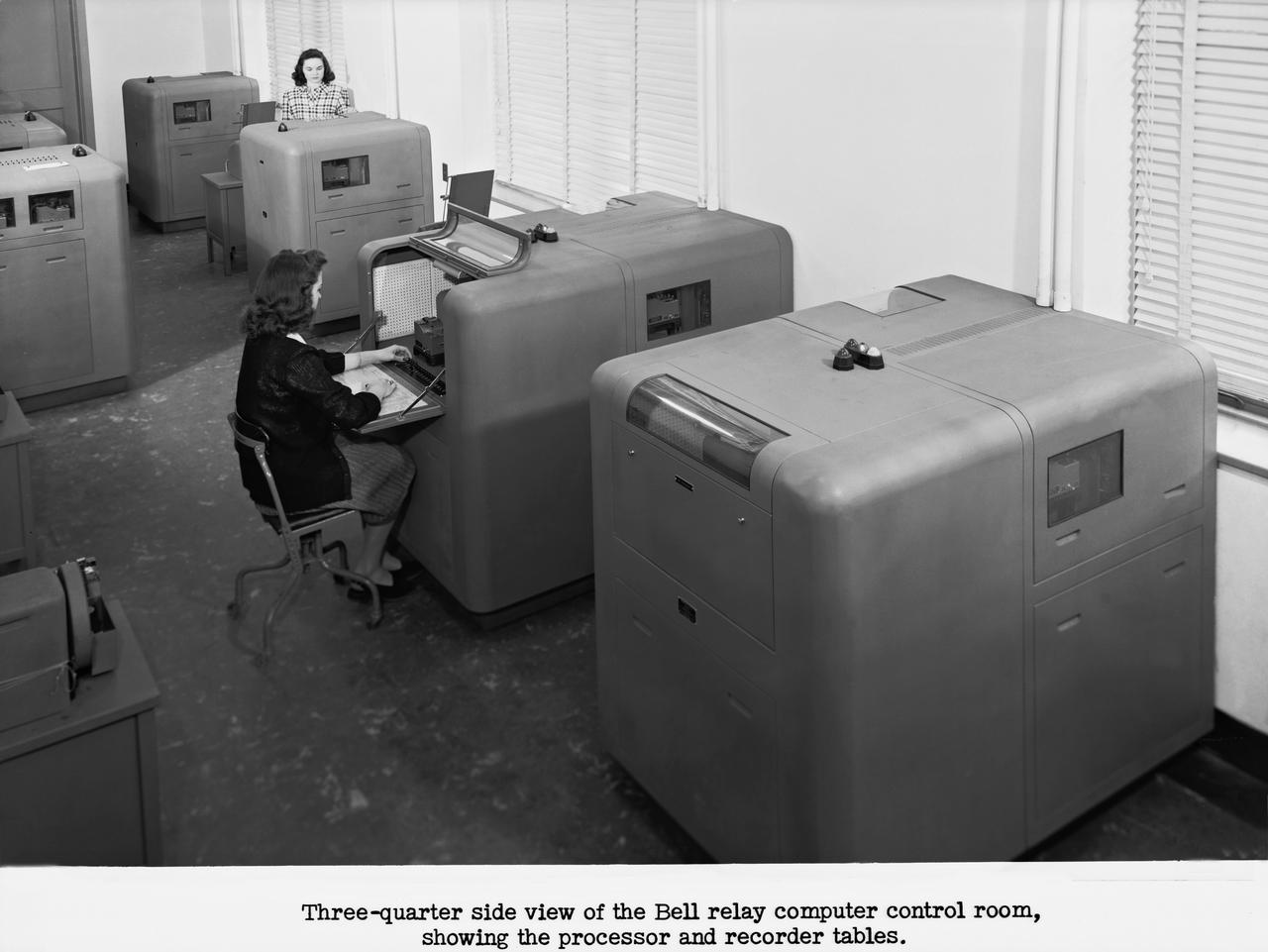
Langley's human computers at work in 1947. The female presence at Langley, who performed mathematical computations for male staff. Bell computers.
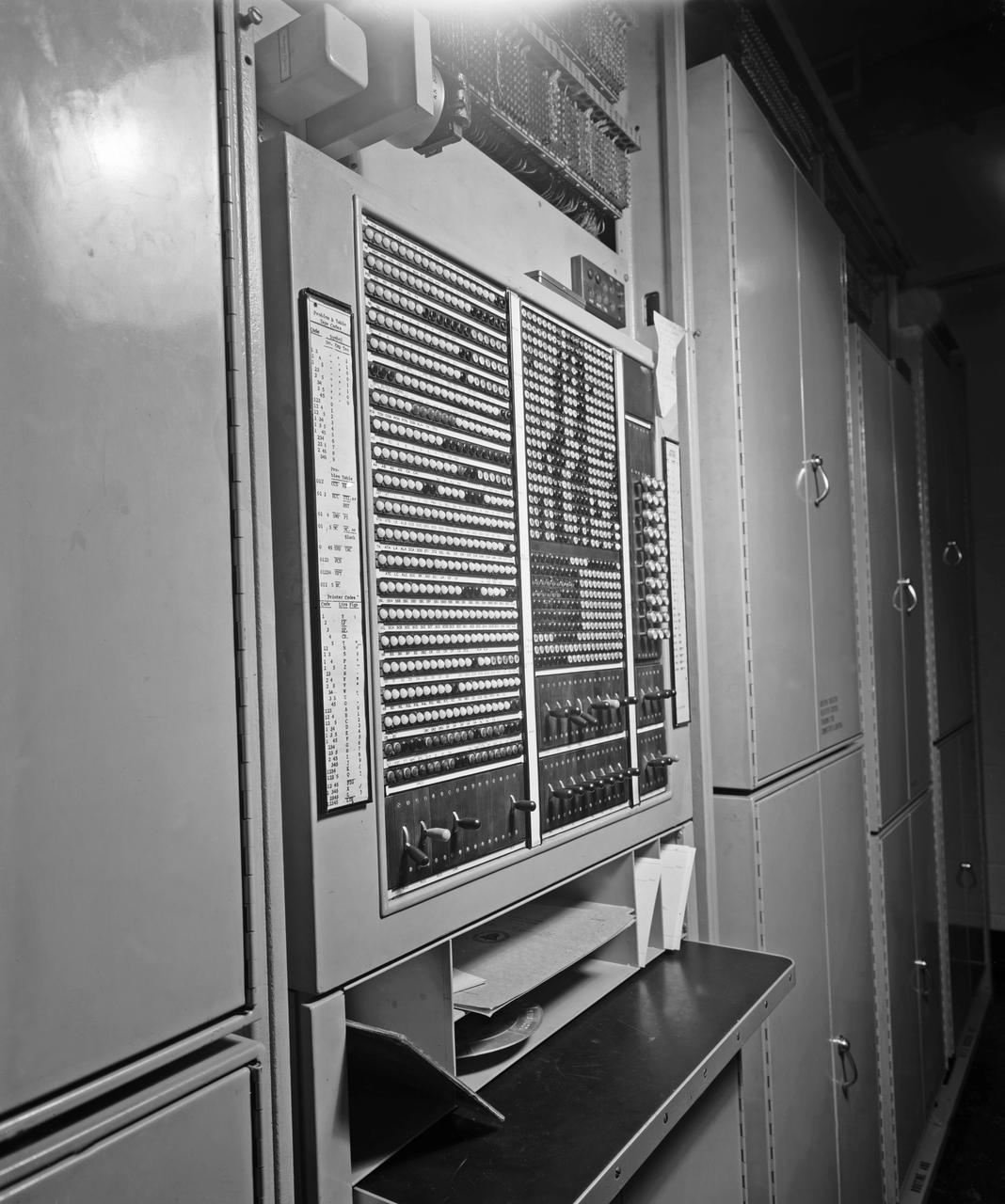
Langley's human computers at work in 1947. The female presence at Langley, who performed mathematical computations for male staff. Bell computers.
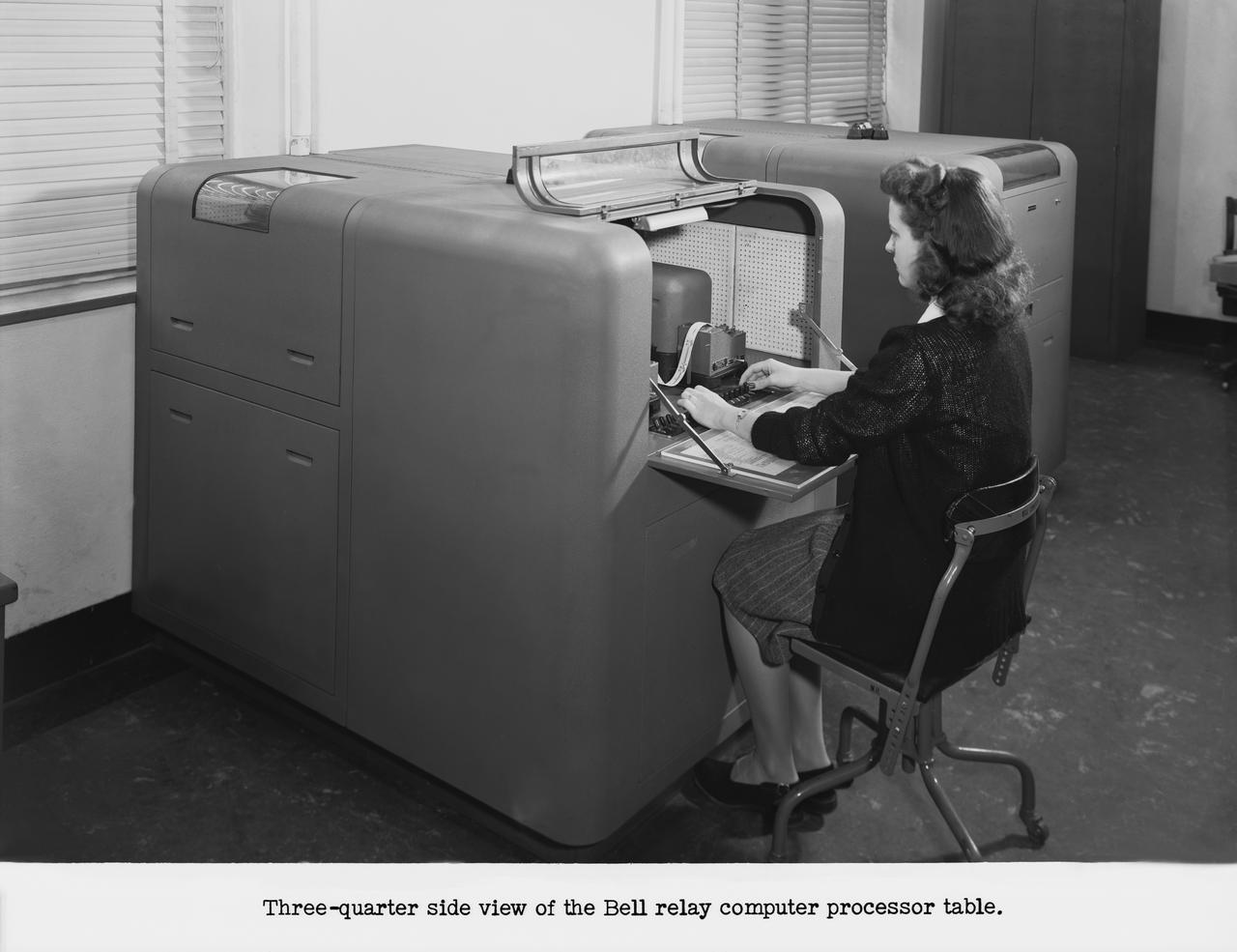
Langley's human computers at work in 1947. The female presence at Langley, who performed mathematical computations for male staff. Bell computers.
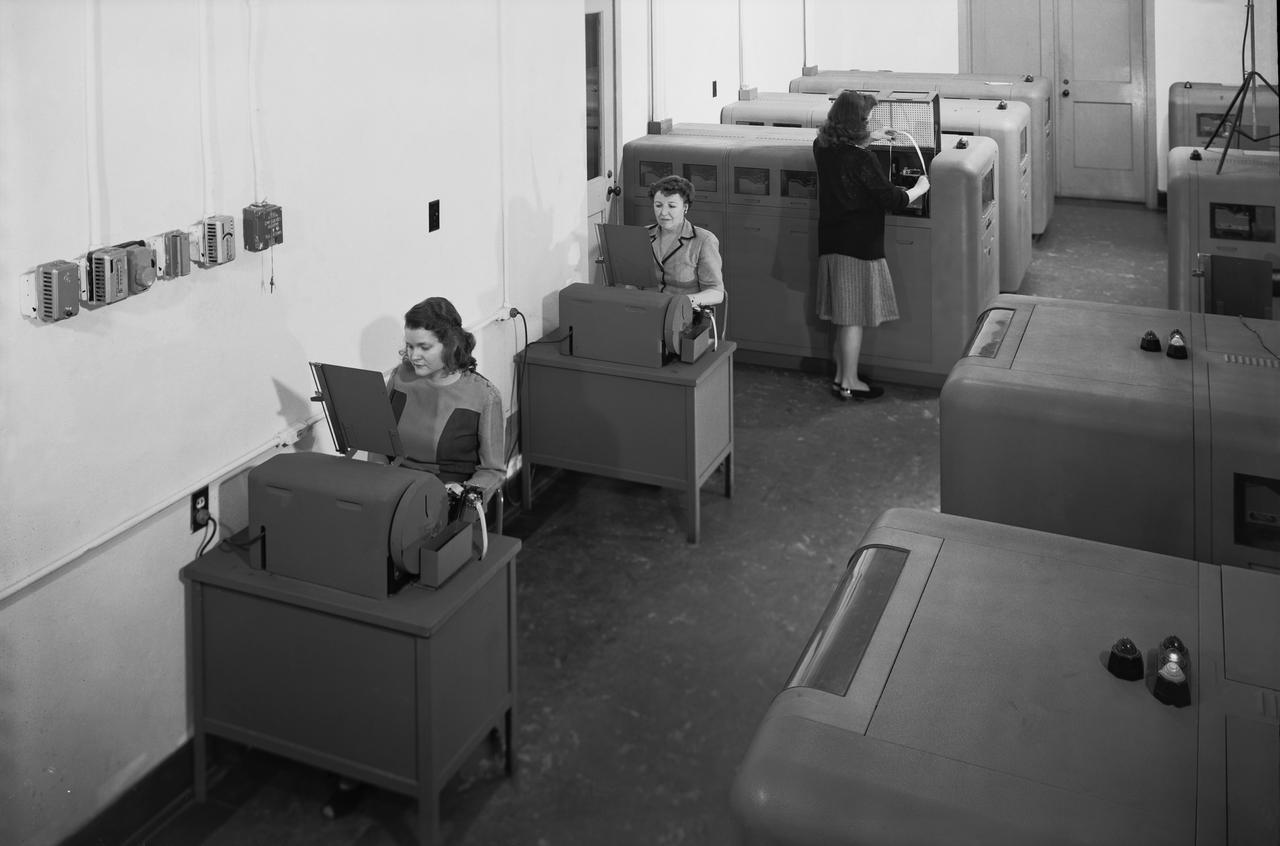
Langley's human computers at work in 1947. The female presence at Langley, who performed mathematical computations for male staff. -- Photograph published in Winds of Change, 75th Anniversary NASA publication (page 48), by James Schultz.
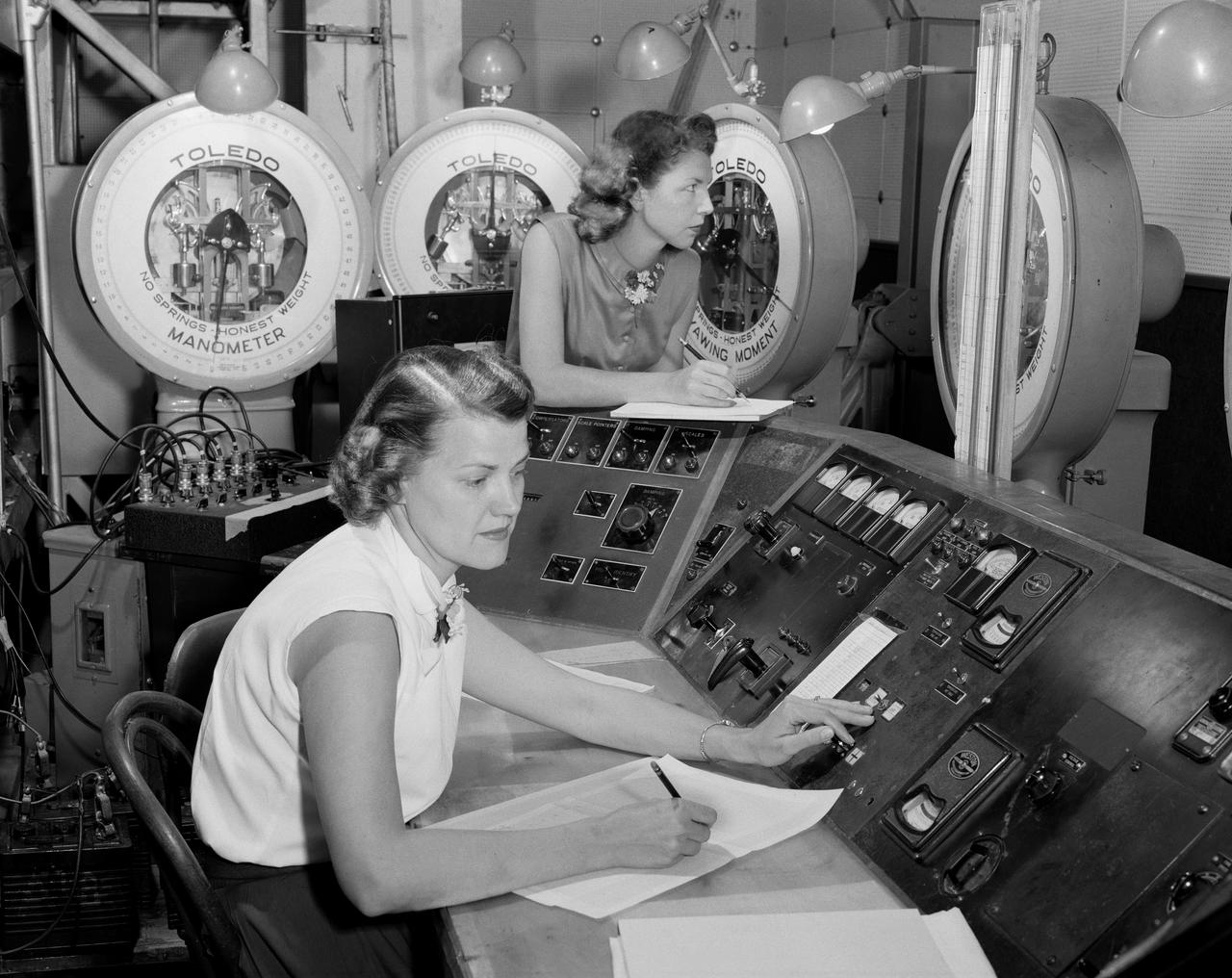
Women Workers at NACA
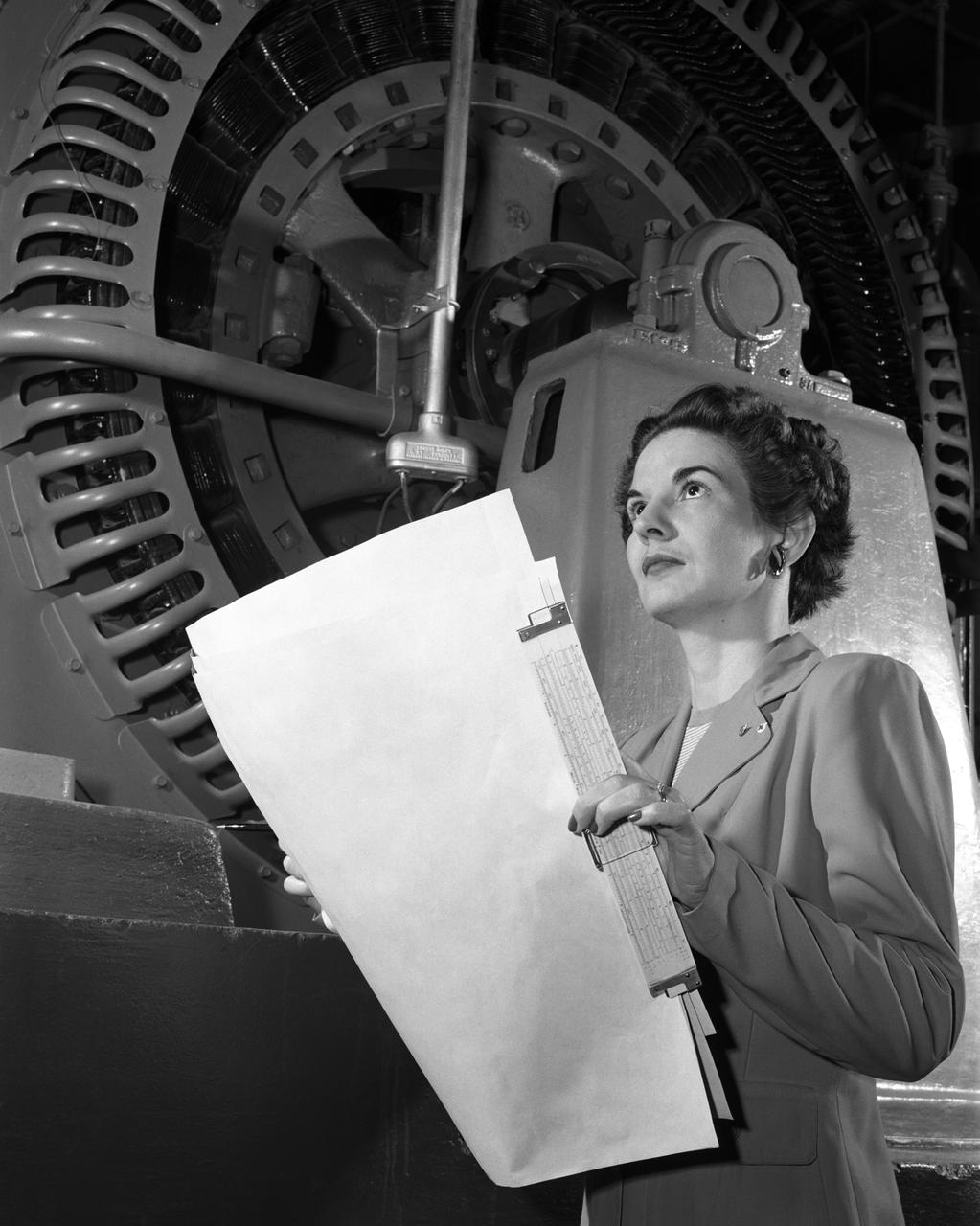
electrical engineer.NACA engineer Kitty Joyner, believed to be the first NACA female engineer, as well as the first women engineer to graduate from UVA.
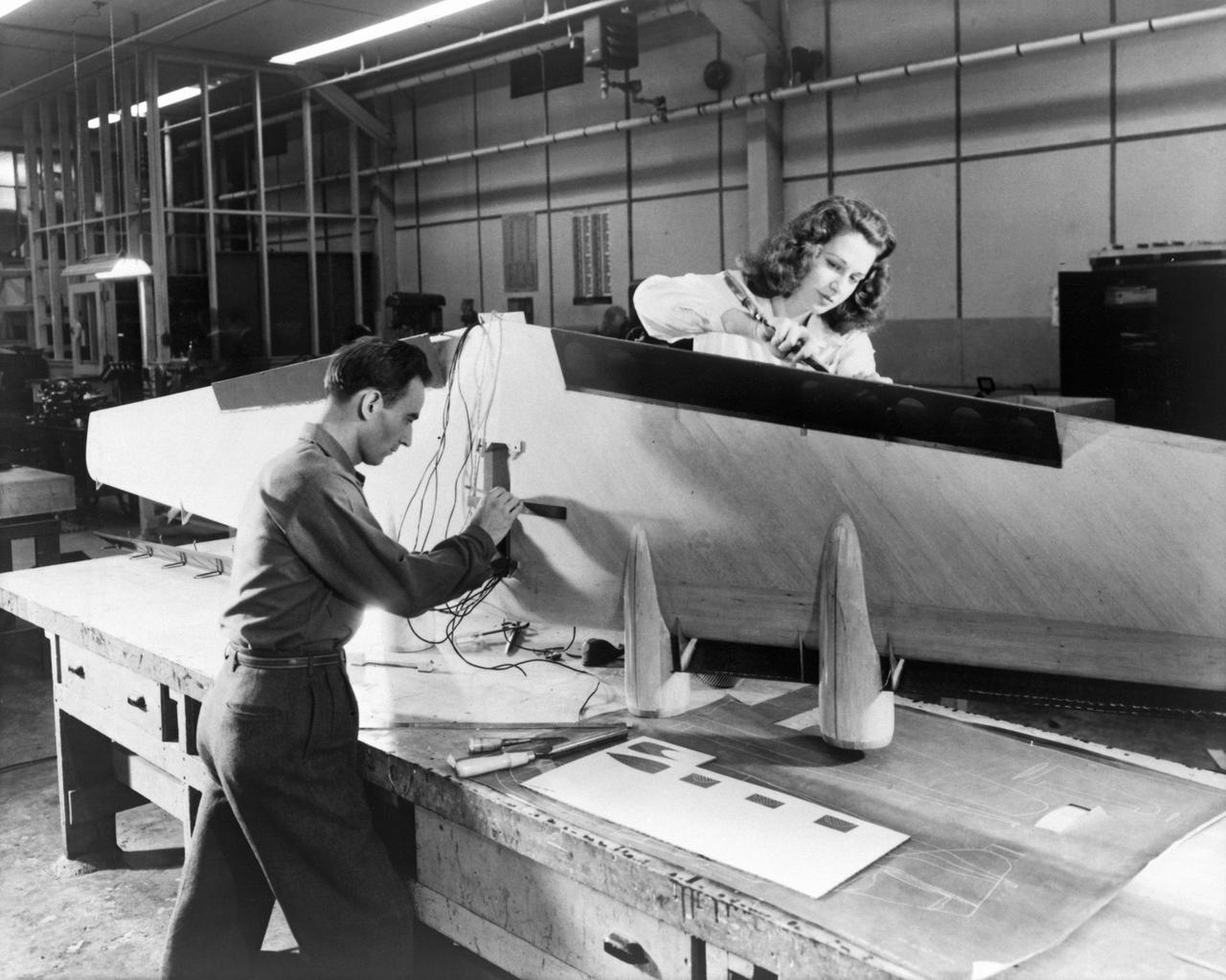
Technicians are pictured installing flaps and wiring on a flying-boat model, circa 1944 (page 47). Photograph published in Winds of Change, 75th Anniversary NASA publication, by James Schultz. Photograph also published in Engineer in Charge: A History of the Langley Aeronautical Laboratory, 1917-1958 by James R. Hansen (page 209). -- Photographed on: 04/24/1946.
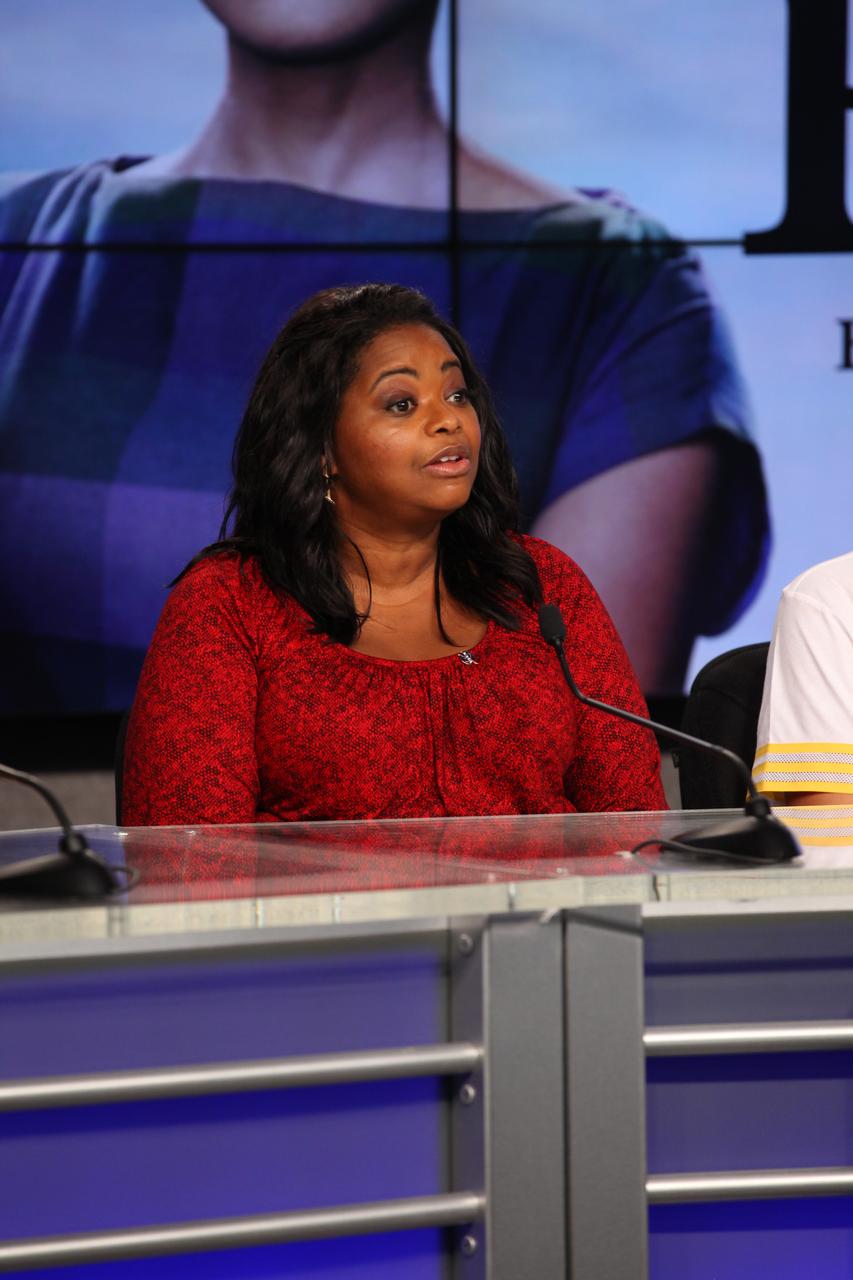
In the Press Site auditorium at the Kennedy Space Center in Florida, Octavia Spencer speaks to members of the media during a news conference with other key individuals involved in the upcoming motion picture "Hidden Figures." The movie is based on the book of the same title, by Margot Lee Shetterly. It chronicles the lives of Katherine Johnson, Dorothy Vaughan (played by Spencer) and Mary Jackson, three African-American women who worked for NASA as human "computers.” Their mathematical calculations were crucial to the success of Project Mercury missions including John Glenn’s orbital flight aboard Friendship 7 in 1962. The film is due in theaters in January 2017.
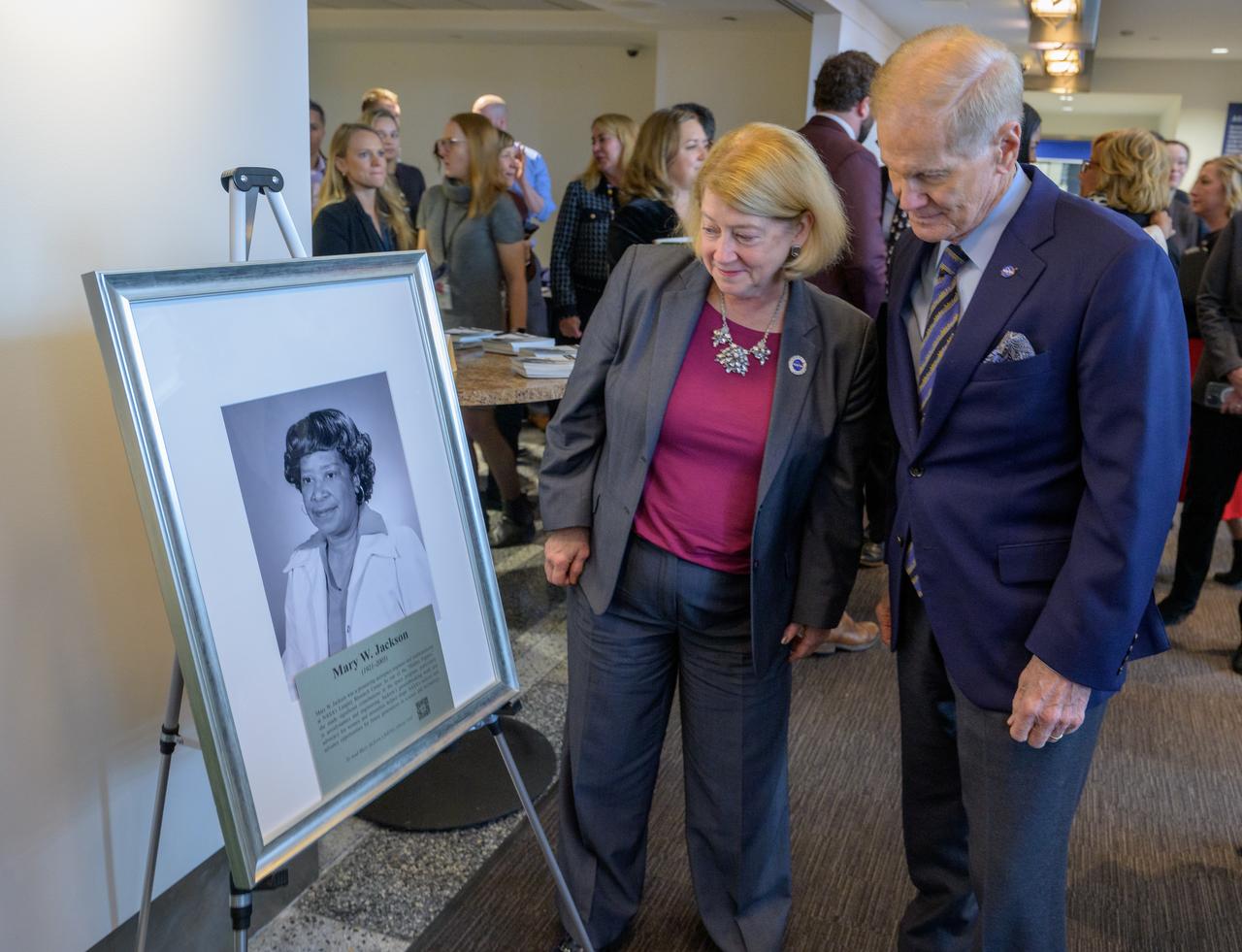
NASA Deputy Administrator Pam Melroy, and, NASA Administrator Bill Nelson, right, look at a portrait of Mary W. Jackson after it was unveiled, Friday, Dec. 6, 2024, at the NASA Headquarters Mary W. Jackson Building in Washington. Mary W. Jackson was a pioneering aerospace engineer and mathematician at NASA’s Langley Research Center. As one of the “Hidden Figures,” she made significant contributions to the space program, particularly in aerodynamics and engineering. Jackson’s groundbreaking work and advocacy for women and minorities helped shape NASA’s success and advance opportunities for future generations in science and technology. Photo Credit: (NASA/Bill Ingalls)
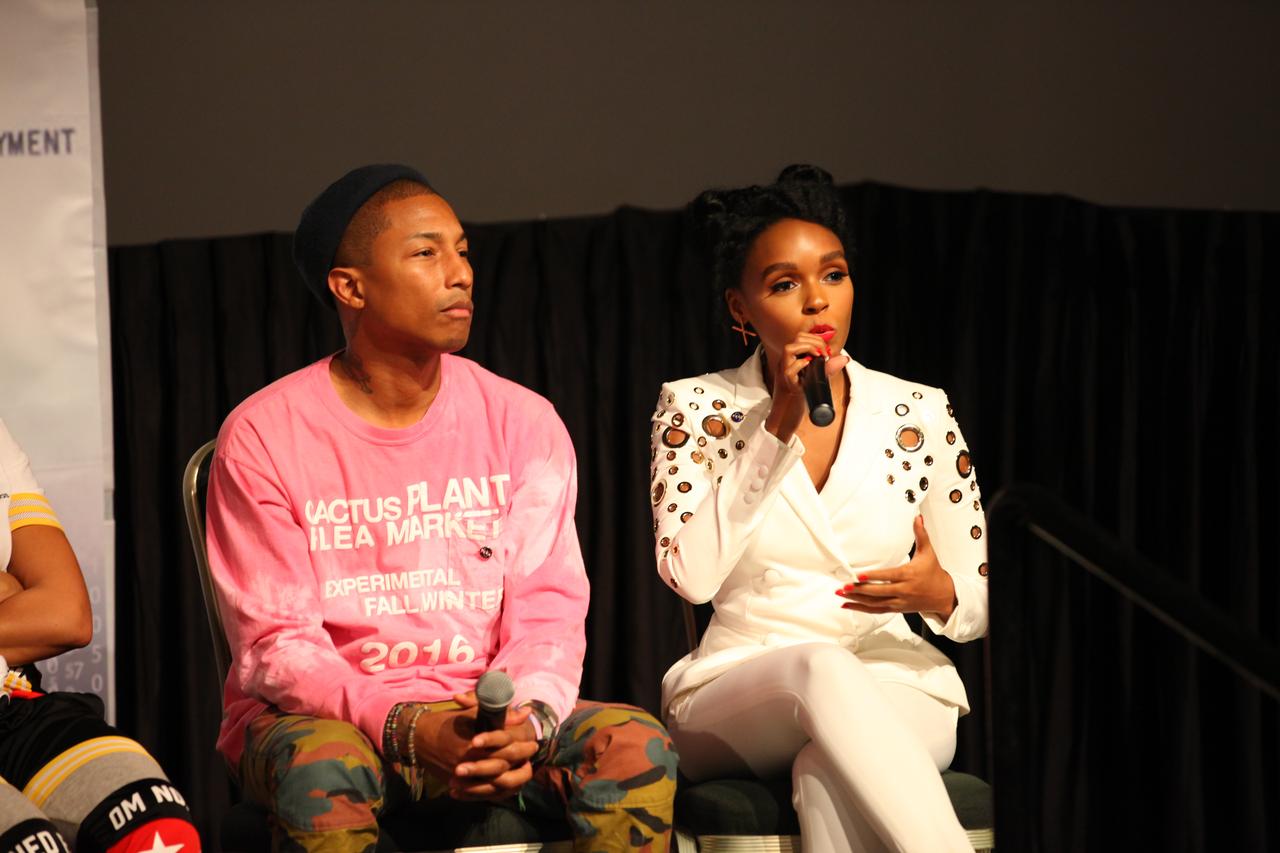
In the IMAX Theater of the Kennedy Space Center Visitor Complex Cast and crew members of the upcoming motion picture "Hidden Figures" participate in a question and answer session. From the left are Pharrell Williams, musician and producer of “Hidden Figures," and Janelle Monáe, who portrays Mary Jackson in the film. The movie chronicles the lives of Katherine Johnson, Dorothy Vaughan and Mary Jackson, three African-American women who worked for NASA as human "computers.” Their mathematical calculations were crucial to the success of Project Mercury missions including John Glenn’s orbital flight aboard Friendship 7 in 1962. The film is due in theaters in January 2017.
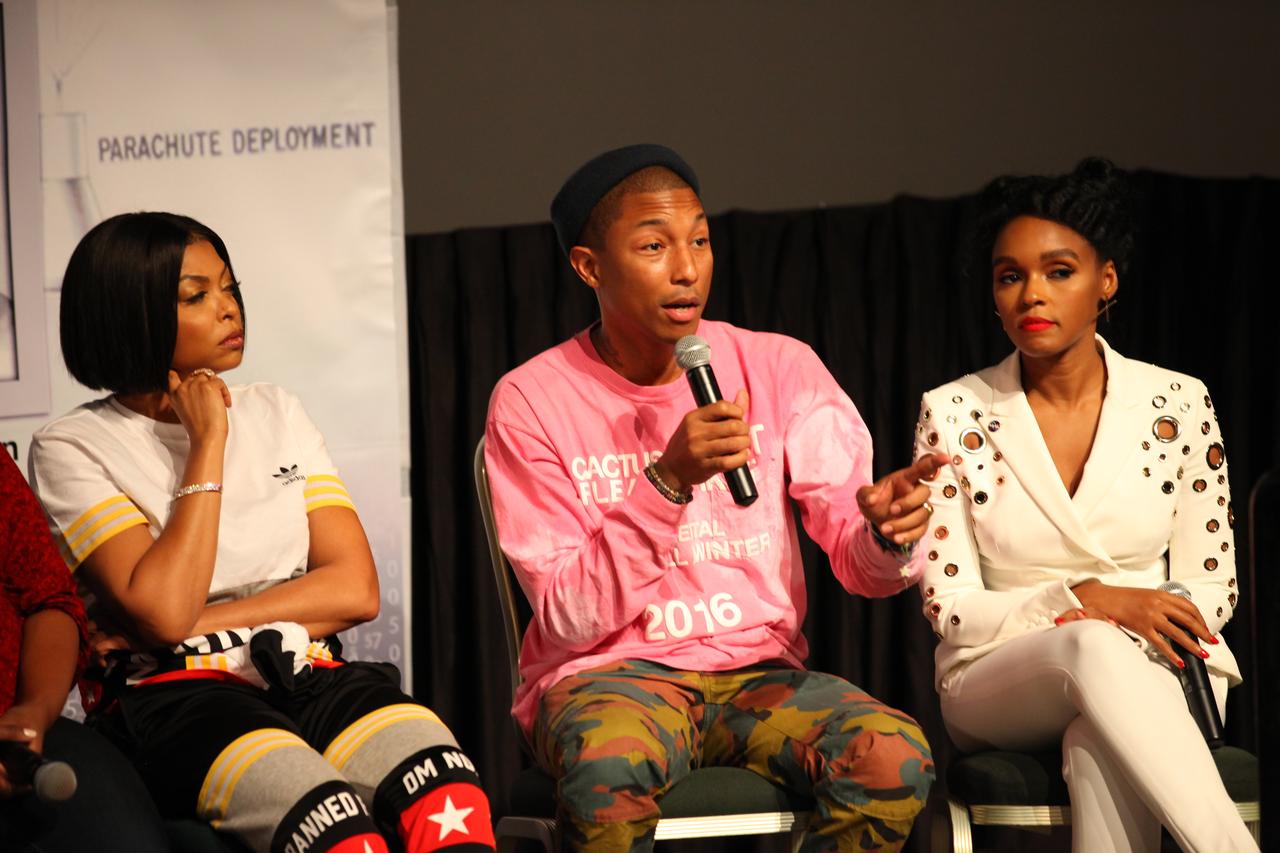
In the IMAX Theater of the Kennedy Space Center Visitor Complex Cast and crew members of the upcoming motion picture "Hidden Figures" participate in a question and answer session. From the left are Taraji P. Henson, who portrays Katherine Johnson in the film, Pharrell Williams, musician and producer of “Hidden Figures," and Janelle Monáe, who portrays Mary Jackson. The movie chronicles the lives of Katherine Johnson, Dorothy Vaughan and Mary Jackson, three African-American women who worked for NASA as human "computers.” Their mathematical calculations were crucial to the success of Project Mercury missions including John Glenn’s orbital flight aboard Friendship 7 in 1962. The film is due in theaters in January 2017.
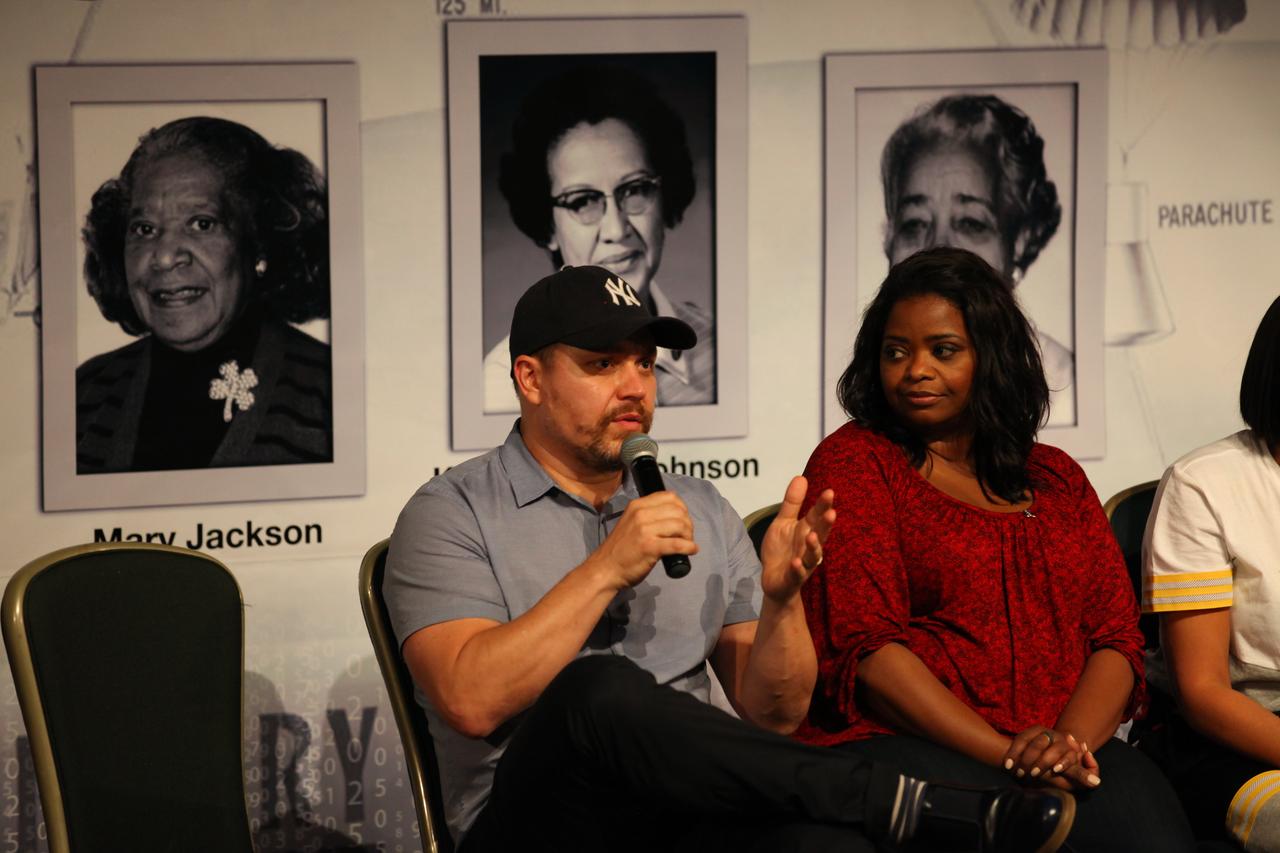
In the IMAX Theater of the Kennedy Space Center Visitor Complex Cast and crew members of the upcoming motion picture "Hidden Figures" participate in a question and answer session. From the left are Ted Melfi, writer and director of “Hidden Figures,” and Octavia Spencer, who portrays Dorothy Vaughan in the film. The movie is based on the book of the same title, by Margot Lee Shetterly. It chronicles the lives of Katherine Johnson, Dorothy Vaughan and Mary Jackson, three African-American women who worked for NASA as human "computers.” Their mathematical calculations were crucial to the success of Project Mercury missions including John Glenn’s orbital flight aboard Friendship 7 in 1962. The film is due in theaters in January 2017.
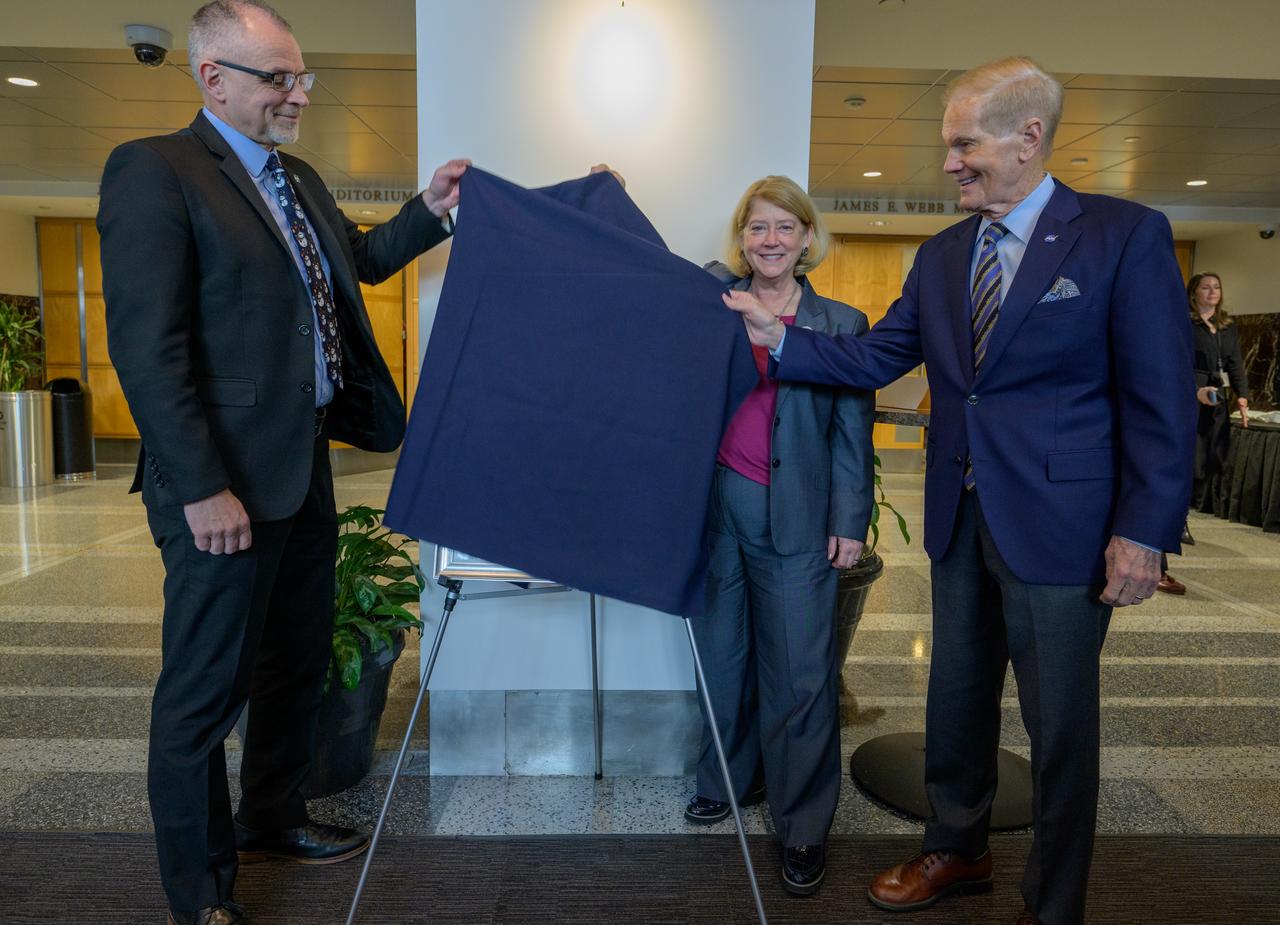
A portrait of Mary W. Jackson is unveiled, by NASA Associate Administrator Jim Free, left, NASA Deputy Administrator Pam Melroy, and, NASA Administrator Bill Nelson, right, Friday, Dec. 6, 2024, at the NASA Headquarters Mary W. Jackson Building in Washington. Mary W. Jackson was a pioneering aerospace engineer and mathematician at NASA’s Langley Research Center. As one of the “Hidden Figures,” she made significant contributions to the space program, particularly in aerodynamics and engineering. Jackson’s groundbreaking work and advocacy for women and minorities helped shape NASA’s success and advance opportunities for future generations in science and technology. Photo Credit: (NASA/Bill Ingalls)

Kim Stratton, at left, with Caterpillar, talks to students during a Women in STEM breakfast inside the Debus Conference Center at the Kennedy Space Center Visitor Complex in Florida. STEM is science, technology, engineering and math. The special event gave students competing in NASA's 8th Annual Robotic Mining Competition the chance to learn from female NASA scientists, engineers and professionals about their careers and the paths they took to working at Kennedy. The Robotic Mining Competition is a NASA Human Exploration and Operations Mission Directorate project designed to encourage students in STEM fields. The project provides a competitive environment to foster innovative ideas and solutions that could be used on NASA's Journey to Mars.
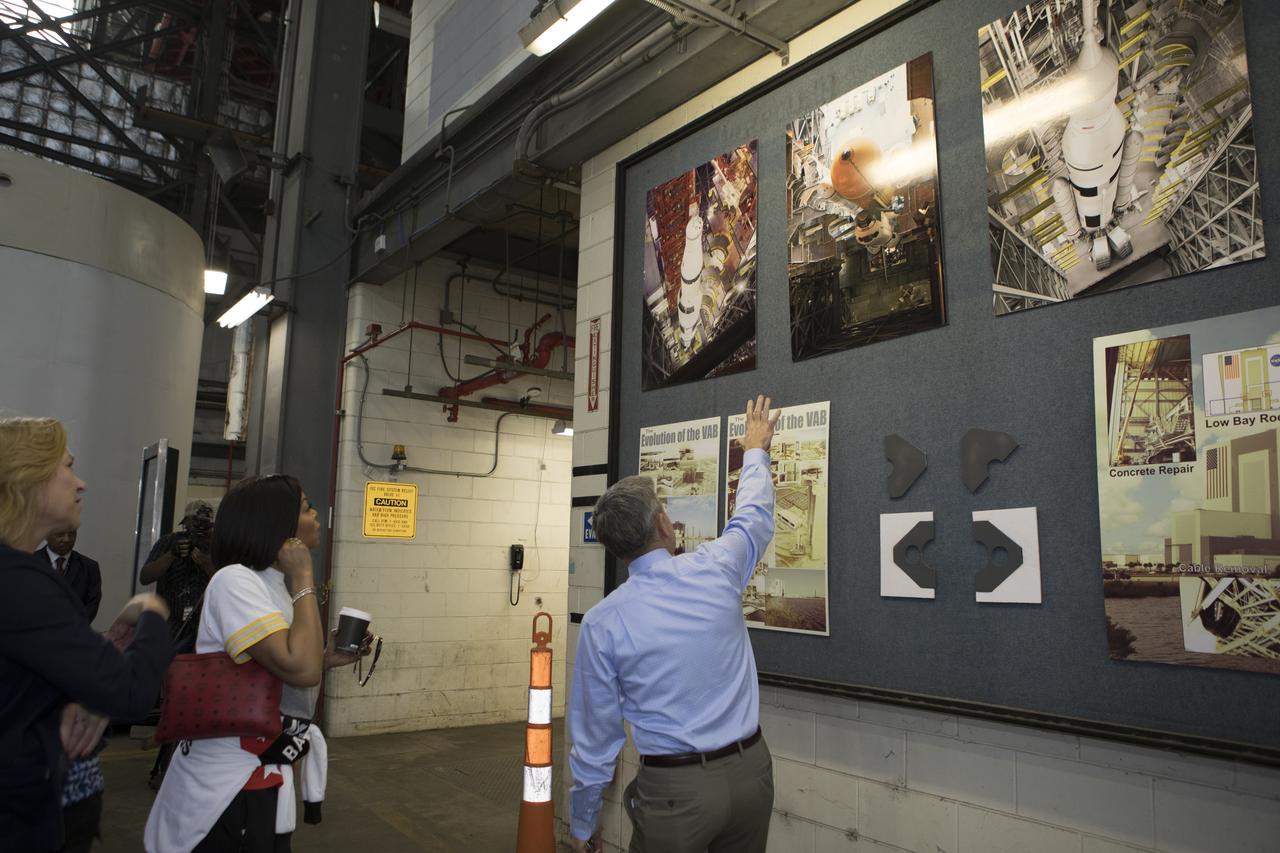
Kennedy Space Center Director Bob Cabana points to a display during a tour for cast and crew members of the upcoming motion picture "Hidden Figures." The group is walking thought the transfer aisle of the Vehicle Assembly Building. The movie is based on the book of the same title, by Margot Lee Shetterly. It chronicles the lives of Katherine Johnson, Dorothy Vaughan and Mary Jackson, three African-American women who worked for NASA as human "computers.” Their mathematical calculations were crucial to the success of Project Mercury missions including John Glenn’s orbital flight aboard Friendship 7 in 1962. The film is due in theaters in January 2017.

Kennedy Space Center Deputy Director Janet Petro speaks to students during a Women in STEM mentoring breakfast inside the Debus Conference Center at the Kennedy Space Center Visitor Complex in Florida. STEM is science, technology, engineering and math. The special event gave students competing in NASA's 8th Annual Robotic Mining Competition the chance to learn from female NASA scientists, engineers and professionals about their careers and the paths they took to working at Kennedy. The Robotic Mining Competition is a NASA Human Exploration and Operations Mission Directorate project designed to encourage students in STEM fields. The project provides a competitive environment to foster innovative ideas and solutions that could be used on NASA's Journey to Mars.

In the Press Site auditorium at the Kennedy Space Center in Florida, Taraji P. Henson speaks to members of the media during a news conference with other key individuals involved in the upcoming motion picture "Hidden Figures." The movie is based on the book of the same title, by Margot Lee Shetterly. It chronicles the lives of Katherine Johnson (played by Henson), Dorothy Vaughan and Mary Jackson, three African-American women who worked for NASA as human "computers.” Their mathematical calculations were crucial to the success of Project Mercury missions including John Glenn’s orbital flight aboard Friendship 7 in 1962. The film is due in theaters in January 2017.
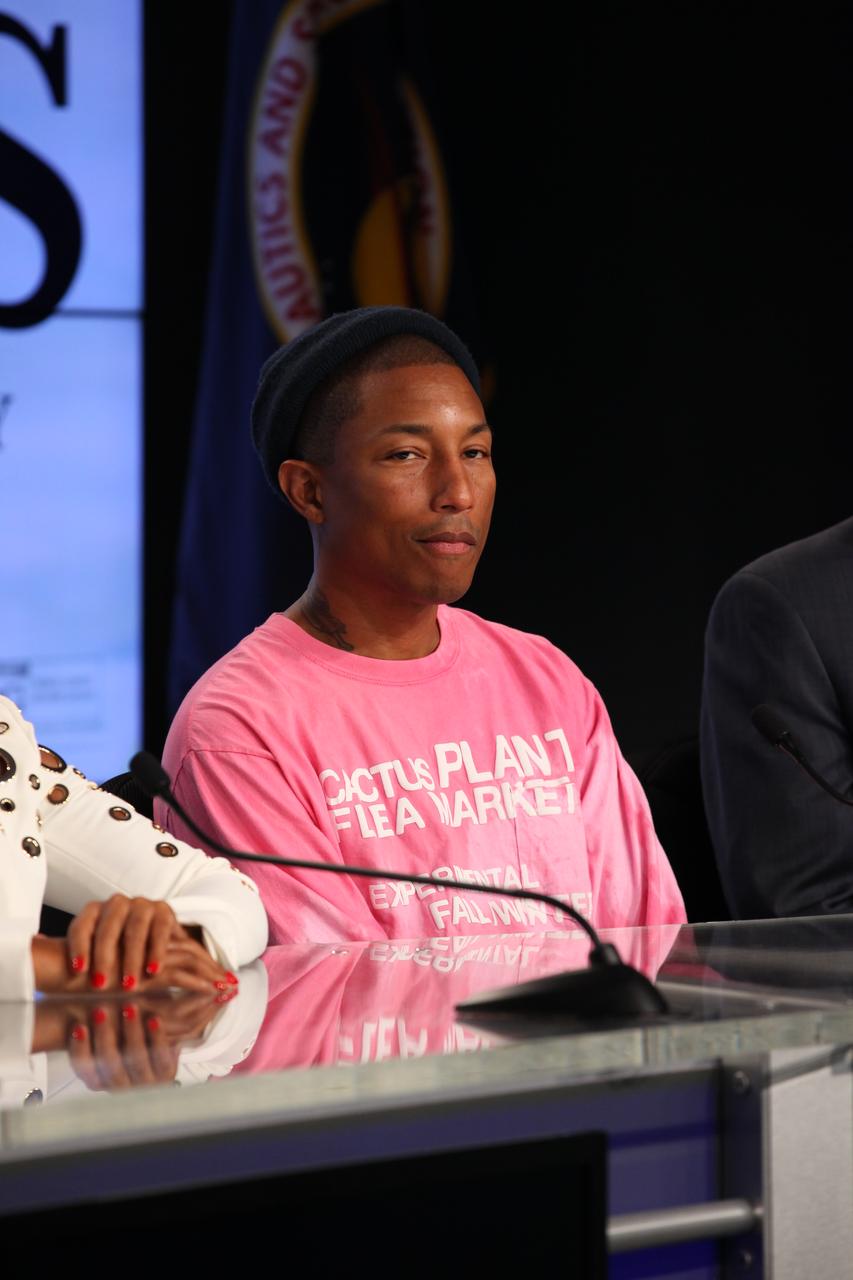
In the Press Site auditorium at the Kennedy Space Center in Florida, Pharrell Williams, musician and producer of “Hidden Figures" speaks to members of the media during a news conference with other key individuals involved in the upcoming motion picture. The movie is based on the book of the same title, by Margot Lee Shetterly. It chronicles the lives of Katherine Johnson, Dorothy Vaughan and Mary Jackson, three African-American women who worked for NASA as human "computers.” Their mathematical calculations were crucial to the success of Project Mercury missions including John Glenn’s orbital flight aboard Friendship 7 in 1962. The film is due in theaters in January 2017.
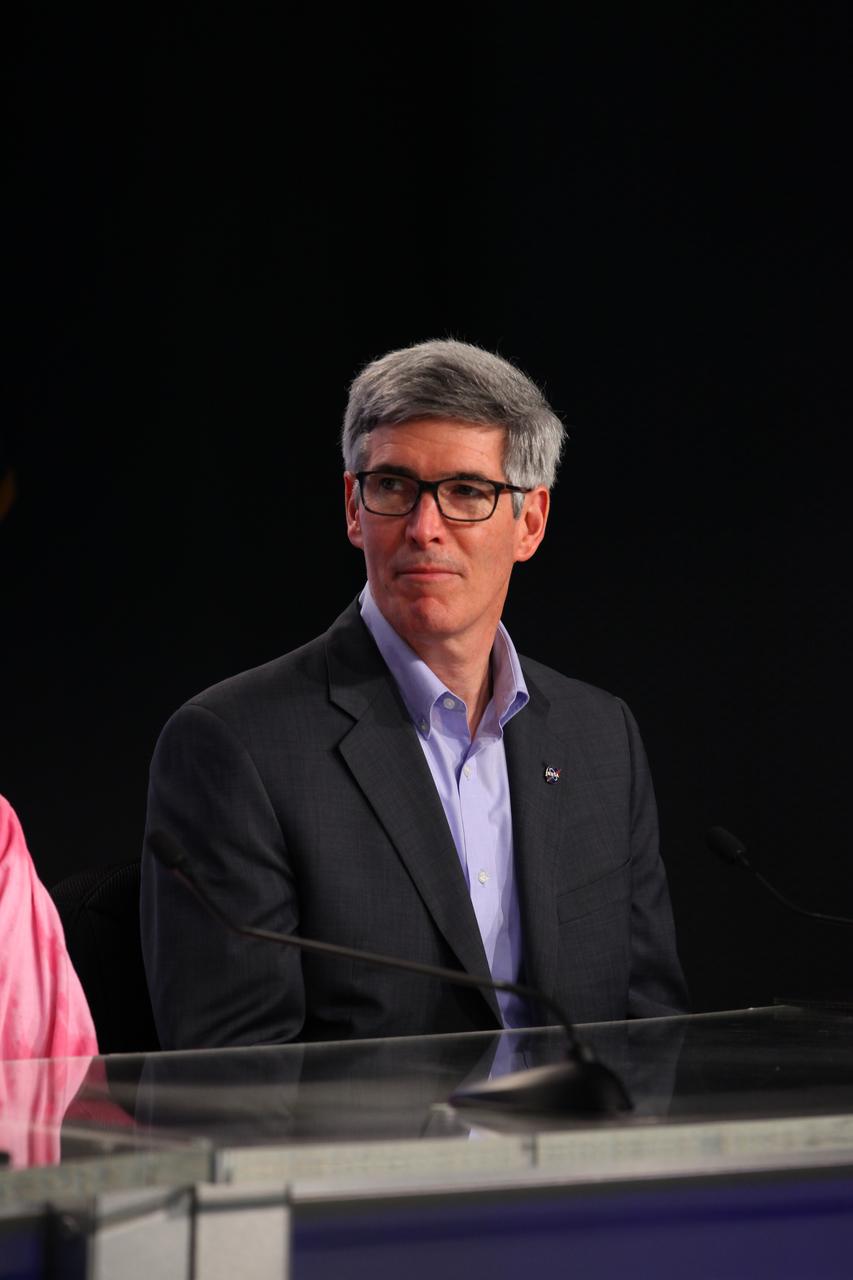
In the Press Site auditorium at the Kennedy Space Center in Florida, Bill Barry, NASA's chief historian, speaks to members of the media during a a news conference with key individuals involved in the upcoming motion picture "Hidden Figures." The movie is based on the book of the same title, by Margot Lee Shetterly. It chronicles the lives of Katherine Johnson, Dorothy Vaughan and Mary Jackson, three African-American women who worked for NASA as human "computers.” Their mathematical calculations were crucial to the success of Project Mercury missions including John Glenn’s orbital flight aboard Friendship 7 in 1962. The film is due in theaters in January 2017.

Kennedy Space Center Deputy Director Janet Petro speaks to students during a Women in STEM mentoring breakfast inside the Debus Conference Center at the Kennedy Space Center Visitor Complex in Florida. STEM is science, technology, engineering and math. The special event gave students competing in NASA's 8th Annual Robotic Mining Competition the chance to learn from female NASA scientists, engineers and professionals about their careers and the paths they took to working at Kennedy. The Robotic Mining Competition is a NASA Human Exploration and Operations Mission Directorate project designed to encourage students in STEM fields. The project provides a competitive environment to foster innovative ideas and solutions that could be used on NASA's Journey to Mars.
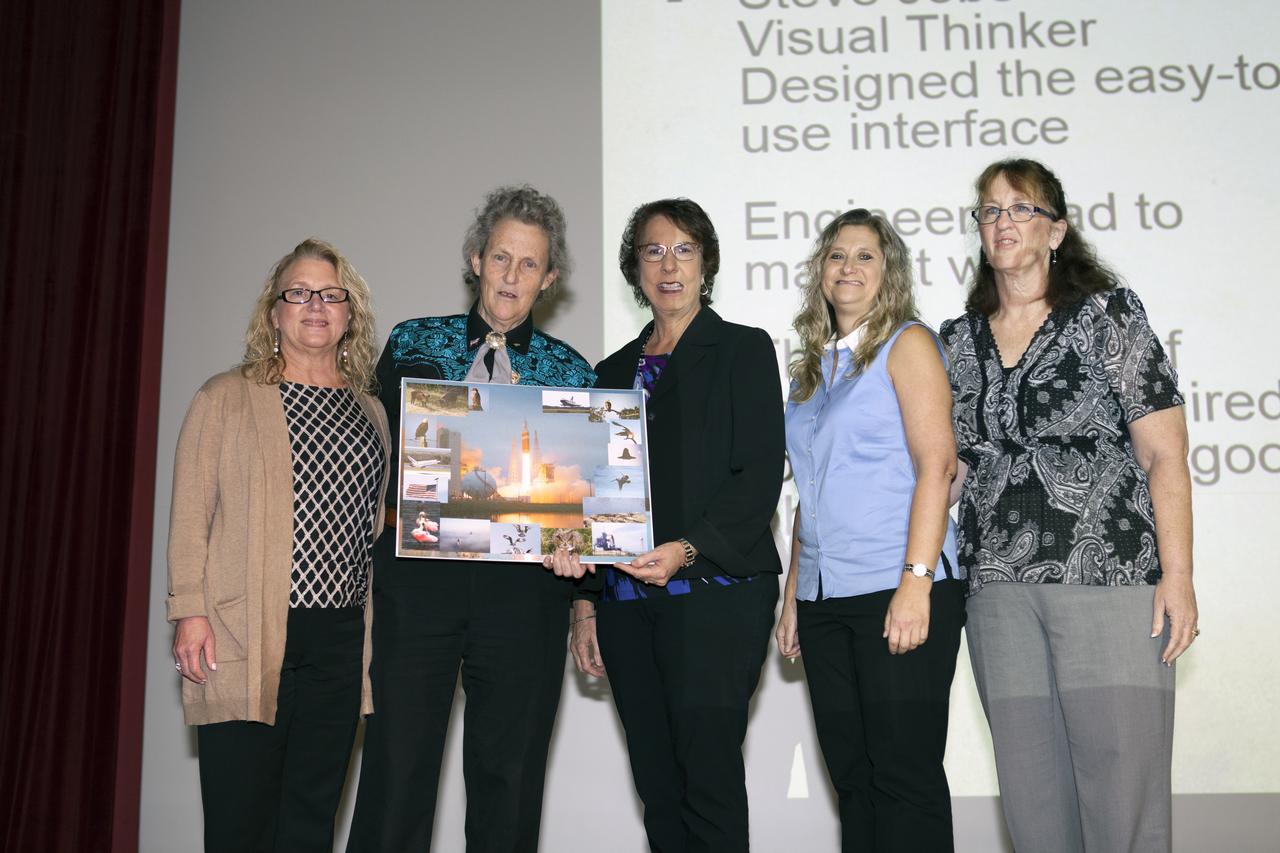
Dr. Temple Grandin, second from left, pauses for a photo after giving the keynote presentation at Kennedy Space Center's annual National Disability Employment Awareness Month (NDEAM) event. From left are Chief Financial Officer Susan Kroskey, executive champion of Kennedy's Disability Awareness and Action Working Group, or DAAWG; Grandin; Joette Feeney, chair of the Kennedy Networking Opportunities for Women group, or KNOW; and DAAWG Co-chairs Nicole Delvesco and Annie Williams. A prominent author and speaker on animal behavior and autism, Grandin is a professor of animal science at Colorado State University in Fort Collins, Colorado. Kennedy's DAAWG and KNOW groups partnered to sponsor the presentation.

Gioia Massa, at left, a NASA payload scientist, talks to students during a Women in STEM breakfast inside the Debus Conference Center at the Kennedy Space Center Visitor Complex in Florida. STEM is science, technology, engineering and math. The special event gave students competing in NASA's 8th Annual Robotic Mining Competition the chance to learn from female NASA scientists, engineers and professionals about their careers and the paths they took to working at Kennedy. The Robotic Mining Competition is a NASA Human Exploration and Operations Mission Directorate project designed to encourage students in STEM fields. The project provides a competitive environment to foster innovative ideas and solutions that could be used on NASA's Journey to Mars.

Kennedy Space Center Director Bob Cabana speaks cast and crew members of the upcoming motion picture "Hidden Figures" outside the Vehicle Assembly Building. From the left are Pharrell Williams, musician and producer of “Hidden Figures," Taraji P. Henson, who portrays Katherine Johnson in the film and Cabana. The movie is based on the book of the same title, by Margot Lee Shetterly. It chronicles the lives of Katherine Johnson, Dorothy Vaughan and Mary Jackson, three African-American women who worked for NASA as human "computers.” Their mathematical calculations were crucial to the success of Project Mercury missions including John Glenn’s orbital flight aboard Friendship 7 in 1962. The film is due in theaters in January 2017.
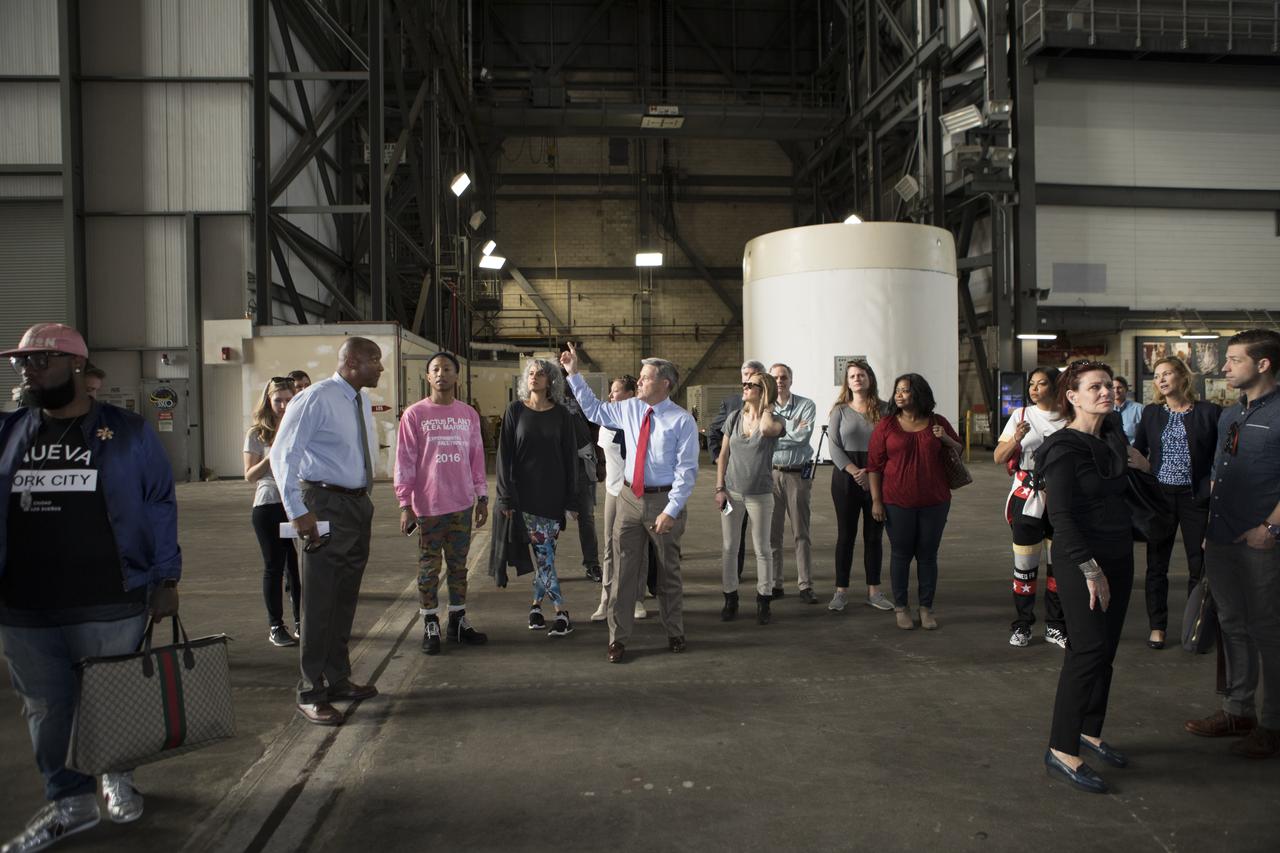
Kennedy Space Center Director Bob Cabana (center pointing to the left) provides a tour for cast and crew members of the upcoming motion picture "Hidden Figures." The group is walking thought the transfer aisle of the Vehicle Assembly Building. The movie is based on the book of the same title, by Margot Lee Shetterly. It chronicles the lives of Katherine Johnson, Dorothy Vaughan and Mary Jackson, three African-American women who worked for NASA as human "computers.” Their mathematical calculations were crucial to the success of Project Mercury missions including John Glenn’s orbital flight aboard Friendship 7 in 1962. The film is due in theaters in January 2017.
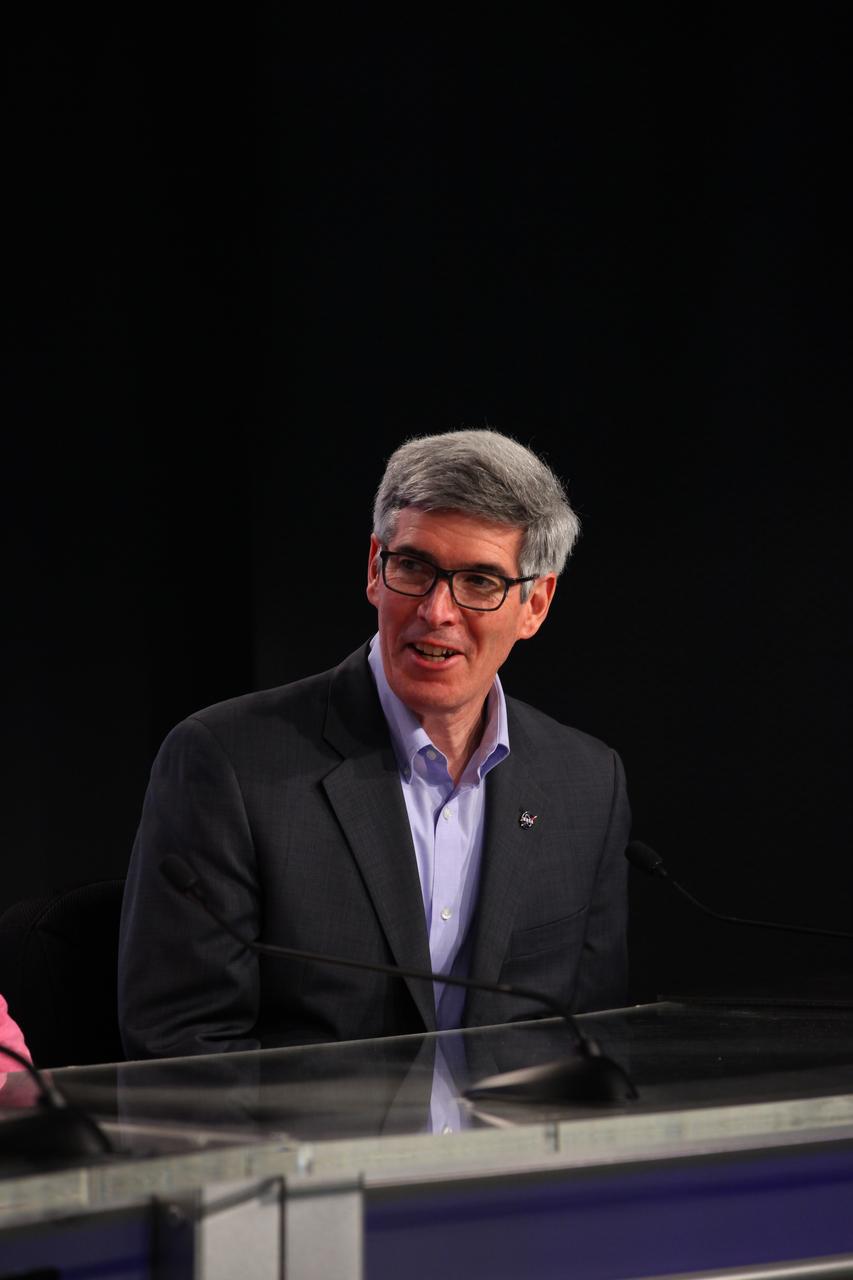
In the Press Site auditorium at the Kennedy Space Center in Florida, Bill Barry, NASA's chief historian, speaks to members of the media during a a news conference with key individuals involved in the upcoming motion picture "Hidden Figures." The movie is based on the book of the same title, by Margot Lee Shetterly. It chronicles the lives of Katherine Johnson, Dorothy Vaughan and Mary Jackson, three African-American women who worked for NASA as human "computers.” Their mathematical calculations were crucial to the success of Project Mercury missions including John Glenn’s orbital flight aboard Friendship 7 in 1962. The film is due in theaters in January 2017.

In the Press Site auditorium at the Kennedy Space Center in Florida, Taraji P. Henson speaks to members of the media during a news conference with other key individuals involved in the upcoming motion picture "Hidden Figures." The movie is based on the book of the same title, by Margot Lee Shetterly. It chronicles the lives of Katherine Johnson (played by Henson), Dorothy Vaughan and Mary Jackson, three African-American women who worked for NASA as human "computers.” Their mathematical calculations were crucial to the success of Project Mercury missions including John Glenn’s orbital flight aboard Friendship 7 in 1962. The film is due in theaters in January 2017.
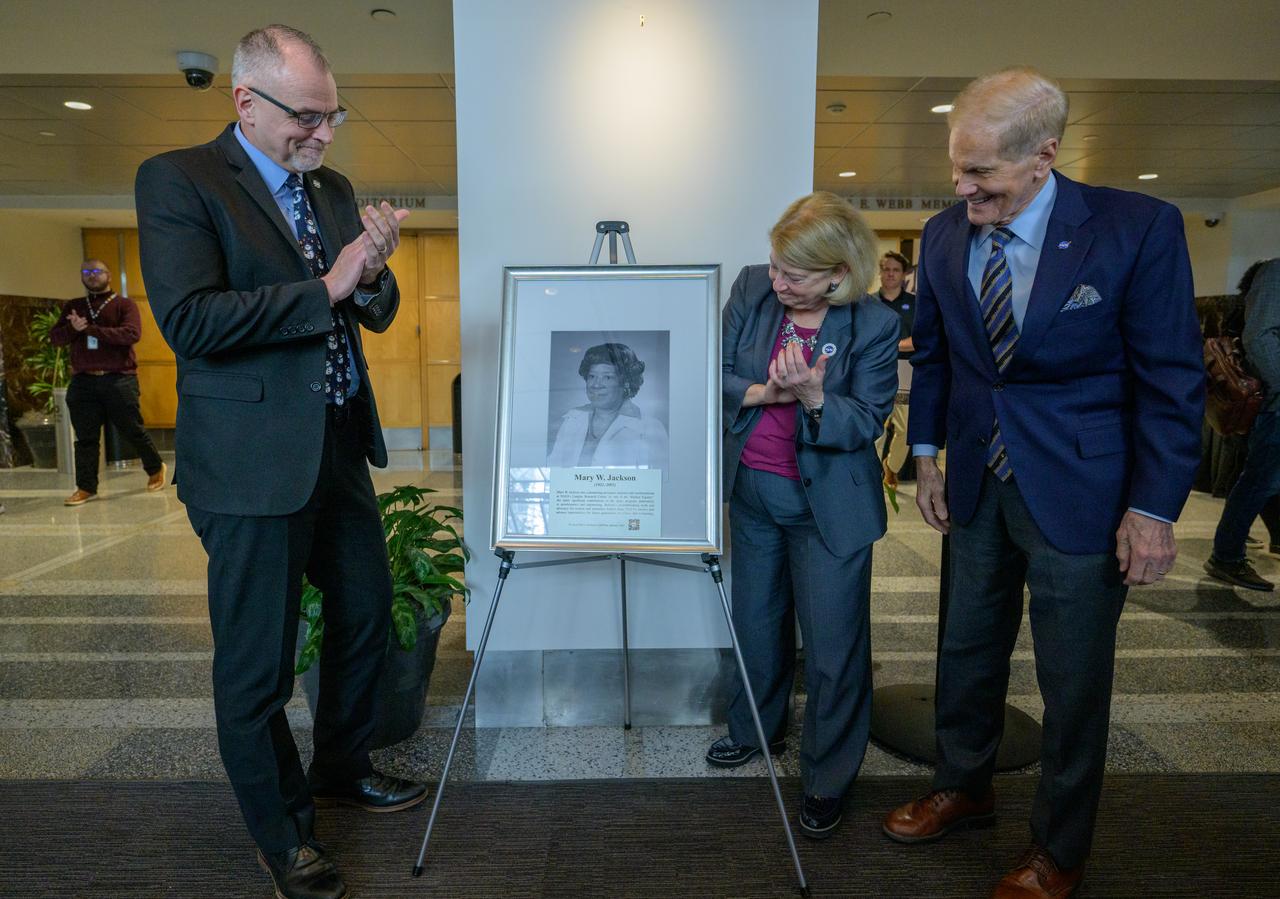
A portrait of Mary W. Jackson is unveiled, by NASA Associate Administrator Jim Free, left, NASA Deputy Administrator Pam Melroy, and, NASA Administrator Bill Nelson, right, Friday, Dec. 6, 2024, at the NASA Headquarters Mary W. Jackson Building in Washington. Mary W. Jackson was a pioneering aerospace engineer and mathematician at NASA’s Langley Research Center. As one of the “Hidden Figures,” she made significant contributions to the space program, particularly in aerodynamics and engineering. Jackson’s groundbreaking work and advocacy for women and minorities helped shape NASA’s success and advance opportunities for future generations in science and technology. Photo Credit: (NASA/Bill Ingalls)
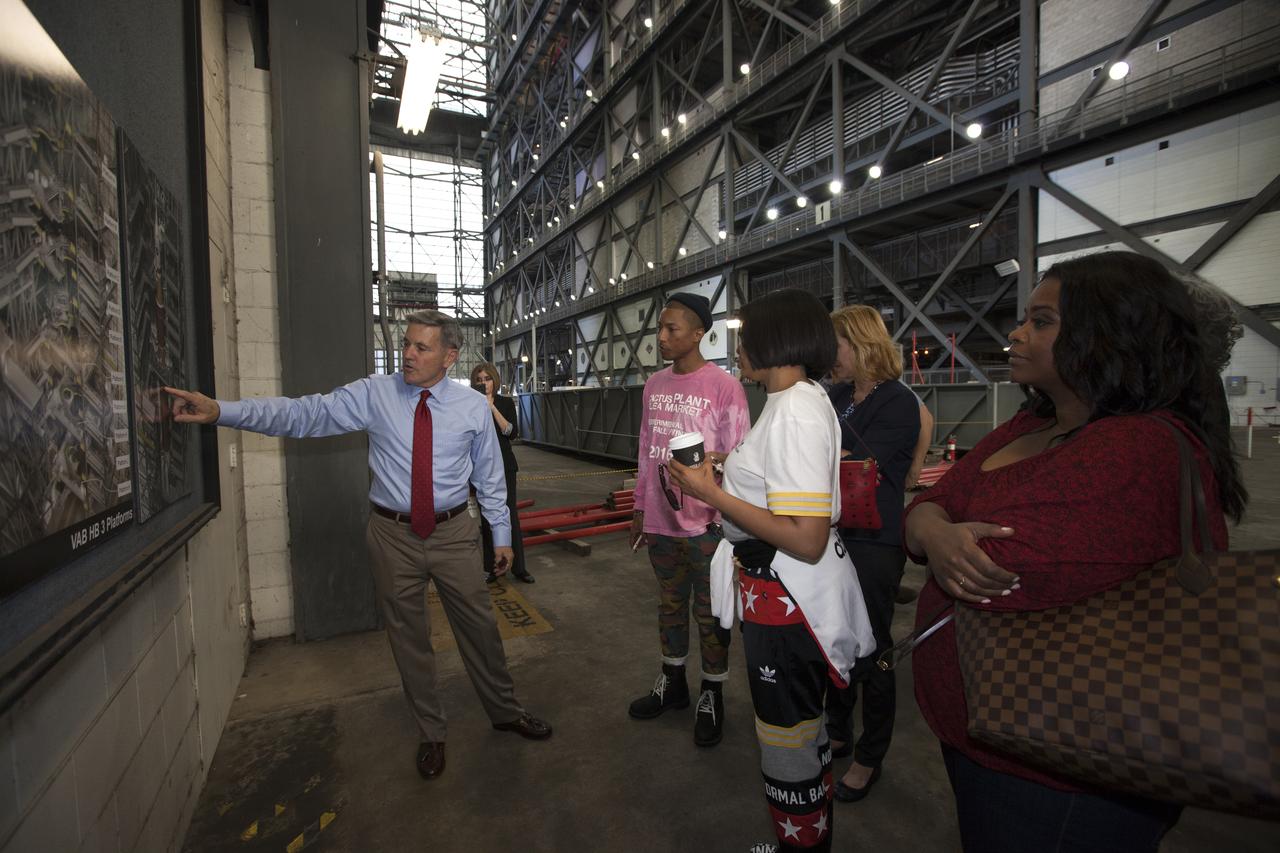
Kennedy Space Center Director Bob Cabana points to a display during a tour for cast and crew members of the upcoming motion picture "Hidden Figures." The group is walking thought the transfer aisle of the Vehicle Assembly Building. The movie is based on the book of the same title, by Margot Lee Shetterly. It chronicles the lives of Katherine Johnson, Dorothy Vaughan and Mary Jackson, three African-American women who worked for NASA as human "computers.” Their mathematical calculations were crucial to the success of Project Mercury missions including John Glenn’s orbital flight aboard Friendship 7 in 1962. The film is due in theaters in January 2017.
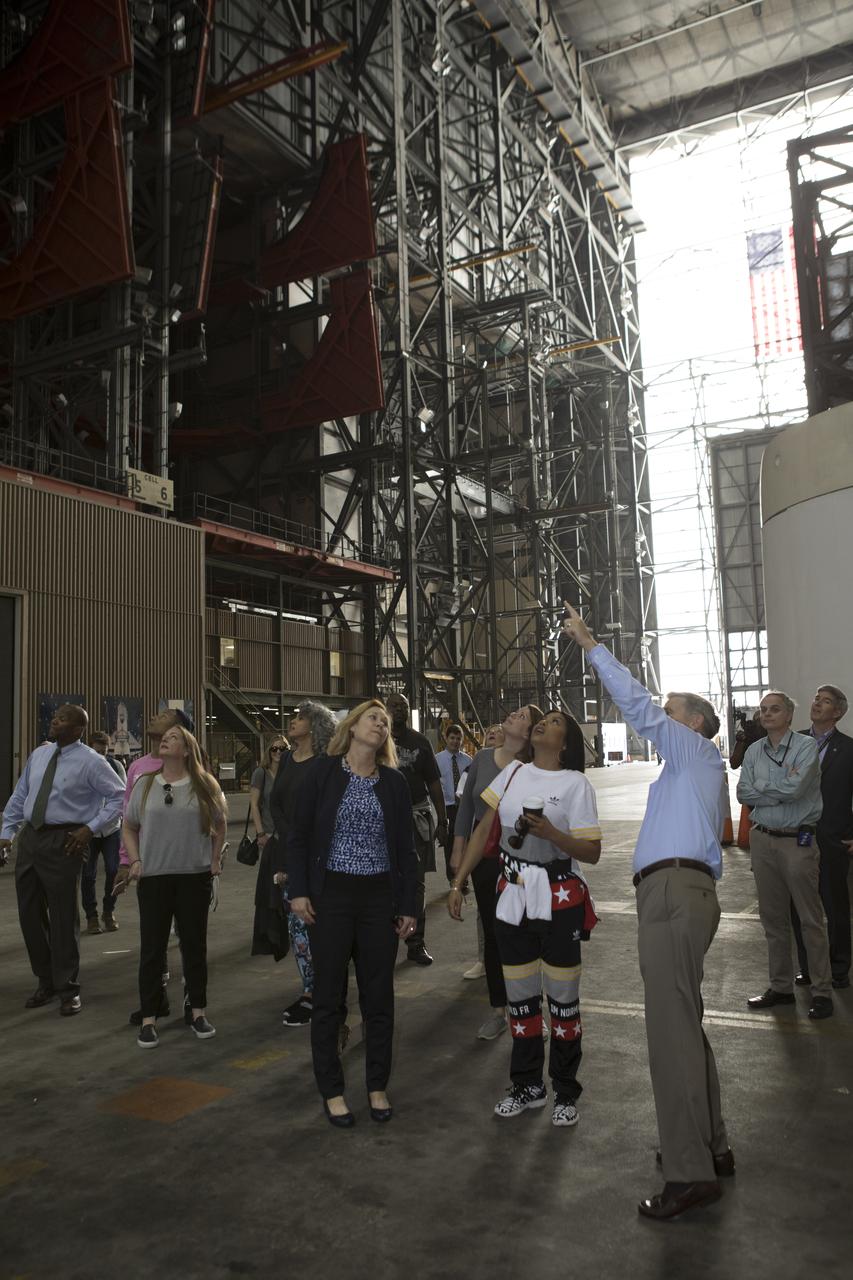
Kennedy Space Center Director Bob Cabana (pointing) provides a tour for cast and crew members of the upcoming motion picture "Hidden Figures." The group is walking thought the transfer aisle of the Vehicle Assembly Building. The movie is based on the book of the same title, by Margot Lee Shetterly. It chronicles the lives of Katherine Johnson, Dorothy Vaughan and Mary Jackson, three African-American women who worked for NASA as human "computers.” Their mathematical calculations were crucial to the success of Project Mercury missions including John Glenn’s orbital flight aboard Friendship 7 in 1962. The film is due in theaters in January 2017.
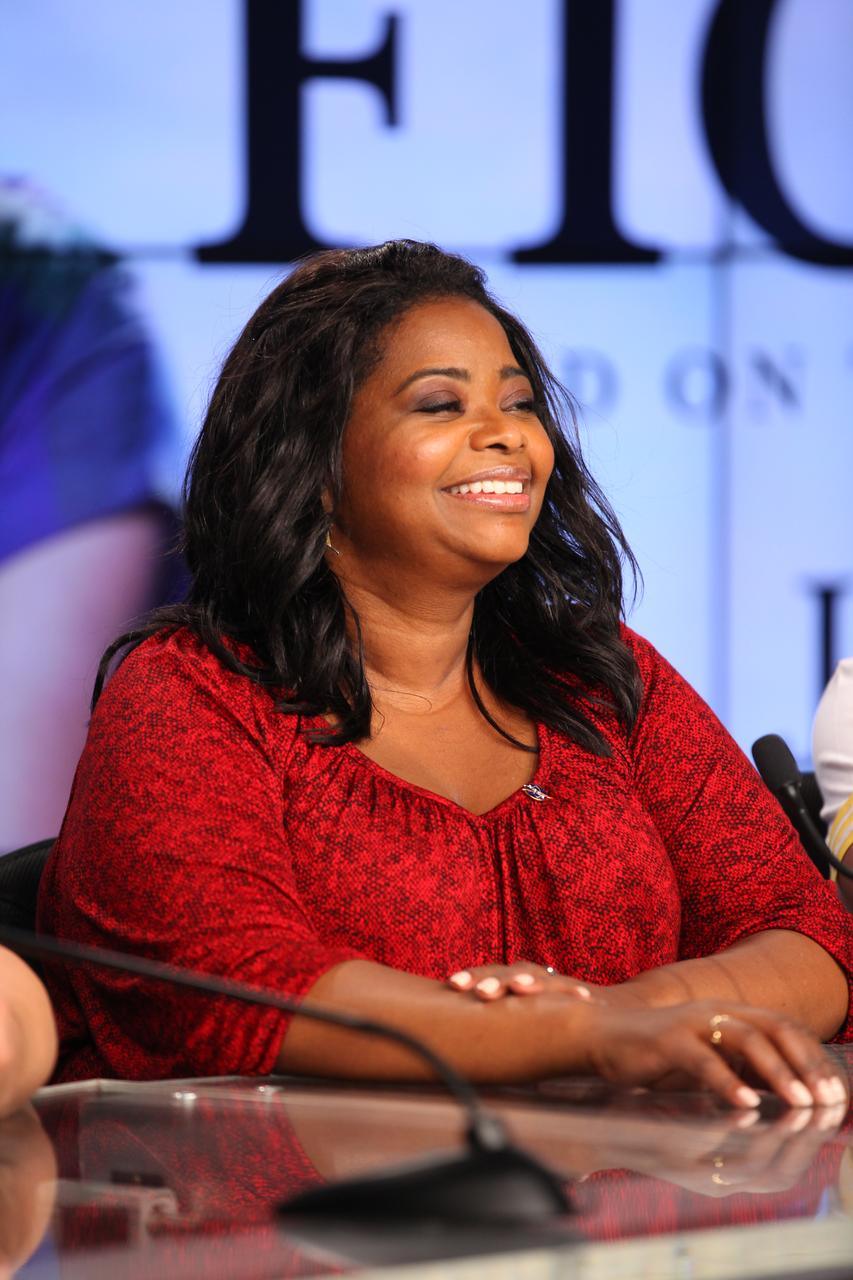
In the Press Site auditorium at the Kennedy Space Center in Florida, Octavia Spencer speaks to members of the media during a news conference with other key individuals involved in the upcoming motion picture "Hidden Figures." The movie is based on the book of the same title, by Margot Lee Shetterly. It chronicles the lives of Katherine Johnson, Dorothy Vaughan (played by Spencer) and Mary Jackson, three African-American women who worked for NASA as human "computers.” Their mathematical calculations were crucial to the success of Project Mercury missions including John Glenn’s orbital flight aboard Friendship 7 in 1962. The film is due in theaters in January 2017.