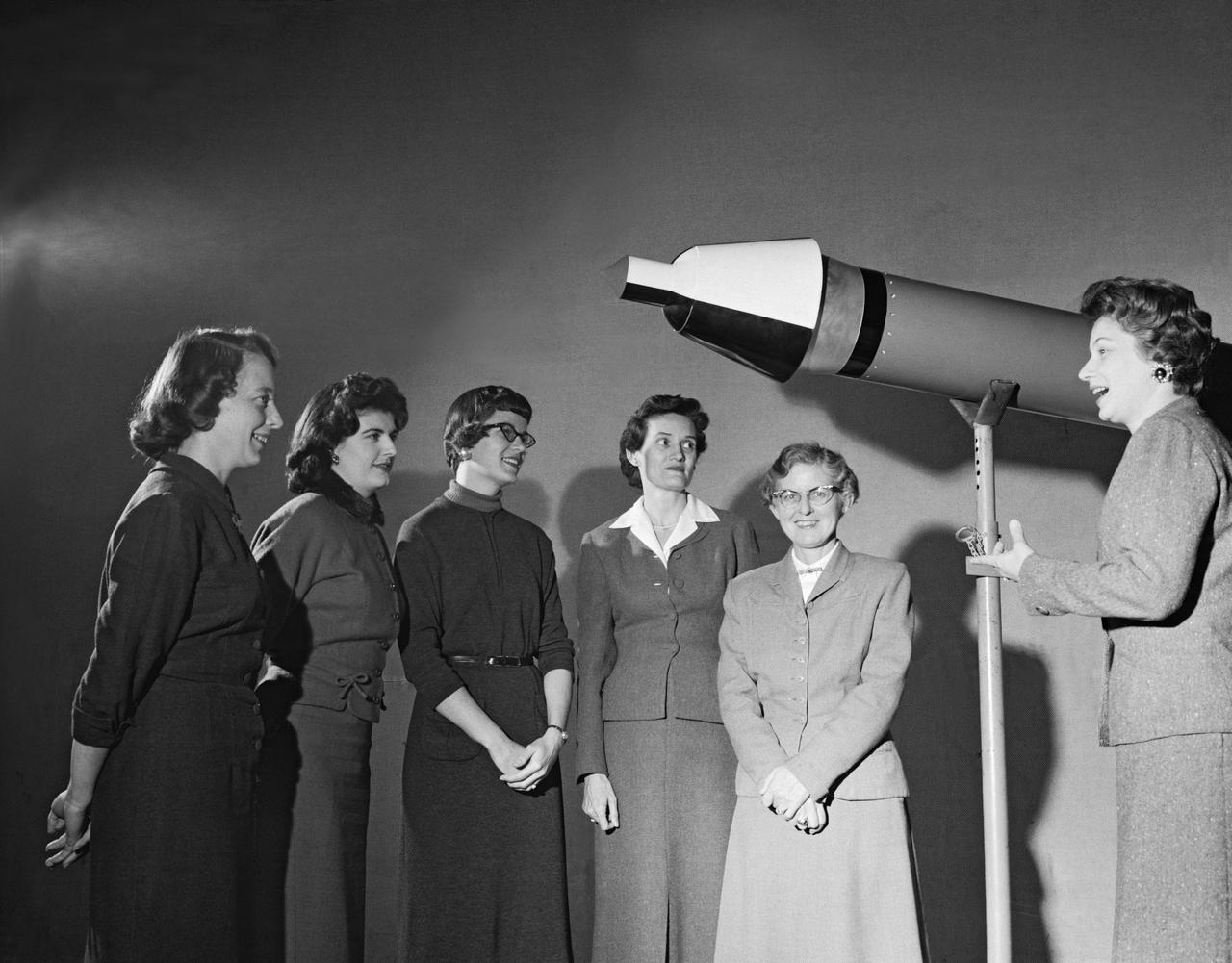
Women Scientists: Lucille Coltrane, Jean Clark Keating, Katherine Cullie Speegle, Doris "Dot" Lee, Ruth Whitman, and Emily Stephens Mueller,Lucille Coltrane is at the far left. She was a computer and worked for Norm Crabill who provided positive identification. Lucille authored a NACA Research Memorandum, Investigation of Two Bluff Shapes in Axial Free Flight Over a Mach Number Range From 0.35 to 2.15 in 1958. Next to Lucille is Jean Clark Keating. Jean was identified by Mary Woerner who said that both Jean and her husband Jerry are now deceased. The third woman from the left is Katherine Cullie Speegle. Katherine co-authored two research papers: Preliminary Results From a Free-Flight Investigation of Boundary-Layer Transition and Heat Transfer on a Highly Polished 8-Inch-Diameter Hemisphere-Cylinder at Mach Numbers up to 3 and Reynolds Numbers Based on a Length of 1 Foot up to 17.7 x 10 to the 6th and Heat Transfer For Mach Numbers Up to 2.2 and Pressure Distributions for Mach Numbers Up to 4.7 From Flight Investigations of a Flat-Face Cone and a Hemisphere-Cone. Norm remembered the woman standing as Doris. Mary Alice identified her as Doris 'Dot' Lee, who worked with Katherine Speegle. Dot was married to a NASA engineer named John Lee. Next to Doris is Ruth Whitman. Norm remembered she and her husband owned a Howard DGA 15 at the airport in WEst Point. That prompted Mary Alice to remember her name and that her husband was Jim. The woman seated on the right is Emily Stephens Mueller. Norm remembers that Emily went to Houston as part of the Space Task Group, but retired back here on the peninsula. In 2008, Emily attended the NACA Reunion X11. She walked over to a table of books about the history of NACA, former NACA facilities and the organization's aviation pioneers and saw a book about women of flight from the Dryden Research Center and paused, then pointed somewhat in amazement. "ThatÕs me," she said of a picture on the cover of her on the far left of a line of women. She was at Dryden from 1948-49.
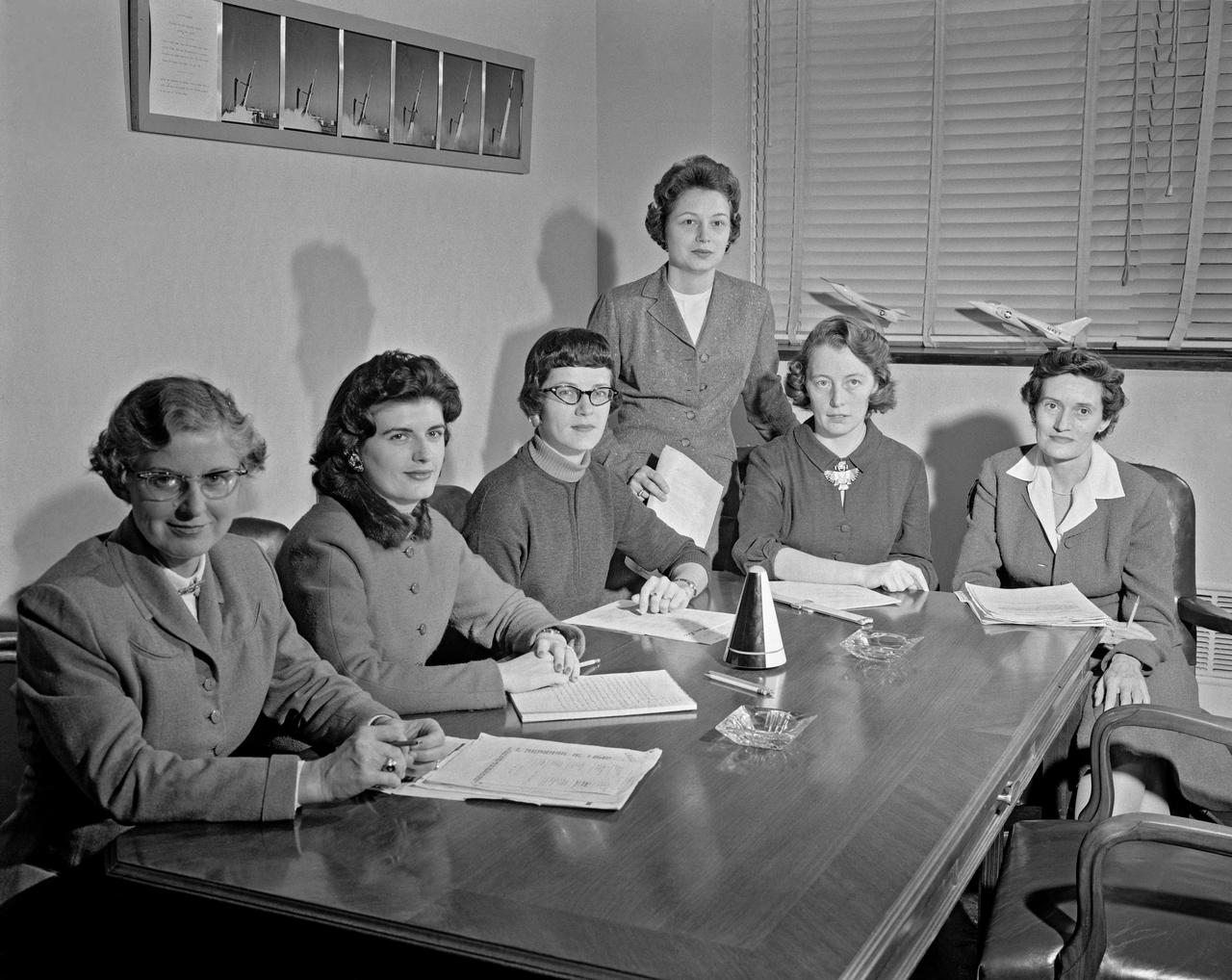
Women Scientists: Lucille Coltrane, Jean Clark Keating, Katherine Cullie Speegle, Doris 'Dot' Lee, Ruth Whitman, and Emily Stephens Mueller,Lucille Coltrane is at the far left. She was a computer and worked for Norm Crabill who provided positive identification. Lucille authored a NACA Research Memorandum, Investigation of Two Bluff Shapes in Axial Free Flight Over a Mach Number Range From 0.35 to 2.15 in 1958. Next to Lucille is Jean Clark Keating. Jean was identified by Mary Woerner who said that both Jean and her husband Jerry are now deceased. The third woman from the left is Katherine Cullie Speegle. Katherine co-authored two research papers: Preliminary Results From a Free-Flight Investigation of Boundary-Layer Transition and Heat Transfer on a Highly Polished 8-Inch-Diameter Hemisphere-Cylinder at Mach Numbers up to 3 and Reynolds Numbers Based on a Length of 1 Foot up to 17.7 x 10 to the 6th and Heat Transfer For Mach Numbers Up to 2.2 and Pressure Distributions for Mach Numbers Up to 4.7 From Flight Investigations of a Flat-Face Cone and a Hemisphere-Cone. Norm remembered the woman standing as Doris. Mary Alice identified her as Doris 'Dot' Lee, who worked with Katherine Speegle. Dot was married to a NASA engineer named John Lee. Next to Doris is Ruth Whitman. Norm remembered she and her husband owned a Howard DGA 15 at the airport in WEst Point. That prompted Mary Alice to remember her name and that her husband was Jim. The woman seated on the right is Emily Stephens Mueller. Norm remembers that Emily went to Houston as part of the Space Task Group, but retired back here on the peninsula. In 2008, Emily attended the NACA Reunion X11. She walked over to a table of books about the history of NACA, former NACA facilities and the organization's aviation pioneers and saw a book about women of flight from the Dryden Research Center and paused, then pointed somewhat in amazement. "That’s me," she said of a picture on the cover of her on the far left of a li
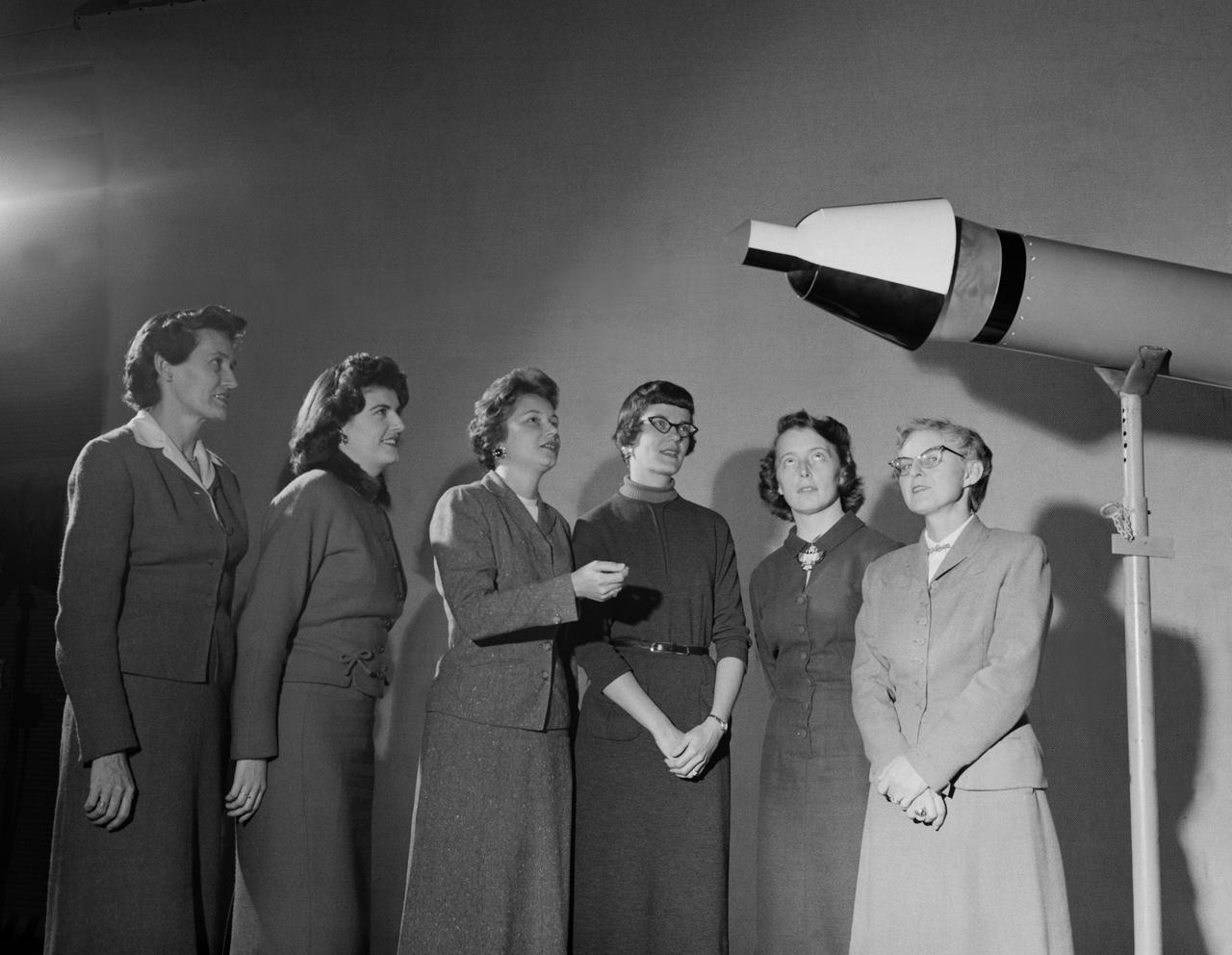
Women Scientists: Lucille Coltrane, Jean Clark Keating, Katherine Cullie Speegle, Doris 'Dot' Lee, Ruth Whitman, and Emily Stephens Mueller,Lucille Coltrane is at the far left. She was a computer and worked for Norm Crabill who provided positive identification. Lucille authored a NACA Research Memorandum, Investigation of Two Bluff Shapes in Axial Free Flight Over a Mach Number Range From 0.35 to 2.15 in 1958. Next to Lucille is Jean Clark Keating. Jean was identified by Mary Woerner who said that both Jean and her husband Jerry are now deceased. The third woman from the left is Katherine Cullie Speegle. Katherine co-authored two research papers: Preliminary Results From a Free-Flight Investigation of Boundary-Layer Transition and Heat Transfer on a Highly Polished 8-Inch-Diameter Hemisphere-Cylinder at Mach Numbers up to 3 and Reynolds Numbers Based on a Length of 1 Foot up to 17.7 x 10 to the 6th and Heat Transfer For Mach Numbers Up to 2.2 and Pressure Distributions for Mach Numbers Up to 4.7 From Flight Investigations of a Flat-Face Cone and a Hemisphere-Cone. Norm remembered the woman standing as Doris. Mary Alice identified her as Doris 'Dot' Lee, who worked with Katherine Speegle. Dot was married to a NASA engineer named John Lee. Next to Doris is Ruth Whitman. Norm remembered she and her husband owned a Howard DGA 15 at the airport in WEst Point. That prompted Mary Alice to remember her name and that her husband was Jim. The woman seated on the right is Emily Stephens Mueller. Norm remembers that Emily went to Houston as part of the Space Task Group, but retired back here on the peninsula. In 2008, Emily attended the NACA Reunion X11. She walked over to a table of books about the history of NACA, former NACA facilities and the organization's aviation pioneers and saw a book about women of flight from the Dryden Research Center and paused, then pointed somewhat in amazement. "That’s me," she said of a picture on the cover of her on the far left of a li
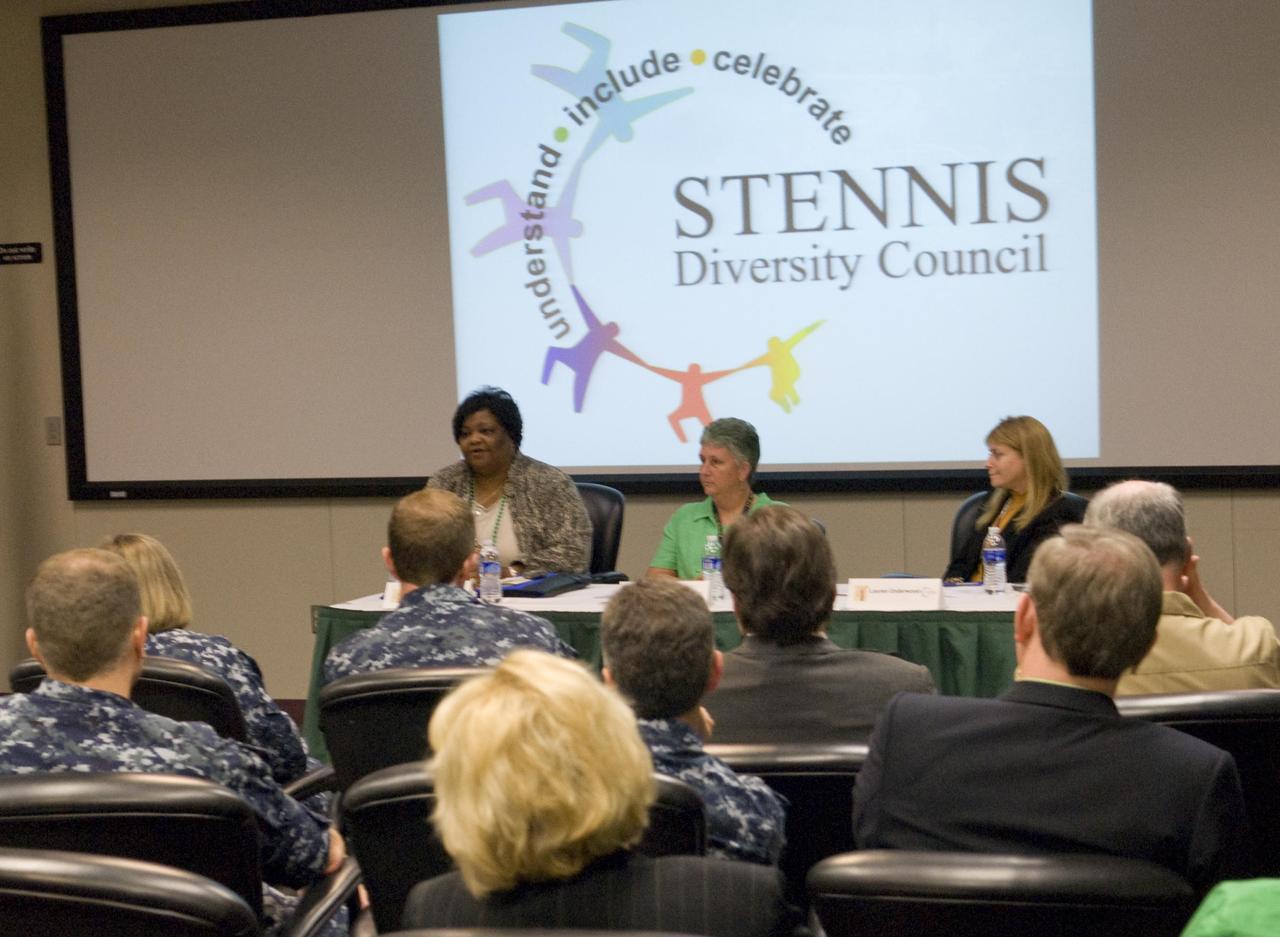
NASA John C. Stennis Space Center employees observed Women's History Month on March 17 with a panel discussion that featured accomplished women of the facility. The gathering featured (l to r): Pam Covington, manager of the NASA Office of External Affairs at Stennis; Mary Jones, assistant chief of staff with the Navy Meterology & Oceanography Command; and Lauren Underwood, senior research scientist with Science Systems and Applications, Inc. In addition to the panel discussion, the Stennis Diversity Council and Patriot Technologies also hosted a pair of 'lunch-and-learn' sessions focused on women's issues and history. The luncheons featured videos on Sally Hemings, the slave widely recognized as the mistress of President Thomas Jefferson; and several mothers of U.S. presidents.

The Science Cheerleaders perform at a Women's History Month event for middle school and high school girls on Wednesday, March 16, 2011 at NASA Headquarters in Washington. The Science Cheerleaders are a group professional cheerleaders-turned-scientists and engineers who challenge stereotypes while helping to inspire young women to pursue careers in science, technology, engineering and math. Photo Credit: (NASA/Carla Cioffi)

The Science Cheerleaders perform at a Women's History Month event for middle school and high school girls on Wednesday, March 16, 2011 at NASA Headquarters in Washington. The Science Cheerleaders are a group professional cheerleaders-turned-scientists and engineers who challenge stereotypes while helping to inspire young women to pursue careers in science, technology, engineering and math. Photo Credit: (NASA/Carla Cioffi)
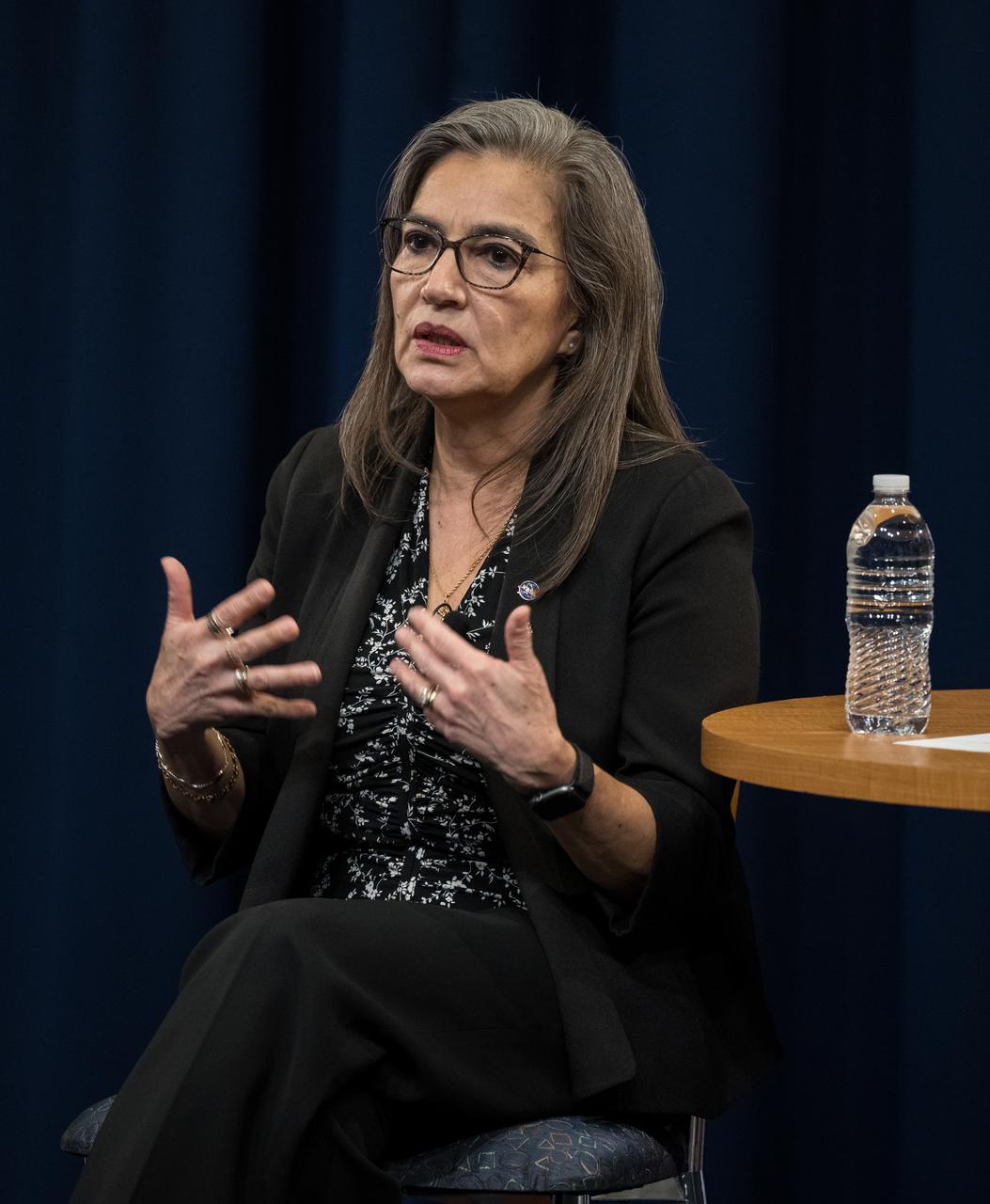
NASA Headquarters Deputy Director for the Astrophysics Division, Sandra Cauffman, speaks during a panel discussion with NASA IT Cybersecurity Specialist, Sarah Adewumi, NASA Goddard’s Deputy Director for Technology and Research Investments, Dr. Christyl Johnson, NASA Deputy Associate Administrator for STEM, Kris Brown, and NASA Associate Chief Scientist for Exploration and Applied Research, Dr. Mamta Patel Nagaraja, as part of a Women’s History Month program, “Celebrating Women Who Tell Our Stories,” Wednesday, March 22, 2023 at NASA’s Goddard Space Flight Center in Greenbelt, Maryland. Photo Credit: (NASA/Aubrey Gemignani)
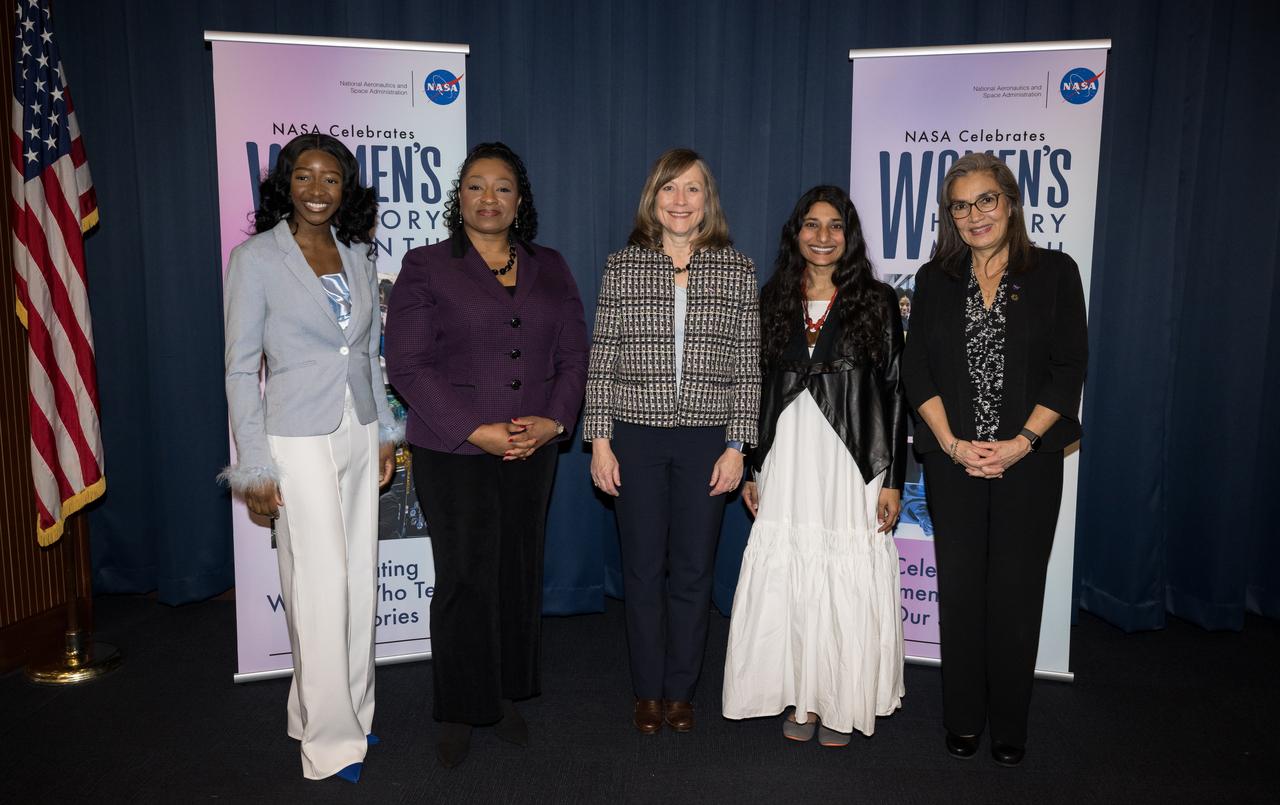
From left to right, NASA IT Cybersecurity Specialist, Sarah Adewumi, NASA Goddard’s Deputy Director for Technology and Research Investments, Dr. Christyl Johnson, NASA Deputy Associate Administrator for STEM, Kris Brown, NASA Associate Chief Scientist for Exploration and Applied Research, Dr. Mamta Patel Nagaraja, and NASA Headquarters Deputy Director for the Astrophysics Division, Sandra Cauffman, pose for a photo at the conclusion of an event for Women’s History Month, “Celebrating Women Who Tell Our Stories,” Wednesday, March 22, 2023 at NASA’s Goddard Space Flight Center in Greenbelt, Maryland. Photo Credit: (NASA/Aubrey Gemignani)
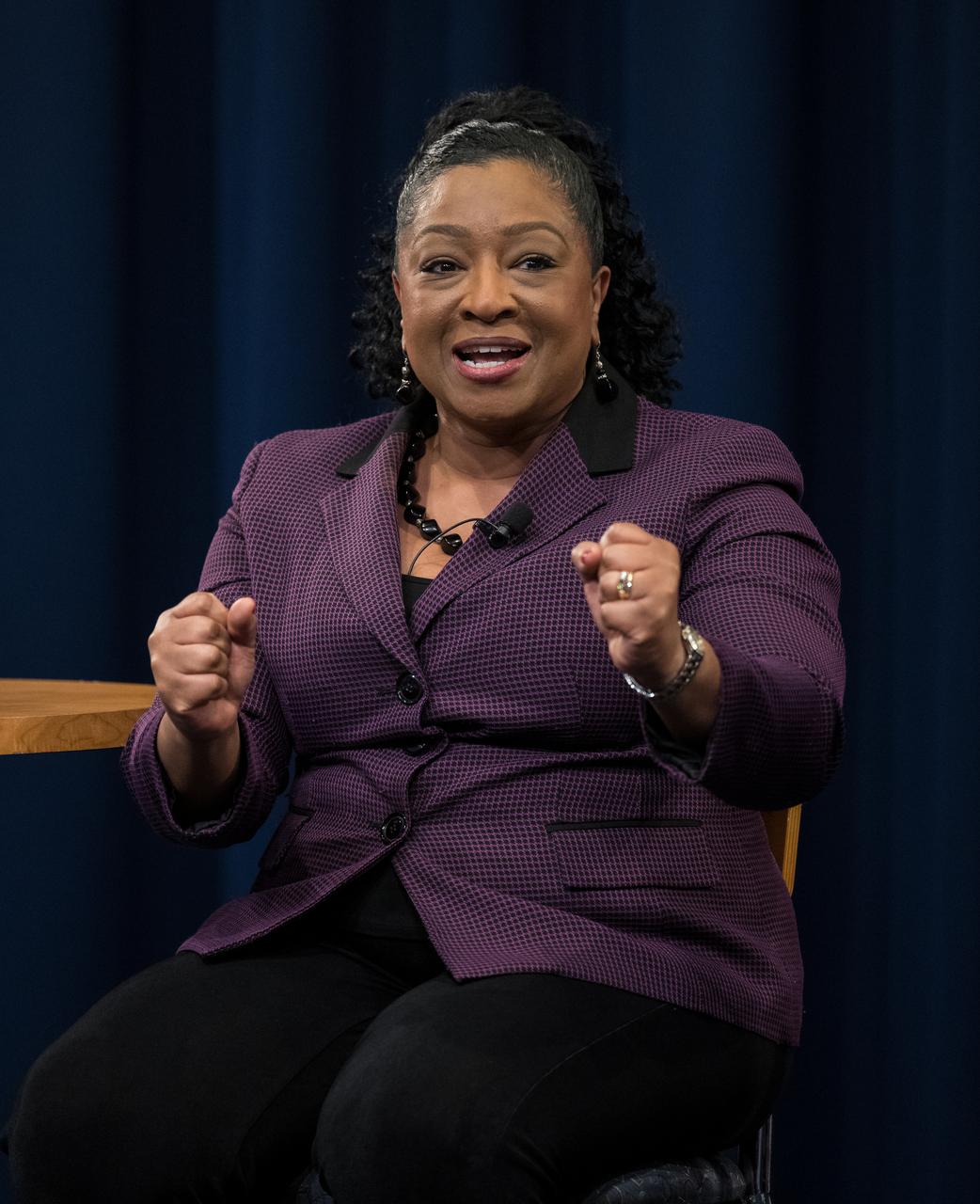
NASA Goddard’s Deputy Director for Technology and Research Investments, Dr. Christyl Johnson, speaks during a panel discussion with NASA IT Cybersecurity Specialist, Sarah Adewumi, NASA Deputy Associate Administrator for STEM, Kris Brown, NASA Headquarters Deputy Director for the Astrophysics Division, Sandra Cauffman, and NASA Associate Chief Scientist for Exploration and Applied Research, Dr. Mamta Patel Nagaraja as part of a Women’s History Month program, “Celebrating Women Who Tell Our Stories,” Wednesday, March 22, 2023 at NASA’s Goddard Space Flight Center in Greenbelt, Maryland. Photo Credit: (NASA/Aubrey Gemignani)
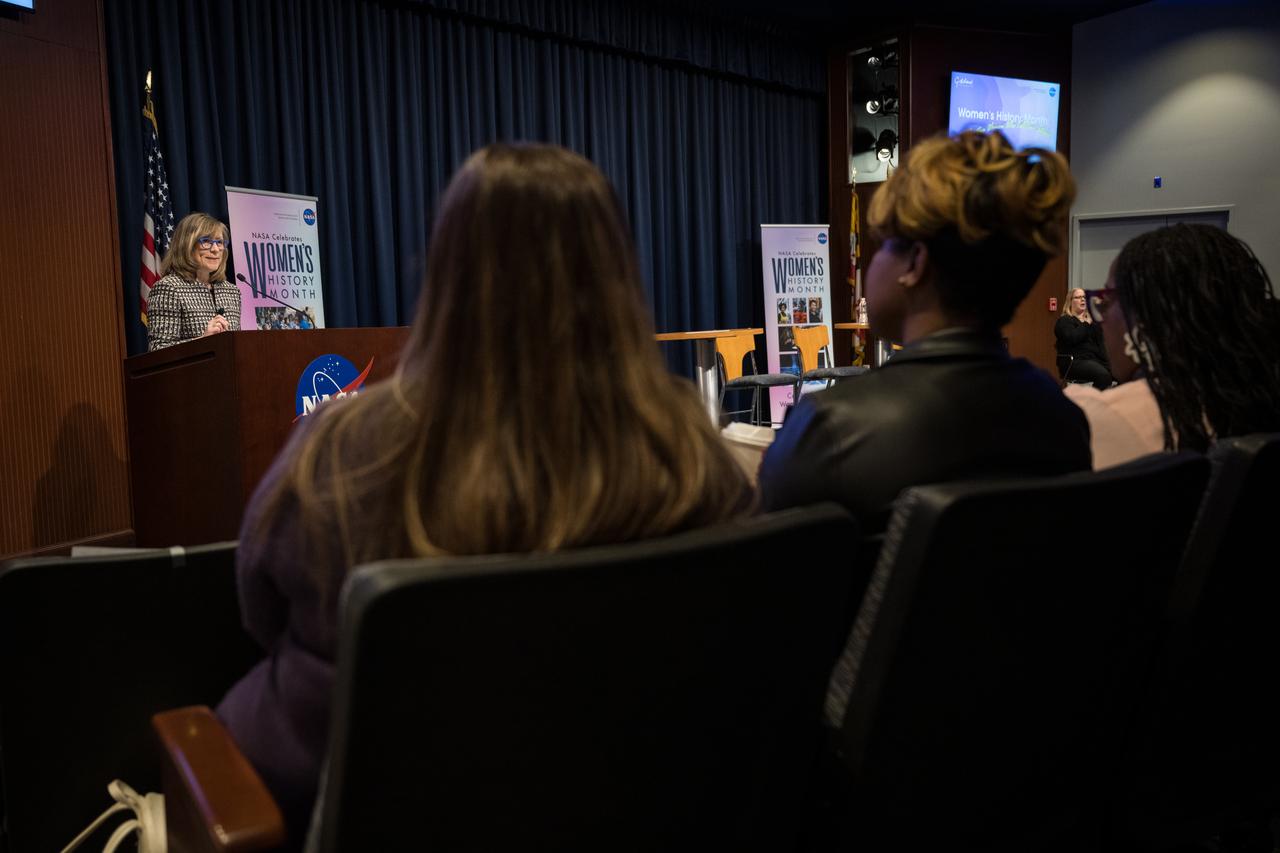
NASA Deputy Associate Administrator for STEM, Kris Brown speaks before a panel discussion with moderator NASA IT Cybersecurity Specialist, Sarah Adewumi, NASA Goddard’s Deputy Director for Technology and Research Investments, Dr. Christyl Johnson, NASA Headquarters Deputy Director for the Astrophysics Division, Sandra Cauffman, and NASA Associate Chief Scientist for Exploration and Applied Research, Dr. Mamta Patel Nagaraja as part of Women’s History Month, “Celebrating Women Who Tell Our Stories,” Wednesday, March 22, 2023 at NASA’s Goddard Space Flight Center in Greenbelt, Maryland. Photo Credit: (NASA/Aubrey Gemignani)
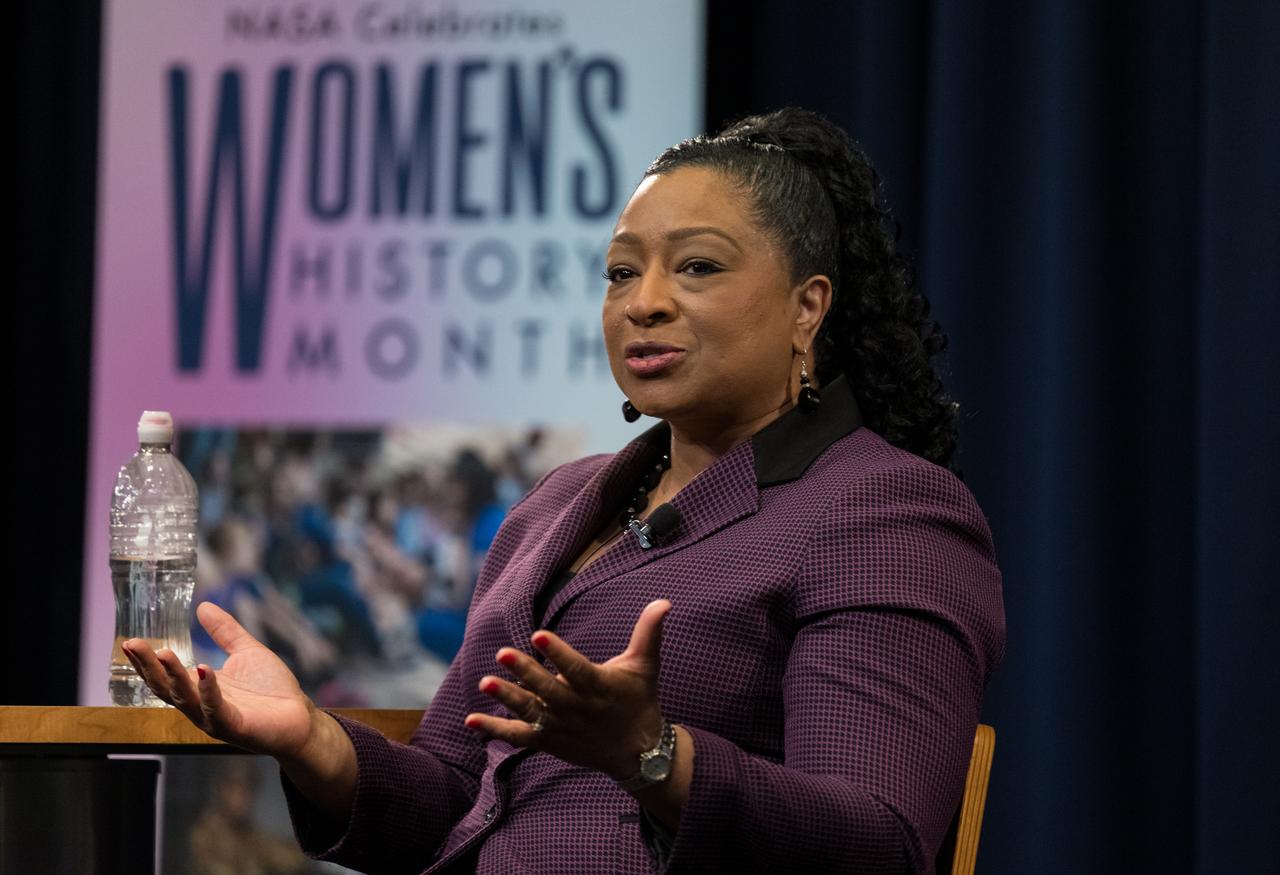
NASA Goddard’s Deputy Director for Technology and Research Investments, Dr. Christyl Johnson, speaks during a panel discussion with NASA IT Cybersecurity Specialist, Sarah Adewumi, NASA Deputy Associate Administrator for STEM, Kris Brown, NASA Headquarters Deputy Director for the Astrophysics Division, Sandra Cauffman, and NASA Associate Chief Scientist for Exploration and Applied Research, Dr. Mamta Patel Nagaraja as part of a Women’s History Month program, “Celebrating Women Who Tell Our Stories,” Wednesday, March 22, 2023 at NASA’s Goddard Space Flight Center in Greenbelt, Maryland. Photo Credit: (NASA/Aubrey Gemignani)
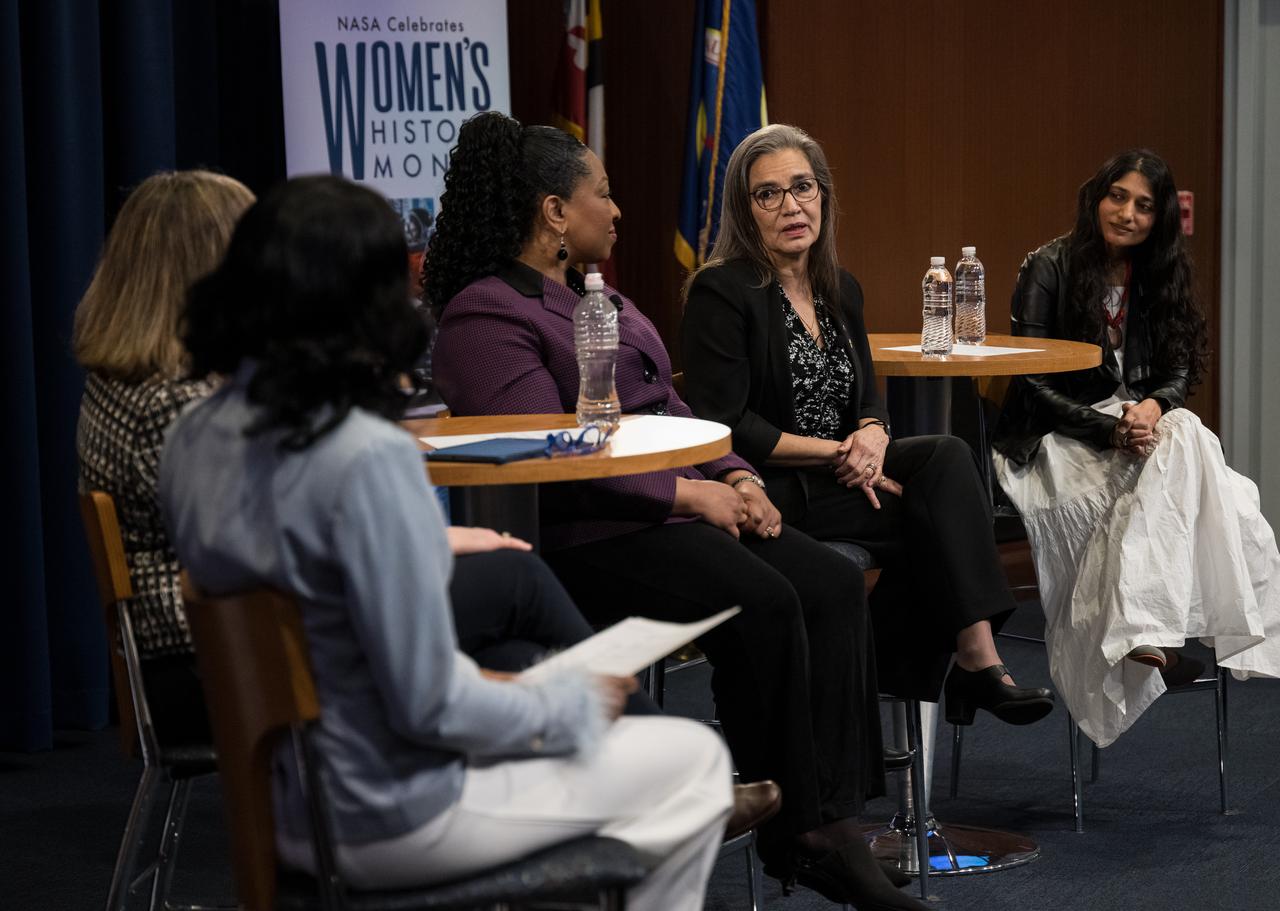
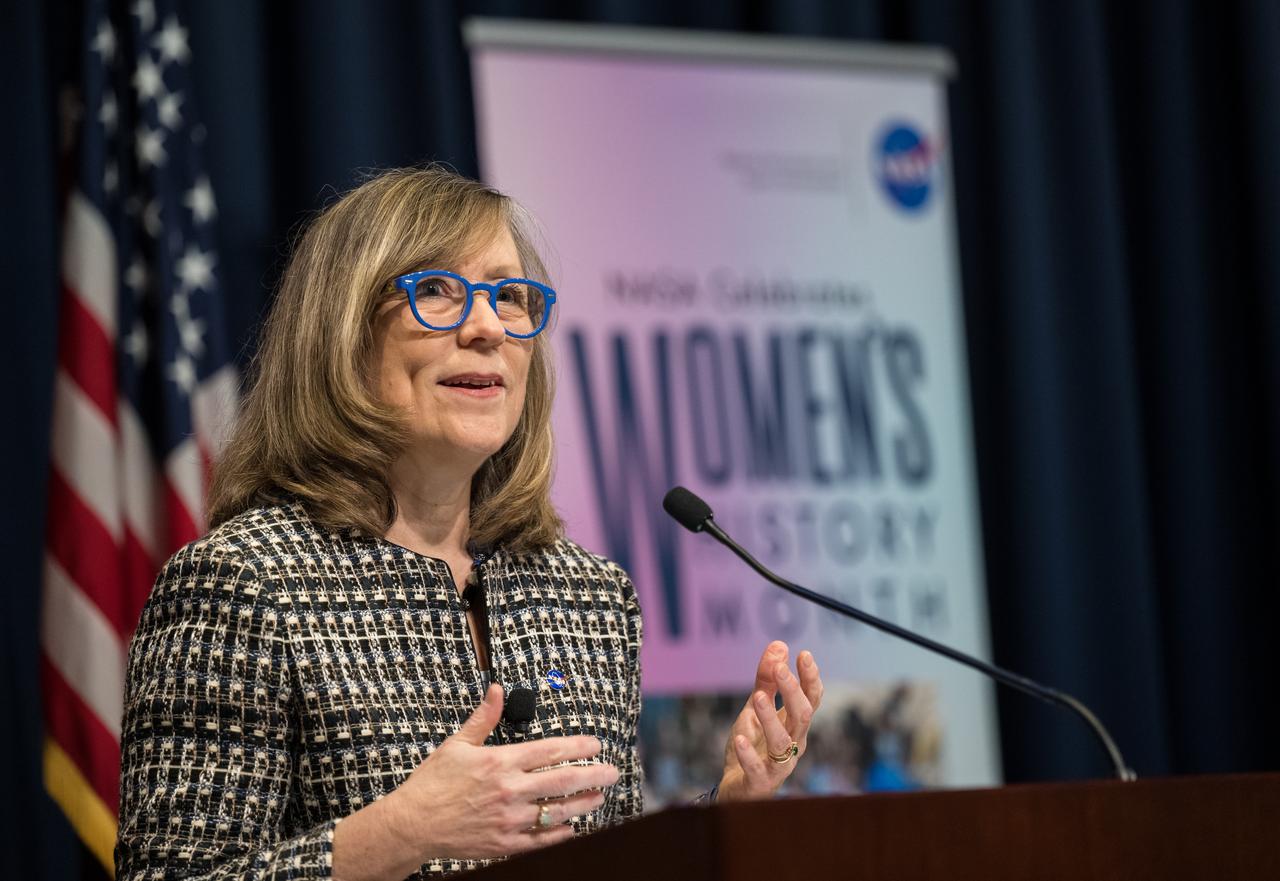
NASA Headquarters Deputy Director for the Astrophysics Division, Sandra Cauffman, speaks during a panel discussion with NASA IT Cybersecurity Specialist, Sarah Adewumi, NASA Goddard’s Deputy Director for Technology and Research Investments, Dr. Christyl Johnson, NASA Deputy Associate Administrator for STEM, Kris Brown, and NASA Associate Chief Scientist for Exploration and Applied Research, Dr. Mamta Patel Nagaraja, as part of a Women’s History Month program, “Celebrating Women Who Tell Our Stories,” Wednesday, March 22, 2023 at NASA’s Goddard Space Flight Center in Greenbelt, Maryland. Photo Credit: (NASA/Aubrey Gemignani)
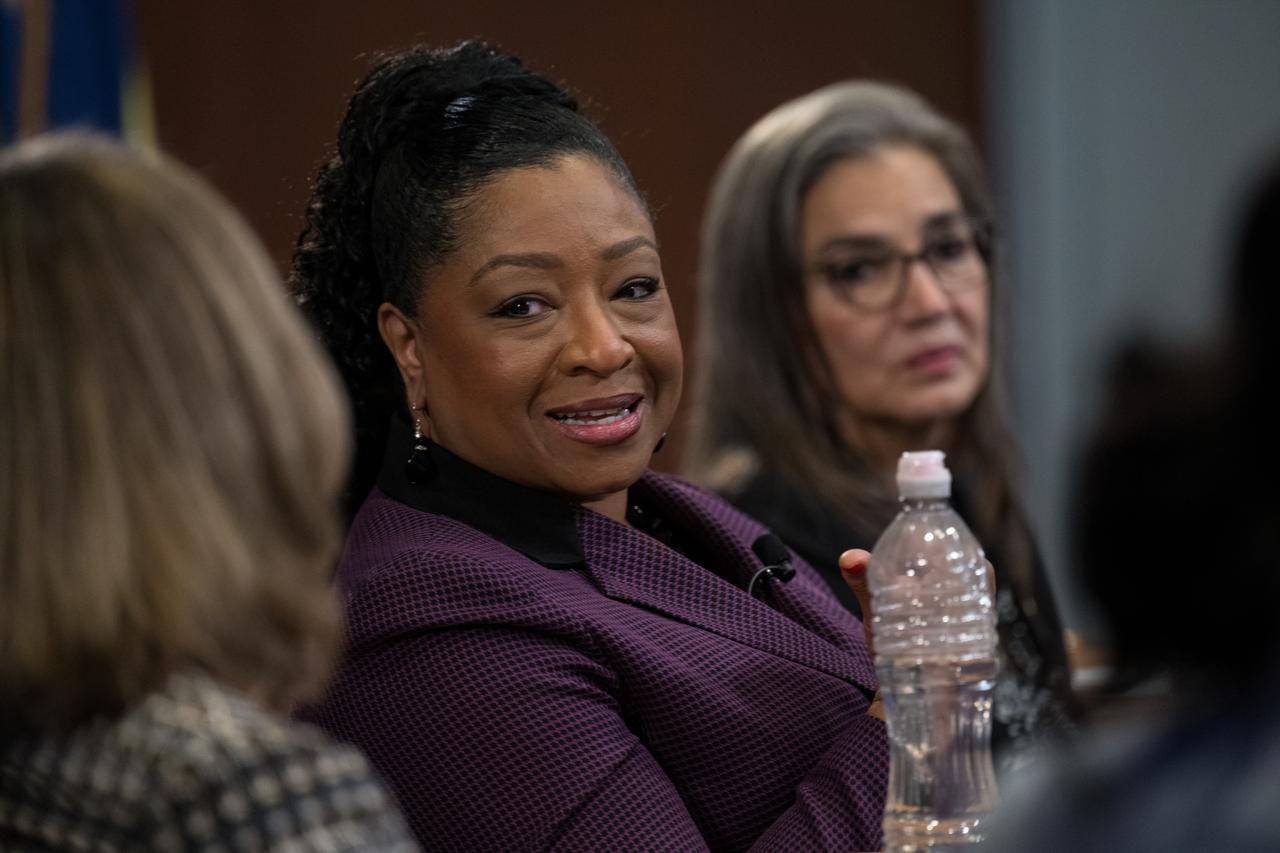
NASA Goddard’s Deputy Director for Technology and Research Investments, Dr. Christyl Johnson, speaks during a panel discussion with NASA IT Cybersecurity Specialist, Sarah Adewumi, NASA Deputy Associate Administrator for STEM, Kris Brown, NASA Headquarters Deputy Director for the Astrophysics Division, Sandra Cauffman, and NASA Associate Chief Scientist for Exploration and Applied Research, Dr. Mamta Patel Nagaraja as part of a Women’s History Month program, “Celebrating Women Who Tell Our Stories,” Wednesday, March 22, 2023 at NASA’s Goddard Space Flight Center in Greenbelt, Maryland. Photo Credit: (NASA/Aubrey Gemignani)
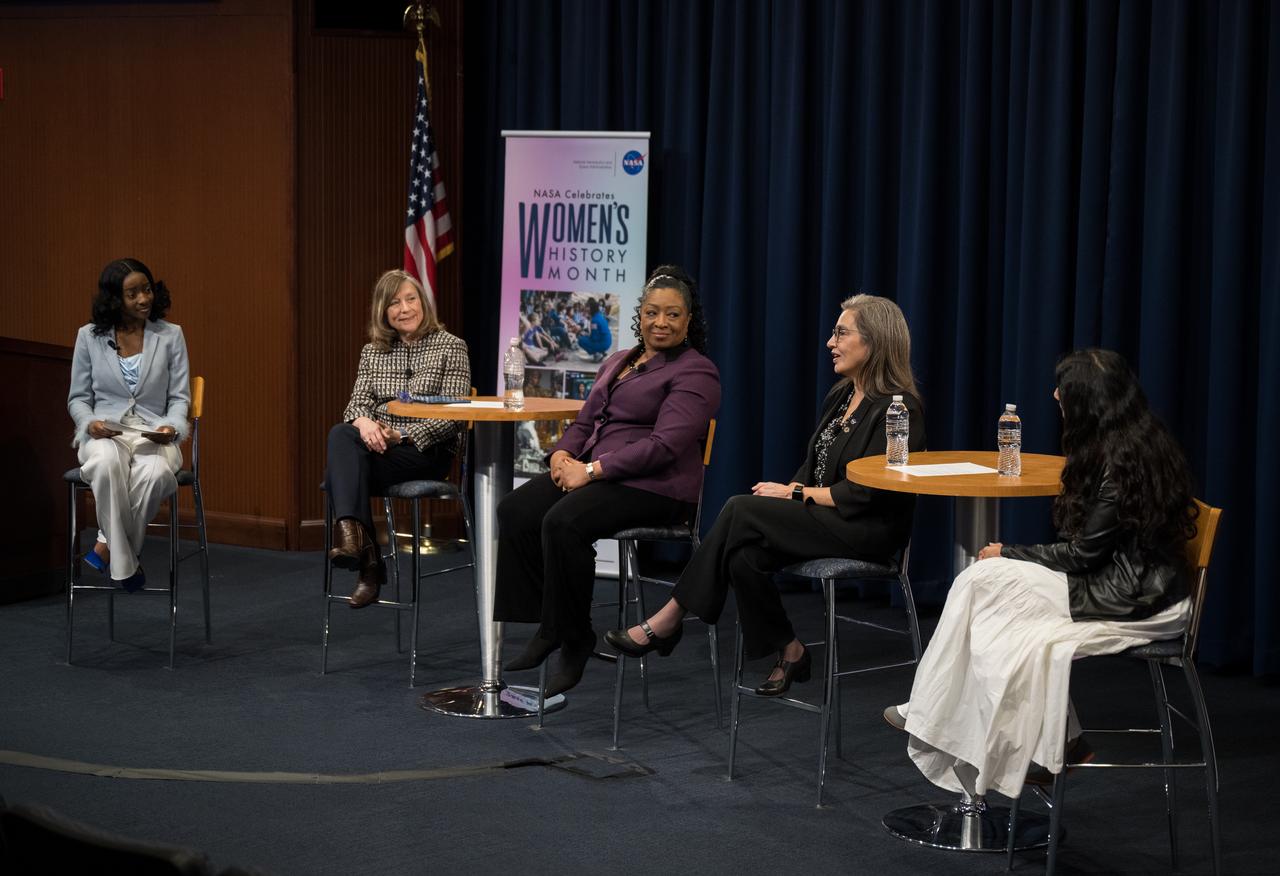
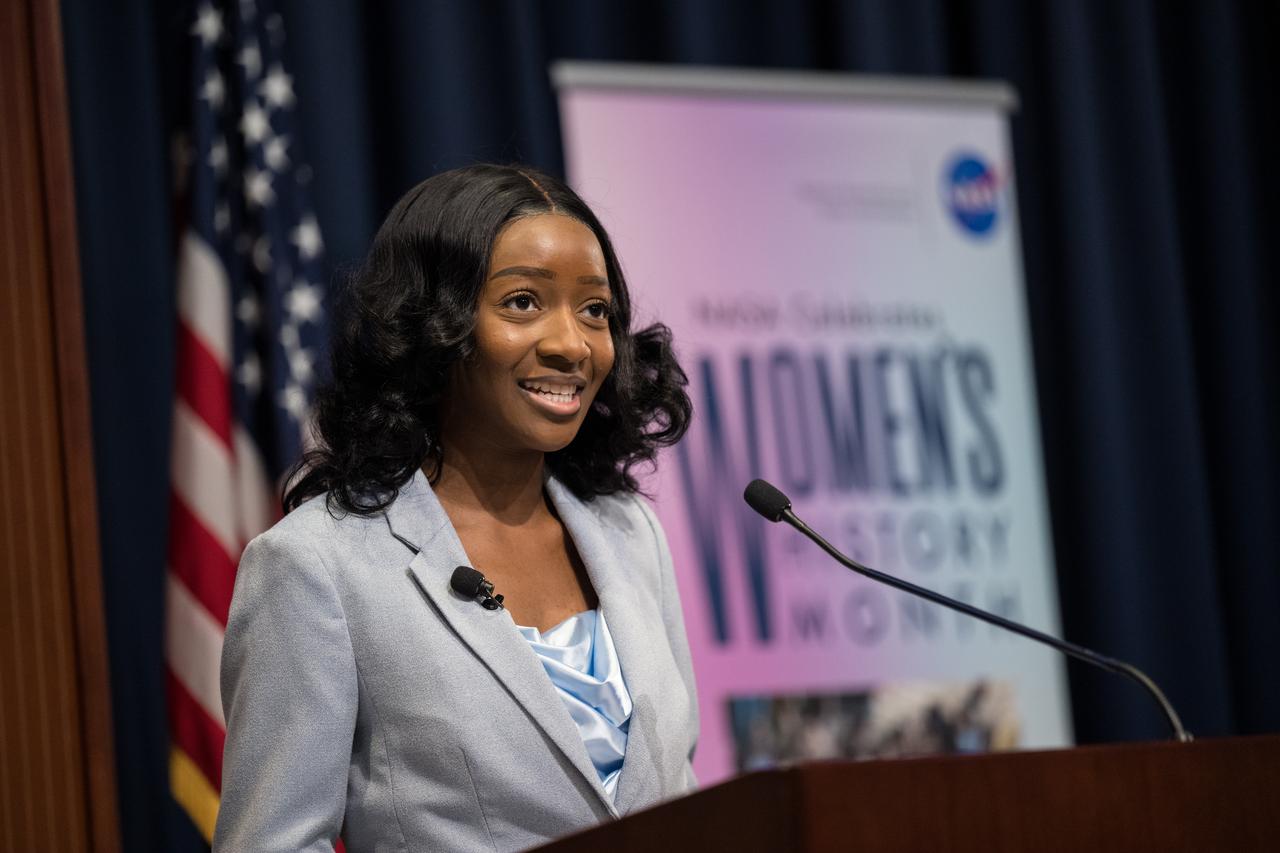
NASA IT Cybersecurity Specialist, Sarah Adewumi, left, moderates a panel discussion with NASA Deputy Associate Administrator for STEM, Kris Brown, NASA Goddard’s Deputy Director for Technology and Research Investments, Dr. Christyl Johnson, NASA Headquarters Deputy Director for the Astrophysics Division, Sandra Cauffman, and NASA Associate Chief Scientist for Exploration and Applied Research, Dr. Mamta Patel Nagaraja during an event for Women’s History Month, “Celebrating Women Who Tell Our Stories,” Wednesday, March 22, 2023 at NASA’s Goddard Space Flight Center in Greenbelt, Maryland. Photo Credit: (NASA/Aubrey Gemignani)
NASA Deputy Associate Administrator for STEM, Kris Brown speaks before a panel discussion with moderator NASA IT Cybersecurity Specialist, Sarah Adewumi, NASA Goddard’s Deputy Director for Technology and Research Investments, Dr. Christyl Johnson, NASA Headquarters Deputy Director for the Astrophysics Division, Sandra Cauffman, and NASA Associate Chief Scientist for Exploration and Applied Research, Dr. Mamta Patel Nagaraja as part of Women’s History Month, “Celebrating Women Who Tell Our Stories,” Wednesday, March 22, 2023 at NASA’s Goddard Space Flight Center in Greenbelt, Maryland. Photo Credit: (NASA/Aubrey Gemignani)
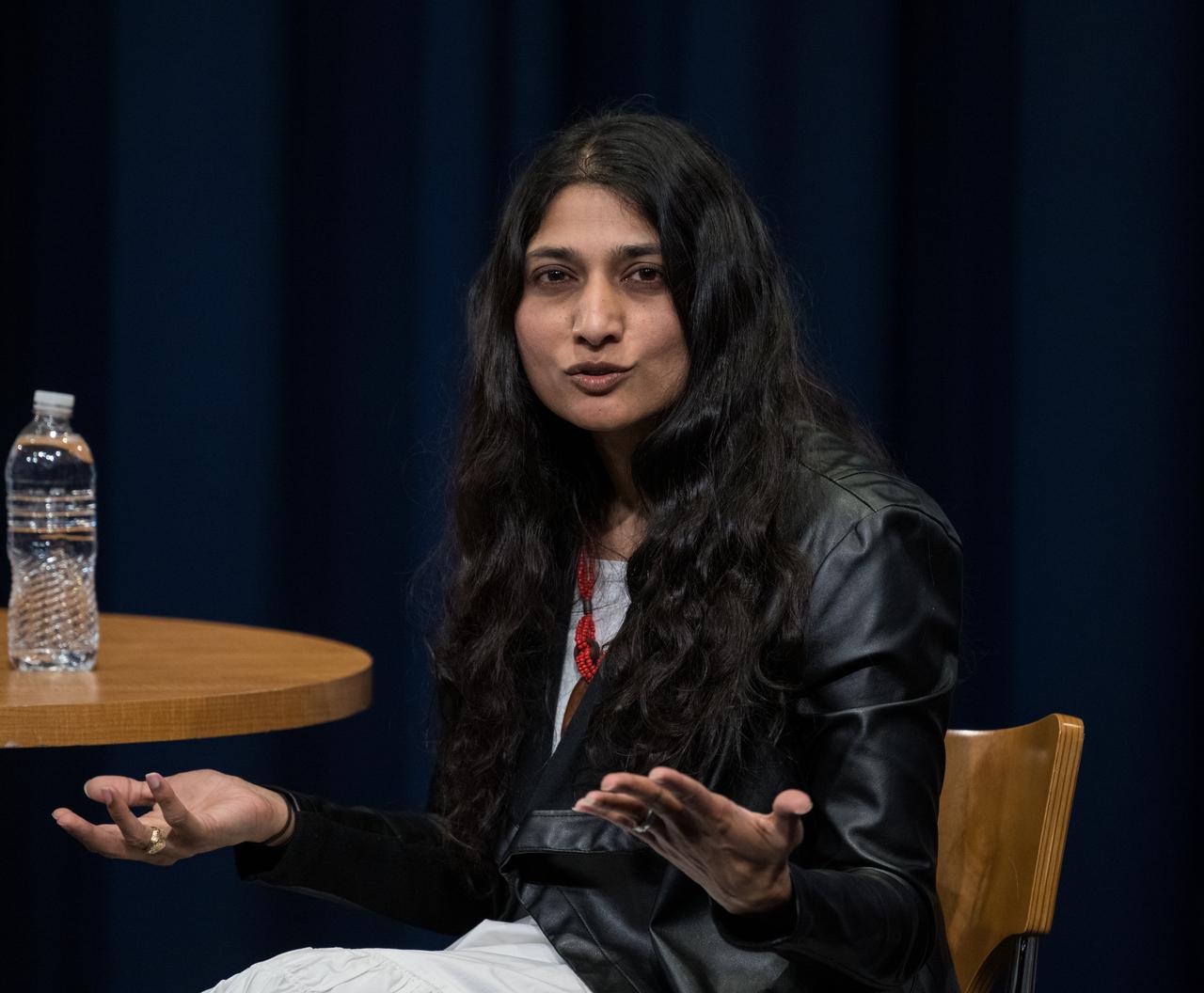
NASA Associate Chief Scientist for Exploration and Applied Research, Dr. Mamta Patel Nagaraja, speaks during a panel discussion with NASA IT Cybersecurity Specialist, Sarah Adewumi, NASA Goddard’s Deputy Director for Technology and Research Investments, Dr. Christyl Johnson, NASA Deputy Associate Administrator for STEM, Kris Brown, and NASA Headquarters Deputy Director for the Astrophysics Division, Sandra Cauffman, as part of a Women’s History Month program, “Celebrating Women Who Tell Our Stories,” Wednesday, March 22, 2023 at NASA’s Goddard Space Flight Center in Greenbelt, Maryland. Photo Credit: (NASA/Aubrey Gemignani)
NASA Deputy Associate Administrator for STEM, Kris Brown speaks before a panel discussion with moderator NASA IT Cybersecurity Specialist, Sarah Adewumi, NASA Goddard’s Deputy Director for Technology and Research Investments, Dr. Christyl Johnson, NASA Headquarters Deputy Director for the Astrophysics Division, Sandra Cauffman, and NASA Associate Chief Scientist for Exploration and Applied Research, Dr. Mamta Patel Nagaraja as part of Women’s History Month, “Celebrating Women Who Tell Our Stories,” Wednesday, March 22, 2023 at NASA’s Goddard Space Flight Center in Greenbelt, Maryland. Photo Credit: (NASA/Aubrey Gemignani)
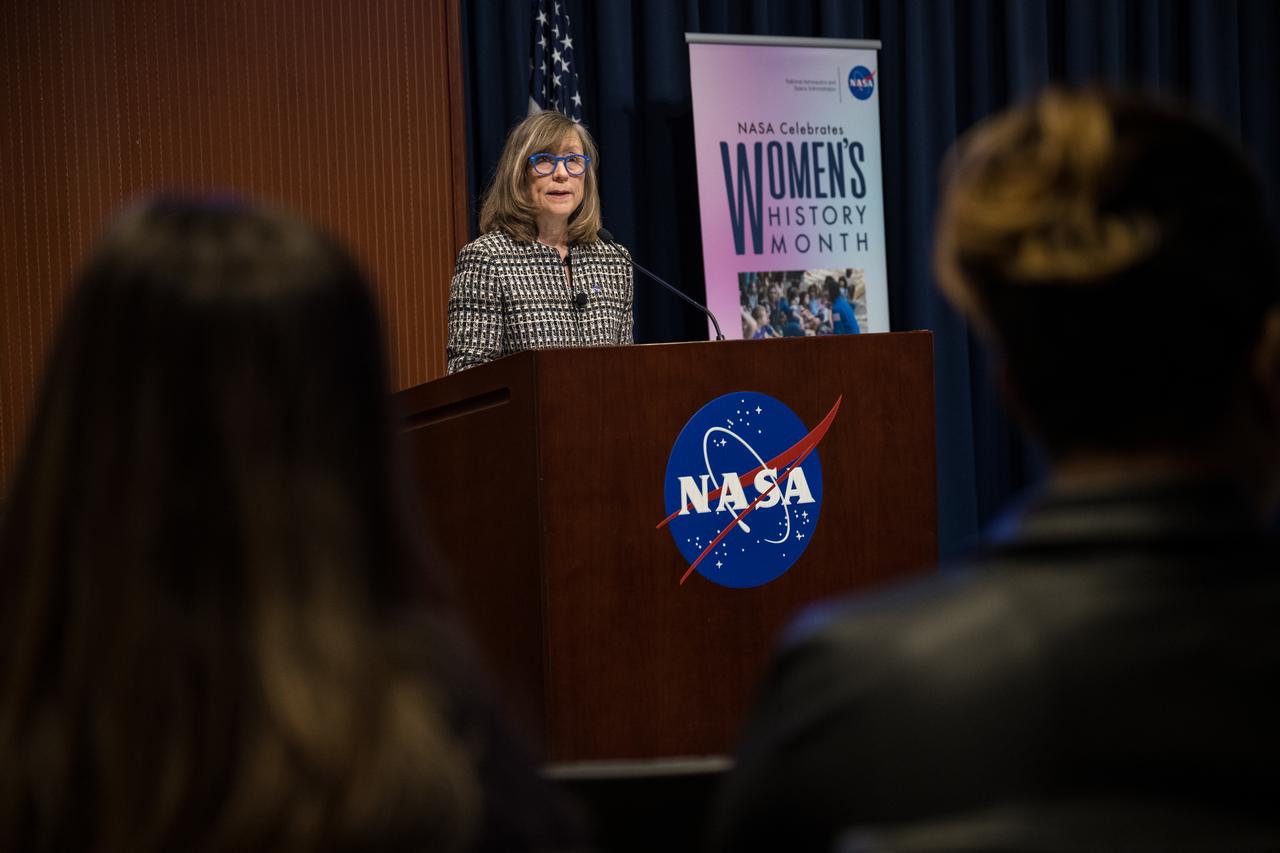
NASA IT Cybersecurity Specialist, Sarah Adewumi, introduces NASA Deputy Associate Administrator for STEM, Kris Brown just before a panel discussion with Brown, NASA Goddard’s Deputy Director for Technology and Research Investments, Dr. Christyl Johnson, NASA Headquarters Deputy Director for the Astrophysics Division, Sandra Cauffman, and NASA Associate Chief Scientist for Exploration and Applied Research, Dr. Mamta Patel Nagaraja during an event for Women’s History Month, “Celebrating Women Who Tell Our Stories,” Wednesday, March 22, 2023 at NASA’s Goddard Space Flight Center in Greenbelt, Maryland. Photo Credit: (NASA/Aubrey Gemignani)
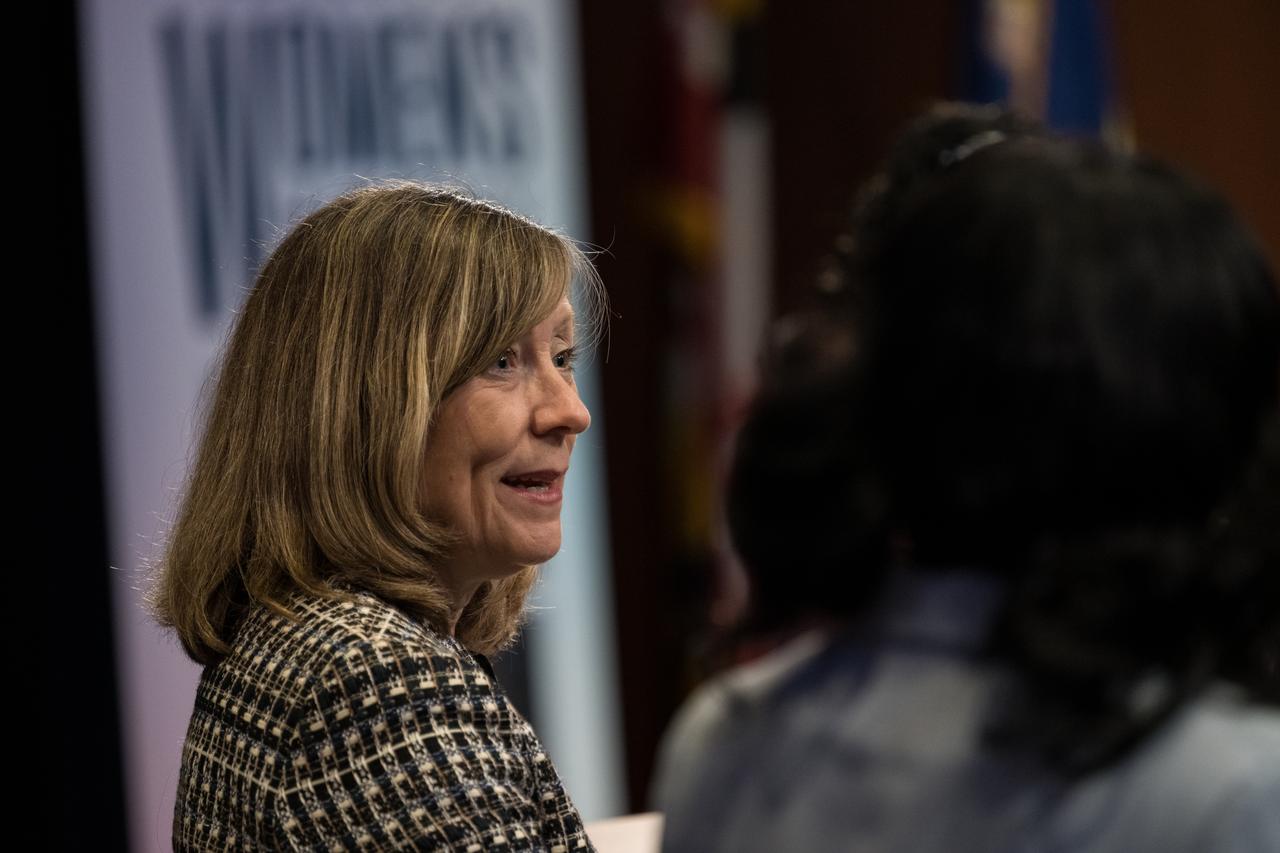
NASA Deputy Associate Administrator for STEM, Kris Brown speaks during a panel discussion with NASA IT Cybersecurity Specialist, Sarah Adewumi, NASA Goddard’s Deputy Director for Technology and Research Investments, Dr. Christyl Johnson, NASA Headquarters Deputy Director for the Astrophysics Division, Sandra Cauffman, and NASA Associate Chief Scientist for Exploration and Applied Research, Dr. Mamta Patel Nagaraja as part of a Women’s History Month program, “Celebrating Women Who Tell Our Stories,” Wednesday, March 22, 2023 at NASA’s Goddard Space Flight Center in Greenbelt, Maryland. Photo Credit: (NASA/Aubrey Gemignani)
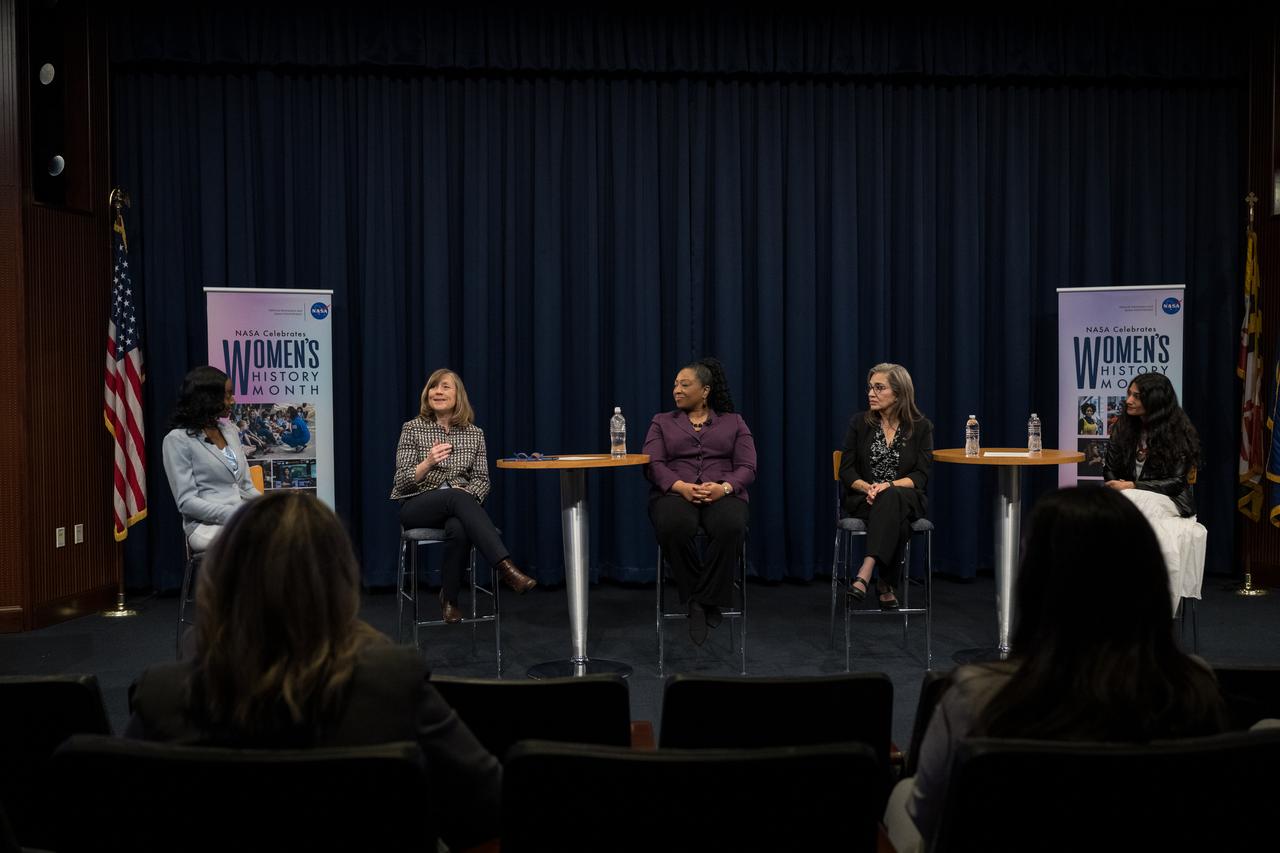
NASA IT Cybersecurity Specialist, Sarah Adewumi, left, moderates a panel discussion with NASA Deputy Associate Administrator for STEM, Kris Brown, NASA Goddard’s Deputy Director for Technology and Research Investments, Dr. Christyl Johnson, NASA Headquarters Deputy Director for the Astrophysics Division, Sandra Cauffman, and NASA Associate Chief Scientist for Exploration and Applied Research, Dr. Mamta Patel Nagaraja during an event for Women’s History Month, “Celebrating Women Who Tell Our Stories,” Wednesday, March 22, 2023 at NASA’s Goddard Space Flight Center in Greenbelt, Maryland. Photo Credit: (NASA/Aubrey Gemignani)
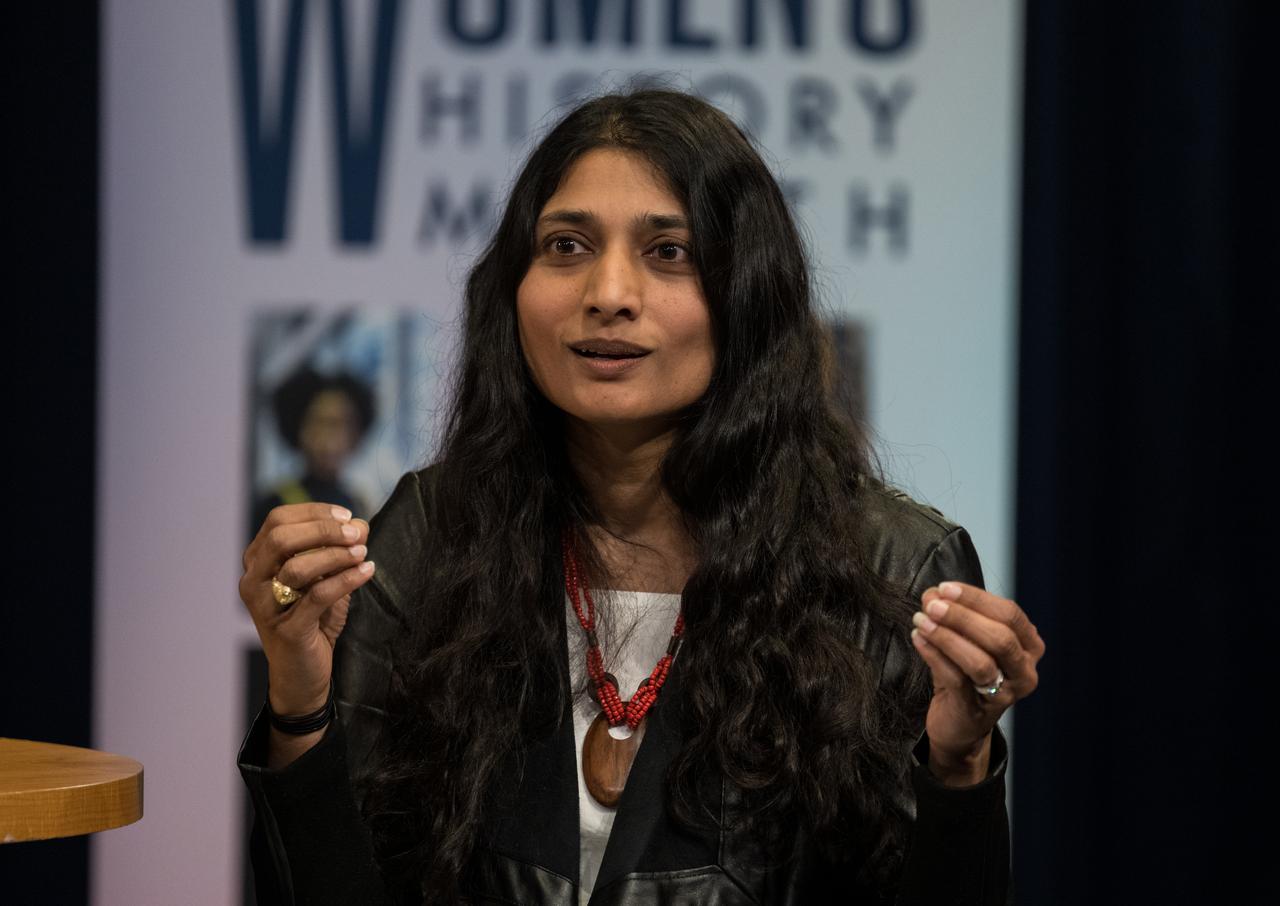
NASA Associate Chief Scientist for Exploration and Applied Research, Dr. Mamta Patel Nagaraja, speaks during a panel discussion with NASA IT Cybersecurity Specialist, Sarah Adewumi, NASA Goddard’s Deputy Director for Technology and Research Investments, Dr. Christyl Johnson, NASA Deputy Associate Administrator for STEM, Kris Brown, and NASA Headquarters Deputy Director for the Astrophysics Division, Sandra Cauffman, as part of a Women’s History Month program, “Celebrating Women Who Tell Our Stories,” Wednesday, March 22, 2023 at NASA’s Goddard Space Flight Center in Greenbelt, Maryland. Photo Credit: (NASA/Aubrey Gemignani)
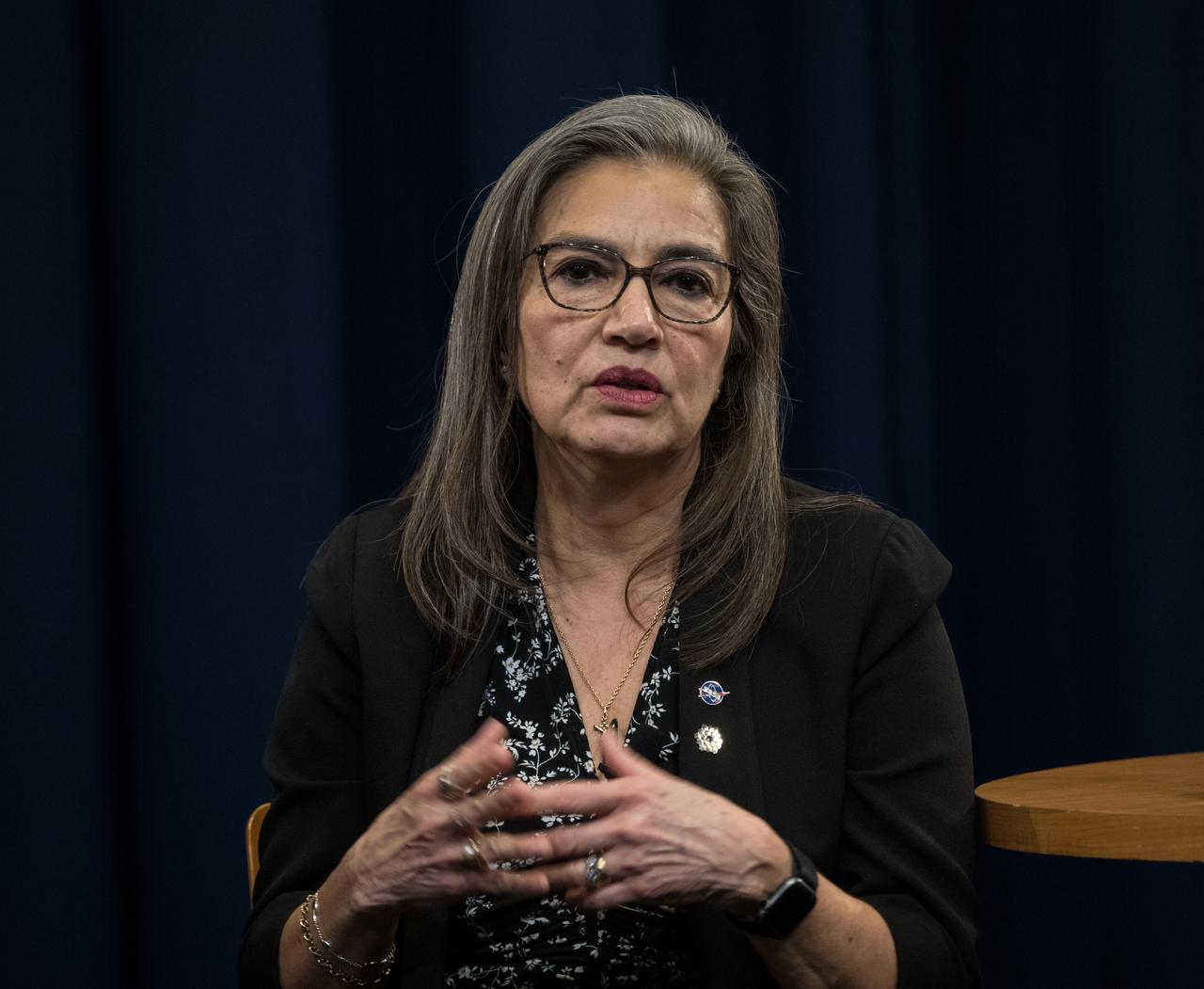
NASA Headquarters Deputy Director for the Astrophysics Division, Sandra Cauffman, speaks during a panel discussion with NASA IT Cybersecurity Specialist, Sarah Adewumi, NASA Goddard’s Deputy Director for Technology and Research Investments, Dr. Christyl Johnson, NASA Deputy Associate Administrator for STEM, Kris Brown, and NASA Associate Chief Scientist for Exploration and Applied Research, Dr. Mamta Patel Nagaraja, as part of a Women’s History Month program, “Celebrating Women Who Tell Our Stories,” Wednesday, March 22, 2023 at NASA’s Goddard Space Flight Center in Greenbelt, Maryland. Photo Credit: (NASA/Aubrey Gemignani)
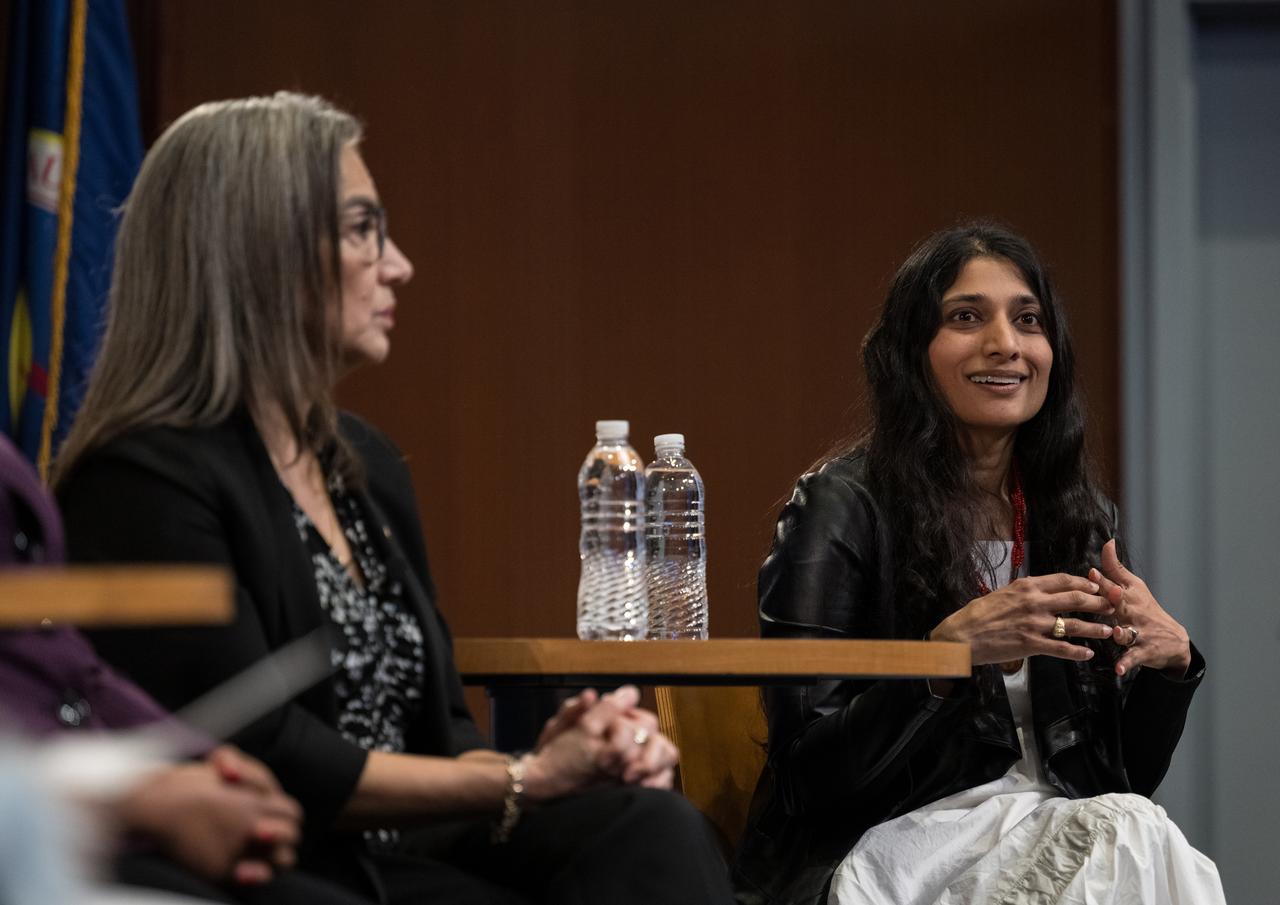
NASA Associate Chief Scientist for Exploration and Applied Research, Dr. Mamta Patel Nagaraja, right, speaks during a panel discussion with NASA IT Cybersecurity Specialist, Sarah Adewumi, NASA Goddard’s Deputy Director for Technology and Research Investments, Dr. Christyl Johnson, NASA Deputy Associate Administrator for STEM, Kris Brown, and NASA Headquarters Deputy Director for the Astrophysics Division, Sandra Cauffman, as part of a Women’s History Month program, “Celebrating Women Who Tell Our Stories,” Wednesday, March 22, 2023 at NASA’s Goddard Space Flight Center in Greenbelt, Maryland. Photo Credit: (NASA/Aubrey Gemignani)
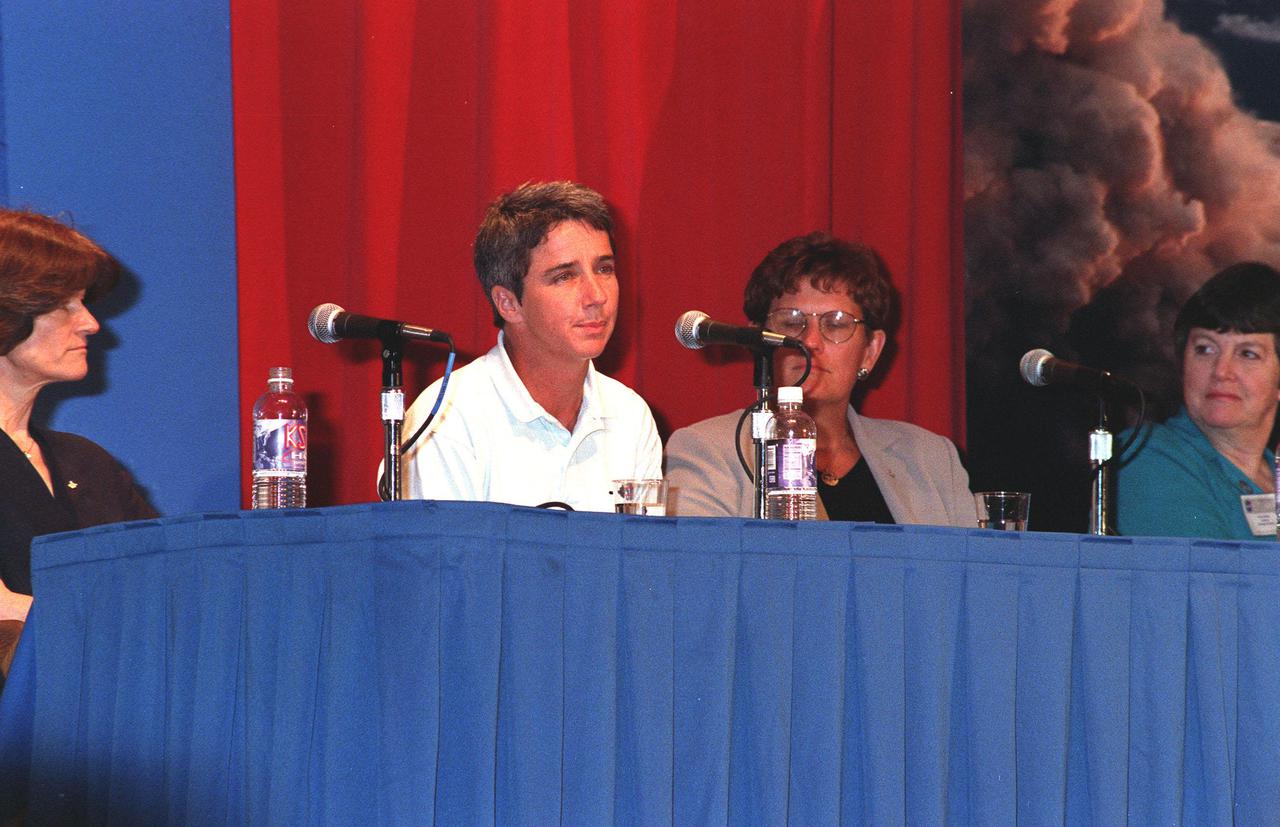
Former astronaut Sally Ride (left) sits on a panel of women discussing 'Past, Present and Future of Space.' Other participants in the women's forum include Marta Bohn-Meyer (second from left), the first SR-71 female pilot; Kathryn Sullivan, Ph.D., the first American woman to walk in space; Donna Shirley, Ph.D., the first woman leading the Mars Exploration Program; astronaut Yvonne Cagle; Jennifer Harris, flight director, Mars Pathfinder; astronaut Ellen Ochoa, the first Hispanic female in space and member of the President's commission on the Celebration of Women in American History. The panel is being moderated by Lynn Sherr, ABC News correspondent. The forum about women in space included a welcome by Center Director Roy Bridges and remarks by Donna Shalala, secretary of Department of Health and Human Services. The attendees are planning to view the launch of STS-93 at the Banana Creek viewing sight. Much attention has been generated over the launch due to Commander Eileen M. Collins, the first woman to serve as commander of a Shuttle mission. The primary payload of the five-day mission is the Chandra X-ray Observatory, which will allow scientists from around the world to study some of the most distant, powerful and dynamic objects in the universe. Liftoff is scheduled for July 20 at 12:36 a.m. EDT

Gioia Massa, at left, a NASA payload scientist, talks to students during a Women in STEM breakfast inside the Debus Conference Center at the Kennedy Space Center Visitor Complex in Florida. STEM is science, technology, engineering and math. The special event gave students competing in NASA's 8th Annual Robotic Mining Competition the chance to learn from female NASA scientists, engineers and professionals about their careers and the paths they took to working at Kennedy. The Robotic Mining Competition is a NASA Human Exploration and Operations Mission Directorate project designed to encourage students in STEM fields. The project provides a competitive environment to foster innovative ideas and solutions that could be used on NASA's Journey to Mars.
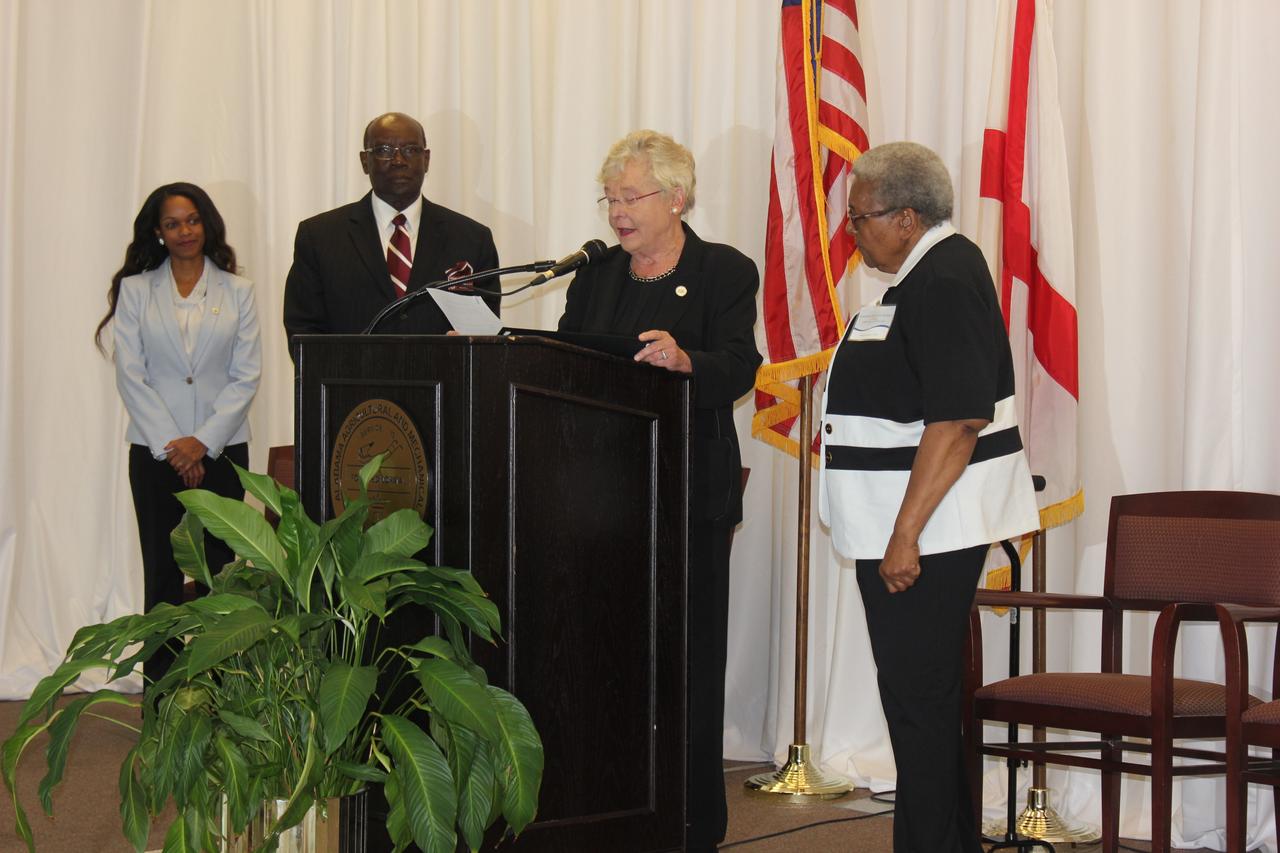
Governor Kay Ivey recognized retired NASA Space Flight Center team member, Jeanette Scissum-Mickens on Sept. 27 at the Alabama HBCU Roundtable Discussion: Minority Women in STEM held at the Alabama A&M University. Scissum-Mickens was honored as the “Hidden Figure of Alabama A&M.” She was the first African American mathematician hired by Marshall in 1964. While at Marshall, she was a space scientist and helped improved forecast models of the sunspot cycle and led activities in Marshall’s Atmospheric, Magentospheric, and Plasmas in Space project.

Retired Marshall scientist, Jeanette Scissum-Mickens, was honored by Alabama Governor Kay Ivey at the Alabama Historically Black Colleges and Universities Roundtable Discussion: Minority Women in STEM event held at the University of Alabama A&M in Huntsville, Alabama. Scissum-Mickens was honored as the “Hidden Figure of Alabama A&M.” She was the first African-American mathematician hired by Marshall in 1964.

Kim Stratton, at left, with Caterpillar, talks to students during a Women in STEM breakfast inside the Debus Conference Center at the Kennedy Space Center Visitor Complex in Florida. STEM is science, technology, engineering and math. The special event gave students competing in NASA's 8th Annual Robotic Mining Competition the chance to learn from female NASA scientists, engineers and professionals about their careers and the paths they took to working at Kennedy. The Robotic Mining Competition is a NASA Human Exploration and Operations Mission Directorate project designed to encourage students in STEM fields. The project provides a competitive environment to foster innovative ideas and solutions that could be used on NASA's Journey to Mars.

Kennedy Space Center Deputy Director Janet Petro speaks to students during a Women in STEM mentoring breakfast inside the Debus Conference Center at the Kennedy Space Center Visitor Complex in Florida. STEM is science, technology, engineering and math. The special event gave students competing in NASA's 8th Annual Robotic Mining Competition the chance to learn from female NASA scientists, engineers and professionals about their careers and the paths they took to working at Kennedy. The Robotic Mining Competition is a NASA Human Exploration and Operations Mission Directorate project designed to encourage students in STEM fields. The project provides a competitive environment to foster innovative ideas and solutions that could be used on NASA's Journey to Mars.

Kennedy Space Center Deputy Director Janet Petro speaks to students during a Women in STEM mentoring breakfast inside the Debus Conference Center at the Kennedy Space Center Visitor Complex in Florida. STEM is science, technology, engineering and math. The special event gave students competing in NASA's 8th Annual Robotic Mining Competition the chance to learn from female NASA scientists, engineers and professionals about their careers and the paths they took to working at Kennedy. The Robotic Mining Competition is a NASA Human Exploration and Operations Mission Directorate project designed to encourage students in STEM fields. The project provides a competitive environment to foster innovative ideas and solutions that could be used on NASA's Journey to Mars.
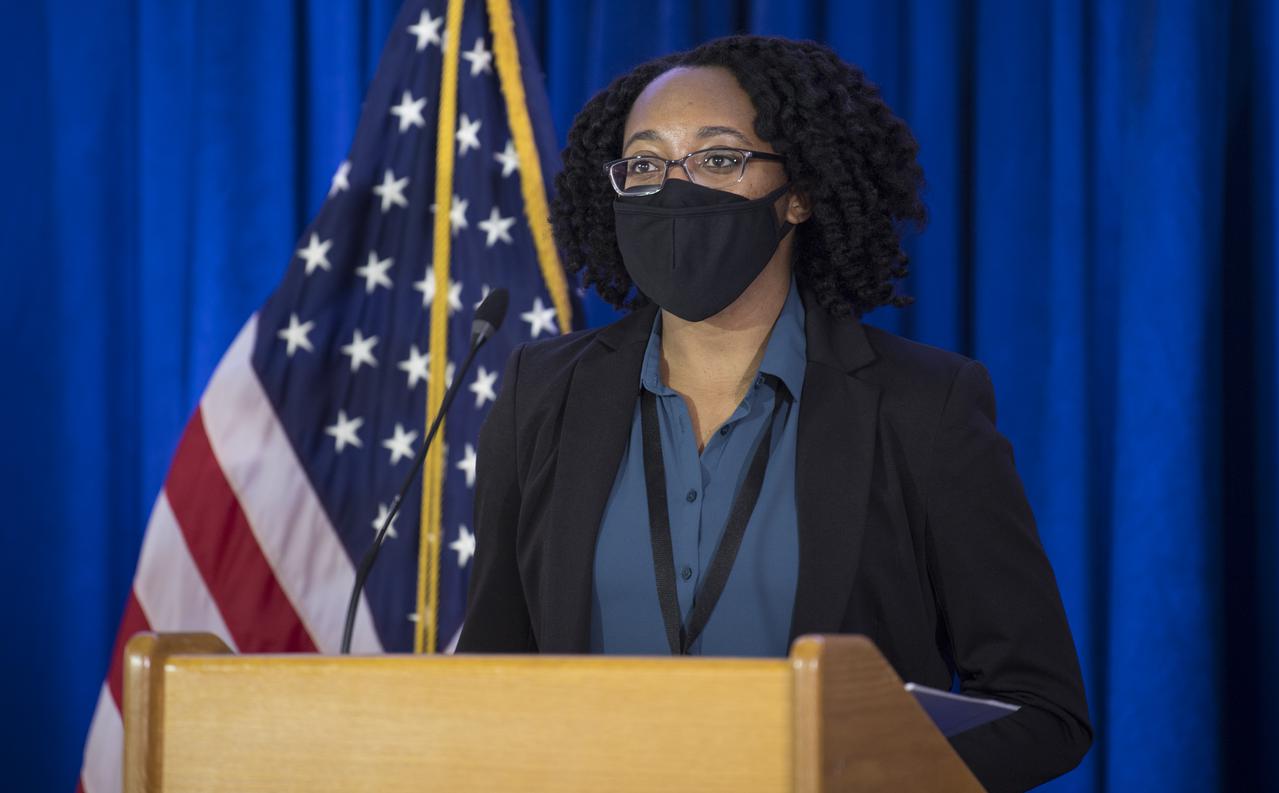
Yolanda Shea, a physical research scientist at NASA's Langley Research Center, speaks during a ceremony officially naming the NASA Headquarters building in honor of Mary W. Jackson, Friday, Feb. 26, 2021, at NASA Headquarters in Washington, DC. Mary W. Jackson, the first African American female engineer at NASA, began her career with the agency in the segregated West Area Computing Unit of NASA’s Langley Research Center in Hampton, Virginia. The mathematician and aerospace engineer went on to lead programs influencing the hiring and promotion of women in NASA's science, technology, engineering, and mathematics careers. In 2019, she posthumously received the Congressional Gold Medal. Photo Credit: (NASA/Joel Kowsky)
!["I grew up in China. In China, everybody talks about what they want to be [when they grow up]. Many want to grow up to be a scientist or engineer. So I aspired to be a scientist from an early age. … For the girls or women in science — or in any profession or job — opportunities are more abundant than they were previously. Sometimes you need to take bold steps. Just a little push, and then you will get there. I initially started as a foreign national, so not a lot of opportunities existed for a foreign national, and some of them [required a] green card or citizenship. I think it's hard, but still, there is a path forward. I think it's important to work hard and be optimistic, and you will find something." Space Physics and Space Weather Scientist, Heliophysics Science Division, NASA’s Goddard Space Flight Center (GSFC), Dr. Yihua Zheng, poses for a portrait, Wednesday, Feb. 7, 2024 at NASA’s GSFC in Greenbelt, Maryland. Photo Credit: (NASA/Thalia Patrinos)](https://images-assets.nasa.gov/image/NHQ202402070013/NHQ202402070013~medium.jpg)
"I grew up in China. In China, everybody talks about what they want to be [when they grow up]. Many want to grow up to be a scientist or engineer. So I aspired to be a scientist from an early age. … For the girls or women in science — or in any profession or job — opportunities are more abundant than they were previously. Sometimes you need to take bold steps. Just a little push, and then you will get there. I initially started as a foreign national, so not a lot of opportunities existed for a foreign national, and some of them [required a] green card or citizenship. I think it's hard, but still, there is a path forward. I think it's important to work hard and be optimistic, and you will find something." Space Physics and Space Weather Scientist, Heliophysics Science Division, NASA’s Goddard Space Flight Center (GSFC), Dr. Yihua Zheng, poses for a portrait, Wednesday, Feb. 7, 2024 at NASA’s GSFC in Greenbelt, Maryland. Photo Credit: (NASA/Thalia Patrinos)
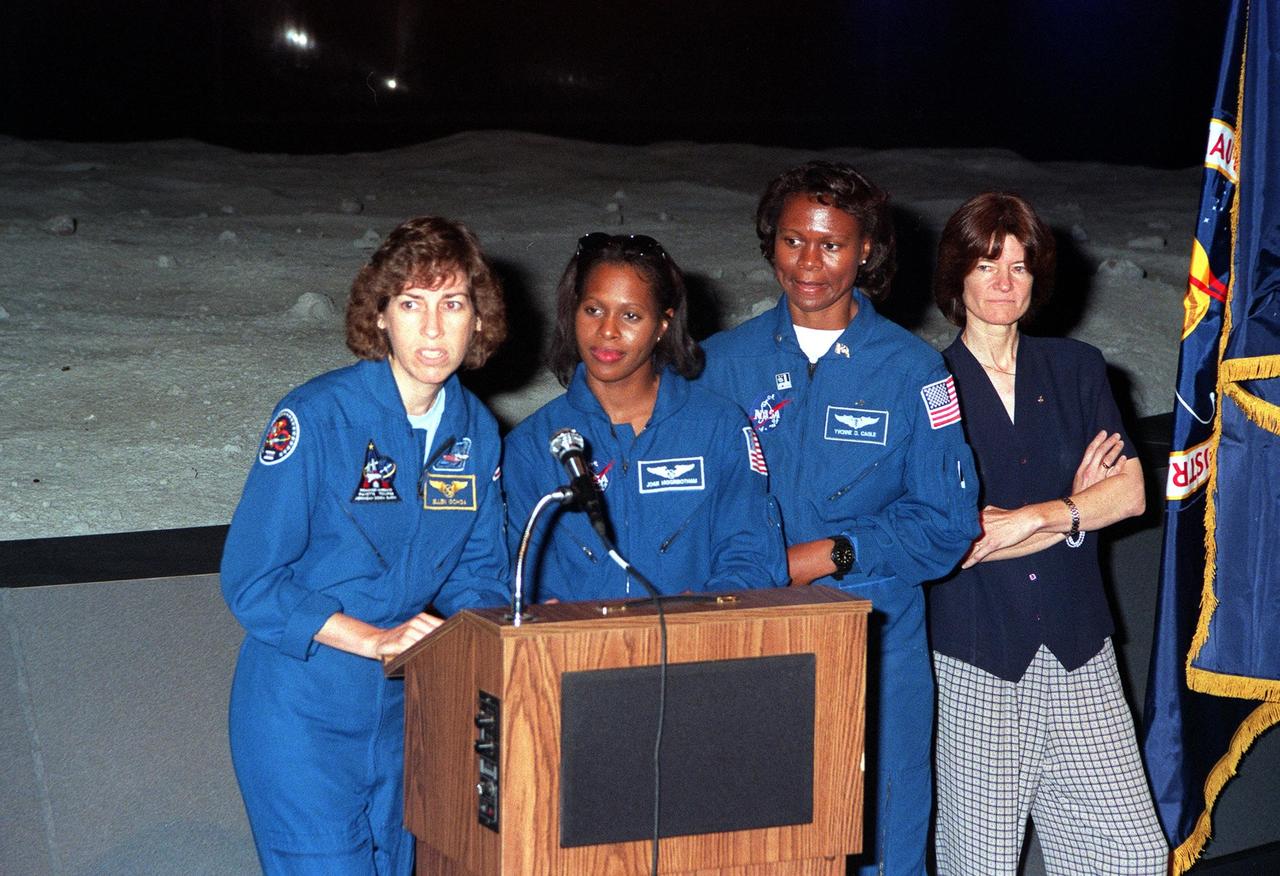
KENNEDY SPACE CENTER, FLA. -- Participating in a forum about women in space, Astronauts Ellen Ochoa, Joan Higginbotham and Yvonne Cagle share the podium. They were included in a panel discussing "Past, Present and Future of Space." Former astronaut Sally Ride is at right. The forum about women in space included a welcome by Center Director Roy Bridges and remarks by Donna Shalala, secretary of Department of Health and Human Services. The panel is moderated by Lynn Sherr, ABC News correspondent. The attendees are planning to view the launch of STS-93 at the Banana Creek viewing sight. Much attention has been generated over the launch due to Commander Eileen M. Collins, the first woman to serve as commander of a Shuttle mission. The primary payload of the five-day mission is the Chandra X-ray Observatory, which will allow scientists from around the world to study some of the most distant, powerful and dynamic objects in the universe. Liftoff is scheduled for July 20 at 12:36 a.m. EDT
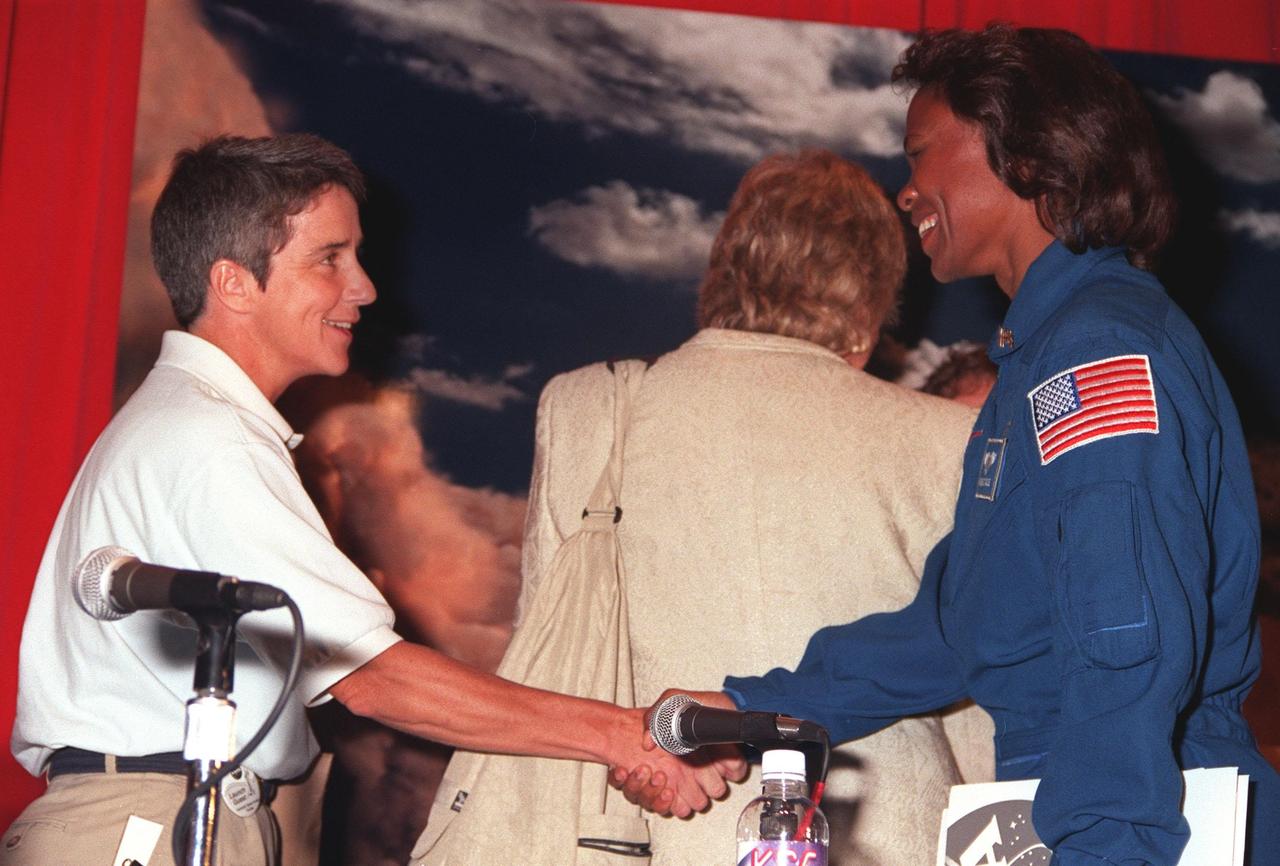
KENNEDY SPACE CENTER, Fla. -- At a women's forum held in the Apollo/Saturn V Center, Marta Bohn-Meyer, the first woman to pilot an SR-71, greets astronaut Yvonne Cagle. They participated in the panel discussion about "Past, Present and Future of Space," along with Kathryn Sullivan, Ph.D., the first American woman to walk in space; Donna Shirley, Ph.D., the first woman leading the Mars Exploration Program; Jennifer Harris, the Mars 2001 Operations System Development Manager at the Jet Propulsion Laboratory; and astronaut Ellen Ochoa, the first Hispanic female in space and member of the President's commission on the Celebration of Women in American History. The forum included a welcome by Center Director Roy Bridges and remarks by Donna Shalala, secretary of Department of Health and Human Services. The attendees are planning to view the launch of STS-93 at the Banana Creek viewing site. Much attention has been generated over the launch due to Commander Eileen M. Collins, the first woman to serve as commander of a Shuttle mission. The primary payload of the five-day mission is the Chandra X-ray Observatory, which will allow scientists from around the world to study some of the most distant, powerful and dynamic objects in the universe. Liftoff is scheduled for July 20 at 12:36 a.m. EDT
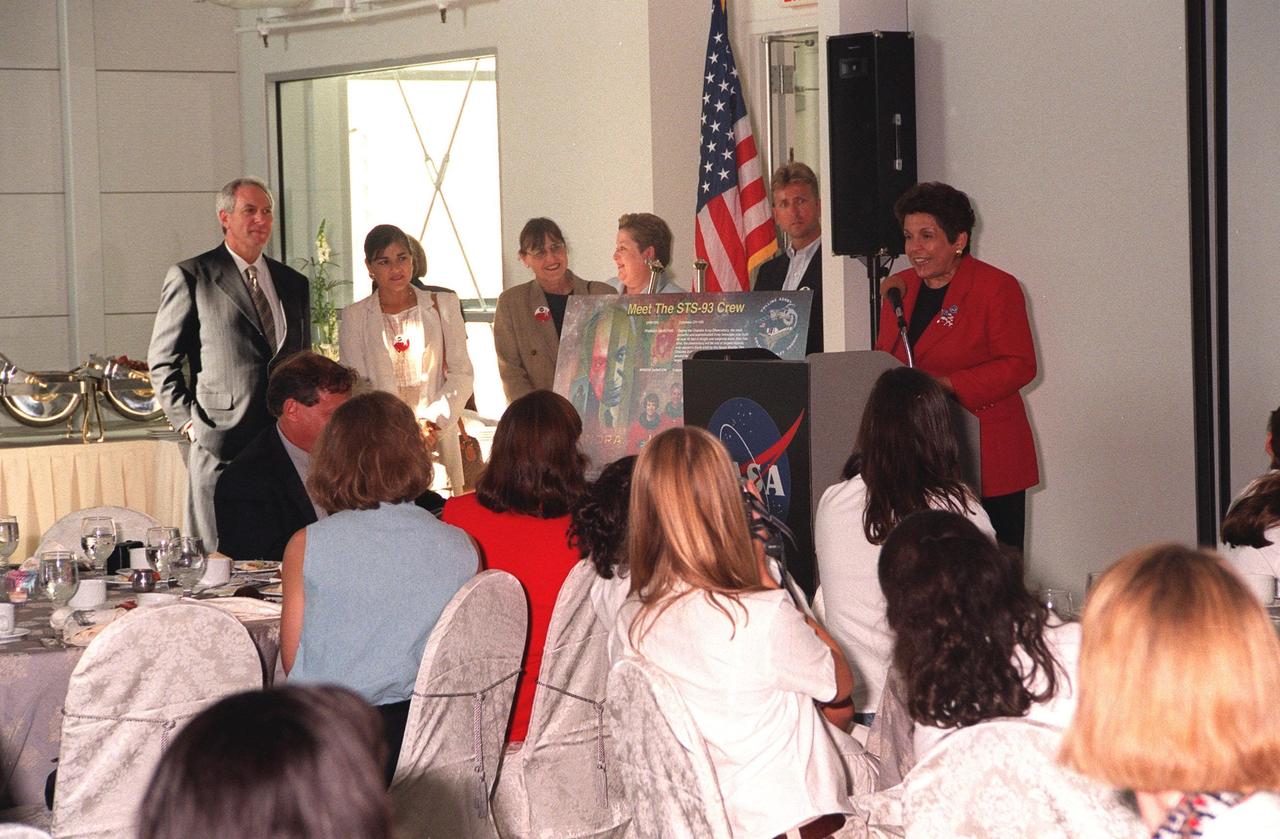
KENNEDY SPACE CENTER, FLA. -- At a women's forum held in the Apollo/Saturn V Center, Donna Shalala, secretary of Department of Health and Human Services, addresses the attendees. At the far left is NASA Administrator Daniel Goldin. Participants in a panel discussion, "Past, Present and Future of Space," include former astronaut Sally Ride; Marta Bohn-Meyer, the first SR-71 female pilot; Kathryn Sullivan, Ph.D., the first American woman to walk in space; Donna Shirley, Ph.D., the first woman leading the Mars Exploration Program; astronaut Yvonne Cagle; Jennifer Harris, flight director, Mars Pathfinder; astronaut Ellen Ochoa, the first Hispanic female in space and member of the President's commission on the Celebration of Women in American History. The forum included a welcome by Center Director Roy Bridges and remarks by Goldin. The attendees are planning to view the launch of STS-93 at the Banana Creek viewing sight. Much attention has been generated over the launch due to Commander Eileen M. Collins, the first woman to serve as commander of a Shuttle mission. The primary payload of the five-day mission is the Chandra X-ray Observatory, which will allow scientists from around the world to study some of the most distant, powerful and dynamic objects in the universe. Liftoff is scheduled for July 20 at 12:36 a.m. EDT
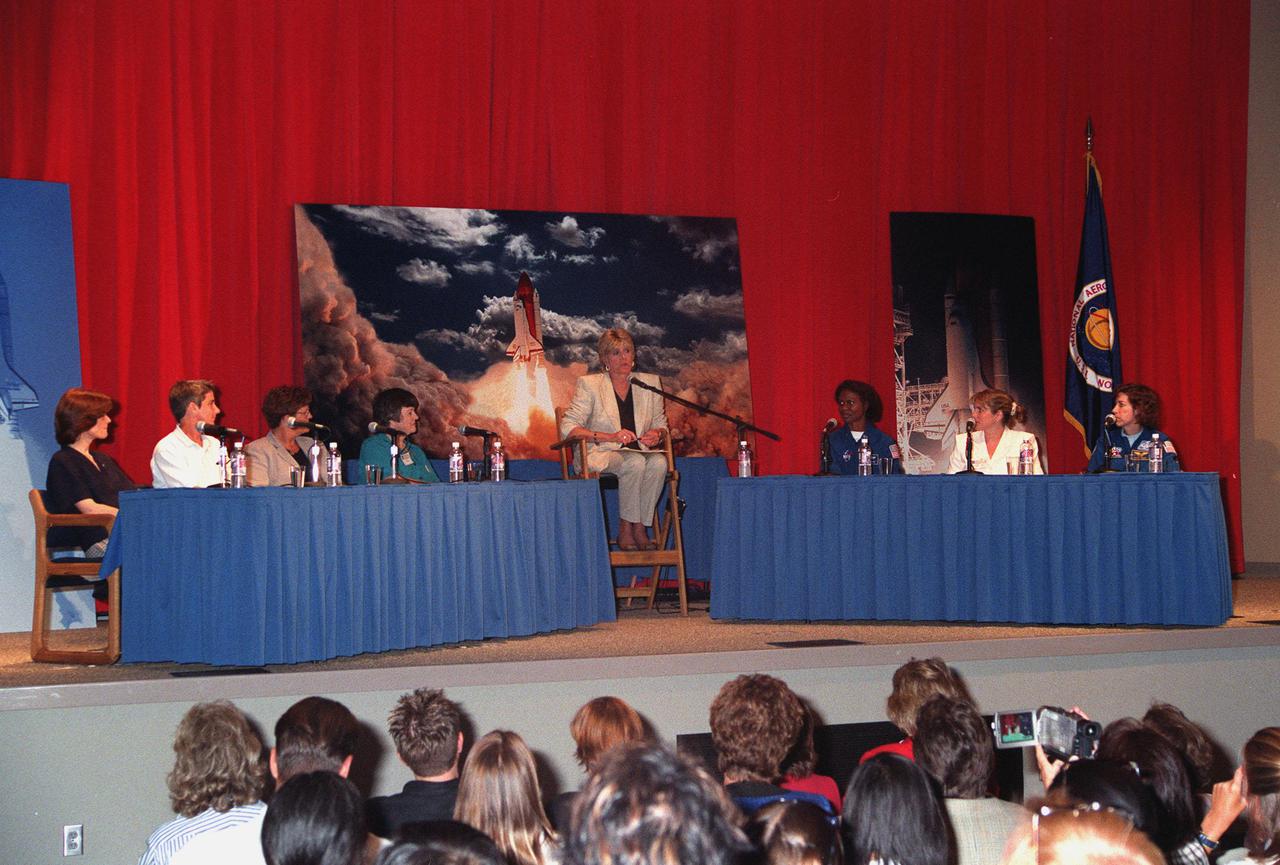
A prestigious panel (shown) discussing 'Past, Present and Future of Space' includes Marta Bohn-Meyer, the first SR-71 female pilot; Kathryn Sullivan, Ph.D., the first American woman to walk in space; Donna Shirley, Ph.D., the first woman leading the Mars Exploration Program; Astronaut Yvonne Cagle; Jennifer Harris, flight director, Mars Pathfinder; Astronaut Ellen Ochoa, the first Hispanic female in space and member of the President's commission on the Celebration of Women in American History. It is being moderated by Lynn Sherr, ABC News correspondent. The forum about women in space included a welcome by Center Director Roy Bridges and remarks by Donna Shalala, secretary of Department of Health and Human Services. The attendees are planning to view the launch of STS-93 at the Banana Creek viewing sight. Much attention has been generated over the launch due to Commander Eileen M. Collins, the first woman to serve as commander of a Shuttle mission. The primary payload of the five-day mission is the Chandra X-ray Observatory, which will allow scientists from around the world to study some of the most distant, powerful and dynamic objects in the universe. Liftoff is scheduled for July 20 at 12:36 a.m. EDT
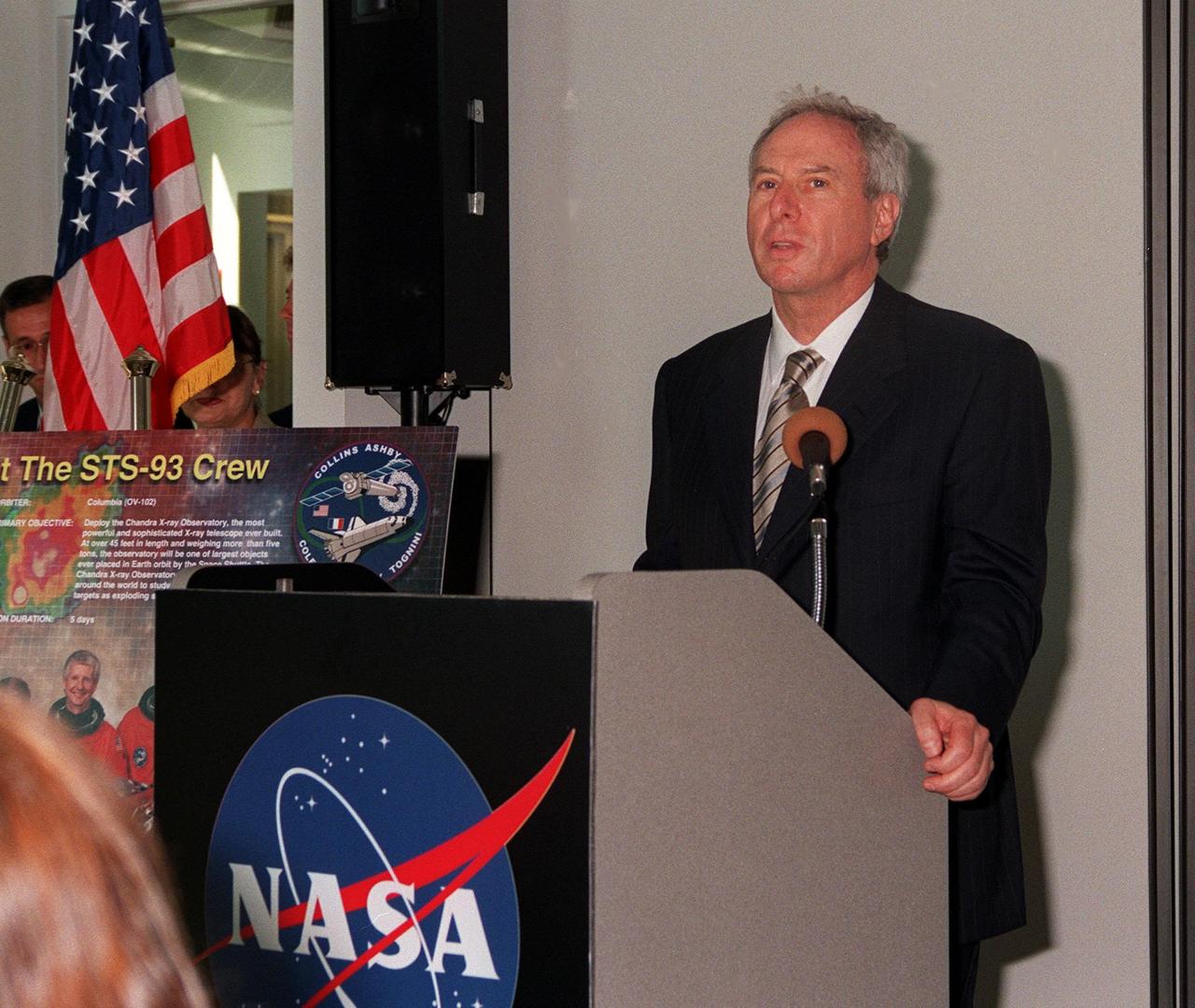
KENNEDY SPACE CENTER, FLA. -- NASA Administrator Daniel Goldin addresses the attendees of a women's forum held in the Apollo/Saturn V Center. Participants in a panel discussion, "Past, Present and Future of Space," include former astronaut Sally Ride; Marta Bohn-Meyer, the first SR-71 female pilot; Kathryn Sullivan, Ph.D., the first American woman to walk in space; Donna Shirley, Ph.D., the first woman leading the Mars Exploration Program; astronaut Yvonne Cagle; Jennifer Harris, flight director, Mars Pathfinder; astronaut Ellen Ochoa, the first Hispanic female in space and member of the President's commission on the Celebration of Women in American History. The forum included a welcome by Center Director Roy Bridges and remarks by Donna Shalala, secretary of Department of Health and Human Services. The attendees are planning to view the launch of STS-93 at the Banana Creek viewing sight. Much attention has been generated over the launch due to Commander Eileen M. Collins, the first woman to serve as commander of a Shuttle mission. The primary payload of the five-day mission is the Chandra X-ray Observatory, which will allow scientists from around the world to study some of the most distant, powerful and dynamic objects in the universe. Liftoff is scheduled for July 20 at 12:36 a.m. EDT
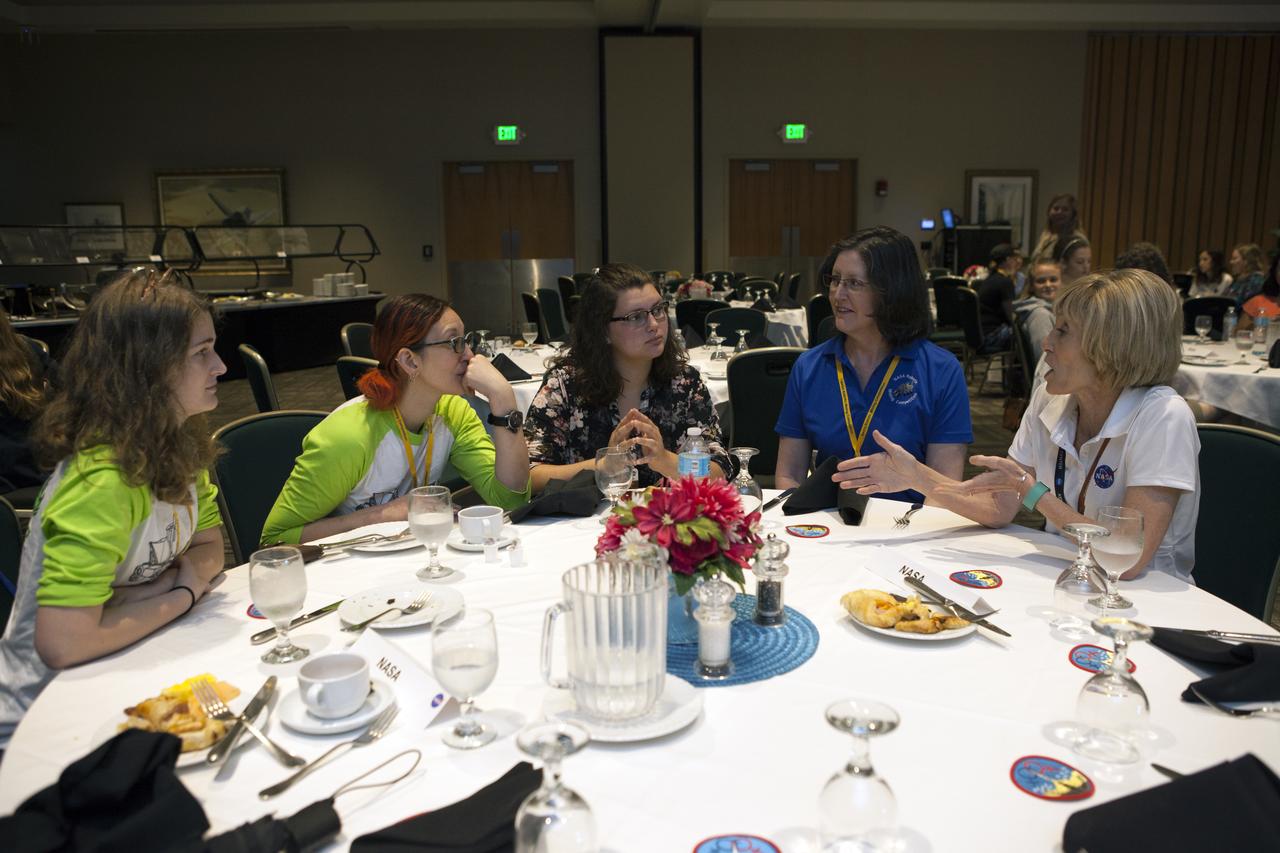
Jonette Stecklein (in the blue shirt), a flight systems engineer from Johnson Space Center in Houston, talks to students during a Women in STEM mentoring breakfast inside the Debus Conference Center at the Kennedy Space Center Visitor Complex in Florida. STEM is science, technology, engineering and math. The special event gave students competing in NASA's 8th Annual Robotic Mining Competition the chance to learn from female NASA scientists, engineers and professionals about their careers and the paths they took to working at Kennedy. The Robotic Mining Competition is a NASA Human Exploration and Operations Mission Directorate project designed to encourage students in STEM fields. The project provides a competitive environment to foster innovative ideas and solutions that could be used on NASA's Journey to Mars.
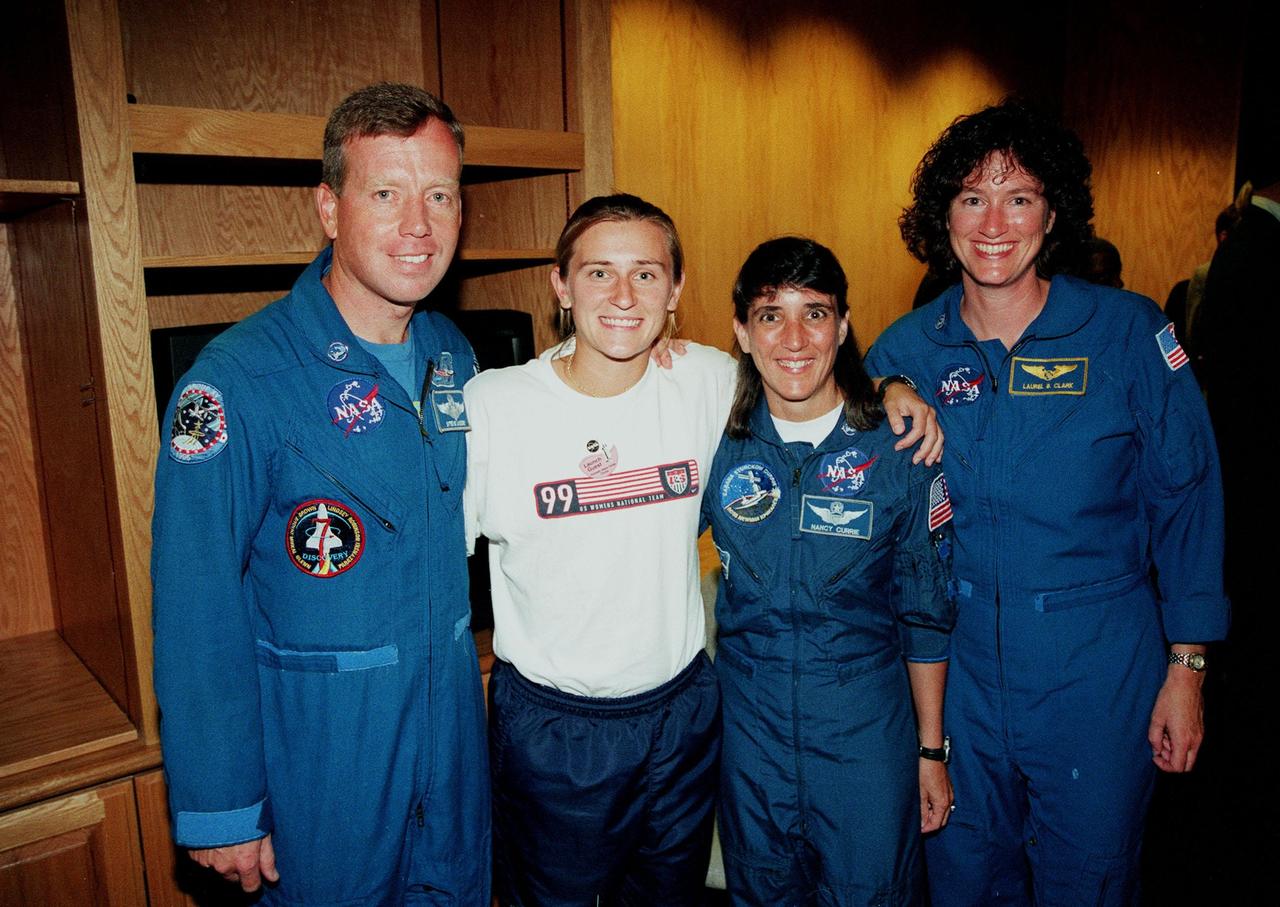
A member of the U.S. Women's World Cup Soccer Team poses with Astronauts (from left) Steven W. Lindsey, Nancy Jane Currie and Laurel B. Clark. The team arrived at the Skid Strip at Cape Canaveral Air Station with First Lady Hillary Rodham Clinton to view the launch of Space Shuttle mission STS-93. Liftoff is scheduled for 12:36 a.m. EDT July 20. Much attention has been generated over the launch due to Commander Eileen M. Collins, the first woman to serve as commander of a Shuttle mission. The primary payload of the five-day mission is the Chandra X-ray Observatory, which will allow scientists from around the world to study some of the most distant, powerful and dynamic objects in the universe. The new telescope is 20 to 50 times more sensitive than any previous X-ray telescope and is expected to unlock the secrets of supernovae, quasars and black holes
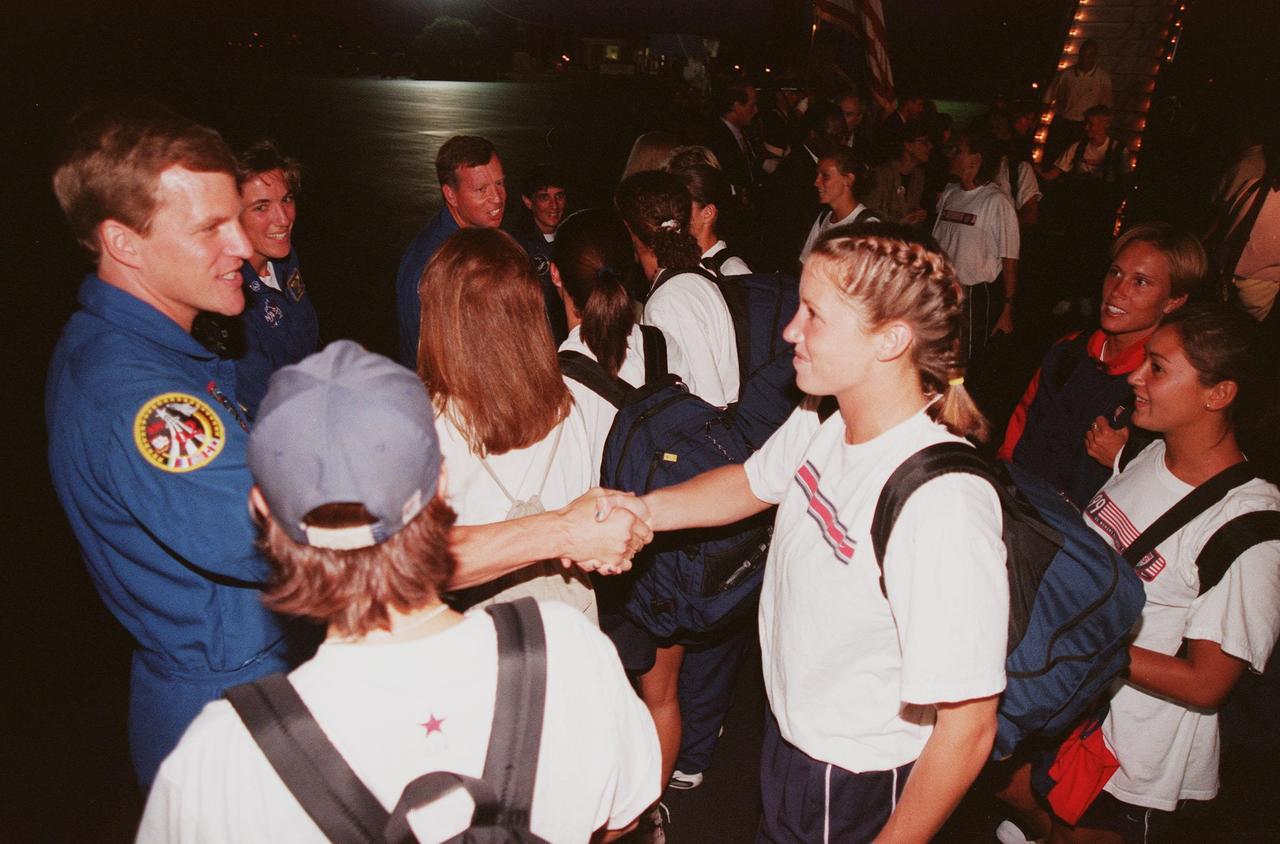
A member of the U.S. Women's World Cup Soccer Team is greeted by NASA Astronaut Scott E. Parazynski (left) upon her arrival at the Skid Strip at Cape Canaveral Air Station as her teammates look on. The team is at KSC to view the launch of Space Shuttle mission STS-93 scheduled for liftoff at 12:36 a.m. EDT July 20. Much attention has been generated over the launch due to Commander Eileen M. Collins, the first woman to serve as commander of a Shuttle mission. The primary payload of the five-day mission is the Chandra X-ray Observatory, which will allow scientists from around the world to study some of the most distant, powerful and dynamic objects in the universe. The new telescope is 20 to 50 times more sensitive than any previous X-ray telescope and is expected to unlock the secrets of supernovae, quasars and black holes
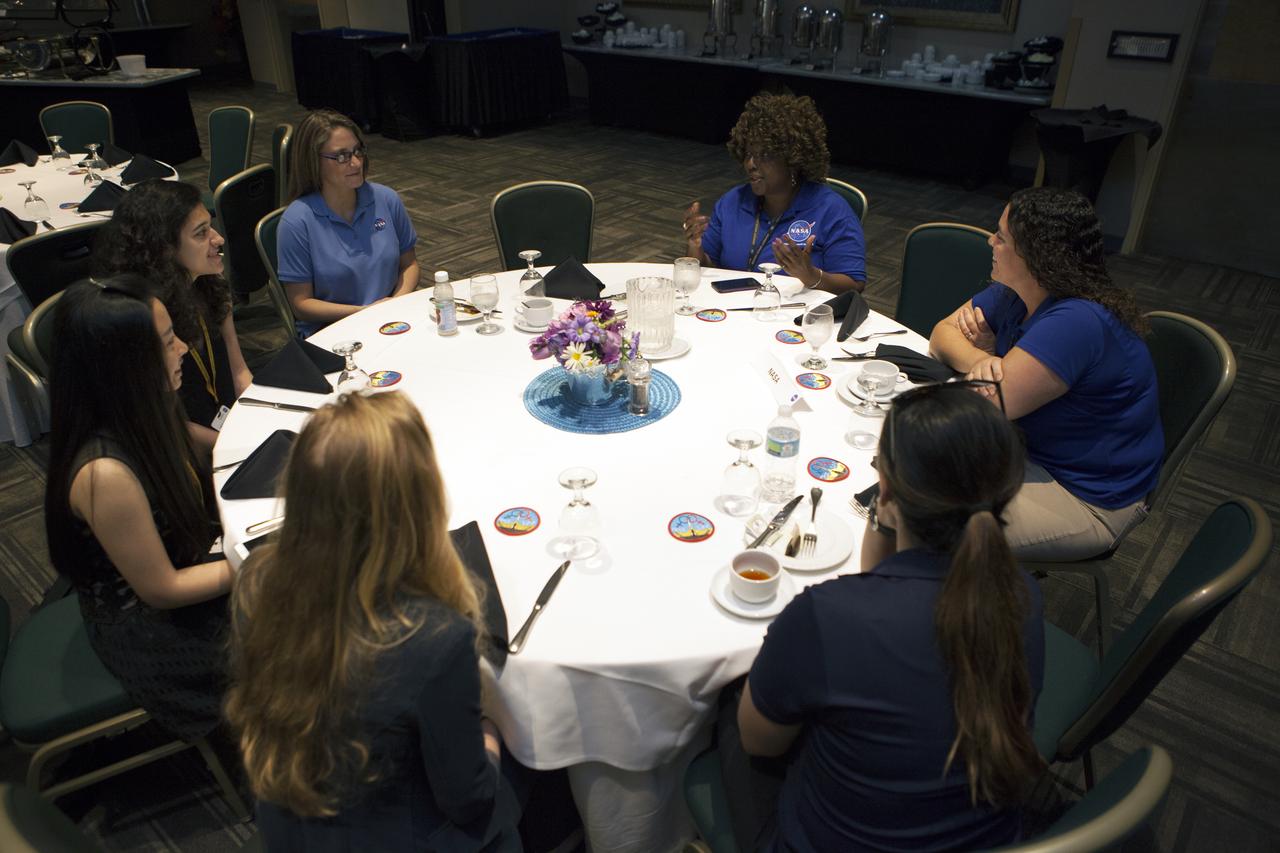
Barbara Brown, center at the table, strategic implementation manager with the Exploration Research and Technology Programs at NASA's Kennedy Space Center in Florida, talks to students during a Women in STEM breakfast inside the Debus Conference Center at the Kennedy Space Center Visitor Complex. STEM is science, technology, engineering and math. The special event gave students competing in NASA's 8th Annual Robotic Mining Competition the chance to learn from female NASA scientists, engineers and professionals about their careers and the paths they took to working at Kennedy. The Robotic Mining Competition is a NASA Human Exploration and Operations Mission Directorate project designed to encourage students in STEM fields. The project provides a competitive environment to foster innovative ideas and solutions that could be used on NASA's Journey to Mars.
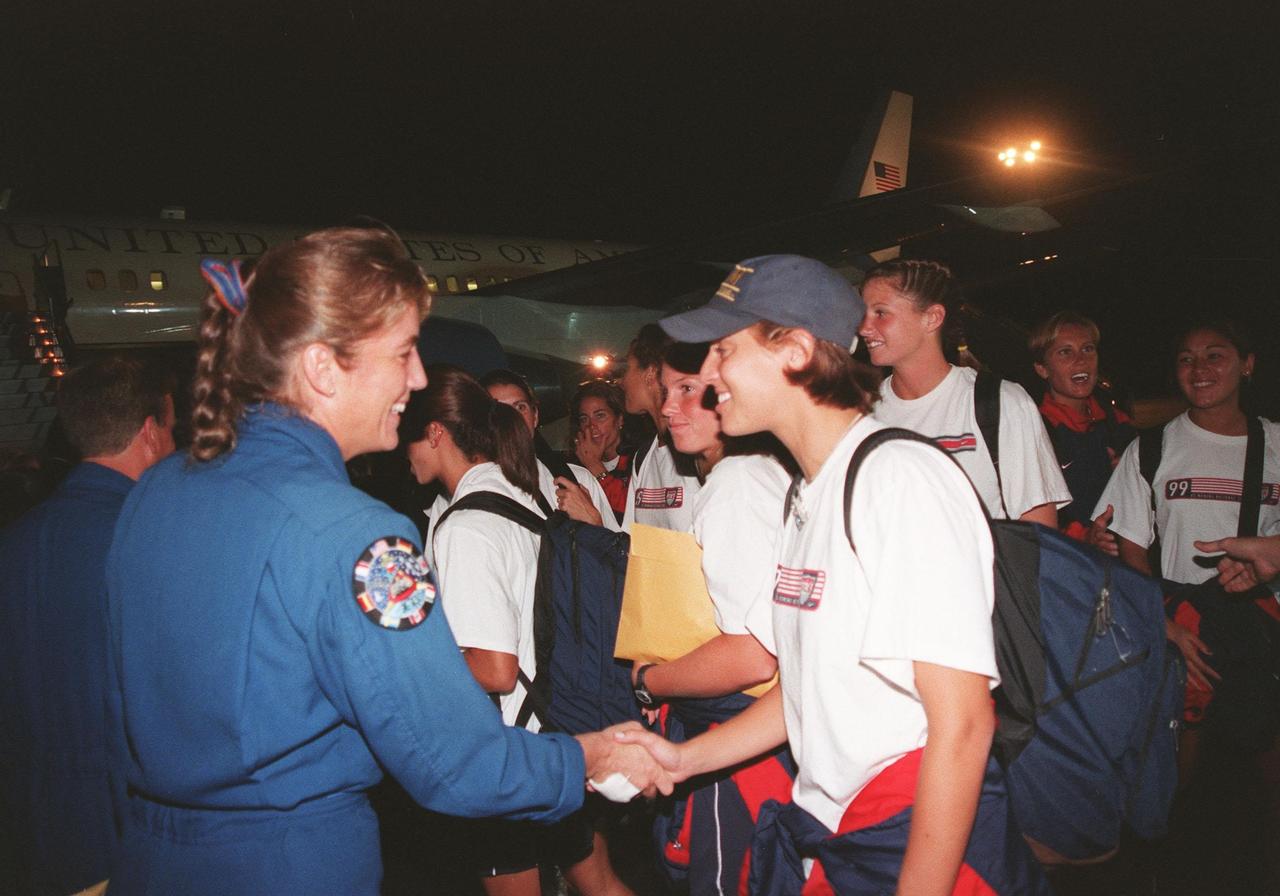
A member of the U.S. Women's World Cup Soccer Team is greeted by NASA Astronaut Heidemarie M. Stefanyshyn-Piper (left) upon her arrival at the Skid Strip at Cape Canaveral Air Station to view the launch of Space Shuttle mission STS-93. Liftoff is scheduled for 12:36 a.m. EDT July 20. Much attention has been generated over the launch due to Commander Eileen M. Collins, the first woman to serve as commander of a Shuttle mission. The primary payload of the five-day mission is the Chandra X-ray Observatory, which will allow scientists from around the world to study some of the most distant, powerful and dynamic objects in the universe. The new telescope is 20 to 50 times more sensitive than any previous X-ray telescope and is expected to unlock the secrets of supernovae, quasars and black holes

Attendees of a women's forum held at the Apollo/Saturn V Center, get a guided tour of the Orbiter Processing Facility. The forum included a welcome by Center Director Roy Bridges, remarks by NASA Administrator Daniel Goldin, and a panel discussion, "Past, Present and Future of Space." The attendees are planning to view the launch of STS-93 at the Banana Creek viewing sight. Much attention has been generated over the launch due to Commander Eileen M. Collins, the first woman to serve as commander of a Shuttle mission. The primary payload of the five-day mission is the Chandra X-ray Observatory, which will allow scientists from around the world to study some of the most distant, powerful and dynamic objects in the universe. Liftoff is scheduled for July 20 at 12:36 a.m. EDT
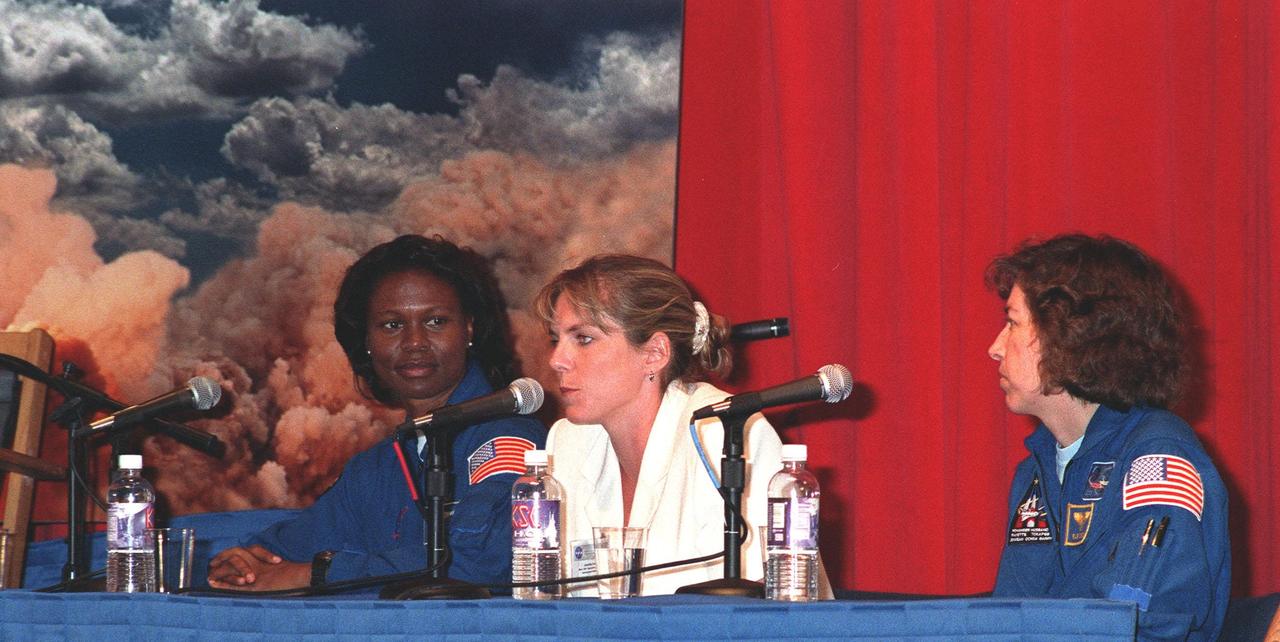
KENNEDY SPACE CENTER, FLA. -- Astronaut Yvonne Cagle (left); Jennifer Harris (center); the Mars 2001 Operations System Development Manager at the Jet Propulsion Laboratory; and Astronaut Ellen Ochoa (right) participate in a panel about "Past, Present and Future of Space," held at a women's forum in the Apollo/Saturn V Center. The forum included a welcome by Center Director Roy Bridges and remarks by Donna Shalala, secretary of Department of Health and Human Services. The attendees are planning to view the launch of STS-93 at the Banana Creek viewing site. Much attention has been generated over the launch due to Commander Eileen M. Collins, the first woman to serve as commander of a Shuttle mission. The primary payload of the five-day mission is the Chandra X-ray Observatory, which will allow scientists from around the world to study some of the most distant, powerful and dynamic objects in the universe. Liftoff is scheduled for July 20 at 12:36 a.m. EDT

Hortense Diggs, at right, the deputy director of the Communication and Public Engagement Directorate at NASA's Kennedy Space Center in Florida, talks to students during a Women in STEM breakfast inside the Debus Conference Center at the Kennedy Space Center Visitor Complex in Florida. STEM is science, technology, engineering and math. The special event gave students competing in NASA's 8th Annual Robotic Mining Competition the chance to learn from female NASA scientists, engineers and professionals about their careers and the paths they took to working at Kennedy. The Robotic Mining Competition is a NASA Human Exploration and Operations Mission Directorate project designed to encourage students in STEM fields. The project provides a competitive environment to foster innovative ideas and solutions that could be used on NASA's Journey to Mars.
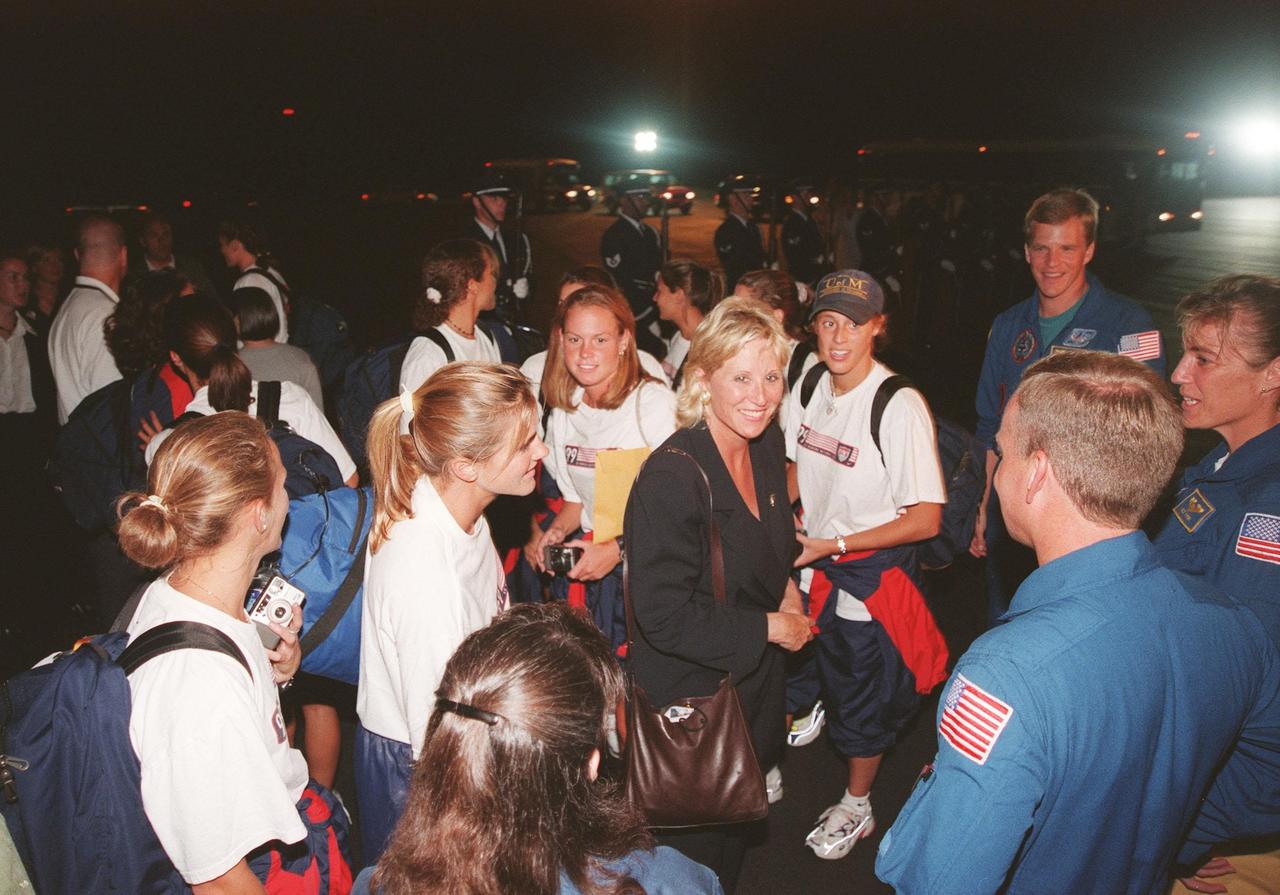
Members of the U.S. Women's World Cup Soccer Team were greeted upon their arrival at the Skid Strip at Cape Canaveral Air Station by Astronauts (right) Steven W. Lindsey, Heidemarie M. Stefanyshyn-Piper and Scott E. Parzynski. The team are here to view the launch of Space Shuttle mission STS-93, scheduled for 12:36 a.m. EDT July 20. Much attention has been generated over the launch due to Commander Eileen M. Collins, the first woman to serve as commander of a Shuttle mission. The primary payload of the five-day mission is the Chandra X-ray Observatory, which will allow scientists from around the world to study some of the most distant, powerful and dynamic objects in the universe. The new telescope is 20 to 50 times more sensitive than any previous X-ray telescope and is expected to unlock the secrets of supernovae, quasars and black holes
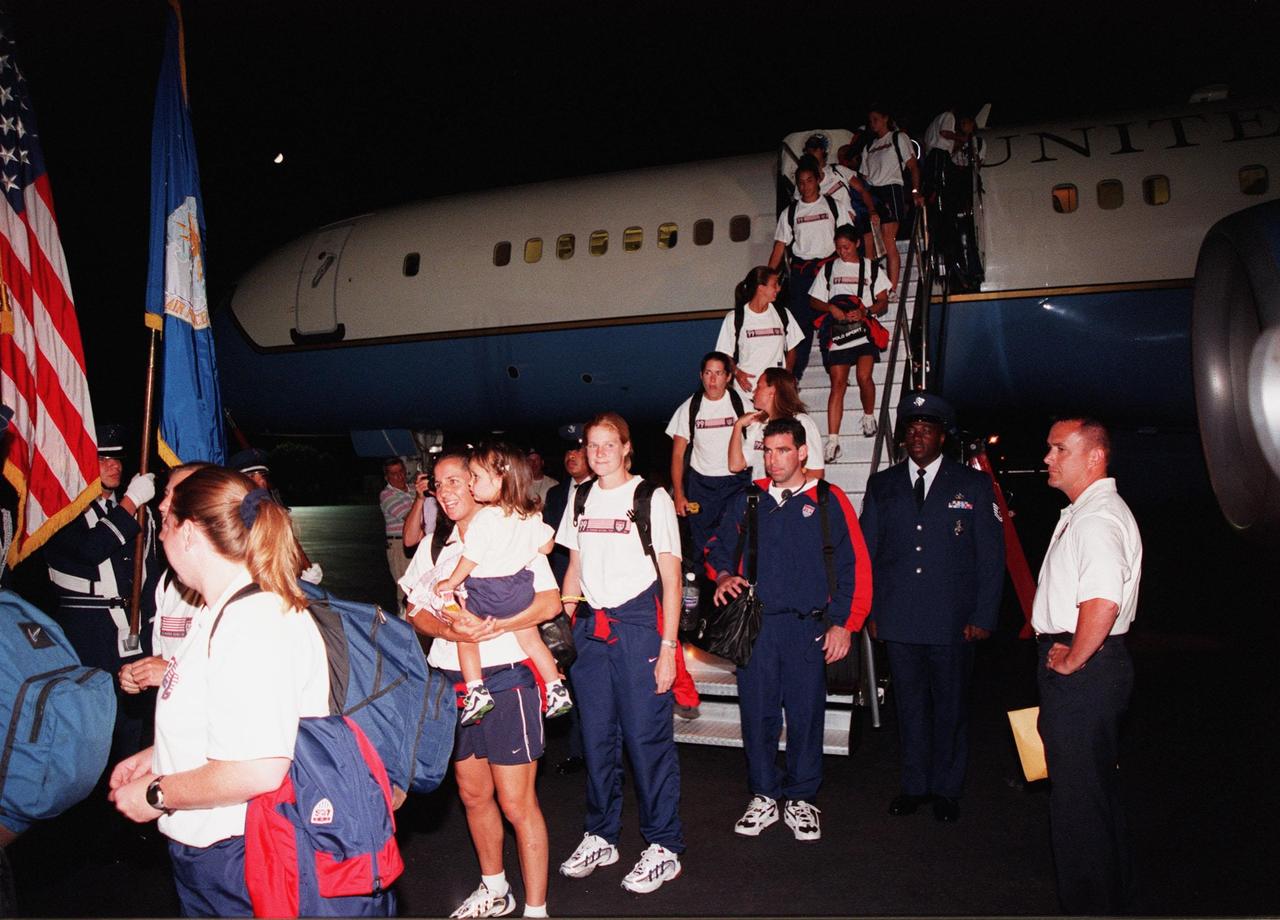
KENNEDY SPACE CENTER, FLA. -- Members of the U.S. Women's World Cup Soccer Team are greeted by NASA Administrator Daniel S. Goldin as they disembark from a plane at the Skid Strip at Cape Canaveral Air Station. They arrived with First Lady Hillary Rodham Clinton to view the launch of Space Shuttle mission STS-93 scheduled for 12:36 a.m. EDT July 20. Much attention has been generated over the launch due to Commander Eileen M. Collins, the first woman to serve as commander of a Shuttle mission. The primary payload of the five-day mission is the release of the Chandra X-ray Observatory, which will allow scientists from around the world to study some of the most distant, powerful and dynamic objects in the universe
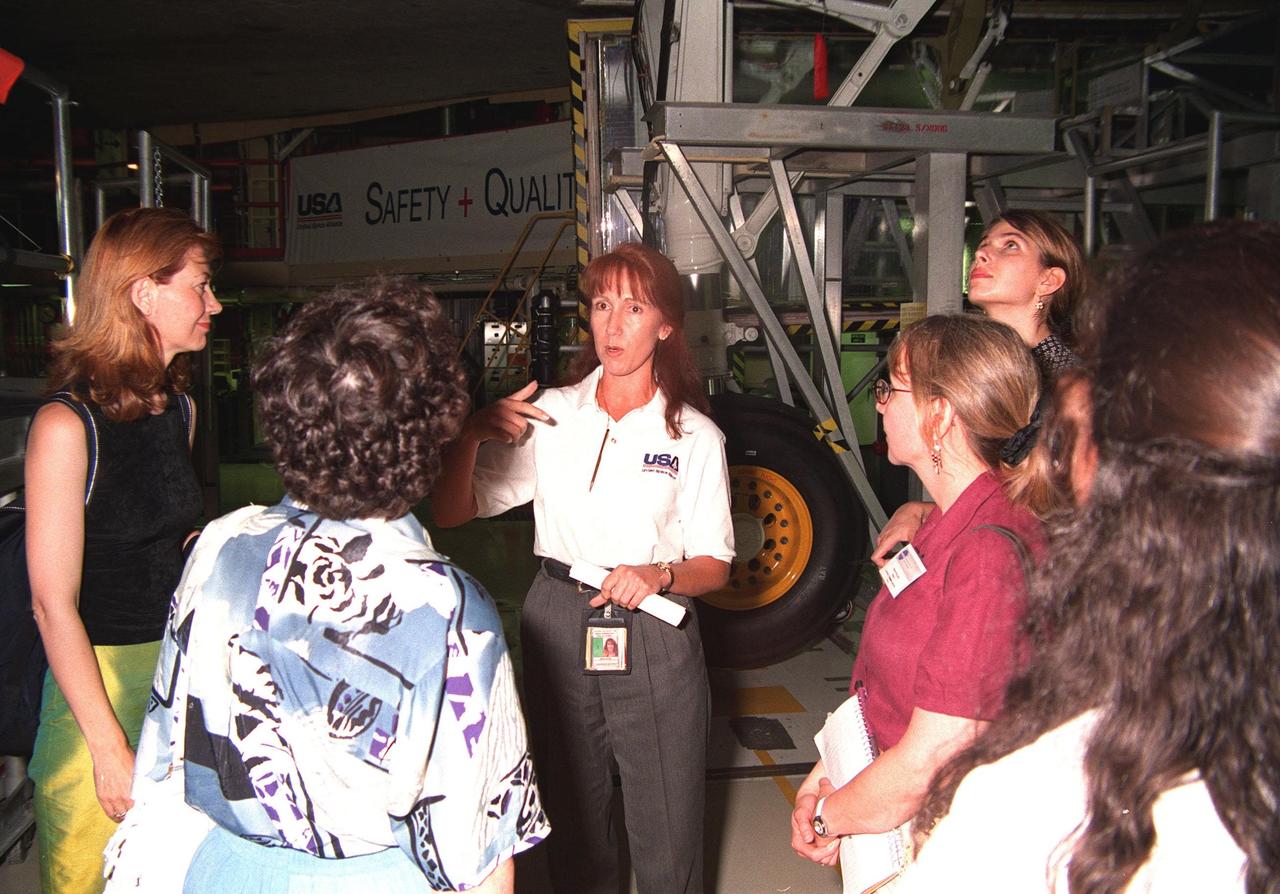
Attendees of a women's forum held at the Apollo/Saturn V Center, get a guided tour of the Orbiter Processing Facility and a closeup look at an orbiter overhead. The forum included a welcome by Center Director Roy Bridges, remarks by NASA Administrator Daniel Goldin, and a panel discussion, "Past, Present and Future of Space." The attendees are planning to view the launch of STS-93 at the Banana Creek viewing sight. Much attention has been generated over the launch due to Commander Eileen M. Collins, the first woman to serve as commander of a Shuttle mission. The primary payload of the five-day mission is the Chandra X-ray Observatory, which will allow scientists from around the world to study some of the most distant, powerful and dynamic objects in the universe. Liftoff is scheduled for July 20 at 12:36 a.m. EDT
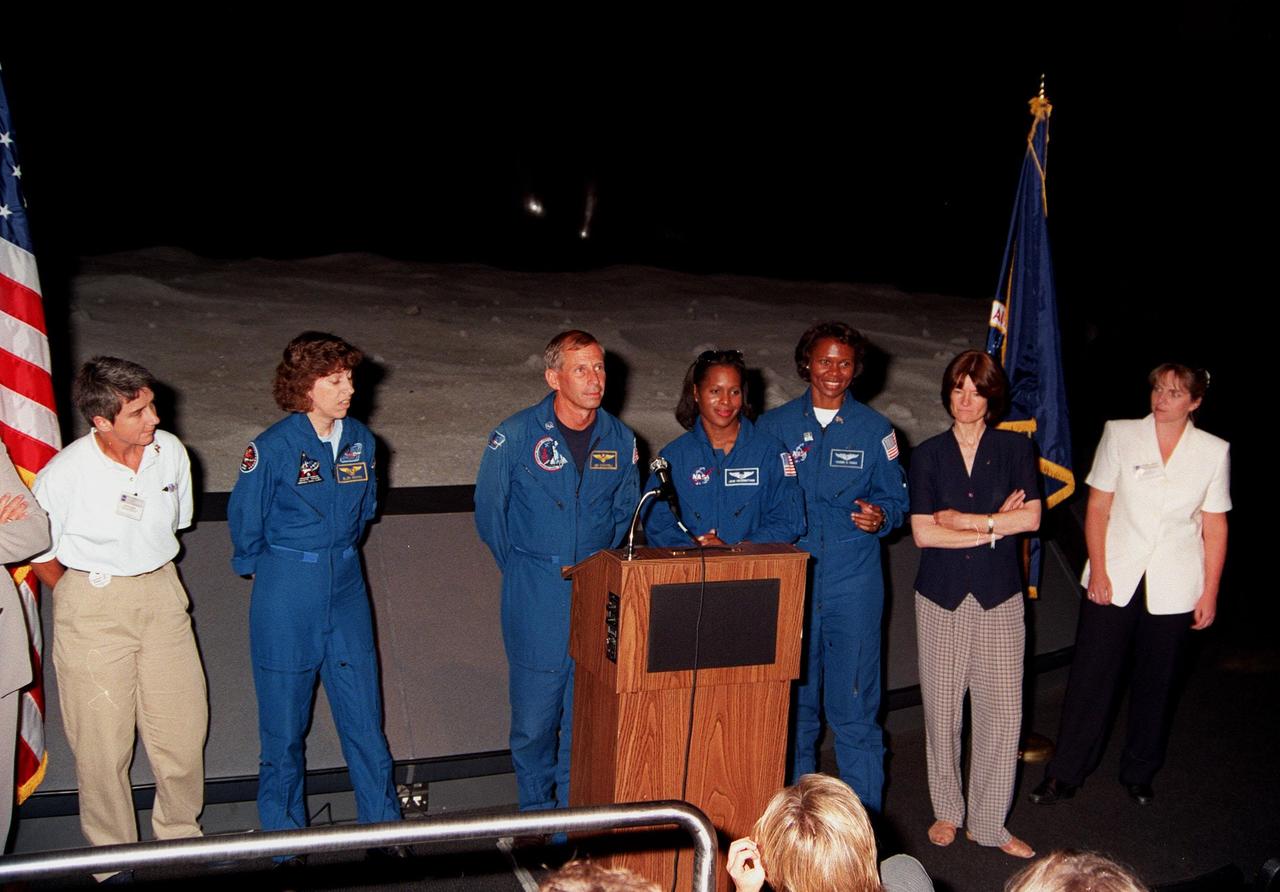
KENNEDY SPACE CENTER, FLA. -- At a women's forum about "Past, Present and Future of Space," held in the Apollo/Saturn V Center, guests line the stage. From left, they are Marta Bohn-Meyer, the first woman to pilot an SR-71; astronauts Ellen Ochoa, Ken Cockrell, Joan Higginbotham, and Yvonne Cagle; former astronaut Sally Ride, the first American woman to fly in space; and Jennifer Harris, the Mars 2001 Operations System Development Manager at the Jet Propulsion Laboratory. The forum included a welcome by Center Director Roy Bridges and remarks by Donna Shalala, secretary of Department of Health and Human Services. The attendees are planning to view the launch of STS-93 at the Banana Creek viewing site. Much attention has been generated over the launch due to Commander Eileen M. Collins, the first woman to serve as commander of a Shuttle mission. The primary payload of the five-day mission is the Chandra X-ray Observatory, which will allow scientists from around the world to study some of the most distant, powerful and dynamic objects in the universe. Liftoff is scheduled for July 20 at 12:36 a.m. EDT
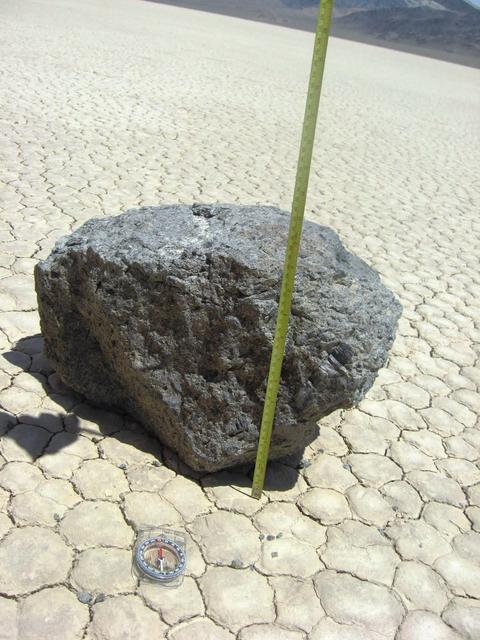
Some of the moving rocks are large. This one is about 10 inches tall. Researchers in the late 1960s and early 1970s documented the movements of one very large rock that they named Karen. (The two men named all the rocks after women.) They estimated that Karen weighed 700 pounds. Credit: NASA/GSFC/Maggie McAdam To read a feature story on the Racetrack Playa go to: <a href="http://www.nasa.gov/topics/earth/features/roving-rocks.html" rel="nofollow">www.nasa.gov/topics/earth/features/roving-rocks.html</a> <b><a href="http://www.nasa.gov/centers/goddard/home/index.html" rel="nofollow">NASA Goddard Space Flight Center</a></b> is home to the nation's largest organization of combined scientists, engineers and technologists that build spacecraft, instruments and new technology to study the Earth, the sun, our solar system, and the universe. <b>Follow us on <a href="http://twitter.com/NASA_GoddardPix" rel="nofollow">Twitter</a></b> <b>Join us on <a href="http://www.facebook.com/pages/Greenbelt-MD/NASA-Goddard/395013845897?ref=tsd" rel="nofollow">Facebook</a><b></b></b>
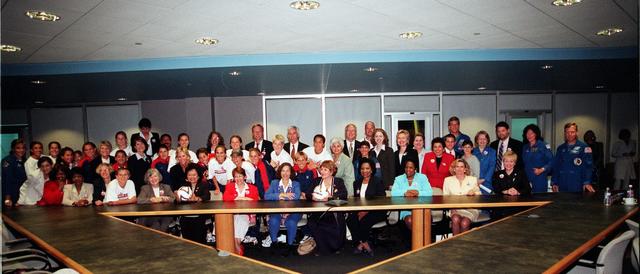
KENNEDY SPACE CENTER, FLA. -- The group waiting in the Apollo/Saturn V Center for the launch of STS-93 pose for a photo. Among the spectators gathered are First Lady Hillary Rodham Clinton and her daughter, Chelsea, NASA Administrator Daniel Goldin, astronauts, and attendees of a Women in Space forum, including Donna Shalala, secretary , Department of Health and Human Services. Much attention has been generated over the launch due to Commander Eileen M. Collins, the first woman to serve as commander of a Shuttle mission. The primary payload of the five-day mission is the Chandra X-ray Observatory, which will allow scientists from around the world to study some of the most distant, powerful and dynamic objects in the universe. The new telescope is 20 to 50 times more sensitive than any previous X-ray telescope and is expected to unlock the secrets of supernovae, quasars and black holes. Liftoff of Space Shuttle Columbia is scheduled for 12:36 a.m. EDT July 20
![More than 70% of the world's hazelnuts come from Turkey, and about 60% come from the Eastern Black Sea region on the slopes of the Pontic mountain range, around the ancient coastal city of Giresun. The tradition of hazelnut farming goes back thousands of years. Presently, most of the hazelnut products are processed by women [BBC Travel]. The image was acquired August 15, 2024, covers an area of 35.7 by 36.2 km, and is located at 40.9 degrees north, 38.4 degrees east. With its 14 spectral bands from the visible to the thermal infrared wavelength region and its high spatial resolution of about 50 to 300 feet (15 to 90 meters), ASTER images Earth to map and monitor the changing surface of our planet. ASTER is one of five Earth-observing instruments launched Dec. 18, 1999, on Terra. The instrument was built by Japan's Ministry of Economy, Trade and Industry. A joint U.S./Japan science team is responsible for validation and calibration of the instrument and data products. The broad spectral coverage and high spectral resolution of ASTER provides scientists in numerous disciplines with critical information for surface mapping and monitoring of dynamic conditions and temporal change. Example applications are monitoring glacial advances and retreats; monitoring potentially active volcanoes; identifying crop stress; determining cloud morphology and physical properties; wetlands evaluation; thermal pollution monitoring; coral reef degradation; surface temperature mapping of soils and geology; and measuring surface heat balance. https://photojournal.jpl.nasa.gov/catalog/PIA26450](https://images-assets.nasa.gov/image/PIA26450/PIA26450~medium.jpg)
More than 70% of the world's hazelnuts come from Turkey, and about 60% come from the Eastern Black Sea region on the slopes of the Pontic mountain range, around the ancient coastal city of Giresun. The tradition of hazelnut farming goes back thousands of years. Presently, most of the hazelnut products are processed by women [BBC Travel]. The image was acquired August 15, 2024, covers an area of 35.7 by 36.2 km, and is located at 40.9 degrees north, 38.4 degrees east. With its 14 spectral bands from the visible to the thermal infrared wavelength region and its high spatial resolution of about 50 to 300 feet (15 to 90 meters), ASTER images Earth to map and monitor the changing surface of our planet. ASTER is one of five Earth-observing instruments launched Dec. 18, 1999, on Terra. The instrument was built by Japan's Ministry of Economy, Trade and Industry. A joint U.S./Japan science team is responsible for validation and calibration of the instrument and data products. The broad spectral coverage and high spectral resolution of ASTER provides scientists in numerous disciplines with critical information for surface mapping and monitoring of dynamic conditions and temporal change. Example applications are monitoring glacial advances and retreats; monitoring potentially active volcanoes; identifying crop stress; determining cloud morphology and physical properties; wetlands evaluation; thermal pollution monitoring; coral reef degradation; surface temperature mapping of soils and geology; and measuring surface heat balance. https://photojournal.jpl.nasa.gov/catalog/PIA26450
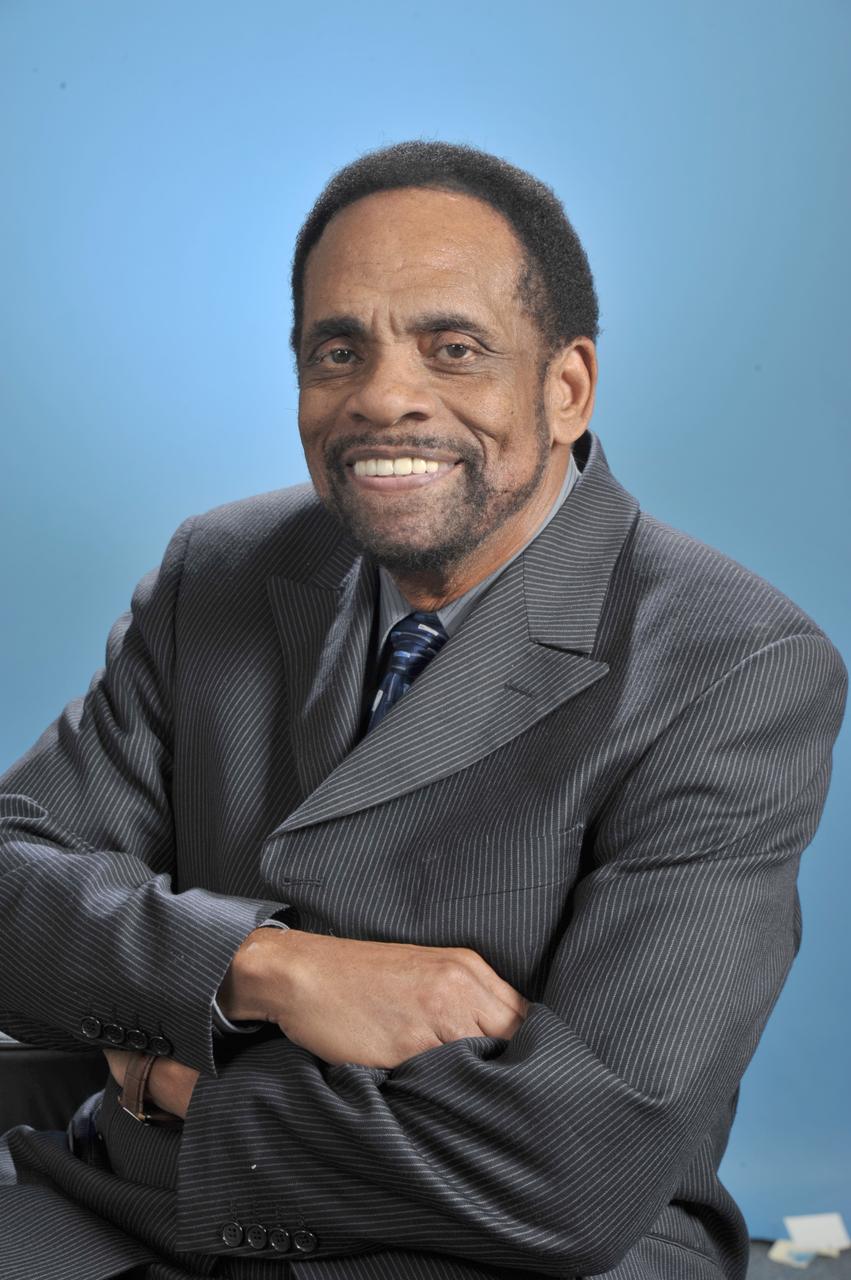
George Edward Alcorn, a pioneering African American physicist and engineer, is credited with dozens of inventions over the course of a distinguished career in private industry and at NASA, for which he earned eight patents. Alcorn joined Goddard Space Flight Center in 1978 and held numerous leadership roles in both research and administration until his retirement in 2012. One of Alcorn’s signature accomplishments at NASA was developing a smaller, more sensitive X-ray spectrometer, changing the way scientists were able to use the powerful tool in deep space exploration missions. His tool, which uses thermomigration of aluminum, can gather information about remote solar systems; for the invention, Alcorn was honored as the NASA Goddard Inventor of the Year in 1984. In addition to his groundbreaking contributions as an inventor and innovator, Alcorn also championed efforts to hire more women and minorities at Goddard, for which he was honored with the NASA Equal Opportunity Medal, and taught students at Howard University and the University of the District of Columbia. He also founded the Saturday Academy, an honors program in math and science for underserved middle school students. He earned many accolades over the years from NASA and beyond. These include, in 2010, the Robert H. Goddard Award for Merit, for his outstanding innovation and significant contributions to space science, technology, and NASA programs, as well as recognition in 1994 at Howard University’s Heritage of Greatness awards ceremony. He was also inducted into the National Inventor’s Hall of Fame in 2015. Alcorn passed away in 2024 at the age of 84.
![“I came [to the United States] in ’83 and in ’98, I was invited to go back to Costa Rica. The first Hispanic astronaut that NASA ever had is a Costa Rican — Franklin Chang Diaz. So everyone was talking about Franklin. At that point I had been working for NASA for seven years. All of a sudden, I had little girls and women coming to me, wanting to ask me about engineering. I resisted it at first, because I thought, they only care about the astronauts. That’s what ran through my head at first. I didn’t think I had done anything at that point. I didn’t think that I could be a role model. But as time went on, people started to hear about me more in Costa Rica, and eventually throughout Latin America. I got requests to travel all over to give talks — all the way from Mexico down to Chile. I cannot tell you when it was, but I realized, there are so many men in this field. When a little kid draws an engineer or a scientist, they tend to draw men. But here I am. And maybe I haven’t accomplished everything I want to do. But I can show little girls and little boys out there that it doesn’t matter where you come from. You can be anything that you want to, even when you have had a very difficult upbringing.” Earth Science Deputy Division Director in the Science Mission Directorate, Sandra Cauffman, poses for a portrait, Friday, Sept. 17, 2021 at NASA Headquarters in Washington. Photo Credit: (NASA/Aubrey Gemignani)](https://images-assets.nasa.gov/image/NHQ202109170001/NHQ202109170001~medium.jpg)
“I came [to the United States] in ’83 and in ’98, I was invited to go back to Costa Rica. The first Hispanic astronaut that NASA ever had is a Costa Rican — Franklin Chang Diaz. So everyone was talking about Franklin. At that point I had been working for NASA for seven years. All of a sudden, I had little girls and women coming to me, wanting to ask me about engineering. I resisted it at first, because I thought, they only care about the astronauts. That’s what ran through my head at first. I didn’t think I had done anything at that point. I didn’t think that I could be a role model. But as time went on, people started to hear about me more in Costa Rica, and eventually throughout Latin America. I got requests to travel all over to give talks — all the way from Mexico down to Chile. I cannot tell you when it was, but I realized, there are so many men in this field. When a little kid draws an engineer or a scientist, they tend to draw men. But here I am. And maybe I haven’t accomplished everything I want to do. But I can show little girls and little boys out there that it doesn’t matter where you come from. You can be anything that you want to, even when you have had a very difficult upbringing.” Earth Science Deputy Division Director in the Science Mission Directorate, Sandra Cauffman, poses for a portrait, Friday, Sept. 17, 2021 at NASA Headquarters in Washington. Photo Credit: (NASA/Aubrey Gemignani)