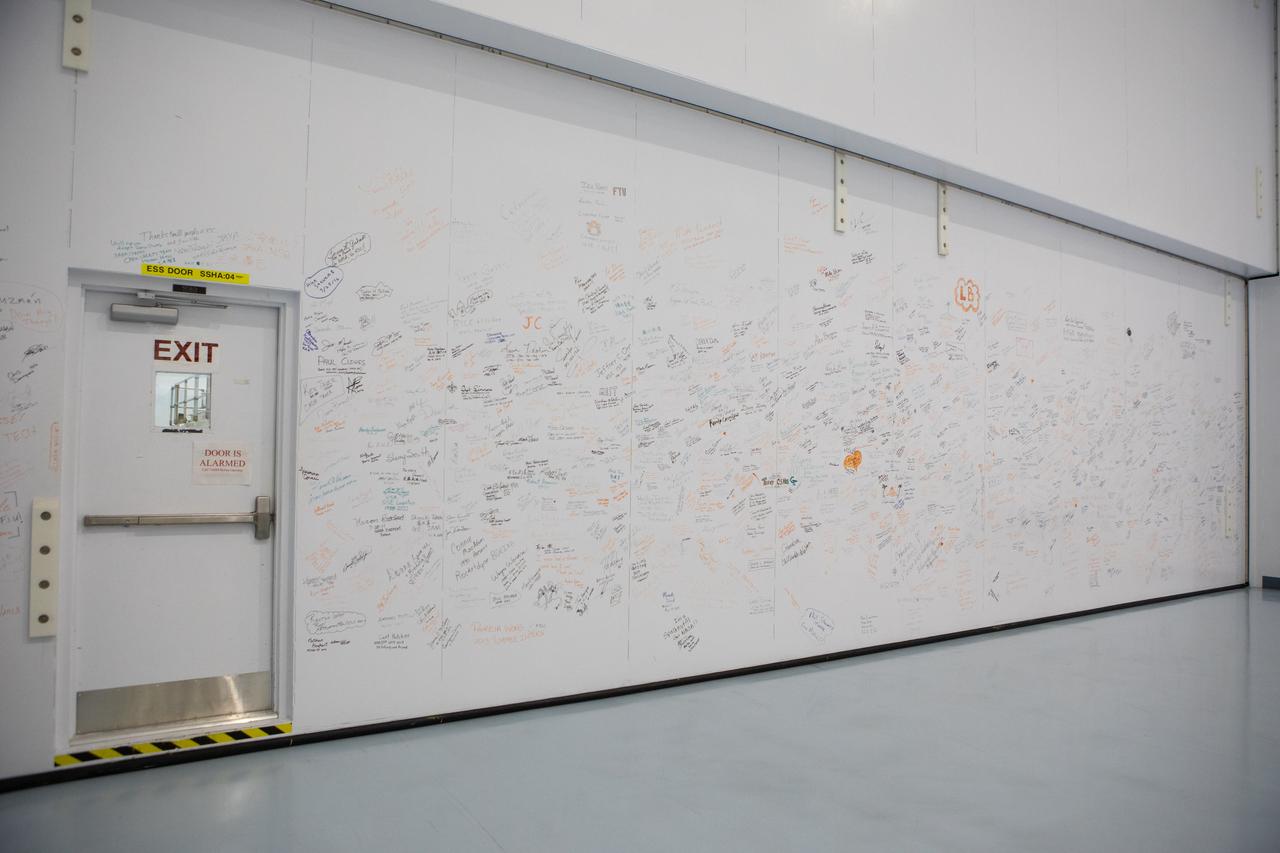
A photograph taken on May 16, 2019, shows a wall inside the Space Station Processing Facility (SSPF) at NASA's Kennedy Space Center in Florida, containing signatures of many of those who worked on the International Space Station Program. The center is celebrating the SSPF’s 25th anniversary. The facility was built to process elements for the space station. Now it is providing support for current and future NASA and commercial provider programs, including Commercial Resupply Services, Artemis 1, sending the first woman and next man to the Moon, and deep space destinations including Mars.
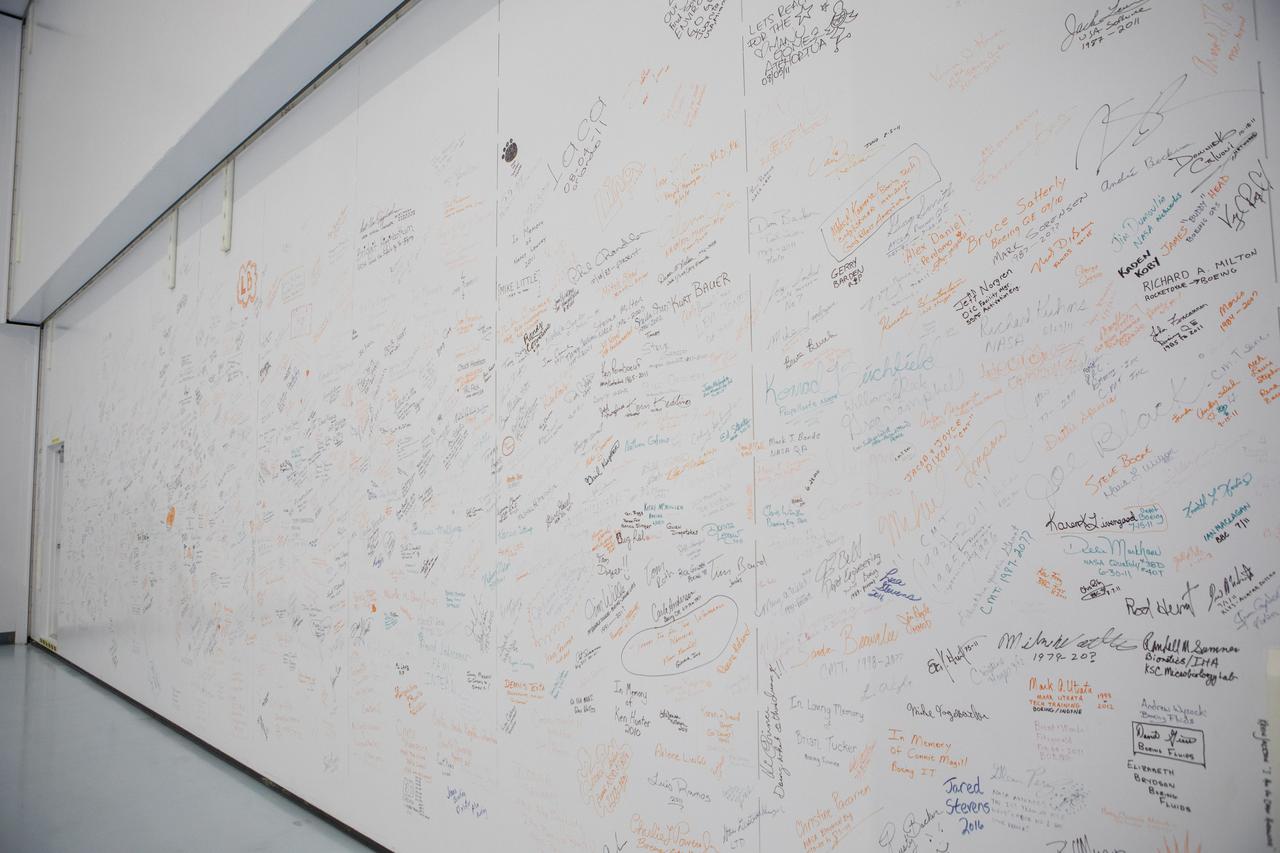
A photograph taken on May 16, 2019, shows a wall inside the Space Station Processing Facility (SSPF) at NASA's Kennedy Space Center in Florida, containing signatures of many of those who worked on the International Space Station Program. The center is celebrating the SSPF’s 25th anniversary. The facility was built to process elements for the space station. Now it is providing support for current and future NASA and commercial provider programs, including Commercial Resupply Services, Artemis 1, sending the first woman and next man to the Moon, and deep space destinations including Mars.
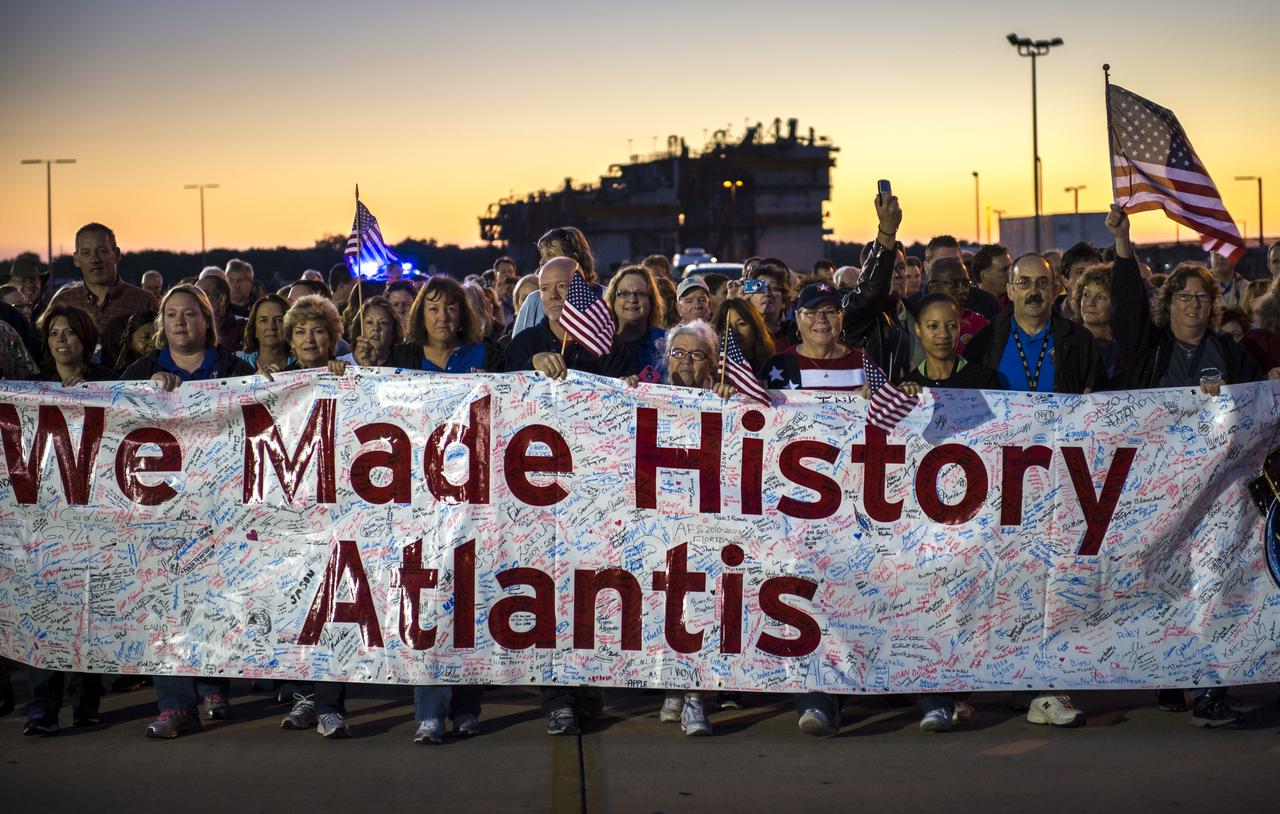
Workers carry a banner full of signatures while following behind space shuttle Atlantis as it begins its trek to its new home at the Kennedy Space Center Visitor Complex, early Friday, Nov. 2, 2012, in Cape Canaveral, Fla. The spacecraft traveled 125,935,769 miles during 33 spaceflights, including 12 missions to the International Space Station. Its final flight, STS-135, closed out the Space Shuttle Program era with a landing on July 21, 2011. Photo Credit: (NASA/Bill Ingalls)
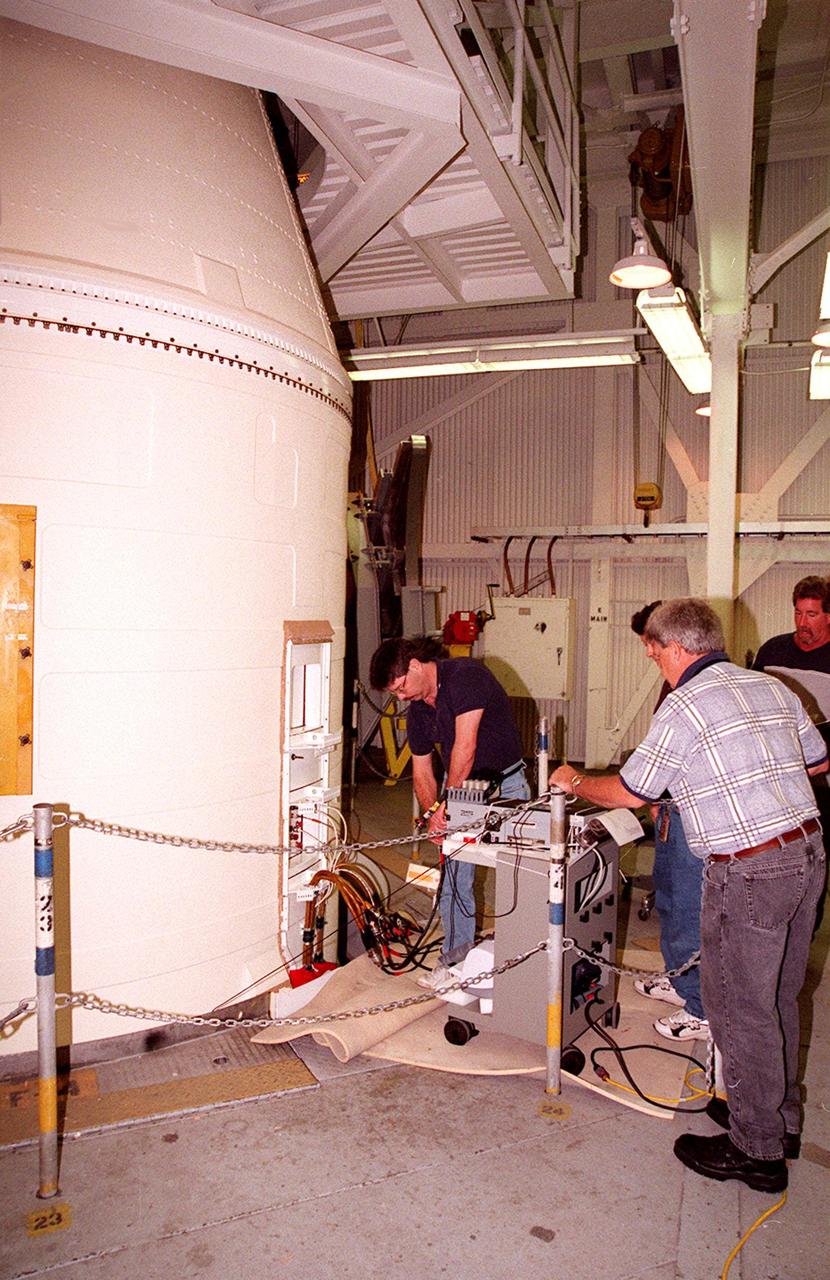
KENNEDY SPACE CENTER, FLA. -- Working near the top of a solid rocket booster, NASA and United Space Alliance SRB technicians hook up SRB cables to a Cirris Signature Touch 1 cable tester. From left are Steve Swichkow, with NASA, and Jim Silviano (back to camera) and Jeff Suter, with USA. The SRB is part of Space Shuttle Atlantis, rolled back from Launch Pad 39A in order to conduct tests on the cables. A prior extensive evaluation of NASA’s SRB cable inventory on the shelf revealed conductor damage in four (of about 200) cables. Shuttle managers decided to prove the integrity of the system tunnel cables already on Atlantis before launching. Workers are conducting inspections, making continuity checks and conducting X-ray analysis on the cables. The launch has been rescheduled no earlier than Feb. 6. <br
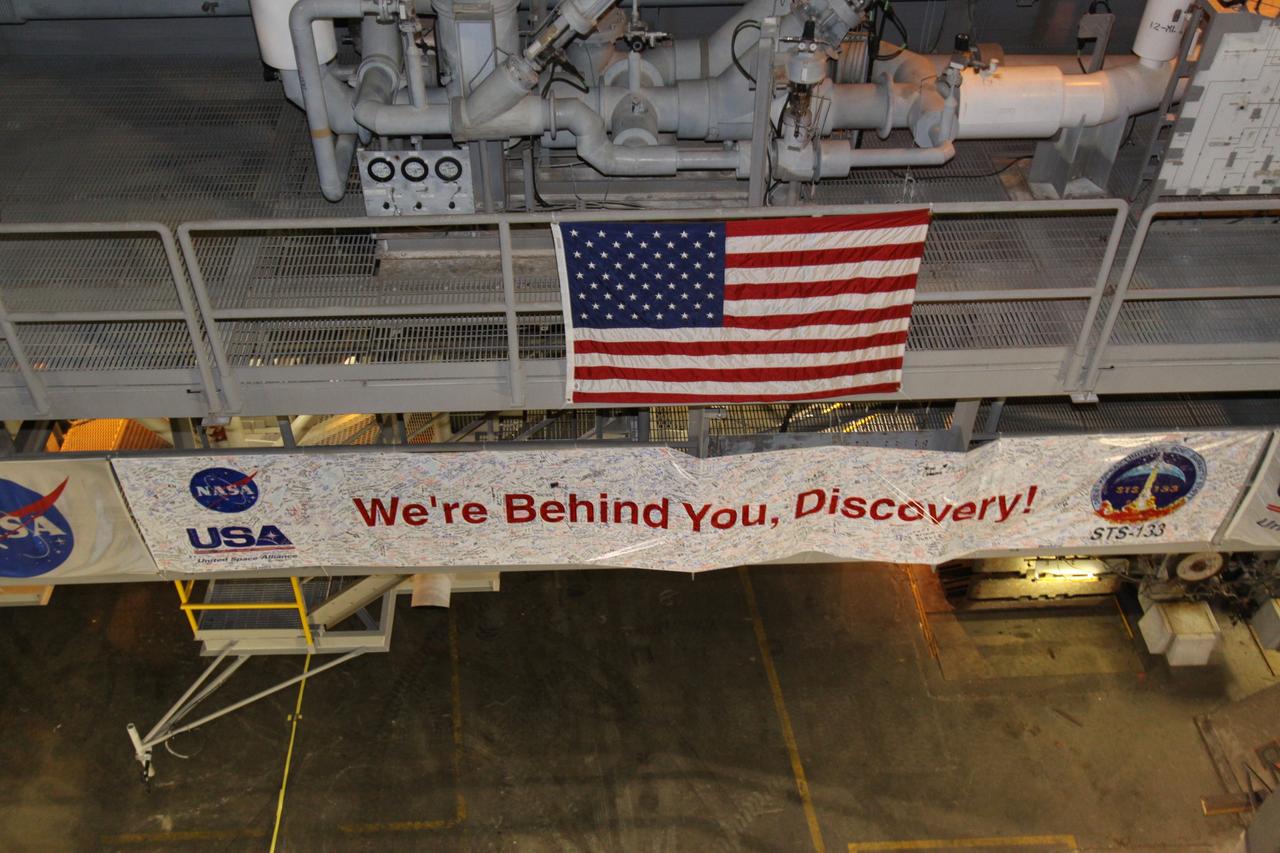
CAPE CANAVERAL, Fla. -- At NASA's Kennedy Space Center in Florida, an American flag and a sign supporting space shuttle Discovery with signatures of space center workers hang on its crawler-transporter mobile launcher as it begins the nighttime trek, known as "rollout," from the Vehicle Assembly Building to Launch Pad 39A. It will take the shuttle about six hours to complete the move. Rollout sets the stage for Discovery's STS-133 crew to practice countdown and launch procedures during the Terminal Countdown Demonstration Test in mid-October. Targeted to liftoff Nov. 1, Discovery will take the Permanent Multipurpose Module (PMM) packed with supplies and critical spare parts, as well as Robonaut 2 (R2) to the International Space Station. Photo credit: NASA/Jack Pfaller
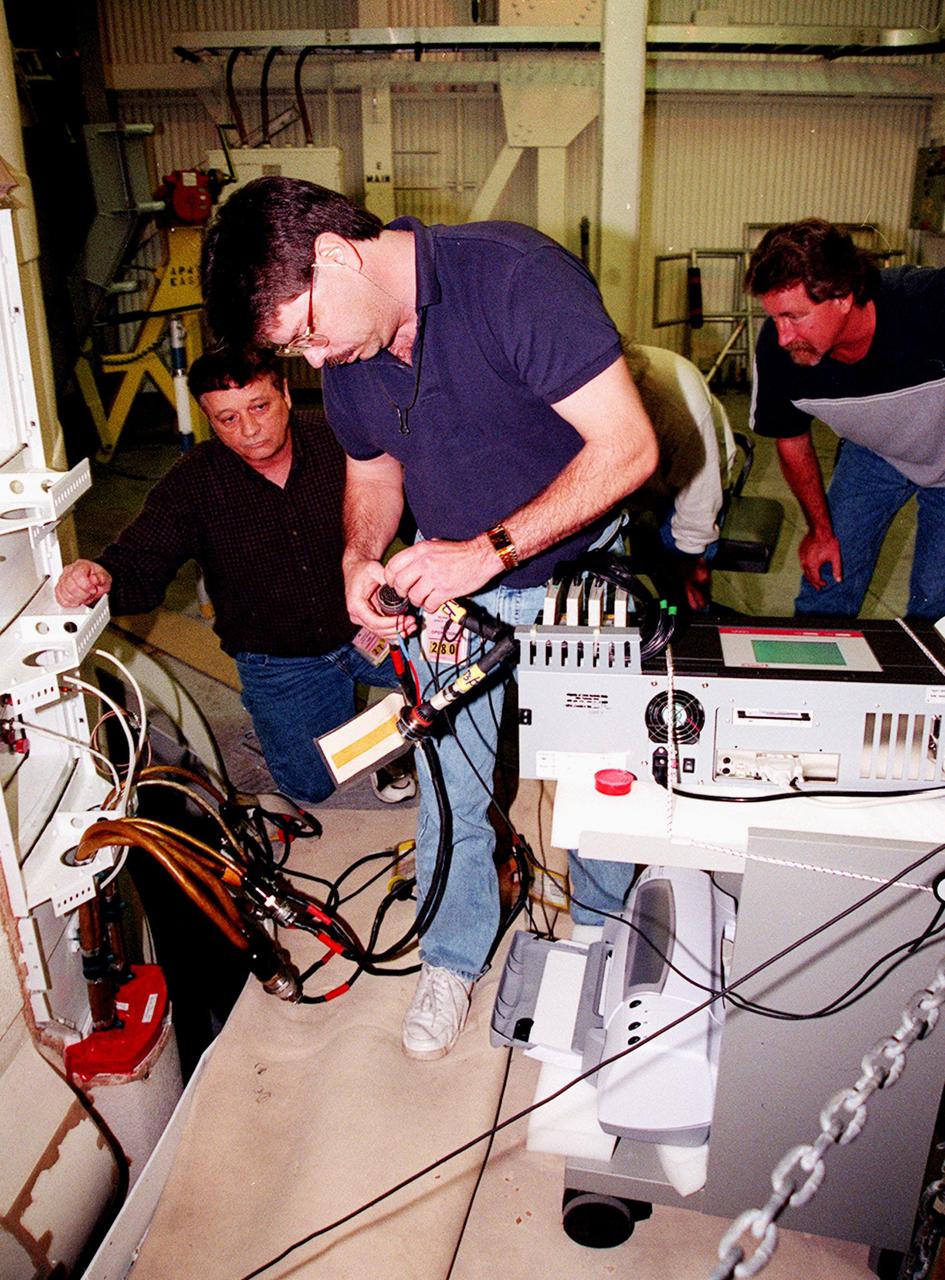
KENNEDY SPACE CENTER, FLA. -- NASA and United Space Alliance SRB technicians hook up solid rocket booster cables to a Cirris Signature Touch 1 cable tester. From left are Loren Atkinson and Steve Swichkow, with NASA, and Jeff Suter, with USA. The SRB is part of Space Shuttle Atlantis, rolled back from Launch Pad 39A in order to conduct tests on the cables. A prior extensive evaluation of NASA’s SRB cable inventory on the shelf revealed conductor damage in four (of about 200) cables. Shuttle managers decided to prove the integrity of the system tunnel cables already on Atlantis before launching. Workers are conducting inspections, making continuity checks and conducting X-ray analysis on the cables. The launch has been rescheduled no earlier than Feb. 6. <br
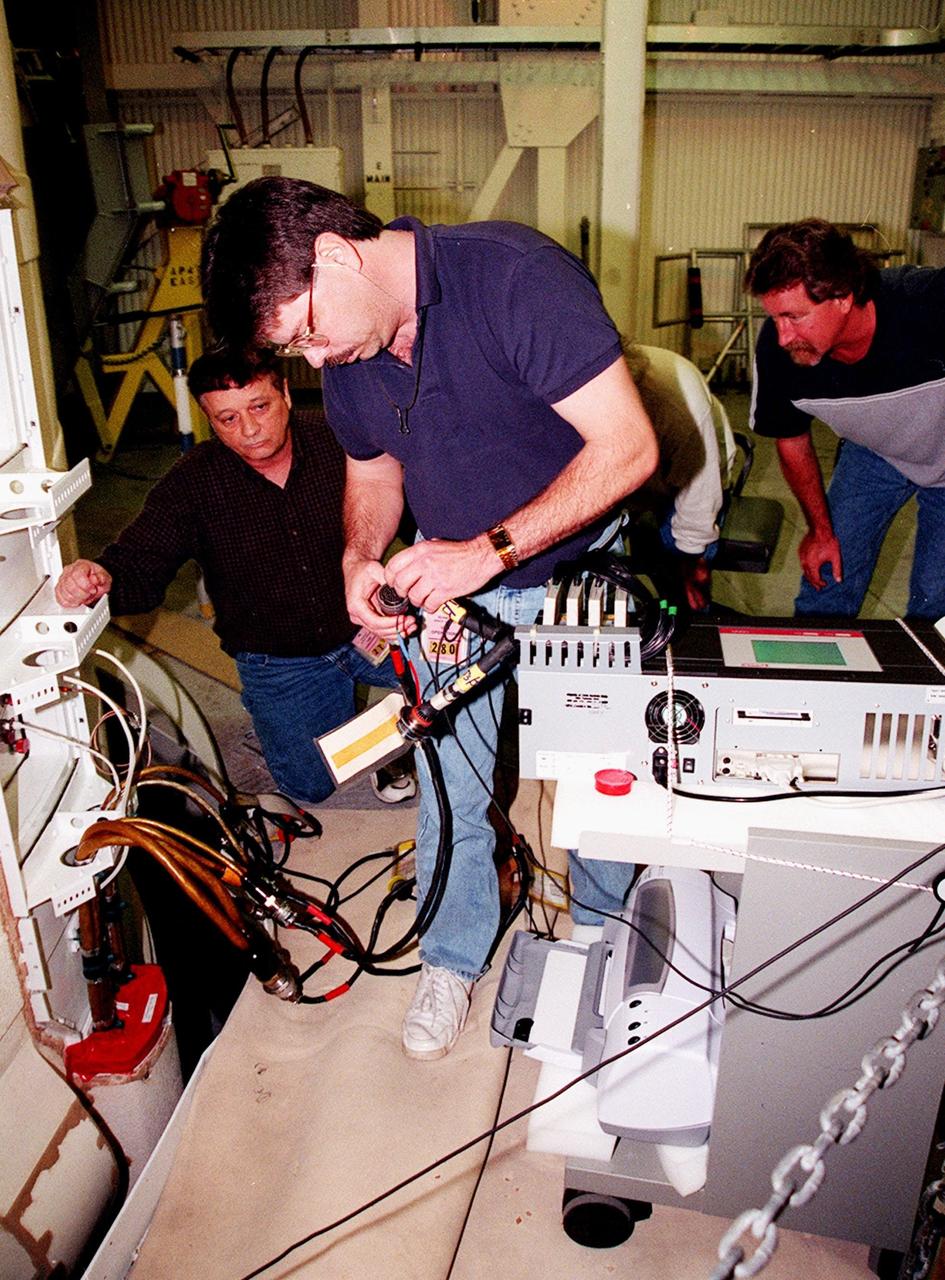
KENNEDY SPACE CENTER, FLA. -- NASA and United Space Alliance SRB technicians hook up solid rocket booster cables to a Cirris Signature Touch 1 cable tester. From left are Loren Atkinson and Steve Swichkow, with NASA, and Jeff Suter, with USA. The SRB is part of Space Shuttle Atlantis, rolled back from Launch Pad 39A in order to conduct tests on the cables. A prior extensive evaluation of NASA’s SRB cable inventory on the shelf revealed conductor damage in four (of about 200) cables. Shuttle managers decided to prove the integrity of the system tunnel cables already on Atlantis before launching. Workers are conducting inspections, making continuity checks and conducting X-ray analysis on the cables. The launch has been rescheduled no earlier than Feb. 6. <br
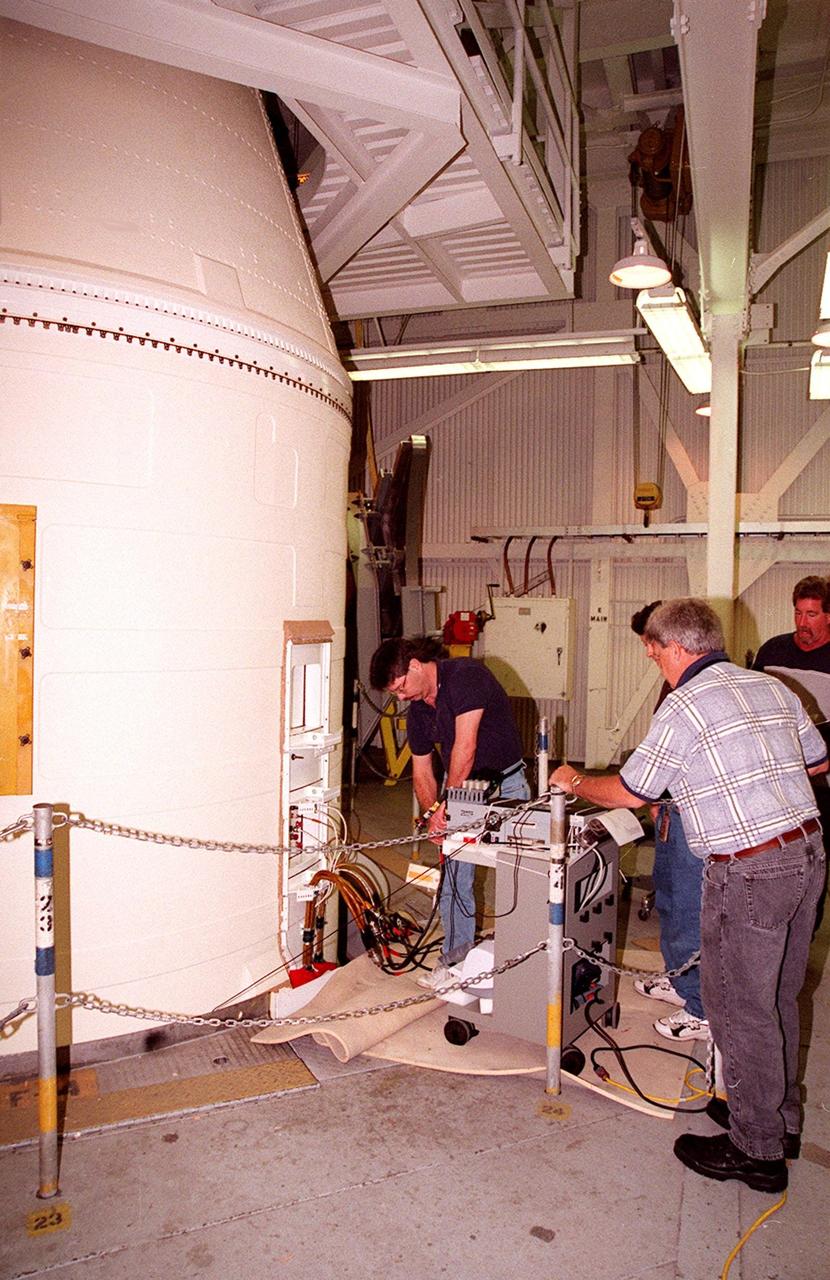
KENNEDY SPACE CENTER, FLA. -- Working near the top of a solid rocket booster, NASA and United Space Alliance SRB technicians hook up SRB cables to a Cirris Signature Touch 1 cable tester. From left are Steve Swichkow, with NASA, and Jim Silviano (back to camera) and Jeff Suter, with USA. The SRB is part of Space Shuttle Atlantis, rolled back from Launch Pad 39A in order to conduct tests on the cables. A prior extensive evaluation of NASA’s SRB cable inventory on the shelf revealed conductor damage in four (of about 200) cables. Shuttle managers decided to prove the integrity of the system tunnel cables already on Atlantis before launching. Workers are conducting inspections, making continuity checks and conducting X-ray analysis on the cables. The launch has been rescheduled no earlier than Feb. 6. <br