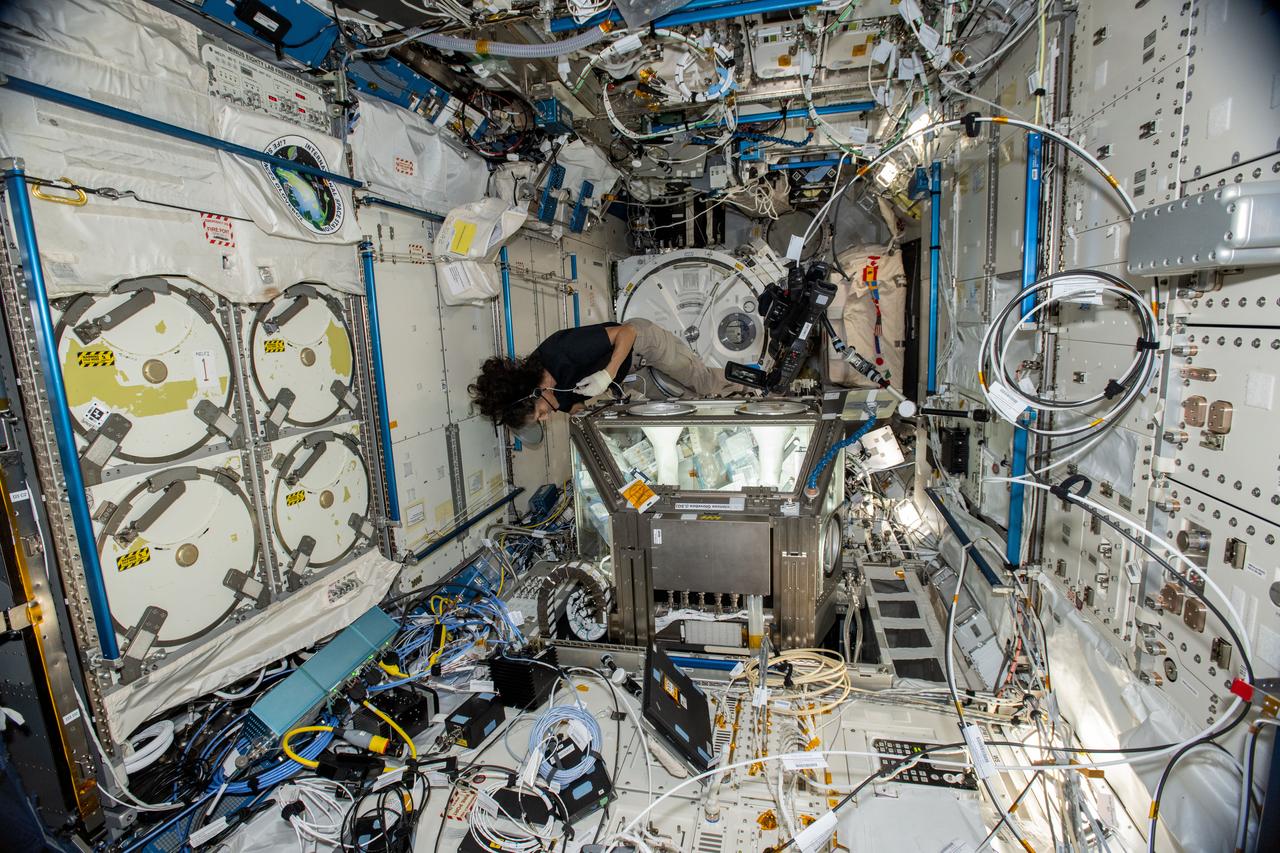
iss072e011142 (12/2/2024) --- NASA astronaut Suni Williams works on StemCellEX-H1, a technology for in-space production of human stem cells that are used as therapies for certain blood diseases and cancers. It may be possible to produce the cells in greater numbers and at higher quality in microgravity than currently is possible on the ground.
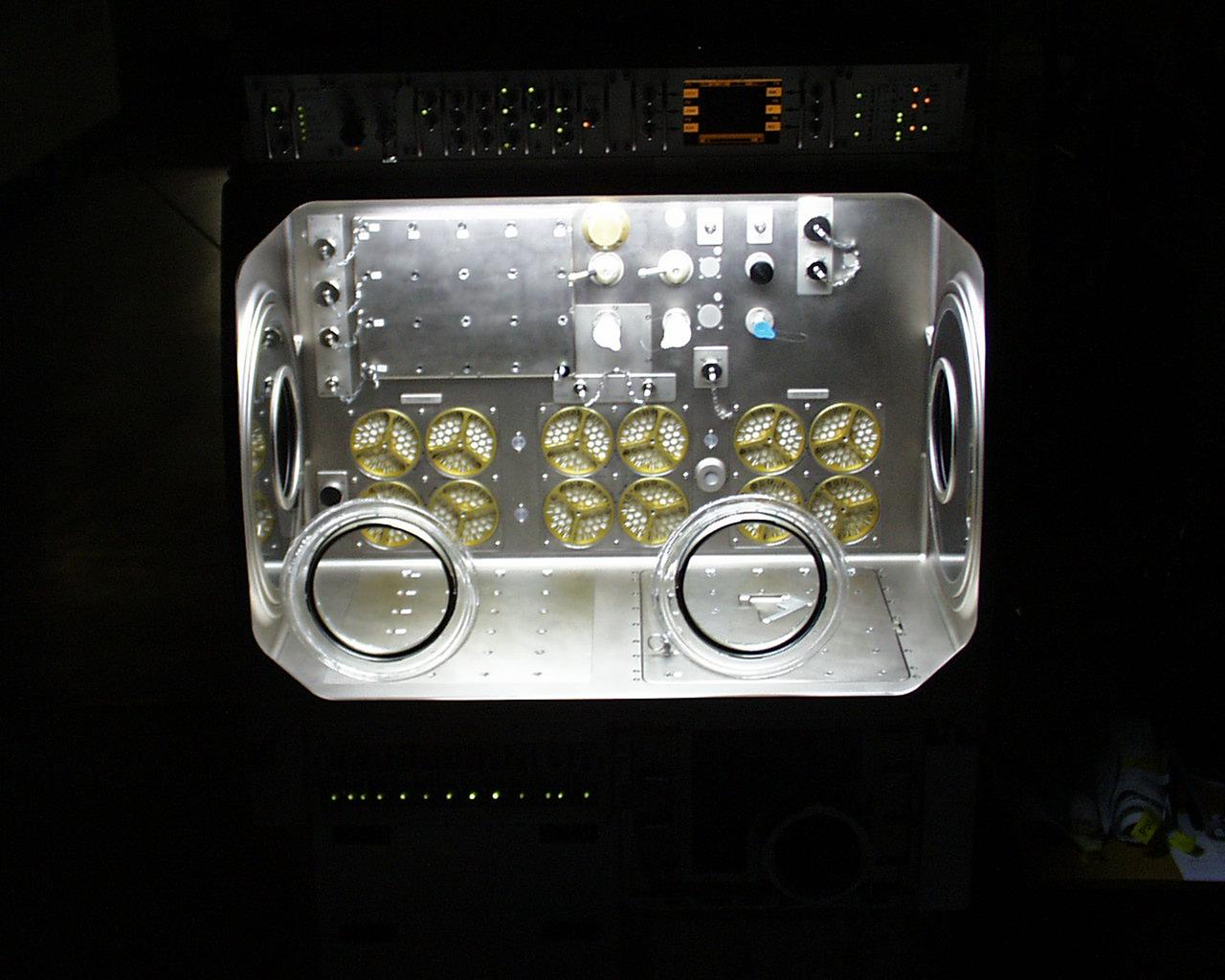
Interior lights give the Microgravity Science Glovebox (MSG) the appearance of a high-tech juke box. The European Space Agency (ESA) and NASA are developing the MSG for use aboard the International Space Station (ISS). Scientists will use the MSG to carry out multidisciplinary studies in combustion science, fluid physics and materials science. The MSG is managed by NASA's Marshall Space Flight Center (MSFC). Photo Credit: NASA/MSFC
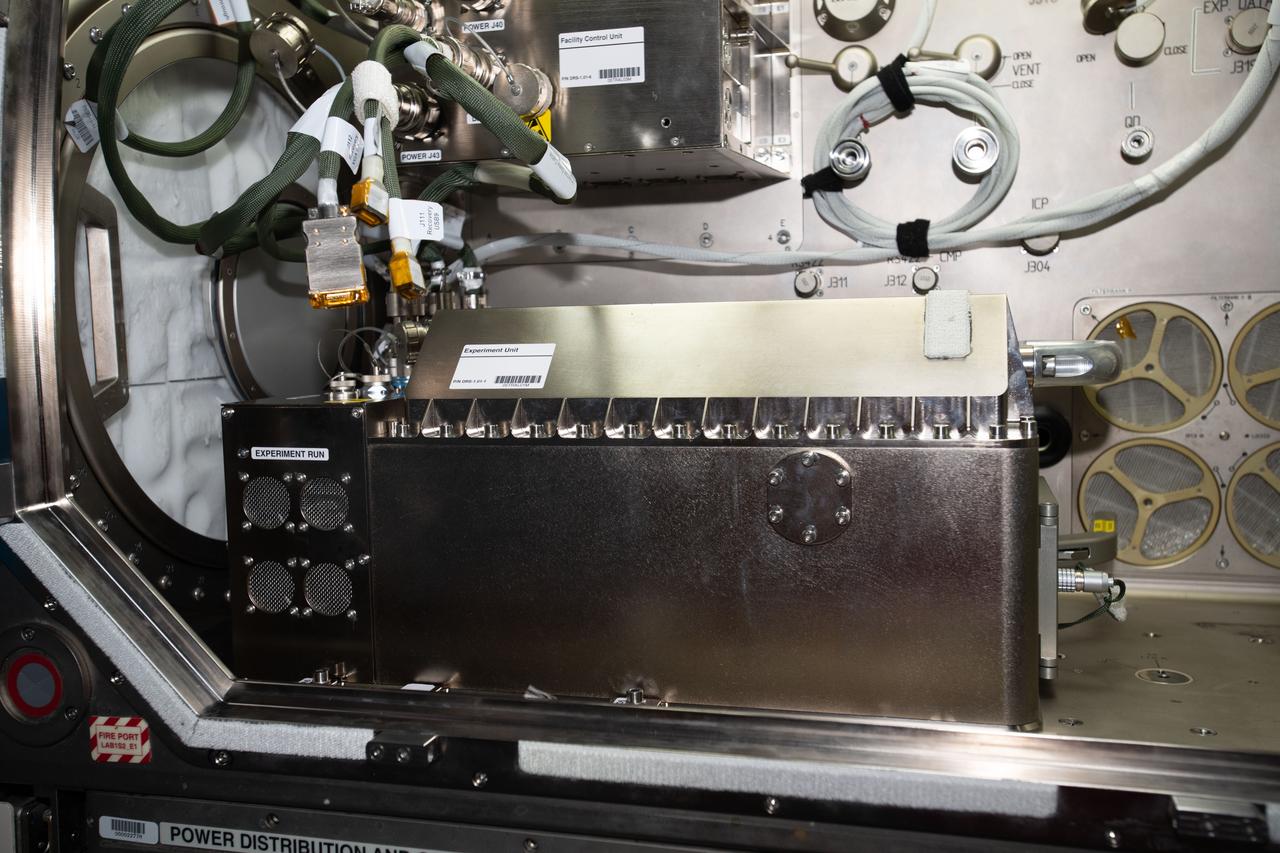
iss062e081047 (3/5/2020) --- A view of the Transparent Alloys Hardware Setup in the Microgravity Sciences Glovebox (MSG) Work Volume (WV) in the U.S. Destiny Laboratory aboard the International Space Station (ISS).
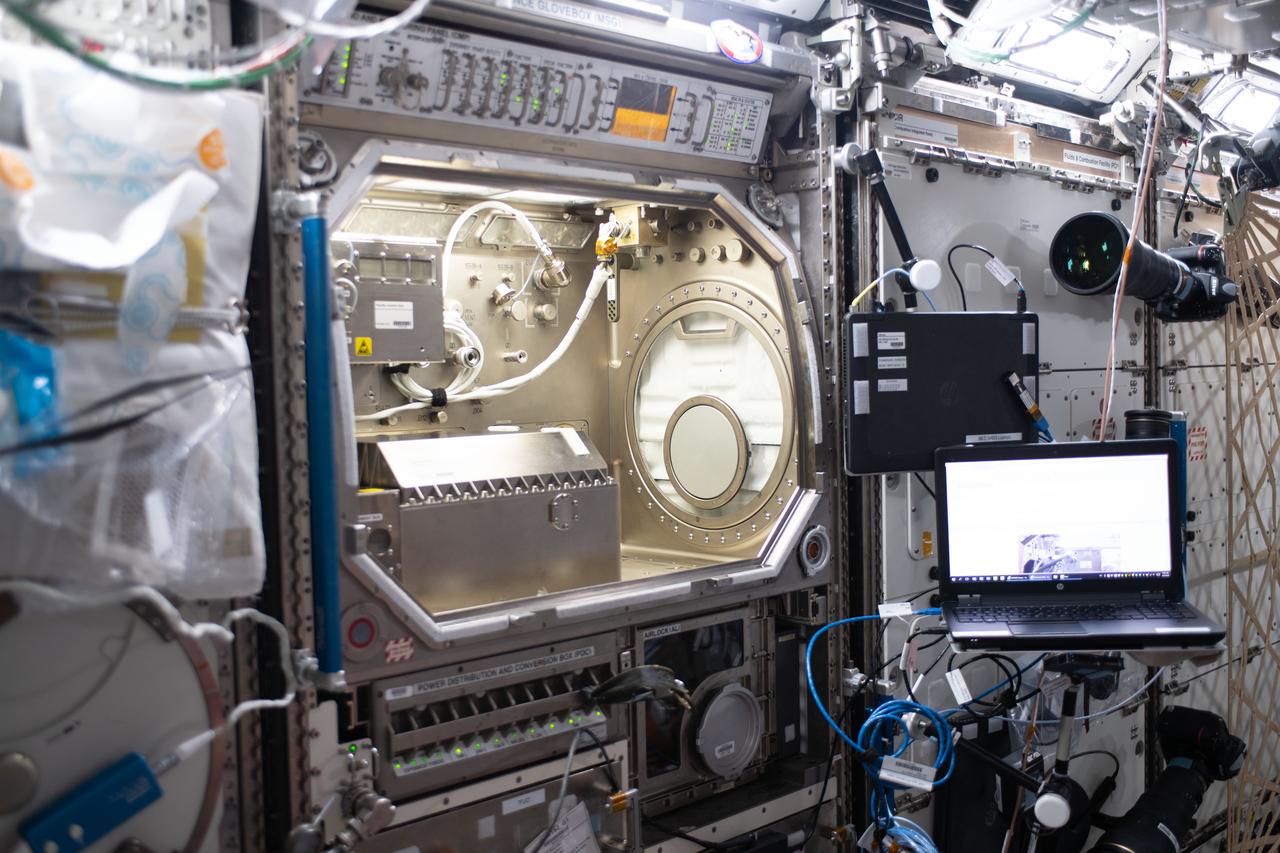
iss062e080867 (3/5/2020) --- A view of the Transparent Alloys Hardware Setup in the Microgravity Sciences Glovebox (MSG) Work Volume (WV) in the U.S. Destiny Laboratory aboard the International Space Station (ISS).
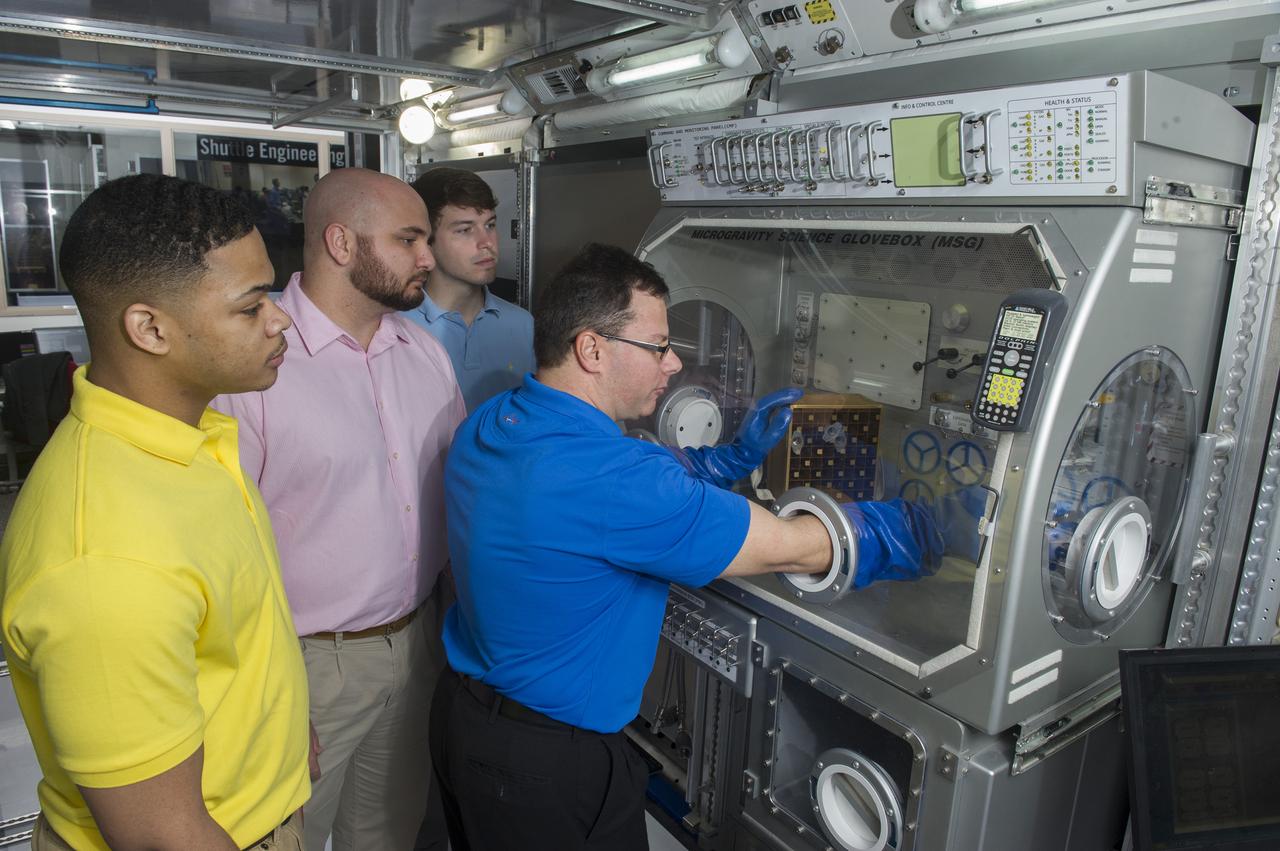
JEREMIAH HALEY, DAVE ARGENTI, ROBERT TRIMBLE, & ERIK SHAUGHNESSY MISSION OPERATIONS LABORATORY - LABORATORY TRAINING COMPLEX (LTC), BUILDING 4663, MICROGRAVITY SCIENCE GLOVEBOX (MSG)- WORK VOLUME(WV) TRAINING
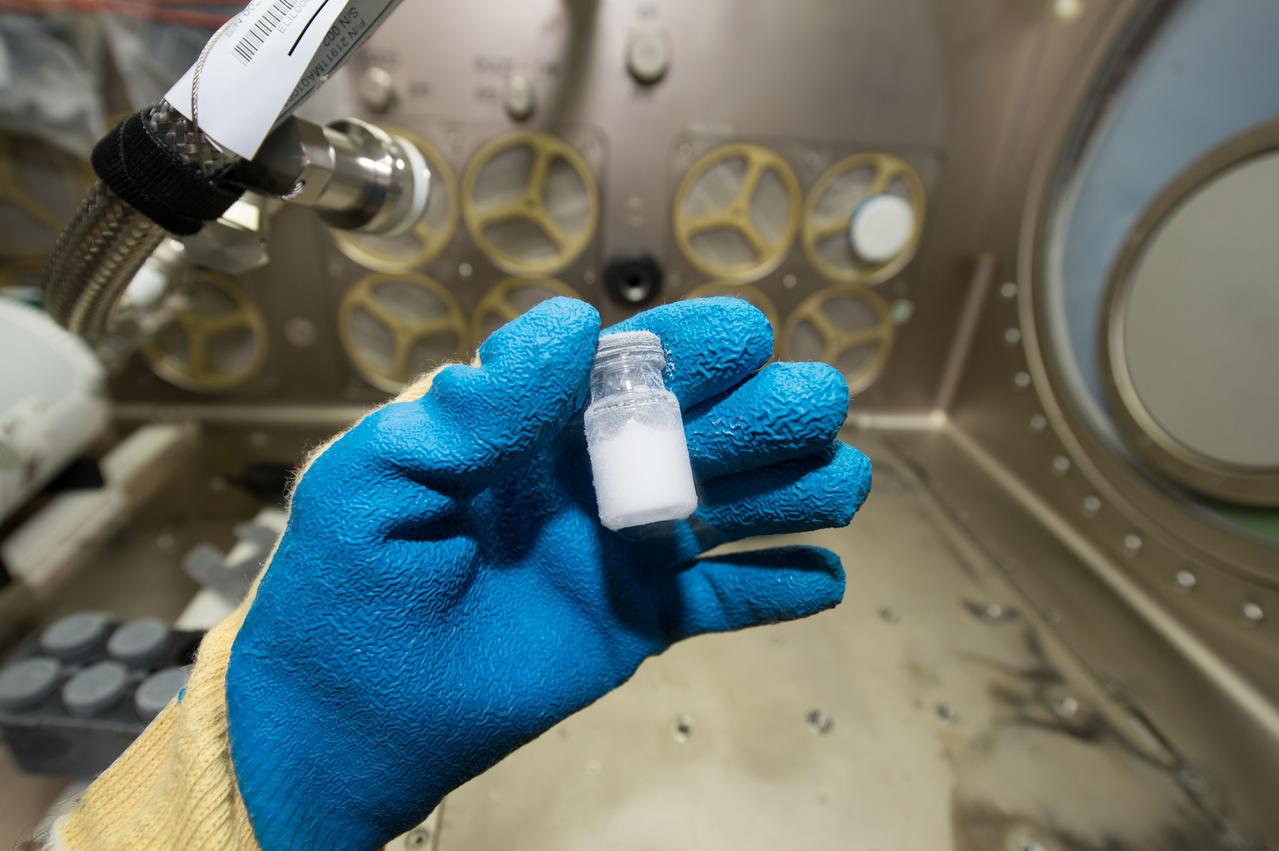
iss052e075812 (Aug. 30, 2017) --- Eli Lily-Lyophilization hardware setup in the Migrogravity Science Glovebox (MSG) work volume. Eli Lily-Lyophilization examines freeze-drying processes in the microgravity environment aboard the International Space Station (ISS) to improve the understanding of how food, drugs and other compounds are preserved in space.
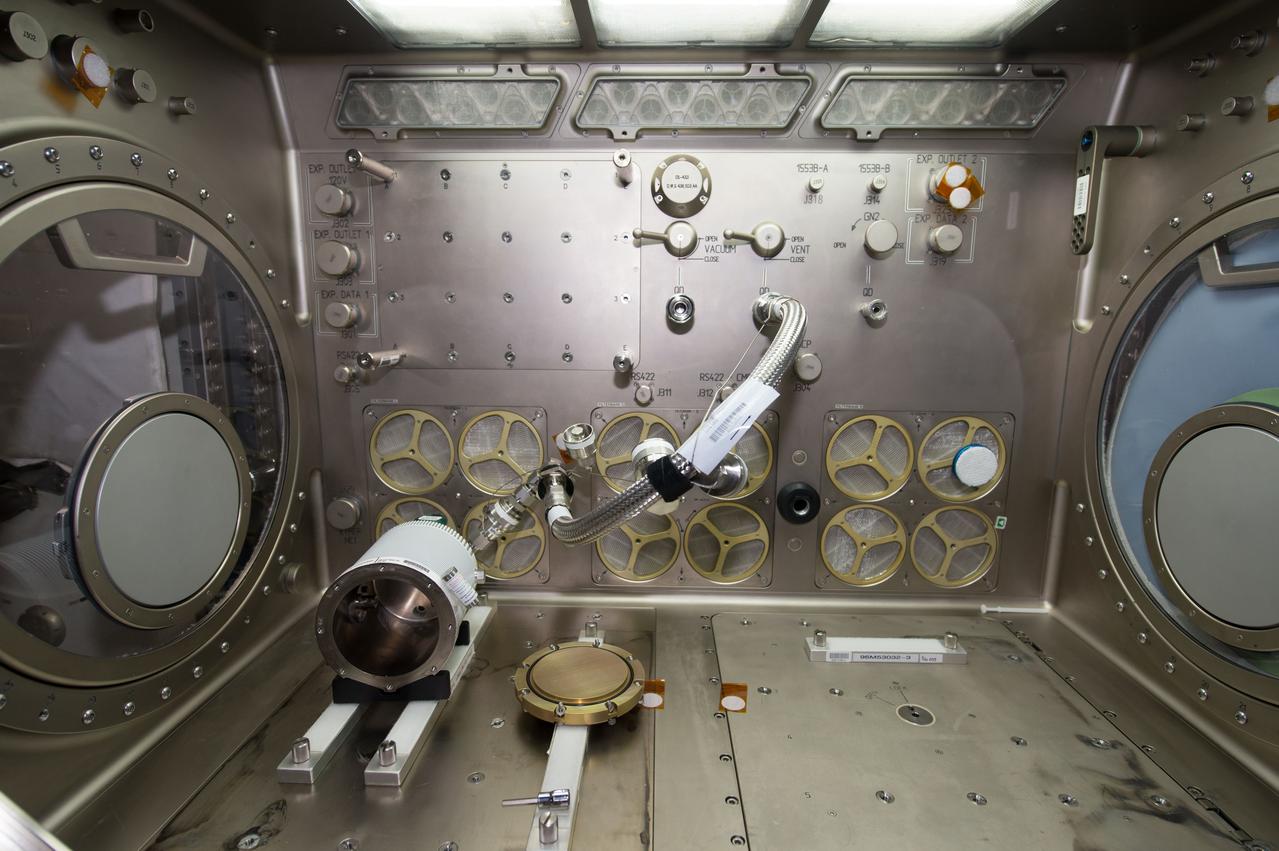
iss052e075807 (Aug. 30, 2017) --- Eli Lily-Lyophilization hardware setup in the Migrogravity Science Glovebox (MSG) work volume. Eli Lily-Lyophilization examines freeze-drying processes in the microgravity environment aboard the International Space Station (ISS) to improve the understanding of how food, drugs and other compounds are preserved in space.
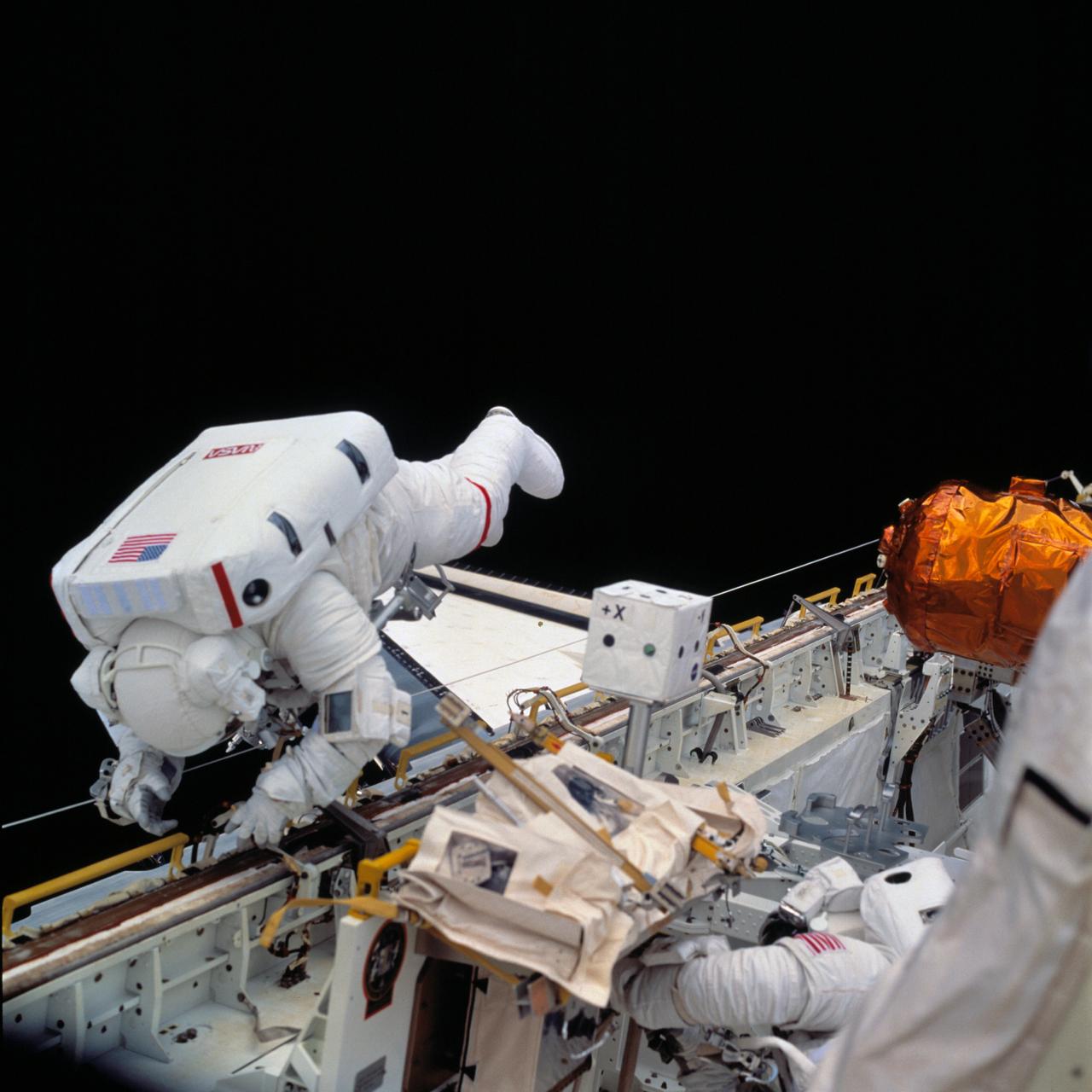
STS069-714-042 (16 September 1995) --- Astronauts James S. Voss, (red stripe on space suit) and Michael L. Gernhardt work together at the Extravehicular Activity (EVA) Assembly and Maintenance Task Board in the Space Shuttle Endeavour’s cargo bay. The EVA task board, with an approximate volume of 64 inches by 69 inches 27 inches and an Earth-bound weight of 450 pounds, helped the two space walkers evaluate work that will be done in the relatively near future on the International Space Station (ISS).
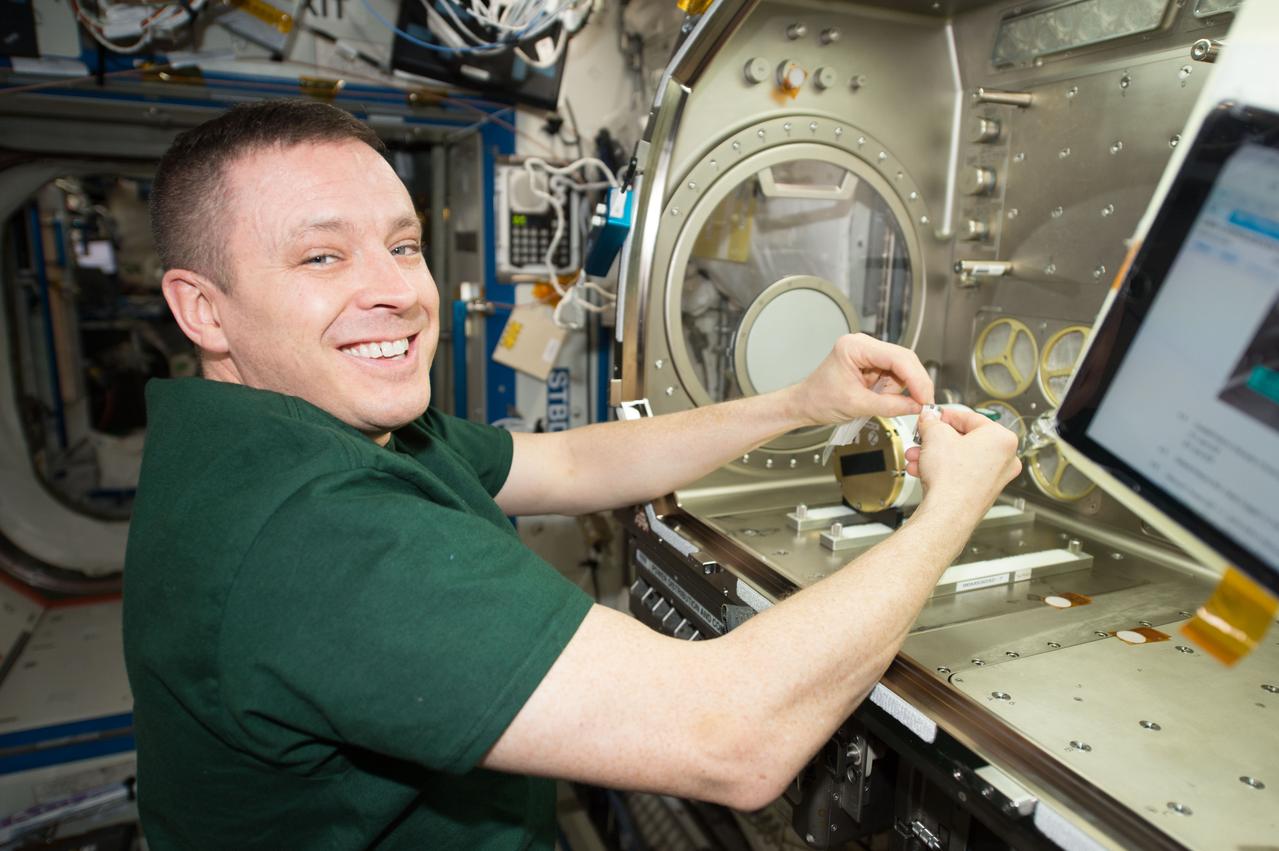
iss052e075804 (Aug. 30, 2017) --- NASA astronaut Jack Fischer working in the Microgravity Sciences Glovebox (MSG) work volume to set up the Eli Lily-Lyophilization experiment. Eli Lily-Lyophilization examines freeze-drying processes in the microgravity environment aboard the International Space Station (ISS) to improve the understanding of how food, drugs and other compounds are preserved in space.

Dr. Marc Pusey (seated) and Dr. Craig Kundrot use computers to analyze x-ray maps and generate three-dimensional models of protein structures. With this information, scientists at Marshall Space Flight Center can learn how proteins are made and how they work. The computer screen depicts a proten structure as a ball-and-stick model. Other models depict the actual volume occupied by the atoms, or the ribbon-like structures that are crucial to a protein's function.
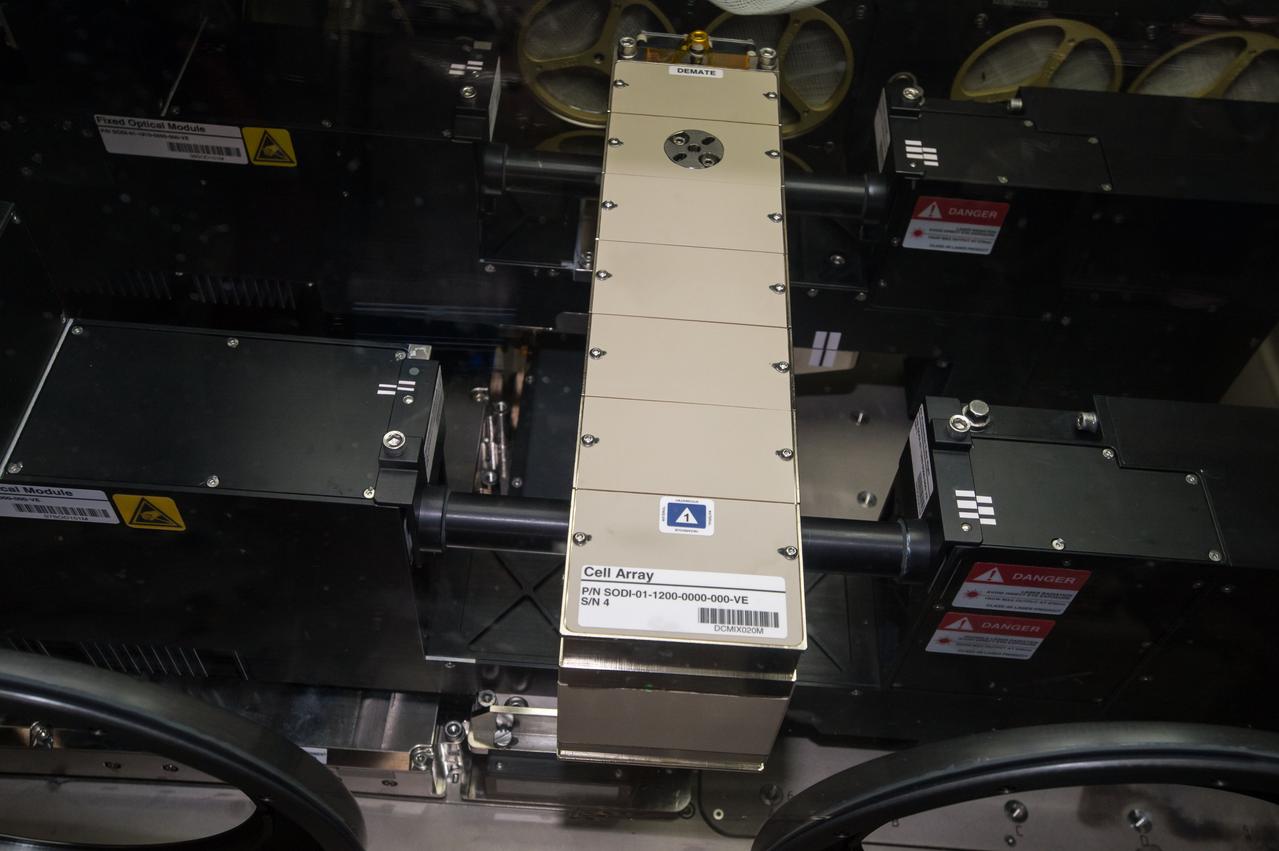
iss049e002308 (9/13/2016) --- A view taken during Selectable Optics Diagnostic Instrument (SODI) DSC Hardware Setup the MSG Work Volume. The Selectable Optical Diagnostics Instrument - Diffusion and Soret Coefficient (SODI-DSC) experiment will study diffusion in six different liquids over time in the absence of convection induced by the gravity field. The SODI-DSC investigation will provide information to scientist which can be used to more efficiently extract oil resources.
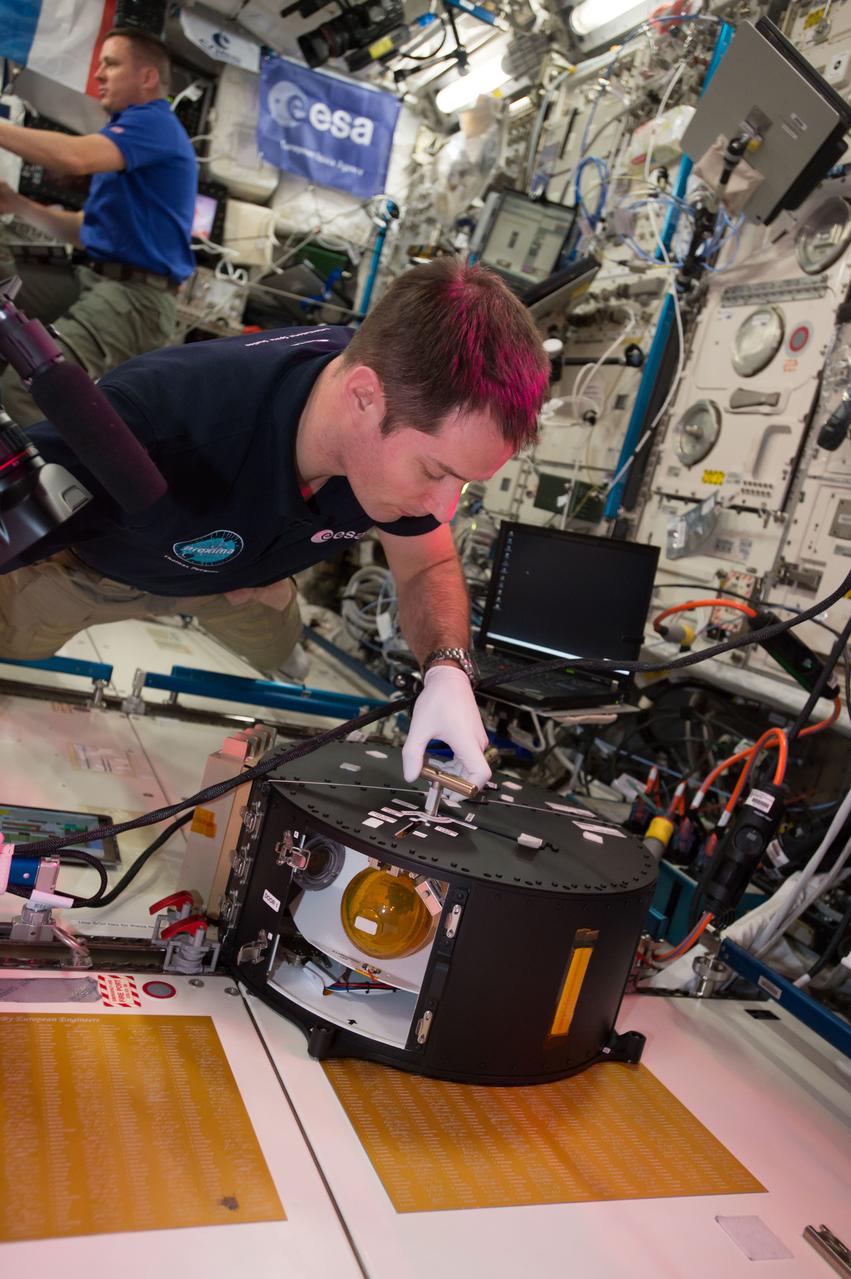
iss051e036148 (5/3/2016) --- European Space Agency (ESA) astronaut Thomas Pesquet works with Fluid Dynamics in Space (FLUIDICS) hardware during the completion of experiment runs. FE Jack Fischer is visible in the background. Image was taken in the Columbus European Laboratory. The FLUIDICS investigation evaluates the Center of Mass (CoM) position regarding a temperature gradient on a representation of a fuel tank. The observation of capillary wave turbulence on the surface of a fluid layer in a low-gravity environment can provide insights into measuring the existing volume in a sphere.
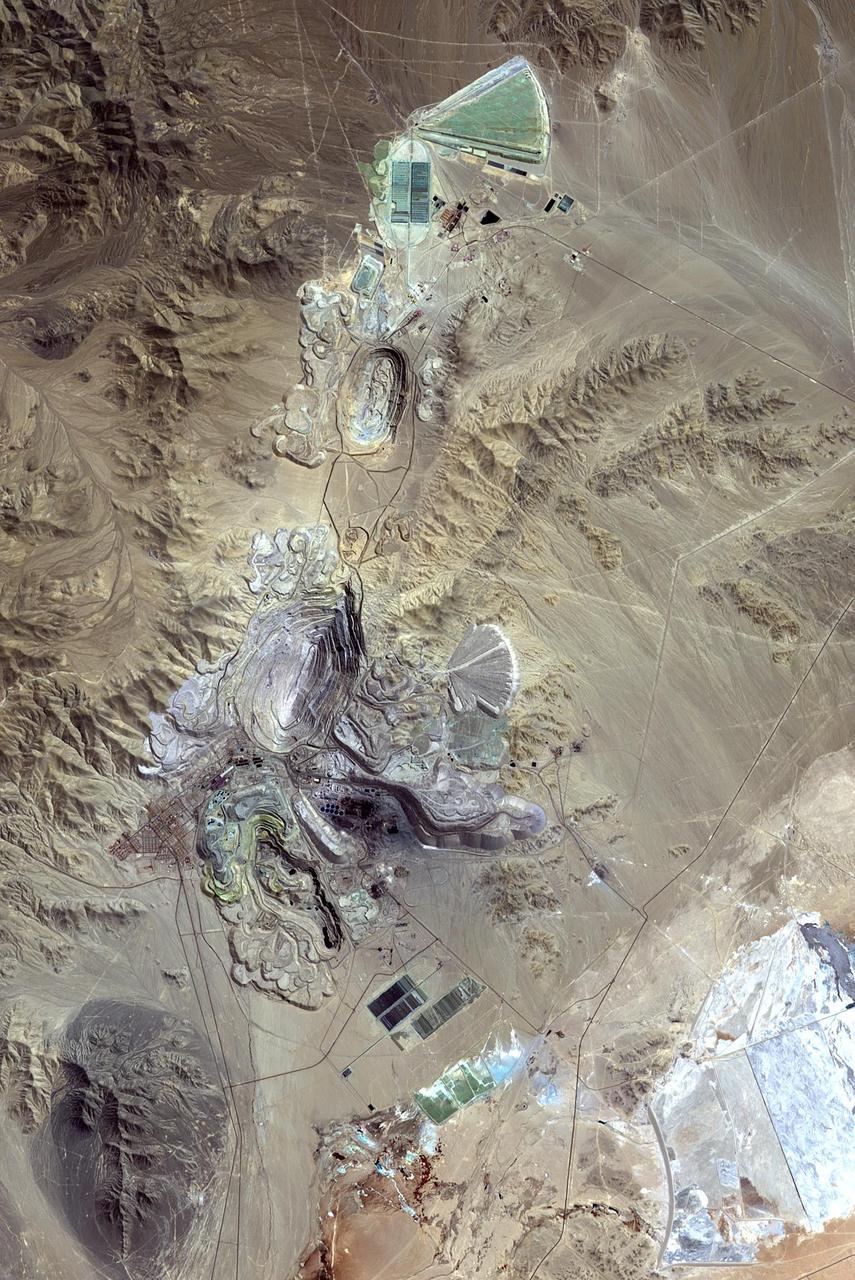
Chuquicamata, in Chile's Atacama Desert, is the largest open pit copper mine in the world, by excavated volume. The copper deposits were first exploited in pre-Hispanic times. Open pit mining began in the early 20th century when a method was developed to work low grade oxidized copper ores. The image was acquired September 2, 2007, covers an area of 19.5 by 29.3 km, and is located at 22.1 degrees south, 68.9 degrees west. http://photojournal.jpl.nasa.gov/catalog/PIA20973

jsc2024e066526 (10/7/2024) --- Randall Middle School students work to optimize the materials and volumes for testing the growth of Trigonella foenum-graecum in microgravity. Their experiment, Fenugreek and its Nutritional Value in Microgravity, is part of the Nanoracks-National Center for Earth and Space Science Education-Surveyor-Student Spaceflight Experiments Program Mission 18 to ISS (Nanoracks-NCESSE-Surveyor-SSEP).
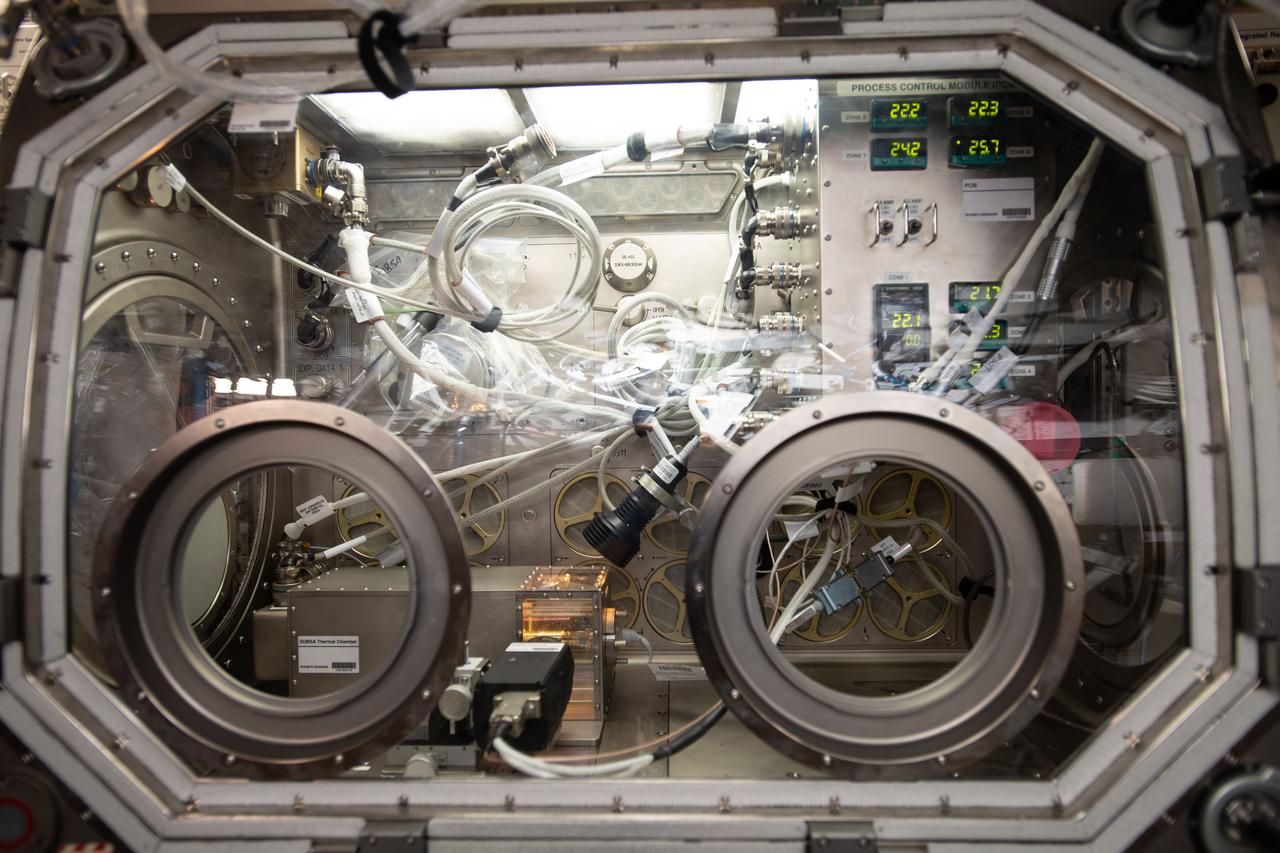
iss058e028142 (3/7/2019) --- View of the Microgravity Sciences Glovebox (MSG) during configuration of the SUBSA (Solidification Using Baffles in Sealed Ampoules) hardware in the MSG Work Volume in the Destiny Laboratory aboard the International Space Staion(ISS). SUBSA is a high-temperature furnace that can be used to study how microgravity affects the synthesis of semiconductor and scintillator crystals.
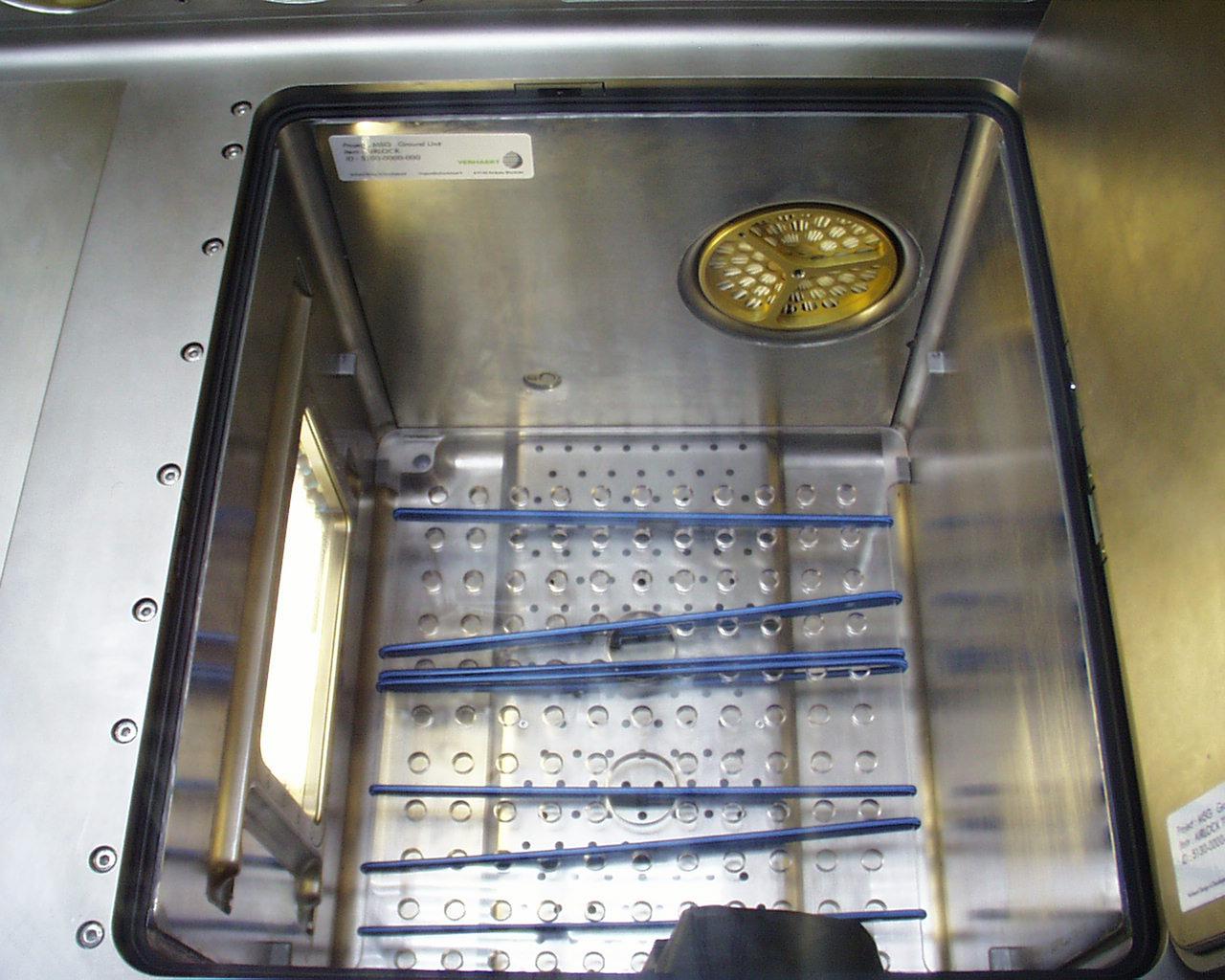
This photo shows the access through the internal airlock on the Microgravity Science Glovebox (MSG) being developed by the European Space Agency (ESA) and NASA for use aboard the International Space Station (ISS). The airlock will allow the insertion or removal of equipment and samples without opening the working volume of the glovebox. Scientists will use the MSG to carry out multidisciplinary studies in combustion science, fluid physics and materials science. The MSG is managed by NASA's Marshall Space Flight Center (MSFC). Photo Credit: NASA/MSFC
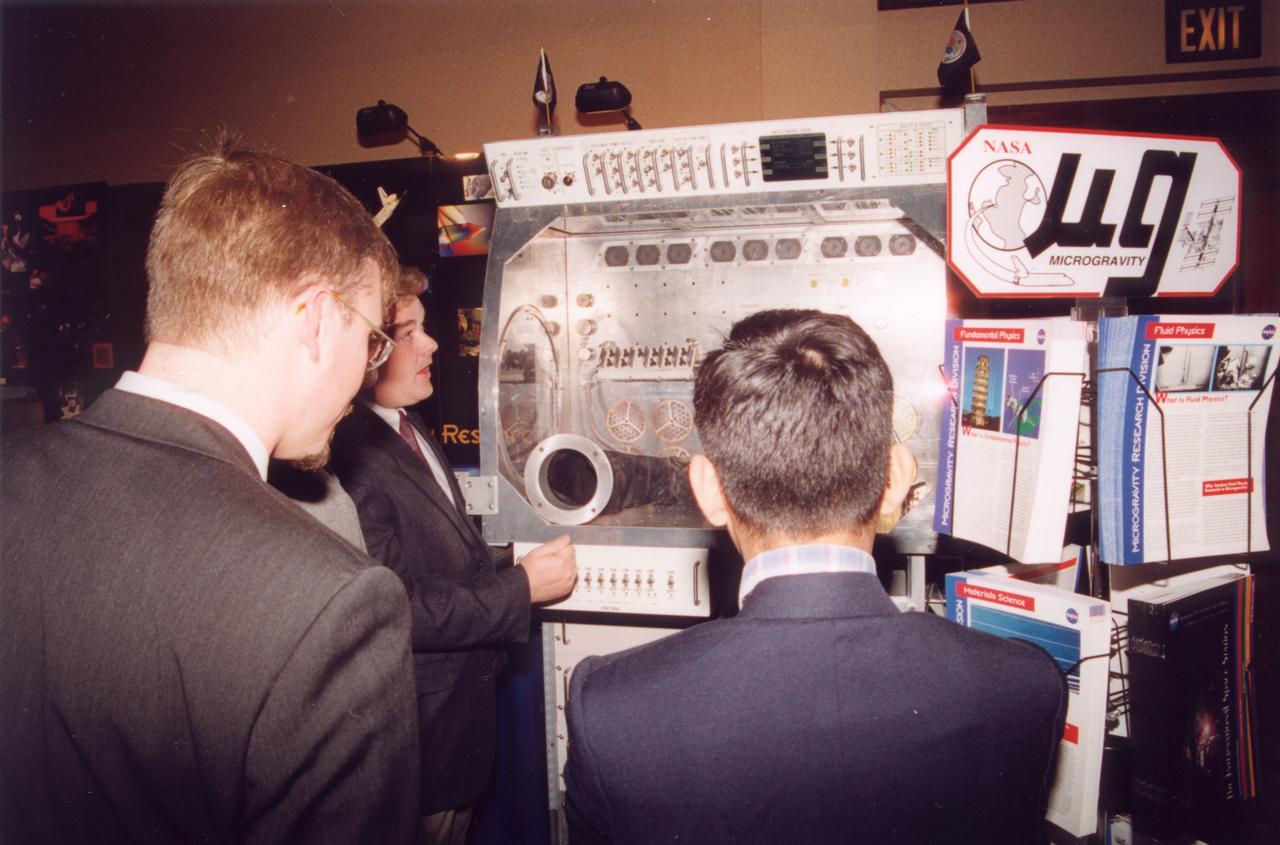
Tim Broach (center) of NASA/Marshall Space Flight Center (MSFC), demonstrates the working volume inside the Microgravity Sciences Glovebox being developed by the European Space Agency (ESA) for use aboard the U.S. Destiny laboratory module on the International Space Station (ISS). This mockup is the same size as the flight hardware. Photo credit: NASA/Marshall Space Flight Center (MSFC)
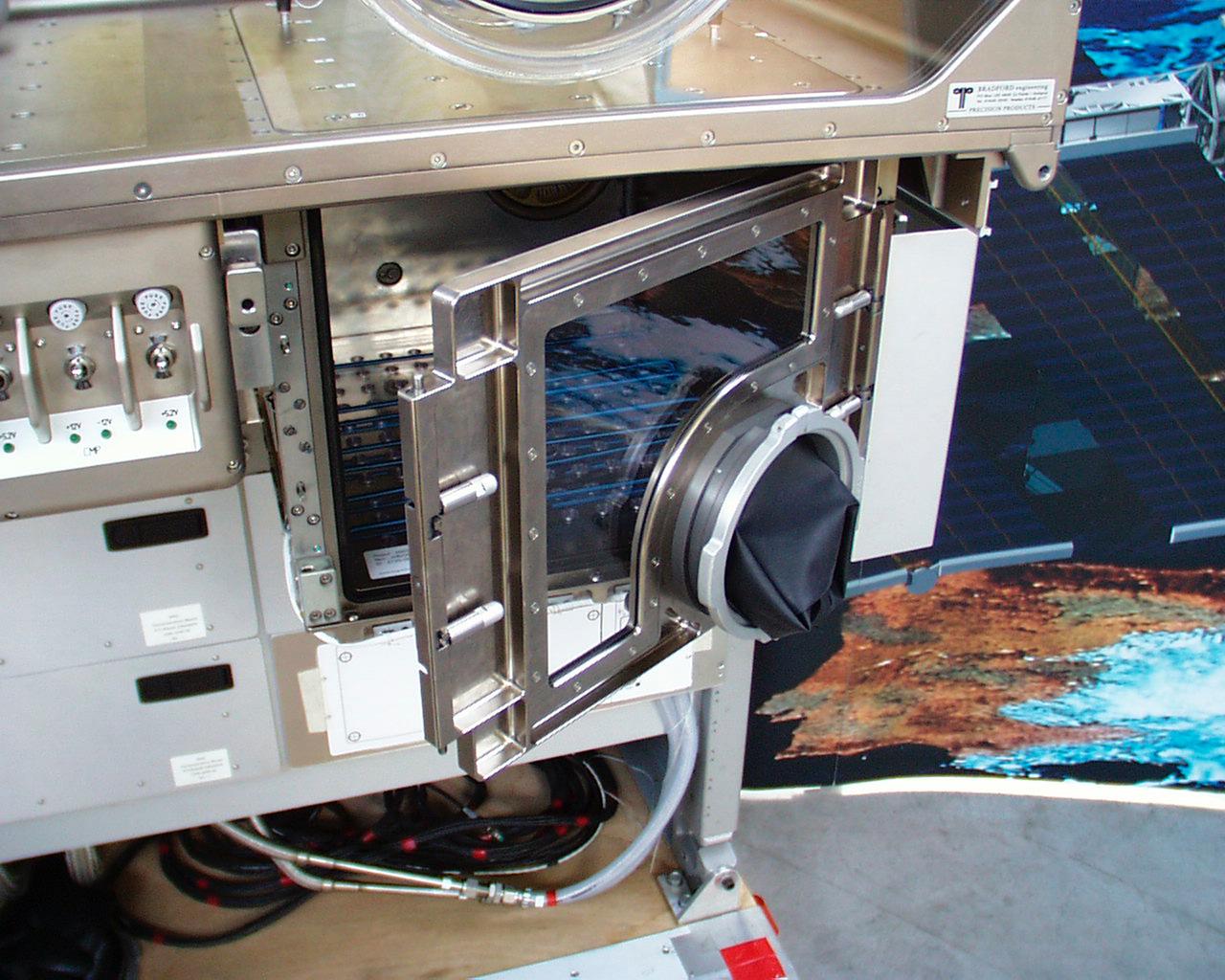
Once the Microgravity Science Glovebox (MSG) is sealed, additional experiment items can be inserted through a small airlock at the bottom right of the work volume. It is shown here with the door open. The European Space Agency (ESA) and NASA are developing the MSG for use aboard the International Space Station (ISS). Scientists will use the MSG to carry out multidisciplinary studies in combustion science, fluid physics and materials science. The MSG is managed by NASA's Marshall Space Flight Center (MSFC). Photo Credit: NASA/MSFC
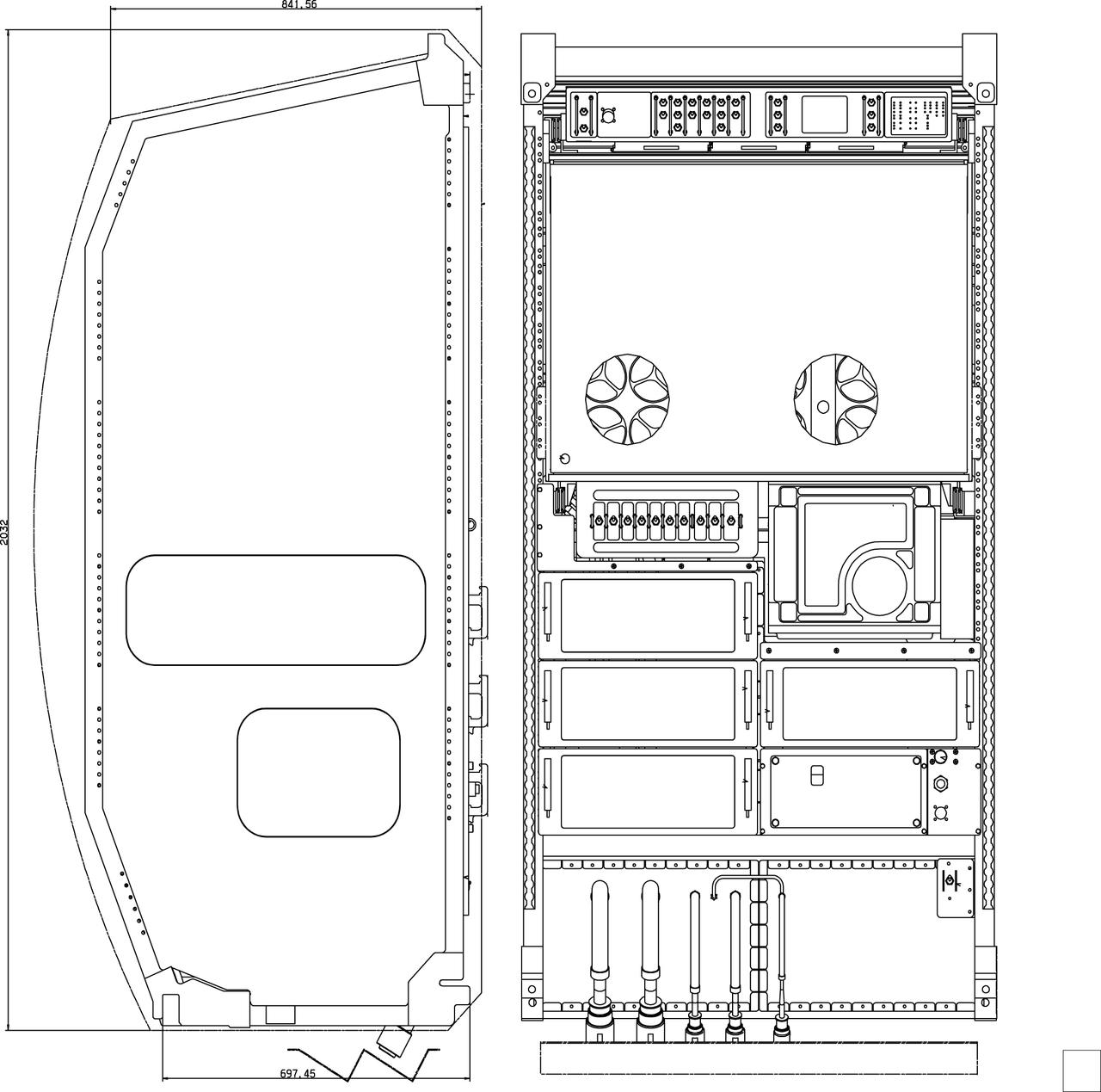
The Microgravity Science Glovebox is being developed by the European Space Agency and NASA to provide a large working volume for hands-on experiments aboard the International Space Station. Scientists will use the MSG to carry out multidisciplinary studies in combustion science, fluid physics and materials science. The MSG is managed by NASA's Marshall Space Flight Center. (Credit: NASA/Marshall)
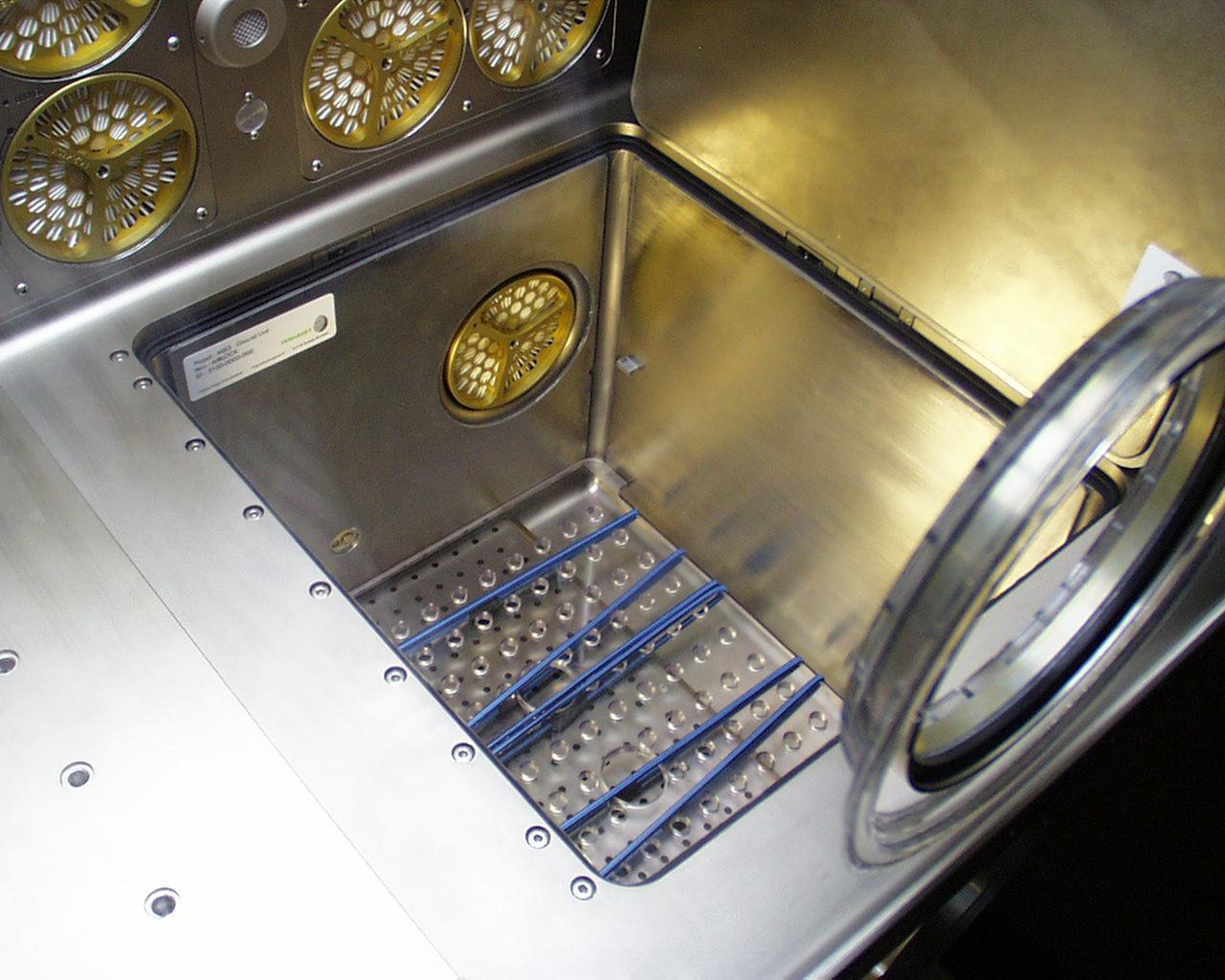
This photo shows the access through the internal airlock (bottom right) on the Microgravity Science Glovebox (MSG) being developed by the European Space Agency (ESA) and NASA for use aboard the International Space Station (ISS). The airlock will allow the insertion or removal of equipment and samples without opening the working volume of the glovebox. Scientists will use the MSG to carry out multidisciplinary studies in combustion science, fluid physics and materials science. The MSG is managed by NASA's Marshall Space Flight Center (MSFC). Photo Credit: NASA/MSFC
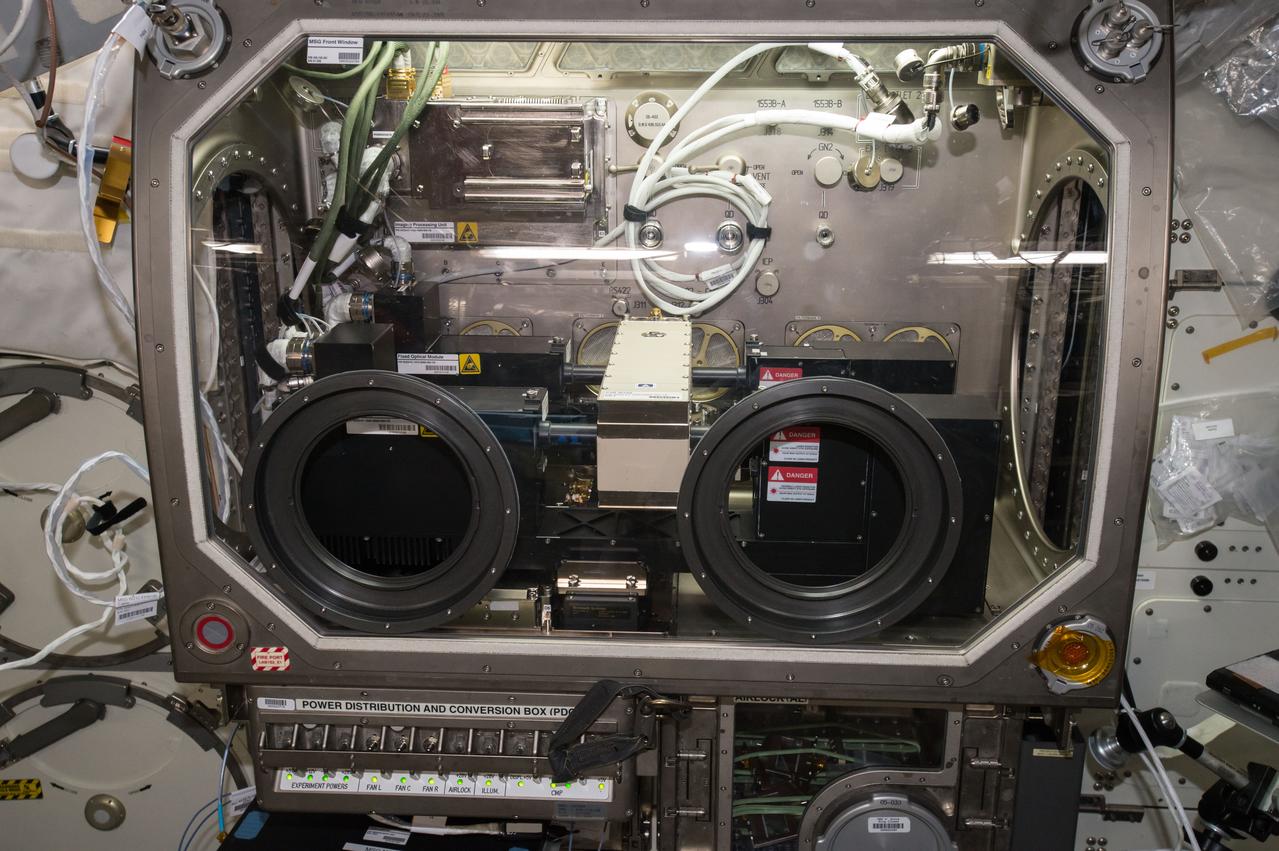
iss049e002305 (9/13/2016) --- A view taken during Selectable Optics Diagnostic Instrument (SODI) DSC Hardware Setup the MSG Work Volume. The Selectable Optical Diagnostics Instrument - Diffusion and Soret Coefficient (SODI-DSC) experiment will study diffusion in six different liquids over time in the absence of convection induced by the gravity field. The SODI-DSC investigation will provide information to scientist which can be used to more efficiently extract oil resources.

Tim Broach (seen through window) of NASA/Marshall Spce Flight Center (MSFC), demonstrates the working volume inside the Microgravity Sciences Glovebox being developed by the European Space Agency (ESA) for use aboard the U.S. Destiny laboratory module on the International Space Station (ISS). This mockup is the same size as the flight hardware. Observing are Tommy Holloway and Brewster Shaw of The Boeing Co. (center) and John-David Bartoe, ISS research manager at NASA/John Space Center and a payload specialist on Spacelab-2 mission (1985). Photo crdit: NASA/Marshall Space Flight Center (MSFC)
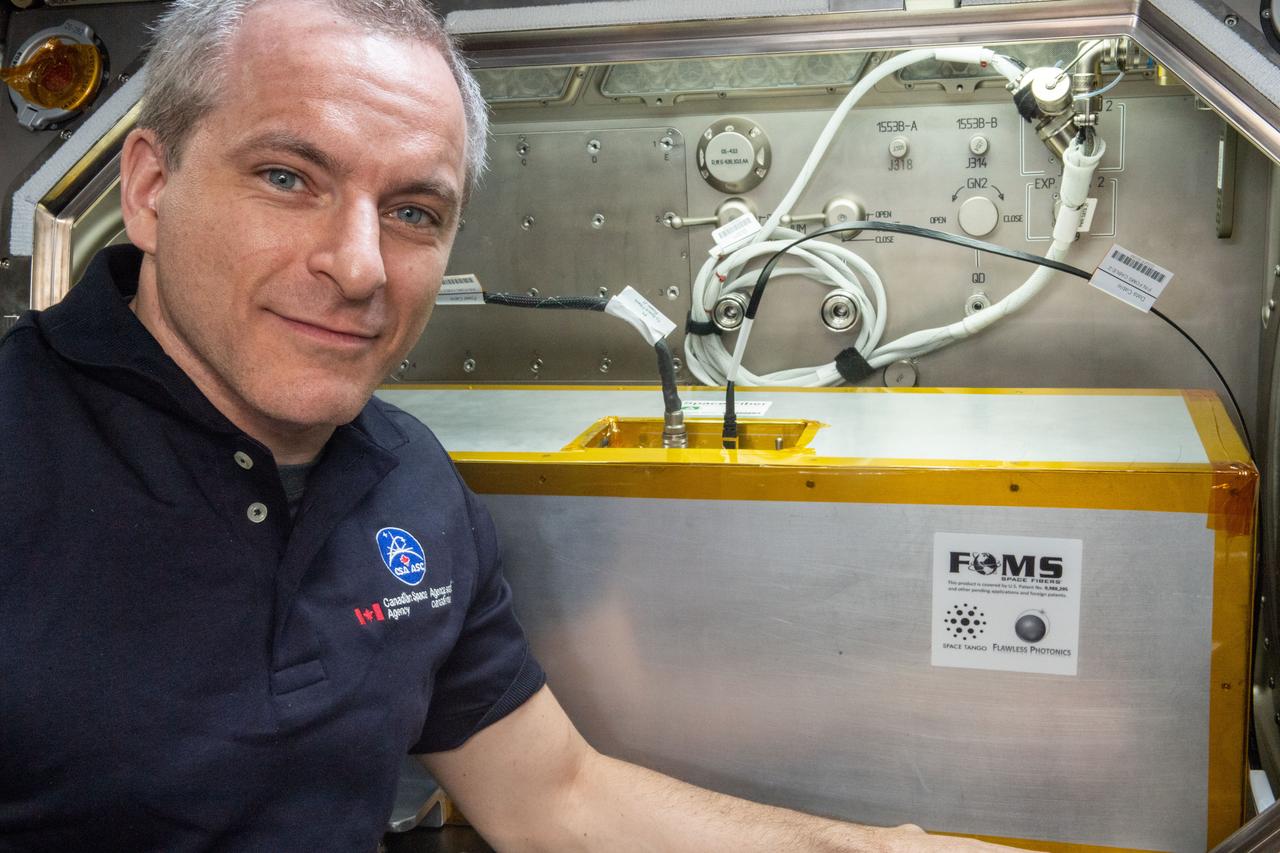
iss059e034721 (4/23/2019) --- Canadian Space Agency (CSA) astronaut David Saint-Jacques is photographed in front of the Microgravity Science Glovebox (MSG) during the installation of the Space Fibers experiment hardware into the MSG work volume. Manufacturing Fiber Optic Cable in Microgravity (Space Fibers) evaluates a method for producing fiber optic cable from a blend of zirconium, barium, lanthanum, sodium and aluminum, called ZBLAN, in space. ZBLAN produces glass one hundred times more transparent than silica-based glass, exceptional for fiber optics. Microgravity suppresses two mechanisms that commonly degrade fiber, and previous studies showed improved properties in fiber drawn in microgravity compared to that fabricated on the ground.
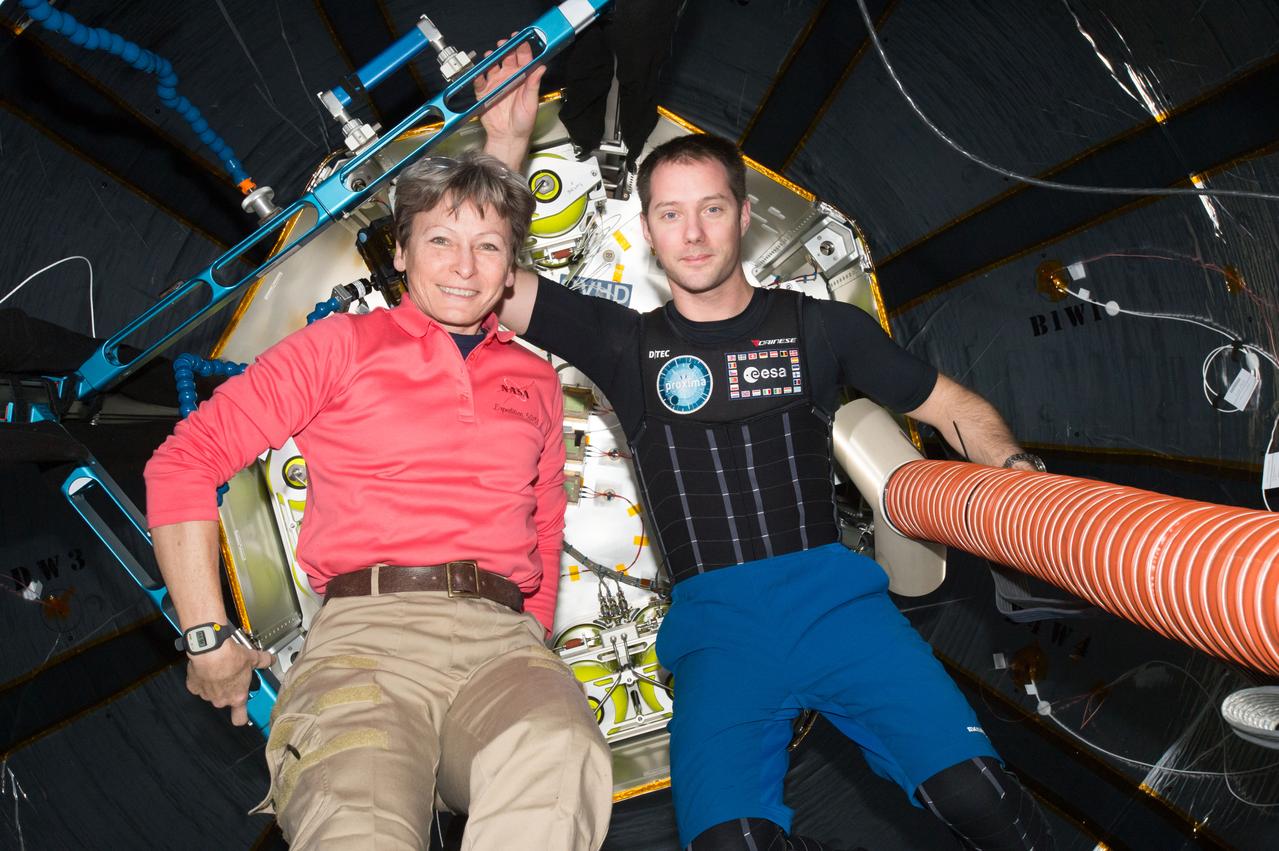
iss050e037906 (02/02/2017) --- NASA astronaut Peggy Whitson (left) and ESA (European Space Agency) astronaut Thomas Pesquet are photographed inside the Bigelow Expandable Activity Module, or BEAM. BEAM is an experimental expandable module attached to the station. Expandable habitats could greatly decrease the amount of transport volume for future space missions. These “expandables” weigh less and take up less room than traditional rigid metal habitats on a rocket while allowing additional space for living and working. They also provide protection from solar and cosmic radiation, space debris, and other contaminants. Crews traveling to the moon, Mars, asteroids, or other destinations could potentially use them as habitable structures.
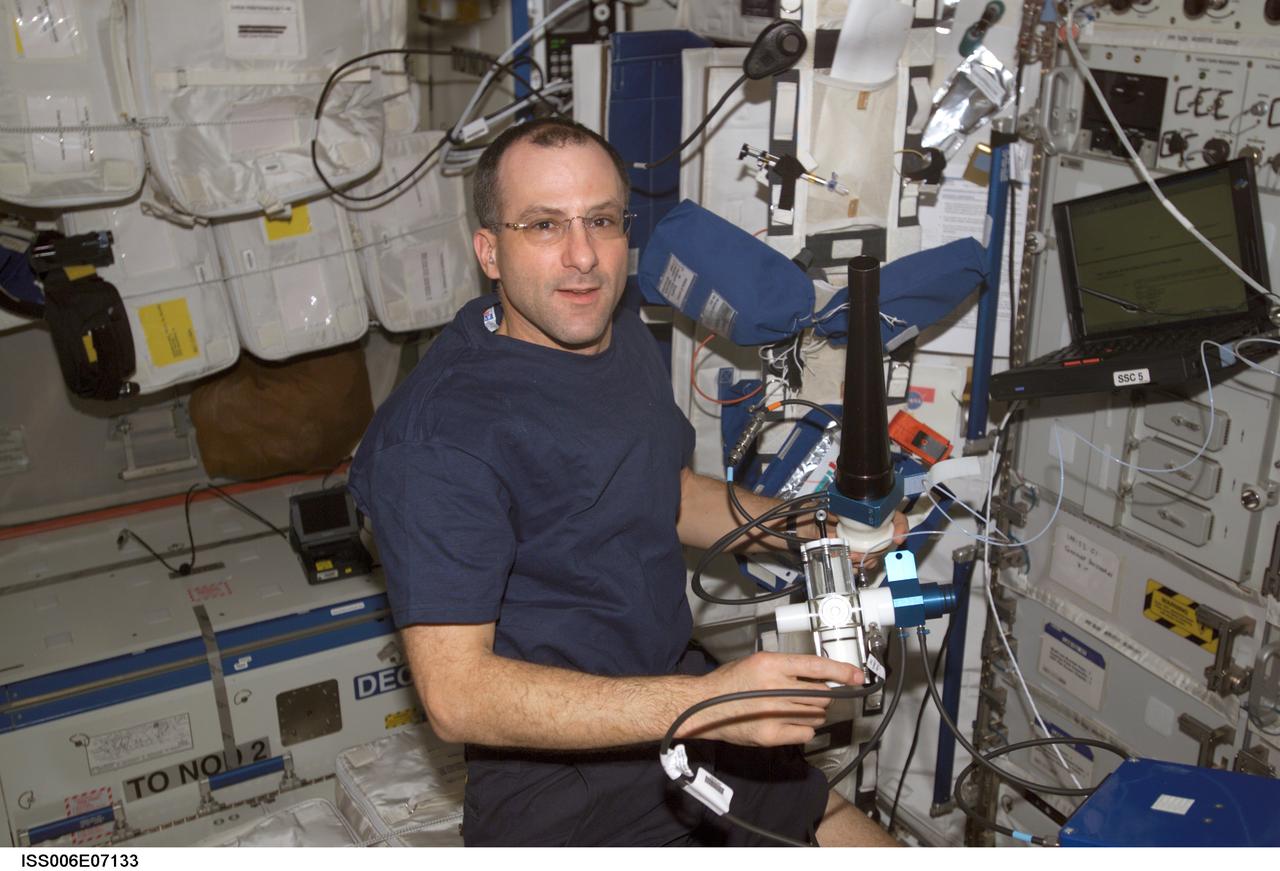
In this International Space Station (ISS) onboard photo, Expedition Six Science Officer Donald R. Pettit works to set up the Pulmonary Function in Flight (PuFF) experiment hardware in the Destiny Laboratory. Expedition Six is the fourth and final crew to perform the PuFF experiment. The PuFF experiment was developed to better understand what effects long term exposure to microgravity may have on the lungs. The focus is on measuring changes in the everness of gas exchange in the lungs, and on detecting changes in respiratory muscle strength. It allows astronauts to measure blood flow through the lungs, the ability of the lung to take up oxygen, and lung volumes. Each PuFF session includes five lung function tests, which involve breathing only cabin air. For each planned extravehicular (EVA) activity, a crew member performs a PuFF test within one week prior to the EVA. Following the EVA, those crew members perform another test to document the effect of exposure of the lungs to the low-pressure environment of the space suits. This experiment utilizes the Gas Analyzer System for Metabolic Analysis Physiology, or GASMAP, located in the Human Research Facility (HRF), along with a variety of other Puff equipment including a manual breathing valve, flow meter, pressure-flow module, pressure and volume calibration syringes, and disposable mouth pieces.
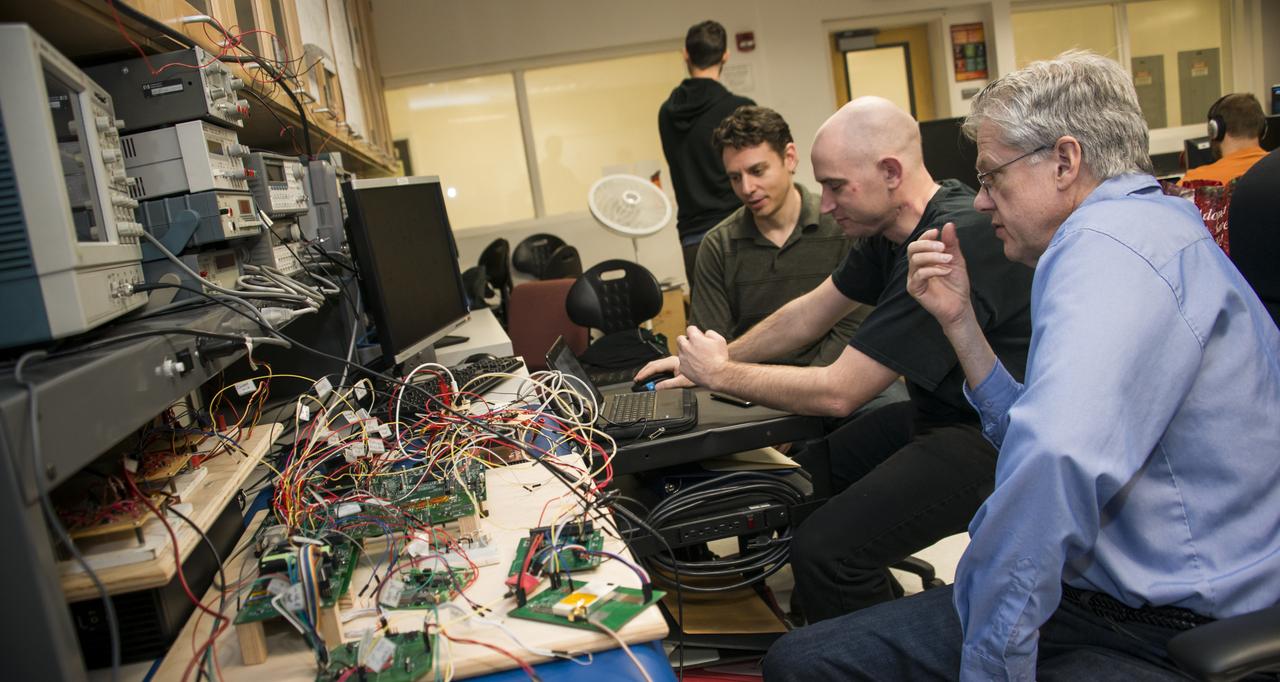
CSUNSat-1 Team (Adam Kaplan, James Flynn, Donald Eckels) working on their CubeSat at California State University Northridge. The primary mission of CSUNSat1 is to space test an innovative low temperature capable energy storage system developed by the Jet Propulsion Laboratory, raising its TRL level to 7 from 4 to 5. The success of this energy storage system will enable future missions, especially those in deep space to do more science while requiring less energy, mass and volume. This CubeSat was designed, built, programmed, and tested by a team of over 70 engineering and computer science students at CSUN. The primary source of funding for CSUNSat1 comes from NASA’s Smallest Technology Partnership program. Launched by NASA’s CubeSat Launch Initiative NET April 18, 2017 ELaNa XVII mission on the seventh Orbital-ATK Cygnus Commercial Resupply Services (OA-7) to the International Space Station and deployed on tbd.
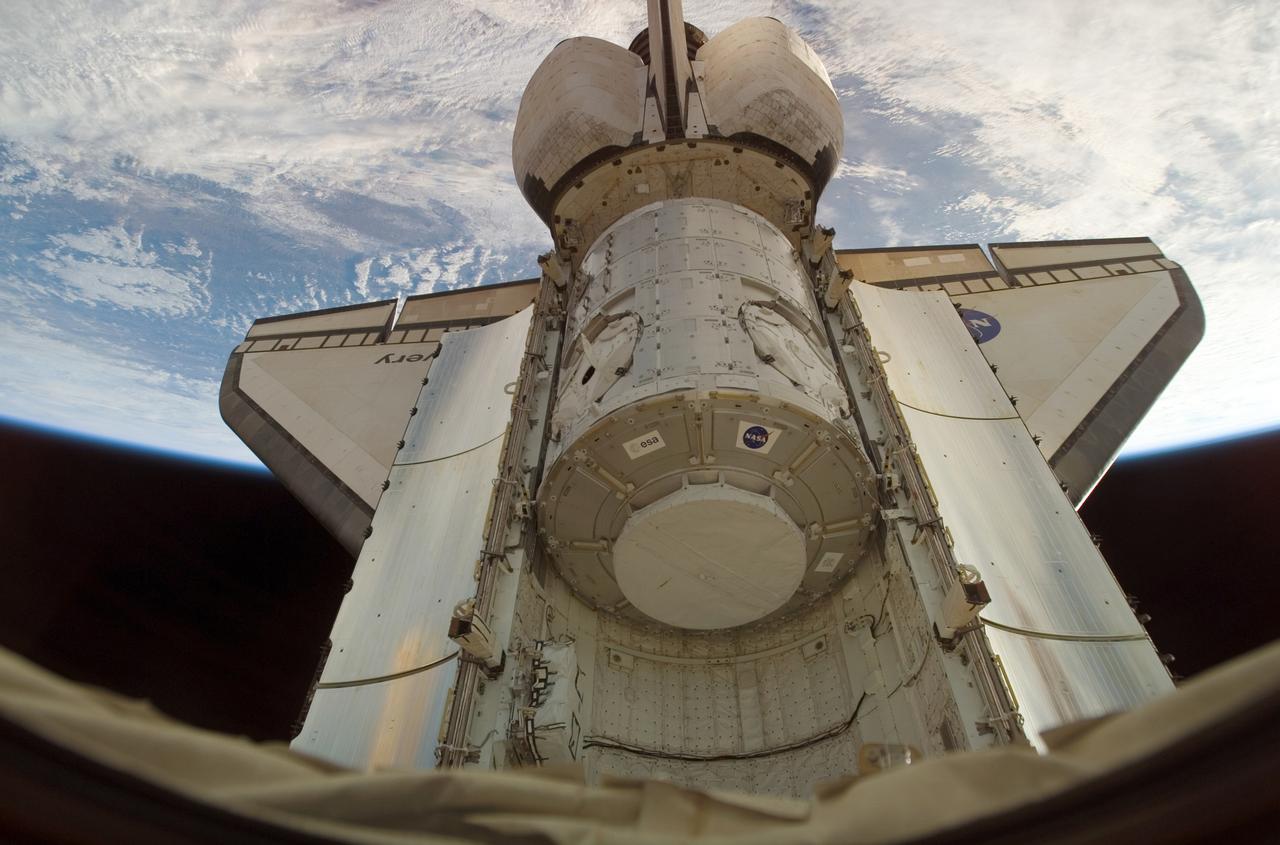
Back dropped by Earth's horizon and the blackness of space, the Italian-built U.S. Node 2, Harmony, is featured in Space Shuttle Discovery's cargo bay during the STS-120 mission. This image was photographed by an Expedition 16 crew member on the International Space Station (ISS) while Discovery was docked with the station. The aluminum node is 7.2 meters (23.6 feet) long and 4.4 meters (14.5 feet) in diameter. Its pressurized volume is 75.5 cubic meters (2666 cubic feet), and its launch weight is approximately 14,288 kilograms (31,500 pounds). The installation of Harmony increases the living and working space inside the station to approximately 500 cubic meters (18,000 cubic feet). It also allows the addition of international laboratories from Europe and Japan to the station.
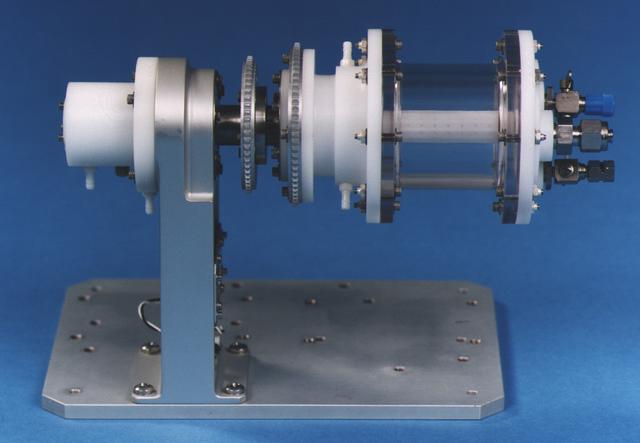
The heart of the bioreactor is the rotating wall vessel, shown without its support equipment. Volume is about 125 mL. The work is sponsored by NASA's Office of Biological and Physical Research. The bioreactor is managed by the Biotechnology Cell Science Program at NASA's Johnson Space Center (JSC). NASA-sponsored bioreactor research has been instrumental in helping scientists to better understand normal and cancerous tissue development. In cooperation with the medical community, the bioreactor design is being used to prepare better models of human colon, prostate, breast and ovarian tumors. Cartilage, bone marrow, heart muscle, skeletal muscle, pancreatic islet cells, liver and kidney are just a few of the normal tissues being cultured in rotating bioreactors by investigators.
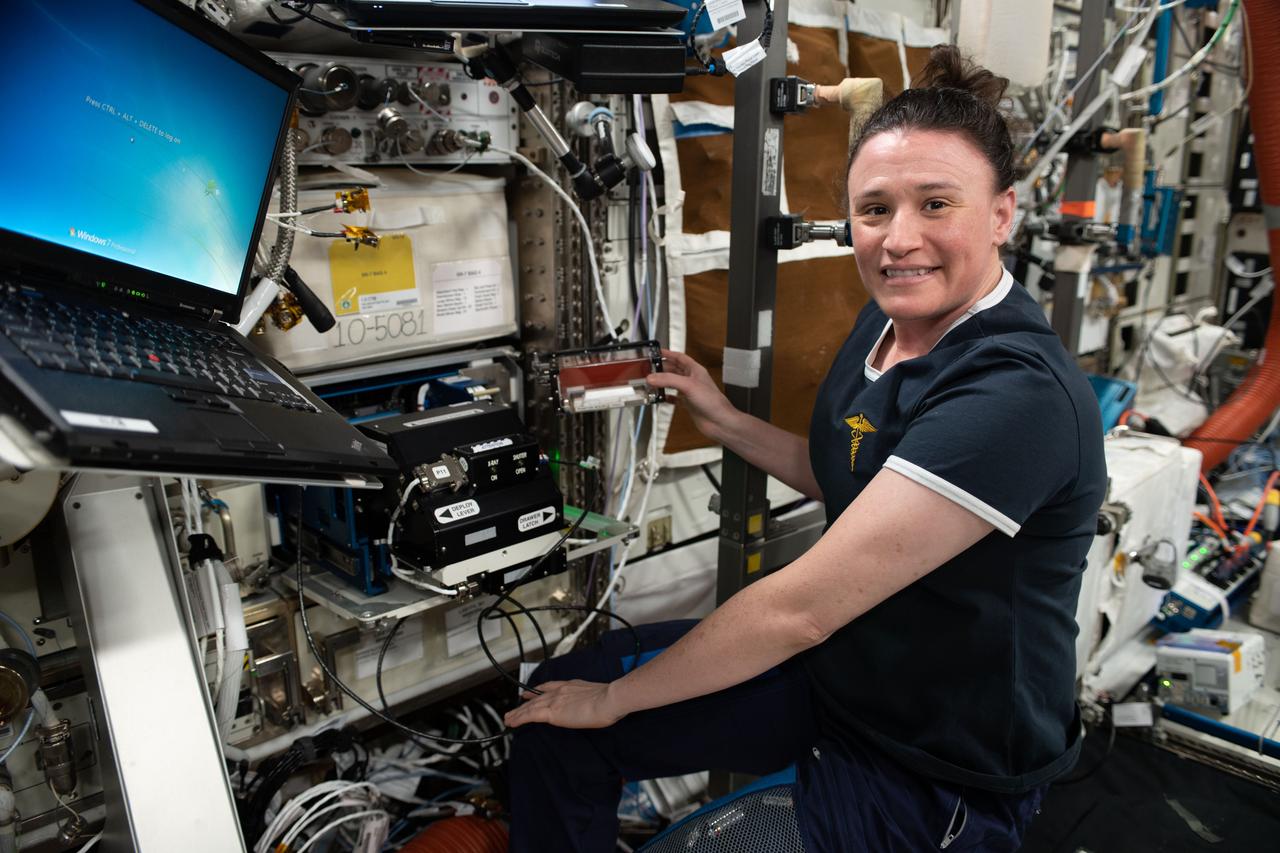
iss056e158493 (Aug. 27, 2018) --- NASA astronaut Serena Auñón-Chancellor works to calibrate a Bone Densitometer aboard the International Space Station's U.S. Destiny laboratory. The device measures the mass per unit volume (density) of minerals in bone using using Dual-Energy X-ray Absorptiometry (DEXA). It is being developed from commercial off-the-shelf hardware and is being designed to fit into an EXPRESS Rack locker. The Bone Densitometer takes quantitative measures of bone loss in mice, during orbital space flight, which are necessary for the development of countermeasures for human crew members, as well as for bone-loss syndromes on Earth, by commercial entities. Planned studies, both academic and commercial, require on-orbit analytical methods including bone densitometry.
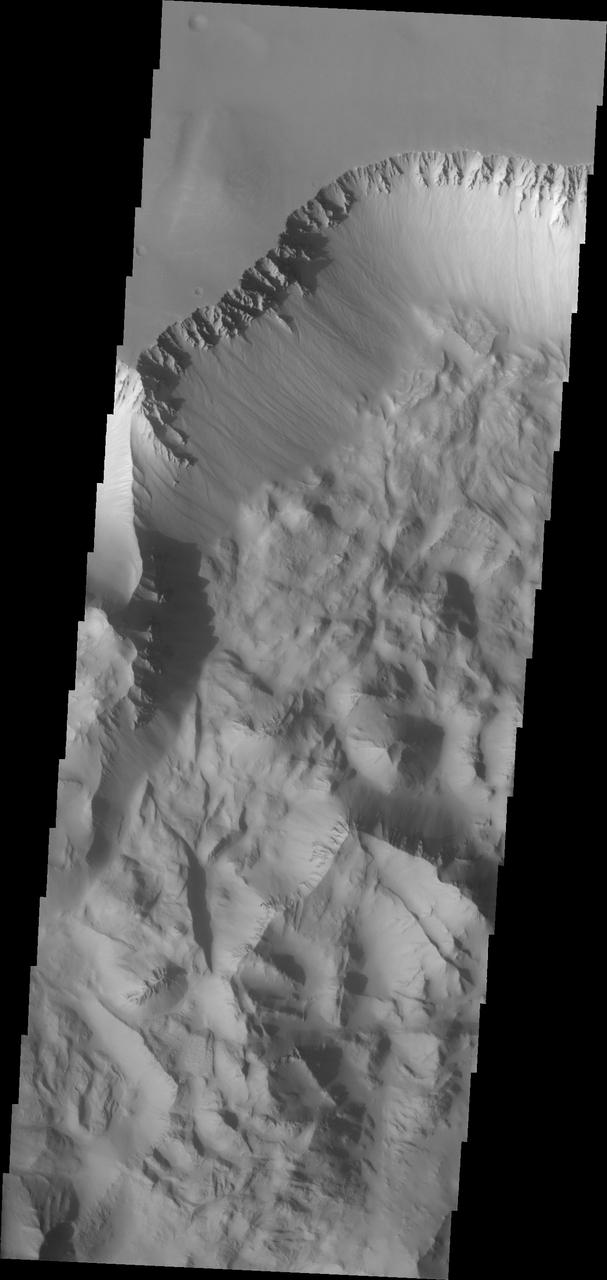
Continuing eastward along Ius Chasma, this section of the canyon floor has been completely filled by blocky deposits from large volume landslides. A landslide is a failure of slope due to gravity. They initiate due to several reasons. A lower layer of poorly cemented/resistant material may have been eroded, undermining the wall above which then collapses; earth quake seismic waves can cause the slope to collapse; and even an impact event near the canyon wall can cause collapse. As millions of tons of material fall and slide down slope a scalloped cavity forms at the upper part where the slope failure occurred. At the material speeds downhill it will pick up more of the underlying slope, increasing the volume of material entrained into the landslide. Whereas some landslides spread across the canyon floor forming lobate deposits, very large volume slope failures will completely fill the canyon floor in a large complex region of chaotic blocks. Ius Chasma is at the western end of Valles Marineris, south of Tithonium Chasma. Valles Marineris is over 4000 kilometers long, wider than the United States. Ius Chasma is almost 850 kilometers long (528 miles), 120 kilometers wide and over 8 kilometers deep. In comparison, the Grand Canyon in Arizona is about 175 kilometers long, 30 kilometers wide, and only 2 kilometers deep. The canyons of Valles Marineris were formed by extensive fracturing and pulling apart of the crust during the uplift of the vast Tharsis plateau. Landslides have enlarged the canyon walls and created deposits on the canyon floor. Weathering of the surface and influx of dust and sand have modified the canyon floor, both creating and modifying layered materials. There are many features that indicate flowing and standing water played a part in the chasma formation. The Odyssey spacecraft has spent over 15 years in orbit around Mars, circling the planet more than 71,000 times. It holds the record for longest working spacecraft at Mars. THEMIS, the IR/VIS camera system, has collected data for the entire mission and provides images covering all seasons and lighting conditions. Over the years many features of interest have received repeated imaging, building up a suite of images covering the entire feature. From the deepest chasma to the tallest volcano, individual dunes inside craters and dune fields that encircle the north pole, channels carved by water and lava, and a variety of other feature, THEMIS has imaged them all. For the next several months the image of the day will focus on the Tharsis volcanoes, the various chasmata of Valles Marineris, and the major dunes fields. We hope you enjoy these images! Orbit Number: 17041 Latitude: -6.50422 Longitude: 272.124 Instrument: VIS Captured: 2005-10-17 10:40 https://photojournal.jpl.nasa.gov/catalog/PIA22278

A large volcanic crater known as a caldera is located at the summit of all of the Tharsis volcanoes. These calderas are produced by massive volcanic explosions and collapse.Today's VIS image shows the summit caldera of Arsia Mons. Several small volcanic vents are visible on the caldera floor. It is not uncommon for calderas to have "flat" floors after the final explosive eruption the empties the subsurface magma chamber. There may still be some magma or superheated rock left after the collapse that will fill in part of the depression. Additionally, over time erosion will work to level the topography. Within the Arsia Mons caldera there was renewed activity from several small vents that occurred along the alignment of the NE/SW trend of the three large volcanoes. This ongoing, low volume activity is similar to the lava lake in Kilauea in Hawaii. Arsia Mons is the southernmost of the Tharsis volcanoes. It is 450 km (270 miles) in diameter, almost 20 km (12 miles) high, and the summit caldera is 120 km (72 miles) wide. For comparison, the largest volcano on Earth is Mauna Loa. From its base on the sea floor, Mauna Loa measures only 6.3 miles high and 75 miles in diameter.The Arsia Mons summit caldera is larger than many volcanoes on Earth. Orbit Number: 79230 Latitude: -9.4441 Longitude: 239.984 Instrument: VIS Captured: 2019-10-25 02:43 https://photojournal.jpl.nasa.gov/catalog/PIA23639

The structure of the Satellite Tobacco Mosaic Virus (STMV)--one of the smallest viruses known--has been successfully deduced using STMV crystals grown aboard the Space Shuttle in 1992 and 1994. The STMV crystals were up to 30 times the volume of any seen in the laboratory. At the same time they gave the best resolution data ever obtained on any virus crystal. STMV is a small icosahedral plant virus, consisting of a protein shell made up of 60 identical protein subunits of molecular weight 17,500. Particularly noteworthy is the fact that, in contrast to the crystal grown on Earth, the crystals grown under microgravity conditions were viusally perfect, with no striations or clumping of crystals. Furthermore, the X-ray diffraction data obtained from the space-grown crystals was of a much higher quality than the best data available at that time from ground-based crystals. This computer model shows the external coating or capsid. STMV is used because it is a simple protein to work with; studies are unrelated to tobacco. Credit: Dr. Alex McPherson, Univeristy of California at Irvin.
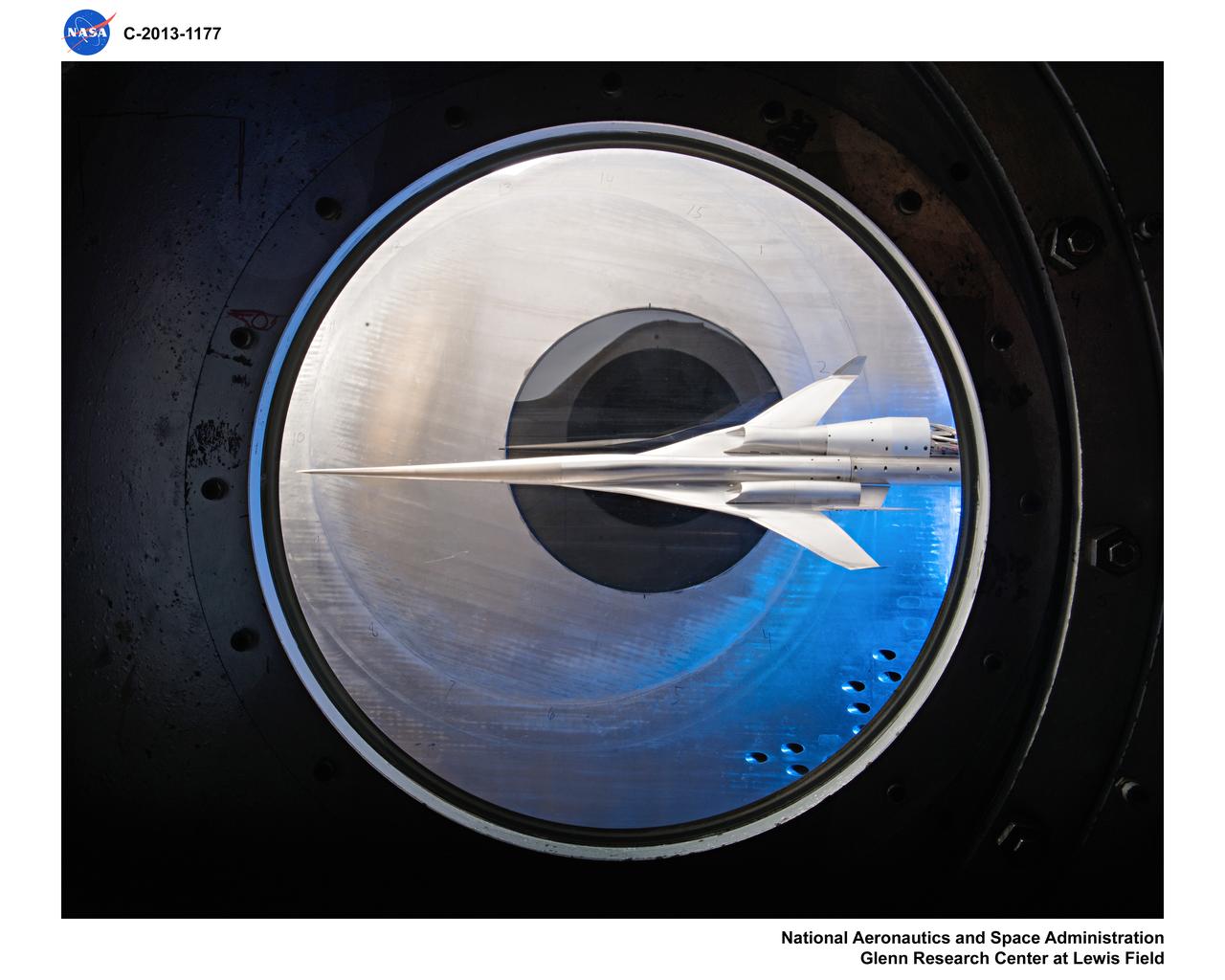
Supersonic Aircraft Model The window in the sidewall of the 8- by 6-foot supersonic wind tunnel at NASA's Glenn Research Center shows a 1.79 percent scale model of a future concept supersonic aircraft built by The Boeing Company. In recent tests, researchers evaluated the performance of air inlets mounted on top of the model to see how changing the amount of airflow at supersonic speeds through the inlet affected performance. The inlet on the pilot's right side (top inlet in this side view) is larger because it contains a remote-controlled device through which the flow of air could be changed. The work is part of ongoing research in NASA's Aeronautics Research Mission Directorate to address the challenges of making future supersonic flight over land possible. Researchers are testing overall vehicle design and performance options to reduce emissions and noise, and identifying whether the volume of sonic booms can be reduced to a level that leads to a reversal of the current ruling that prohibits commercial supersonic flight over land. Image Credit: NASA/Quentin Schwinn

A researcher in the Supercharger Research Division at the National Advisory Committee for Aeronautics (NACA) Aircraft Engine Research Laboratory measures the blade thickness on a supercharger. Superchargers were developed at General Electric used to supply additional air to reciprocating engines. The extra air resulted in increased the engine’s performance, particularly at higher altitudes. The Aircraft Engine Research Laboratory had an entire division dedicated to superchargers during World War II. General Electric developed the supercharger in response to a 1917 request from the NACA to develop a device to enhance high-altitude flying. The supercharger pushed larger volumes of air into the engine manifold. The extra oxygen allowed the engine to operate at its optimal sea-level rating even when at high altitudes. Thus, the aircraft could maintain its climb rate, maneuverability and speed as it rose higher into the sky. NACA work on the supercharger ceased after World War II due to the arrival of the turbojet engine. The Supercharger Research Division was disbanded in October 1945 and reconstituted as the Compressor and Turbine Division.
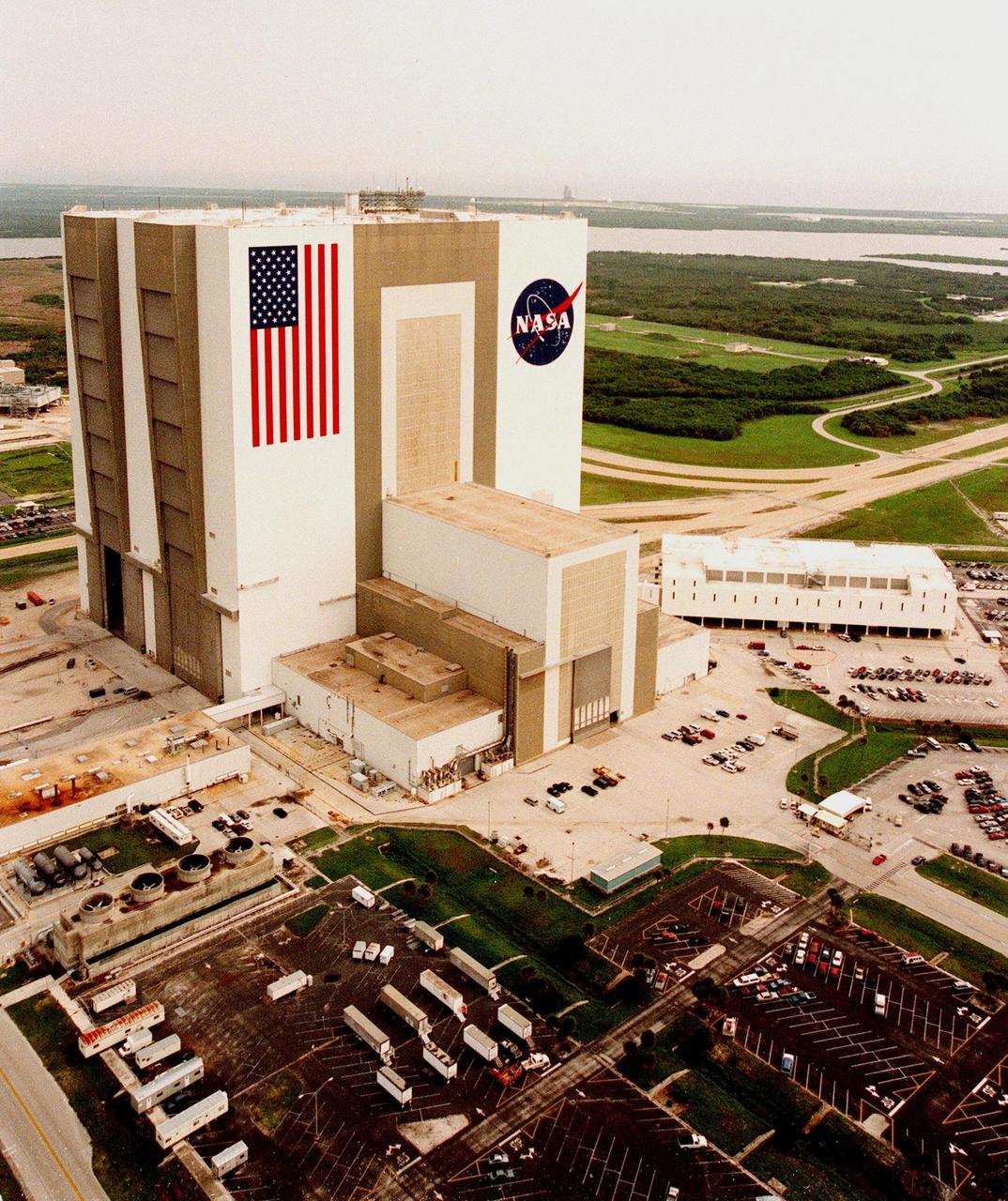
KENNEDY SPACE CENTER, FLA. -- The Vehicle Assembly Building (VAB) in the Launch Complex 39 area wears a new coat of paint, along with newly painted American flag and NASA logo. The improved look was finished in time to honor NASA's 40th anniversary on Oct. 1. In order to do the job, workers were suspended on platforms from the top of the 525-foot-high VAB. One of the world's largest buildings by volume, the VAB is the last stop for the Shuttle before rollout to the launch pad. Integration and stacking of the complete Space Shuttle vehicle (orbiter, two solid rocket boosters and the external tank) takes place in High Bays 1 or 3. To the right of the VAB is the Launch Control Center. Each of its four firing rooms are equipped with automated, computer-controlled Launch Processing System (LPS) for monitoring and controlling Shuttle assembly, checkout and launch operations, as well as work order control and scheduling. Banana Creek is visible behind and to the right of the VAB
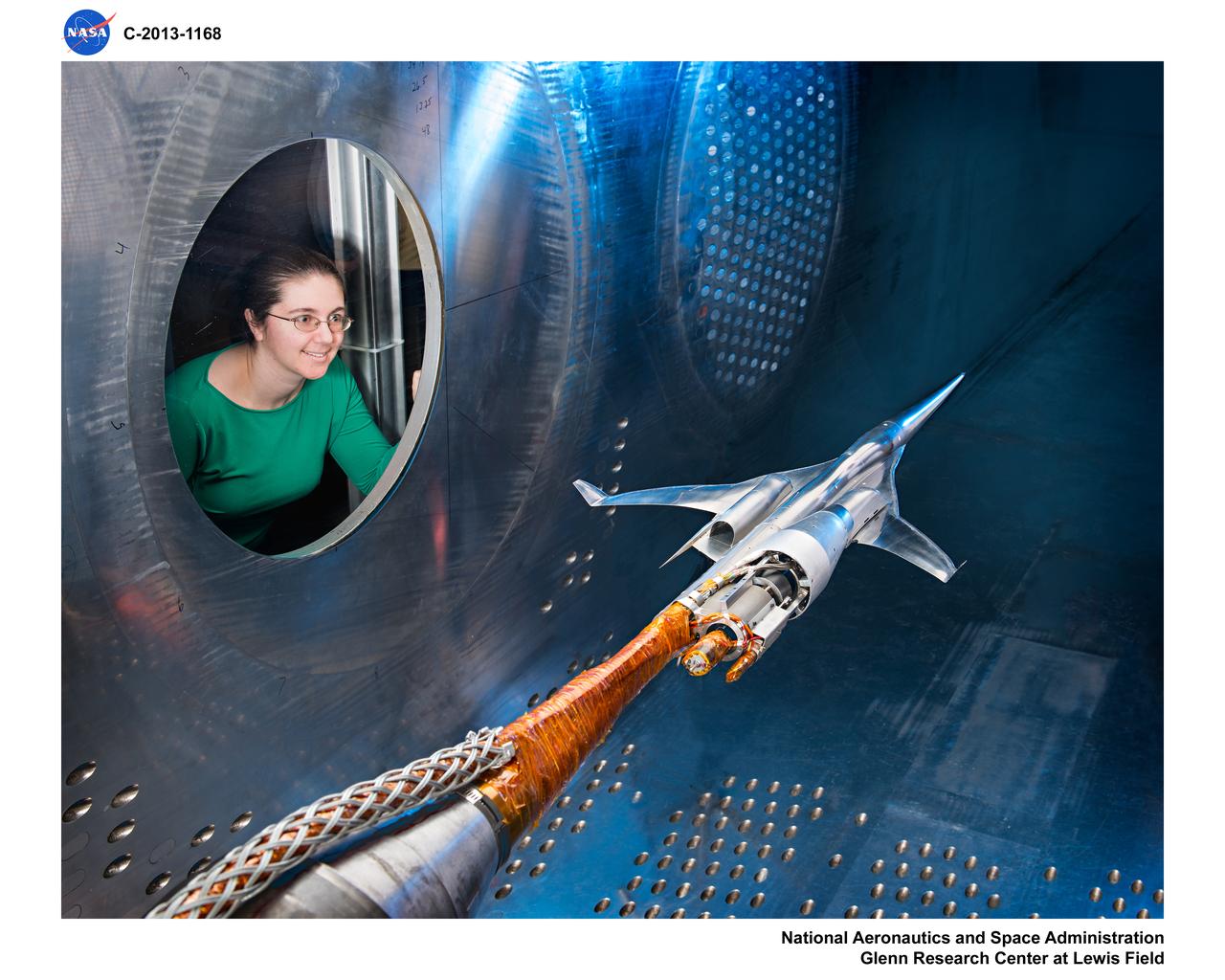
Supersonic Aircraft Model The window in the sidewall of the 8- by 6-foot supersonic wind tunnel at NASA's Glenn Research Center shows a 1.79 percent scale model of a future concept supersonic aircraft built by The Boeing Company. In recent tests, researchers evaluated the performance of air inlets mounted on top of the model to see how changing the amount of airflow at supersonic speeds through the inlet affected performance. The inlet on the pilot's right side (top inlet in this side view) is larger because it contains a remote-controlled device through which the flow of air could be changed. The work is part of ongoing research in NASA's Aeronautics Research Mission Directorate to address the challenges of making future supersonic flight over land possible. Researchers are testing overall vehicle design and performance options to reduce emissions and noise, and identifying whether the volume of sonic booms can be reduced to a level that leads to a reversal of the current ruling that prohibits commercial supersonic flight over land. Image Credit: NASA/Quentin Schwinn
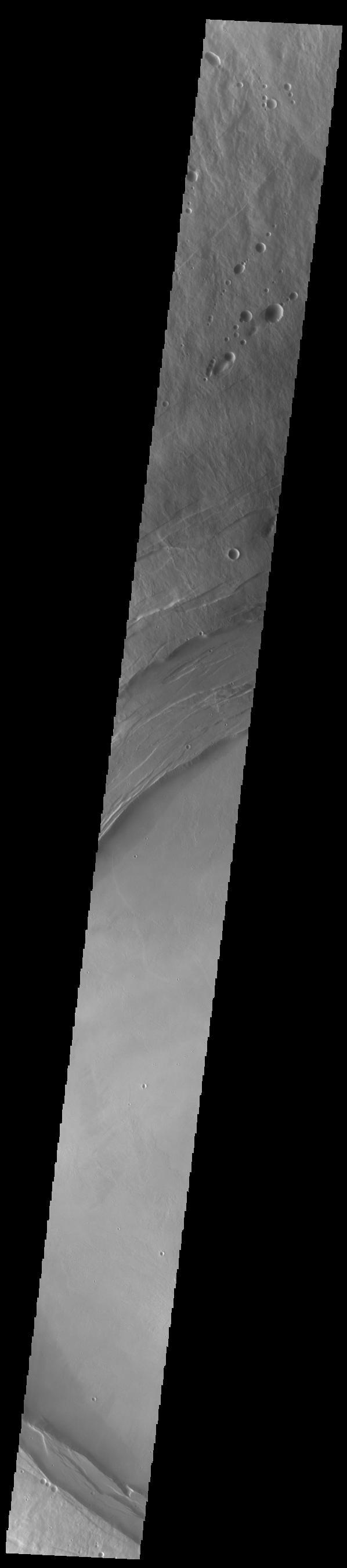
A large volcanic crater known as a caldera is located at the summit of all of the Tharsis volcanoes. These calderas are produced by massive volcanic explosions and collapse.Today's VIS image shows the summit caldera of Arsia Mons. Several small volcanic vents are visible on the caldera floor. It is not uncommon for calderas to have "flat" floors after the final explosive eruption the empties the subsurface magma chamber. There may still be some magma or superheated rock left after the collapse that will fill in part of the depression. Additionally, over time erosion will work to level the topography. Within the Arsia Mons caldera there was renewed activity from several small vents that occurred along the alignment of the NE/SW trend of the three large volcanoes. This ongoing, low volume activity is similar to the lava lake in Kilauea in Hawaii. Arsia Mons is the southernmost of the Tharsis volcanoes. It is 450 km (270 miles) in diameter, almost 20 km (12 miles) high, and the summit caldera is 120 km (72 miles) wide. For comparison, the largest volcano on Earth is Mauna Loa. From its base on the sea floor, Mauna Loa measures only 6.3 miles high and 75 miles in diameter.The Arsia Mons summit caldera is larger than many volcanoes on Earth. Orbit Number: 84328 Latitude: -8.58304 Longitude: 239.166 Instrument: VIS Captured: 2020-12-17 20:11 https://photojournal.jpl.nasa.gov/catalog/PIA24393

The structure of the Satellite Tobacco Mosaic Viurus (STMV)--one of the smallest viruses known--has been successfully reduced using STMV crystals grown aboard the Space Shuttle in 1992 and 1994. The STMV crystals were up to 30 times the volume of any seen in the laboratory. At the time they gave the best resolution data ever obtained on any virus crystal. STMV is a small icosahedral plant virus, consisting of a protein shell made up of 60 identical protein subunits of molecular weight 17,500. Particularly noteworthy is the fact that, in contrast to the crystals grown on Earth, the crystals grown under microgravity conditions were visually perfect, with no striations or clumping of crystals. Furthermore, the x-ray diffraction data obtained from the space-grown crystals was of a much higher quality than the best data available at that time from ground-based crystals. This stylized ribbon model shows the protein coat in white and the nucleic acid in yellow. STMV is used because it is a simple protein to work with; studies are unrelated to tobacco. Credit: Dr. Alex McPherson, University of California at Irvin.
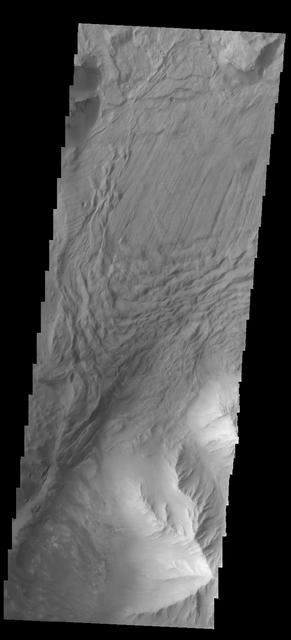
In this VIS image a complex region of multiple overlapping landslide deposits fills most the the frame. In the center of the image the top layer has the lobate edges and radial surface grooves of a low volume slide. It appears to be the top of a complex layering of materials, It is possible that all the lower layers are landslides as well. At the top of the image are a series of smaller lobate shaped landslide deposits Whether the layers formed very close in time of over thousands of years can not be determined in the image. Tithonium Chasma has numerous large landslide deposits. The resistant material of the plateau surface forms the linear ridges of the canyon wall. Large landslides have changed the walls and floor of the canyon. A landslide is a failure of slope due to gravity. They initiate due to several reasons. A lower layer of poorly cemented/resistant material may have been eroded, undermining the wall above which then collapses; earth quake seismic waves can cause the slope to collapse; and even an impact event near the canyon wall can cause collapse. As millions of tons of material fall and slide down slope a scalloped cavity forms at the upper part where the slope failure occurred. At the material speeds downhill it will pick up more of the underlying slope, increasing the volume of material entrained into the landslide. Whereas some landslides spread across the canyon floor forming lobate deposits, very large volume slope failures will completely fill the canyon floor in a large complex region of chaotic blocks. Tithonium Chasma is at the western end of Valles Marineris. Valles Marineris is over 4000 kilometers long, wider than the United States. Tithonium Chasma is almost 810 kilometers long (499 miles), 50 kilometers wide and over 6 kilometers deep. In comparison, the Grand Canyon in Arizona is about 175 kilometers long, 30 kilometers wide, and only 2 kilometers deep. The canyons of Valles Marineris were formed by extensive fracturing and pulling apart of the crust during the uplift of the vast Tharsis plateau. Landslides have enlarged the canyon walls and created deposits on the canyon floor. Weathering of the surface and influx of dust and sand have modified the canyon floor, both creating and modifying layered materials. The Odyssey spacecraft has spent over 15 years in orbit around Mars, circling the planet more than 71,000 times. It holds the record for longest working spacecraft at Mars. THEMIS, the IR/VIS camera system, has collected data for the entire mission and provides images covering all seasons and lighting conditions. Over the years many features of interest have received repeated imaging, building up a suite of images covering the entire feature. From the deepest chasma to the tallest volcano, individual dunes inside craters and dune fields that encircle the north pole, channels carved by water and lava, and a variety of other feature, THEMIS has imaged them all. For the next several months the image of the day will focus on the Tharsis volcanoes, the various chasmata of Valles Marineris, and the major dunes fields. We hope you enjoy these images! Orbit Number: 35746 Latitude: -4.47838 Longitude: 272.133 Instrument: VIS Captured: 2010-01-04 14:22 https://photojournal.jpl.nasa.gov/catalog/PIA22275
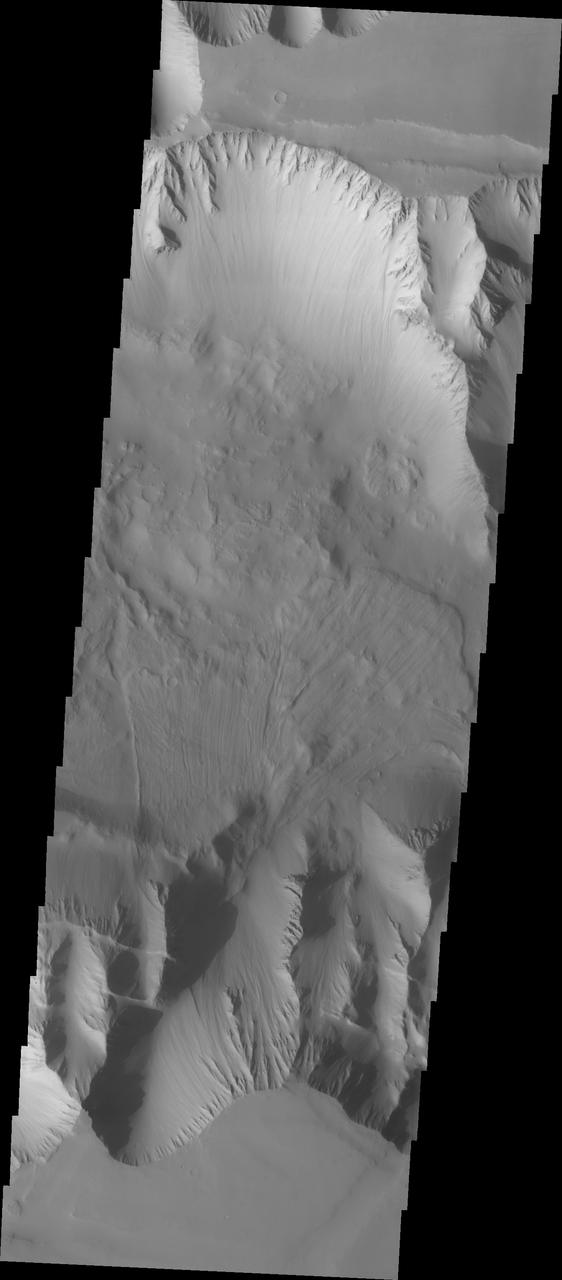
The VIS image shows part of the western end of Ius Chasma. Both the north and south canyon walls are visible in this image. At the top of the frame paired faults have created a graben. On the southern face of the canyon, several linear faults parallel the graben. These faults are part of the tectonic formation of Valles Marineris. Landslides on both walls created deposits on the crater floor. The easiest to identify is the lobate margin at the right side of the images. Lobate margins and radial surface grooves are common features in low volume landslides. A landslide is a failure of slope due to gravity. They initiate due to several reasons. A lower layer of poorly cemented/resistant material may have been eroded, undermining the wall above which then collapses; earth quake seismic waves can cause the slope to collapse; and even an impact event near the canyon wall can cause collapse. As millions of tons of material fall and slide down slope a scalloped cavity forms at the upper part where the slope failure occurred. At the material speeds downhill it will pick up more of the underlying slope, increasing the volume of material entrained into the landslide. Whereas some landslides spread across the canyon floor forming lobate deposits, very large volume slope failures will completely fill the canyon floor in a large complex region of chaotic blocks. Ius Chasma is at the western end of Valles Marineris, south of Tithonium Chasma. Valles Marineris is over 4000 kilometers long, wider than the United States. Ius Chasma is almost 850 kilometers long (528 miles), 120 kilometers wide and over 8 kilometers deep. In comparison, the Grand Canyon in Arizona is about 175 kilometers long, 30 kilometers wide, and only 2 kilometers deep. The canyons of Valles Marineris were formed by extensive fracturing and pulling apart of the crust during the uplift of the vast Tharsis plateau. Landslides have enlarged the canyon walls and created deposits on the canyon floor. Weathering of the surface and influx of dust and sand have modified the canyon floor, both creating and modifying layered materials. There are many features that indicate flowing and standing water played a part in the chasma formation. The Odyssey spacecraft has spent over 15 years in orbit around Mars, circling the planet more than 71,000 times. It holds the record for longest working spacecraft at Mars. THEMIS, the IR/VIS camera system, has collected data for the entire mission and provides images covering all seasons and lighting conditions. Over the years many features of interest have received repeated imaging, building up a suite of images covering the entire feature. From the deepest chasma to the tallest volcano, individual dunes inside craters and dune fields that encircle the north pole, channels carved by water and lava, and a variety of other feature, THEMIS has imaged them all. For the next several months the image of the day will focus on the Tharsis volcanoes, the various chasmata of Valles Marineris, and the major dunes fields. We hope you enjoy these images! Orbit Number: 8792 Latitude: -6.69222 Longitude: 270.88 Instrument: VIS Captured: 2003-12-08 06:35 https://photojournal.jpl.nasa.gov/catalog/PIA22277
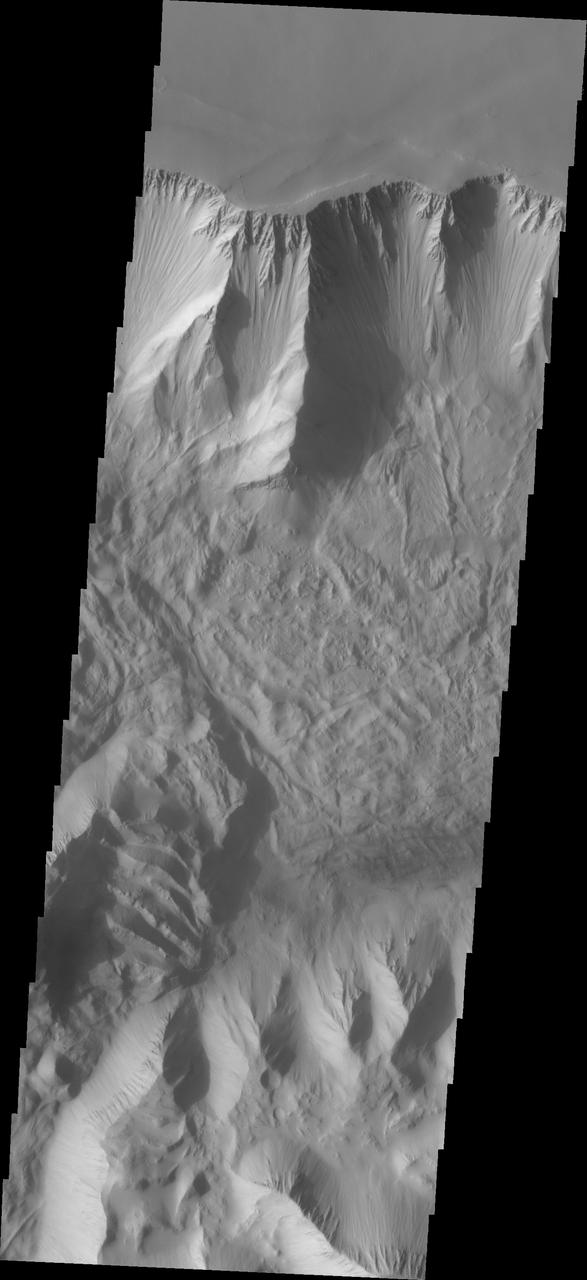
This VIS image of Tithonium Chasma shows the canyon wall at the top of the frame and the cliff face of the opposite side of the canyon at the bottom of the image. Most of the floor has been covered with the deposits of large volume landslides. Near the top-right portion of the canyon wall several smaller lobate landslide deposits are visible. Tithonium Chasma has numerous large landslide deposits. The resistant material of the plateau surface forms the linear ridges of the canyon wall. Large landslides have changed the walls and floor of the canyon. A landslide is a failure of slope due to gravity. They initiate due to several reasons. A lower layer of poorly cemented/resistant material may have been eroded, undermining the wall above which then collapses; earth quake seismic waves can cause the slope to collapse; and even an impact event near the canyon wall can cause collapse. As millions of tons of material fall and slide down slope a scalloped cavity forms at the upper part where the slope failure occurred. At the material speeds downhill it will pick up more of the underlying slope, increasing the volume of material entrained into the landslide. Whereas some landslides spread across the canyon floor forming lobate deposits, very large volume slope failures will completely fill the canyon floor in a large complex region of chaotic blocks. Tithonium Chasma is at the western end of Valles Marineris. Valles Marineris is over 4000 kilometers long, wider than the United States. Tithonium Chasma is almost 810 kilometers long (499 miles), 50 kilometers wide and over 6 kilometers deep. In comparison, the Grand Canyon in Arizona is about 175 kilometers long, 30 kilometers wide, and only 2 kilometers deep. The canyons of Valles Marineris were formed by extensive fracturing and pulling apart of the crust during the uplift of the vast Tharsis plateau. Landslides have enlarged the canyon walls and created deposits on the canyon floor. Weathering of the surface and influx of dust and sand have modified the canyon floor, both creating and modifying layered materials. The Odyssey spacecraft has spent over 15 years in orbit around Mars, circling the planet more than 71,000 times. It holds the record for longest working spacecraft at Mars. THEMIS, the IR/VIS camera system, has collected data for the entire mission and provides images covering all seasons and lighting conditions. Over the years many features of interest have received repeated imaging, building up a suite of images covering the entire feature. From the deepest chasma to the tallest volcano, individual dunes inside craters and dune fields that encircle the north pole, channels carved by water and lava, and a variety of other feature, THEMIS has imaged them all. For the next several months the image of the day will focus on the Tharsis volcanoes, the various chasmata of Valles Marineris, and the major dunes fields. We hope you enjoy these images! Orbit Number: 26775 Latitude: -4.54217 Longitude: 274.121 Instrument: VIS Captured: 2007-12-27 21:24 https://photojournal.jpl.nasa.gov/catalog/PIA22274
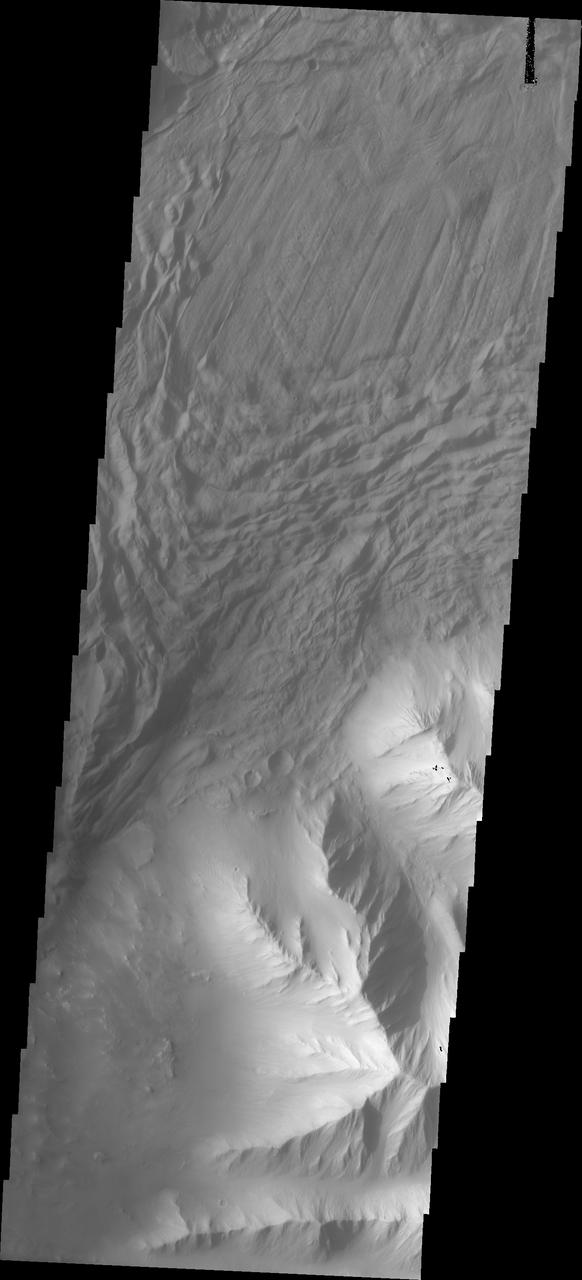
In this VIS image a complex region of multiple overlapping landslide deposits fills most the the frame. The very top layer has the lobate edges and radial surface grooves of a low volume slide. It appears to be the top of a complex layering of materials. It is possible that all the lower layers are landslides as well. Whether the layers formed very close in time of over thousands of years can not be determined in the image. Tithonium Chasma has numerous large landslide deposits. The resistant material of the plateau surface forms the linear ridges of the canyon wall. Large landslides have changed the walls and floor of the canyon. A landslide is a failure of slope due to gravity. They initiate due to several reasons. A lower layer of poorly cemented/resistant material may have been eroded, undermining the wall above which then collapses; earth quake seismic waves can cause the slope to collapse; and even an impact event near the canyon wall can cause collapse. As millions of tons of material fall and slide down slope a scalloped cavity forms at the upper part where the slope failure occurred. At the material speeds downhill it will pick up more of the underlying slope, increasing the volume of material entrained into the landslide. Whereas some landslides spread across the canyon floor forming lobate deposits, very large volume slope failures will completely fill the canyon floor in a large complex region of chaotic blocks. Tithonium Chasma is at the western end of Valles Marineris. Valles Marineris is over 4000 kilometers long, wider than the United States. Tithonium Chasma is almost 810 kilometers long (499 miles), 50 kilometers wide and over 6 kilometers deep. In comparison, the Grand Canyon in Arizona is about 175 kilometers long, 30 kilometers wide, and only 2 kilometers deep. The canyons of Valles Marineris were formed by extensive fracturing and pulling apart of the crust during the uplift of the vast Tharsis plateau. Landslides have enlarged the canyon walls and created deposits on the canyon floor. Weathering of the surface and influx of dust and sand have modified the canyon floor, both creating and modifying layered materials. The Odyssey spacecraft has spent over 15 years in orbit around Mars, circling the planet more than 71,000 times. It holds the record for longest working spacecraft at Mars. THEMIS, the IR/VIS camera system, has collected data for the entire mission and provides images covering all seasons and lighting conditions. Over the years many features of interest have received repeated imaging, building up a suite of images covering the entire feature. From the deepest chasma to the tallest volcano, individual dunes inside craters and dune fields that encircle the north pole, channels carved by water and lava, and a variety of other feature, THEMIS has imaged them all. For the next several months the image of the day will focus on the Tharsis volcanoes, the various chasmata of Valles Marineris, and the major dunes fields. We hope you enjoy these images! Orbit Number: 19200 Latitude: -4.54491 Longitude: 272.164 Instrument: VIS Captured: 2006-04-13 04:51

Continuing eastward along Ius Chasma, this image shows the eastern section of the large landslide deposit seen in yesterday's post. A landslide is a failure of slope due to gravity. They initiate due to several reasons. A lower layer of poorly cemented/resistant material may have been eroded, undermining the wall above which then collapses; earth quake seismic waves can cause the slope to collapse; and even an impact event near the canyon wall can cause collapse. As millions of tons of material fall and slide down slope a scalloped cavity forms at the upper part where the slope failure occurred. At the material speeds downhill it will pick up more of the underlying slope, increasing the volume of material entrained into the landslide. Whereas some landslides spread across the canyon floor forming lobate deposits, very large volume slope failures will completely fill the canyon floor in a large complex region of chaotic blocks. Ius Chasma is at the western end of Valles Marineris, south of Tithonium Chasma. Valles Marineris is over 4000 kilometers long, wider than the United States. Ius Chasma is almost 850 kilometers long (528 miles), 120 kilometers wide and over 8 kilometers deep. In comparison, the Grand Canyon in Arizona is about 175 kilometers long, 30 kilometers wide, and only 2 kilometers deep. The canyons of Valles Marineris were formed by extensive fracturing and pulling apart of the crust during the uplift of the vast Tharsis plateau. Landslides have enlarged the canyon walls and created deposits on the canyon floor. Weathering of the surface and influx of dust and sand have modified the canyon floor, both creating and modifying layered materials. There are many features that indicate flowing and standing water played a part in the chasma formation. The Odyssey spacecraft has spent over 15 years in orbit around Mars, circling the planet more than 71,000 times. It holds the record for longest working spacecraft at Mars. THEMIS, the IR/VIS camera system, has collected data for the entire mission and provides images covering all seasons and lighting conditions. Over the years many features of interest have received repeated imaging, building up a suite of images covering the entire feature. From the deepest chasma to the tallest volcano, individual dunes inside craters and dune fields that encircle the north pole, channels carved by water and lava, and a variety of other feature, THEMIS has imaged them all. For the next several months the image of the day will focus on the Tharsis volcanoes, the various chasmata of Valles Marineris, and the major dunes fields. We hope you enjoy these images! Orbit Number: 17902 Latitude: -6.65656 Longitude: 274.872 Instrument: VIS Captured: 2005-12-27 08:01 https://photojournal.jpl.nasa.gov/catalog/PIA22279
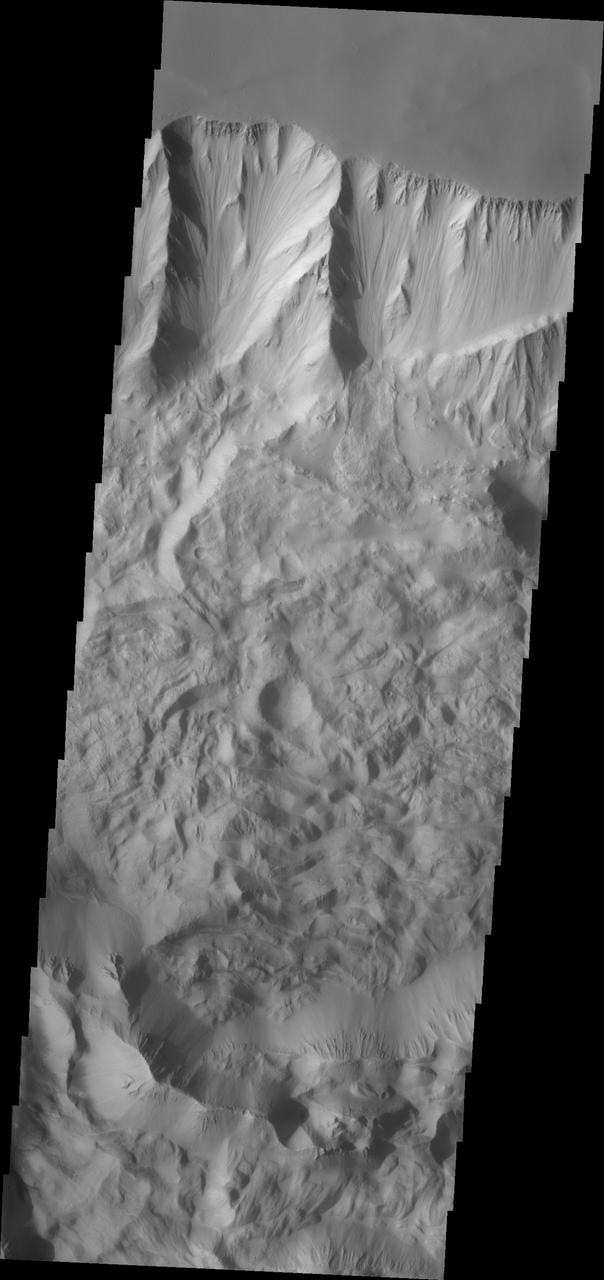
Tithonium Chasma has numerous large landslide deposits. The resistant material of the plateau surface forms the linear ridges of the canyon wall. Large landslides have changed the walls and floor of the canyon. A landslide is a failure of slope due to gravity. They initiate due to several reasons. A lower layer of poorly cemented/resistant material may have been eroded, undermining the wall above which then collapses; earth quake seismic waves can cause the slope to collapse; and even an impact event near the canyon wall can cause collapse. As millions of tons of material fall and slide down slope a scalloped cavity forms at the upper part where the slope failure occurred. At the material speeds downhill it will pick up more of the underlying slope, increasing the volume of material entrained into the landslide. Whereas some landslides spread across the canyon floor forming lobate deposits, very large volume slope failures will completely fill the canyon floor in a large complex region of chaotic blocks. This VIS image shows the result of this type of landslide. Tithonium Chasma is at the western end of Valles Marineris. Valles Marineris is over 4000 kilometers long, wider than the United States. Tithonium Chasma is almost 810 kilometers long (499 miles), 50 kilometers wide and over 6 kilometers deep. In comparison, the Grand Canyon in Arizona is about 175 kilometers long, 30 kilometers wide, and only 2 kilometers deep. The canyons of Valles Marineris were formed by extensive fracturing and pulling apart of the crust during the uplift of the vast Tharsis plateau. Landslides have enlarged the canyon walls and created deposits on the canyon floor. Weathering of the surface and influx of dust and sand have modified the canyon floor, both creating and modifying layered materials. The Odyssey spacecraft has spent over 15 years in orbit around Mars, circling the planet more than 71,000 times. It holds the record for longest working spacecraft at Mars. THEMIS, the IR/VIS camera system, has collected data for the entire mission and provides images covering all seasons and lighting conditions. Over the years many features of interest have received repeated imaging, building up a suite of images covering the entire feature. From the deepest chasma to the tallest volcano, individual dunes inside craters and dune fields that encircle the north pole, channels carved by water and lava, and a variety of other feature, THEMIS has imaged them all. For the next several months the image of the day will focus on the Tharsis volcanoes, the various chasmata of Valles Marineris, and the major dunes fields. We hope you enjoy these images! Orbit Number: 18239 Latitude: -4.4678 Longitude: 273.788 Instrument: VIS Captured: 2006-01-24 01:55 https://photojournal.jpl.nasa.gov/catalog/PIA22271
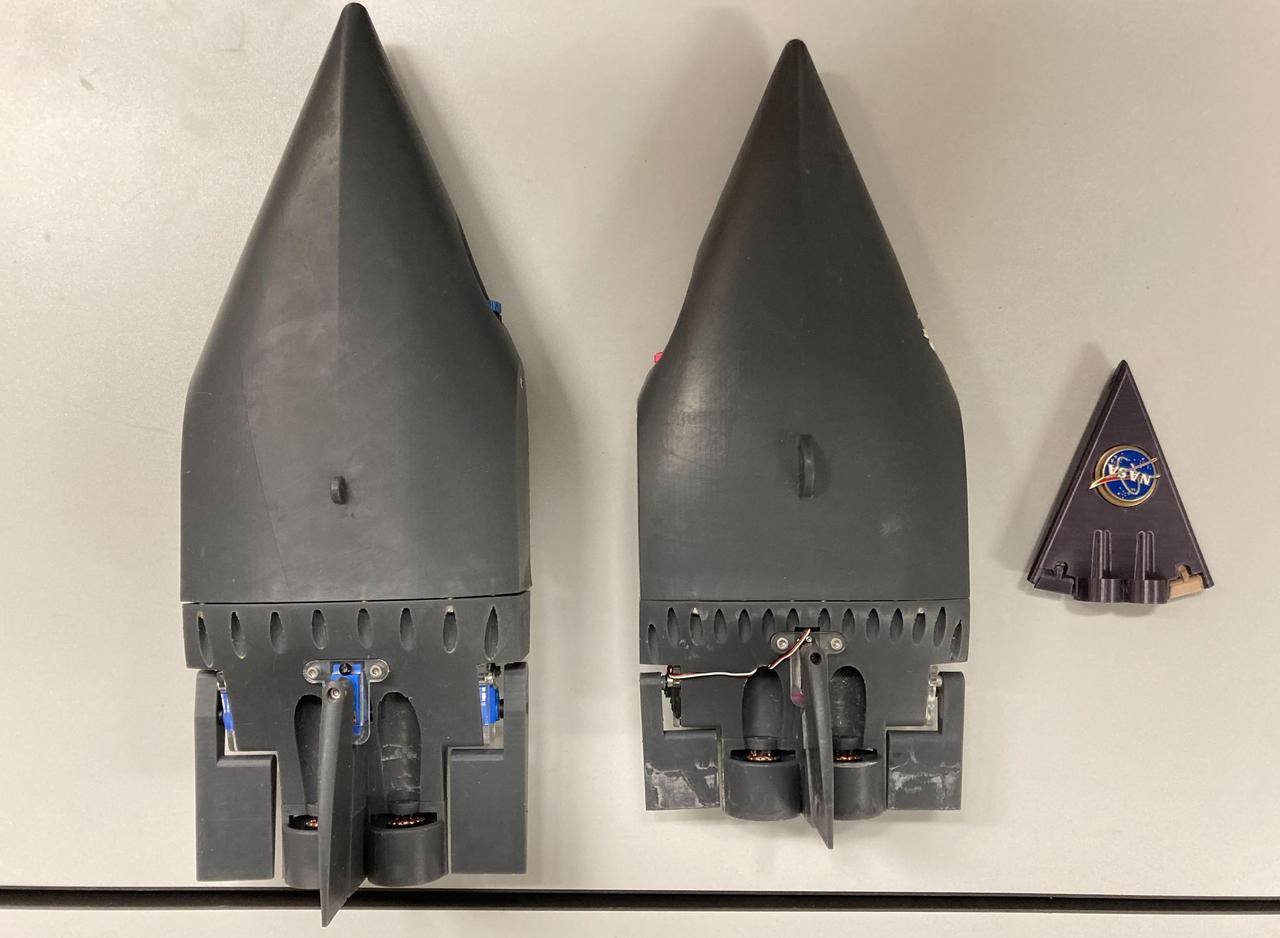
Two prototypes for a NASA mission concept called SWIM (short for Sensing With Independent Micro-swimmers) are arranged beside a much smaller nonfunctioning model representing the final envisioned size of the robot: about 5 inches (12 centimeters) long. The plastic prototypes were built at NASA's Jet Propulsion Laboratory in Southern California to demonstrate the feasibility of the concept, a swarm of dozens of self-propelled, cellphone-size robots exploring the waters of icy moons like Jupiter's Europa and Saturn's Enceladus. Delivered to the subsurface ocean by an ice-melting cryobot, the tiny robots would zoom away to look for chemical and temperature signals that could point to life. The prototypes were used in more that 20 rounds of underwater testing in a pair of tanks at JPL and in a competition swimming pool at Caltech in Pasadena. Relying on low-cost, commercially made motors and electronics, the robots are pushed along by two propellers and use two to four flaps for steering. The prototype in the center of the image weighs 3.7 pounds (1.7 kilograms) and is 14.5 inches (37 centimeters) long, 6 inches (15 centimeters) wide, and 2.5 inches (6.5 centimeters) tall, with a volume of 104 cubic inches (1.7 liters). The upgraded prototype at left is slightly bigger: 16.5 inches (42 centimeters) long, 3 inches (7.5 centimeters) tall, with a weight of 5 pounds (2.3 kilograms) and a volume of 140 cubic inches (2.3 liters). In pool tests, the prototype at left demonstrated controlled maneuvering, the ability to stay on and correct its course, and a back-and-forth "lawnmower" exploration pattern. It managed all of this autonomously, without the team's direct intervention. The robot even spelled out "J-P-L." As conceived for spaceflight and represented by the model at right, the robots would have dimensions about three times smaller than these prototypes – tiny compared to existing remotely operated and autonomous underwater scientific vehicles. The swimmers would feature miniaturized, purpose-built parts and employ a novel wireless underwater acoustic communication system for transmitting data and triangulating their positions. Several years more of work would be needed to make such an advanced concept ready for spaceflight. Led by JPL, SWIM development took place from spring 2021 to fall 2024. The project was supported by Phase I and II funding from NASA's Innovative Advanced Concepts program under the agency's Space Technology Mission Directorate. JPL is managed for NASA by Caltech in Pasadena, California. https://photojournal.jpl.nasa.gov/catalog/PIA26425
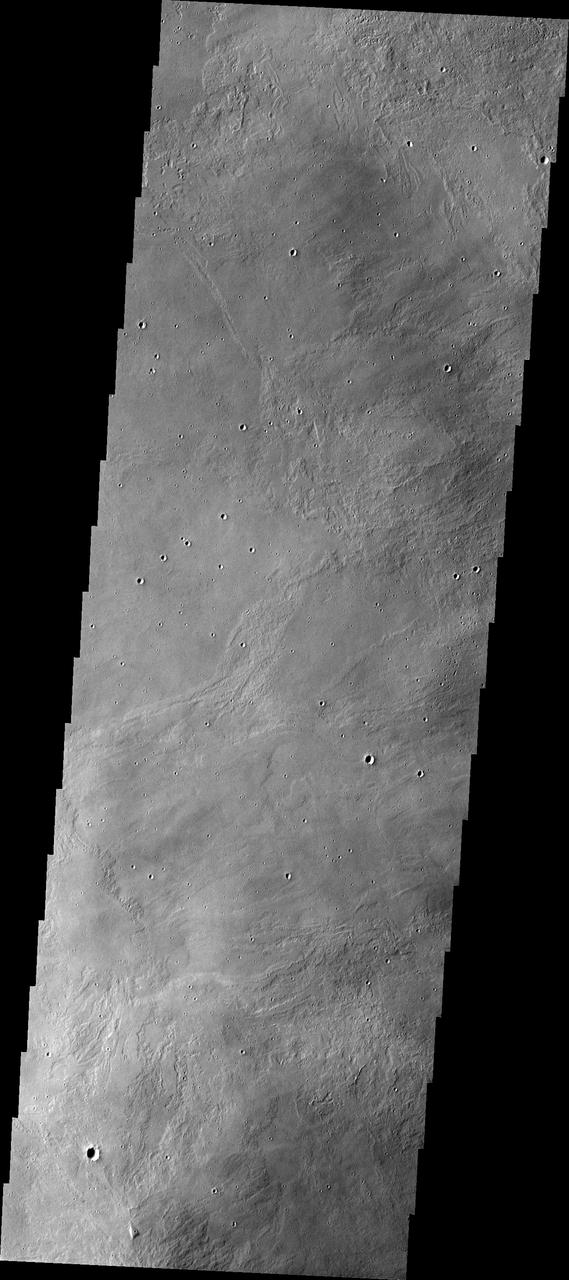
This THEMIS image shows part of the caldera floor of Arsia Mons. It is not uncommon for calderas to have "flat" floors after the final explosive eruption that empties the subsurface magma chamber. There may still be some magma or superheated rock left after the collapse that will fill in part of the depression. Additionally, over time erosion will work to level the topography. Within Arsia Mons there was renewed activity that occurred within the caldera along the alignment of the NE/SW trend of the three large volcanoes. This ongoing, low volume actitivity is similar to the lava lake in Kilauea in Hawaii. Small flows are visible throughout this image. Arsia Mons is the southernmost of the Tharsis volcanoes. It is 270 miles (450km) in diameter, almost 12 miles (20km) high, and the summit caldera is 72 miles (120km) wide. For comparison, the largest volcano on Earth is Mauna Loa. From its base on the sea floor, Mauna Loa measures only 6.3 miles high and 75 miles in diameter. A large volcanic crater known as a caldera is located at the summit of all of the Tharsis volcanoes. These calderas are produced by massive volcanic explosions and collapse. The Arsia Mons summit caldera is larger than many volcanoes on Earth. The Odyssey spacecraft has spent over 15 years in orbit around Mars, circling the planet more than 69000 times. It holds the record for longest working spacecraft at Mars. THEMIS, the IR/VIS camera system, has collected data for the entire mission and provides images covering all seasons and lighting conditions. Over the years many features of interest have received repeated imaging, building up a suite of images covering the entire feature. From the deepest chasma to the tallest volcano, individual dunes inside craters and dune fields that encircle the north pole, channels carved by water and lava, and a variety of other feature, THEMIS has imaged them all. For the next several months the image of the day will focus on the Tharsis volcanoes, the various chasmata of Valles Marineris, and the major dunes fields. We hope you enjoy these images! Orbit Number: 19588 Latitude: -9.19485 Longitude: 239.276 Instrument: VIS Captured: 2006-05-15 03:33 https://photojournal.jpl.nasa.gov/catalog/PIA22156
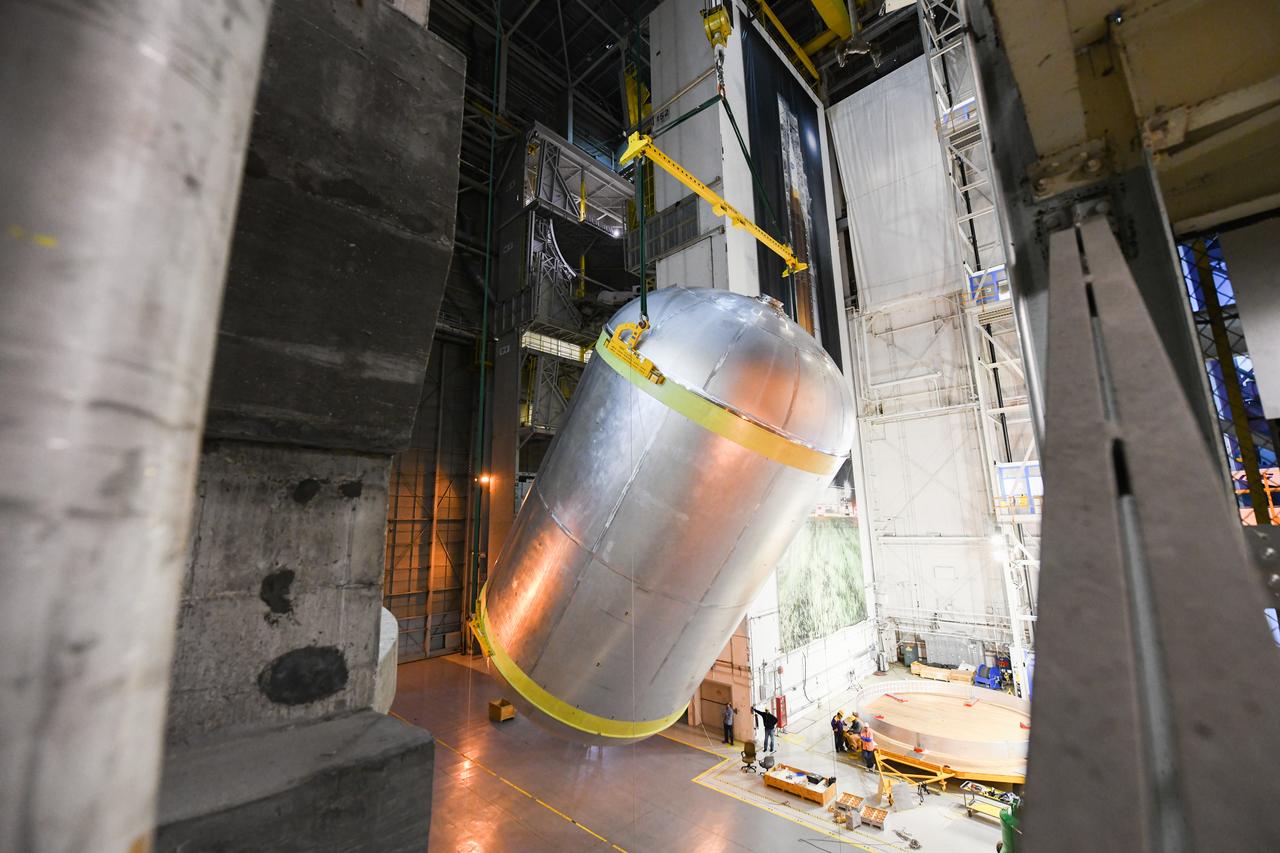
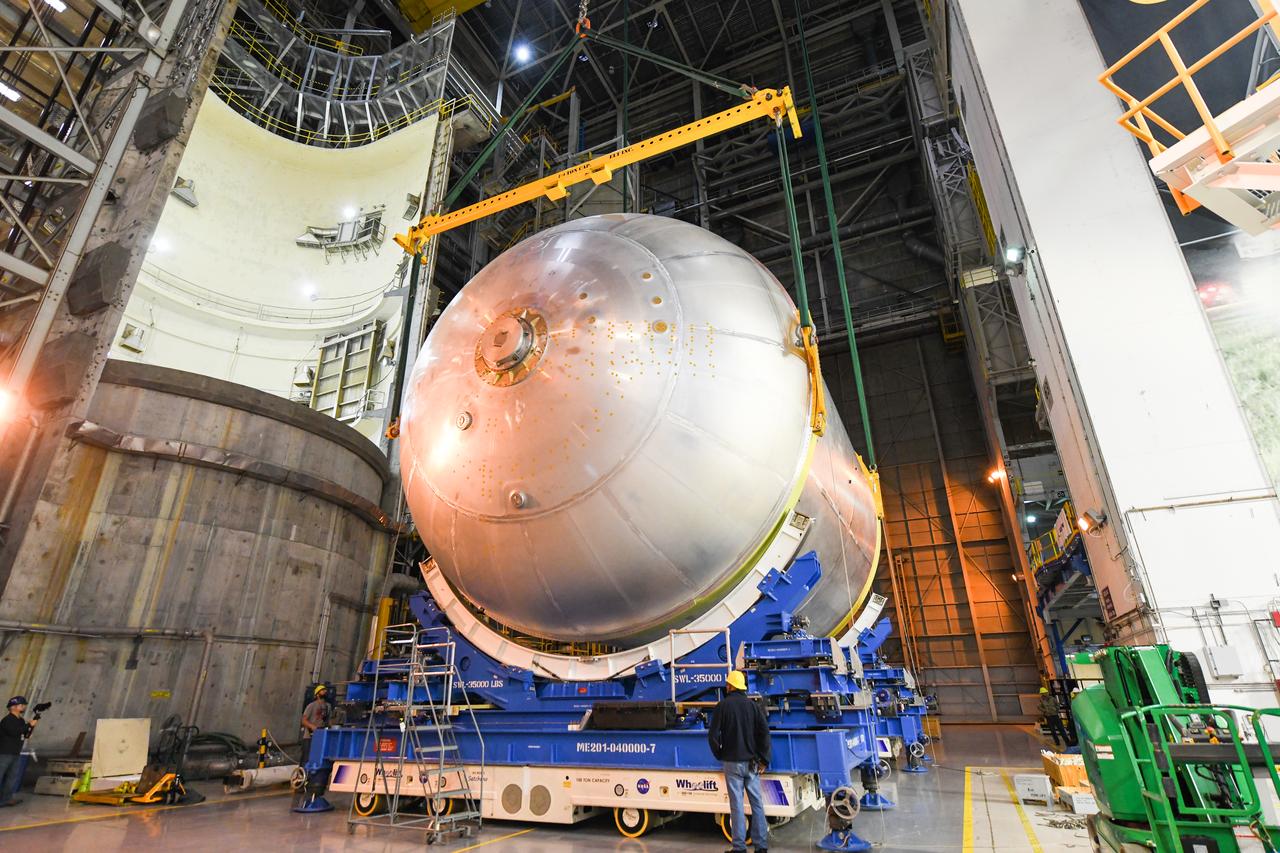
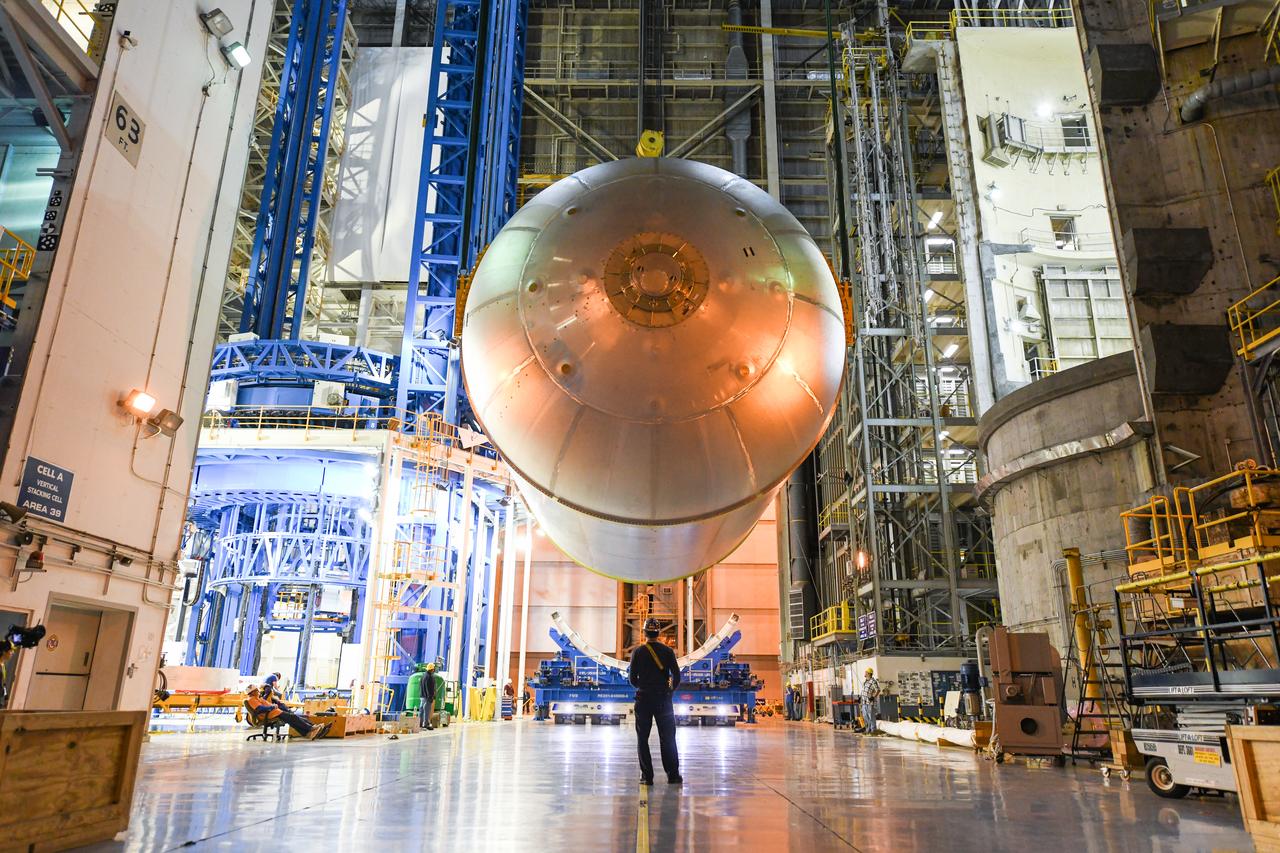
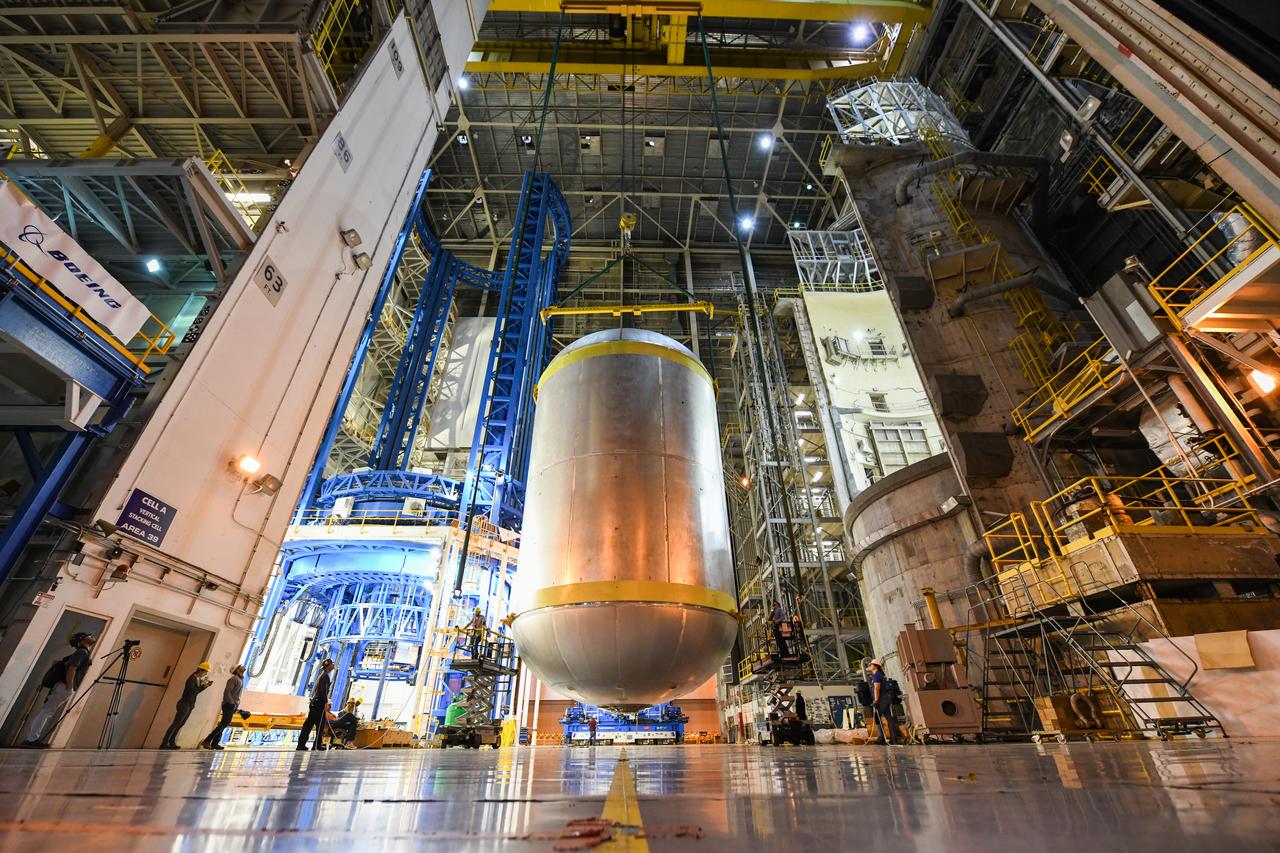
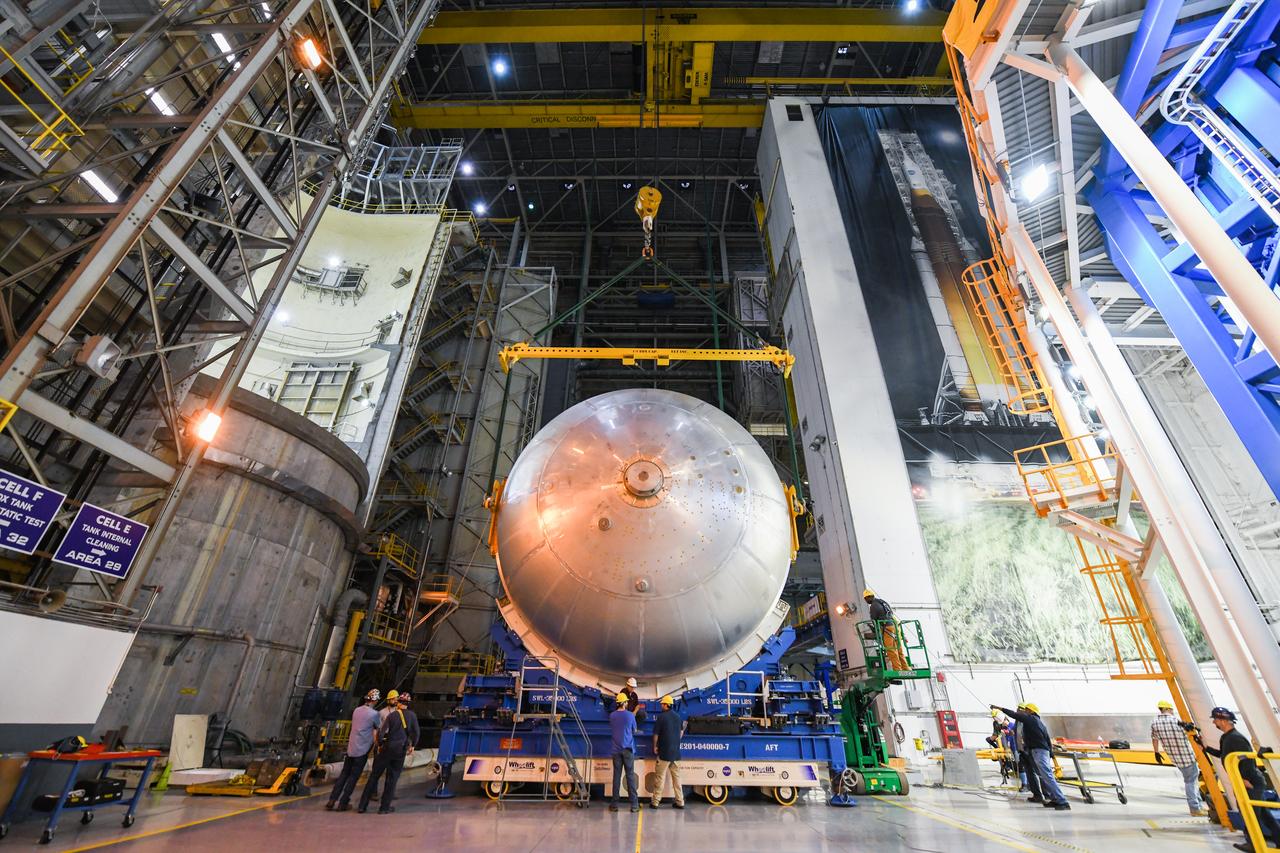
This image shows the latest progress NASA has made in manufacturing the liquid oxygen tank for the second core stage of NASA’s Space Launch System (SLS) rocket. The liquid oxygen tank will be used for the first crewed mission, Artemis II, of the agency’s Artemis program. Teams at NASA’s Michoud Assembly Facility in New Orleans recently completed internal cleaning of the liquid oxygen, or LOX, tank at the facility. Following the cleaning, crews prepared the propellant tank for the next phase of phase of assembly in a different area of the factory by moving, or breaking over, the tank from a vertical to horizontal position. The LOX tank is one of five major elements that make up the rocket’s massive 212-foot-tall core stage. The propellant tank holds 196,000 gallons of supercooled liquid oxygen to help fuel four RS-25 engines, and the internal cleaning ensures no contaminants make their way into the complex propulsion and engine systems of the deep space rocket. The stage, which includes a cluster of four RS-25, will produce more than 2 million pounds of thrust to help launch the SLS rocket and astronauts aboard NASA’s Orion spacecraft around the Moon for Artemis II. NASA is working to land the first woman and the next man on the Moon by 2024. The agency’s SLS rocket offers more payload mass, volume capability and energy to speed missions through deep space and enable NASA’s Artemis lunar program. SLS, along with Orion, the human landing system, and the Gateway in orbit around the Moon are NASA’s backbone for deep space exploration. No other rocket is capable of carrying astronauts in Orion around the Moon in a single mission.
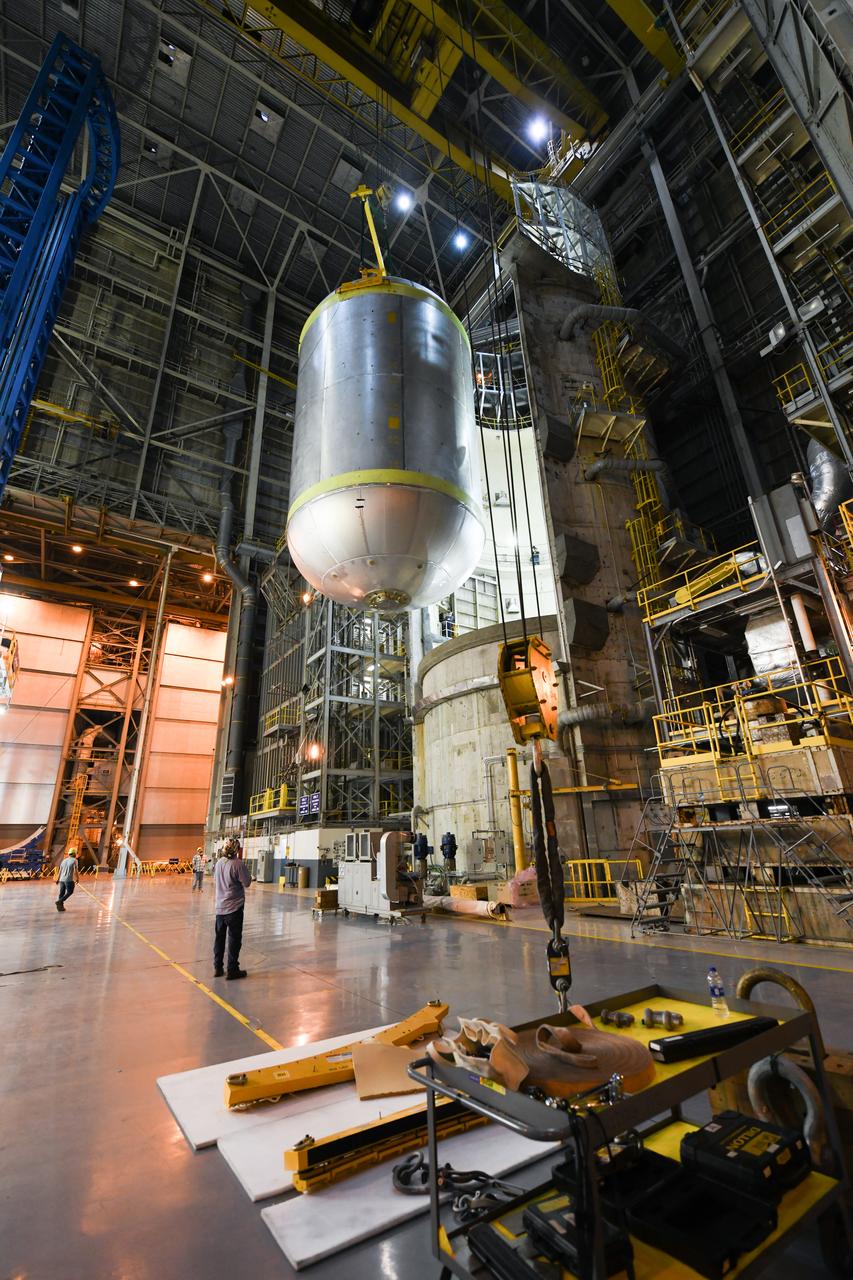
This image shows the latest progress NASA has made in manufacturing the liquid oxygen tank for the second core stage of NASA’s Space Launch System (SLS) rocket. The liquid oxygen tank will be used for the first crewed mission, Artemis II, of the agency’s Artemis program. Teams at NASA’s Michoud Assembly Facility in New Orleans recently completed internal cleaning of the liquid oxygen, or LOX, tank at the facility. Following the cleaning, crews prepared the propellant tank for the next phase of phase of assembly in a different area of the factory by moving, or breaking over, the tank from a vertical to horizontal position. The LOX tank is one of five major elements that make up the rocket’s massive 212-foot-tall core stage. The propellant tank holds 196,000 gallons of supercooled liquid oxygen to help fuel four RS-25 engines, and the internal cleaning ensures no contaminants make their way into the complex propulsion and engine systems of the deep space rocket. The stage, which includes a cluster of four RS-25, will produce more than 2 million pounds of thrust to help launch the SLS rocket and astronauts aboard NASA’s Orion spacecraft around the Moon for Artemis II. NASA is working to land the first woman and the next man on the Moon by 2024. The agency’s SLS rocket offers more payload mass, volume capability and energy to speed missions through deep space and enable NASA’s Artemis lunar program. SLS, along with Orion, the human landing system, and the Gateway in orbit around the Moon are NASA’s backbone for deep space exploration. No other rocket is capable of carrying astronauts in Orion around the Moon in a single mission.
This image shows the latest progress NASA has made in manufacturing the liquid oxygen tank for the second core stage of NASA’s Space Launch System (SLS) rocket. The liquid oxygen tank will be used for the first crewed mission, Artemis II, of the agency’s Artemis program. Teams at NASA’s Michoud Assembly Facility in New Orleans recently completed internal cleaning of the liquid oxygen, or LOX, tank at the facility. Following the cleaning, crews prepared the propellant tank for the next phase of phase of assembly in a different area of the factory by moving, or breaking over, the tank from a vertical to horizontal position. The LOX tank is one of five major elements that make up the rocket’s massive 212-foot-tall core stage. The propellant tank holds 196,000 gallons of supercooled liquid oxygen to help fuel four RS-25 engines, and the internal cleaning ensures no contaminants make their way into the complex propulsion and engine systems of the deep space rocket. The stage, which includes a cluster of four RS-25, will produce more than 2 million pounds of thrust to help launch the SLS rocket and astronauts aboard NASA’s Orion spacecraft around the Moon for Artemis II. NASA is working to land the first woman and the next man on the Moon by 2024. The agency’s SLS rocket offers more payload mass, volume capability and energy to speed missions through deep space and enable NASA’s Artemis lunar program. SLS, along with Orion, the human landing system, and the Gateway in orbit around the Moon are NASA’s backbone for deep space exploration. No other rocket is capable of carrying astronauts in Orion around the Moon in a single mission.
This image shows the latest progress NASA has made in manufacturing the liquid oxygen tank for the second core stage of NASA’s Space Launch System (SLS) rocket. The liquid oxygen tank will be used for the first crewed mission, Artemis II, of the agency’s Artemis program. Teams at NASA’s Michoud Assembly Facility in New Orleans recently completed internal cleaning of the liquid oxygen, or LOX, tank at the facility. Following the cleaning, crews prepared the propellant tank for the next phase of phase of assembly in a different area of the factory by moving, or breaking over, the tank from a vertical to horizontal position. The LOX tank is one of five major elements that make up the rocket’s massive 212-foot-tall core stage. The propellant tank holds 196,000 gallons of supercooled liquid oxygen to help fuel four RS-25 engines, and the internal cleaning ensures no contaminants make their way into the complex propulsion and engine systems of the deep space rocket. The stage, which includes a cluster of four RS-25, will produce more than 2 million pounds of thrust to help launch the SLS rocket and astronauts aboard NASA’s Orion spacecraft around the Moon for Artemis II. NASA is working to land the first woman and the next man on the Moon by 2024. The agency’s SLS rocket offers more payload mass, volume capability and energy to speed missions through deep space and enable NASA’s Artemis lunar program. SLS, along with Orion, the human landing system, and the Gateway in orbit around the Moon are NASA’s backbone for deep space exploration. No other rocket is capable of carrying astronauts in Orion around the Moon in a single mission.
This image shows the latest progress NASA has made in manufacturing the liquid oxygen tank for the second core stage of NASA’s Space Launch System (SLS) rocket. The liquid oxygen tank will be used for the first crewed mission, Artemis II, of the agency’s Artemis program. Teams at NASA’s Michoud Assembly Facility in New Orleans recently completed internal cleaning of the liquid oxygen, or LOX, tank at the facility. Following the cleaning, crews prepared the propellant tank for the next phase of phase of assembly in a different area of the factory by moving, or breaking over, the tank from a vertical to horizontal position. The LOX tank is one of five major elements that make up the rocket’s massive 212-foot-tall core stage. The propellant tank holds 196,000 gallons of supercooled liquid oxygen to help fuel four RS-25 engines, and the internal cleaning ensures no contaminants make their way into the complex propulsion and engine systems of the deep space rocket. The stage, which includes a cluster of four RS-25, will produce more than 2 million pounds of thrust to help launch the SLS rocket and astronauts aboard NASA’s Orion spacecraft around the Moon for Artemis II. NASA is working to land the first woman and the next man on the Moon by 2024. The agency’s SLS rocket offers more payload mass, volume capability and energy to speed missions through deep space and enable NASA’s Artemis lunar program. SLS, along with Orion, the human landing system, and the Gateway in orbit around the Moon are NASA’s backbone for deep space exploration. No other rocket is capable of carrying astronauts in Orion around the Moon in a single mission.
This image shows the latest progress NASA has made in manufacturing the liquid oxygen tank for the second core stage of NASA’s Space Launch System (SLS) rocket. The liquid oxygen tank will be used for the first crewed mission, Artemis II, of the agency’s Artemis program. Teams at NASA’s Michoud Assembly Facility in New Orleans recently completed internal cleaning of the liquid oxygen, or LOX, tank at the facility. Following the cleaning, crews prepared the propellant tank for the next phase of phase of assembly in a different area of the factory by moving, or breaking over, the tank from a vertical to horizontal position. The LOX tank is one of five major elements that make up the rocket’s massive 212-foot-tall core stage. The propellant tank holds 196,000 gallons of supercooled liquid oxygen to help fuel four RS-25 engines, and the internal cleaning ensures no contaminants make their way into the complex propulsion and engine systems of the deep space rocket. The stage, which includes a cluster of four RS-25, will produce more than 2 million pounds of thrust to help launch the SLS rocket and astronauts aboard NASA’s Orion spacecraft around the Moon for Artemis II. NASA is working to land the first woman and the next man on the Moon by 2024. The agency’s SLS rocket offers more payload mass, volume capability and energy to speed missions through deep space and enable NASA’s Artemis lunar program. SLS, along with Orion, the human landing system, and the Gateway in orbit around the Moon are NASA’s backbone for deep space exploration. No other rocket is capable of carrying astronauts in Orion around the Moon in a single mission.
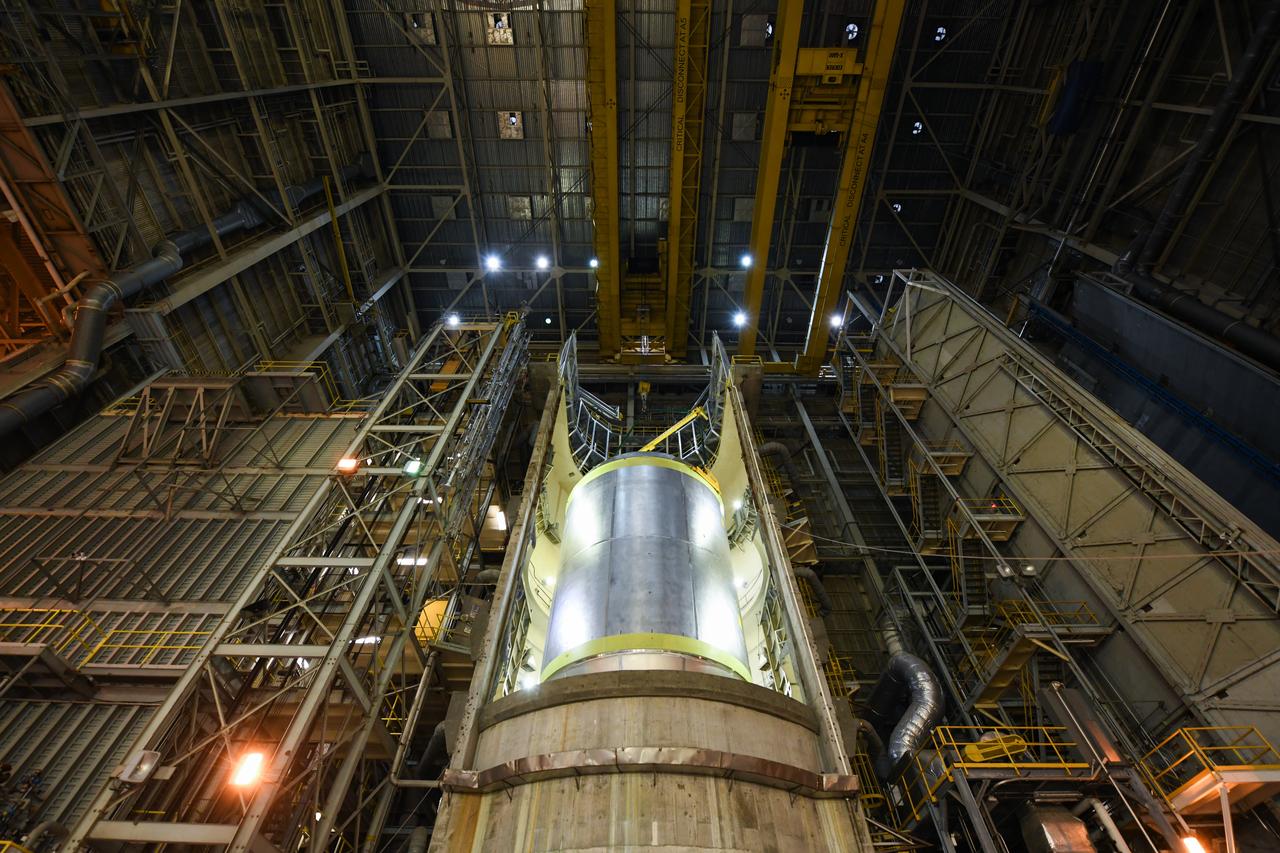
This image shows the latest progress NASA has made in manufacturing the liquid oxygen tank for the second core stage of NASA’s Space Launch System (SLS) rocket. The liquid oxygen tank will be used for the first crewed mission, Artemis II, of the agency’s Artemis program. Teams at NASA’s Michoud Assembly Facility in New Orleans recently completed internal cleaning of the liquid oxygen, or LOX, tank at the facility. Following the cleaning, crews prepared the propellant tank for the next phase of phase of assembly in a different area of the factory by moving, or breaking over, the tank from a vertical to horizontal position. The LOX tank is one of five major elements that make up the rocket’s massive 212-foot-tall core stage. The propellant tank holds 196,000 gallons of supercooled liquid oxygen to help fuel four RS-25 engines, and the internal cleaning ensures no contaminants make their way into the complex propulsion and engine systems of the deep space rocket. The stage, which includes a cluster of four RS-25, will produce more than 2 million pounds of thrust to help launch the SLS rocket and astronauts aboard NASA’s Orion spacecraft around the Moon for Artemis II. NASA is working to land the first woman and the next man on the Moon by 2024. The agency’s SLS rocket offers more payload mass, volume capability and energy to speed missions through deep space and enable NASA’s Artemis lunar program. SLS, along with Orion, the human landing system, and the Gateway in orbit around the Moon are NASA’s backbone for deep space exploration. No other rocket is capable of carrying astronauts in Orion around the Moon in a single mission.
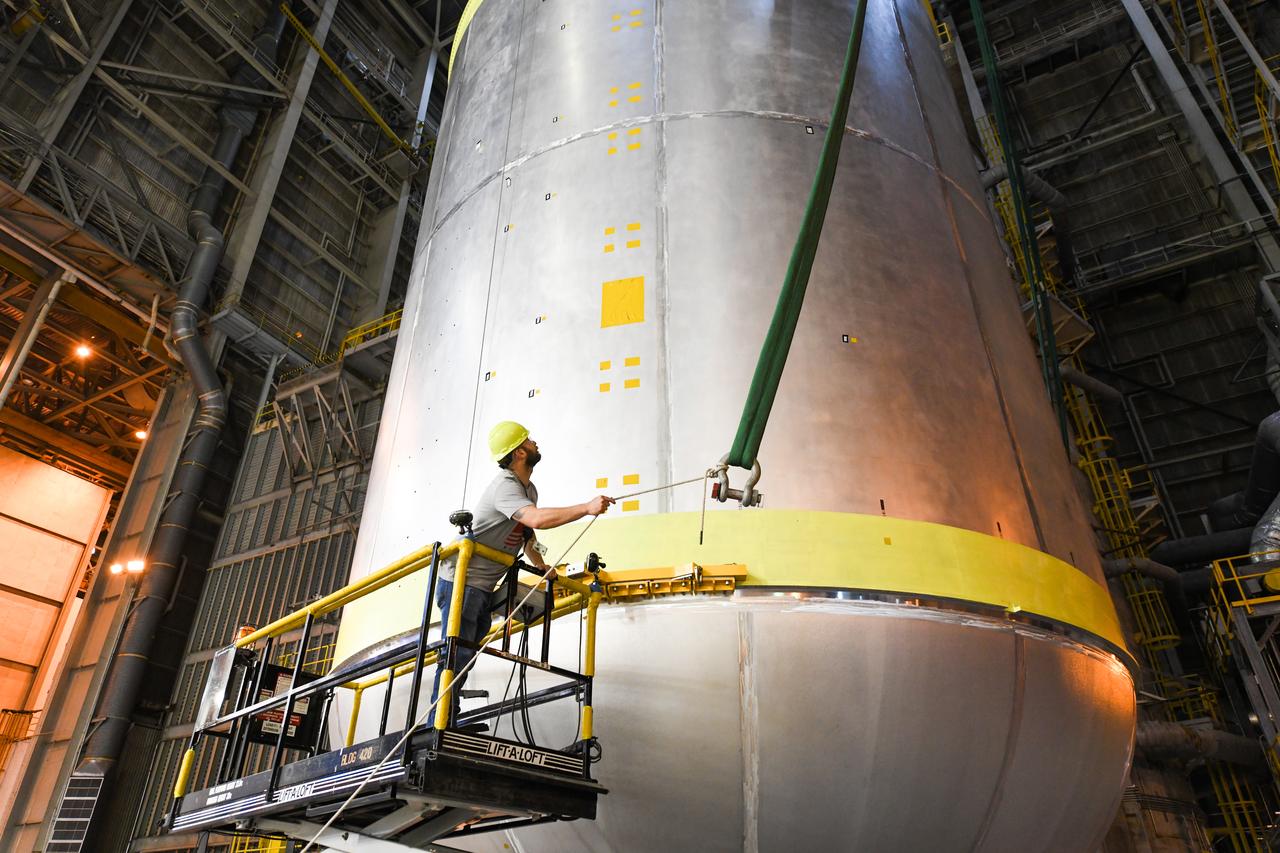
This image shows the latest progress NASA has made in manufacturing the liquid oxygen tank for the second core stage of NASA’s Space Launch System (SLS) rocket. The liquid oxygen tank will be used for the first crewed mission, Artemis II, of the agency’s Artemis program. Teams at NASA’s Michoud Assembly Facility in New Orleans recently completed internal cleaning of the liquid oxygen, or LOX, tank at the facility. Following the cleaning, crews prepared the propellant tank for the next phase of phase of assembly in a different area of the factory by moving, or breaking over, the tank from a vertical to horizontal position. The LOX tank is one of five major elements that make up the rocket’s massive 212-foot-tall core stage. The propellant tank holds 196,000 gallons of supercooled liquid oxygen to help fuel four RS-25 engines, and the internal cleaning ensures no contaminants make their way into the complex propulsion and engine systems of the deep space rocket. The stage, which includes a cluster of four RS-25, will produce more than 2 million pounds of thrust to help launch the SLS rocket and astronauts aboard NASA’s Orion spacecraft around the Moon for Artemis II. NASA is working to land the first woman and the next man on the Moon by 2024. The agency’s SLS rocket offers more payload mass, volume capability and energy to speed missions through deep space and enable NASA’s Artemis lunar program. SLS, along with Orion, the human landing system, and the Gateway in orbit around the Moon are NASA’s backbone for deep space exploration. No other rocket is capable of carrying astronauts in Orion around the Moon in a single mission.
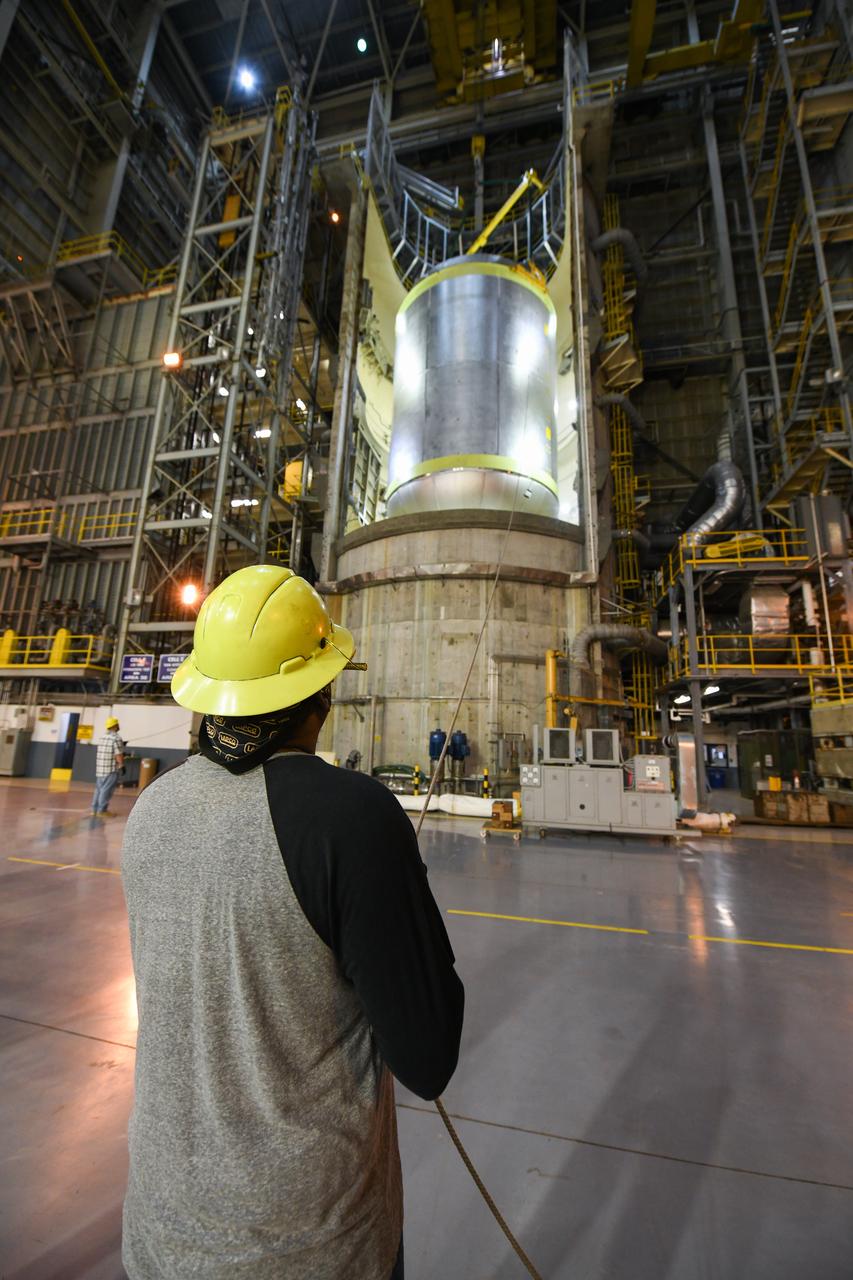
This image shows the latest progress NASA has made in manufacturing the liquid oxygen tank for the second core stage of NASA’s Space Launch System (SLS) rocket. The liquid oxygen tank will be used for the first crewed mission, Artemis II, of the agency’s Artemis program. Teams at NASA’s Michoud Assembly Facility in New Orleans recently completed internal cleaning of the liquid oxygen, or LOX, tank at the facility. Following the cleaning, crews prepared the propellant tank for the next phase of phase of assembly in a different area of the factory by moving, or breaking over, the tank from a vertical to horizontal position. The LOX tank is one of five major elements that make up the rocket’s massive 212-foot-tall core stage. The propellant tank holds 196,000 gallons of supercooled liquid oxygen to help fuel four RS-25 engines, and the internal cleaning ensures no contaminants make their way into the complex propulsion and engine systems of the deep space rocket. The stage, which includes a cluster of four RS-25, will produce more than 2 million pounds of thrust to help launch the SLS rocket and astronauts aboard NASA’s Orion spacecraft around the Moon for Artemis II. NASA is working to land the first woman and the next man on the Moon by 2024. The agency’s SLS rocket offers more payload mass, volume capability and energy to speed missions through deep space and enable NASA’s Artemis lunar program. SLS, along with Orion, the human landing system, and the Gateway in orbit around the Moon are NASA’s backbone for deep space exploration. No other rocket is capable of carrying astronauts in Orion around the Moon in a single mission.
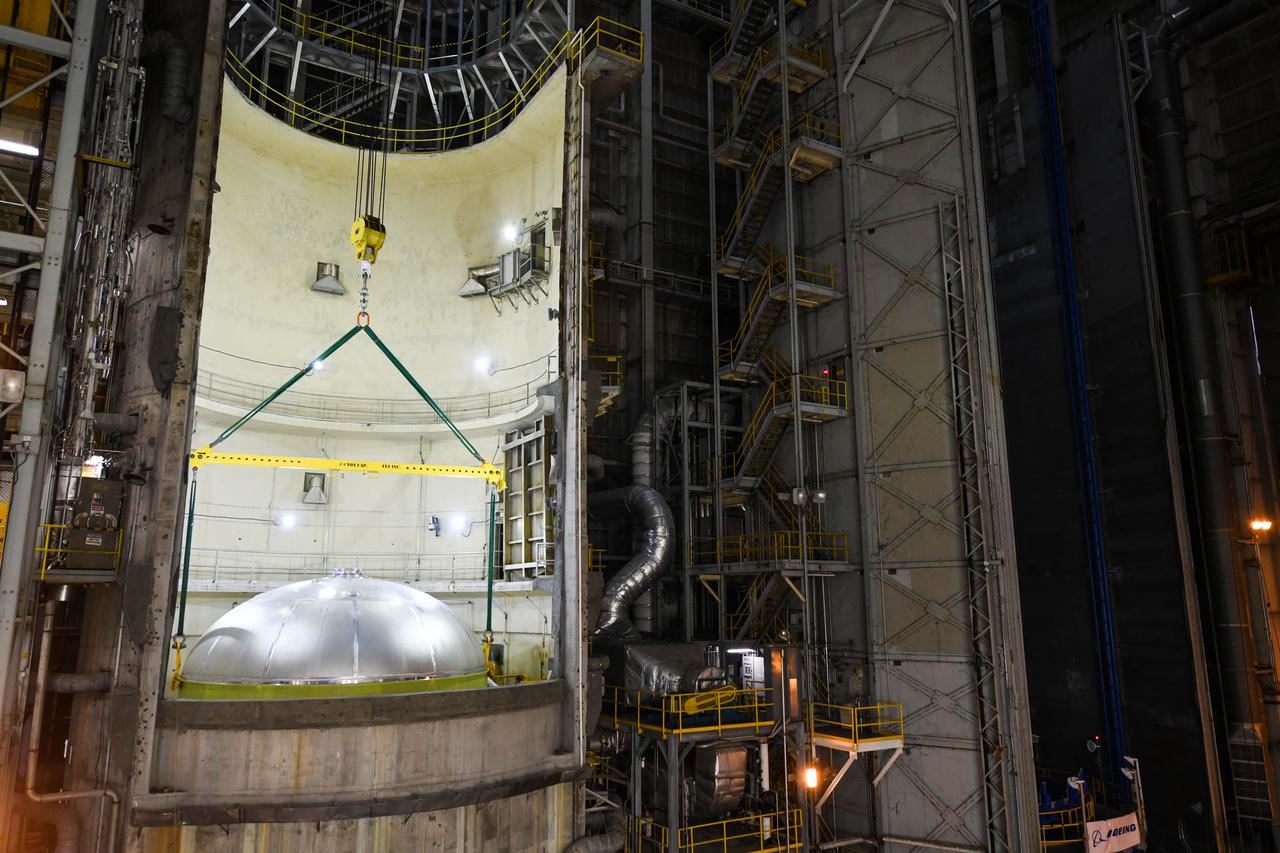
This image shows the latest progress NASA has made in manufacturing the liquid oxygen tank for the second core stage of NASA’s Space Launch System (SLS) rocket. The liquid oxygen tank will be used for the first crewed mission, Artemis II, of the agency’s Artemis program. Teams at NASA’s Michoud Assembly Facility in New Orleans recently completed internal cleaning of the liquid oxygen, or LOX, tank at the facility. Following the cleaning, crews prepared the propellant tank for the next phase of phase of assembly in a different area of the factory by moving, or breaking over, the tank from a vertical to horizontal position. The LOX tank is one of five major elements that make up the rocket’s massive 212-foot-tall core stage. The propellant tank holds 196,000 gallons of supercooled liquid oxygen to help fuel four RS-25 engines, and the internal cleaning ensures no contaminants make their way into the complex propulsion and engine systems of the deep space rocket. The stage, which includes a cluster of four RS-25, will produce more than 2 million pounds of thrust to help launch the SLS rocket and astronauts aboard NASA’s Orion spacecraft around the Moon for Artemis II. NASA is working to land the first woman and the next man on the Moon by 2024. The agency’s SLS rocket offers more payload mass, volume capability and energy to speed missions through deep space and enable NASA’s Artemis lunar program. SLS, along with Orion, the human landing system, and the Gateway in orbit around the Moon are NASA’s backbone for deep space exploration. No other rocket is capable of carrying astronauts in Orion around the Moon in a single mission.
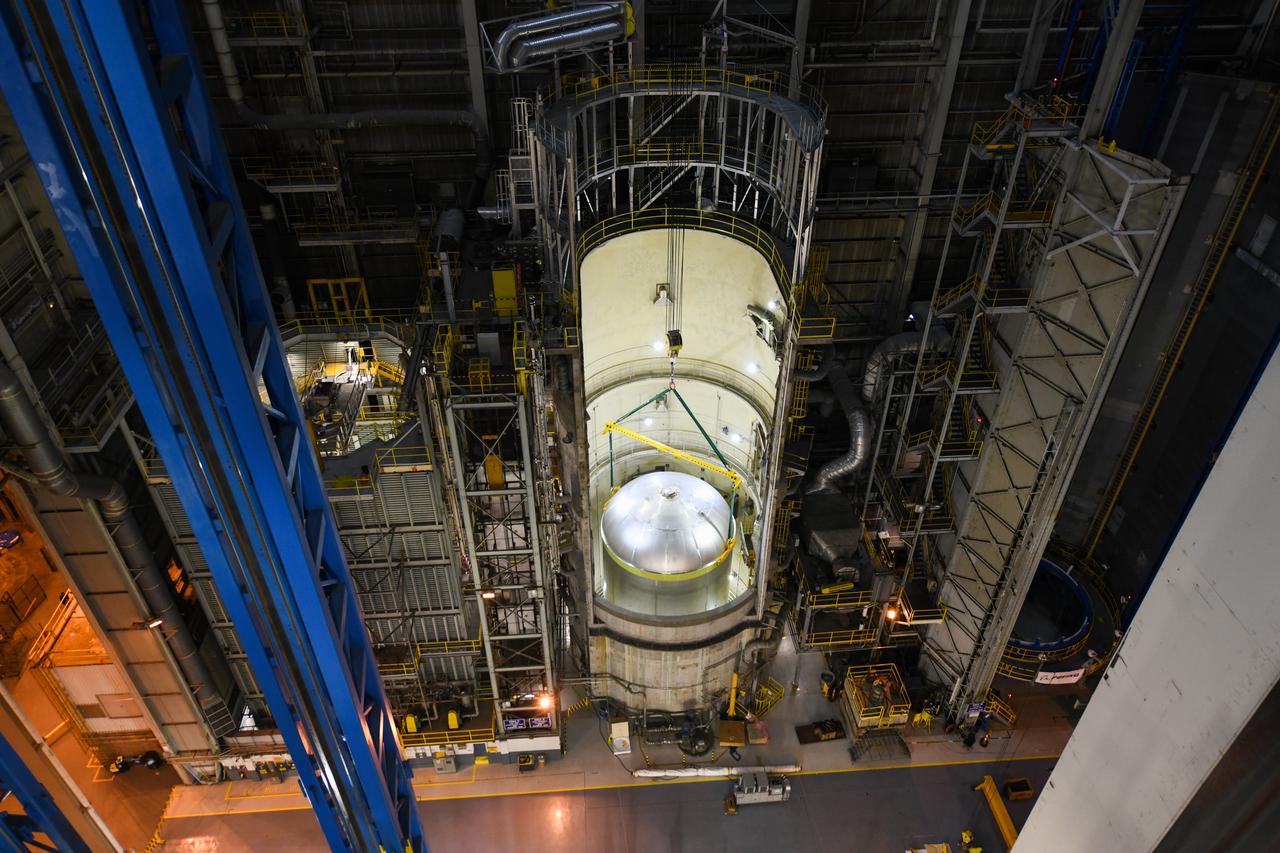
This image shows the latest progress NASA has made in manufacturing the liquid oxygen tank for the second core stage of NASA’s Space Launch System (SLS) rocket. The liquid oxygen tank will be used for the first crewed mission, Artemis II, of the agency’s Artemis program. Teams at NASA’s Michoud Assembly Facility in New Orleans recently completed internal cleaning of the liquid oxygen, or LOX, tank at the facility. Following the cleaning, crews prepared the propellant tank for the next phase of phase of assembly in a different area of the factory by moving, or breaking over, the tank from a vertical to horizontal position. The LOX tank is one of five major elements that make up the rocket’s massive 212-foot-tall core stage. The propellant tank holds 196,000 gallons of supercooled liquid oxygen to help fuel four RS-25 engines, and the internal cleaning ensures no contaminants make their way into the complex propulsion and engine systems of the deep space rocket. The stage, which includes a cluster of four RS-25, will produce more than 2 million pounds of thrust to help launch the SLS rocket and astronauts aboard NASA’s Orion spacecraft around the Moon for Artemis II. NASA is working to land the first woman and the next man on the Moon by 2024. The agency’s SLS rocket offers more payload mass, volume capability and energy to speed missions through deep space and enable NASA’s Artemis lunar program. SLS, along with Orion, the human landing system, and the Gateway in orbit around the Moon are NASA’s backbone for deep space exploration. No other rocket is capable of carrying astronauts in Orion around the Moon in a single mission.
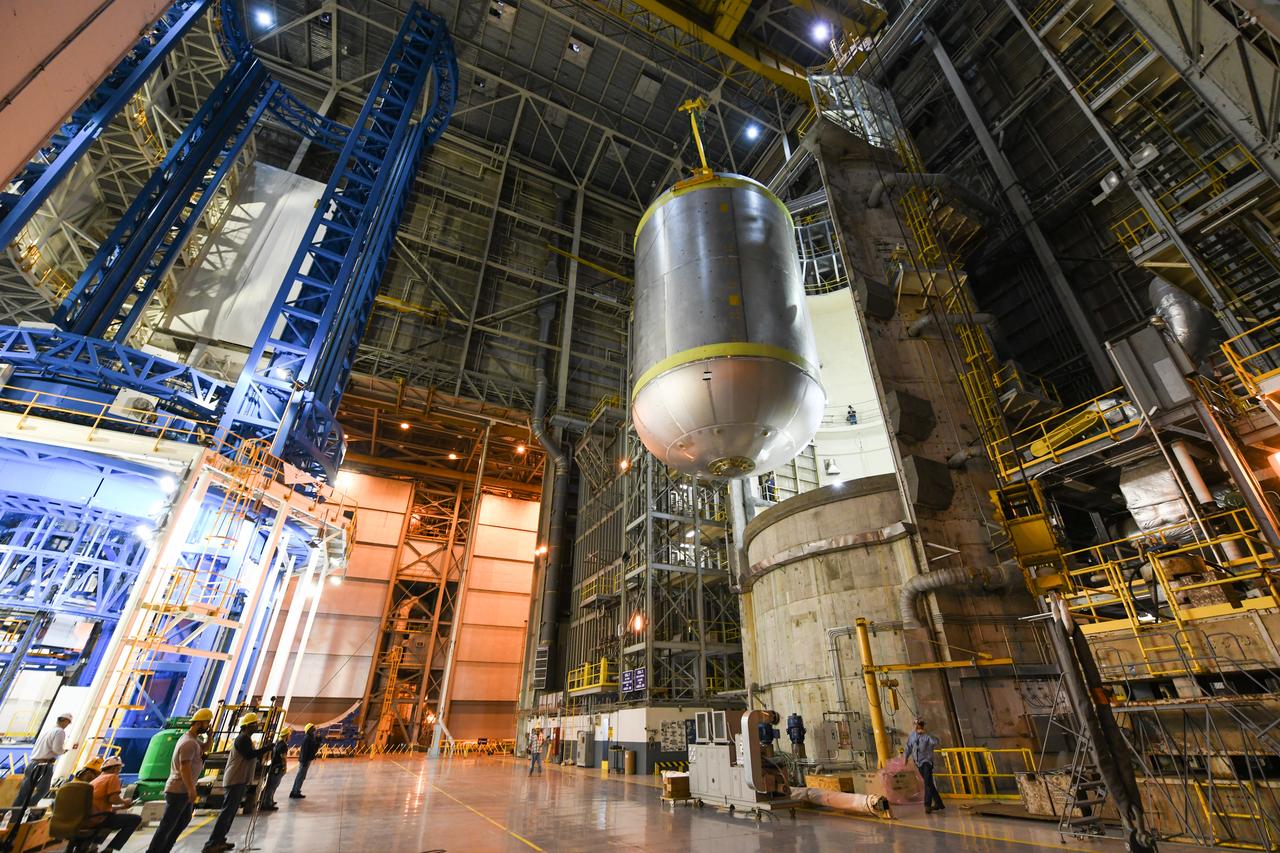
This image shows the latest progress NASA has made in manufacturing the liquid oxygen tank for the second core stage of NASA’s Space Launch System (SLS) rocket. The liquid oxygen tank will be used for the first crewed mission, Artemis II, of the agency’s Artemis program. Teams at NASA’s Michoud Assembly Facility in New Orleans recently completed internal cleaning of the liquid oxygen, or LOX, tank at the facility. Following the cleaning, crews prepared the propellant tank for the next phase of phase of assembly in a different area of the factory by moving, or breaking over, the tank from a vertical to horizontal position. The LOX tank is one of five major elements that make up the rocket’s massive 212-foot-tall core stage. The propellant tank holds 196,000 gallons of supercooled liquid oxygen to help fuel four RS-25 engines, and the internal cleaning ensures no contaminants make their way into the complex propulsion and engine systems of the deep space rocket. The stage, which includes a cluster of four RS-25, will produce more than 2 million pounds of thrust to help launch the SLS rocket and astronauts aboard NASA’s Orion spacecraft around the Moon for Artemis II. NASA is working to land the first woman and the next man on the Moon by 2024. The agency’s SLS rocket offers more payload mass, volume capability and energy to speed missions through deep space and enable NASA’s Artemis lunar program. SLS, along with Orion, the human landing system, and the Gateway in orbit around the Moon are NASA’s backbone for deep space exploration. No other rocket is capable of carrying astronauts in Orion around the Moon in a single mission.
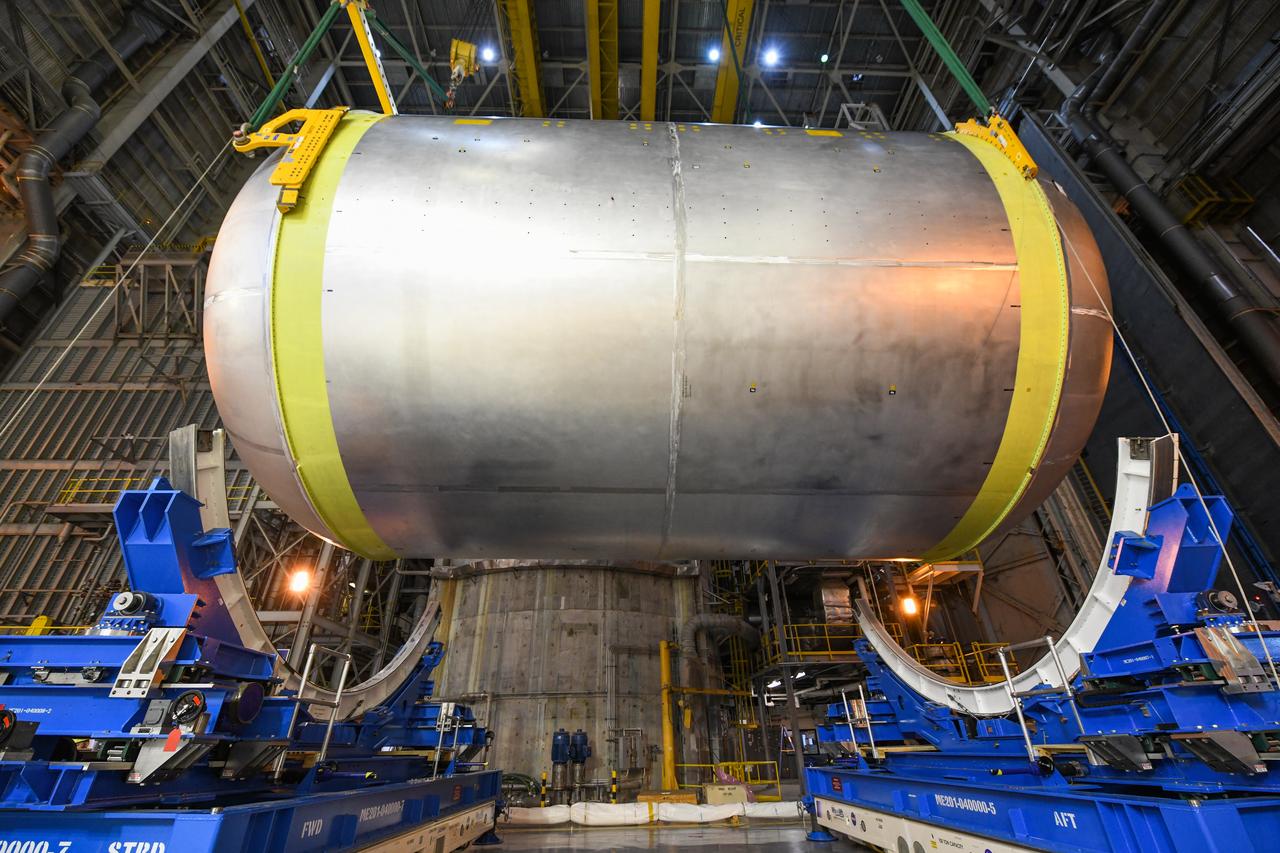
This image shows the latest progress NASA has made in manufacturing the liquid oxygen tank for the second core stage of NASA’s Space Launch System (SLS) rocket. The liquid oxygen tank will be used for the first crewed mission, Artemis II, of the agency’s Artemis program. Teams at NASA’s Michoud Assembly Facility in New Orleans recently completed internal cleaning of the liquid oxygen, or LOX, tank at the facility. Following the cleaning, crews prepared the propellant tank for the next phase of phase of assembly in a different area of the factory by moving, or breaking over, the tank from a vertical to horizontal position. The LOX tank is one of five major elements that make up the rocket’s massive 212-foot-tall core stage. The propellant tank holds 196,000 gallons of supercooled liquid oxygen to help fuel four RS-25 engines, and the internal cleaning ensures no contaminants make their way into the complex propulsion and engine systems of the deep space rocket. The stage, which includes a cluster of four RS-25, will produce more than 2 million pounds of thrust to help launch the SLS rocket and astronauts aboard NASA’s Orion spacecraft around the Moon for Artemis II. NASA is working to land the first woman and the next man on the Moon by 2024. The agency’s SLS rocket offers more payload mass, volume capability and energy to speed missions through deep space and enable NASA’s Artemis lunar program. SLS, along with Orion, the human landing system, and the Gateway in orbit around the Moon are NASA’s backbone for deep space exploration. No other rocket is capable of carrying astronauts in Orion around the Moon in a single mission.
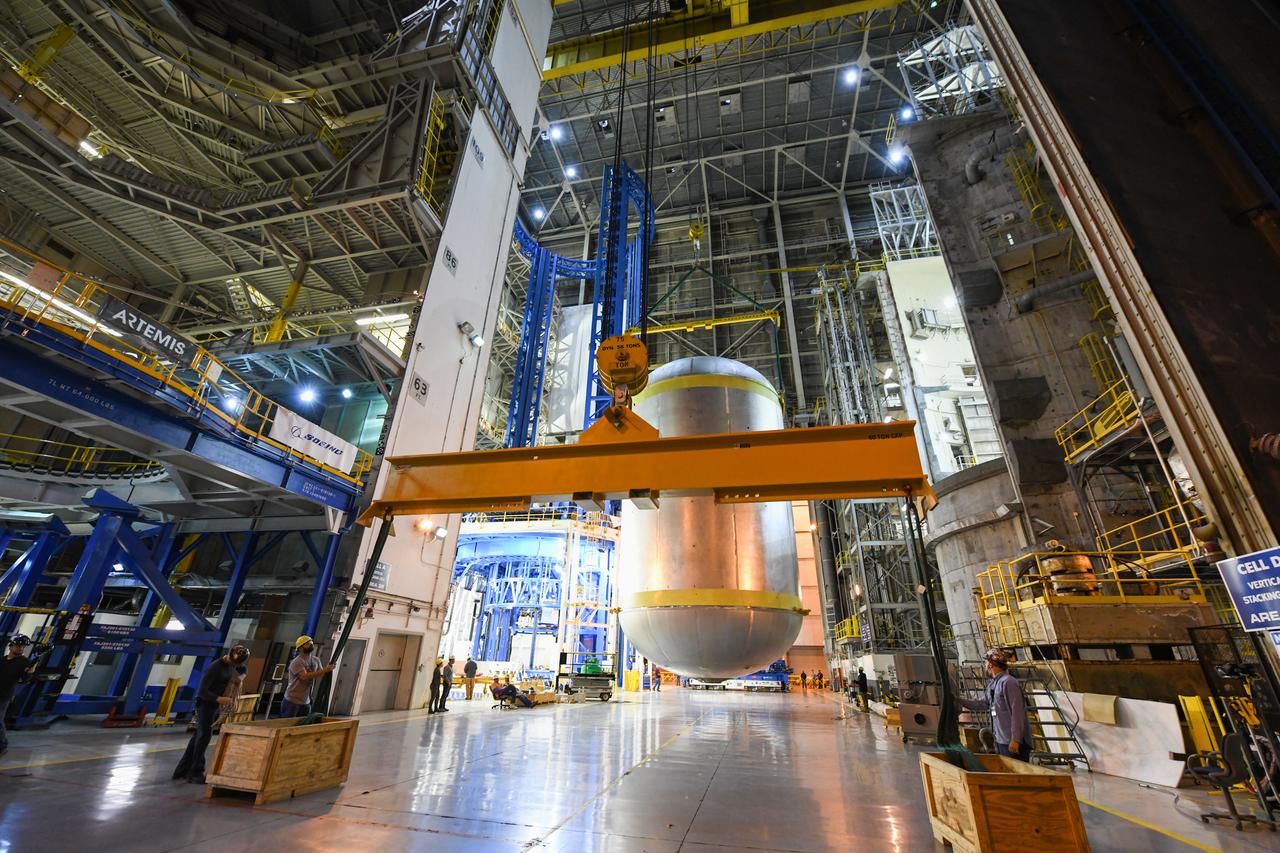
This image shows the latest progress NASA has made in manufacturing the liquid oxygen tank for the second core stage of NASA’s Space Launch System (SLS) rocket. The liquid oxygen tank will be used for the first crewed mission, Artemis II, of the agency’s Artemis program. Teams at NASA’s Michoud Assembly Facility in New Orleans recently completed internal cleaning of the liquid oxygen, or LOX, tank at the facility. Following the cleaning, crews prepared the propellant tank for the next phase of phase of assembly in a different area of the factory by moving, or breaking over, the tank from a vertical to horizontal position. The LOX tank is one of five major elements that make up the rocket’s massive 212-foot-tall core stage. The propellant tank holds 196,000 gallons of supercooled liquid oxygen to help fuel four RS-25 engines, and the internal cleaning ensures no contaminants make their way into the complex propulsion and engine systems of the deep space rocket. The stage, which includes a cluster of four RS-25, will produce more than 2 million pounds of thrust to help launch the SLS rocket and astronauts aboard NASA’s Orion spacecraft around the Moon for Artemis II. NASA is working to land the first woman and the next man on the Moon by 2024. The agency’s SLS rocket offers more payload mass, volume capability and energy to speed missions through deep space and enable NASA’s Artemis lunar program. SLS, along with Orion, the human landing system, and the Gateway in orbit around the Moon are NASA’s backbone for deep space exploration. No other rocket is capable of carrying astronauts in Orion around the Moon in a single mission.
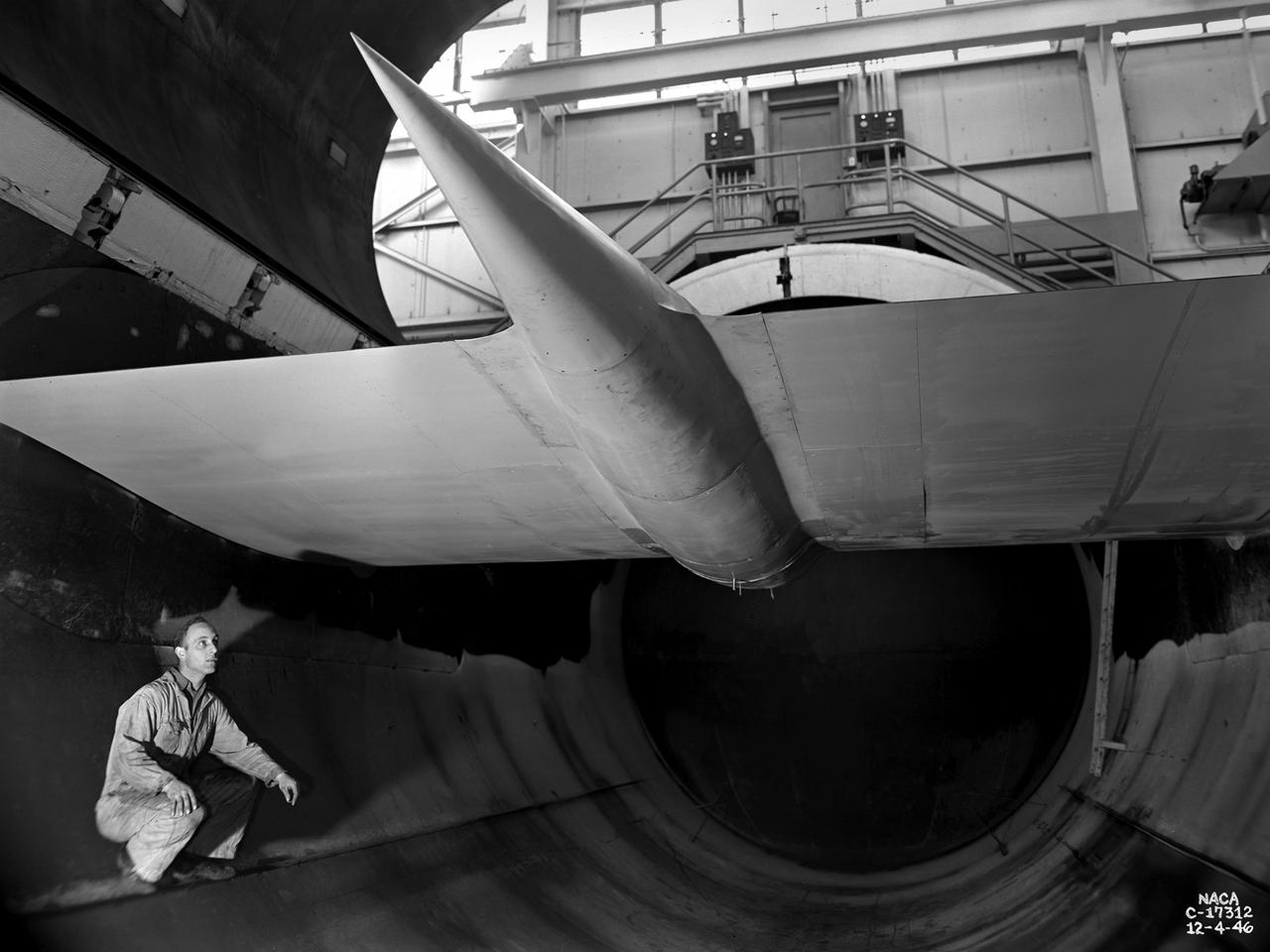
A General Electric TG-100A seen from the rear in the test section of the Altitude Wind Tunnel at the National Advisory Committee for Aeronautics (NACA) Lewis Flight Propulsion Laboratory in Cleveland, Ohio. The Altitude Wind Tunnel was used to study almost every model of US turbojet that emerged in the 1940s, as well as some ramjets and turboprops. In the early 1940s the military was interested in an engine that would use less fuel than the early jets but would keep up with them performance-wise. Turboprops seemed like a plausible solution. They could move a large volume of air and thus required less engine speed and less fuel. Researchers at General Electric’s plant in Schenectady, New York worked on the turboprop for several years in the 1930s. They received an army contract in 1941 to design a turboprop engine using an axial-flow compressor. The result was the 14-stage TG-100, the nation's first turboprop aircraft engine. Development of the engine was slow, however, and the military asked NACA Lewis to analyze the engine’s performance. The TG-100A was tested in the Altitude Wind Tunnel and it was determined that the compressors, combustion chamber, and turbine were impervious to changes in altitude. The researchers also established the optimal engine speed and propeller angle at simulated altitudes up to 35,000 feet. Despite these findings, development of the TG-100 was cancelled in May 1947. Twenty-eight of the engines were produced, but they were never incorporated into production aircraft.

This image shows the southern flank of Pavonis Mons. The large sinuous channel at the bottom of the image is located at the uppermost part of the volcano where collapse features are following the regional linear trend. A lava tube of this size indicates a high volume of lava. Pavonis Mons is one of the three aligned Tharsis Volcanoes. The four Tharsis volcanoes are Ascreaus Mons, Pavonis Mons, Arsia Mons, and Olympus Mars. All four are shield type volcanoes. Shield volcanoes are formed by lava flows originating near or at the summit, building up layers upon layers of lava. The Hawaiian islands on Earth are shield volcanoes. The three aligned volcanoes are located along a topographic rise in the Tharsis region. Along this trend there are increased tectonic features and additional lava flows. Pavonis Mons is the smallest of the four volcanoes, rising 14km above the mean Mars surface level with a width of 375km. It has a complex summit caldera, with the smallest caldera deeper than the larger caldera. Like most shield volcanoes the surface has a low profile. In the case of Pavonis Mons the average slope is only 4 degrees. The Odyssey spacecraft has spent over 15 years in orbit around Mars, circling the planet more than 69000 times. It holds the record for longest working spacecraft at Mars. THEMIS, the IR/VIS camera system, has collected data for the entire mission and provides images covering all seasons and lighting conditions. Over the years many features of interest have received repeated imaging, building up a suite of images covering the entire feature. From the deepest chasma to the tallest volcano, individual dunes inside craters and dune fields that encircle the north pole, channels carved by water and lava, and a variety of other feature, THEMIS has imaged them all. For the next several months the image of the day will focus on the Tharsis volcanoes, the various chasmata of Valles Marineris, and the major dunes fields. We hope you enjoy these images! Orbit Number: 45493 Latitude: -0.197065 Longitude: 246.516 Instrument: VIS Captured: 2012-03-17 03:39 https://photojournal.jpl.nasa.gov/catalog/PIA22025
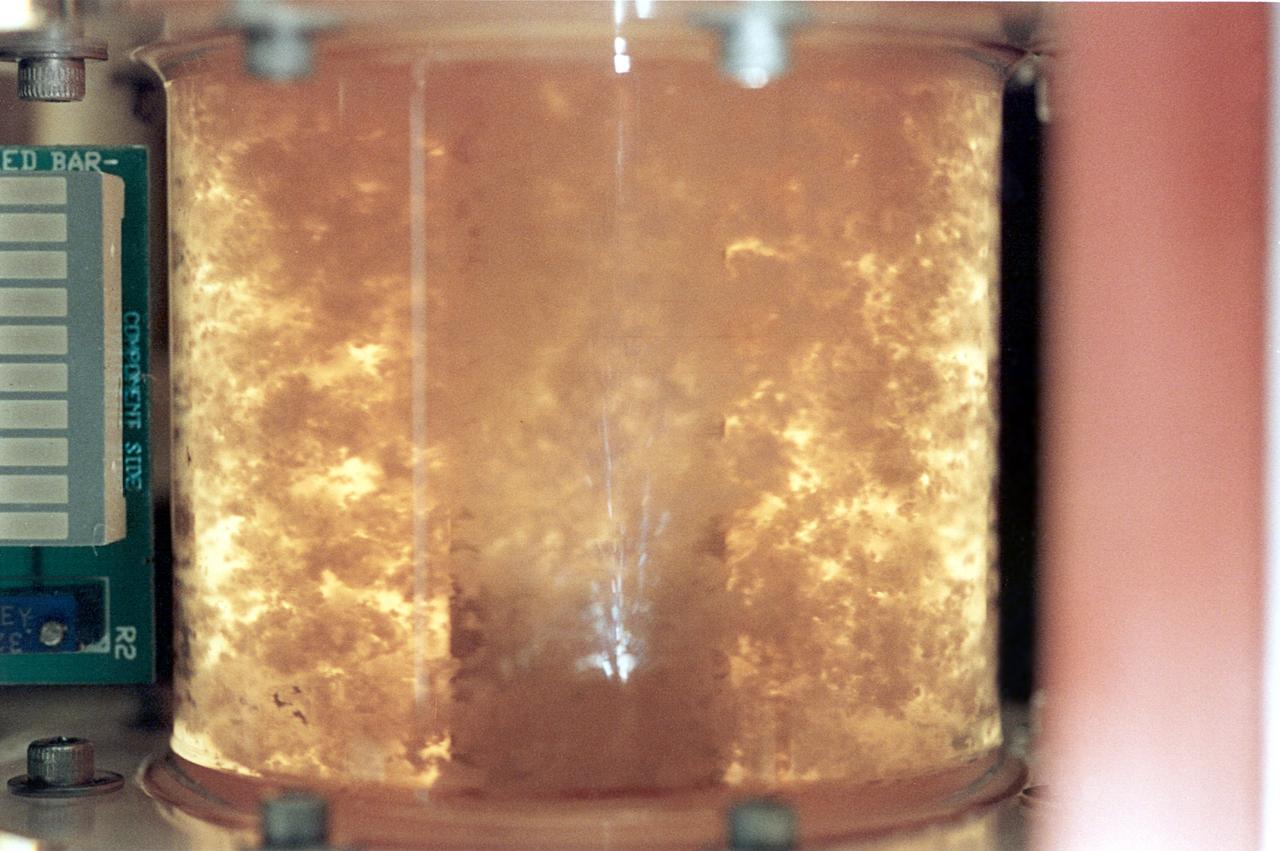
For 5 days on the STS-70 mission, a bioreactor cultivated human colon cancer cells, which grew to 30 times the volume of control specimens grown on Earth. This significant result was reproduced on STS-85 which grew mature structures that more closely match what are found in tumors in humans. Shown here, clusters of cells slowly spin inside a bioreactor. On Earth, the cells continually fall through the buffer medium and never hit bottom. In space, they are naturally suspended. Rotation ensures gentle stirring so waste is removed and fresh nutrient and oxygen are supplied. The NASA Bioreactor provides a low turbulence culture environment which promotes the formation of large, three-dimensional cell clusters. Due to their high level of cellular organization and specialization, samples constructed in the bioreactor more closely resemble the original tumor or tissue found in the body. The Bioreactor is rotated to provide gentle mixing of fresh and spent nutrient without inducing shear forces that would damage the cells. The work is sponsored by NASA's Office of Biological and Physical Research. The bioreactor is managed by the Biotechnology Cell Science Program at NASA's Johnson Space Center (JSC). NASA-sponsored bioreactor research has been instrumental in helping scientists to better understand normal and cancerous tissue development. In cooperation with the medical community, the bioreactor design is being used to prepare better models of human colon, prostate, breast and ovarian tumors. Cartilage, bone marrow, heart muscle, skeletal muscle, pancreatic islet cells, liver and kidney are just a few of the normal tissues being cultured in rotating bioreactors by investigators.
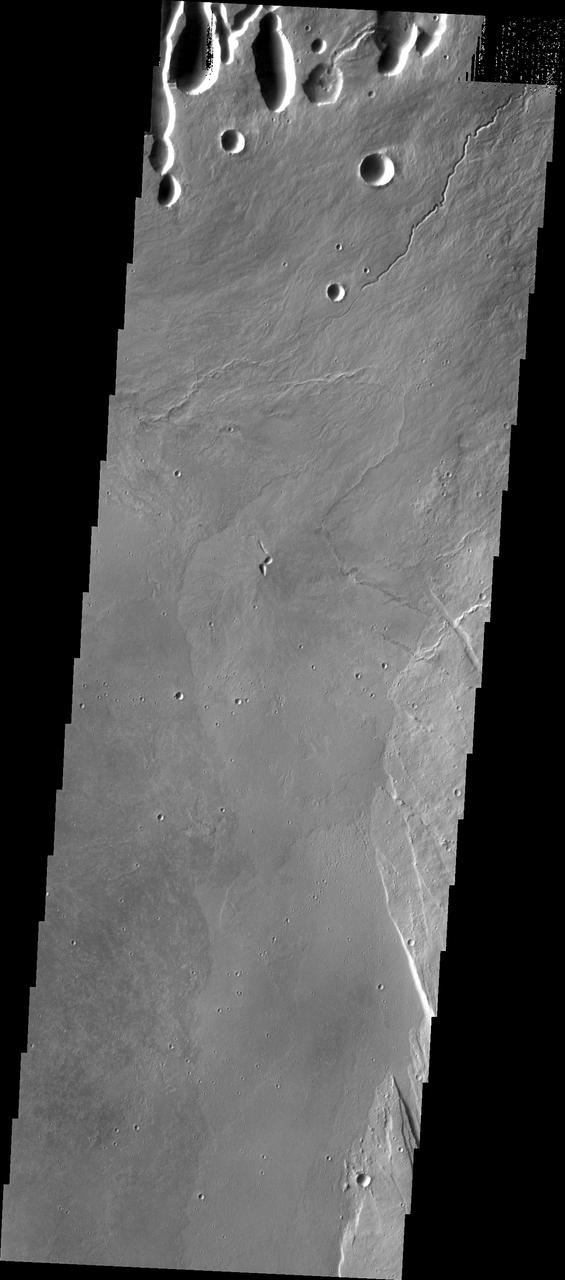
This THEMIS image shows part of the caldera floor of Arsia Mons. It is not uncommon for calderas to have "flat" floors after the final explosive eruption the empties the subsurface magma chamber. There may still be some magma or superheated rock left after the collapse that will fill in part of the depression. Additionally, over time erosion will work to level the topography. Within Arsia Mons there was renewed activity that occurred within the caldera along the alignment of the NE/SW trend of the three large volcanoes. This ongoing, low volume actitivity is similar to the lava lake in Kilauea in Hawaii. Small flows are visible throughout this image. In the center of the image is a small "L" shaped feature. This is the summit vent for the volcanic flows around it. The flows have lapped up against the caldera wall, filling in faults left by the caldera formation and increasing the elevation of the surface in this region of the caldera. Arsia Mons is the southernmost of the Tharsis volcanoes. It is 270 miles (450km) in diameter, almost 12 miles (20km) high, and the summit caldera is 72 miles (120km) wide. For comparison, the largest volcano on Earth is Mauna Loa. From its base on the sea floor, Mauna Loa measures only 6.3 miles high and 75 miles in diameter. A large volcanic crater known as a caldera is located at the summit of all of the Tharsis volcanoes. These calderas are produced by massive volcanic explosions and collapse. The Arsia Mons summit caldera is larger than many volcanoes on Earth. The Odyssey spacecraft has spent over 15 years in orbit around Mars, circling the planet more than 69000 times. It holds the record for longest working spacecraft at Mars. THEMIS, the IR/VIS camera system, has collected data for the entire mission and provides images covering all seasons and lighting conditions. Over the years many features of interest have received repeated imaging, building up a suite of images covering the entire feature. From the deepest chasma to the tallest volcano, individual dunes inside craters and dune fields that encircle the north pole, channels carved by water and lava, and a variety of other feature, THEMIS has imaged them all. For the next several months the image of the day will focus on the Tharsis volcanoes, the various chasmata of Valles Marineris, and the major dunes fields. We hope you enjoy these images! Orbit Number: 19874 Latitude: -8.57834 Longitude: 240.452 Instrument: VIS Captured: 2006-06-07 18:39 https://photojournal.jpl.nasa.gov/catalog/PIA22157
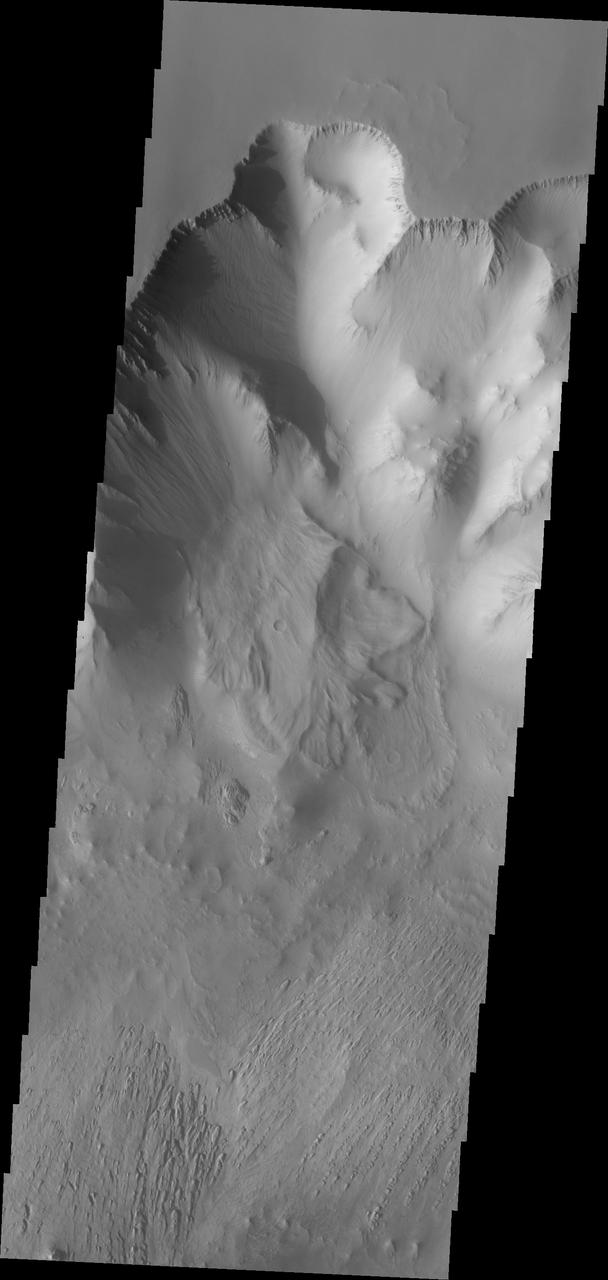
This VIS image of Tithonium Chasma shows the canyon wall at the top of the frame, a series of landslide deposits in the middle, and an eroded mound of materials at the bottom. The mound has been eroded, most likely by wind action. Tithonium Chasma has numerous large landslide deposits. The resistant material of the plateau surface forms the linear ridges of the canyon wall. Large landslides have changed the walls and floor of the canyon. A landslide is a failure of slope due to gravity. They initiate due to several reasons. A lower layer of poorly cemented/resistant material may have been eroded, undermining the wall above which then collapses; earth quake seismic waves can cause the slope to collapse; and even an impact event near the canyon wall can cause collapse. As millions of tons of material fall and slide down slope a scalloped cavity forms at the upper part where the slope failure occurred. At the material speeds downhill it will pick up more of the underlying slope, increasing the volume of material entrained into the landslide. Whereas some landslides spread across the canyon floor forming lobate deposits, very large volume slope failures will completely fill the canyon floor in a large complex region of chaotic blocks. Tithonium Chasma is at the western end of Valles Marineris. Valles Marineris is over 4000 kilometers long, wider than the United States. Tithonium Chasma is almost 810 kilometers long (499 miles), 50 kilometers wide and over 6 kilometers deep. In comparison, the Grand Canyon in Arizona is about 175 kilometers long, 30 kilometers wide, and only 2 kilometers deep. The canyons of Valles Marineris were formed by extensive fracturing and pulling apart of the crust during the uplift of the vast Tharsis plateau. Landslides have enlarged the canyon walls and created deposits on the canyon floor. Weathering of the surface and influx of dust and sand have modified the canyon floor, both creating and modifying layered materials. The Odyssey spacecraft has spent over 15 years in orbit around Mars, circling the planet more than 71,000 times. It holds the record for longest working spacecraft at Mars. THEMIS, the IR/VIS camera system, has collected data for the entire mission and provides images covering all seasons and lighting conditions. Over the years many features of interest have received repeated imaging, building up a suite of images covering the entire feature. From the deepest chasma to the tallest volcano, individual dunes inside craters and dune fields that encircle the north pole, channels carved by water and lava, and a variety of other feature, THEMIS has imaged them all. For the next several months the image of the day will focus on the Tharsis volcanoes, the various chasmata of Valles Marineris, and the major dunes fields. We hope you enjoy these images! Orbit Number: 25964 Latitude: -4.26209 Longitude: 270.721 Instrument: VIS Captured: 2007-10-22 02:44 https://photojournal.jpl.nasa.gov/catalog/PIA22273

This VIS image shows part of eastern Ius Chasma. The lower elevations of Geryon Montes are located at the top of the image. Between the montes and the southern wall face is a region of sand and sand dunes. The presence of mobile sand indicates that winds are eroding, depositing and changing the canyon floor. The texture of the canyon floor beneath the dunes and elsewhere in the image is an indication of water, in some form, was part of the process creating the surface. There is a tongue of material emerging from the canyon wall that has steep sides, this may be a delta formed by material washing down the valley and into a body of standing water, like a lake. It may also just be a landslide deposit that has undergone extensive weathering. A landslide is a failure of slope due to gravity. They initiate due to several reasons. A lower layer of poorly cemented/resistant material may have been eroded, undermining the wall above which then collapses; earthquake seismic waves can cause the slope to collapse; and even an impact event near the canyon wall can cause collapse. As millions of tons of material fall and slide down slope a scalloped cavity forms at the upper part where the slope failure occurred. At the material speeds downhill it will pick up more of the underlying slope, increasing the volume of material entrained into the landslide. Whereas some landslides spread across the canyon floor forming lobate deposits, very large volume slope failures will completely fill the canyon floor in a large complex region of chaotic blocks. Ius Chasma is at the western end of Valles Marineris, south of Tithonium Chasma. Valles Marineris is over 4000 kilometers long, wider than the United States. Ius Chasma is almost 850 kilometers long (528 miles), 120 kilometers wide and over 8 kilometers deep. In comparison, the Grand Canyon in Arizona is about 175 kilometers long, 30 kilometers wide, and only 2 kilometers deep. The canyons of Valles Marineris were formed by extensive fracturing and pulling apart of the crust during the uplift of the vast Tharsis plateau. Landslides have enlarged the canyon walls and created deposits on the canyon floor. Weathering of the surface and influx of dust and sand have modified the canyon floor, both creating and modifying layered materials. There are many features that indicate flowing and standing water played a part in the chasma formation. The Odyssey spacecraft has spent over 15 years in orbit around Mars, circling the planet more than 71,000 times. It holds the record for longest working spacecraft at Mars. THEMIS, the IR/VIS camera system, has collected data for the entire mission and provides images covering all seasons and lighting conditions. Over the years many features of interest have received repeated imaging, building up a suite of images covering the entire feature. From the deepest chasma to the tallest volcano, individual dunes inside craters and dune fields that encircle the north pole, channels carved by water and lava, and a variety of other feature, THEMIS has imaged them all. For the next several months the image of the day will focus on the Tharsis volcanoes, the various chasmata of Valles Marineris, and the major dunes fields. We hope you enjoy these images! Orbit Number: 10701 Latitude: -8.75442 Longitude: 281.333 Instrument: VIS Captured: 2004-05-13 10:49 https://photojournal.jpl.nasa.gov/catalog/PIA22282

This VIS image shows part of the eastern end of Ius Chasma. Geryon Montes are located in the bottom half of the image. Between the montes and the southern wall face is a region of sand and sand dunes. The presence of mobile sand indicates that winds are eroding, depositing and changing the canyon floor. The top of the image is dominated by a large landslide deposit. The radial surface grooves are still visible, but the region as a whole as undergone significant erosion. A landslide is a failure of slope due to gravity. They initiate due to several reasons. A lower layer of poorly cemented/resistant material may have been eroded, undermining the wall above which then collapses; earthquake seismic waves can cause the slope to collapse; and even an impact event near the canyon wall can cause collapse. As millions of tons of material fall and slide down slope a scalloped cavity forms at the upper part where the slope failure occurred. At the material speeds downhill it will pick up more of the underlying slope, increasing the volume of material entrained into the landslide. Whereas some landslides spread across the canyon floor forming lobate deposits, very large volume slope failures will completely fill the canyon floor in a large complex region of chaotic blocks. Ius Chasma is at the western end of Valles Marineris, south of Tithonium Chasma. Valles Marineris is over 4000 kilometers long, wider than the United States. Ius Chasma is almost 850 kilometers long (528 miles), 120 kilometers wide and over 8 kilometers deep. In comparison, the Grand Canyon in Arizona is about 175 kilometers long, 30 kilometers wide, and only 2 kilometers deep. The canyons of Valles Marineris were formed by extensive fracturing and pulling apart of the crust during the uplift of the vast Tharsis plateau. Landslides have enlarged the canyon walls and created deposits on the canyon floor. Weathering of the surface and influx of dust and sand have modified the canyon floor, both creating and modifying layered materials. There are many features that indicate flowing and standing water played a part in the chasma formation. The Odyssey spacecraft has spent over 15 years in orbit around Mars, circling the planet more than 71,000 times. It holds the record for longest working spacecraft at Mars. THEMIS, the IR/VIS camera system, has collected data for the entire mission and provides images covering all seasons and lighting conditions. Over the years many features of interest have received repeated imaging, building up a suite of images covering the entire feature. From the deepest chasma to the tallest volcano, individual dunes inside craters and dune fields that encircle the north pole, channels carved by water and lava, and a variety of other feature, THEMIS has imaged them all. For the next several months the image of the day will focus on the Tharsis volcanoes, the various chasmata of Valles Marineris, and the major dunes fields. We hope you enjoy these images! Orbit Number: 17153 Latitude: -8.20738 Longitude: 281.009 Instrument: VIS Captured: 2005-10-26 16:00 https://photojournal.jpl.nasa.gov/catalog/PIA22284
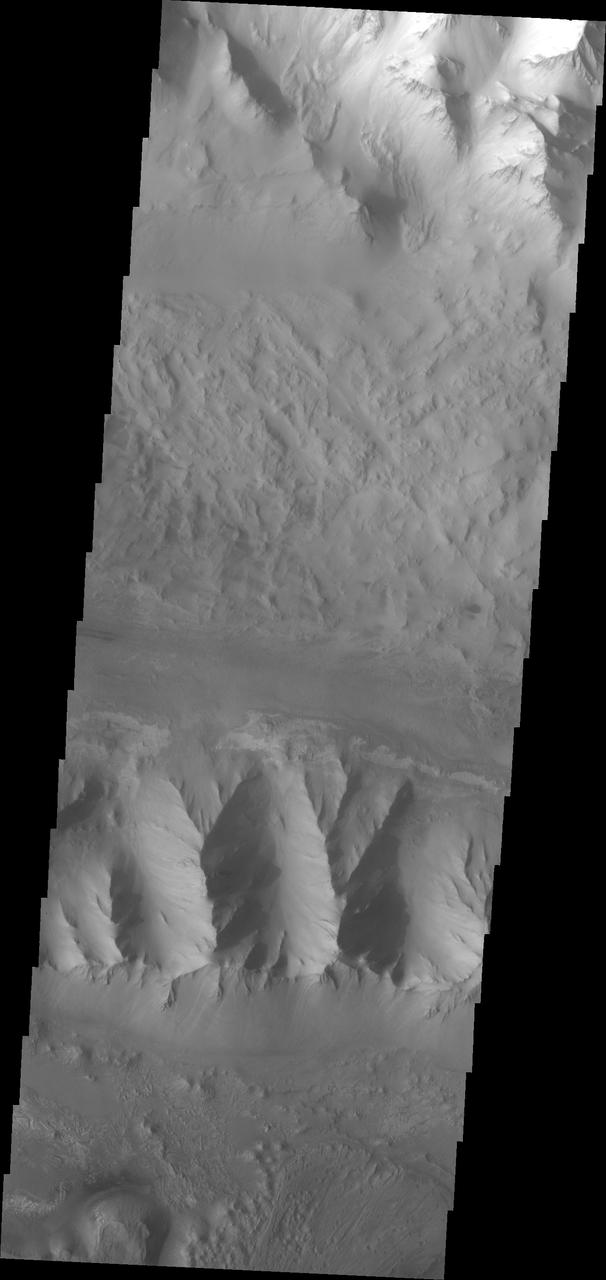
Moving into the central part of Ius Chasma, the canyon profile changes. What started as a large graben south of the main chasma wall, has widened to create a central high ridge separating the chasm into two parallel sections. This interior ridge is called Geryon Montes. The northern canyon wall is at the top of the image, including several tongue shaped landslide deposits. The floor has been covered in deposits that may include landslide material and later materials such as air fall particles like dust and water lain layered deposits. The Geryon Montes are in the lower 1/3 of the image. Just to the top of the Montes are materials with different "colors". These are part of the layered materials inside the canyon. At the very bottom of the image a highly eroded landslide deposit exists. The materials on this side of Geryon Montes are at a higher elevation than the floor on the opposite side. The unusual texture of the canyon floor also points to layered materials that may have been laid down in standing water. A landslide is a failure of slope due to gravity. They initiate due to several reasons. A lower layer of poorly cemented/resistant material may have been eroded, undermining the wall above which then collapses; earth quake seismic waves can cause the slope to collapse; and even an impact event near the canyon wall can cause collapse. As millions of tons of material fall and slide down slope a scalloped cavity forms at the upper part where the slope failure occurred. At the material speeds downhill it will pick up more of the underlying slope, increasing the volume of material entrained into the landslide. Whereas some landslides spread across the canyon floor forming lobate deposits, very large volume slope failures will completely fill the canyon floor in a large complex region of chaotic blocks. Ius Chasma is at the western end of Valles Marineris, south of Tithonium Chasma. Valles Marineris is over 4000 kilometers long, wider than the United States. Ius Chasma is almost 850 kilometers long (528 miles), 120 kilometers wide and over 8 kilometers deep. In comparison, the Grand Canyon in Arizona is about 175 kilometers long, 30 kilometers wide, and only 2 kilometers deep. The canyons of Valles Marineris were formed by extensive fracturing and pulling apart of the crust during the uplift of the vast Tharsis plateau. Landslides have enlarged the canyon walls and created deposits on the canyon floor. Weathering of the surface and influx of dust and sand have modified the canyon floor, both creating and modifying layered materials. There are many features that indicate flowing and standing water played a part in the chasma formation. The Odyssey spacecraft has spent over 15 years in orbit around Mars, circling the planet more than 71,000 times. It holds the record for longest working spacecraft at Mars. THEMIS, the IR/VIS camera system, has collected data for the entire mission and provides images covering all seasons and lighting conditions. Over the years many features of interest have received repeated imaging, building up a suite of images covering the entire feature. From the deepest chasma to the tallest volcano, individual dunes inside craters and dune fields that encircle the north pole, channels carved by water and lava, and a variety of other feature, THEMIS has imaged them all. For the next several months the image of the day will focus on the Tharsis volcanoes, the various chasmata of Valles Marineris, and the major dunes fields. We hope you enjoy these images! Orbit Number: 26151 Latitude: -7.12079 Longitude: 275.703 Instrument: VIS Captured: 2007-11-06 12:17 https://photojournal.jpl.nasa.gov/catalog/PIA22280
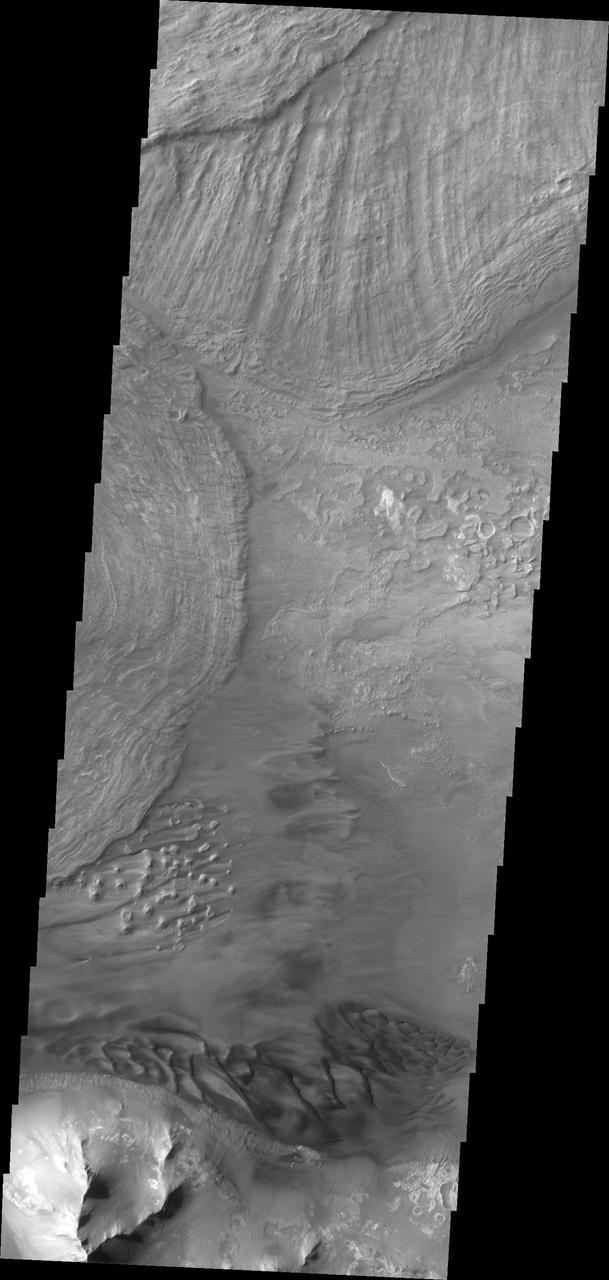
This VIS image shows the eastern end of Ius Chasma. The southern canyon wall is at the bottom of the image, with dark sand and sand dunes. The presence of mobile sand indicates that winds are eroding, depositing and changing the canyon floor. The rest of the image is dominated by large landslide deposits. At the top of the image are two overlapping deposits from landslides originating on the northern chasma wall. The landslide deposit on the left side of the image originate from the southern chasma wall. A landslide is a failure of slope due to gravity. They initiate due to several reasons. A lower layer of poorly cemented/resistant material may have been eroded, undermining the wall above which then collapses; earthquake seismic waves can cause the slope to collapse; and even an impact event near the canyon wall can cause collapse. As millions of tons of material fall and slide down slope a scalloped cavity forms at the upper part where the slope failure occurred. At the material speeds downhill it will pick up more of the underlying slope, increasing the volume of material entrained into the landslide. Whereas some landslides spread across the canyon floor forming lobate deposits, very large volume slope failures will completely fill the canyon floor in a large complex region of chaotic blocks. Ius Chasma is at the western end of Valles Marineris, south of Tithonium Chasma. Valles Marineris is over 4000 kilometers long, wider than the United States. Ius Chasma is almost 850 kilometers long (528 miles), 120 kilometers wide and over 8 kilometers deep. In comparison, the Grand Canyon in Arizona is about 175 kilometers long, 30 kilometers wide, and only 2 kilometers deep. The canyons of Valles Marineris were formed by extensive fracturing and pulling apart of the crust during the uplift of the vast Tharsis plateau. Landslides have enlarged the canyon walls and created deposits on the canyon floor. Weathering of the surface and influx of dust and sand have modified the canyon floor, both creating and modifying layered materials. There are many features that indicate flowing and standing water played a part in the chasma formation. The Odyssey spacecraft has spent over 15 years in orbit around Mars, circling the planet more than 71,000 times. It holds the record for longest working spacecraft at Mars. THEMIS, the IR/VIS camera system, has collected data for the entire mission and provides images covering all seasons and lighting conditions. Over the years many features of interest have received repeated imaging, building up a suite of images covering the entire feature. From the deepest chasma to the tallest volcano, individual dunes inside craters and dune fields that encircle the north pole, channels carved by water and lava, and a variety of other feature, THEMIS has imaged them all. For the next several months the image of the day will focus on the Tharsis volcanoes, the various chasmata of Valles Marineris, and the major dunes fields. We hope you enjoy these images! Orbit Number: 36744 Latitude: -8.64709 Longitude: 282.235 Instrument: VIS Captured: 2010-03-27 18:32 https://photojournal.jpl.nasa.gov/catalog/PIA22285

Continuing eastward thru central Ius Chasma, this image shows a section of chasma that is not dominated by landslide deposits. Geryon Montes, in the upper half of the image, has several visible faults, including a pair of faults that divide the uppermost ridge into two sections. Between the montes and the southern wall face is a region of sand and sand dunes. The presence of mobile sand indicates that winds are eroding, depositing and changing the canyon floor. A landslide is a failure of slope due to gravity. They initiate due to several reasons. A lower layer of poorly cemented/resistant material may have been eroded, undermining the wall above which then collapses; earthquake seismic waves can cause the slope to collapse; and even an impact event near the canyon wall can cause collapse. As millions of tons of material fall and slide down slope a scalloped cavity forms at the upper part where the slope failure occurred. At the material speeds downhill it will pick up more of the underlying slope, increasing the volume of material entrained into the landslide. Whereas some landslides spread across the canyon floor forming lobate deposits, very large volume slope failures will completely fill the canyon floor in a large complex region of chaotic blocks. Ius Chasma is at the western end of Valles Marineris, south of Tithonium Chasma. Valles Marineris is over 4000 kilometers long, wider than the United States. Ius Chasma is almost 850 kilometers long (528 miles), 120 kilometers wide and over 8 kilometers deep. In comparison, the Grand Canyon in Arizona is about 175 kilometers long, 30 kilometers wide, and only 2 kilometers deep. The canyons of Valles Marineris were formed by extensive fracturing and pulling apart of the crust during the uplift of the vast Tharsis plateau. Landslides have enlarged the canyon walls and created deposits on the canyon floor. Weathering of the surface and influx of dust and sand have modified the canyon floor, both creating and modifying layered materials. There are many features that indicate flowing and standing water played a part in the chasma formation. The Odyssey spacecraft has spent over 15 years in orbit around Mars, circling the planet more than 71,000 times. It holds the record for longest working spacecraft at Mars. THEMIS, the IR/VIS camera system, has collected data for the entire mission and provides images covering all seasons and lighting conditions. Over the years many features of interest have received repeated imaging, building up a suite of images covering the entire feature. From the deepest chasma to the tallest volcano, individual dunes inside craters and dune fields that encircle the north pole, channels carved by water and lava, and a variety of other feature, THEMIS has imaged them all. For the next several months the image of the day will focus on the Tharsis volcanoes, the various chasmata of Valles Marineris, and the major dunes fields. We hope you enjoy these images! Orbit Number: 27012 Latitude: -7.59048 Longitude: 276.328 Instrument: VIS Captured: 2008-01-16 09:47 https://photojournal.jpl.nasa.gov/catalog/PIA22281
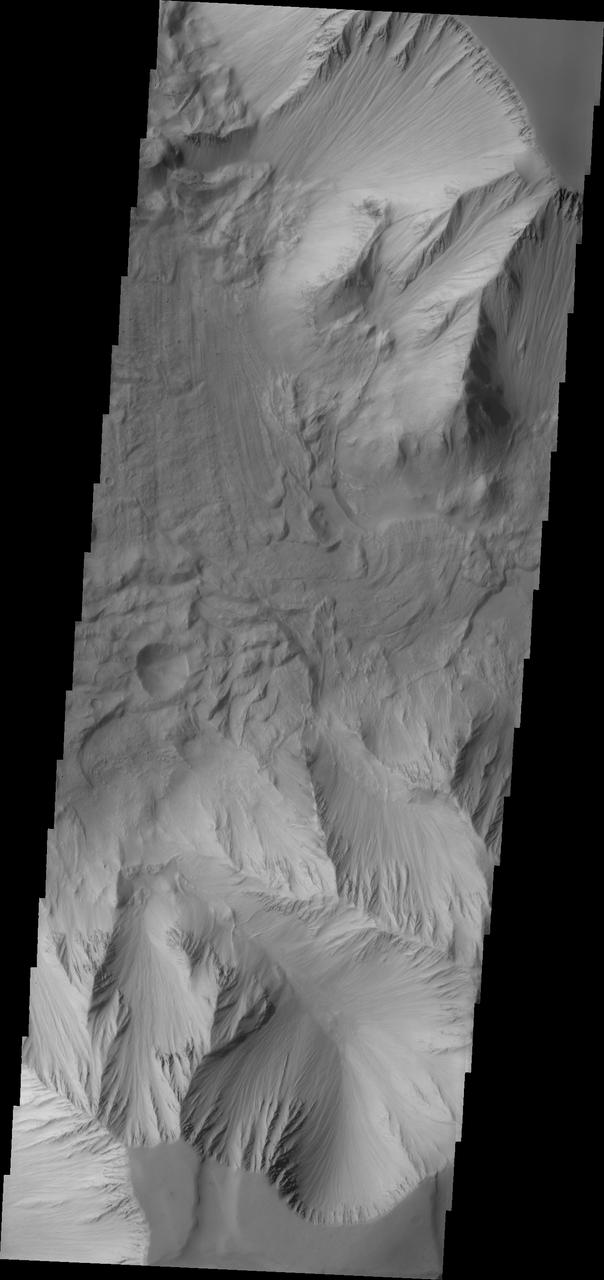
In this VIS image of Tithonium Chasma both sides of the chasma are visible. In this narrow and deep part of the chasma exist both large, chaotic block landslide deposits with smaller lobate shaped landslide deposits on top. Tithonium Chasma has numerous large landslide deposits. The resistant material of the plateau surface forms the linear ridges of the canyon wall. Large landslides have changed the walls and floor of the canyon. A landslide is a failure of slope due to gravity. They initiate due to several reasons. A lower layer of poorly cemented/resistant material may have been eroded, undermining the wall above which then collapses; earth quake seismic waves can cause the slope to collapse; and even an impact event near the canyon wall can cause collapse. As millions of tons of material fall and slide down slope a scalloped cavity forms at the upper part where the slope failure occurred. At the material speeds downhill it will pick up more of the underlying slope, increasing the volume of material entrained into the landslide. Whereas some landslides spread across the canyon floor forming lobate deposits, very large volume slope failures will completely fill the canyon floor in a large complex region of chaotic blocks. Tithonium Chasma is at the western end of Valles Marineris. Valles Marineris is over 4000 kilometers long, wider than the United States. Tithonium Chasma is almost 810 kilometers long (499 miles), 50 kilometers wide and over 6 kilometers deep. In comparison, the Grand Canyon in Arizona is about 175 kilometers long, 30 kilometers wide, and only 2 kilometers deep. The canyons of Valles Marineris were formed by extensive fracturing and pulling apart of the crust during the uplift of the vast Tharsis plateau. Landslides have enlarged the canyon walls and created deposits on the canyon floor. Weathering of the surface and influx of dust and sand have modified the canyon floor, both creating and modifying layered materials. The Odyssey spacecraft has spent over 15 years in orbit around Mars, circling the planet more than 71,000 times. It holds the record for longest working spacecraft at Mars. THEMIS, the IR/VIS camera system, has collected data for the entire mission and provides images covering all seasons and lighting conditions. Over the years many features of interest have received repeated imaging, building up a suite of images covering the entire feature. From the deepest chasma to the tallest volcano, individual dunes inside craters and dune fields that encircle the north pole, channels carved by water and lava, and a variety of other feature, THEMIS has imaged them all. For the next several months the image of the day will focus on the Tharsis volcanoes, the various chasmata of Valles Marineris, and the major dunes fields. We hope you enjoy these images! Orbit Number: 36058 Latitude: -4.39265 Longitude: 272.557 Instrument: VIS Captured: 2010-01-30 06:55 https://photojournal.jpl.nasa.gov/catalog/PIA22276

Caption: A NASA Super Pressure Balloon with the COSI payload is ready for launch from McMurdo, Antarctica. Credit: NASA More info: NASA’s globetrotting Balloon Program Office is wrapping up its 2014-2015 Antarctic campaign while prepping for an around-the-world flight launching out of Wanaka, New Zealand, in March. After 16 days, 12 hours, and 56 minutes of flight, operators successfully conducted a planned flight termination of the Suborbital Polarimeter for Inflation Dust and the Epoch of Reionization (SPIDER) mission Saturday, Jan. 18, the final mission of the campaign. Other flights in the 2014-2015 Antarctic campaign included the Antarctic Impulsive Transient Antenna (ANITA-III) mission as well as the Compton Spectrometer and Imager (COSI) payload flown on the developmental Super Pressure Balloon (SPB). ANITA-III successfully wrapped up Jan. 9 after 22 days, 9 hours, and 14 minutes of flight. Flight controllers terminated the COSI flight 43 hours into the mission after detecting a small gas leak in the balloon. Crews are now working to recover all three instruments from different locations across the continent. The 6,480-pound SPIDER payload is stationary at a position about 290 miles from the United Kingdom’s Sky Blu Logistics Facility in Antarctica. The 4,601 pound ANITA-III payload, located about 100 miles from Australia’s Davis Station, and the 2,866 pound COSI payload, located about 340 miles from the United States McMurdo Station both had numerous key components recovered in the past few days. Beginning in late January, the Balloon Program Office will deploy a team to Wanaka, New Zealand, to begin preparations for an SPB flight, scheduled to launch in March. The Program Office seeks to fly the SPB more than 100 days, which would shatter the current flight duration record of 55 days, 1 hour, and 34 minutes for a large scientific balloon. “We’re looking forward to the New Zealand campaign and hopefully a history-making flight with the Super Pressure Balloon,” said Debbie Fairbrother, NASA’s Balloon Program Office Chief. Most scientific balloons see altitude variances based on temperature changes in the atmosphere at night and during the day. The SPB is capable of missions on the order of 100 days or more at constant float altitudes due to the pressurization of the balloon. “Stable, long-duration flights at near-space altitudes above more than 99 percent of the atmosphere are highly desirable in the science community, and we’re ready to deliver,” said Fairbrother. In addition to the SPB flight in March, the Balloon Program Office has 10 more balloon missions planned through September 2015 to include scheduled test flights of the Low-Density Supersonic Decelerator, which is testing new technologies for landing larger, heavier payloads on Mars. NASA’s Wallops Flight Facility manages the agency’s Scientific Balloon Program with 10 to 15 flights each year from launch sites worldwide. The balloons are massive in volume; the average-sized balloon could hold the volume of nearly 200 blimps. Previous work on balloons have contributed to confirming the Big Bang Theory. For more information on NASA’s Scientific Balloon Program, see: <a href="http://sites.wff.nasa.gov/code820/index.html" rel="nofollow">sites.wff.nasa.gov/code820/index.html</a> <b><a href="http://www.nasa.gov/audience/formedia/features/MP_Photo_Guidelines.html" rel="nofollow">NASA image use policy.</a></b> <b><a href="http://www.nasa.gov/centers/goddard/home/index.html" rel="nofollow">NASA Goddard Space Flight Center</a></b> enables NASA’s mission through four scientific endeavors: Earth Science, Heliophysics, Solar System Exploration, and Astrophysics. Goddard plays a leading role in NASA’s accomplishments by contributing compelling scientific knowledge to advance the Agency’s mission. <b>Follow us on <a href="http://twitter.com/NASAGoddardPix" rel="nofollow">Twitter</a></b> <b>Like us on <a href="http://www.facebook.com/pages/Greenbelt-MD/NASA-Goddard/395013845897?ref=tsd" rel="nofollow">Facebook</a></b> <b>Find us on <a href="http://instagram.com/nasagoddard?vm=grid" rel="nofollow">Instagram</a></b>
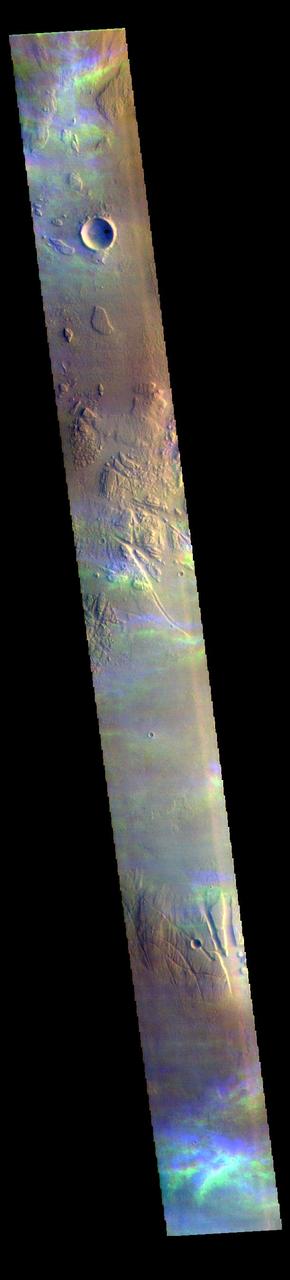
The THEMIS VIS camera contains 5 filters. The data from different filters can be combined in multiple ways to create a false color image. These false color images may reveal subtle variations of the surface not easily identified in a single band image. Today's false color image shows high altitude ice clouds. The blue and yellow bands in this image are not image artifacts, but are the traces of ice rich clouds. Each framelet of the image is collected at slightly different times. For the unchanging surface, this works fine. Optically thick dust clouds are usually close to the surface so any motion of the clouds is not dramatic as seen from the altitude of the Odyssey spacecraft. Transparent, and high altitude clouds are harder to discern in single band images – but are easy to discern in false color images – the clouds are in slightly different positions as each filter is collected. The clouds in this image are in the Tharsis region. Clouds are common there in the northern spring season. As clouds are a transient process, they can not be targeted, but are a 'surprise' when they are captured in an image. The THEMIS VIS camera is capable of capturing color images of the Martian surface using five different color filters. In this mode of operation, the spatial resolution and coverage of the image must be reduced to accommodate the additional data volume produced from using multiple filters. To make a color image, three of the five filter images (each in grayscale) are selected. Each is contrast enhanced and then converted to a red, green, or blue intensity image. These three images are then combined to produce a full color, single image. Because the THEMIS color filters don't span the full range of colors seen by the human eye, a color THEMIS image does not represent true color. Also, because each single-filter image is contrast enhanced before inclusion in the three-color image, the apparent color variation of the scene is exaggerated. Nevertheless, the color variation that does appear is representative of some change in color, however subtle, in the actual scene. Note that the long edges of THEMIS color images typically contain color artifacts that do not represent surface variation. Orbit Number: 94128 Latitude: 14.3145 Longitude: 281.365 Instrument: VIS Captured: 2023-03-04 19:22 https://photojournal.jpl.nasa.gov/catalog/PIA26126
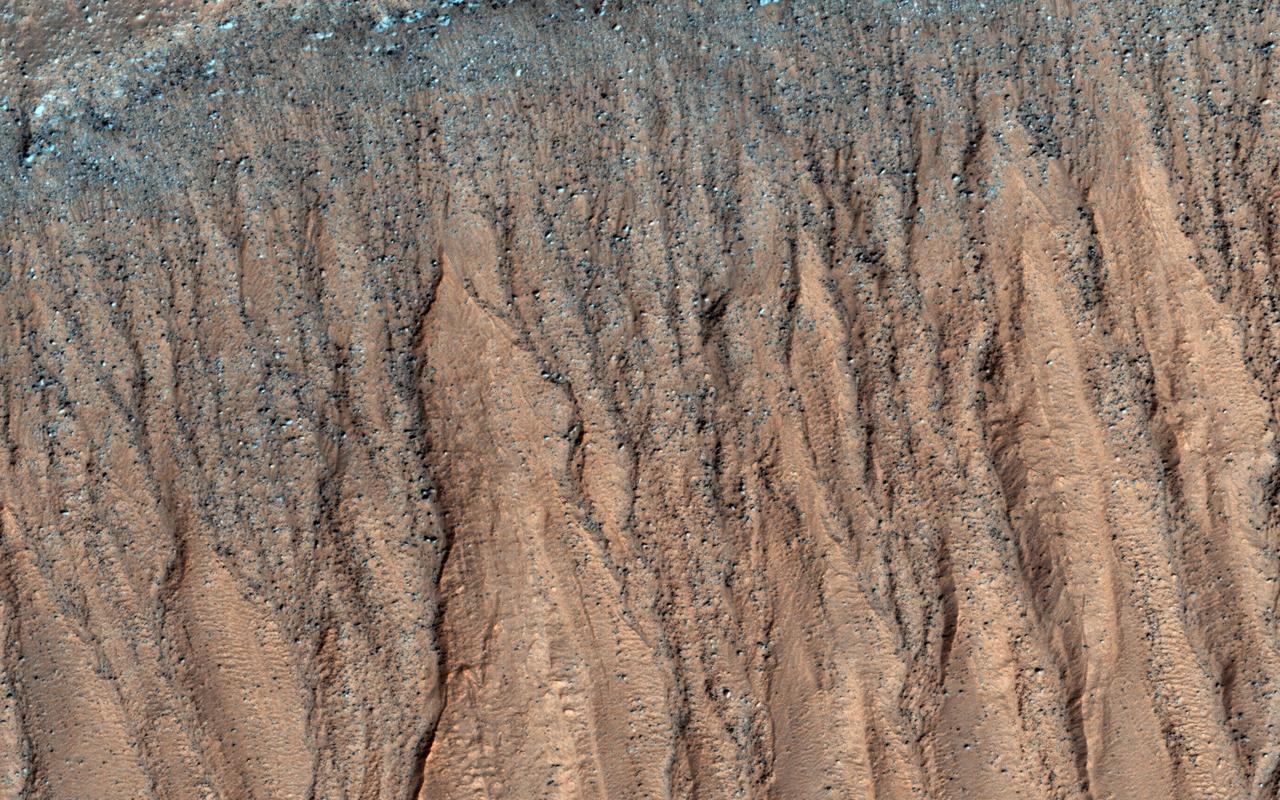
This unnamed, approximately 30-kilometer diameter crater, formed in the Southern highlands of Mars. This image from NASA's Mars Reconnaissance Orbiter shows regions of geologic diversity within, making this an interesting spot for scientists to study how different Martian processes interact with each other. Gullies, or channels formed by fluids such as water or lava, cut into the rim and sides of this crater. The presence of gullies can reveal clues about the ancient history of Mars, such as the amount of flowing fluid needed to form them and roughly how long ago that happened. This crater may also host features actively changing on the surface of Mars known as "recurring slope lineae" (RSL). Manifesting as dark streaks on steep slopes such as the walls of craters, scientists posit briny flows of small volumes of water as a possible RSL formation method. Studying the behavior of RSL further may provide evidence for the presence of water on Mars today. Moving toward the crater floor, one can observe patterns indicative of dunes. Dunes arise from the breakdown of exposed rocks by wind and subsequent manipulation of the eroded sand particles into wave-like structures. The presence of dust devil tracks provides additional evidence for significant wind activity at this location. These dunes are very dusty and so likely haven't been active (moved) in some time. HiRISE also captured a small, relatively fresh crater on the floor near the dunes. One of the most ubiquitous processes in the solar system, impact cratering can drastically change the surface of a planetary body. As such, craters provide sources of comparison between planets, moons, and other bodies across the solar system. Impacts still occur today, helping scientists find relative ages of different areas of a planet and discover materials buried under the surface. All of these processes have altered the surface of Mars in the past and continue to do so today. Since gully formation, wind erosion, and impact cratering could have interacted with each other for many years, planetary scientists find it difficult to work backwards and make definitive statements about ancient Martian history. However, HiRISE imagery has aided in closing these gaps in our scientific knowledge. https://photojournal.jpl.nasa.gov/catalog/PIA21654
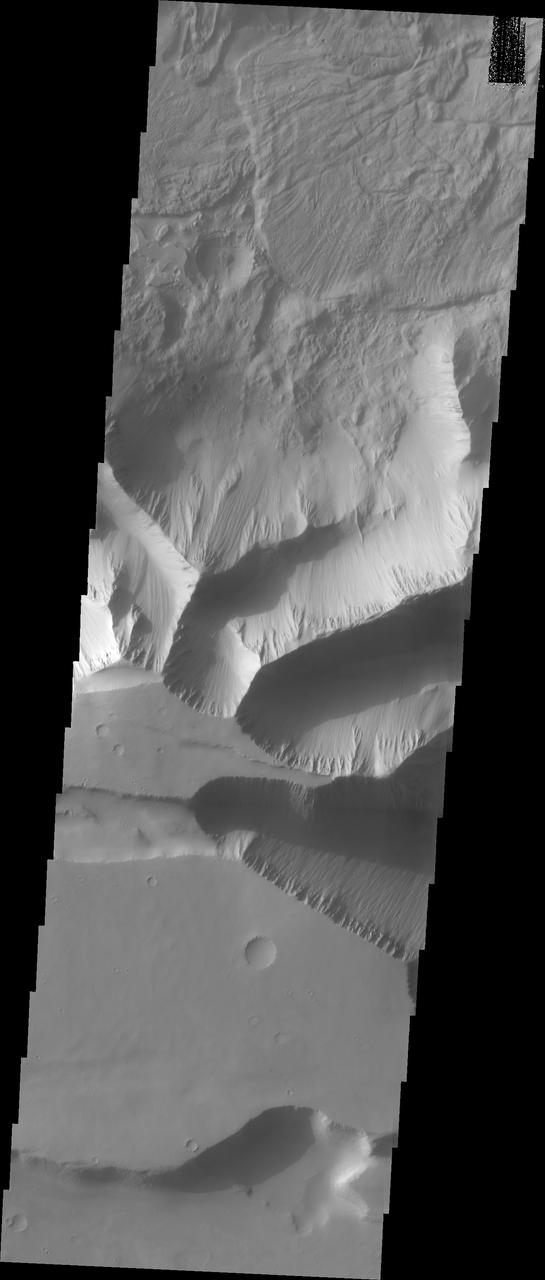
Tithonium Chasma has numerous large landslide deposits. At the bottom of this VIS image is the high plateau between Tithonium Chasma and Ius Chasma (off the bottom of the frame). The resistant material of the plateau surface forms the linear ridges of the canyon wall. Erosion of the walls cover the lower slopes. Large landslides have changed the walls and floor of the canyon. A landslide is a failure of slope due to gravity. They initiate due to several reasons. A lower layer of poorly cemented/resistant material may have been eroded, undermining the wall above which then collapses; earth quake seismic waves can cause the slope to collapse; and even an impact event near the canyon wall can cause collapse. As millions of tons of material fall and slide down slope a scalloped cavity forms at the upper part where the slope failure occurred. At the material speeds downhill it will pick up more of the underlying slope, increasing the volume of material entrained into the landslide. As the landslide material reaches the canyon bottom it spreads out and eventually comes to rest. The edge of the deposit is lobate, and may be affected by running up against pre-existing features on the canyon floor. Most Martian landslide have radial grooves on the slide surface. Tithonium Chasma is at the western end of Valles Marineris. Valles Marineris is over 4000 kilometers long, wider than the United States. Tithonium Chasma is almost 810 kilometers long (499 miles), 50 kilometers wide and over 6 kilometers deep. In comparison, the Grand Canyon in Arizona is about 175 kilometers long, 30 kilometers wide, and only 2 kilometers deep. The canyons of Valles Marineris were formed by extensive fracturing and pulling apart of the crust during the uplift of the vast Tharsis plateau. Landslides have enlarged the canyon walls and created deposits on the canyon floor. Weathering of the surface and influx of dust and sand have modified the canyon floor, both creating and modifying layered materials. The Odyssey spacecraft has spent over 15 years in orbit around Mars, circling the planet more than 71,000 times. It holds the record for longest working spacecraft at Mars. THEMIS, the IR/VIS camera system, has collected data for the entire mission and provides images covering all seasons and lighting conditions. Over the years many features of interest have received repeated imaging, building up a suite of images covering the entire feature. From the deepest chasma to the tallest volcano, individual dunes inside craters and dune fields that encircle the north pole, channels carved by water and lava, and a variety of other feature, THEMIS has imaged them all. For the next several months the image of the day will focus on the Tharsis volcanoes, the various chasmata of Valles Marineris, and the major dunes fields. We hope you enjoy these images! Orbit Number: 11500 Latitude: -4.89712 Longitude: 273.275 Instrument: VIS Captured: 2004-07-18 05:36 https://photojournal.jpl.nasa.gov/catalog/PIA22270