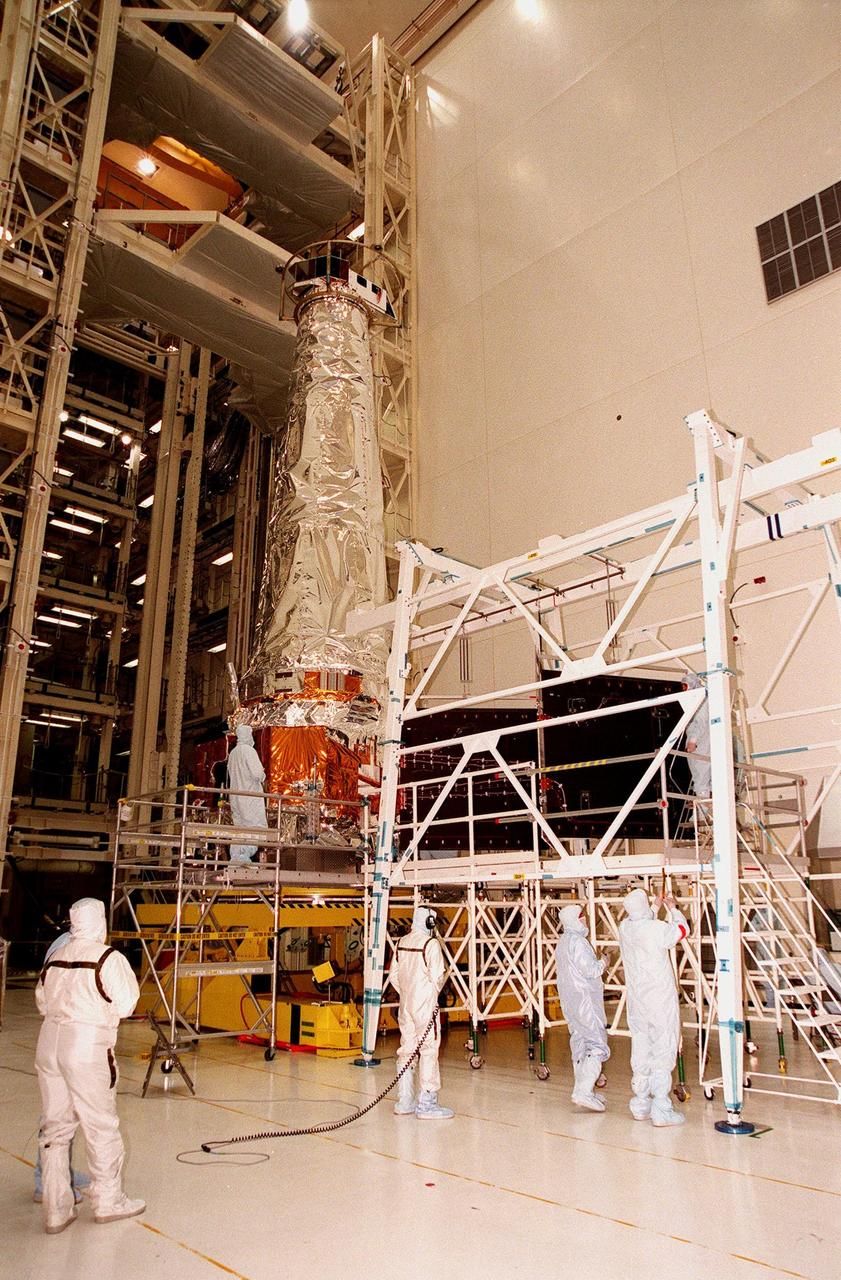
TRW workers in the Vertical Processing Facility check equipment after deployment of the solar panel array above them, attached to the Chandra X-ray Observatory. Formerly called the Advanced X-ray Astrophysics Facility, Chandra comprises three major elements: the spacecraft, the science instrument module (SIM), and the world's most powerful X-ray telescope. Chandra will allow scientists from around the world to see previously invisible black holes and high-temperature gas clouds, giving the observatory the potential to rewrite the books on the structure and evolution of our universe. Chandra is scheduled for launch July 9 aboard Space Shuttle Columbia, on mission STS-93
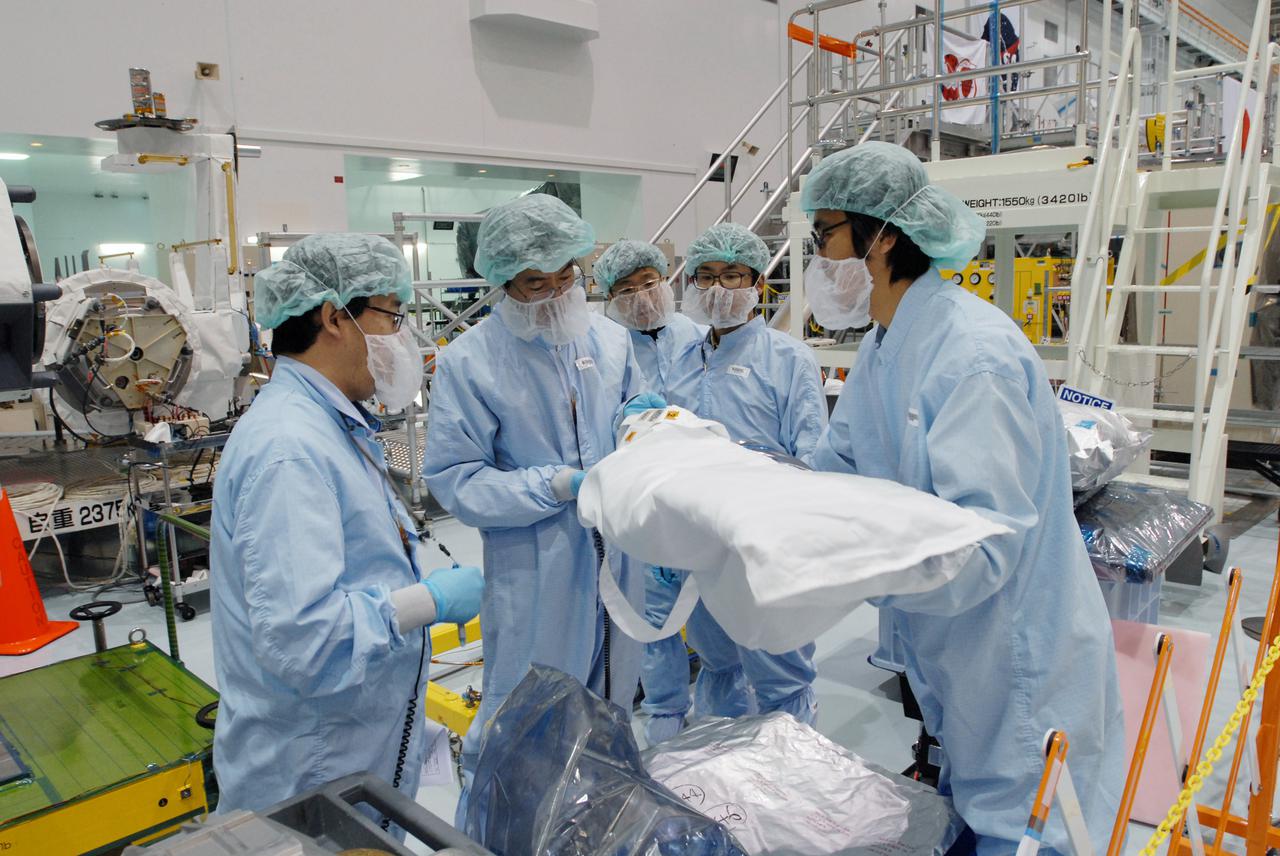
CAPE CANAVERAL, Fla. -- In the Space Station Processing Facility at NASA's Kennedy Space Center in Florida, workers examines equipment for the MAXI (Monitor of All-sky X-ray Image) before it is installed on the Japanese Experiment Module's Experiment Logistics Module-Exposed Section, or ELM-ES. The MAXI is part of space shuttle Endeavour's payload on the STS-127 mission. Using X-ray slit cameras with high sensitivity, the MAXI will continuously monitor astronomical X-ray objects over a broad energy band (0.5 to 30 keV). Endeavour is targeted to launch May 15. Photo credit: NASA_Jim Grossmann
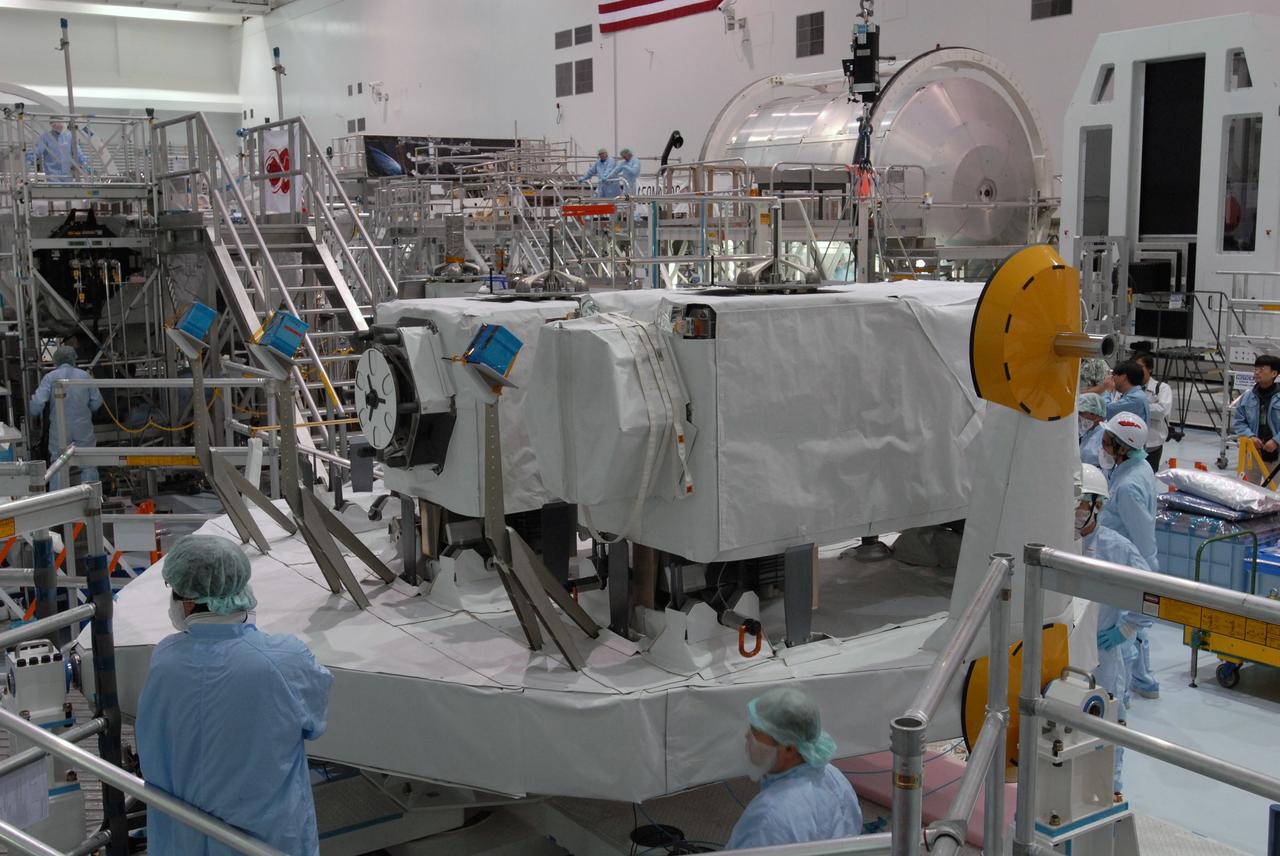
CAPE CANAVERAL, Fla. -- In the Space Station Processing Facility at NASA's Kennedy Space Center in Florida, the MAXI (Monitor of All-sky X-ray Image) has been installed next to the SEDA-AP (Space Environment Data Acquisition Equipment-Attached Payload) on the Japanese Experiment Module's Experiment Logistics Module-Exposed Section, or ELM-ES. The MAXI and SEDA-AP are part of space shuttle Endeavour's payload on the STS-127 mission. Using X-ray slit cameras with high sensitivity, the MAXI will continuously monitor astronomical X-ray objects over a broad energy band (0.5 to 30 keV). Endeavour is targeted to launch May 15. Photo credit: NASA/Jim Grossmann
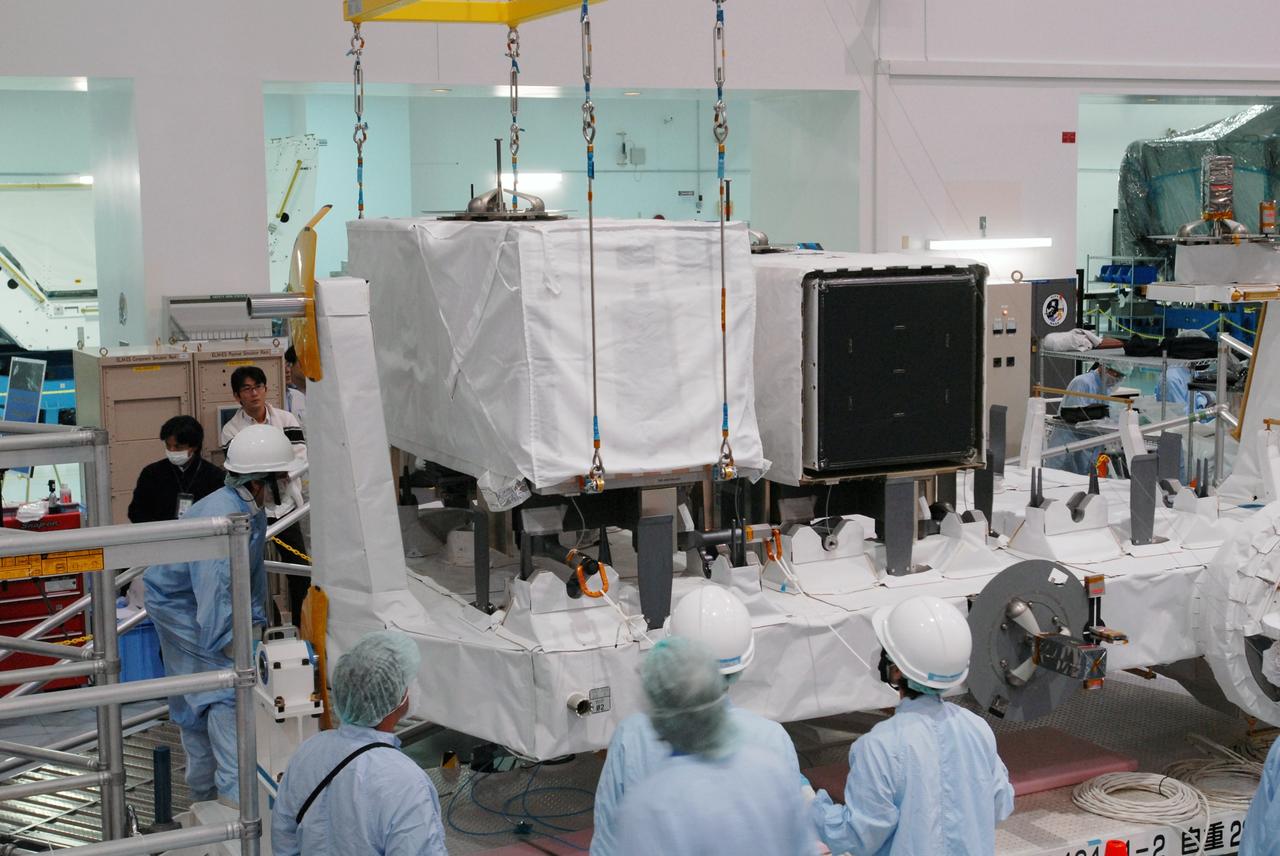
CAPE CANAVERAL, Fla. -- In the Space Station Processing Facility at NASA's Kennedy Space Center in Florida, a crane lowers the MAXI (Monitor of All-sky X-ray Image) onto the Payload Attachment Mechanism on the Japanese Experiment Module's Experiment Logistics Module-Exposed Section, or ELM-ES. It is being installed next to the SEDA-AP (Space Environment Data Acquisition Equipment-Attached Payload). The MAXI and SEDA-AP are part of space shuttle Endeavour's payload on the STS-127 mission. Using X-ray slit cameras with high sensitivity, the MAXI will continuously monitor astronomical X-ray objects over a broad energy band (0.5 to 30 keV). Endeavour is targeted to launch May 15. Photo credit: NASA/Jim Grossmann
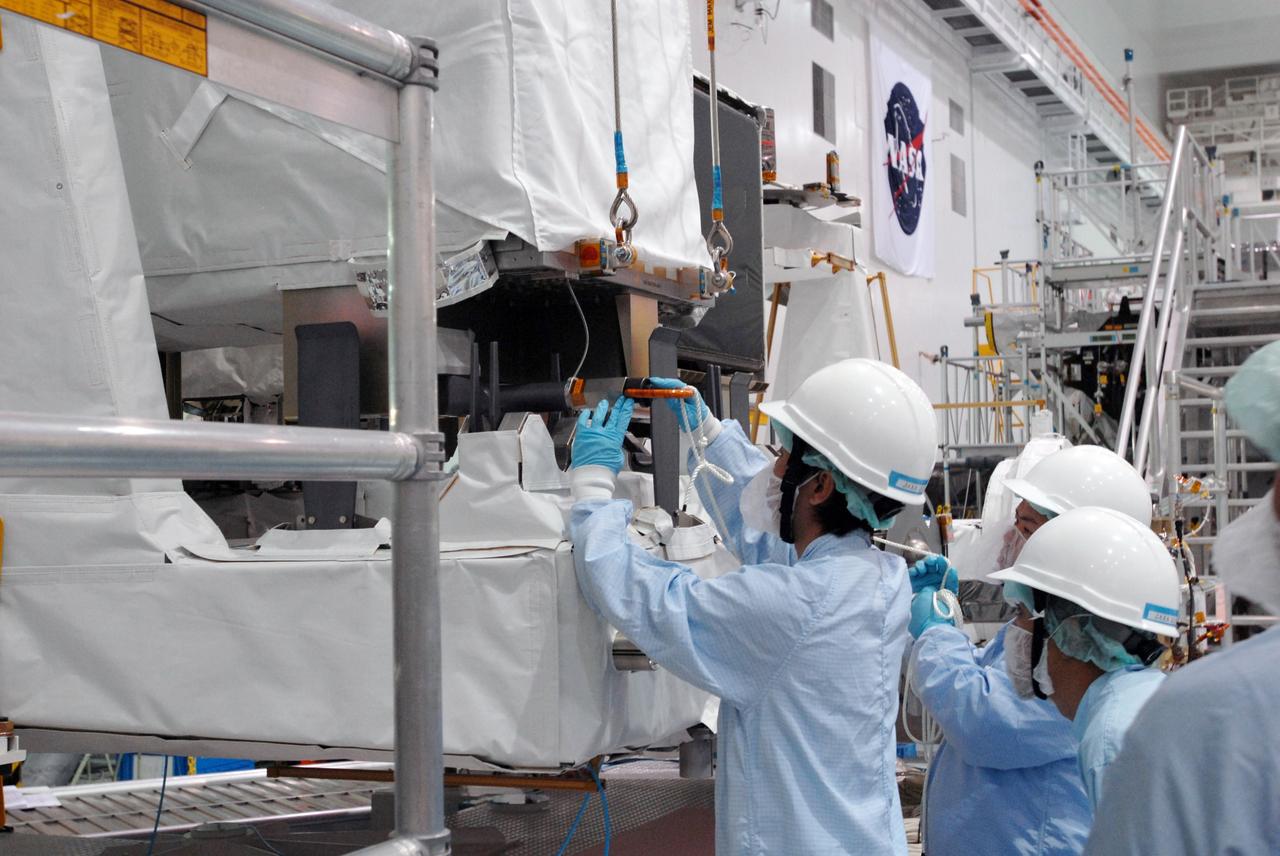
CAPE CANAVERAL, Fla. -- In the Space Station Processing Facility at NASA's Kennedy Space Center in Florida, a worker adjusts placement of the MAXI (Monitor of All-sky X-ray Image) on the Payload Attachment Mechanism on the Japanese Experiment Module's Experiment Logistics Module-Exposed Section, or ELM-ES. It is being installed next to the SEDA-AP (Space Environment Data Acquisition Equipment-Attached Payload). The MAXI and SEDA-AP are part of space shuttle Endeavour's payload on the STS-127 mission. Using X-ray slit cameras with high sensitivity, the MAXI will continuously monitor astronomical X-ray objects over a broad energy band (0.5 to 30 keV). Endeavour is targeted to launch May 15. Photo credit: NASA/Jim Grossmann
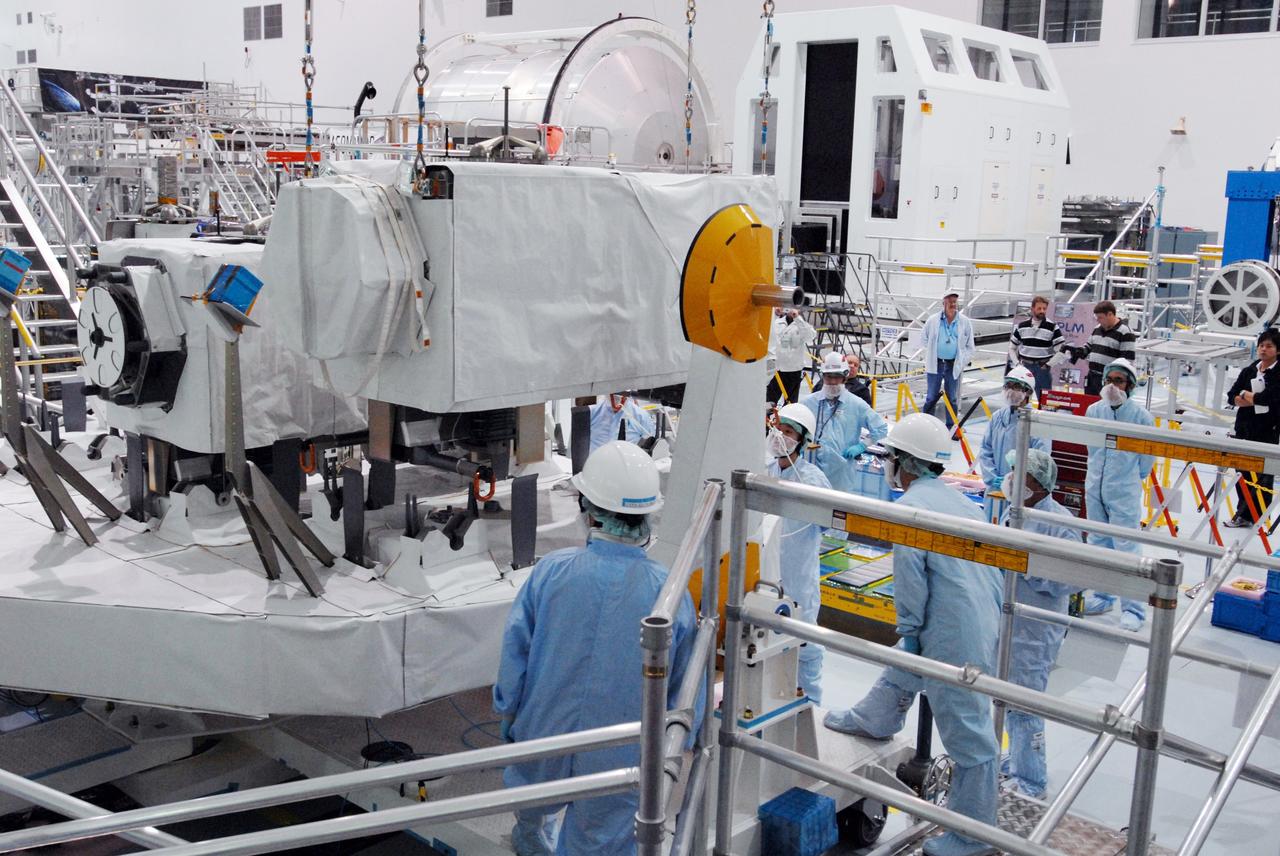
CAPE CANAVERAL, Fla. -- In the Space Station Processing Facility at NASA's Kennedy Space Center in Florida, a crane lowers the MAXI (Monitor of All-sky X-ray Image) onto the Payload Attachment Mechanism on the Japanese Experiment Module's Experiment Logistics Module-Exposed Section, or ELM-ES. It is being installed next to the SEDA-AP (Space Environment Data Acquisition Equipment-Attached Payload). The MAXI and SEDA-AP are part of space shuttle Endeavour's payload on the STS-127 mission. Using X-ray slit cameras with high sensitivity, the MAXI will continuously monitor astronomical X-ray objects over a broad energy band (0.5 to 30 keV). Endeavour is targeted to launch May 15. Photo credit: NASA/Jim Grossmann
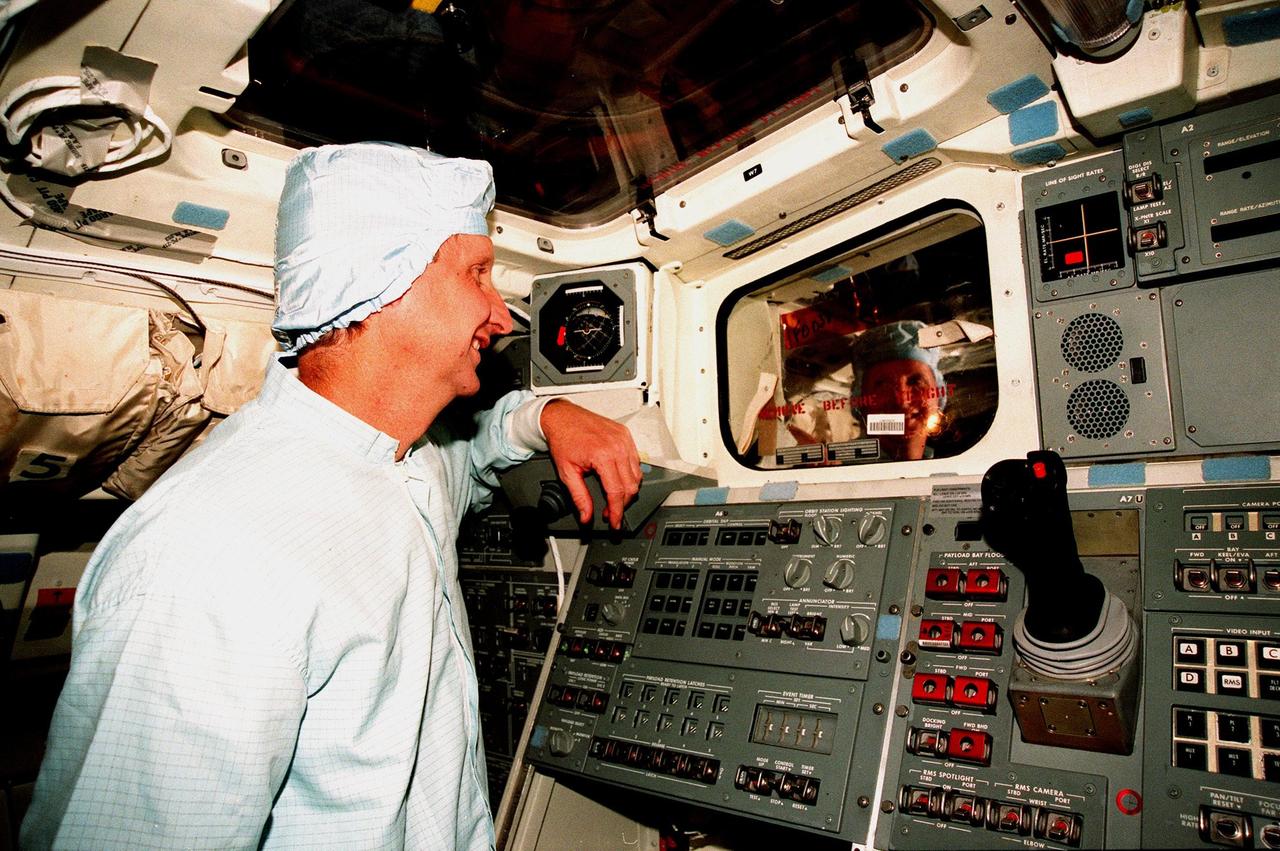
In the Orbiter Processing Facility Bay 3, during the Crew Equipment Interface Test (CEIT) for mission STS-93, Mission Specialist Steven A. Hawley checks out equipment in the orbiter Columbia. The CEIT provides an opportunity for crew members to check equipment and facilities that will be aboard the orbiter during their mission. The STS-93 mission will deploy the Advanced X-ray Astrophysics Facility (AXAF), which comprises three major elements: the spacecraft, the telescope, and the science instrument module (SIM). AXAF will allow scientists from around the world to obtain unprecedented X-ray images of a variety of high-energy objects to help understand the structure and evolution of the universe. The other STS-93 crew members are Mission Commander Eileen M. Collins, Pilot Jeffrey S. Ashby, Mission Specialist Catherine G. Coleman and Mission Specialist Michel Tognini of France. Targeted date for the launch of STS-93 is March 18, 1999
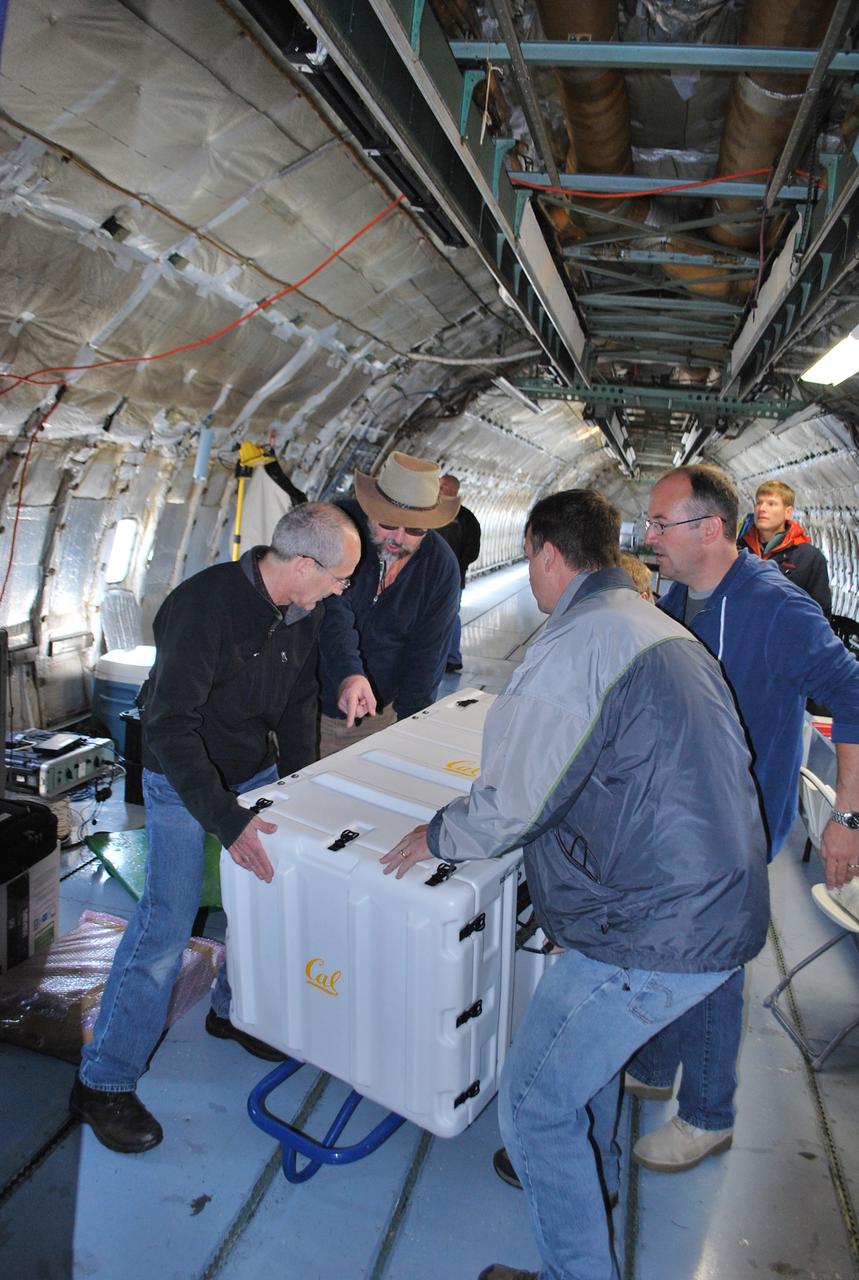
VANDENBERG AIR FORCE BASE, Calif. -- Technicians load the spacecraft airborne support equipment to the Orbital Sciences' L-1011 carrier aircraft. This equipment will maintain the in-flight monitoring and control of the NuSTAR spacecraft before the release of the Pegasus XL rocket The Pegasus will launch NuSTAR into space where the high-energy x-ray telescope will conduct a census for black holes, map radioactive material in young supernovae remnants, and study the origins of cosmic rays and the extreme physics around collapsed stars. For more information, visit science.nasa.gov/missions/nustar/. Photo credit: NASA/Randy Beaudoin, VAFB
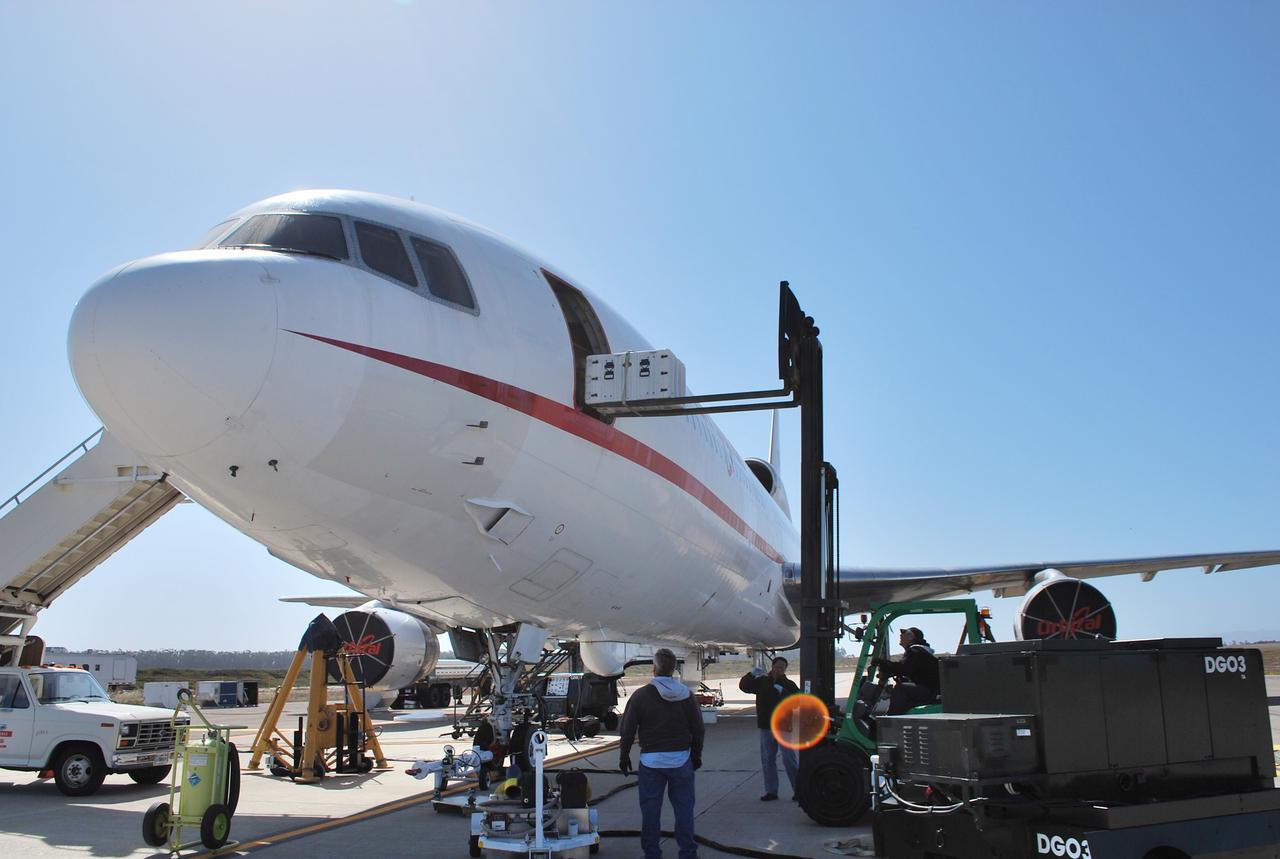
VANDENBERG AIR FORCE BASE, Calif. -- Technicians load the spacecraft airborne support equipment to the Orbital Sciences' L-1011 carrier aircraft. This equipment will maintain the in-flight monitoring and control of the NuSTAR spacecraft before the release of the Pegasus XL rocket. The Pegasus will launch NuSTAR into space where the high-energy x-ray telescope will conduct a census for black holes, map radioactive material in young supernovae remnants, and study the origins of cosmic rays and the extreme physics around collapsed stars. For more information, visit science.nasa.gov/missions/nustar/. Photo credit: NASA/Randy Beaudoin, VAFB
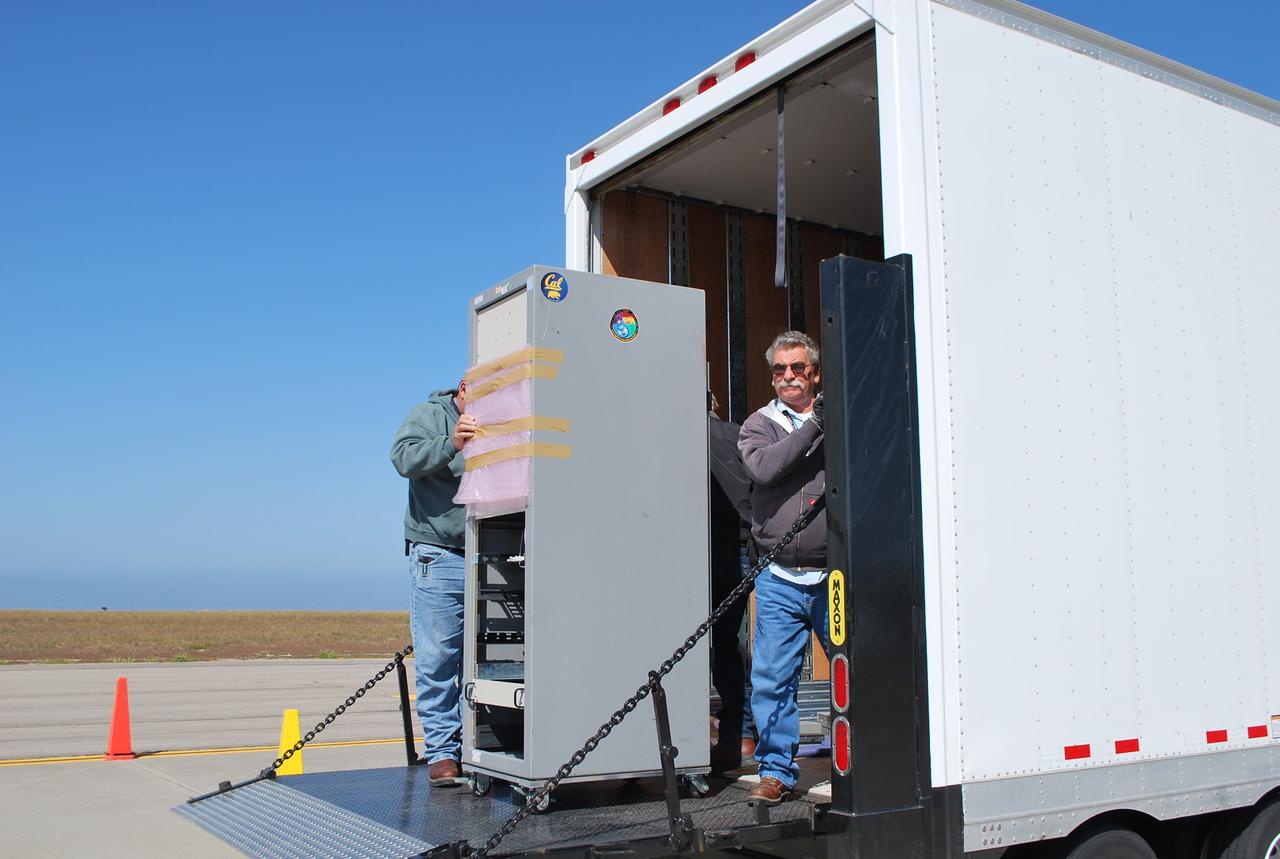
VANDENBERG AIR FORCE BASE, Calif. -- Technicians prepare to offload the spacecraft airborne support equipment for the Orbital Sciences' L-1011 carrier aircraft. This equipment will maintain the in-flight monitoring and control of the NuSTAR spacecraft before the release of the Pegasus XL rocket. The Pegasus will launch NuSTAR into space where the high-energy x-ray telescope will conduct a census for black holes, map radioactive material in young supernovae remnants, and study the origins of cosmic rays and the extreme physics around collapsed stars. For more information, visit science.nasa.gov/missions/nustar/. Photo credit: NASA/Randy Beaudoin, VAFB
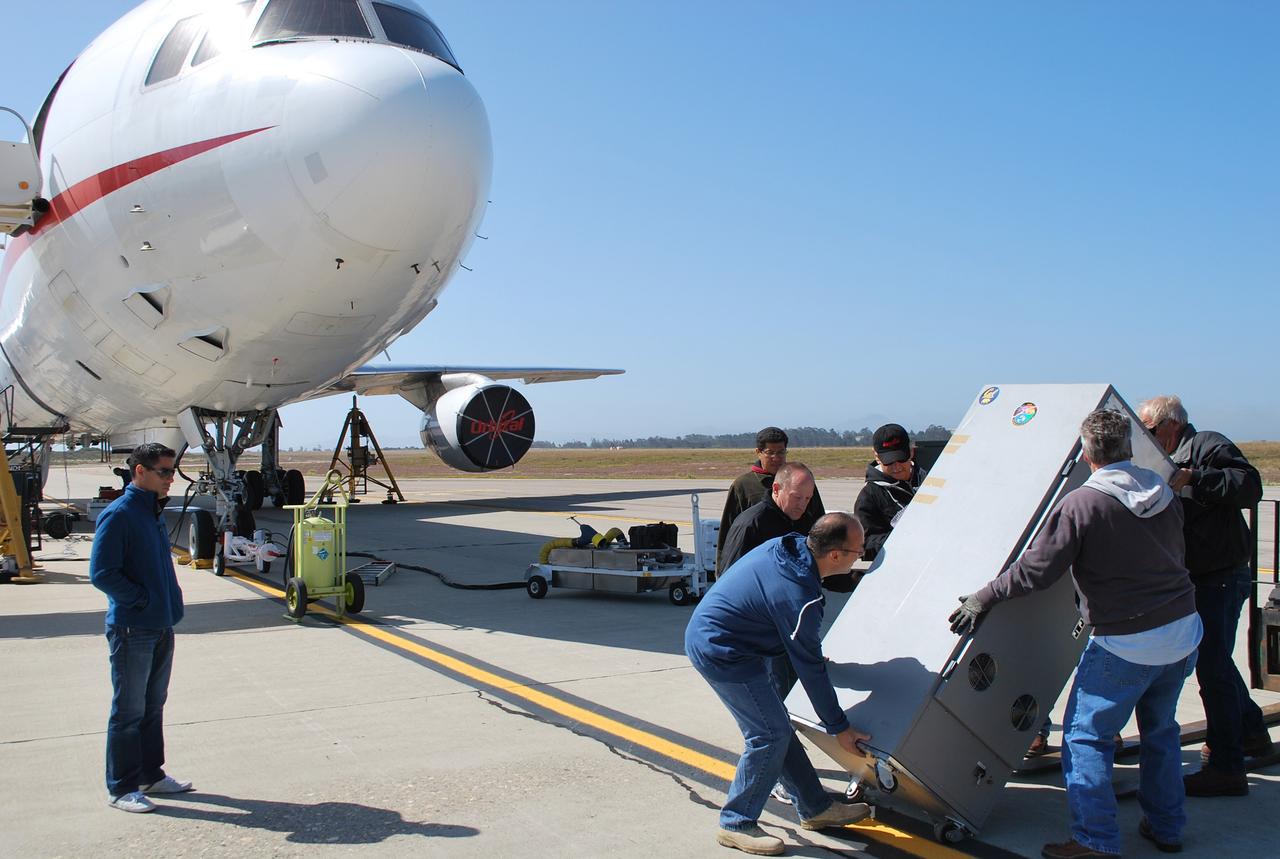
VANDENBERG AIR FORCE BASE, Calif. -- Technicians transfer the spacecraft airborne support equipment to the Orbital Sciences' L-1011 carrier aircraft. This equipment will maintain the in-flight monitoring and control of the NuSTAR spacecraft before the release of the Pegasus XL rocket. The Pegasus will launch NuSTAR into space where the high-energy x-ray telescope will conduct a census for black holes, map radioactive material in young supernovae remnants, and study the origins of cosmic rays and the extreme physics around collapsed stars. For more information, visit science.nasa.gov/missions/nustar/. Photo credit: NASA/Randy Beaudoin, VAFB
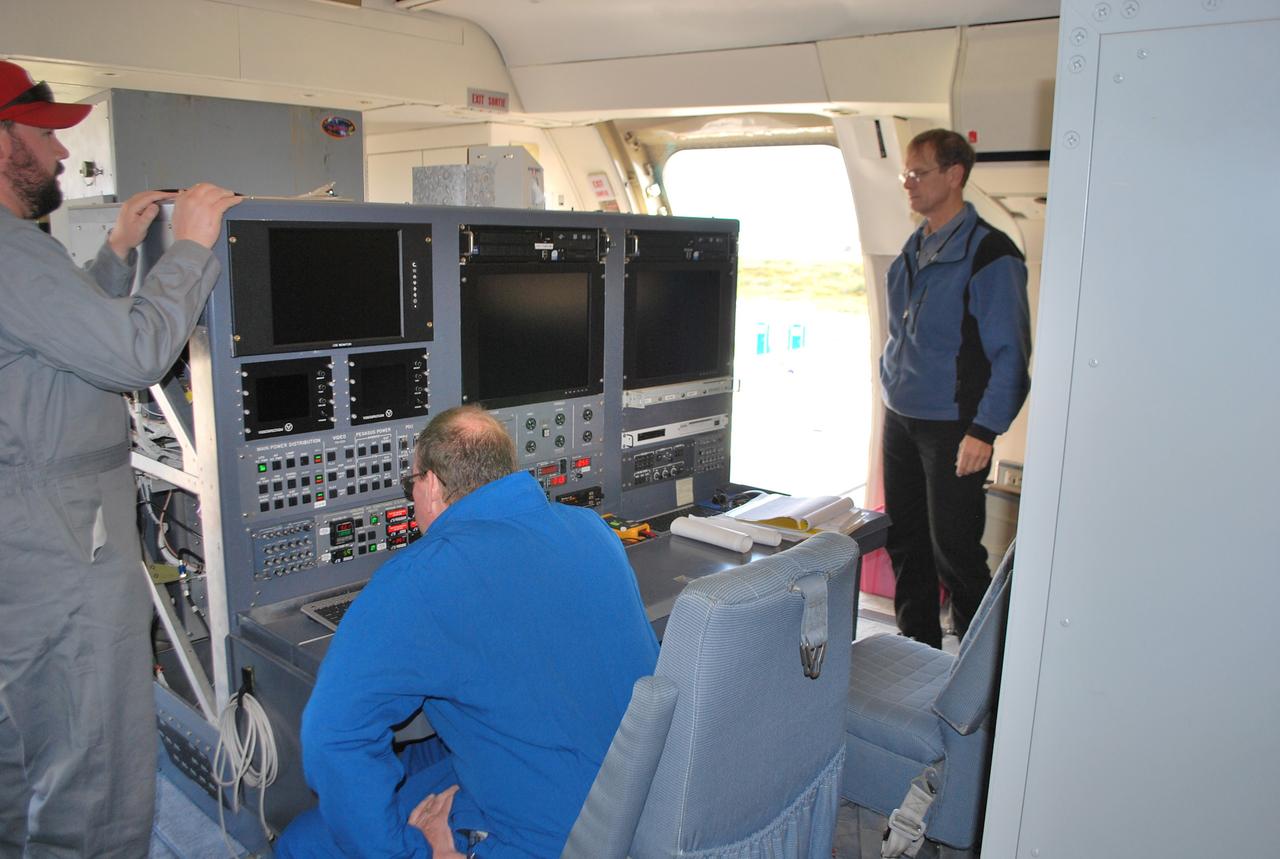
VANDENBERG AIR FORCE BASE, Calif. -- Technicians install the spacecraft airborne support equipment to the Orbital Sciences' L-1011 carrier aircraft. This equipment will maintain the in-flight monitoring and control of the NuSTAR spacecraft before the release of the Pegasus XL rocket. The Pegasus will launch NuSTAR into space where the high-energy x-ray telescope will conduct a census for black holes, map radioactive material in young supernovae remnants, and study the origins of cosmic rays and the extreme physics around collapsed stars. For more information, visit science.nasa.gov/missions/nustar/. Photo credit: NASA/Randy Beaudoin, VAFB
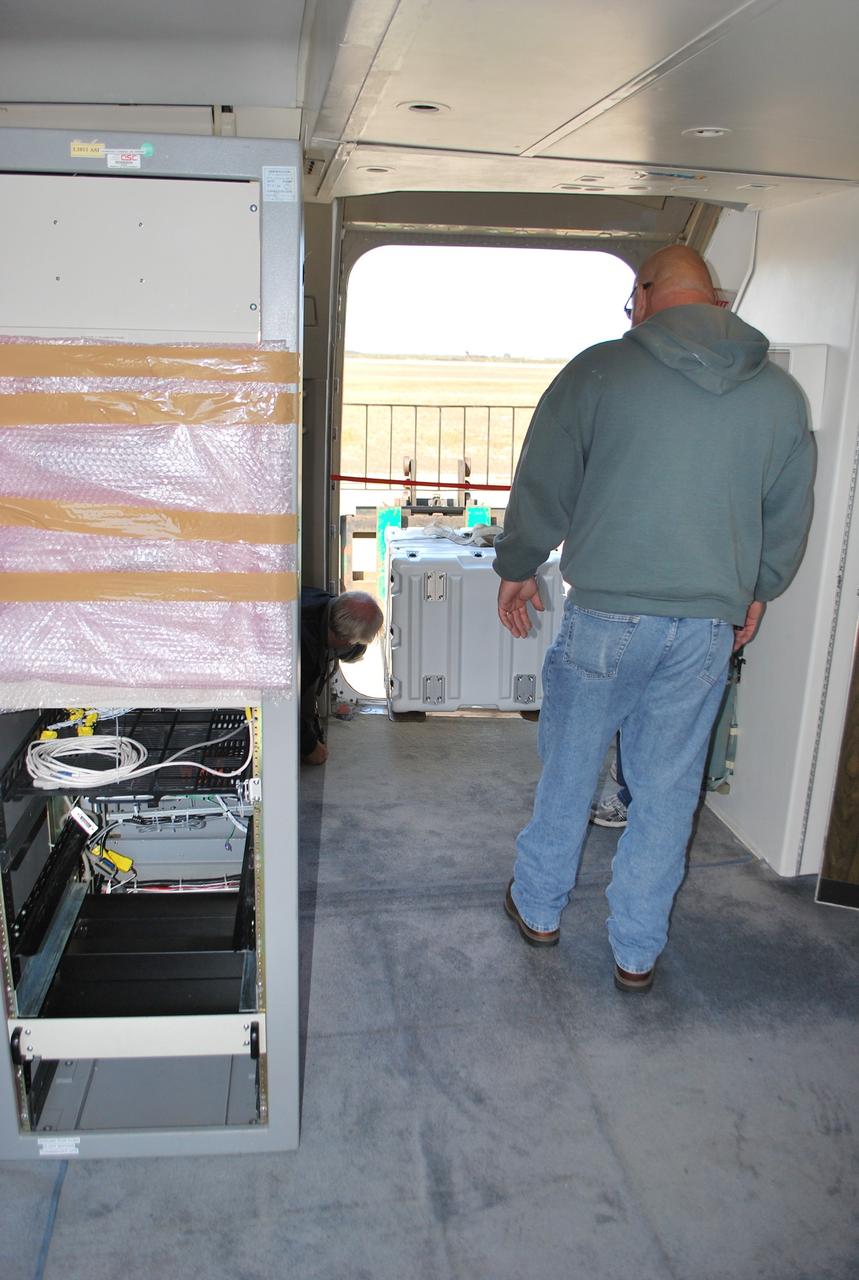
VANDENBERG AIR FORCE BASE, Calif. -- Technicians load the spacecraft airborne support equipment to the Orbital Sciences' L-1011 carrier aircraft. This equipment will maintain the in-flight monitoring and control of the NuSTAR spacecraft before the release of the Pegasus XL rocket. The Pegasus will launch NuSTAR into space where the high-energy x-ray telescope will conduct a census for black holes, map radioactive material in young supernovae remnants, and study the origins of cosmic rays and the extreme physics around collapsed stars. For more information, visit science.nasa.gov/missions/nustar/. Photo credit: NASA/Randy Beaudoin, VAFB
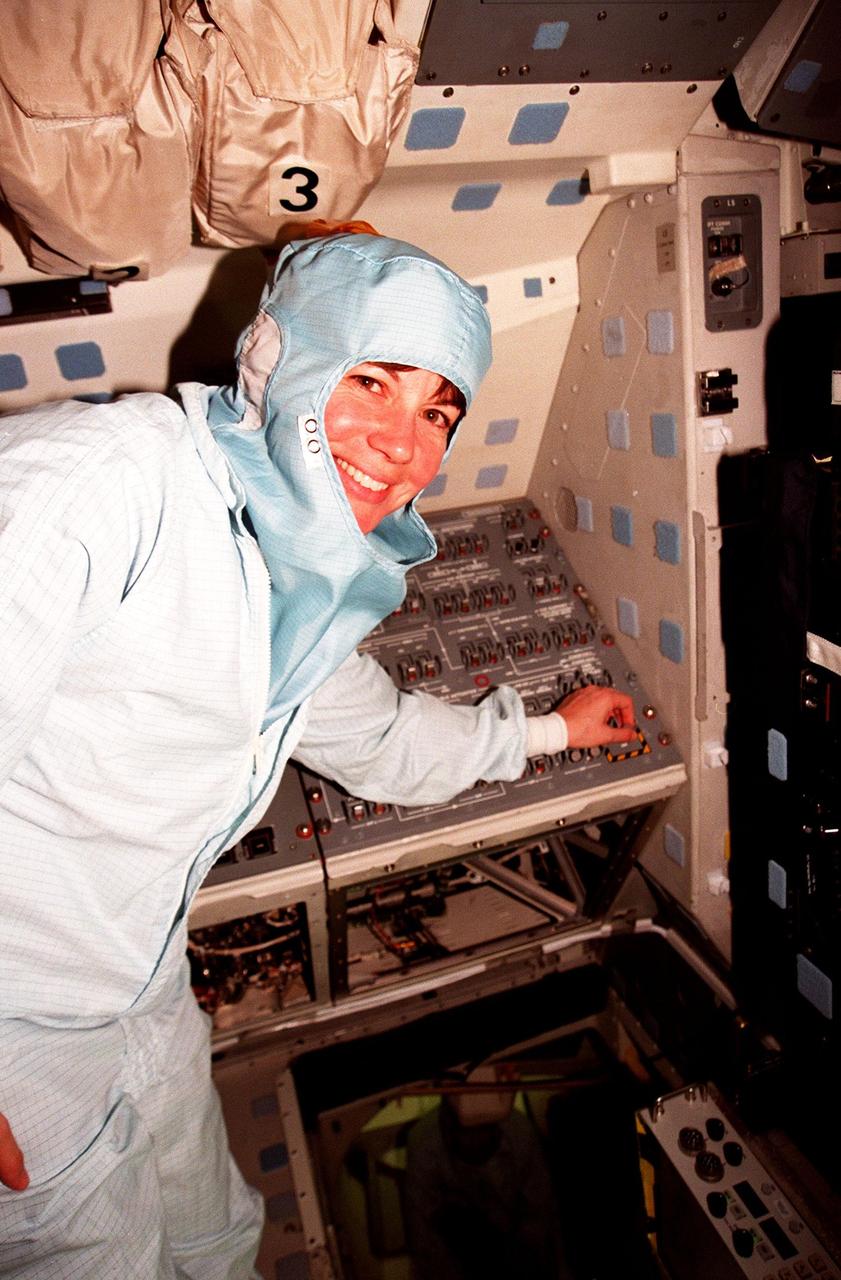
In the Orbiter Processing Facility Bay 3, during the Crew Equipment Interface Test (CEIT), Mission Specialist Catherine G. Coleman checks equipment that will fly on mission STS-93. The STS-93 mission will deploy the Advanced X-ray Astrophysics Facility (AXAF) which comprises three major elements: the spacecraft, the telescope, and the science instrument module (SIM). AXAF will allow scientists from around the world to obtain unprecedented X-ray images of a variety of high-energy objects to help understand the structure and evolution of the universe. The other STS-93 crew members are Mission Commander Eileen M. Collins, Pilot Jeffrey S. Ashby, Mission Specialist Steven A. Hawley and Mission Specialist Michel Tognini of France. Targeted date for the launch of STS-93 is March 18, 1999
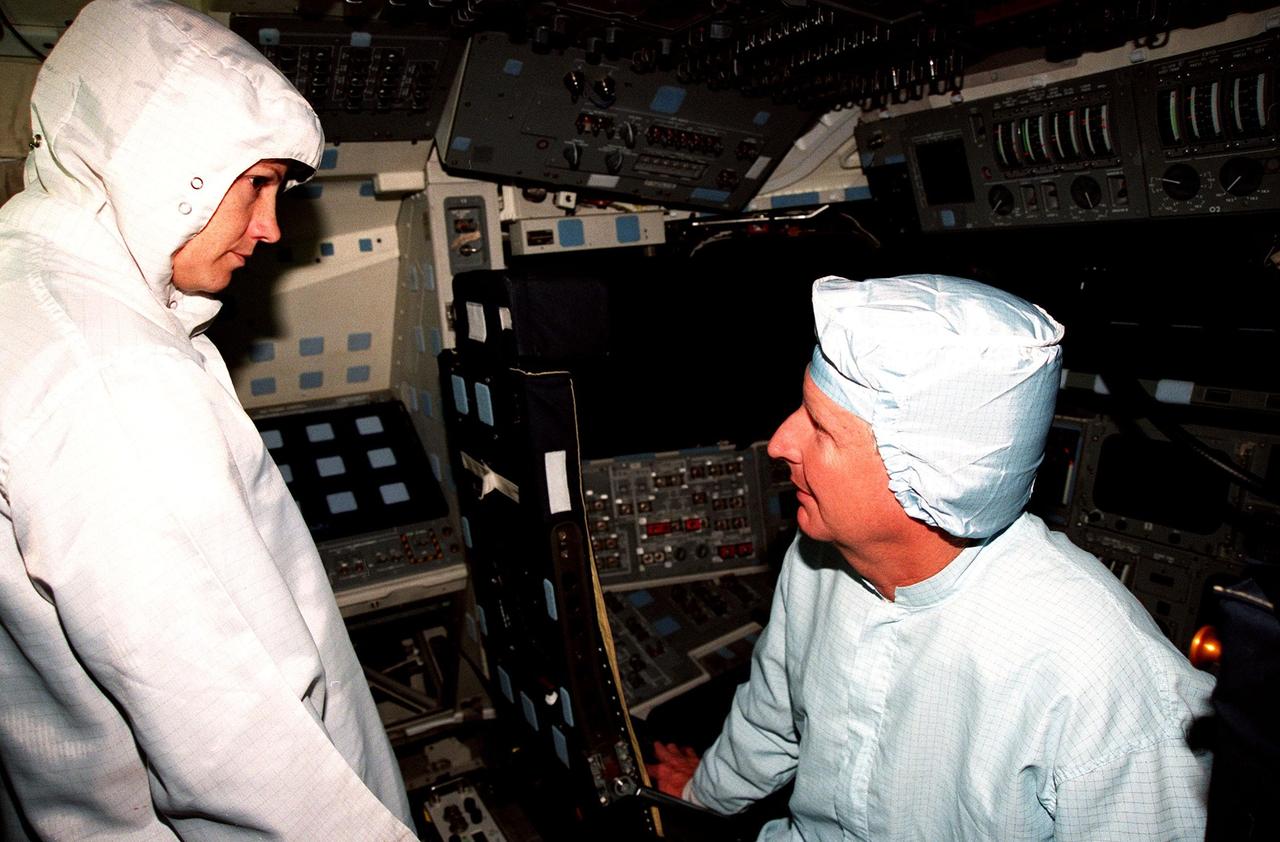
In the Orbiter Processing Facility Bay 3, aboard the orbiter Columbia, STS-93 Mission Commander Eileen M. Collins listens to Mission Specialist Steven A. Hawley during the Crew Equipment Interface Test (CEIT). Collins is the first woman to serve as a mission commander on a shuttle flight. The CEIT provides an opportunity for crew members to check equipment and facilities that will be aboard the orbiter during their mission. The rest of the crew members are Pilot Jeffrey S. Ashby, Mission Specialist Catherine G. Coleman, and Mission Specialist Michel Tognini of France. The STS-93 mission will deploy the Advanced X-ray Astrophysics Facility (AXAF), which comprises three major elements: the spacecraft, the telescope, and the science instrument module (SIM). AXAF will allow scientists from around the world to obtain unprecedented X-ray images of a variety of high-energy objects to help understand the structure and evolution of the universe. Targeted date for the launch of STS-93 is March 18, 1999
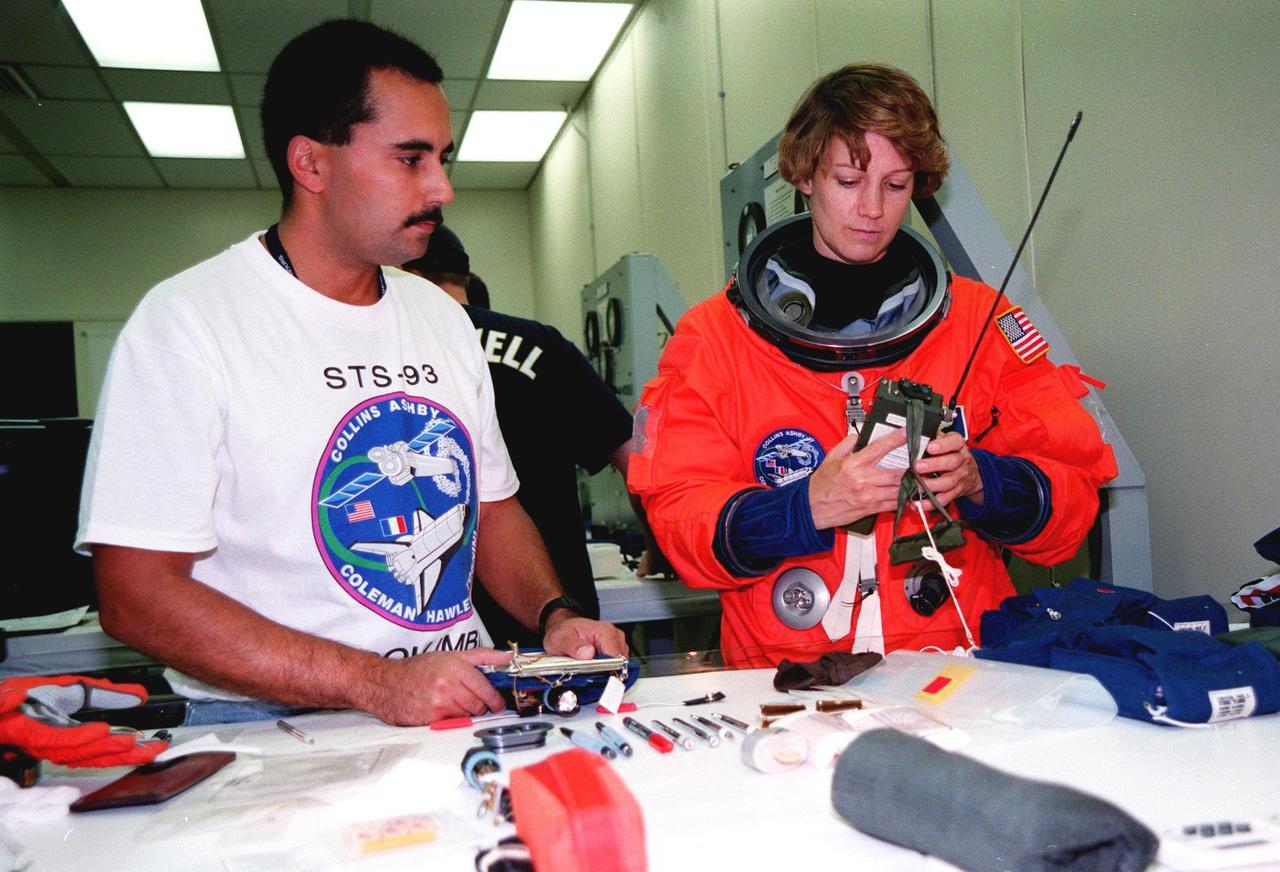
In the Operations and Checkout Bldg., STS-93 Commander Eileen M. Collins checks out a PRC-112 survival radio, part of flight equipment, under the eye of Ray Cuevas, with United Space Alliance. In preparation for their mission, the STS-93 crew are participating in Terminal Countdown Demonstration Test activities that also include equipment check and a launch-day dress rehearsal culminating with a simulated main engine cut-off. Others in the crew participating are Pilot Jeffrey S. Ashby, and Mission Specialists Steven A. Hawley (Ph.D.), Catherine G. Coleman (Ph.D.), and Michel Tognini of France, who represents the Centre National d'Etudes Spatiales (CNES). Collins is the first woman to serve as a Shuttle commander. The primary mission of STS-93 is the release of the Chandra X-ray Observatory, which will allow scientists from around the world to obtain unprecedented X-ray images of exotic environments in space to help understand the structure and evolution of the universe. The targeted launch date for STS-93 is no earlier than July 20 at 12:36 a.m. EDT from Launch Pad 39B
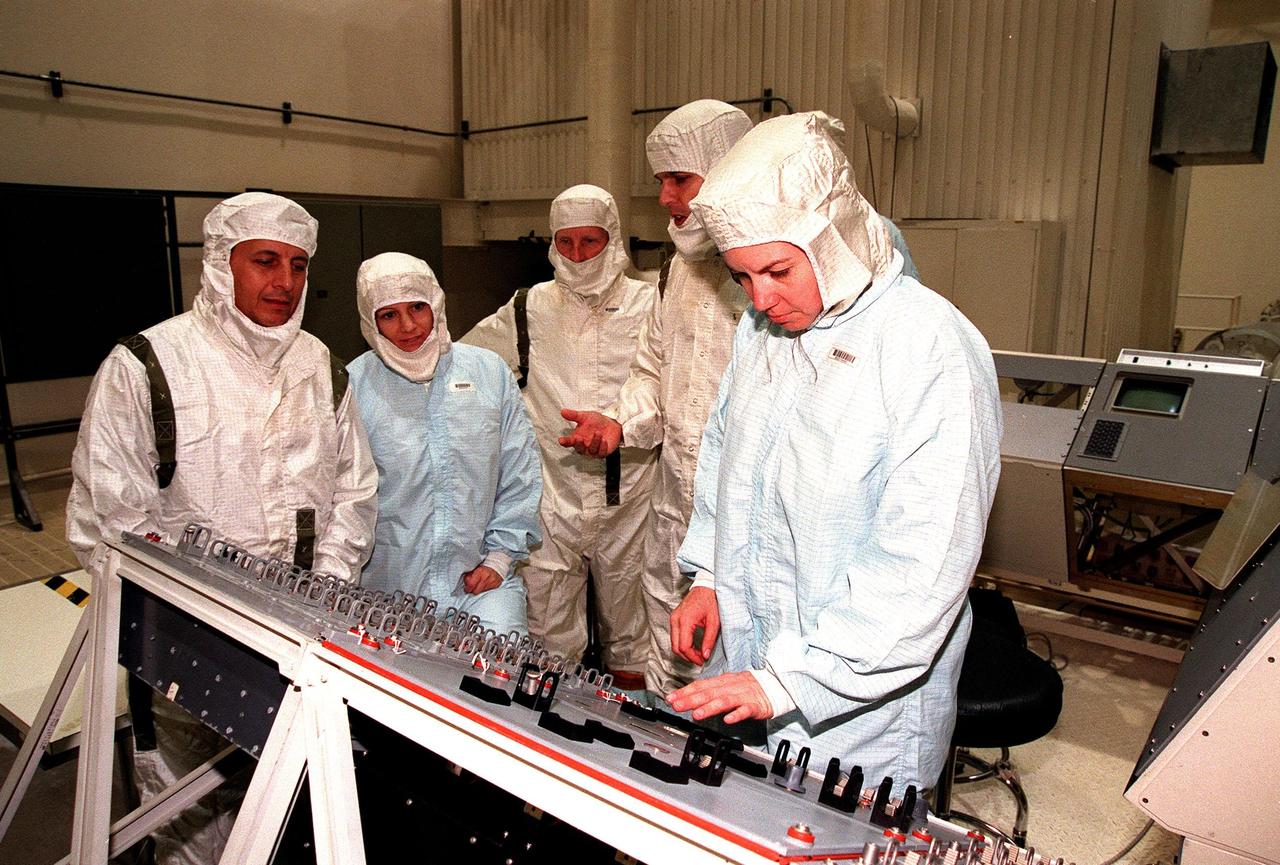
In the Vertical Processing Facility (VPF), the STS-93 crew stands in front of the VPF Aft Flight Deck simulator, which is part of KSC's Cargo Integration Test Equipment. From left, they are Mission Specialist Michel Tognini of France, Commander Eileen M. Collins, Mission Specialist Steven A. Hawley, Pilot Jeffrey S. Ashby and Mission Specialist Catherine G. Coleman. Tognini represents France's space agency, the Centre National d'Etudes Spatiales (CNES). STS-93, scheduled to launch July 9 aboard Space Shuttle Columbia, has the primary mission of the deployment of the Chandra X-ray Observatory, which is undergoing testing in the VPF. Formerly called the Advanced X-ray Astrophysics Facility, Chandra comprises three major elements: the spacecraft, the science instrument module (SIM), and the world's most powerful X-ray telescope. Chandra will allow scientists from around the world to see previously invisible black holes and high-temperature gas clouds, giving the observatory the potential to rewrite the books on the structure and evolution of our universe
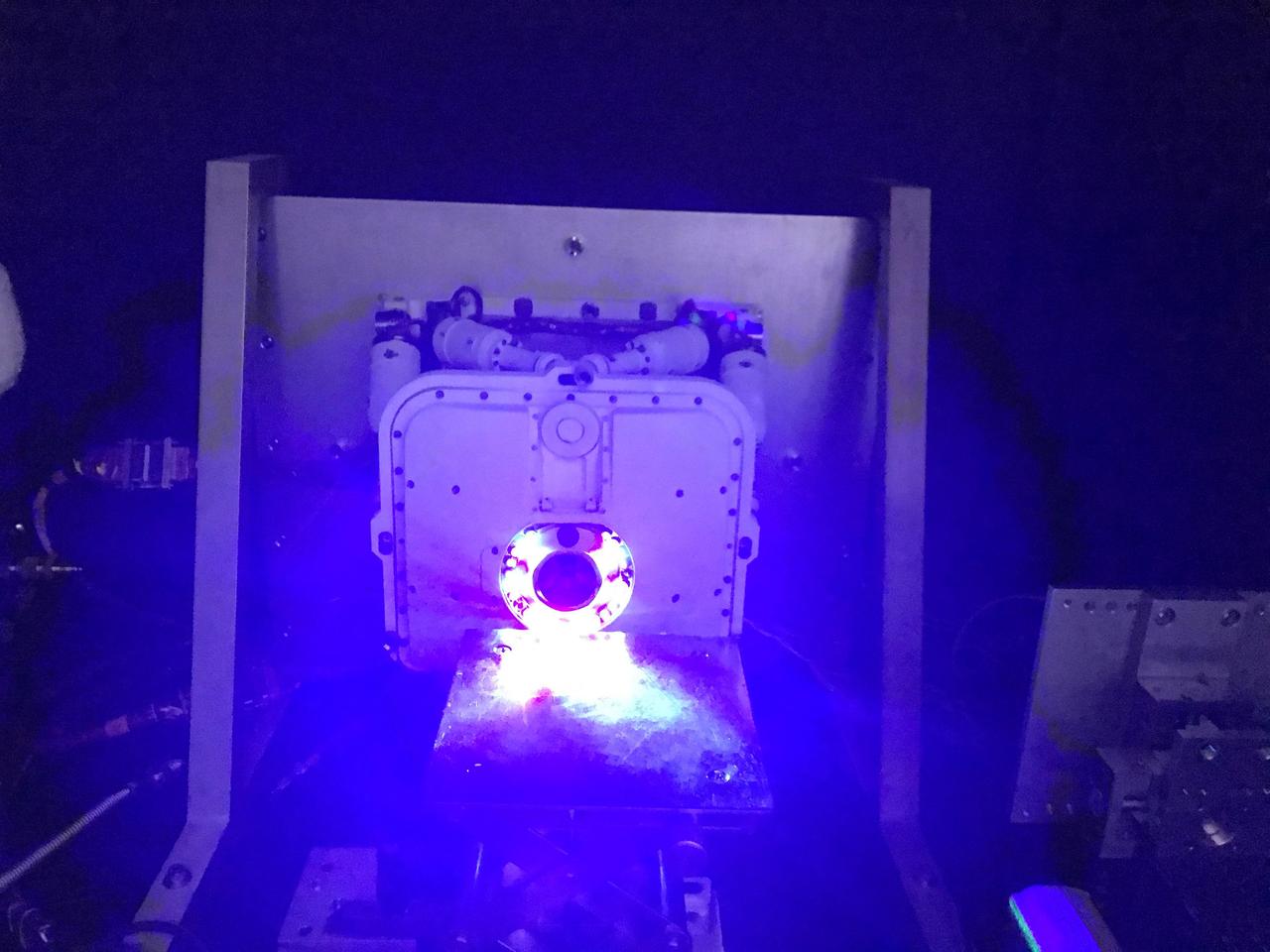
The Planetary Instrument for X-ray Lithochemistry (PIXL), one of seven instruments aboard NASA's Perseverance Mars rover, requires pictures of rock targets to autonomously position itself. Because PIXL works at night, it is equipped with light diodes circling its opening to take pictures of rock targets in the dark. Using artificial intelligence, PIXL relies on the images to determine how far away it is from a target to be scanned. https://photojournal.jpl.nasa.gov/catalog/PIA24095
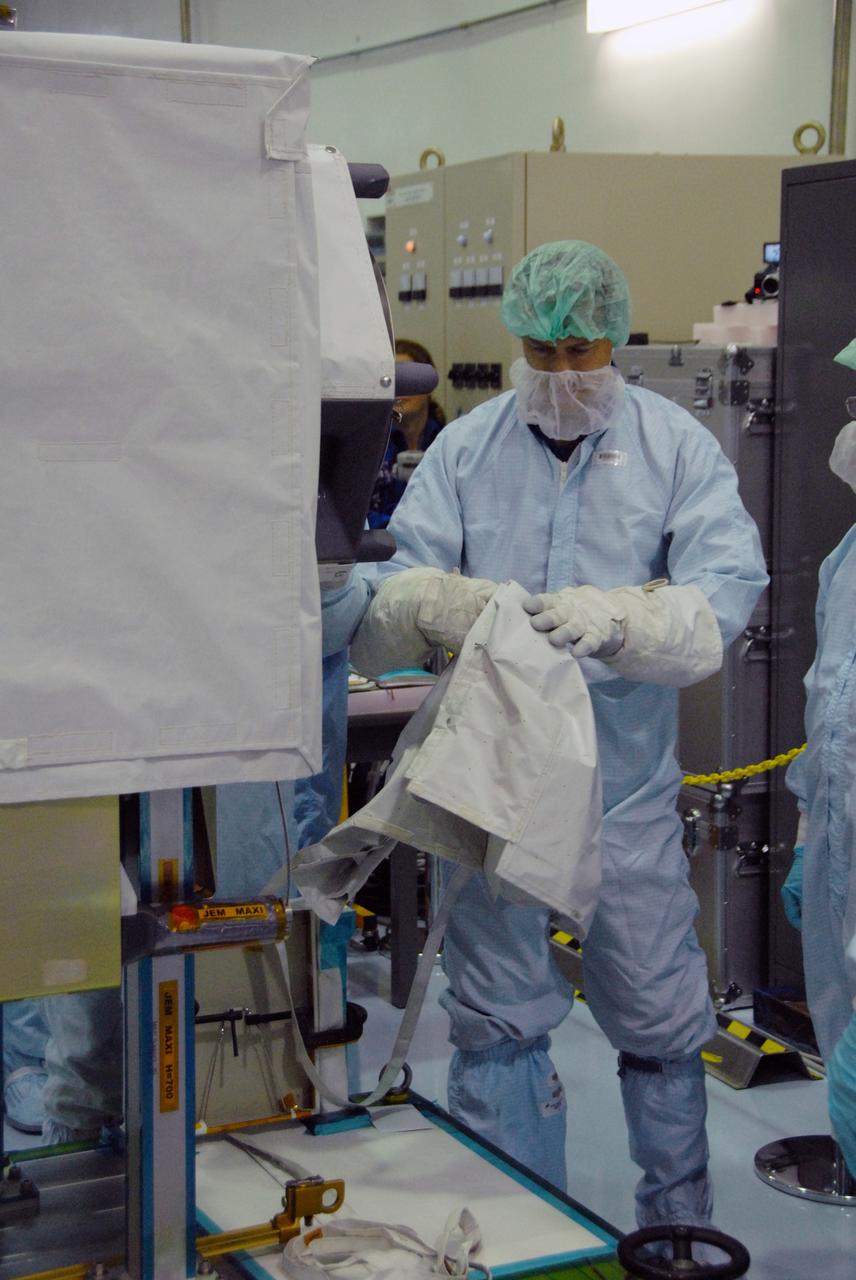
CAPE CANAVERAL, Fla. -- In the Space Station Processing Facility at NASA's Kennedy Space Center in Florida, a STS-127 crew member removes a portion of the cover on the MAXI (Monitor of All-Sky X-Ray Image), part of the payload for the mission. The crew members are at Kennedy for a crew equipment interface test, or CEIT, which provides experience handling tools, equipment and hardware they will use on the mission. The payload will be launched to the International Space Station aboard space shuttle Endeavour on the STS-127 mission, targeted for launch on May 15, 2009. Photo credit: NASA/Dimitrios Gerondidakis
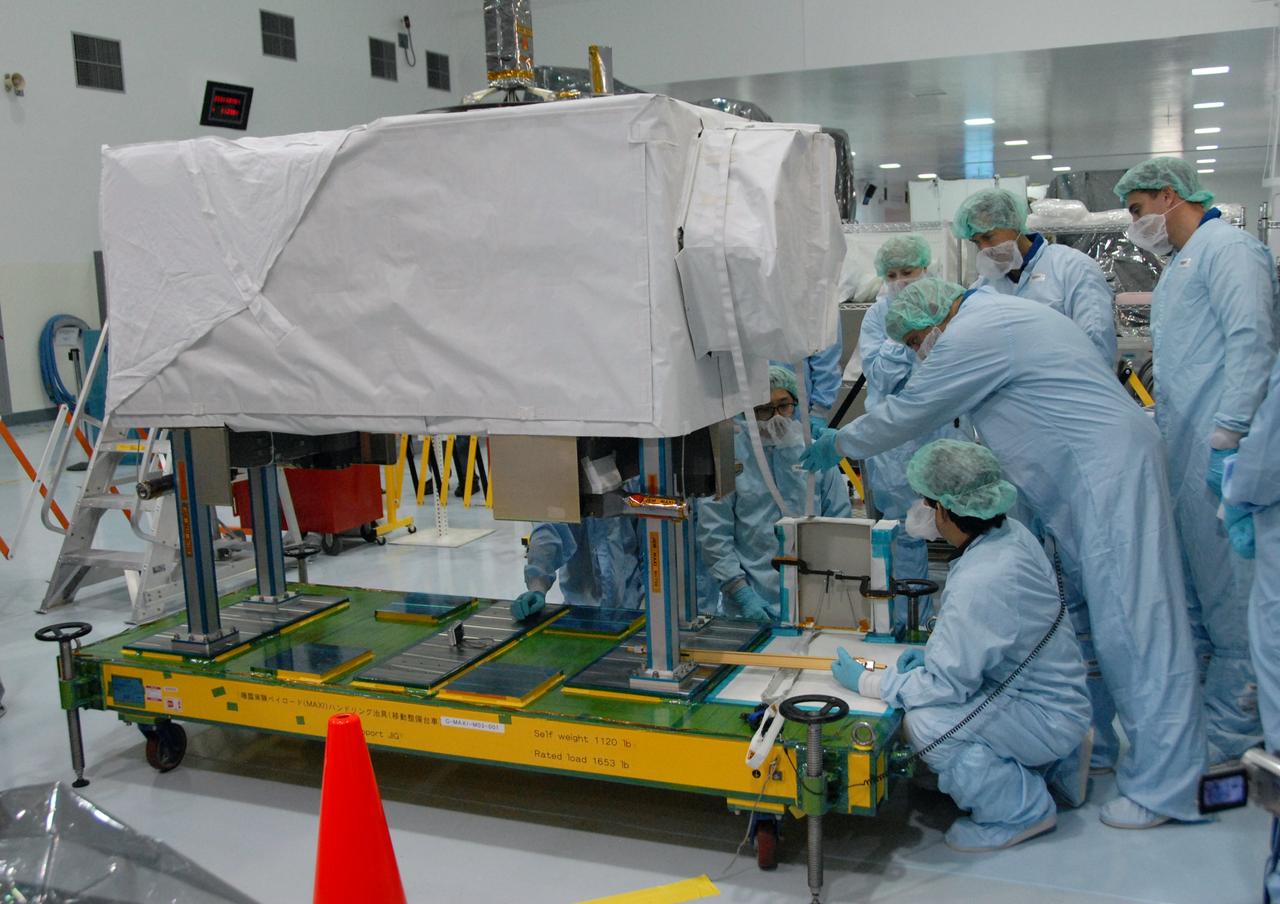
CAPE CANAVERAL, Fla. -- In the Space Station Processing Facility at NASA's Kennedy Space Center in Florida, STS-127 crew members look at the MAXI (Monitor of All-Sky X-Ray Image), part of the payload for their mission. The crew members are at Kennedy for a crew equipment interface test, or CEIT, which provides experience handling tools, equipment and hardware they will use on the mission. The payload will be launched to the International Space Station aboard space shuttle Endeavour on the STS-127 mission, targeted for launch on May 15, 2009. Photo credit: NASA/Dimitrios Gerondidakis
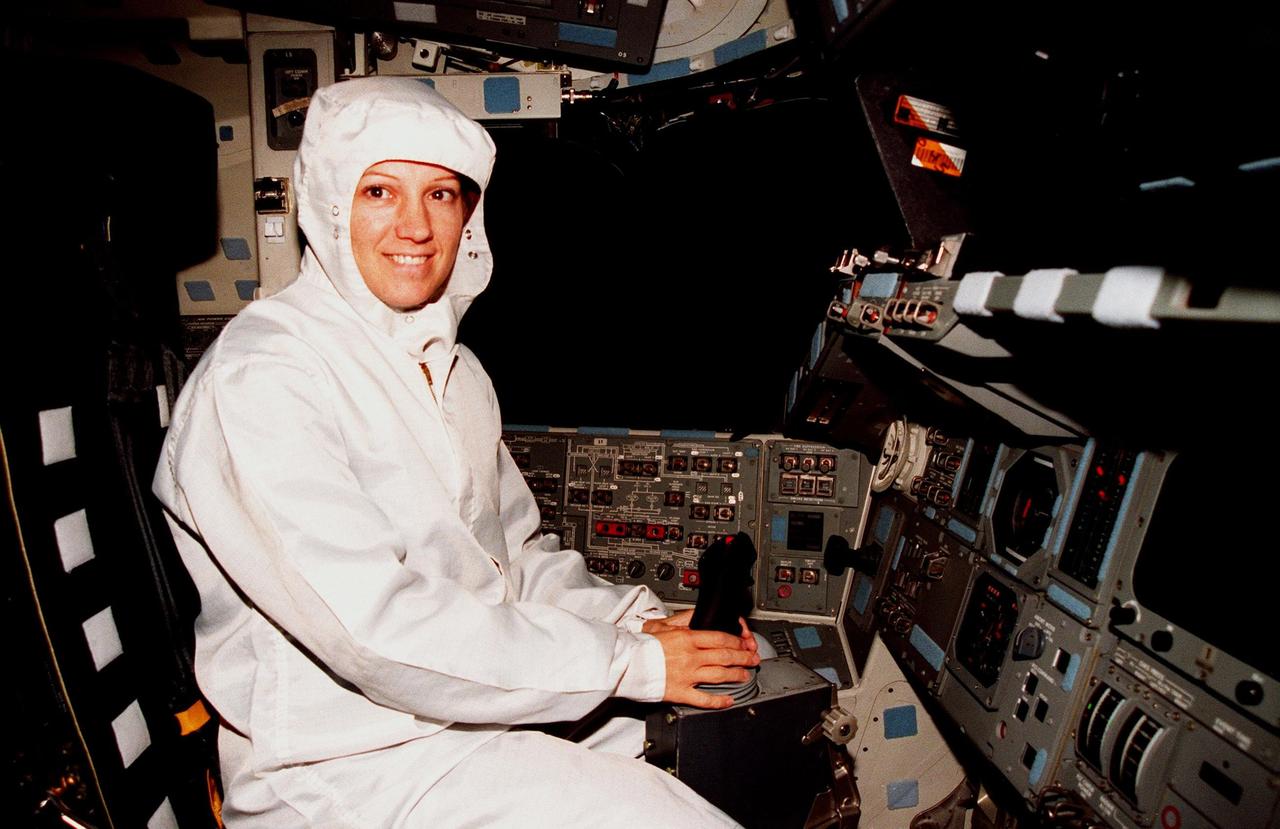
In the Orbiter Processing Facility Bay 3, during the Crew Equipment Interface Test (CEIT) for mission STS-93, Mission Commander Eileen M. Collins checks out her seat in the orbiter Columbia. Collins is the first woman to serve as a mission commander on a shuttle flight. The CEIT provides an opportunity for crew members to check equipment and facilities that will be aboard the orbiter during their mission. The STS-93 mission will deploy the Advanced X-ray Astrophysics Facility (AXAF), which comprises three major elements: the spacecraft, the telescope, and the science instrument module (SIM). AXAF will allow scientists from around the world to obtain unprecedented X-ray images of a variety of high-energy objects to help understand the structure and evolution of the universe. The other STS-93 crew members are Pilot Jeffrey S. Ashby, Mission Specialist Catherine G. Coleman, Mission Specialist Steven A. Hawley and Mission Specialist Michel Tognini of France. Targeted date for the launch of STS-93 is March 18, 1999
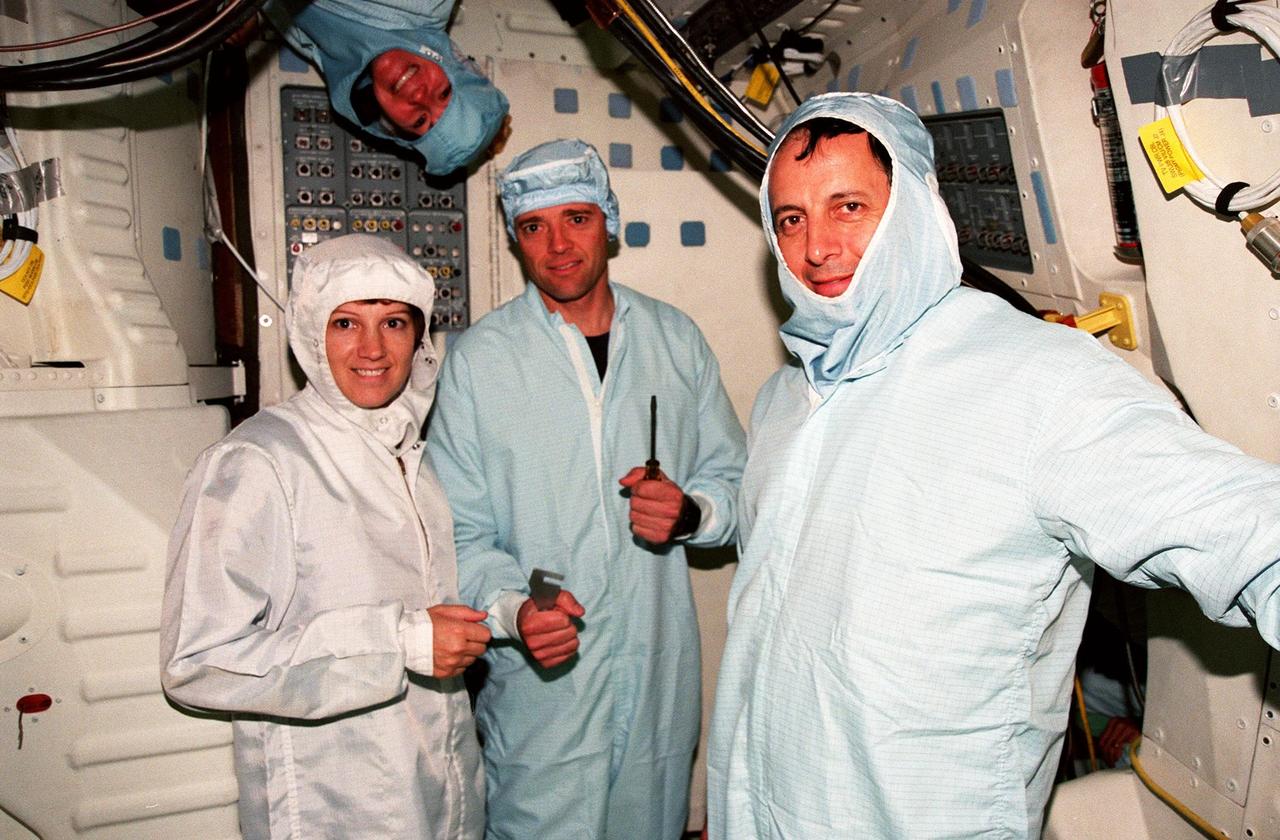
In the Orbiter Processing Facility Bay 3, during the Crew Equipment Interface Test (CEIT) for mission STS-93, crew members pose for a photograph . From left they are Mission Commander Eileen M. Collins, Pilot Jeffrey S. Ashby, and Mission Specialist Michel Tognini of France. Above Ashby's head is Mission Specialist Catherine G. Coleman. Not shown is Mission Specialist Steven A. Hawley. Collins is the first woman to serve as a mission commander on a shuttle flight. The CEIT provides an opportunity for crew members to check equipment and facilities that will be aboard the orbiter during their mission. The STS-93 mission will deploy the Advanced X-ray Astrophysics Facility (AXAF), which comprises three major elements: the spacecraft, the telescope, and the science instrument module (SIM). AXAF will allow scientists from around the world to obtain unprecedented X-ray images of a variety of high-energy objects to help understand the structure and evolution of the universe. Targeted date for the launch of STS-93 is March 18, 1999
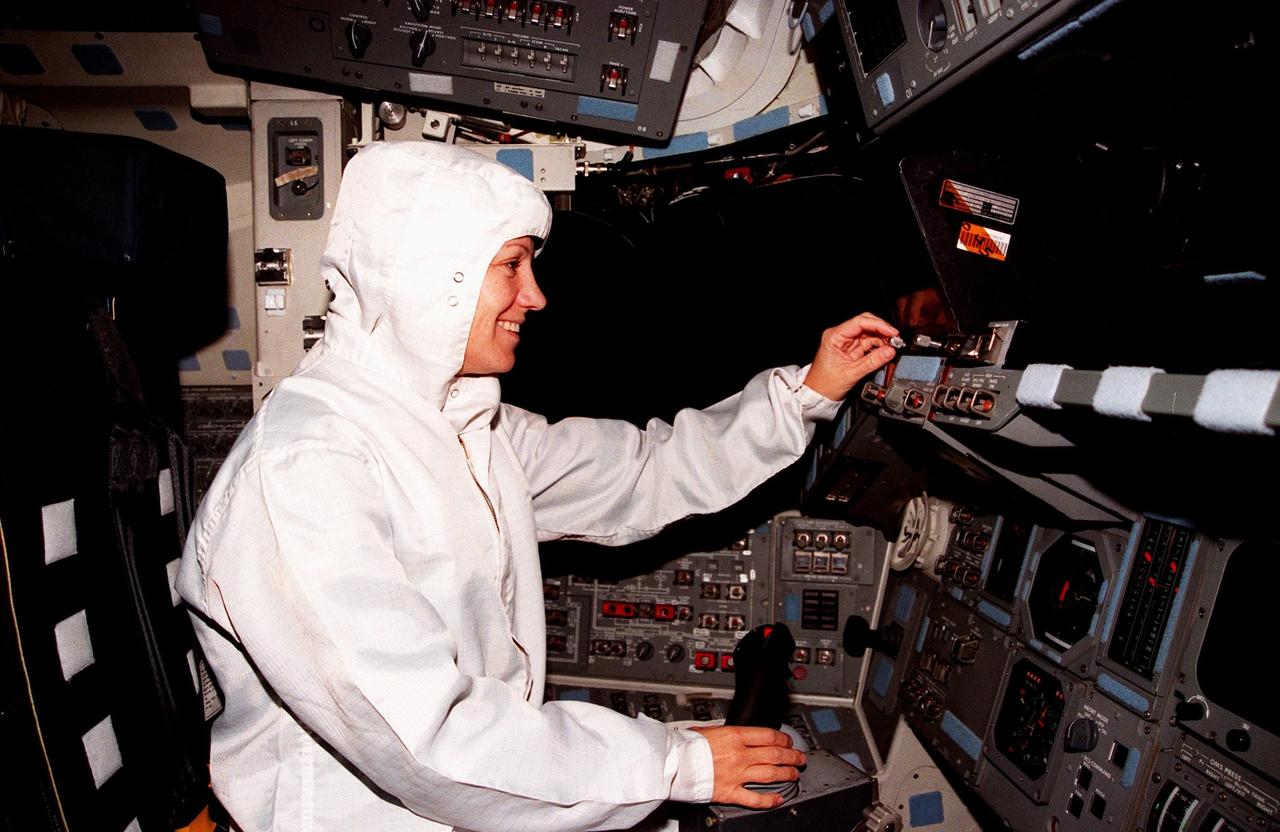
During the Crew Equipment Interface Test (CEIT) for mission STS-93, Mission Commander Eileen M. Collins checks out the flight deck on the orbiter Columbia, in the Orbiter Processing Facility Bay 3. The CEIT provides an opportunity for crew members to check equipment and facilities that will be aboard the orbiter during their mission. The STS-93 mission will deploy the Advanced X-ray Astrophysics Facility (AXAF) which comprises three major elements: the spacecraft, the telescope, and the science instrument module (SIM). AXAF will allow scientists from around the world to obtain unprecedented X-ray images of a variety of high-energy objects to help understand the structure and evolution of the universe. Collins is the first woman to serve as a shuttle mission commander. The other STS-93 crew members are Mission Specialist Catherine G. Coleman, Pilot Jeffrey S. Ashby, Mission Specialist Steven A. Hawley and Mission Specialist Michel Tognini of France. Targeted date for the launch of STS-93 is March 18, 1999
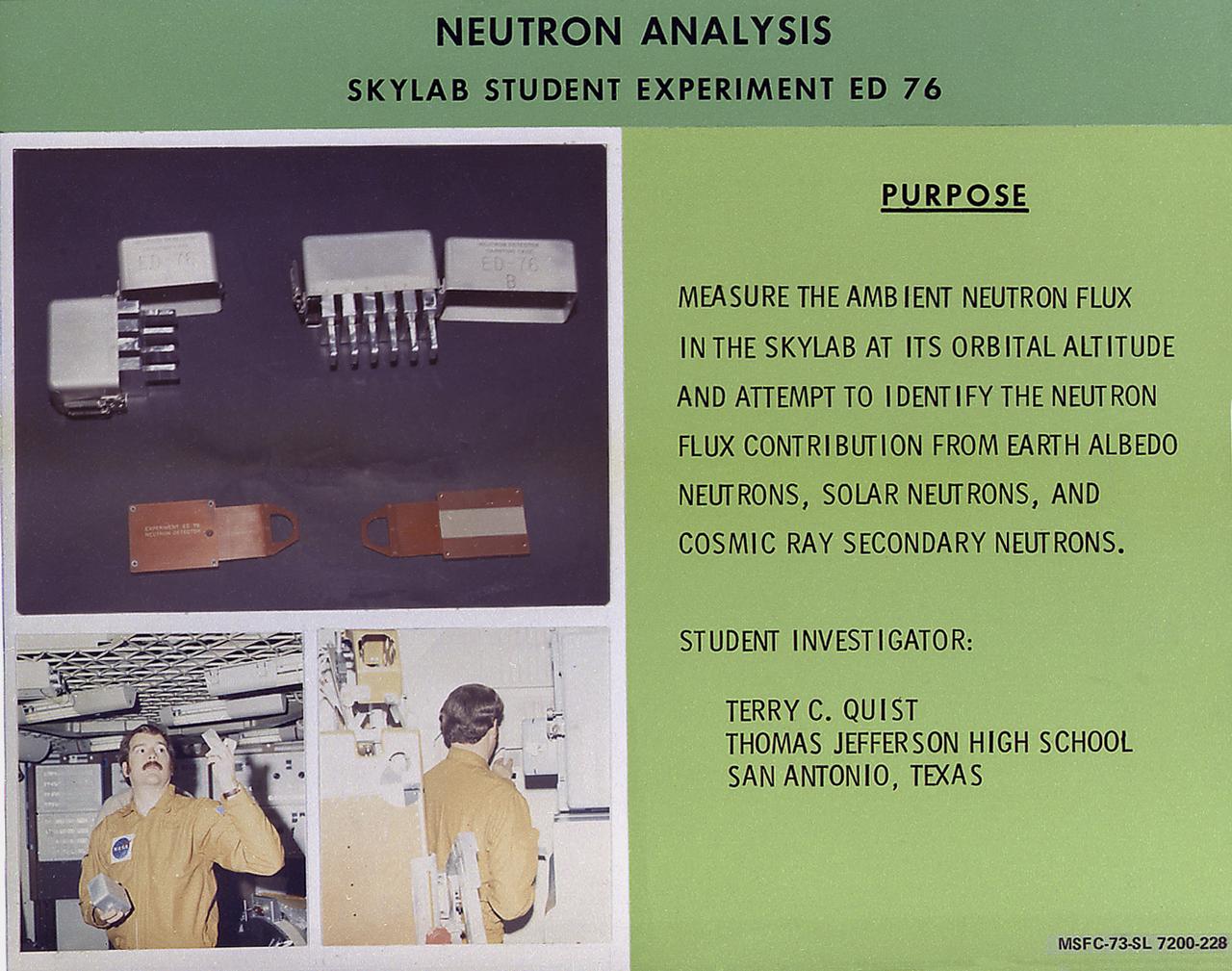
The rate of neutron flow is commonly referred to as a flux. The measurement of neutron fluxes in Skylab was the subject of a proposal by Terry Quist of San Antonio, Texas. This chart describes Quist's experiment, Neutron Analysis, Skylab student experiment ED-76. These measurements were considered important not only by NASA but also by the scientific community for four reasons. High energy neutrons can be harmful to human tissue if they are present in significant quantities. Fluxes of neutrons can damage film and other sensitive experimental equipment in a marner similar to those produced by x-rays or other radiation. Furthermore, neutron fluxes can be used as a calibration source for other space-oriented particle physics experiments. Finally, neutron fluxes can affect sensitive x-ray and gamma-ray astronomy observations. Quist's objectives were to measure the neutron fluxes present in Skylab and, with the assistance of NASA and other physicists, to attempt determination of their origin as well as their energy range or spectrum. This experiment had stimulated interest in further studies of neutron phenomena in space. In March 1972, NASA and the National Science Teachers Association selected 25 experiment proposals for flight on Skylab. Science advisors from the Marshall Space Flight Center aided and assisted the students in developing the proposals for flight on Skylab.
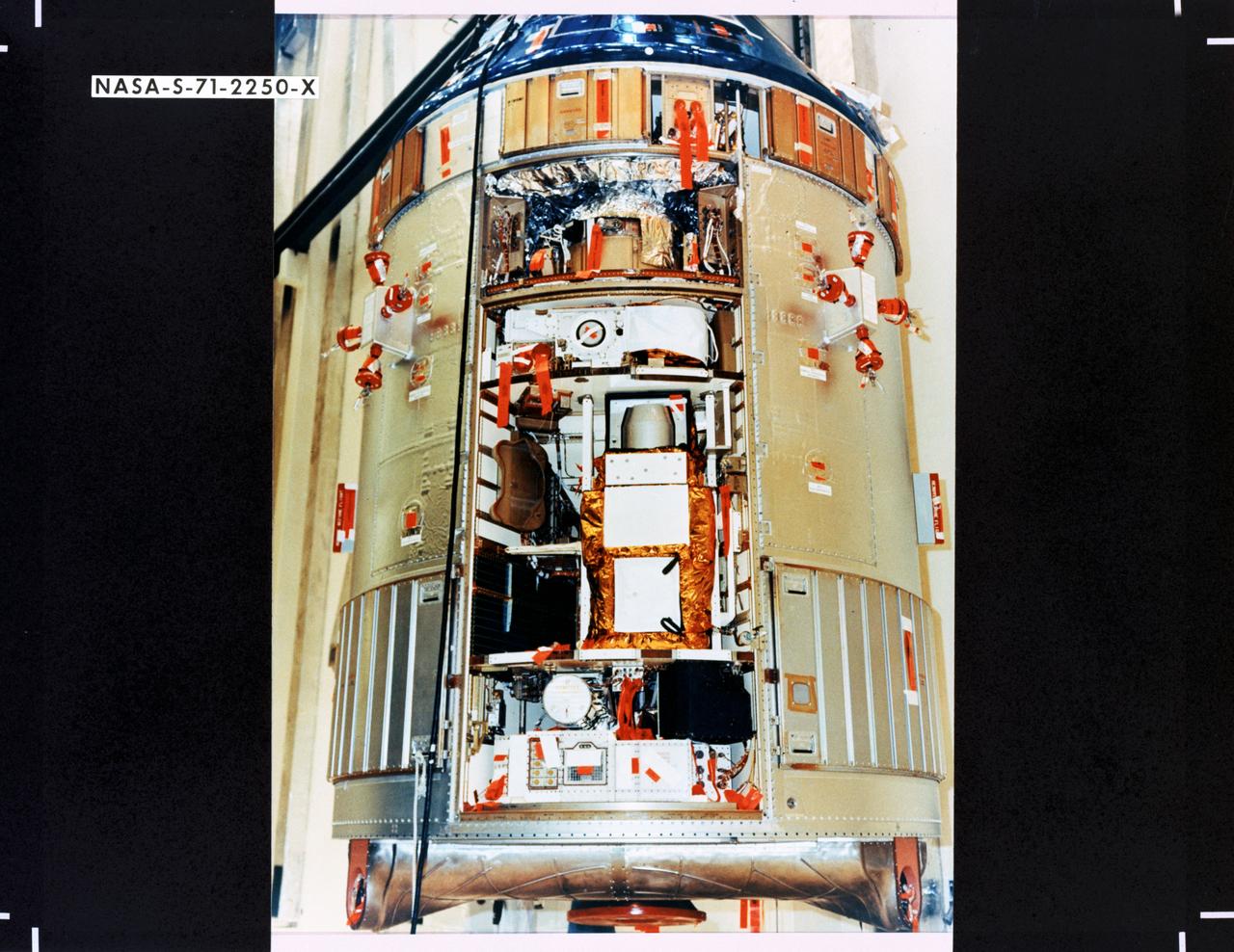
S71-2250X (June 1971) --- A close-up view of the Scientific Instrument Module (SIM) to be flown for the first time on the Apollo 15 lunar landing mission. Mounted in a previously vacant sector of the Apollo Service Module (SM), the SIM carries specialized cameras and instrumentation for gathering lunar orbit scientific data. SIM equipment includes a laser altimeter for accurate measurement of height above the lunar surface; a large-format panoramic camera for mapping, correlated with a metric camera and the laser altimeter for surface mapping; a gamma ray spectrometer on a 25-feet extendible boom; a mass spectrometer on a 21-feet extendible boom; X-ray and alpha particle spectrometers; and a subsatellite which will be injected into lunar orbit carrying a particle and magnetometer, and the S-Band transponder.
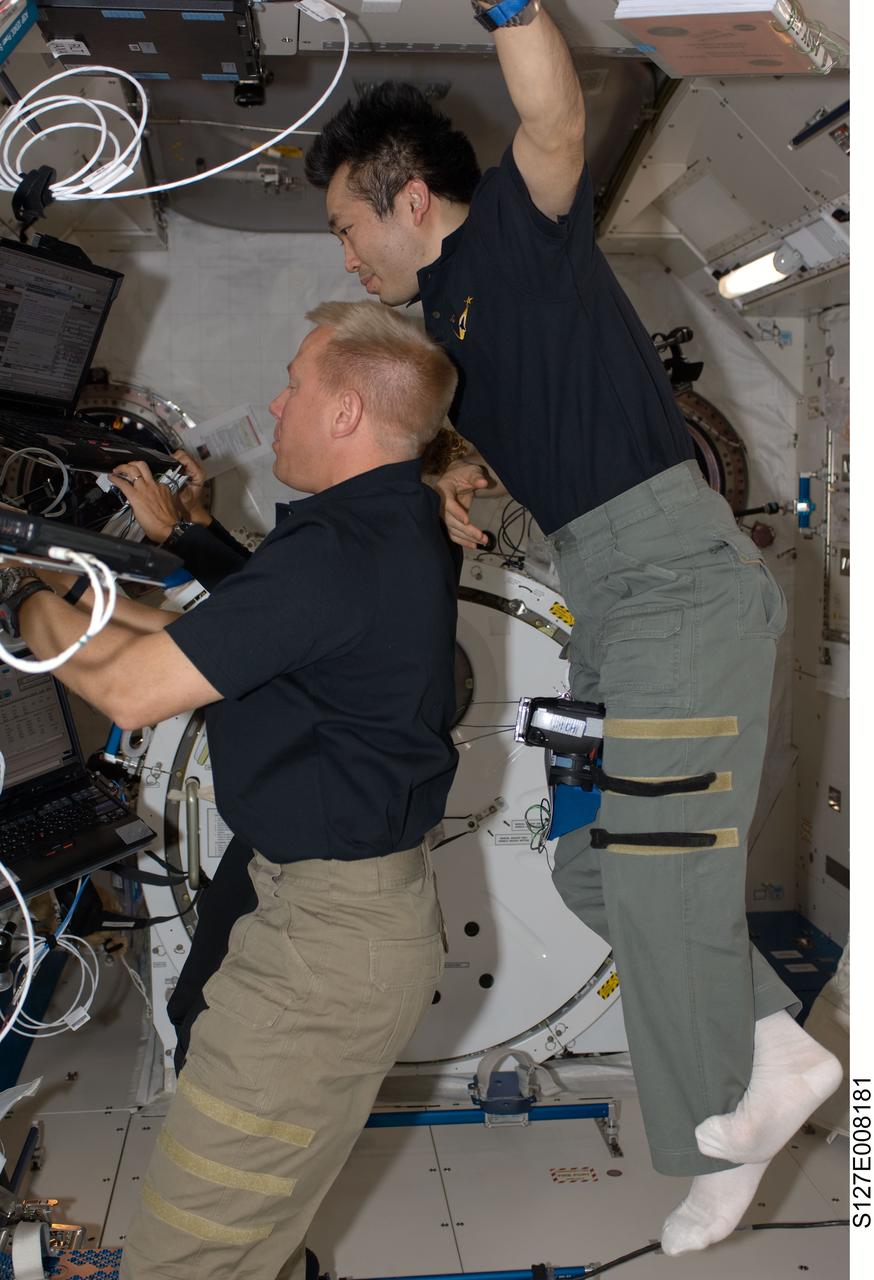
S127-E-008181 (23 July 2009) --- Inside the Japanese Experiment Module (JEM) or Kibo, astronaut Tim Kopra (left), Expedition 20's new flight engineer, and Japanese Aerospace Exploration Agency (JAXA) astronaut Koichi Wakata, who switched roles with Kopra and now serves as an STS-127 mission specialist, are pictured at work. Their current shared task concentrates on the relocation of the MAXI, ICS and SEDA-AP from the JEM Experiment Logistics Module-Exposed Section (JLE) to the JEM Exposed Facility (JEF). MAXI is the Monitor of All-sky X-ray Image experiment and SEDA-AP is the Space Environment Data Acquisition equipment - Attached Payload experiment.
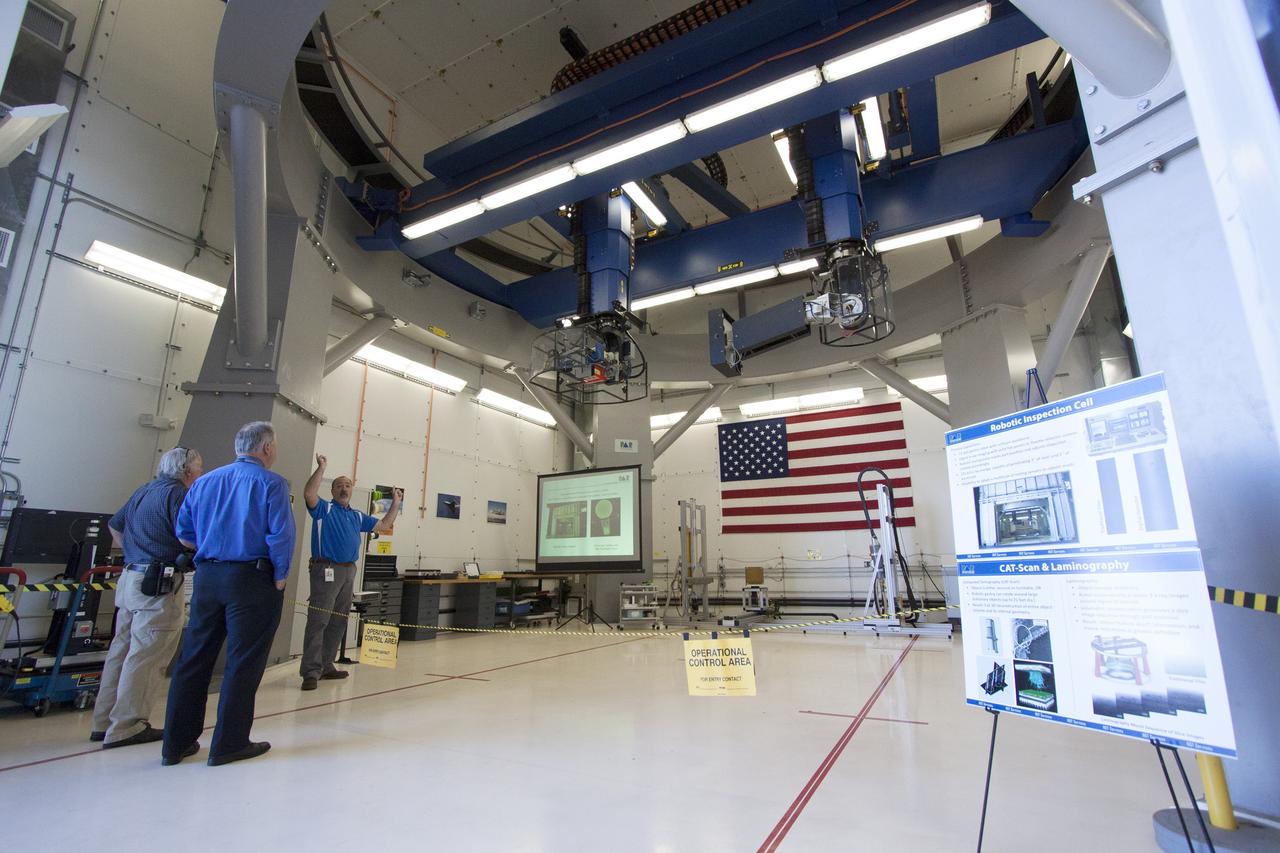
CAPE CANAVERAL, Fla. – Paul Vona, operations engineer, NDT Services, with PaR Systems Inc., demonstrates the automated X-ray system in the robotic inspection cell for members of the media at Hangar N at Cape Canaveral Air Force Station in Florida. PaR Systems held an Open House to celebrate the one-year anniversary of a lease agreement with Kennedy. Under a 15-year lease, PaR Systems is utilizing Hangar N and its unique nondestructive testing equipment. The partnership agreement was established by Kennedy's Center Planning and Development Directorate. The agreement is just one example of the types of partnerships that Kennedy is seeking to create a multi-user spaceport. Photo credit: NASA/Cory Huston
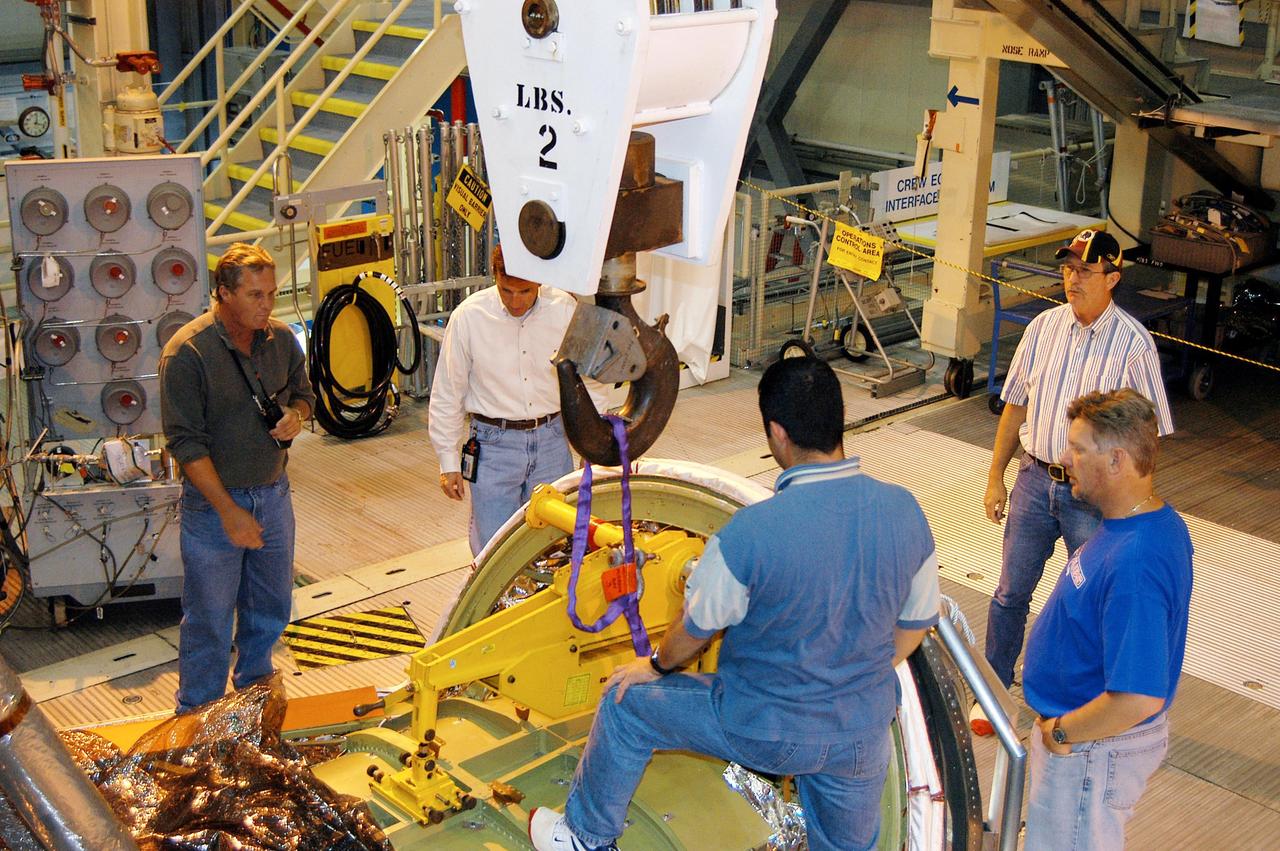
KENNEDY SPACE CENTER, FLA. - Workers in the Orbiter Processing Facility get ready to remove Ground Support Equipment used to install Discovery’s nose cap on Friday. The nose cap had been removed from the vehicle in the summer of 2003 and returned to the vendor, where it underwent numerous forms of Non-Destructive Evaluation. These tests included X-ray, ultrasound and eddy current to ensure its structural integrity prior to installation on the vehicle. The nose cap was also recoated. Once returned to KSC, new Thermal Protection System blankets were assembled inside of the nose cap and thermography was performed prior to installation on the orbiter.
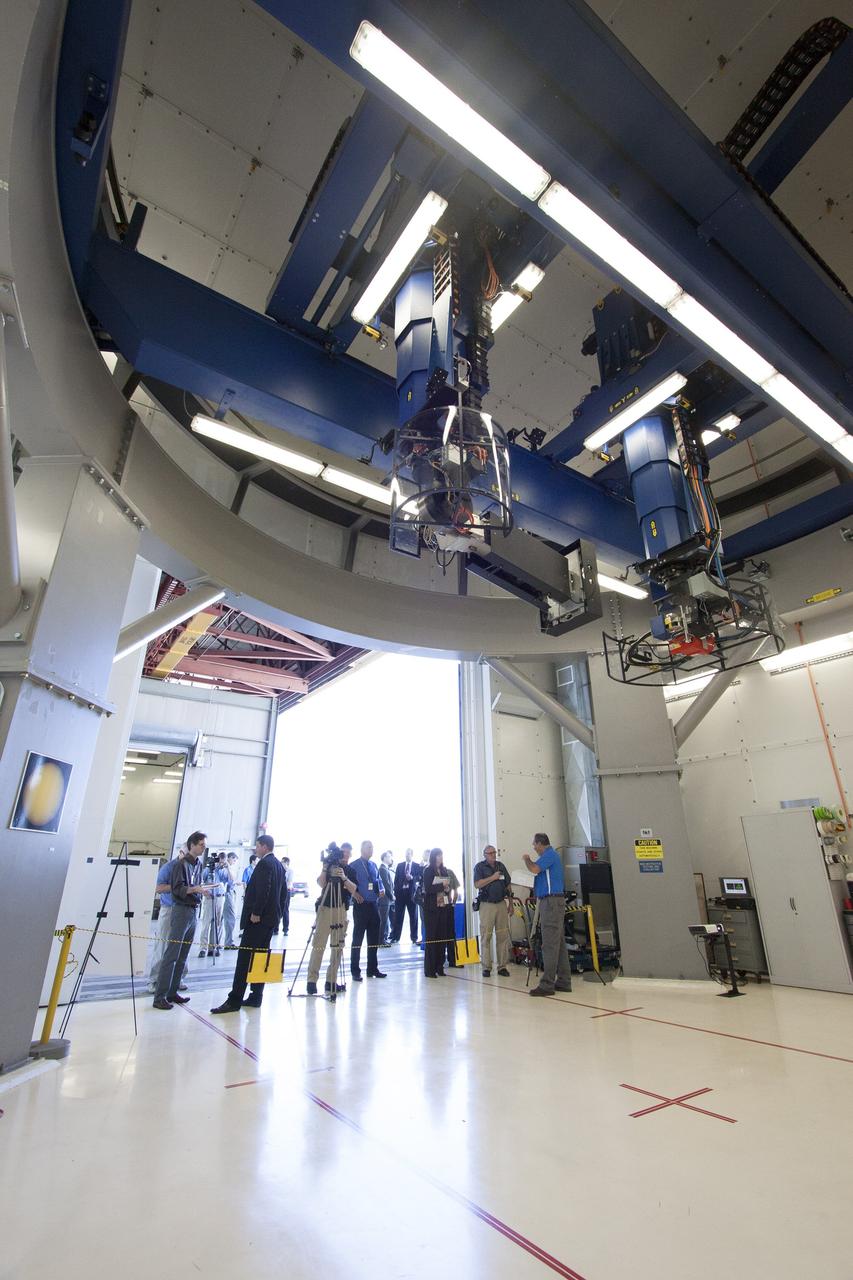
CAPE CANAVERAL, Fla. – Paul Vona, operations engineer, NDT Services, with PaR Systems Inc., demonstrates the automated X-ray system in the robotic inspection cell for members of the media at Hangar N at Cape Canaveral Air Force Station in Florida. PaR Systems held an Open House to celebrate the one-year anniversary of a lease agreement with Kennedy. Under a 15-year lease, PaR Systems is utilizing Hangar N and its unique nondestructive testing equipment. The partnership agreement was established by Kennedy's Center Planning and Development Directorate. The agreement is just one example of the types of partnerships that Kennedy is seeking to create a multi-user spaceport. Photo credit: NASA/Cory Huston
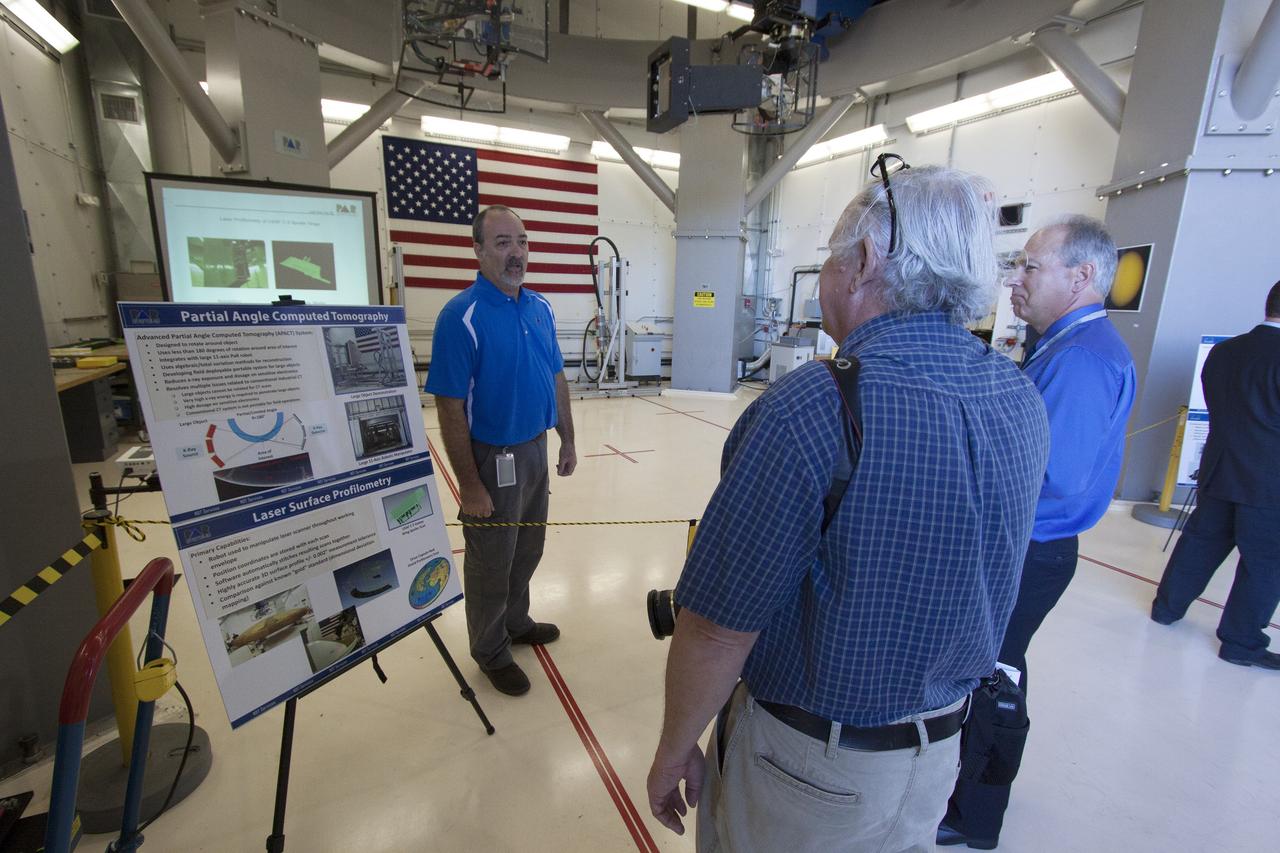
CAPE CANAVERAL, Fla. – Paul Vona, operations engineer, NDT Services, with PaR Systems Inc., talks with members of the media about the automated X-ray system in the robotic inspection cell at Hangar N at Cape Canaveral Air Force Station in Florida. PaR Systems held an Open House to celebrate the one-year anniversary of a lease agreement with Kennedy. Under a 15-year lease, PaR Systems is utilizing Hangar N and its unique nondestructive testing equipment. The partnership agreement was established by Kennedy's Center Planning and Development Directorate. The agreement is just one example of the types of partnerships that Kennedy is seeking to create a multi-user spaceport. Photo credit: NASA/Cory Huston
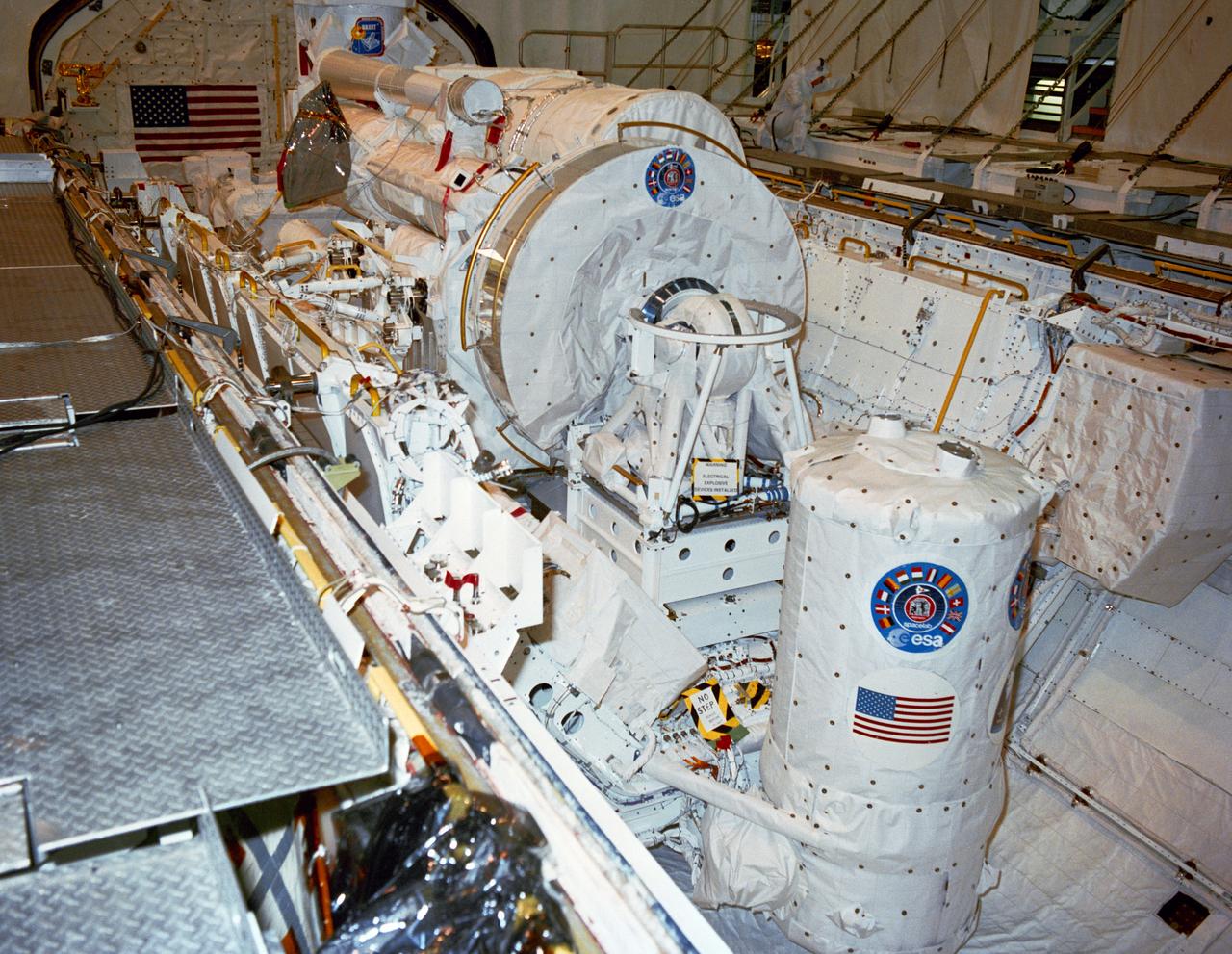
S90-36708 (7 May 1990) --- STS-35 Astronomy Laboratory 1 (ASTRO-1) view shows its telescopes, instrument pointing system (IPS), and support equipment installed in Columbia's, Orbiter Vehicle (OV) 102's, payload bay (PLB) at the Kennedy Space Center (KSC) Orbiter Processing Facility (OPF). In the foreground is the Spacelab Pallet System (SPS) igloo. The stowed IPS with its three ultraviolet telescopes appears in the center of the picture. In the background, the Broad Band X Ray Telescope (BBXRT) two axis pointing system (TAPS) is barely visible. View provided by KSC with alternate number KSC-90PC-423.
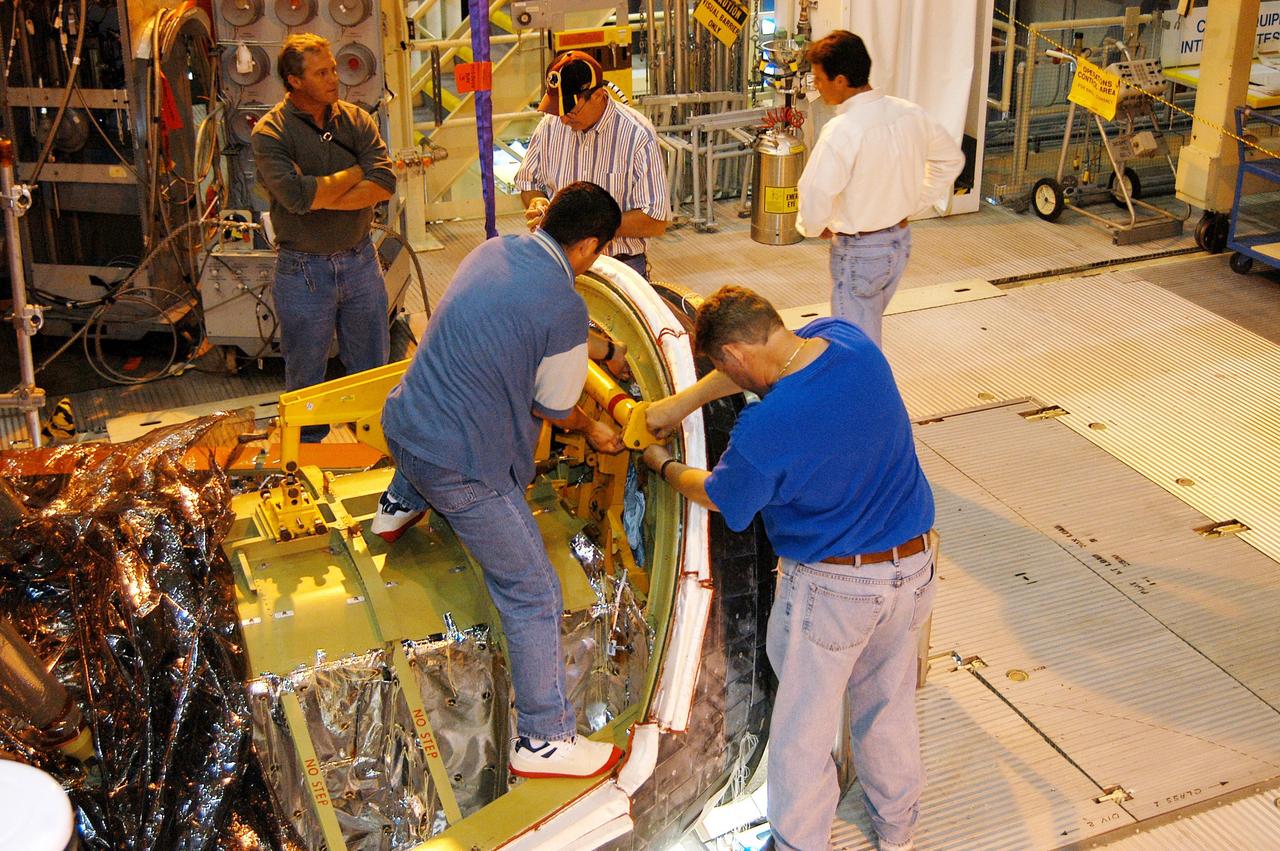
KENNEDY SPACE CENTER, FLA. - Workers in the Orbiter Processing Facility remove Ground Support Equipment used to install Discovery’s nose cap on Friday. The nose cap had been removed from the vehicle in the summer of 2003 and returned to the vendor, where it underwent numerous forms of Non-Destructive Evaluation. These tests included X-ray, ultrasound and eddy current to ensure its structural integrity prior to installation on the vehicle. The nose cap was also recoated. Once returned to KSC, new Thermal Protection System blankets were assembled inside of the nose cap and thermography was performed prior to installation on the orbiter.
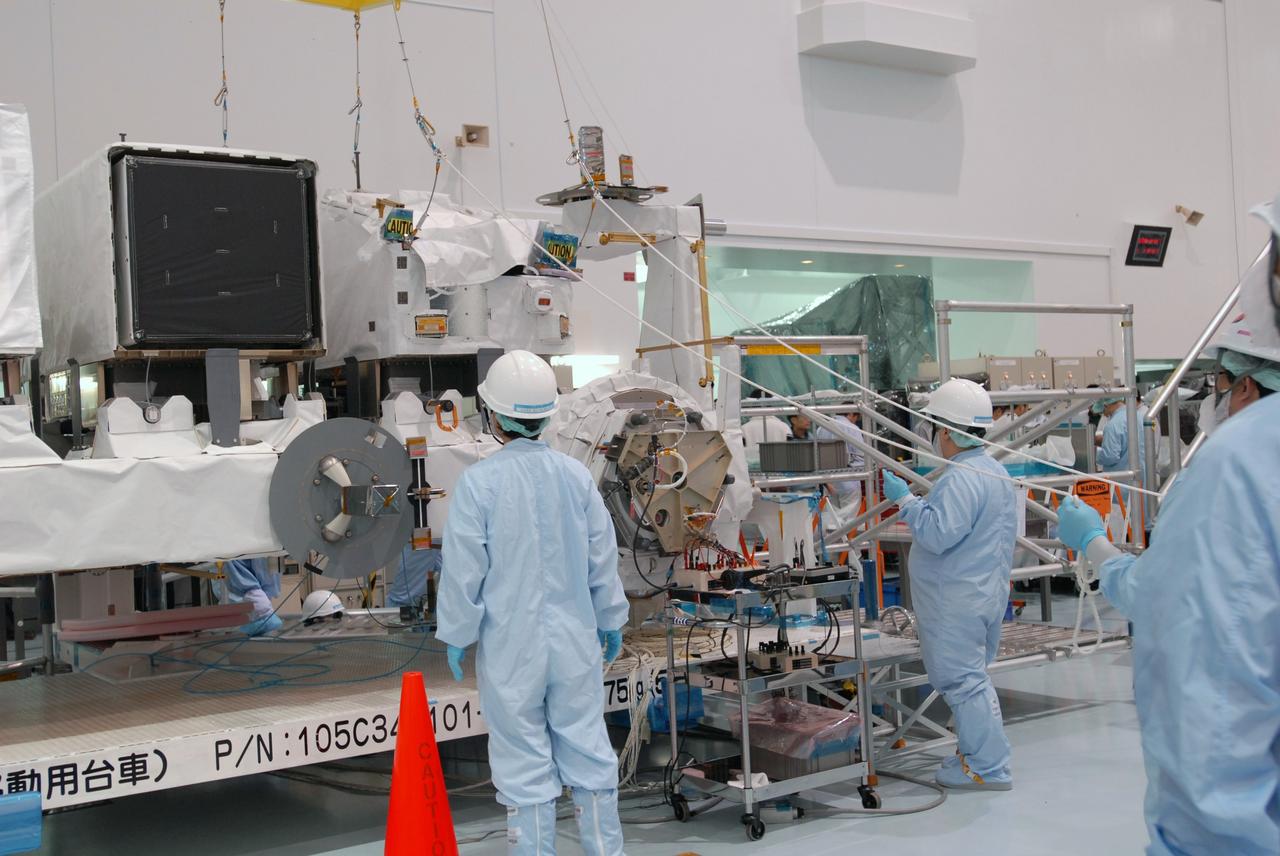
CAPE CANAVERAL, Fla. -- In the Space Station Processing Facility at NASA's Kennedy Space Center in Florida, an overhead crane lowers the ICS Exposed Facility, or ICS-EF, onto the Japanese Experiment Module's Experiment Logistics Module-Exposed Section, or ELM-ES, for installation. It is being placed next to two other payloads, the SEDA-AP (Space Environment Data Acquisition Equipment-Attached Payload) and MAXI (Monitor of All-sky X-ray Image). The ICS-EF is part of space shuttle Endeavour's payload on the STS-127 mission, targeted for launch on May 15. Photo credit: NASA/Jim Grossmann
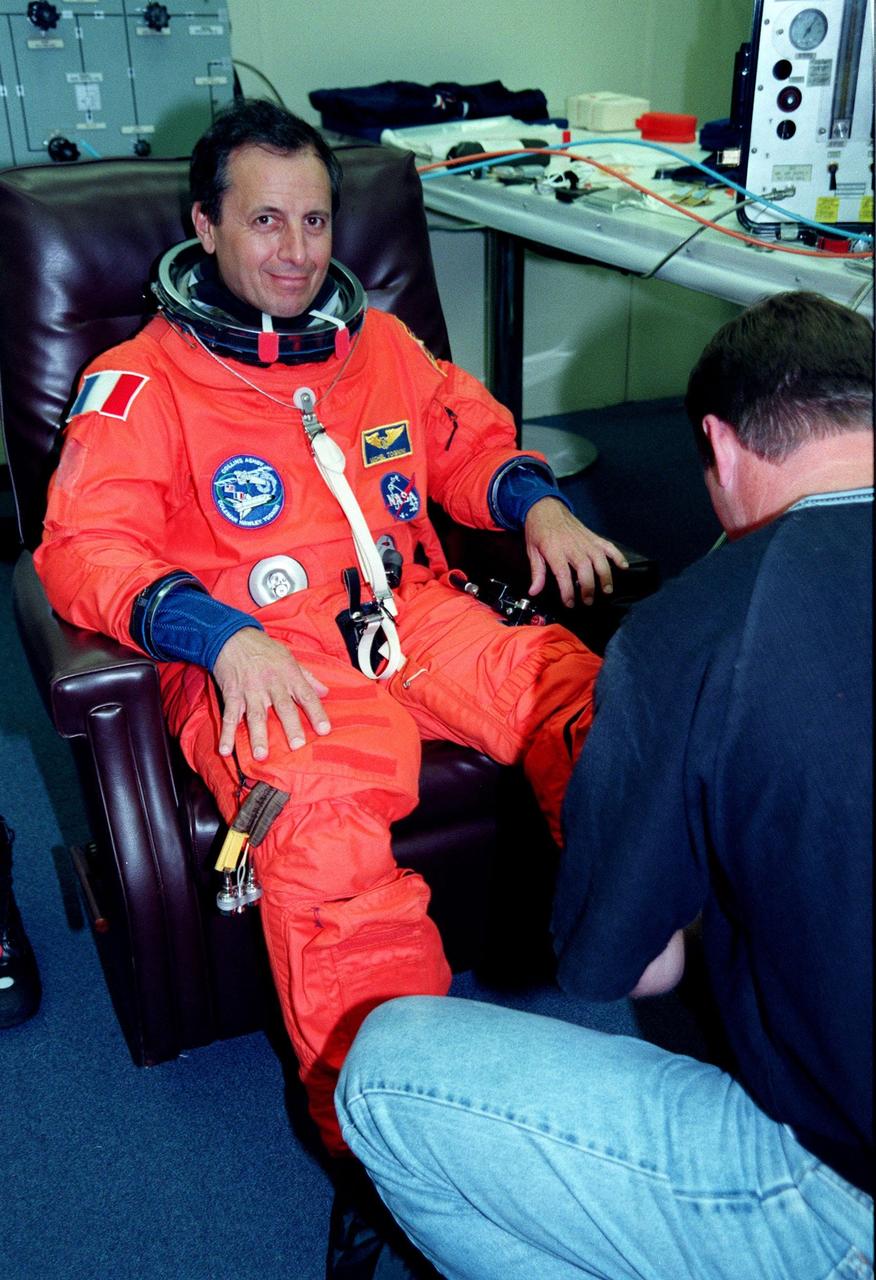
STS-93 Mission Specialist Michel Tognini of France, who represents the Centre National d'Etudes Spatiales (CNES), has his launch and entry suit checked by a technician in the Operations and Checkout Bldg. In preparation for their mission, the STS-93 crew are participating in Terminal Countdown Demonstration Test activities that also include equipment check and a launch-day dress rehearsal culminating with a simulated main engine cut-off. Others in the crew participating are Commander Eileen M. Collins, Pilot Jeffrey S. Ashby, and Mission Specialists Steven A. Hawley (Ph.D.) and Catherine G. Coleman (Ph.D.). Collins is the first woman to serve as a Shuttle commander. The primary mission of STS-93 is the release of the Chandra X-ray Observatory, which will allow scientists from around the world to obtain unprecedented X-ray images of exotic environments in space to help understand the structure and evolution of the universe. The targeted launch date for STS-93 is no earlier than July 20 at 12:36 a.m. EDT from Launch Pad 39B
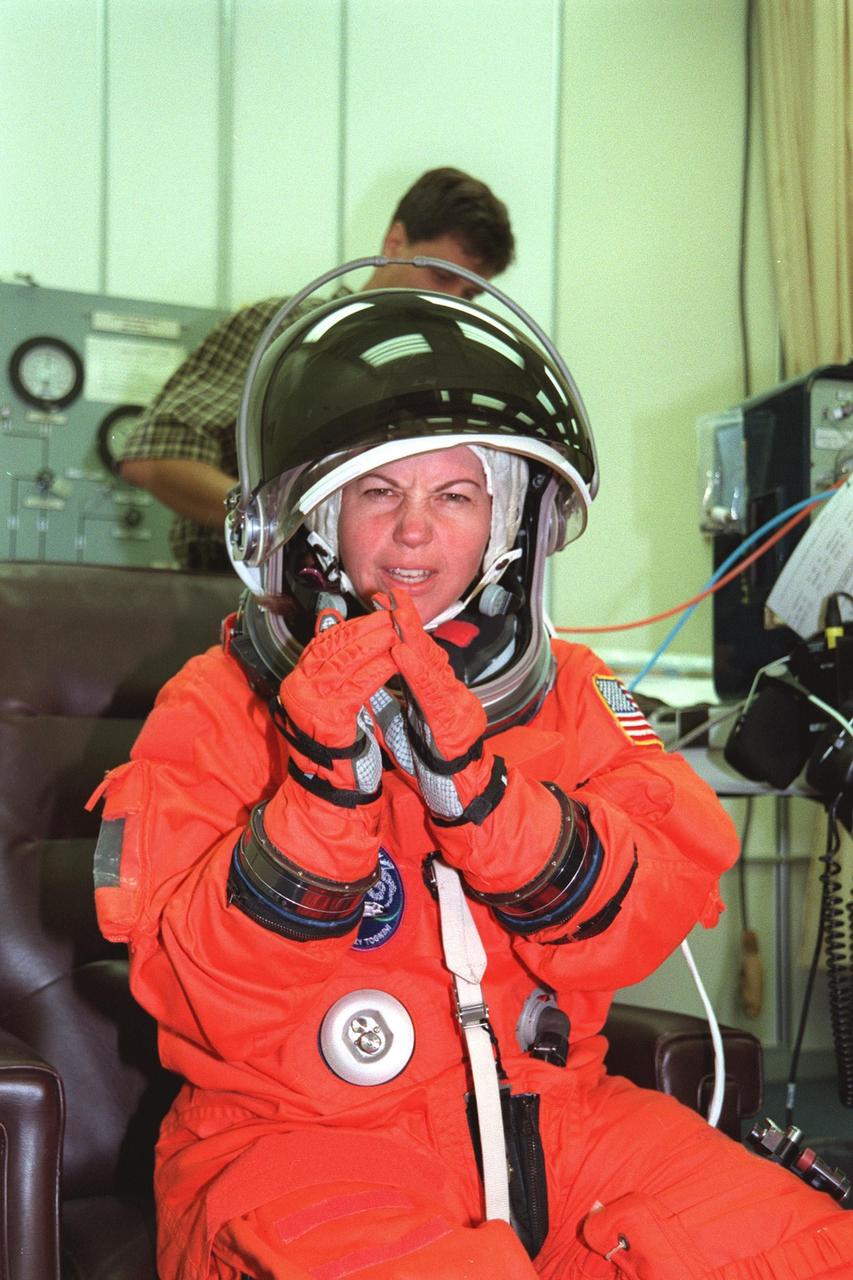
In the Operations and Checkout Bldg., STS-93 Mission Specialist Catherine G. Coleman (Ph.D.) checks out her launch and entry suit. In preparation for their mission, the STS-93 crew are participating in Terminal Countdown Demonstration Test activities that also include equipment check and a launch-day dress rehearsal culminating with a simulated main engine cut-off. Others in the crew participating are Commander Eileen M. Collins, Pilot Jeffrey S. Ashby, Mission Specialist Steven A. Hawley (Ph.D.) and Michel Tognini of France, who represents the Centre National d'Etudes Spatiales (CNES). Collins is the first woman to serve as a Shuttle commander. The primary mission of STS-93 is the release of the Chandra X-ray Observatory, which will allow scientists from around the world to obtain unprecedented X-ray images of exotic environments in space to help understand the structure and evolution of the universe. The targeted launch date for STS-93 is no earlier than July 20 at 12:36 a.m. EDT from Launch Pad 39B
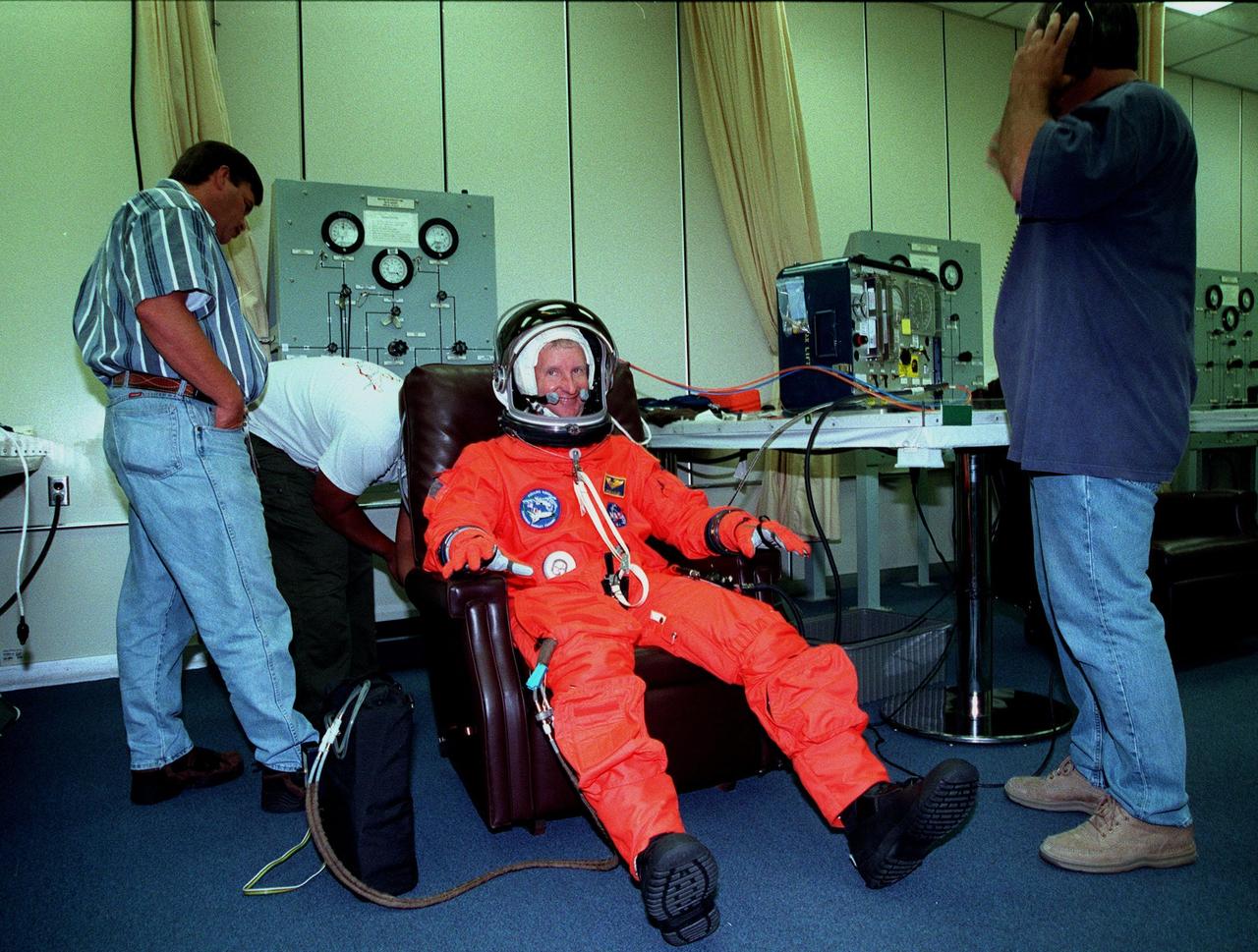
In the Operations and Checkout Bldg., Mission Specialist Steven A. Hawley (Ph.D.) has his launch and entry suit checked by technicians. In preparation for their mission, the STS-93 crew are participating in Terminal Countdown Demonstration Test activities that also include equipment check and a launch-day dress rehearsal culminating with a simulated main engine cut-off. Others in the crew participating are Commander Eileen M. Collins, Pilot Jeffrey S. Ashby, and Mission Specialists Catherine G. Coleman (Ph.D.) and Michel Tognini of France, who represents the Centre National d'Etudes Spatiales (CNES). Collins is the first woman to serve as a Shuttle commander. The primary mission of STS-93 is the release of the Chandra X-ray Observatory, which will allow scientists from around the world to obtain unprecedented X-ray images of exotic environments in space to help understand the structure and evolution of the universe. The targeted launch date for STS-93 is no earlier than July 20 at 12:36 a.m. EDT from Launch Pad 39B
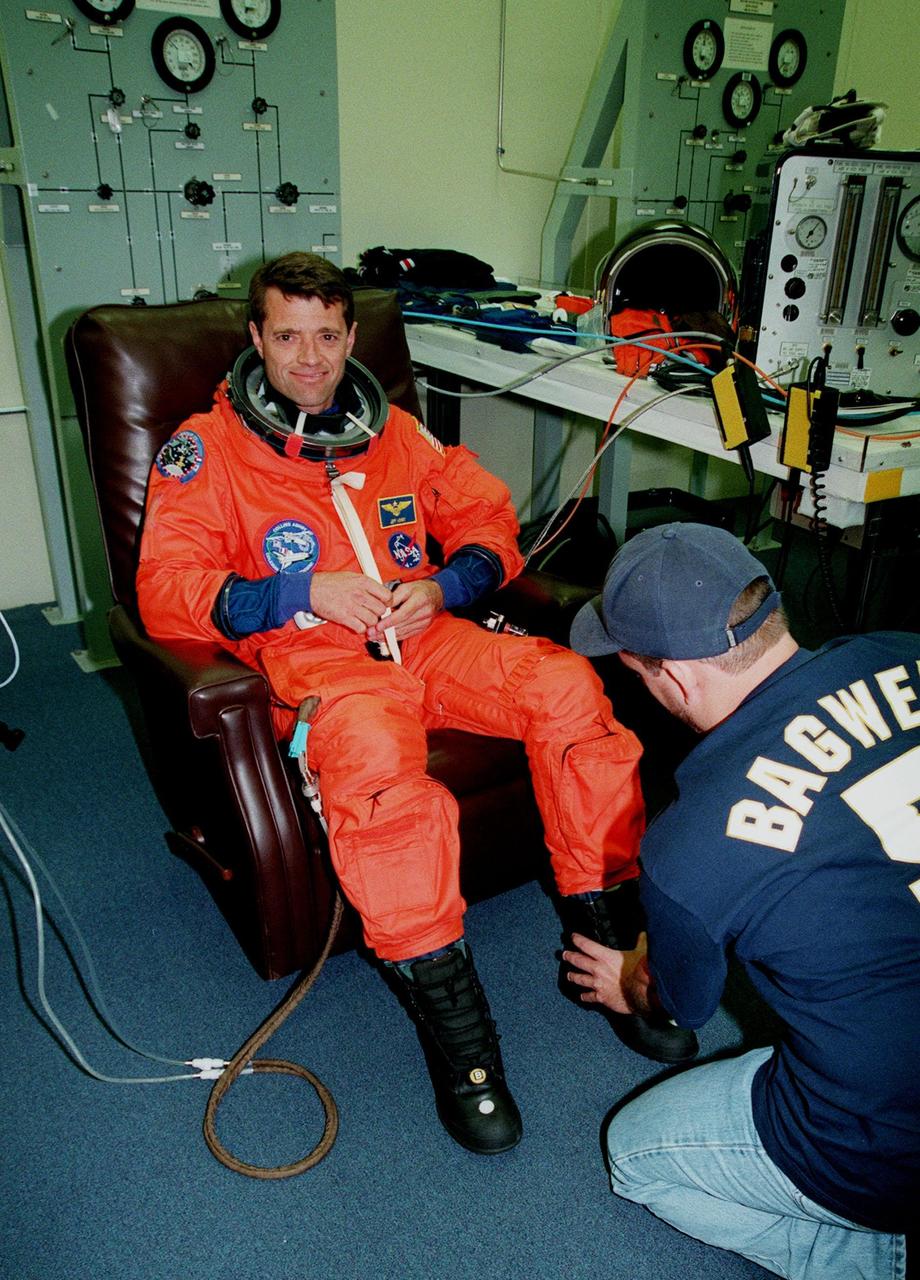
STS-93 Pilot Jeffrey S. Ashby has his launch and entry suit checked by a technician in the Operations and Checkout Bldg. In preparation for their mission, the STS-93 crew are participating in Terminal Countdown Demonstration Test activities that also include equipment check and a launch-day dress rehearsal culminating with a simulated main engine cut-off. Others in the crew participating are Commander Eileen M. Collins and Mission Specialists Steven A. Hawley (Ph.D.), Catherine G. Coleman (Ph.D.) and Michel Tognini of France, who represents the Centre National d'Etudes Spatiales (CNES). Collins is the first woman to serve as a Shuttle commander. The primary mission of STS-93 is the release of the Chandra X-ray Observatory, which will allow scientists from around the world to obtain unprecedented X-ray images of exotic environments in space to help understand the structure and evolution of the universe. The targeted launch date for STS-93 is no earlier than July 20 at 12:36 a.m. EDT from Launch Pad 39B
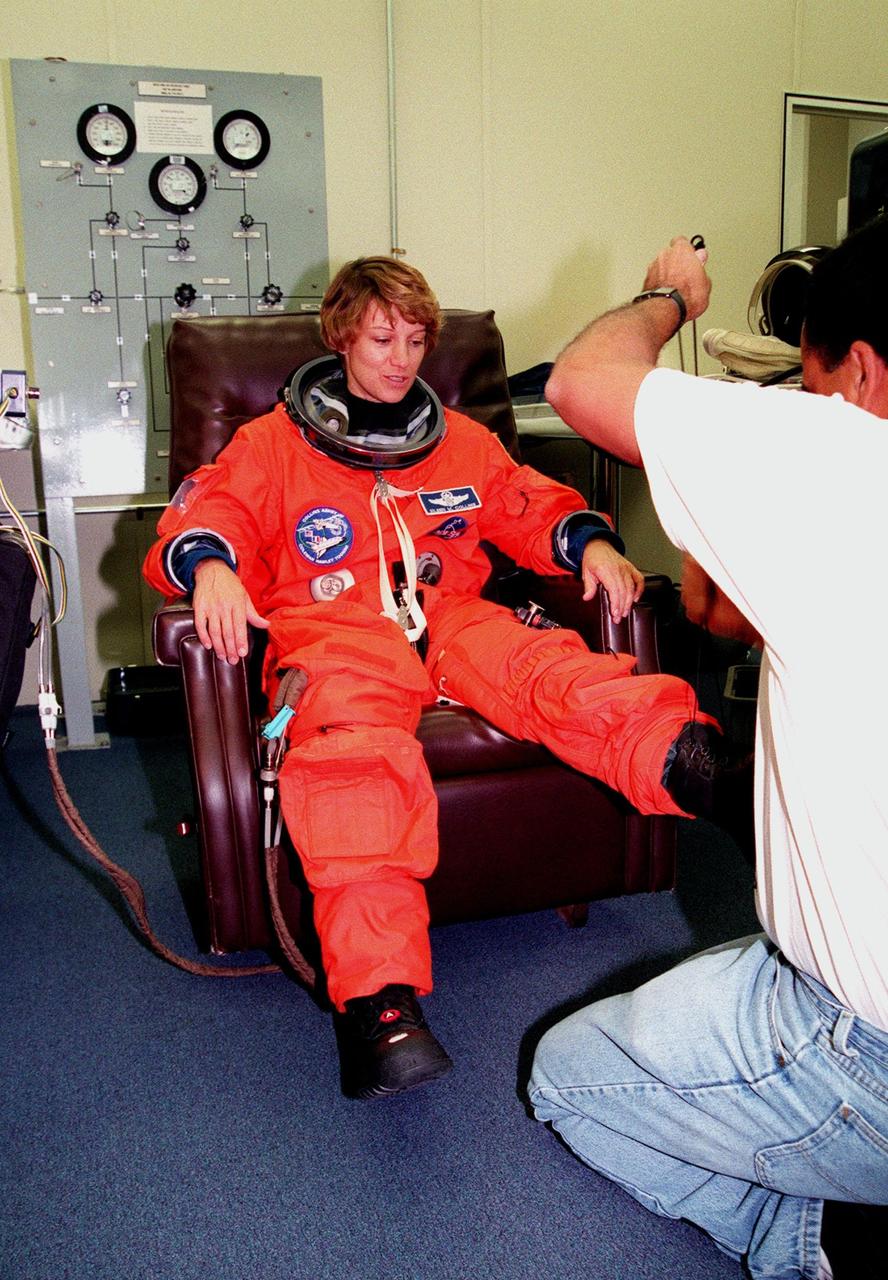
STS-93 Commander Eileen M. Collins has her launch and entry suit checked by a technician in the Operations and Checkout Bldg. In preparation for their mission, the STS-93 crew are participating in Terminal Countdown Demonstration Test activities that also include equipment check and a launch-day dress rehearsal culminating with a simulated main engine cut-off. Others in the crew participating are Pilot Jeffrey S. Ashby, and Mission Specialists Steven A. Hawley (Ph.D.), Catherine G. Coleman (Ph.D.) and Michel Tognini of France, who represents the Centre National d'Etudes Spatiales (CNES). Collins is the first woman to serve as a Shuttle commander. The primary mission of STS-93 is the release of the Chandra X-ray Observatory, which will allow scientists from around the world to obtain unprecedented X-ray images of exotic environments in space to help understand the structure and evolution of the universe. The targeted launch date for STS-93 is no earlier than July 20 at 12:36 a.m. EDT from Launch Pad 39B
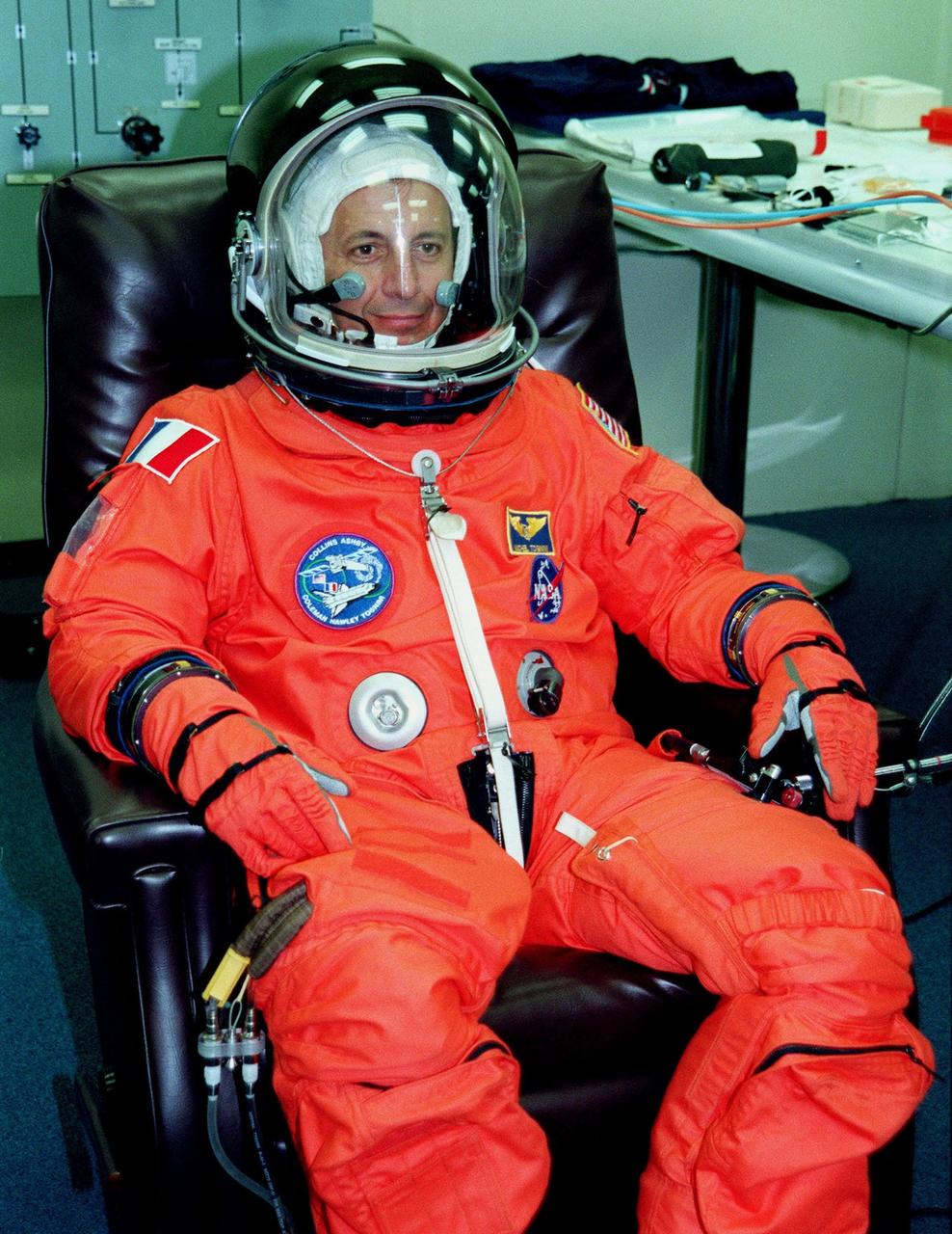
During launch and entry suit check in the Operations and Checkout Bldg, STS-93 Mission Specialist Michel Tognini of France, who represents the Centre National d'Etudes Spatiales (CNES), tries on his helmet. In preparation for their mission, the STS-93 crew are participating in Terminal Countdown Demonstration Test activities that also include equipment check and a launch-day dress rehearsal culminating with a simulated main engine cut-off. Others in the crew participating are Commander Eileen M. Collins, Pilot Jeffrey S. Ashby, and Mission Specialists Steven A. Hawley (Ph.D.) and Catherine G. Coleman (Ph.D.). Collins is the first woman to serve as a Shuttle commander. The primary mission of STS-93 is the release of the Chandra X-ray Observatory, which will allow scientists from around the world to obtain unprecedented X-ray images of exotic environments in space to help understand the structure and evolution of the universe. The targeted launch date for STS-93 is no earlier than July 20 at 12:36 a.m. EDT from Launch Pad 39B
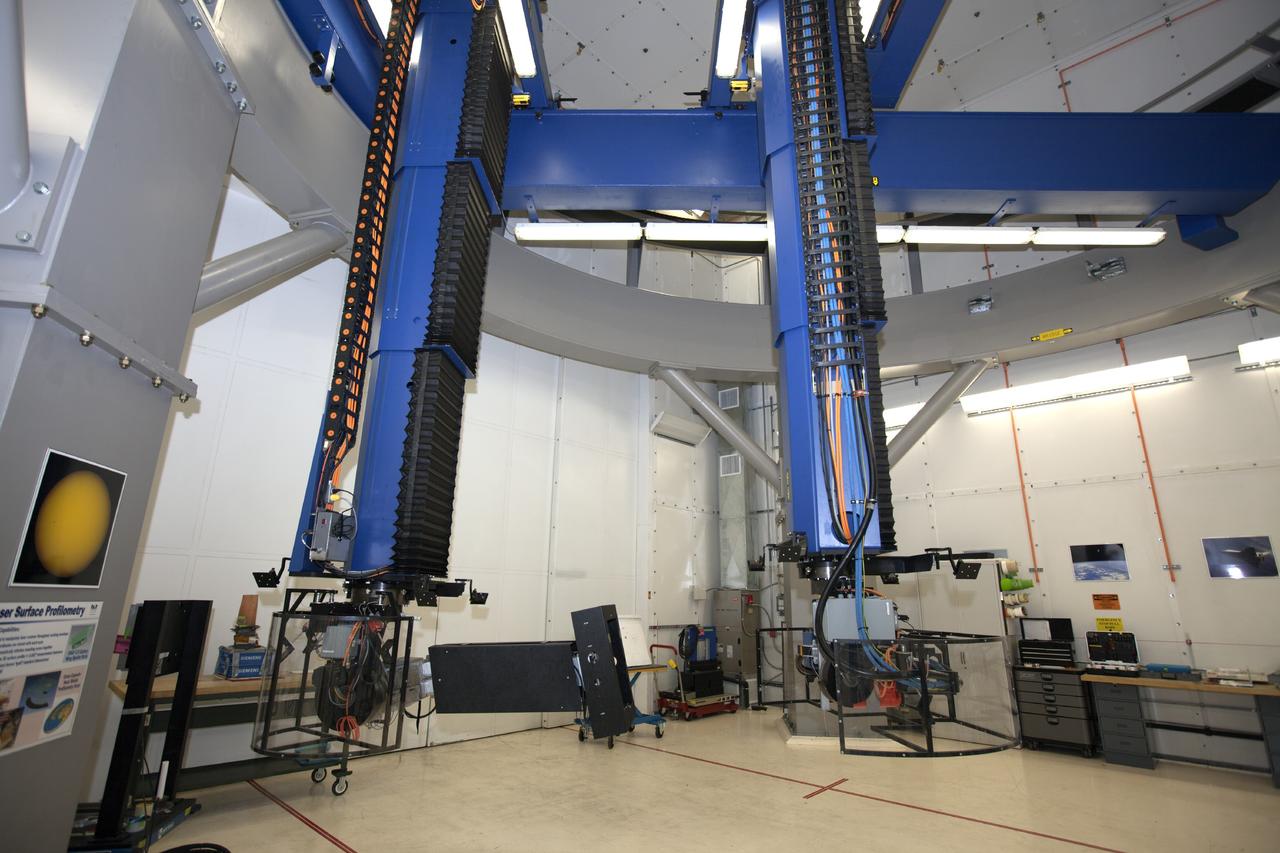
CAPE CANAVERAL, Fla. – In Hangar N at Cape Canaveral Air Force Station, an 11-axis robotic X-ray system takes images of hardware for evaluation. The activity is part of work performed by PaR Systems, Inc. under a partnership agreement with NASA. NASA's Kennedy Space Center in Florida recently established a partnership agreement with PaR Systems, Inc. of Shoreview, Minn., for operation of the Hangar N facility and its nondestructive testing and evaluation equipment. As the spaceport transitions from a historically government-only launch facility to a multi-user spaceport for both federal and commercial customers, partnerships between the space agency and other organizations will be a key element in that effort. Hangar N is located at Cape Canaveral Air Force Station adjacent to Kennedy and houses a unique inventory of test and evaluation equipment and the capability for current and future mission spaceflight support. Photo credit: NASA/ Dimitri Gerondidakis
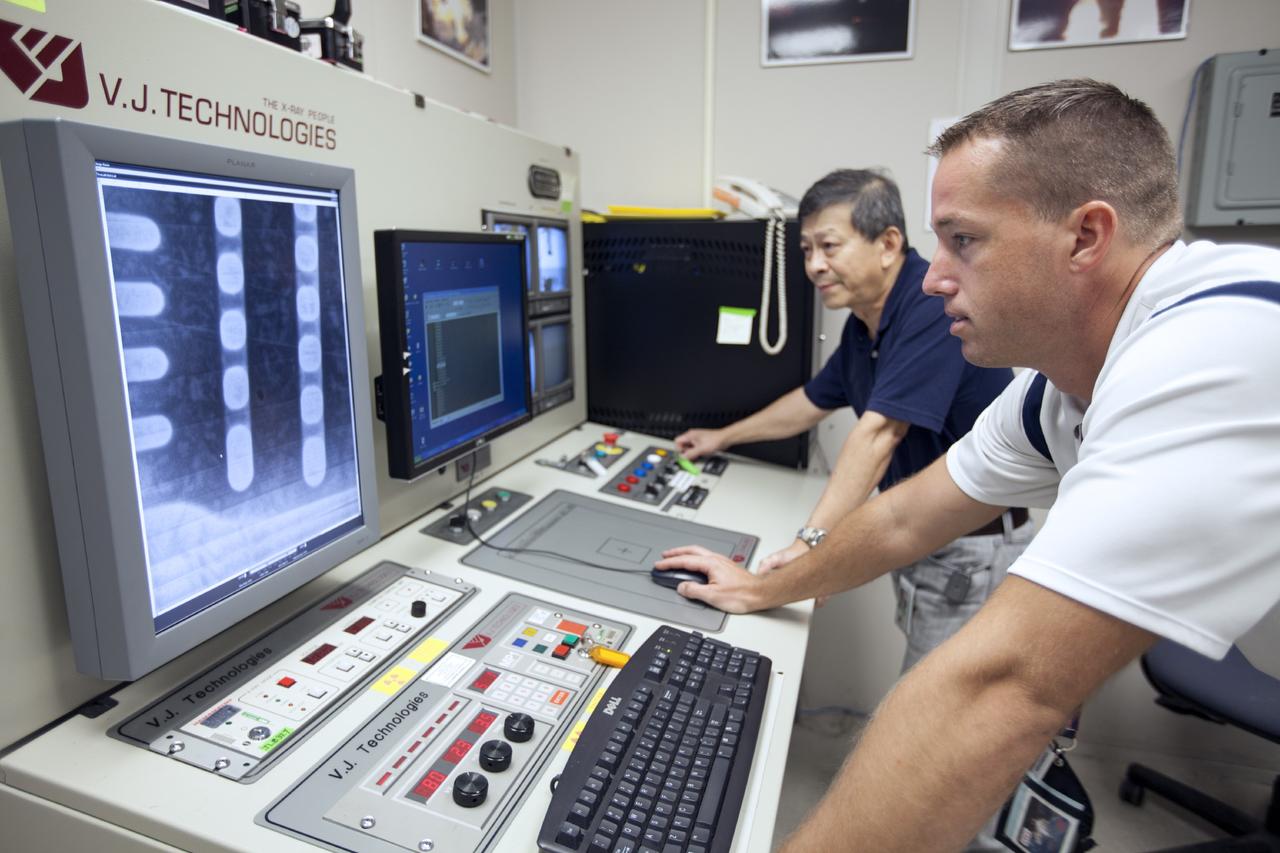
CAPE CANAVERAL, Fla. – In Hangar N at Cape Canaveral Air Force Station, PaR Systems, Inc. development engineer Wayne Cheng, left, and operations engineer Jeff Elston operate the controller for a robotic system used in nondestructive testing. The 11-axis robotic system takes X-ray images of hardware for evaluation. NASA's Kennedy Space Center in Florida recently established a partnership agreement with PaR Systems, Inc. of Shoreview, Minn., for operation of the Hangar N facility and its nondestructive testing and evaluation equipment. As the spaceport transitions from a historically government-only launch facility to a multi-user spaceport for both federal and commercial customers, partnerships between the space agency and other organizations will be a key element in that effort. Hangar N is located at Cape Canaveral Air Force Station adjacent to Kennedy and houses a unique inventory of test and evaluation equipment and the capability for current and future mission spaceflight support. Photo credit: NASA/ Dimitri Gerondidakis
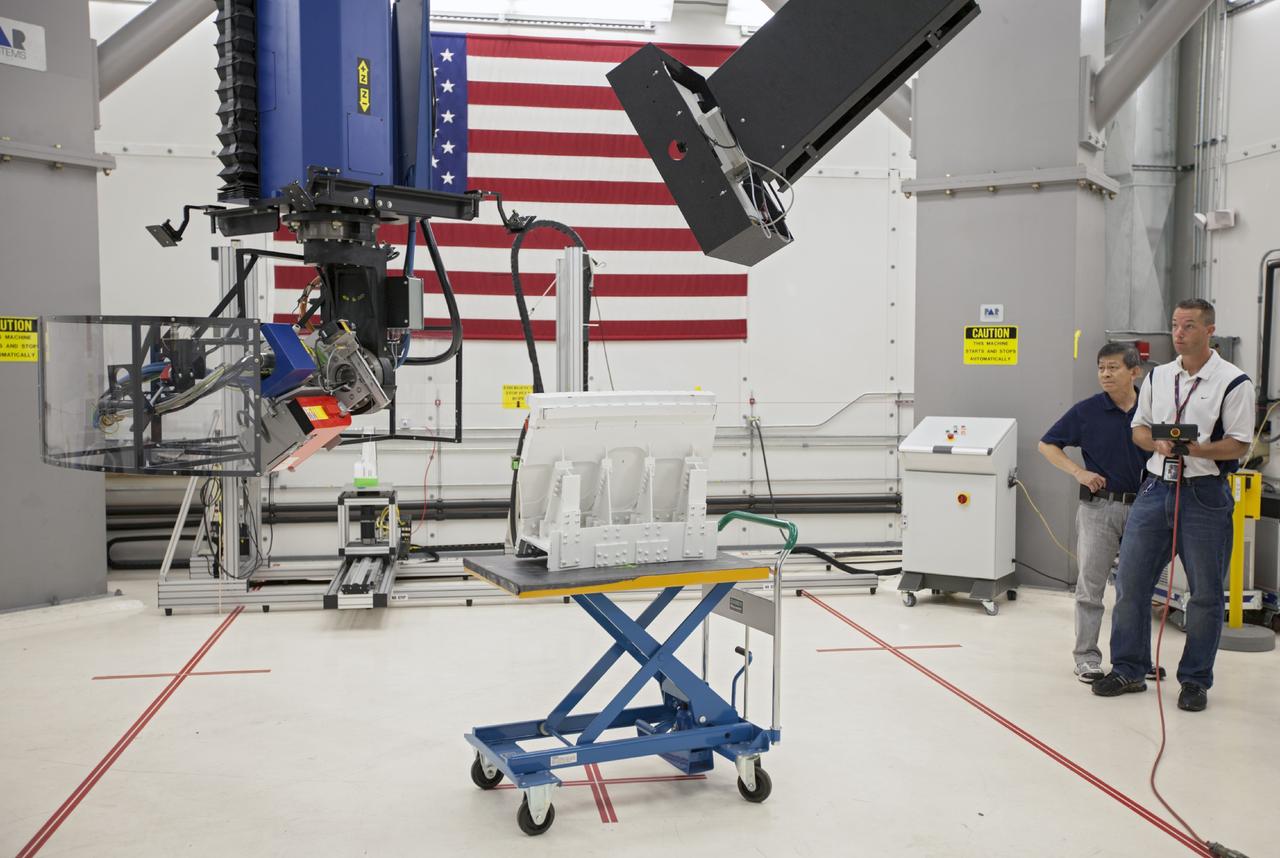
CAPE CANAVERAL, Fla. – In Hangar N at Cape Canaveral Air Force Station, PaR Systems, Inc. development engineer Wayne Cheng, left, and operations engineer Jeff Elston operate a robotic system used in nondestructive testing. The 11-axis robotic system takes X-ray images of hardware for evaluation. NASA's Kennedy Space Center in Florida recently established a partnership agreement with PaR Systems, Inc. of Shoreview, Minn., for operation of the Hangar N facility and its nondestructive testing and evaluation equipment. As the spaceport transitions from a historically government-only launch facility to a multi-user spaceport for both federal and commercial customers, partnerships between the space agency and other organizations will be a key element in that effort. Hangar N is located at Cape Canaveral Air Force Station adjacent to Kennedy and houses a unique inventory of test and evaluation equipment and the capability for current and future mission spaceflight support. Photo credit: NASA/ Dimitri Gerondidakis
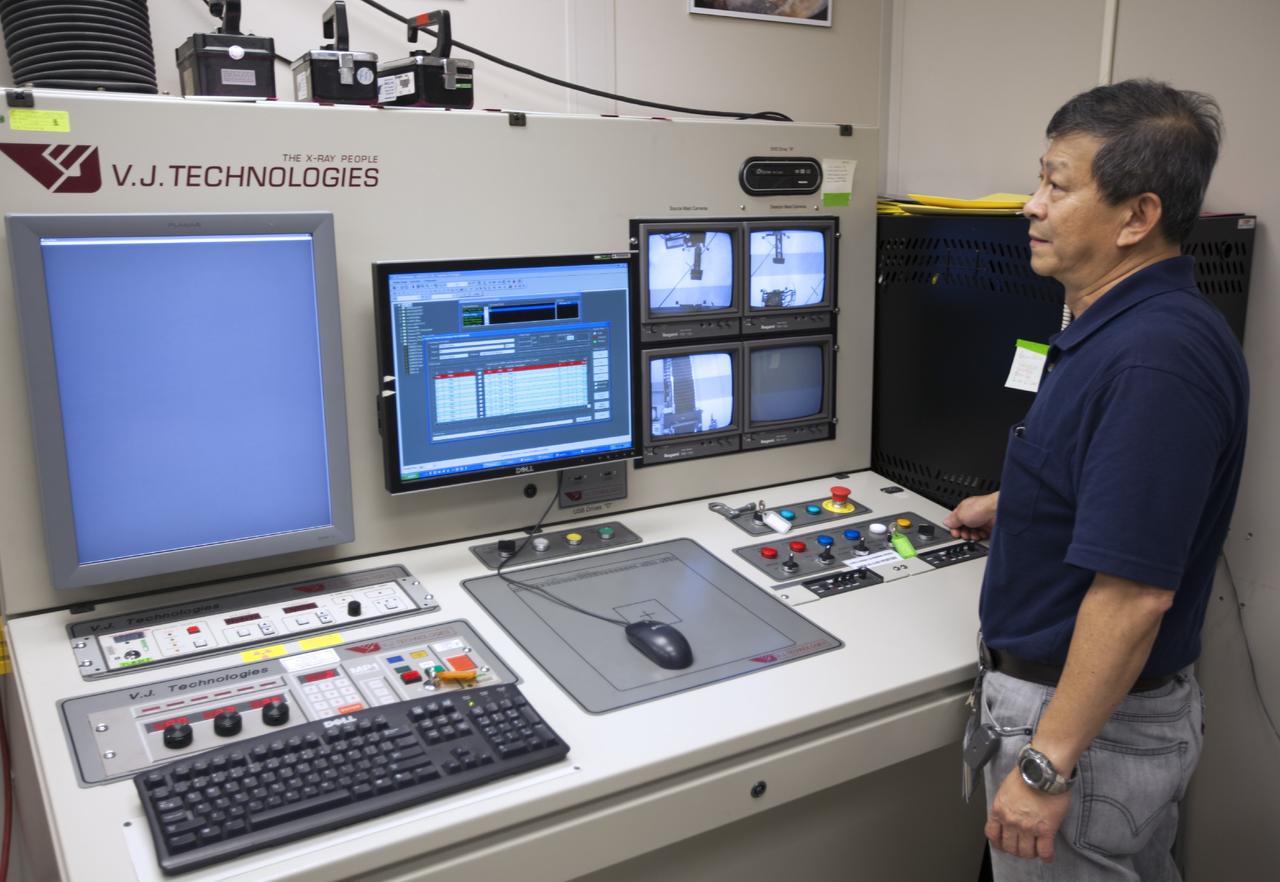
CAPE CANAVERAL, Fla. – In Hangar N at Cape Canaveral Air Force Station, PaR Systems, Inc. development engineer Wayne Cheng operates the controller for a robotic system used in nondestructive testing. The 11-axis robotic system takes X-ray images of hardware for evaluation. NASA's Kennedy Space Center in Florida recently established a partnership agreement with PaR Systems, Inc. of Shoreview, Minn., for operation of the Hangar N facility and its nondestructive testing and evaluation equipment. As the spaceport transitions from a historically government-only launch facility to a multi-user spaceport for both federal and commercial customers, partnerships between the space agency and other organizations will be a key element in that effort. Hangar N is located at Cape Canaveral Air Force Station adjacent to Kennedy and houses a unique inventory of test and evaluation equipment and the capability for current and future mission spaceflight support. Photo credit: NASA/ Dimitri Gerondidakis
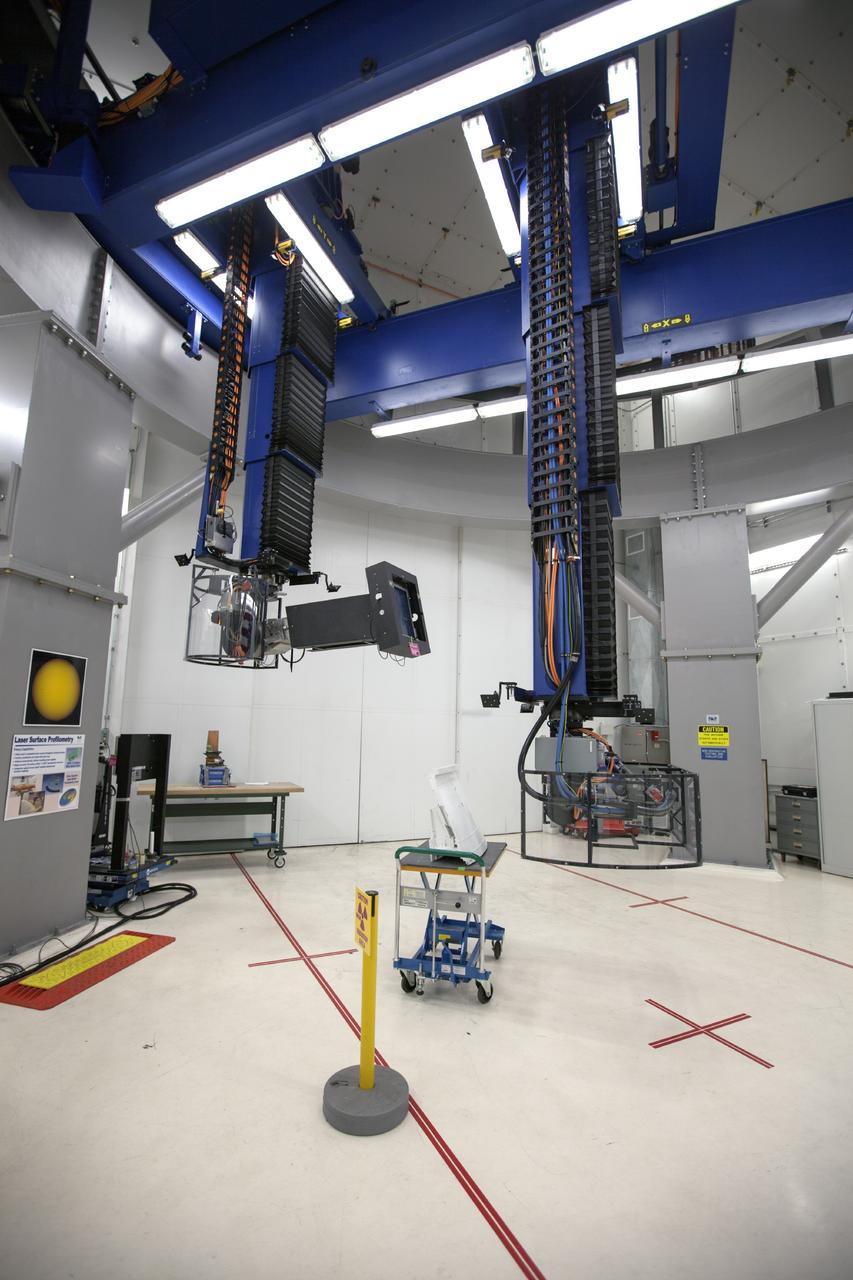
CAPE CANAVERAL, Fla. – In Hangar N at Cape Canaveral Air Force Station, an 11-axis robotic X-ray system takes images of hardware for evaluation. The activity is part of work performed by PaR Systems, Inc. under a partnership agreement with NASA. NASA's Kennedy Space Center in Florida recently established a partnership agreement with PaR Systems, Inc. of Shoreview, Minn., for operation of the Hangar N facility and its nondestructive testing and evaluation equipment. As the spaceport transitions from a historically government-only launch facility to a multi-user spaceport for both federal and commercial customers, partnerships between the space agency and other organizations will be a key element in that effort. Hangar N is located at Cape Canaveral Air Force Station adjacent to Kennedy and houses a unique inventory of test and evaluation equipment and the capability for current and future mission spaceflight support. Photo credit: NASA/ Dimitri Gerondidakis
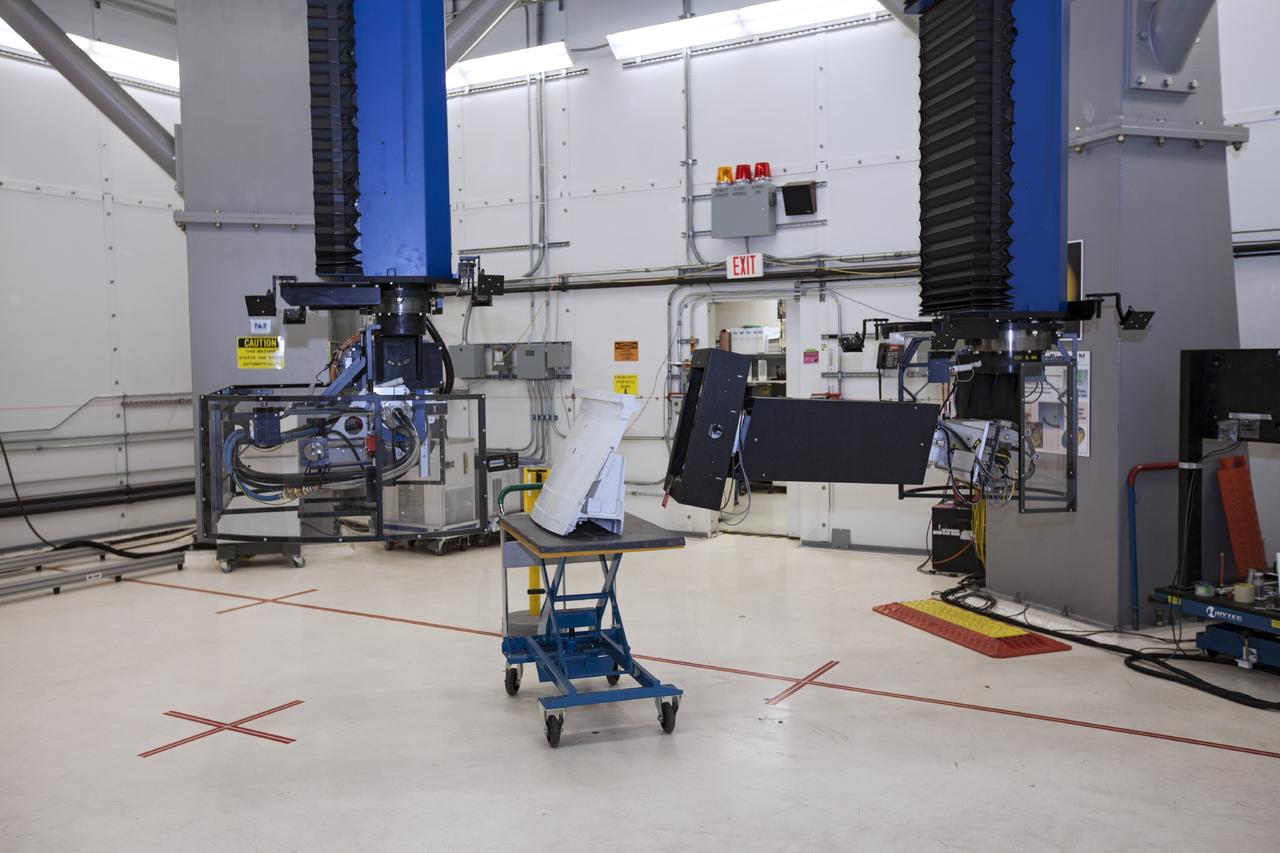
CAPE CANAVERAL, Fla. – In Hangar N at Cape Canaveral Air Force Station, an 11-axis robotic X-ray system takes images of hardware for evaluation. The activity is part of work performed by PaR Systems, Inc. under a partnership agreement with NASA. NASA's Kennedy Space Center in Florida recently established a partnership agreement with PaR Systems, Inc. of Shoreview, Minn., for operation of the Hangar N facility and its nondestructive testing and evaluation equipment. As the spaceport transitions from a historically government-only launch facility to a multi-user spaceport for both federal and commercial customers, partnerships between the space agency and other organizations will be a key element in that effort. Hangar N is located at Cape Canaveral Air Force Station adjacent to Kennedy and houses a unique inventory of test and evaluation equipment and the capability for current and future mission spaceflight support. Photo credit: NASA/ Dimitri Gerondidakis
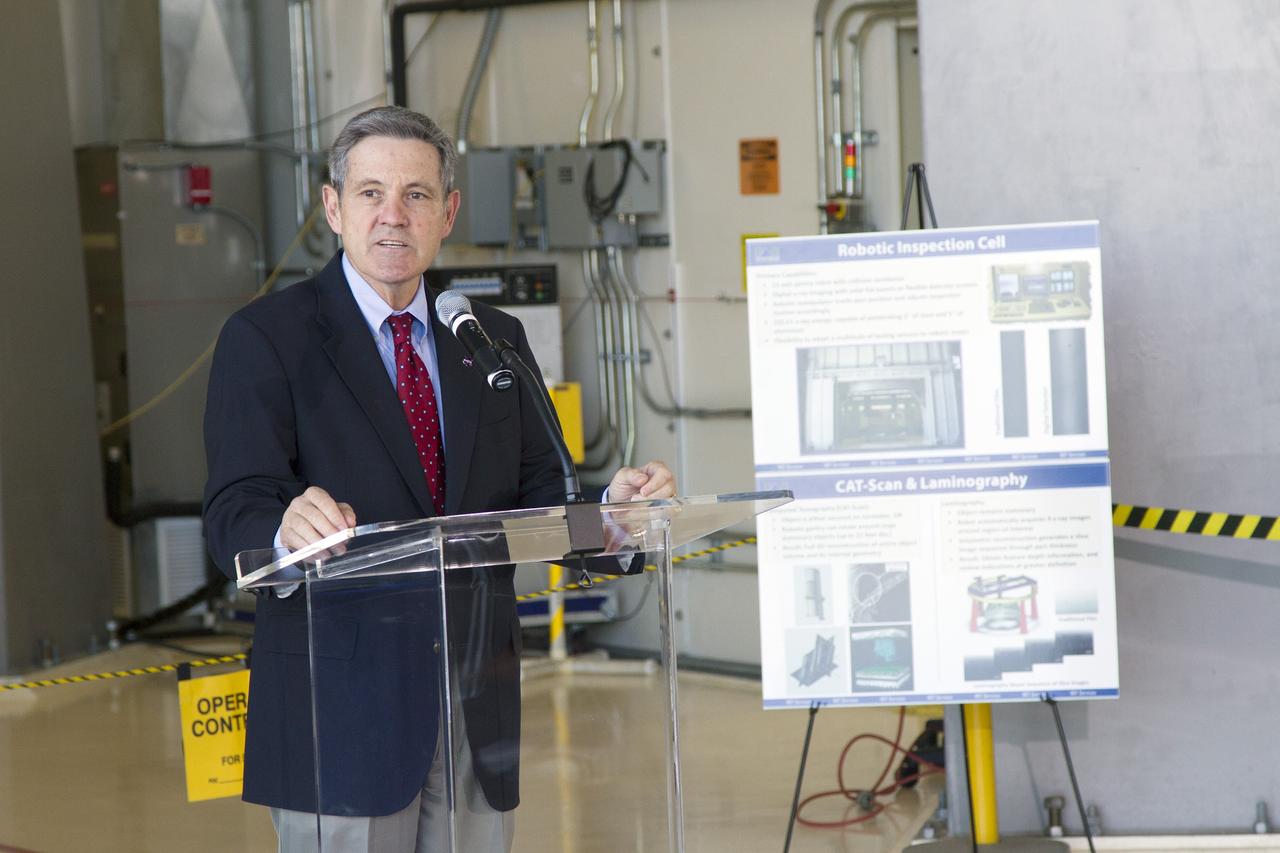
CAPE CANAVERAL, Fla. – Kennedy Space Center Director Bob Cabana speaks during an Open House event at Hangar N at Cape Canaveral Air Force Station in Florida, to celebrate the one-year anniversary of PaR Systems' partnership with Kennedy. Under a 15-year lease agreement, PaR Systems is utilizing Hangar N and its unique nondestructive testing equipment. Behind Cabana is the robotic inspection cell that contains an automated X-ray system once used to scan the aft skirts of the solid rocket boosters for the space shuttle. The partnership agreement was established by Kennedy's Center Planning and Development Directorate. The agreement is just one example of the types of partnerships that Kennedy is seeking to create a multi-user spaceport. Photo credit: NASA/Cory Huston
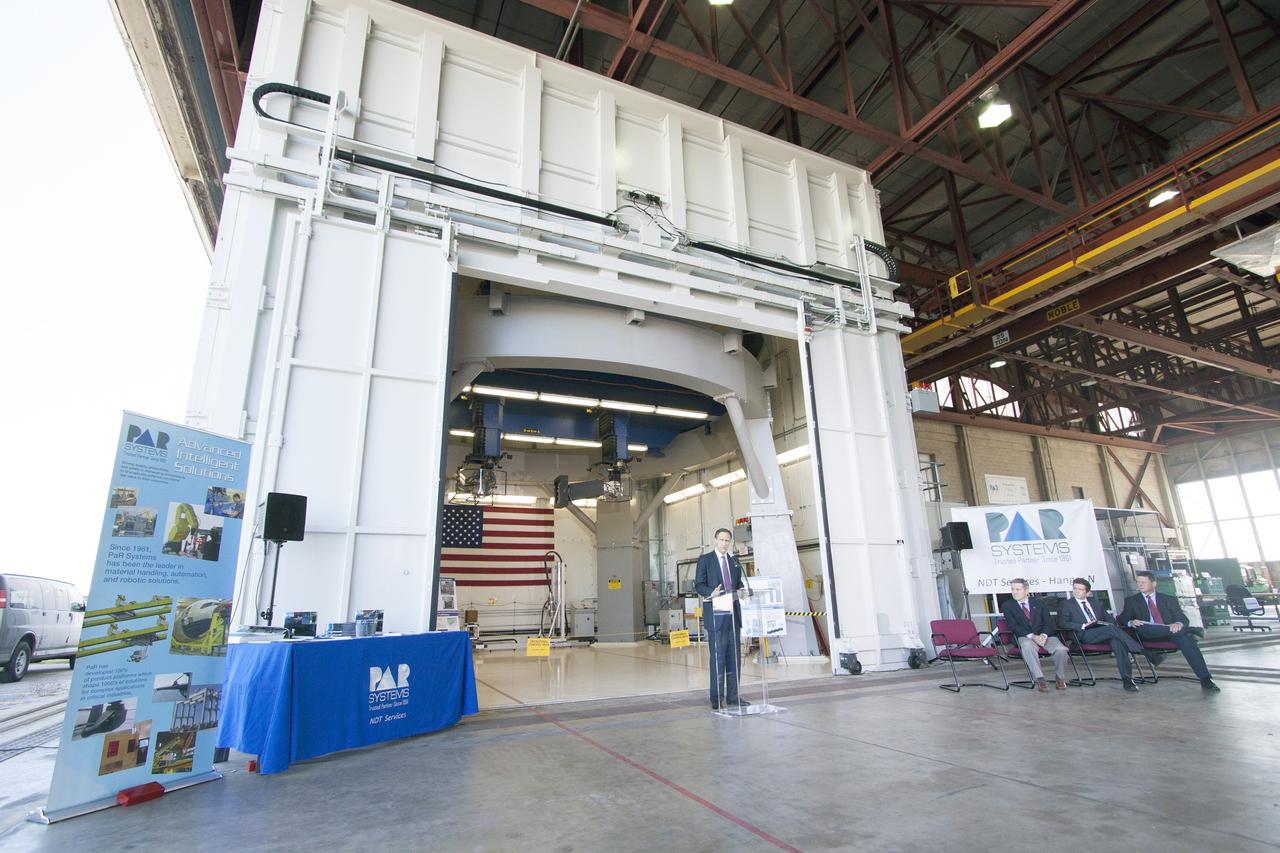
CAPE CANAVERAL, Fla. – Brian Behm, president, aerospace robotics, PaR Systems Inc., speaks during an Open House event at Hangar N at Cape Canaveral Air Force Station in Florida, to celebrate the one-year anniversary of a partnership with NASA Kennedy Space Center. Under a 15-year lease agreement, PaR Systems is utilizing Hangar N and its unique nondestructive testing equipment. Behind Behm is the robotic inspection cell that contains an automated X-ray system once used to scan the aft skirts of the solid rocket boosters for the space shuttle. The partnership agreement was established by Kennedy's Center Planning and Development Directorate. The agreement is just one example of the types of partnerships that Kennedy is seeking to create a multi-user spaceport. Photo credit: NASA/Cory Huston
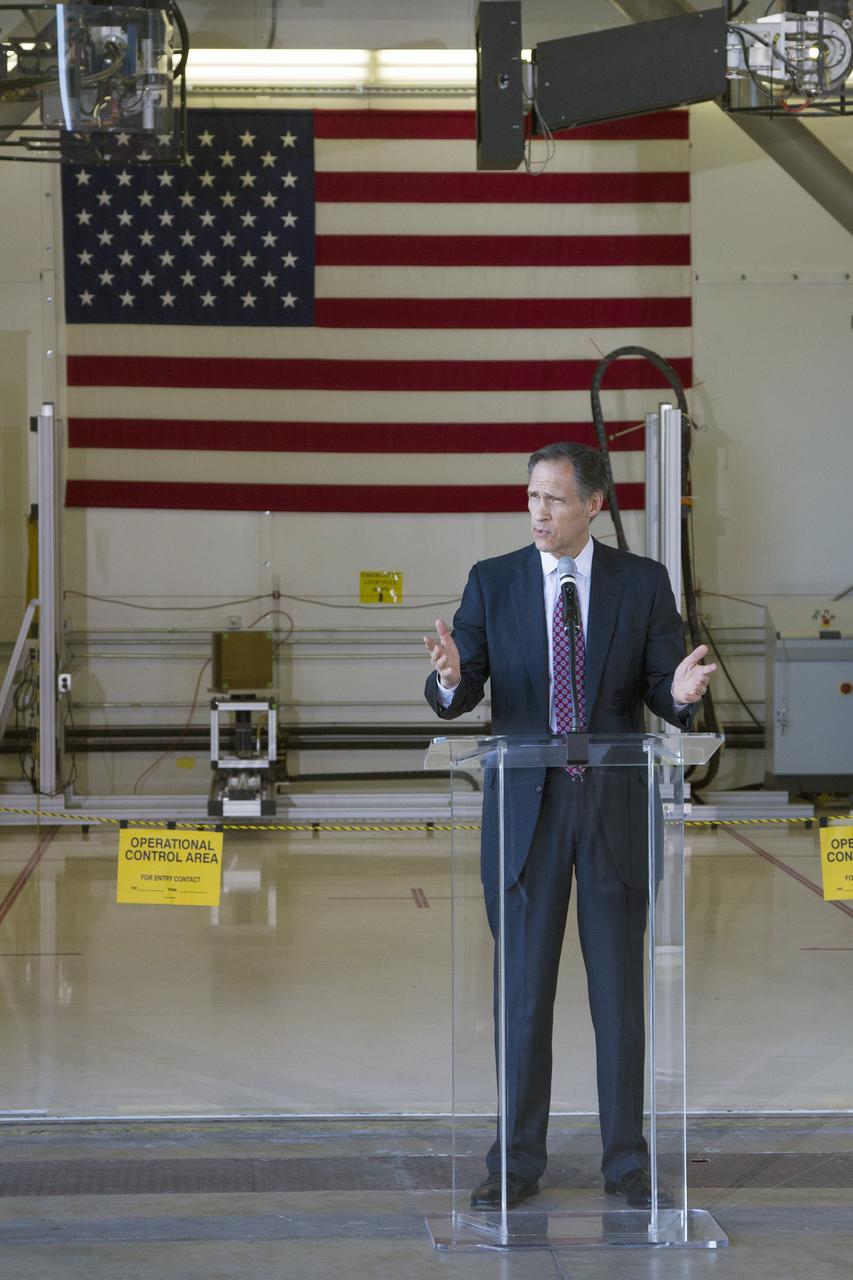
CAPE CANAVERAL, Fla. – Brian Behm, president, aerospace robotics, PaR Systems Inc., speaks during an Open House event at Hangar N at Cape Canaveral Air Force Station in Florida, to celebrate the one-year anniversary of a partnership with NASA Kennedy Space Center. Under a 15-year lease, PaR Systems is utilizing Hangar N and its unique nondestructive testing equipment. Behind Behm is the robotic inspection cell that contains an automated X-ray system once used to scan the aft skirts of the solid rocket boosters for the space shuttle. The partnership agreement was established by Kennedy's Center Planning and Development Directorate. The agreement is just one example of the types of partnerships that Kennedy is seeking to create a multi-user spaceport. Photo credit: NASA/Cory Huston
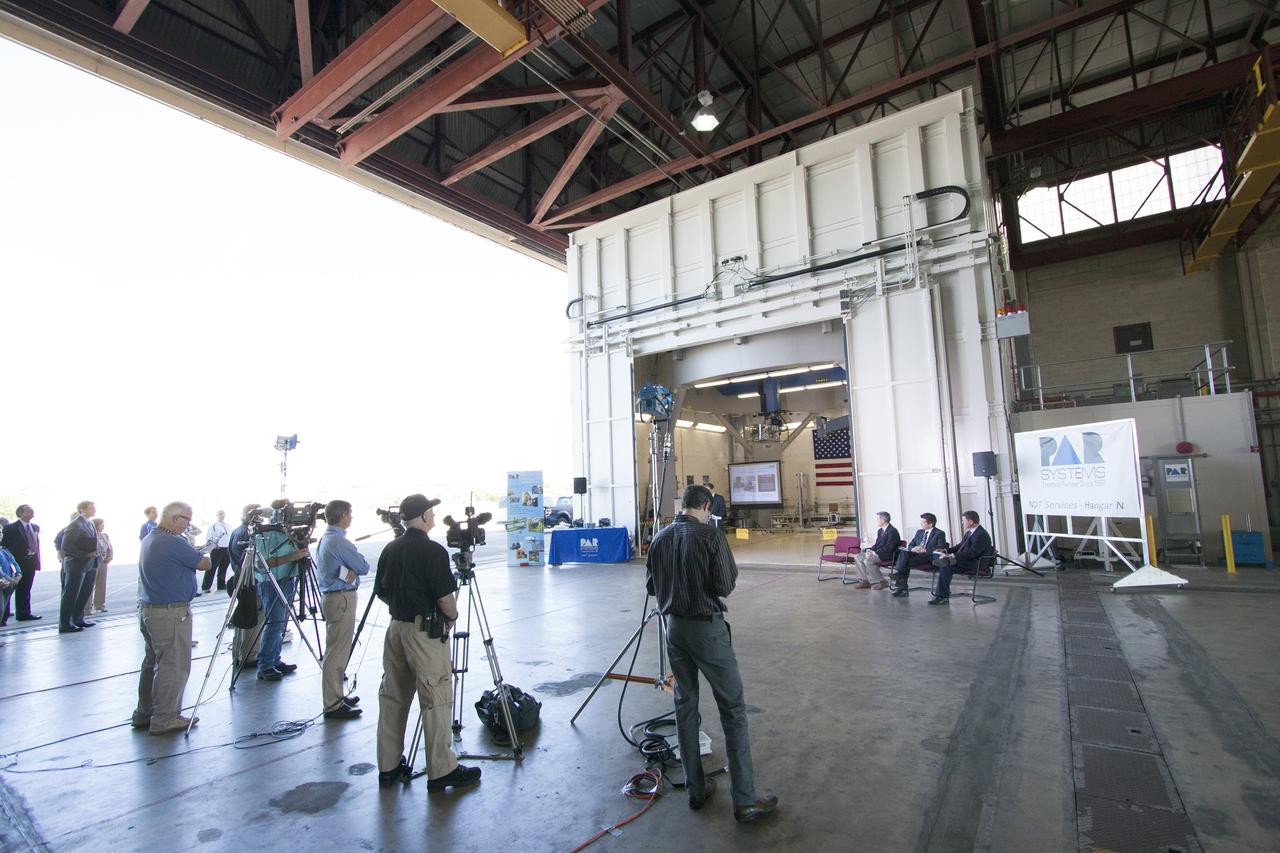
CAPE CANAVERAL, Fla. – Brian Behm partially hidden, president, aerospace robotics, PaR Systems Inc., speaks during an Open House event at Hangar N at Cape Canaveral Air Force Station in Florida, to celebrate the one-year anniversary of a partnership with NASA Kennedy Space Center. Under a 15-year lease agreement, PaR Systems is utilizing Hangar N and its unique nondestructive testing equipment. Behind Behm is the robotic inspection cell that contains an automated X-ray system once used to scan the aft skirts of the solid rocket boosters for the space shuttle. The partnership agreement was established by Kennedy's Center Planning and Development Directorate. The agreement is just one example of the types of partnerships that Kennedy is seeking to create a multi-user spaceport. Photo credit: NASA/Cory Huston
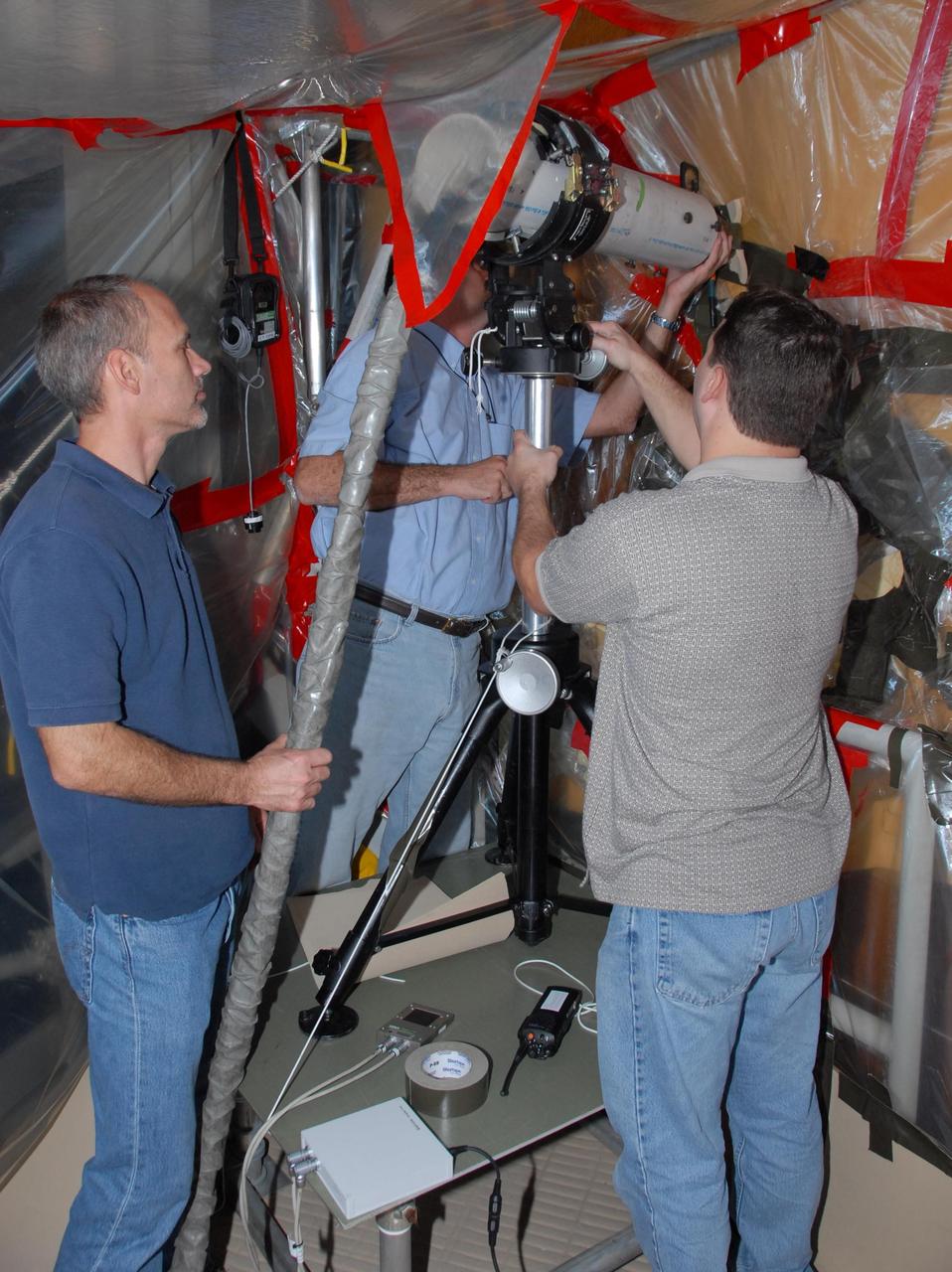
KENNEDY SPACE CENTER, FLA. -- At Launch Pad 39A, a team of external tank specialists from Lockheed Martin and the United Space Alliance undertakes the task of removing the hydrogen feed-through connector in support of space shuttle Atlantis' STS-122 mission. Here, technicians set up equipment that will be used to take X-rays of the connector cable. Some of the tank's engine cutoff sensors, or ECO sensors, failed during propellant tanking for launch attempts on Dec. 6 and Dec. 9. Results of a tanking test on Dec. 18 pointed to an open circuit in the feed-through connector wiring, which is located at the base of the tank. The feed-through connector passes the wires from the inside of the tank to the outside. After the data from additional testing on the connector is analyzed, shuttle program managers will decide on a forward plan. Launch of STS-122 is targeted for January 2008. Photo credit: NASA/George Shelton
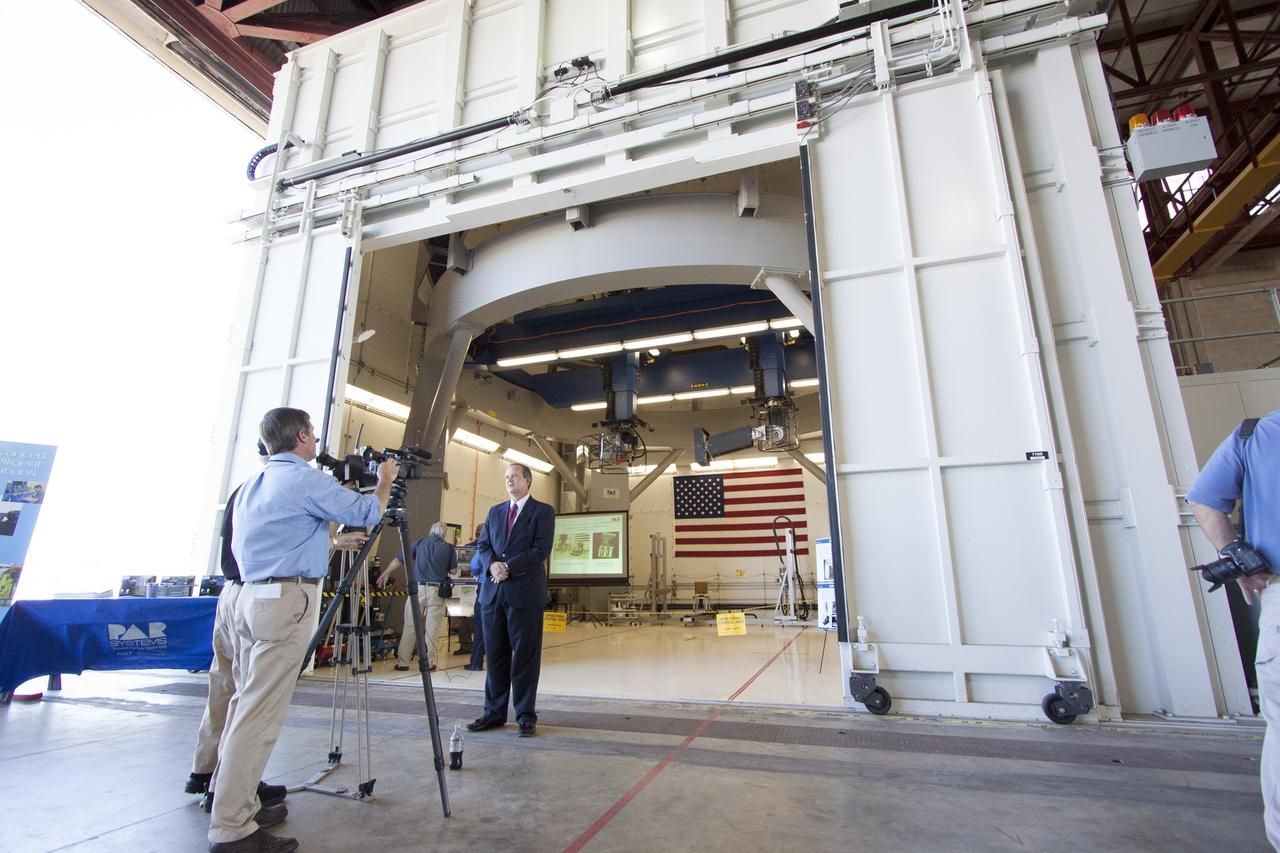
CAPE CANAVERAL, Fla. – Tom Engler, deputy director of the Center Planning and Development Directorate at Kennedy Space Center, speaks to members of the media during an Open House event at Hangar N at Cape Canaveral Air Force Station in Florida, to celebrate the one-year anniversary of PaR Systems' partnership with Kennedy. Under a 15-year lease agreement, PaR Systems is utilizing Hangar N and its unique nondestructive testing equipment. Behind Engler is the robotic inspection cell that contains an automated X-ray system once used to scan the aft skirts of the solid rocket boosters for the space shuttle. The partnership agreement was established by Kennedy's Center Planning and Development Directorate. The agreement is just one example of the types of partnerships that Kennedy is seeking to create a multi-user spaceport. Photo credit: NASA/Cory Huston
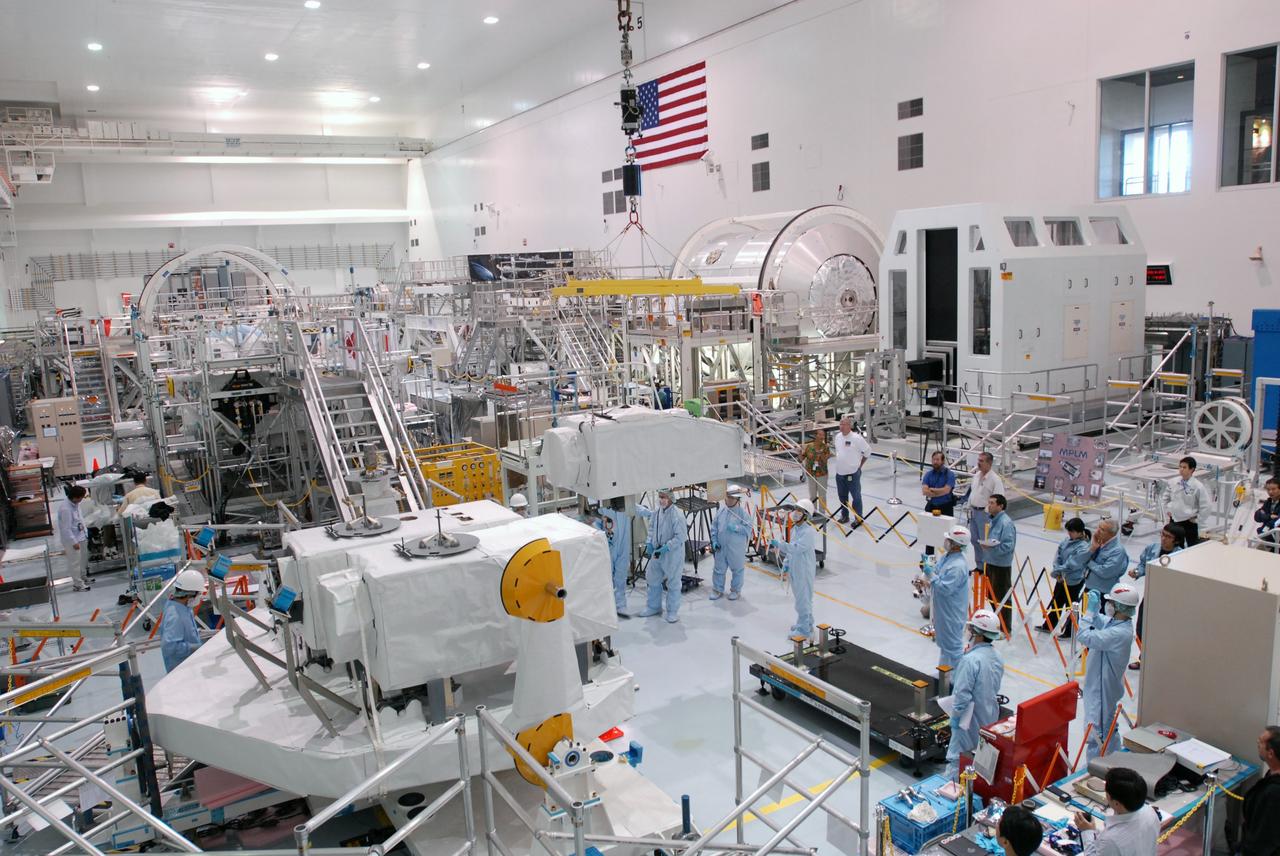
CAPE CANAVERAL, Fla. -- In the Space Station Processing Facility at NASA's Kennedy Space Center in Florida, the ICS Exposed Facility, or ICS-EF, is moved across the floor to the Japanese Experiment Module's Experiment Logistics Module-Exposed Section, or ELM-ES, where it will be installed alongside two other payloads, the SEDA-AP (Space Environment Data Acquisition Equipment-Attached Payload) and MAXI (Monitor of All-sky X-ray Image), already installed. The ICS-EF is composed of several components, including an antenna, pointing mechanism, frequency converters, high-power amplifier and various sensors including the Earth sensor, Sun sensor and inertial reference unit. The ICS-EF is part of space shuttle Endeavour's payload on the STS-127 mission, targeted for launch on May 15. Photo credit: NASA/Jim Grossmann
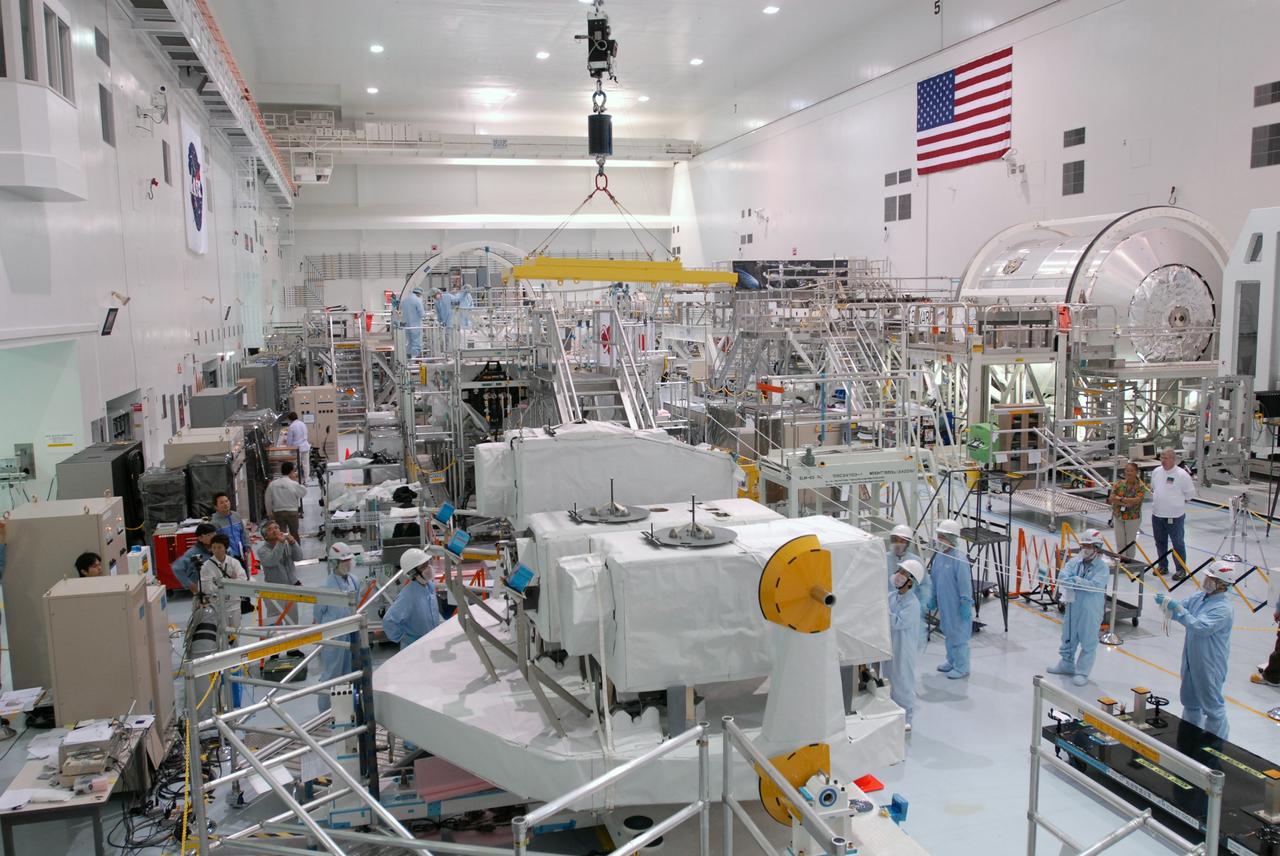
CAPE CANAVERAL, Fla. -- In the Space Station Processing Facility at NASA's Kennedy Space Center in Florida, an overhead crane lowers the ICS Exposed Facility, or ICS-EF, onto the Japanese Experiment Module's Experiment Logistics Module-Exposed Section, or ELM-ES, where it will be installed alongside two other payloads, the SEDA-AP (Space Environment Data Acquisition Equipment-Attached Payload) and MAXI (Monitor of All-sky X-ray Image). The ICS-EF is composed of several components, including an antenna, pointing mechanism, frequency converters, high-power amplifier and various sensors including the Earth sensor, Sun sensor and inertial reference unit. The ICS-EF is part of space shuttle Endeavour's payload on the STS-127 mission, targeted for launch on May 15. Photo credit: NASA/Jim Grossmann
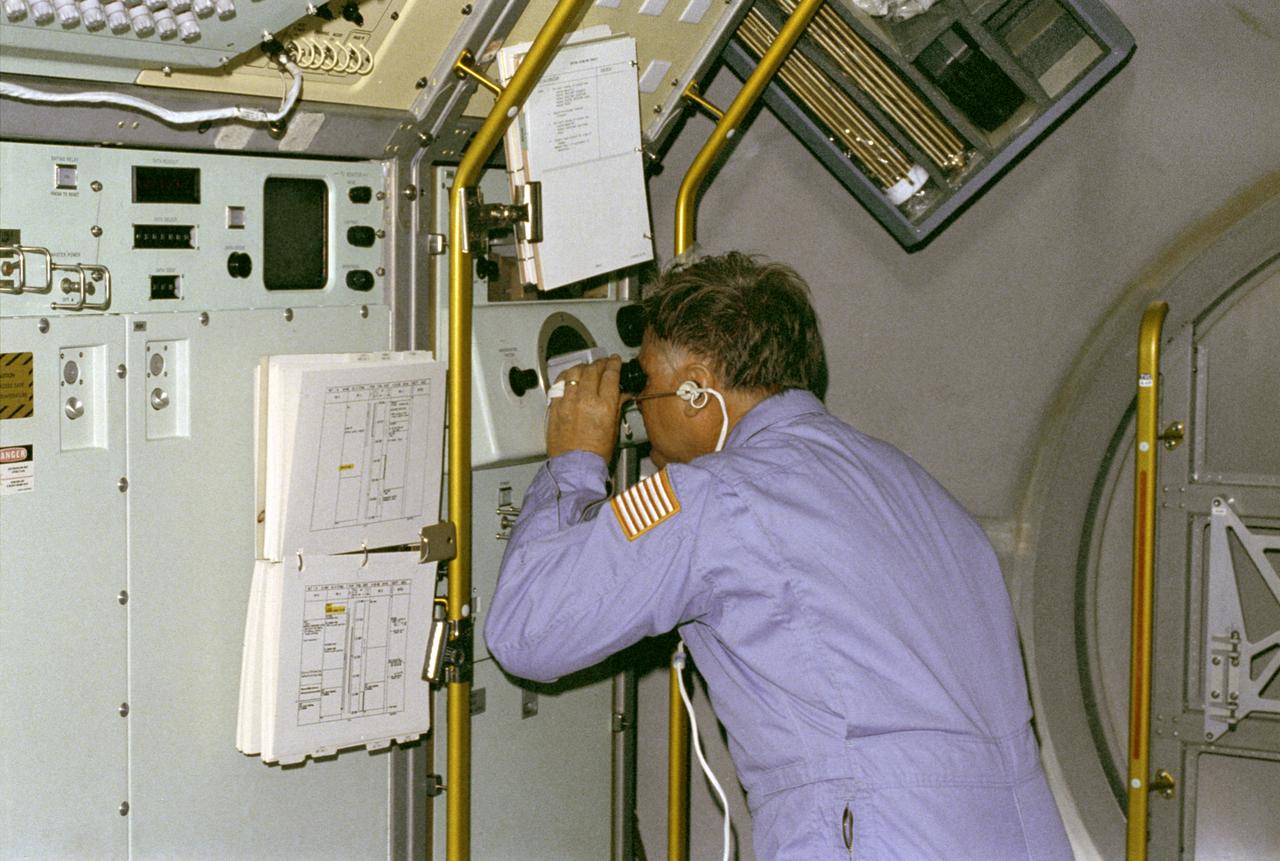
The primary purpose of the Spacelab-3 mission was to conduct materials science experiments in a stable low-gravity environment. In addition, the crew performed research in life sciences, fluid mechanics, atmospheric science, and astronomy. Spacelab-3 was equipped with several new minilabs, special facilities that would be used repeatedly on future flights. Two elaborate crystal growth furnaces, a life support and housing facility for small animals, and two types of apparatus for the study of fluids were evaluated on their inaugural flight. In this photograph, astronaut Don Lind observes the mercuric iodide growth experiment through a microscope at the vapor crystal growth furnace. The goals of this investigation were to grow near-perfect single crystals of mercuric iodide and to gain improved understanding of crystal growth by a vapor process. Mercuric iodide crystals have practical use as sensitive x-ray and gamma-ray detectors, and in portable detector devices for nuclear power plant monitoring, natural resource prospecting, biomedical applications in diagnosis and therapy, and in astronomical instruments. Managed by the Marshall Space Flight Center, Spacelab-3 (STS-51B) was launched aboard the Space Shuttle Orbiter Challenger on April 29, 1985.
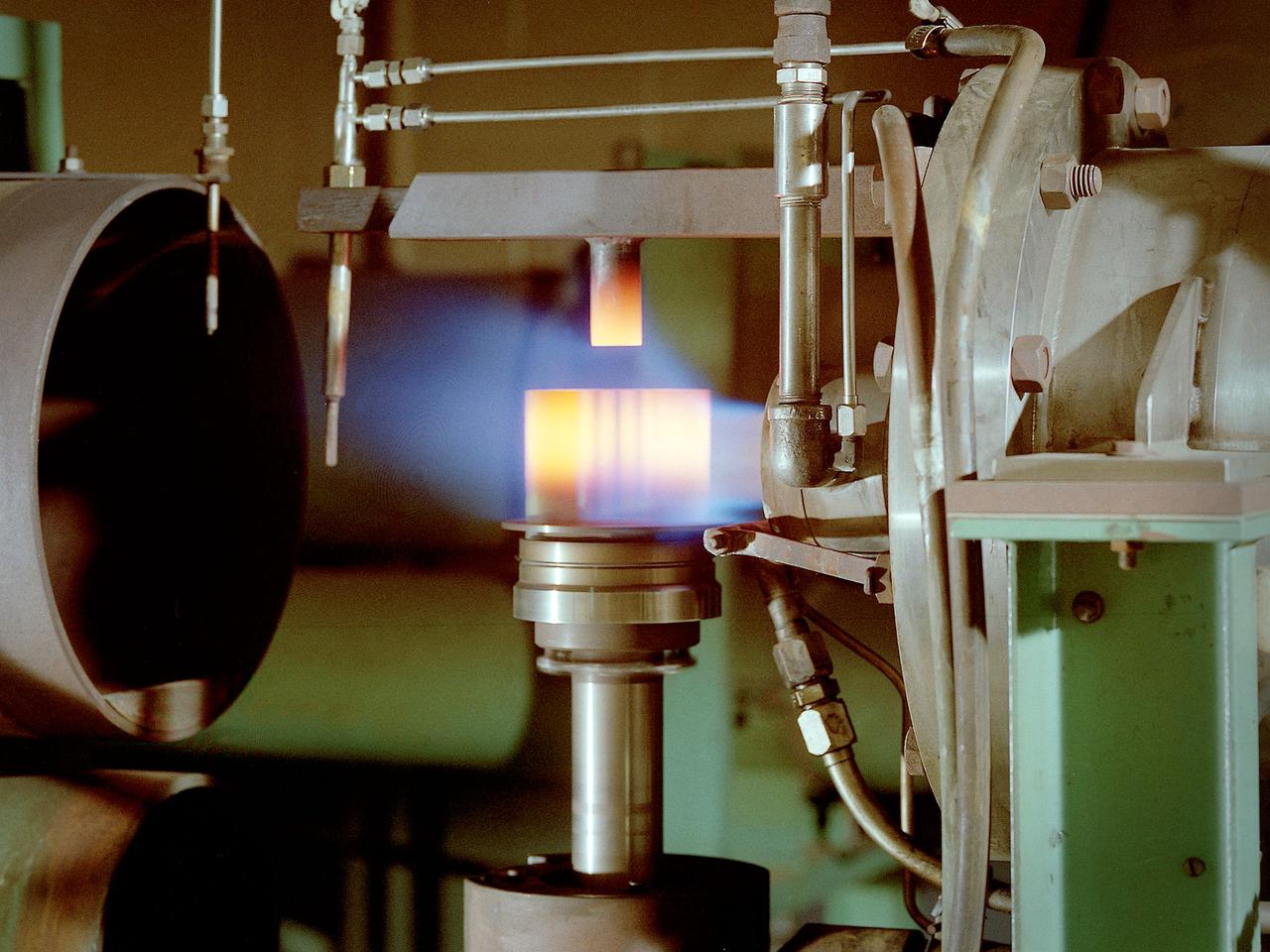
A burner rig heats up a material sample in the Materials and Stresses Building at the National Aeronautics and Space Administration (NASA) Lewis Research Center. Materials technology is an important element in the successful development of advanced airbreathing and rocket propulsion systems. Different types of engines operate in different environments so an array of dependable materials is needed. NASA Lewis began investigating the characteristics of different materials shortly after World War II. In 1949 the materials group was expanded into its own division. The Lewis researchers sought to study and test materials in environments that simulate the environment in which they would operate. The Materials and Stresses Building, built in 1949, contained a number of laboratories to analyze the materials. They are subjected to high temperatures, high stresses, corrosion, irradiation, and hot gasses. The Physics of Solids Laboratory included a cyclotron, cloud chamber, helium cryostat, and metallurgy cave. The Metallographic Laboratory possessed six x-ray diffraction machines, two metalloscopes, and other equipment. The Furnace Room had two large induction machines, a 4500⁰ F graphite furnace, and heat treating equipment. The Powder Laboratory included 60-ton and 3000-ton presses. The Stresses Laboratory included stress rupture machines, fatigue machines, and tensile strength machines.
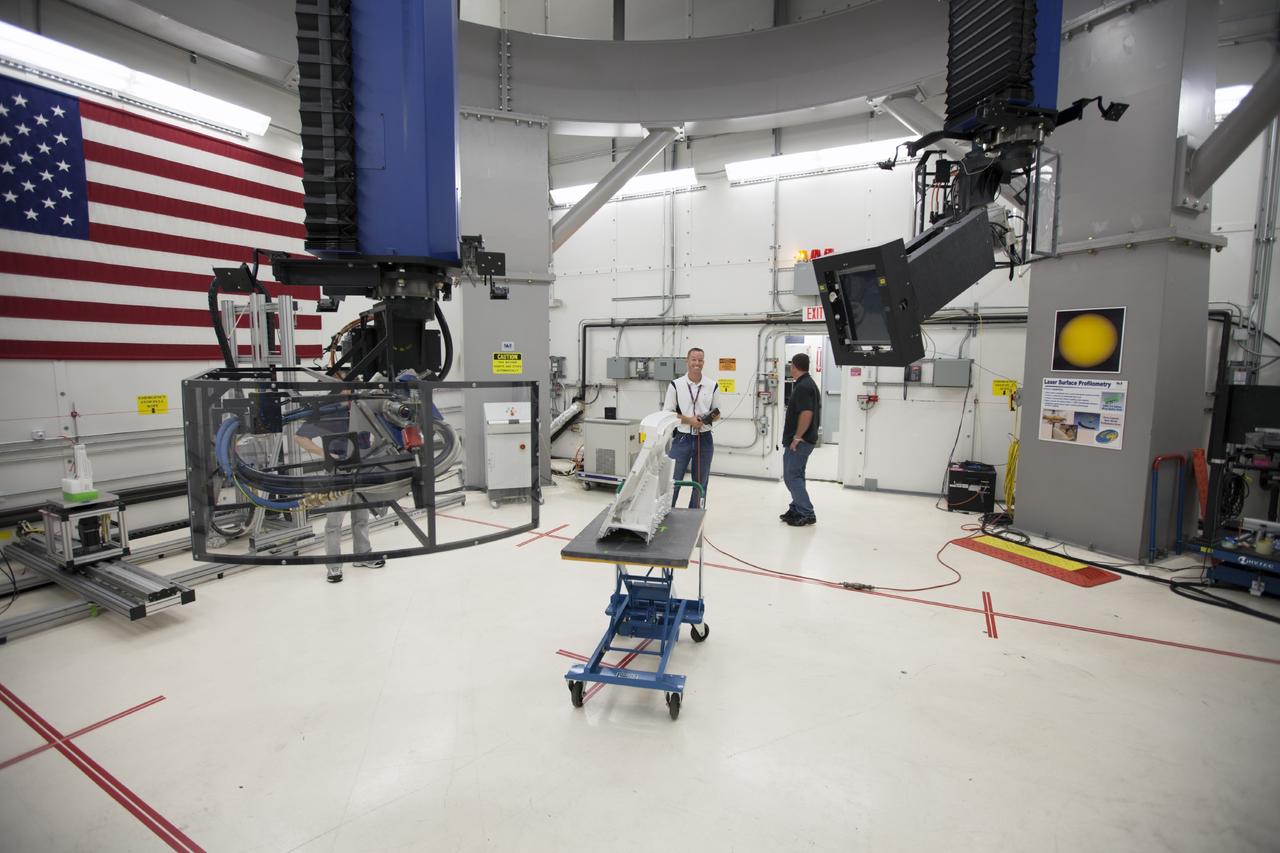
CAPE CANAVERAL, Fla. – In Hangar N at Cape Canaveral Air Force Station, PaR Systems, Inc. operations engineer Jeff Elston, left, and Tony Corak, manager of NDT Services for PaR Systems, operate an 11-axis robotic X-ray system which takes images of hardware for evaluation. The activity is part of work performed by PaR Systems, Inc. under a partnership agreement with NASA. NASA's Kennedy Space Center in Florida recently established a partnership agreement with PaR Systems, Inc. of Shoreview, Minn., for operation of the Hangar N facility and its nondestructive testing and evaluation equipment. As the spaceport transitions from a historically government-only launch facility to a multi-user spaceport for both federal and commercial customers, partnerships between the space agency and other organizations will be a key element in that effort. Hangar N is located at Cape Canaveral Air Force Station adjacent to Kennedy and houses a unique inventory of test and evaluation equipment and the capability for current and future mission spaceflight support. Photo credit: NASA/ Dimitri Gerondidakis
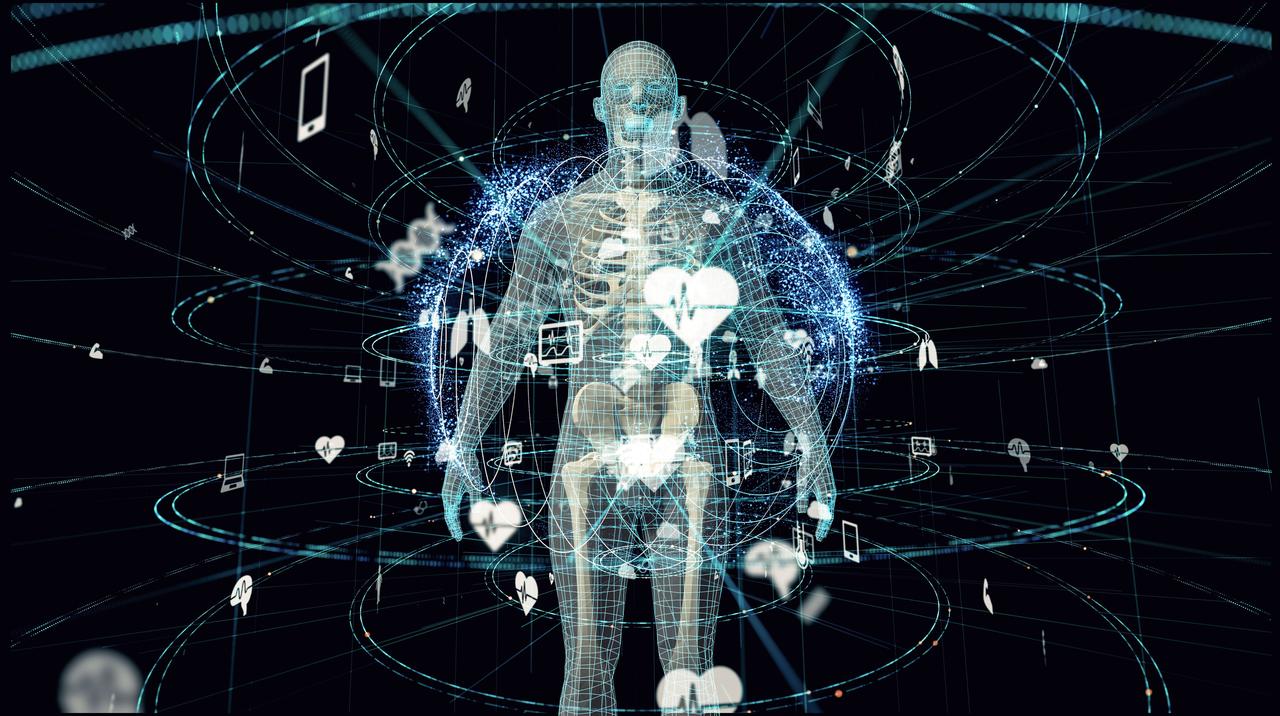
jsc2022e062020 (6/30/2022) --- Space Health will create a digital twin of the astronaut from the data collected by the Bio-Monitor and demonstrate how this could be used for autonomous health monitoring on future space missions. (Image courtesy of CSA)
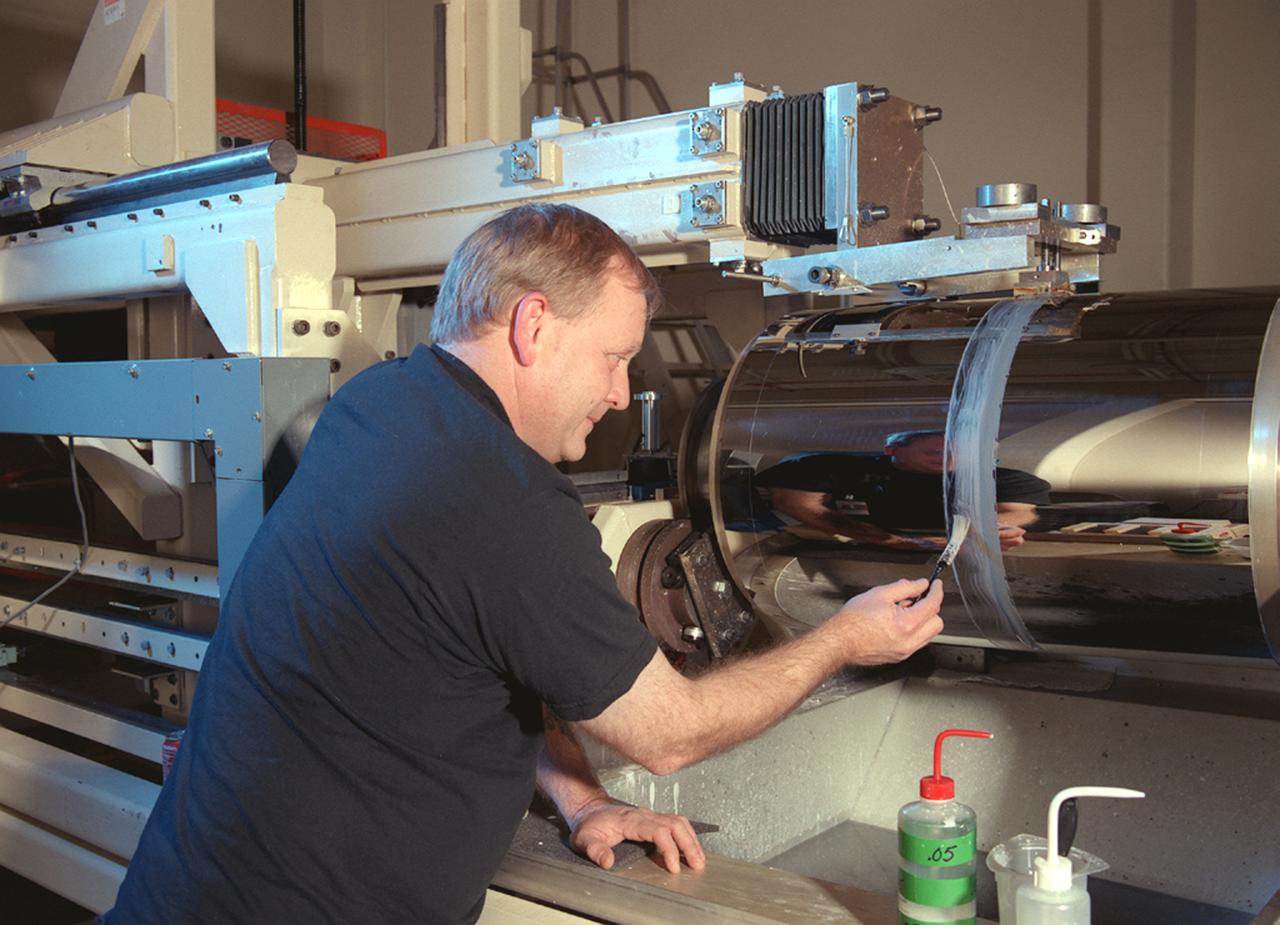
NASA's Space Optics Manufacturing Center has been working to expand our view of the universe via sophisticated new telescopes. The Optics Center's goal is to develop low-cost, advanced space optics technologies for the NASA program in the 21st century - including the long-term goal of imaging Earth-like planets in distant solar systems. To reduce the cost of mirror fabrication, Marshall Space Flight Center (MSFC) has developed replication techniques, the machinery, and materials to replicate electro-formed nickel mirrors. The process allows fabricating precisely shaped mandrels to be used and reused as masters for replicating high-quality mirrors. MSFC's Space Optics Manufacturing Technology Center (SOMTC) has grinding and polishing equipment ranging from conventional spindles to custom-designed polishers. These capabilities allow us to grind precisely and polish a variety of optical devices, including x-ray mirror mandrels. This image shows Charlie Griffith polishing the half-meter mandrel at SOMTC.
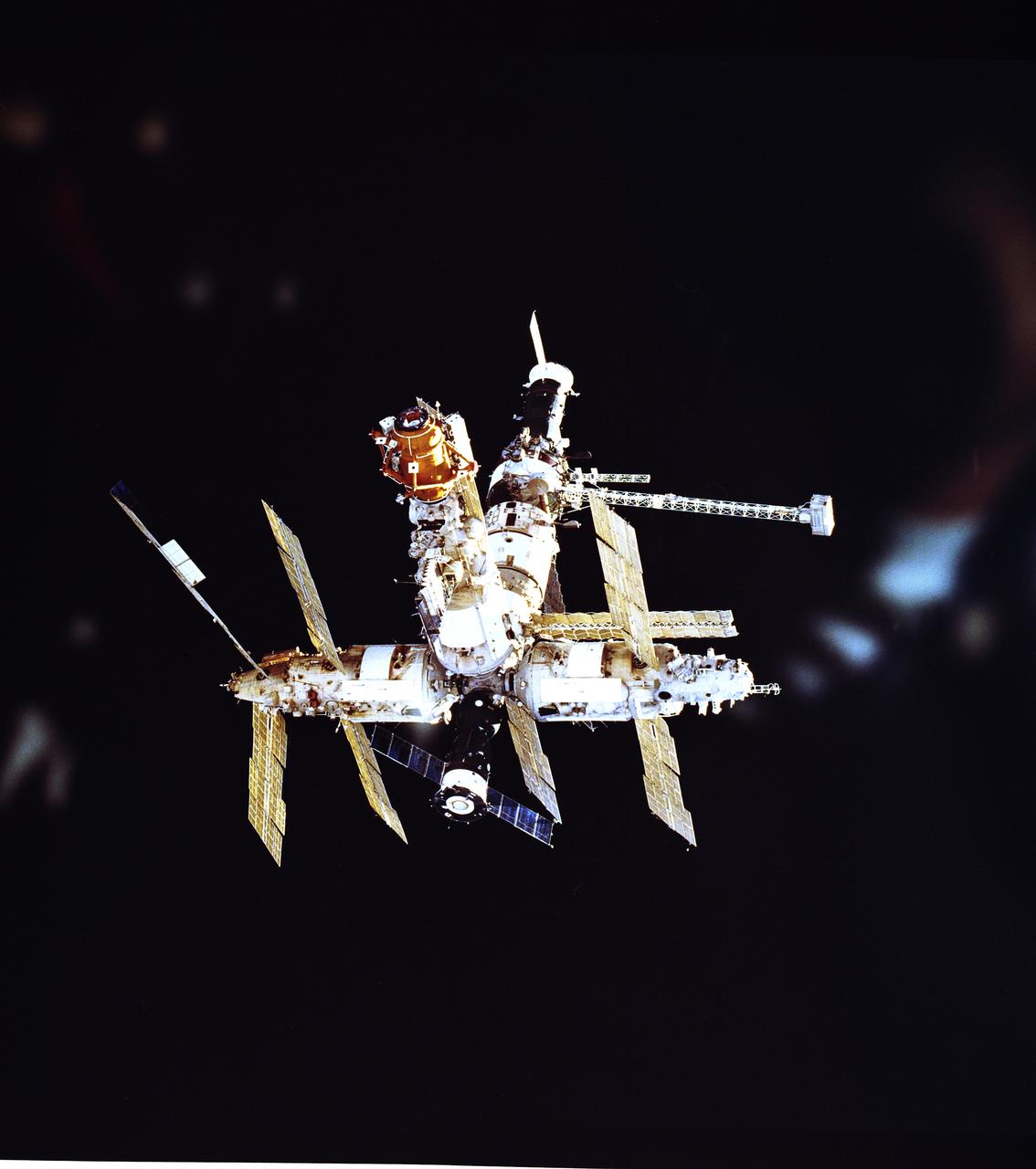
This is a view of the Russian Mir Space Station photographed by a crewmember of the second Shuttle/Mir docking mission, STS-74. The image shows: top - Progress supply vehicle, Kvant-1 module, and the Core module; middle left - Spektr module; middle center - Kristall module and Docking module; middle right - Kvant-2 module; and bottom - Soyuz. The Progress was an unmarned, automated version of the Soyuz crew transfer vehicle, designed to resupply the Mir. The Kvant-1 provided research in the physics of galaxies, quasars, and neutron stars by measuring electromagnetic spectra and x-ray emissions. The Core module served as the heart of the space station and contained the primary living and working areas, life support, and power, as well as the main computer, communications, and control equipment. The Spektr module provided Earth observation. It also supported research into biotechnology, life sciences, materials science, and space technologies. American astronauts used the Spektr as their living quarters. A main purpose of the Kristall module was to develop biological and materials production technologies in the space environment. The Docking module made it possible for the Space Shuttle to dock easily with the Mir. Kvant-2 was a scientific and airlock module, providing biological research, Earth observations, and EVA (extravehicular activity) capability. The Soyuz typically ferried three crewmembers to and from the Mir. The journey of the 15-year-old Russian Mir Space Station ended March 23, 2001, as the Mir re-entered the Earth's atmosphere and fell into the south Pacific Ocean.
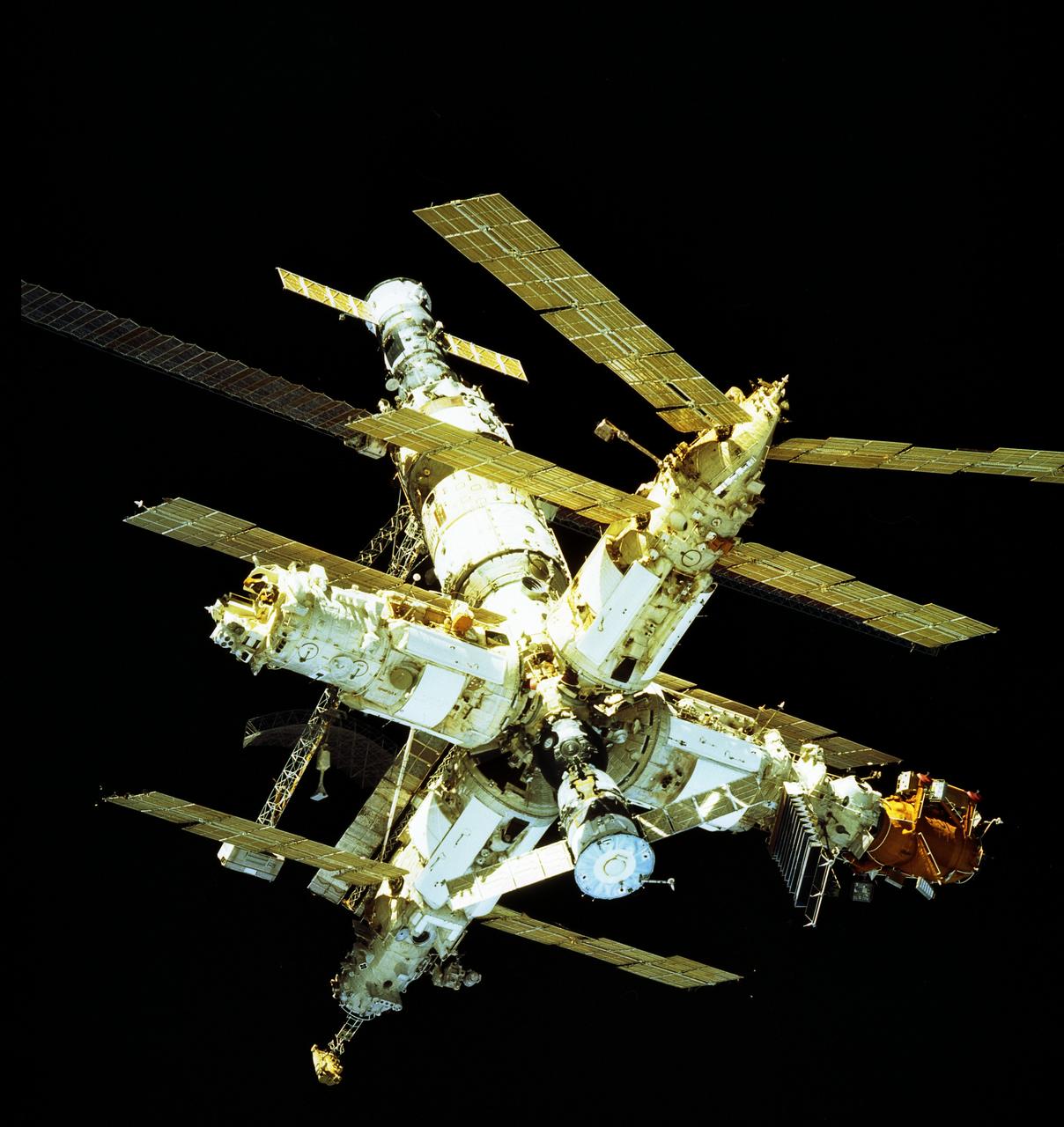
This is a view of the Russian Mir Space Station photographed by a crewmember of the fifth Shuttle/Mir docking mission, STS-81. The image shows: upper center - Progress supply vehicle, Kvant-1 module, and Core module; center left - Priroda module; center right - Spektr module; bottom left - Kvant-2 module; bottom center - Soyuz; and bottom right - Kristall module and Docking module. The Progress was an unmarned, automated version of the Soyuz crew transfer vehicle, designed to resupply the Mir. The Kvant-1 provided research in the physics of galaxies, quasars, and neutron stars, by measuring electromagnetic spectra and x-ray emissions. The Core module served as the heart of the space station and contained the primary living and working areas, life support, and power, as well as the main computer, communications, and control equipment. Priroda's main purpose was Earth remote sensing. The Spektr module provided Earth observation. It also supported research into biotechnology, life sciences, materials science, and space technologies. American astronauts used the Spektr as their living quarters. Kvant-2 was a scientific and airlock module, providing biological research, Earth observations, and EVA (extravehicular activity) capability. The Soyuz typically ferried three crewmembers to and from the Mir. A main purpose of the Kristall module was to develop biological and materials production technologies in the space environment. The Docking module made it possible for the Space Shuttle to dock easily with the Mir. The journey of the 15-year-old Russian Mir Space Station ended March 23, 2001, as the Mir re-entered the Earth's atmosphere and fell into the south Pacific Ocean.