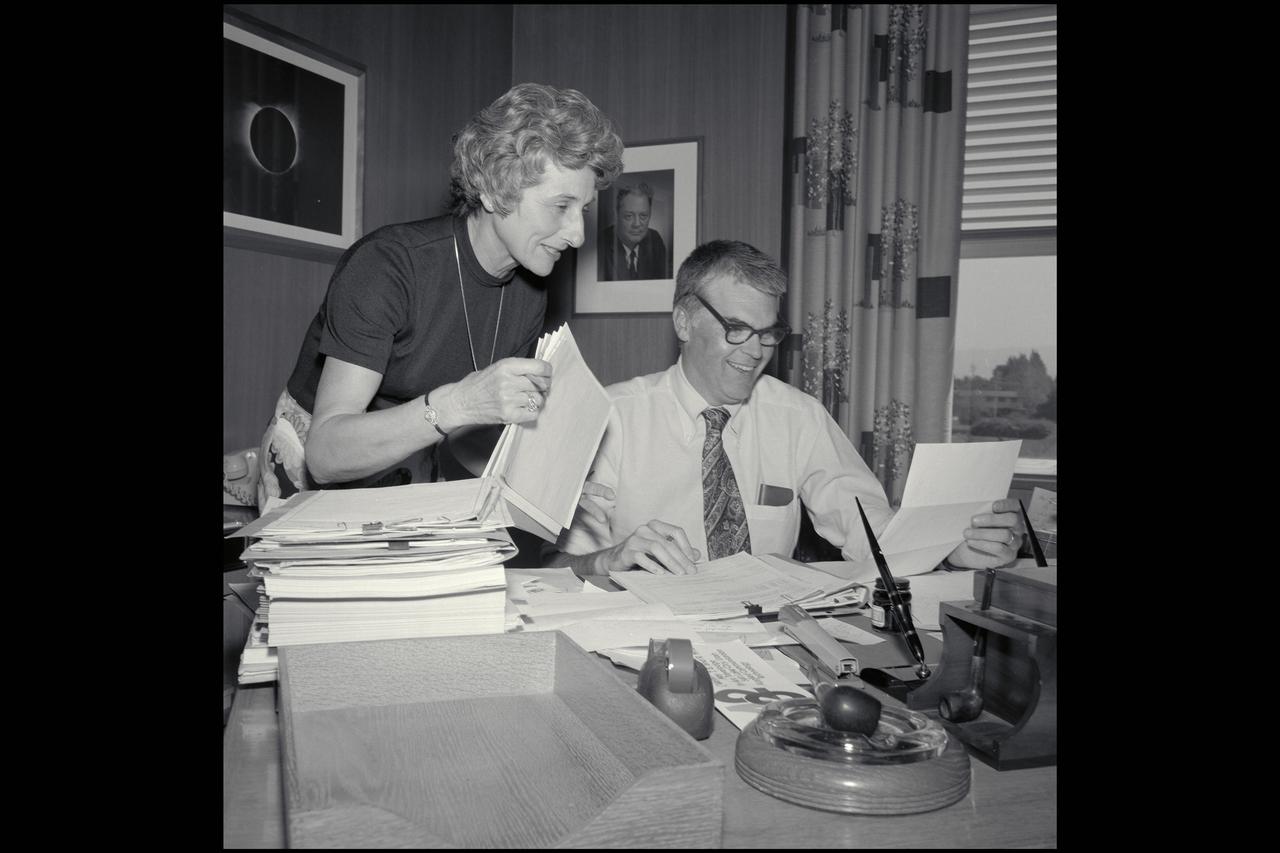
Dr Hans Mark, Ames Director in his office with his secretary Edie Watson
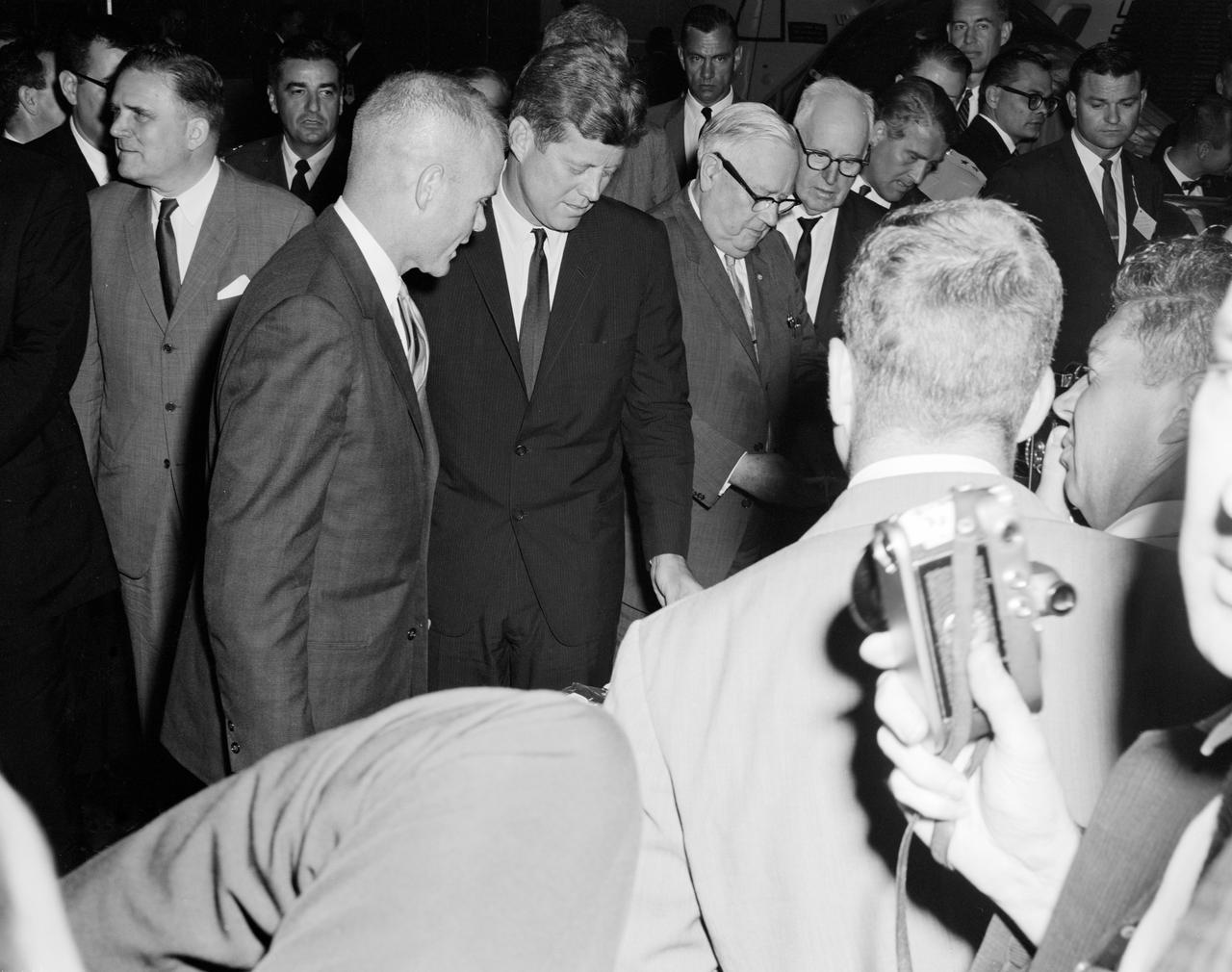
S62-03987 (1962) --- Astronaut John H. Glenn Jr., gives United States President John F. Kennedy a quick run-down on the display of survival gear. The Chief Executive took a quick tour of a dozen NASA displays set up for him after the classified briefing. Photo credit: NASA
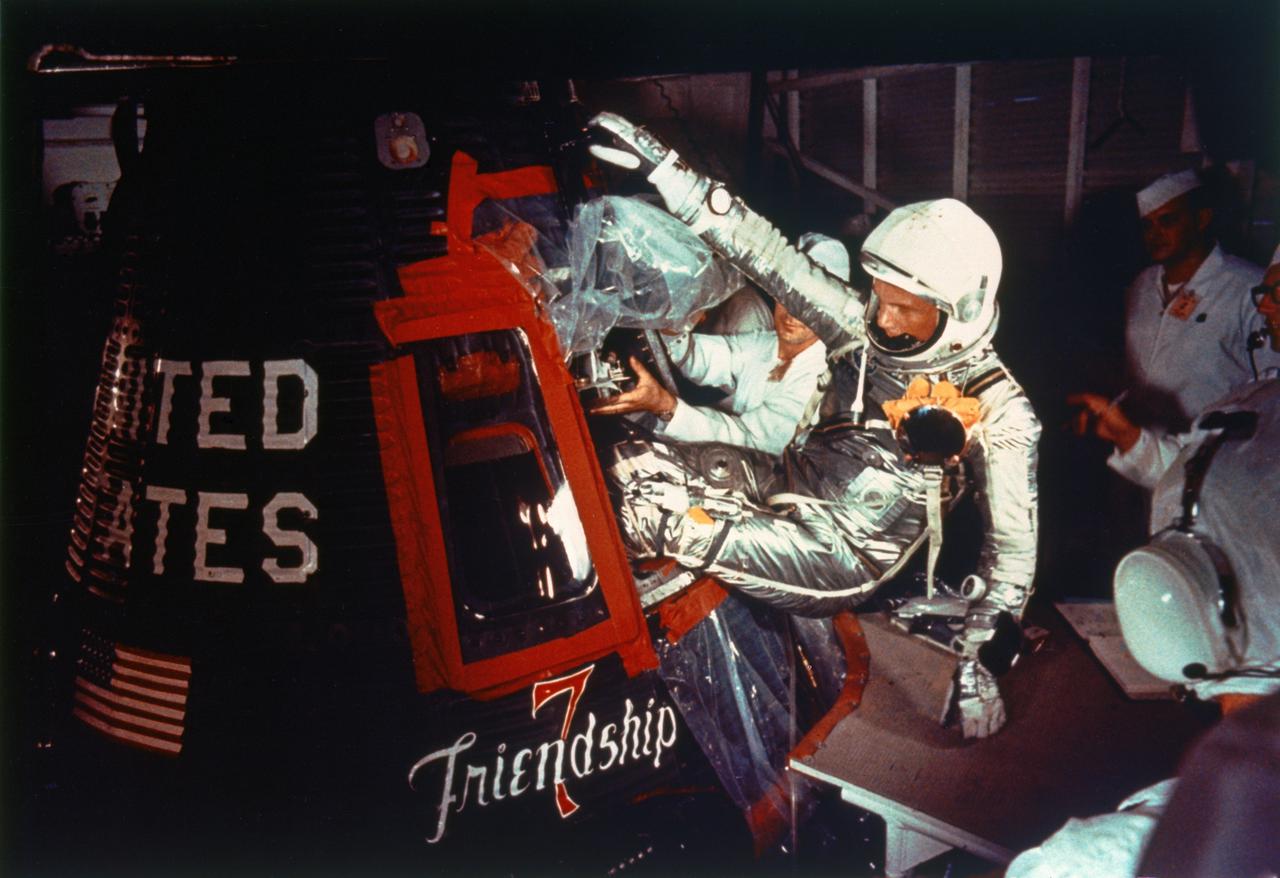
CAPE CANAVERAL, Fla. -- Overall view of astronaut John H. Glenn Jr. as he commences entrance into spacecraft Friendship 7 prior to MA-6 launch operations. Photo credit: NASA
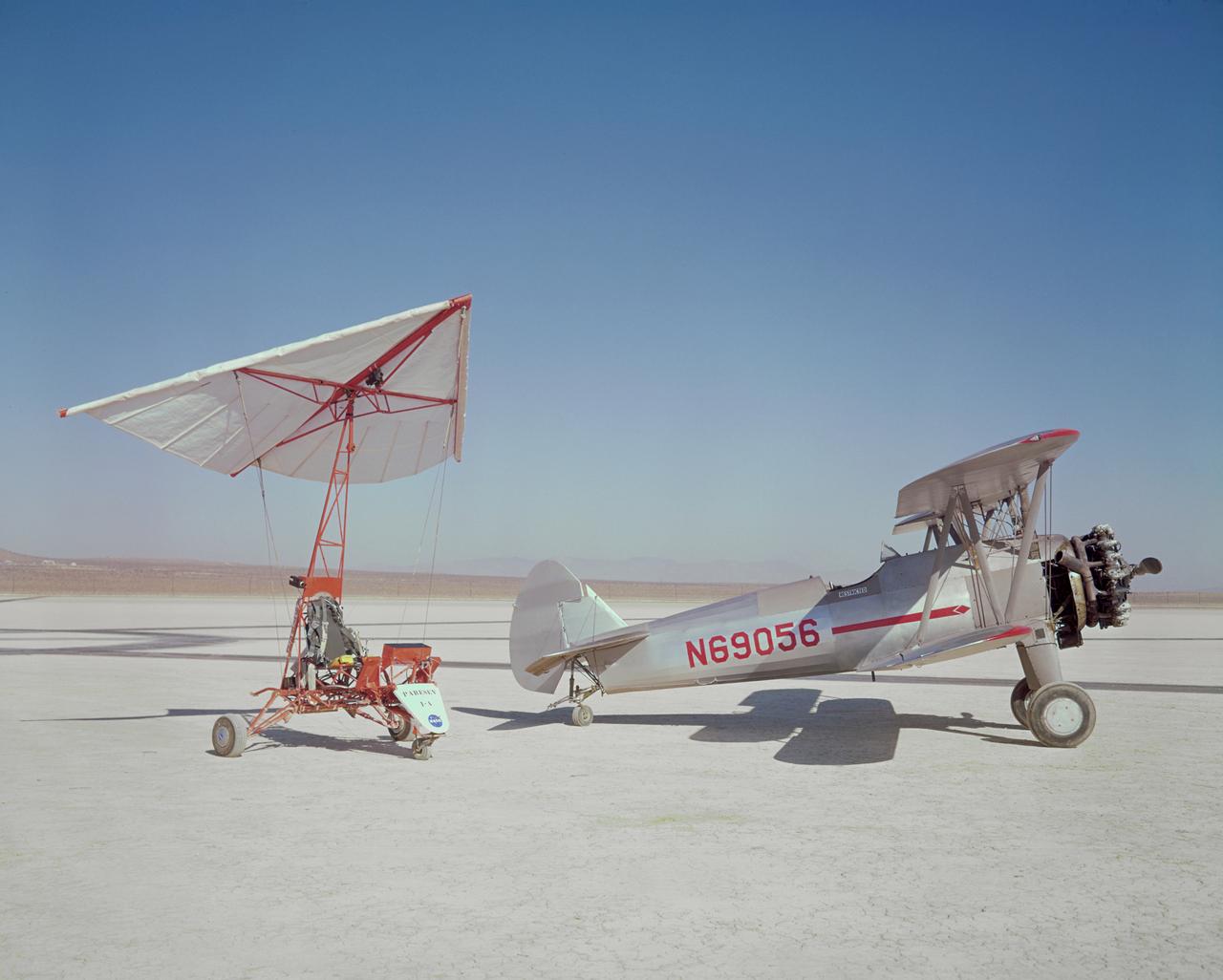
Paresev 1A and Stearman tow plane on lakebed.
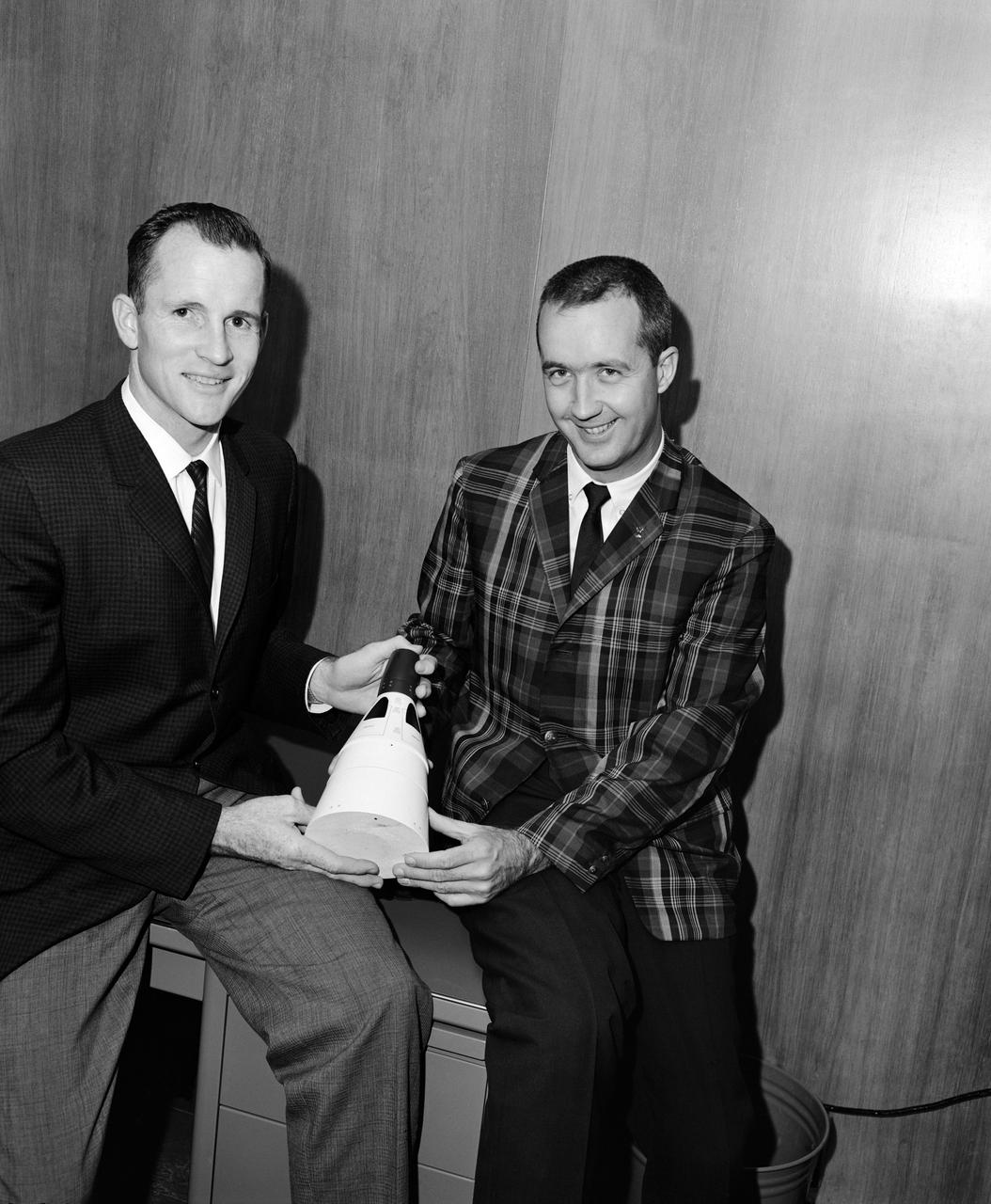
S62-04515 (1962) --- Astronauts Edward H. White II (left), Gemini-Titan 4 (GT-4) pilot, and James A. McDivitt, command pilot, pose for a photo holding a Gemini model. EDITOR?S NOTE: Jan. 27, 1967, astronaut White lost his life in the Apollo/Saturn 204 accident at Cape Canaveral, Florida.

S-65 Meteor Impact Model set up in the former Altitude Wind Tunnel at the National Aeronautics and Space Administration (NASA) Lewis Research Center just days after the September 12, 1962 rededication of the facility as the Space Power Chamber. Although larger test chambers would later be constructed, the rapid conversion of the wind tunnel into two space tanks allowed the facility to play a vital role in the early years of the space program. The eastern section of the tunnel, seen here became a vacuum chamber capable of simulating 100 miles altitude. This space tank was envisioned for the study of small satellites like this one. The transfer of the Centaur Program to Lewis one month late, however, permanently changed this mission. NASA was undertaking an in depth study at the time on the effect of micrometeoroids on satellites. Large space radiators were particularly vulnerable to damage from the small particles of space debris. In order to determine the hazard from meteoroids researchers had to define the flux rate relative to the mass and the velocity distribution because the greater the mass or the velocity of a meteoroid the greater the damage.
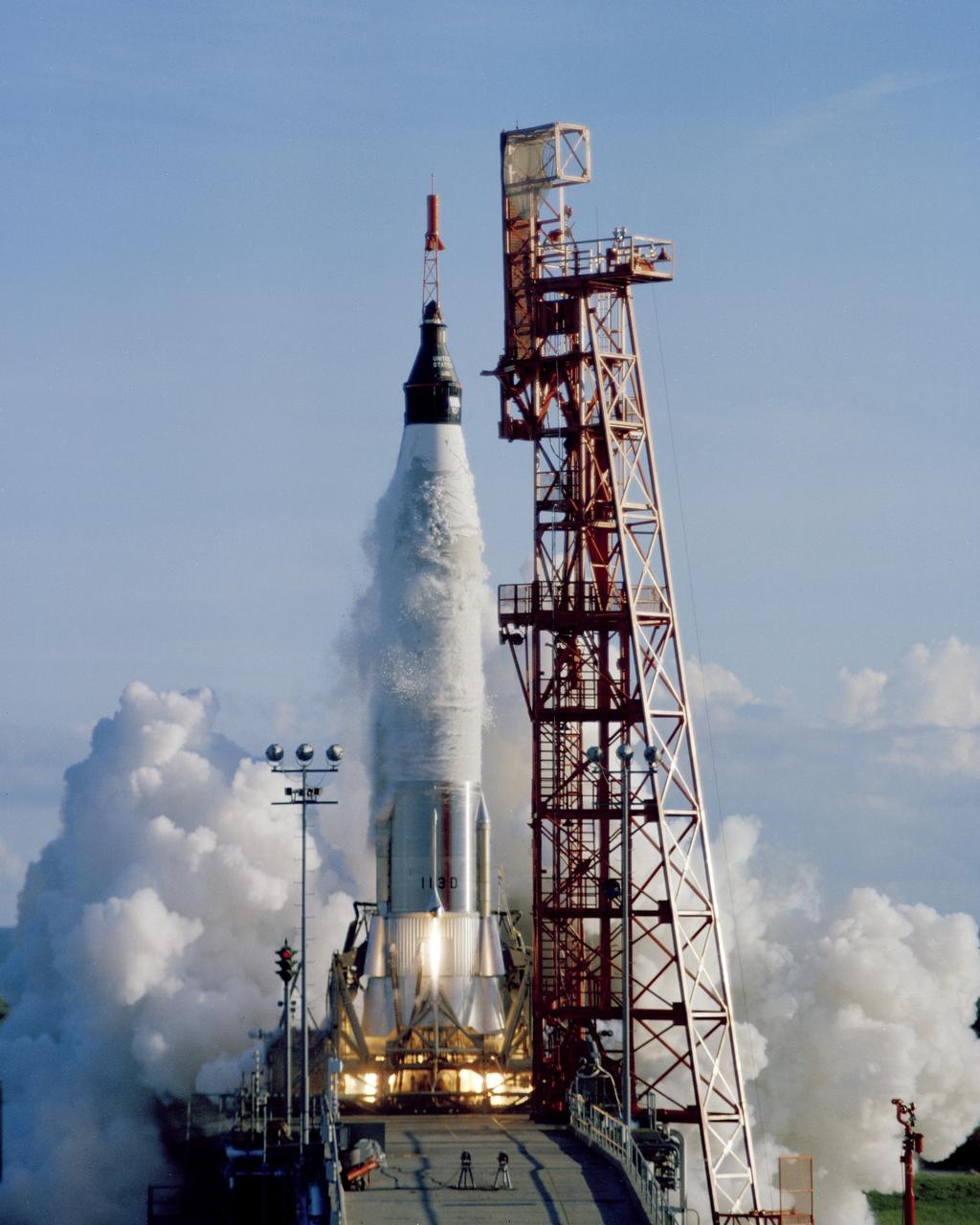
CAPE CANAVERAL, Fla. -- An Atlas launch vehicle lifts off with the Mercury spacecraft Sigma 7 atop with astronaut Walter M. Schirra Jr. aboard. The fifth American into space and the third to orbit the Earth plans to circle the globe six time prior to a planned splashdown in the Pacific Ocean. Photo Credit: NASA
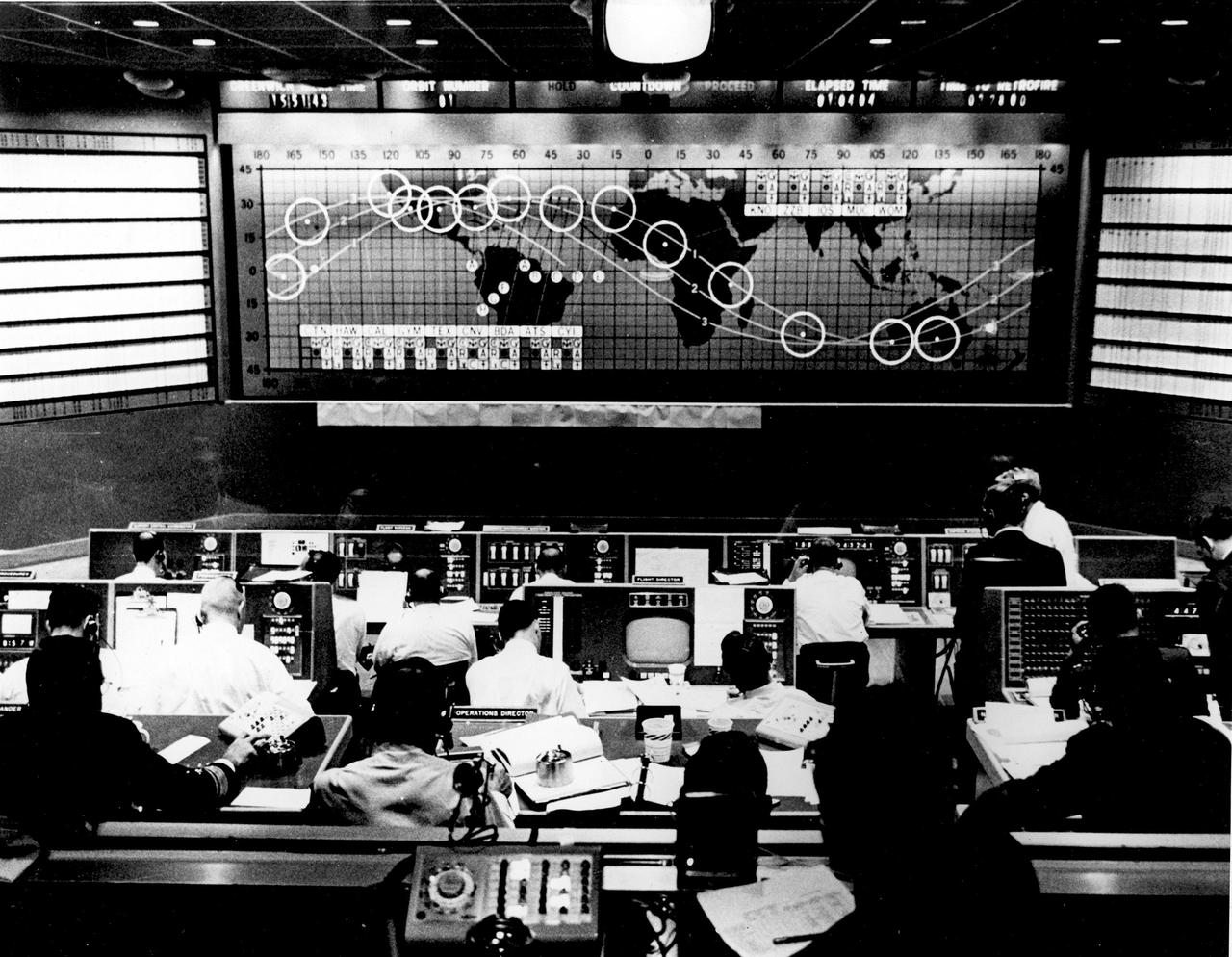
CAPE CANAVERAL, Fla. - Flight controllers gather inside Mercury Mission Control during the first orbit of John Glenn's Friendship 7 mission, which launched on Feb. 20, 1962. The Mercury Mission Control Center in Florida played a key role in the United States' early spaceflight program. Located at Cape Canaveral Air Force Station, the original part of the building was constructed between 1956 and 1958, with additions in 1959 and 1963. The facility officially was transferred to NASA on Dec. 26, 1963, and served as mission control during all the Project Mercury missions, as well as the first three flights of the Gemini Program, when it was renamed Mission Control Center. With its operational days behind, on June 1, 1967, the Mission Control Center became a stop on the public tour of NASA facilities until the mid-90s. In 1999, much of the equipment and furnishings from the Flight Control Area were moved to the Kennedy Space Center Visitor Complex where they became part of the exhibit there. The building was demolished in spring 2010. Photo credit: NASA
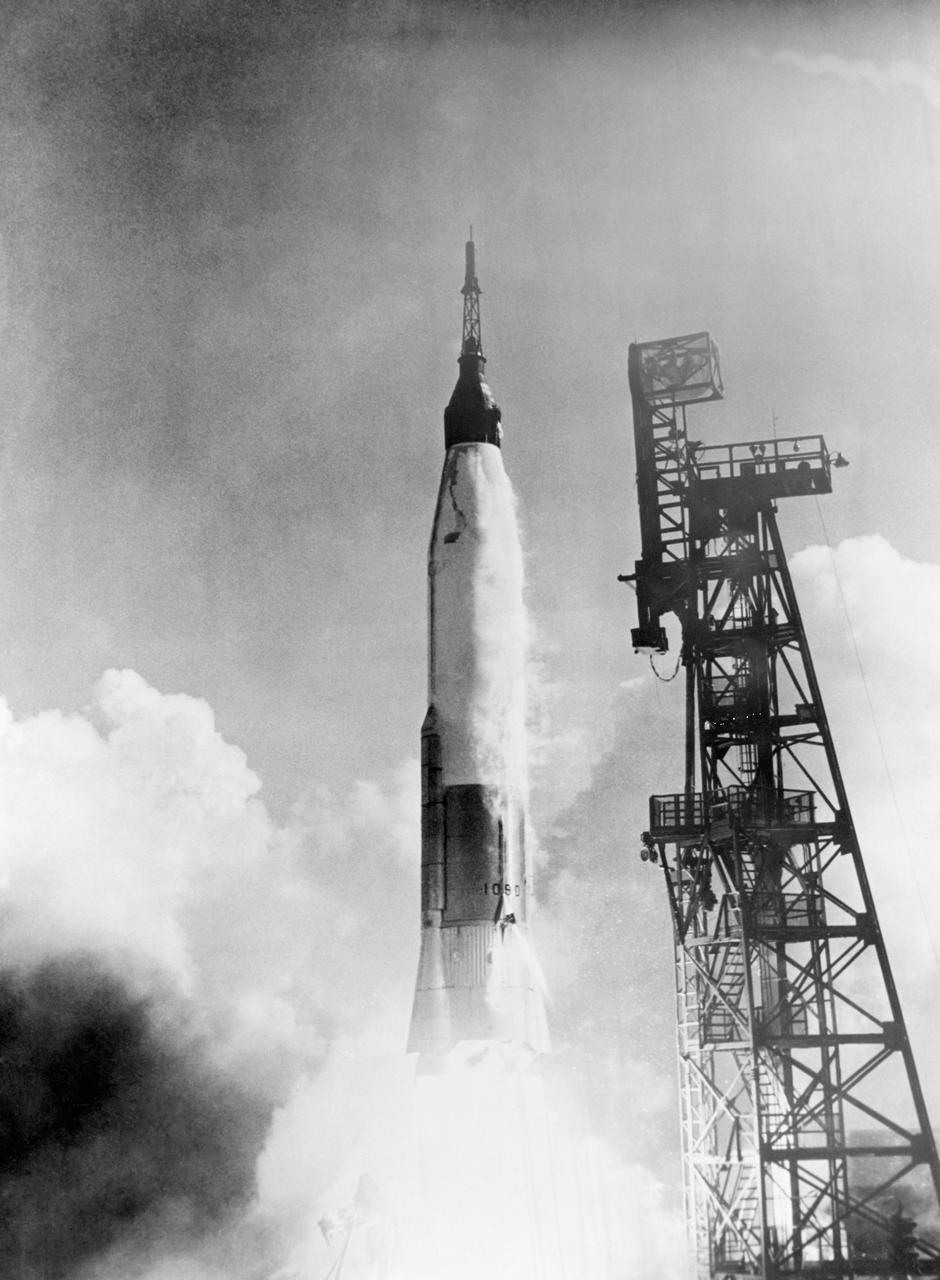
S62-00954 (20 February 1962) --- This is a view of the Mercury-Atlas 6 spacecraft as it leaves the launch pad at Cape Canaveral, Florida. Onboard the spacecraft is astronaut John H. Glenn Jr., pilot of the MA-6 mission, on its way to a three-Earth-orbital mission, making Glenn the first American to fly a manned Earth-orbiting mission.
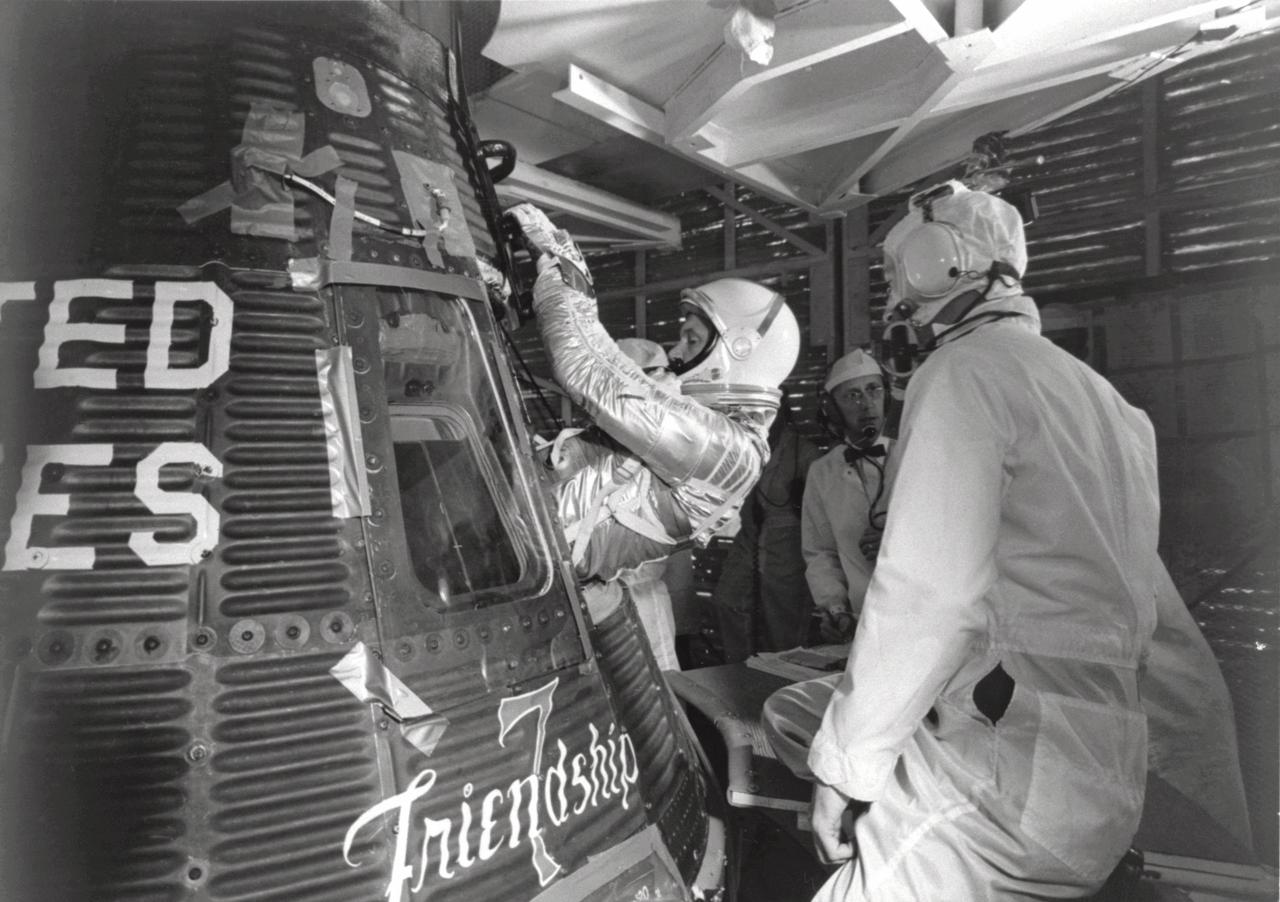
CAPE CANAVERAL, Fla. -- Astronaut John H. Glenn Jr. enters his Mercury capsule, "Friendship 7," as he prepares for launch of the Mercury-Atlas rocket. On February 20, 1962, Glenn lifted off into space aboard his Mercury Atlas 6 MA-6 rocket and became the first American to orbit the Earth. After orbiting the Earth 3 times, Friendship 7 landed in the Atlantic Ocean 4 hours, 55 minutes and 23 seconds later, just East of Grand Turk Island in the Bahamas. Glenn and his capsule were recovered by the Navy Destroyer Noa, 21 minutes after splashdown. Photo credit: NASA
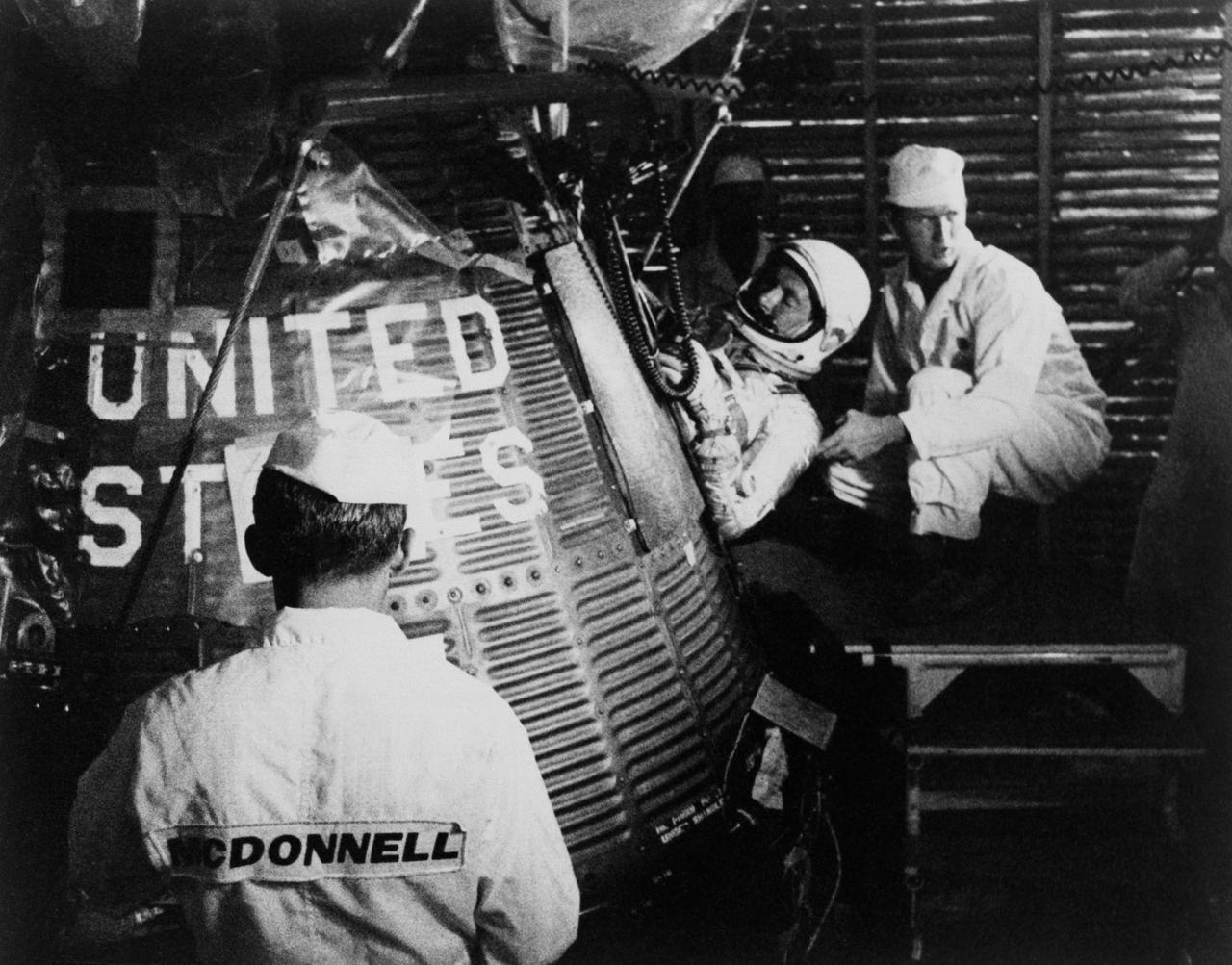
S62-04018 (24 May 1962) --- Astronaut M. Scott Carpenter is inserted inside his Aurora 7 spacecraft, before the launch of the Mercury-Atlas 7 (MA-7) mission. Photo credit: NASA
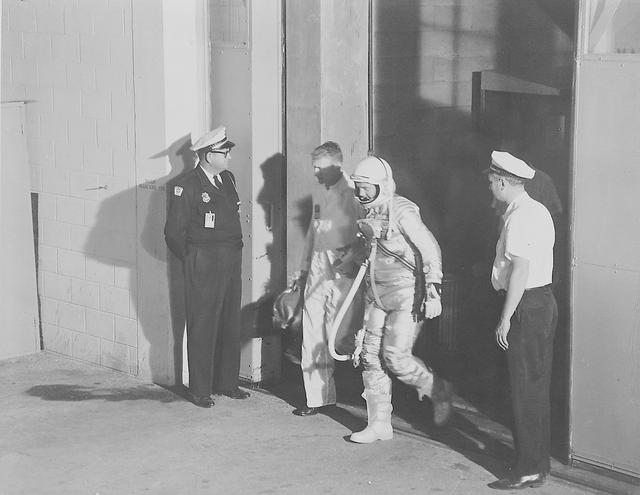
S62-00222 (20 Feb. 1962) --- View of astronaut John H. Glenn Jr. and equipment specialist Joe Schmitt leaving crew quarters prior to Mercury-Atlas 6 (MA-6) mission. Glenn is in his pressure suit and is carrying the portable ventilation unit. Photo credit: NASA
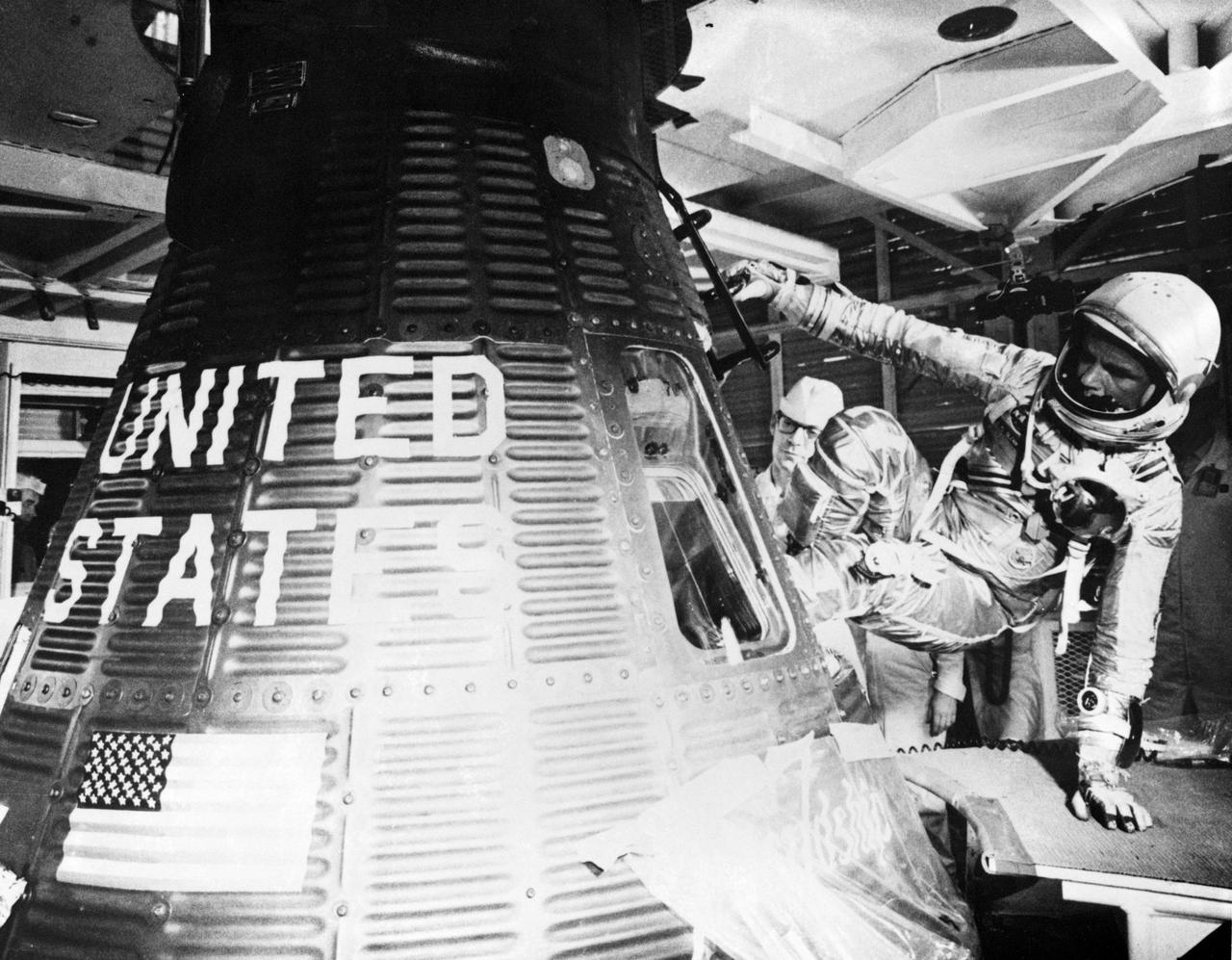
S62-00371 (20 Feb. 1962) --- Mercury astronaut John H. Glenn Jr., pilot of the Mercury-Atlas 6 (MA-6) spaceflight, enters the Mercury "Friendship 7" spacecraft during the MA-6 prelaunch preparations at Cape Canaveral, Florida. Glenn became the first American to orbit Earth. Photo credit: NASA
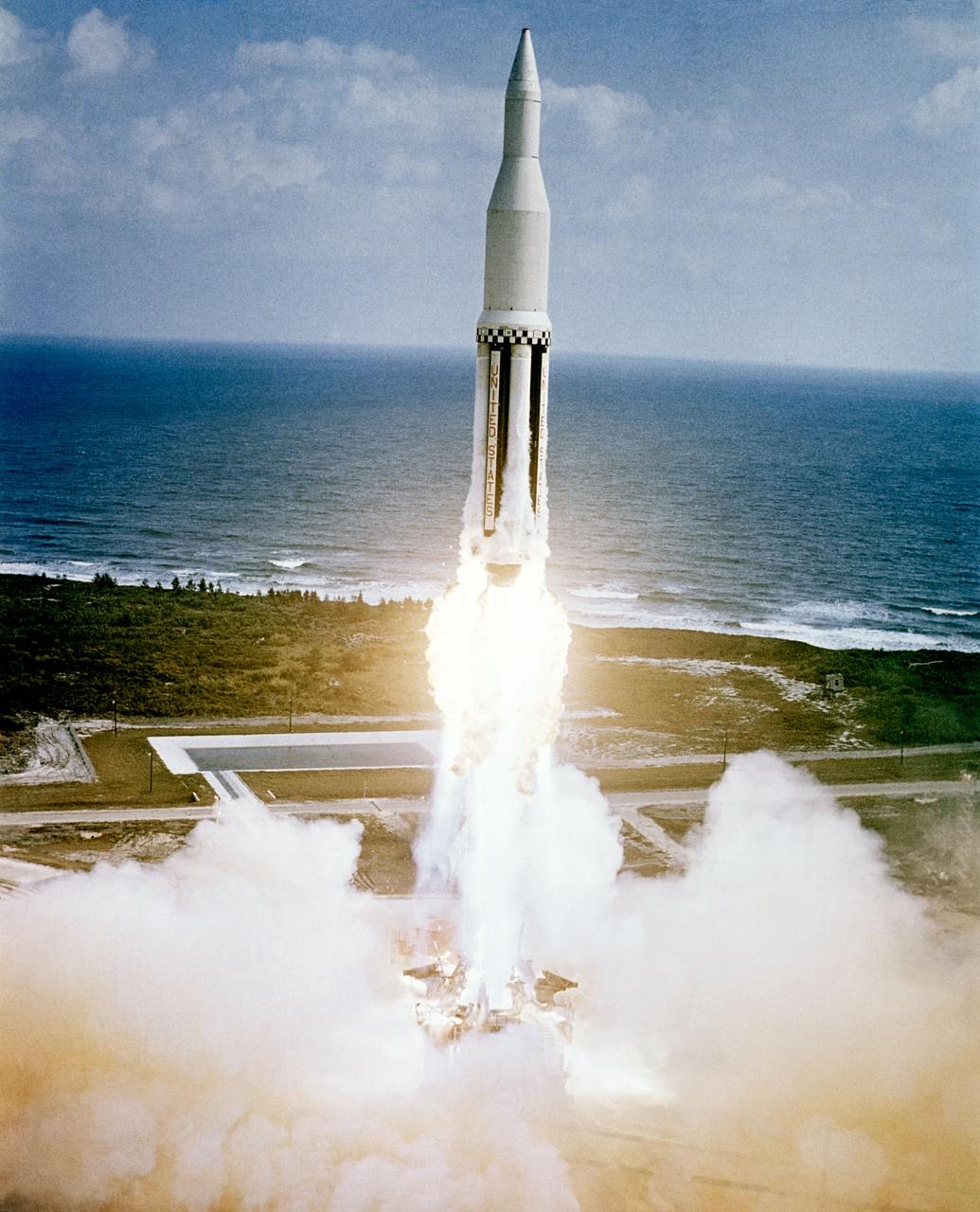
S62-05105 (14 September 1962) --- Artist's concept of a Saturn launch.
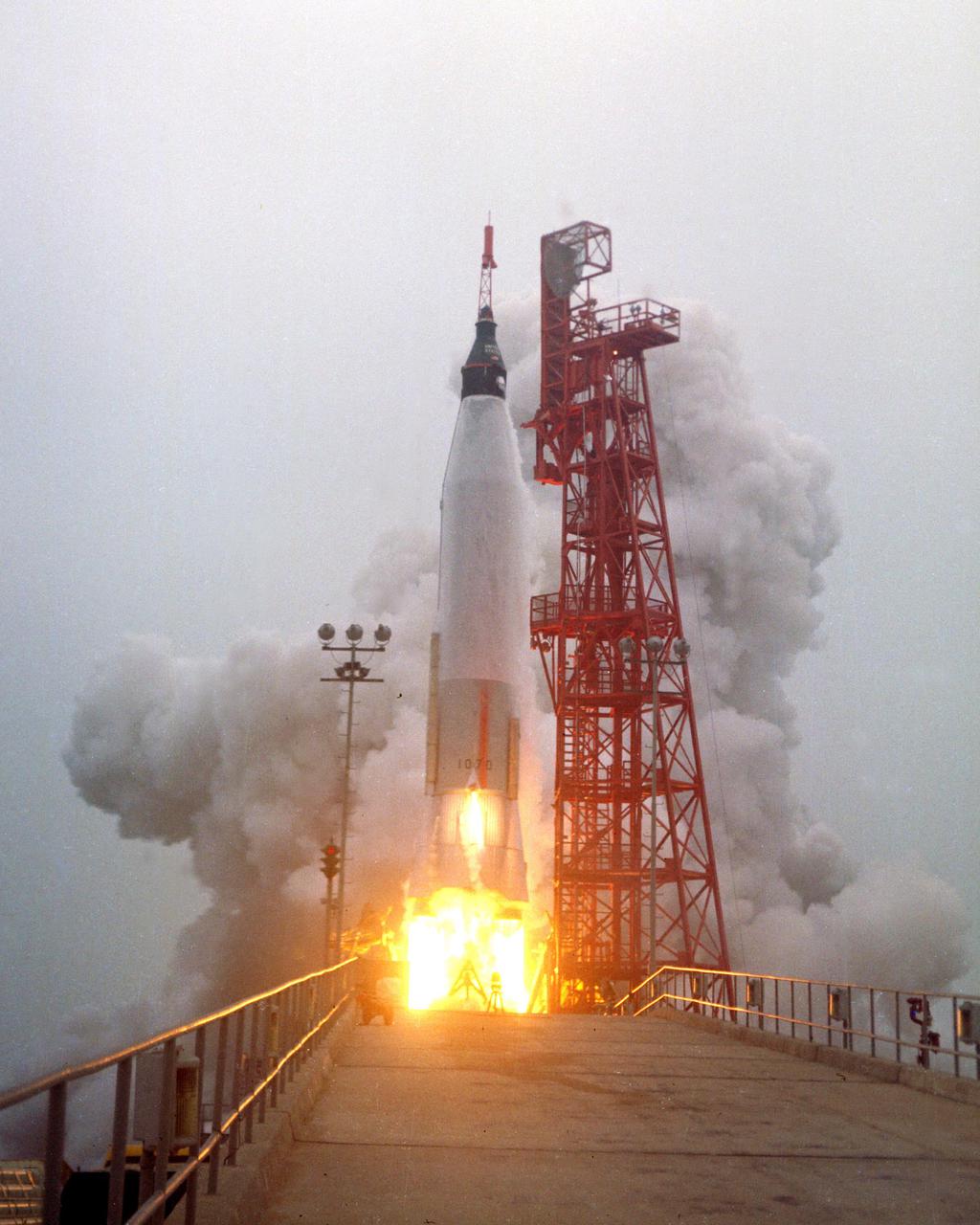
KENNEDY SPACE CENTER, FLA. -- Mercury Atlas 7 lifted off today from Complex 14 carrying Astronaut Scott Carpenter and the Aurora 7 for the second manned orbital mission.
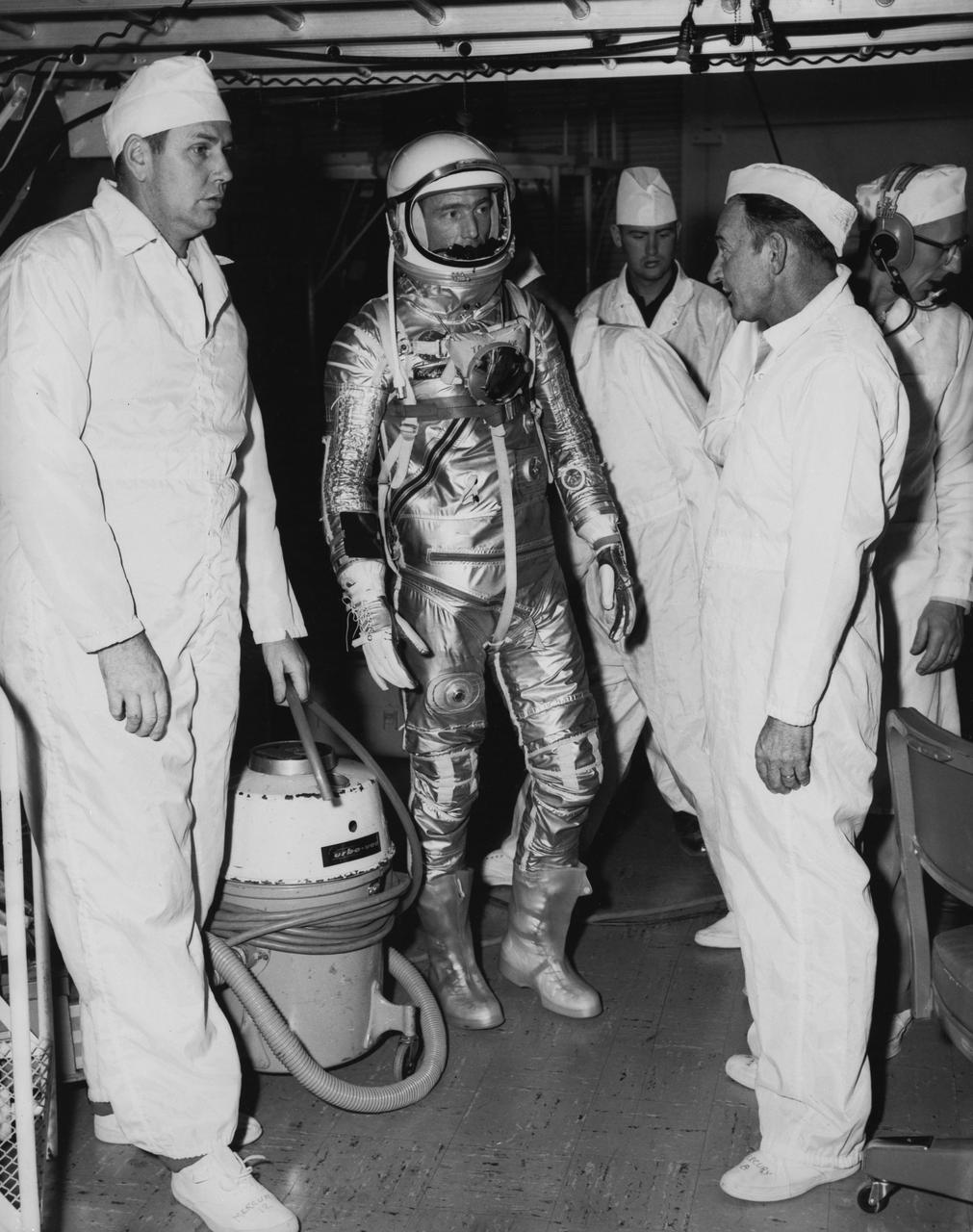
S62-00120 (1961) --- Astronaut M. Scott Carpenter, prime pilot for the Mercury-Atlas 7 (MA-7) spaceflight, is seen in Hangar S crew quarters during a suiting exercise at Cape Canaveral, Florida. Photo credit: NASA
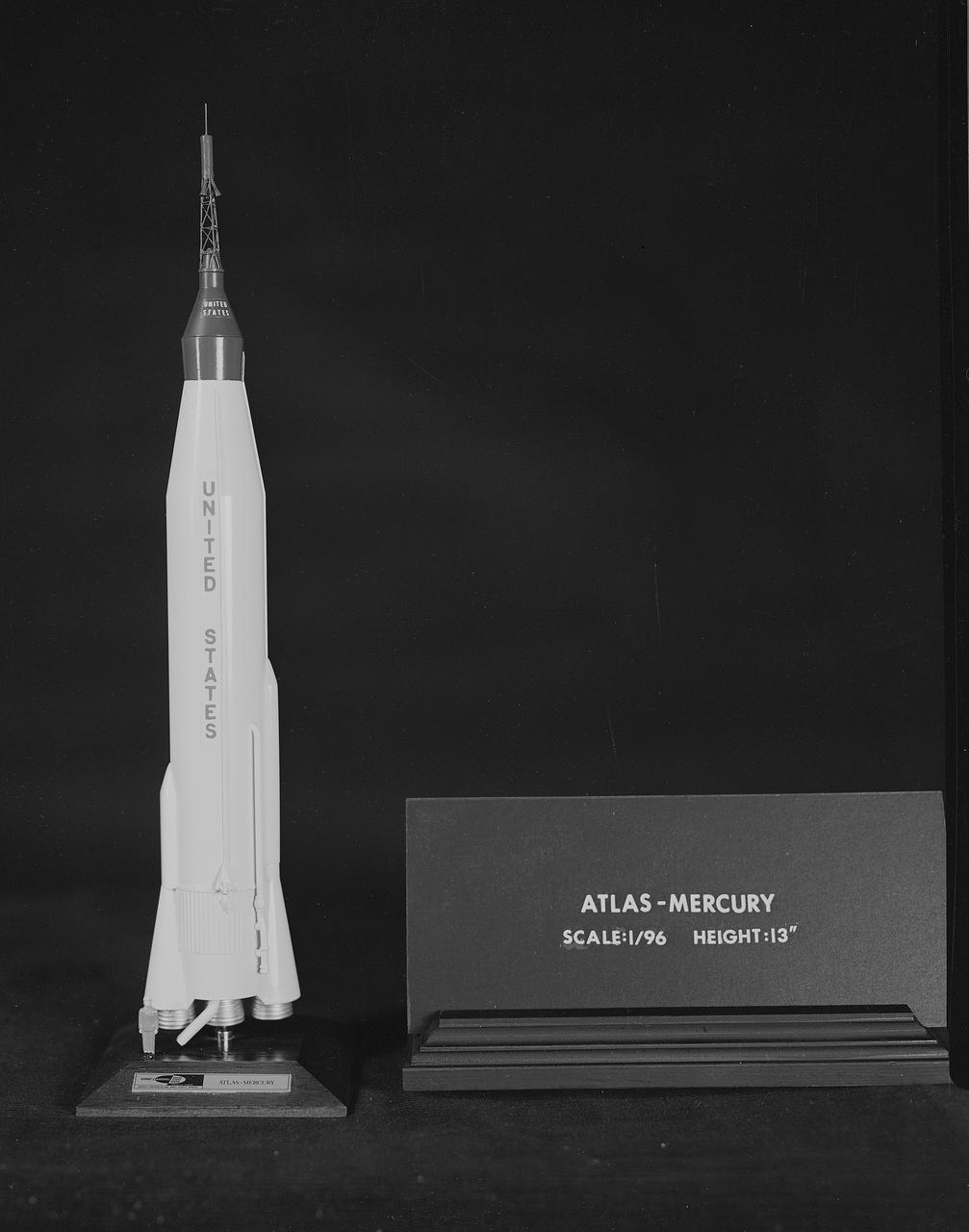
Photographed is a model of early rocketry, the Atlas Mercury.
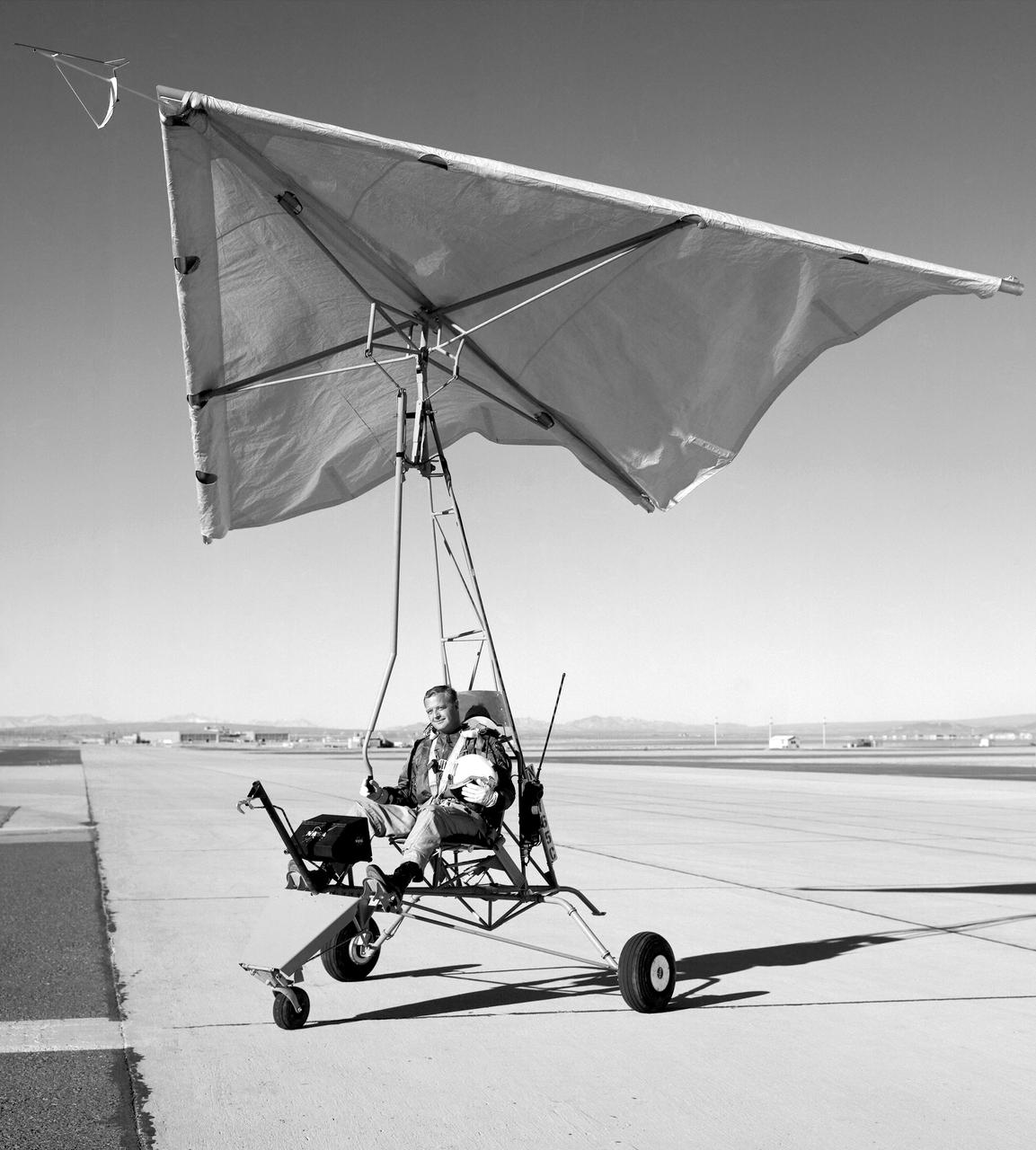
Test pilot Milton Thompson sitting in NASA Flight Research Center-built Paresev 1 (Paraglider Research Vehicle) on the taxi strip in front of the NASA Flight Research Center in 1962. In this photo the control stick can be seen coming from overhead and hanging in front of the pilot. The control system was a direct link with the wing membrane made of doped Irish linen. By maintaining simplicity during construction, it was possible to make control and configuration changes overnight and, in many instances, in minutes.
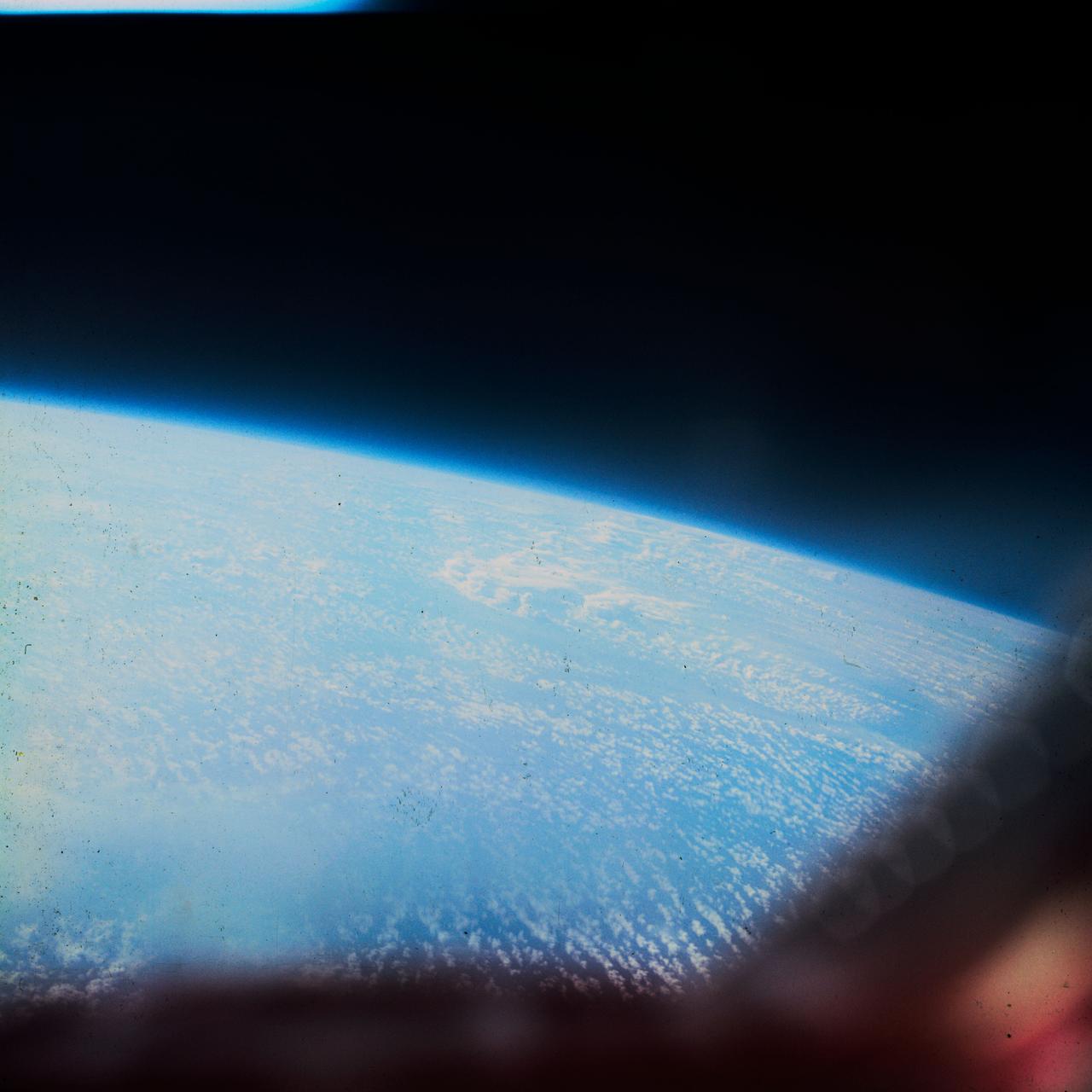
S62-06612 (3 Oct. 1962) --- Cloud formation over South America taken during the fifth orbit pass of the Mercury-Atlas 8 (MA-8) mission by astronaut Walter M. Schirra Jr. with a hand-held camera. Photo credit: NASA

Ablation Test of Mercury Capsule
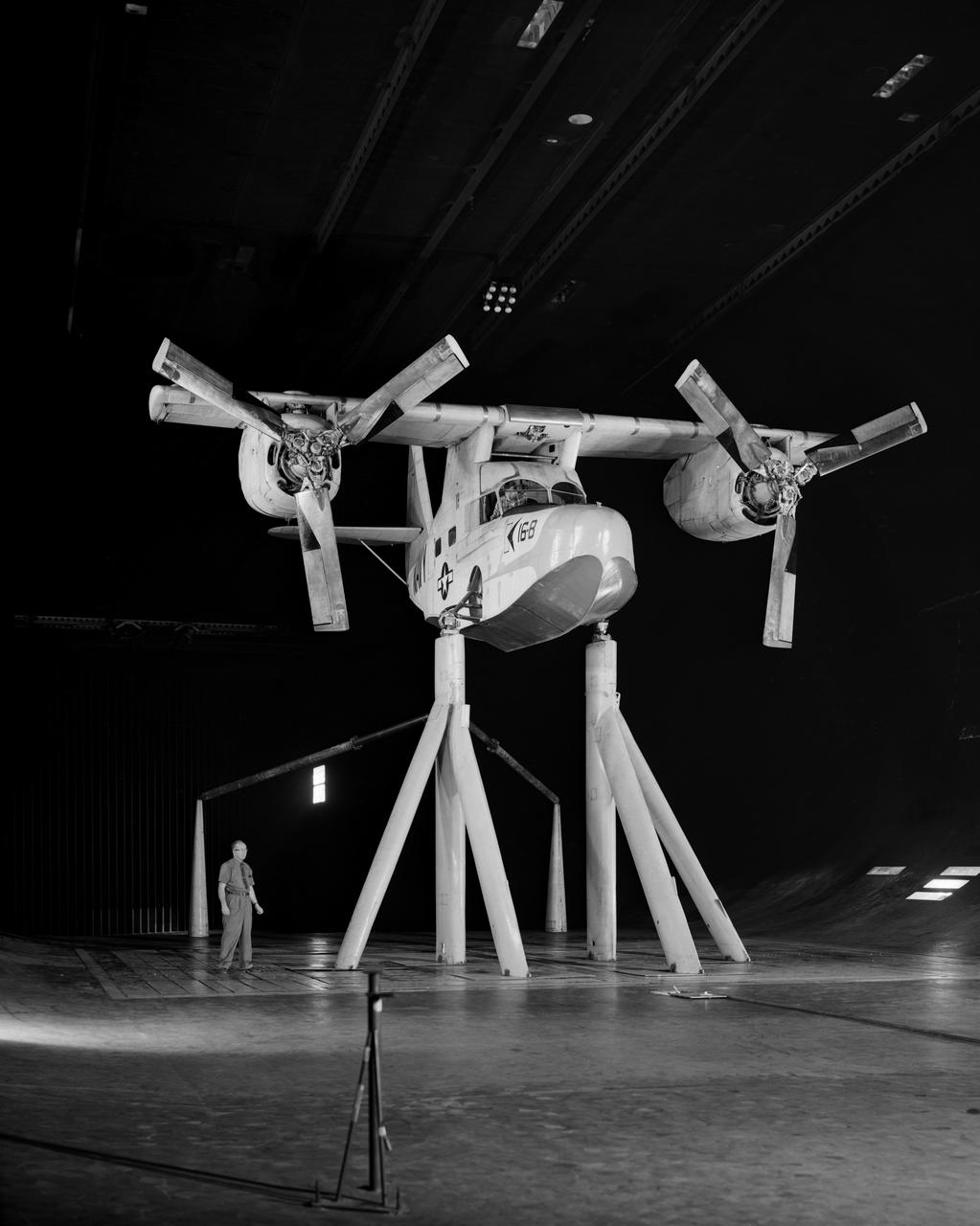
Test No. 175 Kaman K-16 in 40x80 Foot Wind Tunnel at Ames Research Center. Pictured with two Kaman employees. 3/4 Front view of Airplane. Kaman K-16B was an experimental tilt wing aircraft, it used the fuselage of a JRF-5 and was powered by two General Electric YT58-GE-2A engines.
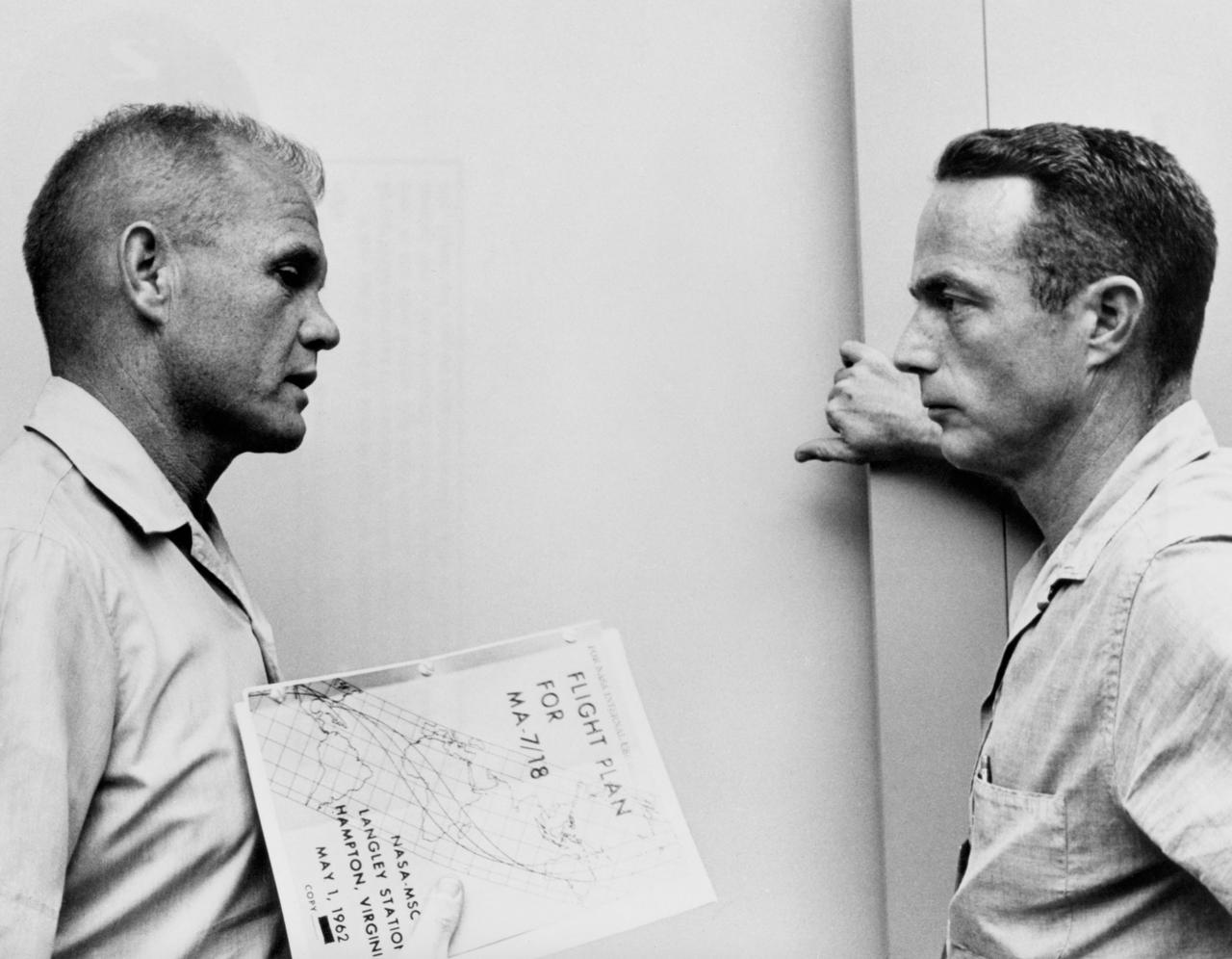
CAPE CANAVERAL, Fla. -- John Glenn and Scott Carpenter go over the flight plan for MA-7 mission. Photo credit: NASA

CAPE CANAVERAL, Fla. -- President John F. Kennedy honors John H. Glenn Jr. during welcome back ceremonies at Patrick Air Force Base and Cape Canaveral in Florida after his historic three-orbit mission aboard Friendship 7. Vice President Lyndon B. Johnson looks on, with his back to the camera. Photo credit: NASA
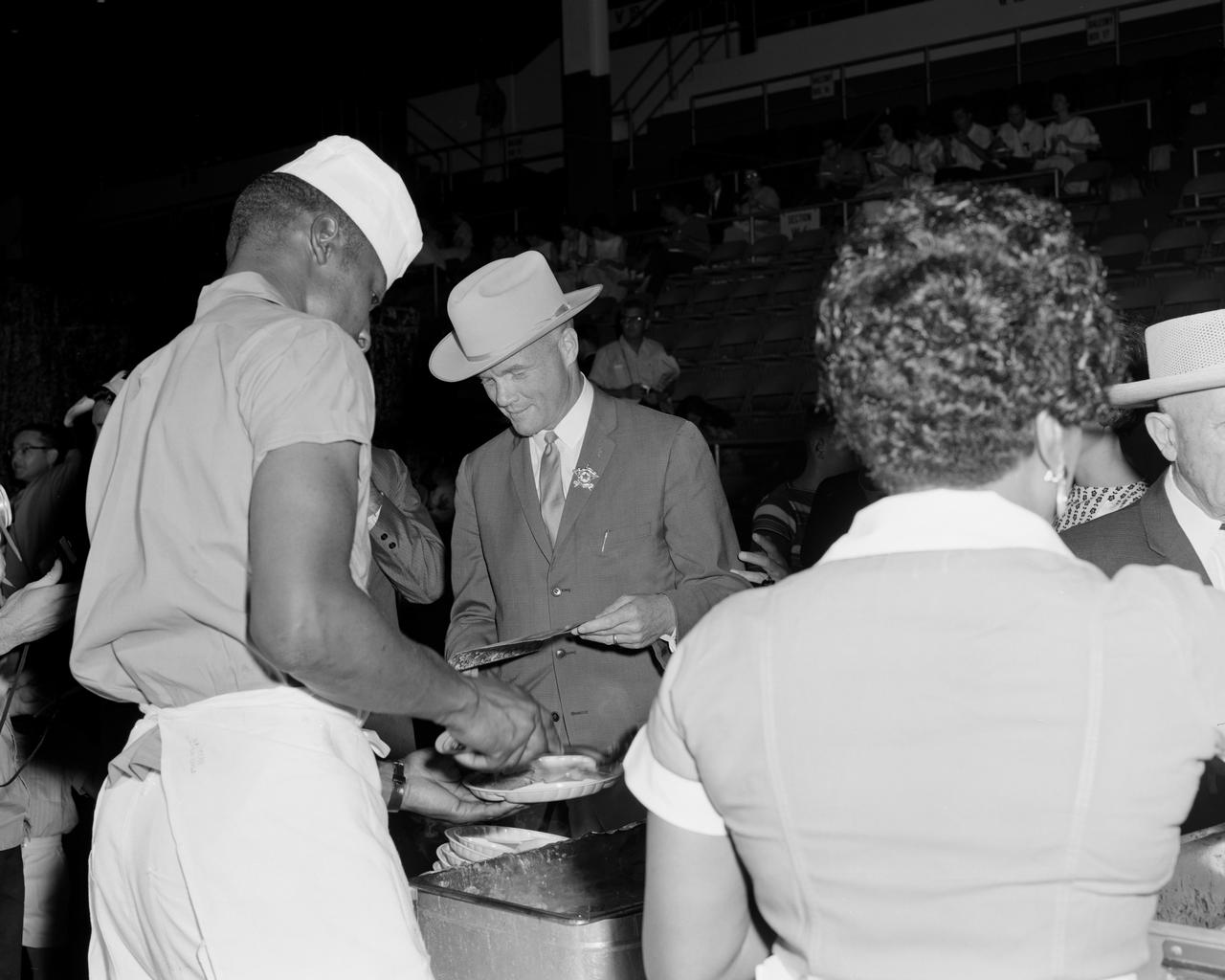
S62-03725 (4 July 1962) --- Mercury astronaut John H. Glenn Jr., wearing a new cowboy hat and a badge in the shape of a star, leafs through his program as he is served his food at the Sam Houston Coliseum. A large crowd was on hand to welcome the Mercury astronauts to Houston, Texas. Photo credit: NASA
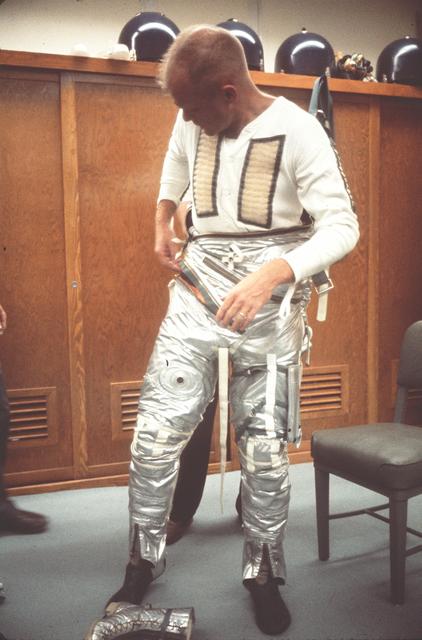
S64-14848 (20 Feb. 1962) --- Astronaut John H. Glenn Jr. dons spacesuit during preflight operations at Cape Canaveral, Feb. 20, 1962, the day he flew his Mercury-Atlas 6 spacecraft, Friendship 7, into orbital flight around Earth. Photo credit: NASA
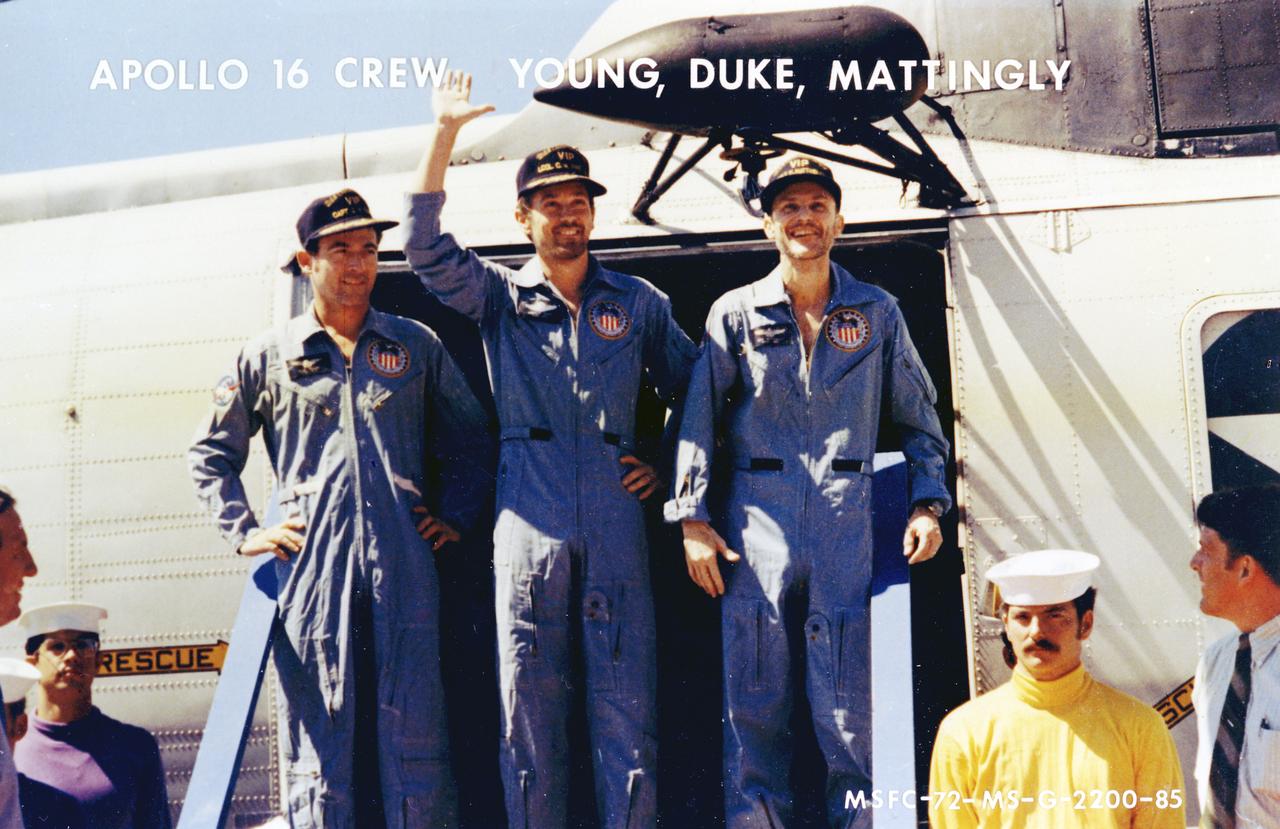
The Apollo 16 Command Module splashed down in the Pacific Ocean on April 27, 1972 after an 11-day moon exploration mission. The 3-man crew is shown here aboard the rescue ship, USS Horton. From left to right are: Mission Commander John W. Young, Lunar Module pilot Charles M. Duke, and Command Module pilot Thomas K. Mattingly II. The sixth manned lunar landing mission, the Apollo 16 (SA-511) lifted off on April 16, 1972. The Apollo 16 mission continued the broad-scale geological, geochemical, and geophysical mapping of the Moon’s crust, begun by the Apollo 15, from lunar orbit. This mission marked the first use of the Moon as an astronomical observatory by using the ultraviolet camera/spectrograph which photographed ultraviolet light emitted by Earth and other celestial objects. The Lunar Roving Vehicle, developed by the Marshall Space Flight Center, was also used.
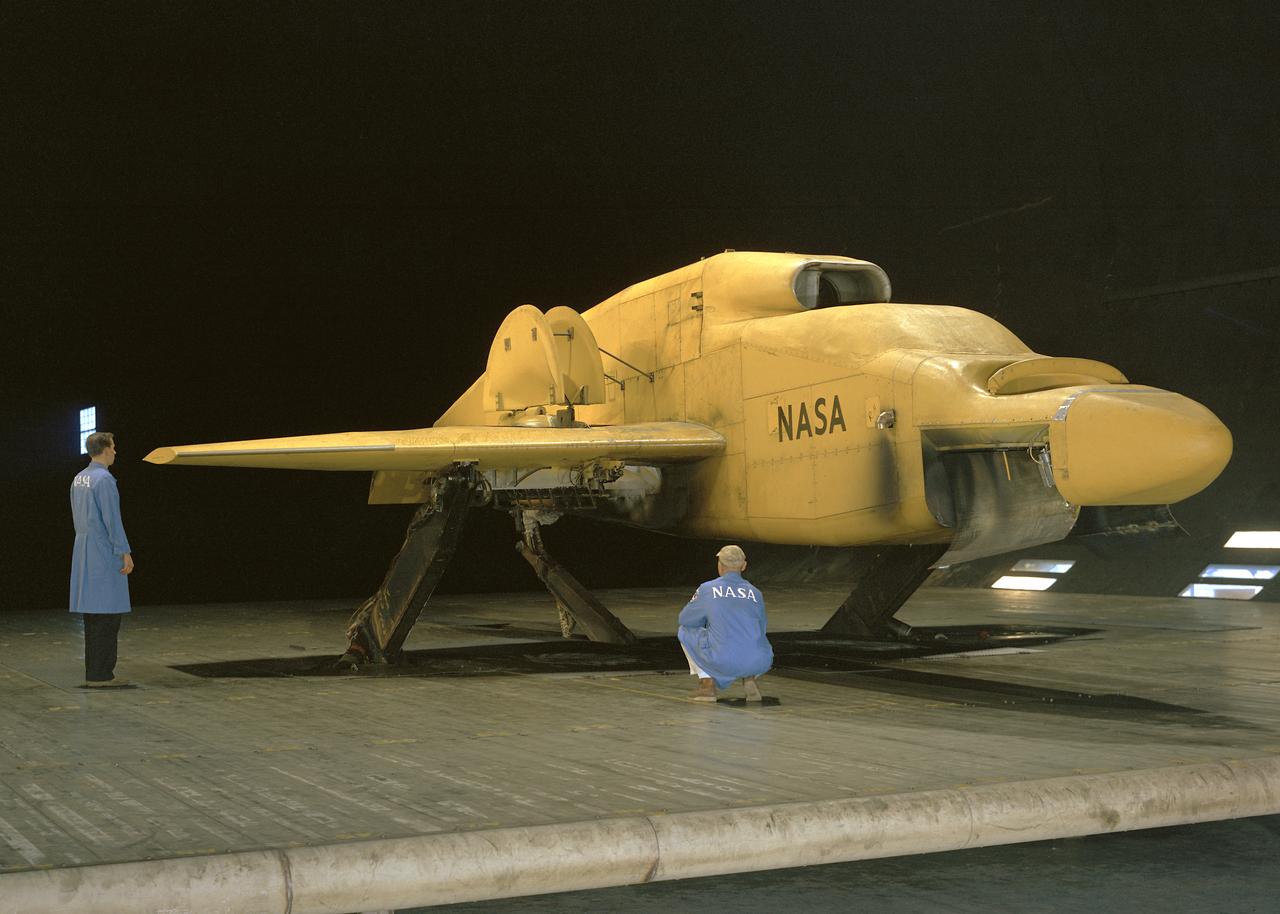
3/4 front view VZ-11 ground test - variable height struts. Engines of the VZ-11 are a pair of General Electric J85-5 turbojets, mounted in high in the centre fuselage, well away from fan disturbance. Designed in the Ames 40x80 foot wind tunnel.
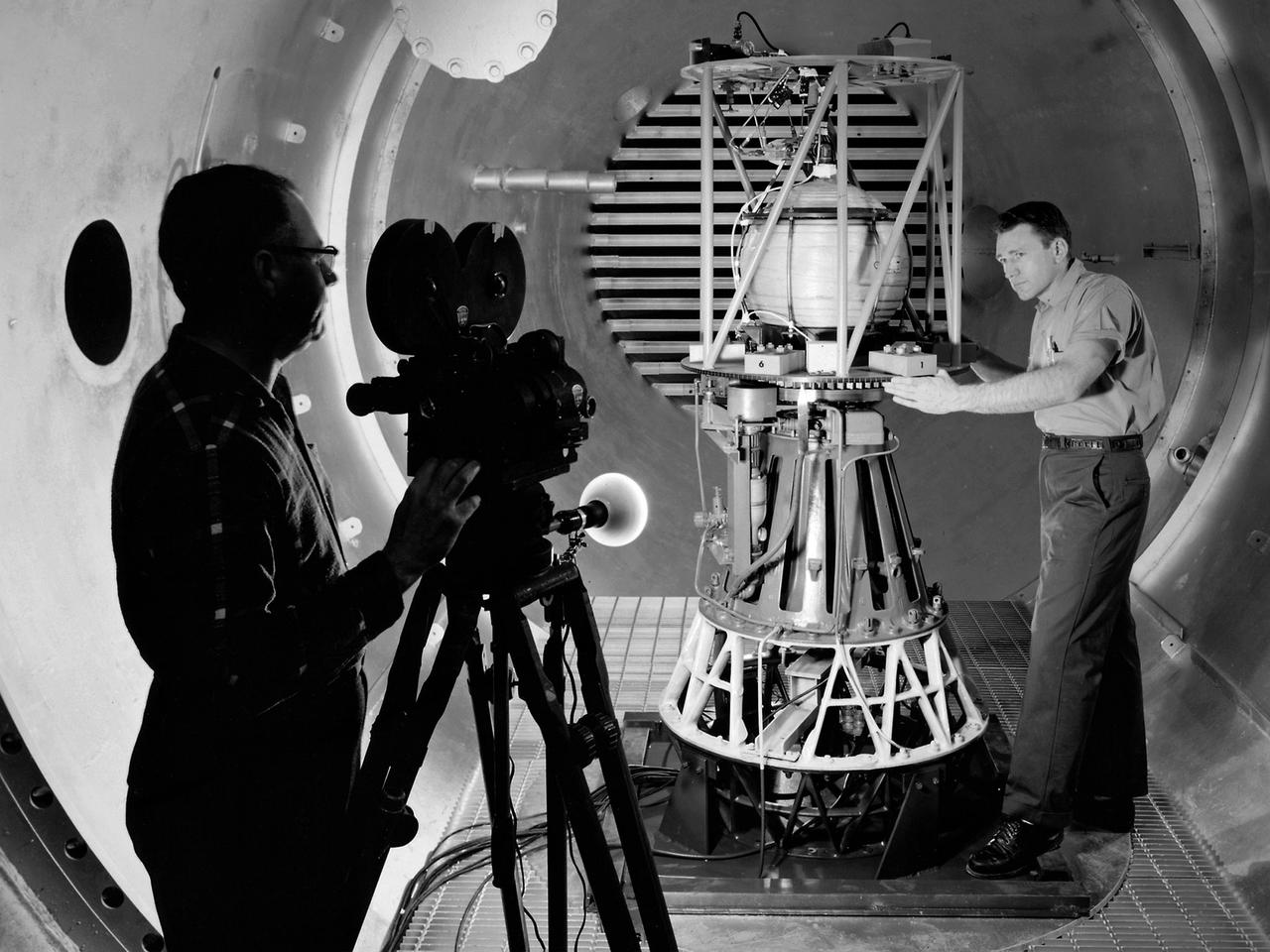
Mechanic Howard Wine inspects the setup of a spin isolator in Cell 2 of the Propulsion Systems Laboratory at the National Aeronautics and Space Administration (NASA) Lewis Research Center. Photographer Al Jecko filmed the proceedings. This test was unique in that the chamber’s altitude system was used, but not its inlet air flow. The test was in preparation for an upcoming launch of modified liquid hydrogen propellant tank on a sounding rocket. This Weightlessness Analysis Sounding Probe (WASP) was part of Lewis investigation into methods for controlling partially filled liquid hydrogen fuel tanks during flight. Second-stage rockets, the Centaur in particular, were designed to stop their engines and coast, then restart them when needed. During this coast period, the propellant often shifted inside the tank. This movement could throw the rocket off course or result in the sloshing of fuel away from the fuel pump. Wine was one of only three journeymen mechanics at Lewis when he was hired in January 1954. He spent his first decade in the Propulsion Systems Laboratory and was soon named a section head. Wine went on to serve as Assistant Division Chief and later served as an assistant to the director. Jecko joined the center in 1947 as a photographer and artist. He studied at the Cleveland School or Art and was known for his cartoon drawing. He worked at the center for 26 years.
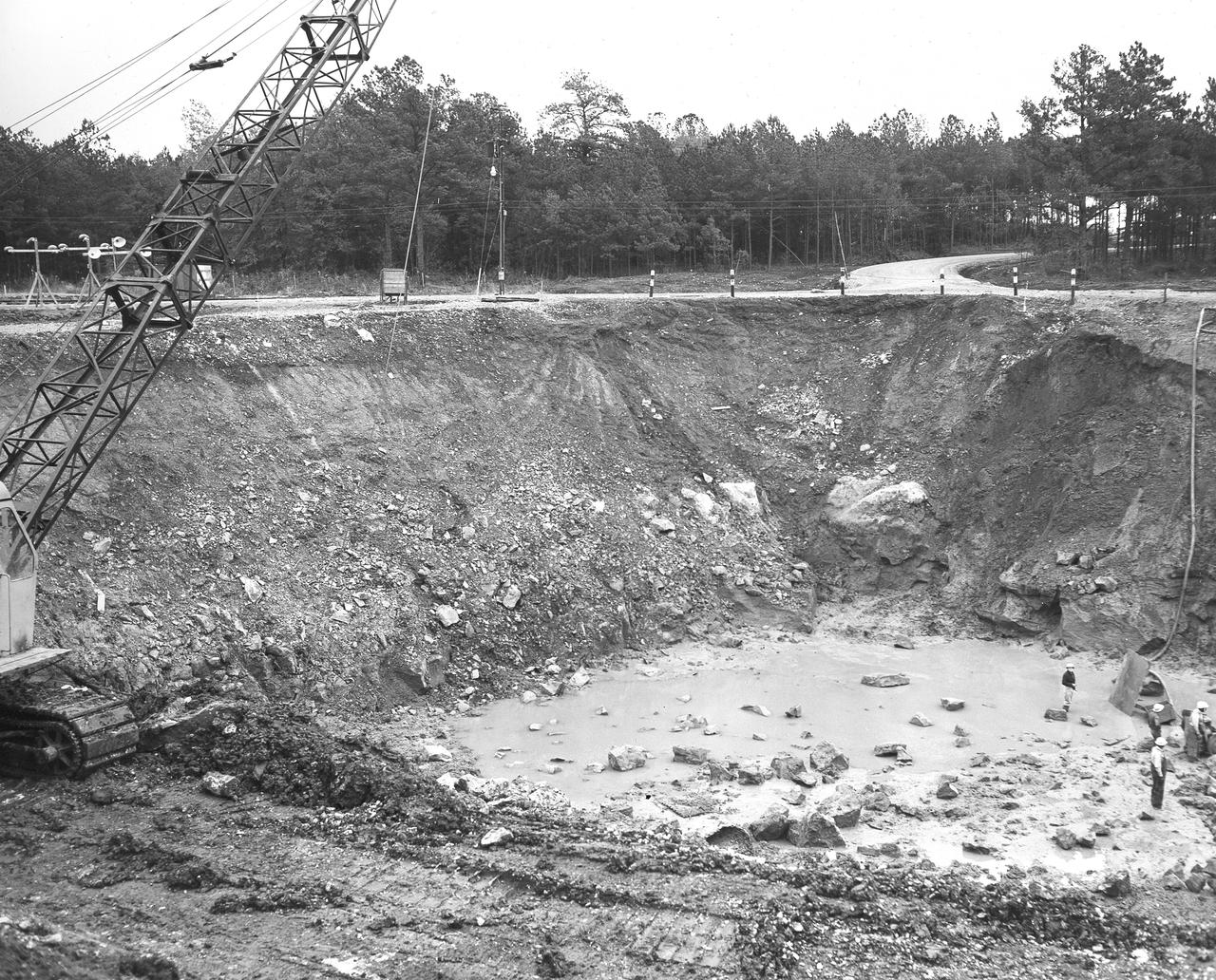
At its founding, the Marshall Space Flight Center (MSFC) inherited the Army’s Jupiter and Redstone test stands, but much larger facilities were needed for the giant stages of the Saturn V. From 1960 to 1964, the existing stands were remodeled and a sizable new test area was developed. The new comprehensive test complex for propulsion and structural dynamics was unique within the nation and the free world, and they remain so today because they were constructed with foresight to meet the future as well as on going needs. Construction of the S-IC Static test stand complex began in 1961 in the west test area of MSFC, and was completed in 1964. The S-IC static test stand was designed to develop and test the 138-ft long and 33-ft diameter Saturn V S-IC first stage, or booster stage, weighing in at 280,000 pounds. Required to hold down the brute force of a 7,500,000-pound thrust produced by 5 F-1 engines, the S-IC static test stand was designed and constructed with the strength of hundreds of tons of steel and 12,000,000 pounds of cement, planted down to bedrock 40 feet below ground level. The foundation walls, constructed with concrete and steel, are 4 feet thick. The base structure consists of four towers with 40-foot-thick walls extending upward 144 feet above ground level. The structure was topped by a crane with a 135-foot boom. With the boom in the upright position, the stand was given an overall height of 405 feet, placing it among the highest structures in Alabama at the time. In addition to the S-IC test stand, related facilities were built during this time. Built to the north of the massive S-IC test stand, was the F-1 Engine test stand. The F-1 test stand, a vertical engine firing test stand, 239 feet in elevation and 4,600 square feet in area at the base, was designed to assist in the development of the F-1 Engine. Capability was provided for static firing of 1.5 million pounds of thrust using liquid oxygen and kerosene. Like the S-IC stand, the foundation of the F-1 stand is keyed into the bedrock approximately 40 feet below grade. This photo, taken November 15, 1962, depicts the excavation process of the single engine F-1 stand site.
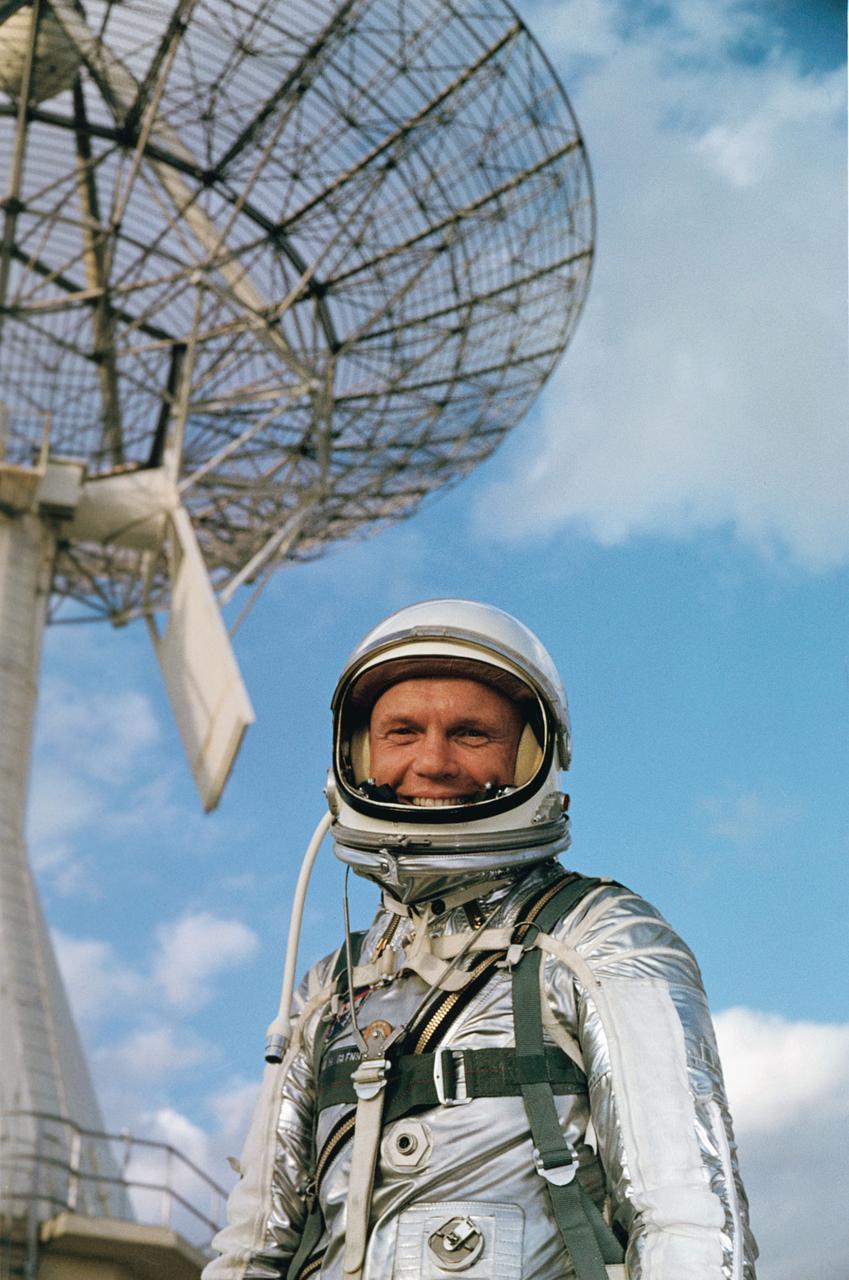
January 1962 -- Project Mercury Astronaut John H. Glenn Jr., prime pilot for the MA-6 mission.
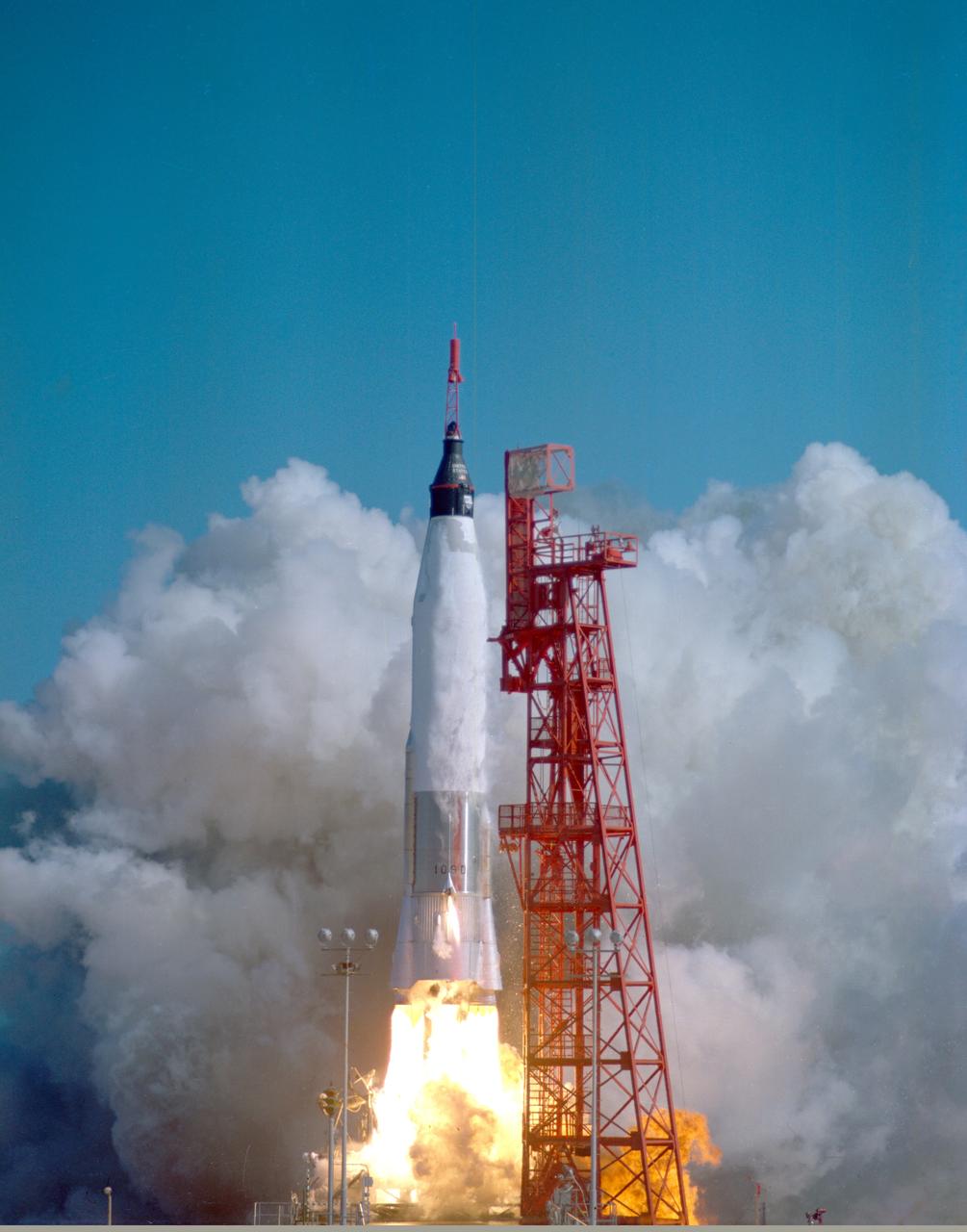
CAPE CANAVERAL, Fla. -- Launch of Friendship 7, the first manned orbital space flight. Astronaut John Glenn aboard, the Mercury-Atlas rocket is launched from Pad 14. Photo credit: NASA
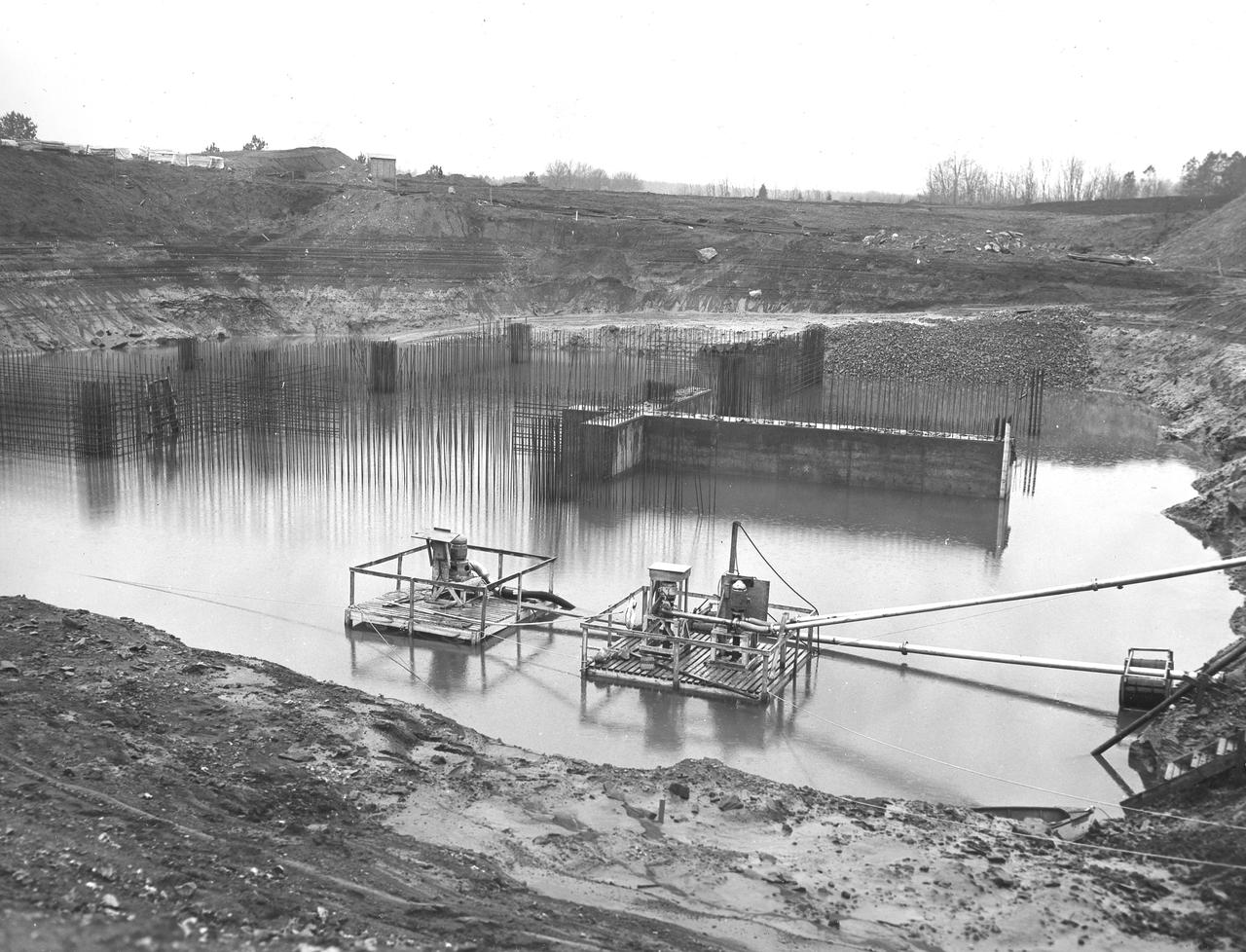
At its founding, the Marshall Space Flight Center (MSFC) inherited the Army’s Jupiter and Redstone test stands, but much larger facilities were needed for the giant stages of the Saturn V. From 1960 to 1964, the existing stands were remodeled and a sizable new test area was developed. The new comprehensive test complex for propulsion and structural dynamics was unique within the nation and the free world, and they remain so today because they were constructed with foresight to meet the future as well as on going needs. Construction of the S-IC Static test stand complex began in 1961 in the west test area of MSFC, and was completed in 1964. The S-IC static test stand was designed to develop and test the 138-ft long and 33-ft diameter Saturn V S-IC first stage, or booster stage, weighing in at 280,000 pounds. Required to hold down the brute force of a 7,500,000-pound thrust produced by 5 F-1 engines, the S-IC static test stand was designed and constructed with the strength of hundreds of tons of steel and 12,000,000 pounds of cement, planted down to bedrock 40 feet below ground level. The foundation walls, constructed with concrete and steel, are 4 feet thick. The base structure consists of four towers with 40-foot-thick walls extending upward 144 feet above ground level. The structure was topped by a crane with a 135-foot boom. With the boom in the upright position, the stand was given an overall height of 405 feet, placing it among the highest structures in Alabama at the time. Construction of the S-IC test stand came to a halt at the end of September as the determination was made that the Saturn booster size had to be increased. As a result, the stand had to be modified. With construction about to resume, portable floating pump stations were placed in the site, as seen in this March 20, 1962 photo, to drain the flood waters caused by a disturbed natural spring months prior during excavation.
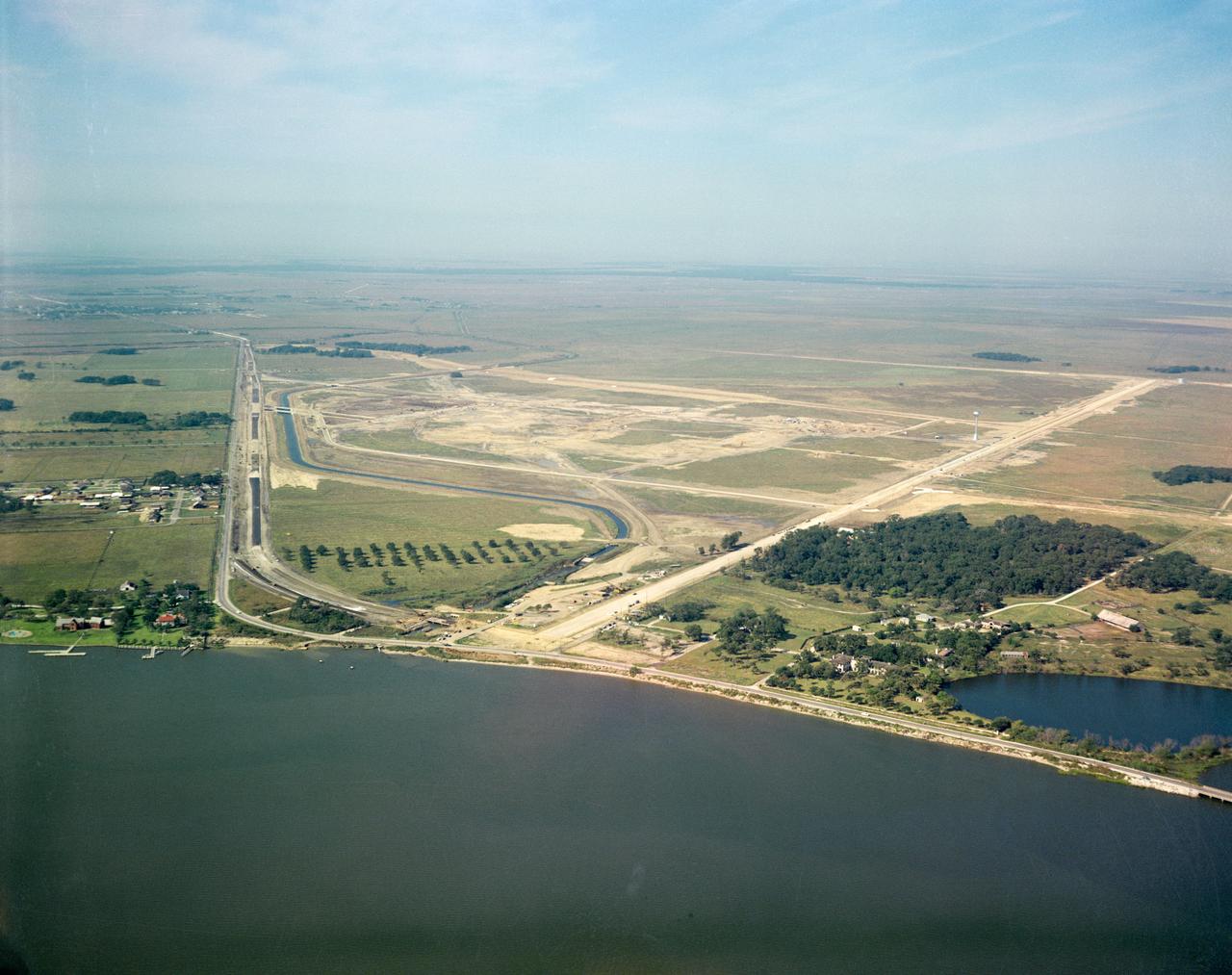
S62-08046 (1961) --- Aerial view of the future site of the Manned Spacecraft Center, Houston, Texas. NOTE: The Manned Spacecraft Center was named Lyndon B. Johnson Space Center in memory of the late President following his death.
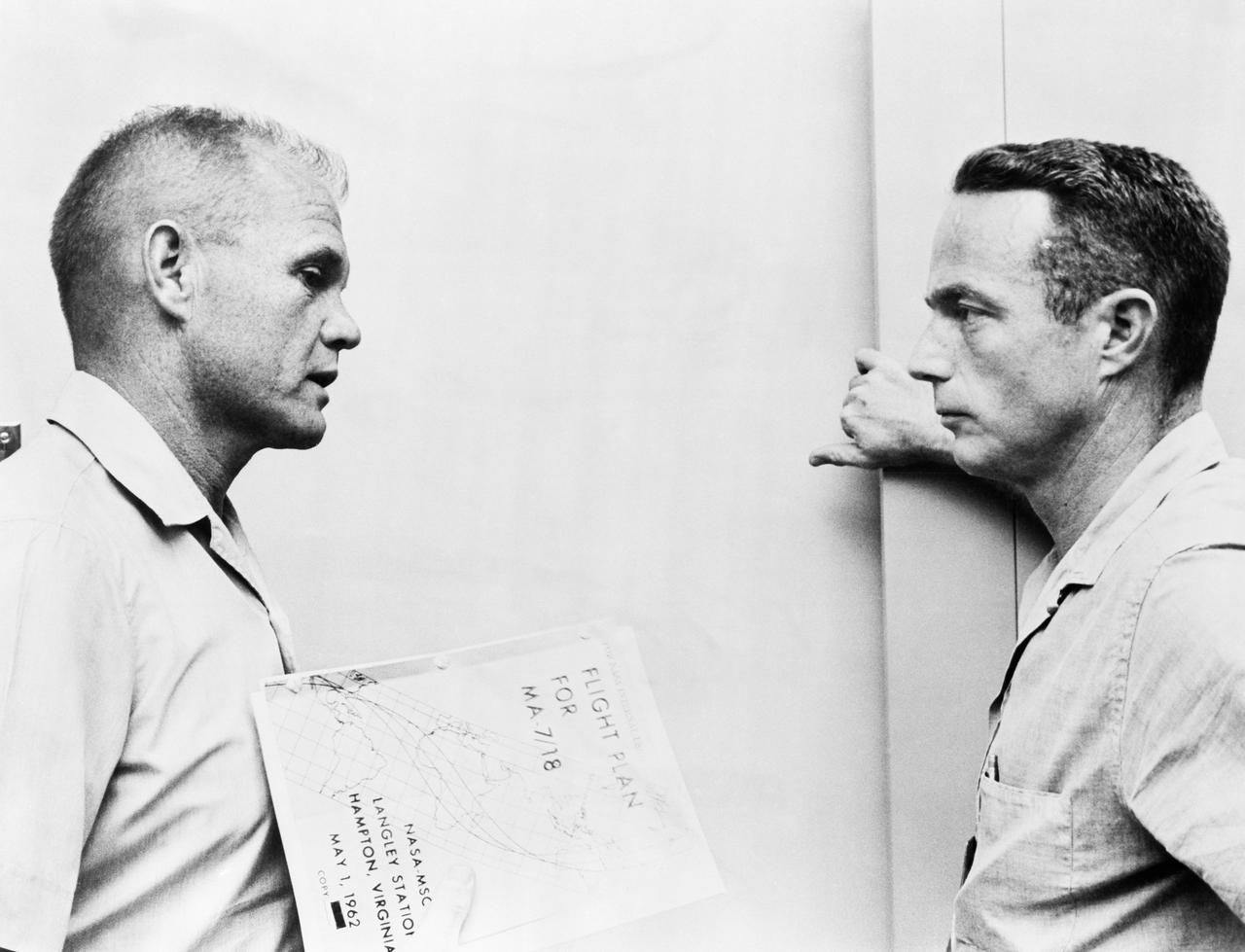
S62-02830 (1962) --- Astronauts John Glenn (left) and Scott Carpenter go over the flight plan for MA-7 mission. (62-MA7-63) Photo credit: NASA
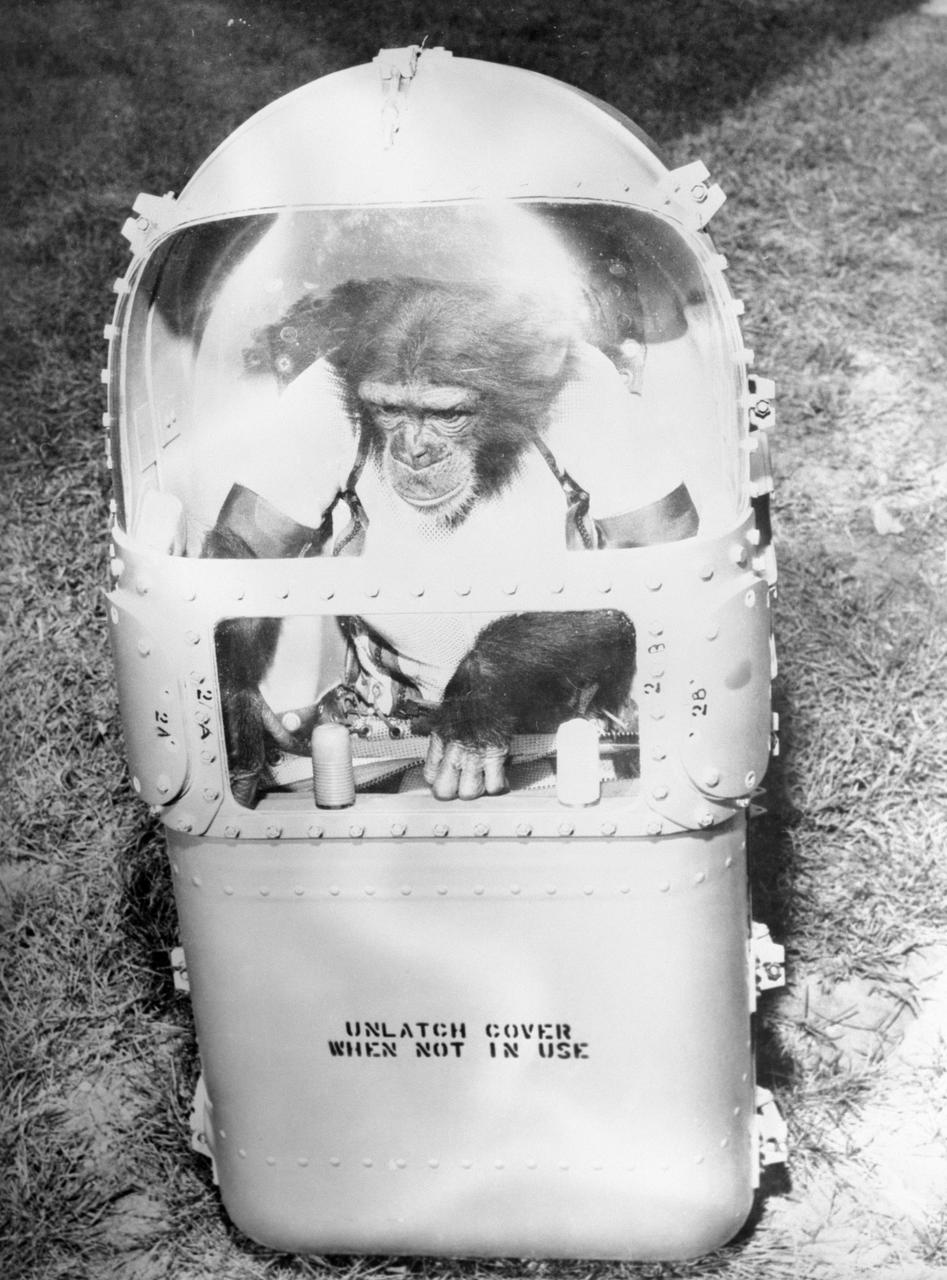
S62-01698 (31 Jan. 1961) --- Chimpanzee "Ham" in his flight couch, after his trip in the Mercury-Redstone 2 (MR-2) on Jan. 31, 1961. Photo credit: NASA
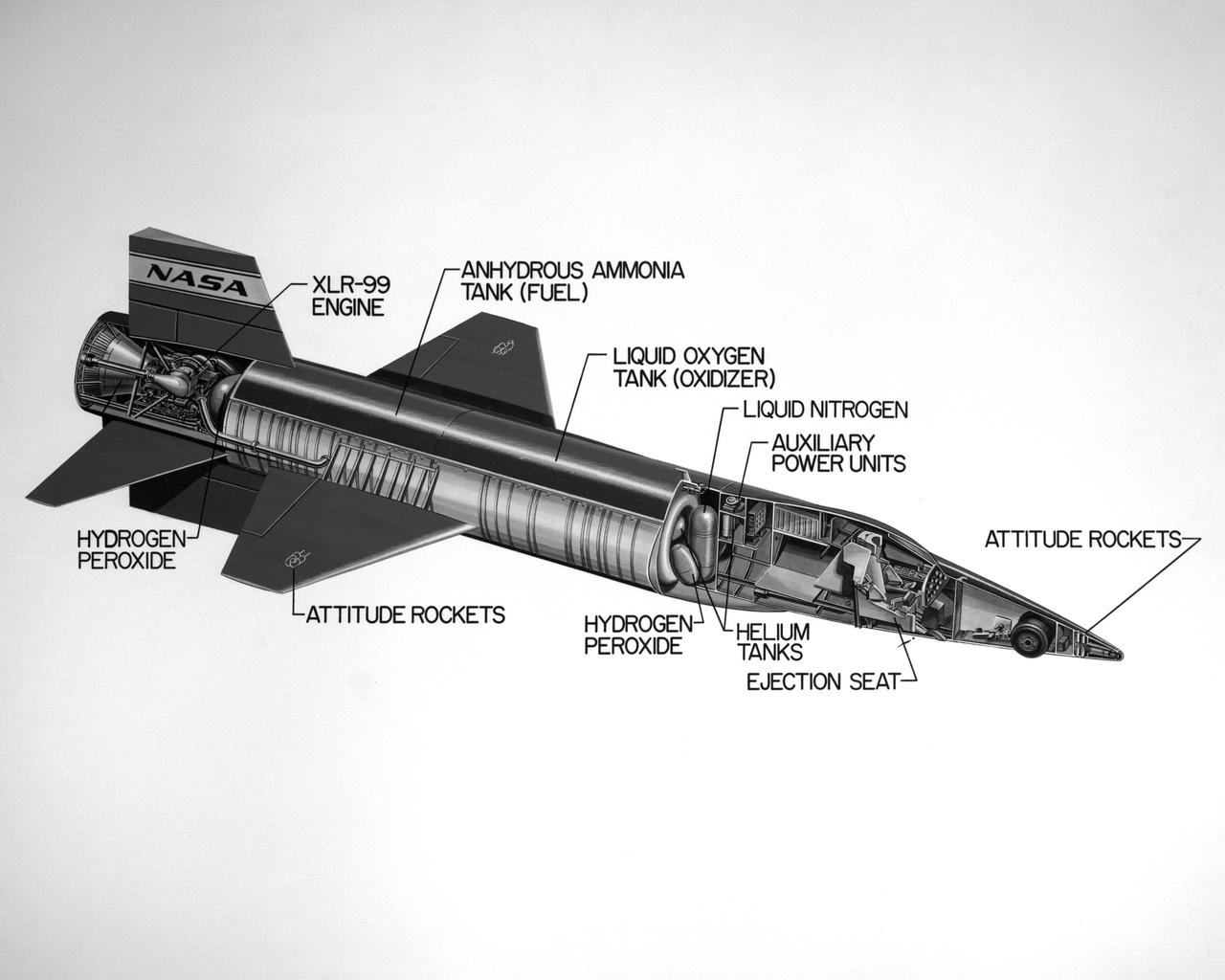
Cutaway drawing of the North American X-15.
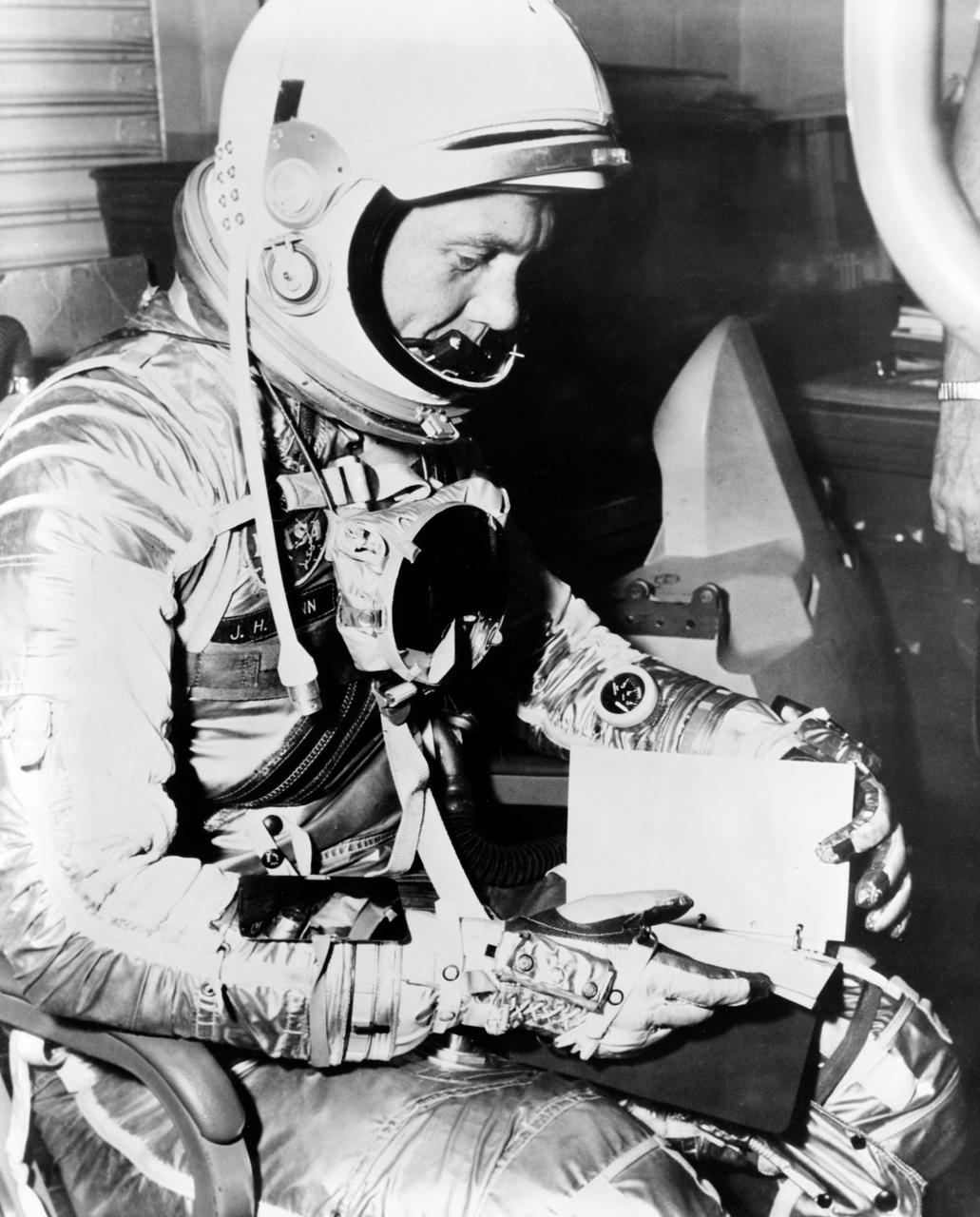
S62-01000 (20 Feb. 1962) --- Astronaut John H. Glenn Jr., pilot of the Mercury-Atlas 6 "Friendship 7" mission, looks over a checklist during MA-6 preflight activity. He is wearing his Mercury spacesuit. Photo credit: NASA
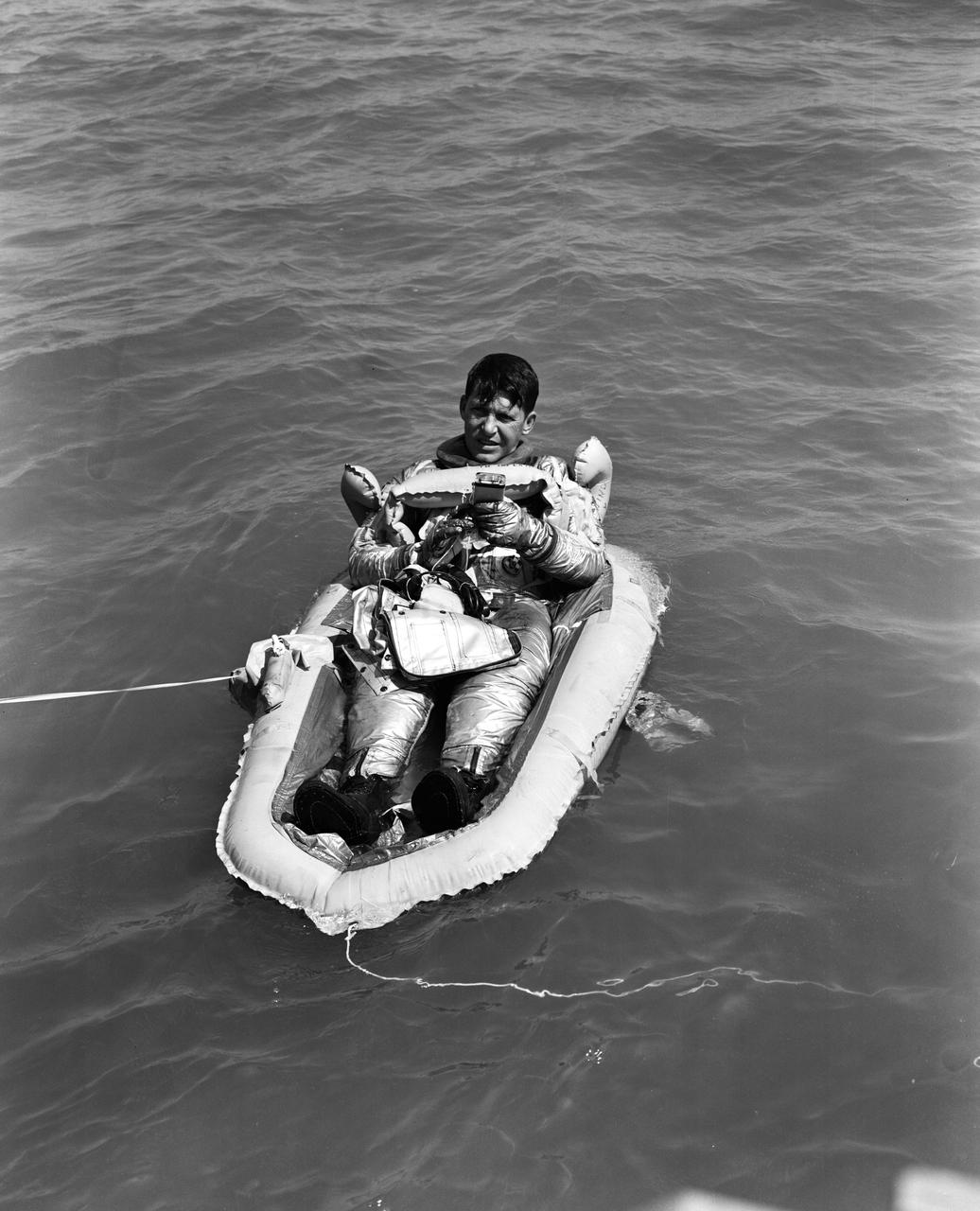
S62-01379 (1962) --- Astronaut Walter M. Schirra Jr., wearing his pressure suit, is seated in a life raft during a portion of his water egress training. Photo credit: NASA
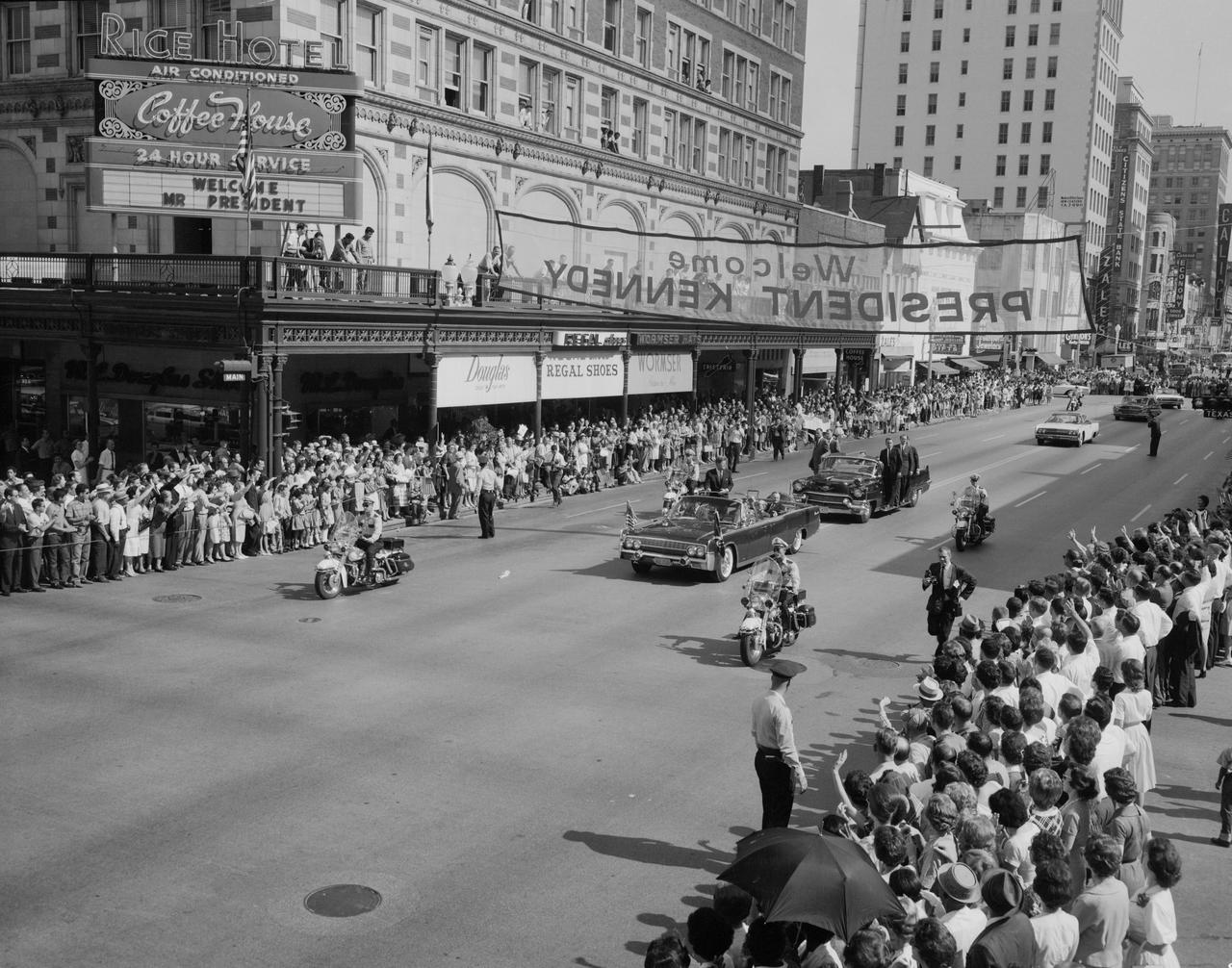
John F. Kennedy, parade downtown, tour. B&W
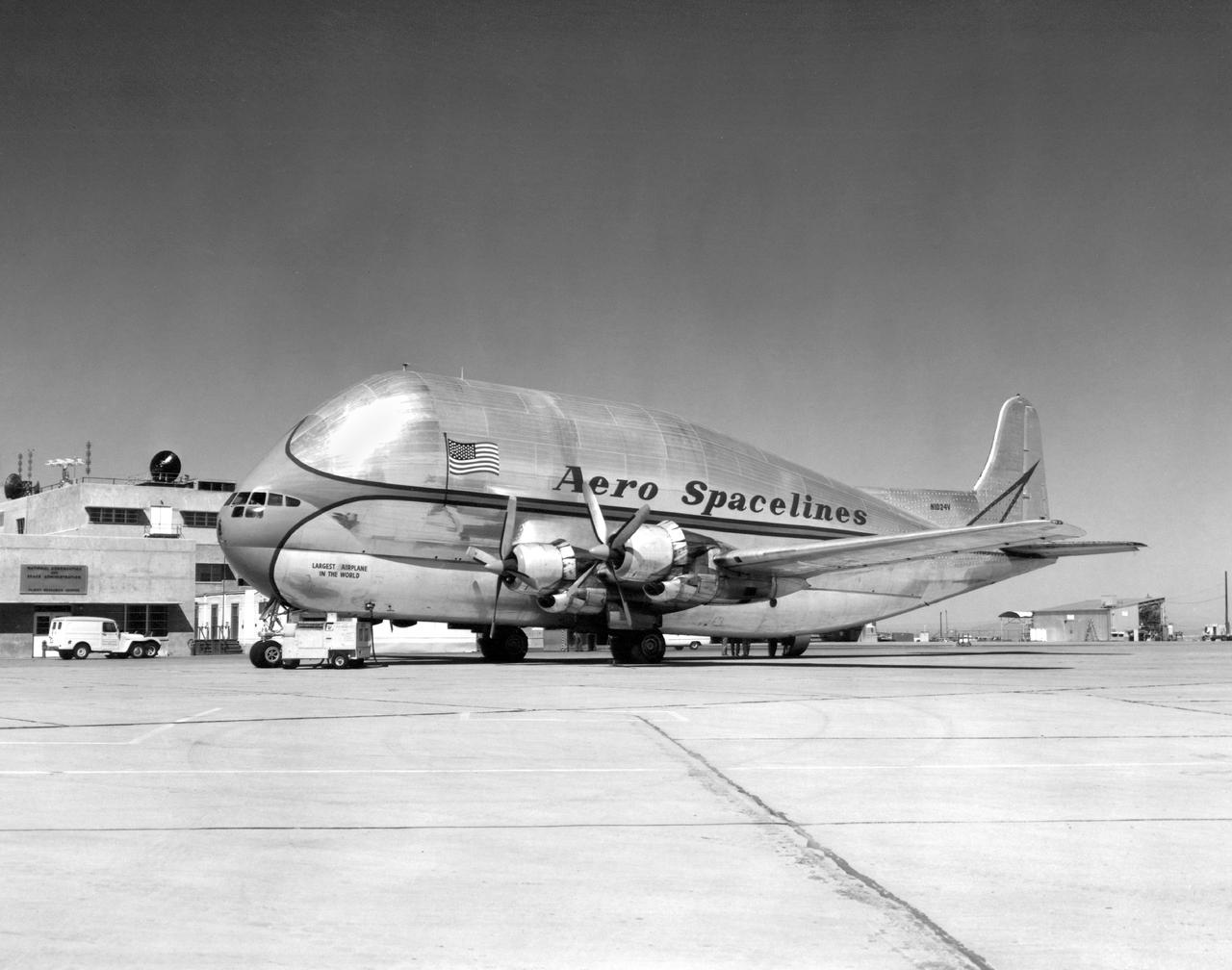
Aero Spacelines B-377PG Pregnant Guppy on ramp in preparation for flight tests and pilot evaluation
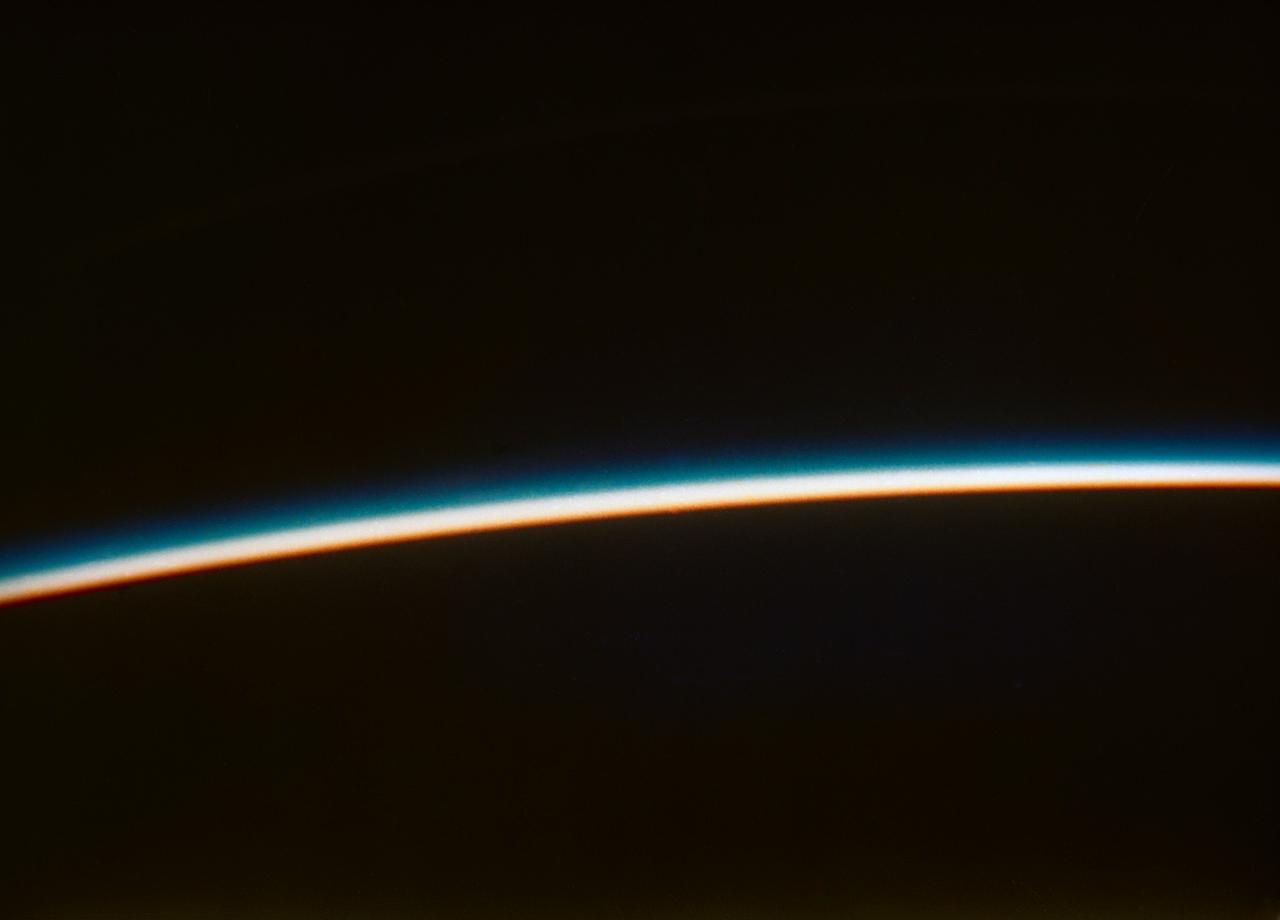
S62-06040 (20 Feb. 1962) --- Orbital sunset photographed by astronaut John H. Glenn Jr. aboard the "Friendship 7" during his Mercury-Atlas 6 (MA-6) spaceflight. Photo credit: NASA
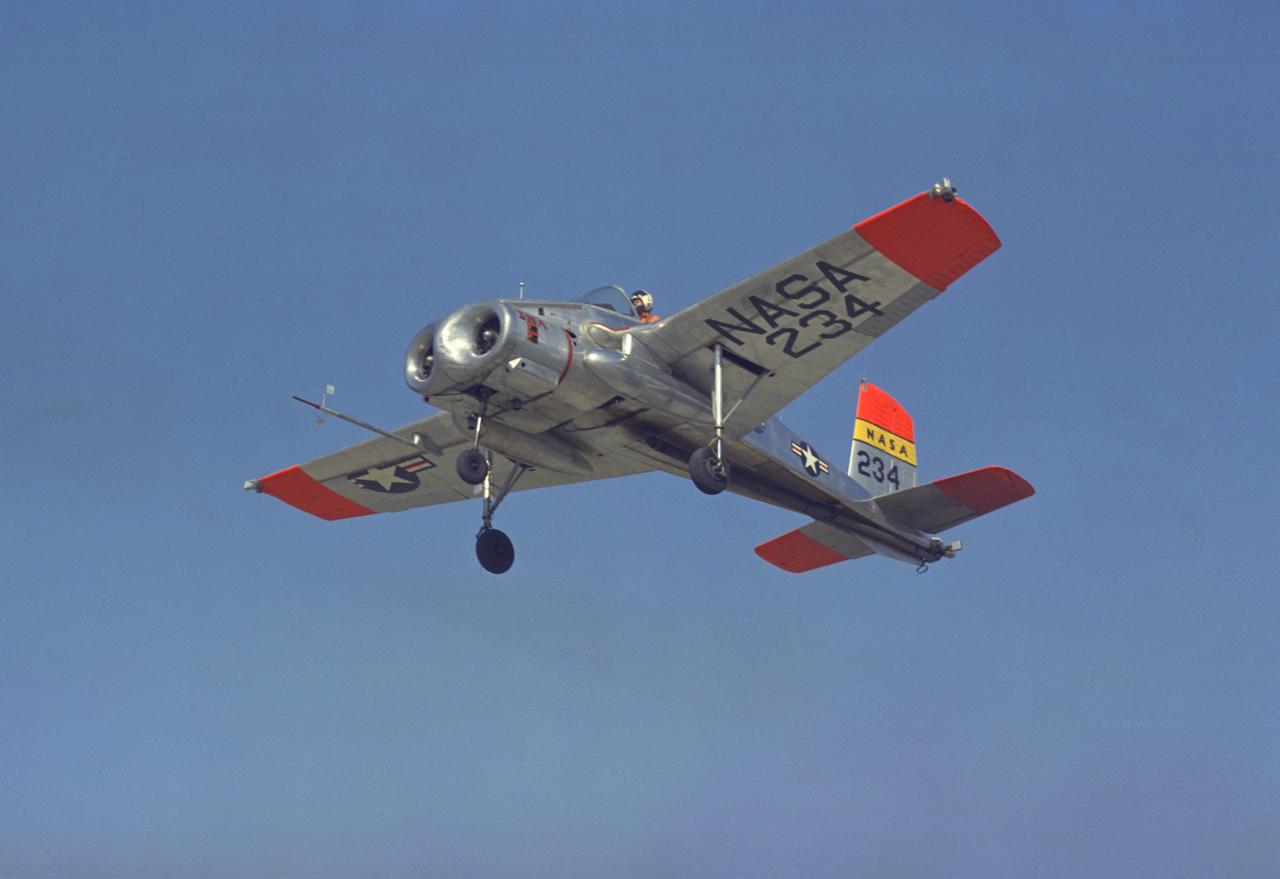
X-14A NASA 234 hovering over ramp at the NASA Ames Research Center, Moffett Field, CA
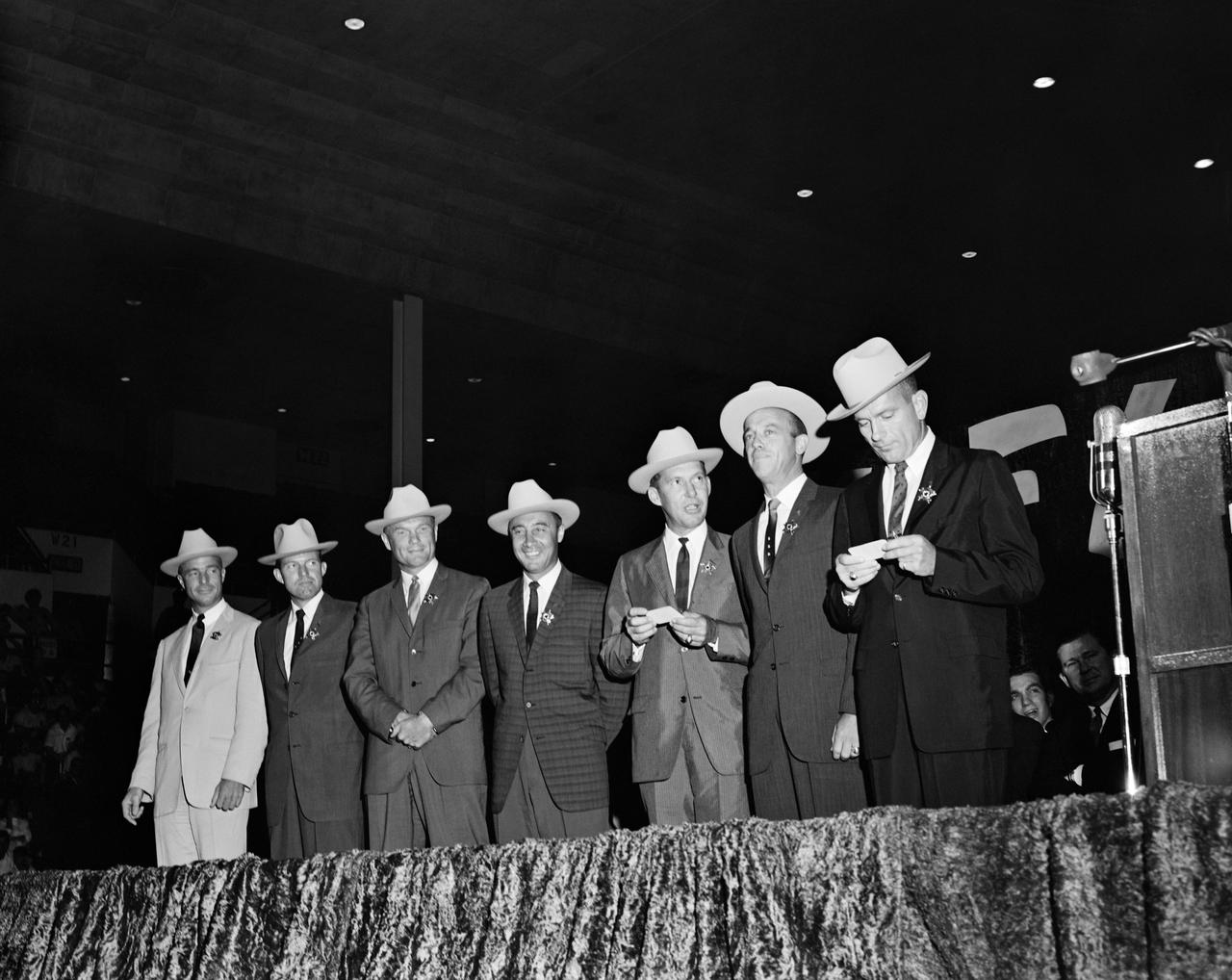
S62-03709 (4 July 1962) --- The original seven Mercury astronauts, each wearing new cowboy hats and a badge in the shape of a star, are pictured on stage at the Sam Houston Coliseum. A large crowd was on hand to welcome them to Houston, Texas. Left to right are astronauts M. Scott Carpenter, L. Gordon Cooper Jr., John H. Glenn Jr., Virgil I. Grissom, Walter M. Schirra Jr., Alan B. Shepard Jr., and Donald K. Slayton. Sen. John Tower (R.-Texas) is seen in far right background. Photo credit: NASA
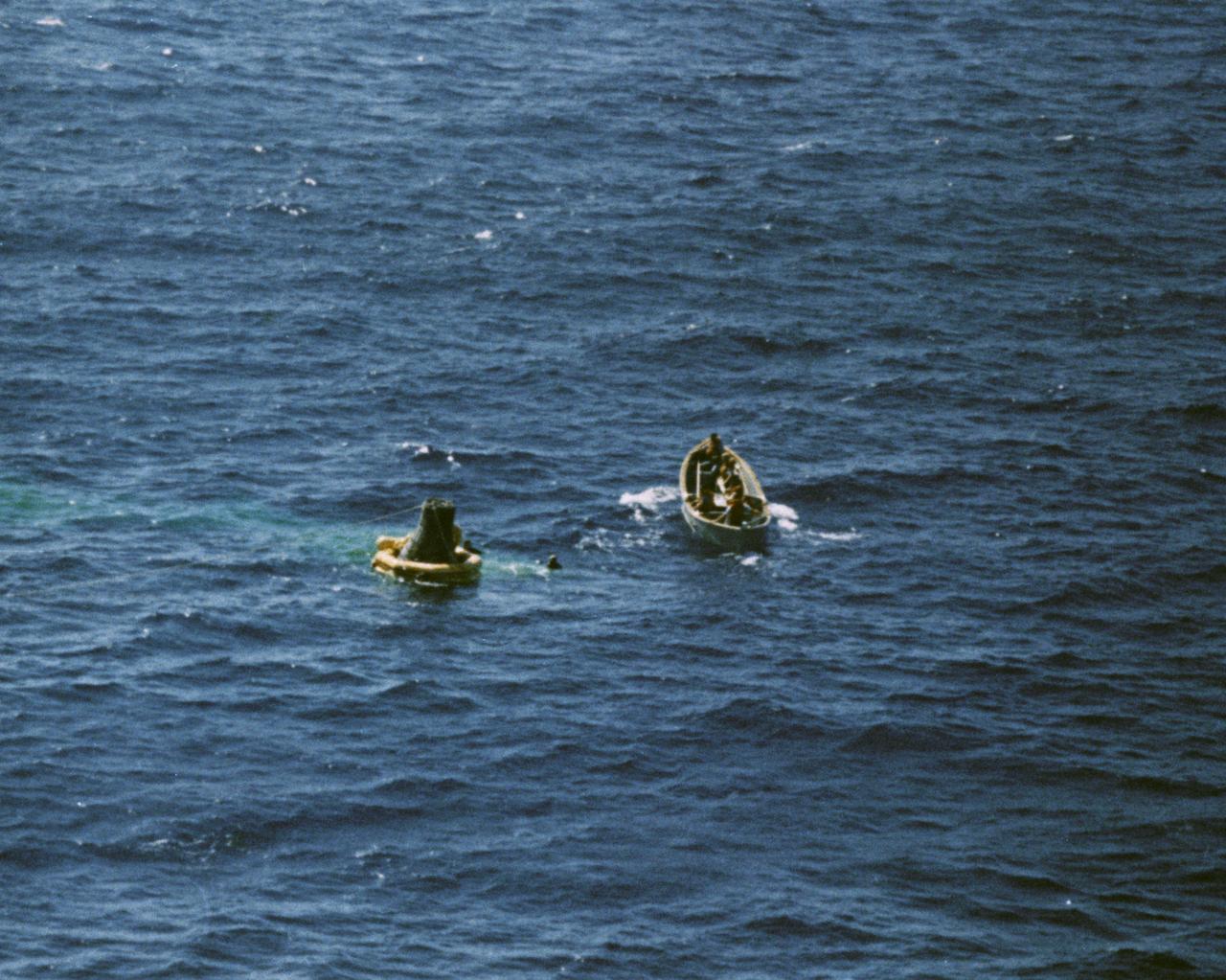
S62-09049 (3 Oct. 1962) --- Aerial view of a life boat from the USS Kearsarge, recovery ship, approaching the floating Sigma 7 capsule for the Mercury-Atlas 8 (MA-8) mission. Photo credit: NASA
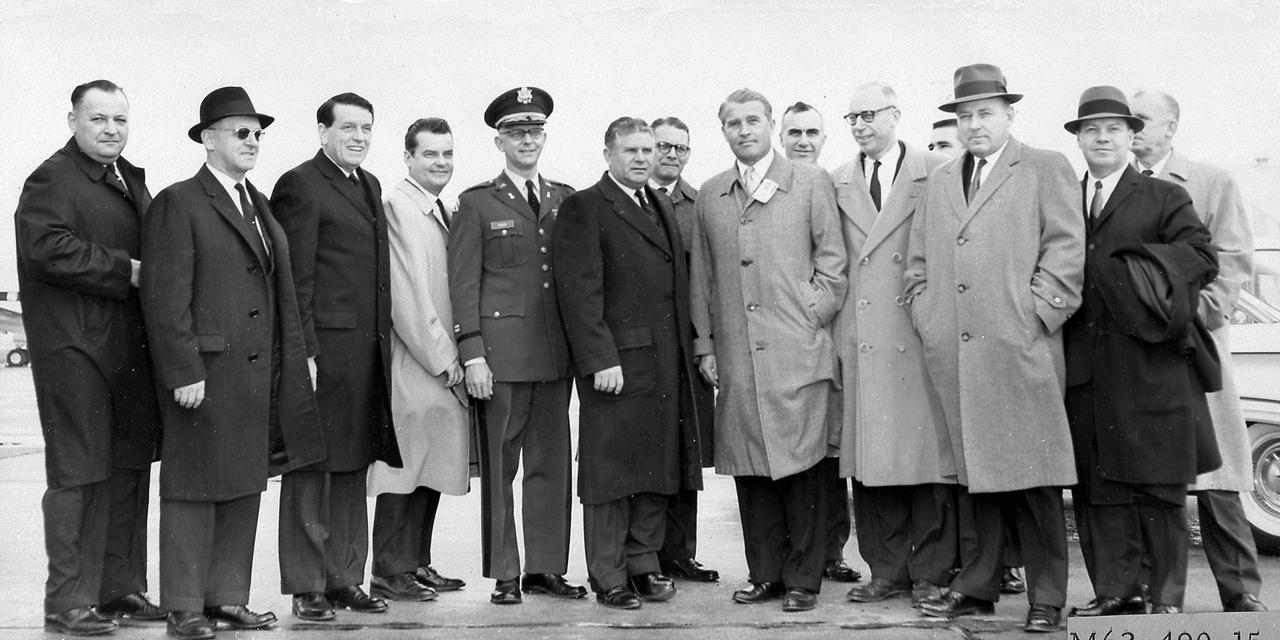
The members of the House Committee on Science and Astronautics visited the Marshall Space Flight Center (MSFC) on March 9, 1962 to gather first-hand information of the nation's space exploration program. The congressional group was composed of members of the Subcommittee on Marned Space Flight. Headed by Representative Olin E. Teague of Texas, other members were James G. Fulton, Pennsylvania; Ken Heckler, West Virginia; R. Walter Riehlman, New York; Richard L. Roudebush,, Indiana; John W. Davis, Georgia; James C. Corman, California; Joseph Waggoner, Louisiana; J. Edgar Chenoweth, Colorado; and William G. Bray, Indiana.
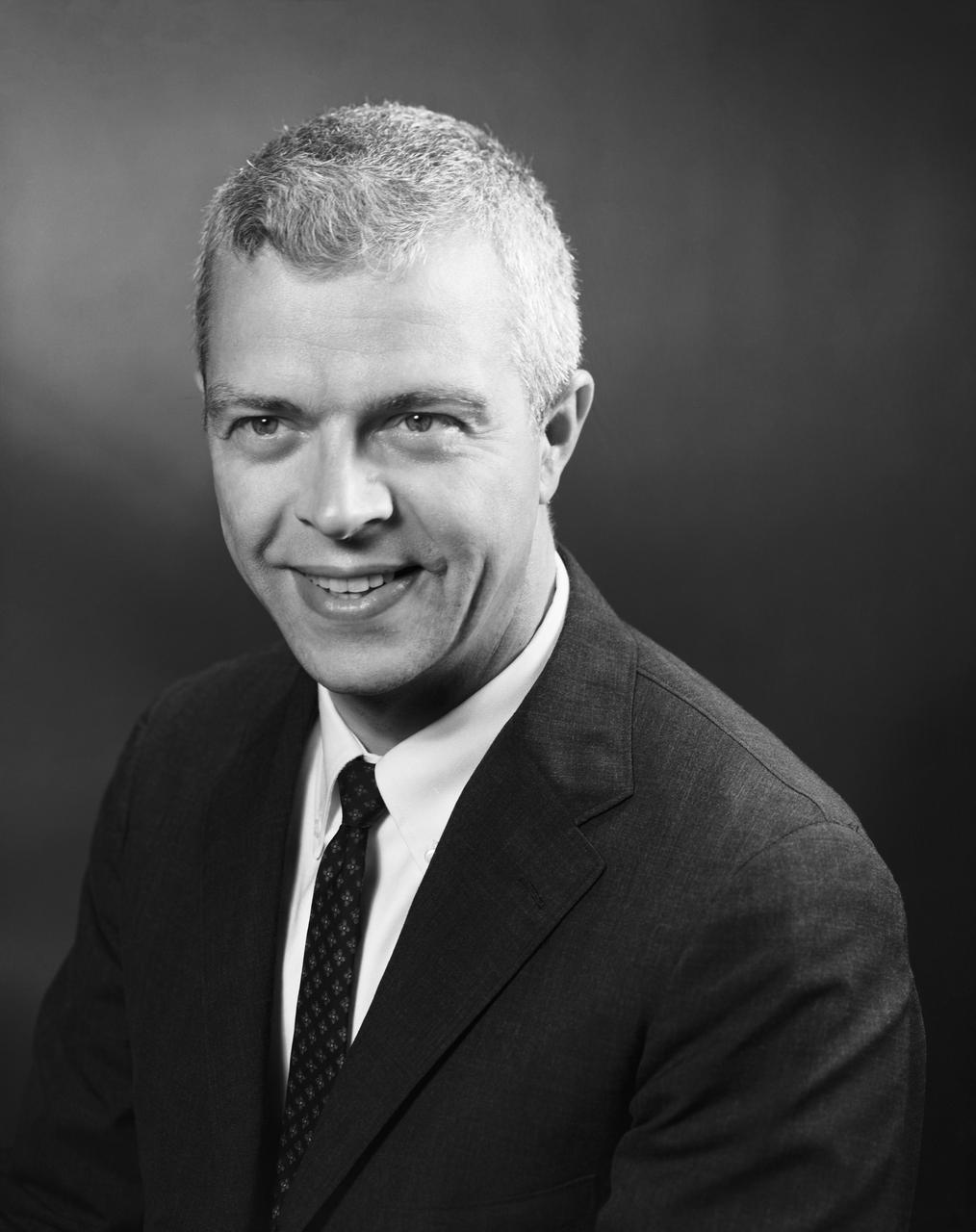
Portrait of Dr. John C. Houbolt
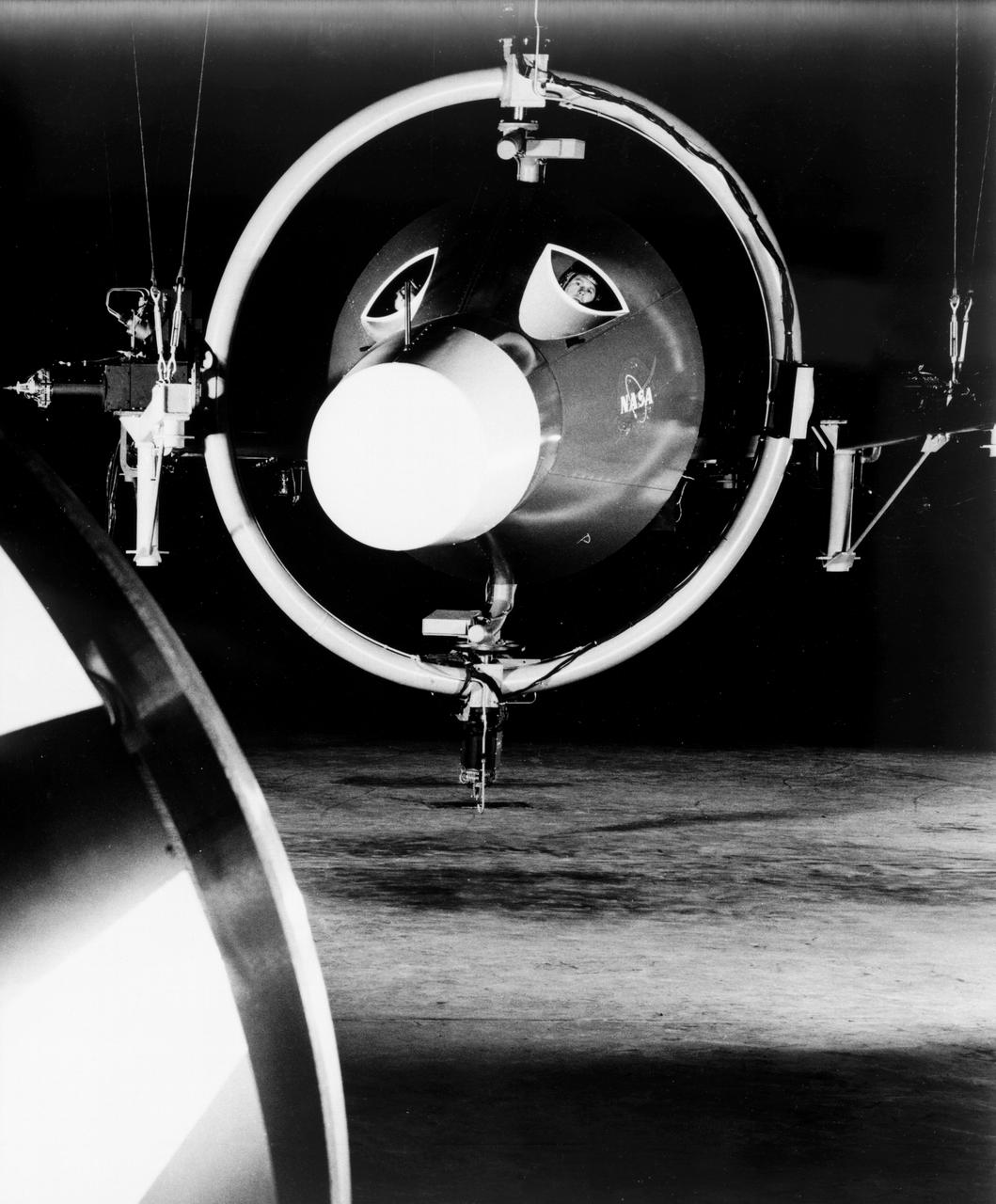
Unidentified Pilot eyeballs his way to a docking by peering through the portal in his capsule. Photo published in Spaceflight Revolution, NASA Langley Research Center From Sputnik to Apollo. By James R. Hansen. NASA SP-4308, 1995, p. 372.
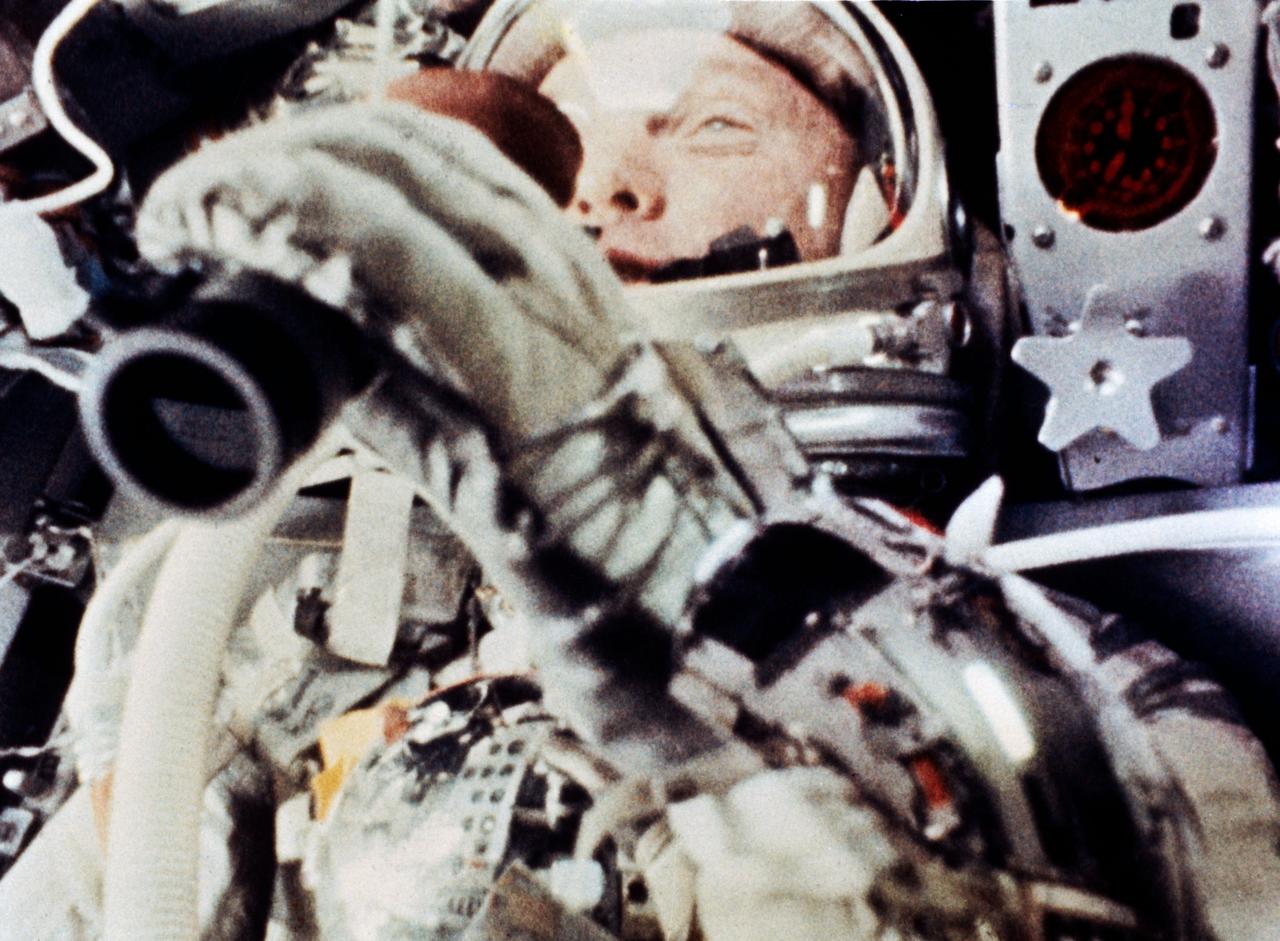
Astronaut John H. Glenn Jr. uses binoculars to view the Earth through the window of the Mercury-Atlas (MA-6) Friendship 7 capsule during the U.S.'s initial orbital flight.
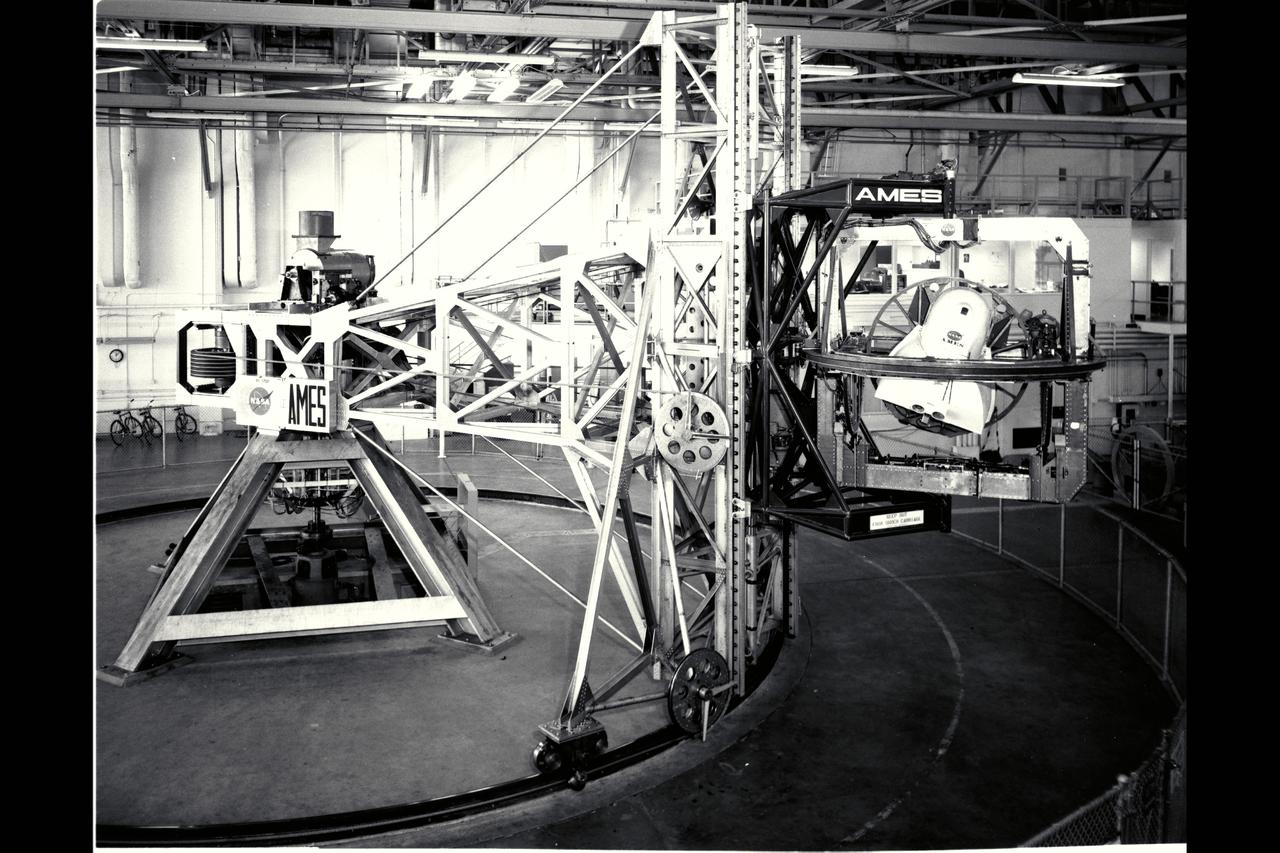
Ames 5 degrees-of-freedom motion simulator: This simulator incorporated a centrifuge of 30ft radius. The simulatored cockpit, located intn a hooded cab at the end of the centrifuge arm, was driven by motors, as required by the simulation, about each of its three axes (itch, roll, and yaw). The cab was also driven through a limited range of motion along the vertical axis and of course was driven by the centrifuge arm along a curved path of fixed radius in the horizontal plane. Thus the motions that could be simulated i the cab were three angular motions, one translational motion, and a curvilinear combination of the remaining two translational motions. The curvilinear motions, and associated accelerations, were, of course, fairly representative of airplane flight. The simulator was placed in operation early in 1961. ref: Adventures in Research (pg 341/341) NASA SP-4302
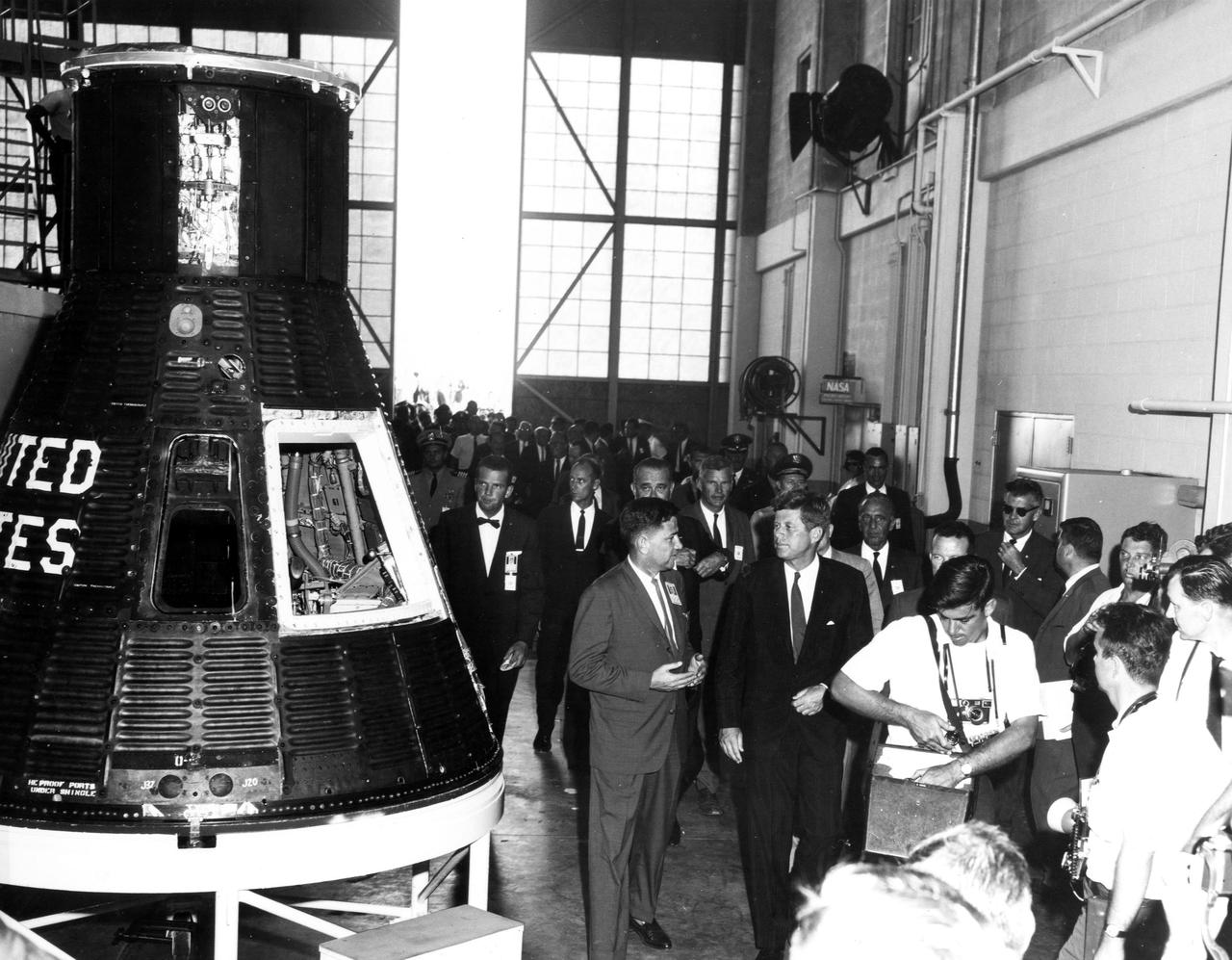
KENNEDY SPACE CENTER, FLA. -- President John F. Kennedy tours the Cape Canaveral facilities.
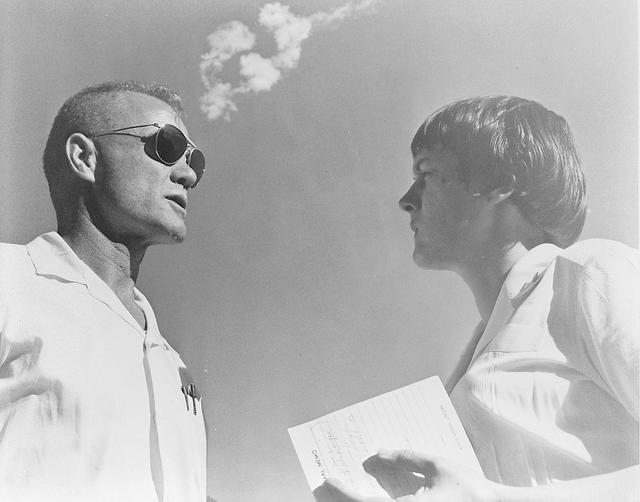
S62-00469 (1962) --- Astronaut John H. Glenn Jr., pilot of the Mercury-Atlas 6 (MA-6) Earth-orbital space mission, confers with astronaut nurse Dolores B. O'Hara, R.N., during MA-6 prelaunch preparations. Photo credit: NASA
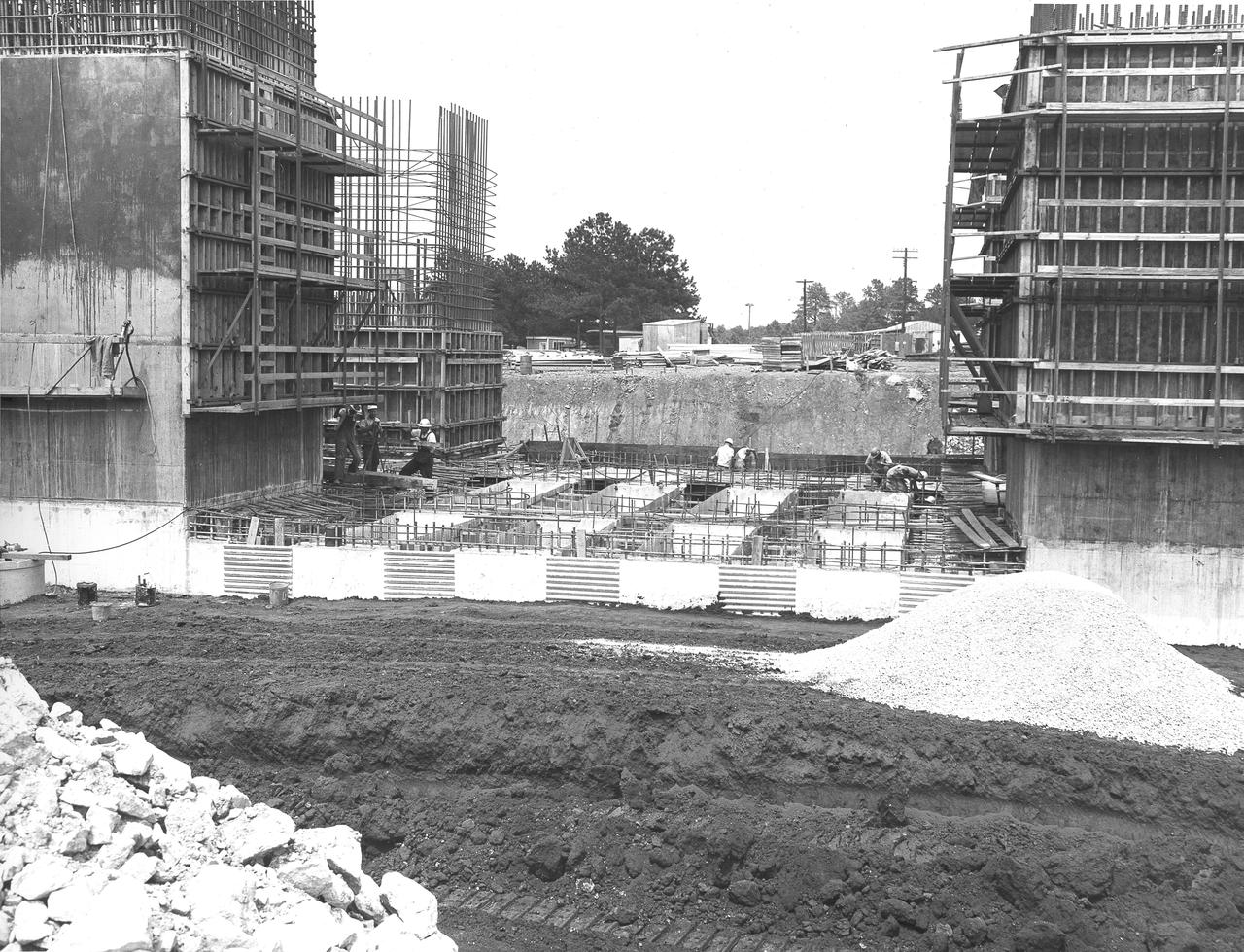
At its founding, the Marshall Space Flight Center (MSFC) inherited the Army’s Jupiter and Redstone test stands, but much larger facilities were needed for the giant stages of the Saturn V. From 1960 to 1964, the existing stands were remodeled and a sizable new test area was developed. The new comprehensive test complex for propulsion and structural dynamics was unique within the nation and the free world, and they remain so today because they were constructed with foresight to meet the future as well as on going needs. Construction of the S-IC Static test stand complex began in 1961 in the west test area of MSFC, and was completed in 1964. The S-IC static test stand was designed to develop and test the 138-ft long and 33-ft diameter Saturn V S-IC first stage, or booster stage, weighing in at 280,000 pounds. Required to hold down the brute force of a 7,500,000-pound thrust produced by 5 F-1 engines, the S-IC static test stand was designed and constructed with the strength of hundreds of tons of steel and 12,000,000 pounds of cement, planted down to bedrock 40 feet below ground level. The foundation walls, constructed with concrete and steel, are 4 feet thick. The base structure consists of four towers with 40-foot-thick walls extending upward 144 feet above ground level. The structure was topped by a crane with a 135-foot boom. With the boom in the upright position, the stand was given an overall height of 405 feet, placing it among the highest structures in Alabama at the time. In addition to the stand itself, related facilities were constructed during this time. North of the massive S-IC test stand, the F-1 Engine test stand was built. Designed to assist in the development of the F-1 Engine, the F-1 test stand is a vertical engine firing test stand, 239 feet in elevation and 4,600 square feet in area at the base. Capability was provided for static firing of 1.5 million pounds of thrust using liquid oxygen and kerosene. Like the S-IC stand, the foundation of the F-1 stand is keyed into the bedrock approximately 40 feet below grade. This photo depicts the construction of the F-1 test stand as of July 3, 1963. All four of its tower legs are well underway.

The Atlas-Agena-4 boosted the Ranger IV spacecraft for the first U.S. lunar impact on April 23, 1962.
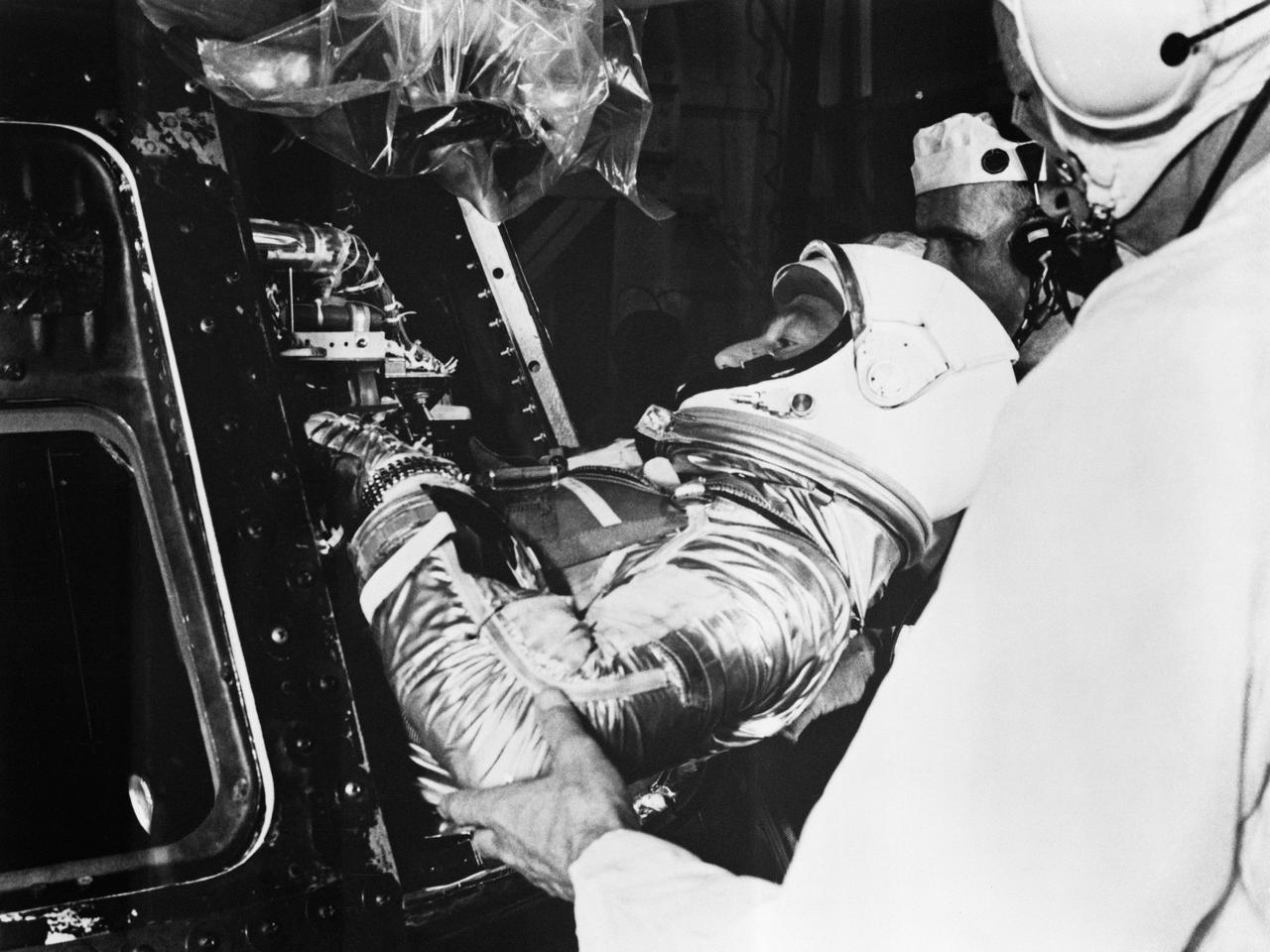
S62-02846 (24 May 1962) --- Project Mercury astronaut M. Scott Carpenter, prime pilot for the Mercury-Atlas 7 (MA-7) mission, is assisted into the MA-7 spacecraft by techicians at Launch Pad 14, Cape Canaveral, Florida. MA-7 is the United States? second attempt in orbital flight around Earth. The spacecraft was designated the ?Aurora? 7. Photo credit: NASA
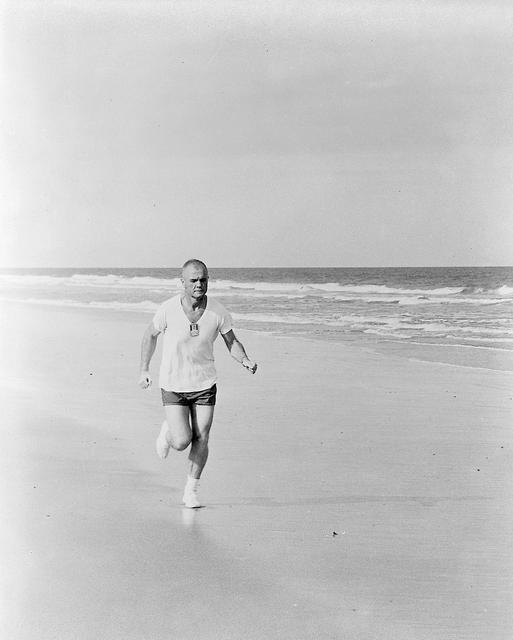
S62-00470 (1962) --- Astronaut John H. Glenn Jr., pilot of the Mercury-Atlas 6 mission, participates in a strict physical training program, as he exemplifies by frequent running. Photo credit: NASA
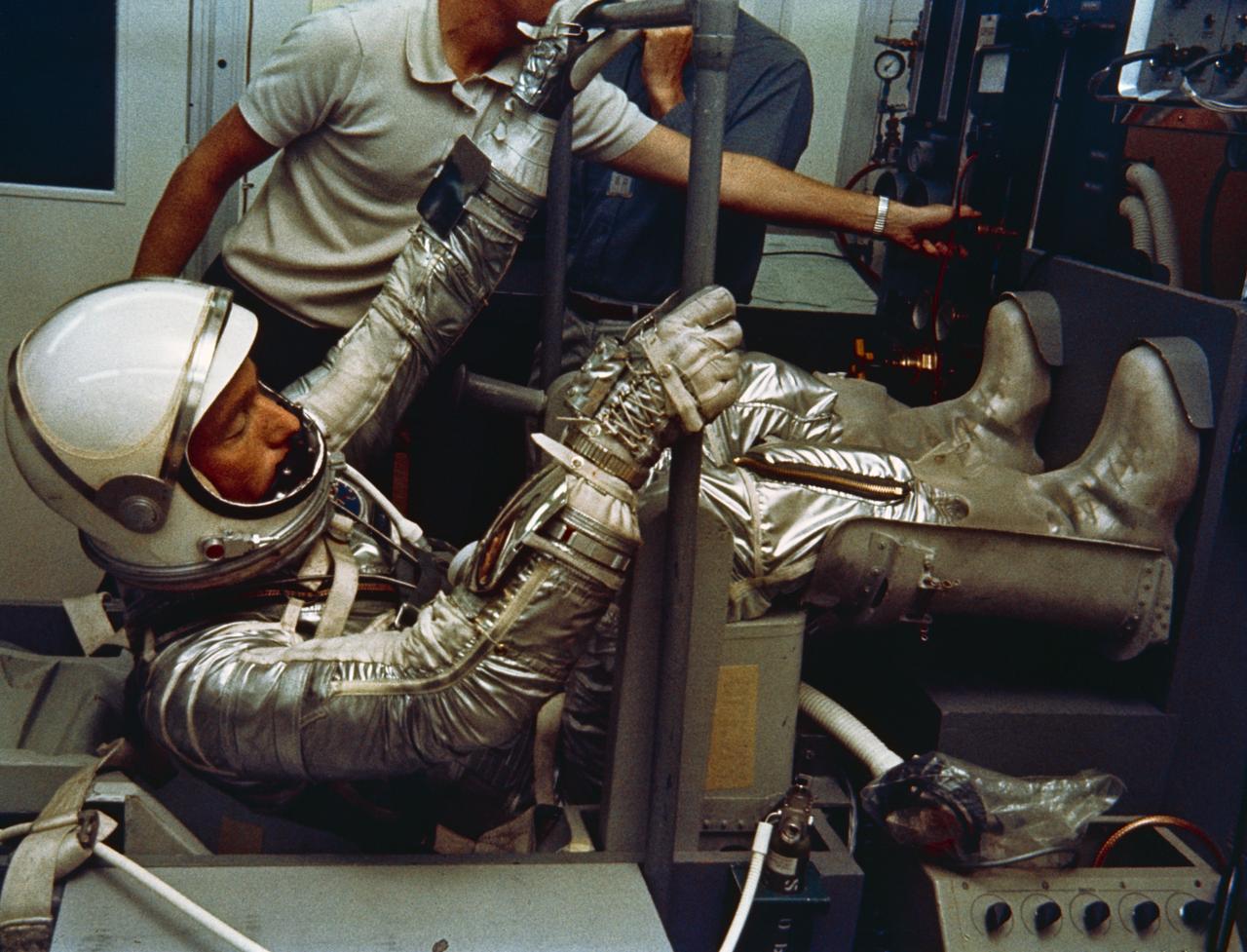
S65-24623 (May 1962) --- Astronaut M. Scott Carpenter, prime pilot for the Mercury-Atlas 7 (MA-7) flight, is seen in Hangar S crew quarters during a suiting exercise. Carpenter is seated in a mock-up of his pilot's seat while fully suited. Photo credit: NASA
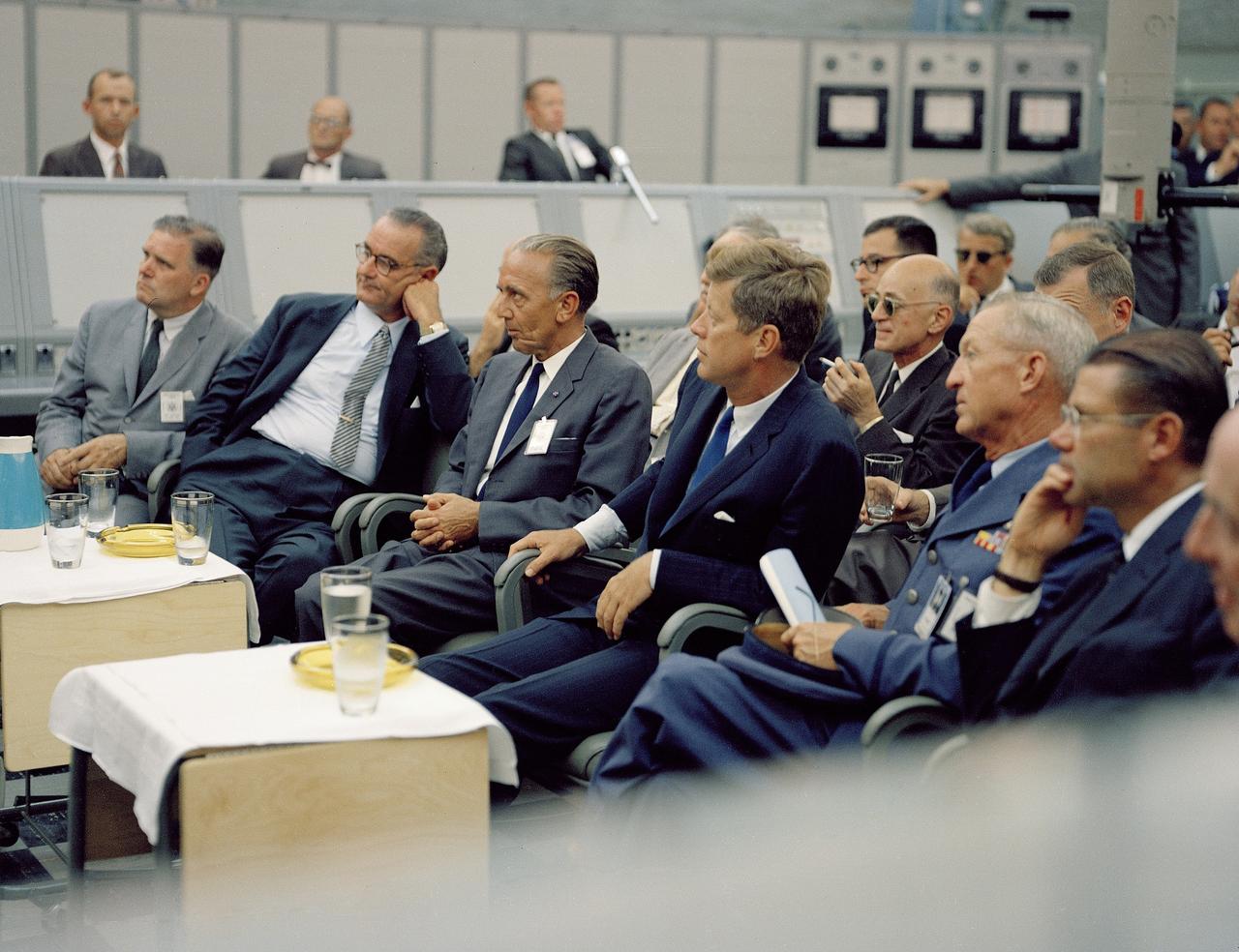
CAPE CANAVERAL, Fla. -- In the blockhouse of Launch Complex 34 at the Cape Canaveral Missile Test Annex in Florida, President John F. Kennedy is briefed on NASA's future plans. Seated, from the left, are NASA Administrator James E. Webb, Vice President Lyndon B. Johnson, Launch Operations Center Director Kurt H. Debus and Kennedy. Photo Credit: NASA
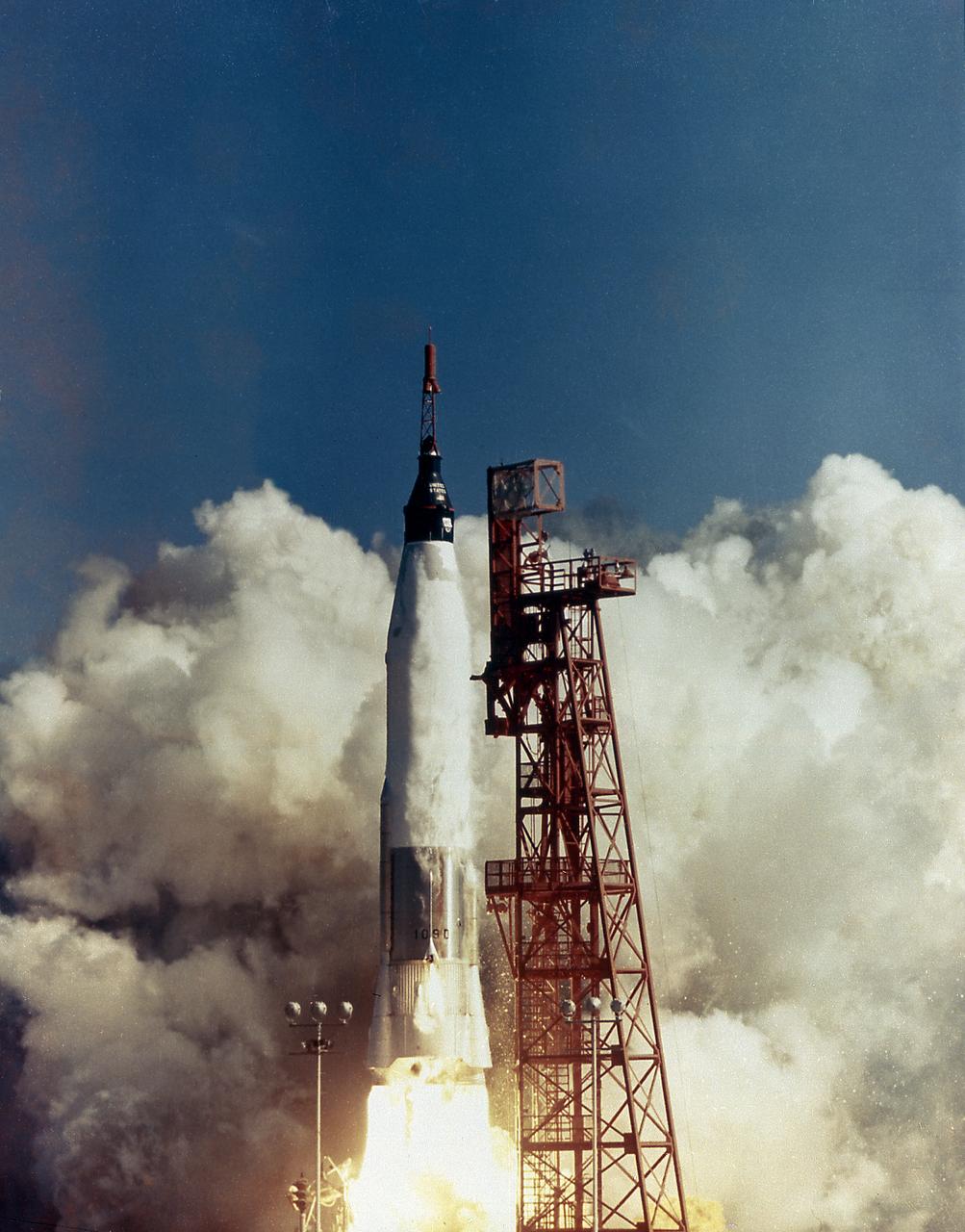
The launch of the MA-6, Friendship 7, on February 20, 1962. Boosted by the Mercury-Atlas vehicle, a modified Atlas Intercontinental Ballistic Missile (ICBM), Friendship 7 was the first U.S. marned orbital flight and carried Astronaut John H. Glenn into orbit. Astronaut Glenn became the first American to orbit the Earth.
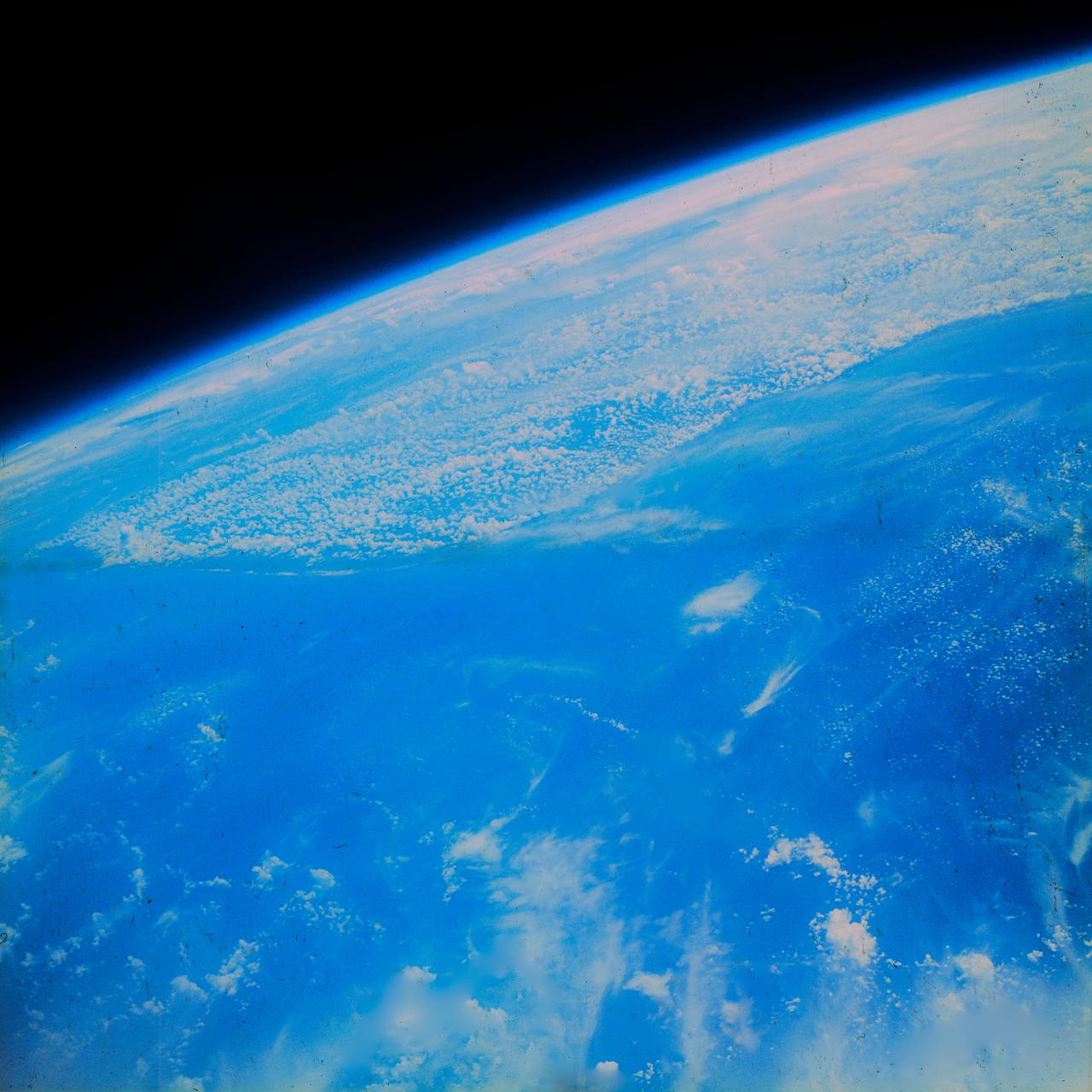
S62-06607 (3 Oct. 1962) --- Western horizon over South America taken during the sixth orbit pass of the Mercury-Atlas 8 (MA-8) mission by astronaut Walter M. Schirra Jr. with a hand-held camera. Photo credit: NASA
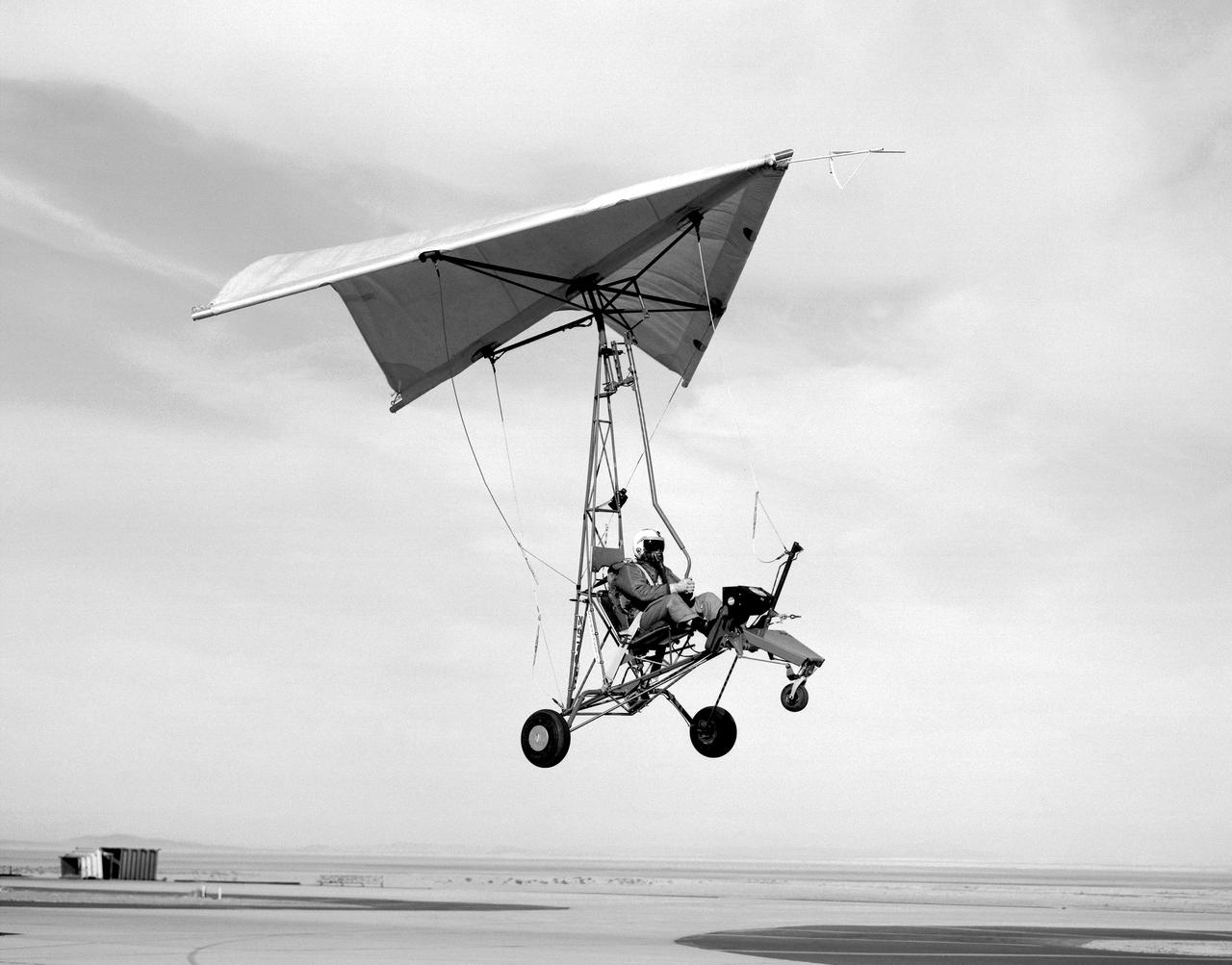
Pilot and Paresev 1 preparing for a landing on the Rogers dry lakebed in 1962 at Edwards Air Force Base, California. The flight program began with ground tow tests. Several tows were made before liftoff was attempted to check the control rigging and to familiarize the pilot with the vehicle’s ground stability. As the pilot’s confidence and experience increased, tow speeds were also increased until liftoff was attained. Liftoff was at about 40 knots indicated airspeed (kias).
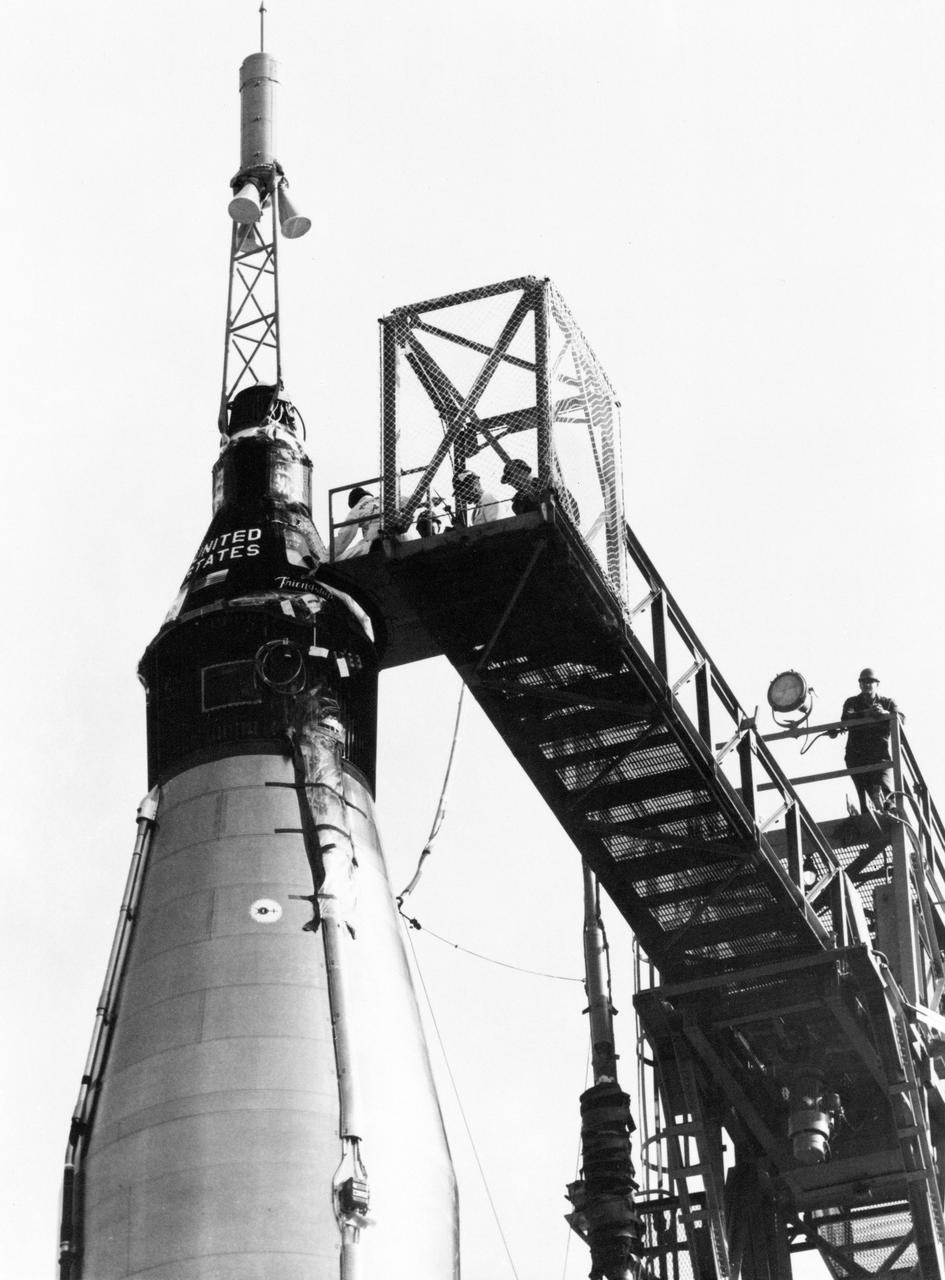
S62-00380 (20 Feb. 1962) --- Close-up view of the Mercury Atlas 6 (MA-6) Friendship 7 capsule on top of its booster rocket with catwalk still attached. Photo credit: NASA
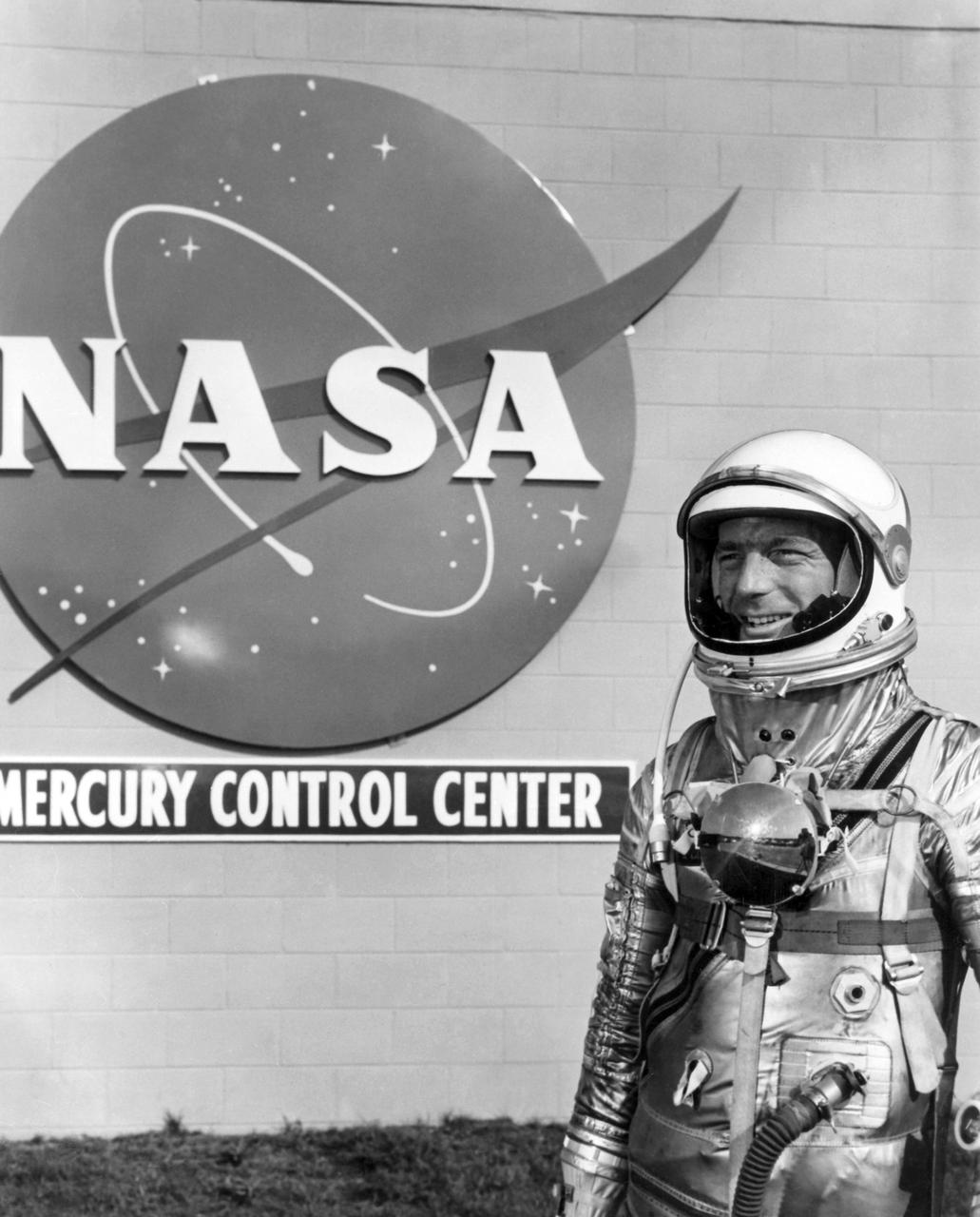
CAPE CANAVERAL, Fla. - Mercury astronaut Scott Carpenter stands in front of the Mercury Control Center. Carpenter flew the Aurora 7 mission, launched on May 24, 1962. The Mercury Mission Control Center in Florida played a key role in the United States' early spaceflight program. Located at Cape Canaveral Air Force Station, the original part of the building was constructed between 1956 and 1958, with additions in 1959 and 1963. The facility officially was transferred to NASA on Dec. 26, 1963, and served as mission control during all the Project Mercury missions, as well as the first three flights of the Gemini Program, when it was renamed Mission Control Center. With its operational days behind, on June 1, 1967, the Mission Control Center became a stop on the public tour of NASA facilities until the mid-90s. In 1999, much of the equipment and furnishings from the Flight Control Area were moved to the Kennedy Space Center Visitor Complex where they became part of the exhibit there. The building was demolished in spring 2010. Photo credit: NASA
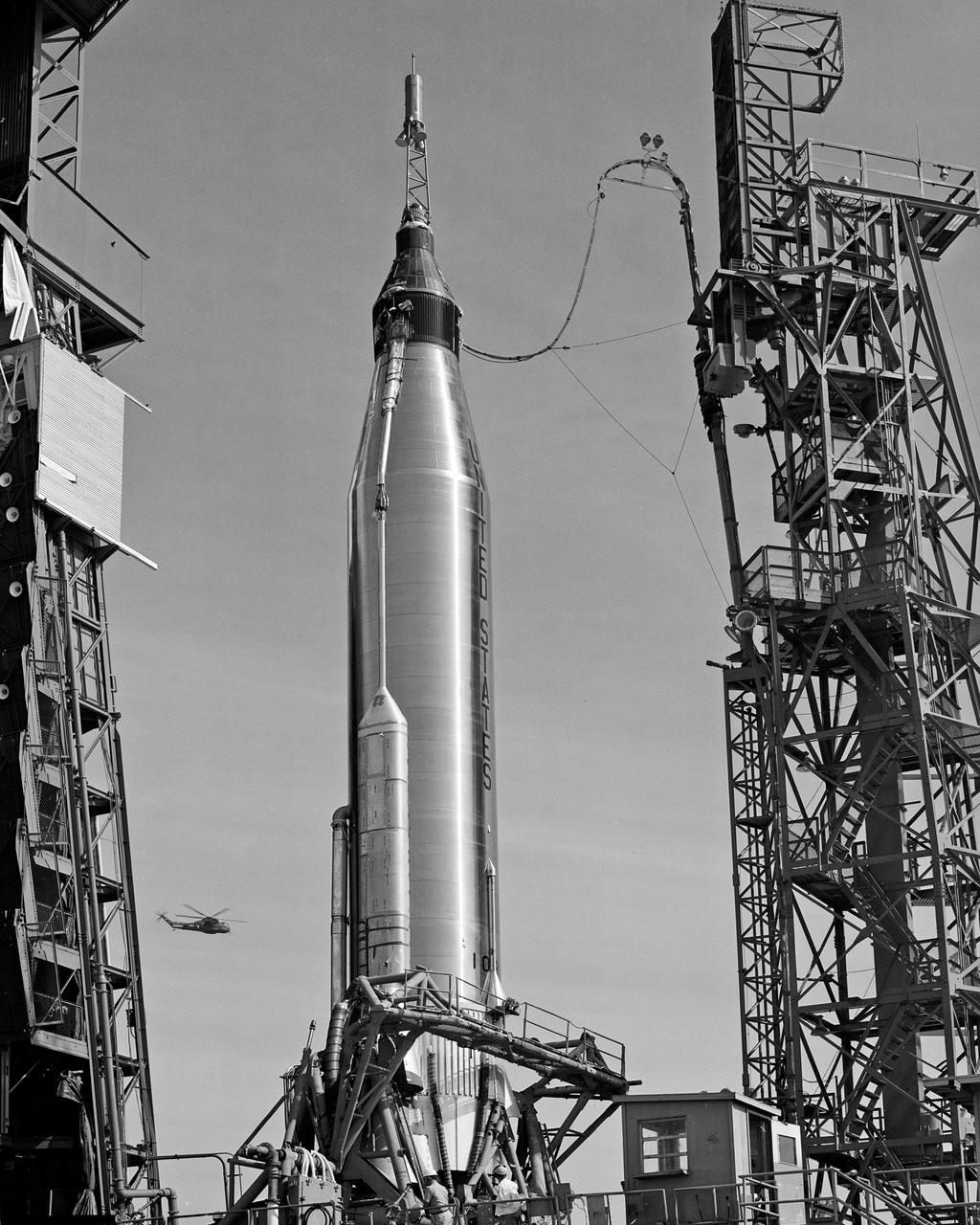
CAPE CANAVERAL, Fla. -- CCMTA, NASA:MERCURY, Pad 14 Mercury Atlas-6 with Capsule #13. Photo credit: NASA/USAF
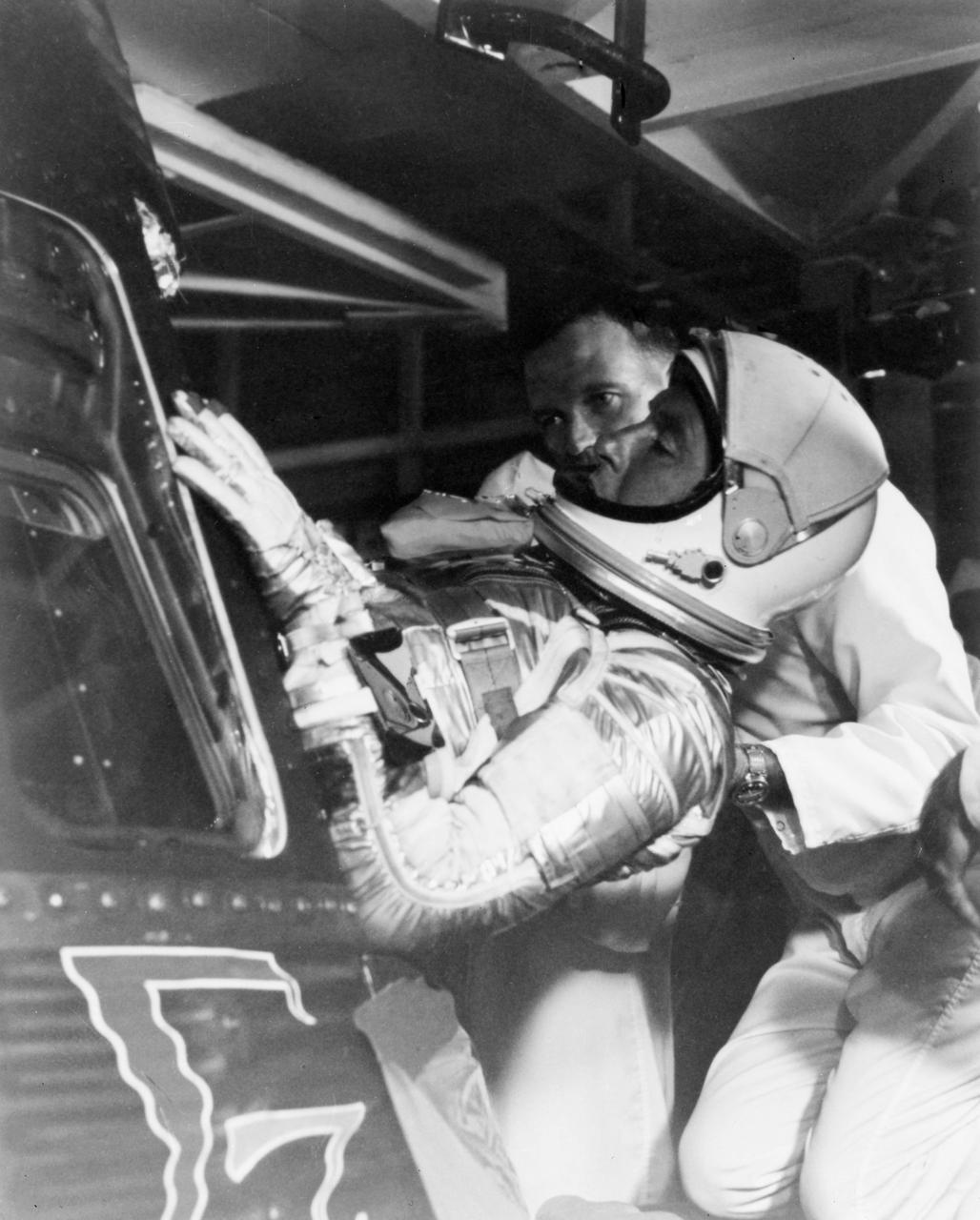
S62-06002 (3 Oct. 1962) --- Astronaut Walter M. Schirra Jr., pilot of the Mercury-Atlas 8 (MA-8) Earth-orbital spaceflight, is assisted by backup pilot L. Gordon Cooper into his Sigma 7 spacecraft for the begining of the MA-8 mission. Photo credit: NASA

CAPE CANAVERAL, FLA. -- After arrival at Cape Canaveral Missile Test Annex, Skid Strip, President John F. Kennedy left is welcomed by a Color Guard. Dr. Kurt Debus is at right. The President is touring Complex 37, Cape Canaveral Missile Test Annex.
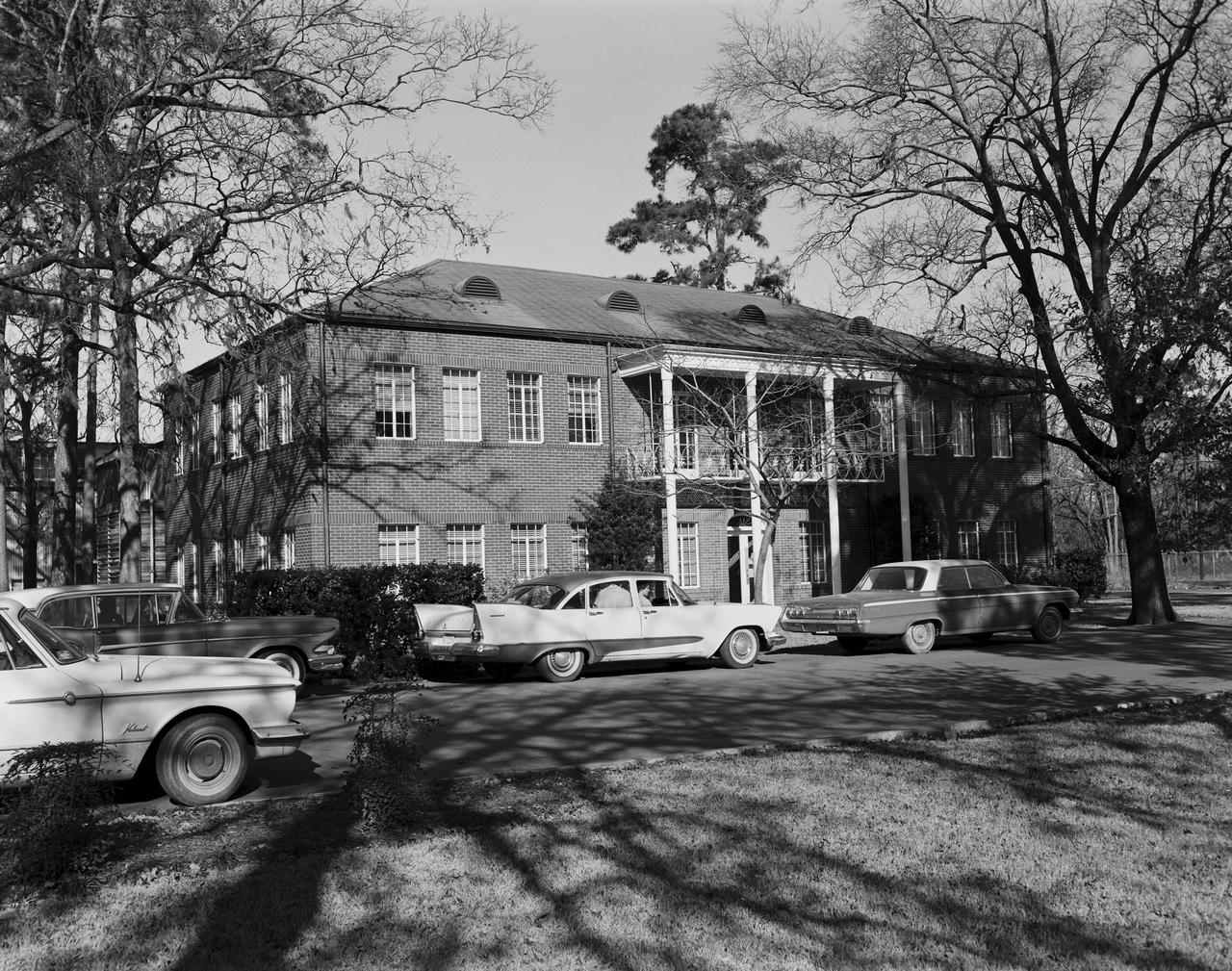
S62-00518 (1962) --- Exterior view of the Lane Wells Building, rented to the National Aeronautics and Space Administration as part of the temporary quarters for the Houston Manned Spacecraft Center (MSC). Photo credit: NASA
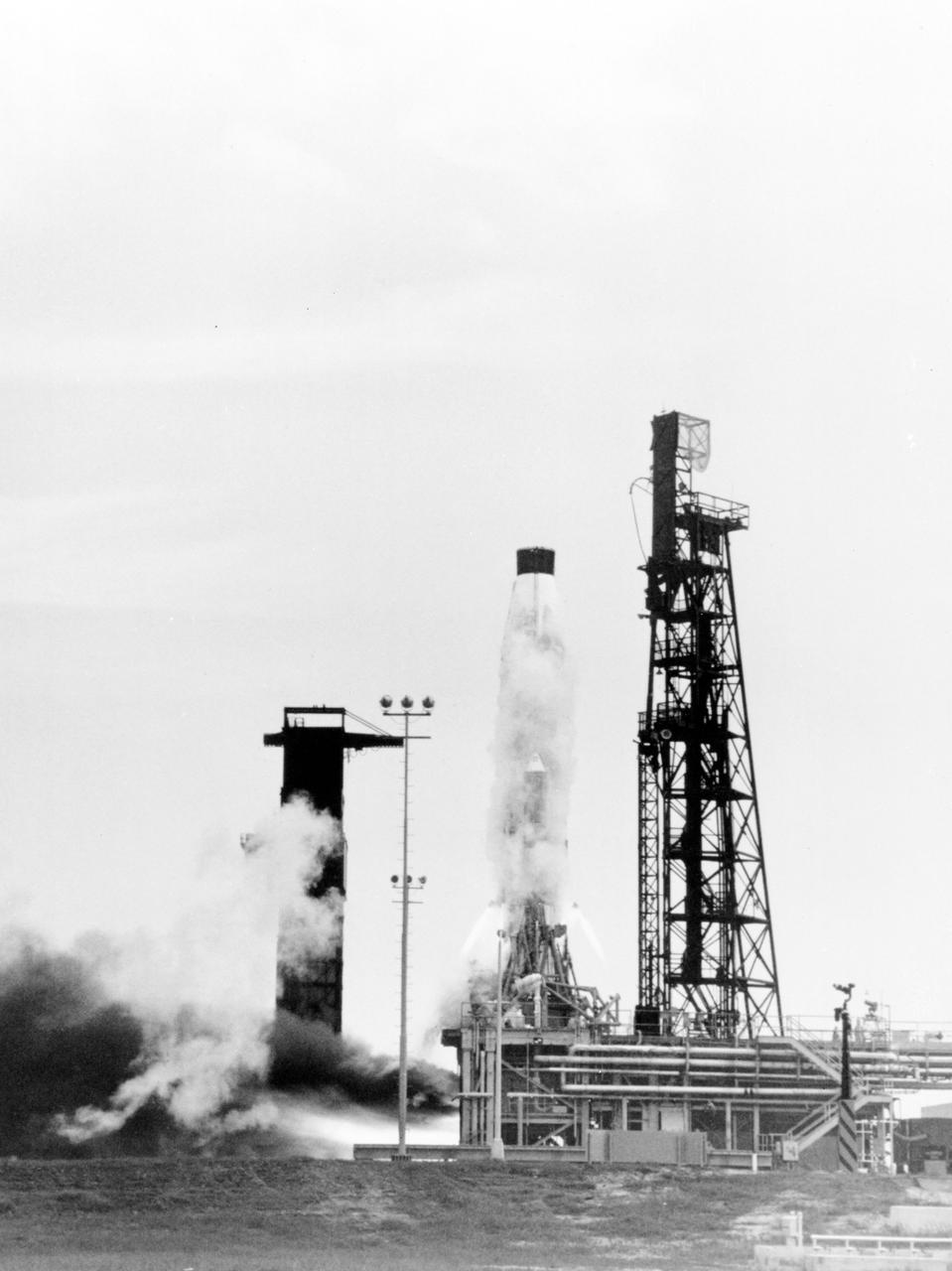
S62-06634 (1962) --- Static test firing of the Mercury-Atlas 8 (MA-8) Atlas 113D during preflight verification of launch vehicle systems. Photo credit: NASA
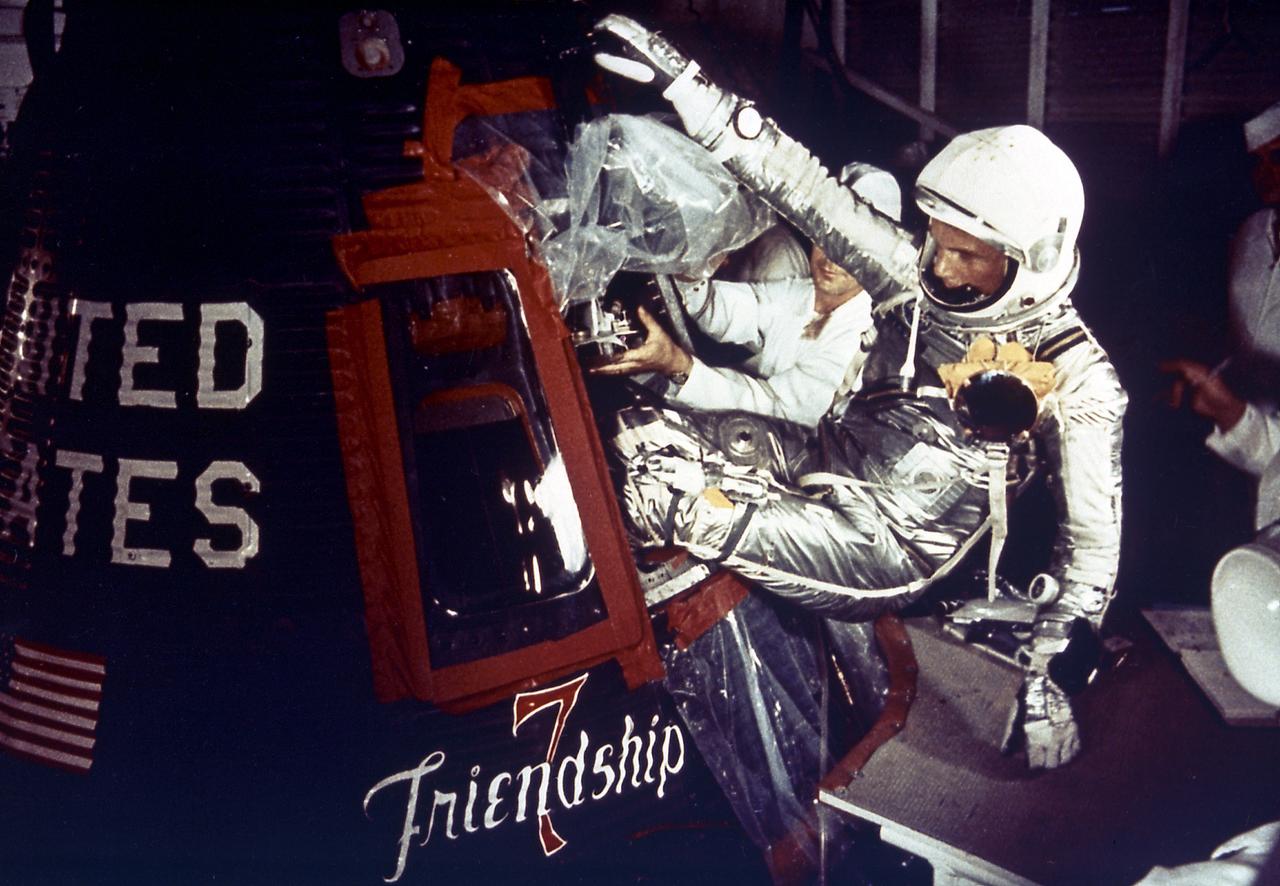
Astronaut John Glenn enters the Mercury spacecraft, Friendship 7, prior to the launch of MA-6 on February 20, 1961 and became the first American who orbited the Earth. The MA-6 mission was the first manned orbital flight boosted by the Mercury-Atlas vehicle, a modified Atlas ICBM (Intercontinental Ballistic Missile), lasted for five hours, and orbited the Earth three times.
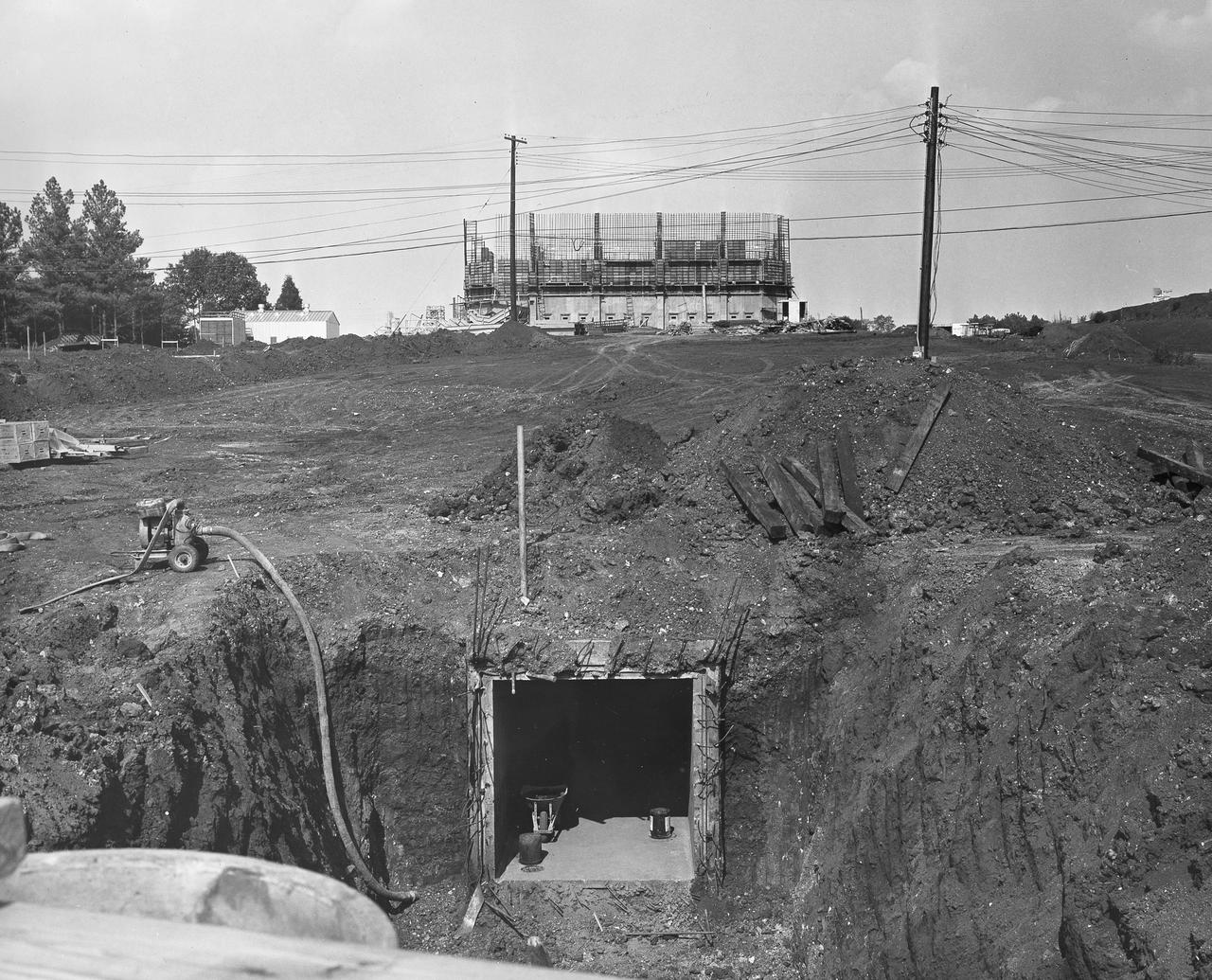
At its founding, the Marshall Space Flight Center (MSFC) inherited the Army’s Jupiter and Redstone test stands, but much larger facilities were needed for the giant stages of the Saturn V. From 1960 to 1964, the existing stands were remodeled and a sizable new test area was developed. The new comprehensive test complex for propulsion and structural dynamics was unique within the nation and the free world, and they remain so today because they were constructed with foresight to meet the future as well as on going needs. Construction of the S-IC Static test stand complex began in 1961 in the west test area of MSFC, and was completed in 1964. The S-IC static test stand was designed to develop and test the 138-ft long and 33-ft diameter Saturn V S-IC first stage, or booster stage, weighing in at 280,000 pounds. Required to hold down the brute force of a 7,500,000-pound thrust produced by 5 F-1 engines, the S-IC static test stand was designed and constructed with the strength of hundreds of tons of steel and 12,000,000 pounds of cement, planted down to bedrock 40 feet below ground level. The foundation walls, constructed with concrete and steel, are 4 feet thick. The base structure consists of four towers with 40-foot-thick walls extending upward 144 feet above ground level. The structure was topped by a crane with a 135-foot boom. With the boom in the upright position, the stand was given an overall height of 405 feet, placing it among the highest structures in Alabama at the time. In addition to the stand itself, related facilities were constructed during this time. Built directly east of the test stand was the Block House, which served as the control center for the test stand. The two were connected by a narrow access tunnel which housed the cables for the controls. This construction photo taken August 17, 1962 depicts a view of the Block House from the test stand site. The tunnel opening is visible in the forefront center of the photo.
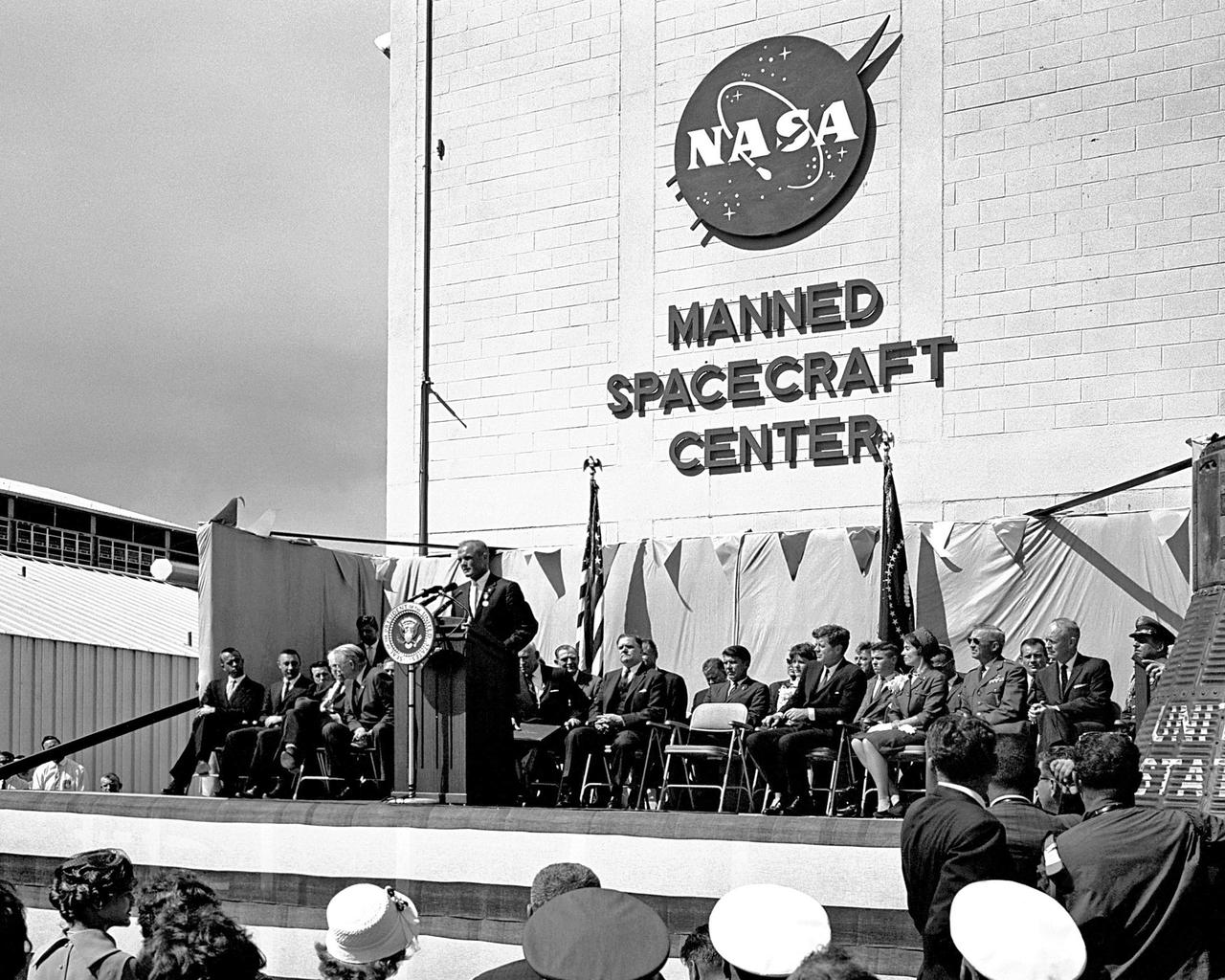
CAPE CANAVERAL, Fla. -- President John F. Kennedy honors John H. Glenn Jr. at Hangar S, Cape Canaveral, Florida, after his historic three-orbit mission aboard Friendship 7. Photo credit: NASA
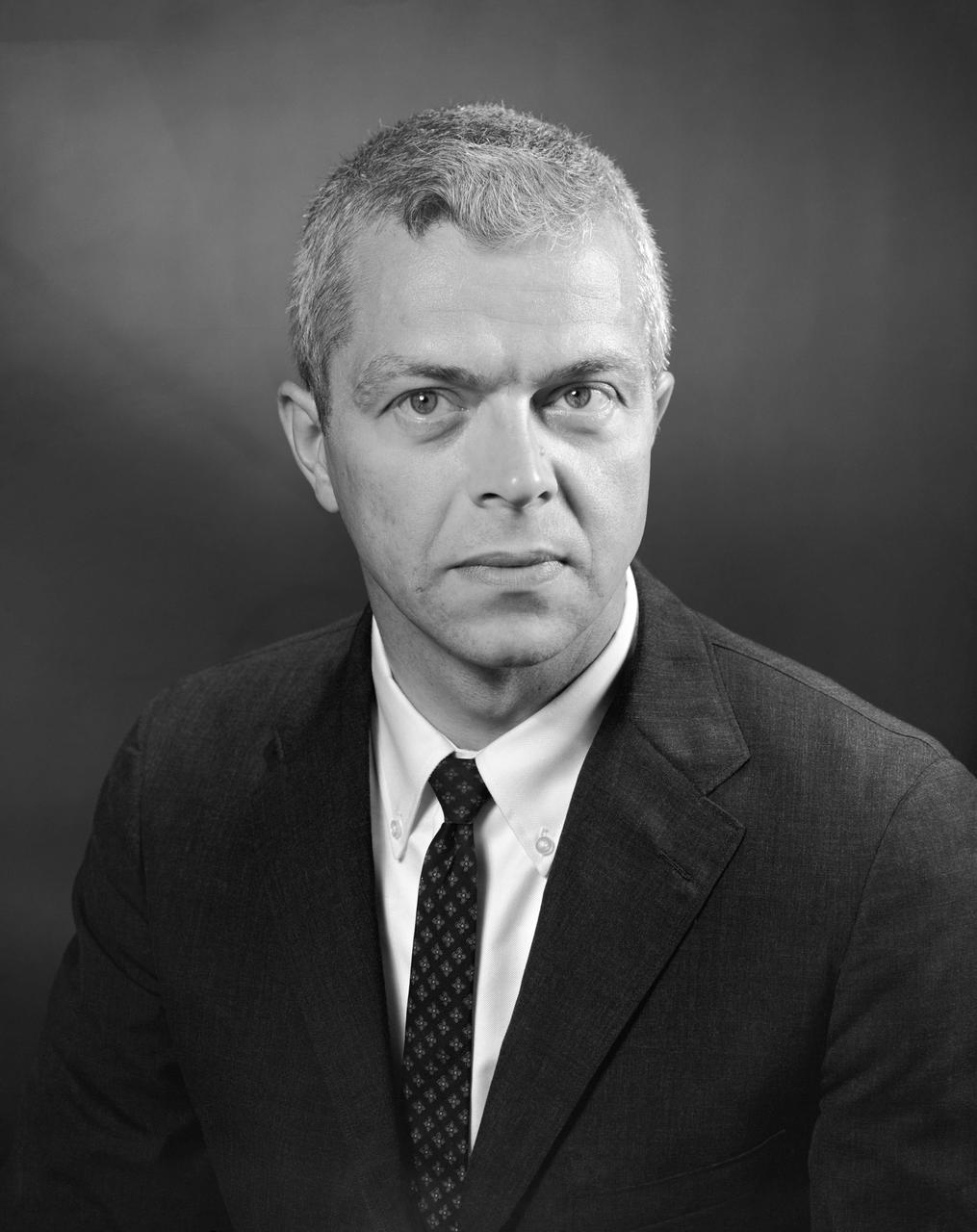
Portrait of Dr. John C. Houbolt
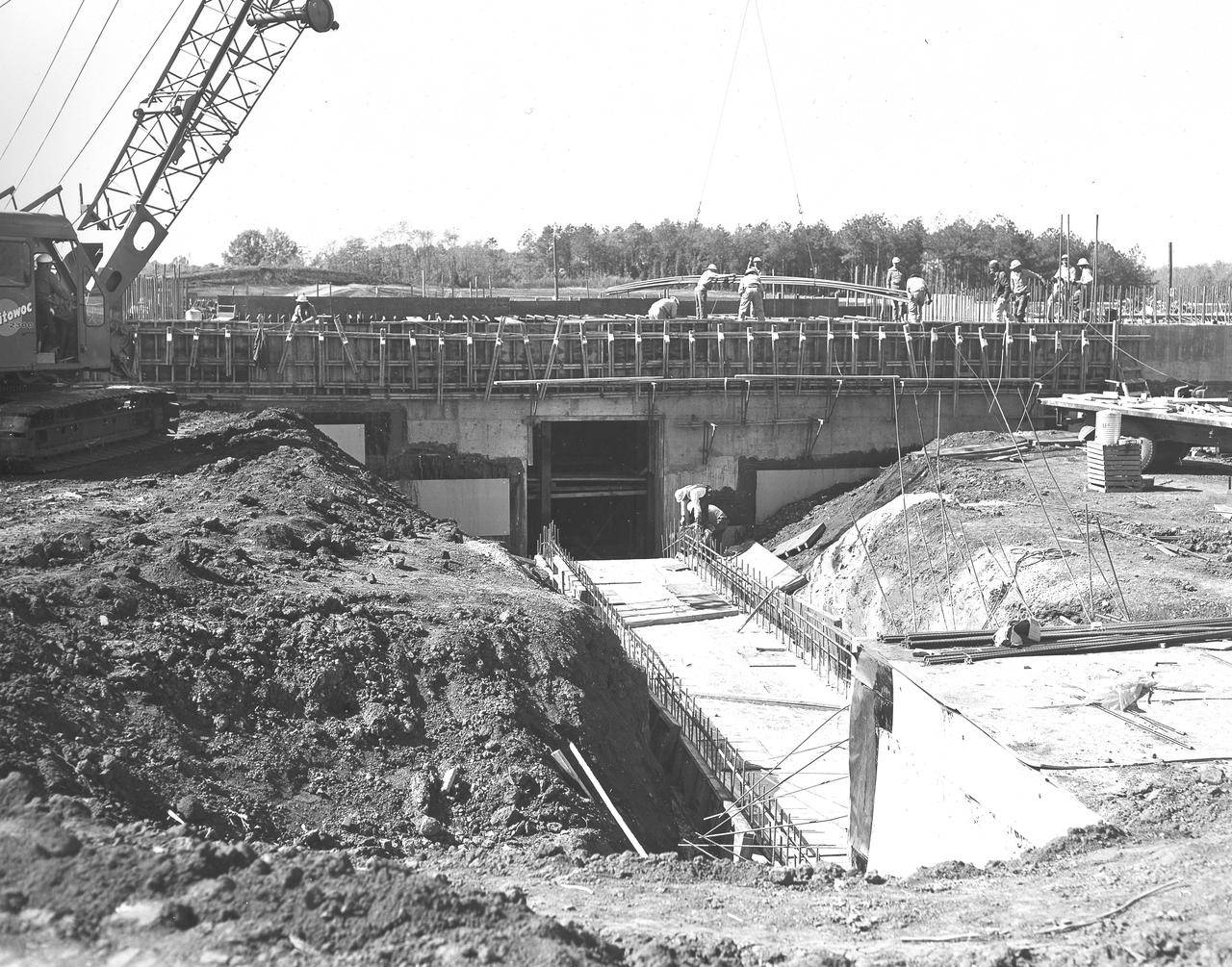
At its founding, the Marshall Space Flight Center (MSFC) inherited the Army’s Jupiter and Redstone test stands, but much larger facilities were needed for the giant stages of the Saturn V. From 1960 to 1964, the existing stands were remodeled and a sizable new test area was developed. The new comprehensive test complex for propulsion and structural dynamics was unique within the nation and the free world, and they remain so today because they were constructed with foresight to meet the future as well as on going needs. Construction of the S-IC Static test stand complex began in 1961 in the west test area of MSFC, and was completed in 1964. The S-IC static test stand was designed to develop and test the 138-ft long and 33-ft diameter Saturn V S-IC first stage, or booster stage, weighing in at 280,000 pounds. Required to hold down the brute force of a 7,500,000-pound thrust produced by 5 F-1 engines, the S-IC static test stand was designed and constructed with the strength of hundreds of tons of steel and 12,000,000 pounds of cement, planted down to bedrock 40 feet below ground level. The foundation walls, constructed with concrete and steel, are 4 feet thick. The base structure consists of four towers with 40-foot-thick walls extending upward 144 feet above ground level. The structure was topped by a crane with a 135-foot boom. With the boom in the upright position, the stand was given an overall height of 405 feet, placing it among the highest structures in Alabama at the time. In addition to the stand itself, related facilities were constructed during this time. Built directly east of the test stand was the Block House, which served as the control center for the test stand. The two were connected by a narrow access tunnel which housed the cables for the controls. This construction photo, taken October 26, 1962, depicts a view of the Block House tunnel opening.
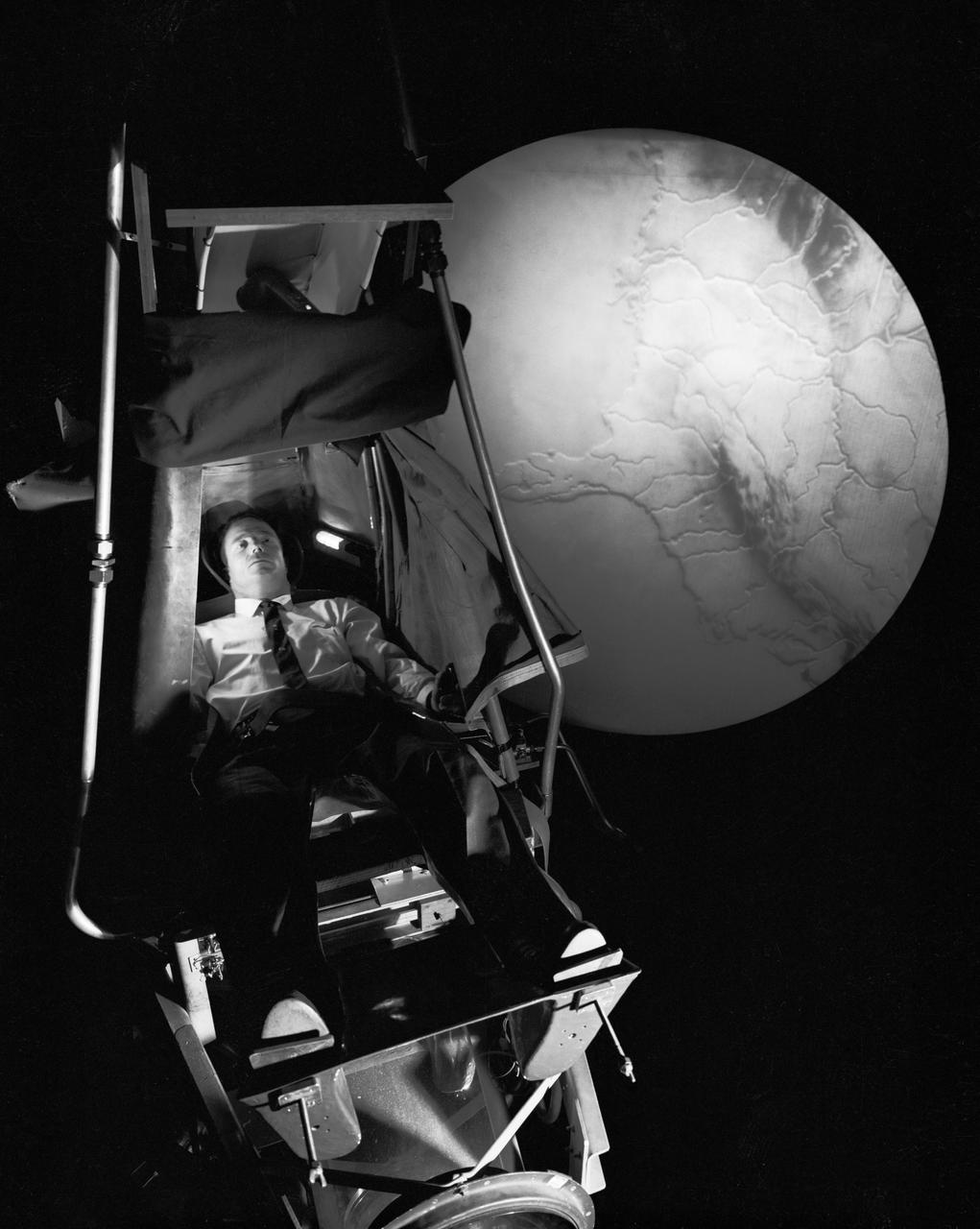
S62-01145 (1961) --- Project Mercury astronaut M. Scott Carpenter practices manual control of a spacecraft in the Air Lubricated Free Attitude (ALFA) trainer located at NASA?s Langley Air Force Base, Virginia. This trainer allows the astronaut to see the image of Earth?s surface at his feet while manually controlling the spacecraft. Carpenter has been selected as the prime pilot of the United States? second orbital flight. Photo credit: NASA

At its founding, the Marshall Space Flight Center (MSFC) inherited the Army’s Jupiter and Redstone test stands, but much larger facilities were needed for the giant stages of the Saturn V. From 1960 to 1964, the existing stands were remodeled and a sizable new test area was developed. The new comprehensive test complex for propulsion and structural dynamics was unique within the nation and the free world, and they remain so today because they were constructed with foresight to meet the future as well as on going needs. Construction of the S-IC Static test stand complex began in 1961 in the west test area of MSFC, and was completed in 1964. The S-IC static test stand was designed to develop and test the 138-ft long and 33-ft diameter Saturn V S-IC first stage, or booster stage, weighing in at 280,000 pounds. Required to hold down the brute force of a 7,500,000-pound thrust produced by 5 F-1 engines, the S-IC static test stand was designed and constructed with the strength of hundreds of tons of steel and 12,000,000 pounds of cement, planted down to bedrock 40 feet below ground level. The foundation walls, constructed with concrete and steel, are 4 feet thick. The base structure consists of four towers with 40-foot-thick walls extending upward 144 feet above ground level. The structure was topped by a crane with a 135-foot boom. With the boom in the upright position, the stand was given an overall height of 405 feet, placing it among the highest structures in Alabama at the time. Construction of the S-IC test stand came to a halt at the end of September as the determination was made that the Saturn booster size had to be increased. As a result, the stand had to be modified. With construction delayed, and pumps turned off, this photo, taken March 15, 1962, shows danger signs posted around the abandoned, flooded site. The flooding was caused by the disturbance of a natural spring months prior during the excavation of the site.
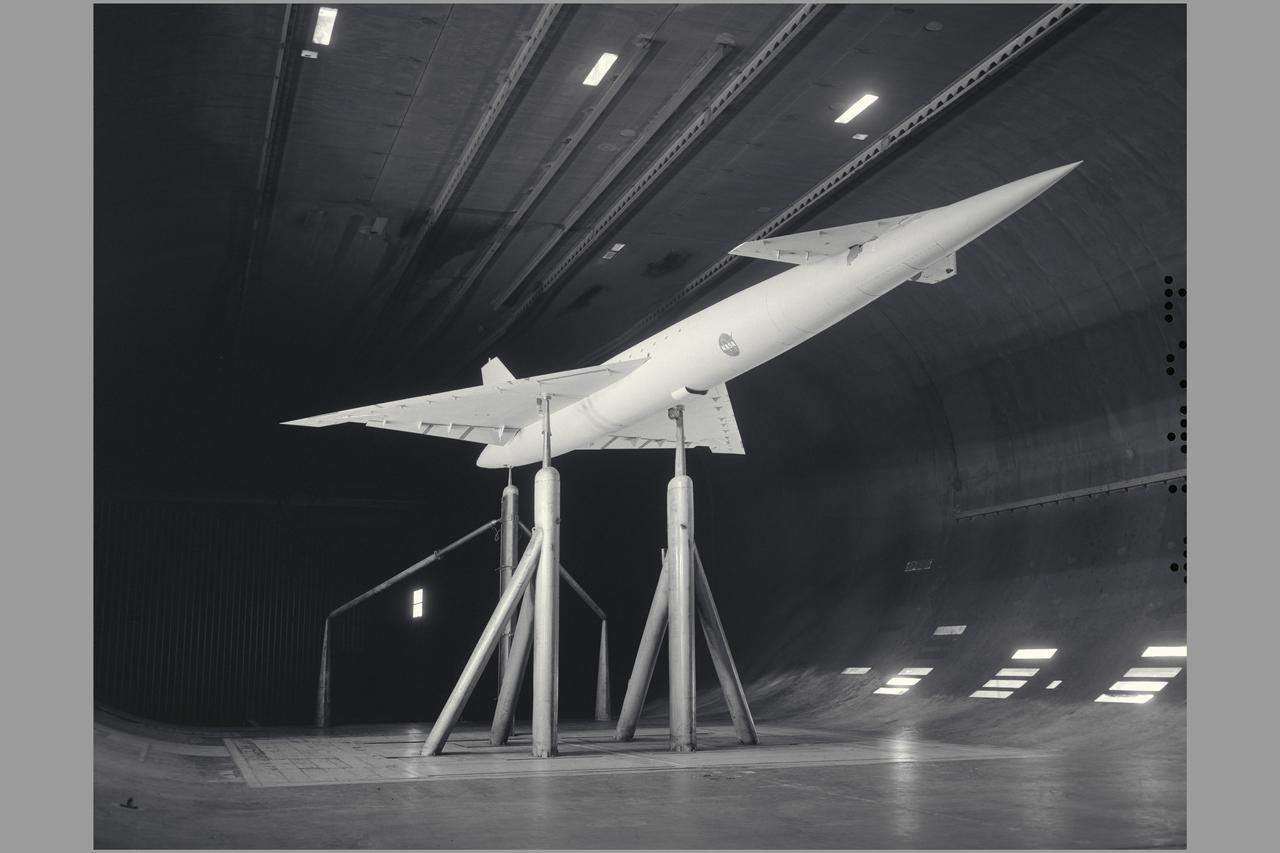
Supersonic Transport Model (SST) in 40x80ft w.t.
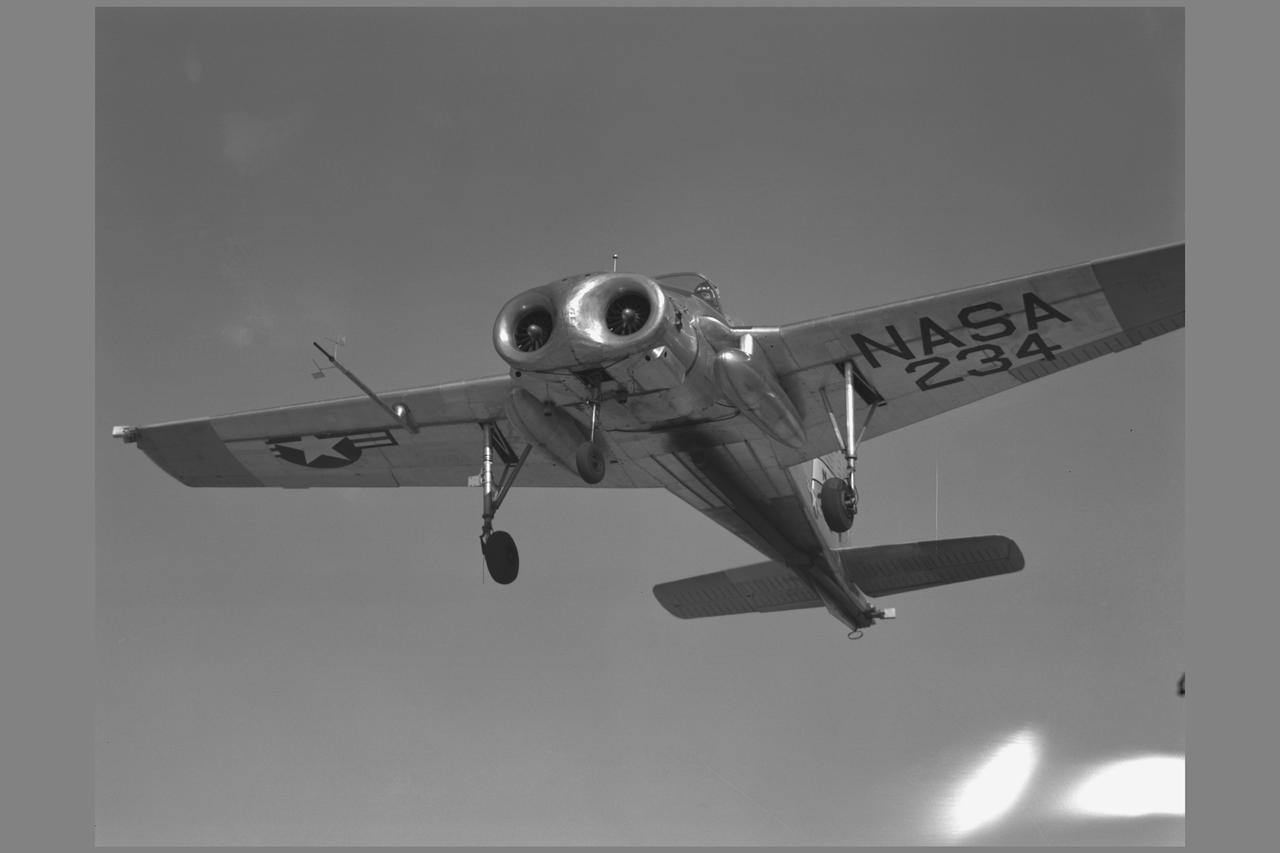
X-14A over ramp at Ames Research Center
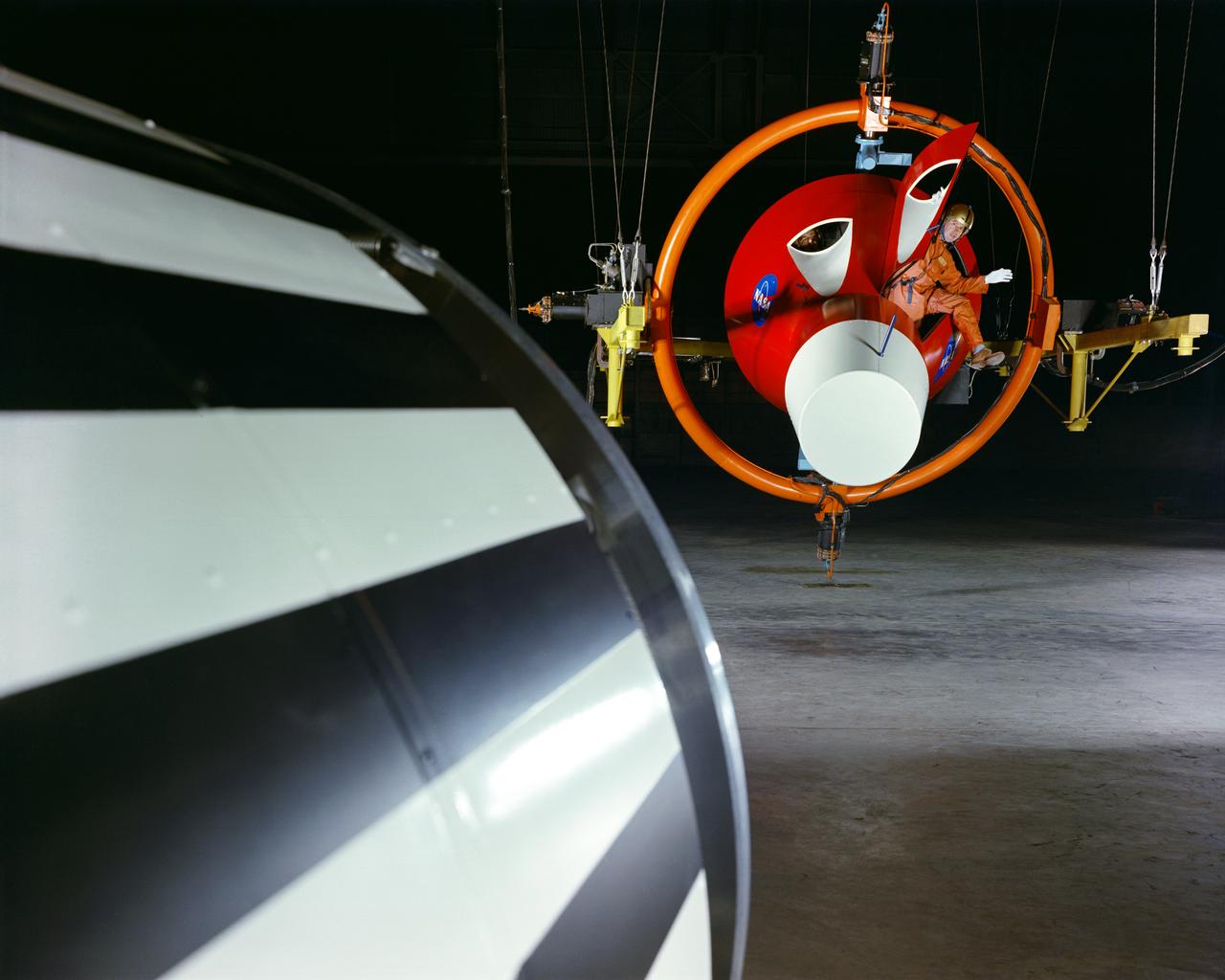
Practicing with a full-scale model of the Gemini Capsule in Langley's Rendezvous Docking Simulator. -- Caption and photograph published in Winds of Change, 75th Anniversary NASA publication, (page 89), by James Schultz.
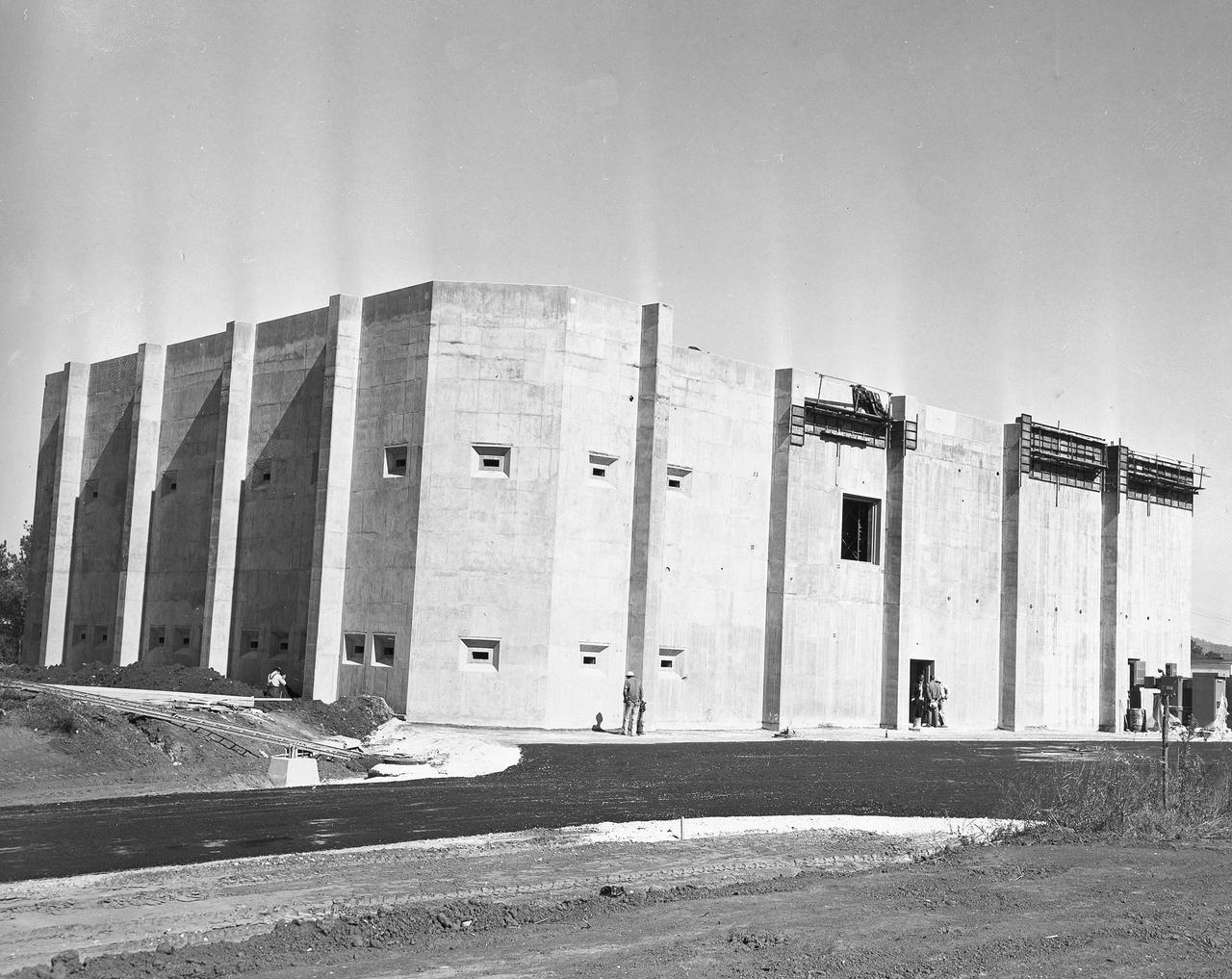
At its founding, the Marshall Space Flight Center (MSFC) inherited the Army’s Jupiter and Redstone test stands, but much larger facilities were needed for the giant stages of the Saturn V. From 1960 to 1964, the existing stands were remodeled and a sizable new test area was developed. The new comprehensive test complex for propulsion and structural dynamics was unique within the nation and the free world, and they remain so today because they were constructed with foresight to meet the future as well as on going needs. Construction of the S-IC Static test stand complex began in 1961 in the west test area of MSFC, and was completed in 1964. The S-IC static test stand was designed to develop and test the 138-ft long and 33-ft diameter Saturn V S-IC first stage, or booster stage, weighing in at 280,000 pounds. Required to hold down the brute force of a 7,500,000-pound thrust produced by 5 F-1 engines, the S-IC static test stand was designed and constructed with the strength of hundreds of tons of steel and 12,000,000 pounds of cement, planted down to bedrock 40 feet below ground level. The foundation walls, constructed with concrete and steel, are 4 feet thick. The base structure consists of four towers with 40-foot-thick walls extending upward 144 feet above ground level. The structure was topped by a crane with a 135-foot boom. With the boom in the upright position, the stand was given an overall height of 405 feet, placing it among the highest structures in Alabama at the time. In addition to the stand itself, related facilities were constructed during this time. Built directly east of the test stand was the Block House, which served as the control center for the test stand. The two were connected by a narrow access tunnel which housed the cables for the controls. This construction photo, taken October 26, 1962, depicts a nearly completed view of the Block House.
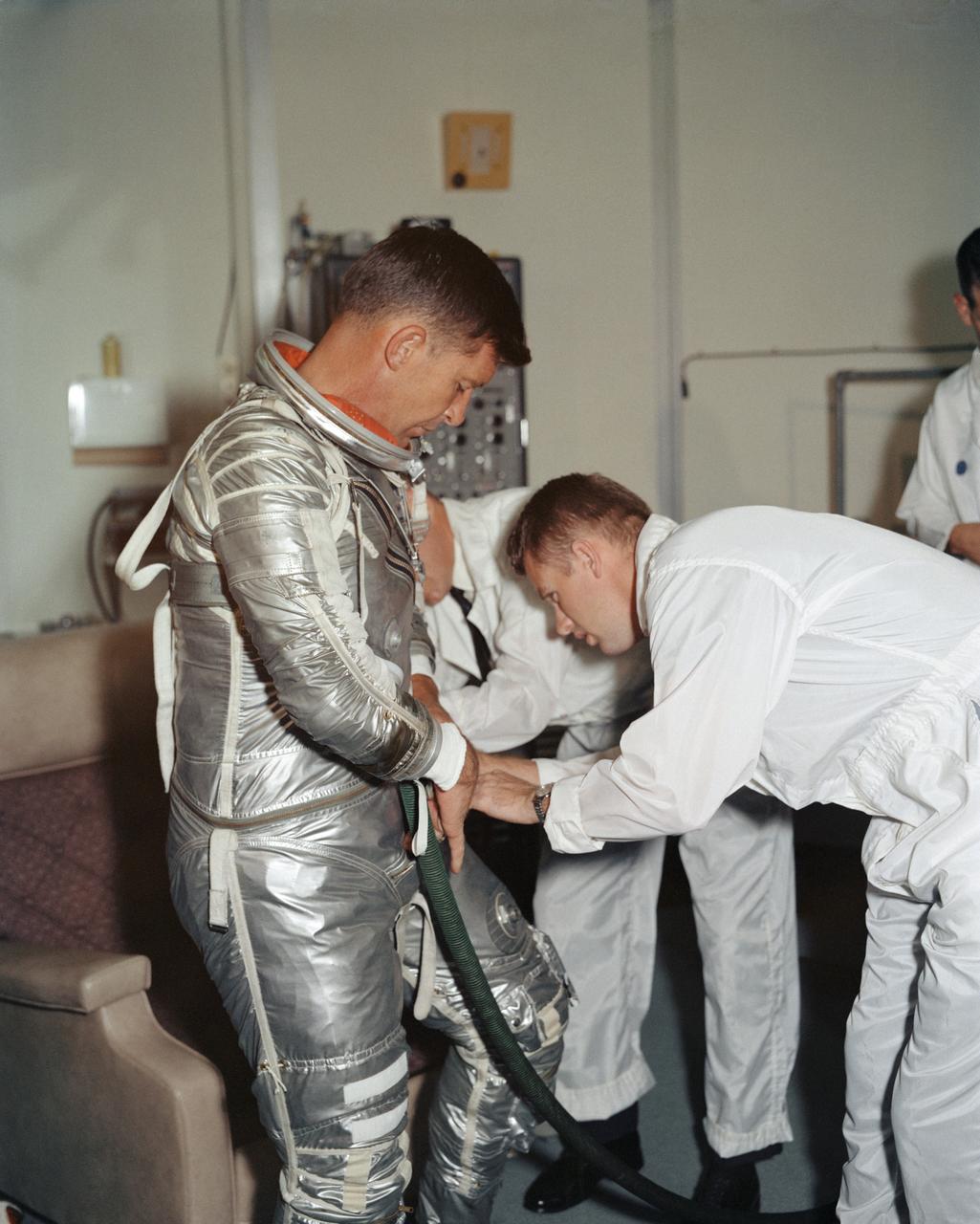
S62-08895 (1962) --- Astronaut Walter M. Schirra Jr., pilot of the Mercury-Atlas 8 (MA-8) Earth-orbital spaceflight, goes through a suiting-up exercise in Hangar "S" at Cape Canaveral several weeks prior to his scheduled Oct. 3, 1962 flight. Photo credit: NASA
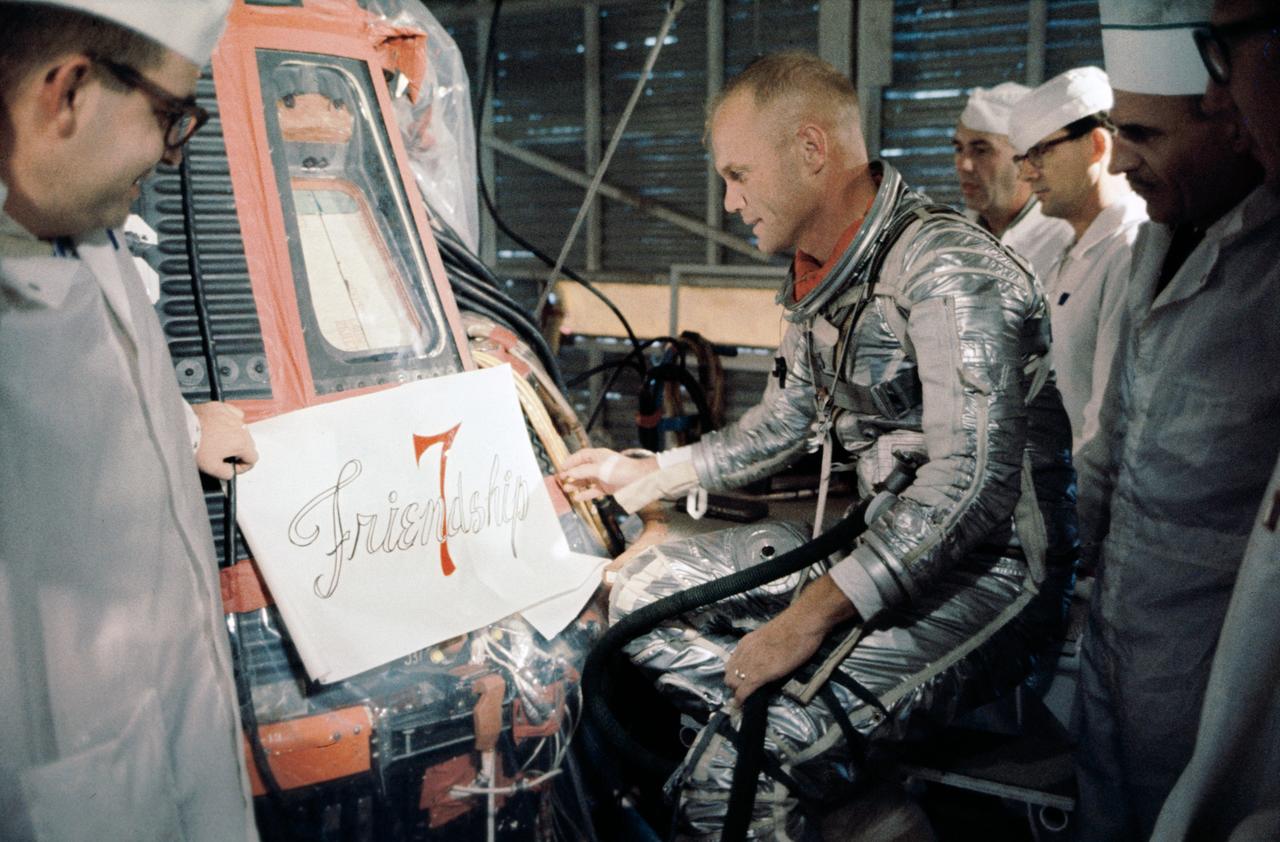
S64-14854 (20 Feb. 1962) --- Astronaut John H. Glenn Jr. and technicians inspect a decal ready for application to the side of his Mercury spacecraft prior to launch on Feb. 20, 1962. The decal reads "Friendship 7". Photo credit: NASA
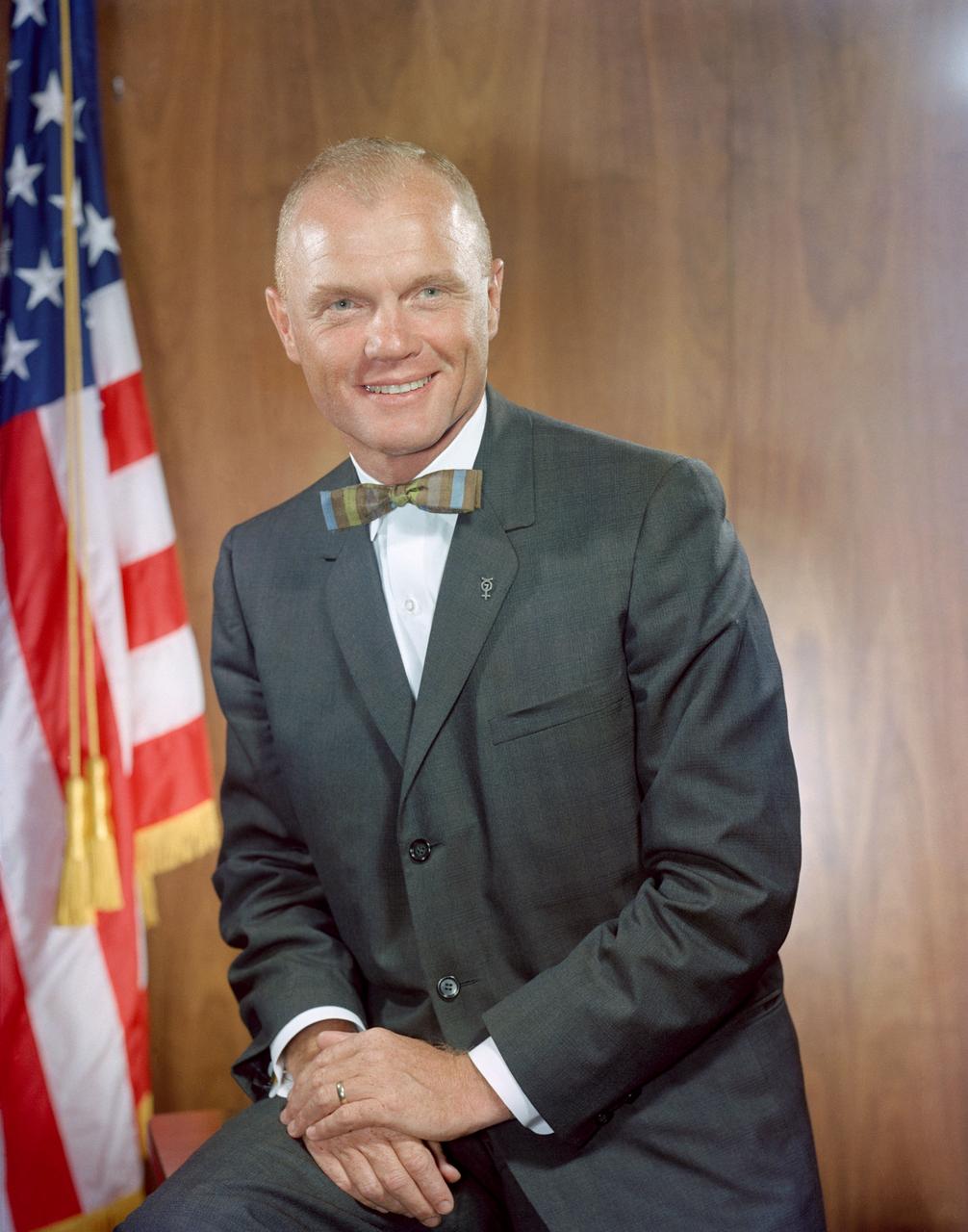
S62-05540 (December 1962) --- Official portrait of astronaut John H. Glenn Jr., the first American to orbit Earth in a Project Mercury spacecraft. Photo credit: NASA
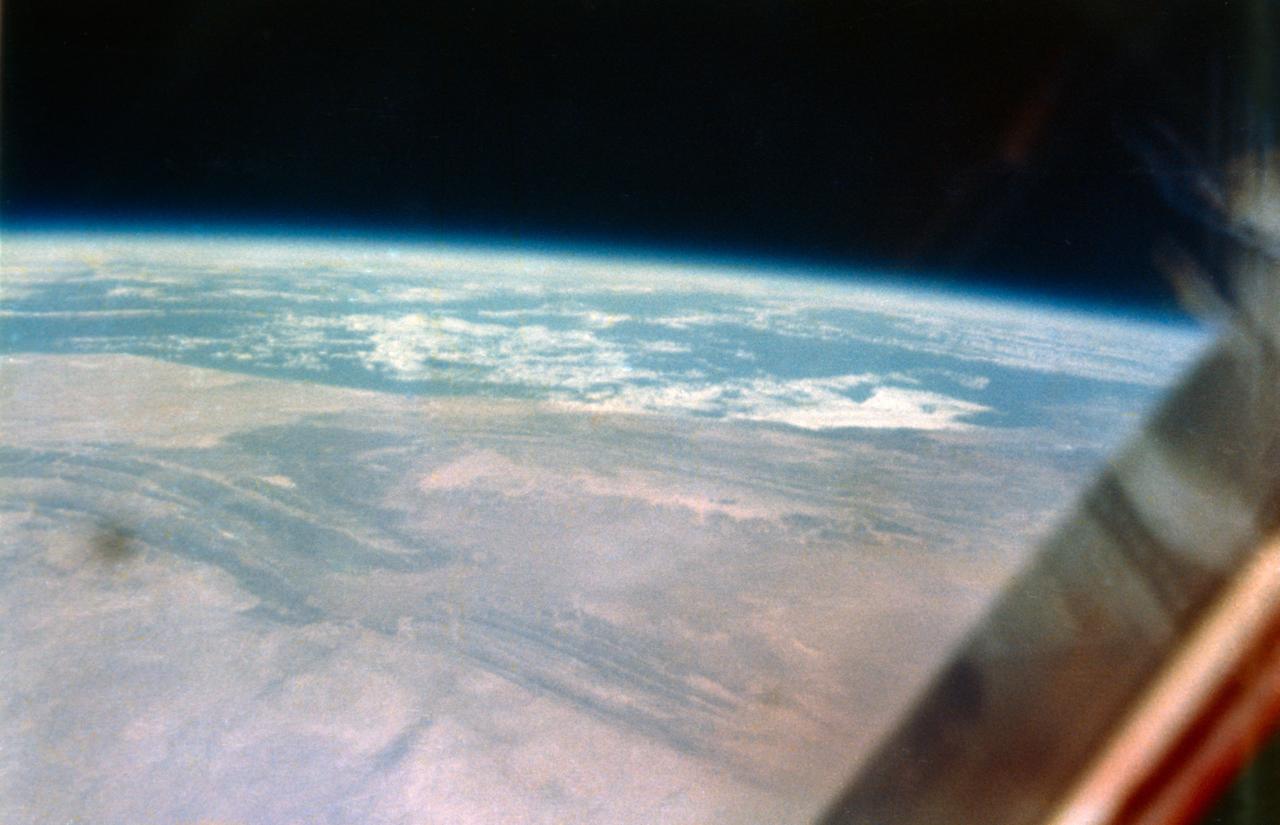
S62-06014 (20 Feb. 1962) --- View of Earth taken by astronaut John H. Glenn Jr. during his Mercury Atlas 6 (MA-6) spaceflight. Photo credit: NASA
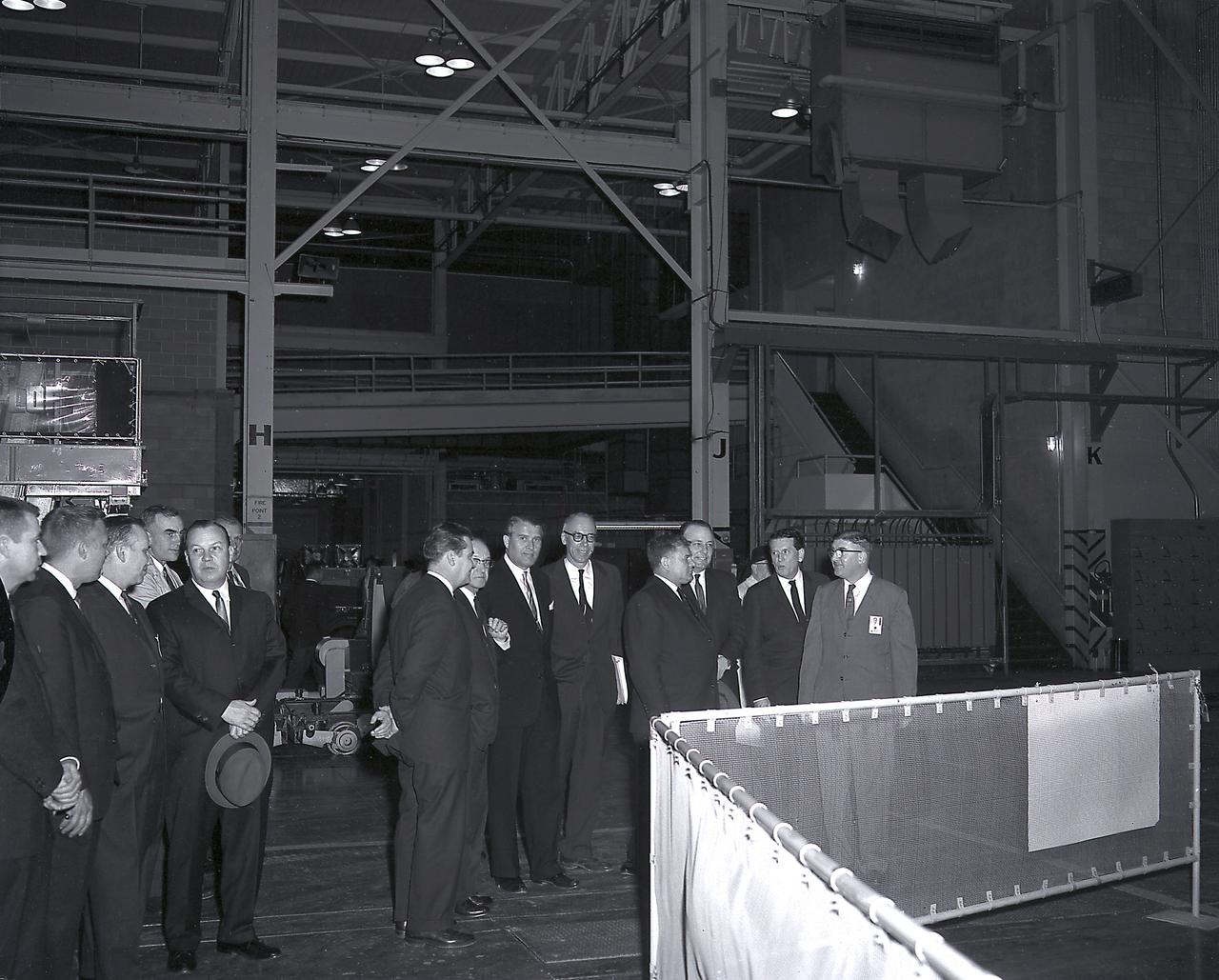
The members of the House Committee on Science and Astronautics visited the Marshall Space Flight Center (MSFC) on March 9, 1962 to gather first-hand information of the nation's space exploration program. The congressional group was composed of members of the Subcommittee on Marned Space Flight. Headed by Representative Olin E. Teague of Texas, other members were James G. Fulton, Pennsylvania; Ken Heckler, West Virginia; R. Walter Riehlman, New York; Richard L. Roudebush, Indiana; John W. Davis, Georgia; James C. Corman, California; Joseph Waggoner, Louisiana; J. Edgar Chenoweth, Colorado; and William G. Bray, Indiana.
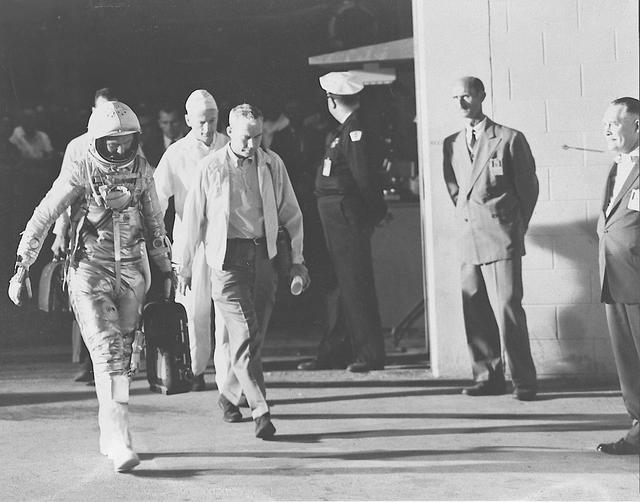
S62-00379 (20 Feb. 1962) --- View of astronaut John H. Glenn Jr., Dr. William Douglas, astronauts' flight surgeon, and equipment specialist Joe Schmitt leaving Operations and Checkout Building prior to the Mercury-Atlas 6 (MA-6) mission. Glenn is in his pressure suit and is carrying the portable ventilation unit. Photo credit: NASA
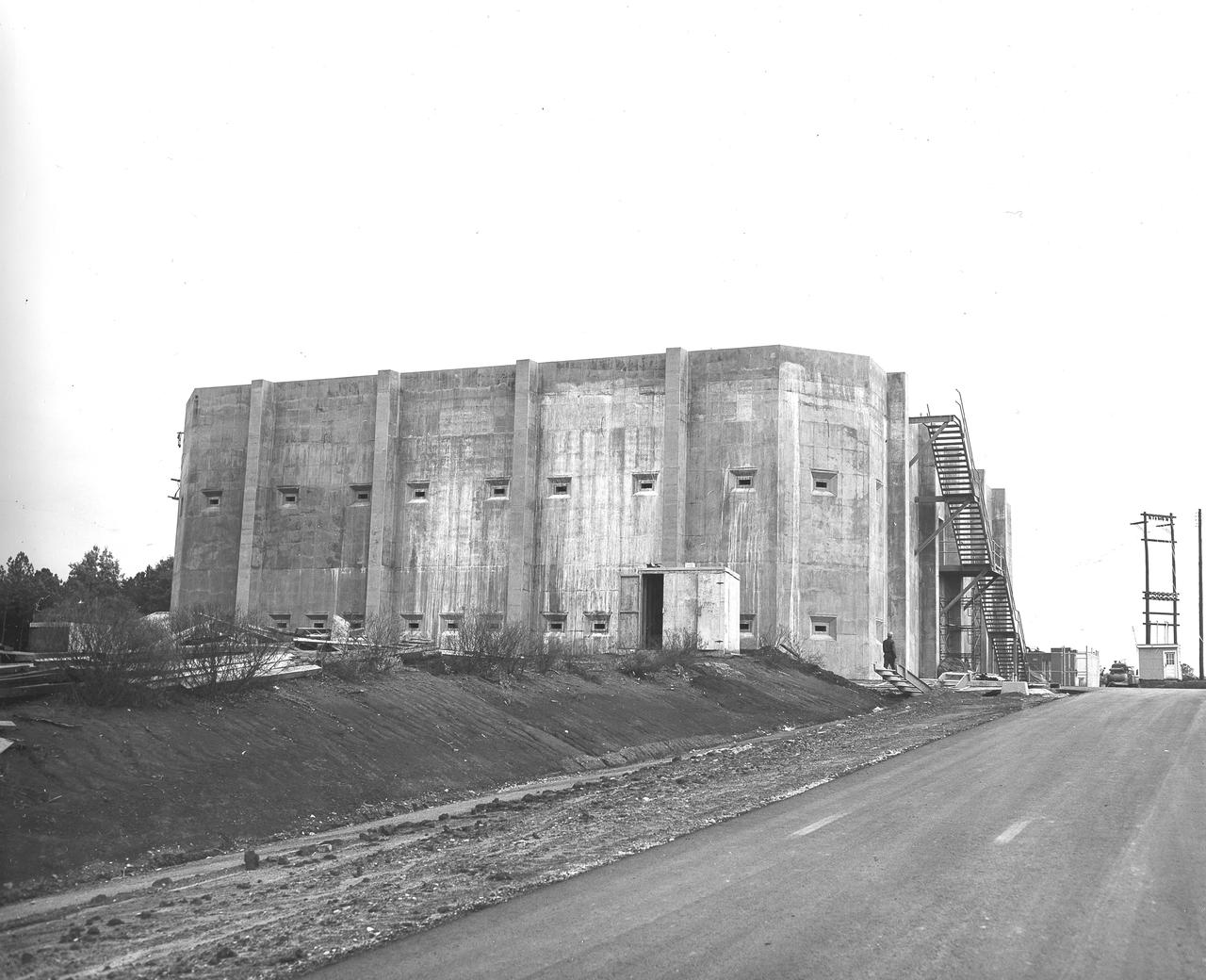
At its founding, the Marshall Space Flight Center (MSFC) inherited the Army’s Jupiter and Redstone test stands, but much larger facilities were needed for the giant stages of the Saturn V. From 1960 to 1964, the existing stands were remodeled and a sizable new test area was developed. The new comprehensive test complex for propulsion and structural dynamics was unique within the nation and the free world, and they remain so today because they were constructed with foresight to meet the future as well as on going needs. Construction of the S-IC Static test stand complex began in 1961 in the west test area of MSFC, and was completed in 1964. The S-IC static test stand was designed to develop and test the 138-ft long and 33-ft diameter Saturn V S-IC first stage, or booster stage, weighing in at 280,000 pounds. Required to hold down the brute force of a 7,500,000-pound thrust produced by 5 F-1 engines, the S-IC static test stand was designed and constructed with the strength of hundreds of tons of steel and 12,000,000 pounds of cement, planted down to bedrock 40 feet below ground level. The foundation walls, constructed with concrete and steel, are 4 feet thick. The base structure consists of four towers with 40-foot-thick walls extending upward 144 feet above ground level. The structure was topped by a crane with a 135-foot boom. With the boom in the upright position, the stand was given an overall height of 405 feet, placing it among the highest structures in Alabama at the time. In addition to the stand itself, related facilities were constructed during this time. Built directly east of the test stand was the Block House, which served as the control center for the test stand. The two were connected by a narrow access tunnel which housed the cables for the controls. This construction photo, taken November 15, 1962, depicts a view of the Block House.
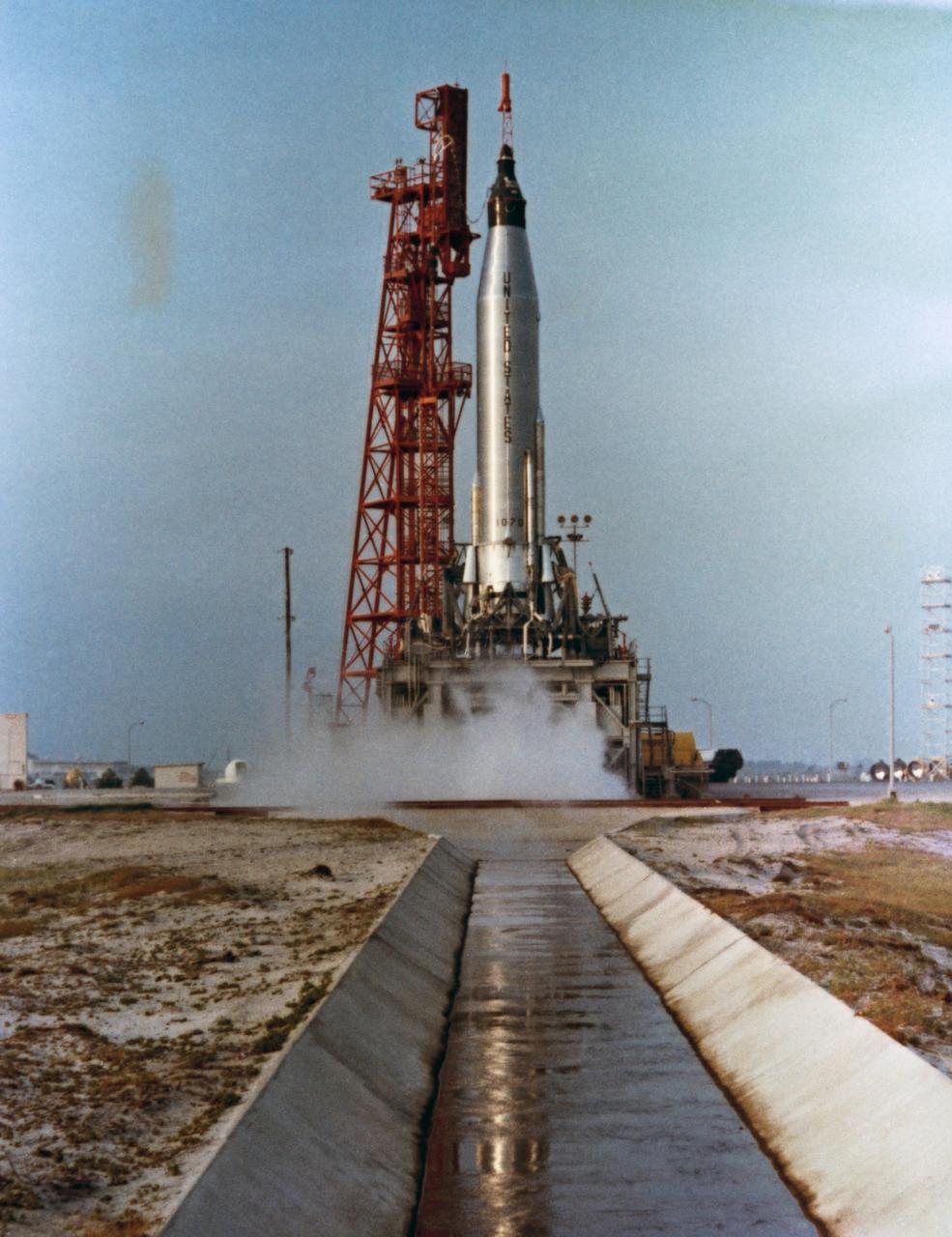
The MA-7 Booster ignites on the pad and is seconds away from actual liftoff. Aboard the spacecraft is Astronaut M. Scott Carpenter, the U.S. second man to orbit the Earth. CAPE CANAVERAL, FL CN
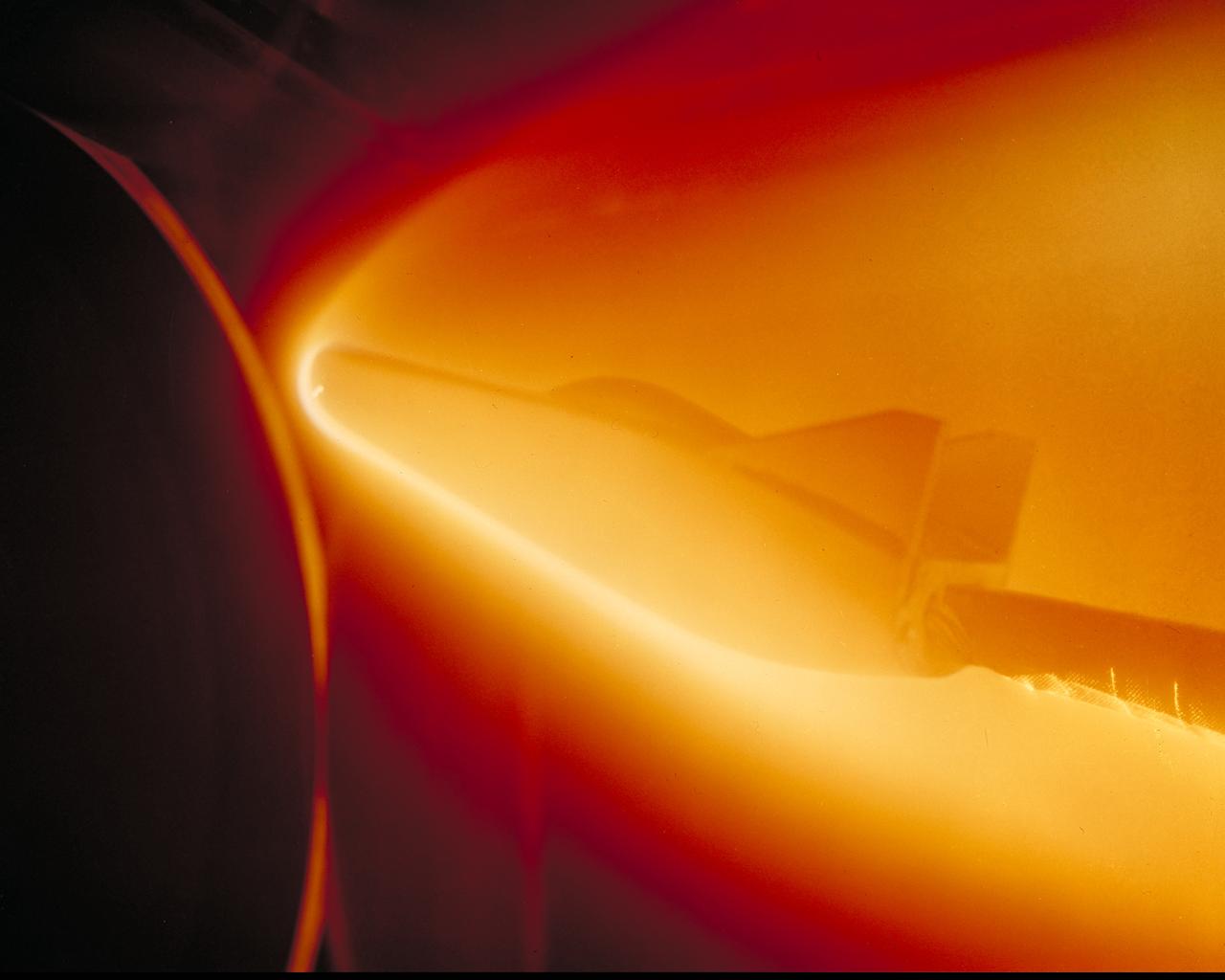
M-2 Lifting Body being tested in Ames atmospheric entry simulator to determine the areas of most intense heat.
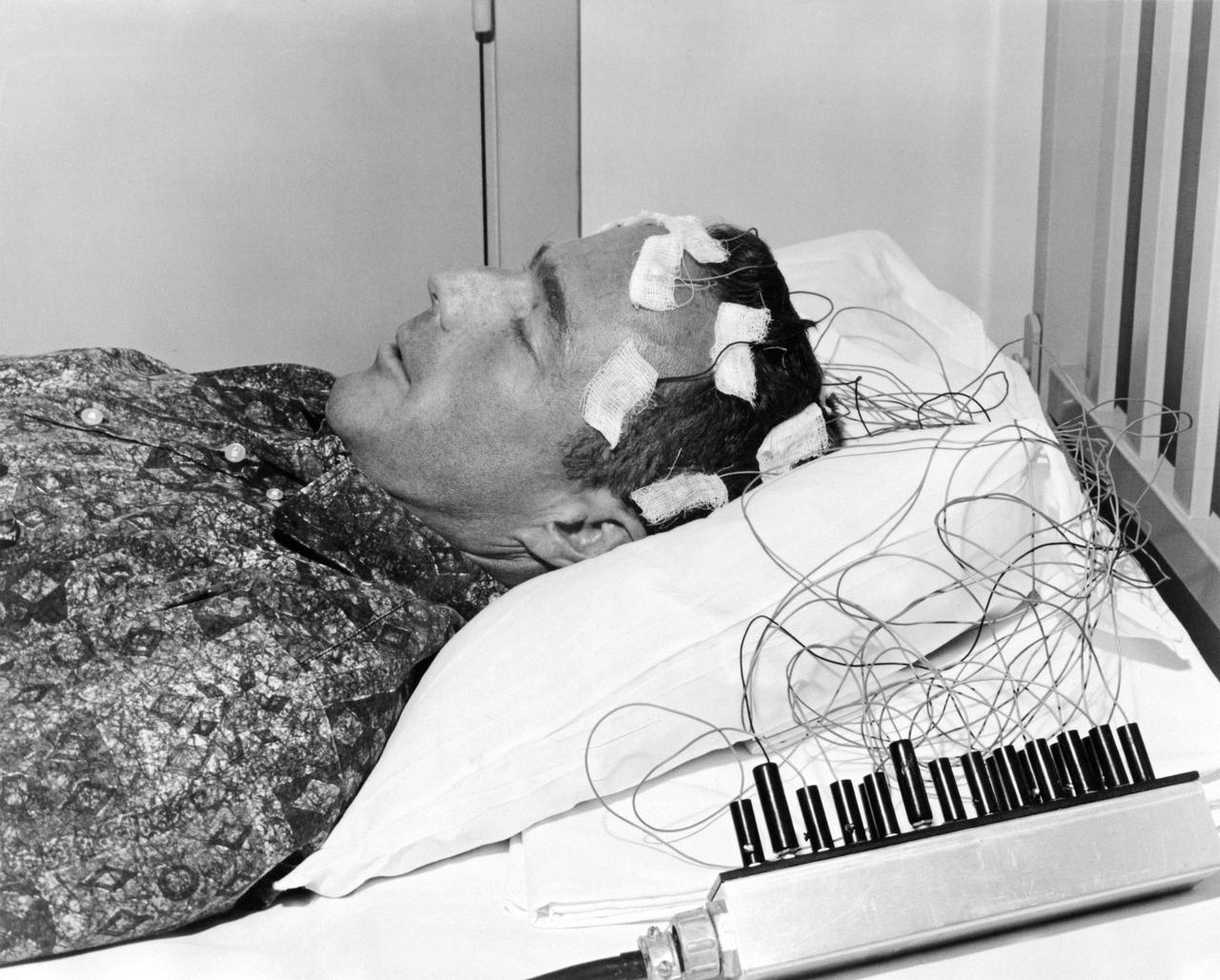
S62-04074 (1962) --- Mercury astronaut M. Scott Carpenter lies on a bed with biosensors attached to his head during astronaut training activities at Cape Canaveral, Florida. Photo credit: NASA
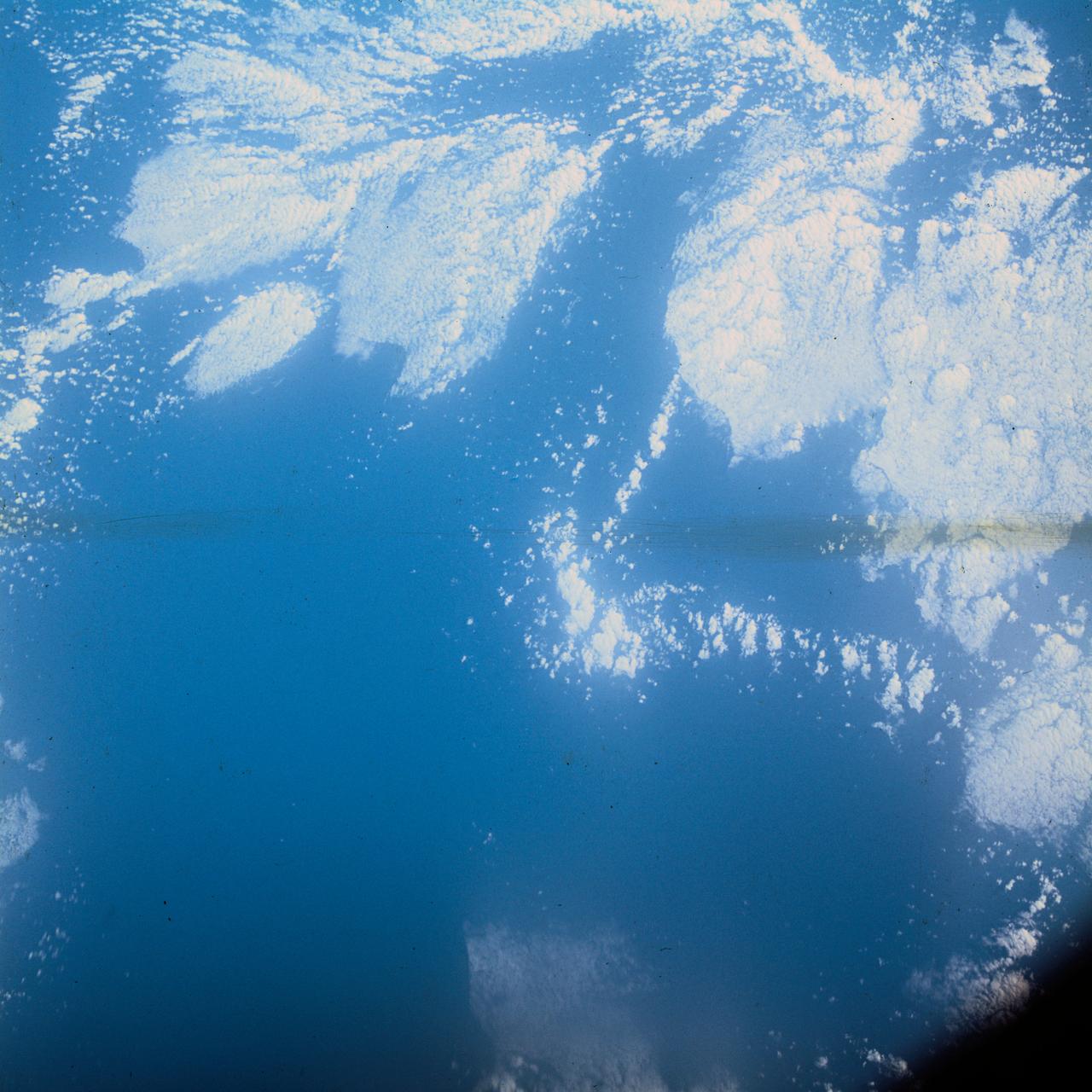
S62-06606 (3 Oct. 1962) --- Cloud formation over Western Atlantic Ocean north of South America taken during the fourth orbit pass of the Mercury-Atlas 8 (MA-8) mission by astronaut Walter M. Schirra Jr. with a hand-held camera. Photo credit: NASA
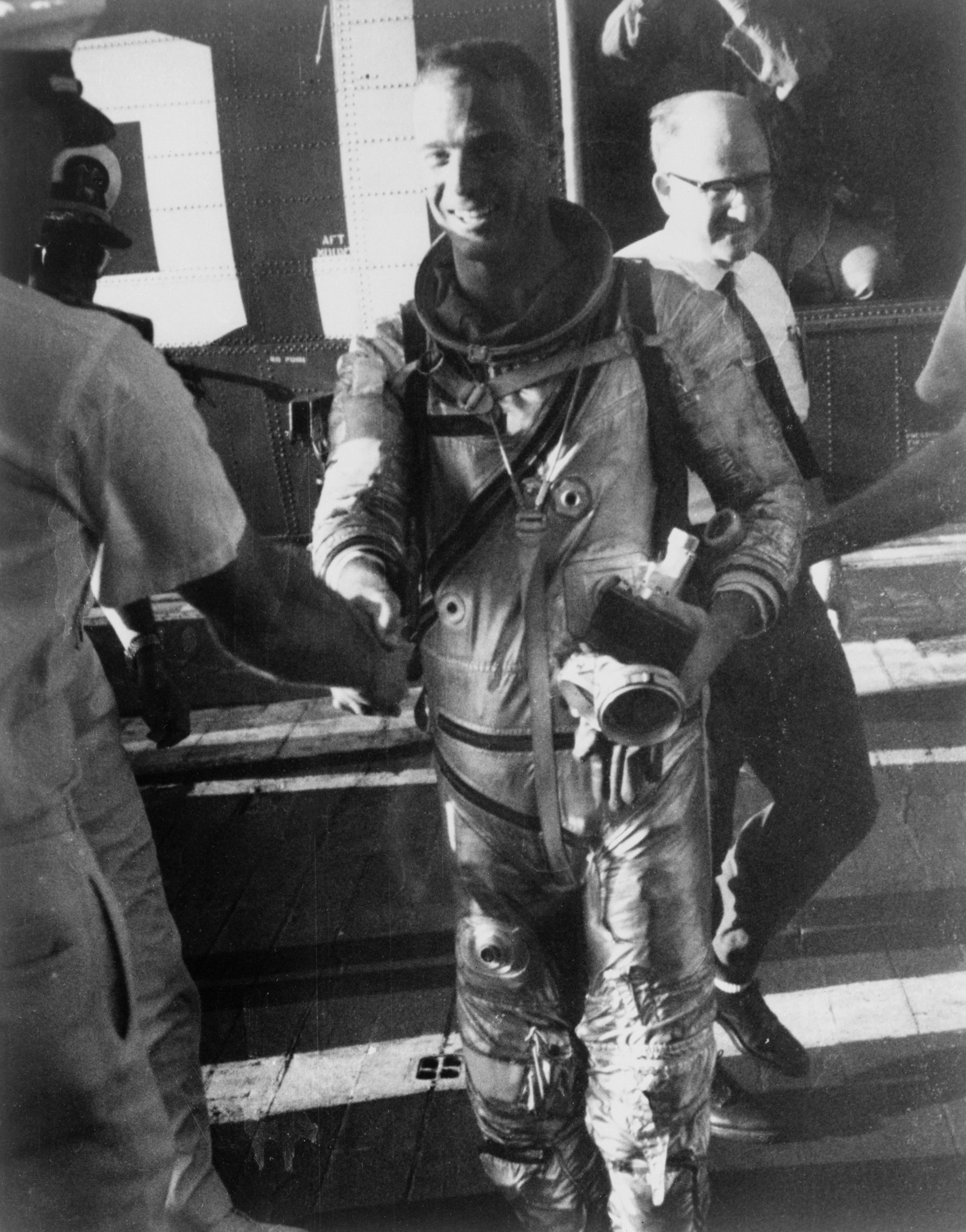
S62-04027 (24 May 1962) --- Astronaut M. Scott Carpenter, prime pilot for the Mercury-Atlas 7 (MA-7) mission, arrives aboard the prime recovery ship, USS Intrepid, during recovery operations following his Earth-orbital mission. Photo credit: NASA

Dr. Kurt Debus and Dr. von Braun during prelaunch activities of the Ranger IV at Launch Pad 12 on April 12. 1962.
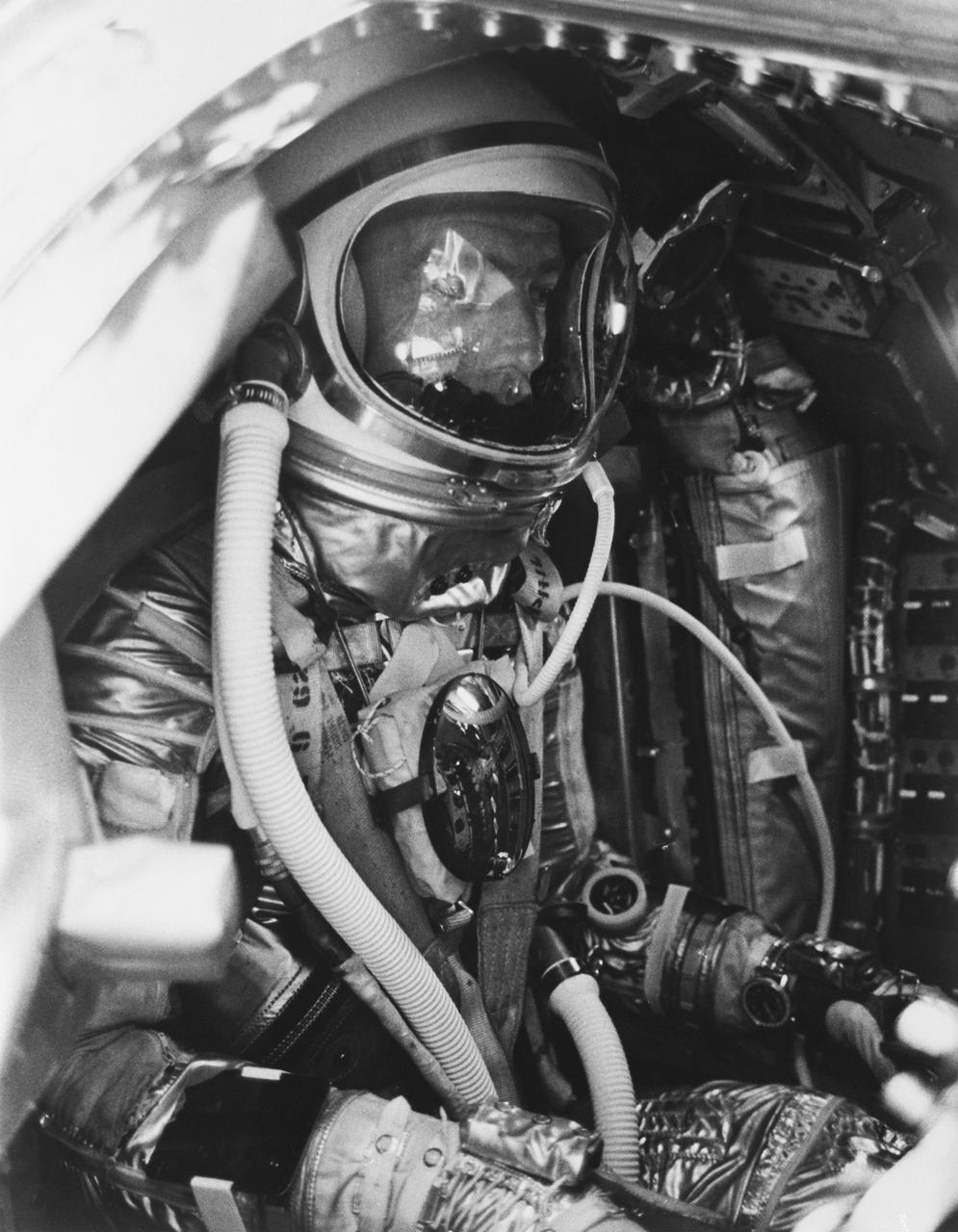
S62-04047 (24 May 1962) --- Close-up of astronaut M. Scott Carpenter inside his Aurora 7 spacecraft before the launch of the Mercury-Atlas 7 (MA-7) mission. Photo credit: NASA
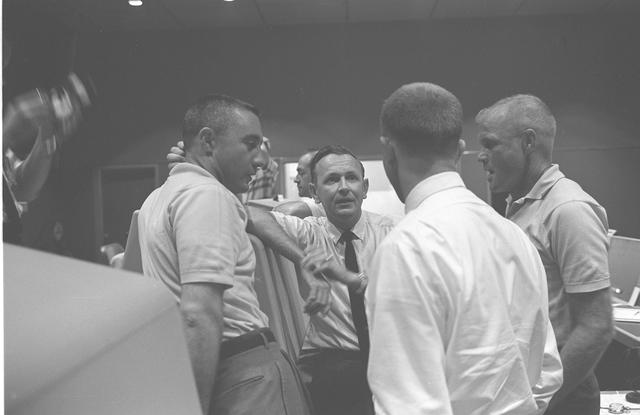
S64-10761 (1962) --- Astronauts Virgil I. (Gus) Grissom (left) and John H. Glenn Jr. hold a discussion in the Mercury Control Center during Mercury-Atlas 6 preflight activity. Glenn is the MA-6 pilot. Grissom was the pilot for the Mercury-Redstone 4 spaceflight made on July 21, 1961. Photo credit: NASA
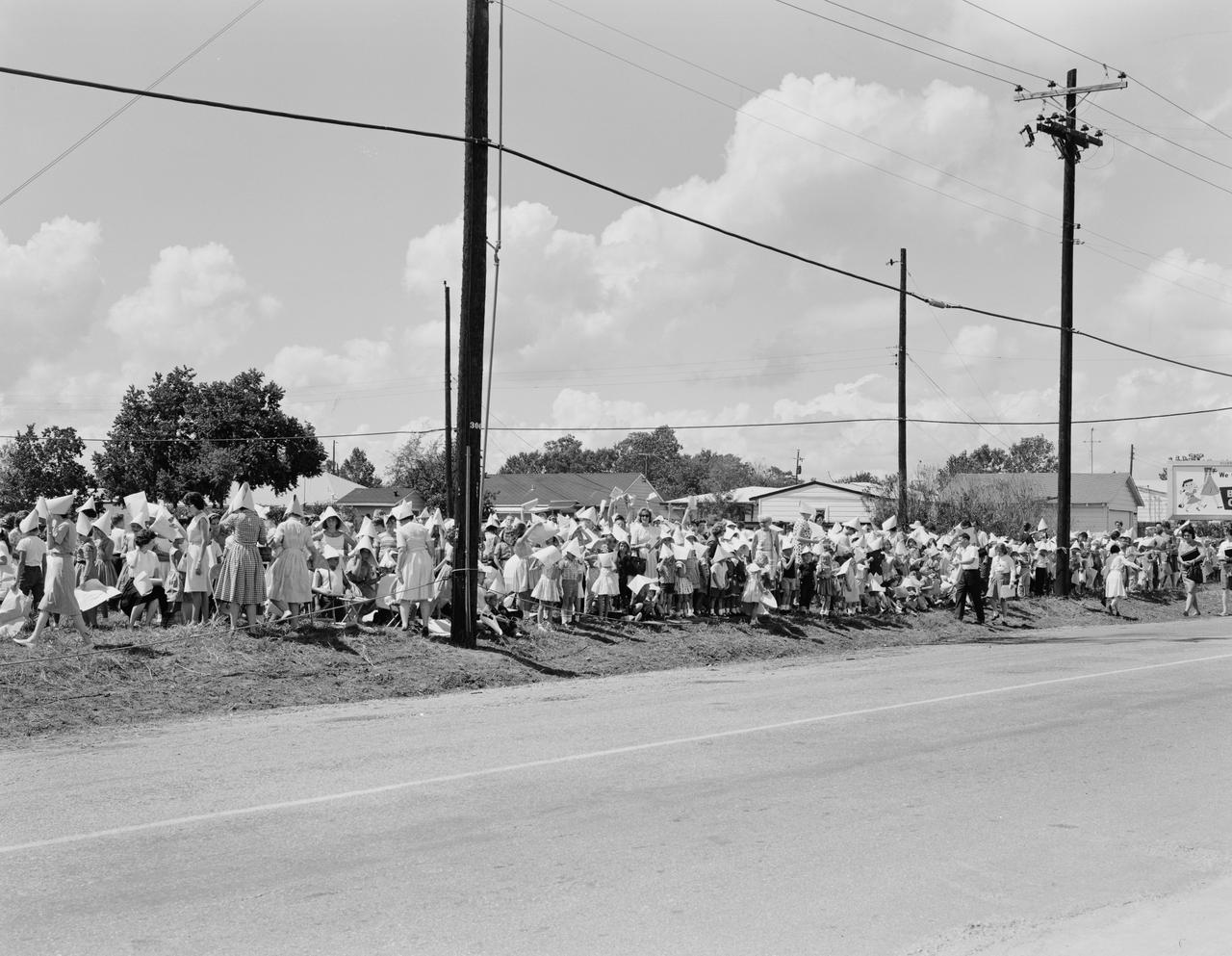
S62-03991 (11 September 1962) --- Just before the arrival of President John F. Kennedy at the J. P. Cornelius grade school, on Westover, turned out for a look at the Chief Executive in person. Wearing sun hats they made themselves, 700 children lined the roadway opposite the side entrance to the Rich Building.
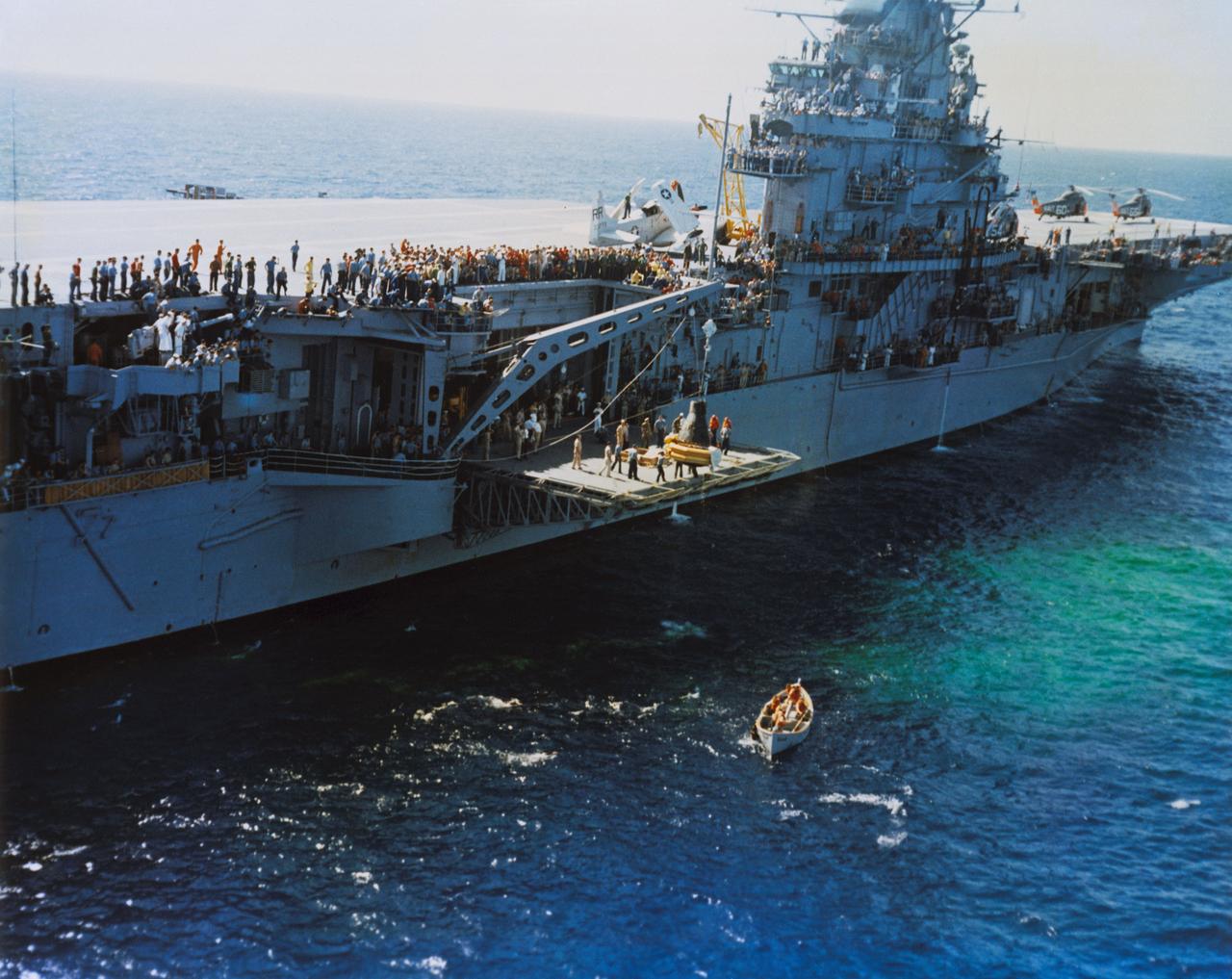
S62-09050 (3 Oct. 1962) --- Aerial view of the Mercury-Atlas 8 (MA-8) Sigma 7 capsule being lowered to the deck of the carrier USS Kearsarge. Photo credit: NASA
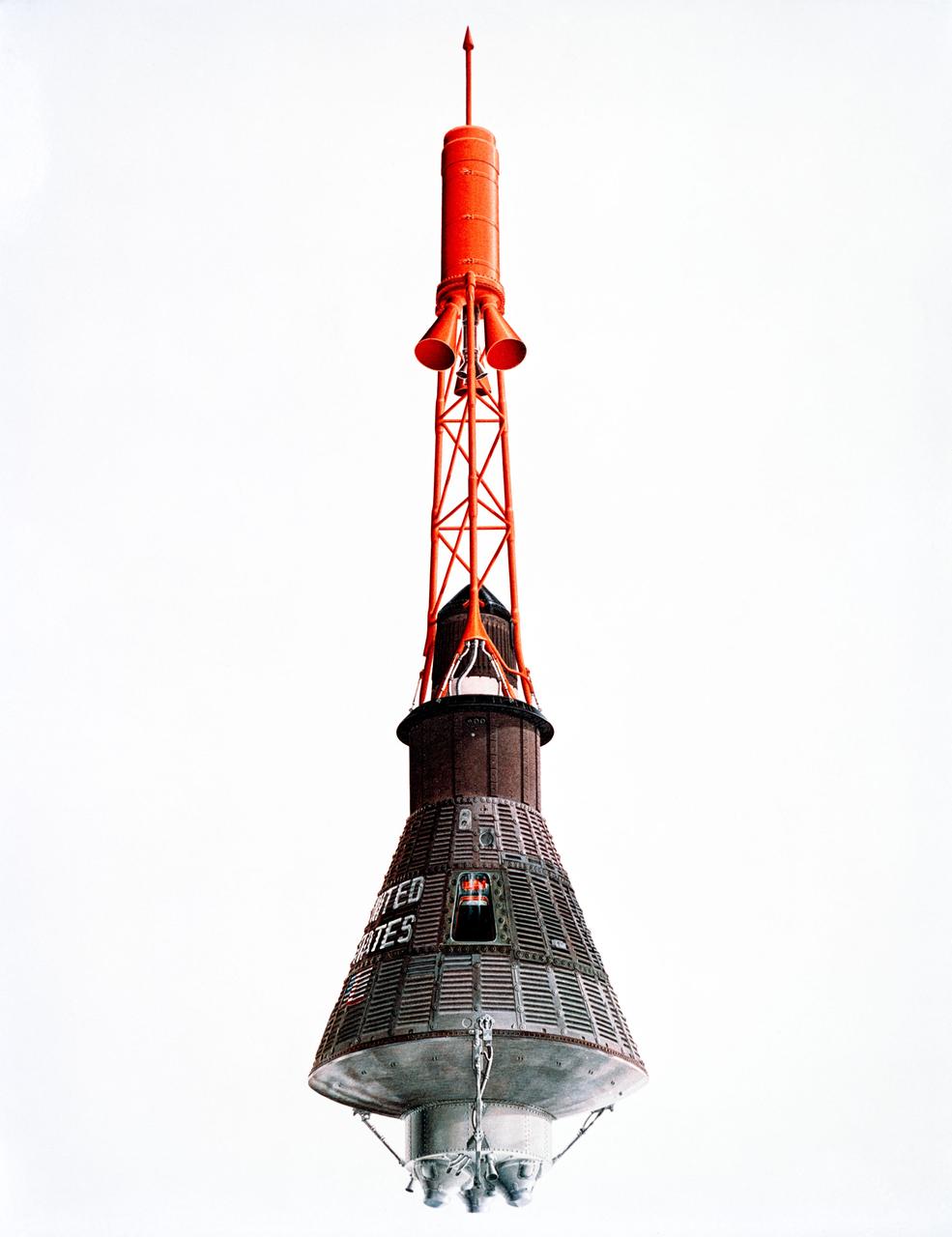
S62-04976 (31 Aug. 1962) --- Artist concept of the Mercury capsule with its launch escape system. Photo credit: NASA
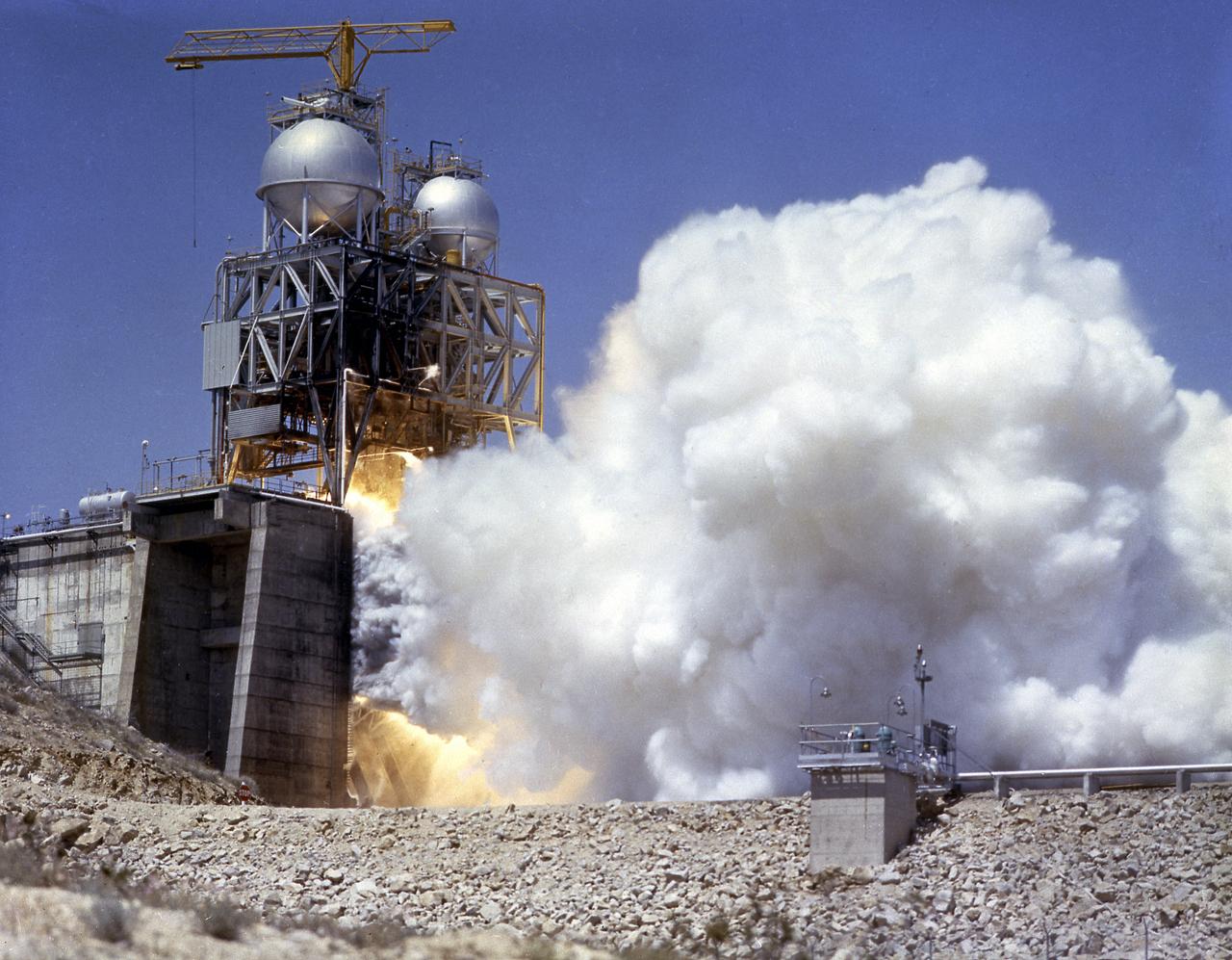
This photograph depicts the Rocketdyne static firing of the F-1 engine at the towering 76-meter Test Stand 1-C in Area 1-125 of the Edwards Air Force Base in California. The Saturn V S-IC (first) stage utilized five F-1 engines for its thrust. Each engine provided 1,500,000 pounds, for a combined thrust of 7,500,000 pounds with liquid oxygen and kerosene as its propellants.
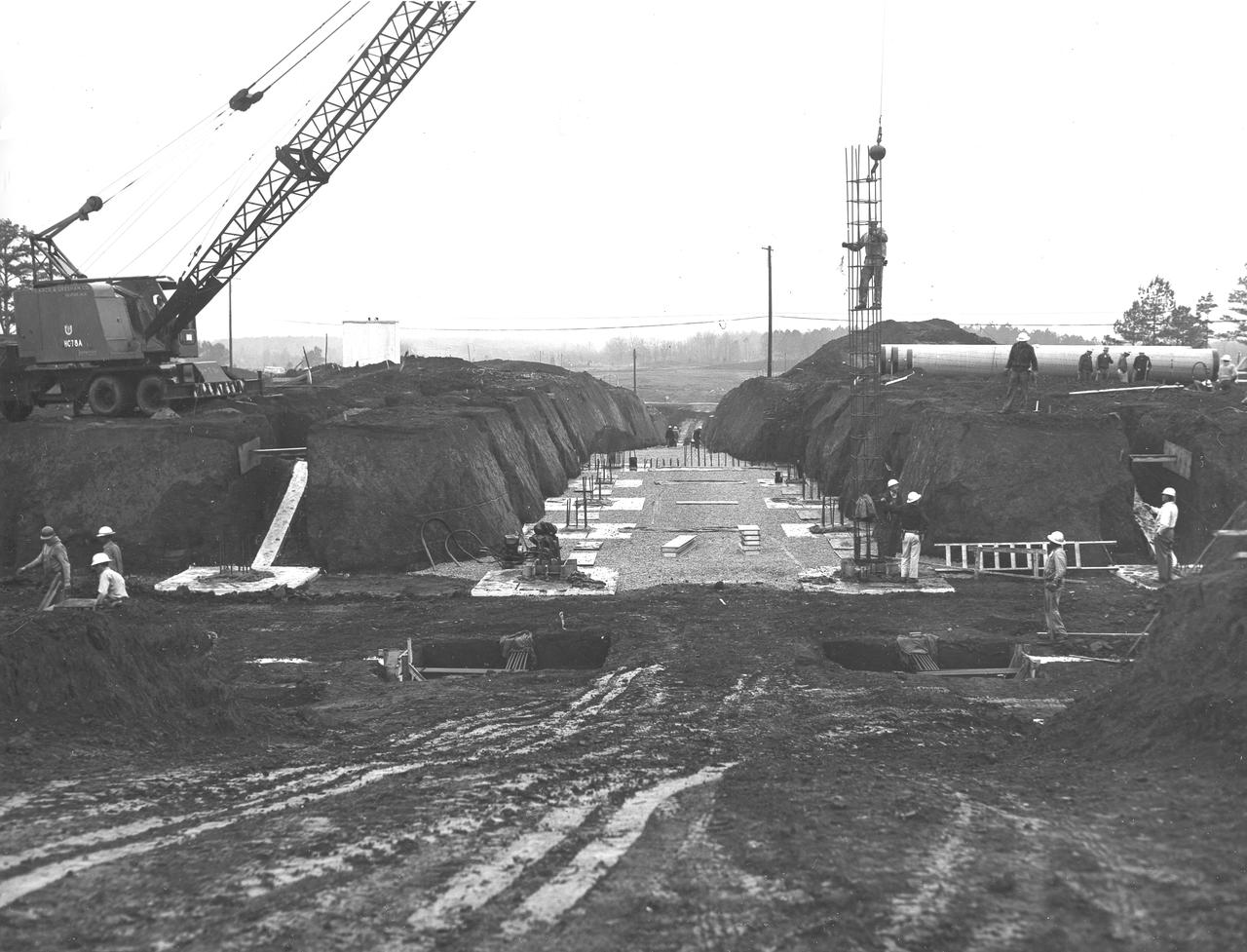
At its founding, the Marshall Space Flight Center (MSFC) inherited the Army’s Jupiter and Redstone test stands, but much larger facilities were needed for the giant stages of the Saturn V. From 1960 to 1964, the existing stands were remodeled and a sizable new test area was developed. The new comprehensive test complex for propulsion and structural dynamics was unique within the nation and the free world, and they remain so today because they were constructed with foresight to meet the future as well as on going needs. Construction of the S-IC Static test stand complex began in 1961 in the west test area of MSFC, and was completed in 1964. The S-IC static test stand was designed to develop and test the 138-ft long and 33-ft diameter Saturn V S-IC first stage, or booster stage, weighing in at 280,000 pounds. Required to hold down the brute force of a 7,500,000-pound thrust produced by 5 F-1 engines, the S-IC static test stand was designed and constructed with the strength of hundreds of tons of steel and 12,000,000 pounds of cement, planted down to bedrock 40 feet below ground level. The foundation walls, constructed with concrete and steel, are 4 feet thick. The base structure consists of four towers with 40-foot-thick walls extending upward 144 feet above ground level. The structure was topped by a crane with a 135-foot boom. With the boom in the upright position, the stand was given an overall height of 405 feet, placing it among the highest structures in Alabama at the time. In addition to the stand itself, related facilities were constructed during this time. Built directly east of the test stand was the Block House, which served as the control center for the test stand. The two were connected by a narrow tunnel which housed the cables for the controls. Again to the east, just south of the Block House, was a newly constructed Pump House. Its function was to provide water to the stand to prevent melting damage during testing. The water was sprayed through small holes in the stand’s 1900 ton water deflector at the rate of 320,000 gallons per minute. In this photo taken March 20, 1962, construction is well underway in the water line area connecting the Pump House to the S-IC test stand.
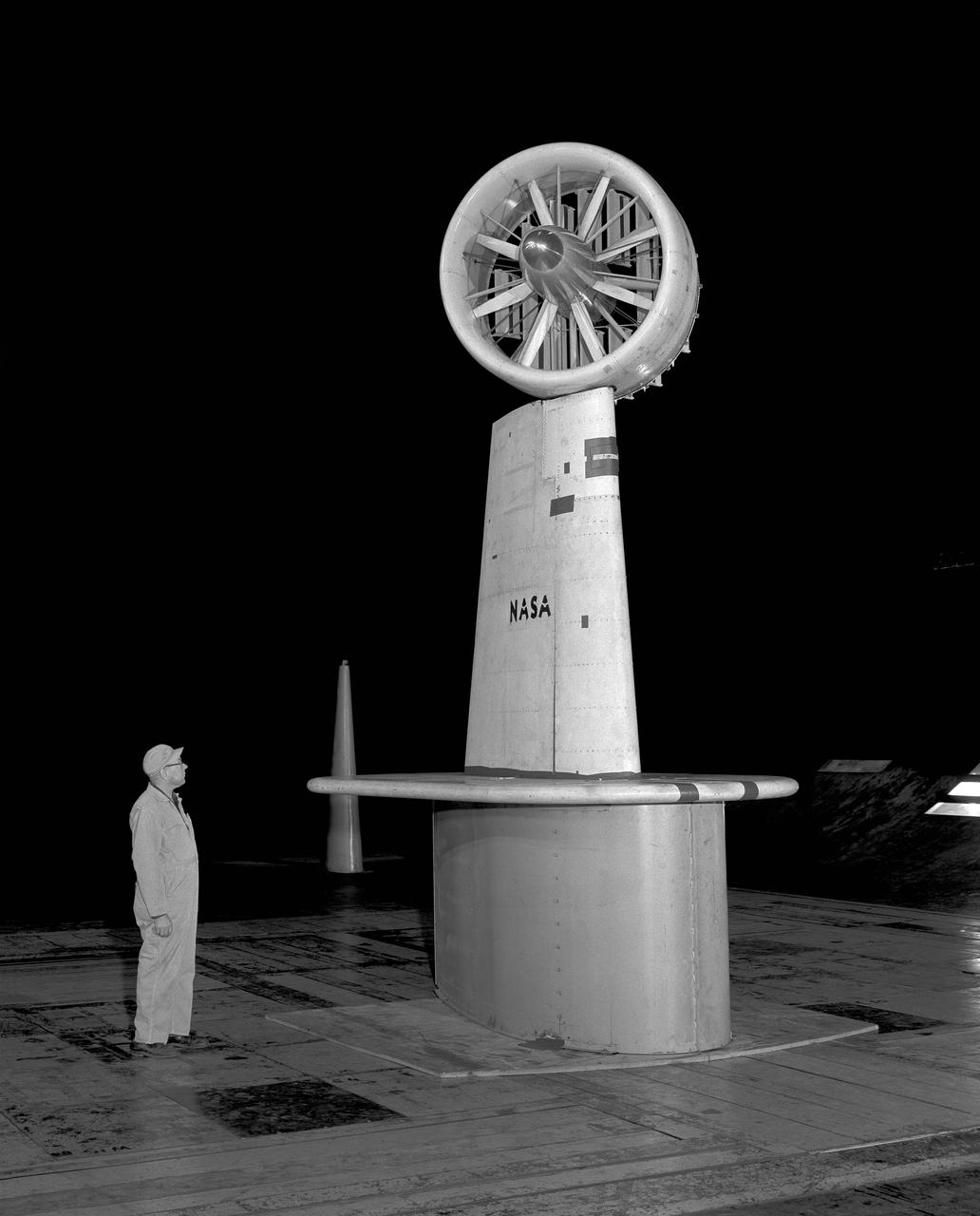
3/4 front view with cascade exit vane in Ames 40x80 foot wind tunnel, with Tom Seymore, mechanic for Ames.
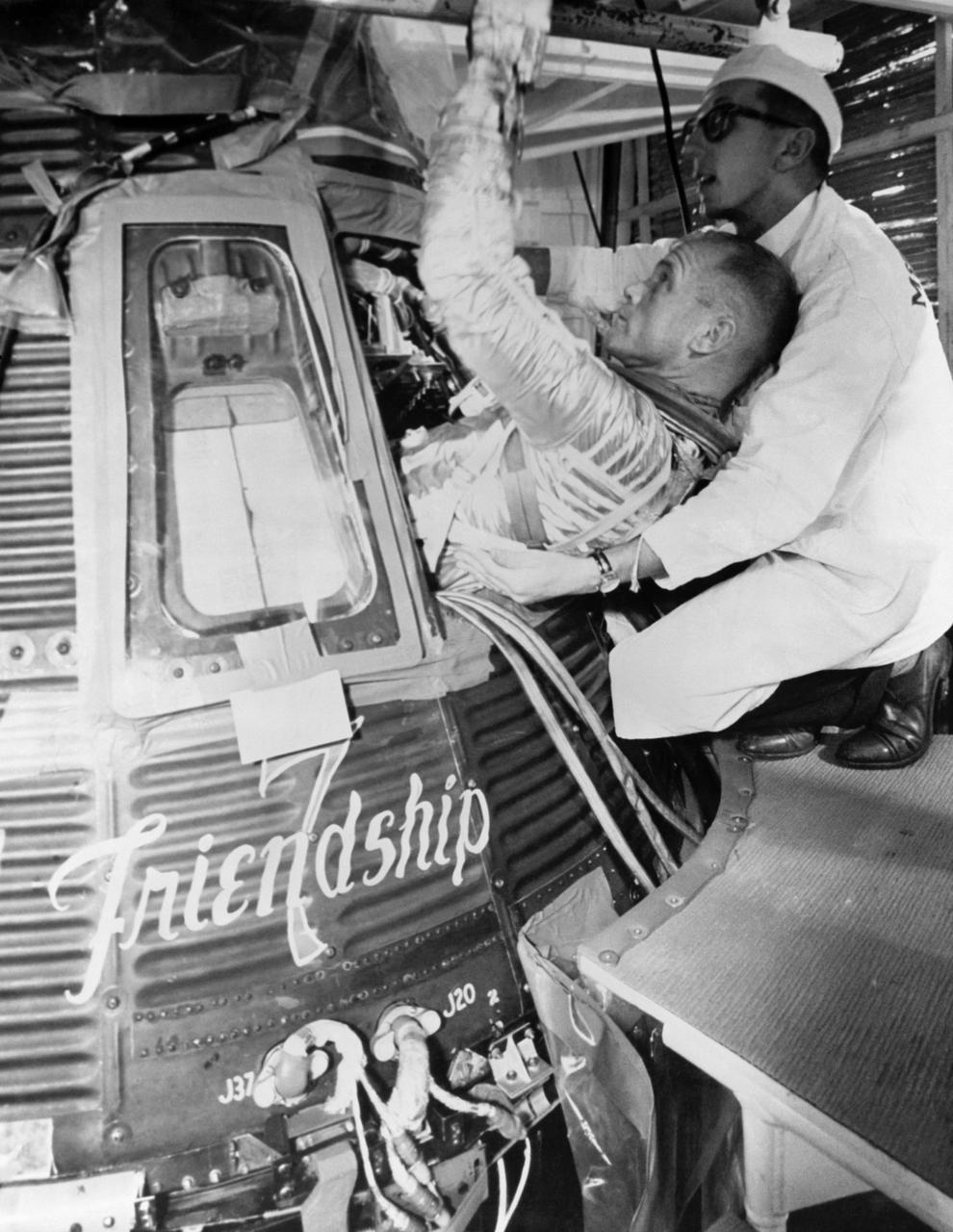
S62-00994 (1962) --- Astronaut John H. Glenn Jr., pilot of the Mercury-Atlas 6 mission, practices insertion into the Mercury "Friendship 7? spacecraft, with help of a McDonnell Aircraft Corporation technician, during MA-6 preflight training activity at Cape Canaveral, Florida. He is wearing the full pressure suit. Photo credit: NASA