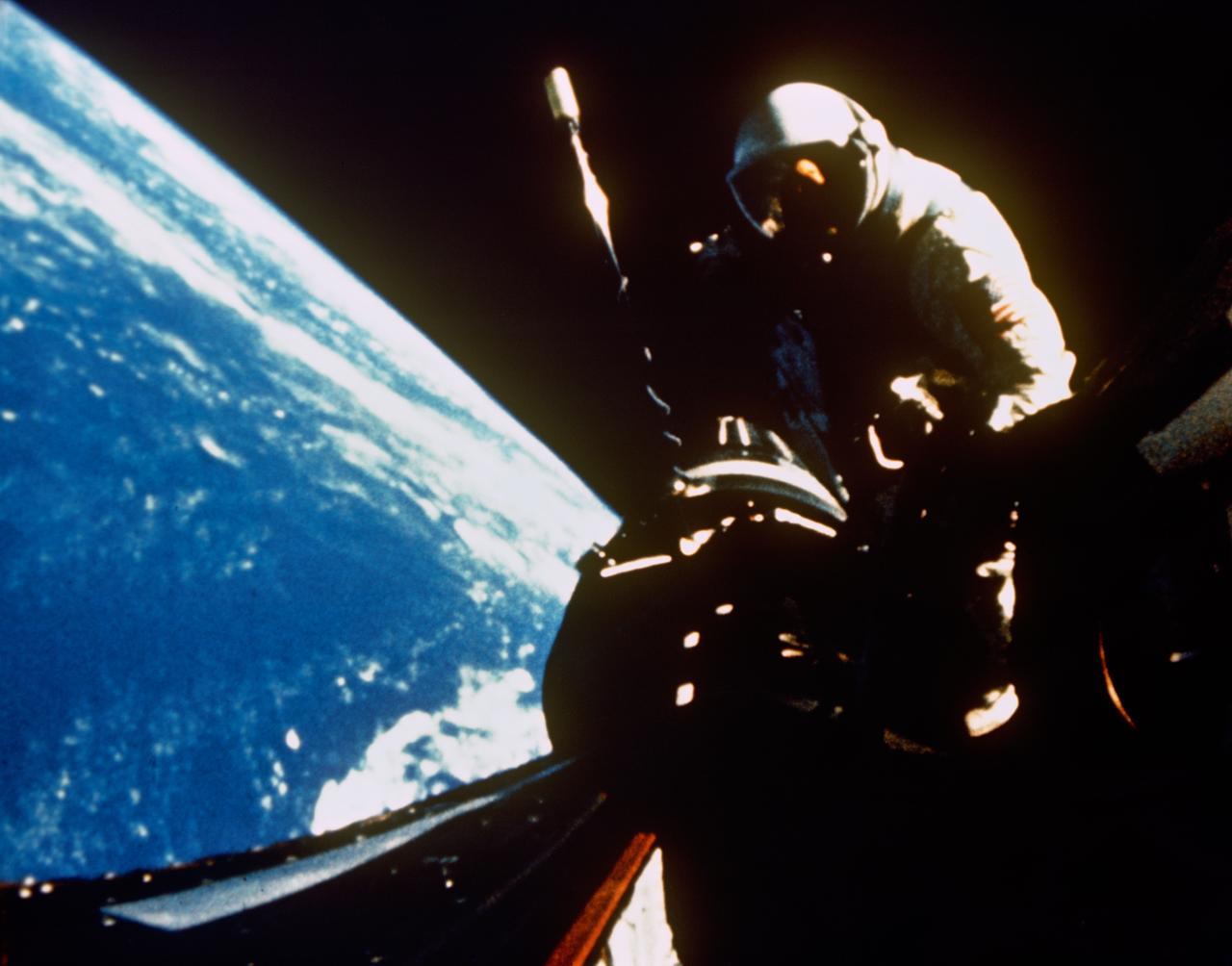
S66-54454 (13 Sept. 1966) --- Astronaut Richard F. Gordon Jr., pilot for the Gemini-11 spaceflight, returns to the hatch of the spacecraft following extravehicular activity (EVA). This picture was taken over the Atlantic Ocean at approximately 160 nautical miles above Earth's surface. Photo credit: NASA
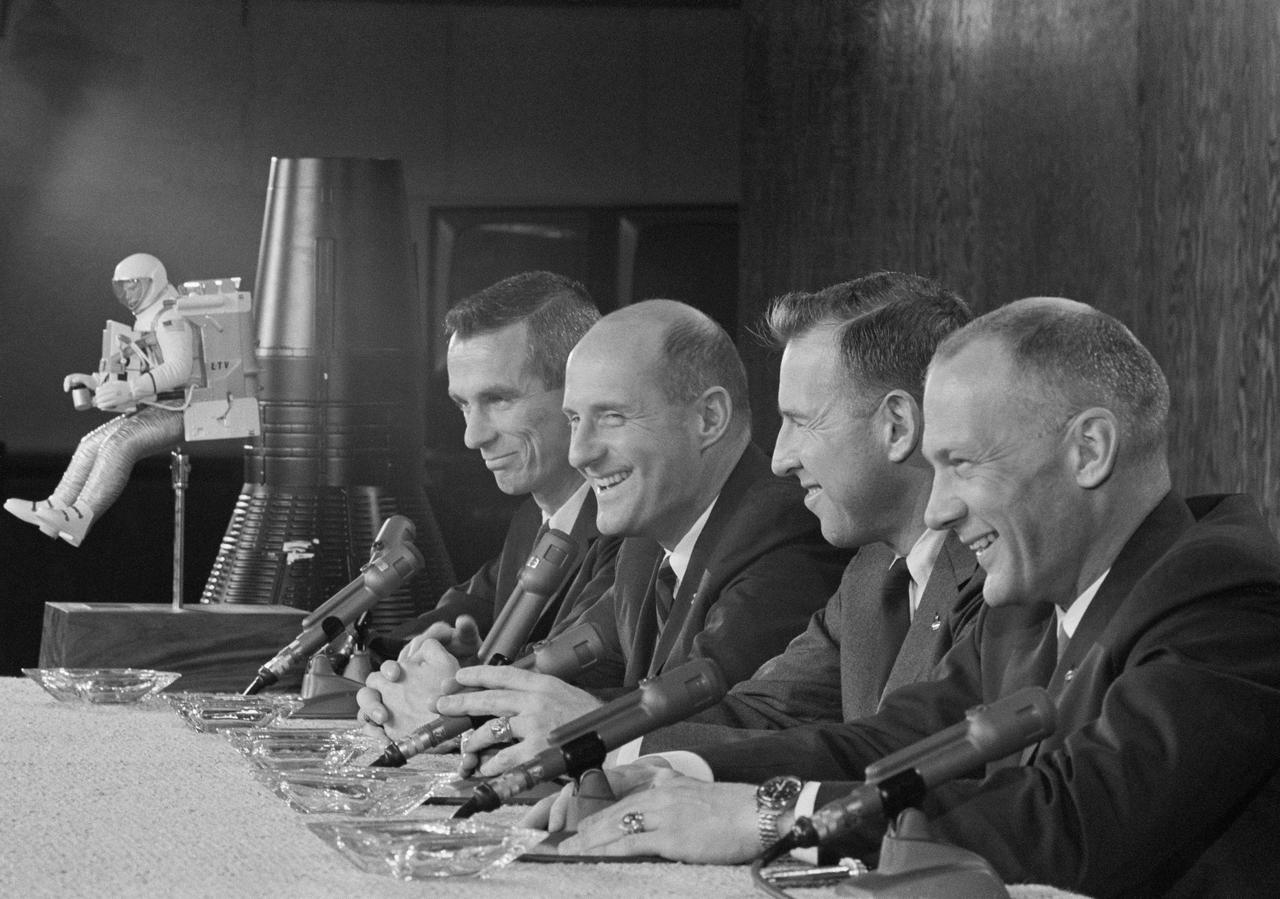
S66-24580 (23 April 1966) --- The two crews of the Gemini-9 spaceflight appear before a gathering of news media representatives during a press conference in the MSC News Center, Building 6. Left to right, are astronauts Eugene A. Cernan, prime crew pilot; Thomas P. Stafford, prime crew command pilot; James A. Lovell Jr., backup crew command pilot; and Edwin E. Aldrin Jr., backup crew pilot. A Gemini spacecraft model and a model of an astronaut wearing an Astronaut Maneuvering Unit (in background) were used to explain the Gemini-9 mission. Photo credit: NASA
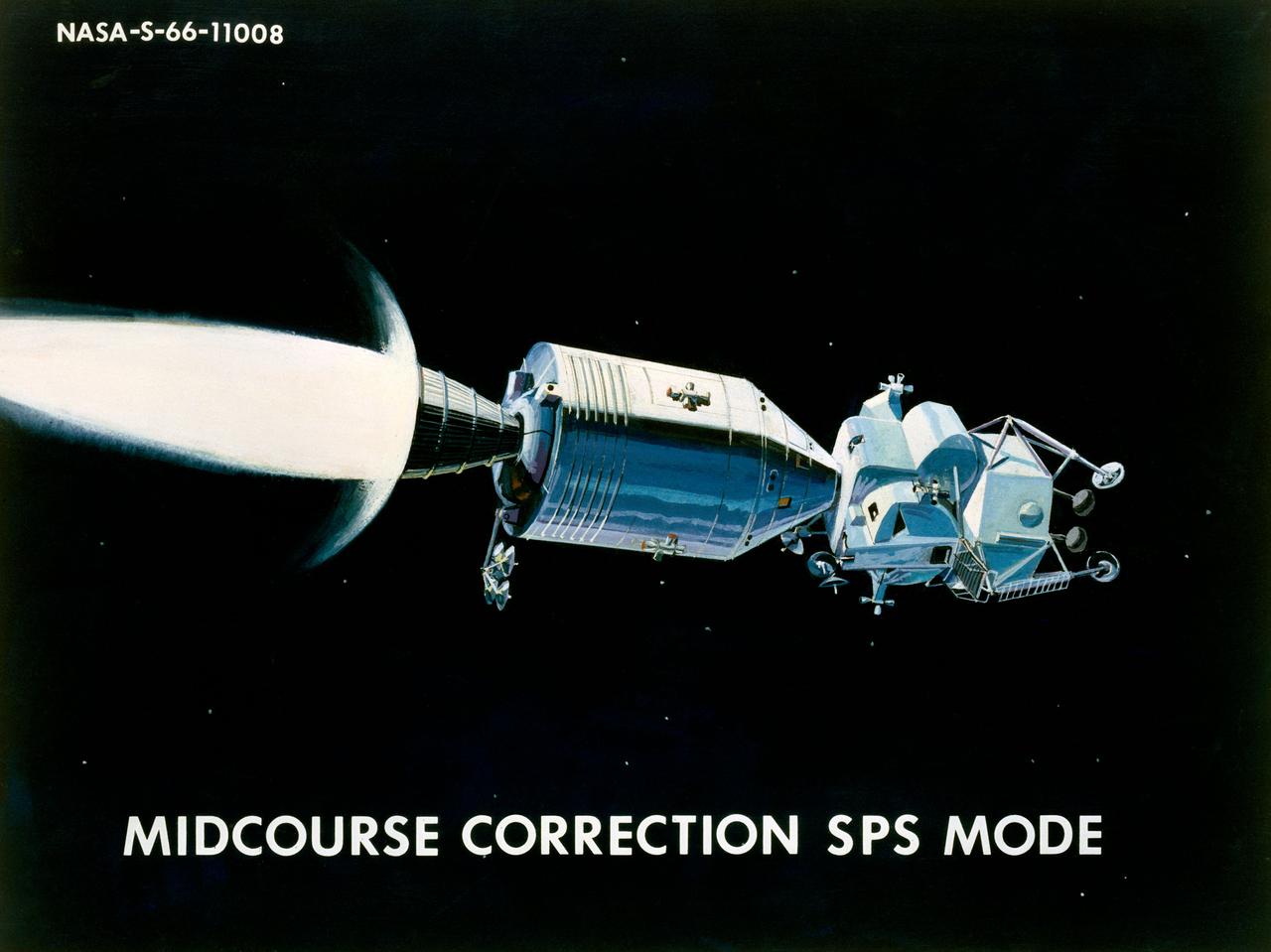
Apollo CM, Mid-Course correction, SPS Mode. MSC, HOUSTON, TX CN/BW 12/01/1966 - 06/01/1966
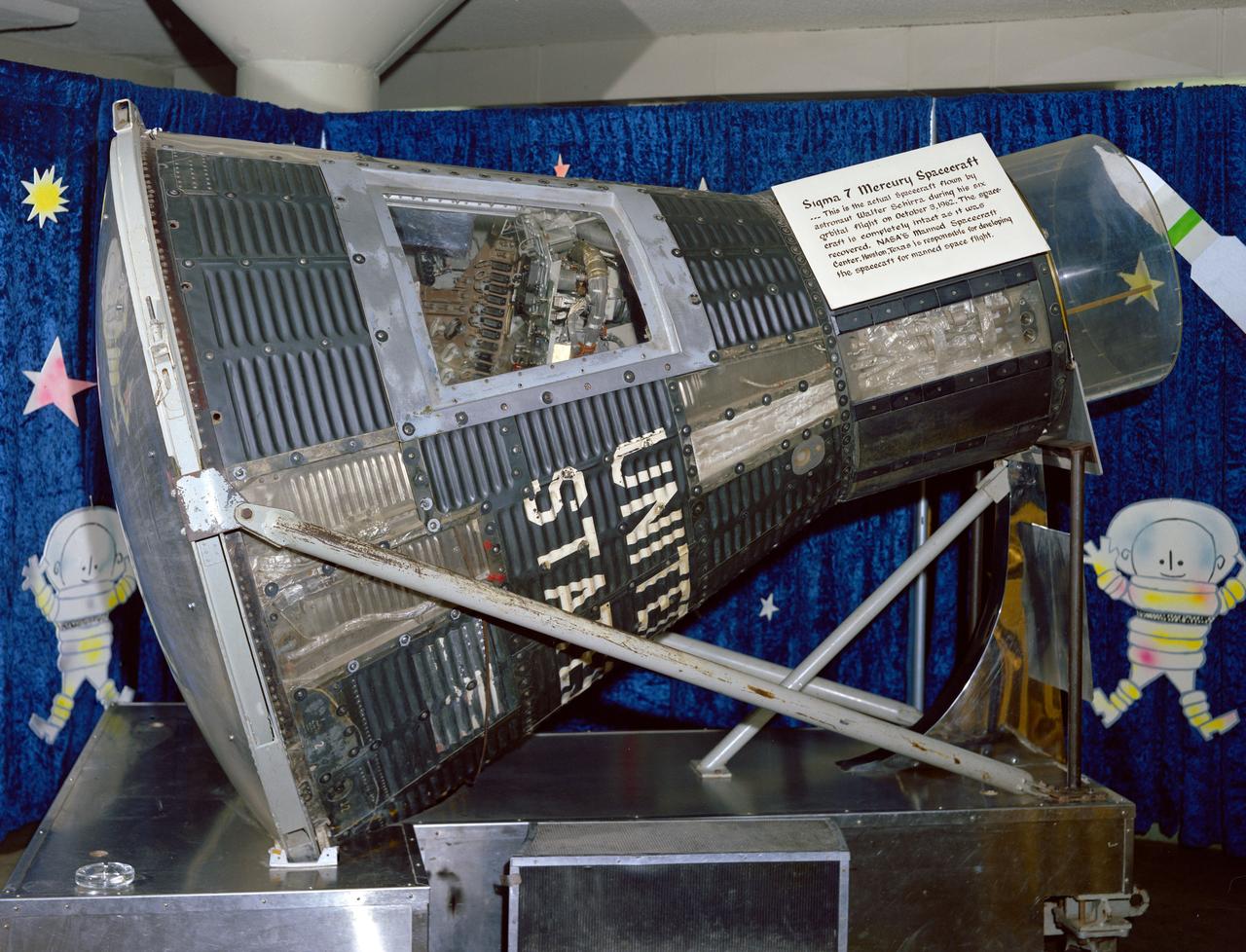
S66-53205 (1966) --- Mercury Atlas (MA-8) Sigma 7 capsule on display at the Johnson Space Center. Photo credit: NASA
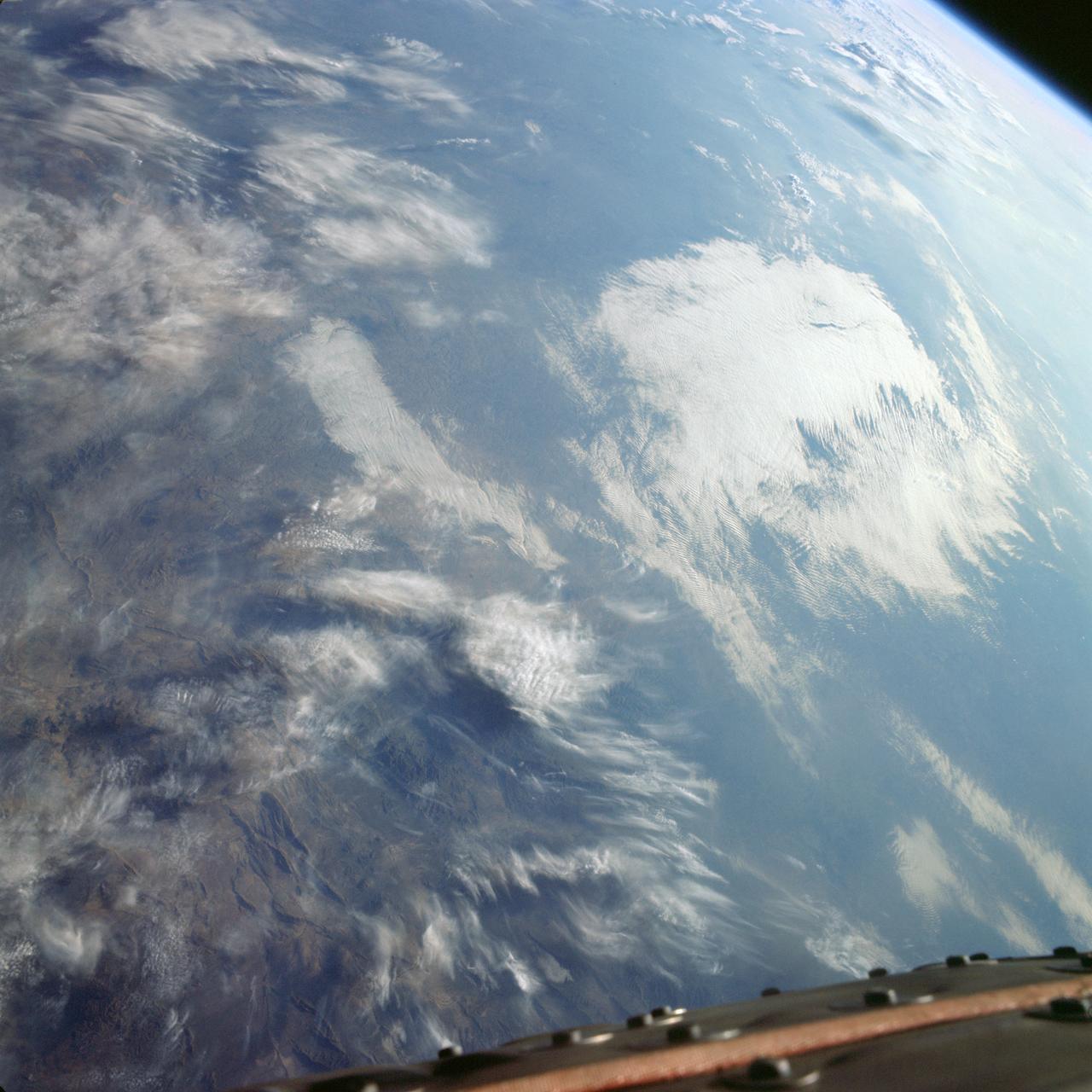
S66-54558 (14 Sept. 1966) --- Del Rio and Eagle Pass area of the Rio Grande Valley of Texas and Mexico as seen from the Gemini-11 spacecraft during its 29th revolution of Earth. Photo credit: NASA
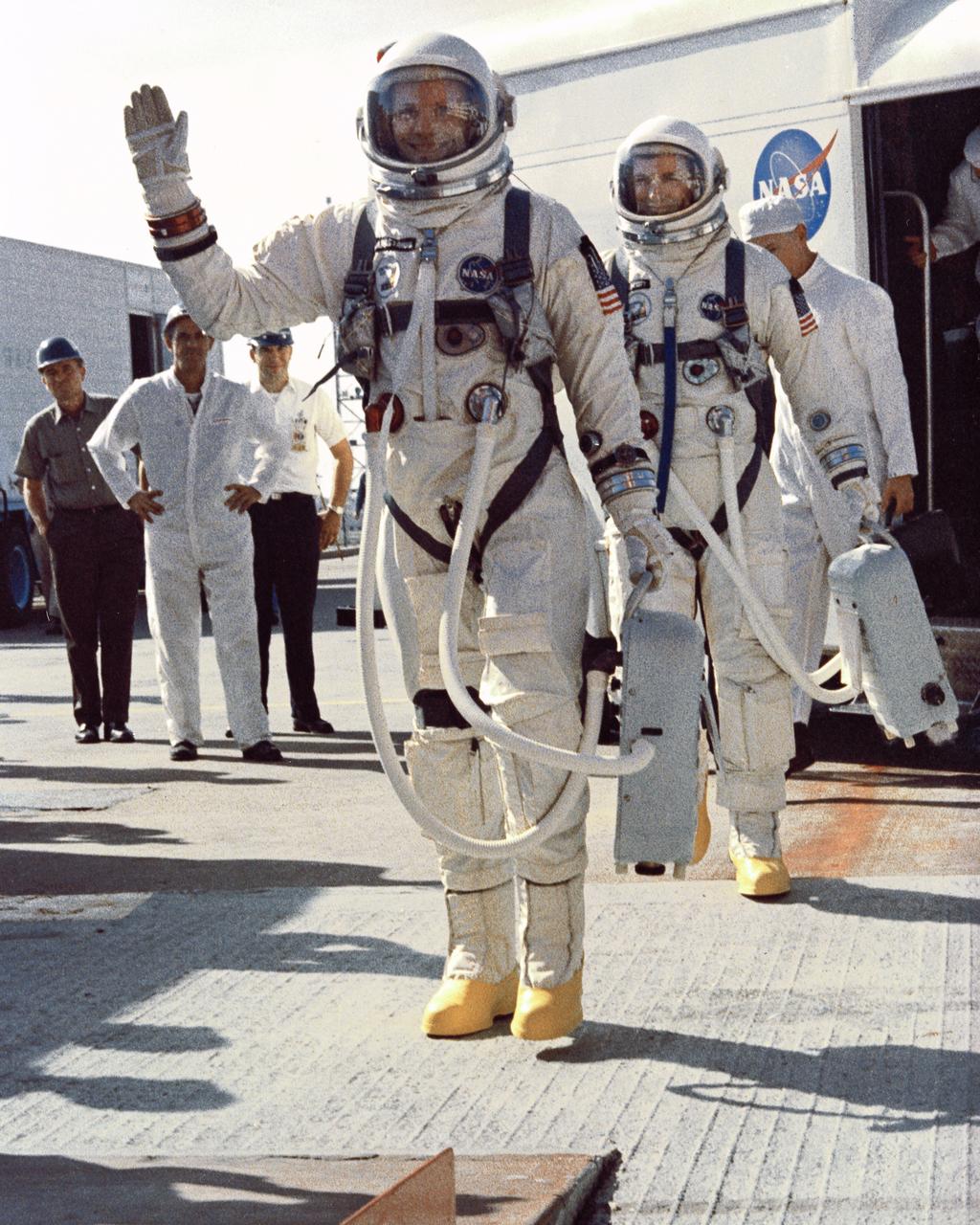
KSC-66C-1867 Gemini-8 Astronauts Neil A. Armstrong and David R. Scott leave Transfer Van at Complex 19, Cape Kennedy prior to boarding their Gemini 8 Spacecraft. (jrs)
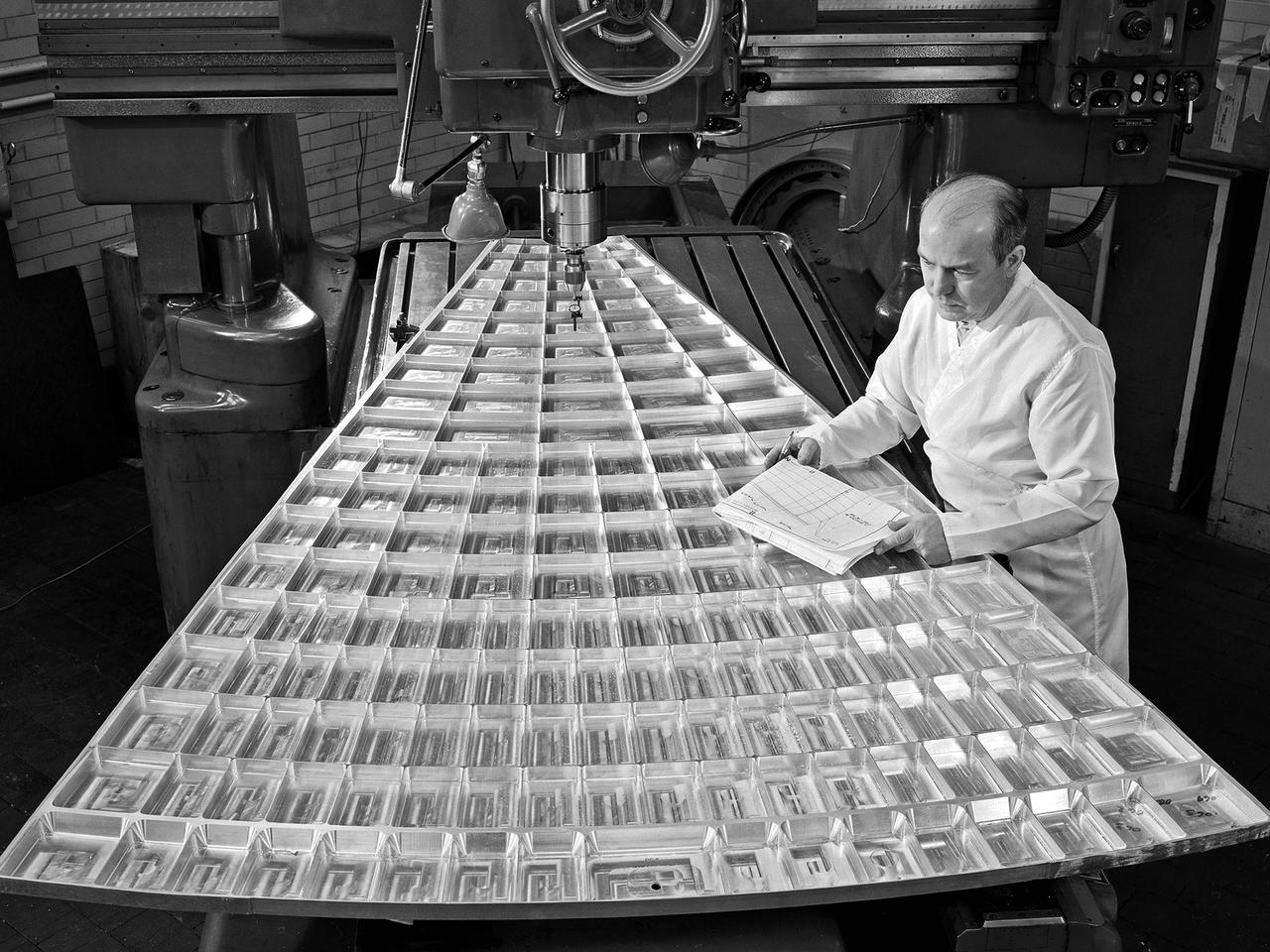
Daniel Bernatowicz, Chief of the Advanced Power Systems Branch at the National Aeronautics and Space Administration (NASA) Lewis Research Center, examines a 20-foot section of a solar mirror being fabricated in the Jig Bore Room of the Technical Services Building. NASA Lewis was conducting a wide-ranging effort to explore methods of generating electrical power for spacecraft. One method employed a large parabolic mirror to concentrate the sun’s energy. The mirror had to remain rigid and withstand micrometeoroids, but remain light and compact enough to be easily launched. In 1963 Bernatowicz and his researchers undertook a program to design a solar mirror to work with the Brayton cycle system on a space station. The mirror in this photograph was prepared for a conference on Advanced Technology in Space Power Systems held at Lewis in late August 1966. Lewis experts discussed advances with batteries, fuel cells, isotope and thermoelectric generators, and the SNAP-8 space power system. Lewis was developing several types of solar mirrors to work with a Brayton cycle electric generating system. The mirror’s 12 sections were shaped using a unique forming process developed at Lewis, coated with an epoxy, and plated with aluminum. The mirror concentrated the Sun's rays on a heat storage receiver containing lithium fluoride. This material was heated to produce power in a turbogenerator system, while additional heat was stored for use when the unit was in the Earth's shadow.
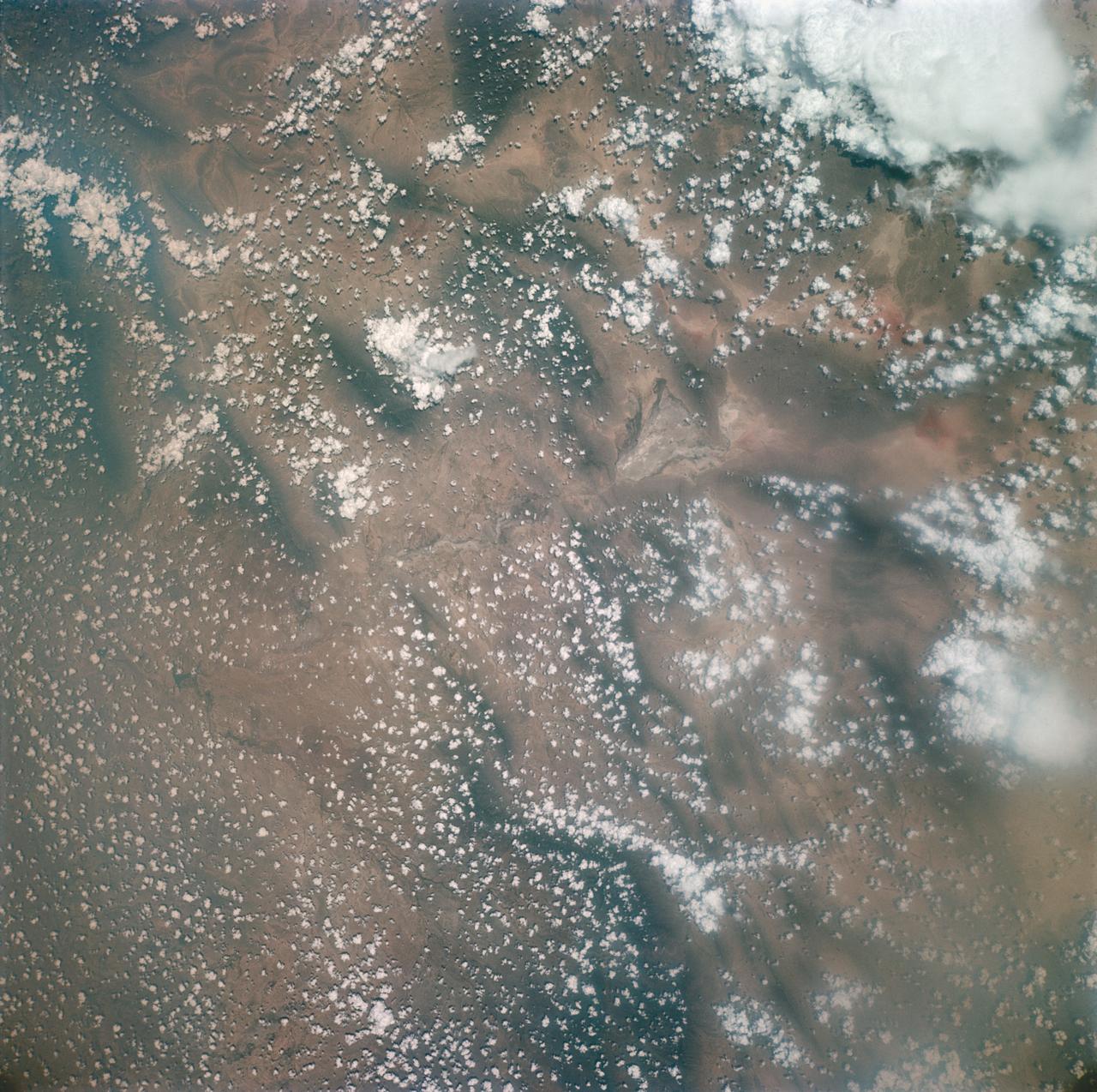
S66-45763 (18-21 July 1966) --- Don Martin Reservoir and Sabinas River Valley area of the States of Coahuila and Nuevo Leon, Mexico, as seen from the Gemini-10 spacecraft. Taken with a J. A. Maurer 70mm camera, using Eastman Kodak, Ektachrome, MS (S.O. 217) color film. Photo credit: NASA
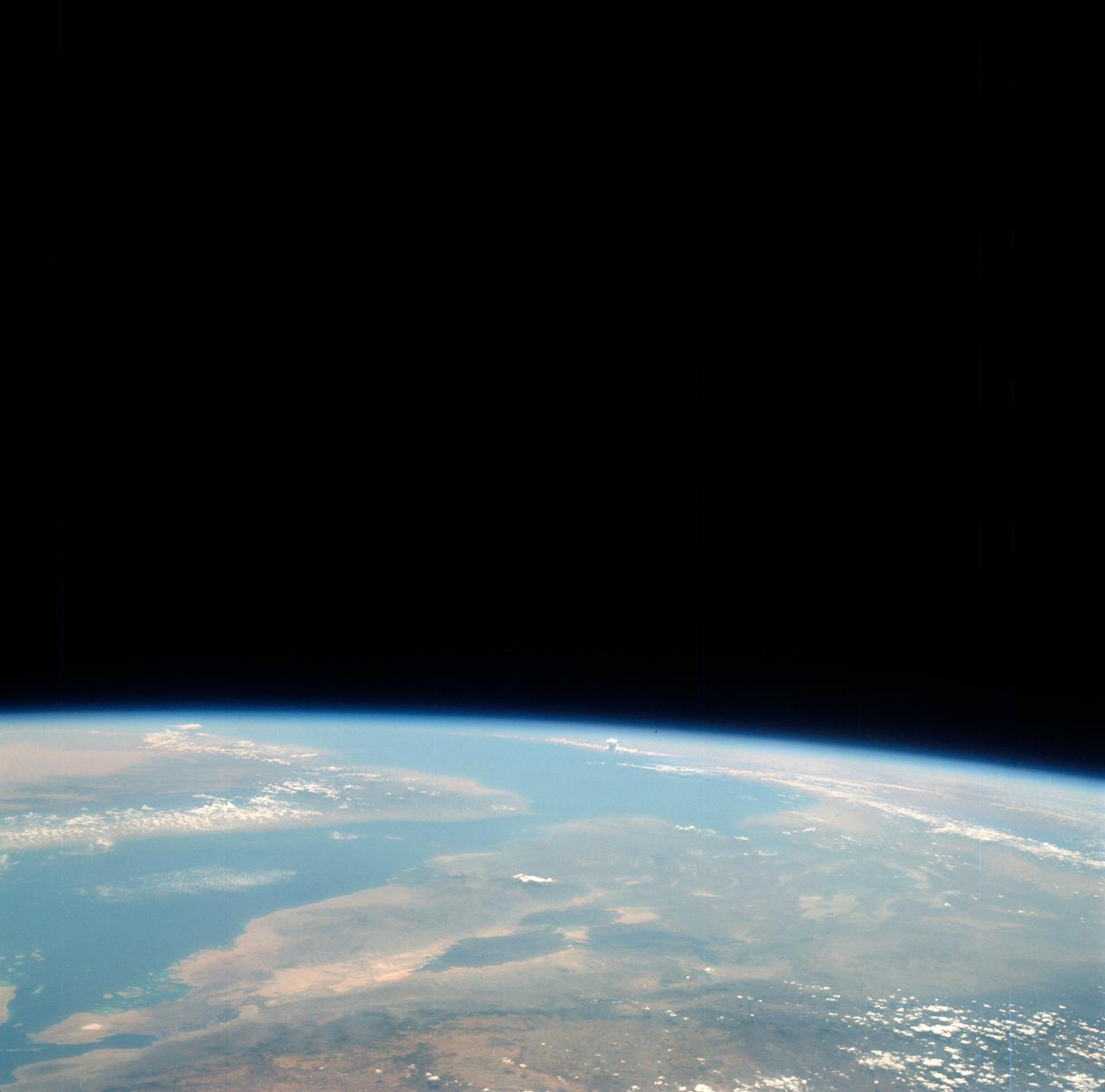
S66-38423 (6 June 1966) --- The southern tip of the Red Sea area as seen from the Gemini-9A spacecraft during its 43rd revolution of Earth. The Red Sea is at lower left. The Gulf of Aden is in the center of the picture. The land mass at bottom center is Ethiopia. Yemen is at upper center, southwestern tip of Arabian Peninsula. Somalia is the land mass in the background, center of picture. The image was taken with a modified 70mm Hasselblad camera, using Eastman Kodak, Ektachrome MS (S.O. 217) color film. Photo credit: NASA
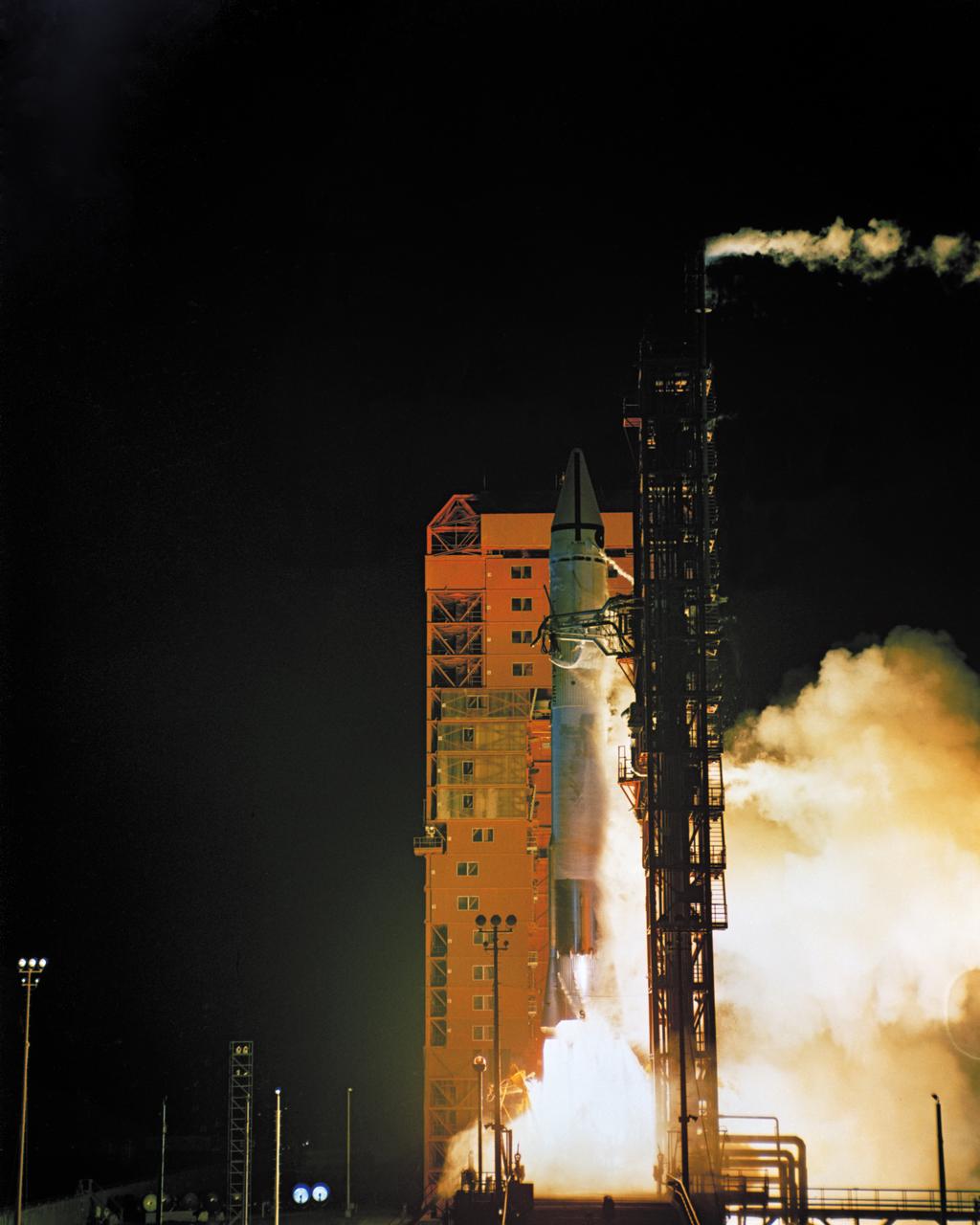
Lift off of Atlas Centaur 9 with Surveyor Mass Model spacecraft. Pad 36B. Item 1.3-25
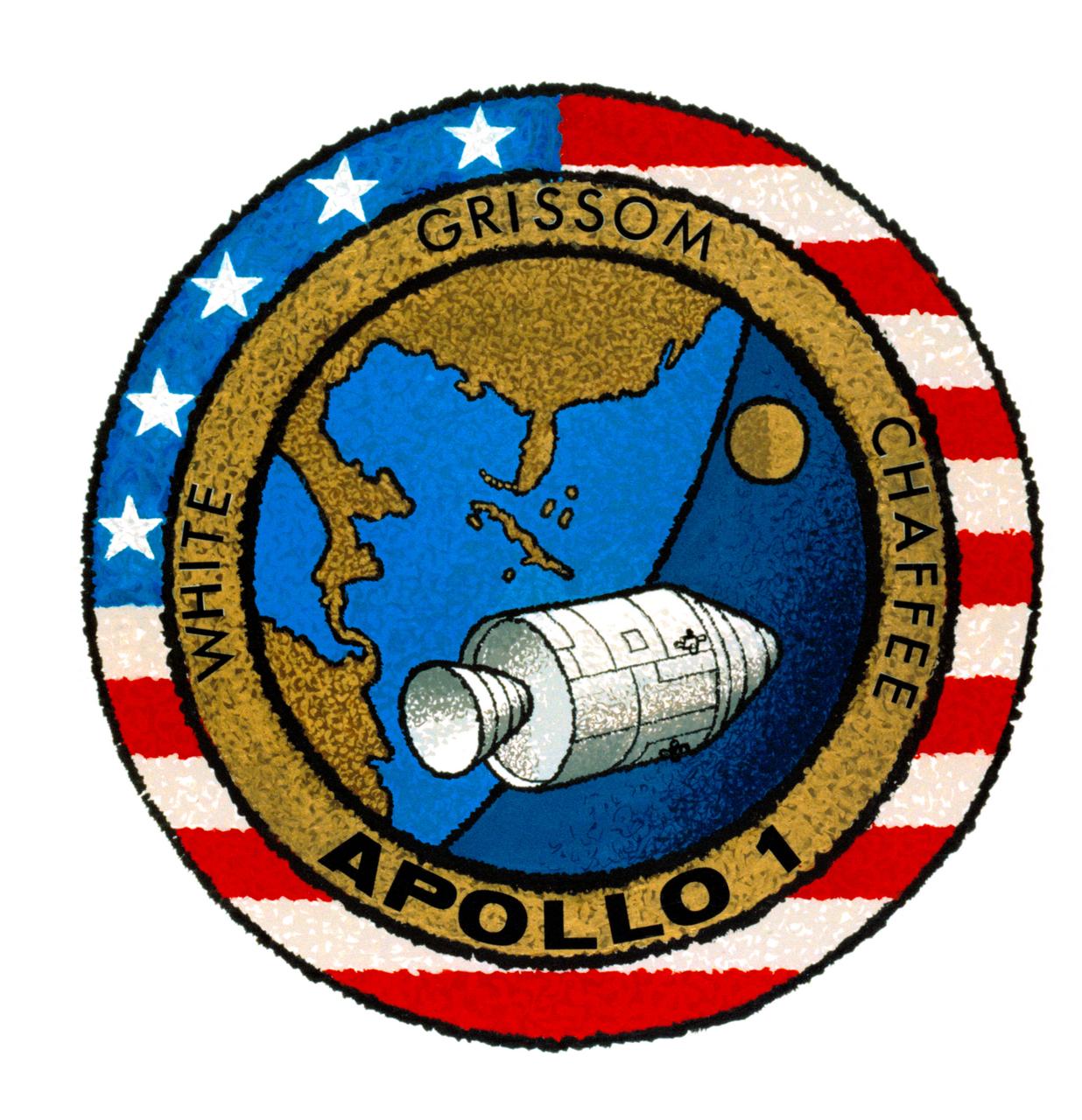
S66-36742 (1966) --- This is the insignia for the National Aeronautics and Space Administration's (NASA) Apollo 1 mission, the first manned Apollo flight. Crew members are astronauts Virgil I. Grissom, Edward H. White II and Roger B. Chaffee. The NASA insignia design for Apollo flights is reserved for use by the astronauts and for other official use as the NASA Administrator may authorize. Public availability has been approved only in the form of illustrations by the various news media. When and if there is any change in this policy, which we do not anticipate, it will be publicly announced. EDITOR'S NOTE: The three astronauts lost their lives in a fire during a simulation on the launch pad on Jan. 27, 1967.
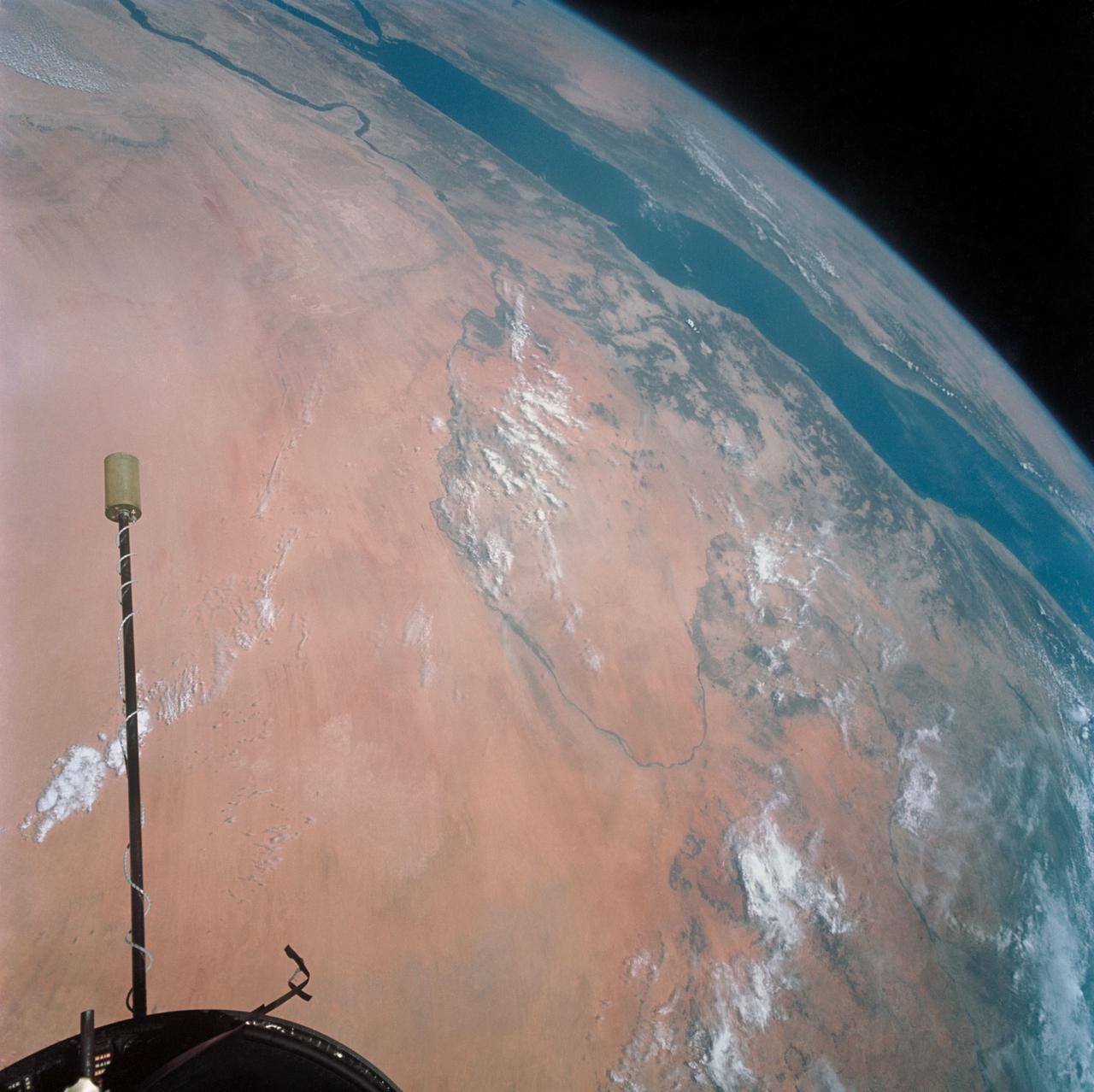
S66-54530 --- Libyan Desert area of Sudan, foreground, and the United Arab Republic (Egypt), at lower left, as seen from the orbiting Gemini-11 spacecraft at an altitude of 300 nautical miles during its 27th revolution of Earth. In view is the Nile River from Biba in Egypt to Khartoum in the Sudan. The Red Sea is in the background. At upper left is the Arabian Peninsula. At top right is Ethiopia. Note L-band antenna of the Agena Target Vehicle. Taken with a modified 70mm Hasselblad camera, using Eastman Kodak, Ektachrome, MS (S.O. 368) color film. Photo credit: NASA
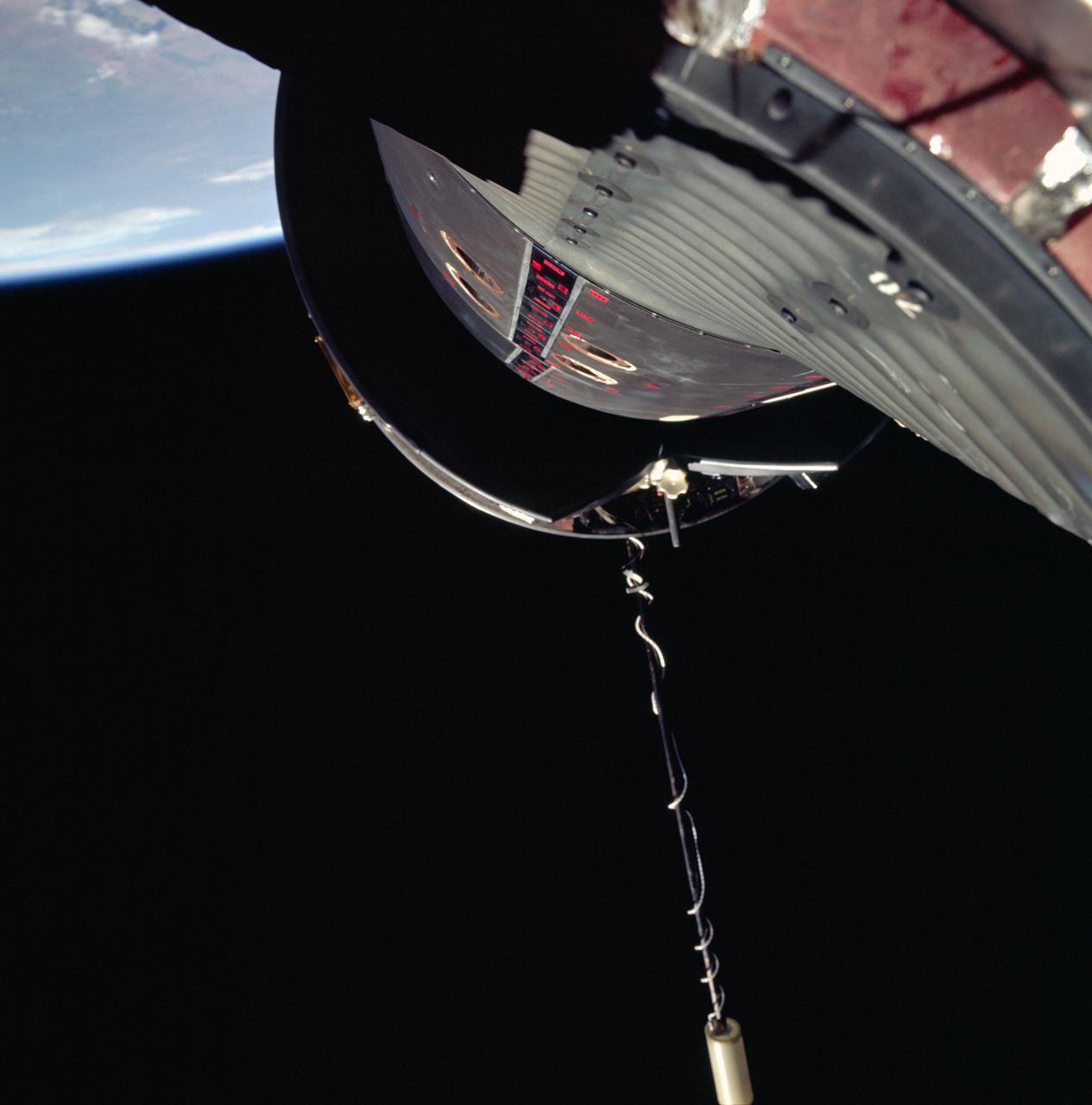
S66-54656 (13 Sept. 1966) --- Nose of Gemini-11 spacecraft and Agena Target Vehicle while docked as photographed by astronaut Richard F. Gordon Jr., pilot, during his stand-up extravehicular activity (EVA). Taken with a modified 70mm Hasselblad camera, using Eastman Kodak, Ektachrome, MS (S.O. 368) color film. Photo credit: NASA
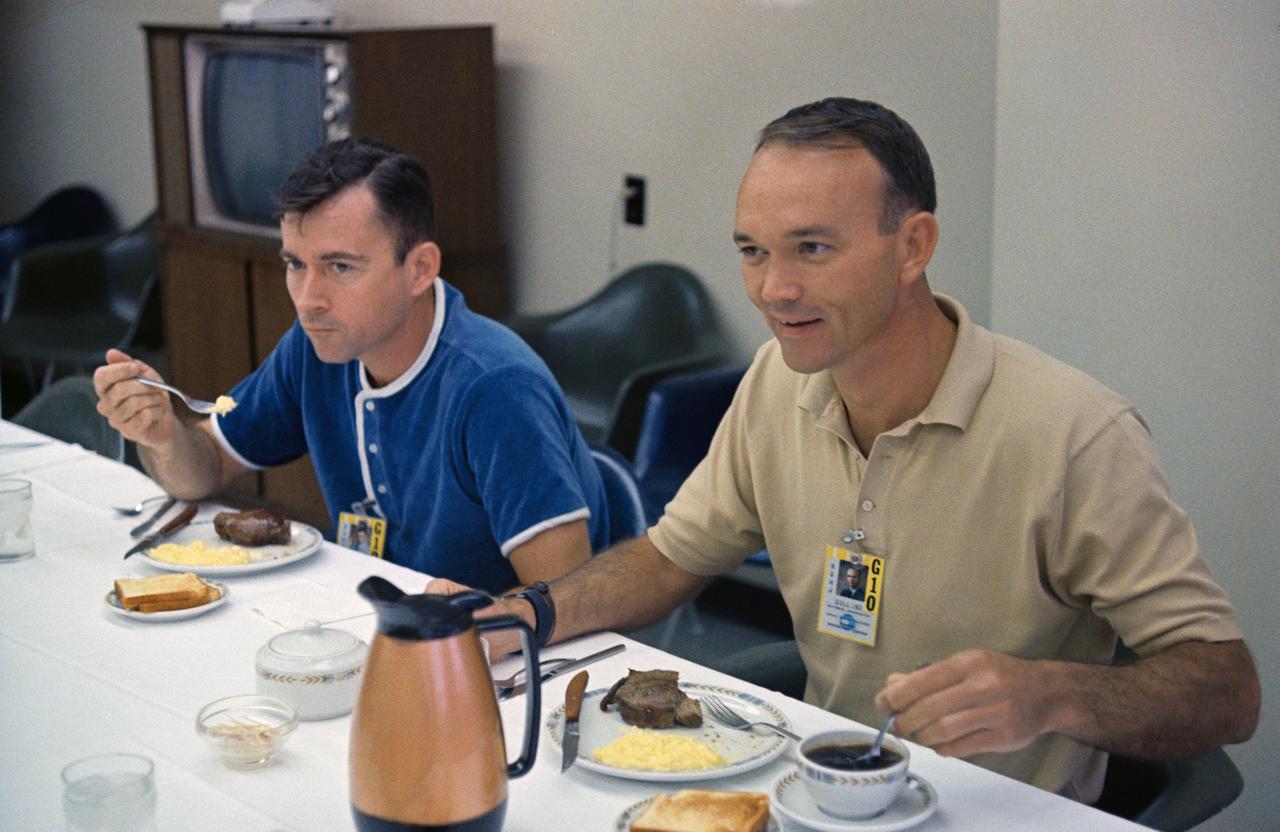
S66-42748 (18 July 1966) --- The Gemini-10 prime crew, astronauts John W. Young (left), command pilot, and Michael Collins, pilot, enjoy a breakfast of steak and eggs on the day of the Gemini-10 launch. The Gemini-10 liftoff was at 5:20 p.m. (EST), July 18, 1966. Photo credit: NASA
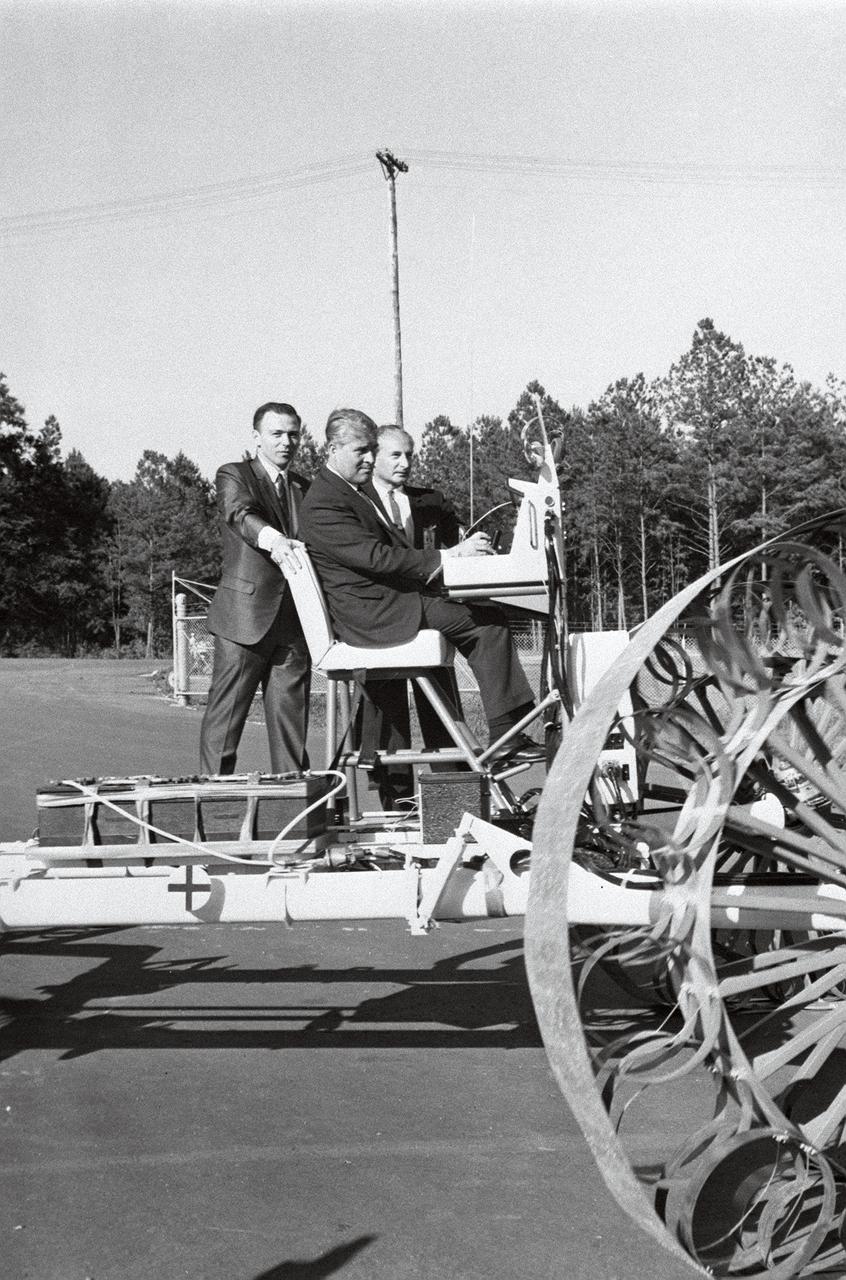
In this June 1966 photograph, Marshall Space Flight Center Director Dr. Wernher von Braun test-drives the Mobility Test Article (MTA), a developmental vehicle built by the Bendix Corporation to test lunar mobility vehicle concepts. The data provided by the MTA helped in designing the Lunar Roving Vehicle (LRV), developed under the direction of the MSFC. The LRV was designed to allow Apollo astronauts a greater range of mobility during lunar exploration missions. The LRVs were deployed during the last three Apollo missions; Apollo 15, Apollo 16, and Apollo 17.
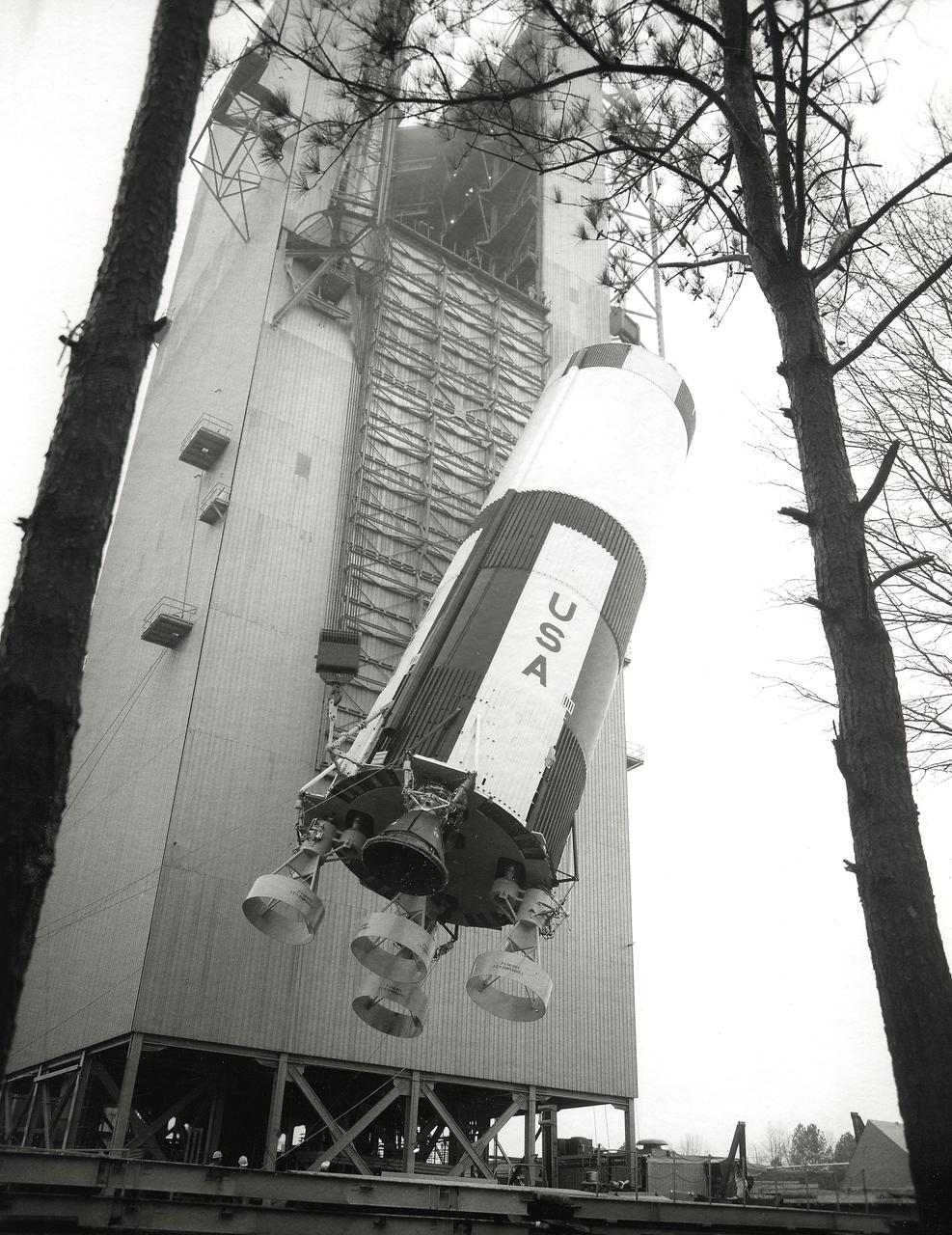
Engineers and technicians at the Marshall Space Flight Center placed a Saturn V ground test booster (S-IC-D) into the dynamic test stand. The stand was constructed to test the integrity of the vehicle. Forces were applied to the tail of the vehicle to simulate the engines thrusting, and various other flight factors were fed to the vehicle to test reactions. The Saturn V launch vehicle, with the Apollo spacecraft, was subjected to more than 450 hours of shaking. The photograph shows the 300,000 pound S-IC stage being lifted from its transporter into place inside the 360-foot tall test stand. This dynamic test booster has one dummy F-1 engine and weight simulators are used at the other four engine positions.
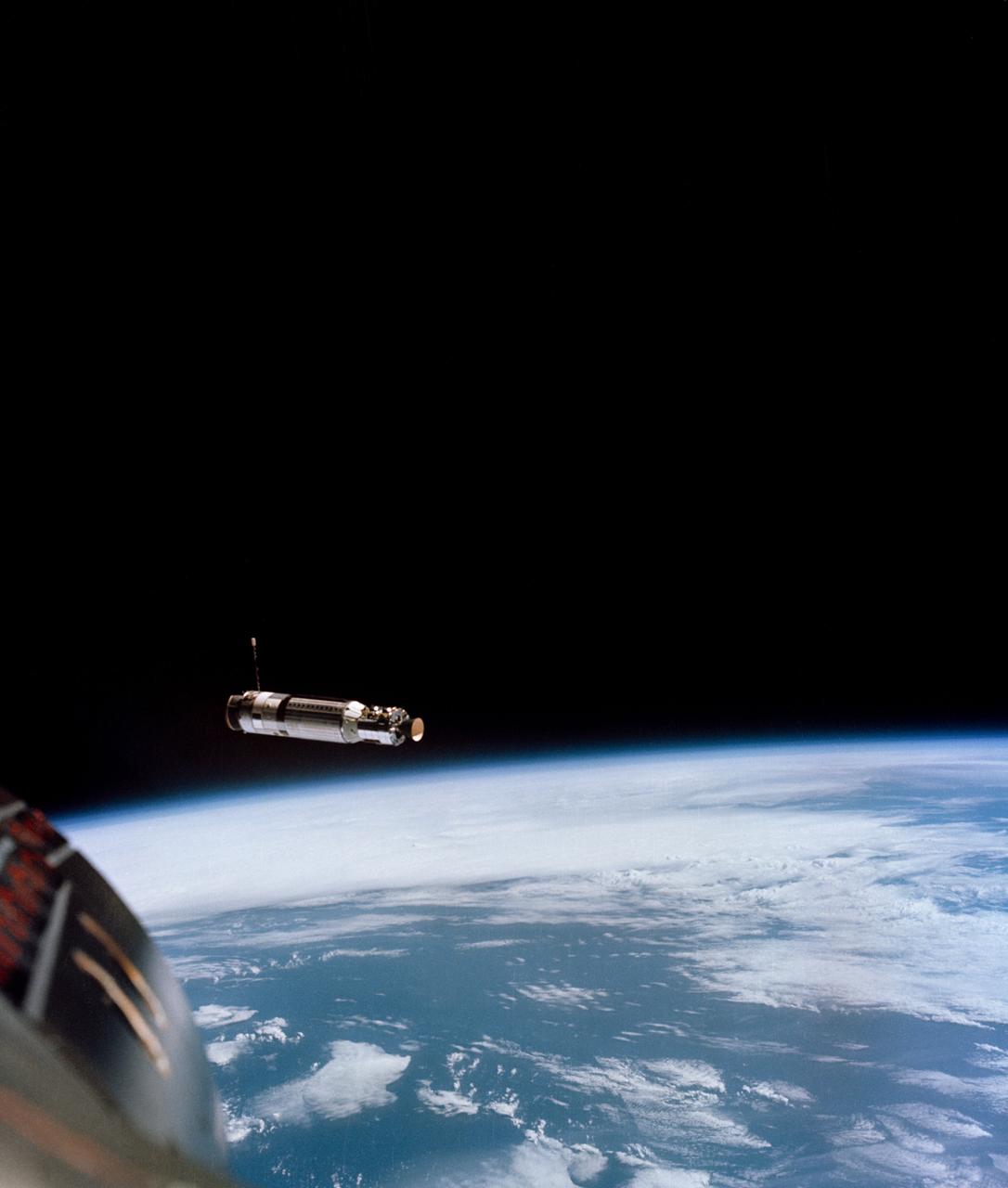
S66-25779 (16 March 1966) --? The Agena Target Docking Vehicle seen from the National Aeronautics and Space Administration?s Gemini-8 spacecraft during rendezvous in space. The Agena is approximately 210 feet away from the nose of the spacecraft (lower left). Crewmen for the Gemini-8 mission were astronauts Neil A. Armstrong, command pilot, and David R. Scott, pilot. Photo credit: NASA
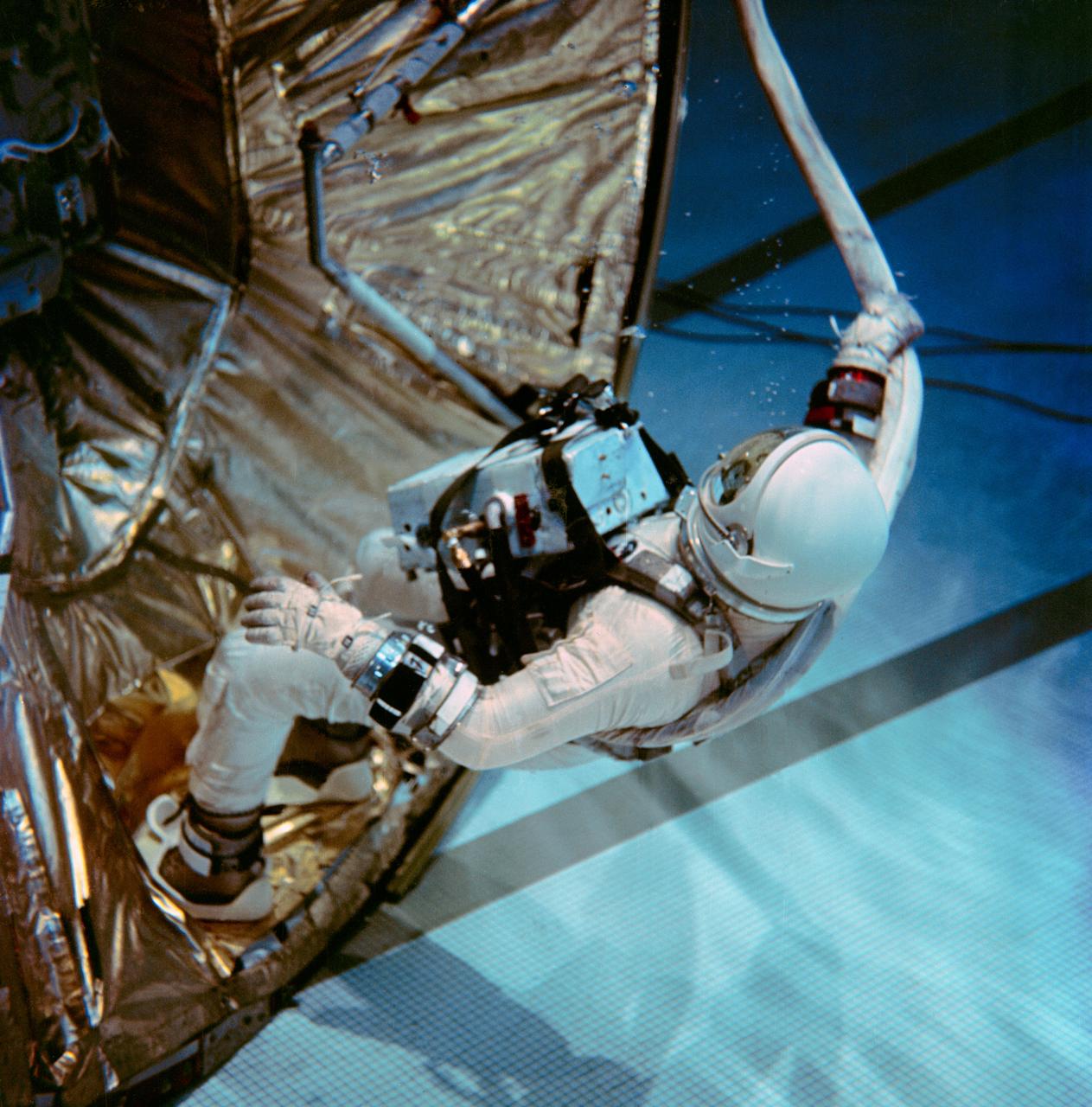
S66-54938 (29 Oct. 1966) --- Astronaut Edwin E. Aldrin Jr., pilot for the Gemini-12 spaceflight, prepares to take a rest position during underwater zero-gravity training. His feet are secured to a mock-up of the adapter section of the spacecraft by a special foot plate. The underwater environment closely simulates the zero-gravity condition found in space. Photo credit: NASA
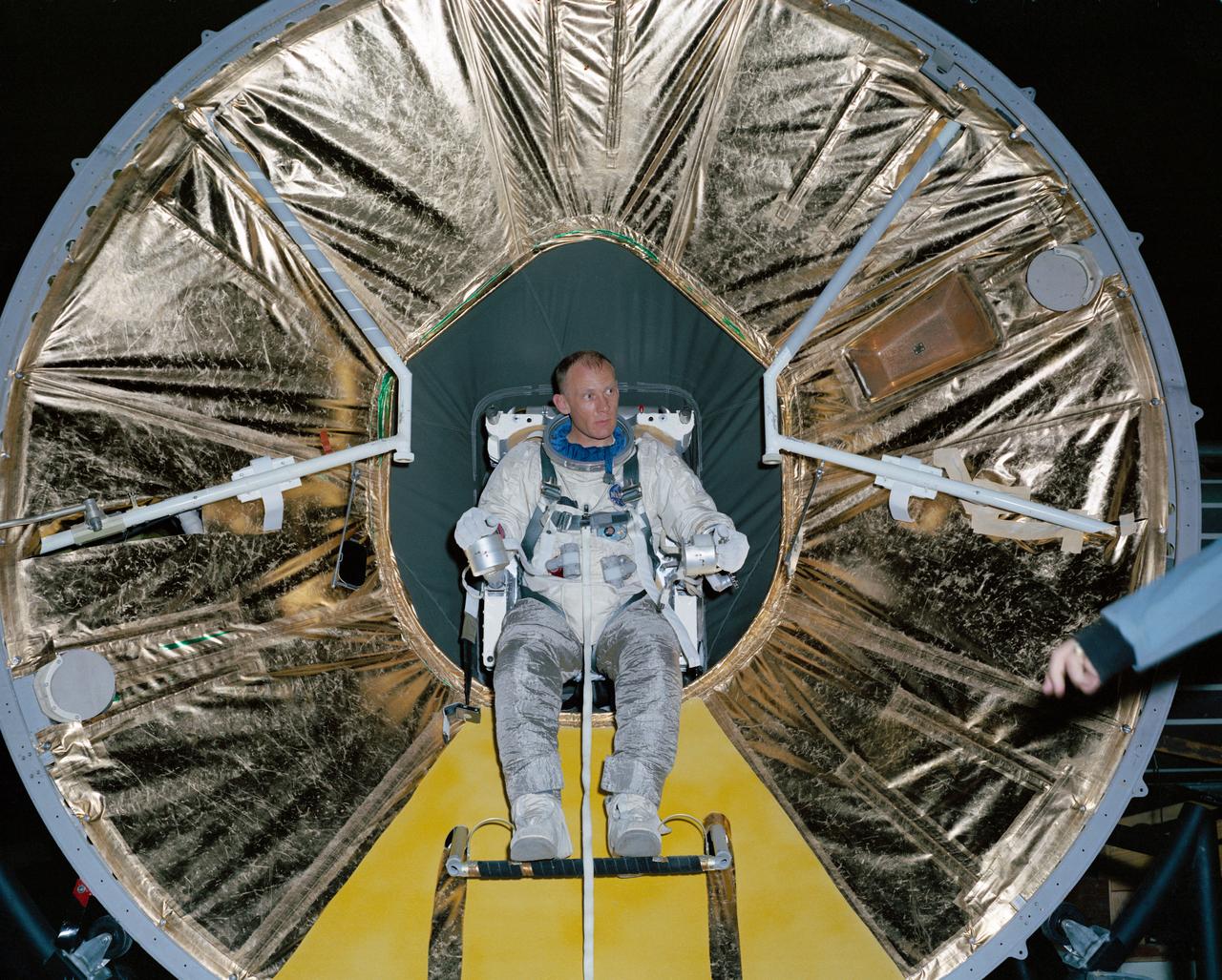
S66-28108 (April 1966) --- Astronaut Edwin E. Aldrin Jr., backup crew pilot of the National Aeronautics and Space Administration's Gemini-9 spaceflight, practices donning the Astronaut Maneuvering Unit (AMU) backpack in Building 5. An AMU will be used by astronaut Eugene A. Cernan, prime crew pilot, during Gemini-9 extravehicular activity (EVA). Photo credit: NASA
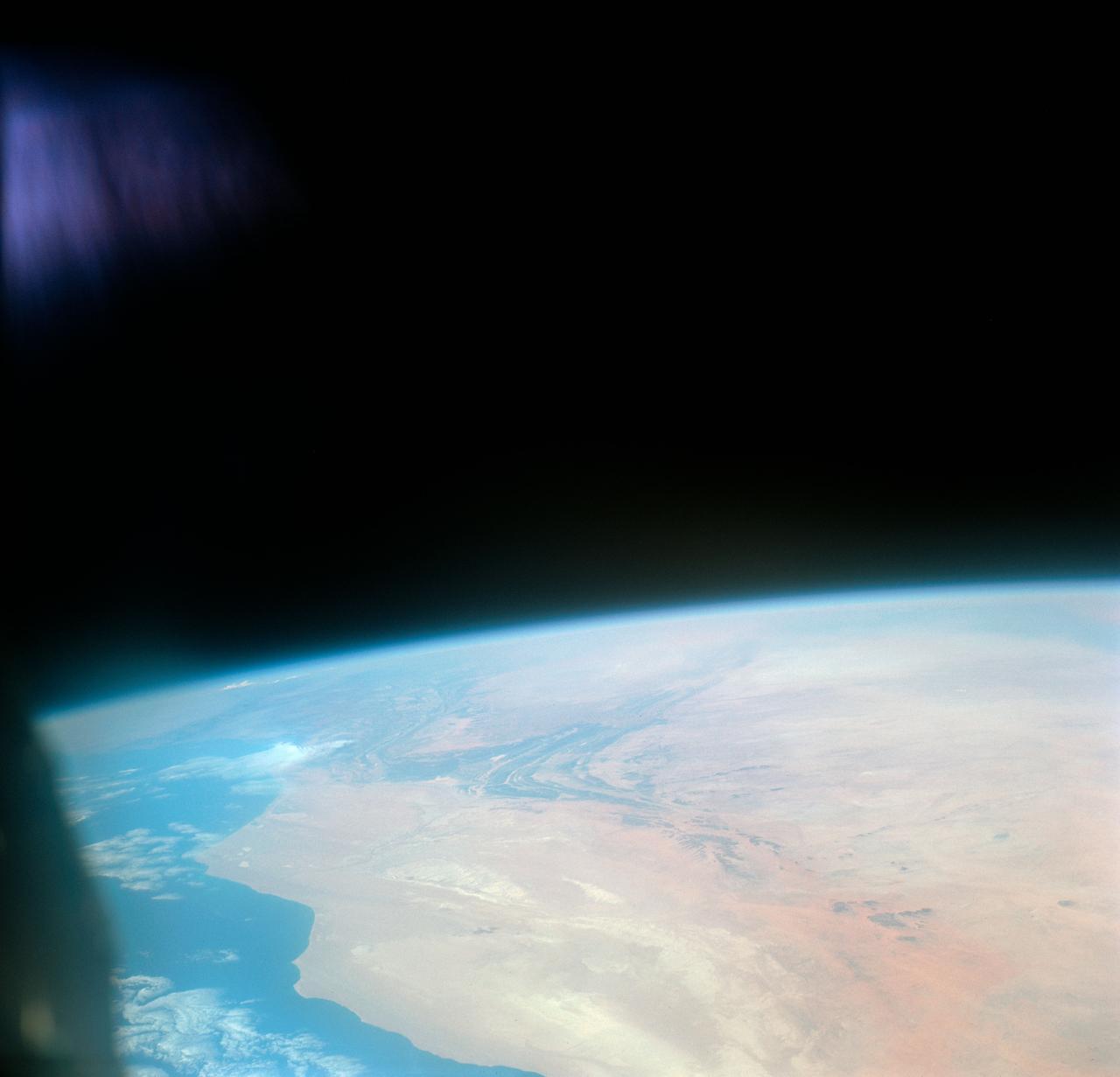
S66-46062 (18-21 July 1966) --- Area of the Spanish Sahara--Mauritania--Algeria--Morocco, looking north into Hamada Du Dra, as seen from the Gemini-10 spacecraft. Taken with a J.A. Maurer 70mm camera, using Eastman Kodak, Ektachrome, MS (S.O. 217) color film. Photo credit: NASA
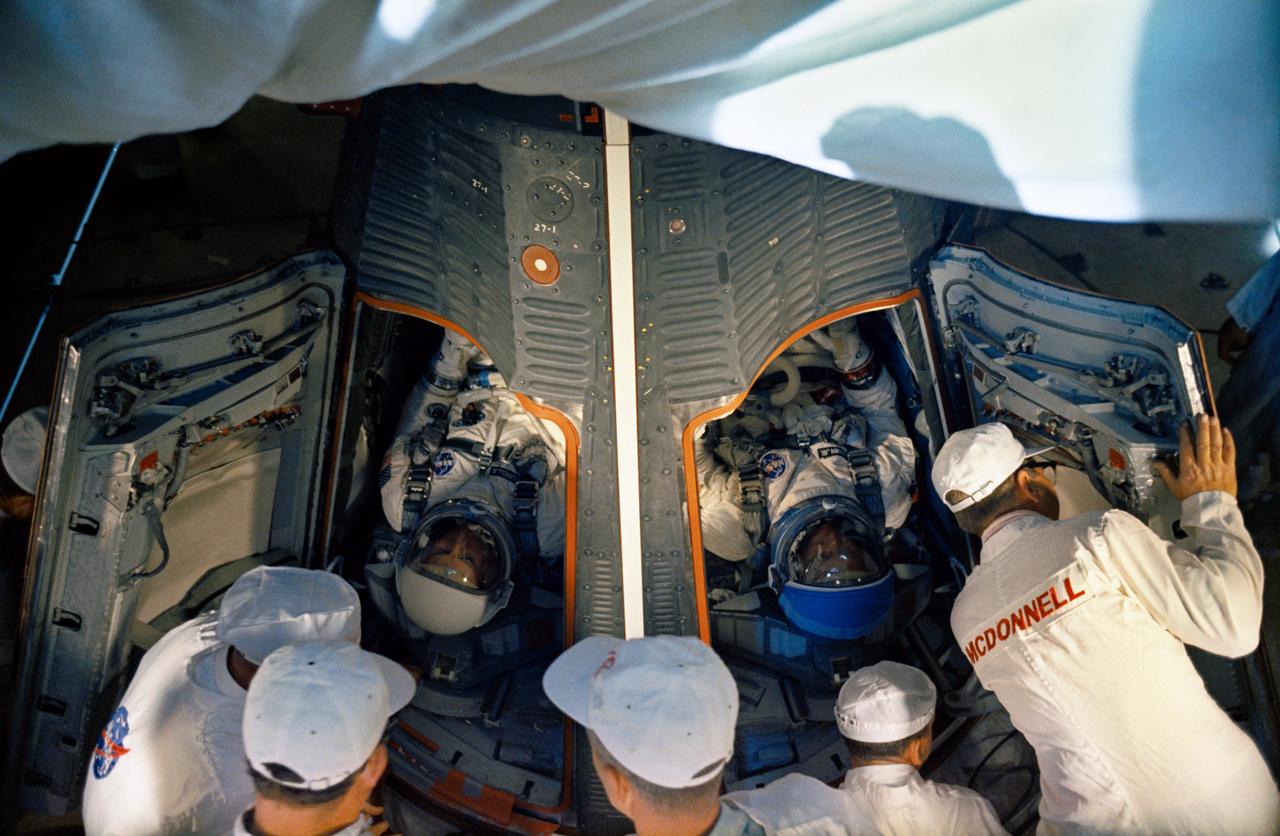
S66-59971 (11 Nov. 1966) --- Technicians prepare to close the hatches of the Gemini-12 spacecraft in the white room atop Pad 19 after insertion of astronaut James A. Lovell Jr. (left), command pilot, and Edwin E. Aldrin Jr., pilot. Liftoff was at 3:46 p.m. (EST), Nov. 11, 1966. Photo credit: NASA
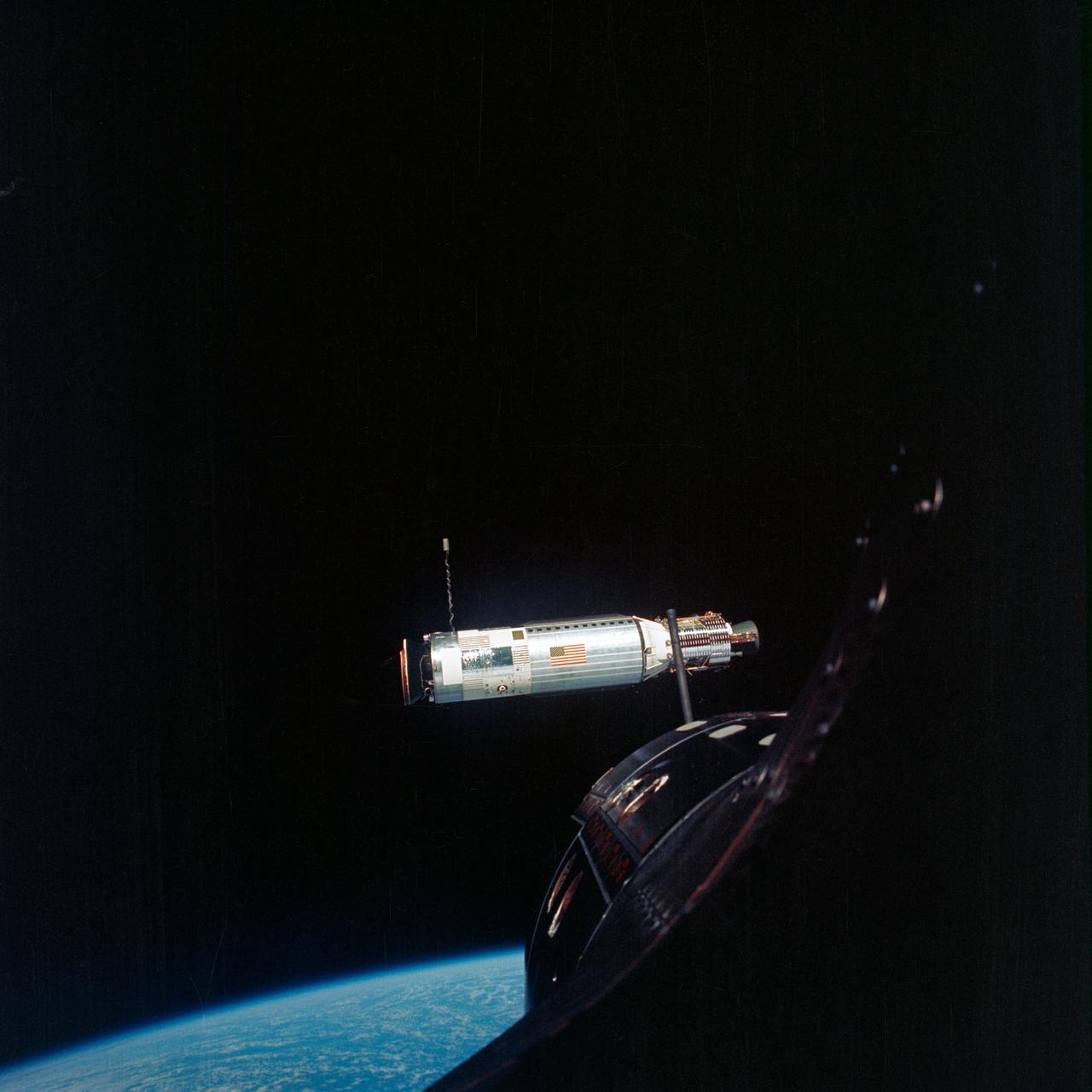
S66-46124 (18 July 1966) --- Agena Target Docking Vehicle 5005 is photographed from the Gemini-10 spacecraft during rendezvous in space. The two spacecraft are about 41 feet apart. After docking with the Agena, astronauts John W. Young, command pilot, and Michael Collins, pilot, fired the 16,000-pound thrust engine of Agena-10's primary propulsion system to boost the combined vehicles into an orbit with an apogee of 413 nautical miles to set a new altitude record for manned spaceflight. Photo credit: NASA
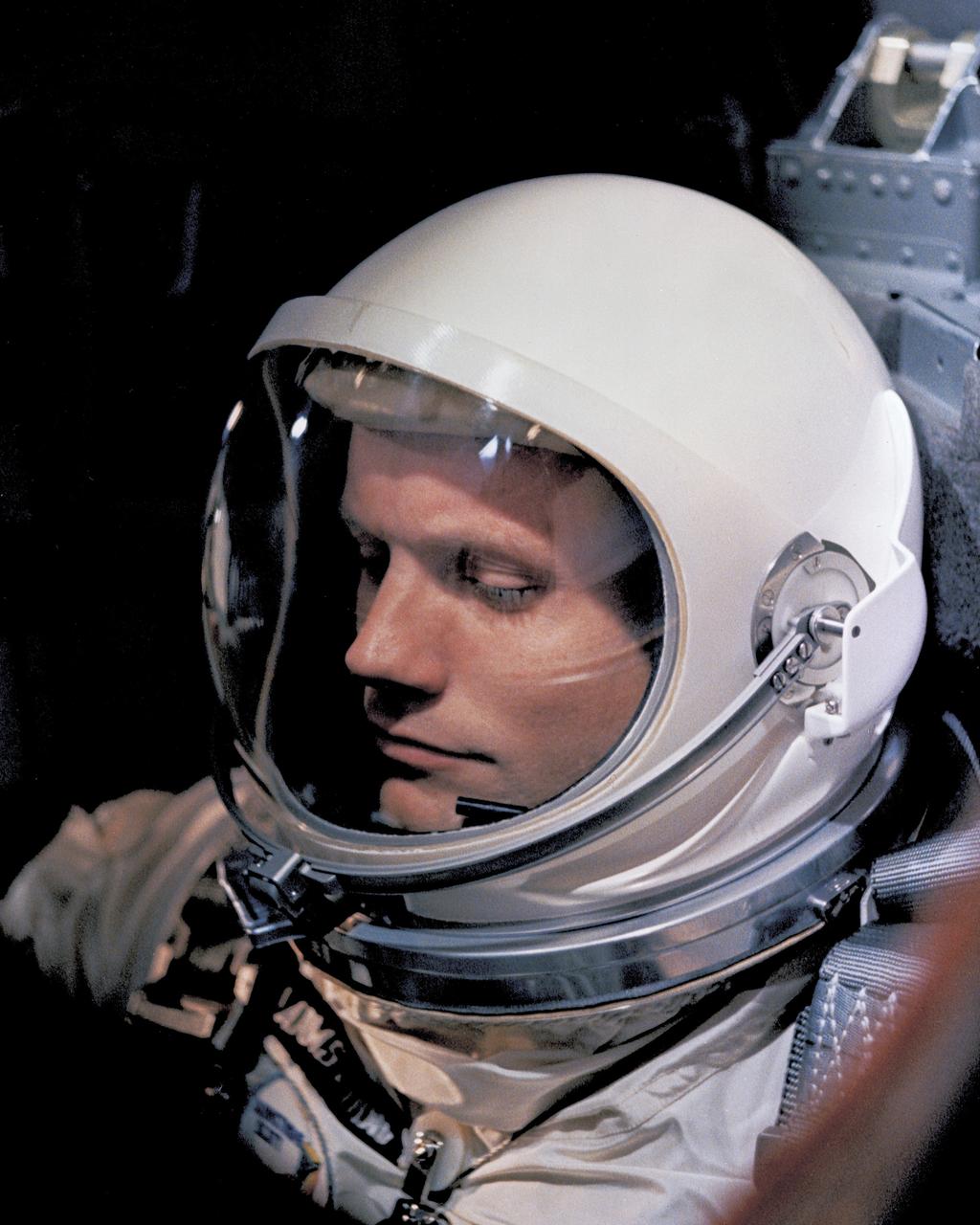
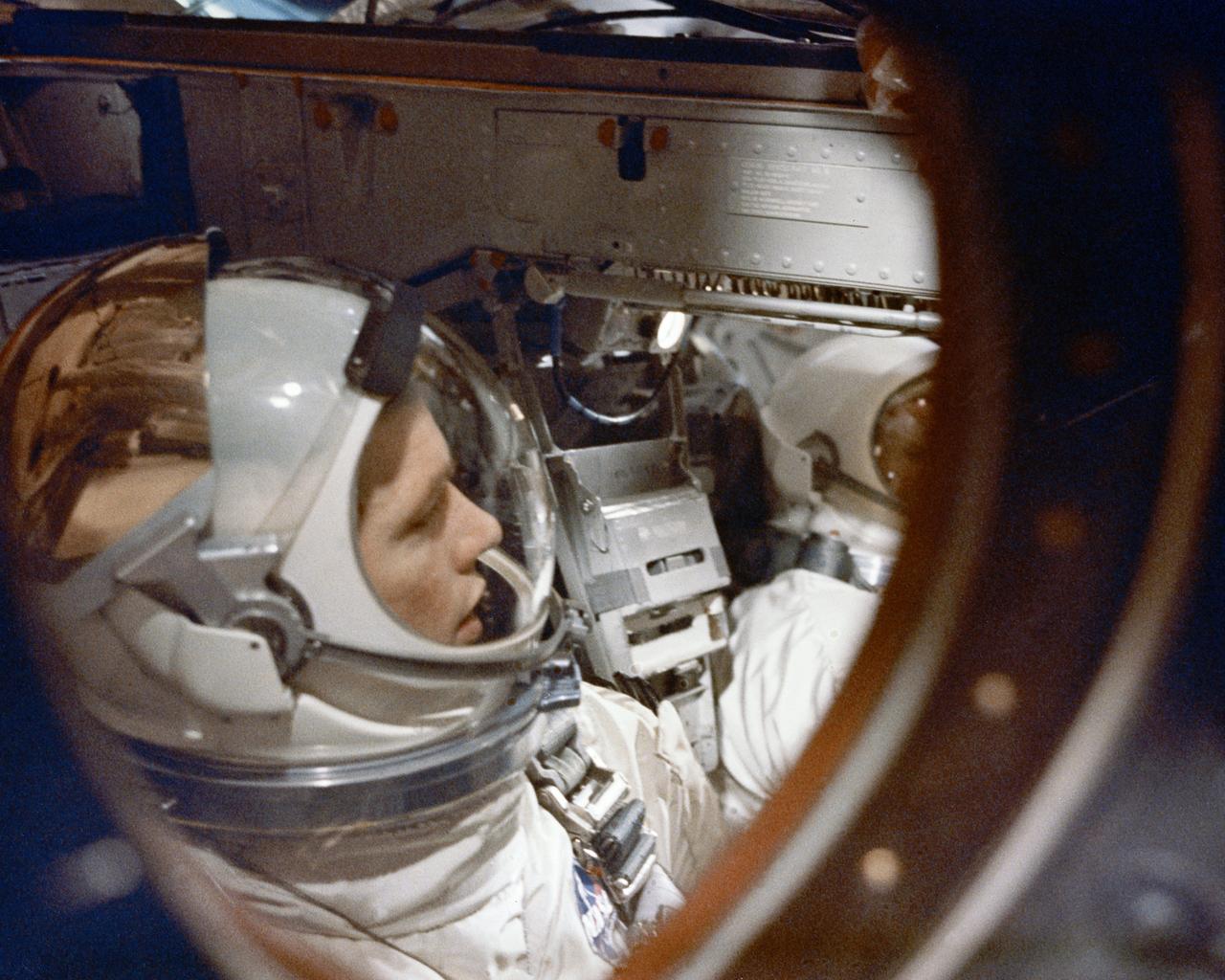
KSC-66C-1872 Gemini 8 Command Pilot Neil A. Armstrong seen through window of Gemini 8 Spacecraft just before liftoff. (jrs)
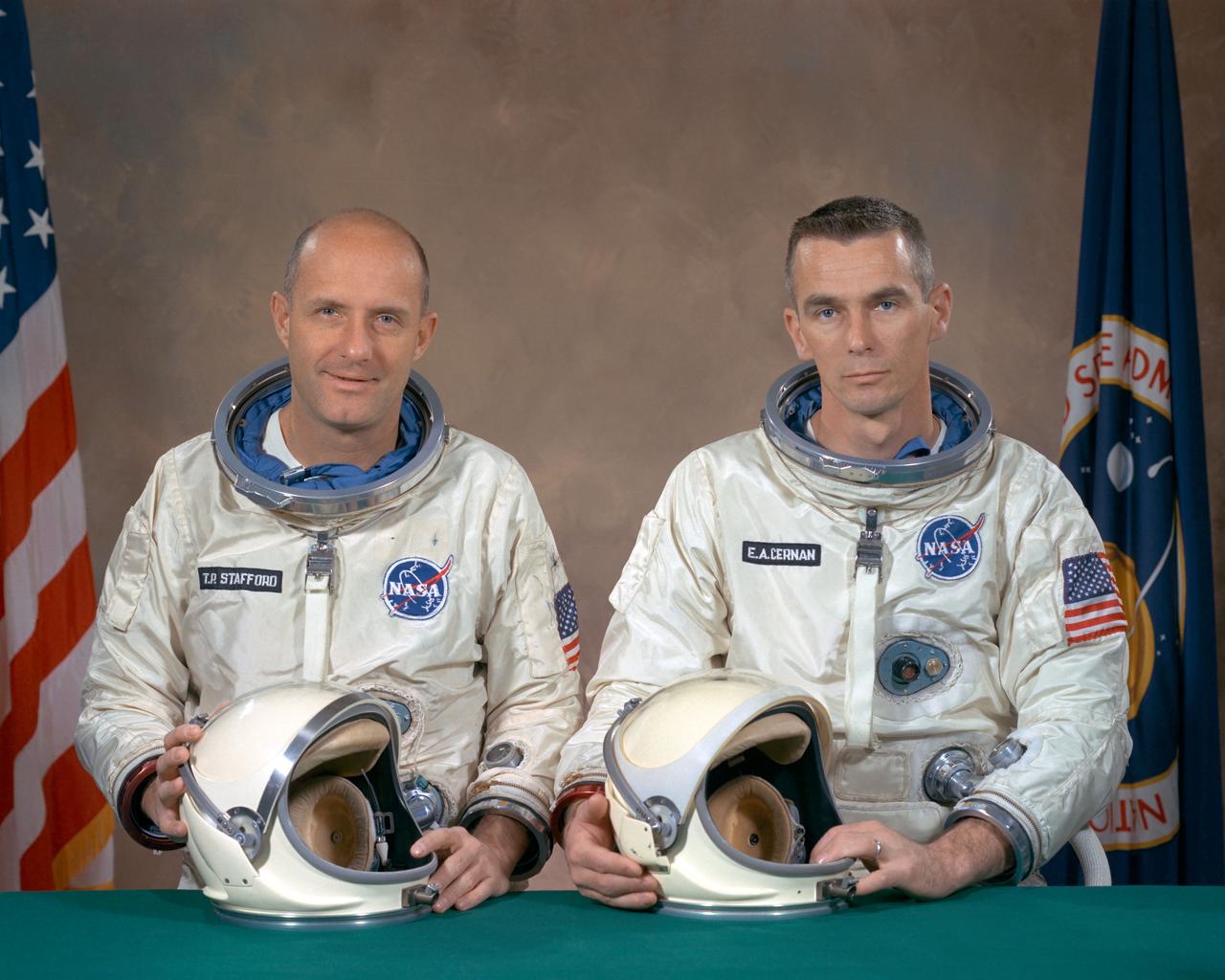
S66-15621 (January 1966) --- Gemini-9 prime crew portrait with astronauts Thomas P. Stafford (left), command pilot, and Eugene A. Cernan, pilot. Photo credit: NASA
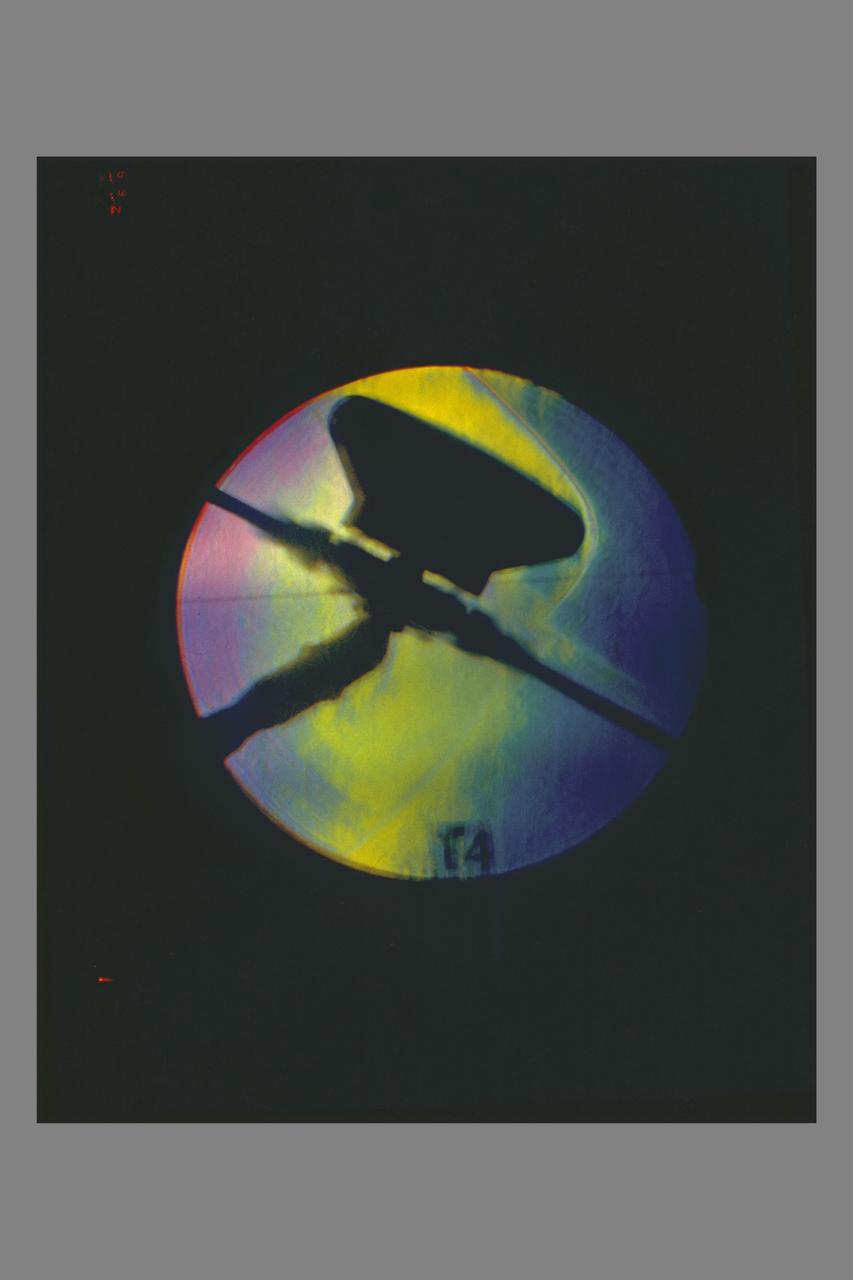
Aerodynamic Characteristics of Rotary Entry Vehicle configuration REV-1 model schlieren Testing being done at the NASA Ames Research Center, California
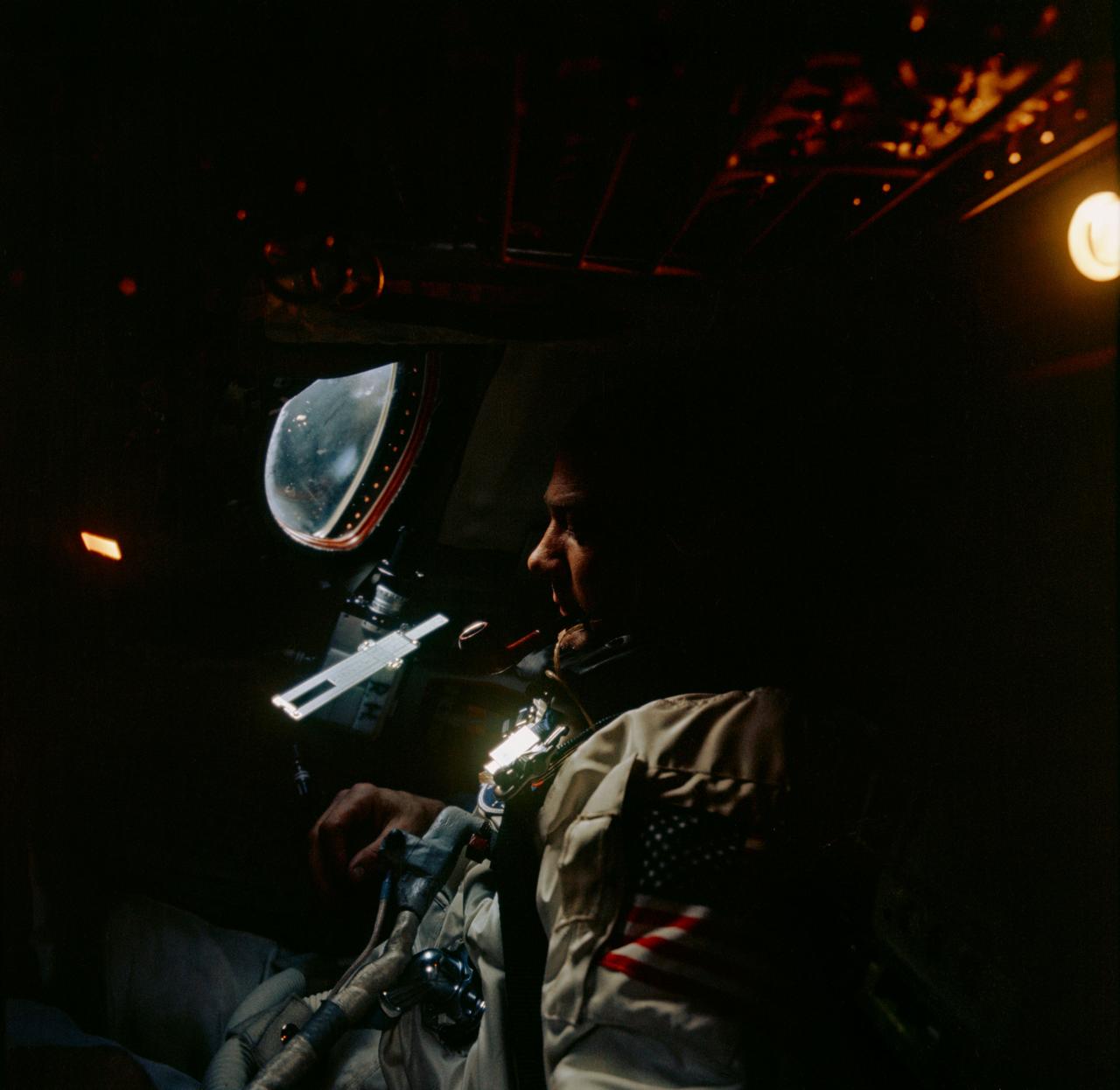
S66-62984 (13 Nov. 1966) --- Astronaut Edwin Aldrin Jr. photographed inside the Gemini-12 spacecraft cabin during the spaceflight. Photo credit: NASA
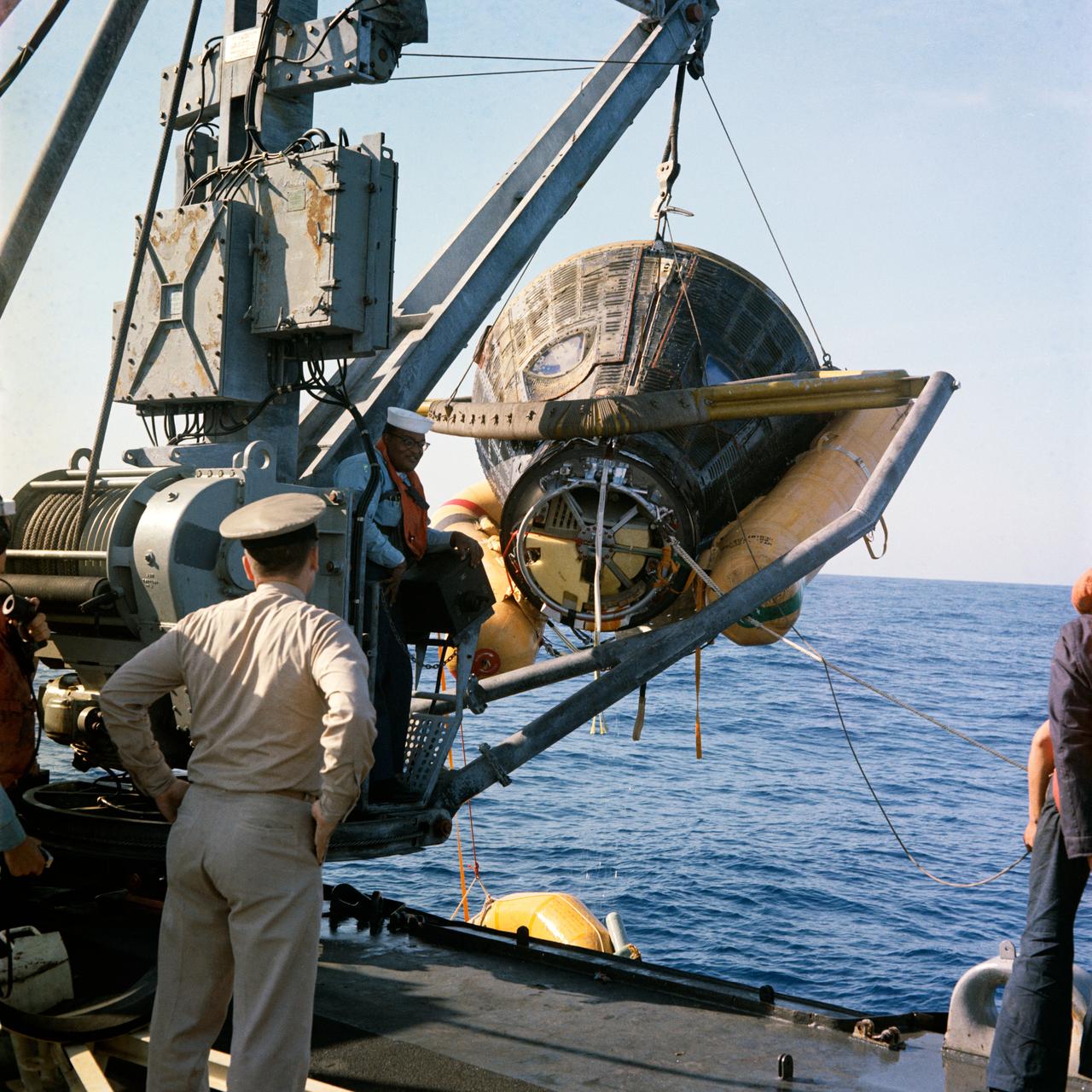
S66-18613 (16 March 1966) --- The Gemini-8 spacecraft, with astronauts Neil A. Armstrong and David R. Scott still aboard, is hoisted aboard the destroyer USS Leonard F. Mason. Trouble with the Gemini-8 Orbit Attitude and Maneuvering System (OAMS) forced an early termination of the mission. Photo credit: NASA
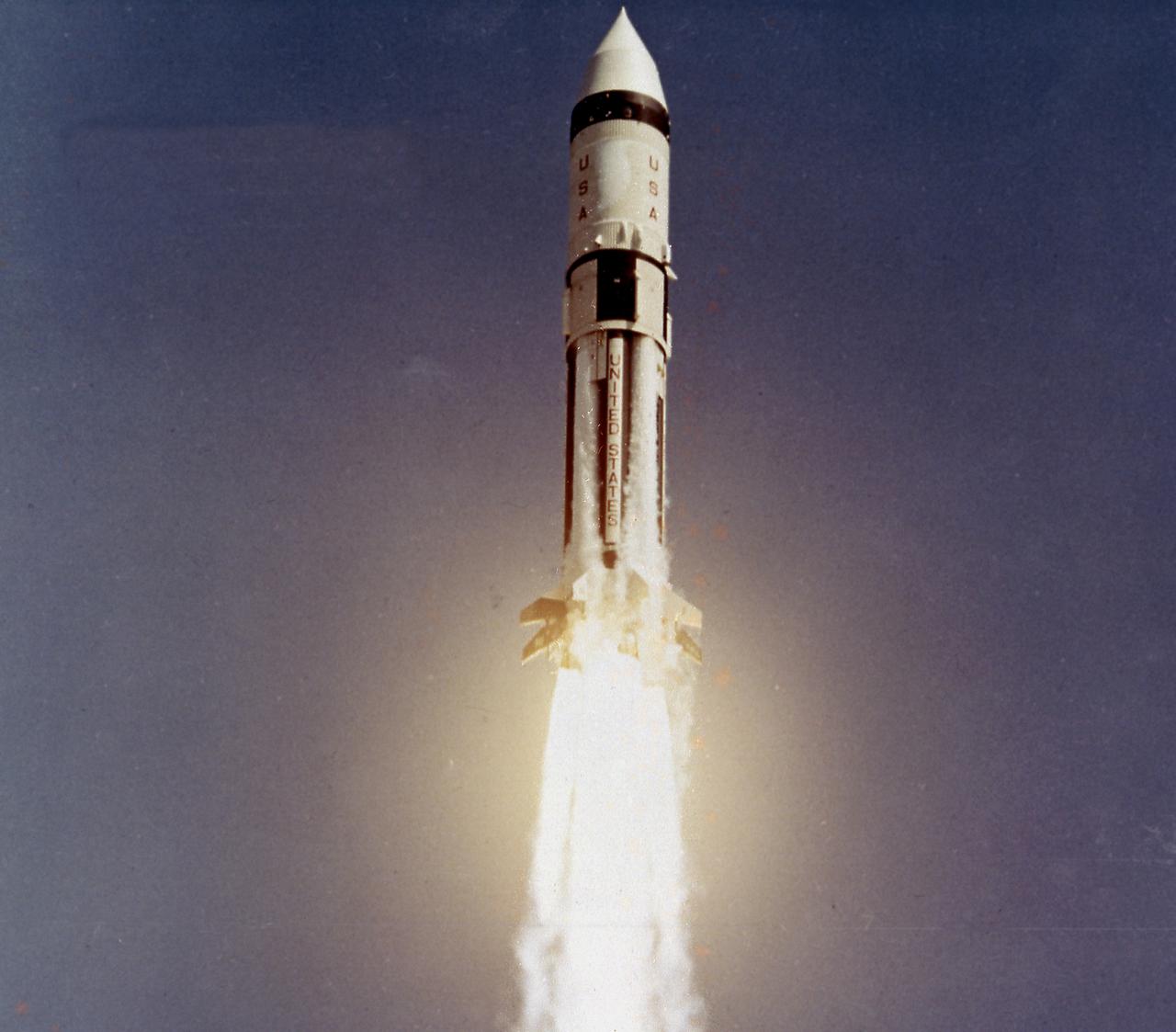
AS-203, the third Saturn IB launch vehicle developed by the Marshall Space Flight Center, lifts off from Cape Canaveral, Florida , July 5, 1966. Primary mission objectives included evaluation of the S-IVB stage's hydrogen venting and engine restart capabilities in an orbital environment. In all, nine Saturn IB flights were made, ending with the Apollo-Soyuz Test Project (ASTP) in July 1975.
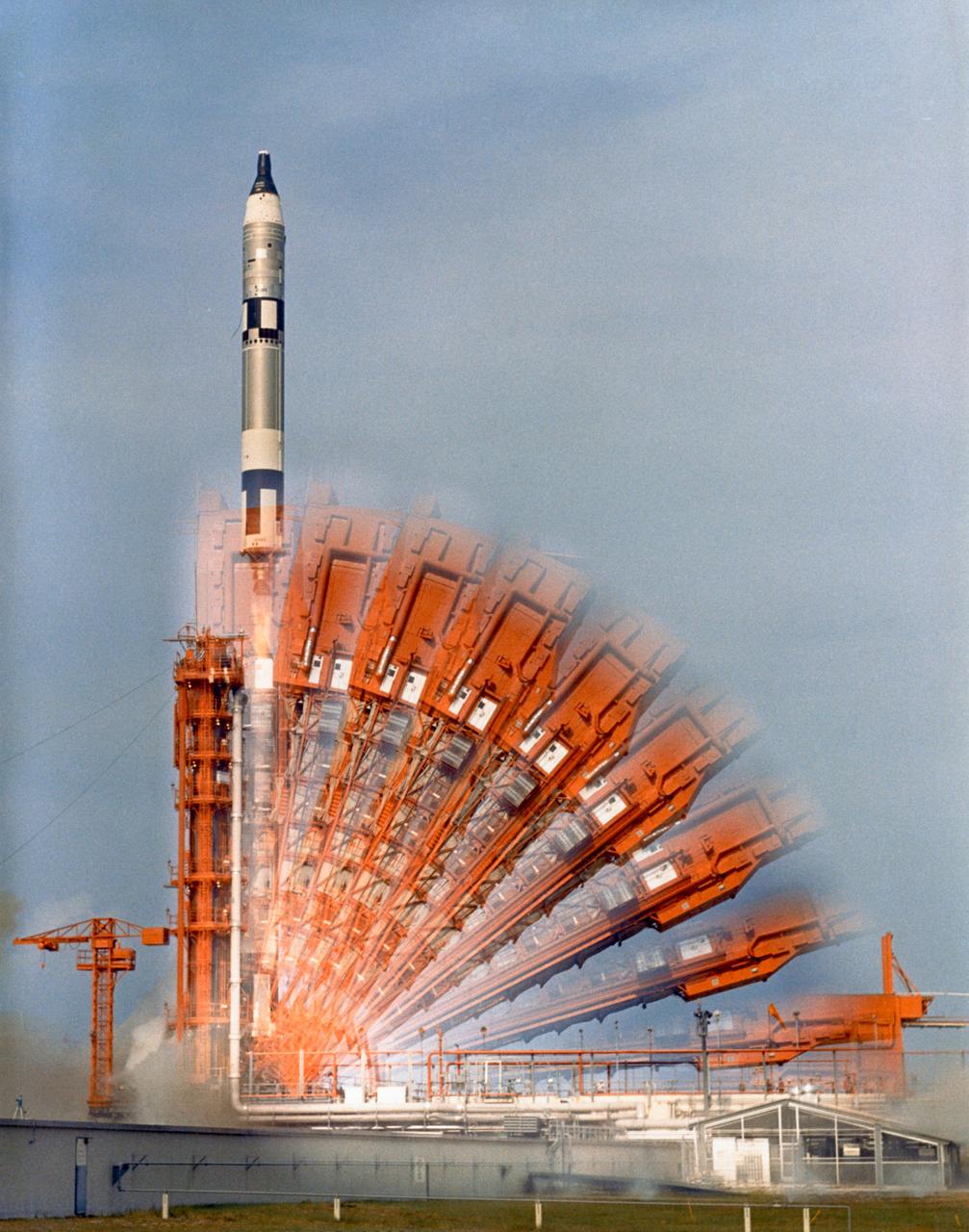
S66-42762 (18 July 1966) --- The Gemini-10 spacecraft is launched from Complex 19 at 5:20 p.m., July 18, 1966. A time exposure creates the illusion of multiple rocker arms. Onboard are astronauts John W. Young, command pilot, and Michael Collins, pilot. Photo credit: NASA
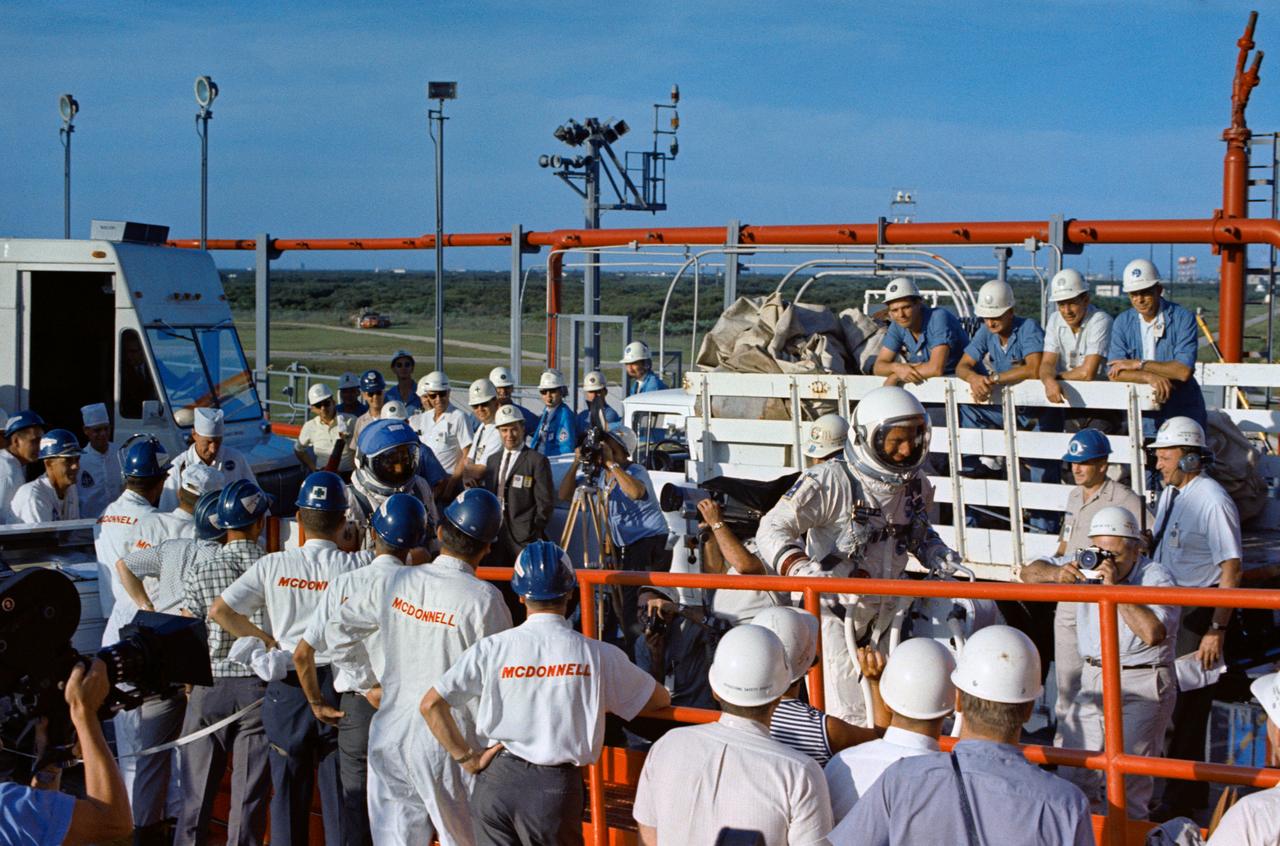
S66-50780 (10 Sept. 1966) --- Astronauts Richard F. Gordon Jr. (in front), pilot, and Charles Conrad Jr., command pilot, walk up the ramp at Pad 19 during the Gemini-11 prelaunch countdown. Photo credit: NASA
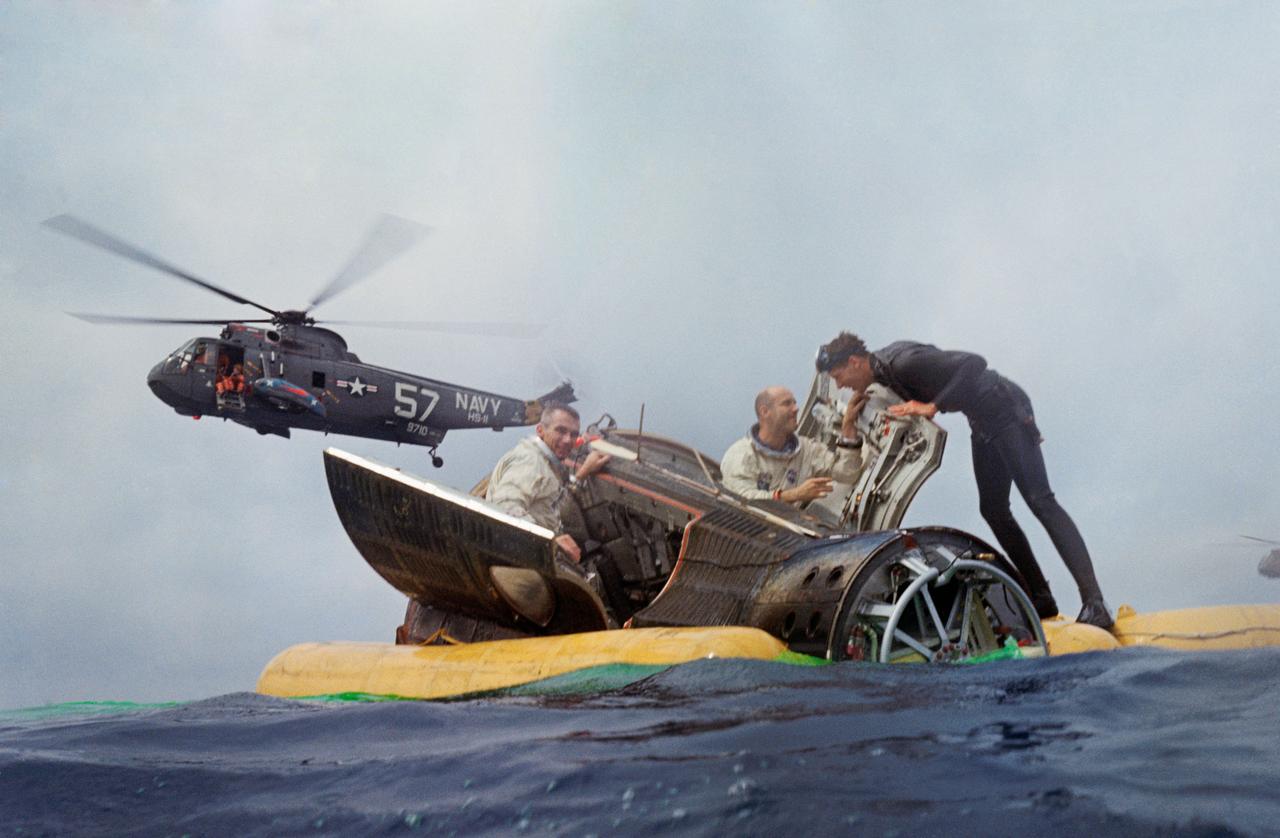
S66-34124 (6 June 1966) --- Astronauts Eugene A. Cernan and Thomas P. Stafford sit with their Gemini 9A spacecraft hatches open while awaiting the arrival of the recovery ship U.S.S. Wasp.
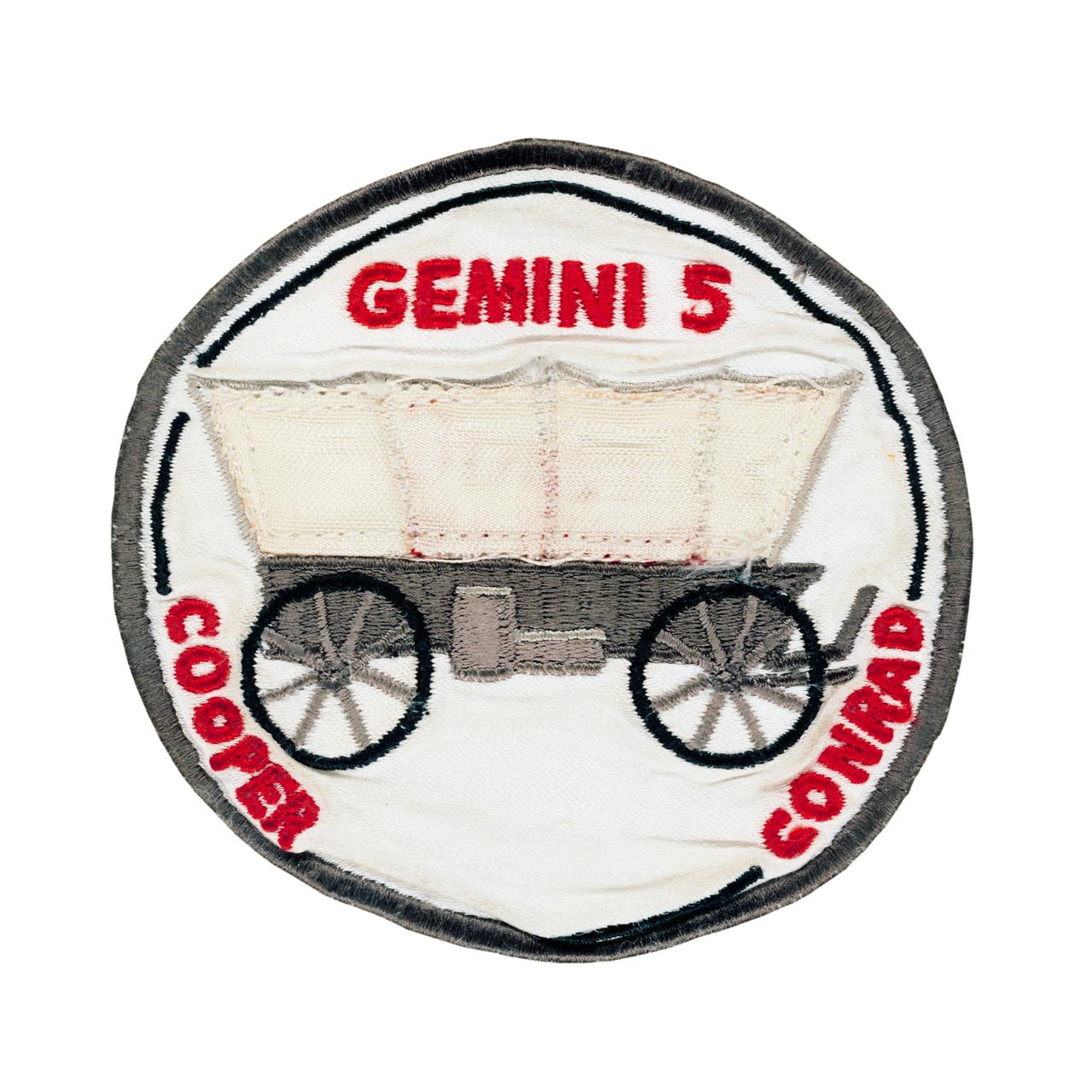
S66-59530 (August 1965) --- This is the insignia of the Gemini-Titan 5 (GT-5) spaceflight. The Gemini-5 prime crew members are astronauts L. Gordon Cooper Jr., command pilot; and Charles Conrad Jr., pilot. The covered wagon symbolizes pioneer spirit of space exploration. The NASA insignia design for Gemini flights is reserved for use by the astronauts and for other official use as the NASA Administrator may authorize. Public availability has been approved only in the form of illustrations by the various news media. When and if there is any change in this policy, which we do not anticipate, it will be publicly announced.
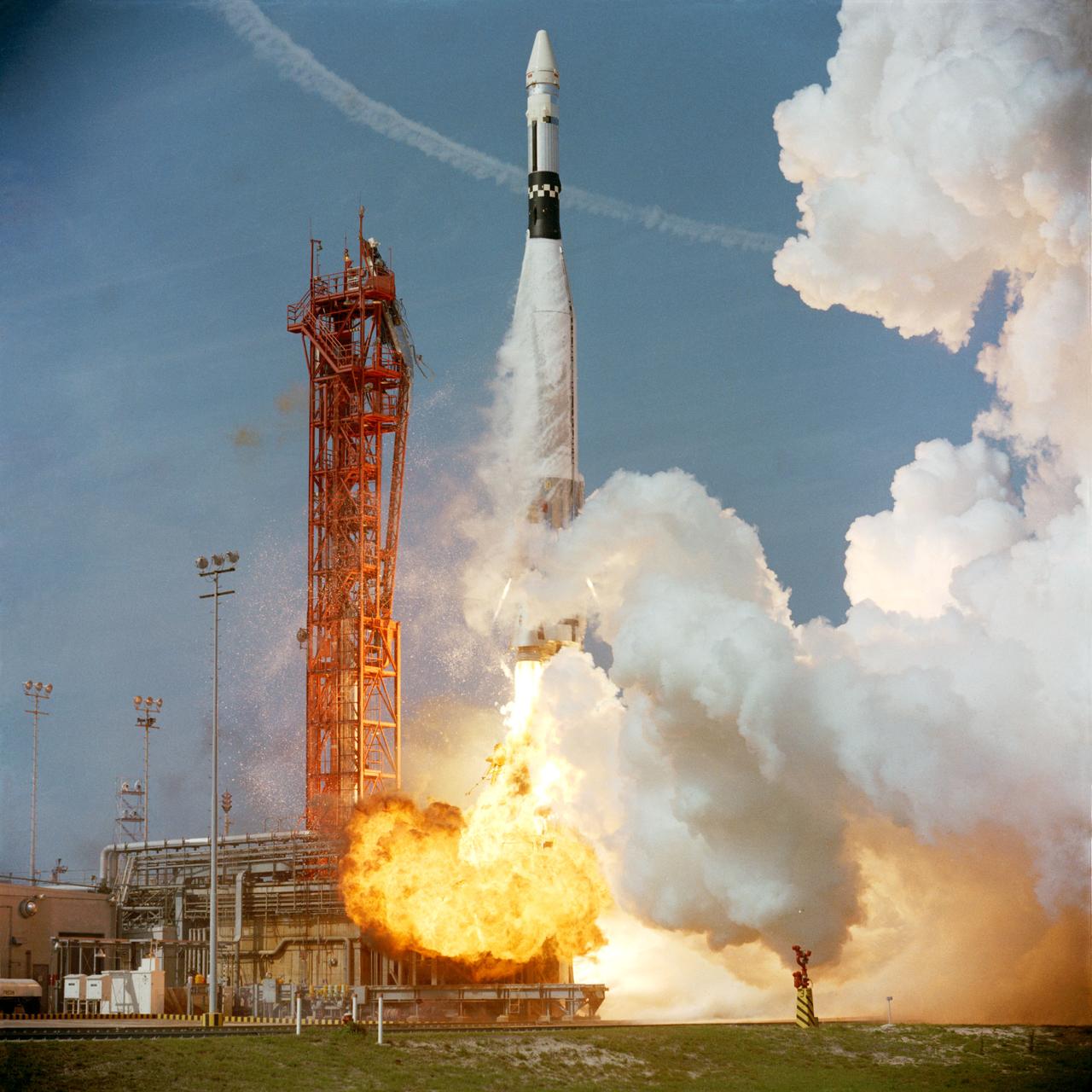
S66-24482 (16 March 1966) --- An Agena Target Docking Vehicle atop an Atlas rocket lifts off from Launch Complex 14 at Cape Kennedy at 10 a.m., March 16, 1966 just prior to the Gemini-8 liftoff at nearby Launch Complex 19. The Agena served as a rendezvous and docking vehicle for the Gemini-8 spacecraft. A chase plane leaves a contrail in the background. Photo credit: NASA
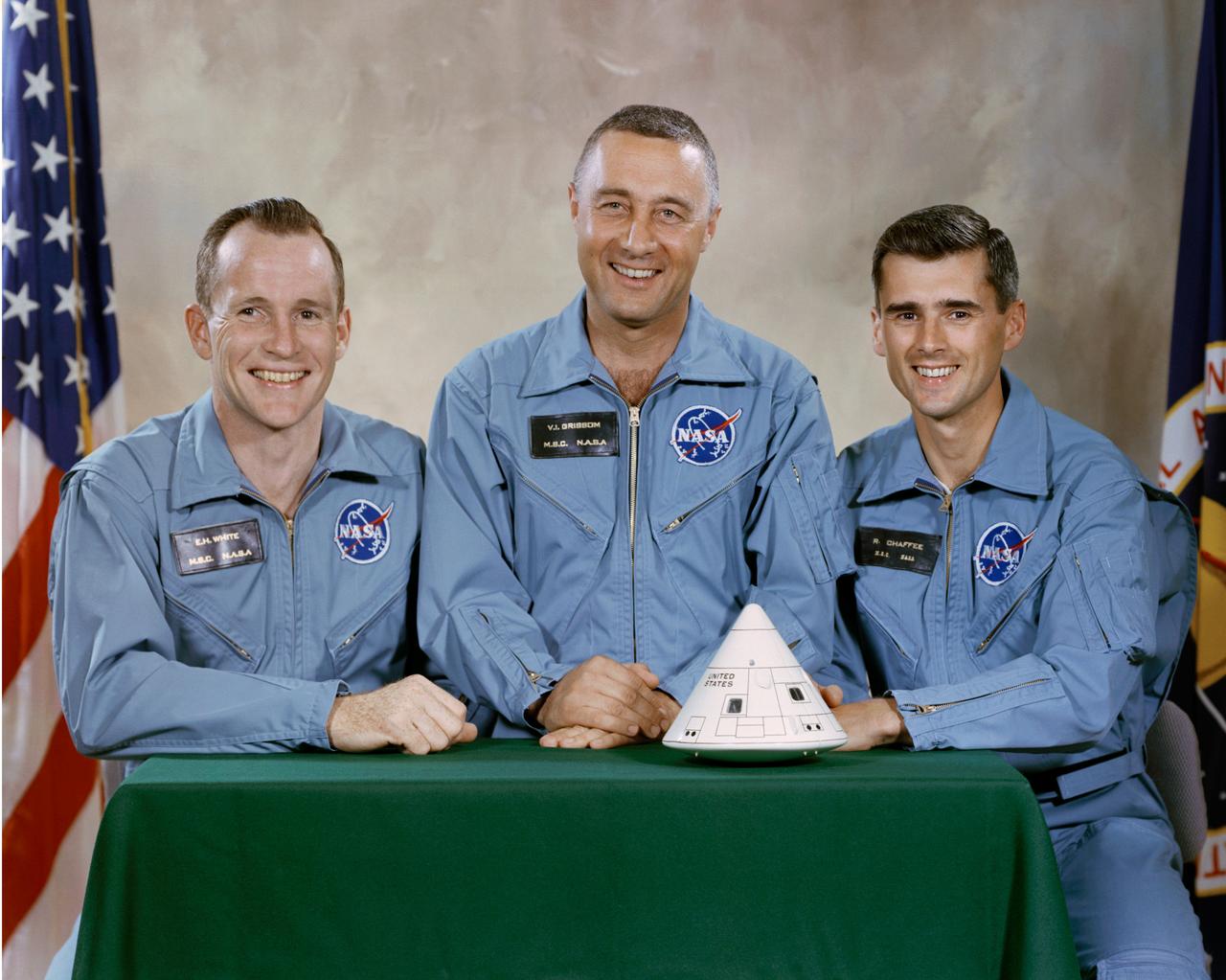
S66-30236 (1 April 1966) --- The National Aeronautics and Space Administration (NASA) has named these astronauts as the prime crew of the first manned Apollo Space Flight. Left to right, are Edward H. White II, command module pilot; Virgil I. Grissom, mission commander; and Roger B. Chaffee, lunar module pilot. Editor's Note: Astronauts Grissom, White and Chaffee lost their lives in a Jan. 27, 1967 fire in the Apollo Command Module (CM) during testing at the launch facility.
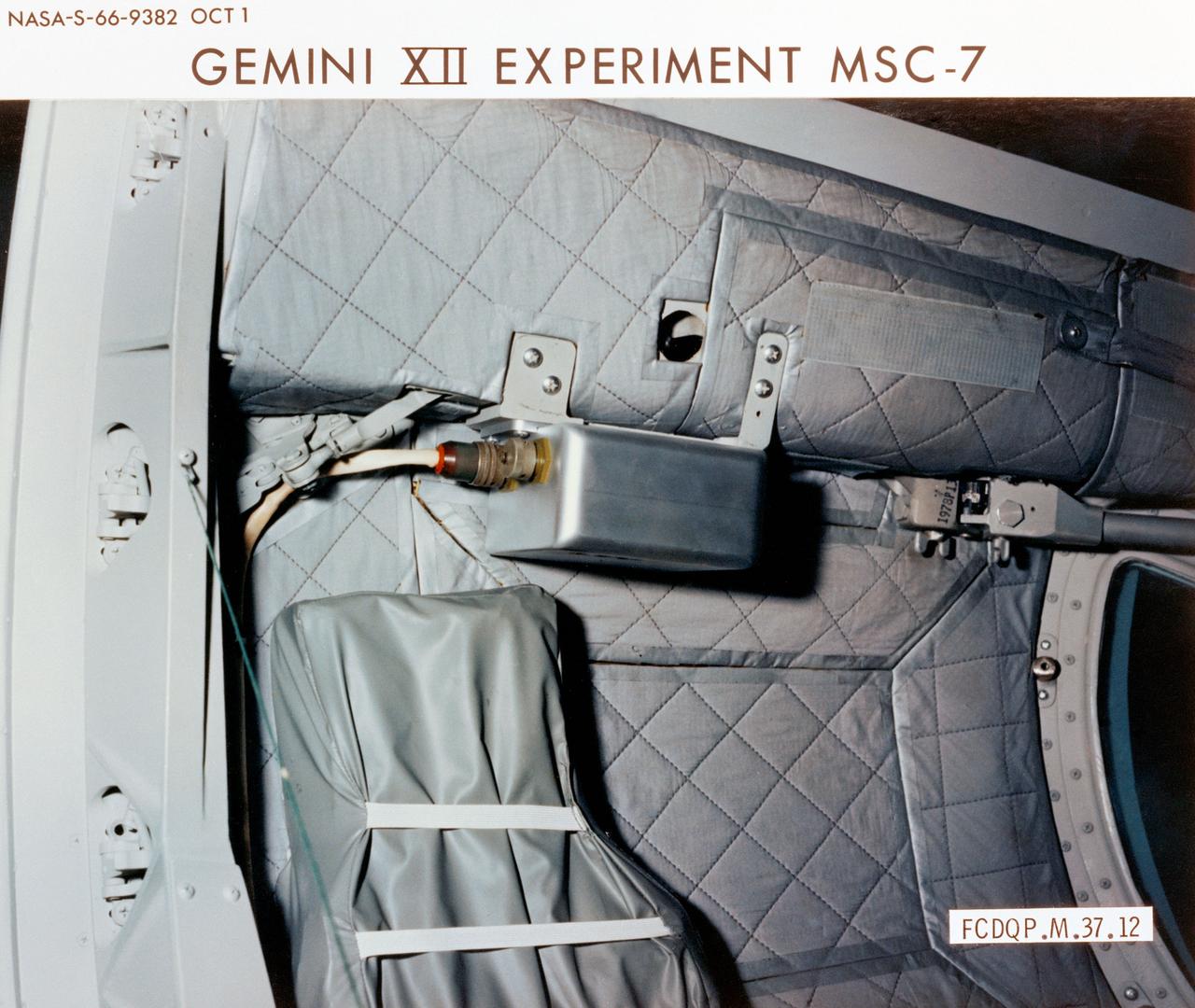
S66-09382 (1 Oct. 1966) --- Gemini-12 Experiment MSC-7 Bremsstrahlung Spectrometer-Spectrometer Analyzer processor installed in cabin. Objective of experiment is to determine the gamma and beta flux and energy spectra induced inside the spacecraft by exterior electrons. Photo credit: NASA
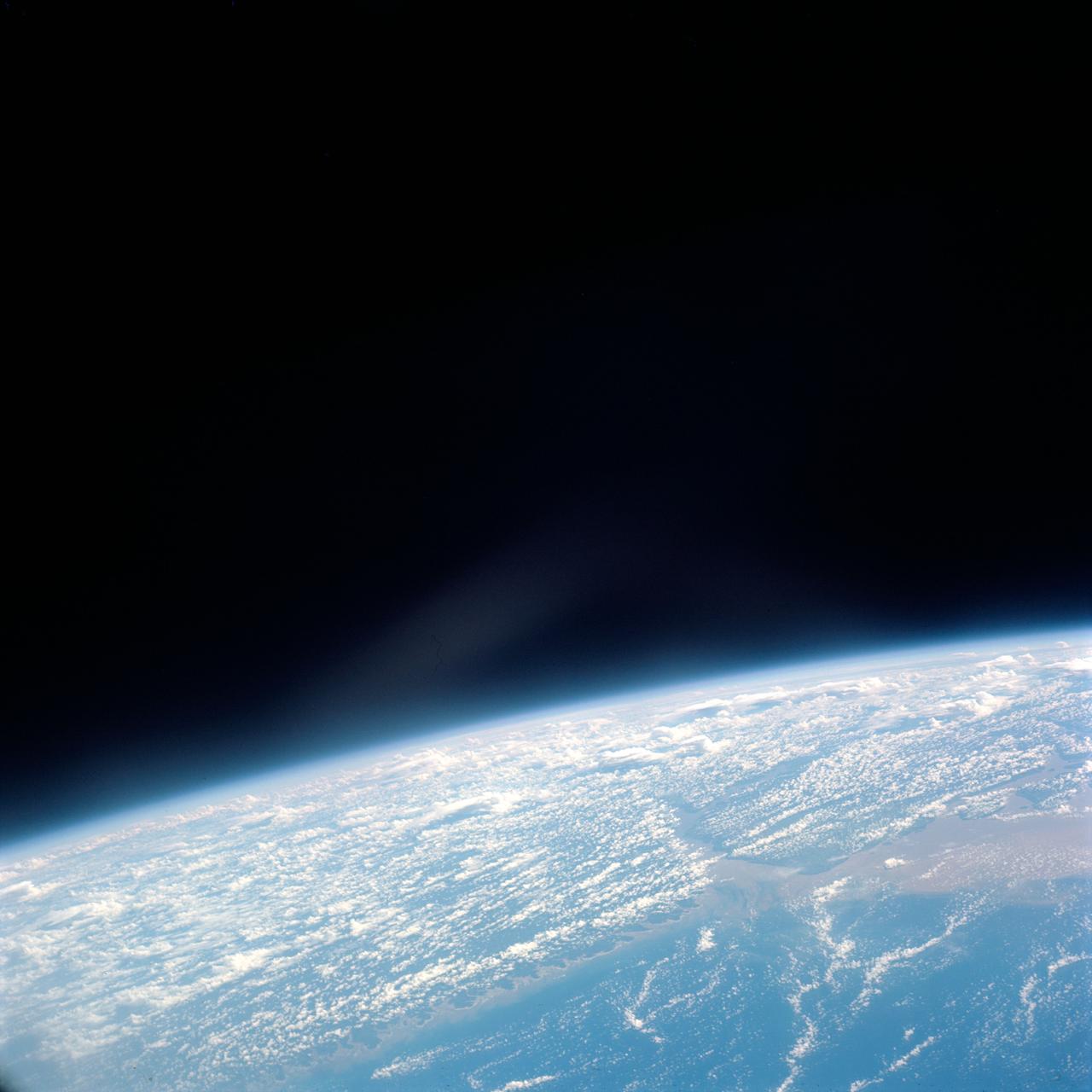
S66-38191 (4 June 1966) --- The mouth of the Amazon River on the northern coast of Brazil, looking southwest, as seen from the Gemini-9A spacecraft during its 18th revolution of Earth. The image was taken with a 70mm Hasselblad camera, using Eastman Kodak, Ektachrome MS (S.O. 217) color film. Photo credit: NASA
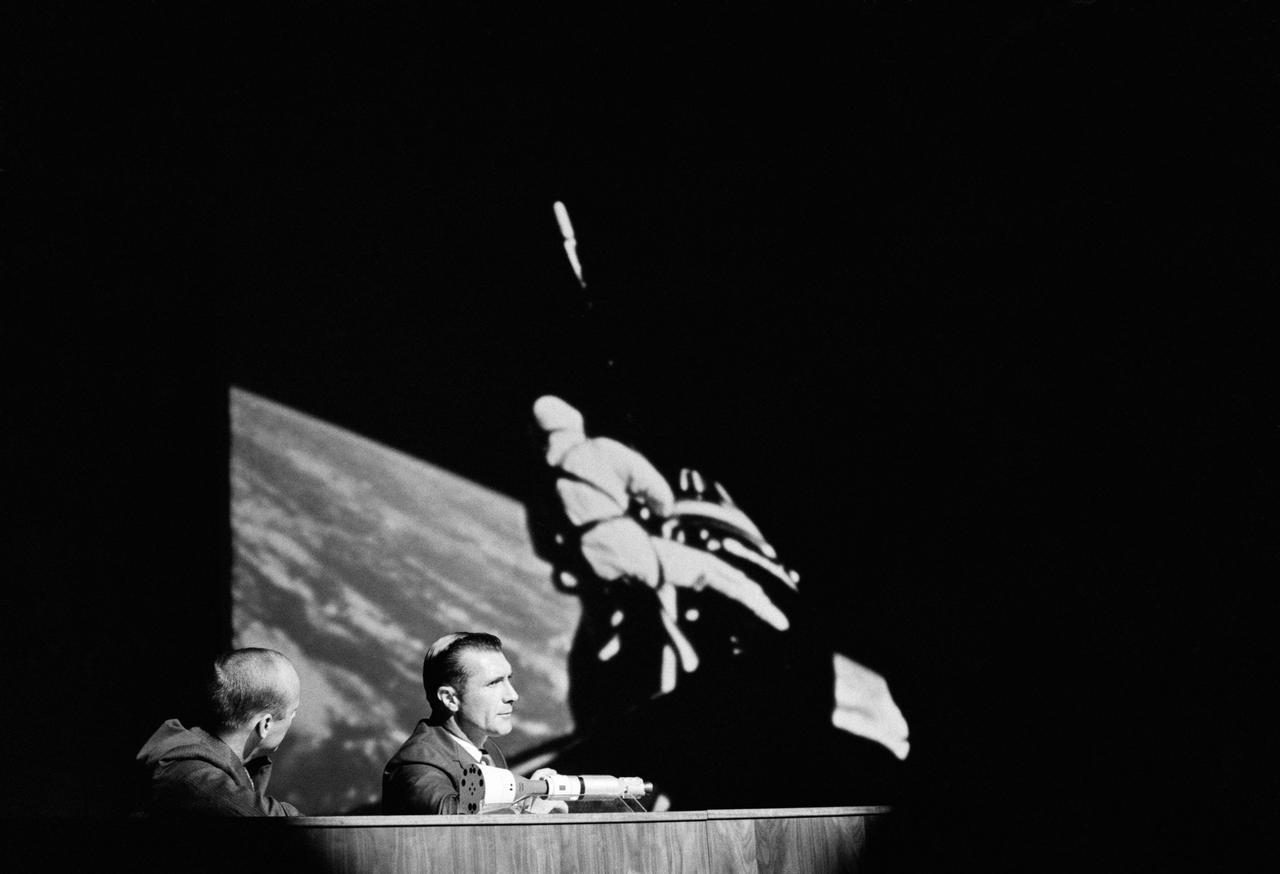
S66-45605 (26 Sept. 1966) --- Movie film of the Gemini-11 extravehicular activity and rendezvous with the Agena Target Docking Vehicle was shown at the Gemini-11 press conference in the MSC Building 1 auditorium. Astronauts Charles Conrad Jr. (left), command pilot, and Richard F. Gordon Jr., pilot, discussed the Gemini-11 EVA and rendezvous mission during the film. Picture on screen shows close-up of astronaut Gordon connecting the Agena Target Vehicle to the spacecraft with a tether line during his spacewalk. Photo credit: NASA
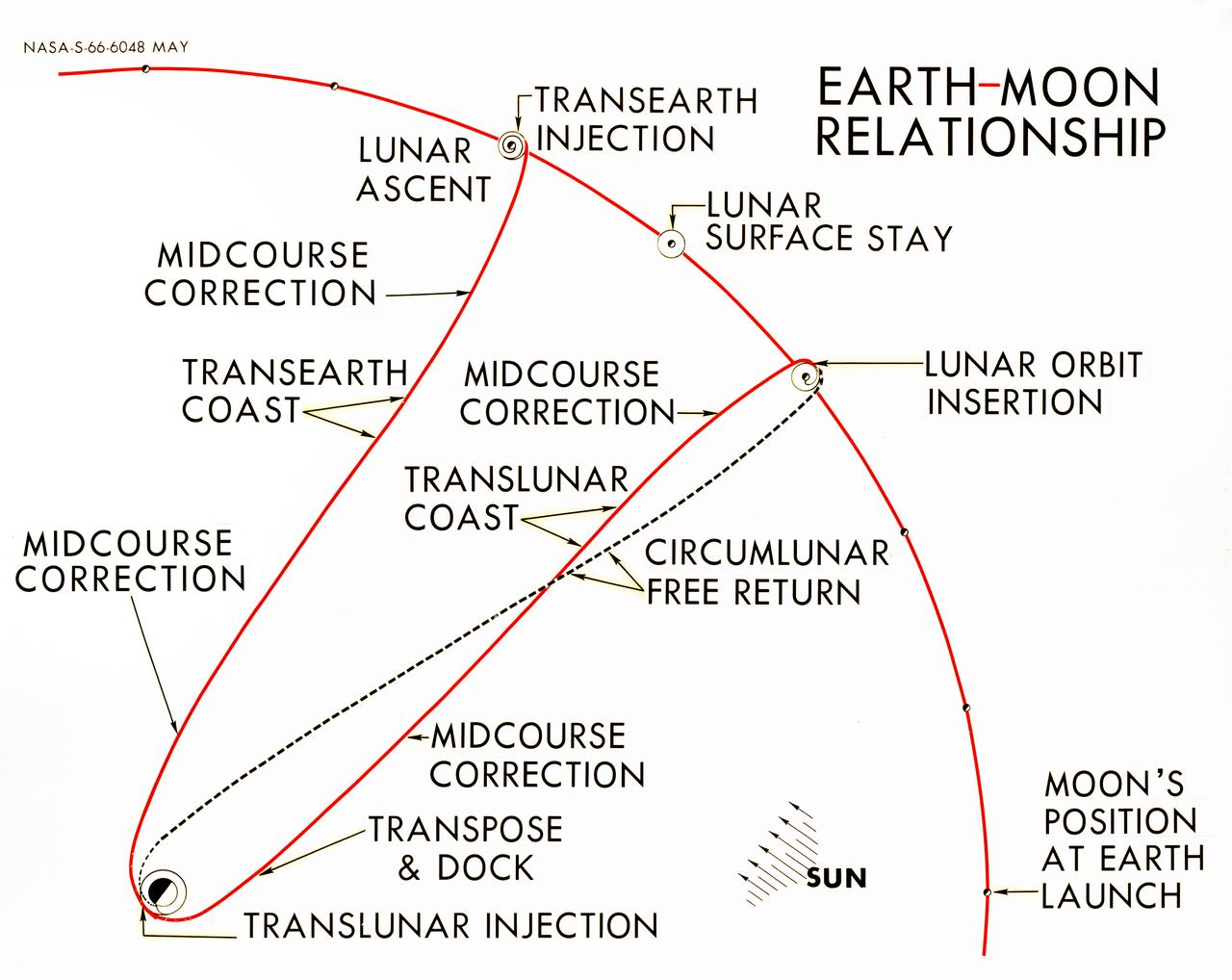
S66-06048 (1966) --- This chart depicts a nominal mission profile for an Apollo lunar landing mission. Photo credit: NASA
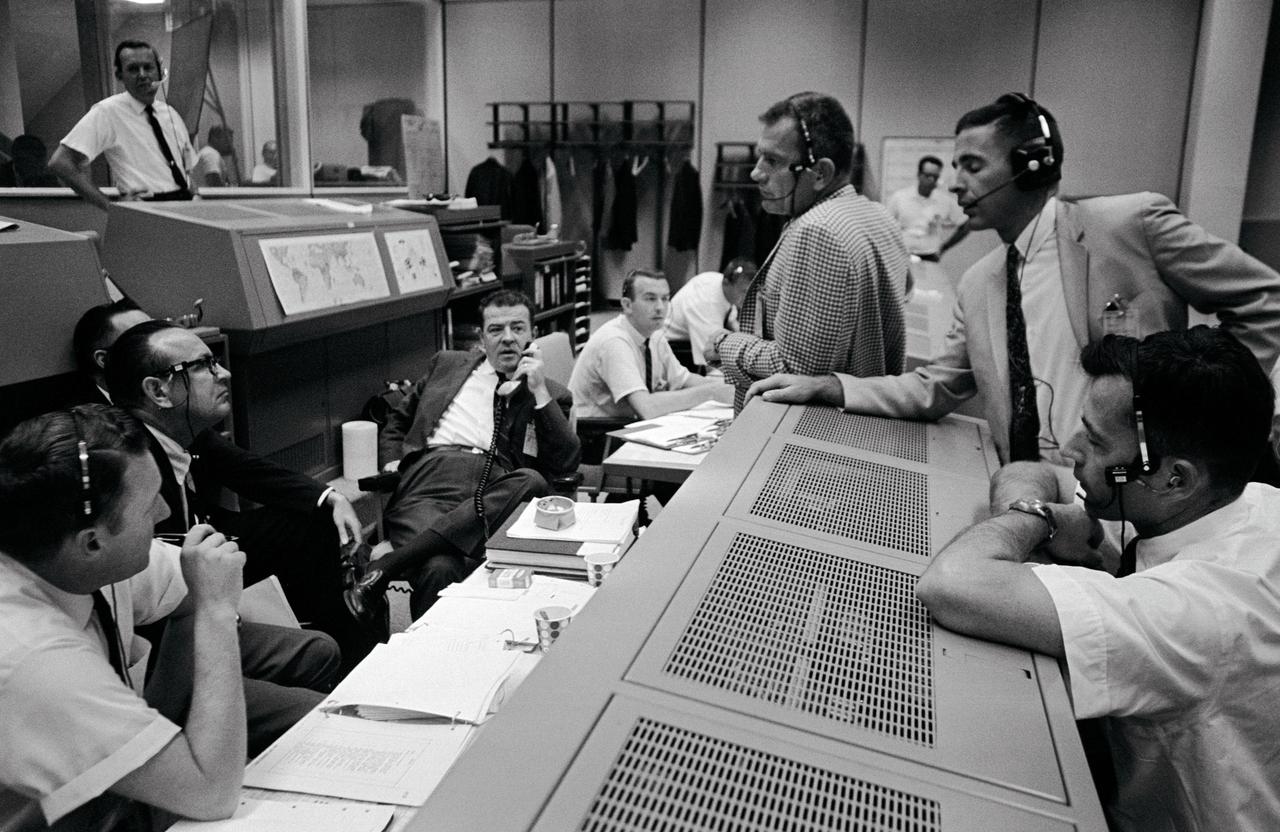
S66-52157 (12 Sept. 1966) --- Discussing the Gemini-11 spaceflight in the Mission Control Center are: (left to right) Christopher C. Kraft Jr., (wearing glasses), Director of Flight Operations; Charles W. Mathews (holding phone), Manager, Gemini Program Office; Dr. Donald K. Slayton (center, checked coat), Director of Flight Crew Operations; astronaut William A. Anders, and astronaut John W. Young. Photo credit: NASA

S66-42751 (18 July 1966) --- An Agena Target Docking Vehicle atop its Atlas launch vehicle was launched from the Kennedy Space Center's Launch Complex 14 at 3:39 p.m. (EST), July 18, 1966. The Gemini-10 liftoff followed the Agena liftoff by 101 minutes. The Agena served as a rendezvous and docking vehicle for the Gemini-10 spacecraft. Photo credit: NASA
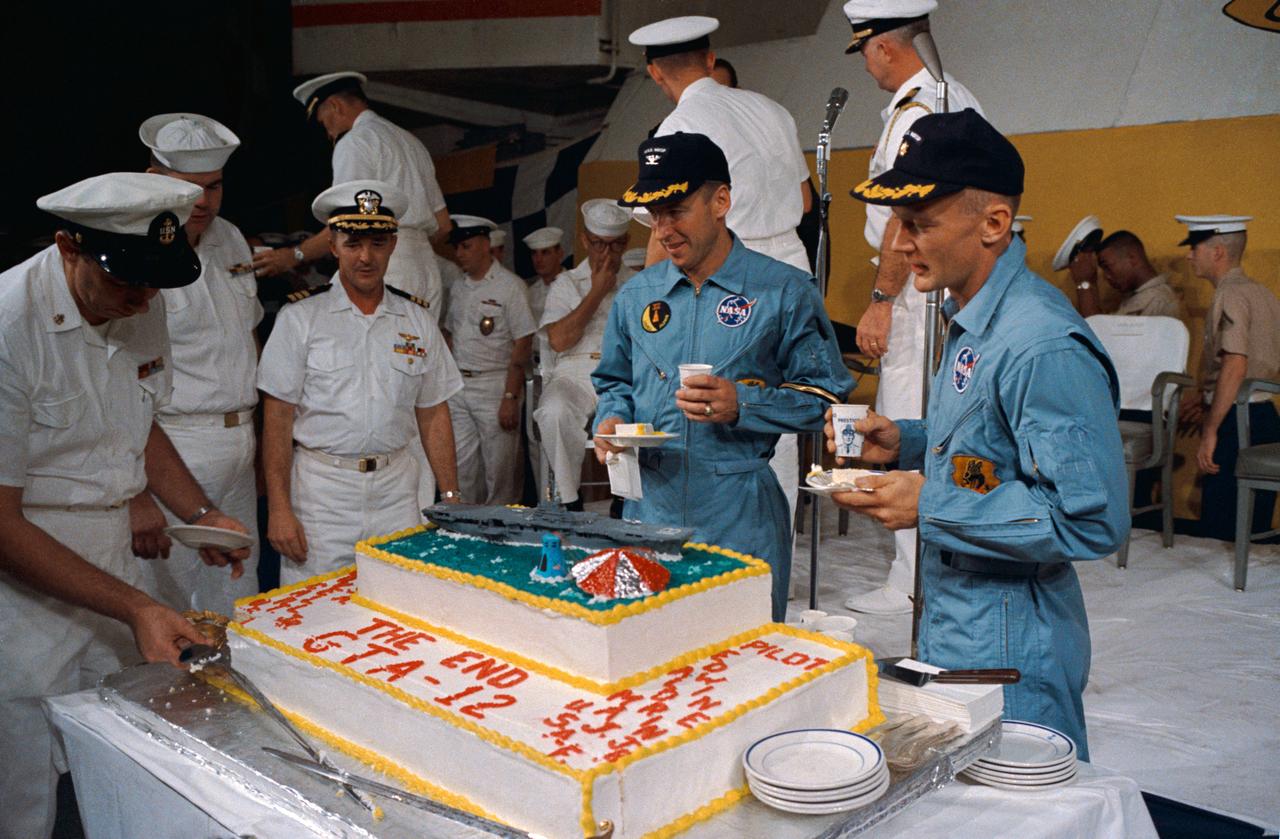
S66-59989 (16 Nov. 1966) --- Gemini-12 astronaut James A. Lovell Jr. (left), command pilot, and Edwin E. Aldrin Jr. (right), pilot, eat a piece of cake presented the two astronauts by crew members of the prime recovery ship, USS Wasp. Gemini-12 splashed down in the Atlantic Ocean at 2:21 p.m. (EST), Nov. 15, 1966, to conclude a four-day mission in space. Photo credit: NASA
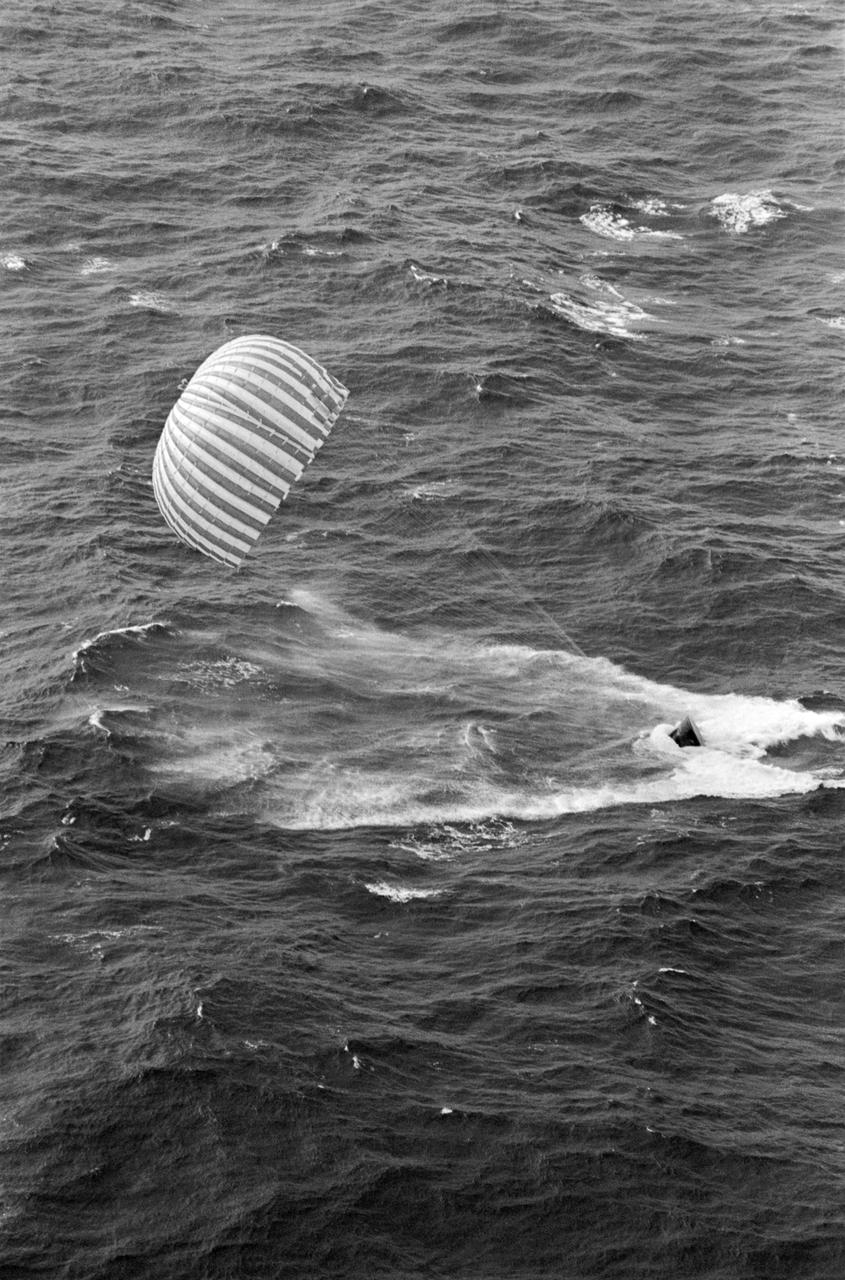
S66-59936 (15 Nov. 1966) --- The last Gemini spaceflight is concluded as the Gemini-12 spacecraft, with astronaut James A. Lovell Jr., command pilot, and Edwin E. Aldrin Jr., pilot, aboard, touches down in the Atlantic Ocean 2.5 nautical miles from the prime recovery ship, USS Wasp. Gemini-12 splashed down at 2:21 p.m. (EST), Nov. 15, 1966, to conclude a four-day mission in space. Photo credit: NASA
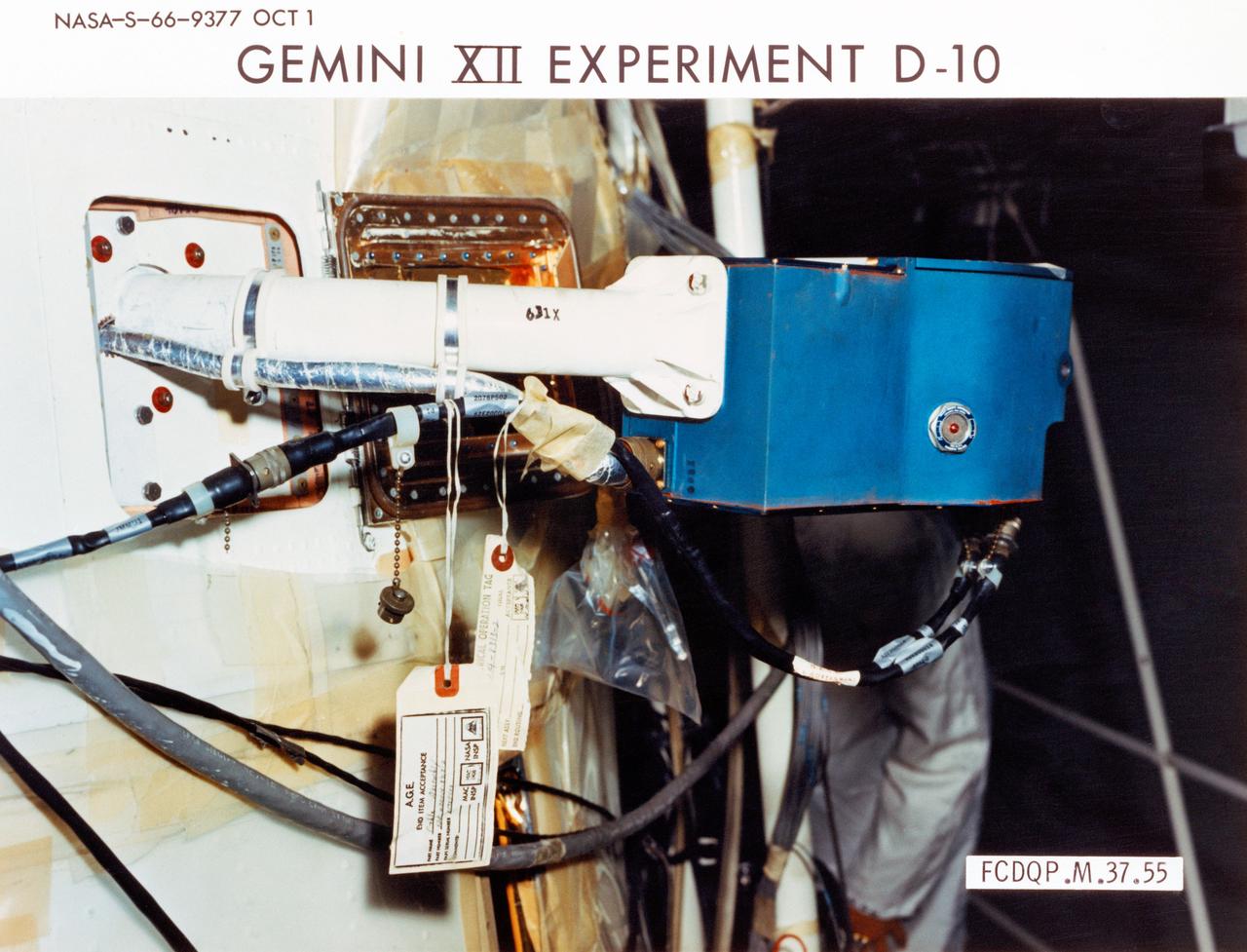
S66-09377 (1 Oct. 1966) --- One of two Ion Sensors which will be used to investigate determination of Gemini-12 spacecraft attitude in yaw and pitch from measurement of ion flow variations. Each sensor is attached to an extendible boom in the retrograde adapter section. Photo credit: NASA
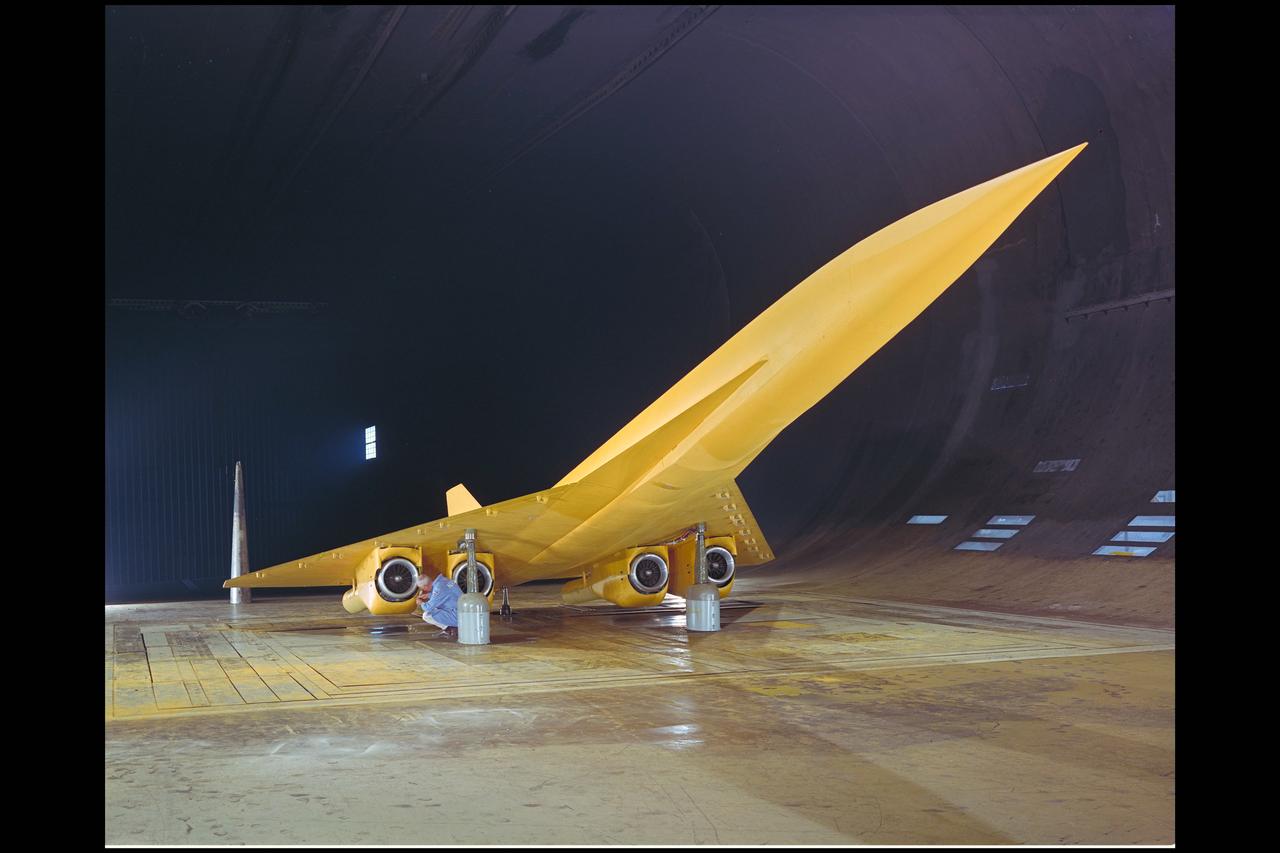
Double delta planform on a supersonic transport model mounted in the 40x80ft. w.t.
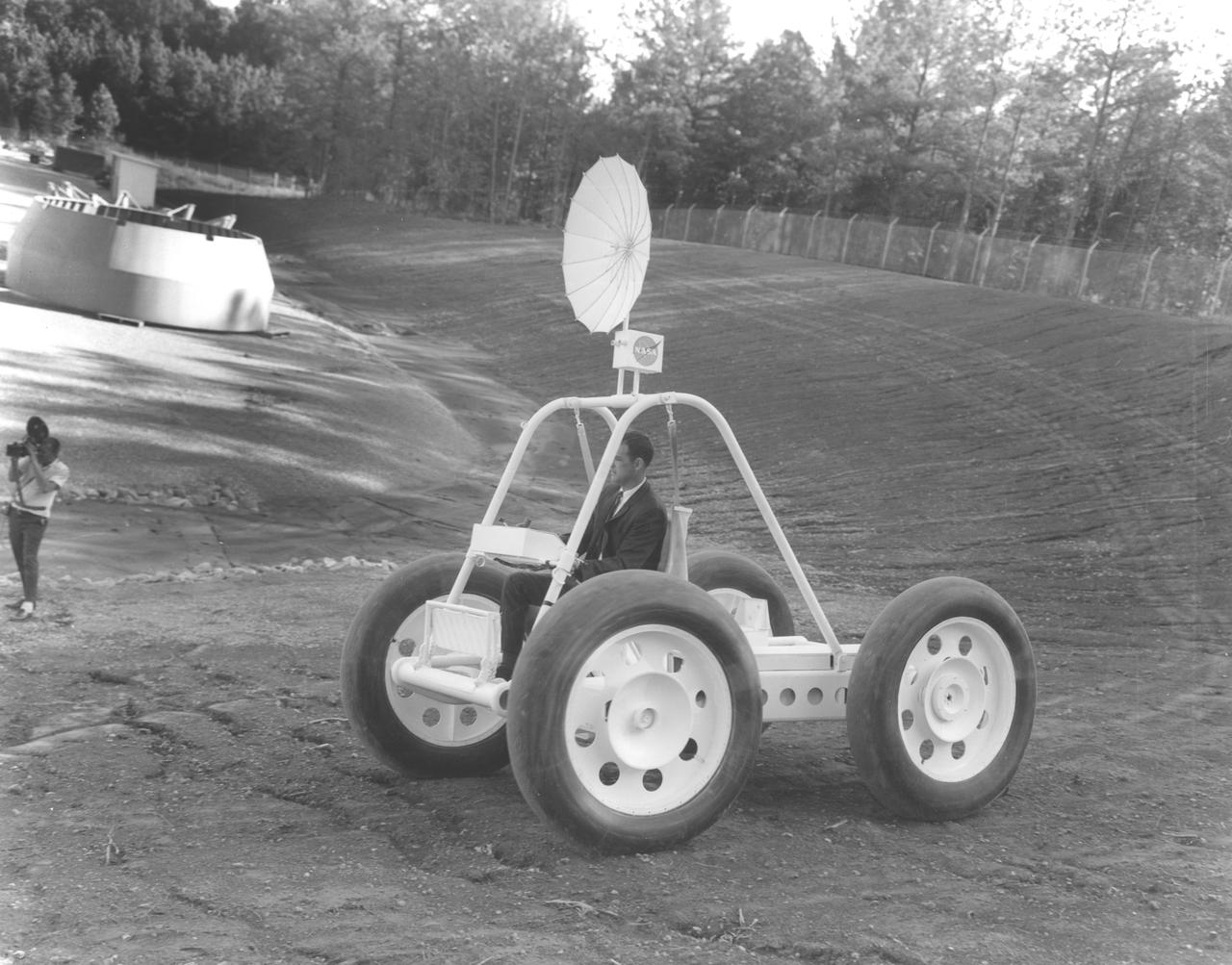
Built by Brown Engineering company of Huntsville, Alabama, a motorized mockup of a small Lunar Roving Vehicle (LRV) is being demonstrated at the Marshall Space Flight Center (MSFC). This particular vehicle weighed about 1200 pounds and is almost 10 feet long, 7-feet and 2-inches wide, and 7-feet and 8-inches high. The LRV was developed under the direction of MSFC to provide astronauts with greater mobility on the lunar surface.
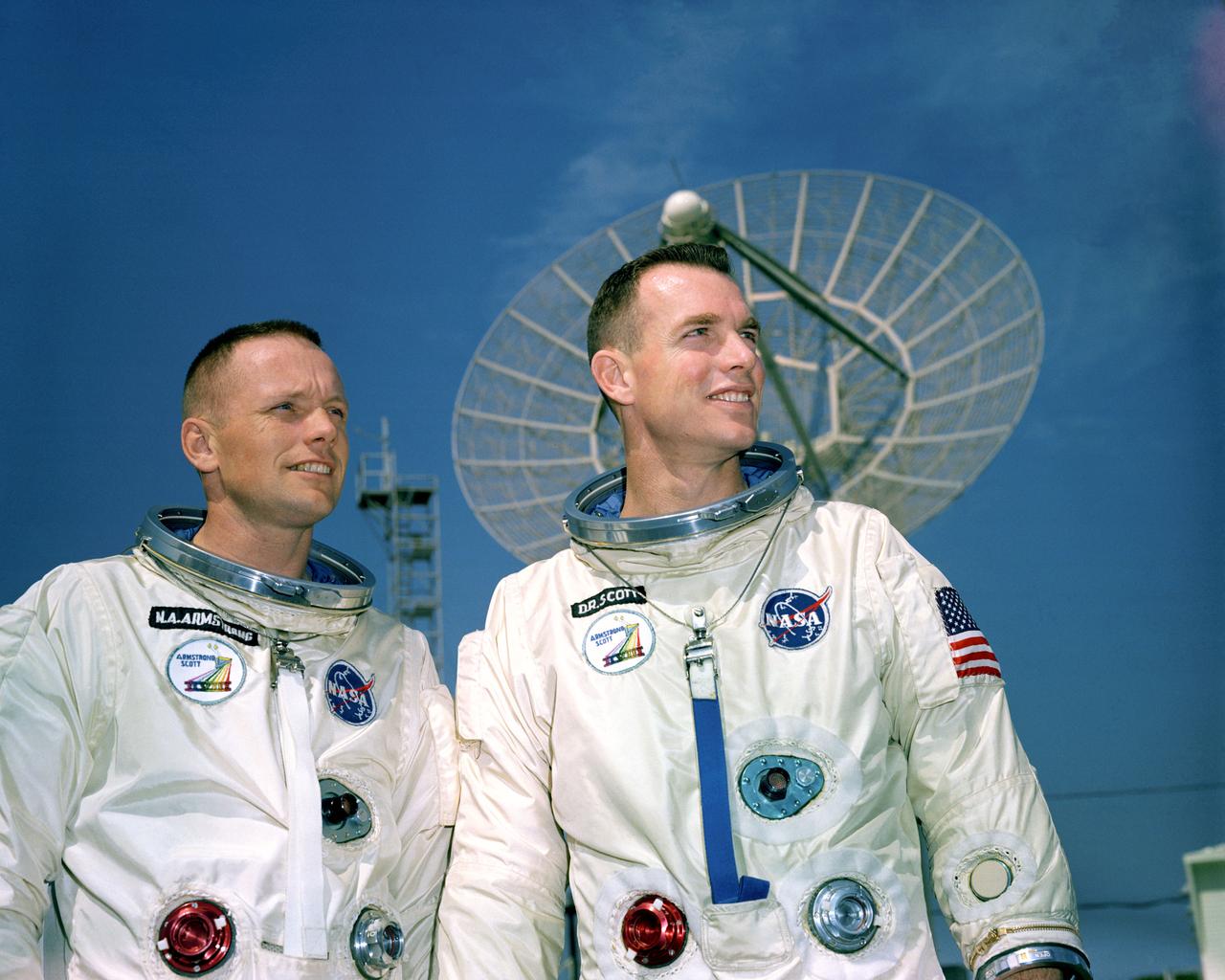
S66-27513 (11 March 1966) --- Astronauts Neil A. Armstrong (left), command pilot, and David R. Scott, pilot, the Gemini-8 prime crew, during a photo session outside the Kennedy Space Center (KSC) Mission Control Center. They are standing in front of a radar dish. Photo credit: NASA
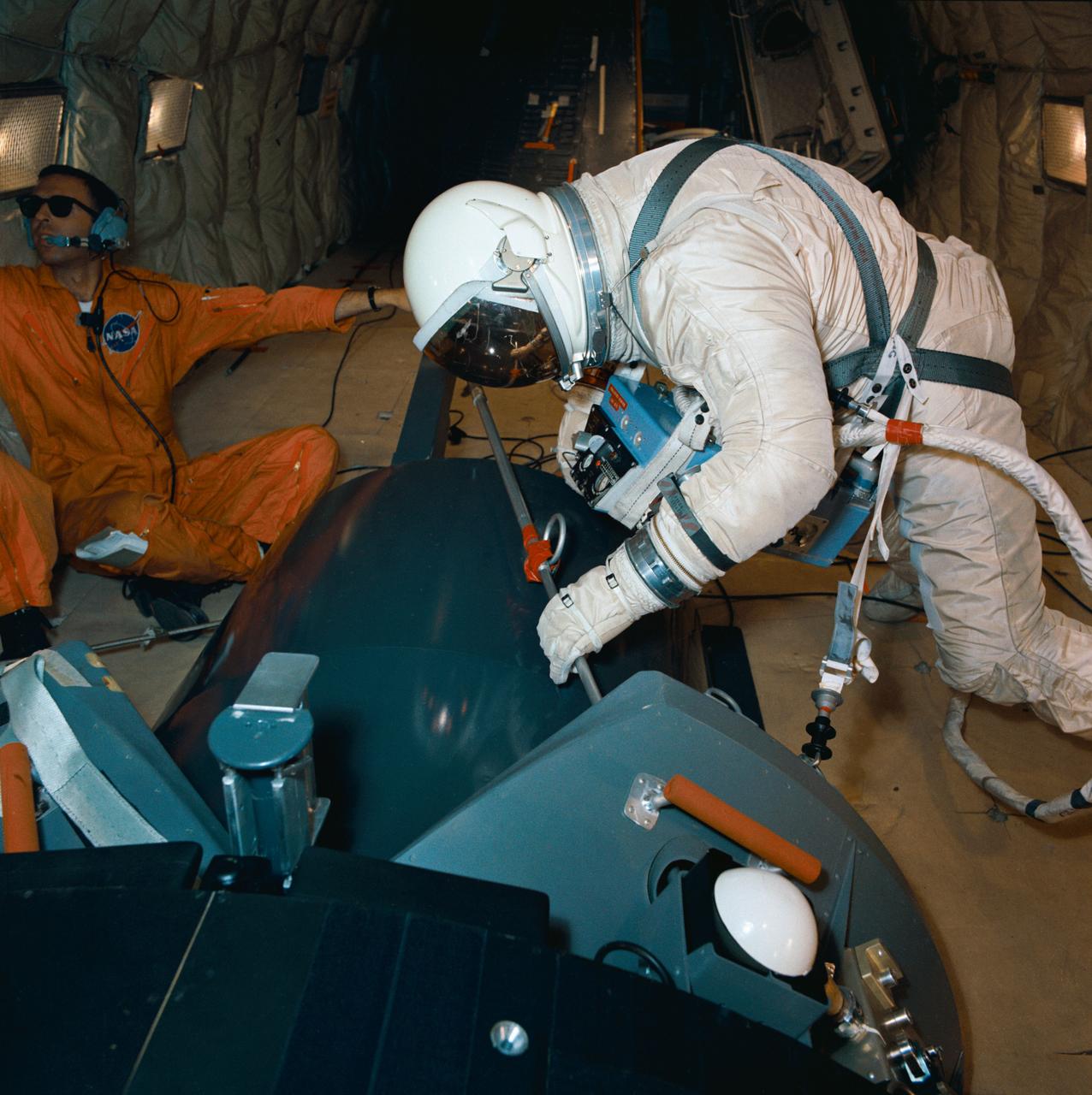
S66-57387 (13 Oct. 1966) --- Astronaut Edwin E. Aldrin Jr., pilot for the Gemini-12 spaceflight, practices work tasks during zero-gravity training. He is secured to a mock-up of the Agena Target Docking Vehicle by special tethers. The training took place onboard an Air Force KC-135 jet aircraft. Photo credit: NASA
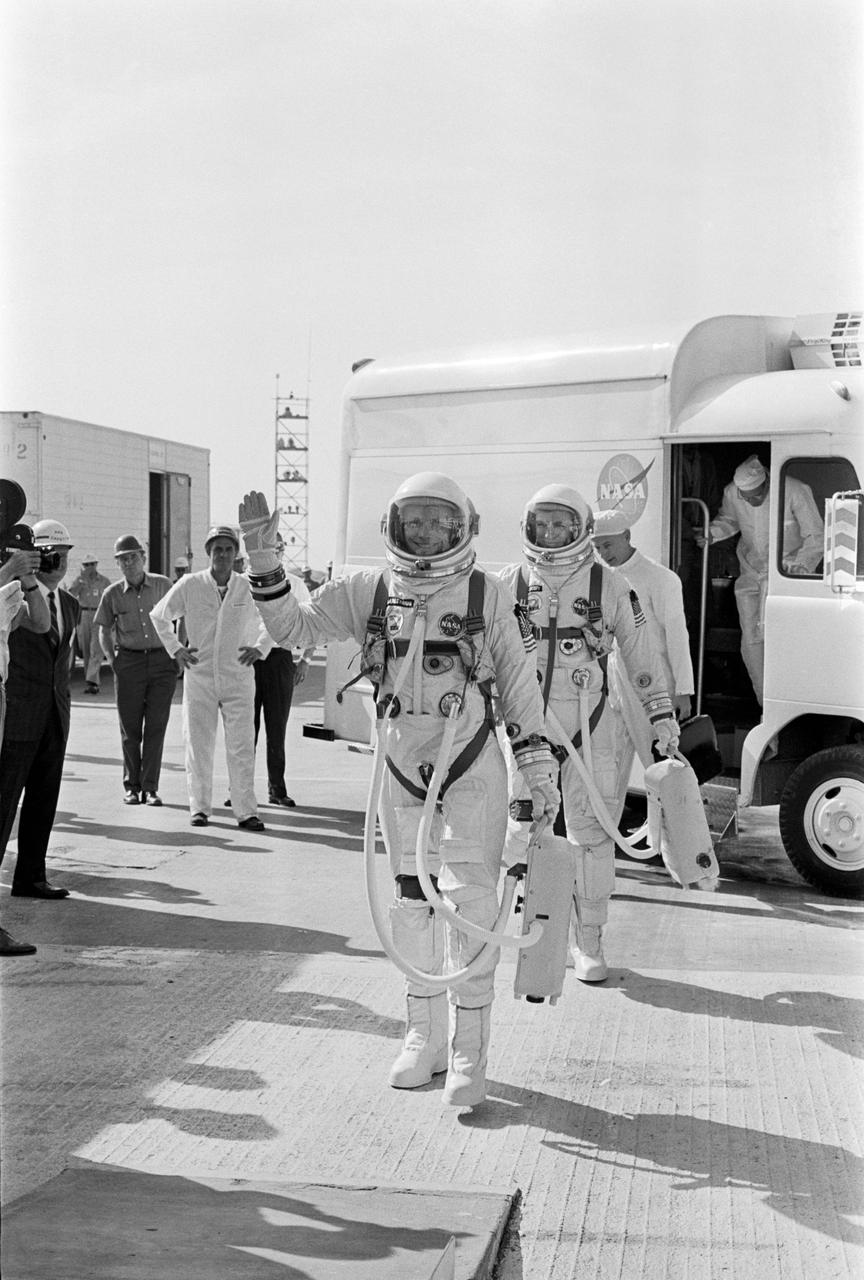
S66-24447 (16 March 1966) --- Astronauts Neil A. Armstrong and David R. Scott walk up the ramp at Pad 19 during Gemini-8 prelaunch countdown. Photo credit: NASA
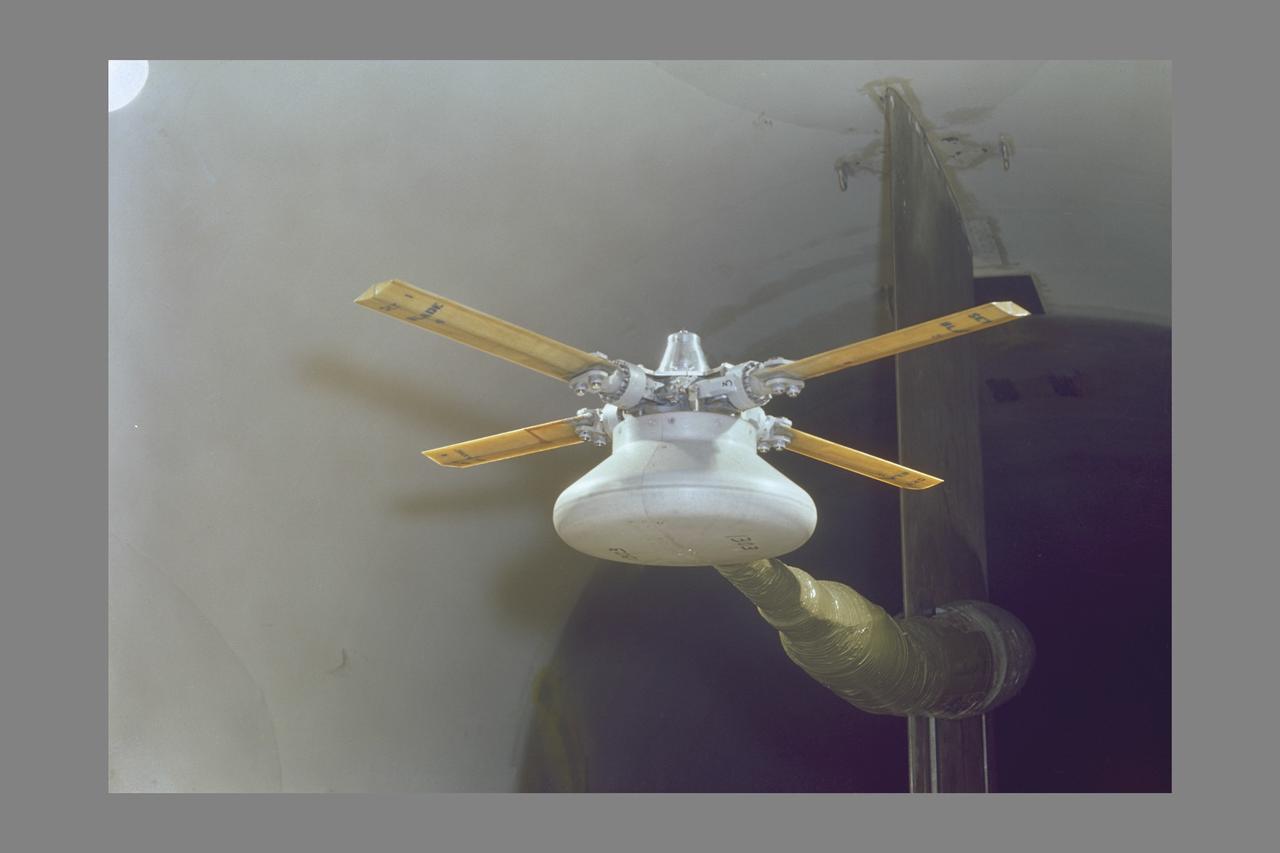
Ames Rotary Entry Vehicle #1 model in REV-1 testing in the Ames Research Center 12ft. Pressure Wind Tunnel
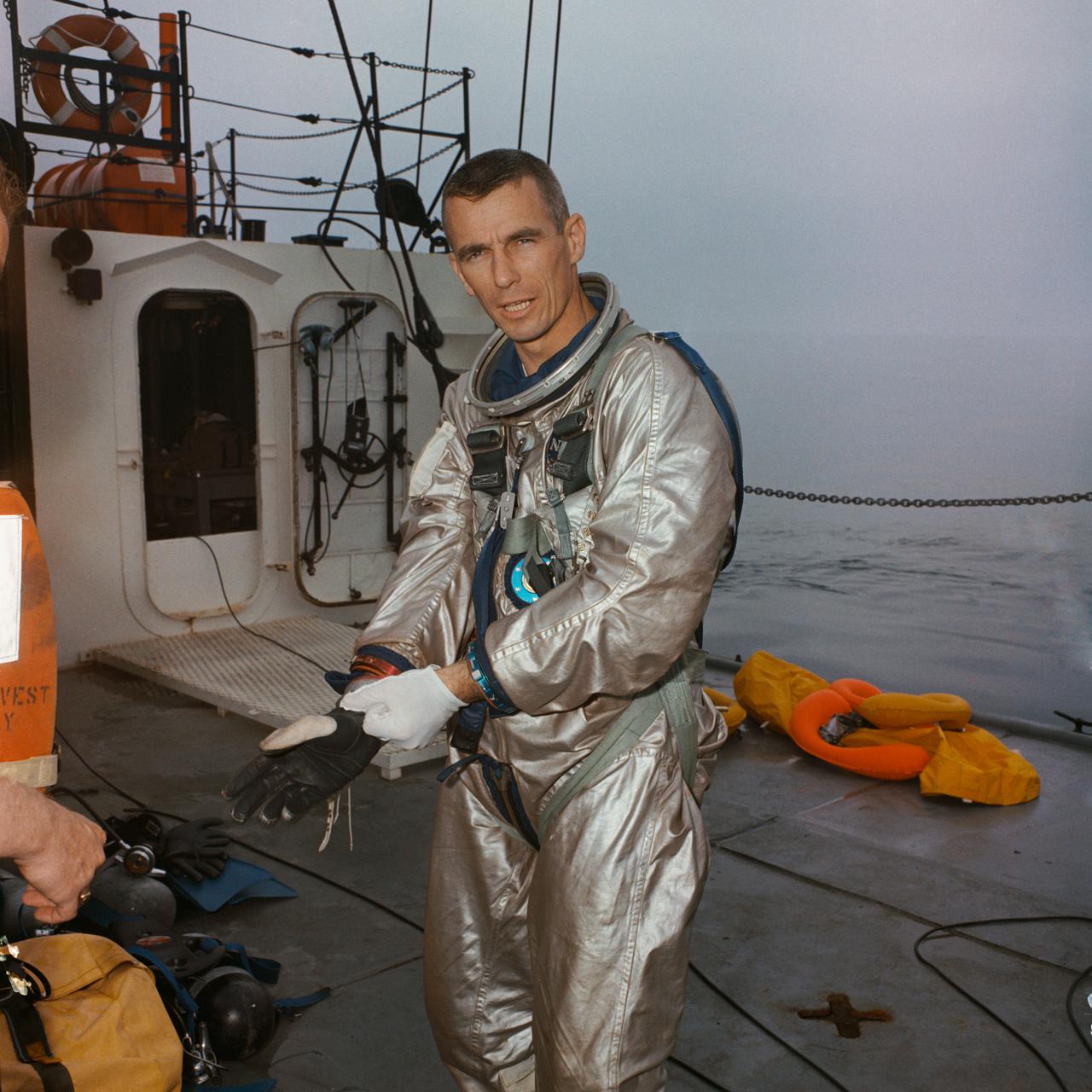
S66-29485 (9 April 1966) --- Astronaut Eugene A. Cernan, prime crew pilot of the National Aeronautics and Space Administration's Gemini-9 spaceflight, stands on deck of the NASA Motor Vessel Retriever after suiting up for water egress training in the Gulf of Mexico. Photo credit: NASA
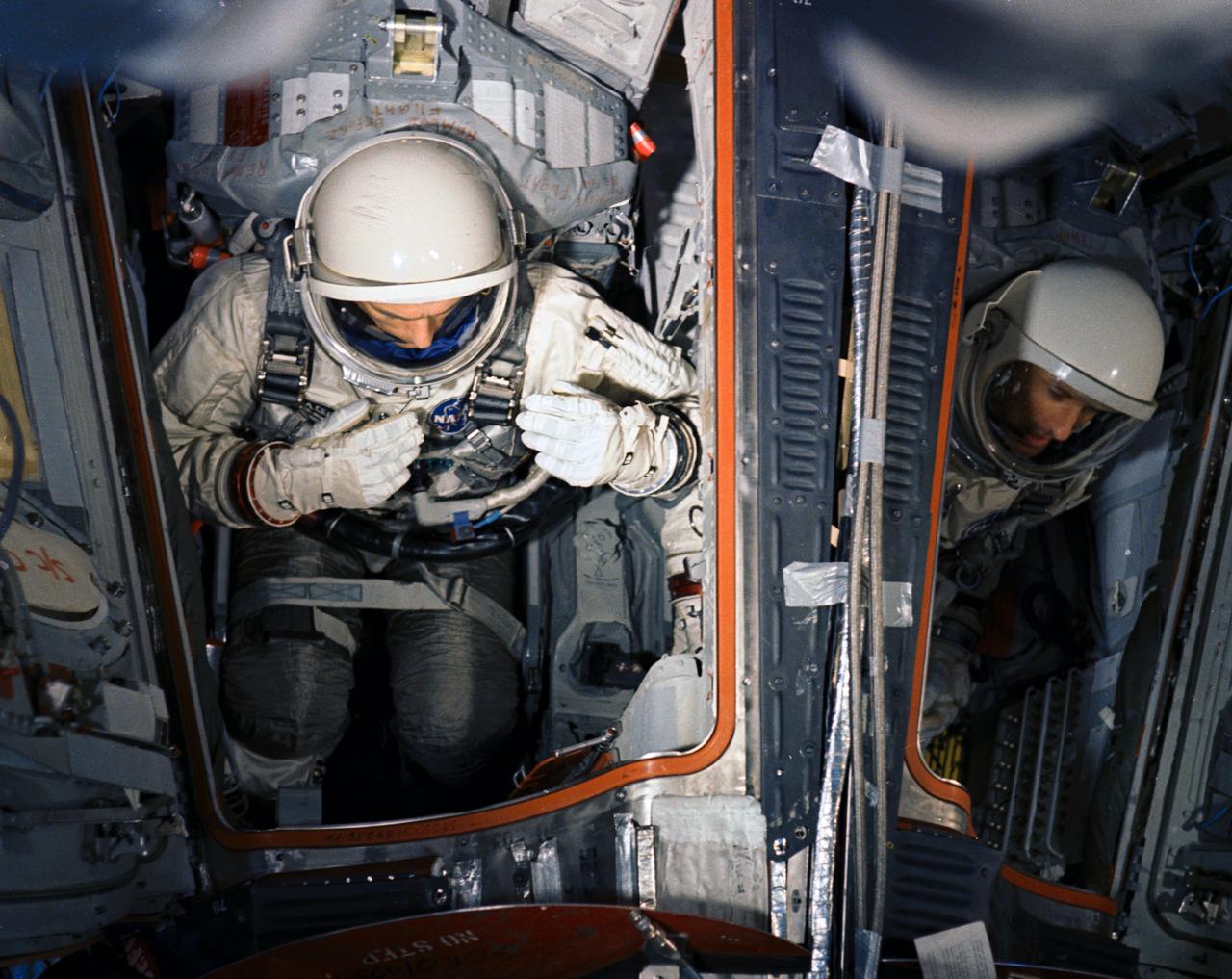
S66-33406 (10 May 1966) --- Astronaut Thomas P. Stafford (on left), command pilot, and Eugene A. Cernan, pilot, in Gemini-9 spacecraft in the white room at Pad 19 during a Gemini-9/Agena simultaneous launch demonstration. This test is a coordinated dountdown of the Atlas-Agena and the Gemini-Titan vehicles. Photo credit: NASA
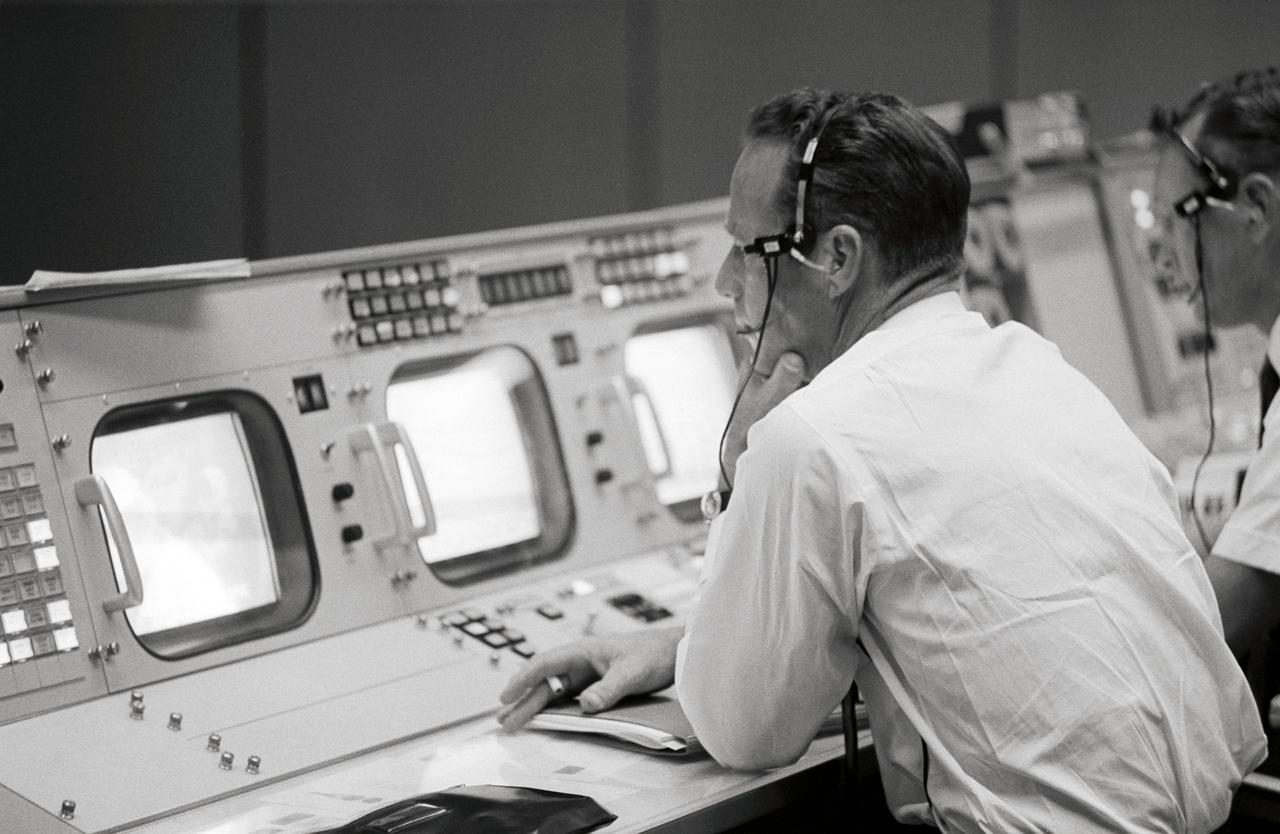
S66-51794 (12 Sept. 1966) --- Astronaut M. Scott Carpenter monitors the Booster Systems Console in the Manned Spacecraft Center (MSC) Mission Control Center during launch of the Gemini-11 spaceflight. Photo credit: NASA

S66-42742 (18 July 1966) --- The Gemini-10 prime crew, astronauts John W. Young (background), command pilot, and Michael Collins (foreground), pilot, relax in the Launch Complex 16 suiting trailer during the Gemini-10 prelaunch countdown. Minutes later astronaut Young and Collins were transported to Pad 19 and their waiting Gemini-10 spacecraft in preparation for their scheduled three-day mission in space. Photo credit: NASA
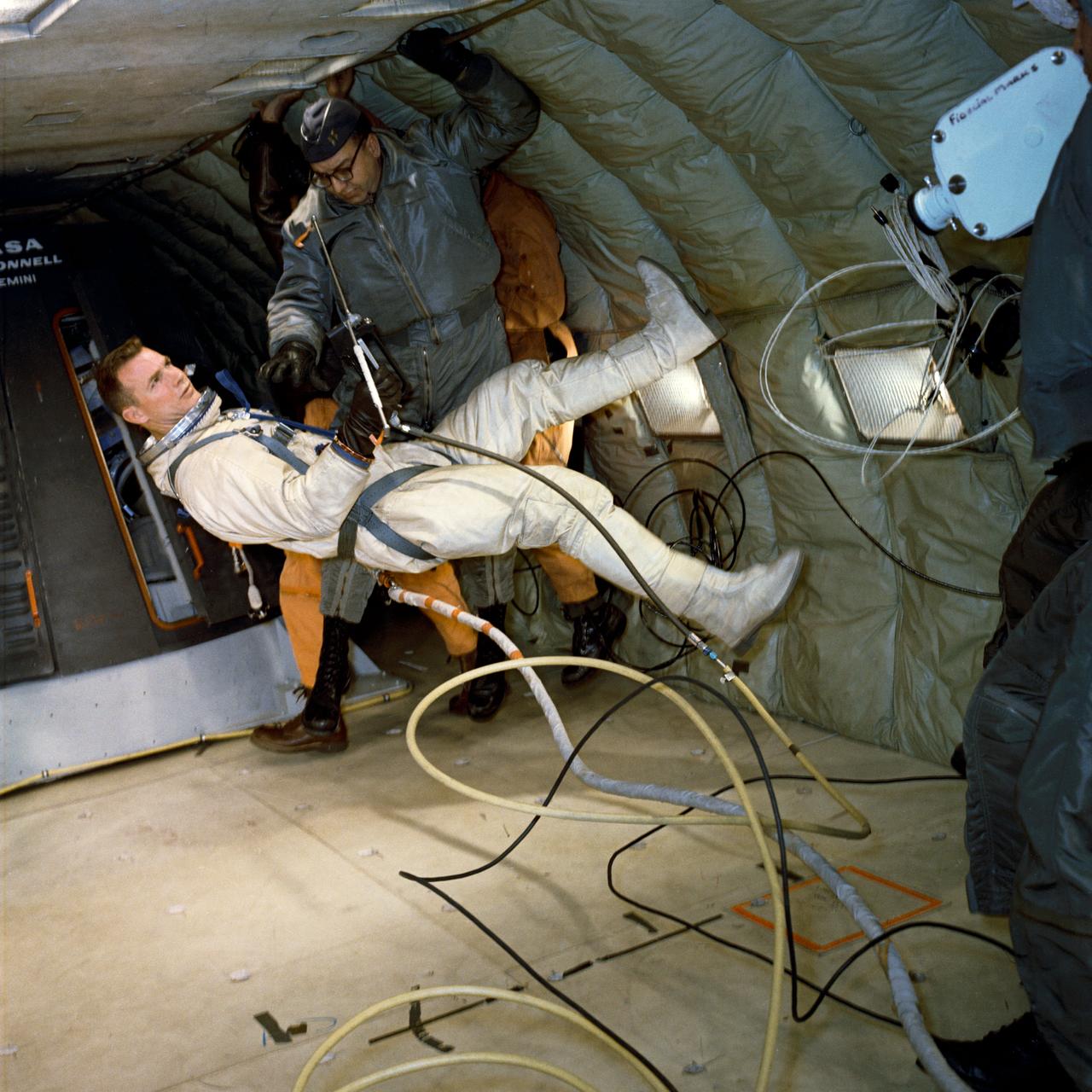
S66-20016 (3 Feb. 1966) --- Astronaut David R. Scott holds maneuvering unit while suspended in a weightless state during extravehicular activity (EVA) training in a C-135 Air Force plane. Photo credit: NASA
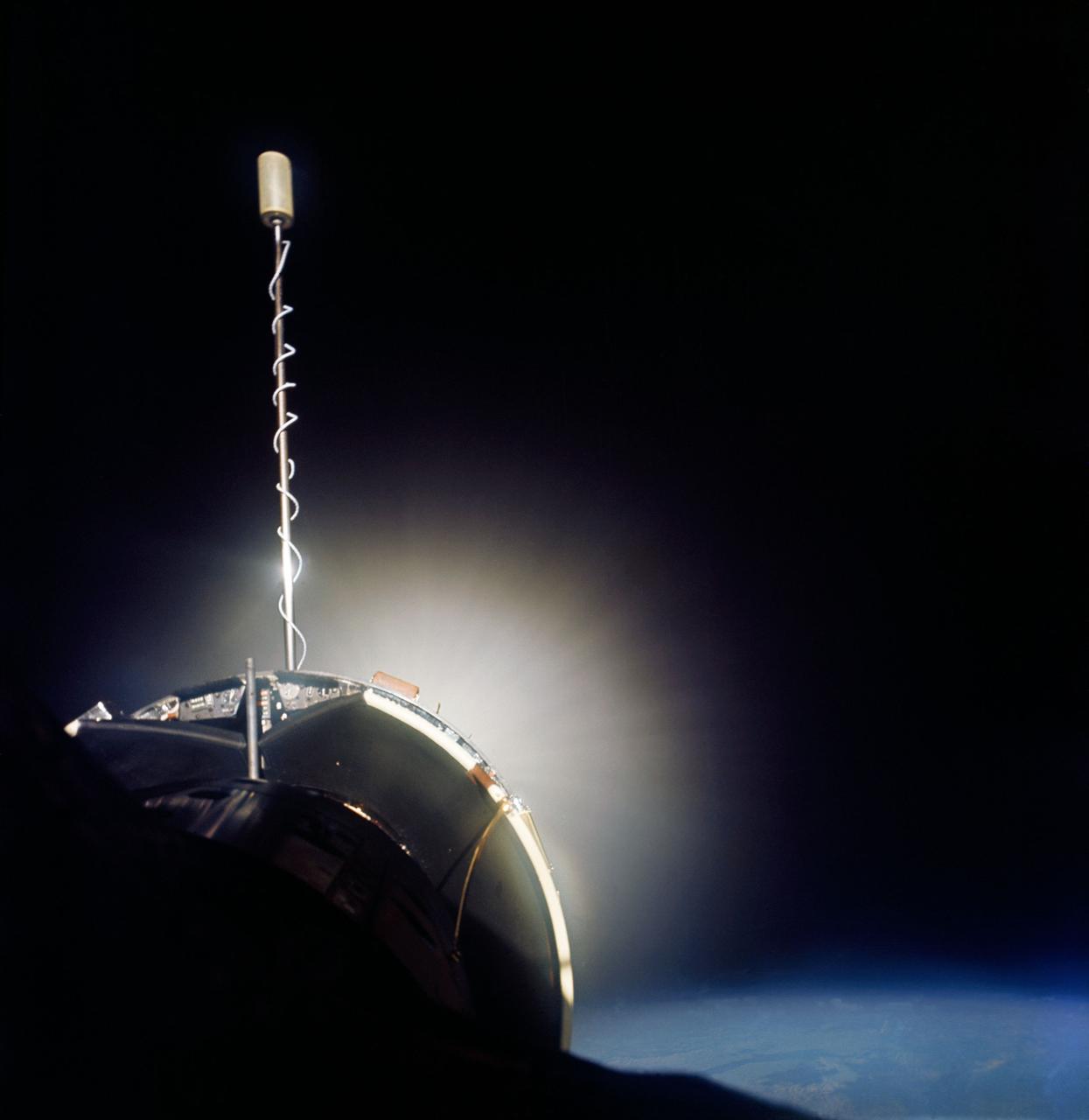
S66-46249 (18-21 July 1966) --- Agena Target Docking Vehicle docked to Gemini-10 spacecraft. Excellent view of Agena display panel. Glow from Agena's primary propulsion system. Photo credit: NASA
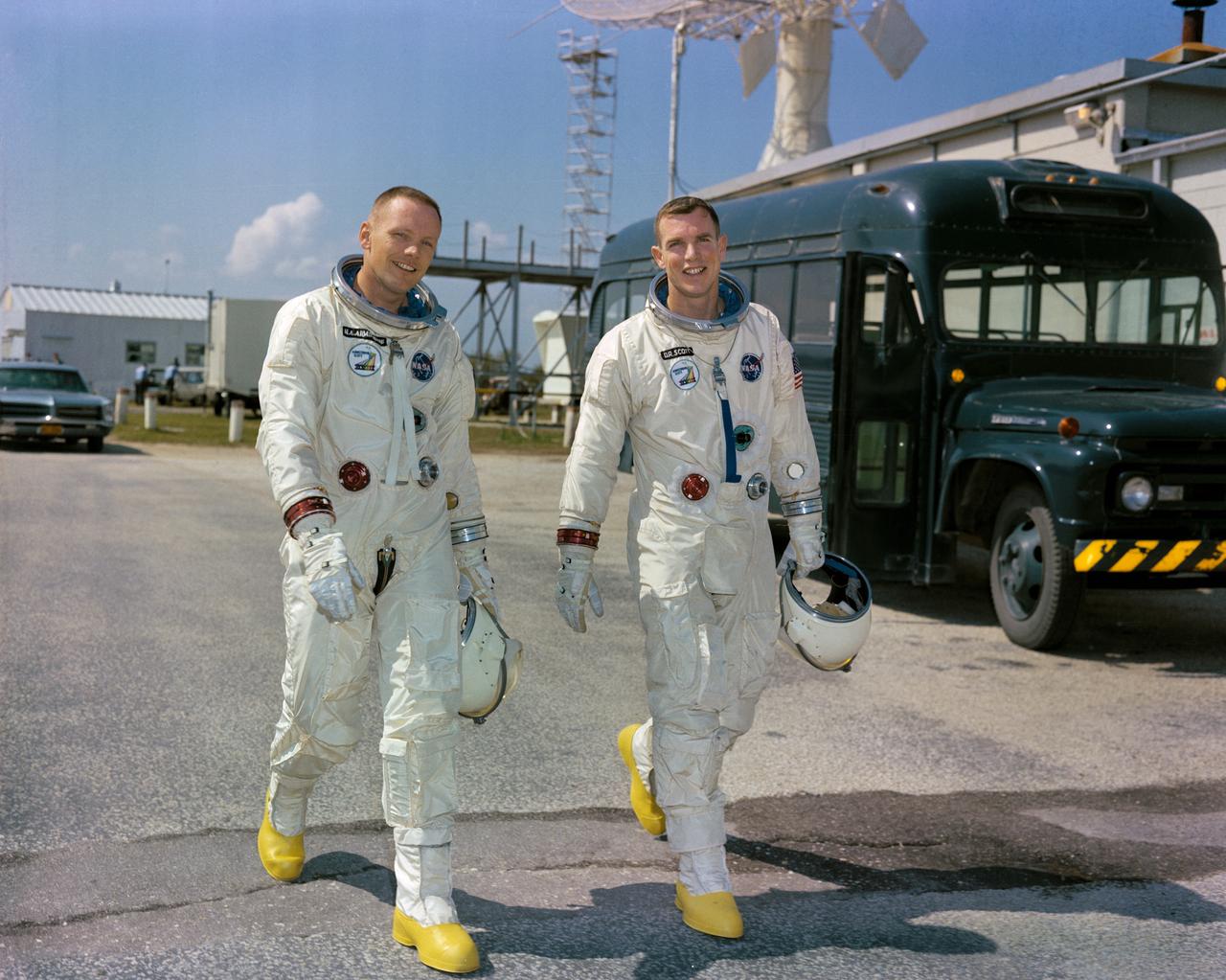
S66-27511 (11 March 1966) --- Astronauts Neil A. Armstrong (left), command pilot, and David R. Scott, pilot, the Gemini-8 prime crew, during a photo session outside the Kennedy Space Center (KSC) Mission Control Center. Both men are wearing full spacesuits and carrying their helmets. Photo credit: NASA
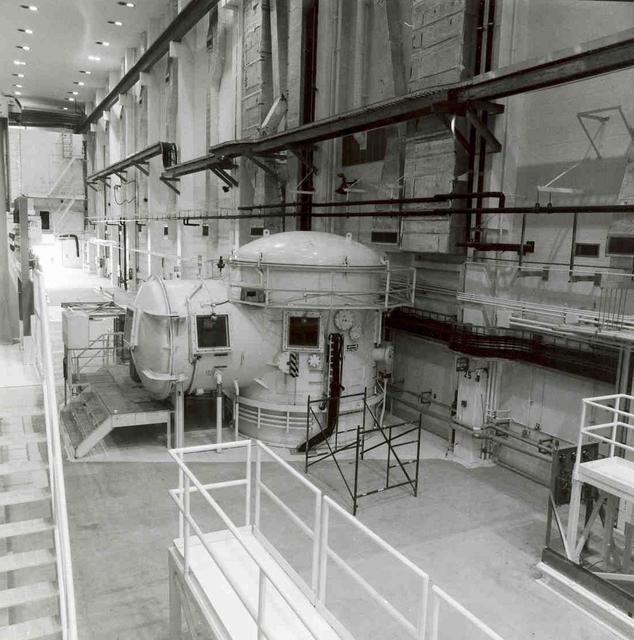
View of O&C Building Altitude Chambers
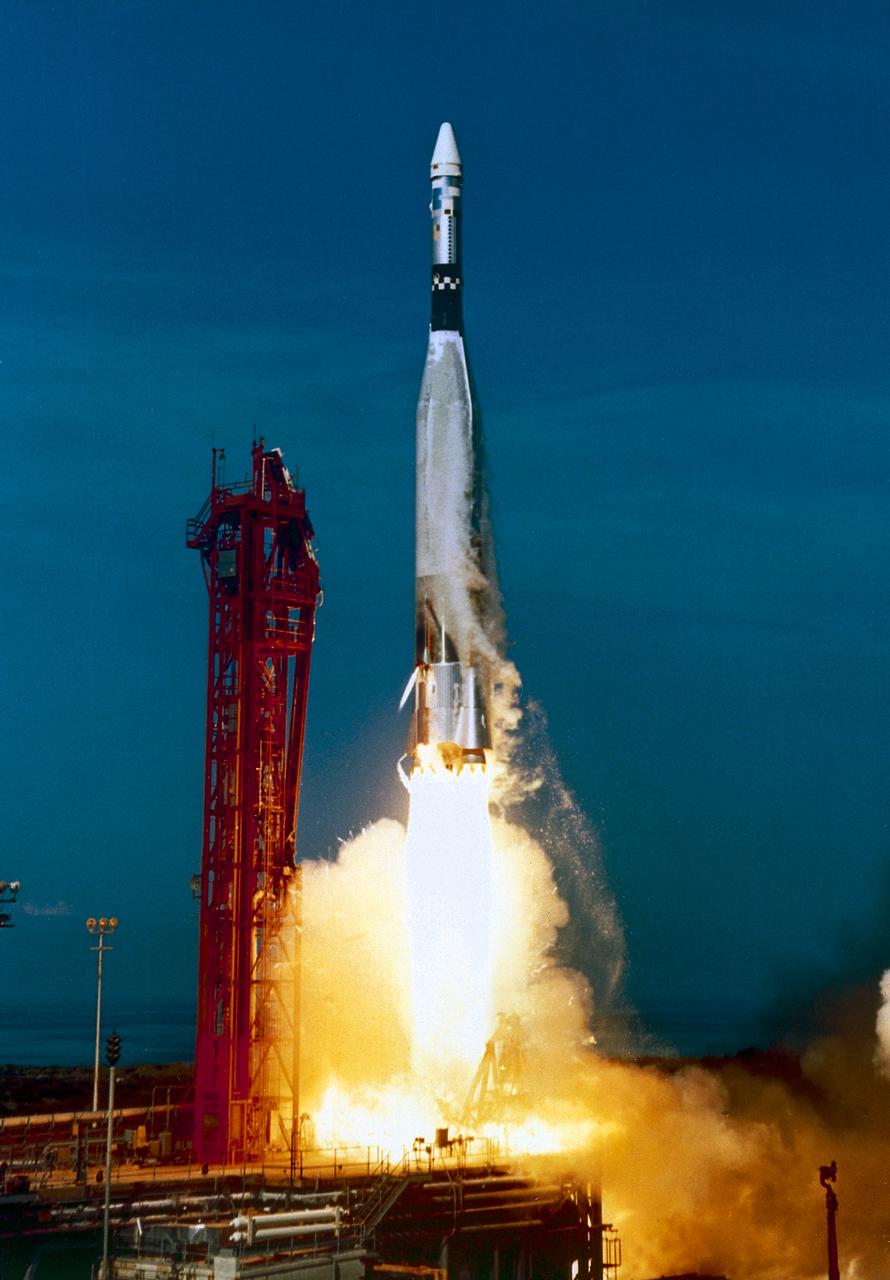
Launched atop an Atlas booster, the Agena target vehicle (ATV) was a spacecraft used by NASA to develop and practice orbital space rendezvous and docking techniques in preparation for the Apollo program lunar missions. This particular launch preceded the Gemini 12, which launched aboard a Titan launch vehicle one and one half hours later. The objective was for Agena and Gemini to rendezvous in space and practice docking procedures. An intermediate step between Project Mercury and the Apollo Program, the Gemini Program's major objectives were to subject two men and supporting equipment to long duration flights, to perfect rendezvous and docking with other orbiting vehicles, methods of reentry, and landing of the spacecraft.
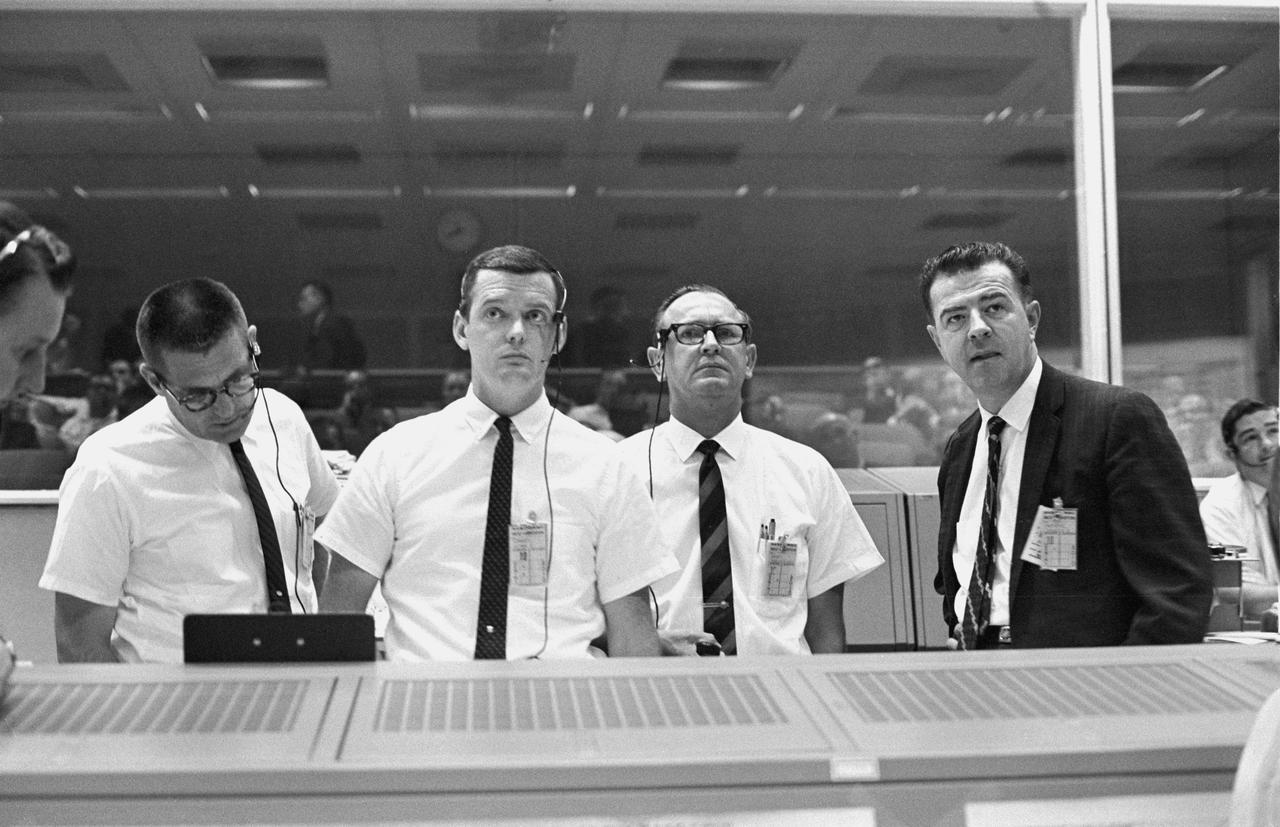
S66-43377 (18 July 1966) --- Standing at the flight director's console, viewing the Gemini-10 flight display in the Mission Control Center, are (left to right) William C. Schneider, Mission Director; Glynn Lunney, Prime Flight Director; Christopher C. Kraft Jr., MSC Director of Flight Operations; and Charles W. Mathews, Manager, Gemini Program Office. Photo credit: NASA
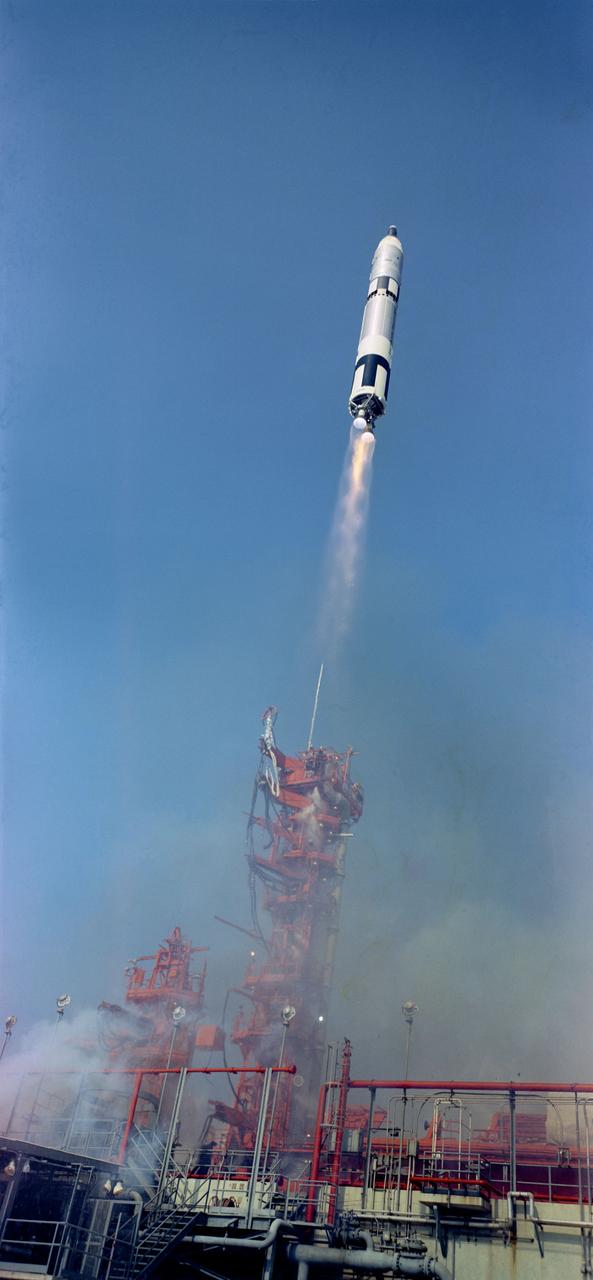
S66-34064 (3 June 1966) ?-- The Gemini-9 spacecraft, carrying astronauts Thomas P. Stafford, command pilot, and Eugene A. Cernan, pilot, was successfully launched by the National Aeronautics and Space Administration from the Kennedy Space Center?s Launch Complex 19 at 8:39 a.m. (EST), June 3, 1966. Photo credit: NASA
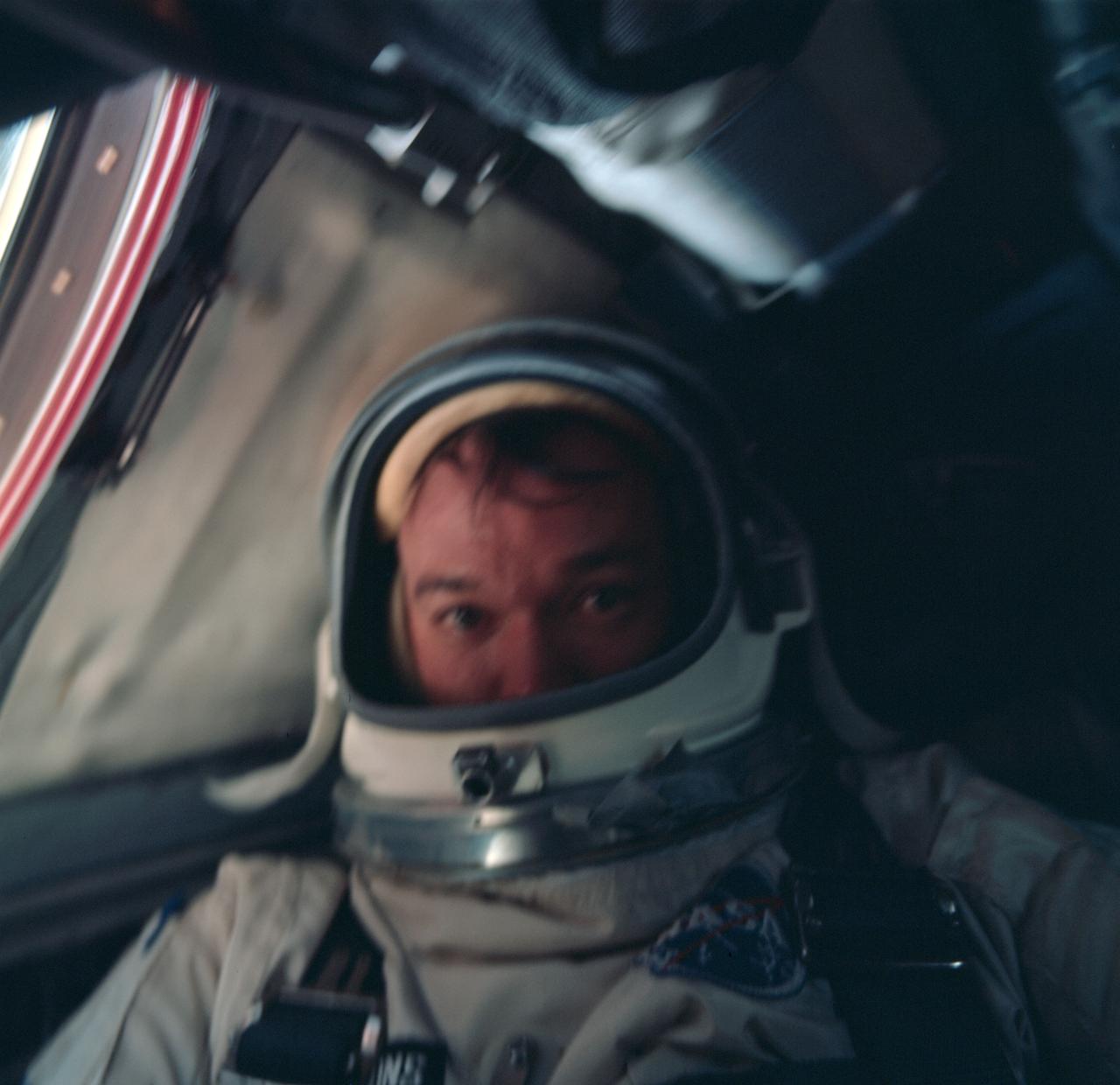
S66-46270 (18 July 1966) --- Astronaut Michael Collins is photographed inside the spacecraft during the Gemini-10 mission. Photo credit: NASA
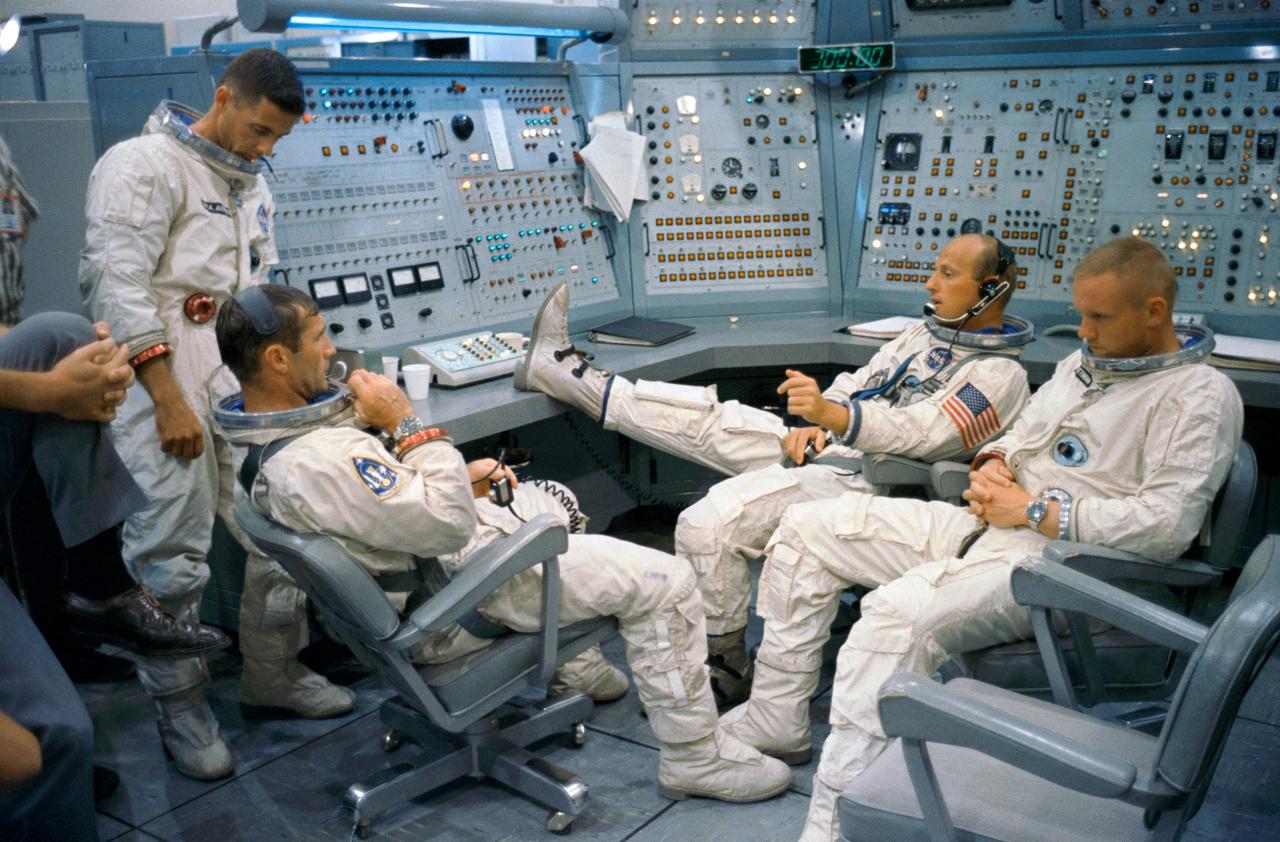
S66-50769 (8 Sept. 1966) --- Gemini-11 prime and backup crews are pictured at the Gemini Mission Simulator at Cape Kennedy, Florida. Left to right are astronauts William A. Anders, backup crew pilot; Richard F. Gordon Jr., prime crew pilot; Charles Conrad Jr. (foot on desk), prime crew command pilot; and Neil A. Armstrong, backup crew command pilot. Photo credit: NASA
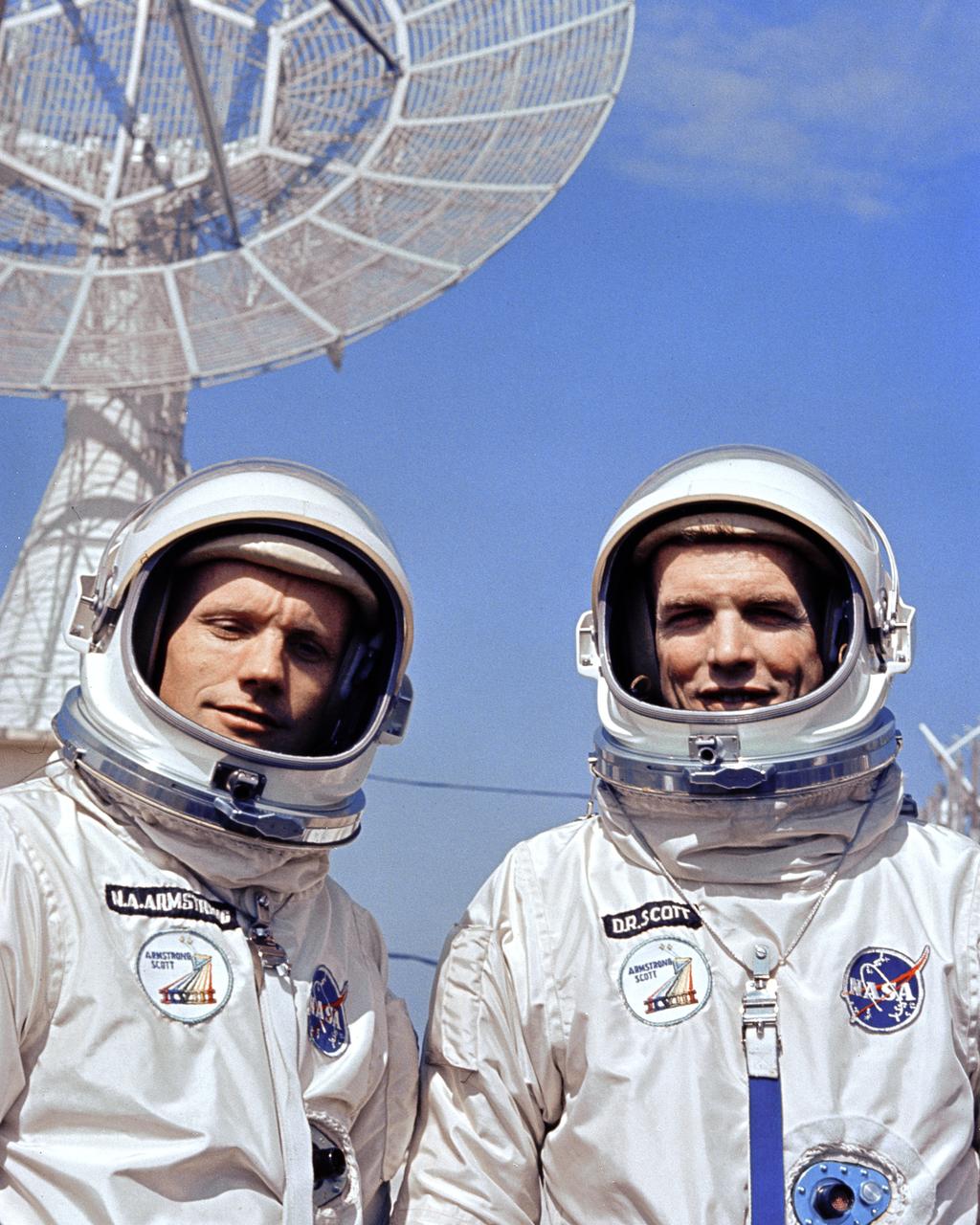
KSC-66C-1845 Gemini-8 Astronauts Neil A. Armstrong, Command Pilot, and David R. Scott, Pilot, during a Photo Session for the Press outside Mission Control Center, Cape Kennedy. (jrs)
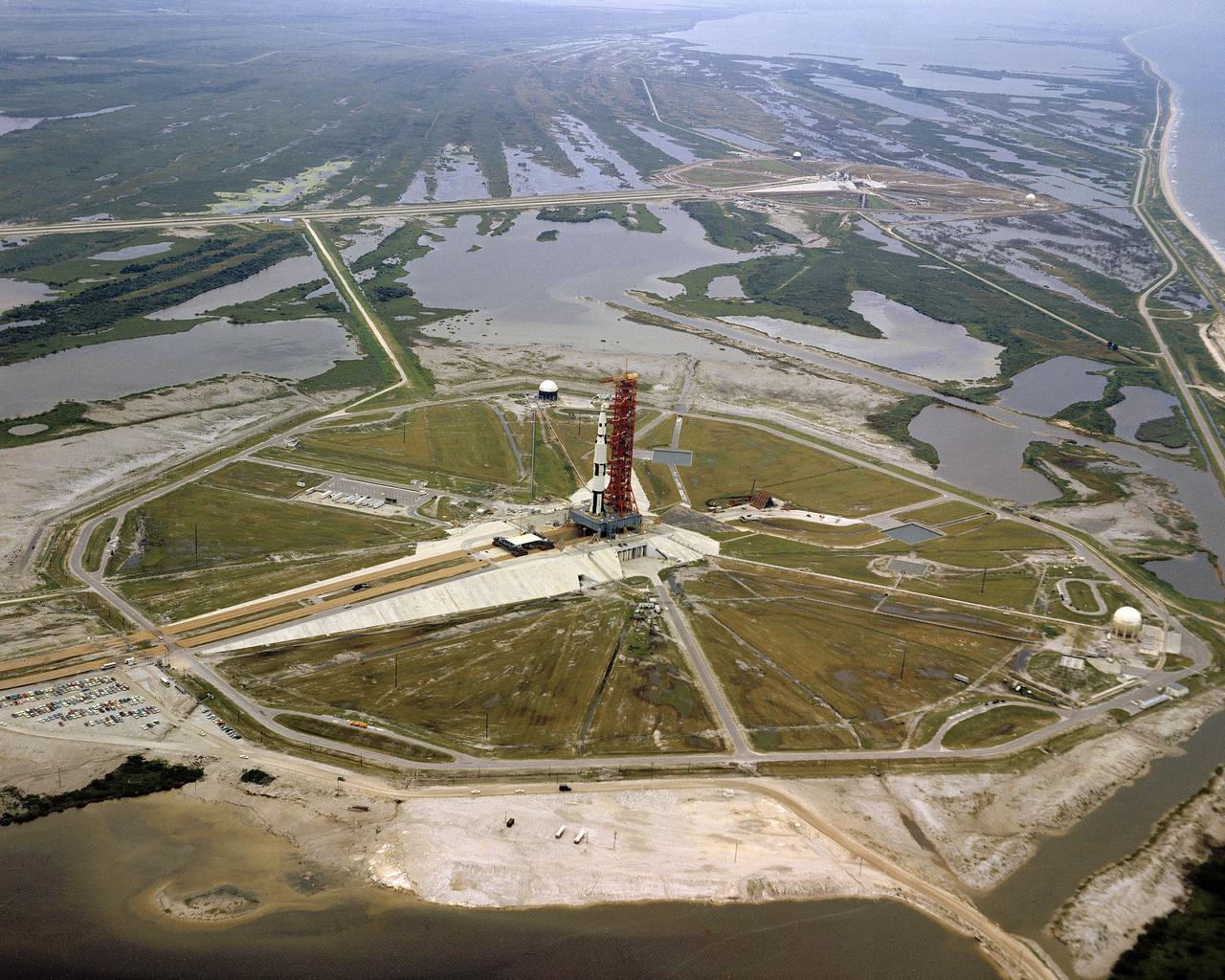
CAPE KENNEDY, Fla. -- An aerial view of Launch Complex 39A at the Kennedy Space Center in Florida, with the 500F facilities verification vehicle on the pad during testing of the site where NASA plans to launch astronauts to the moon as part of the Apollo Program. Photo Credit: NASA
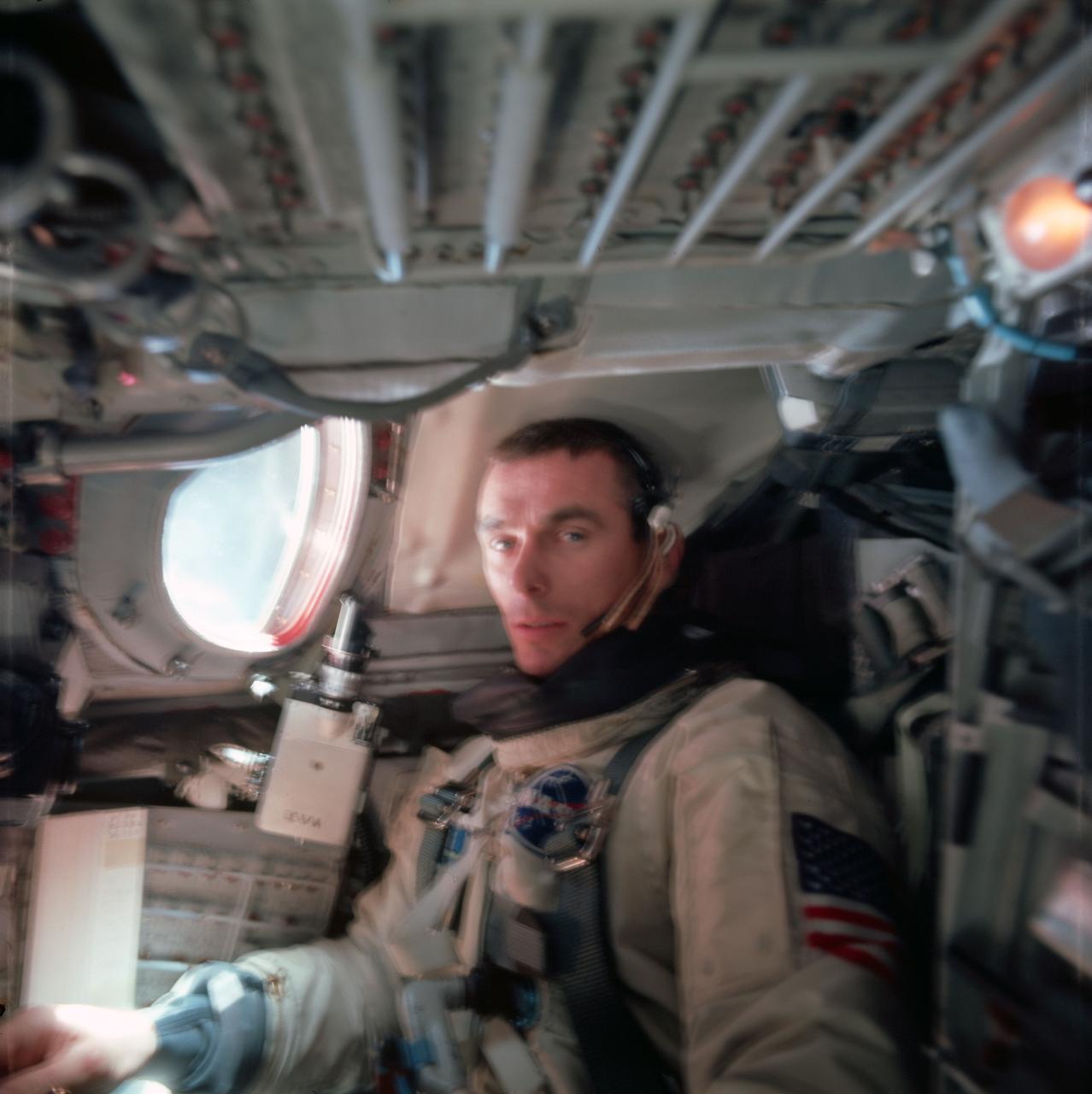
S66-38082 (3 June 1966) --- Astronaut Eugene A. Cernan, pilot of the Gemini-9A spaceflight, is photographed inside the spacecraft by the command pilot, astronaut Thomas P. Stafford during the flight. Photo credit: NASA

S66-44497 (23 July 1966) --- Astronauts Charles Conrad Jr. (left) and Richard F. Gordon Jr. (right), prime crew for the Gemini-11 spaceflight, practice water egress procedures in the Gulf of Mexico. Static Article 5 was used in the training exercise. A MSC swimmer is in the water assisting in the training. Photo credit: NASA

S66-32530 (14 April 1966) --- Astronauts John W. Young (right), command pilot, and Michael Collins, pilot, the prime crew of the Gemini-10 spaceflight, prepare for a Manned Altitude Test Run in the Gemini-10 spacecraft. They are in McDonnell Aircraft's 30-feet altitude chamber. Photo credit: NASA
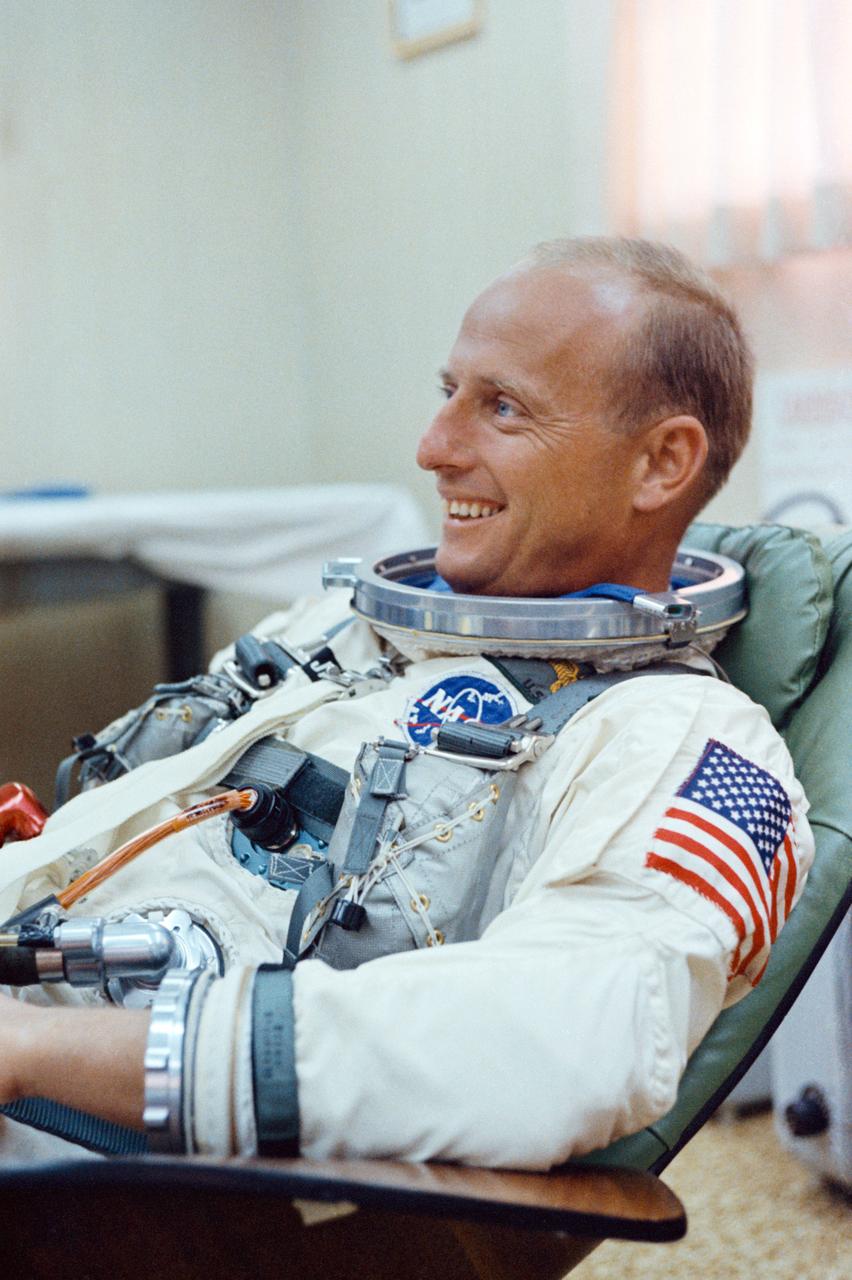
S66-50726 (12 Sept. 1966) --- Astronaut Charles Conrad Jr., command pilot of the Gemini-11 spaceflight, relaxes in Launch Complex 16 suiting trailer during the Gemini-11 prelaunch countdown. Minutes later astronauts Conrad and Richard F. Gordon Jr., pilot, were transported to Pad 19 and their waiting Gemini-11 spacecraft in preparation for their scheduled three-day mission in space. Photo credit: NASA
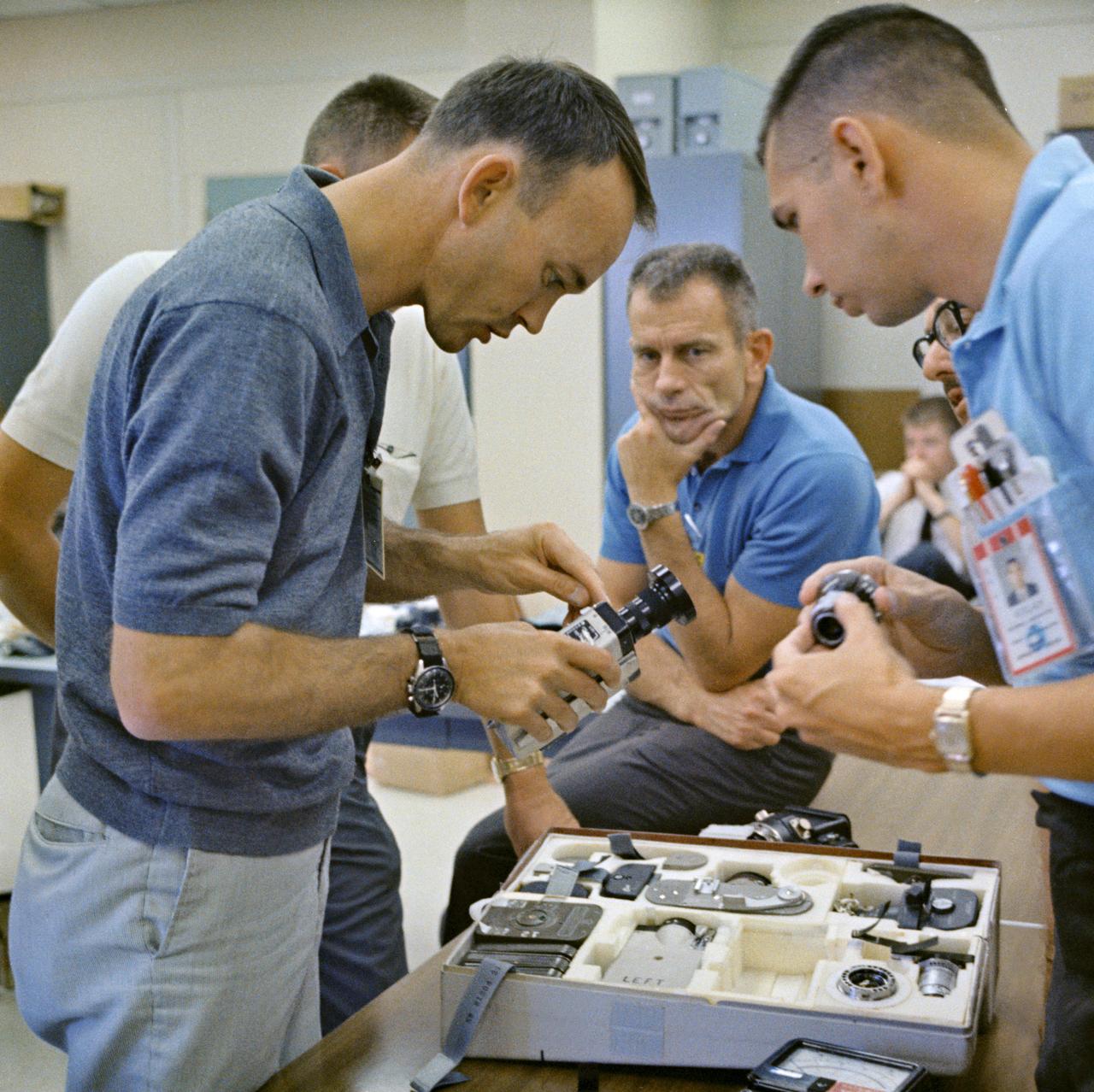
S66-42763 (18 July 1966) --- Astronaut Michael Collins (left), Gemini-10 prime crew pilot, inspects a camera during prelaunch activity at Cape Kennedy, Florida. In center background is Dr. Donald K. Slayton, Manned Spacecraft Center (MSC) Director of Flight Crew Operations. Photo credit: NASA
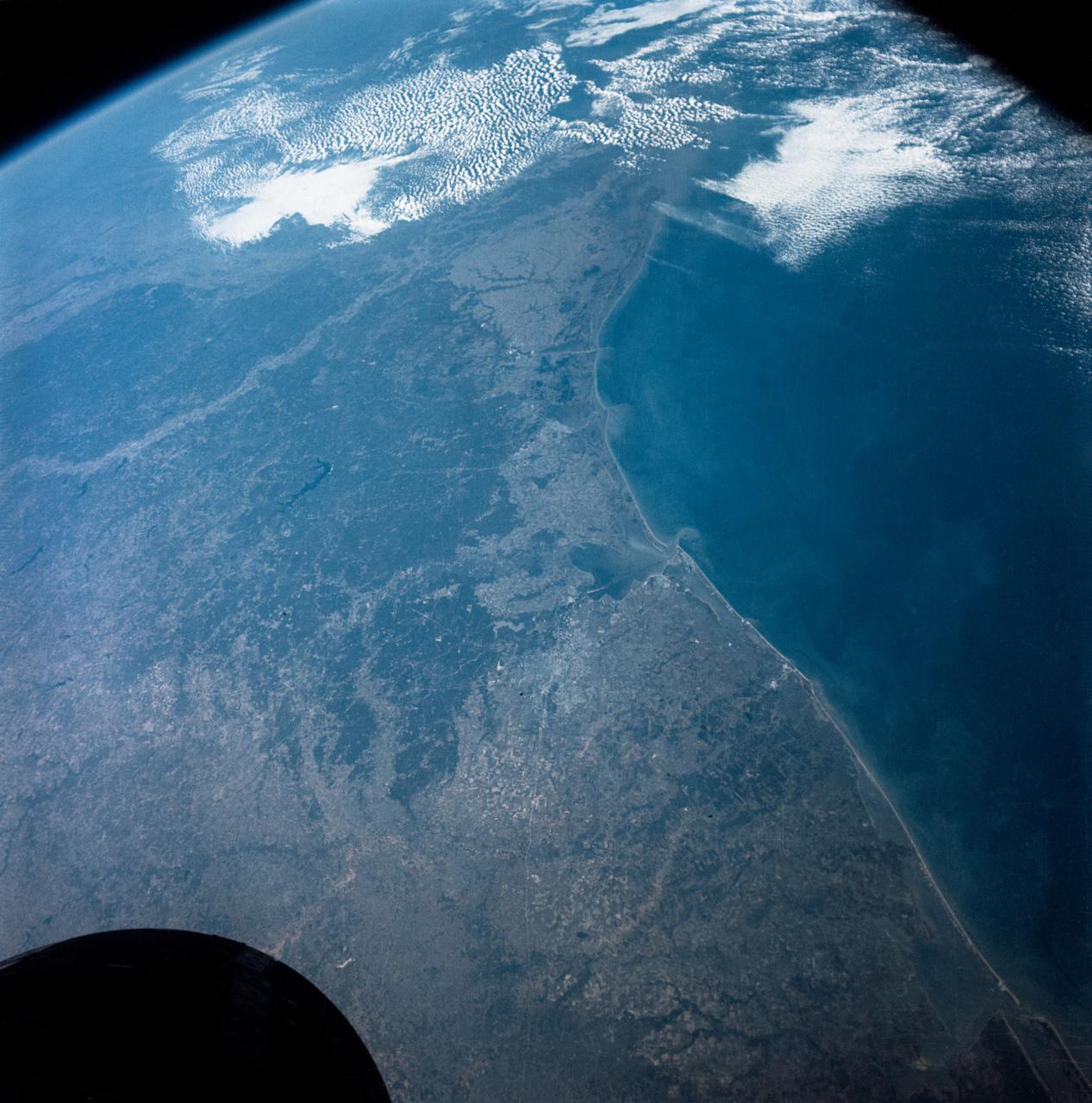
S66-63030 (14 Nov. 1966) --- Gulf Coast area from Matagorda Bay, Texas, to Vermillion Bay, Louisiana, looking east, as seen from the Gemini-12 spacecraft during its 44th revolution of Earth. Galveston Bay is in center of picture. Houston and its environs are clearly visible. Note network of freeways and superhighways. Large lake near left center of picture is the Sam Rayburn Reservoir. Photo credit: NASA
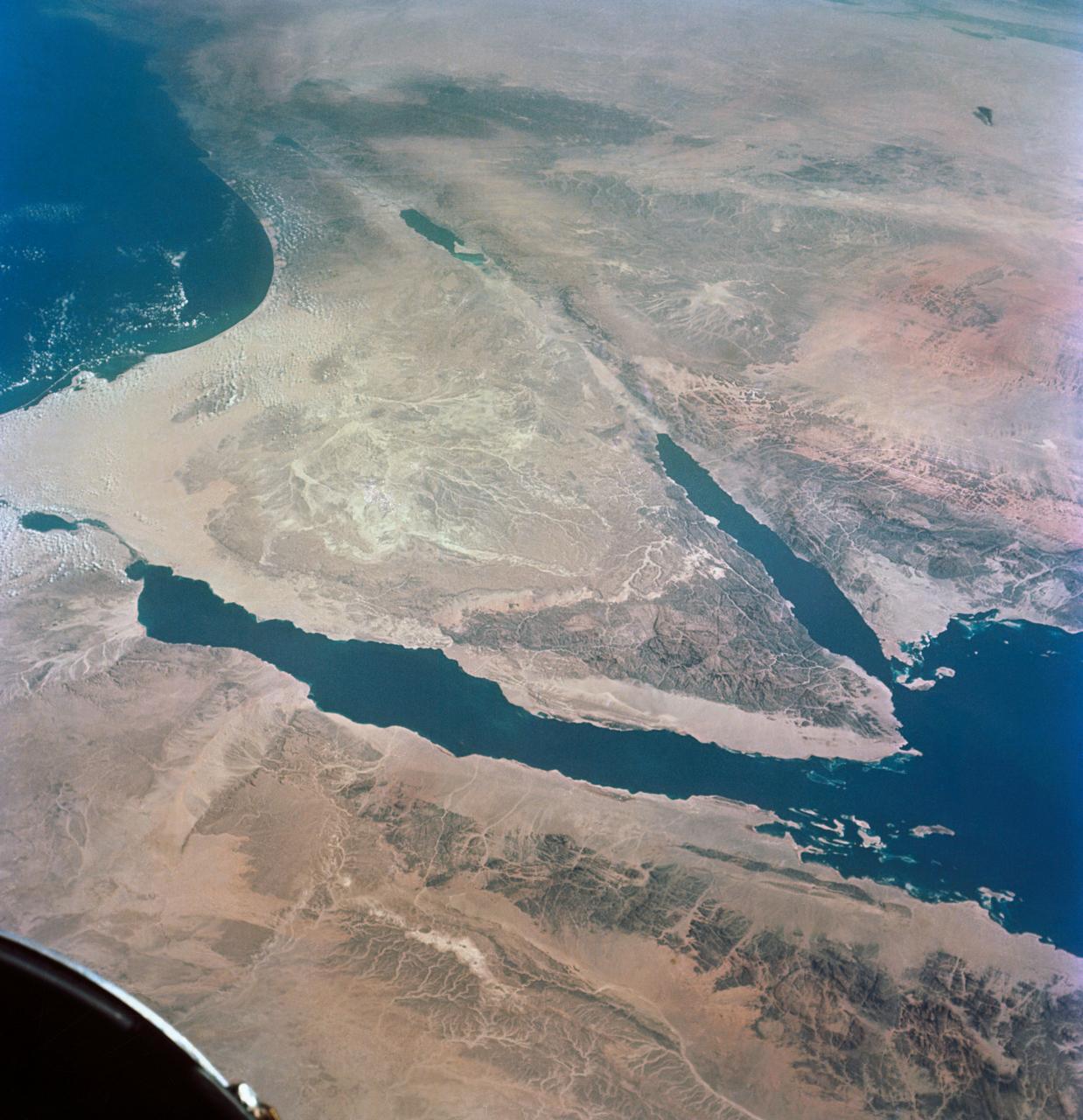
S66-54893 (14 Sept. 1966) --- Near East area as seen from the orbiting Gemini-11 spacecraft during its 26th revolution of Earth. The United Arab Republic (Egypt) is in foreground. Triangular-shaped area is the Sinai Peninsula. Saudi Arabia is at upper right. The Mediterranean Sea is at upper left. The Gulf of Suez separates Egypt from the Sinai Peninsula. The Red Sea is at bottom right. The Gulf of Aqaba is the body of water in right center of photograph separating the Sinai Peninsula and the Arabian Peninsula. The Dead Sea, Sea of Galilee, Jordan and Israel are in top center of picture. Iraq is at top right edge of photograph. Taken with a J. A. Maurer 70mm camera, using Eastman Kodak, Ektachrome, MS (S.O. 368) color film. Photo credit: NASA
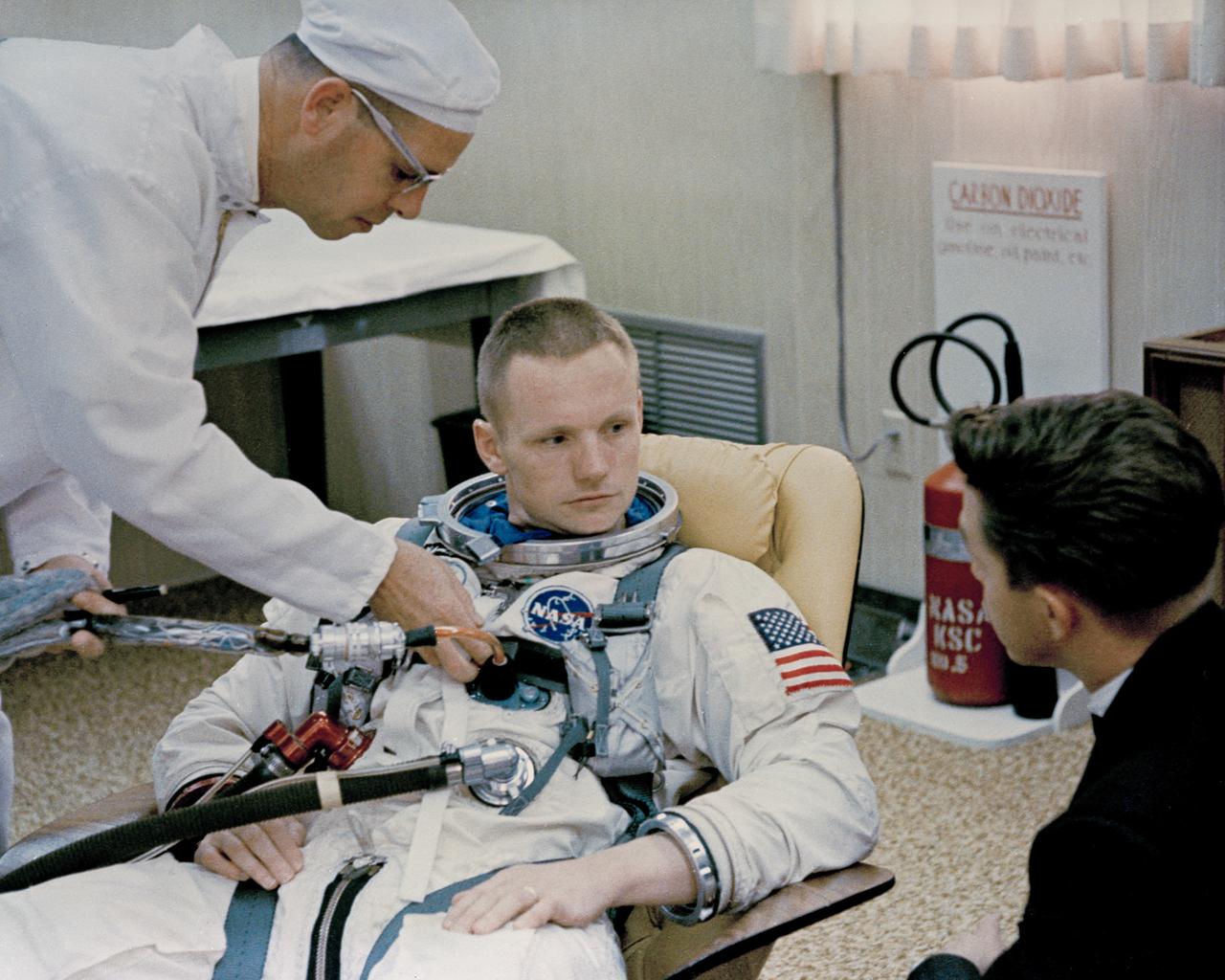
KSC-66C-1849 Gemini 8 Astronaut Neil Armstrong is aided by Suit Technician Jim Garrepy, during preparations for Gemini 8 Mission (jrs)
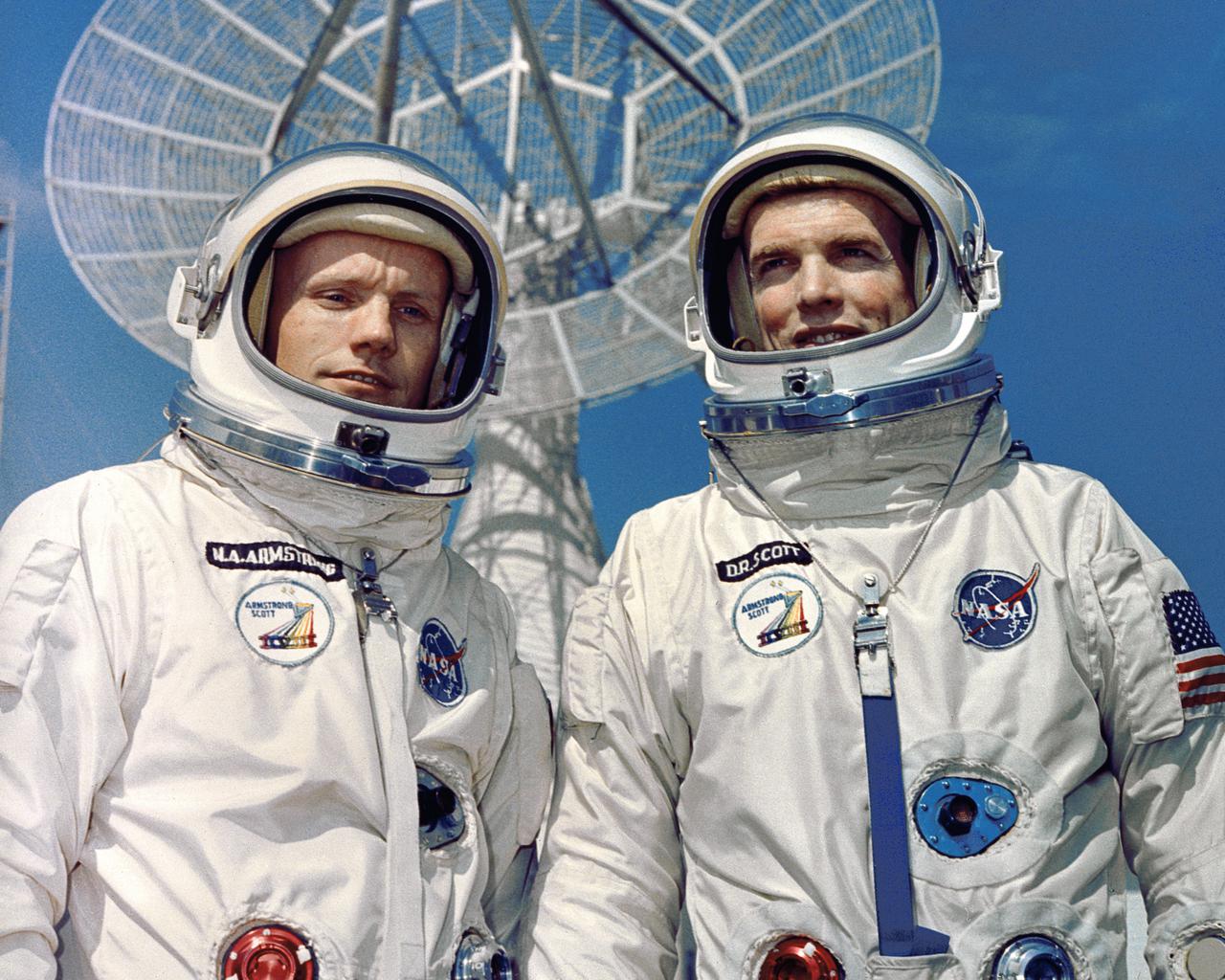
CAPE CANAVERAL, Fla. – Gemini 8 astronauts Neil A. Armstrong, command pilot, and David R. Scott, pilot, during a photosSession for the press outside Mission Control Center, Cape Kennedy. Photo credit: NASA
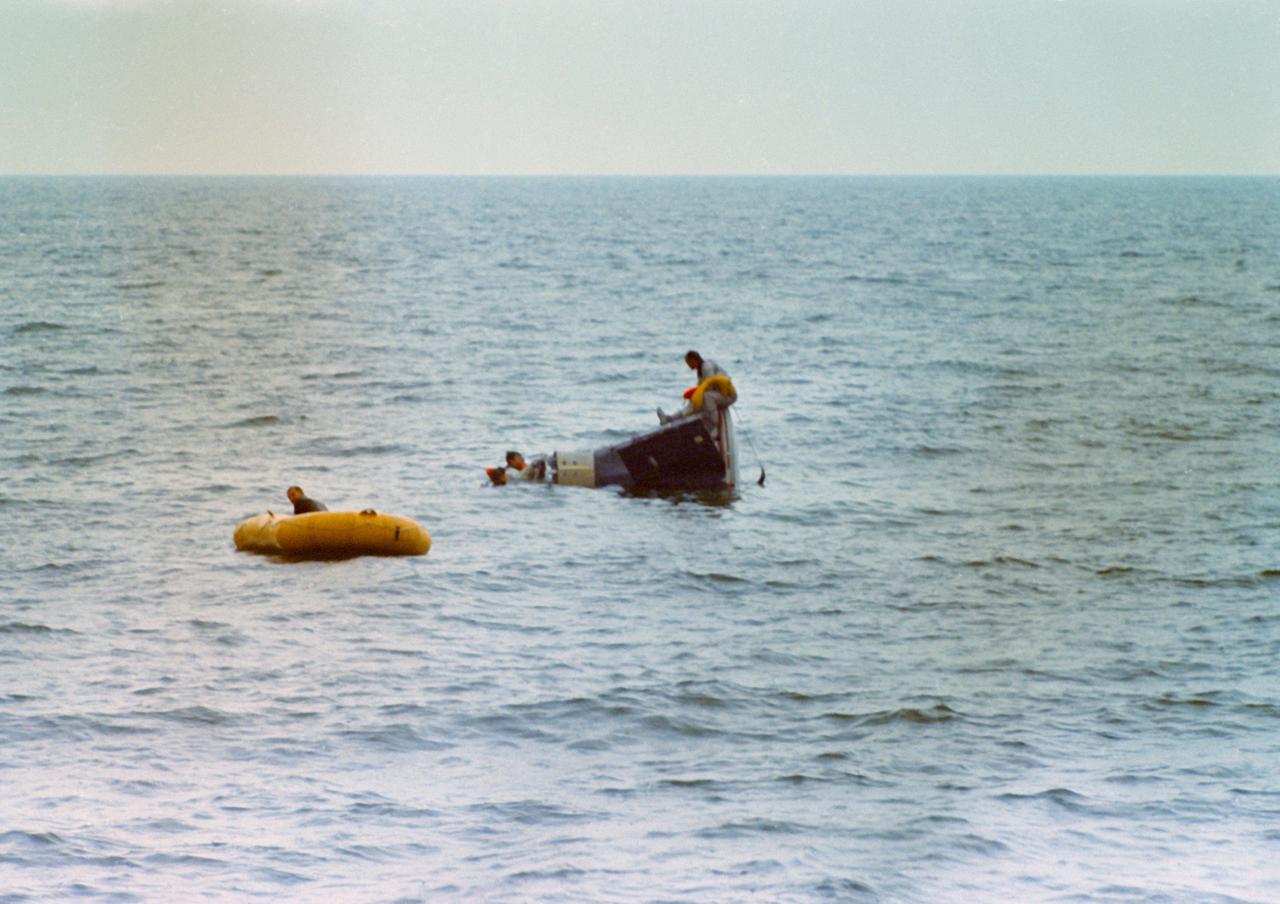
S66-39699 (18 June 1966) --- Astronauts John W. Young (in water, nose of spacecraft), Gemini-10 command pilot, and Michael Collins (sitting on spacecraft), pilot, use Static Article 6 spacecraft during water egress training in the Gulf of Mexico. A team of Manned Spacecraft Center (MSC) swimmers assisted in the training exercise. Photo credit: NASA
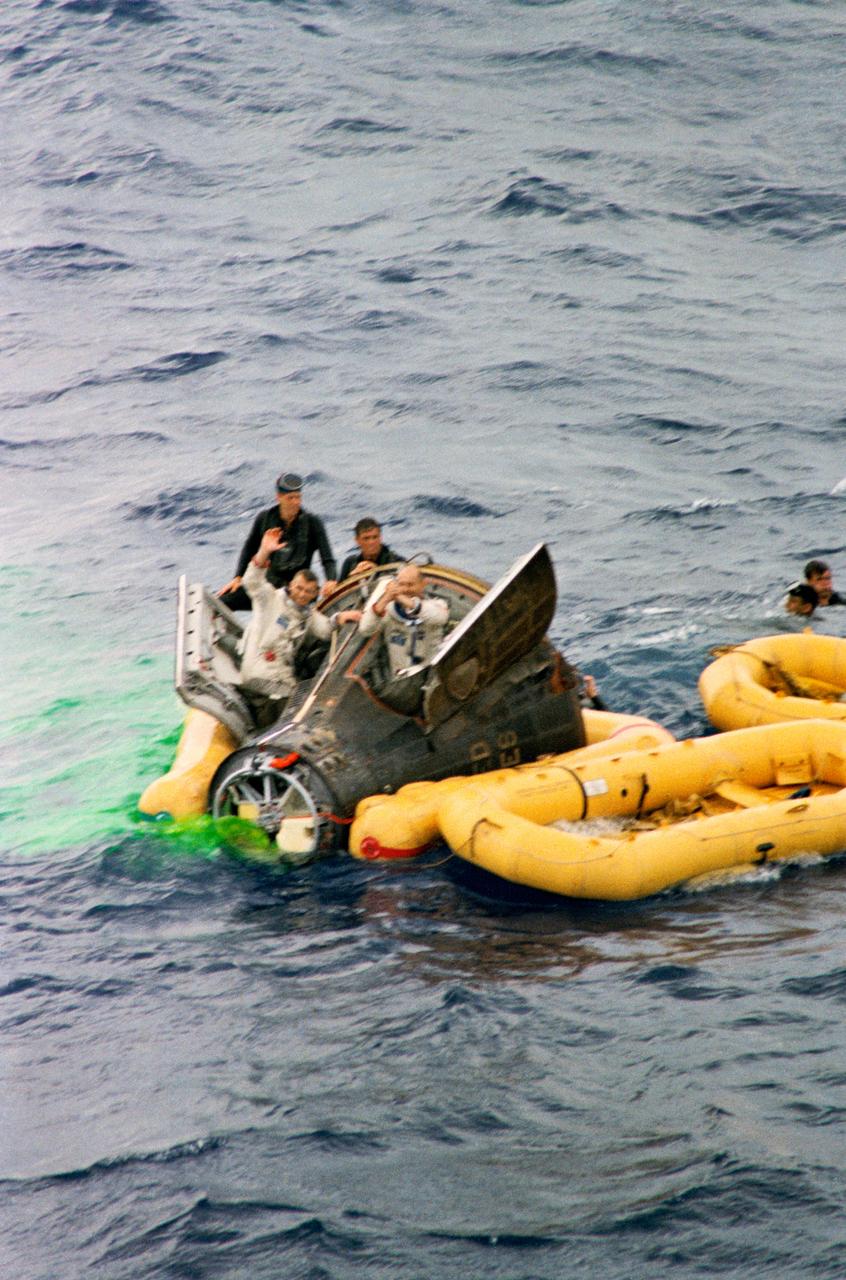
S66-34110 (6 June 1966) --- Astronauts Thomas Stafford (right) and Eugene Cernan wave to those aboard the aircraft carrier USS Wasp as the recovery ship approaches. U.S. Navy frogmen assist in the recovery operations. Gemini-9A splashed down in the Atlantic Ocean only 3.5 miles from the USS Wasp. Gemini-9 splashed down 345 miles east of Cape Kennedy at 9 a.m. (EST), June 6, 1966. Photo credit: NASA
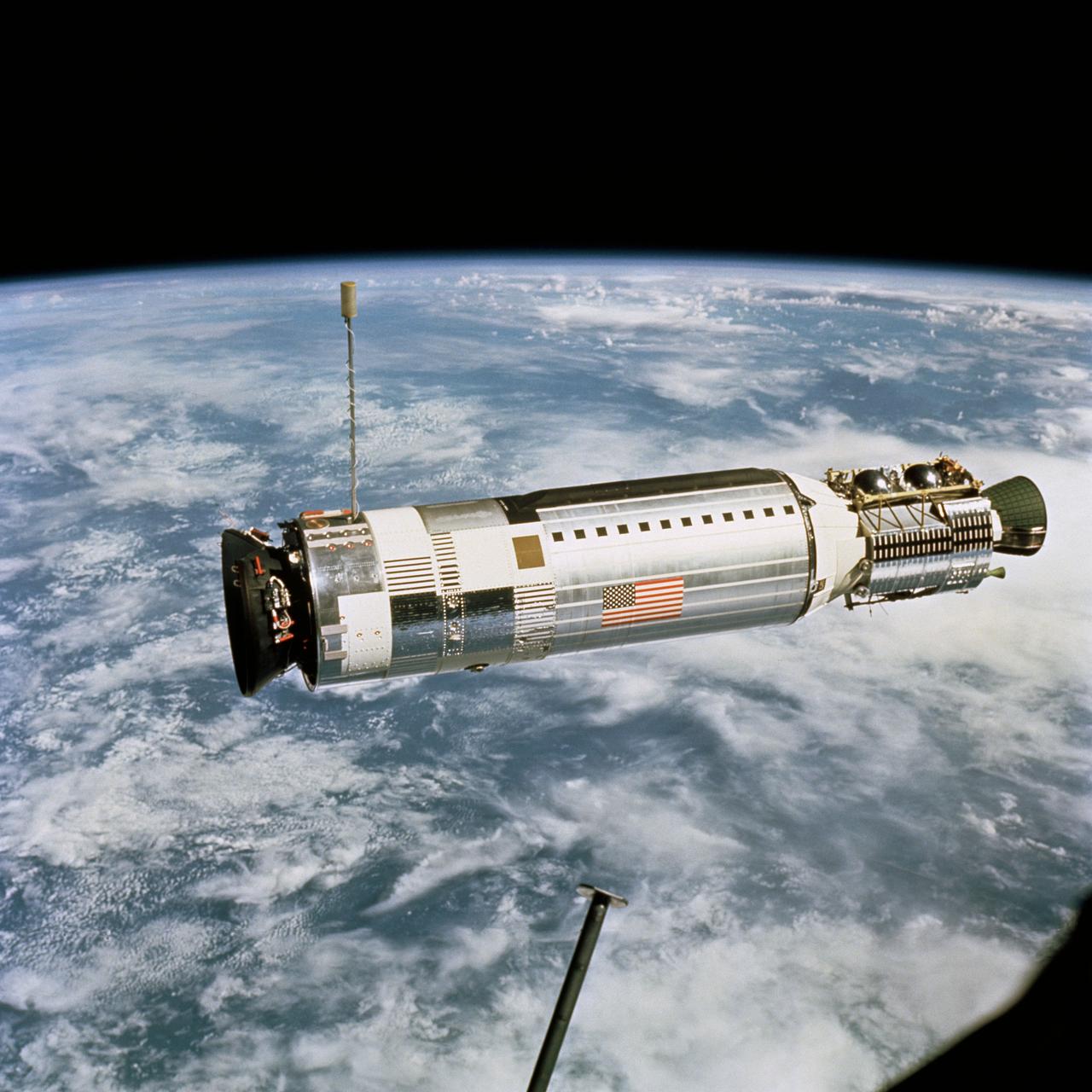
S66-62755 (11 Nov. 1966) --- Excellent stereo and side view of the Agena Target Docking Vehicle as seen from the Gemini-12 spacecraft during rendezvous and docking mission in space. The two spacecraft are 50 feet apart. Photo credit: NASA
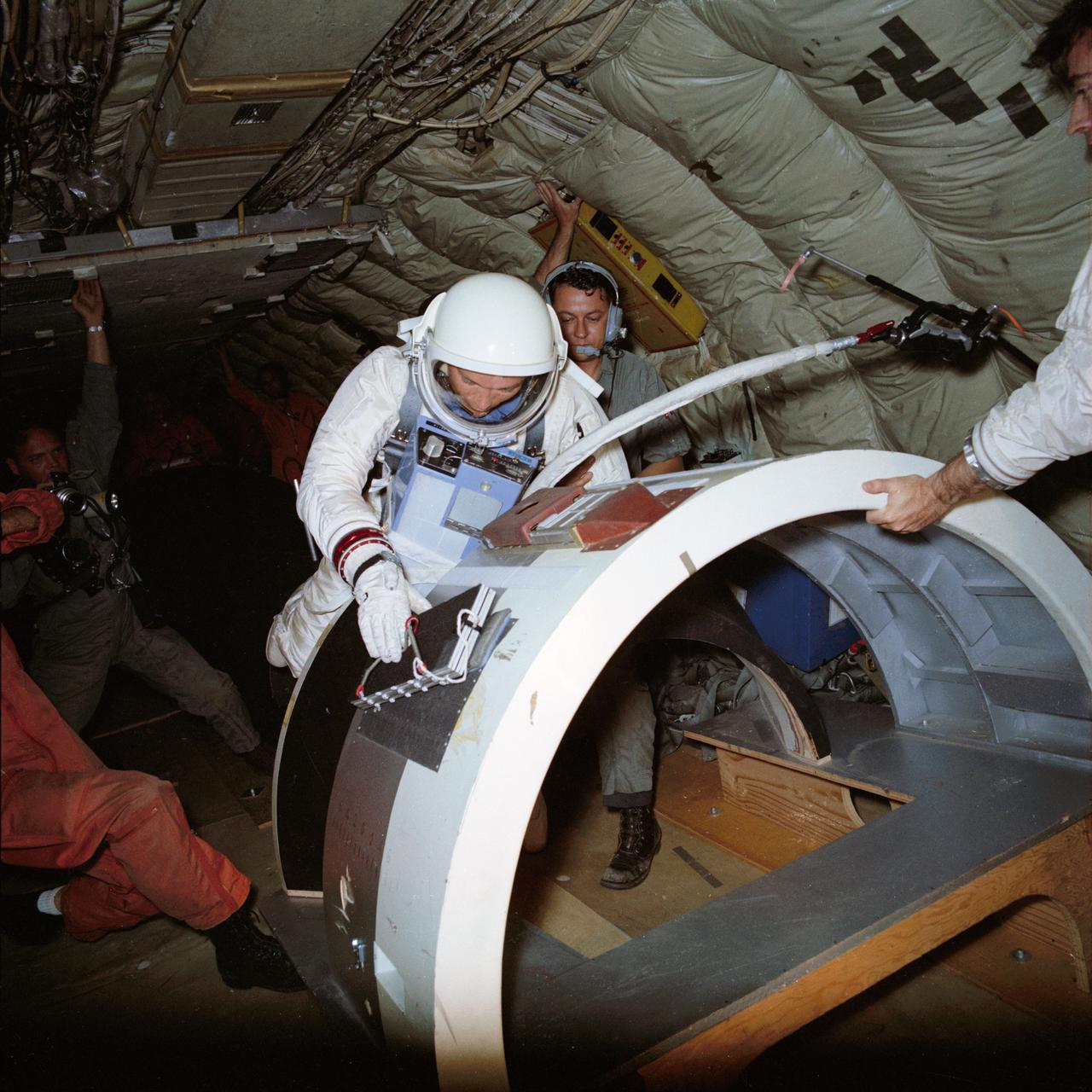
S66-40098 (17 June 1966) --- Astronaut Michael Collins, prime crew pilot of the Gemini-10 spaceflight, undergoes zero-gravity (weightlessness) training aboard an Air Force KC-135 aircraft. He practices with micrometeorite experiment-type equipment. The KC-135 flew a parabolic curve to create the zero-gravity condition. This training is in preparation for Collins' Gemini-10 extravehicular activity. Photo credit: NASA
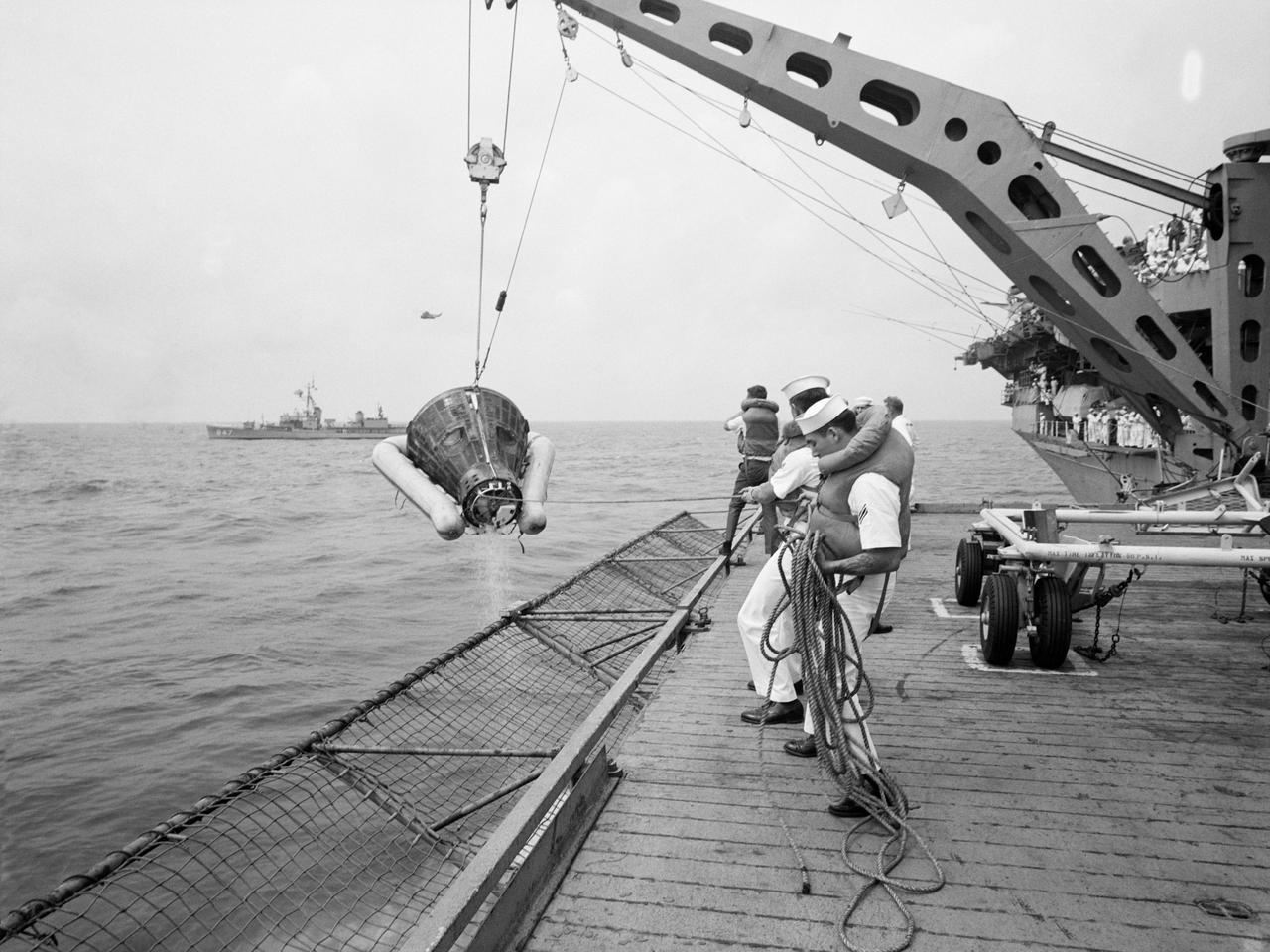
S66-34101 (6 June 1966) --- The Gemini-9 spacecraft, with astronauts Thomas P. Stafford and Eugene A. Cernan still inside, is hoisted aboard the aircraft carrier USS Wasp. Gemini-9 splashed down only 3.5 miles from the big recovery ship at 9 a.m. (EST), June 6, 1966, 345 miles east of Cape Kennedy, to conclude a 72-hour, 21-minute mission in space. Photo credit: NASA
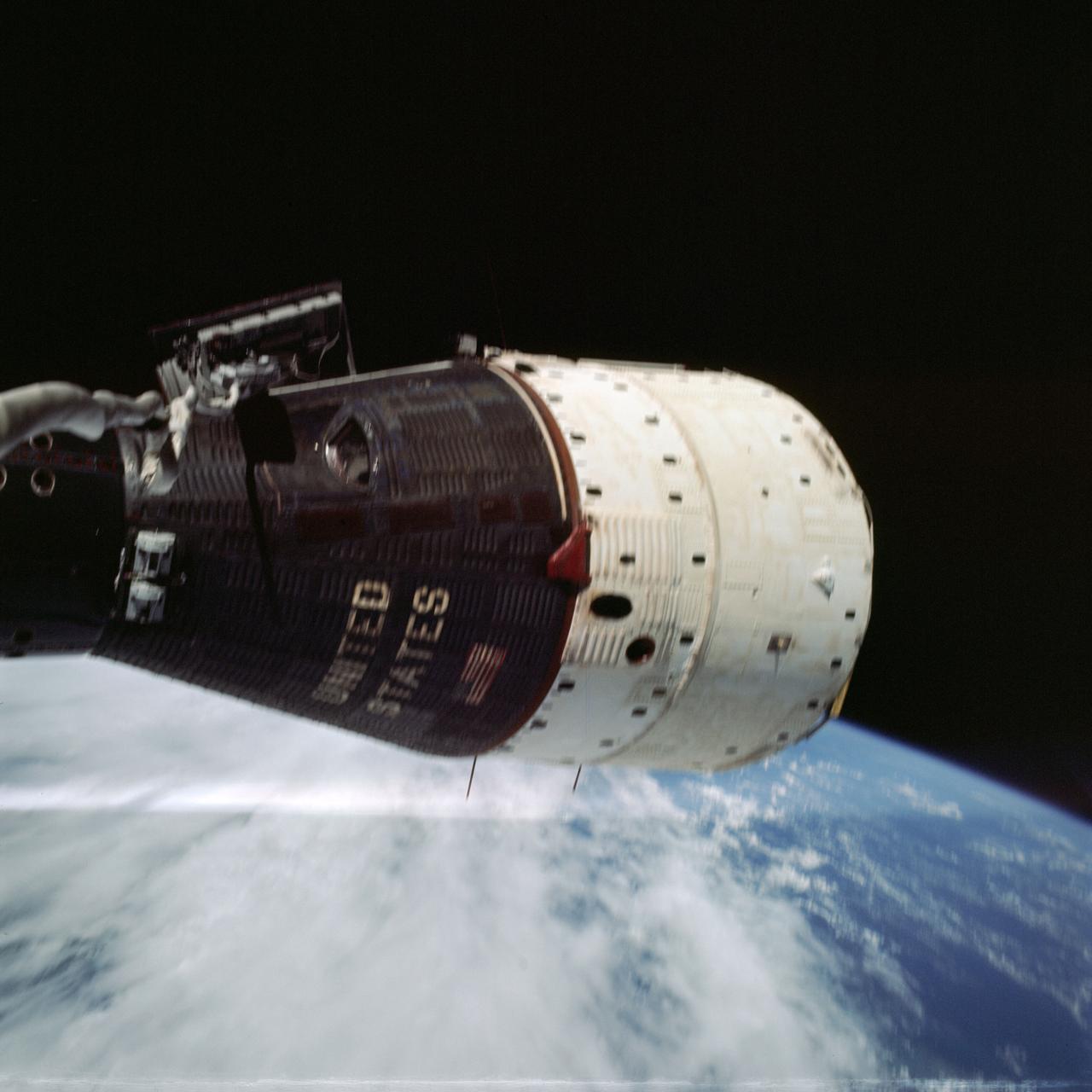
S66-38050 (5 June 1966) --- Astronaut Eugene A. Cernan took this close-up view of the Gemini-9A spacecraft during his extravehicular activity (EVA) on the Gemini-9A mission. Taken during the 32nd revolution of the 72-hour, 21-minute spaceflight. Photo credit: NASA
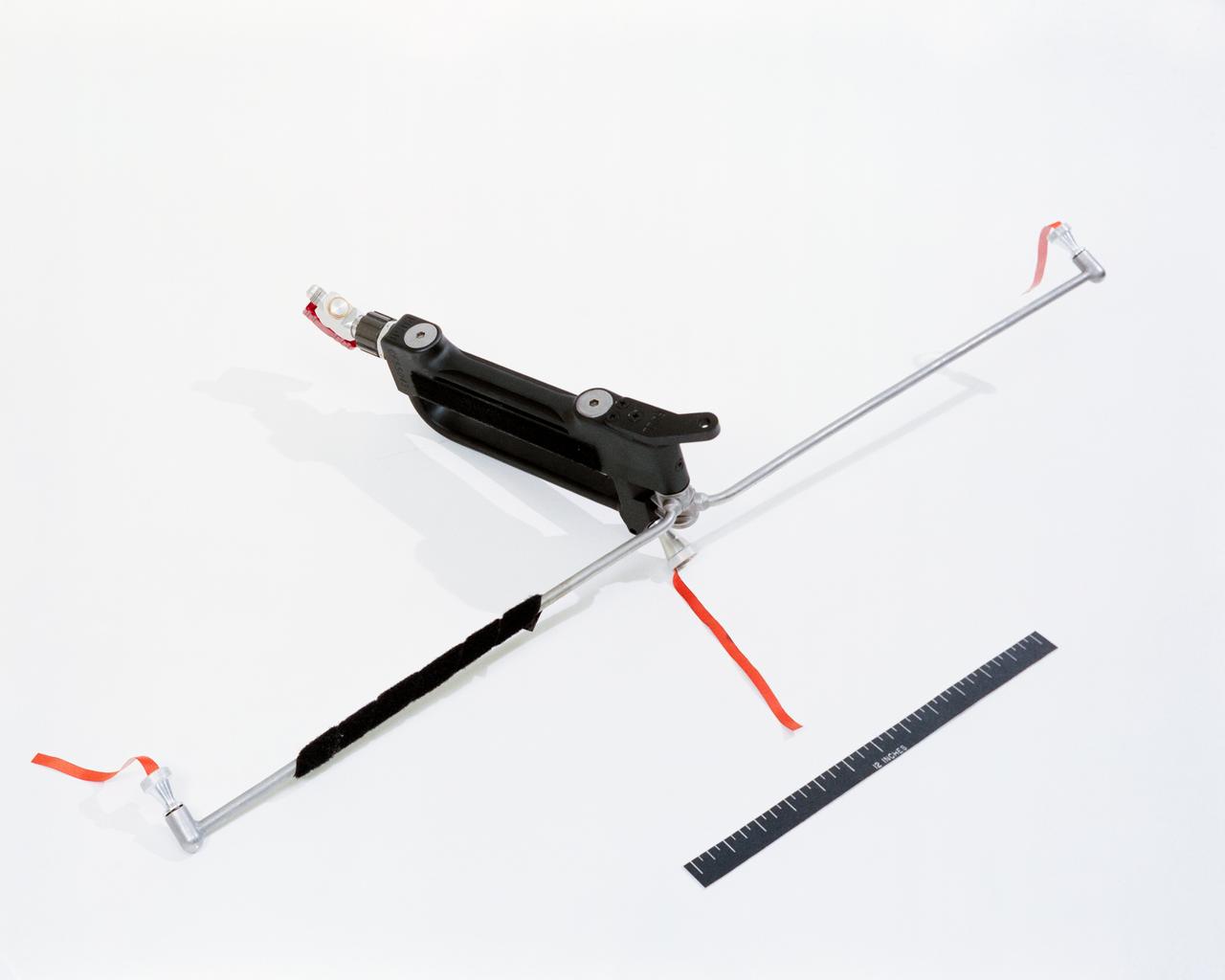
S66-19184 (1966) --- Close-up view of the Hand Held Maneuvering Unit which will be used by astronaut David R. Scott during the extravehicular activity on the Gemini-8 spaceflight. High pressure cold gas released through the unit's nozzles produces the required controlled thrust to maneuver in a zero-gravity environment. Photo credit: NASA
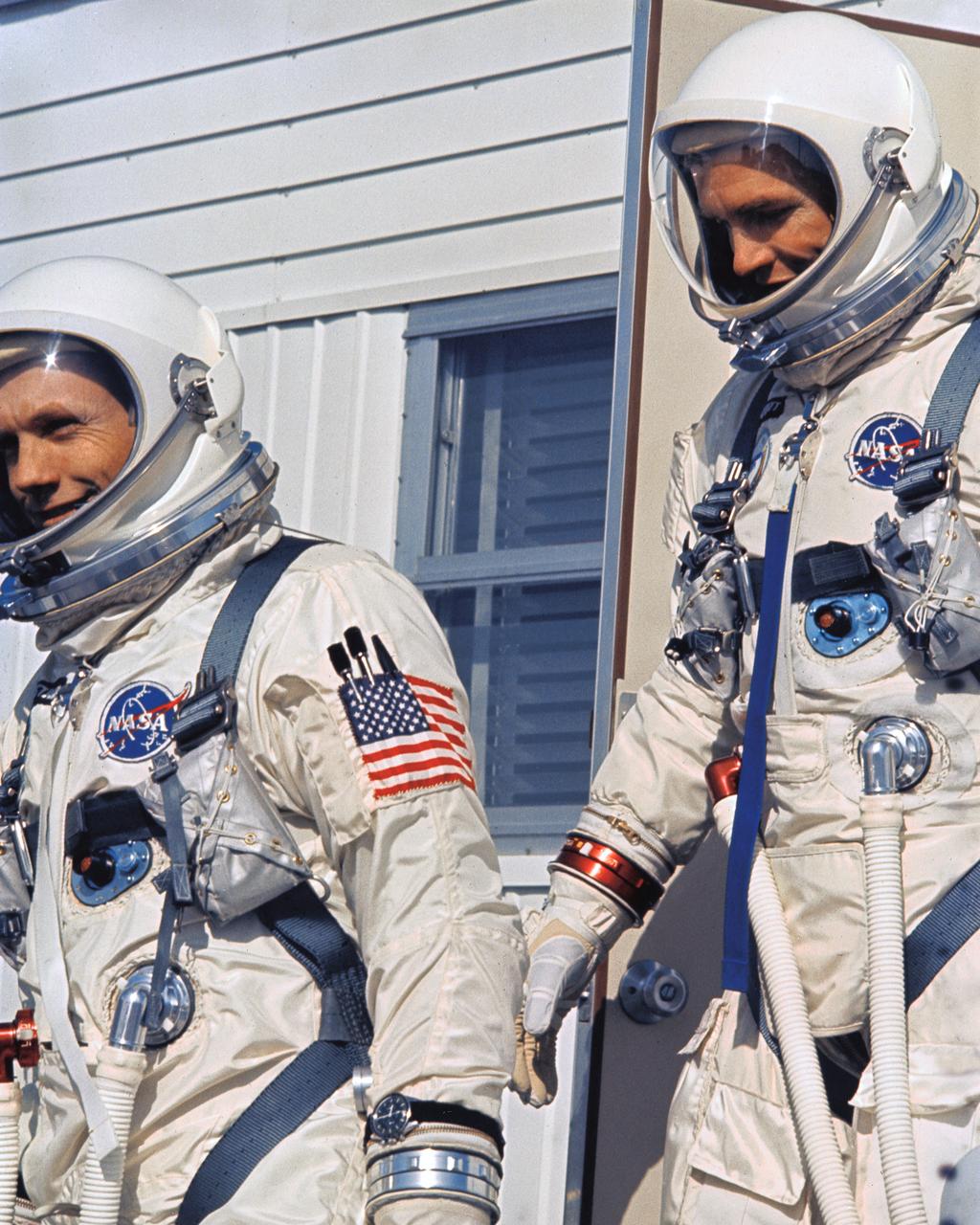
KSC-66C-1851 Astronauts Neil Armstrong and David Scott leave Suiting Trailer to enter Transfer Van, Complex 19, Cape Kennedy prior to boarding their Spacecraft for Gemini 8 Mission. (jrs)
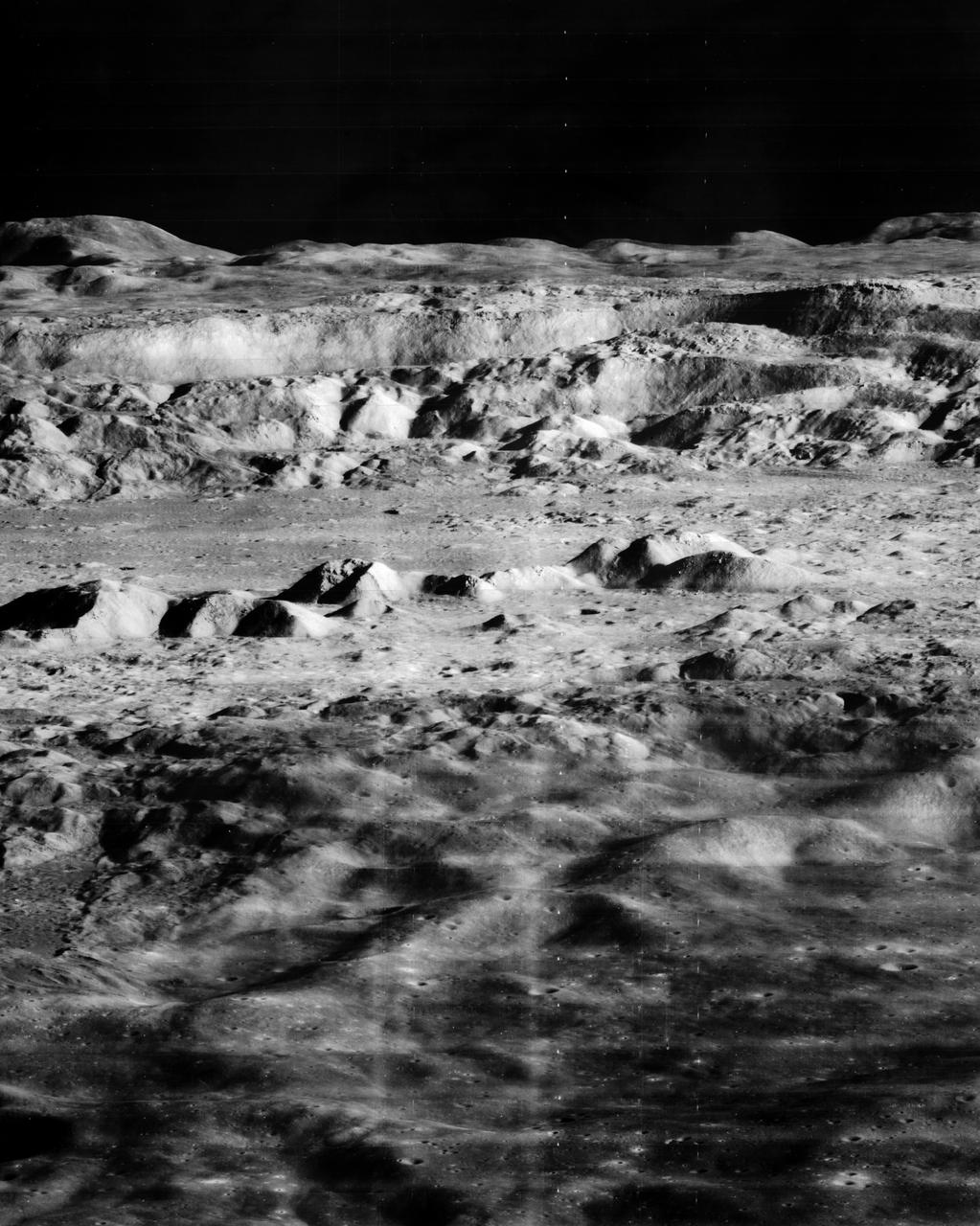
Moon Lunar Orbiter-Lunar Orbiter II: Display Transparencies Lunar Orbiter II from Washington Press Conference. Lunar Orbiter II's telephoto lens took this picture of the floor of the crater Copernicus. -- Photograph published in Winds of Change, 75th Anniversary NASA publication (page 94), by James Schultz.
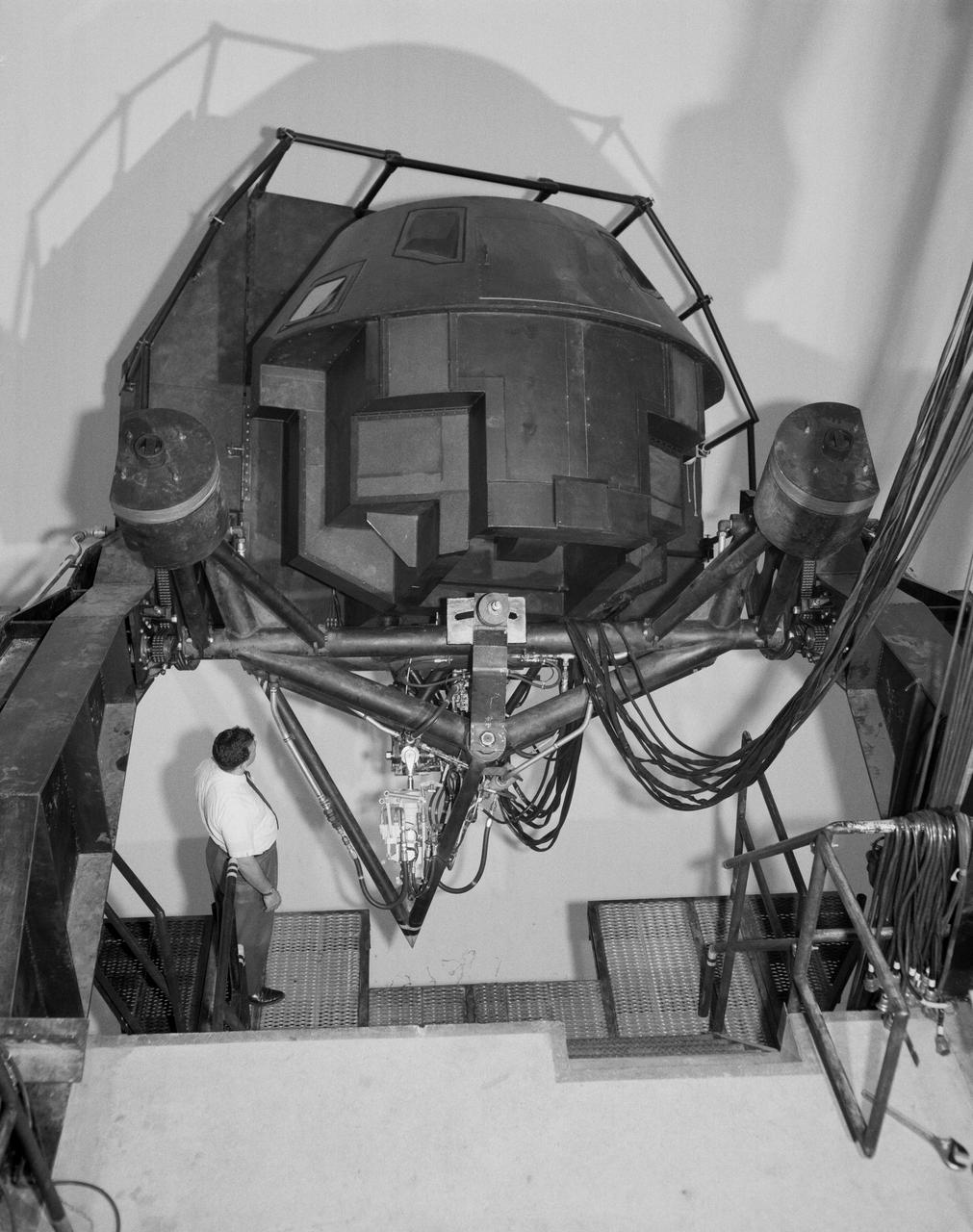
S66-21296 (1967) --- This is a medium exterior view of the Dynamic Crew Procedures Trainer, Command Module configuration, one of the Apollo astronaut training components located in the Mission Simulation and Training Facility, Building 5, Manned Spacecraft Center, Houston, Texas. Photo credit: NASA
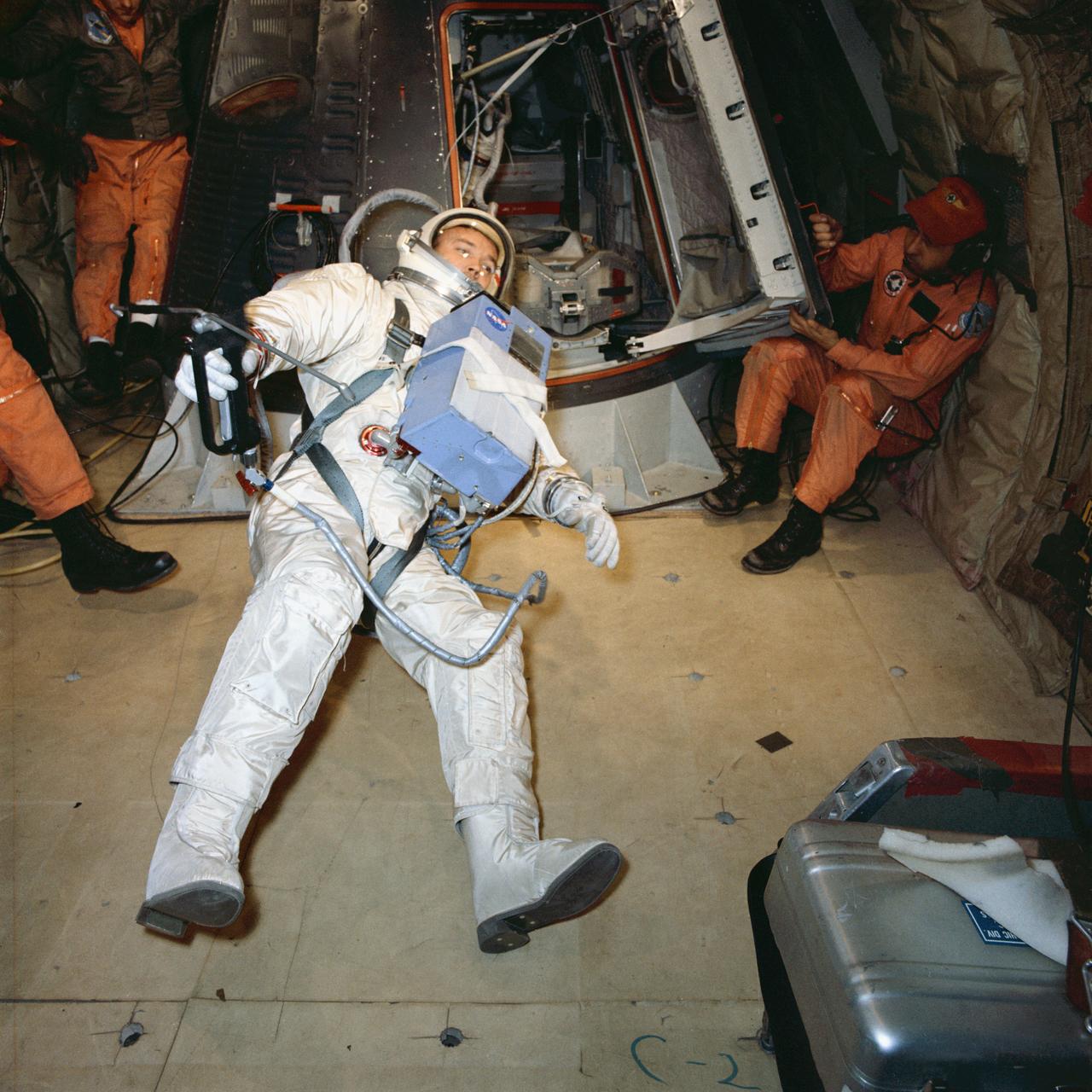
S66-28782 (1 April 1966) --- Astronaut Michael Collins, prime crew pilot of the Gemini-10 spaceflight, experiences a condition of weightlessness during zero-gravity egress training. A KC-135 Air Force plane, flying a parabolic curve, creates a weightless environment as a training exercise in preparation for spaceflight. The Hand-Held Maneuvering Unit in his right hand produces controlled thrust for moving about. Photo credit: NASA
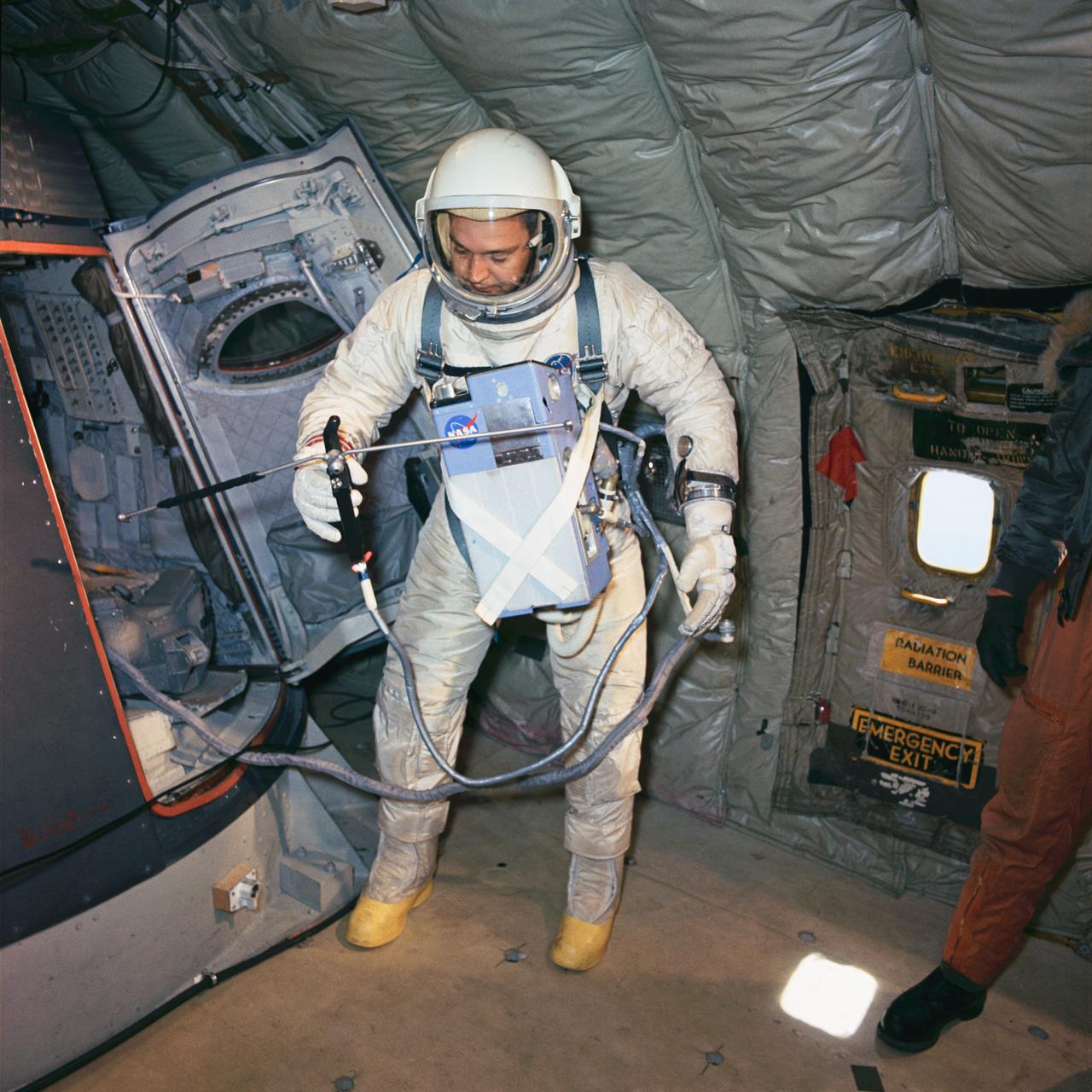
S66-28636 (1 April 1966) --- Astronaut Clifton C. Williams Jr., backup crew pilot of the Gemini-10 spaceflight, undergoes zero-gravity egress training. A KC-135 Air Force plane, flying a parabolic curve, creates a weightless environment as a training exercise in preparation for spaceflight. The Hand-Held Maneuvering Unit in his right hand produces controlled thrust for moving about. Photo credit: NASA
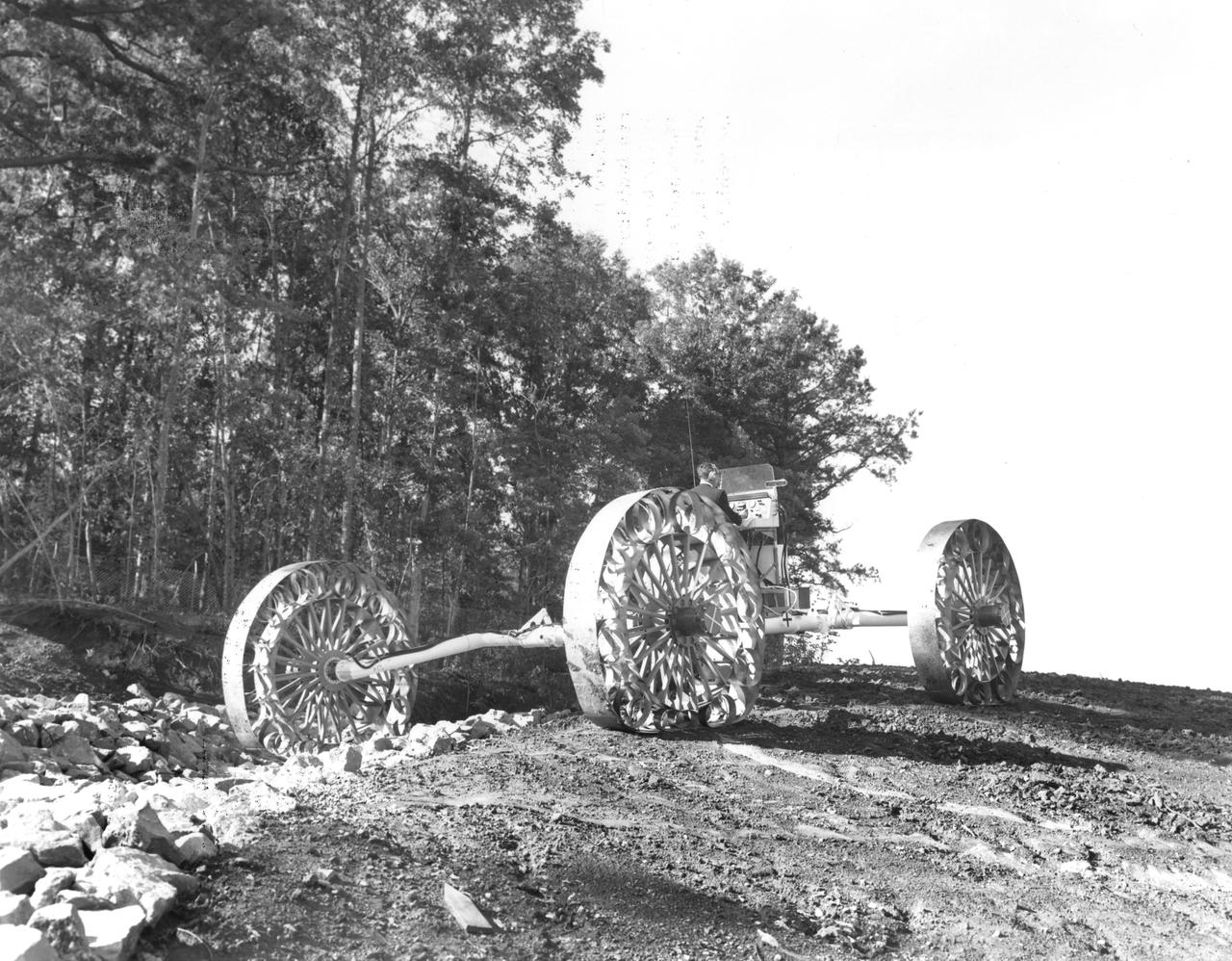
An engineer demonstrates a Mobility Test Article (MTA) at NASA’s Marshall Space Flight Center (MSFC). This unit, weighing 1/6th as much as an actual vehicle, was built by the Bendix Corporation and was one of the concepts of a possible Lunar Roving Vehicle (LRV). The data provided by the MTA helped in designing the Lunar Roving Vehicle (LRV), developed under the direction of MSFC. The LRV was designed to allow Apollo astronauts a greater range of mobility during lunar exploration missions.
A/S 201 was launched from the Kennedy Space Center Launch Complex 34 at 11:12 a.m., 02/26/1966. The instrumented Apollo Command and Service Module, and, a spacecraft Lunar Excursion Module Adapter, was successfully launched on the unmanned suborbital mission by the Saturn 1B to check spacecraft launch vehicle mechanical compatibility and to test the spacecraft heat shield in a high-velocity re-entry mode. CAPE KENNEDY, FL
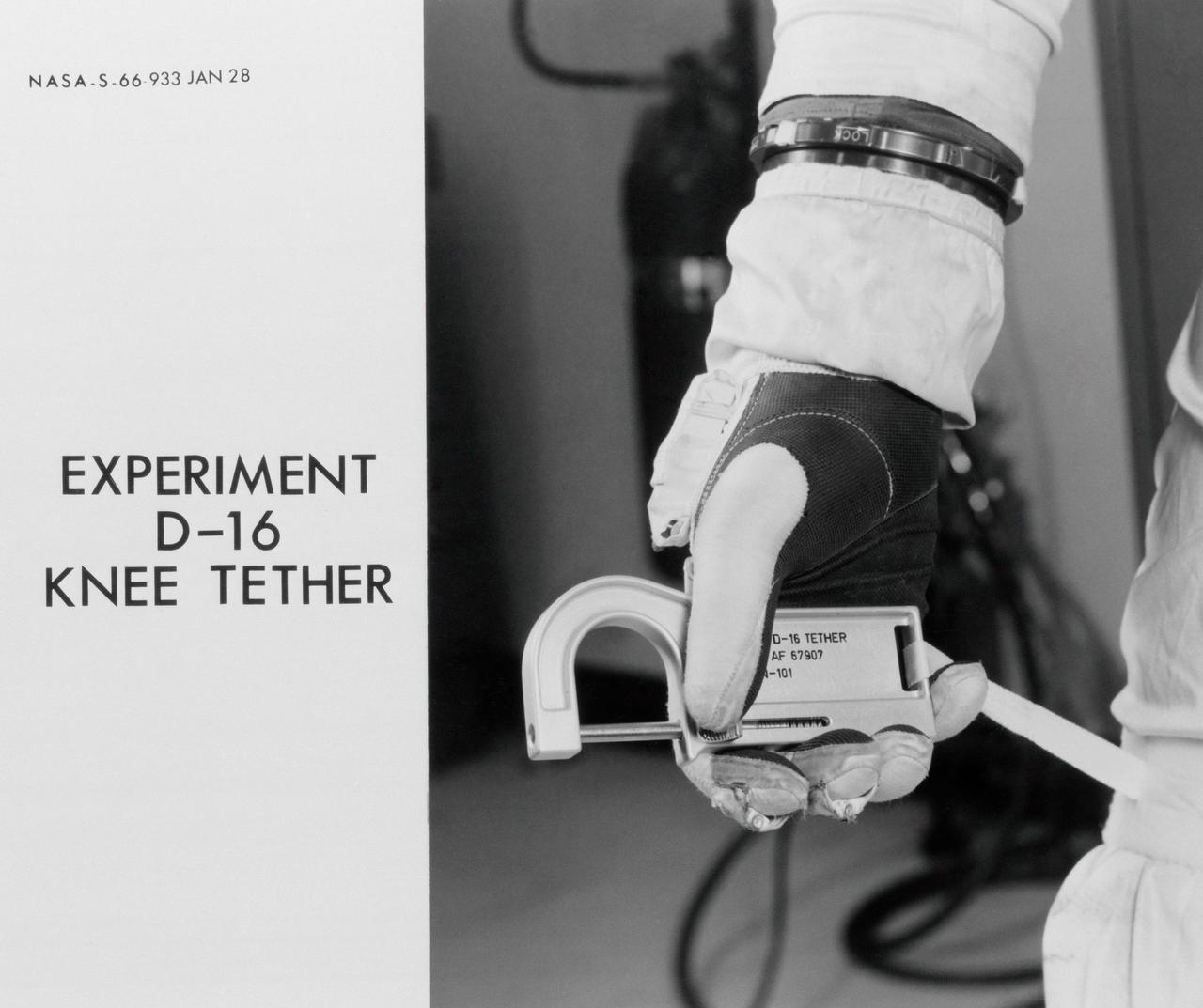
S66-00933 (28 Jan. 1966) --- Gemini-11 Experiment D-16 Knee Tether, sponsored by the Department of Defense and the United States Air Force. The astronaut tightens and loosens bolts in a prescribed pattern during his extravehicular activity, once with his body held to the spacecraft by a nine-inch tether looped around his knee and through the handrail, and once without the tether. Photo credit: NASA
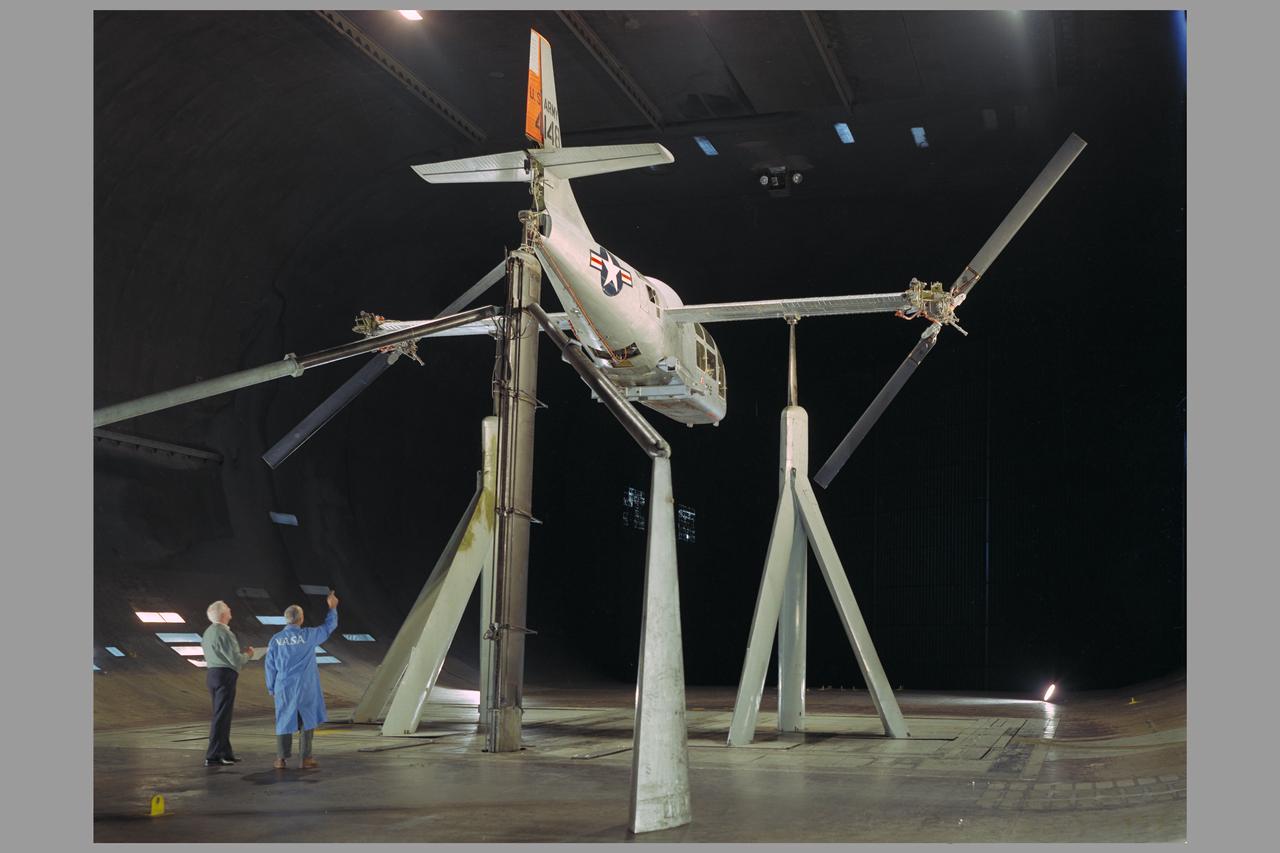
XV-3 in Ames Reseach Center 40x80ft wind tunnel; Rotor dynamic stability tests
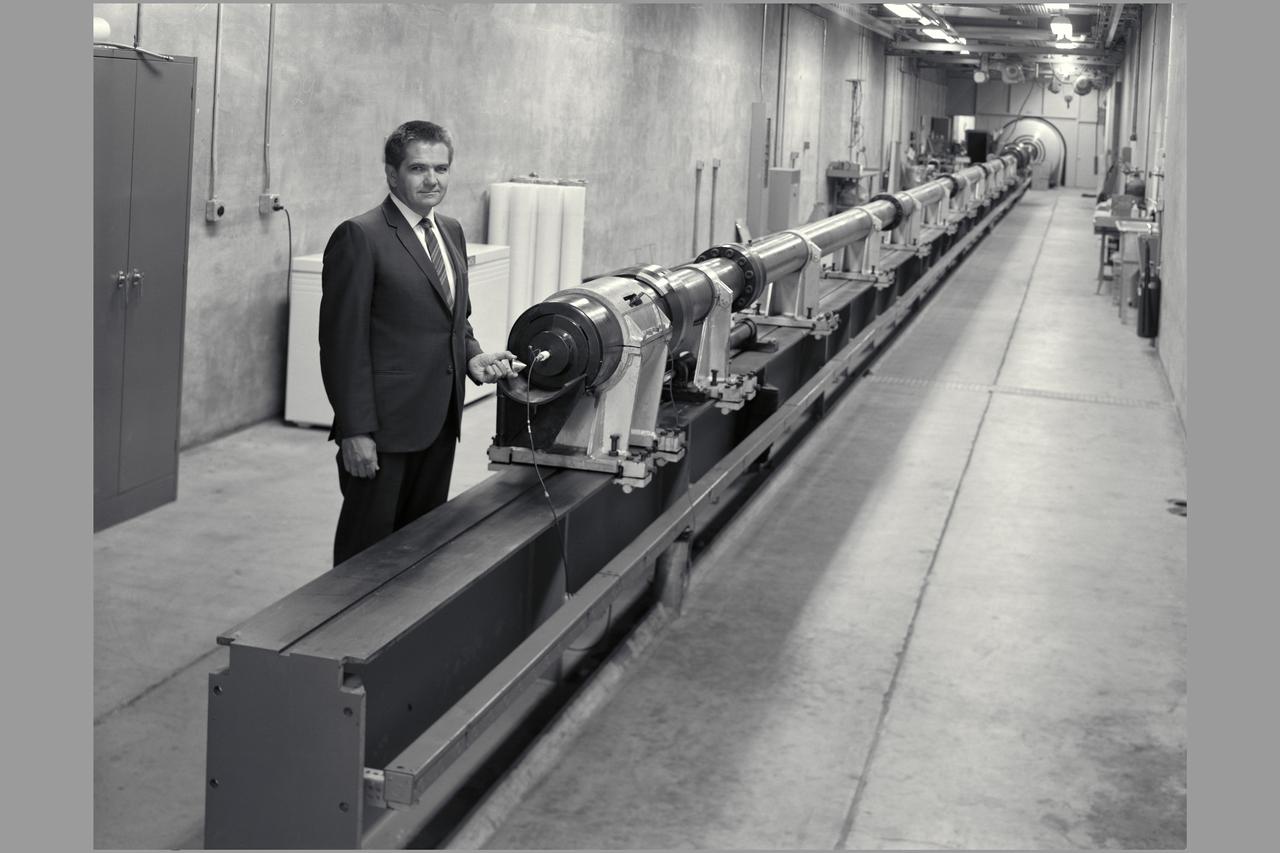
Thomas N. Canning, Hypersonic Free-Flight Branch Chief, holds model that is fired down range in gun. Hypersonic Free-Flight Gun.
S66-25774 (16 March 1966) --- The Agena Target Docking vehicle seen from the Gemini-8 spacecraft during rendezvous in space. The Agena is approximately 1,000 feet away from the nose of the spacecraft (lower left). Photo credit: NASA
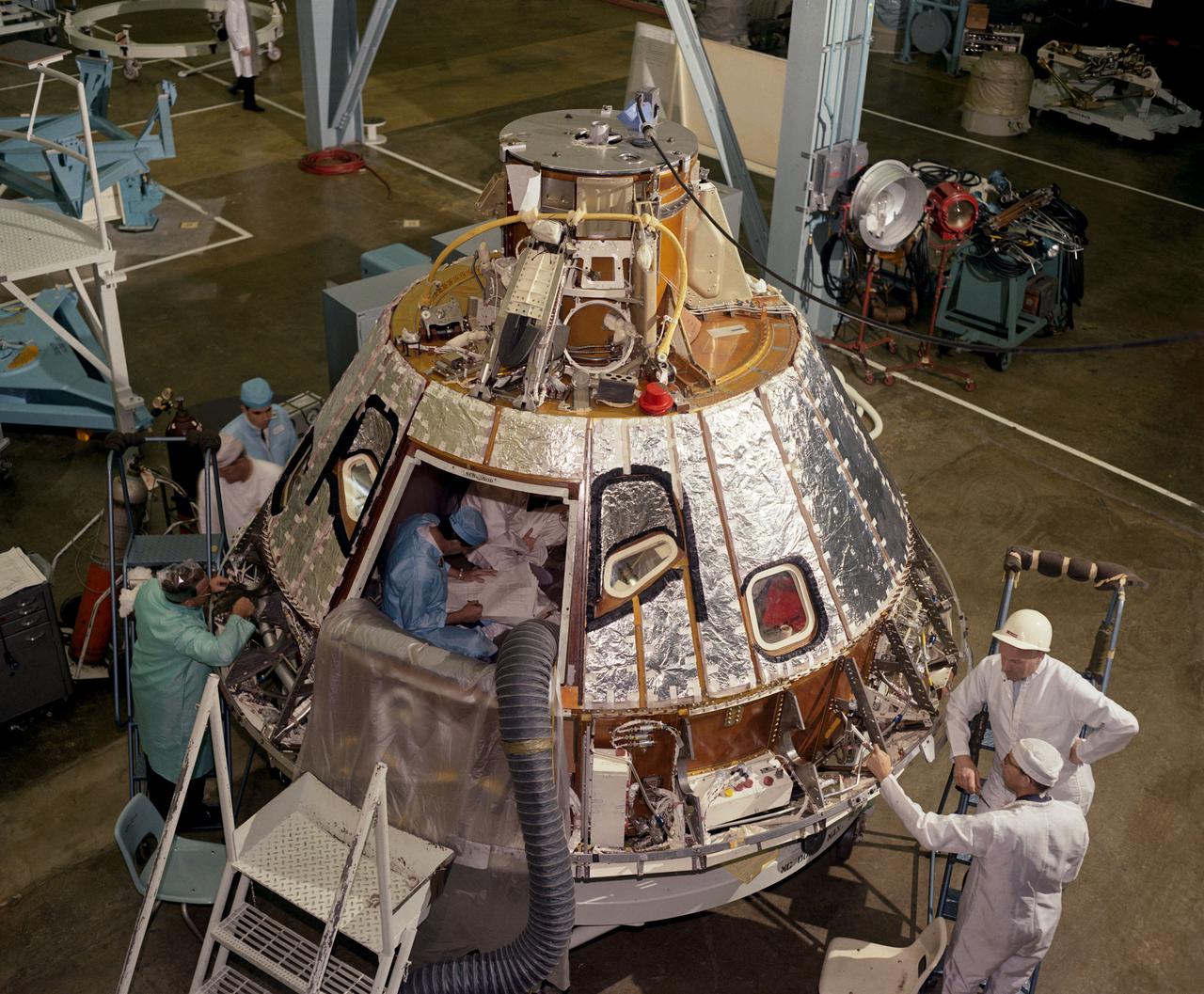
S66-41851 (1966) --- High angle view of Spacecraft 012 Command Module, looking toward -Z axis, during preparation for installation of the crew compartment heat shield, showing mechanics working on aft bay.
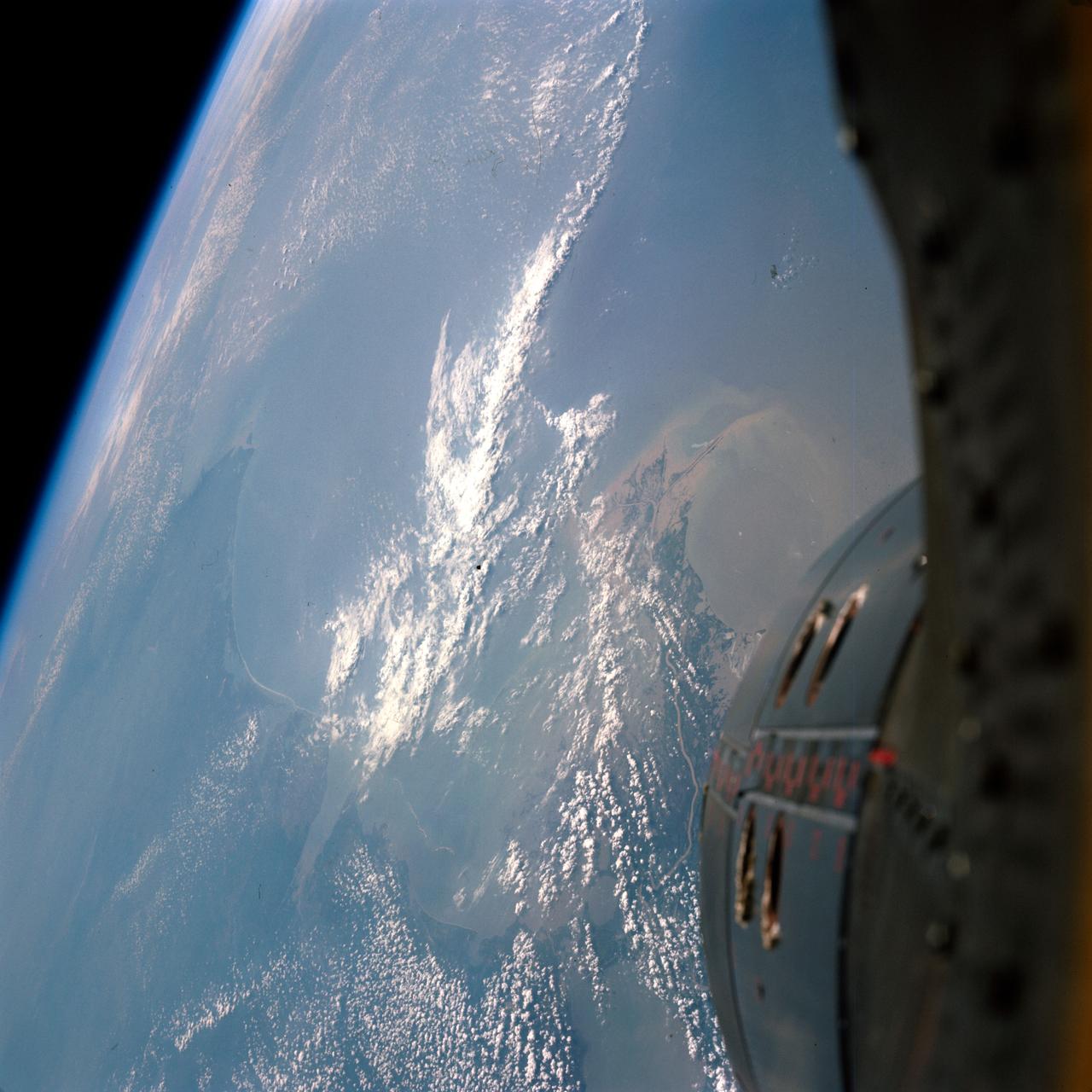
S66-37910 (3 June 1966) --- The Mississippi River delta, and Gulf coasts of Louisiana, Mississippi, Alabama and Florida as seen from the Gemini-9 spacecraft during its first revolution of Earth. The Florida peninsula is seen at upper right corner of the picture. Lake Pontchartrain is a lower left. New Orleans is located between the lake and the U-shaped bend in the river. Large bay at top left center is Mobile Bay. The next bay to the east is Pensacola Bay. Cape San Blas near Apalachicola, Florida, is the point of land at top center of the picture. Note alluvial deposit at the mouths of the Mississippi. The image was taken with a modified 70mm Hasselblad camera, using Eastman Kodak, Ektachrome MS (S.O. 217) color film. Photo credit: NASA
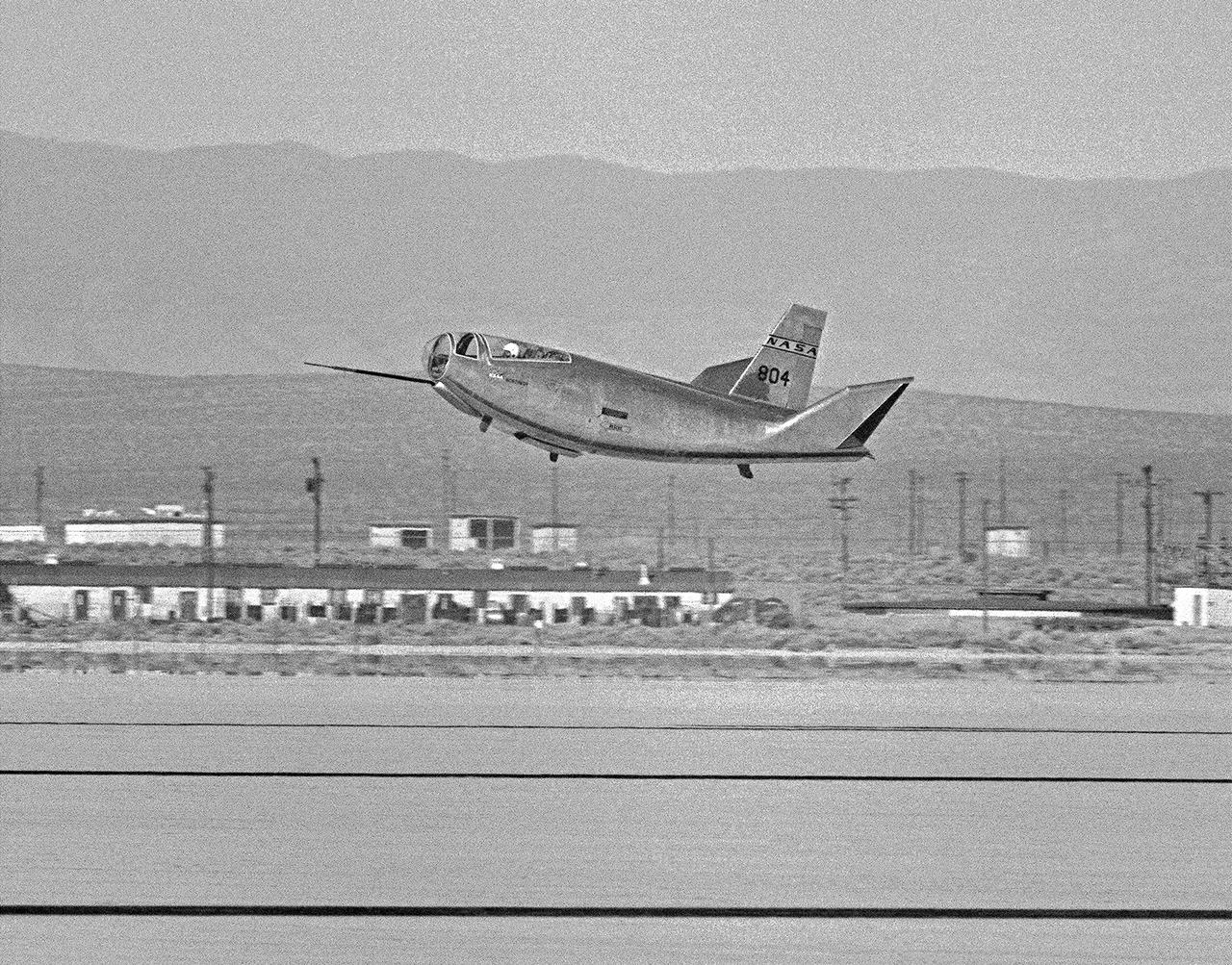
The HL-10 Lifting Body completes its first research flight with a landing on Rogers Dry Lake at Edwards AFB, California, on December 22, 1966. The HL-10 suffered from buffeting and poor control during the flight. Pilot Bruce Peterson was able to make a successful landing despite the severe problems. These were traced to airflow separation from the fins. As a result, the fins were no longer able to stabilize the vehicle. A small reshaping of the fins' leading edges cured the airflow separation, but it was not until March 15, 1968, that the second HL-10 flight occurred.
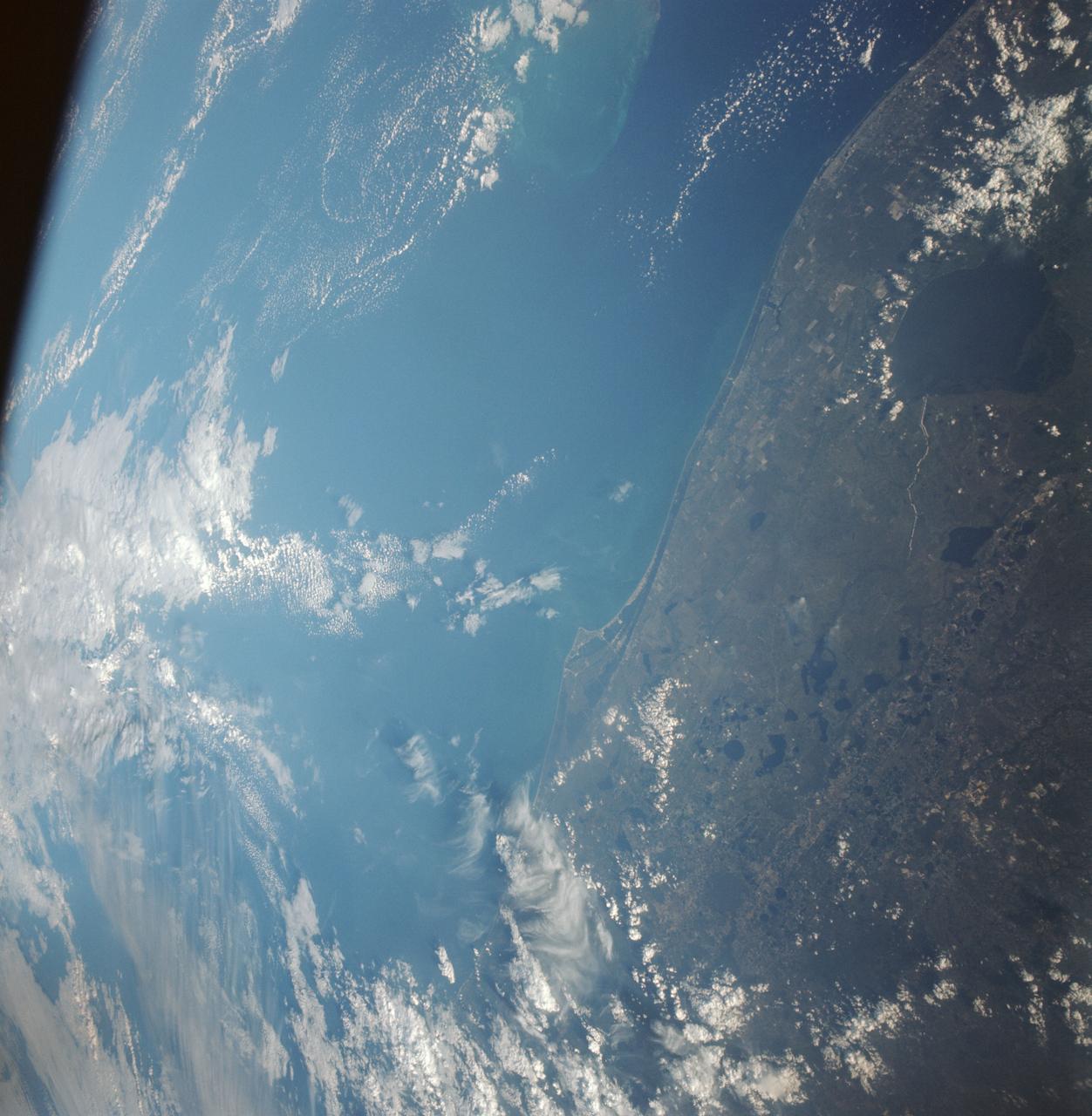
S66-63433 (12 Nov. 1966) --- Cape Kennedy, Palm Beach, Orlando area of Florida as seen from the Gemini-12 spacecraft during it 15th revolution of Earth. Photo credit: NASA
KSC-66C-1838 Gemini-8 Spacecraft is being checked out at Complex 19 during a Simulated Countdown.
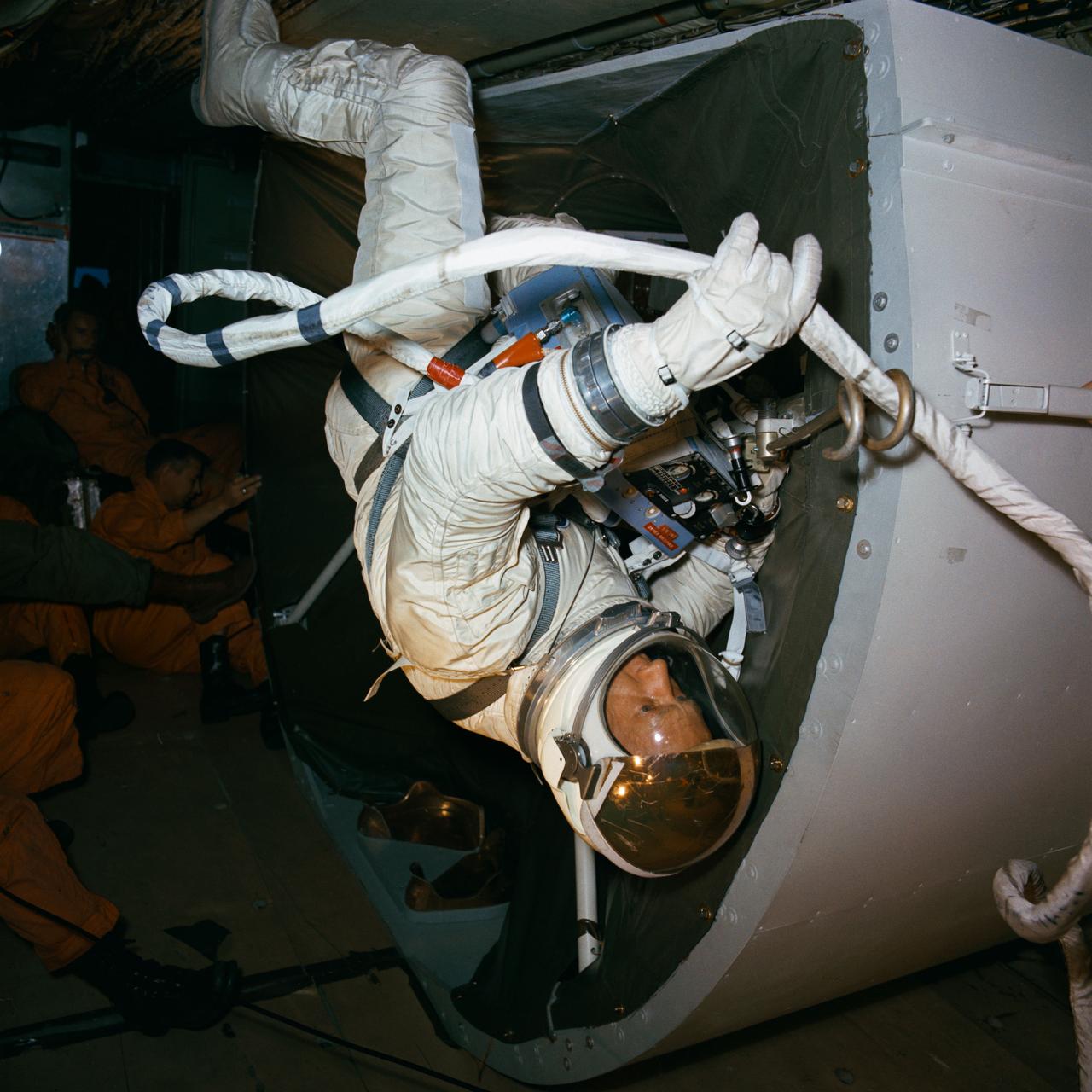
S66-57326 (13 Oct. 1966) --- Astronaut Edwin E. Aldrin Jr., pilot for the Gemini-12 spaceflight, attaches tether to hooks on mock-up of the adapter section of a Gemini spacecraft. He is taking part in zero-gravity training onboard an Air Force KC-135 jet aircraft in preparation for his extravehicular activity (EVA) during the actual mission. Photo credit: NASA
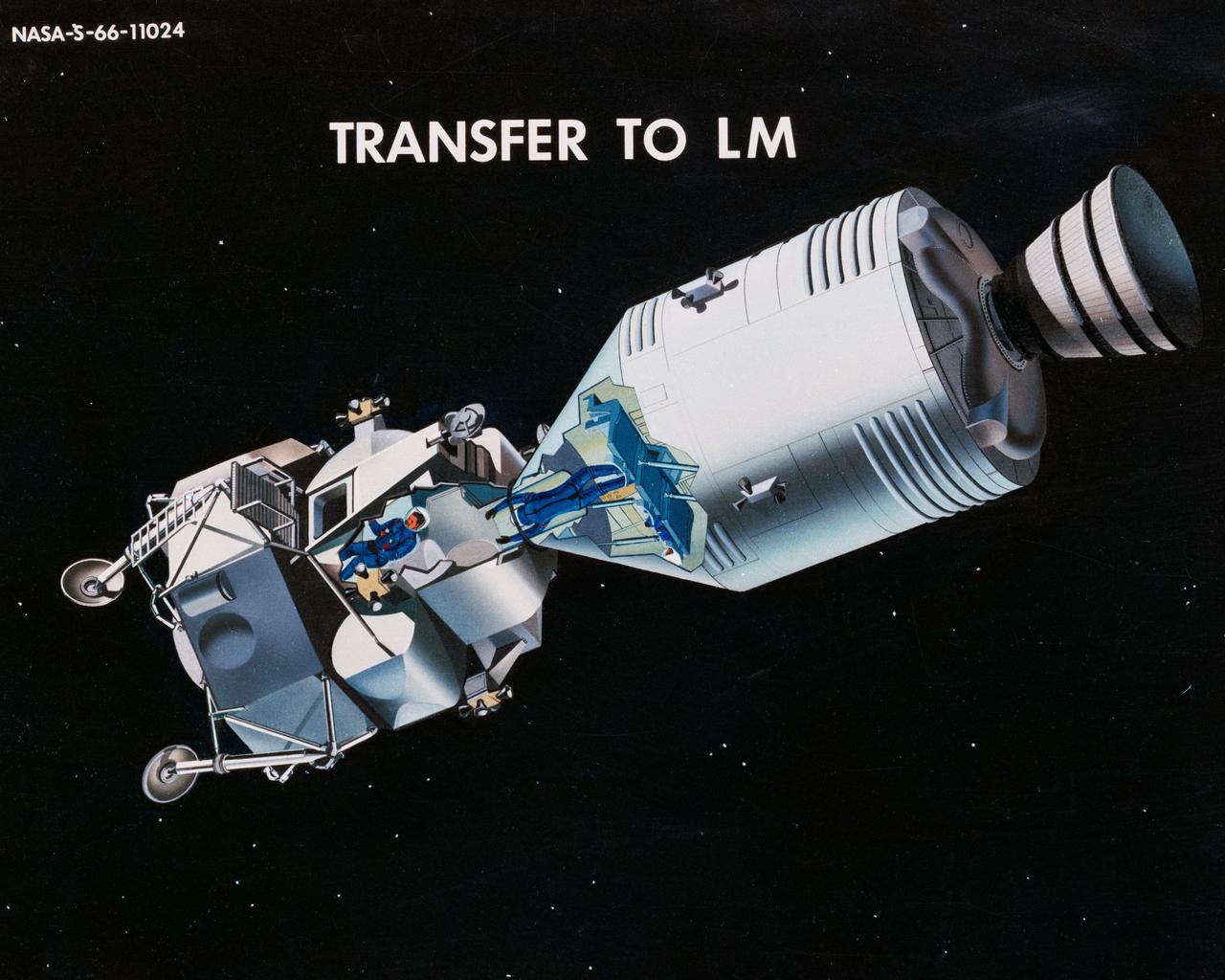
Apollo CM, Transfer to Lunar Module (LM). MSC, HOUSTON, TX CN/BW 12/01/1966 - 06/01/1966

S66-18602 (16 March 1966) --- Astronauts Neil A. Armstrong and David R. Scott sit with their spacecraft hatches open while awaiting the arrival of the recovery ship, the USS Leonard F. Mason after the successful completion of their Gemini-8 mission. They are assisted by U.S. Navy divers. The overhead view shows the Gemini-8 spacecraft with the yellow flotation collar attached to stabilize the spacecraft in choppy seas. The green marker dye is highly visible from the air and is used as a locating aid. Photo credit: NASA
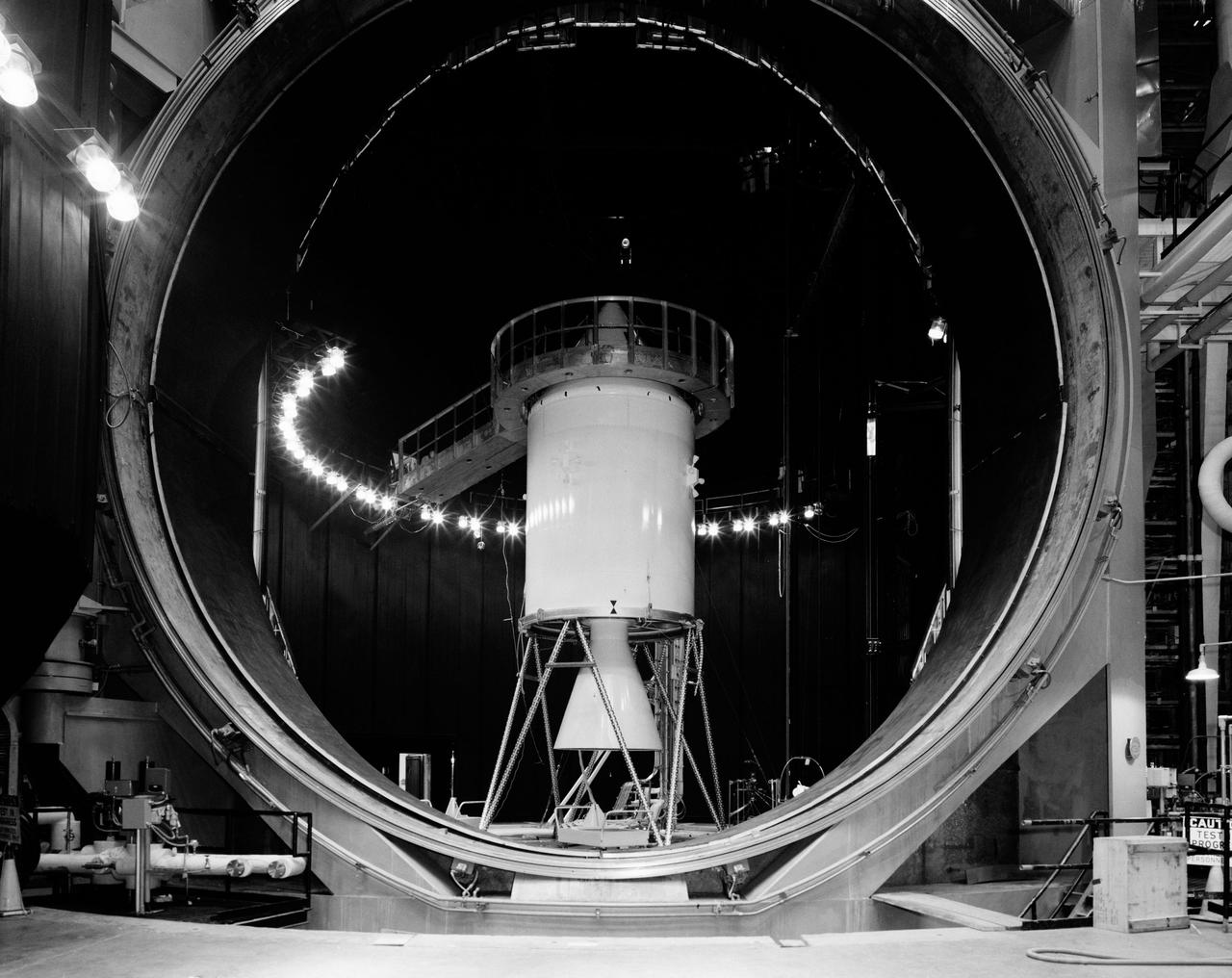
Apollo B/P installation chamber "A"