
S75-32051 (July 1975) --- An overall view of activity in the ?Soyuz Room? of the ASTP News Center in Building 2 at NASA's Johnson Space Center during the joint U.S.-USSR Apollo-Soyuz Test Project docking mission in Earth orbit. Representatives from the Soviet space program were stationed in this room to be available to reporters at the news center. The JSC Public Affairs Office maintains a news center during each mission. The NASA spaceflights are covered by U.S. and foreign reporters representing TV networks, wire services, television and radio stations, newspapers, magazines, scientific and educational publications, etc. (Photo courtesy Communications Satellite Corporation)

NASA Artwork By: Don Davis Space Colony: Torus Wheel - Large assemblies can be put together in space. On this part of the rim panels of a colony are being fitted in place. The small vehicles are called ANTS for Assembly non-thethered ships
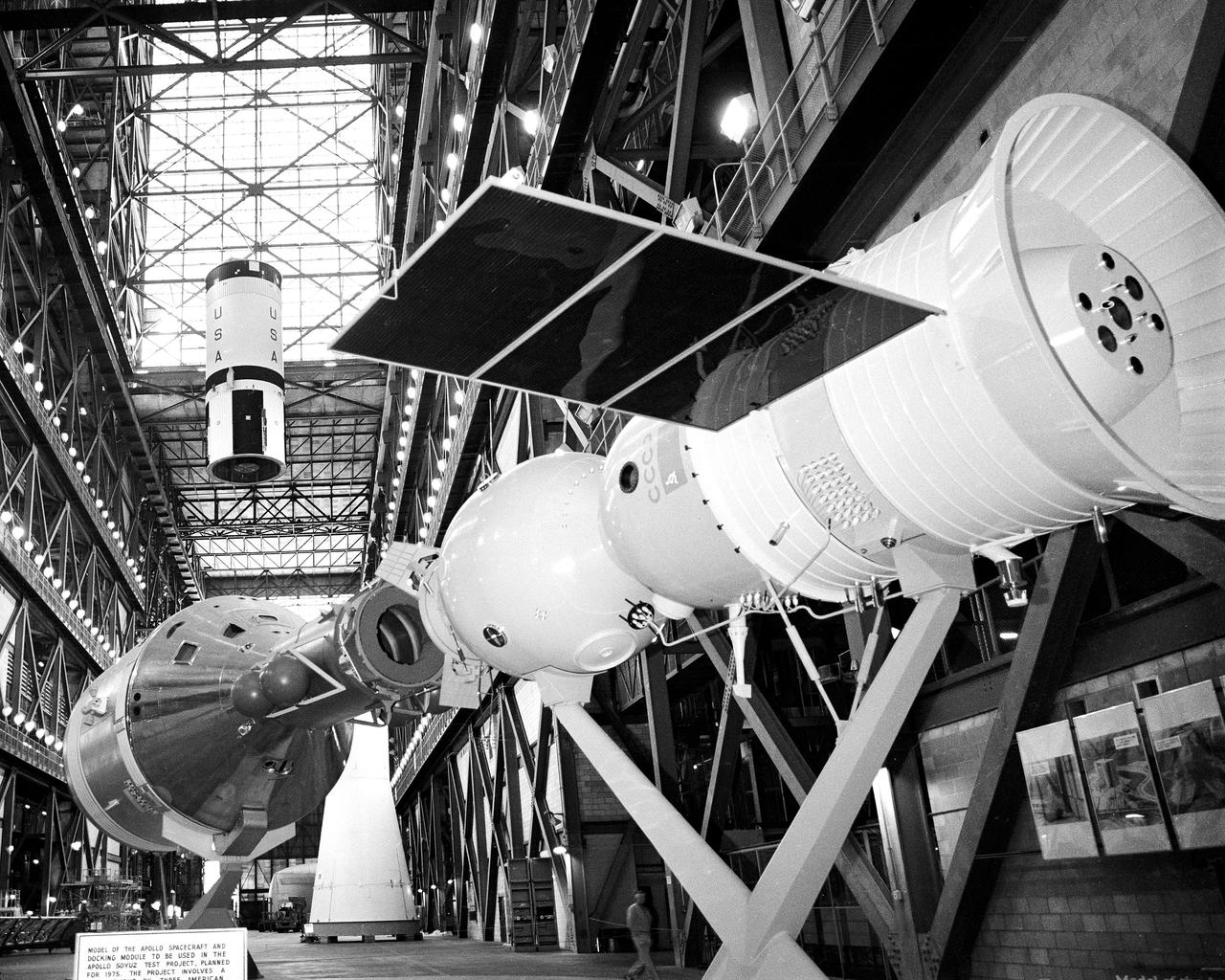
CAPE CANAVERAL, Fla. – Model of docked Apollo and Soyuz spacecraft in the foreground and skylight in the Vehicle Assembly Building high bay frame the second stage of the Saturn 1B booster that will launch the United States ASTP mission as a crane raises it prior to its mating with the Saturn 1B first stage. Mating of the Saturn 1B first and second stages was completed this morning. The U. S. ASTP launch with mission commander Thomas Stafford, command module pilot Vance Brand and docking module pilot Donald Slayton is scheduled at 3:50 p.m. EDT July 15. The first international crewed spaceflight was a joint U.S.-U.S.S.R. rendezvous and docking mission. The Apollo-Soyuz Test Project, or ASTP, took its name from the spacecraft employed: the American Apollo and the Soviet Soyuz. The three-man Apollo crew lifted off from Kennedy Space Center aboard a Saturn IB rocket on July 15, 1975, to link up with the Soyuz that had launched a few hours earlier. A cylindrical docking module served as an airlock between the two spacecraft for transfer of the crew members. Photo credit: NASA
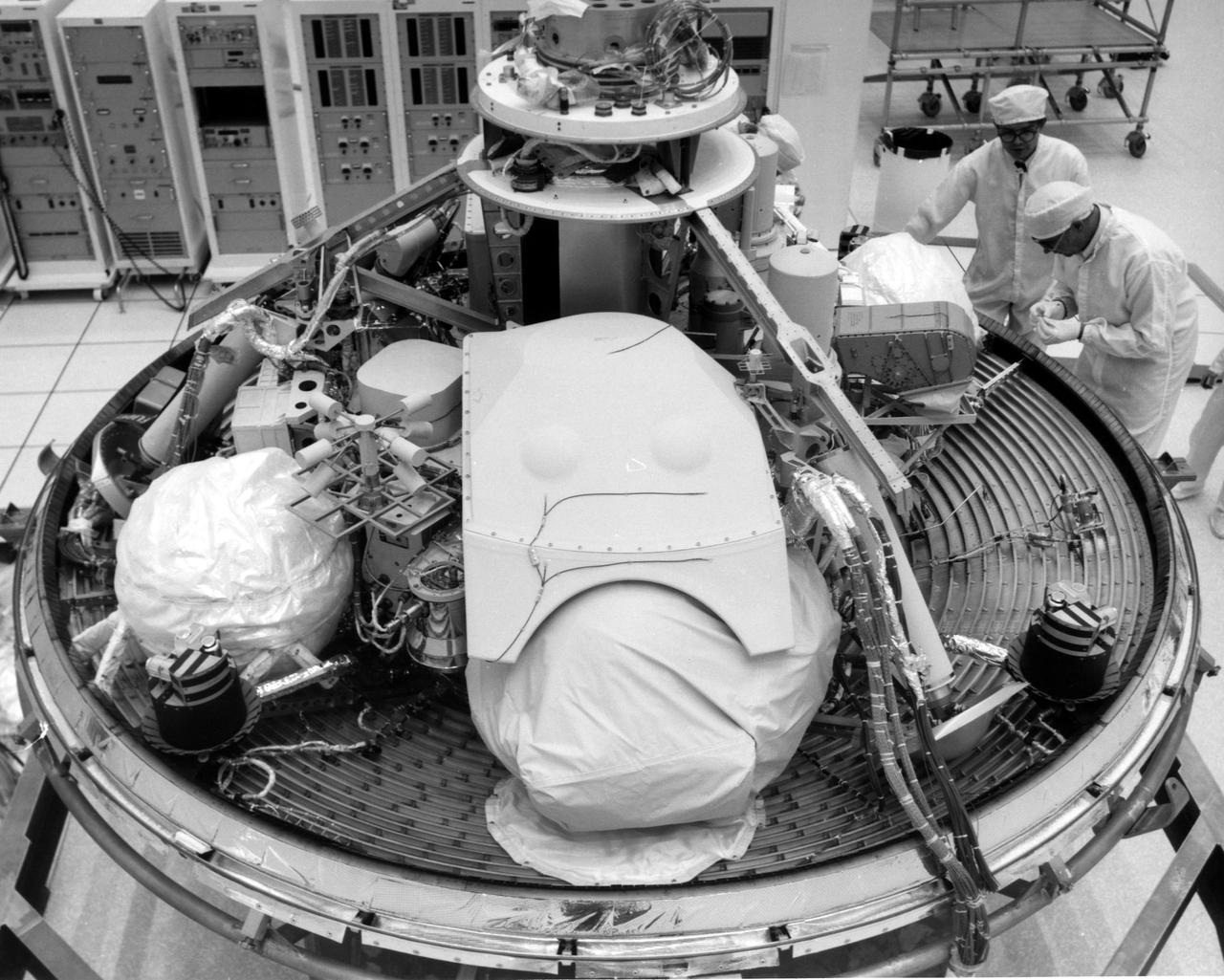
CAPE CANAVERAL, Fla. -- At the Kennedy Space Center in Florida, technicians inspect the Viking Lander 2 in Kennedy's Spacecraft Assembly and Encapsulation Facility 1. The first Viking is scheduled for launch from Launch Complex 41 no earlier than Aug. 11, 1975, the second, no earlier than Aug. 21, 1975. Once in orbit around Mars, the lander will detach and descend to the planet's surface to conduct further investigation. The Viking's 440-million-mile journey to the Red Planet will take about 11 months. Photo Credit: NASA
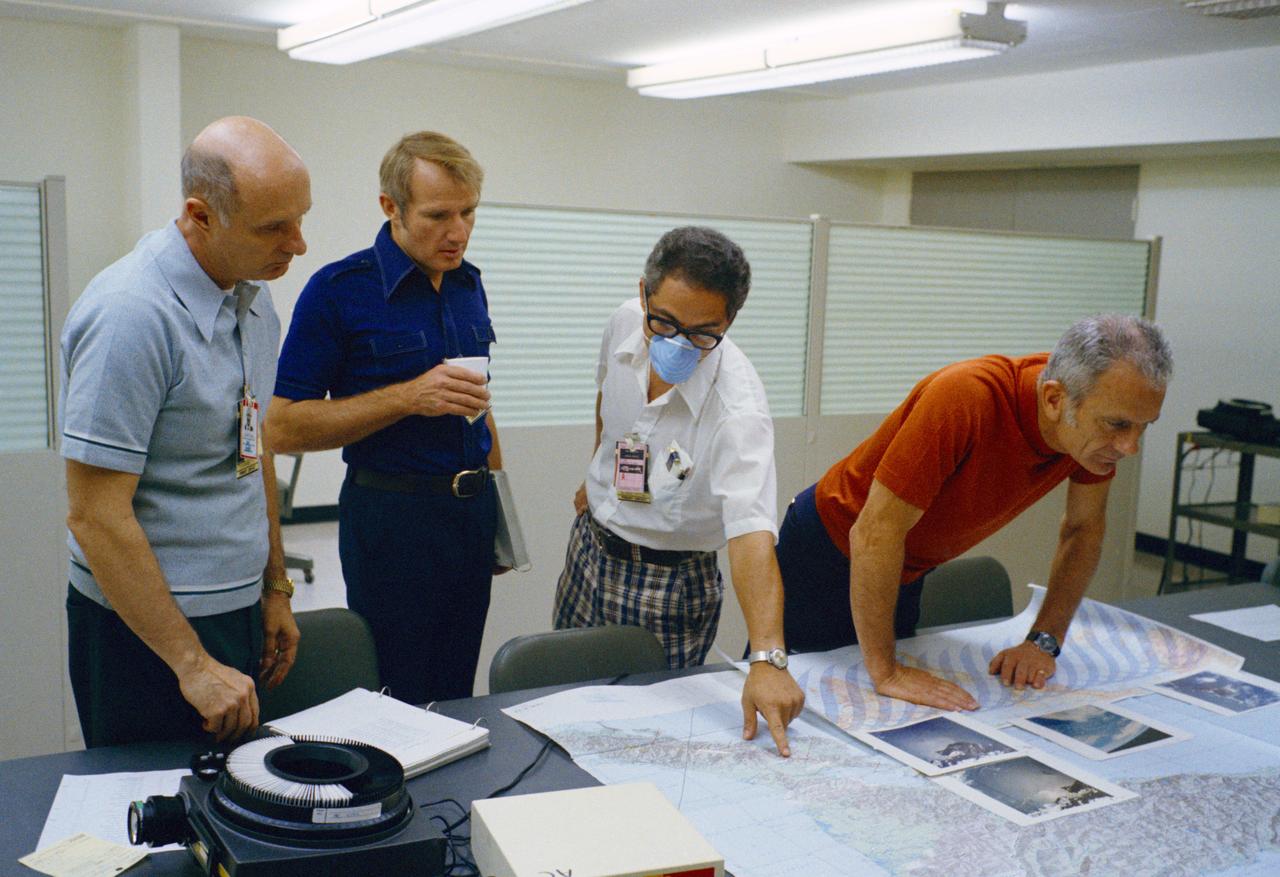
S76-20263 (1975) --- Farouk El-Baz (wearing face mask) is seen with ASTP crewmen T. Stafford, V. Brand and D. Slayton during training activity, Bldg. 5 prior to liftoff in mid-July 1975. They are studying geographic aerial photographs & maps. Photo credit: NASA
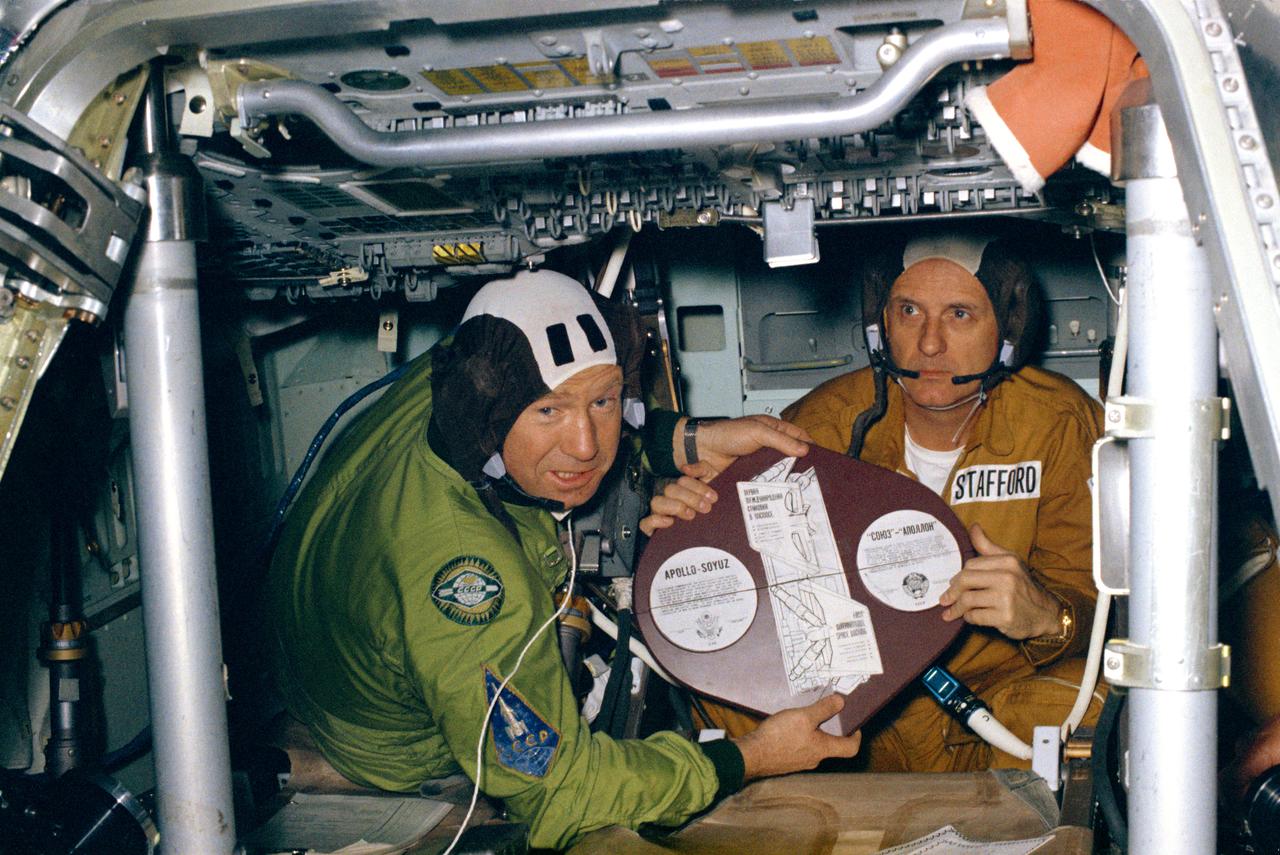
S75-25823 (February 1975) --- Cosmonaut Aleksei A. Leonov (left) and astronaut Thomas P. Stafford display the Apollo Soyuz Test Project (ASTP) commemorative plaque. The two commanders, of their respective crews, are in the Apollo Command Module (CM) trainer at Building 35 at NASA's Johnson Space Center (JSC). Two plaques divided into four quarters each will be flown on the ASTP mission. The American ASTP Apollo crew will carry the four United States quarter pieces aboard Apollo; and the Soviet ASTP Soyuz 19 crew will carry the four USSR quarter sections aboard Soyuz. The eight quarter pieces will be joined together to form two complete commemorative plaques after the two spacecraft rendezvous and dock in Earth orbit. One complete plaque then will be returned to Earth by the astronauts; and the other complete plaque will be brought back by the cosmonauts. The plaque is written in both English and Russian. The Apollo crew will consist of astronauts Thomas P. Stafford, commander; Donald K. "Deke" Slayton, docking module pilot; Vance D. Brand, command module pilot. The Soyuz 19 crew will consist of cosmonauts Aleksei A. Leonov, command pilot; and Valeri N. Kubasov, flight engineer.

At its founding, the Marshall Space Flight Center (MSFC) inherited the Army’s Jupiter and Redstone test stands, but much larger facilities were needed for the giant stages of the Saturn V. From 1960 to 1964, the existing stands were remodeled and a sizable new test area was developed. The new comprehensive test complex for propulsion and structural dynamics was unique within the nation and the free world, and they remain so today because they were constructed with foresight to meet the future as well as on going needs. Construction of the S-IC Static test stand complex began in 1961 in the west test area of MSFC, and was completed in 1964. The S-IC static test stand was originally designed to develop and test the 138-ft long and 33-ft diameter Saturn V S-IC first stage, or booster stage. Modifications to the S-IC Test Stand began in 1975 to accommodate space shuttle external tank testing. This photo depicts the removal of the flame deflector which was originally used to provide water to the 5 F-1 engines of the S-IC stage during testing.
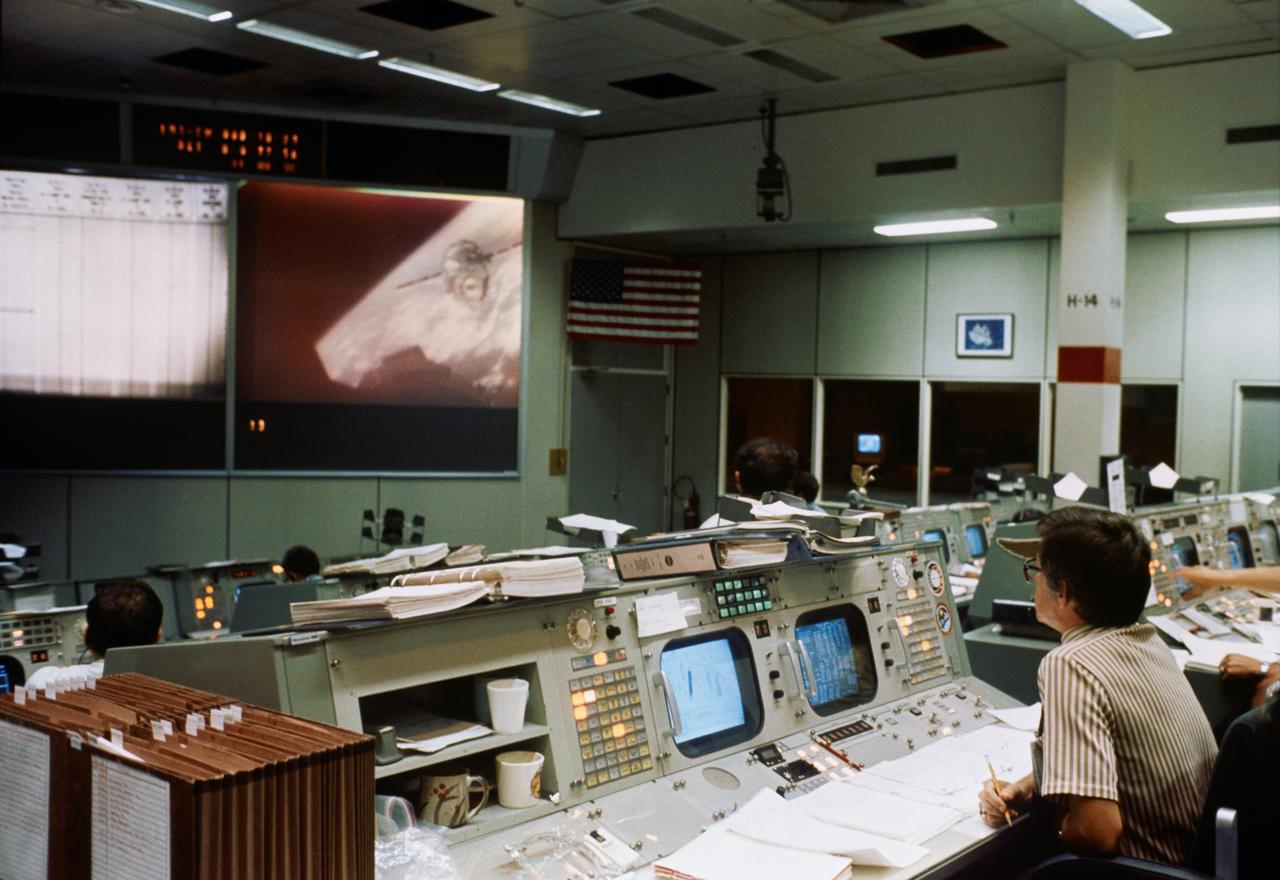
S75-28683 (17 July 1975) --- An overall view of the Mission Operations Control Room in the Mission Control Center during the joint U.S.-USSR Apollo-Soyuz Test Project docking mission in Earth orbit. M.P. Frank, the American senior ASTP flight director, is seated at his console in the right foreground. He is watching the large television monitor which shows a view of the Soyuz spacecraft as seen from the Apollo spacecraft during rendezvous and docking maneuvers.
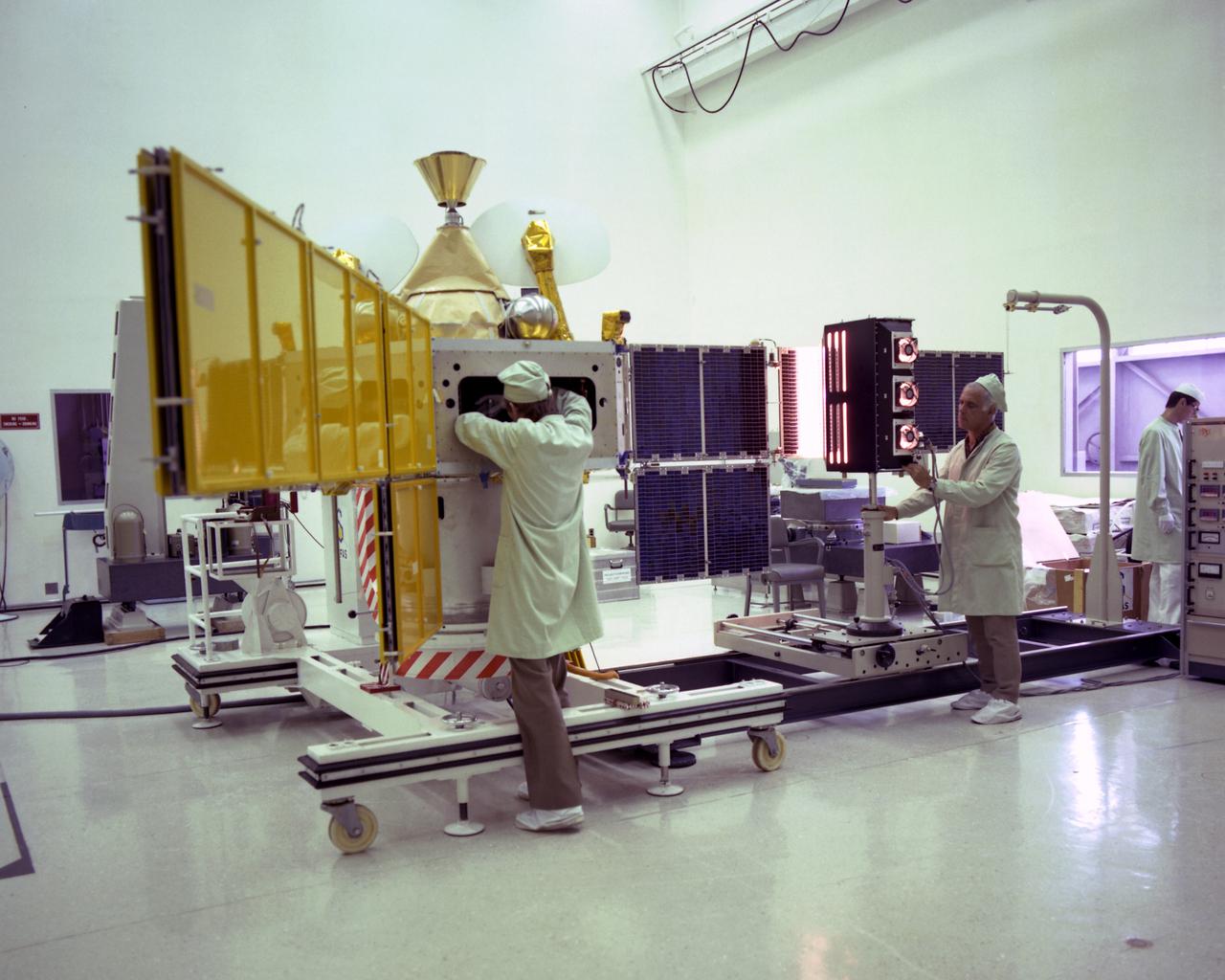
CAPE CANAVERAL, Fla. -- Technicians check out the Symphonie-B spacecraft during launch preparations at KSC. Symphonie is a synchronous-orbit communications satellite, jointly owned and managed by West Germany and France. Photo credit: NASA
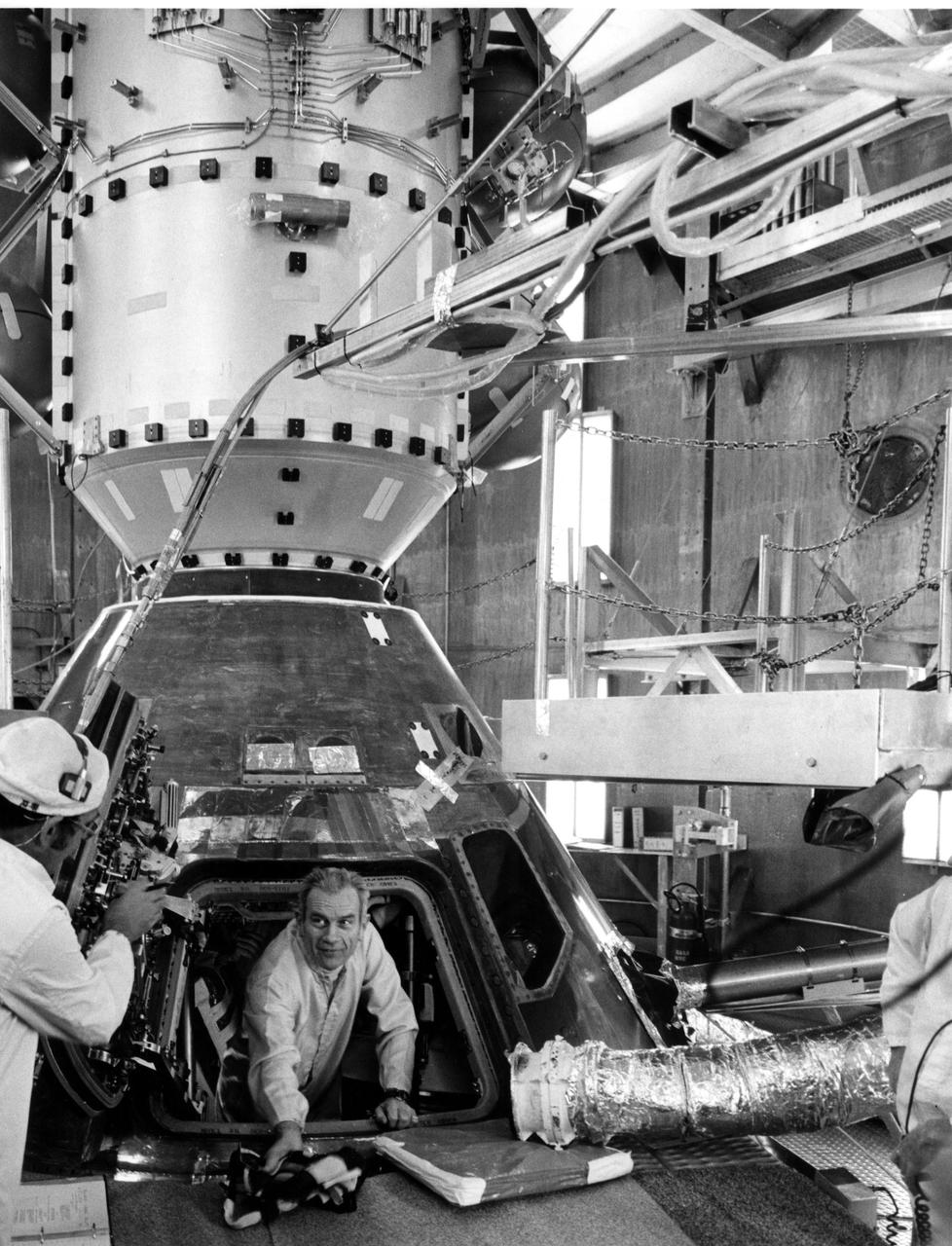
KENNEDY SPACE CENTER, FLA. -- Astronaut Donald Slayton is shown in the Apollo Command Module for July's Apollo-Soyuz Test Project space mission. Slayton was at KSC for fit checks between the Apollo and the Docking Module, which will be used during the mission as a link between the Soviet Soyuz and American Apollo.
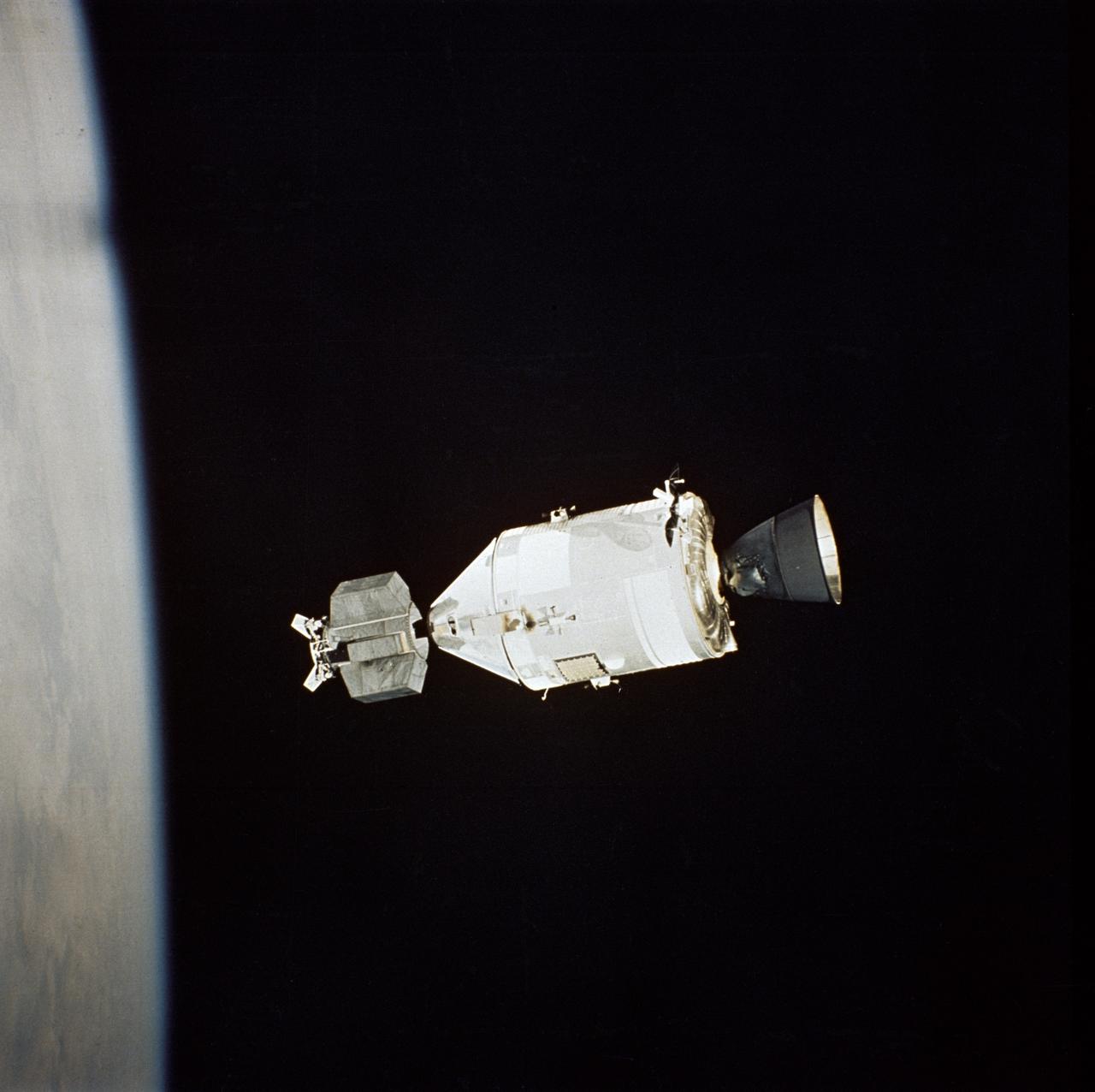
AST-32-2695 (17-19 July 1975) --- The American Apollo spacecraft as seen in Earth orbit from the Soviet Soyuz spacecraft during the joint U.S.-USSR Apollo-Soyuz Test Project mission. The Command/Service Module and Docking Module are contrasted against a black-sky background. The horizon of Earth is below. This picture was furnished by the USSR in an exchange of photography taken during the ASTP flight. The bell-shaped engine nozzle of the service propulsion system protrudes from the rear of the Service Module. Note the docking mechanism on the Docking Module. The American and Soviet spacecraft were joined together in space for approximately 47 hours on July 17-18-19, 1975. PHOTO COURTESY: USSR ACADEMY OF SCIENCES
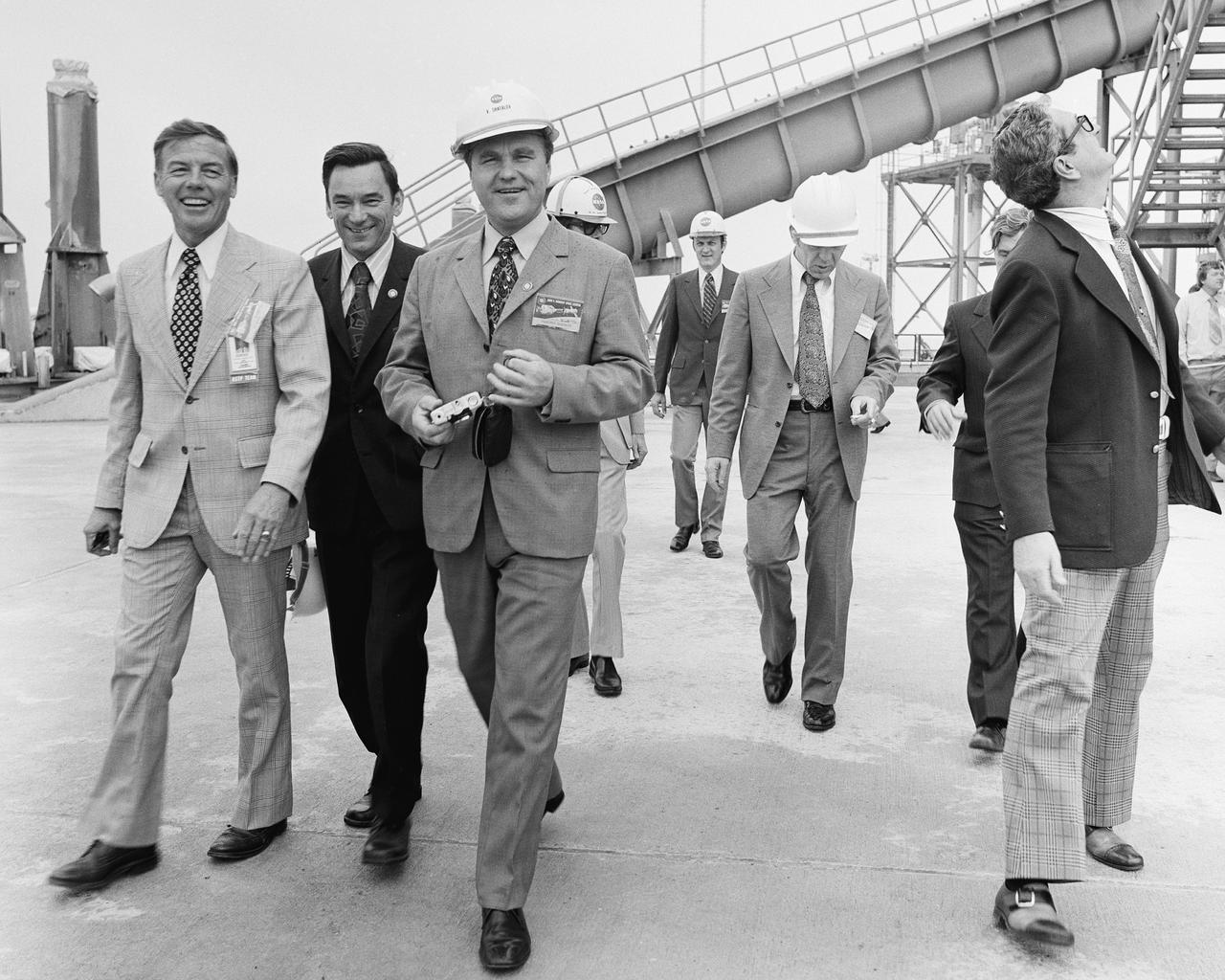
CAPE CANAVERAL, Fla. – KSC Director Lee Scherer, left, escorts a Soviet interpreter and Vladimir Shatalov, Soviet Cosmonaut Training Chief, on a tour of Pad 39B at the Spaceport. The Soviet and American personnel connected with July's Apollo Soyuz Test Project were at KSC February 8-10 to inspect equipment and tour facilities. The first international crewed spaceflight was a joint U.S.-U.S.S.R. rendezvous and docking mission. The Apollo-Soyuz Test Project, or ASTP, took its name from the spacecraft employed: the American Apollo and the Soviet Soyuz. The three-man Apollo crew lifted off from Kennedy Space Center aboard a Saturn IB rocket on July 15, 1975, to link up with the Soyuz that had launched a few hours earlier. A cylindrical docking module served as an airlock between the two spacecraft for transfer of the crew members. Photo credit: NASA
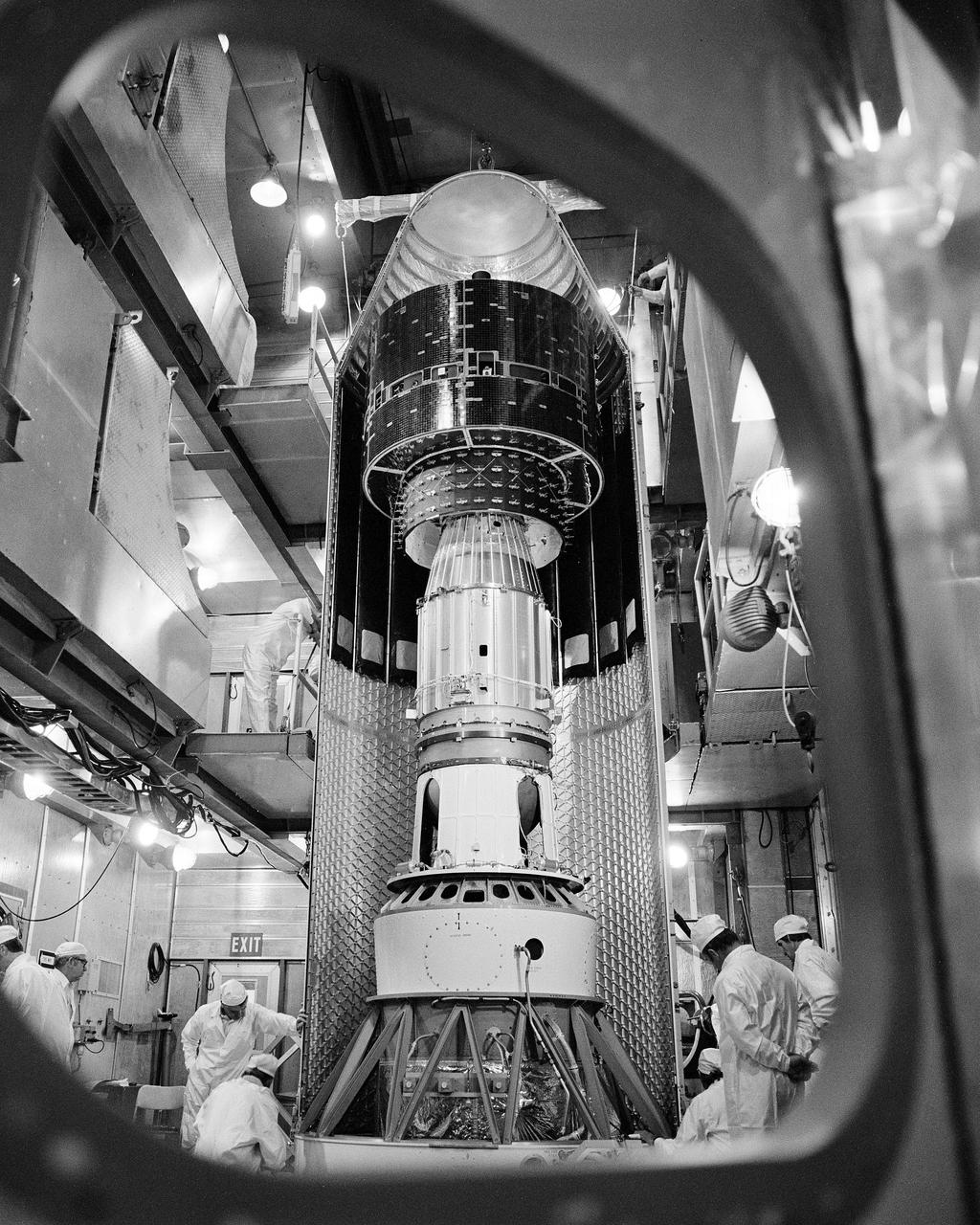
CAPE CANAVERAL, Fla. -- At Cape Canaveral Air Force Station in Florida, the Geostationary Operational Environmental Satellite A GOES-A was encapsulated inside its payload fairing aboard a Delta rocket at Complex 17. GOES-A is being launched by the Kennedy Space Center for the National Oceanic and Atmospheric Administration and will provide round-the-clock coverage of the powerful natural forces creating the weather in the Western Hemisphere. Photo Credit: NASA
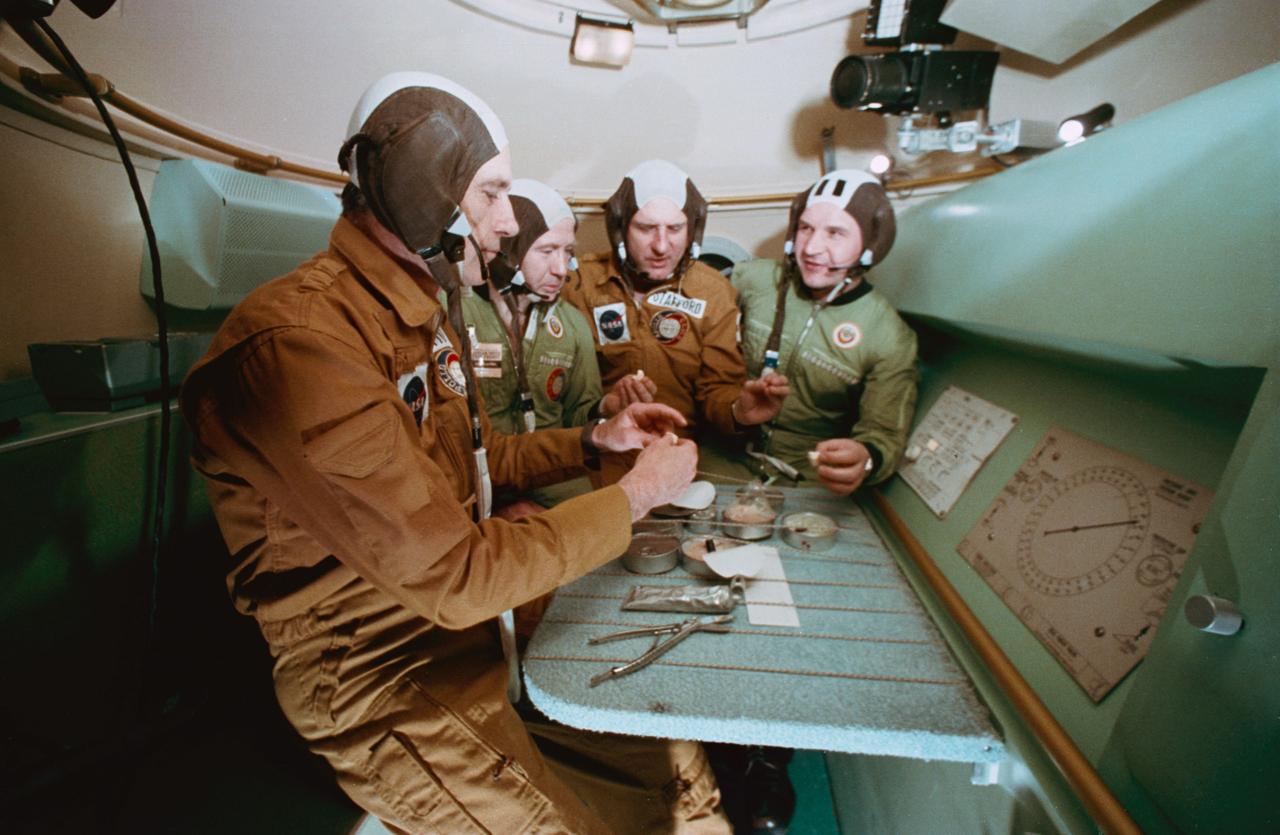
S75-22770 (25 Feb. 1975) --- Two American ASTP prime crewmen have a meal with the Soviet ASTP first (prime) crewmen during Apollo-Soyuz Test Project joint crew training at NASA's Johnson Space Center. The four are inside the Soyuz orbital module mock-up in Building 35. They are, left to right, astronaut Donald K. Slayton, docking module pilot of the American crew; cosmonaut Aleksey A. Leonov, commander of the Soviet crew; astronaut Thomas P. Stafford, commander of the American crew; and cosmonaut Valeriy N. Kubasov, engineer on the Soviet crew. The training session simulated activities on the second day in Earth orbit. During the actual mission the other American crewmen, astronaut Vance D. Brand, command module pilot, would be in the Command Module.
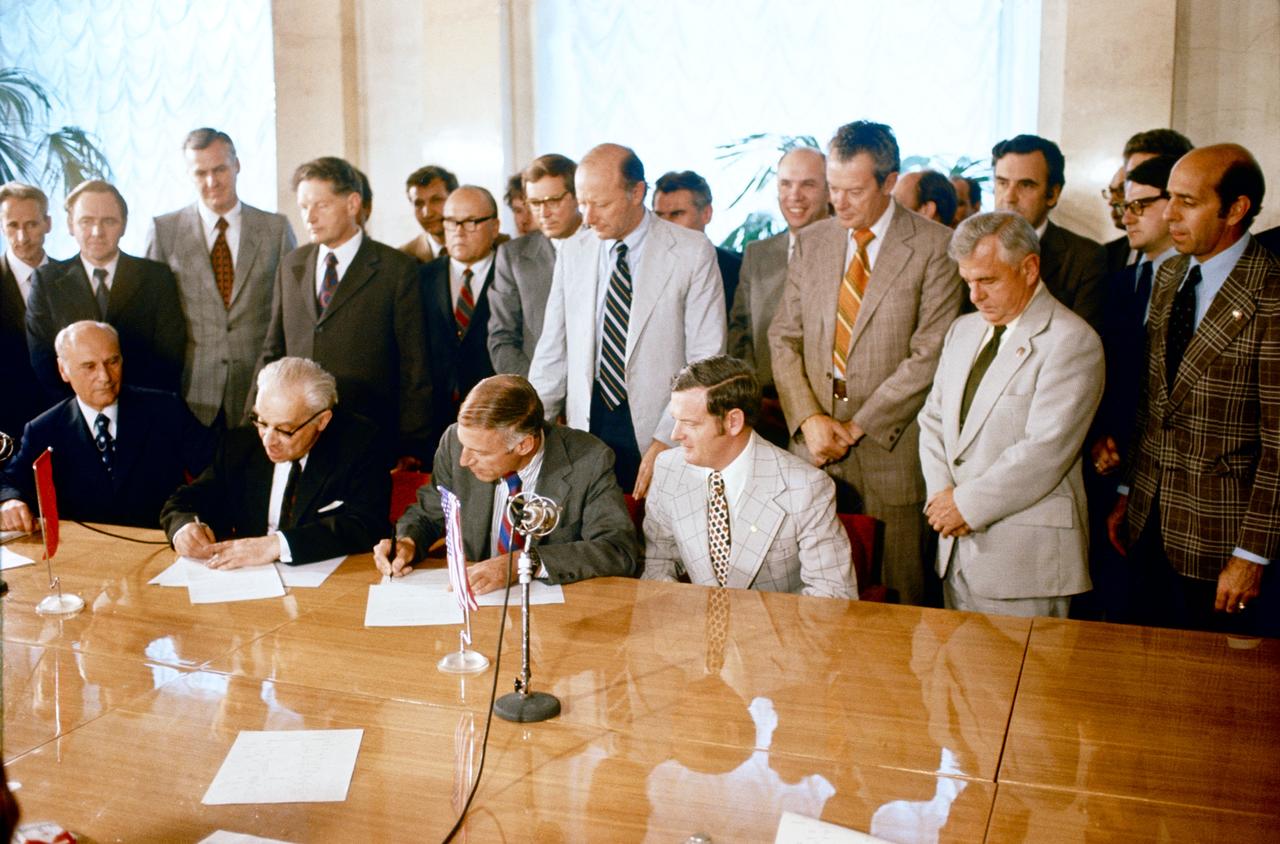
S75-27346 (22 May 1975) --- An overall view of the signing of the Apollo-Soyuz Test Project joint flight readiness review in ceremonies on May 22, 1975 in Moscow. Academician Vladimir A. Kotelnikov (on left) and NASA Deputy Administrator George M. Low (in center) are seen affixing their signatures to the ASTP document. Kotelnikov is the Acting President of the USSR Academy of Sciences. Seated at far left is Professor Konstantin D. Bushuyev, the Soviet Technical Director of ASTP. Dr. Glynn S. Lunney, the U.S. Technical Director of ASTP, is seated on Dr. Low?s left. Arnold W. Frutkin (in light jacket), NASA Assistant Administrator for International Affairs, is standing behind Dr. Low. Academician Boris N. Petrov (in dark suit), Chairman of the USSR Council for International Cooperation in the Exploration and Use of Outer Space, is standing behind Kotelnikov. The signing of the agreement took place at the Presidium of the Academy of Sciences in Moscow.
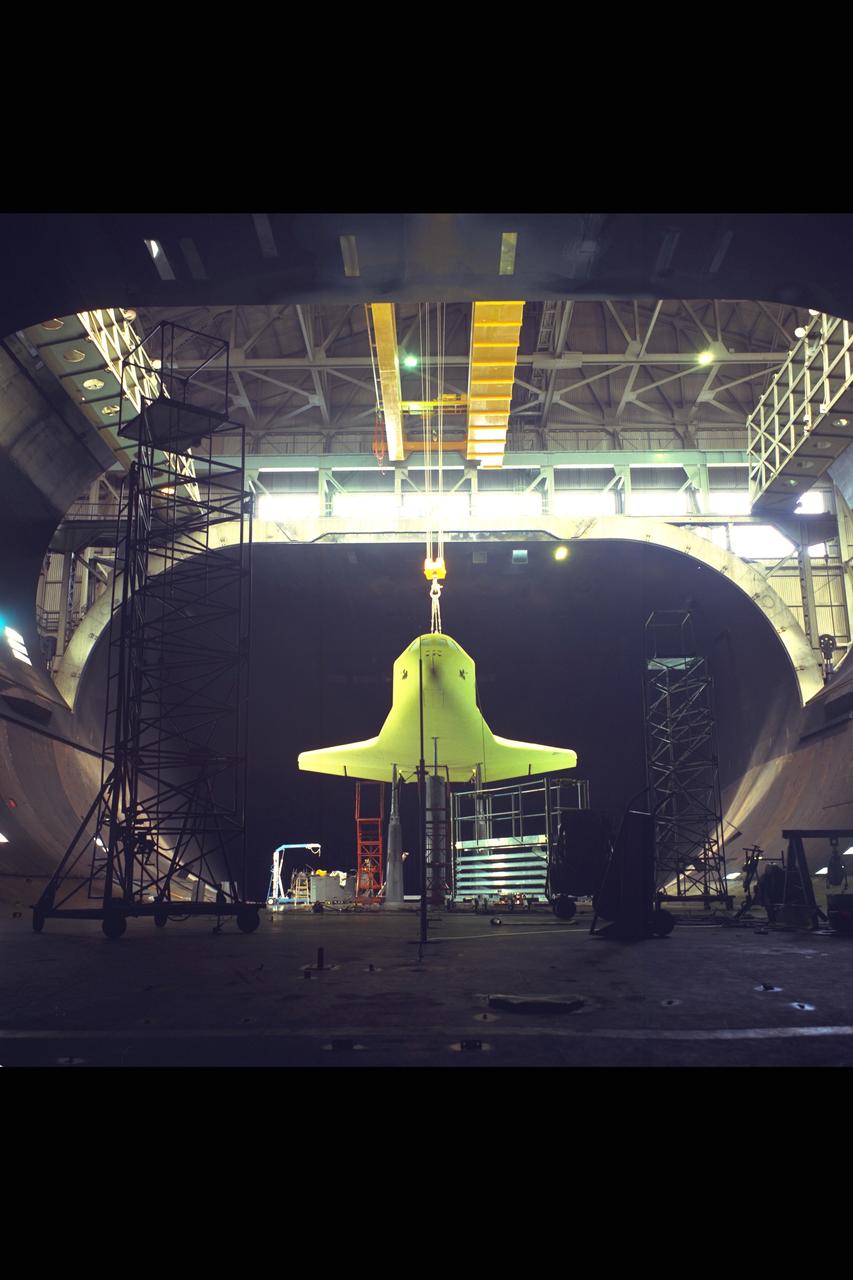
Space Shuttle Orbiter 101 model installation in the NASA Ames 40x80ft Subsonic Wind Tunnel. Test-462
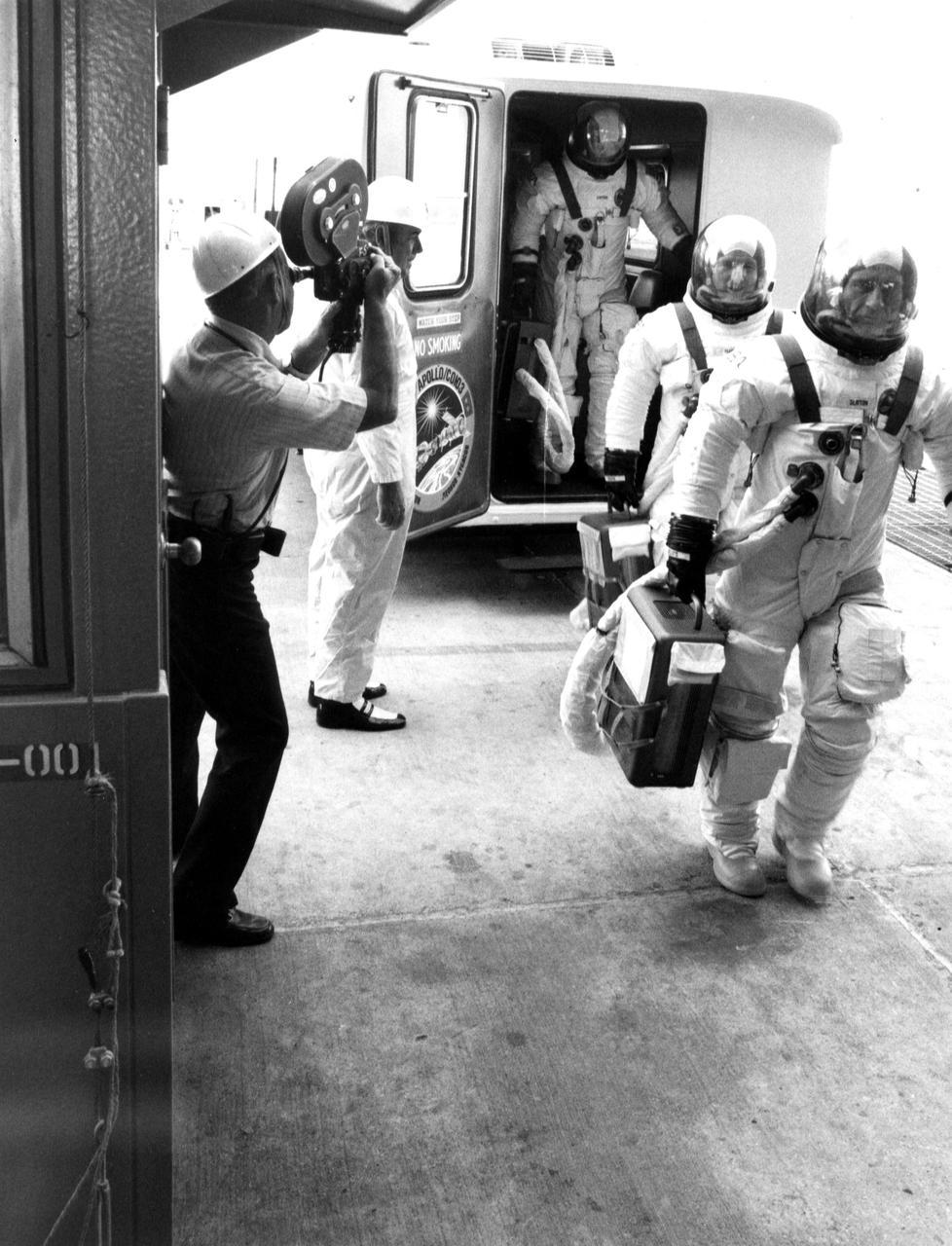
KENNEDY SPACE CENTER, FLA. -- ASTP asstronauts Donald slayton, Vance Brand and Thomas Stafford leave the transfer van at Complex 39's Pad B and enter the pad elevator during the Countdown Demonstration Test. The test, a step-by-step dress rehearsal for the July 15 launch, simulates the actual countdown but without the propellants in the Saturn IB launch vehicle's fuel tanks. The fueled portion of the test was conducted yesterday.

At its founding, the Marshall Space Flight Center (MSFC) inherited the Army’s Jupiter and Redstone test stands, but much larger facilities were needed for the giant stages of the Saturn V. From 1960 to 1964, the existing stands were remodeled and a sizable new test area was developed. The new comprehensive test complex for propulsion and structural dynamics was unique within the nation and the free world, and they remain so today because they were constructed with foresight to meet the future as well as on going needs. Construction of the S-IC Static test stand complex began in 1961 in the west test area of MSFC, and was completed in 1964. The S-IC static test stand was originally designed to develop and test the 138-ft long and 33-ft diameter Saturn V S-IC first stage, or booster stage. Modifications to the S-IC Test Stand began in 1975 to accommodate space shuttle external tank testing. This photo depicts the removal of the flame deflector which was originally used to provide water to the 5 F-1 engines of the S-IC stage during testing.
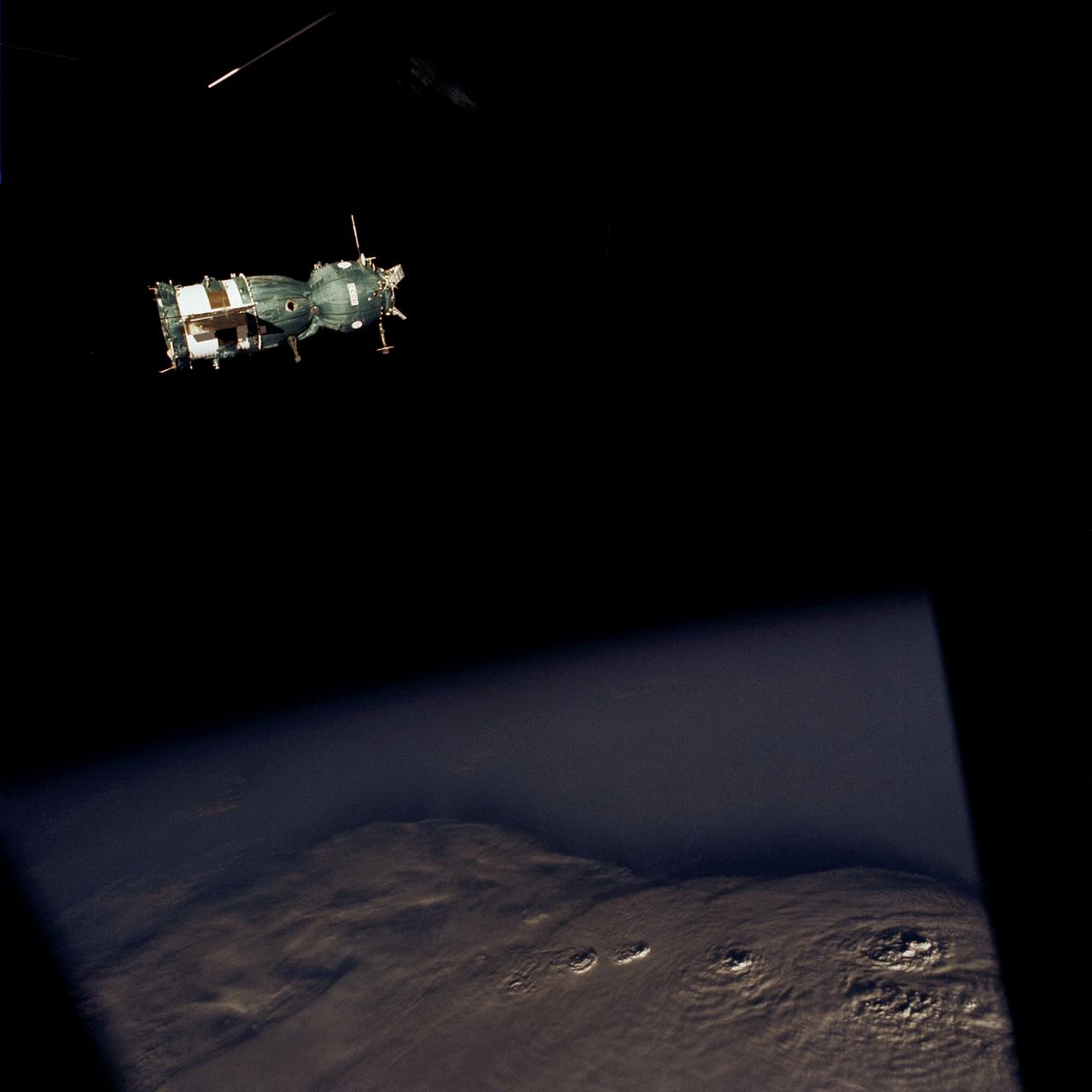
AST-02-096 (18 July 1975) --- This scene photograph from a rendezvous window of the American Apollo spacecraft in Earth orbit shows the Soviet Soyuz spacecraft contrasted against a black-sky background with a heavily cloud-covered Earth below. The three major components of the Soyuz are the spherical-shaped Orbital Module, the bell-shaped Descent Vehicle, the cylindrical-shaped Instrument Assembly Module. The docking system on the Orbital Module was specially designed to interface with the docking system on the Apollo's Docking Module. The ASTP astronauts and cosmonauts visited each other's spacecraft while the Soyuz and Apollo were docked in Earth orbit for two days.

AST-02-130 (20 July 1975) --- An oblique view of a portion of Libya and the Arab Republic of Egypt, as photographed from the Apollo spacecraft in Earth orbit during the joint U.S.-USSR Apollo-Soyuz Test Project mission. The geological features are the Jebel Uweinat and Jebel Arkenu basaltic mountains in the Libyan sand sea. This picture was taken with a 70mm Hasselblad camera using medium-speed Ektachrome QX-807 type film. The spacecraft was at an altitude of 219 kilometers (136 statute miles).
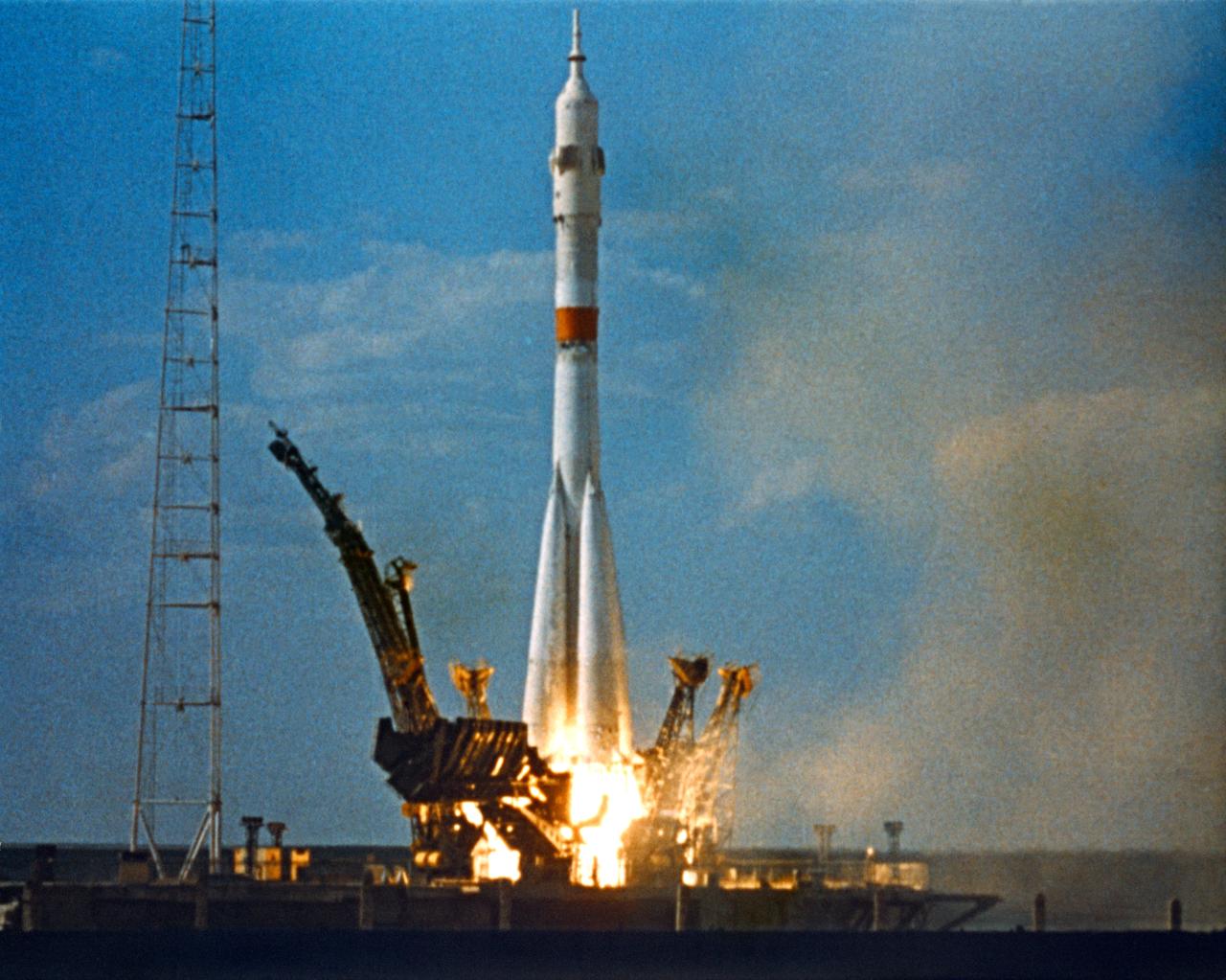
S75-33375 (15 July 1975) --- The Soviet Soyuz space vehicle, with cosmonauts Aleksey A. Leonov and Valeriy N. Kubasov aboard, is launched on the morning of July 15, 1975 from a pad at the Baikonur Cosmodrome in Kazahstan to begin the joint U.S.-USSR Apollo-Soyuz Test Project docking mission in Earth orbit. The Soyuz space vehicle is composed of the three-stage launch vehicle, the two-man, three-module Soyuz spacecraft and the launch escape system. The Soviet spacecraft (Soyuz 19) was launched seven and one-half hours before the American ASTP/Apollo-Saturn 1B liftoff from Kennedy Space Center (KSC), Florida. The American and Soviet spacecraft were joined together in space for approximately 47 hours on July 17-18-19, 1975. This picture was reproduced from a frame of 35mm film furnished by the USSR in an exchange of photography taken during the mission. PHOTO COURTESY: USSR ACADEMY OF SCIENCES
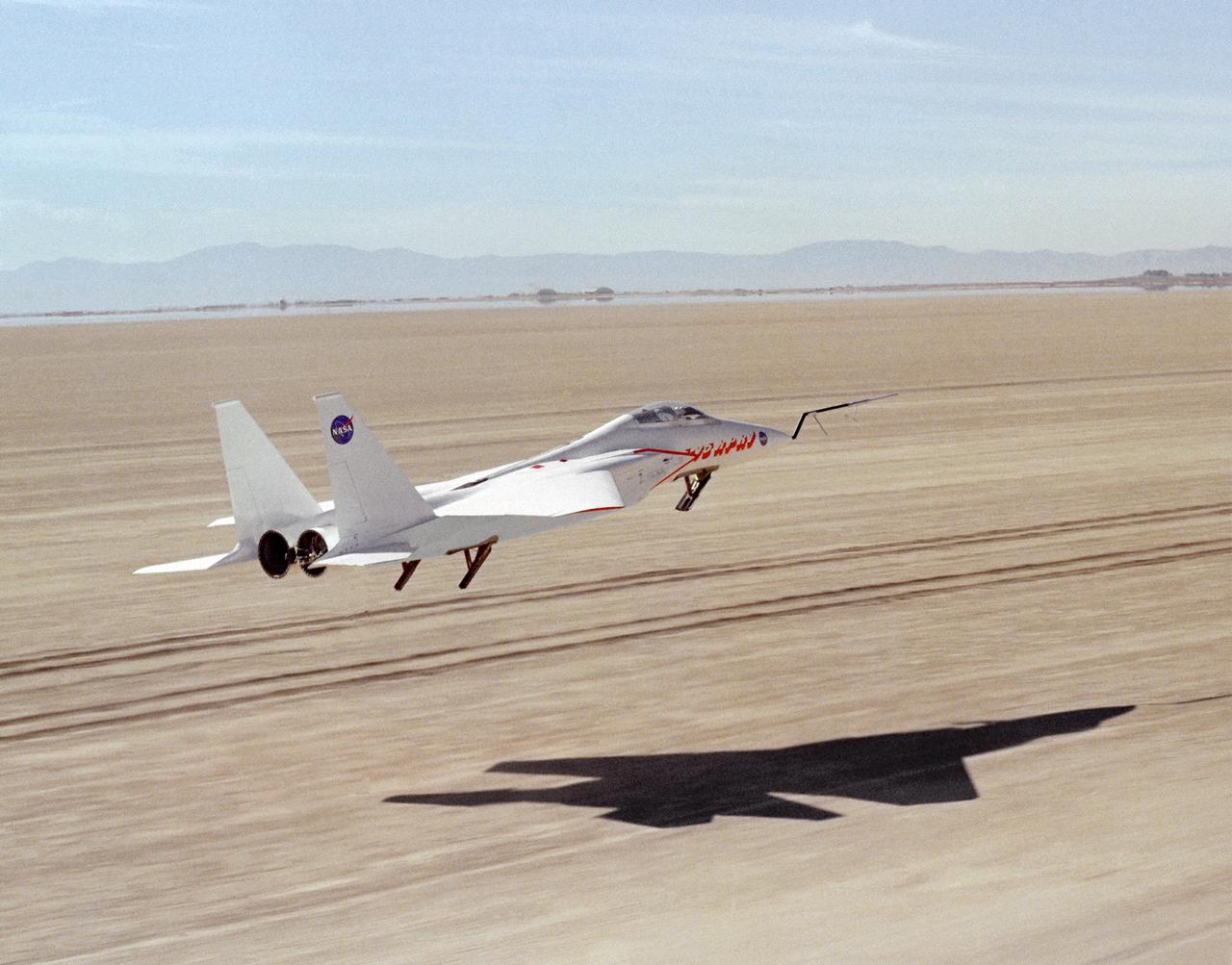
This photograph shows NASA's 3/8th-scale remotely piloted research vehicle landing on Rogers Dry Lakebed at Edwards Air Force Base, California, in 1975.

At its founding, the Marshall Space Flight Center (MSFC) inherited the Army’s Jupiter and Redstone test stands, but much larger facilities were needed for the giant stages of the Saturn V. From 1960 to 1964, the existing stands were remodeled and a sizable new test area was developed. The new comprehensive test complex for propulsion and structural dynamics was unique within the nation and the free world, and they remain so today because they were constructed with foresight to meet the future as well as on going needs. Construction of the S-IC Static test stand complex began in 1961 in the west test area of MSFC, and was completed in 1964. The S-IC static test stand was originally designed to develop and test the 138-ft long and 33-ft diameter Saturn V S-IC first stage, or booster stage. Modifications to the S-IC Test Stand began in 1975 to accommodate space shuttle external tank testing. This photo, taken from the roof of the block house on October 14, 1975, provides an overall view of the stand during the modification process.
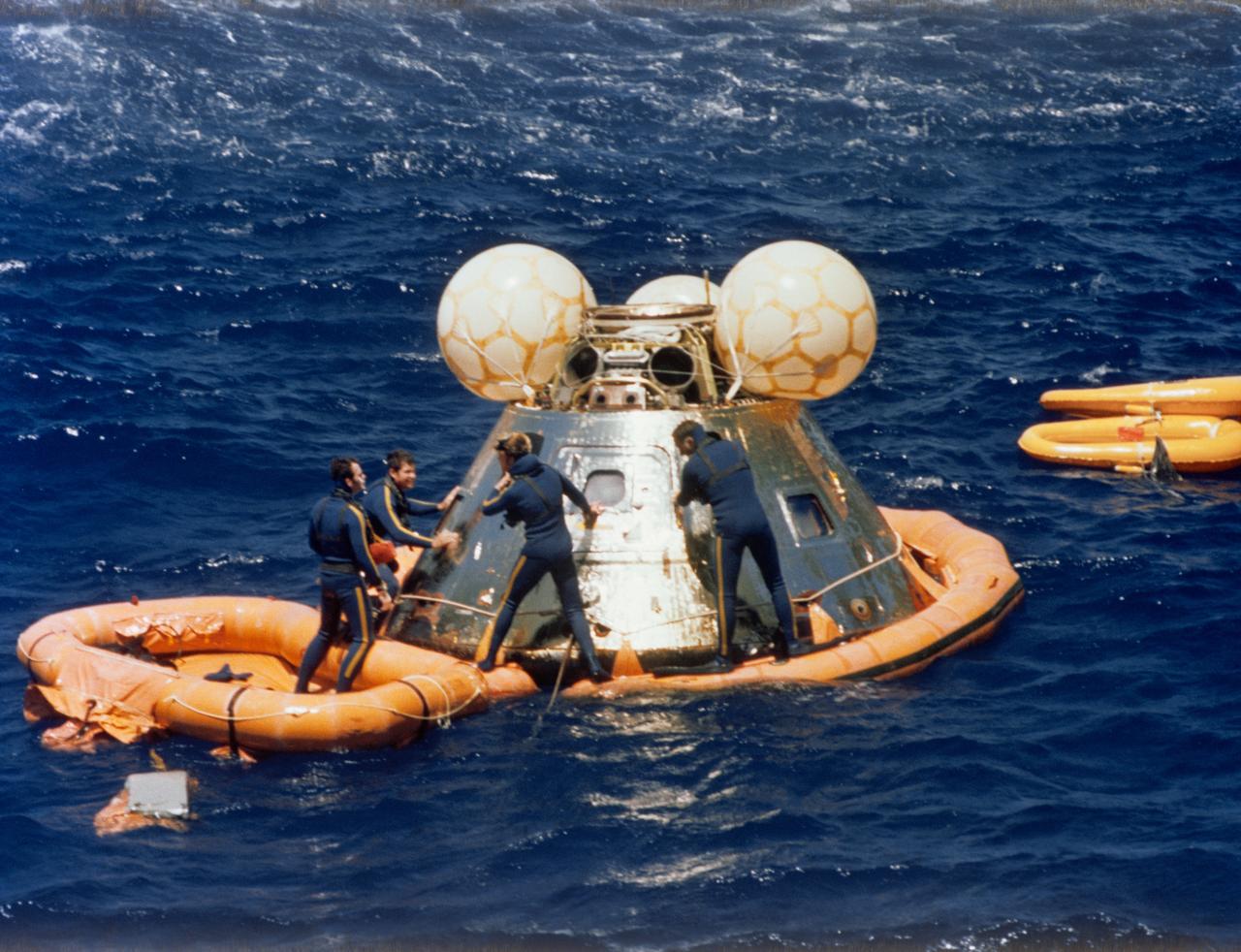
S75-29715 (24 July 1975) --- A team of U.S. Navy swimmers assists with the recovery of the ASTP Apollo Command Module following its splashdown in the Central Pacific Ocean to conclude the historic joint U.S.-USSR Apollo-Soyuz Test Project docking mission in Earth orbit. The swimmers have already attached a flotation collar to the spacecraft. The CM touched down in the Hawaiian Islands area at 4:18 p.m. (CDT), July 24, 1975. The crewmen, astronauts Thomas P. Stafford, Vance D. Brand and Donald K. Slayton, remained in the CM until it was hoisted aboard the prime recovery ship, the USS New Orleans.
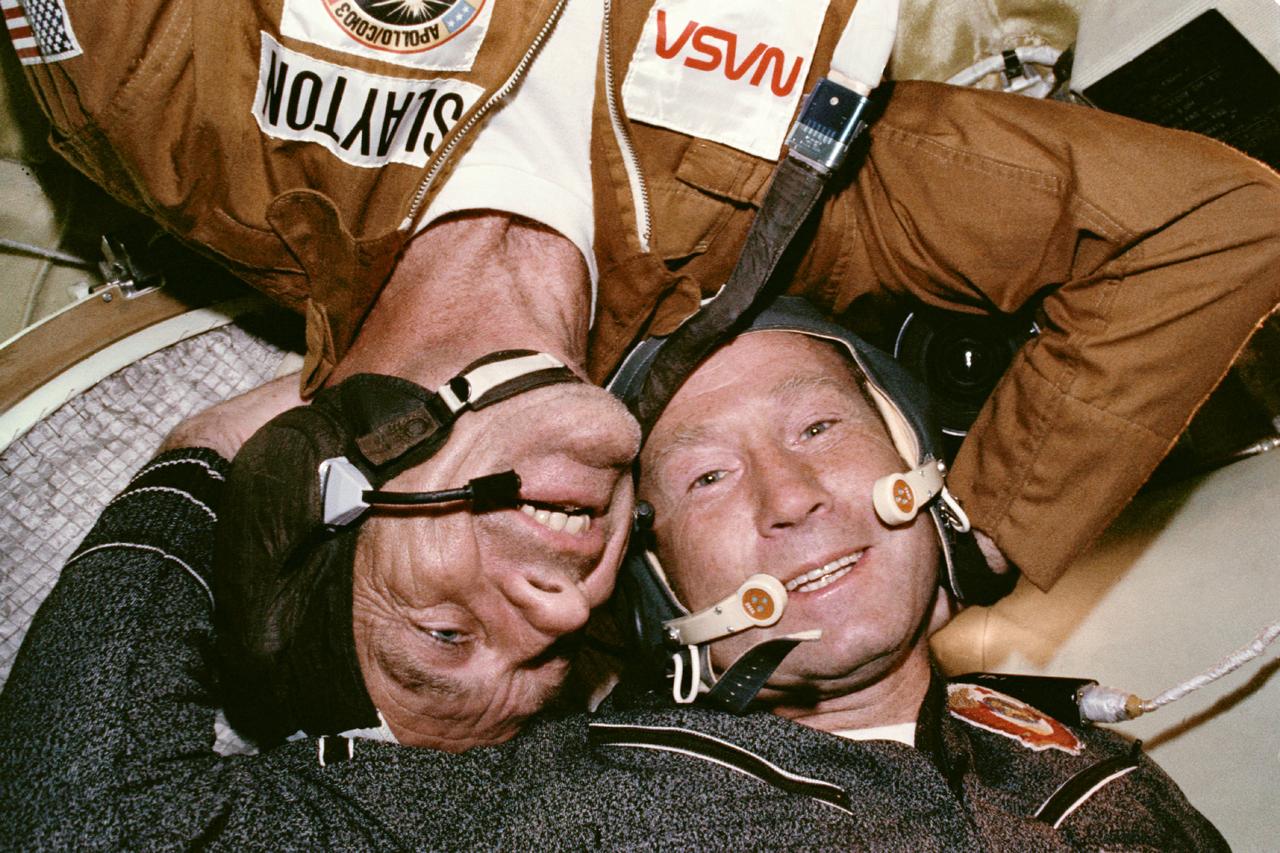
AST-05-298 (17-19 July 1975) --- Astronaut Donald K. Slayton and cosmonaut Aleksey A. Leonov are seen together in the Soyuz Orbital Module during the joint U.S.-USSR Apollo-Soyuz Test Project docking mission in Earth orbit. Slayton is the docking module pilot of the American crew. Leonov is the Soviet crew commander. This picture was taken with a 35mm camera.
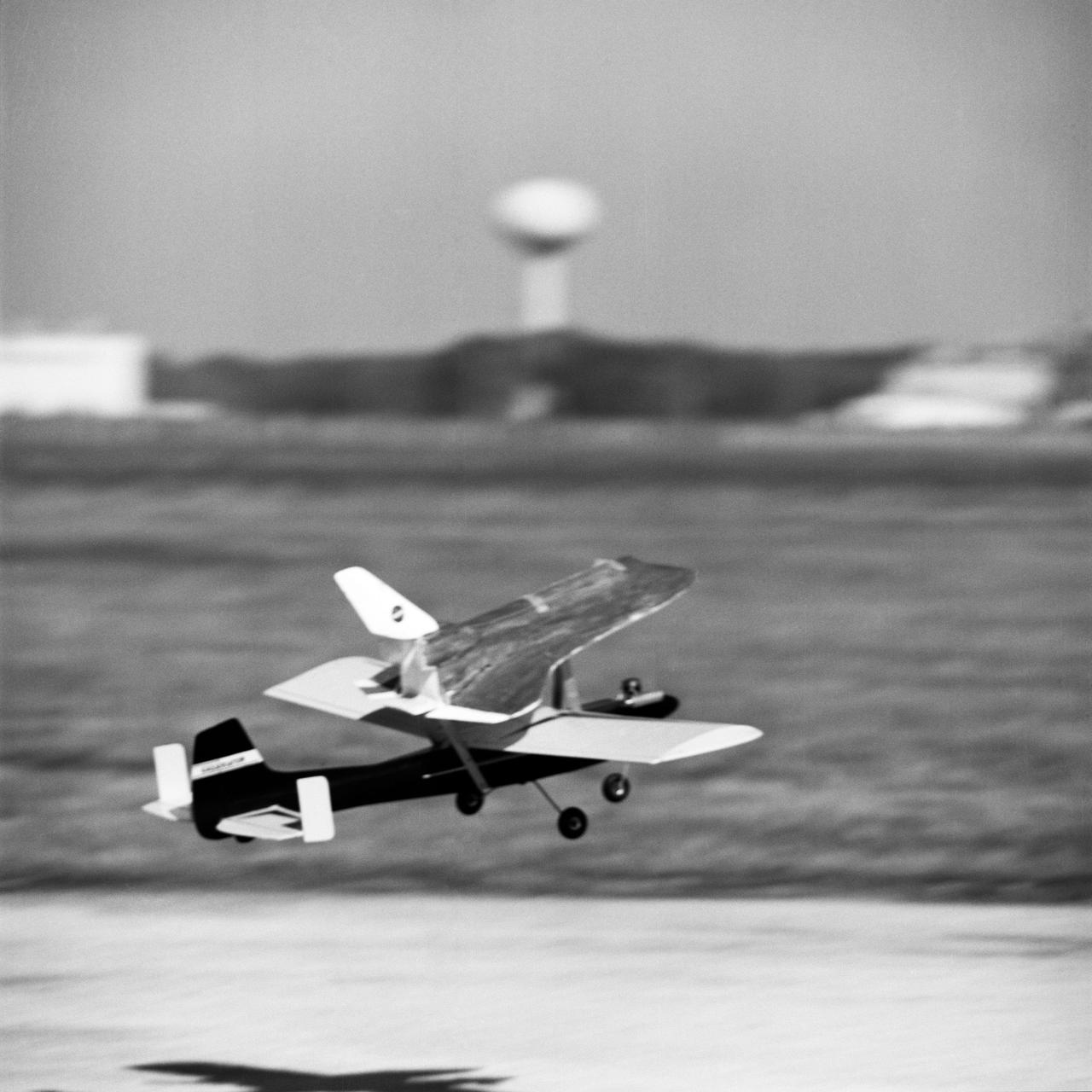
Owen Morris and John Kiker are seen in this series of photographs documenting a mini-Approach and Landing Test conducted on the Bldg. 14 Antenna Test Range, using a 1/40th-scale model Orbiter and a model airplane. The test was flown to study Orbiter control characteristics and separation dynamics. Simulated Orbiter being dropped from 747. JSC, HOUSTON, TX. S75-33949 thru S75-33957
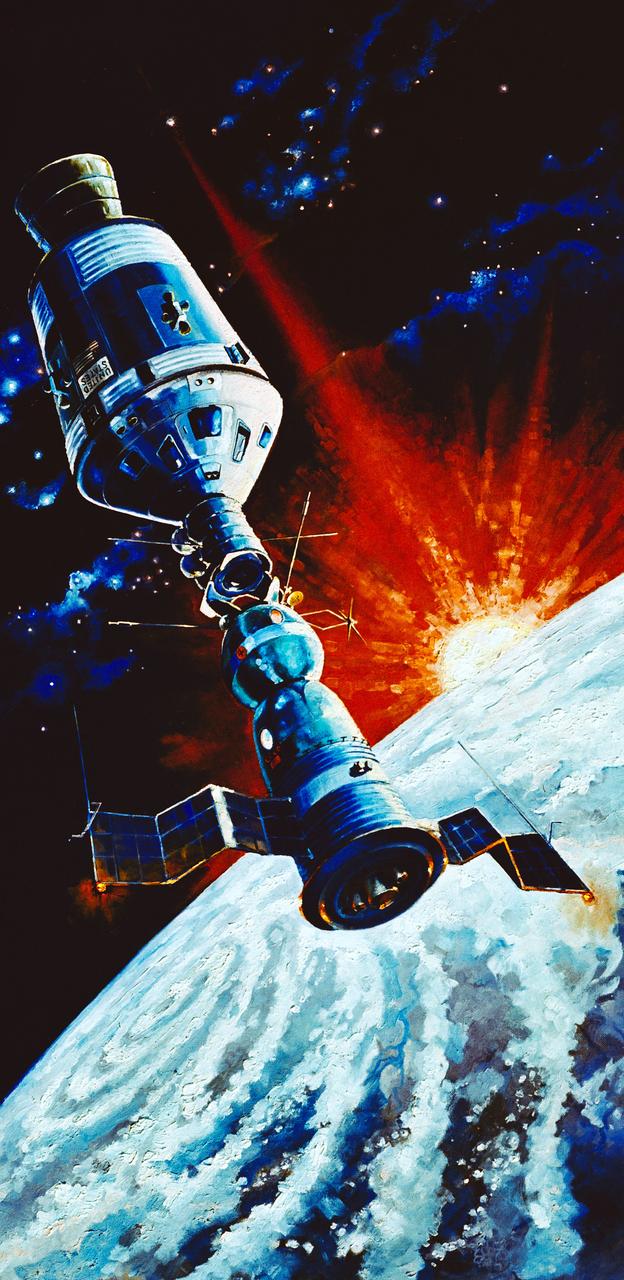
S75-25077 (May 1975) --- A photographic copy of a painting made by cosmonaut Aleksey A. Leonov, commander of the Soviet ASTP first (prime) crew. This symbolic artwork, representing a Soviet Soyuz spacecraft docking in Earth orbit with an American Apollo spacecraft, was finished in May 1974. The sketch for the painting was made in 1973 following the signing of the space agreement between the United Stated and the Soviet Union. Leonov said that his painting symbolizes the new type of international cooperation of working together in space. The original painting, which measures 80 centimeters by 160 centimeters (1 cm. = 0.39 in.), is on display in a museum in the city of Baku on the Caspian Sea. In making the sketch for the painting Leonov used a model of an earlier Soyuz spacecraft and a picture of an Apollo spacecraft. Later, he obtained a model of an Apollo which helped him check the configuration of the American spacecraft. The tanks on the Docking Module are no longer exposed on the current DM configuration, he noted. Also, this would not be an exact view of the sun as seen from Earth orbit. Leonov took artist license in stressing the symbolism in his artwork. The Soyuz is represented smaller in the painting than it actually is, Leonov added.
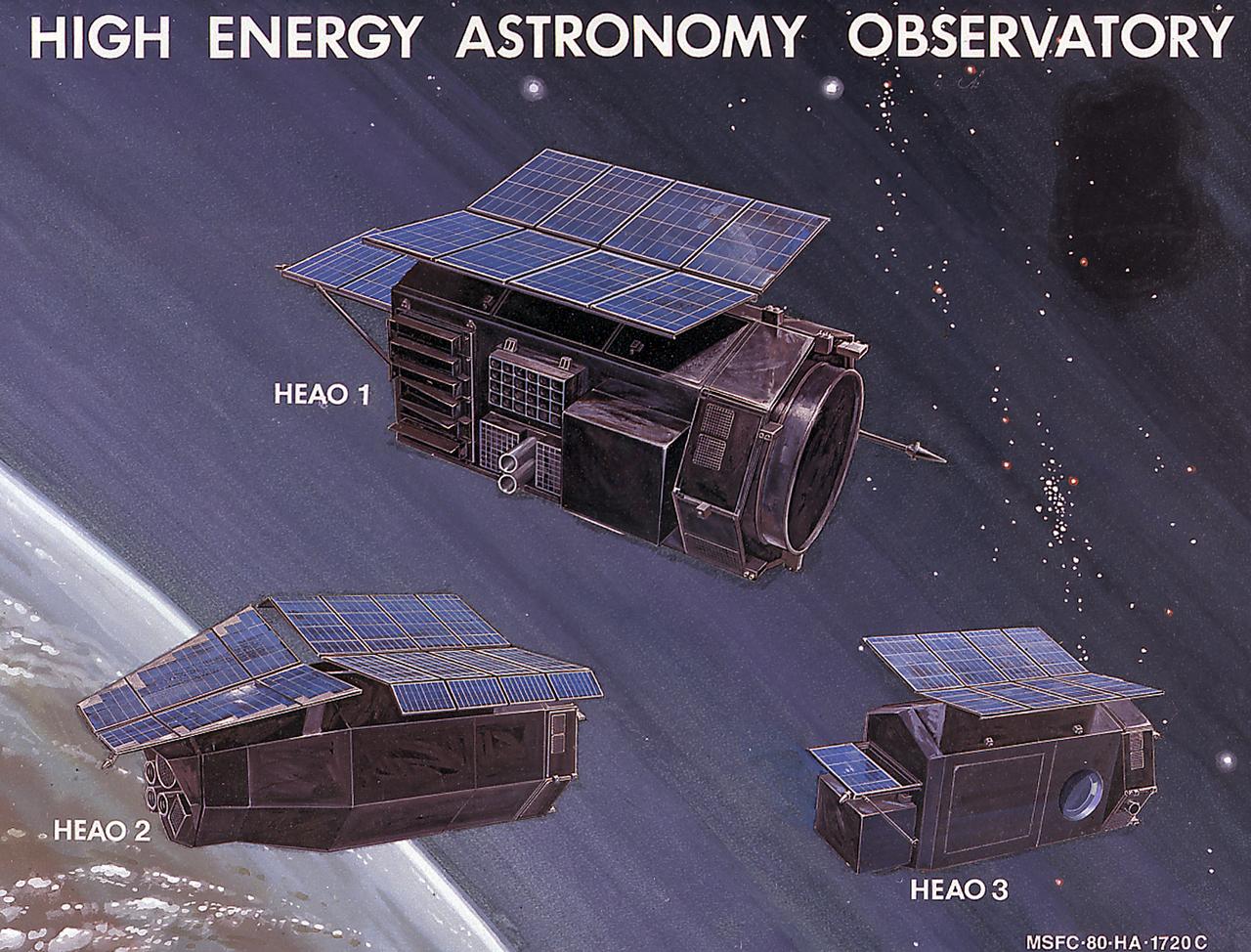
The family of High Energy Astronomy Observatory (HEAO) instruments consisted of three unmarned scientific observatories capable of detecting the x-rays emitted by the celestial bodies with high sensitivity and high resolution. The celestial gamma-ray and cosmic-ray fluxes were also collected and studied to learn more about the mysteries of the universe. High-Energy rays cannot be studied by Earth-based observatories because of the obscuring effects of the atmosphere that prevent the rays from reaching the Earth's surface. They had been observed initially by sounding rockets and balloons, and by small satellites that do not possess the needed instrumentation capabilities required for high data resolution and sensitivity. The HEAO carried the instrumentation necessary for this capability. In this photograph, an artist's concept of three HEAO spacecraft is shown: HEAO-1, launched on August 12, 1977; HEAO-2, launched on November 13, 1978; and HEAO-3, launched on September 20. 1979.
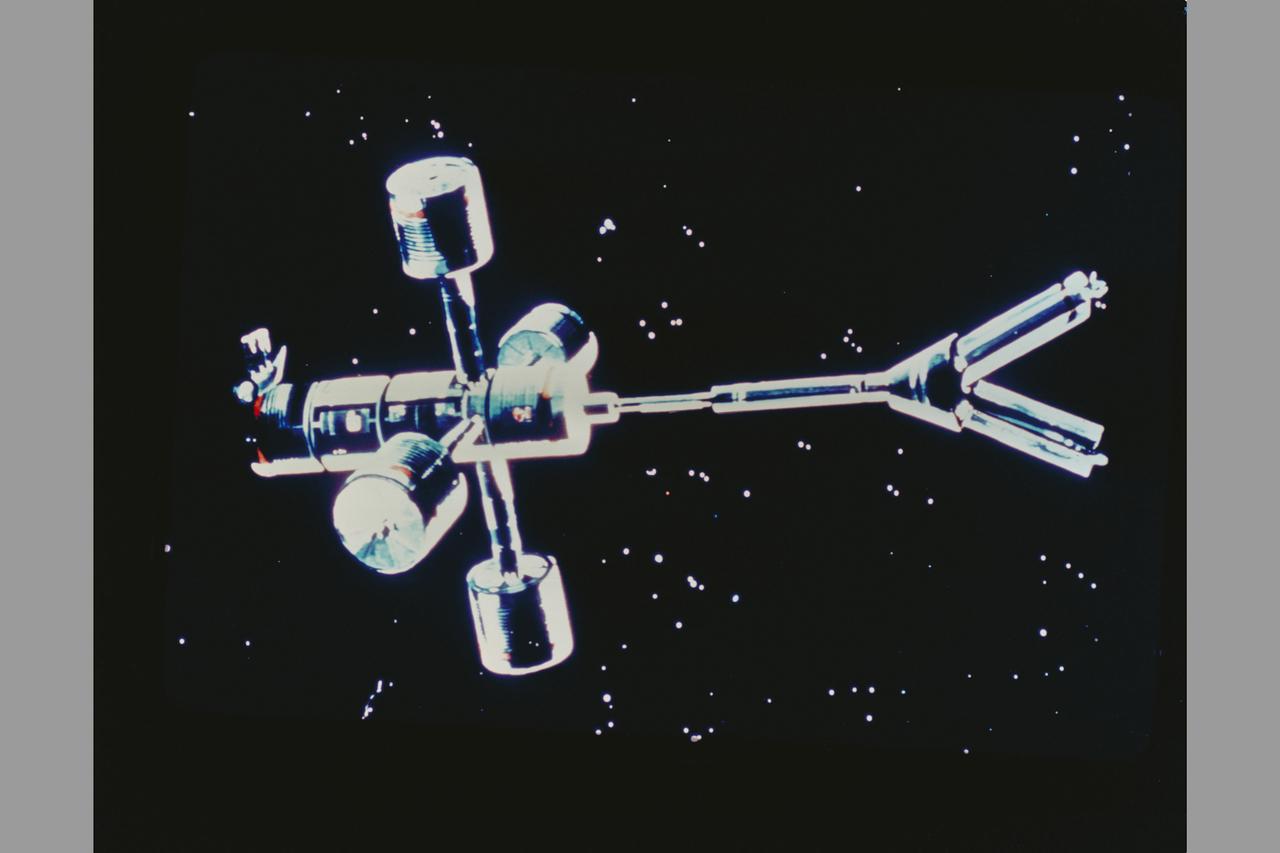
Exterior View of Colony. Space Colonization - Artwork.
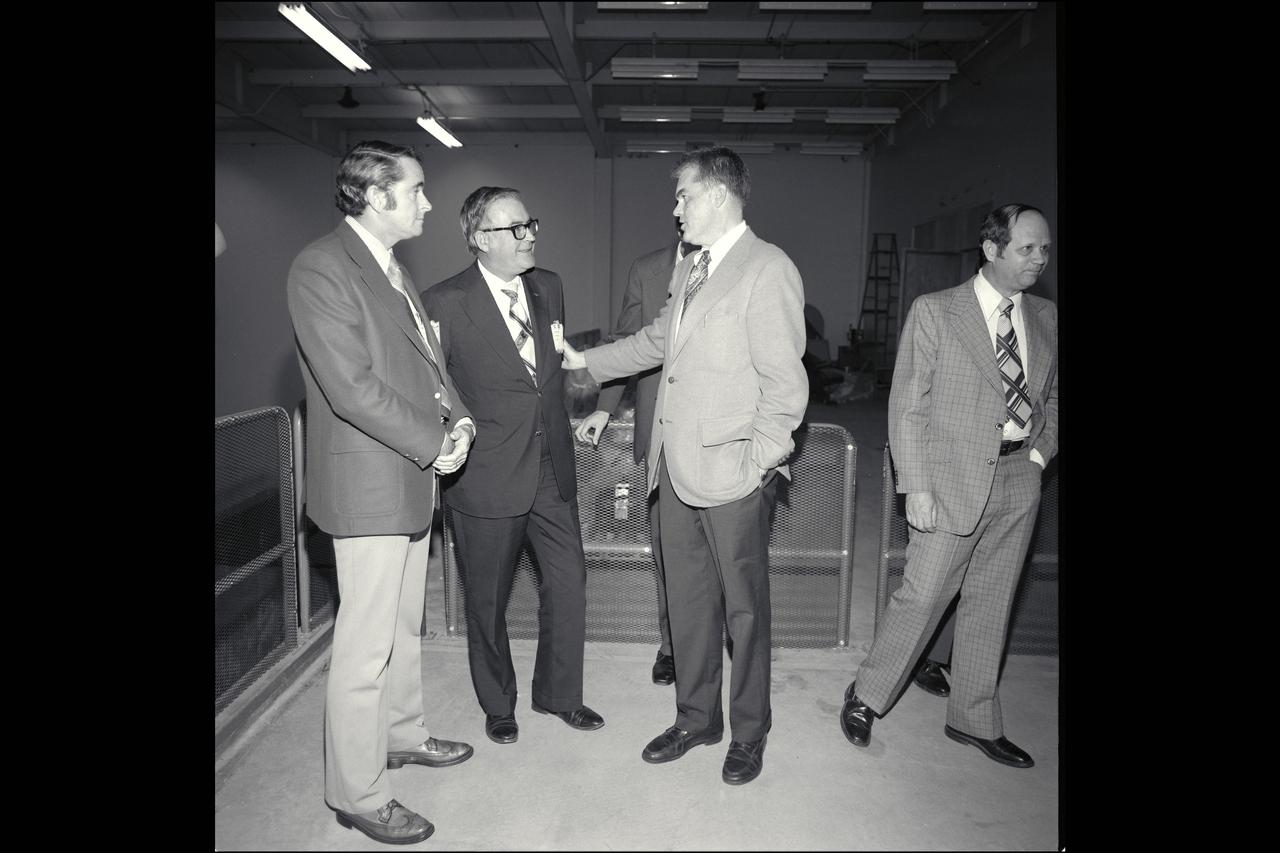
Hans Mark, Ames Director meets and greets visiting Congressman Lou Frey & Congressman Don Fugua

AST-05-263 (17-18 July 1975) --- The Apollo-Soyuz Test Project (ASTP) Commemorative Plaque is assembled in the Soviet Soyuz Orbital Module during the joint U.S.-USSR Apollo-Soyuz Test Project docking mission in Earth orbit. The plaque is written both in English and Russian.
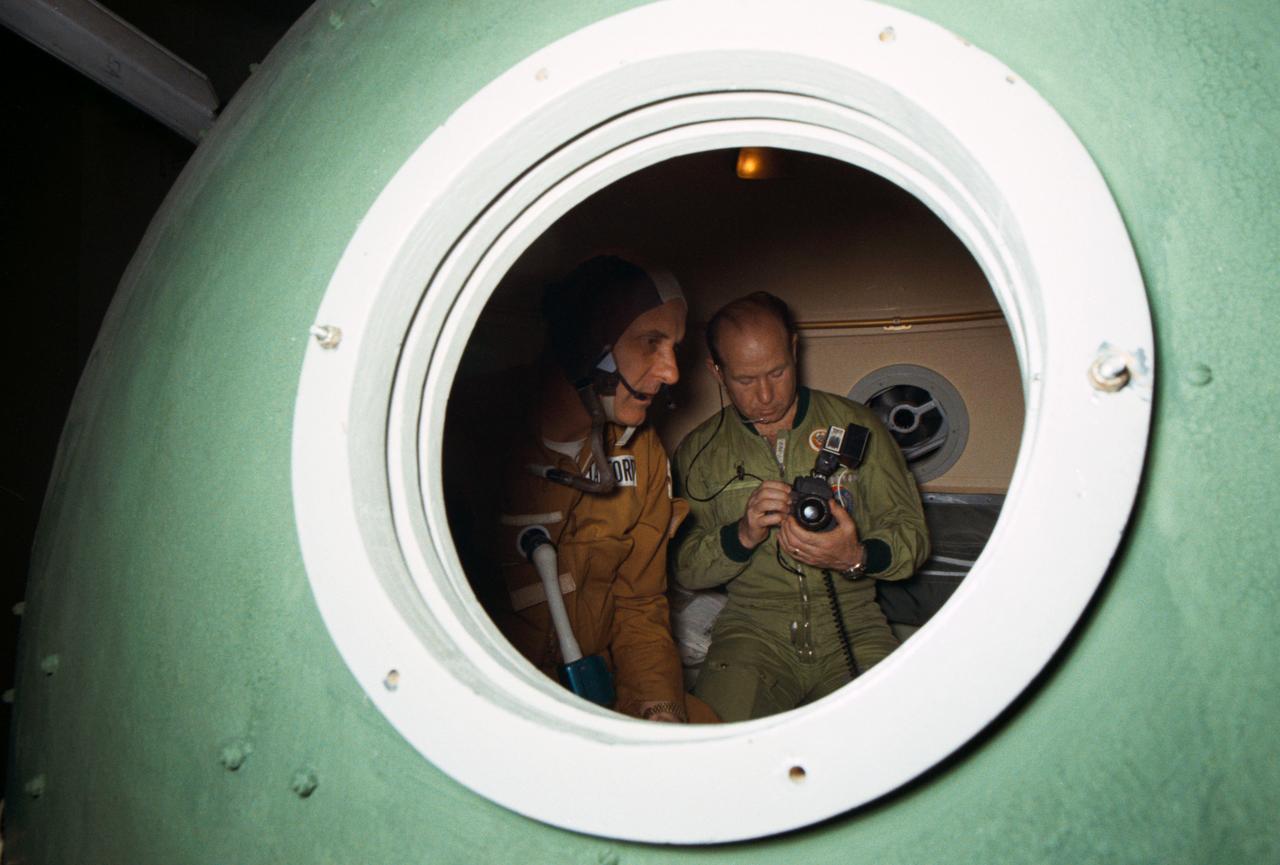
S75-21892 (20 Feb. 1975) --- Astronaut Thomas P. Stafford (left) and cosmonaut Aleksey A. Leonov participate in Apollo-Soyuz Test Project joint crew training in Building 35 at NASA's Johnson Space Center. Stafford and Leonov are the commanders of their respective prime crews. They are in the Soviet Soyuz Orbital Module mock-up. This picture was taken during a ?walk-through? of the second day?s activities in Earth orbit.
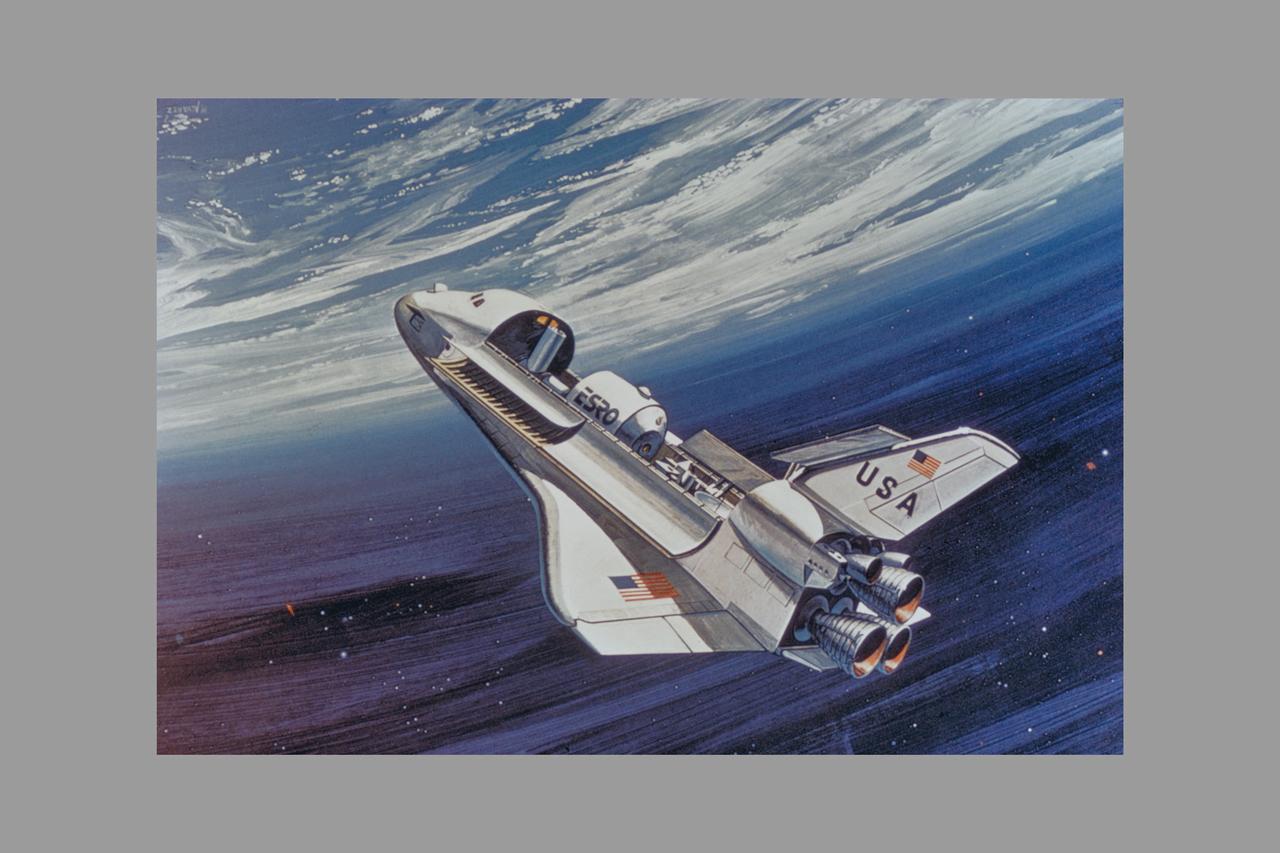
Shuttle Service (view of spacecraft). Space shuttle delivers part for Space Colony
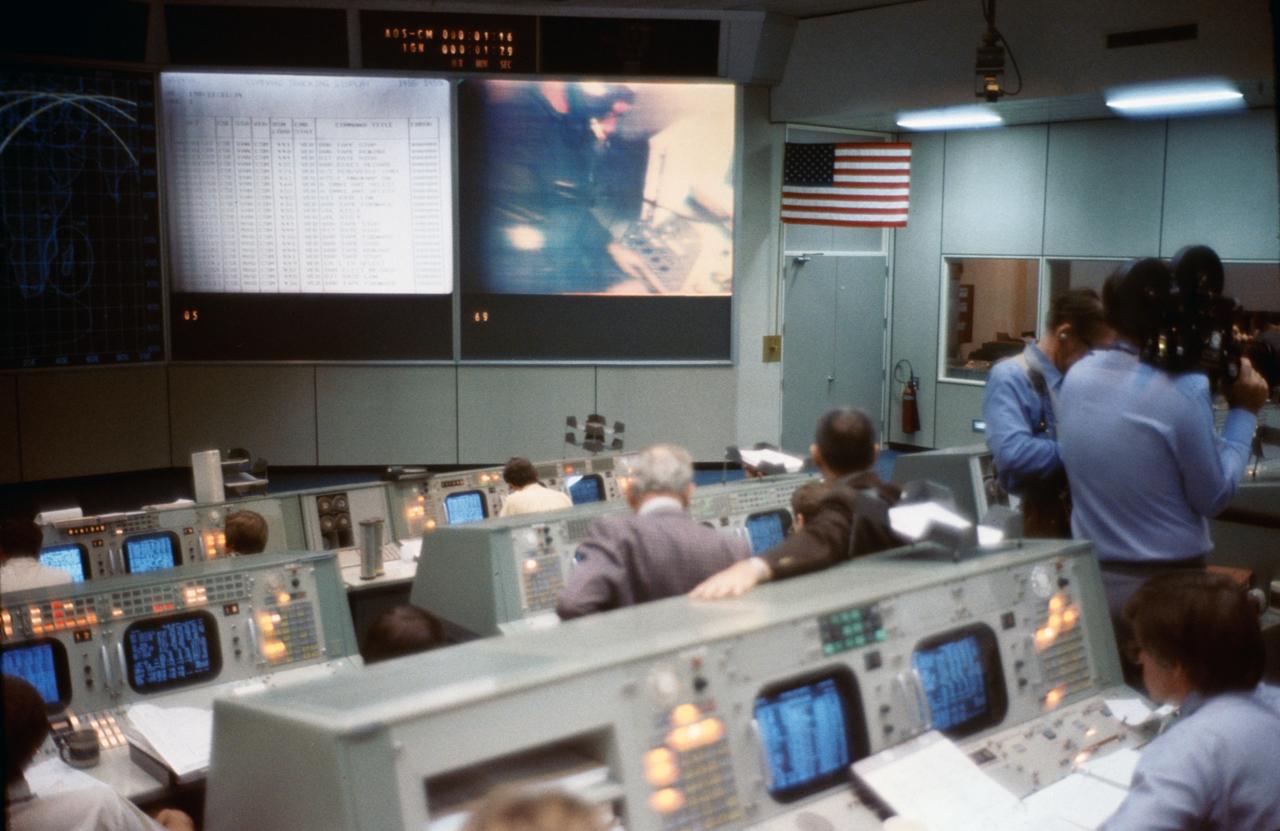
S75-23882 (20 March 1975) --- An overall view of the Mission Operations Control Room in the Mission Control Center during ASTP joint simulation activity at NASA's Johnson Space Center. M.P. Frank, the senior American ASTP flight director, is seated at his console in the lower right corner of the picture. The television monitor in the center background shows a scene from the ASTP control center in the Soviet Union. The simulations are part of the preparations for the U.S.-USSR Apollo-Soyuz Test Project docking mission in Earth orbit scheduled for July 1975.
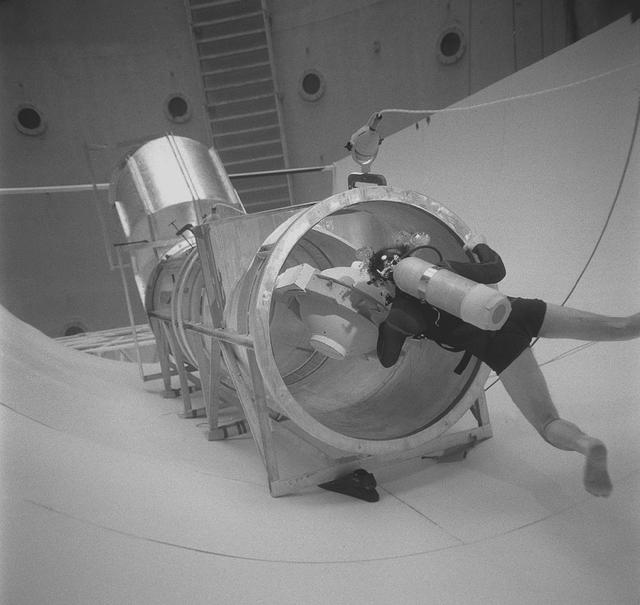
A Marshall scientist practices transferring objects in the Neutral Buoyancy Simulator (NBS) for the Spacelab transfer tunnel test.
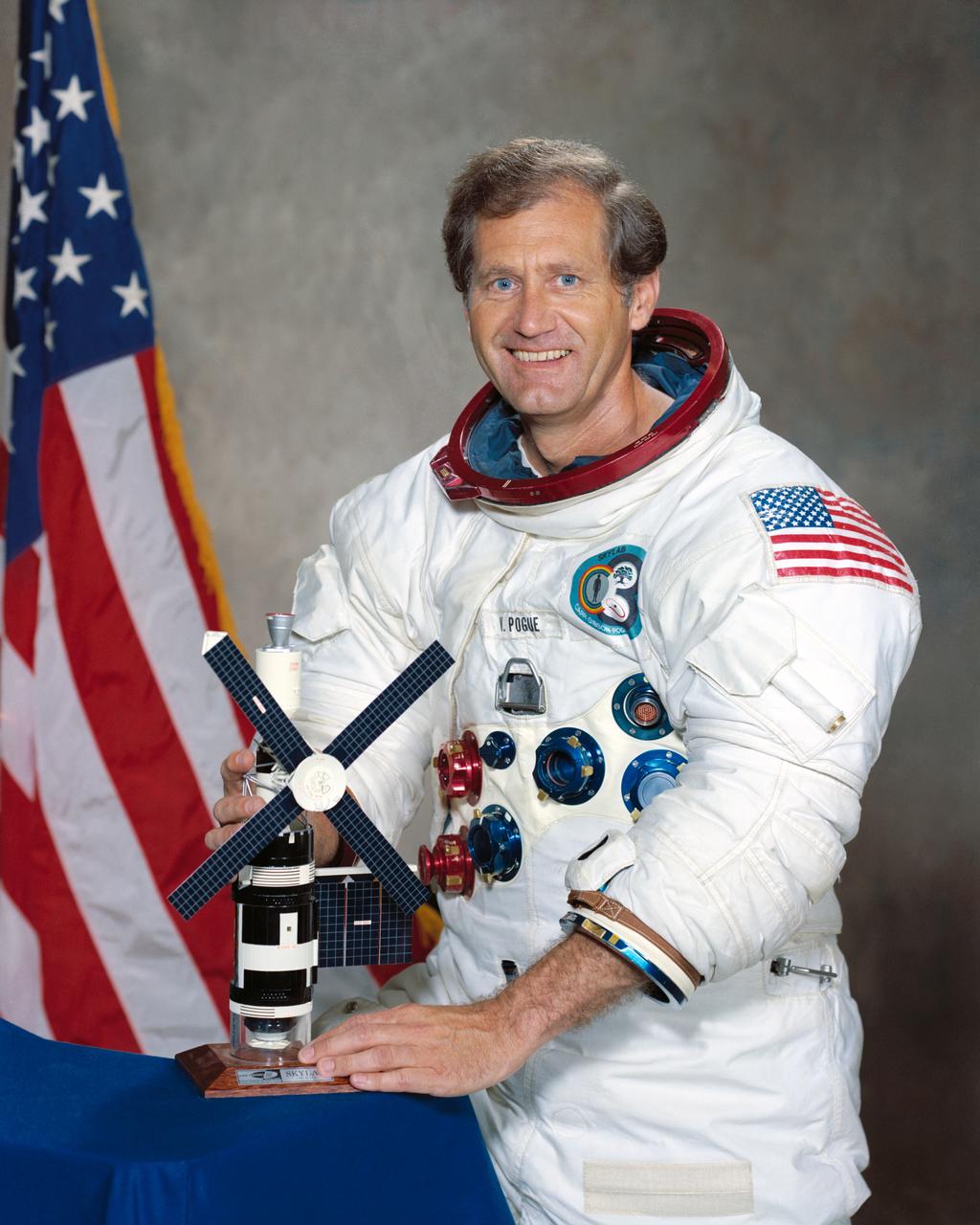
S75-31305 (March 1975) --- Astronaut William R. Pogue, Skylab 4 pilot. Photo credit: NASA
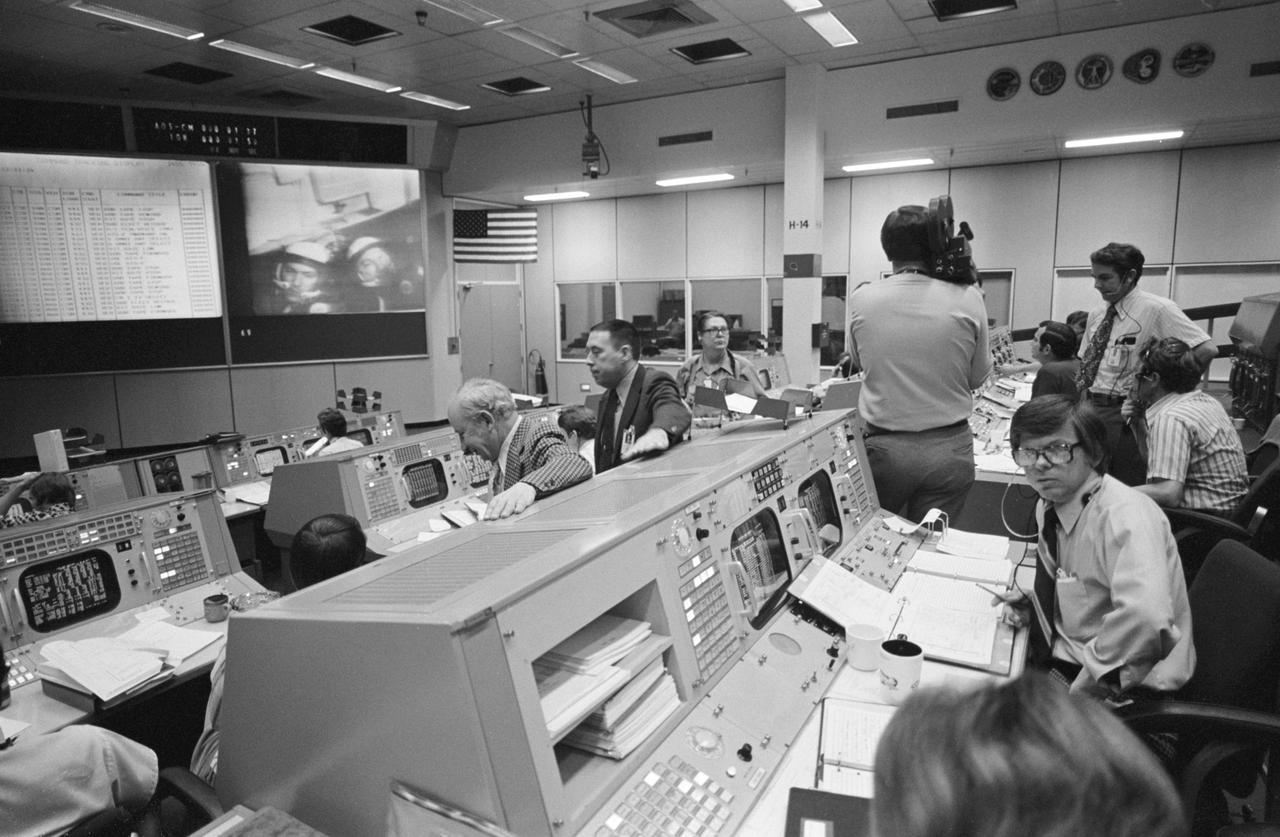
S75-23638 (20 March 1975) --- An overall view of the Mission Operations Control Room in the Mission Control Center during joint ASTP simulation activity at NASA's Johnson Space Center. The simulations are part of the preparations for the U.S.-USSR Apollo-Soyuz Test Project docking mission in Earth orbit scheduled for July 1975. M.P. Frank (seated, right) is the senior American flight director for the mission. Sigurd A. Sjoberg (in center, checked jacket), JSC Deputy Director, watches some of the console activity. George W.S. Abbey, Technical Assistant to the JSC Director, is standing next to Sjoberg. The television monitor in the background shows Soviet Soyuz crew activity from the Soviet Union.
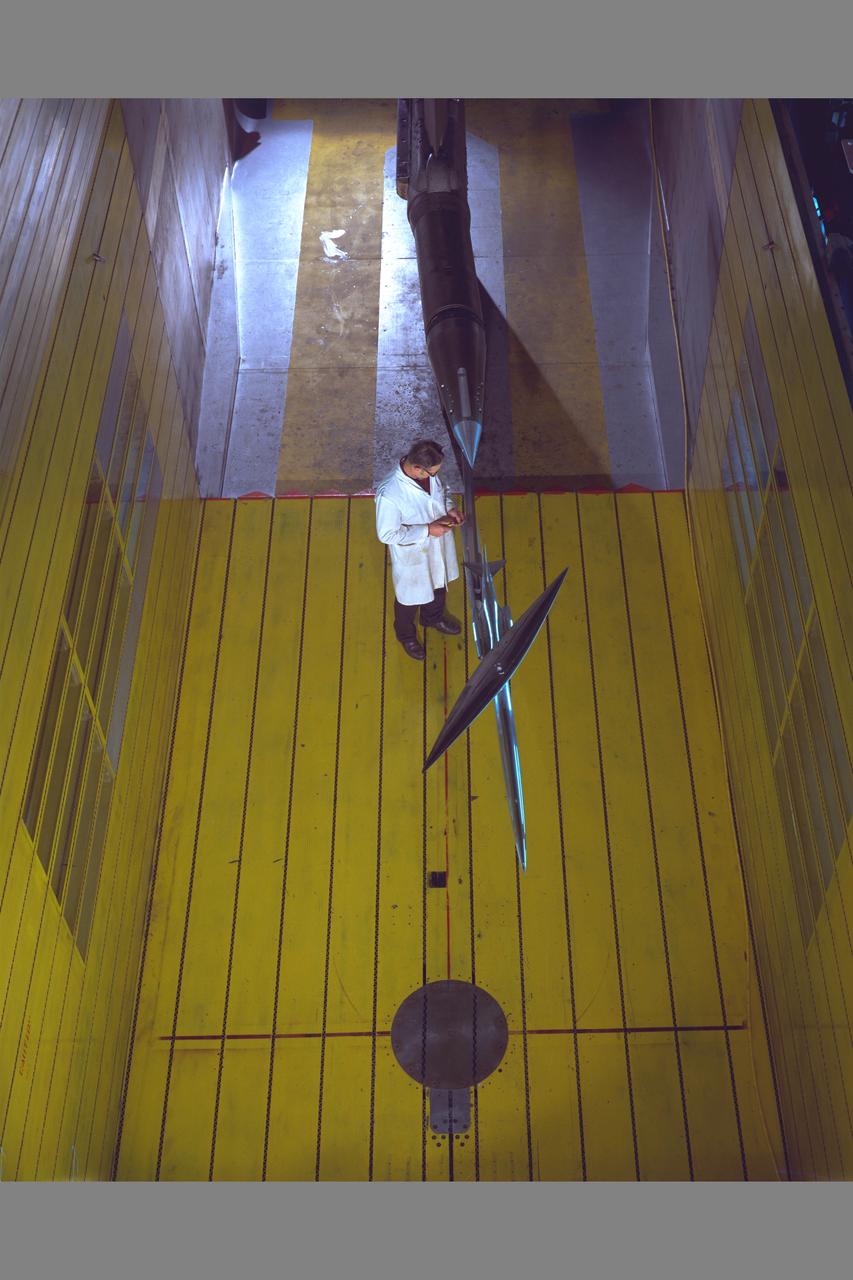
Practical Oblique Wing Test-026) in 11ft w.t. overhead view with technician
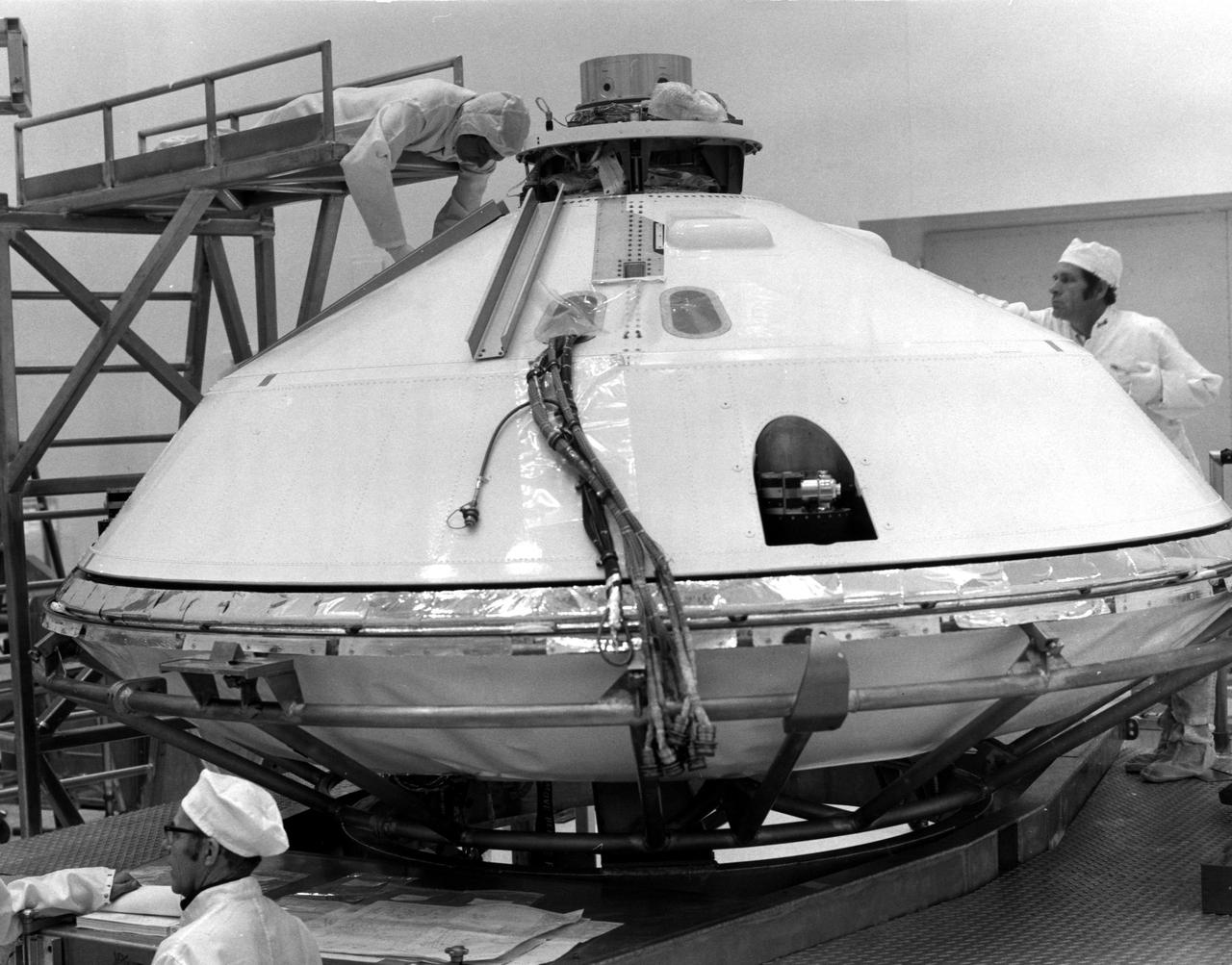
KENNEDY SPACE CENTER, FLA. -- Technicians prepared for removal of Viking Lander 1's aeroshell cover in KSC's Spacecraft Assembly and Encapsulation Facility 2 (SAEF-2) today. The cover remains over the Lander throughout its 440,000,000-mile journey to Mars. After the Lander separates from the Orbiter, the aeroshell will help to decelerate the speed of descent and will serve as a heat shield. After the aeroshell separates, the Lander's parachute will deploy at about 4,000 feet altitude to further slow descent for a soft landing on the Red Planet. The Kennedy Space Center will launch the first Viking from Complex 41, Cape Canaveral, no earlier than Aug. 11. The second Viking will be launched no earlier than Aug. 21.
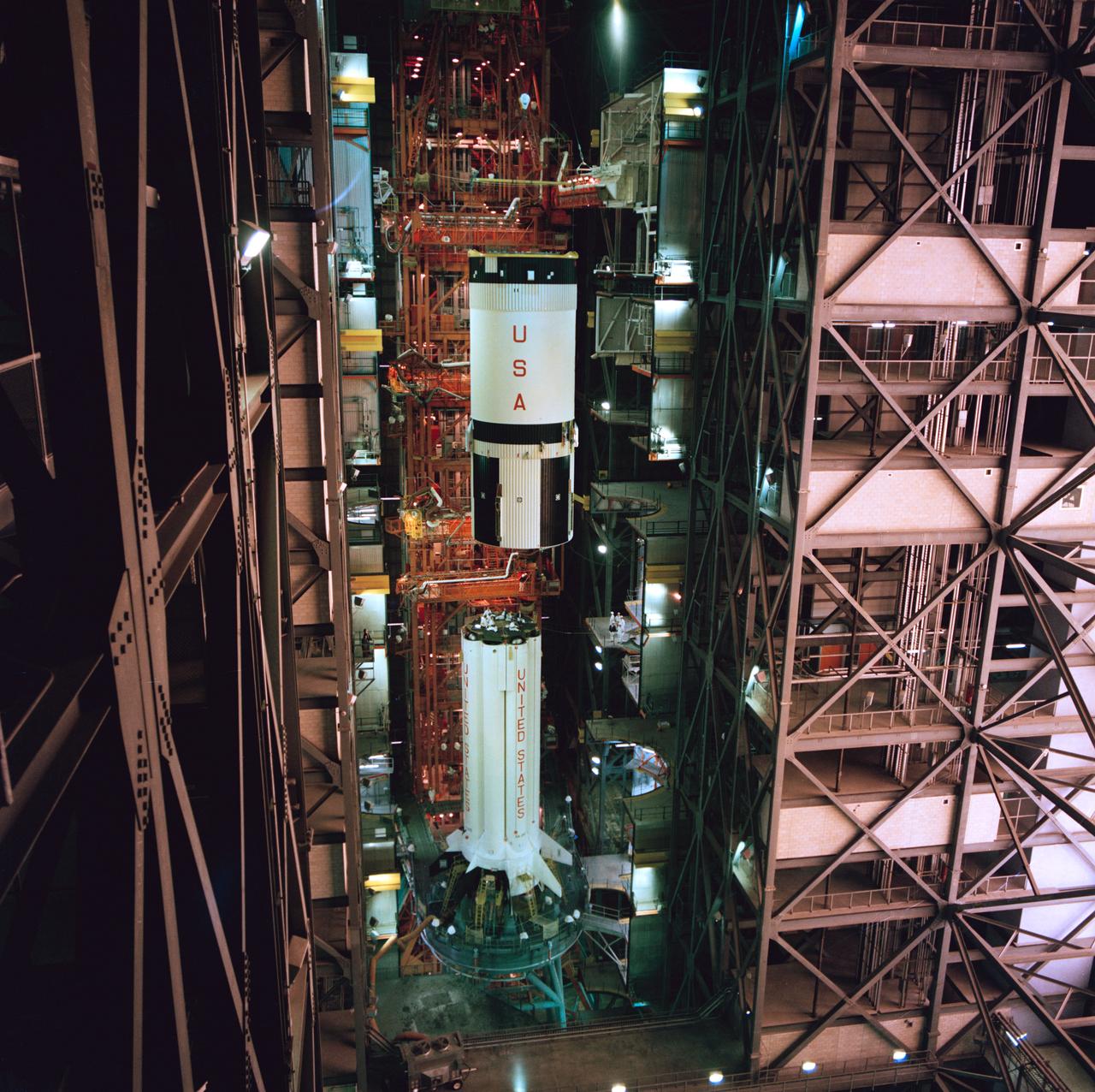
S75-20909 (January 1975) --- A high-angle view of the high-bay area in the Vehicle Assembly Building at the Kennedy Space Center showing the second (S-IVB) stage of the Saturn 1-B launch vehicle for the joint U.S.-USSR Apollo-Soyuz Test Project mission being hoisted into position for mating atop the first (S-1B) stage. The major components of the American ASTP space vehicle will be the S-1B stage, the S-IVB stage, and a payload consisting of a Command/Service Module and a Docking Module.
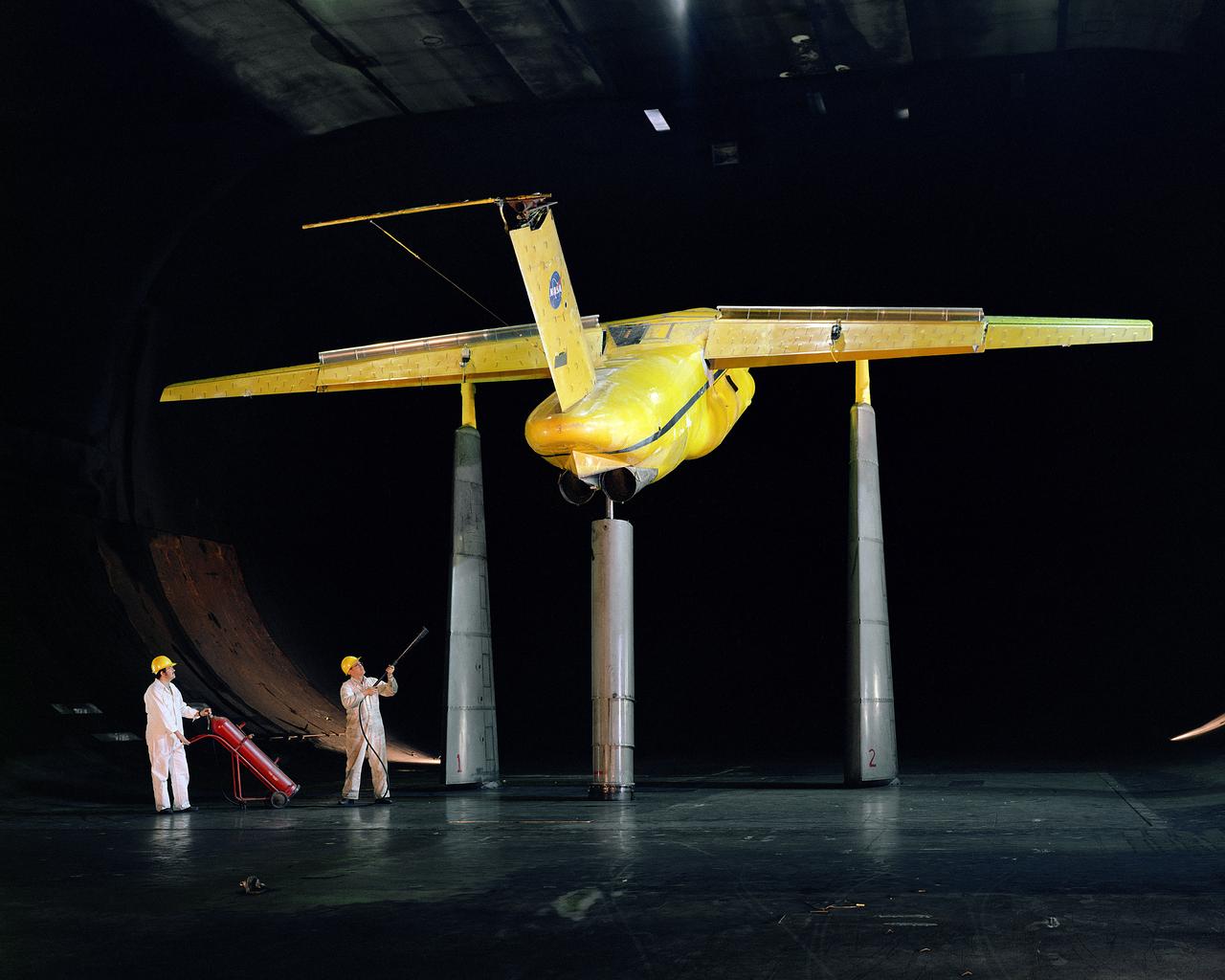
(Test 460) deHavilland Augmentor Wing 40x80 Foot Wind Tunnel.
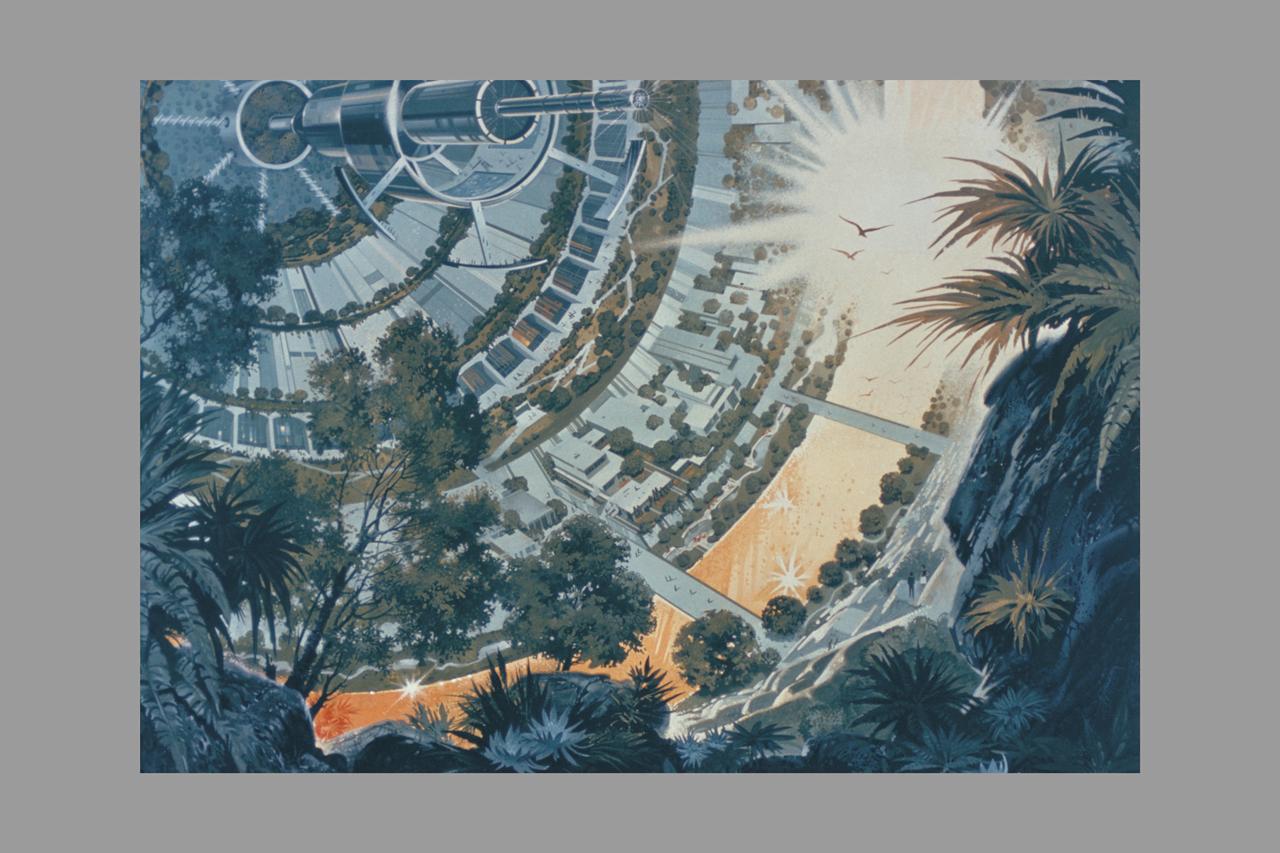
Artwork Space Colonization - Bernal sphere

Exterior View. Space Colonization - Artwork.
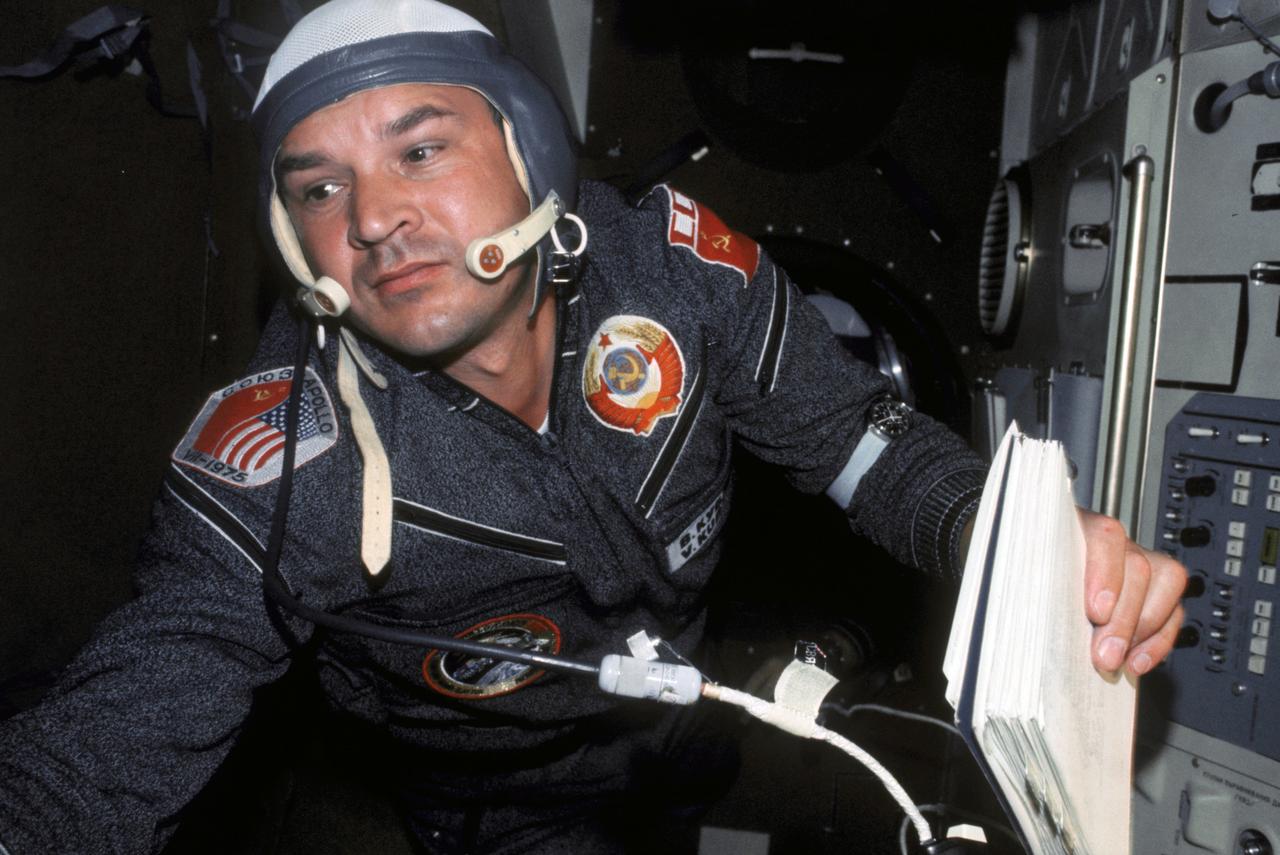
AST-05-305 (17-19 July 1975) --- Cosmonaut Valeriy N. Kubasov, engineer on the Soviet crew, is photographed in the Soyuz Orbital Module during the joint U.S.-USSR Apollo-Soyuz Test Project docking mission in Earth orbit. This picture was taken with a 35mm camera.
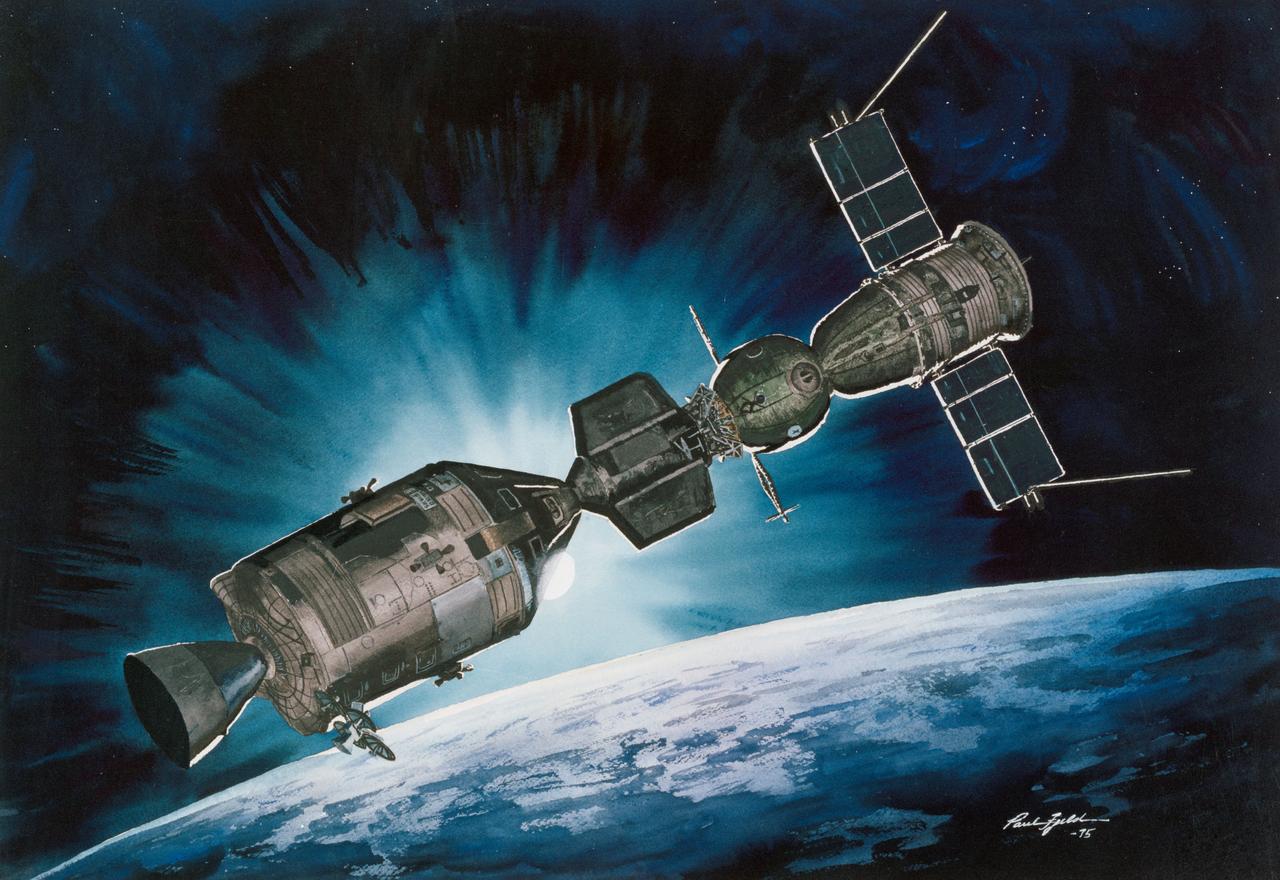
S75-28511 (July 1975) --- An artist?s concept depicting the American and Soviet spacecraft docked in Earth orbit during the July 1975 Apollo-Soyuz Test Project mission. The Apollo Command/Service Module is on the left, the Docking Module is in the center, and the Soyuz spacecraft is on the right. The first docking of spacecraft from two different nations was scheduled for July 17, 1975. The American and Soviet ASTP crewmen planned to visit each other?s spacecraft while Apollo and Soyuz are docked for a maximum period of two days. The docking system on the Docking Module and the docking system on the Soyuz Orbital Module are designed to interface with each other. The painting is by artist Paul Fjeld.
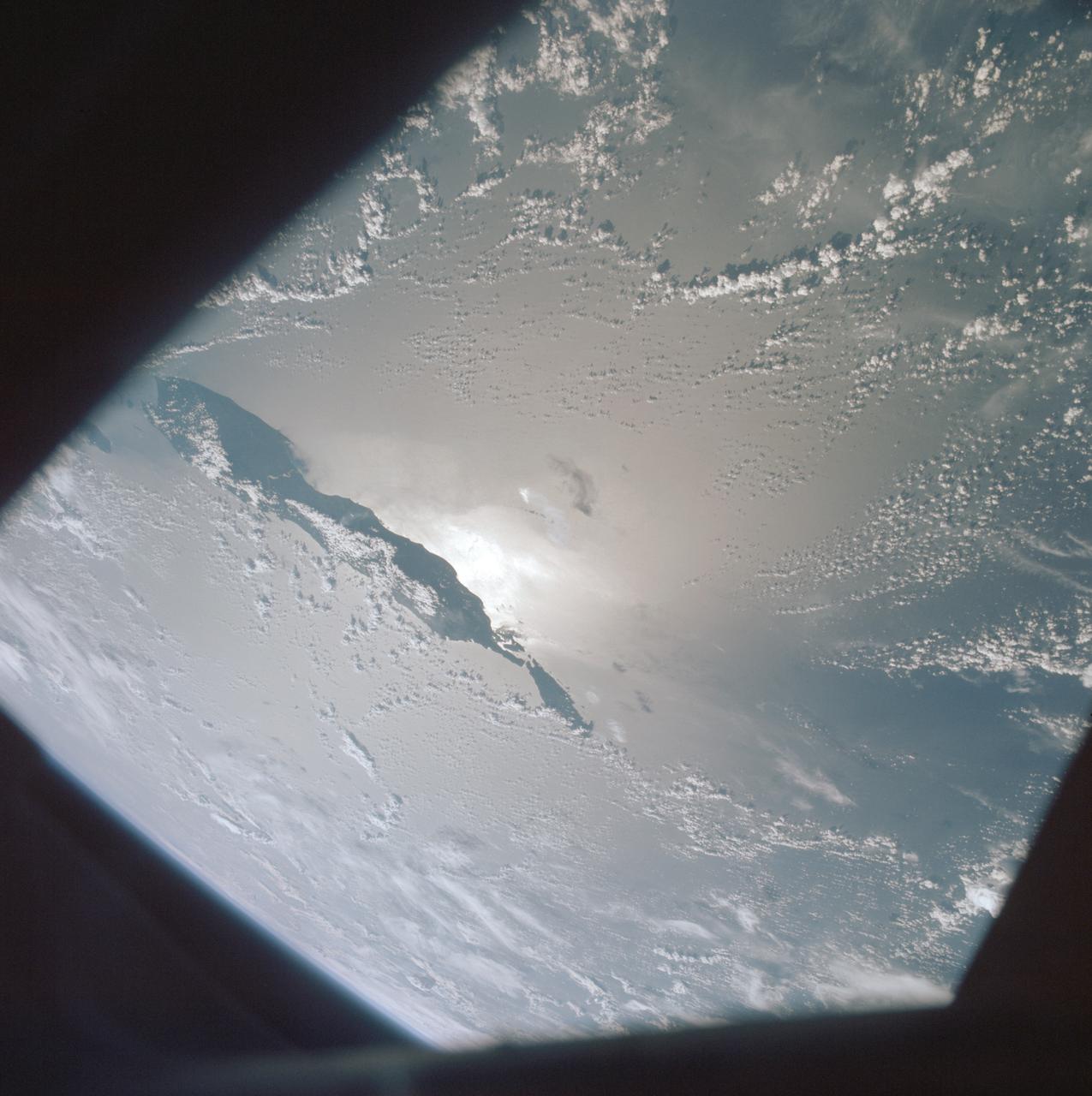
AST-19-1555 (24 July 1975) --- A sunglint in the South Western Pacific Ocean, as photographed from the Apollo spacecraft in Earth orbit during the joint U.S.-USSR Apollo-Soyuz Test Project mission. The island is Bougainville of the Solomon Islands group. The horizon of Earth is in the background. The picture was taken at an altitude of 231 kilometers (143 statute miles), with a 70mm Hasselblad camera using medium-speed Ektachrome QX-807 type film.
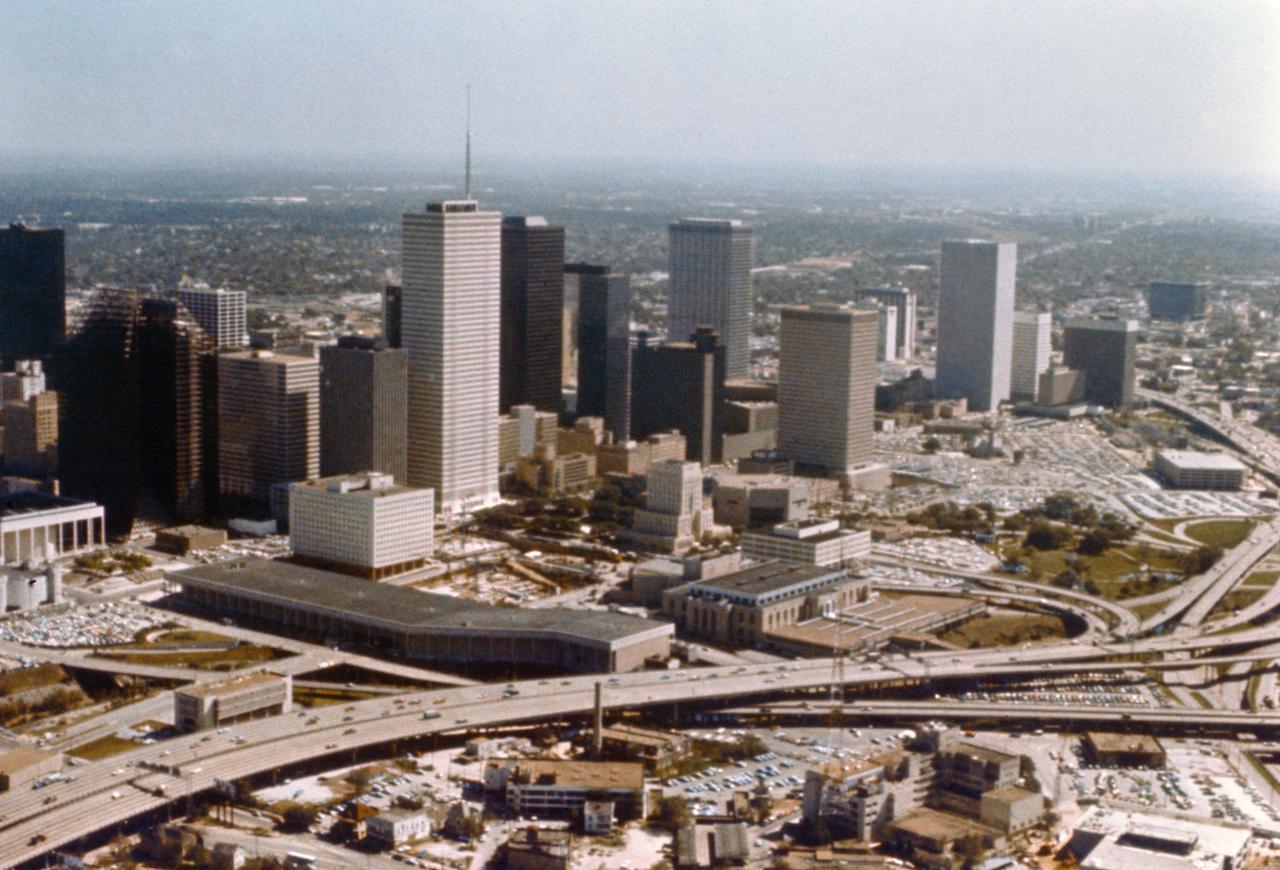
Low-altitude, high-angle view of Houston downtown area. This view was photographed to show convention central part of downtown to promote facilities here for hosting large conventions, etc. 1. JSC PROTOCOL - CONVENTIONS HOUSTON, TX
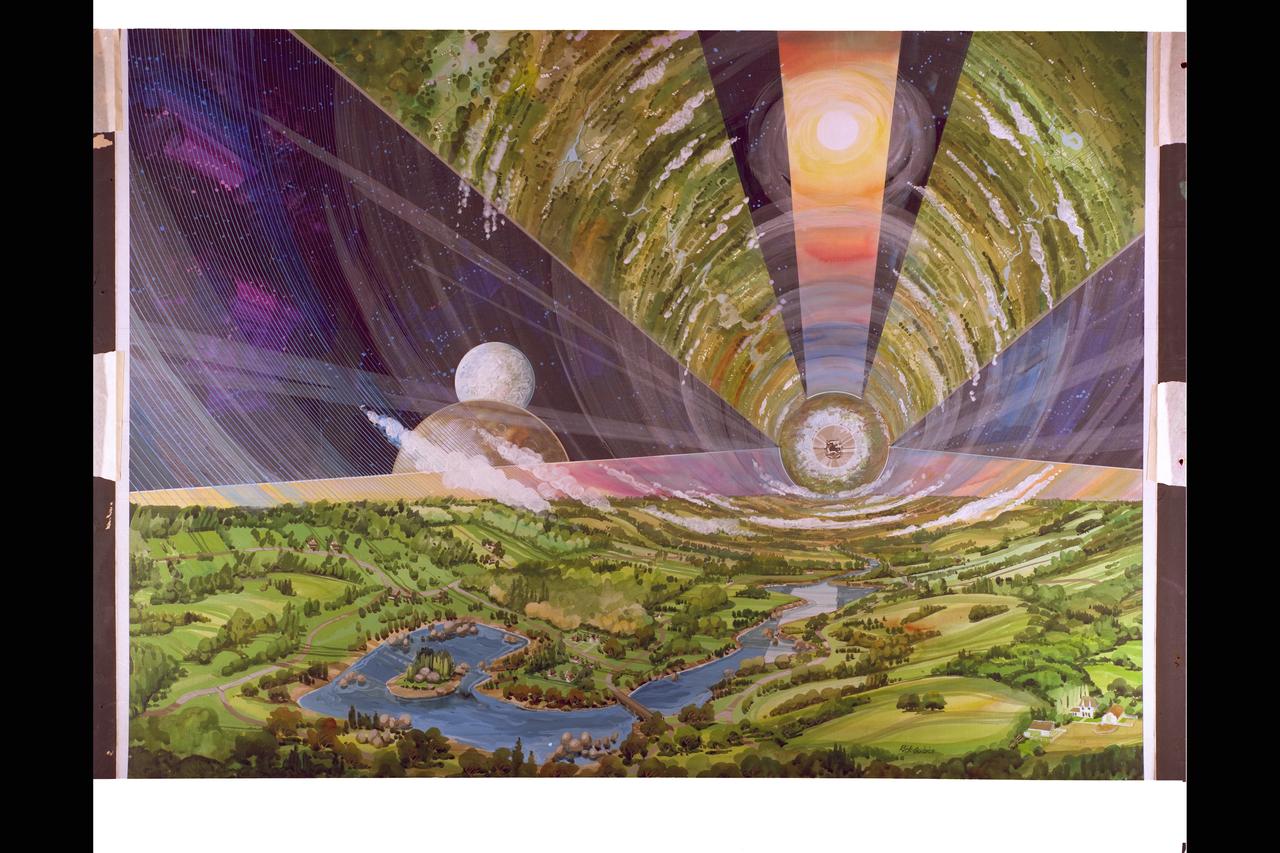
Artist: Rick Guidice interior of Torus wheel (L-5) Space Colonization Module
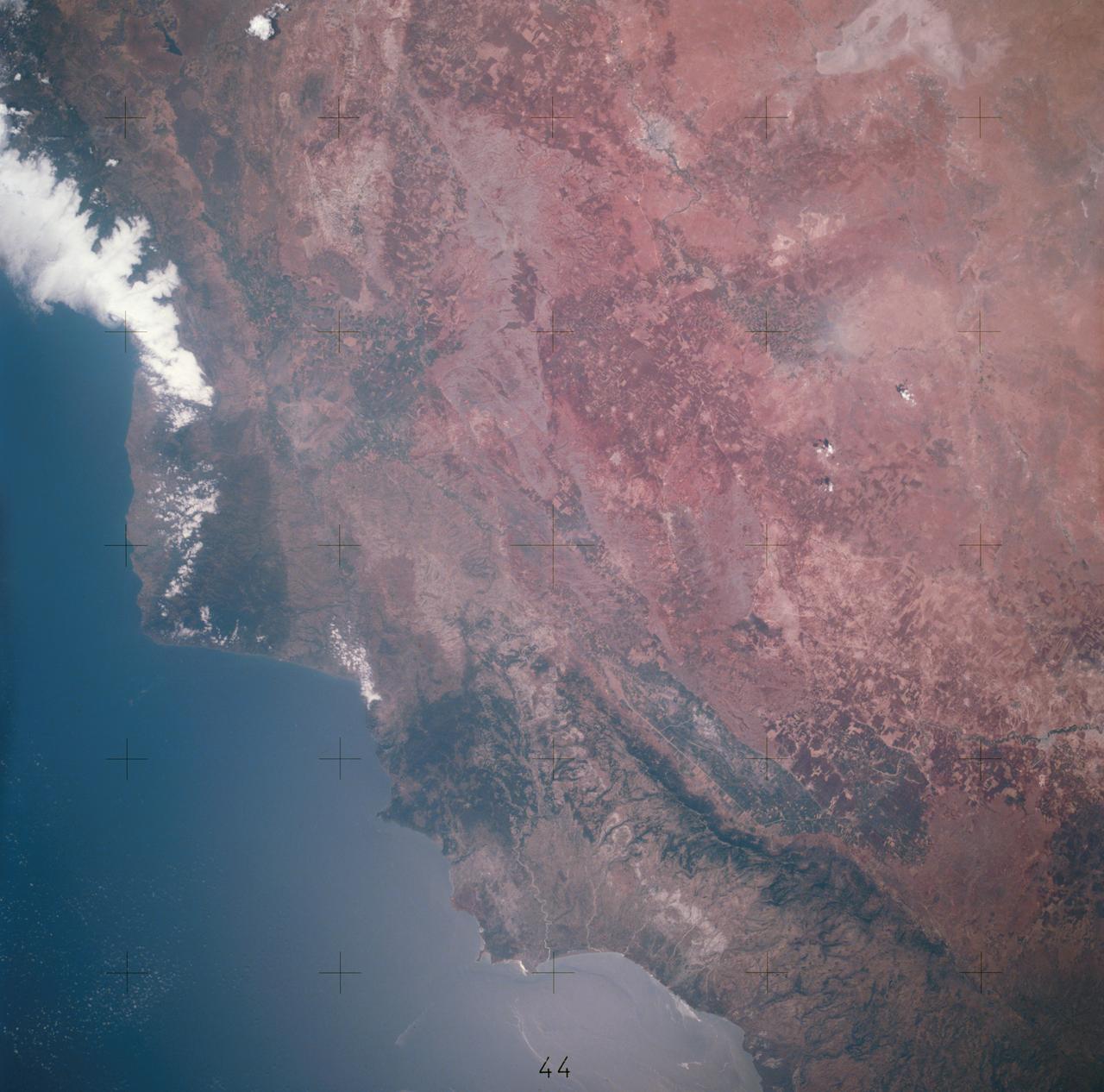
AST-16-1268 (20 July 1975) --- A near vertical view of a portion of the Mediterranean coast of Turkey and Syria, as photographed from the Apollo spacecraft in Earth orbit during the joint U.S-USSR Apollo-Soyuz Test Project mission. This view covers the Levant Coast north of Beirut, showing the cities of Aleppo, Hamah, Homs and Latakia. The Levantine rift bends to the northeast. This picture was taken with a 70mm Hasselblad camera using high-definition aerial Ektachrome SO-242 type film. The altitude of the spacecraft was 225 kilometers (140 statute miles) when this photograph was taken.
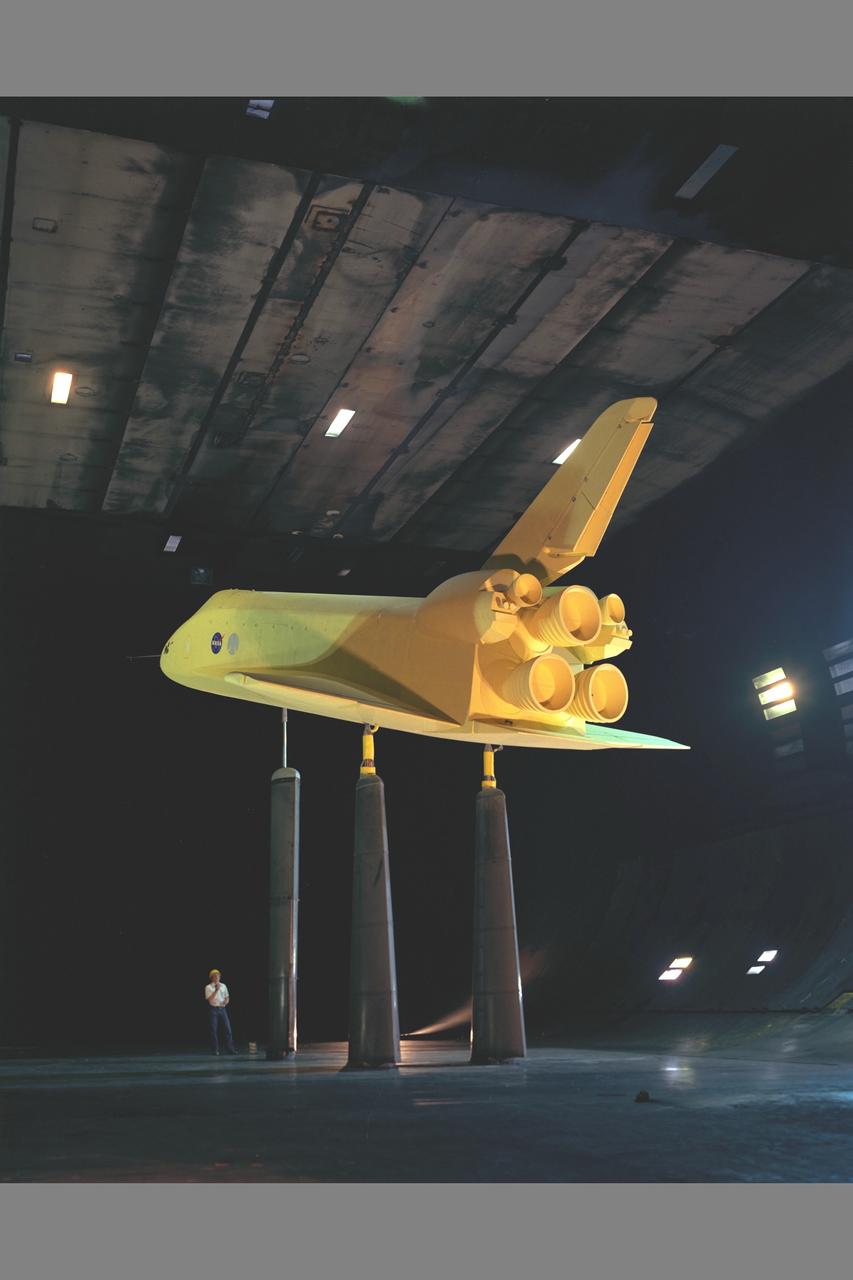
Space Shuttle Orbitor Model (A-100) in the 40x80ft W.T.
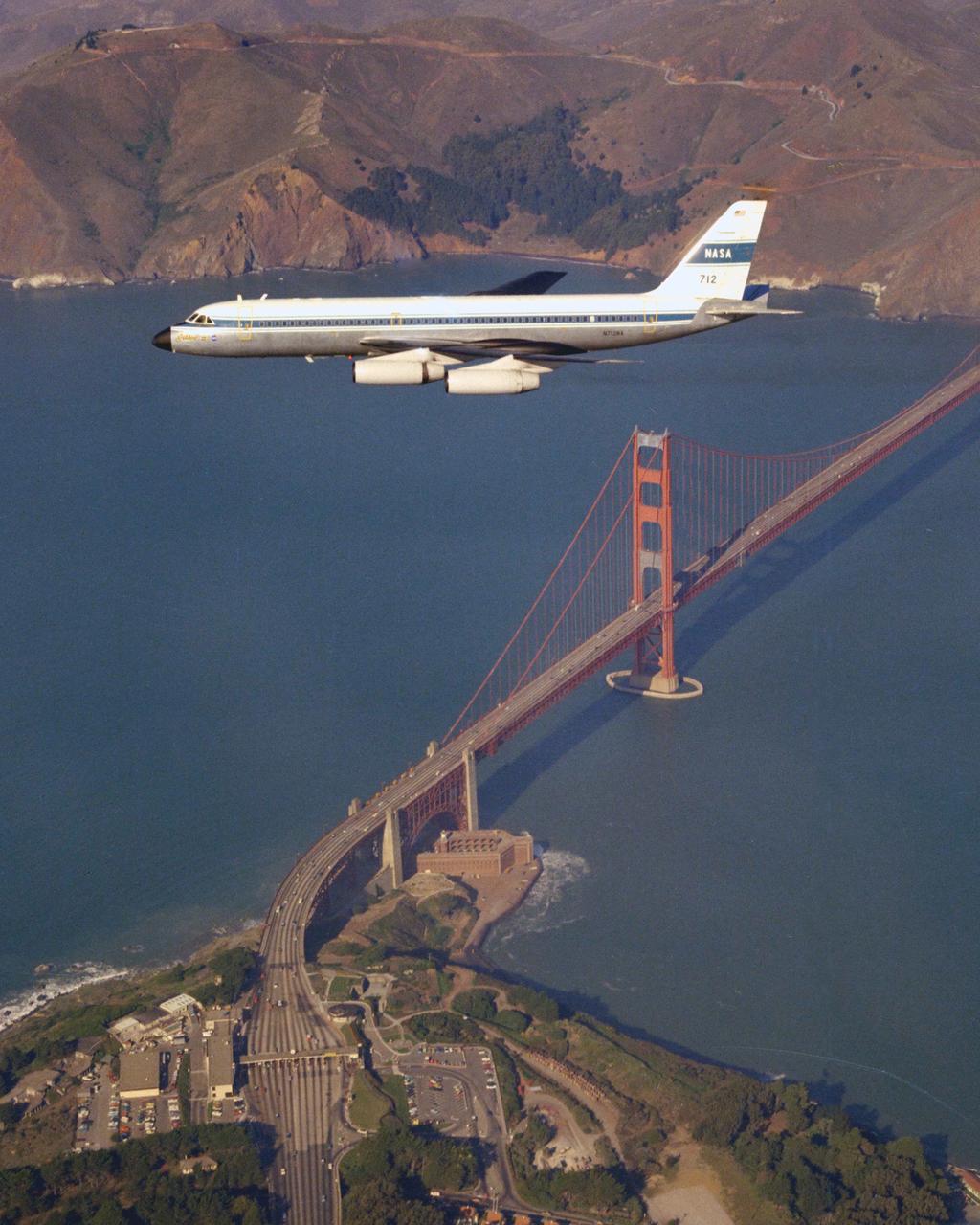
CV-990 (NASA-712) Galileo II aircraft in flight over the San Francisco's Golden Gate Bridge. A digital navigation, guidance and autopilot system tested on Galileo 1 and Galileo II in 1975 looked at the feasibility of energy-management approach concepts for an unpowered vehicle. Flight tests carried out by pilot Fred Drinkwater with technical direction by Fred Edwards and John D Foster along with significant input from Gordon Hardy on the pilot's system interface. Note: Used in publication in Flight Research at Ames; 57 Years of Development and Validation of Aeronautical Technology NASA SP-1998-3300 fig 95 ref 99
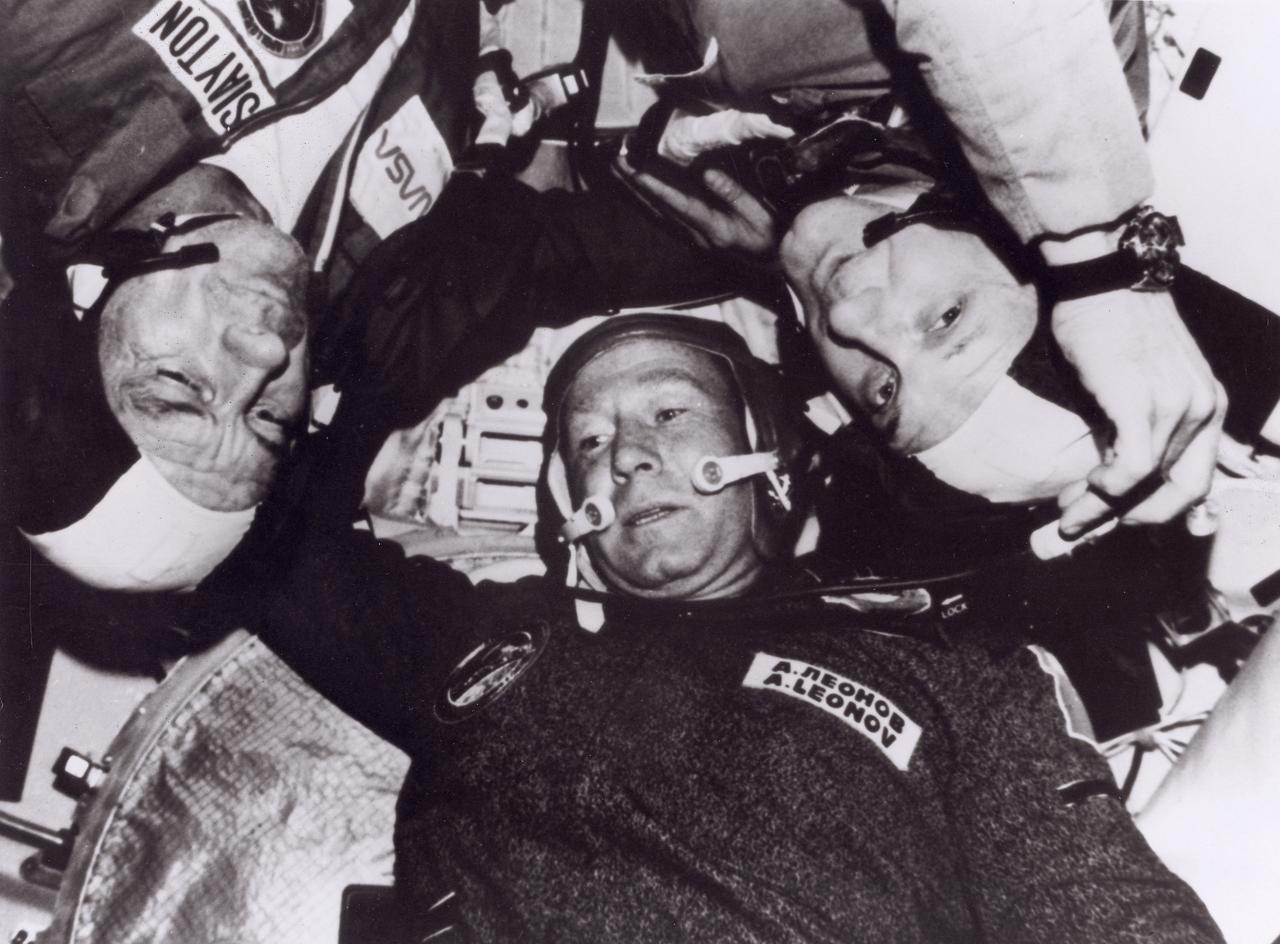
The final launch of a Saturn rocket came on July 15, 1975 as part of the Apollo-Soyuz Test Project. Earlier that day, a Russian Soyuz spacecraft lifted off its launch pad at a Soviet launch site carrying three cosmonauts. Seven and one-half hours later, the U.S. Apollo spacecraft was launched with its crew of American astronauts. Rendezvous and docking of the two ships were accomplished on July 17. The two ships remained docked for two days, conducting joint experiments and exchanging national mementos. In this photograph, astronauts Donald Slayton and Thomas Stafford chat with cosmonaut Alexei Leonov during their visit to the Soyuz Orbital Module.
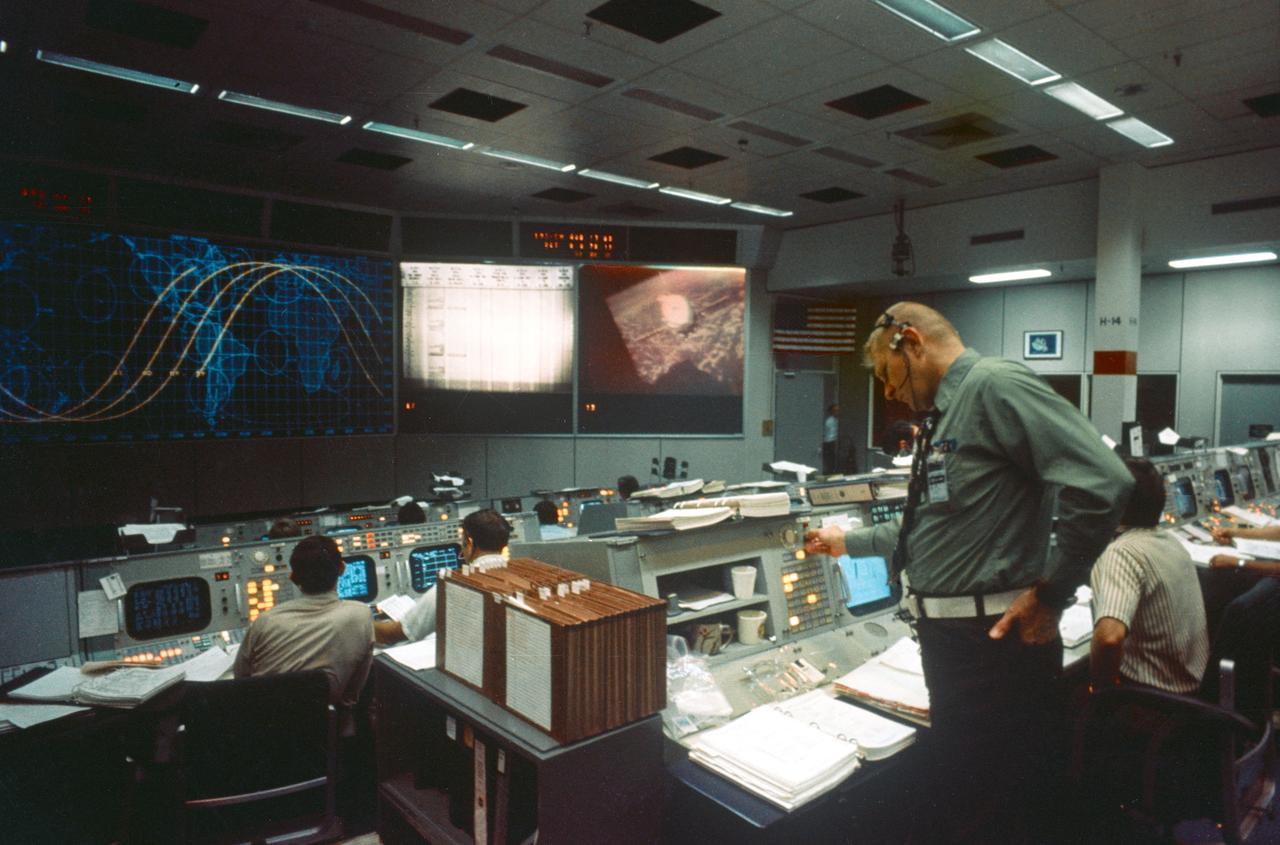
S75-28682 (17 July 1975) --- An overall view of the Mission Operations Control Room in the Mission Control Center during the joint U.S.-USSR Apollo-Soyuz Test Project docking mission in Earth orbit. The large television monitor shows a view of the Soyuz spacecraft as seen from the Apollo spacecraft during rendezvous and docking maneuvers. Eugene F. Kranz, JSC Deputy Director of Flight Operations, is standing in the foreground. M.P. Frank, the American senior ASTP flight director, is partially obscured on the right.
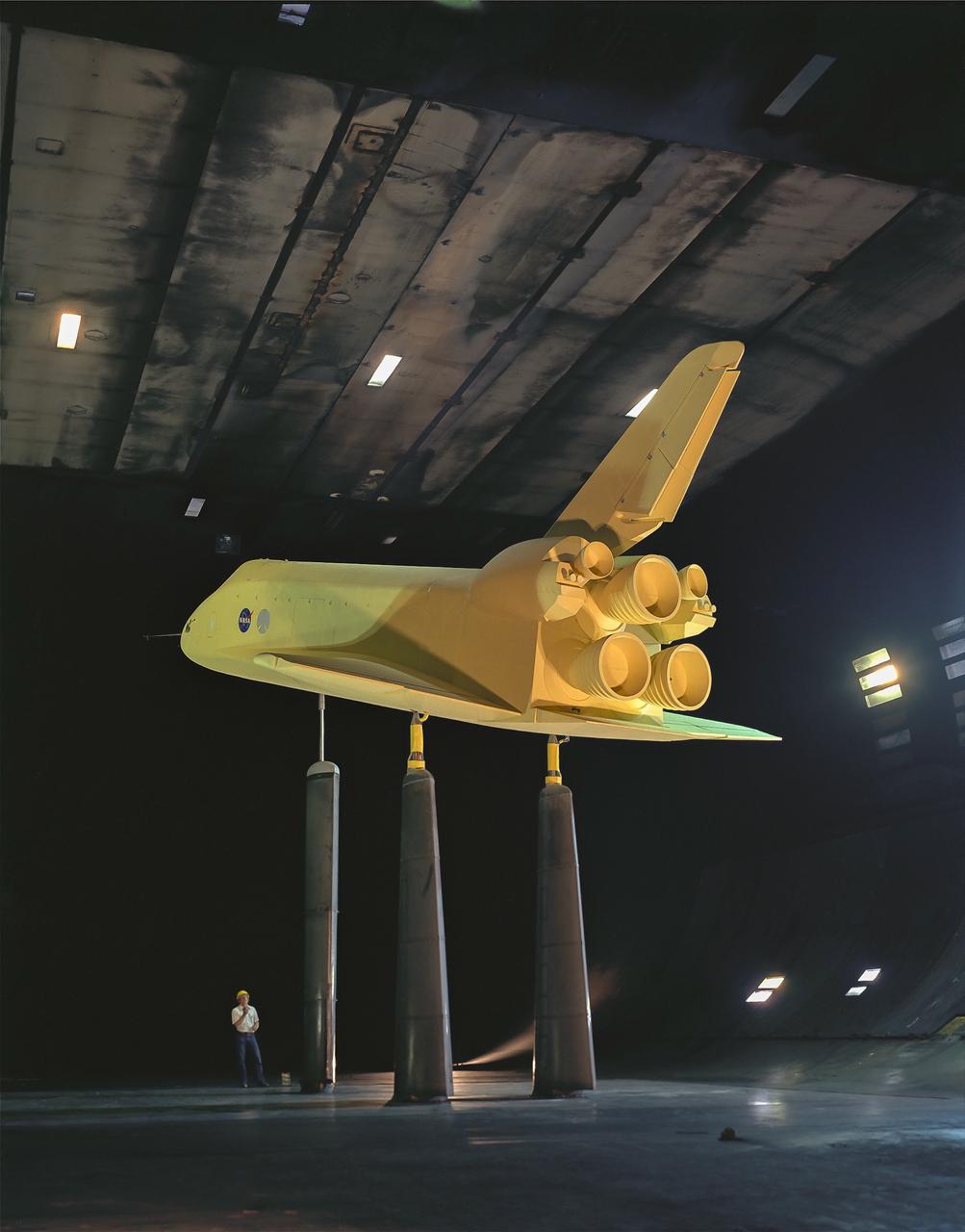
Space Shuttle SSV Orbiter Model A100 0.36 Scale In 40x80 Foot Wind Tunnel. 3/4 lower rear view.
![CAPE CANAVERAL, Fla. – ASTP prime crewmen Donald Slayton, Thomas Stafford and Vance Brand pose with their Saturn IB launch vehicle following the Countdown Demonstration Test [CDDT], a step-by-step dress rehearsal for their July 15 launch. During the “wet” portion of the test, conducted yesterday, the stages of the launch vehicle were fueled as they will be on launch day. The fuels were off loaded and the terminal portion of the count repeated today with the astronauts aboard the vehicle. The first international crewed spaceflight was a joint U.S.-U.S.S.R. rendezvous and docking mission. The Apollo-Soyuz Test Project, or ASTP, took its name from the spacecraft employed: the American Apollo and the Soviet Soyuz. The three-man Apollo crew lifted off from Kennedy Space Center aboard a Saturn IB rocket on July 15, 1975, to link up with the Soyuz that had launched a few hours earlier. A cylindrical docking module served as an airlock between the two spacecraft for transfer of the crew members. Photo credit: NASA](https://images-assets.nasa.gov/image/KSC-75PC-0330/KSC-75PC-0330~medium.jpg)
CAPE CANAVERAL, Fla. – ASTP prime crewmen Donald Slayton, Thomas Stafford and Vance Brand pose with their Saturn IB launch vehicle following the Countdown Demonstration Test [CDDT], a step-by-step dress rehearsal for their July 15 launch. During the “wet” portion of the test, conducted yesterday, the stages of the launch vehicle were fueled as they will be on launch day. The fuels were off loaded and the terminal portion of the count repeated today with the astronauts aboard the vehicle. The first international crewed spaceflight was a joint U.S.-U.S.S.R. rendezvous and docking mission. The Apollo-Soyuz Test Project, or ASTP, took its name from the spacecraft employed: the American Apollo and the Soviet Soyuz. The three-man Apollo crew lifted off from Kennedy Space Center aboard a Saturn IB rocket on July 15, 1975, to link up with the Soyuz that had launched a few hours earlier. A cylindrical docking module served as an airlock between the two spacecraft for transfer of the crew members. Photo credit: NASA

AST-30-2601 (20 July 1975) --- An area of the Cascade Mountains southeast of Seattle in the State of Washington, as photographed from the Apollo spacecraft in Earth orbit during the joint U.S.-USSR Apollo-Soyuz Test Project mission. The view includes Snoqualmie Pass, Cle Elum Lake, Kachess Lake and Keechelus Lake. The picture was taken at an altitude of 228 kilometers (141 statute miles) with a 70mm Hasselblad camera using medium-speed Ektachrome QX-807 type film.
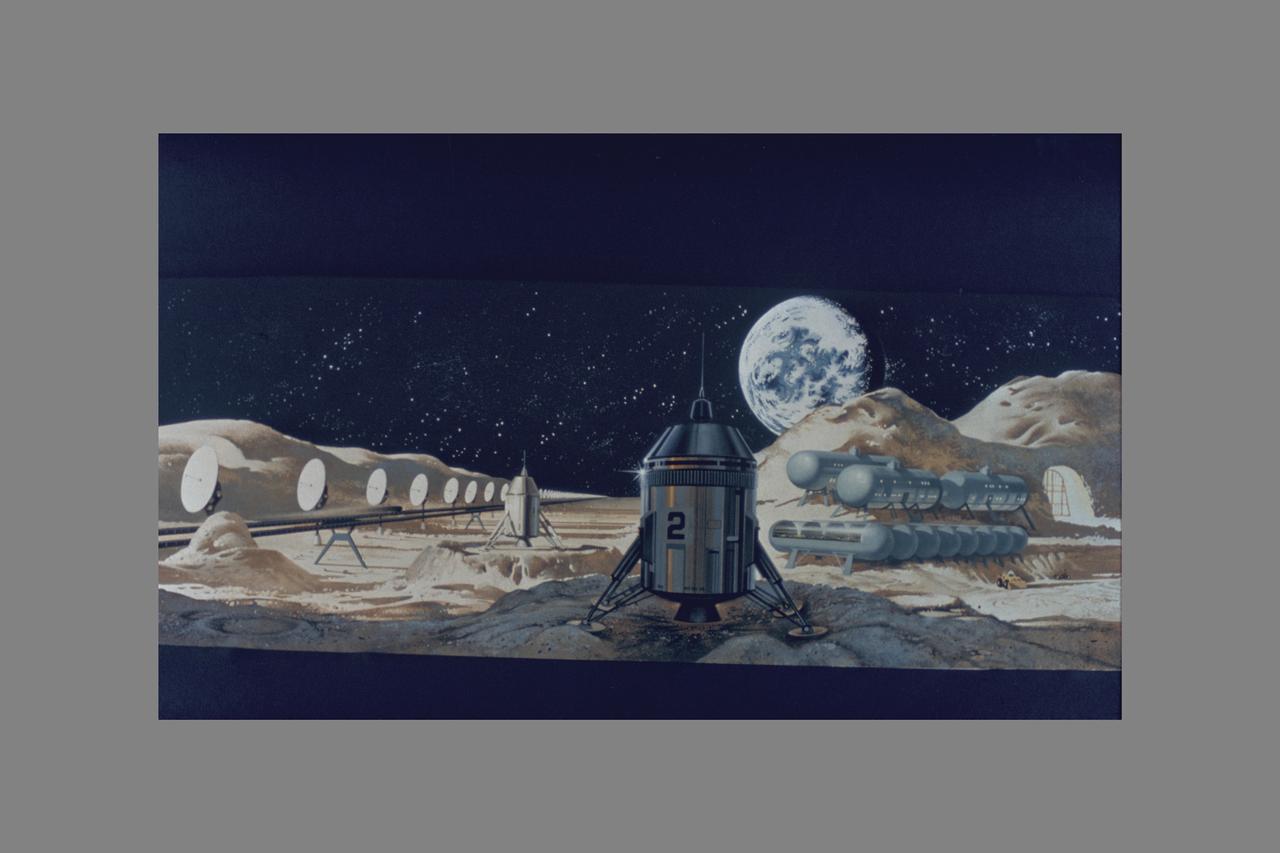
View of Moon of Equipment (transmitters). Space Colonization - Artwork.
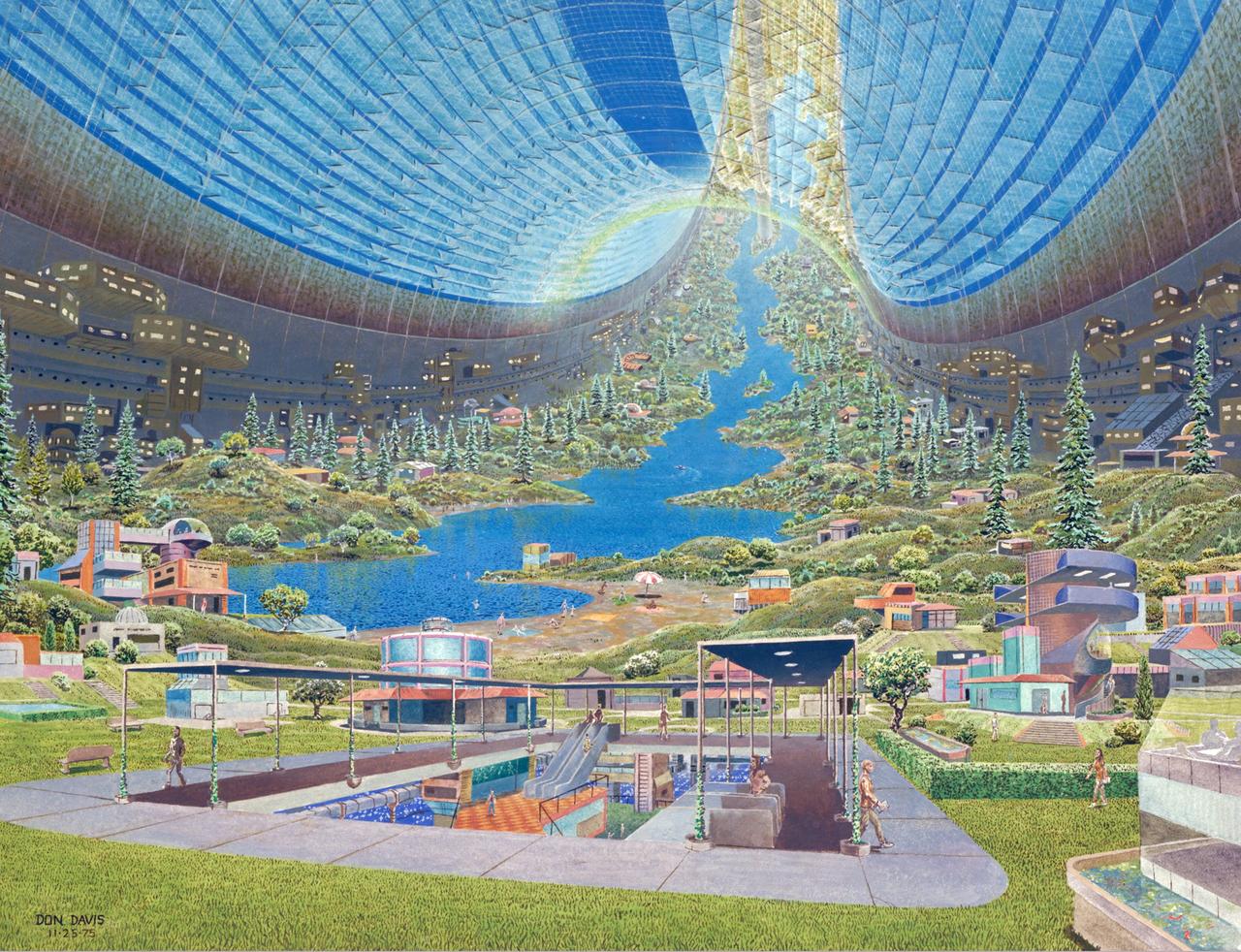
Torus sphere Interior view. Space Colonization. Artist: Don Davis ref: NASA SP-413; Space Settlements: A Design Study
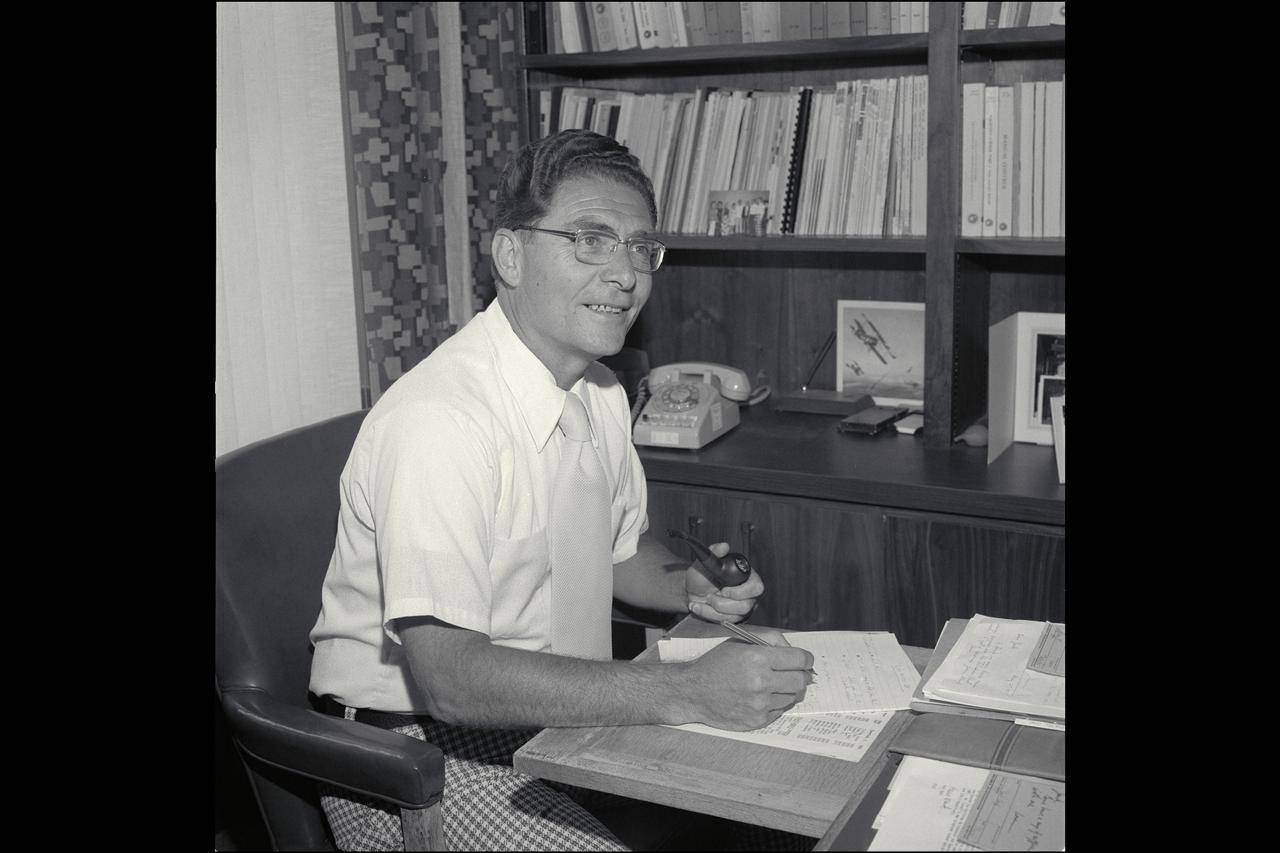
Jack Boyd in his office
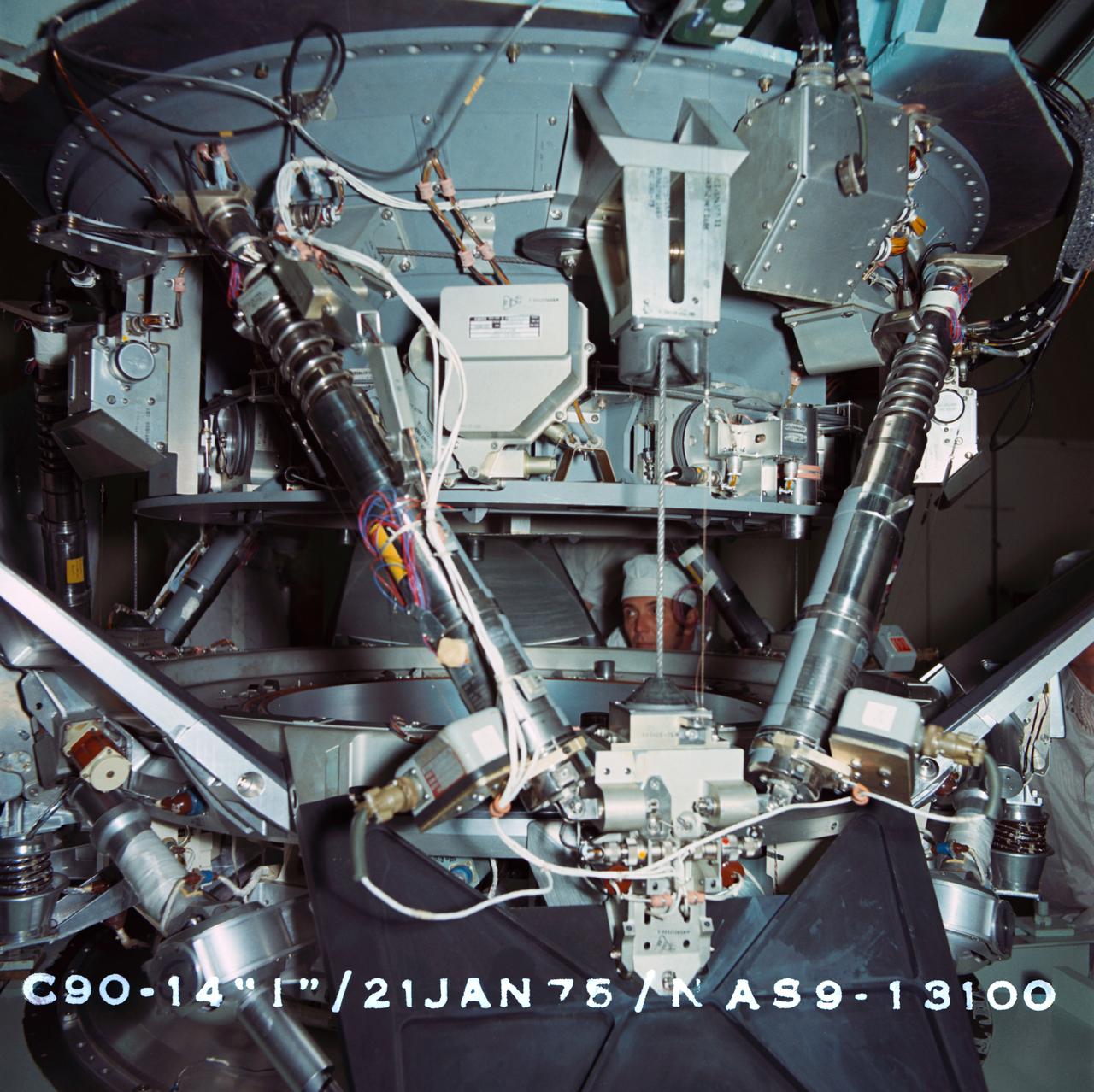
S95-02815 (21 Jan. 1975) --- Soviet junior researcher Y.G. Pobrov observes testing of the Apollo-Soyuz docking system at Rockwell International's plant in Downey, California. The United States' Docking System 3 (DS-3) here is being positioned onto the USSR's CA-4 system during a Pin and Socket Alignment Test. DS-5 has been designated as the prime flight article for the joint U.S.-USSR Apollo-Soyuz Test Project (ASTP) docking mission in Earth orbit, scheduled for July 1975.
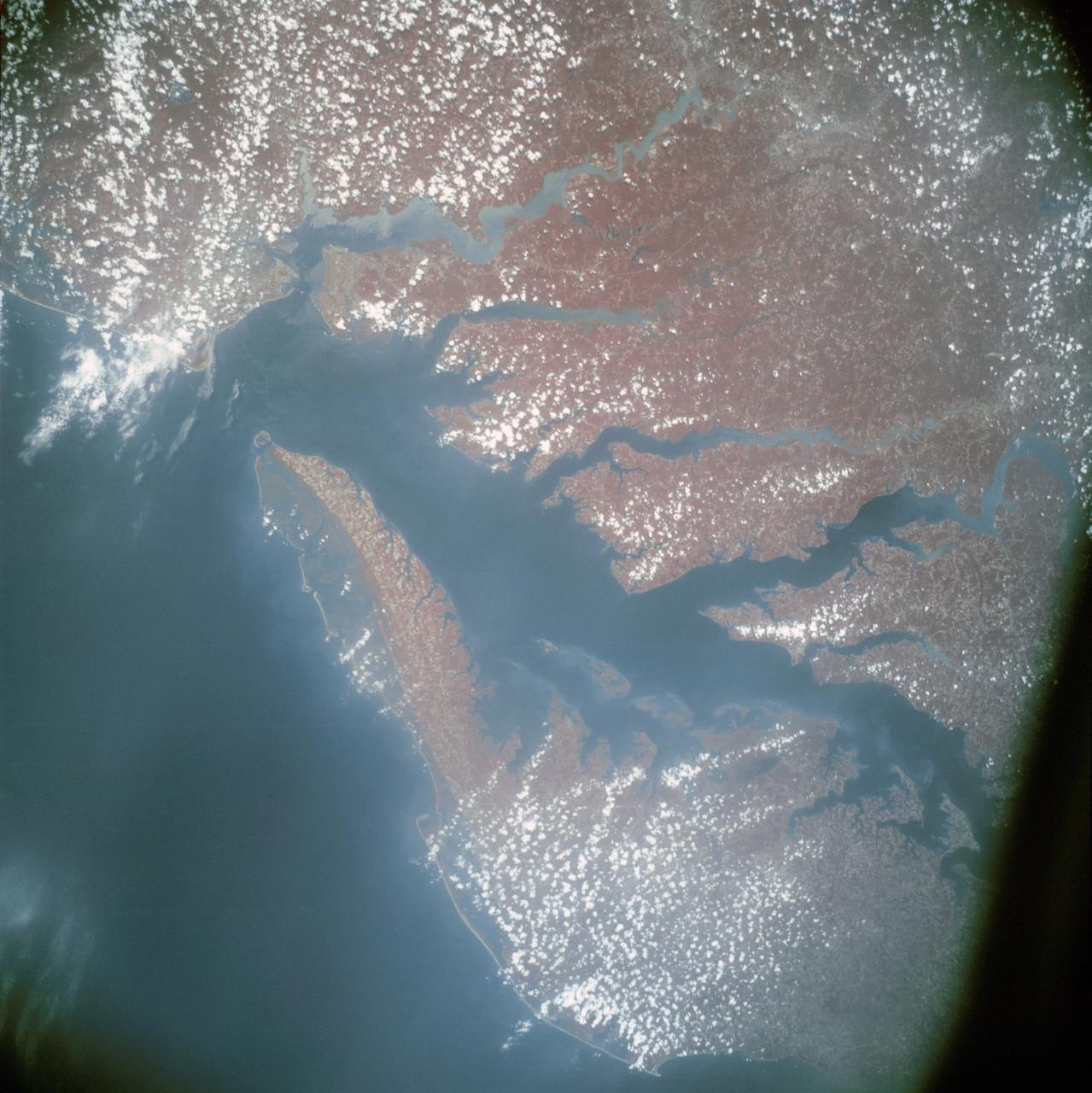
AST-13-797 (24 July 1975) --- An infrared, near vertical view of the Chesapeake Bay area showing portions of Virginia, Maryland and Delaware, as photographed from the Apollo spacecraft in Earth orbit during the joint U.S.-USSR Apollo-Soyuz Test Project mission. Richmond and Norfolk can be seen in this picture. Tidewater Virginia covers much of this view. The photograph was taken at an altitude of 217 kilometers (135 statute miles) with a 70mm Hasselblad camera using infrared Aerochrome type 2443 Ektachrome film.
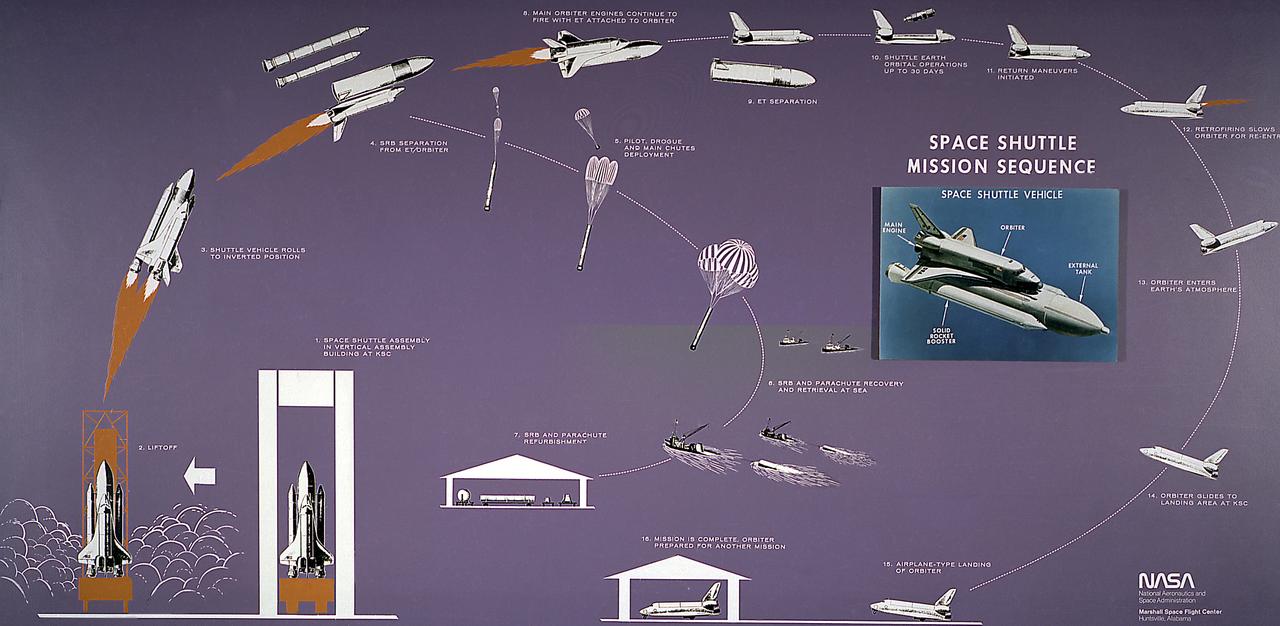
This diagram illustrates the Space Shuttle mission sequence. The Space Shuttle was approved as a national program in 1972 and developed through the 1970s. Part spacecraft and part aircraft, the Space Shuttle orbiter, the brain and the heart of the Space Transportation System (STS), required several technological advances, including thousands of insulating tiles able to stand the heat of reentry over the course of many missions, as well as sophisticated engines that could be used again and again without being thrown away. The airplane-like orbiter has three main engines, that burn liquid hydrogen and oxygen stored in the large external tank, the single largest structure in the Shuttle. Attached to the tank are two solid rocket boosters that provide the vehecile with most of the thrust needed for liftoff. Two minutes into the flight, the spent solids drop into the ocean to be recovered and refurbished for reuse, while the orbiter engines continue burning until approximately 8 minutes into the flight. After the mission is completed, the orbiter lands on a runway like an airplane.
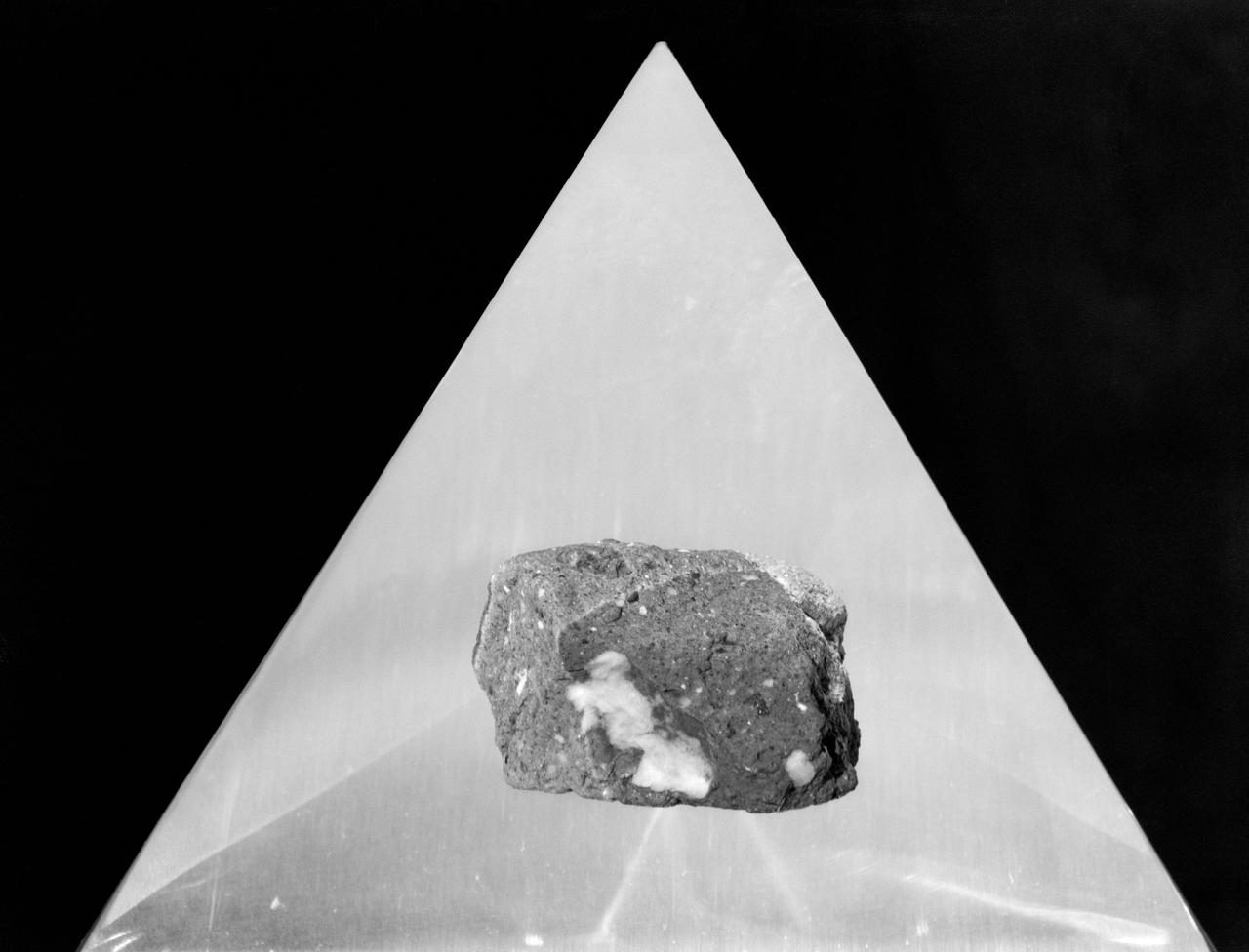
S75-23543 (April 1972) --- This Apollo 16 lunar sample (moon rock) was collected by astronaut John W. Young, commander of the mission, about 15 meters southwest of the landing site. This rock weighs 128 grams when returned to Earth. The sample is a polymict breccia. This rock, like all lunar highland breccias, is very old, about 3,900,000,000 years older than 99.99% of all Earth surface rocks, according to scientists. Scientific research is being conducted on the balance of this sample at NASA's Johnson Space Center and at other research centers in the United States and certain foreign nations under a continuing program of investigation involving lunar samples collected during the Apollo program.
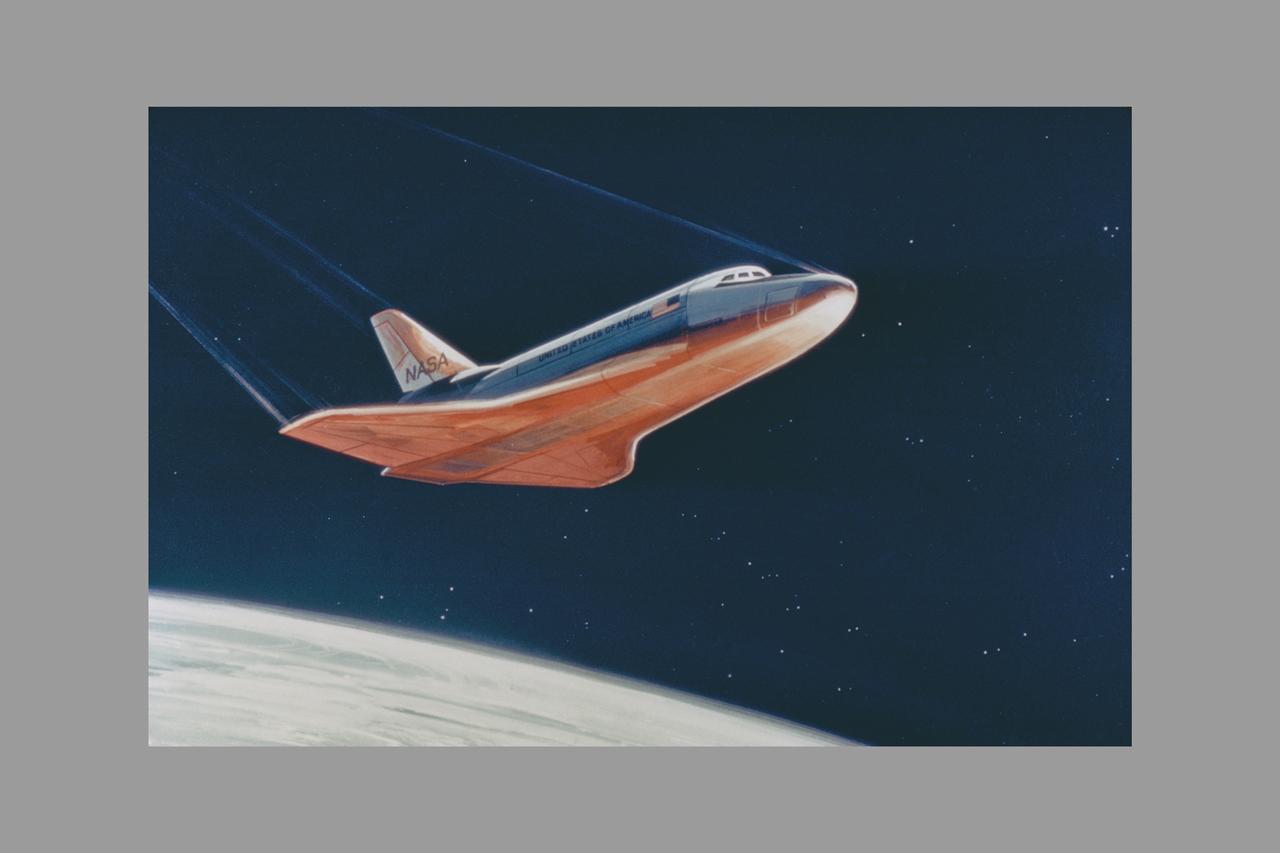
Space Shuttle re-entry art
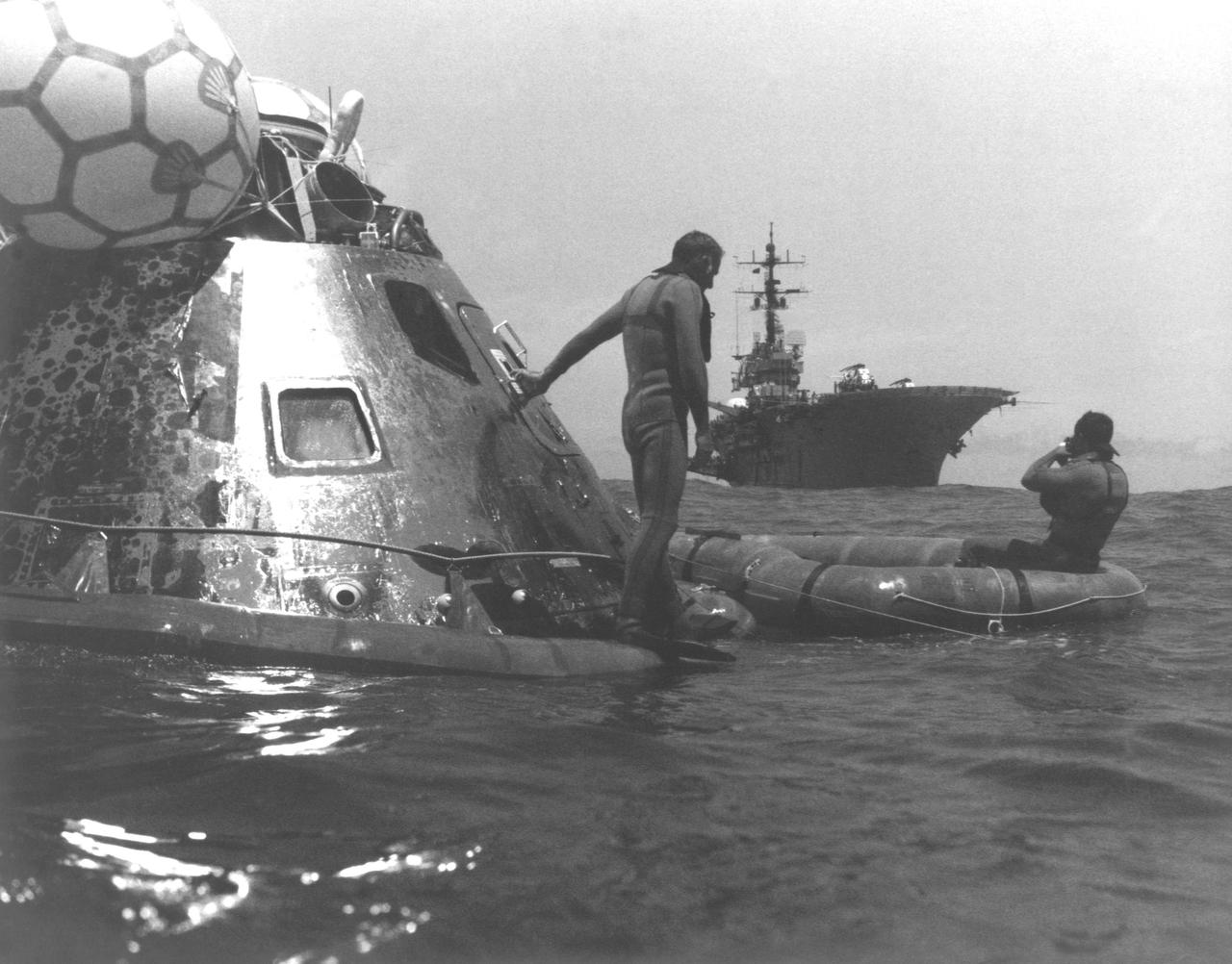
KENNEDY SPACE CENTER, FLA. -- Members of the Pacific Recovery Task Force secure the ASTP Apollo spacecraft as the USS New Orleans approaches to pick up the spacecraft and astronauts Thomas Stafford, Vance Brand and Donald Slayton. The Apollo splashed down in the Pacific Ocean, west of Hawaii, at 5:18 p.m., ending the nine-day joint US_USSR space mission.
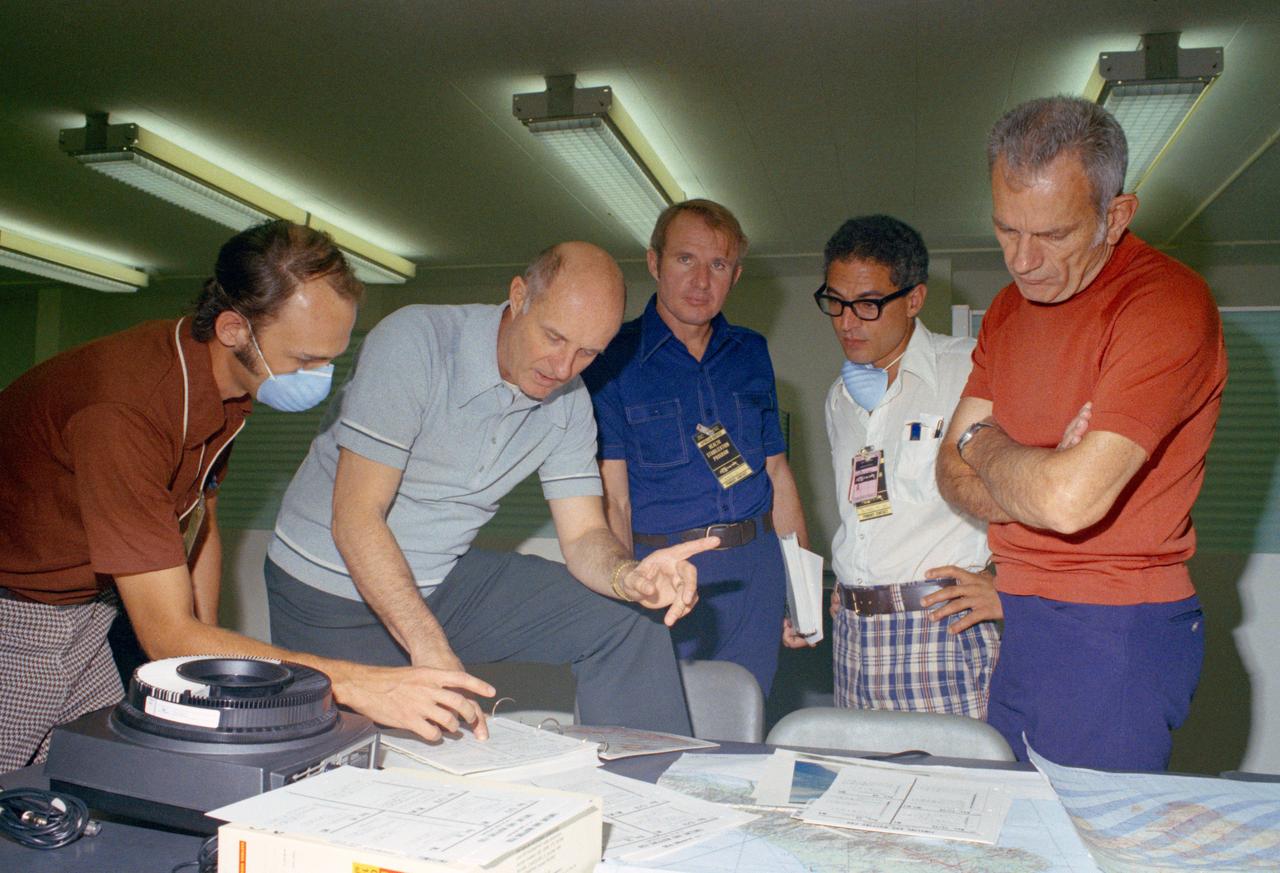
S76-20264 (1975) --- Farouk El-Baz (second right) is seen with ASTP Crewmen T. Stafford, V. Brand and D. Slayton during training activity, Bldg. 5 prior to liftoff in mid-July 1975. They are studying geographic aerial photographs & maps. Photo credit: NASA
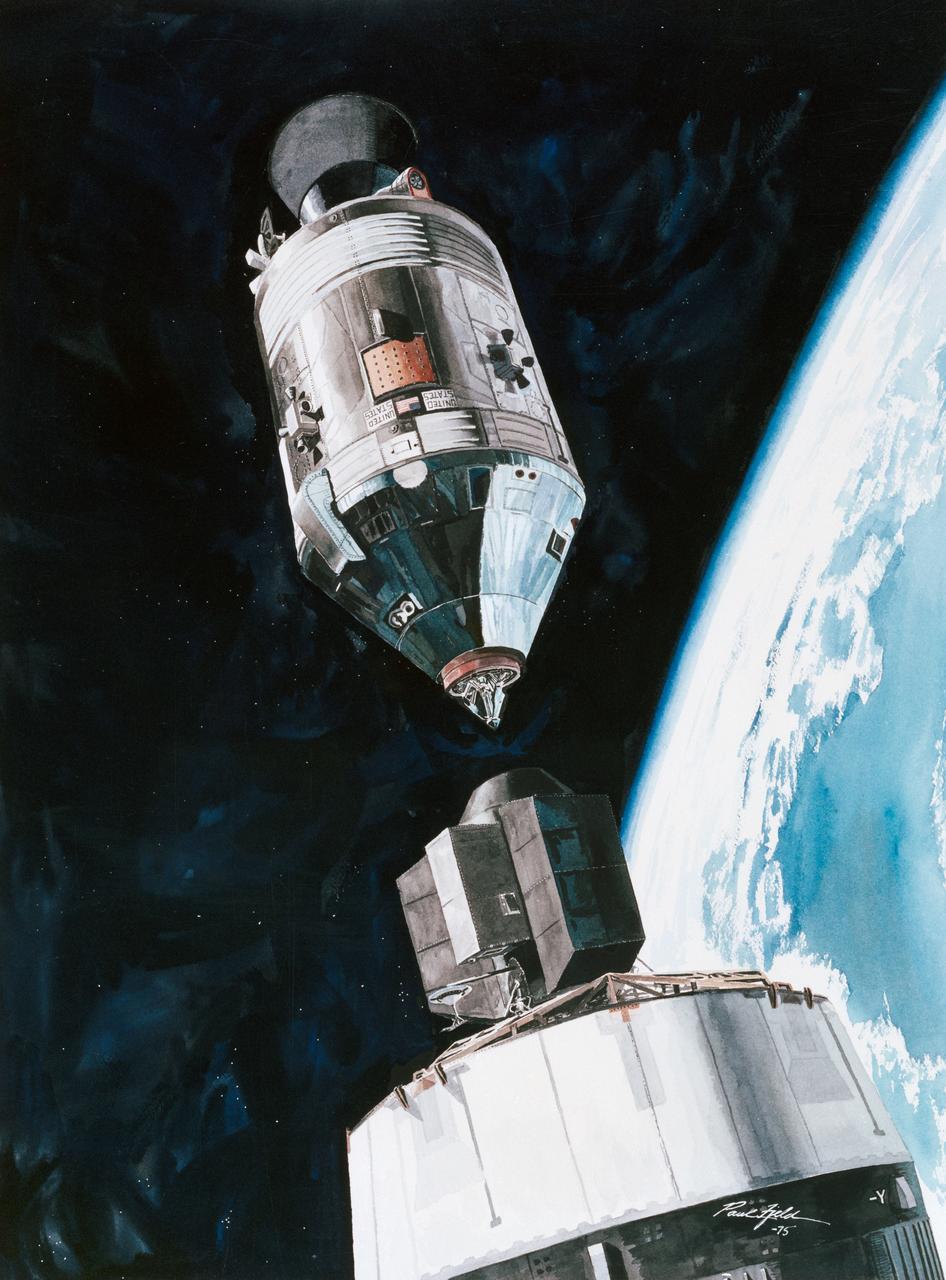
S75-28512 (July 1975) --- An artist?s concept depicting a scene in Earth orbit during the Apollo transposition and docking maneuvers of the Apollo-Soyuz Test Project mission. The Command/Service Module is moving into position to dock with the Docking Module. Following the docking the DM will be extracted from the expended Saturn IVB stage. The Docking Module is designed to link the American Apollo spacecraft with the Soviet Soyuz spacecraft. This scene will take place some one hour and twenty-three minutes after the Apollo-Saturn 1B liftoff from the Kennedy Space Center on July 15, 1975. The Soyuz launch at 7:20 a.m. (CDT) from the Baikonur, Kazakhstan launch pad will precede the Apollo liftoff by seven and one-half hours. The artwork is by Paul Fjeld.
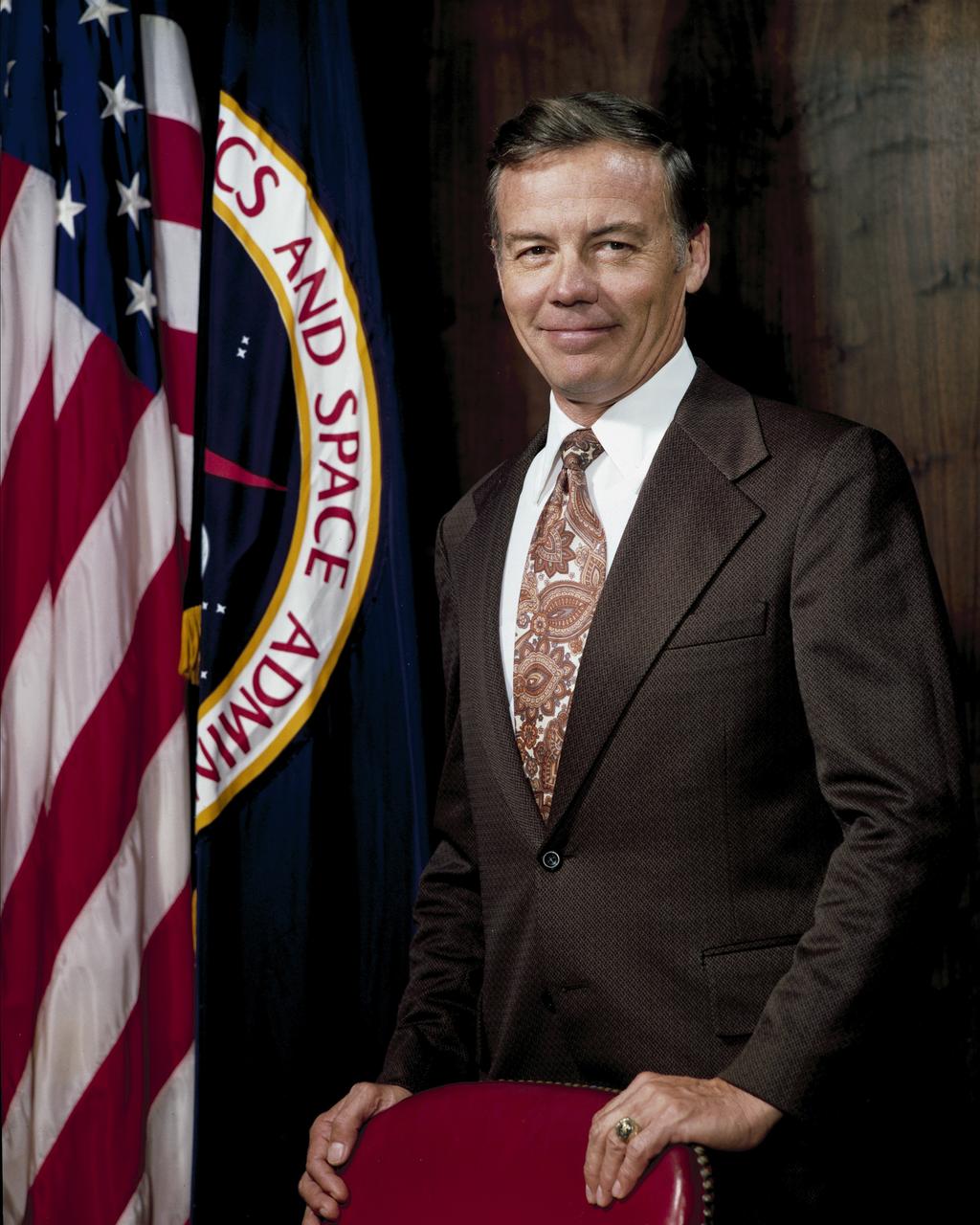
CAPE CANAVERAL, Fla. – Official portrait of Lee R. Scherer, Director, John F. Kennedy Space Center. Photo credit: NASA
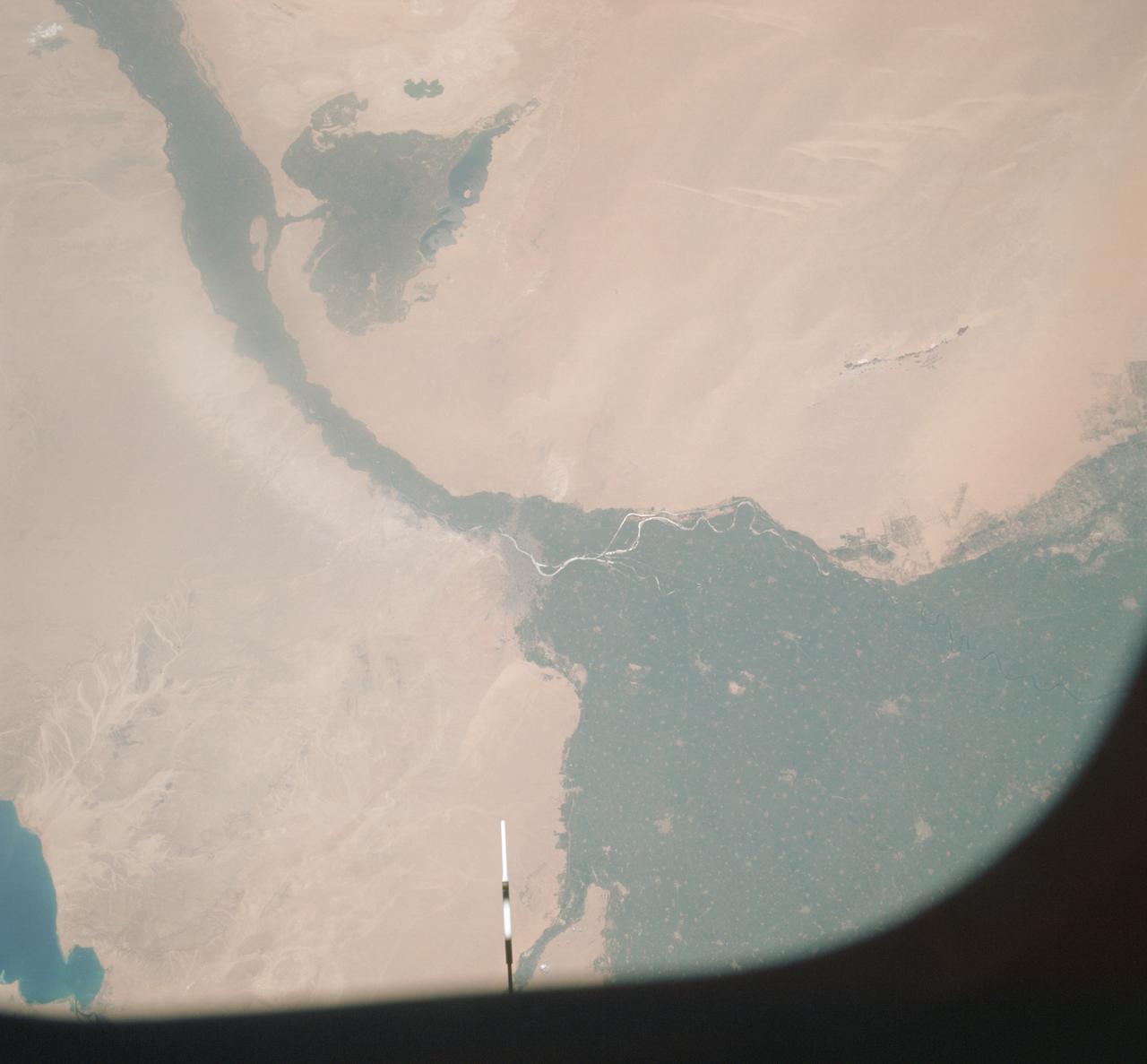
AST-09-555 (19 July 1975) --- A vertical view of a portion of the Arab Republic of Egypt, as photographed from the Apollo spacecraft in Earth orbit during the joint U.S.-USSR Apollo-Soyuz Test Project mission. The Nile Delta is in the most northerly corner of the picture. The City of Cairo on the Nile River is in the center of the photograph. The Gulf of Suez is in the most easterly corner of the picture. El Faiyum is south-southwest of Cairo. This picture was taken at an altitude of 223 kilometers (138 statute miles), with a 70mm Hasselblad camera using medium-speed Ektachrome QX-807 type film.
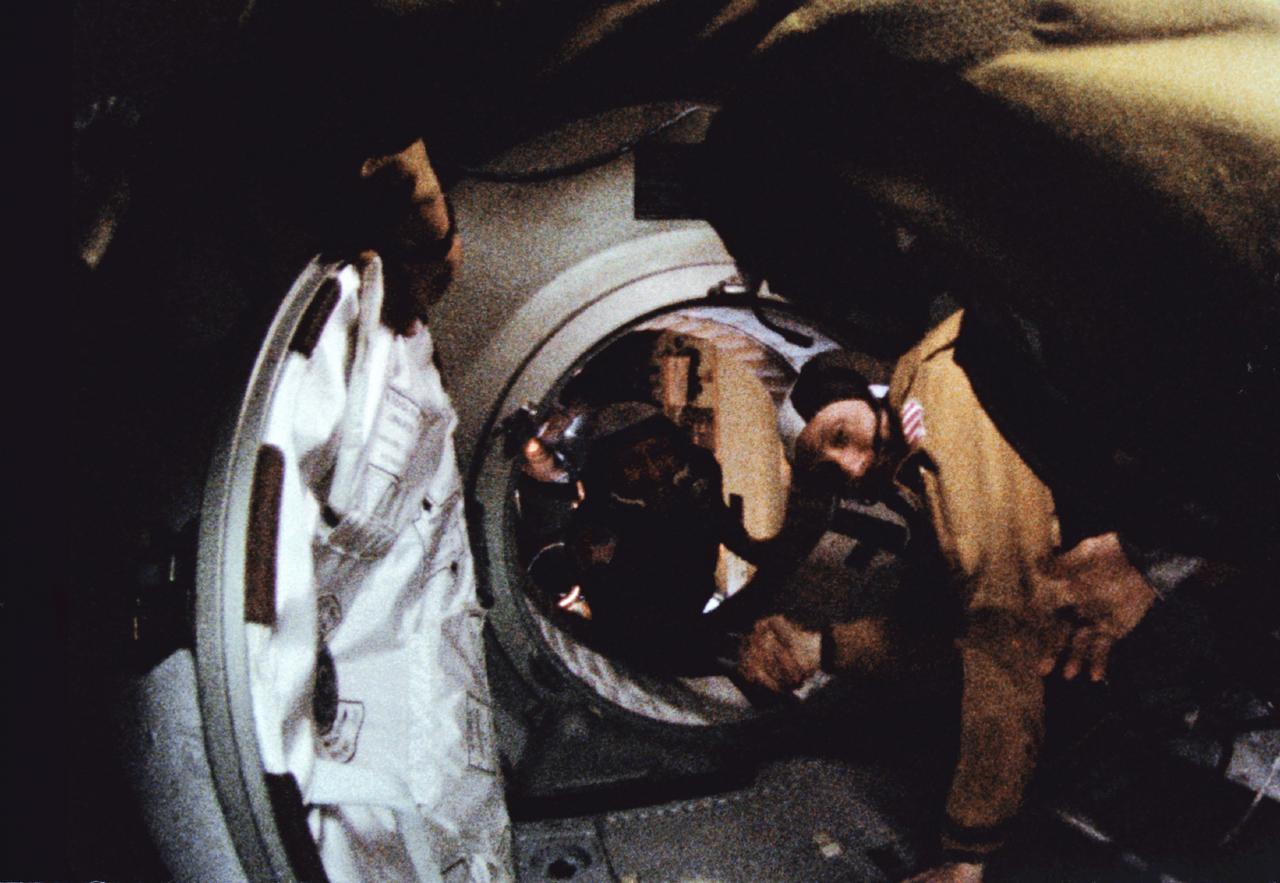
S75-29432 (17 July 1975) --- Astronaut Thomas P. Stafford (in foreground) and cosmonaut Aleksei A. Leonov make their historic handshake in space on July 17, 1975 during the joint U.S.-USSR Apollo Soyuz Test Project (ASTP) docking mission in Earth orbit. This picture was reproduced from a frame of 16mm motion picture film. The American and Soviet spacecraft were joined together in space for approximately 47 hours on July 17th, 18th, 19th, 1975. The Apollo crew consisted of astronauts Thomas P. Stafford, commander; Donald K. "Deke" Slayton, docking module pilot; Vance D. Brand, command module pilot. The Soyuz 19 crew consisted of cosmonauts Aleksei A. Leonov, command pilot; and Valeri N. Kubasov, flight engineer.
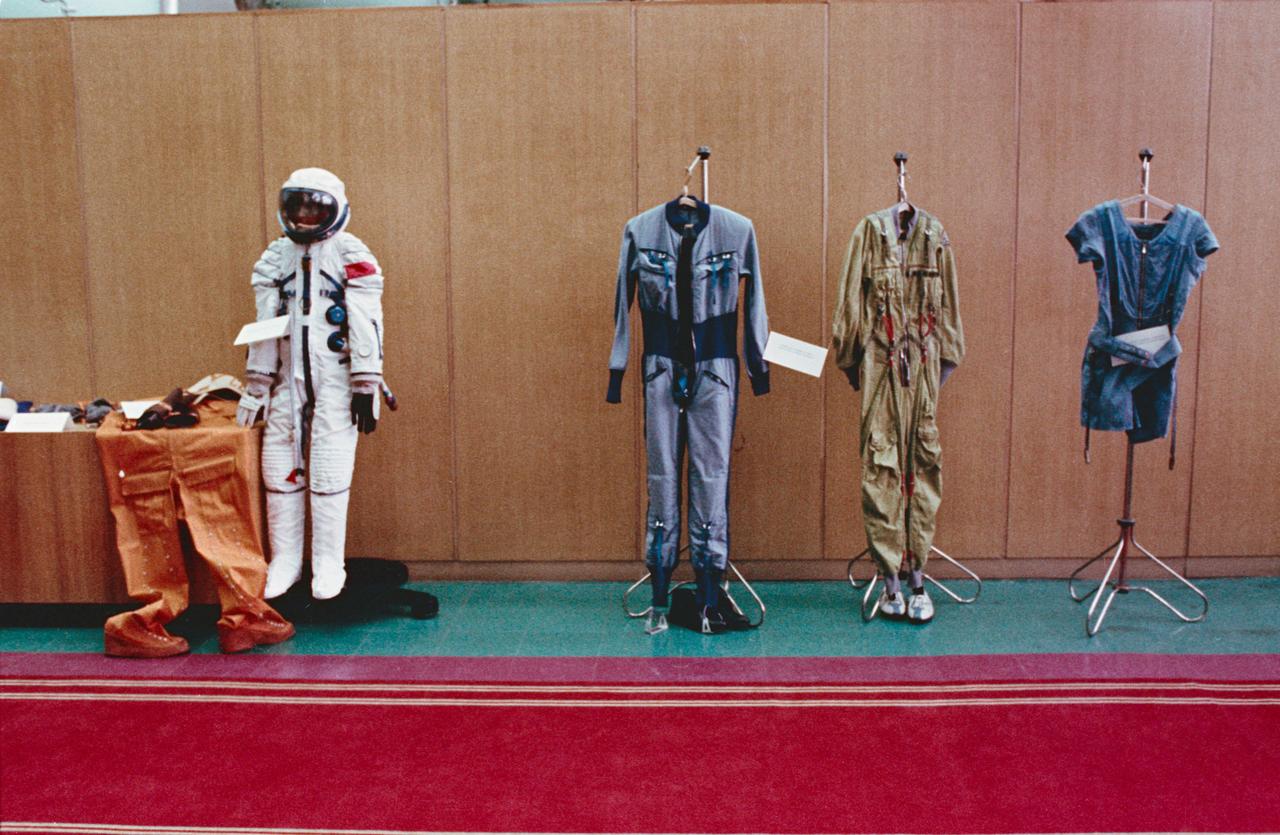
S75-24899 (April 1975) --- An exhibit illustrating the space suits designed for the Soviet cosmonaut crewmen of the joint U.S.-USSR Apollo-Soyuz Test Project docking mission in Earth orbit. These were on display in the training building at the Cosmonaut Training Center (Star City) near Moscow.
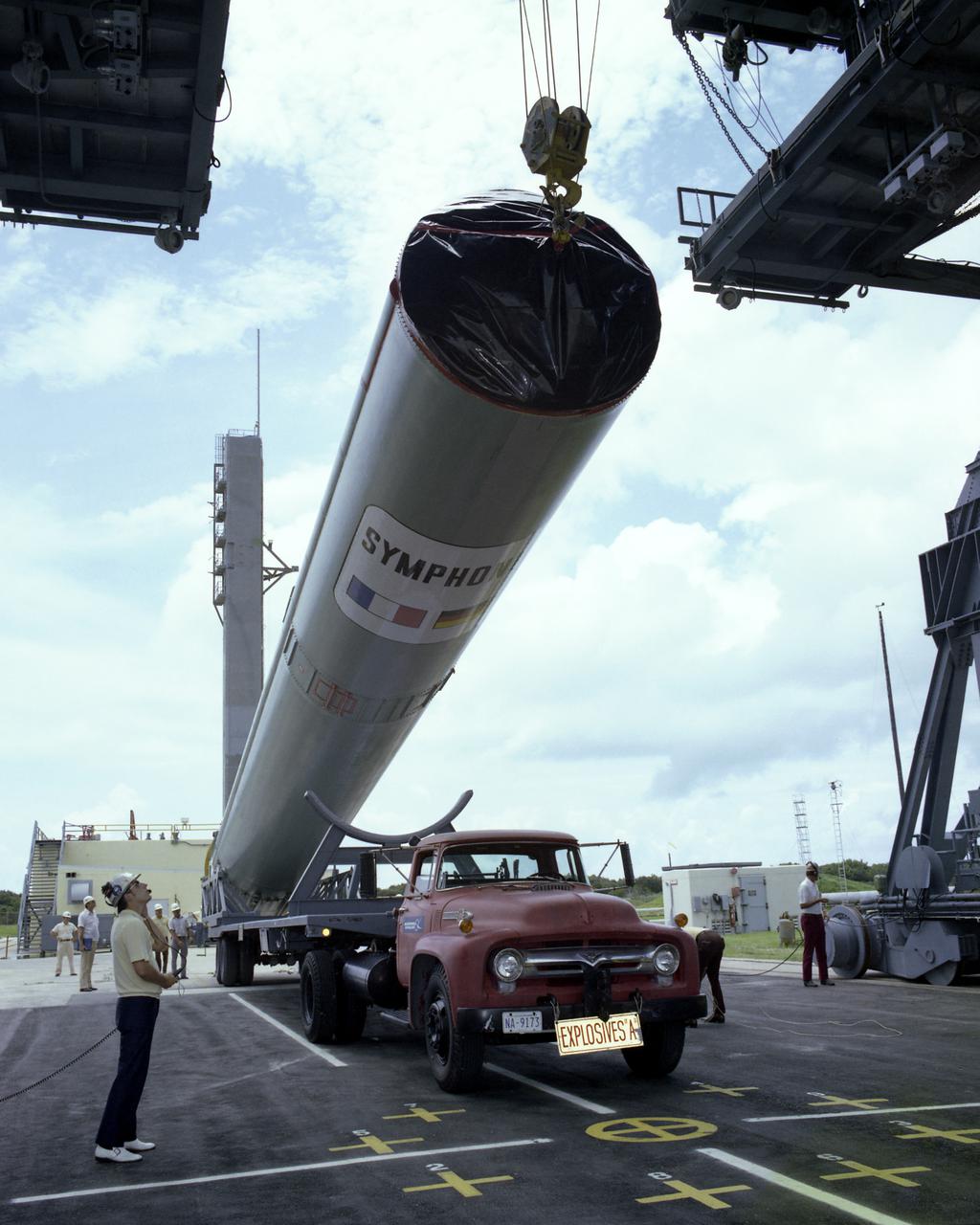
CAPE CANAVERAL, Fla. -- Erection of the first stage of the Delta launch vehicle for Symphonie-B at Complex 17-A on Cape Canaveral Air Force Station. Photo credit: NASA
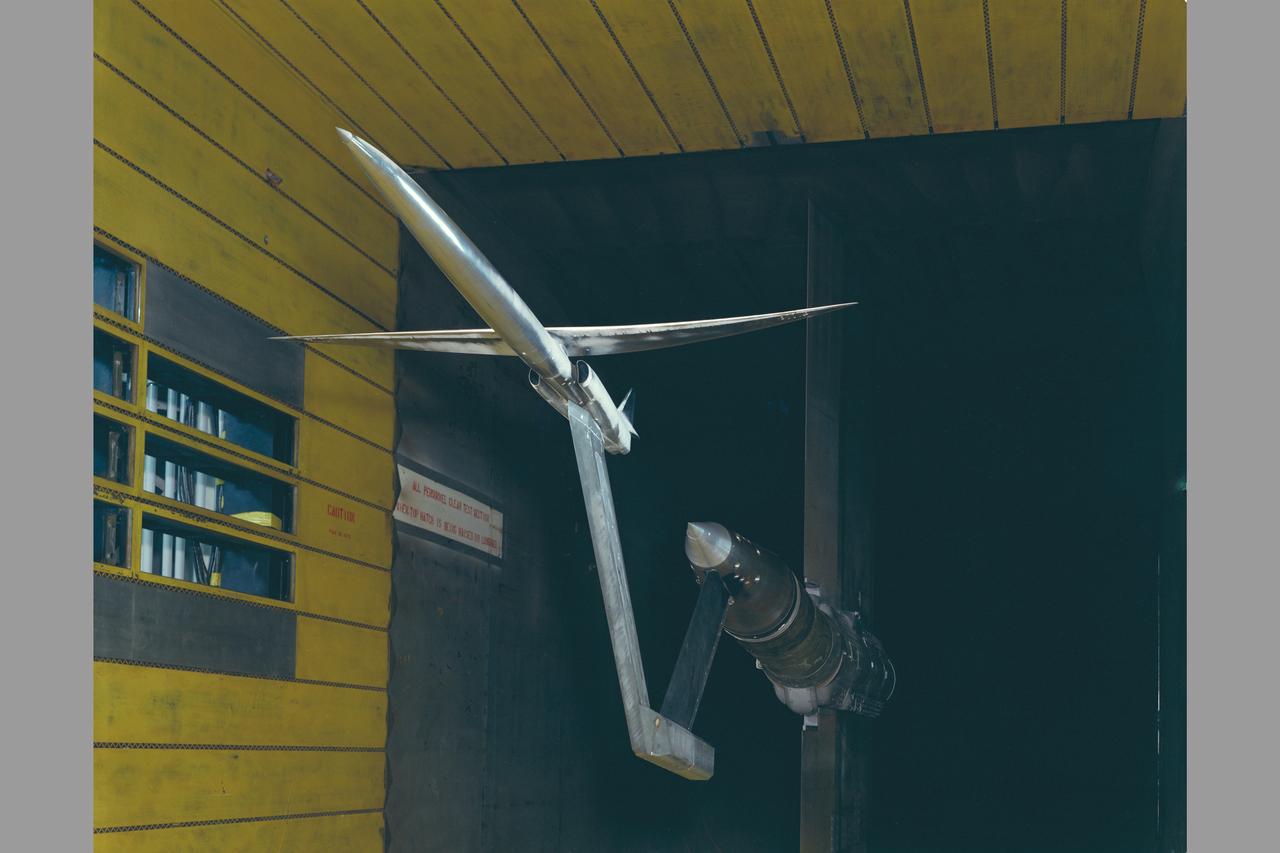
Oblique wing in 11ft. wind tunnel Test 11-026.
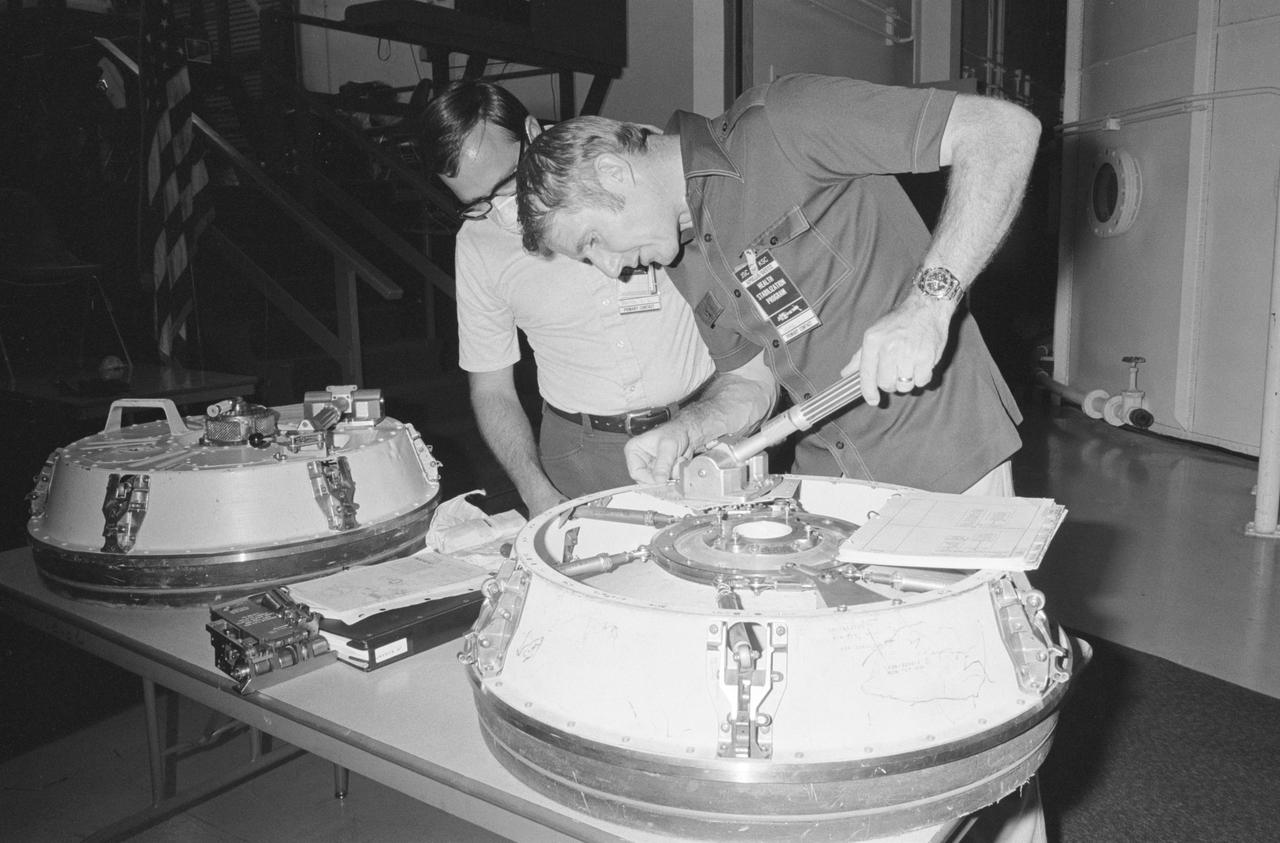
S75-28485 (12 July 1975) --- Astronaut Vance D. Brand, command module pilot of the American ASTP prime crew, practices operating a Docking Module hatch during Apollo-Soyuz Test Project preflight training at NASA's Johnson Space Center. The Docking Module is designed to link the Apollo and Soyuz spacecraft during their docking mission in Earth orbit. Gary L. Doerre of JSC?s Crew Training and Procedures Division is working with Brand. Doerre is wearing a face mask to help prevent possible exposure to Brand of disease prior to the ASTP launch.
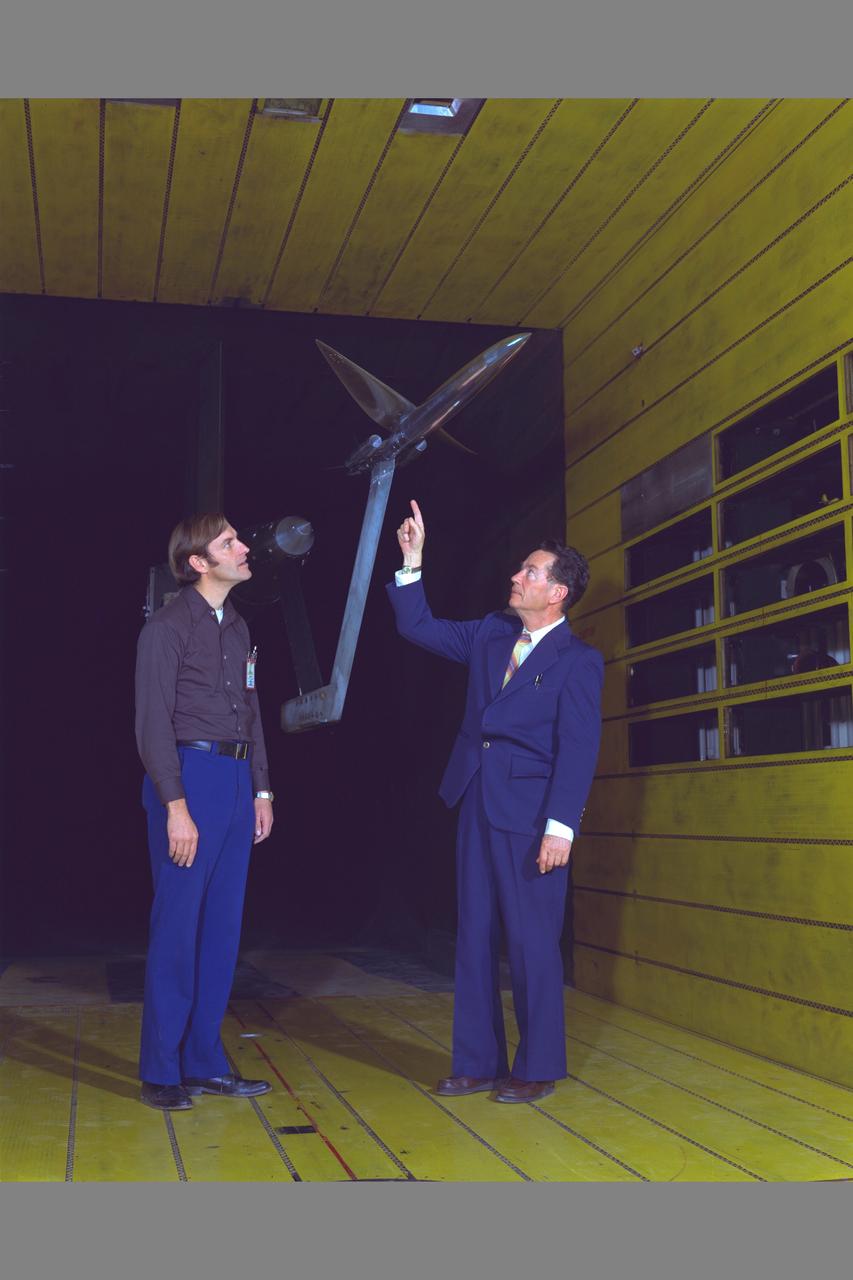
Practical Oblique Wing Test-026) in 11ft w.t. with R. T. Jones and test engineer
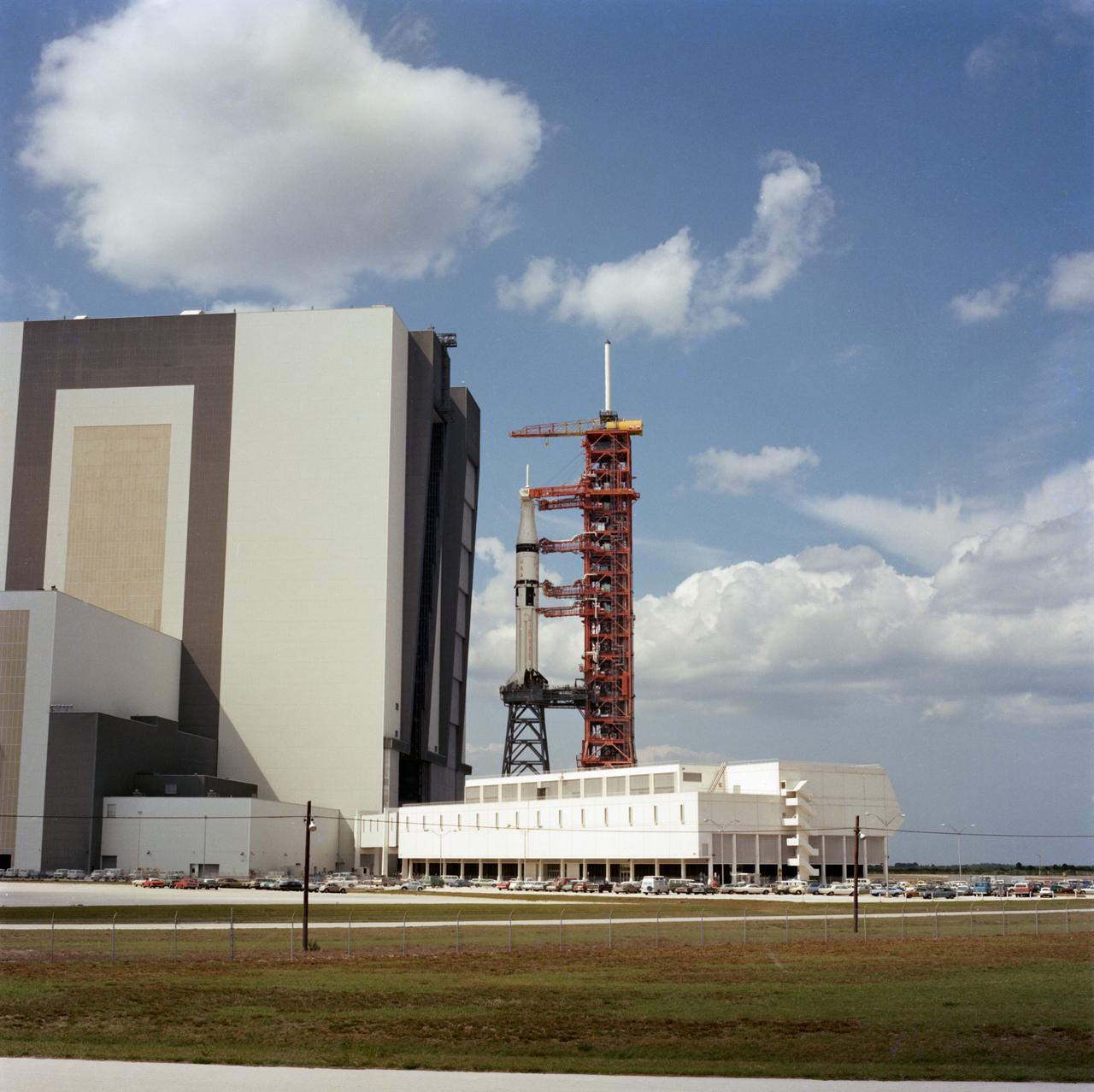
S75-24007 (24 March 1975) --- The Saturn 1B space vehicle for the Apollo-Soyuz Test Project mission, with its launch umbilical tower, rides atop a huge crawler-transporter as it moves slowly away from the Vehicle Assembly Building on its 4.24-mile journey to Pad B, Launch Complex 39, at NASA's Kennedy Space Center. The ASTP vehicle is composed of a Saturn 1B (first) stage, a Saturn IVB (second) stage, and a payload consisting of a Command/Service Module and a Docking Module. The joint U.S.-USSR ASTP docking mission in Earth orbit is scheduled for July 1975.
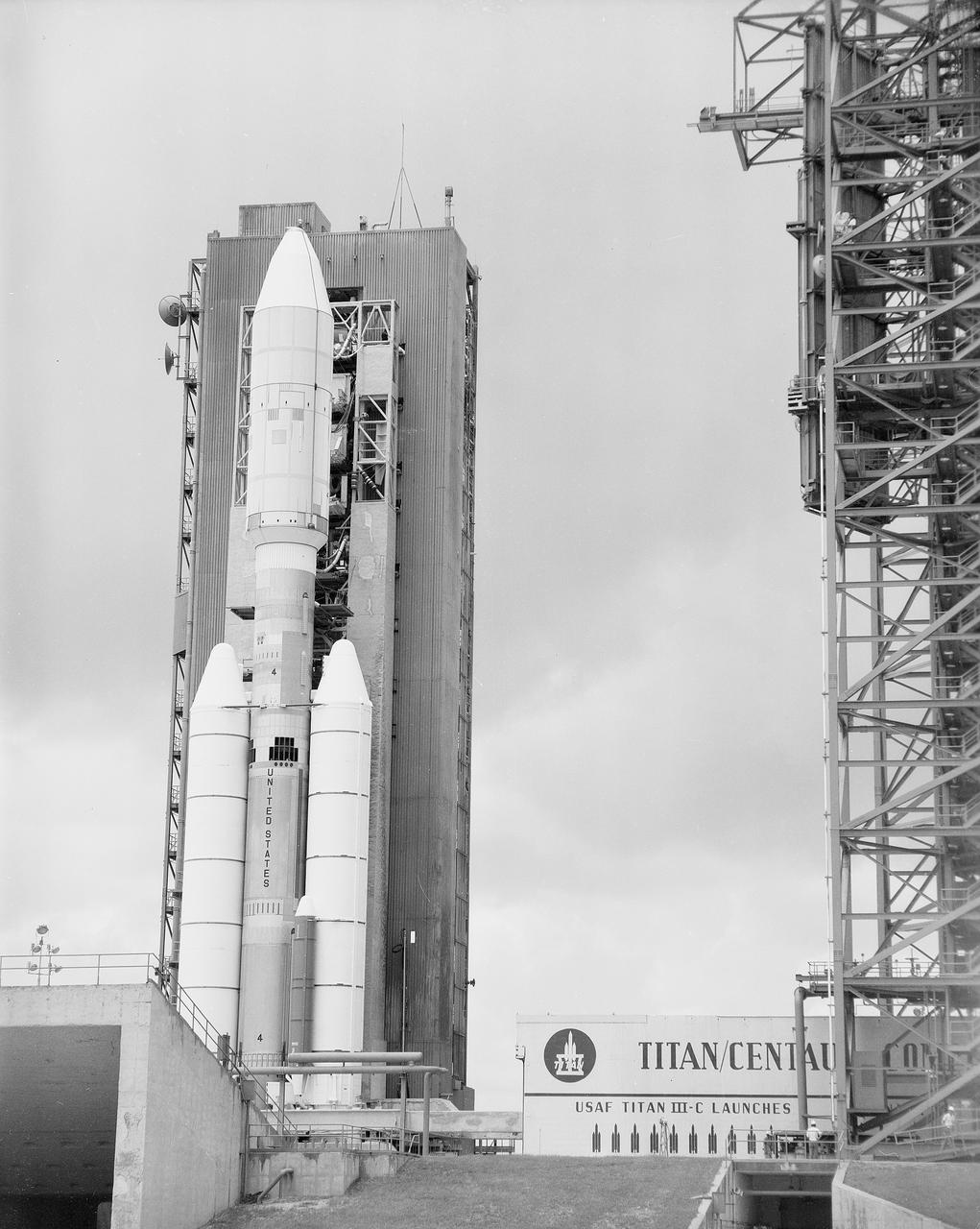
The Titan III/Centaur, Viking 1, is sitting on the launch pad ready for blast off. The launch occurred on August 20, 1975. The mission was for the scientific investigation of Mars, and United States’ first attempt to soft land a spacecraft on another planet.
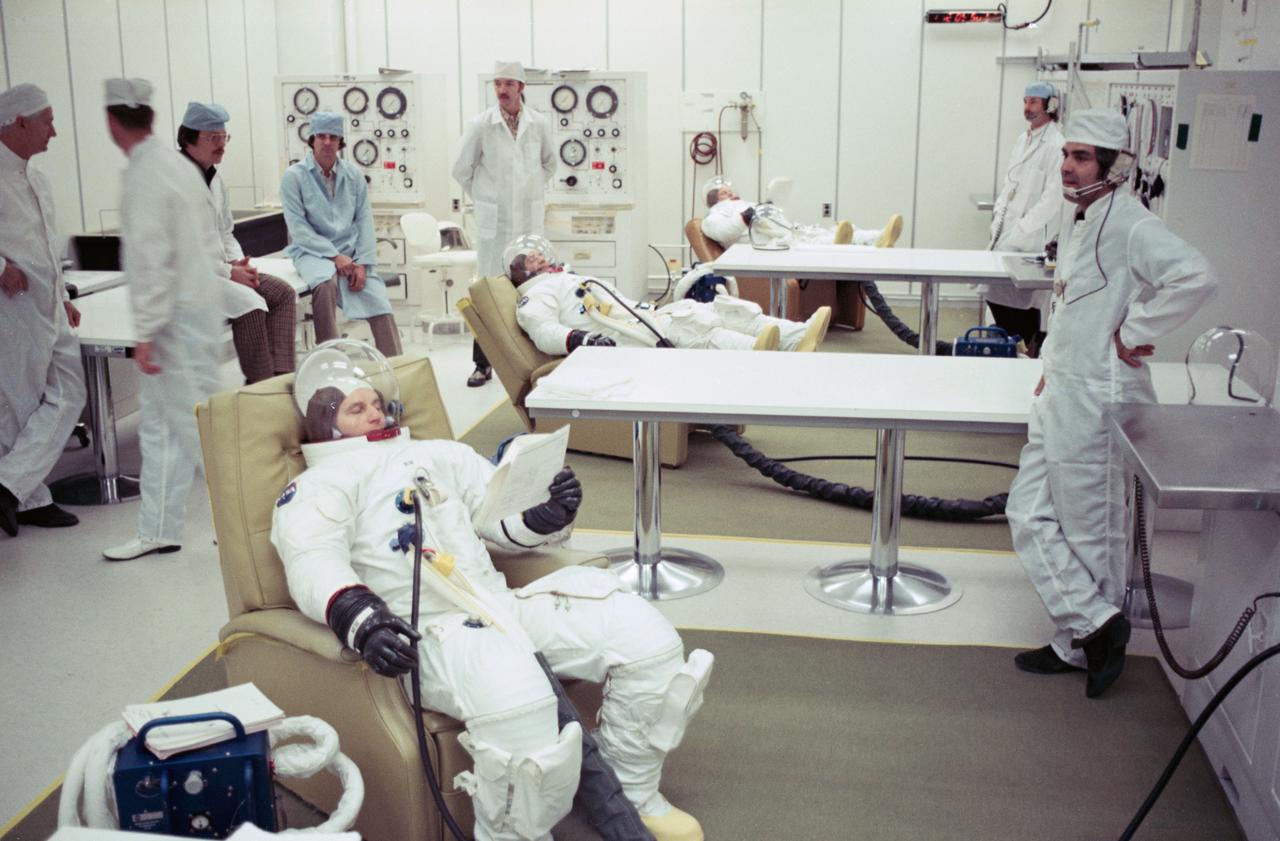
S75-21063 (January 1975) --- The three members of the American ASTP backup crew are suited up for the testing of the Apollo spacecraft at the Kennedy Space Center. They are (from foreground) astronauts Alan L. Bean, commander; Ronald E. Evans, command module pilot; and Jack R. Lousma, docking module pilot. Later, they entered the Apollo Command Module in an altitude chamber for tests of spacecraft systems. The testing was in preparation for the joint U.S.?USSR Apollo-Soyuz Test Project docking mission in Earth orbit scheduled for July 1975.
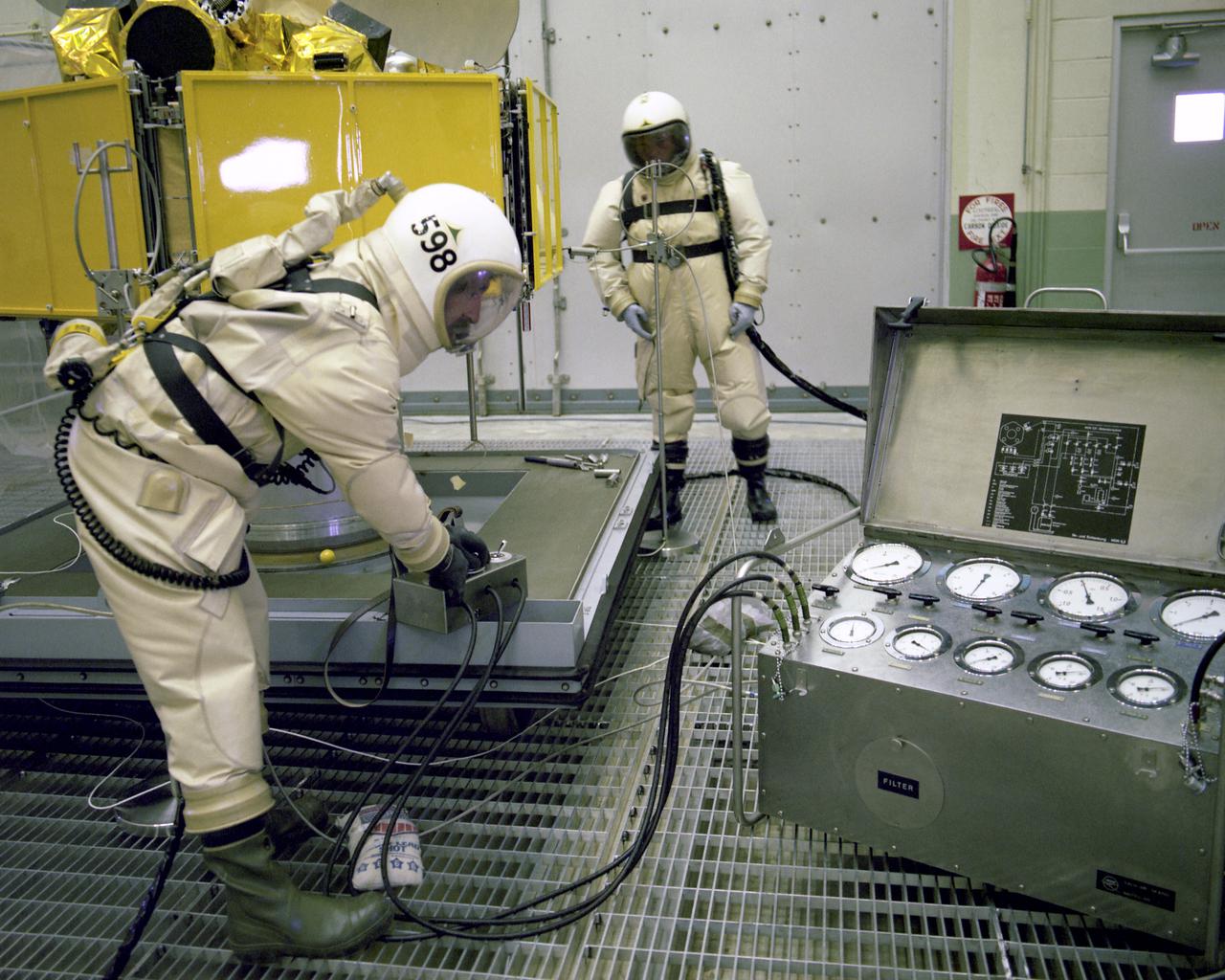
CAPE CANAVERAL, Fla. -- Technicians in protective suits loaded the Symphonie-B spacecraft with propellants in the Spin Test Facility at Cape Canaveral Air Force Station today. The French-West German experimental communications satellite is to be launched by KSC's Unmanned Launch Operations Directorate aboard a Delta rocket from Complex 17 in late August or early September. The satellite will be placed in a synchronous orbit 22,300 miles above the equator south of the West African 'Bulge,' joining Symphonie-1 in handling communications between ground stations in Europe, South America, portions of North America and the Mideast. Photo credit: NASA Photo credit: NASA
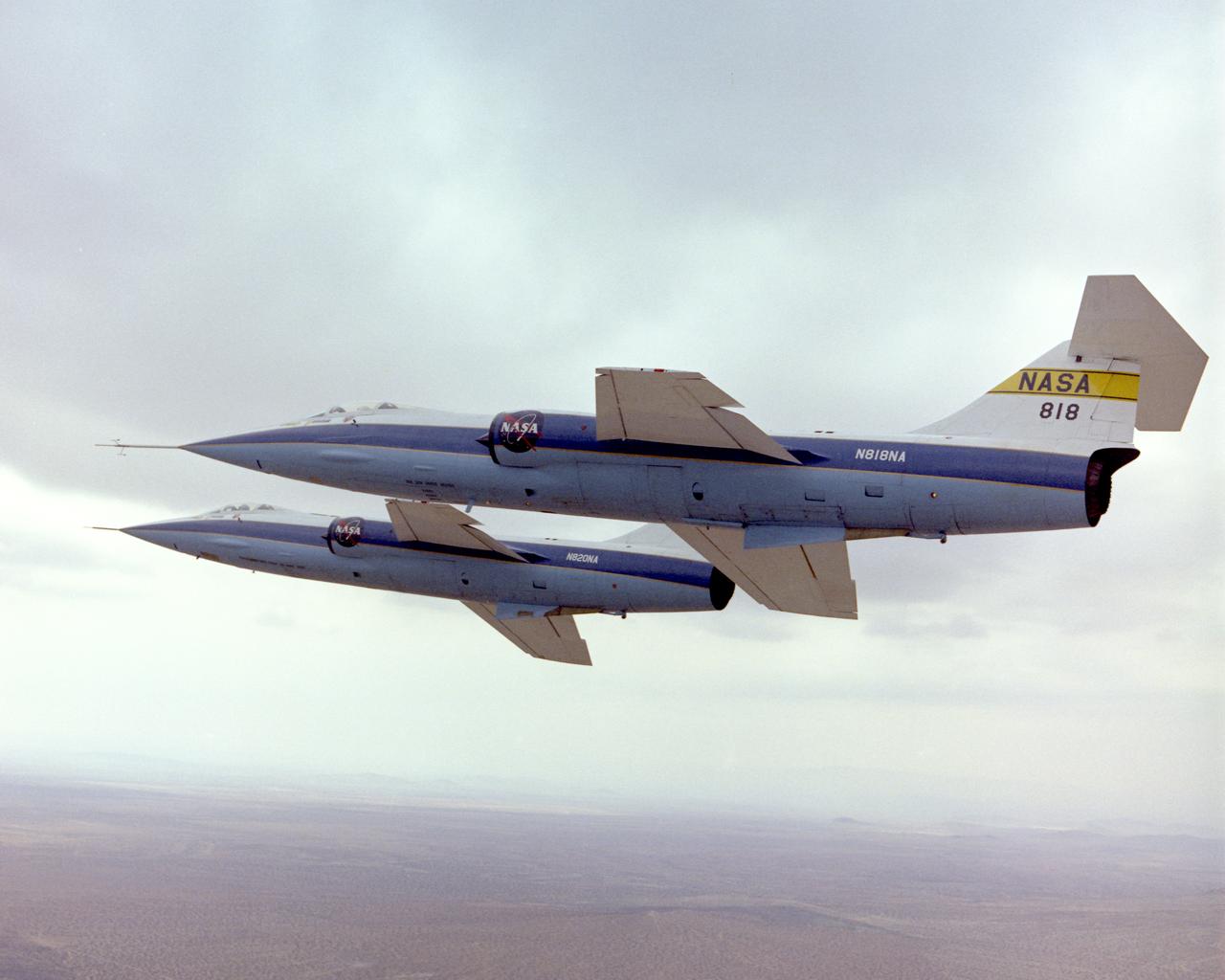
F-104A #818 flown by Einar Enevoldson and F-104A #820 flown by Gary Krier in formation over the Mojave Desert. 4/11/75 NASA DFRC EC76-5140
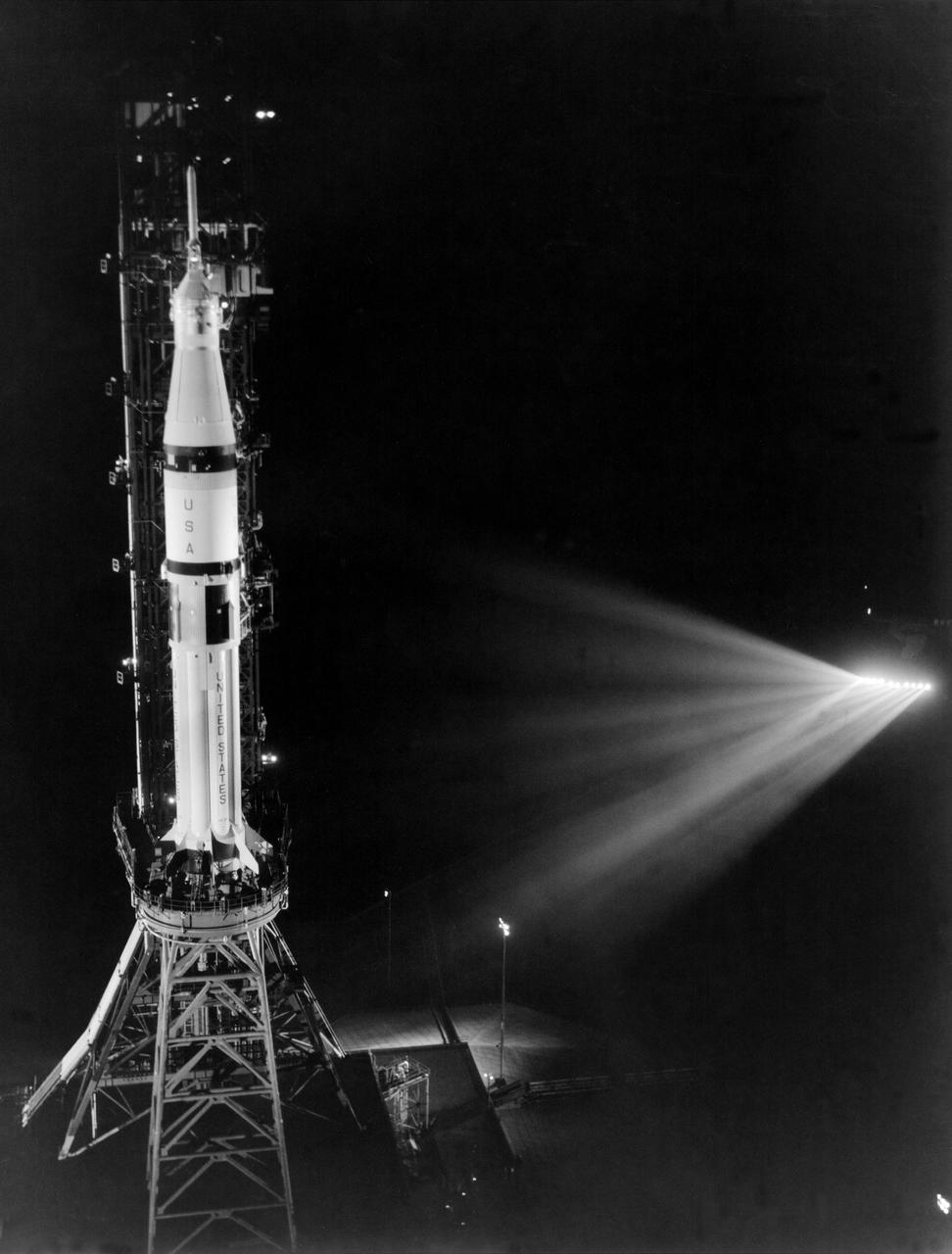
KENNEDY SPACE CENTER, FLA. -- As seen from the Mobile Service Structure as it is being rolled back to its park site, the ASTP Saturn IB launch vehicle sits on its pedestal during the Countdown Demonstration Test. The test is a step-by-step dress rehearsal for the July 15 mission, which culminates with a simulated T-zero and launch with the stages of the rocket fueled as they will be on launch day. Following the simulated launch, the propellants will be offloaded. The terminal portion of the test will be repeated tomorrow with the ASTP astronauts Thomas Stafford, Vance Brand and Donald Slayton aboard the spacecraft.
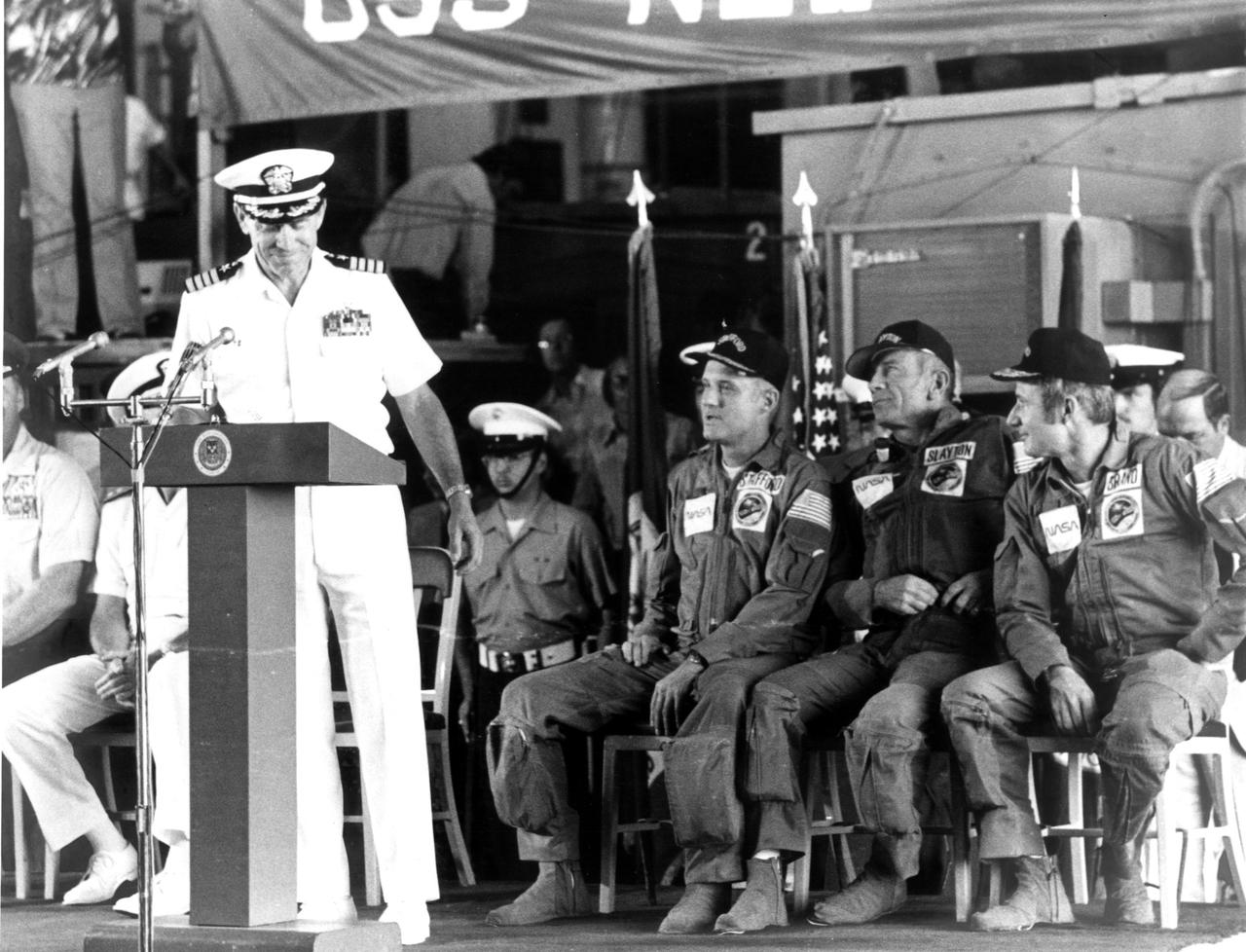
KENNEDY SPACE CENTER, FLA. -- The Commanding Officer of the USS New Orleans, Captain Ralph E. Neiger, welcomes aboard ASTP astronauts Thomas Stafford, Donald Slayton and Vance Brand. The astronauts splashed down in the Pacific Ocean west of Hawaii at 5:18 p.m. today, ending the nine-day ASTP mission. Themission was highlighted by the rendezvous and docking with a Soviet Soyuz spacecraft in Earth orbit.
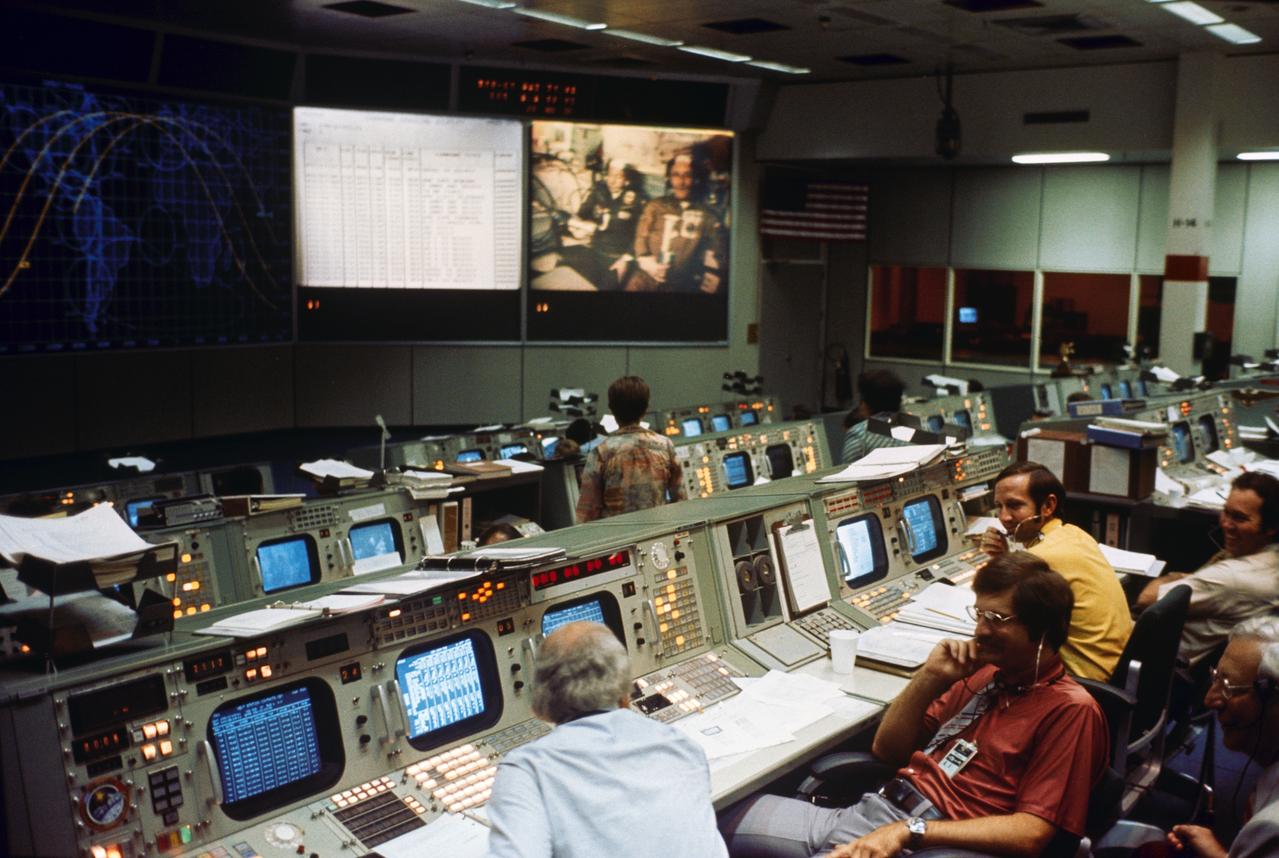
S75-28685 (17 July 1975) --- An overall view of activity in the Mission Operations Control Room in the Mission Control Center during joint U.S.-USSR Apollo Soyuz Test Project (ASTP) docking mission in Earth orbit. The large television monitor shows an interior view of the Soyuz Orbital Module with astronaut Thomas P. Stafford (in front) visiting with cosmonaut Aleksey A. Leonov. Neil B. Hutchinson (right hand to chin) is the flight director for this shift.
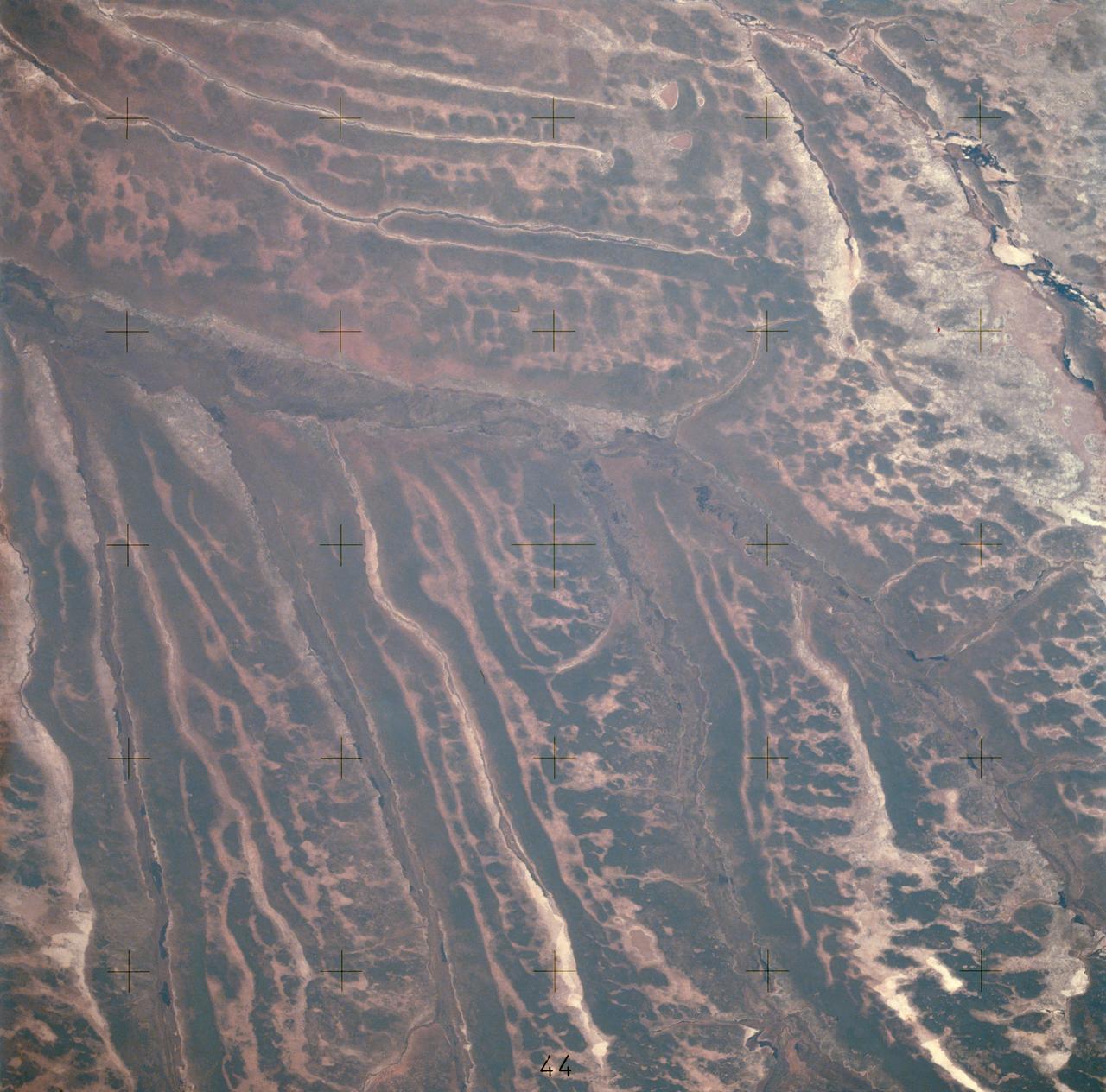
AST-14-890 (18 July 1975) --- An oblique view of unique drainage patterns in southwestern Africa in the Rio Cuando area of Angola and South-West Africa, as photographed from the Apollo spacecraft in Earth orbit during the joint U.S.-USSR Apollo-Soyuz Test Project mission. The picture was taken at an altitude of 223 kilometers (138 statute miles) with a 70mm Hasselblad camera using high-definition Ektachrome aerial SO-242 type film.
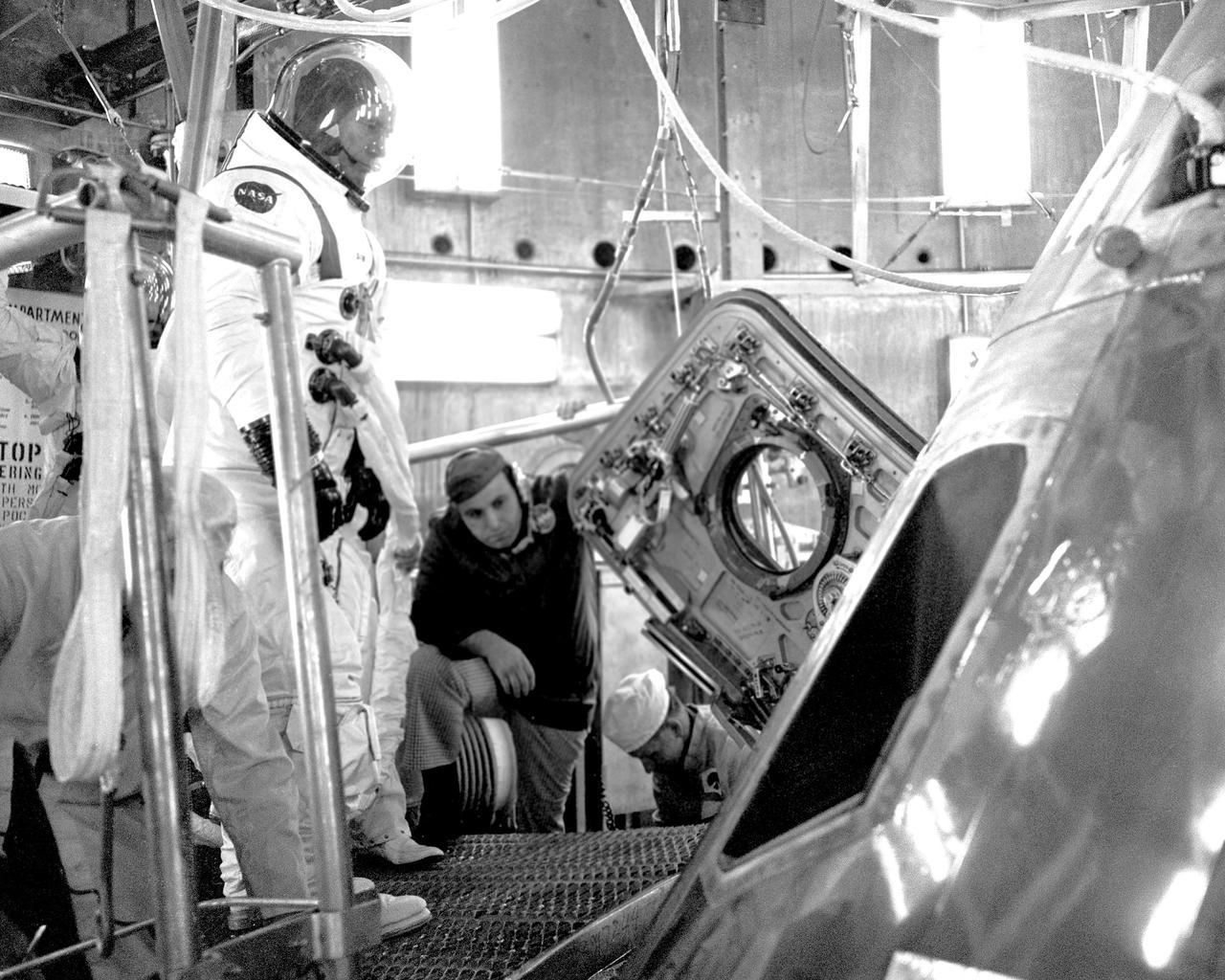
CAPE CANAVERAL, Fla. – The docking module and Apollo spacecraft for this summer's joint manned mission with the Soviet were mated in the Manned Spacecraft Operations Building today. The docking module will provide a mechanical and electrical link between the Apollo and Soyuz spacecraft while they are docked and also serve as an airlock. On hand to participate in the operation were two members of the Apollo prime crew, Astronauts Donald K. Slayton and Vance D. Brand. Launch of the Saturn 1B/Apollo from Complex 39 is scheduled for July 15. The first international crewed spaceflight was a joint U.S.-U.S.S.R. rendezvous and docking mission. The Apollo-Soyuz Test Project, or ASTP, took its name from the spacecraft employed: the American Apollo and the Soviet Soyuz. The three-man Apollo crew lifted off from Kennedy Space Center aboard a Saturn IB rocket on July 15, 1975, to link up with the Soyuz that had launched a few hours earlier. A cylindrical docking module served as an airlock between the two spacecraft for transfer of the crew members. Photo credit: NASA
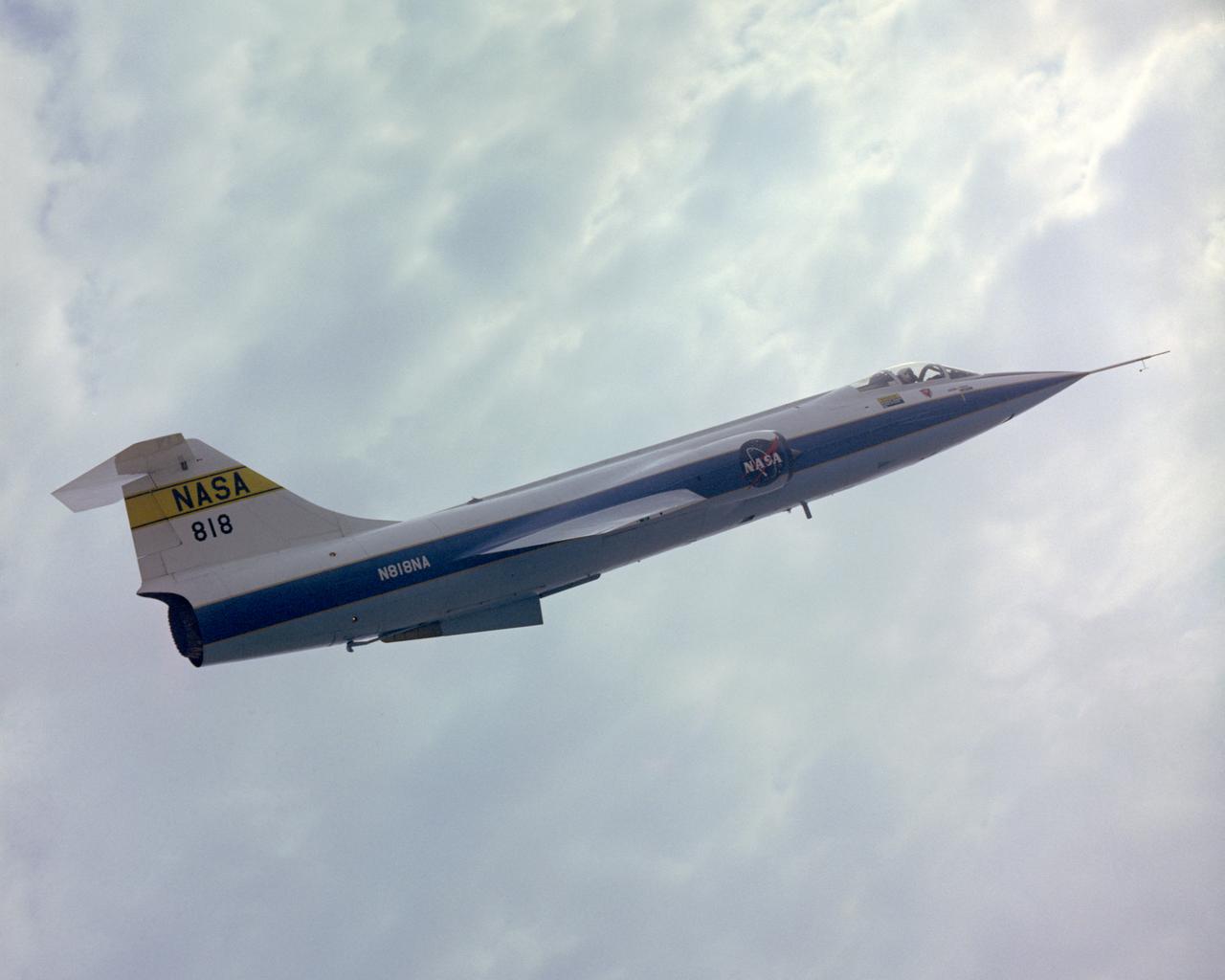
F-104A #818 flown by Einar Enevoldson. 4/11/75 NASA DFRC EC76-5079 NASA Photo by Bob Rhine
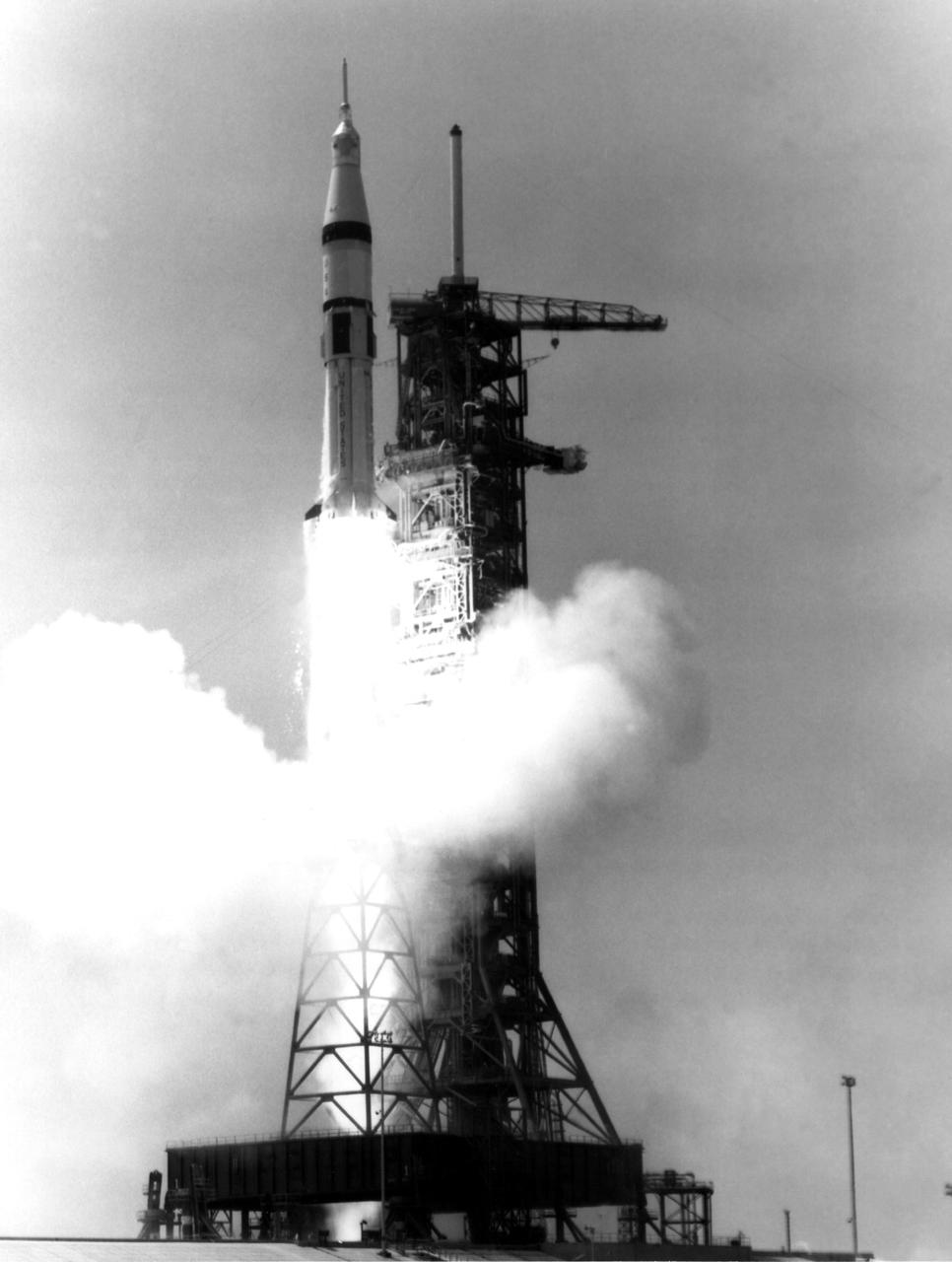
KENNEDY SPACE CENTER, FLA. -- The Apollo Soyuz Test Project Saturn IB launch vehicle thundered away from KSC's Launch Complex 39B at 3:50 p.m. today. Aboard the Apollo Command Module were ASTP astronauts Thomas Stafford, Vance Brand and Donald Slayton. The astronauts will rendezvous and dock with a Soyuz spacecraft, launched this morning from the Baykonur launch facility in the Soviet Union, carrying Soviet cosmonauts Aleksey Leonov and Valeriy Kubasov. The ASTP launches mark the first time that manned spacecraft of two nations have met in space for joint engineering and scientific investigations.
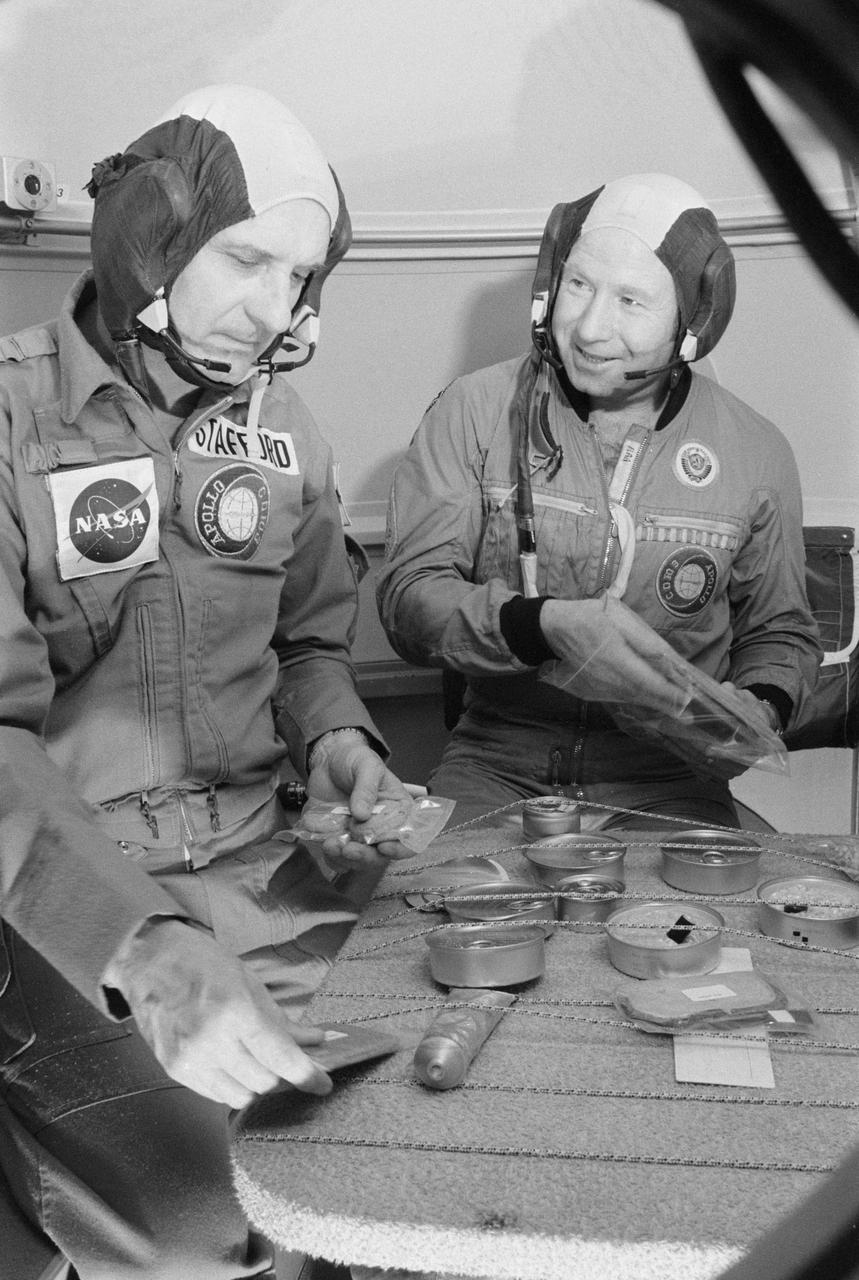
S75-22187 (25 Feb. 1975) --- Two ASTP crewmen look over food cans and packages in the Soyuz orbital module trainer in Building 35 during Apollo-Soyuz Test Project joint crew training at NASA's Johnson Space Center. They are astronaut Thomas P. Stafford (left), commander of the American ASTP prime crew; and cosmonaut Aleksey A. Leonov, commander of the Soviet ASTP first (prime) crew. The training session simulated activity on the second day in Earth orbit.
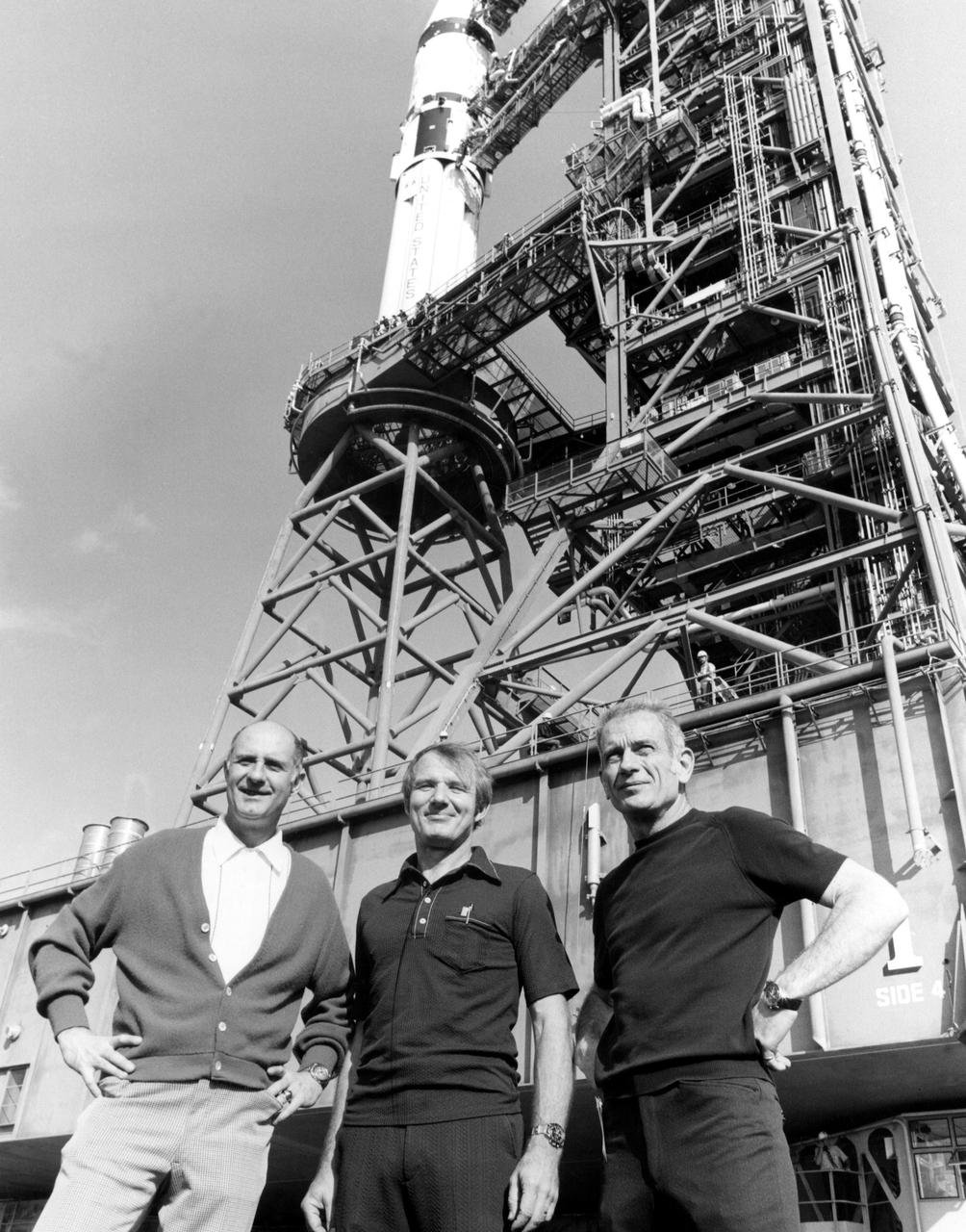
KENNEDY SPACE CENTER, FLA. -- U.S. astronauts Thomas Stafford (left), Vance Brand (center) and Donald Slayton pose in front of their Apollo Soyuz Test Project space vehicle during rollout ceremonies at KSC. The 224-foot-tall Saturn IB launch vehicle began its five-mile journey from the Vehicle Assembly Building to Complex 39's Pad at 8 a.m. The ASTP launch is scheduled for 3:50 p.m. EDT on July 15. During the mission the U.S. Apollo spacecraft will rendezvous and dock with the Soviet Soyuz spacecraft. It will be history's first international manned space flight.

AST-05-290 (17-19 July 1975) --- Astronaut Donald K. Slayton, docking module pilot of the American ASTP crew, is seen in the hatchway leading between the Apollo Docking Module and the Soyuz Orbital Module during the joint U.S.-USSR Apollo-Soyuz Test Project docking mission in Earth orbit. The 35mm camera was looking from the Soyuz into the Docking Module.
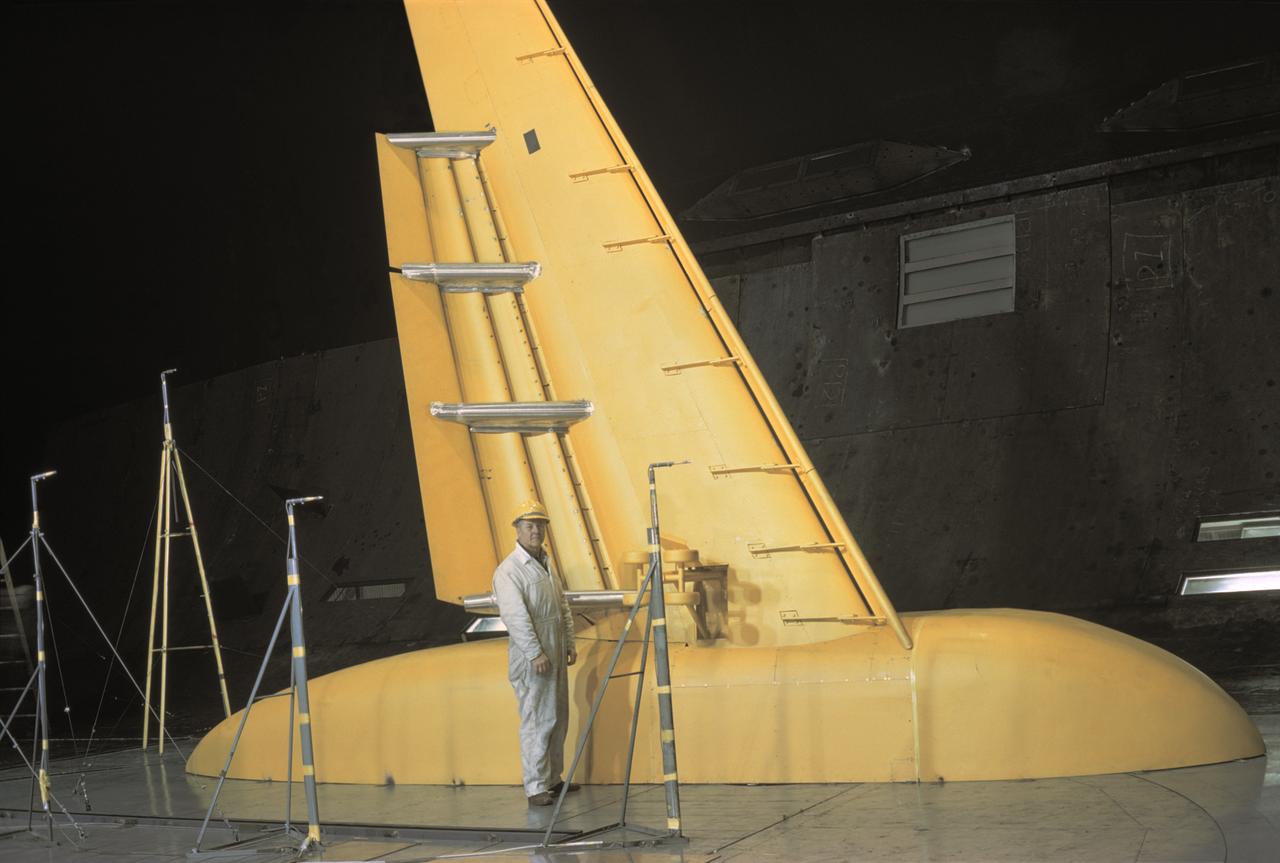
Horizontal view (side) of model, Ray Schmoranc in photo. Test #452
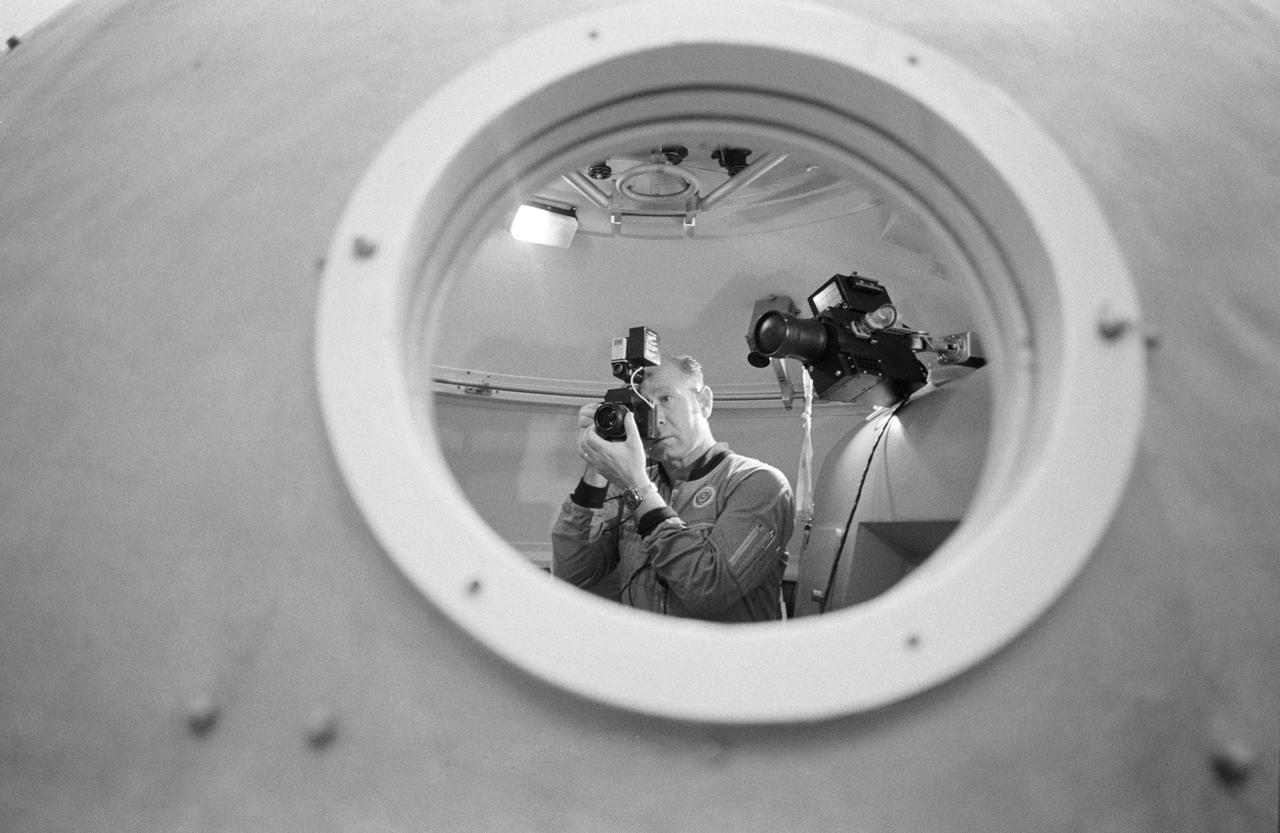
S75-21715 (19 Feb. 1975) --- Cosmonaut Aleksey A. Leonov focuses his camera for an interior shot during a simulation exercise for the Apollo-Soyuz Test Project (ASTP). Leonov is inside the Soyuz orbital module mock-up in Building 35 at the Johnson Space Center (JSC), scene of current simulations for the joint U.S.-USSR space mission scheduled for July of this year. Astronauts and cosmonauts were taking part in second-day activity simulations when this photo was made. Leonov is the Soviet ASTP crew commander.
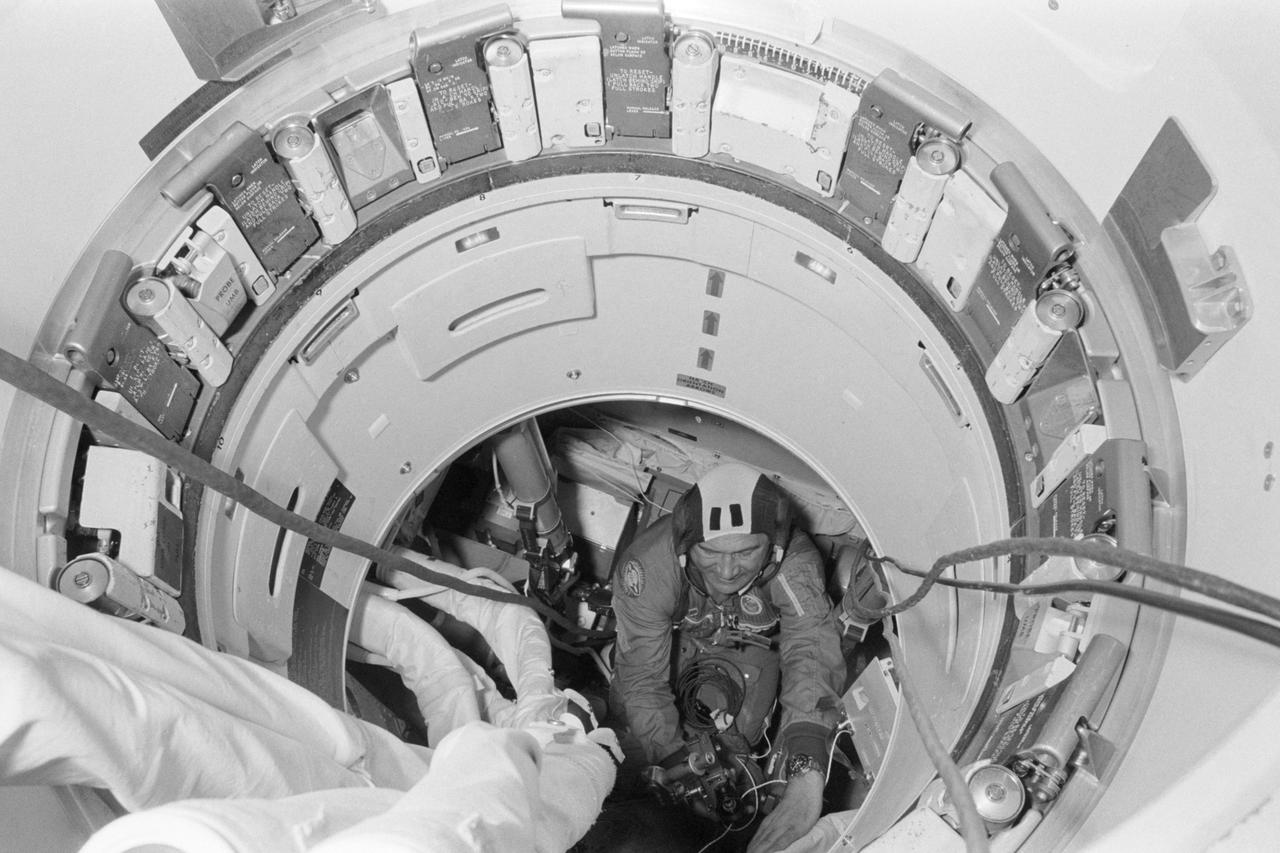
S75-21836 (20 Feb. 1975) --- Cosmonaut Anatoliy V. Filipchenko, commander of the Soviet ASTP second (backup) crew, participates in Apollo-Soyuz Test Project joint crew training in Building 35 at NASA's Johnson Space Center. Filipchenko is in the Apollo Command Module trainer. This picture was taken from inside the Docking Module during a ?walk-through? of the second day?s activities in Earth orbit.
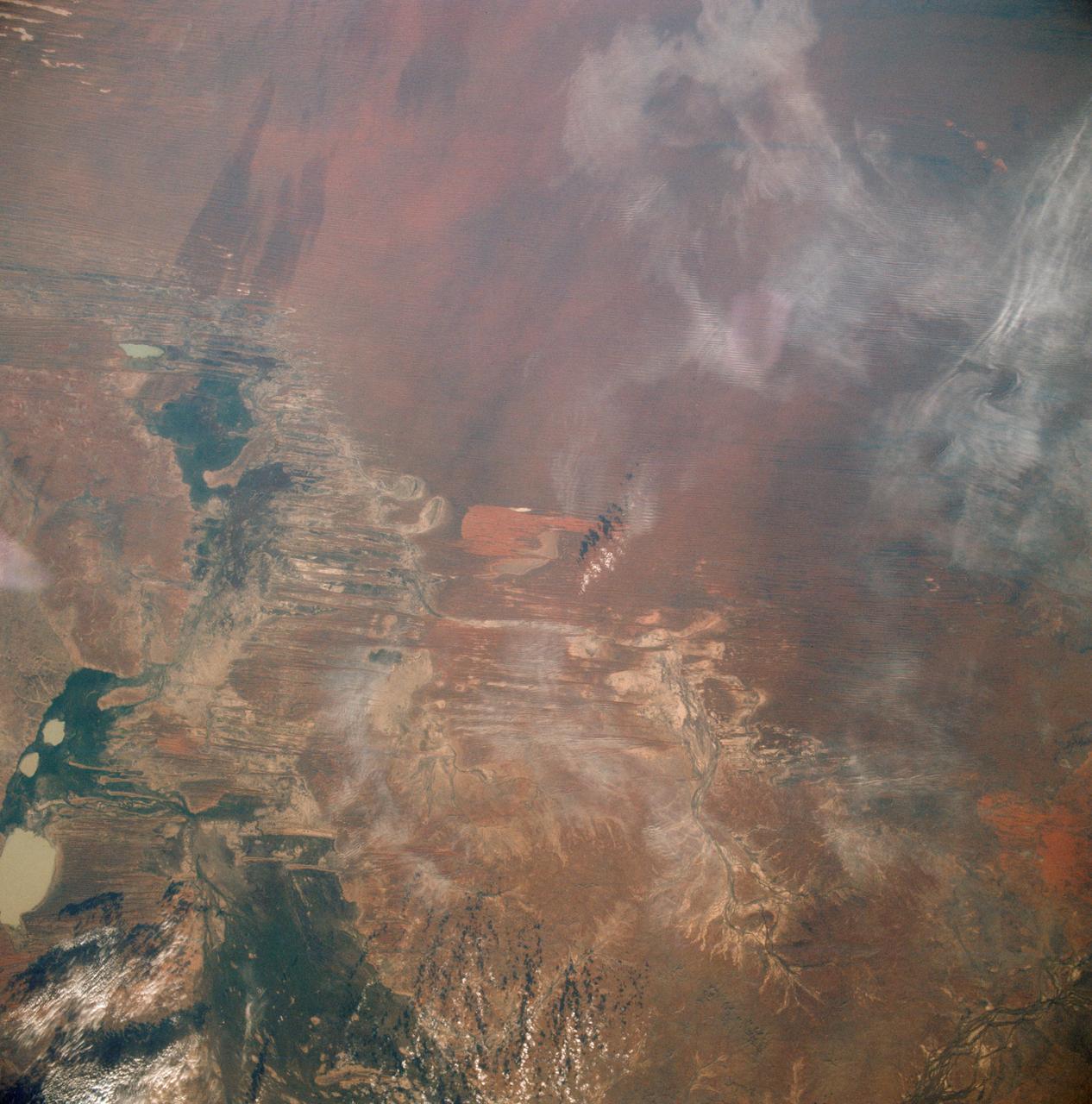
AST-19-1550 (24 July 1975) --- A vertical view of the Lake Eyre Basin area in the state of South Australia in Australia, as photographed from the Apollo spacecraft in Earth orbit during the joint U.S.-USSR Apollo-Soyuz Test Project mission. The picture was taken at an altitude of 241 kilometers (150 statute miles) with a 70mm Hasselblad camera using medium-speed Ektachrome QX-807 type film.
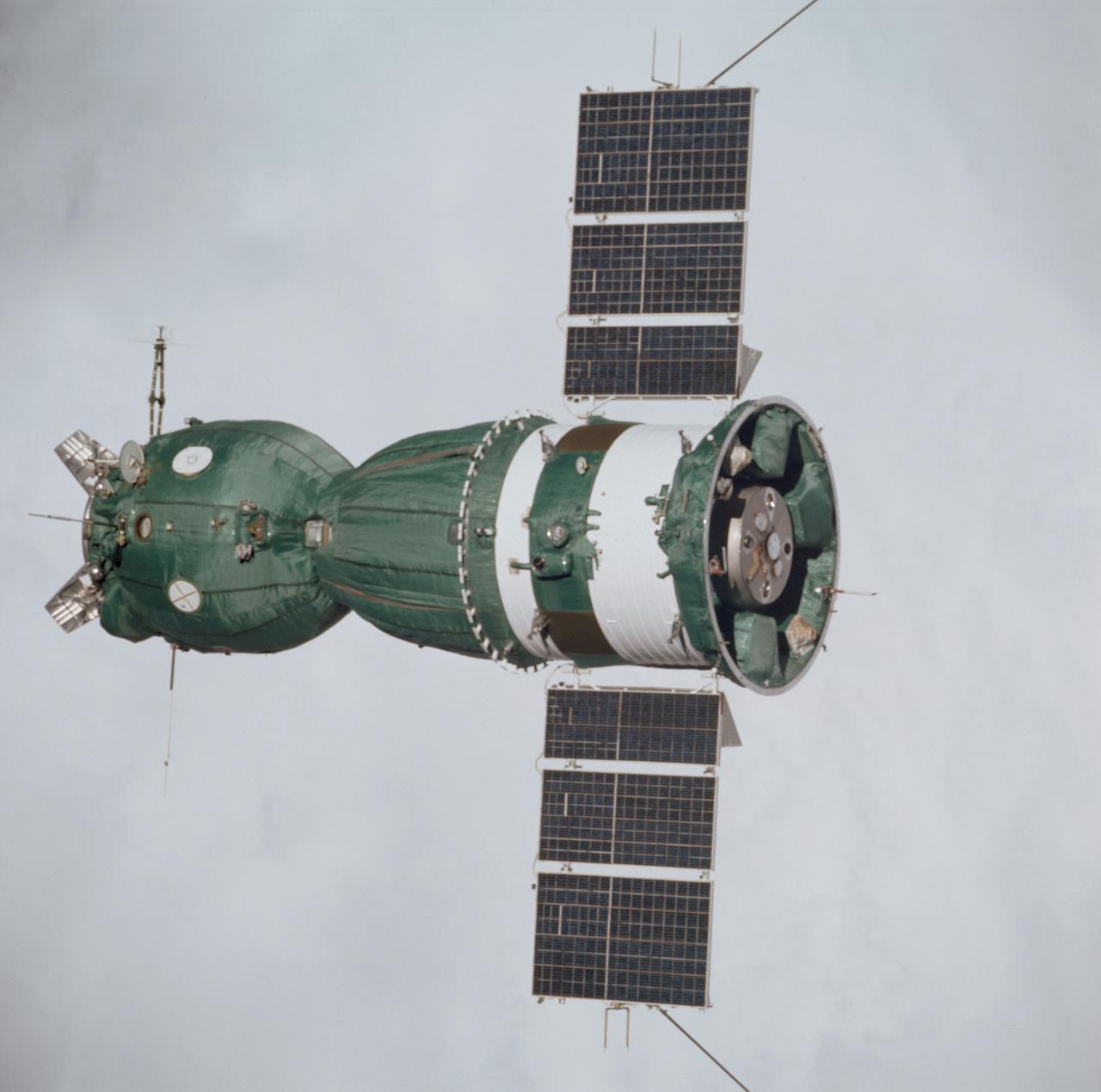
AST-01-056 (18 July 1975) --- An excellent view of the Soviet Soyuz spacecraft in Earth orbit, photographed from the American Apollo spacecraft during the joint U.S.-USSR Apollo-Soyuz Test Project (ASTP) docking mission in Earth orbit. The Soyuz is contrasted against a white-cloud background in this overhead view. The three major components of the Soyuz are the spherical-shaped Orbital Module, the bell-shaped Descent Vehicle and the cylindrical-shaped instrument Assembly Module from which two solar panels protrude. The docking system on the Orbital Module was specially designed to interface with the docking system on the Apollo's Docking Module. The ASTP astronauts and cosmonauts visited each other's spacecraft while the Soyuz and Apollo were docked in Earth orbit for two days. The Apollo crew consisted of astronauts Stafford, commander; Donald K. "Deke" Slayton, docking module pilot; and Vance D. Brand, command module pilot. The Soyuz 19 crew consisted of cosmonauts Leonov, command pilot; and Valeri N. Kubasov, flight engineer.
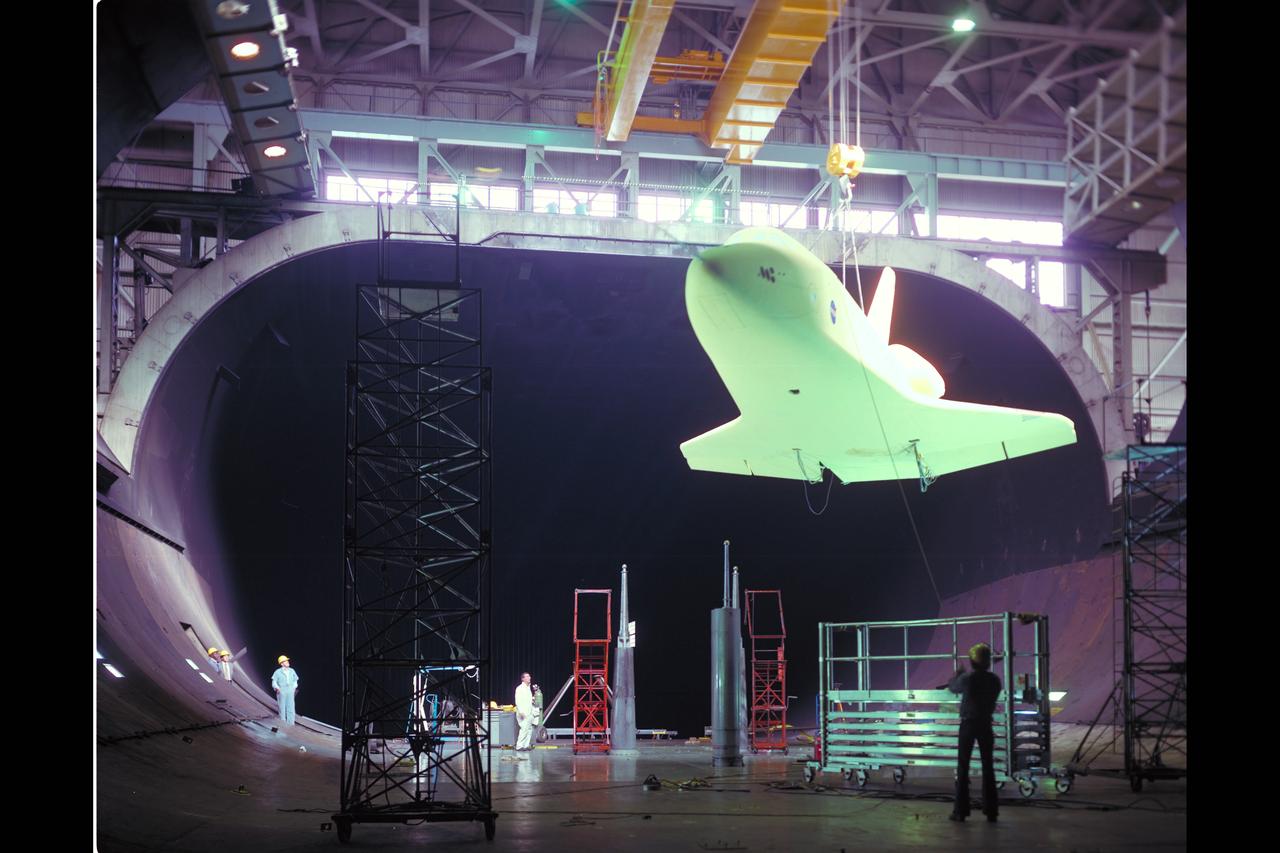
Space Shuttle Orbiter 101 model installation in the 40x80ft W.T. Test 462
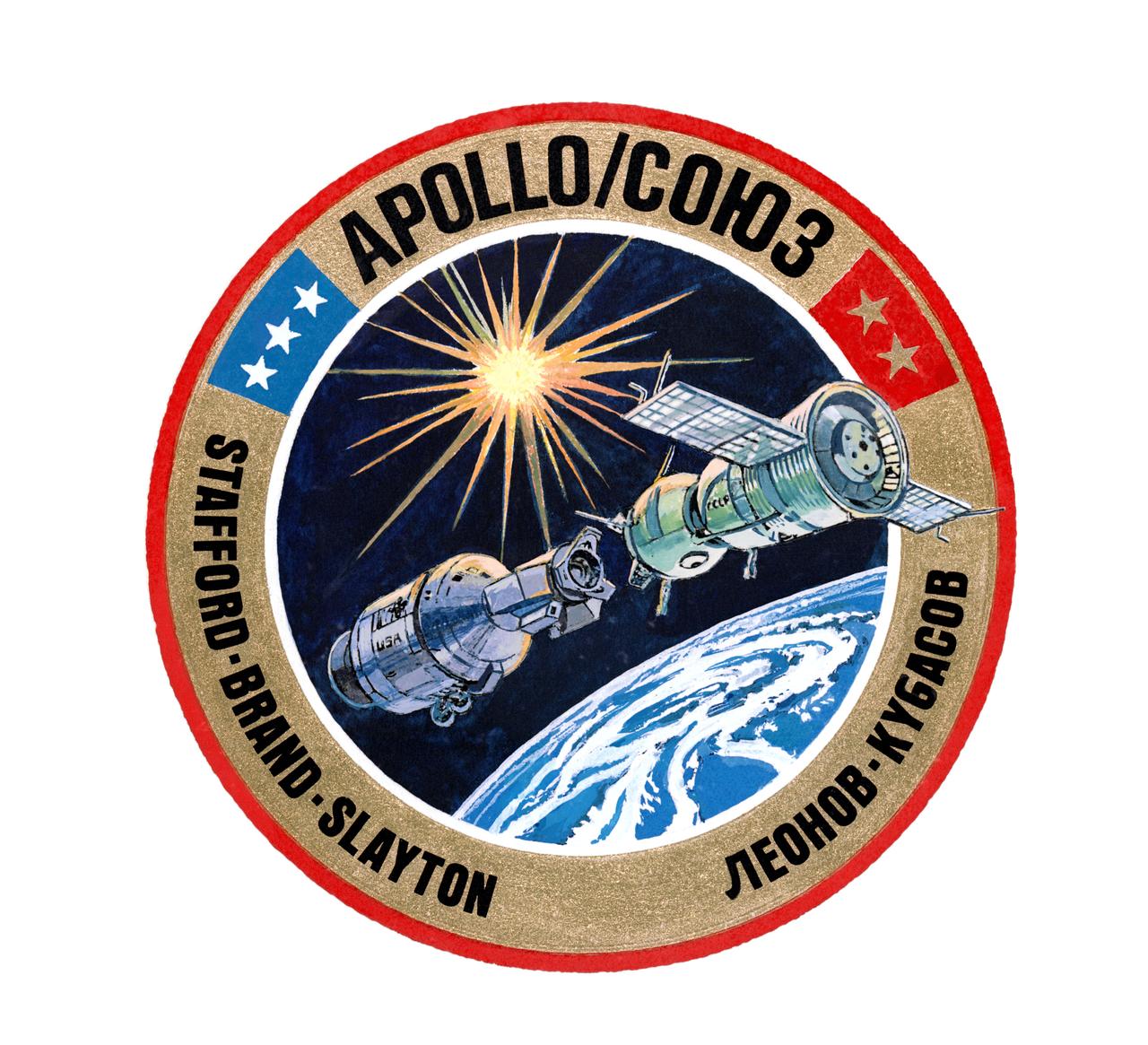
S75-20361 (27 Feb. 1975) --- This is the American crew insignia of the joint United States-USSR Apollo-Soyuz Test Project (ASTP) scheduled to take place in July 1975. Of circular design, the insignia has a colorful border area, outlined in red, with the names of the five crew members and the words Apollo in English and Soyuz in Russian around an artist?s concept of the Apollo and Soyuz spacecraft about to dock in Earth orbit. The bright sun and the blue and white Earth are in the background. The white stars on the blue background represent American astronauts Thomas P. Stafford, commander; Vance D. Brand, command module pilot; and Donald (Deke) K. Slayton, docking module pilot. The dark gold stars on the red background represent Soviet cosmonauts Aleksey A. Leonov, commander, and Valeriy N. Kubasov, engineer. Soyuz and Apollo will be launched separately from the USSR and United States, and will dock and remain together for as long as two days. The three Apollo astronauts will enter Soyuz and the two Soviet cosmonauts will visit the Apollo spacecraft via a docking module. The Russian word ?soyuz? means ?union? in English.
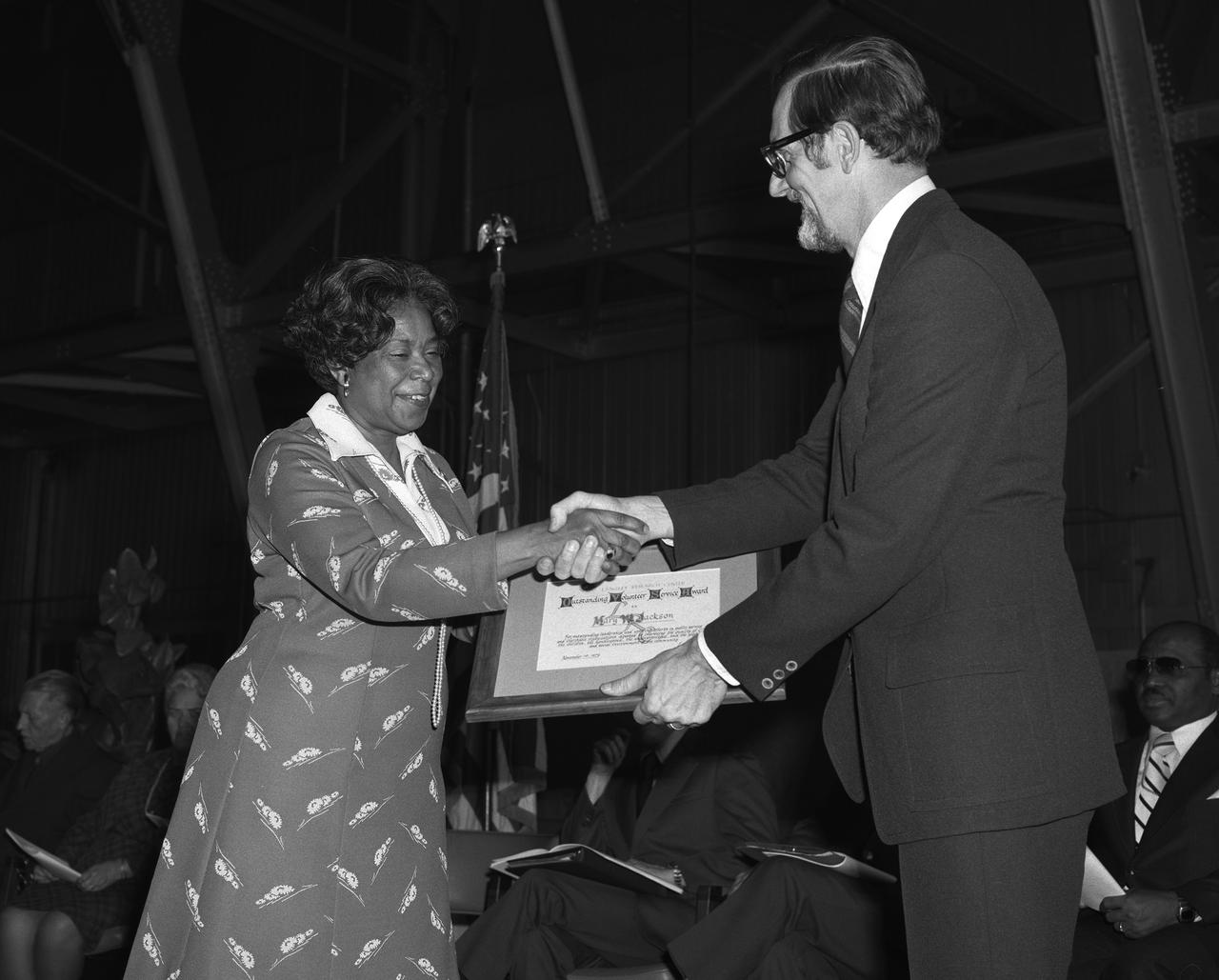
Langley Center Director Donald P. Hearth (right) presenting Mary Jackson with Outstanding Volunteer Service Award. Mary Jackson was NASA's first African-American female engineer,and subsequent career supporting the hiring and promotion of other deserving female and minority employees.
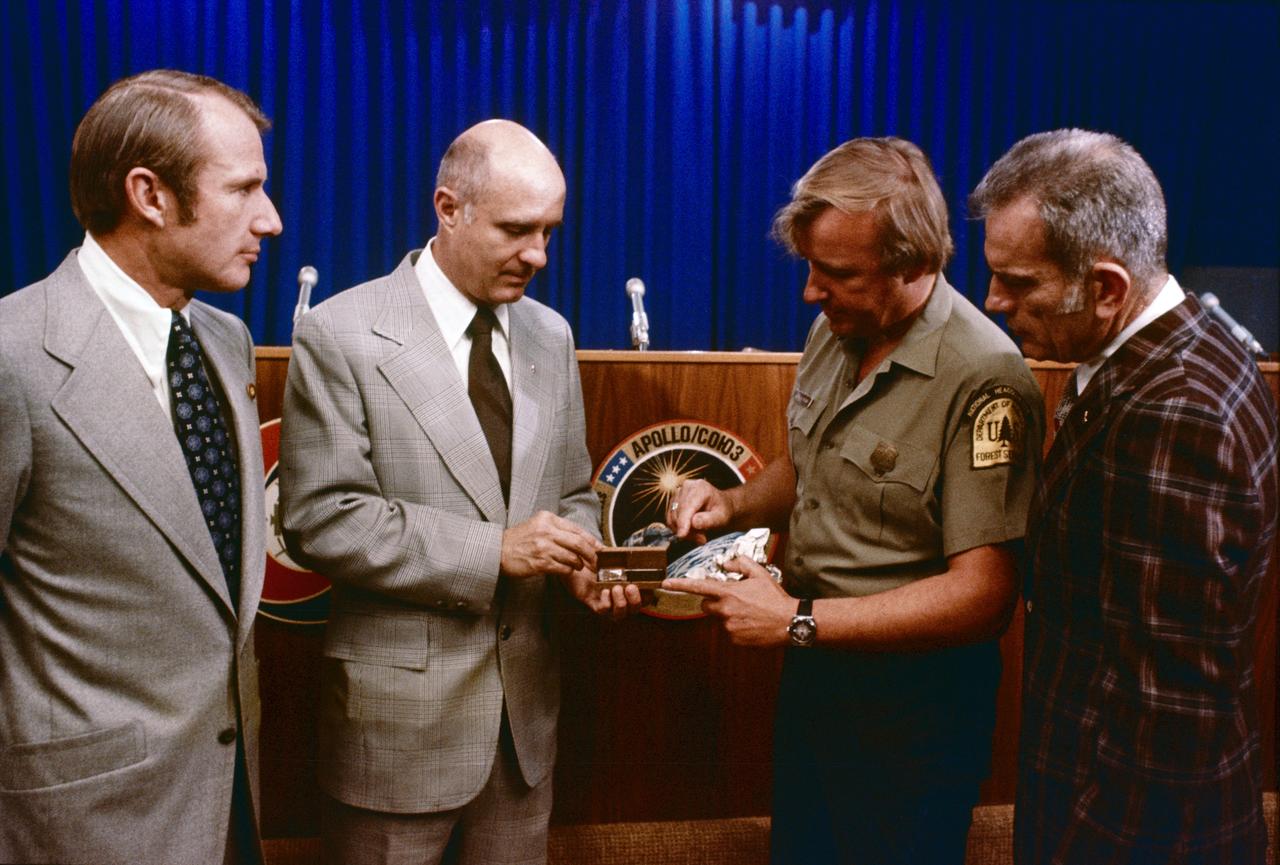
S75-27445 (6 June 1975) --- American ASTP crewmen Vance D. Brand (left), Thomas P. Stafford (second from left) and Donald K. Slayton (right) receive a special box of genetically superior white spruce seeds from Glenn A. Kovar (second from right), USDA Forest Service project coordinator. The seeds, enough to plant an acre of trees, will be presented to the Soviet ASTP crewmen during the U.S.-USSR Apollo-Soyuz Test Project docking-in-Earth-orbit mission in July 1975. The seeds will produce faster-growing trees of exceptional height and shape. The trees will thrive in Moscow-like climate, and were developed by Forest Service?s Institute of Forest Genetics in Rhinelander, Wisconsin. The seed container box was made from recycled fibers and stabilized walnut. These seeds are an outstanding example of the U.S. Forest Service research to help produce new improved forests for the world. The four men are standing in the Building 2 briefing room at NASA's Johnson Space Center.
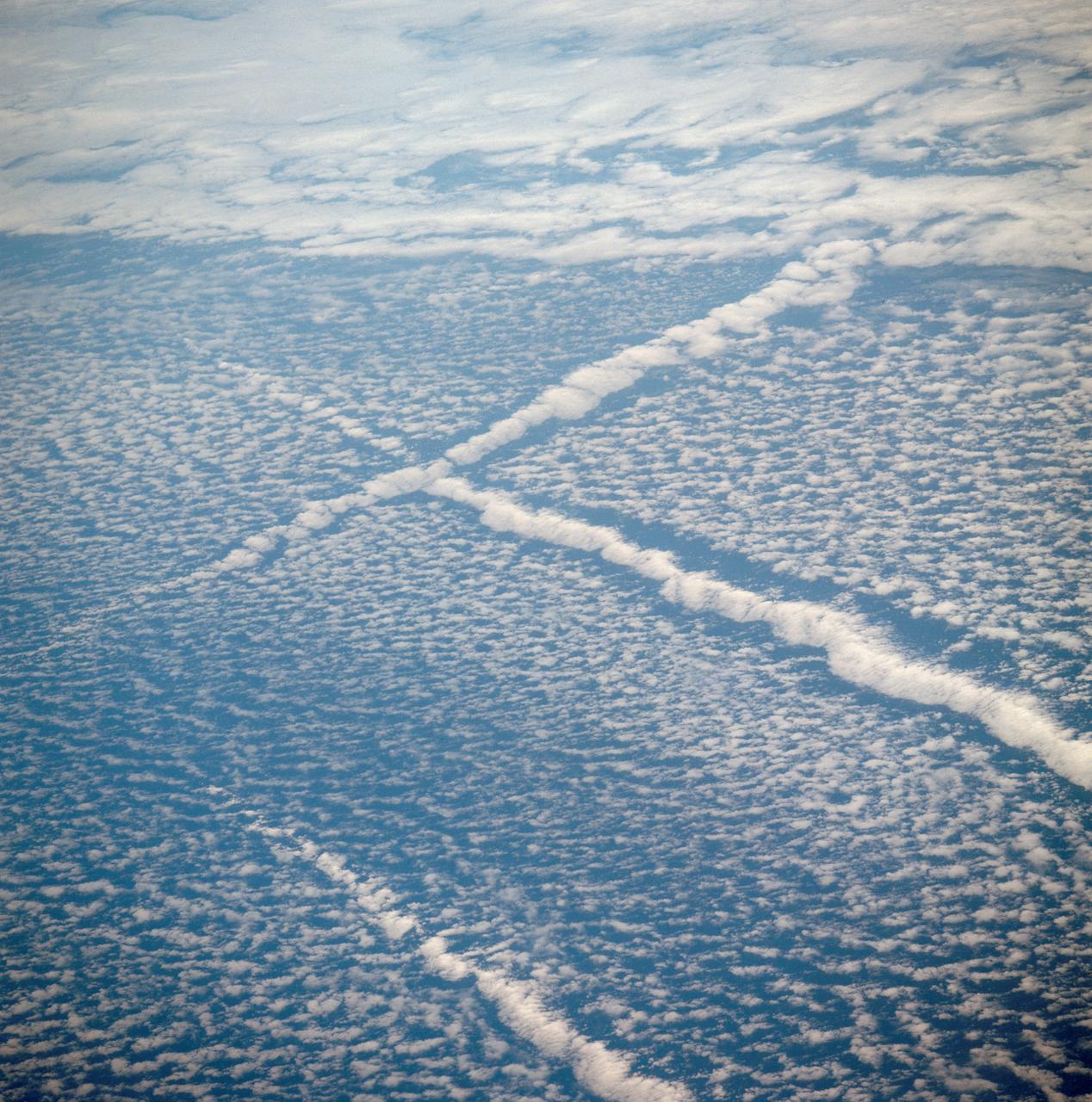
AST-01-042 (16 July 1975) --- An oblique view of unique cloud patterns over the Pacific Ocean caused by aircraft contrail shadows altering cumulus clouds and forming straight line clouds, as photographed from the Apollo spacecraft in Earth orbit during the joint U.S.-USSR Apollo-Soyuz Test Project mission. This area is southwest of Los Angeles, California. This photograph was taken at an altitude of 177 kilometers (110 statute miles) with a 70mm Hasselblad camera using medium-speed Ektachrome QX-807 type film.