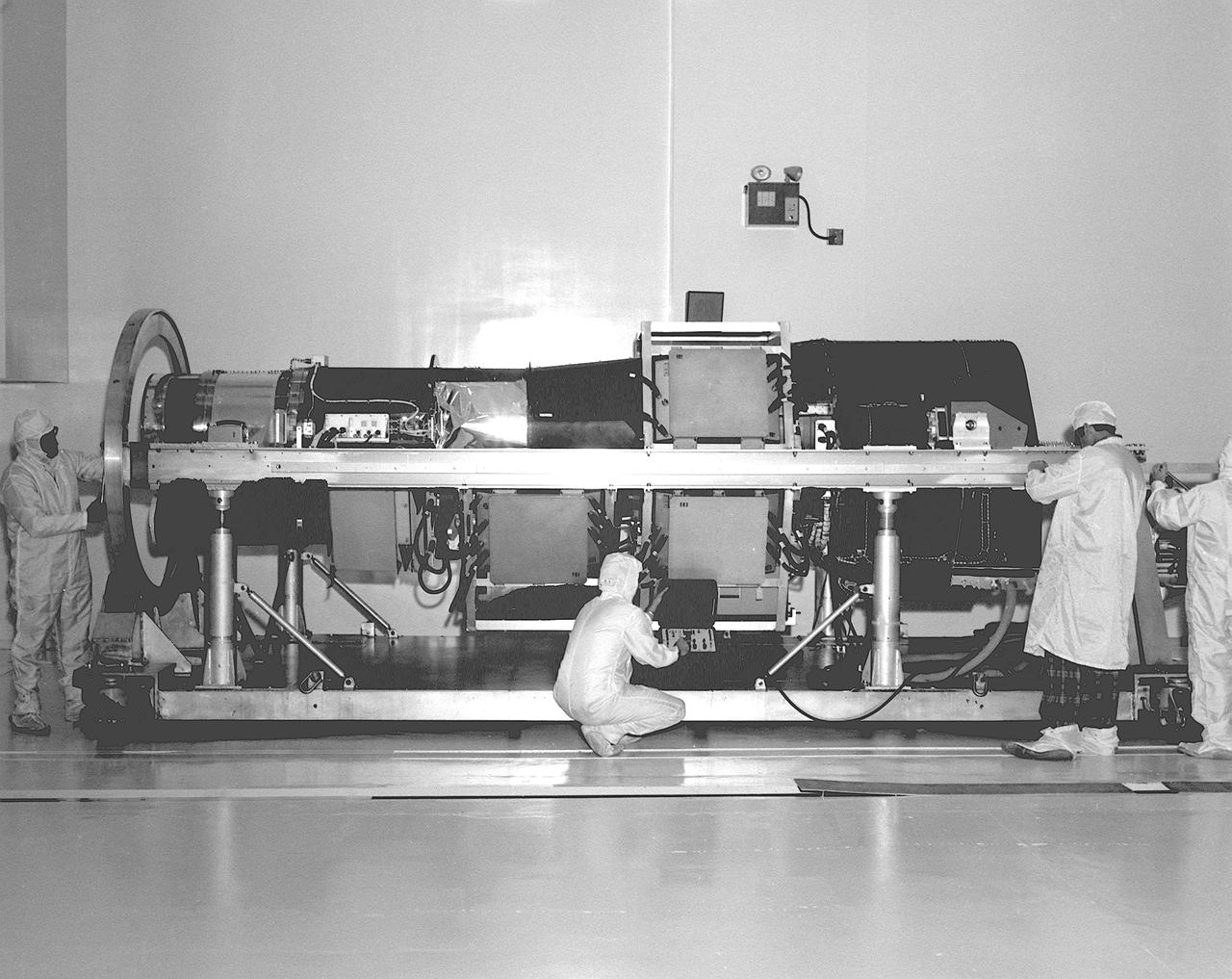
This photograph is of the High Energy Astronomy Observatory (HEAO)-2 telescope being checked by engineers in the X-Ray Calibration Facility at the Marshall Space Flight Center (MSFC). The MSFC was heavily engaged in the technical and scientific aspects, testing and calibration, of the HEAO-2 telescope. The HEAO-2 was the first imaging and largest x-ray telescope built to date. The X-Ray Calibration Facility was built in 1976 for testing MSFC's HEAO-2. The facility is the world's largest, most advanced laboratory for simulating x-ray emissions from distant celestial objects. It produced a space-like environment in which components related to x-ray telescope imaging are tested and the quality of their performance in space is predicted. The original facility contained a 1,000-foot long by 3-foot diameter vacuum tube (for the x-ray path) cornecting an x-ray generator and an instrument test chamber. Recently, the facility was upgraded to evaluate the optical elements of NASA's Hubble Space Telescope, Chandra X-Ray Observatory and Compton Gamma-Ray Observatory.
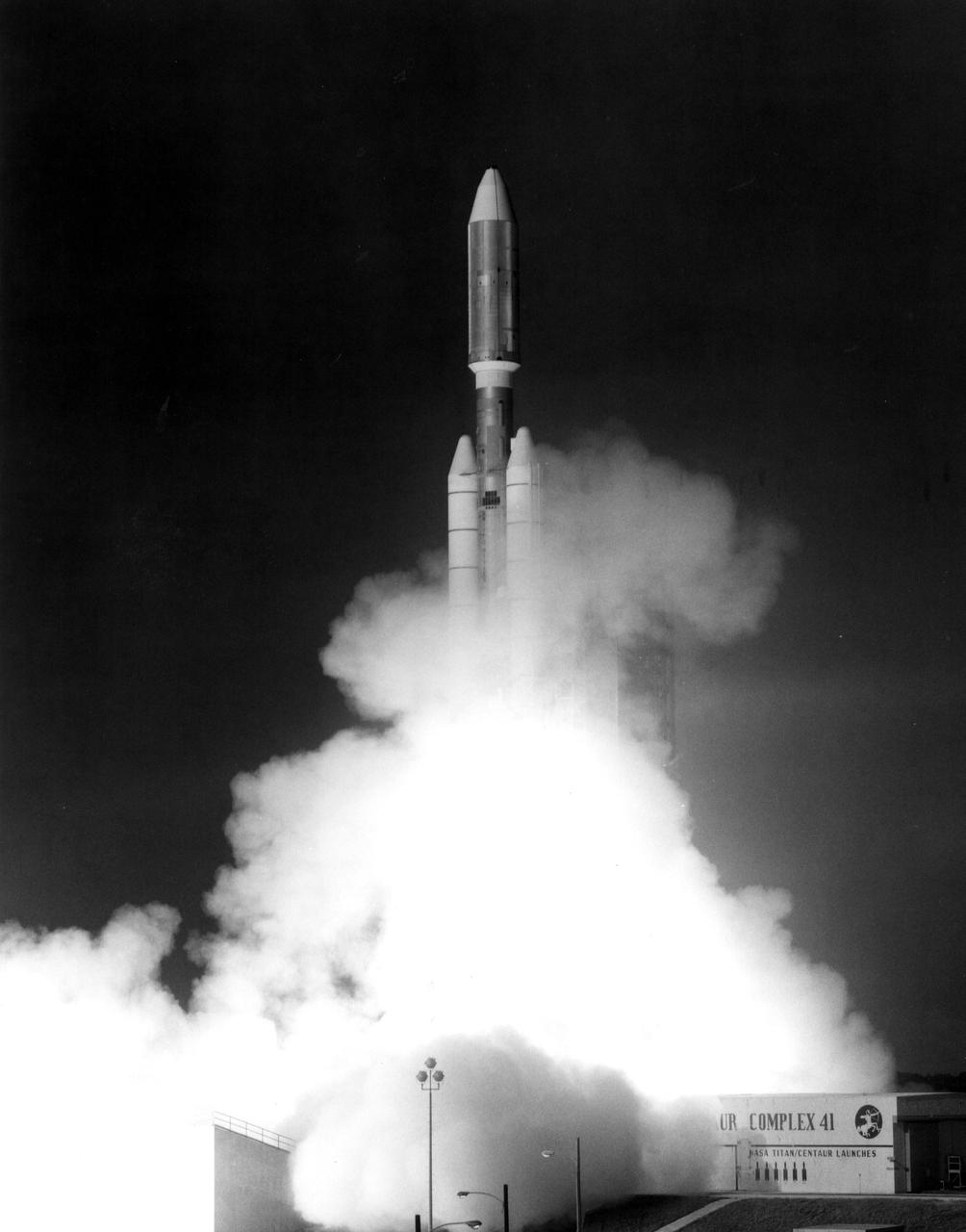
KENNEDY SPACE CENTER, FLA. -- Voyager-1 was launched atop Titan_Centaur-6 at Launch Complex 41 at 8:56 a.m. EDT today, joining its sister spacecraft, Voyager-2, on a mission to the outer planets.
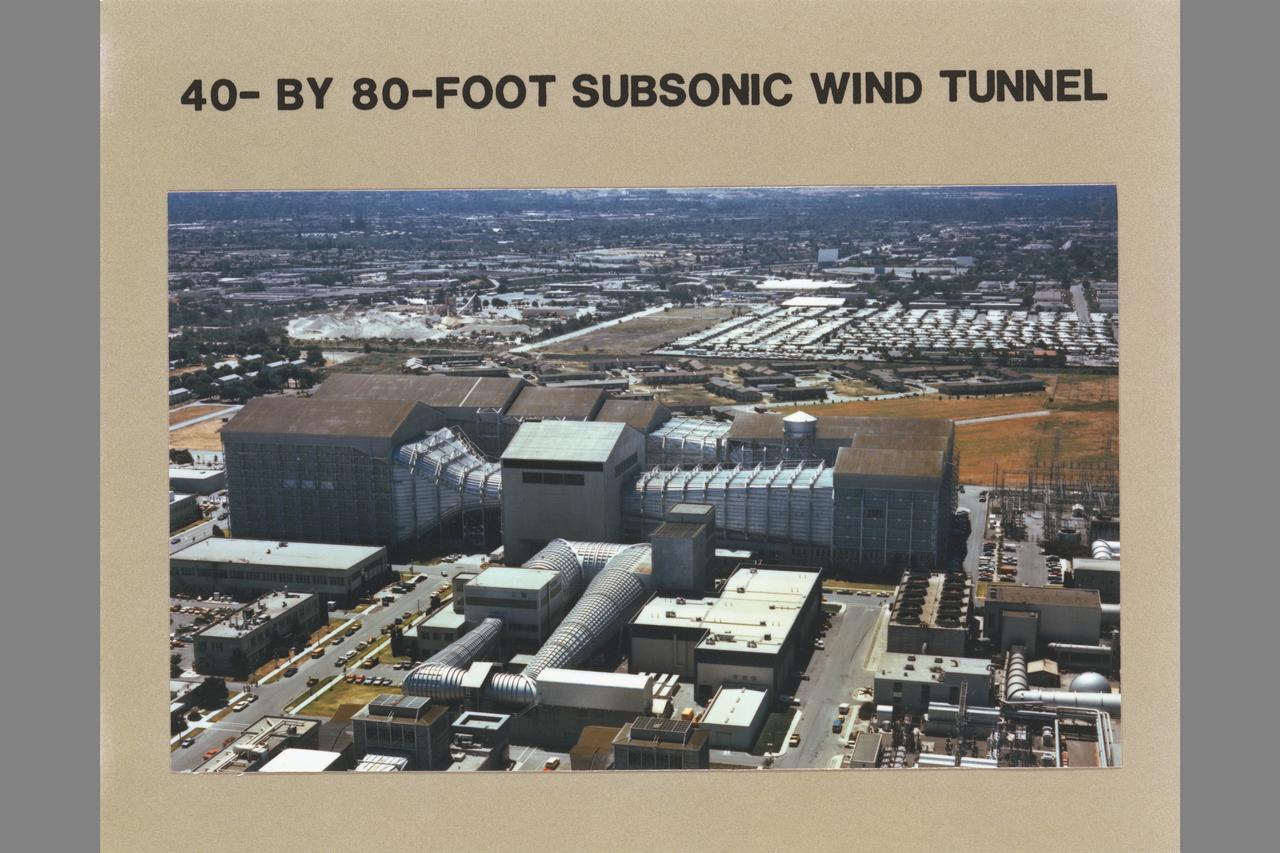
NASA Ames Research Center, Moffett Field, CA aerials: Two 7x10 Foot Wind Tunnels N-215 and N-216 (with composite title)
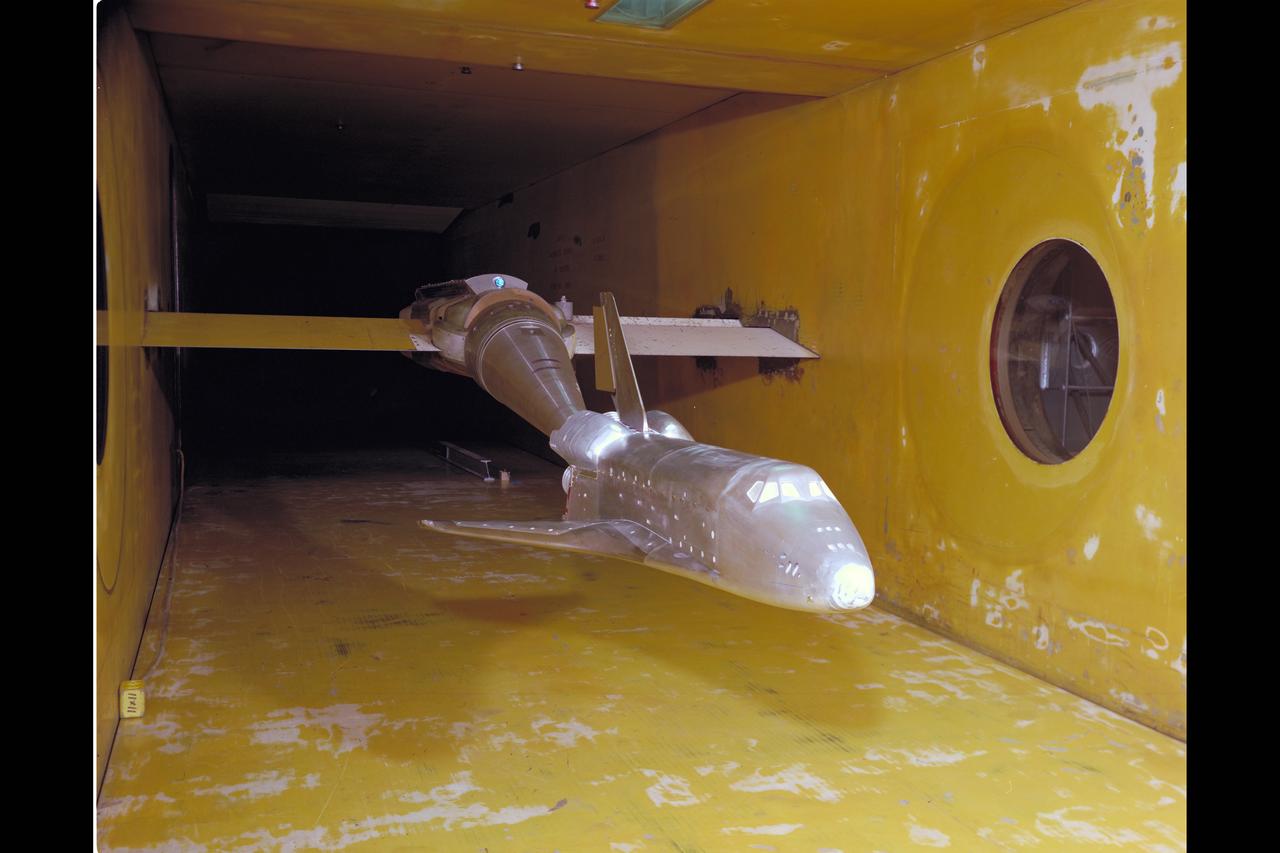
Straight Space Shuttle orbiter (OA-144) test-118 in 9x7ft w.t.
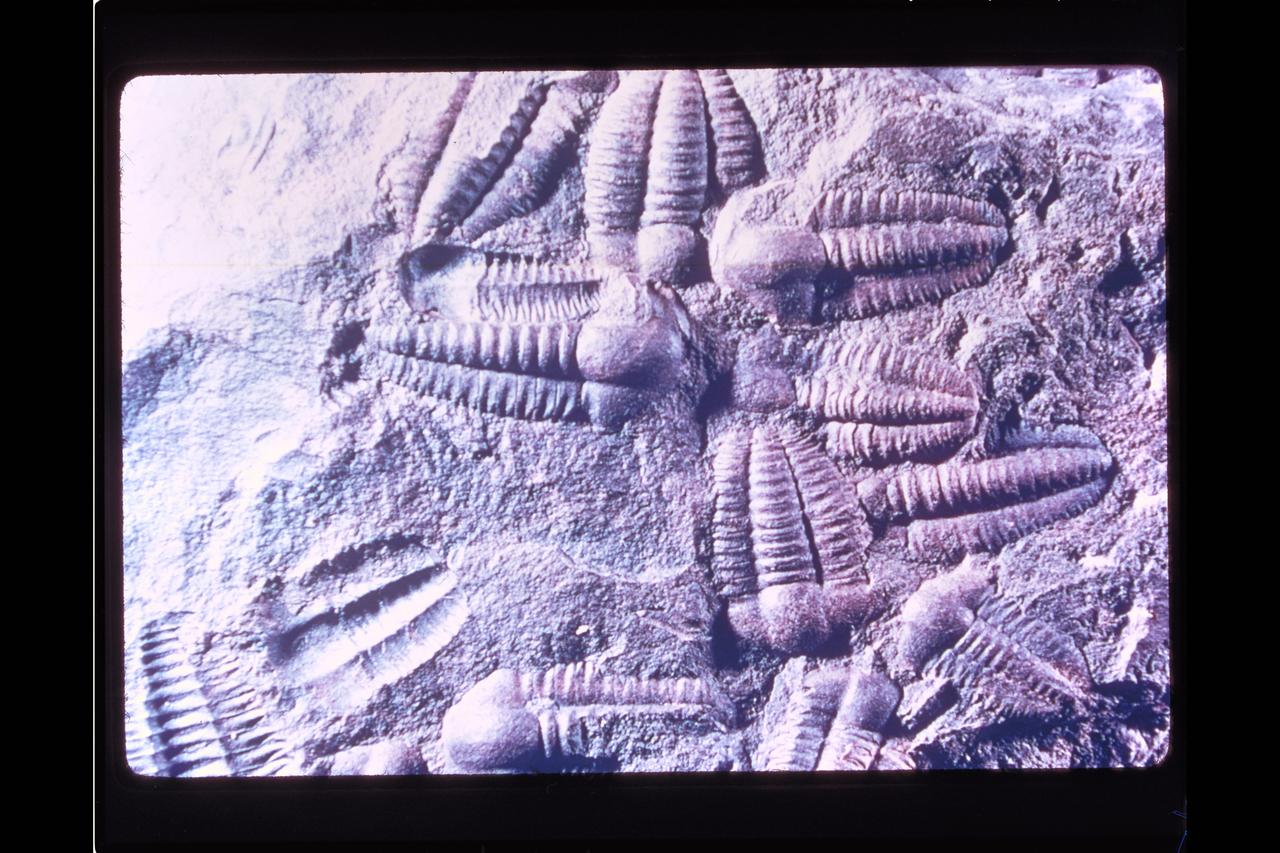
Origin of life (fossil)
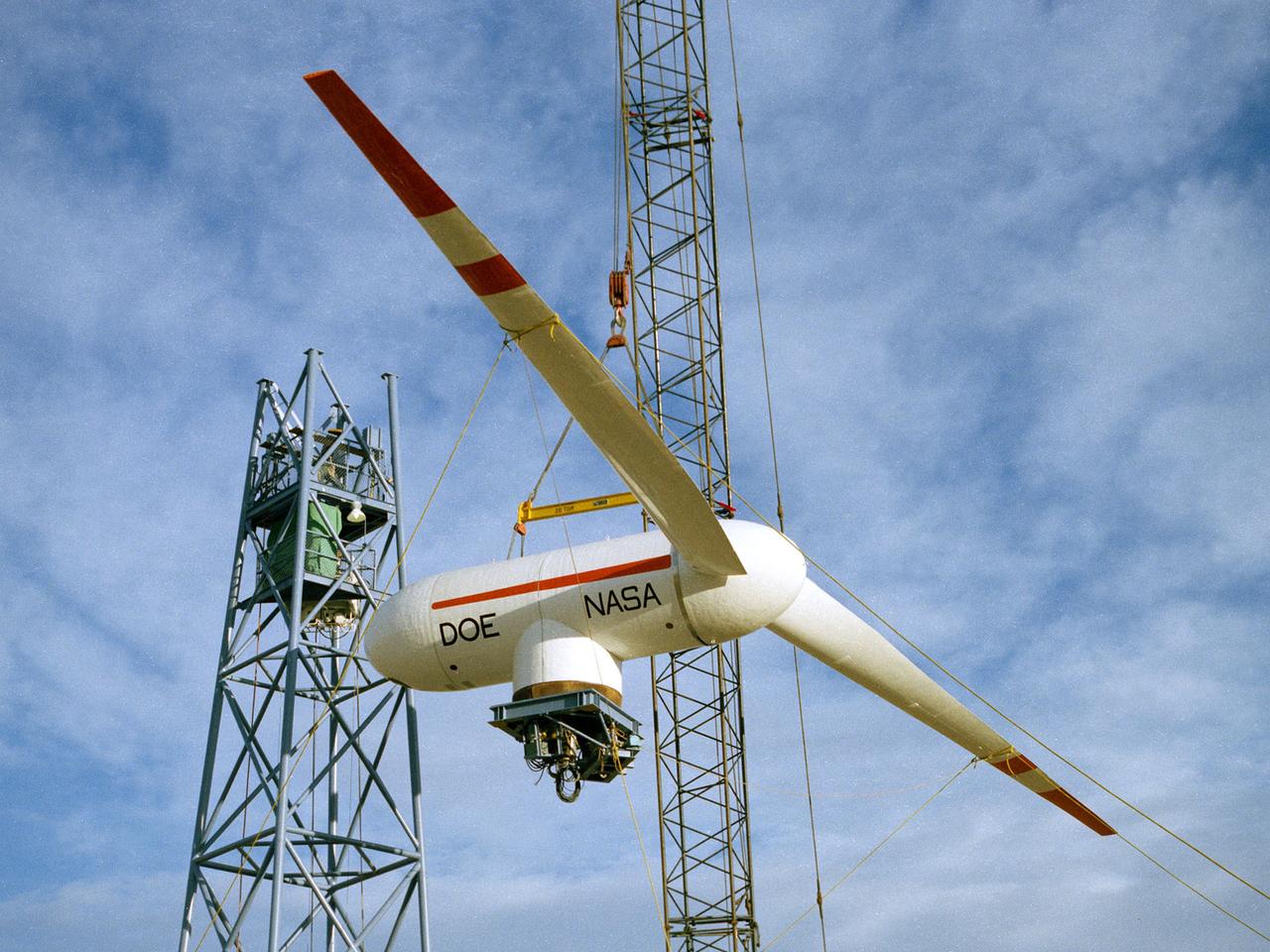
TA Mod-0A 200-kilowatt wind turbine designed by National Aeronautics and Space Administration (NASA) Lewis Research Center and constructed in Clayton, New Mexico. The wind turbine program was a joint effort by NASA and the Energy Research and Development Administration (ERDA) during the 1970s to develop less expensive forms of energy. NASA Lewis was assigned the responsibility of developing large horizontal-axis wind turbines. The program included a series of increasingly powerful wind turbines, designated: Mod-0A, Mod-1, WTS-4, and Mod-5. The program’s first device was a Mod-0 100-kilowatt wind turbine test bed built at NASA’s Plum Brook Station. This Mod-0A 200-kilowatt turbine built in Clayton in 1977 was the program’s second device. It included a 125-foot long blade atop a 100-foot tall tower. The Mod-0A was designed to determine the turbine’s operating problems, integrate the system with the local utilities, and assess the attitude of the local community. There were additional Mod-0A turbines built in Culebra, Puerto Rico; Block Island, Rhode Island; and Oahu, Hawaii. The Mod-0A turbines were initially unreliable and suffered issues with the durability of the rotor blade. Lewis engineers addressed the problems, and the wind turbines proved to be reliable and efficient devices that operated for a number of years. The information gained from these early models was vital to the design and improvement of the later generations.

S77-22549 --- Dr. Farouk El-Baz (left), a scientist, chats with other participants of the Eighth Annual Lunar Science Conference.
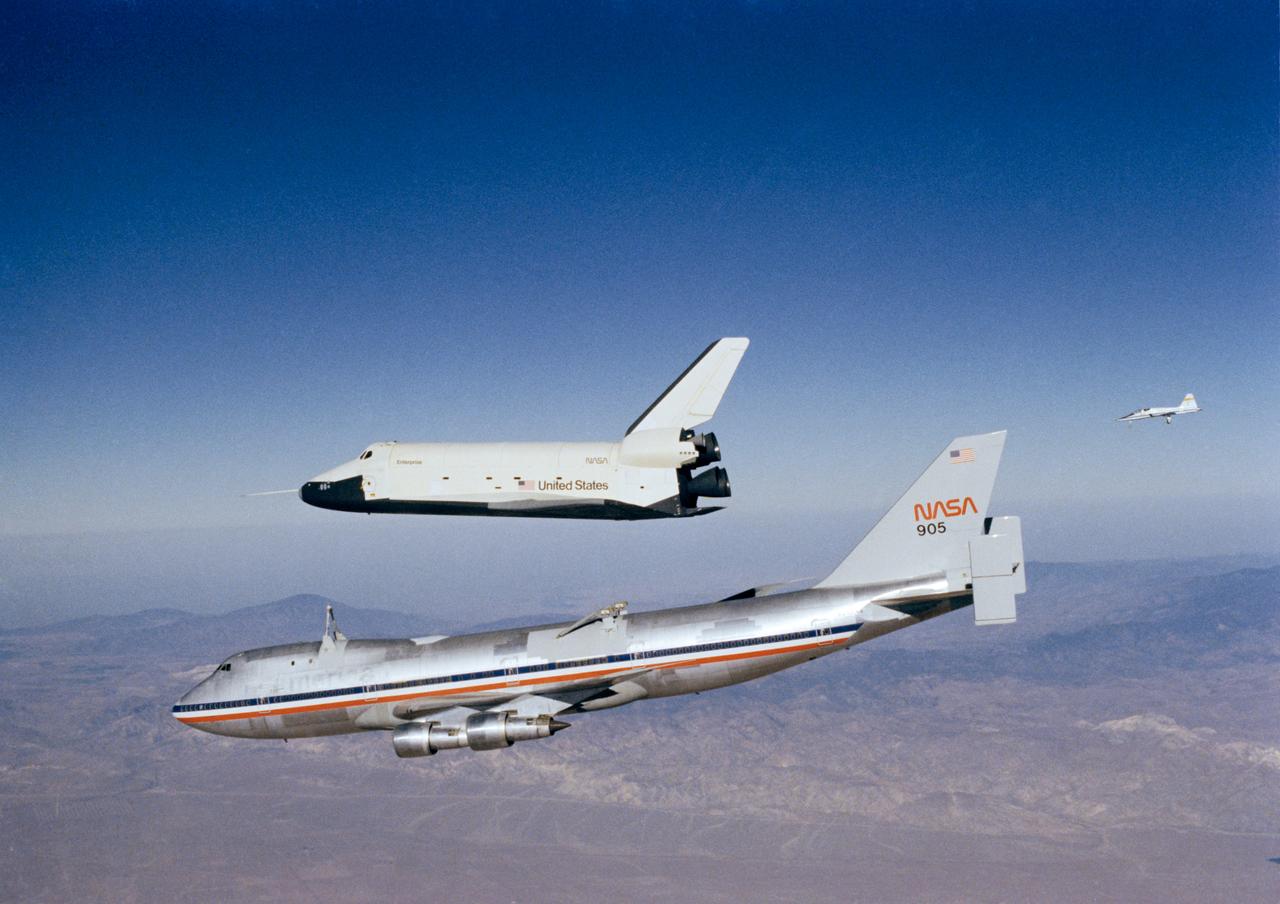
S77-28931 (12 Oct. 1977) --- The Orbiter 101 "Enterprise" separates from the NASA 747 carrier aircraft to begin its first "tailcone-off" unpowered flight over desert and mountains of Southern California. A T-38 chase plane follows in right background. This was the fourth in a series of five piloted free flights. Photo credit: NASA

Mary Jackson at Work. In 1958 Mary Jackson became NASA’s first black female engineer. At the time this photo was taken in June 2, 1977 Mrs. Jackson was working in the Transonic Aerodynamic Branch.
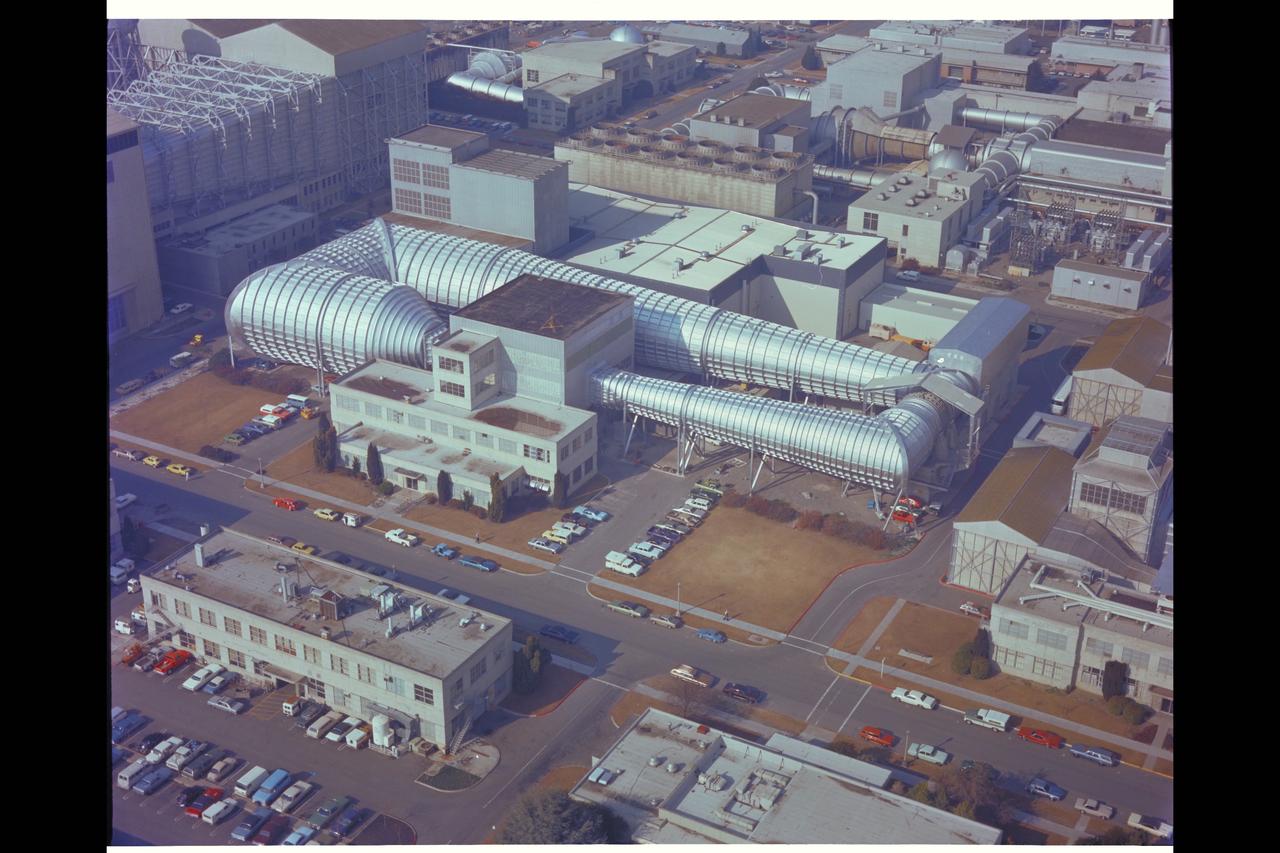
NASA Ames Research Center 14-foot Transonic Wind Tunnel
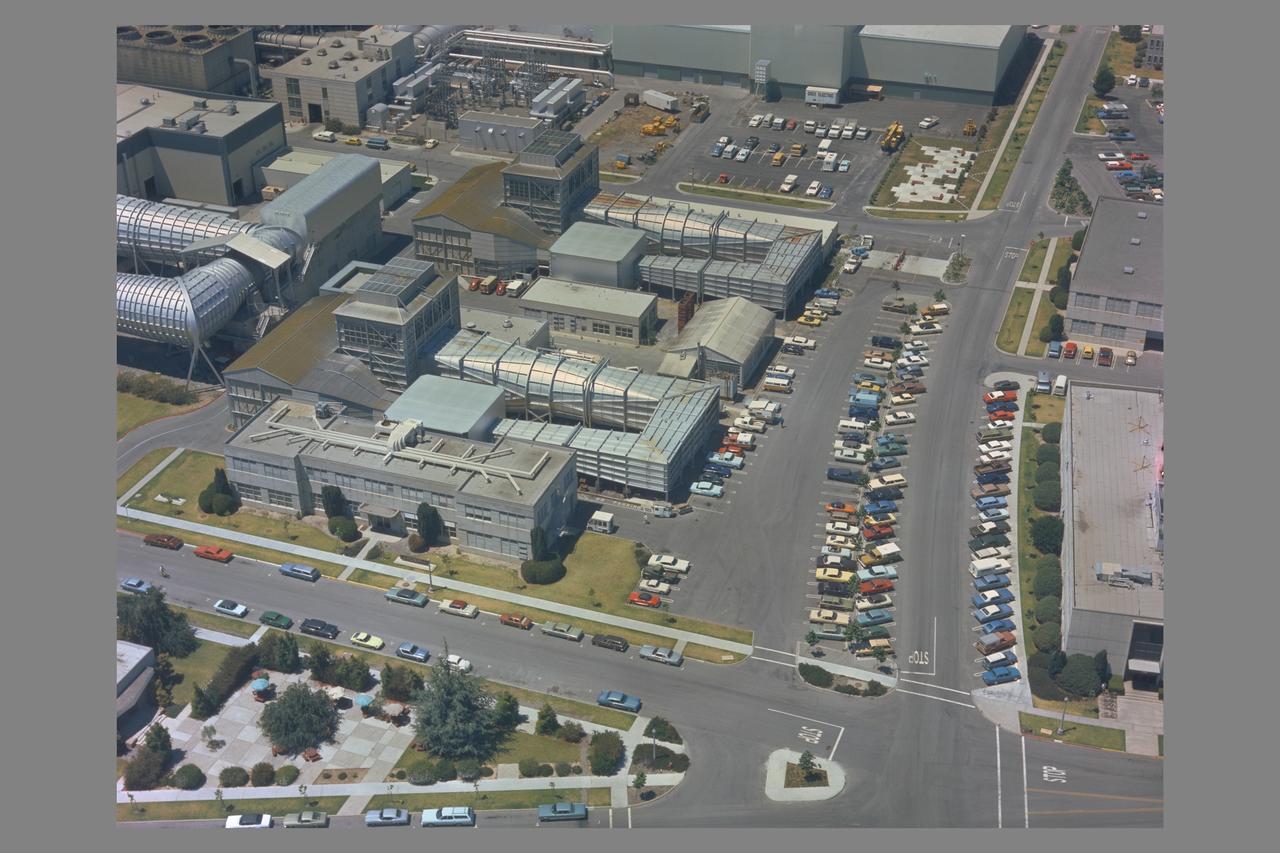
Aerial of Ames: Army Aeromechanics Lab and 7x10ft#1 W.T. , and 7x10ft#2 W.T.
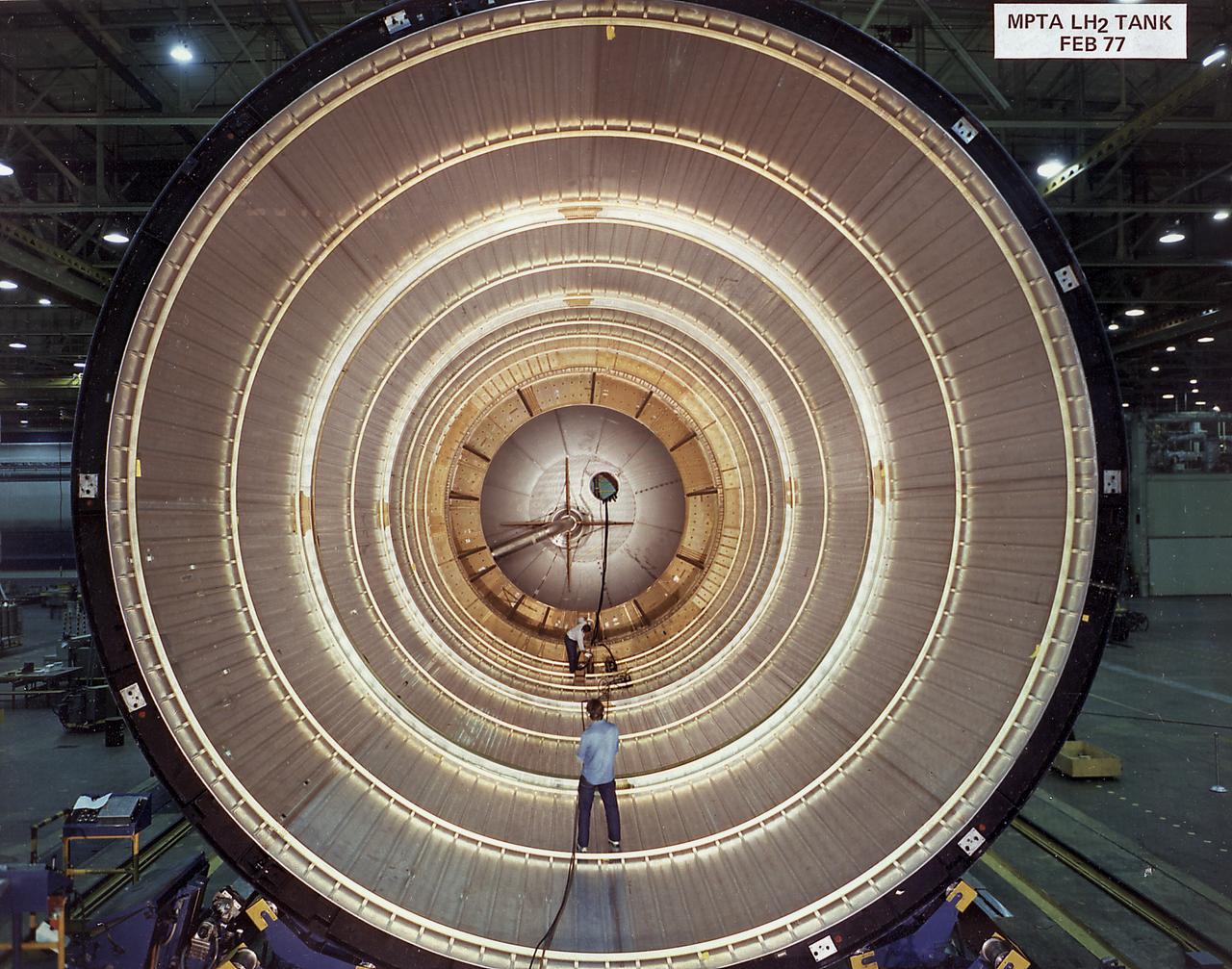
This photograph shows an inside view of a liquid hydrogen tank for the Space Shuttle external tank (ET) Main Propulsion Test Article (MPTA). The ET provides liquid hydrogen and liquid oxygen to the Shuttle's three main engines during the first 8.5 minutes of flight. At 154-feet long and more than 27-feet in diameter, the ET is the largest component of the Space Shuttle, the structural backbone of the entire Shuttle system, and is the only part of the vehicle that is not reusable. The ET is manufactured at the Michoud Assembly Facility near New Orleans, Louisiana, by the Martin Marietta Corporation under management of the Marshall Space Flight Center.
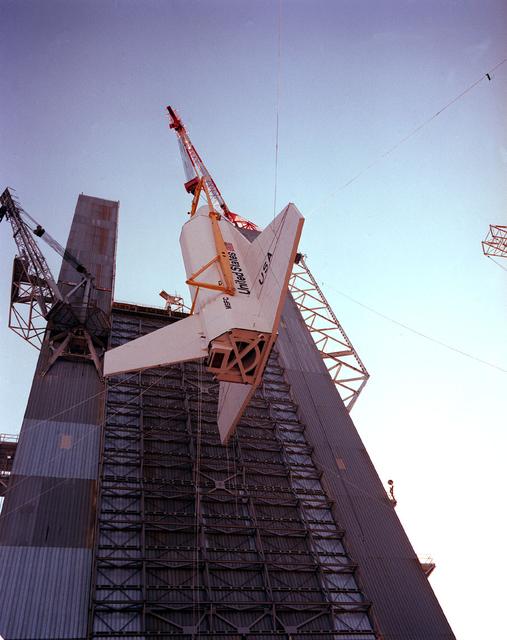
MSFC, Ala. -- The Space Shuttle Orbiter simulator is hoisted into the giant dynamics test stand at NASA's Marshall Space Flight Center, Huntsville, Ala. The simulator was built at the Marshall Center for use in pathfinder activities, such as checking roadway clearances, crane capabilities and fits within structures. It is the same size, shape and weight of an actual Orbiter.
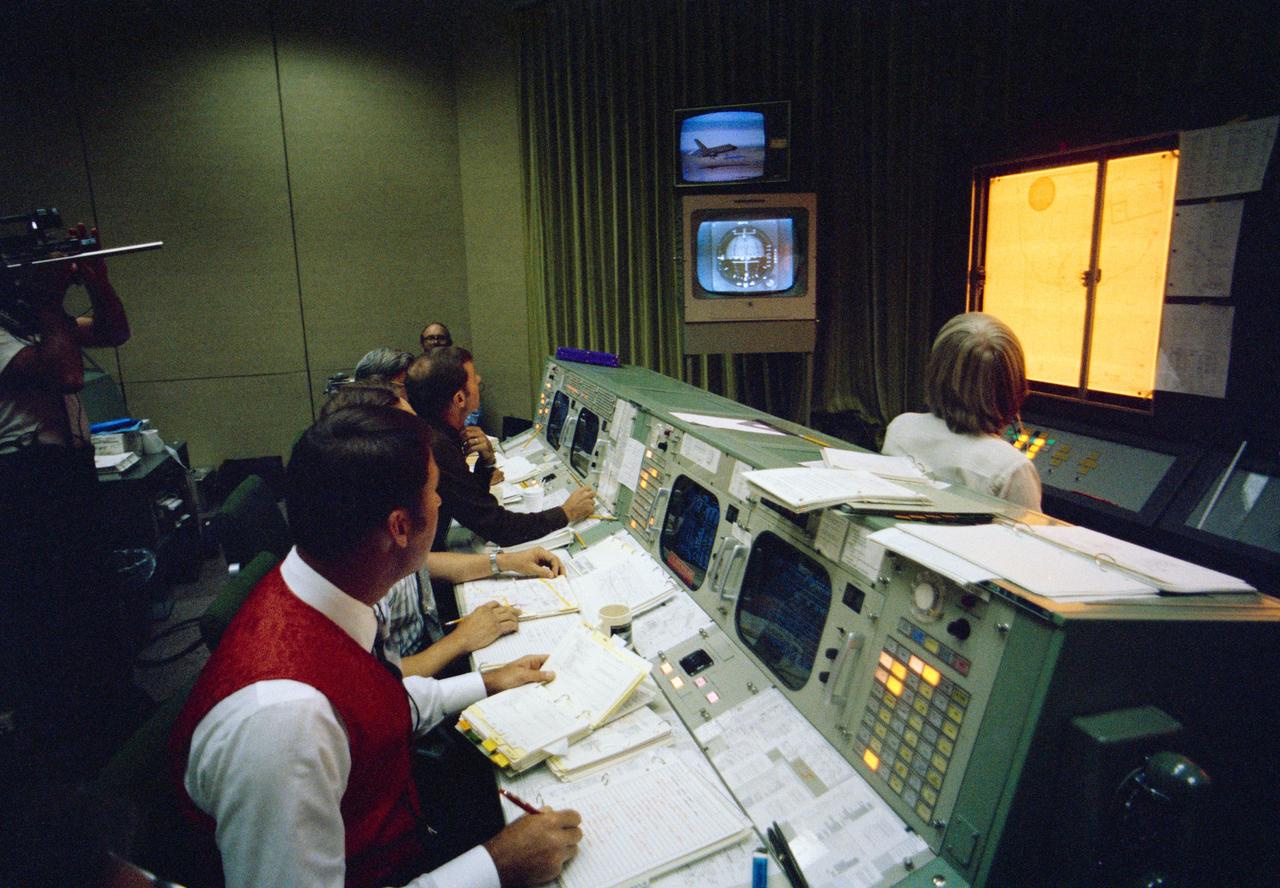
S77-27546 (12 Aug 1977) --- An overall view of Mission Control Operations in the Mission Control Center, bldg 30, at JSC, during the first free flight of the Shuttle Approach and Landing Tests (ALTs) conducted on August 12, 1977 at the Dryden Flight Research Center in Southern California. This view is looking across the console of flight director Donald R. Puddy. The television monitor in the background shows the Orbiter 101 "Enterprise" landing following its five minute 23-second unpowered free flight.
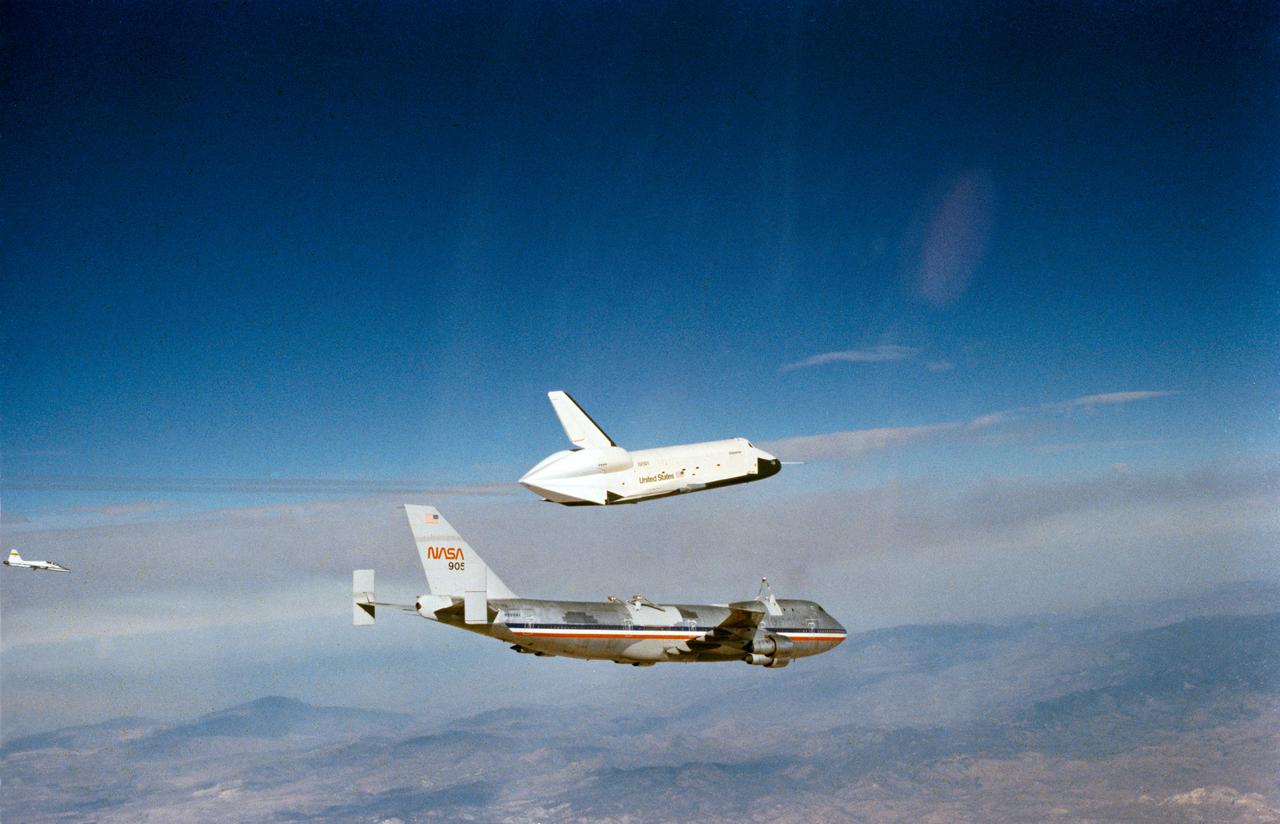
S77-28137 (13 Sept 1977) --- The Orbiter 101 "Enterprise" soars above the NASA 747 carrier aircraft during the second free flight of the Shuttle Approach and Landing Tests (ALTs) conducted on September 13, 1977 at Dryden Flight Research Center in Southern California. Astronauts Joe H. Engle, and Richard H. Truly were the crew of the "Enterprise." The ALT free flights are designed to verify Orbiter subsonic airworthiness, integrated systems operations and pilot-guided approach and landing capability and satisfying prerequisites to automatic flight control and navigation mode.

Planet Urnaus Ring System Artwork - copyright Rick Sternbach 1977
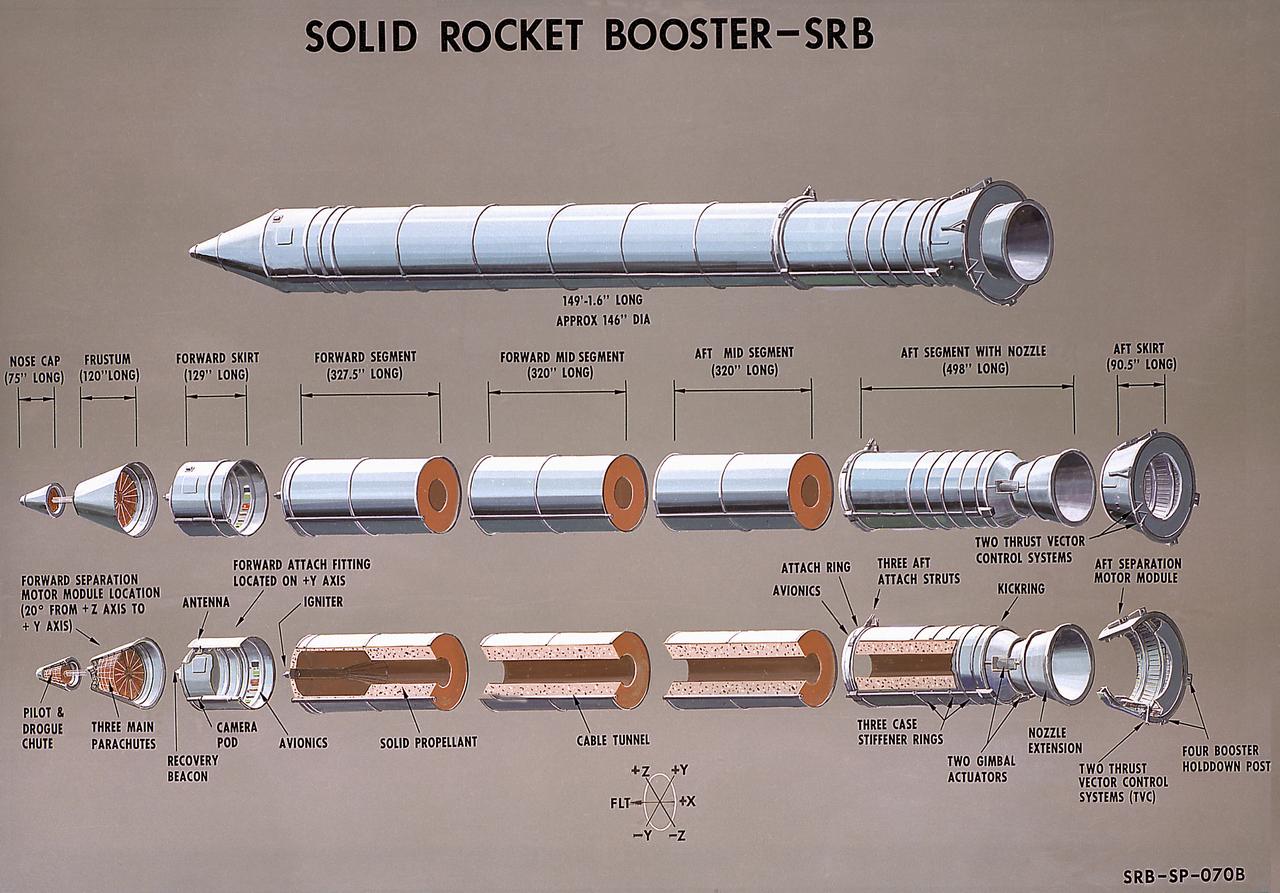
This illustration is a cutaway of the solid rocket booster (SRB) sections with callouts. The Shuttle's two SRB's are the largest solids ever built and the first designed for refurbishment and reuse. Standing nearly 150-feet high, the twin boosters provide the majority of thrust for the first two minutes of flight, about 5.8 million pounds, augmenting the Shuttle's main propulsion system during liftoff. The major design drivers for the solid rocket motors (SRM's) were high thrust and reuse. The desired thrust was achieved by using state-of-the-art solid propellant and by using a long cylindrical motor with a specific core design that allows the propellant to burn in a carefully controlled marner. At burnout, the boosters separate from the external tank and drop by parachute to the ocean for recovery and subsequent refurbishment. The boosters are designed to survive water impact at almost 60 miles per hour, maintain flotation with minimal damage, and preclude corrosion of the hardware exposed to the harsh seawater environment. Under the project management of the Marshall Space Flight Center, the SRB's are assembled and refurbished by the United Space Boosters. The SRM's are provided by the Morton Thiokol Corporation.
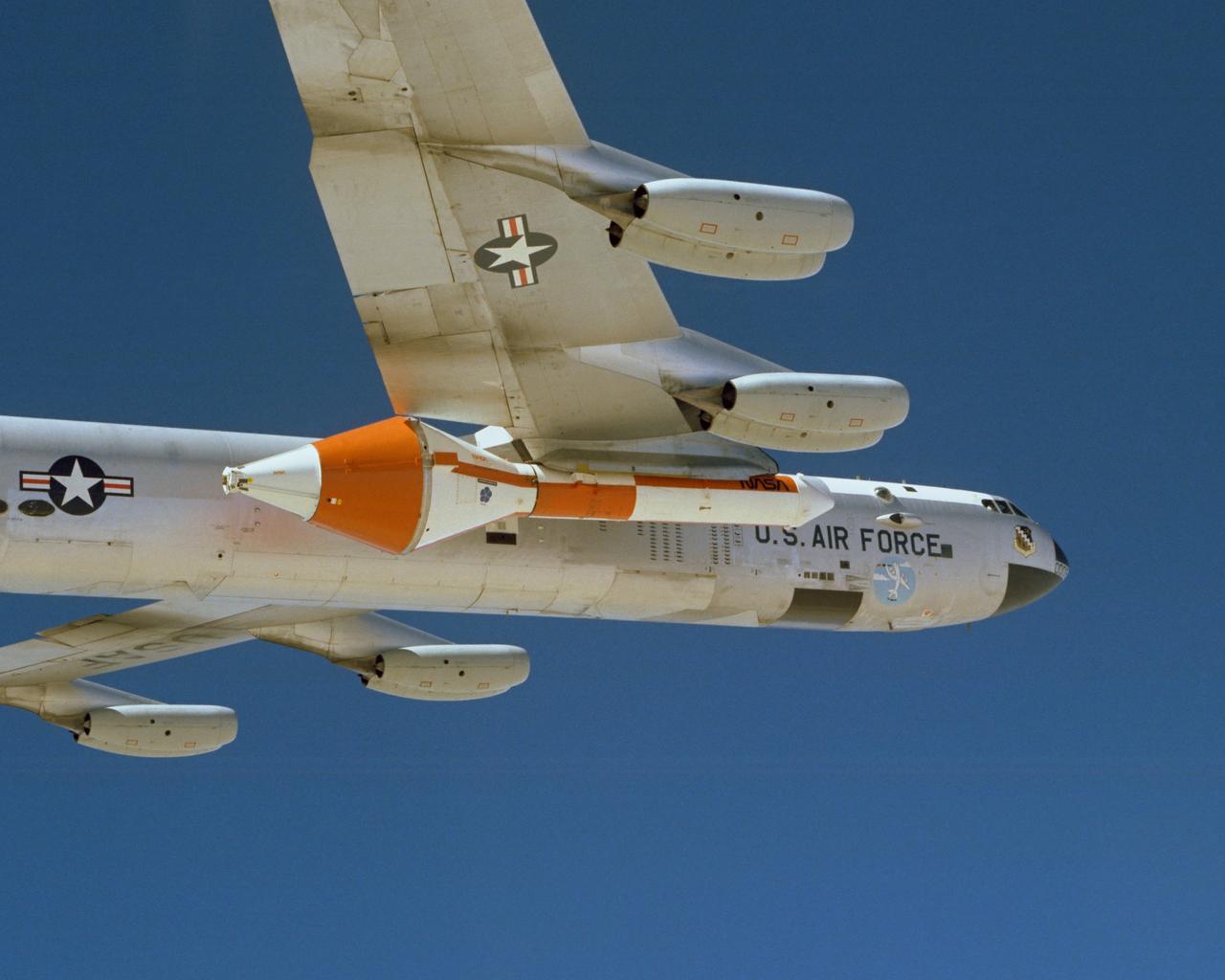
Space Shuttle Solid Rocket Booster Drop Test Vehicle (SRB-DTV) captive flight on NB-52B

Frame of color news-released stills. This was a Tail Cone Off Mission. Crew was made up of Astronauts Engle and Truly. Astronauts Engle, Truly egress Orbiter following flt. DFRC, CA
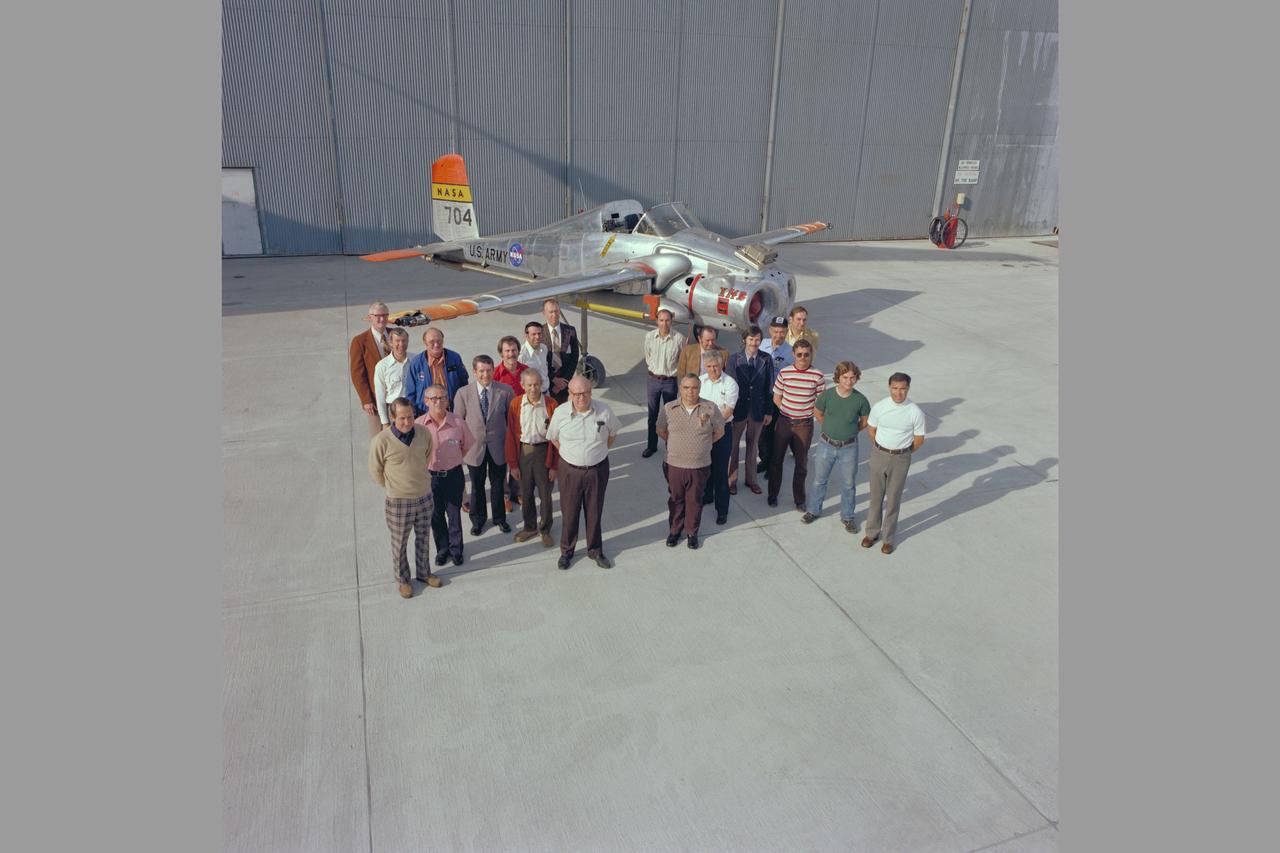
Olczak Bell X-14 AIRCRAFT TWENTIETH ANNIVERSARY. Research Team: Front Row: Fred Drinkwater, Jim Meeks, Lonnie Phillips, Jim Kozalski, Vic Bravo. Second Row: Bill Carpenter, Sid Selan, Dick Gallant, Terry Stoeffler. Third row: Ron Gerdes, Lloyd Corliss. Fourth row: Cy Sewell, Dick Greif, Ed Vernon, Lee Jones. Fifth Row: Dan Dugan, Jim Rogers, Dave Walton, Terry Feistel. Back Row: Frank Pauli, Seth Anderson. Not pictured: Terry Gossett, Bob Innis, Stew Rolls, Lawson Williamson. Note: Used in publication in Flight Research at Ames; 57 Years of Development and Validation of Aeronautical Technology NASA SP-1998-3300 fig. 118

This photograph shows the High Energy Astronomy Observatory (HEAO)-1 being assembled at TRW Systems of Redondo Beach, California. The HEAO was designed and developed by TRW, Inc. under the project management of the Marshall Space Flight Center. The first observatory, designated HEAO-1, was launched on August 12, 1977 aboard an Atlas/Centaur launch vehicle and was designed to survey the sky for additional x-ray and gamma-ray sources as well as pinpointing their positions. The HEAO-1 was originally identified as HEAO-A but the designation was changed once the spacecraft achieved orbit.
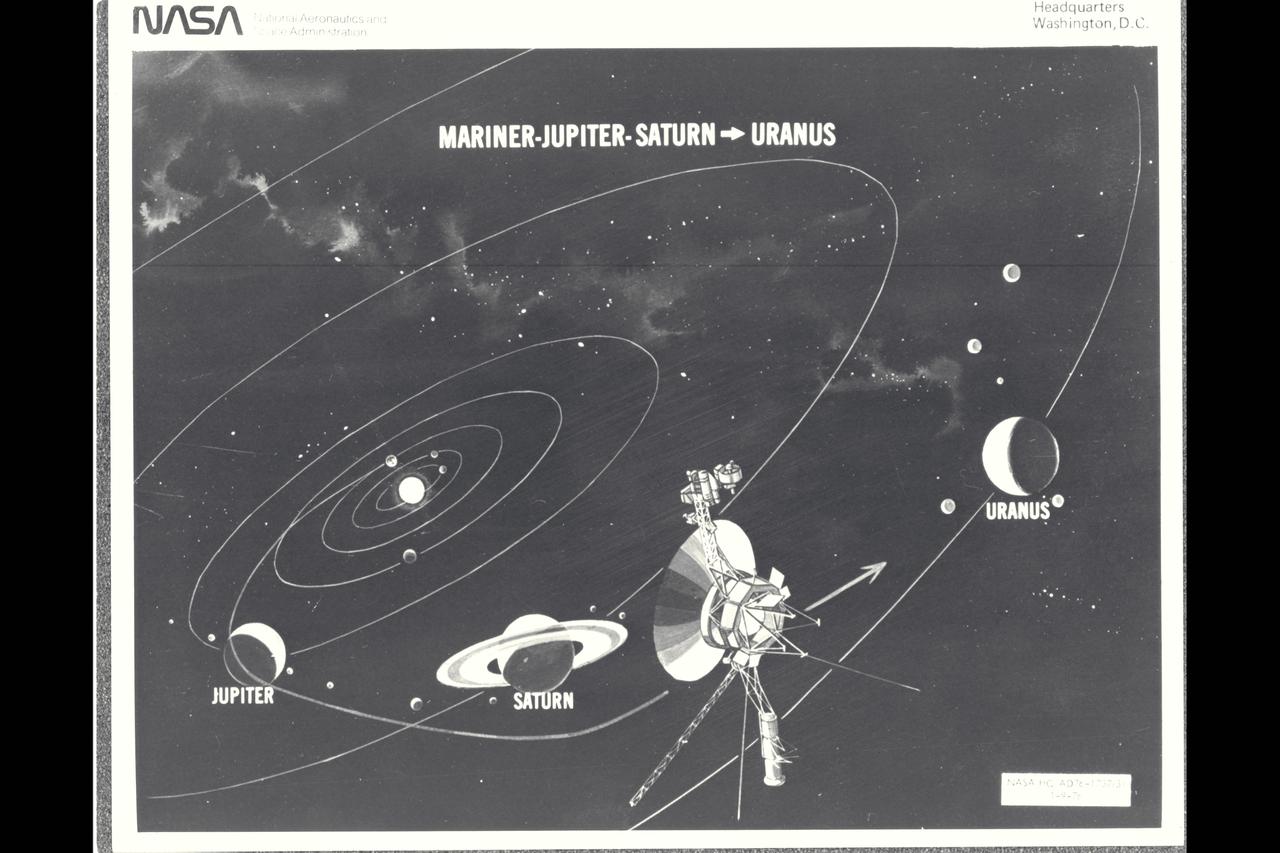
Voyager Saturn Mission Artwork (Mariner - Jupiter - Saturn - Uranus) show slingshot technique
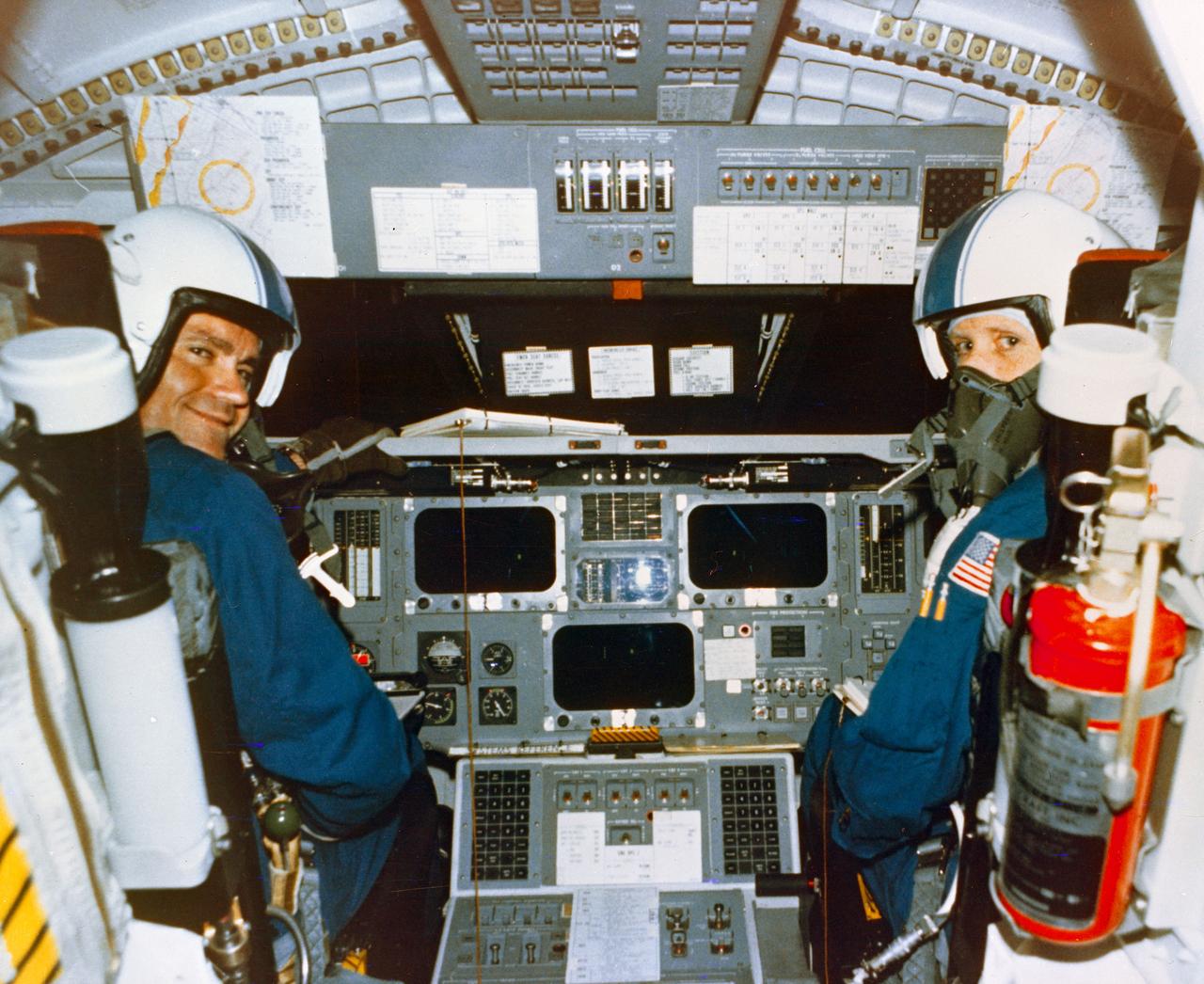
Astronauts Fred W. Haise, Jr., Commander, left, and C. Gordon Fullerton in the cockpit of the Space Shuttle Orbiter 101 "Enterprise" prior to the fifth and final FF in the Approach and Landing Test (ALT) series, from DFRC. Original photo number was 77-HC-446. DFRC, CA
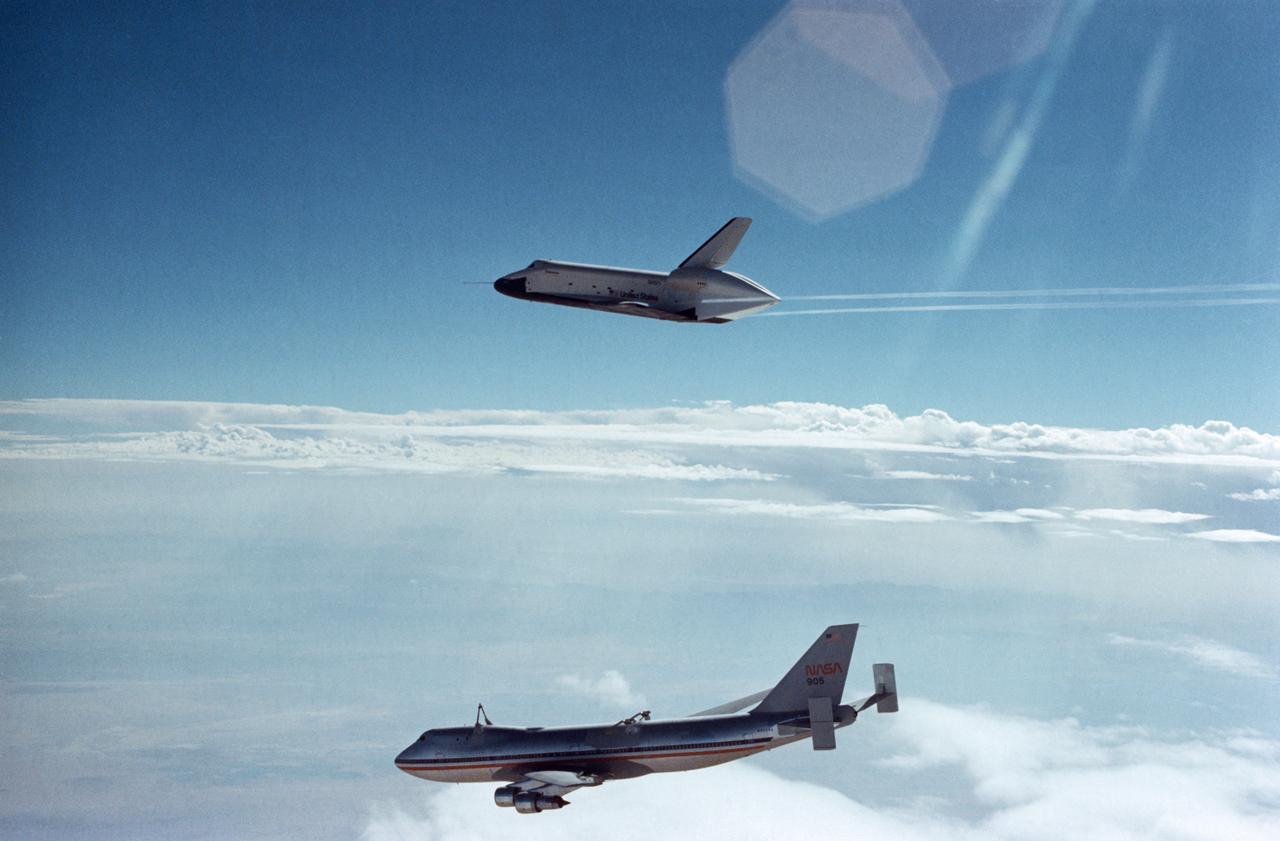
S77-27945 (12 Aug 1977) --- The space shuttle Orbiter 101 "Enterprise" soars above the NASA 747 carrier aircraft after separating during the first free flight of the Shuttle Approach and Landing Tests (ALTs) conducted on Aug. 12, 1977 at Dryden Flight Research Center in Southern California. Astronauts Fred W. Haise Jr., and C. Gordon Fullerton were the crew of the "Enterprise." The ALT free flights are designed to verify Orbiter subsonic airworthiness, integrated systems operations and pilot-guided approach and landing capability and satisfying prerequisites to automatic flight control and navigation mode. Photo credit: NASA
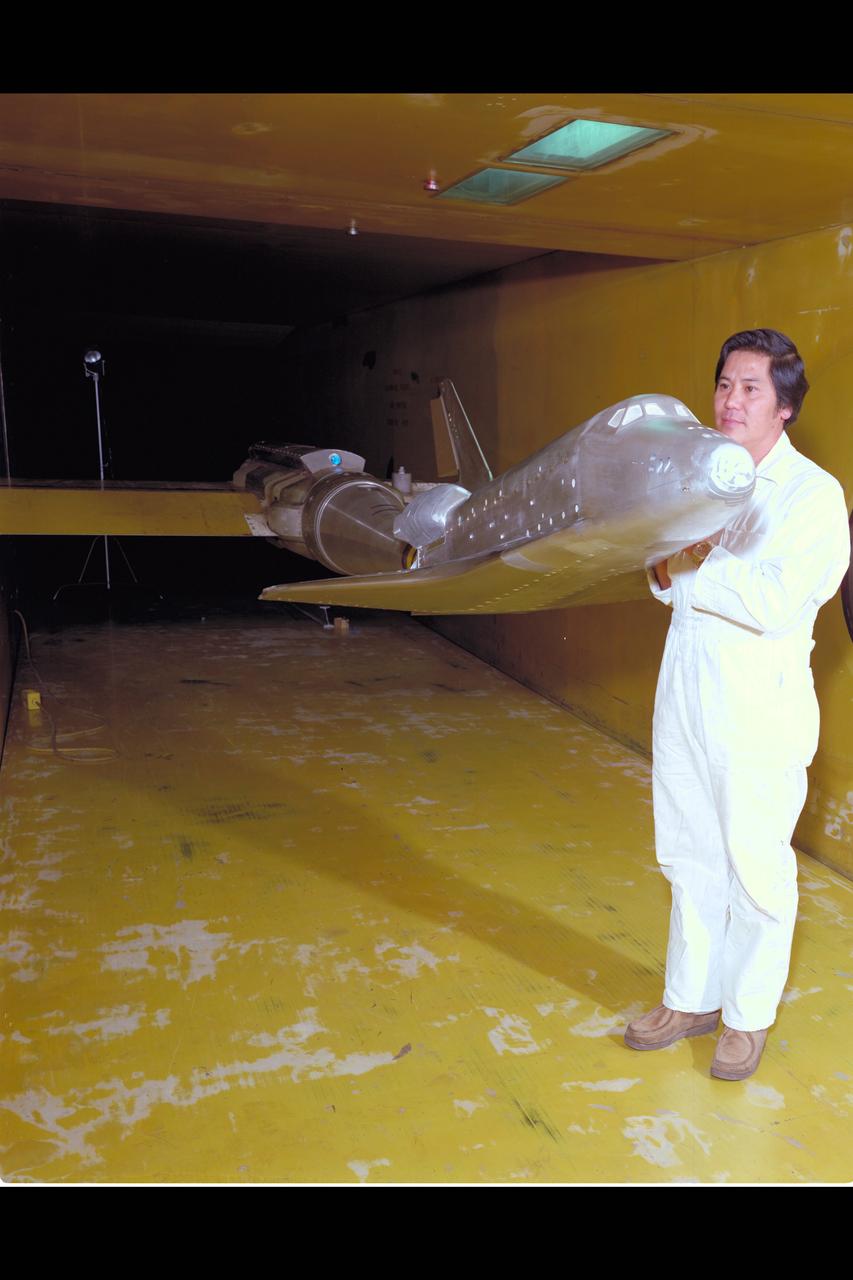
Straight Space Shuttle orbiter (OA-144) test-118 in 9x7ft w.t. with technician
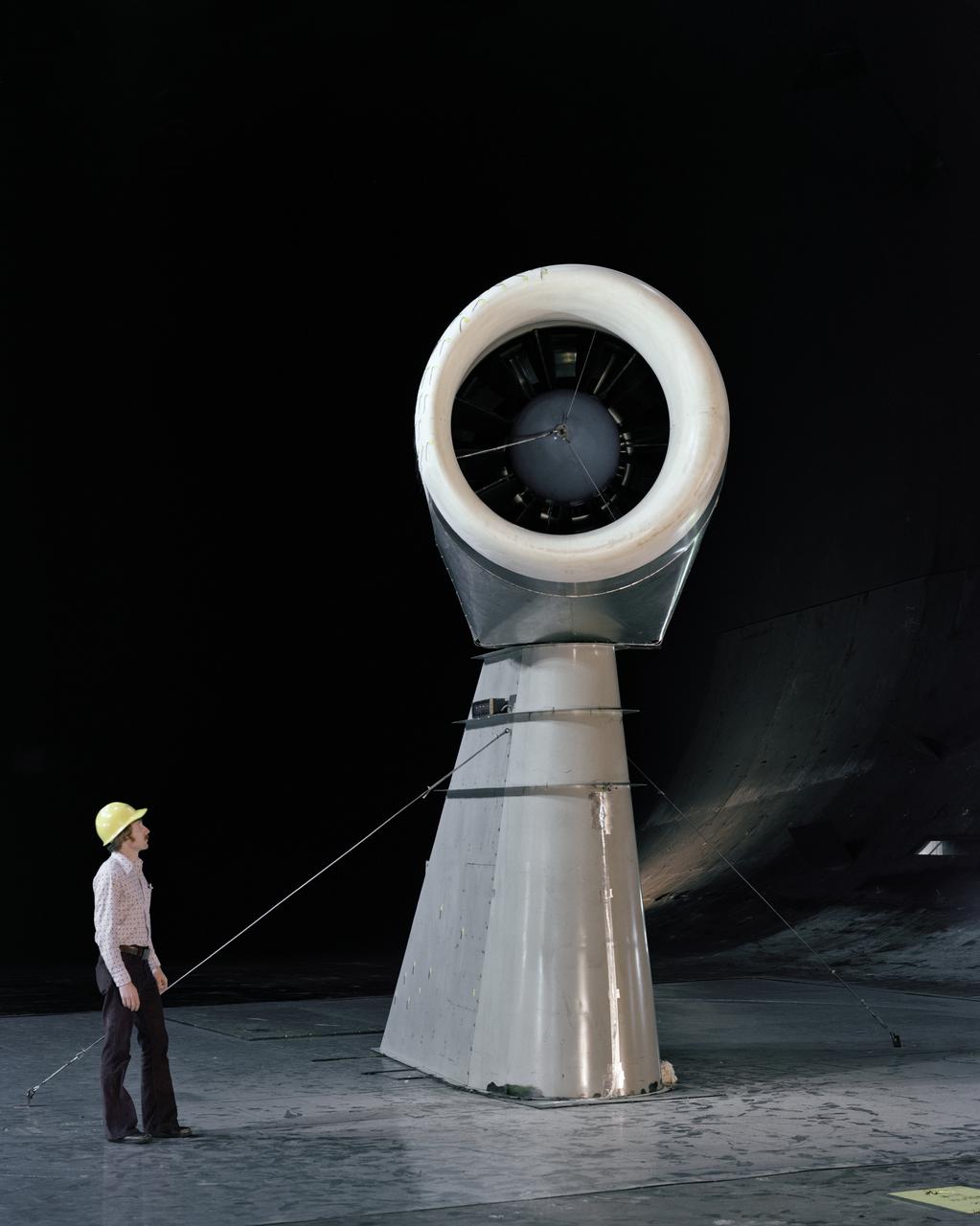
Q-Fan configuration in the Ames Research Center's 40x80ft. Subsonic Wind Tunnel with test engineer Mark Betzina.
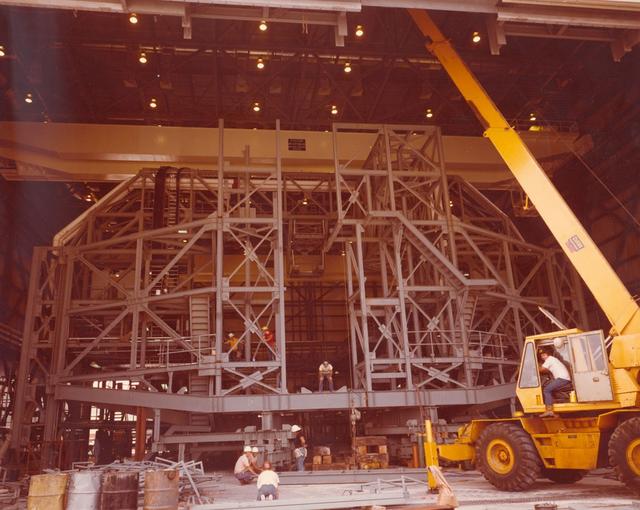
View of OPF High Bay No. 1, 513 workstand installation, August 23, 1977
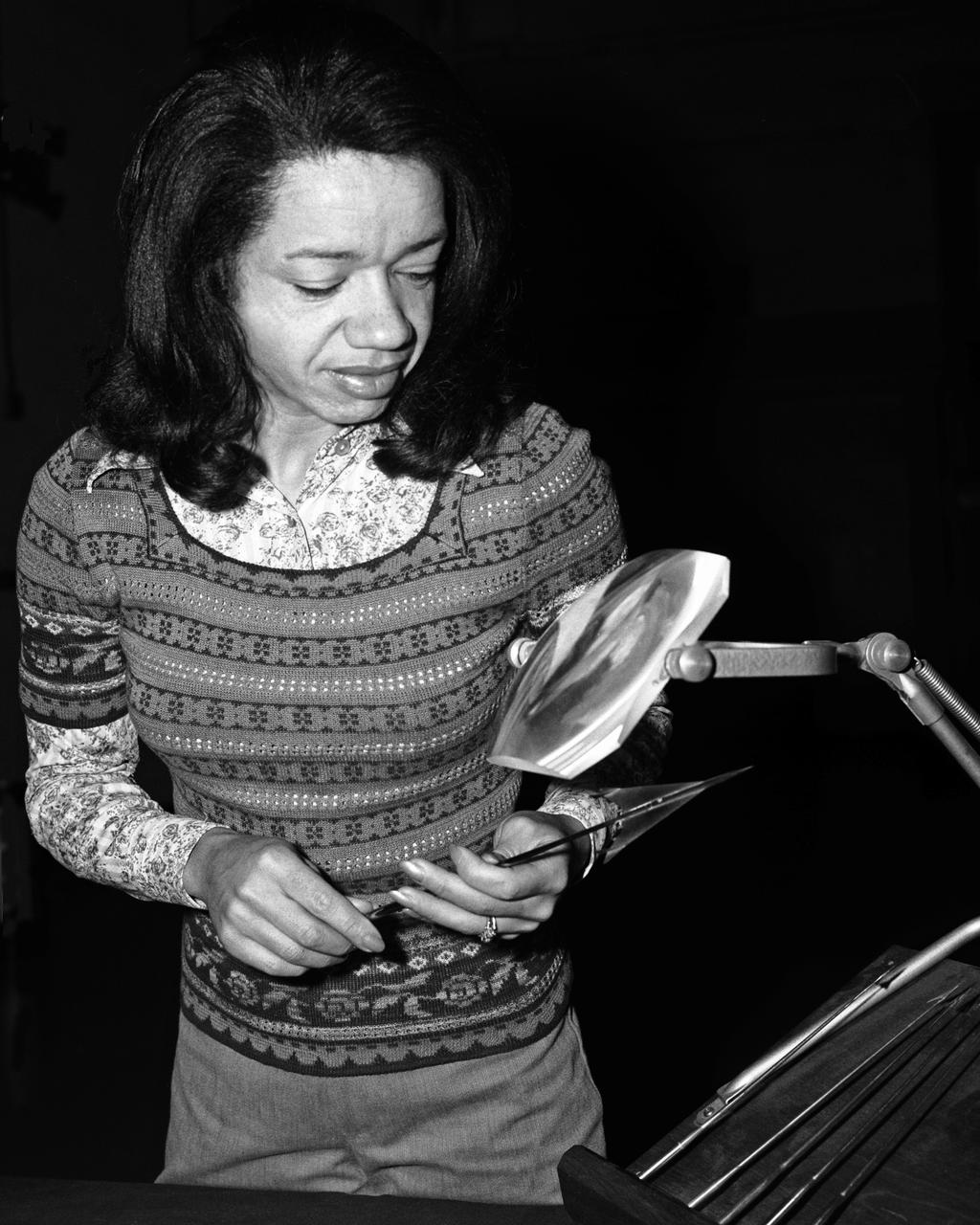
Environmental Portrait of Christine M. Darden. Supersonic Aerodynamics Branch.
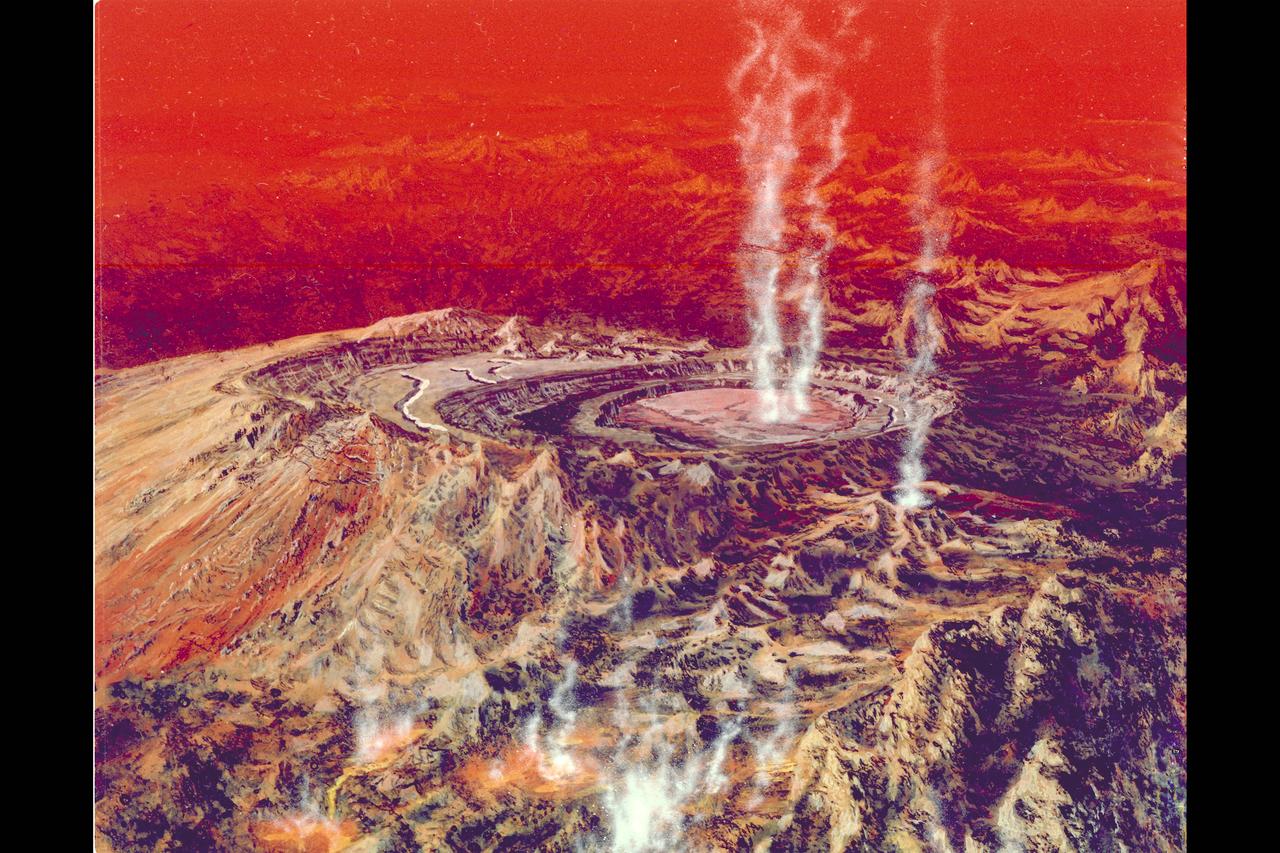
Artist: Rick Guidice Artist conception of surface of Venus.
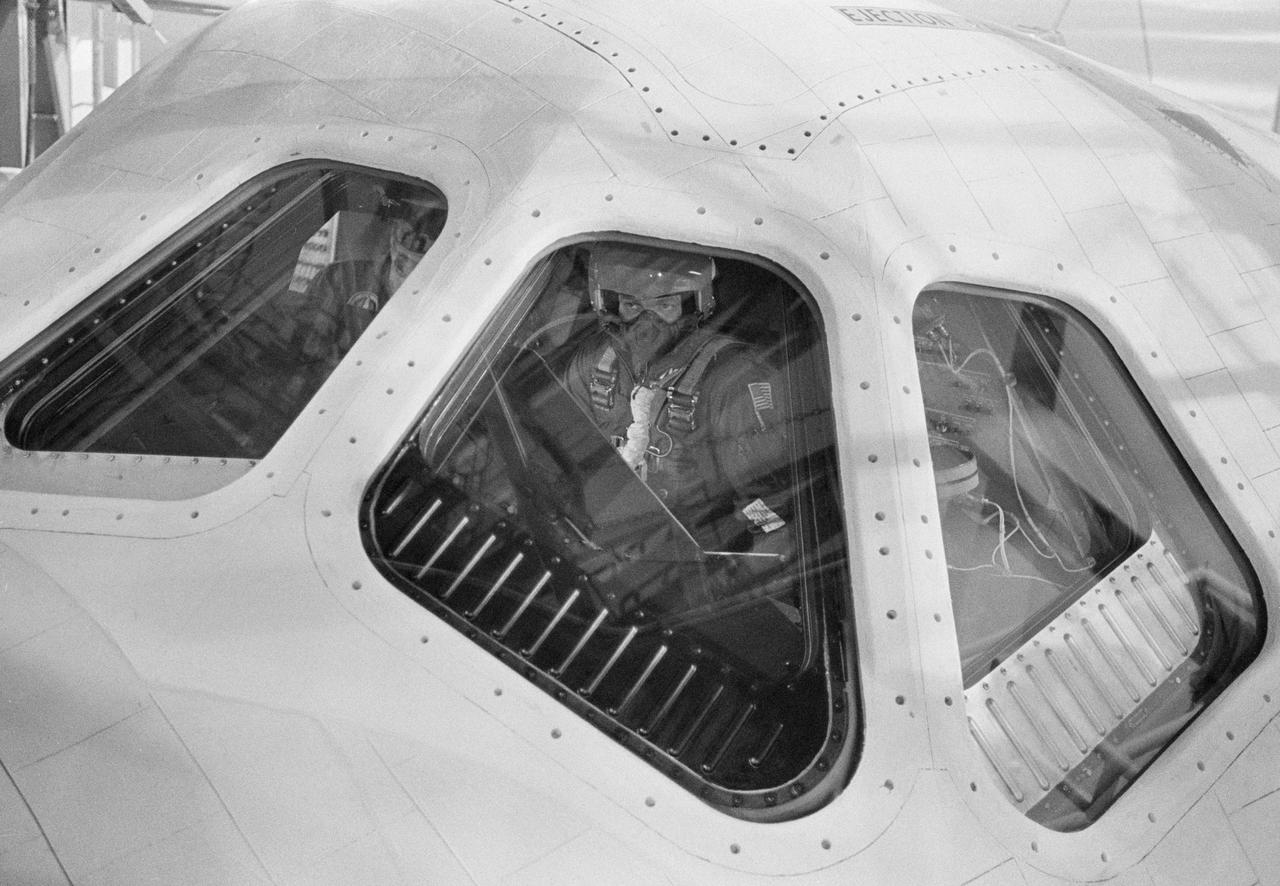
S77-28212 (13 Sept 1977) --- Astronauts Joe H. Engle (right), commander, and Richard H. Truly, pilot, sit in the cockpit of the shuttle Orbiter 101 "Enterprise" at the Dryden Flight Research Center (DFRC) prior to takeoff of the NASA 747 carrier aircraft to which the "Enterprise" was mated. The pair later made a five-minute, 31-second free-flight in the craft, the second in a series of such flights for the Shuttle Approach and Landing Tests (ALT) program. The photograph was made from the Mate-Demate Device (MDD).
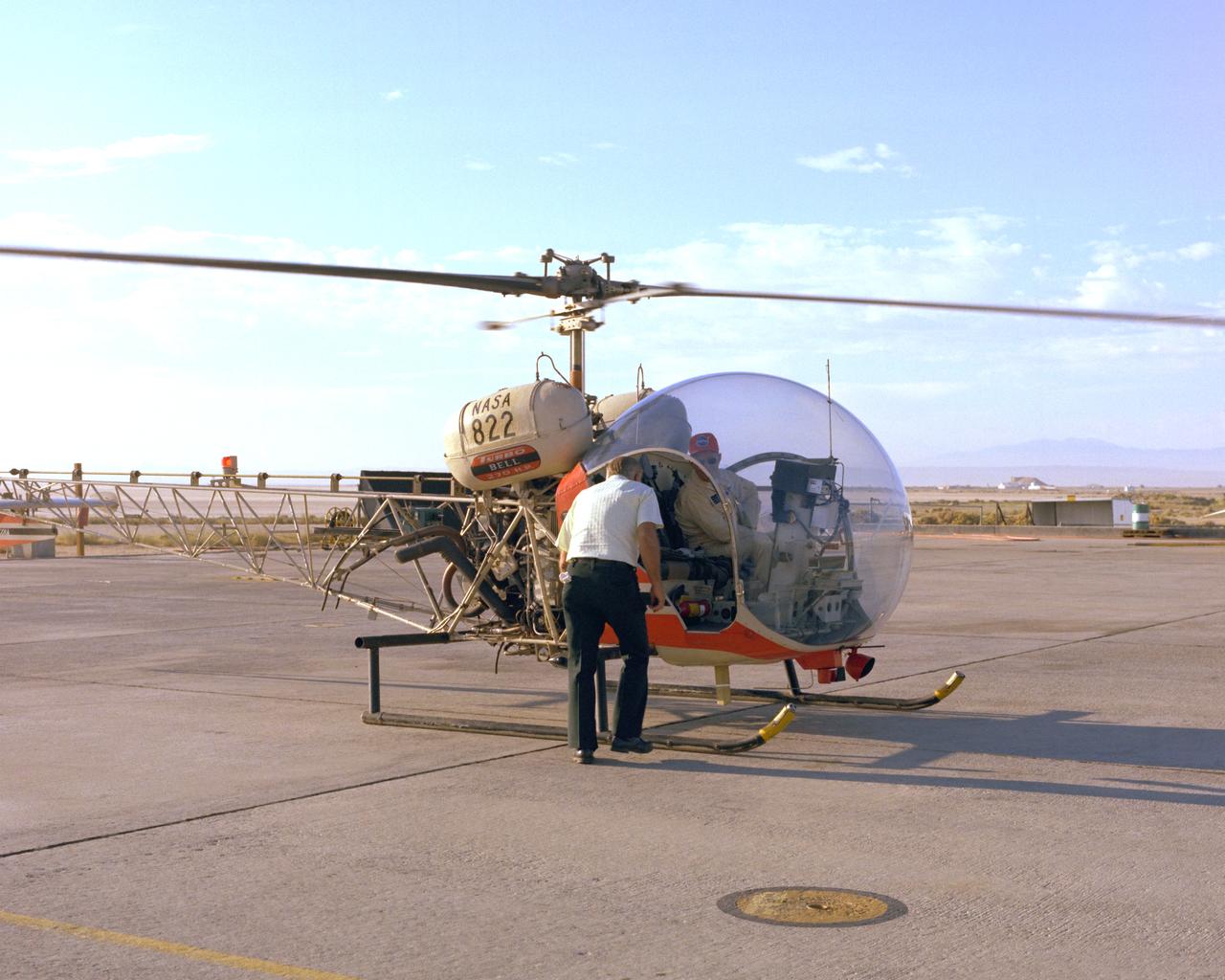
Don Mallick in Bell 47 #822 (N822NA)

This picture is of an Atlas/Centaur launch vehicle, carrying the High Energy Astronomy Observatory (HEAO)-1, on Launch Complex 36 at the Air Force Eastern Test Range prior to launch on August 12, 1977. The Kennedy Space Center managed the launch operations that included a pre-aunch checkout, launch, and flight, up through the observatory separation in orbit.
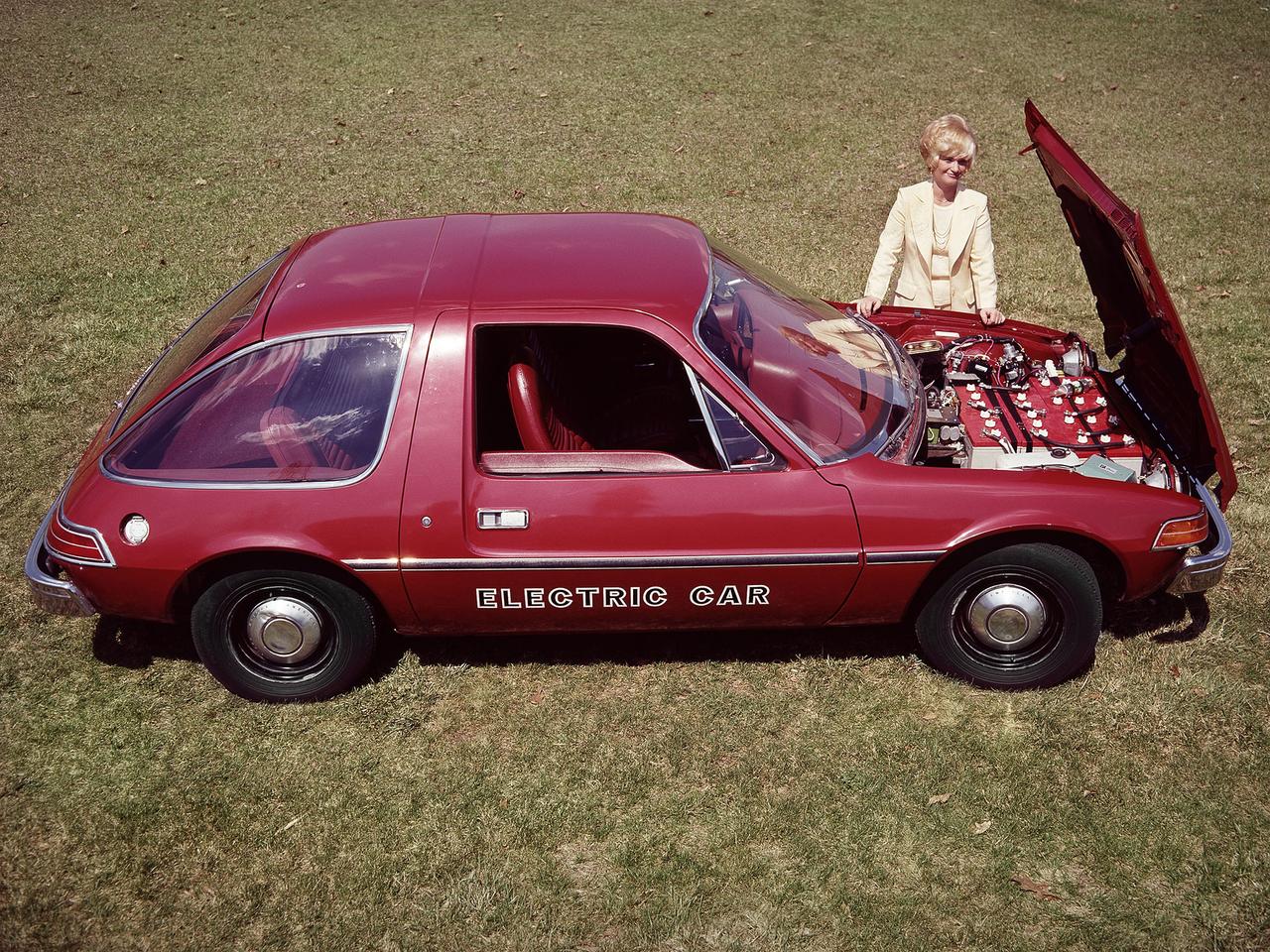
The National Aeronautics and Space Administration (NASA) Lewis Research Center tested 16 commercially-manufactured electric vehicles, including this modified Pacer, during the mid-1970s. The Electric Vehicle Project was just one of several energy-related programs that Lewis and the Energy Research and Development Administration (ERDA) undertook in the mid-1970s. NASA and ERDA embarked on this program in 1976 to determine the state of the current electric vehicle technology. As part of the project, Lewis tested a fleet composed of every commercially available electric car. The Cleveland-area Electric Vehicle Associates modified an American Motors Pacer vehicle to create this Change-of-Pace Coupe. It was powered by twenty 6-volt batteries whose voltage could be varied by a foot control. The tests analyzed the vehicle’s range, acceleration, coast-down, braking, and energy consumption. Some of the vehicles had analog data recording systems to measure the battery during operation and sensors to determine speed and distance. Lewis researchers found that the vehicle performance varied significantly from model to model. In general, the range, acceleration, and speed were lower than conventional vehicles. They also found that traditional gasoline-powered vehicles were as efficient as the electric vehicles. The researchers concluded, however, that advances in battery technology and electric drive systems would significantly improve the performance and efficiency.
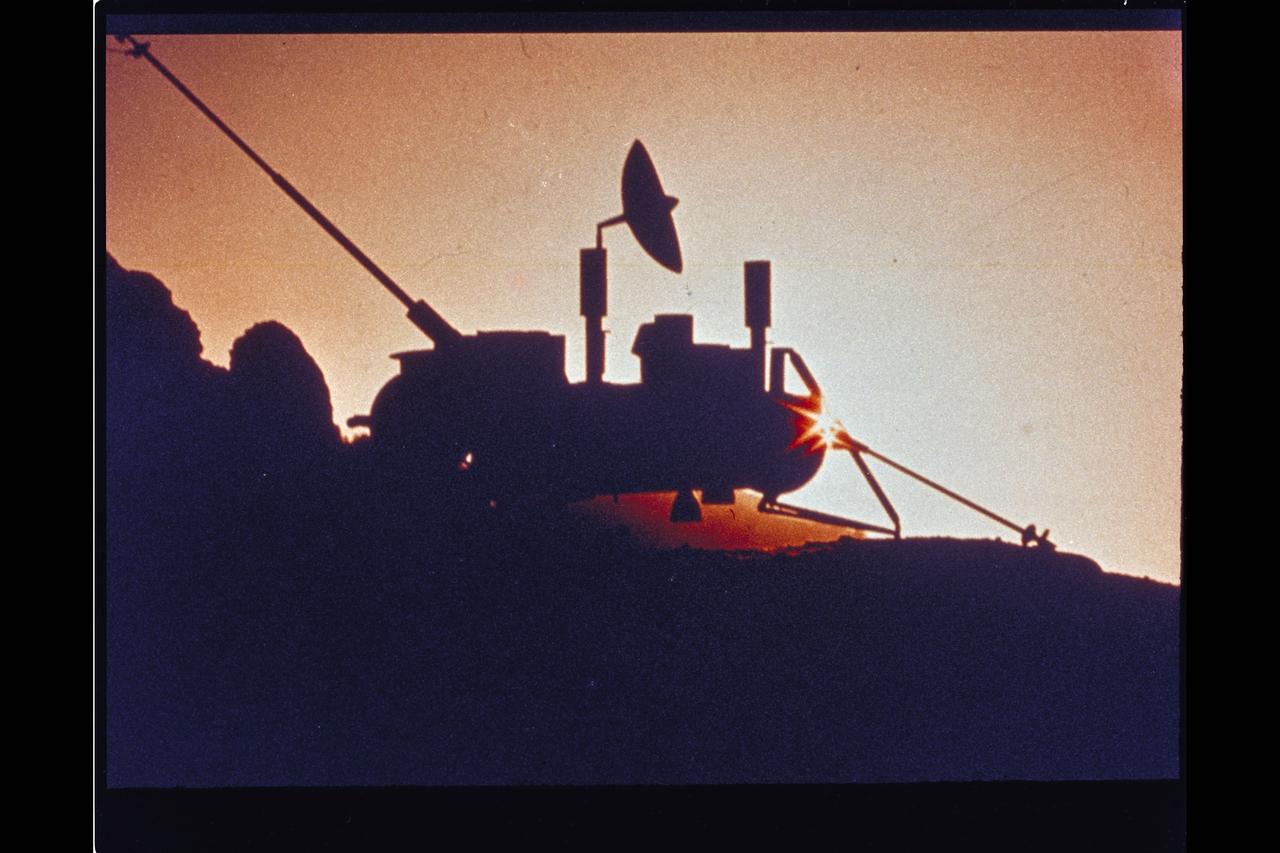
Artwork: JPL Spacecraft Vikings Explore Planet Mars
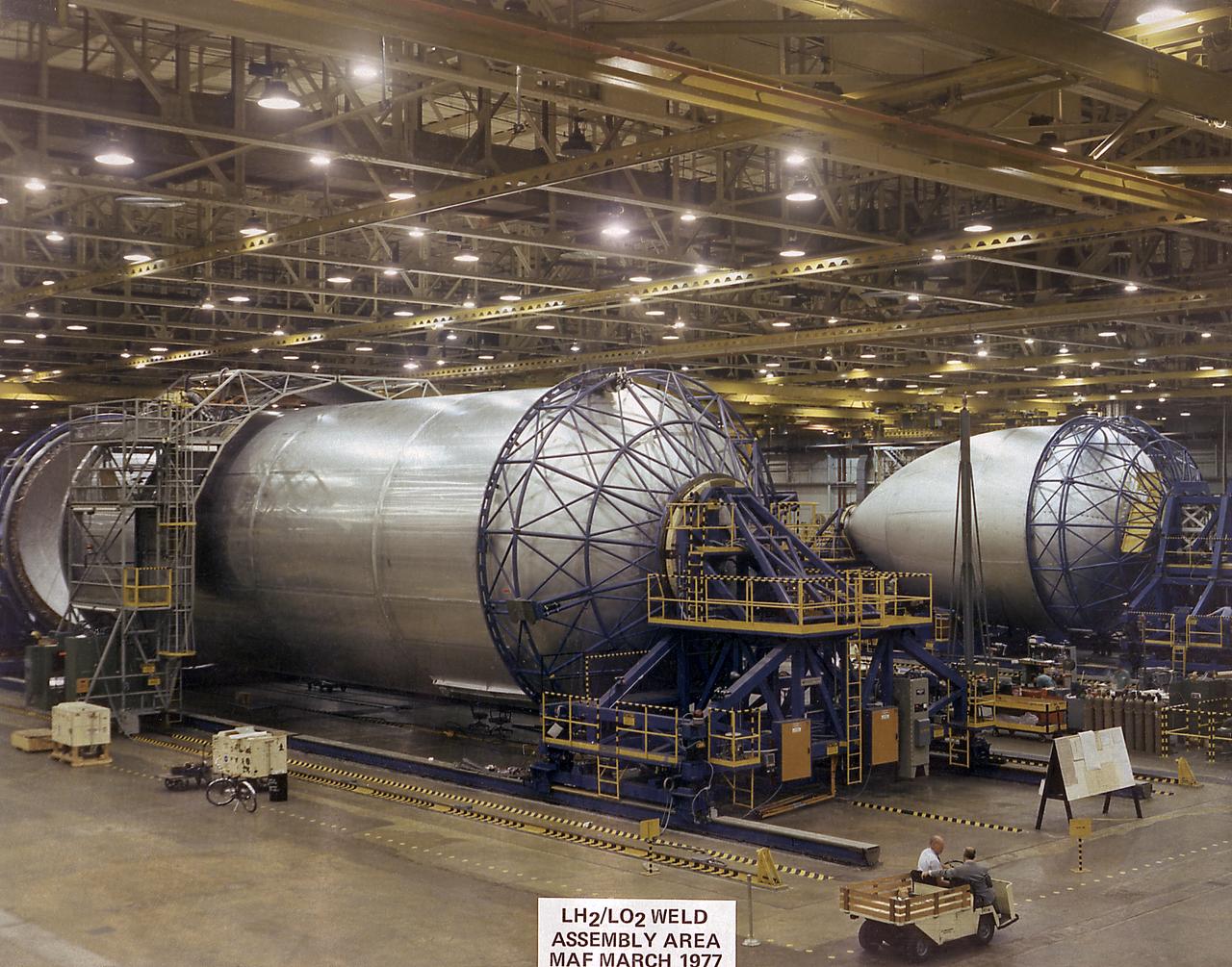
This photograph shows the liquid hydrogen tank and liquid oxygen tank for the Space Shuttle external tank (ET) being assembled in the weld assembly area of the Michoud Assembly Facility (MAF). The ET provides liquid hydrogen and liquid oxygen to the Shuttle's three main engines during the first eight 8.5 minutes of flight. At 154-feet long and more than 27-feet in diameter, the ET is the largest component of the Space Shuttle, the structural backbone of the entire Shuttle system, and the only part of the vehicle that is not reusable. The ET is manufactured at the Michoud Assembly Facility near New Orleans, Louisiana, by the Martin Marietta Corporation under management of the Marshall Space Flight Center.
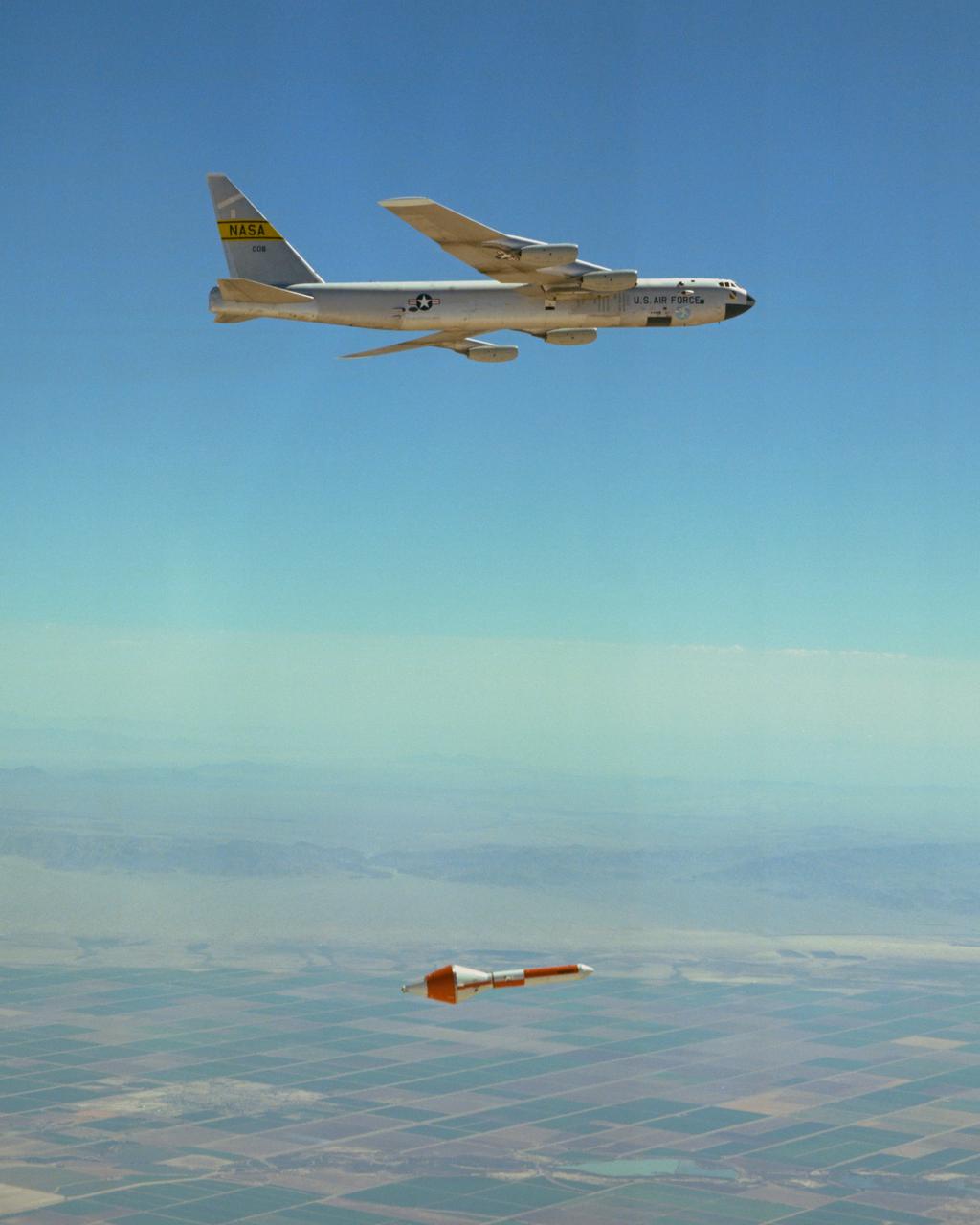
Space Shuttle Solid Rocket Booster Drop Test Vehicle (SRB-DTV) first release from NB-52B
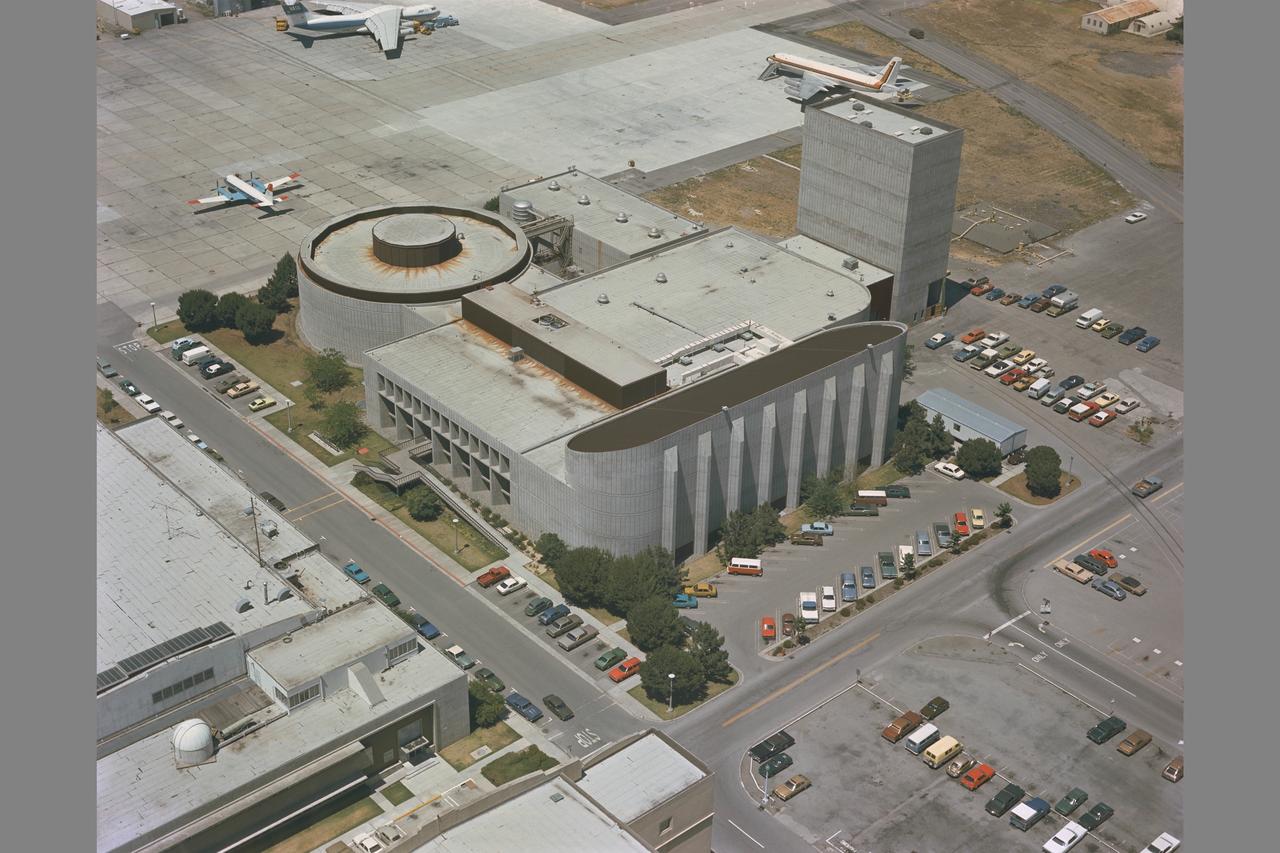
Aerial of Ames: N-243 (Flight and Guidance Simulation Laboratory) and N-243A (Simulation Equipment) houses the Vertical Motion Simulator (VMS) and the Crew Station Research Development Facility (CSRDF)

This archival photo shows the Voyager Proof Test Model undergoing a mechanical preparation and weight center of gravity test at NASA's Jet Propulsion Laboratory, Pasadena, California, on January 12, 1977. The stack of three white cylinders seen near center is a stand-in for the spacecraft's power generators (called RTGs). Above that, a silvery canister holds the spacecraft's magnetometer in its stowed configuration. https://photojournal.jpl.nasa.gov/catalog/PIA21477
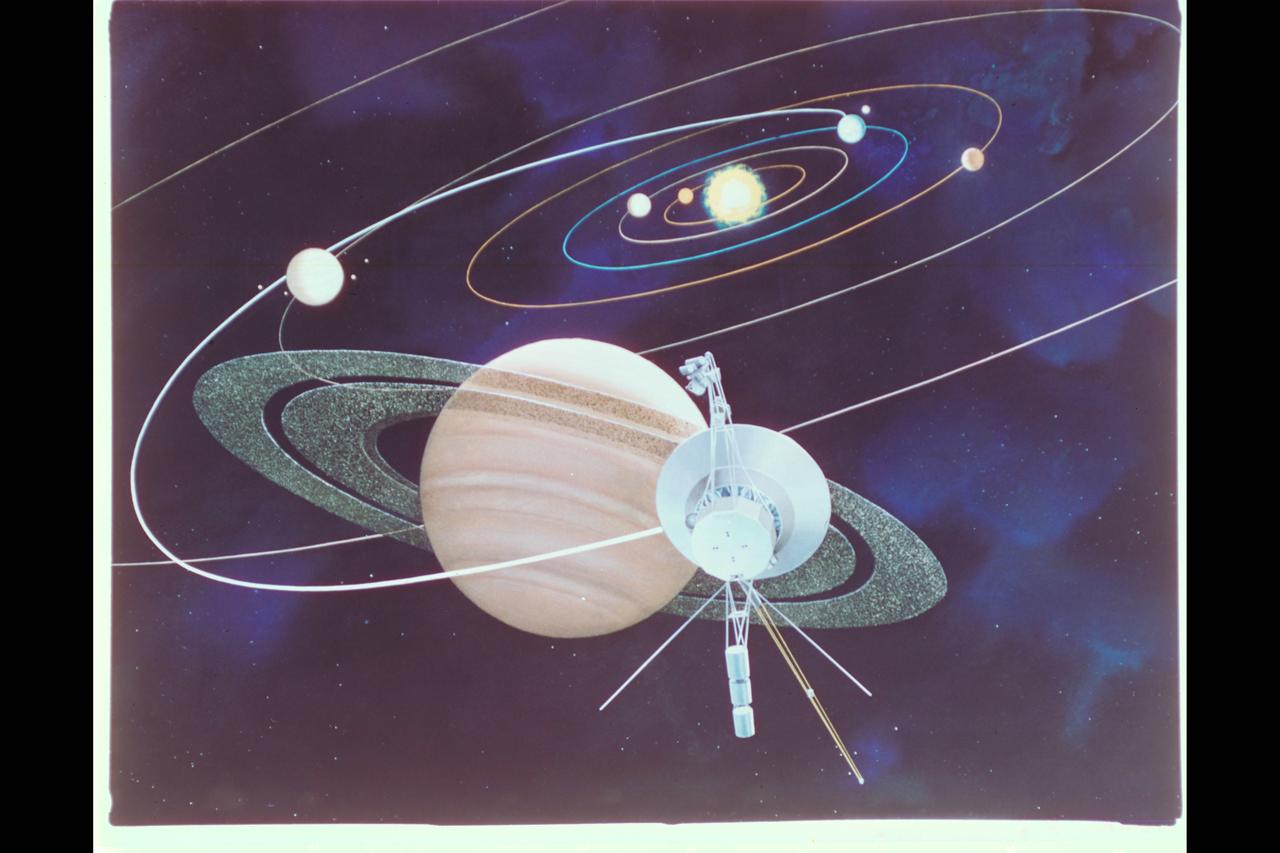
Artist: unknown (JPL) Saturn Voyager Mission Artwork depicts the spacecraft's path on it's journey to Saturn as it passed above the orbits of Mercury, Venus, Earth, Mars and around Jupiter.
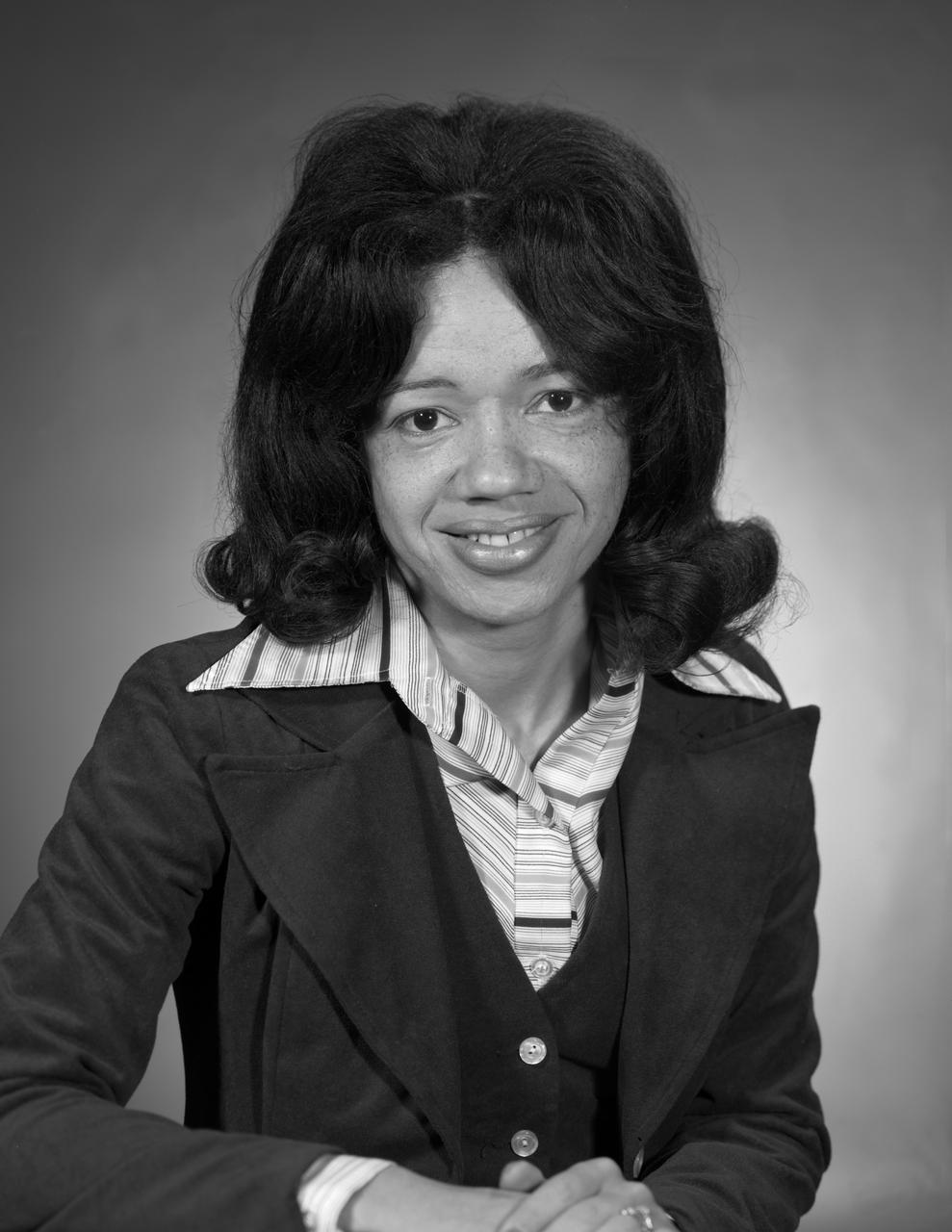
Portriat of Christine M. Darden
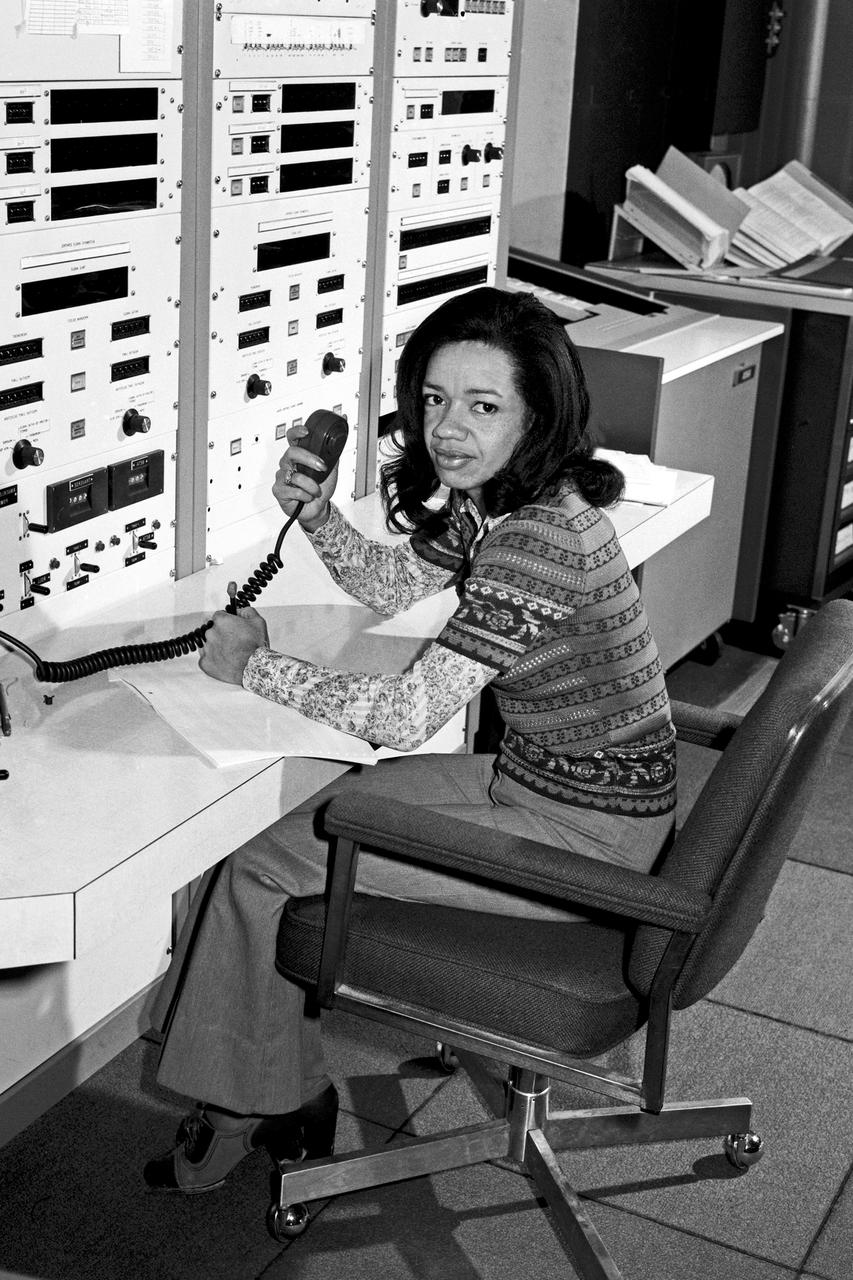
Environmental Portrait of Christine M. Darden. Supersonic Aerodynamics Branch
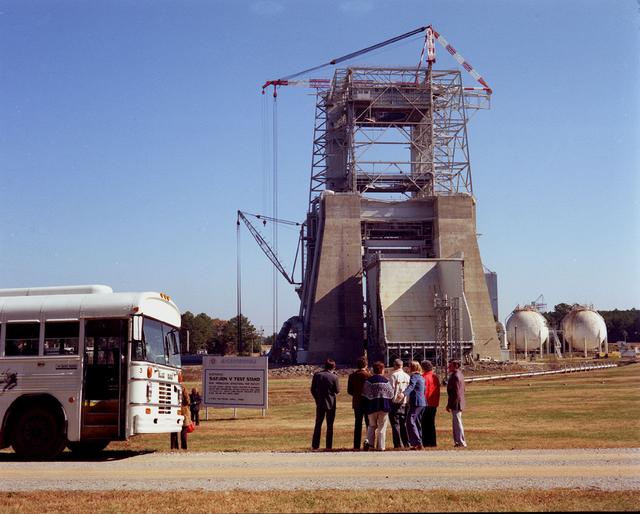
Constructed in 1964, the S-IC Static Test Stand was designed to develop and test the first stage (S-IC) of the Saturn V launch vehicle. In the 1974 the test stand was modified to test the liquid hydrogen tank on the Space Shuttle External Tank. The facility was again modified in 1986 and its name was changed to the Advanced Engine Test Facility. These modifications were made to accommodate the Technology Test Bed engine which is a derivative of the Space Shuttle Main Engine.
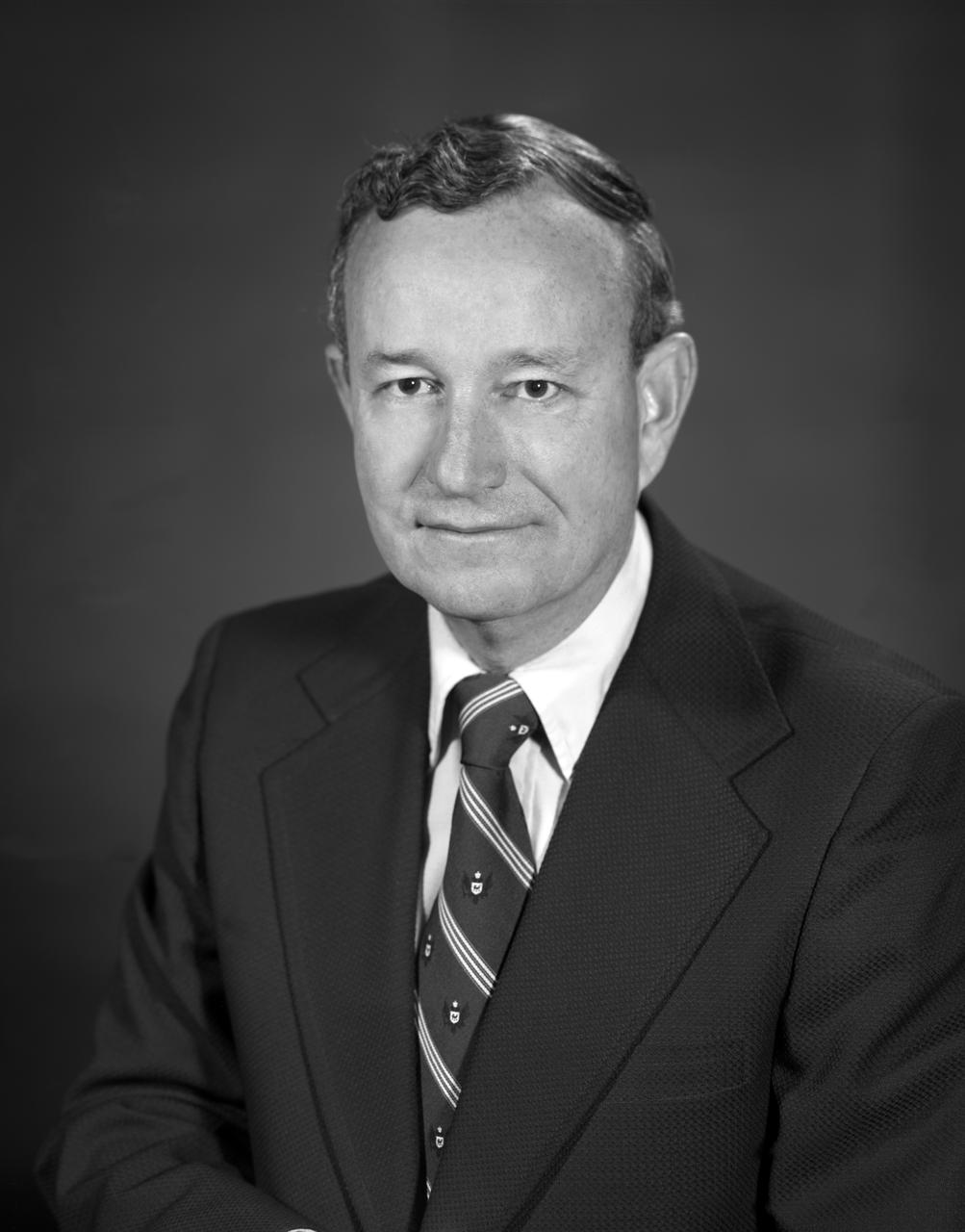
Portrait of Dr. William H. Michael, Jr.
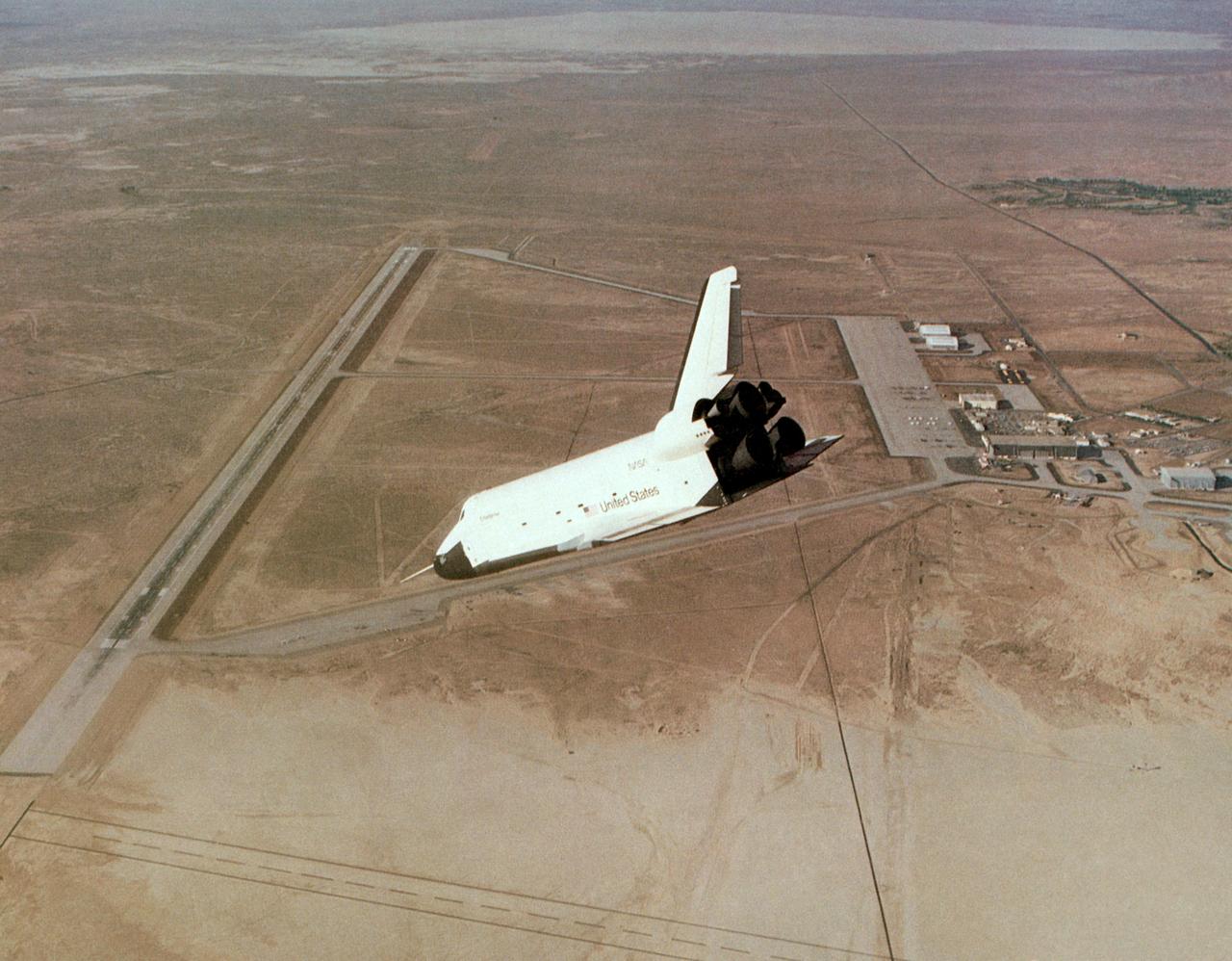
Enterprise - First Tailcone Off Free Flight
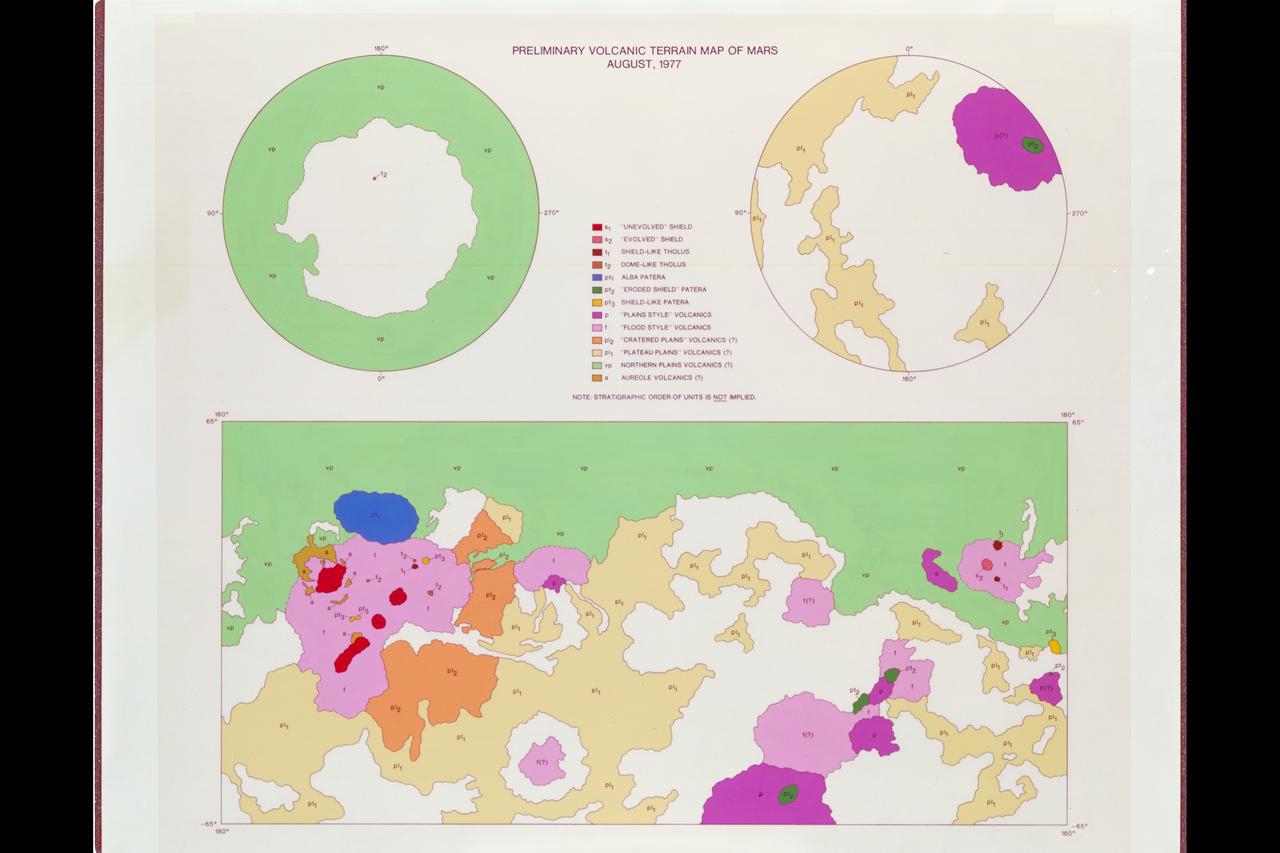
Illustration Preliminary Volcanic Terrain Map of Mars Regional Chart
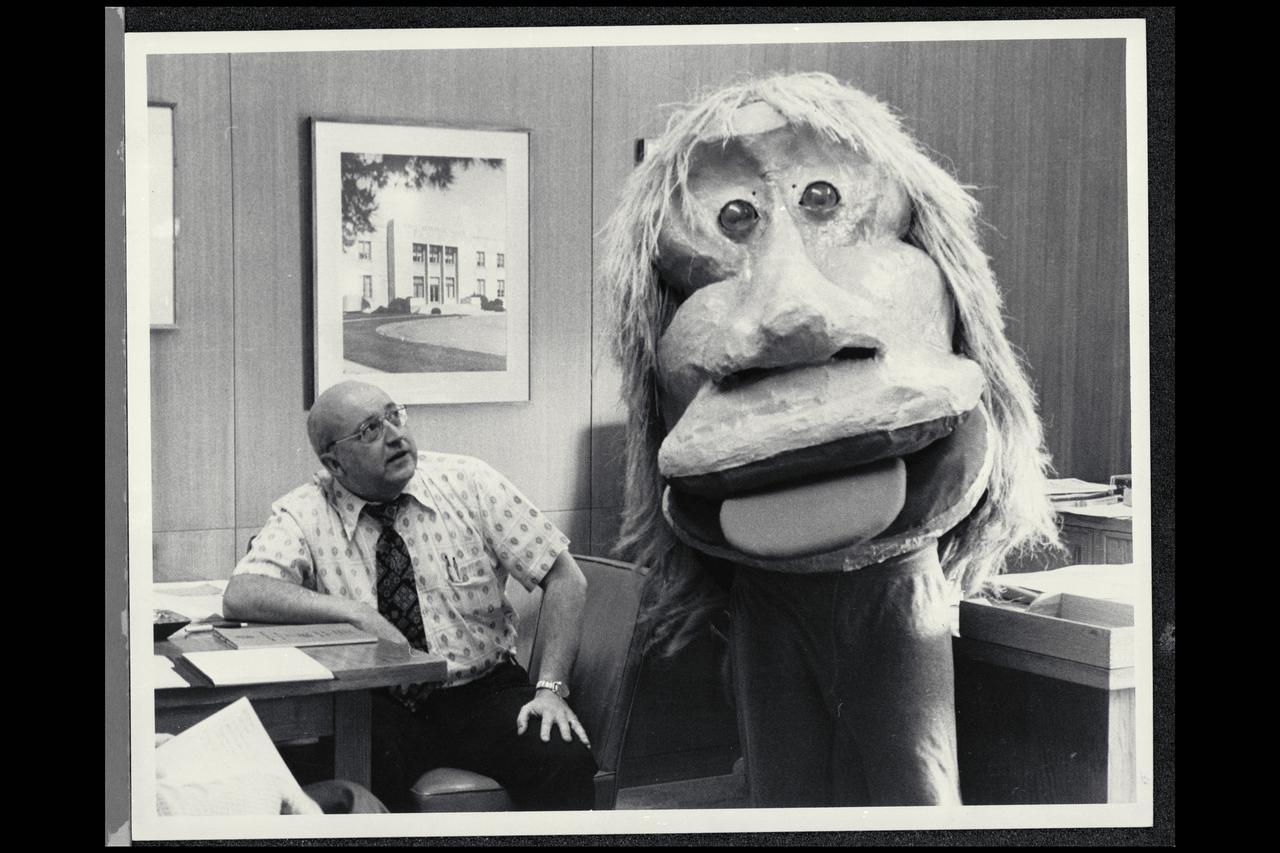
Ames Center Director receives visitors during the Halloween parade
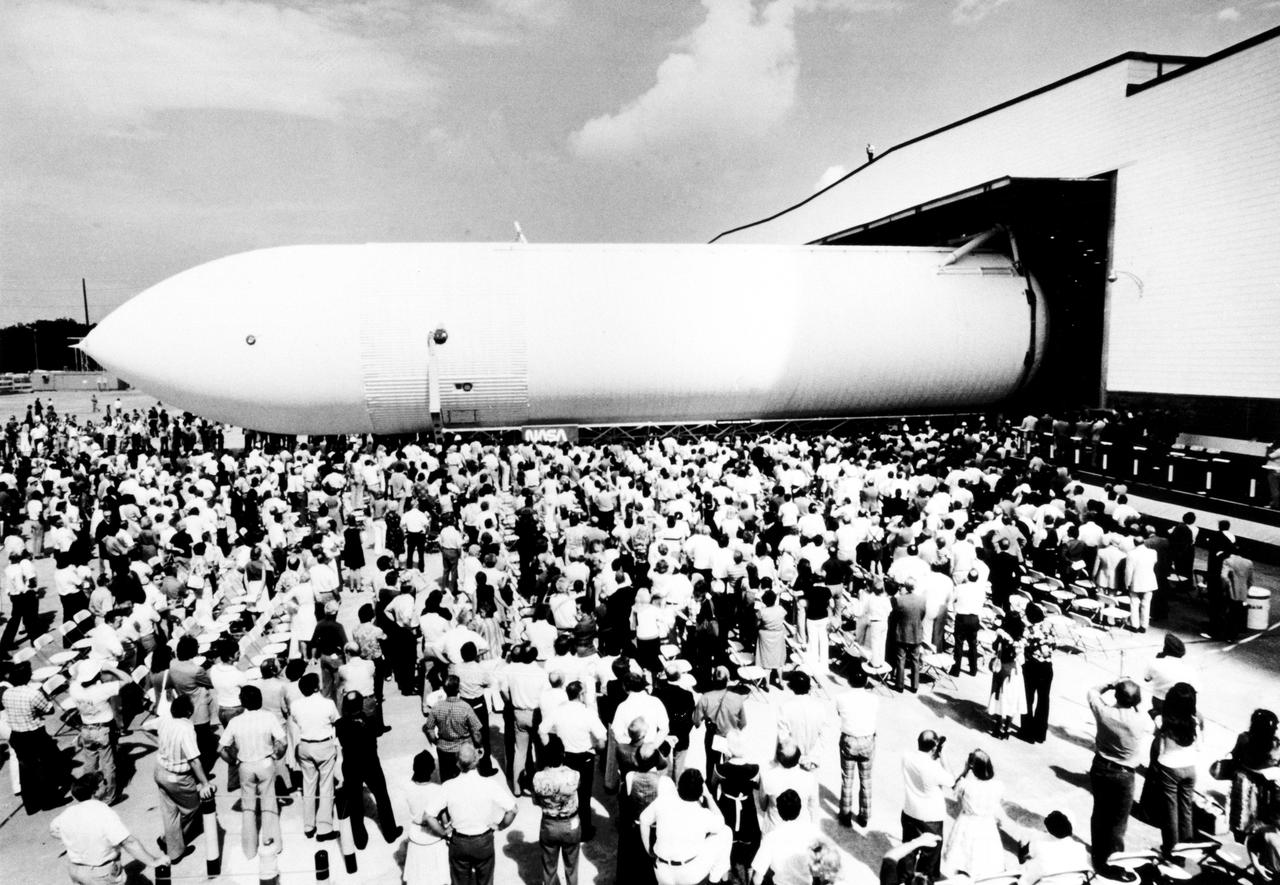
The first Space Shuttle External Tank, the Main Propulsion Test Article (MPTA), rolls off the assembly line September 9, 1977 at the Michoud Assembly Facility in New Orleans. The MPTA was then transported to the National Space Technology Laboratories in southern Mississippi where it was used in the first static firing of the three main engines. Marshall Space Flight Center had management responsibility for Space Shuttle propulsion elements, including the External Tank. Martin Marietta was the prime contractor who designed and assembled the tanks at Michoud.
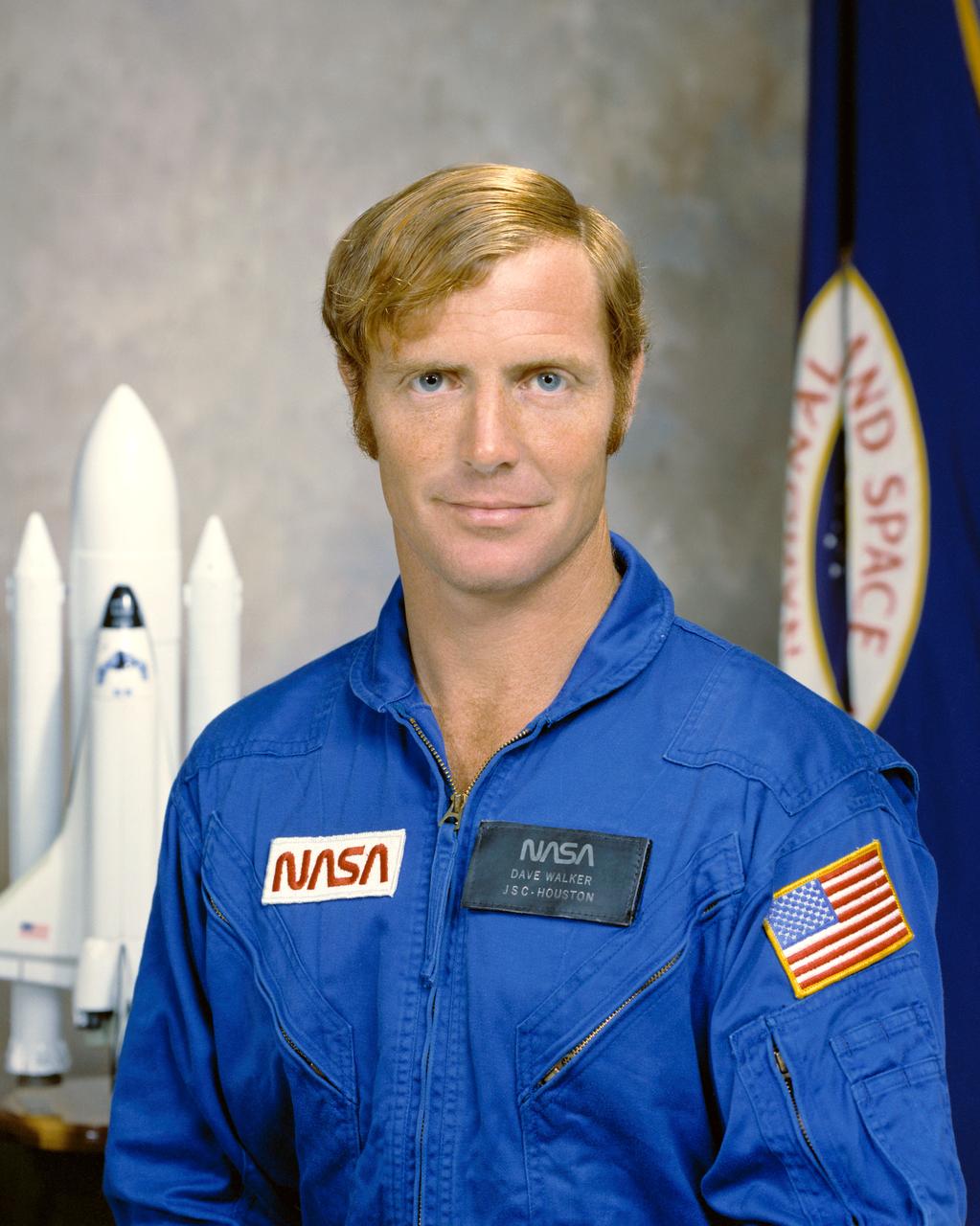
S78-35285 (31 January 1978) --- Astronaut David M. Walker.

View of OPF High Bay No. 1, Level 13 platform installation, July 8, 1977
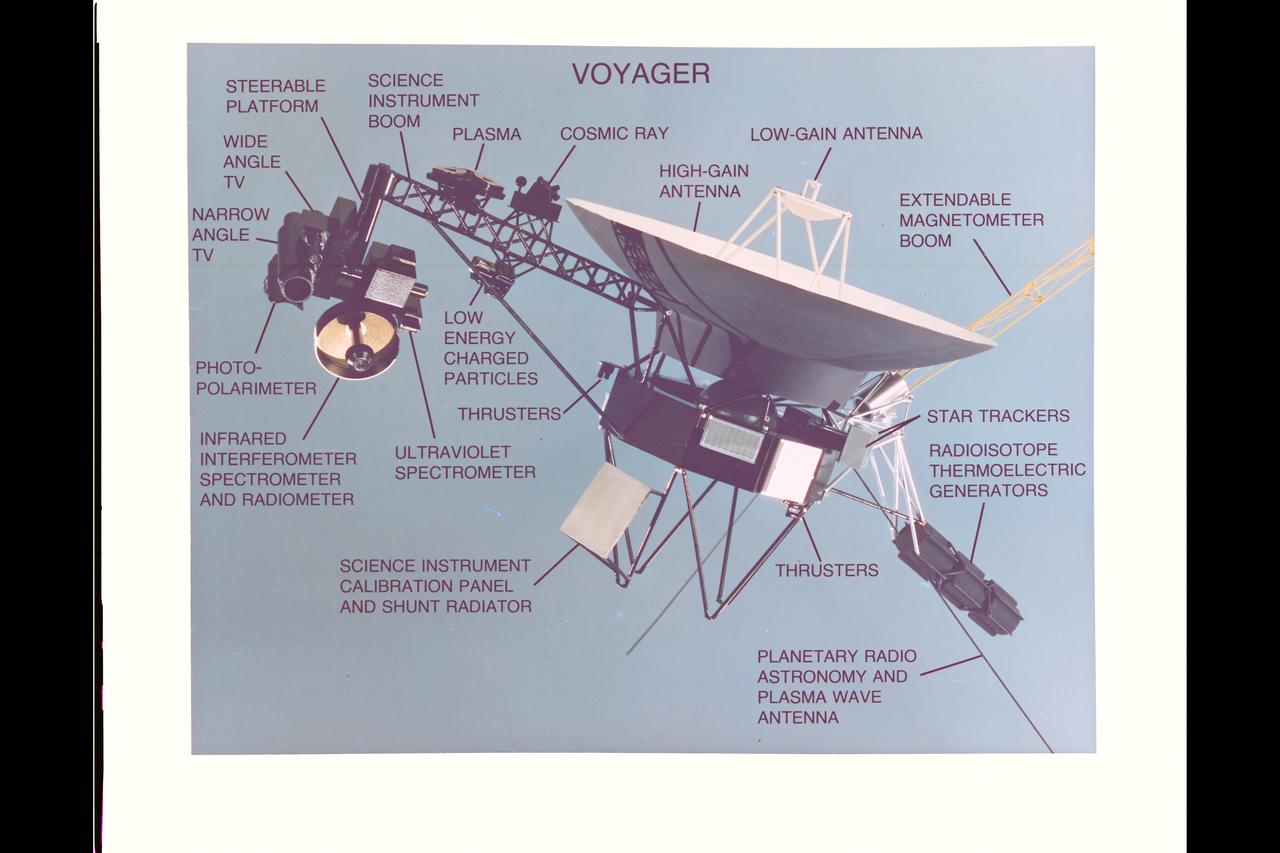
Saturn Voyager Mission Artwork with instruments and parts labeled
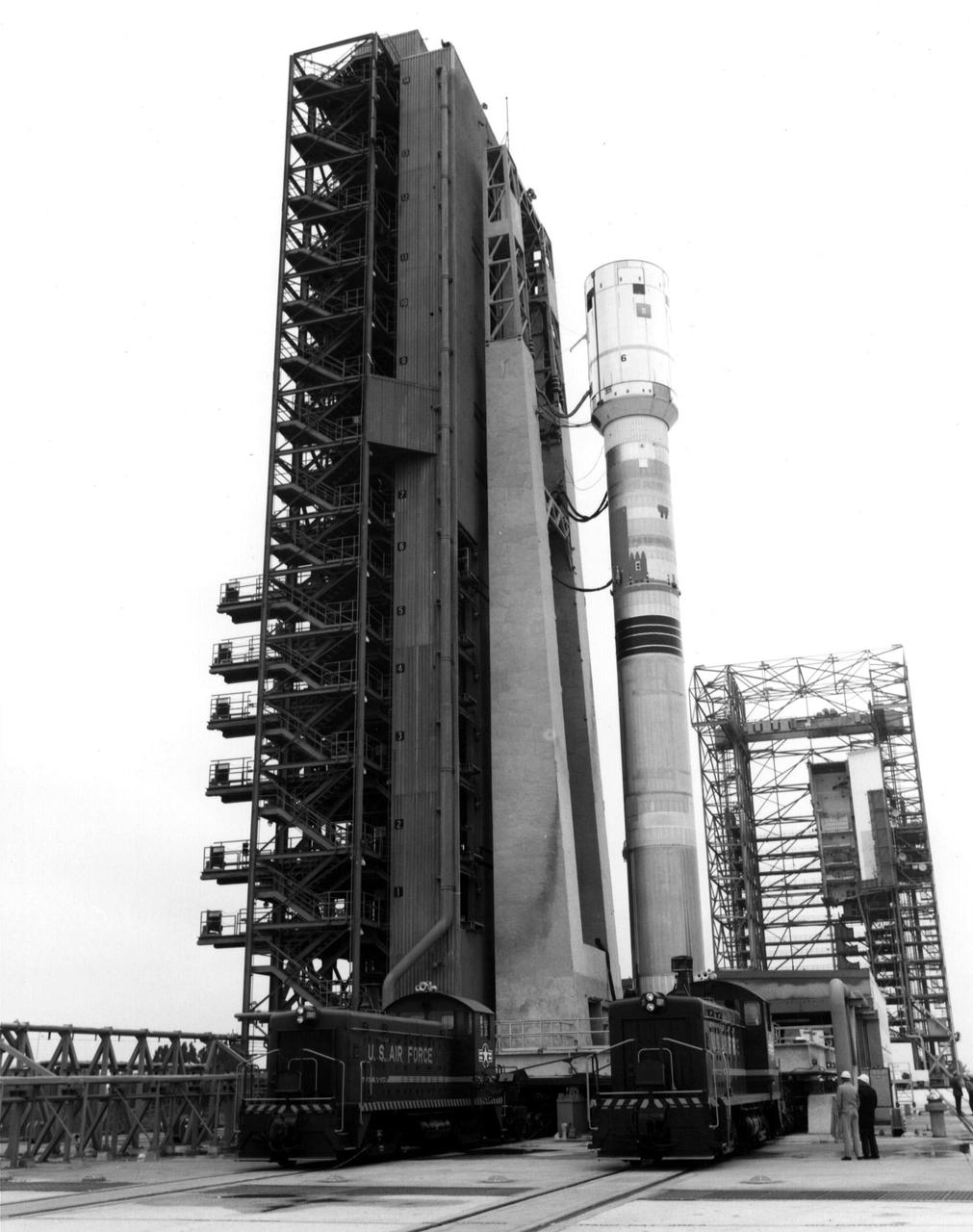
The Titan/Centaur-6 launch vehicle was moved to Launch Complex 41 at Kennedy Space Center in Florida to complete checkout procedures in preparation for launch. The photo is dated January 1977. This launch vehicle carried Voyager 1 into space on September 5, 1977. https://photojournal.jpl.nasa.gov/catalog/PIA21739
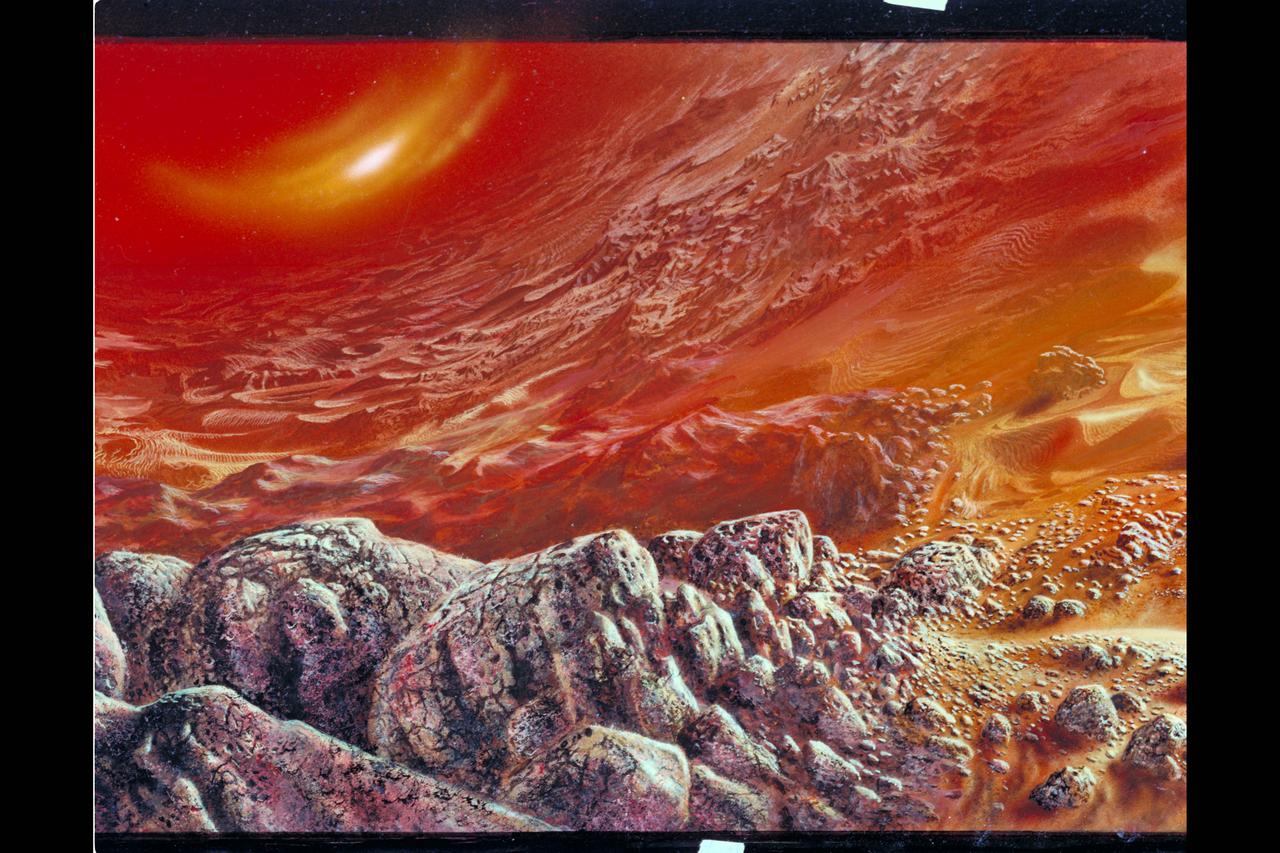
Artist: Rick Guidice Artist conception of surface of Venus.
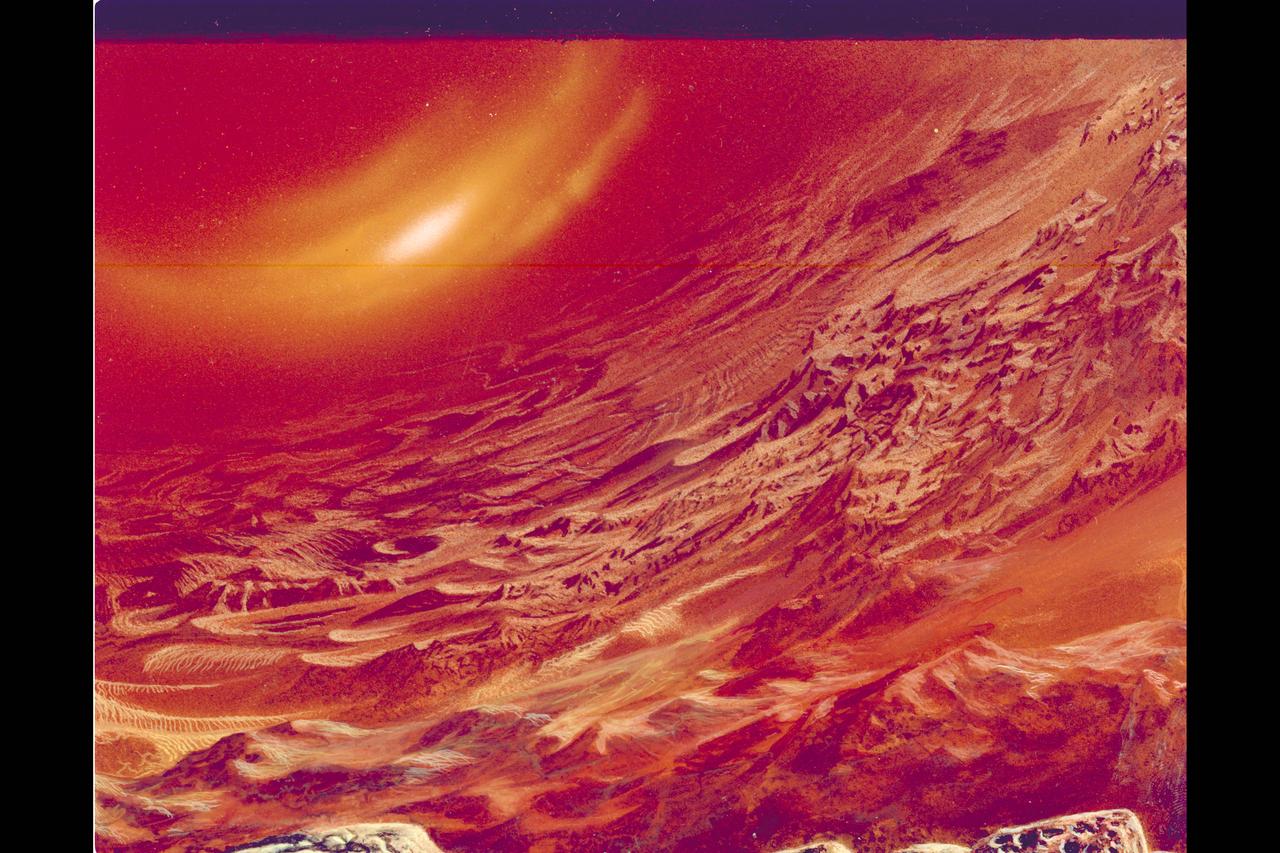
Artist: Rick Guidice Artist conception of surface of Venus.
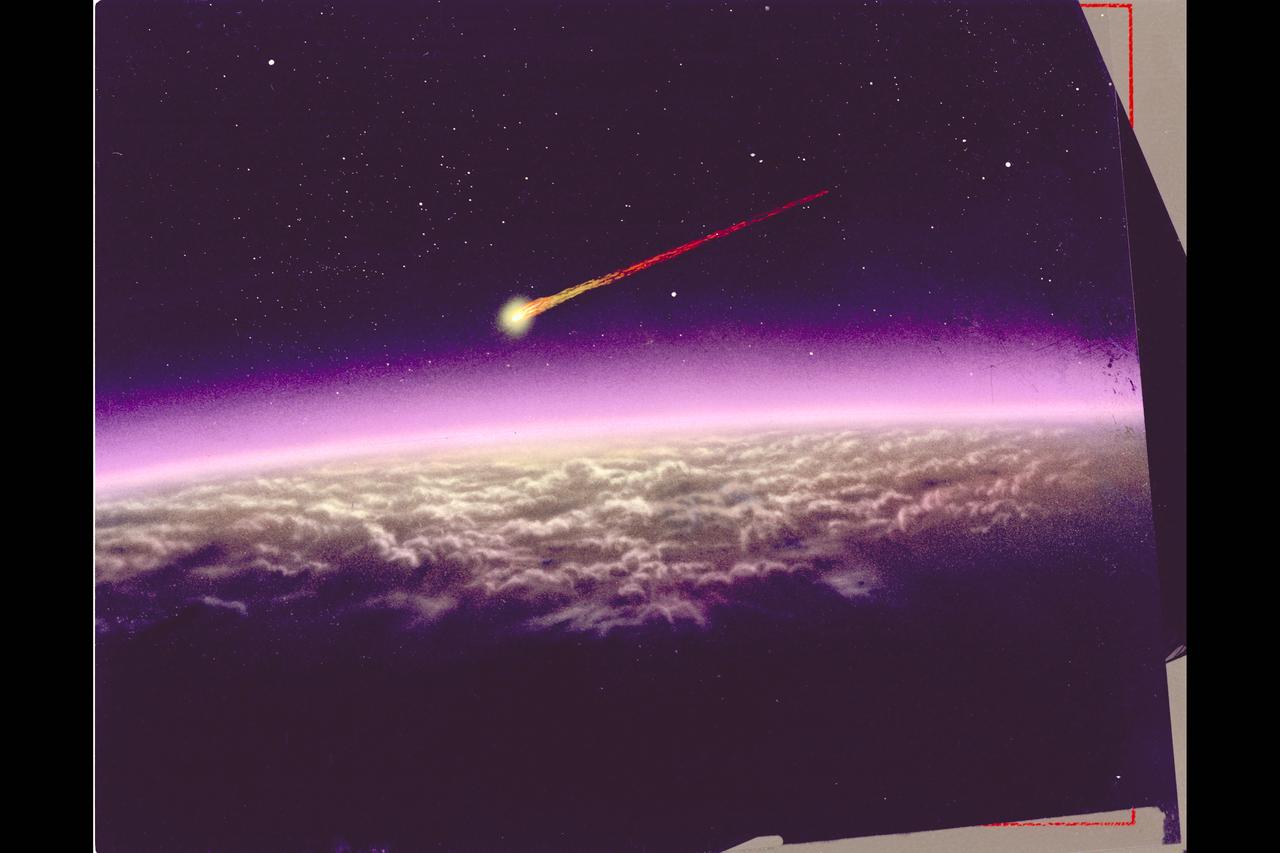
Art By Don Davis As the probes and the bus enter the Venusian atmosphere they glowed briefly like meteorites. The bus as shown in this artisit's rendering, was most spectacular because it did not carry a heat shield; as a result, it burned up completely.
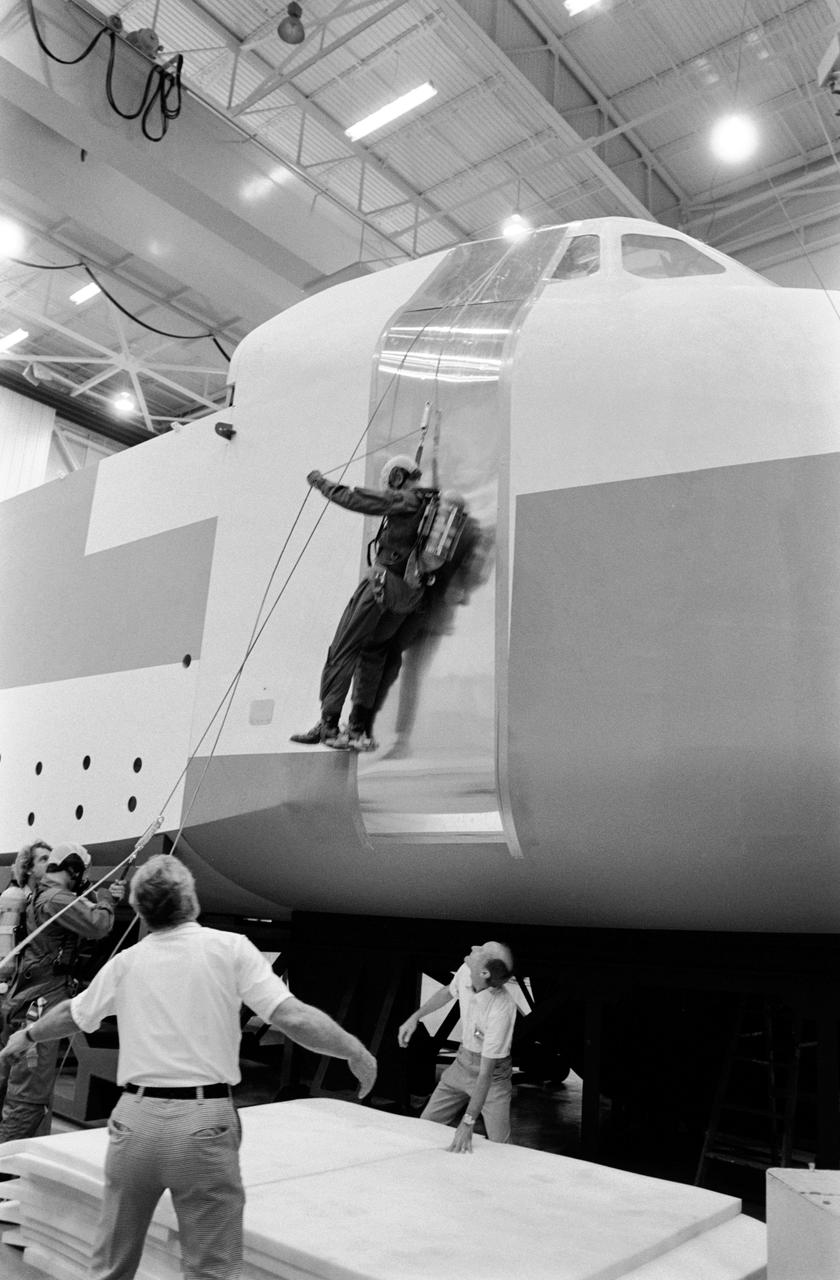
Twelve (12) views of Shuttle emergency training in JSC, Bldg. 9A. Training Officer R. Terry Neal with Astronaut Gerald P. Carr. 1. Astronaut Gerald P. Carr 2. Terry Neal JSC, Houston, TX
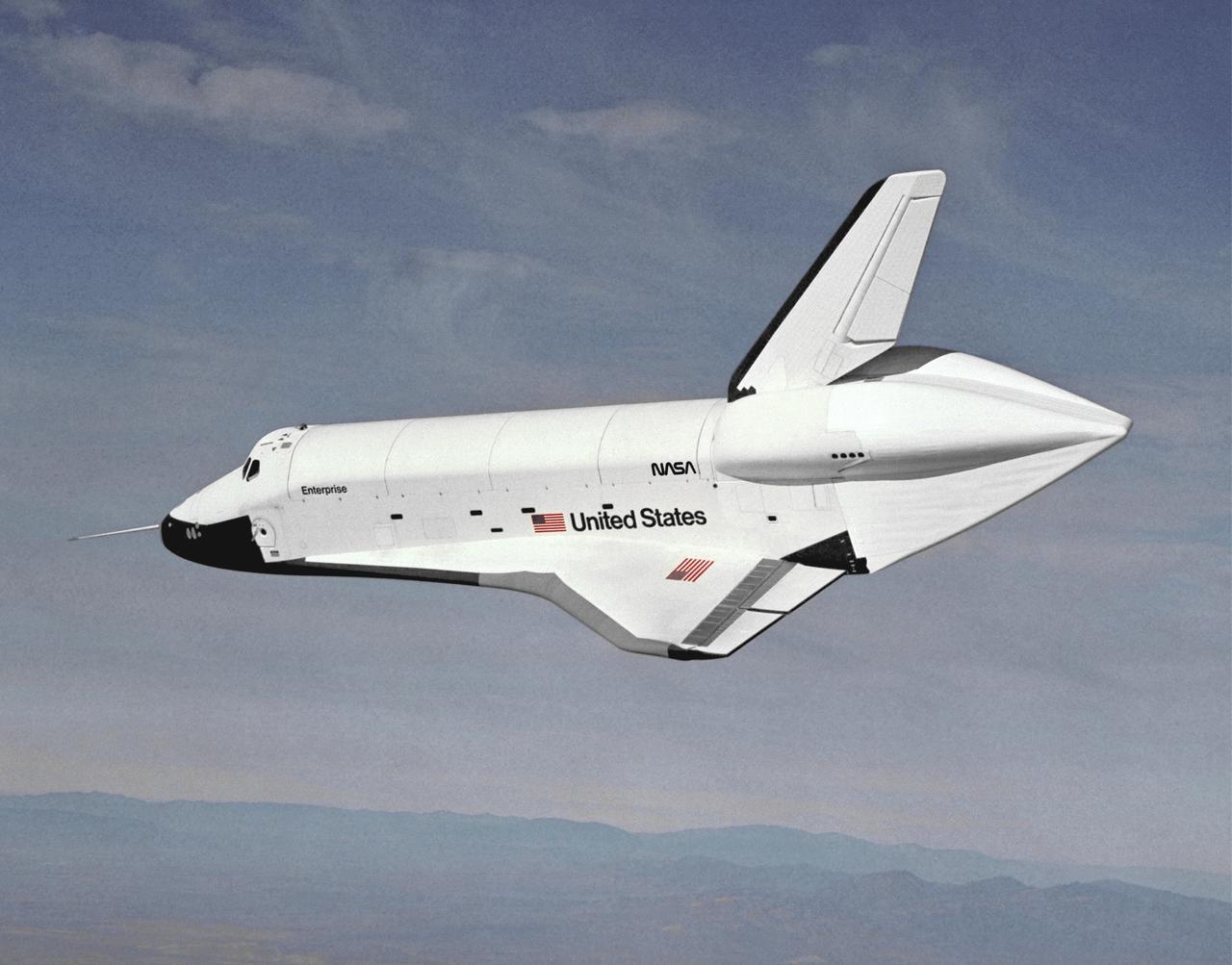
Enterprise - Free Flight after Separation from 747
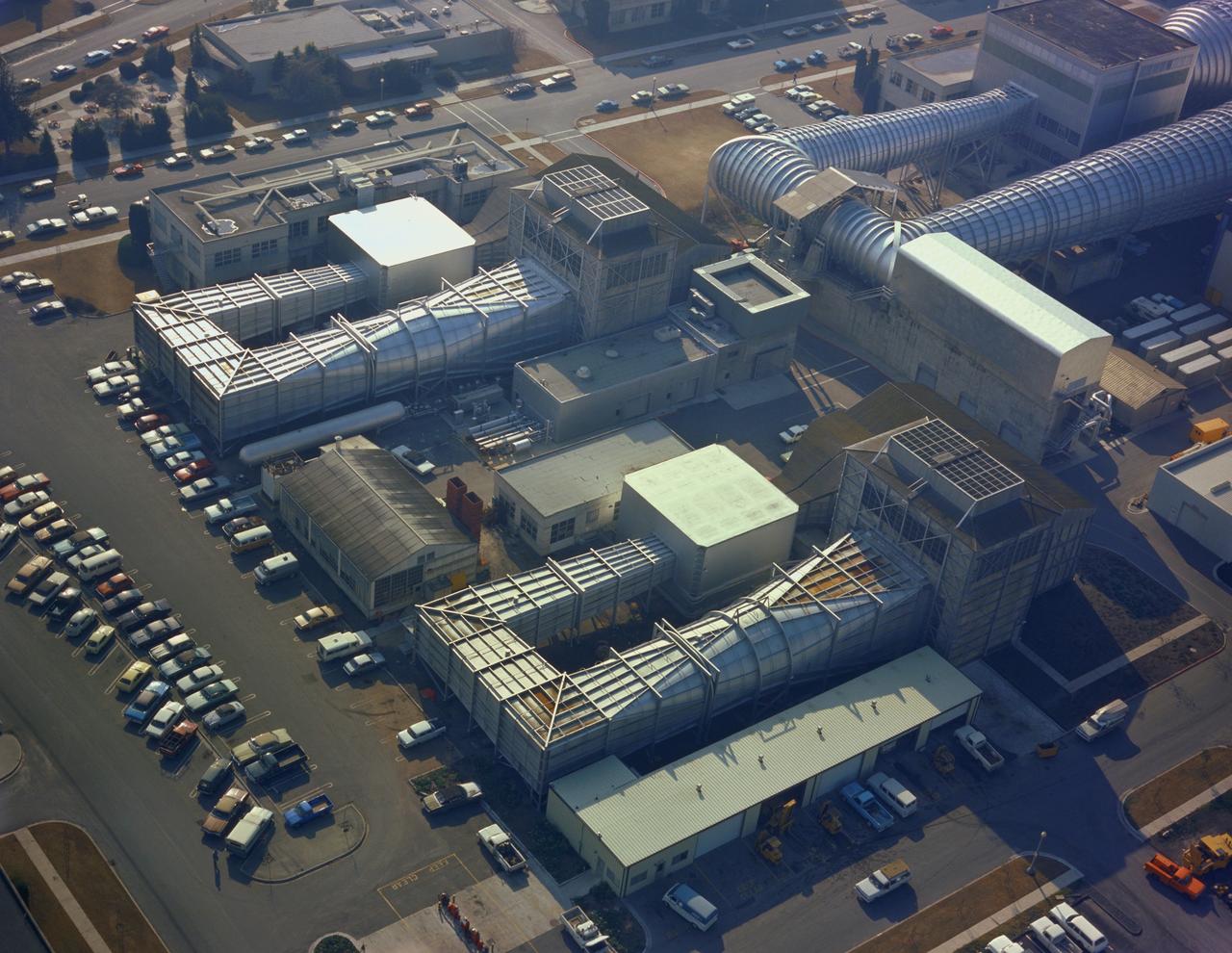
NASA Ames Research Center, Moffett Field, CA aerials: Two 7x10 Foot Wind Tunnels N-215 and N-216 (with composite title)
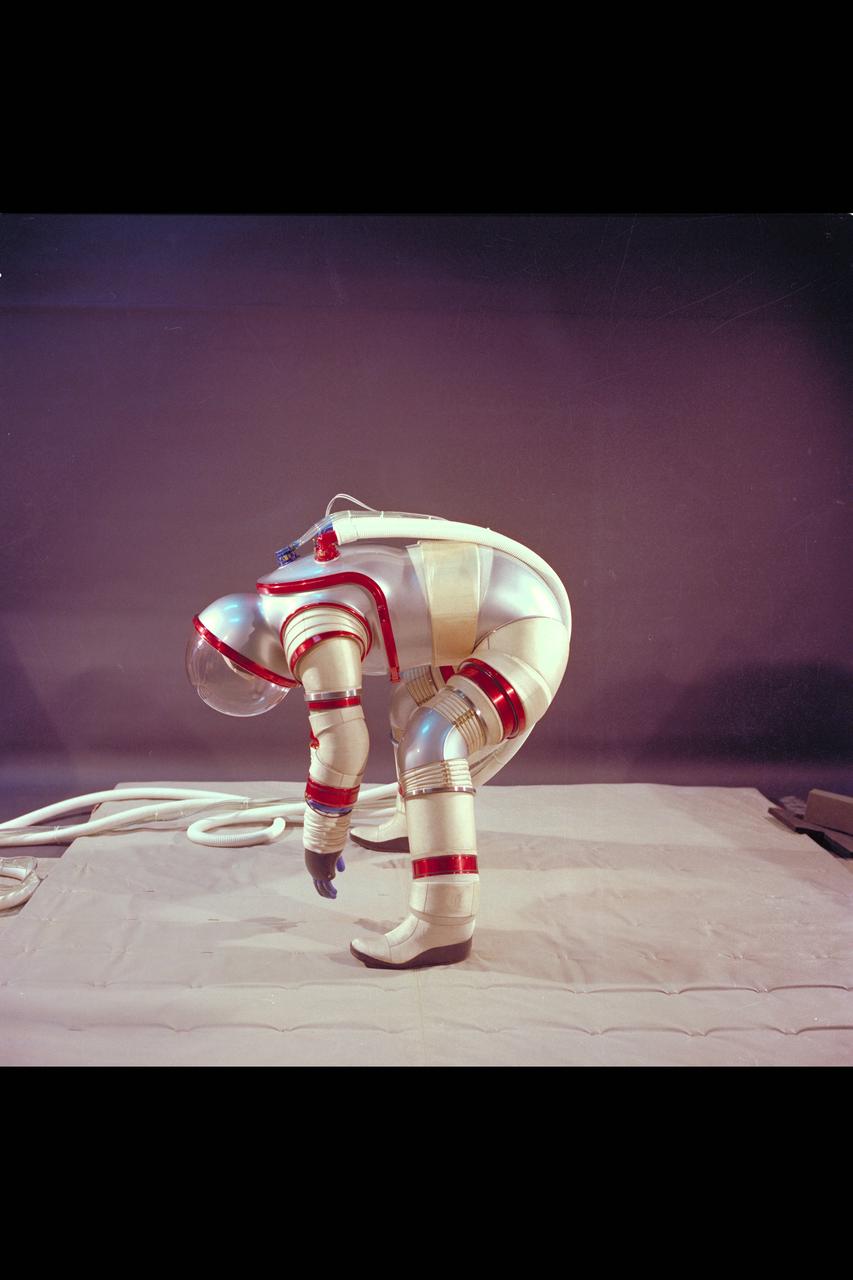
Hubert Vykukal demonstrates mobility of the Hardsuit AX-3 Space Suit design
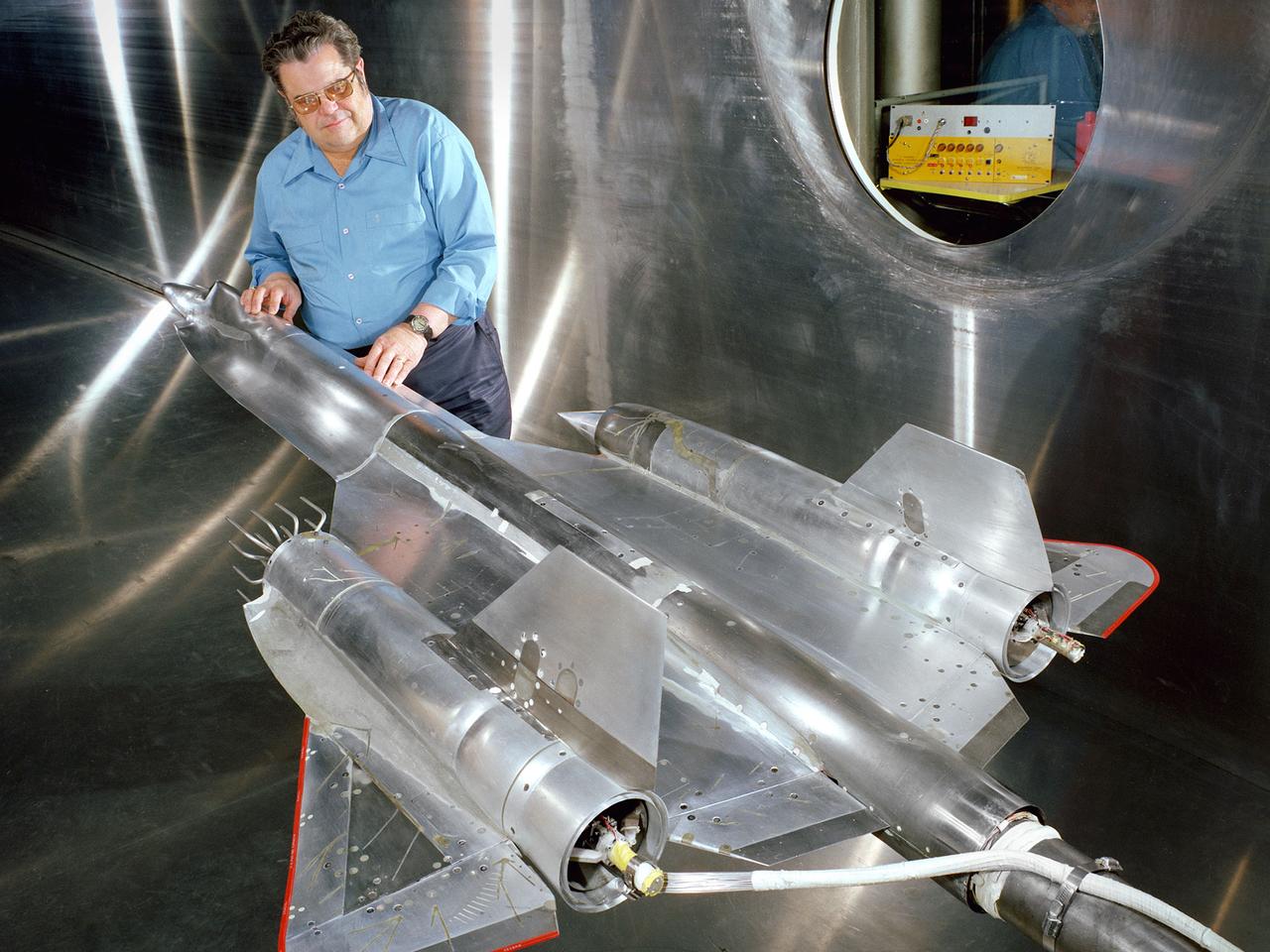
Robert Cubbison examines a model of the Lockheed YF-12 Blackbird in the test section of the 10- by 10-Foot Supersonic Wind Tunnel at the National Aeronautics and Space Administration (NASA) Lewis Research Center. The YF-12 was an experimental fighter version of Lockheed’s A-12 reconnaissance aircraft which had been developed into the renowned SR-71 Blackbird. NASA possessed two YF-12s at its Dryden Flight Research Center which could be used by researchers at all the NASA centers. During its nine-year life, the Dryden’s YF-12 research program logged 297 flights with approximately 450 flight hours. Lewis researchers were studying the YF-12’s inlet airflow in the 10- by 10-foot wind tunnel in late 1977. The advanced supersonic cruise aircraft of the time used mixed-compression inlets. These types of inlets were prone to flameout during atmospheric disturbances. Researchers at Lewis and Dryden developed a program to study these flameouts by artificially introducing flow disturbances. Testing at Dryden with a specially-equipped YF-12 aircraft yielded limited results. Lewis’ tests in the 10- by 10 were unsuccessful at inducing upstream disturbances. The researchers used two methods—a falling plate and a servo-driven wing.
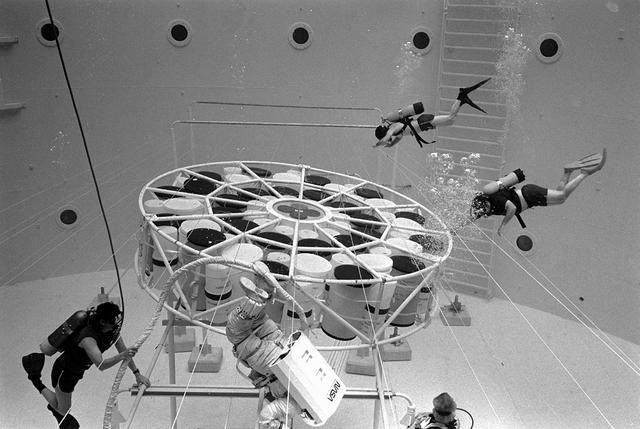
Once the United States' space program had progressed from Earth's orbit into outerspace, the prospect of building and maintaining a permanent presence in space was realized. To accomplish this feat, NASA launched a temporary workstation, Skylab, to discover the effects of low gravity and weightlessness on the human body, and also to develop tools and equipment that would be needed in the future to build and maintain a more permanent space station. The structures, techniques, and work schedules had to be carefully designed to fit this unique construction site. The components had to be lightweight for transport into orbit, yet durable. The station also had to be made with removable parts for easy servicing and repairs by astronauts. All of the tools necessary for service and repairs had to be designed for easy manipulation by a suited astronaut. And construction methods had to be efficient due to limited time the astronauts could remain outside their controlled environment. In lieu of all the specific needs for this project, an environment on Earth had to be developed that could simulate a low gravity atmosphere. A Neutral Buoyancy Simulator (NBS) was constructed by NASA Marshall Space Flight Center (MSFC) in 1968. Since then, NASA scientists have used this facility to understand how humans work best in low gravity and also provide information about the different kinds of structures that can be built.Pictured is an experiment where the astronaut is required to move a large object which weighed 19,000 pounds. It was moved with realitive ease once the astronaut became familiar with his environment and his near weightless condition. Experiments of this nature provided scientists with the information needed regarding weight and mass allowances astronauts could manage in preparation for building a permanent space station in the future.
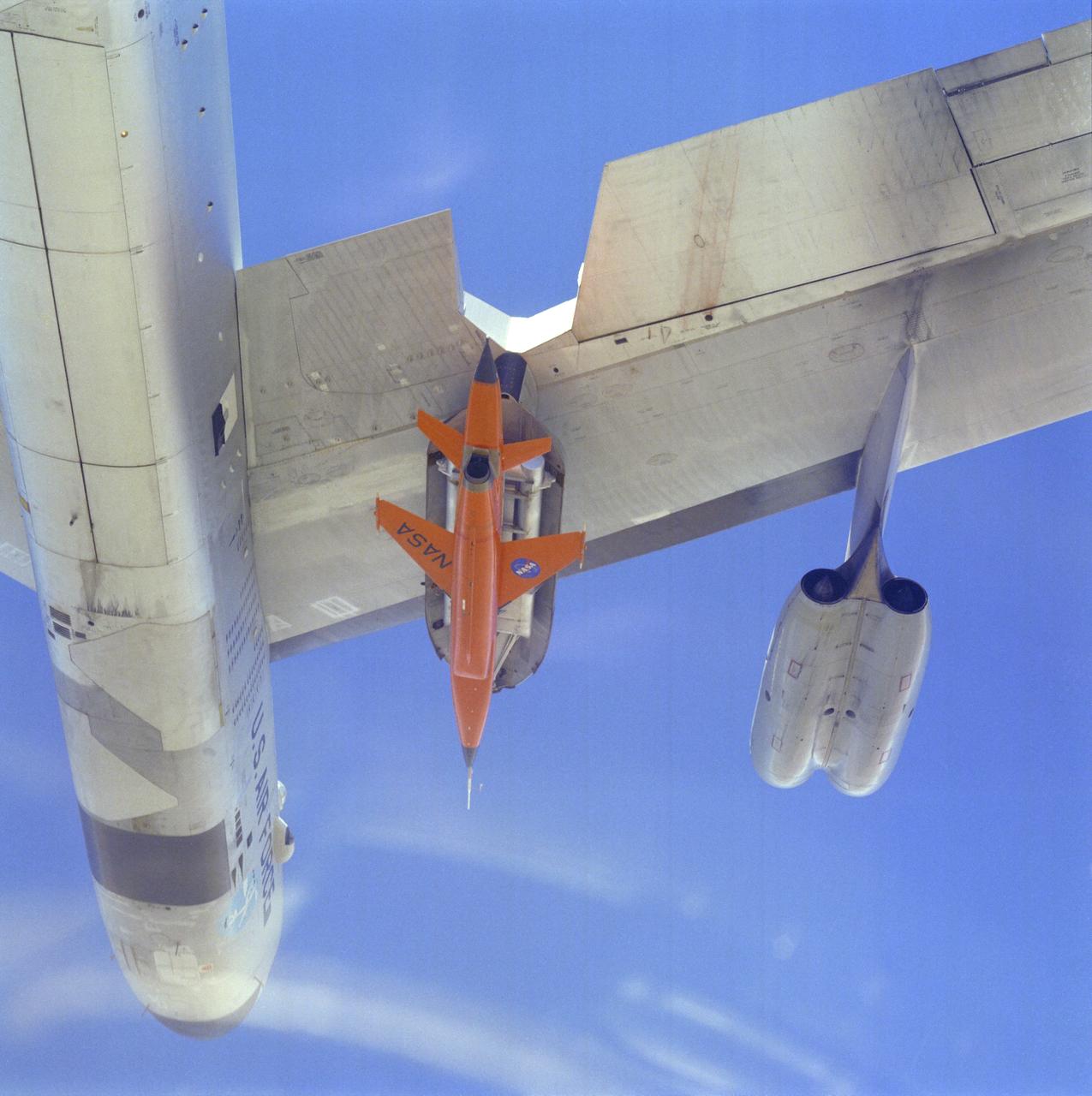
First Captive Flight of DAST Mated to B-52 - Close-up from Below
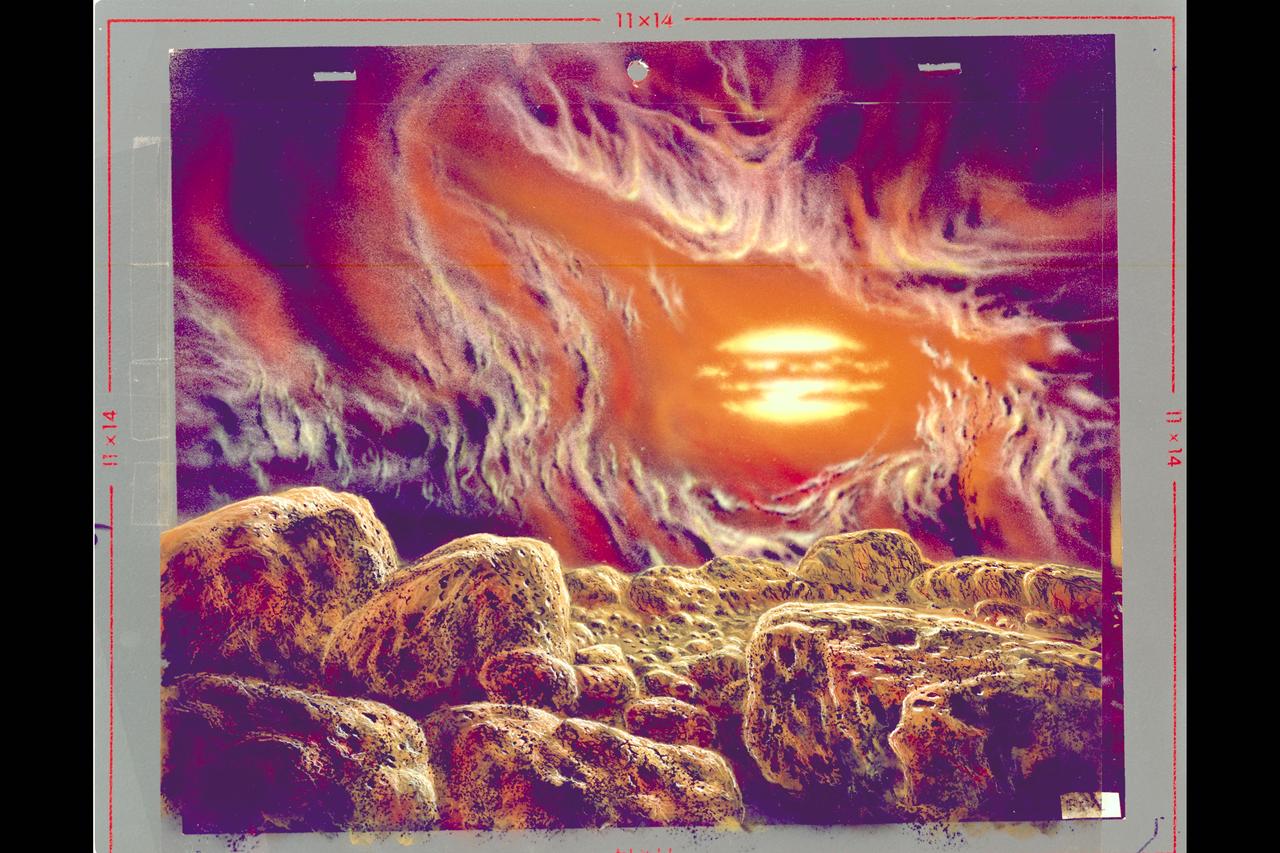
Artist: Rick Guidice Artist conception of surface of Venus.
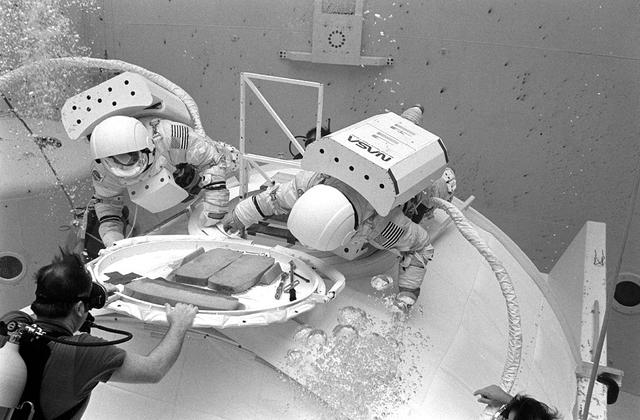
Once the United States' space program had progressed from Earth's orbit into outerspace, the prospect of building and maintaining a permanent presence in space was realized. To accomplish this feat, NASA launched a temporary workstation, Skylab, to discover the effects of low gravity and weightlessness on the human body, and also to develop tools and equipment that would be needed in the future to build and maintain a more permanent space station. The structures, techniques, and work schedules had to be carefully designed to fit this unique construction site. The components had to be lightweight for transport into orbit, yet durable. The station also had to be made with removable parts for easy servicing and repairs by astronauts. All of the tools necessary for service and repairs had to be designed for easy manipulation by a suited astronaut. Construction methods had to be efficient due to the limited time the astronauts could remain outside their controlled environment. In lieu of all the specific needs for this project, an environment on Earth had to be developed that could simulate a low gravity atmosphere. A Neutral Buoyancy Simulator (NBS) was constructed by NASA Marshall Space Flight Center (MSFC) in 1968. Since then, NASA scientists have used this facility to understand how humans work best in low gravity and also provide information about the different kinds of structures that can be built. With the help of the NBS, building a space station became more of a reality. Pictured is Astronaut Paul Weitz training on a mock-up of Spacelab's airlock-hatch cover. Training was also done on the use of foot restraints which had recently been developed to help astronauts maintain their positions during space walks rather than having their feet float out from underneath them while they tried to perform maintenance and repair operations. Every aspect of every space mission was researched and demonstrated in the NBS. Using the airlock hatch cover and foot restraints were just a small example of the preparation that went into each mission.
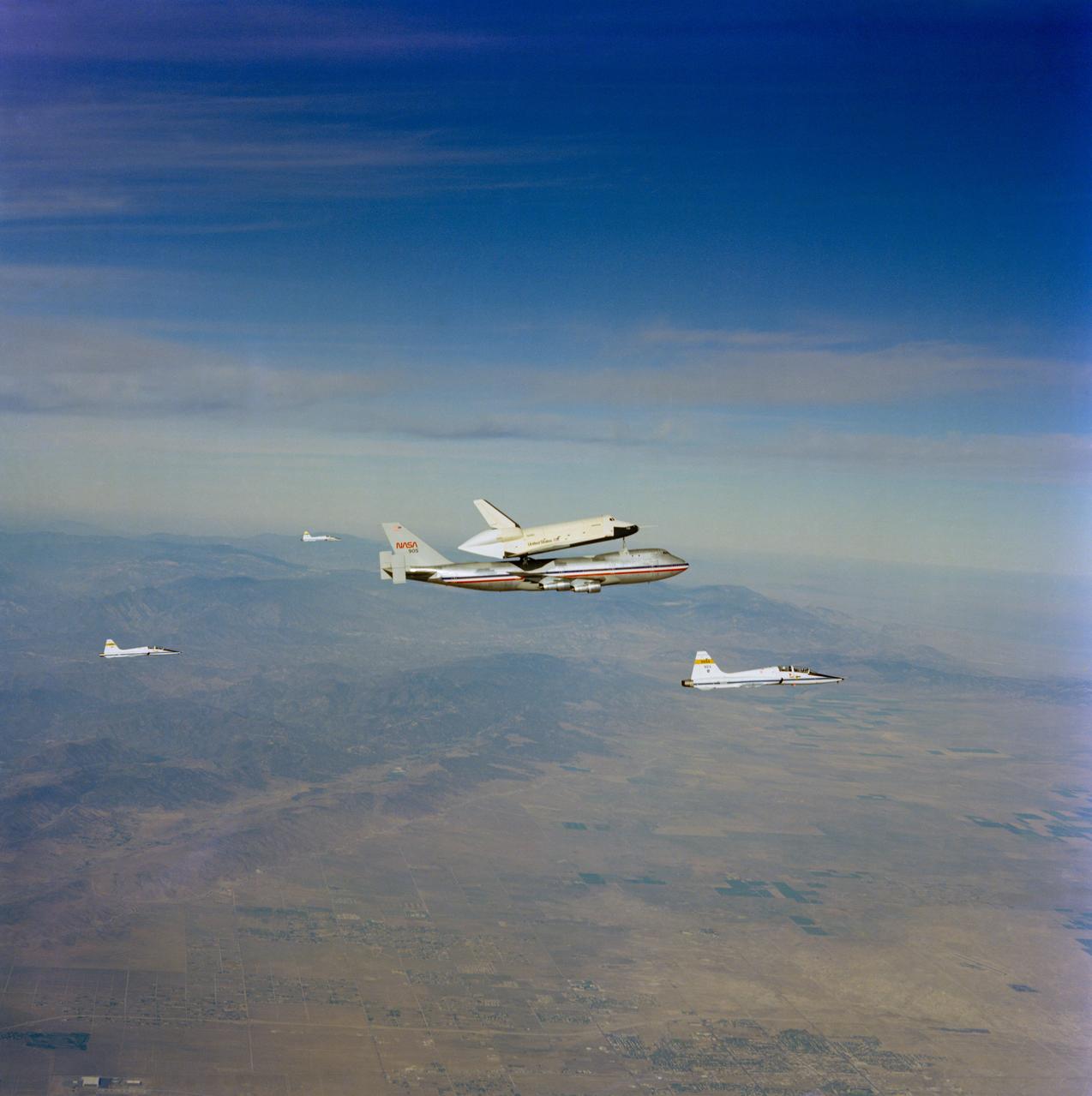
S77-28649 (23 Sept 1977) --- The shuttle Orbiter 101 "Enterprise" sits atop the NASA 747 carrier aircraft in a piggy-back configuration prior to separation for the third free flight of the Shuttle Approach and Landing Tests (ALT) conducted on September 23, 1977, at the Dryden Flight Research Center (DFRC) in Southern California. The crew of the "enterprise" consisted of astronauts Fred W. Haise Jr., commander, and C. Gordon Fullerton, pilot. This photo was shot from one of the T-38 chase planes accompanying the ALT craft. Three other T-38 chase planes are pictured.
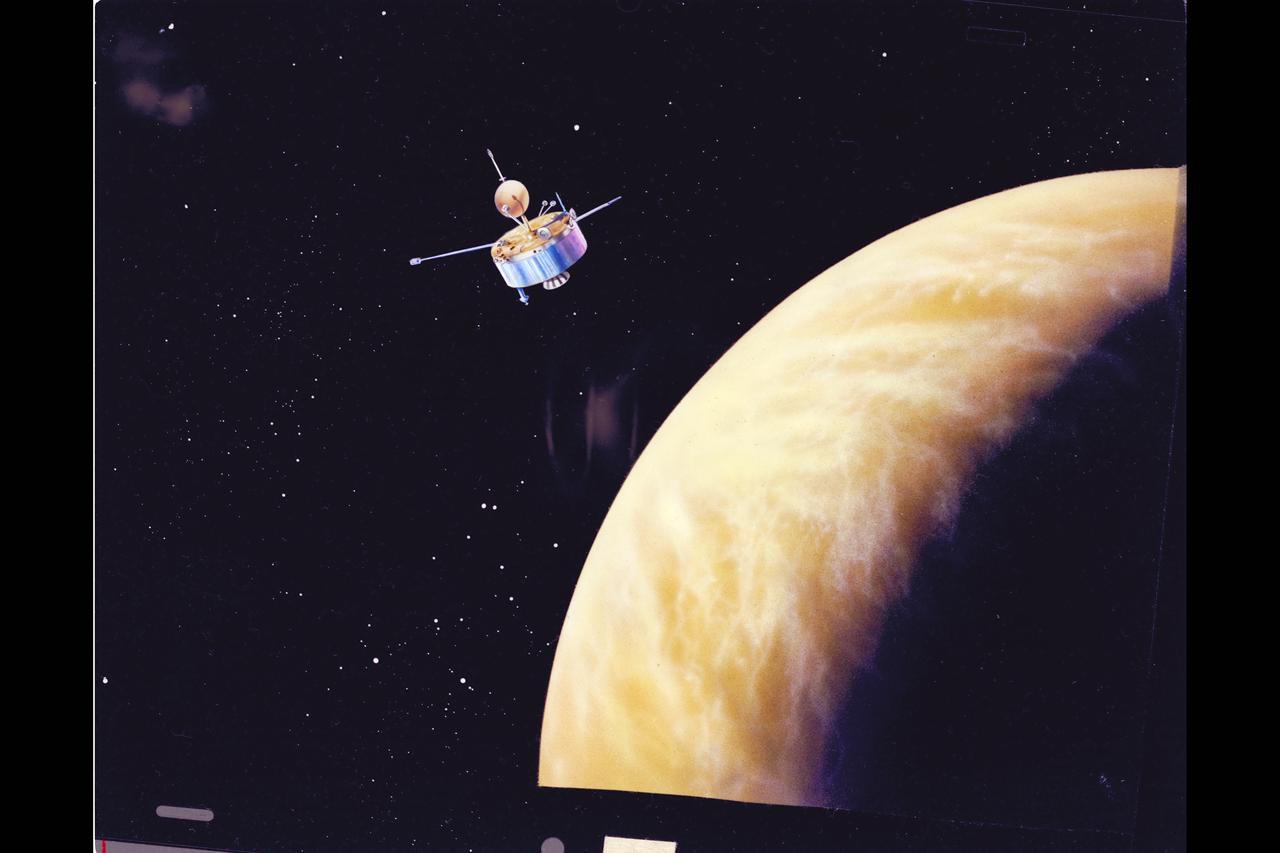
Art By Don Davis Pioneer Venus orbiter in orbit around Venus
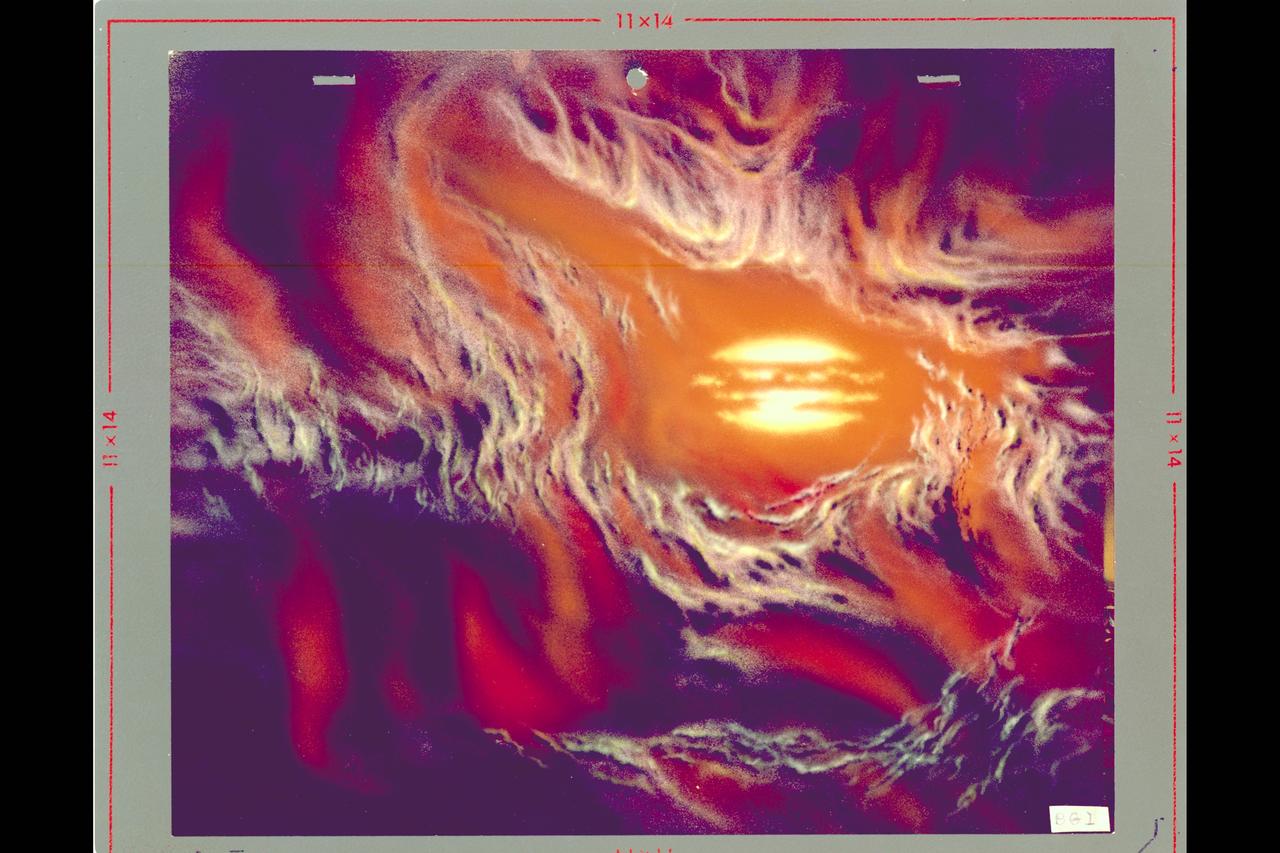
Artist: Rick Guidice Artist conception of surface of Venus.
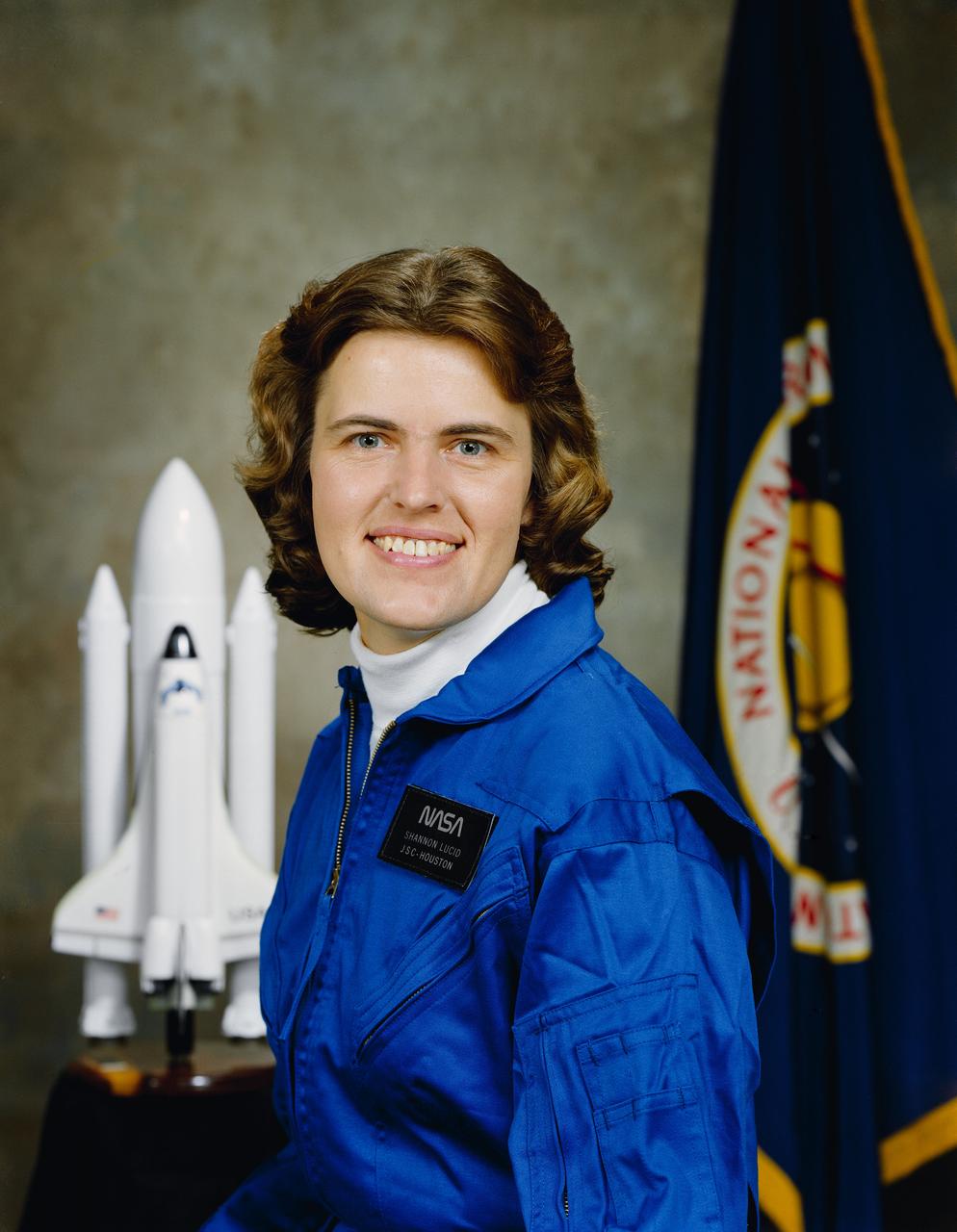
S78-35287 (13 Jan. 1978) --- Astronaut Shannon W. Lucid, mission specialist.

A workman reams holes to the proper size and aligment in the Space Shuttle Main Engine's main injector body, through which propellants will pass through on their way into the engine's combustion chamber. Rockwell International's Rocketdyne Division plant produced the engines under contract to the Marshall Space Flight Center.
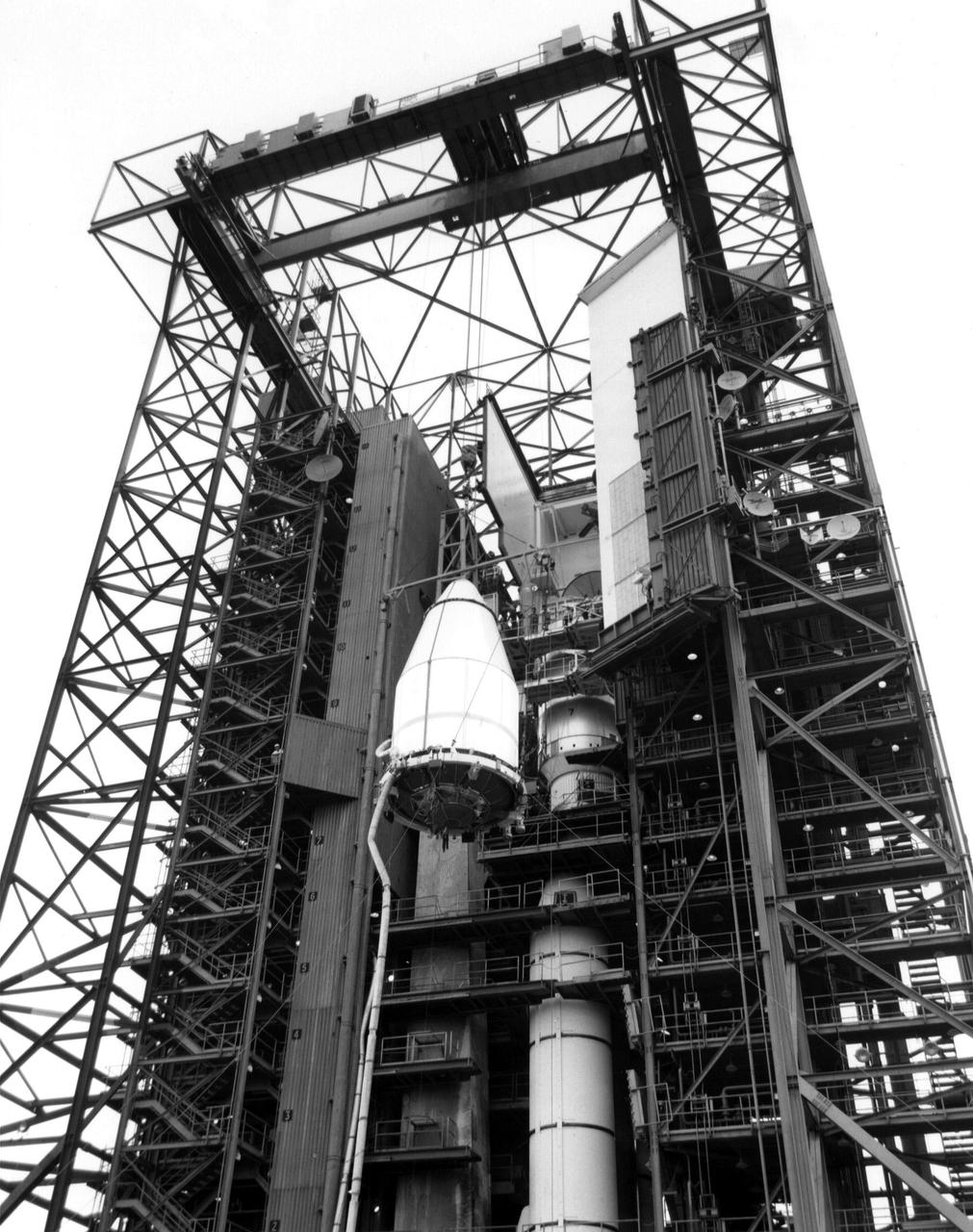
NASA's Voyager 2 spacecraft, encapsulated within its payload fairing, is seen on August 5, 1977. It launched atop the Titan/Centaur-7 launch vehicle from Cape Canaveral Air Force Station in Florida on August 20, 1977, at 10:29 a.m. local time. https://photojournal.jpl.nasa.gov/catalog/PIA21742
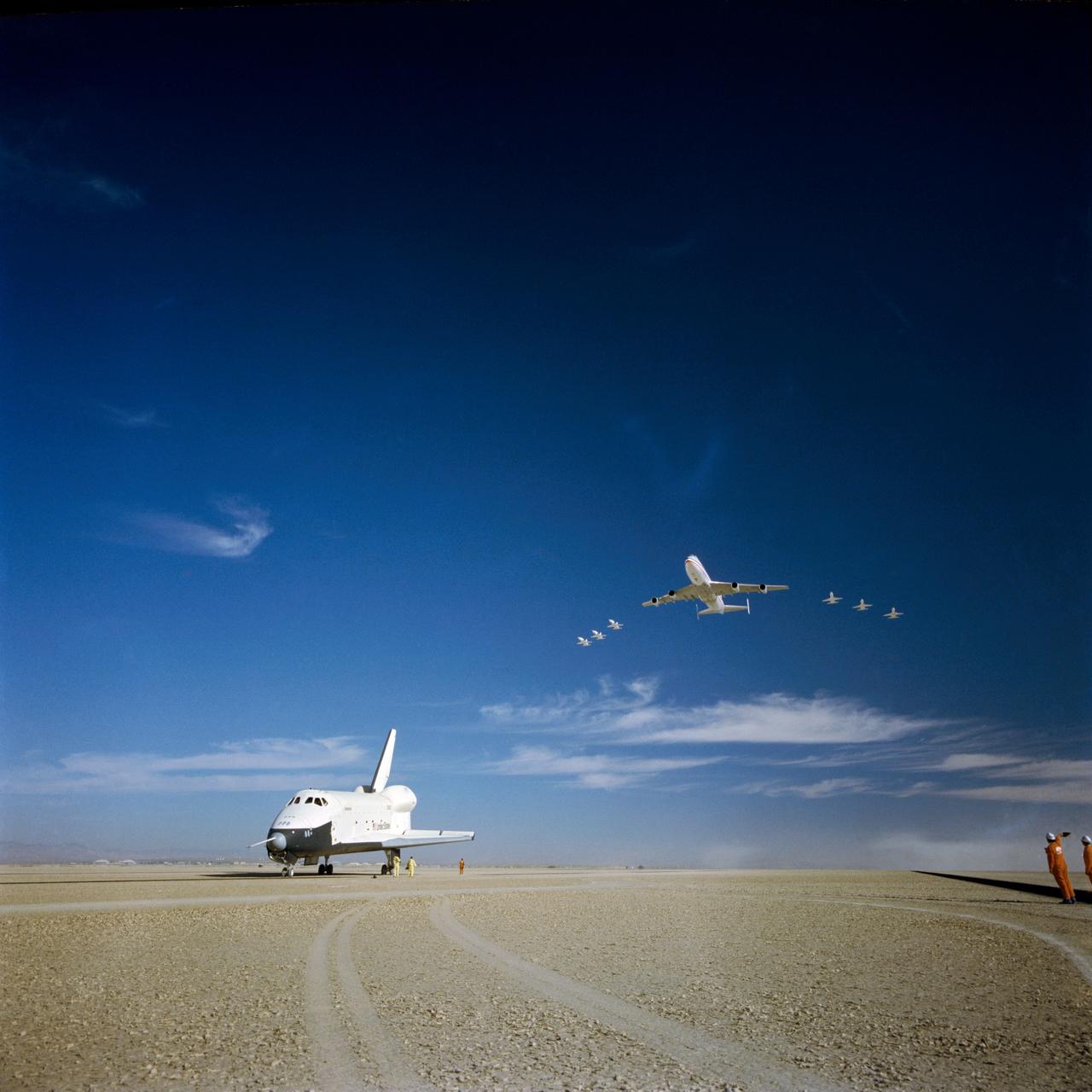
S77-28541 (23 Sept 1977) --- The NASA 747 carrier aircraft and six T-38 jets fly over the shuttle Orbiter 101 "Enterprise" soon after completion of a five-minute, 34-second unpowered mission during the third of a series of Shuttle Approach and Landing Tests (ALT) free-flights. Crew for the September 23, 1977, flight were astronauts Fred W. Haise Jr., commander, and C. Gordon Fullerton, pilot. Touchdown was 786 feet beyond aim point in the desert land of Edwards Air Force Base in Southern California.
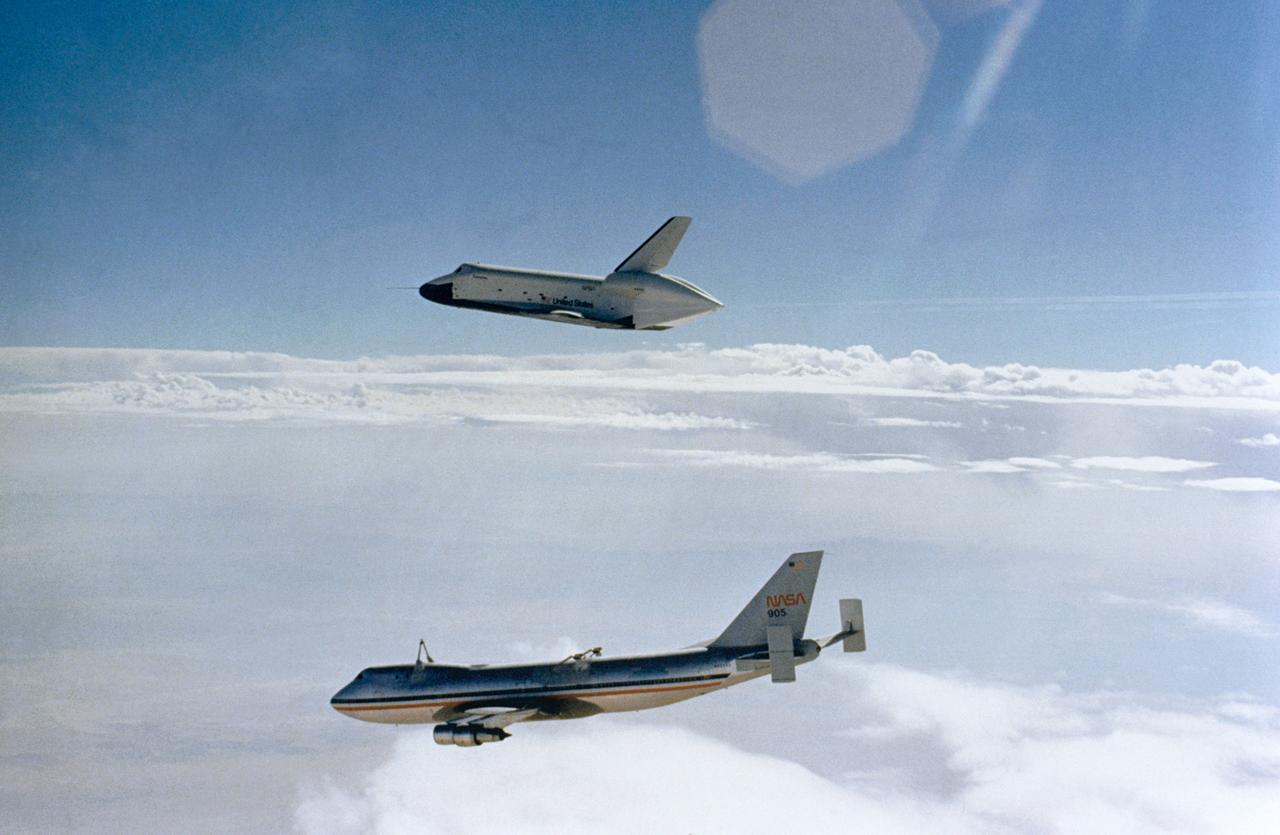
S77-27512 (12 Aug 1977) --- The Shuttle Orbiter 101 "Enterprise" soars above the NASA 747 carrier aircraft only seconds after separating during the first free flight of the Shuttle Approach and Landing Tests (ALTs) conducted on August 12, 1977 at Dryden Flight Research Center in Southern California. Astronauts Fred W. Haise Jr., and C. Gordon Fullerton were the crew of the "Enterprise." The ALT free flights are designed to verify Orbiter subsonic airworthiness, integrated systems operations and pilot-guided approach and landing capability and satisfying prerequisites to automatic flight control and navigation mode.
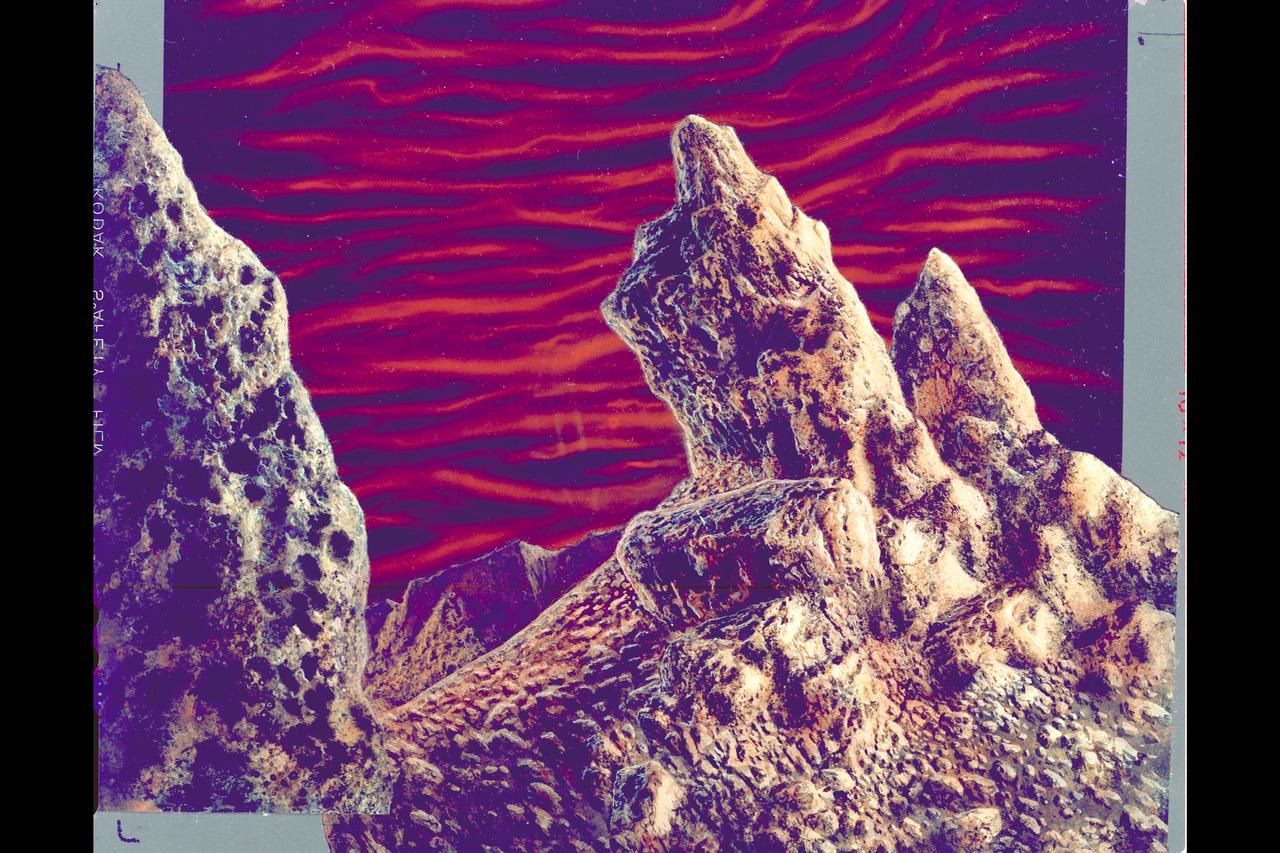
Artist: Rick Guidice Artist conception of surface of Venus.
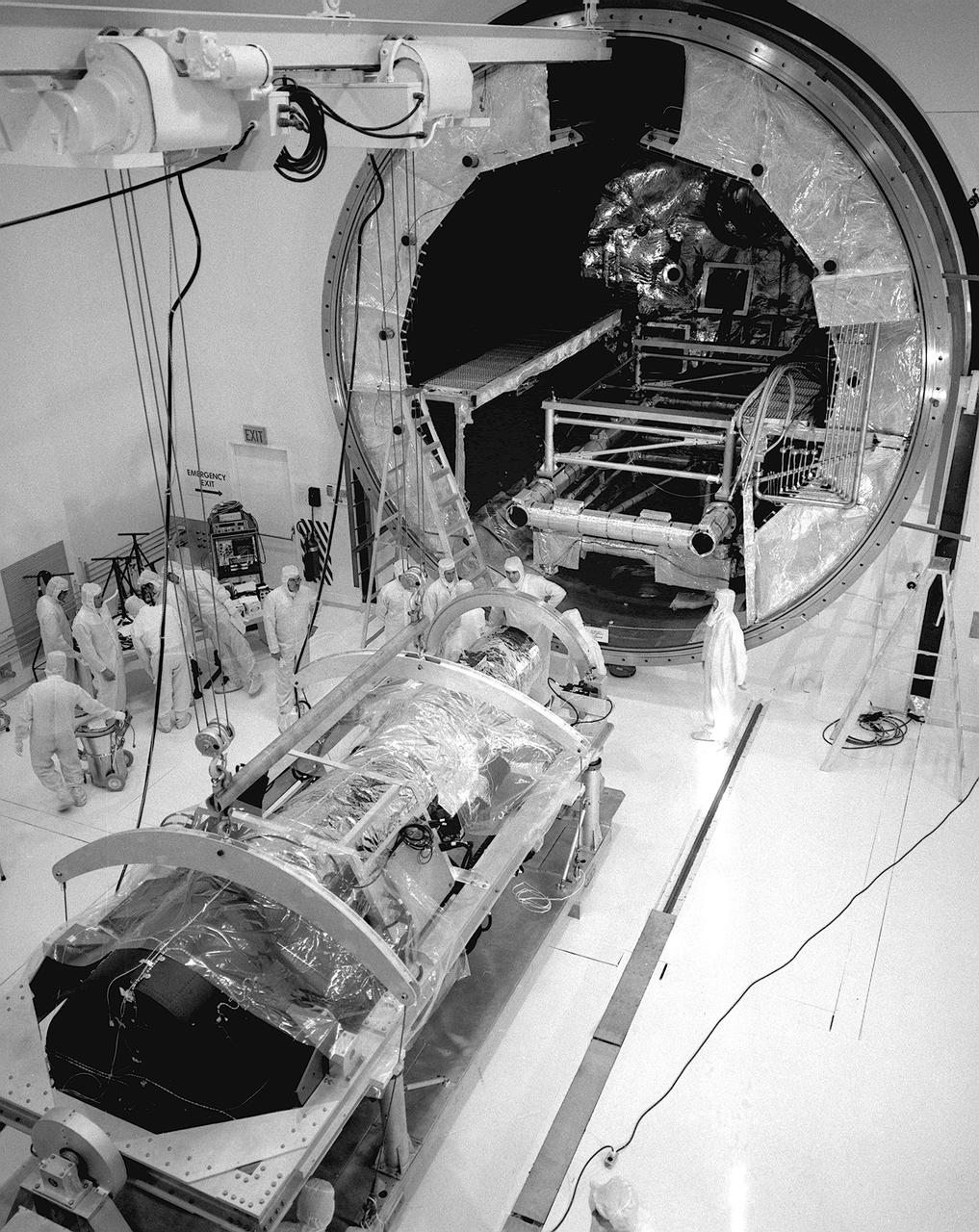
This photograph is of the High Energy Astronomy Observatory (HEAO)-2 telescope being evaluated by engineers in the clean room of the X-Ray Calibration Facility at the Marshall Space Flight Center (MSFC). The MSFC was heavily engaged in the technical and scientific aspects, testing and calibration, of the HEAO-2 telescope The HEAO-2 was the first imaging and largest x-ray telescope built to date. The X-Ray Calibration Facility was built in 1976 for testing MSFC's HEAO-2. The facility is the world's largest, most advanced laboratory for simulating x-ray emissions from distant celestial objects. It produced a space-like environment in which components related to x-ray telescope imaging are tested and the quality of their performance in space is predicted. The original facility contained a 1,000-foot long by 3-foot diameter vacuum tube (for the x-ray path) cornecting an x-ray generator and an instrument test chamber. Recently, the facility was upgraded to evaluate the optical elements of NASA's Hubble Space Telescope, Chandra X-Ray Observatory and Compton Gamma-Ray Observatory.
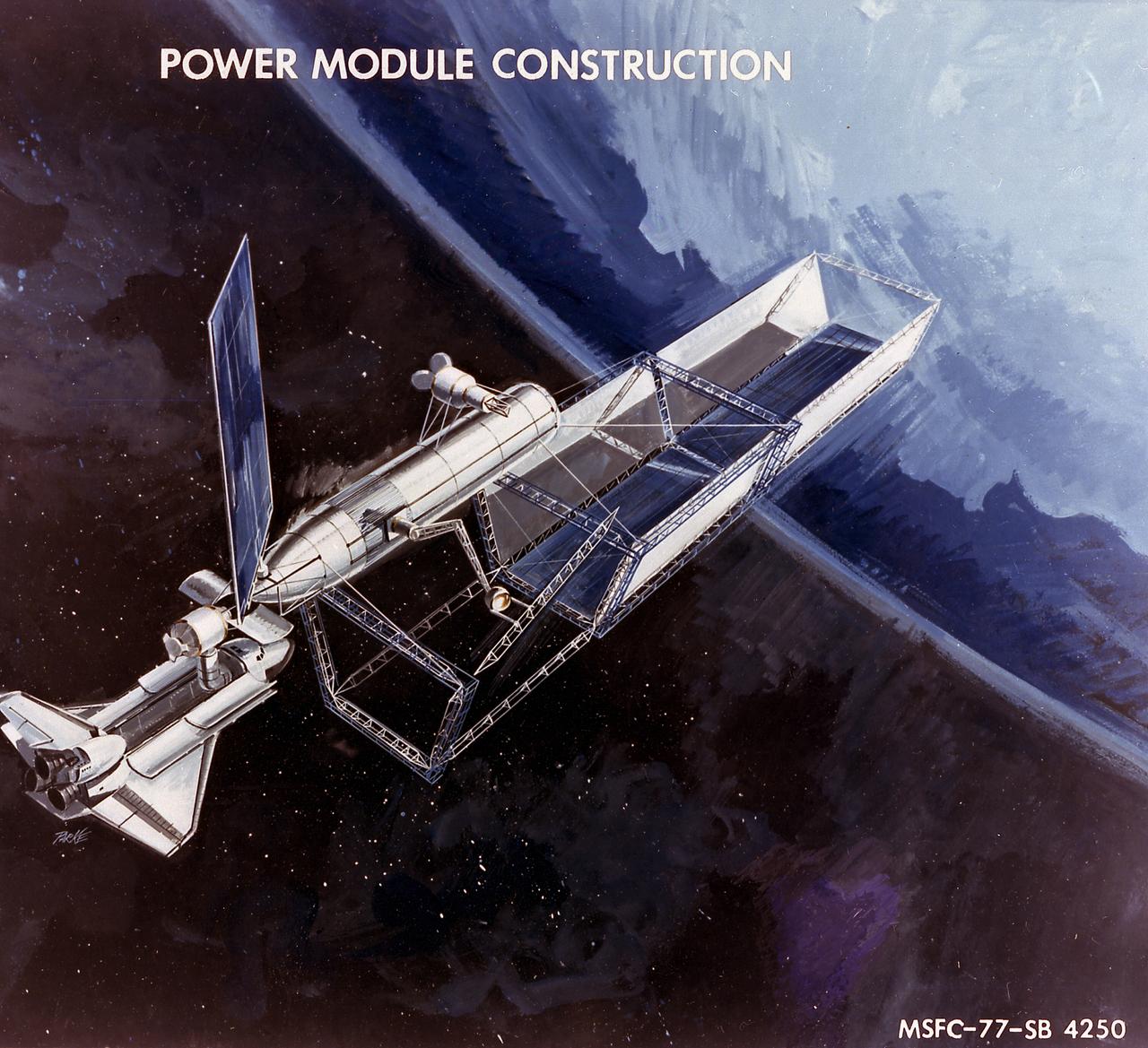
The Marshall Space Flight Center (MSFC) and the Johnson Space Center (JSC) were each awarded 16-month contracts in April 1976 for the Space Station Systems Analysis Study (SSSAS). Grumman Aerospace Corporation was MSFC's contractor and McDornell Douglas Aerospace Company was JSC's contractor. The goal of this study was to formulate plans for a permanent operational base and laboratory facility in Earth orbit in addition to developing a space construction base design for implementing the program. An expended Space Shuttle external tank was to be the central core platform of the base, and additional pressurized modules could be added to provide laboratory facilities. This artist's concept depicts a space construction base design for implementing the SSSAS.
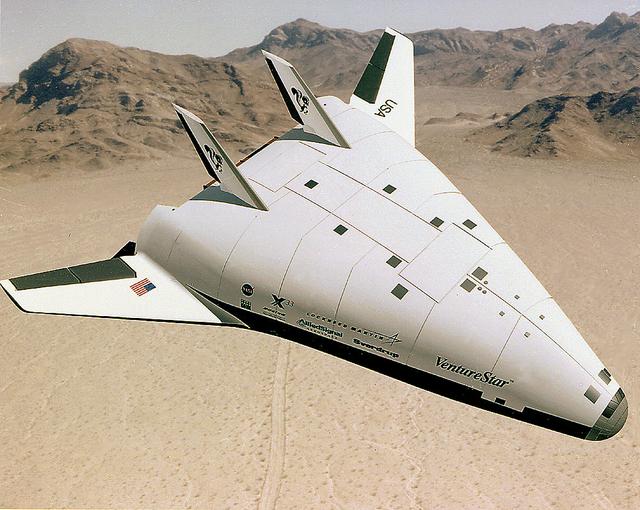
This is an artist's concept of an X-33 Advanced Technology Demonstrator, a subscale protoptye launch vehicle being developed by NASA Lockheed Martin Skunk Works. (Vehicle configuration current as of 10/97) The X-33 is a subscale prototype of a Reusable Launch Vehicle (RLV) Lockheed Martin has labeled "Venture Star TM." The X-33 program was cancelled in 2001.
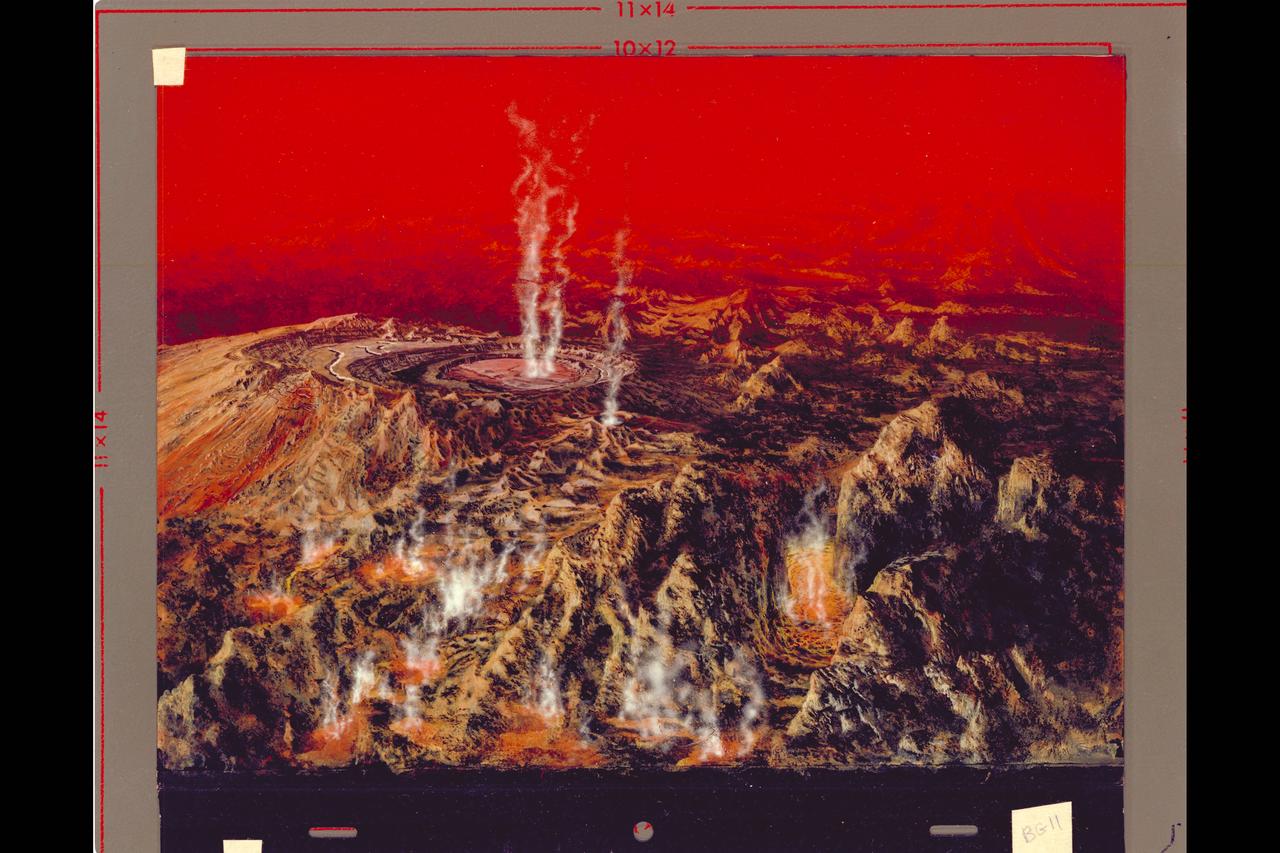
Artist: Rick Guidice Artist conception of surface of Venus.
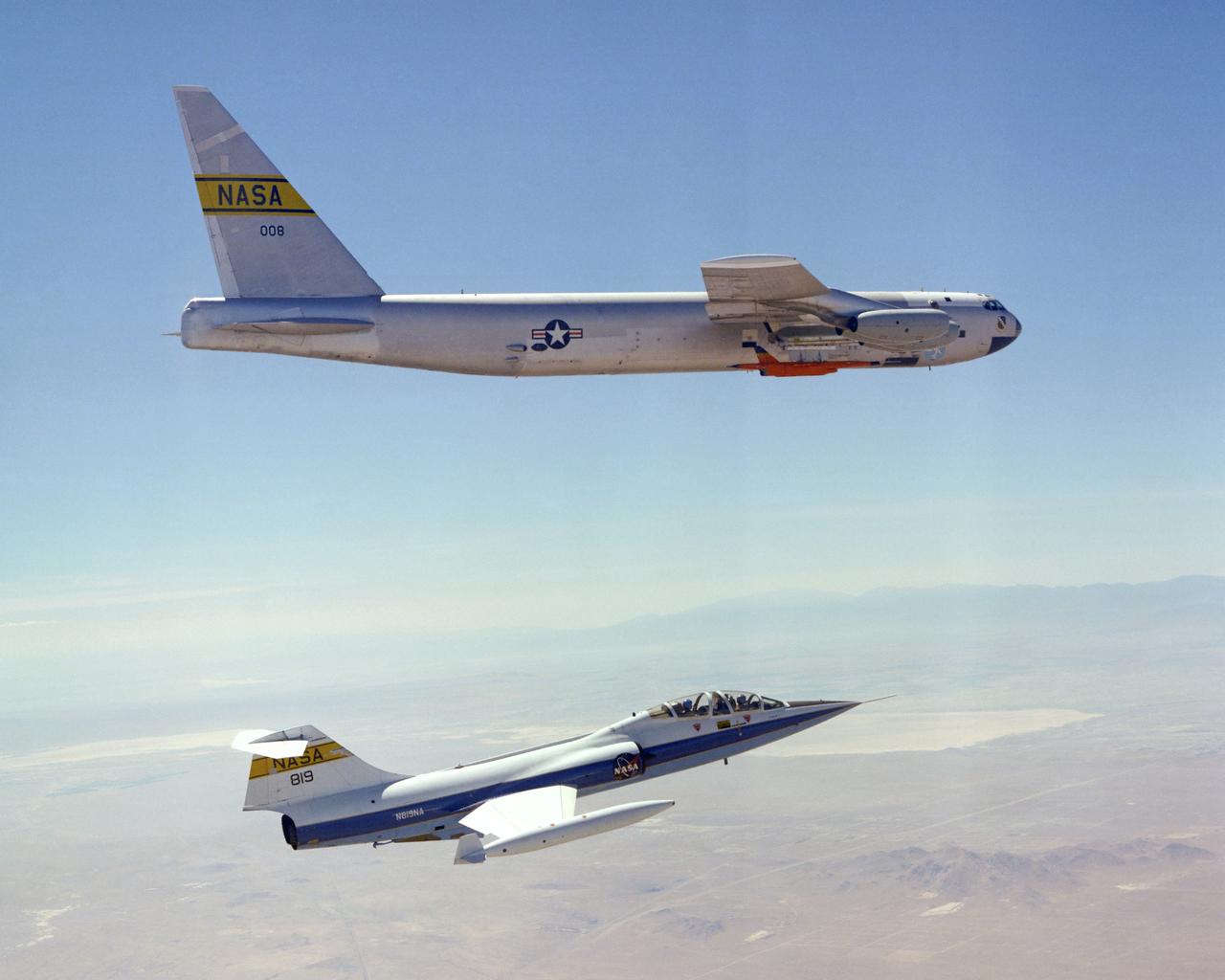
F-104B #819 flies chase on the NB-52B #008 during the first DAST captive flight.
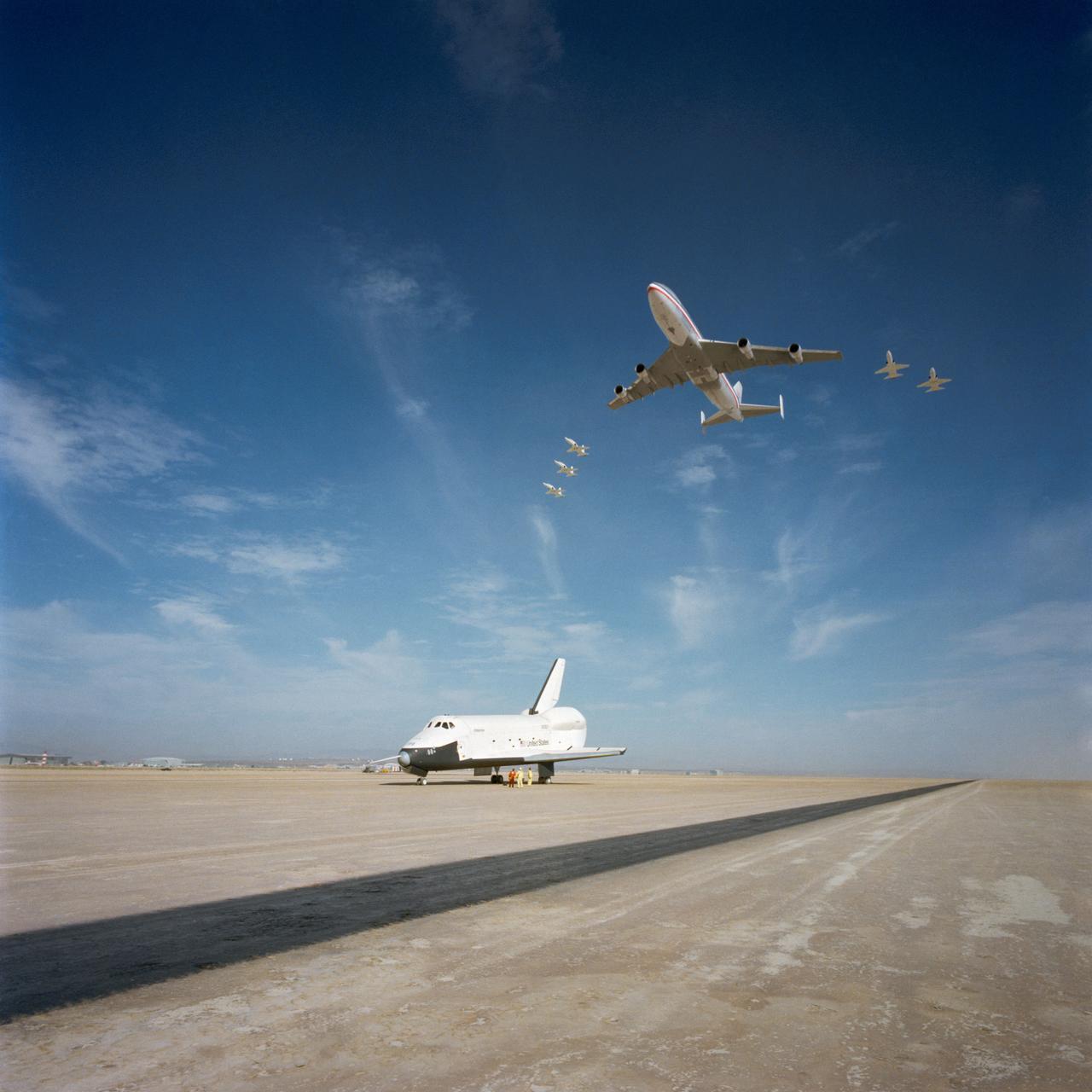
S77-28200 (13 Sept 1977) --- This impressive scene was photographed when the NASA 747 carrier aircraft and five T-38 aircraft flew over the shuttle Orbiter 101 "Enterprise" while it was parked on the runway at Edwards Air Force Base in Southern California. The Orbiter 101 had just completed a five-minute, 28-second unpowered mission during the second free flight of the Shuttle Approach and Landing Tests (ALT) conducted September 13, 1977, at the Dryden Flight Research Center.
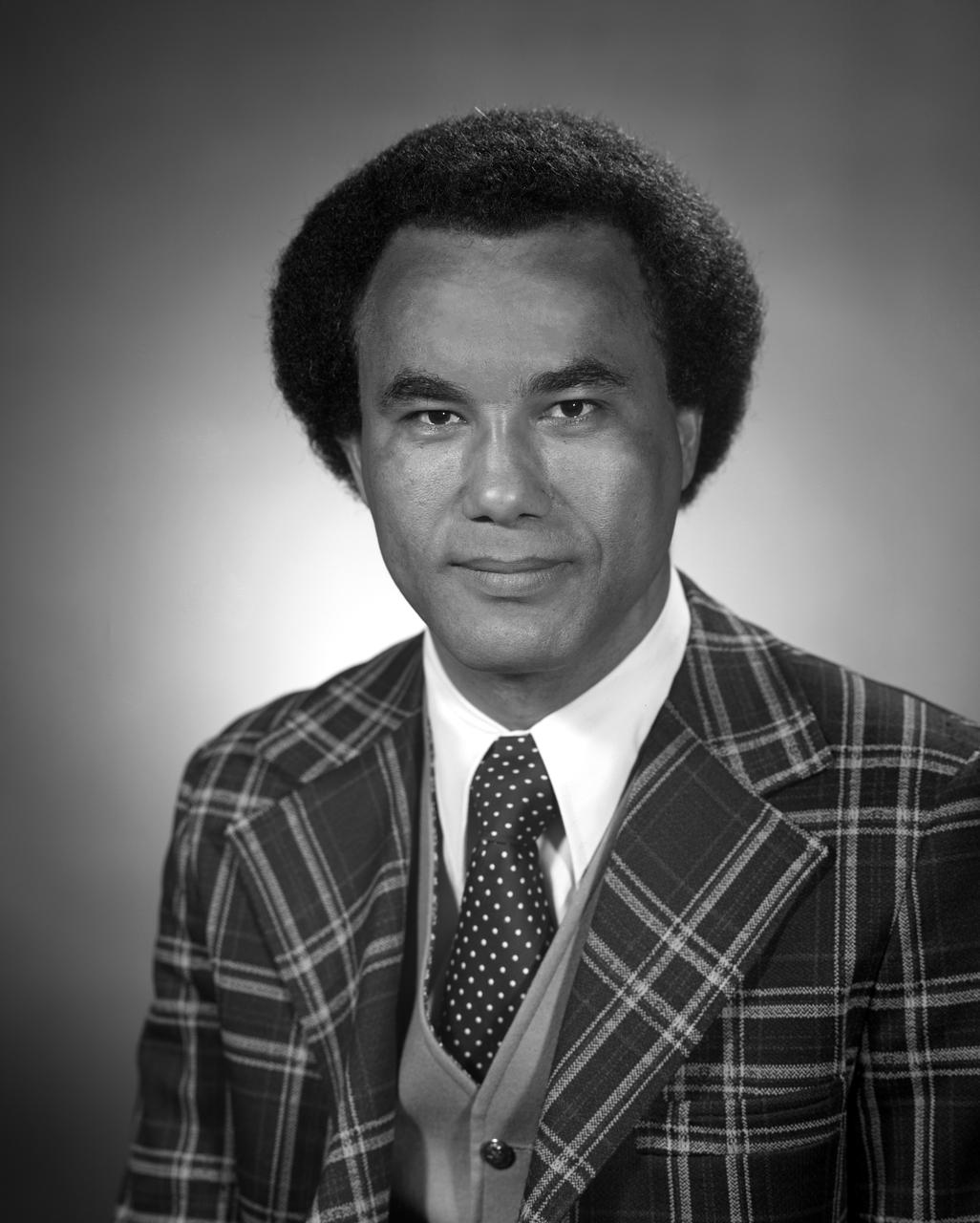
Portrait of Samuel J. Scott working in the Office of Directors for Structures NASA Langley. Photograph taken May 1977.
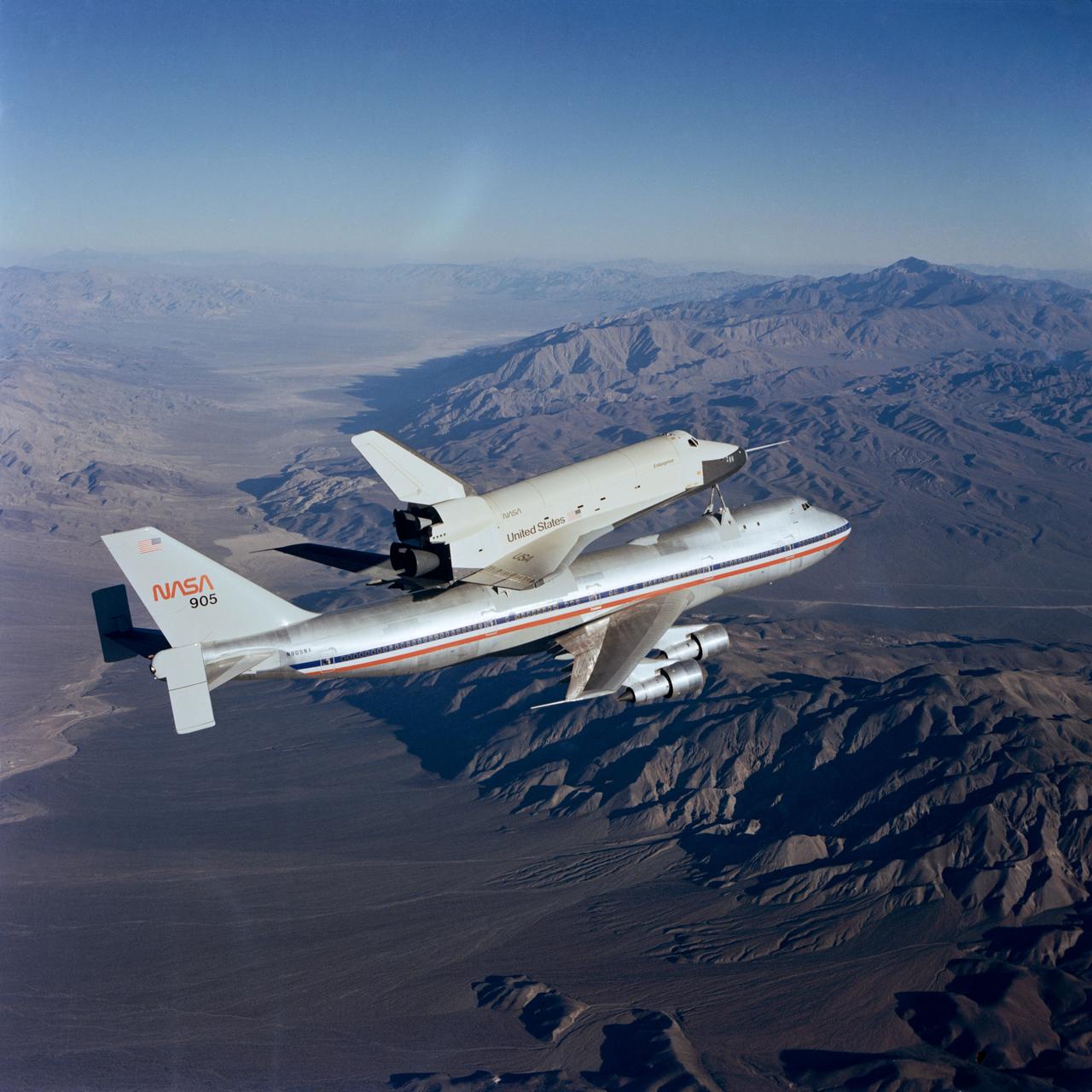
Frame of color news-released stills. This was a Tail Cone Off Mission. Stack Enterprise and 747 in flight.
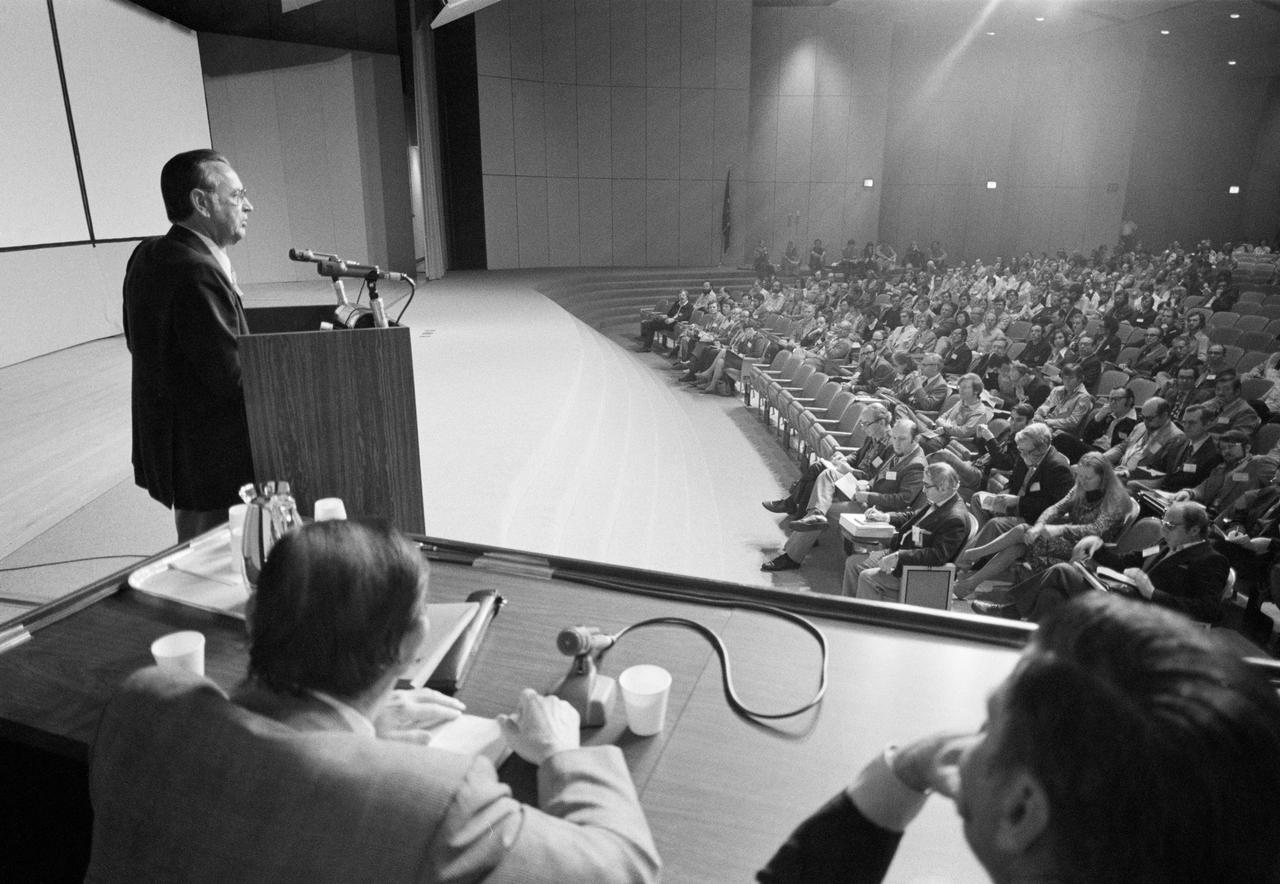
S77-22482 (14 March 1977) --- Johnson Space Center Director Christopher C. Kraft Jr. addresses a crowd of scientists and news media representatives at the opening of the Eighth Annual Lunar Science Conference in the Teague Auditorium. Photo credit: NASA

Charlie Hall inspects the Pioneer Venus multiprobe at Hughes Aircraft Co. in Dec. 1976
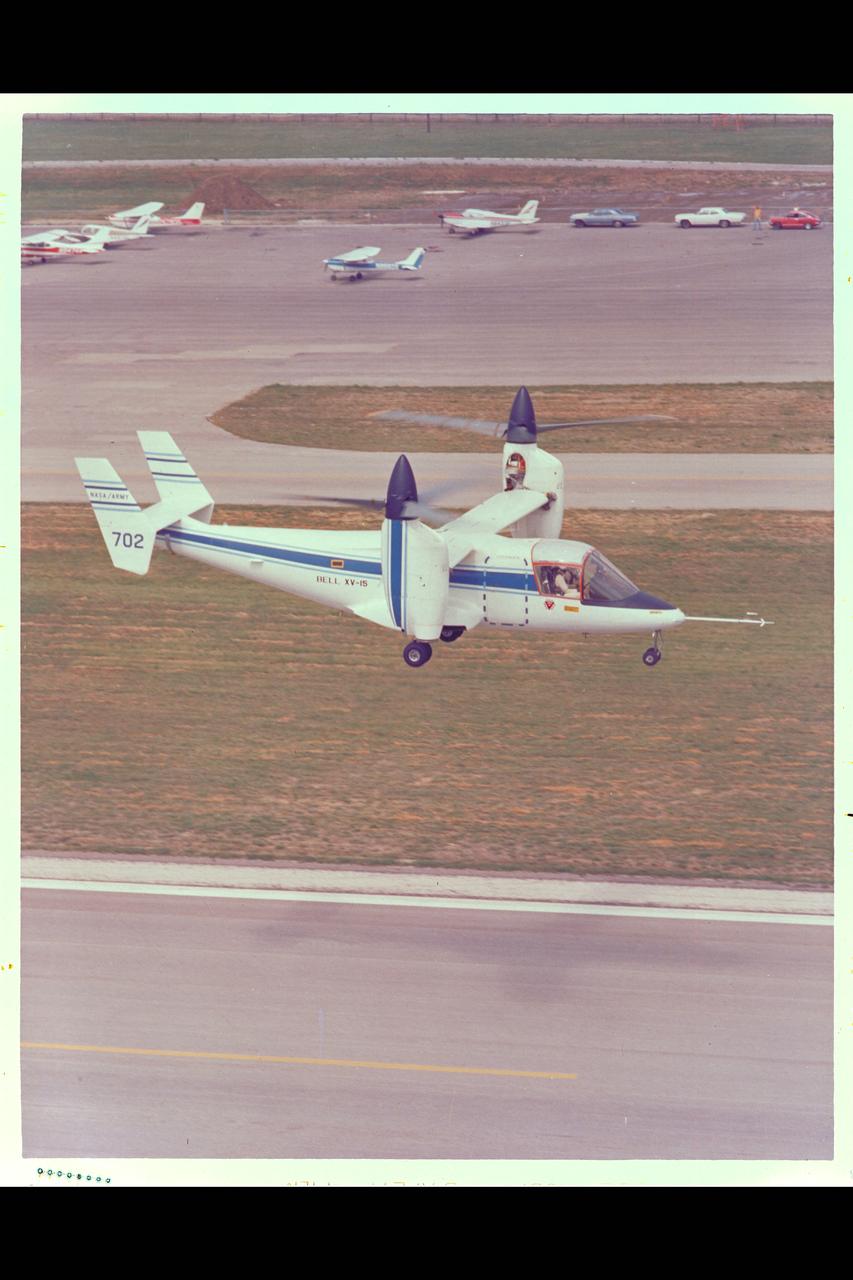
XV-15 Tilt Rotor Aircraft in flight at Bell helicopter
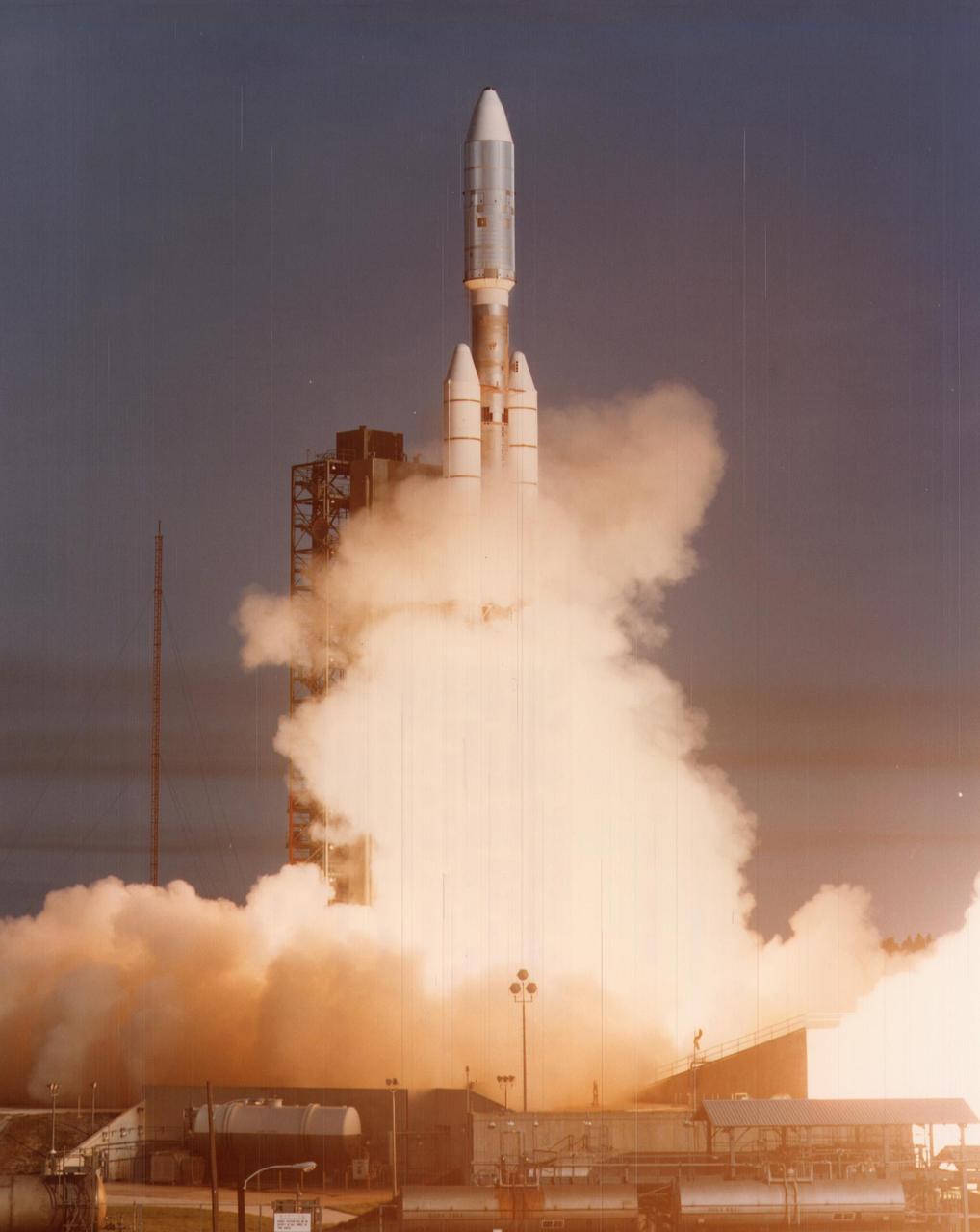
NASA's Voyager 1 spacecraft launched atop its Titan/Centaur-6 launch vehicle from the Kennedy Space Center Launch Complex in Florida on September 5, 1977, at 8:56 a.m. local time. https://photojournal.jpl.nasa.gov/catalog/PIA21747
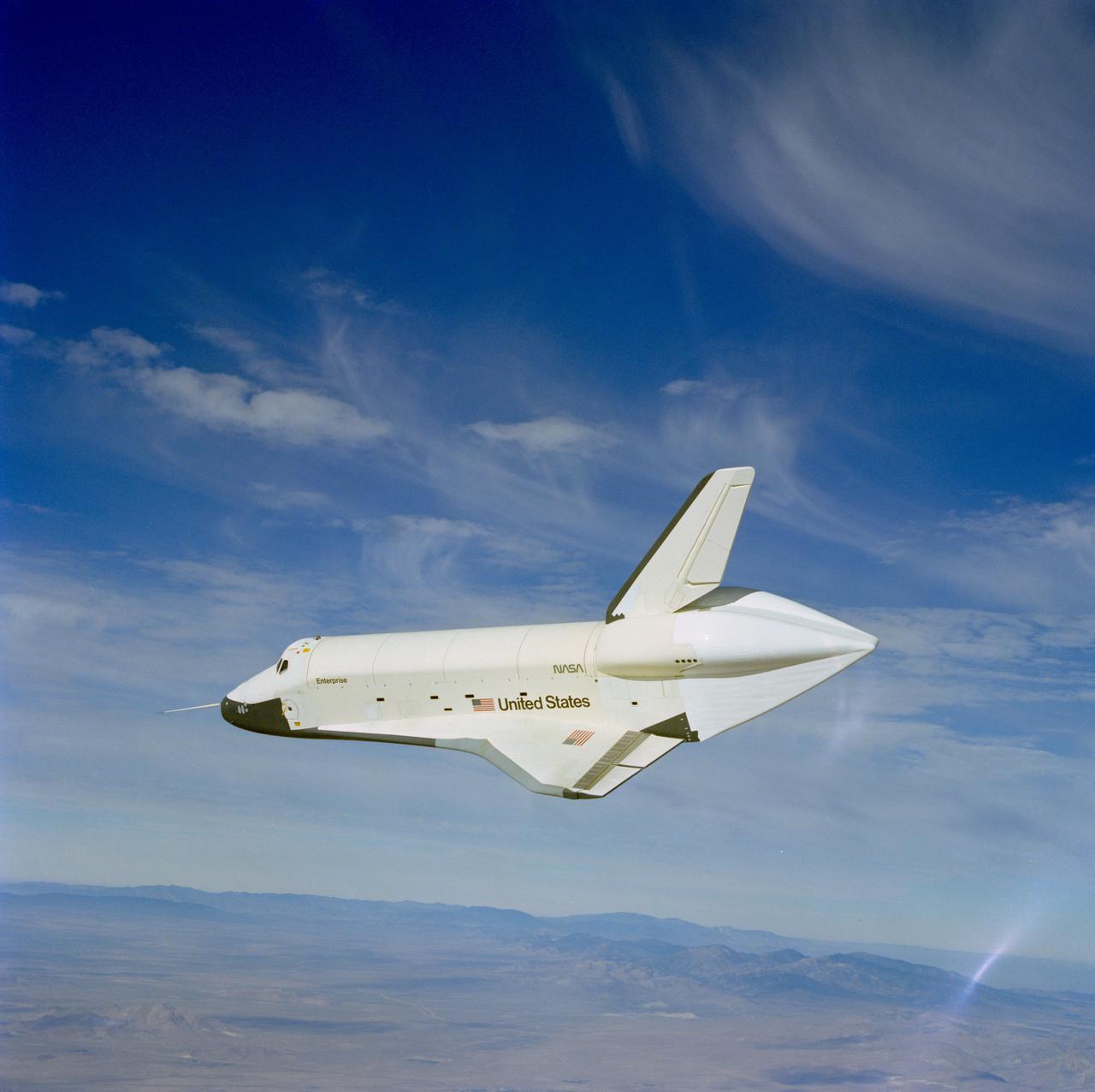
S77-28141 (13 Sept 1977) --- The shuttle Orbiter 101 "Enterprise" makes a slight turn and bank maneuver during the second free flight of the Shuttle Approach and Landing Tests (ALT) conducted on September 13, 1977, at the Dryden Flight Research Center in Southern California. The "Enterprise" separated from the NASA 747 carrier aircraft and landed following a five-minute, 28-second unpowered flight. The Orbiter 101 crew was astronauts Joe H. Engle, commander, and Richard H. Truly, pilot. The ALT free flights are designed to verify orbiter subsonic airworthiness, integrated systems operations and pilot-guided approach and landing capability and satisfy prerequisites to automatic flight control and navigation mode. The orbiter soars above the dry California desert in this post-separation view. Photographer Bill Blunck of JSC's Photographic Technology Laboratory took this picture while riding in T-38 chase plane number two. He used a 70mm Hasselblad camera with an 80mm lens.

S77-28210 (13 Sept 1977) --- Astronauts Joe H. Engle (face down), commander, and Richard H. Truly (face partially obscured by Engle), pilot, are greeted by Rockwell technicians following egress from the shuttle Orbiter 101 "Enterprise." They had just completed a five-minute, 31-second unpowered free flight in the "Enterprise," the second of a series of such flights, conducted on September 13, 1977, at the Dryden Flight Research Center (DFRC) and Edwards Air Force Base.
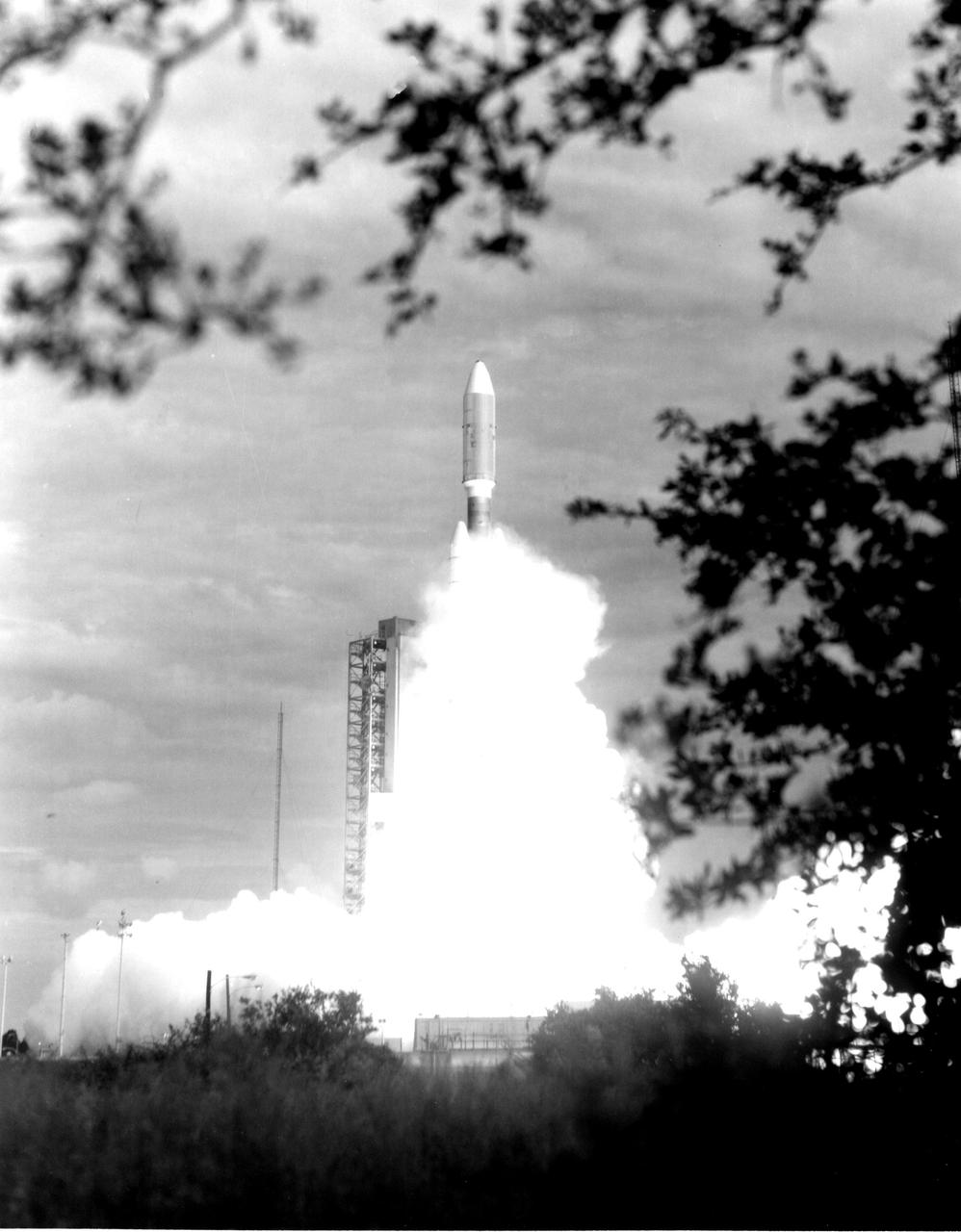
KENNEDY SPACE CENTER, FLA. -- Titan_Centaur-7 lifted off from Complex 41 at Cape Canaveral Air Force Station at 10:29 a.m. EDT today to send an 1,800-pound Voyager spacecraft on an odyssey through the outer planets. A sister spacecraft is to be hurled away from the Sun on a similar journey no earlier than Sept. 1.
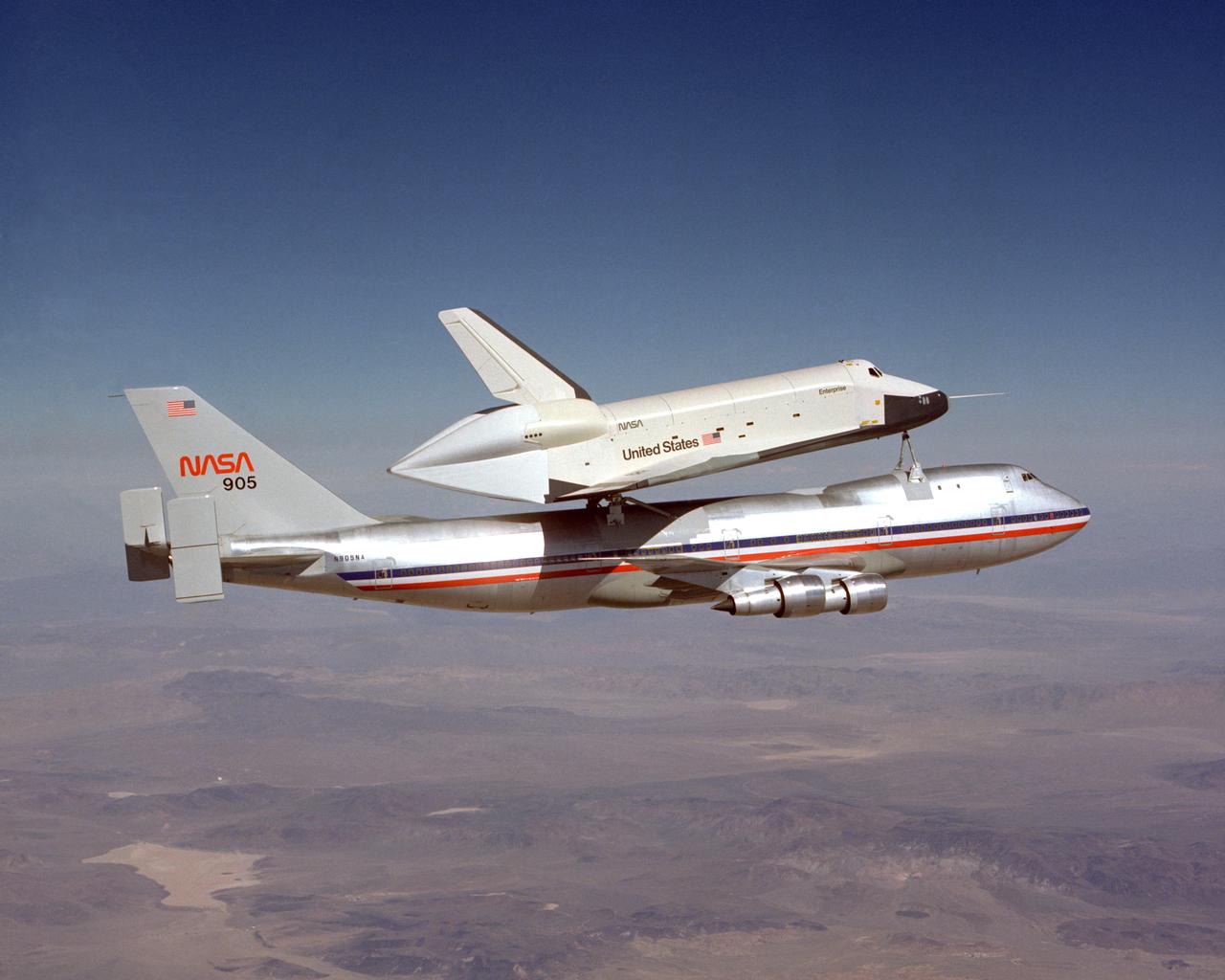
First Shuttle/747 Captive Flight
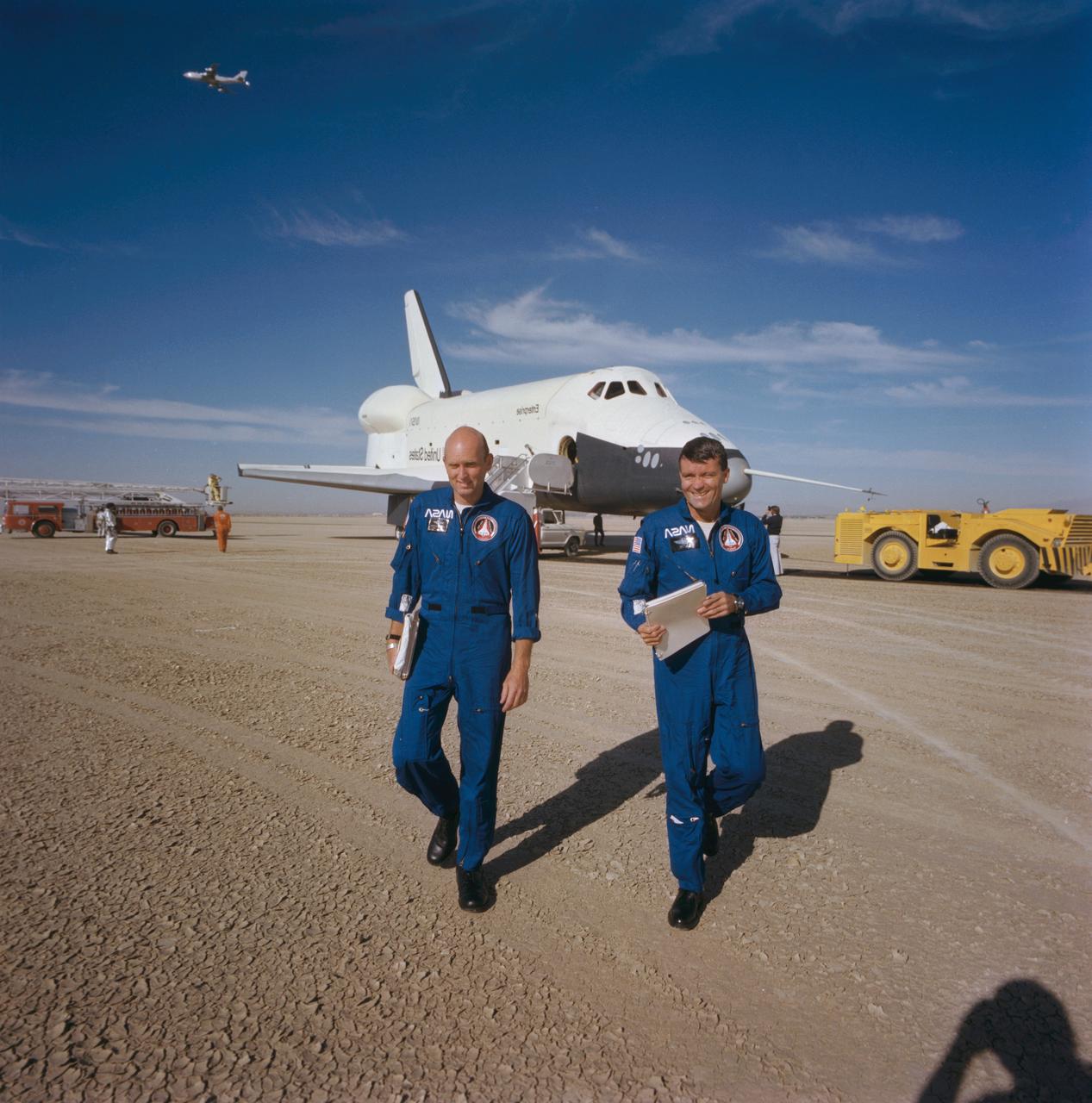
Public Affairs Office (PAO) release print of activity documenting third (3rd) "free flight" of Shuttle Orbiter 101 Spacecraft at DFRC, EAFB, CA. Astronauts Haise (left) and Fullerton in front of parking "Enterprise" just after egress. DFRC, EAFB, CA
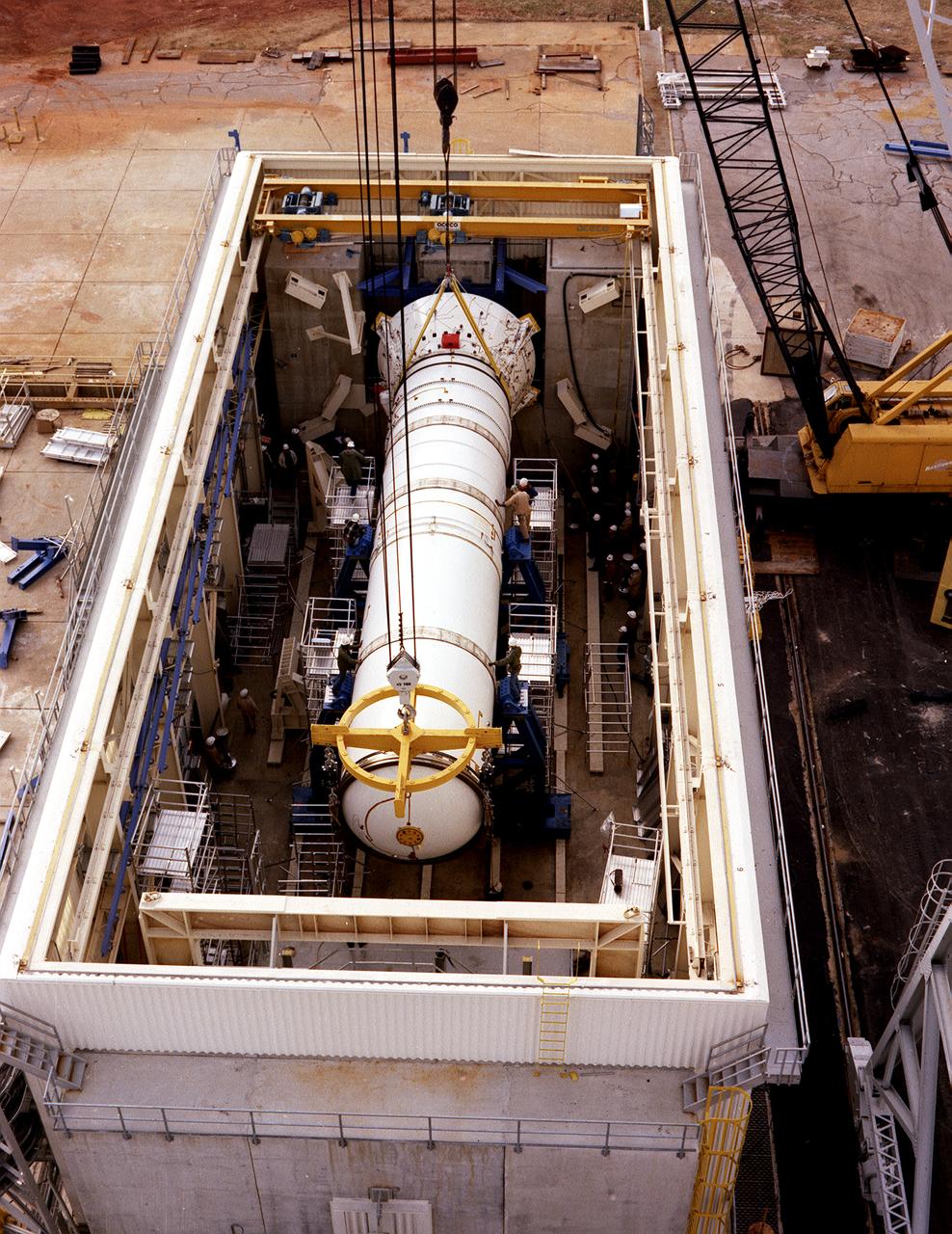
The solid rocket booster (SRB) structural test article is being installed in the Solid Rocket Booster Test Facility for the structural and load verification test at the Marshall Space Flight Center (MSFC). The Shuttle's two SRB's are the largest solids ever built and the first designed for refurbishment and reuse. Standing nearly 150-feet high, the twin boosters provide the majority of thrust for the first two minutes of flight, about 5.8 million pounds, augmenting the Shuttle's main propulsion system during liftoff. The major design drivers for the solid rocket motors (SRM's) were high thrust and reuse. The desired thrust was achieved by using state-of-the-art solid propellant and by using a long cylindrical motor with a specific core design that allows the propellant to burn in a carefully controlled marner. At burnout, the boosters separate from the external tank and drop by parachute to the ocean for recovery and subsequent refurbishment.

NASA's Voyager 2 spacecraft launched atop its Titan/Centaur-7 launch vehicle from Cape Canaveral Air Force Station in Florida on August 20, 1977, at 10:29 a.m. local time. https://photojournal.jpl.nasa.gov/catalog/PIA21744
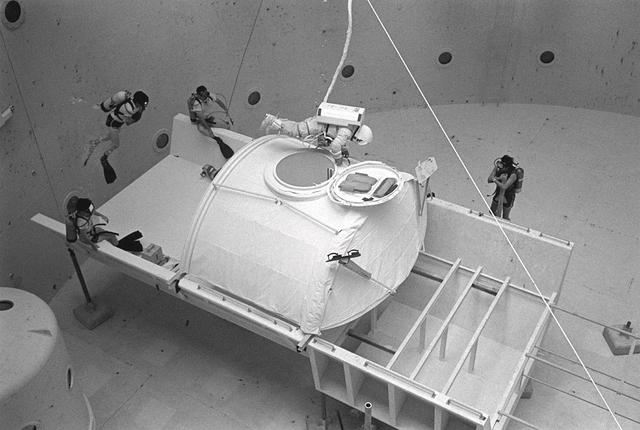
Once the United States' space program had progressed from Earth's orbit into outerspace, the prospect of building and maintaining a permanent presence in space was realized. To accomplish this feat, NASA launched a temporary workstation, Skylab, to discover the effects of low gravity and weightlessness on the human body, and also to develop tools and equipment that would be needed in the future to build and maintain a more permanent space station. The structures, techniques, and work schedules had to be carefully designed to fit this unique construction site. The components had to be lightweight for transport into orbit, yet durable. The station also had to be made with removable parts for easy servicing and repairs by astronauts. All of the tools necessary for service and repairs had to be designed for easy manipulation by a suited astronaut. Construction methods had to be efficient due to the limited time the astronauts could remain outside their controlled environment. In lieu of all the specific needs for this project, an environment on Earth had to be developed that could simulate a low gravity atmosphere. A Neutral Buoyancy Simulator (NBS) was constructed by NASA Marshall Space Flight Center (MSFC) in 1968. Since then, NASA scientists have used this facility to understand how humans work best in low gravity and also provide information about the different kinds of structures that can be built. With the help of the NBS, building a space station became more of a reality. Pictured is Astronaut Paul Weitz training on a mock-up of Spacelab's airlock-hatch cover. Training was also done on the use of foot restraints which had recently been developed to help astronauts maintain their positions during space walks rather than having their feet float out from underneath them while they tried to perform maintenance and repair operations. Every aspect of every space mission was researched and demonstrated in the NBS. Using the airlock hatch cover and foot restraints were just a small example of the preparation that went into each mission.
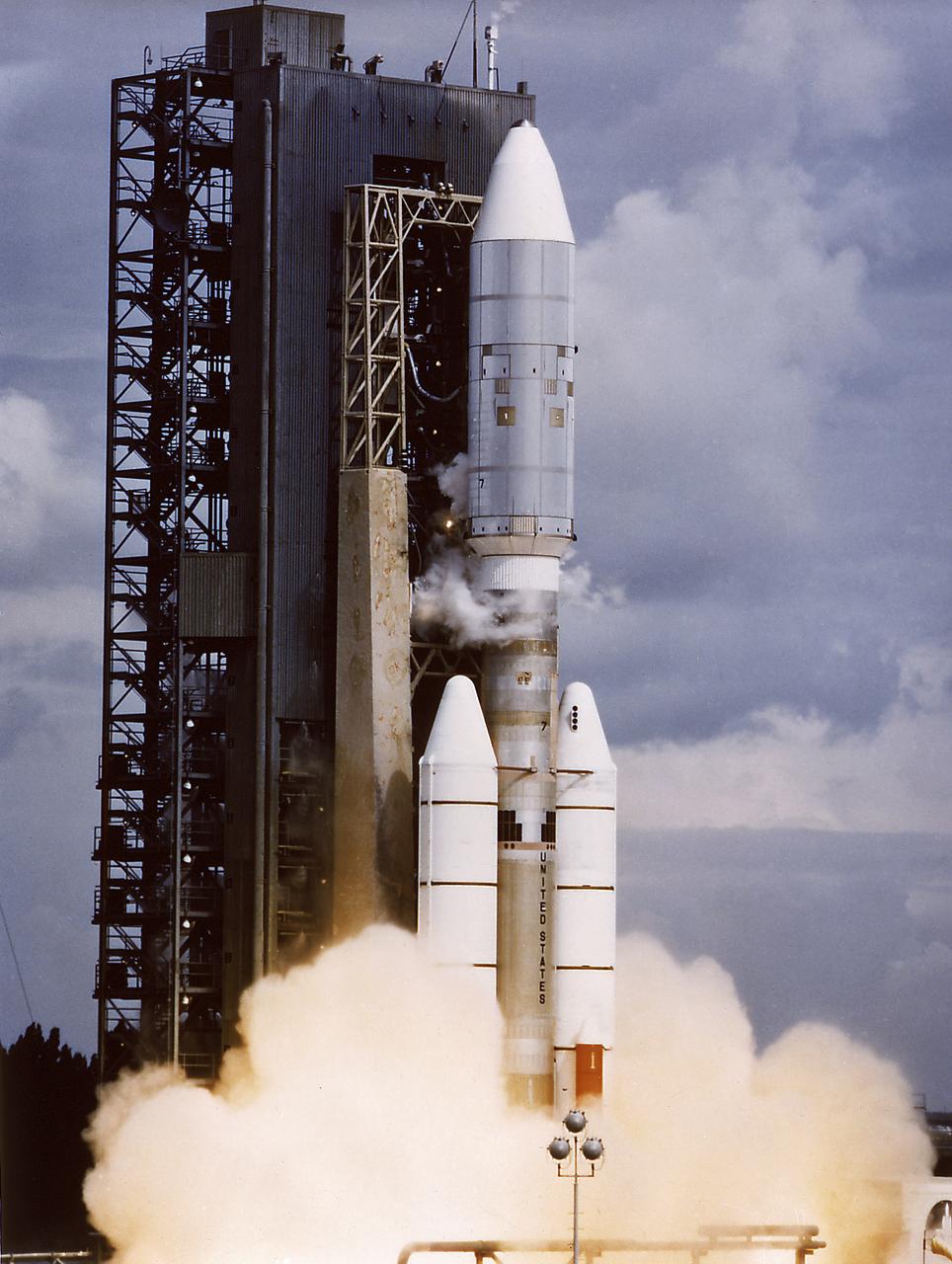
The Voyager 2 aboard Titan III-Centaur launch vehicle lifted off on August 20, 1977. The Voyager 2 was a scientific satellite to study the Jupiter and the Saturn planetary systems including their satellites and Saturn's rings.
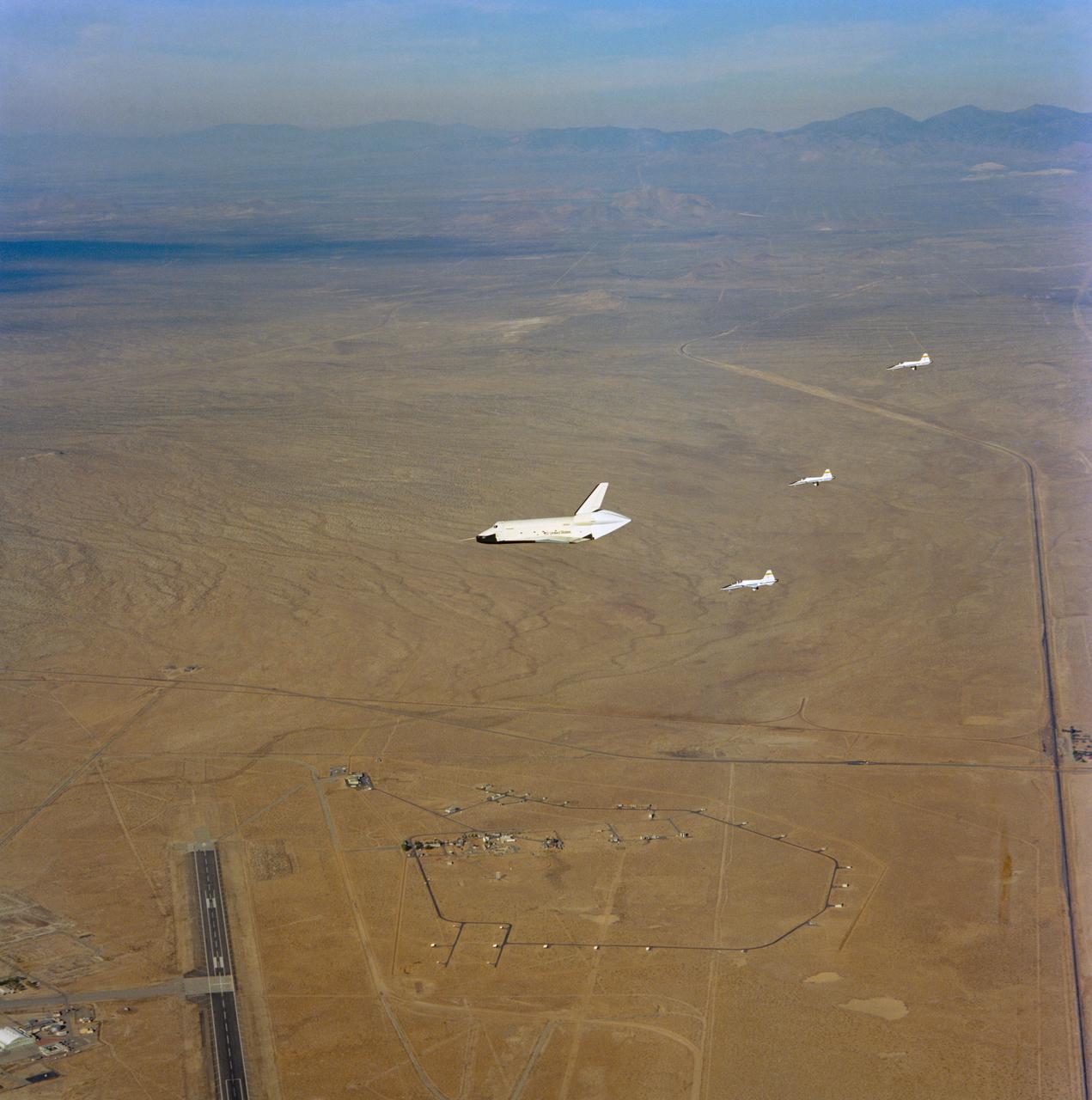
S77-28667 (23 Sept 1977) --- The shuttle Orbiter 101 "Enterprise" soars above the North Base area of Edwards Air Force Base during its five-minute, 34-second unpowered flight, the third of a series of manned Shuttle Approach and Landing Tests (ALT). Moments earlier the "Enterprise" had separated from its 747 carrier aircraft, atop which it sat upon takeoff from the Dryden Flight Research Center (DFRC), with its crew of astronauts Fred W. Haise Jr., commander, and C. Gordon Fullerton, pilot. Three T-38 chase planes follow. This photograph was taken from a fourth T-38 chase plane.
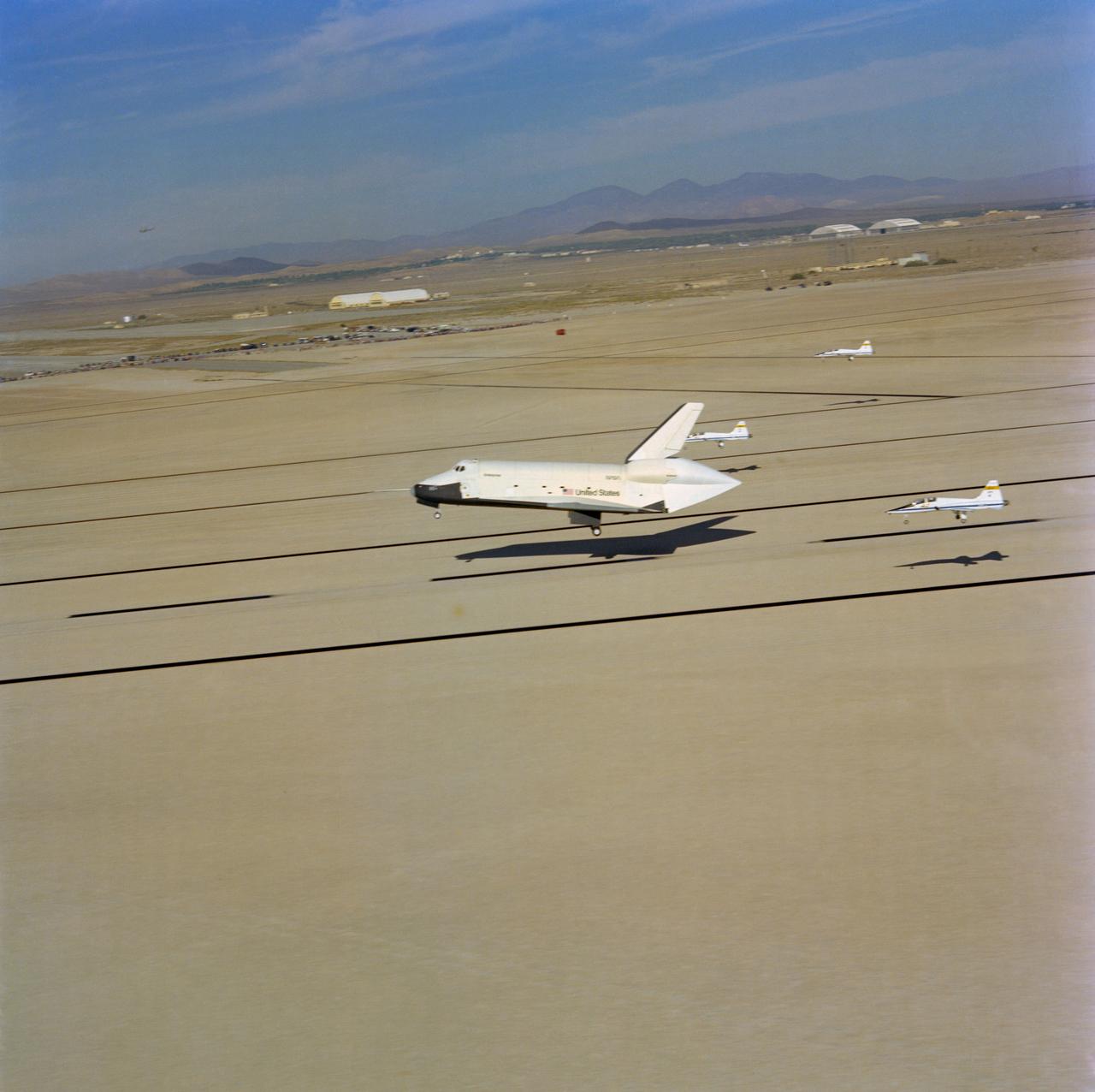
S77-28540 (23 Sept 1977) --- The shuttle Orbiter 101 "Enterprise" approaches touchdown on the runway at Edwards Air Force Base to conclude a five-minute, 34-second unpowered flight, the third of Shuttle Approach and Landing Tests (ALT) series, on September 23, 1977. Thress T-38 chase planes follow close by. Astronauts Fred W. Haise Jr., commander, and C. Gordon Fullerton, pilot, were the crew aboard the "Enterprise" for this flight.
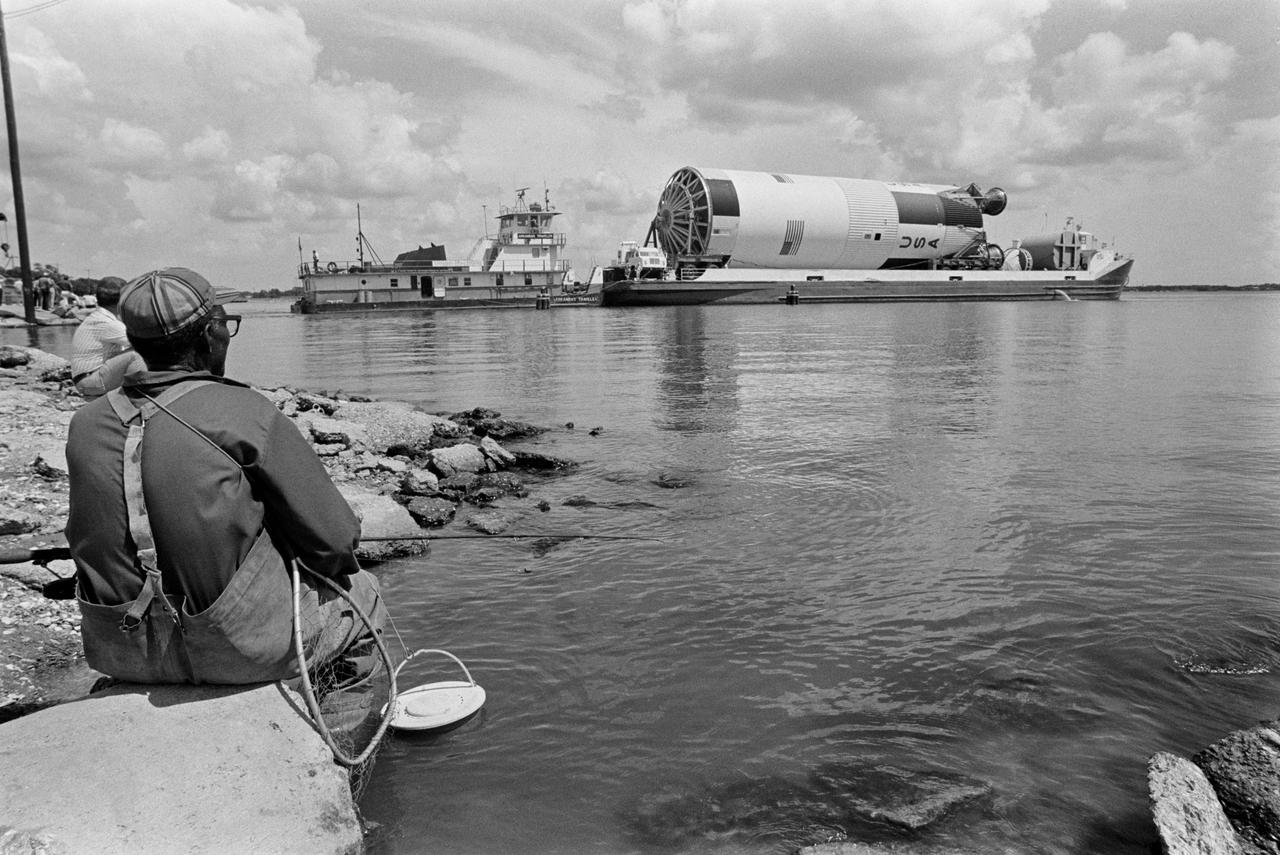
Views documenting the arrival of the Saturn V first stage at the Clear Lake dock near JSC after being transported via barge from Michoud Facility to be put on exhibit at JSC near Building 14. Barge approach with fisherman and others onshore watching. Houston, TX
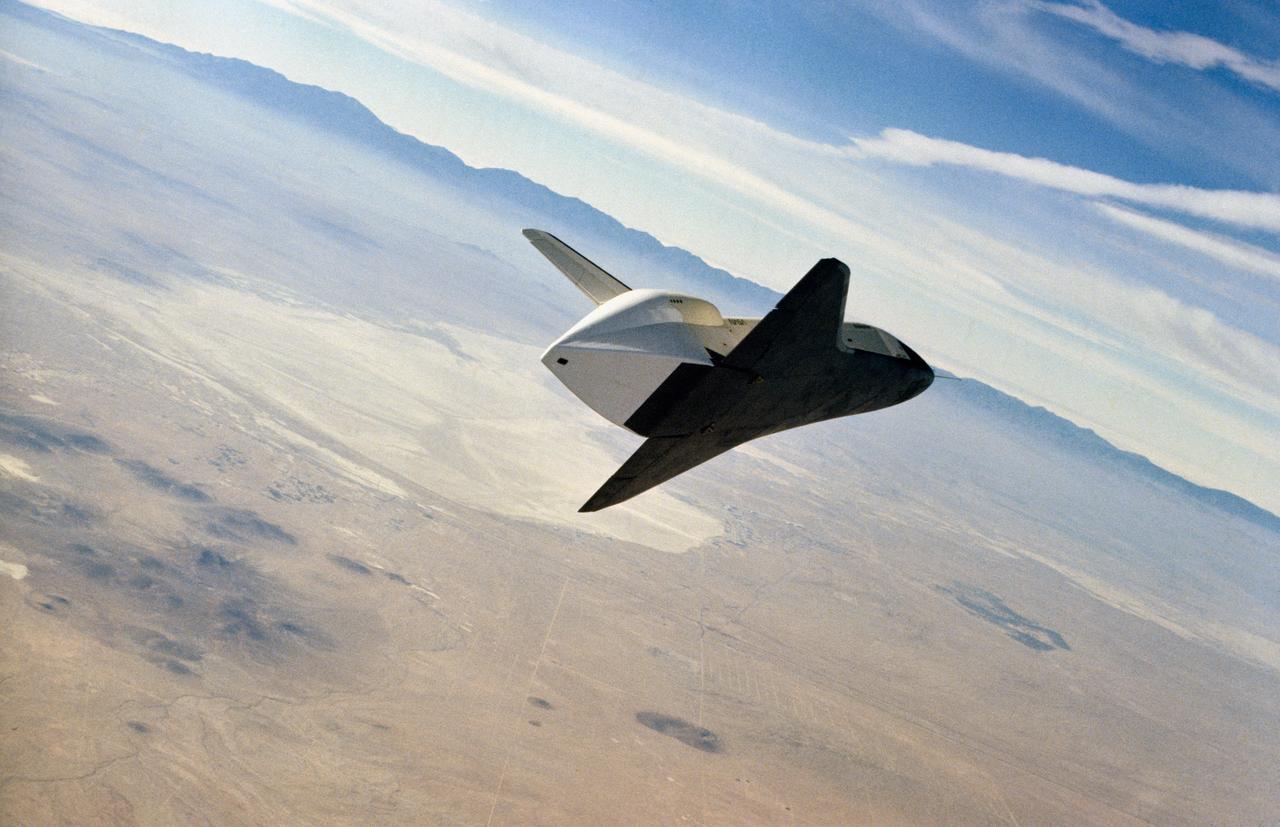
S77-28138 (13 Sept 1977) --- The shuttle Orbiter 101 "Enterprise" makes a slight turn and bank maneuver during the second free flight of the Shuttle Approach and Landing Tests (ALT) conducted on September 13, 1977, at the Dryden Flight Research Center in Southern California. The "Enterprise" separated from the NASA 747 carrier aircraft and landed following a five-minute, 28-second unpowered flight. The Orbiter 101 crew was astronauts Joe H. Engle, commander, and Richard H. Truly, pilot. The ALT free flights are designed to verify orbiter subsonic airworthiness, integrated systems operations and pilot-guided approach and landing capability and satisfy prerequisites to automatic flight control and navigation mode. The orbiter soars above the dry California desert in this post-separation view. Astronaut C. Gordon Fullerton took this picture while riding in T-38 chase plane number one. He used a 35mm Nikon camera with a 50mm lens.
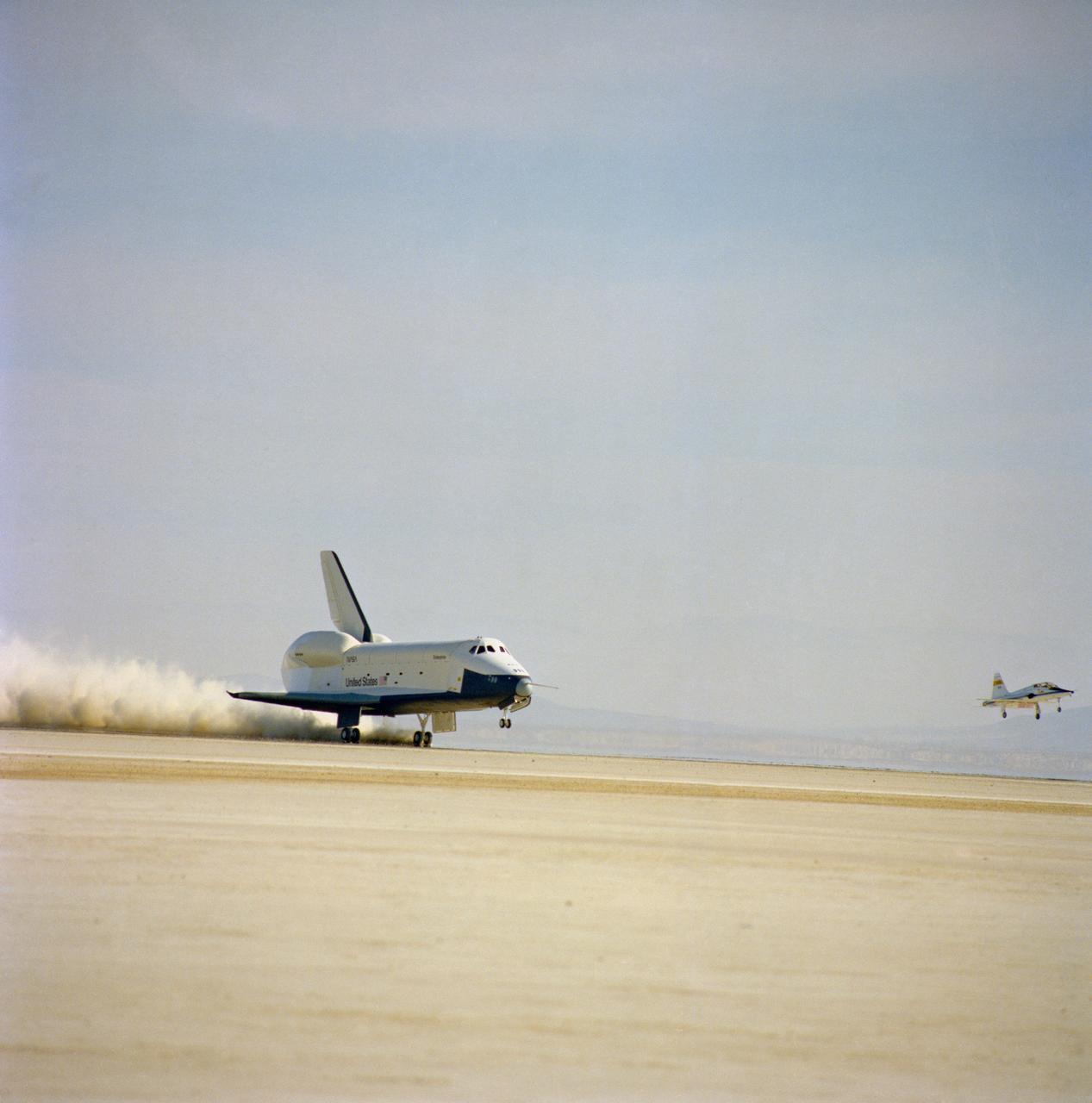
S77-28144 (13 Sept 1977) --- The shuttle orbiter 101 "Enterprise" stirs up a cloud of desert sand and dust as it lands to conclude a five-minute, 28-second unpowered flight during the second free flight of the Shuttle Approach and Landing Tests (ALT) conduced on September 13, 1977 at the Dryden Flight Research Center in Southern California. The Orbiter 101 crew astronauts Joe H. Engle, commander, and Richard H. Truly, pilot. The ALT free flights are designed to verify orbiter subsonic airworthiness, integrated systems operations and pilot-guided approach and landing capability and satisfy prerequisites to automatic flight control and navigation mode. On the right a T-38 chase plane comes in for a landing, also. This picture was taken with an Air Force Test Center 70mm Hasselblad camera installed on a tracking mount parked on the lake bed.
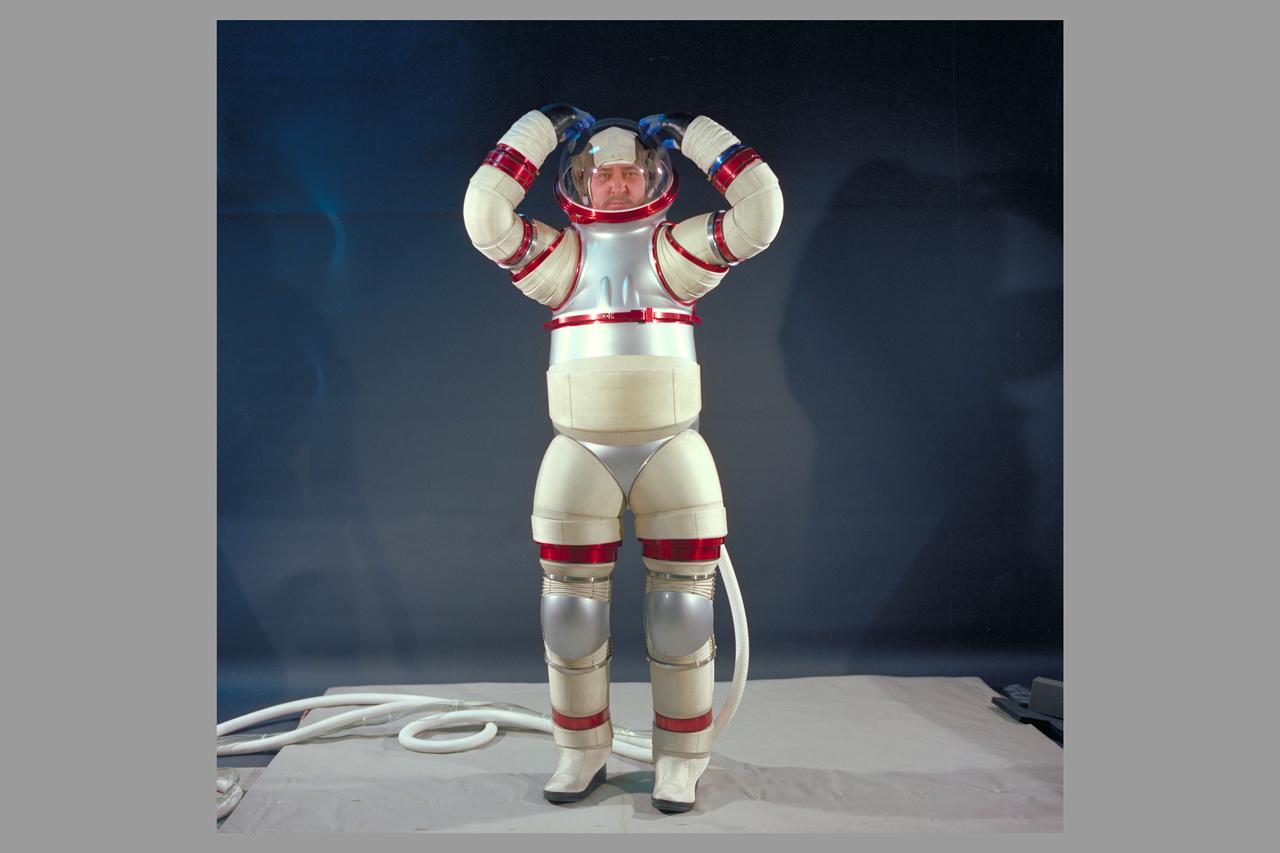
Vic Vykukal model the Ames developed AX-3 Hard Space Suit
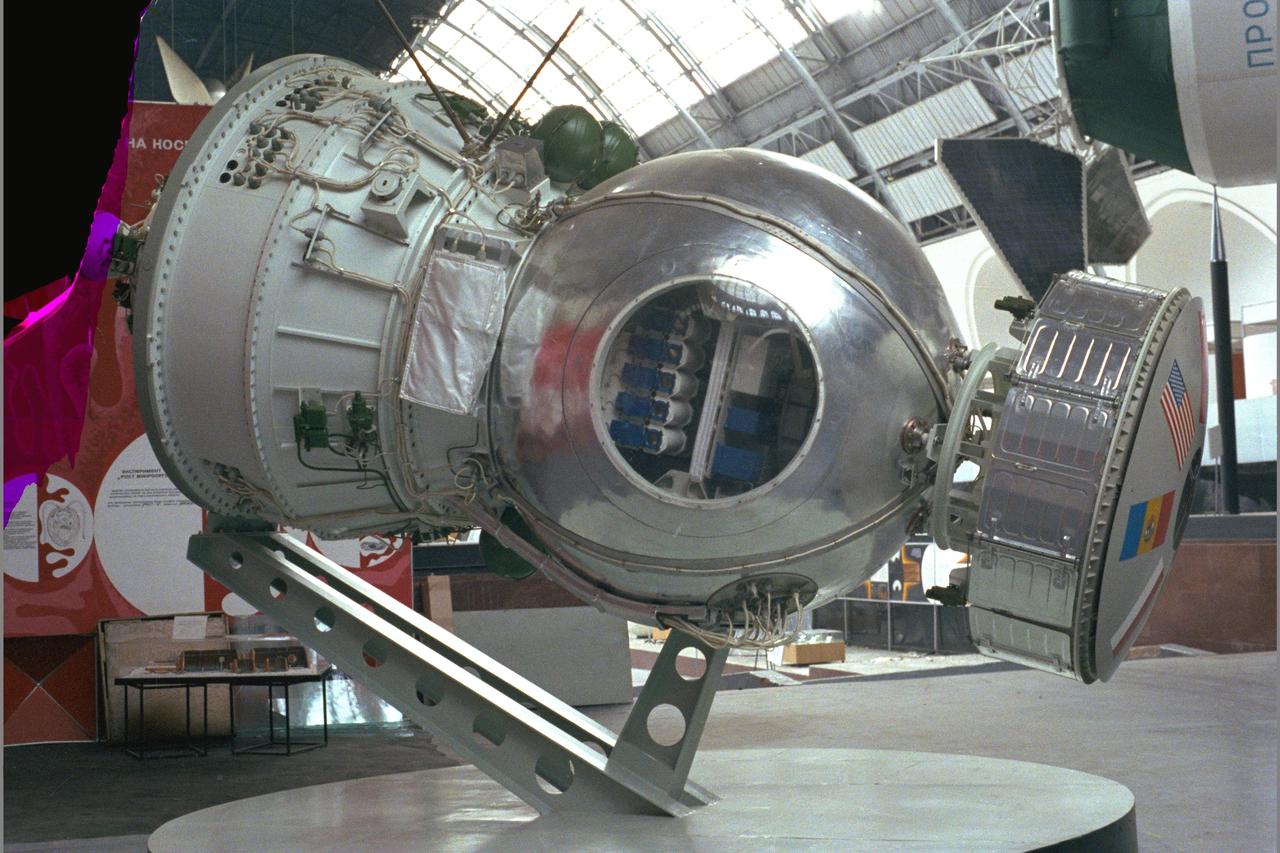
Soviet COSMOS unmanned biosatellite