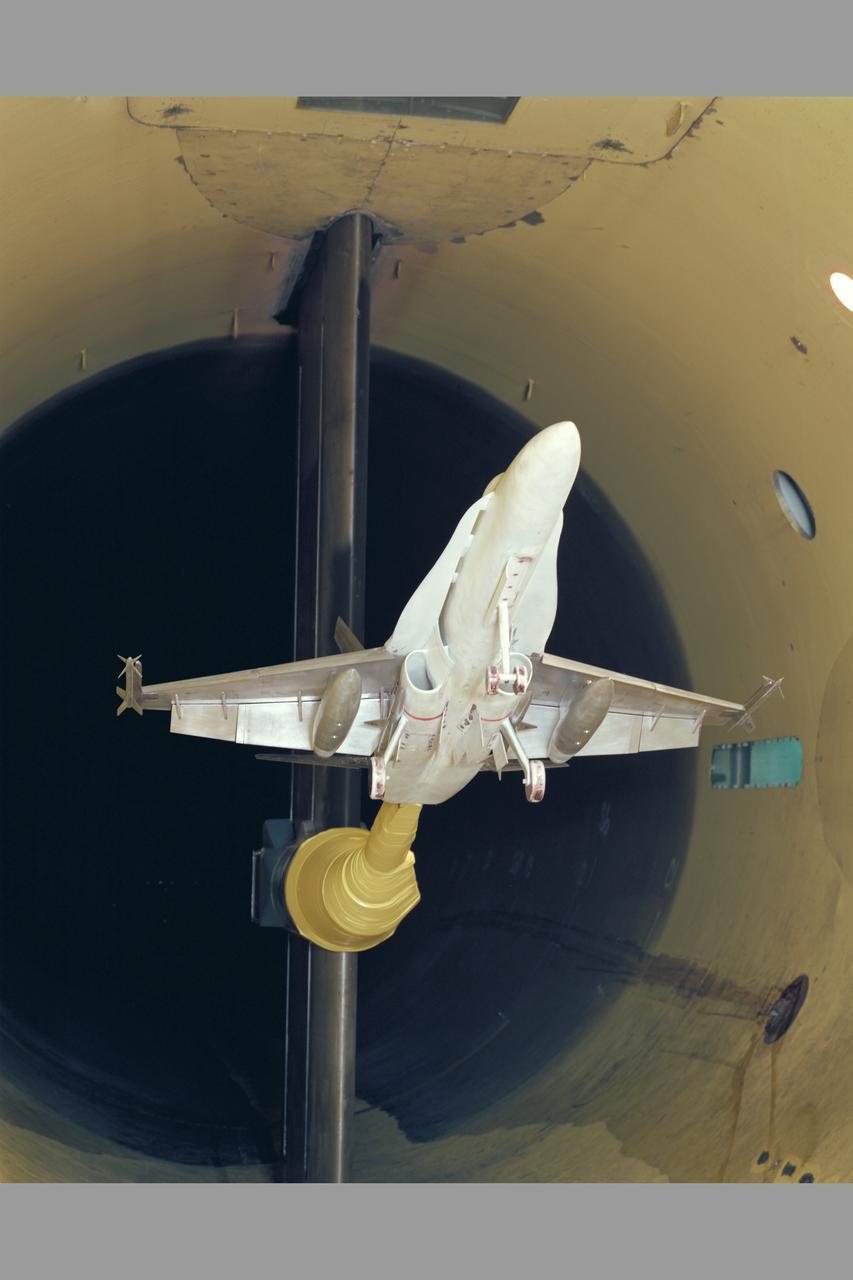
F-18 (12 Scale Model) 12 Foot Wind Tunnel Test-287
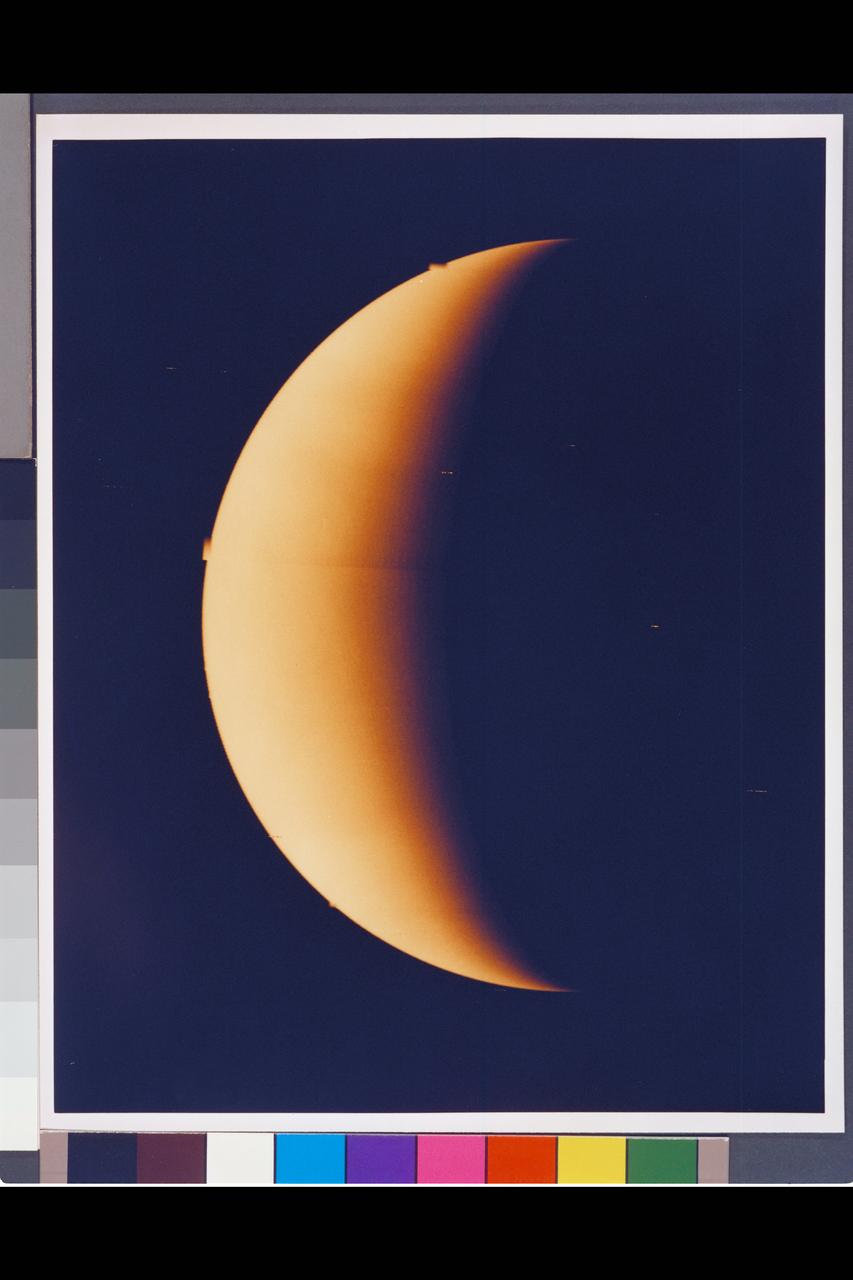
Pioneer-Venus Image (Crescent)
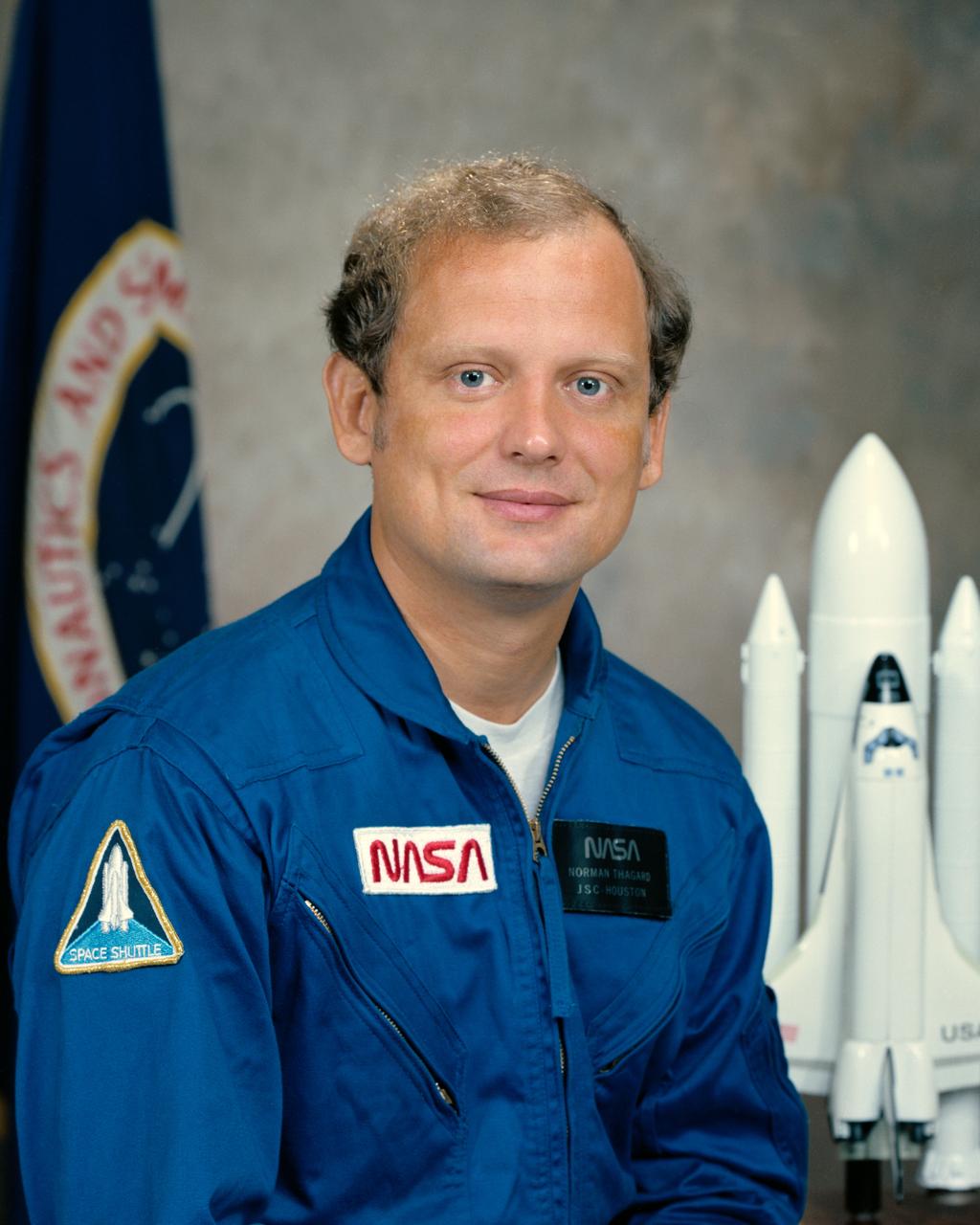
S78-35299 (July 1978) --- Astronaut Norman E. Thagard.
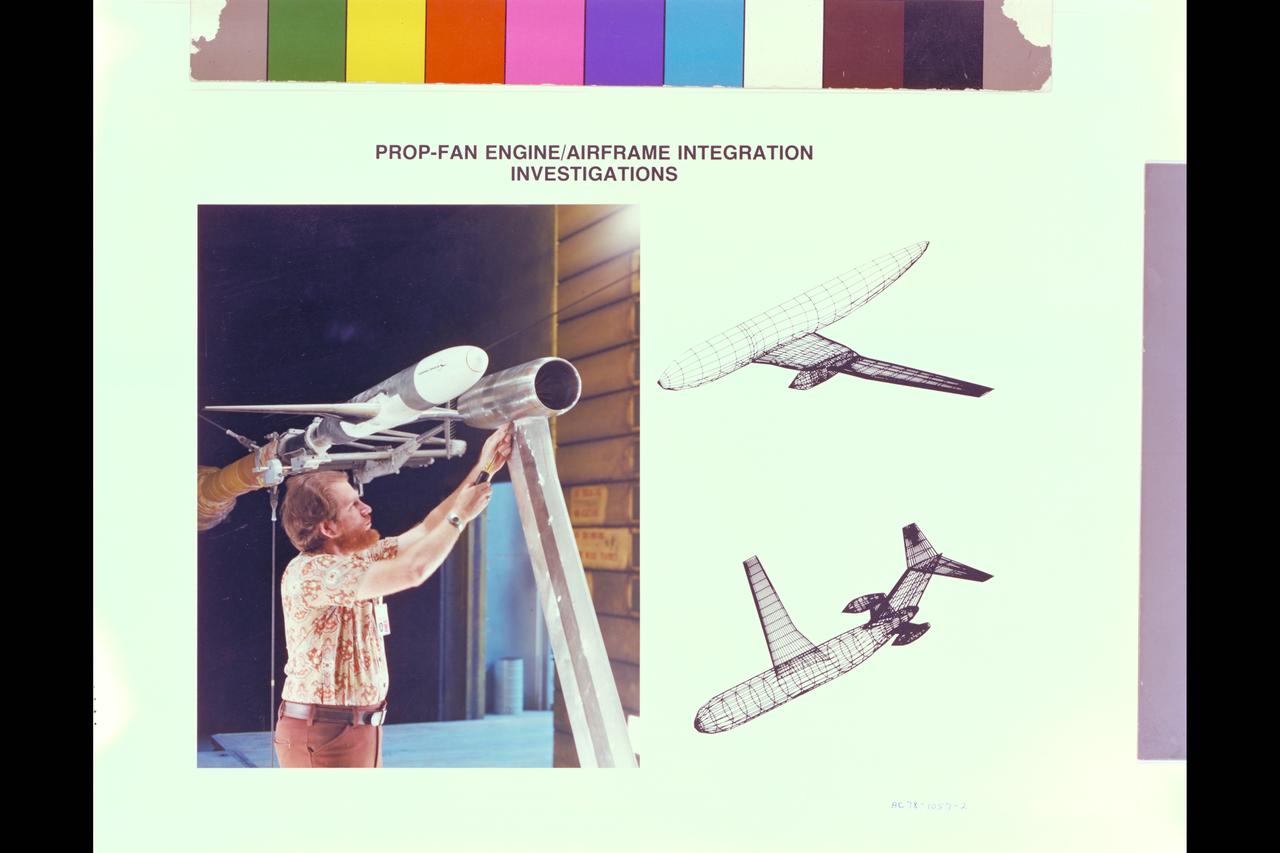
Illustration Future Prop-Fan airraft Studies (DC-9): Prop-Fan engine - airframe integration investigations and computation and wind tunnel tests
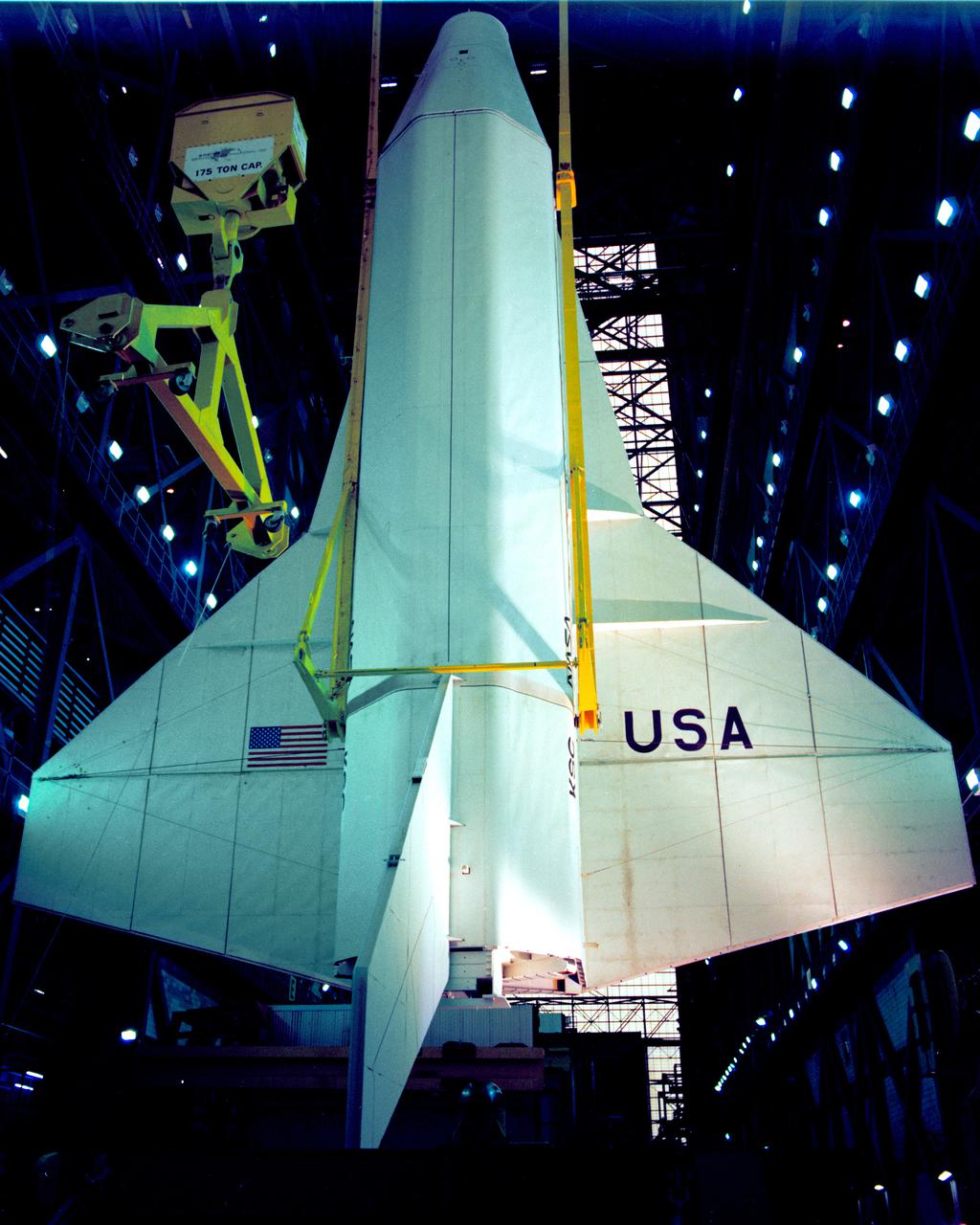
CAPE CANAVERAL, Fla. – At NASA's Kennedy Space Center in Florida, the space shuttle mock-up, dubbed Pathfinder, undergoes a lift test in the Vehicle Assembly Building on May 31, 1978. The mock-up, constructed at NASA's Marshall Space Flight Center in Huntsville, Ala., possessed the general dimensions, weight and balance of a real space shuttle. It was shipped to Kennedy by barge and then used to fit-check the work platforms of the Mate-Demate Device, orbiter processing facilities and Vehicle Assembly Building, as well as support ground crew training. It also was used to rehearse post-landing procedures at Kennedy's Shuttle Landing Facility. After being on display at the 'Great Space Shuttle Exposition' in Tokyo from June 1983 to August 1984, the mock-up returned to Marshall and now is on permanent display at the U.S. Space and Rocket Center near Huntsville. Photo credit: NASA
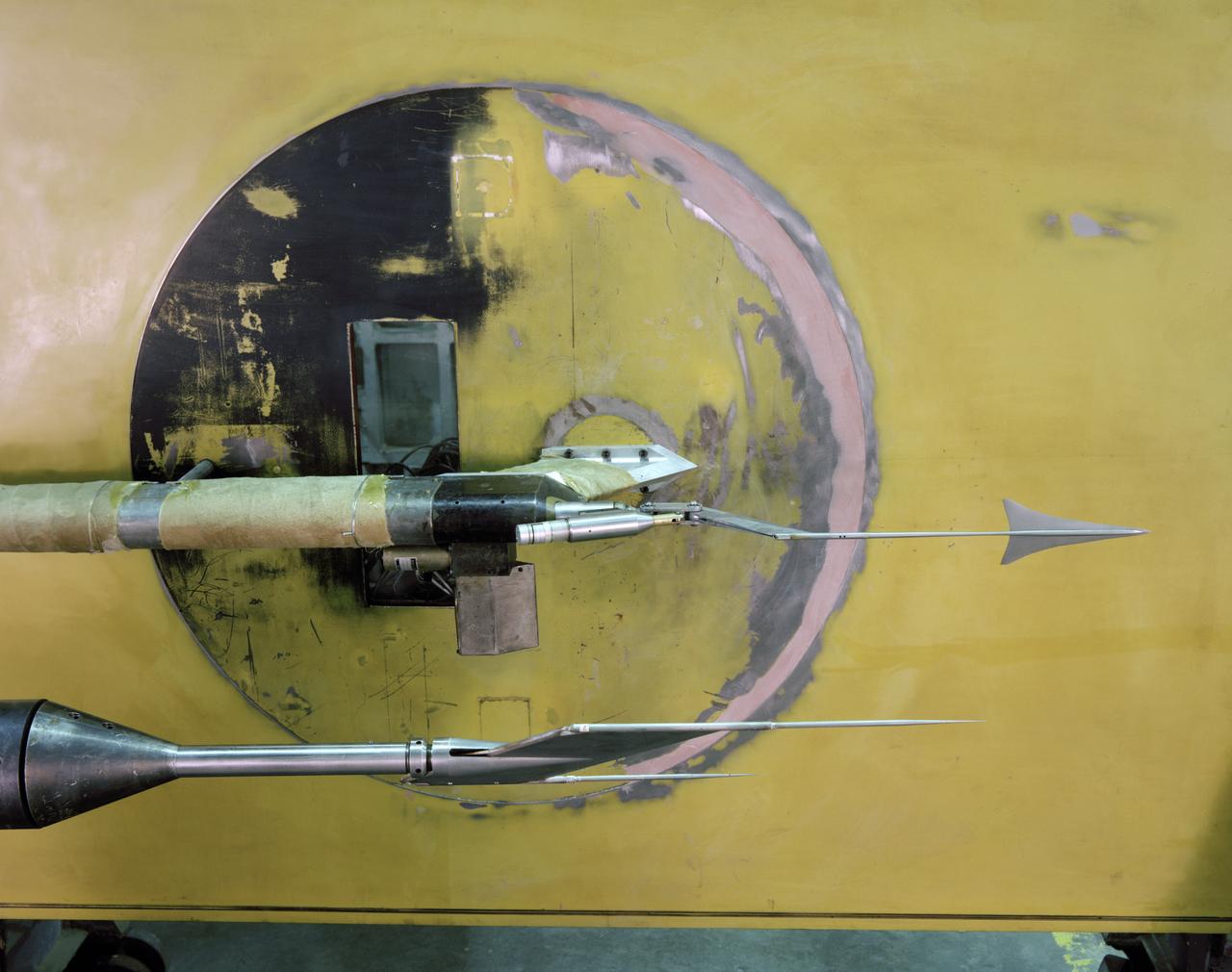
Sonic boom test models
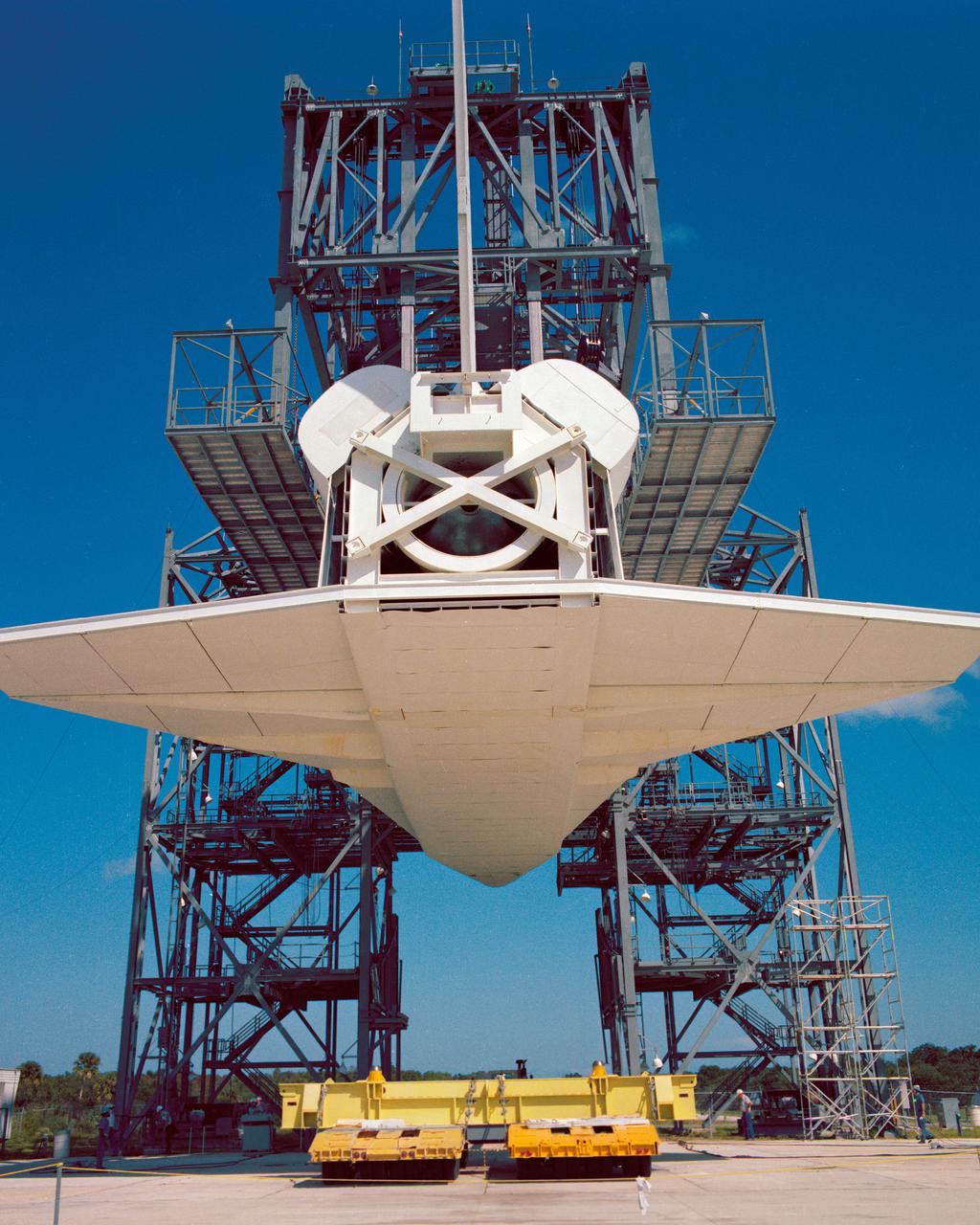
CAPE CANAVERAL, Fla. – At NASA's Kennedy Space Center in Florida, the space shuttle mock-up, dubbed Pathfinder, is attached to the Mate-Demate Device for at fit-check Oct. 19, 1978. The mock-up, constructed at NASA's Marshall Space Flight Center in Huntsville, Ala., possessed the general dimensions, weight and balance of a real space shuttle. It was shipped to Kennedy by barge and then used to fit-check the work platforms of the Mate-Demate Device, orbiter processing facilities and Vehicle Assembly Building, as well as support ground crew training. It also was used to rehearse post-landing procedures at Kennedy's Shuttle Landing Facility. After being on display at the 'Great Space Shuttle Exposition' in Tokyo from June 1983 to August 1984, the mock-up returned to Marshall and now is on permanent display at the U.S. Space and Rocket Center near Huntsville. Photo credit: NASA
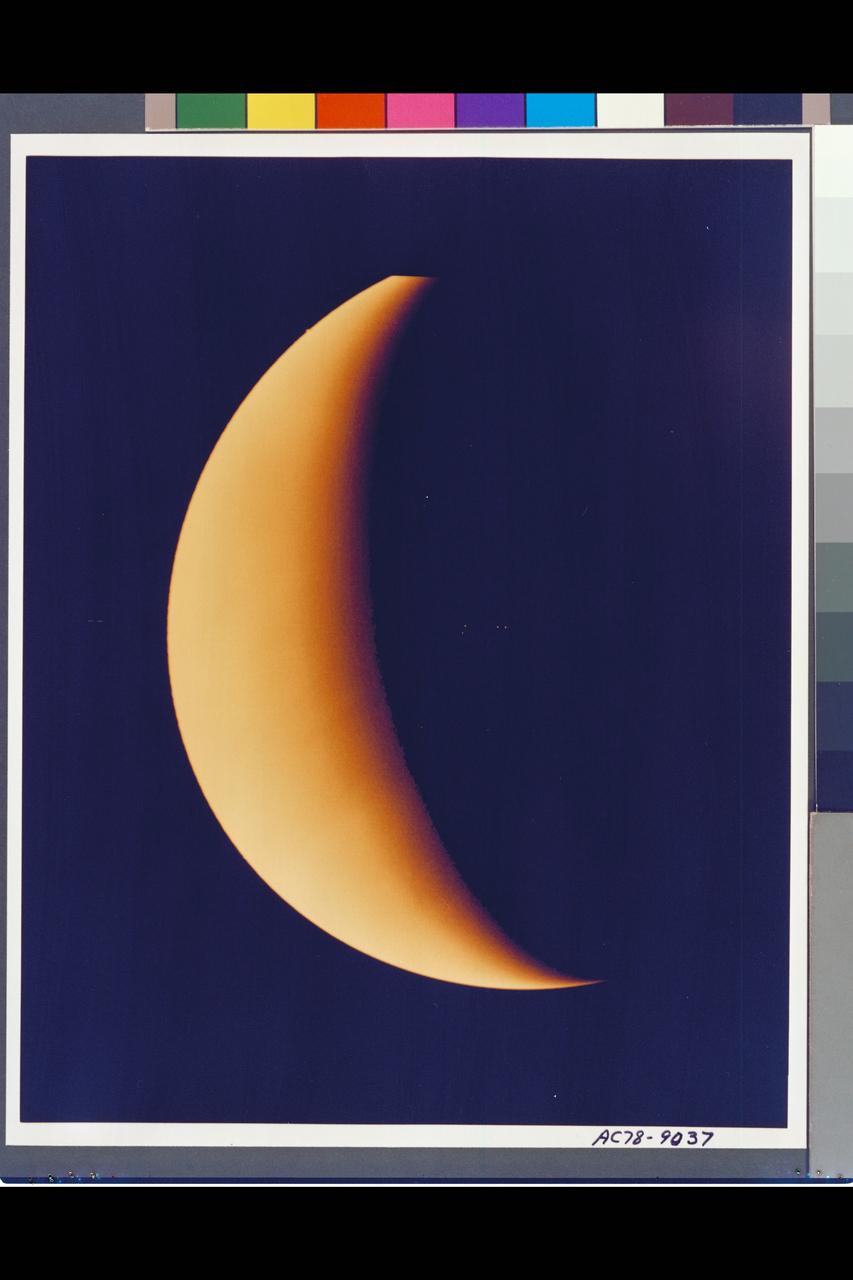
Pioneer-Venus Press Release (Ocpp. Image #2)
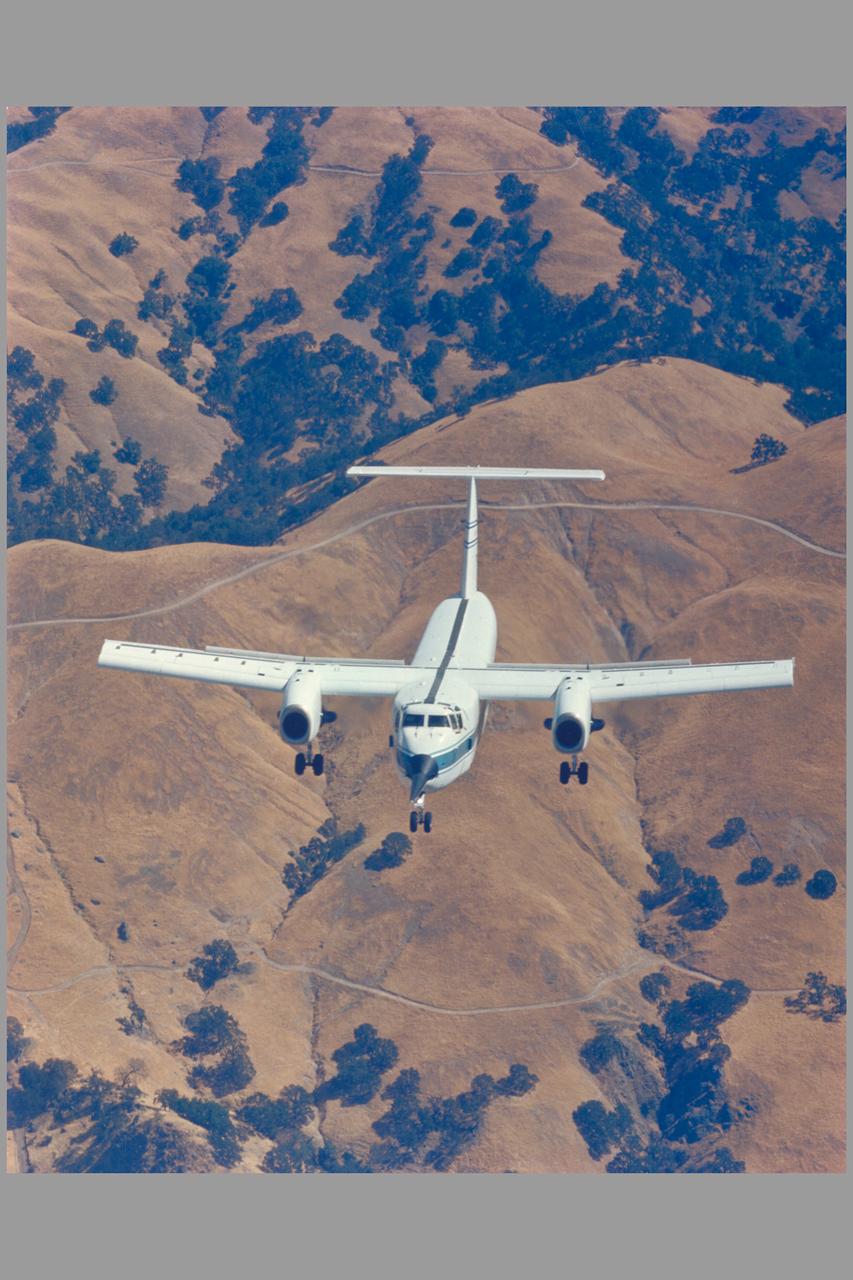
Air to air of the C-8A (NASA 716). Air to air of the C-8A (NASA 716)

S78-35298 (20 Sept 1978) Astronaut Richard O. Covey, 1978 ASCAN.
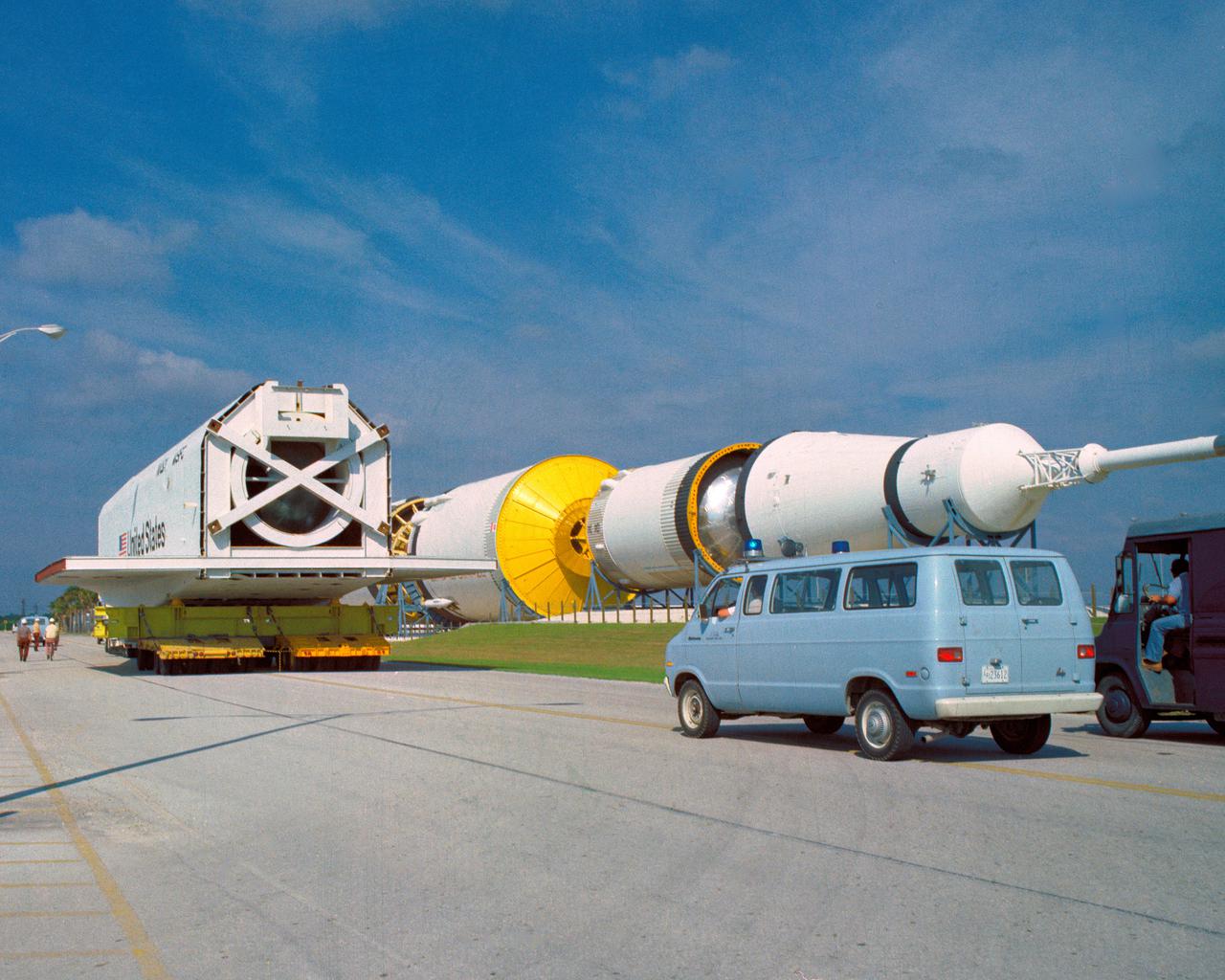
CAPE CANAVERAL, Fla. – At NASA's Kennedy Space Center in Florida, the space shuttle mock-up, dubbed Pathfinder, makes its trek from the turn basin to the Vehicle Assembly Building on April 5, 1978. The mock-up, constructed at NASA's Marshall Space Flight Center in Huntsville, Ala., possessed the general dimensions, weight and balance of a real space shuttle. It was shipped to Kennedy by barge and then used to fit-check the work platforms of the Mate-Demate Device, orbiter processing facilities and Vehicle Assembly Building, as well as support ground crew training. It also was used to rehearse post-landing procedures at Kennedy's Shuttle Landing Facility. After being on display at the 'Great Space Shuttle Exposition' in Tokyo from June 1983 to August 1984, the mock-up returned to Marshall and now is on permanent display at the U.S. Space and Rocket Center near Huntsville. Photo credit: NASA
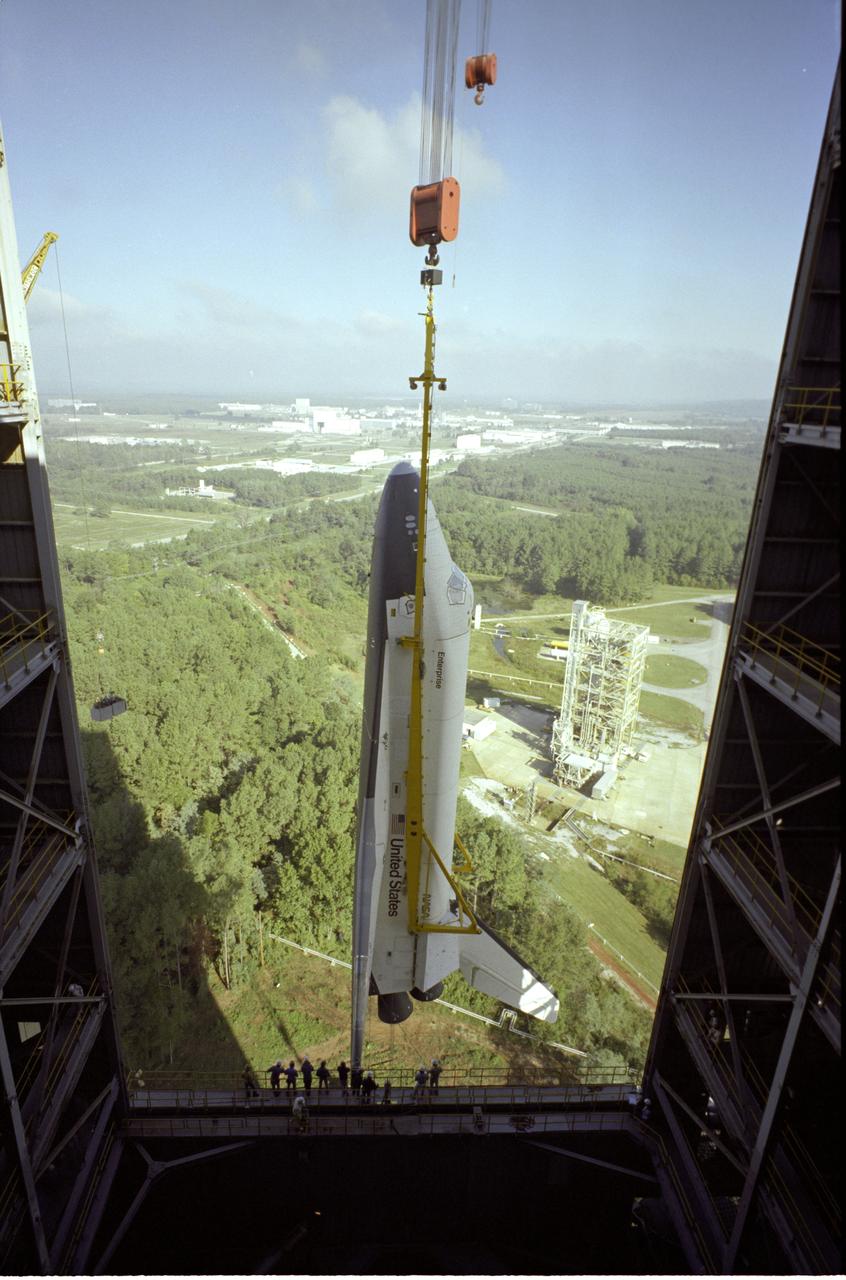
The Shuttle Orbiter Enterprise is being installed into liftoff configuration at Marshall Space Flight Center's Dynamic Test Stand for Mated Vertical Ground Vibration tests (MVGVT). The tests marked the first time ever that the entire shuttle complement (including Orbiter, external tank, and solid rocket boosters) were mated vertically.
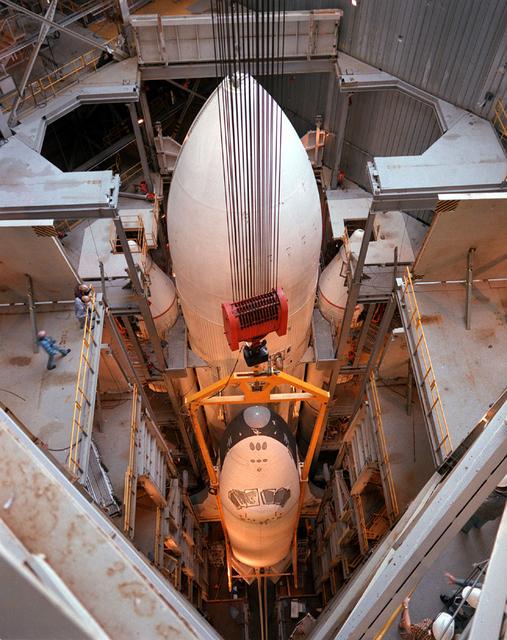
The Shuttle Orbiter Enterprise inside of Marshall Space Flight Center's Dynamic Test Stand for Mated Vertical Ground Vibration tests (MVGVT). The tests marked the first time ever that the entire shuttle complement including Orbiter, external tank, and solid rocket boosters were vertically mated.
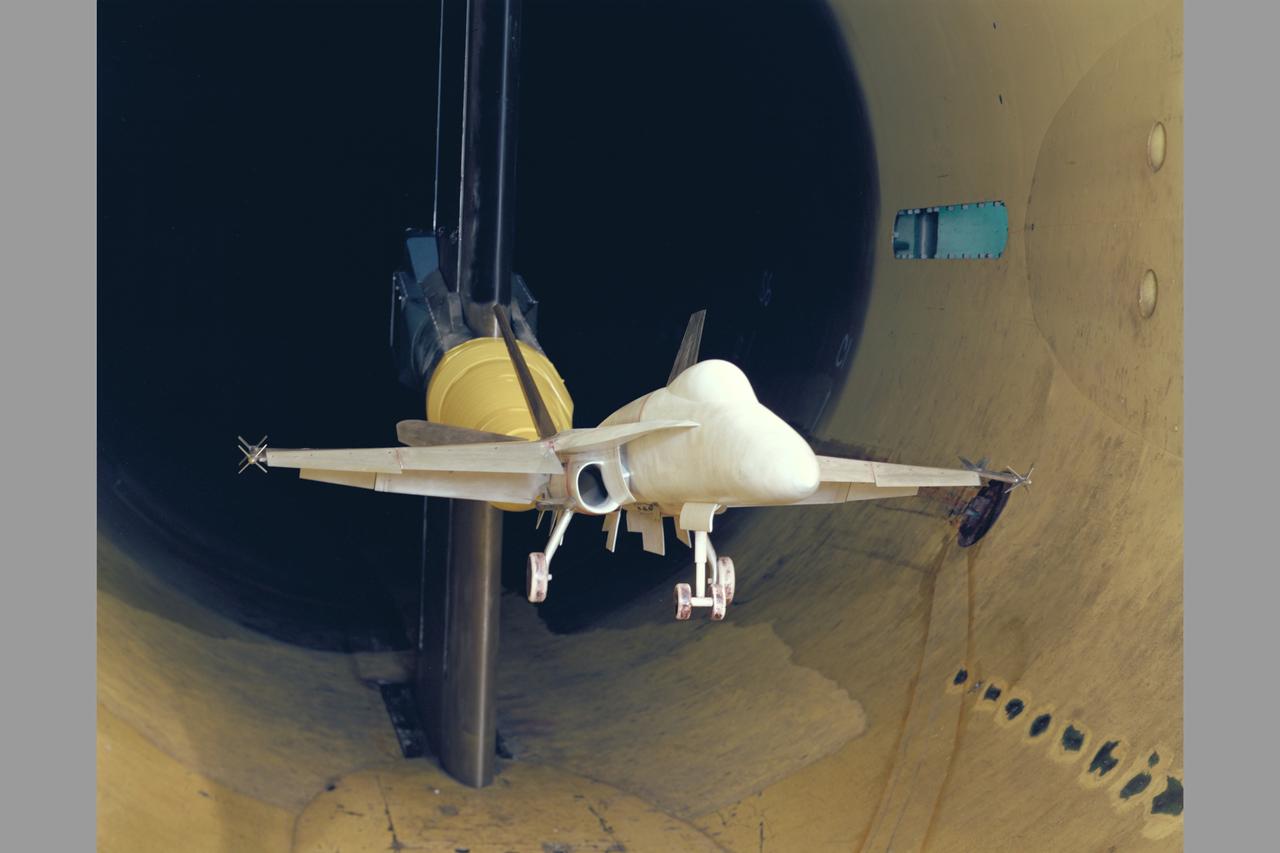
F-18 (12 Scale Model) 12 Foot Wind Tunnel Test-287
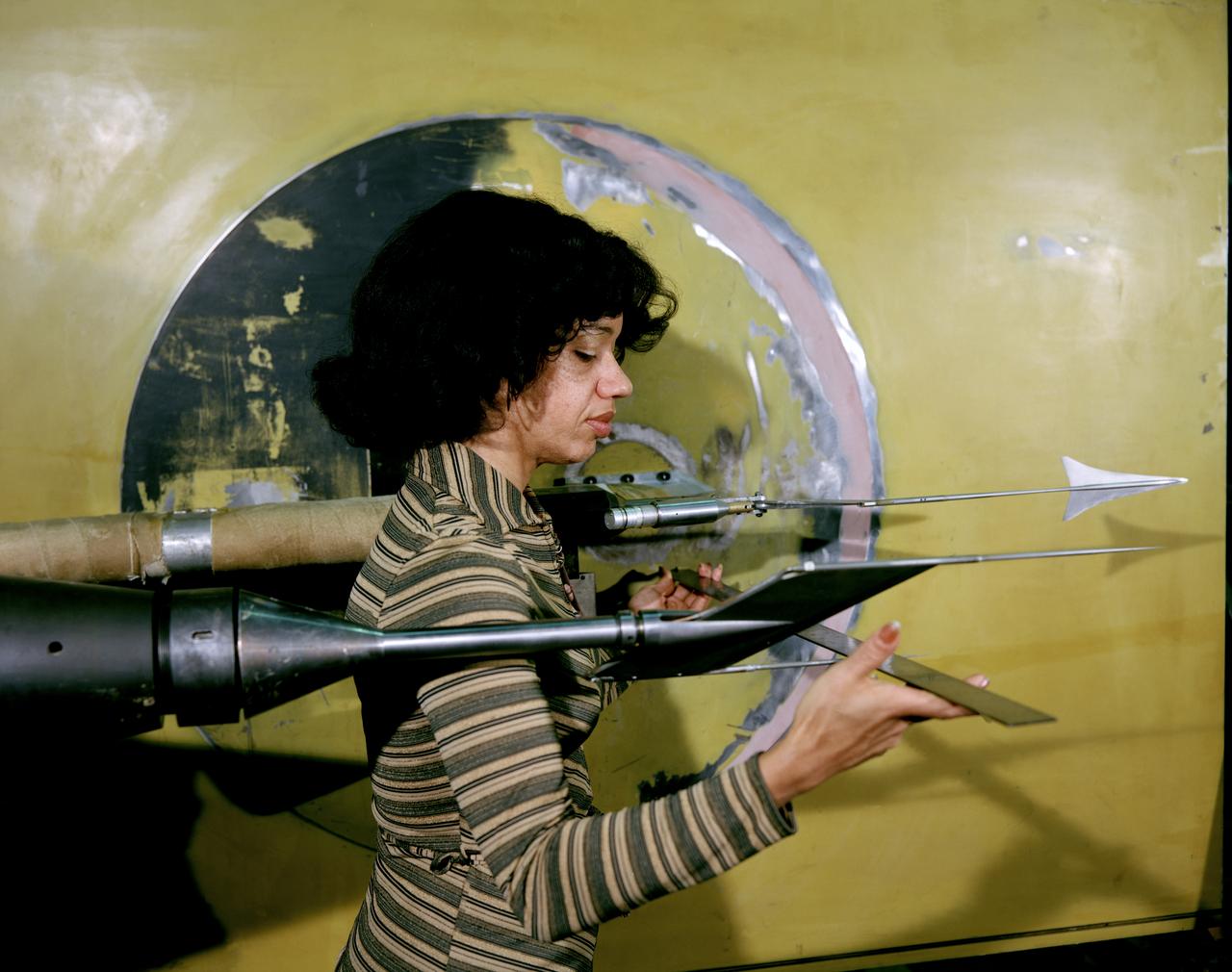
Sonic Boom test model and measuring probe rake with Christine Darden
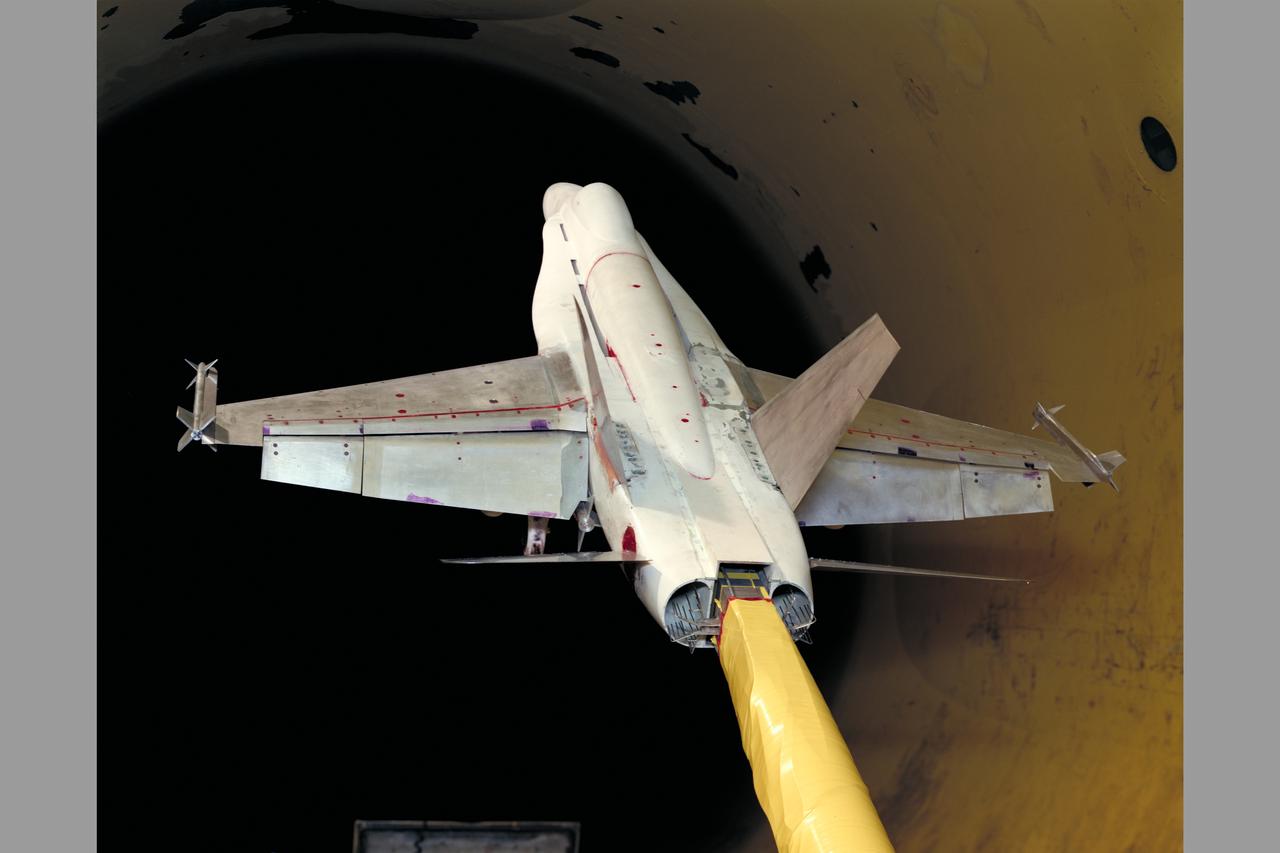
F-18 (12 Scale Model) 12 Foot Wind Tunnel Test-287
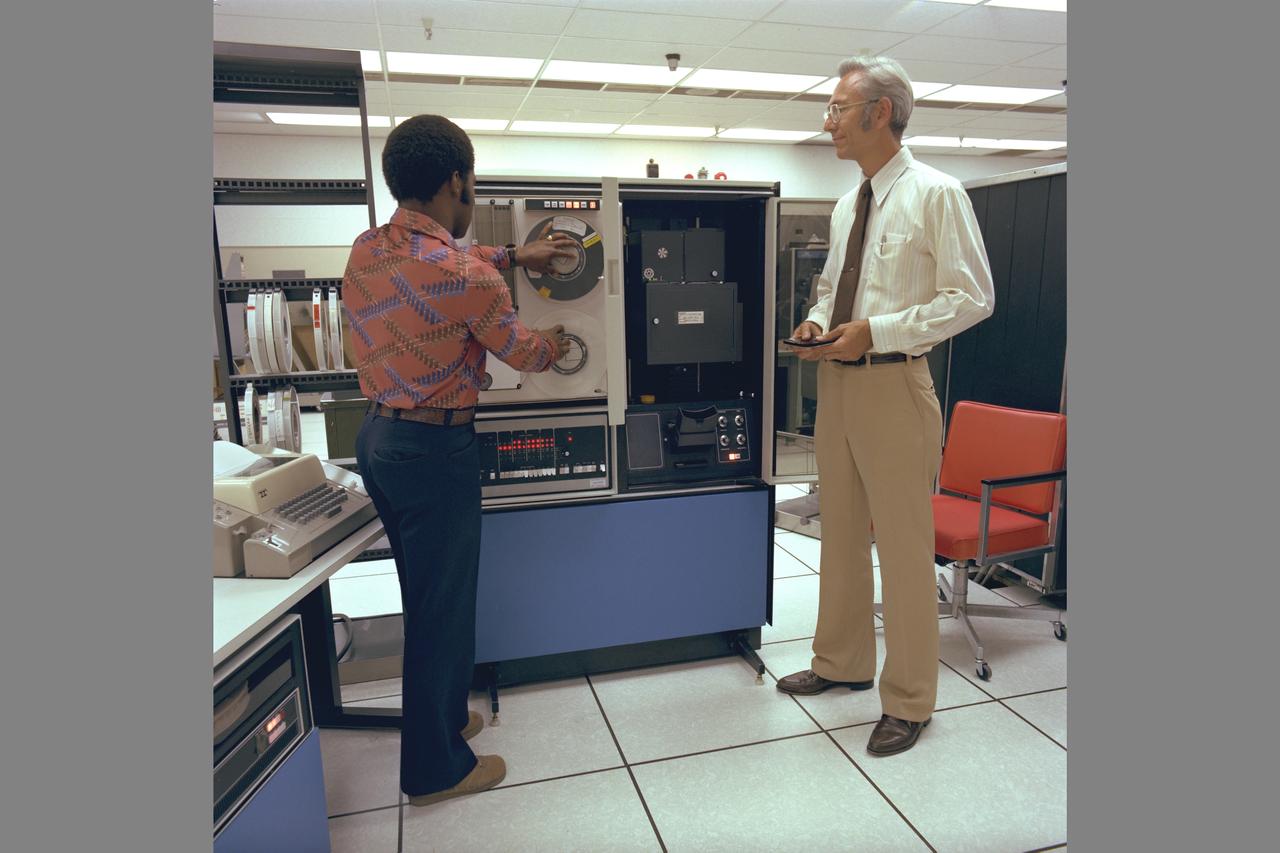
BetaCom 700H computer graphic systems in N-233 with Thomas Crawford
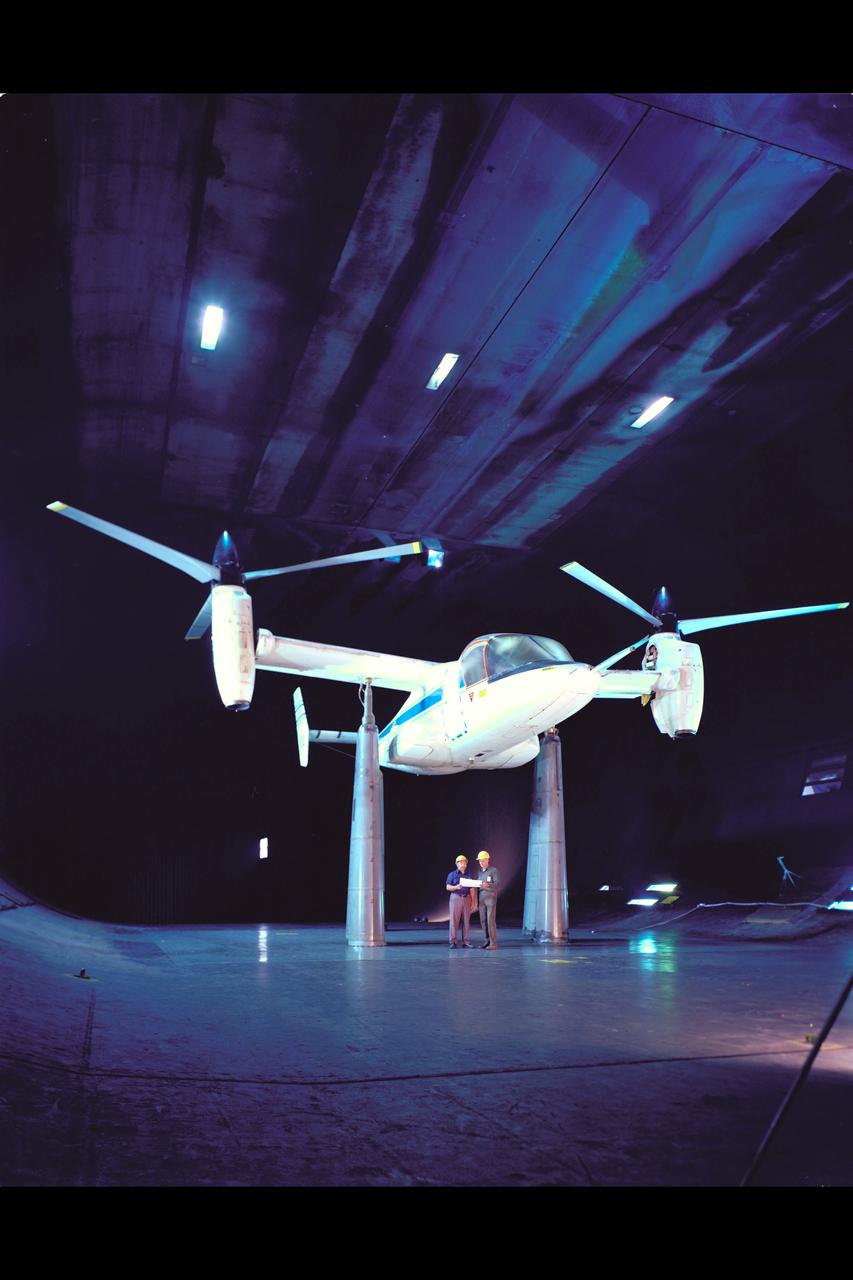
XV-15 Tiltrotor Aircraft in 40x80ft w.t. - helicopter (take-off) mode
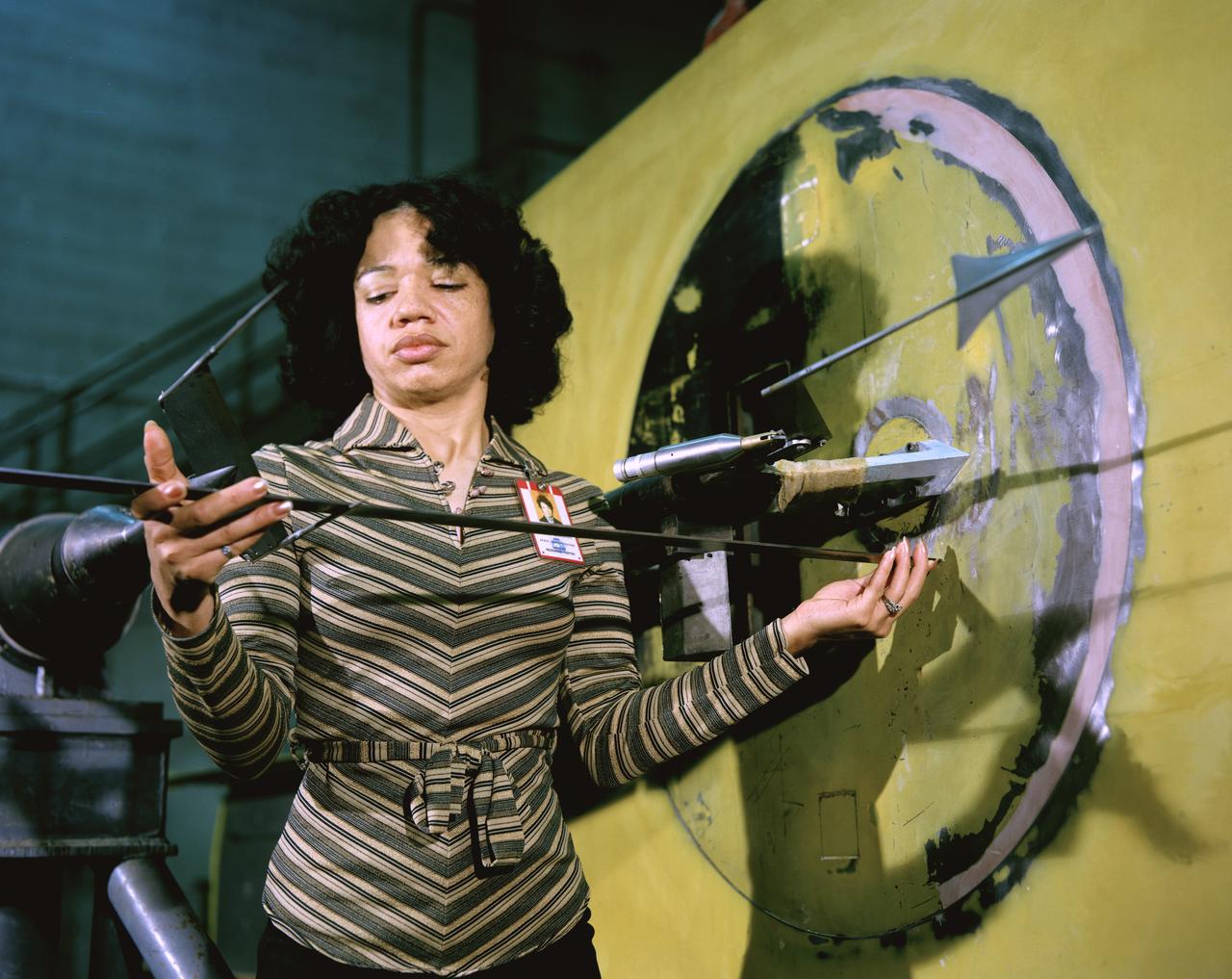
Sonic Boom test model and measuring probe rake with Christine Darden
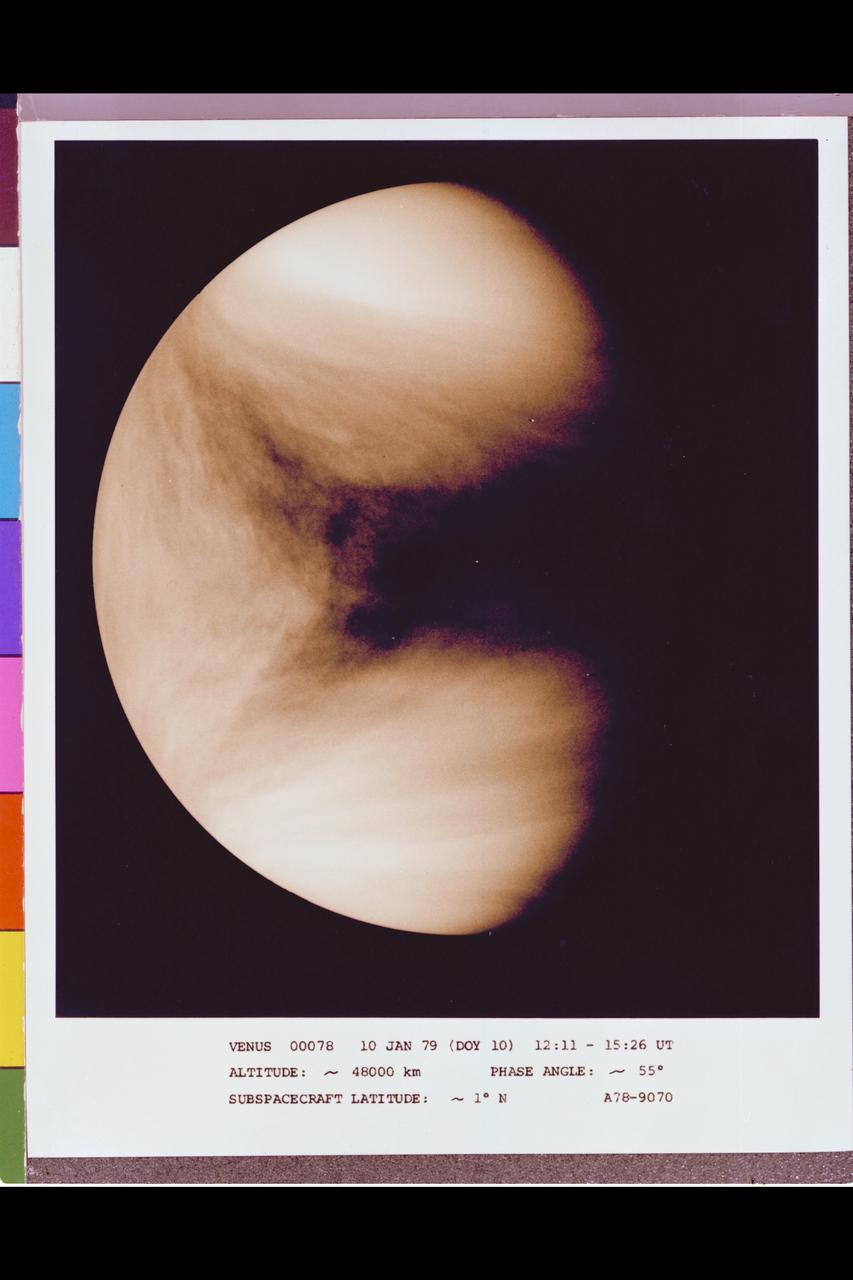
Pioneer-Venus Image 00078
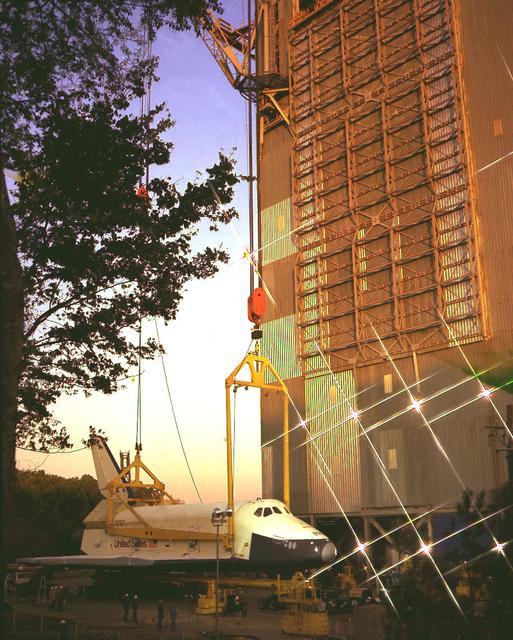
This is a double exposure of the Shuttle Orbiter Enterprise on the strong back of the Dynamic Test Stand at Marshall Space Flight Center's building 4550 as it undergoes a Mated Vertical Ground Vibration Test (MVGVT). One exposure depicts a sunset view, while the other depicts a post-sunset view.
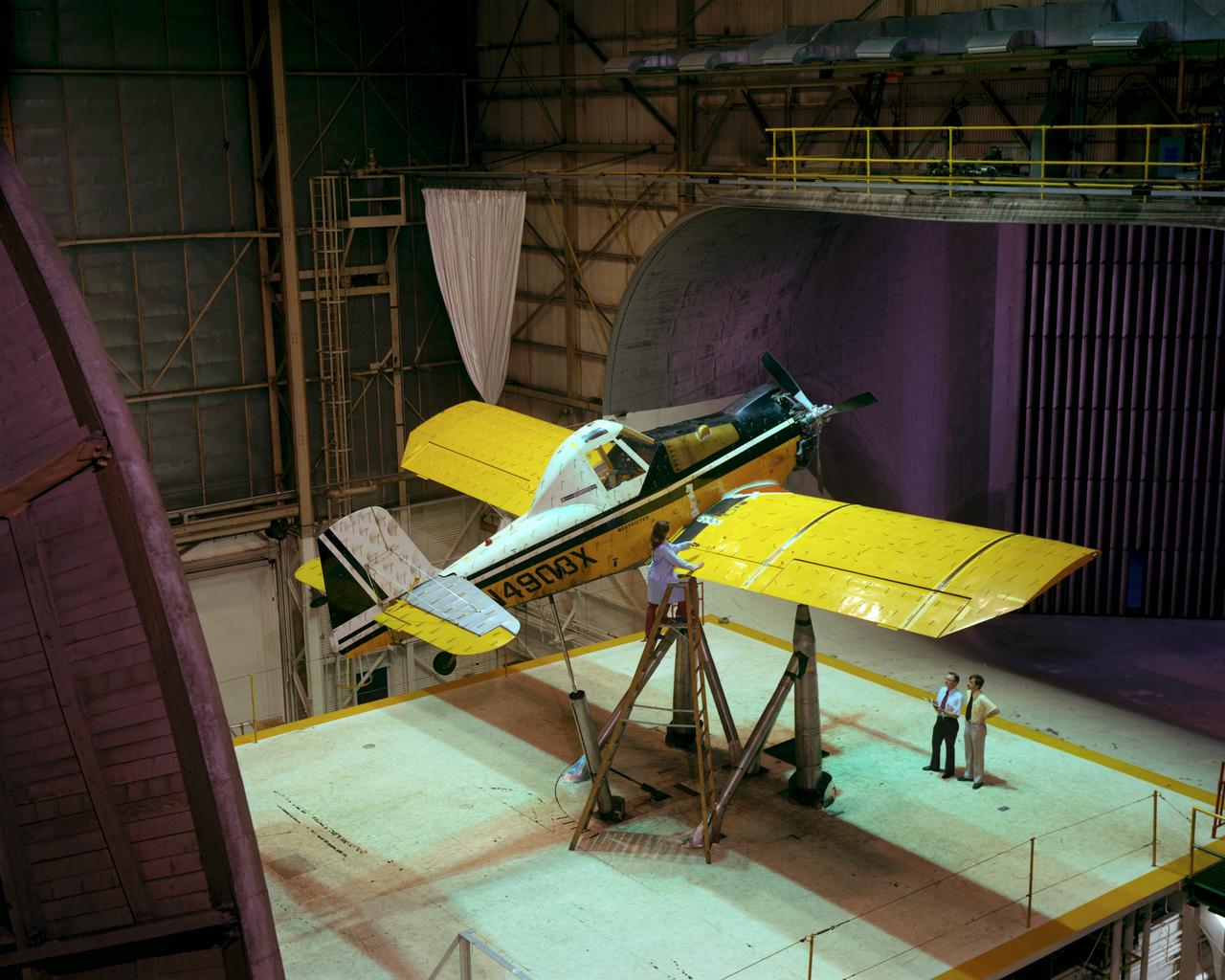
Agriculture aircraft in Full Scale Tunnel (FST). -- Photographed on: 05/19/78.
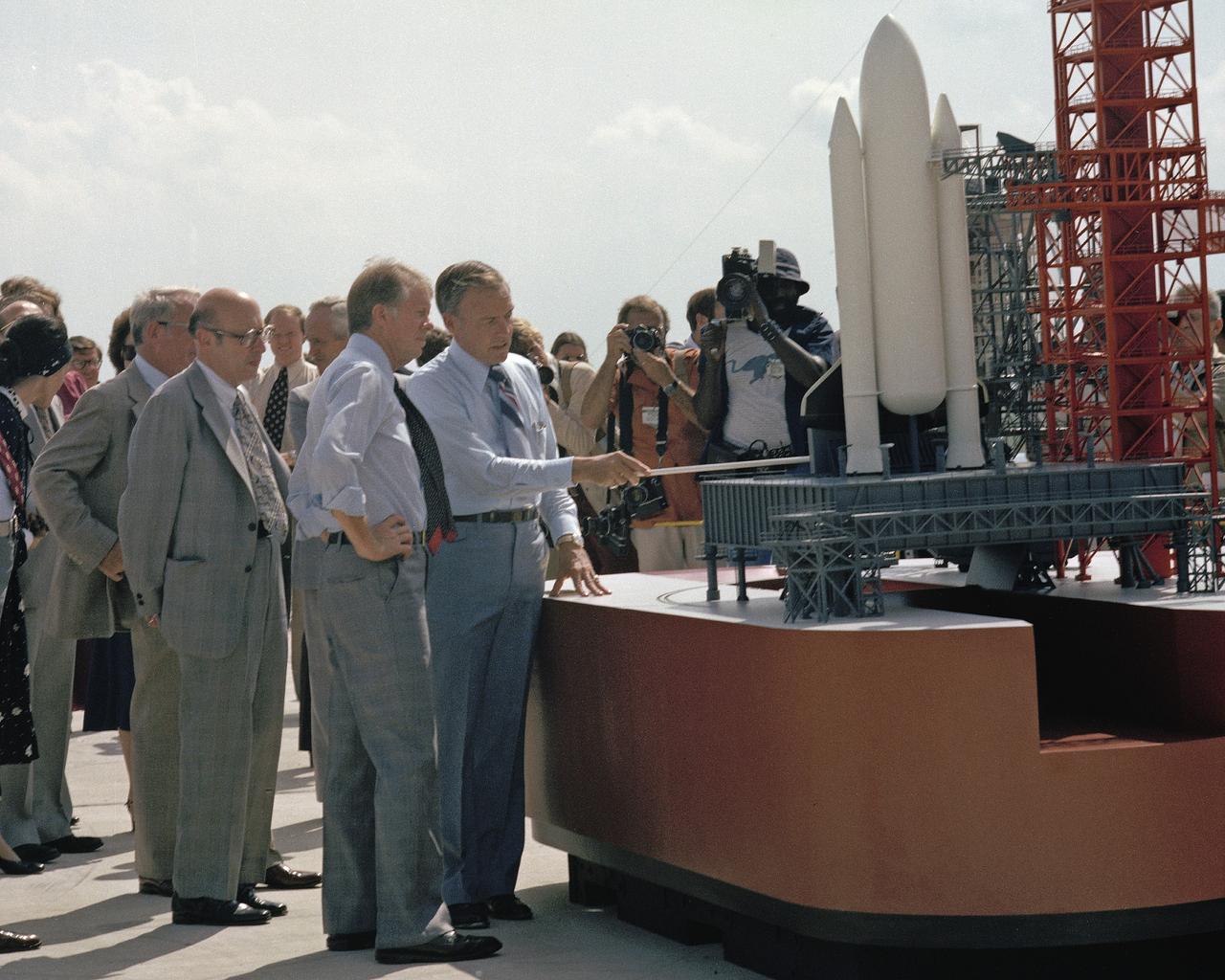
CAPE CANAVERAL, Fla. -- At the Kennedy Space Center in Florida, President Jimmy Carter, hand on waist, is briefed on preparations for the first space shuttle launch by center director Lee Scherer. To the left of Carter is NASA Administrator Robert Frosch. Photo Credit: NASA

S78-35304 (21 Sept 1978) --- Astronaut John M. Fabian
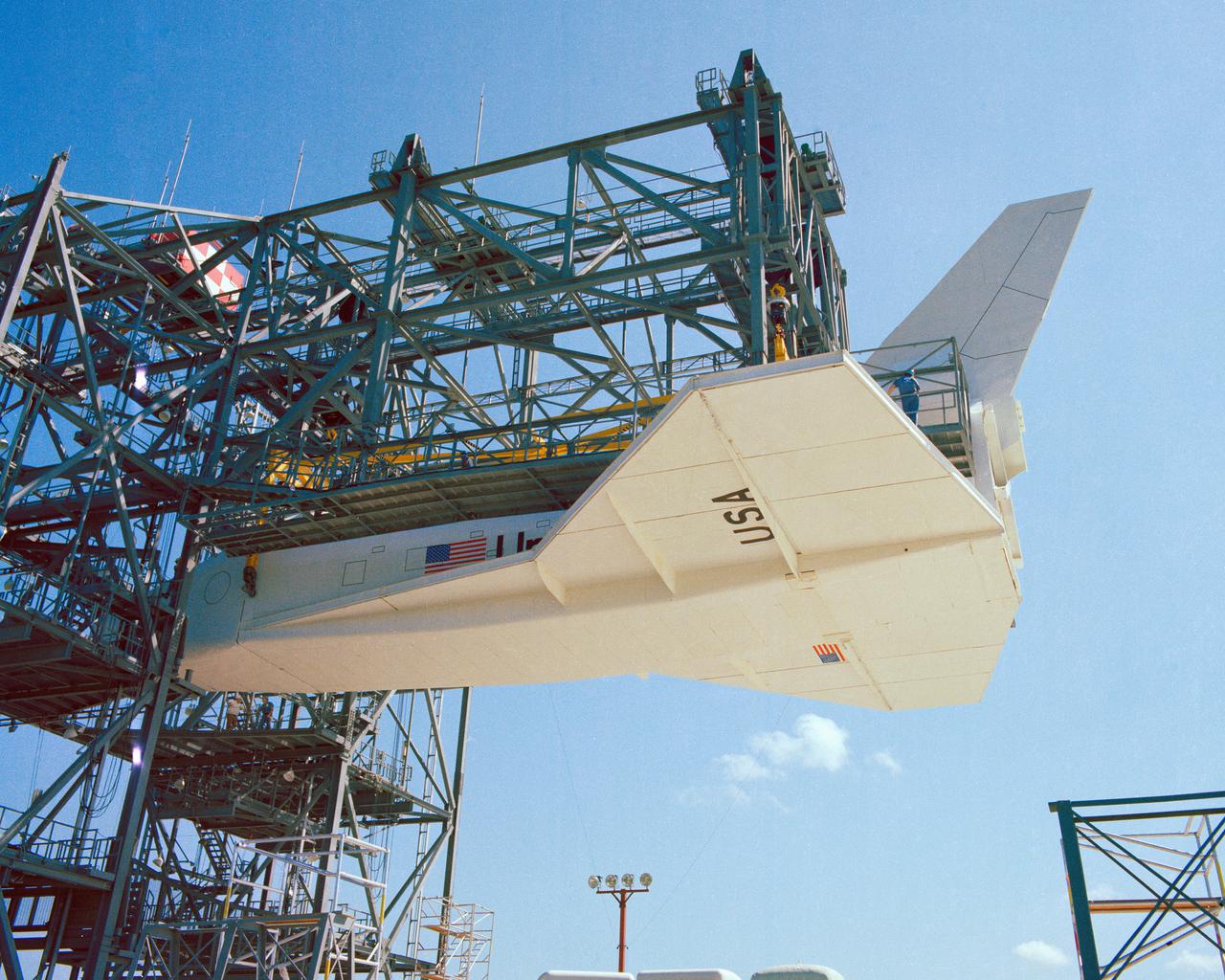
CAPE CANAVERAL, Fla. – At NASA's Kennedy Space Center in Florida, the space shuttle mock-up, dubbed Pathfinder, is attached to the Mate-Demate Device for at fit-check Oct. 19, 1978. The mock-up, constructed at NASA's Marshall Space Flight Center in Huntsville, Ala., possessed the general dimensions, weight and balance of a real space shuttle. It was shipped to Kennedy by barge and then used to fit-check the work platforms of the Mate-Demate Device, orbiter processing facilities and Vehicle Assembly Building, as well as support ground crew training. It also was used to rehearse post-landing procedures at Kennedy's Shuttle Landing Facility. After being on display at the 'Great Space Shuttle Exposition' in Tokyo from June 1983 to August 1984, the mock-up returned to Marshall and now is on permanent display at the U.S. Space and Rocket Center near Huntsville. Photo credit: NASA
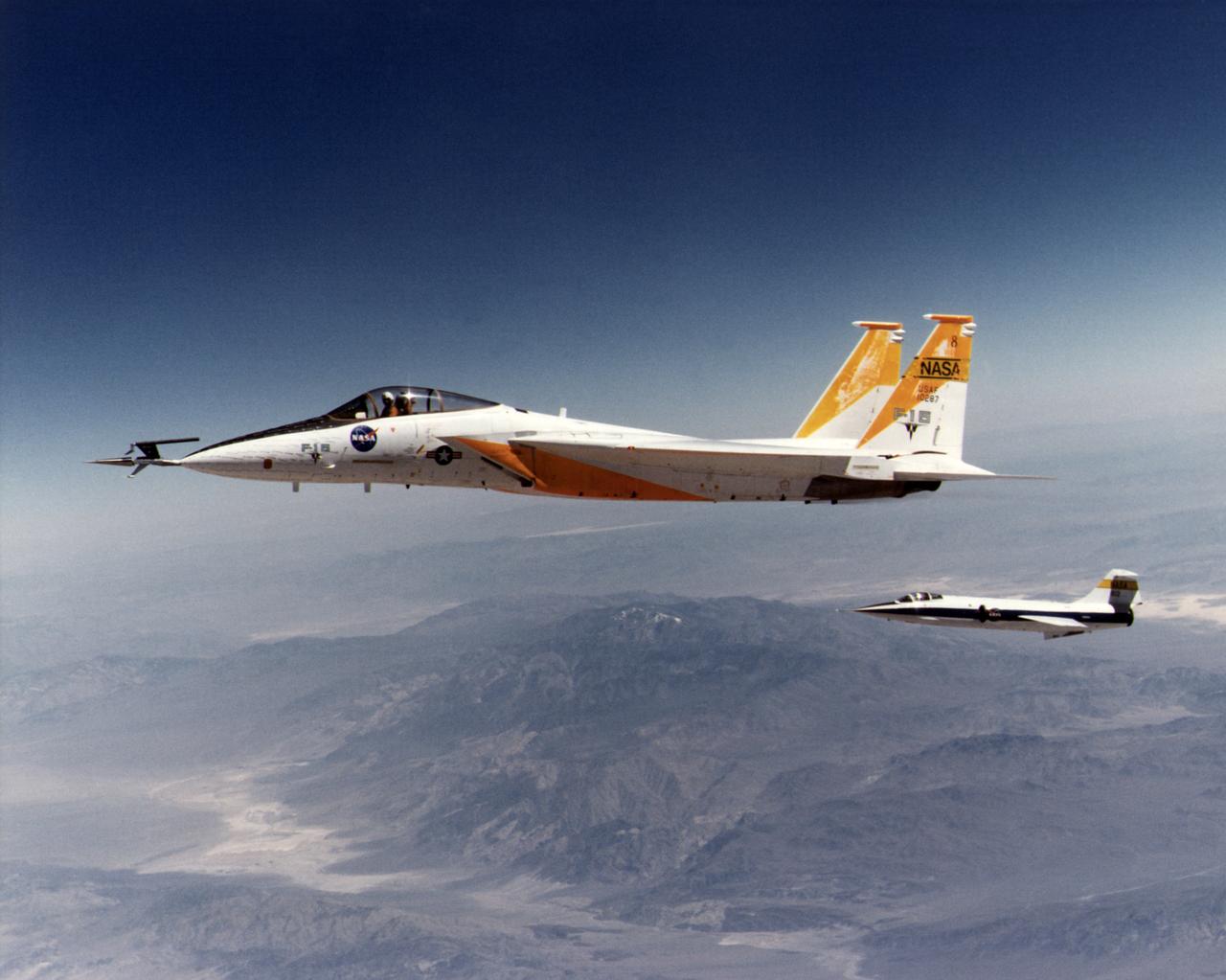
An in-flight photo of the NASA F-15A used to carry a 10 degree cone to collect aerodynamic data to calibrate the data from wind tunnels. The flight was made on May 17, 1978. Acting as chase for the flight was a NASA F-104 aircraft.
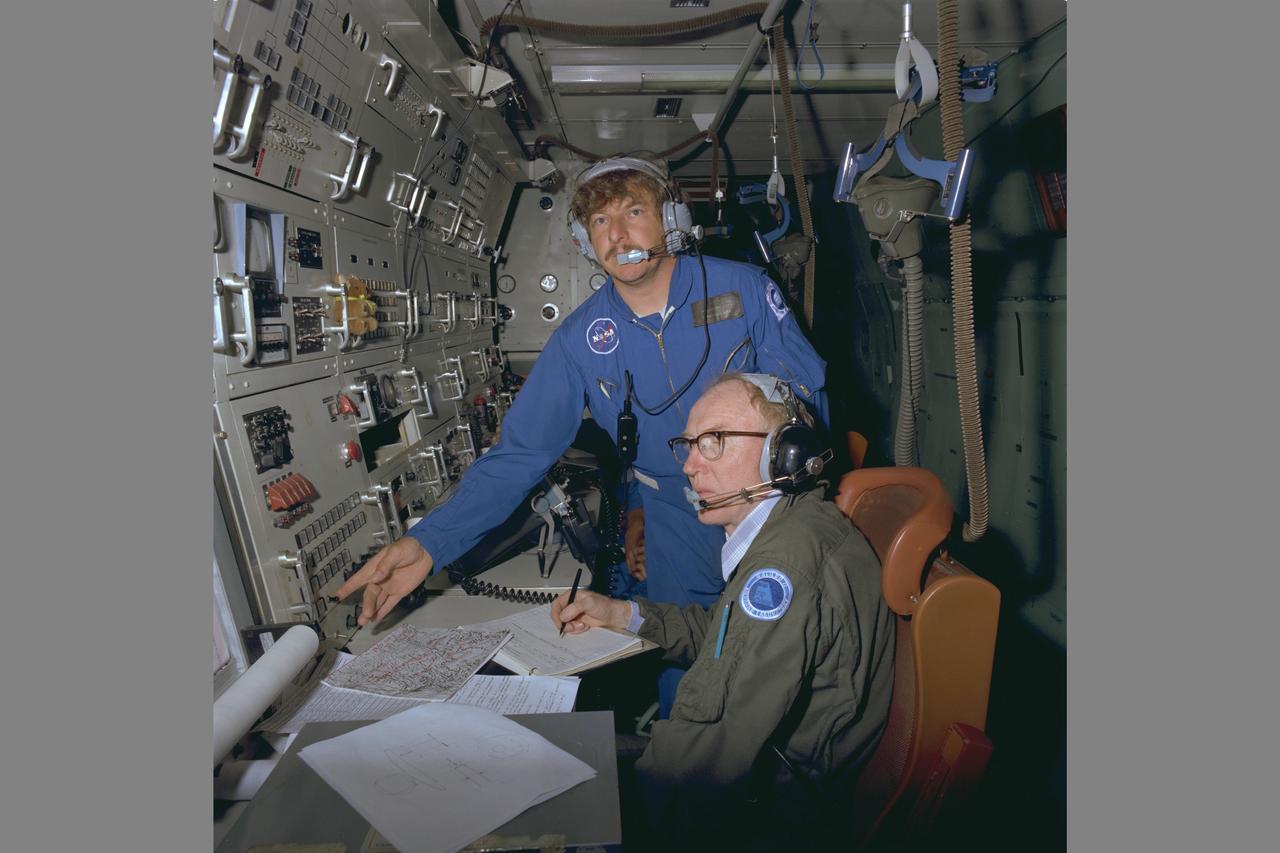
C-141 Kuiper Airborne Observatory (KAO) cabin interior with experimenters Dr. L Haughney and investigator
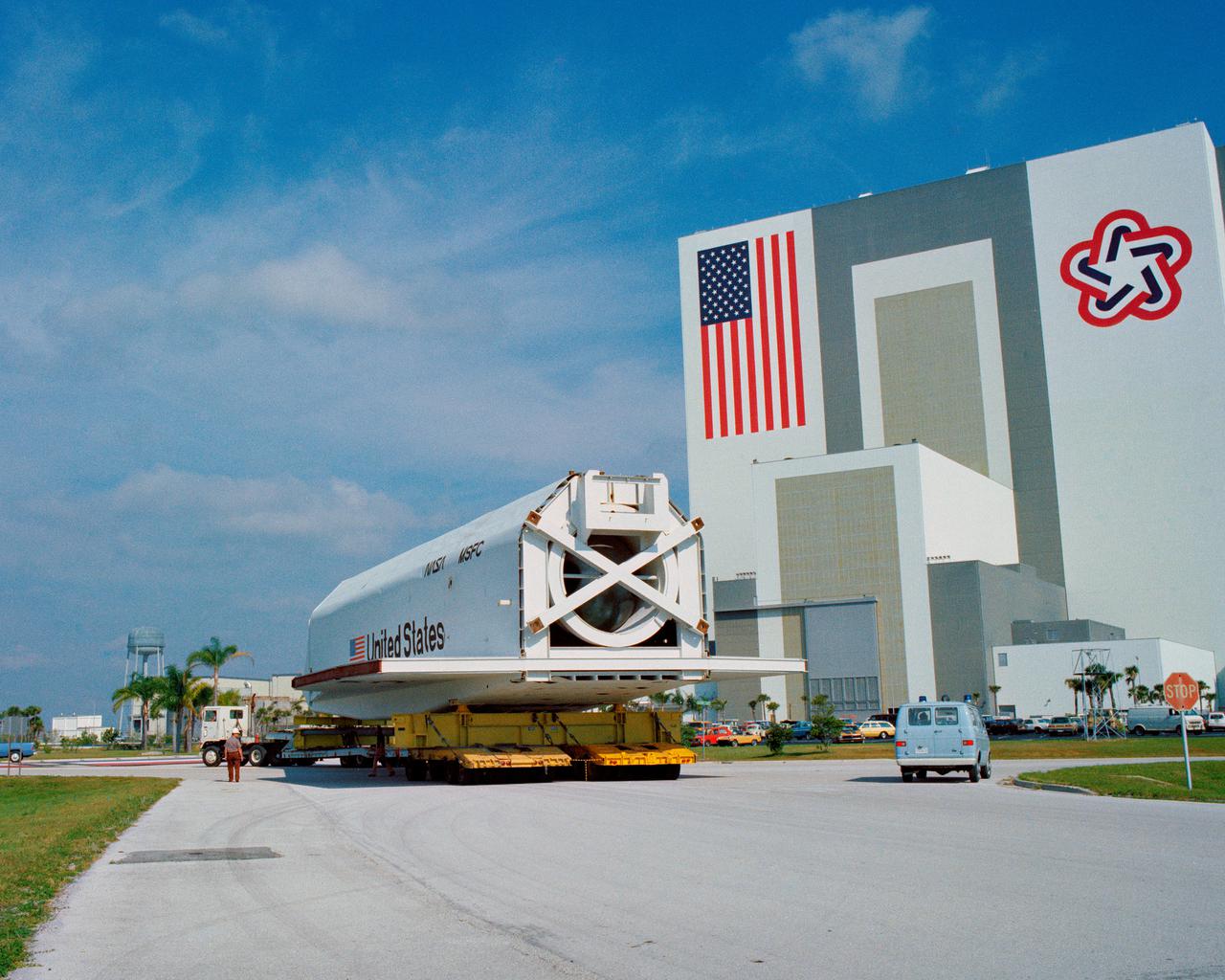
CAPE CANAVERAL, Fla. – At NASA's Kennedy Space Center in Florida, the space shuttle mock-up, dubbed Pathfinder, makes its trek from the turn basin to the Vehicle Assembly Building on April 5, 1978. The mock-up, constructed at NASA's Marshall Space Flight Center in Huntsville, Ala., possessed the general dimensions, weight and balance of a real space shuttle. It was shipped to Kennedy by barge and then used to fit-check the work platforms of the Mate-Demate Device, orbiter processing facilities and Vehicle Assembly Building, as well as support ground crew training. It also was used to rehearse post-landing procedures at Kennedy's Shuttle Landing Facility. After being on display at the 'Great Space Shuttle Exposition' in Tokyo from June 1983 to August 1984, the mock-up returned to Marshall and now is on permanent display at the U.S. Space and Rocket Center near Huntsville. Photo credit: NASA
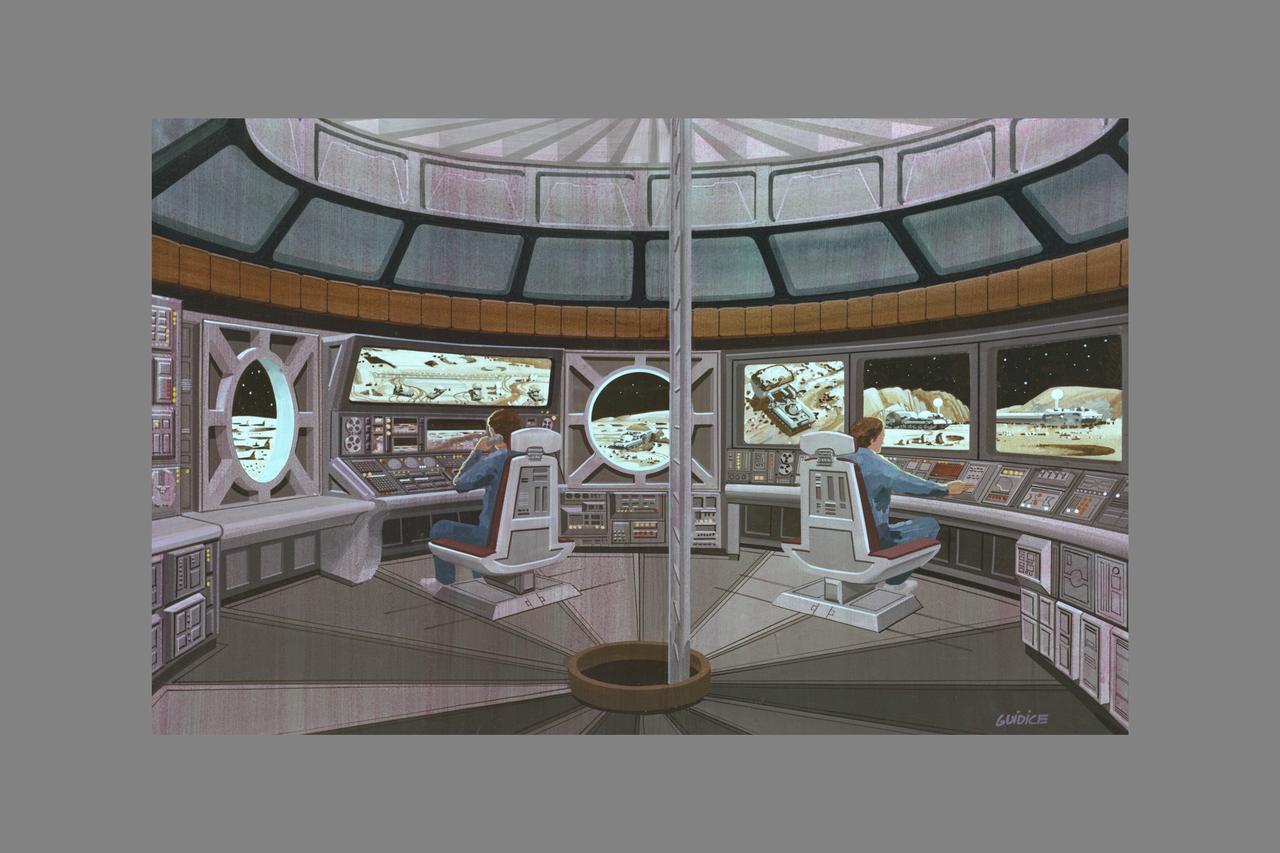
Artist: Rick Guidice Space Colonization, Habitat on Lunar base (Artwork)
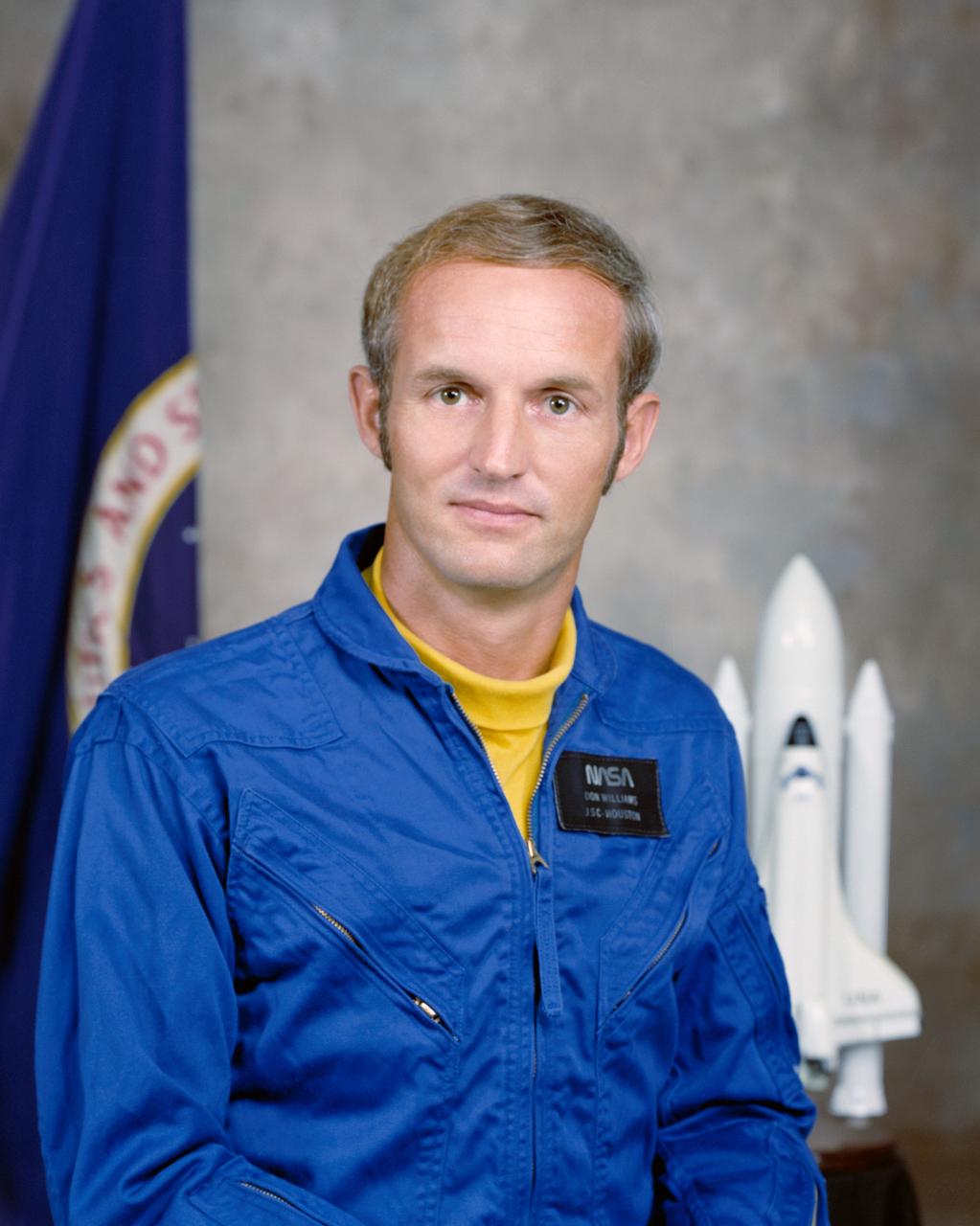
S78-35285 (1978) --- Astronaut Don E. Williams.
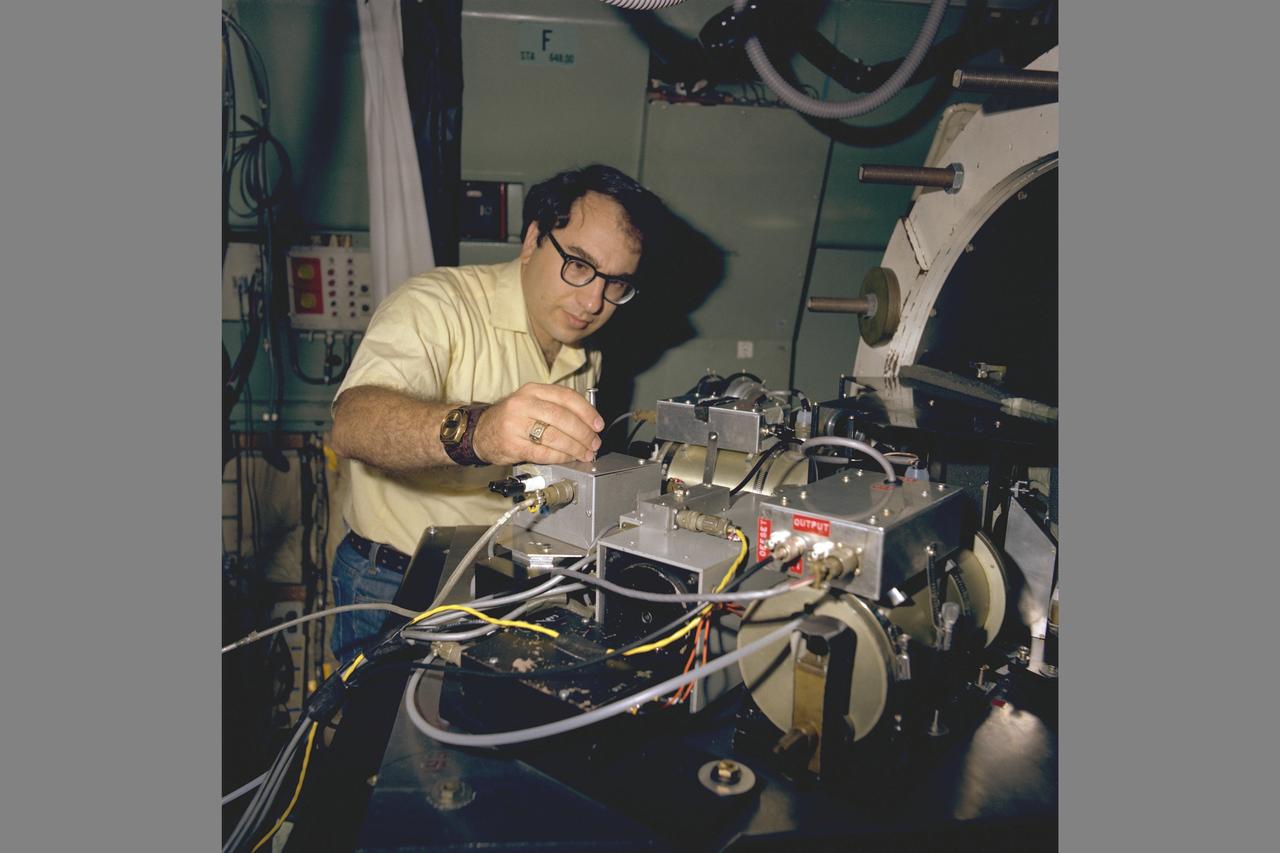
C-141 KAO experimenters package with Dr. Ted Hilgeman University of Chicago
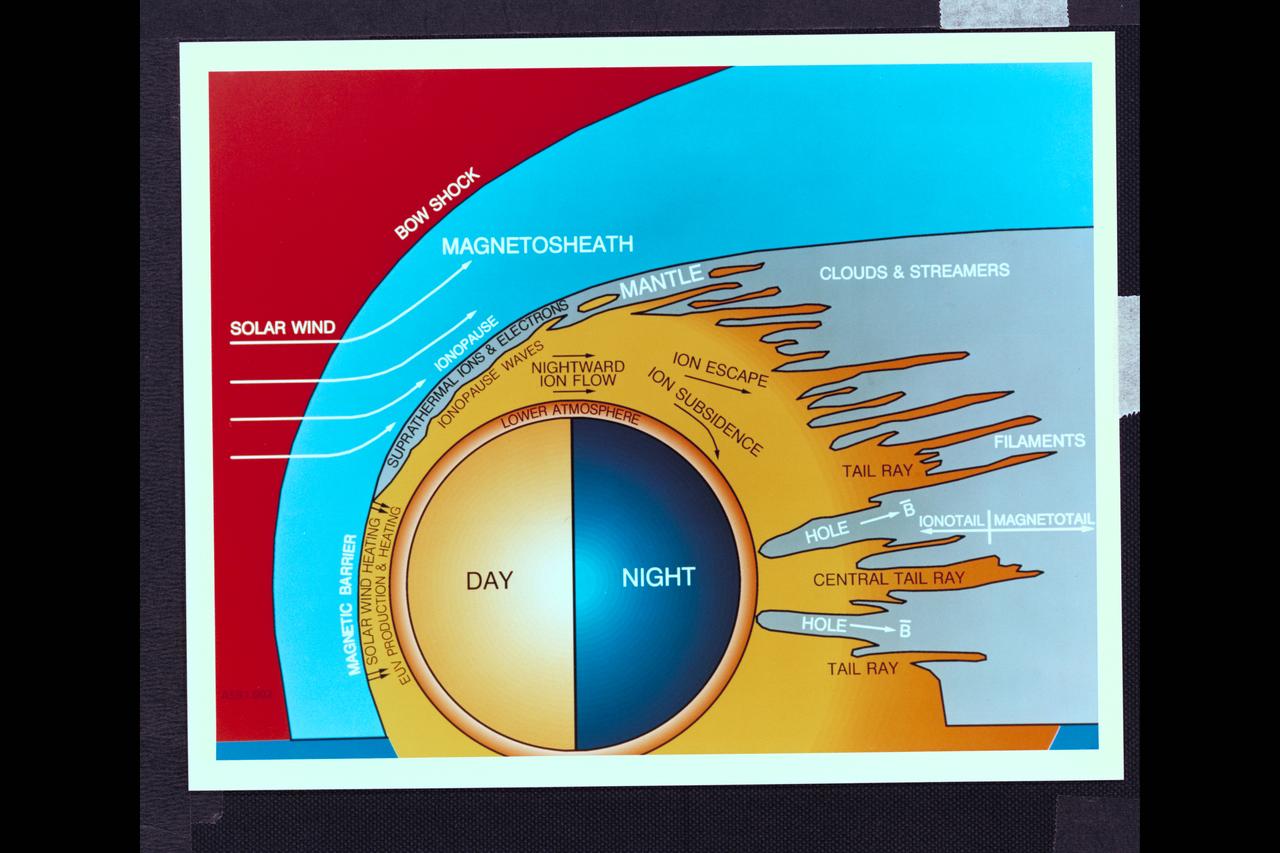
Graphic Art Venus - Day - Night drawing showing solar wind, bow shock, magnetosheath, clouds and streamers Pioneer Venus SP-461 fig 6-28 Interaction of the solar wind with the atmosphere of Venus as termined from Pioner Venus experiments and observations
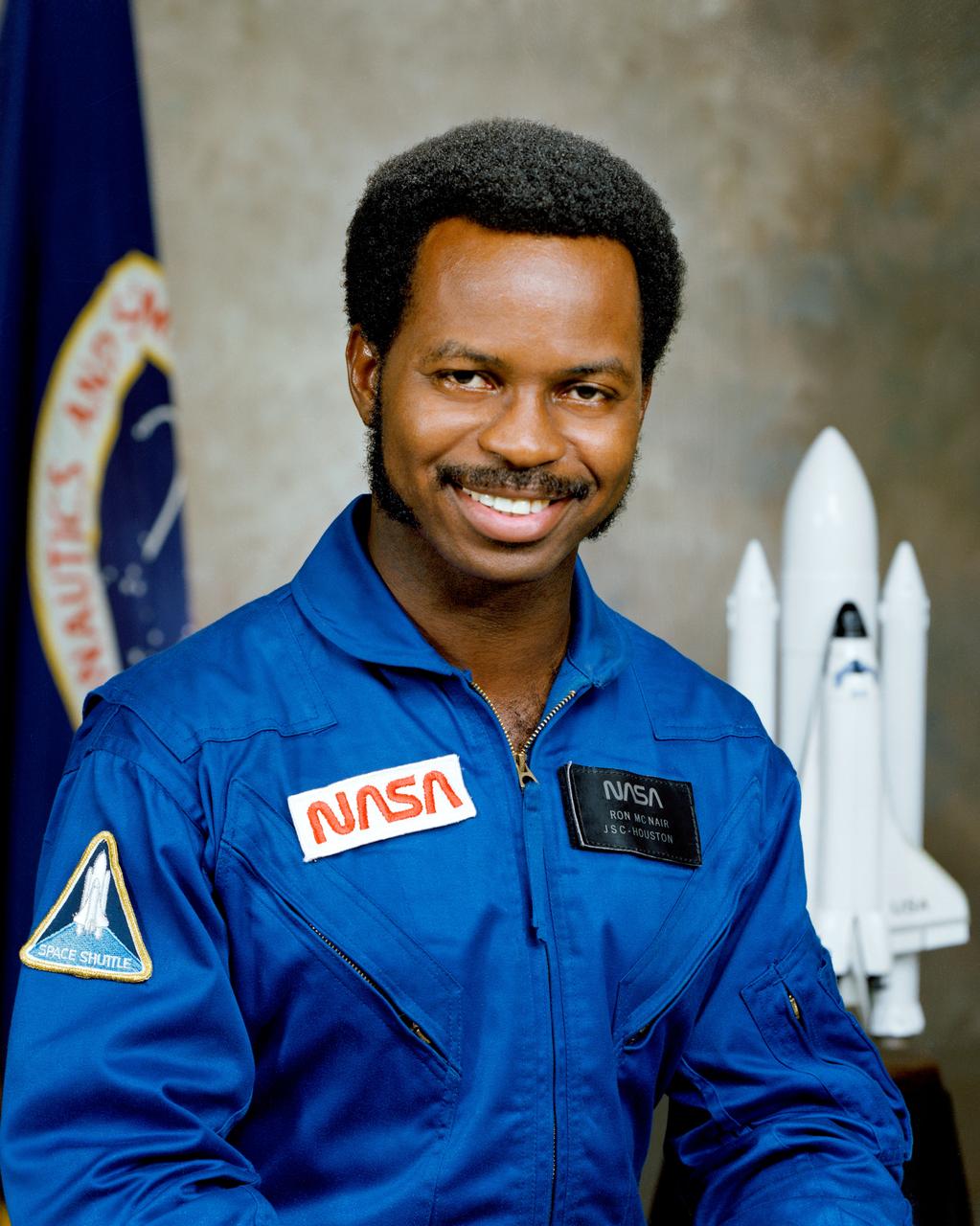
S78-35300 (31 Jan 1978) -- NASA Astronaut Dr. Ronald E. McNair (PH.D.) was assigned as a mission specialist and was a crewmember on two Space Shuttle Missions. He first flew on STS 41-B in 1984 where he performed numerous science experiments. On his second flight, STS 51-L, Dr. McNair died on January 28, 1986 when the Space Shuttle Challenger exploded after launch from the Kennedy Space Center, Florida. NASA Photograph
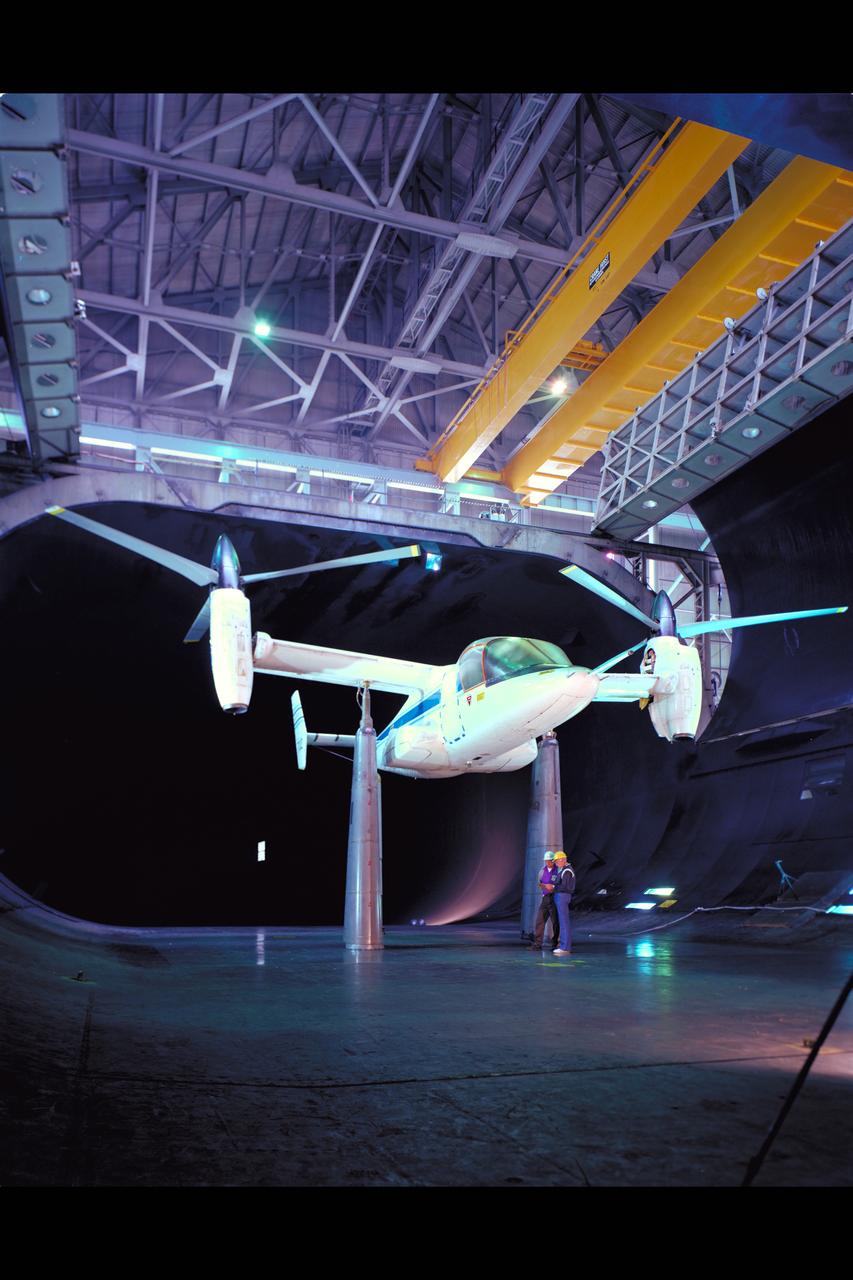
Aviation Week Magazine Cover (August 21, 1978) depicts Ames XV-15 Tiltrotor Aircraft in 40x80ft w.t. test - helicopter (take-off) mode
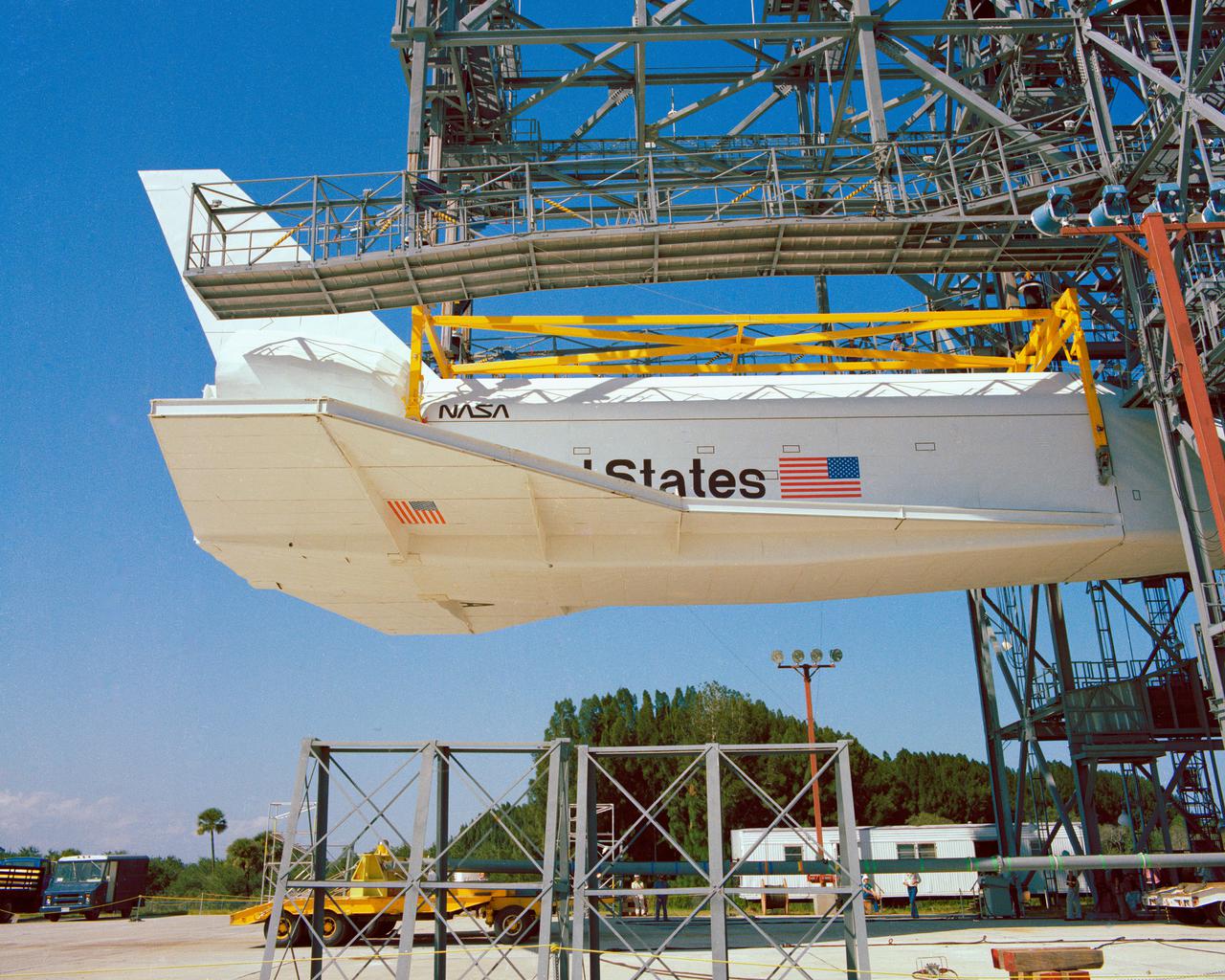
CAPE CANAVERAL, Fla. – At NASA's Kennedy Space Center in Florida, the space shuttle mock-up, dubbed Pathfinder, is attached to the Mate-Demate Device for at fit-check Oct. 19, 1978. The mock-up, constructed at NASA's Marshall Space Flight Center in Huntsville, Ala., possessed the general dimensions, weight and balance of a real space shuttle. It was shipped to Kennedy by barge and then used to fit-check the work platforms of the Mate-Demate Device, orbiter processing facilities and Vehicle Assembly Building, as well as support ground crew training. It also was used to rehearse post-landing procedures at Kennedy's Shuttle Landing Facility. After being on display at the 'Great Space Shuttle Exposition' in Tokyo from June 1983 to August 1984, the mock-up returned to Marshall and now is on permanent display at the U.S. Space and Rocket Center near Huntsville. Photo credit: NASA

S78-35303 (31 Jan 1978) --- Astronaut Anna L. Fisher.
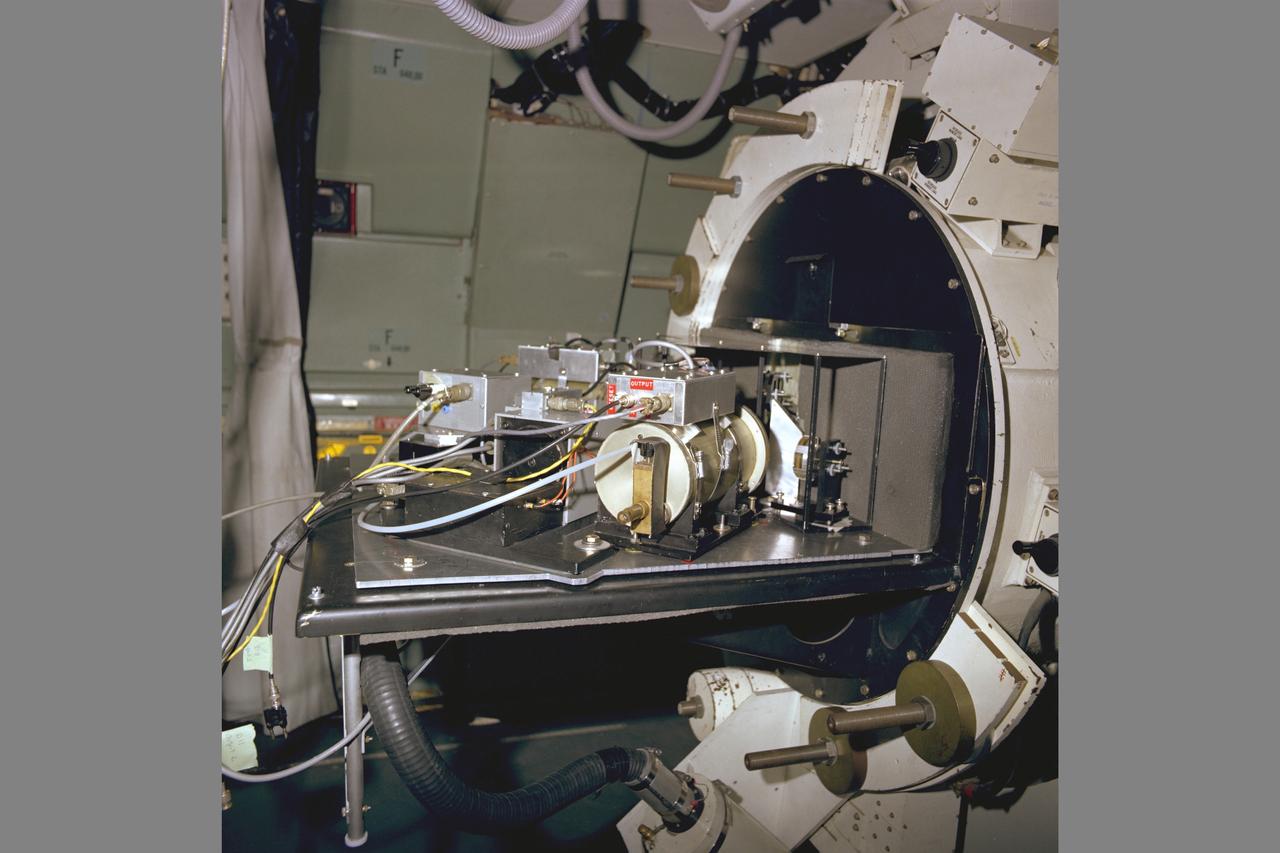
C-141 KAO experimenter Dr. Ted Hilgeman, University of Chicago package installed on telescope
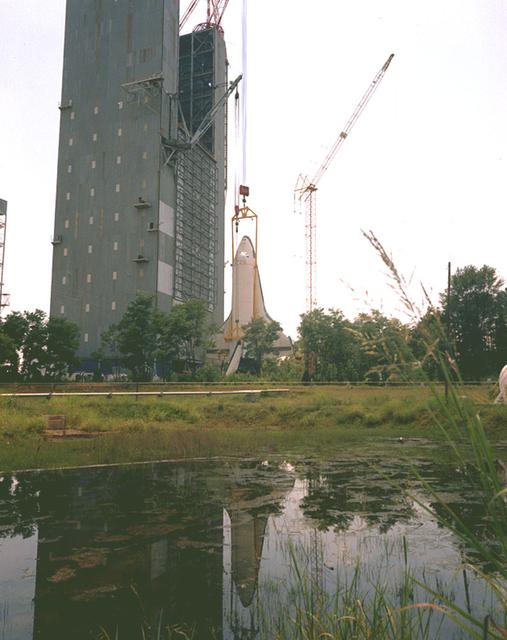
This photo is of the removal of the Orbiter Enterprise from the Marshall Space Flight Center's Dynamic Test Stand after its first Mated Vertical Ground Vibration Test (MVGVT).

View of astronaut candidates Daniel C. Brandenstein and Frederick H. Hauck, posed behind model of the Space shuttle orbiter.

F-15A #281 In Flight
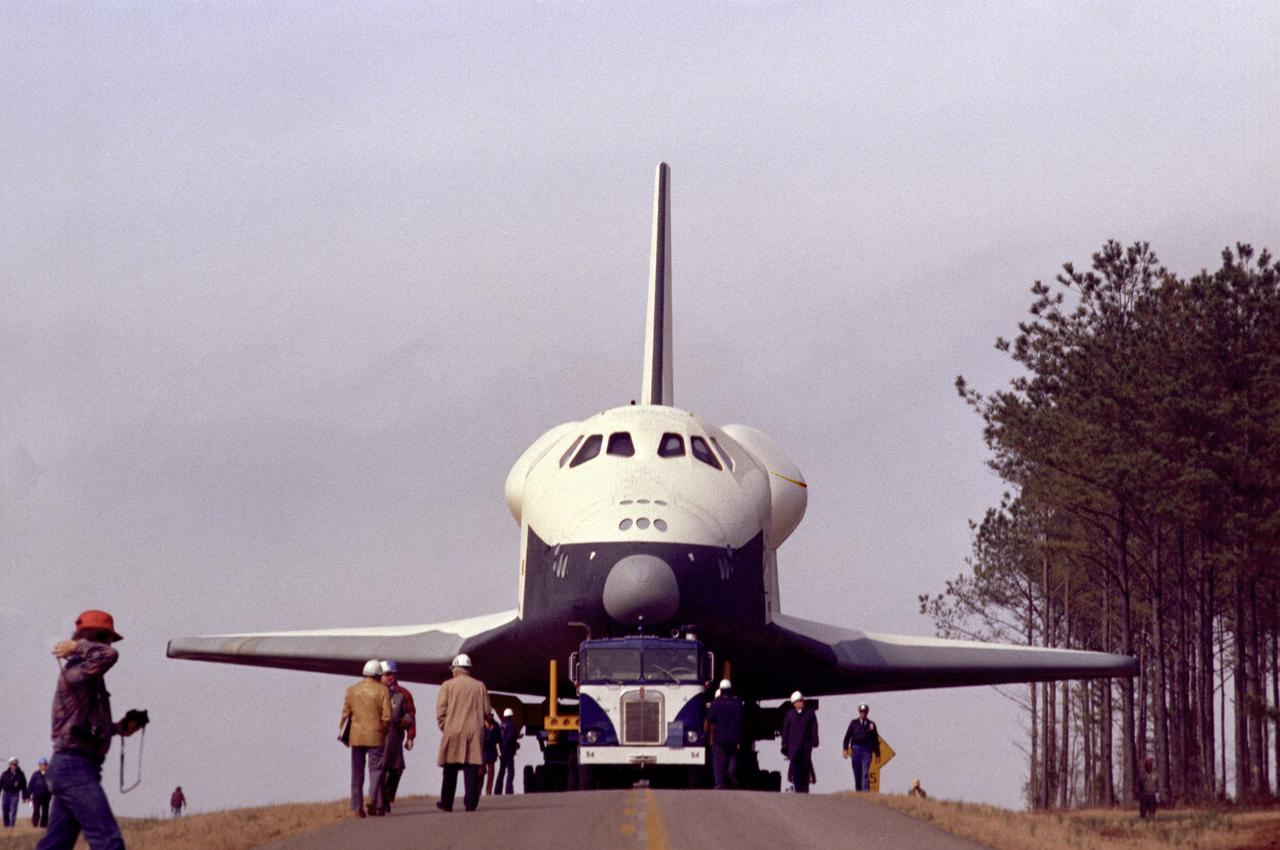
The Shuttle Orbiter Enterprise is transported via road across Marshall Space Flight Center (MSFC) for later Mated Vertical Ground Vibration tests (MVGVT) at MSFC's Dynamic Test Stand. The tests marked the first time ever that the entire shuttle complement including Orbiter, external tank, and solid rocket boosters were vertically mated.
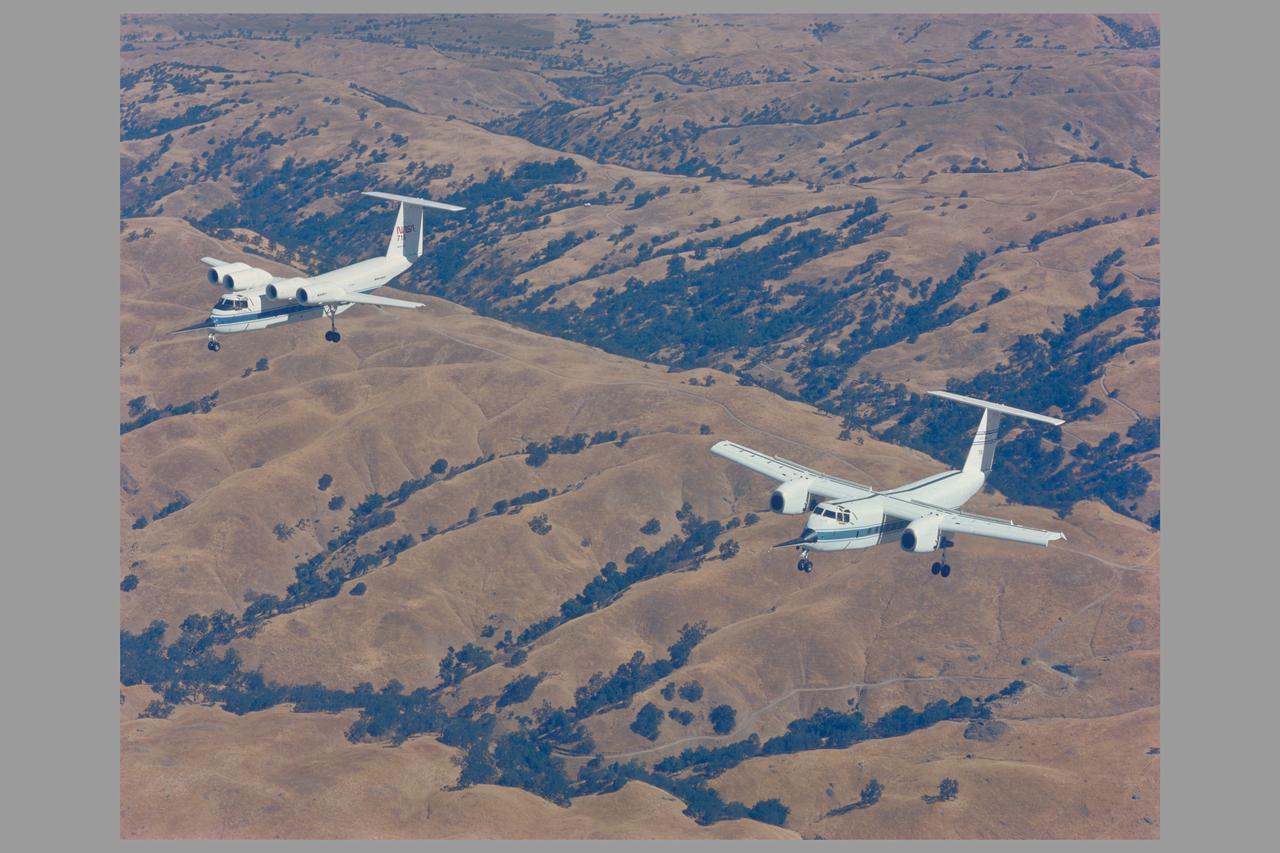
Air to air of the QSRA (NASA 715) and C-8A (NASA 716) on maiden flight to Ames from Seattle, Washington after coversion
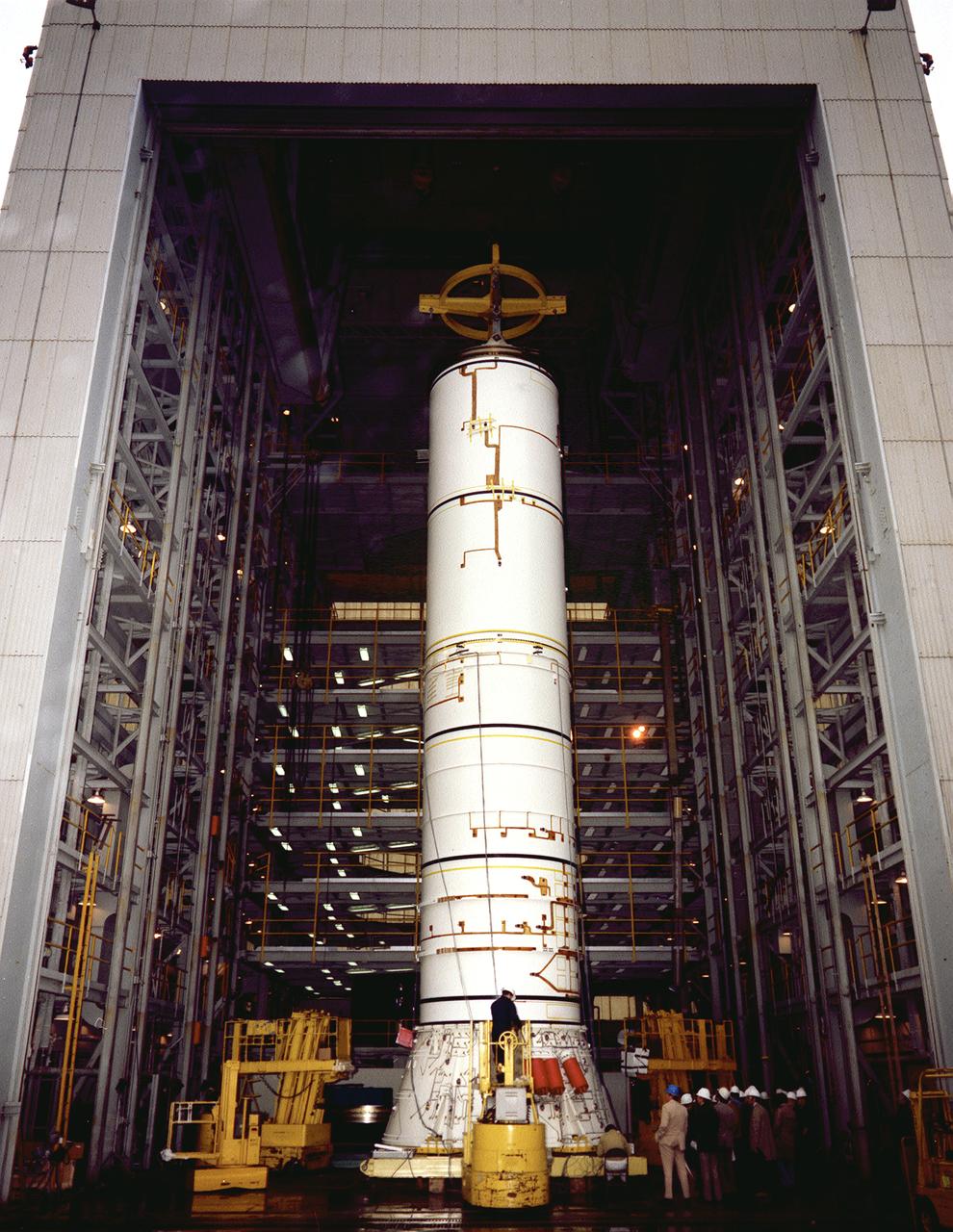
The structural test article to be used in the solid rocket booster (SRB) structural and load verification tests is being assembled in a high bay building of the Marshall Space Flight Center (MSFC). The Shuttle's two SRB's are the largest solids ever built and the first designed for refurbishment and reuse. Standing nearly 150-feet high, the twin boosters provide the majority of thrust for the first two minutes of flight, about 5.8 million pounds, augmenting the Shuttle's main propulsion system during liftoff. The major design drivers for the solid rocket motors (SRM's) were high thrust and reuse. The desired thrust was achieved by using state-of-the-art solid propellant and by using a long cylindrical motor with a specific core design that allows the propellant to burn in a carefully controlled marner. At burnout, the boosters separate from the external tank and drop by parachute to the ocean for recovery and subsequent refurbishment.
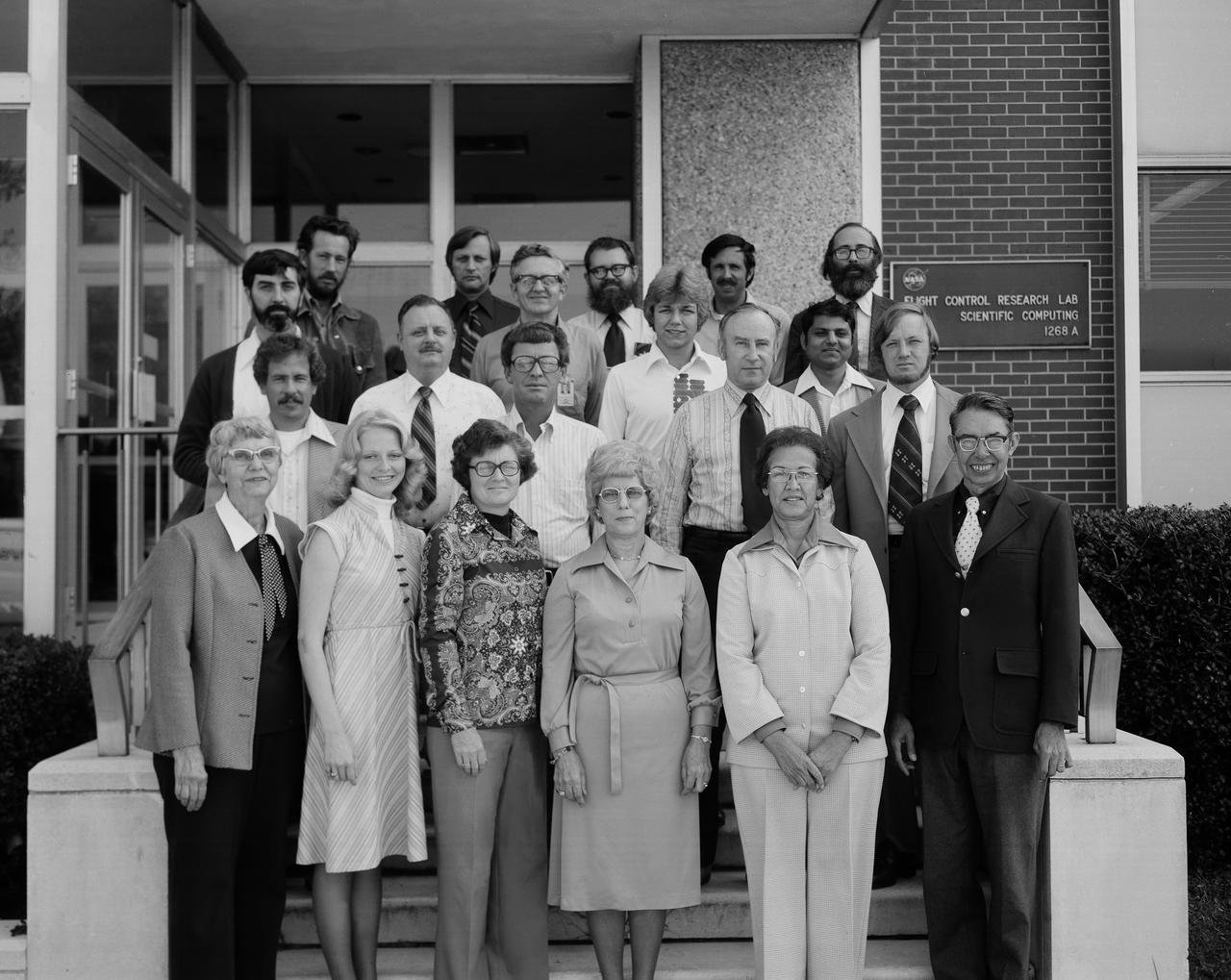
FDCD Stability and Control Branch Photo. Names, rows front to back, people left to right: Ground level: 1. Margery Hanna 2. Debra L. Livingston 3. Carolyn Grantham 4. Nell Moore 5. Katherine G. Johnson 6. Hewitt Phillips Step 1: 1. John Shaughnessy 2. John Young 3. Bill Martz 4. Charles T. Woolley Step 2: 1. Al Hamer 2. Marion Wise (?) 3. Suresh Joshi Step 3: 1. Willard W. Anderson 2. Albert A. Schy 3. Daniel P. Giesy Step 4: 1. Hugh Bergeron 2. Claude Keckler 3. Nelson Groom 4. Ralph Will Names Given by Danial Pl. Giesy.
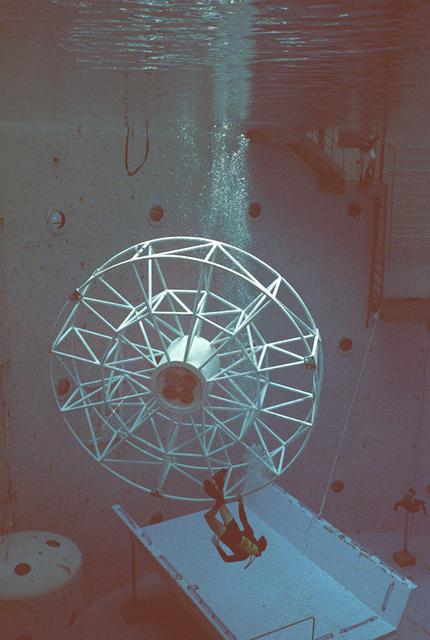
Once the United States' space program had progressed from Earth's orbit into outerspace, the prospect of building and maintaining a permanent presence in space was realized. To accomplish this feat, NASA launched a temporary workstation, Skylab, to discover the effects of low gravity and weightlessness on the human body, and also to develop tools and equipment that would be needed in the future to build and maintain a more permanent space station. The structures, techniques, and work schedules had to be carefully designed to fit this unique construction site. The components had to be lightweight for transport into orbit, yet durable. The station also had to be made with removable parts for easy servicing and repairs by astronauts. All of the tools necessary for service and repairs had to be designed for easy manipulation by a suited astronaut. And construction methods had to be efficient due to limited time the astronauts could remain outside their controlled environment. In lieu of all the specific needs for this project, an environment on Earth had to be developed that could simulate a low gravity atmosphere. A Neutral Buoyancy Simulator (NBS) was constructed by NASA Marshall Space Flight Center (MSFC) in 1968. Since then, NASA scientists have used this facility to understand how humans work best in low gravity and also provide information about the different kinds of structures that can be built. Included in the plans for the space station was a space telescope. This telescope would be attached to the space station and directed towards outerspace. Astronomers hoped that the space telescope would provide a look at space that is impossible to see from Earth because of Earth's atmosphere and other man made influences. Pictured is a large structure that is being used as the antenna base for the space telescope.
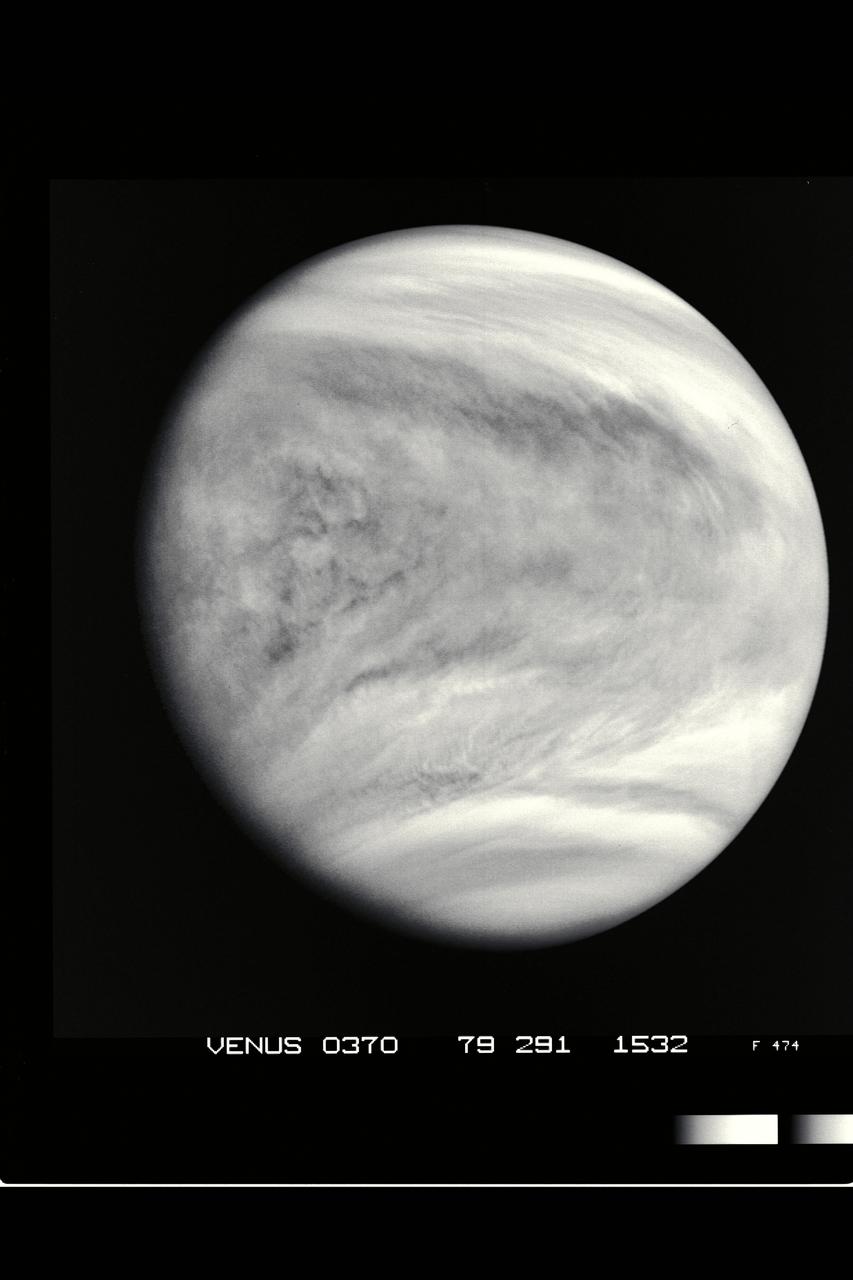
Pioneer-Venus Replica of Venus de Milo
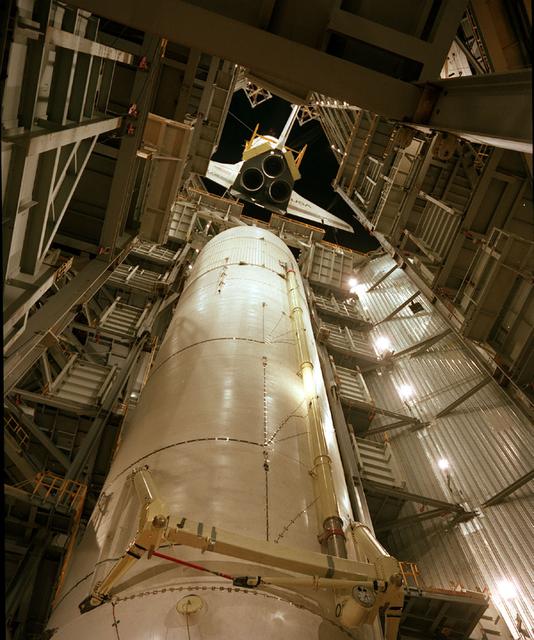
This is an interior ground level view of the Shuttle Orbiter Enterprise being lowered for mating to External Tank (ET) inside Marshall Space Flight Center's Dynamic Test Stand for Mated Vertical Ground Vibration tests (MVGVT). The tests marked the first time ever that the entire shuttle complement (including Orbiter, external tank, and solid rocket boosters) were mated vertically.
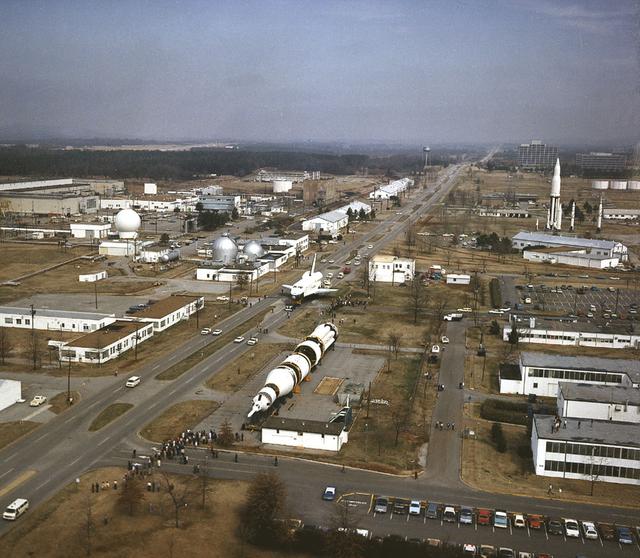
In this view looking northwest over the Marshall Space Flight Center (MSFC), the Shuttle Orbiter Enterprise is seen heading South on Rideout Road near the Redstone Arsenal Fire Station as it is being transported to MSFC's building 4755 for later Mated Vertical Ground Vibration tests (MVGVT) at MSFC's Dynamic Test Stand. The tests marked the first time ever that the entire shuttle complement (including Orbiter, external tank, and solid rocket boosters) were mated vertically.
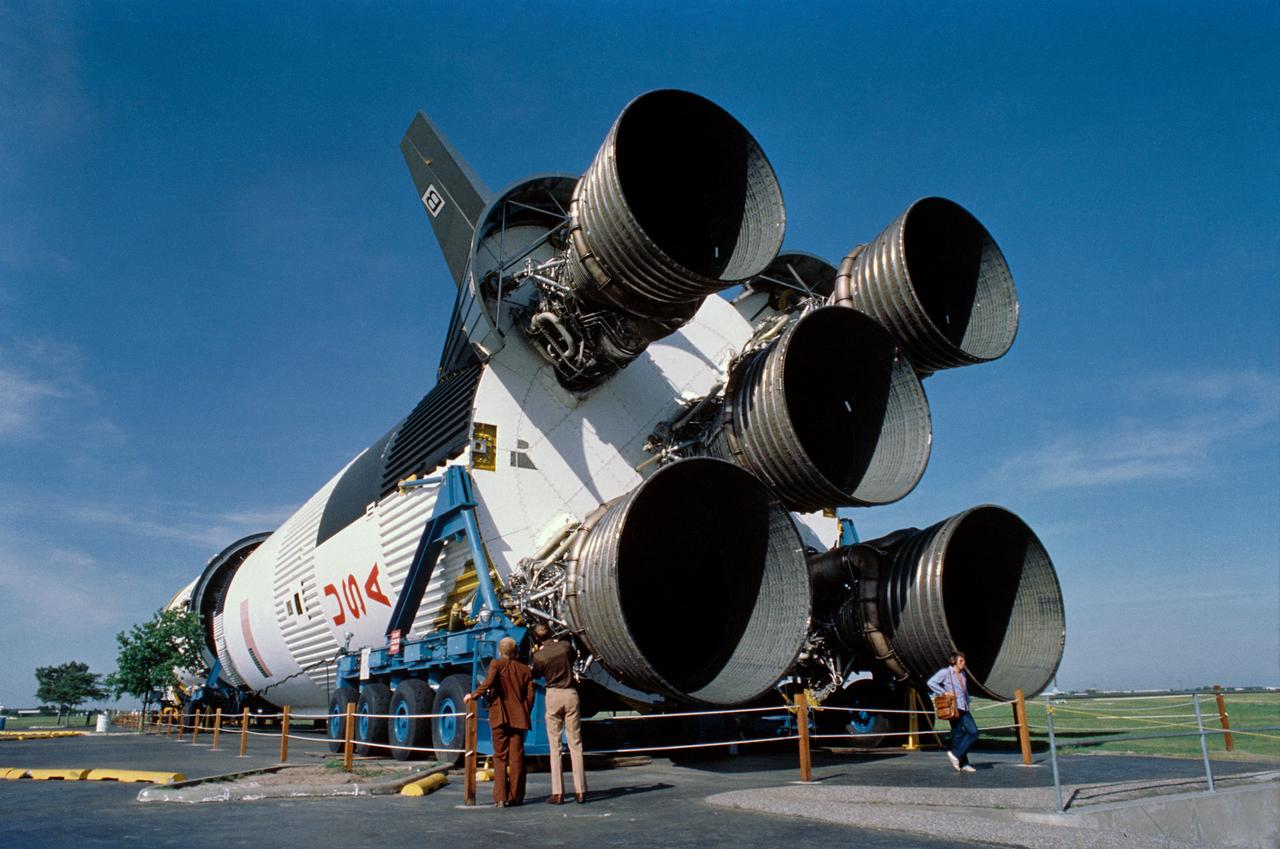
Views of exhibit to be used in making Public Service Announcements on 16mm for PAO.This is a view of the Saturn V First Stage and Engines.
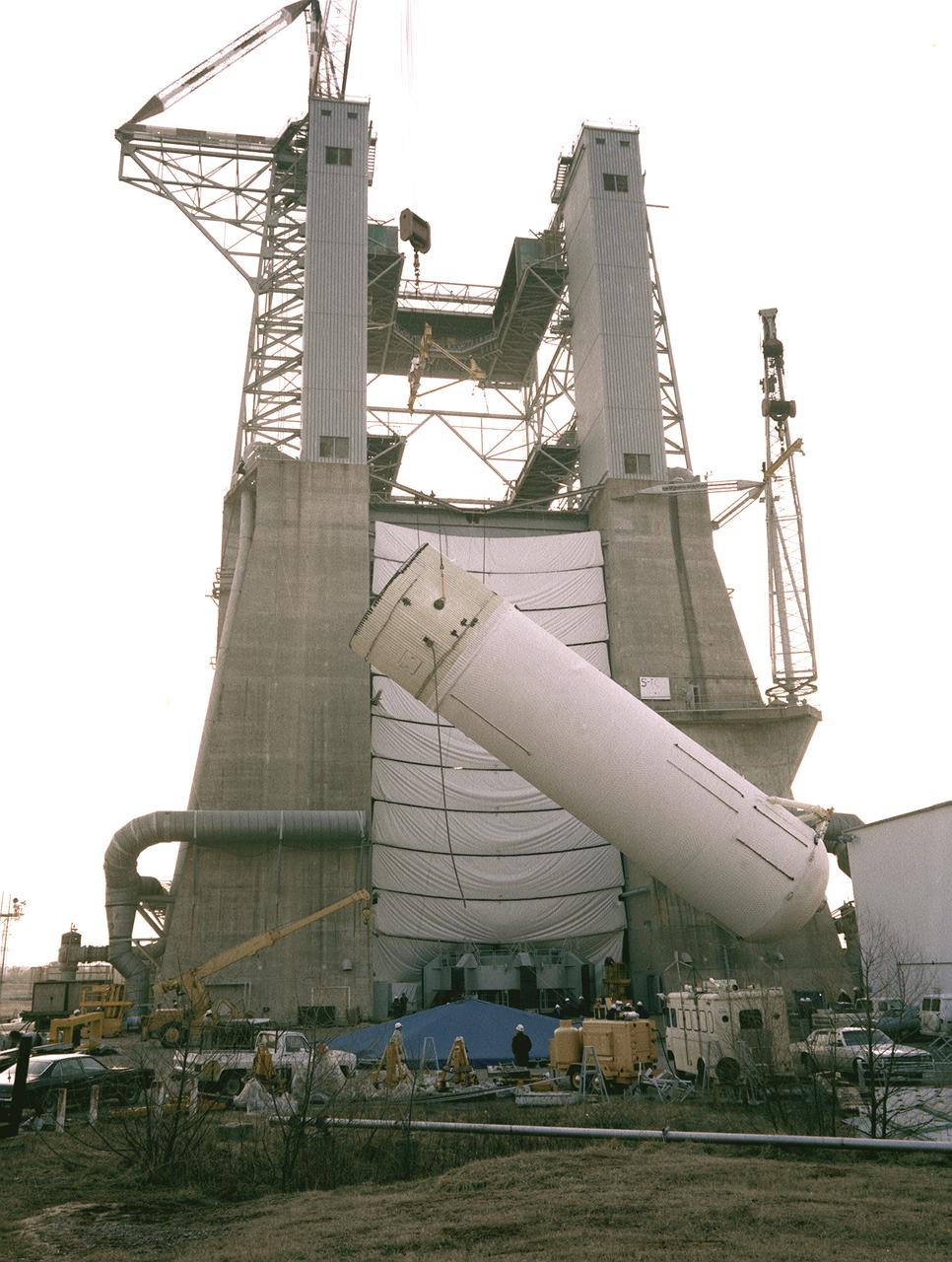
A liquid hydrogen tank of the Shuttle's external tank (ET) is installed into the S-1C Test Stand for a structural test at the Marshall Space Flight Center. At 154-feet long and more than 27-feet in diameter, the ET is the largest component of the Space Shuttle, the structural backbone of the entire Shuttle system, and is the only part of the vehicle that is not reusable. The ET is manufactured at the Michoud Assembly Facility near New Orleans, Louisiana, by the Martin Marietta Corporation under management of the Marshall Space Flight Center.
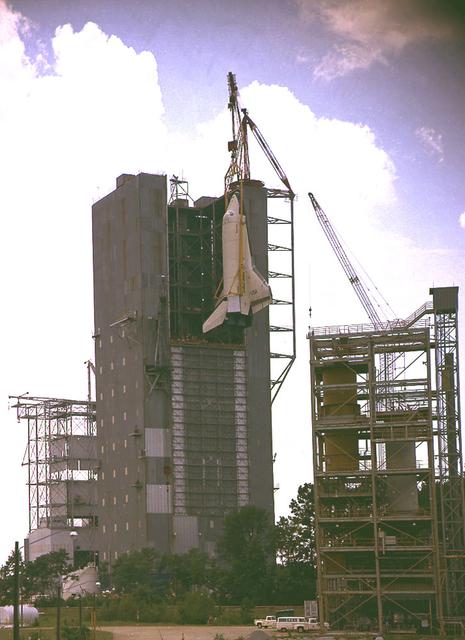
This is a photo of the removal of the Orbiter Enterprise from the Marshall Space Flight Center Dynamic Test Stand after its first Mated Vertical Ground Vibration Test (MVGVT).
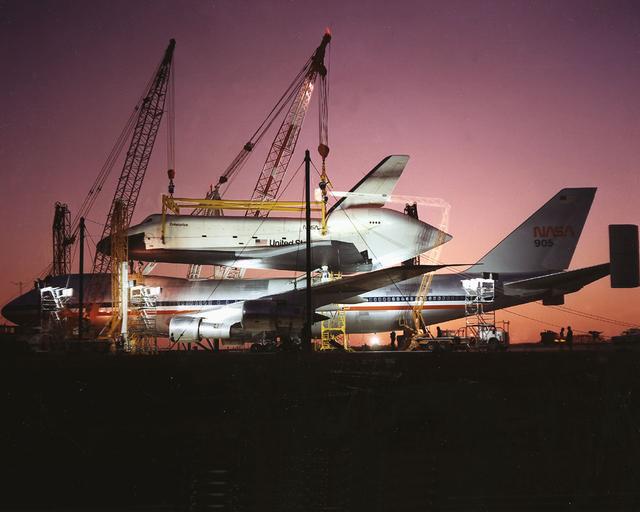
The Shuttle Orbiter Enterprise is off-loaded at Redstone Arsenal Airfield for later Mated Vertical Ground Vibration tests (MVGVT) at Marshall Space Flight Center's Dynamic Test Stand. The tests marked the first time ever that the entire shuttle complement (including orbiter, external tank, and solid rocket boosters) were mated vertically.
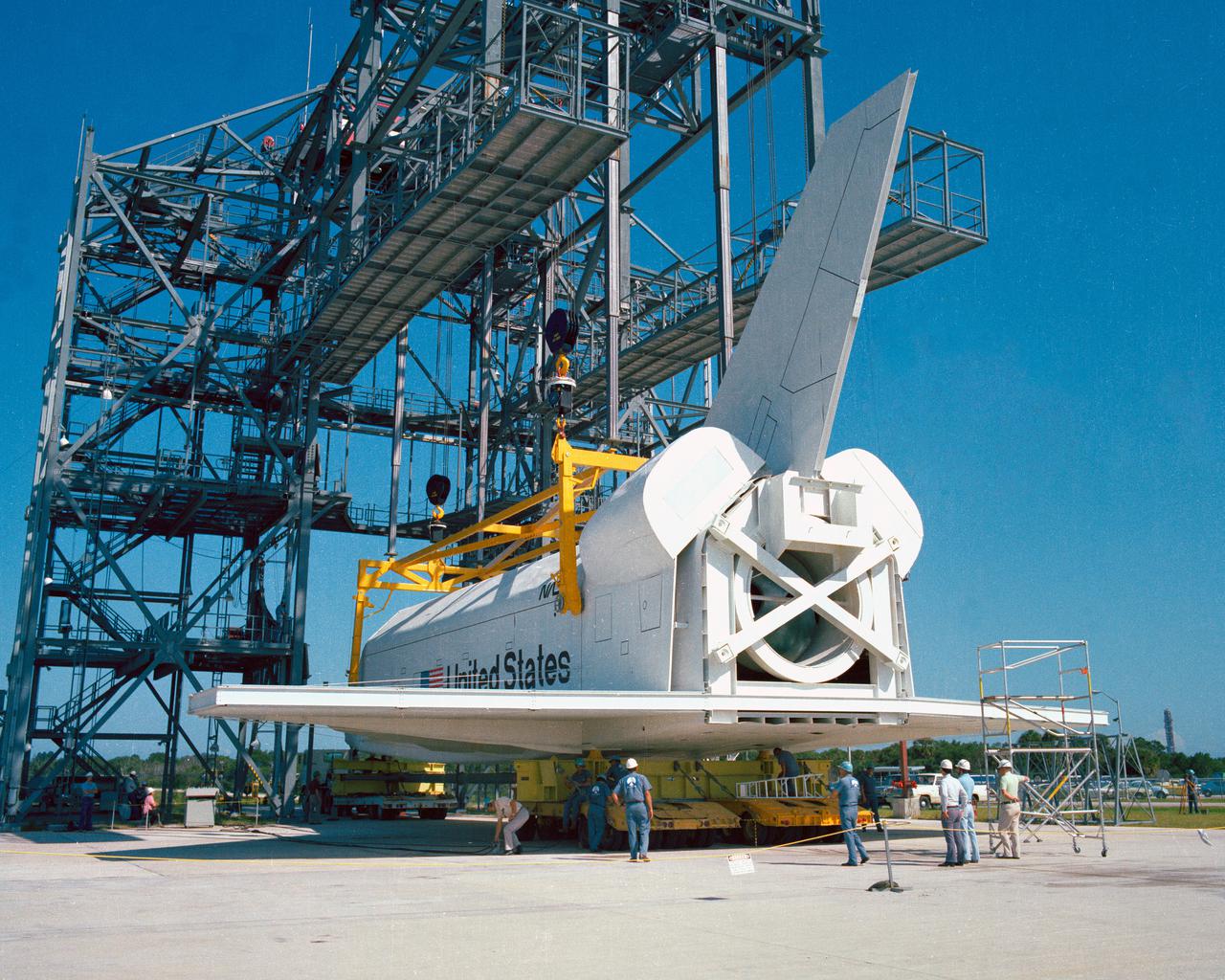
CAPE CANAVERAL, Fla. – At NASA's Kennedy Space Center in Florida, the space shuttle mock-up, dubbed Pathfinder, is attached to the Mate-Demate Device for at fit-check Oct. 19, 1978. The mock-up, constructed at NASA's Marshall Space Flight Center in Huntsville, Ala., possessed the general dimensions, weight and balance of a real space shuttle. It was shipped to Kennedy by barge and then used to fit-check the work platforms of the Mate-Demate Device, orbiter processing facilities and Vehicle Assembly Building, as well as support ground crew training. It also was used to rehearse post-landing procedures at Kennedy's Shuttle Landing Facility. After being on display at the 'Great Space Shuttle Exposition' in Tokyo from June 1983 to August 1984, the mock-up returned to Marshall and now is on permanent display at the U.S. Space and Rocket Center near Huntsville. Photo credit: NASA
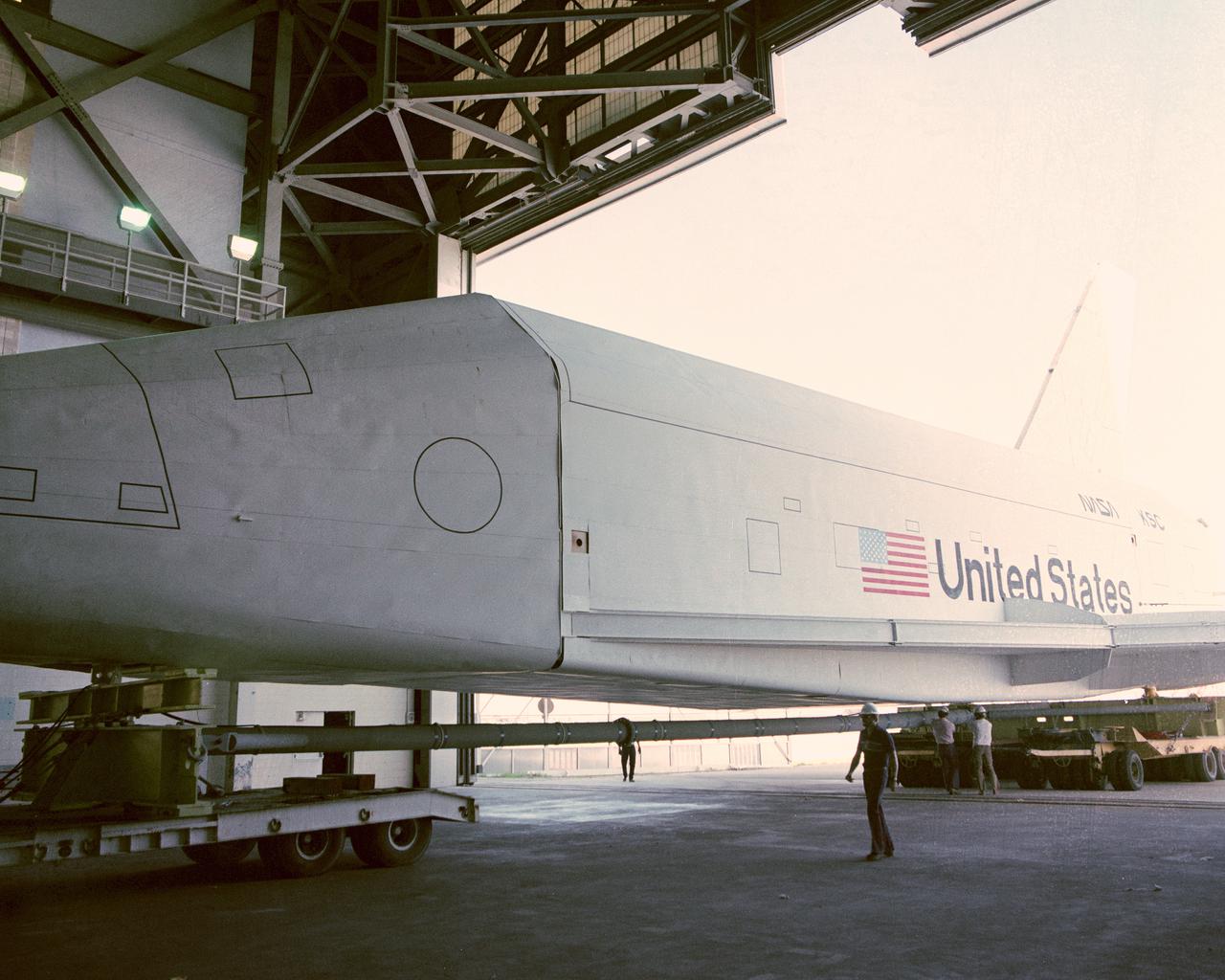
CAPE CANAVERAL, Fla. – At NASA's Kennedy Space Center in Florida, the space shuttle mock-up, dubbed Pathfinder, enters the Vehicle Assembly Building for a fit-check May 15, 1978. The mock-up, constructed at NASA's Marshall Space Flight Center in Huntsville, Ala., possessed the general dimensions, weight and balance of a real space shuttle. It was shipped to Kennedy by barge and then used to fit-check the work platforms of the Mate-Demate Device, orbiter processing facilities and Vehicle Assembly Building, as well as support ground crew training. It also was used to rehearse post-landing procedures at Kennedy's Shuttle Landing Facility. After being on display at the 'Great Space Shuttle Exposition' in Tokyo from June 1983 to August 1984, the mock-up returned to Marshall and now is on permanent display at the U.S. Space and Rocket Center near Huntsville. Photo credit: NASA
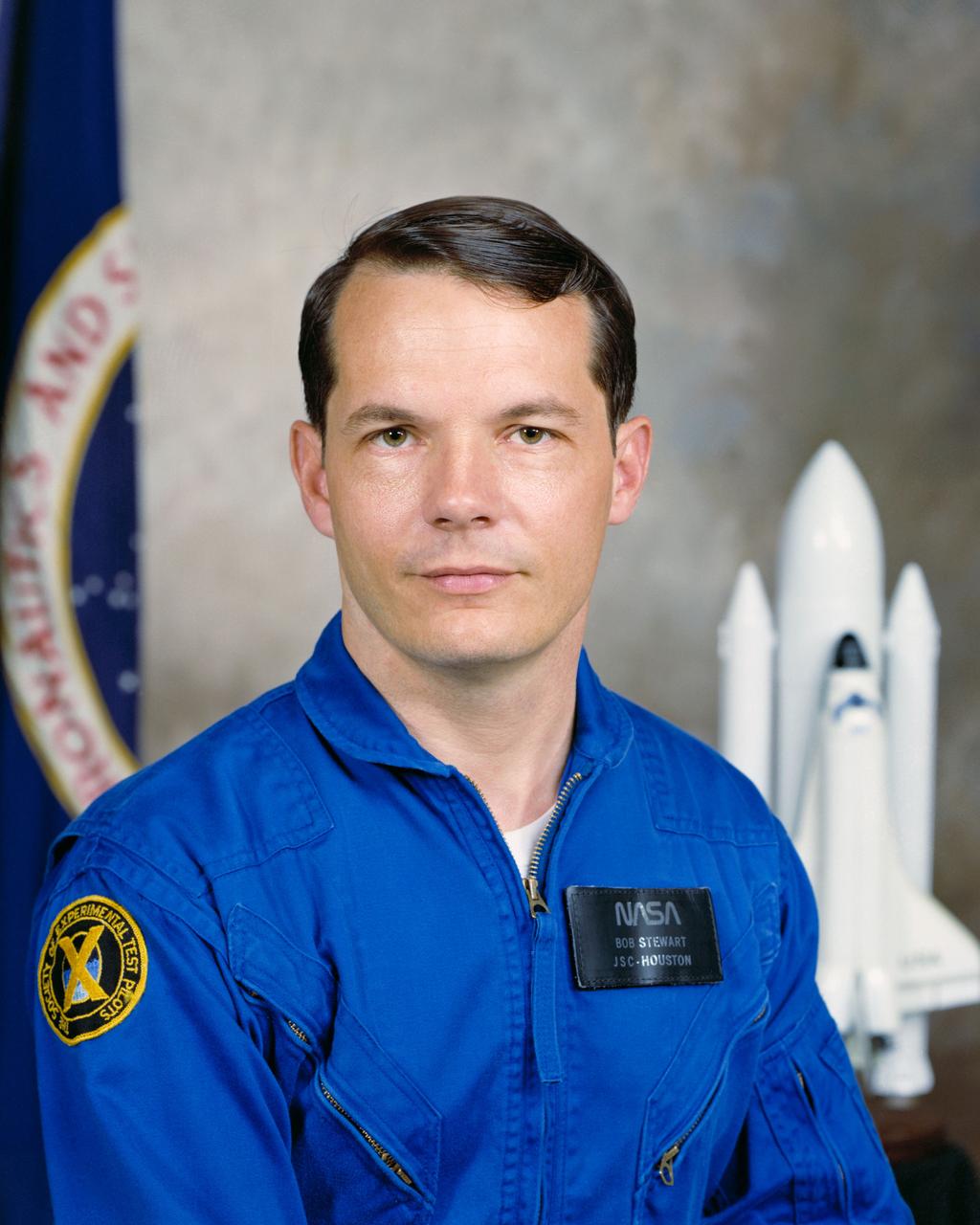
S78-35309 (31 Jan 1978) --- Astronaut Robert L. Stewart.
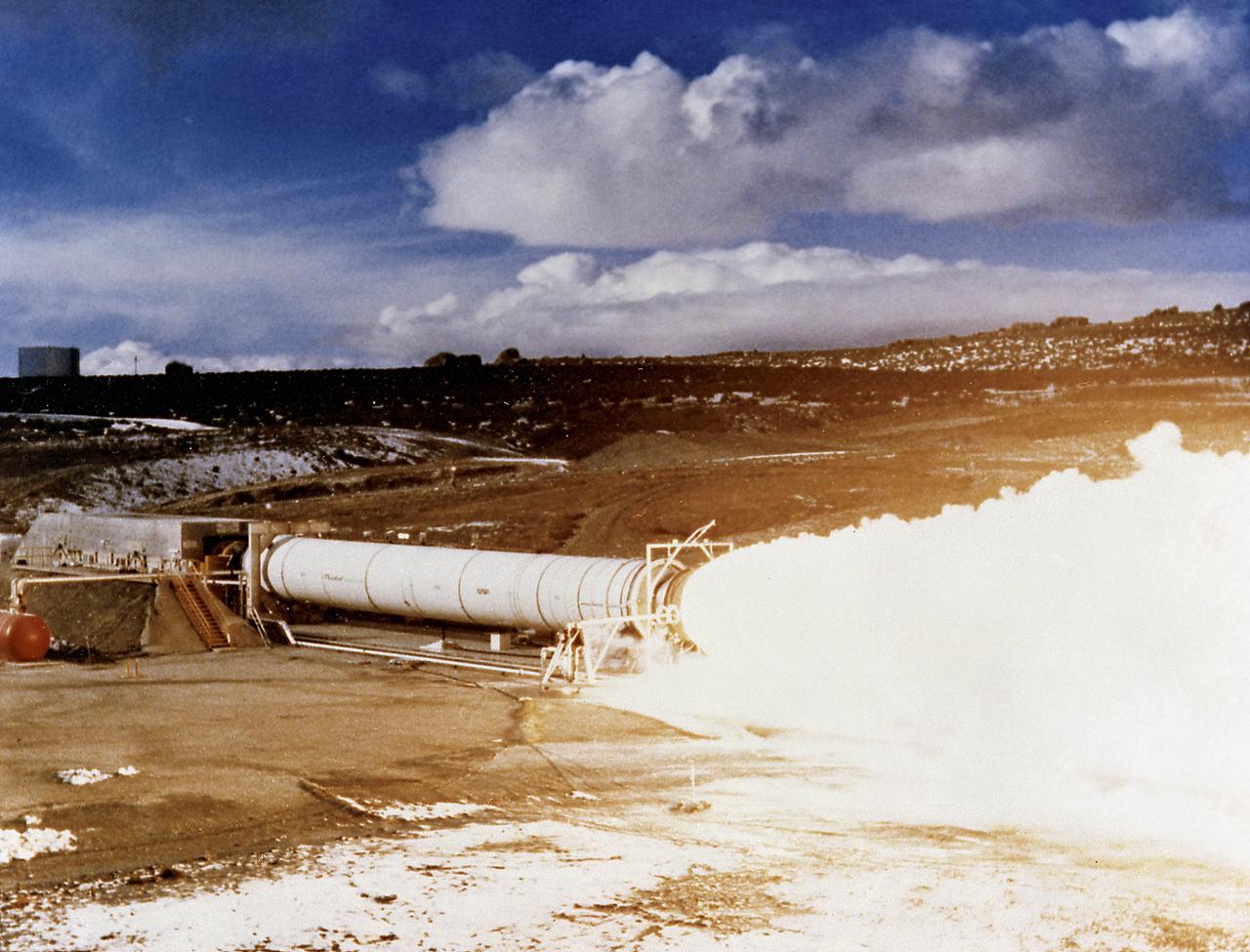
Pictured is an early testing of the Solid Rocket Motor (SRM) at the Thiokol facility in Utah. The SRMs later became known as Solid Rocket Boosters (SRBs) as they were more frequently used on the Space Shuttles.
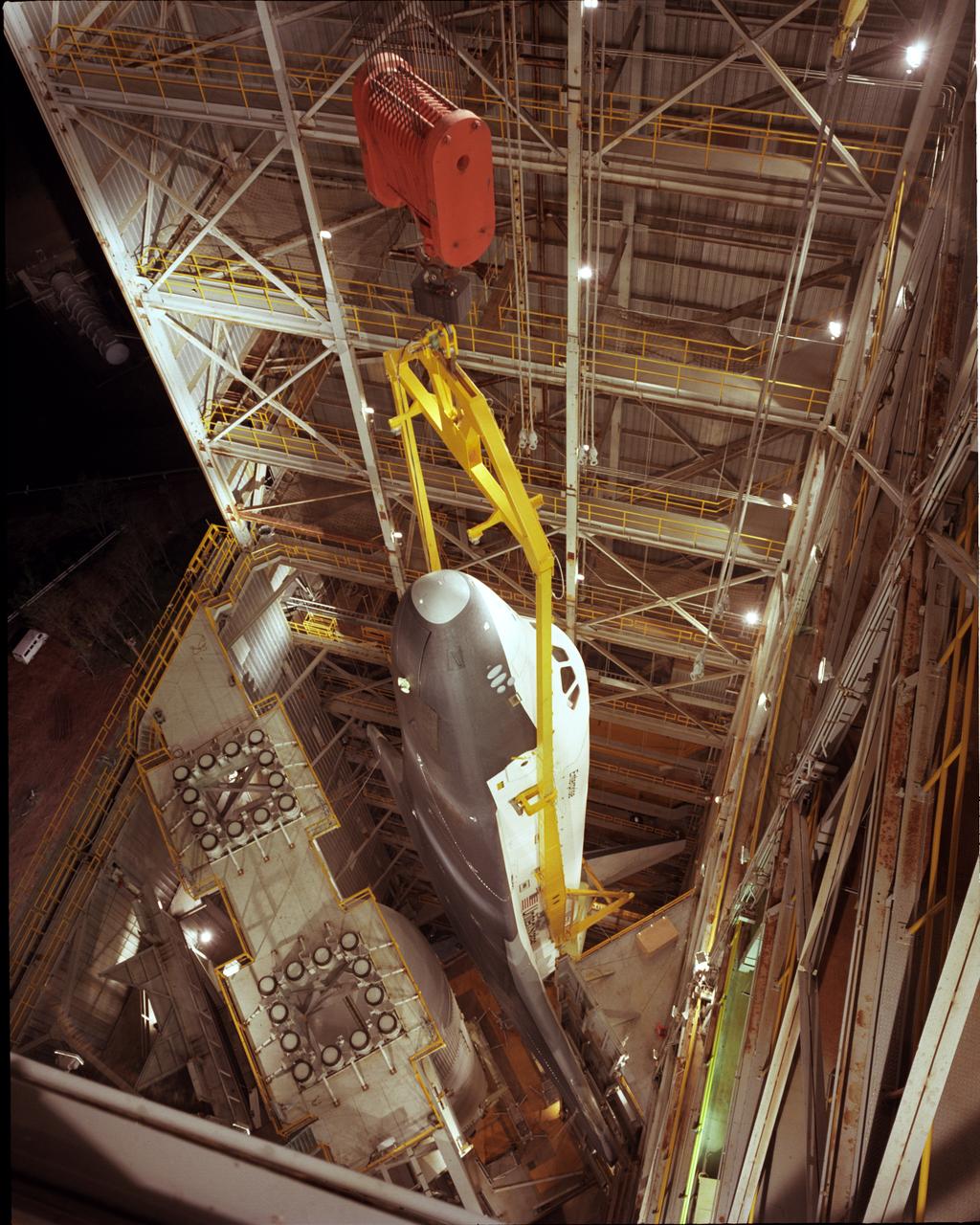
The Shuttle Orbiter Enterprise is lowered into the Dynamic Test Stand for Mated Vertical Ground Vibration tests (MVGVT) at the Marshall Space Flight Center. The tests marked the first time ever that the entire shuttle complement (including Orbiter, external tank, and solid rocket boosters) were mated vertically.

The launch of an Atlas/Centaur launch vehicle is shown in this photograph. The Atlas/Centaur, launched on November 13, 1978, carried the High Energy Astronomy Observatory (HEAO)-2 into the required orbit. The second observatory, the HEAO-2 (nicknamed the Einstein Observatory in honor of the centernial of the birth of Albert Einstein) carried the first telescope capable of producing actual photographs of x-ray objects.
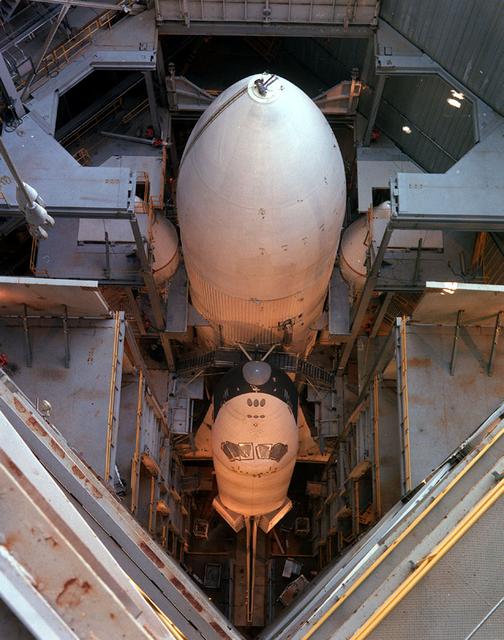
In its mated liftoff configuration of External Tank (ET) and Solid Rocket Boosters (SRB's), the Orbiter Enterprise (OV101) is pictured in the Marshall Space Flight Center Dynamic Test Stand for a Mated Vertical Ground Vibration Test (MVGVT).
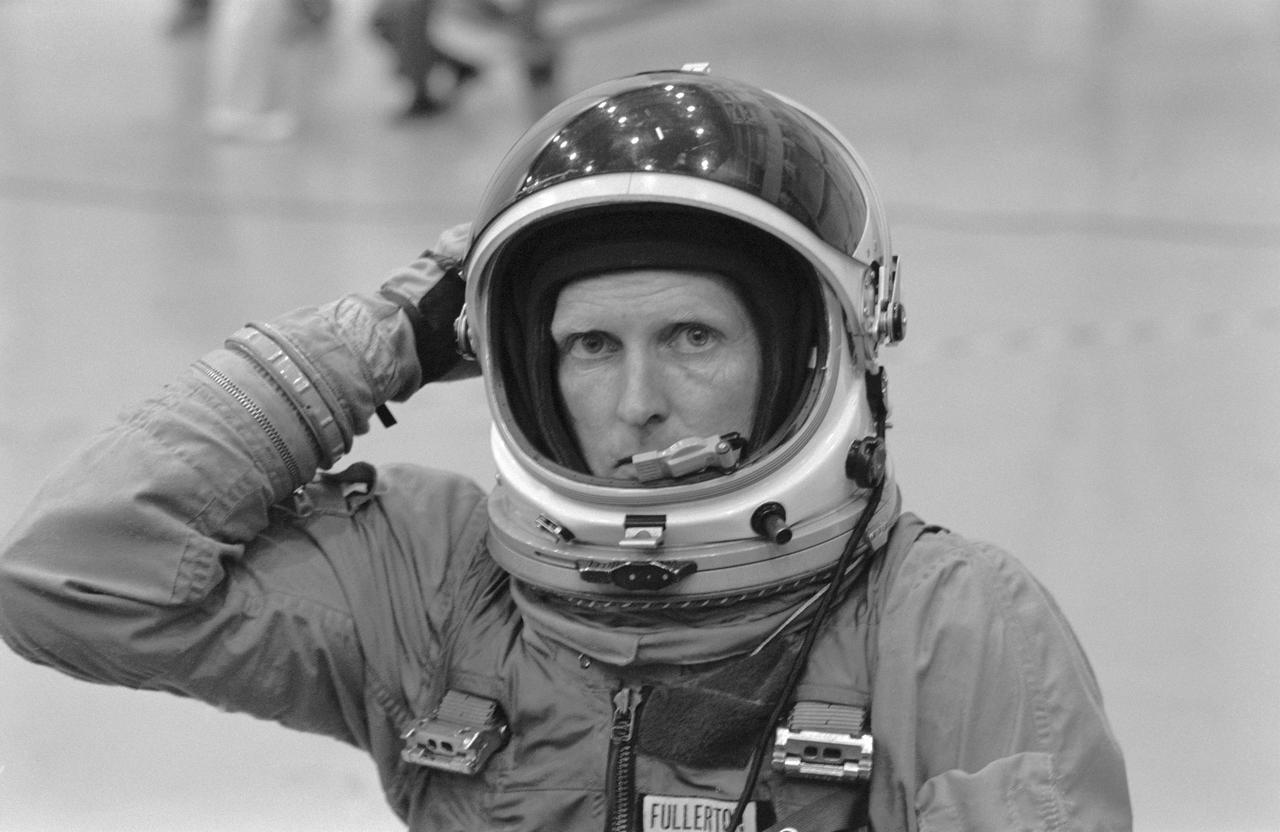
S78-34927 (31 Aug. 1978) --- Astronaut C. Gordon Fullerton, one of a group of eight astronauts named to fly the first few orbital flight tests of the space transportation system, gets ready to participate in a training session for emergency egress from a space shuttle vehicle at the launch pad. He is wearing a USAF modified high altitude pressure garment like those to be worn by shuttle crew members at takeoff and landing. Photo credit: NASA NOTE: Since this photograph was made, astronaut C. Gordon Fullerton was named pilot of STS-3, scheduled for launch in early spring of 1982.
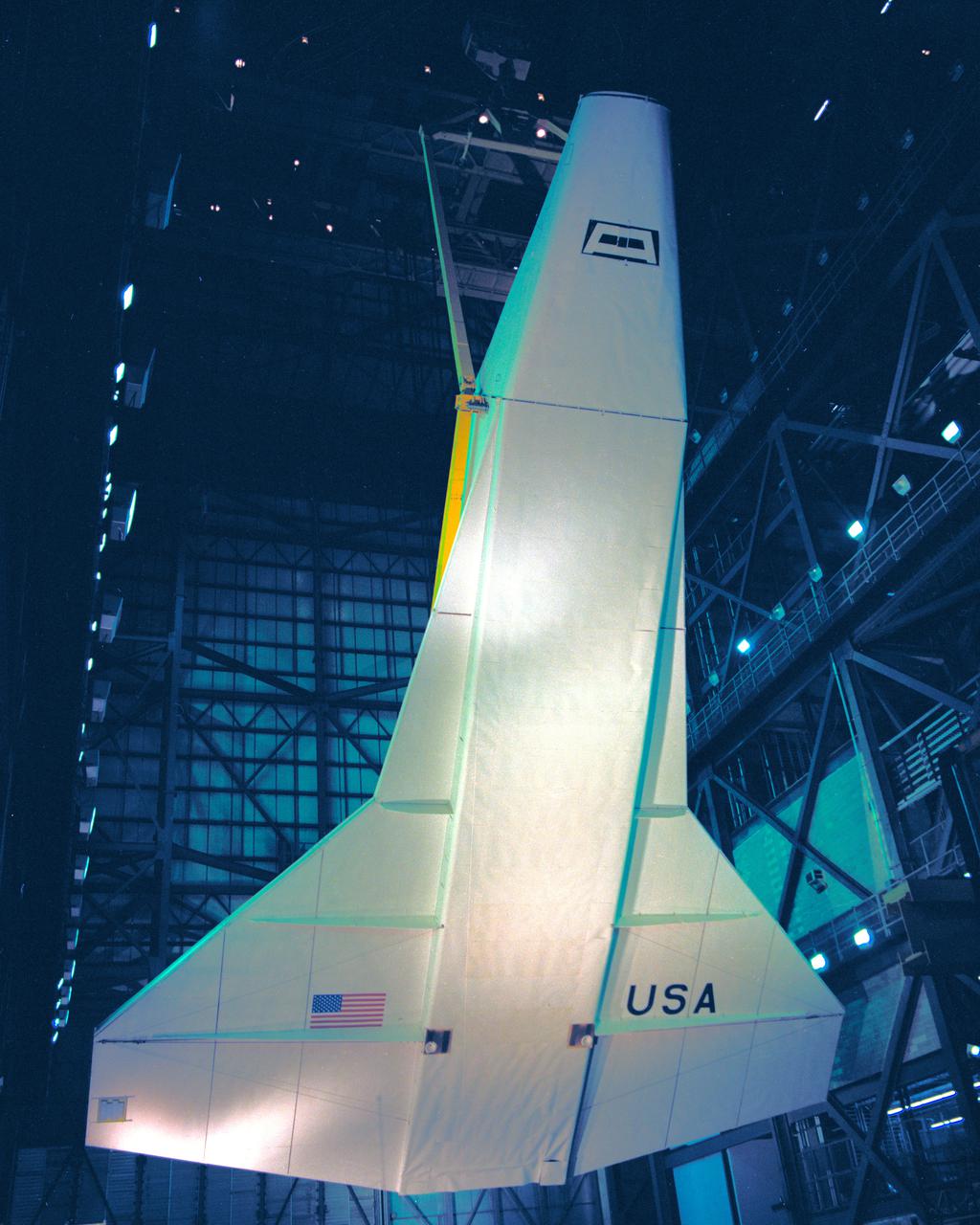
CAPE CANAVERAL, Fla. – At NASA's Kennedy Space Center in Florida, the space shuttle mock-up, dubbed Pathfinder, undergoes a lift test in the Vehicle Assembly Building on May 31, 1978. The mock-up, constructed at NASA's Marshall Space Flight Center in Huntsville, Ala., possessed the general dimensions, weight and balance of a real space shuttle. It was shipped to Kennedy by barge and then used to fit-check the work platforms of the Mate-Demate Device, orbiter processing facilities and Vehicle Assembly Building, as well as support ground crew training. It also was used to rehearse post-landing procedures at Kennedy's Shuttle Landing Facility. After being on display at the 'Great Space Shuttle Exposition' in Tokyo from June 1983 to August 1984, the mock-up returned to Marshall and now is on permanent display at the U.S. Space and Rocket Center near Huntsville. Photo credit: NASA
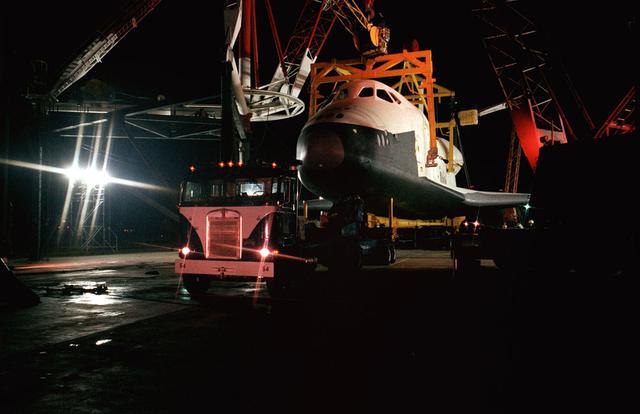
The Shuttle Orbiter Enterprise is off-loaded at Redstone Arsenal Airfield for later Mated Vertical Ground Vibration tests (MVGVT) at Marshall Space Flight Center's Dynamic Test Stand. The tests marked the first time ever that the entire shuttle complement including orbiter, external tank, and solid rocket boosters were vertically mated.
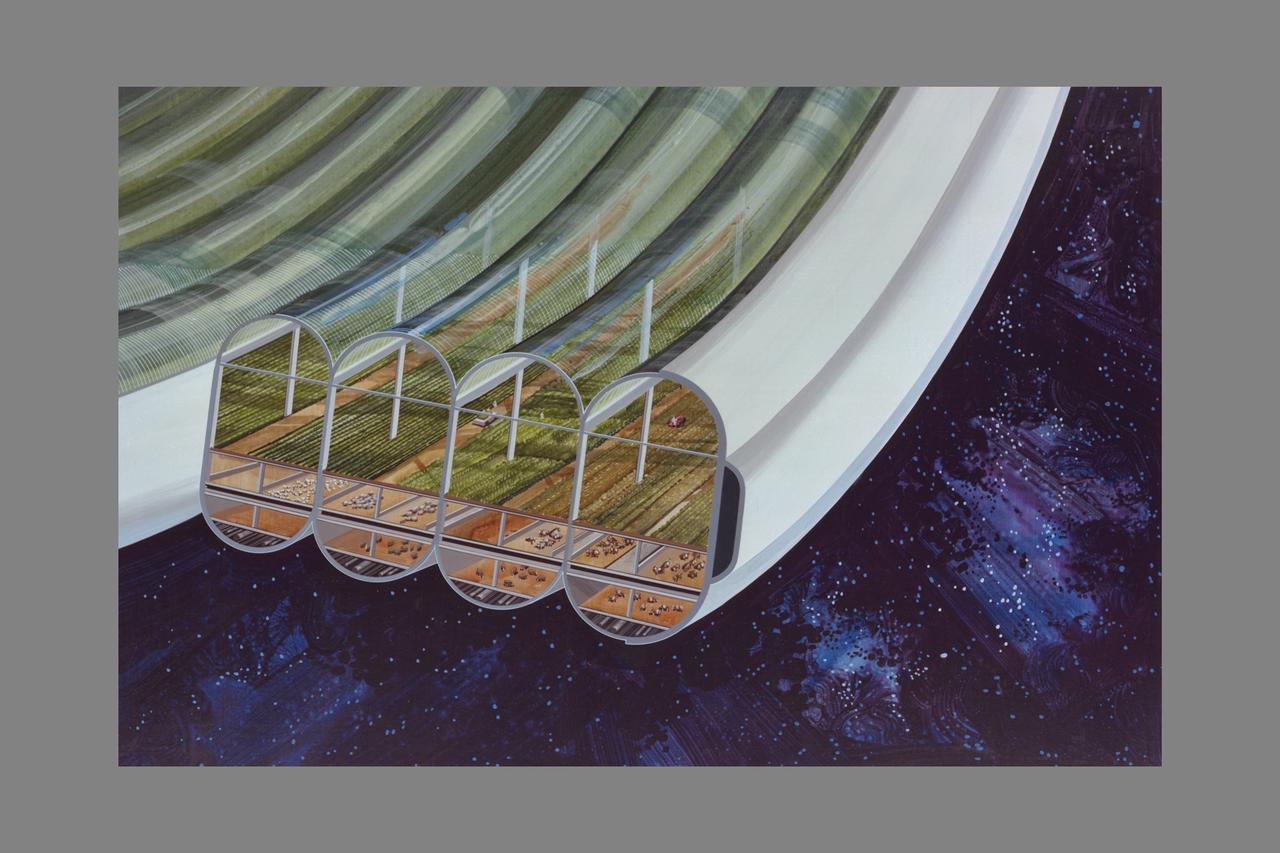
Artist: Rick Guidice Space Colonization regenerative life support systems. This concept from a summer study done in 1977 depicts a closed loop life support system for long duration space settlements or space industrialization.

S78-35296 (1978) --- Astronaut James F. Buchli.
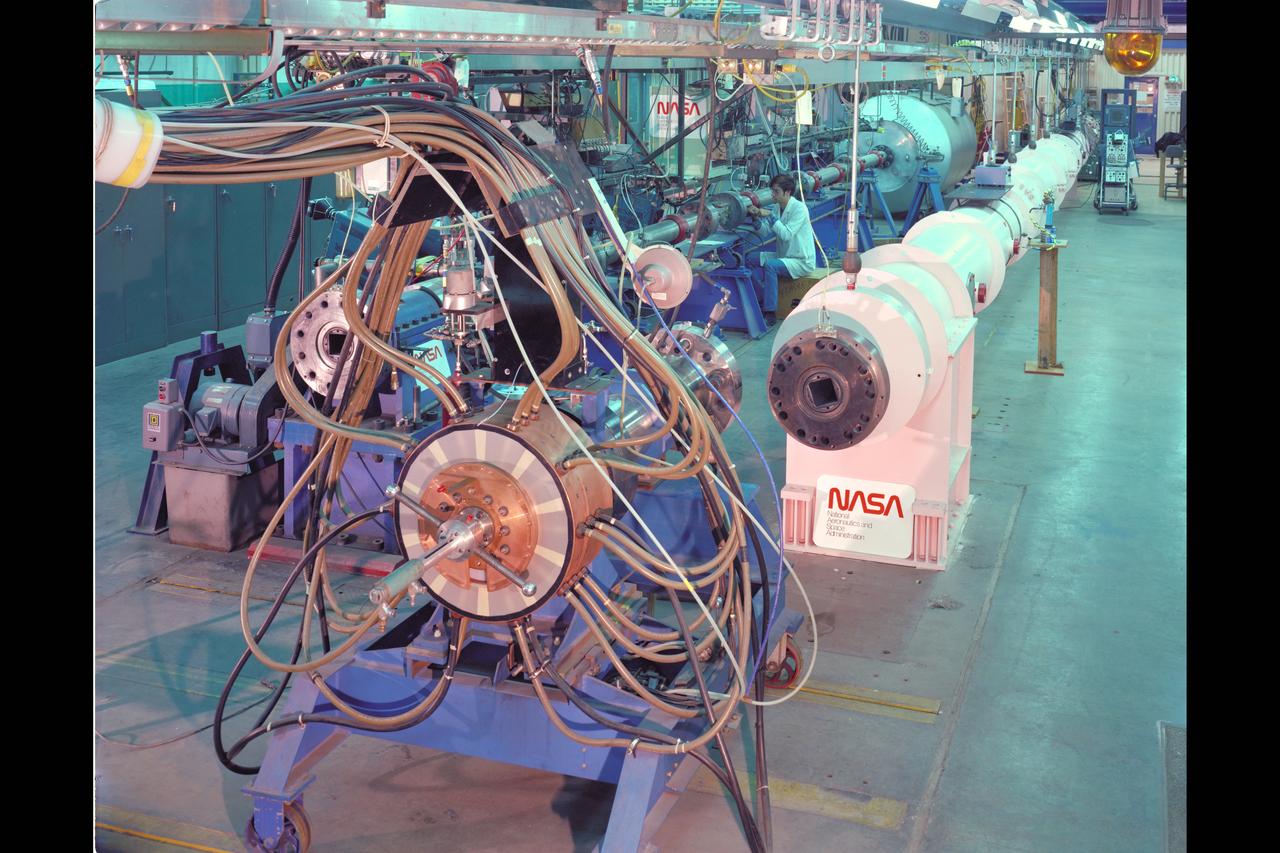
4' and 24' Shock Tubes - Electric Arc Shock Tube Facililty N-229 (East) The facility is used to investigate the effects of radiation and ionization during outer planetary entries as well as for air-blast simualtion which requires the strongest possible shock generation in air at loadings of 1 atm or greater.

This photograph was taken during the assembly of the High Energy Astronomy Observatory (HEAO)-2 at TRW, Inc., the prime contractor for the HEAOs. The HEAO-2, the first imaging and largest x-ray telescope built to date, was capable of producing actual photographs of x-ray objects. TRW, Inc. designed and developed the HEAO, under the project management of the Marshall Space Flight Center. The HEAO-2 was originally identified as HEAO-B but the designation was changed once the spacecraft achieved orbit.
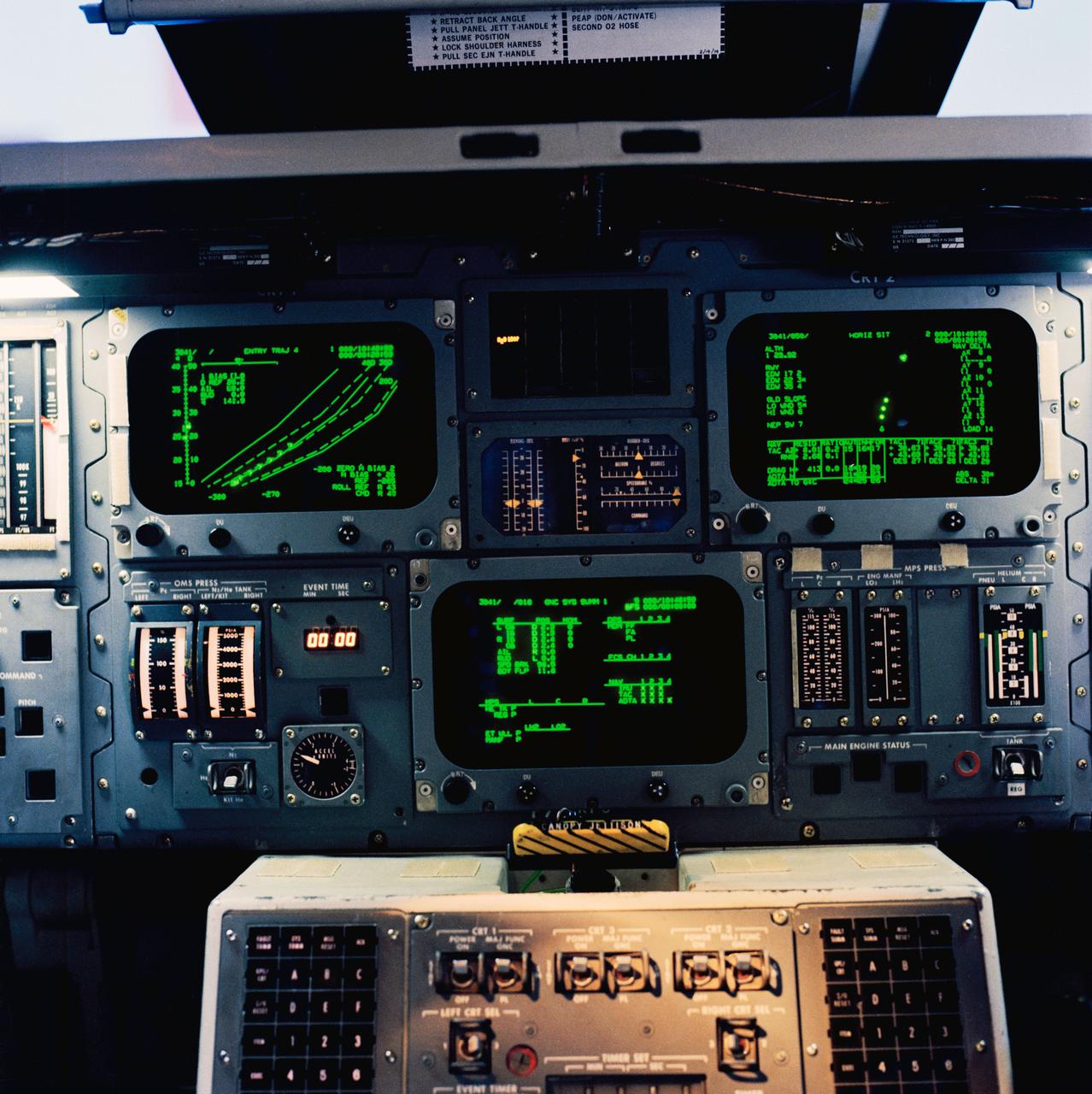
S79-29067 (15 March 1979) --- An interior view of the space shuttle mission simulator (SMS), featuring the area between the commander and pilot positions which houses displays and controls. The cathode ray tube (CRT) computer displays are at top; a portion of the computer keyboards for the commander and pilot can be seen at bottom center. This SMS motion base simulator is located in the mission simulation and training facility at NASA's Johnson Space Center (JSC). Photo credit: NASA
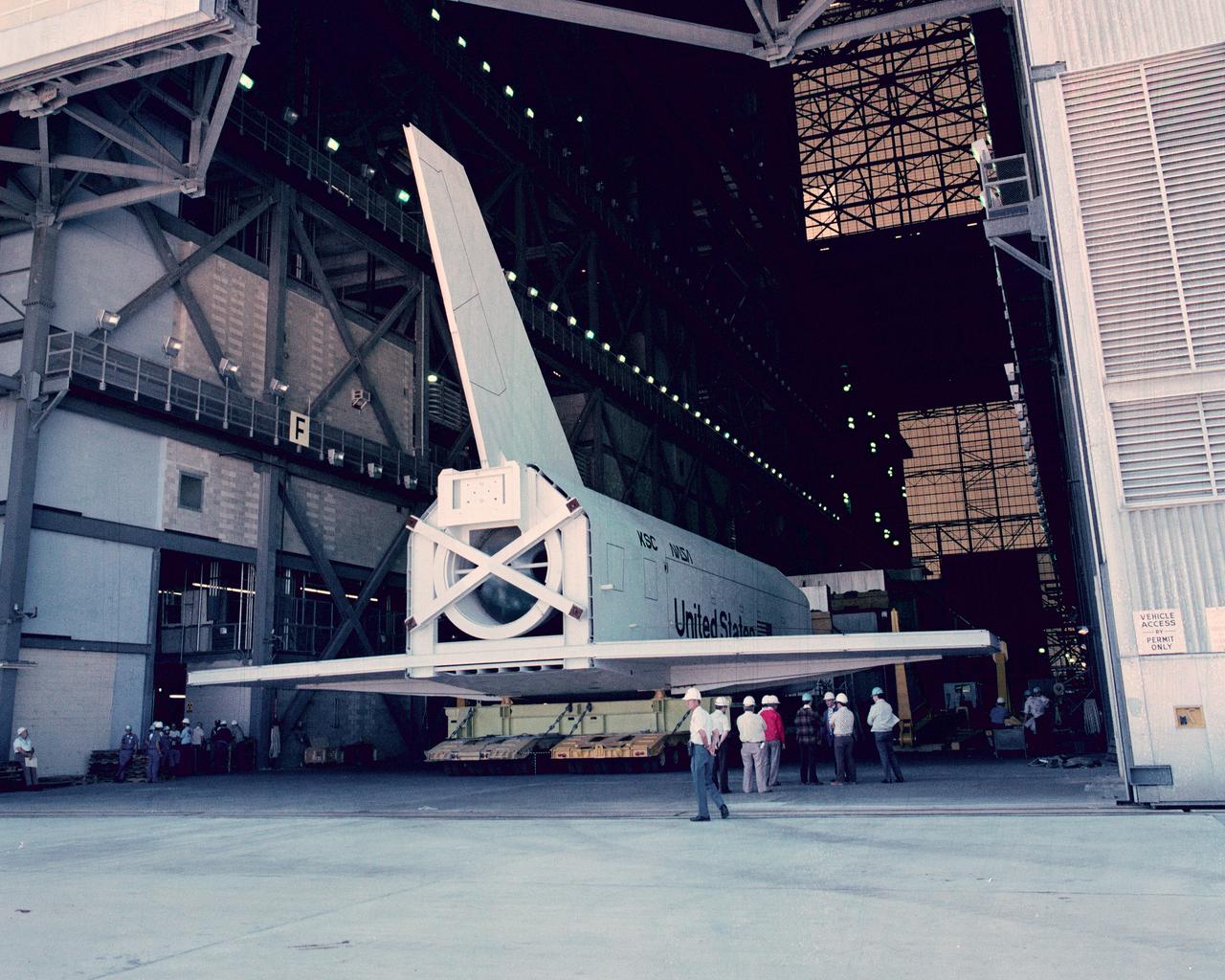
CAPE CANAVERAL, Fla. – At NASA's Kennedy Space Center in Florida, the space shuttle mock-up, dubbed Pathfinder, enters the Vehicle Assembly Building for a fit-check May 15, 1978. The mock-up, constructed at NASA's Marshall Space Flight Center in Huntsville, Ala., possessed the general dimensions, weight and balance of a real space shuttle. It was shipped to Kennedy by barge and then used to fit-check the work platforms of the Mate-Demate Device, orbiter processing facilities and Vehicle Assembly Building, as well as support ground crew training. It also was used to rehearse post-landing procedures at Kennedy's Shuttle Landing Facility. After being on display at the 'Great Space Shuttle Exposition' in Tokyo from June 1983 to August 1984, the mock-up returned to Marshall and now is on permanent display at the U.S. Space and Rocket Center near Huntsville. Photo credit: NASA
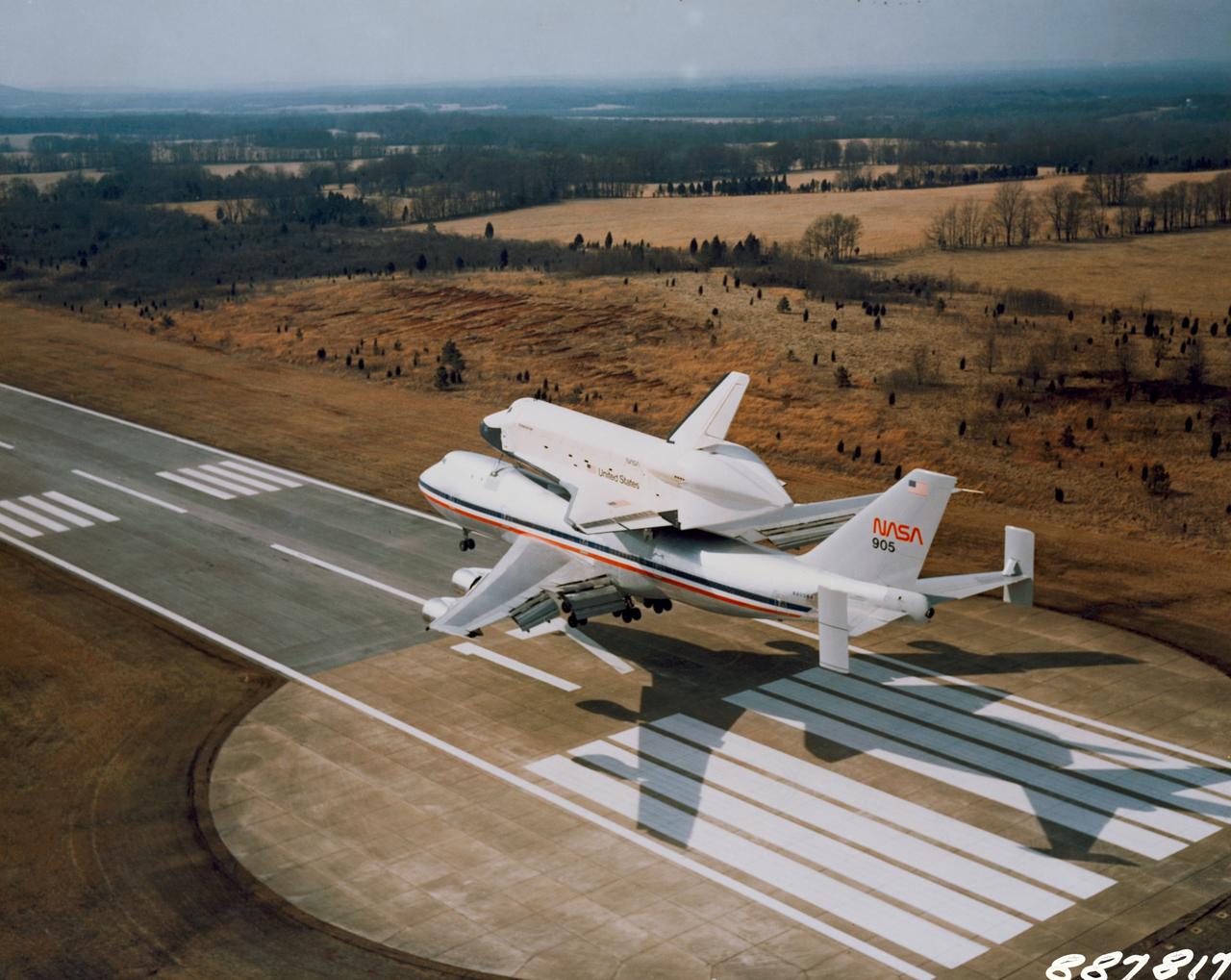
S78-27238 (13 March 1978) --- The space shuttle orbiter 101 Enterprise approaches riding atop its 747 carrier aircraft, arrives at the Redstone Arsenal airstrip near Marshall Space Flight Center (MSFC), Huntsville, Alabama, on March 13, 1978. It is to undergo ground vibration tests along with the external tank and solid rocket boosters, in preparation for Orbiter Flight Tests (OFT) in which its successor craft (Orbiter 102) will take several two-man crews into Earth orbit. Photo credit: NASA
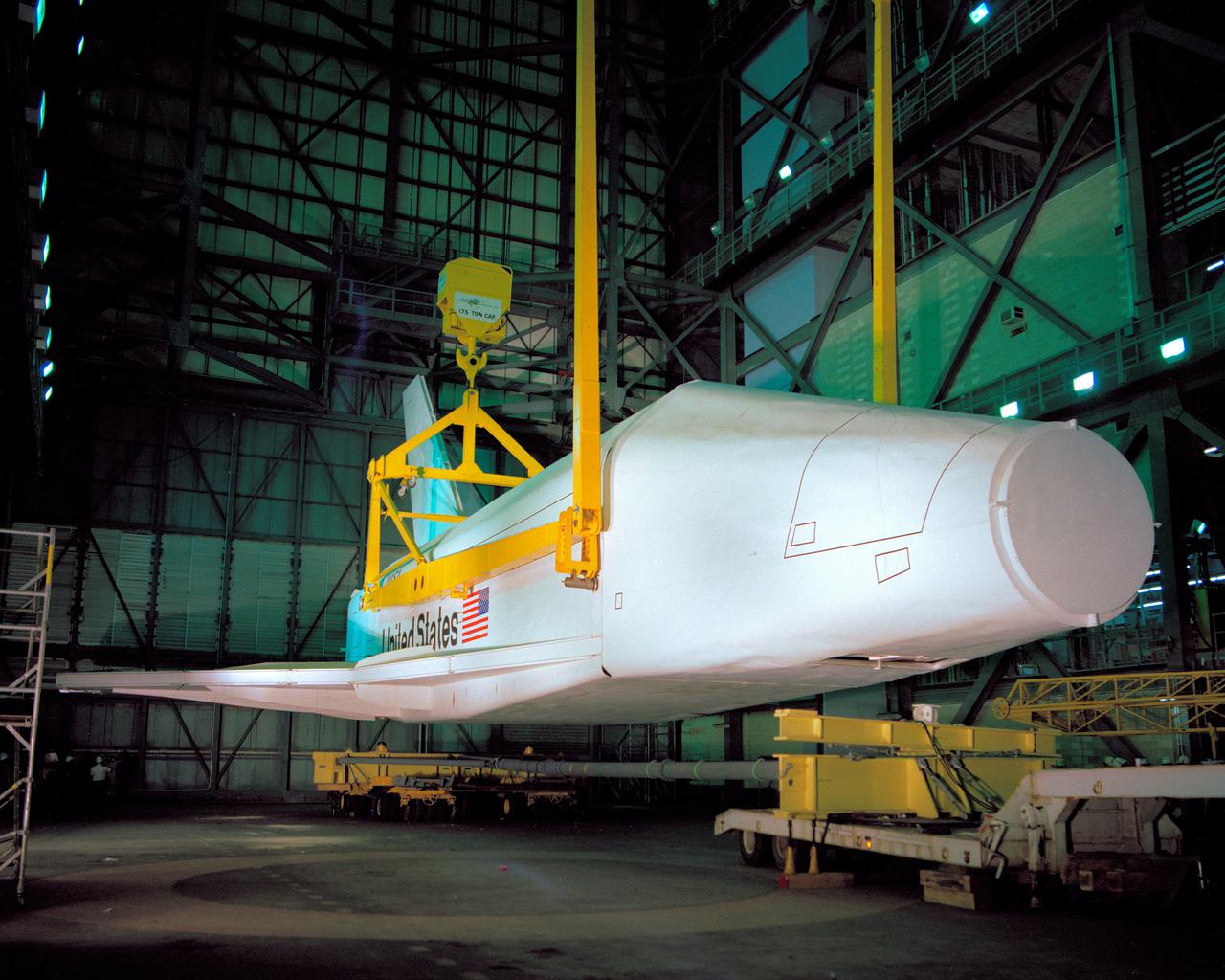
CAPE CANAVERAL, Fla. – At NASA's Kennedy Space Center in Florida, the space shuttle mock-up, dubbed Pathfinder, performs a lift test in the Vehicle Assembly Building on May 31, 1978. The mock-up, constructed at NASA's Marshall Space Flight Center in Huntsville, Ala., possessed the general dimensions, weight and balance of a real space shuttle. It was shipped to Kennedy by barge and then used to fit-check the work platforms of the Mate-Demate Device, orbiter processing facilities and Vehicle Assembly Building, as well as support ground crew training. It also was used to rehearse post-landing procedures at Kennedy's Shuttle Landing Facility. After being on display at the 'Great Space Shuttle Exposition' in Tokyo from June 1983 to August 1984, the mock-up returned to Marshall and now is on permanent display at the U.S. Space and Rocket Center near Huntsville. Photo credit: NASA
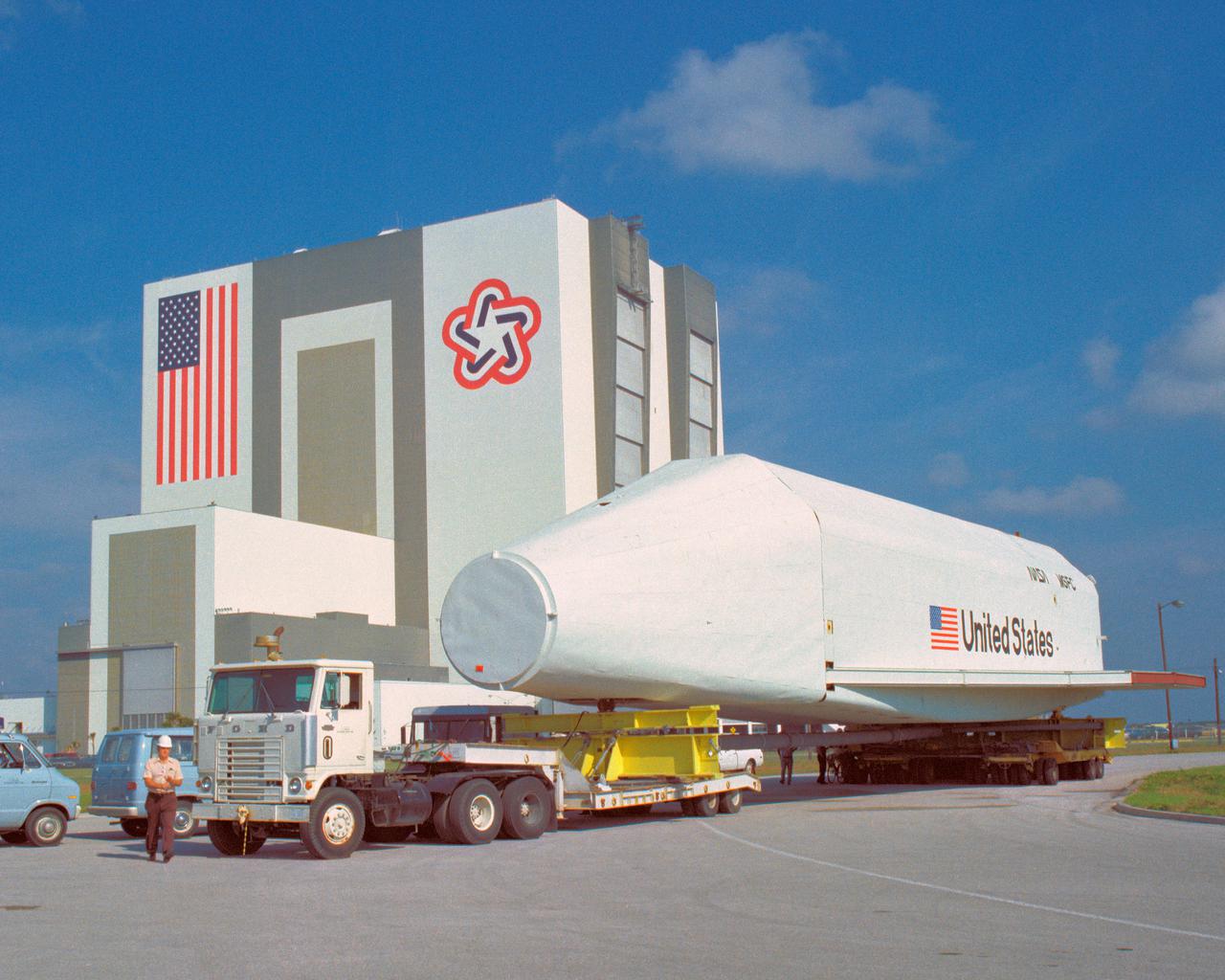
CAPE CANAVERAL, Fla. – At NASA's Kennedy Space Center in Florida, the space shuttle mock-up, dubbed Pathfinder, makes its trek from the turn basin to the Vehicle Assembly Building on April 5, 1978. The mock-up, constructed at NASA's Marshall Space Flight Center in Huntsville, Ala., possessed the general dimensions, weight and balance of a real space shuttle. It was shipped to Kennedy by barge and then used to fit-check the work platforms of the Mate-Demate Device, orbiter processing facilities and Vehicle Assembly Building, as well as support ground crew training. It also was used to rehearse post-landing procedures at Kennedy's Shuttle Landing Facility. After being on display at the 'Great Space Shuttle Exposition' in Tokyo from June 1983 to August 1984, the mock-up returned to Marshall and now is on permanent display at the U.S. Space and Rocket Center near Huntsville. Photo credit: NASA
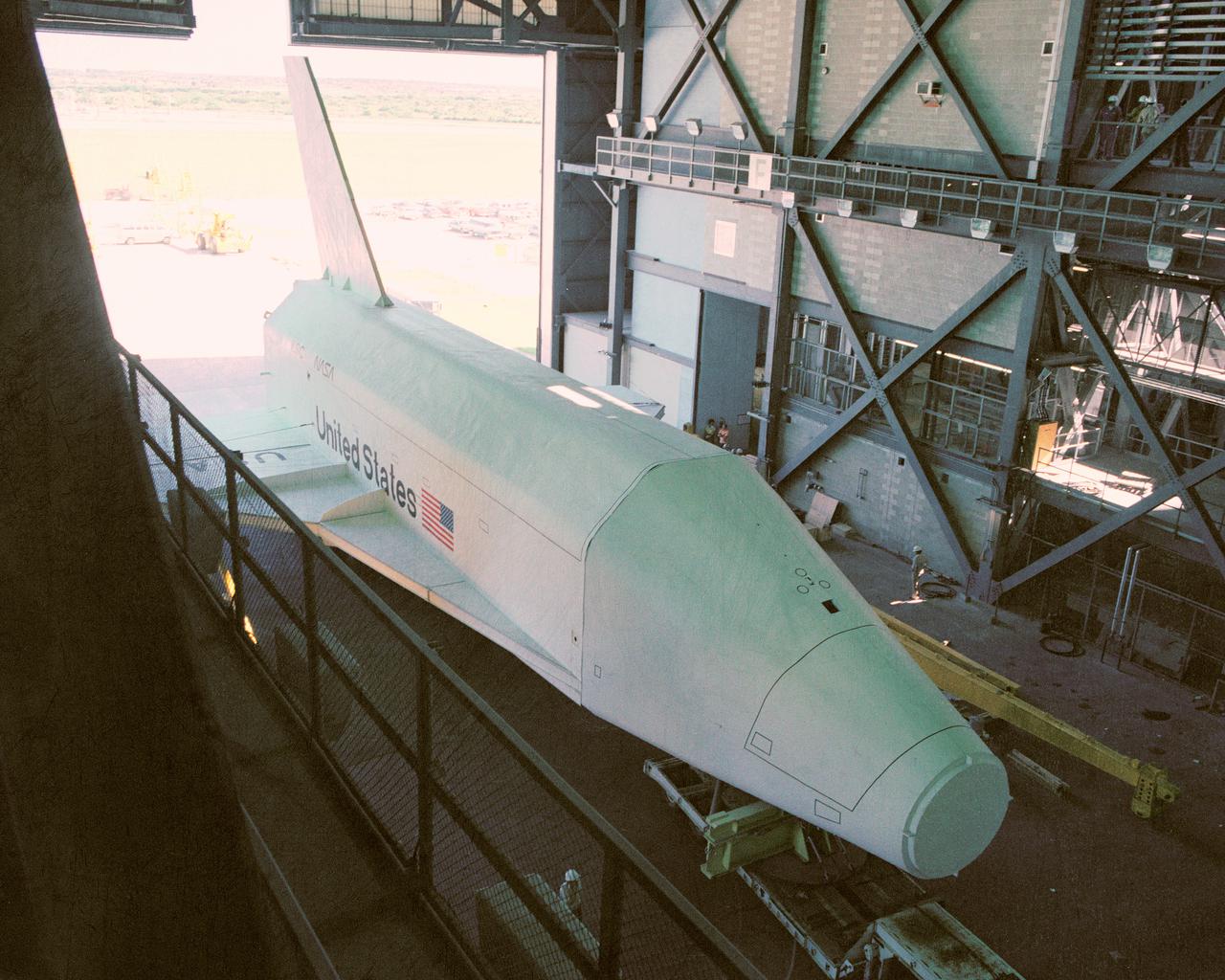
CAPE CANAVERAL, Fla. – At NASA's Kennedy Space Center in Florida, the space shuttle mock-up, dubbed Pathfinder, enters the Vehicle Assembly Building for a fit-check May 15, 1978. The mock-up, constructed at NASA's Marshall Space Flight Center in Huntsville, Ala., possessed the general dimensions, weight and balance of a real space shuttle. It was shipped to Kennedy by barge and then used to fit-check the work platforms of the Mate-Demate Device, orbiter processing facilities and Vehicle Assembly Building, as well as support ground crew training. It also was used to rehearse post-landing procedures at Kennedy's Shuttle Landing Facility. After being on display at the 'Great Space Shuttle Exposition' in Tokyo from June 1983 to August 1984, the mock-up returned to Marshall and now is on permanent display at the U.S. Space and Rocket Center near Huntsville. Photo credit: NASA
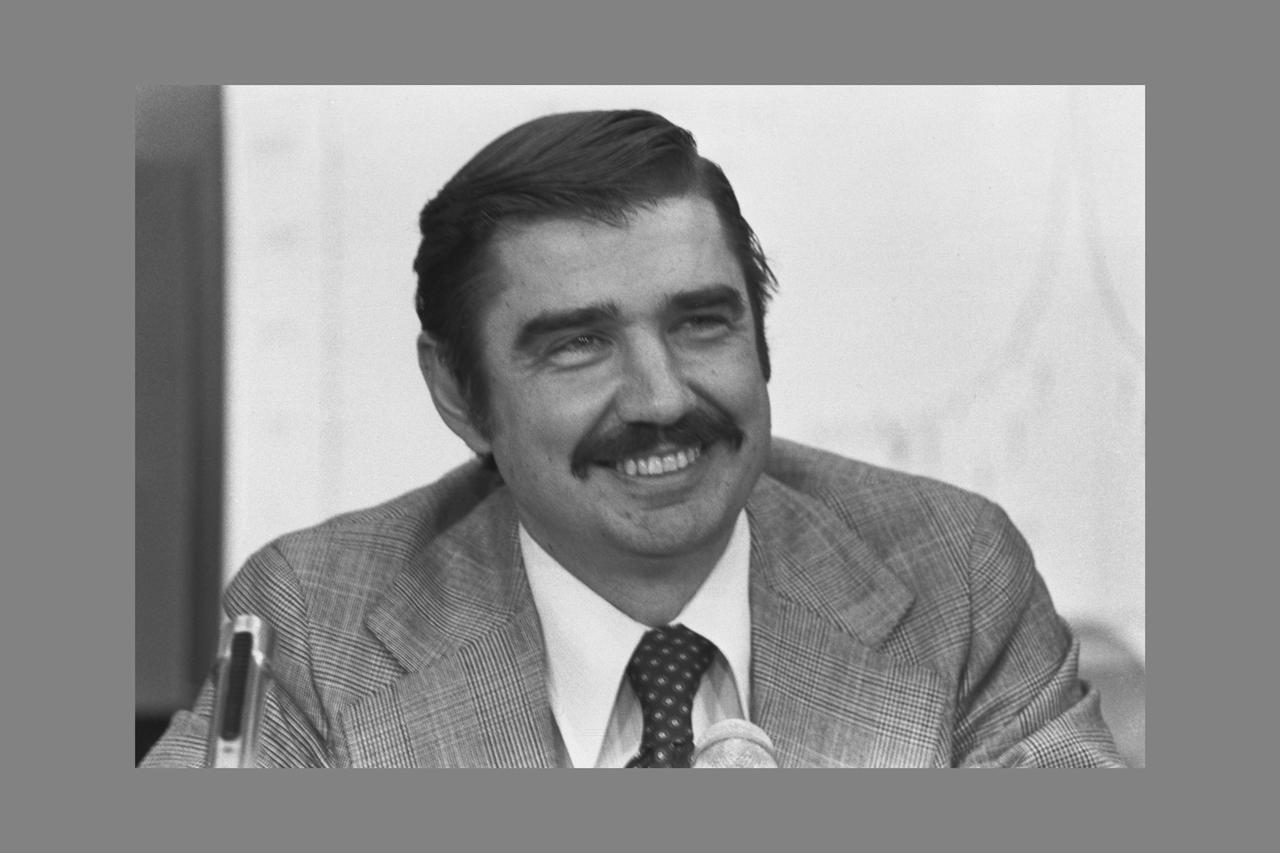
Photographs and Captions courtesy of Joseph and Donna Roizen Telegen, Palo Alto, CA (from) Pioneer 10 and 11 Missions Jupiter encounters - Activities at Ames Research Center December 1973 and December 1974 - As a memento of the highly successful Pioneer 10 and 11 missions to Jupiter, this collection of photographs represents a sampling of those taken at Ames Research Center during the Jupiter encounter periods in December 1973 and December 1974. The captions for these photographs are meant to suggest the lighter side of the intense activities that took place during these periods. I would like to express my gratitude to all participants in the Pioneer 10/11 program for their teamwork in accomplishing the scientific and technical objectives of the Pioneer 10 and 11 missions to Jupiter. (signed) Charles F. Hall - Manager, Pioneer Project Dr. Darrell l Judge 'I hope they are giving prizes for the best looking man at this conference because I finally got my moustache looking perfect.'
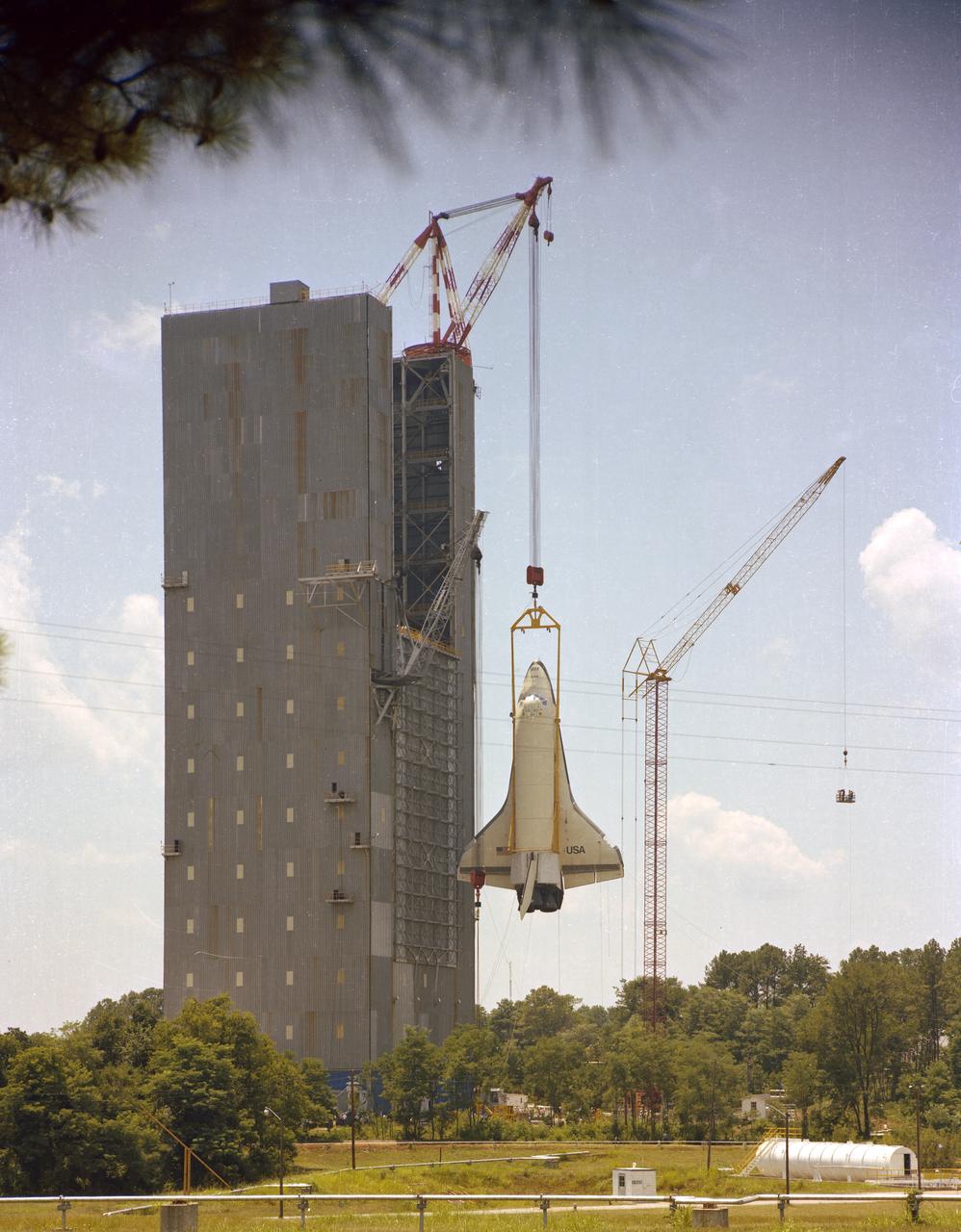
The Shuttle Orbiter Enterprise is removed from Marshall Space Flight Center's Dynamic Test Stand following its first Mated Vertical Ground Vibration test (MVGVT). The tests marked the first time ever that the entire shuttle complement (including Orbiter, external tank, and solid rocket boosters) were mated vertically.

A cancer patient undergoes treatment in the Neutron Therapy Treatment Facility, or Cylotron, at the National Aeronautics and Space Administration (NASA) Lewis Research Center. After World War II Lewis researchers became interested in nuclear energy for propulsion. The focused their efforts on thermodynamics and strength of materials after radiation. In 1950 an 80-person Nuclear Reactor Division was created, and a cyclotron was built behind the Materials and Structures Laboratory. An in-house nuclear school was established to train these researchers in their new field. NASA cancelled its entire nuclear program in January 1973, just as the cyclotron was about to resume operations after a major upgrade. In 1975 the Cleveland Clinic Foundation partnered with NASA Lewis to use the cyclotron for a new type of radiation treatment for cancer patients. The cyclotron split beryllium atoms which caused neutrons to be released. The neutrons were streamed directly at the patient’s tumor. The facility had a dual-beam system that could target the tumor both vertically and horizontally. Over the course of five years, the cyclotron was used to treat 1200 patients. It was found to be particularly effective on salivary gland, prostrate, and other tumors. It was not as successful with tumors of the central nervous system. The program was terminated in 1980 as the Clinic began concentrating on non-radiation treatments.

S78-34037 (31 July 1978) --- Astronaut Jack R. Lousma, geared with a parachute, is pulled along behind a boat in Gulf waters at Homestead Air Force Base in Florida during a water survival training course attended by several NASA astronauts. The overall course is designed to familiarize astronauts with proper procedures to take in the event of ejection from an aircraft over water. Photo credit: NASA (NOTE: Since this photograph was made, astronaut Jack R. Lousma was named commander of STS-3, scheduled for launch in early spring of 1982.)
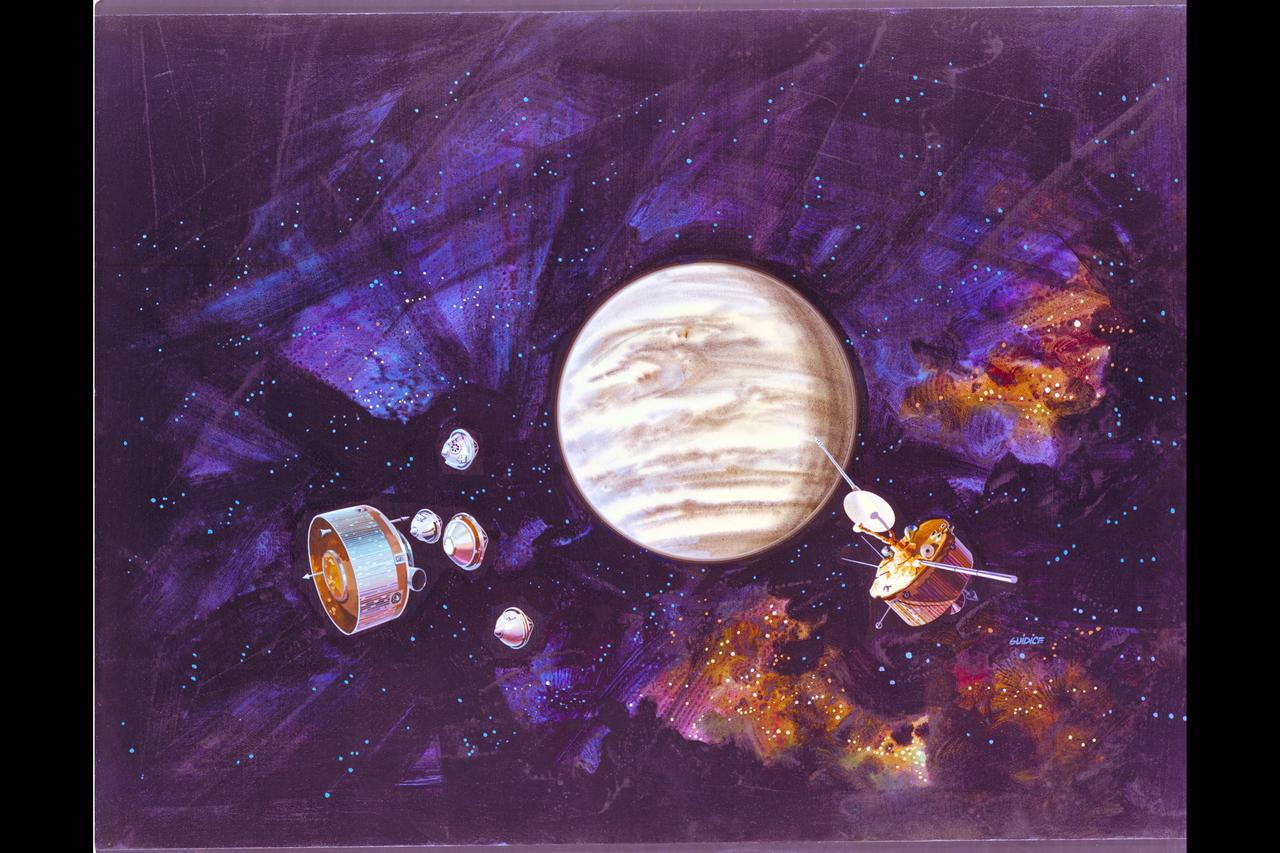
Artist: Rick Guidice Pioneer Venus Mission Artwork: An artist concept of the multiprobe approaching Venus is shown here shortly after the probes release - Top to bottom - night probe, day probe sounder probe, North probe, followed by the bus (Note: this original painting's orientation is upside- down)
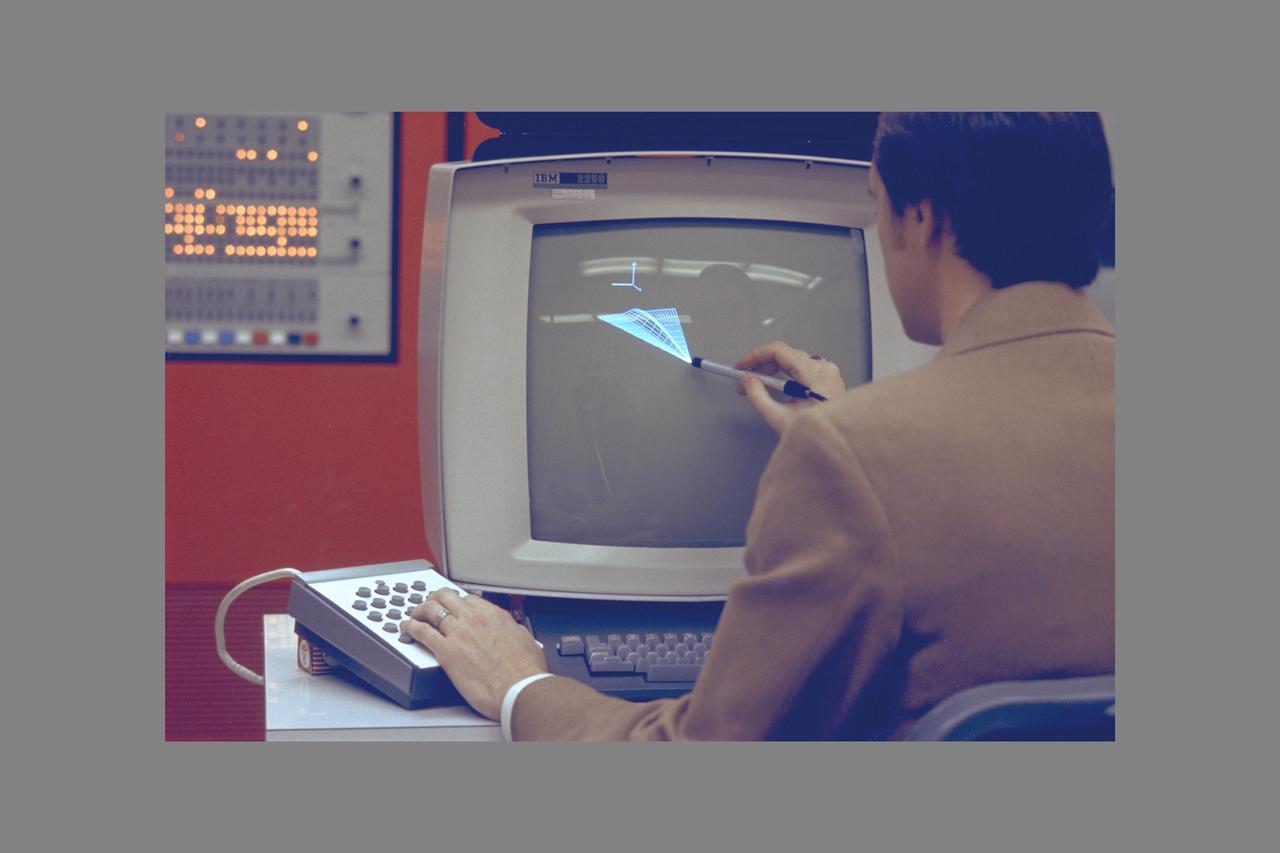
Dr. Paul Kutler, Computational Fluid Dynamics, at IBM terminal - developing ways to better predict the flow of air at high speeds around aerodynamic bodies.

Egress training of Orbiter Simulator, Bldg. 9A, (Technical Services Facility). S78-34922 - Fullerton & Brand, suited. 1. SHUTTLE - CREW TRAINING 2. VANCE D. BRAND - EGRESS TRAINING 3. CHARLES G. FULLERTON - EGRESS TRAINING JSC, HOUSTON, TX
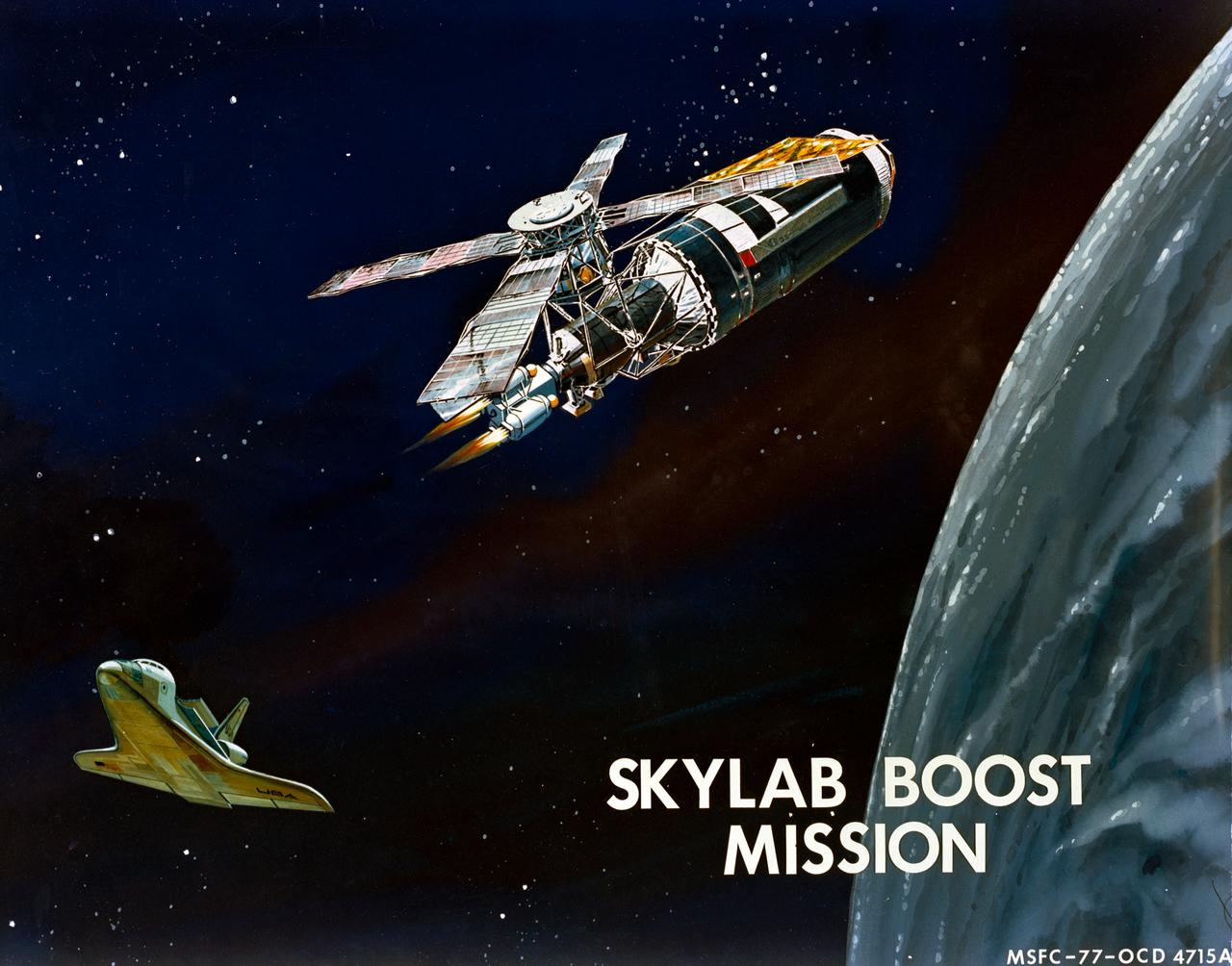
S78-23630 (1978) --- A drawing of a Teleoperator Retrieval System (TRS) which is being developed by NASA for use beginning in late 1979. This spacecraft is illustrated being used to re-boost the Skylab space station to a higher orbit. Photo credit: NASA
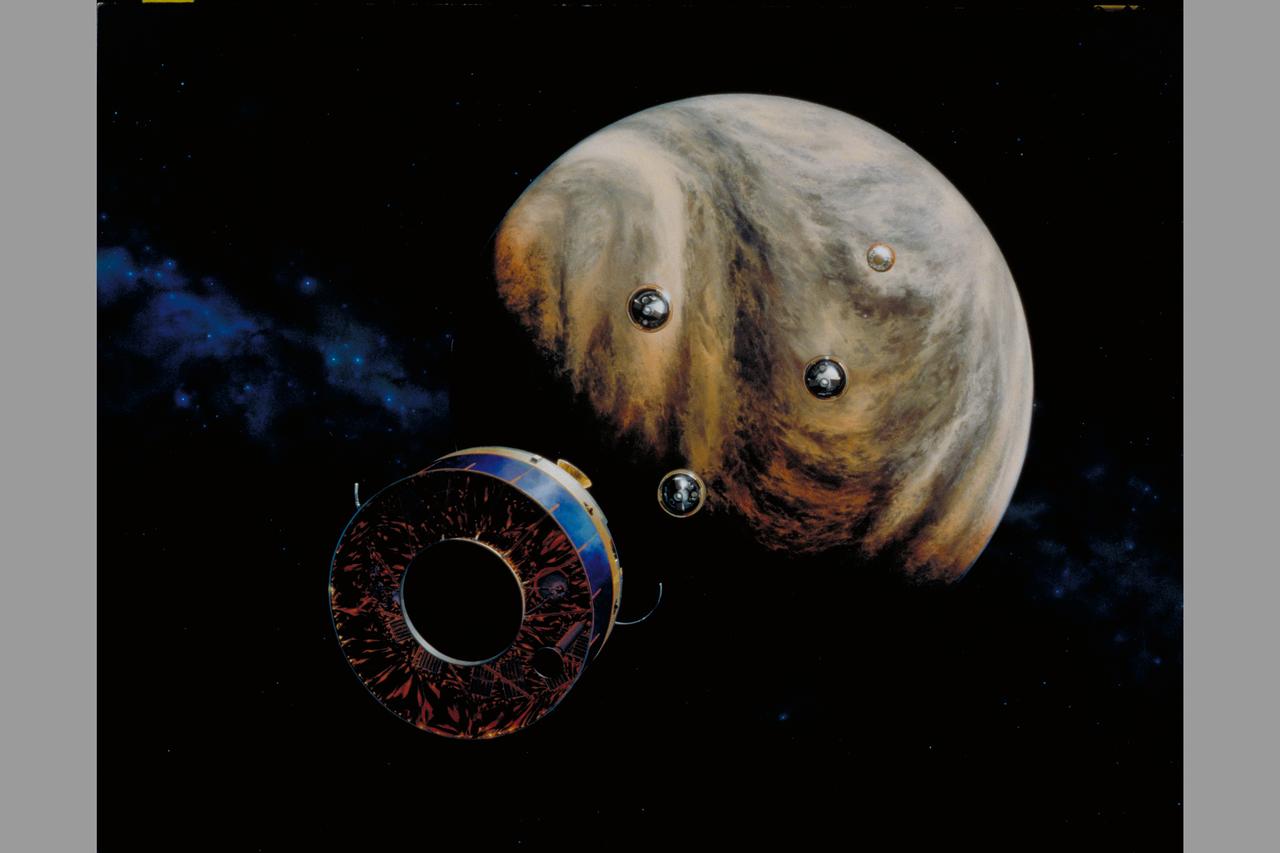
Art by Paul Hudson Pioneer Venus: Multiprobe Artwork

F-15A #281 In Flight over Mojave.
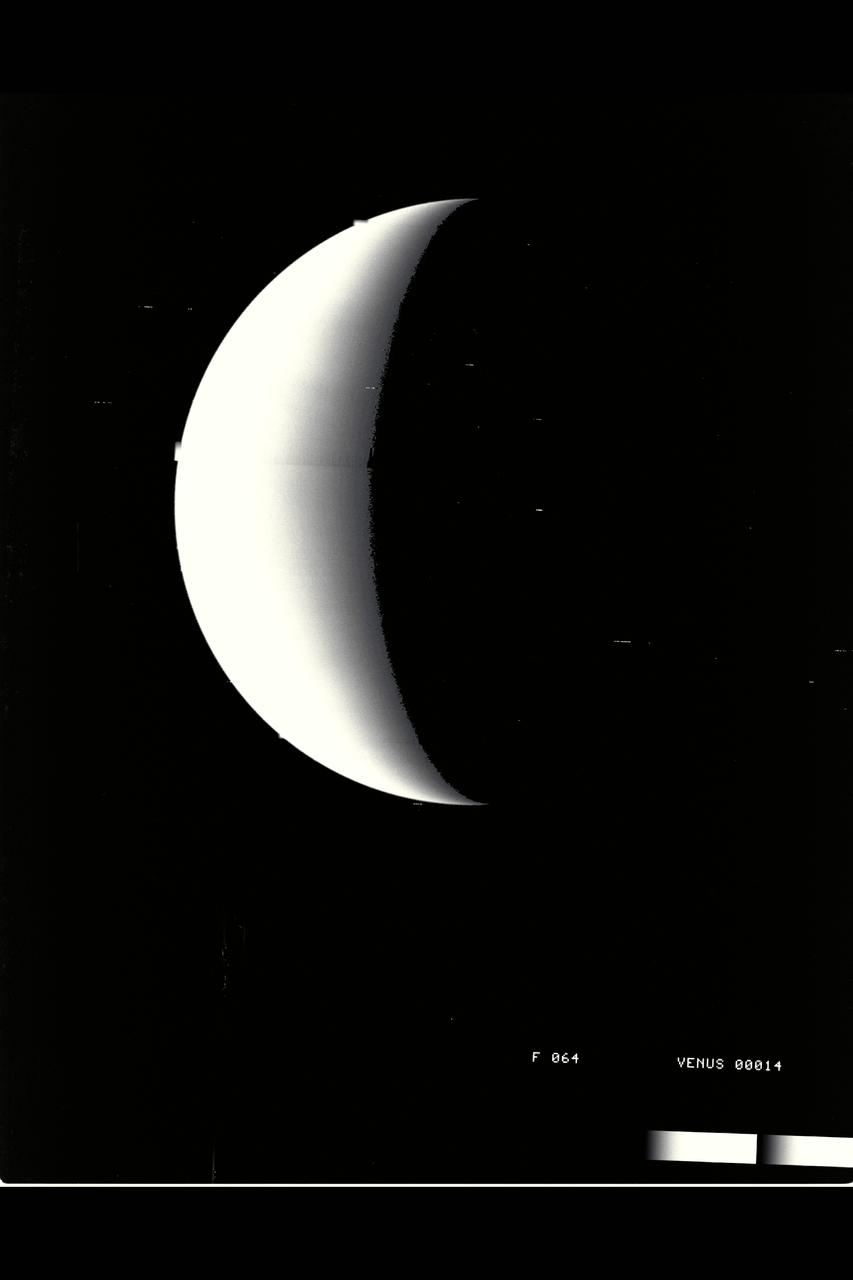
Pioneer-Venus Image (Crescent)
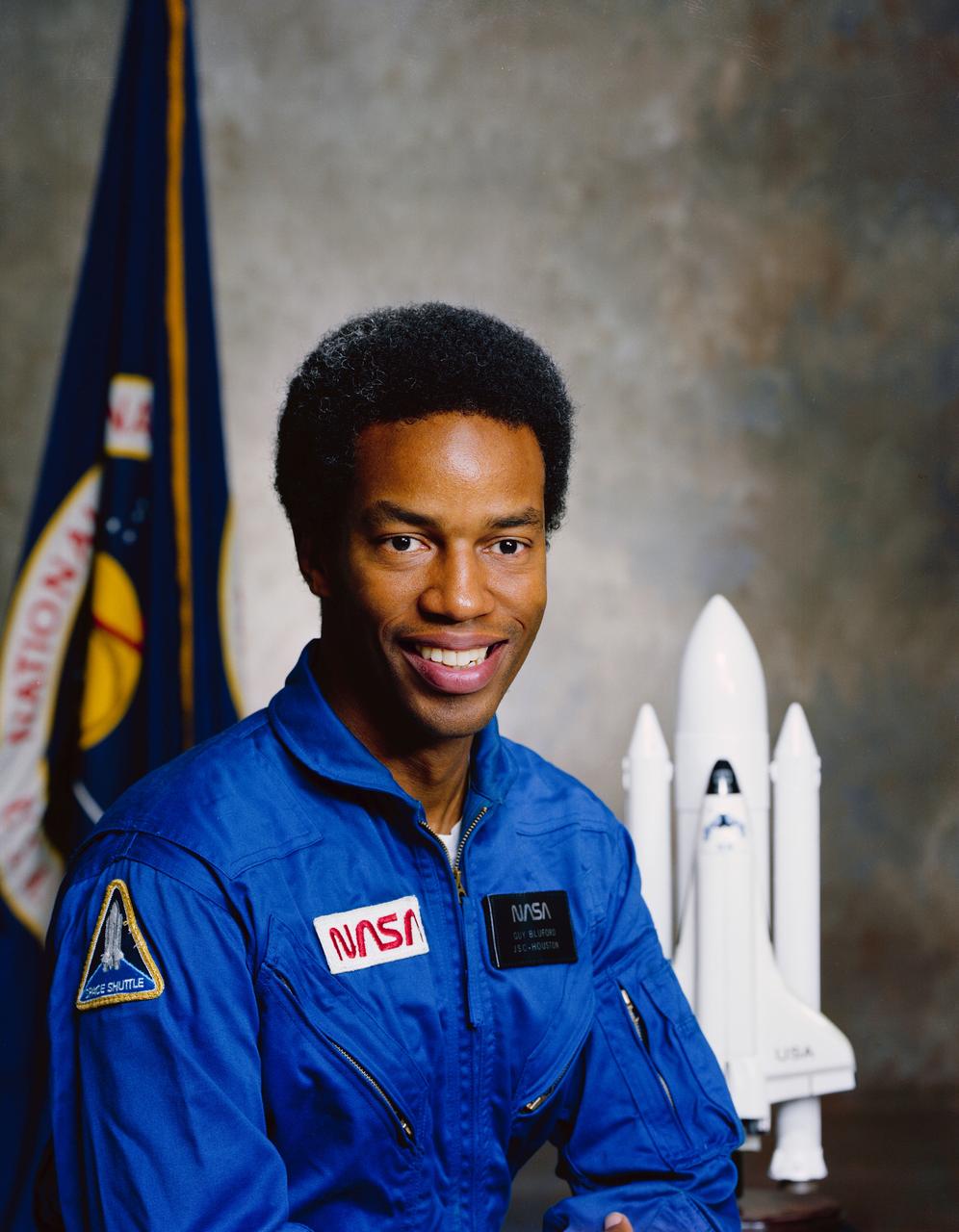
S78-35290 (31 Jan. 1978) --- Astronaut Guion S. Bluford, mission specialist.
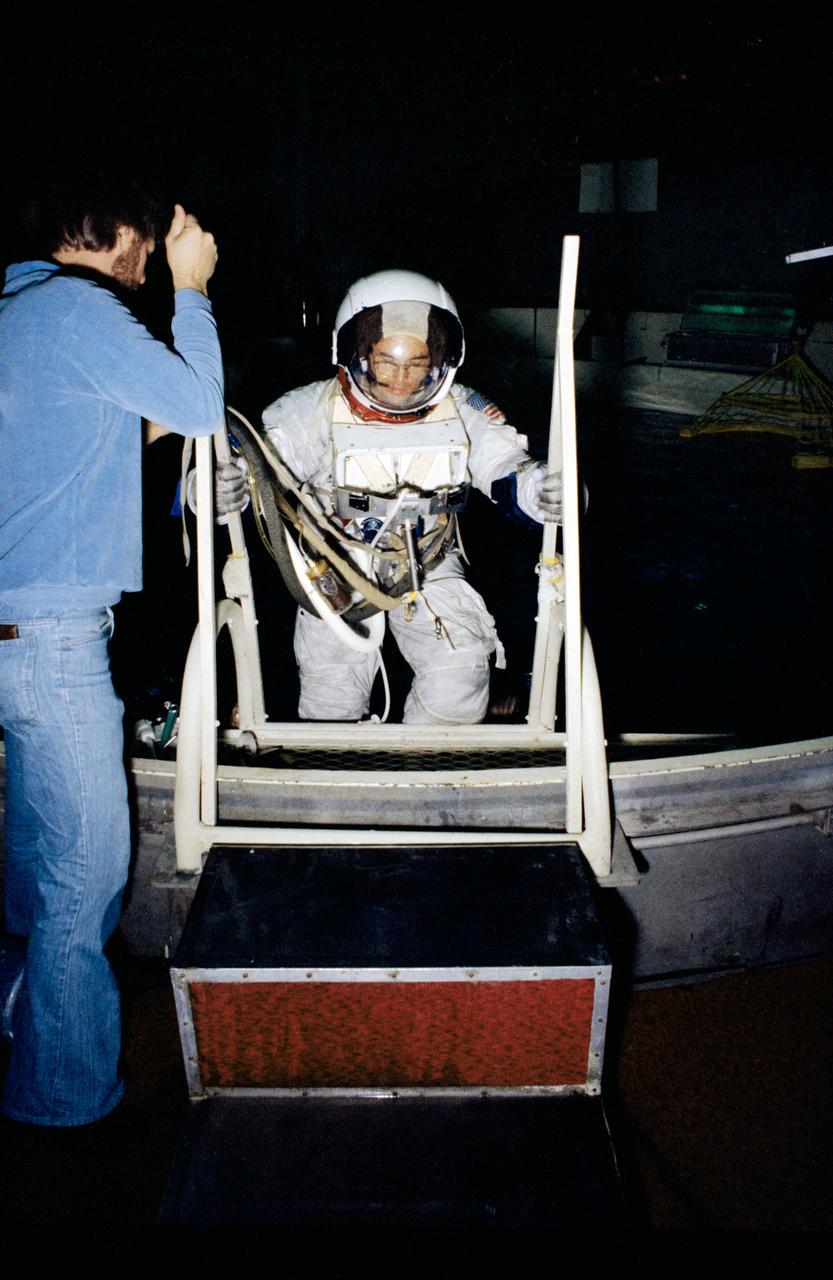
S79-25016 (13 Dec. 1978) --- Astronaut Robert L. Crippen, pilot for the first space shuttle orbital flight test, descends steps leading into the water immersion facility (WIF) during a training session in the Johnson Space Center?s training and test facility (Bldg. 260). The WIF affords one of two ways to simulate space extravehicular activity (EVA), the other being inside aircraft flying a parabolic curve. Crippen will be joined by astronaut John W. Young, commander for the first space shuttle flight (STS-1). Photo credit: NASA

Pioneer-Venus Zerox Image (Greenhouse Effect)
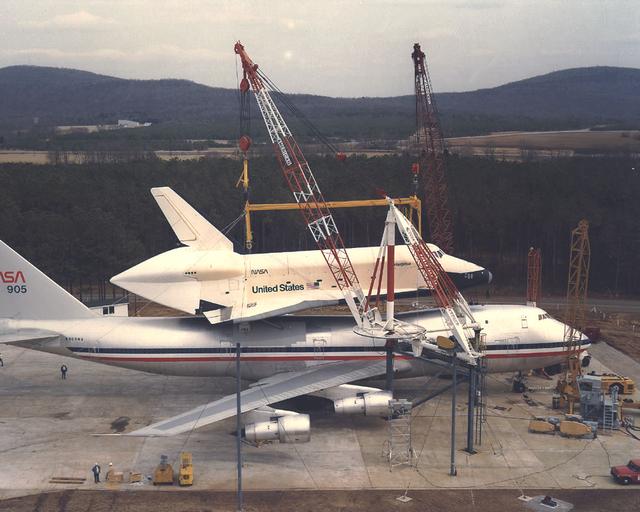
The Shuttle Orbiter Enterprise is off-loaded at Redstone Arsenal Airfield for later Mated Vertical Ground Vibration tests (MVGVT) at Marshall Space Flight Center's Dynamic Test Stand. The tests marked the first time ever that the entire shuttle complement (including orbiter, external tank, and solid rocket boosters) were mated vertically.
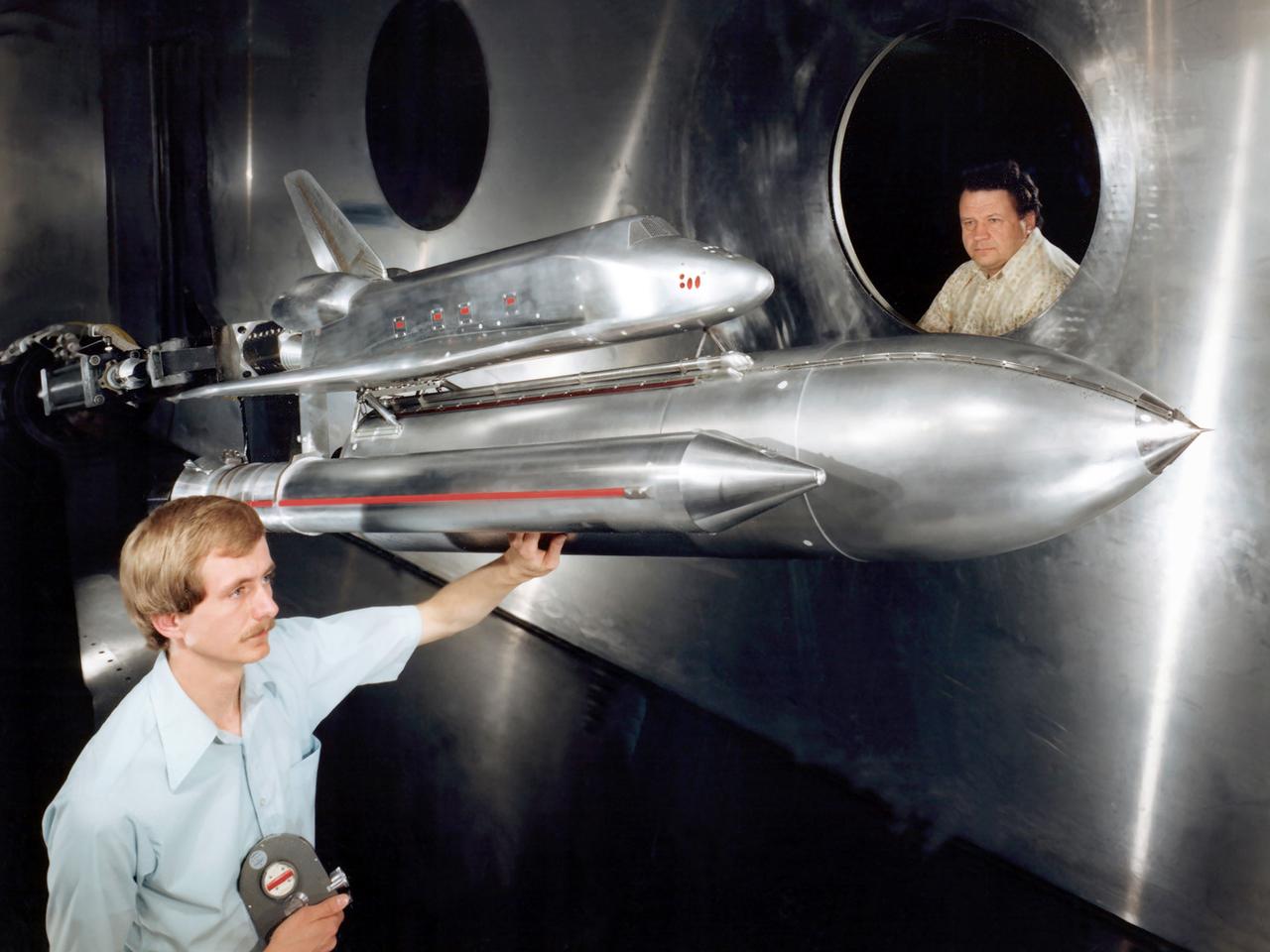
Technicians examine a scale model of the space shuttle used to obtain pressure data during tests in the 10- by 10-Foot Supersonic Wind Tunnel at the National Aeronautics and Space Administration (NASA) Lewis Research Center. Lewis researchers used the 10- by 10 tunnel extensively in the 1970s to study shuttle configurations in order to forecast conditions during an actual flight. These tests included analysis of the solid rocket boosters’ aerodynamics, orbiter forebody angle -of -attack and air speed, base heating for entire shuttle, and engine-out loads. The test seen in this photograph used a 3.5- percent scale aluminum alloy model of the entire launch configuration. The program was designed to obtain aerodynamic pressure data. The tests were part of a larger program to study possible trouble areas for the shuttle’s new Advanced Flexible Reusable Surface Insulation. The researchers obtained aeroacoustic data and pressure distributions from five locations on the model. Over 100 high-temperature pressure transducers were attached to the model. Other portions of the test program were conducted at Lewis’ 8- by 6-Foot Supersonic Wind Tunnel and the 11- by 11-Foot Transonic Wind Tunnel at Ames Research Center.
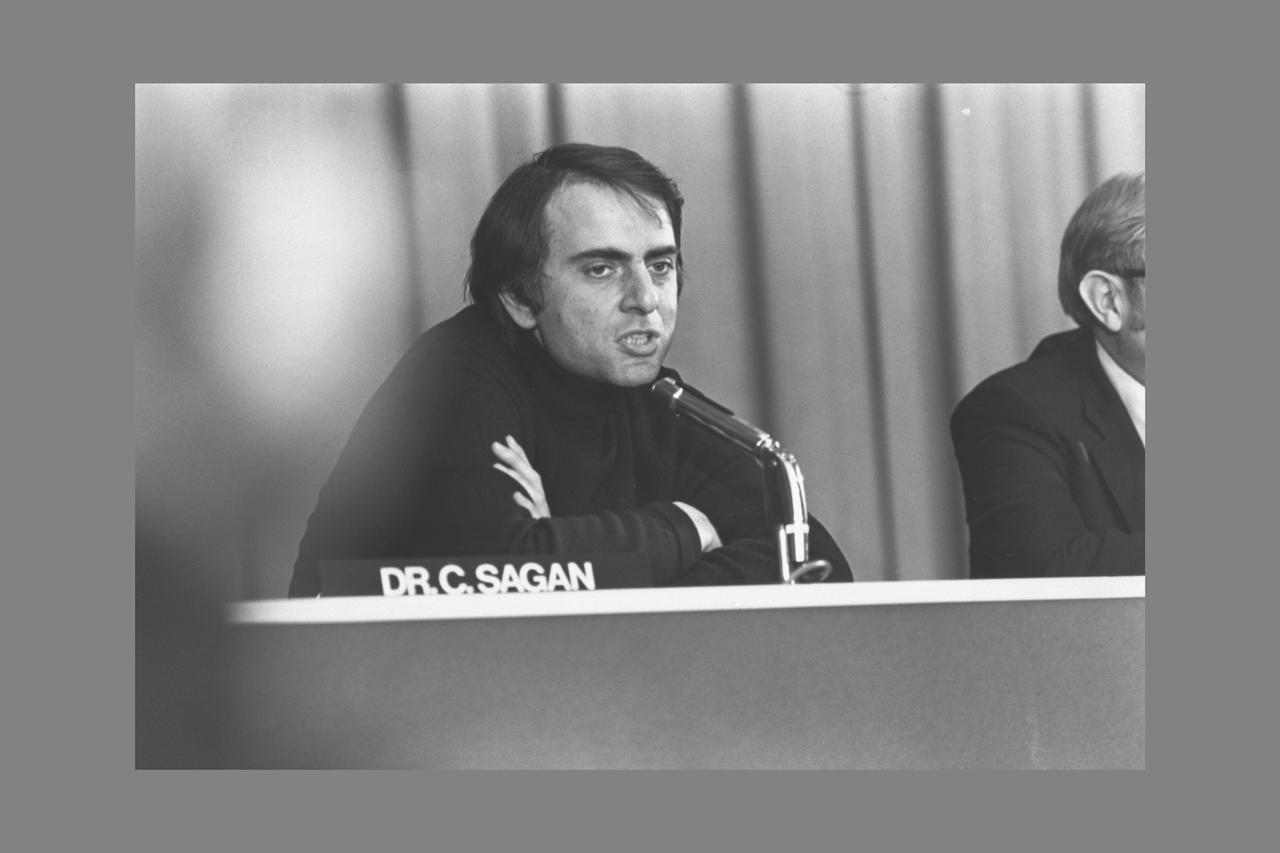
NASA Photographs and Captions courtesy of Joseph and Donna Roizen Telegen, Palo Alto, CA (from) Pioneer 10 and 11 Missions Jupiter encounters - Activities at Ames Research Center December 1973 and December 1974 - As a memento of the highly successful Pioneer 10 and 11 missions to Jupiter, this collection of photographs represents a sampling of those taken at Ames Research Center during the Jupiter encounter periods in December 1973 and December 1974. The captions for these photographs are meant to suggest the lighter side of the intense activities that took place during these periods. I would like to express my gratitude to all participants in the Pioneer 10/11 program for their teamwork in accomplishing the scientific and technical objectives of the Pioneer 10 and 11 missions to Jupiter. (signed) Charles F. Hall - Manager, Pioneer Project Dr. Carl Sagan 'Anybody who doesn't believe there are frogs in the Jovian atmosphere is going t hear from me.'
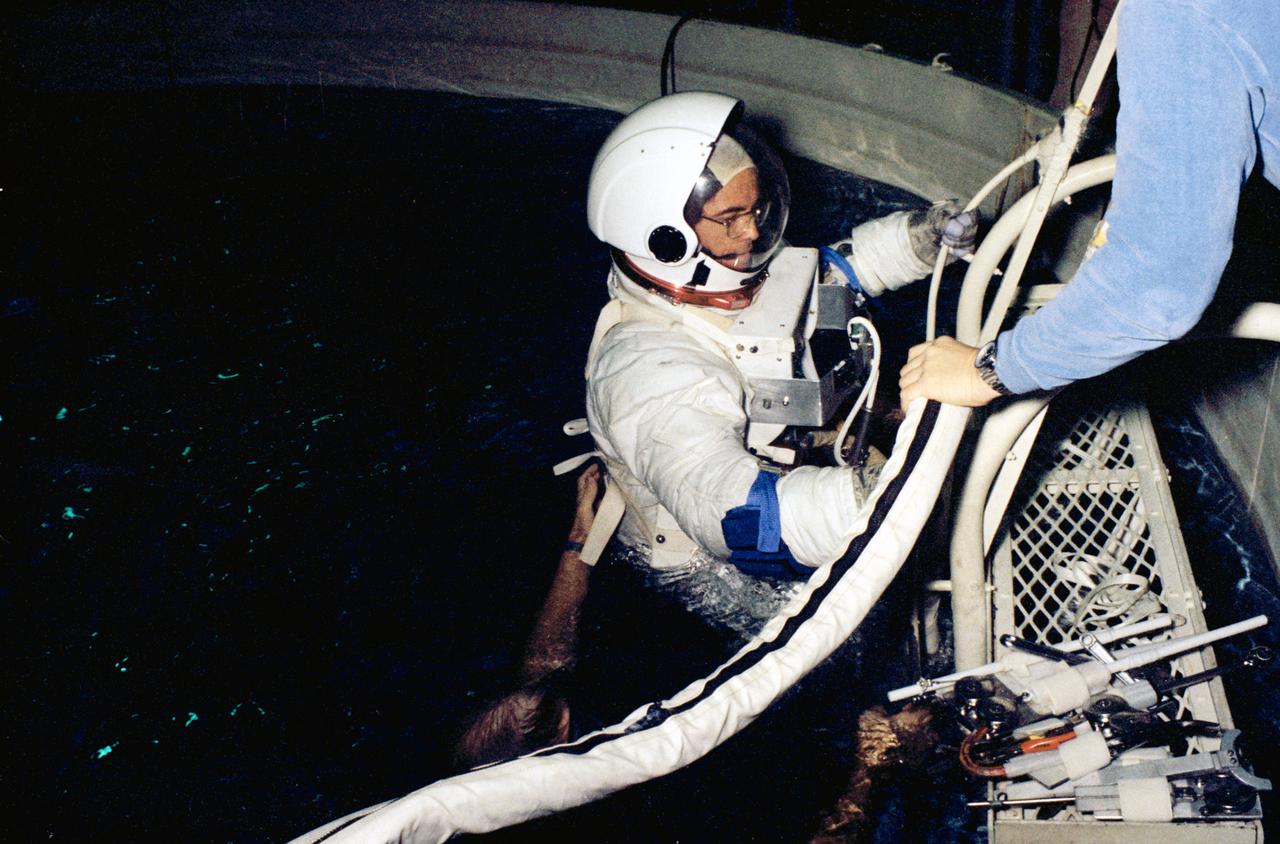
S79-25014 (13 Dec. 1978) --- Astronaut Robert L. Crippen, pilot of the first space shuttle orbital flight test (STS-1), eases into a water immersion facility (WIF) during a training session in the Johnson Space Center?s training and test facility (Bldg. 260). The WIF affords one of two ways to simulate the feeling of weightlessness experienced during space extravehicular activity (EVA), the other being inside aircraft flying a parabolic curve. Crippen will be joined by astronaut John W. Young, commander for the STS-1 flight. Photo credit: NASA
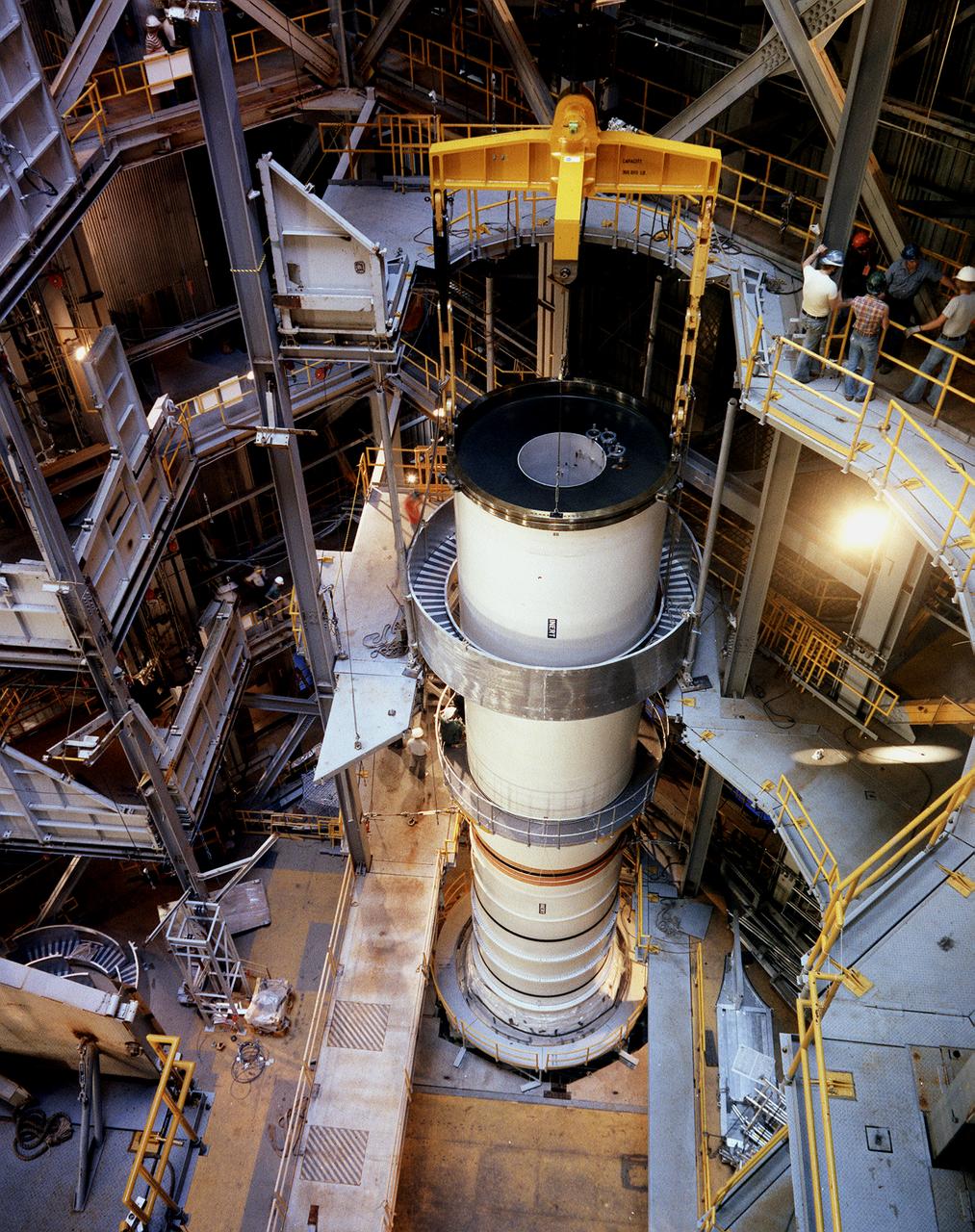
This photograph shows stacking of the left side of the solid rocket booster (SRB) segments in the Dynamic Test Stand at the east test area of the Marshall Space Flight Center (MSFC). Staging shown here are the aft skirt, aft segment, and aft center segment. The SRB was attached to the external tank (ET) and then the orbiter later for the Mated Vertical Ground Vibration Test (MVGVT), that resumed in October 1978. The stacking of a complete Shuttle in the Dynamic Test Stand allowed test engineers to perform ground vibration testing on the Shuttle in its liftoff configuration. The purpose of the MVGVT is to verify that the Space Shuttle would perform as predicted during launch. The platforms inside the Dynamic Test Stand were modified to accommodate two SRB's to which the ET was attached.
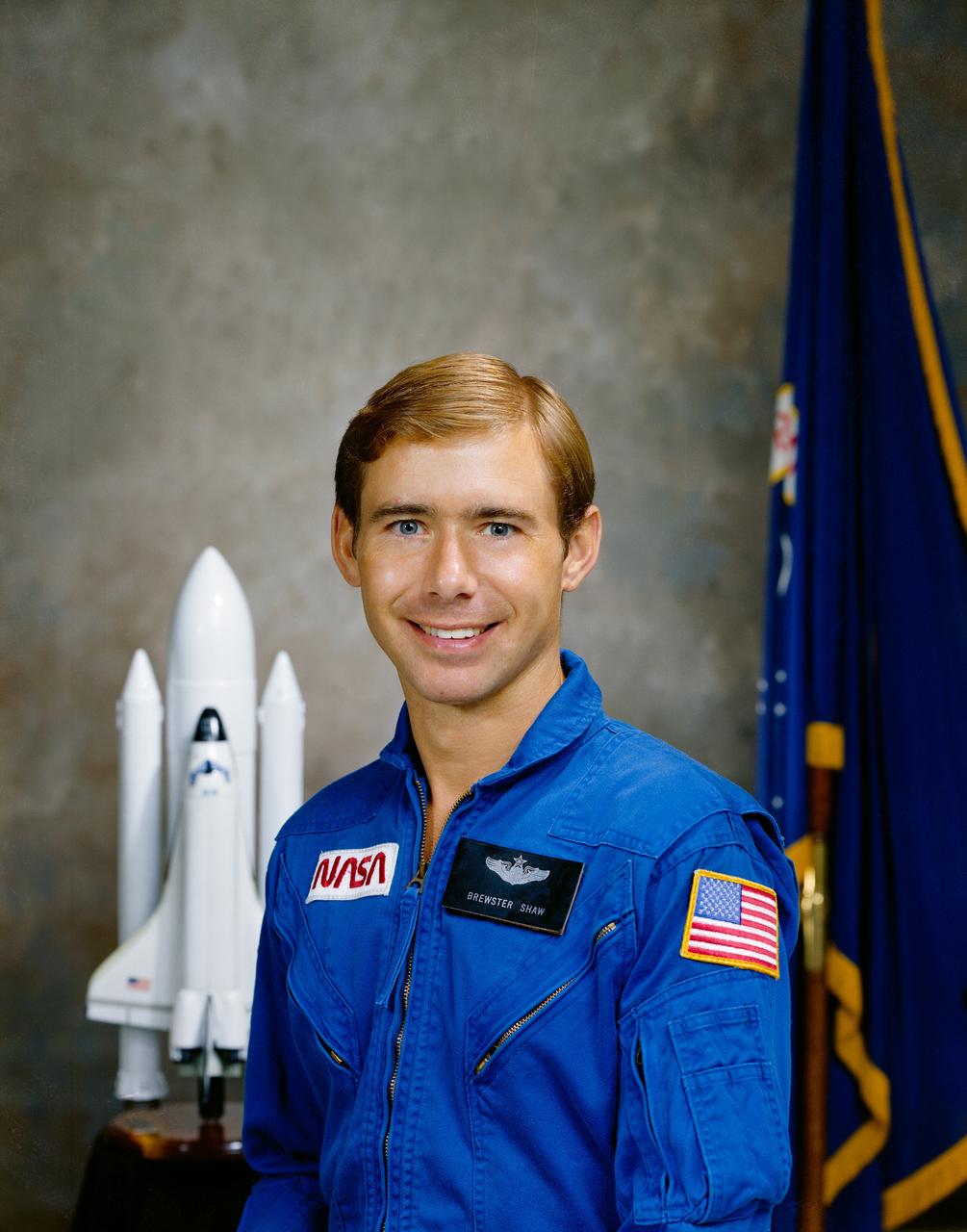
S78-35284 (31 Jan 1978) --- Astronaut Candidate Brewster H. Shaw, Jr.

S78-35306 (31 Jan. 1978) --- Astronaut S. David Griggs. (NOTE: He died on June 17, 1989, near Earle, Arkansas, in the crash of a vintage World War II airplane.)
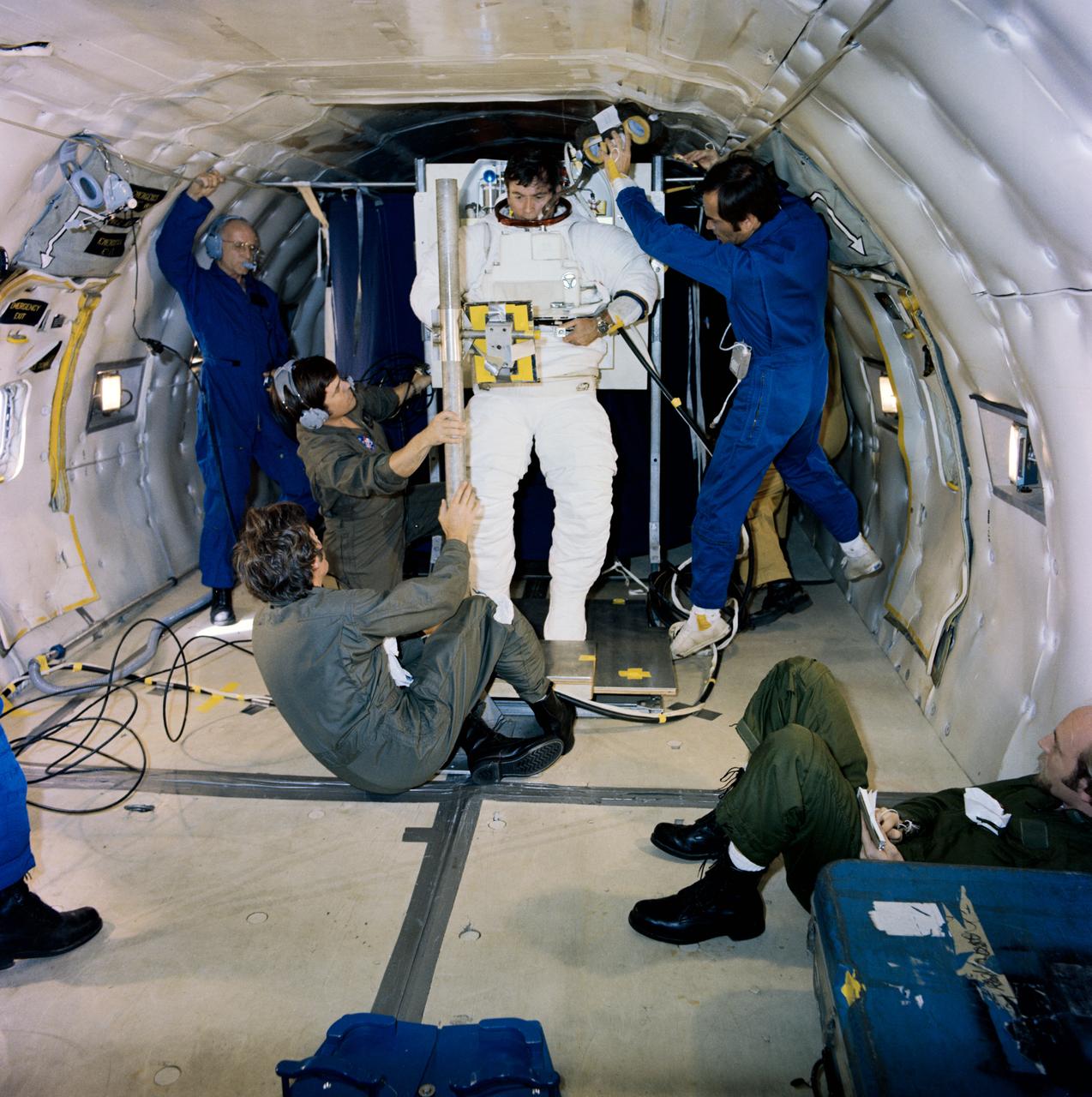
S79-30347 (31 March 1979) --- Taking advantage of a brief period of zero-gravity afforded aboard a KC-135 flying a parabolic curve, the flight crew of the first space shuttle orbital flight test (STS-1) goes through a spacesuit donning exercise. Astronaut John W. Young has just entered the hard-material torso of the shuttle spacesuit by approaching it from below. He is assisted by astronaut Robert L. Crippen. The torso is held in place by a special stand here, simulating the function provided by the airlock wall aboard the actual shuttle craft. The life support system is mated to the torso on Earth and remains so during the flight, requiring this type of donning and doffing exercise. Note Crippen?s suit is the type to be used for intravehicular activity in the shirt sleeve environment to be afforded aboard shuttle. The suit worn by Young is for extravehicular activity (EVA). Young will be STS-1 commander and Crippen, pilot. They will man the space shuttle orbiter 102 Columbia. Photo credit: NASA
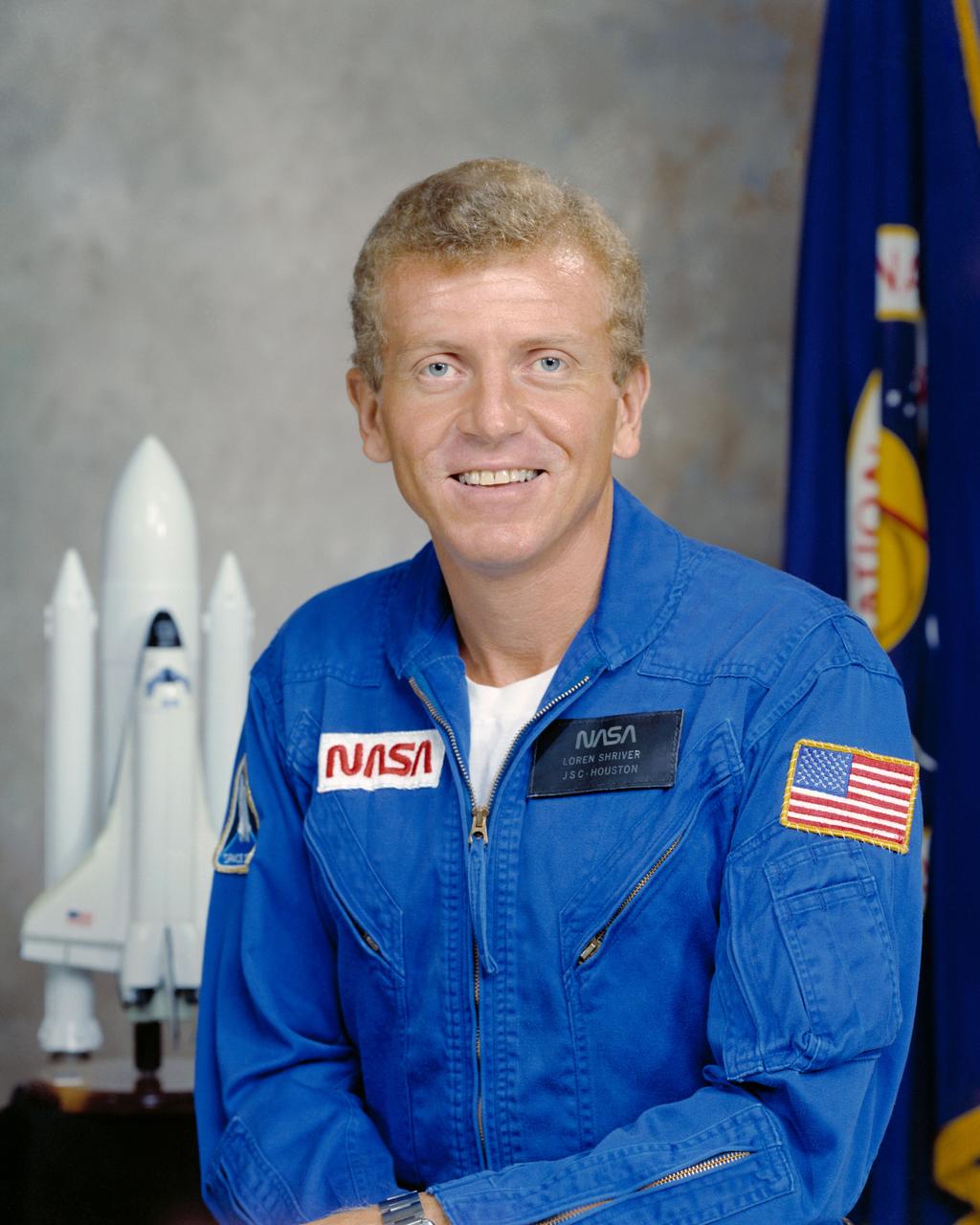
S78-35312 (31 Jan 1978) --- Astronaut Loren J. Shriver.
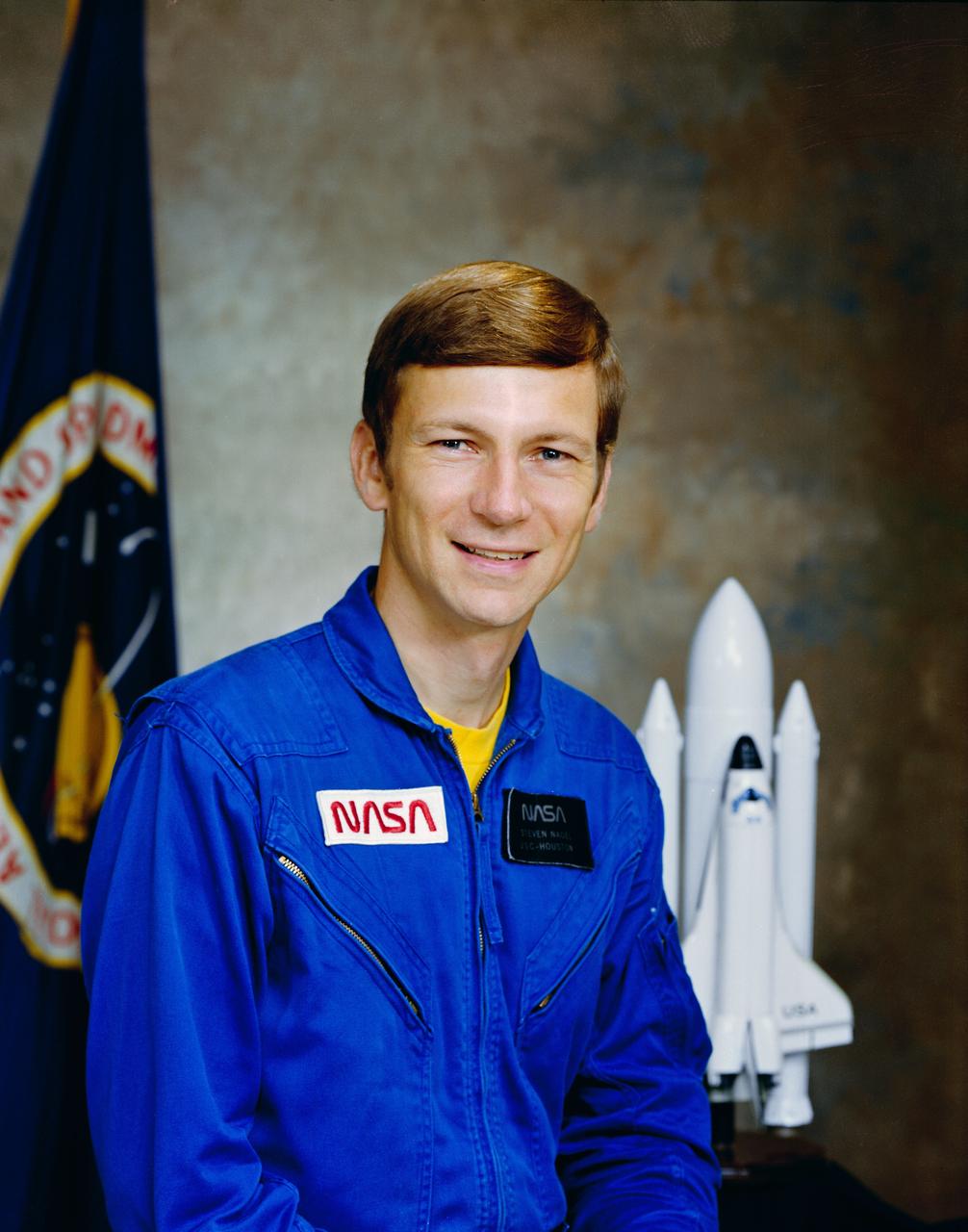
S78-35302 (31 Jan. 1978) --- Astronaut Steven R. Nagel. Photo credit: NASA
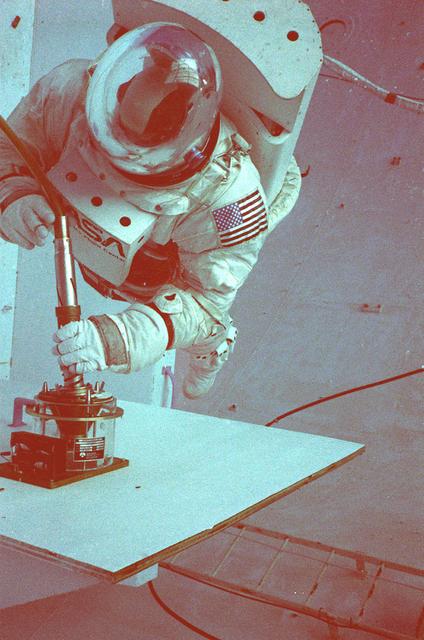
Once the United States' space program had progressed from Earth's orbit into outerspace, the prospect of building and maintaining a permanent presence in space was realized. To accomplish this feat, NASA launched a temporary workstation, Skylab, to discover the effects of low gravity and weightlessness on the human body, and also to develop tools and equipment that would be needed in the future to build and maintain a more permanent space station. The structures, techniques, and work schedules had to be carefully designed to fit this unique construction site. The components had to be lightweight for transport into orbit, yet durable. The station also had to be made with removable parts for easy servicing and repairs by astronauts. All of the tools necessary for service and repairs had to be designed for easy manipulation by a suited astronaut. And construction methods had to be efficient due to limited time the astronauts could remain outside their controlled environment. In lieu of all the specific needs for this project, an environment on Earth had to be developed that could simulate a low gravity atmosphere. A Neutral Buoyancy Simulator (NBS) was constructed by NASA Marshall Space Flight Center (MSFC) in 1968. Since then, NASA scientists have used this facility to understand how humans work best in low gravity and also provide information about the different kinds of structures that can be built. Another facet of the space station would be electrical cornectors which would be used for powering tools the astronauts would need for construction, maintenance and repairs. Shown is an astronaut training during an underwater electrical connector test in the NBS.

S78-35301 (21 Sept 1978) --- Astronaut Terry J. Hart.
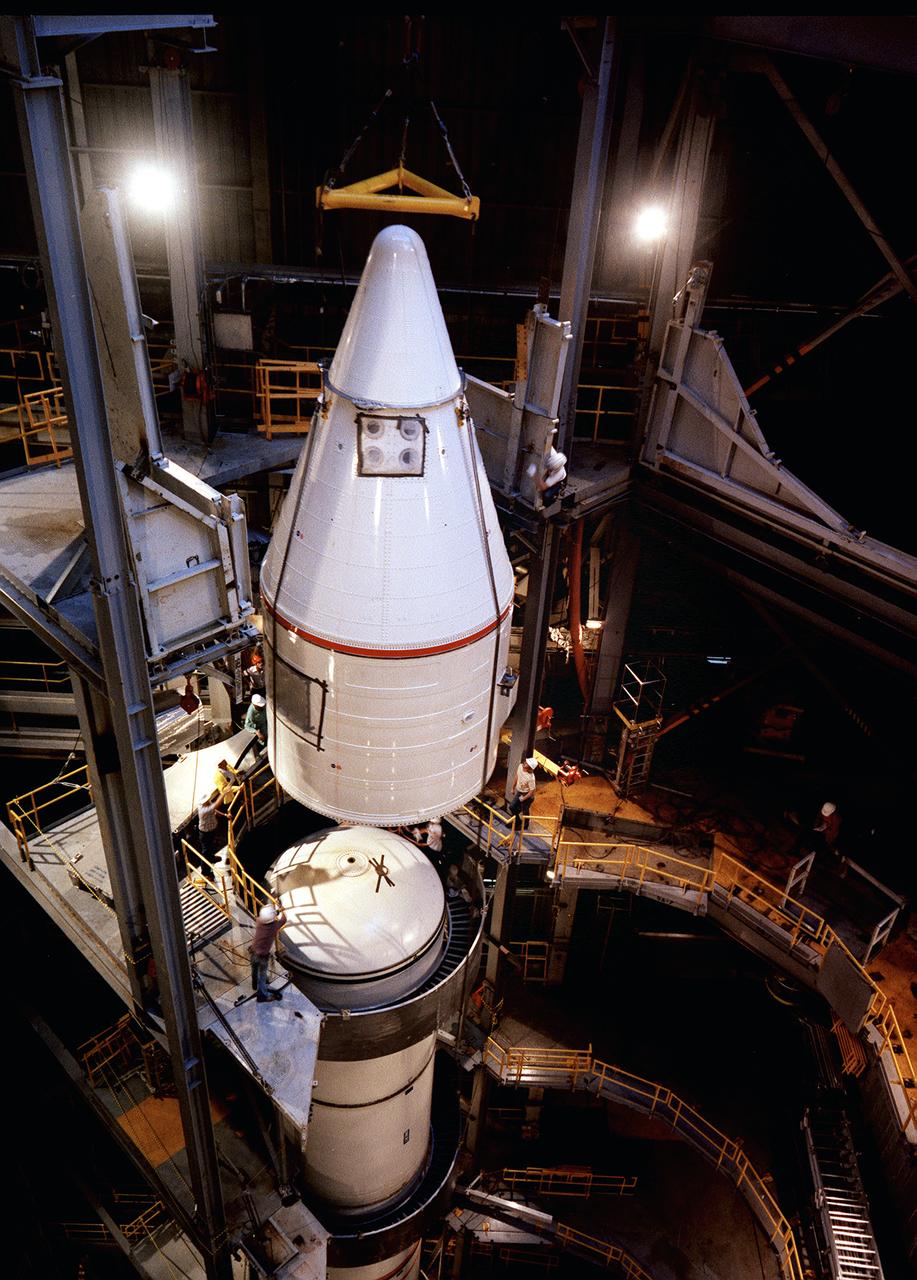
Workmen in the Dynamic Test Stand lowered the nose cone into place to complete stacking of the left side of the solid rocket booster (SRB) in the Dynamic Test Stand at the east test area of the Marshall Space Flight Center (MSFC). The SRB would be attached to the external tank (ET) and then the orbiter later for the Mated Vertical Ground Vibration Test (MVGVT), that resumed in October 1978. The stacking of a complete Shuttle in the Dynamic Test Stand allowed test engineers to perform ground vibration testing on the Shuttle in its liftoff configuration. The purpose of the MVGVT was to verify that the Space Shuttle would perform as predicted during launch. The platforms inside the Dynamic Test Stand were modified to accommodate two SRB'S to which the ET was attached.
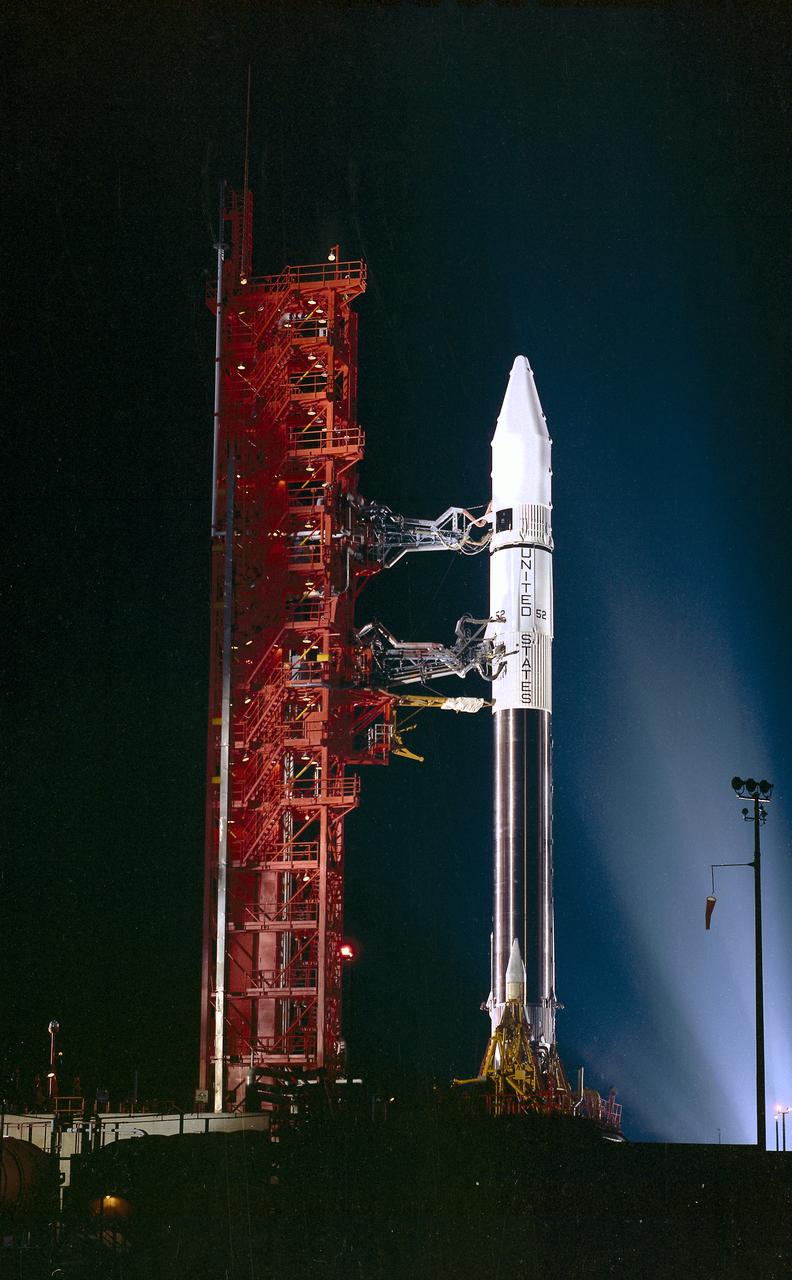
The Atlas-Centaur-52 launch vehicle on the launch pad. The Atlas-Centaur-52 placed the High Energy Astronomy Observatory-2 (HEAO-2) in orbit on November 13, 1978.