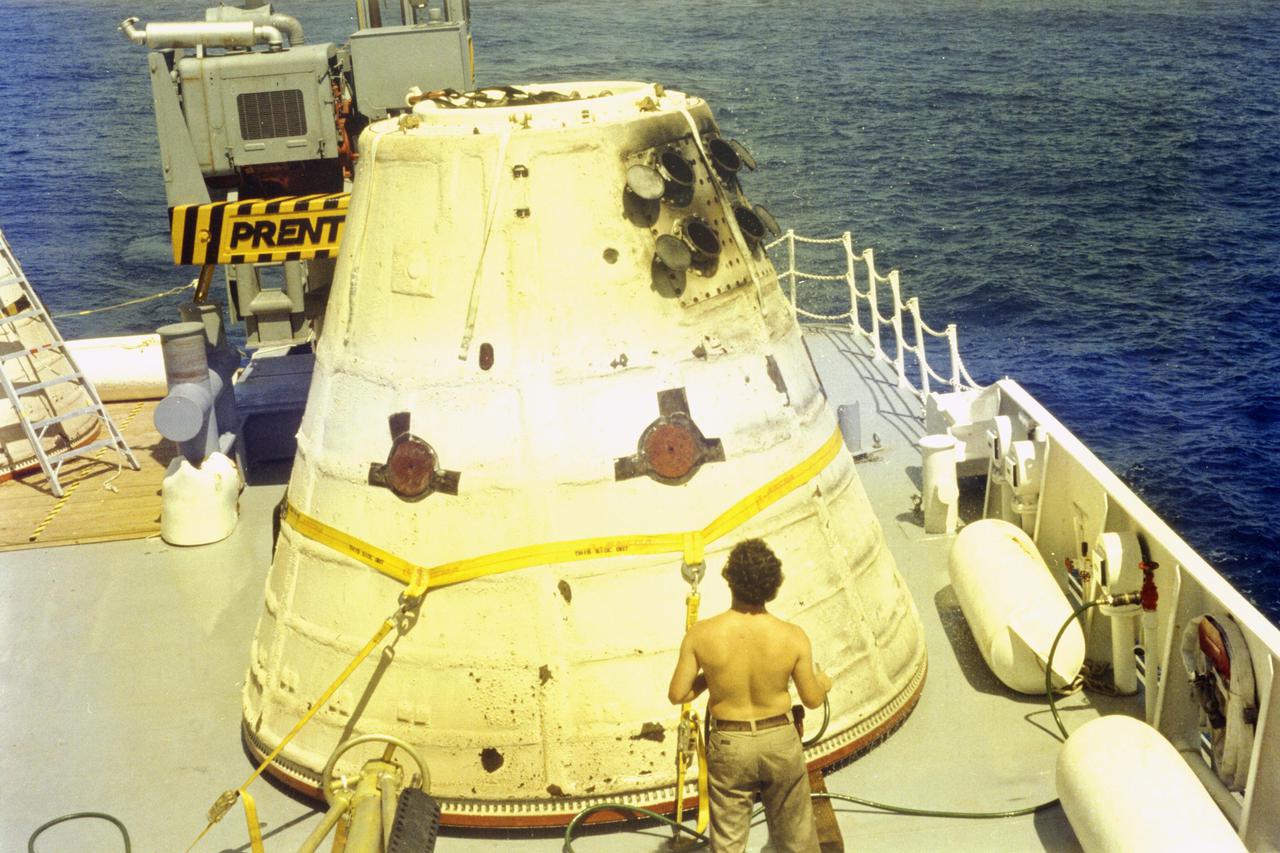
KENNEDY SPACE CENTER, FLA. - A frustum from one of the two solid rocket boosters that helped launch Space Shuttle Columbia on her maiden voyage is recovered at sea on April 13, by one of the two recovery ships, UTC Freedom and UTC Liberty, specifically built for the purpose. The frustum, located just aft of the nose cone, contains the main parachute that lowers the expended rocket casing into the sea for recovery and reuse. Columbia was launched April 12 on mission STS-1, known as a shuttle systems test flight. The flight seeks to demonstrate safe launch into orbit and safe return of the orbiter and crew and verify the combined performance of the entire shuttle vehicle -- orbiter, solid rocket boosters and external tank.
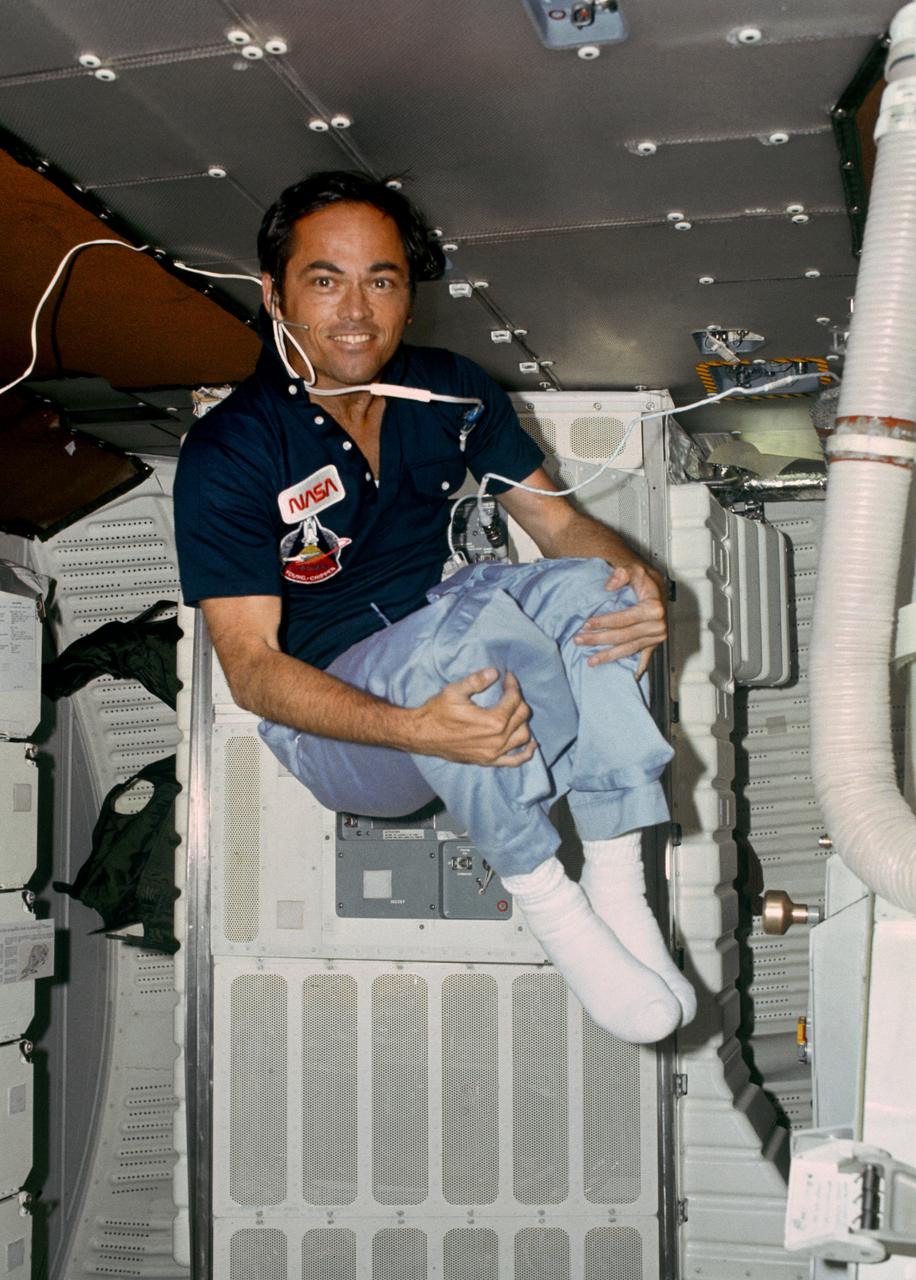
S81-30420 (12-14 April 1981) --- Astronaut Robert L. Crippen, pilot for STS-1 takes advantage of zero-gravity to do some rare acrobatics on the middeck of the space shuttle Columbia in Earth orbit. This 35mm frame was exposed by astronaut John W. Young, flight crew commander. Photo credit: NASA
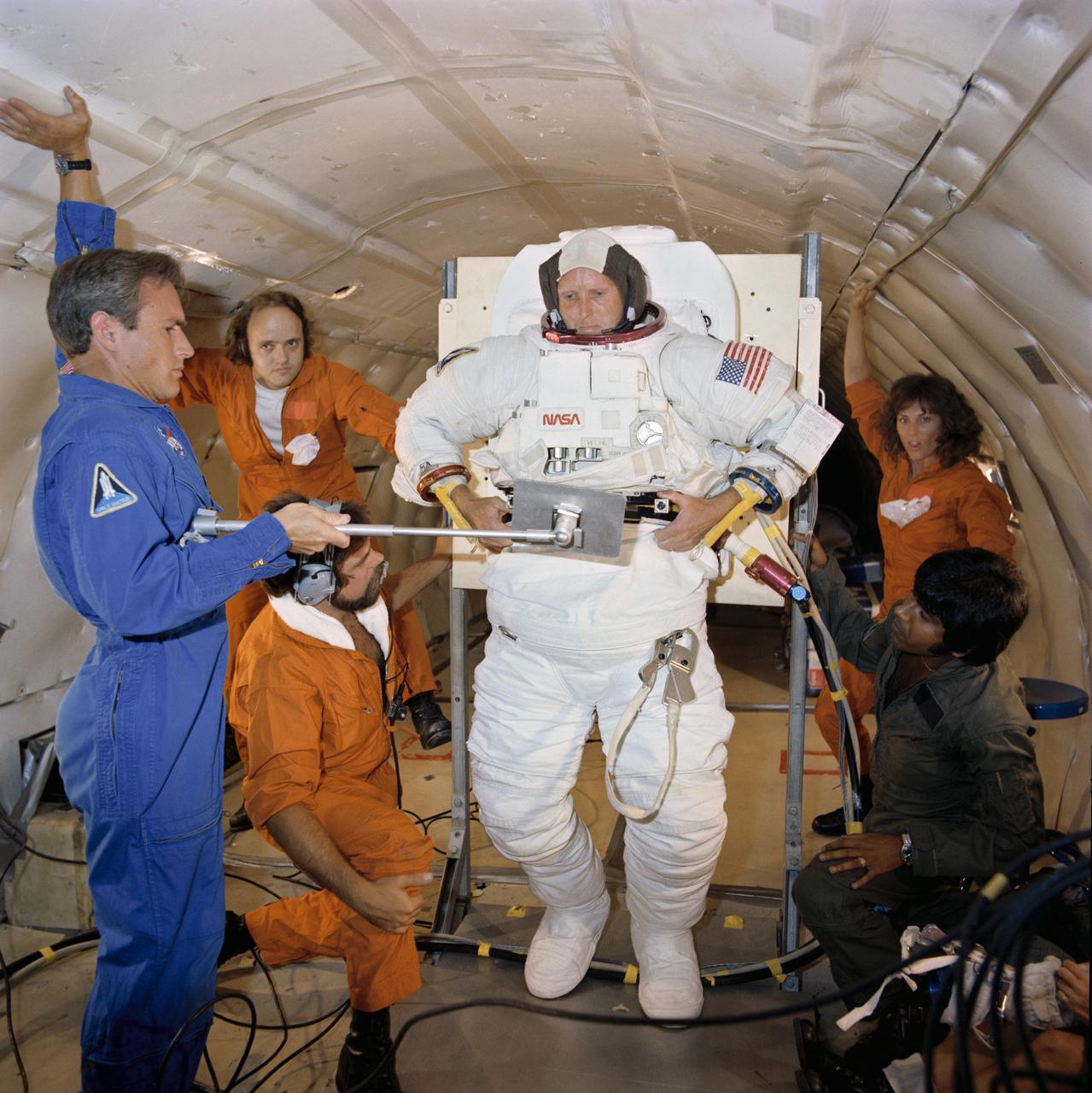
S81-34432 (July 1981) --- Astronaut C. Gordon Fullerton, STS-3 pilot, takes part in a suit donning and doffing exercise aboard a KC-135 "zero-gravity" aircraft. Mission specialist/astronaut William F. Fisher holds a mirror to assist Fullerton with hose and cable linkups to his suit. A special parabolic pattern flown by the KC-135 provides short durations of weightlessness. Fullerton's suit is an Extravehicular Mobility Unit (EMU), used by astronauts when leaving the shirt-sleeve environment of their shuttle orbiter to go outside and perform tasks in the vacuum of space. There are no such EVA plans on STS-3, but the crewmen are trained in this area in the event of a contingency. Photo credit: NASA
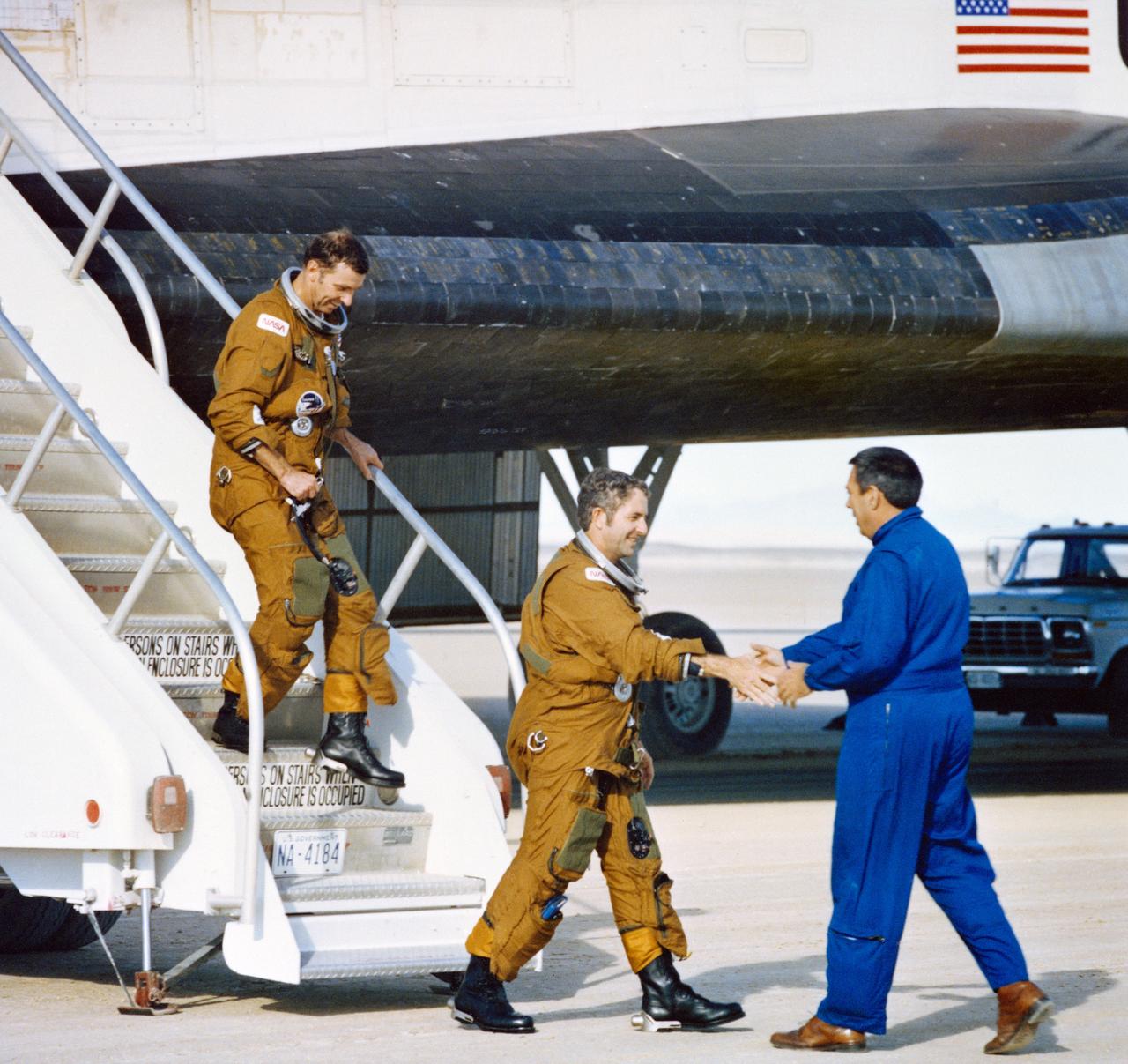
S81-39582 (14 Nov. 1981) --- Astronauts Joe H. Engle, rear, and Richard H. Truly are greeted by George W.S. Abbey, Director of Flight Operations at the Johnson Space Center, as they egress the space shuttle Columbia after spending two days, six hours and 13 minutes on NASA?s STS-2 mission. Photo credit: NASA
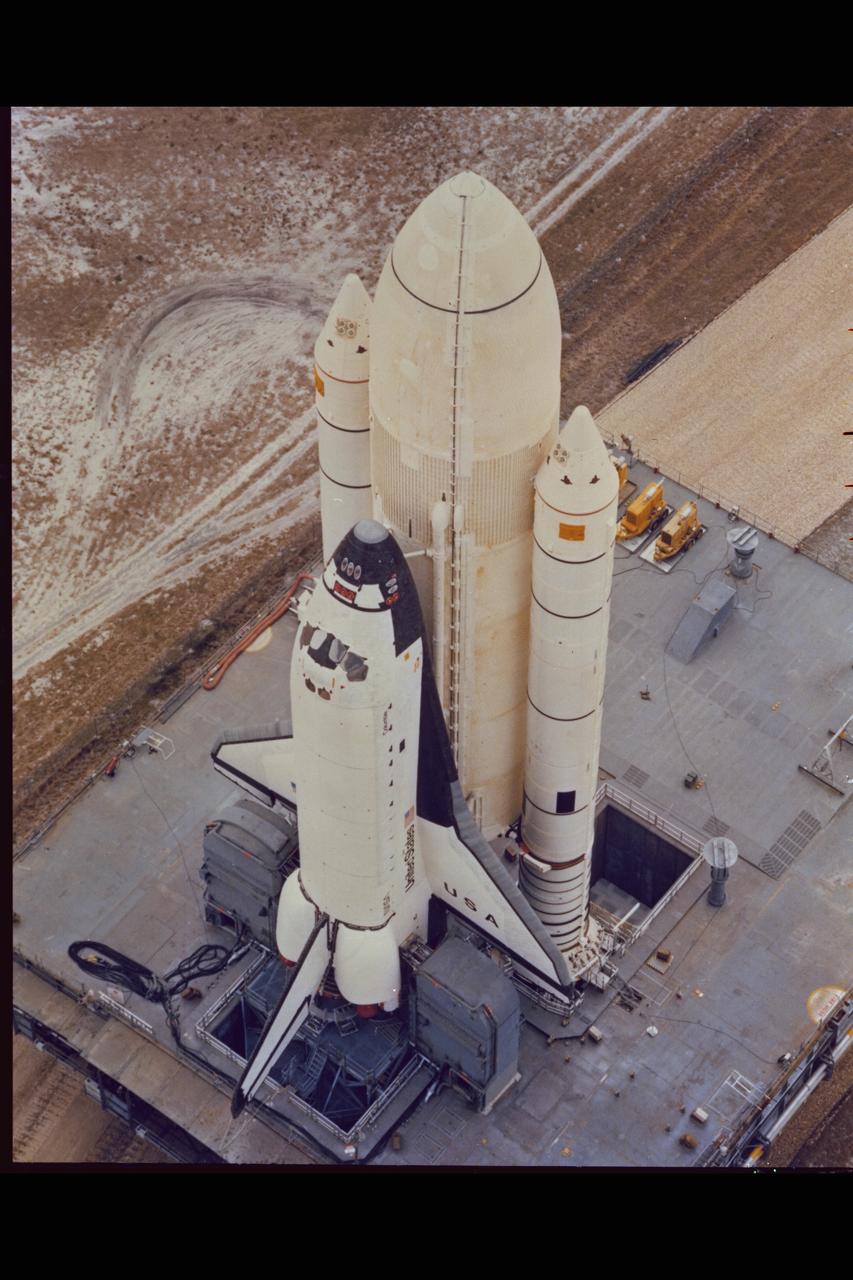
Space Shuttle Columbia at Launch Site. (ref: 81-HC-5)
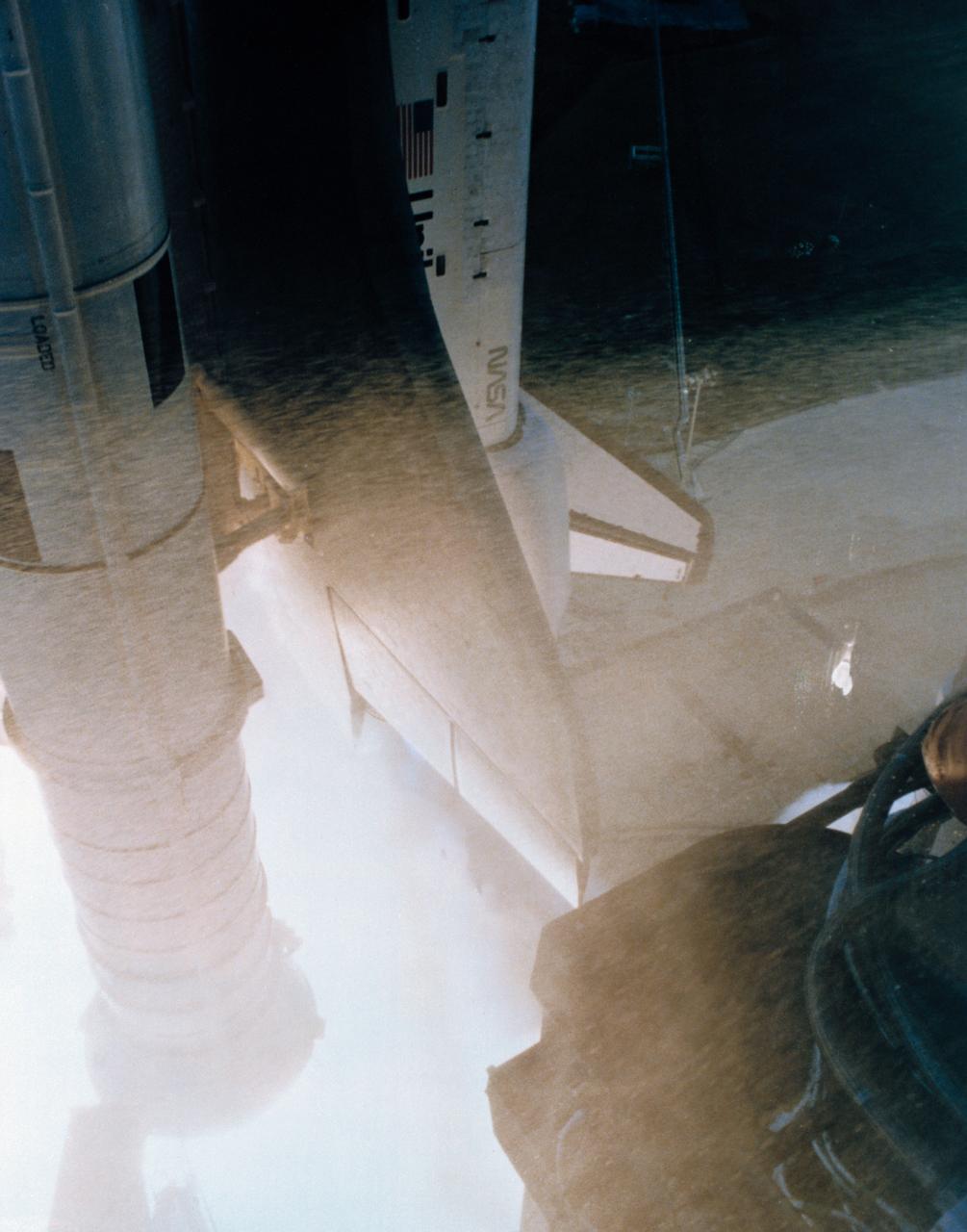
S81-30502 (12 April 1981) --- Space shuttle Columbia’s aft orbiter section dominates the field of view in this fifth frame of a dramatic liftoff sequence photographed from the 275-foot level of the Fixed Service Structures on Pad 39A. The seven-frame sequence documenting the space shuttle’s historic launch on its maiden voyage was taken with a Nikon camera equipped with a 28mm lens and a 250 exposure back. The camera was protected in a fire box. Photo credit: NASA
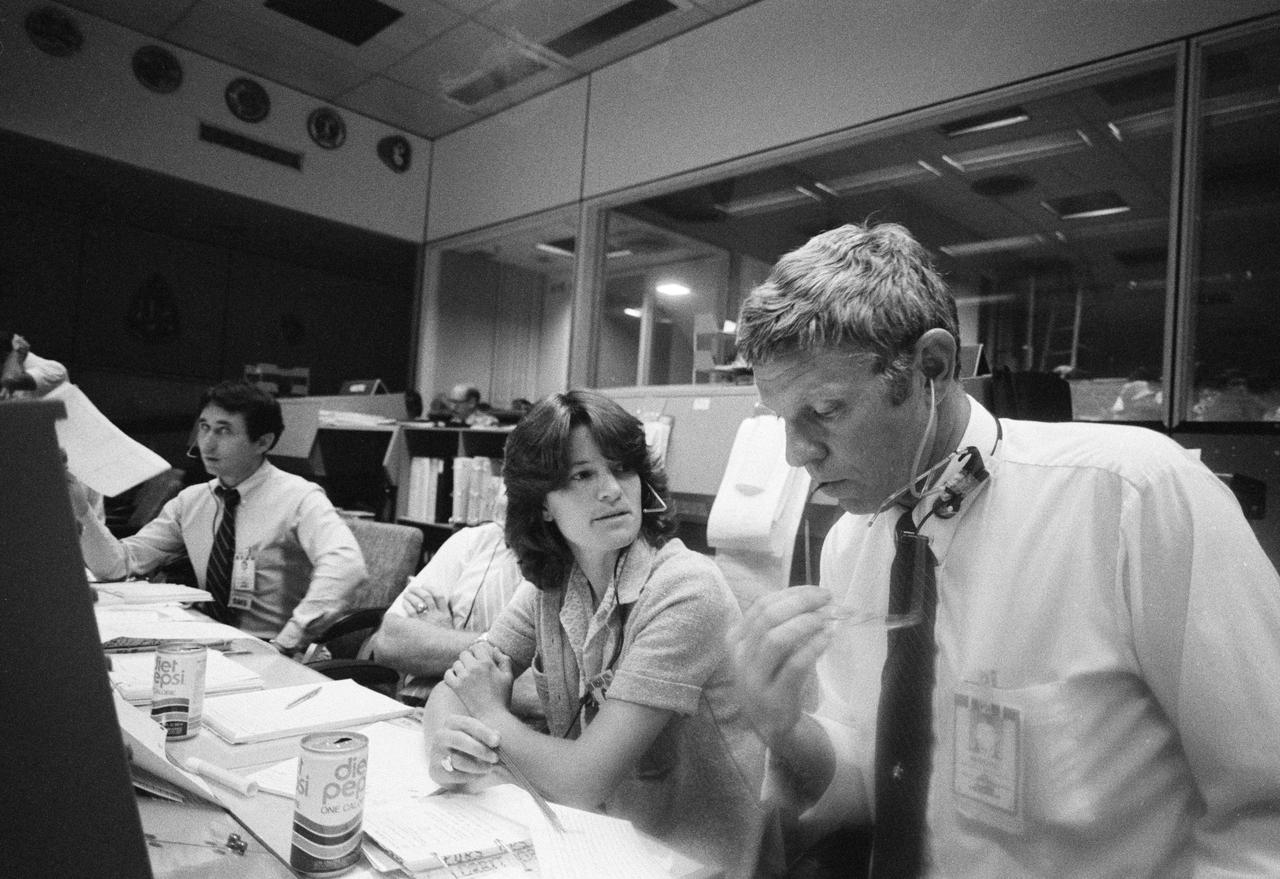
S81-33963 (July 1981) --- Mission specialist/astronaut Sally K. Ride and Dale E. Moore of the flight control division?s electrical, mechanical and environmental systems branch take a special interest in a simulations session during which the remote manipulator system (RMS, a mechanized arm) takes a momentary spotlight. They are seated at the CAPCOM or capsule communicator console in the mission operations control room of JSC?s mission control center. Dr. Ride will converse with astronauts Joe H. Engle and Richard H. Truly during their STS-2 mission in space when the RMS will have its debut in the Columbia?s cargo bay. Astronaut James F. Buchli, serving in a CAPCOM capacity, is partially obscured behind Dr. Ride. Photo credit: NASA
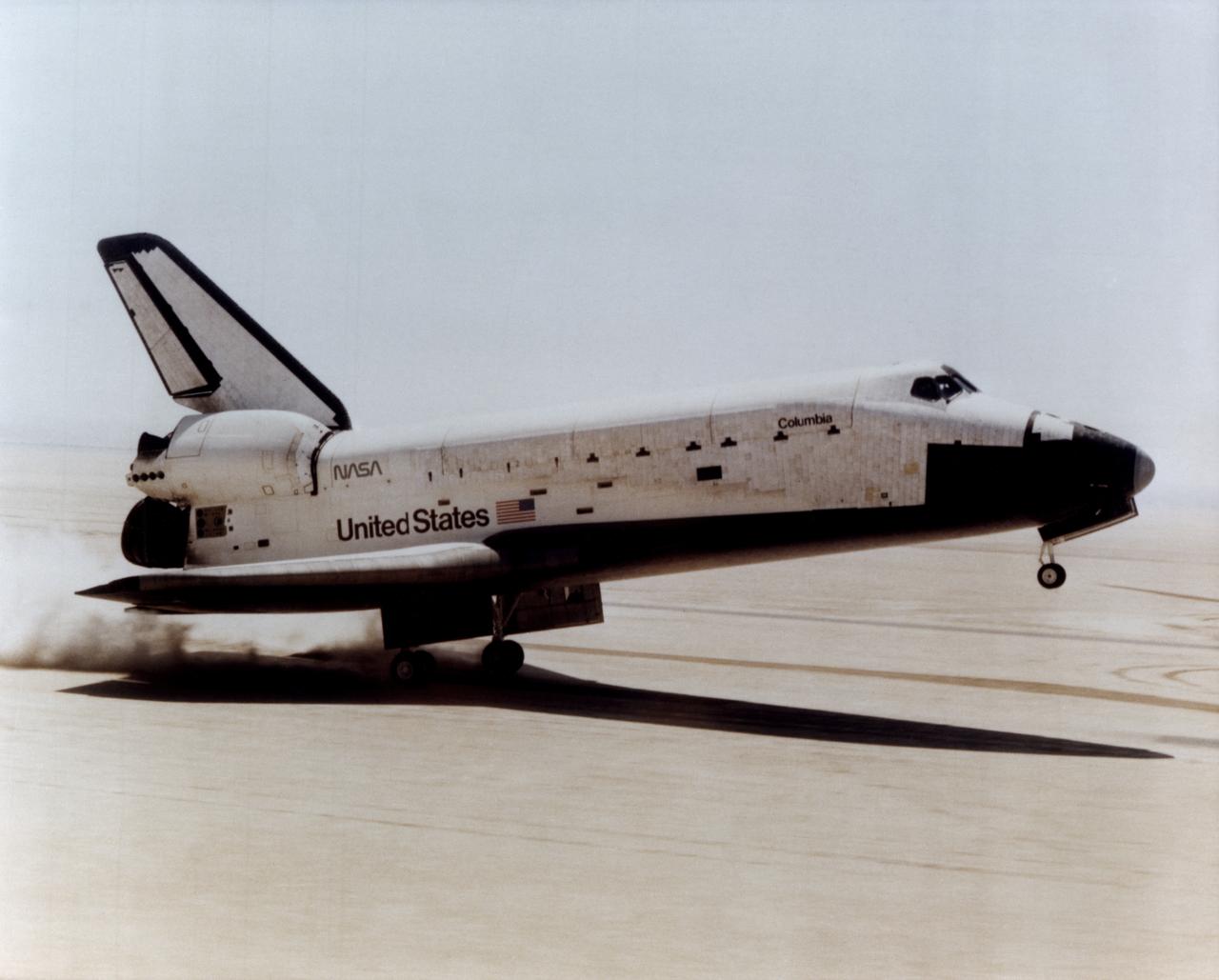
TOUCHDOWN! -- The Space Shuttle Columbia touches down on lakebed runway 23 at Edwards Air Force Base, Calif., to conclude the first orbital shuttle mission, April 14, 1981.
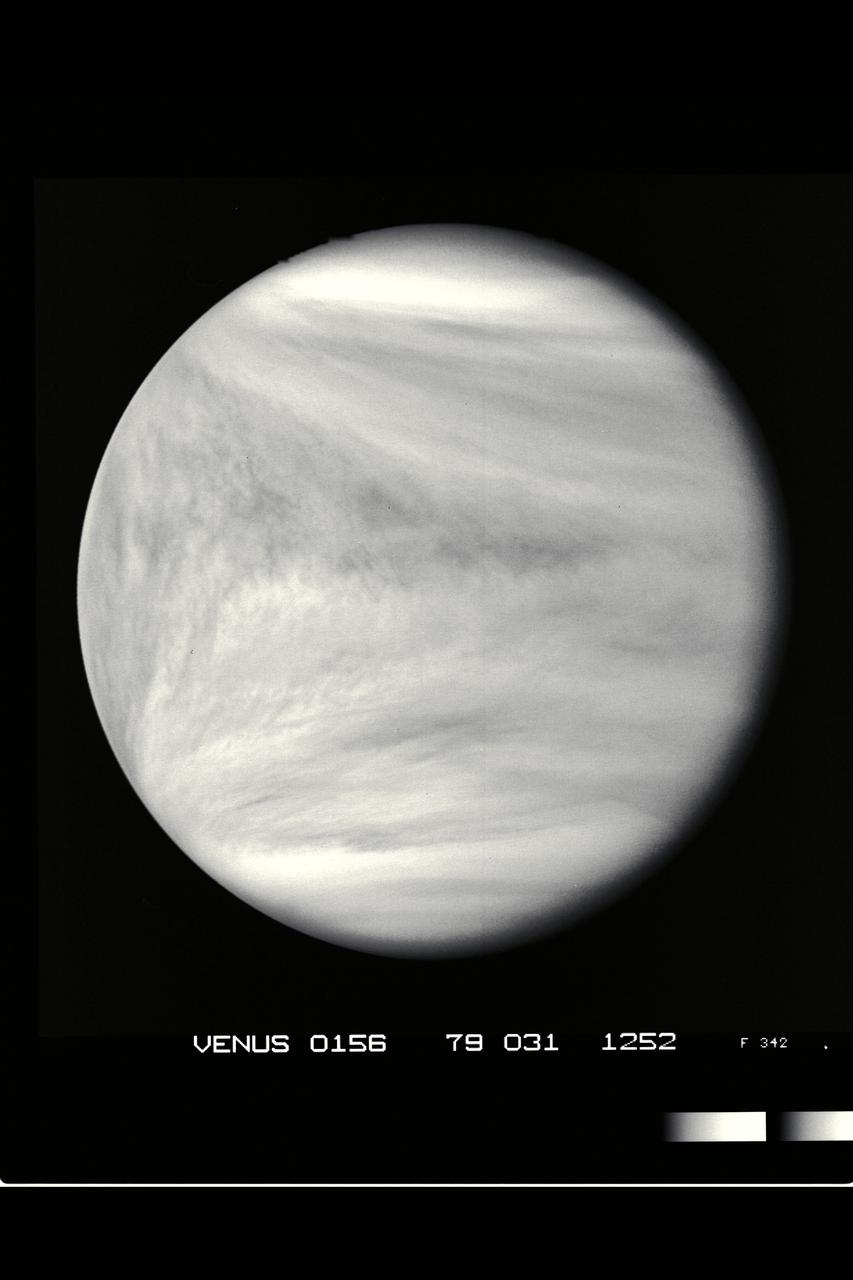
Pioneer Venus Occp. Image 00156
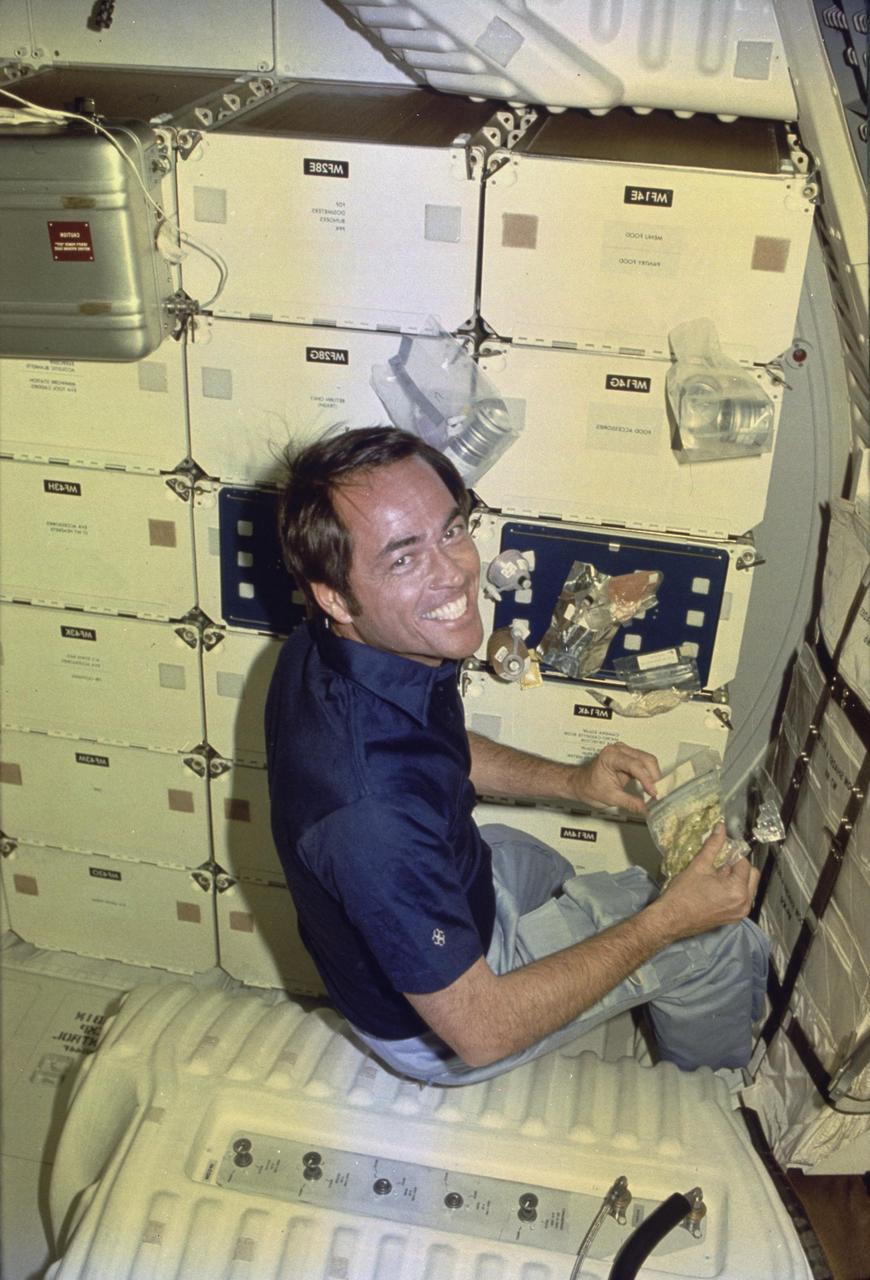
STS-1 ONBOARD PHOTOGRAPHY - STS-1-7-0502: STS-1 Pilot Robert Crippen at lunch.

Photograph by Pioneer Venus Venus image 0007
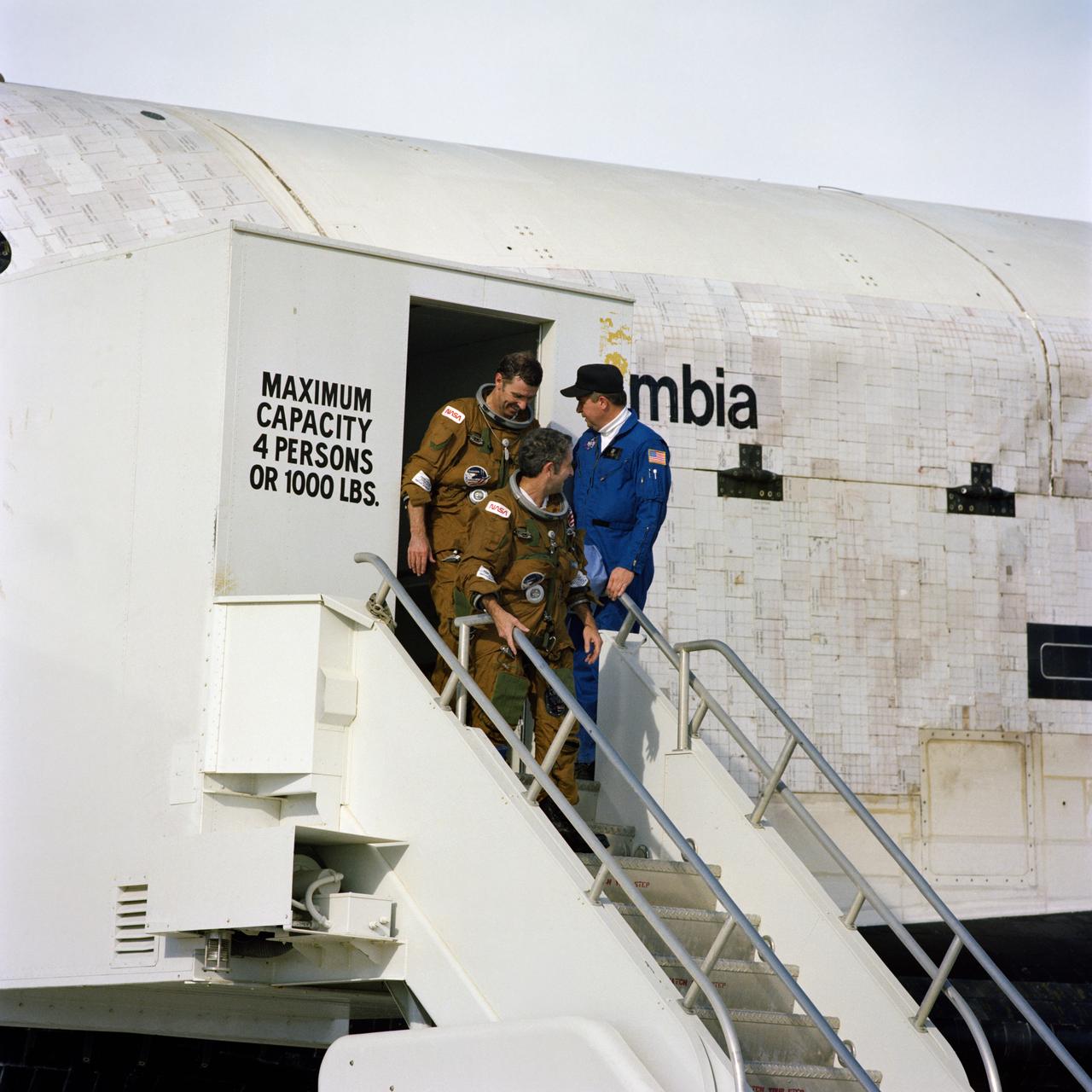
S81-39580 (14 Nov. 1981) --- Astronauts Joe H. Engle, rear, and Richard H. Truly egress the space shuttle Columbia after spending two days, six hours and 13 minutes on NASA?s STS-2 mission. At right is their physician, Dr. Charles La Pinta of the JSC Medical Sciences Division. Photo credit: NASA
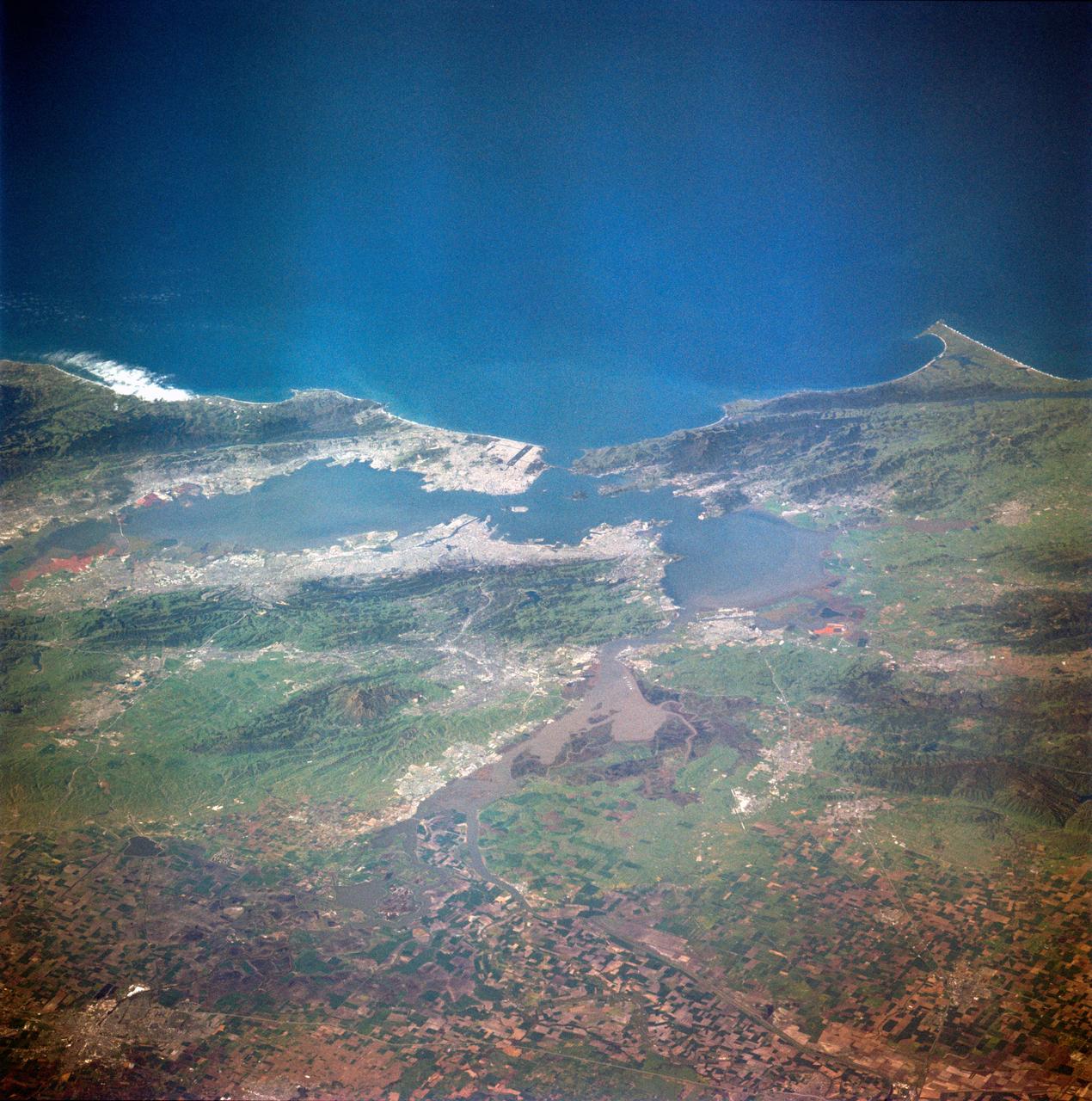
STS001-12-305 (12-14 April 1981) --- California, San Francisco Bay photographed by a crew member on the space shuttle Columbia (STS-1). The coast is seen from near Santa Cruz northward to Point Reyes. The great valley is in the foreground. Photo credit: NASA
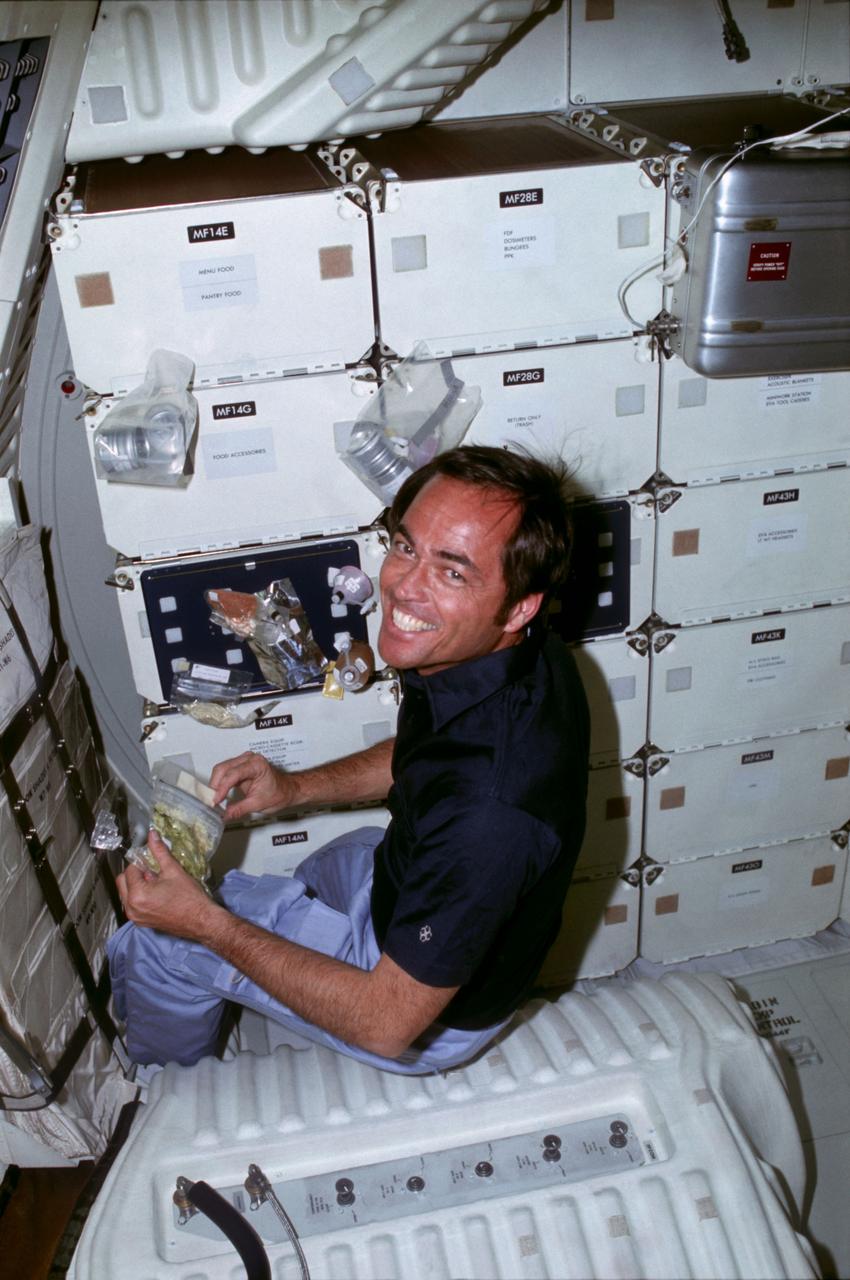
STS001-07-502 (12-14 April 1981) --- A smiling Robert L. Crippen, STS-1 pilot, is about to prepare a meal aboard the space shuttle Columbia in Earth orbit. Prepared meals, which need only water added, and beverages, can be seen attached to trays, which are mounted on locker doors in Columbia's middeck area. Astronaut John W. Young, commander, took this photograph with a 35mm camera. Photo credit: NASA
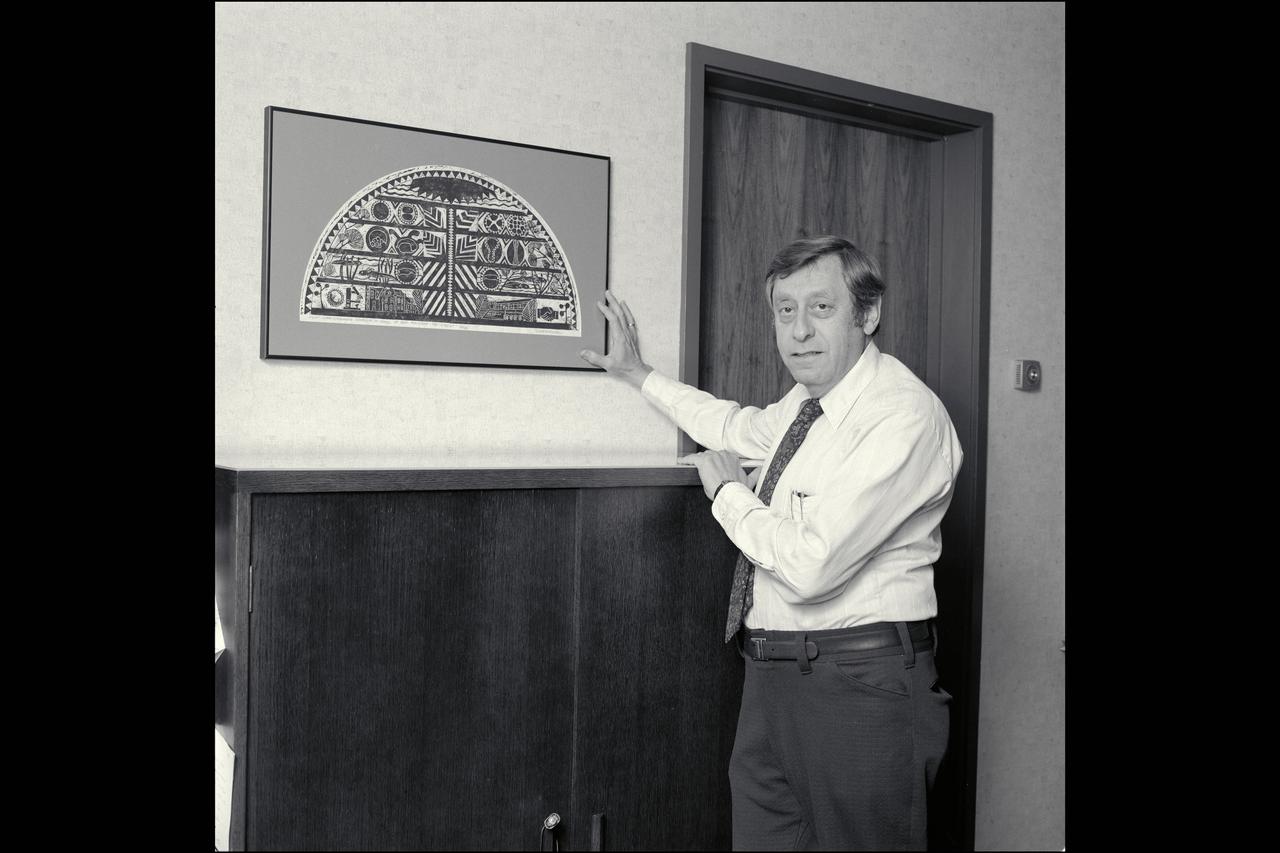
Dr Harold Klein, Director of Life Science in his office at Ames Research Center showing his painting of Indian folklore on the origin of life.
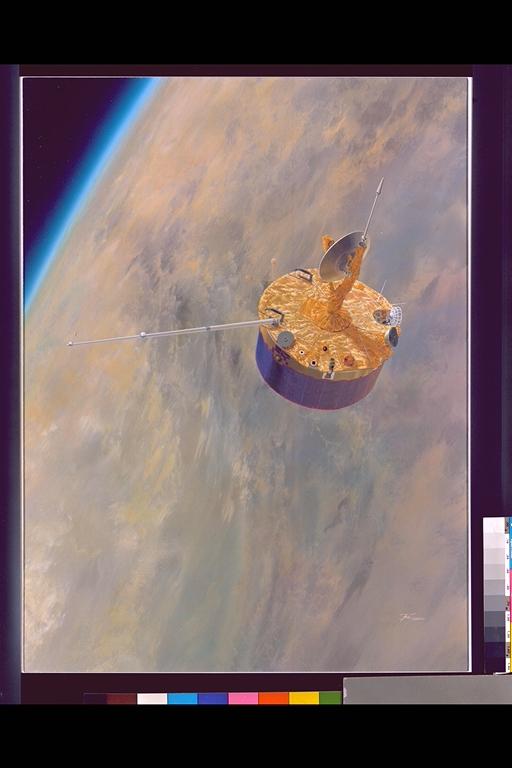
Artist: Paul Hudson Pioneer Venus Orbiter expected to orbit the planet from 1978 to 1992 when the spacecraft will enter and be destroyed in Venus' upper atmosphere
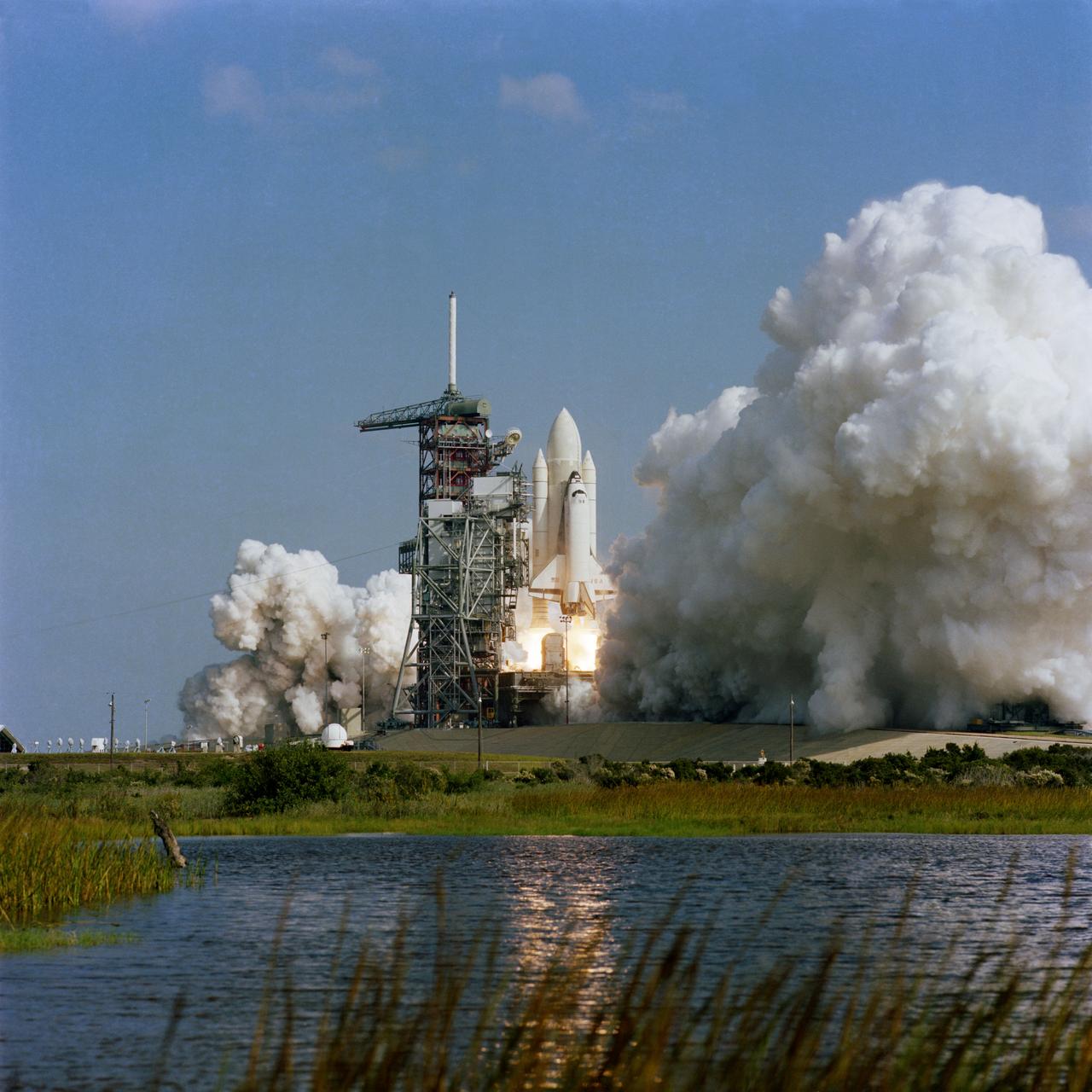
S81-39548 (12 Nov. 1981) --- NASA's space shuttle Columbia climbs toward space for a return visit after its 10:10 a.m. liftoff from Launch Pad 39A. Aboard the space shuttle, astronauts Joe H. Engle and Richard H. Truly man the flight deck. On its second mission (STS-2), Columbia carries a payload of science and applications experiments and an arm-like robot device named a remote manipulator system (RMS). Photo credit: NASA
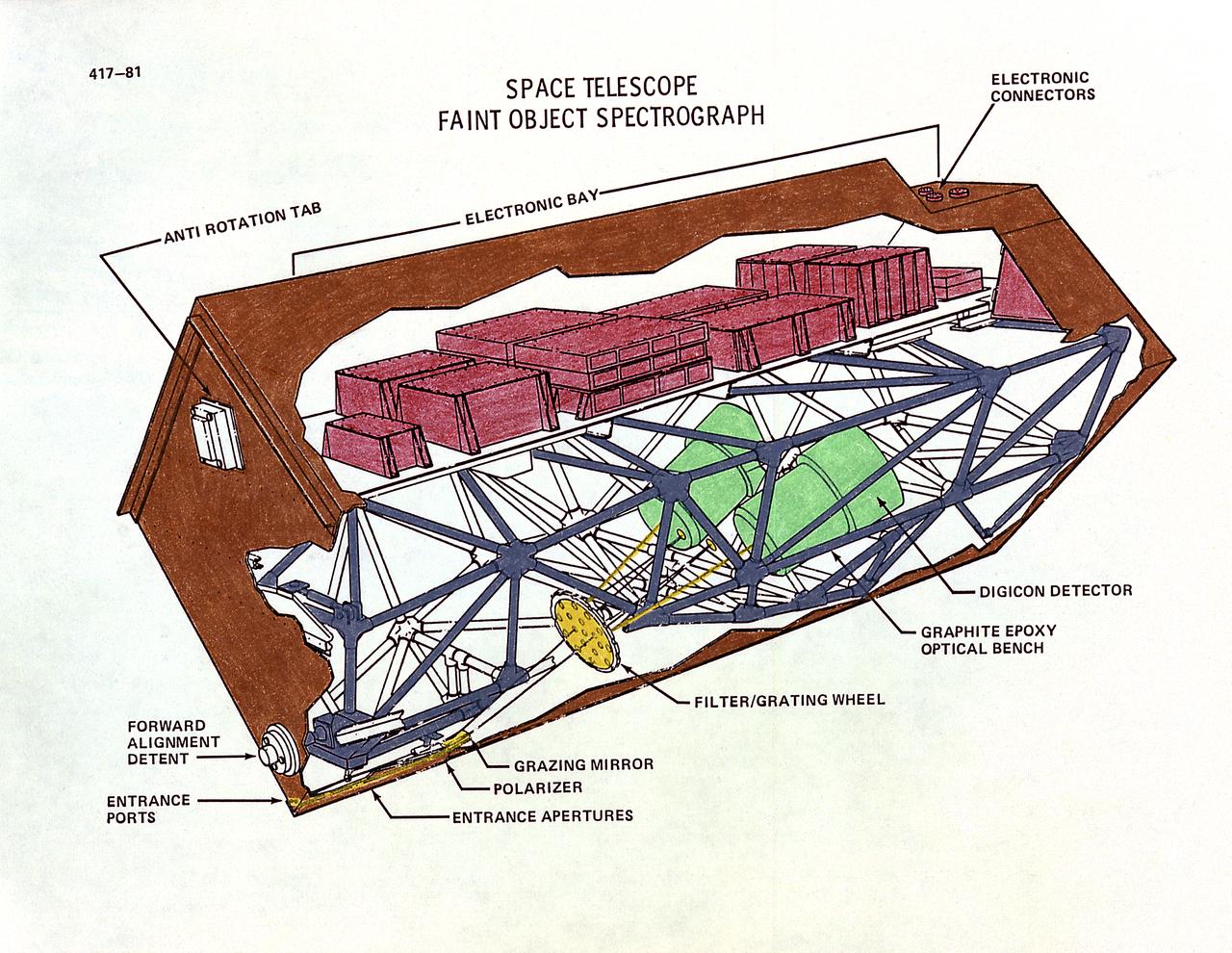
This drawing illustrates the Hubble Space Telescope's (HST's), Faint Object Spectrograph (FOS). The HST's two spectrographs, the Goddard High-Resolution Spectrograph and the FOS, can detect a broader range of wavelengths than is possible from the Earth because there is no atmosphere to absorb certain wavelengths. Scientists can determine the chemical composition, temperature, pressure, and turbulence of the stellar atmosphere producing the light, all from spectral data. The FOC can detect detail in very faint objects, such as those at great distances, and light ranging from ultraviolet to red spectral bands. Both spectrographs operate in essentially the same way. The incoming light passes through a small entrance aperture, then passes through filters and diffraction gratings, that work like prisms. The filter or grating used determines what range of wavelength will be examined and in what detail. Then the spectrograph detectors record the strength of each wavelength band and sends it back to Earth. The purpose of the HST, the most complex and sensitive optical telescope ever made, is to study the cosmos from a low-Earth orbit. By placing the telescope in space, astronomers are able to collect data that is free of the Earth's atmosphere. The HST views galaxies, stars, planets, comets, possibly other solar systems, and even unusual phenomena such as quasars, with 10 times the clarity of ground-based telescopes. The HST was deployed from the Space Shuttle Discovery (STS-31 mission) into Earth orbit in April 1990. The Marshall Space Flight Center had responsibility for design, development, and construction of the HST. The Perkin-Elmer Corporation, in Danbury, Cornecticut, developed the optical system and guidance sensors.
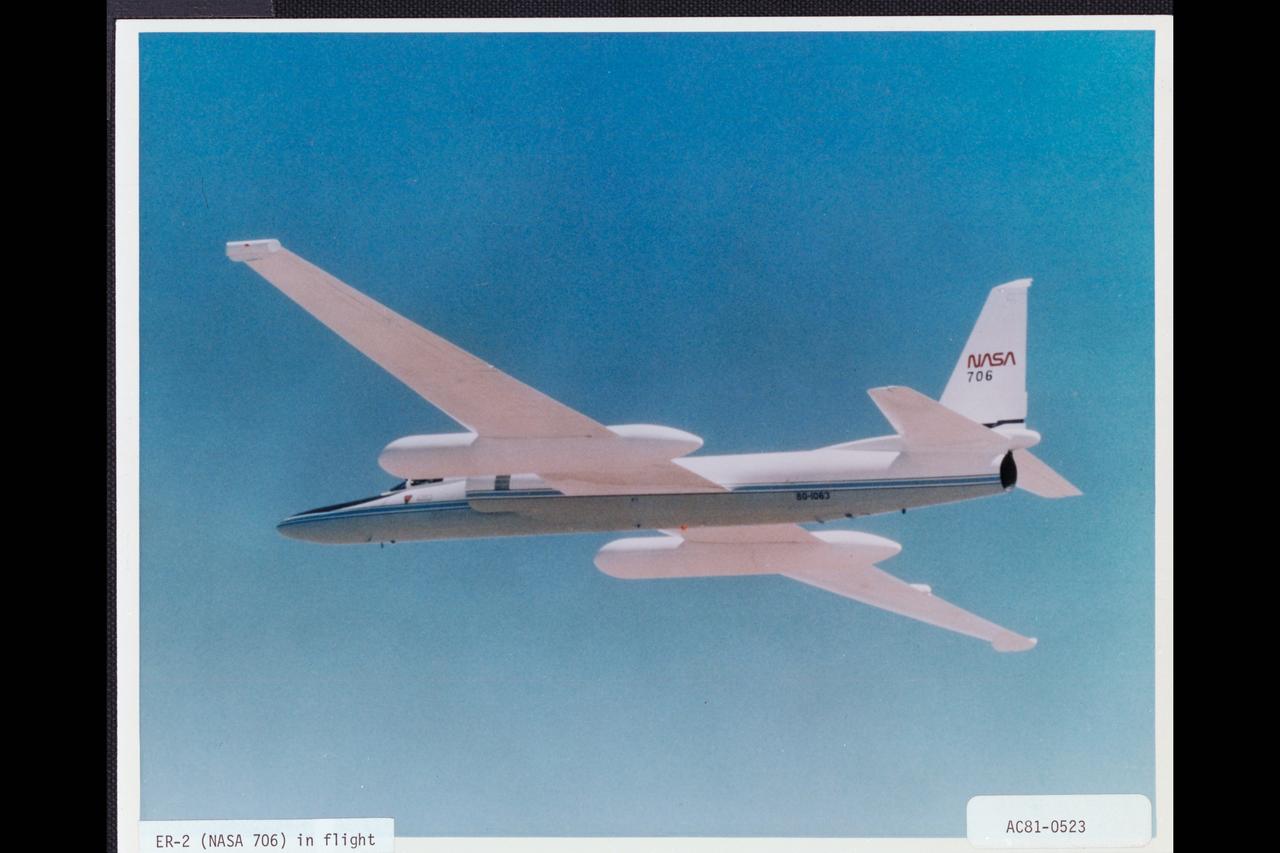
ER-2 (NASA-706) in flight. (Lockheed C81-1197-13)
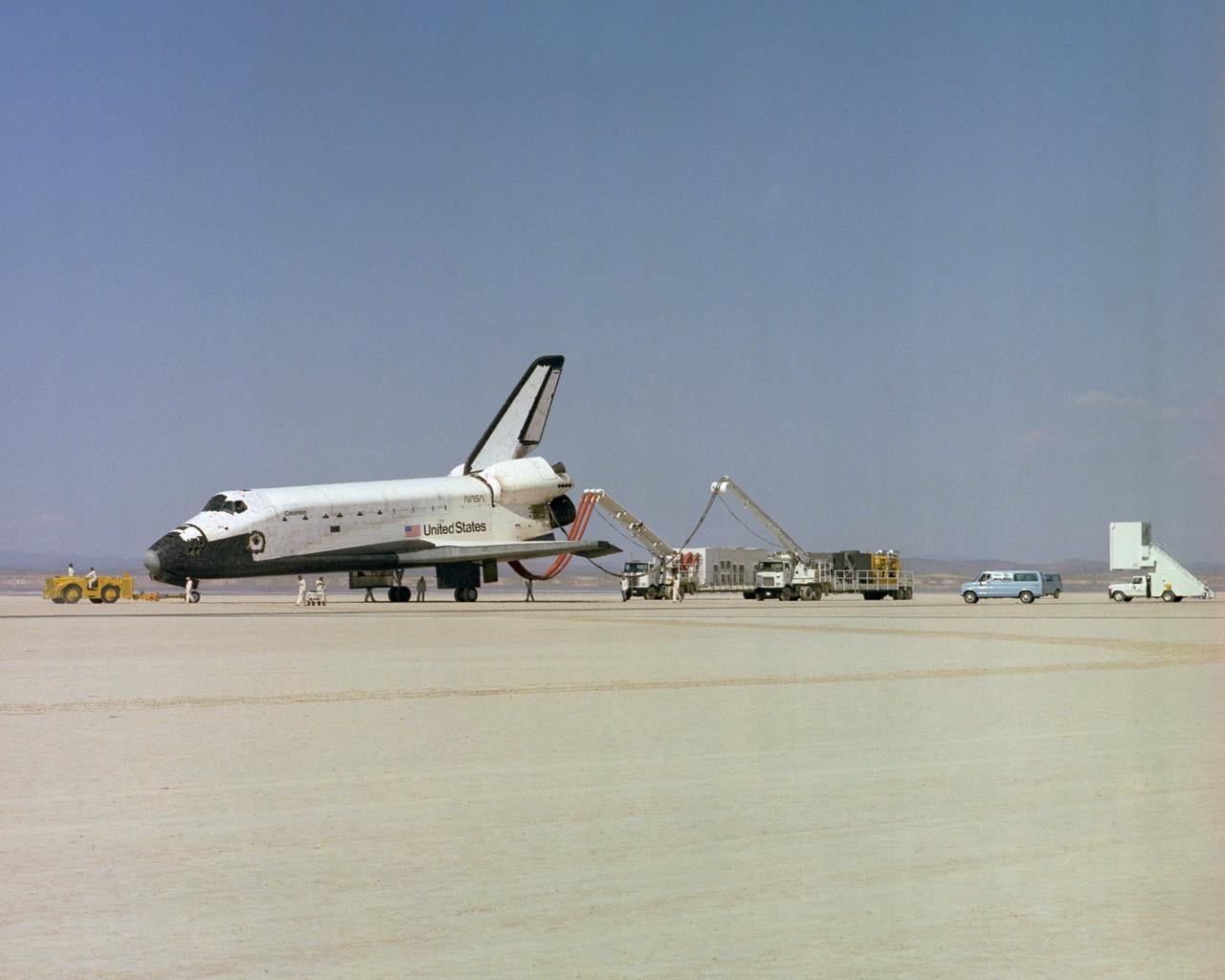
The Space Shuttle Columbia on Rogers Dry lakebed at Edwards AFB after landing to complete its first orbital mission on April 14, 1981. Technicians towed the Shuttle back to the NASA Dryden Flight Research Center for post-flight processing and preparation for a return ferry flight atop a modified 747 to Kennedy Space Center in Florida.
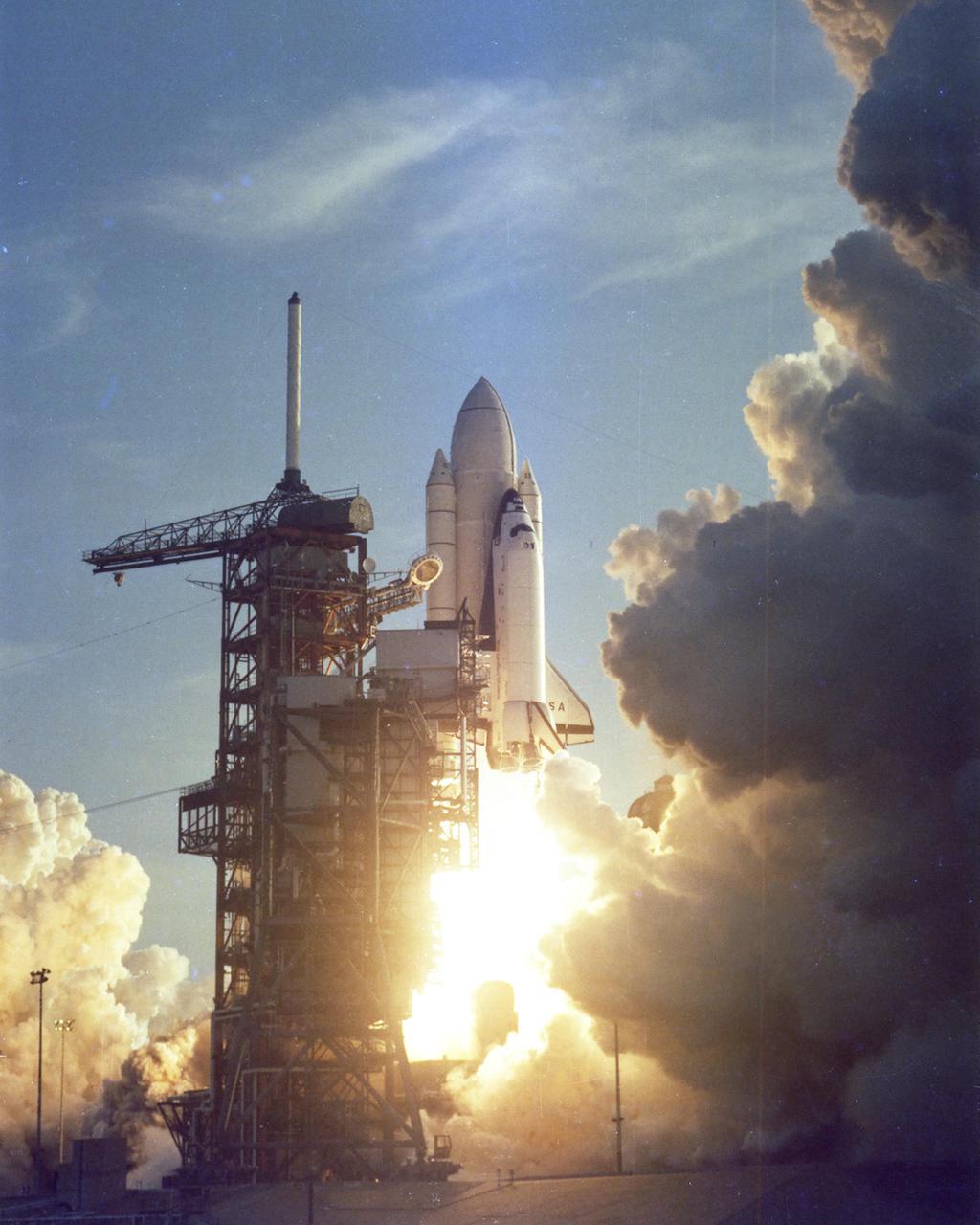
KENNEDY SPACE CENTER, FLA. -- The Space Shuttle Columbia rises majestically above Launch Complex 39's Pad A on the first leg of its maiden journey into space. On board for the historic flight are Astronauts John Young and Bob Crippen, scheduled to spend nearly 54 hours in space on this first shakedown test of America's new reusable Space Transportation System (STS-1). The Sunday morning liftoff came a few seconds after 7:00 a.m. and marked the dawn of a new era in spaceflight.
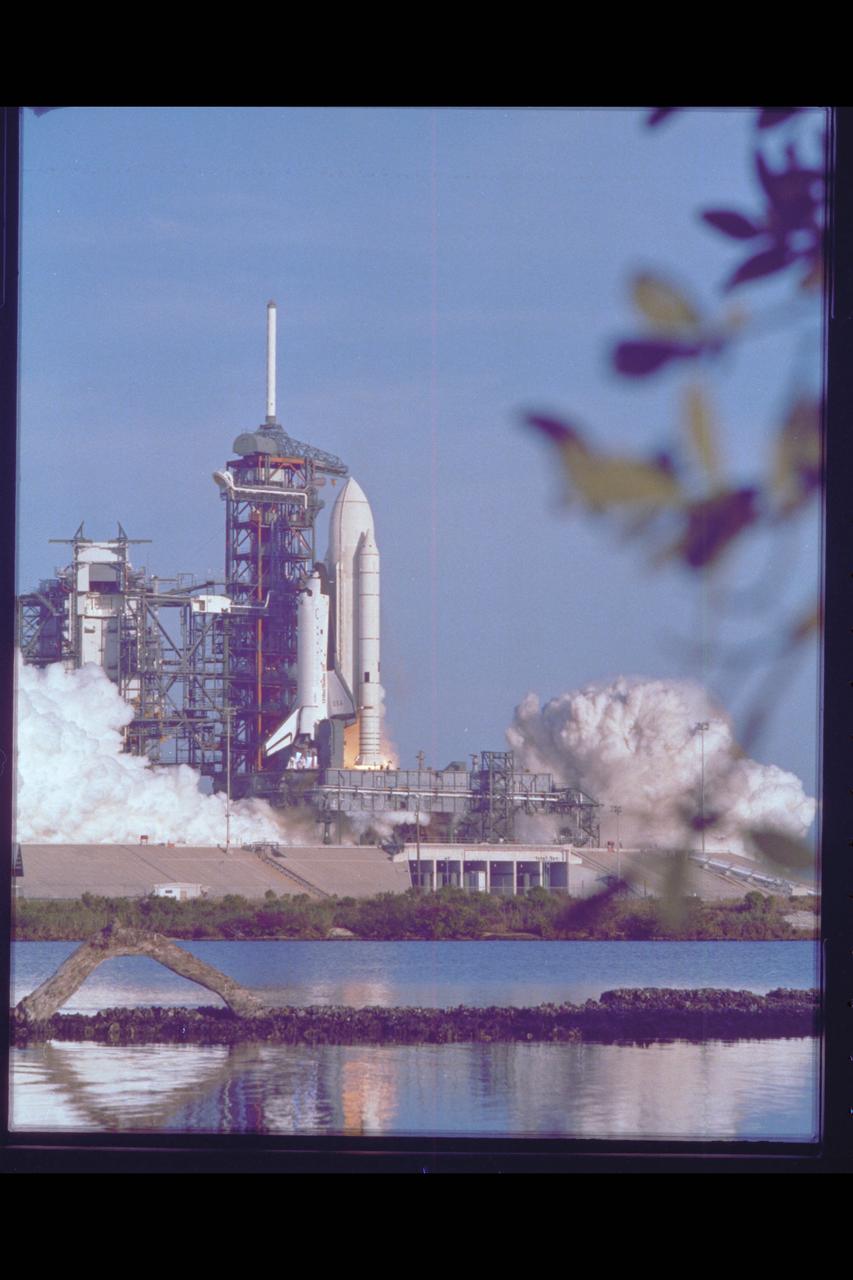
Space Shuttle Columbia Launch Preparation at NASA KSC (Kennedy Space Center) Ref: 108-KSC-81PC-454
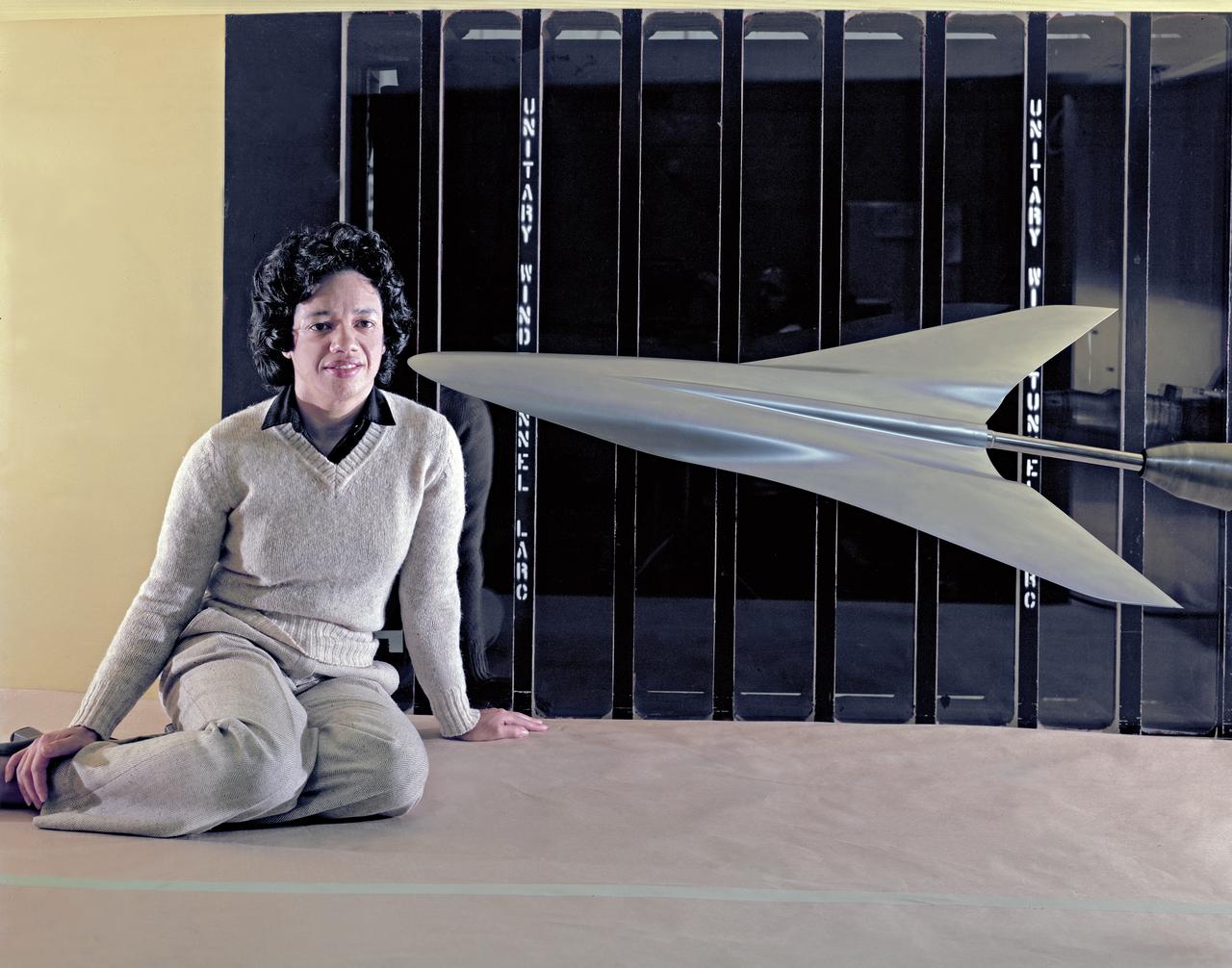
Leading Edge Vortex Suppression Series with Christine Darden in photos
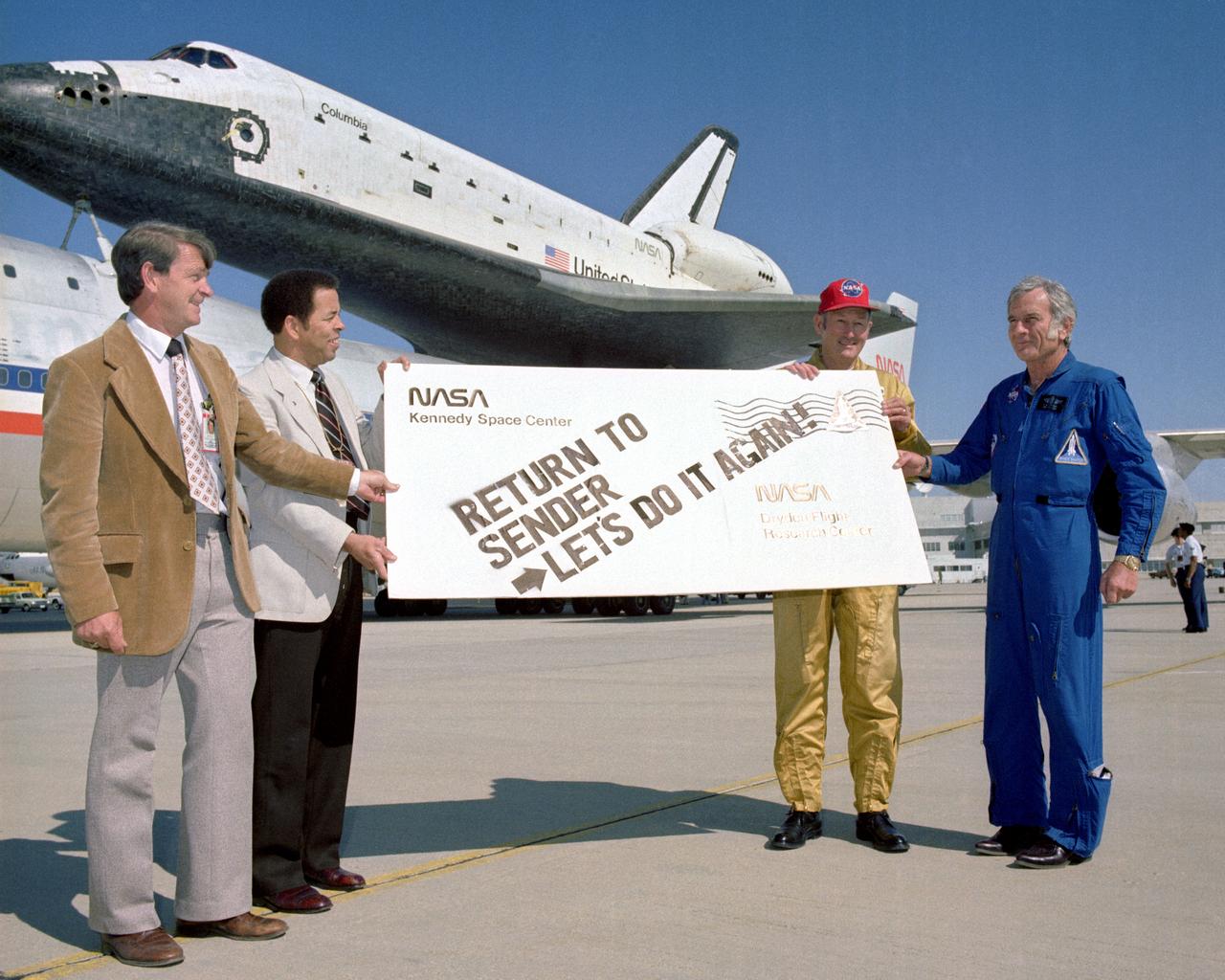
After completing it's first orbital mission with a landing at Edwards Air Force Base on April 14, 1981, Space Shuttle Columbia received a humorous sendoff before it's ferry flight atop a modified 747 back to the Kennedy Space Center in Florida. Holding the sign are, left to right: Melvin Burke, DFRC Orbital Flight Test (OFT) Program Manager; Isaac 'Ike' Gillam, DFRC Center Director; Fitzhugh 'Fitz' L. Fulton Jr., NASA DFRC 747 SCA Pilot; and Donald K. 'Deke' Slayton, JSC OFT Project Manager.
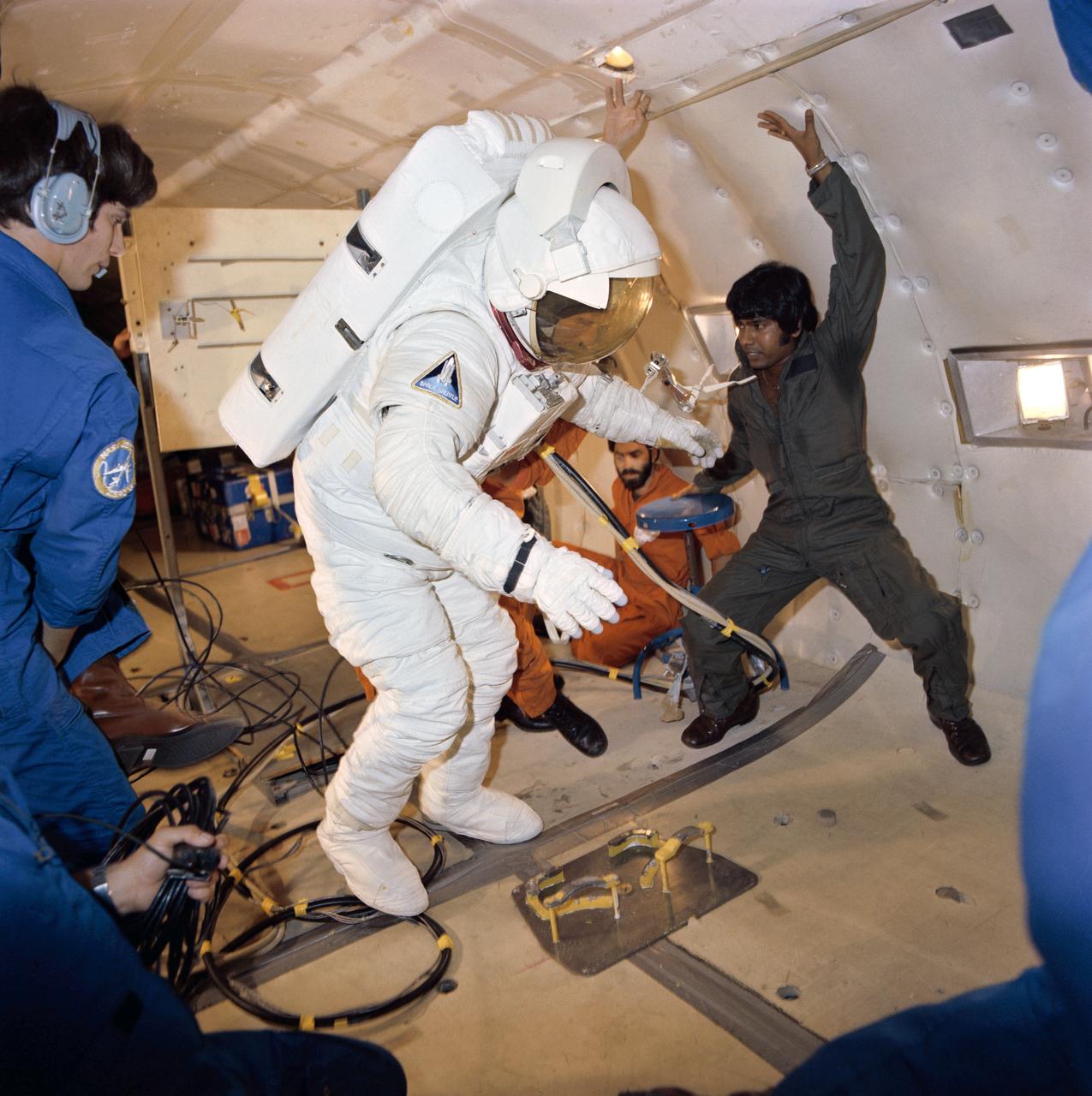
S81-34448 (July 1981) --- Astronaut C. Gordon Fullerton, STS-3 pilot, fully suited, gets a preview of what it might be like in space during a flight aboard NASA's KC-135 "zero-gravity" aircraft. A special parabolic pattern flown the aircraft provides short periods of weightlessness. Fullerton's suit is an Extravehicular Mobility Unit (EMU), used by astronauts when leaving the shirt-sleeve environment of their shuttle orbiter to go outside perform tasks in space. There are no such EVA plans on STS-3, but crew members are trained in this area in the event of the necessity to perform chores in space that for some reason or other can't be done remotely. The astronaut has just donned his suit during a parabola and now takes the opportunity to float around in the absence of gravity. Photo credit: NASA
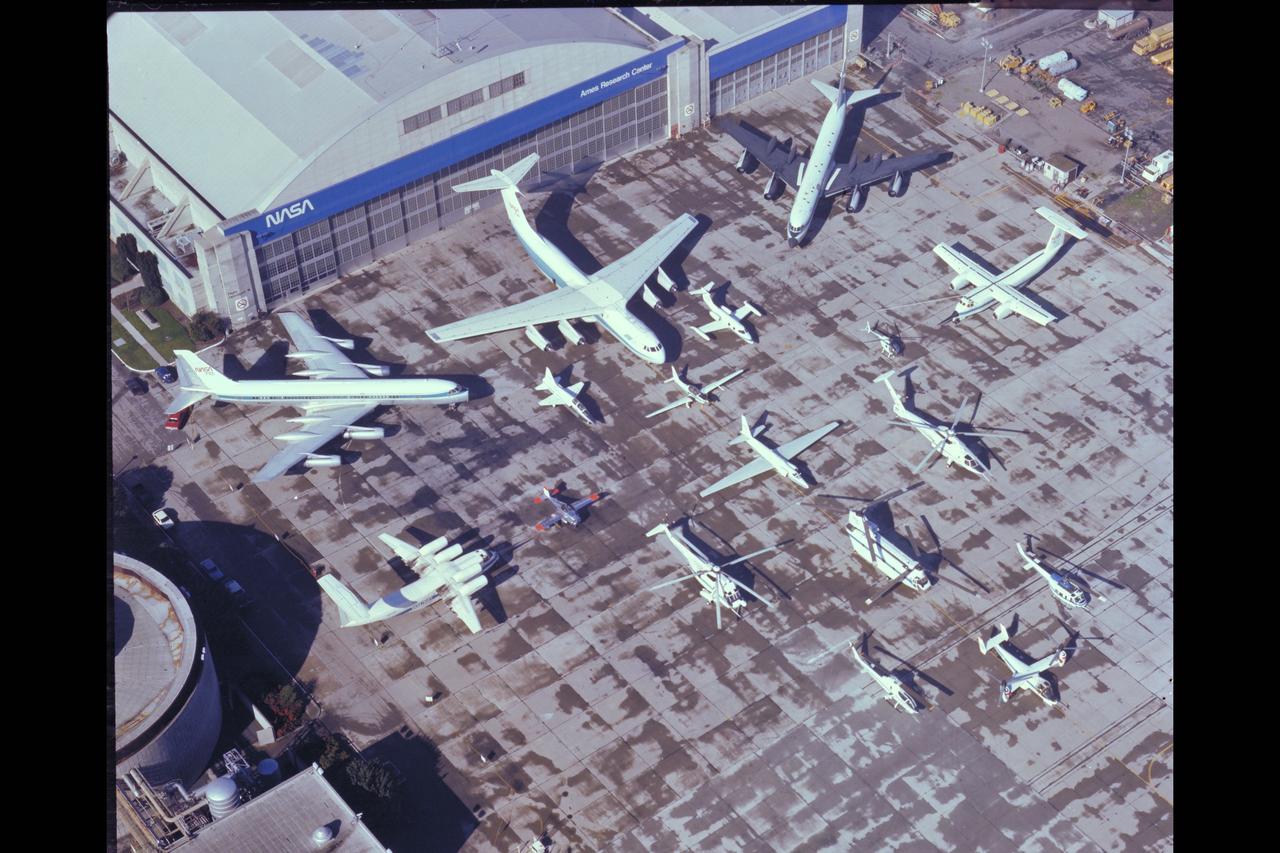
NASA Aircraft on ramp (Aerial view) Sides: (L) QSRA (R) C-8A AWJSRA - Back to Front: CV-990 (711) C-141 KAO, CV-990 (712) Galileo, T-38, YO-3A, Lear Jet, X-14, U-2, OH-6, CH-47, SH-3G, RSRA, AH-1G, XV-15, UH-1H
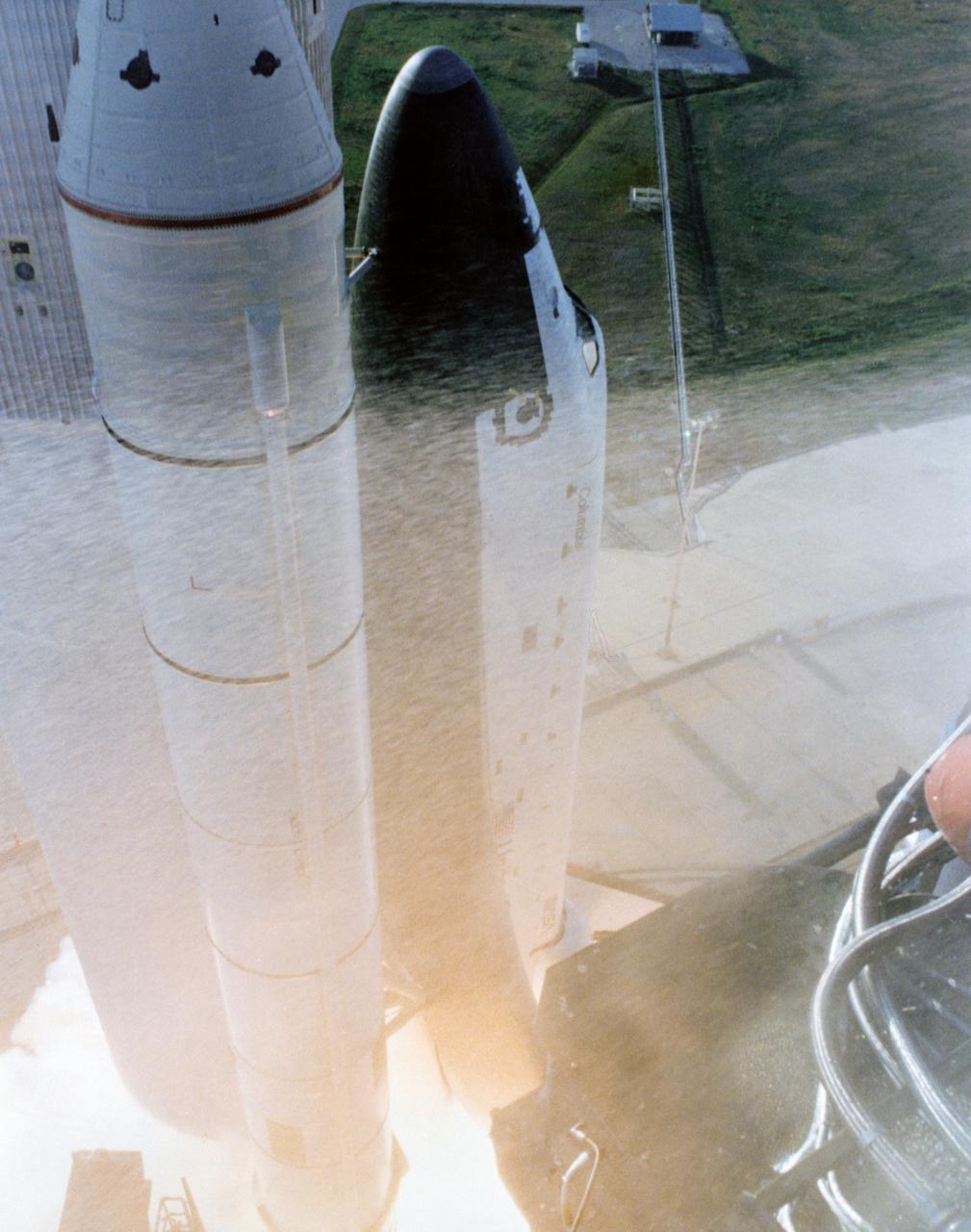
S81-30501 (12 April 1981) --- Nose pointed skyward, space shuttle Columbia begins its climb toward orbit moments after solid rocket booster ignition in this first view of a dramatic liftoff sequence photographed from the 275-feet level of the Fixed Service Structure on Pad 39A. The seven frame sequence documenting the space shuttle’s historic launch on its maiden voyage was taken with a Nikon camera equipped with a 28mm lens with a 250 exposure back. The camera was protected in a fire box. Photo credit: NASA
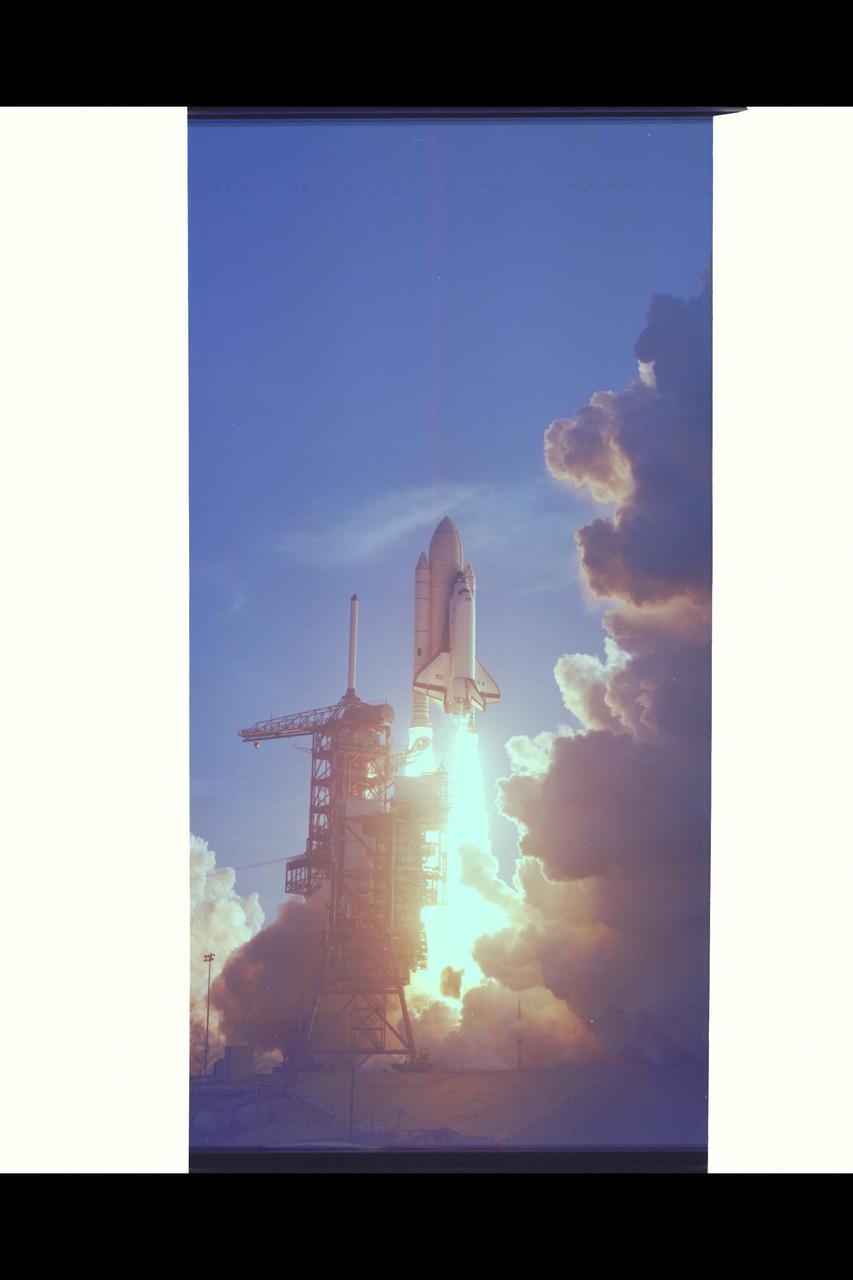
Space Shuttle Columbia Launch at NASA KSC (Kennedy Space Center) Ref: 108-KSC-81PC-368

S81-29029 (March 1981) --- Astronaut Robert A. R. Parker, scientist.

Artist: Ken Hodges Composite image explaining Objective and Motivation for Galileo Probe Heat Loads: Galileo Probe descending into Jupiters Atmosphere shows heat shield separation with parachute deployed. (Ref. JPL P-19180)
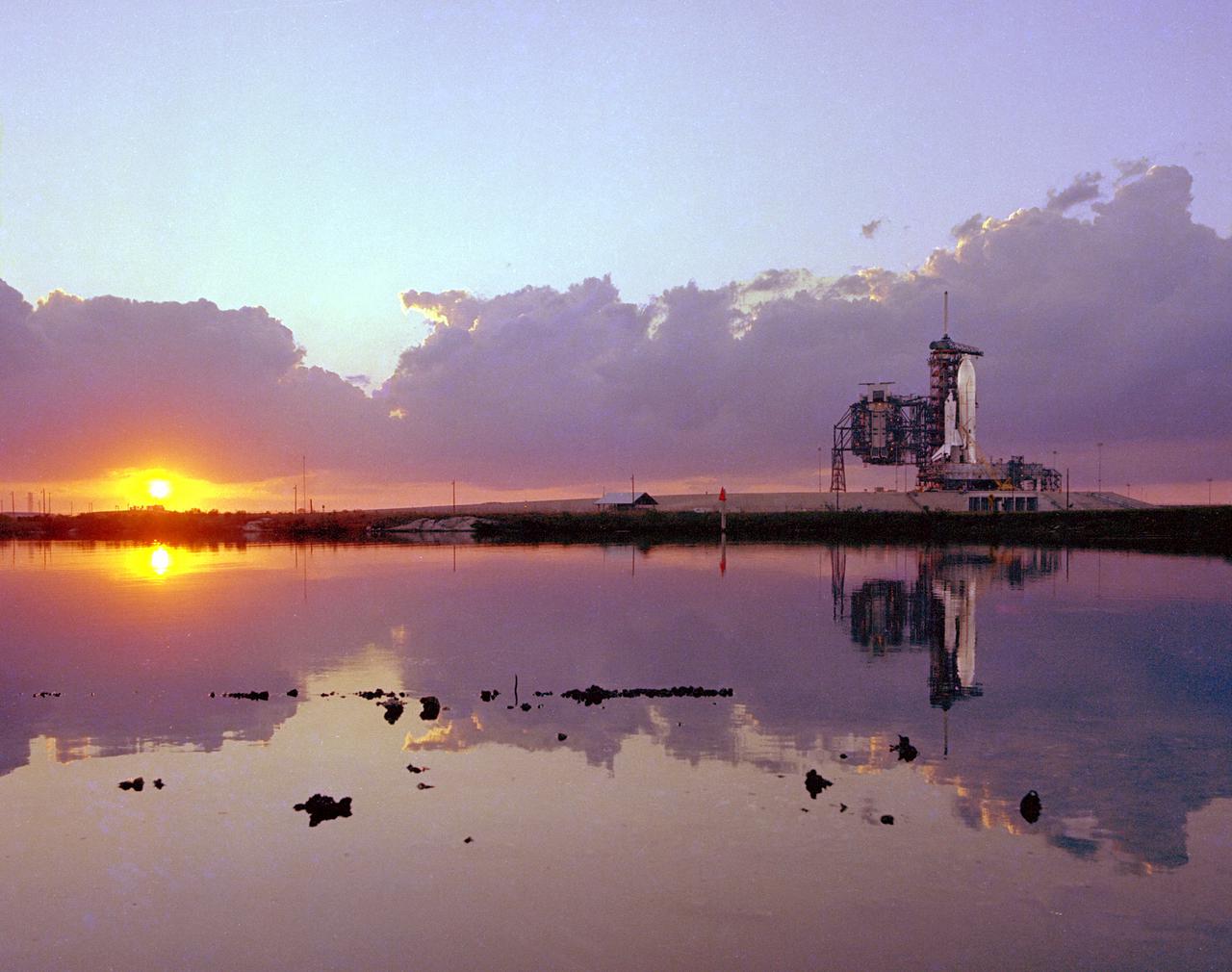
KENNEDY SPACE CENTER, FLA. - Dramatically reflected by the waters of the extensive lagoonal sysem adjacent to Launch Pad A, the Space Shuttle, the world's first reusable space vehicle, is lighted by spotlights and the setting sun on the evening prior to Flight Readiness Firing of the orbiter Columbia's main engines. The 20-second firing was a milestone procedure in flight preparation of the world's first reusable space vehicle.
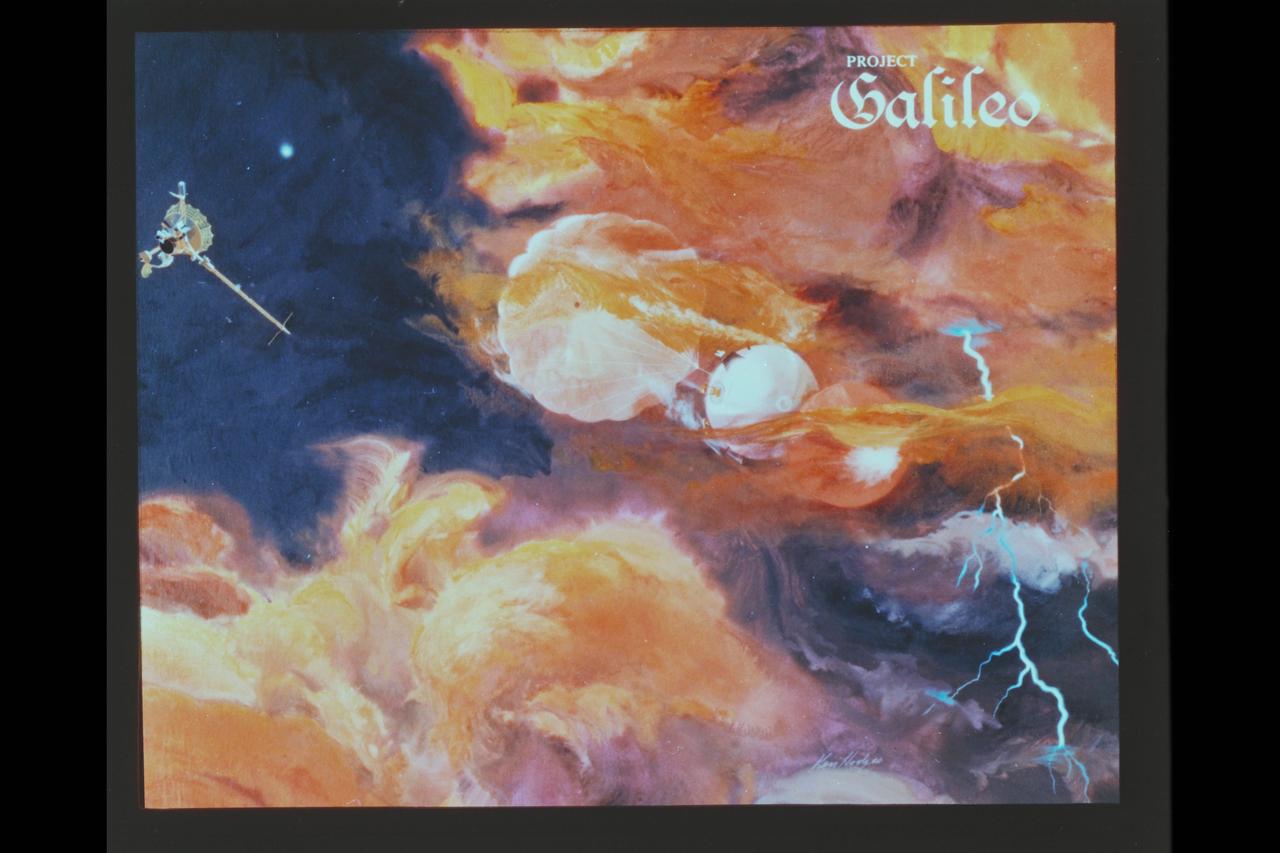
Artist: Ken Hodges Pioneer Galileo Probe descending into Jupiter's Atmosphere with parachute deployed, heat shield separation, while orbiter collects data from above (from JPL files - no reference nunber available)
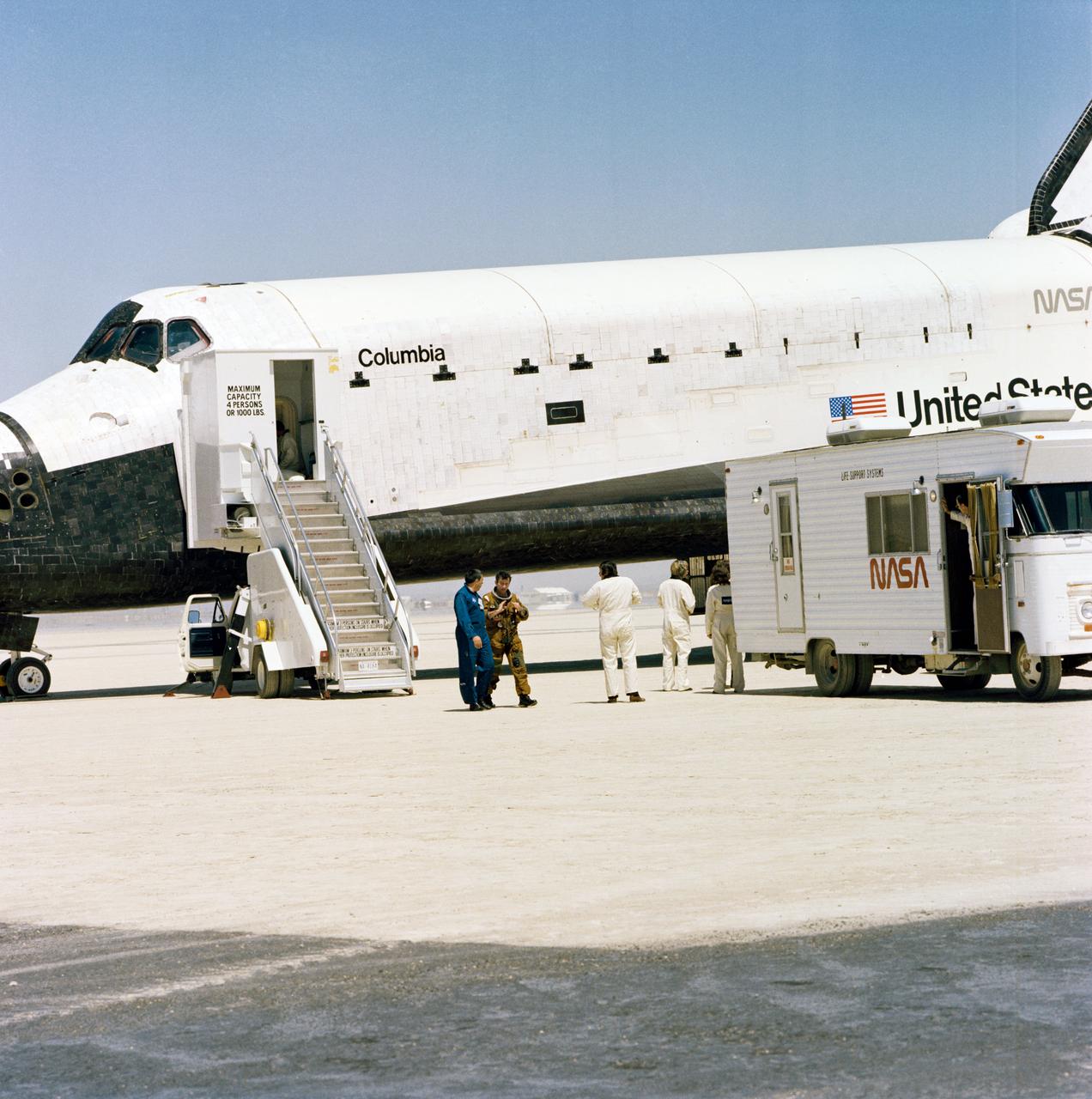
S81-30853 (14 April 1981) --- Astronaut John W. Young, left center talks with George W.S. Abbey, director of flight operations at Johnson Space Center, following egress from the STS-1 Columbia, which forms the backdrop for this postflight scene. Young is en route to the van at right which will take him and fellow crew member Robert L. Crippen (STS-1 pilot still inside Columbia) to facilities at nearby Dryden Flight Research Center. Columbia will be mated to a 747 carrier craft and flown to Florida, where it will be refurbished to accommodate STS-2, scheduled for a Sept. 30 launch date. Photo credit: NASA
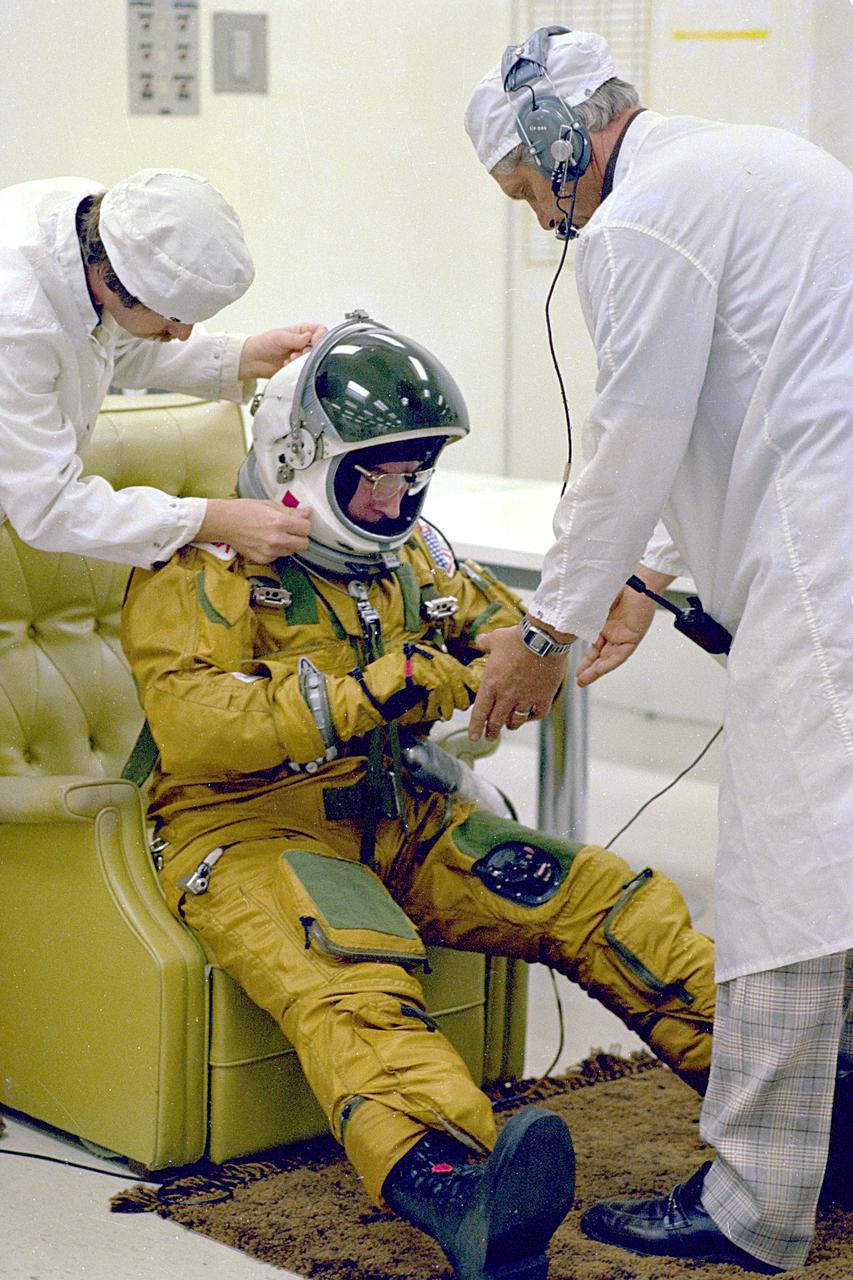
KENNEDY SPACE CENTER, FLA. - Astronaut John Young, in the 'white room' at Launch Pad 39A, suits up for the dry Countdown Demonstration Test, the last major simulated countdown and launch for spaceraft and crew before the launch of America's first Space Shuttle. Young, commander, and Robert Crippen, pilot, are scheduled as the total crew for the maiden flight of the pioneer reusable space transportation system (STS-1).
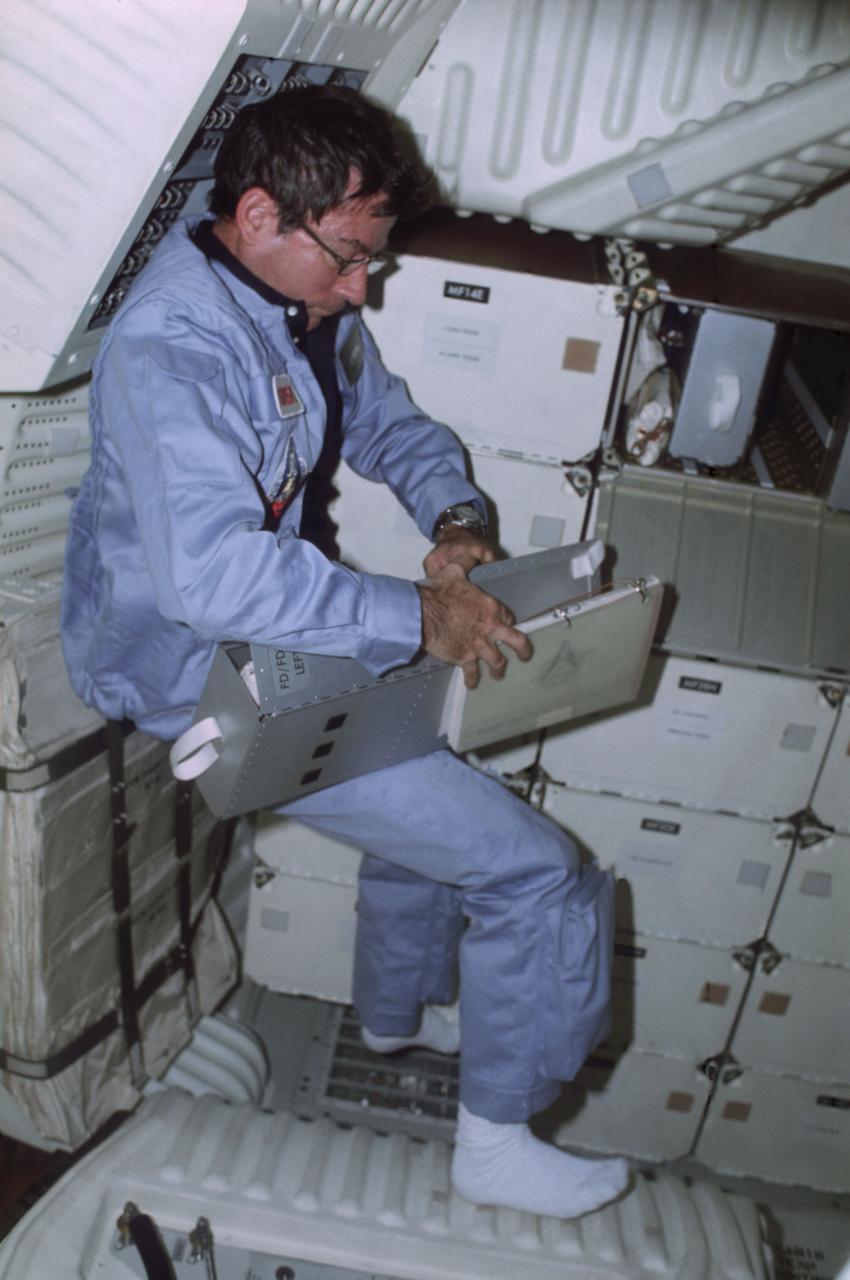
STS001-06-497 (12-14 April 1981) --- Astronaut John W. Young, STS-1 commander, opens one of the lockers in the space shuttle Columbia's middeck area. This photo was taken by astronaut Robert L. Crippen, pilot, using a 35mm camera. Photo credit: NASA
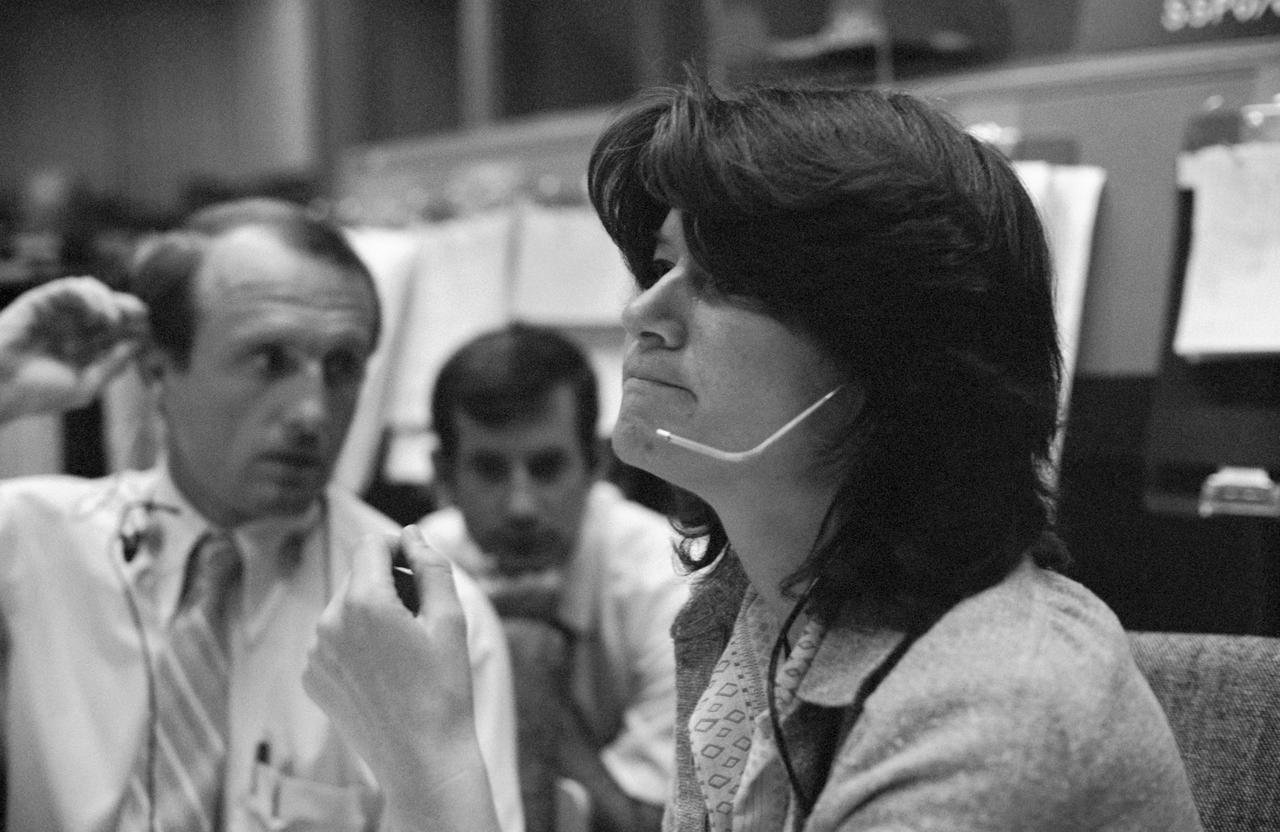
Astronaut Sally Ride at the CapCom console during the STS-2 simulation. She appears to be speaking to the crew using a headset.

STS001-12-308 (12-14 April 1981) --- Space shuttle Columbia approached Edwards Air Force Base from the left to land at the dry lake at the center. The view is to the southwest. The edge of the light "vee" is the intersection of the San Andres and Garlock Faults at Fort Tejon. Los Angeles is at upper right. Owens Lake is at the lower center. Photo credit: NASA
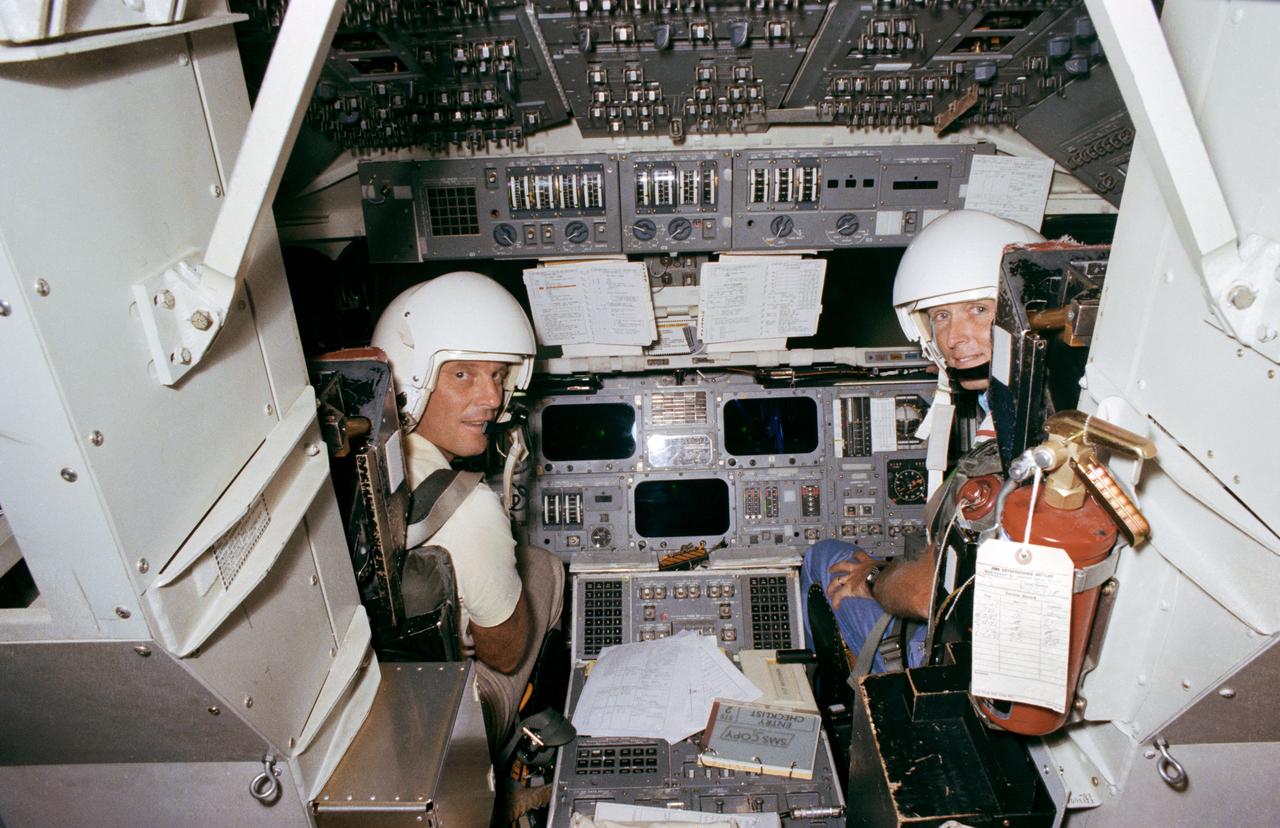
S81-36714 (14 Nov. 1981) --- These two veteran astronauts were named today as the official prime crew members of STS-3 in the space shuttle Columbia. Commander for NASA?s third space shuttle orbital flight test is astronaut Jack R. Lousma, left, seated in a Shuttle Mission Simulator (SMS) at NASA's Johnson Space Center (JSC). Astronaut C. Gordon Fullerton, right, will serve as pilot. Lousma was pilot on the second of three NASA crews to visit the Earth orbiting Skylab space station in 1973. Fullerton, though never having been in space, is a veteran of three free flights of the shuttle during approach and landing tests (ALT) with space shuttle Enterprise in 1977. Photo credit: NASA
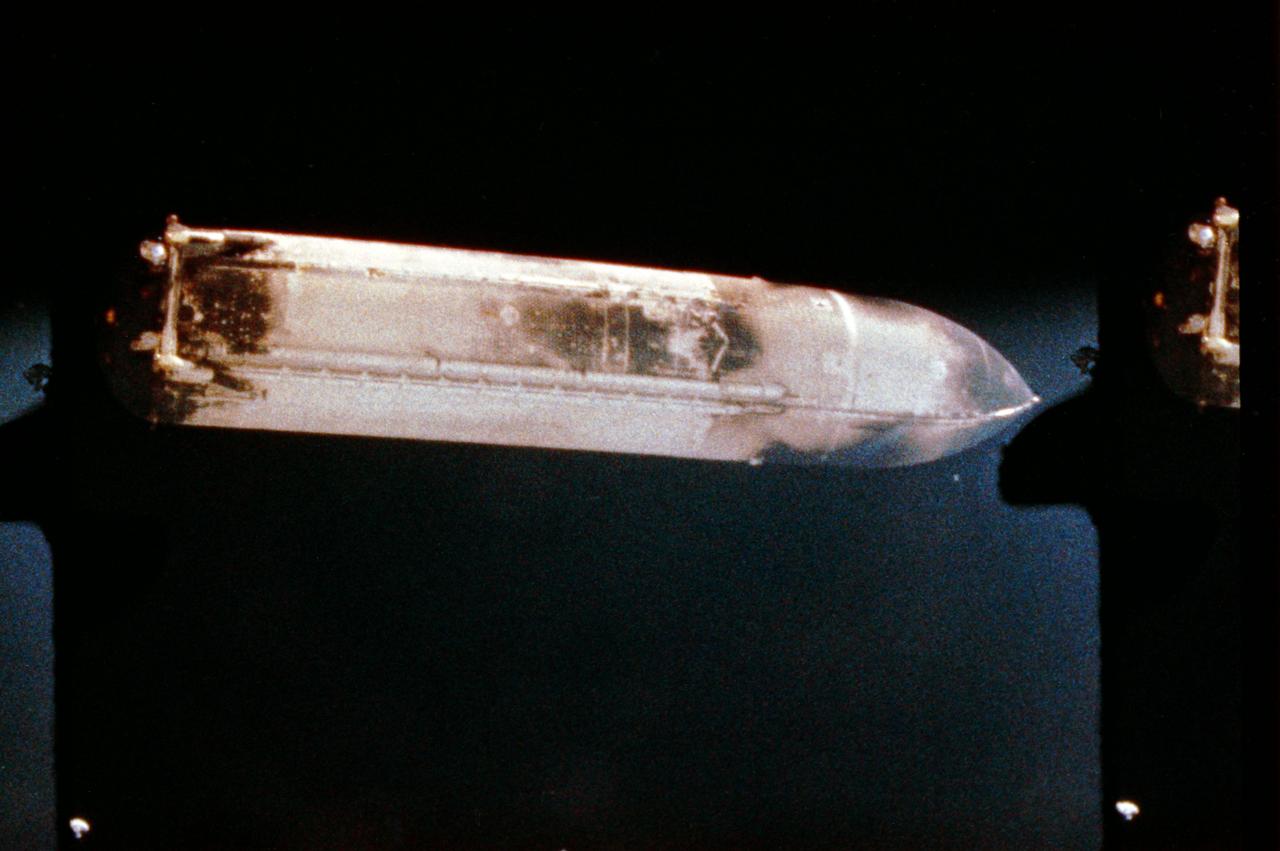
S81-30509 (12 April 1981) --- Separation of space shuttle Columbia?s external tank, photographed by motion picture cameras in the umbilical bays, occurred following the shutdown of the vehicle?s three main engines. The Columbia?s cameras were able to record the underside of the tank as the orbiter headed toward its Earth-orbital mission with astronauts John W. Young and Robert L. Crippen aboard, and the fuel tank fell toward Earth, passing through the atmosphere rapidly. Photo credit: NASA
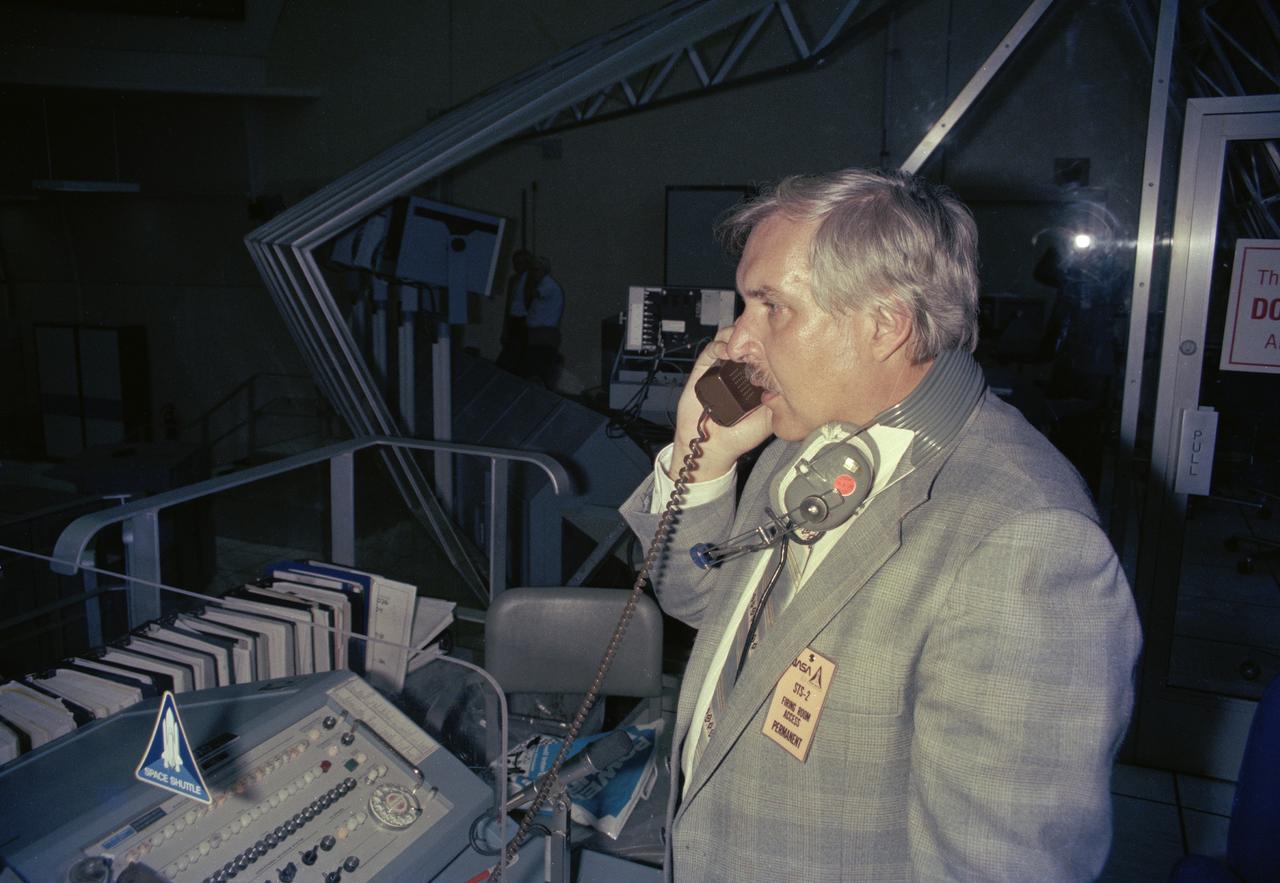
CAPE CANAVERAL, Fla. -- Hugh W. Harris, chief, Public Information Office, Kennedy Space Center. Photo credit: NASA
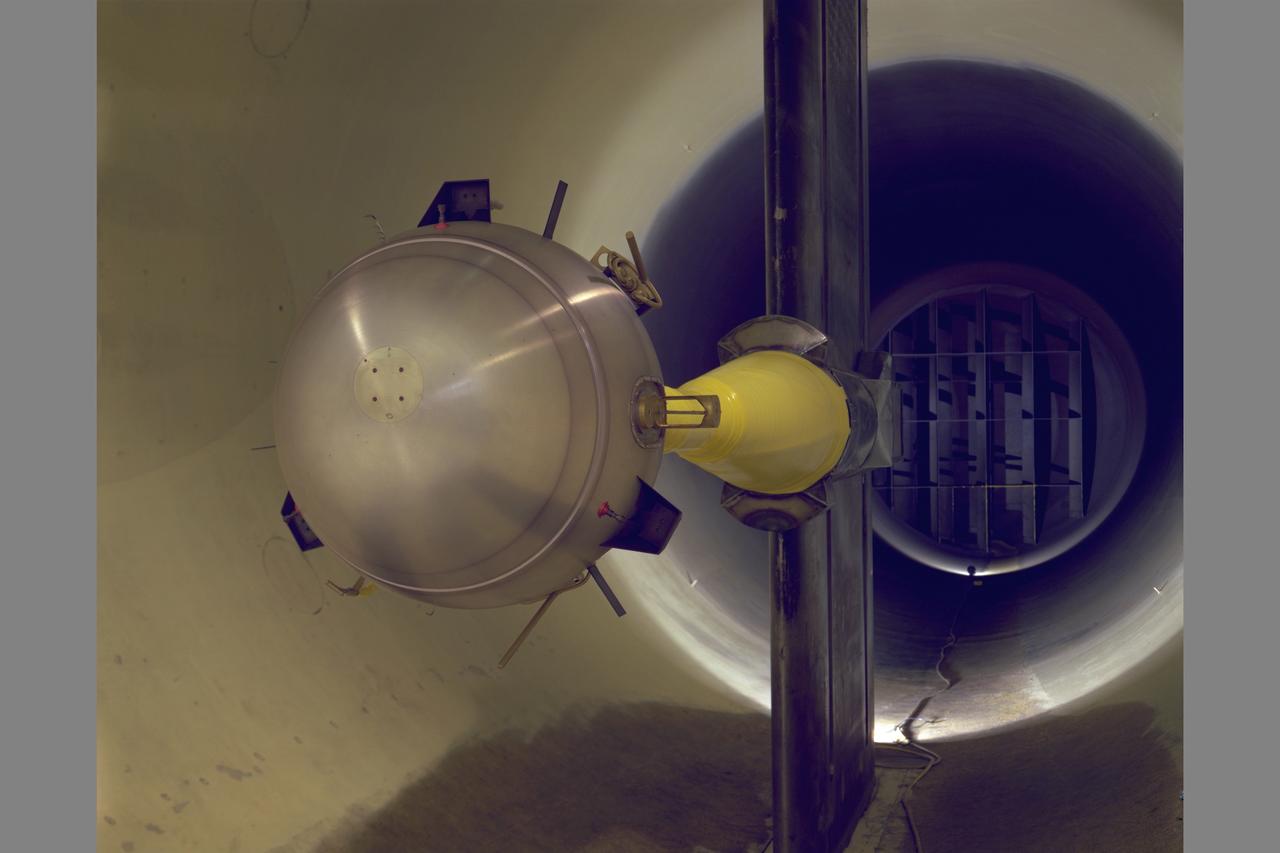
Galileo Probe test-358 in NASA Ames Research Center12ft Pressure Wind Tunnel
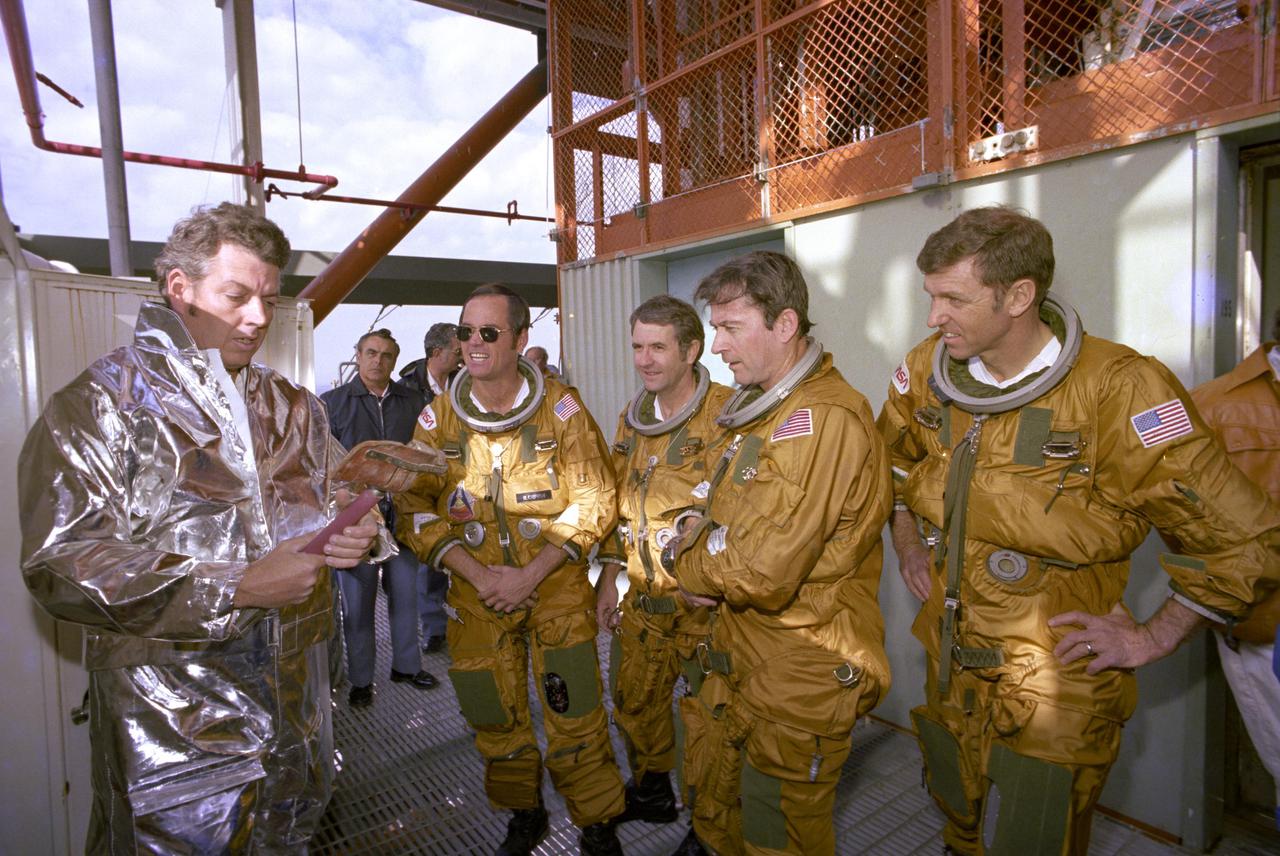
KENNEDY SPACE CENTER, FLA. - On the Fixed Service Structure on Launch Complex 39A, space shuttle astronauts being briefed on the slidewire emergency pad escape system are (left to right) prime crew Pilot Bob Crippen, backup crew member Richard Truly, prime crew Commander John Young and backup crew member Joe Engle. The slidewire system provides a quick escape from upper launch pad platforms in case of a serious emergency. The flight crews wore the spacesuits and other equipment to be worn during a mission, but sandbags were used to duplicate the weight of riders in the slidewire baskets during the training. The STS-1 mission, known as a shuttle systems test flight, will seek to demonstrate safe launch into orbit and safe return of the orbiter and crew and verify the combined performance of the entire shuttle vehicle -- orbiter, solid rocket boosters and external tank. STS-1 will be launched from Pad A at the Kennedy Space Center's Launch Complex 39 no earlier than March 1981.
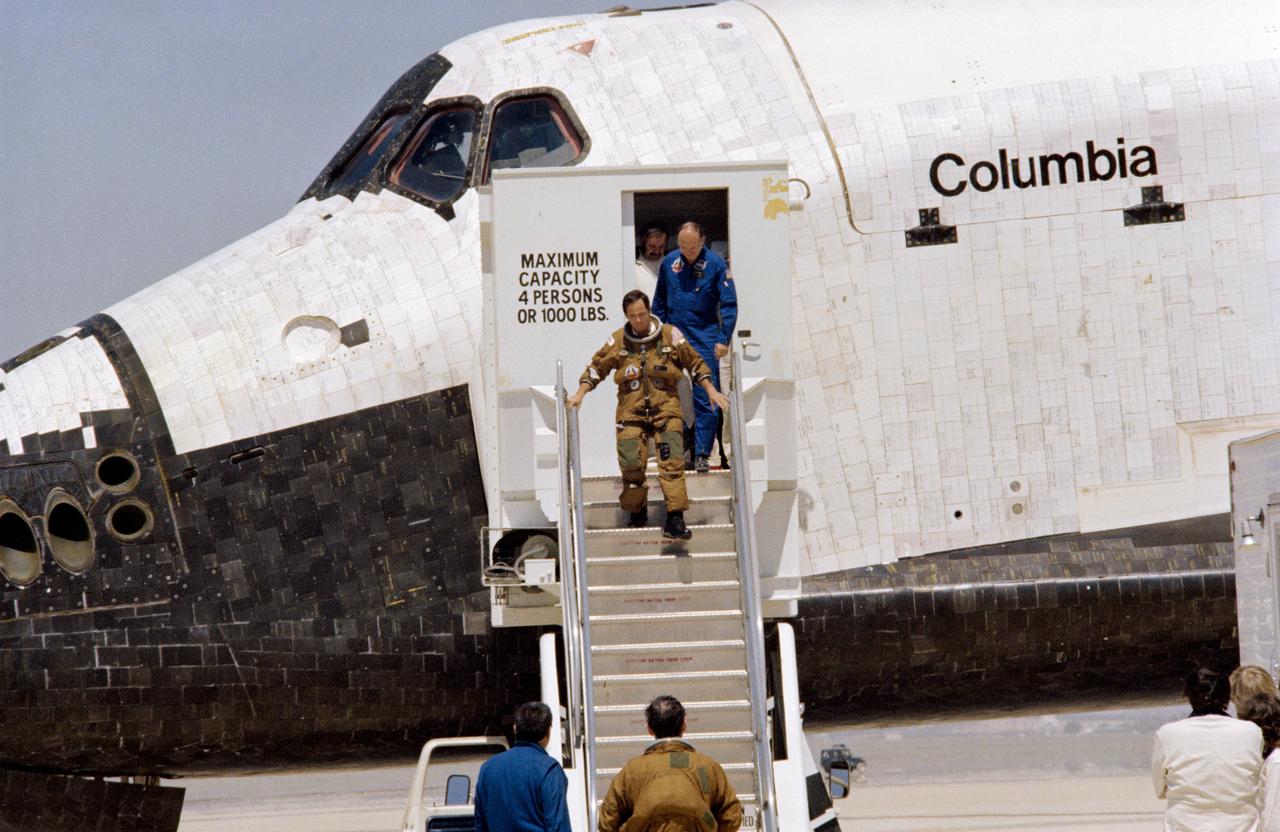
S81-30852 (14 April 1981) --- Astronaut Robert L. Crippen, pilot for the STS-1 flight, egresses the NASA space shuttle following touchdown of the Columbia on Rogers Dry Lake at Edwards Air Force Base, California. Astronaut John W. Young, crew commander, had earlier exited the craft and can be seen standing at the foot of the steps with George W.S. Abbey, director of flight operations at the Johnson Space Center (JSC). Dr. Craig L. Fischer, chief of the medical operations branch in JSC?s medical sciences division, follows Crippen down the steps. Photo credit: NASA
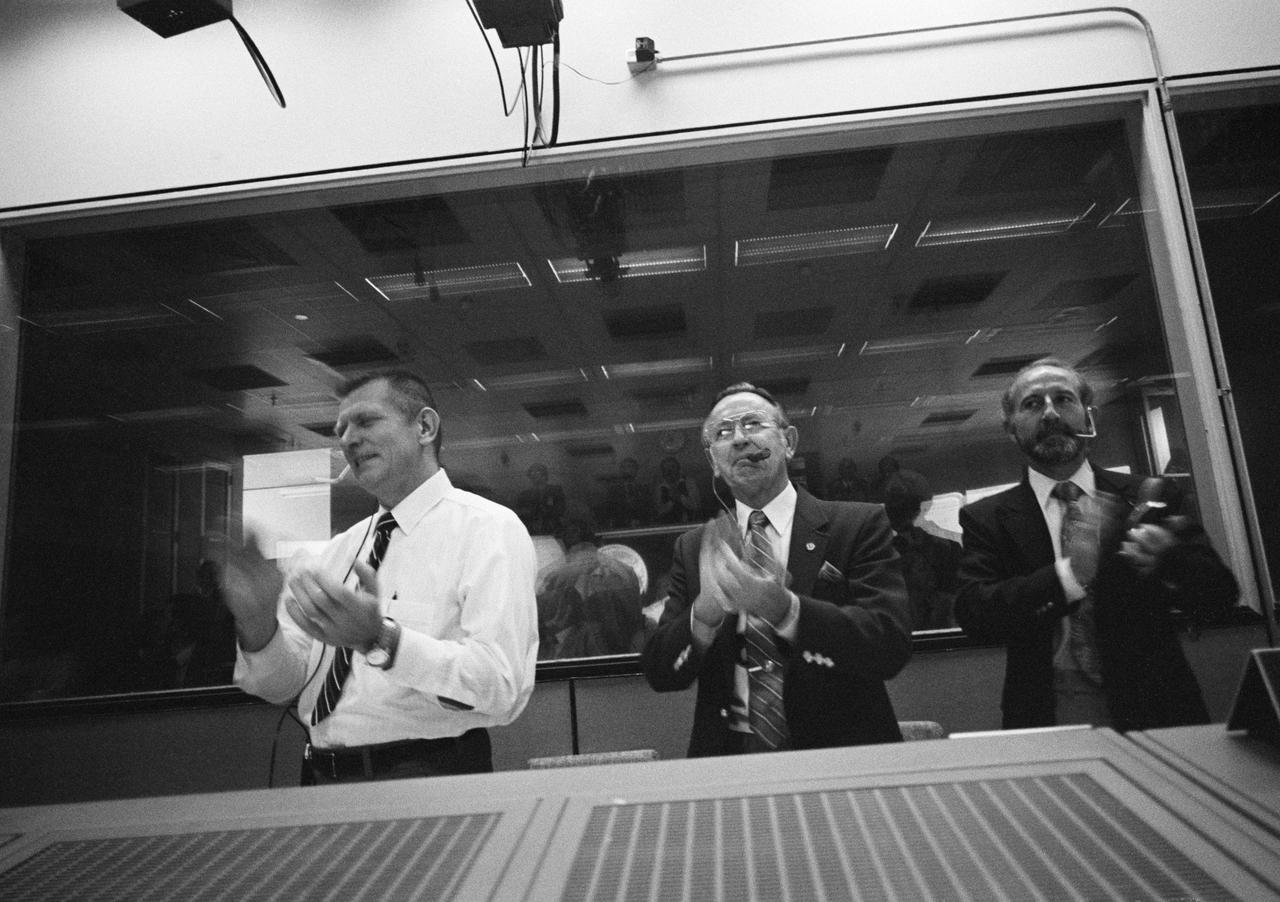
S81-39511 (14 Nov. 1981) --- The successful STS-2 landing at Edwards Air Force Base in California was cause for celebration in the Johnson Space Center?s Mission Control Center shortly before 3:30 p.m. (CST) on Nov. 14, 1981. JSC Director Christopher C. Kraft Jr. (center), not only applauds but enjoys a traditional ?touchdown? cigar, as well. Eugene F. Kranz (left), deputy director of flight operations at JSC, and Thomas L. Moser of the structures and mechanics division join the celebration. The second flight of the space shuttle Columbia lasted two days, six hours, 13 minutes and a few seconds. Photo credit: NASA
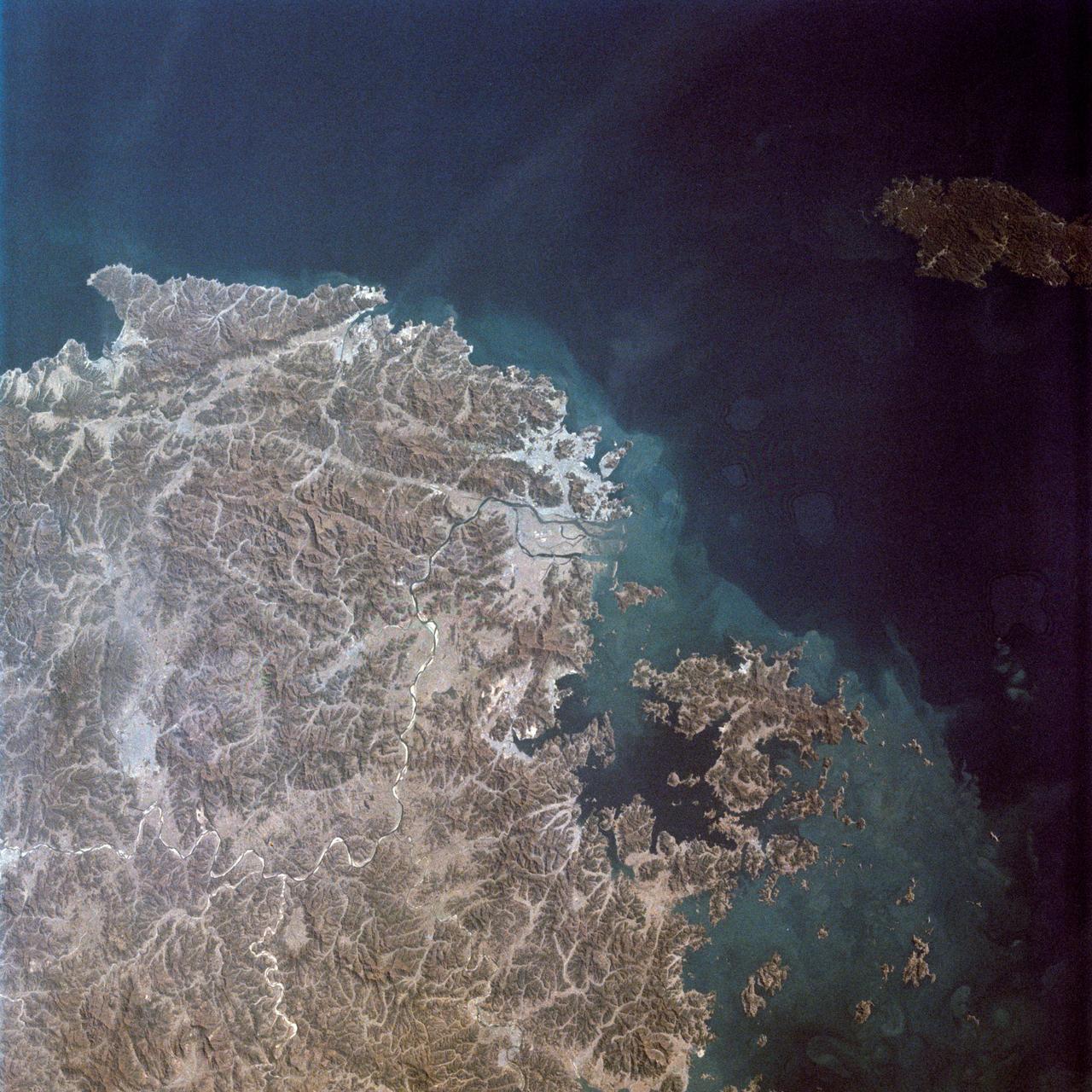
Onboard views by the STS-2 Crew of the Payload Bay with Office of Space and Terrestrial Applications (OSTA)-1 Payload, the Remote Manipulator System (RMS) and Earth views of: Korea, China and Columbia. Also available in 4x5 BW 1. REAGAN, RONALD PRESIDENT - MOCR (STS-2) JSC, HOUSTON, TX Also available in 4x5 BW, 35 CN, 35 BW
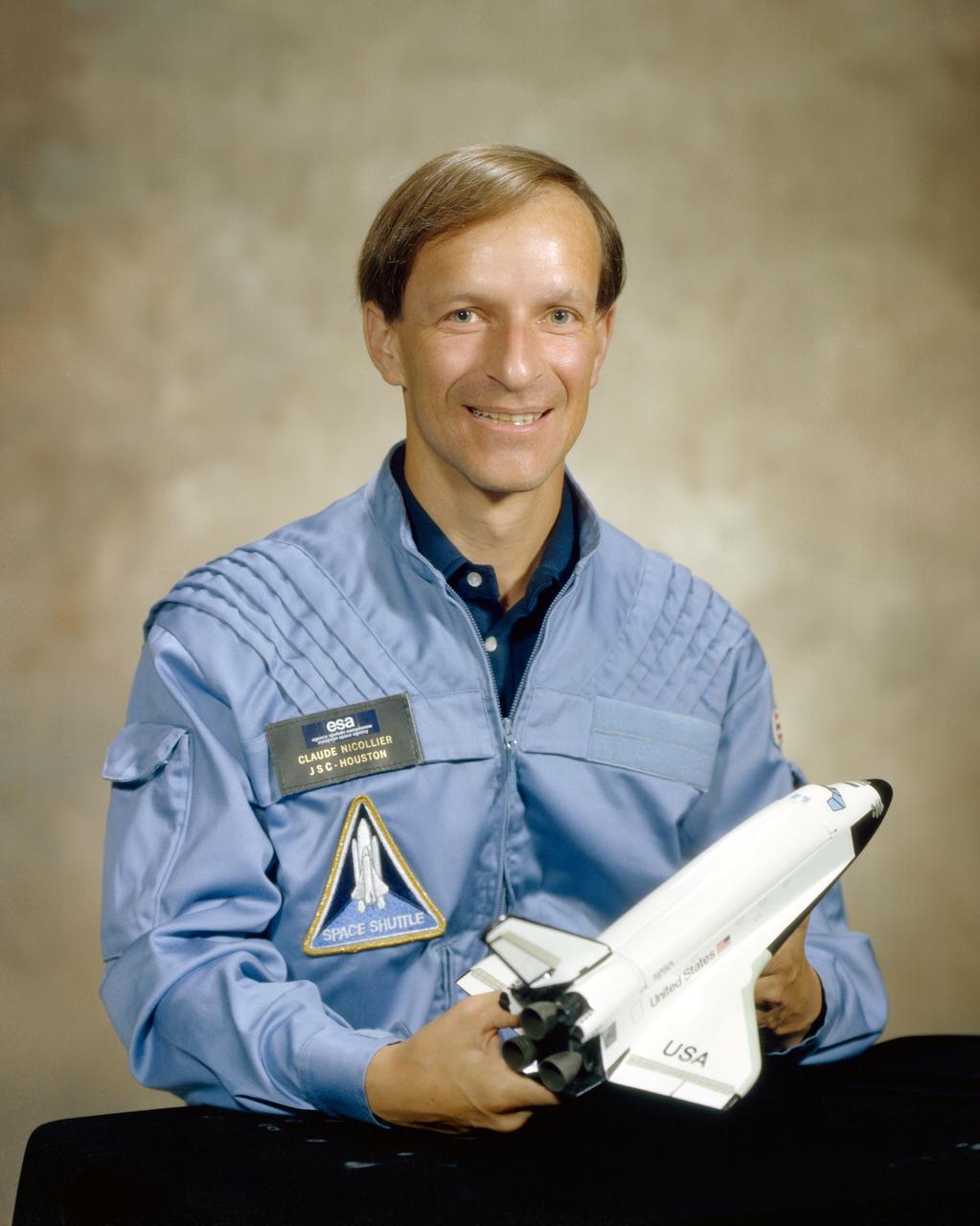
S81-33467 ( July 1981) --- Astronaut Claude Nicollier, mission specialist. EDITOR'S NOTE: Nicollier is a Swiss scientist, representing the European Space Agency (ESA). He began training at the NASA - Johnson Space Center (JSC) in 1980.
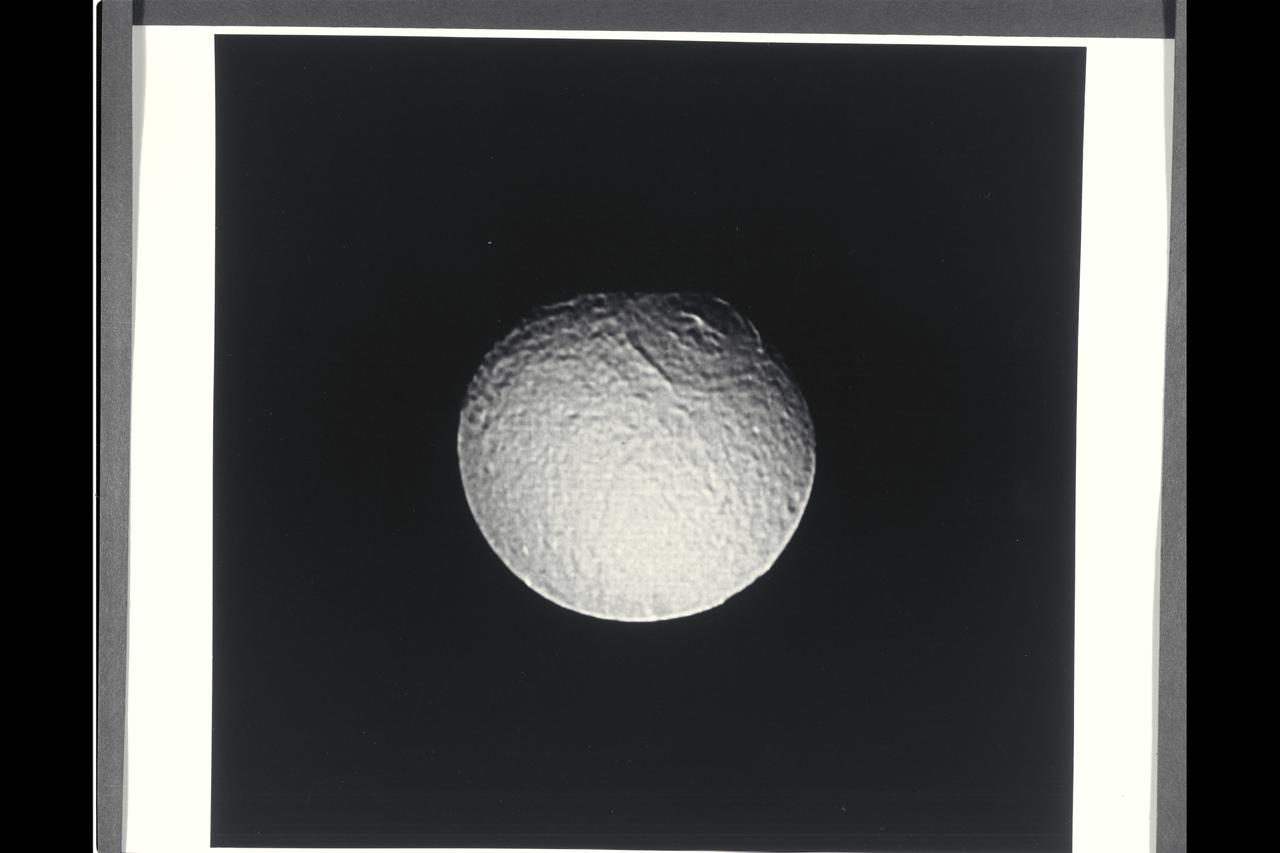
This photograph is a Voyager 2 image of one of the moons of Saturn.

Pioneer Venus Occp. Image 00199 Venus
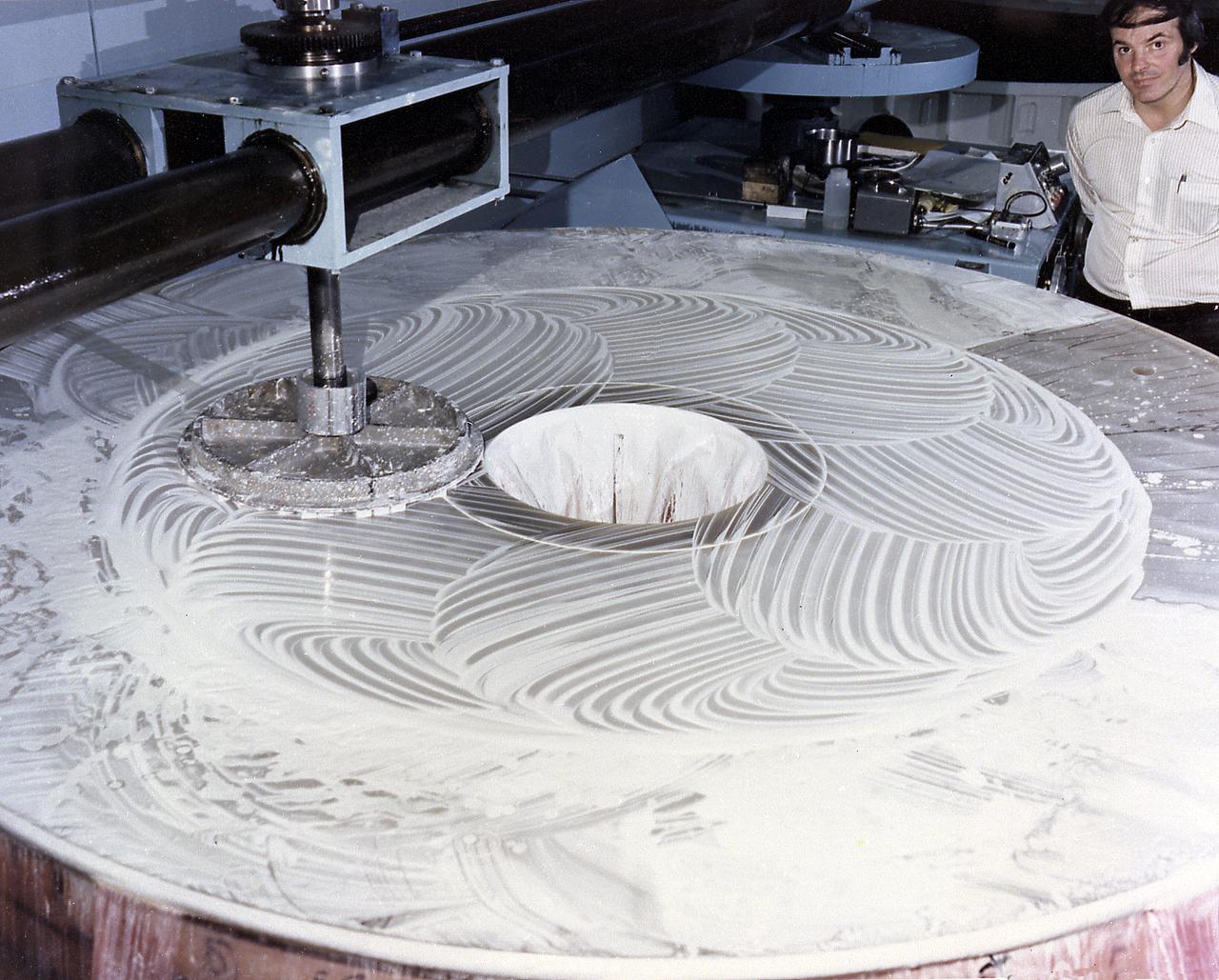
This photograph shows the Hubble Space Telescope's (HST's) Primary Mirror being polished at the the Perkin-Elmer Corporation's large optics fabrication facility. After the 8-foot diameter mirror was ground to shape and polished, the glass surface was coated with a reflective layer of aluminum and a protective layer of magnesium fluoride, 0.1- and 0.025-micrometers thick, respectively. The purpose of the HST, the most complex and sensitive optical telescope ever made, is to study the cosmos from a low-Earth orbit. By placing the telescope in space, astronomers are able to collect data that is free of the Earth's atmosphere. The Marshall Space Flight Center had responsibility for design, development, and construction of the HST and the Perkin-Elmer Corporation, in Danbury, Cornecticut, developed the optical system and guidance sensors.
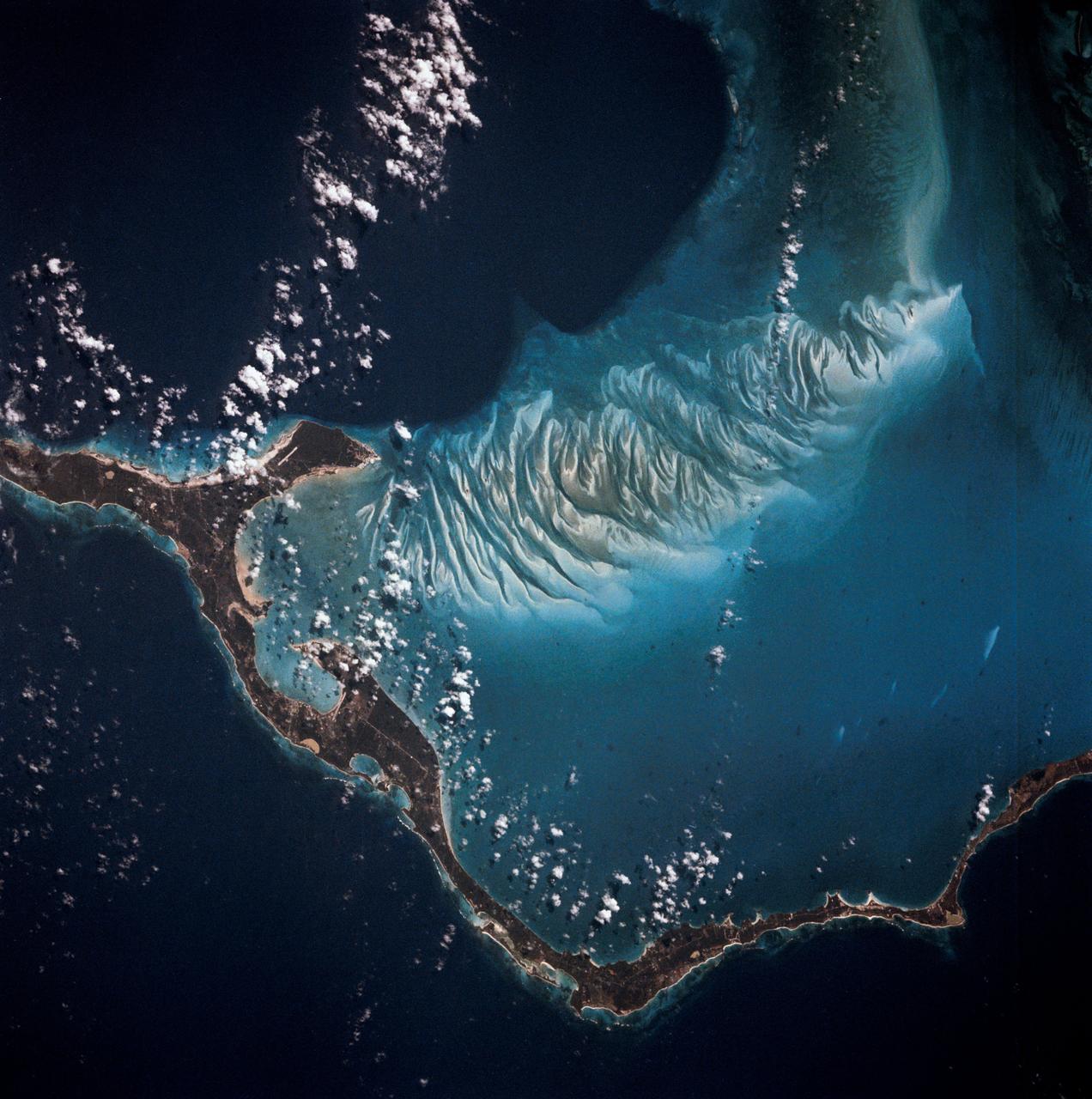
S81-30396 (12-14 April 1981) --- A vertical view of Eleuthera Island in the Bahamas and part of the great Bahama Bank, as photographed with a 70mm handheld camera from the space shuttle Columbia in Earth orbit. The light blue of the Bahama Bank contrasts sharply with the darker blue of the deep ocean waters. Astronauts John W. Young, commander, and Robert L. Crippen, pilot, took a series of Earth photos from inside the flight deck of the Columbia, which has windows on its top side, convenient for shooting photographs as the spacecraft flew ?upside down? above Earth. The mission frame ID number is STS001-12-322. Photo credit: NASA
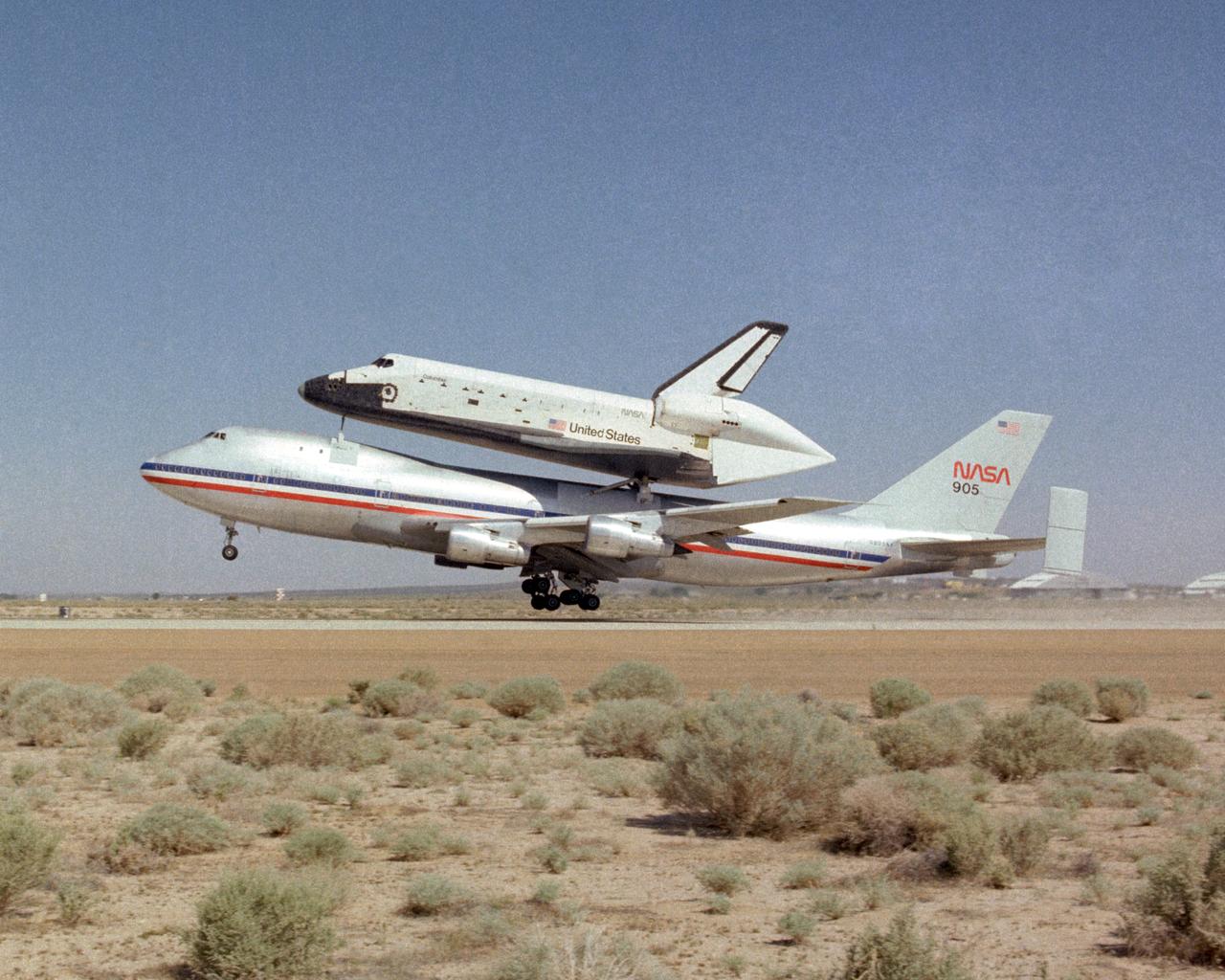
NASA's specially modified 747 with the Space Shuttle Columbia atop takes off to ferry the Shuttle back to Kennedy Space Center in Florida. Columbia had recently completed its first orbital mission with a landing at Edwards Air Force Base in California.
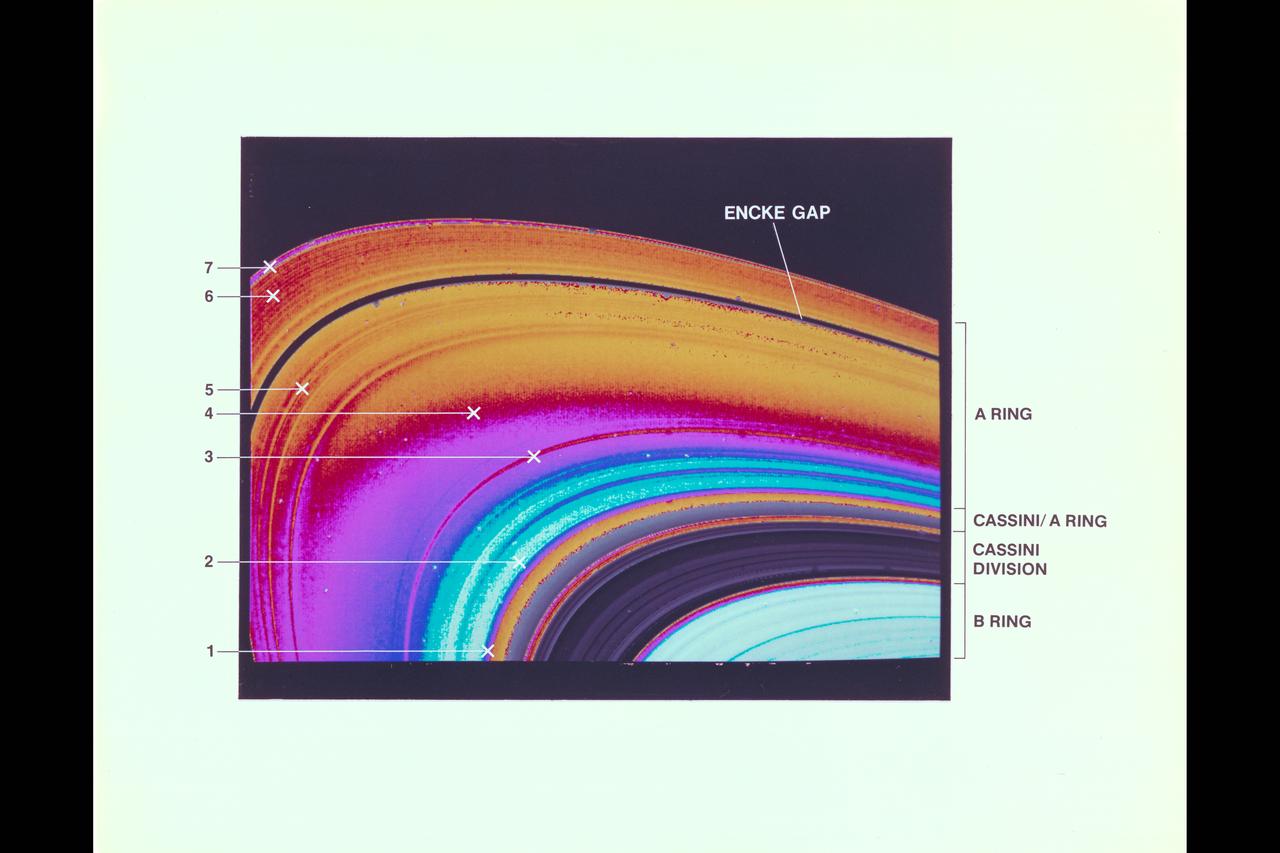
Saturn and it's rings, with callouts, as photographed by Voyager 2
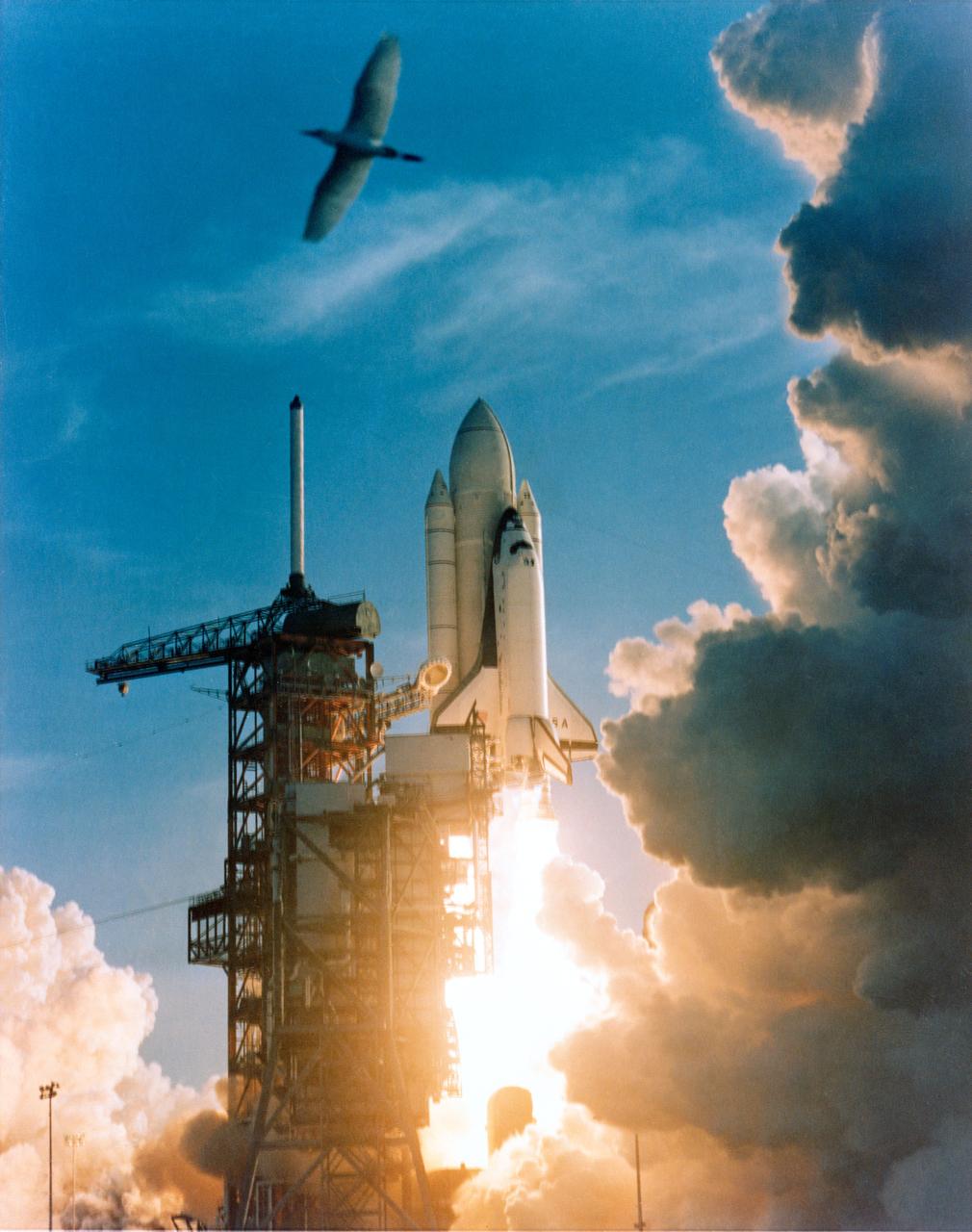
The Space Shuttle Columbia begins a new era of space transportation when it lifts off from NASA Kennedy Space Center (KSC). The reusable Orbiter, its two (2) fuel tanks and two (2) Solid Rocket Boosters (SRB) has just cleared the launch tower. Aboard the spacecraft are Astronauts John W. Young, Commander, and Robert L. Crippen, Pilot . 1. STS-I - LAUNCH KSC, FL KSC, FL Also available in 4x5 BW
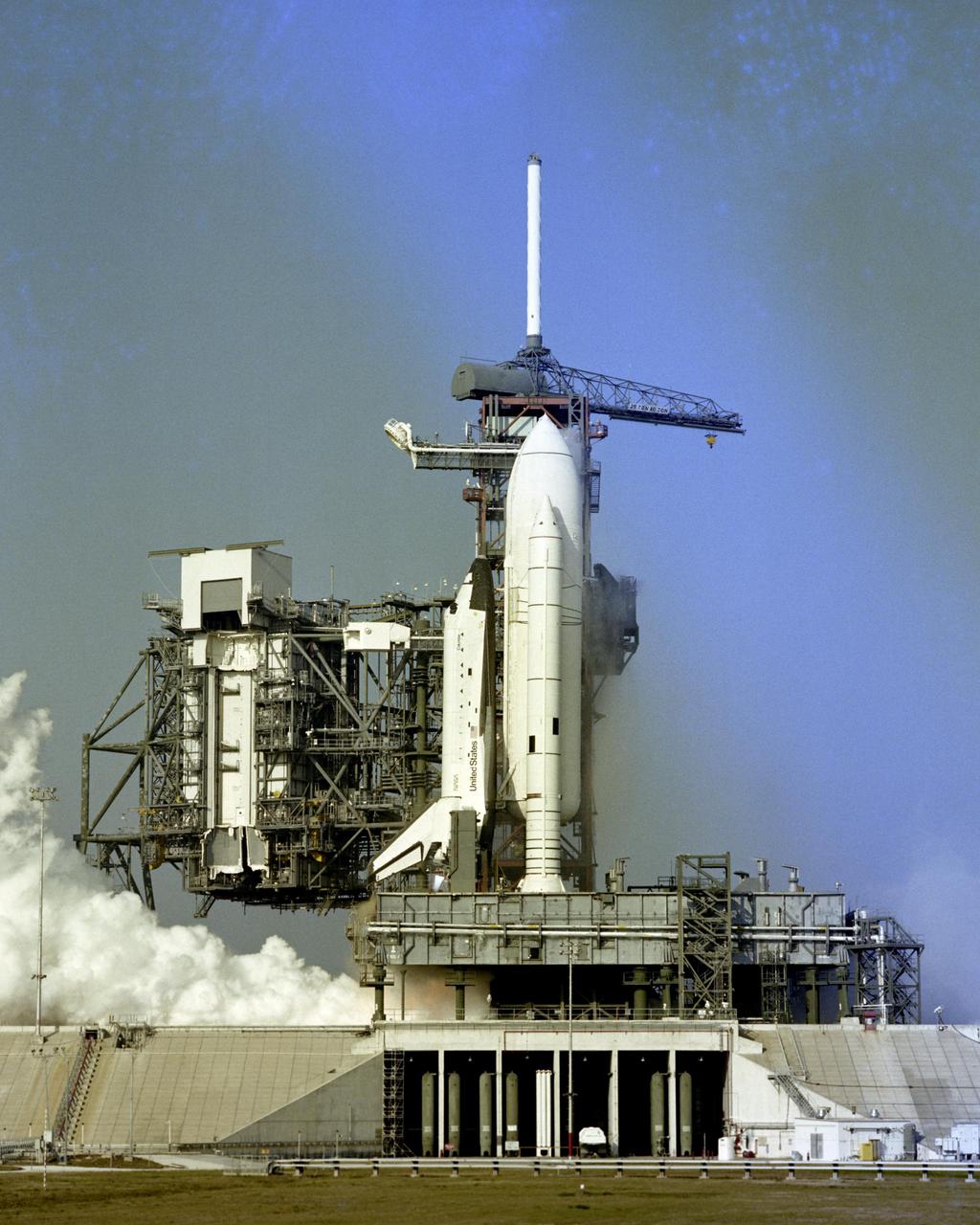
KENNEDY SPACE CENTER, FLA. - Flames shoot from the nozzles of Space Shuttle Columbia's three main engines during the successful 20-second static firing which capped a formal rehearsal for the maiden flight of Columbia, scheduled for early April. Remotely operated cameras inside the pad perimeter snapped closeup views of the milestone event, which took place at 8:45 a.m. on February 20, 1981. The three main engines reached 100 percent power -- over 1 million pounds of thrust -- during the test. Hold-down bolts secured the vehicle to its mobile launcher platform.
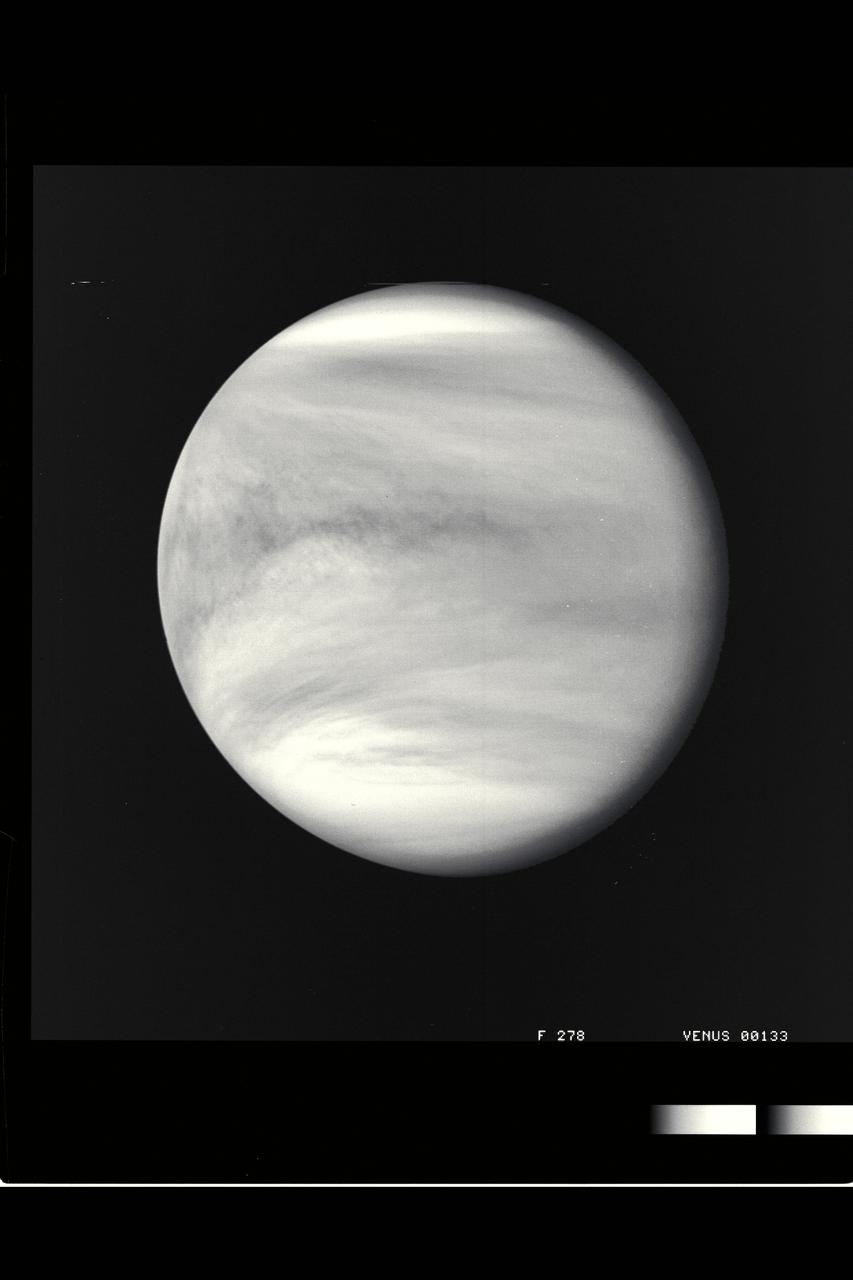
Pioneer Venus Occp. Image 00133 Venus
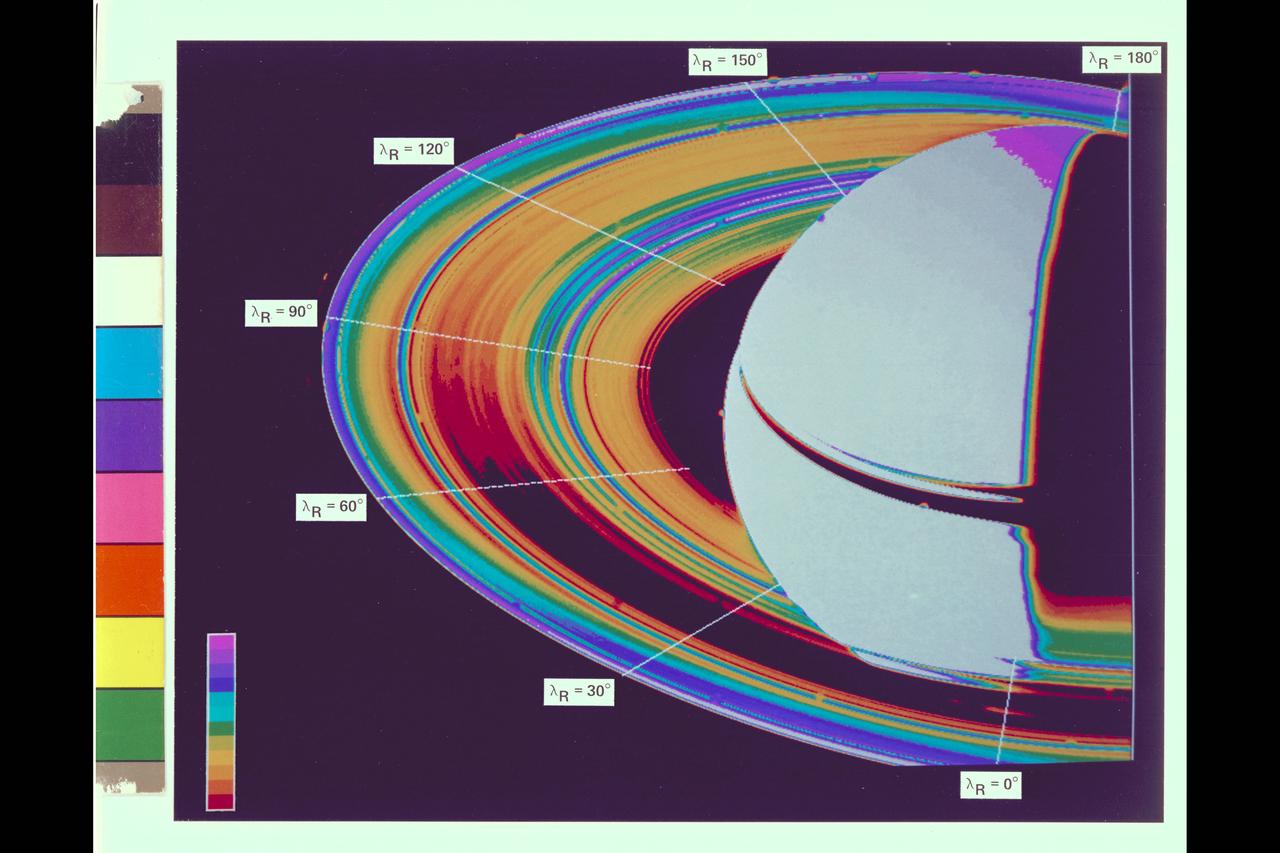
Saturn and it's rings, with callouts, as photographed by Voyager 2
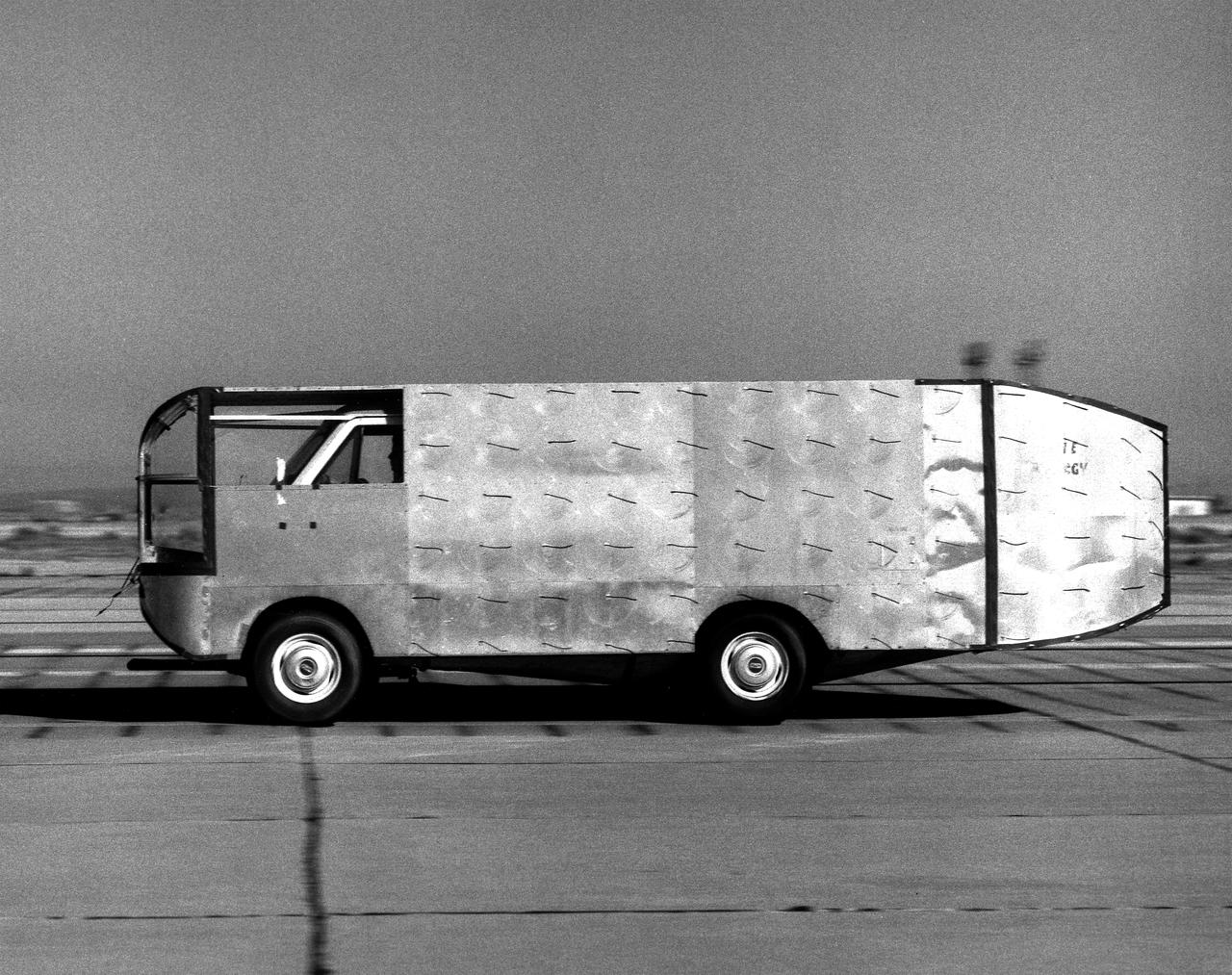
Air flow testing on aerodynamic truck
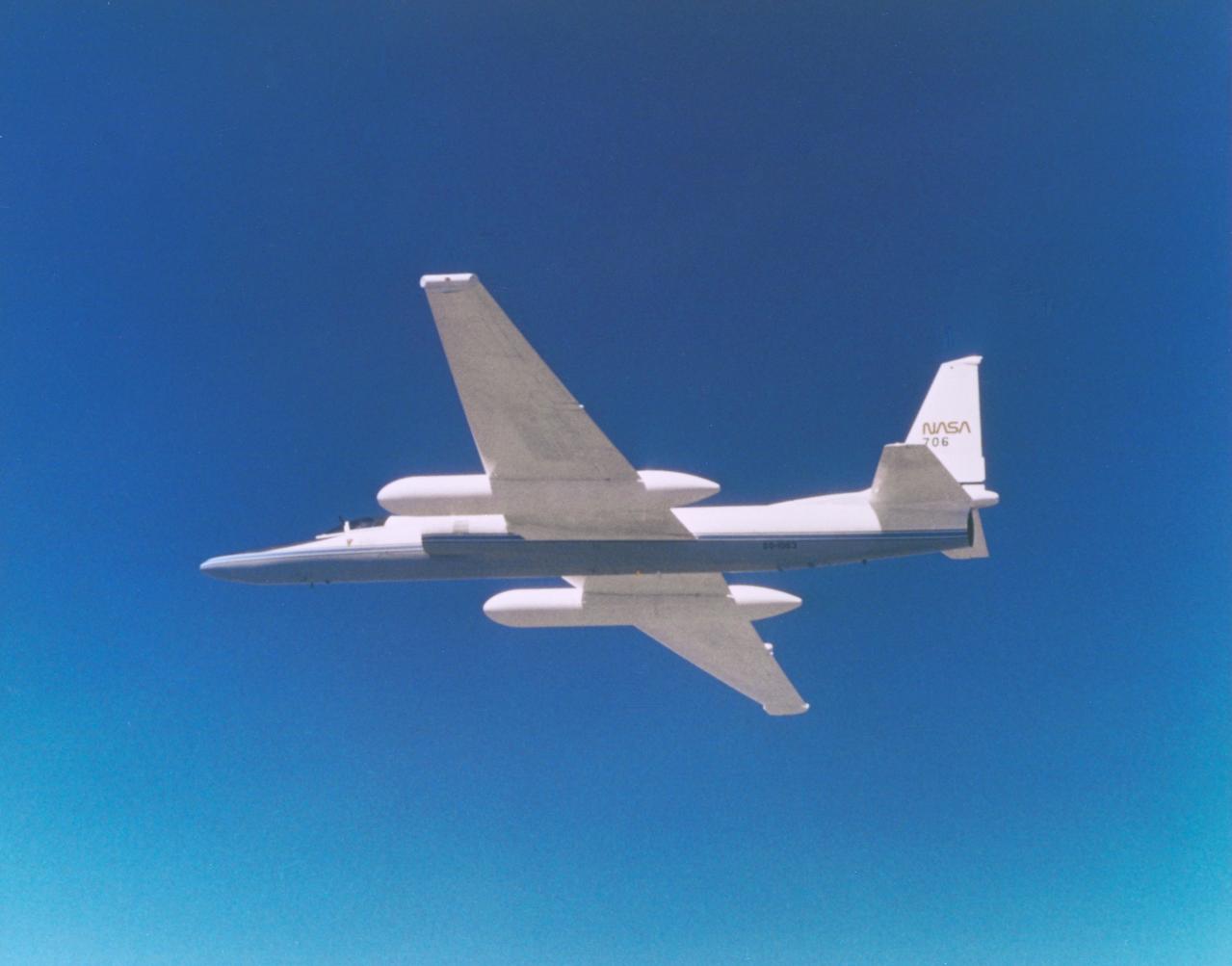
Lockheed ER-2 (NASA-706) in flight
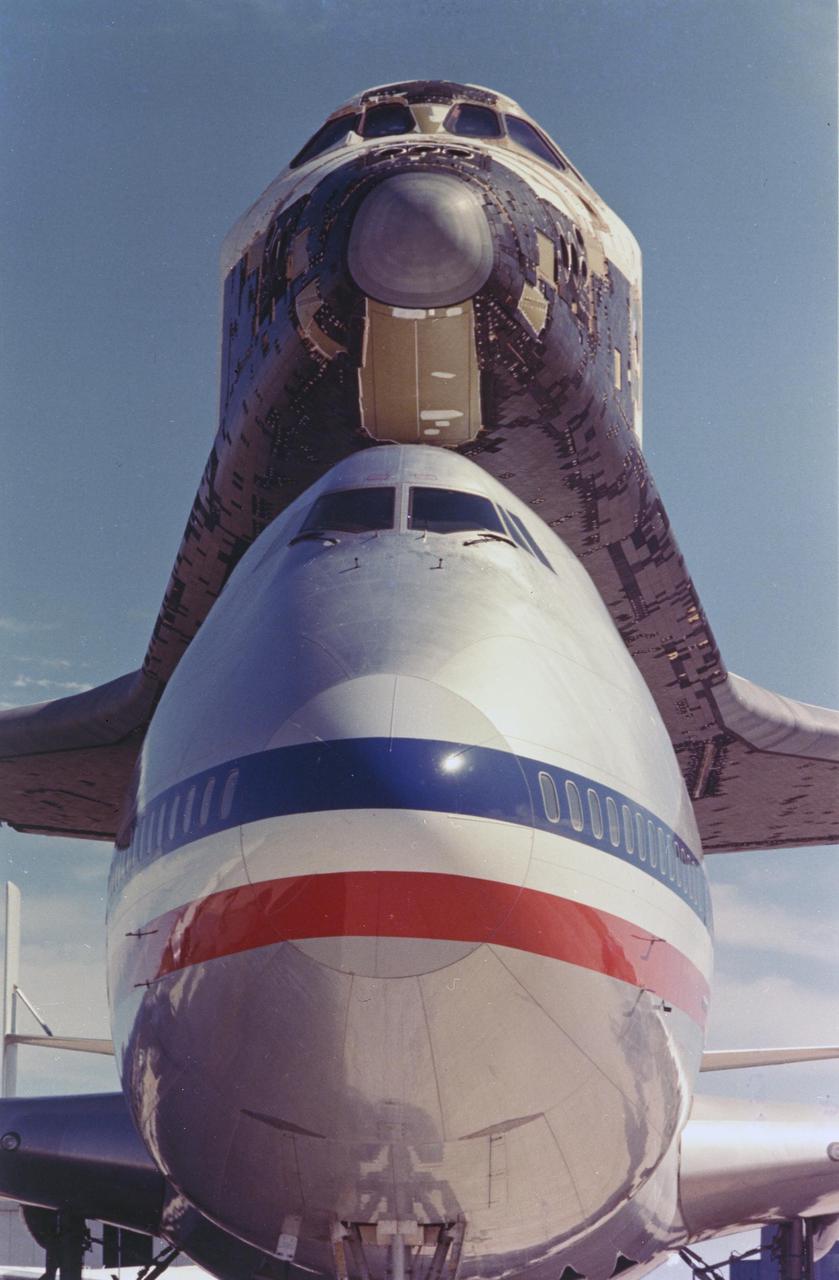
KENNEDY SPACE CENTER, FLA. - With the desert sky behind it, the Space Shuttle Columbia and 747_Shuttle Carrier Aircraft are poised for the return flight to the Kennedy Space Center in Florida. After the successful first mission of the Space Shuttle, the orbiter was returned from the desert by a piggyback flight where it landed at KSC. Preparations now begin for the second launch.
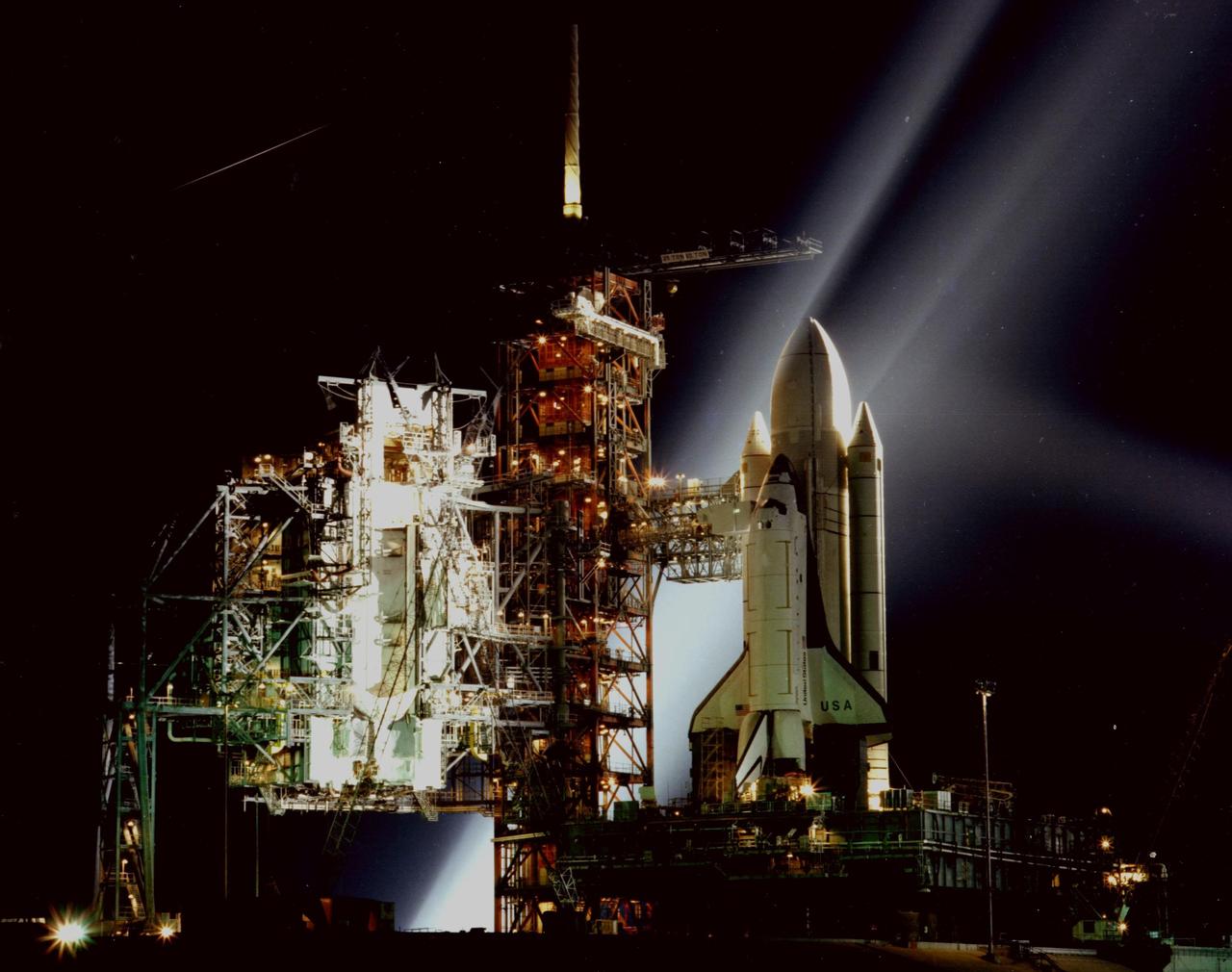
KENNEDY SPACE CENER, FLA. -- A timed exposure of the Space Shuttle at Launch Pad A, Complex 39, turns the space vehicle and support facilities into a night-time fantasy of light. To the left of the Shuttle are the fixed and the rotating service structures
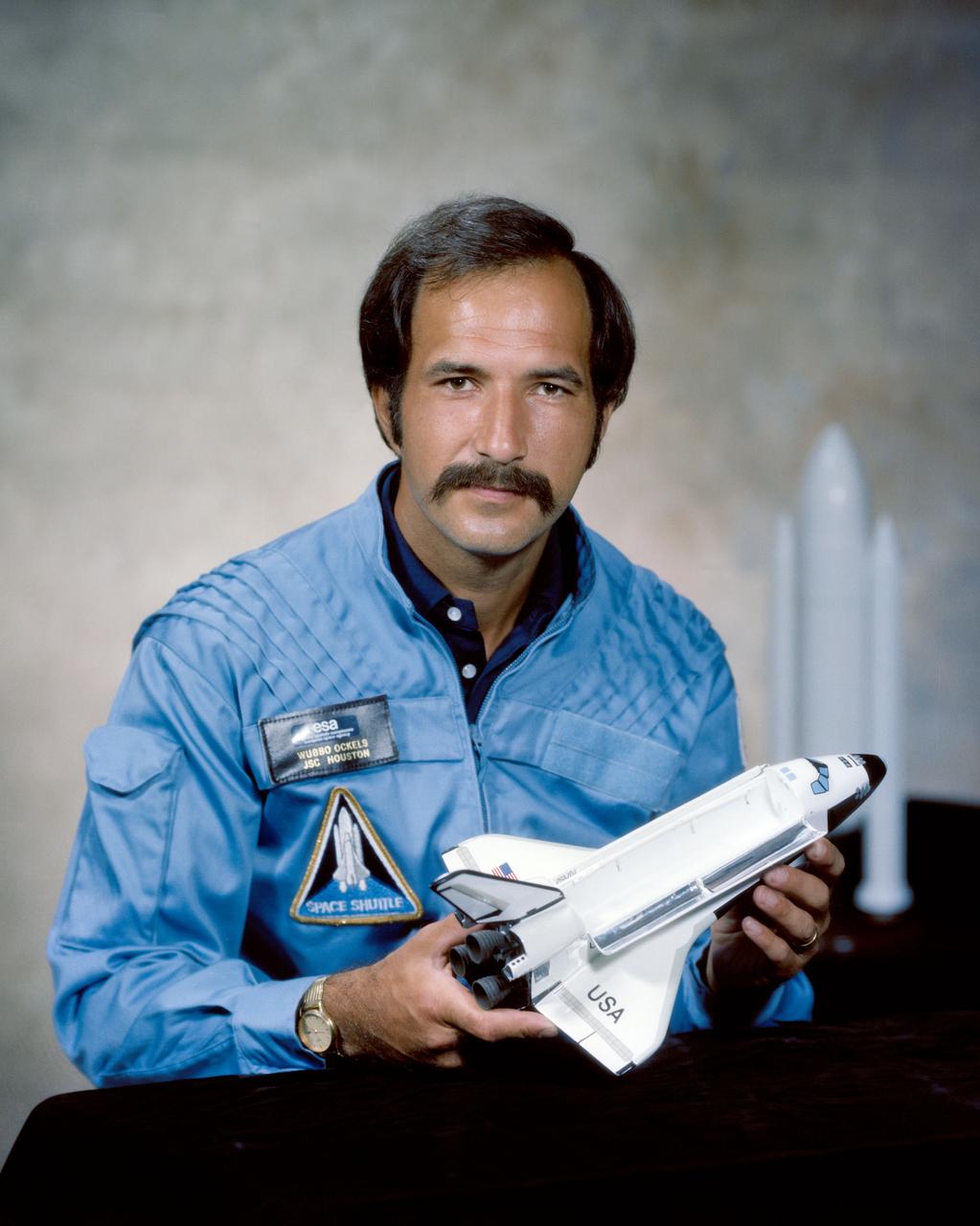
S81-33399 (July 1981) --- Wubbo Ockels, ESA payload specialist
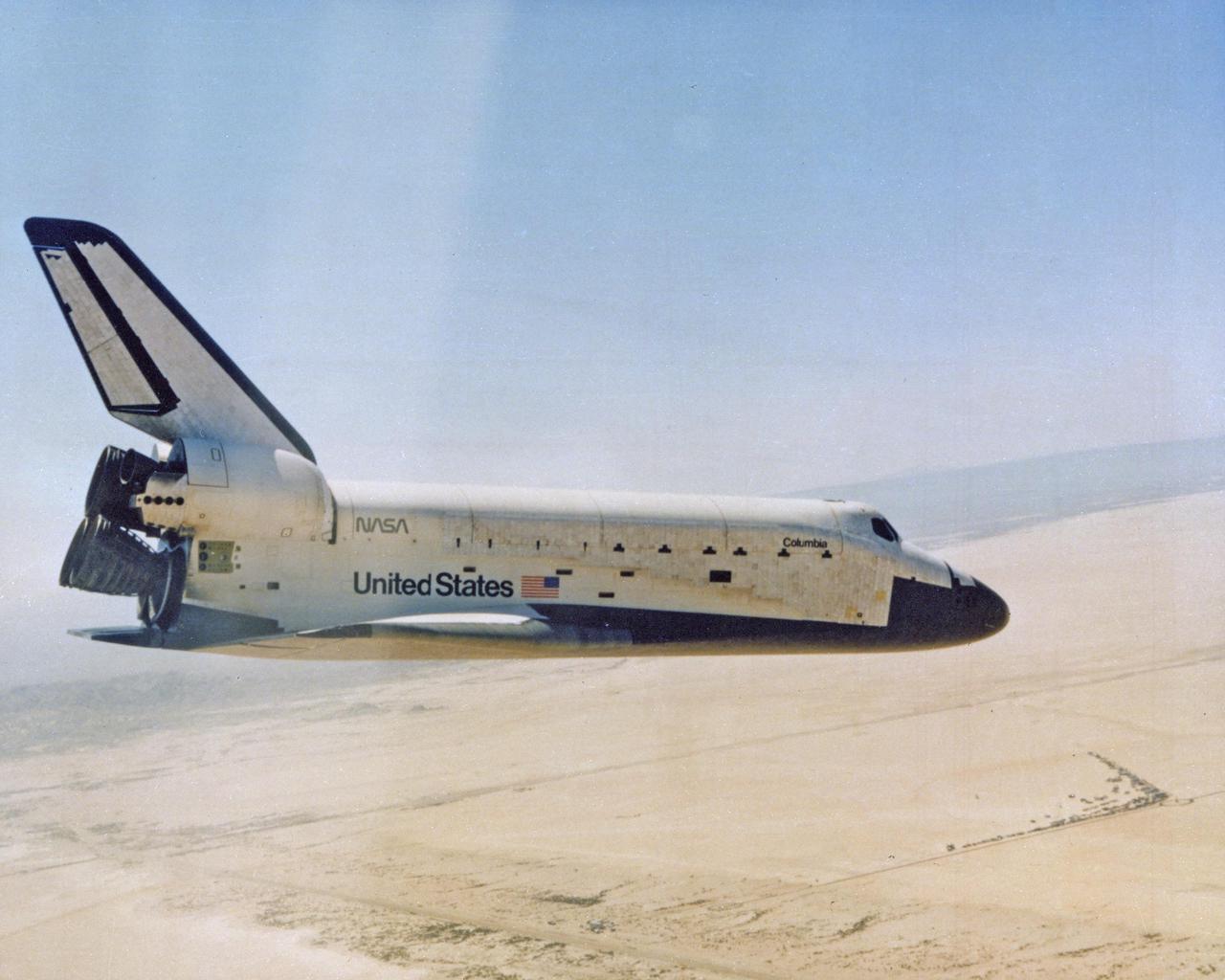
DRYDEN FLIGHT RESEARCH CENTER, CALIF. - Columbia returns to Earth. Completing the first full test of the Space Transportation System (STS-1), the orbiter Columbia is seen here on its final approach prior to landing on Rogers dry lake, Runway 23, at NASA's Dryden Flight Research Center, Edwards, California. For this first flight the Columbia was flown by astronauts John Young, commander, and Robert Crippen, pilot.
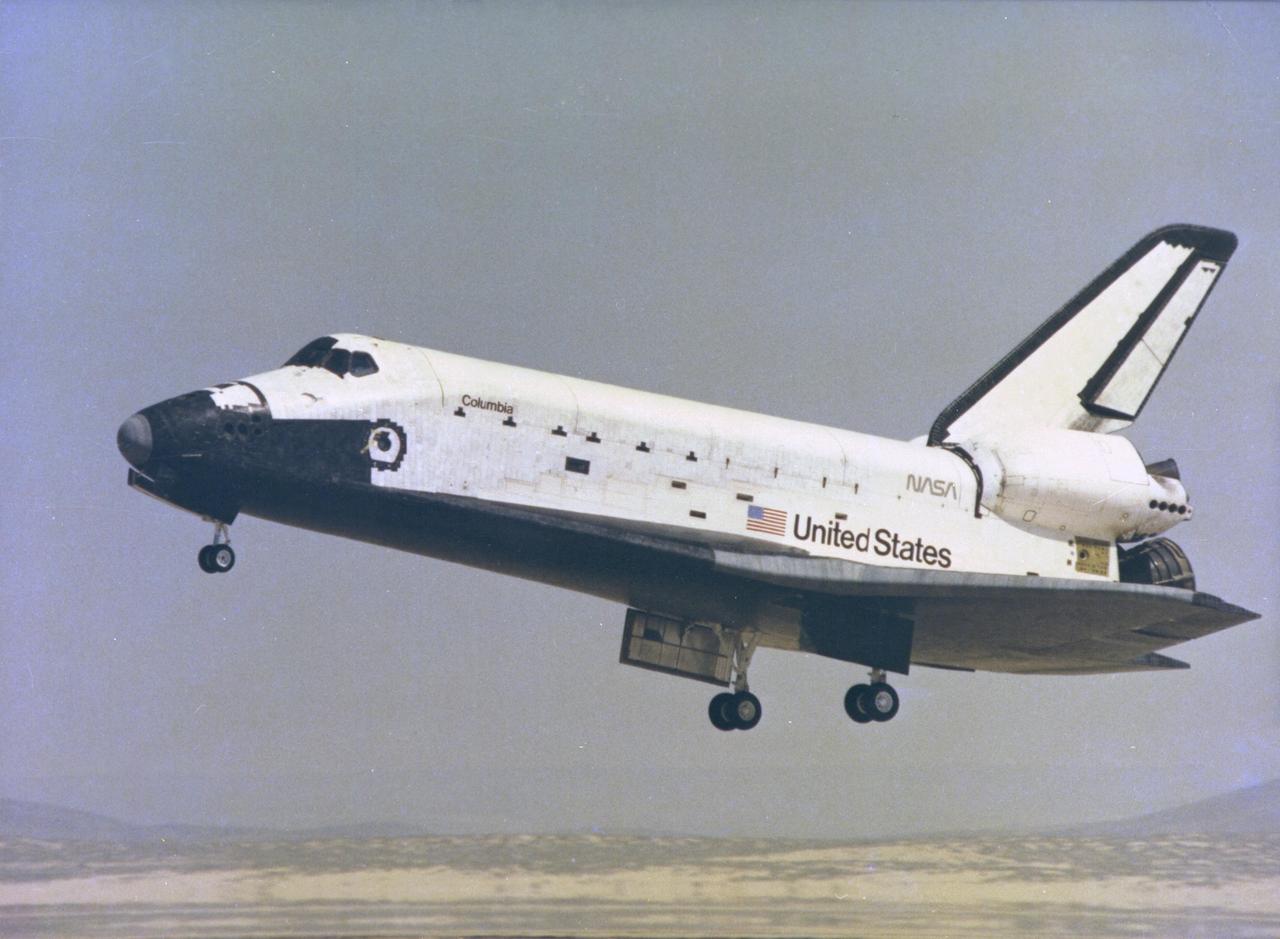
DRYDEN FLIGHT RESEARCH CENTER, CALIF. - Orbiter Columbia "flares out" for a landing at Rogers dry lake Runway 23, successfully completing the historic first flight for the Space Shuttle. Astronauts John Young, Commander, and Robert Crippen, Pilot, crewed the spacecraft for the first full test of the Space Transportation System. STS-1, known as a shuttle systems test flight, seeks to demonstrate safe launch into orbit and safe return of the orbiter and crew and verify the combined performance of the entire shuttle vehicle -- orbiter, solid rocket boosters and external tank.
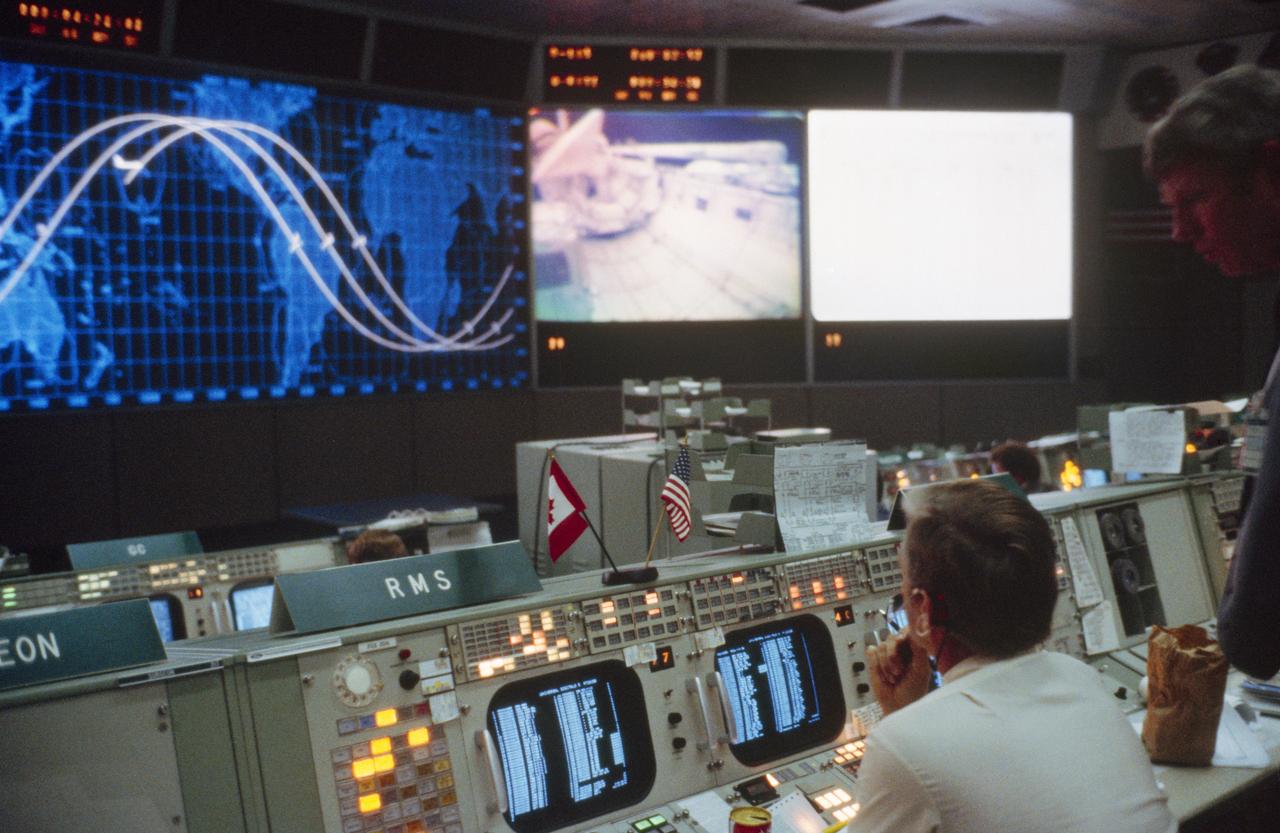
S81-39494 (12 Nov. 1981) --- An overall view of activity in the mission operations control room (MOCR) in Houston?s Mission Control Center (MCC) as viewed from the second front row of consoles during the STS-2 mission. The remote manipulator system (RMS) console is in the immediate foreground. Note TV transmission on the Eidophor screen at front of MOCR and shuttle orbiter marker on tracking map at left indicating the vehicle?s location over the Hawaiian Islands. The downlink was through the Hawaii tracking station. Photo credit: NASA

S81-39549 (12 Nov. 1981) --- Framed here by Florida vegetation, the 37-meter-tall (122 feet) NASA space shuttle Columbia lifts off from Launch Pad 39A at NASA-Kennedy Space Center (KSC). Astronauts Joe H. Engle and Richard H. Truly begin the second space shuttle (STS-2) flight with at least two new items of cargo aboard. One is a collection of experiments developed by the Office of Space and Terrestrial Applications (OSTA) and another is a robot arm with in-space/in-cabin controls known as the remote manipulator system (RMS). Liftoff took place just a few seconds past 10:10 a.m. EST on Nov. 12, 1981. Photo credit: NASA
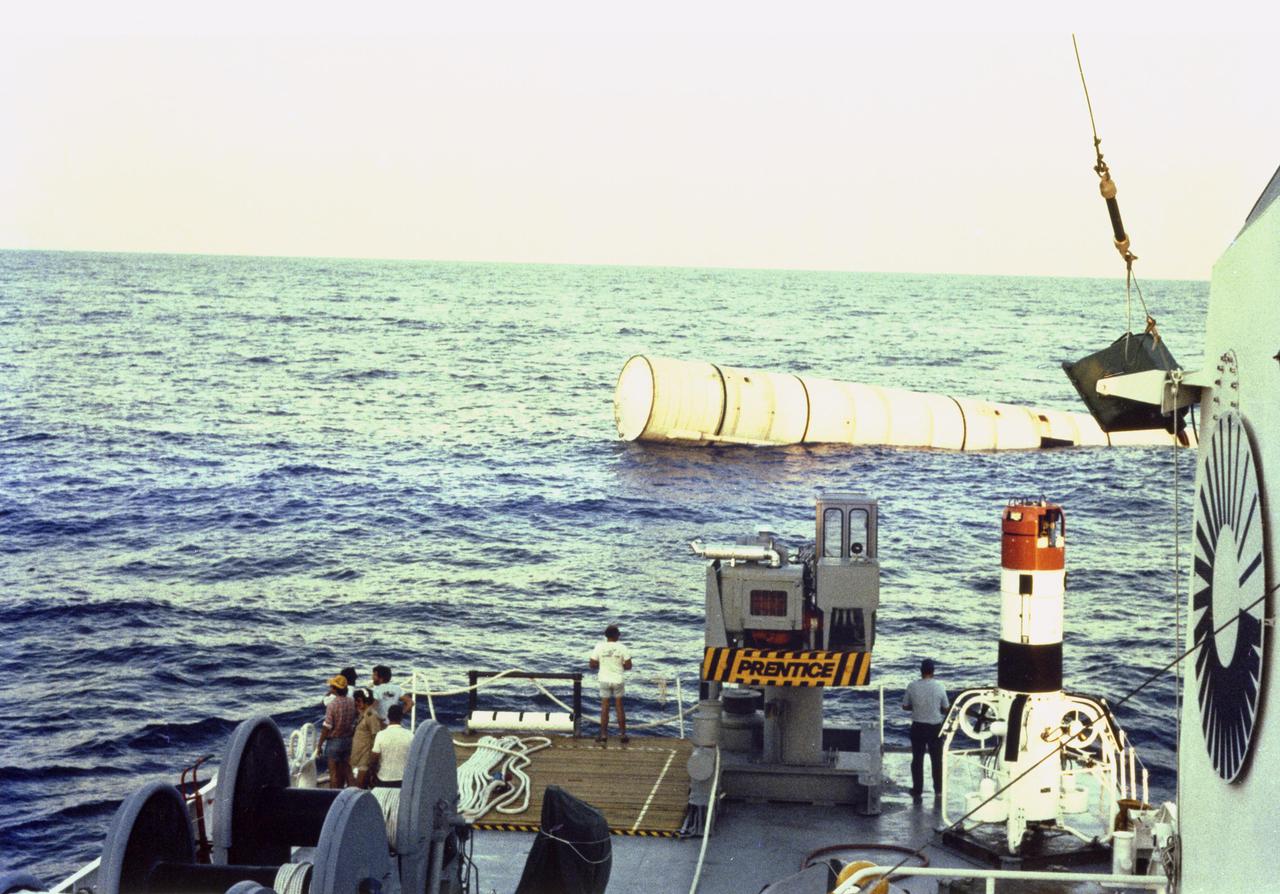
KENNEDY SPACE CENTER, FLA. - One of the two solid rocket boosters used in the historic launch of the Space Shuttle Columbia on April 12, is dewatered and floats in its horizontal, or “log” mode for towing on April 13. Recovered at sea by specially designed ships UTC Liberty and UTC Freedom, and dewatered with special, self-powered nozzle plugs, the expended rocket casings are towed to Cape Canaveral Air Force Station where they undergo high pressure cleaning to prepare them for reloading and reuse in future missions. STS-1, known as a shuttle systems test flight, seeks to demonstrate safe launch into orbit and safe return of the orbiter and crew and verify the combined performance of the entire shuttle vehicle -- orbiter, solid rocket boosters and external tank.
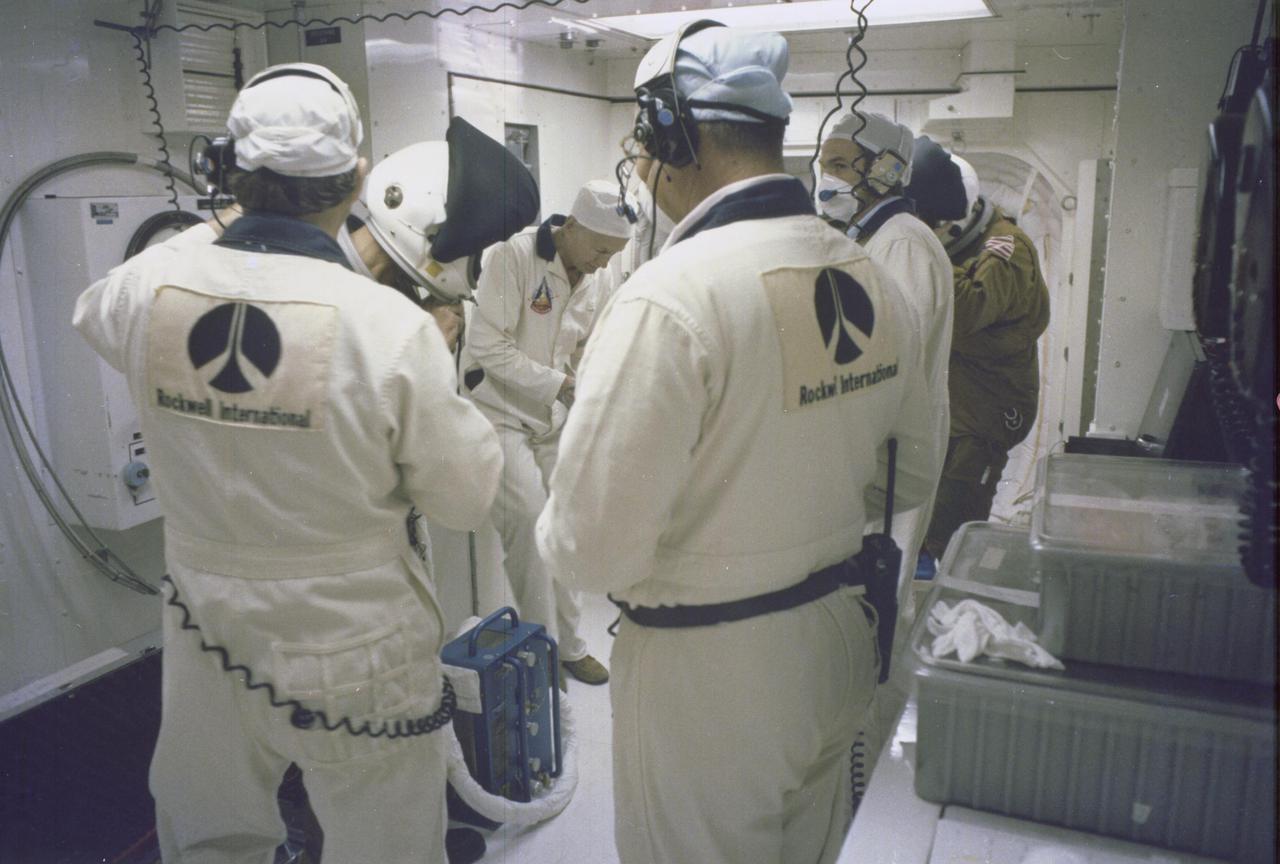
KENNEDY SPACE CENTER, FLA. - Astronauts John Young, commander, and Robert Crippen, pilot, are assisted by members of the closeout crew as they enter the cockpit of Columbia for the maiden flight of the Space Shuttle on April 12. Fully suited, they entered through the clean room at Launch Pad 39A. Launch followed at a few seconds past 7 a.m., beginning an orbital mission scheduled to last for 54 hours, ending with an unpowered landing at Edwards Air Force Base in California. The STS-1 mission, known as a shuttle systems test flight, will seek to demonstrate safe launch into orbit and safe return of the orbiter and crew and verify the combined performance of the entire shuttle vehicle -- orbiter, solid rocket boosters and external tank.
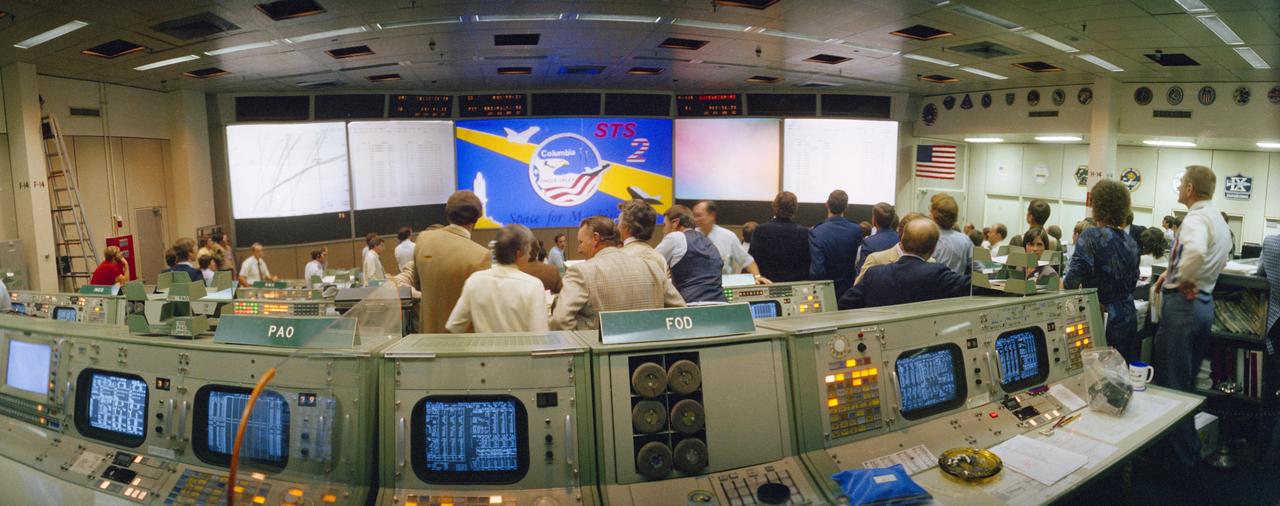
S81-39507 (14 Nov. 1981) --- This unique, wide-angle view of the many flight controllers in Houston?s mission control facility was taken moments prior to the successful touchdown of the STS-2 Columbia. Clifford E. Charlesworth, JSC Deputy Director, huddles with several flight directors for STS-2 at the flight director console on the second-from rear row of consoles in the mission operations control room (MOCR). Eugene F. Kranz, deputy director of flight operations, is at far right of frame. Columbia shortly afterward touched down safely at Edwards Air Force Base in California to complete the two-day, six-hour, 13-minute STS-2 flight. Photo credit: NASA
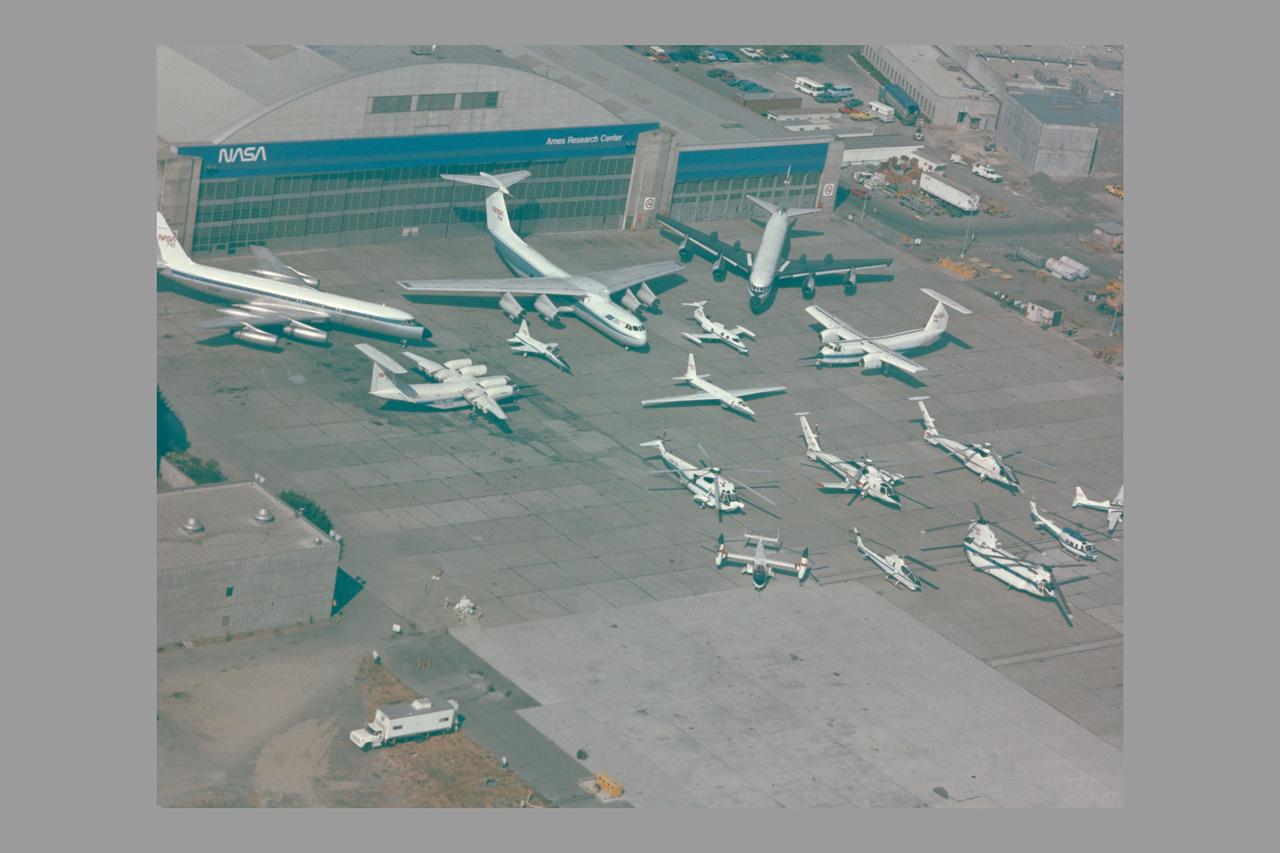
NASA Ames Research Center Aircraft on ramp. Photographed front of Ames hangar.

Aerial, ground level and night views of STS-2 Rollout to and on Pad 39A, 08/31/1981. KSC, FL
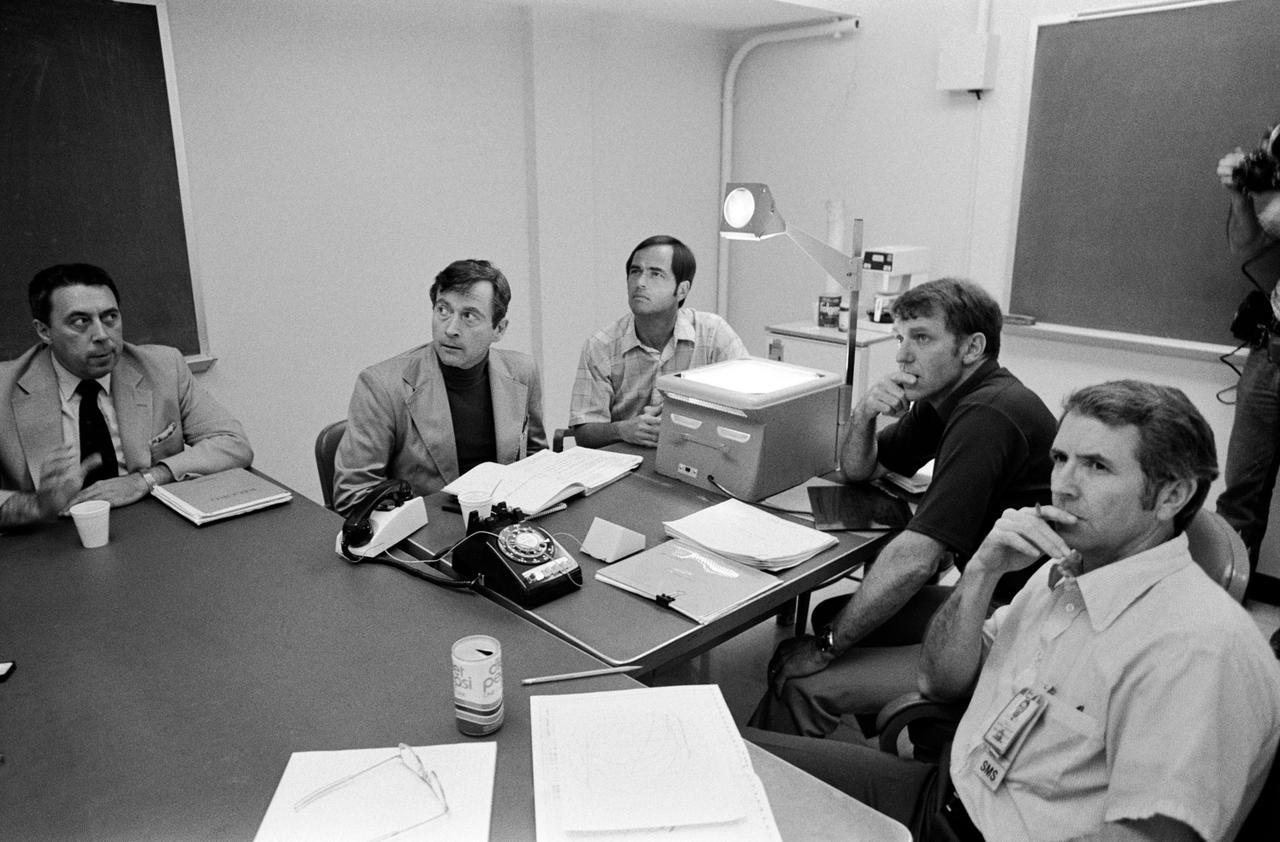
S81-29618 (6 April 1981) --- STS-1 prime and backup astronaut crew members look at visuals during a coordinated teleconference with engineers. Seated at the table in a briefing room at NASA's Johnson Space Center are, clockwise from the left, George W.S. Abbey, Director of Flight Operations, John W. Young, Robert L. Crippen, Joe H. Engle and Richard H. Truly. Young and Crippen are prime crewmen preparing to man the Columbia later this week for the flight of STS-1. Rockwell International engineers in California as well as JSC engineers participated in this telecon. Photo credit: NASA
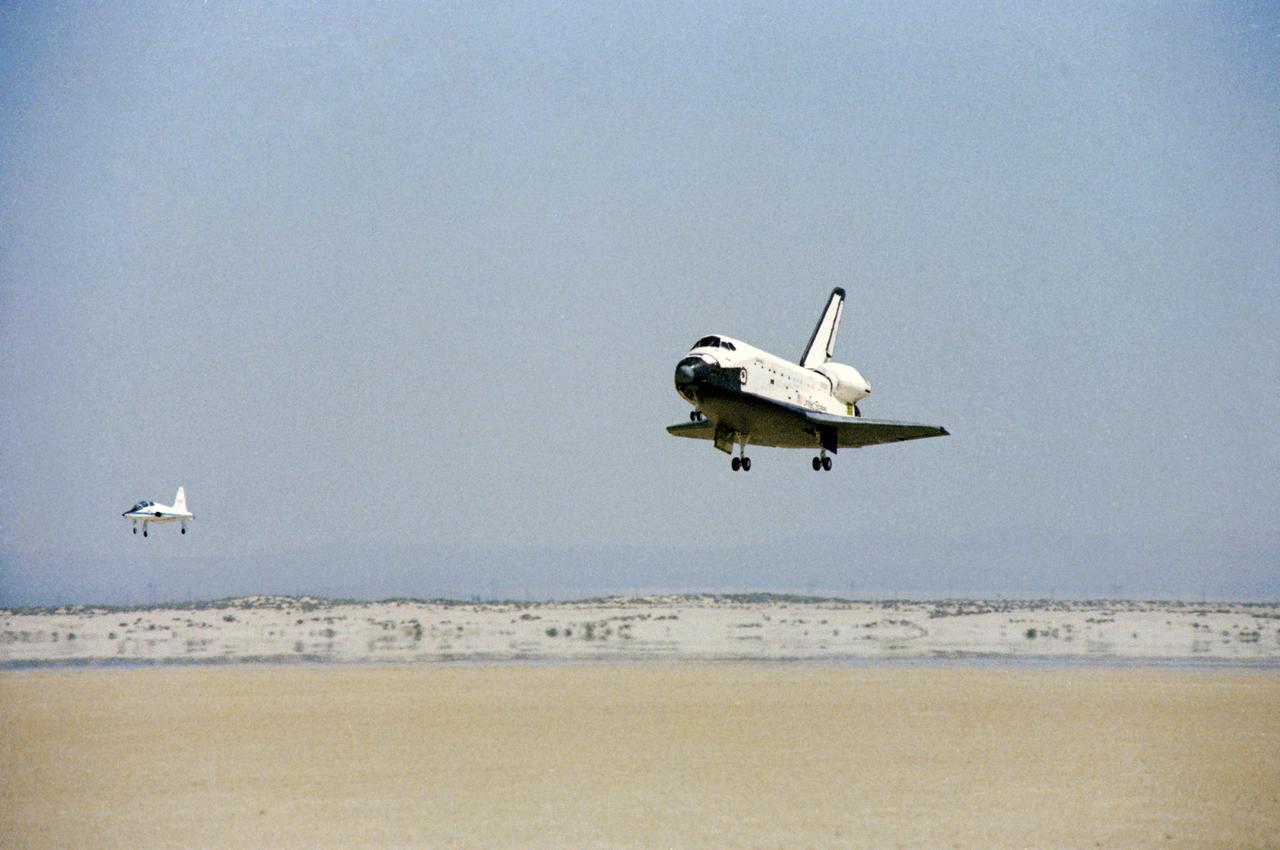
S81-30425 (14 April 1981) --- The space shuttle orbiter Columbia is seen from the front as it heads for a touchdown atop a dry lake bed at Edwards Air Force Base in southern California. A T-38 chase plane follows it in at left. Aboard Columbia were astronauts John W. Young, STS-1 commander, and Robert L. Crippen, pilot. Their landing marked the completion of a successful two-and-a-third day flight in space and the beginning of a new era of space transportation. A series of additional test flights will follow before the Space Shuttle Program becomes fully operational later in this decade. Photo credit: NASA
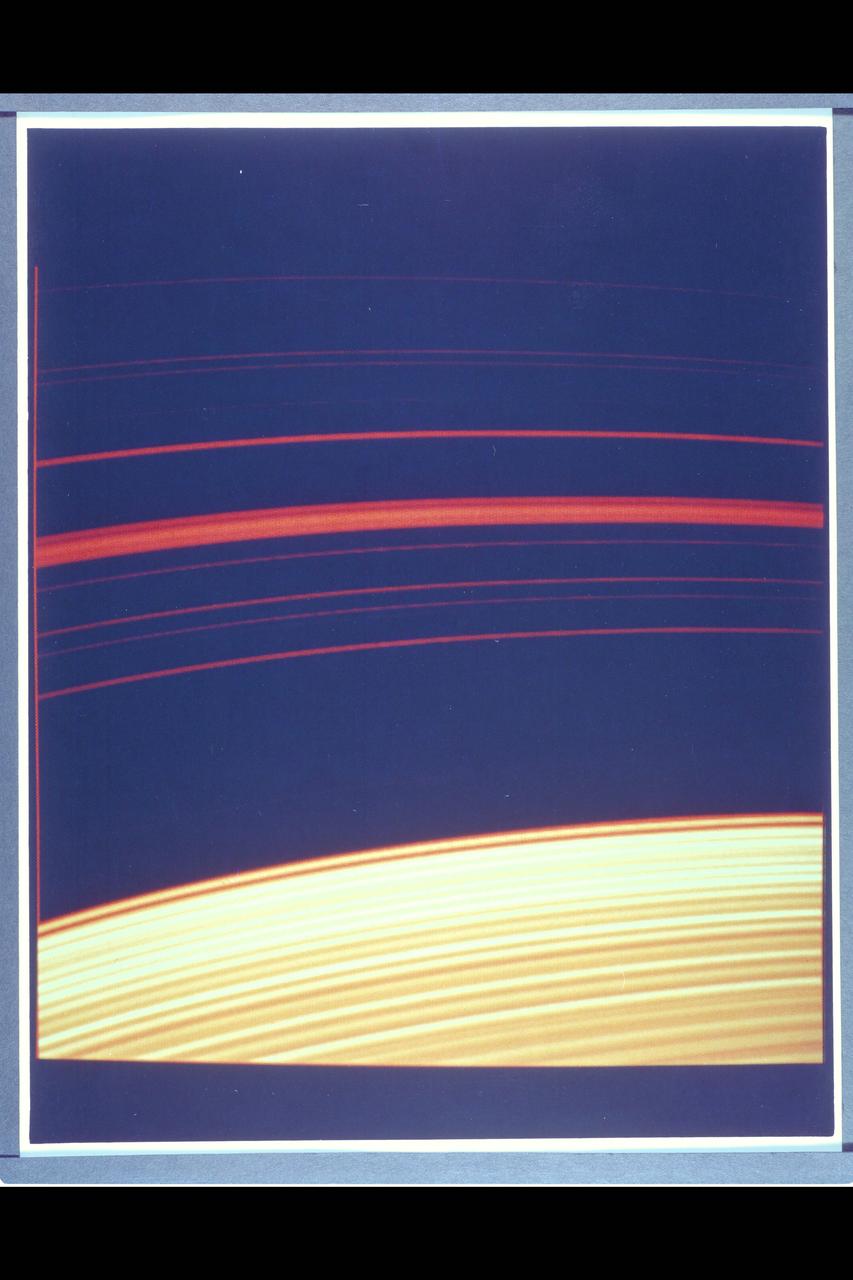
Resolution : 1 km. ( .6 miles ) Region Shown : 100 km. ( 60 miles ) P-24068C This computer generated photograph was created from a cross-section of Saturn's rings as measured by Voyager 2 photopolarimeter's occulation of the star Delta Scorpii. The region shown is near the inner edge of the Encke Division in the outer part of A-ring. The waves seen at left become successively closer together nearer to the Encke Division. At right are four strands of the ringlet that lies within the Encke Division. Voyager 2's imaging system saw this structure as a single ringlet.
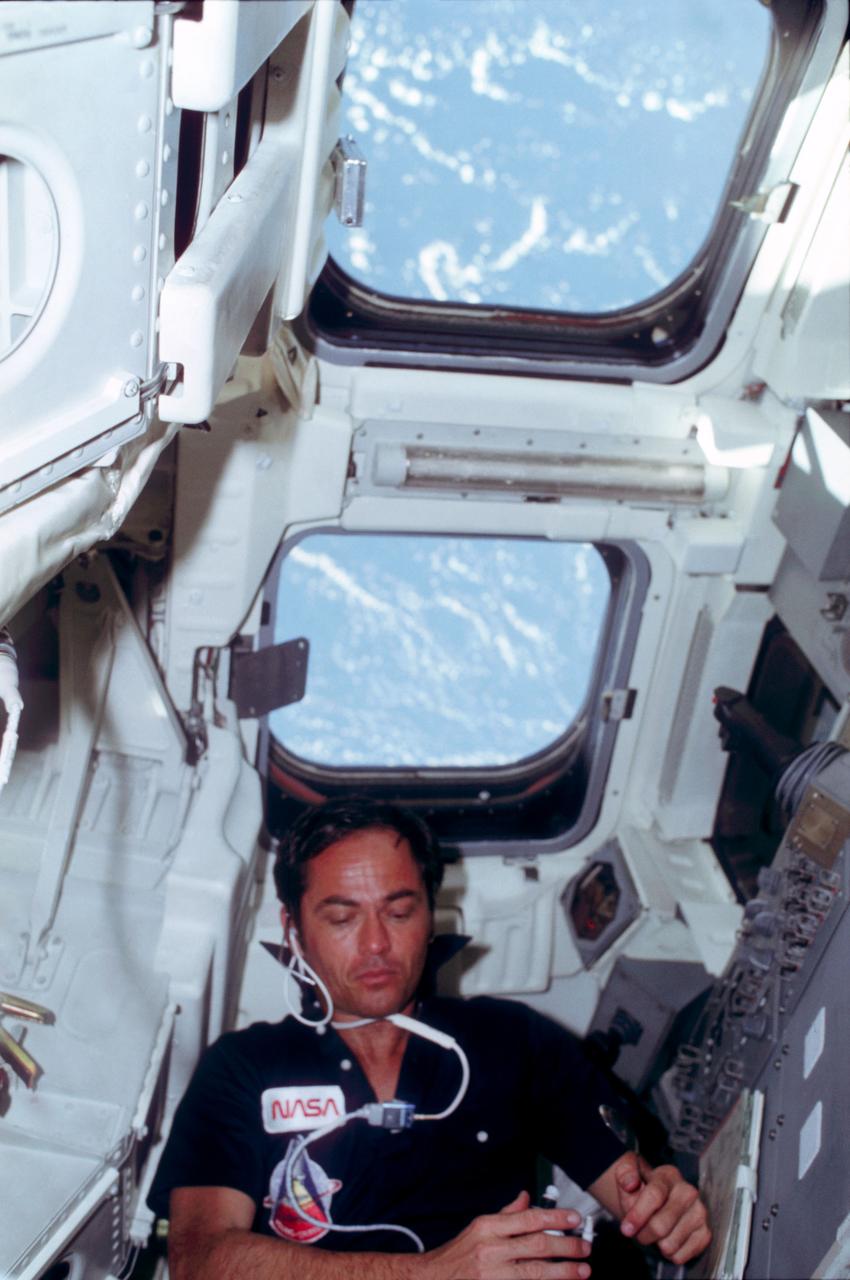
STS001-06-481 (April 1981) --- Astronaut Robert L. Crippen, STS-1 pilot, is behind his station in the flight deck of Columbia. He has a spoon in his hand. The windows prominent in the scene are the ones through which a number of Earth scenes were photographed with a 70mm camera by the two astronauts. Clouds over water can be seen through them. Just inches away from the top windows, not quite so obvious at top of the frame (if held horizontally) are the two aft cabin windows through which the crew viewed the cargo bay and the aft end of the craft, including the orbital maneuvering system (OMS) pods. Astronaut John W. Young, commander, took this photo with a 35mm camera. Photo credit: NASA
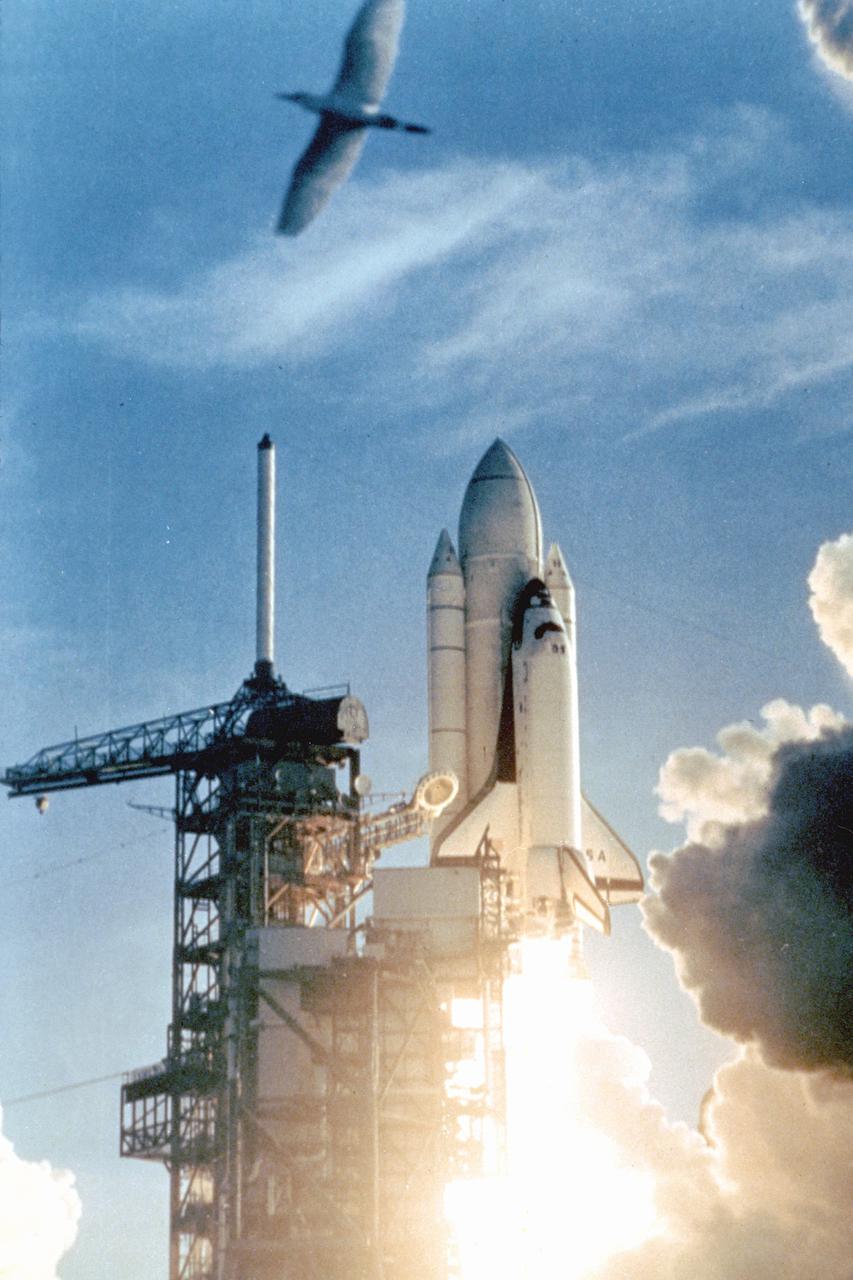
KENNEDY SPACE CENTER, FLA. - The Space Shuttle rises majestically above Launch Complex 39's Pad A on the first leg of its maiden journey into space. On board for the historic flight are astronauts John Young and Bob Crippen, scheduled to spend nearly 54 hours in space on this first shakedown test of America’s new reusable Space Transportation System (STS). The Sunday morning liftoff came a few seconds after 7 a.m. and marked the dawn of a new era in spaceflight.
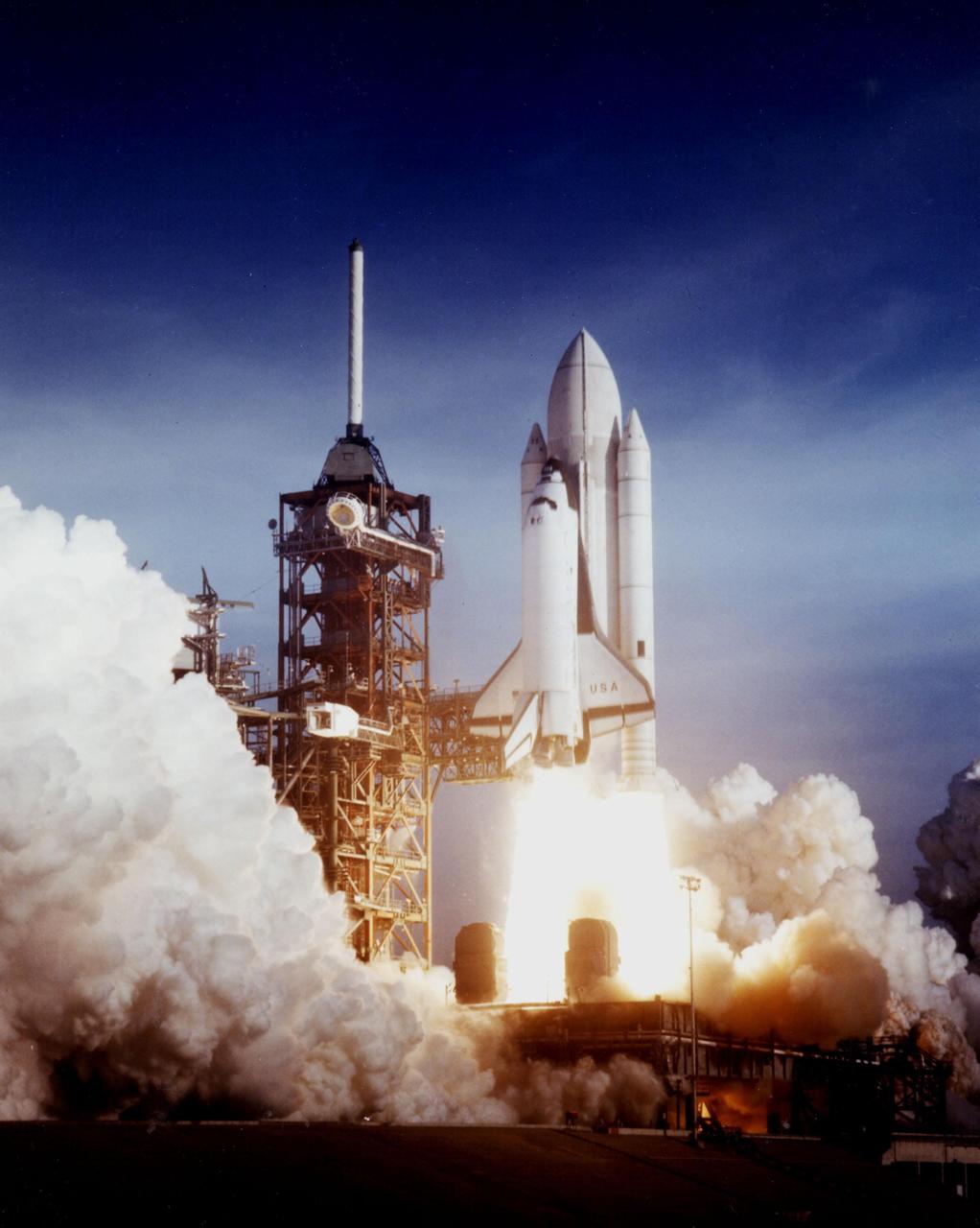
KENNEDY SPACE CENTER, FLA. -- After six years of silence, the thunder of manned space flight is heard again as the successful launch of the first Space Shuttle ushers in a new concept in utilization of space. The April 12 launch at Pad 39A, just seconds past 7 a.m., carries astronauts John Young and Robert Crippen into an Earth orbital mission scheduled to last for 54 hours, ending with unpowered landing at Edwards Air Force Base in California. STS-1, the first in a series of shuttle vehicles planned for the Space Transportation sysstem, utilizes reusable launch and return components
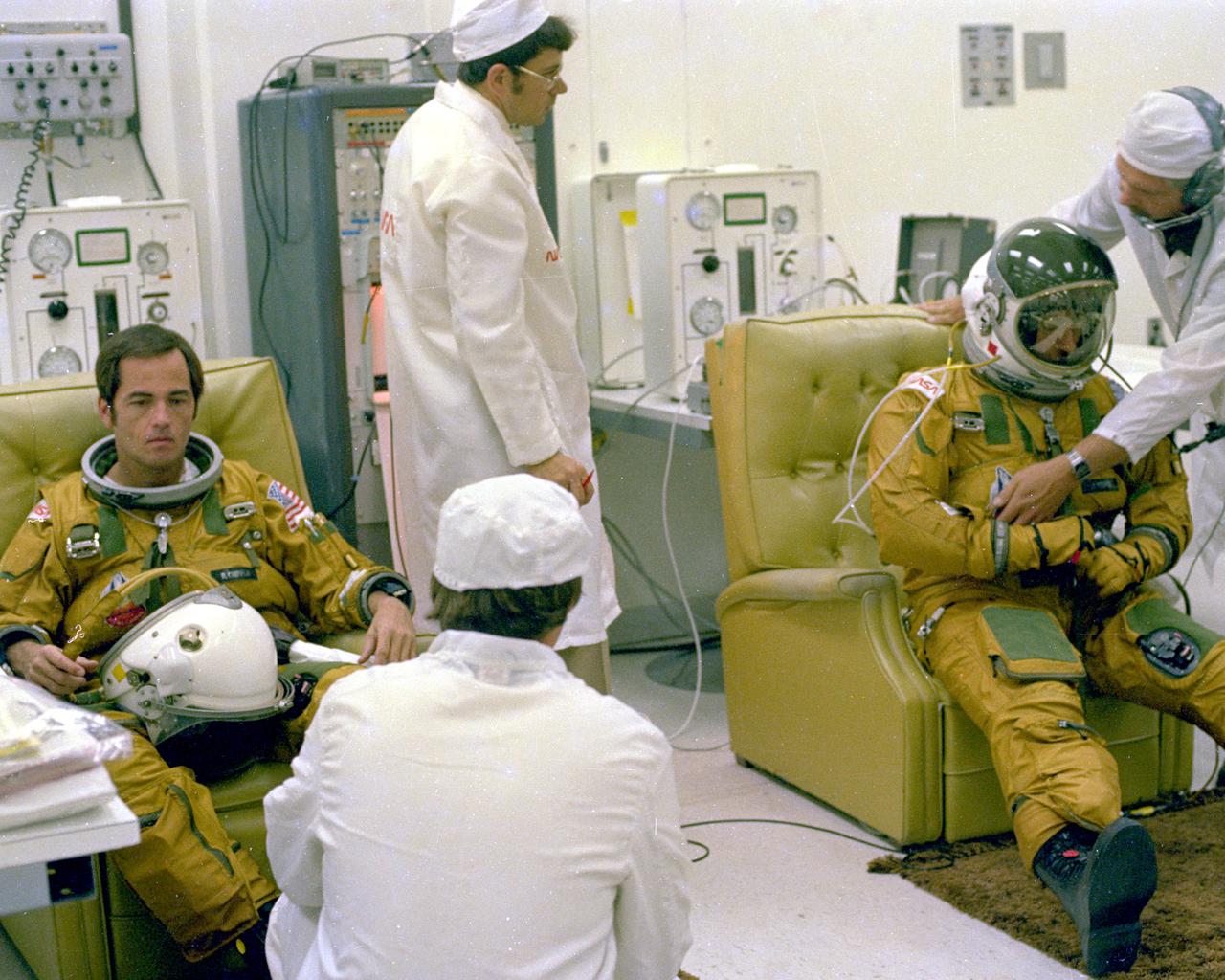
KENNEDY SPACE CENTER, FLA. - Pilot Robert Crippen watches intently as a technician adjusts the lens of his space suit, while Crew Commander John Young's suit is connected to life support system lines, during simulated countdown and launch. The two astronauts, prime crewmen for the maiden flight of the Space Shuttle scheduled no sooner than the week of April 5, are pictured in the suiting room of the Operations and Checkout Building at KSC prior to boarding their transport van for the trip to Launch Pad 39A.
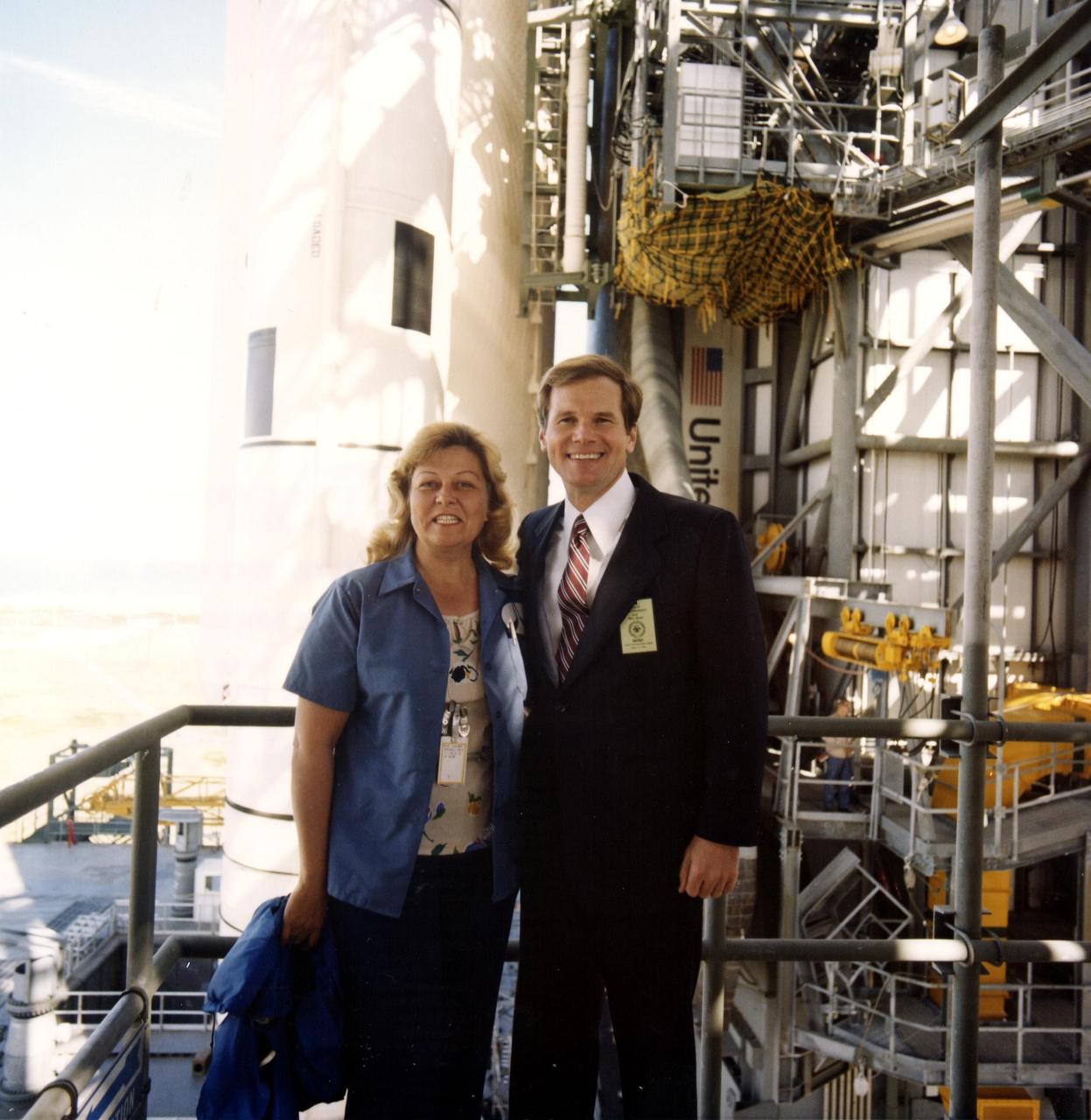
KENNEDY SPACE CENTER, FLA. -- U.S. Rep. Bill Nelson on vice presidential tour.
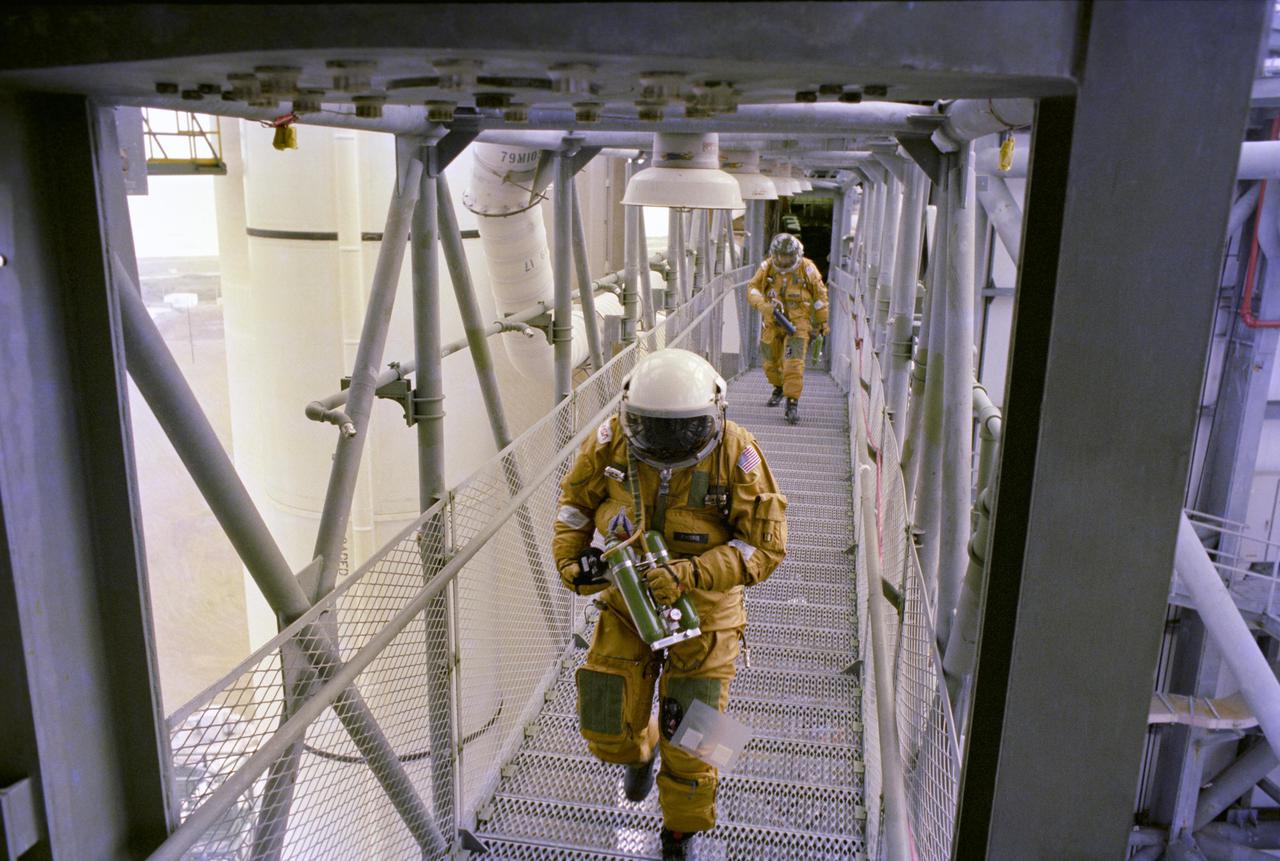
KENNEDY SPACE CENTER, FLA. - On the Fixed Service Structure on Launch Complex 39A, space shuttle prime and backup astronaut crews plus other astronauts and ground personnel are given training on the use of the emergency pad escape system known as the “slidewire”. The slidewire system provides a quick escape from upper launch pad platforms in case of a serious emergency. The flight crews wear the spacesuits and other equipment to be worn during a mission, but sandbags are used to duplicate the weight of riders in the slidewire baskets during the training. The STS-1 mission, known as a shuttle systems test flight, will seek to demonstrate safe launch into orbit and safe return of the orbiter and crew and verify the combined performance of the entire shuttle vehicle -- orbiter, solid rocket boosters and external tank. STS-1 will be launched from Pad A at the Kennedy Space Center's Launch Complex 39 no earlier than March 1981.
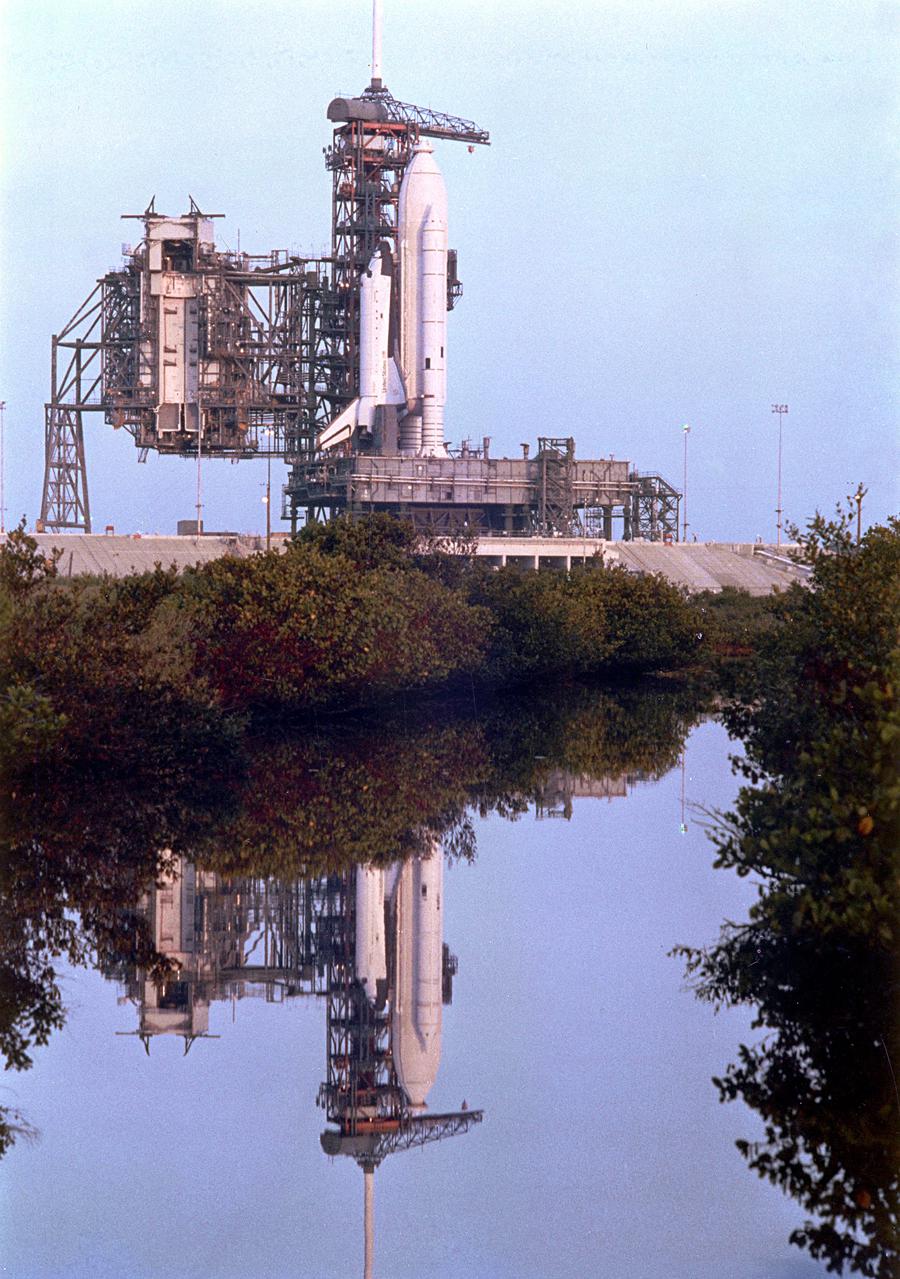
KENNEDY SPACE CENTER, FLA. - The Space Shuttle Columbia, undergoing final preparations for launch at Pad 39A, is reflected in the waters of the nearby ocean lagoon. The Rotating Service Structure is in the retracted position for launch.
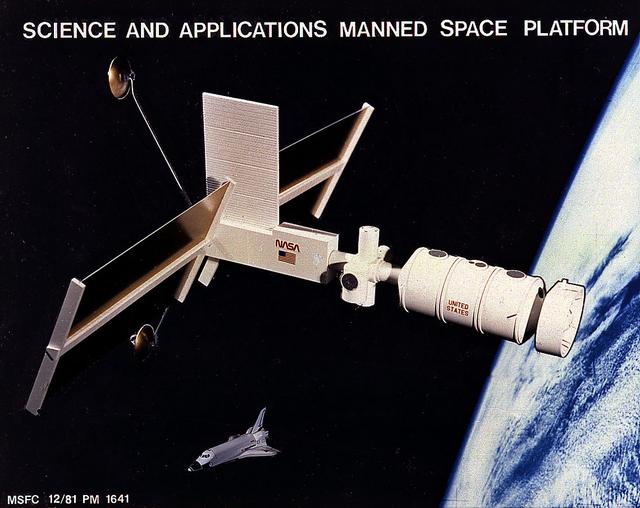
During 1980 and the first half of 1981, the Marshall Space Flight Center conducted studies concerned with a relatively low-cost, near-term, manned space platform to satisfy current user needs, yet capable of evolutionary growth to meet future needs. The Science and Application Manned Space Platform (SAMSP) studies were to serve as a test bed for developing scientific and operational capabilities required by later, more advanced manned platforms while accomplishing early science and operations. This concept illustrates a manned space platform.
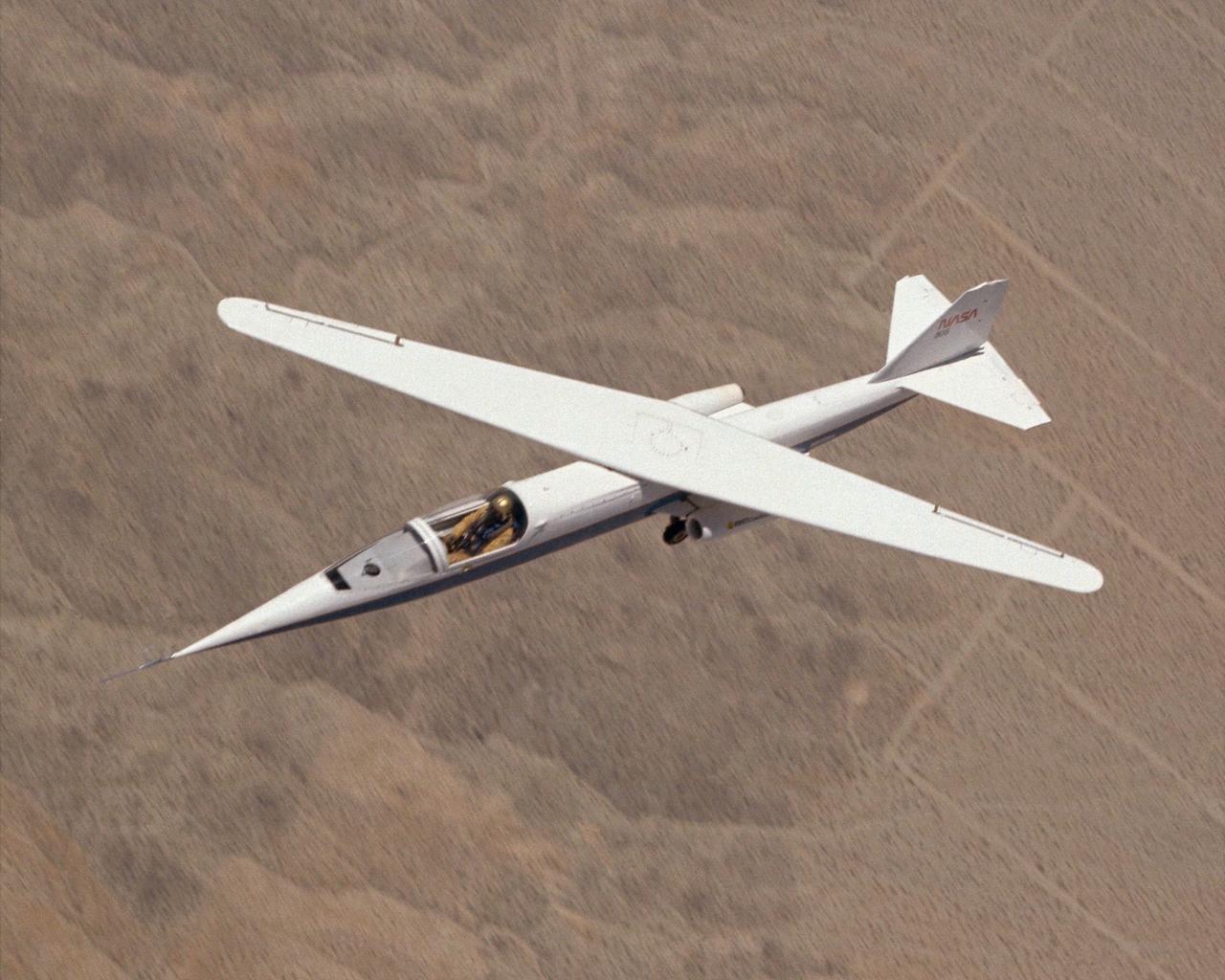
AD-1 in flight. Flight #30. The AD-1 aircraft in flight with its wing swept at 60 degrees, the maximum sweep angle.
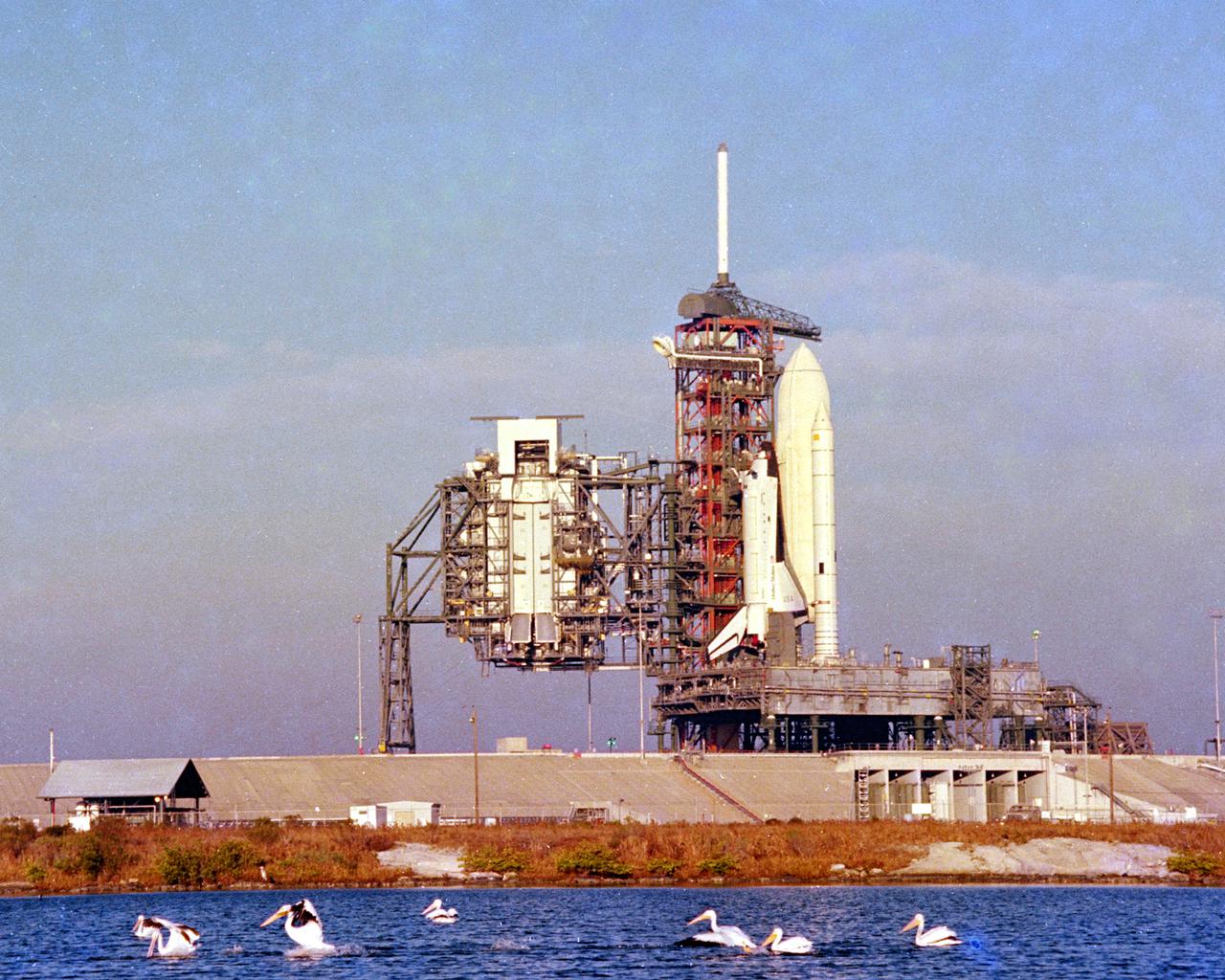
KENNEDY SPACE CENTER, FLA. - It's not always birds of a feather which flock together. Here, a flock of white pelicans splash down in a lagoon near KSC's Pad A of Launch Complex 39, where another 'bird' - the Space Shuttle Columbia - is poised for launch on its first voyage into orbit. The Rotating Service Structure, which houses the snug-fitting, environmentally clean 'white room' where payloads will be loaded into the orbiter's cargo bay, is shown at left in its retracted position.
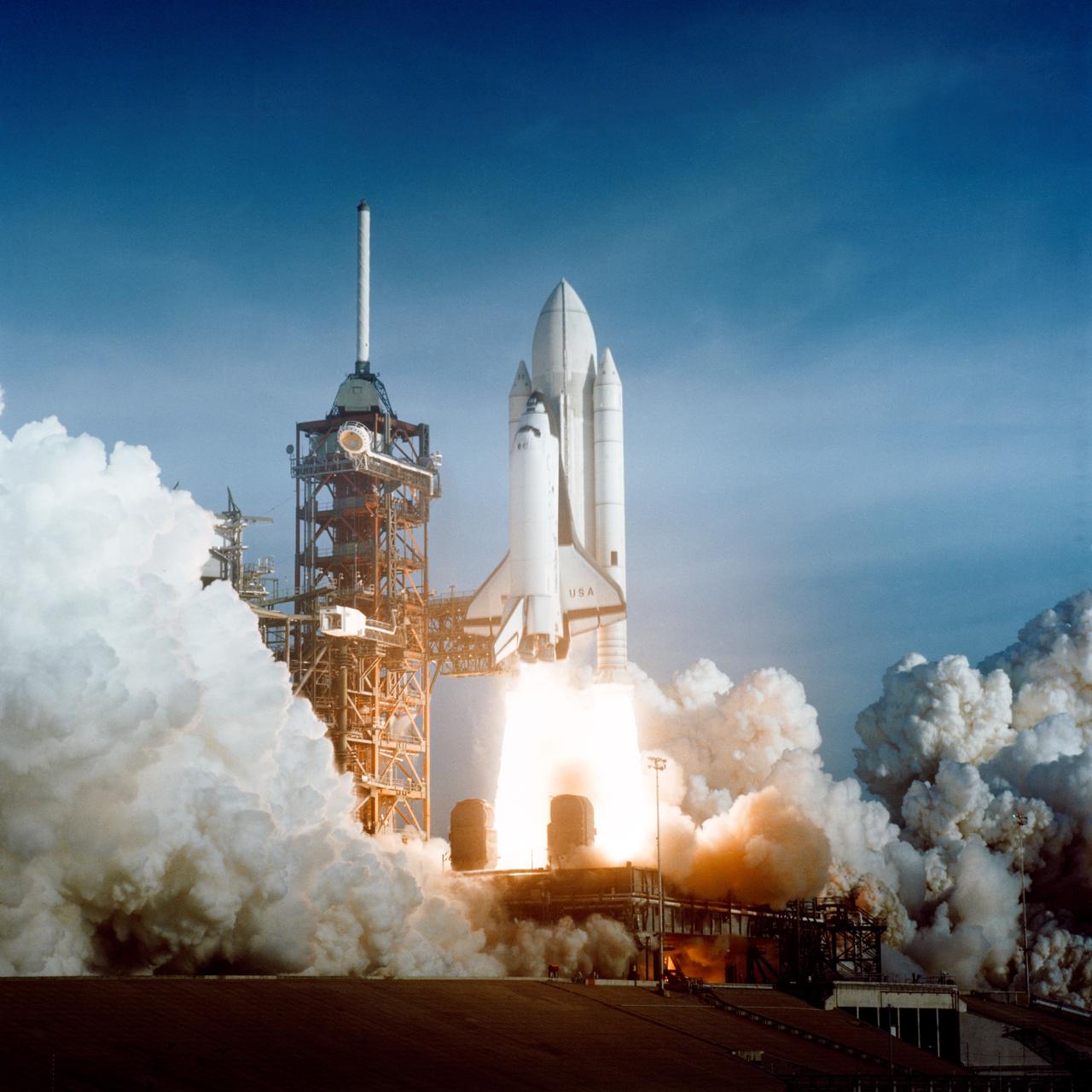
S81-30498 (12 April 1981) --- After six years of silence, the thunder of manned spaceflight is heard again, as the successful launch of the first space shuttle ushers in a new concept in utilization of space. The April 12, 1981 launch, at Pad 39A, just seconds past 7 a.m., carries astronaut John Young and Robert Crippen into an Earth-orbital mission scheduled to last for 54 hours, ending with unpowered landing at Edwards Air Force Base in California. STS-1, the first in a series of shuttle vehicles planned for the Space Transportation System, utilizes reusable launch and return components. Photo credit: NASA or National Aeronautics and Space Administration
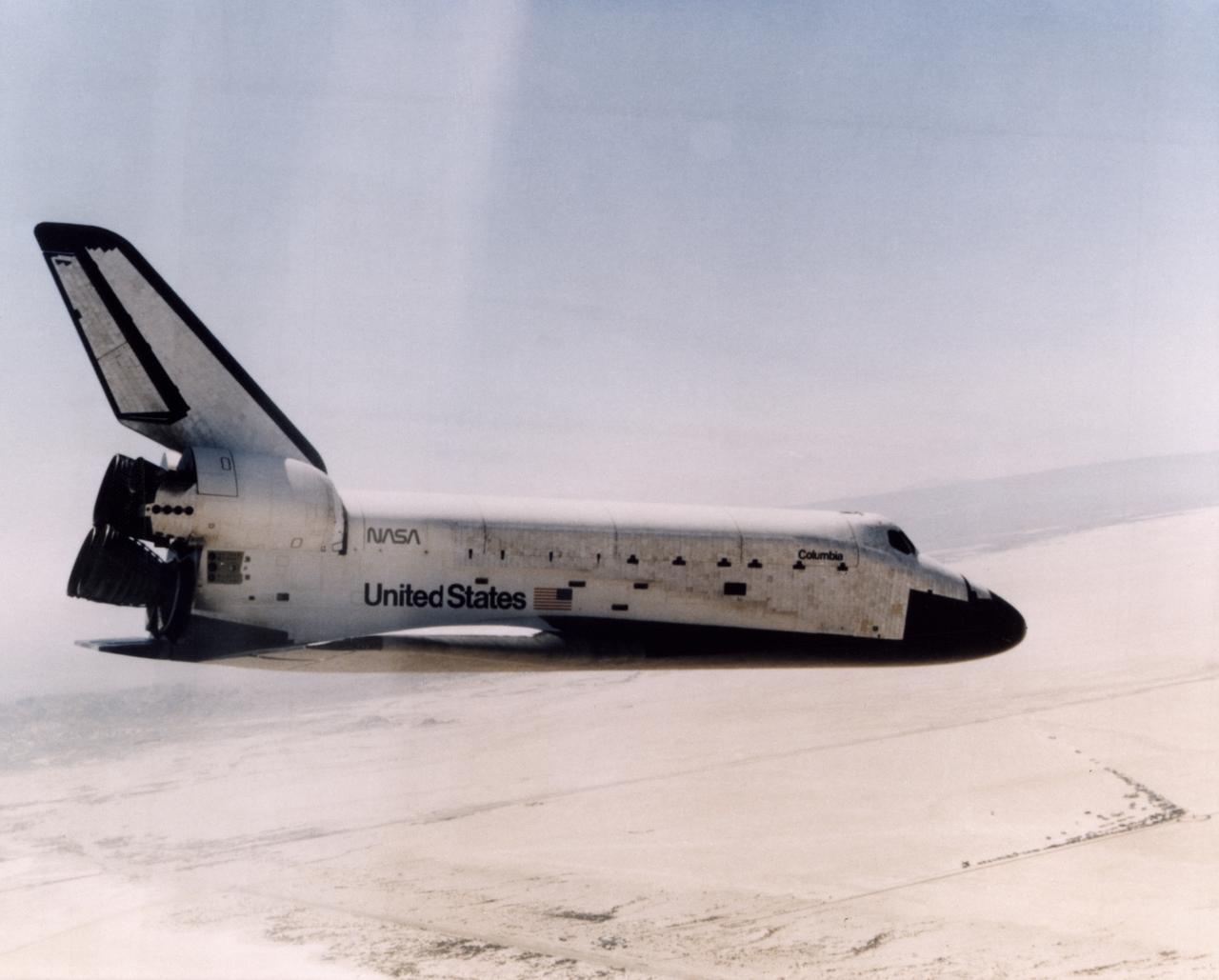
FIRST SHUTTLE LANDING -- The Space Shuttle Columbia glides down over Rogers Dry Lake as it heads for a landing at Edwards Air Force Base at the conclusion of its first orbital mission on April 14, 1981.
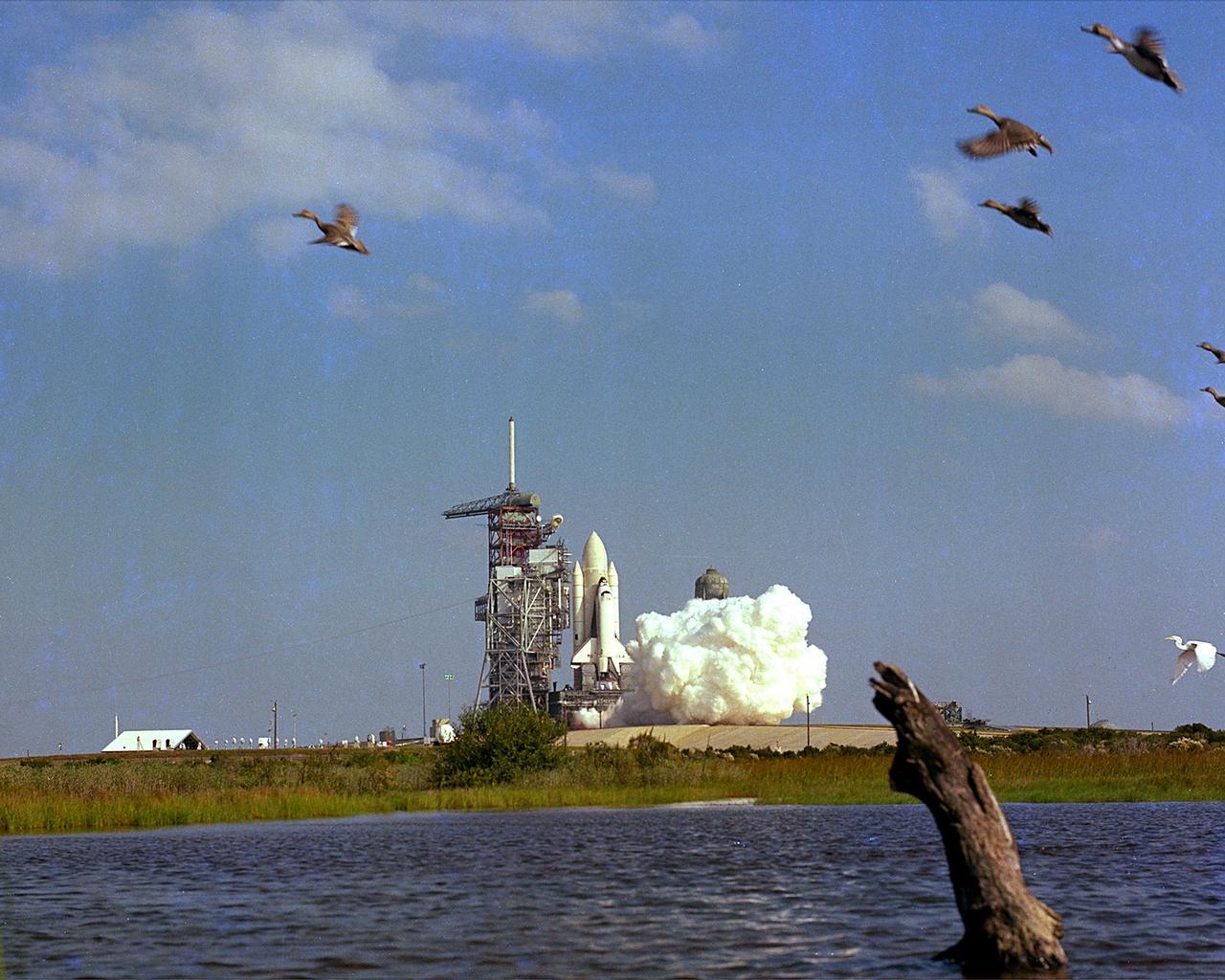
STS-2: Columbia
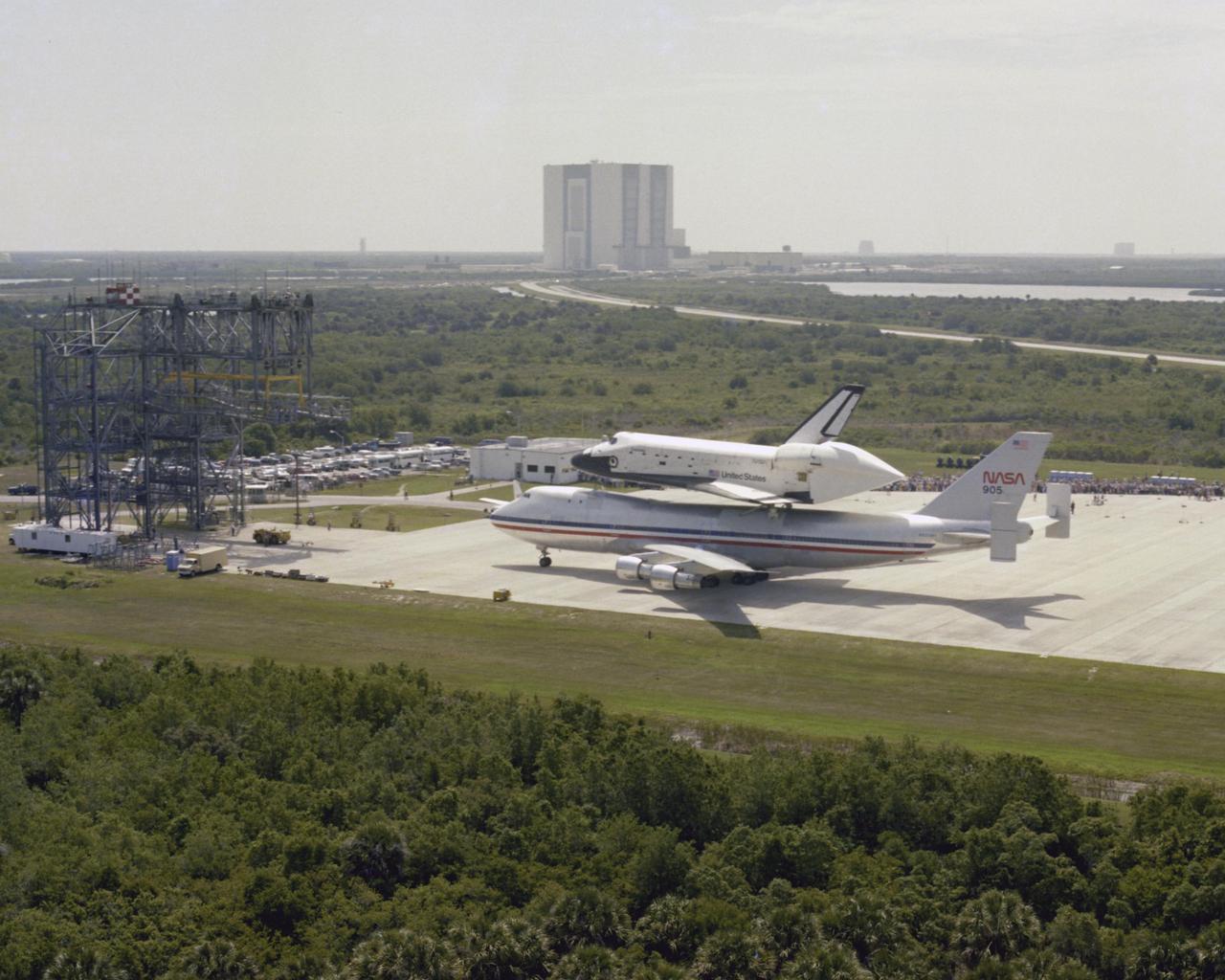
KENNEDY SPACE CENTER, FLA. - The Space Shuttle Orbiter Columbia - riding piggy back atop a modified 747 jet called the Shuttle Carrier Aircraft - arrives at Kennedy Space Center after a two-day journey from the Dryden Flight Research Center in California. Welcomed home by a crowd of KSC employees and their families and guests, Columbia touched down on the Shuttle Landing Facility at 11:23 a.m. Tuesday, two weeks after its return to Earth from the first Space Shuttle flight into space. The orbiter and SCA are seen here parked in front of the Mate_Demate Device, where the orbiter will be hoisted off the 747.
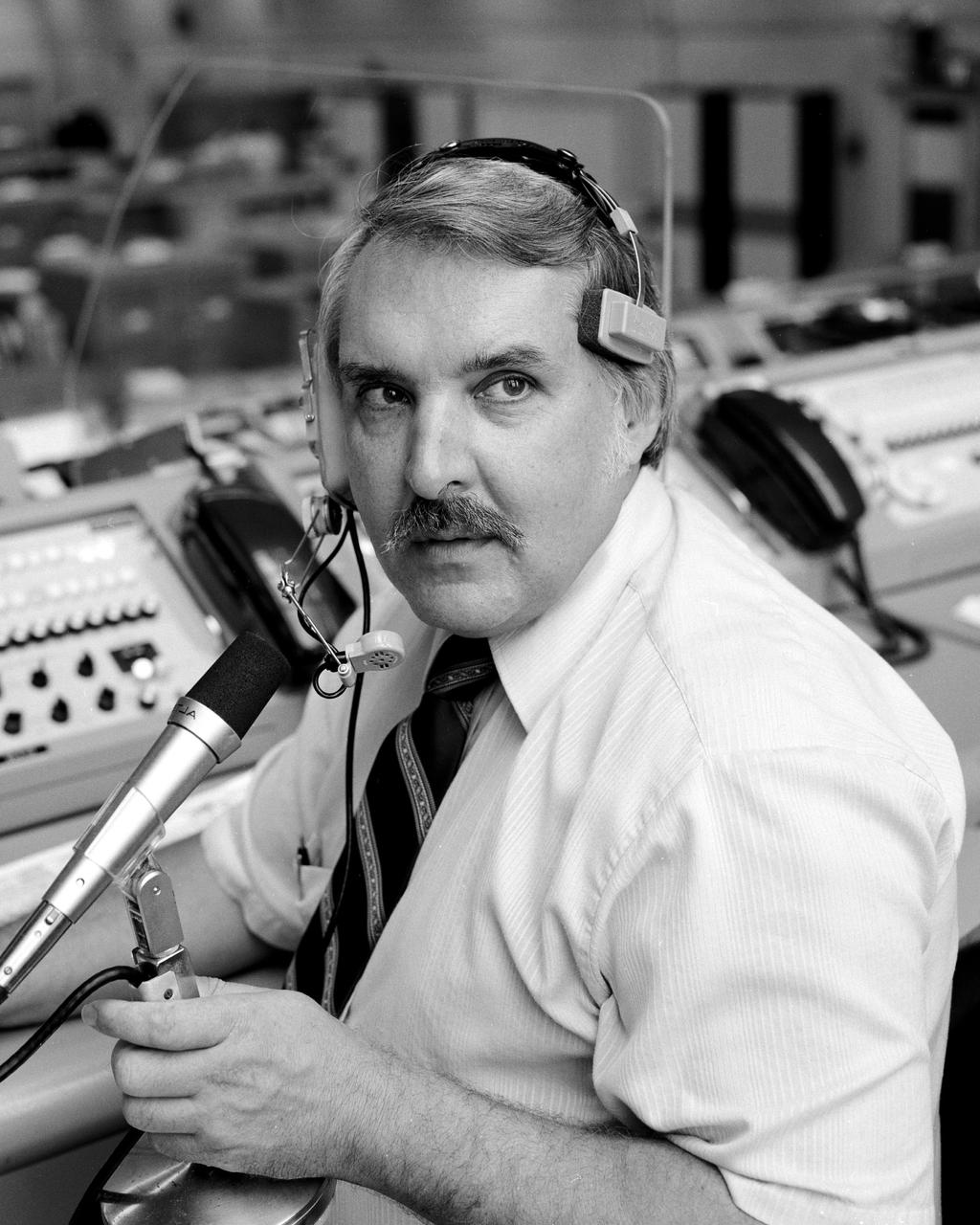
CAPE CANAVERAL, Fla. -- Pictured at his console in the firing room of the Launch Control Center, Complex 39, Hugh Harris, head of the Public Information Branch, Office of Public Affairs, provides the mission commentary for space shuttle launches. Photo credit: NASA
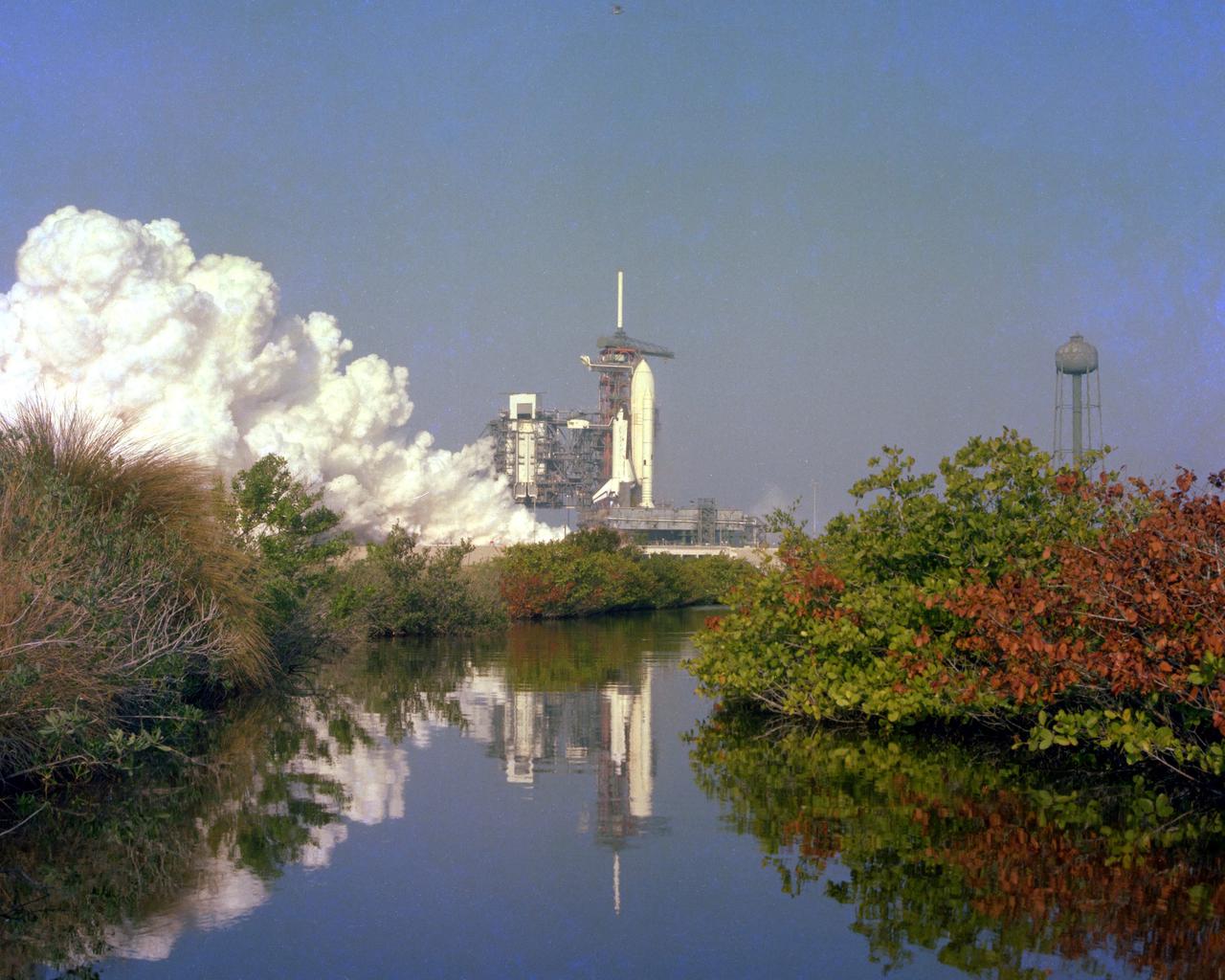
KENNEDY SPACE CENTER, FLA. - Flames shot from the nozzles of the Space Shuttle's three engines during the successful 20-second static firing, which capped a formal rehearsal for the maiden flight of Columbia, scheduled for early April. The milestone event took place at 8:45 a.m. on Feb. 20, 1981. The three main engines reached 100 percent power - over 1 million pounds of thrust - during the test. Holddown bolts secured the vehicle to its mobile launcher platform.
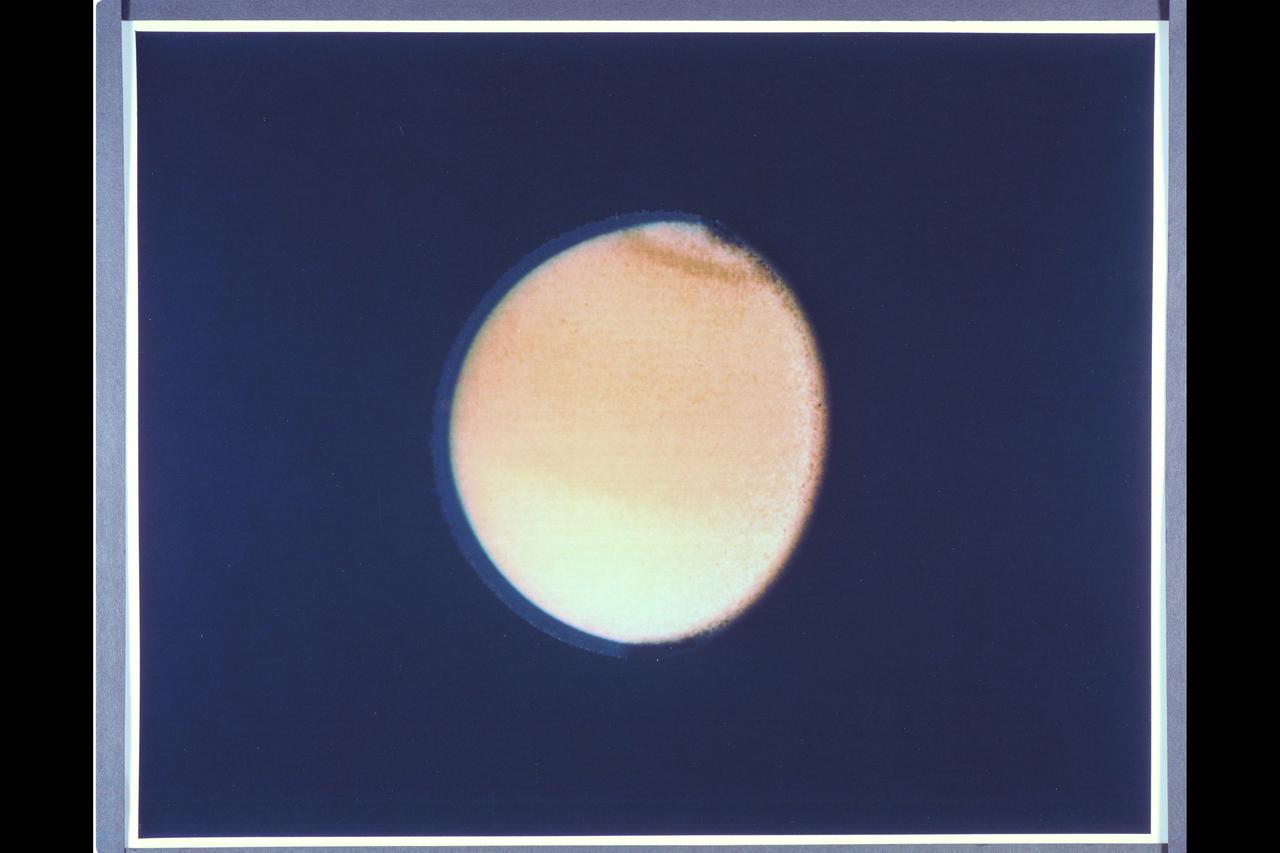
Range : 2.3 million km. ( 1.4 million miles ) P-24067C This Voyager 2 photograph of Titan, a satellite of Saturn, shows some detail in the cloud systems. The southern hemisphere appears lighter in contrast, a well defined band is seen near the equator, and a dark collar is evident at the north pole. All these bands are associated with the cloud circulation in titan's atmosphere. The extended haze, composed of of sub-micron size particles, is seen clearly around the satellite's limb. This image was composed from blue, green, and violet frames.
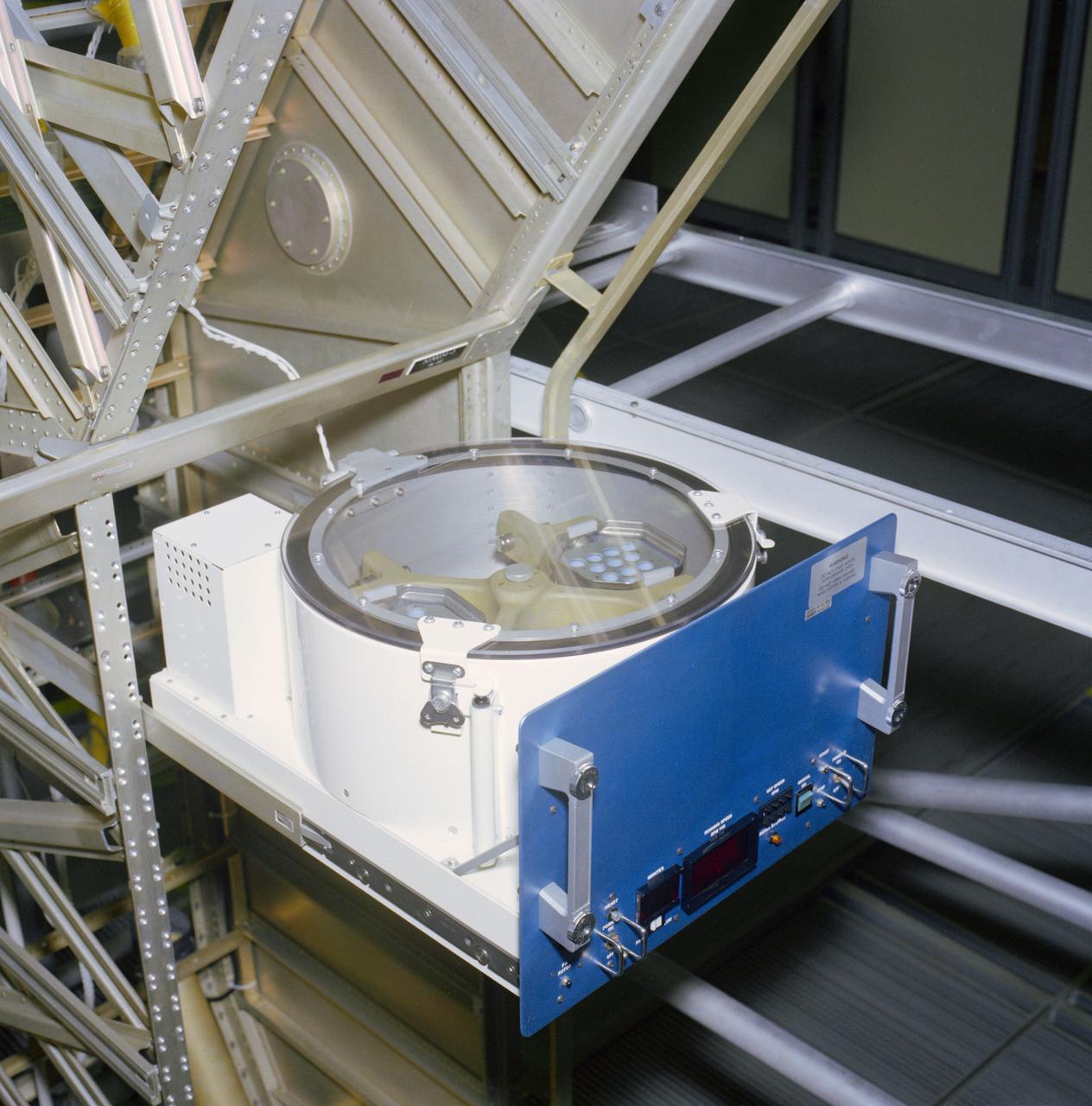
S81-25565 (Feb 1981) --- Expected to be a busy item of flight hardware on the Spacelab Life Sciences (SLS-1) mission is this low-gravity centrifuge. To be flown onboard Columbia for STS-40, the centrifuge is able to simulate several gravity levels (0.5 g, 1.0 g, 1.5 g. and 2.0 g). Blood samples, taken during the flight, will be placed in the centrifuge, fixed for post flight analysis and transferred to a freezer.
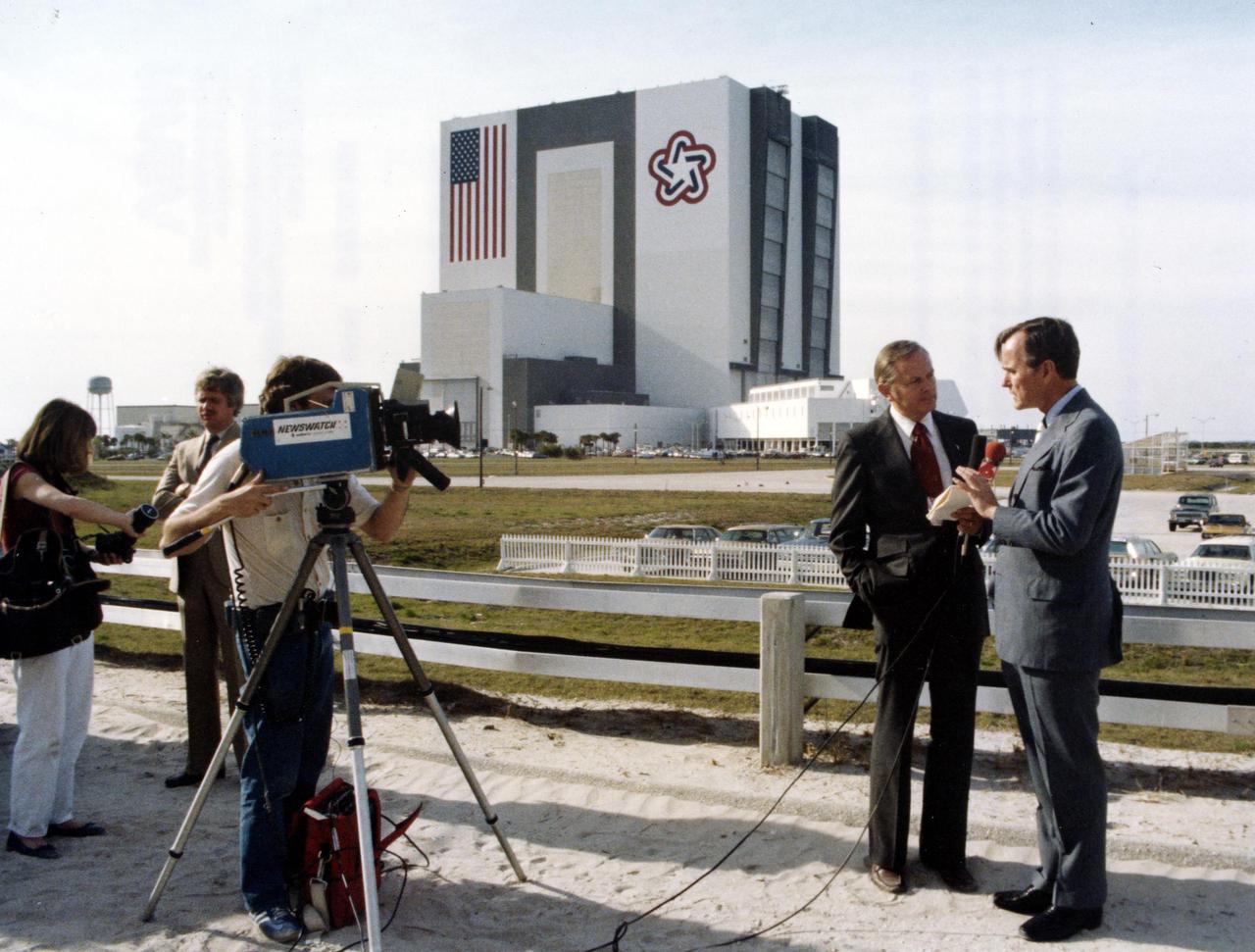
KENNEDY SPACE CENTER, FLA. -- Vice President George H. W. Bush, on a tour of KSC and Space Shuttle launch facilities, is interviewed at the Launch Complex 39 Press Site by Ben Aycrigg, anchorman for WDBO-TV News, Orlando.
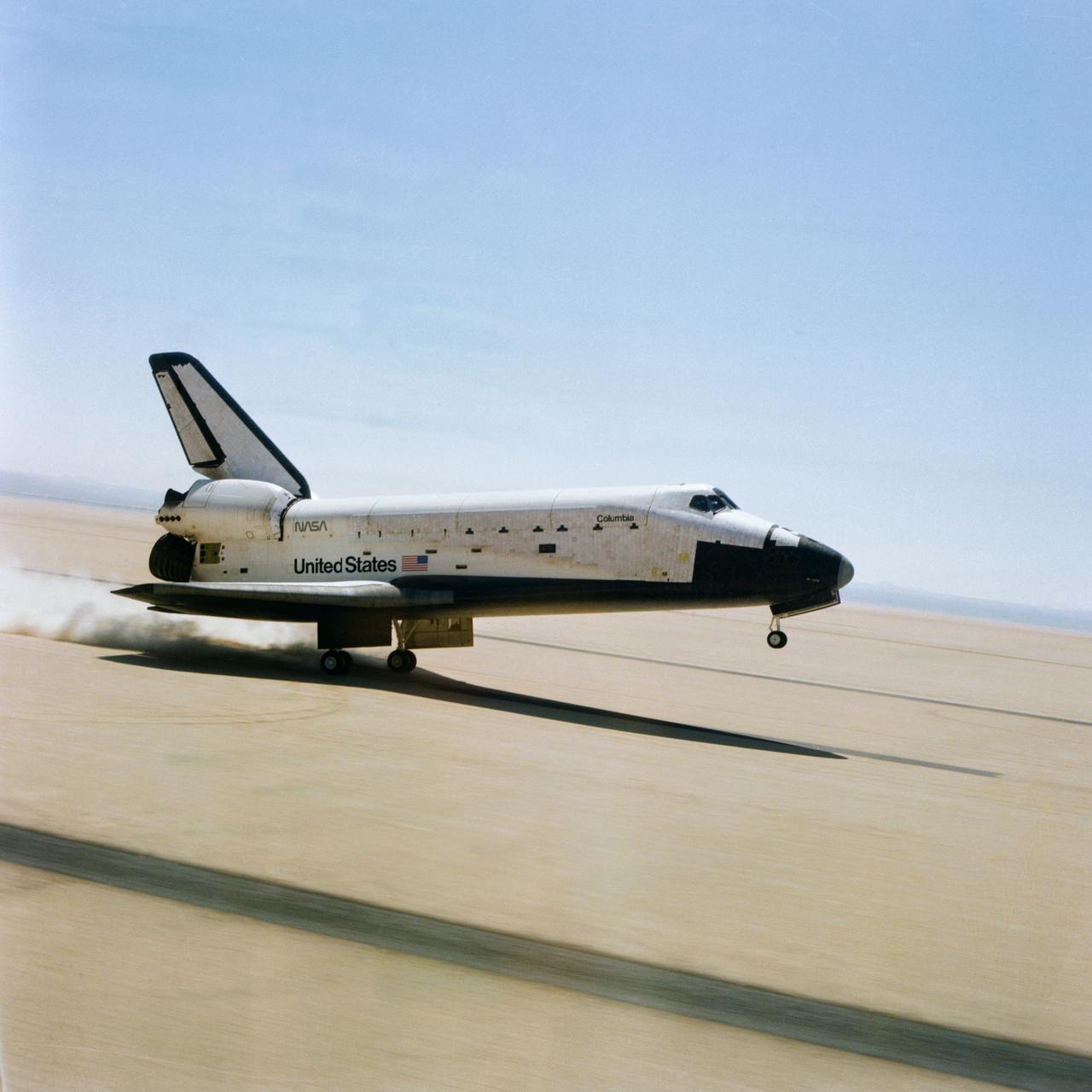
S81-30734 (14 April 1981) --- The rear wheels of the space shuttle orbiter Columbia (STS-1) touch down on Rogers dry lake at Edwards Air Force Base in southern California to successfully complete a stay in space of more than two days. Astronauts John W. Young, commander, and Robert L. Crippen, pilot, are aboard the vehicle. The mission marked the first NASA flight to end with a wheeled landing and represents the beginning of a new age of spaceflight that will employ the same hardware repeatedly. Photo credit: NASA

S81-29032 (1981) --- Astronaut Dr. Owen K. Garriott.
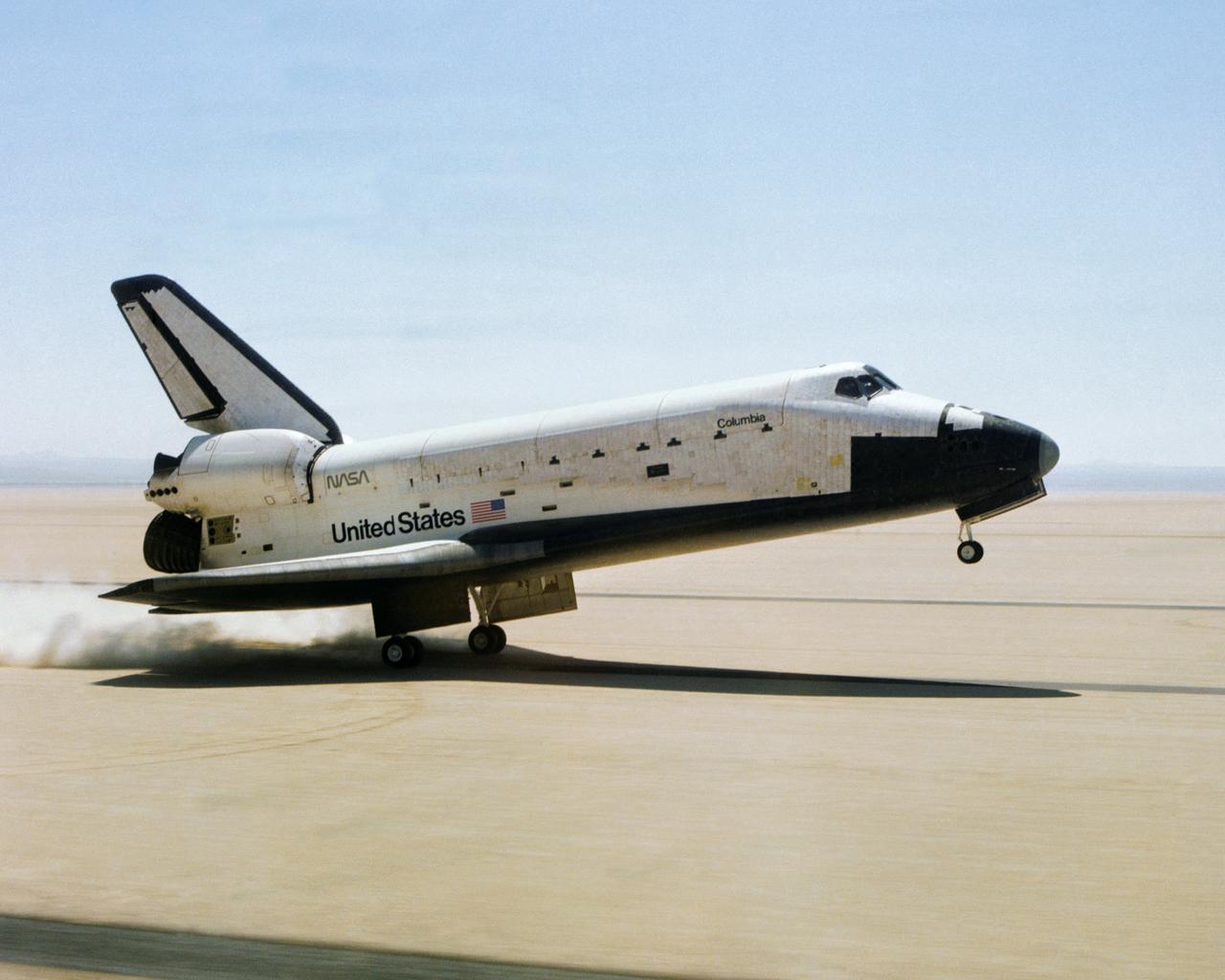
The Space Shuttle Columbia touches down on lakebed runway 23 at Edwards Air Force Base, Calif., to conclude the first orbital shuttle mission. (JSC photo # S81-30734)
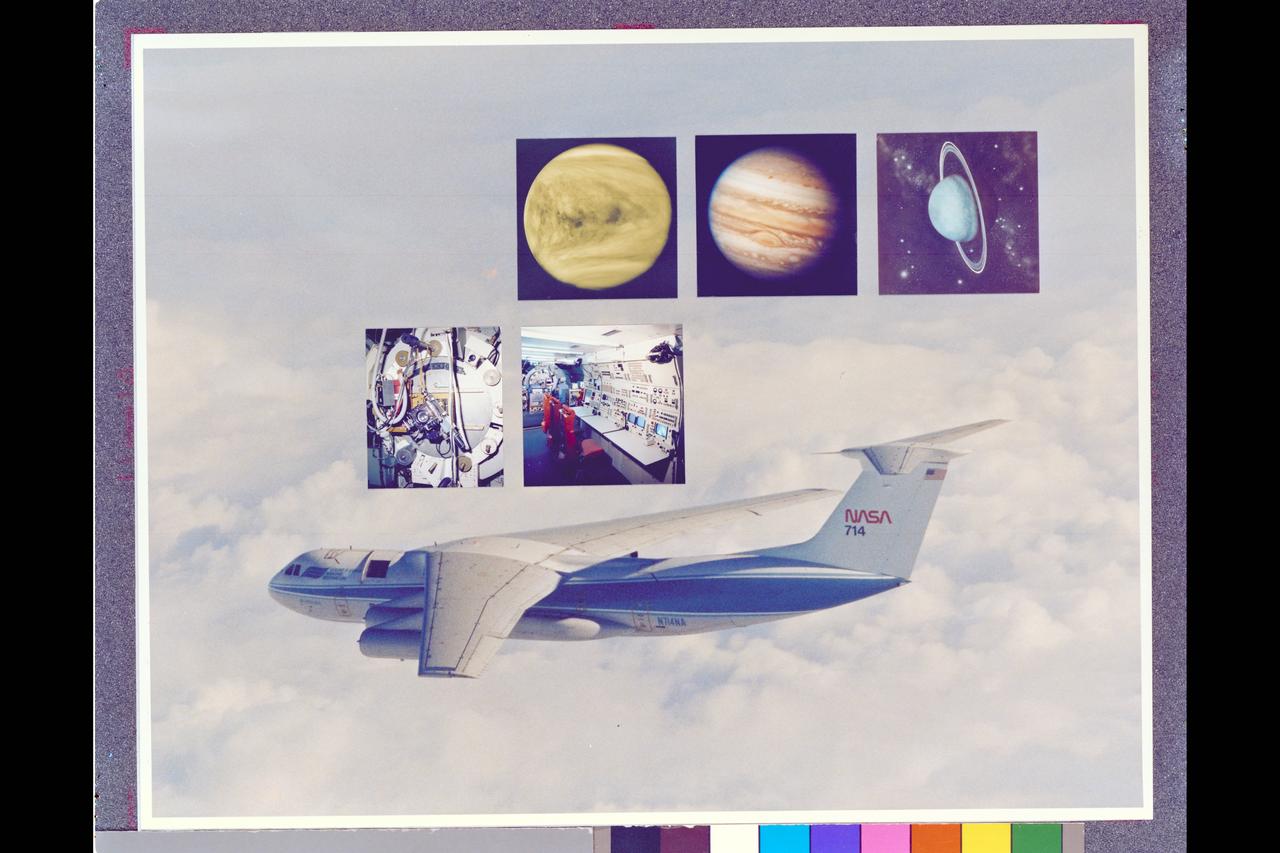
Composite Art C-141 KAO Airborne Astronomy Composite shows A/C AC80-0006-2, Venus AC78-9140, Jupiter AC79-0143-1, Uranus AC77-0359, Console AC75-1345 and Telescope AC81-0299-17
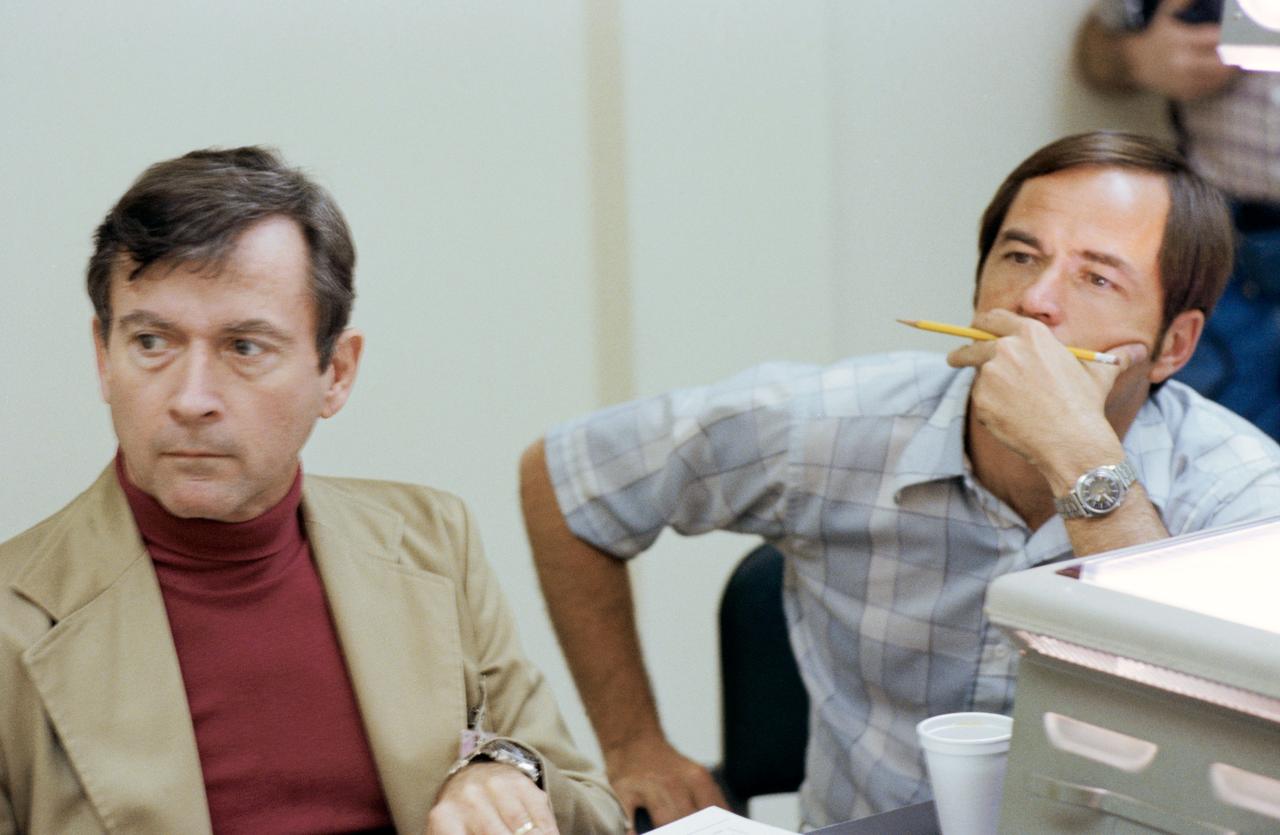
S81-29619 (6 April 1981) --- STS-1 astronauts John W. Young, left, and Robert L. Crippen direct their attention to a chart on a screen in a small briefing room at NASA's Johnson Space Center (JSC). They are taking part in a three-way telephone conference call, which involved engineers at JSC and at the Rockwell International facility in California. Later this week the two will man the space shuttle orbiter Columbia for STS-1. Photo credit: NASA
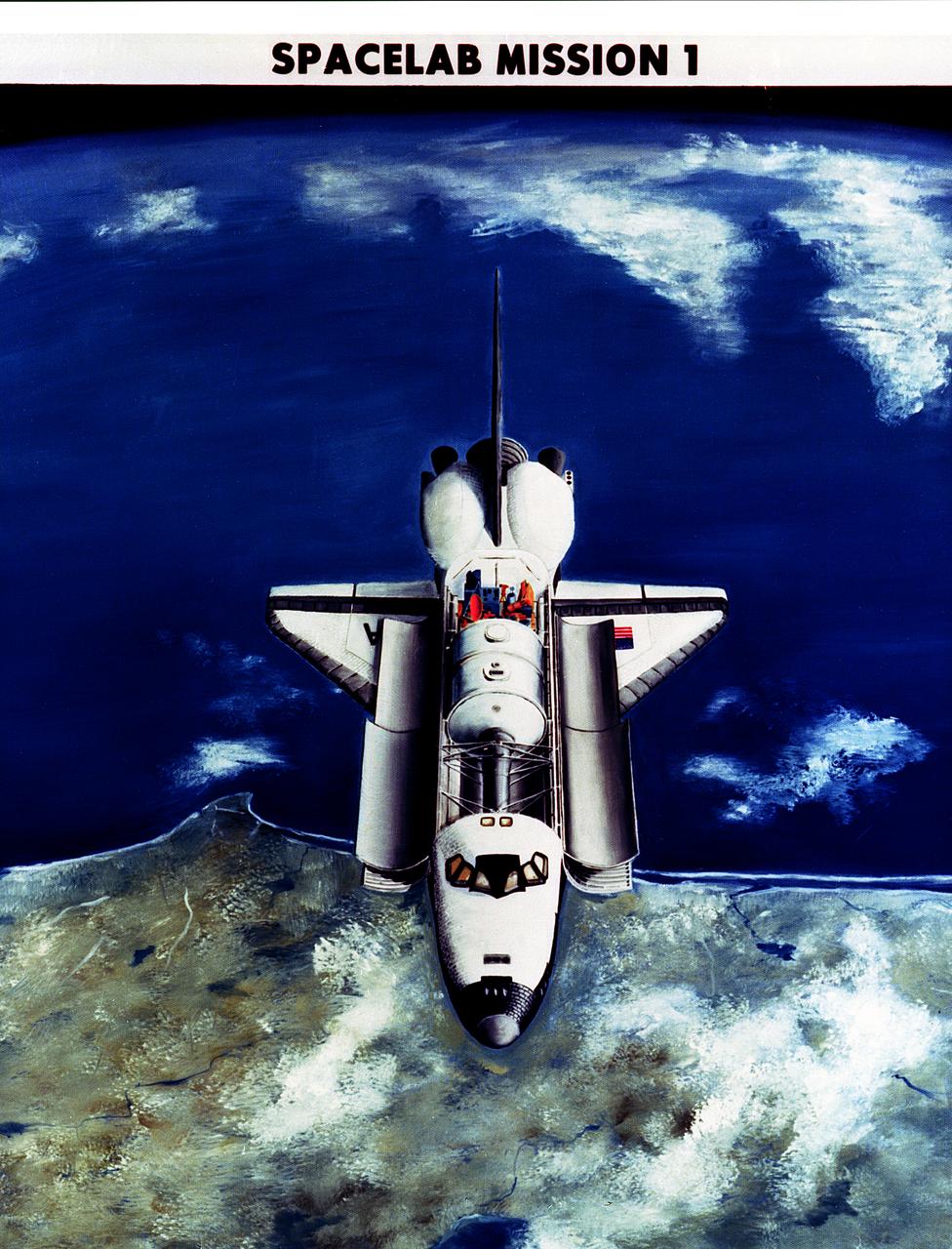
Spacelab was a versatile laboratory carried in the Space Shuttle's cargo bay for special research flights. Its various elements could be combined to accommodate the many types of scientific research that could best be performed in space. Spacelab consisted of an enclosed, pressurized laboratory module and open U-shaped pallets located at the rear of the laboratory module. The laboratory module contained utilities, computers, work benches, and instrument racks to conduct scientific experiments in astronomy, physics, chemistry, biology, medicine, and engineering. Equipment, such as telescopes, anternas, and sensors, was mounted on pallets for direct exposure to space. A 1-meter (3.3-ft.) diameter aluminum tunnel, resembling a z-shaped tube, connected the crew compartment (mid deck) to the module. The reusable Spacelab allowed scientists to bring experiment samples back to Earth for post-flight analysis. Spacelab was a cooperative venture of the European Space Agency (ESA) and NASA. ESA was responsible for funding, developing, and building of Spacelab, while NASA was responsible for the launch and operational use of Spacelab. Spacelab missions were cooperative efforts between scientists and engineers from around the world. Teams from NASA centers, universities, private industry, government agencies and international space organizations designed the experiments. The Marshall Space Flight Center was NASA's lead center for monitoring the development of Spacelab and managing the program.
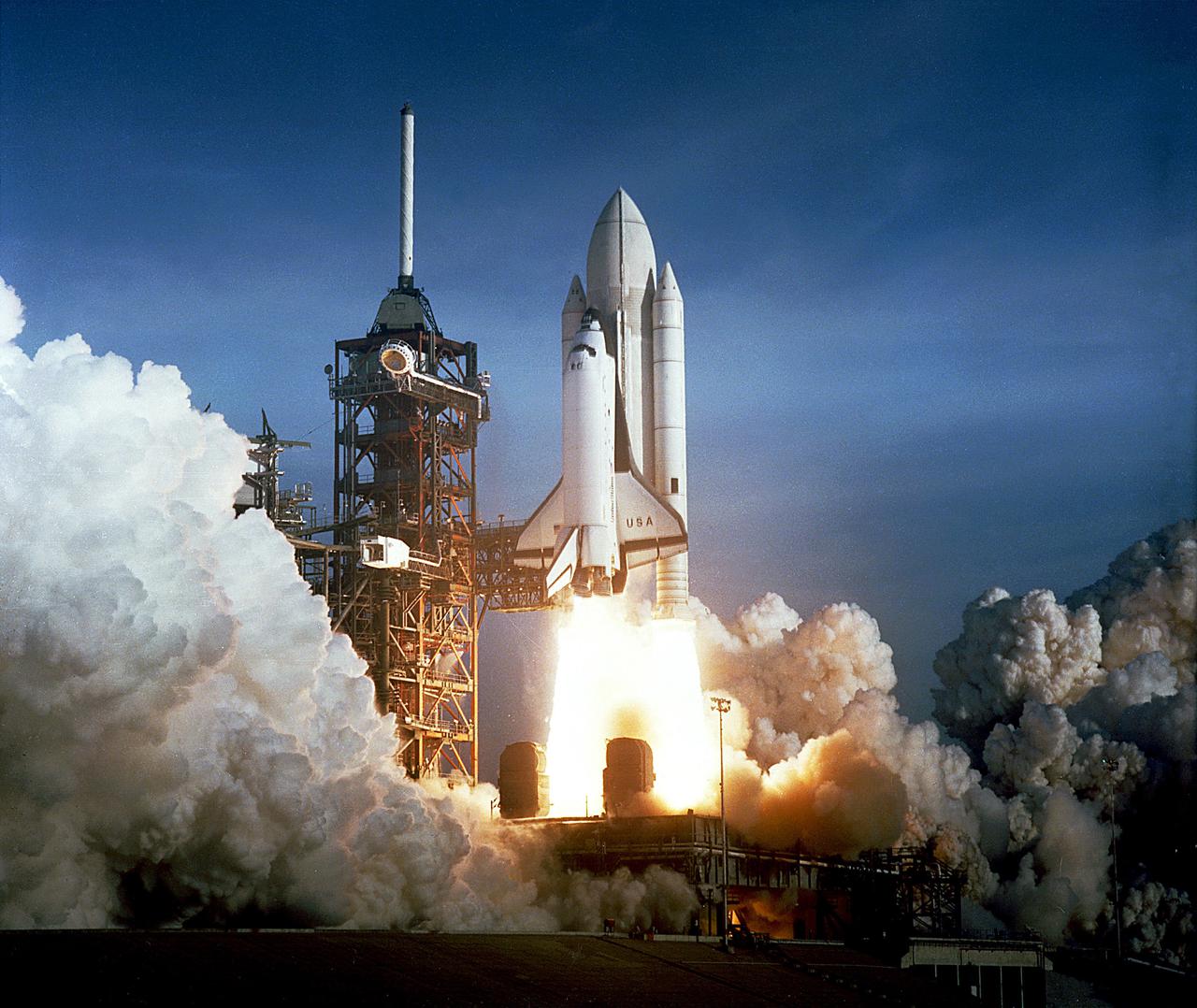
KENNEDY SPACE CENTER, FLA. - After six years of silence, the thunder of manned space flight is heard again, as the successful launch of the first Space Shuttle ushers in a new concept in utilization of space. The April 12 launch at Pad 39A, just seconds past 7 a.m., carries astronauts John Young and Robert Crippen into an Earth orbital mission scheduled to last 54 hours, ending with unpowered landing at Edwards Air Force Base in California. STS-1, the first in a series of Shuttle Vehicles planned for the Space Transportation System, utilizes reusable launch and return components.
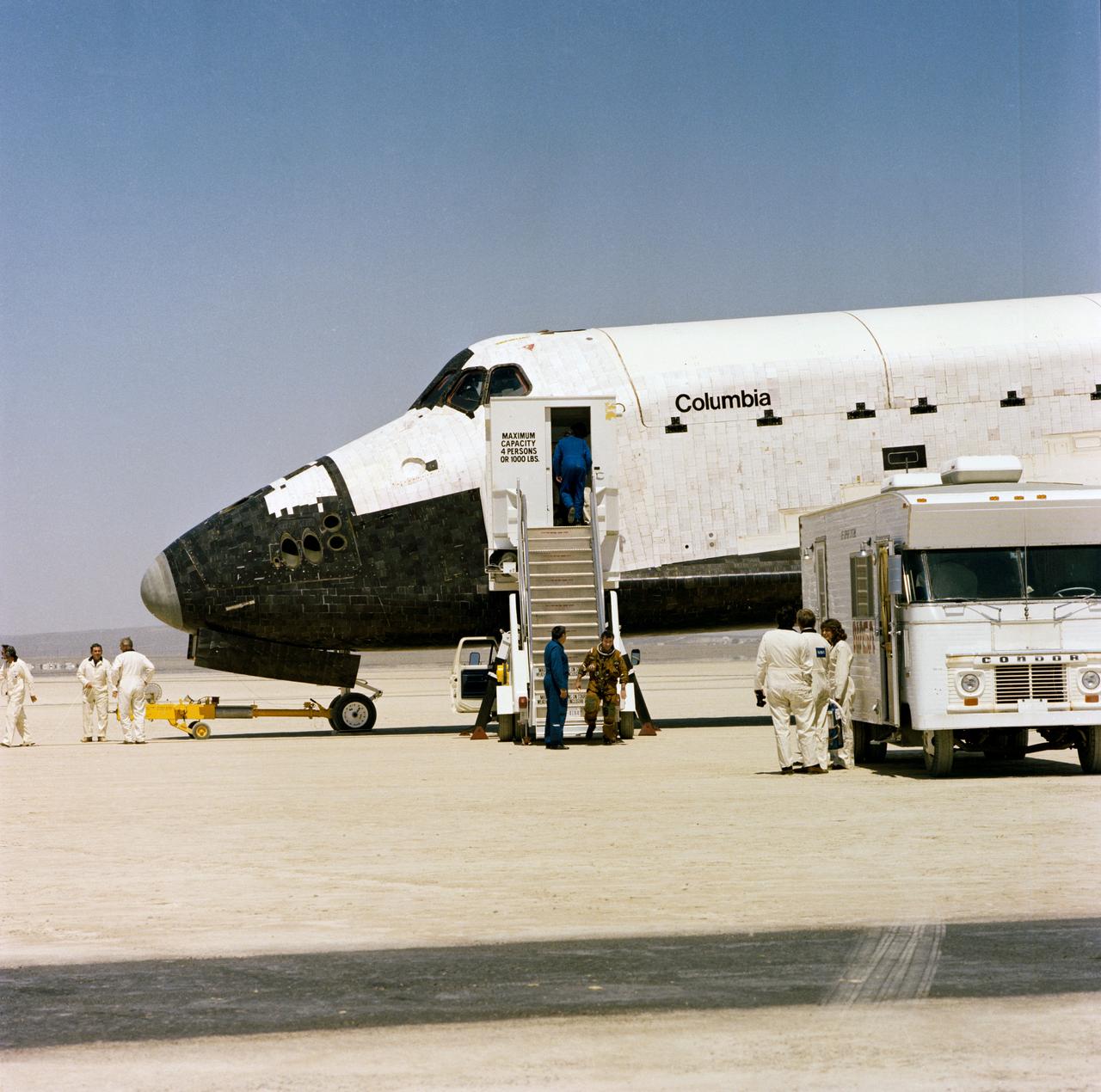
S81-30846 (14 April 1981) --- Astronaut John W. Young (near center of photo), STS-1 commander, egresses the space shuttle Columbia upon the completion of checklist activities following the successful landing of the spacecraft used on STS-1 space mission. George W.S. Abbey, director of flight operations at the Johnson Space Center (JSC), greets him at the bottom of the steps. Astronaut Robert L. Crippen, STS-1 pilot, is still inside Columbia. Dr. Craig L. Fischer, chief of the medical operations branch in the medical sciences division at JSC, ingresses the spacecraft at top of stairs. Photo credit: NASA