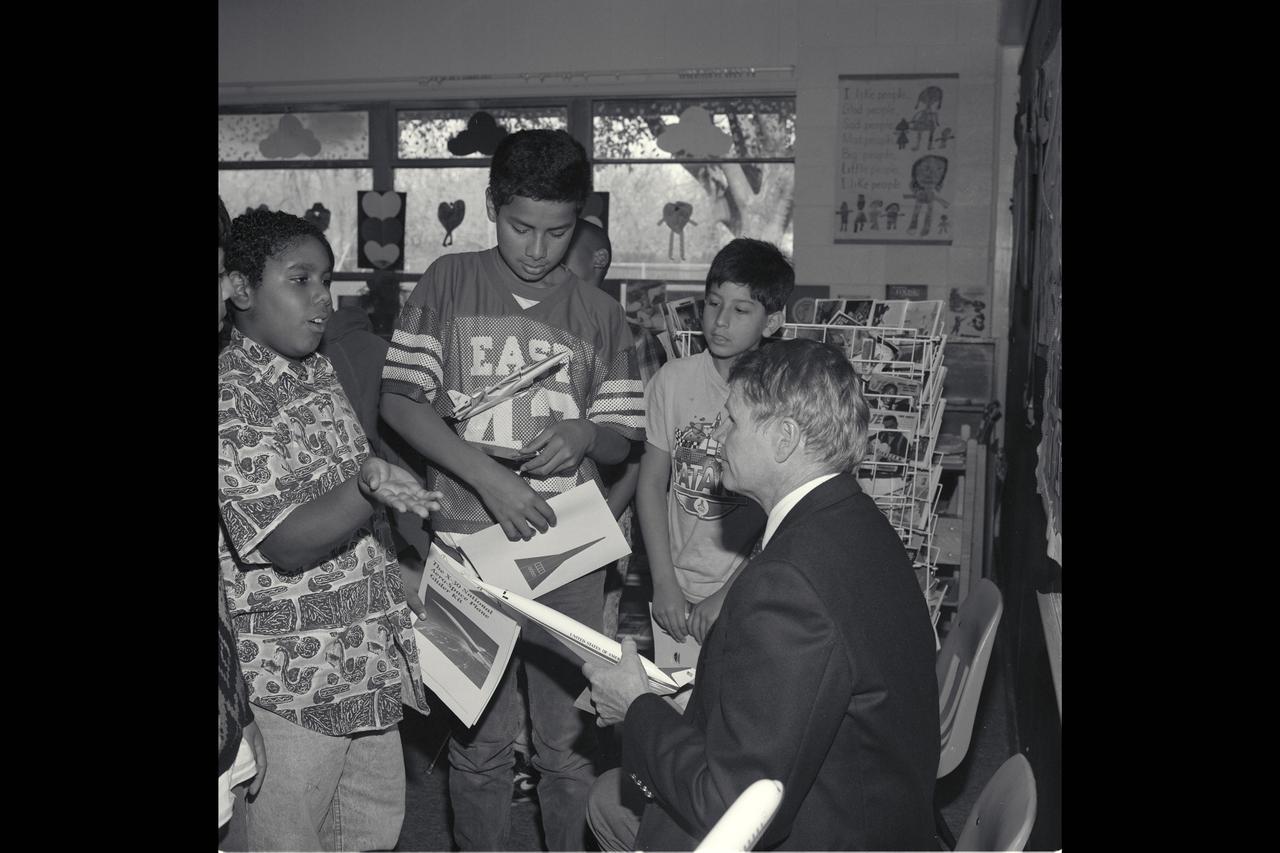
Dr. Dale Compton (Ames Director) visits McNair school and speaks with students
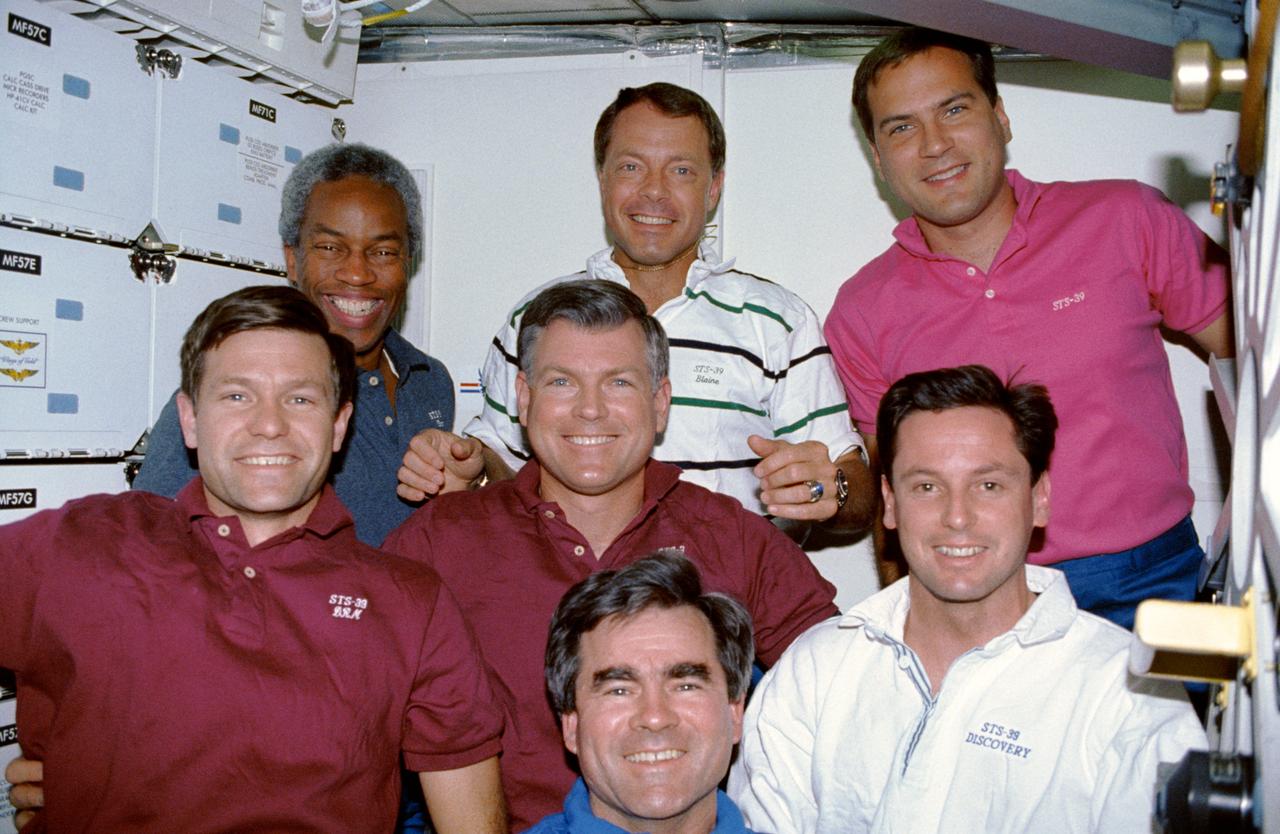
STS039-07-017 (28 April - 6 May 1991) --- The seven member astronaut crew for the STS-39 mission poses on the middeck of the Earth-orbiting space shuttle Discovery for an in-flight crew portrait. Left to right (front) are astronauts Donald R. McMonagle, Michael L. Coats, Charles L. (Lacy) Veach and Gregory J. Harbaugh; and left to right (rear) are astronauts Guion S. Bluford Jr., L. Blaine Hammond and Richard J. Hieb. Photo credit: NASA
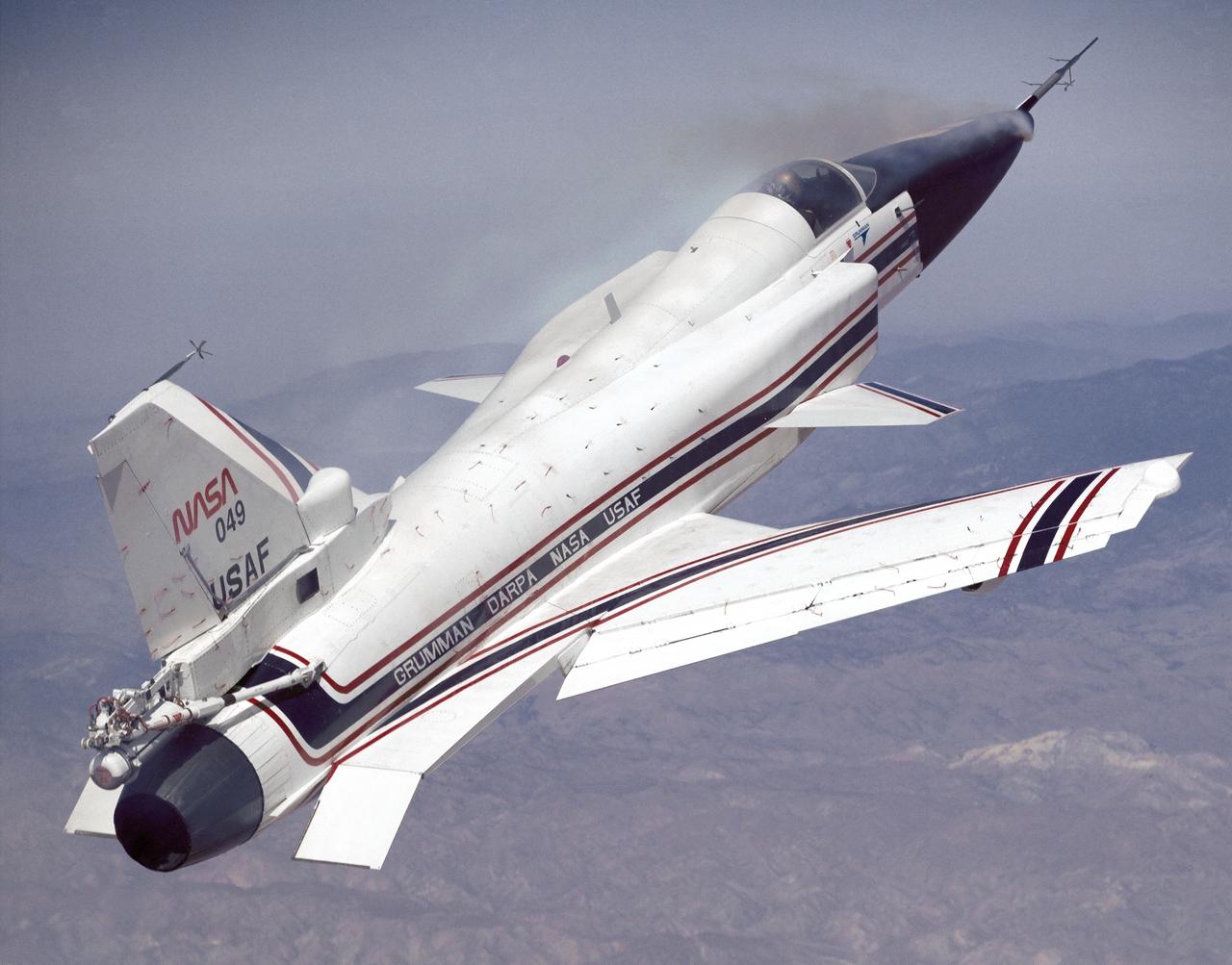
This photo shows the X-29 during a 1991 research flight. Smoke generators in the nose of the aircraft were used to help researchers see the behavior of the air flowing over the aircraft. The smoke here is demonstrating forebody vortex flow. This mission was flown September 10, 1991, by NASA research pilot Rogers Smith.
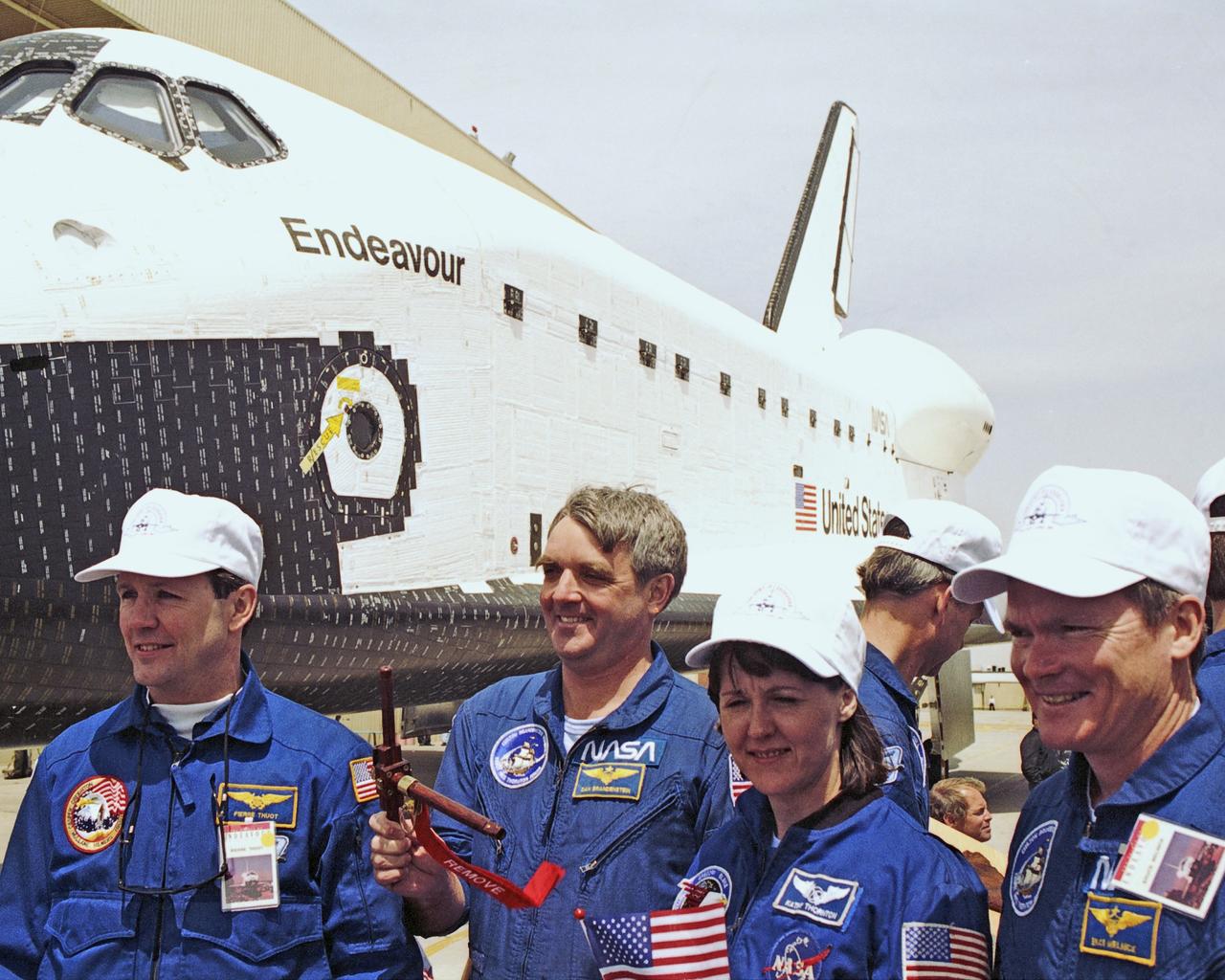
Chief astronaut Daniel Brandenstein second from left, and astronauts Pierre Thuot left, Kathryn Thornton, and Bruce Melnick are on hand for a proud moment in the history of manned spaceflight: the debut of the newest space shuttle orbiter, Endeavour, at Palmdale, Calif. Photo credit: NASA
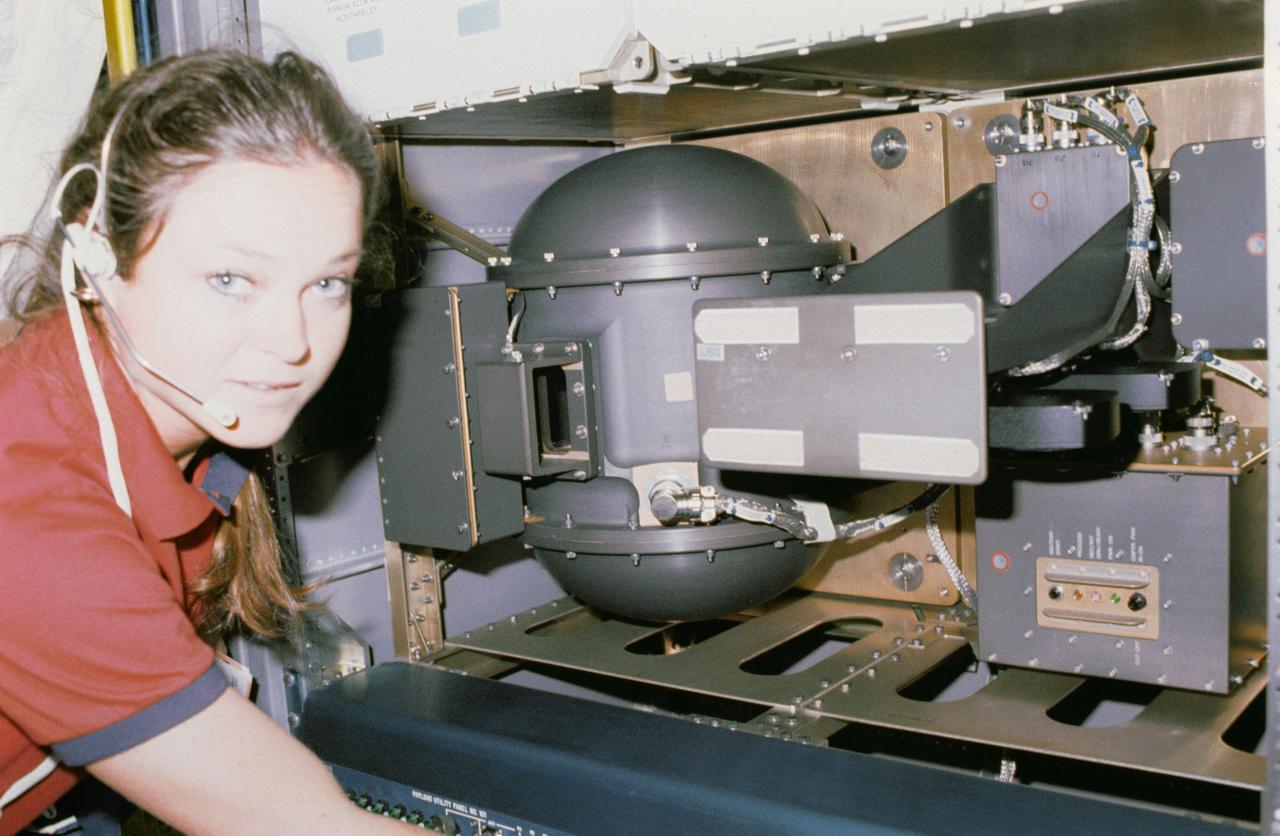
STS040-204-010 (5-14 June 1991) --- Astronaut Tamara E. Jernigan, STS 40 mission specialist, is pictured at the Solid Surface Combustion Experiment aboard the Earth orbiting Columbia. Dr. Jernigan is one of seven crewmembers spending nine days in space.
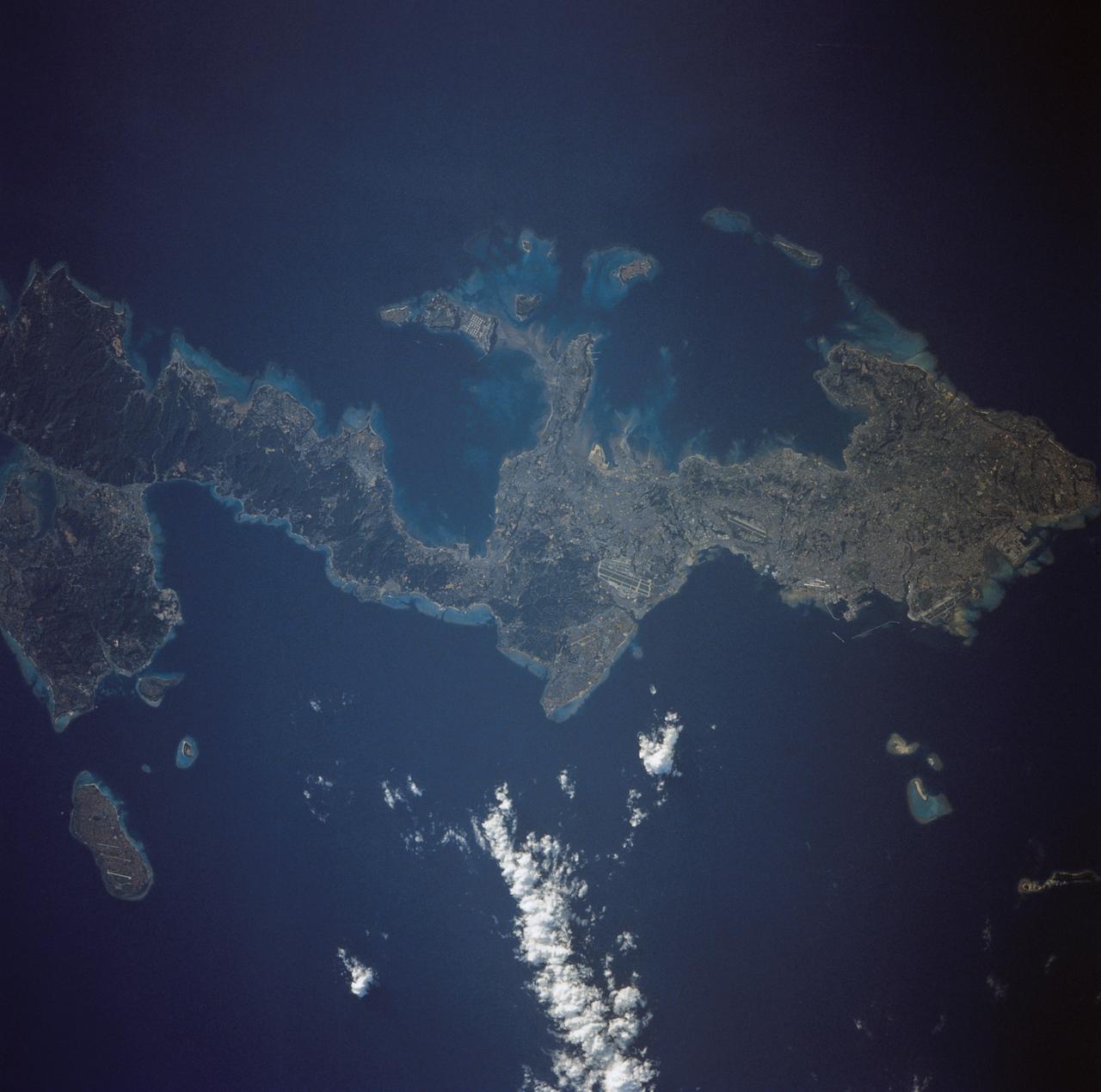
The southern half of the island of Okinawa, Japan (26.5N, 128.0E) can be seen in this nearly cloud free view. Okinawa is part of the Ryuku Islands which extend from Taiwan northeastward to Kyushu, southernmost of the Japanese Home Islands. The large military base at Kadena, with large runways, is visible near the center of the scene. Kadena is one of several emergency landing sites around the world for the space shuttle.
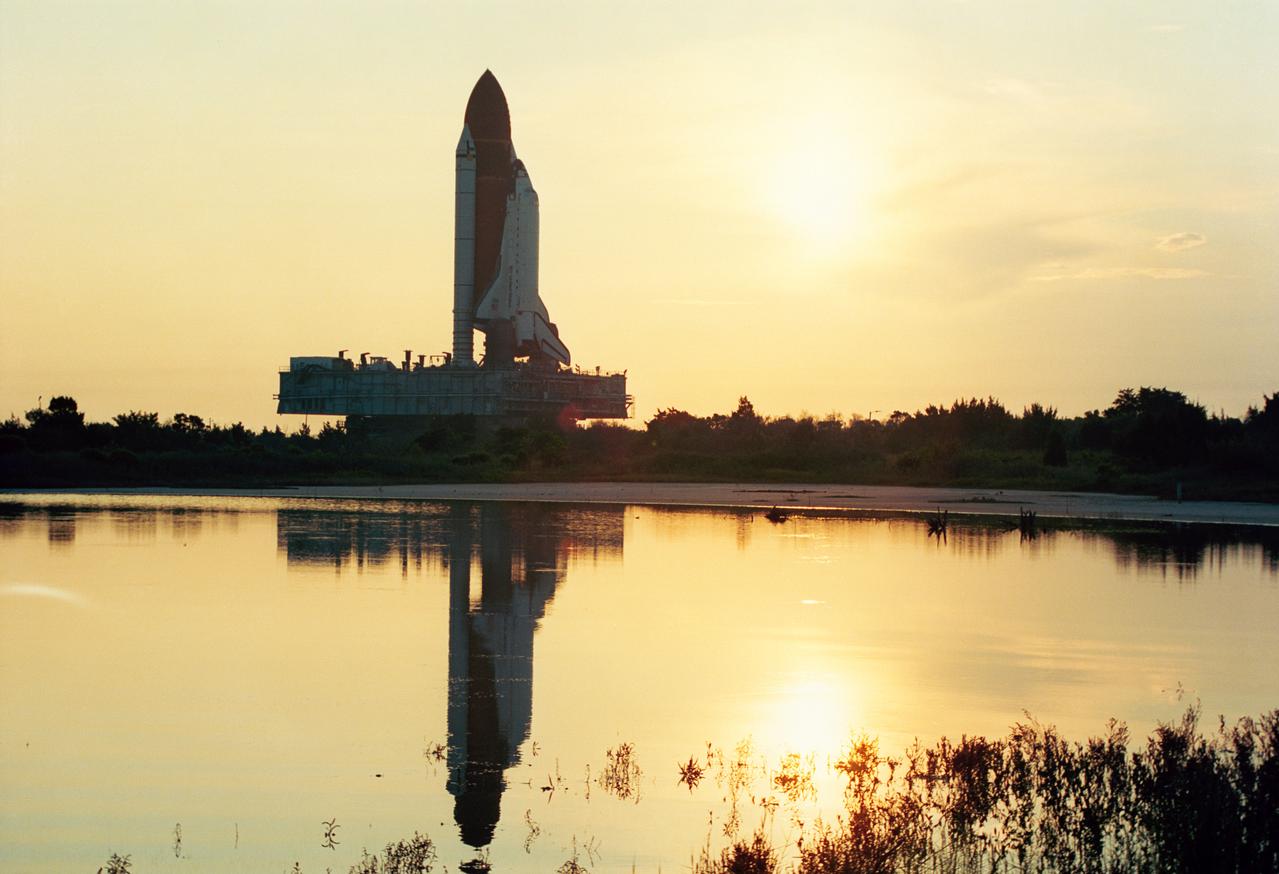
S91-44810 (12 Aug 1991) --- The Space Shuttle Discovery is rolled to launch pad 39A atop the mobile launcher platform and crawler/transporter. Already at the pad and awaiting installation in the orbiter cargo bay is the Upper Atmosphere Research Satellite (UARS), the primary payload which Discovery will carry into space on NASA?s STS-48 mission. A crew of five astronauts will be on board when Discovery lifts off in September. (KSC photo id: KSC-91PC-1474)
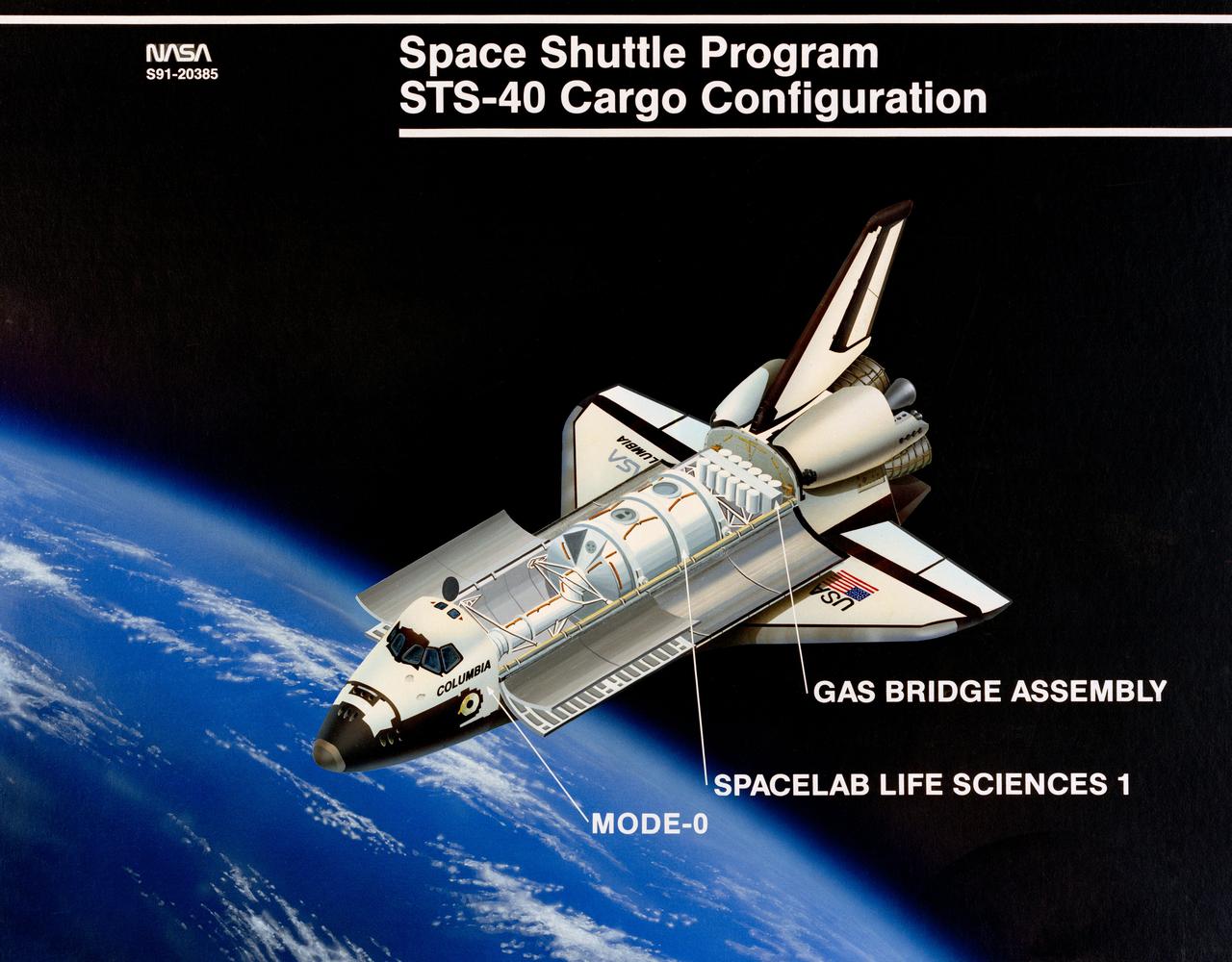
S91-20385 (Feb 1991) --- The Space Shuttle Columbia orbits Earth in this STS-40 art concept depicting the cargo bay arrangement for the Spacelab Life Sciences (SLS-1) mission. In the spring, three mission specialists and two payload specialists will join the commander and pilot for a scheduled nine-day mission, devoted to life sciences research, aboard Columbia.
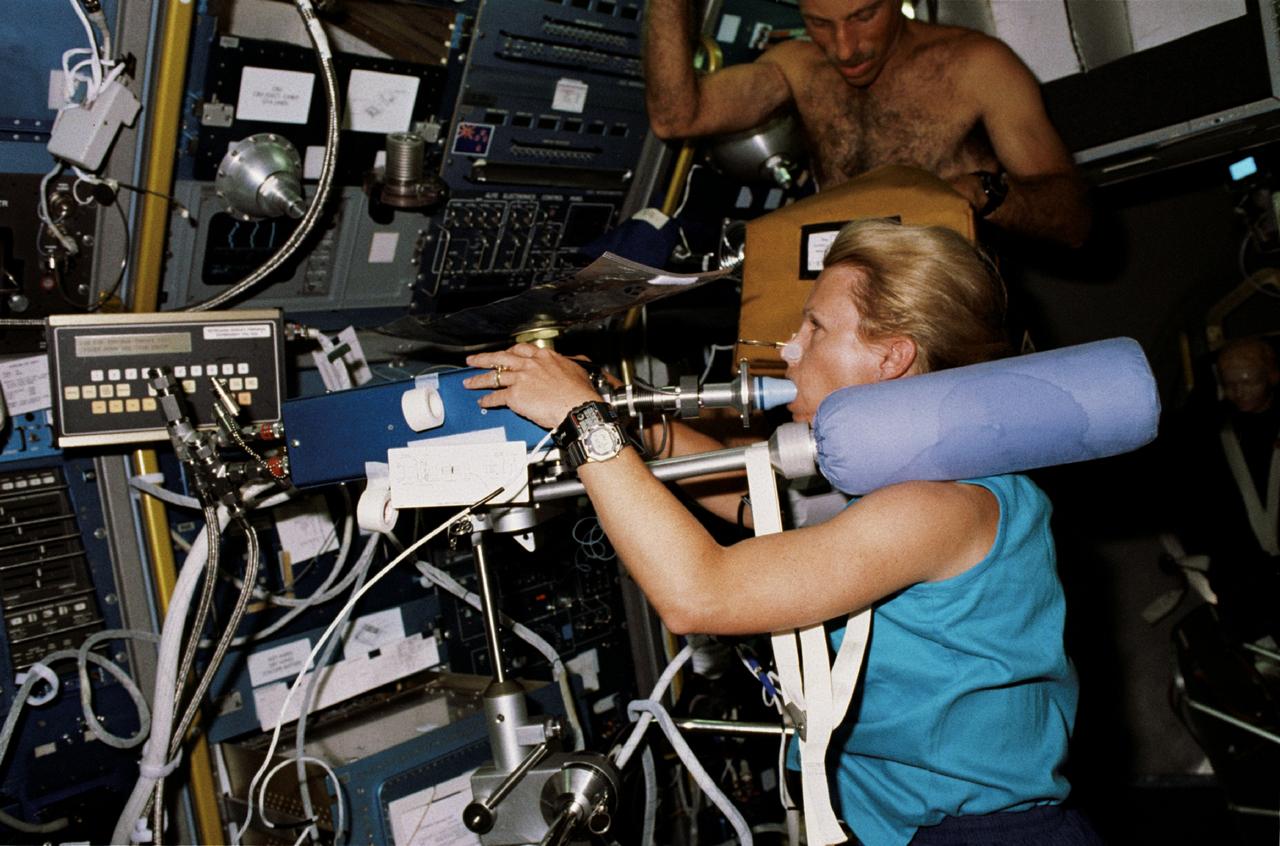
STS040-211-019 (5-14 June 1991) --- Astride the bicycle ergometer, astronaut Rhea Seddon, mission specialist, breathes into the cardiovascular re-breathing unit during the exercise phase of an experiment. The investigation, In-flight Study of Cardiovascular Deconditioning (Experiment 066), was developed by Dr. Leon E. Farhi of the State University of New York in Buffalo. It focuses on the deconditioning of the heart and lungs and changes in cardiopulmonary function that occur upon return to Earth. By using non-invasive techniques of prolonged expiration and re-breathing, investigators can determine the amount of blood pumped out of the heart (cardiac output), the ease with which blood flows through all the vessels (total peripheral resistance), oxygen used and carbon dioxide released by the body, and lung function and volume changes. Measurements are made both while crew members are resting and while they pedal the exercise bicycle, as Dr. Seddon is doing here. This scene was photographed with a 35mm camera.
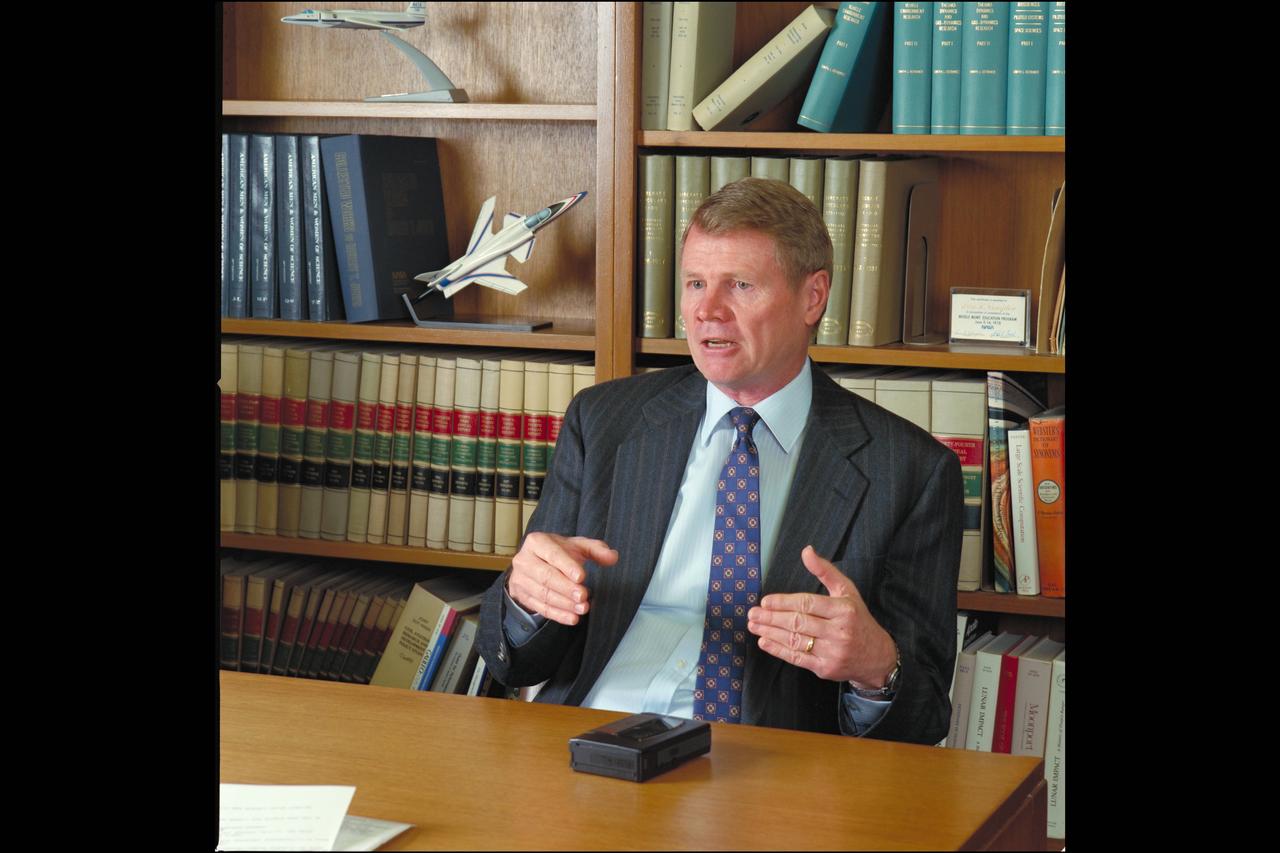
Ames Director (1989-1994) Dr Dale Compton during Space news interview in his office.
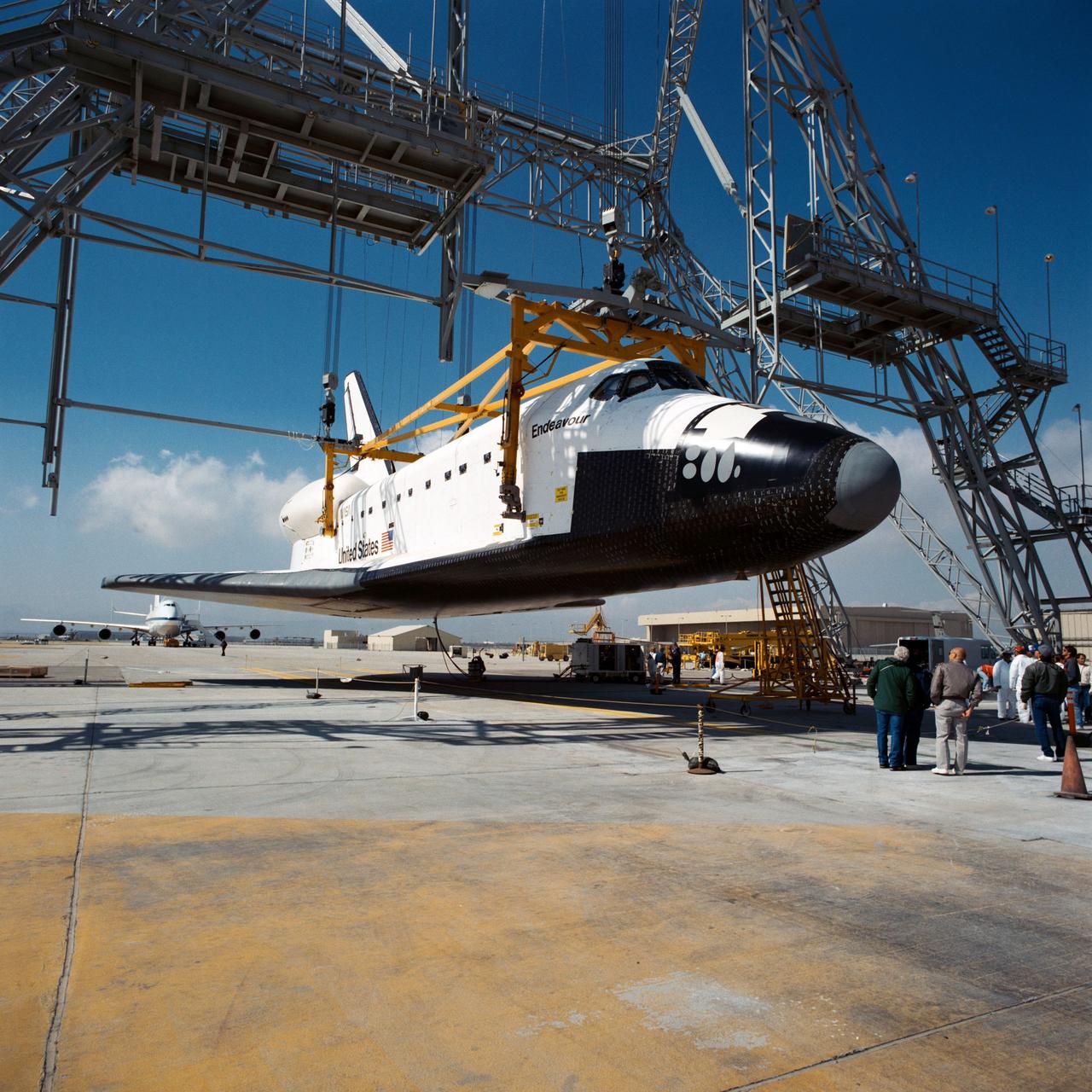
PALMDALE, Calif. -- S91-39487 -- A Rockwell worker at the space shuttle's Palmdale Final Assembly Facility in Palmdale, Calif., takes a technical documentation image of space shuttle Endeavour as it is prepared for its first ferry flight to NASA's Kennedy Space Center in Florida aboard the agency's Shuttle Carrier Aircraft, or SCA, designated NASA 911. Endeavour is scheduled to return to California in 2012, where it will be on public display at the California Science Center in Los Angeles. Its ferry flight across America is targeted for mid-September. Endeavour was the last space shuttle added to NASA’s orbiter fleet. During the course of its 19-year career, Endeavour spent 299 days in space during 25 missions. For more information on shuttle transition and retirement work, visit http://www.nasa.gov/transition. Photo credit: NASA/ Rockwell International Space Systems Division
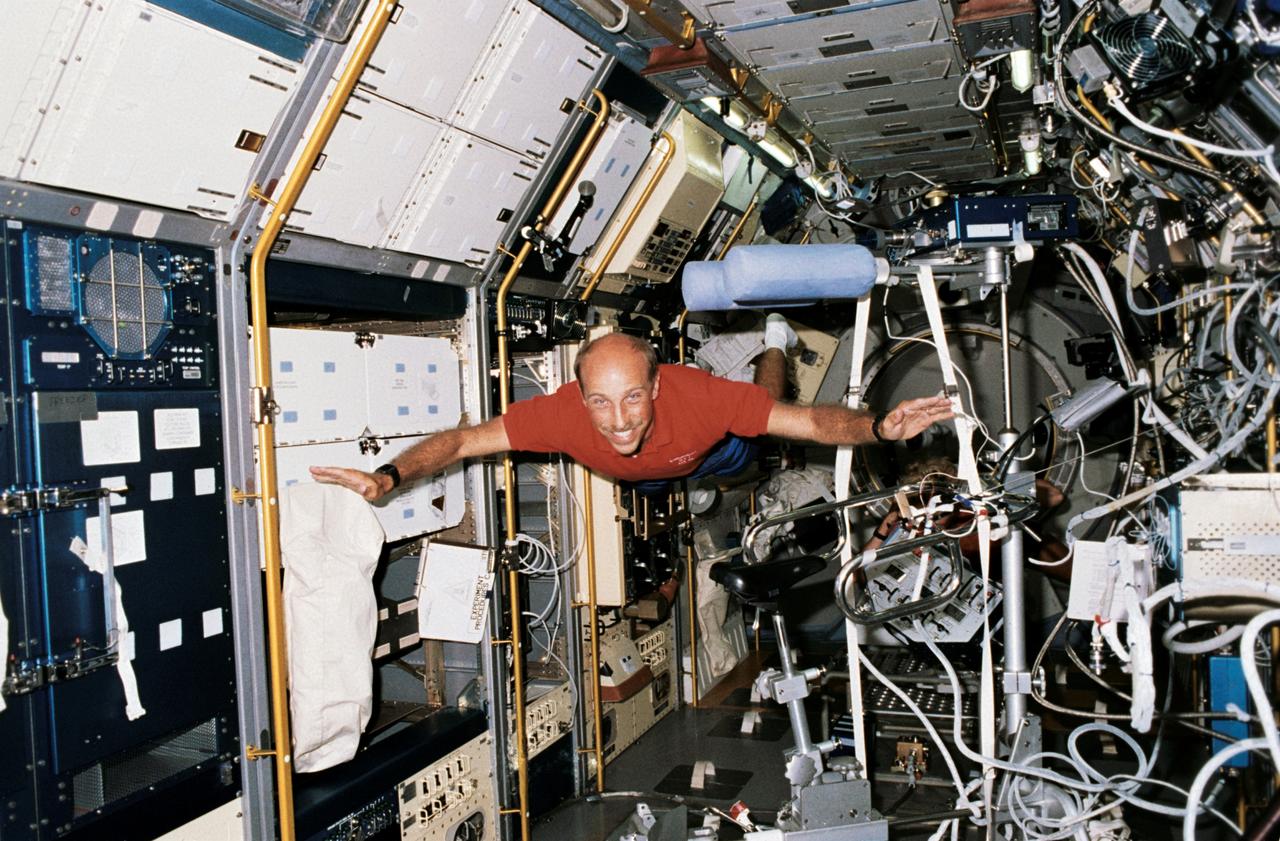
STS040-212-004 (5-14 June 1991) --- Astronaut James P. Bagian, STS-40 mission specialist, floats through the Spacelab Life Sciences (SLS-1) module aboard the Earth-orbiting Space Shuttle Columbia. Bagian and six other crew members spent over nine-days in space conducting life sciences research.
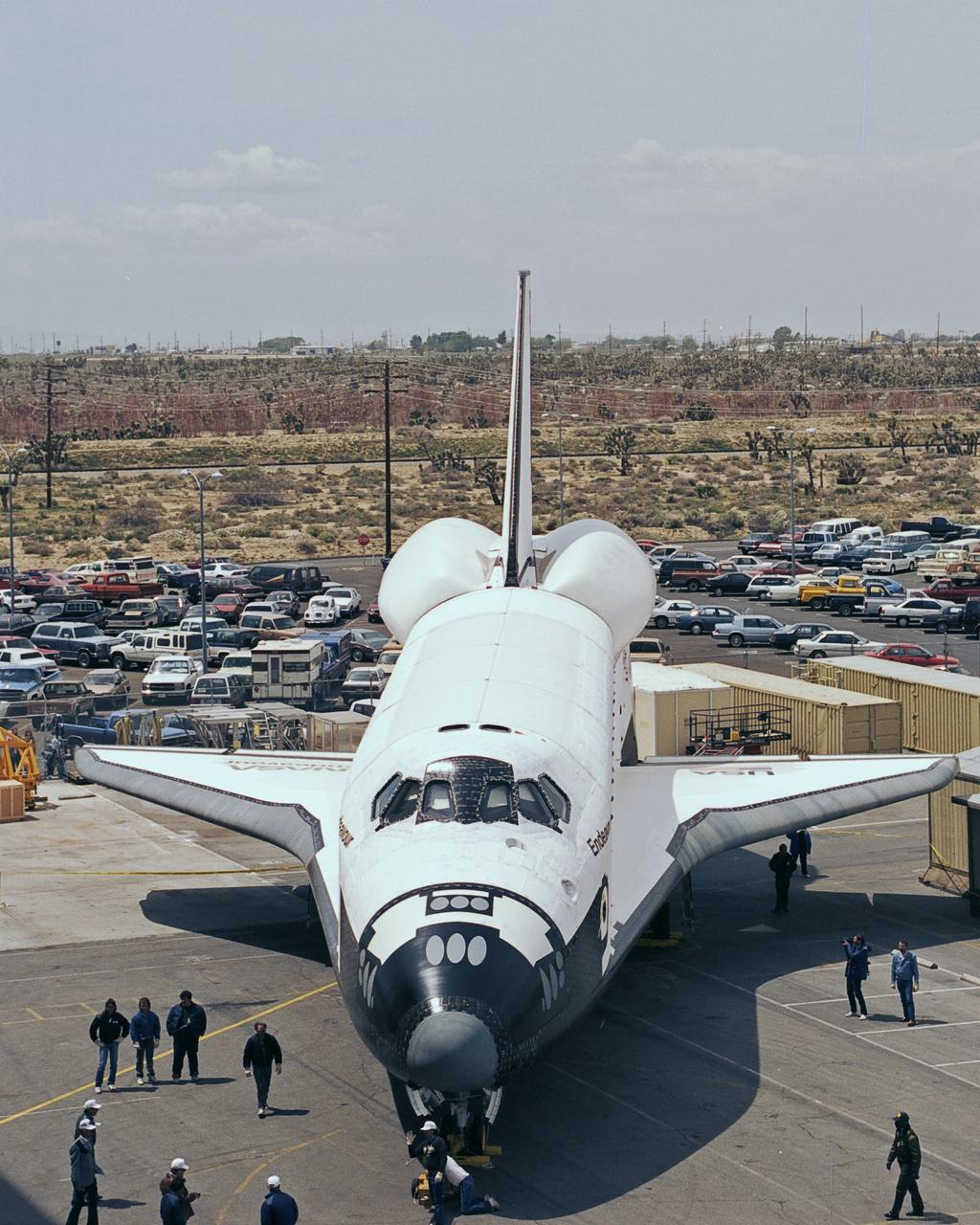
The newest space shuttle orbiter, Endeavour is ready to roll out of the hangar at Palmdale, Calif. OV-105 features many design enhancements, including drag chute for safer landings and equipment to allow the orbiter to remain in space for up to 28 days. Photo credit: NASA
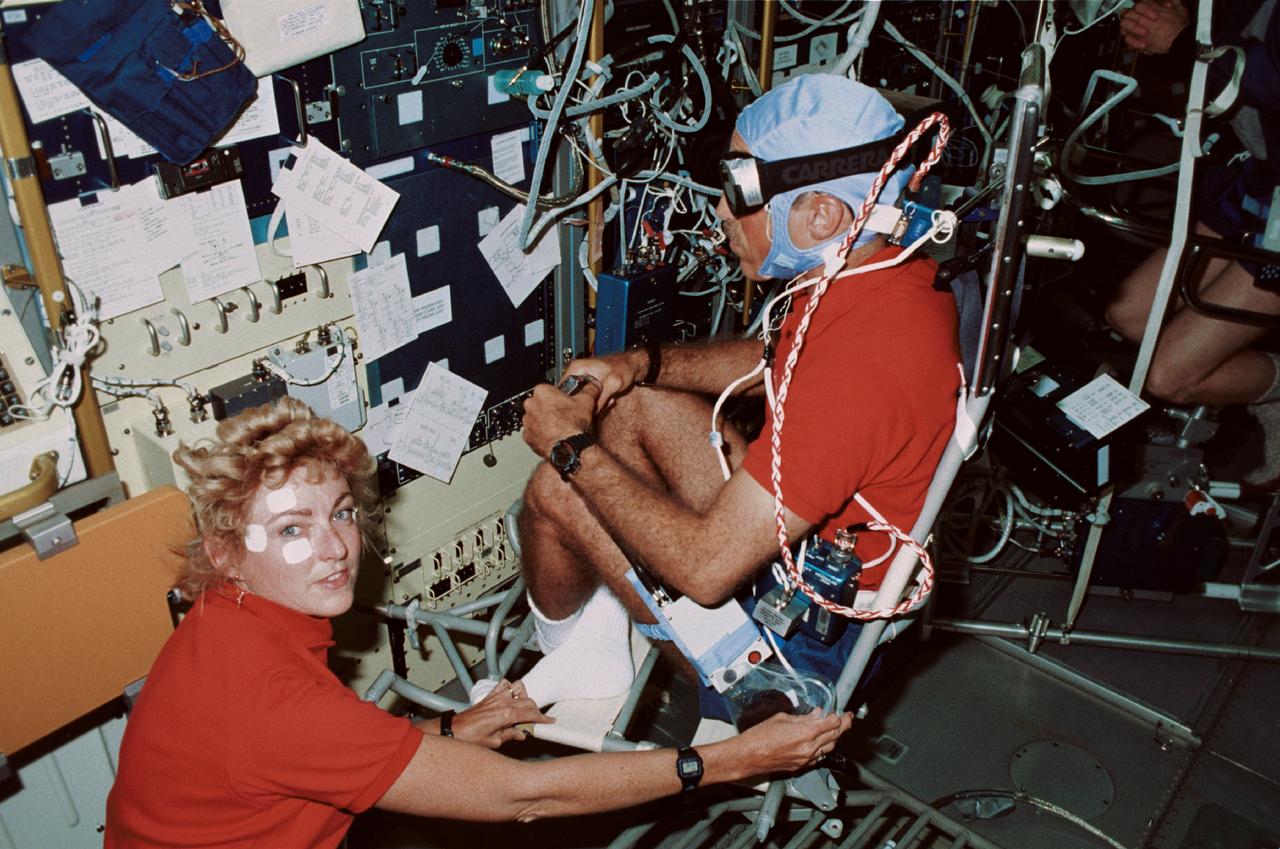
STS040-211-020 (5-14 June 1991) --- Vestibular experiment activities were captured onboard Columbia's Spacelab Life Sciences (SLS-1) module in this 35mm scene. Astronaut James P. Bagian, STS-40 mission specialist, is in a rotating chair while wearing an accelometer and electrodes to record head motion and horizontal and vertical eye movements during the rotations. Payload specialist Millie Hughes-Fulford, lower left, assists with the test.
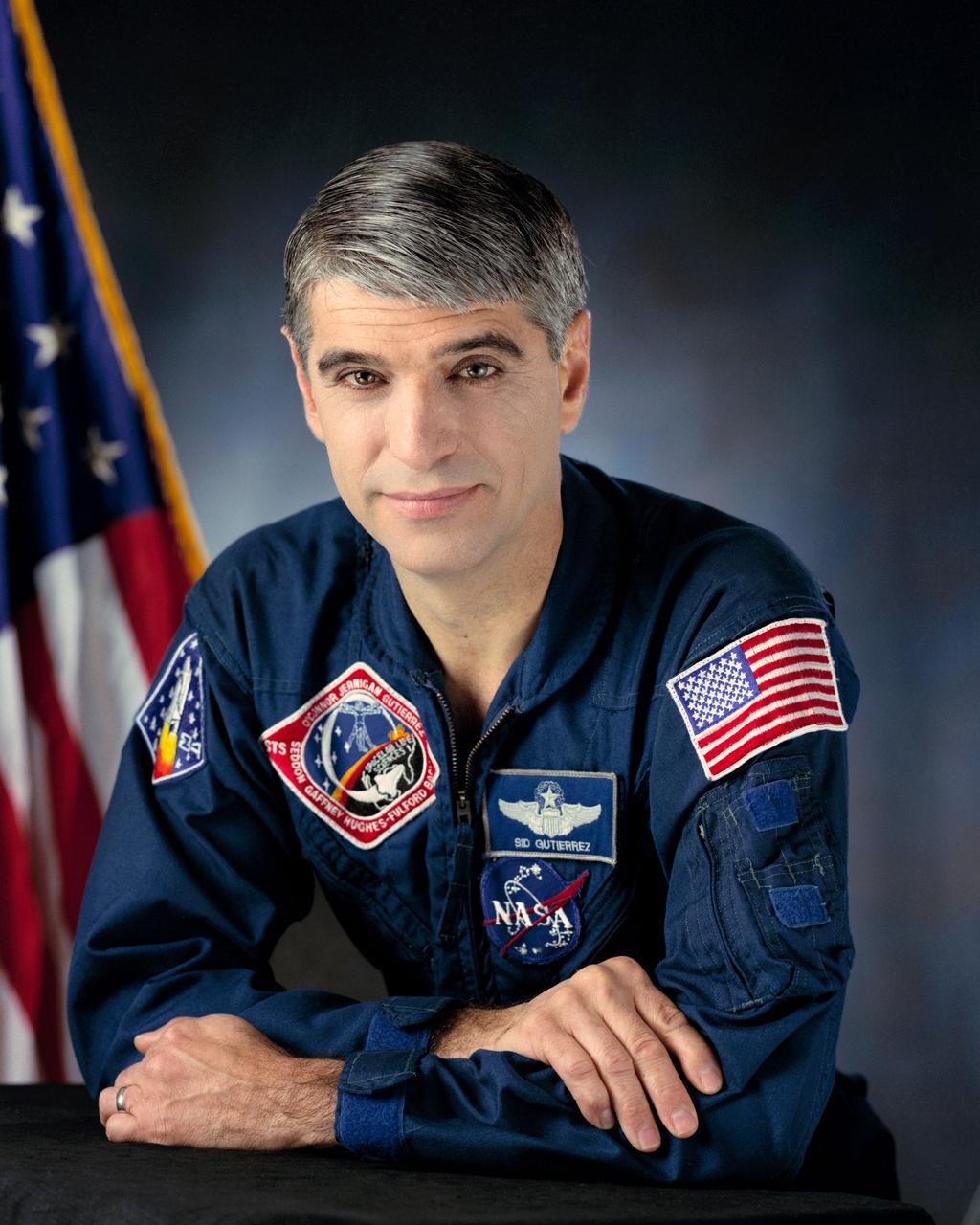
S91-35916 (1 May 1991) --- Astronaut Sidney M. Gutierrez.
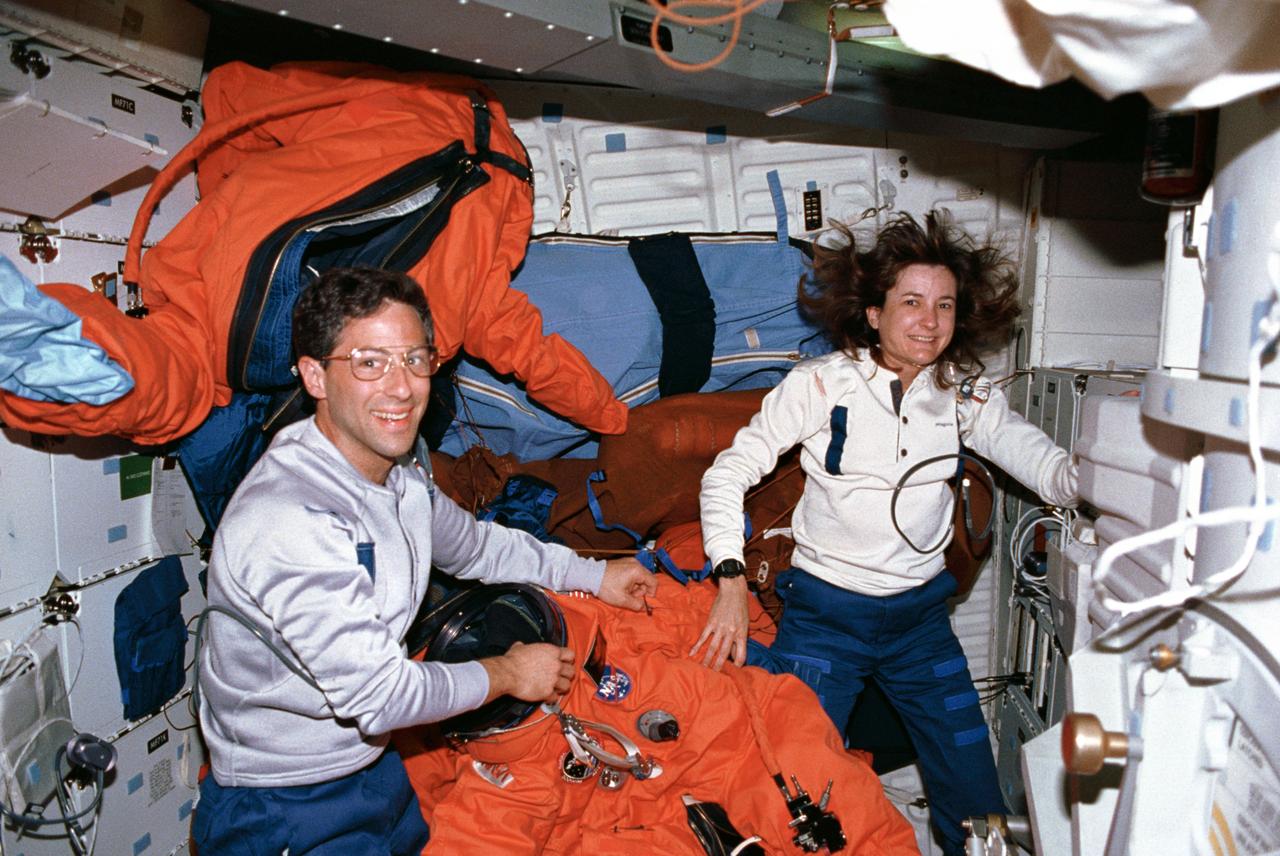
STS037-45-012 (10 April 1991) --- Astronauts Linda M. Godwin and Jerome (Jay) Apt sort out the special partial-pressure garments for landing (and ascent) as the end of their mission in space approaches. The suits are stored on the Space Shuttle Atlantis' mid-deck. The scene was photographed with a 35mm camera. This was one of the visuals used by the crew members during their April 19 Post Flight Press Conference (PFPC) at the Johnson Space Center (JSC).
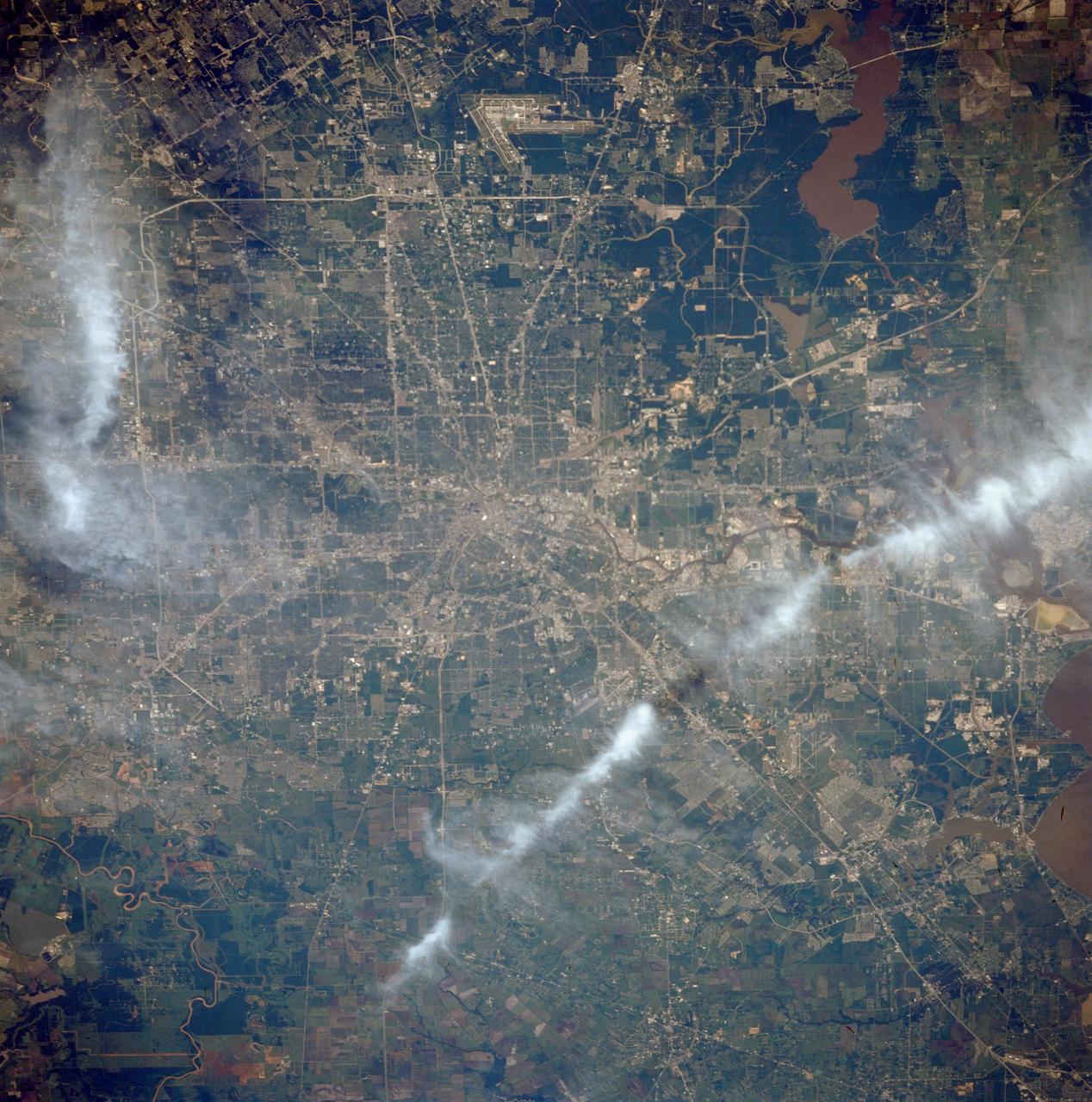
STS039-85-036 (28 April-6 May 1991) --- An orbital pass took the Space Shuttle Discovery over the Houston area, allowing this nearly vertical 70mm photograph to be taken. The north - south bounds extend from a line just north of the Intercontinental Airport at the top of the photo. (Some printings have index numbers near south in the frame). The east - west coverage extends from a line several miles outside the Sam Houston belt system left and right. Parts of the belt system, especially in the south, are still under construction. The Harris County Domed Stadium can be delineated just left of center, and the central business district of Houston is just above center. The work and living areas of the seven astronaut crew members are in the lower right quadrant, including Clear Lake, Taylor Lake, the NASA complex and parts of upper Galveston Bay. Many passes over the Houston area do not exist with the minimal cloud cover seen here.
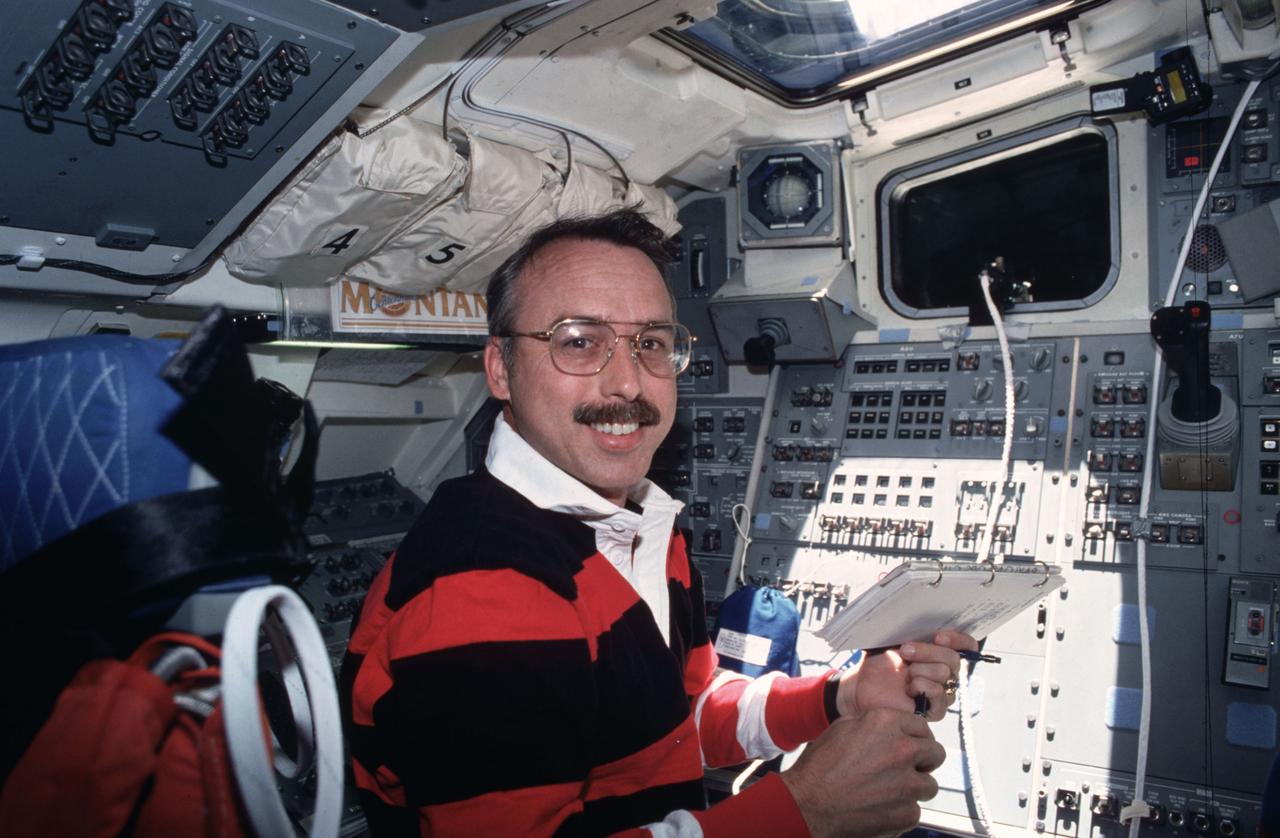
STS043-04-038 (2-11 Aug 1991) --- Astronaut James C. Adamson, STS-43 mission specialist, checks on an experiment on Atlantis? flight deck. Part of the experiment, Optical Communications Through the Shuttle Window (OCTW), can be seen mounted in upper right. The OCTW system consists of two modules, one inside the orbiter crew cabin (as pictured here) and one in the payload bay. The crew compartment version houses an optoelectronic transmitter/receiver pair for video and digital subsystems, test circuitry and interface circuitry. The payload bay module serves as a repeater station. During operation a signal is transmitted through the shuttle window to a bundle of optical fiber cables mounted in the payload bay near an aft window. The cables carry optical signals from the crew compartment equipment to the OCTW payload bay module. The signals are returned via optical fiber cable to the aft flight deck window, retransmitted through the window, and received by the crew compartment equipment.
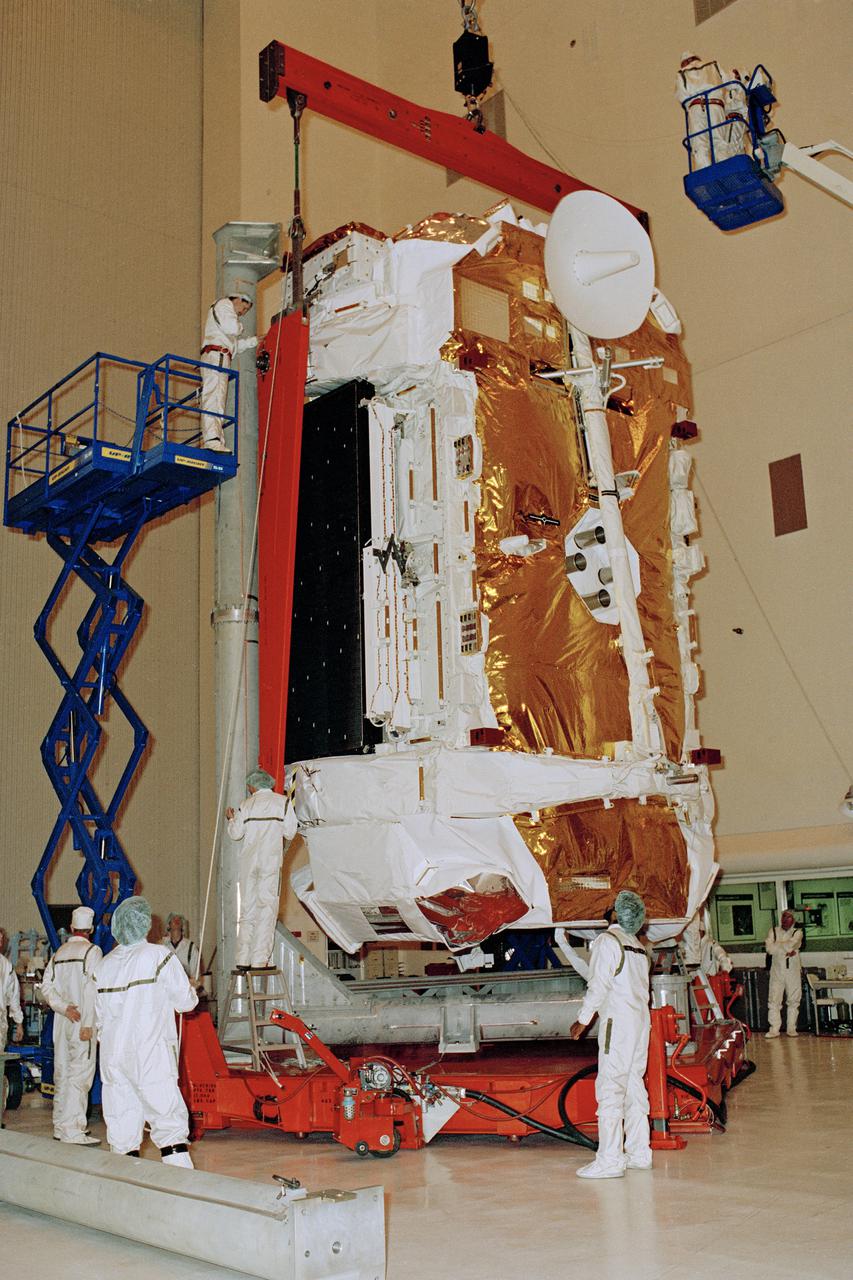
CAPE CANAVERAL, Fla. -- In the Payload Hazardous Servicing Facility at the Kennedy Space Center in Florida, technicians tilt the massive Gamma ray Observatory GRO upright for installation onto the transporter which will carry it to the Vertical Processing Facility. The spacecraft is scheduled to fly aboard the space shuttle Atlantis on STS-37. As the second of four great observatories planned by NASA, GRO will study the celestial gamma rays believed to be a record of cosmic change and evolution. Photo Credit: NASA
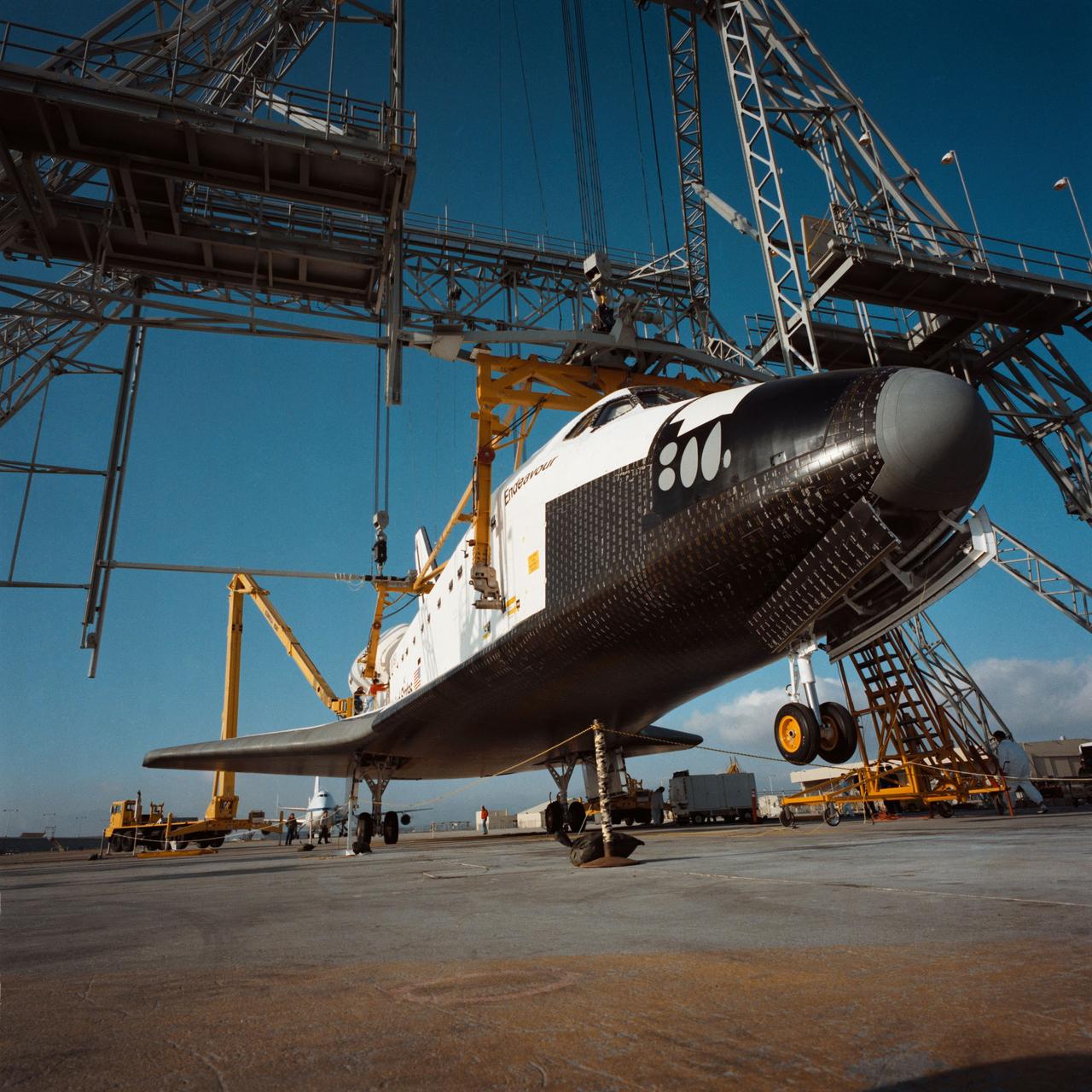
PALMDALE, Calif. -- S91-39486 -- A Rockwell worker at the space shuttle's Palmdale Final Assembly Facility in Palmdale, Calif., takes a technical documentation image of space shuttle Endeavour as it is prepared for its first ferry flight to NASA's Kennedy Space Center in Florida aboard the agency's Shuttle Carrier Aircraft, or SCA, designated NASA 911. Endeavour is scheduled to return to California in 2012, where it will be on public display at the California Science Center in Los Angeles. Its ferry flight across America is targeted for mid-September. Endeavour was the last space shuttle added to NASA’s orbiter fleet. During the course of its 19-year career, Endeavour spent 299 days in space during 25 missions. For more information on shuttle transition and retirement work, visit http://www.nasa.gov/transition. Photo credit: NASA/ Rockwell International Space Systems Division
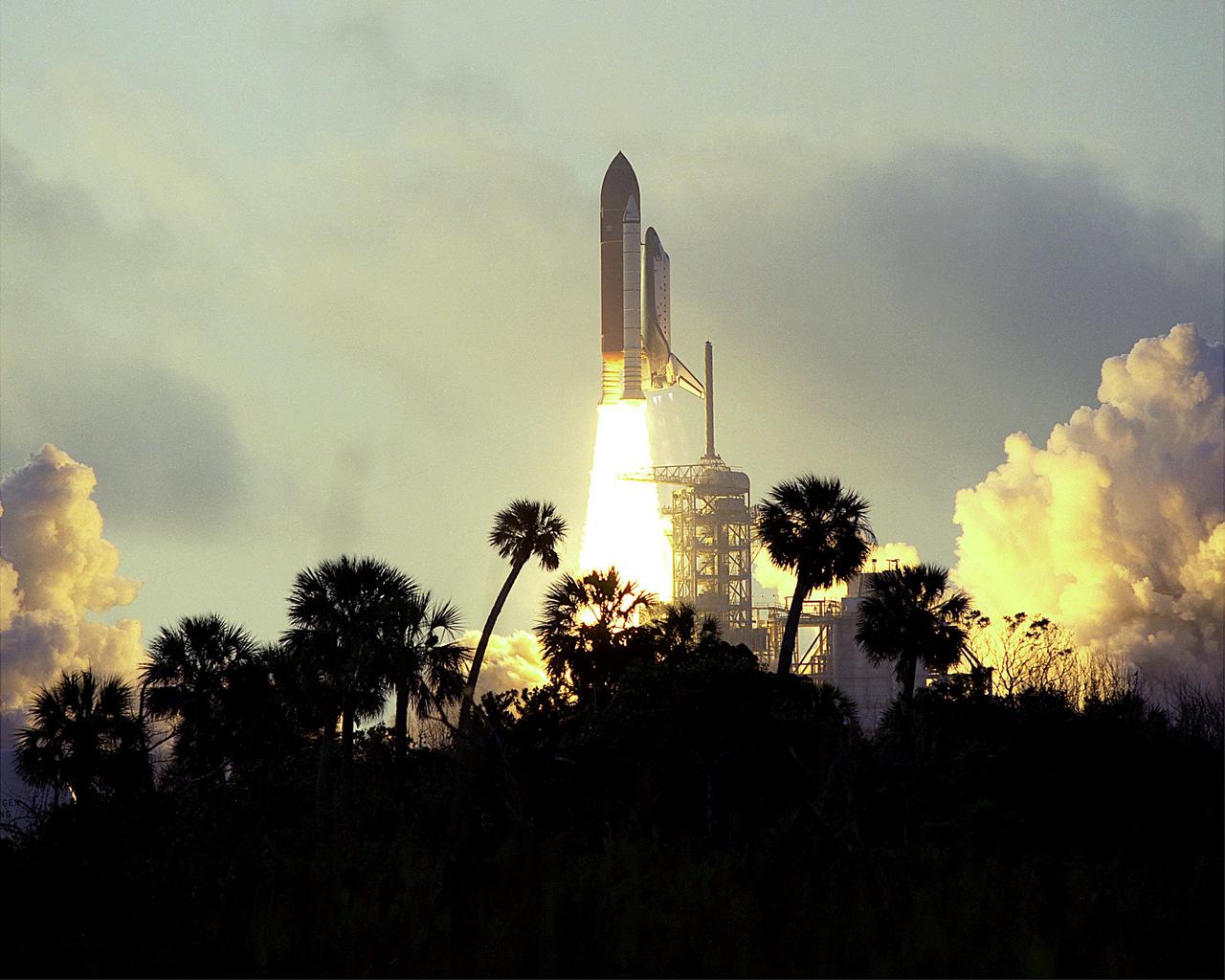
KENNEDY SPACE CENTER, FLA. -- STS-39: Discovery

DC-8 NASA 717 in flight over San Francisco, Ca
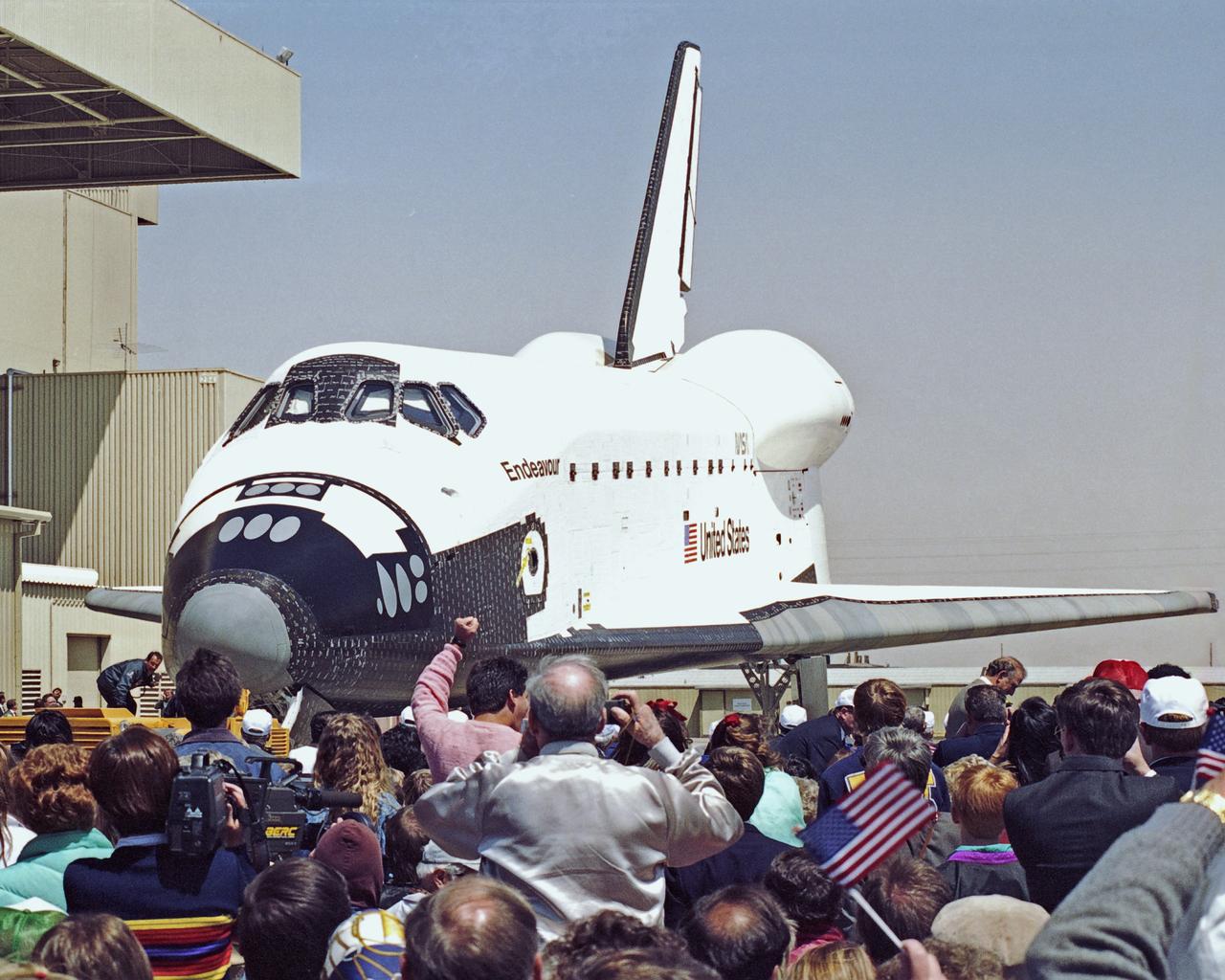
The newest space shuttle orbiter, Endeavour is ready to roll out of the hangar at Palmdale, Calif. OV-105 features many design enhancements, including a drag chute for safer landings and equipment to allow the orbiter to remain in space for up to 28 days. Photo credit: NASA
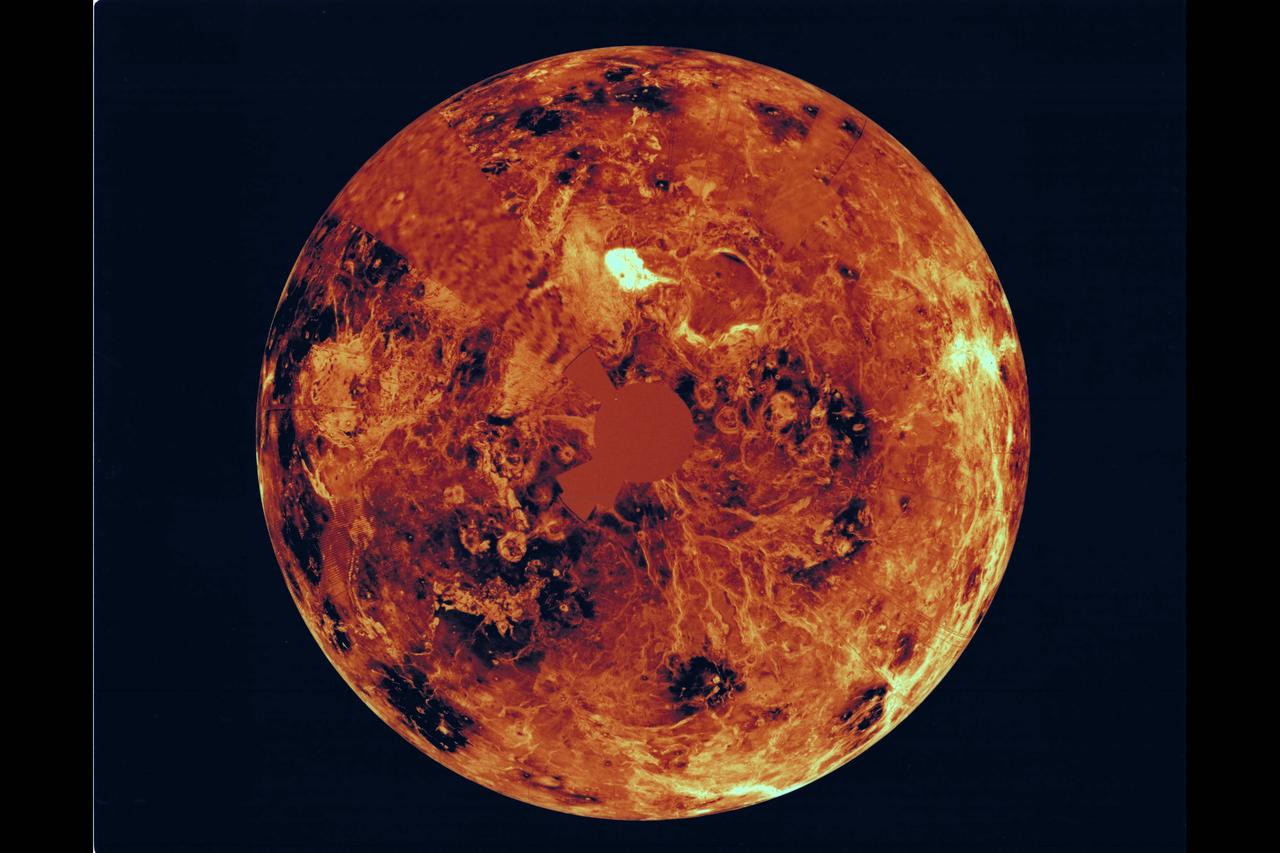
The northern hemisphere is displayed in this global view of the surface of Venus. The north pole is at the center of the image; with 0 degrees, 90 degrees , 180 degrees, 270 degrees east longitudes at 6, 3, 12 and 9 0'clock positions, repectively, of an imagery clock face. Magellan synthetic aperture radar mosaics from the first cycle of Magelolan mapping are mapped onto a computer-simulated globe to create this image. Data gaps are filled with Pioneere-Venus Orbiter data, or a constant mid-range value. Simulated color is used to enhance small-scale structure. The simulated hues are based on color images recorded by the Soviet Venera 13 & 14 spacecraft.
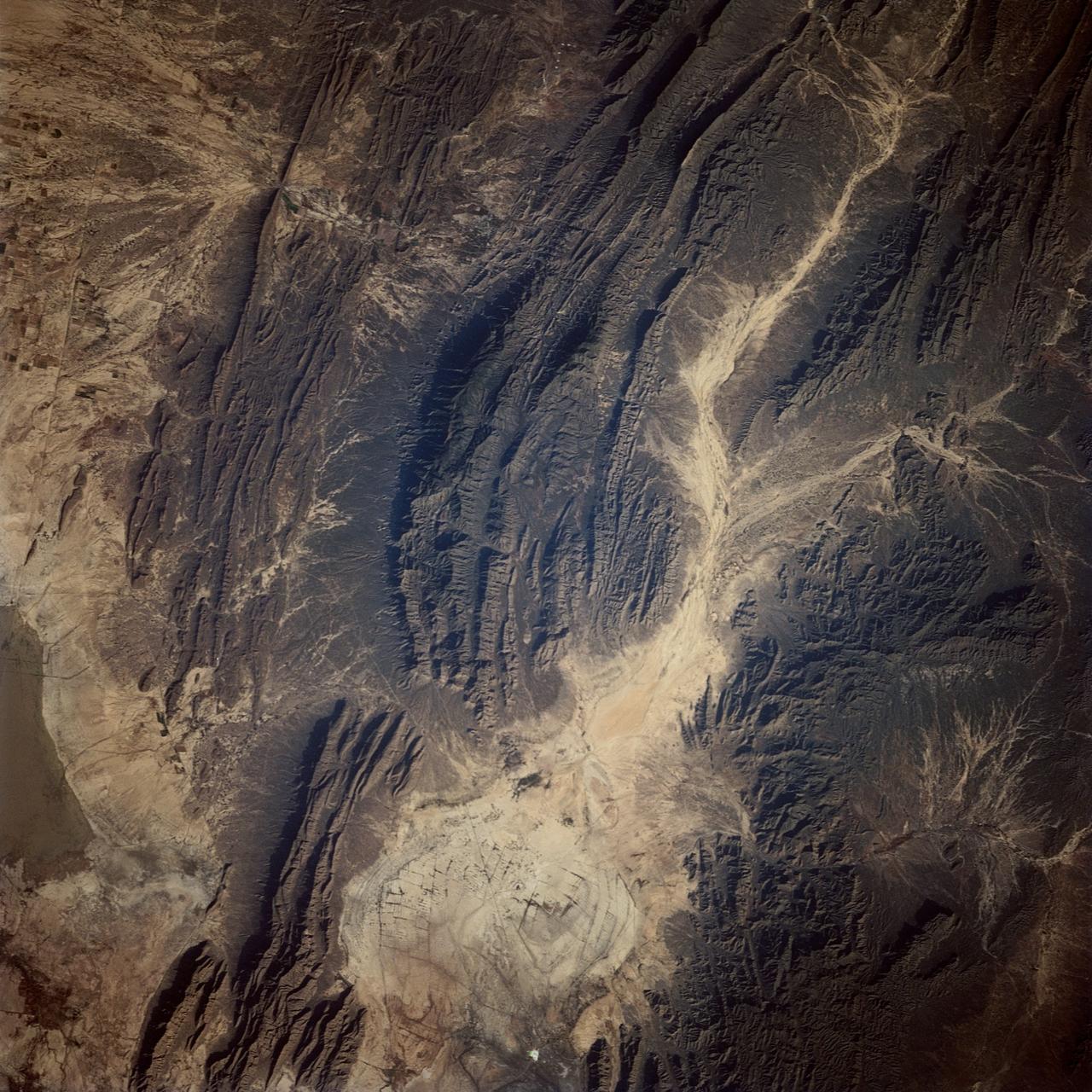
Evidence of a recent flash flood can be seen in the form of light brown sediment that flowed down gullies and mountain sides forming ponds of debris over agricultural areas in the broad valley near the town of Parras (26.5N, 102.5W). This part of Mexico has extensive vineyards, orchards and both dry land and irrigated agriculture. Based on the photo, it appears that flash flood waters damaged some 300 square miles of property in this area alone.
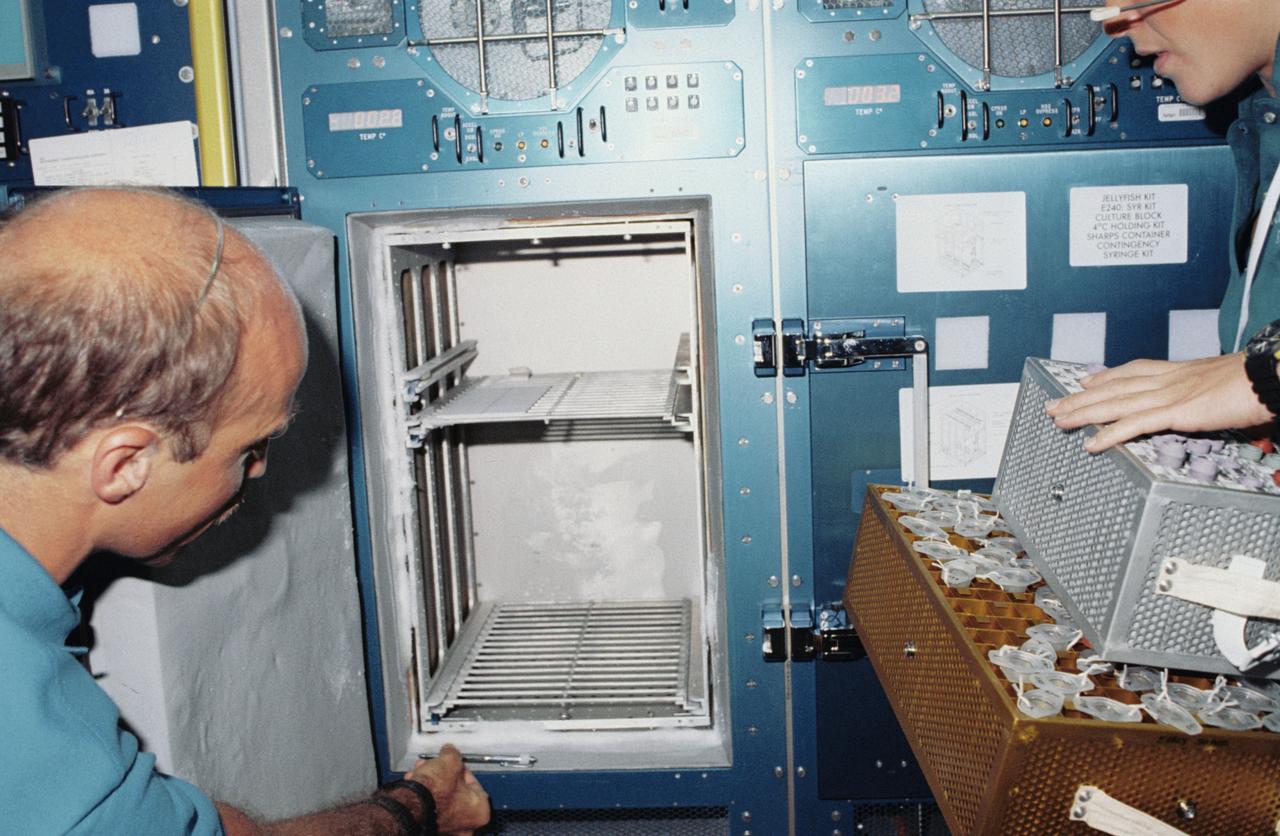
STS040-202-033 (5-14 June 1991) --- A medium closeup scene shows astronaut James P. Bagian (left) and an unidentified crewmember (partially out of frame) looking at a vacant refrigerator in the Spacelab Life Sciences (SLS-1) module aboard the Earth-orbiting Space Shuttle Columbia. Following the detection of problems with the refrigerator, its contents were temporarily removed. This scene was photographed with a 35mm camera.

Composite image of the planet Mars taken by Hubble Space Telescope (HST) Wide Field and Planetary Camera (WFPC).
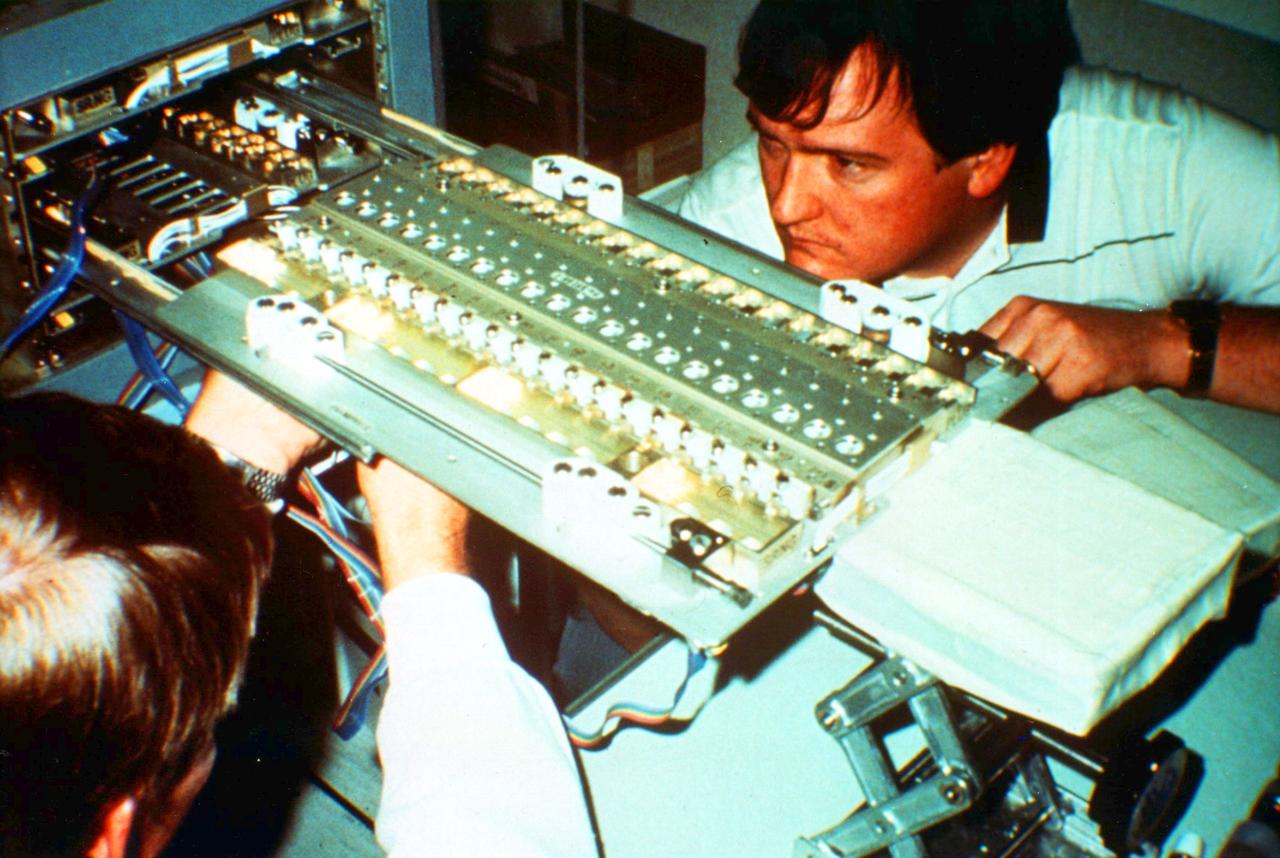
Final (VDA) Vapor Diffusion Apparatus Tray adjustments before loading into shuttle.
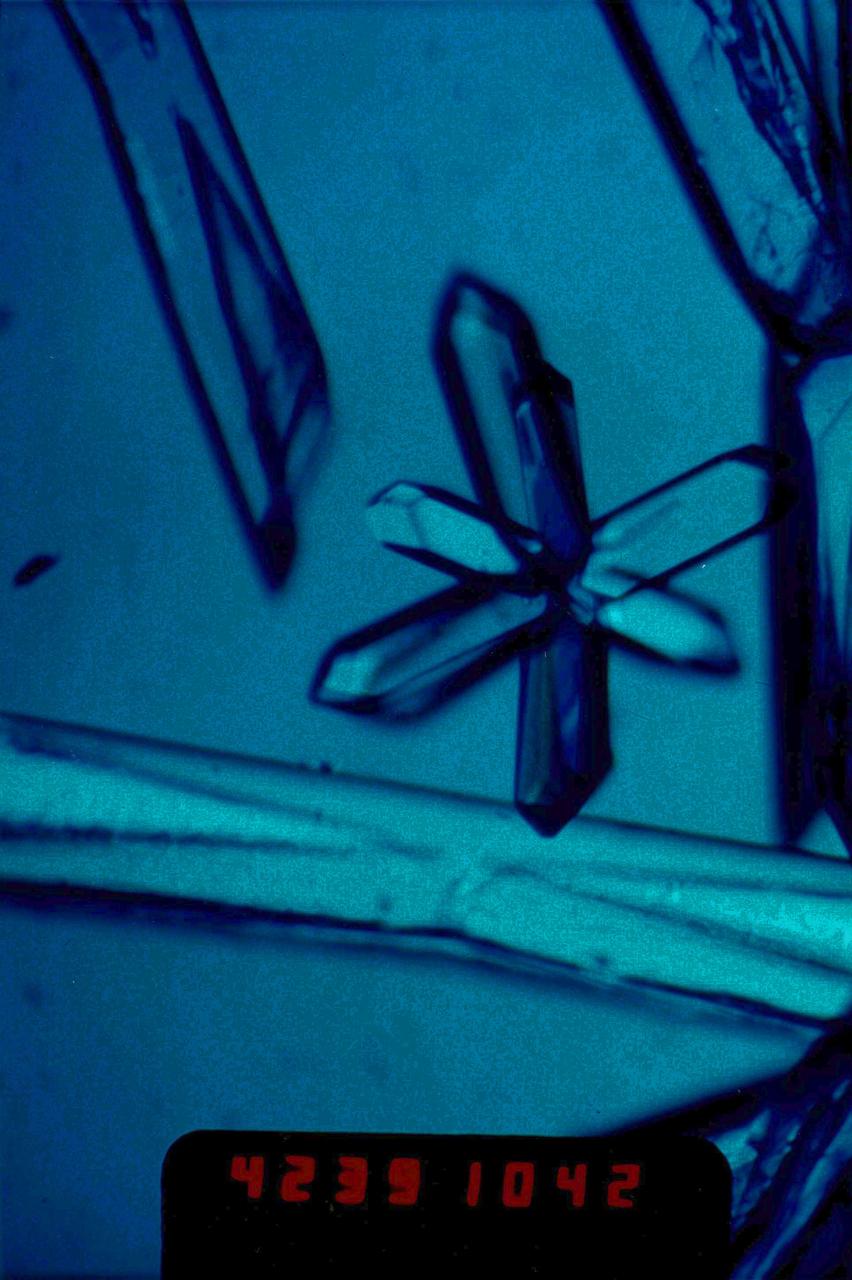
Facilitates the incorporation of glucose into cells. In diabetics, there is either a decrease in or complete lack of insulin, therby leading to several harmful complications. Principal Investigator was Charles Bugg.

This artist's concept depicts the Space Station Freedom as it would look orbiting the Earth; illustrated by Marshall Space Flight Center artist, Tom Buzbee. Scheduled to be completed in late 1999, this smaller configuration of the Space Station features a horizontal truss structure that supported U.S., European, and Japanese Laboratory Modules; the U.S. Habitation Module; and three sets of solar arrays. The Space Station Freedom was an international, permanently marned, orbiting base to be assembled in orbit by a series of Space Shuttle missions that were to begin in the mid-1990's.
Launched aboard the Space Shuttle Atlantis on August 2, 1991, the STS-43 mission’s primary payload was the Tracking and Data Relay Satellite 5 (TDRS-5) attached to an Inertial Upper Stage (IUS), which became the 4th member of an orbiting TDRS cluster. The flight crew consisted of five astronauts: John E. Blaha, commander; Michael A. Baker, pilot; Shannon W. Lucid, mission specialist 1; James C. Adamson, mission specialist 2; and G. David Low, mission specialist 3.
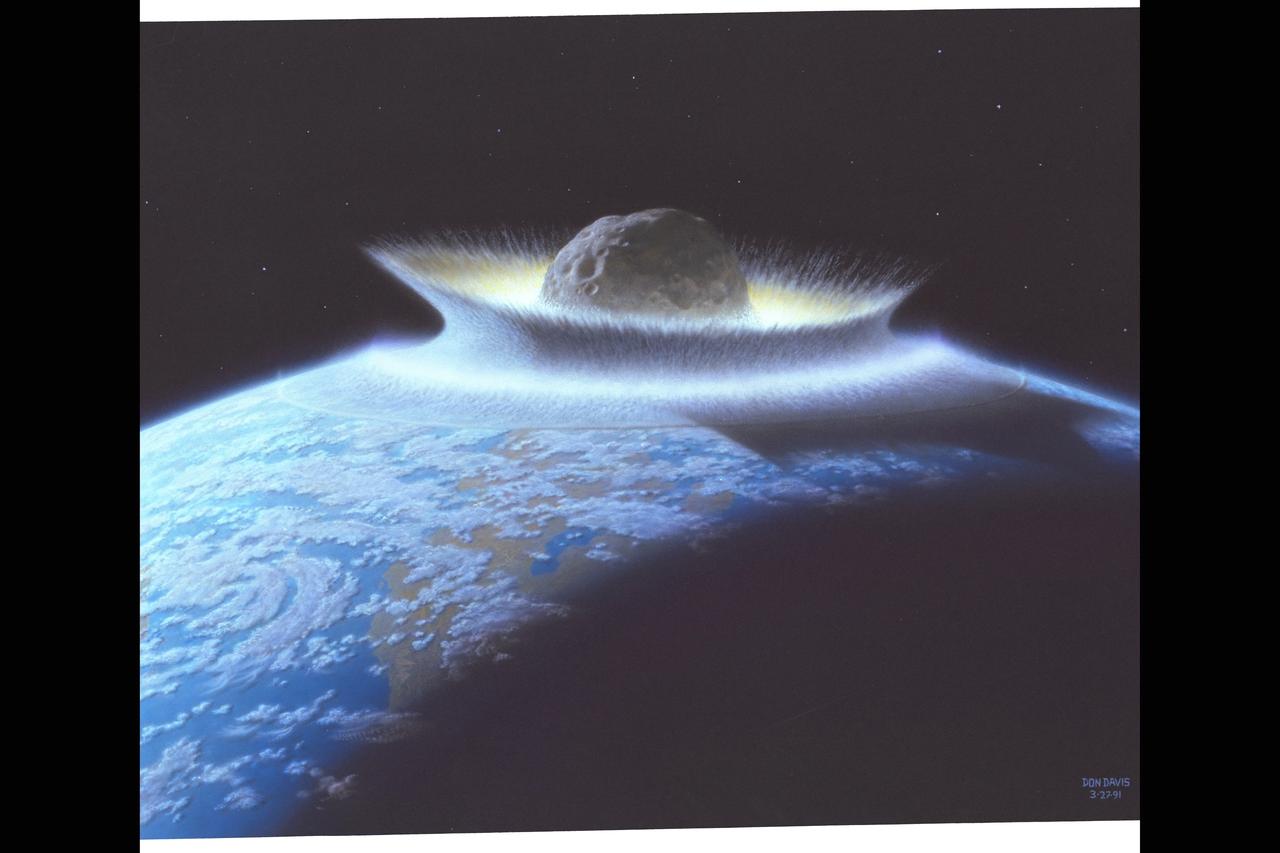
Art By: Don Davis Artist's concept of a catastrophic asteroid impact with the Earth Super-impacts (shown here) on the early Earth 3.5 billion years ago, may have wiped out life completely more than once. Medium impacts would have vaporized upper ocean layers destroying origin-of-life process. Some life may have survived at med-ocean ridges under thousands of feet of water. Revised history for the origin-of -life on Earth has been devoloped from new findings about the frequency and sizes of colossal impacts on our planet. The work was done by Bern Oberbeck and Dr. Kevin Azhnle. of NASA's Ames Research Center.

Space Shuttle Discovery STS-48 launch from Kennedy Space Center, FLA to deploy the Upper Atmosphere Research Satellite (UARS)
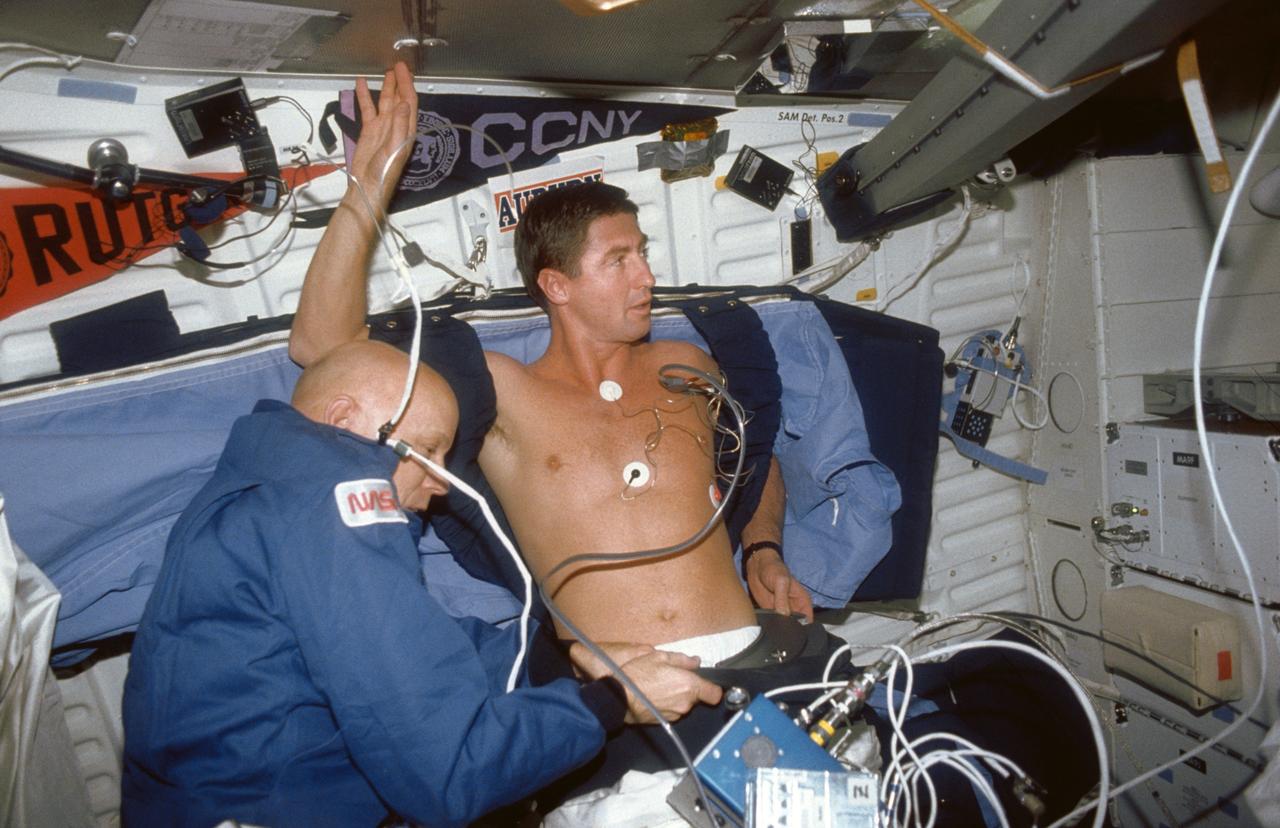
STS044-05-023 (24 Nov-1 Dec 1991) --- Astronaut F. Story Musgrave (left), Mission Specialist, assists Astronaut Terence T. (Tom) Henricks, Mission Specialist, with a Detailed Supplementary Objective (DSO) involving Lower Body Negative Pressure.
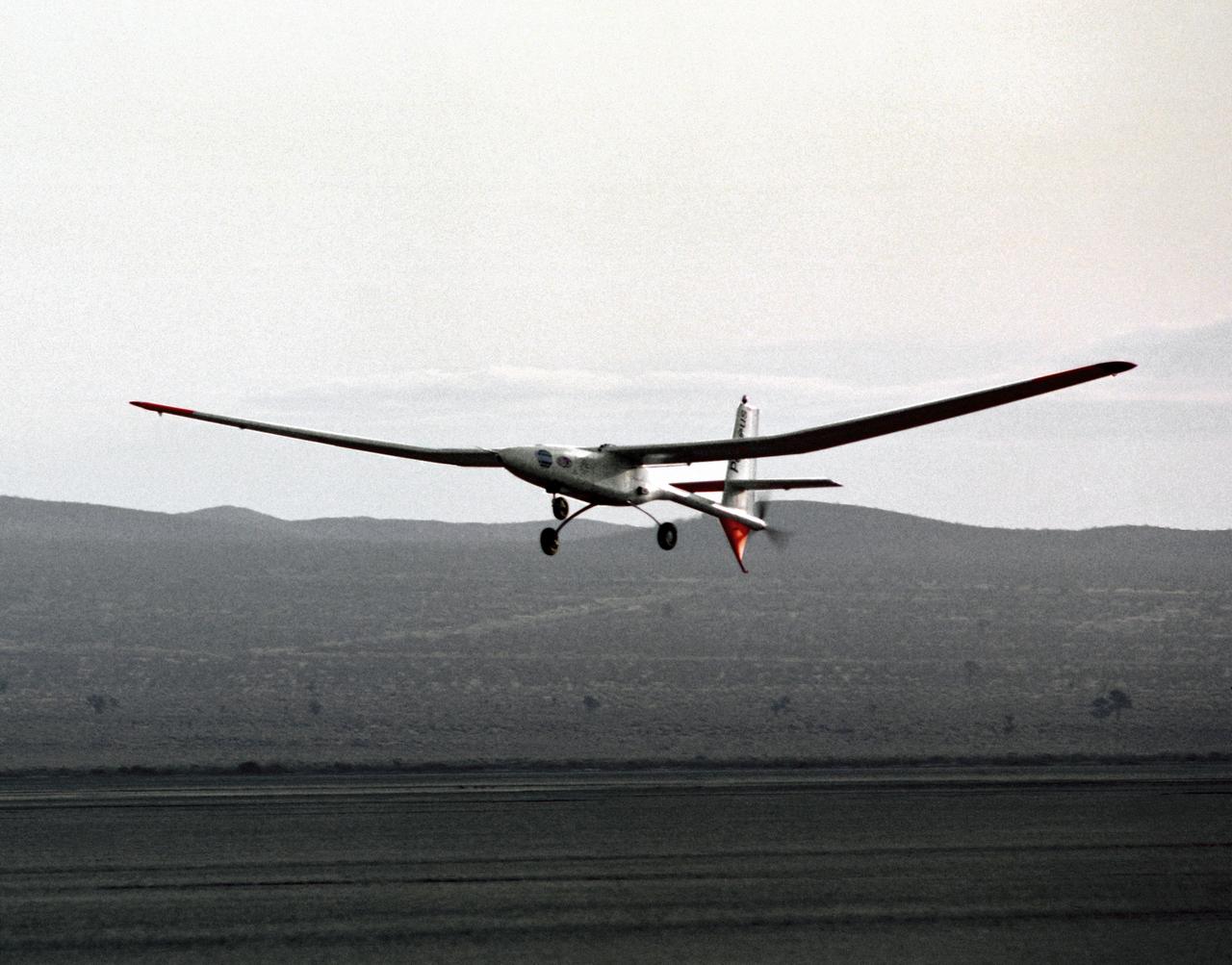
The Perseus proof-of-concept vehicle flies over Rogers Dry Lake at the Dryden Flight Research Center, Edwards, California, to test basic design concepts for the remotely-piloted, high-altitude vehicle.
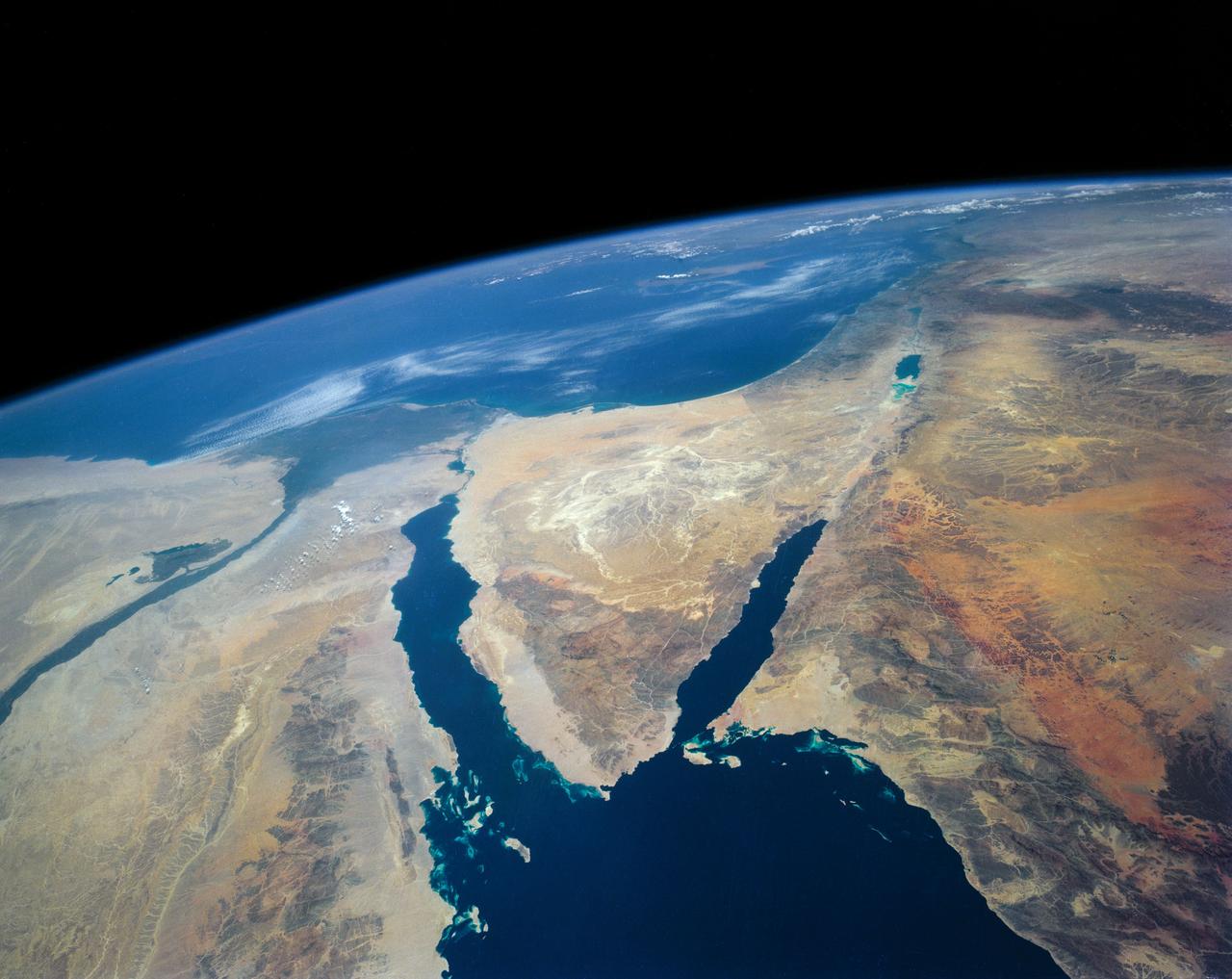
STS040-152-180 (5-24 June 1991) --- The Sinai Peninsula dominates this north-looking, oblique view. According to NASA photo experts studying the STS 40 imagery, the Red Sea in the foreground is clear of river sediment because of the prevailing dry climate of the Middle East. The great rift of the Gulf of Aqaba extends northward to Turkey (top right) through the Dead Sea. The international boundary between Israel and Egypt, reflecting different rural landscapes, stands out clearly. The Nile River runs through the frame. NASA photo experts believe the haze over the Mediterranean to be wind-borne dust. The photo was taken with an Aero-Linhof large format camera.
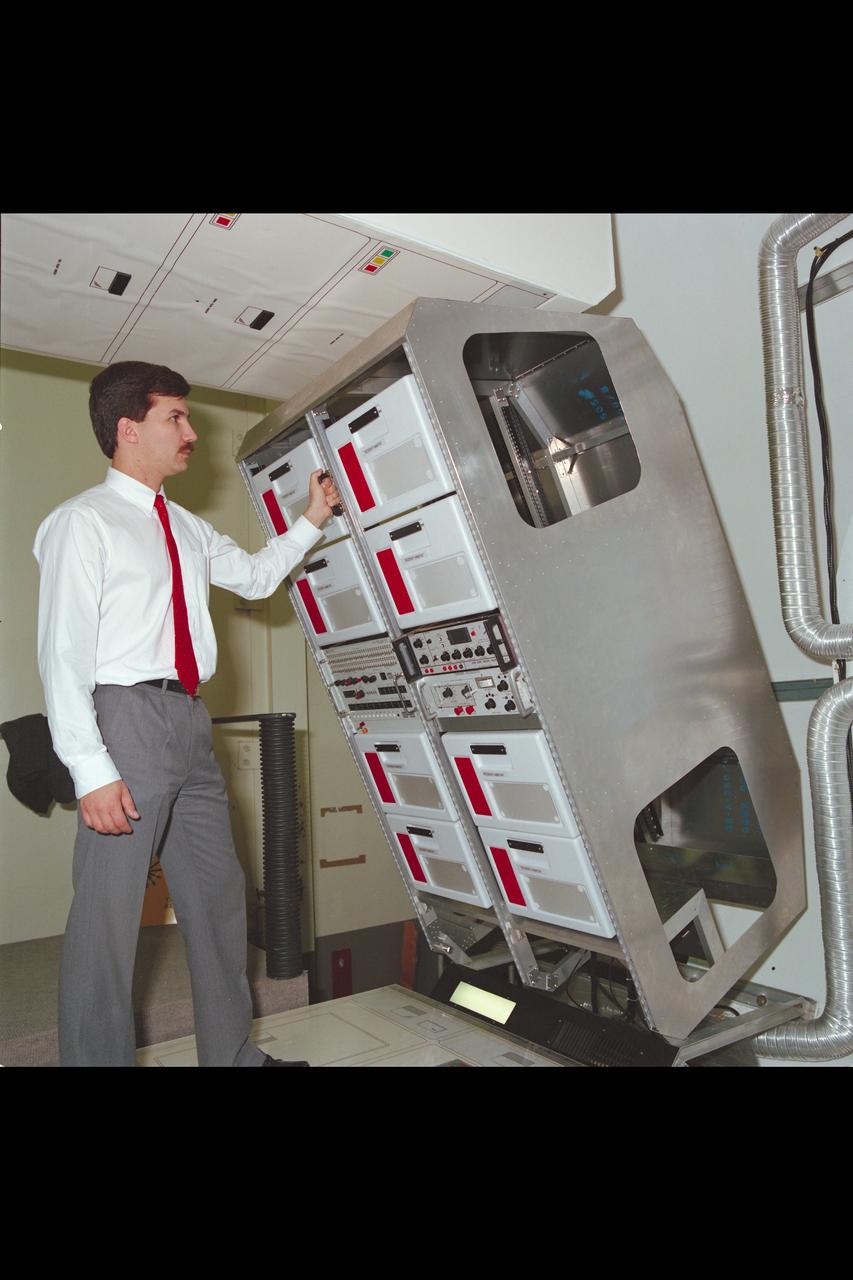
N-244 2.5M Centrifuge Facility mock-up (Mike Horkachuck demonstrates)
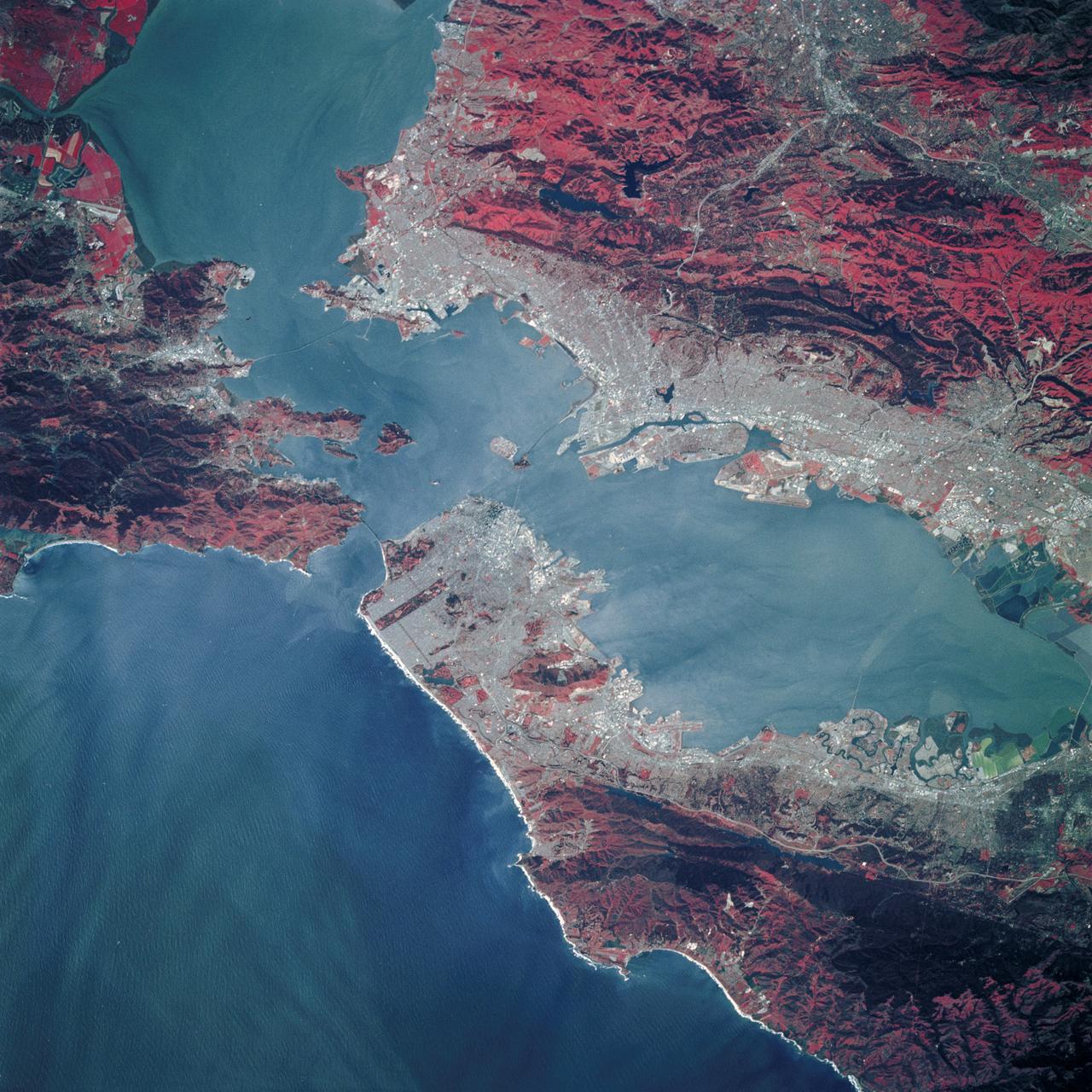
STS039-89-053 (28 April-6 May 1991) --- A 70mm, infrared frame of the city of San Francisco, taken on a clear day. The gray areas represent urban regions, and the red areas are vegetated. Within the city of San Francisco, parks like Golden Gate park and the Presidio at the base of the Golden Gate Bridge easily stand out from the well-developed parts of the city. Major thoroughfares and bridges (Golden Gate and Bay Bridges) are seen as are other landmarks such as Candlestick Park and Alcatraz. The trace of the San Andreas faults show as a straight valley running northerly along the San Francisco peninsula. Good detail is visible in the turbid waters of San Francisco Bay.
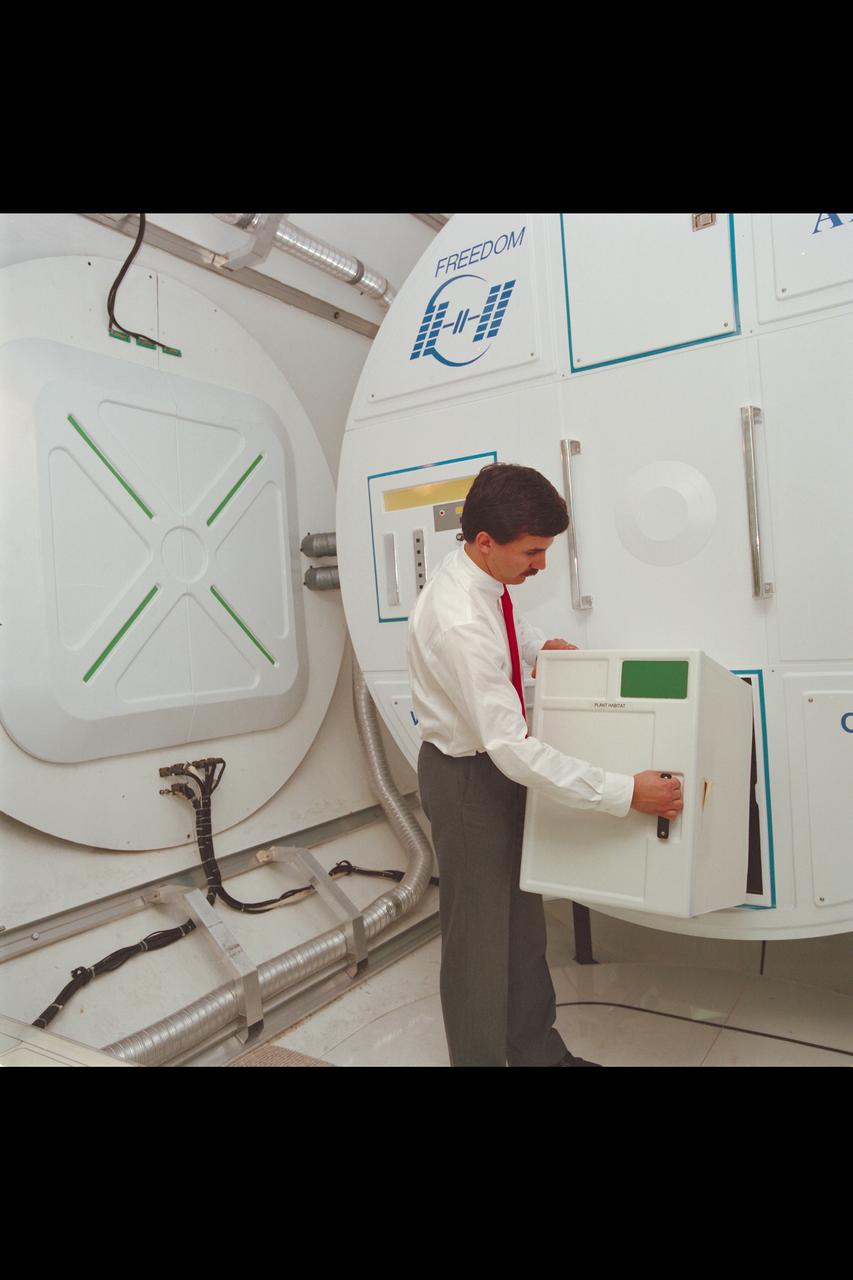
N-244 2.5M Centrifuge Facility mock-up (Mike Horkachuck demonstrates)
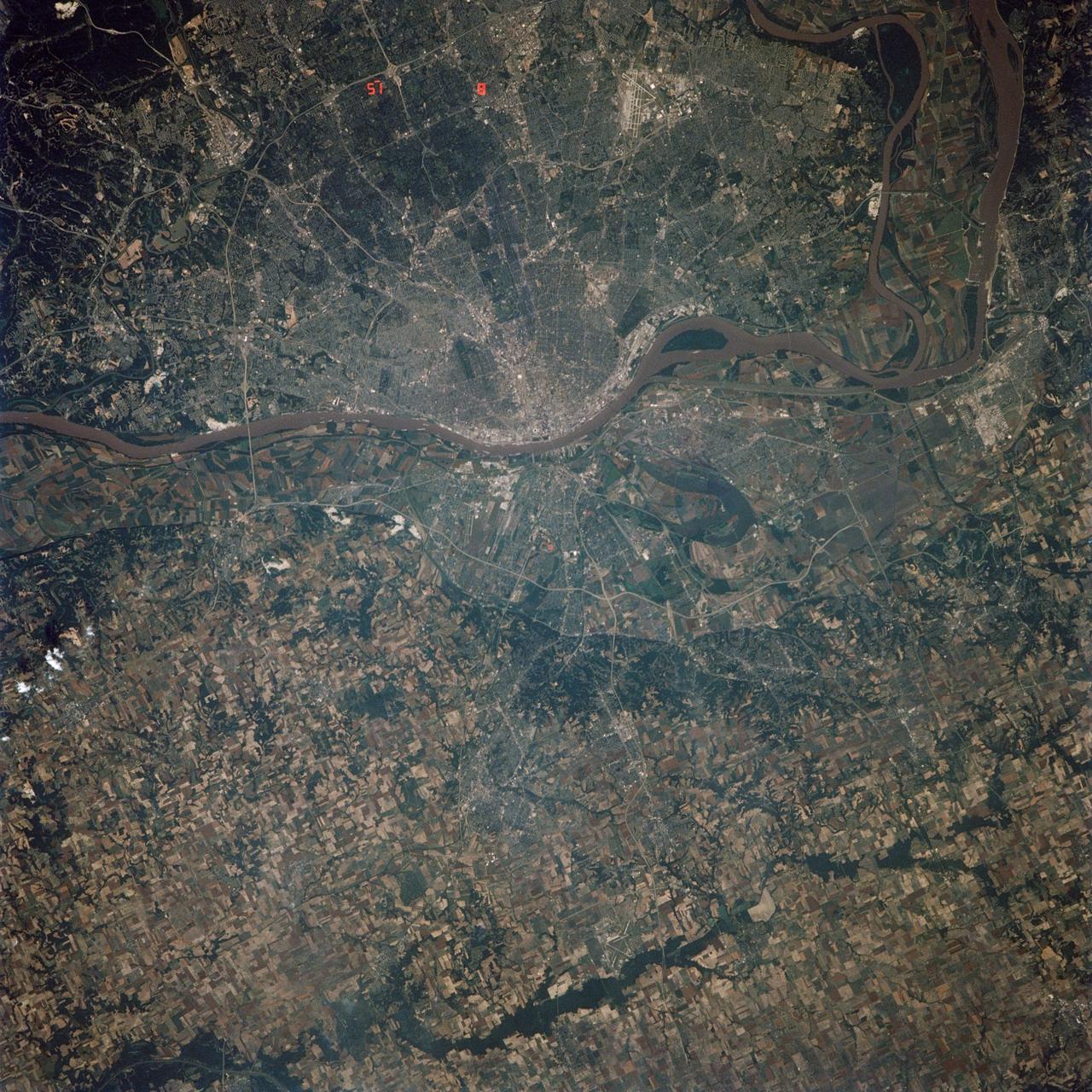
STS040-614-066 (5-14 June 1991) --- St. Louis, Missouri-East St. Louis, Illinois and surrounding area were photographed by the STS 40 crewmembers aboard the Space Shuttle Columbia. The winding Mississippi River serves as a reference point for finding features of the area. Busch Stadium is clearly seen. NASA photo experts studying the STS 40 imagery claim photographs of this type aid in following demographic changes and in planning for development. The ground track of STS-40 and the existence of exceptionally clear skies during much of the nine-day flight permitted photographic acquisition of several cities not generally seen from the space flights flying at 28-degree inclinations to the Equator.
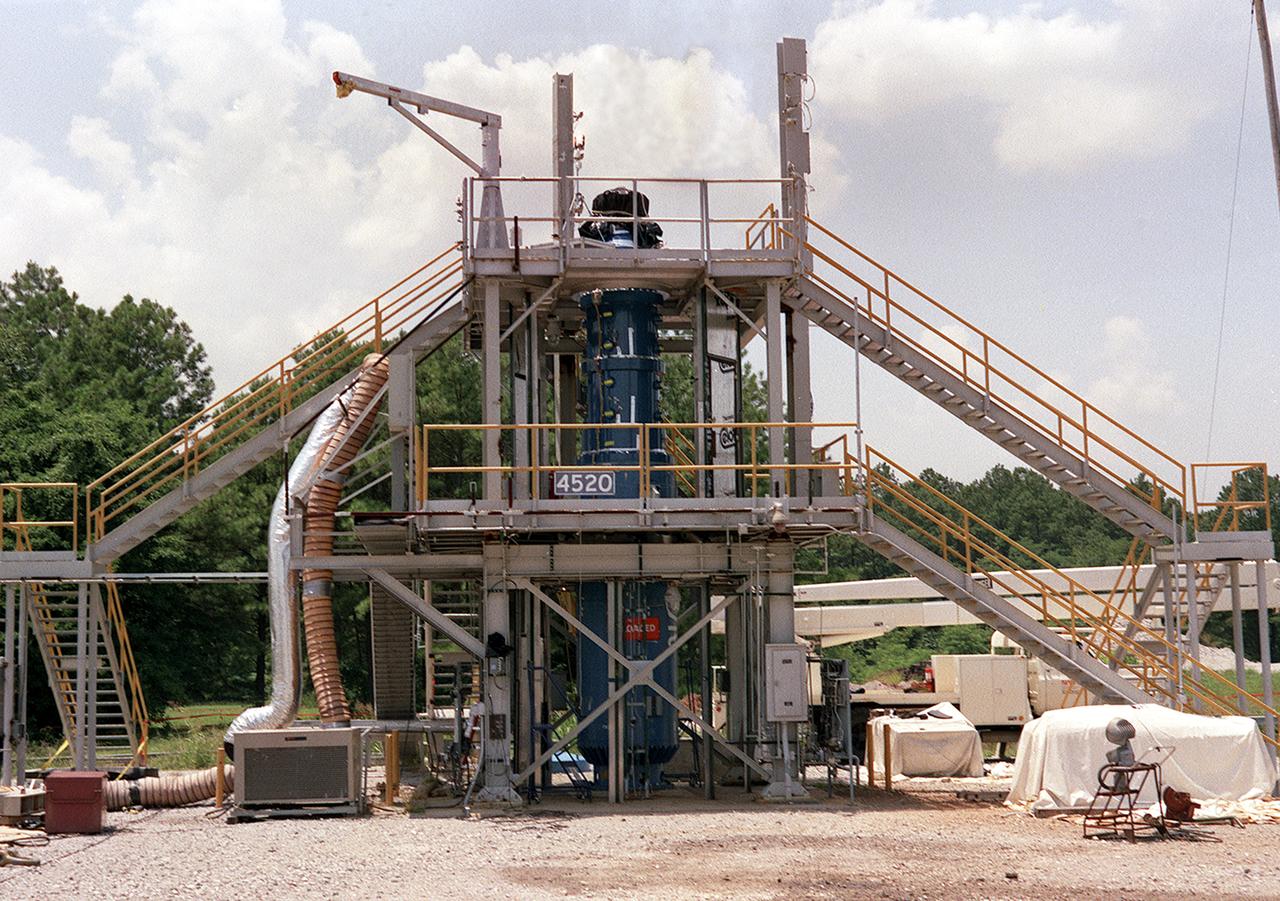
This photograph shows the Solid Propellant Test Article (SPTA) test stand with the Modified Nasa Motor (M-NASA) test article at the Marshall Space Flight Center (MSFC). The SPTA test stand, 12-feet wide by 12-feet long by 24-feet high, was built in 1989 to provide comparative performance data on nozzle and case insulation material and to verify thermostructural analysis models. A modified NASA 48-inch solid motor (M-NASA motor) with a 12-foot blast tube and 10-inch throat makes up the SPTA. The M-NASA motor is being used to evaluate solid rocket motor internal non-asbestos insulation materials, nozzle designs, materials, and new inspection techniques. New internal motor case instrumentation techniques are also being evaluated.
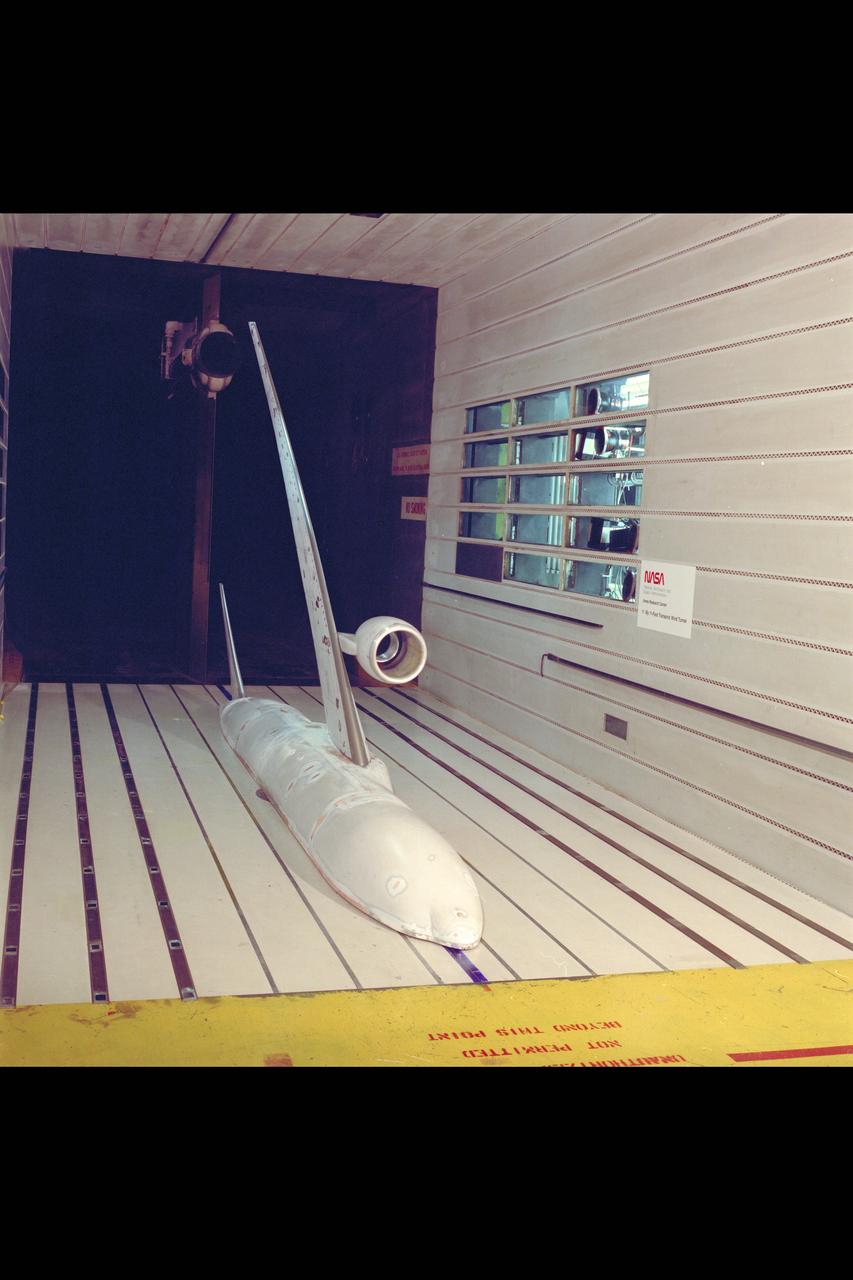
Boeing 777 Model 11ft W.T. Test-168 front view
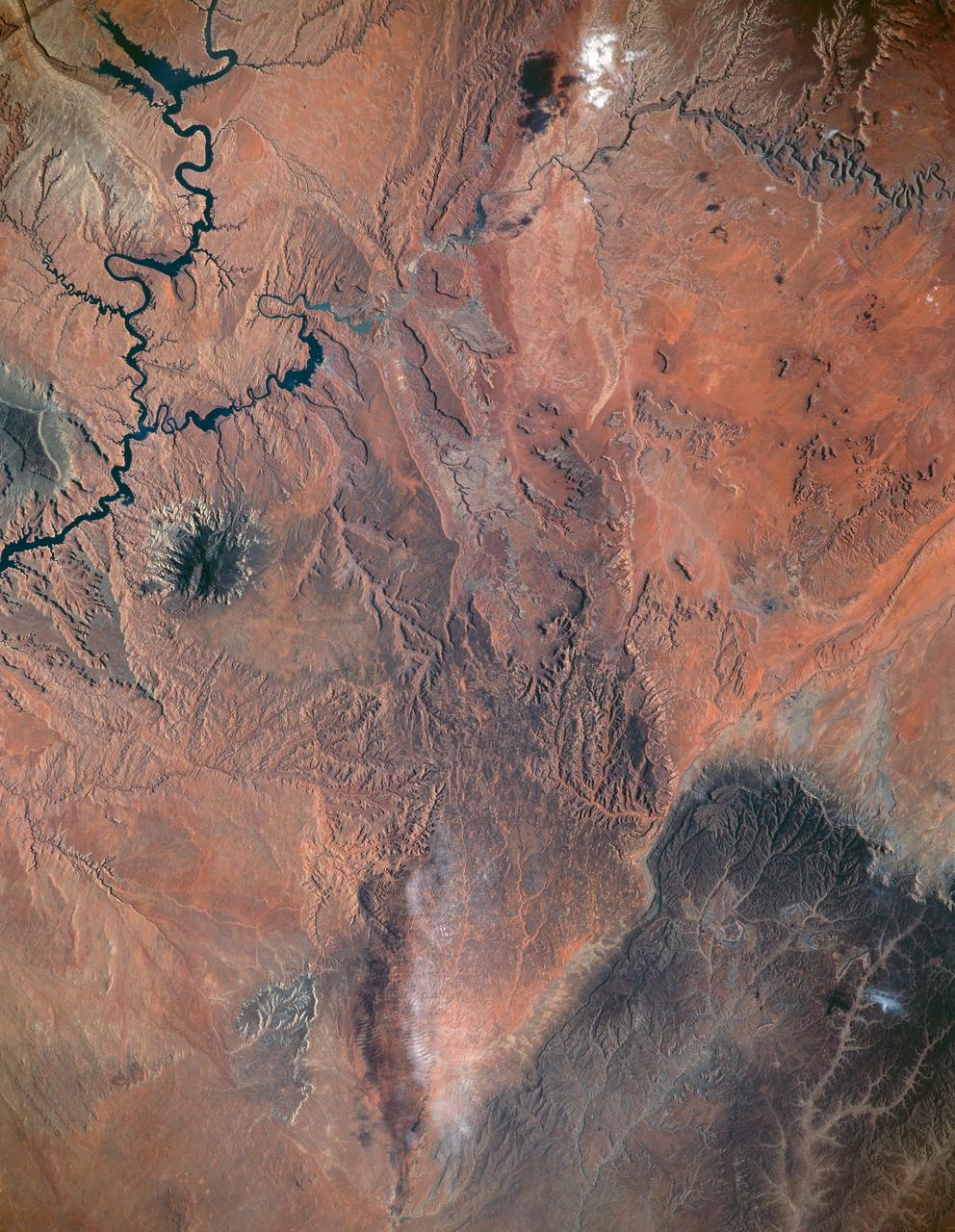
STS040-151-123 (5-14 June 1991) --- This large format view shows parts of northern Arizona and southern Utah. San Juan River, Lake Powell and Monument Valley are visible. Water of Lake Powell can be seen filling the valleys of the Colorado and San Juan Rivers at the top of the image. The darker green areas indicate high, forested country of the lone Navajo Mountain (center left) and Black Mesa (bottom right). Strip mines can be seen south of the rim of Black Mesa. Monument Valley lies between the San Juan River and Black Mesa. Shadows thrown by the individual steep-sided hills make them stand out in the scene.
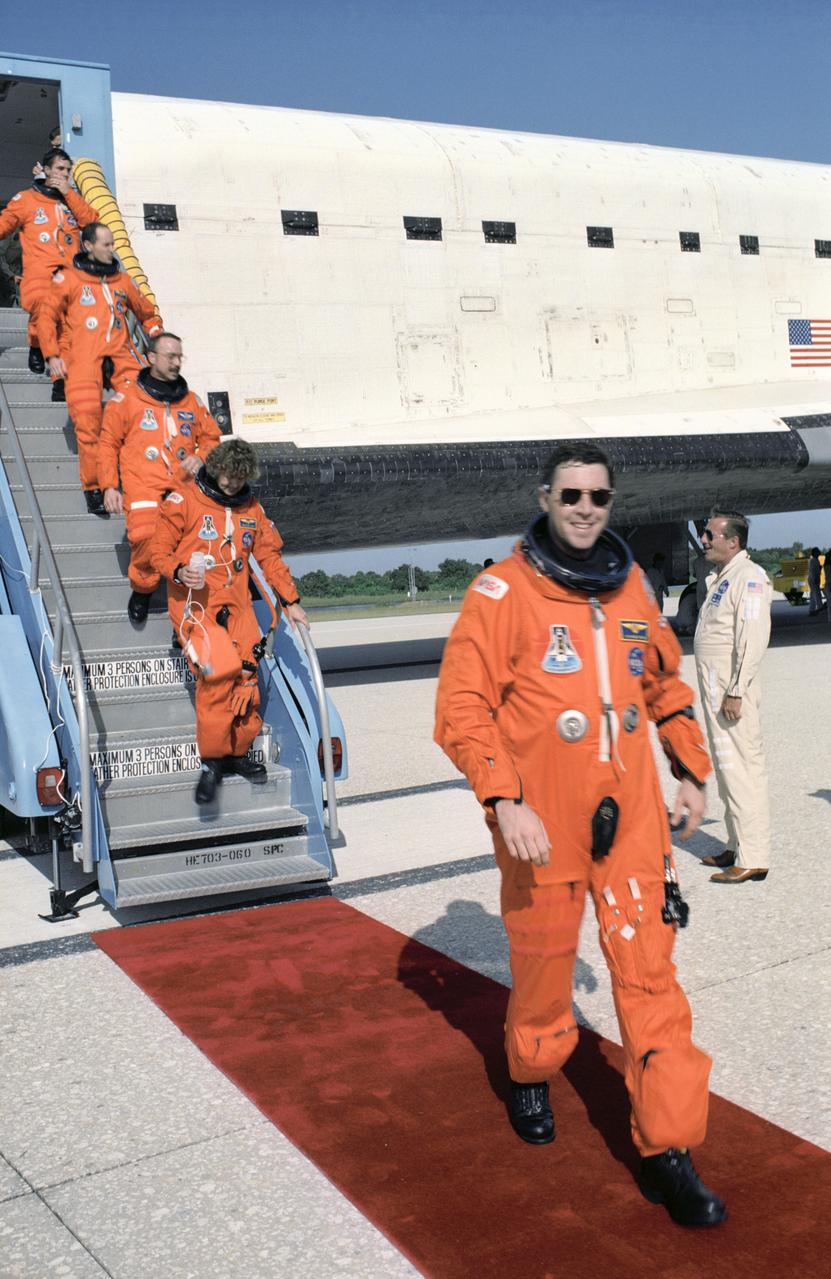
STS043-S-145 (11 Aug 1991) --- STS-43 crewmembers, wearing launch and entry suits (LESs), egress Atlantis, Orbiter Vehicle (OV) 104, via mobile stairway after landing on runway 15 at the Kennedy Space Center (KSC) Shuttle Landing Facility (SLF). Leading the crew and the first to step onto the red carpet is Pilot Michael A. Baker. He is followed by Mission Specialist (MS) Shannon W. Lucid, MS James C. Adamson, MS G. David Low, and Commander John E. Blaha. OV-104's fuselage is visible in the background.
A 48 inch Advanced Solid Rocket Motor is test fired at Marshall's Solid Propulsion Research Test Article facility for M-NASA Project.
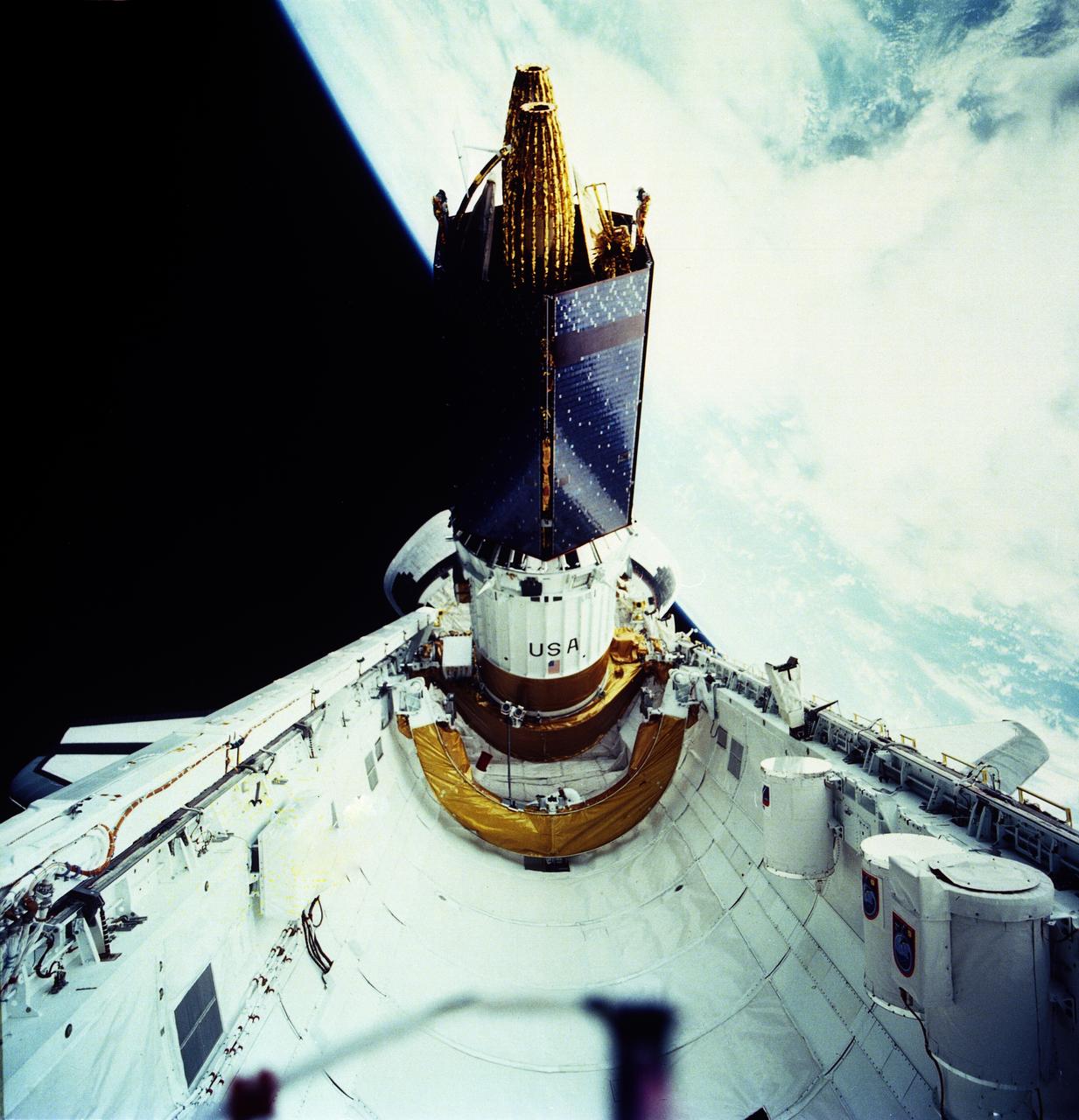
The primary payload of the STS-43 mission, Tracking and Data Relay Satellite-E (TDRS-E) attached to an Inertial Upper Stage (IUS) was photographed at the moment of its release from the cargo bay of the Space Shuttle Orbiter Atlantis. The TDRS-E was boosted by the IUS into geosynchronous orbit and positioned to remain stationary 22,400 miles above the Pacific Ocean southwest of Hawaii. The TDRS system provides almost uninterrupted communications with Earth-orbiting Shuttles and satellites, and had replaced the intermittent coverage provided by globe-encircling ground tracking stations used during the early space program. The TDRS can transmit and receive data, and track a user spacecraft in a low Earth orbit. The IUS is an unmarned transportation system designed to ferry payloads from low Earth orbit to higher orbits that are unattainable by the Shuttle. The launch of STS-43 occurred on August 2, 1991.
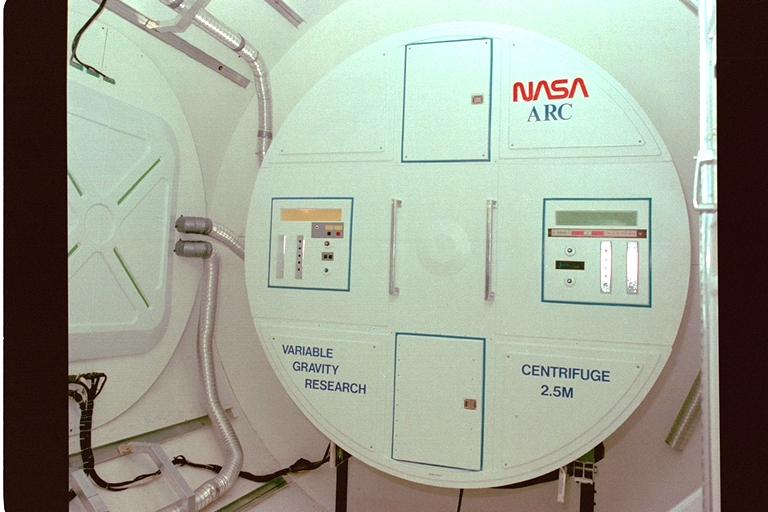
Ames Research Center's 2.5M Centrifuge Facility mock-up in Bldg N-244
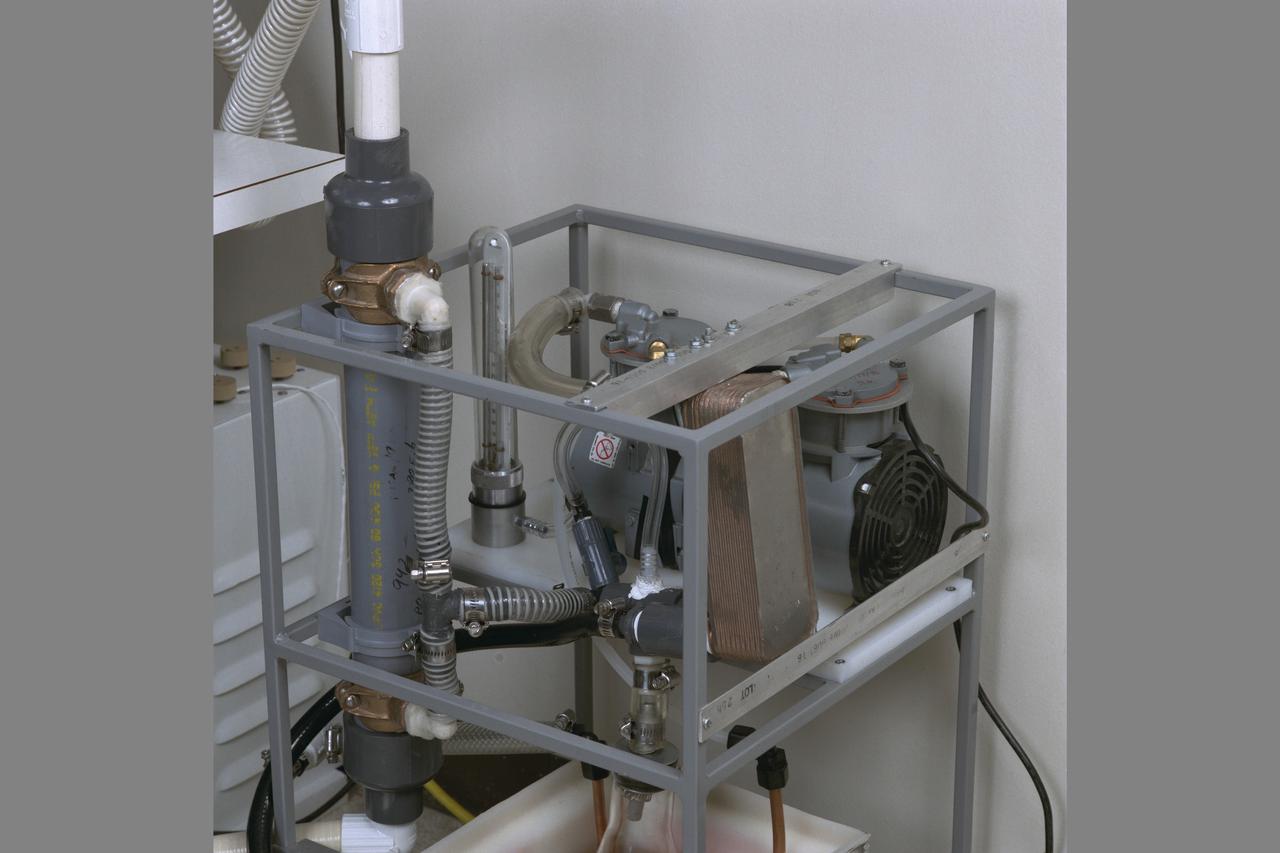
Life Sciences documentation of Salad Machine being developed at NASA Ames Research Center, Moffett Field, Calif. for use in long duration space flight or on distant outposts.
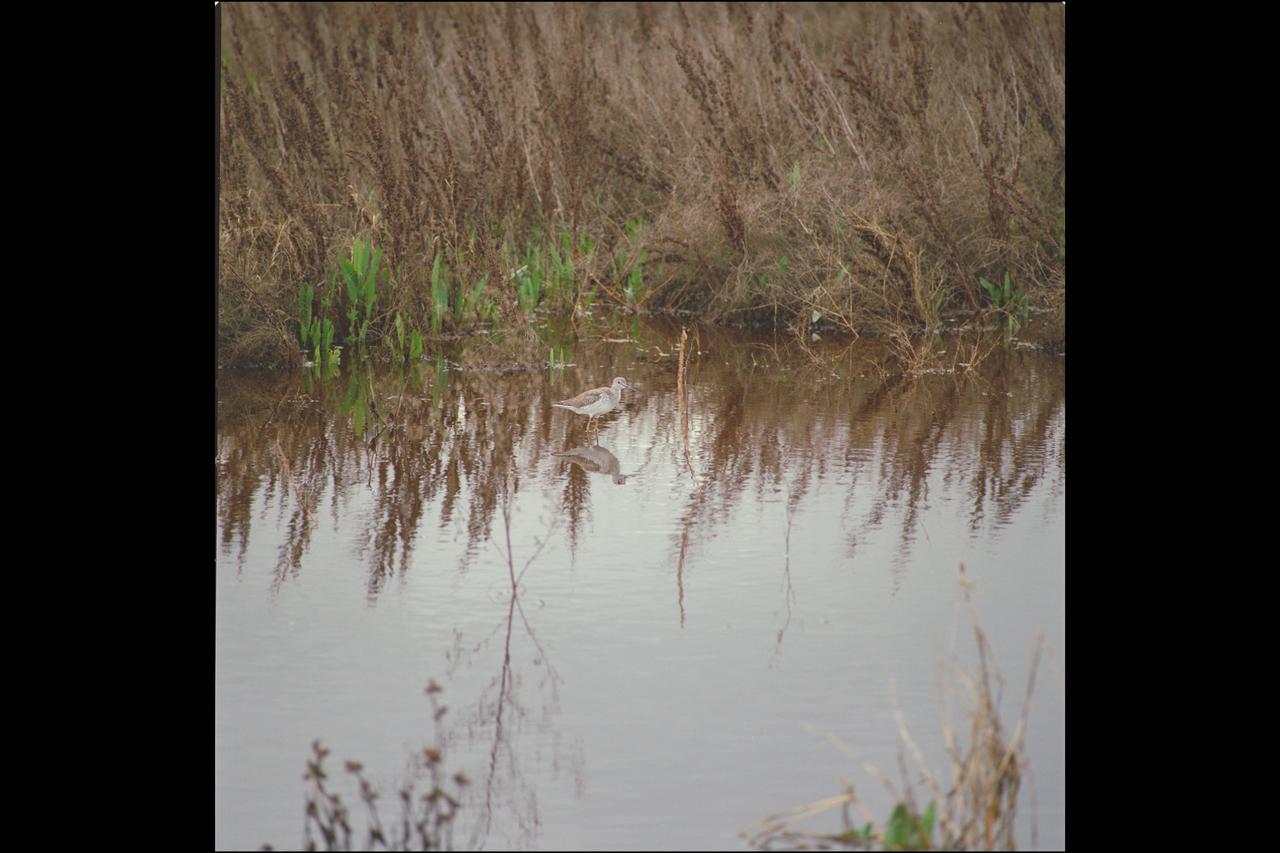
This (Sandpiper like) bird, as well as many other species keep watch over Moffett Field wetlands. The shorebird in this picture is a greater yellowlegs (Tinga melanoleuca) which is a common bird found in our coastal salt marsh and tidal zones in winter months. Generally, they summer/breed up north in Canada and Alaska and then migrate in the fall to winter along the west coast of the U.S. and Mexico. Known for their loud call of a slightly descending series of three or more tew notes. Diet consists of small fish, insects, snails, worms, and tadpoles. used in Ames 60 yr. History NASA SP-2000-4314
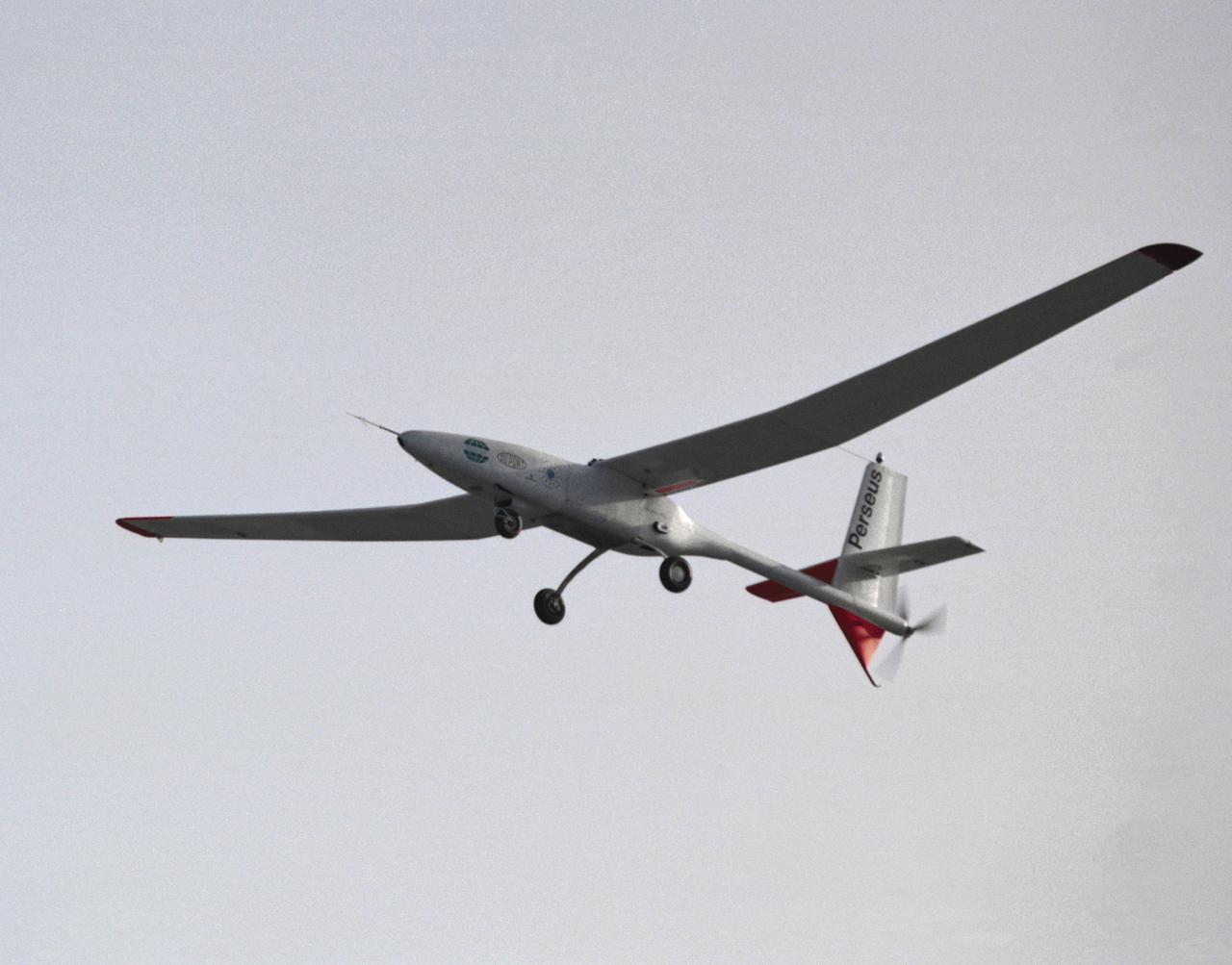
The Perseus proof-of-concept vehicle in flight at the Dryden Flight Research Center, Edwards, California in 1991. Perseus is one of several remotely-piloted aircraft designed for high-altitude, long-endurance scientific sampling missions being evaluated under the ERAST program.
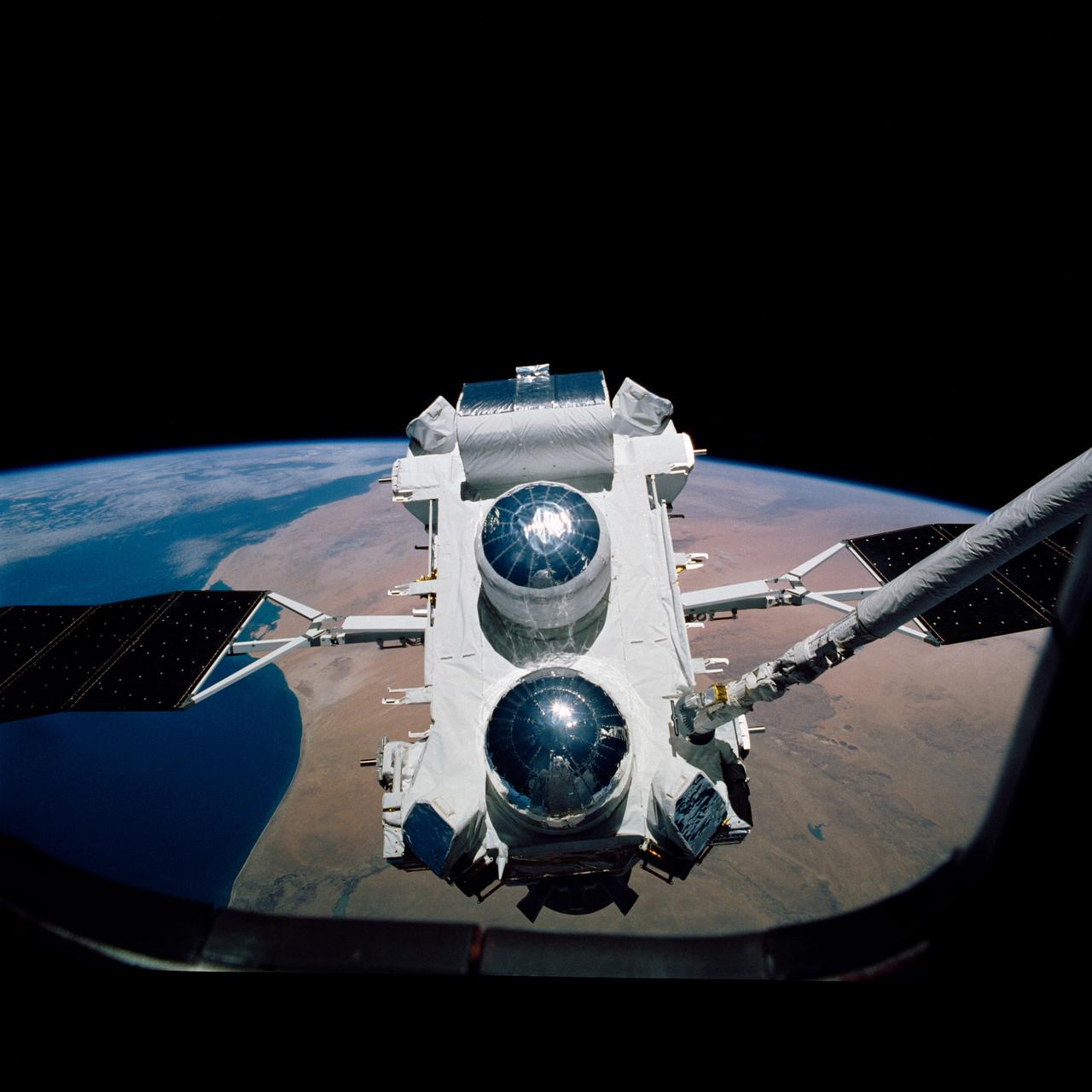
Backdropped against the Earth's surface, the Gamma Ray Observatory (GRO) with its solar array (SA) panels deployed is grappled by the remote manipulator system (RMS) during STS-37 systems checkout. GRO's four complement instruments are visible: the Energetic Gamma Ray Experiment Telescope (EGRET) (at the bottom); the Imaging Compton Telescope (COMPTEL) (center); the Oriented Scintillation Spectrometer Experiment (OSSE) (top); and Burst and Transient Source Experiment (BATSE) (on four corners). The view was taken by STS-37 crew through an aft flight deck overhead window.
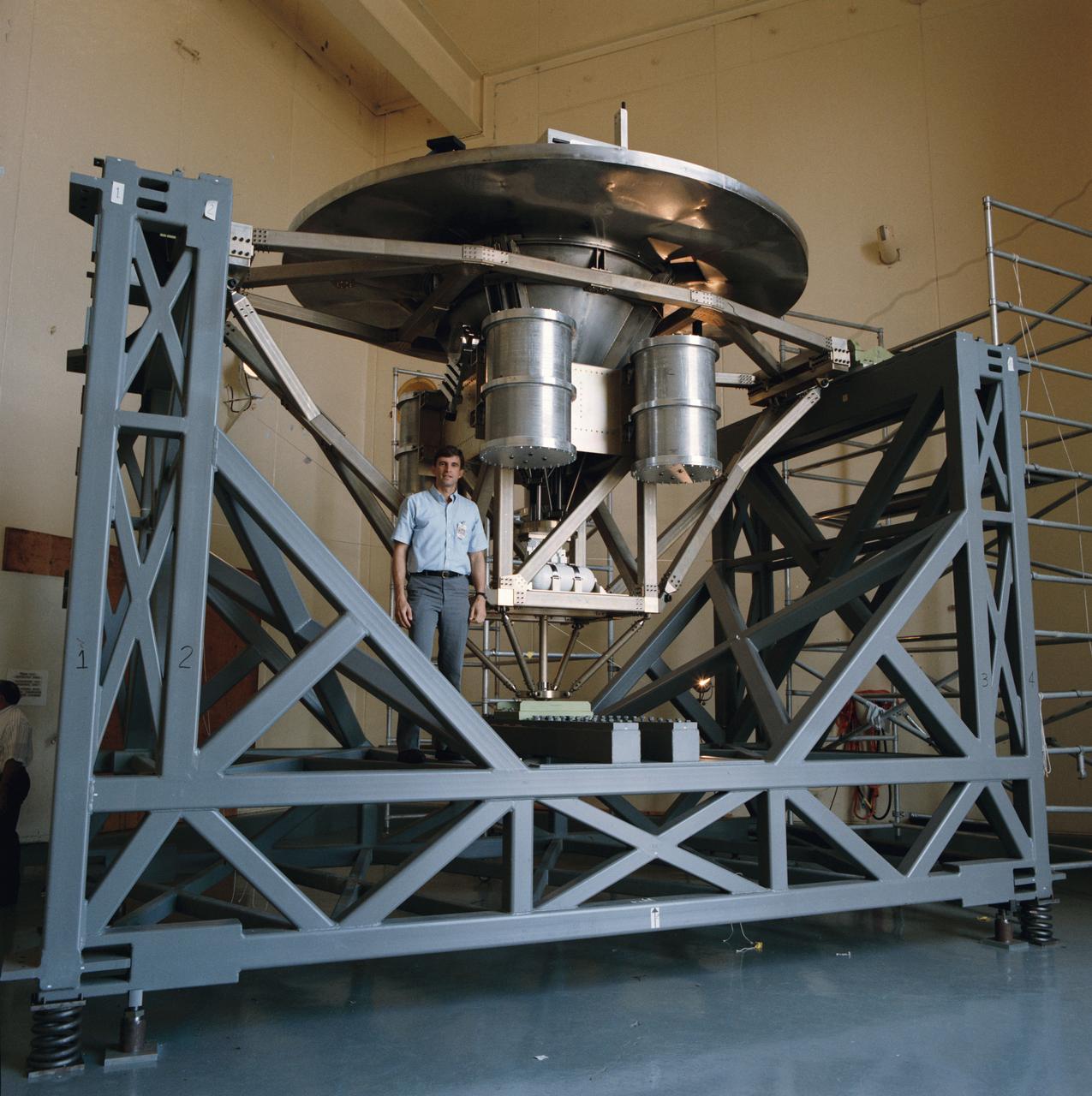
Astronaut Ronald M. Sega stands beside the University of Houston's Wake Shield Facility before it undergoes a Modal Survey Test in the Vibration and Acoustic Test Facility Building 49, prior to being flown on space shuttle mission STS-60.
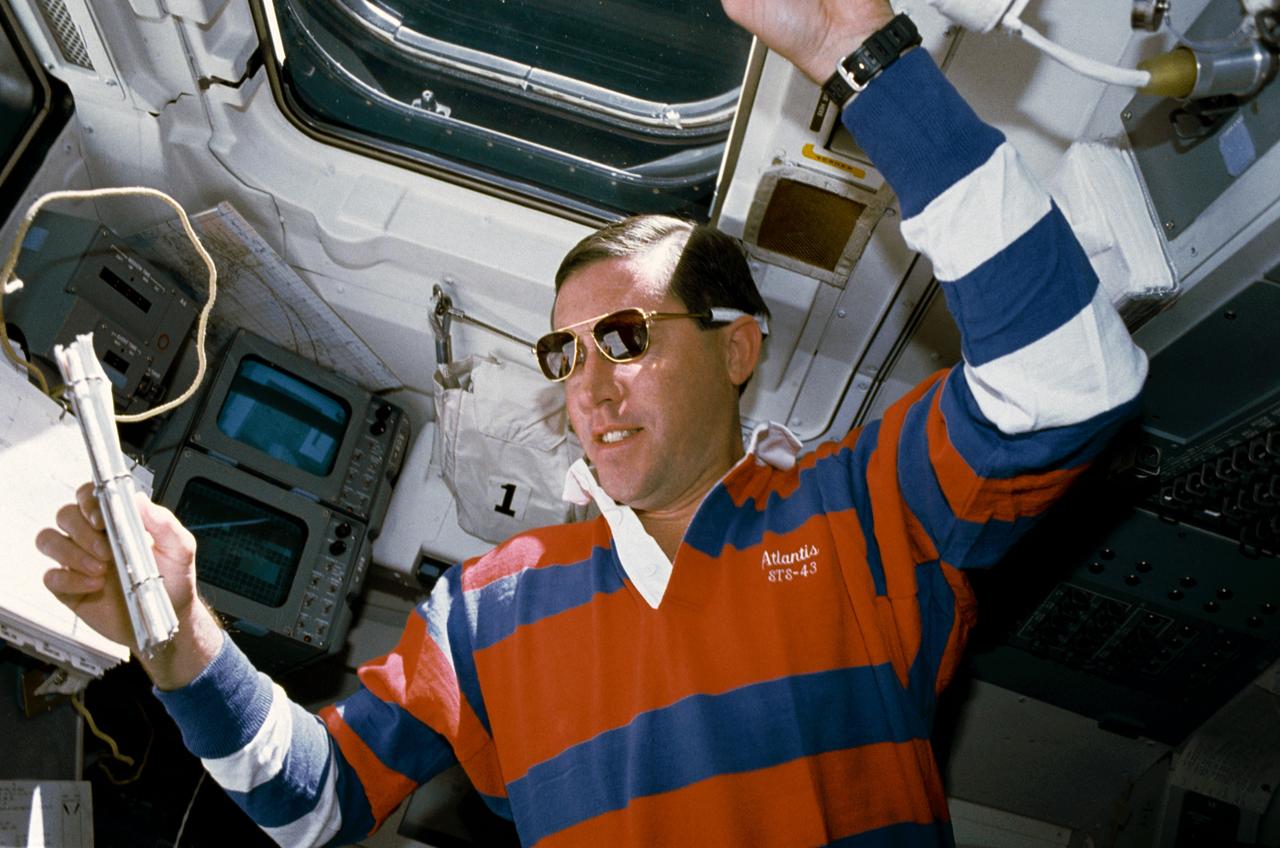
STS043-04-032 (11 Aug 1991) --- STS-43 Pilot Michael A. Baker, wearing sunglasses, reviews a checklist on the aft flight deck of Atlantis, Orbiter Vehicle (OV) 104. He is monitoring data associated with the Space Station Heat Pipe Advanced Radiator Element II (SHARE-II) located in OV-104's payload bay (PLB) from his position in front of the aft flight deck viewing windows. Behind Baker are the closed circuit television (CCTV) monitors and above his head is overhead window W8.
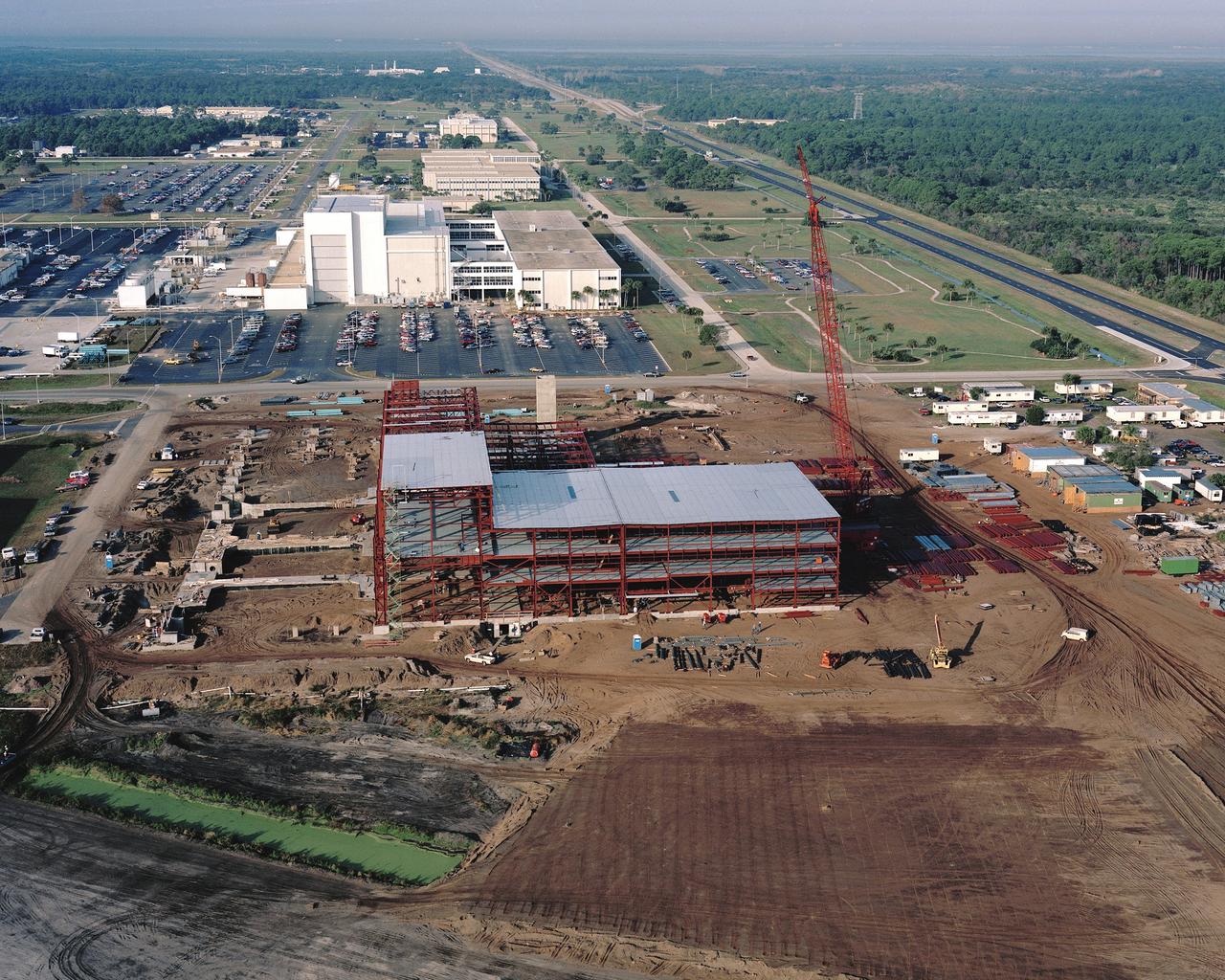
CAPE CANAVERAL Fla. -- This aerial view shows construction progress of the Space Station Processing Facility at the Kennedy Space Center in Florida. Photo Credit: NASA
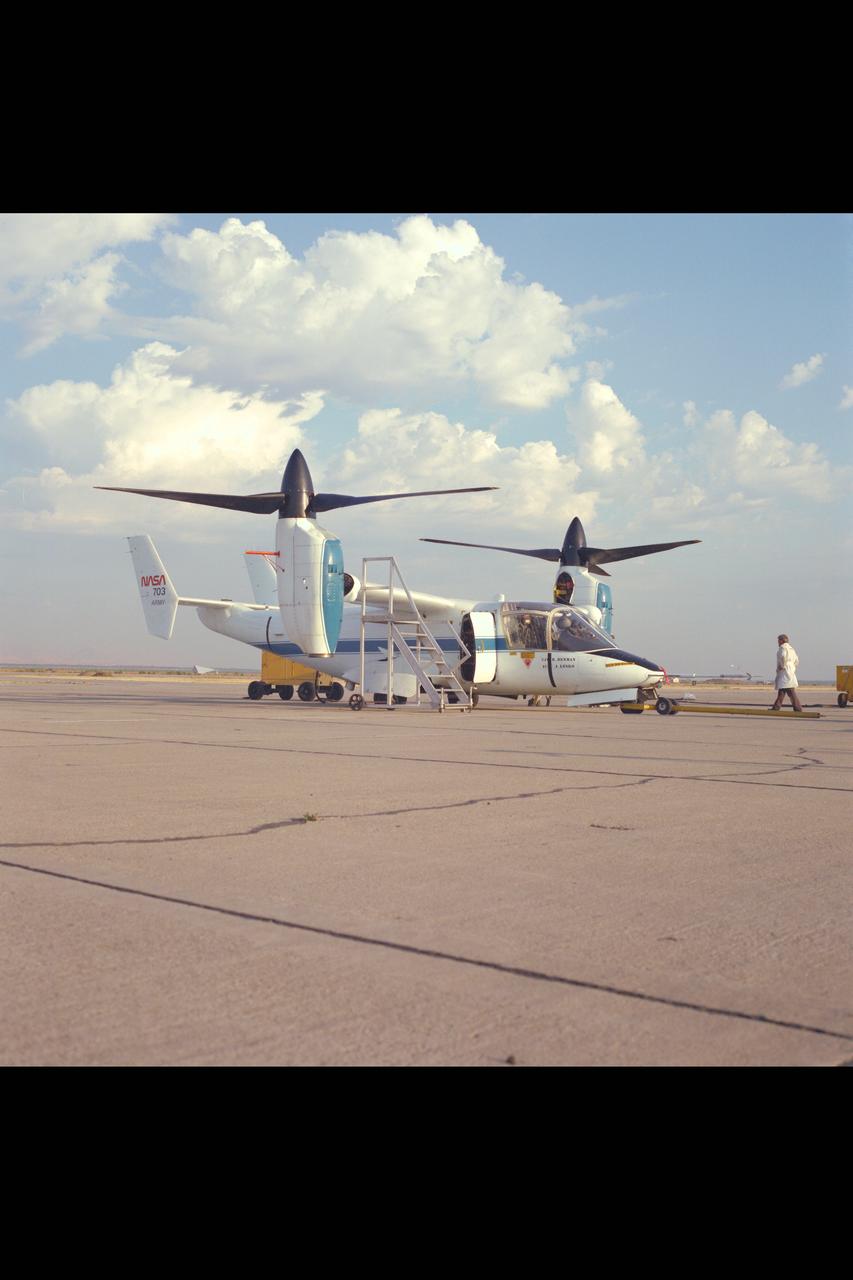
XV-15 (NASA-703) ATB Rotor Hub on trumack
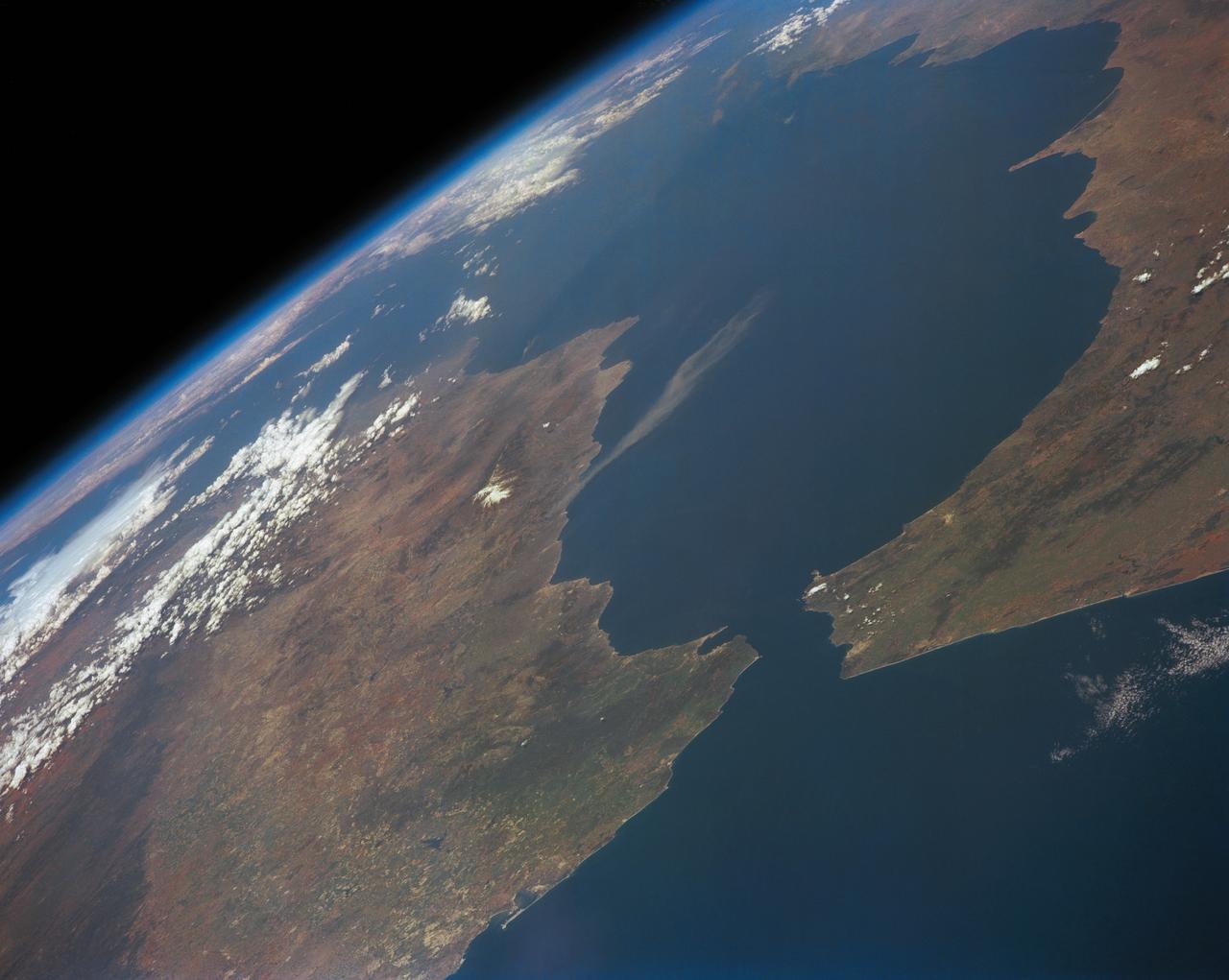
STS039-151-193 (28 April-6 May 1991) --- The Strait of Gibraltar, the only outlet for the Mediterranean Sea, was photographed with a large format handheld camera by the STS-39 crew members. Scientists site evidence in Shuttle photography that the Mediterranean Sea dried up a number of times between 5 million and 20 million years ago. Sea levels, they say, dropped slightly, cutting off the Mediterranean (top right) from the Atlantic Ocean (bottom). In southern Spain, the dark area near the coast is the delta of the Guadalquivir River with the city of Seville. The Sierra Nevada range still has some snow. A small field fire near the Spanish coast has generated a conspicuous smoke plume. The small spike of land on the north side of the Strait is the Rock of Gibraltar, an outpost of the British empire. The larger spike of land on the north coast of Africa marks the border between Morocco (center foreground) and Algeria (right). The sharp line cutting across them Mediterranean (top right) marks the edge of a dust cloud blowing from Africa into Europe. Photo credit: NASA
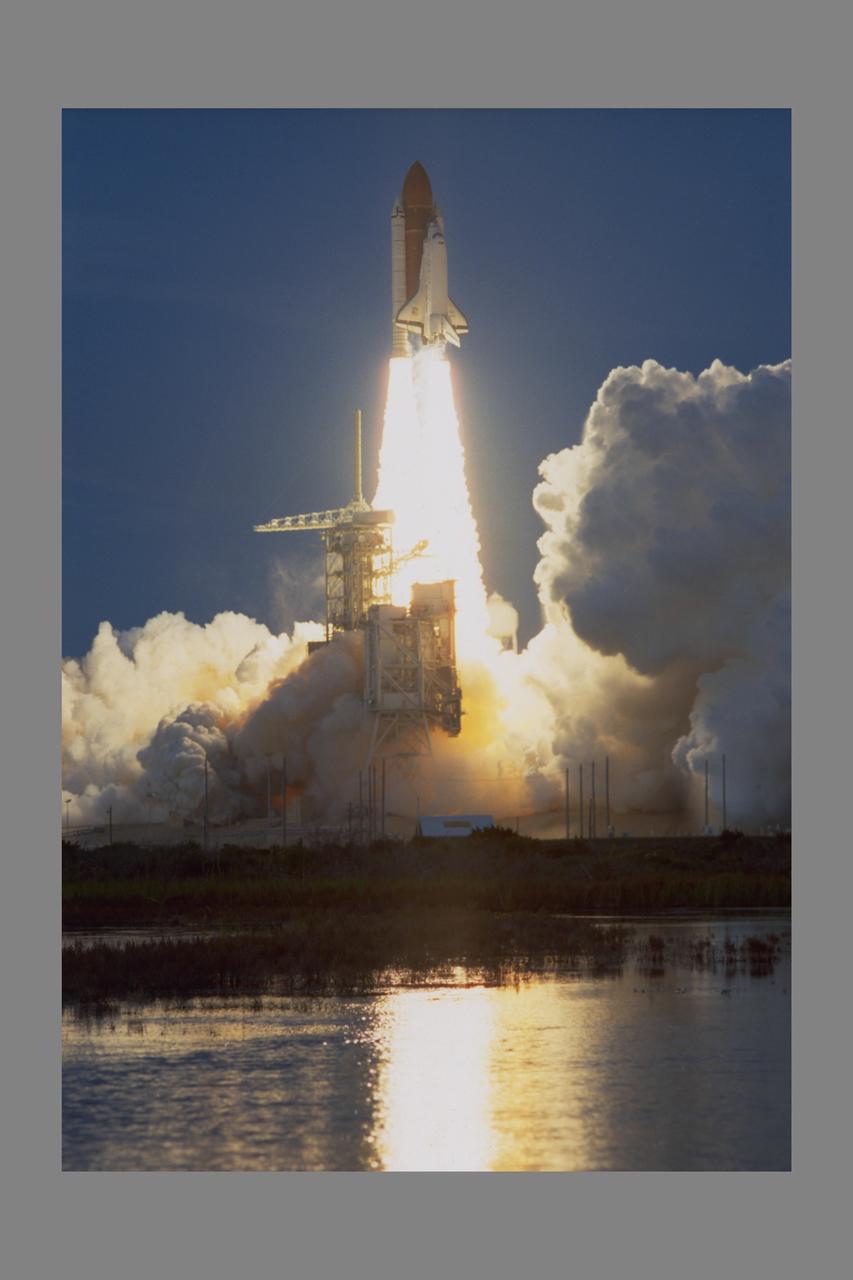
Space Shuttle Discovery STS-48 launch from Kennedy Space Center, FLA to deploy the Upper Atmosphere Research Satellite (UARS)
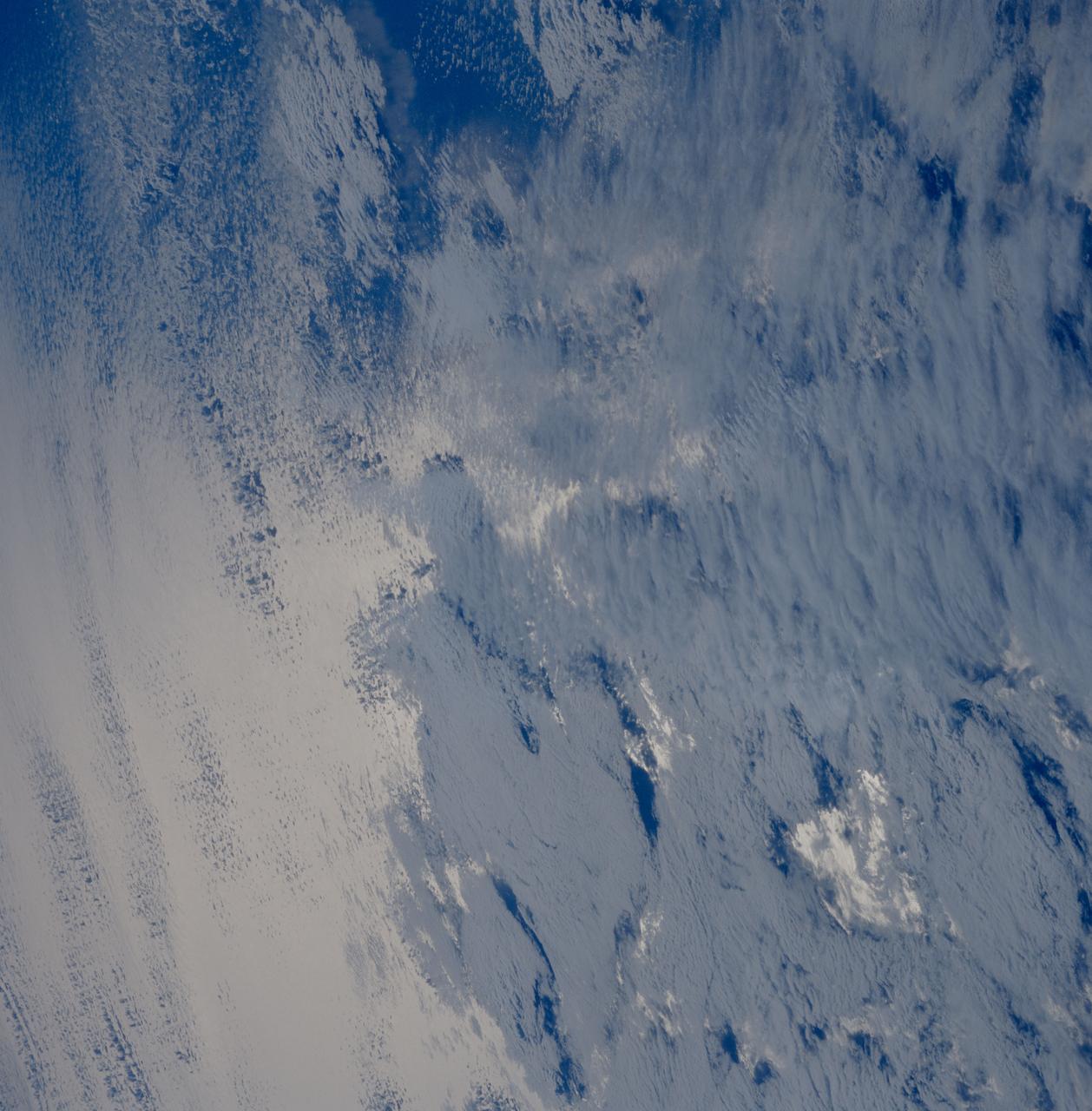
STS039-81-00BC (28 April-6 May 1991) --- A variety of stratus clouds is represented in this picture. The clouds are backdropped against the sunglinted northern Pacific Ocean. One of Discovery's seven crewmembers aimed a 70mm handheld camera through an overhead window on the aft flight deck to obtain the image.
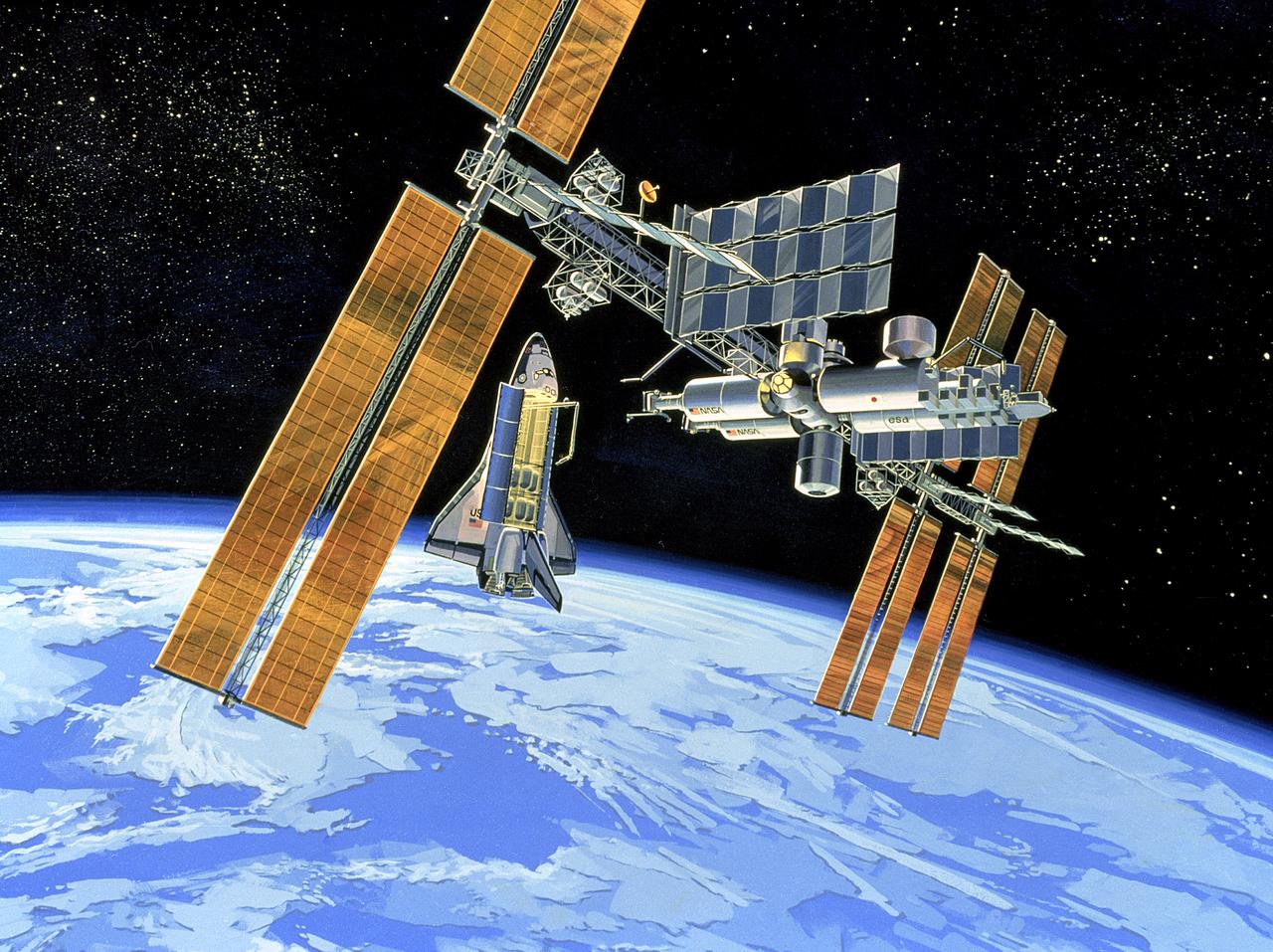
In 1982, the Space Station Task Force was formed, signaling the initiation of the Space Station Freedom Program, and eventually resulting in the Marshall Space Flight Center's responsibilities for Space Station Work Package 1.
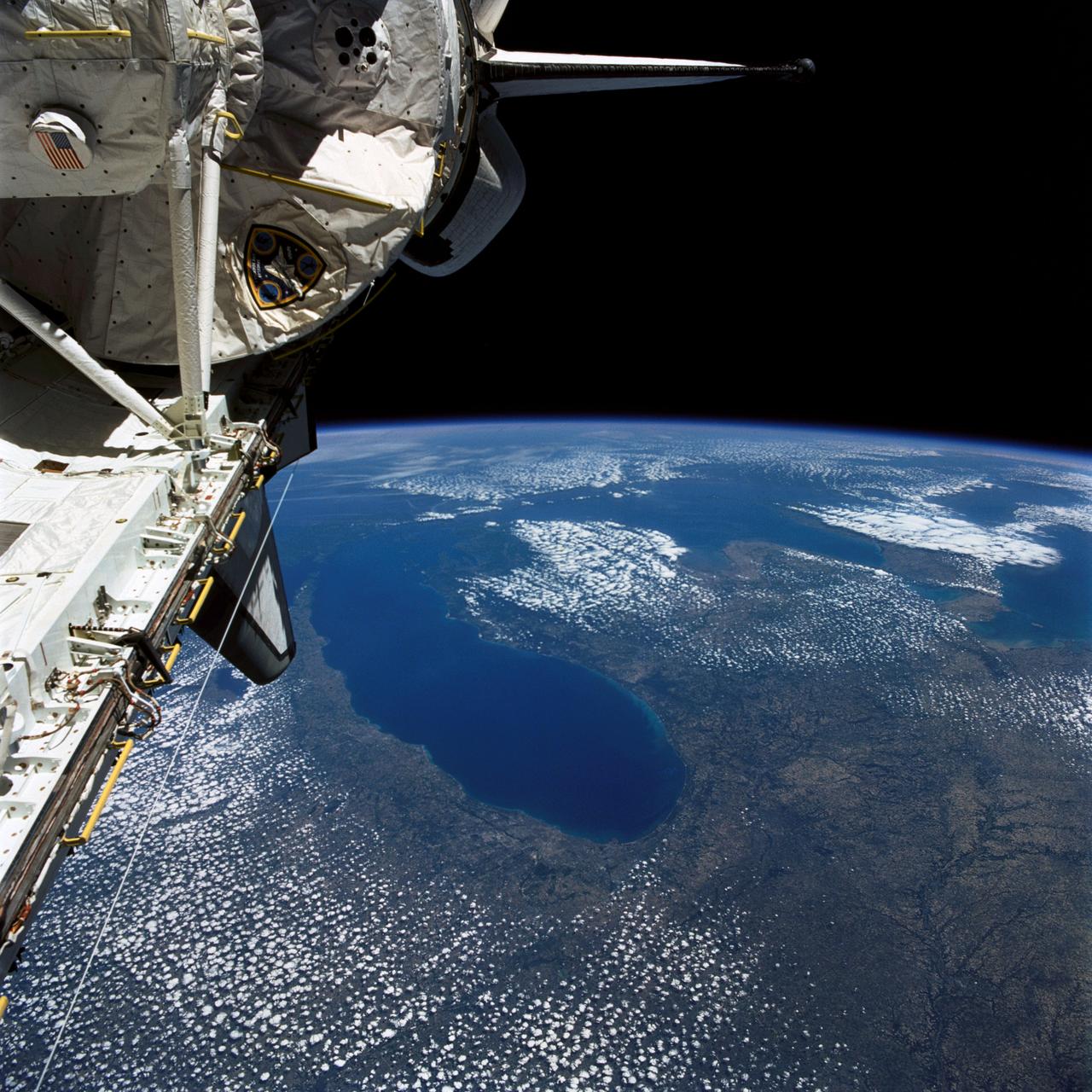
STS040-77-045 (6 June 1991) --- This image, photographed on June 6, 1991, is an oblique view looking north-northeast and shows most of the Great Lakes region. Part of Columbia's cargo bay and the Spacelab Life Sciences (SLS-1) module are in the foreground. In the center of the image is Lake Michigan with Chicago clearly visible along the southwest shore. According to NASA photo experts studying the STS-40 imagery, this image shows several interesting meteorological phenomena. The difference in temperature between the warming land and the cold lake waters is illustrated by the low level clouds. The warming land surface results in rising air and the formation of clouds, while the lake waters are cold and result in the lakes remaining cloud free. Also visible is evidence of lake breezes developing around several of the lakes. This phenomena is also driven by the difference in temperature between the land and the water. Winds blowing off the lakes must travel 25 - 30 miles inland before it warms sufficiently to create clouds.

This global view of Venus, centered at 270 degrees east longitude, is a compilation of data from several sources. Magellan synthetic aperature radar mosaics from the first cycle of Magellan mapping are mapped onto a computer-simulated globe to create the image. Data gaps are filled with Pioneer-Venus orbiter data, or a constant mid-range value. Simulated color is used to enhance small-scale structure. The simulated hues are based on color images recorded by the Soviet Venera 13 and 14 spacecraft. The image was produced at the Jet Propulsion Laboratory (JPL) Multimission Image Processing Laboratory and is a single frame from a video released at the JPL news conference, 10-29-91. View provided by JPL with alternate number P-39225 MGN81.
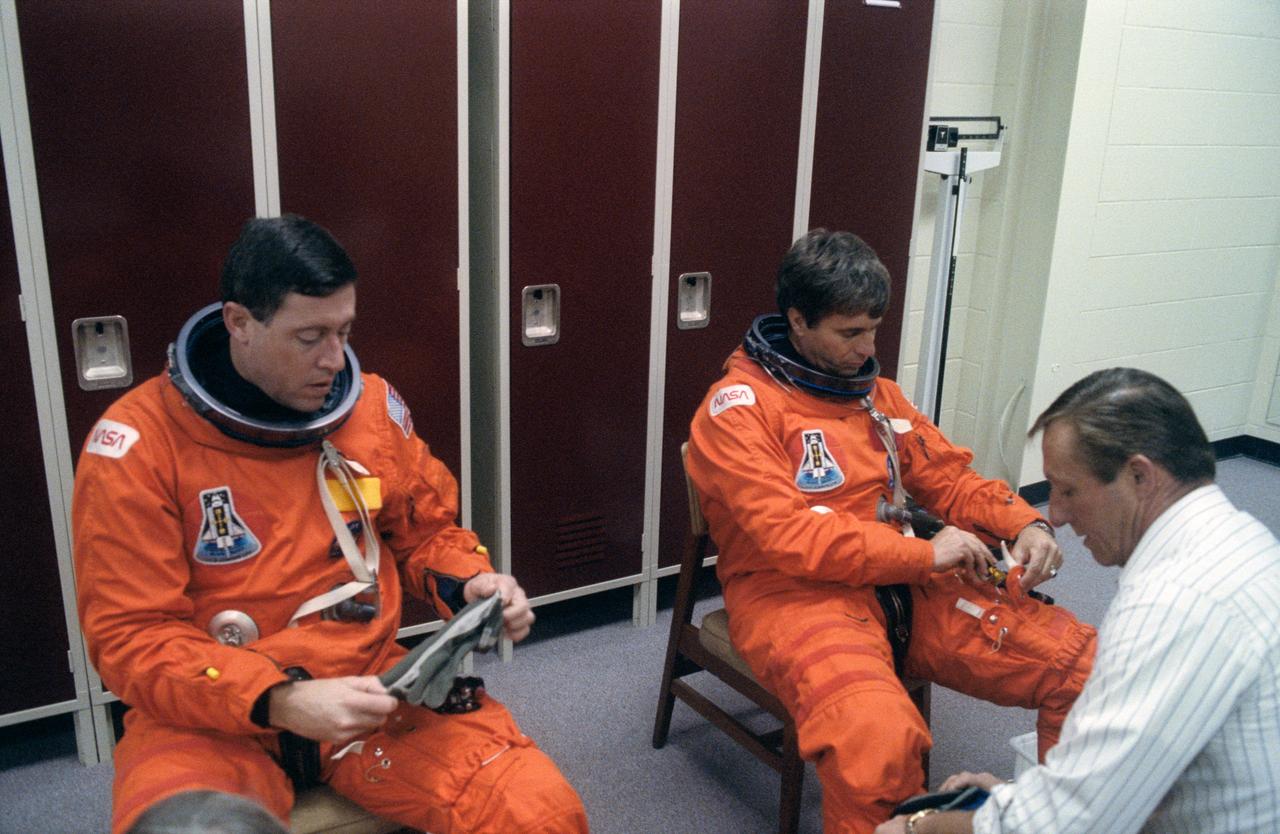
S91-37294 (May 1991) --- Astronauts Michael A. Baker, left, and John E. Blaha, STS-43 pilot and mission commander, respectively, suit up for a session of emergency egress training at the Johnson Space Center's Shuttle Mockup and Integration Laboratory. Bill Todd, a crew escape equipment suit technician for Boeing, assits them. The two astronauts are wearing the orange partial pressure suits which are used by Shuttle crewmembers during launch and entry phases of their flights.

The free-flying Tracking and Data Relay Satellite-E (TDRS-E), still attached to an Inertial Upper Stage (IUS), was photographed by one of the crewmembers during the STS-43 mission. The TDRS-E was boosted by the IUS into geosynchronous orbit and positioned to remain stationary 22,400 miles above the Pacific Ocean southwest of Hawaii. The TDRS system provides almost uninterrupted communications with Earth-orbiting Shuttles and satellites, and had replaced the intermittent coverage provided by globe-encircling ground tracking stations used during the early space program. The TDRS can transmit and receive data, and track a user spacecraft in a low Earth orbit. The IUS is an unmarned transportation system designed to ferry payloads from low Earth orbit to higher orbits that are unattainable by the Shuttle. The Space Shuttle Orbiter Atlantis for the STS-43 mission was launched on August 2, 1991.
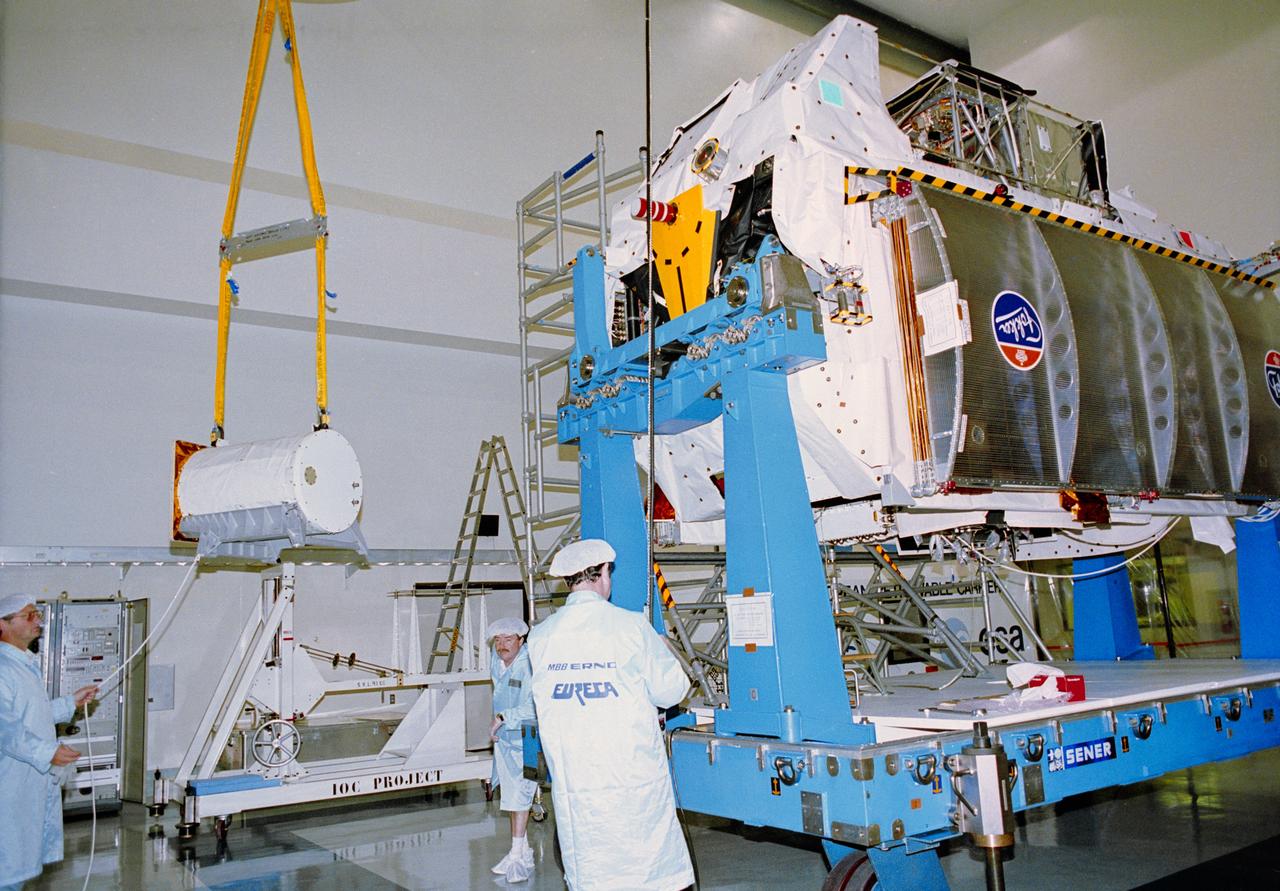
S92-41442 (3 Dec 1991) --- At the Astrotech Space Operations spacecraft processing facility in Titusville, German aerospace workers check out the European Retrievable Carrier (EURECA) after removing it from the shipping container. The approximately 10,000-pound spacecraft is scheduled to return to KSC next April to undergo final preparations for launch on the STS-46 mission. Sponsored by the European Space Agency, EURECA is a free-flying reusable research platform that will be deployed during the flight and retrieved at a later date by another Shuttle crew.
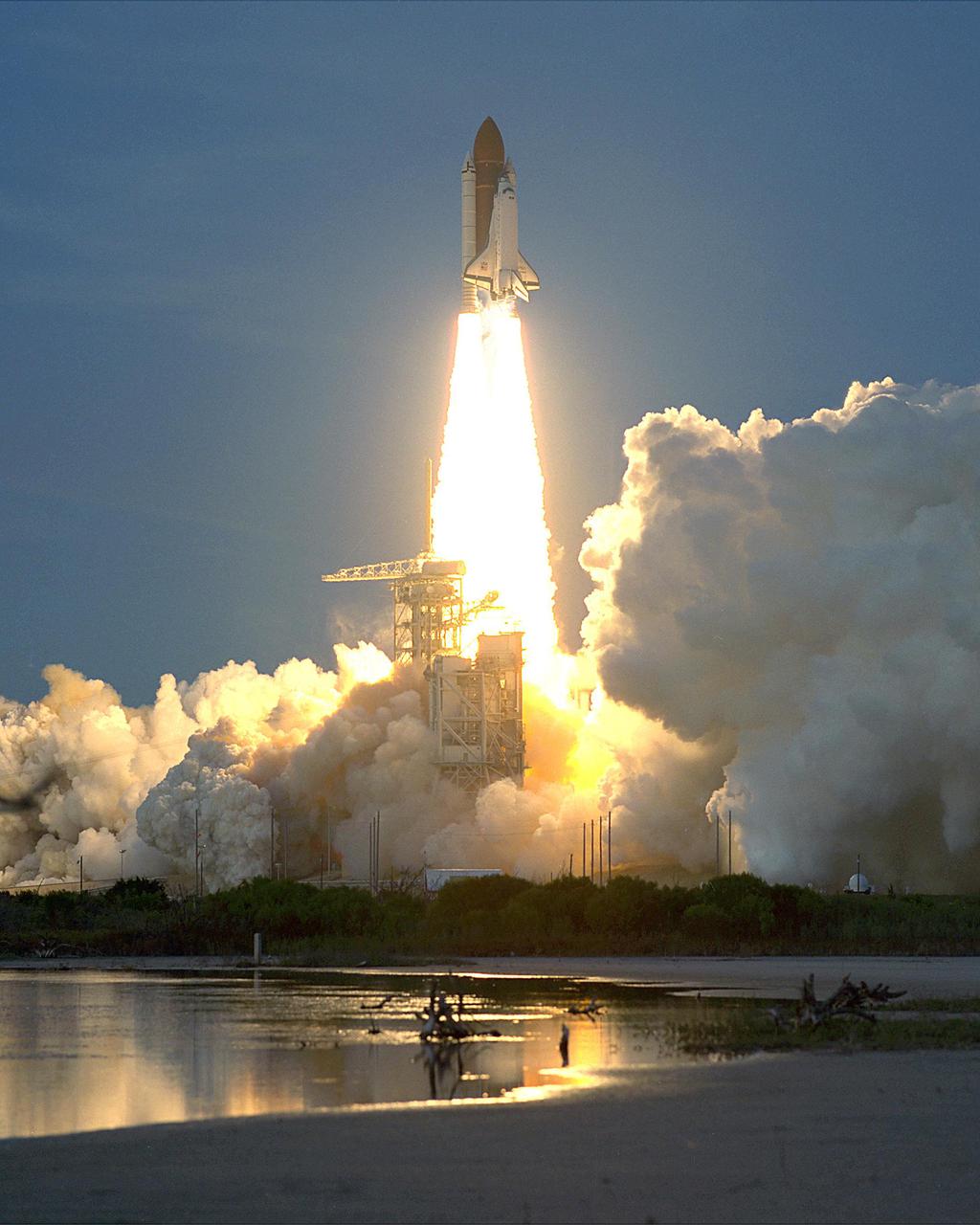
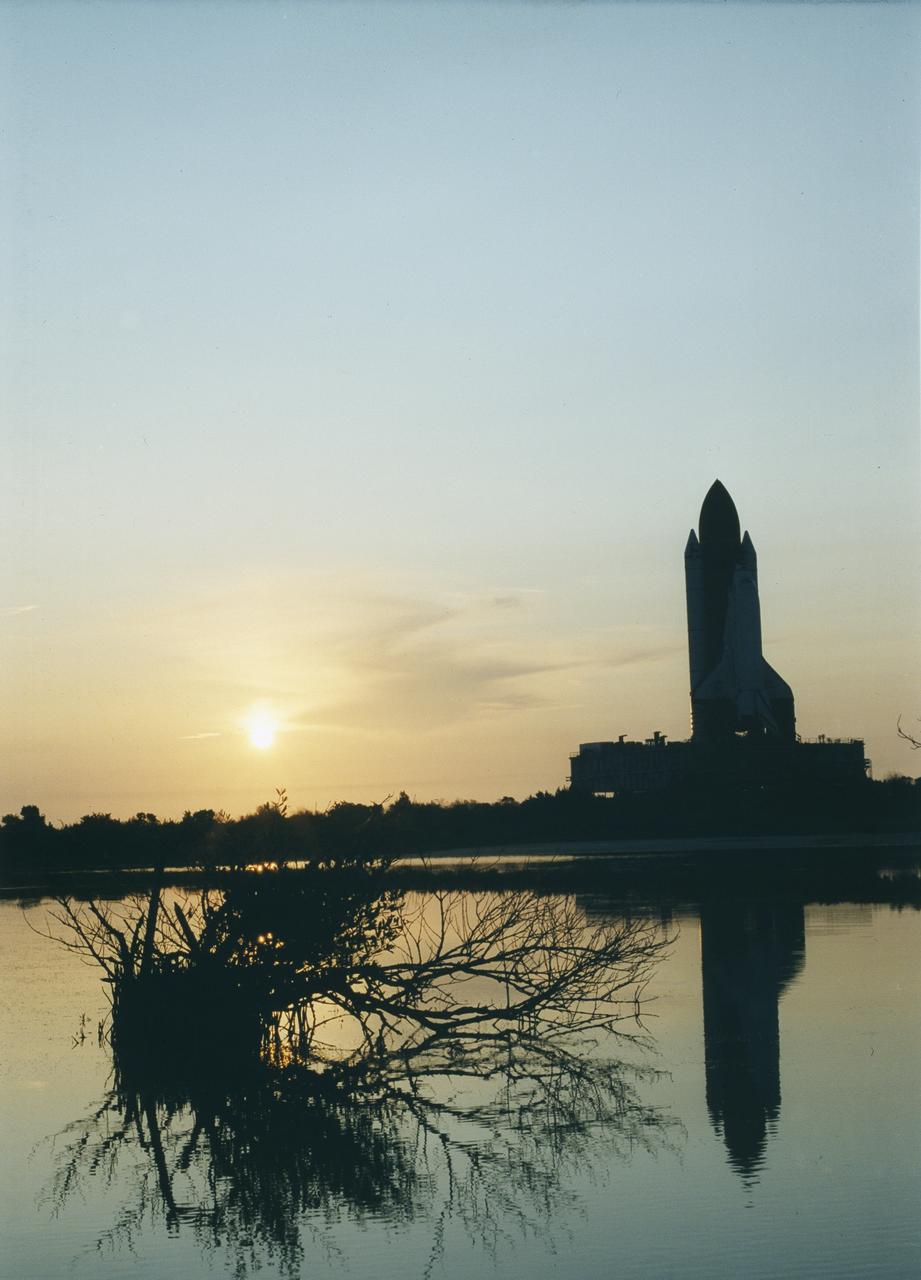
KENNEDY SPACE CENTER, FLA. -- STS-48: Discovery
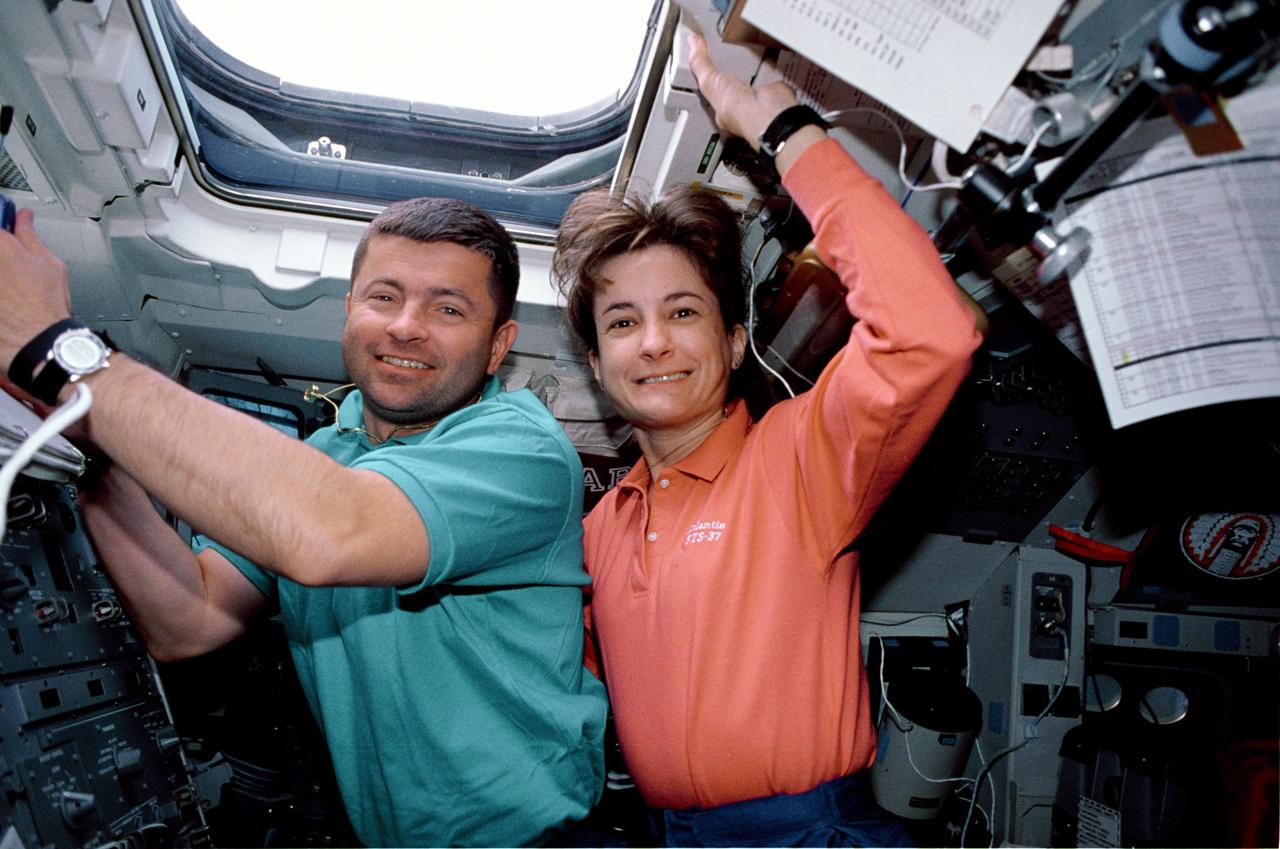
STS037-33-031 (5-11 April 1991) --- Astronauts Kenneth D. Cameron, STS-37 pilot, and Linda M. Godwin, mission specialist, take advantage of a well-lighted crew cabin to pose for an in-space portrait on the Space Shuttle Atlantis' aft flight deck. The two shared duties controlling the Remote Manipulator System (RMS) during operations involving the release of the Gamma Ray Observatory (GRO) and the Extravehicular Activity (EVA) of astronauts Jerry L. Ross and Jerome (Jay) Apt. The overhead window seen here and nearby eye-level windows (out of frame at left) are in a busy location on Shuttle missions, as they are used for payload surveys, Earth observation operations, astronomical studies and other purposes. Note the temporarily stowed large format still photo camera at lower right corner. This photo was made with a 35mm camera. This was one of the visuals used by the crew members during their April 19 Post Flight Press Conference (PFPC) at the Johnson Space Center (JSC).
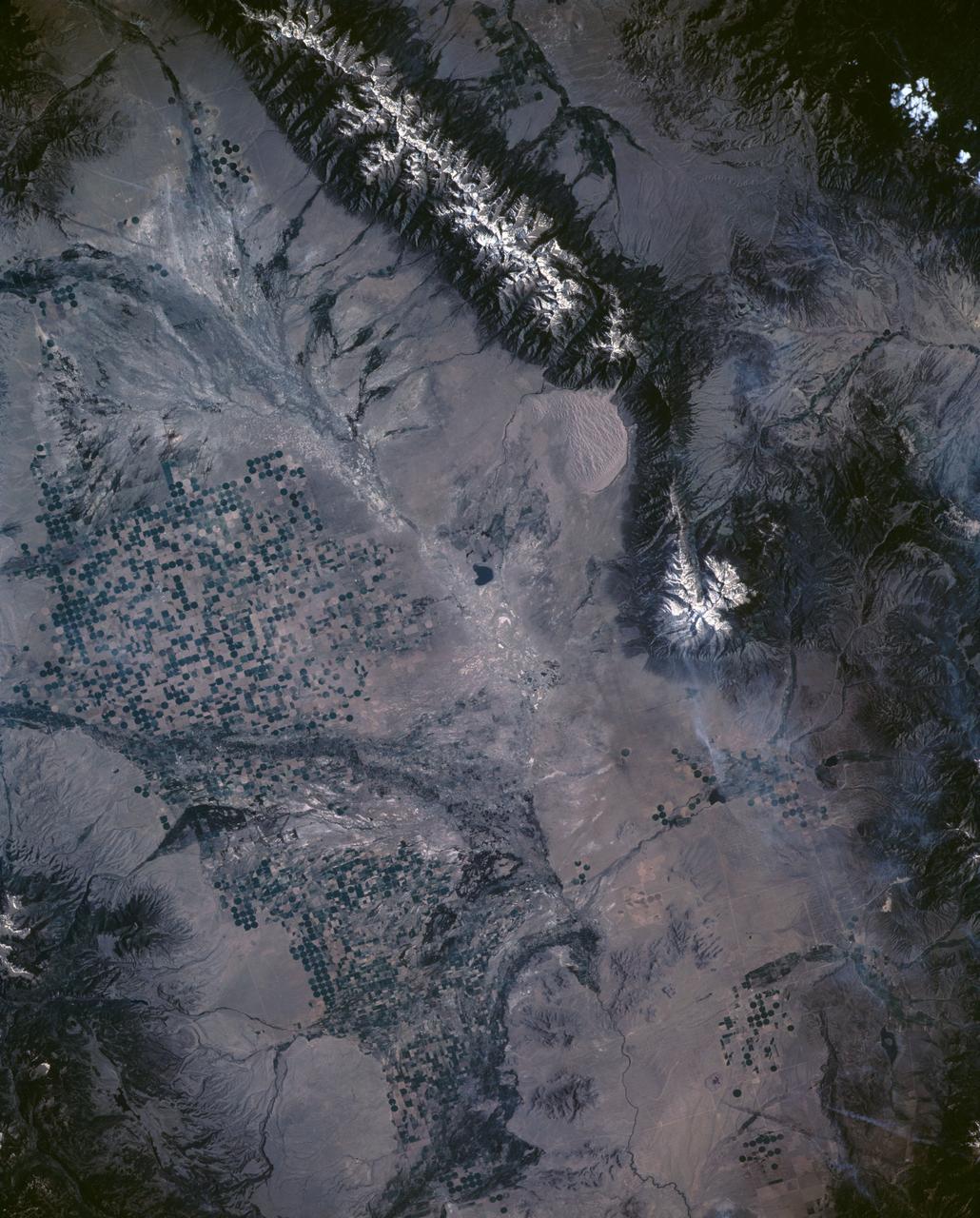
STS040-151-126 (5-14 June 1991) --- Croplands of the San Luis Valley stand out exceptionally clearly from low Earth orbit. The Rio Grande flows through the valley. Circular center pivot irrigation patterns have almost completely replaced the earlier rectangular grid pattern. Pinto beans are the specialty of the area. The Great Sand Dunes National Monument appears in fine detail near the center of the picture. The sands of these dunes have been blown from the valley floor by westerly winds in the course of the last few tens of thousands of years, now banked up against the foot of the Sangre de Christo Mountains (snowcapped peaks reach over 14000 feet). The town of Alamosa lies on the Rio Grande. The San Juan Mountains appear at the bottom left.
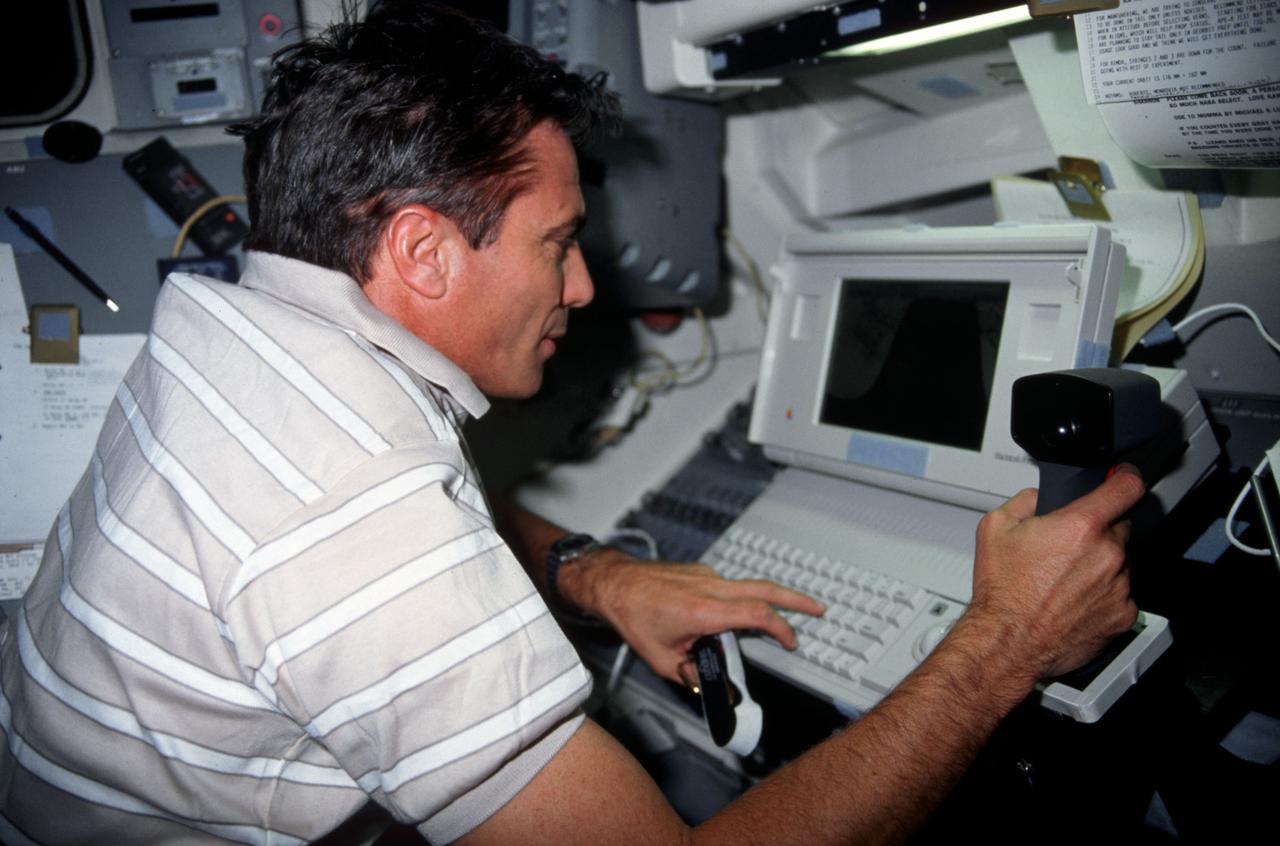
STS043-03-009 (5 Aug 1991) ---- Astronaut John E. Blaha is pictured executing development test objective (DTO) 1208, Space Station Cursor Control Device Evaluation II and advanced applications. The purpose of the Cursor Control Device Experiment is to evaluate human performance under space flight conditions of cursor control devices which are similar to the devices under consideration for use onboard Space Station computers. Here, the mission commander uses a thumbball/handgrip control device. Each crewmember evaluated the different types of cursor control devices during the nine-day STS-43 mission. Other methods of cursor control evaluated were the built-in trackball, a side mounted trackball with restraints and an optical pad with mouse.
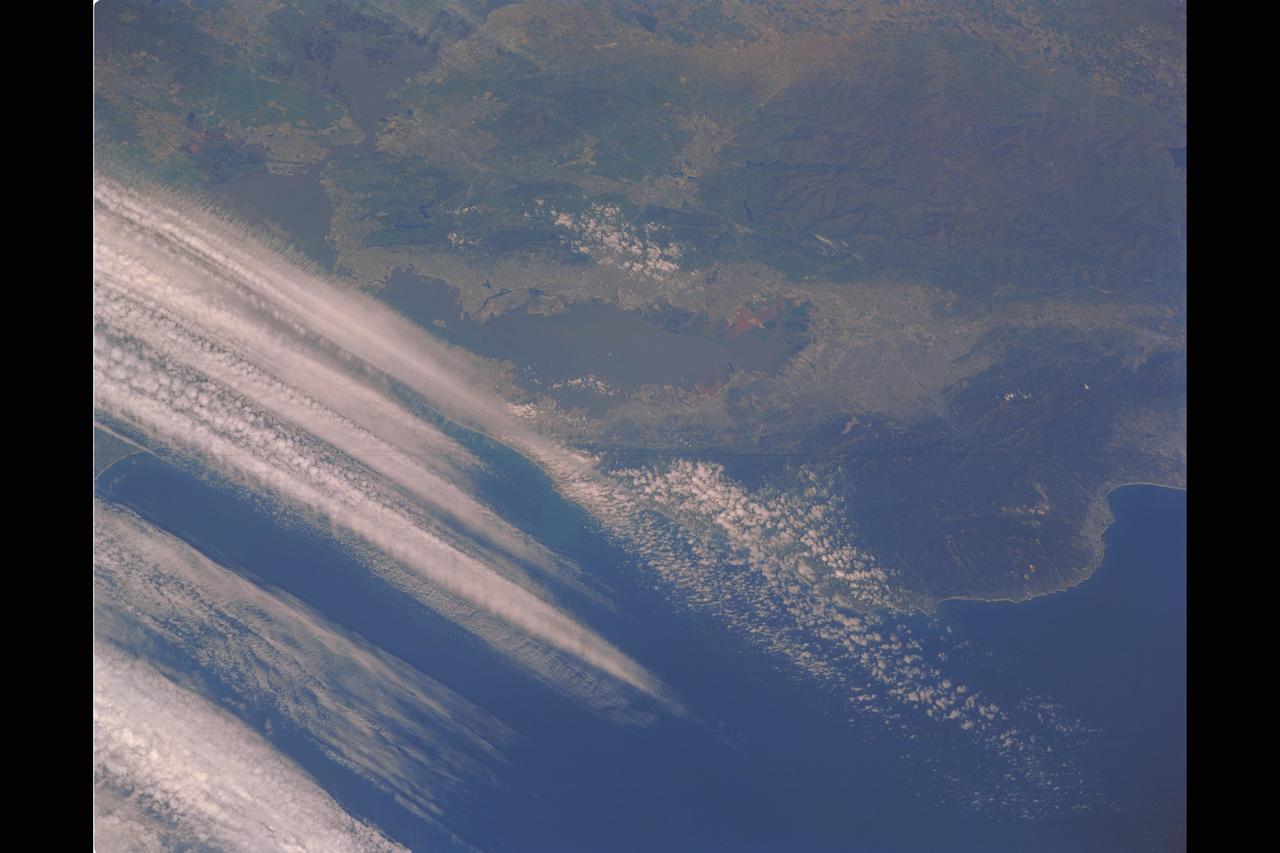
San Francisco Bay Area as seen from the Space Shuttle STS-40, SL-1 mission
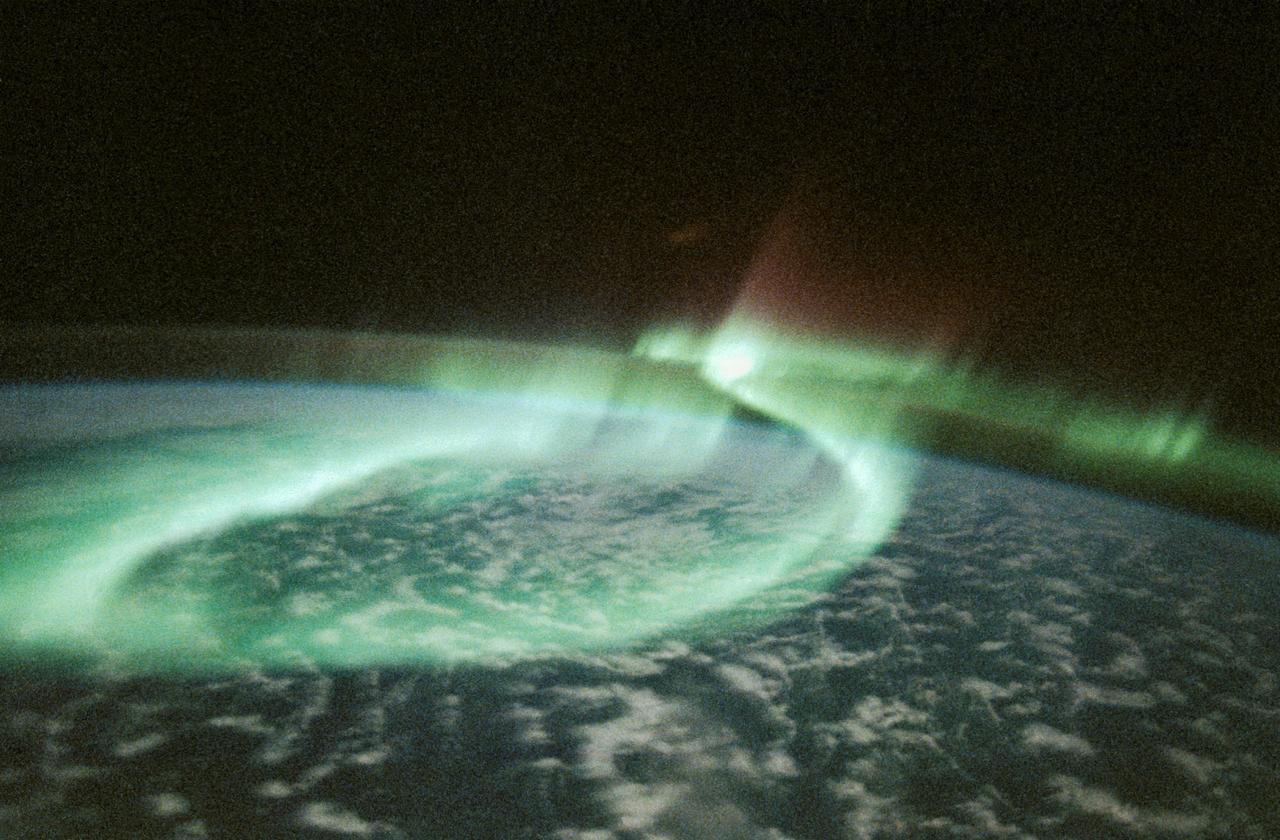
STS039-23-020 (28 April-6 May 1991) --- A 35mm frame of the Aurora Australis, also known as the Southern Lights, photographed from Space Shuttle Discovery's flight deck by one of its seven crew members. One of the mission objectives was to measure the spectral and spatial characteristics of auroral emissions. While passing over the sunlighted portion of Earth, the crew was able to take a number of photos of the various geographic points on the planet; much of the time on nightside passes was devoted to a thorough study and documentation of auroral displays.
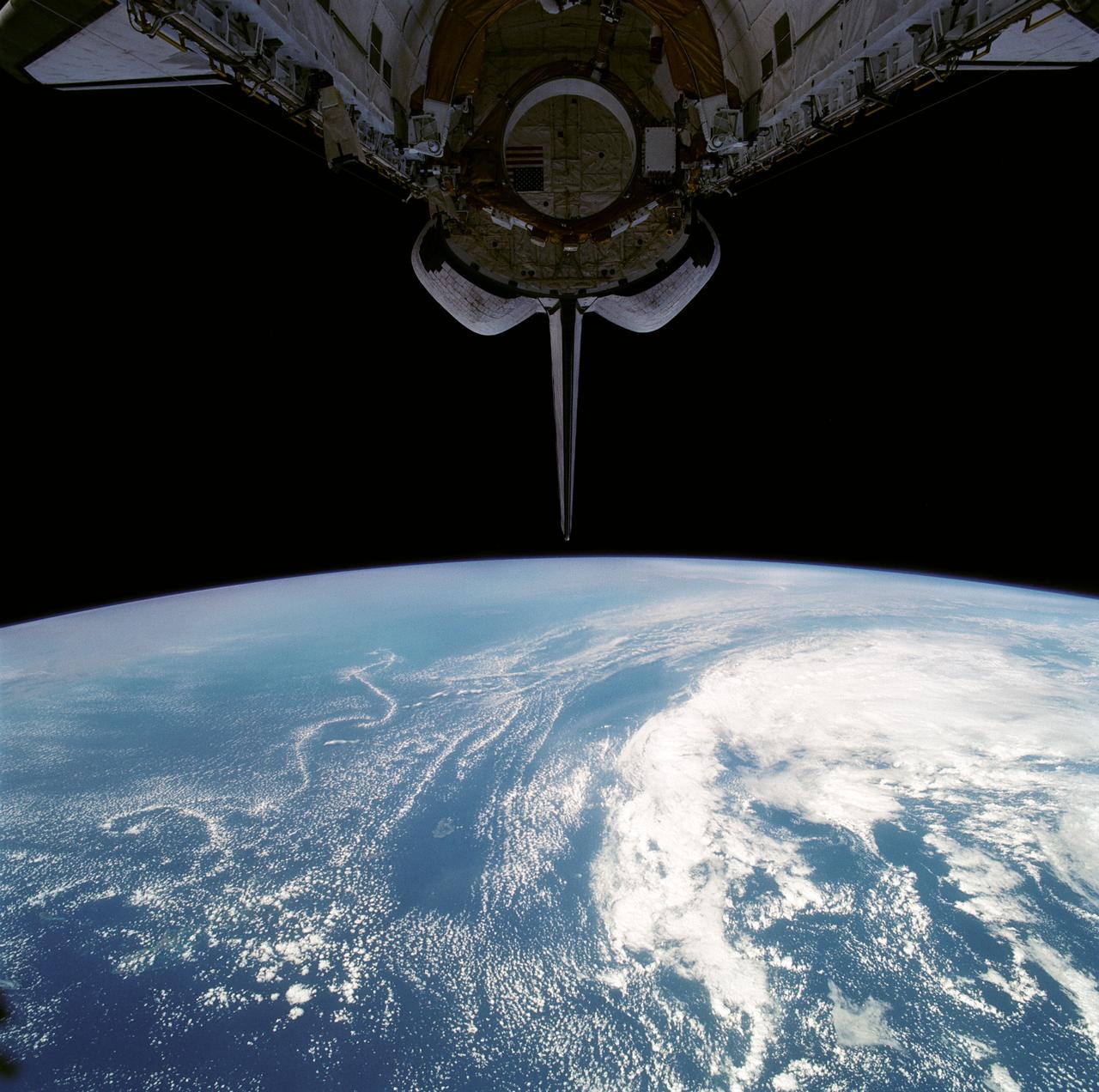
Stable, south flowing air over the western Pacific Ocean (26.0N, 131.0E) is disturbed by islands south of Korea, resulting in sinuous clouds known as von Karman vortices. The smoke plume from Japan's Mount Unzen Volcano on Kyushu, is visible just west of the large cloud mass and extending southward. A very large, purple tinged dust pall, originating in Mongolia, can be seen on the Earth's Limb, covering eastern China and extending into the East China Sea.
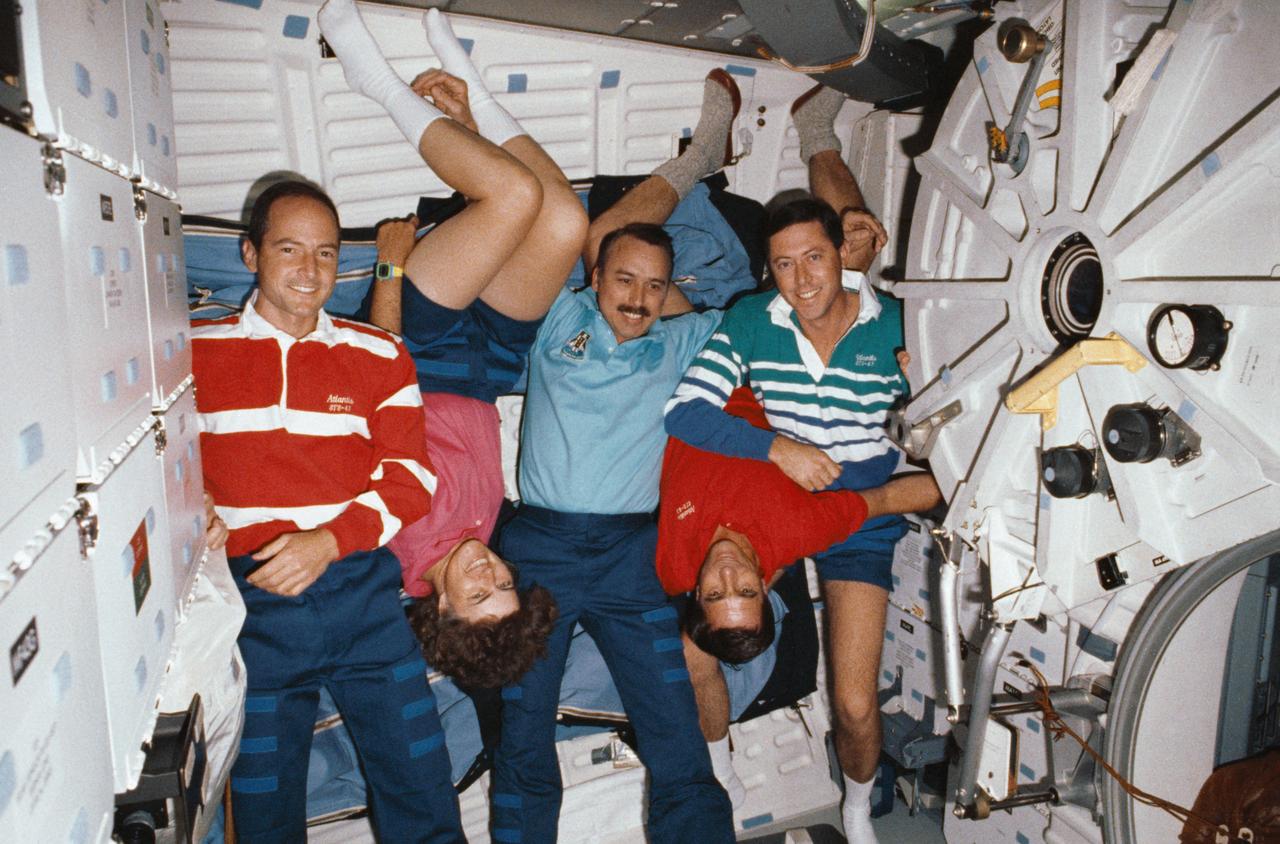
STS043-40-029 (2-11 Aug 1991) --- The five crewmembers on NASA's STS-43 mission pose for the traditional in-flight crew portrait. The photo should be oriented with Atlantis' middeck hatch on the right. Left to right are astronauts G. David Low, Shannon W. Lucid and James C. Adamson, all mission specialists; John E. Blaha, mission commander; and Michael A. Baker, pilot.
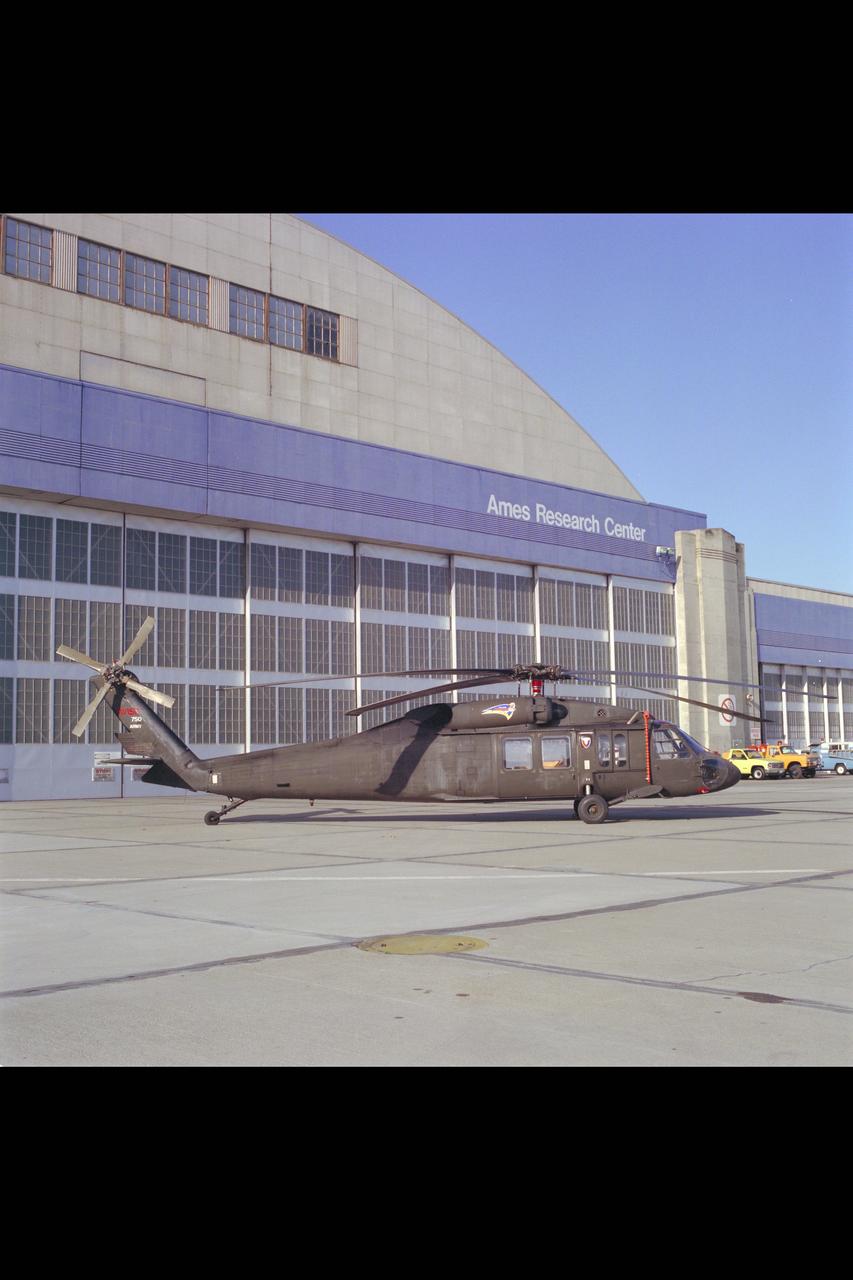
UH-60 RASCAL (NASA-750) on flight line
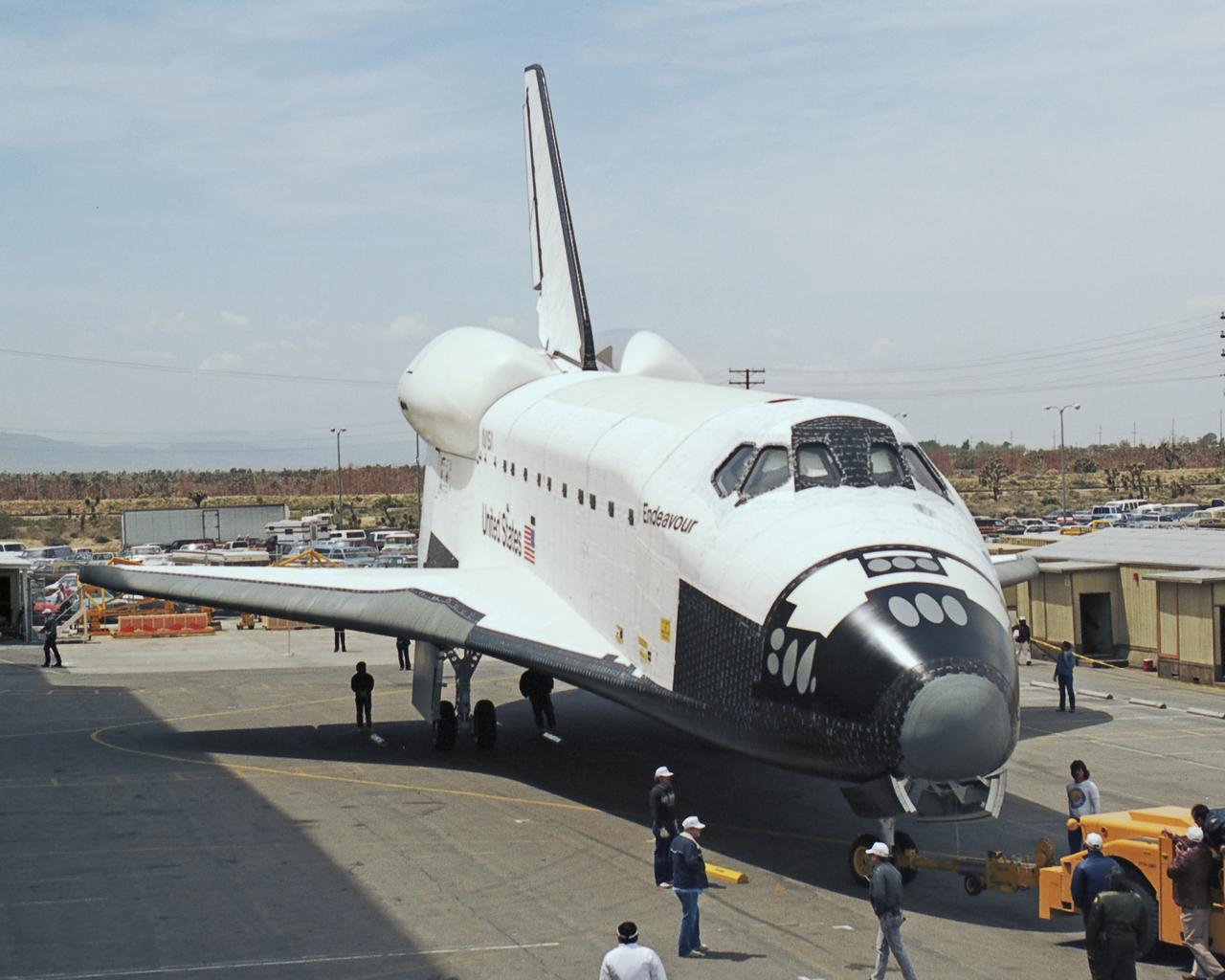
The newest space shuttle orbiter, Endeavour is ready to roll out of the hangar at Palmdale, Calif. OV-105 features many design enhancements, including a drag chute for safer landings and equipment to allow the orbiter to remain in space for up to 28 days.Photo credit: NASA
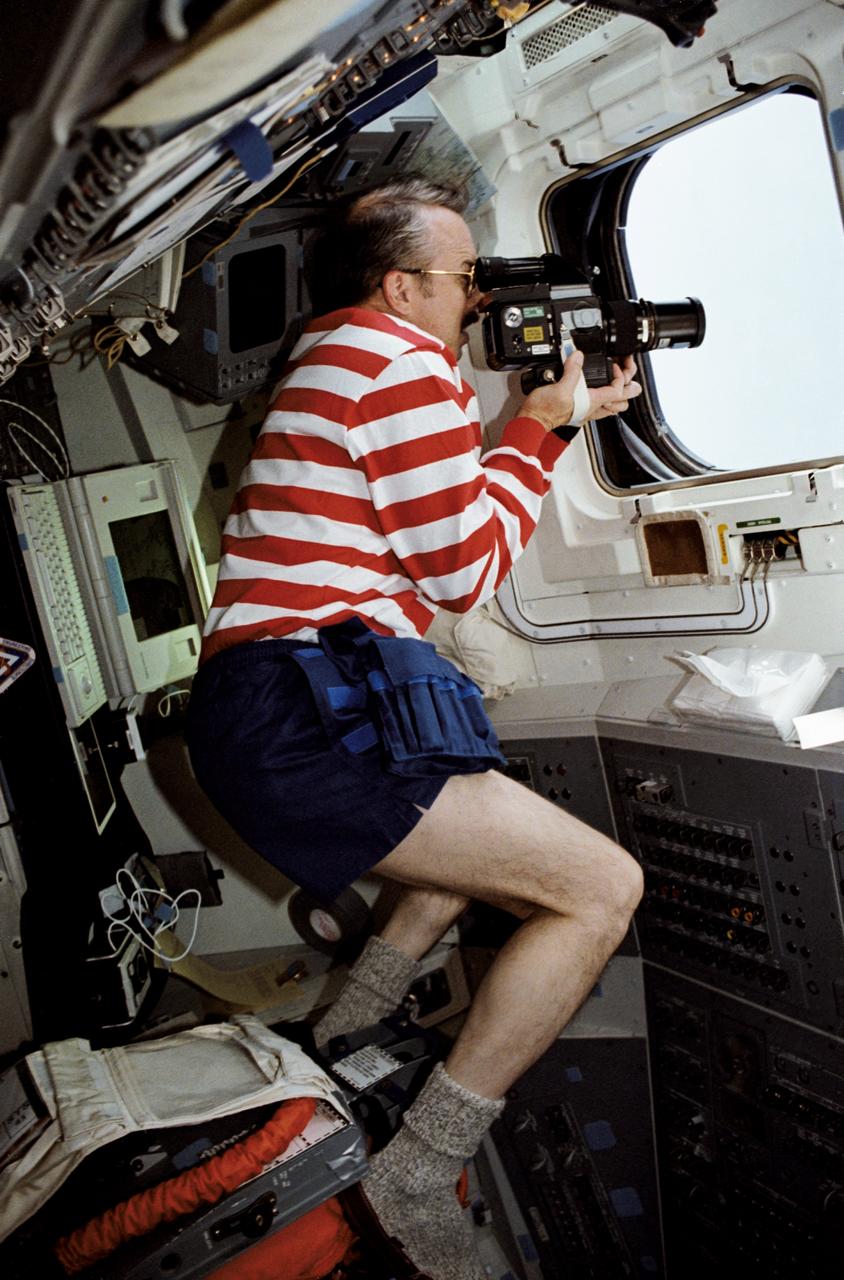
STS043-21-013 (2-11 August 1991) --- As on previous missions, Earth observations/photography played an important role on NASA’s STS-43 mission. That role is depicted in this scene showing astronaut James C. Adamson, mission specialist, aiming a still camera toward Earth through an overhead window on Space Shuttle Atlantis’ aft flight deck. The scene was recorded by a fellow crewmember using a 35mm camera.
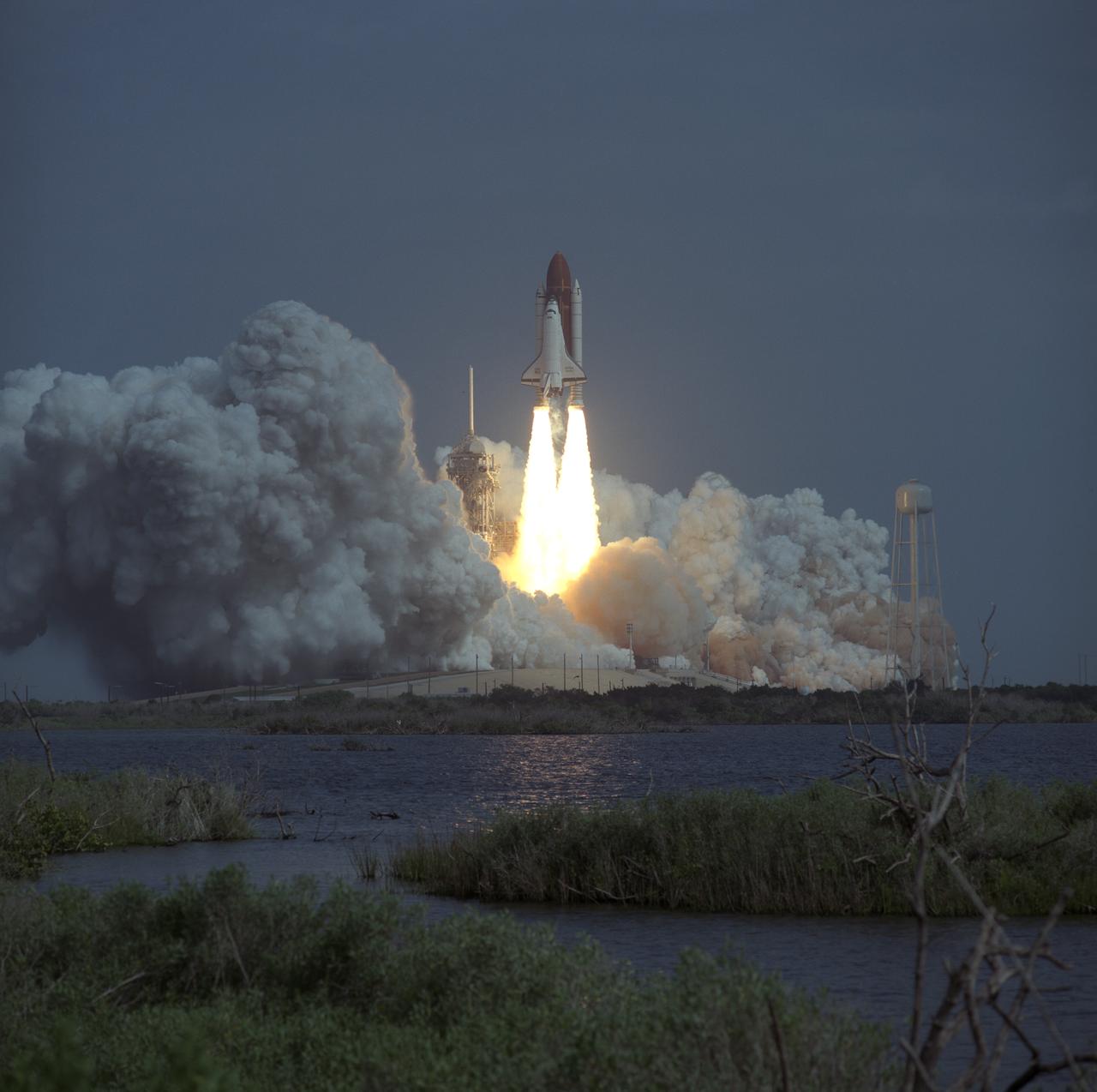
Launched aboard the Space Shuttle Atlantis on April 5, 1991 at 9:22:44am (EST), the STS-37 mission hurtles toward space. Her crew included Steven R. Nagel, commander; Kenneth D. (Ken) Cameron, pilot; and Jay Apt, Jerry L. Ross, and Linda M. Godwin, all mission specialists. The crew’s major objective was the deployment of the Gamma Ray Observatory (GRO). Included in the observatory were the Burst and Transient Source Experiment (BATSE); the Imaging Compton Telescope (COMPTEL); the Energetic Gamma Ray Experiment Telescope (EGRET); and the Oriented Scintillation Spectrometer Telescope (OSSEE).
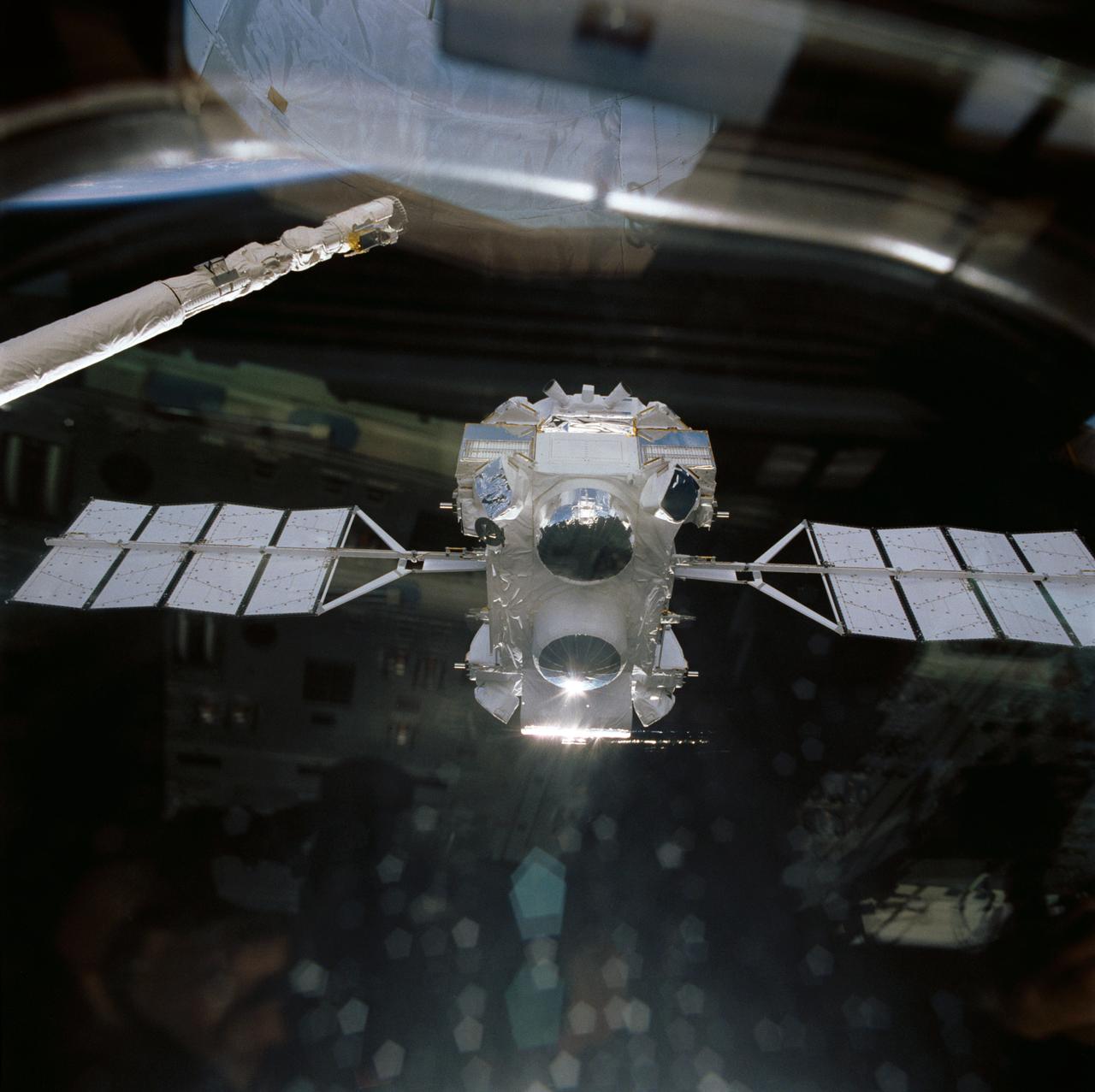
Atlantis', Orbiter Vehicle (OV) 104's, remote manipulator system (RMS) releases Gamma Ray Observatory (GRO) during STS-37 deployment. Visible on the GRO as it drifts away from the RMS end effector are the four complement instruments: the Energetic Gamma Ray Experiment (bottom); Imaging Compton Telescope (COMPTEL) (center); Oriented Scintillation Spectrometer Experiment (OSSE) (top); and Burst and Transient Source Experiment (BATSE) (at four corners). GRO's solar array (SA) panels are extended and are in orbit configuration. View was taken through aft flight deck window which reflects some of the crew compartment interior.
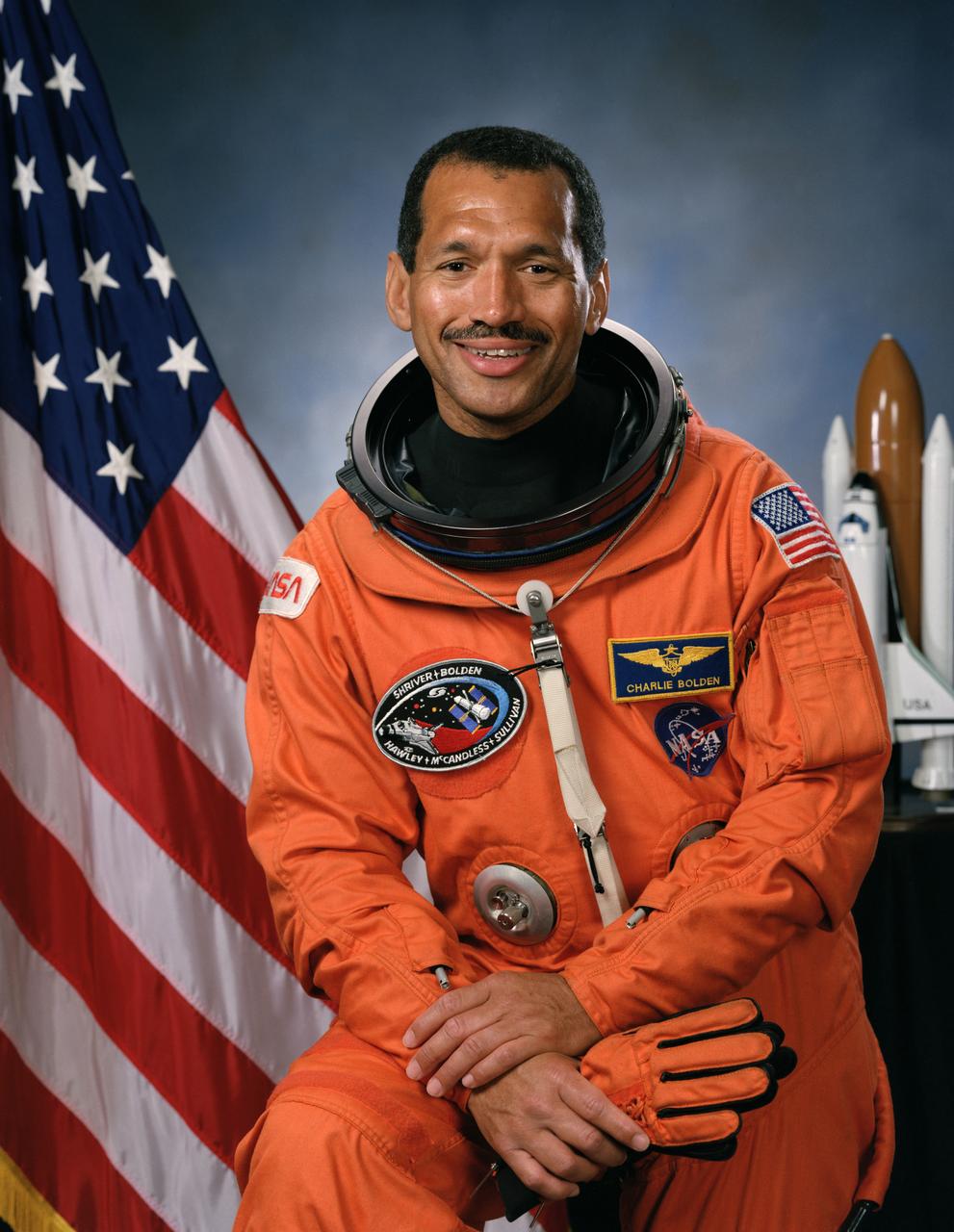
S91-49083 (17 Oct. 1991) --- Astronaut Charles F. Bolden Jr. Photo credit: NASA
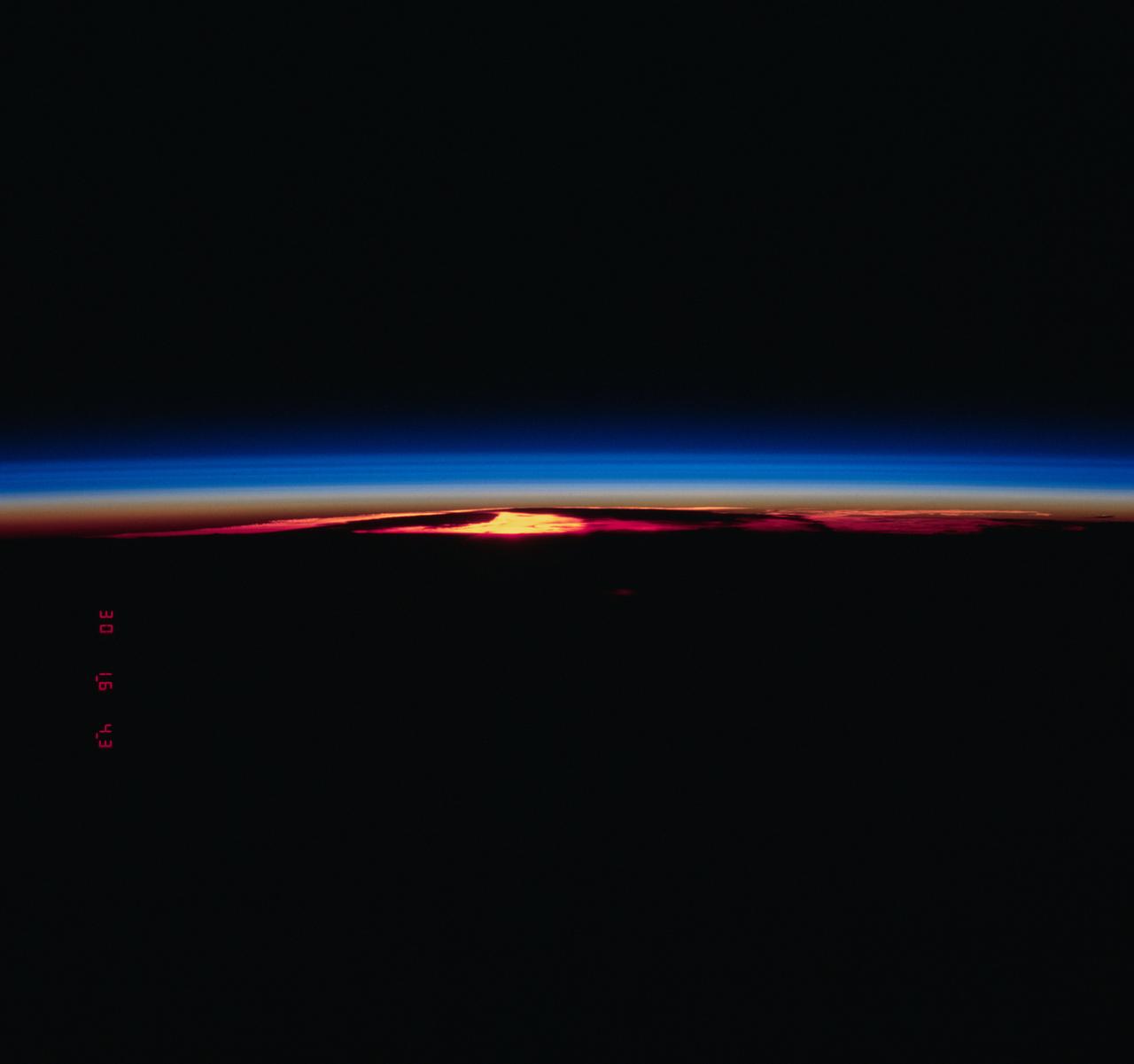
STS039-610-037 (28 April-6 May 1991) --- Numerous atmospheric scattering layers over Earth are apparent in this frame. The layers consist of fine particles suspended in very stable layers of the atmosphere. This photo was taken with a 70mm Rolliflex camera during the Space Shuttle Discovery's eight day mission. Crew members onboard were astronauts Michael L. Coats, L. Blaine Hammond, Guion S. Bluford, Richard J. Hieb, Gregory J. Harbaugh, Donald R. McMonagle and Charles L. (Lacy) Veach.
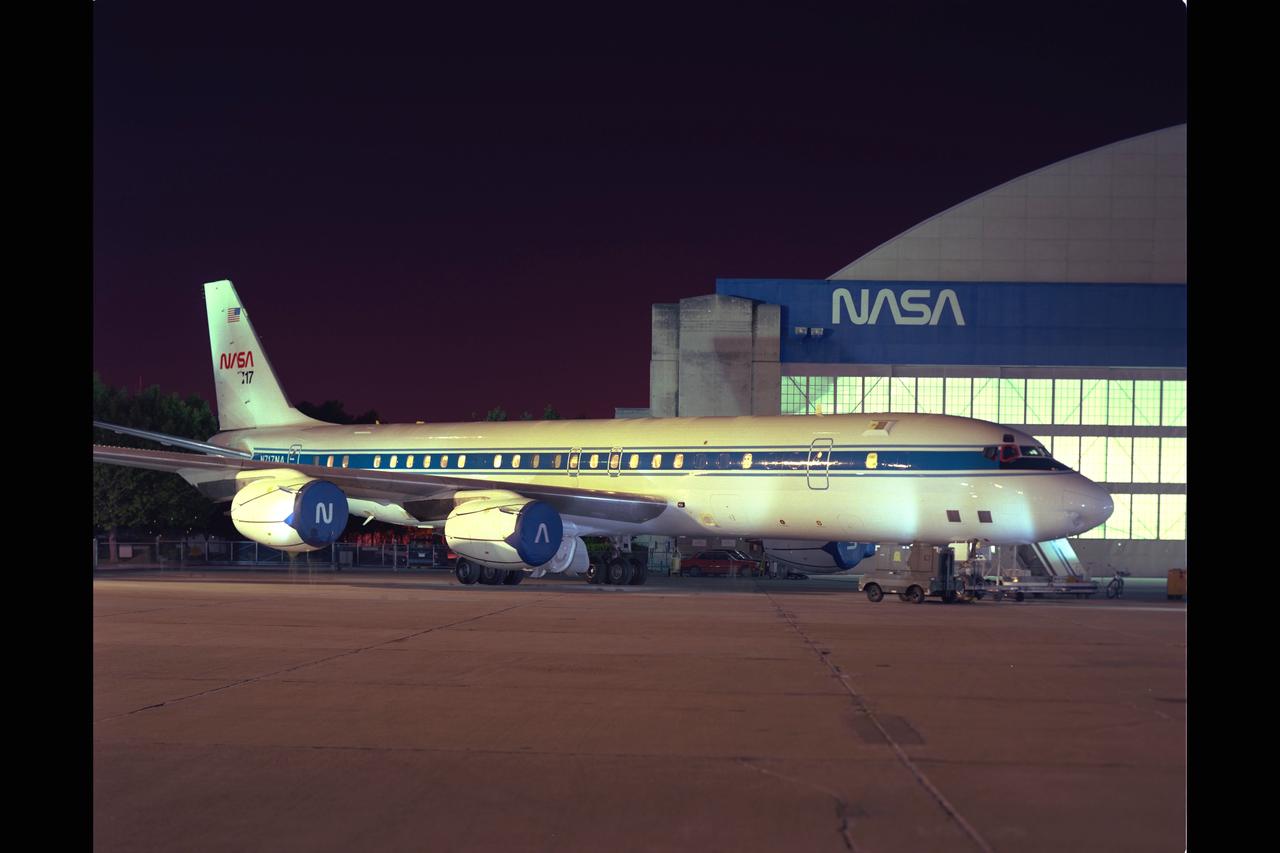
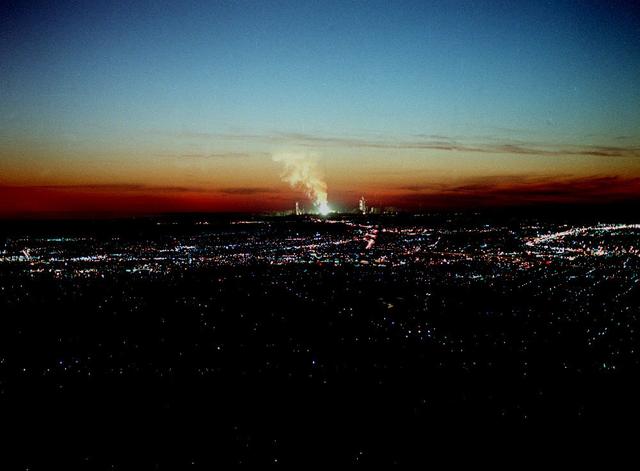
NASA Ames Research Center interaction with environment. This evening shot was time exposed in front of the NASA Hangar with DC-8 (NASA-717) aircraft in the foreground.
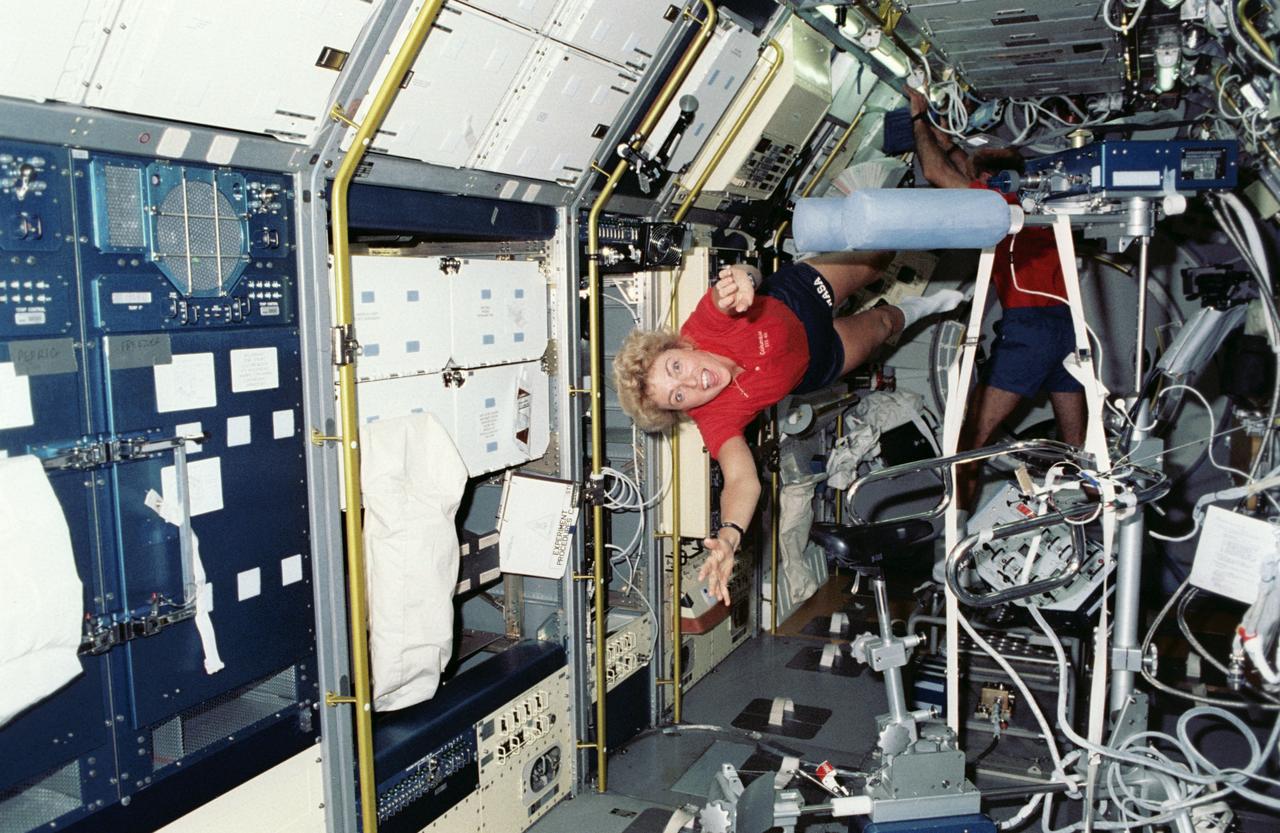
STS040-212-006 (5-14 June 1991) --- Payload specialist Millie Hughes-Fulford floats through the Spacelab Life Sciences (SLS-1) module aboard the Earth-orbiting Columbia. Astronaut James P. Bagian, mission specialist, is at the blood draw station in the background. The scene was photographed with a 35mm camera.
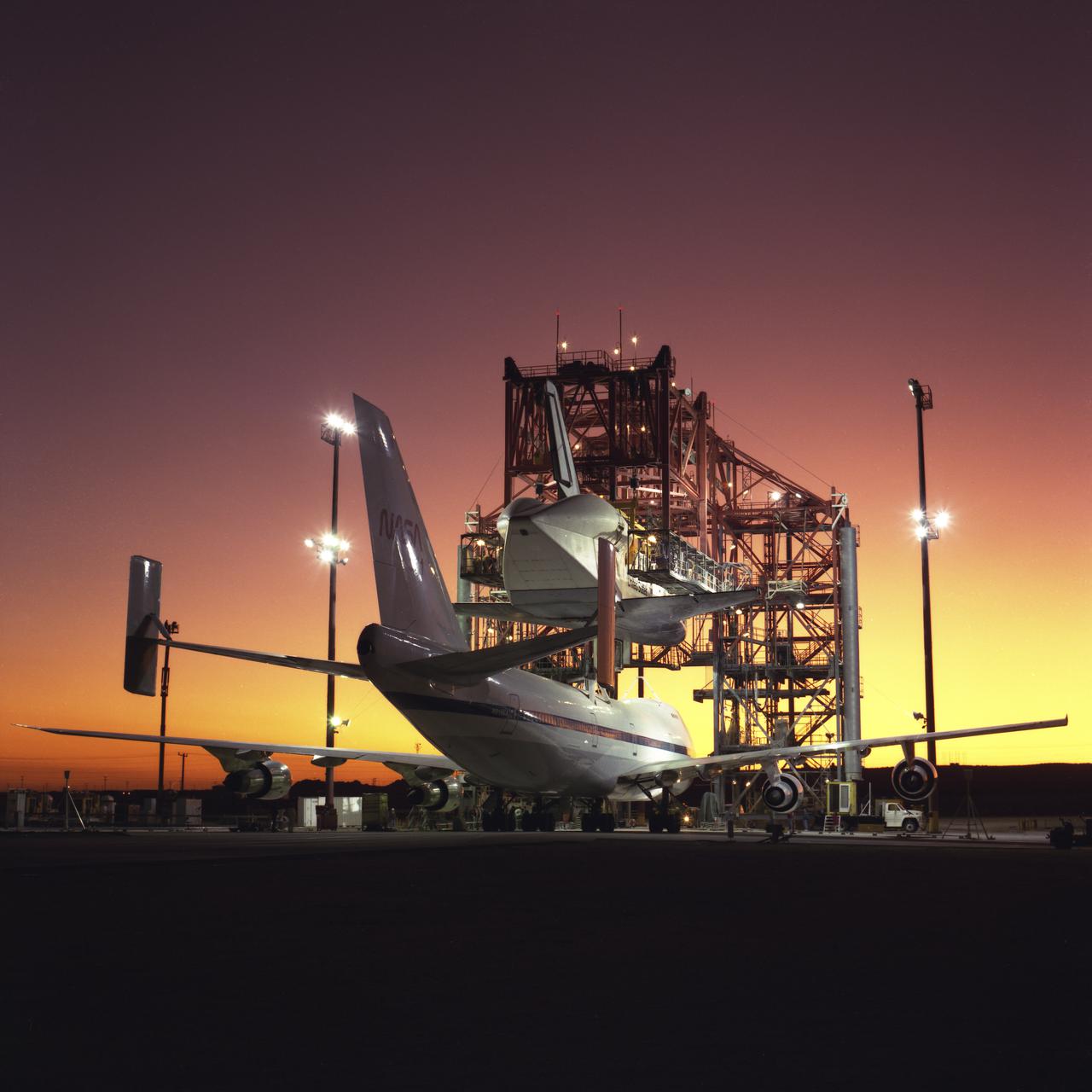
Shuttle Atlantis emerges from the Mate-Demate-Device mounted to Boeing 747 Shuttle Carrier Aircraft for the return flight to Kennedy Space Center in Florida.
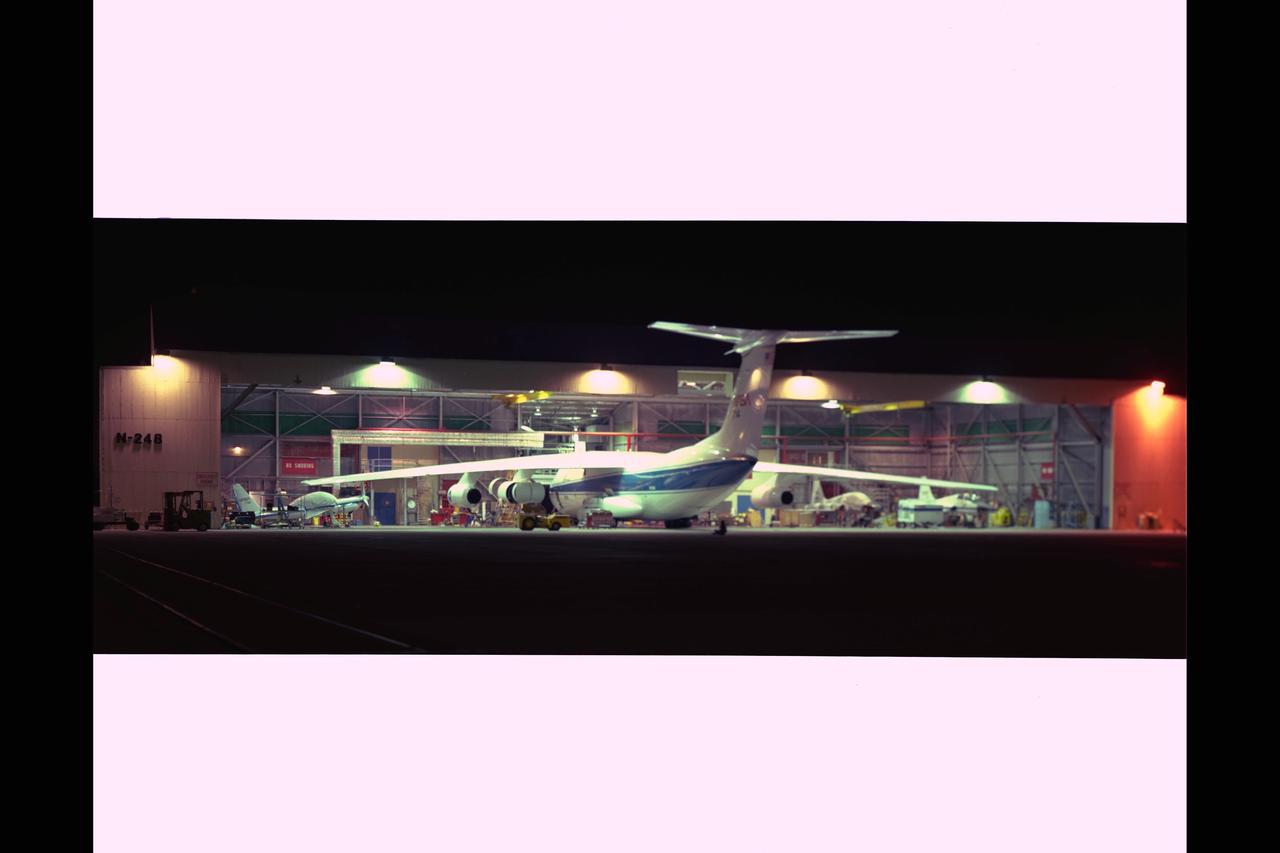
NASA Ames Research Center interaction with environment. This evening shot was timed exposed in front of the Aircraft Servicing Facility (N-248) with C-141 (NASA-714) in for service.
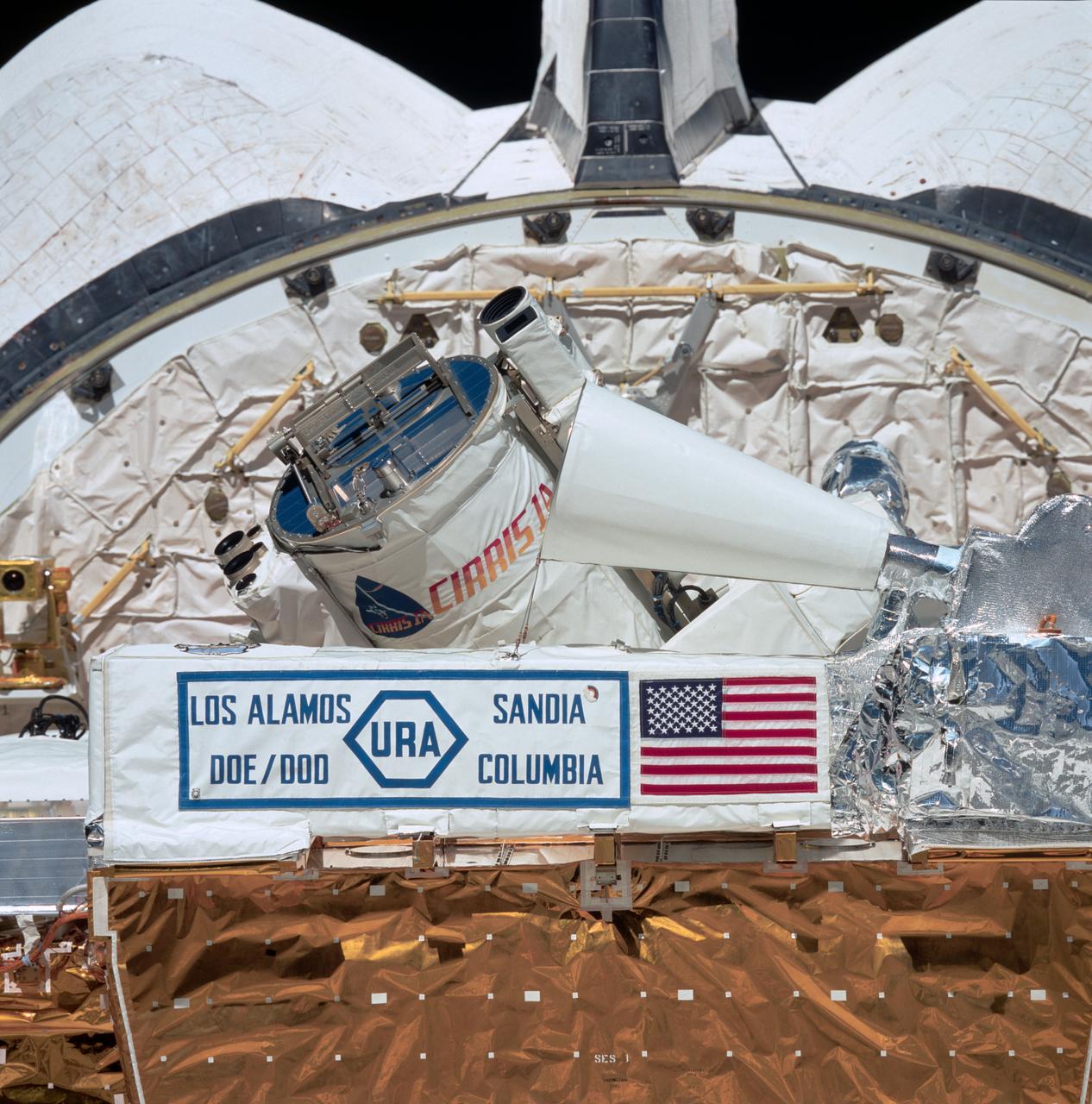
STS039-85-073 (28 April- 6 May 1991) --- This 70mm frame, taken from inside the crew cabin, shows a close-up view of the Air Force Program (AFP) 675 package. AFP-675 consists of the Cryogenic Infrared Radiance Instrumentation for Shuttle (CIRRIS)-1A; Far Ultraviolet Camera (FAR-UV) Experiment; Horizon Ultraviolet Program (HUP); Quadruple Ion Neutral Mass Spectrometer (QINMS); and the Uniformly Redundant Array (URA). Much of that hardware is backdropped here against the aft cargo bay bulkhead of Discovery.
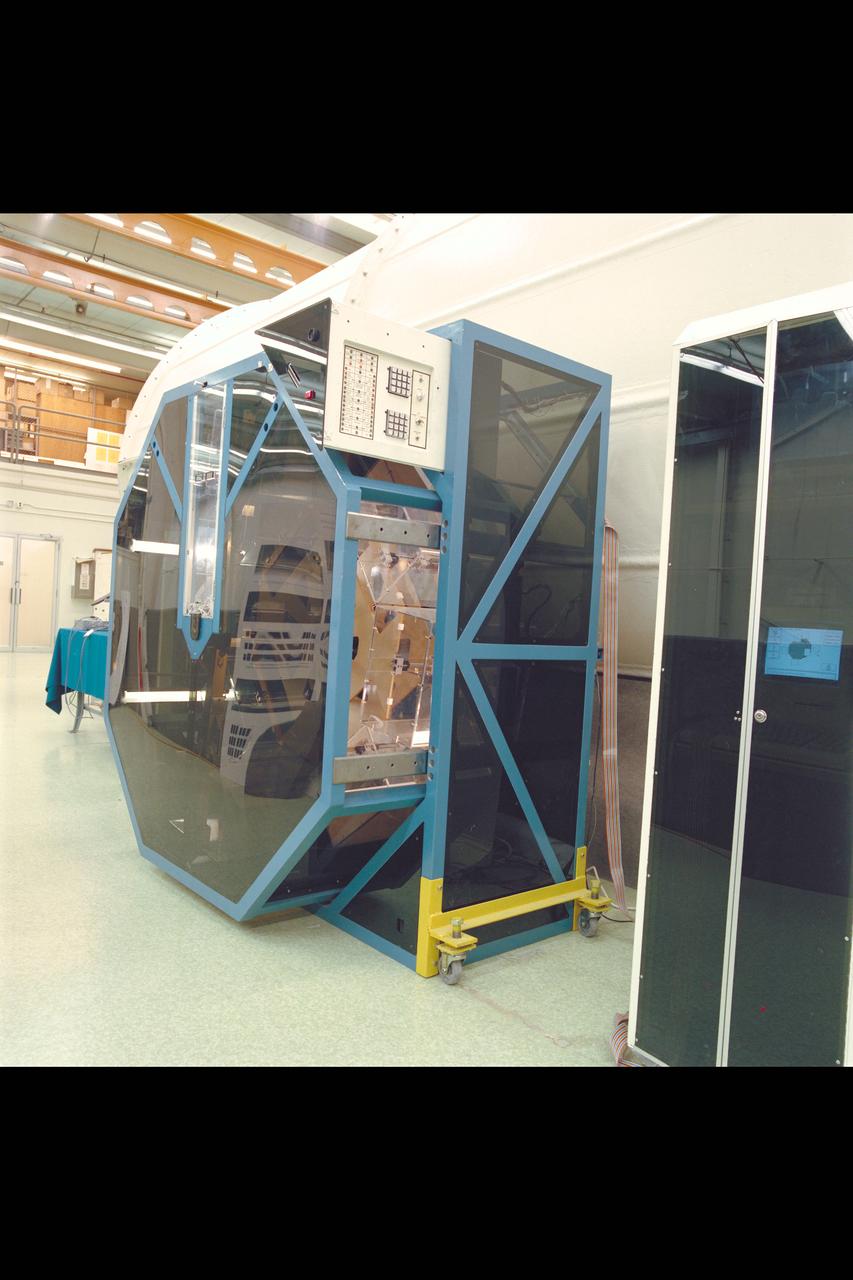
N-244 2.5M Centrifuge Facility mock-up
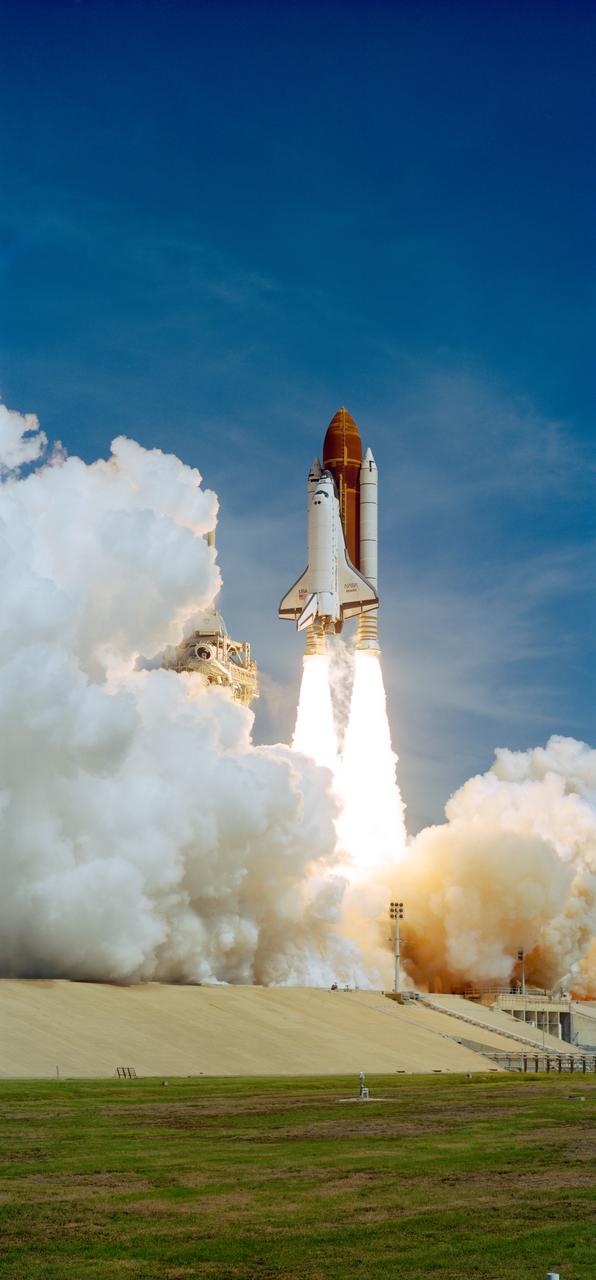
STS043-S-090 (2 Aug 1991) --- The Space Shuttle Atlantis soars toward space to begin a scheduled nine-day mission. The 11:02:00 a.m. (EDT) liftoff from Launch Pad 39A came at the beginning of the launch window. Onboard the spacecraft were astronauts John E. Blaha, mission commander; Michael A. Baker, pilot; and Shannon W. Lucid, James C. Adamson and G. David Low, all mission specialists. Six hours after this picture was taken, the astronauts deployed the Tracking and Data Relay Satellite (TDRS-E).
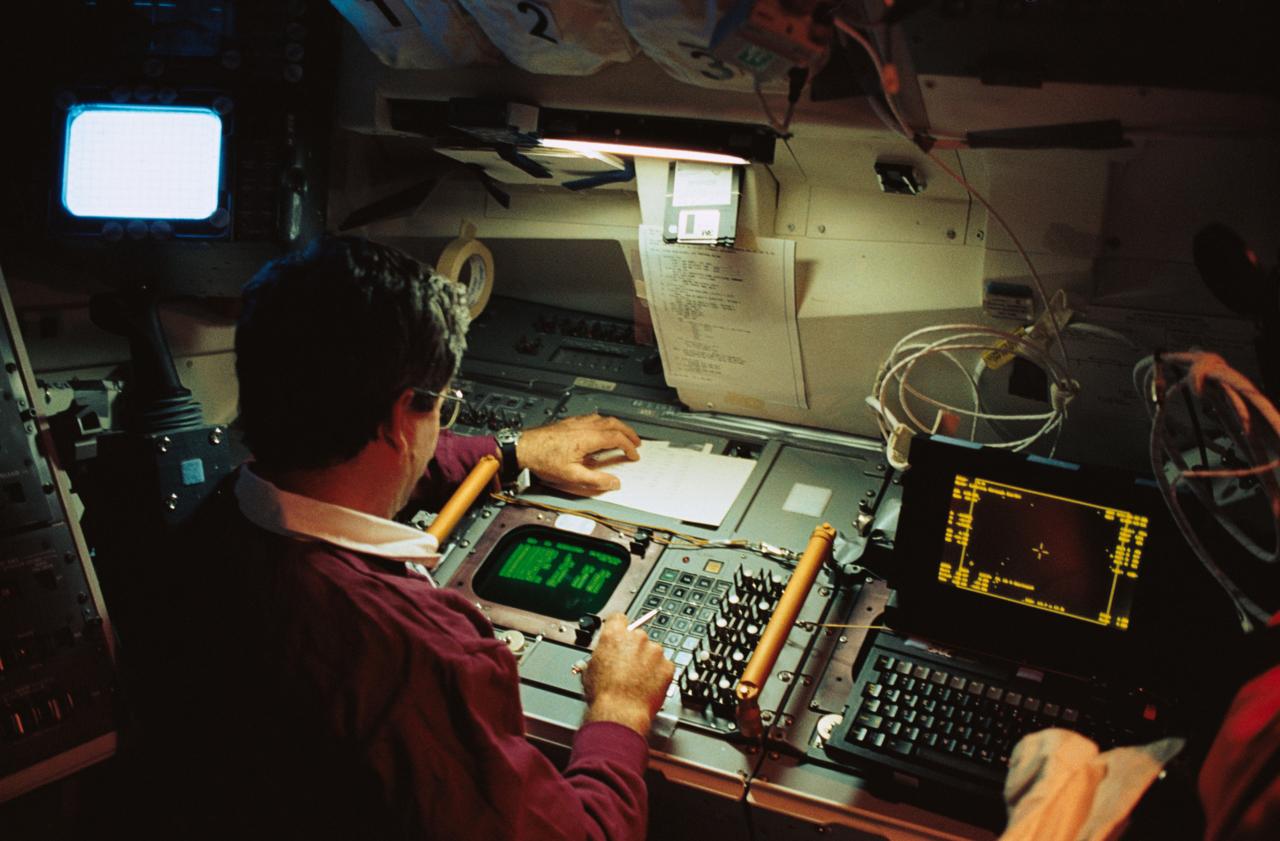
STS039-09-036 (28 April-6 May 1991) --- Astronaut Charles L. (Lacy) Veach monitors experiment data on the aft flight deck of the Earth-orbiting Discovery. The photograph was taken with a 35mm camera. Veach and six other NASA astronauts spent over eight days in space busily collecting data for this mission, dedicated to the Department of Defense.
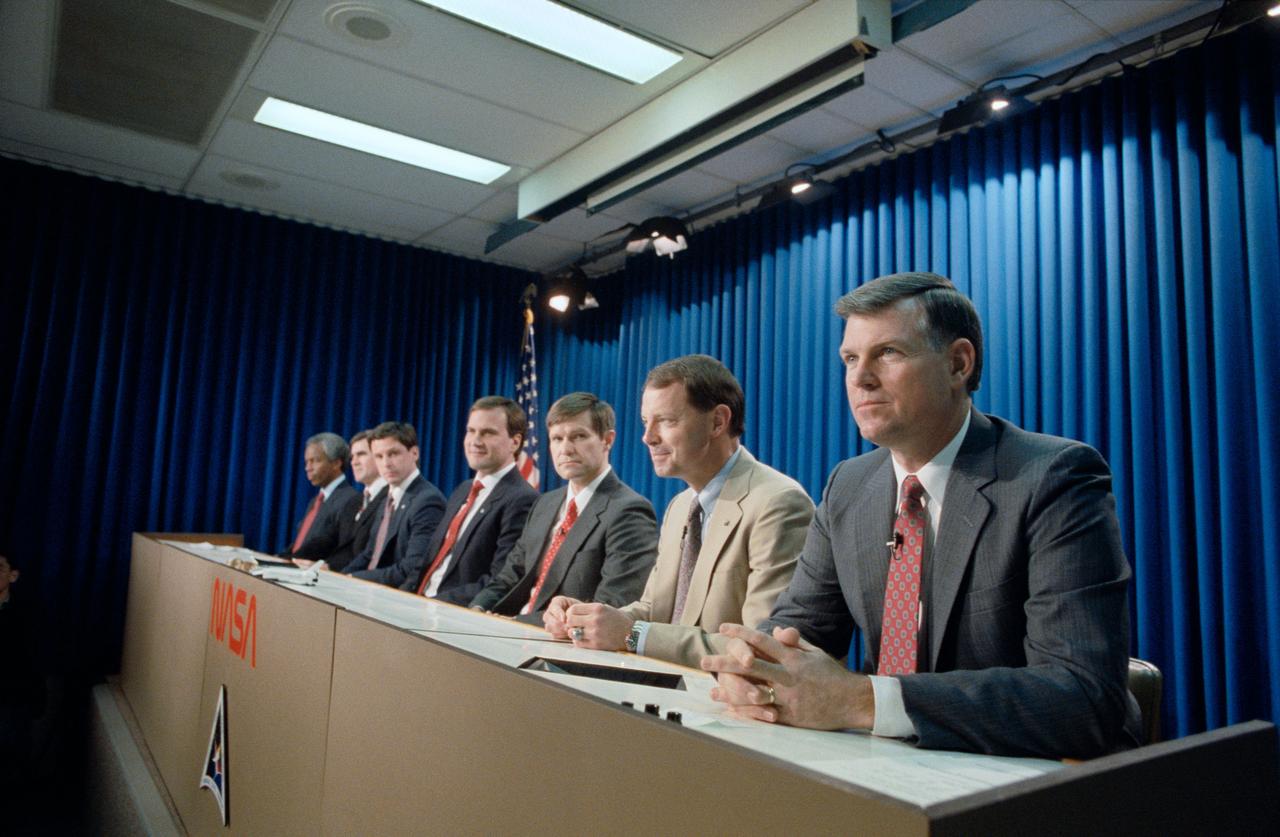
S91-26674 (23 Jan 1991) --- Astronaut Michael L. Coats, mission commander, listens attentively as a news media representative (out of frame) queries the STS-39 crewmembers during a pre-flight press briefing. The others, pictured left to right, are Astronauts Guion (Guy) S. Bluford, C. Lacy Veach, Gregory J. Harbaugh, Richard J. Hieb, Donald R. McMonagle and L. Blaine Hammond Jr.
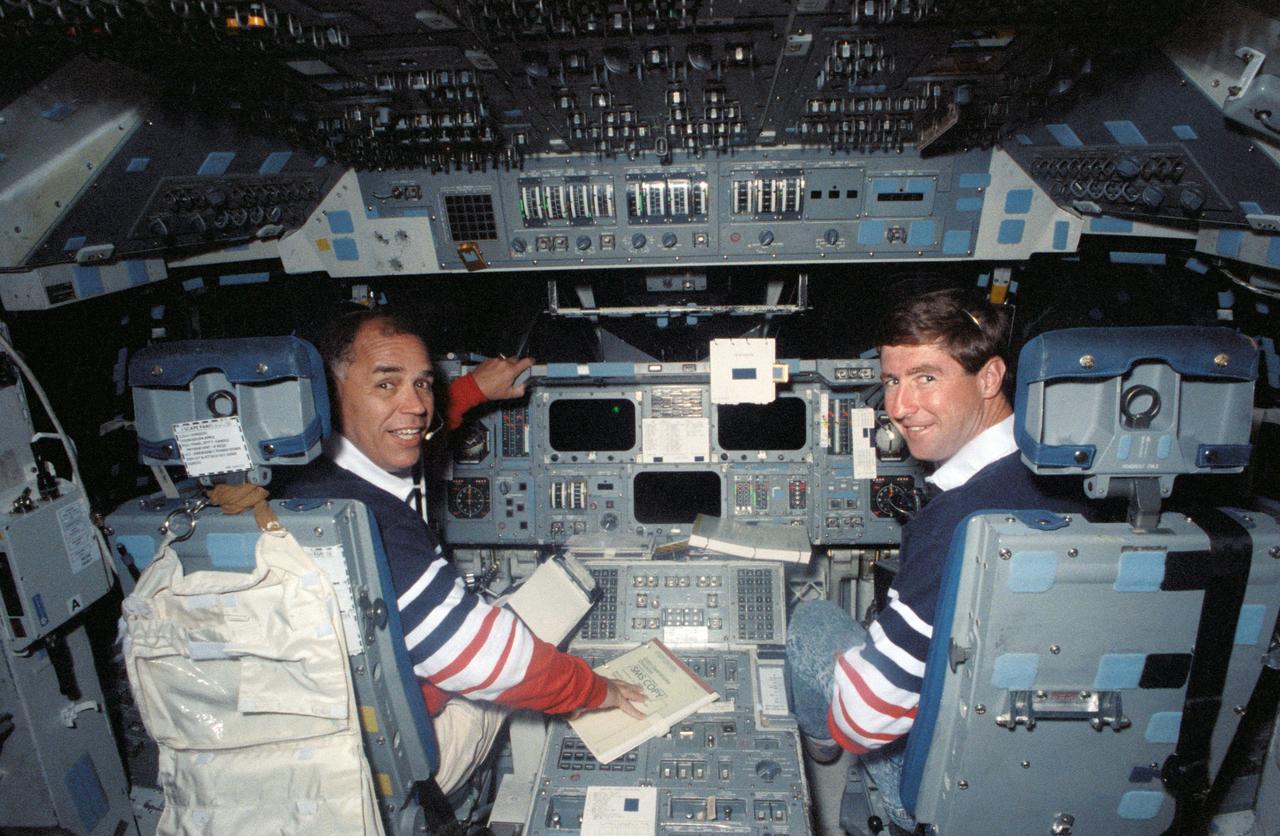
S91-38355 (28 May 1991) --- Seen floating about the vacant spaces of the Johnson Space Center's KC-135 "zero-gravity" aircraft are the six crewmembers for the STS 44 mission. Left to right are Terence T. Henricks, James S. Voss, F. Story Musgrave (partially obscured), Frederick D. Gregory, Thomas J. Hennen and Mario Runco Jr. Gregory is mission commander. Hennen is payload specialist for this flight, dedicated to the Department of Defense. The flight served as a refresher and a preview of the experience of weightlessness, as the special aircraft flew a series of parabolas which provided short sessions of zero-gravity.
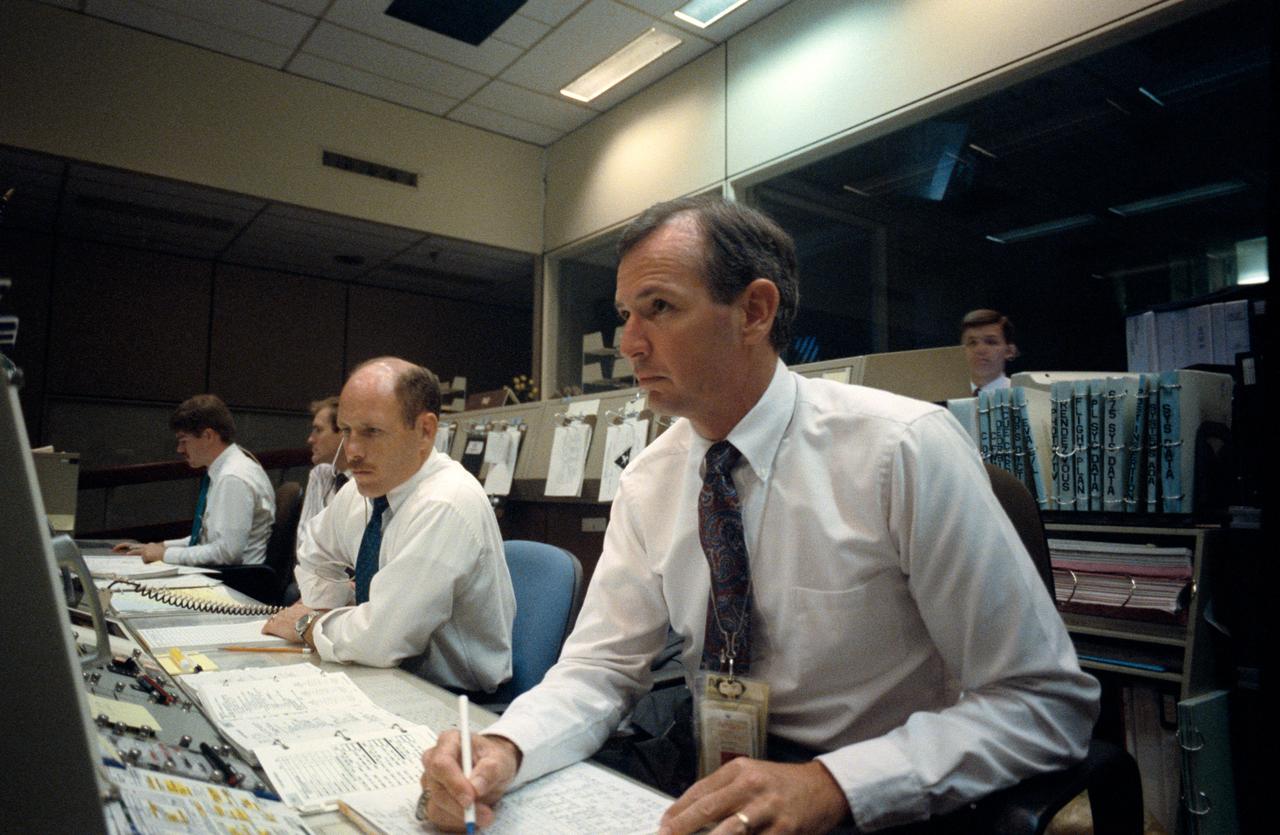
STS039-S-022 (28 April 1991)--- Two spacecraft communicators at the CAPCOM console monitor the ascent of the Space Shuttle Discovery. They are astronauts Kenneth D. Bowersox (left) and Brian Duffy. Launch occurred at 6:33 a.m. (CDT), April 28, 1991. The scene is in the second floor Flight Control Room (FCR) of the Johnson Space Center's Mission Control Center (MCC).

S91-32691 (3 Mar 1991) --- Astronaut Carl E. Walz.
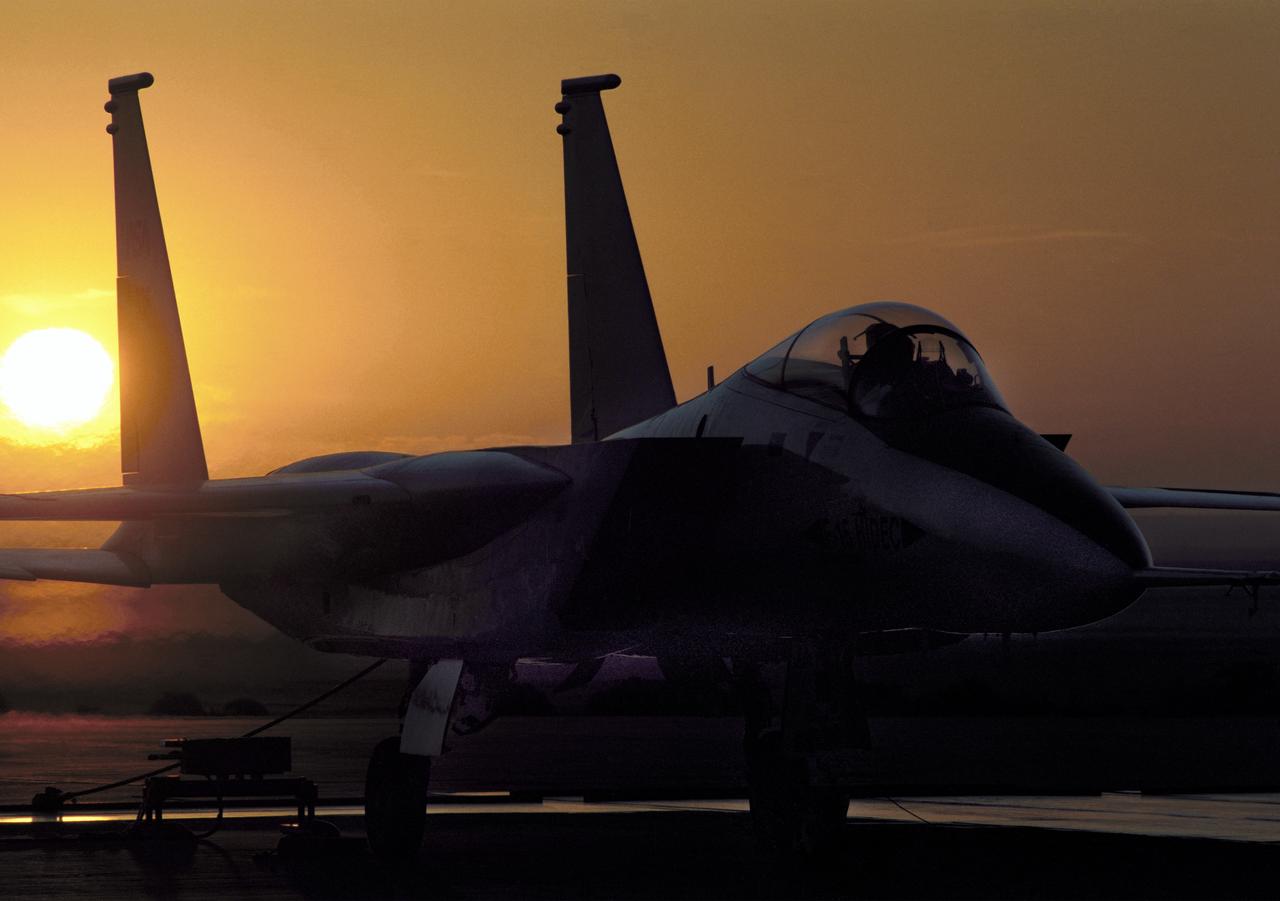
NASA's highly modified F-15A (Serial #71-0287) used for digital electronic flight and engine control systems research, at sunrise on the ramp at the Dryden Flight Research Facility, Edwards, California. The F-15 was called the HIDEC (Highly Integrated Digital Electronic Control) flight facility. Research programs flown on the testbed vehicle have demonstrated improved rates of climb, fuel savings, and engine thrust by optimizing systems performance. The aircraft also tested and evaluated a computerized self-repairing flight control system for the Air Force that detects damaged or failed flight control surfaces. The system then reconfigures undamaged control surfaces so the mission can continue or the aircraft is landed safely.
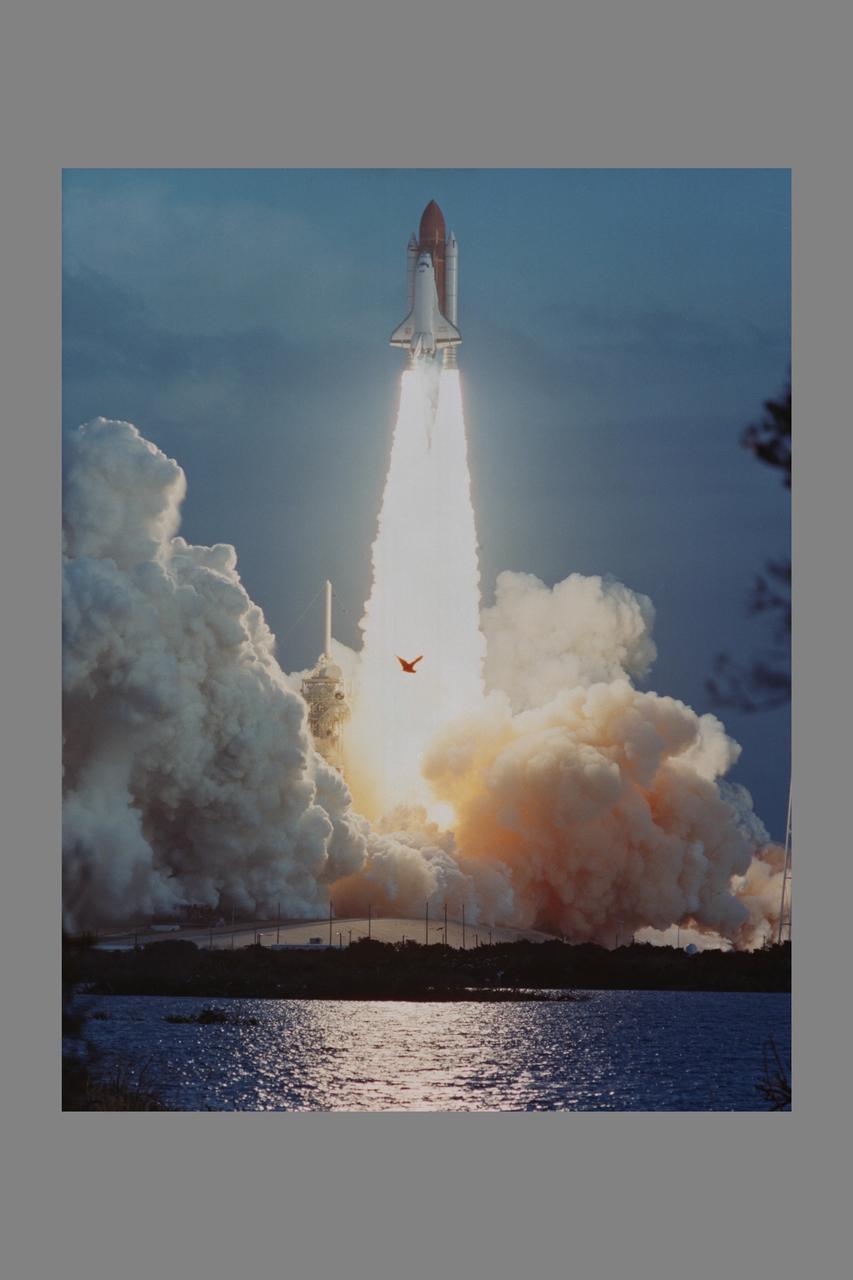
Space Shuttle Discovery STS-48 launch from Kennedy Space Center, FLA to deploy the Upper Atmosphere Research Satellite (UARS)
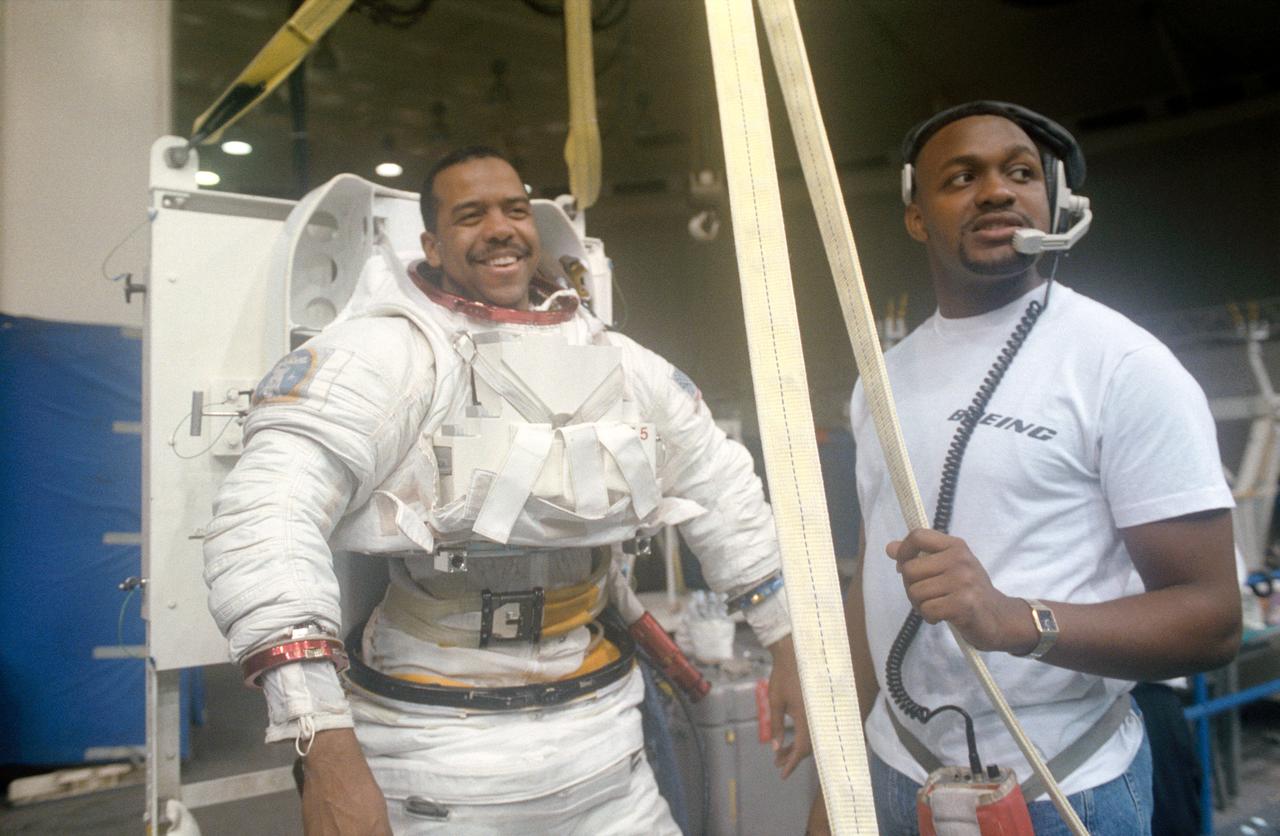
S91-51063 (Dec 1991) --- Partially attired in a special training version of the Extravehicular Mobility Unit (EMU) spacesuit, astronaut Bernard J. Harris Jr. is pictured before a training session at the Johnson Space Center's (JSC) Weightless Environment Training Facility (WET-F). Harris, STS-55 mission specialist, is assisted by Laney Lee. Minutes later, Harris was in a 25-feet deep pool, simulating a contingency extravehicular activity (EVA). There is no scheduled EVA for the 1993 flight but each spaceflight crew includes astronauts trained for a variety of contingency tasks that could require exiting the shirt-sleeve environment of a Shuttle's cabin.

DC-8 NASA 717 in flight over San Francisco, Ca
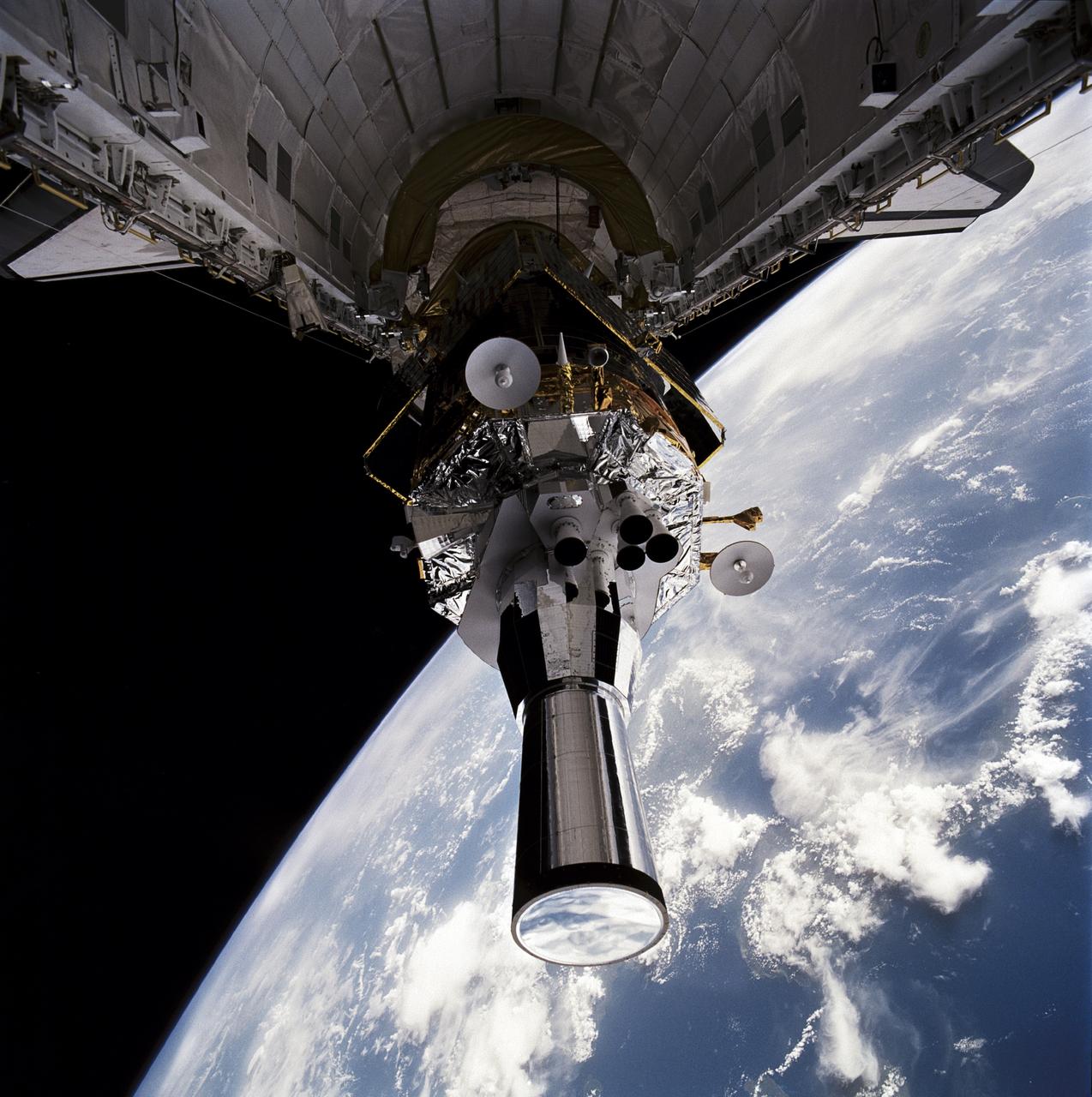
STS044-71-011 (25 Nov. 1991) --- A 70mm frame shows pre-deployment view of the Defense Support Payload (DSP), backdropped against a blue and white Earth.
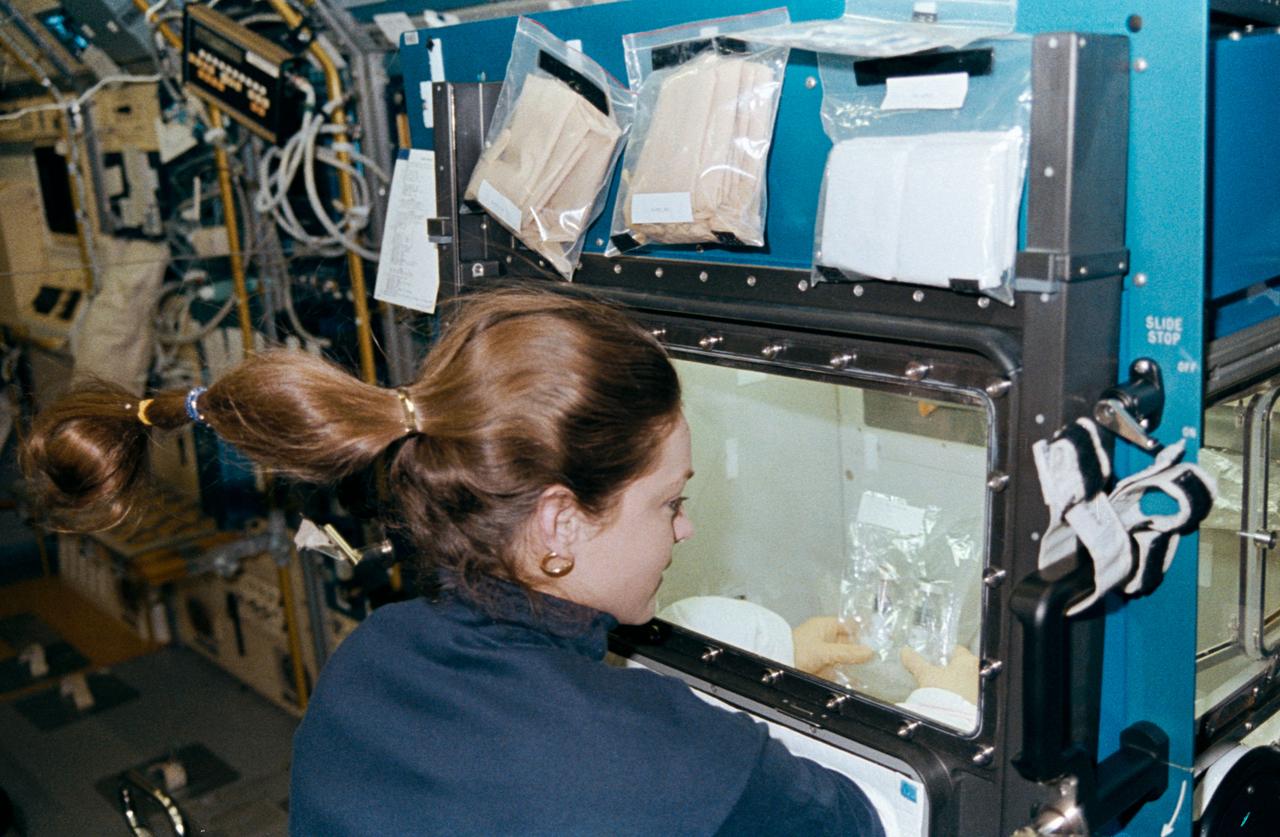
STS040-224-005 (5-14 June 1991) --- Astronaut Tamara E. Jernigan, STS-40 mission specialist, conducts an evaluation of the General Purpose Work Station (GPWS) in the Spacelab Life Sciences (SLS-1) module onboard the Earth-orbiting Space Shuttle Columbia. The photograph was taken with a 35mm camera.
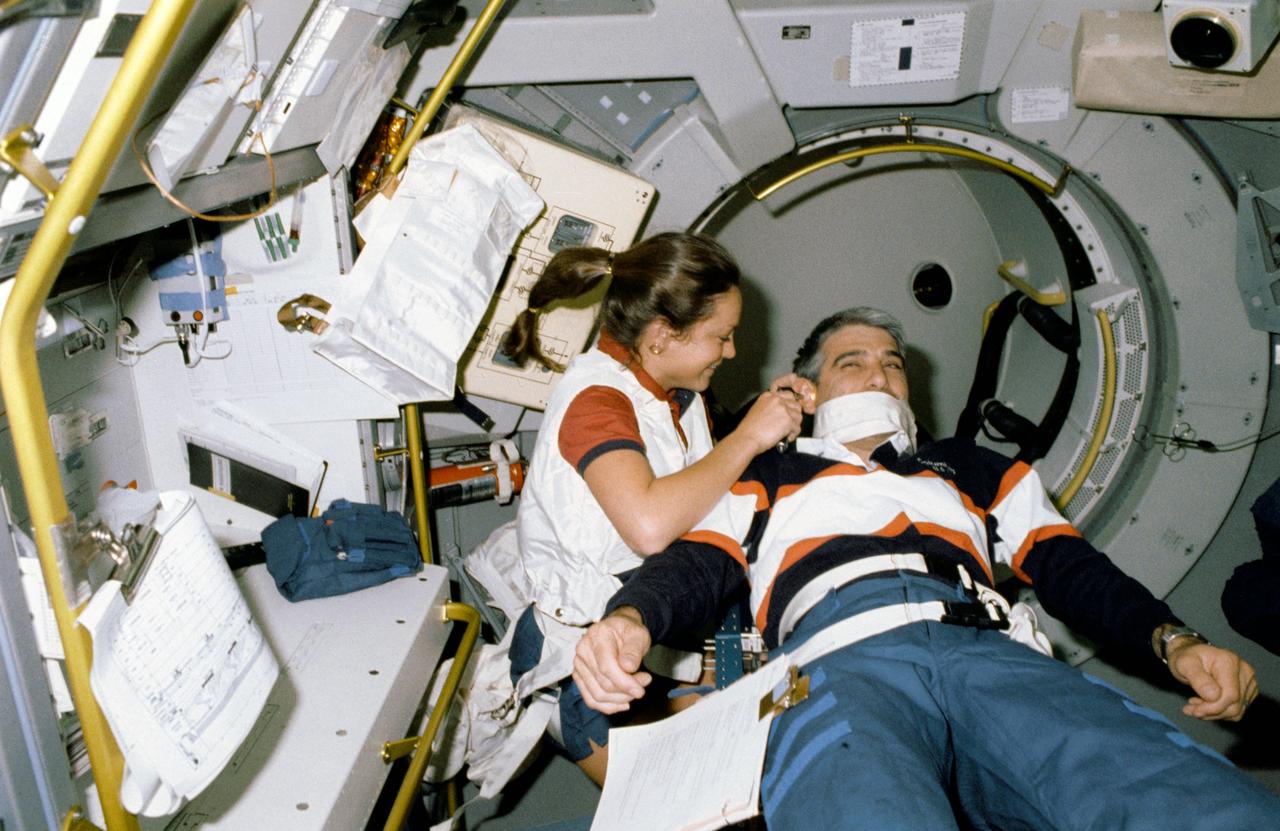
STS040-206-002 (5-14 June 1991) --- Held in place by the Spacelab Life Sciences (SLS-1) Medical Restraint System (MRS), astronaut Sidney M. Gutierrez, pilot, gets his ears checked by astronaut Tamara E. Jernigan, mission specialist. The two are in the SLS-1 module, onboard the Space Shuttle Columbia. The scene was photographed with a 35mm camera.
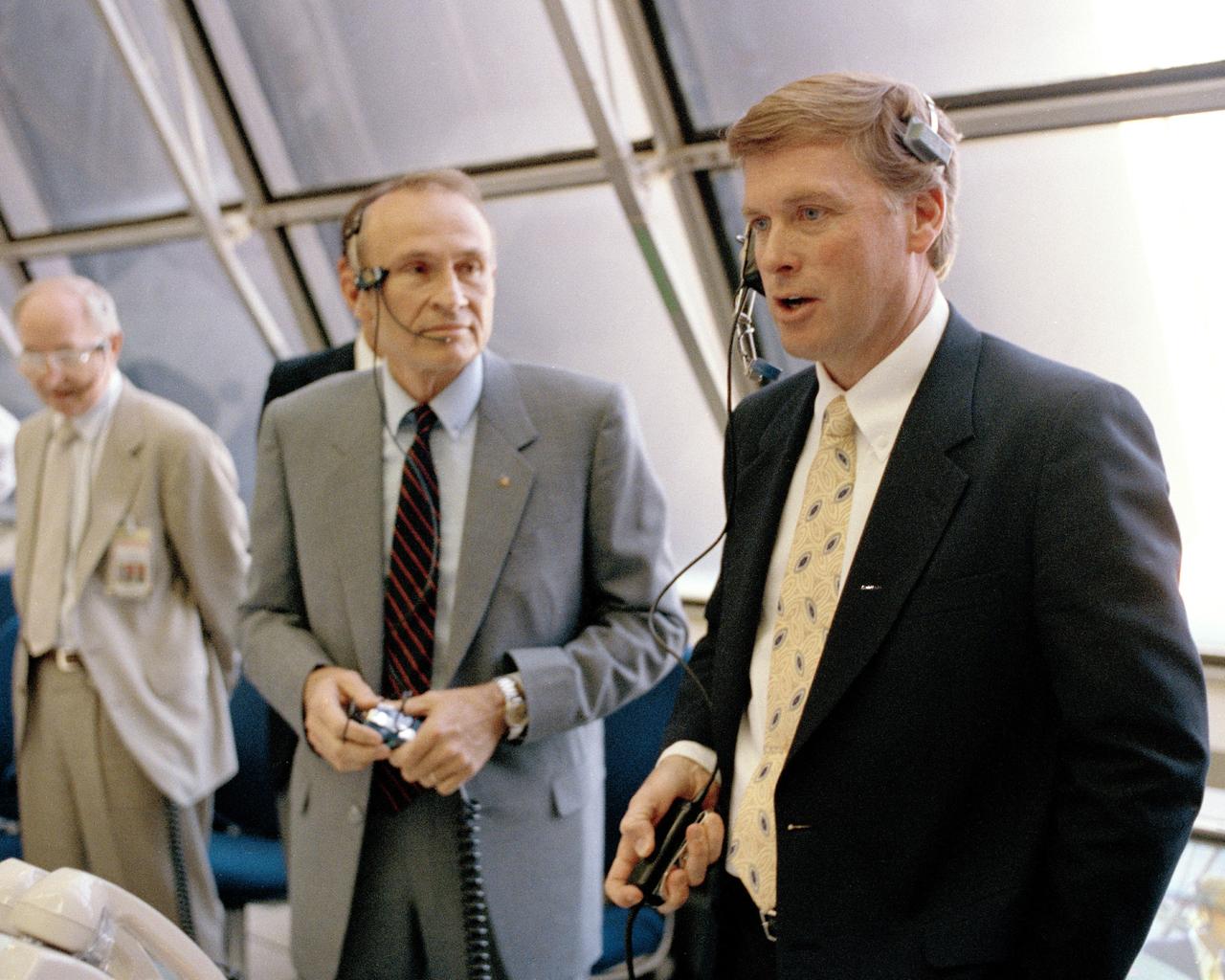
CAPE CANAVERAL, Fla. -- Vice President of the United States Dan Quayle. right. tries on a communications headset in the Launch Control Center and learns about firing room activities from Launch Director Robert Sieck. Quayle spoke with members of the STS-39 flight crew participating in the Terminal Countdown Demonstration Test, toured the launch pad and other center facilities, addressed workers and held a press conference. Image credit: NASA
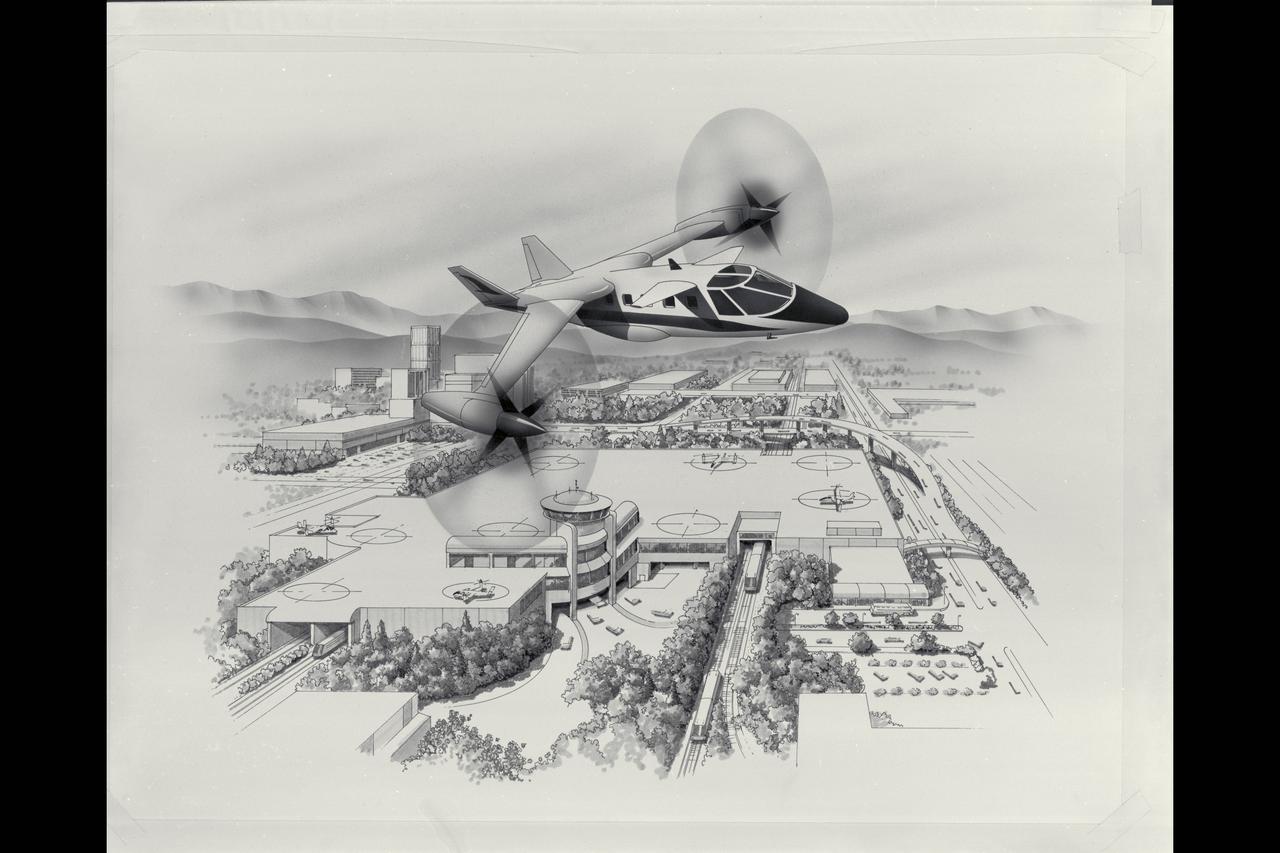
artwork High Speed Rotorcraft concept varibale diameter Tiltrotor