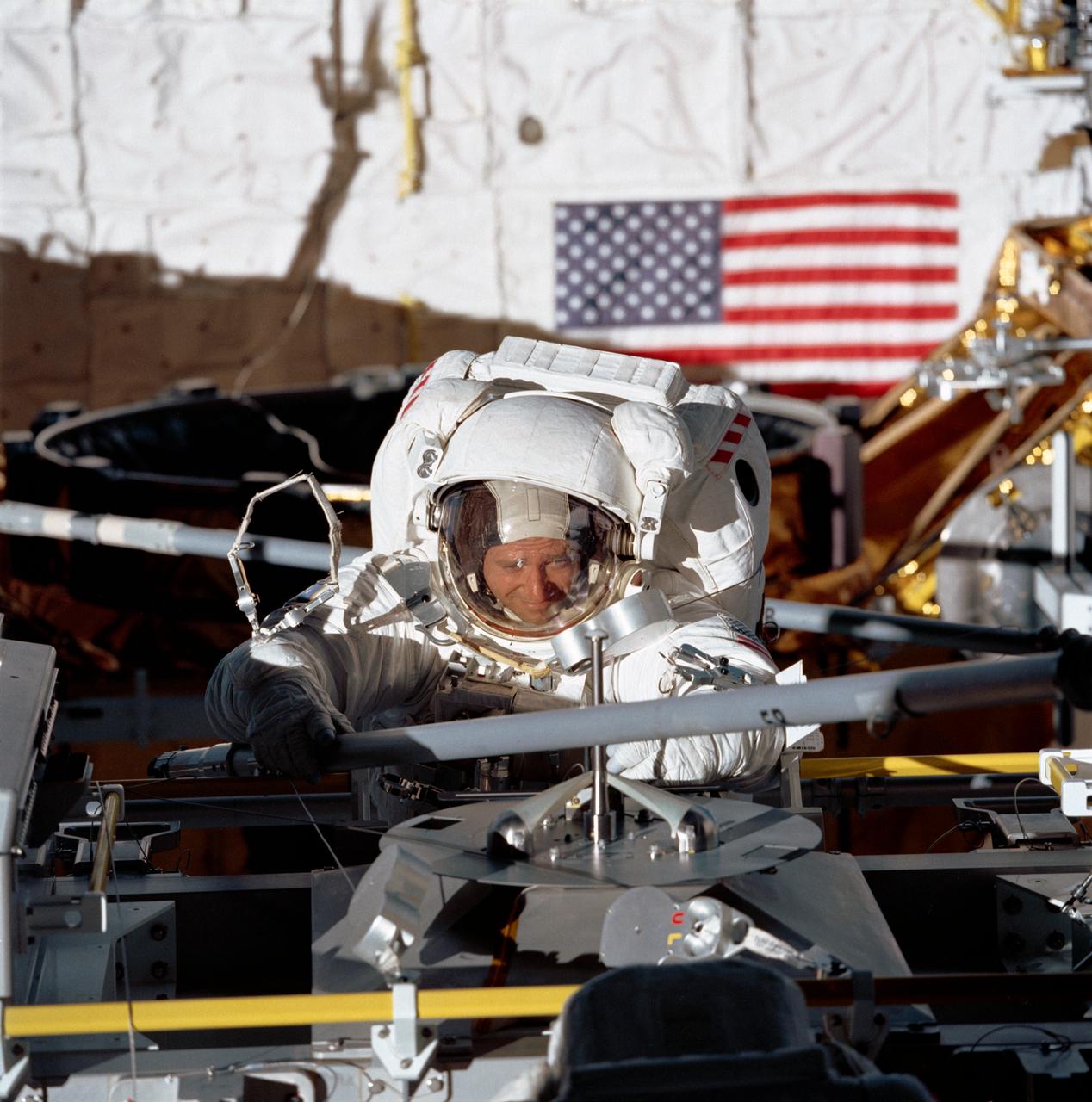
STS049-77-028 (14 May 1992) --- Astronaut Thomas D. Akers, STS-49 mission specialist, grabs a strut device as fourth period of extravehicular activity (EVA) gets underway in the Space Shuttle Endeavour's cargo bay. Akers is positioned near the Multi-purpose Support Structure (MPESS). The purpose of the final EVA on this nine-day mission was the evaluation of Assembly of Station by EVA Methods (ASEM). The scene was recorded on 70mm film by a fellow crew member in the space shuttle's cabin. Astronaut Kathryn C. Thornton (out of frame) joined Akers on the 7 1/2 hour EVA.
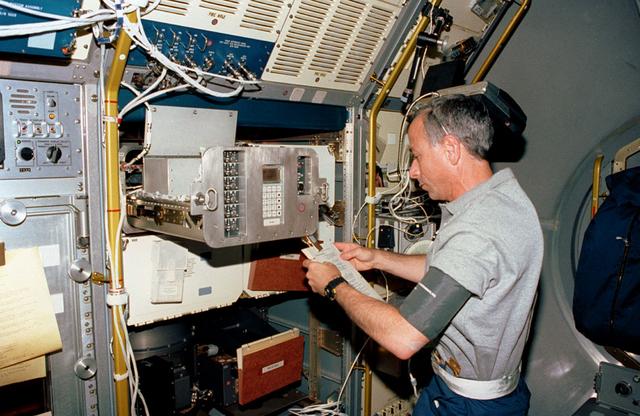
The first United States Microgravity Laboratory (USML-1) was one of NASA's science and technology programs and provided scientists an opportunity to research various scientific investigations in a weightless environment inside the Spacelab module. It also provided demonstrations of new equipment to help prepare for advanced microgravity research and processing aboard the Space Station. The USML-1 flew in orbit for extended periods, providing greater opportunities for research in materials science, fluid dynamics, biotechnology, and combustion science. In this photograph, astronaut Carl Meade is reviewing the manual to activate the Generic Bioprocessing Apparatus (GBA) inside the Spacelab module. The GBA for the USML-1 mission was a multipurpose facility that could help us answer important questions about the relationship between gravity and biology. This unique facility allowed scientists to study biological processes in samples ranging from molecules to small organisms. For example, scientists would examine how collagen, a protein substance found in cornective tissue, bones, and cartilage, forms fibers. In microgravity, it might be possible to alter collagen fiber assembly so that this material could be used more effectively as artificial skin, blood vessels, and other parts of the body. The USML-1 was managed by the Marshall Space Flight Center and waslaunched aboard the Space Shuttle Orbiter Columbia (STS-50) on June 25, 1992.
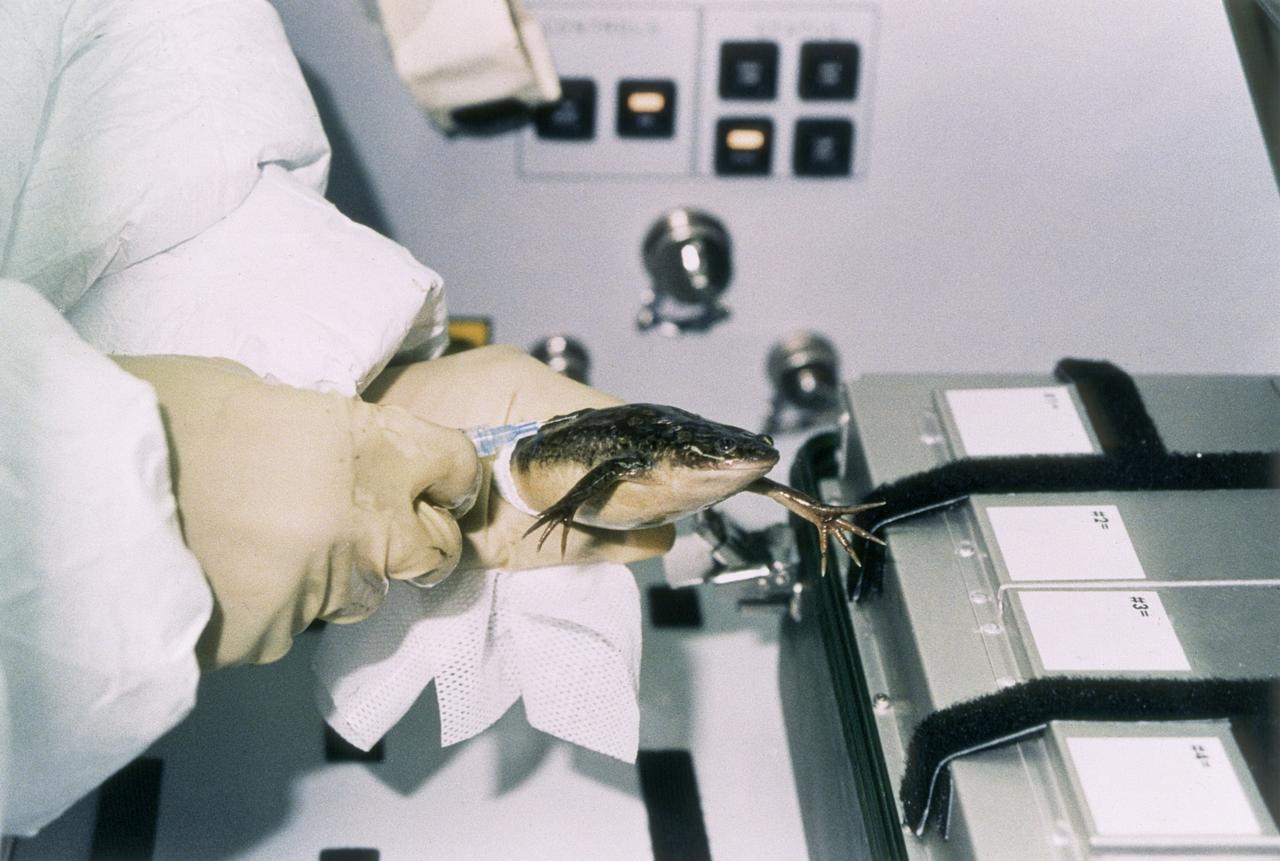
The Spacelab-J (SL-J) mission was a joint venture between NASA and the National Space Development Agency of Japan (NASDA) utilizing a marned Spacelab module. Materials science investigations covered such fields as biotechnology, electronic materials, fluid dynamics and transport phenomena, glasses and ceramics, metals and alloys, and acceleration measurements. Life sciences included experiments on human health, cell separation and biology, developmental biology, animal and human physiology and behavior, space radiation, and biological rhythms. Before long-term space ventures are attempted, numerous questions must be answered: how will gravity play in the early development of an organism, and how will new generations of a species be conceived and develop normally in microgravity. The Effects of Weightlessness on the Development of Amphibian Eggs Fertilized in Space experiment aboard SL-J examined aspects of these questions. To investigate the effect of microgravity on amphibian development, female frogs carried aboard SL-J were induced to ovulate and shed eggs. These eggs were then fertilized in the microgravity environment. Half were incubated in microgravity, while the other half were incubated in a centrifuge that spins to simulate normal gravity. This photograph shows an astronaut working with one of the adult female frogs inside the incubator. The mission also examined the swimming behavior of tadpoles grown in the absence of gravity. The Spacelab-J was launched aboard the Space Shuttle Orbiter Endeavour on September 12, 1992.

HELSIM: Helicopter Simulation simulation panel showin composite images of cockpit, wingman, God's eye views, digital terrain Map and instrument panel
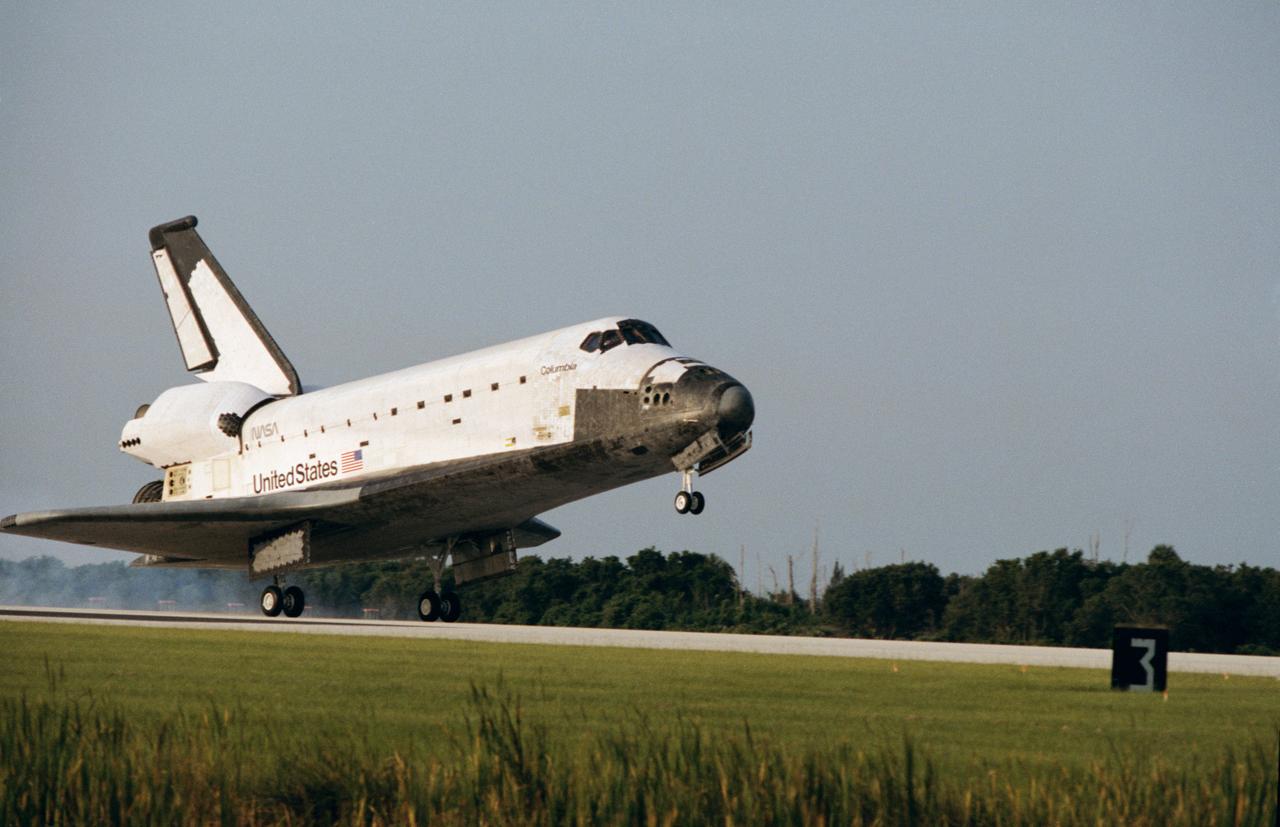
STS-50 Columbia's, Orbiter Vehicle (OV) 102's, main landing gear touches down on runway 33 at the Kennedy Space Center (KSC) Shuttle Landing Facility (SLF) producing a small cloud of dust. Landing occurred at 7:42 am (Eastern Daylight Time (EDT)). In this view of the OV-102's starboard side, the nose landing gear (NLG) continues to ride above the runway surface. Florida vegetation, a runway sign, and runway lights appear in the foreground.
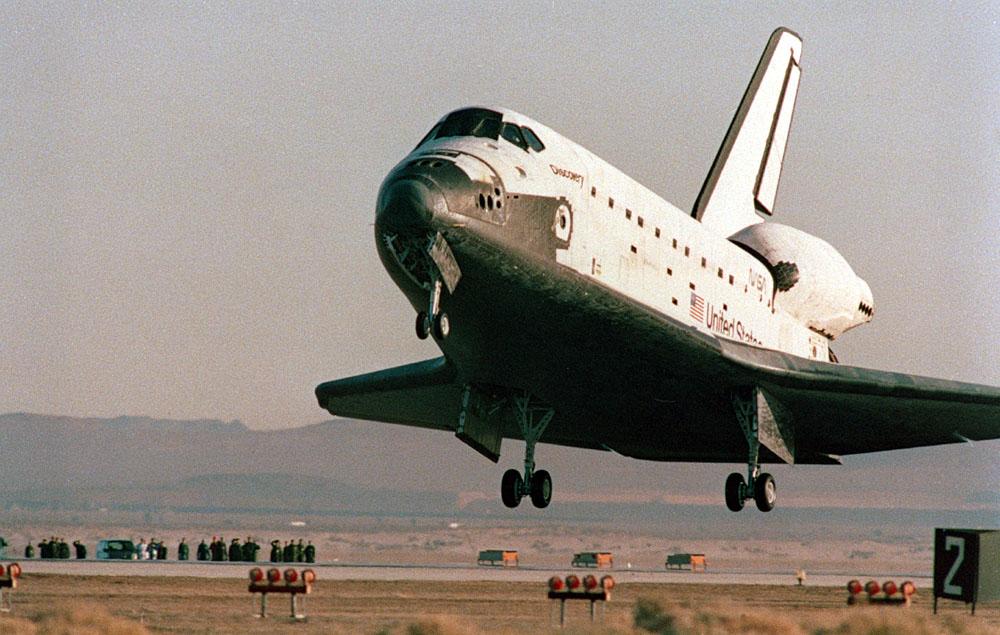
Space Shuttle Discovery STS-42) is just about to ease down its main gear on Runway 22 at Edwards Air Force Base in southern California. The successful landing completed an eight-day mission for five NASA astronauts and two payload specialists supporting the first International Microgravity Laboratory (IML-1) mission.
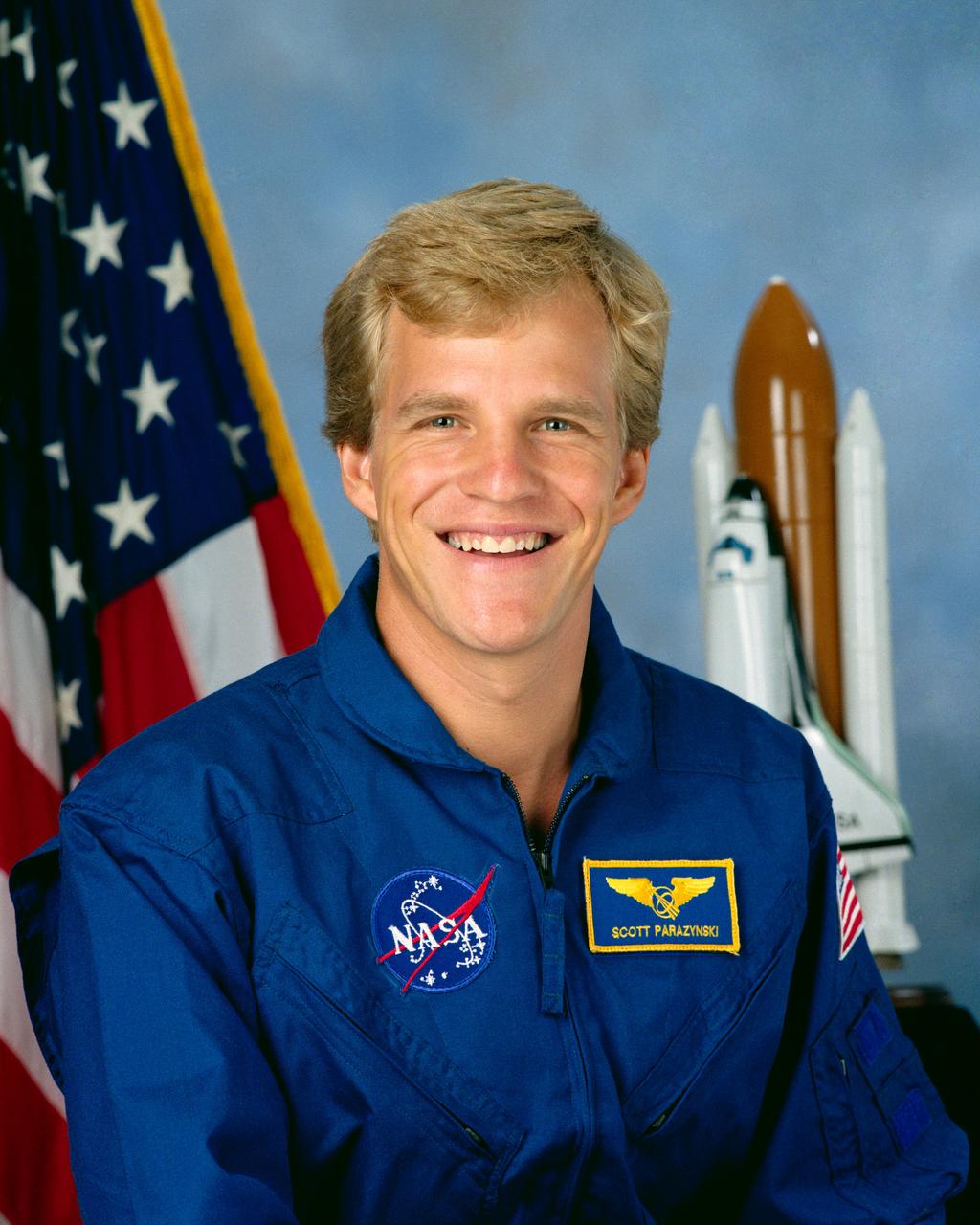
S92-44926 (September 1992) --- Astronaut Scott E. Parazynski, mission specialist.
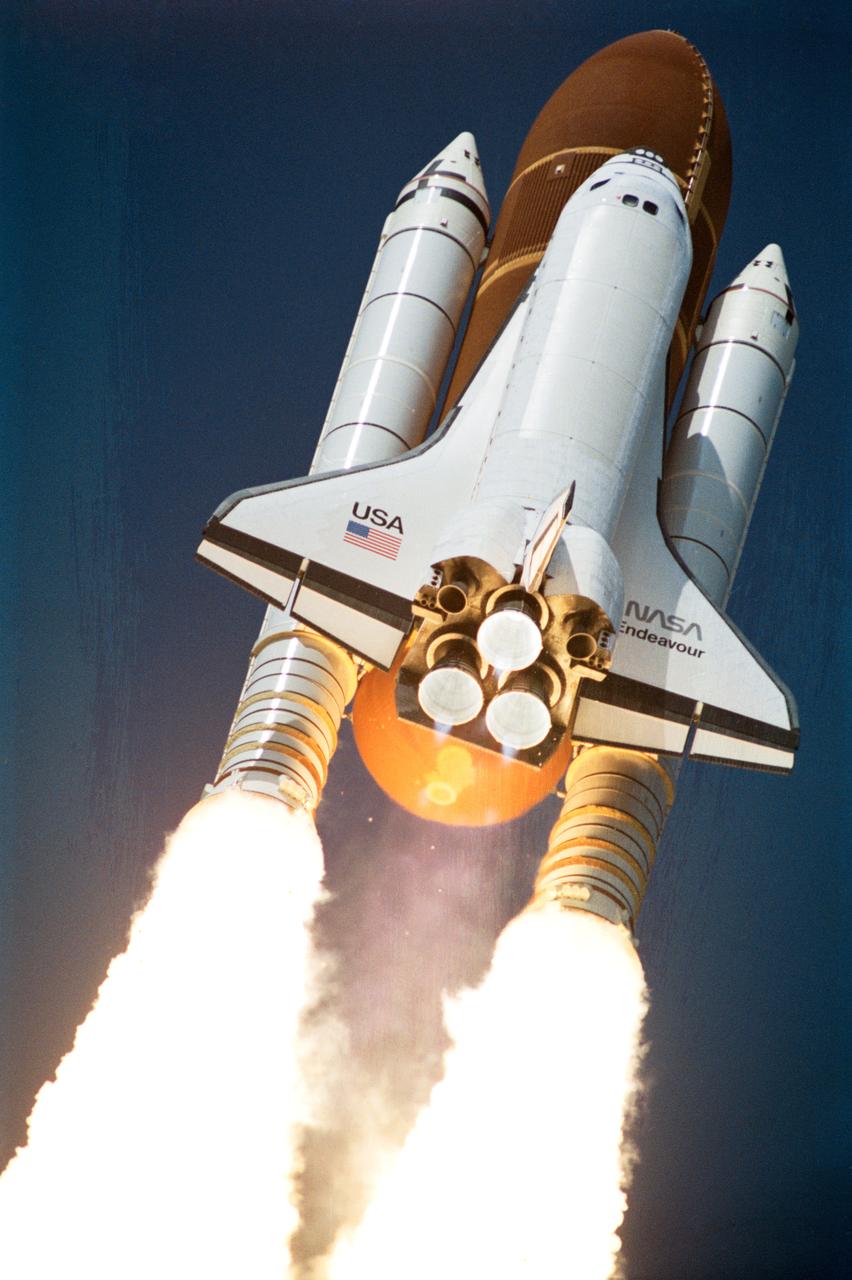
STS047-S-039 (12 Sept 1992) --- A 35mm camera was used to record this low-angle view of the STS-47 launch. With a crew of six NASA astronauts and a Japanese payload specialist onboard, the Space Shuttle Endeavour was heading for its second trip into space. This mission will be devoted to support of the Spacelab-J mission, a joint effort between Japan and the United States. Launch occurred at 10:23:00:0680 a.m. (EDT), September 12, 1992. Onboard were astronauts Robert L. Gibson, mission commander; Curtis L. Brown Jr., pilot; Mark C. Lee, payload commander; and Jerome (Jay) Apt, Mae C. Jemison and N. Jan Davis, mission specialists; along with payload specialist Mamoru Mohri, representing the National Space Development Agency (NASDA) of Japan.
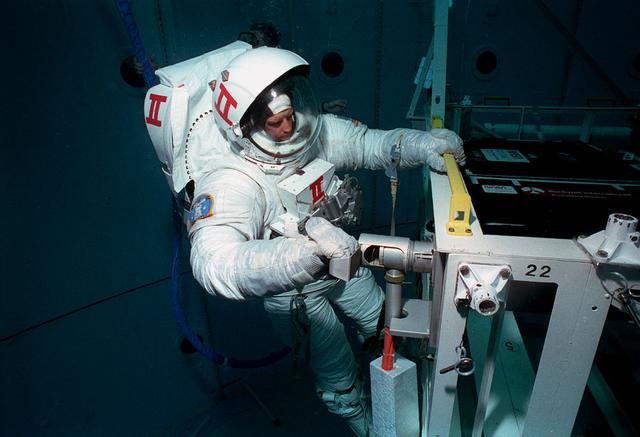
Astronaut Mark Lee participates in the Photo Voltaic Module testing in Marshall's Neutral Buoyancy Simulator (NBS).
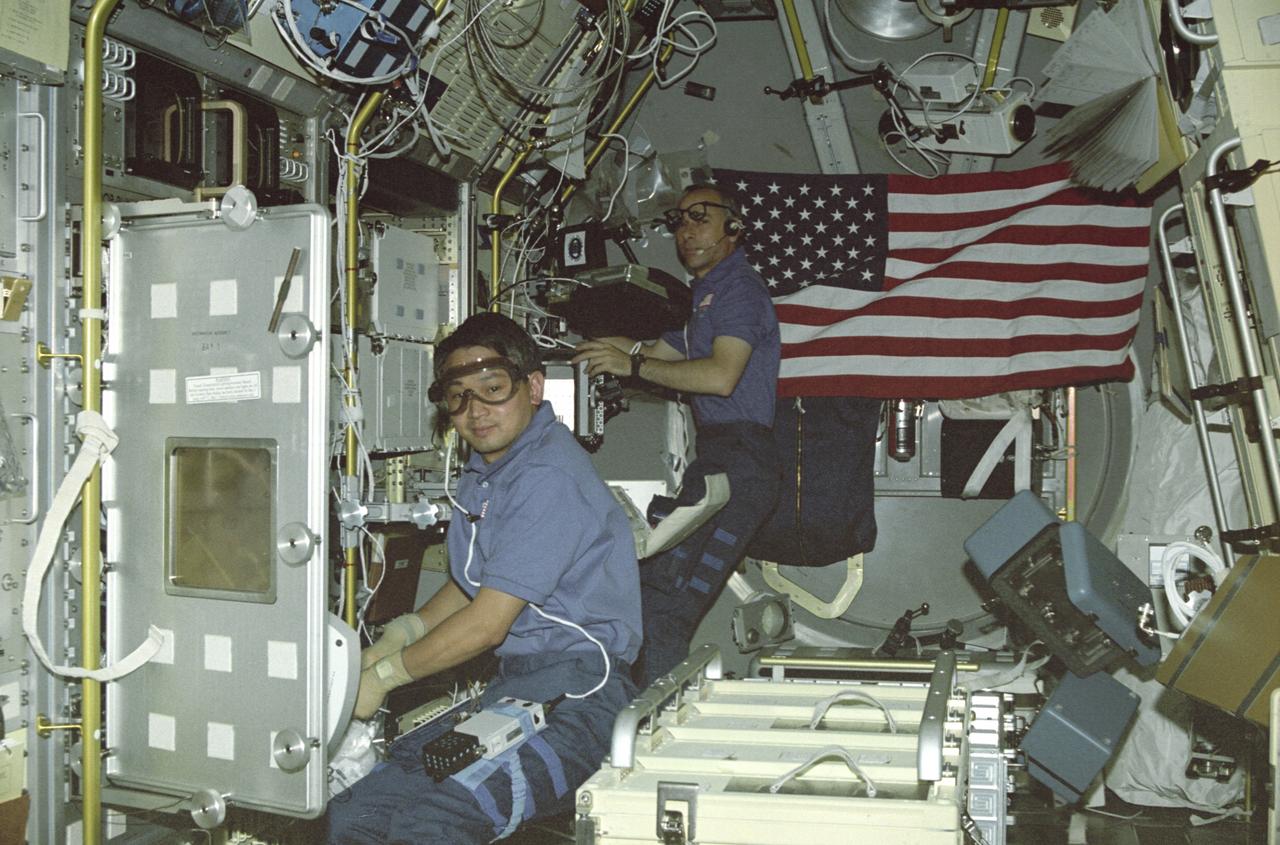
In this photograph, astronaut Eugene Trinh, a payload specialist for this mission, is working at the Drop Physics Module (DPM), and mission specialist Carl Meade is working on the experiment at the Glovebox inside the first United States Microgravity Laboratory (USML-1) Science Module. The USML-1 was one of NASA's missions dedicated to scientific investigations in a microgravity environment inside the Spacelab module. Investigations aboard the USML-1 included: materials science, fluid dynamics, biotechnology (crystal growth), and combustion science. The DPM is dedicated to the detailed study of the dynamics of fluid drops in microgravity. The Glovebox offers experimenters new capabilities and technologies in microgravity with a clean working space and minimizes contamination risks to both Spacelab and experiment samples. Payload specialists are professional scientists or engineers whose only assignment on a space flight is to carry out scientific and technological experiments. Their specific training for a space flight is usually limited to a short period of learning how to live and work in weightlessness. Mission Specialists are both professional scientists and career astronauts. Thus they are a link or bridge between the other crew members, and combine the functions of resident maintenance engineers, in-space counterparts of flight engineers in aircraft, and fully qualified scientists. The USML-1 flew aboard the STS-50 mission on June 1992, and was managed by the Marshall Space Flight Center.
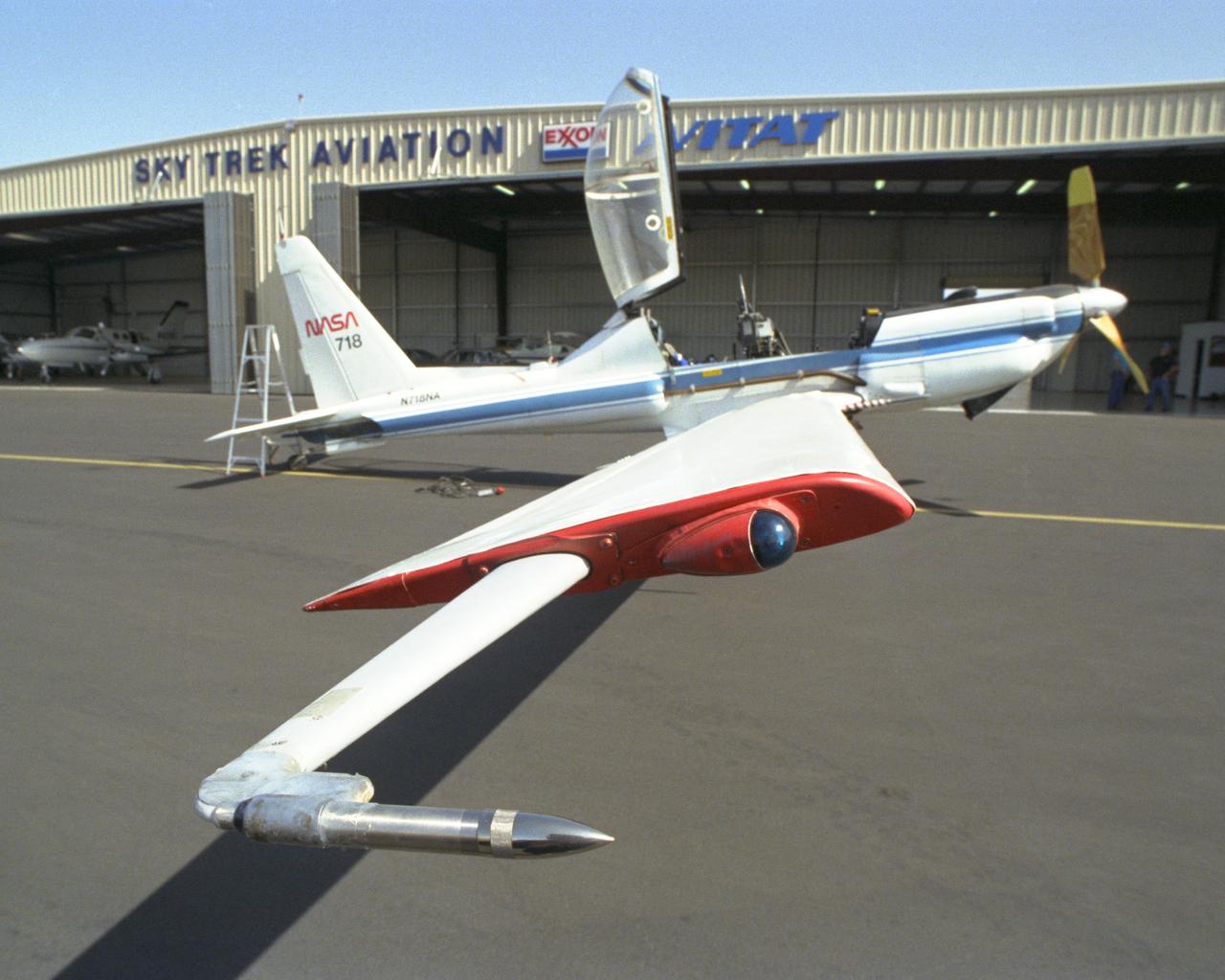
YO-3A (NASA 718) prepares for flight test on S-76C out of Modesto, CA
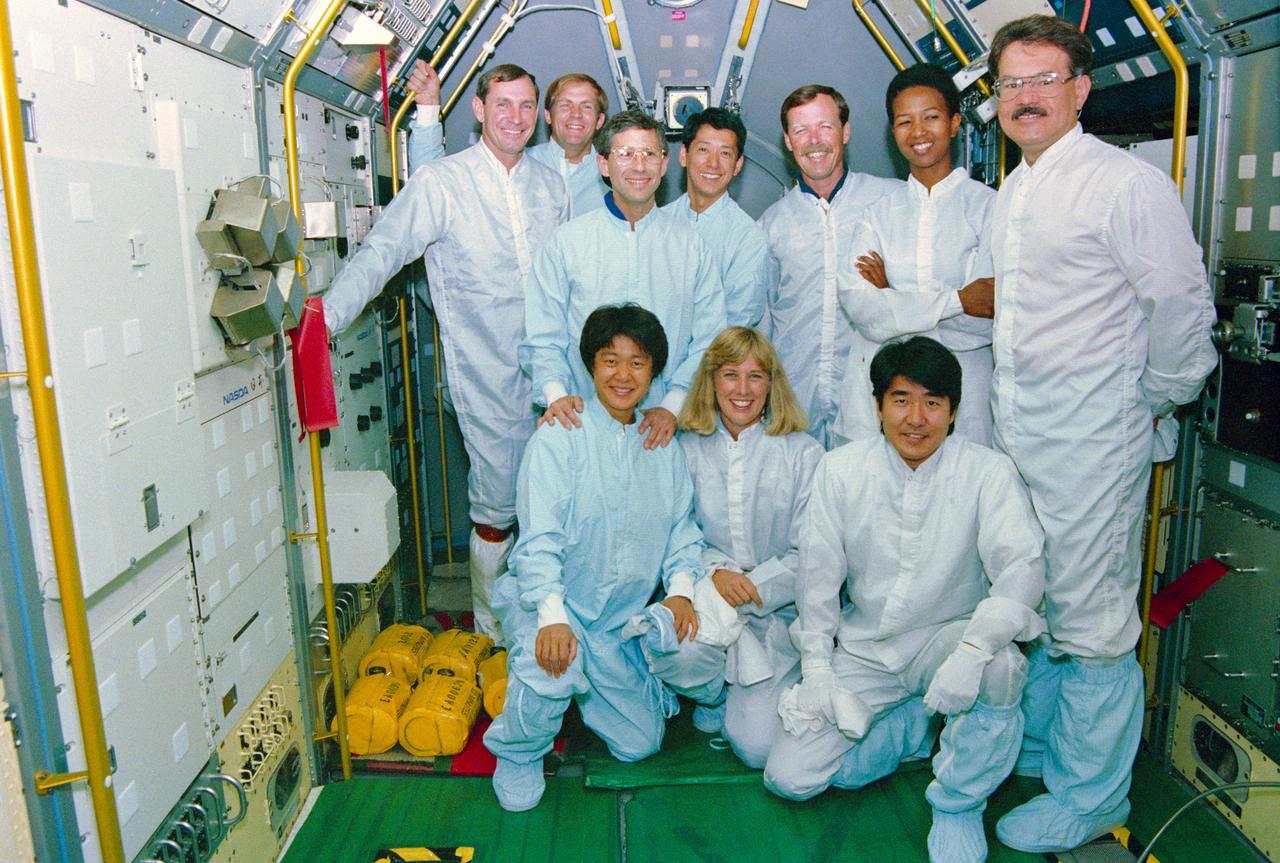
S92-44303 --- STS-47 Endeavour, Orbiter Vehicle (OV) 105, crew members and back-up payload specialists, wearing clean suits, pose for a group portrait in the Spacelab Japan (SLJ) module. The team is at the Kennedy Space Center's (KSC's) Orbiter Processing Facility (OPF) to inspect SLJ configuration and OV-105 preparations. Kneeling, from left, are back-up Payload Specialist Chiaki Naito-Mukai; Mission Specialist N. Jan Davis; and backup Payload Specialist Takao Doi. Standing, from the left, are Pilot Curtis L. Brown,Jr; Payload Commander Mark C. Lee; Jerome Apt; Payload Specialist Mamoru Mohri; Commander Robert L. Gibson; Mae C. Jemison; and back-up Payload Specialist Stanely L. Koszelak. Mohri, Mukai, and Doi represent the National Space Development Agency of Japan (NASDA). View provided by KSC with alternate KSC number KSC-92PC-1647. Photo credit: NASA
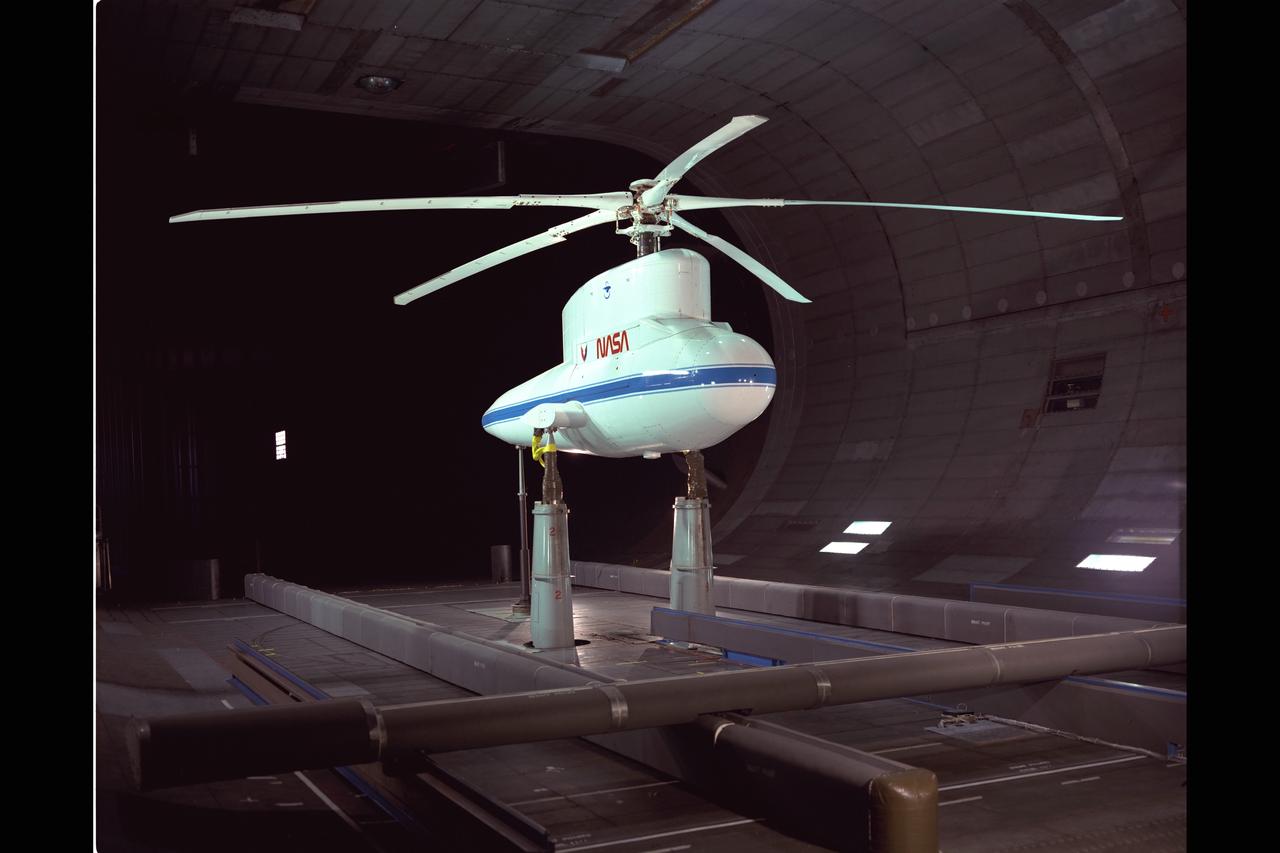
Sikorsky Bearingless Main rotor (SBMR) mounted on the Ames Rotor Test Apparatus (RTA) for testing in the NASA Ames40x80ft Subsonic Wind Tunnel, test-584.
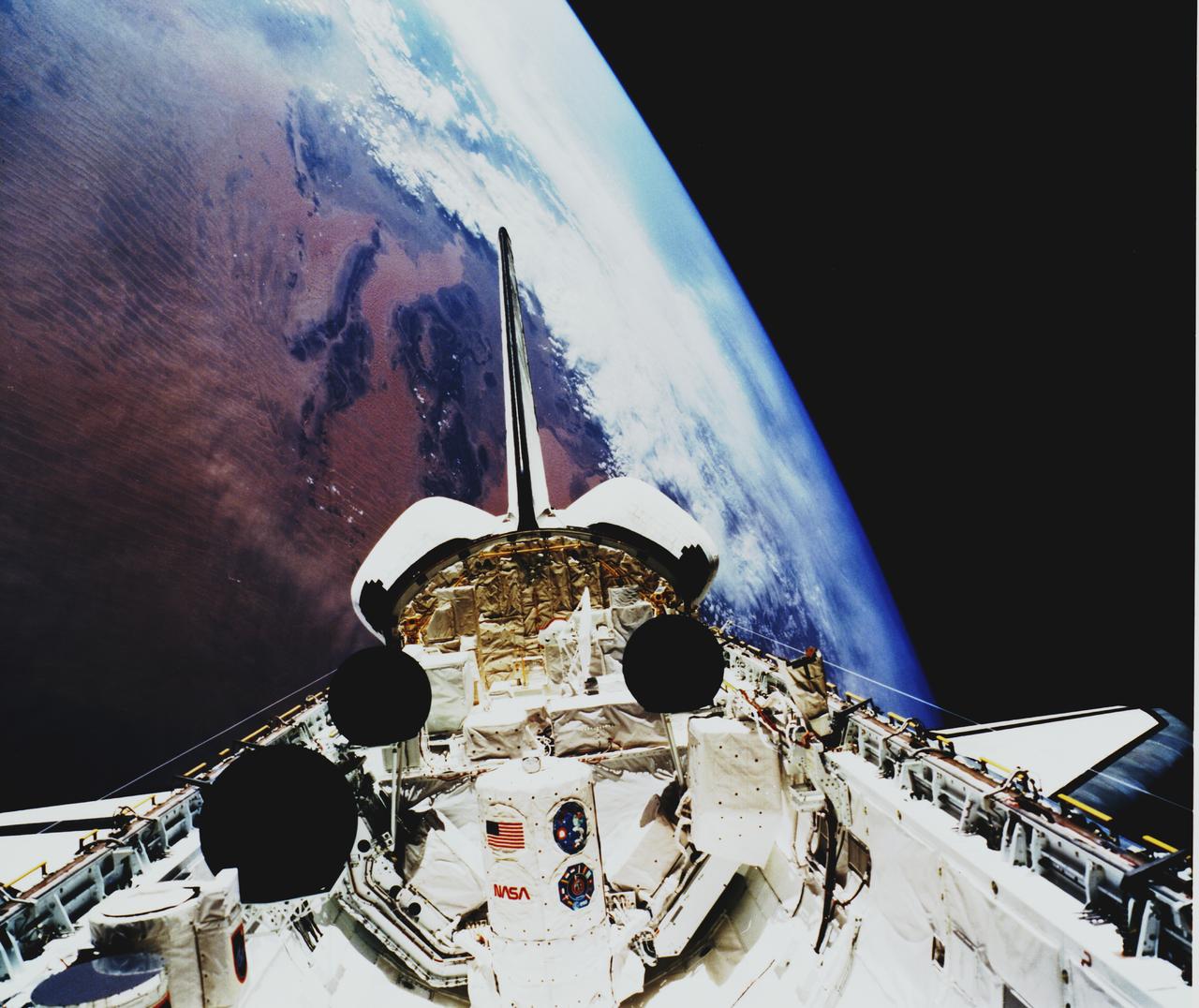
Space Shuttle Atlantis (STS-45) onboard photo of Atmospheric Laboratory for Applications and Science (Atlas-1) module in open cargo bay. Atlas-1 pallets are back dropped against the Atlas Mountains. Taken over Mali in the western Sahara, shows dunes in the Iguidi Dune Sea.

Artist John J. Olson's conception for the future of space exploration: A base on Mars.
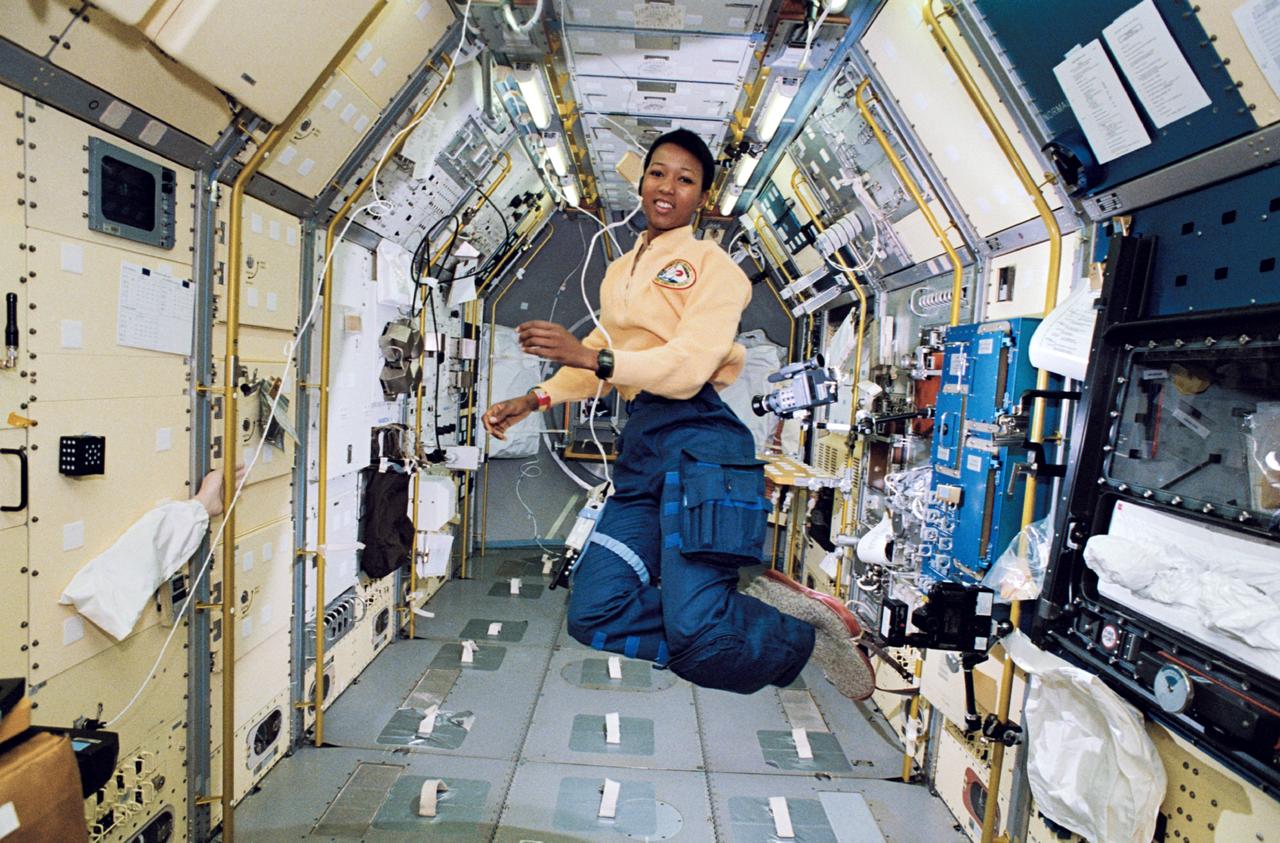
STS047-37-003 (12-20 Sept. 1992) --- Astronaut Mae C. Jemison, STS-47 mission specialist, appears to be clicking her heels in zero-gravity in this 35mm frame photographed in the Science Module aboard the Earth-orbiting Space Shuttle Endeavour. Making her first flight in space, Dr. Jemison was joined by five other NASA astronauts and a Japanese payload specialist for eight days of research in support of the Spacelab-J mission, a joint effort between Japan and the United States.
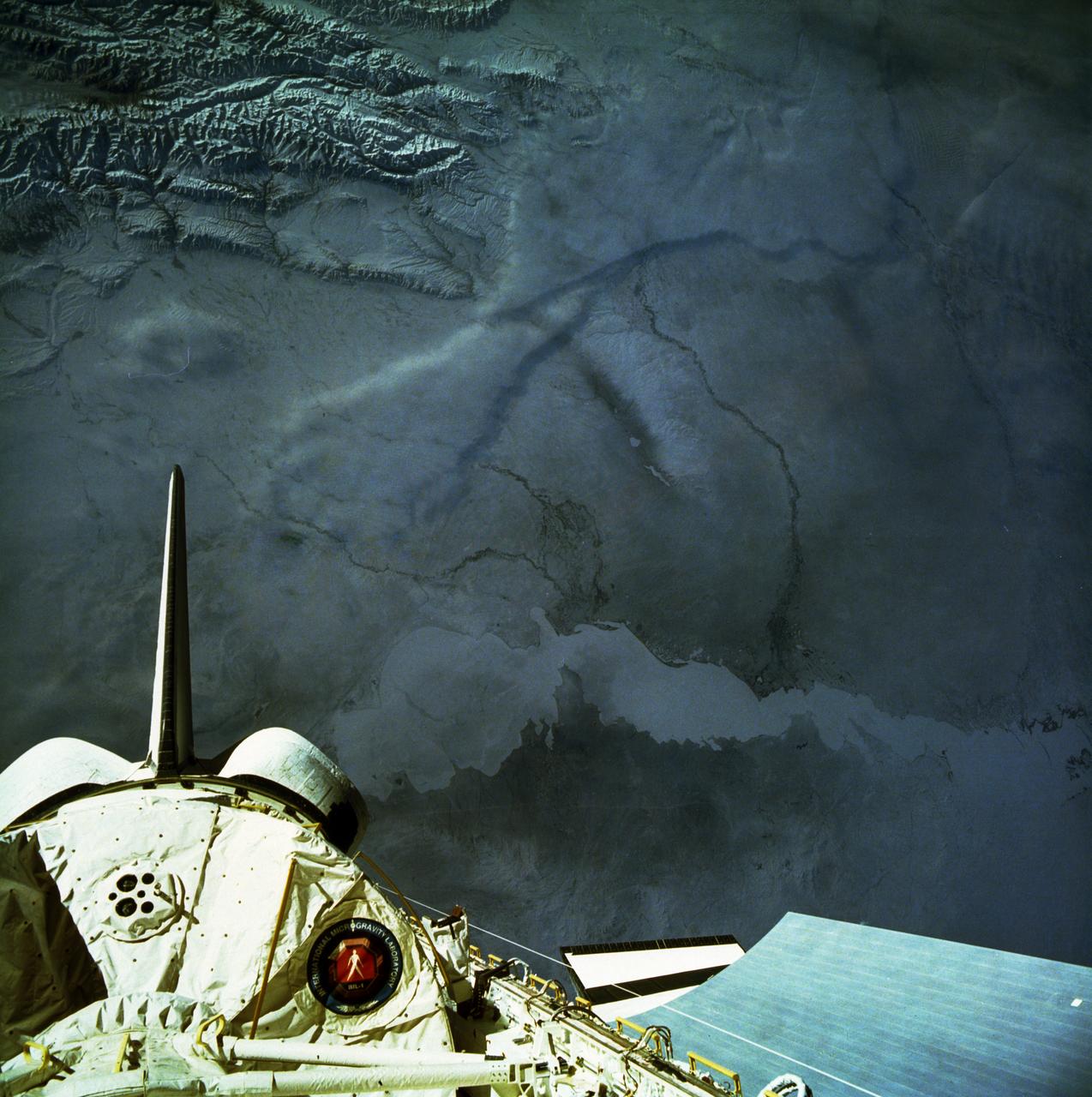
STS-42, Viewing earth with lots of snow, partial view of IML-1 (International Microgravity Laboratory) in cargo bay.
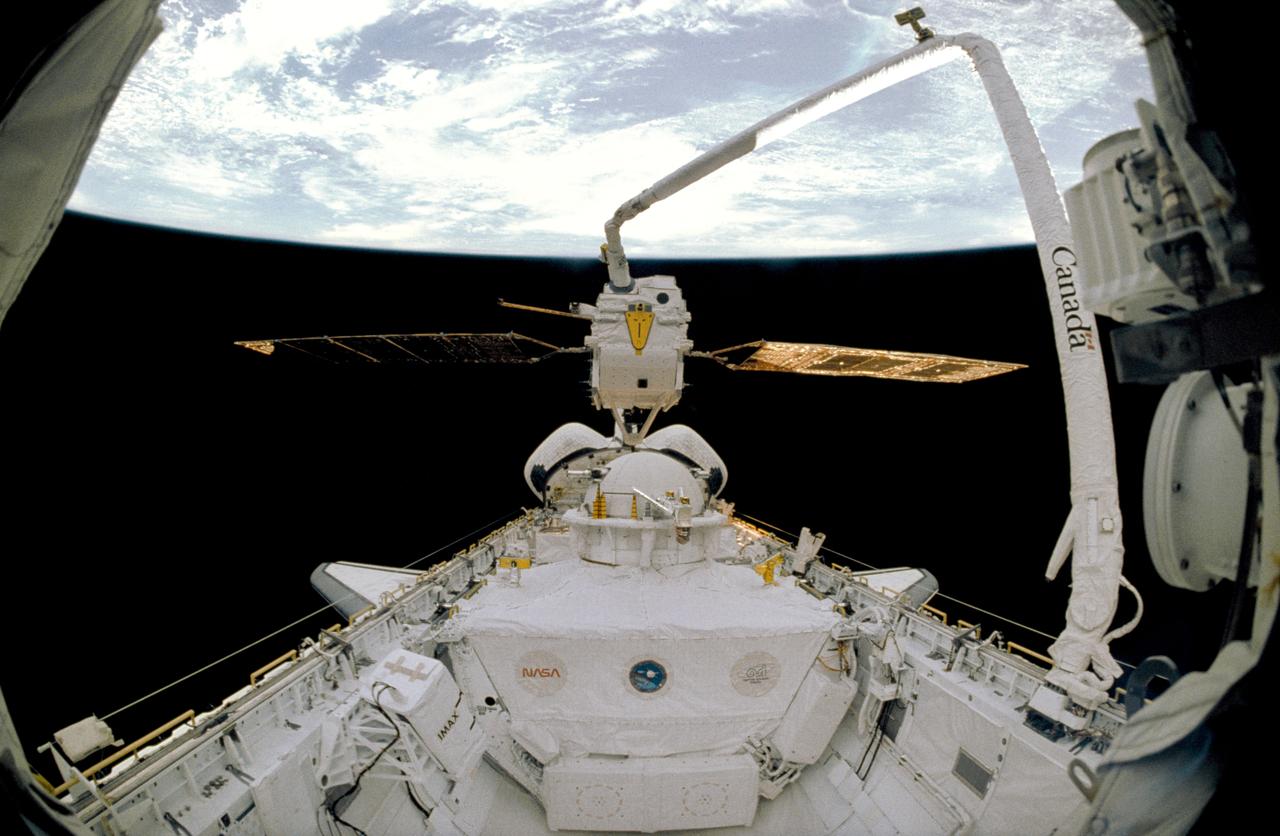
STS046-08-010 (1 Aug 1992) --- The EURECA satellite is hoisted above the Space Shuttle Atlantis' cargo bay by the Remote Manipulator System (RMS) during early mission activity aboard the Earth-orbiting Shuttle. A 16mm lens gives this 35mm frame a "fish-eye" effect. The Tethered Satellite System (TSS), center frame, is stowed in the cargo bay, where it awaits extensive operations by the seven-member crew.
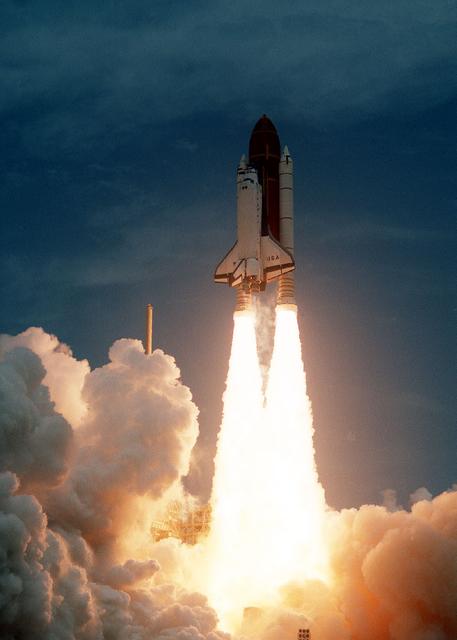
Space Shuttle Columbia (STS-50) launched into history carrying crew of seven and its payload was comprised of the US Microgravity Laboratory 1 (USML-1).The USML-1 was one of NASA's missions dedicated to scientific investigations in a microgravity environment inside the Spacelab module. Investigations aboard the USML-1 included: materials science, fluid dynamics, biotechnology (crystal growth), and combustion science. Managed by Marshall Space Flight Center, the STS-50 mission was plarned for a 13-day duration, the mission ended with 14 days in space, the longest Shuttle mission to date.
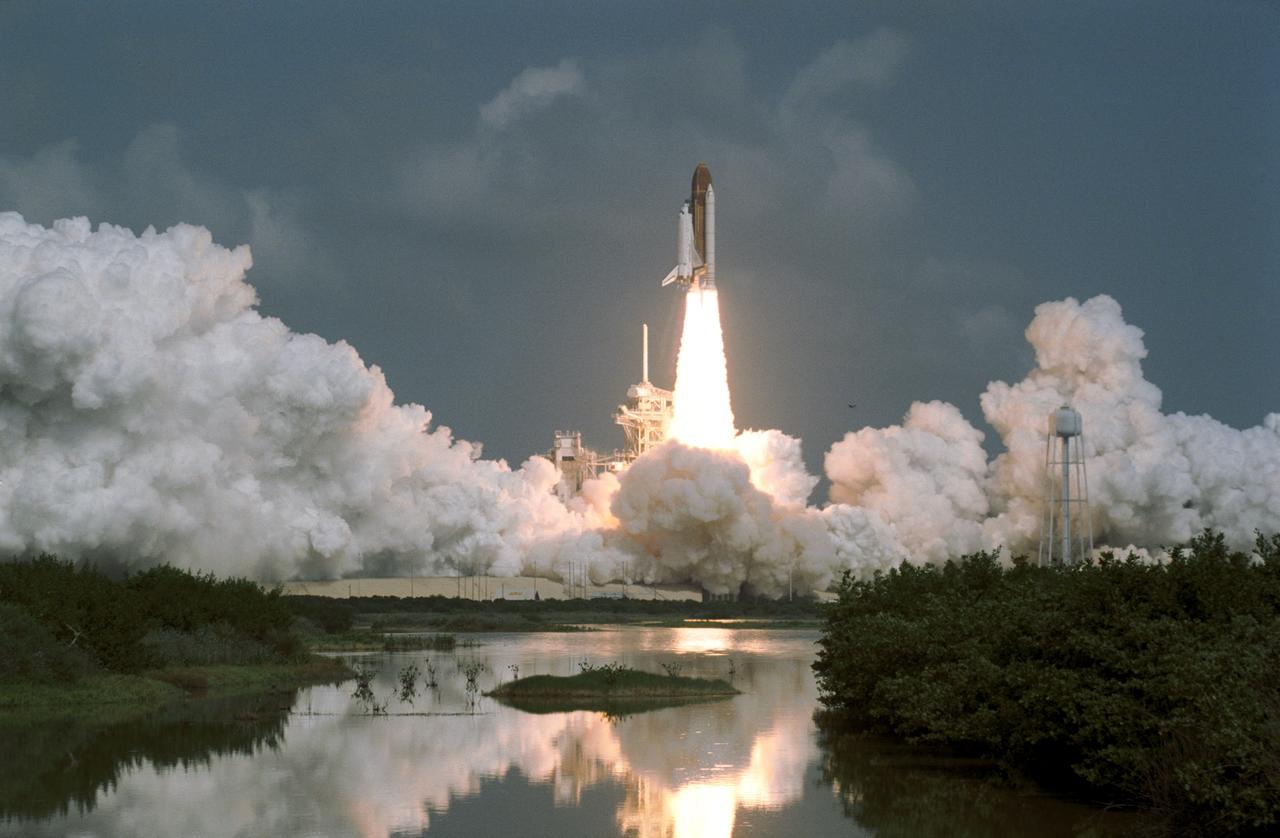
STS046-S-082 (31 July 1992) --- This panoramic scene at Kennedy Space Center's Launch Complex 39 shows the Space Shuttle Atlantis as it blasts off on its way to eight days of Earth orbital operations with a crew of five NASA astronauts and two European scientists onboard. Launch occurred at 9:56:47:976 a.m. (EDT), July 31, 1992. Onboard the spacecraft were astronauts Loren J. Shriver, Andrew M. Allen, Jeffrey A. Hoffman, Marsha S. Ivins and Franklin R. Chang-Diaz, along with the European Space Agency's Claude Nicollier and the Italian Space Agency's Franco Malerba.
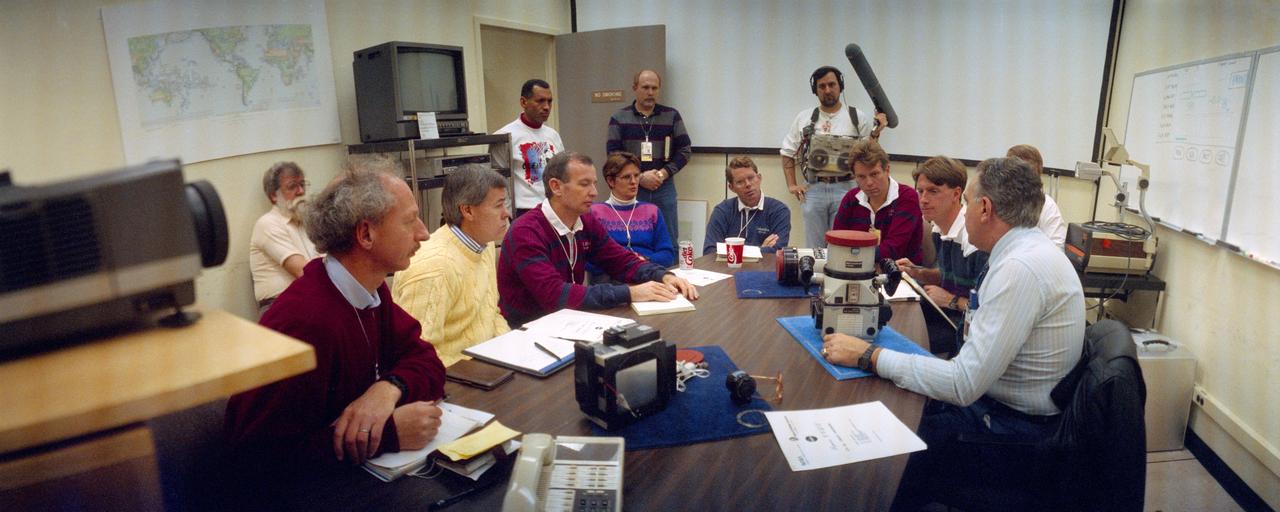
S92-26522 (Feb 1992) --- Crewmembers assigned to NASA's STS-45 mission are briefed on the use of the Linhof camera in the flight operations facility at the Johnson Space Center (JSC). Charles F. Bolden, mission commander, stands at left. Other crewmembers (seated clockwise around the table from lower left) are Dirk Frimout of Belgium representing the European Space Agency as payload specialist; Charles R. (Rick) Chappell, backup payload specialist; Brian Duffy, pilot; Kathryn D. Sullivan, payload commander; David C. Leestma, mission specialist; Byron K. Lichtenberg, payload specialist; and C. Michael Foale, mission specialist. James H. Ragan (far right), head of the flight equipment section of the flight systems branch in JSC's Man Systems Division, briefs the crewmembers. Donald C. Carico, of the crew training staff and Rockwell International, stands near Bolden. The camera, used for out-the-window observations, is expected to be used frequently on the Atmospheric Laboratory for Applications and Science (ATLAS-1) mission, scheduled for a March date with the Space Shuttle Atlantis.
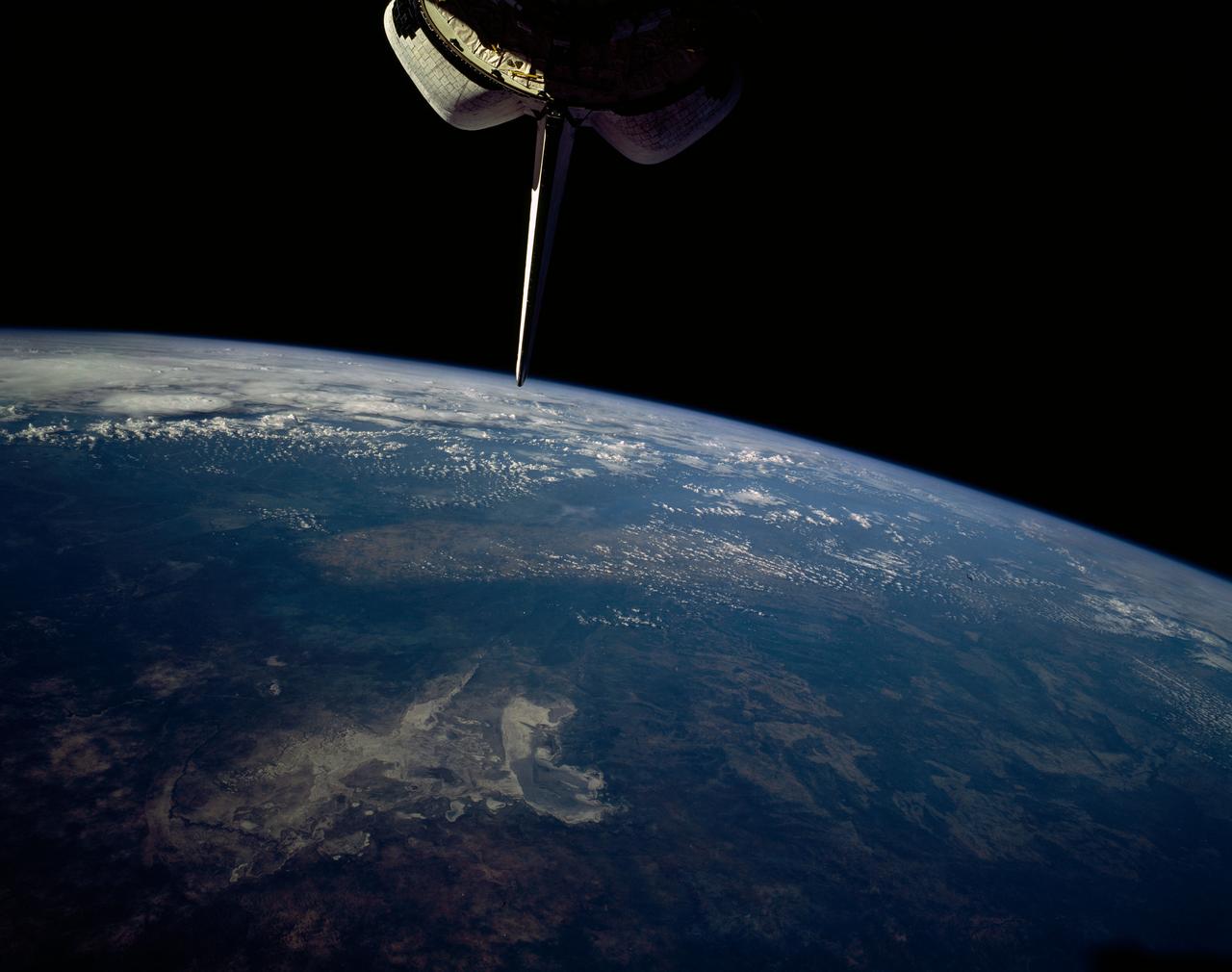
STS054-151-015 (13-19 Jan 1993) --- The Makgadikgadi Salt Pan is one of the largest features in Botswana visible from space. Any water that spills out of the Okavango Swamplands flows down to the Makgadikgadi where it evaporates. An ancient beach line can be seen as a smooth line around the west (left) side of the Pan. Orapa diamond mine can be detected due south of the pan as a small rectangle. The large geological feature known as the Great Dike of Zimbabwe can be seen far right. This large panorama shows clouds in southern Angola, Zambia and Zimbabwe in the distance.
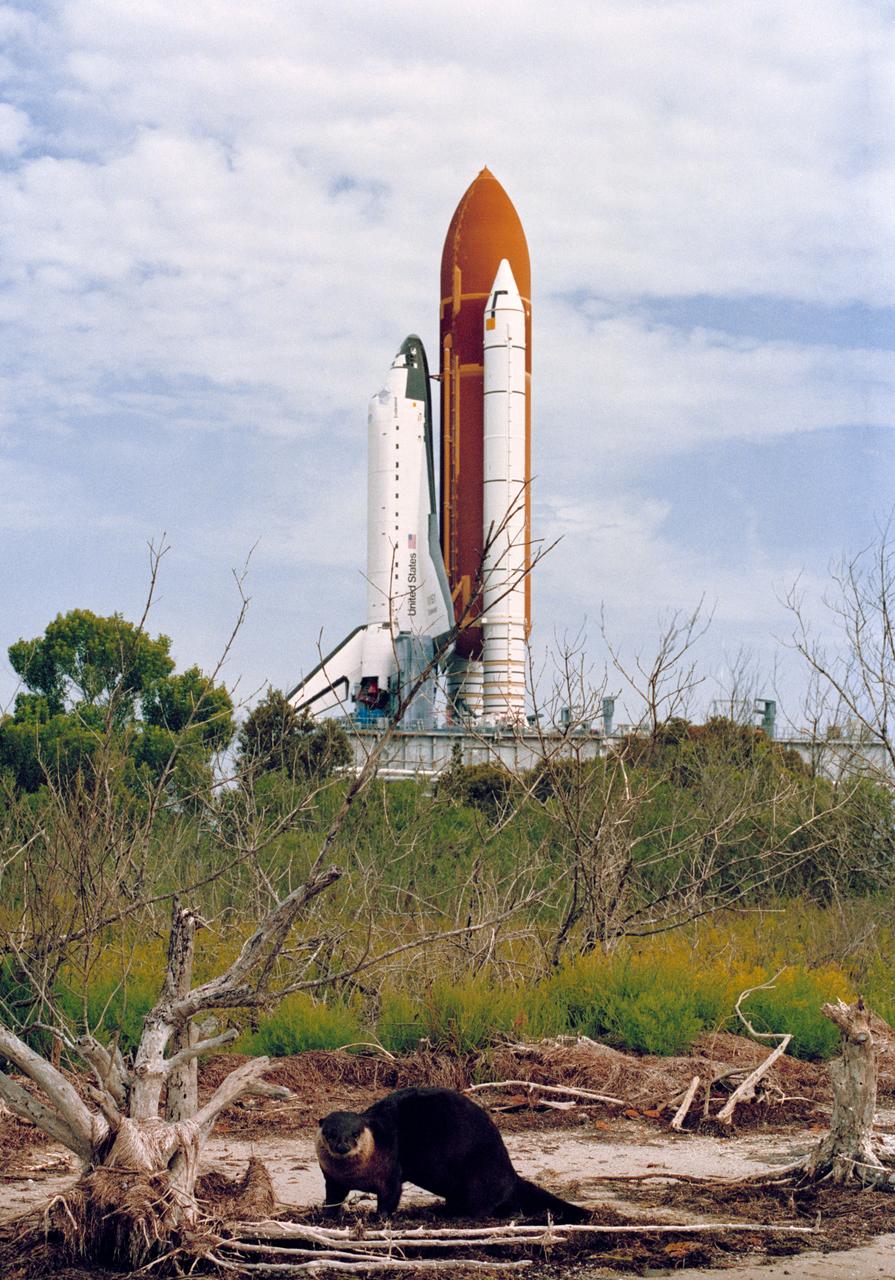
S92-34862 (13 March 1992) --- An otter, surprised by the unexpected presence of the photographer, seems unaware of the Space Shuttle Endeavour rolling behind it to Launch Pad 39B. Endeavour is the newest orbiter in the Shuttle fleet. Still ahead for Endeavour (OV-105) is a Flight Readiness Firing of its three main engines, and the Terminal Countdown Demonstration Test with the flight crew. Endeavour's maiden voyage on NASA's mission STS-49 will occur in late spring.
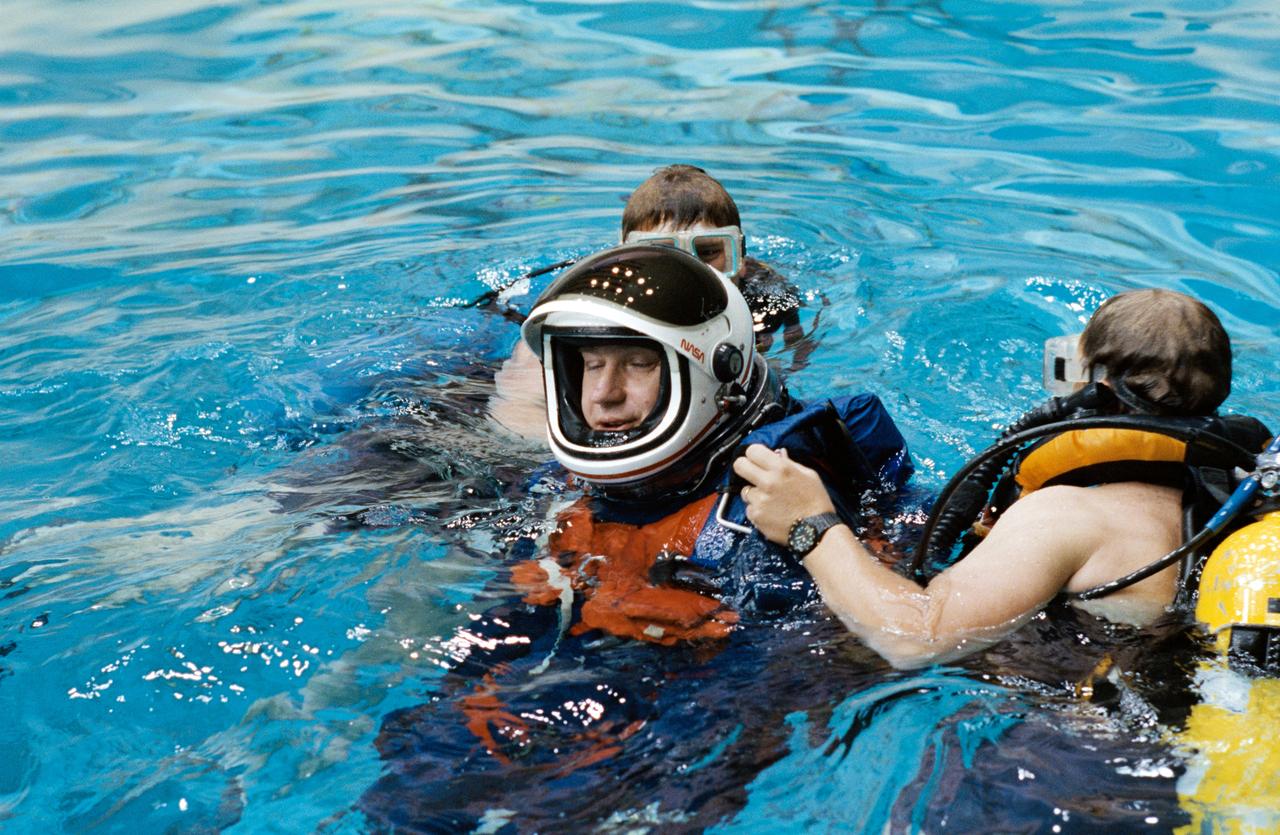
S92-32108 (May 1992) --- Payload specialist Albert Sacco Jr. uses a one-person life raft during emergency bailout training exercises in the Johnson Space Center?s (JSC) Weightless Environment Training Facility (WET-F). Sacco is an alternate payload specialist for the United States Microgravity Laboratory (USML-1) mission, scheduled for launch later this year. EDITOR?S NOTE: Sacco was later named as prime crew payload specialist for the USML-2 mission (STS-73), scheduled for 1995.
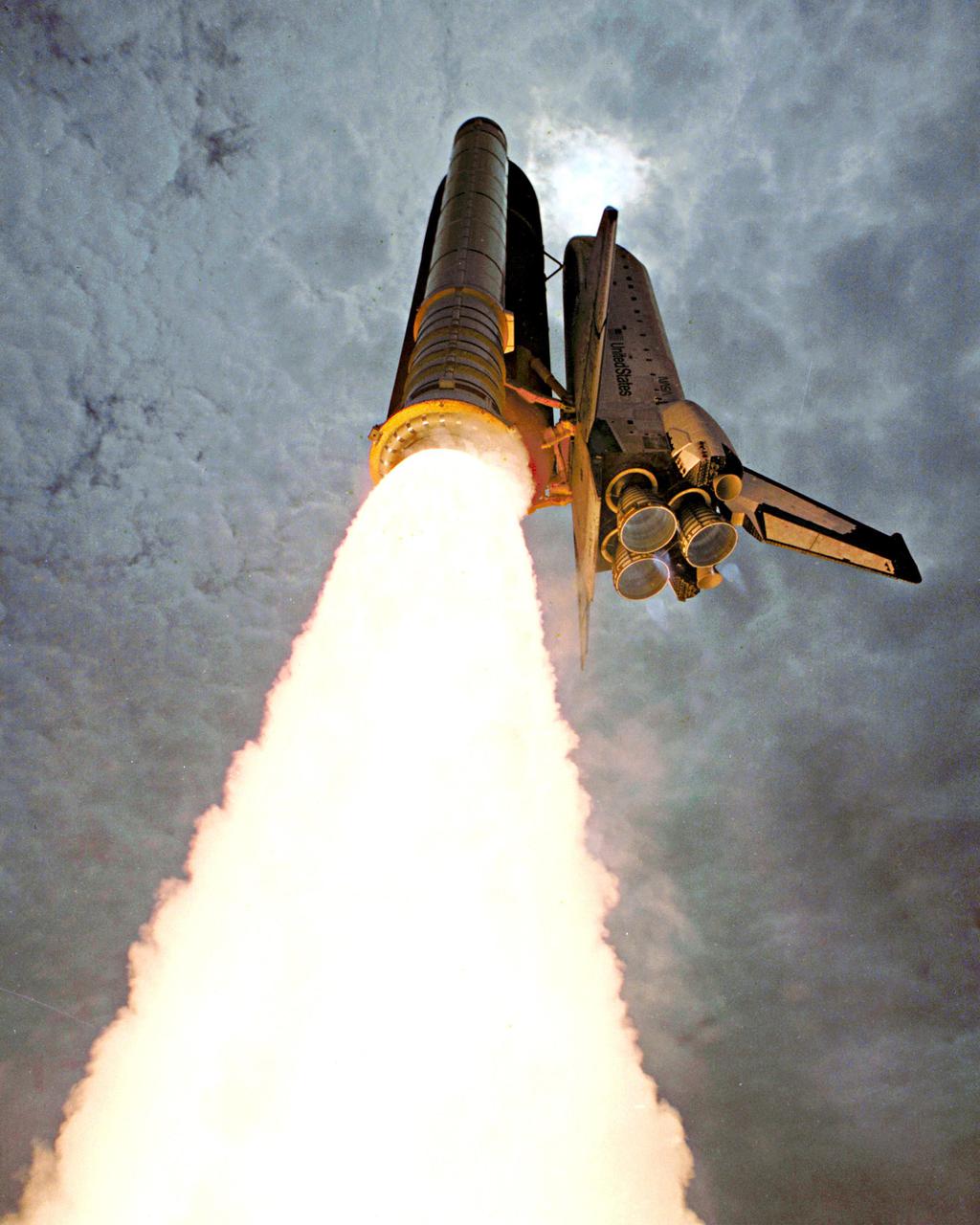
KENNEDY SPACE CENTER, FLA. -- STS-50: Columbia
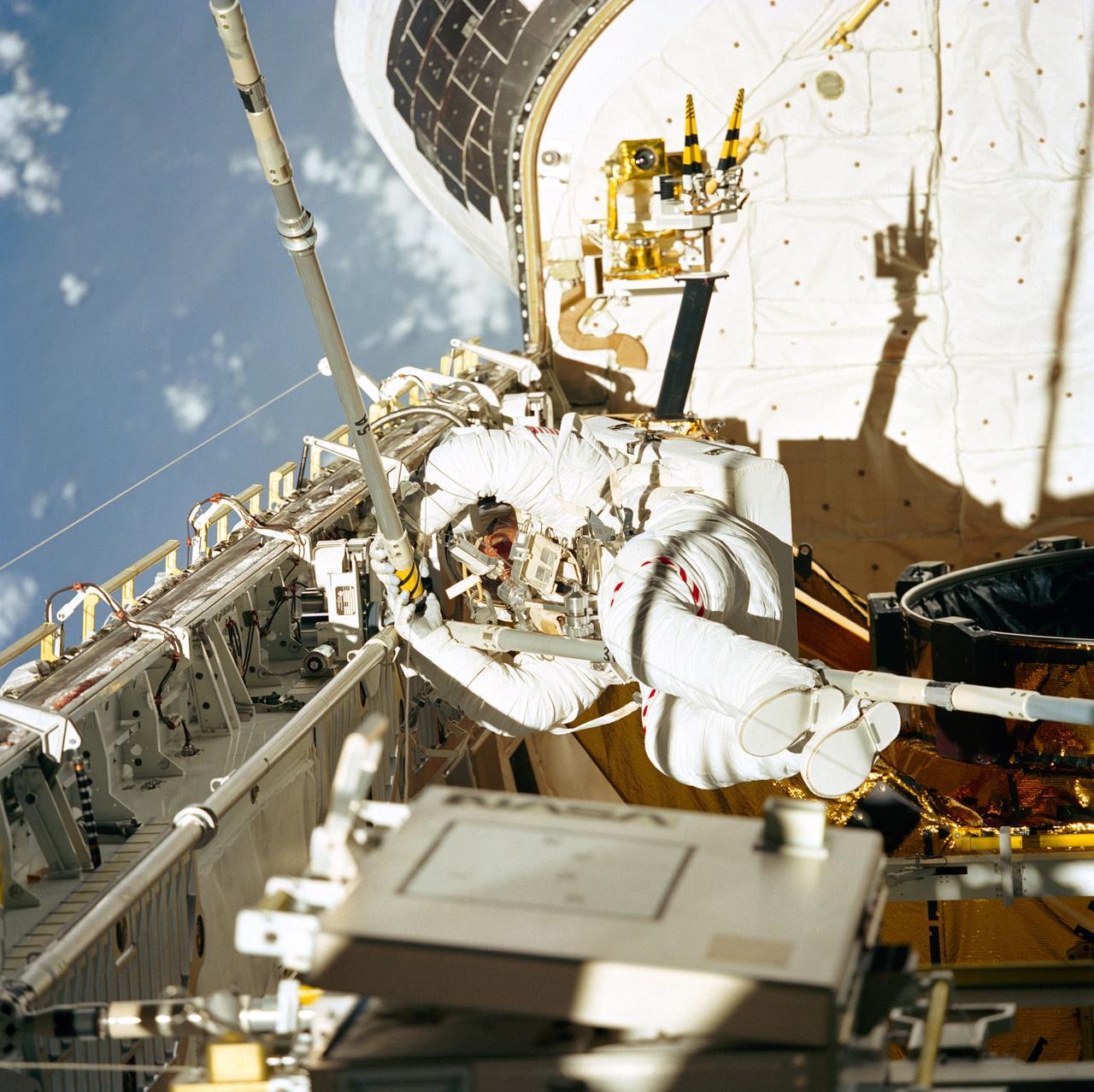
STS049-77-023 (14 May 1992) --- Astronaut Thomas D. Akers joins three struts together, as fourth period of extravehicular activity (EVA) proceeds in the Space Shuttle Endeavour's cargo bay. The purpose of the final EVA on this nine-day mission was the evaluation of Assembly of Station by EVA Methods (ASEM). The scene was recorded on 70mm film by a fellow crew member in the Space Shuttle's cabin. Astronaut Kathryn C. Thornton (out of frame) joined Akers on the 7 1/2 hour EVA.
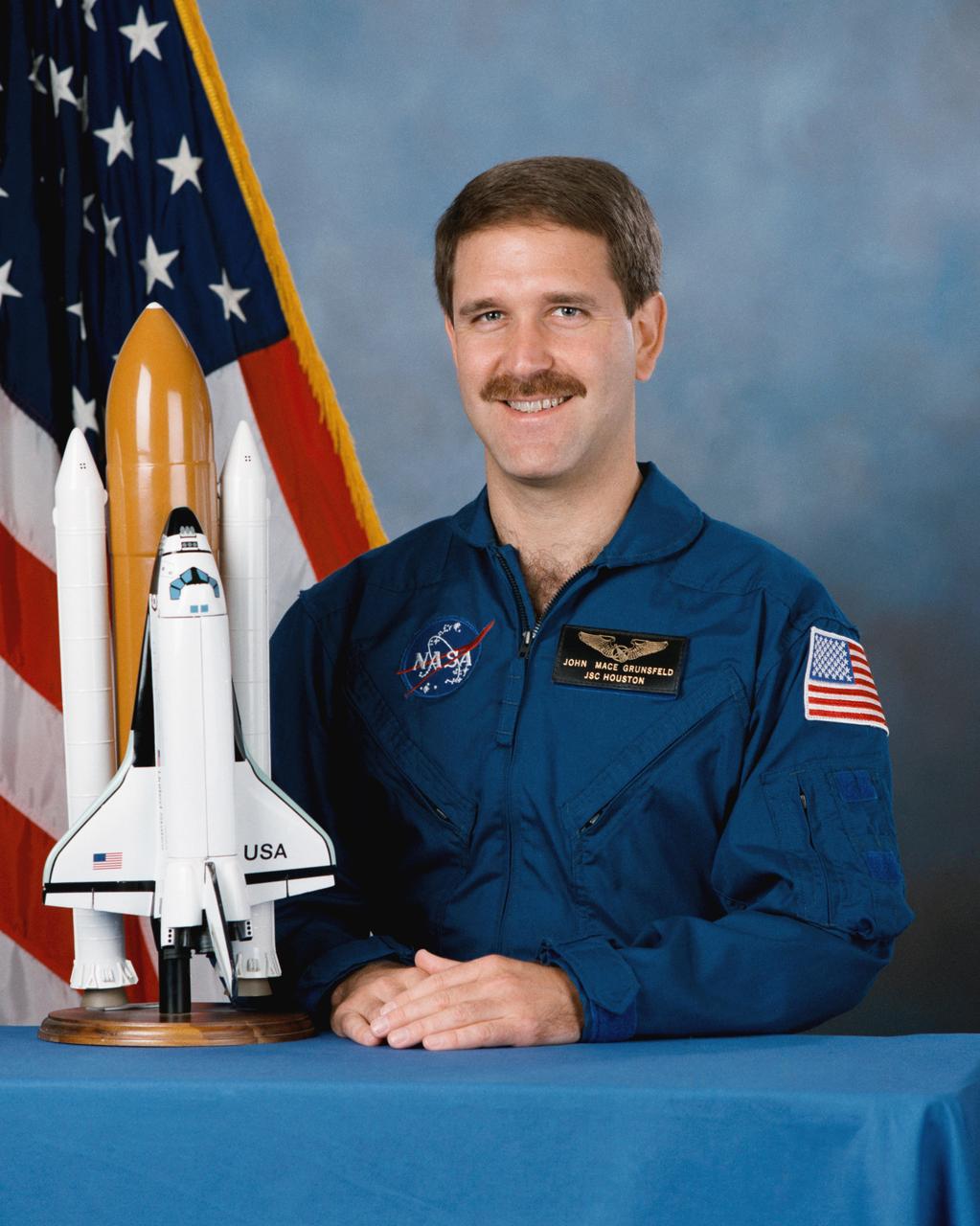
S92-45921 (21 Sept. 1992) --- Astronaut John M. Grunsfeld.
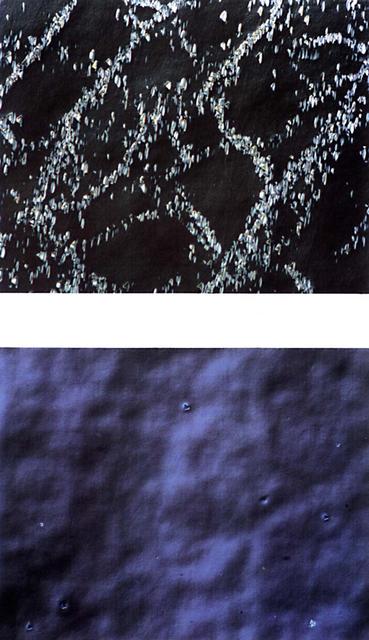
Samples of zinc-alloyed cadmium mercury grown on Earth (1g) and in space (ug) are shown at the same magnification. The space-grown crystal has a more uniform microstructure. Flown on STS-50 USML-1.
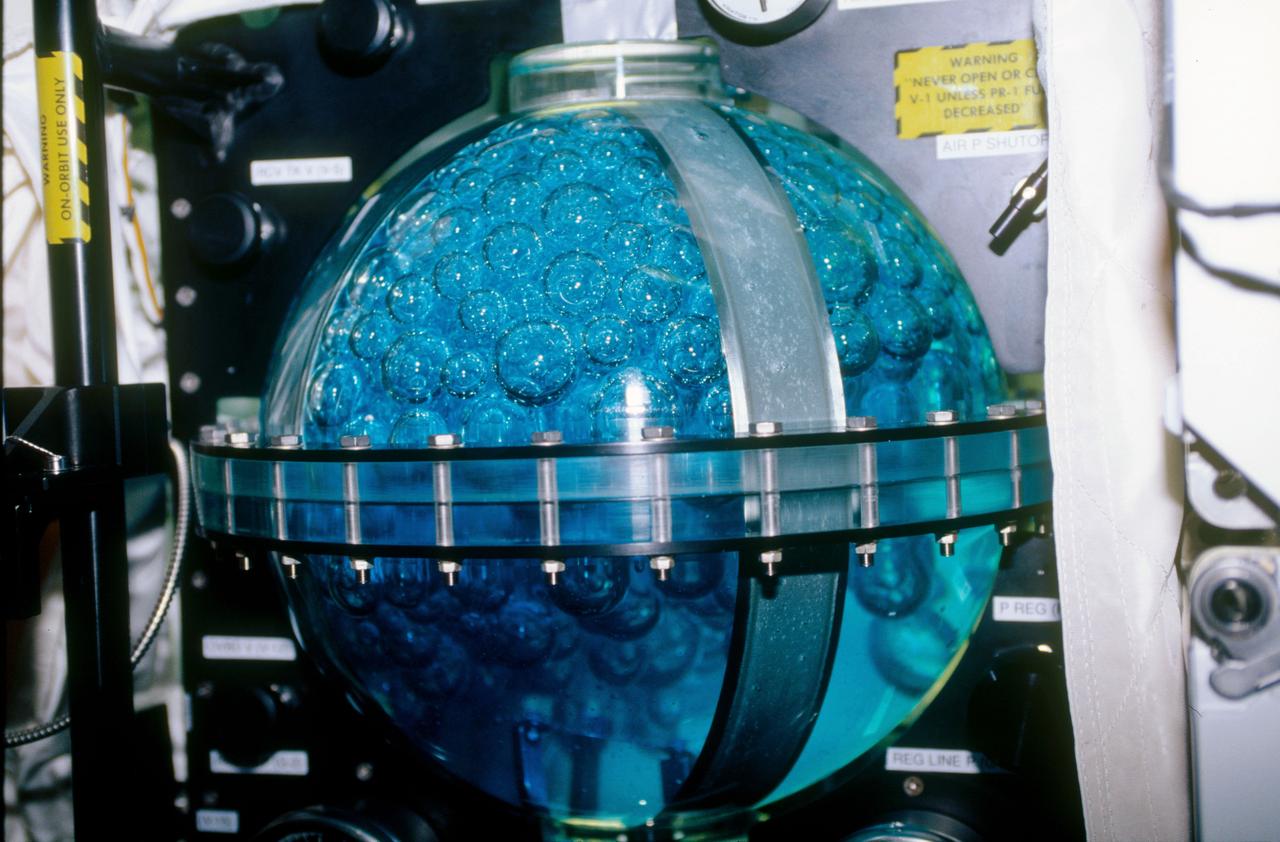
STS053-09-019 (2 - 9 Dec 1992) --- A medium close-up view of part of the Fluid Acquisition and Resupply Equipment (FARE) onboard the Space Shuttle Discovery. Featured in the mid-deck FARE setup is fluid activity in one of two 12.5-inch spherical tanks made of transparent acrylic. Pictured is the receiver tank. The other tank, out of frame below, is for supplying fluids. The purpose of FARE is to investigate the dynamics of fluid transfer in microgravity and develop methods for transferring vapor-free propellants and other liquids that must be replenished in long-term space systems like satellites, Extended-Duration Orbiters (EDO), and Space Station Freedom. Eight times over an eight-hour test period, the mission specialists conducted the FARE experiment. A sequence of manual valve operations caused pressurized air from the bottles to force fluids from the supply tank to the receiver tank and back again to the supply tank. Baffles in the receiver tank controlled fluid motion during transfer, a fine-mesh screen filtered vapor from the fluid, and the overboard vent removed vapor from the receiver tank as the liquid rose. FARE is managed by NASA's Marshall Space Flight Center (MSFC) in Alabama. The basic equipment was developed by Martin Marietta for the Storable Fluid Management Demonstration. Susan L. Driscoll is the principal investigator.
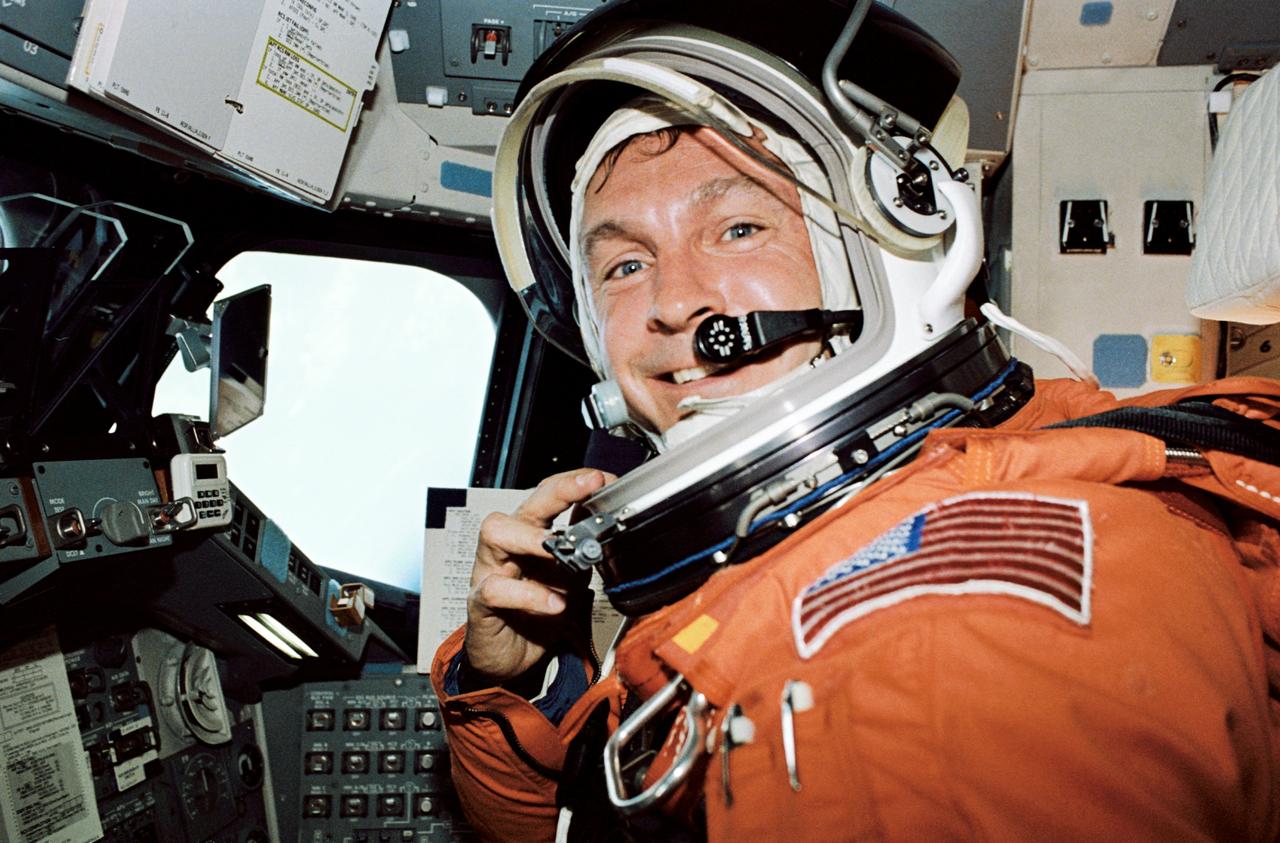
STS047-28-002 (20 Sept. 1992) --- Astronaut Curtis L. Brown, Jr., STS-47 pilot, is photographed at the Space Shuttle Endeavour's pilot station about ten minutes after main engine cutoff on launch day of the eight-day Spacelab-J mission. Wearing the partial-pressure launch and entry suit, Brown shared the forward cabin with astronaut Robert L. Gibson (out of frame at left), mission commander. Endeavour was beginning its second mission in space, this one devoted to research supporting the Spacelab-J mission.

S92-45226 (11 Sept. 1992) --- Astronaut Winston E. Scott, mission specialist.
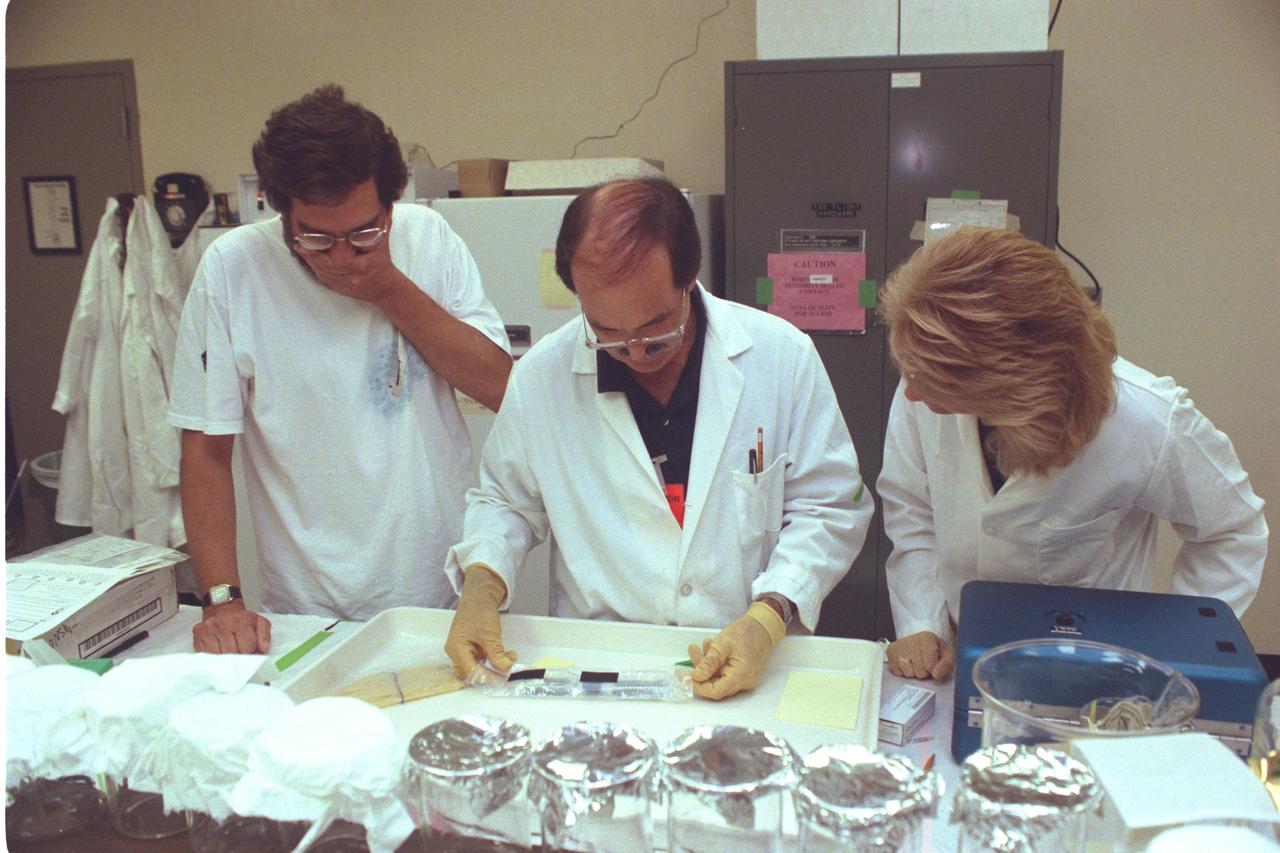
STS-47 Spacelab-J - Ken Souza and team during post flight work at KSC
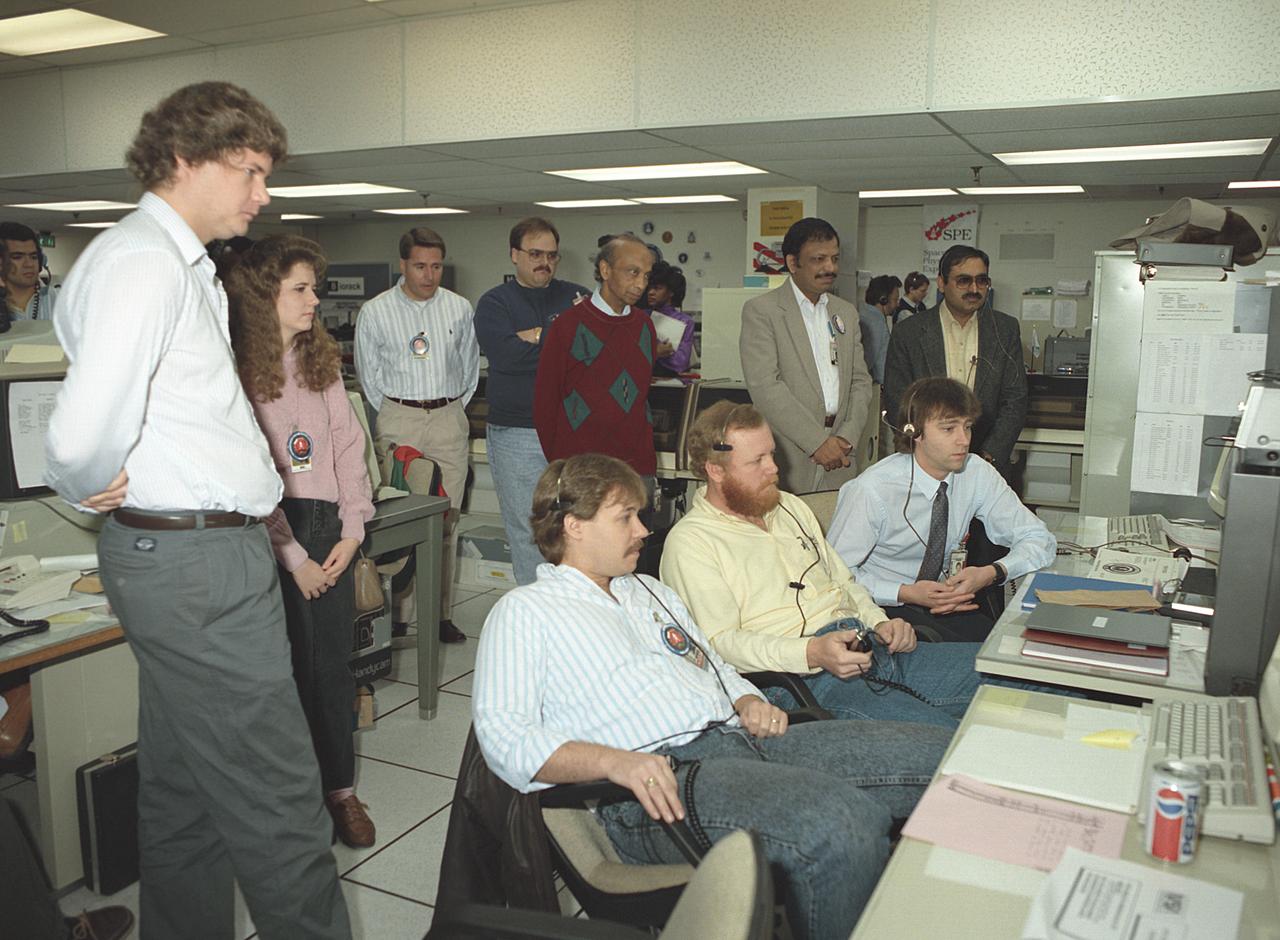
The primary payload for Space Shuttle Mission STS-42, launched January 22, 1992, was the International Microgravity Laboratory-1 (IML-1), a pressurized manned Spacelab module. The goal of IML-1 was to explore in depth the complex effects of weightlessness of living organisms and materials processing. Around-the-clock research was performed on the human nervous system's adaptation to low gravity and effects of microgravity on other life forms such as shrimp eggs, lentil seedlings, fruit fly eggs, and bacteria. Materials processing experiments were also conducted, including crystal growth from a variety of substances such as enzymes, mercury iodide, and a virus. The Huntsville Operations Support Center (HOSC) Spacelab Payload Operations Control Center (SL POCC) at the Marshall Space Flight Center (MSFC) was the air/ground communication channel used between the astronauts and ground control teams during the Spacelab missions. Featured is the Crystal Growth team in the SL POCC during STS-42, IML-1 mission.
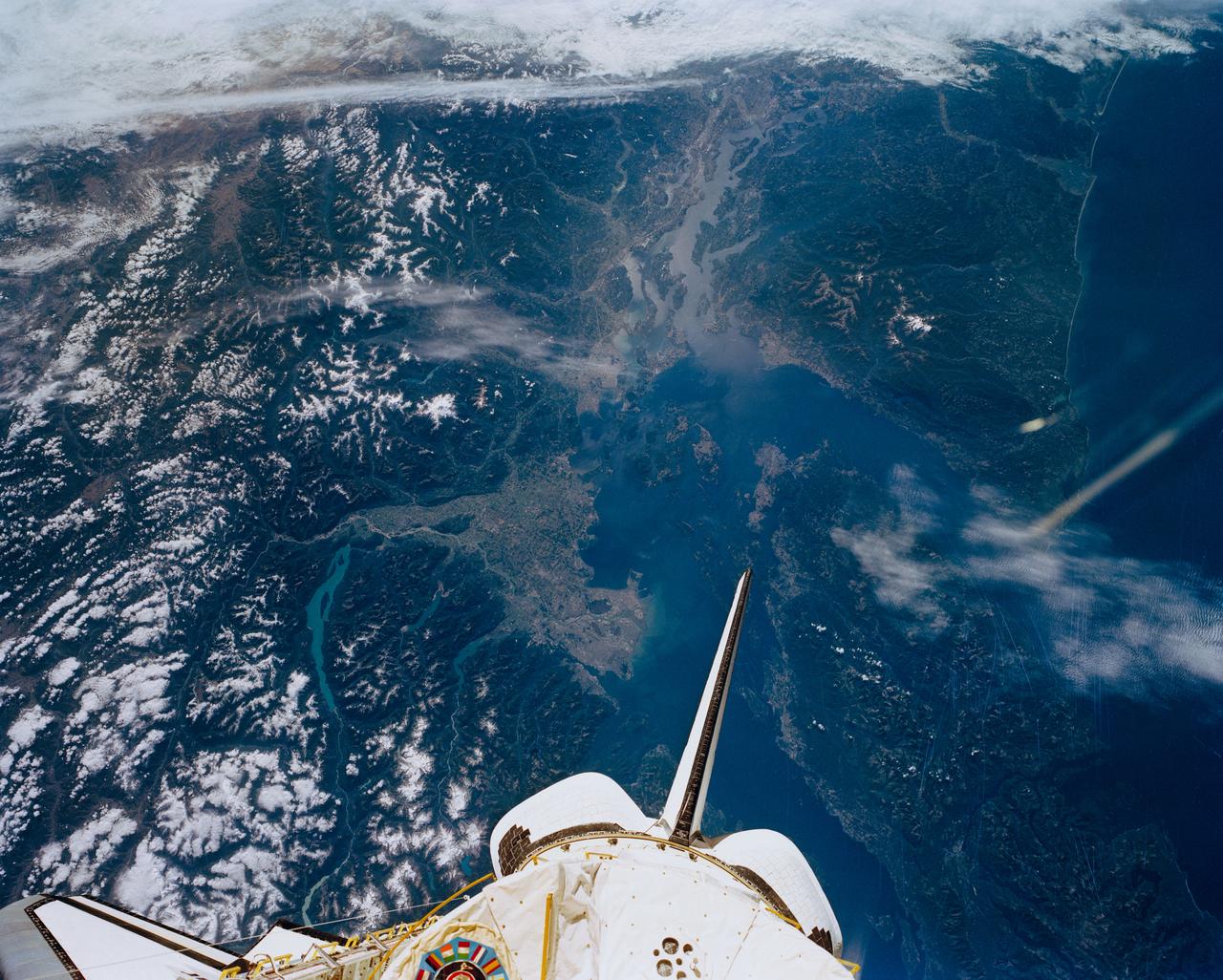
STS047-151-488 (12 - 20 Sept 1992) --- In this large format camera image, the forested Cascade Range appears along the left side; the Pacific Ocean, on the right. The frame was photographed as the Space Shuttle Endeavour flew north to south over Vancouver and Seattle. Many peaks in the Cascades reach altitudes greater than 9,000 feet and remain snowcapped even in mid-summer. The Strait of Juan de Fuca separates the Olympic Peninsula (top right) from Vancouver Island (bottom right). Snowcapped Mt. Olympus (7,965 feet) is one of the wettest places in the continental United States, with rainfall in excess of 120 inches per year. The port cities of Seattle and Tacoma occupy the heavily indented coastline of Puget Sound (top center). They appear as light-colored areas on the left side of the Sound. The angular street pattern of Tacoma is visible at the top of the picture. The international boundary between Canada and the United States of America runs across the middle of the view. The city of Victoria (center) is the light patch on the tip of Vancouver Island. Canada's Fraser River Delta provides flat topography on which the cities of Vancouver, Burnaby, and New Westminster were built. These cities appear as the light-colored area just left of center. The Fraser River can be seen snaking its way out of the mountains at the apex of the delta. Numerous ski resorts dot the slopes of the mountains (bottom left) that rise immediately to the north of Vancouver. In the same area the blue water of Harrison and other, smaller lakes fills some of the valleys that were excavated by glaciers in the "recent" geological past, according to NASA scientists studying the photography. A Linhof camera was used to expose the frame.
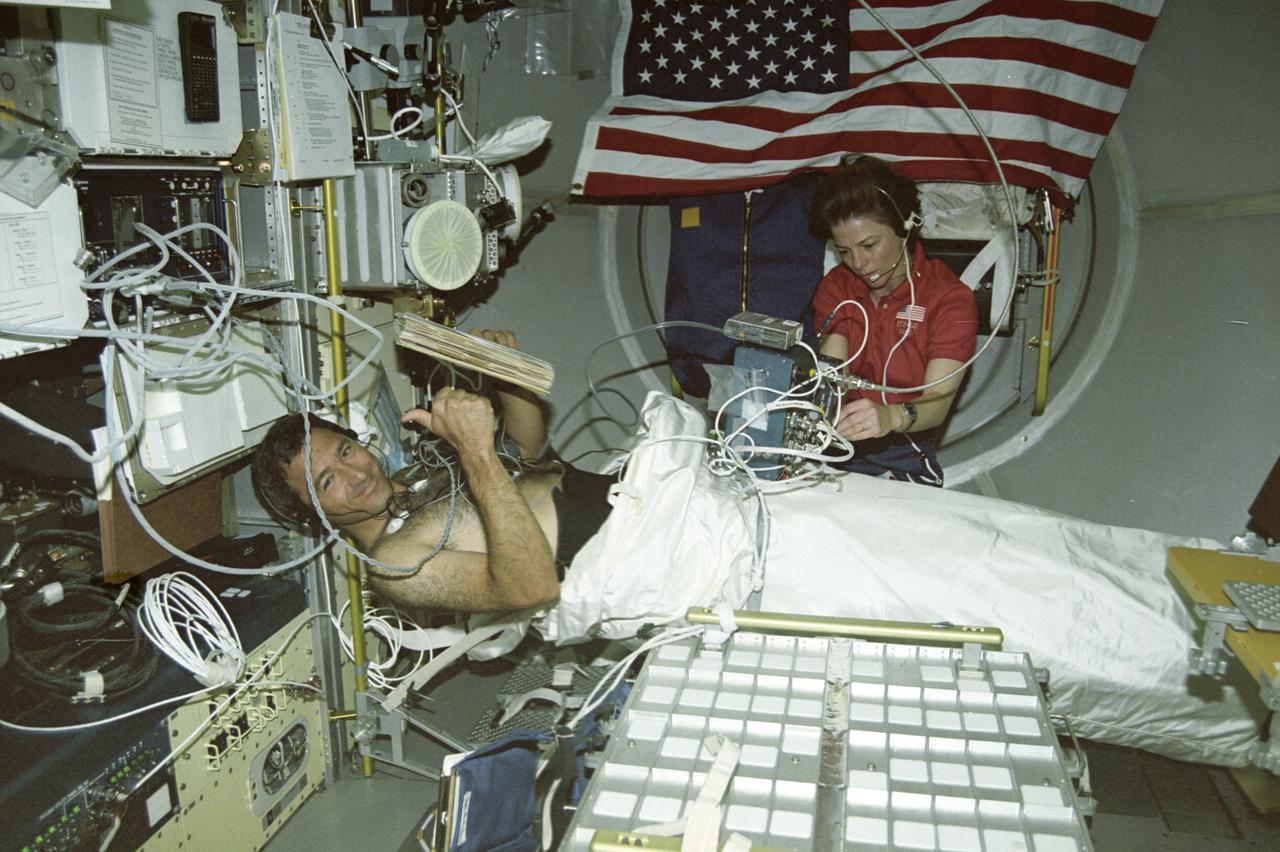
The first United States Microgravity Laboratory (USML-1) flew in orbit inside the Spacelab science module for extended periods, providing scientists and researchers greater opportunities for research in materials science, fluid dynamics, biotechnology (crystal growth), and combustion science. In this photograph, Astronaut Bornie Dunbar and Astronaut Larry DeLucas are conducting the Lower Body Negative Pressure (LBNP) experiment, which is to protect the health and safety of the crew and to shorten the time required to readapt to gravity when they return to Earth. When humans go into space, the lack of gravity causes many changes in the body. One change is that fluids normally kept in the lower body by gravity, shift upward to the head and chest. This is why astronauts' faces appear chubby or puffy. The change in fluid volume also affects the heart. The reduced fluid volume means that there is less blood to circulate through the body. Crewmembers may experience reduced blood flow to the brain when returning to Earth. This leads to fainting or near-fainting episodes. With the use of LBNP to simulate the pull of gravity in conjunction with fluids, salt tablets can recondition the cardiovascular system. This treatment, called "soak," is effective up to 24 hours. The LBNP uses a three-layer collapsible cylinder that seals around the crewmember's waist which simulates the effects of gravity and helps pull fluids into the lower body. The data collected will be analyzed to determine physiological changes in the crewmembers and effectiveness of the treatment. The USML-1 was launched aboard the Space Shuttle Orbiter Columbia (STS-50) on June 25, 1992.
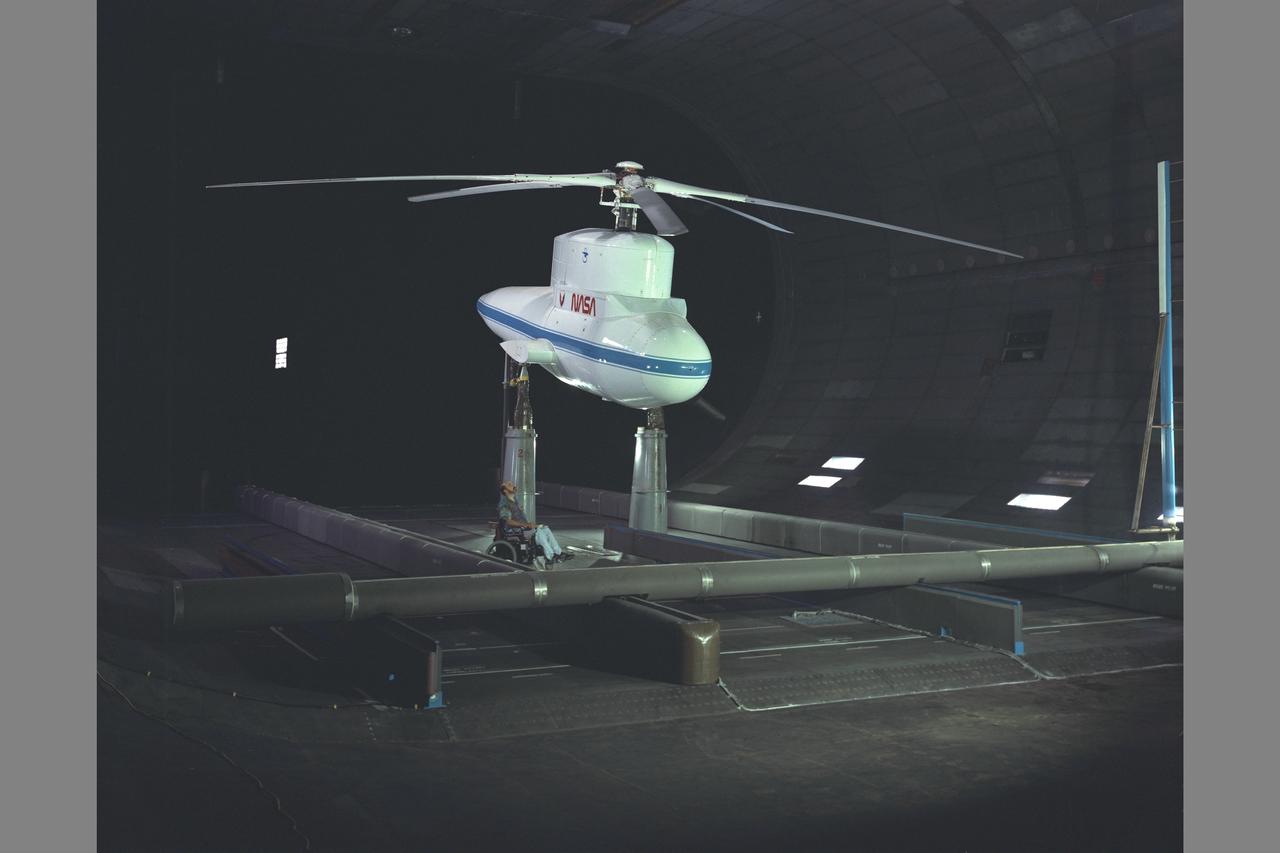
Sikorsky Bearingless Main rotor (SBMR) mounted on the Ames Rotor Test Apparatus (RTA) for testing in the NASA Ames 40x80ft Subsonic Wind Tunnel, test-584. Shown with NASA engineer Bob McMahon
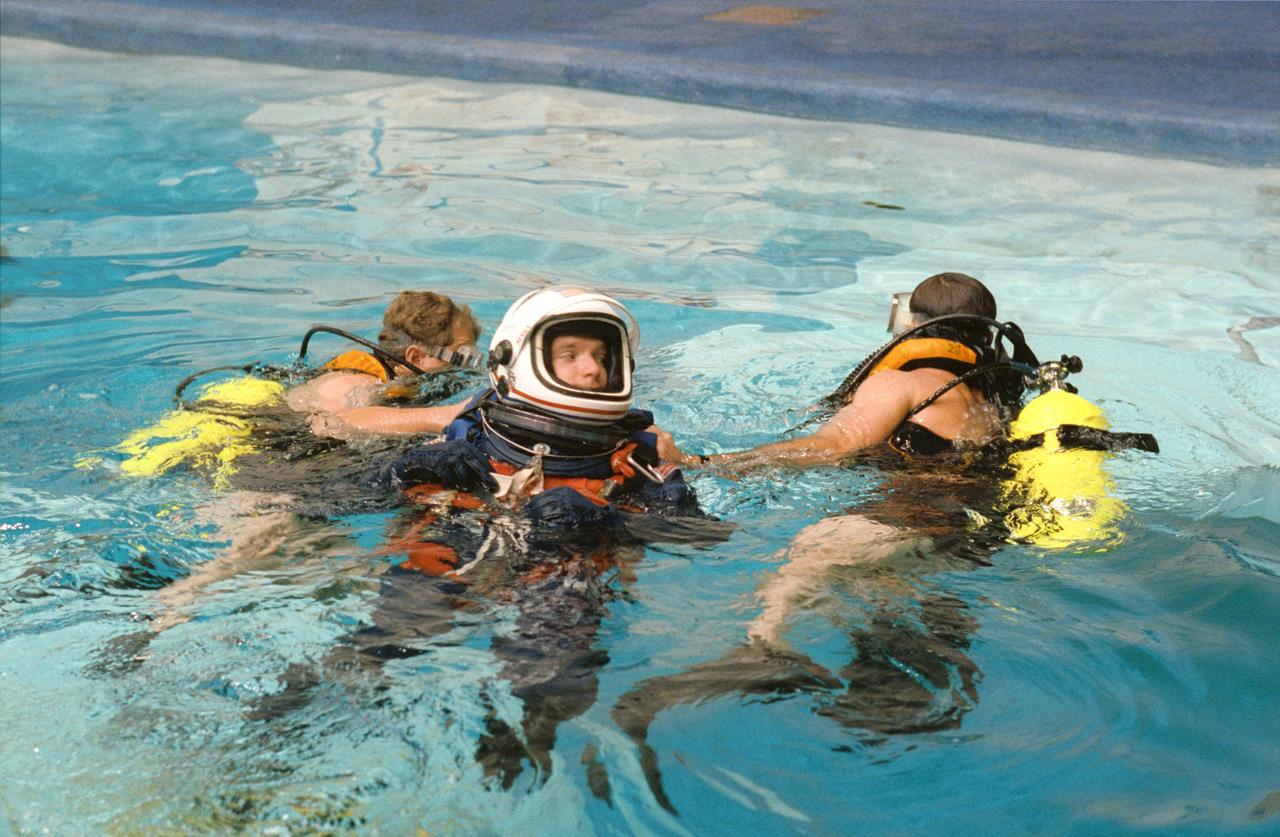
S92-50647 (Dec 1992) --- Assisted by two SCUBA-equipped divers, astronaut Charles J. Precourt, mission specialist for the STS-55/D-2 mission, participates in bailout training at the Johnson Space Center's (JSC) Weightless Environment and Training Facility (WET-F). Precourt is attired in a training version of the partial pressure Shuttle launch and entry garment. All seven prime flight crewmembers and the two backup payload specialists participated in the training session.
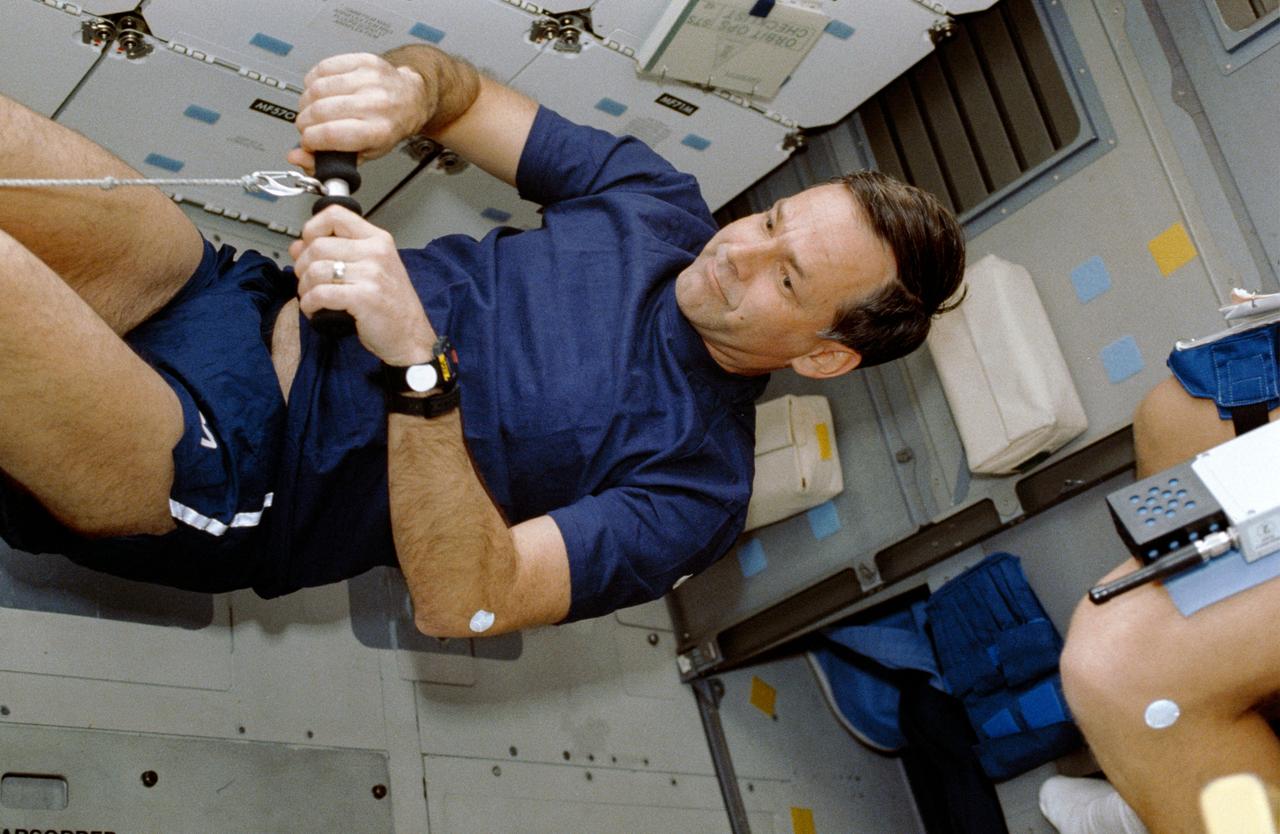
STS042-05-037 (30 Jan 1992) --- Astronaut Ronald J. Grabe, STS-42 commander, exercises using MK1 Rowing Machine on the middeck of Discovery, Orbiter Vehicle (OV) 103. Grabe is using the exercise device as part of Development Test Objective (DTO) 653, Evaluation of MK1 Rowing Machine. The forward lockers appear at Grabe's right and the sleep station behind him.
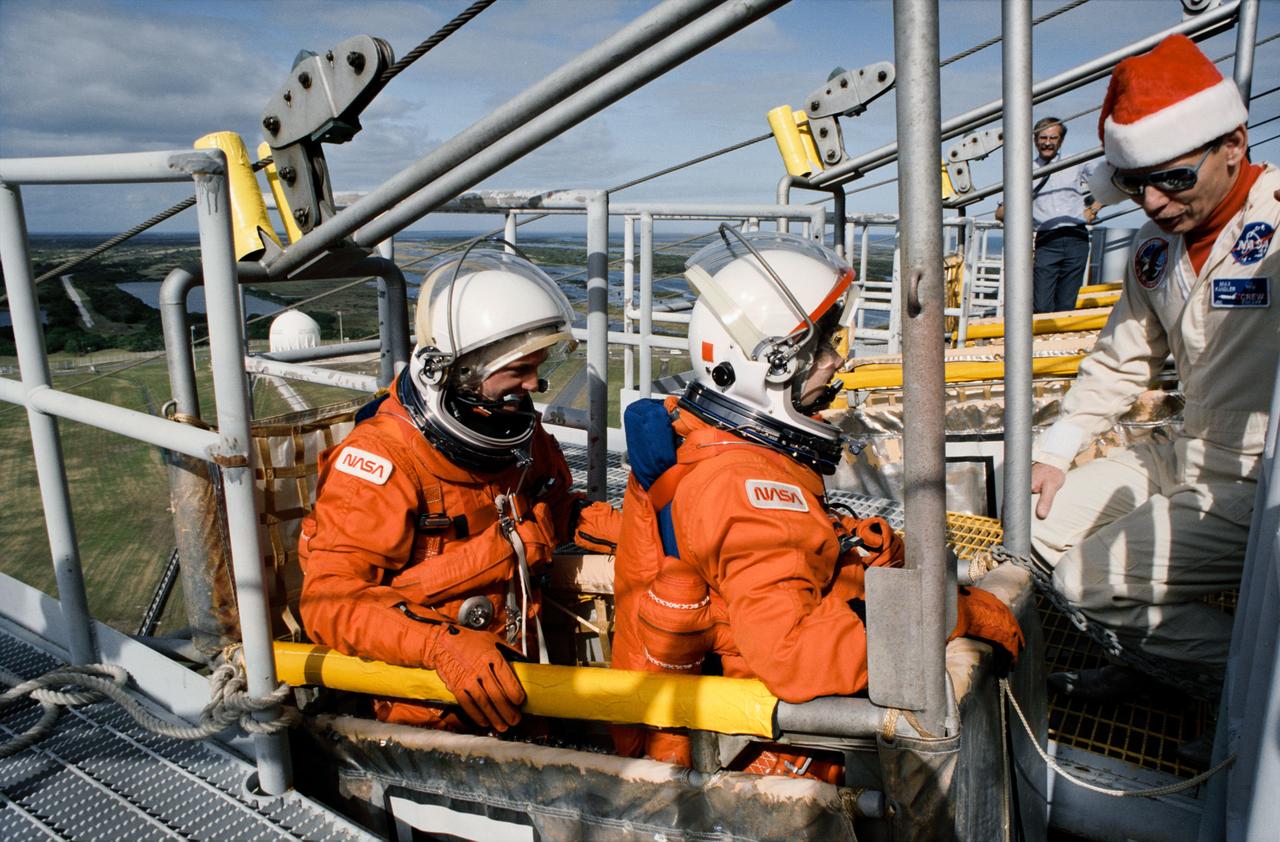
S93-25030 (15 Dec 1992) --- Two astronauts assigned to fly aboard Endeavour for the STS-54 mission are briefed on the slidewire escape system at the launch pad. Pictured in the slidewire litter are astronauts Gregory J. Harbaugh (left) and Susan J. Helms, mission specialists. They are assisted by Max Kandler of Lockheed, Houston. All five crewmembers are in Florida this week to participate in countdown demonstration tests.

This cross section of the Earth's atmosphere at sunset and earth limb (24.5S, 43.5E) displays an unusual layering believed to be caused by temperature inversions which effectively concentrate smoke, dust and aerosols into narrow layers. the top of the stratosphere can be seen as the top of the white layer thought to contain volcanic debris. The purple layer is the troposphere containing smoke from landclearing biomass burning.
STS047-02-018 (12 - 20 Sept 1992) --- Astronauts N. Jan Davis, mission specialist, and Curtis L. Brown, Jr., pilot, oversee the progress of some of the 180 female Oriental Hornets onboard the Space Shuttle Endeavour. The insects are part of the Israeli Space Agency Investigation About Hornets (ISAIAH) experiment. The objective of this experiment is to examine the effects of microgravity on the orientation, reproductive capability and social activity of the hornets. Also, the direction of comb-building by hornet workers in microgravity, as well as the structural integrity of the combs, will be examined.
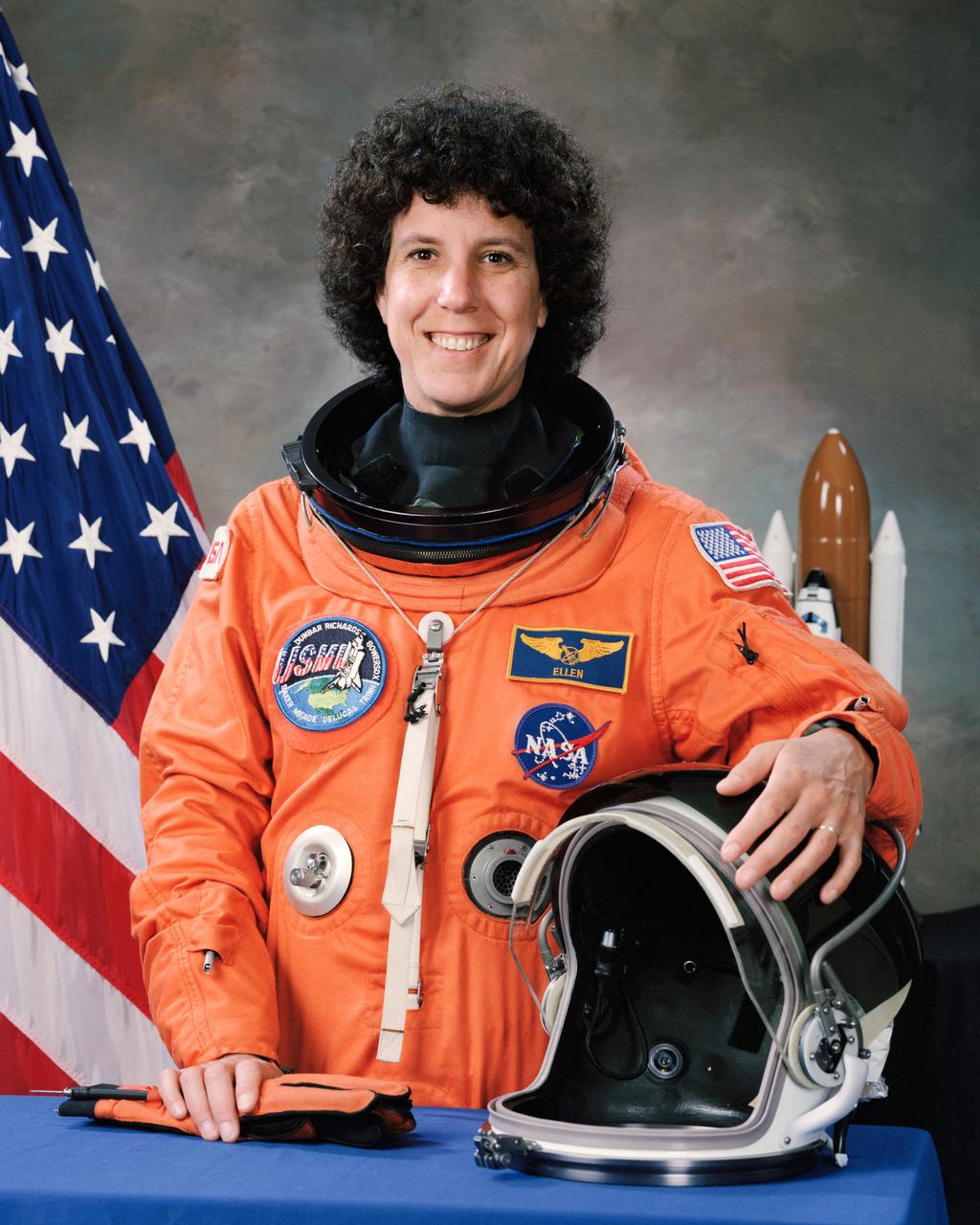
S92-45740 (August 1992) --- Astronaut Ellen S. Baker. Photo credit: NASA
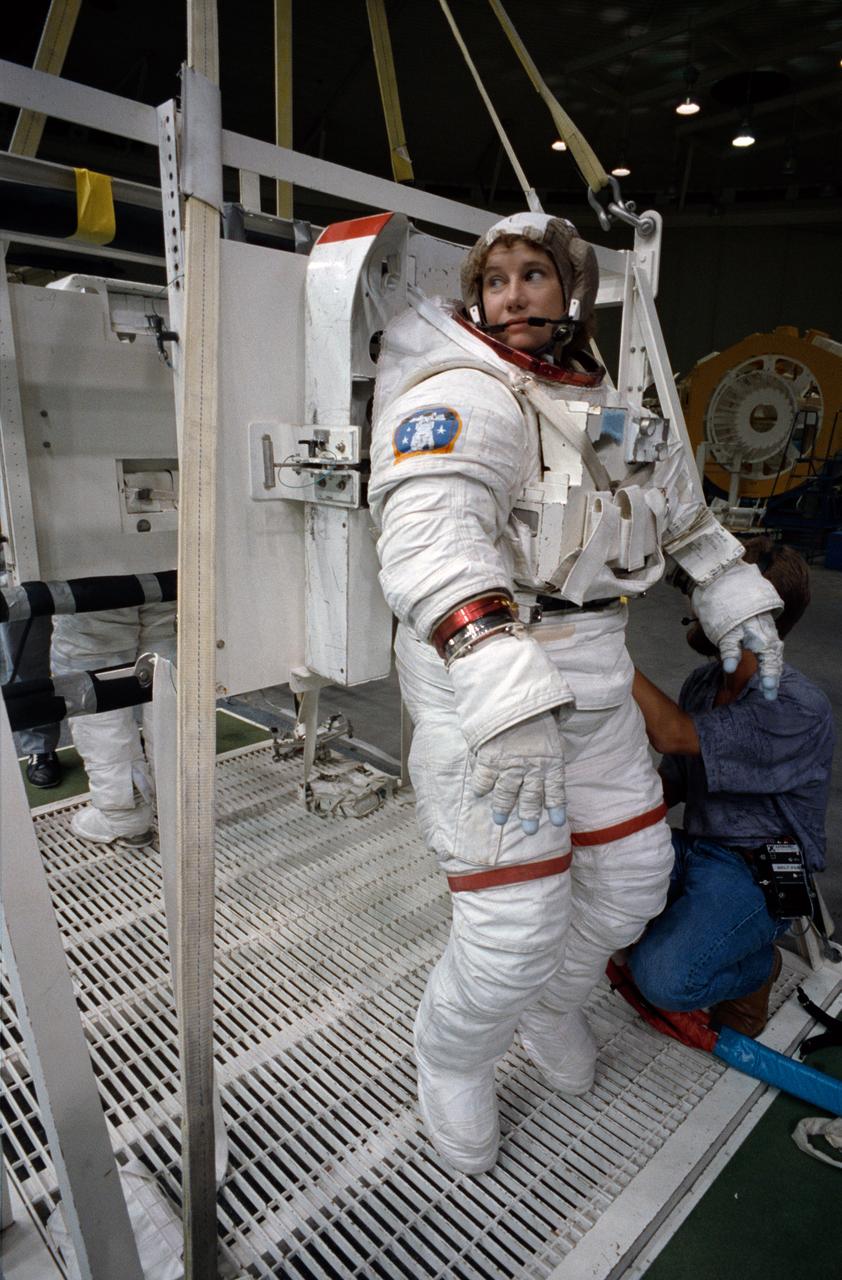
S92-42753 (31 July 1992) --- Astronaut Susan J. Helms, mission specialist assigned to fly aboard the Space Shuttle Endeavour for the STS-54 mission, gets assistance to complete the donning of her spacesuit. Though not assigned to the scheduled extravehicular activity (EVA), Helms is trained in the weightless environment training facility (WET-F). She will aid astronauts Gregory J. Harbaugh and Mario Runco Jr. in their planned EVA, scheduled for January of next year, and serve a backup role. Wearing this high fidelity training version of the extravehicular mobility unit (EMU), Helms was later lowered into the 25-ft. deep WET-F pool. The pressurized suit is weighted so as to allow Helms to achieve neutral buoyancy and simulate the various chores of the spacewalk.
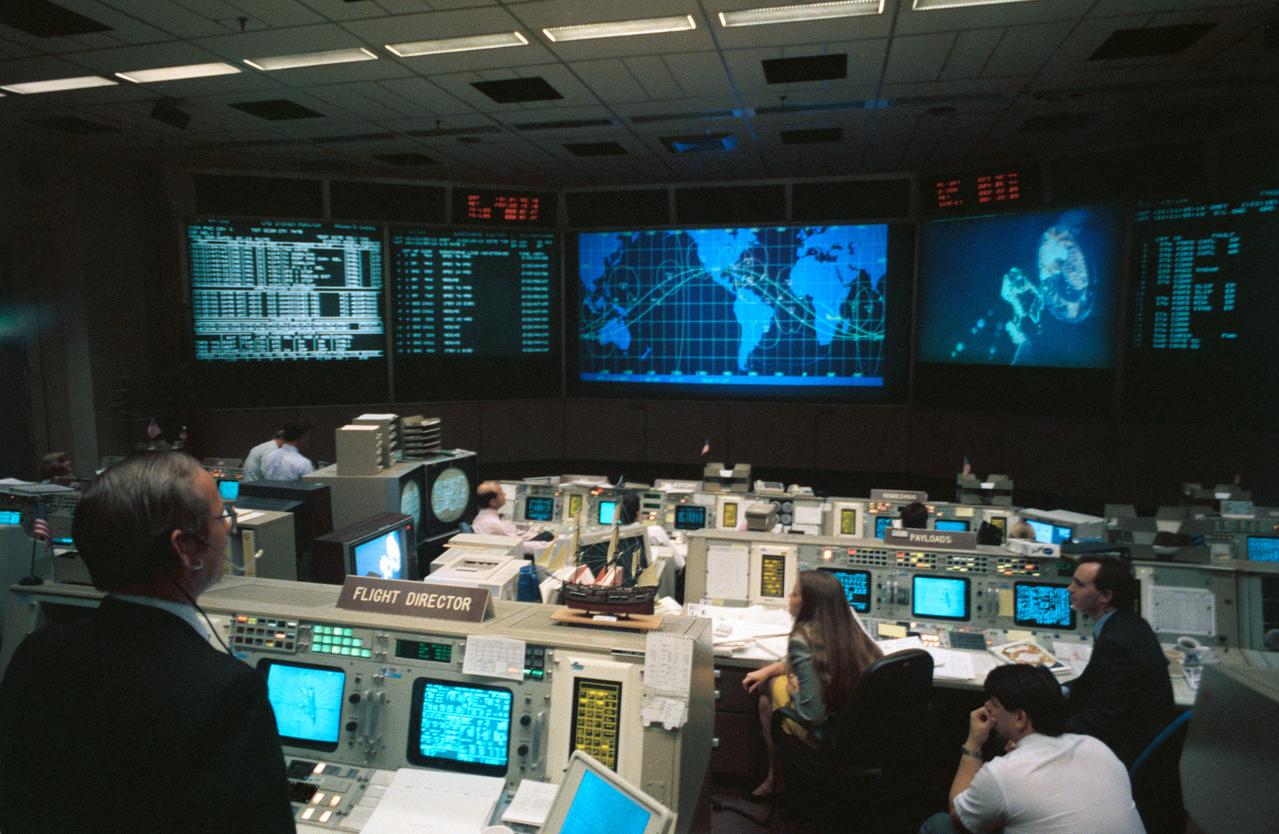
S49-S-0231 (11 May 1992) --- In the space shuttle flight control room (FCR) in Mission Control Center in Houston, Flight Director Al Pennington monitors the progress of the initial spacewalk of the STS-49 flight. A scale model of HM Bark Endeavour, namesake for the space shuttle currently making its inaugural flight, adorns the console. The model was built by Dan Willett of JSC's Information Resources Directorate. The original sailing ship Endeavour was commanded by Lt. James Cook on a scientific voyage to the South Pacific, Australia and New Zealand from 1768 to 1771. Photo credit: NASA
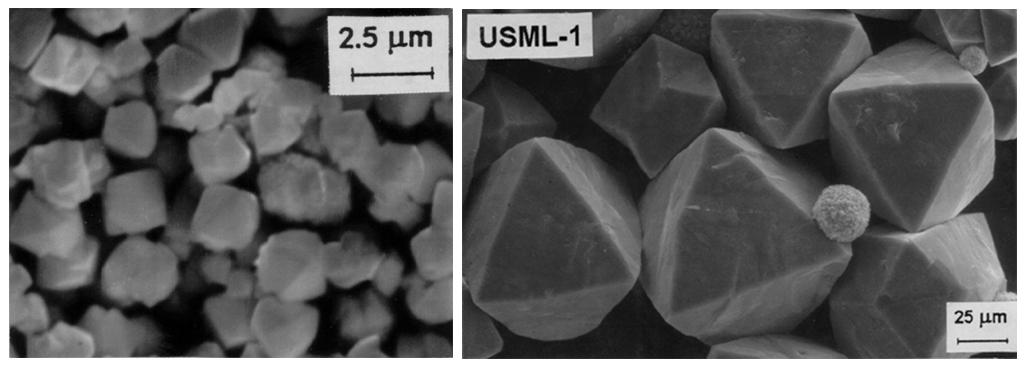
Zeolites are crystalline aluminosilicates that have complex framework structures. However, there are several features of zeolite crystals that make unequivocal structure determinations difficult. The acquisition of reliable structural information on zeolites is greatly facilitated by the availability of high-quality specimens. For structure determinations by conventional diffraction techniques, large single-crystal specimens are essential. Alternatively, structural determinations by powder profile refinement methods relax the constraints on crystal size, but still require materials with a high degree of crystalline perfection. Studies conducted at CAMMP (Center for Advanced Microgravity Materials Processing) have demonstrated that microgravity processing can produce larger crystal sizes and fewer structural defects relative to terrestrial crystal growth. Principal Investigator: Dr. Albert Sacco
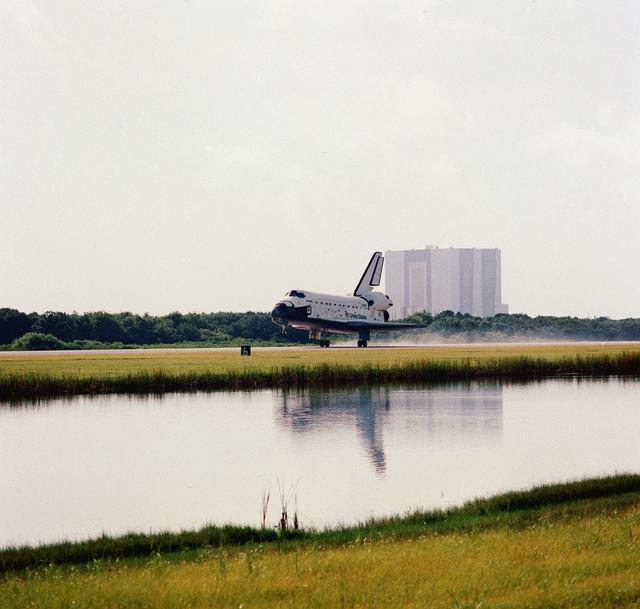
The Space Shuttle Orbiter Atlantis (STS-46) touched down at Kennedy Space Center's (KSC) Shuttle Landing Facility completing an eight day mission of five NASA astronauts and two Europeans. The vehicle assembly building (VAB) can be seen in the background. The STS-46 mission carried and deployed the European Retrievable Carrier (Eureca), and the NASA/ISA Tethered Satellite System (TSS-1), allowing for a new capability for probing the space environment.
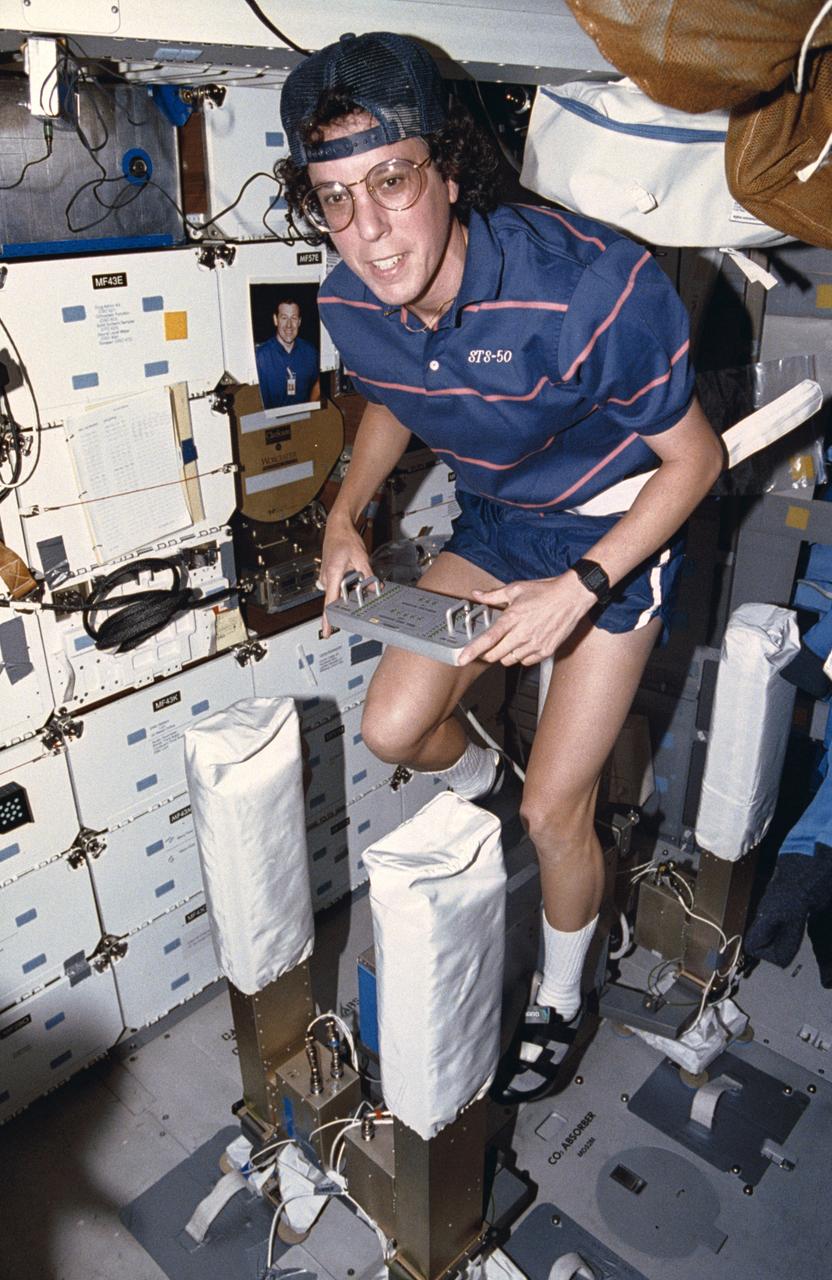
STS050-21-035 (25 June- 9 July 1992) --- Astronaut Ellen S. Baker, mission specialist, works out on the bicycle ergometer on the mid-deck of the Earth-orbiting Space Shuttle Columbia. Baker was joined by four other astronauts and two scientists from the private sector for the record-setting 14-day United States Microgravity Laboratory 1 (USML-1) mission.
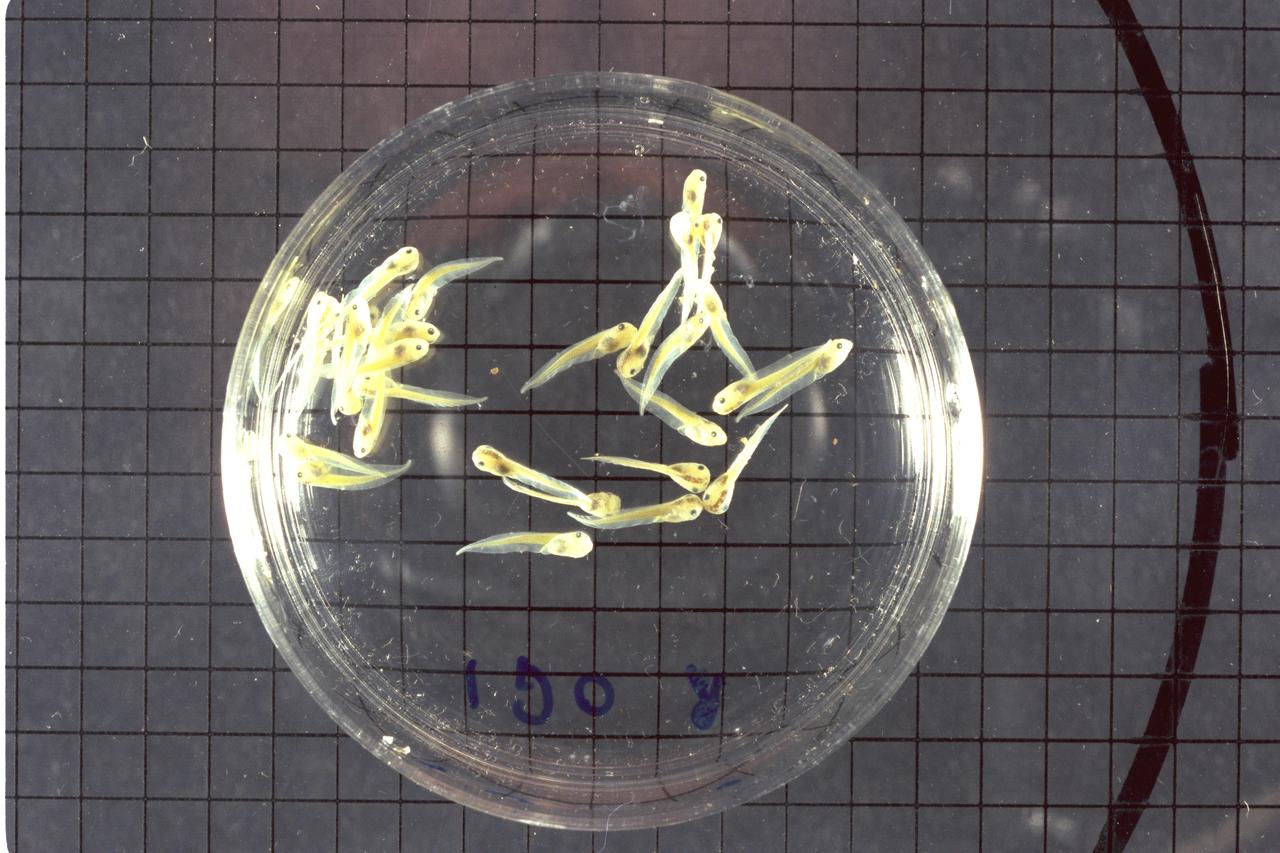
STS-47 Spacelab-J - post flight tadpoles
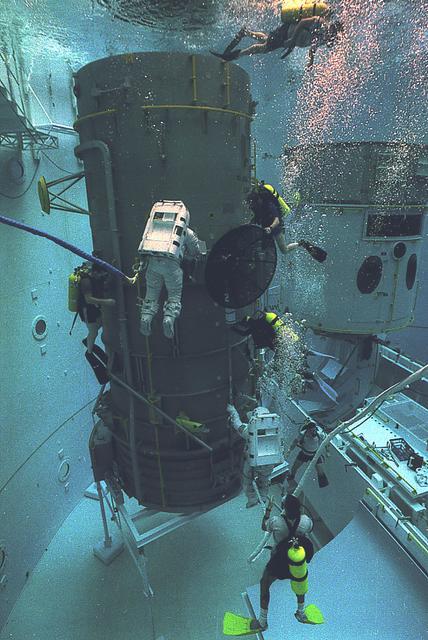
Underwater training is conducted in Marshall's Neutral Buoyancy Simulator (NBS) in preparation for on-orbit Hubble Space Telescope operations.
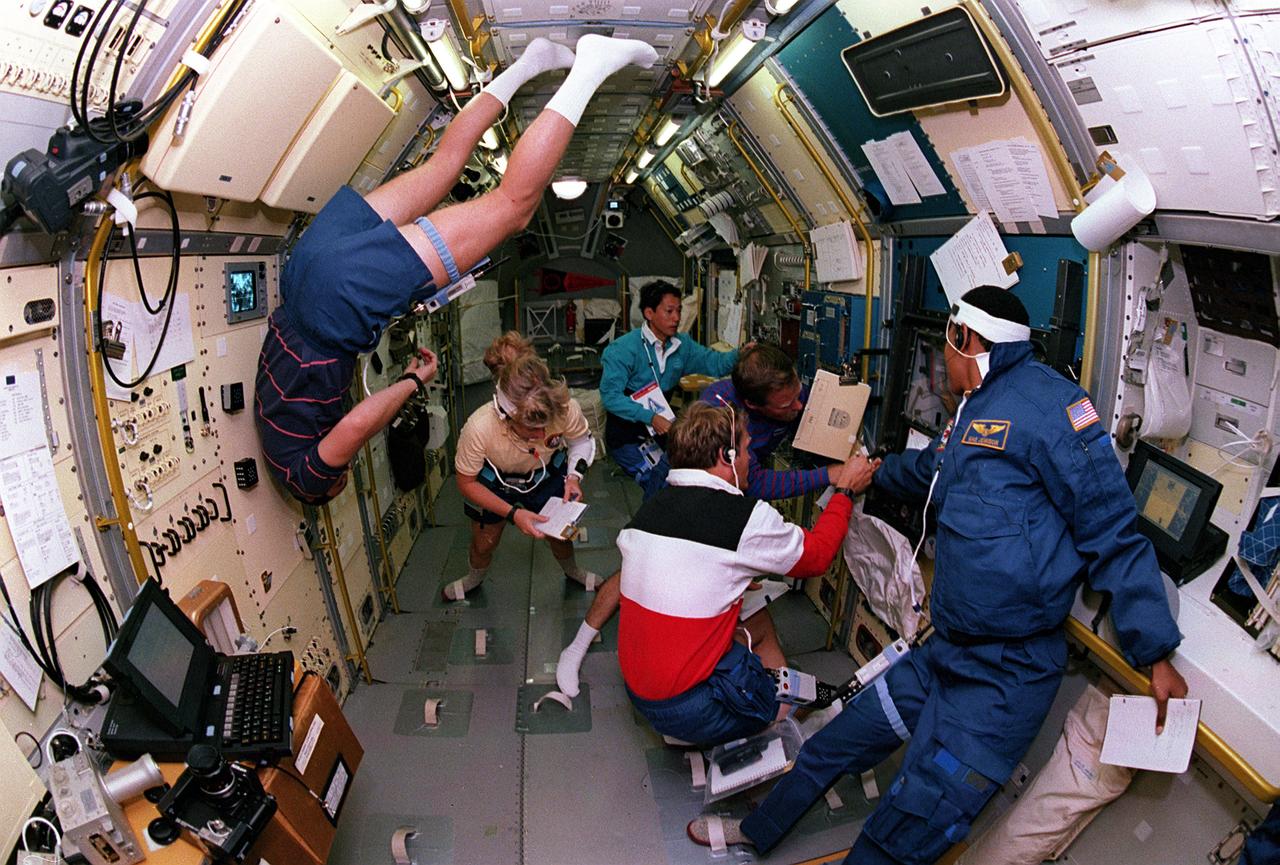
Space Shuttle Endeavour (STS-47) onboard photo of crew members working in the Spacelab-J module.
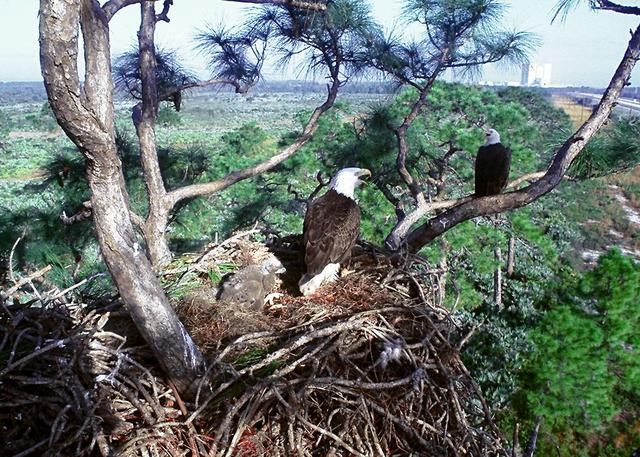
KENNEDY SPACE CENTER, FLA. -- A pair of eagles with two chicks in one of the many nests at Kennedy Space Center.
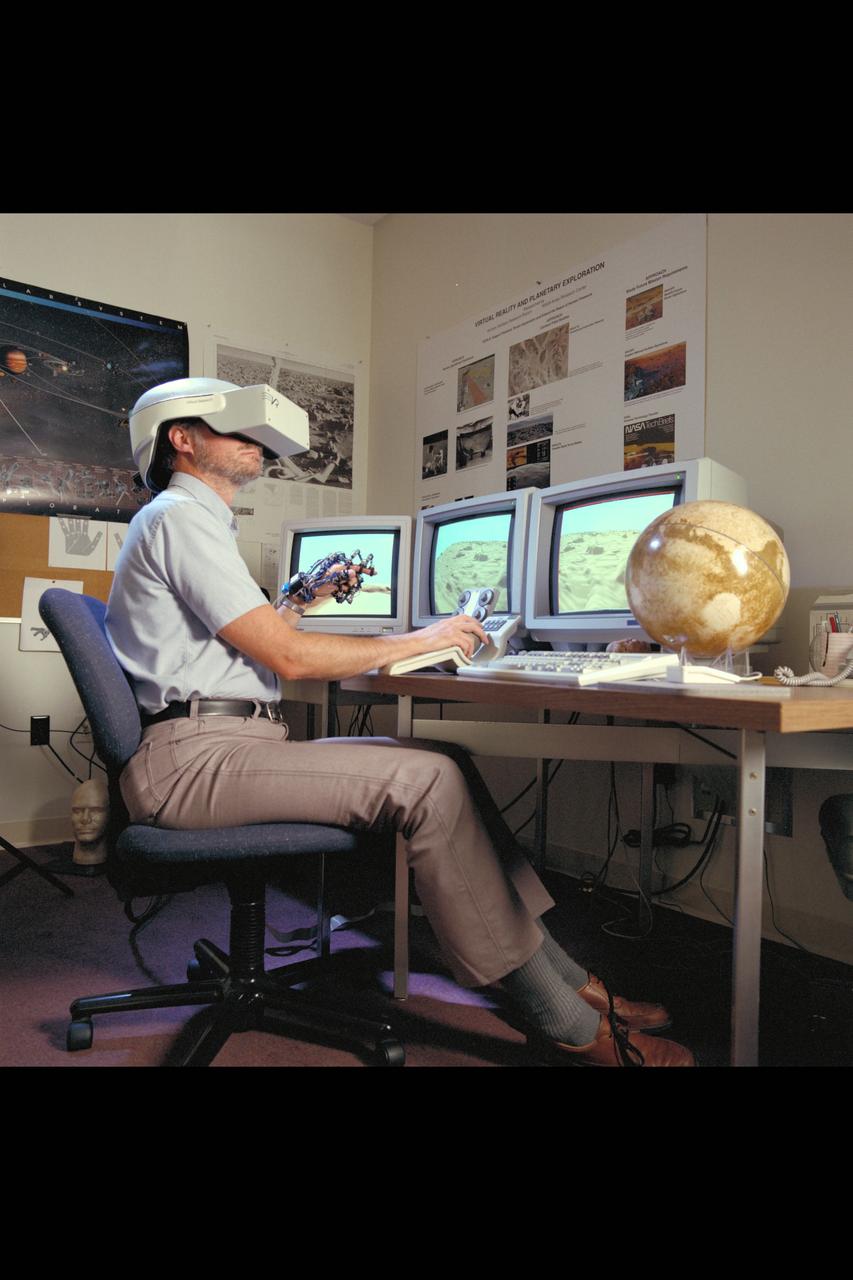
Virtual Environment Telepresence workstation, simulated Mars Exploration shows Lewis Hitchner with virtual helmet and EXOS Dexterous interface (virtual hand)
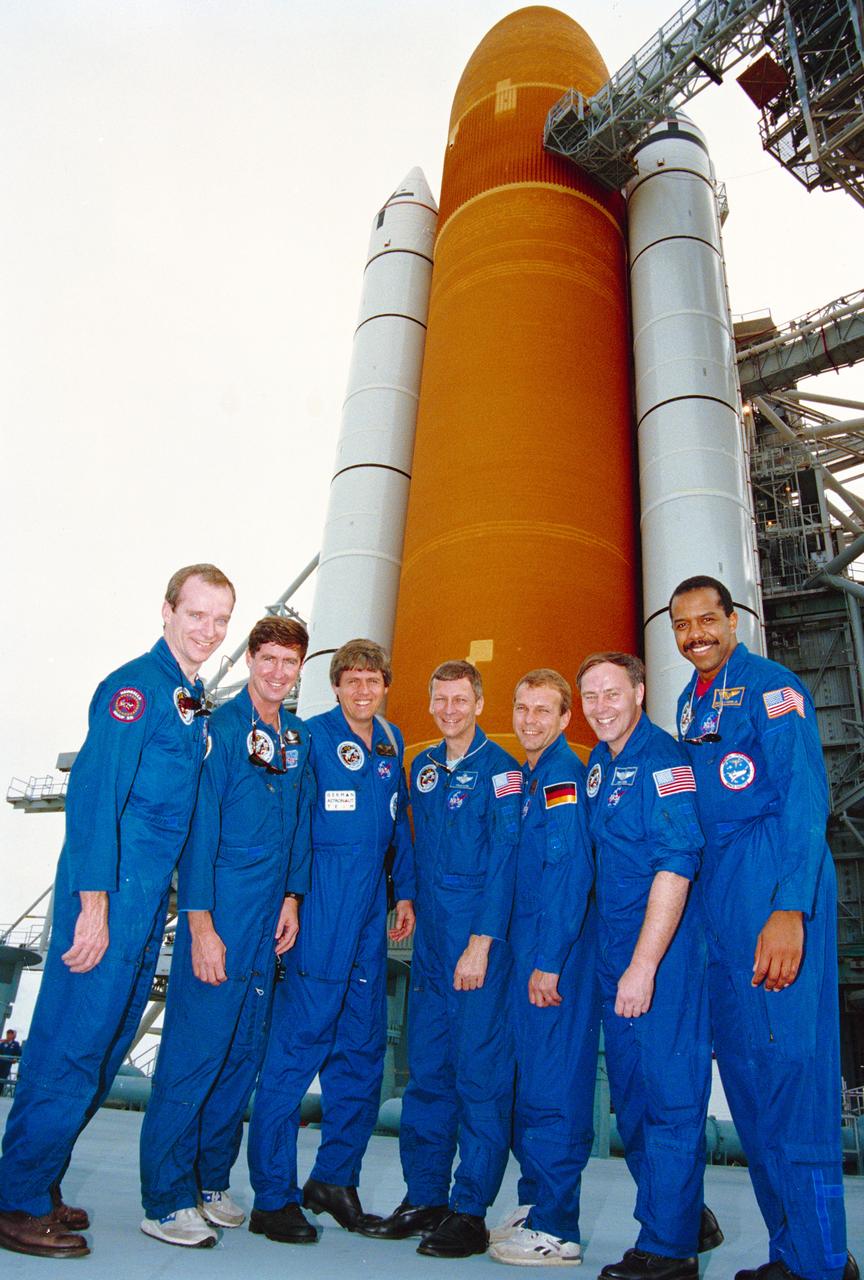
S93-29860 (11 Feb 1993) --- The STS-55 crew poses for a group portrait next to the Space Shuttle Columbia at Launch Pad 39A. From left are mission specialist Charles J. Precourt; pilot Terence T. Henricks; payload specialist Ulrich Walter, mission commander Steven R. Nagel; payload specialist Hans Schlegel; payload commander Jerry L. Ross; and mission specialist Bernard A. Harris Jr.. The crew is at KSC for the Terminal Countdown Demonstration Test (TCDT), a dress rehearsal for launch.
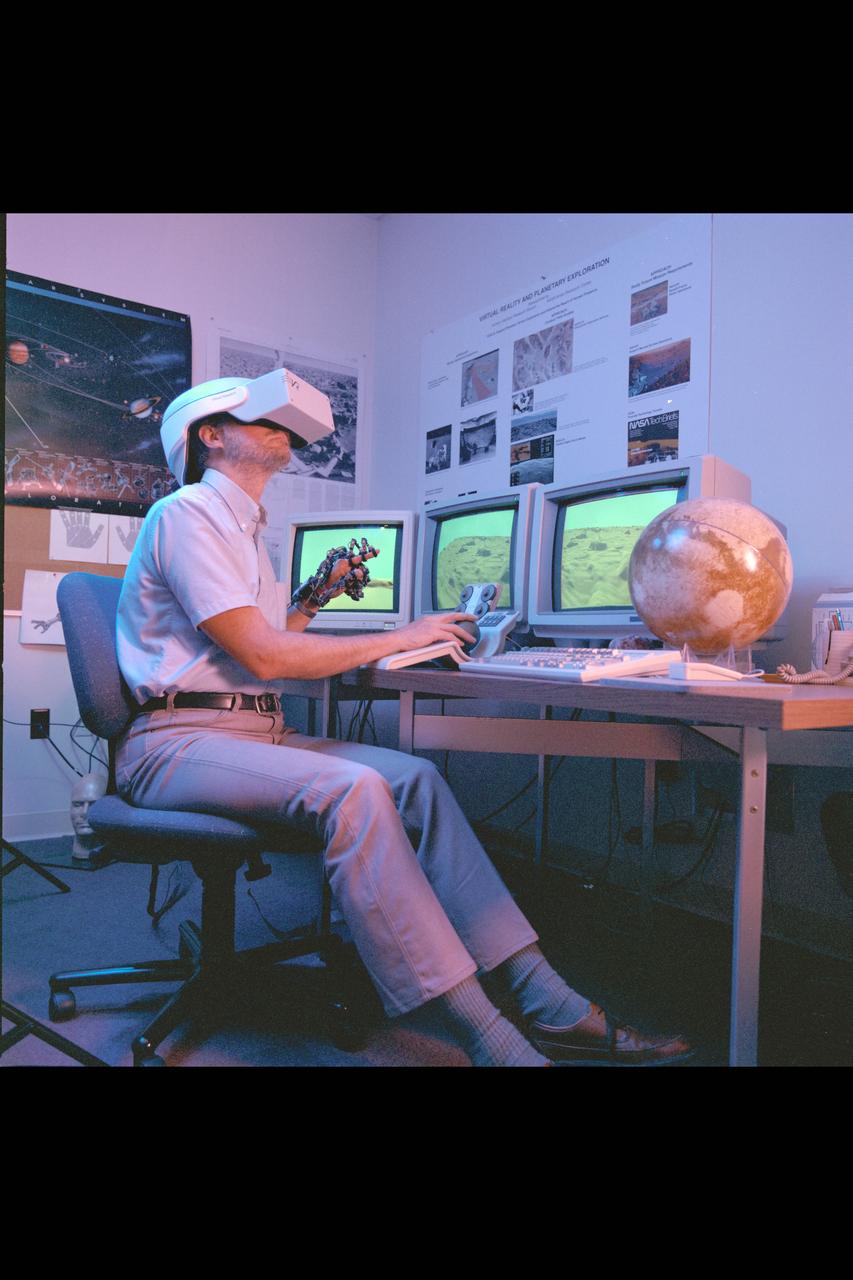
Virtual Environment Telepresence workstation, simulated Mars Exploration shows Lewis Hitchner with virtual helmet and EXOS Dexterous interface (virtual hand)
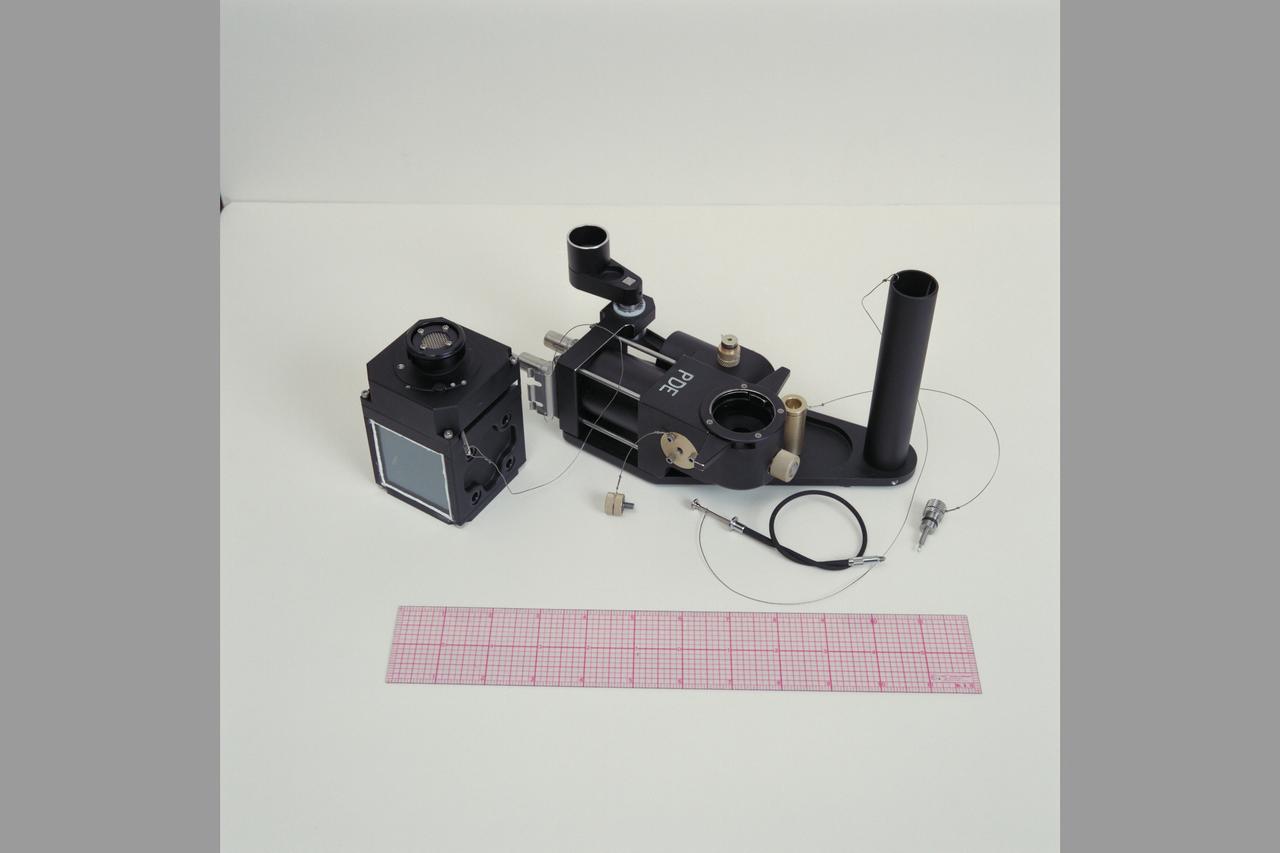
SSE (Solar System Exploration) flight apparatus: PDE (Particle Dispersion Experiement) on-board USML-1 (GEM)
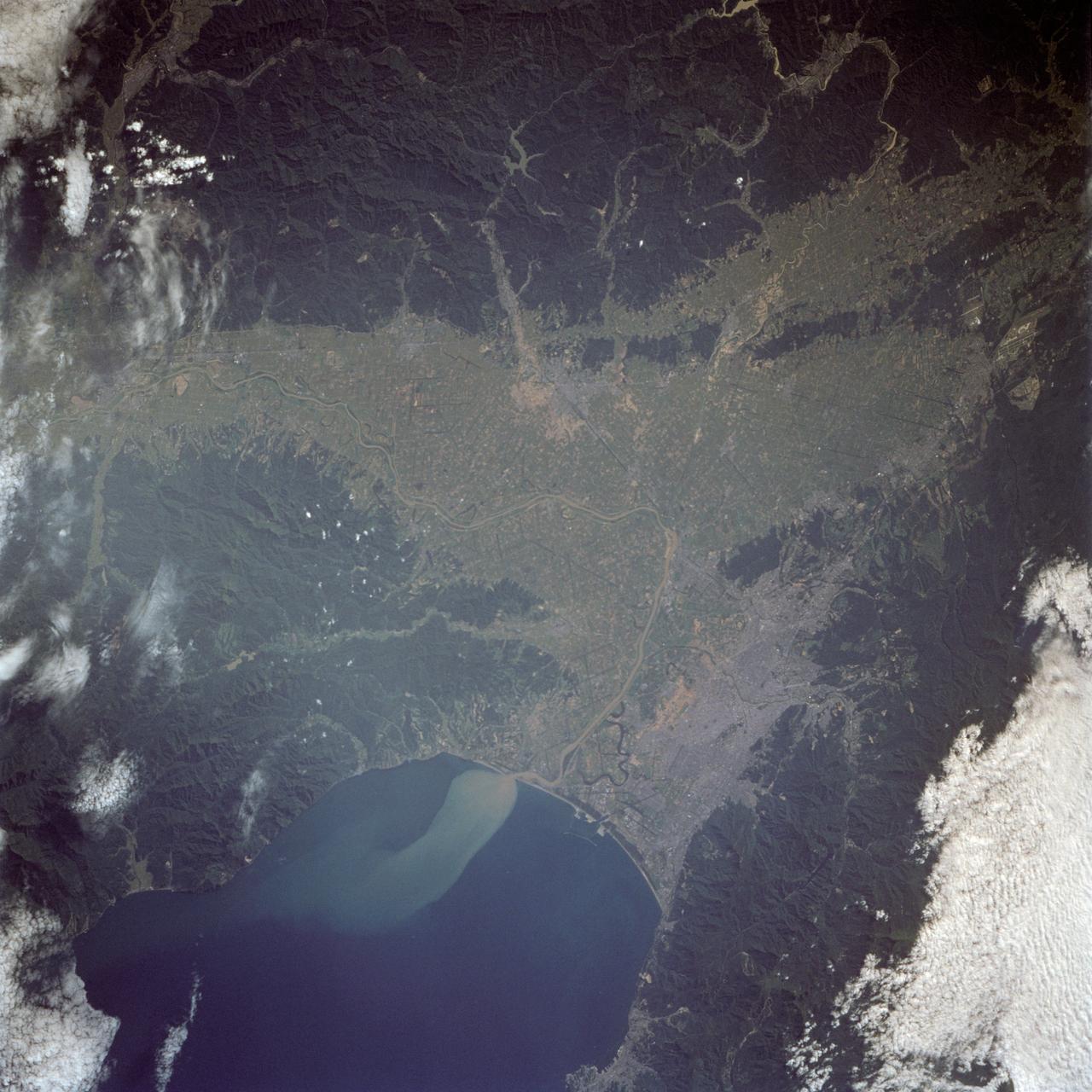
The city of Sapporo on the northernmost of the Japanese Home Island of Hokkaido (43.5N, 141.5E), host to the 1986 Winter Olympic Games is situated along the margin of a large valley which extends across the island from the Sea of Japan to the Pacific Ocean. The Valley is largely cultivated (the lighter green of the cultivated land distinguishes it from the gray urban development of Sapporo), but much of the island remains heavily forested.
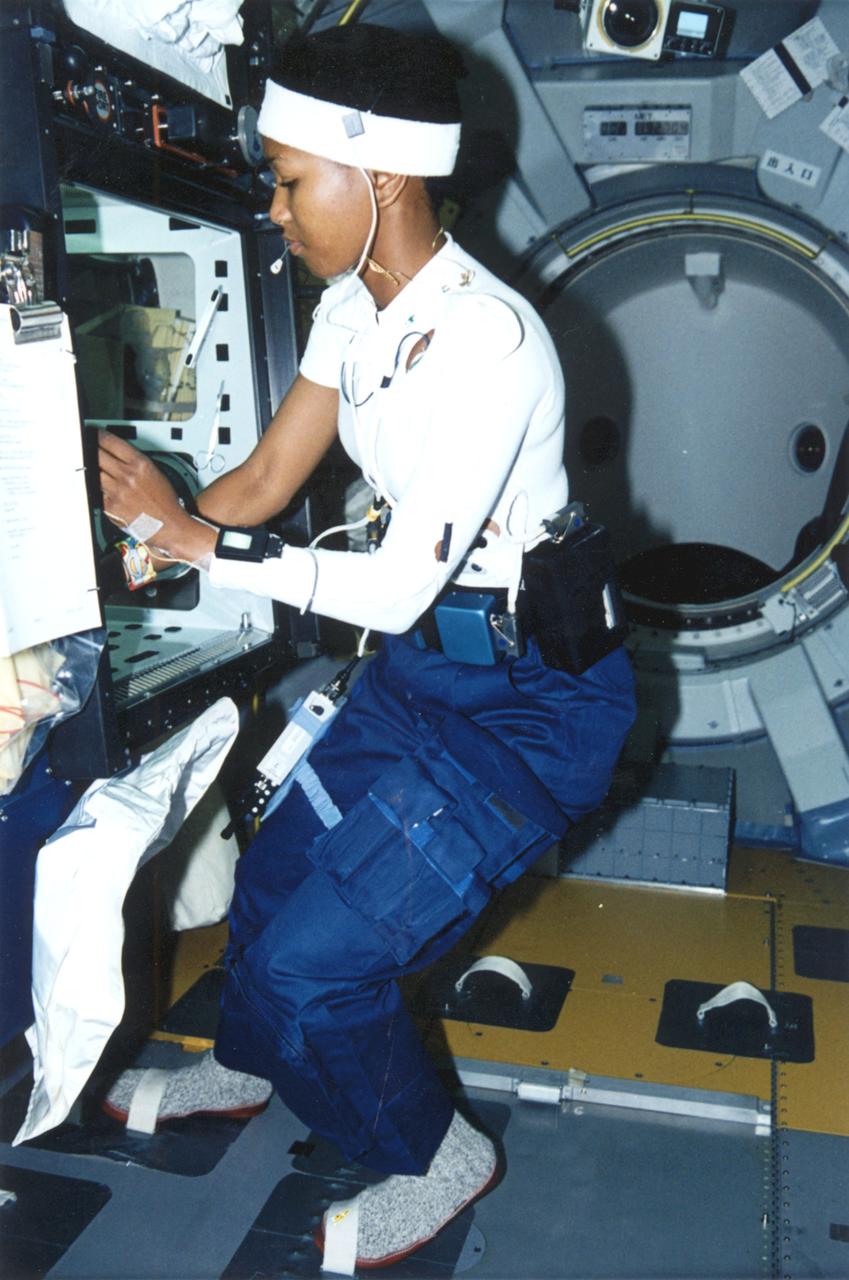
Astronaut Mae Jemison working on experiment.
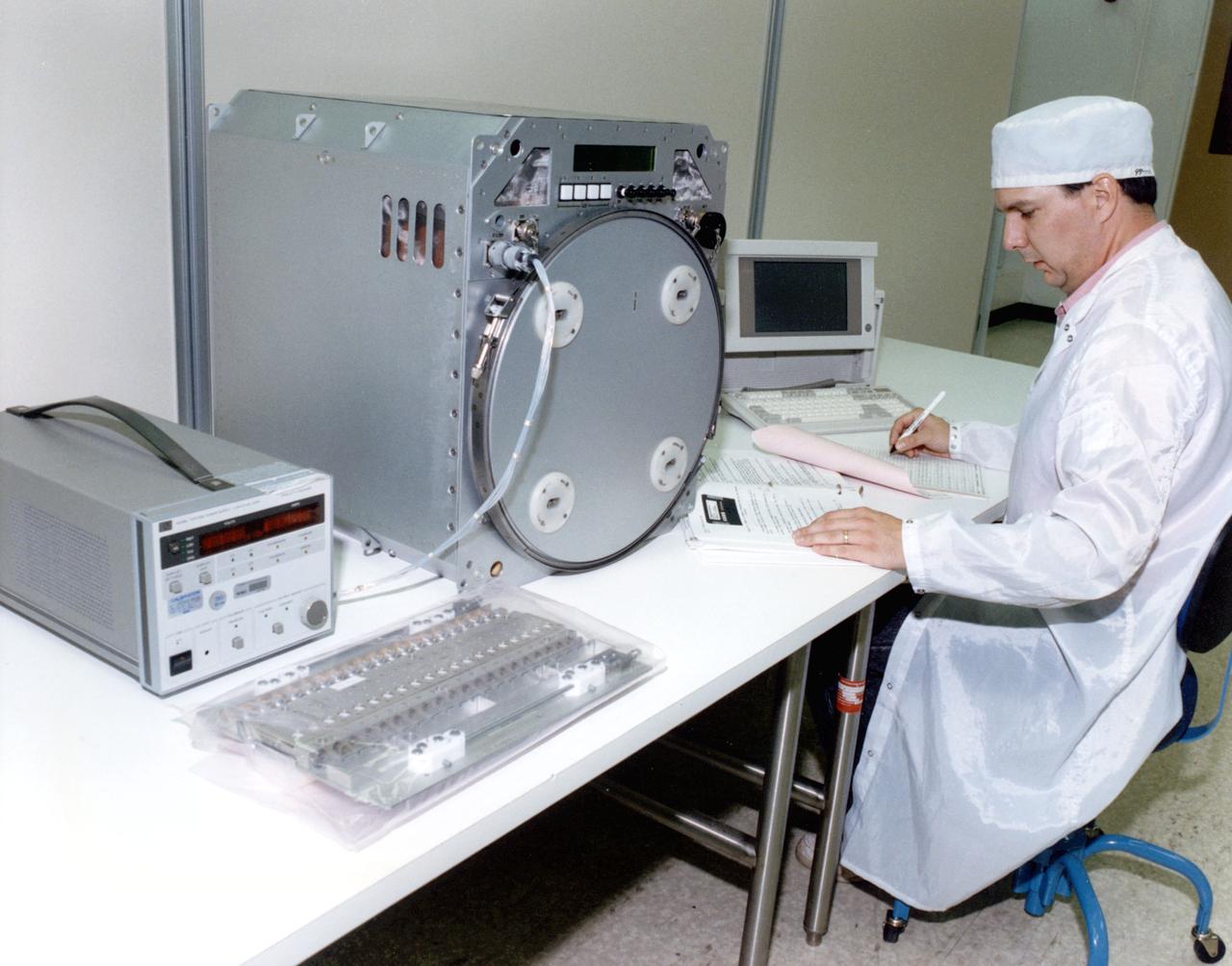
MSFC Test Engineer performing a functional test on the TES. The TES can be operated as a refrigerator, with a minimum set point temperature of 4.0 degrees C, or as an incubator, with a maximum set point temperature 40.0 degrees C of the set point. The TES can be set to maintain a constant temperature or programmed to change temperature settings over time, internal temperature recorded by a date logger.
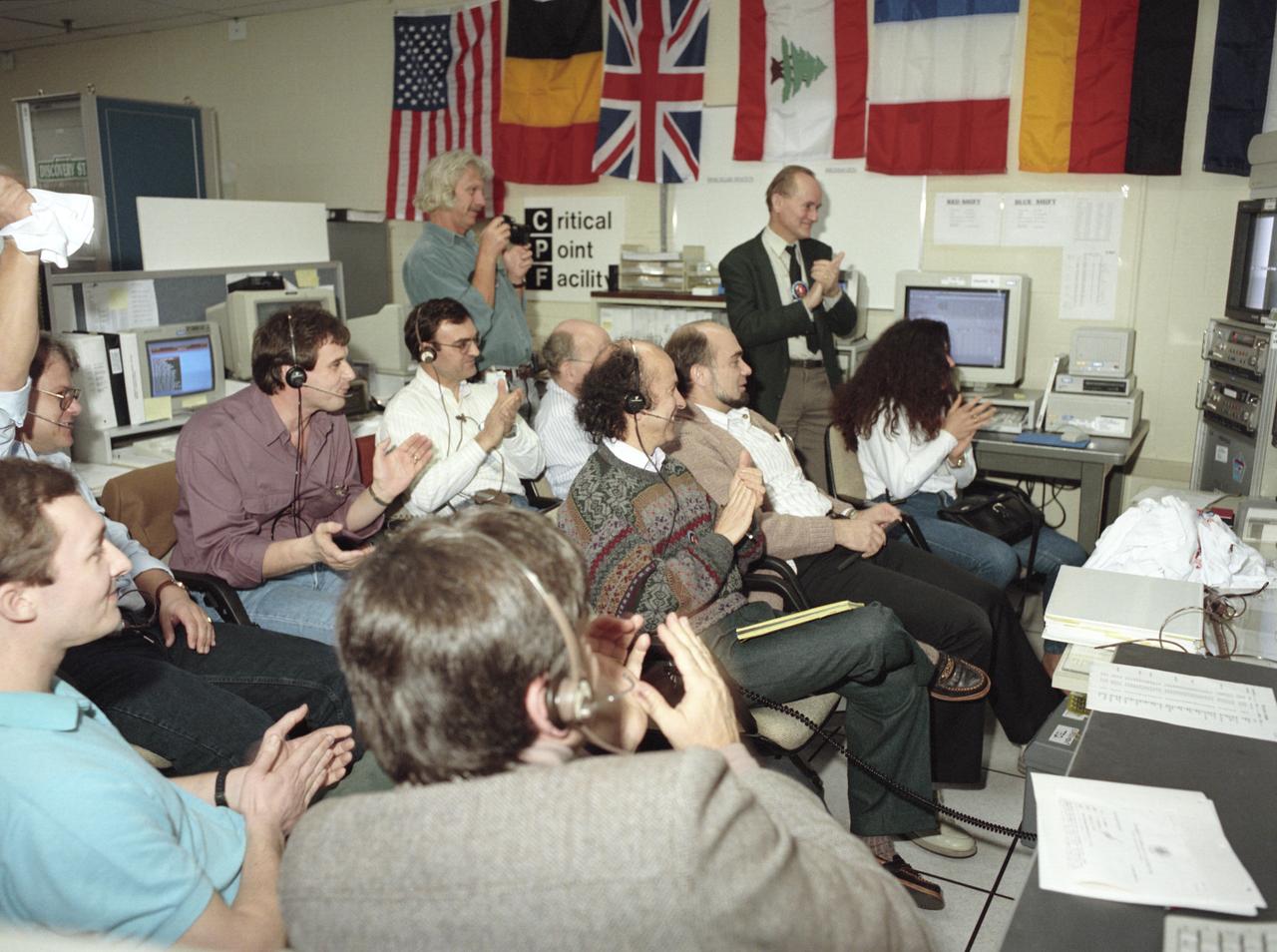
The primary payload for Space Shuttle Mission STS-42, launched January 22, 1992, was the International Microgravity Laboratory-1 (IML-1), a pressurized manned Spacelab module. The goal of IML-1 was to explore in depth the complex effects of weightlessness of living organisms and materials processing. Around-the-clock research was performed on the human nervous system's adaptation to low gravity and effects of microgravity on other life forms such as shrimp eggs, lentil seedlings, fruit fly eggs, and bacteria. Materials processing experiments were also conducted, including crystal growth from a variety of substances such as enzymes, mercury iodide, and a virus. The Huntsville Operations Support Center (HOSC) Spacelab Payload Operations Control Center (SL POCC) at the Marshall Space Flight Center (MSFC) was the air/ground communication channel used between the astronauts and ground control teams during the Spacelab missions. Featured is the Critical Point Facility (CPE) group in the SL POCC during STS-42, IML-1 mission.
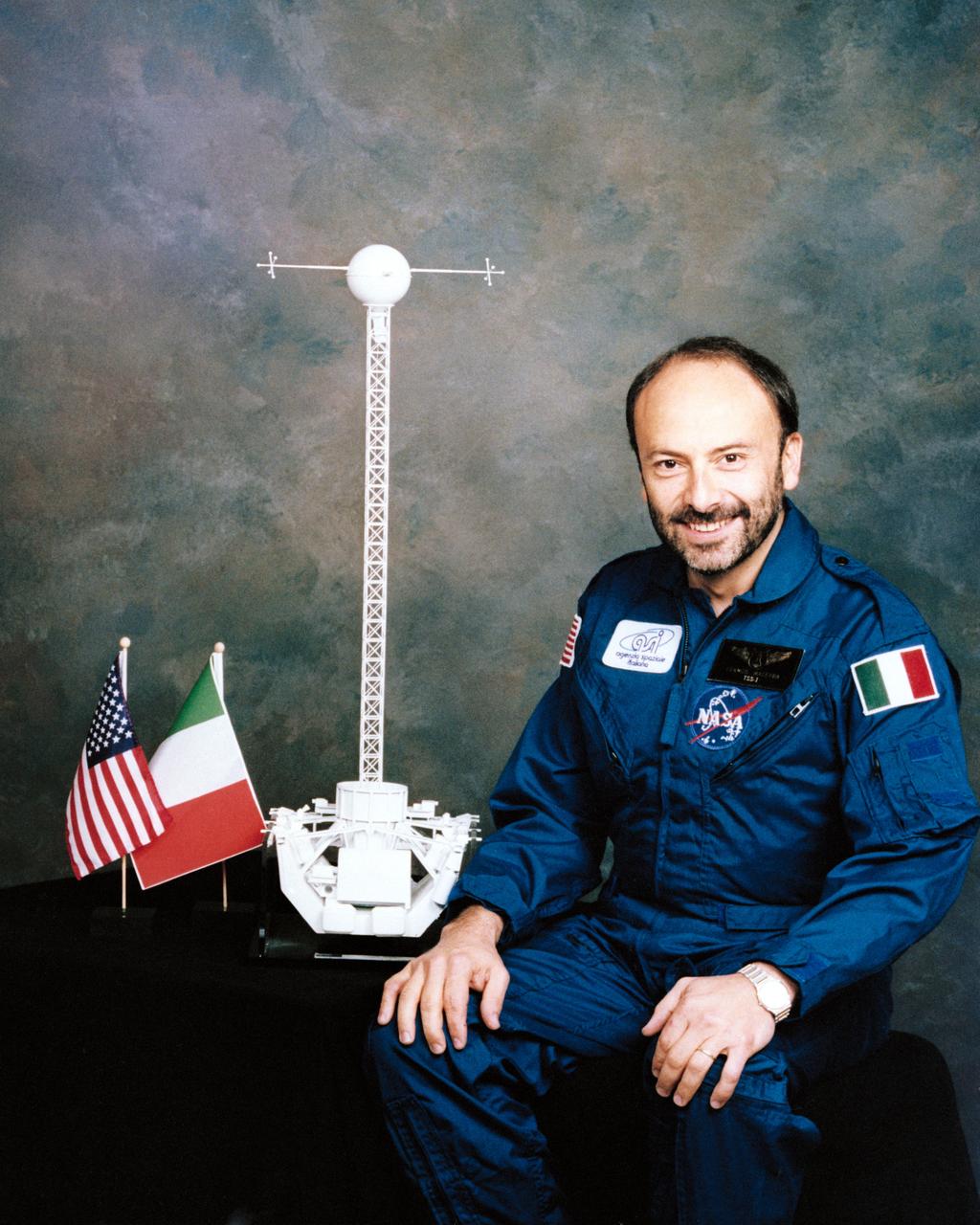
S92-30926 (12 March 1992) --- Astronaut Franco Malerba, STS-46 Italian Payload Specialist.
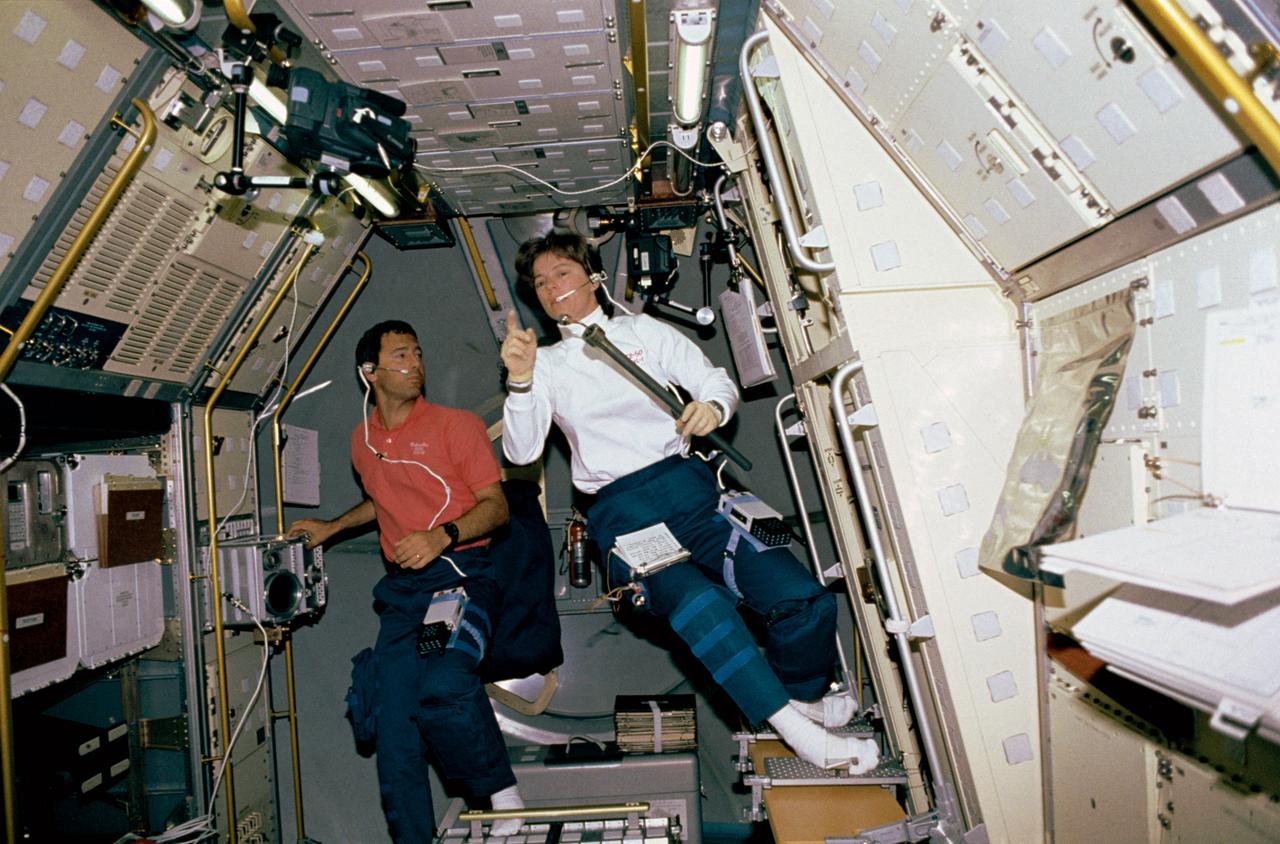
View showing Payload Specialists Bonnie Dunbar and Larry DeLucas in the aft section of the U. S. Microgravity Laboratory-1. Dunbar prepares to load a sample in the Crystal Growth Furnace (CGF) Integrated Furnace Experiment Assembly (IFEA) in rack 9 of the Microgravity Laboratory, while DeLucas checks out the multi-purpose Glovebox Facility.
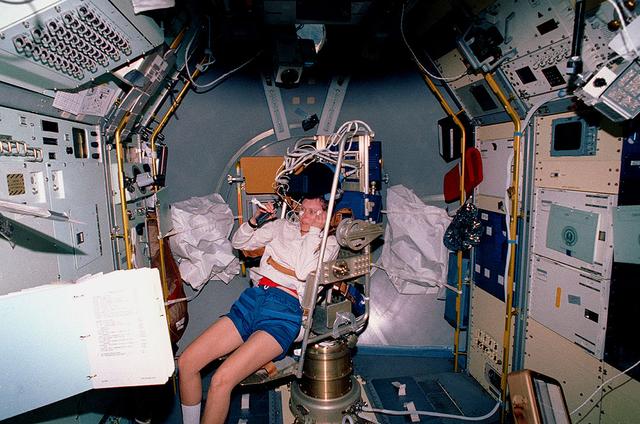
This Space Shuttle Orbiter Discovery (STS-42) onboard photo shows Canadian Payload Specialist Roberta Bondar getting into the Microgravity Vestibular Investigation (MVI) chair to begin an experiment in the International Microgravity Lab-1 (IML-1) Science Module. The (MVI) chair was designed to test the crew member's visual and vestibular responses to head and body movements.
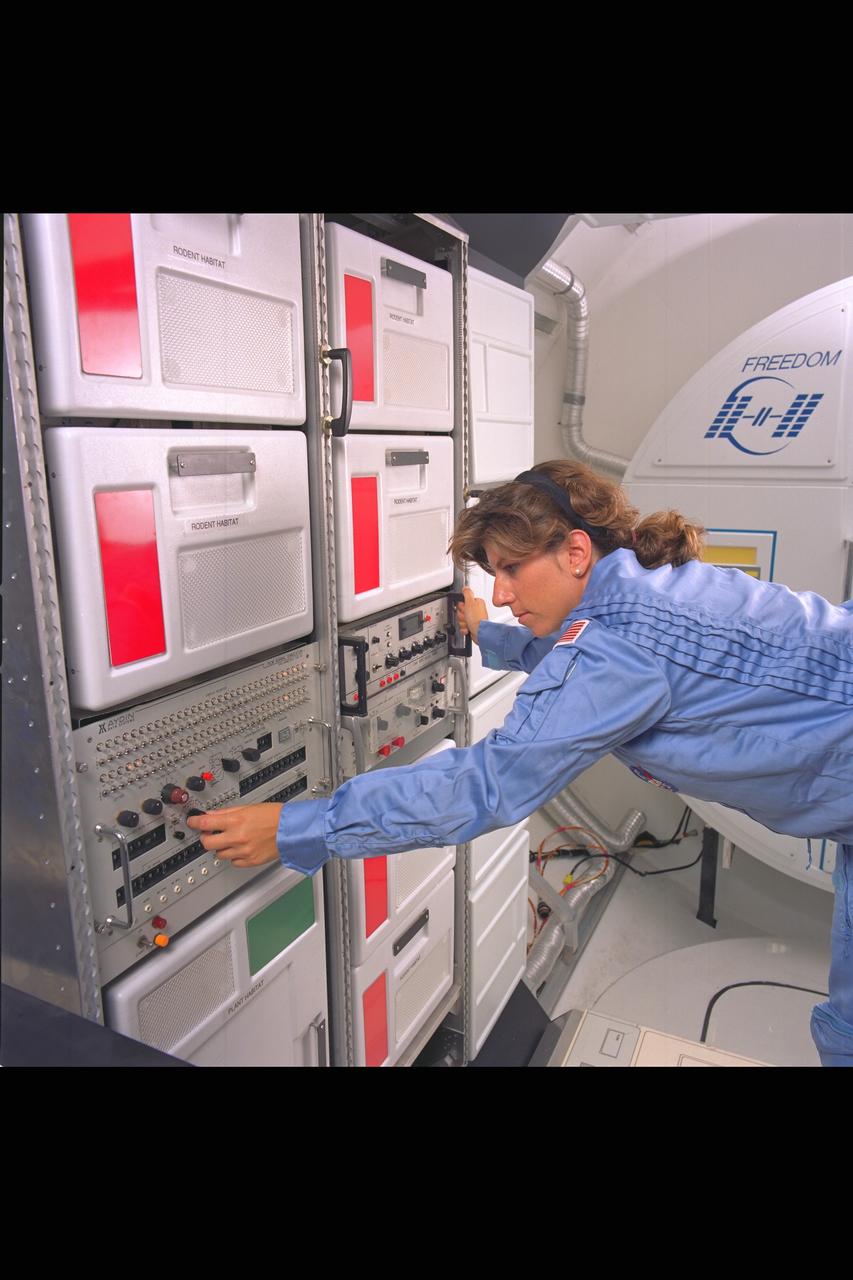
Space Station Gravitational Biology Facility Project Mock-up with Kristine Guerra (2.5) with Biolab (simulating weightlessness in space)
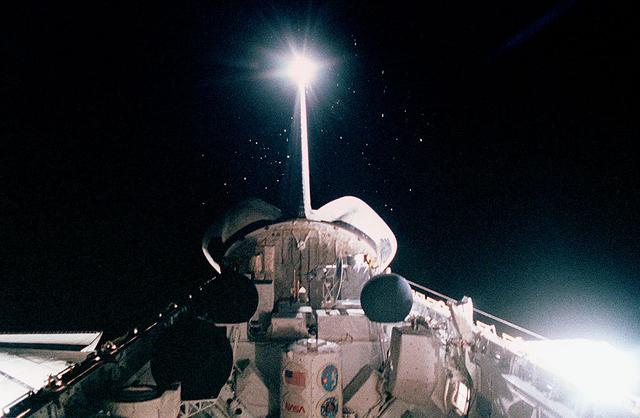
Space Shuttle Atlantis (STS-45) onboard photo of open cargo bay with the forward portion of the Atmospheric Laboratory for Applications and Science (Atlas-1) shown at night.
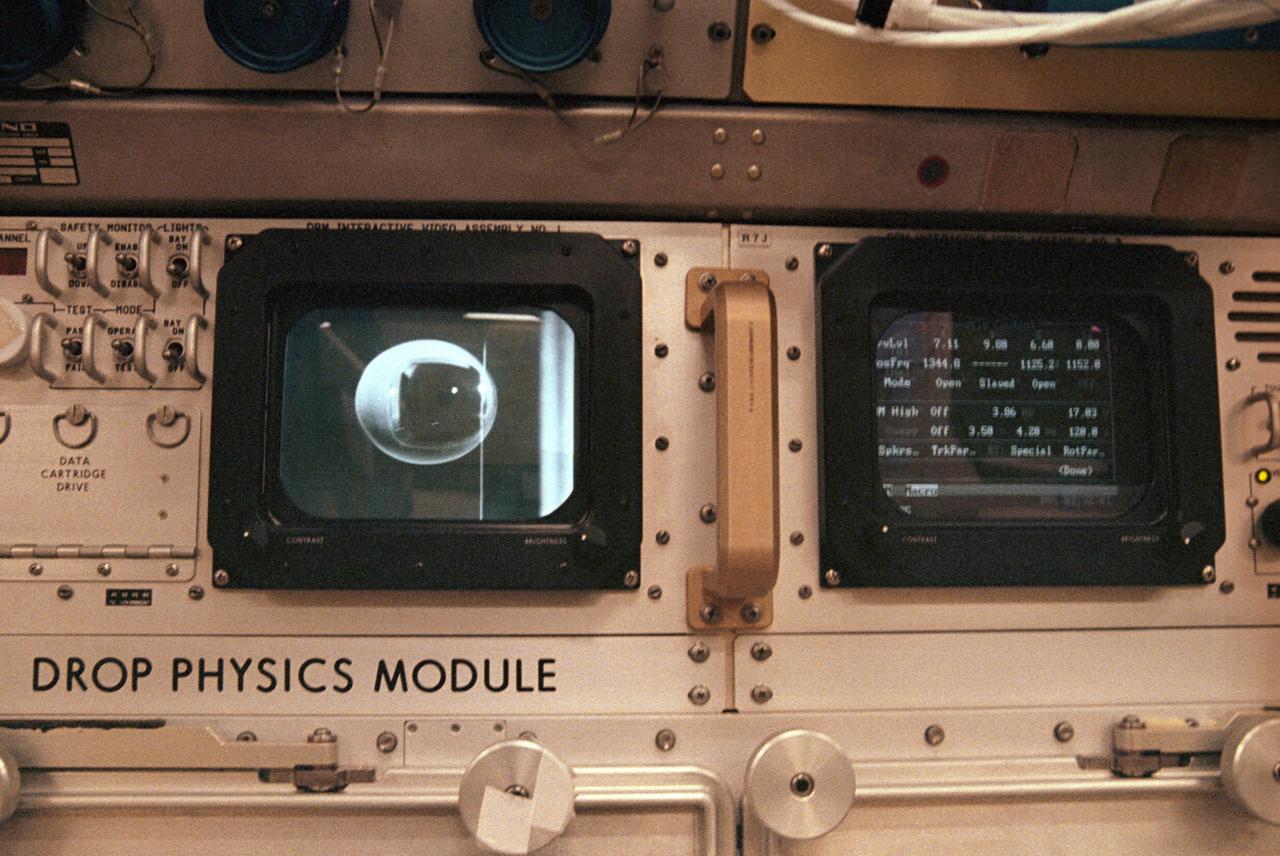
The first United States Microgravity Laboratory (USML-1) was one of NASA's science and technology programs that provided scientists an opportunity to research various scientific investigations in a weightlessness environment inside the Spacelab module. It also provided demonstrations of new equipment to help prepare for advanced microgravity research and processing aboard the Space Station. The USML-1 flew in orbit for extended periods, providing greater opportunities for research in materials science, fluid dynamics, biotechnology (crystal growth), and combustion science. This is a close-up view of the Drop Physics Module (DPM) in the USML science laboratory. The DPM was dedicated to the detailed study of the dynamics of fluid drops in microgravity: their equilibrium shapes, the dynamics of their flows, and their stable and chaotic behaviors. It also demonstrated a technique known as containerless processing. The DPM and microgravity combine to remove the effects of the container, such as chemical contamination and shape, on the sample being studied. Sound waves, generating acoustic forces, were used to suspend a sample in microgravity and to hold a sample of free drops away from the walls of the experiment chamber, which isolated the sample from potentially harmful external influences. The DPM gave scientists the opportunity to test theories of classical fluid physics, which have not been confirmed by experiments conducted on Earth. This image is a close-up view of the DPM. The USML-1 flew aboard the STS-50 mission on June 1992, and was managed by the Marshall Space Flight Center.
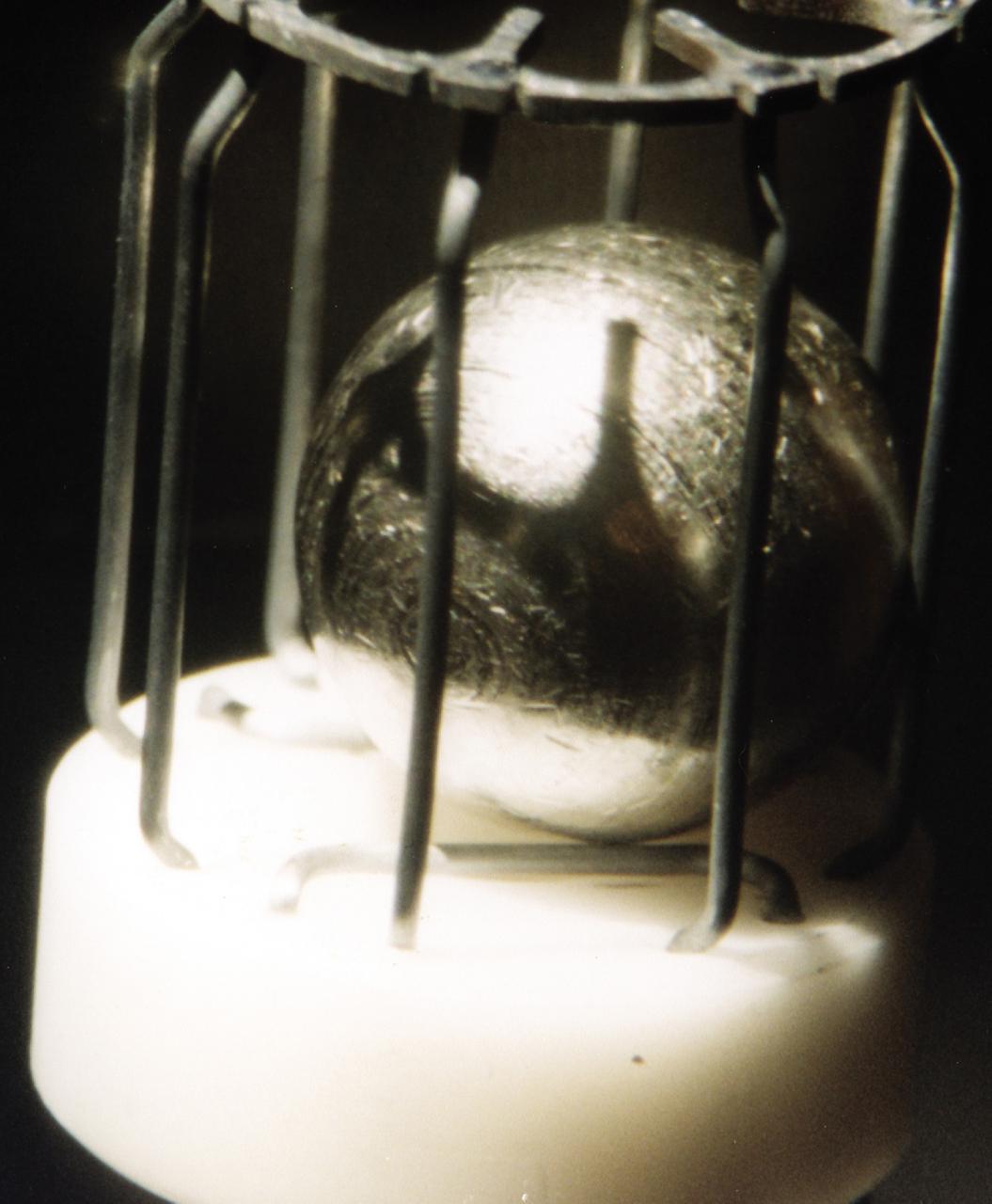
This metal sample, which is approximately 1 cm in diameter, is typical of the metals that were studied using the German designed electromagnetic containerless processing facility. The series of experiments that use this device is known as TEMPUS which is the acronym that stands for the German Tiegelfreies Elektromanetisches Prozessieren Unter Schwerelosigkeit. Most of the TEMPUS experiments focused on various aspects of undercooling liquid metal and alloys. Undercooling is the process of melting a material and then cooling it to a temperature that is below its normal freezing or solidification point. The TEMPUS experiments that used the metal cages as shown in the photograph, often studied bulk metallic glass, a solid material with no crystalline structures. We study metals and alloys not only to build things in space, but to improve things that are made on Earth. Metals and alloys are everywhere around us; in our automobiles, in the engines of aircraft, in our power-plants, and elsewhere. Despite their presence in everyday life, there are many scientific aspects of metals that we do not understand.
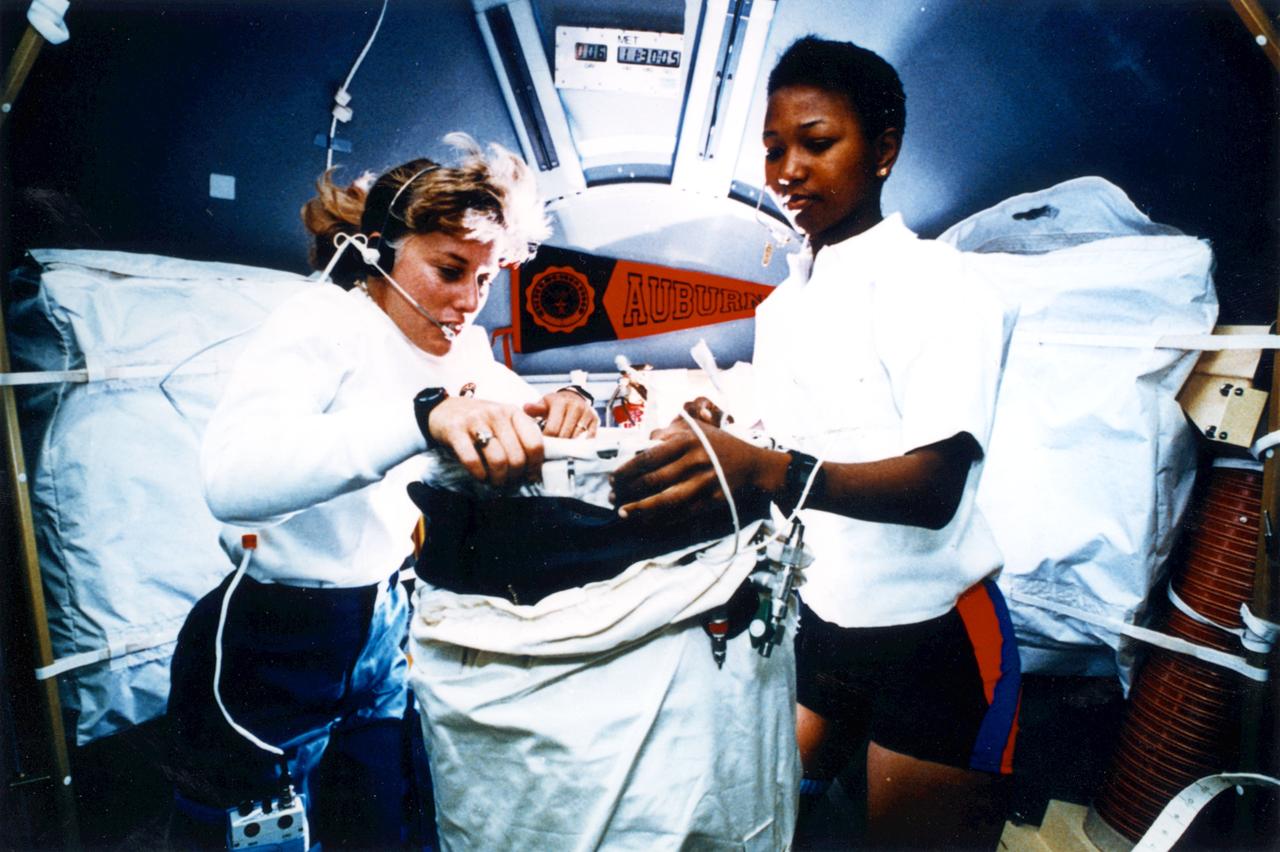
Jan Davis and Mae Jemison working on experiments.
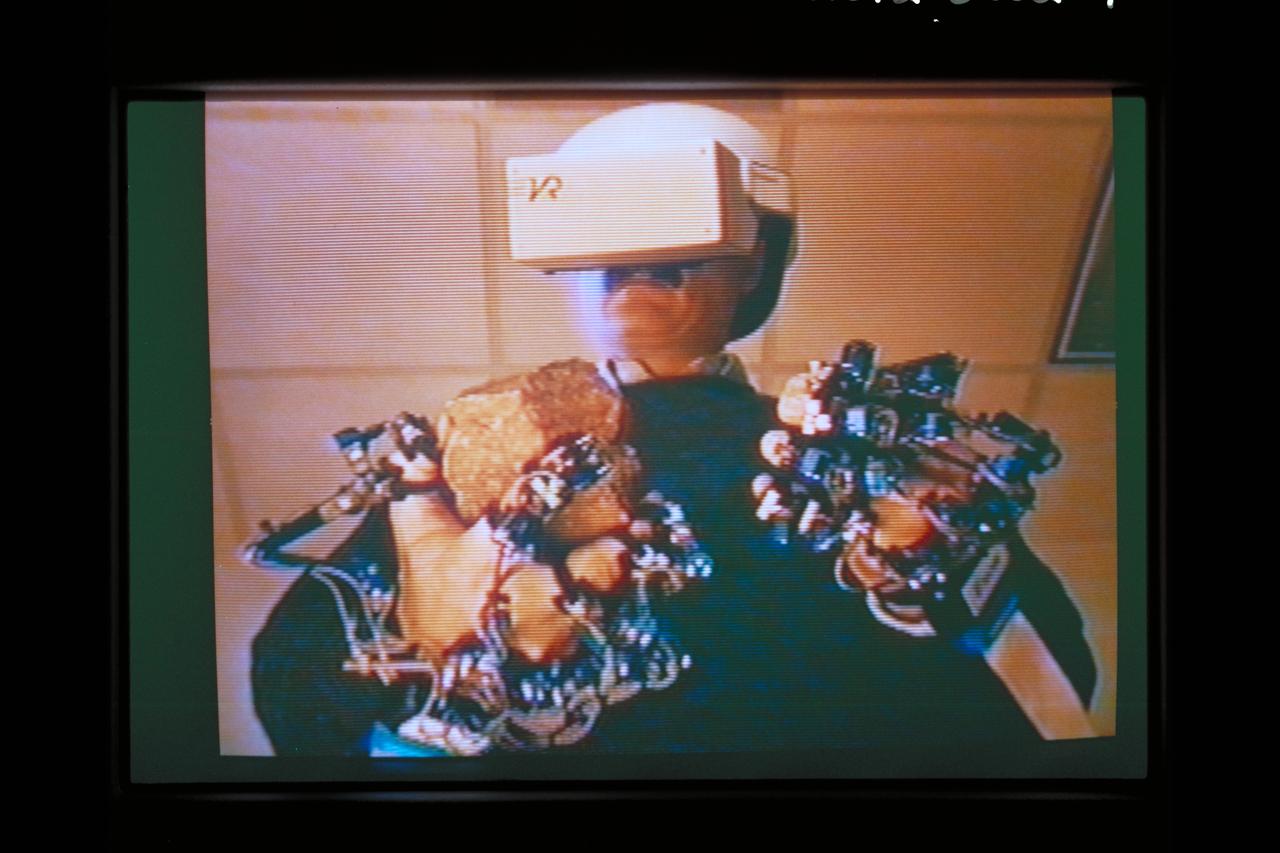
Telepresence Virtual Reality (Mars)
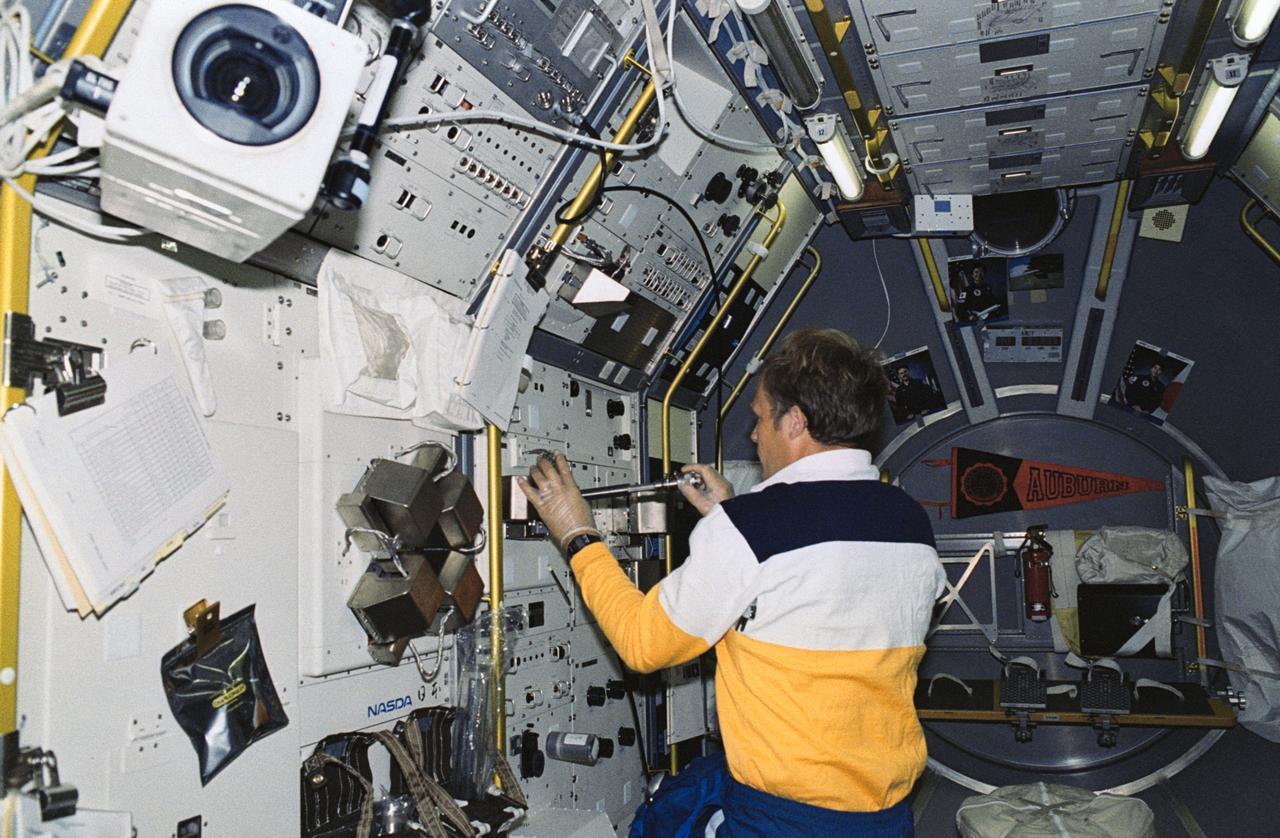
STS047-203-009 (12-20 Sept 1992) --- Astronaut Mark C. Lee, payload commander, inserts a sample into the Gradient Heating Furnace (GHF) in the Spacelab-J Science Module aboard the Earth-orbiting Space Shuttle Endeavour. Lee, along with five other NASA astronauts and a Japanese payload specialist, conducted eight days of research in support of Spacelab-J.
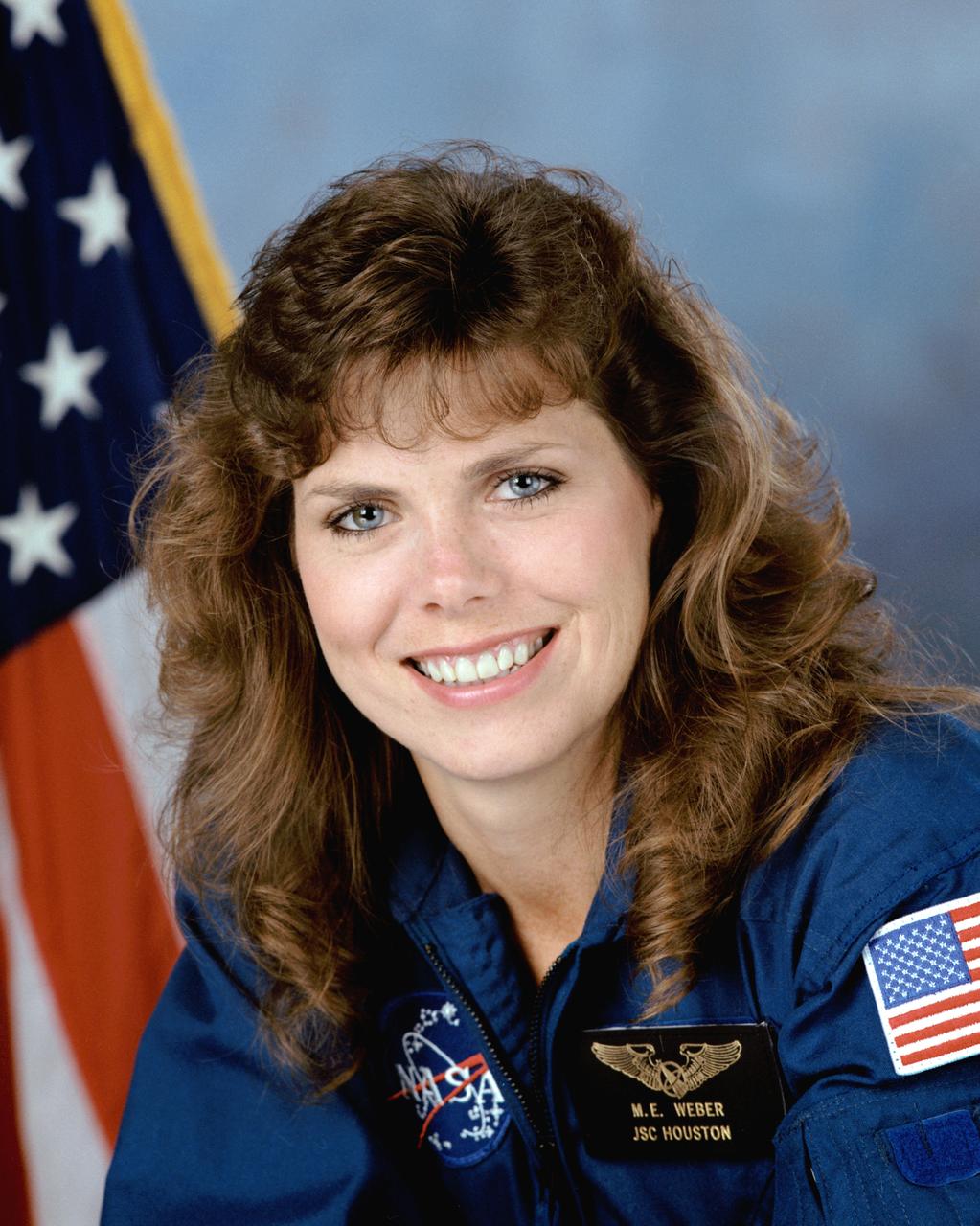
S92-45227 (11 Sept 1992) --- Astronaut Mary E. Weber, mission specialist

Workers at Launch Complex 17 Pad A, Kennedy Space Center (KSC) encapsulate the Geomagnetic Tail (GEOTAIL) spacecraft (upper) and attached payload Assist Module-D upper stage (lower) in the protective payload fairing. GEOTAIL project was designed to study the effects of Earth's magnetic field. The solar wind draws the Earth's magnetic field into a long tail on the night side of the Earth and stores energy in the stretched field lines of the magnetotail. During active periods, the tail couples with the near-Earth magnetosphere, sometimes releasing energy stored in the tail and activating auroras in the polar ionosphere. GEOTAIL measures the flow of energy and its transformation in the magnetotail and will help clarify the mechanisms that control the imput, transport, storage, release, and conversion of mass, momentum, and energy in the magnetotail.

NASA Mars Underwater Rover Phantom 2 TROV (Telepresences Controlled Remotely Operated Vehicle)
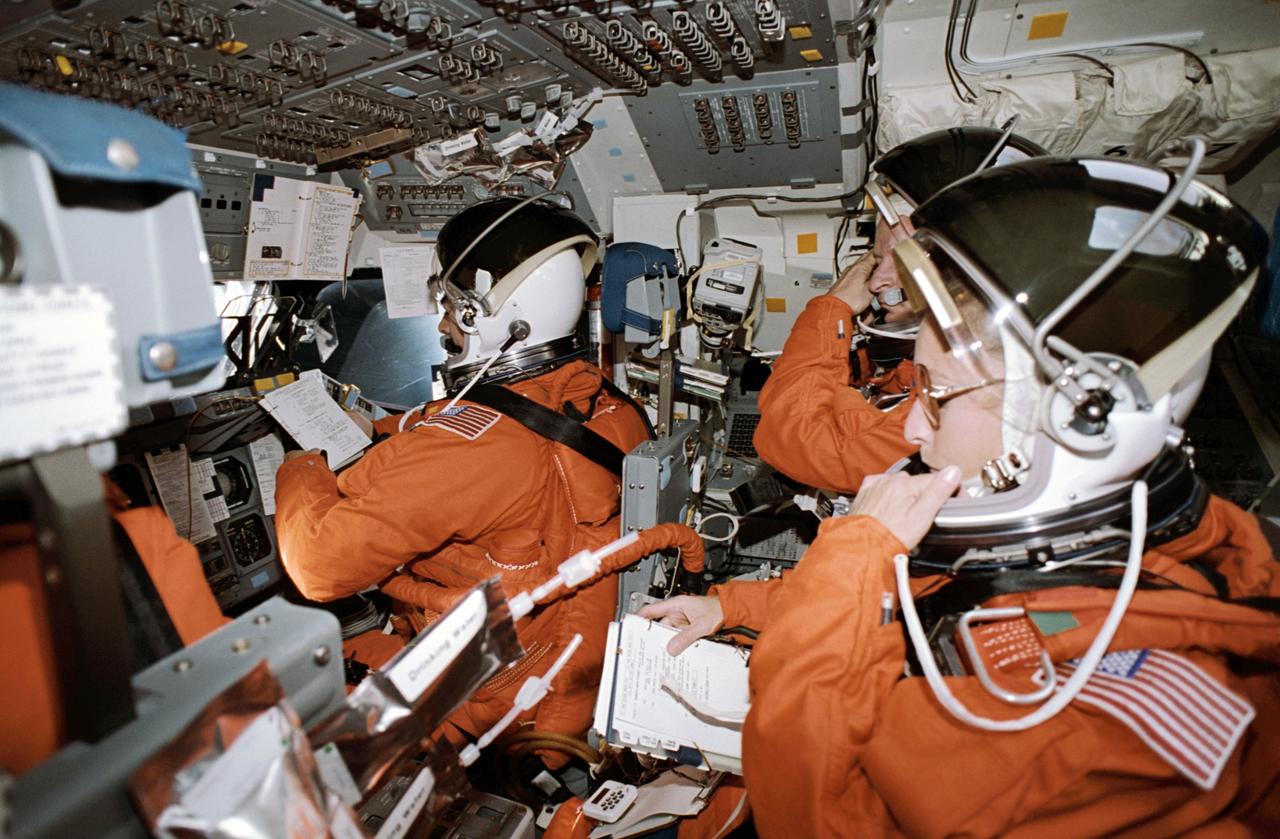
STS046-19-037 (8 Aug 1992) --- Having completed eight days in Earth-orbit, the crew members prepare for their brief journey home. Left to right are Andrew M. Allen, pilot; Claude Nicollier, mission specialist representing the European Space Agency (ESA); and Marsha S. Ivins, mission specialist. Just out of frame, at left, is Loren J. Shriver, mission commander, who guided the Space Shuttle Atlantis in for its Kennedy Space Center (KSC), Florida landing.
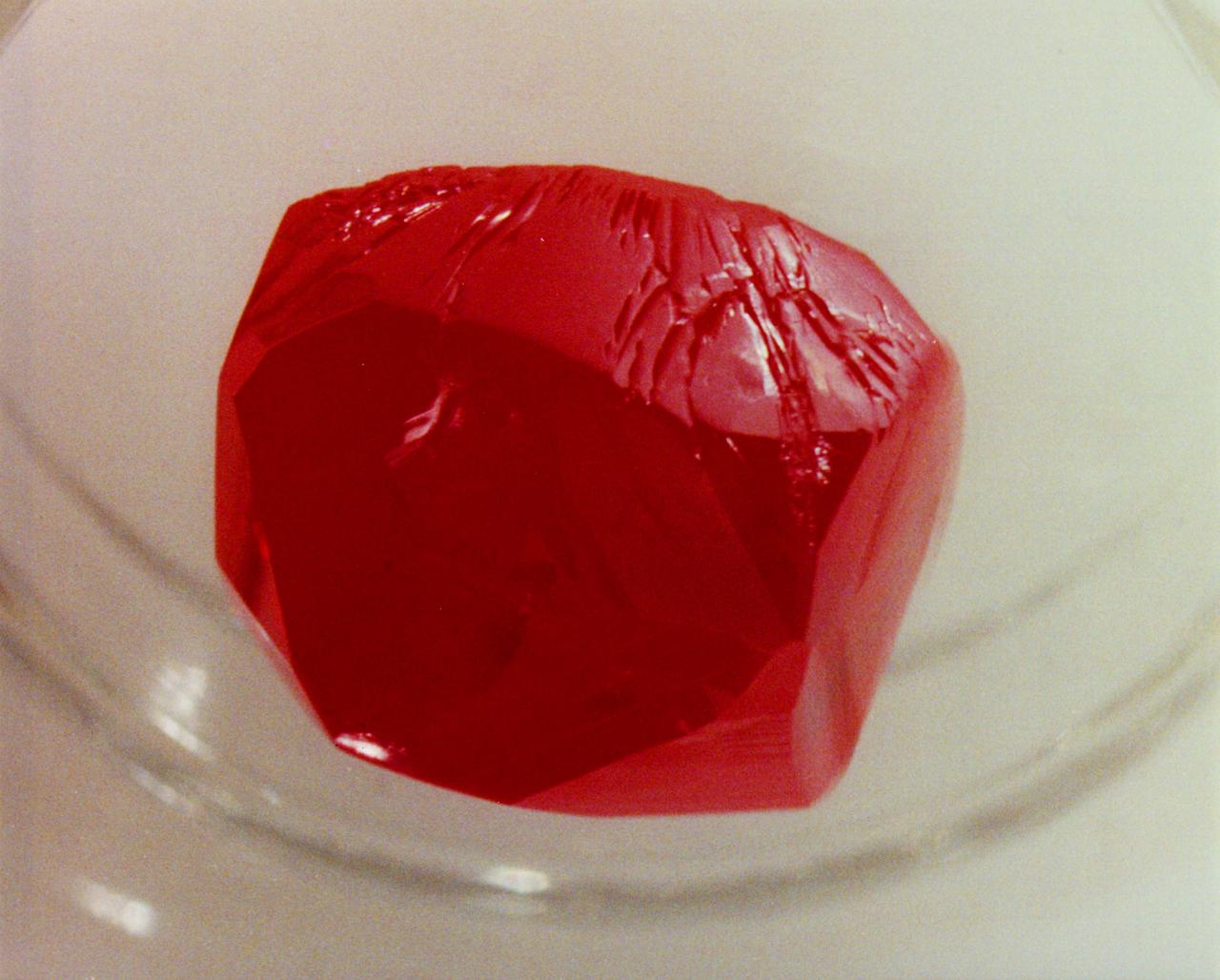
Vapor Crystal Growth System developed in IML-1, Mercuric Iodide Crystal grown in microgravity FES/VCGS (Fluids Experiment System/Vapor Crystal Growth Facility). During the mission, mercury iodide source material was heated, vaporized, and transported to a seed crystal where the vapor condensed. Mercury iodide crystals have practical uses as sensitive X-ray and gamma-ray detectors. In addition to their excellent optical properties, these crystals can operate at room temperature, which makes them useful for portable detector devices for nuclear power plant monitoring, natural resource prospecting, biomedical applications, and astronomical observing.
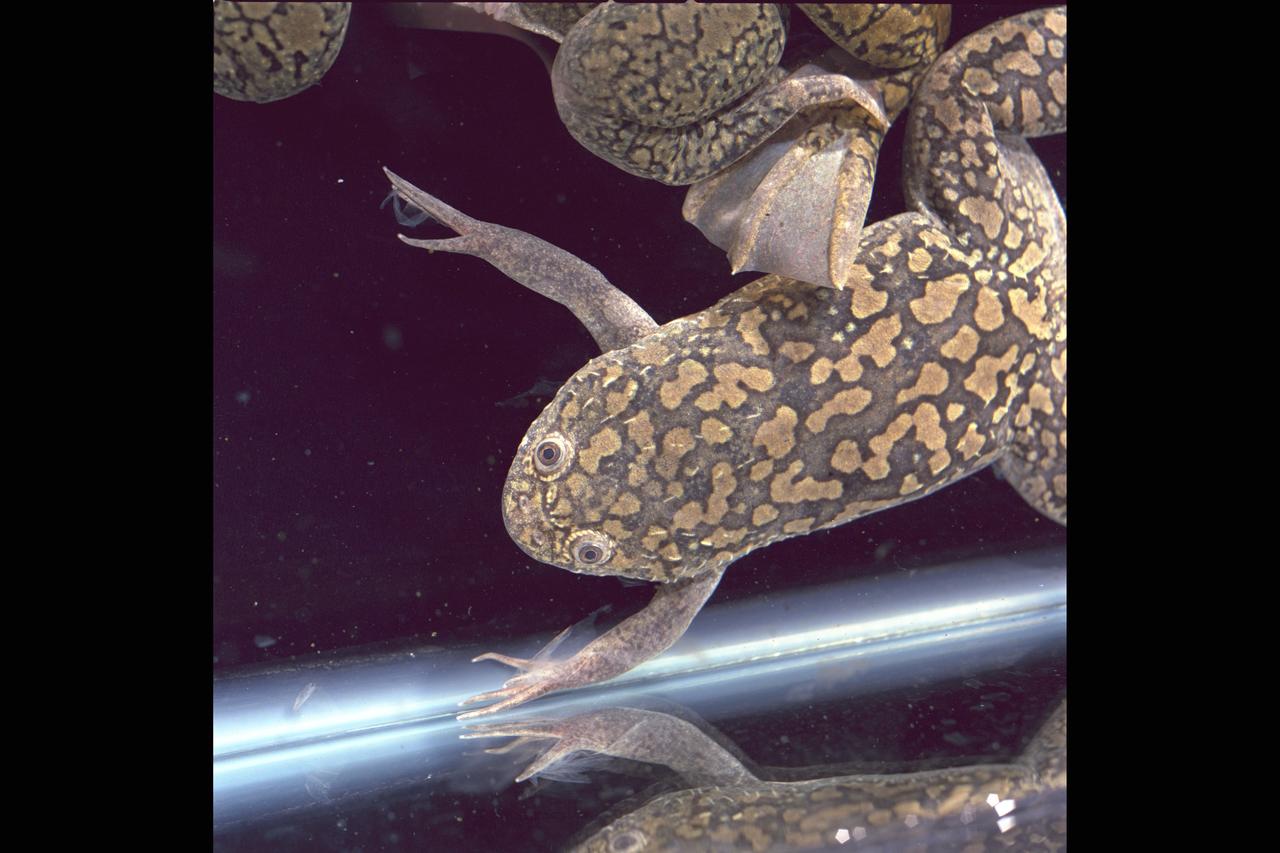
FEE (Frog Embryology Experiment) Spacelab-J flight frogs from ground control tadpoles
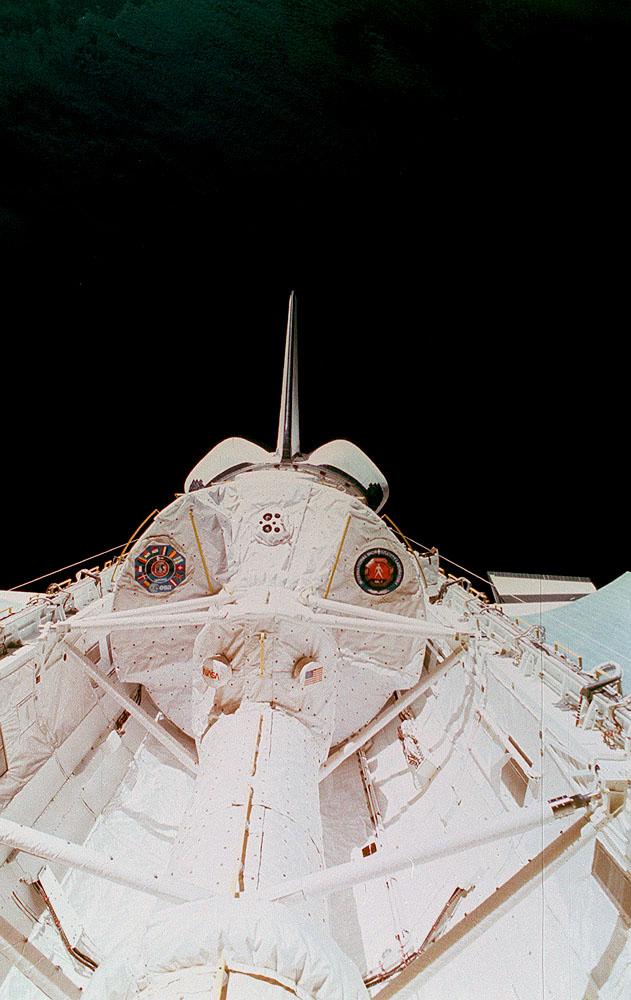
This is the Space Shuttle Orbiter Discovery, STS-42 mission, with the First International Microgravity Laboratory (IML-1) module shown in the cargo bay. IML-1, the first in a series of Shuttle flights, was dedicated to study the fundamental materials and life sciences in the microgravity environment inside Spacelab, a laboratory carried aloft by the Shuttle. The mission explored how life forms adapt to weightlessness and investigated how materials behave when processed in space. The IML program gave a team of scientists from around the world access to a unique environment, one that is free from most of Earth's gravity. The 14-nation European Space Agency (ESA), the Canadian Space Agency (SCA), the French National Center for Space Studies (CNES), the German Space Agency and the German Aerospace Research Establishment (DARA/DLR), and the National Space Development Agency of Japan (NASDA) participated in developing hardware and experiments for the IML missions. The missions were managed by NASA's Marshall Space Flight Center. The Orbiter Discovery was launched on January 22, 1992 for the IML-1 mission.
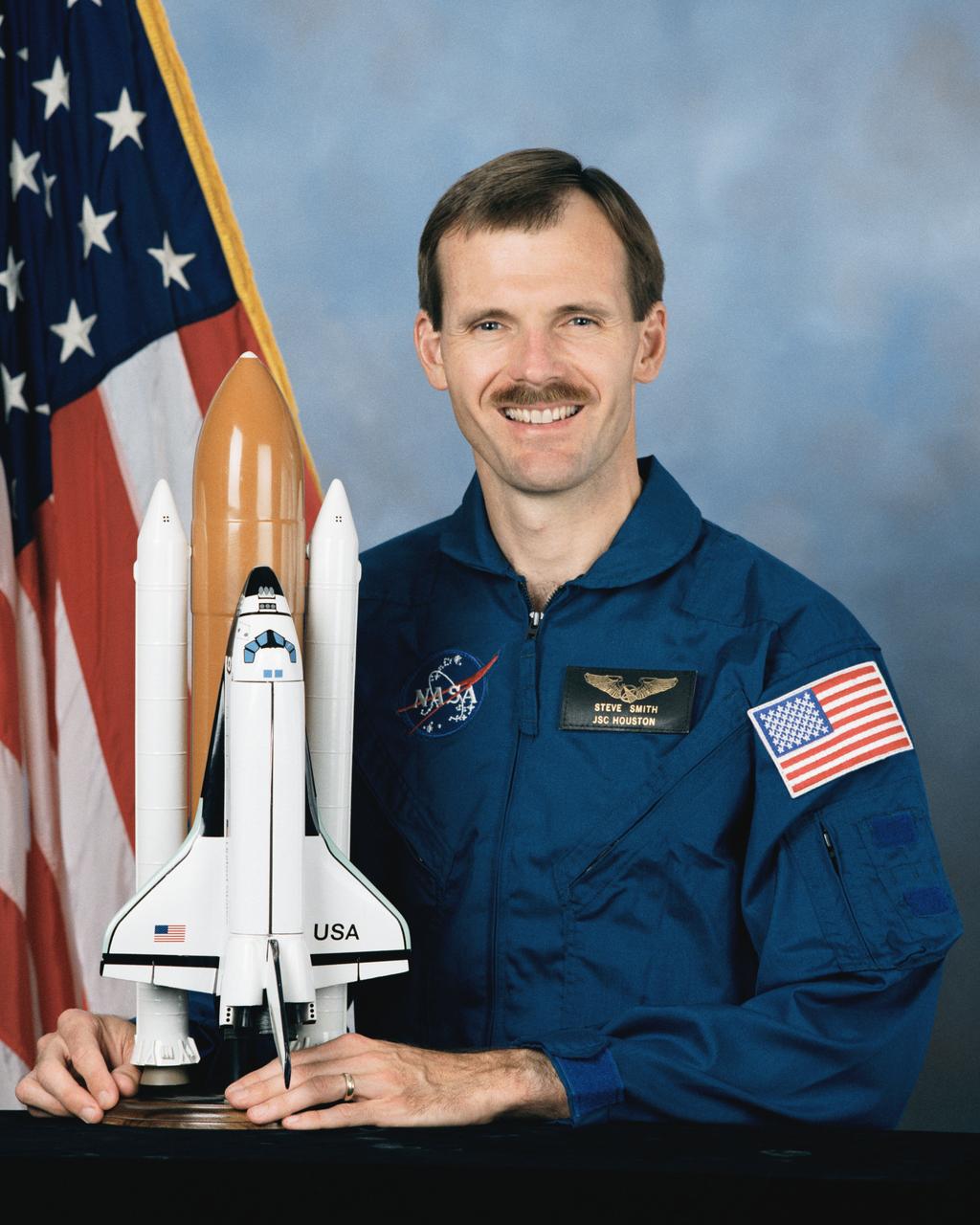
S92-44999 (September 1992) --- Astronaut Steven L. Smith.
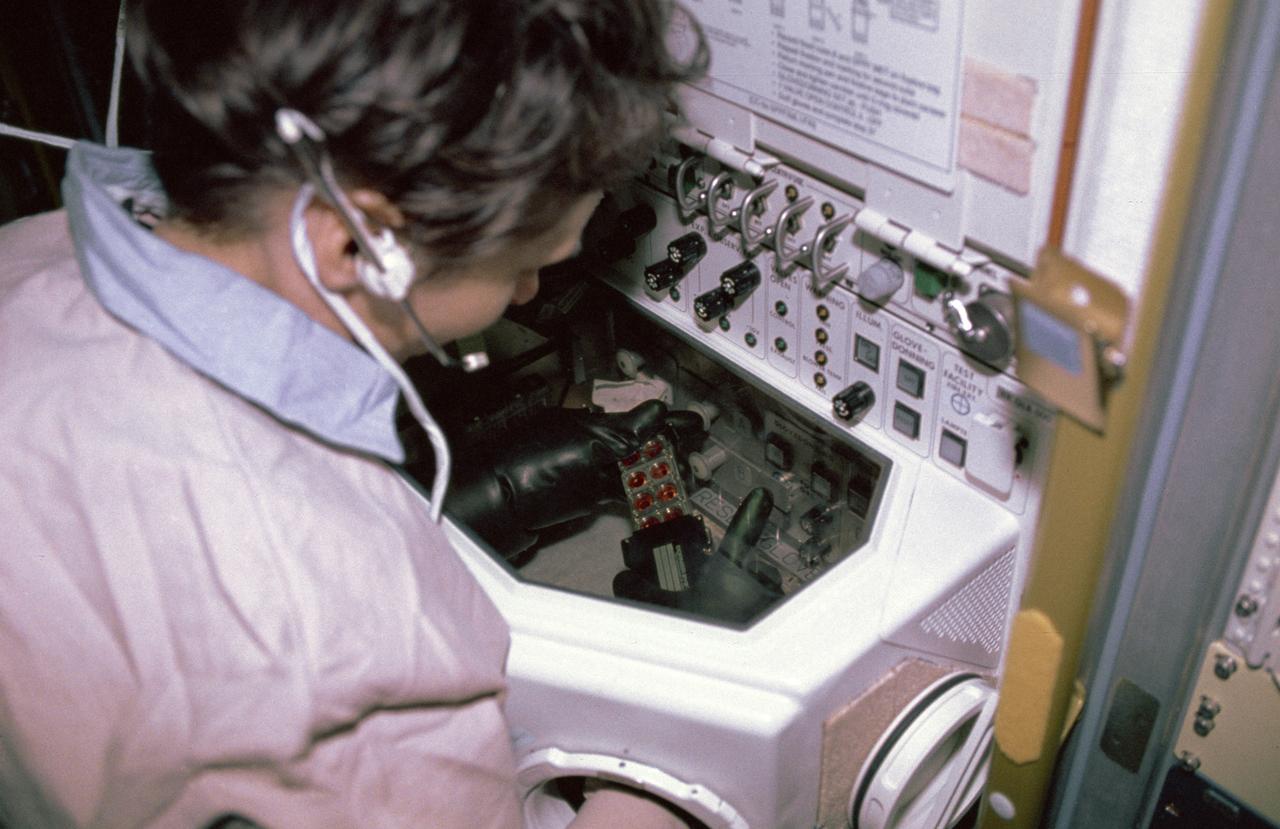
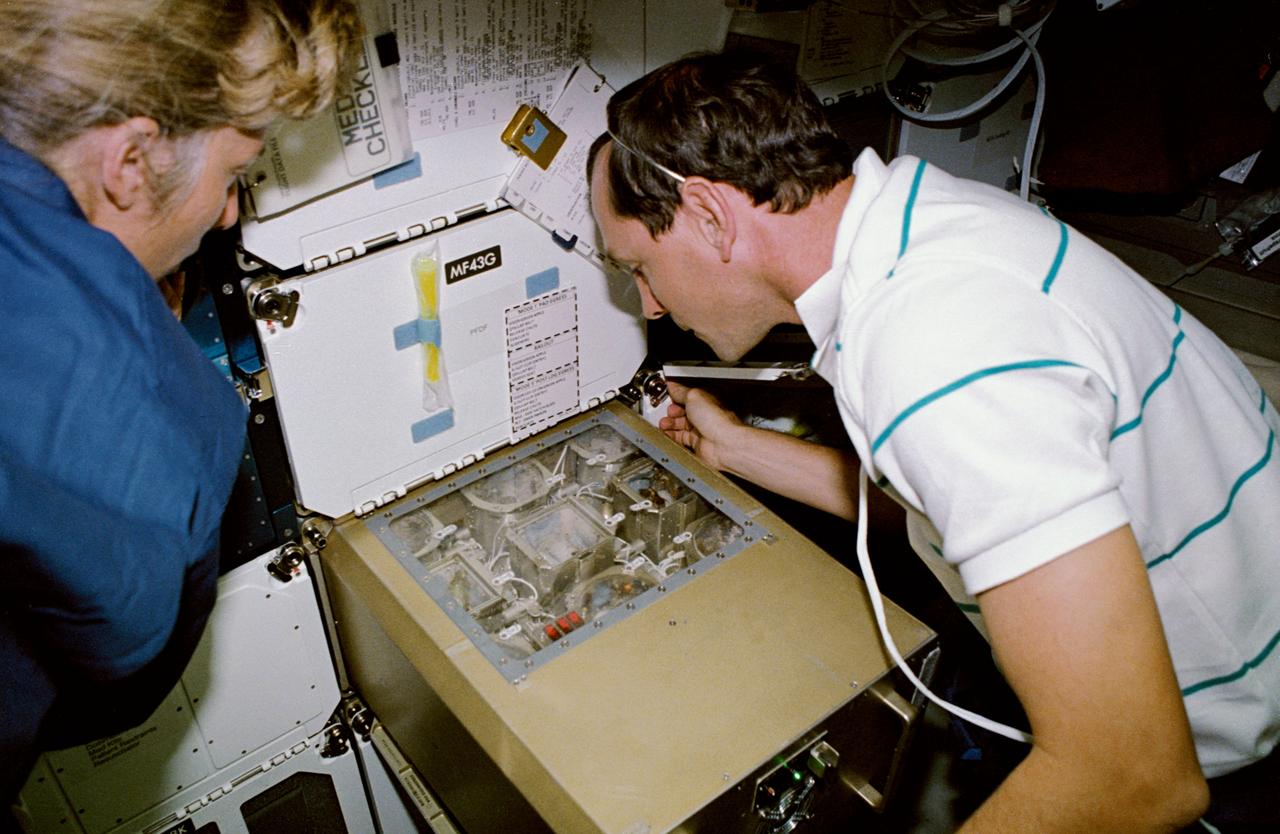
In this photograph, astronaut Roberta Bondar conducts a life science experiment by using the Biorack Glovebox (GBX) during the International Microgravity Laboratory-1 (IML-1) mission. The Biorack was a large multipurpose facility designed for studying the effects of microgravity and cosmic radiation on numerous small life forms such as cells, tissues, small organisms, and plants. Located at the Biorack, the GBX was an enclosed environment that protected samples from contamination and prevented liquid from escaping. Crewmembers handled the specimens with their hands inside gloves that extended into the sealed work area. A microscope and video camera mounted on the GBX door were used to observe and document experiments. Managed by the Marshall Space Flight Center, the IML-1 mission was the first in a series of Shuttle flights dedicated to fundamental materials and life sciences research and was launched aboard the Shuttle Orbiter Discovery (STS-42) on January 22, 1992.
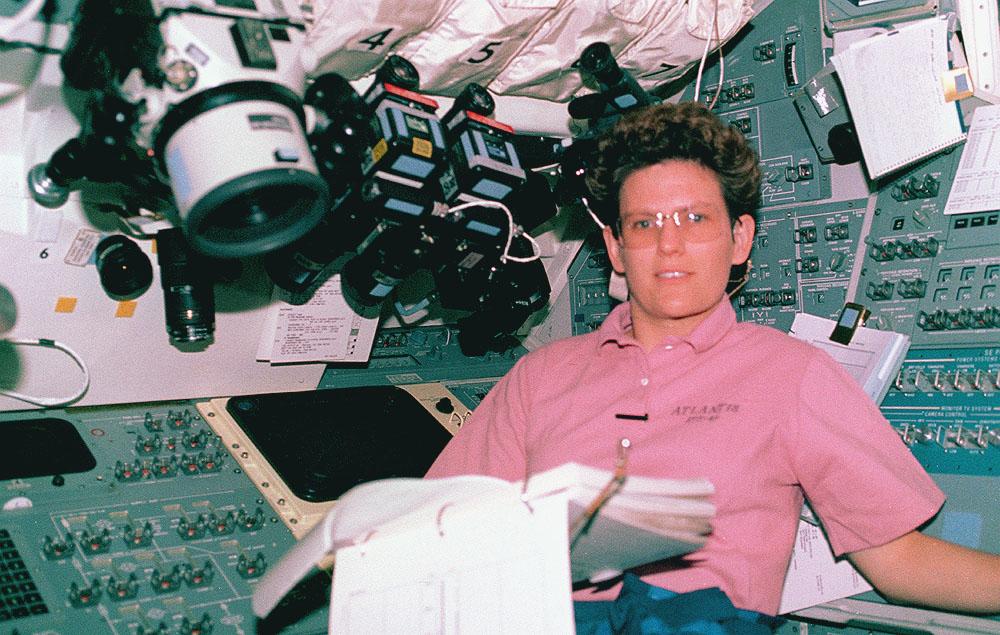
Space Shuttle Atlantis (STS-45) onboard photo of Mission Specialist Kathryn Sullivan working in the Atmospheric Laboratory for Applications and Science (Atlas-1) module. Atlas-1 flew in a series of Spacelab flights that measured long term variability in the total energy radiated by the Sun and determined the variability in the solar spectrum.
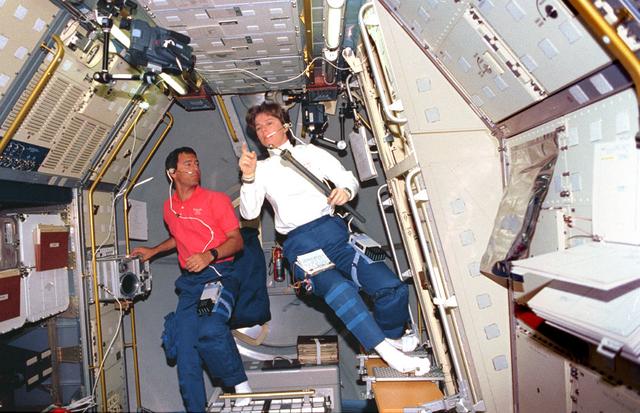
Payload Specialist Larry DeLucas and Payload Commander Bornie Dunbar working in USML-1.
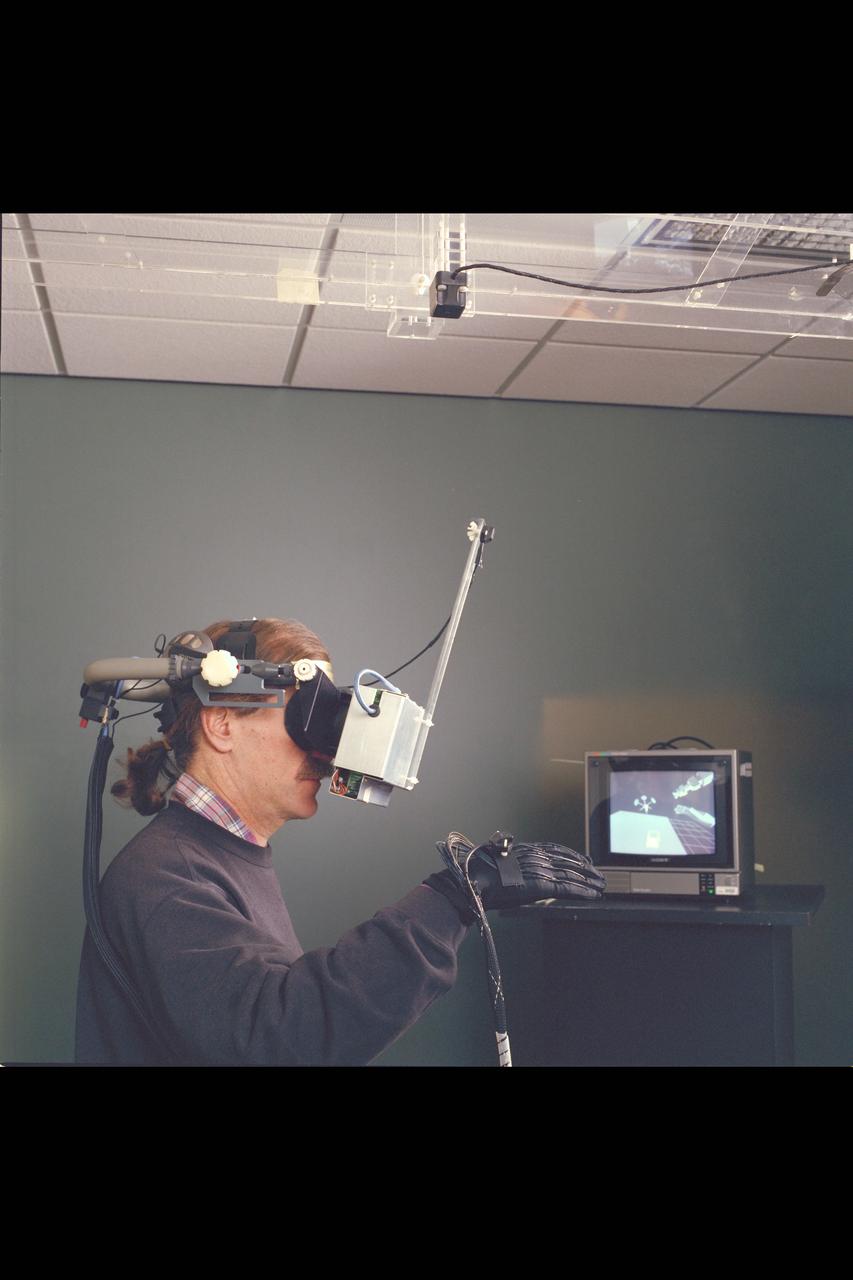
Robotics Laboratory: Helmet, glove & viewing screen
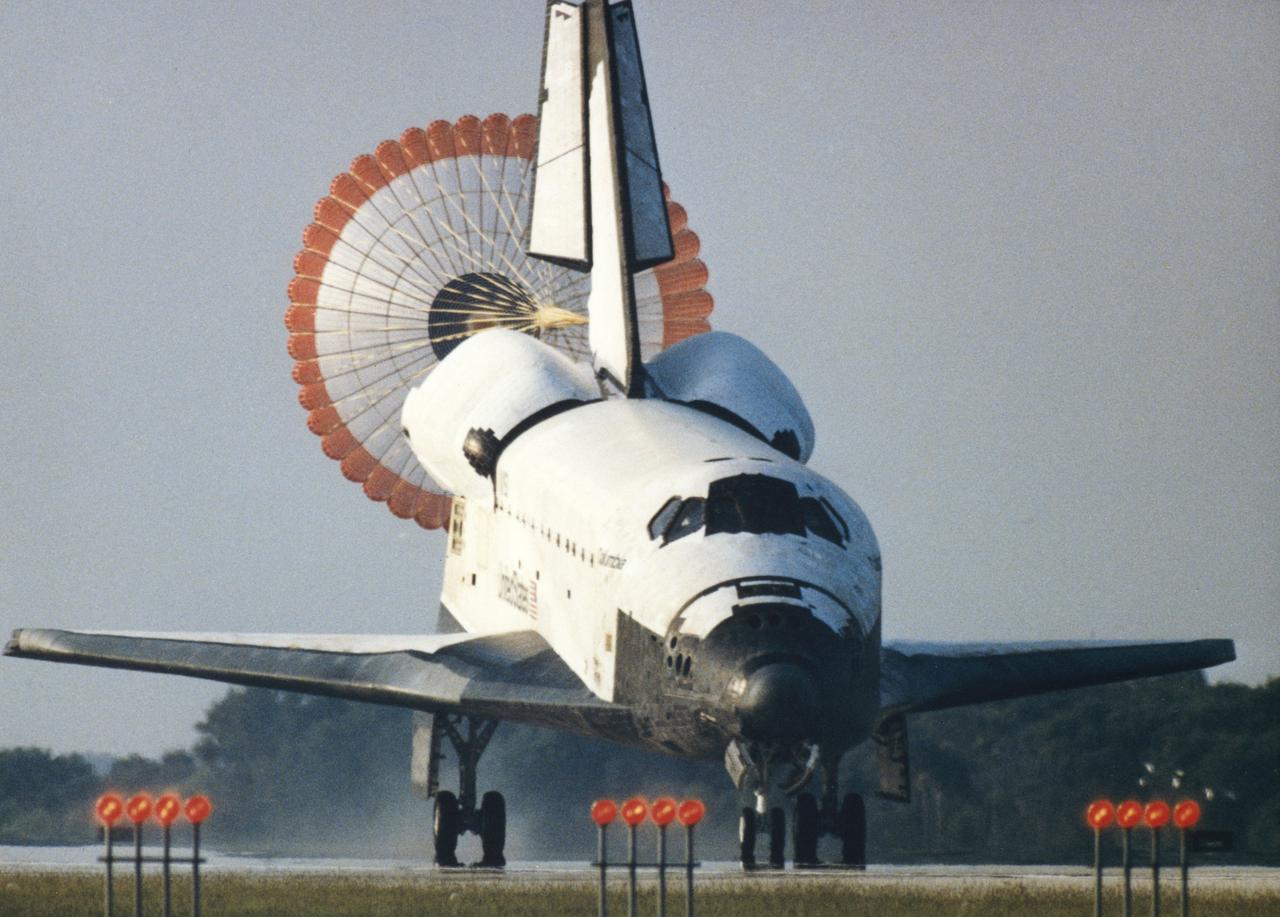
As the orbiter Columbia (STS-50) rolled down Runway 33 of Kennedy Space Center's (KSC) Shuttle Landing Facility, its distinctively colored drag chute deployed to slow down the spaceship. This landing marked OV-102's first end-of-mission landing at KSC and the tenth in the program, and the second shuttle landing with the drag chute. Edwards Air Force Base, CA, was the designated prime for the landing of Mission STS-50, but poor weather necessitated the switch to KSC after a one-day extension of the historic flight. STS-50 was the longest in Shuttle program historyo date, lasting 13 days, 19 hours, 30 minutes and 4 seconds. A crew of seven and the USML-1 were aboard.
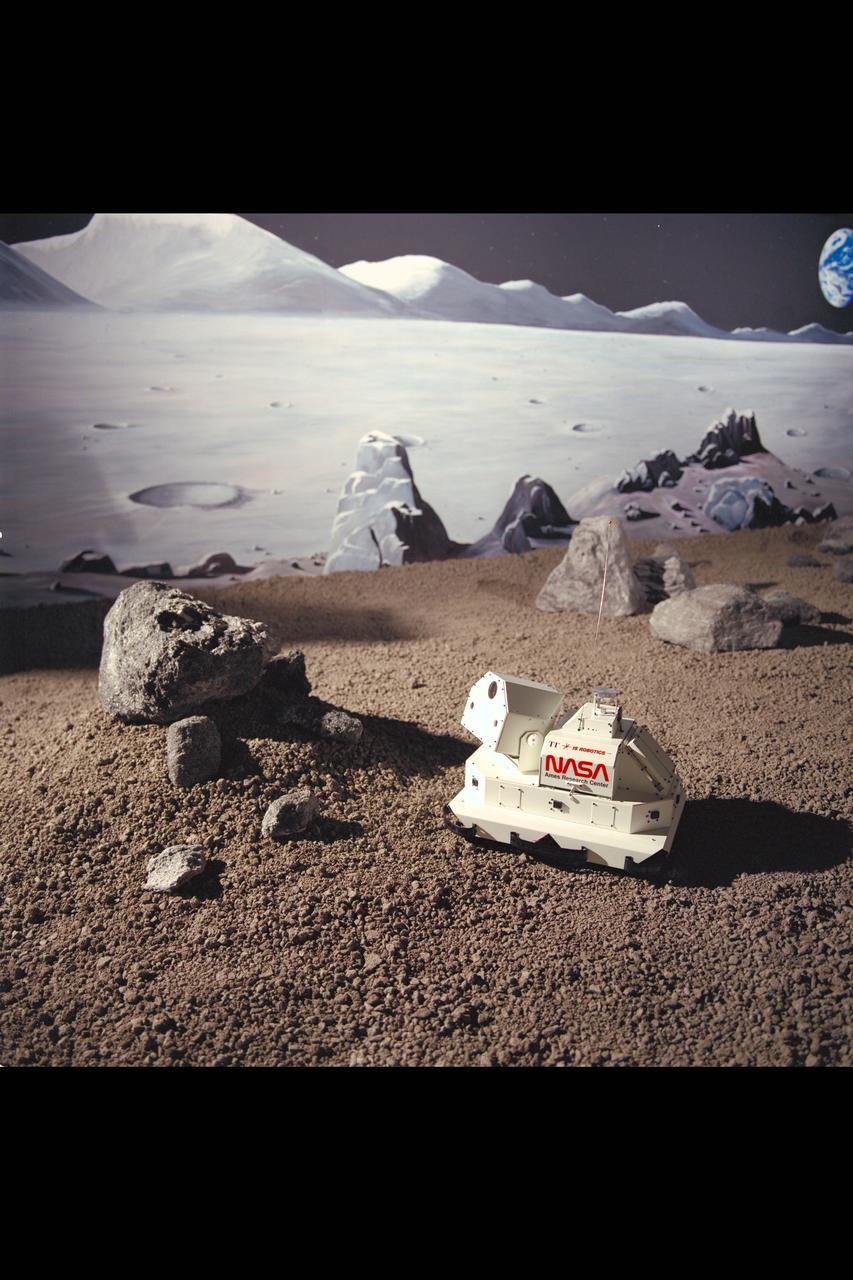
Ames Robotics Laboratory, T-1 Robot in 'sandbox'
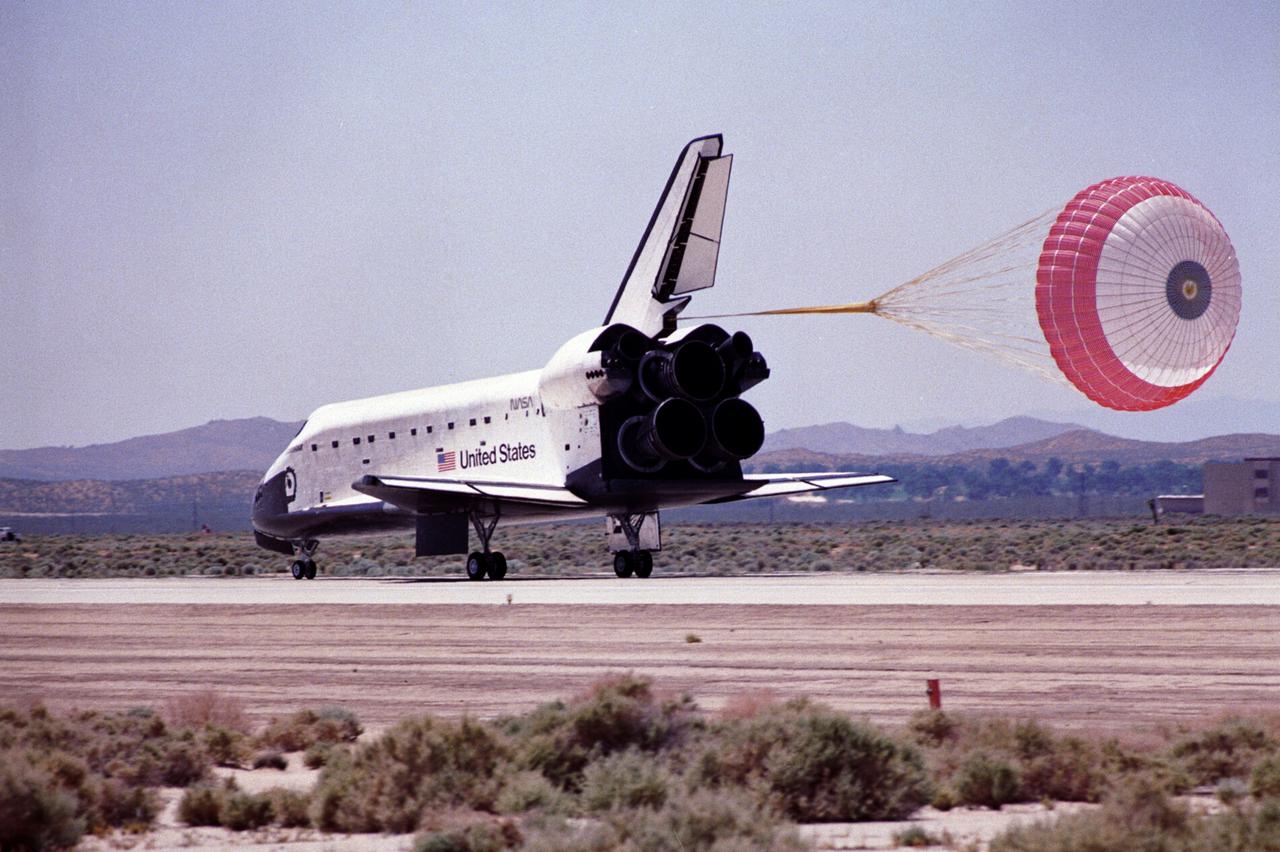
STS-49 Orbiter Endeavour landed at Edwards Air Force Base on May 16, 1992 The drogue chute precedes the main chute in NASA’s first exercise of its detailed test objective on the drag chute system. STS-49 ended its successful nine day mission dedicated to the retrieval, repair, and redeployment of the the INTELSAT VI (F-3) satellite. The communication satellite for the International Telecommunication Satellite organization had been stranded in an unusable orbit since its launch aboard the Titan rocket in March 1990. The mission marked the first time 3 astronauts worked simultaneously outside the space craft.
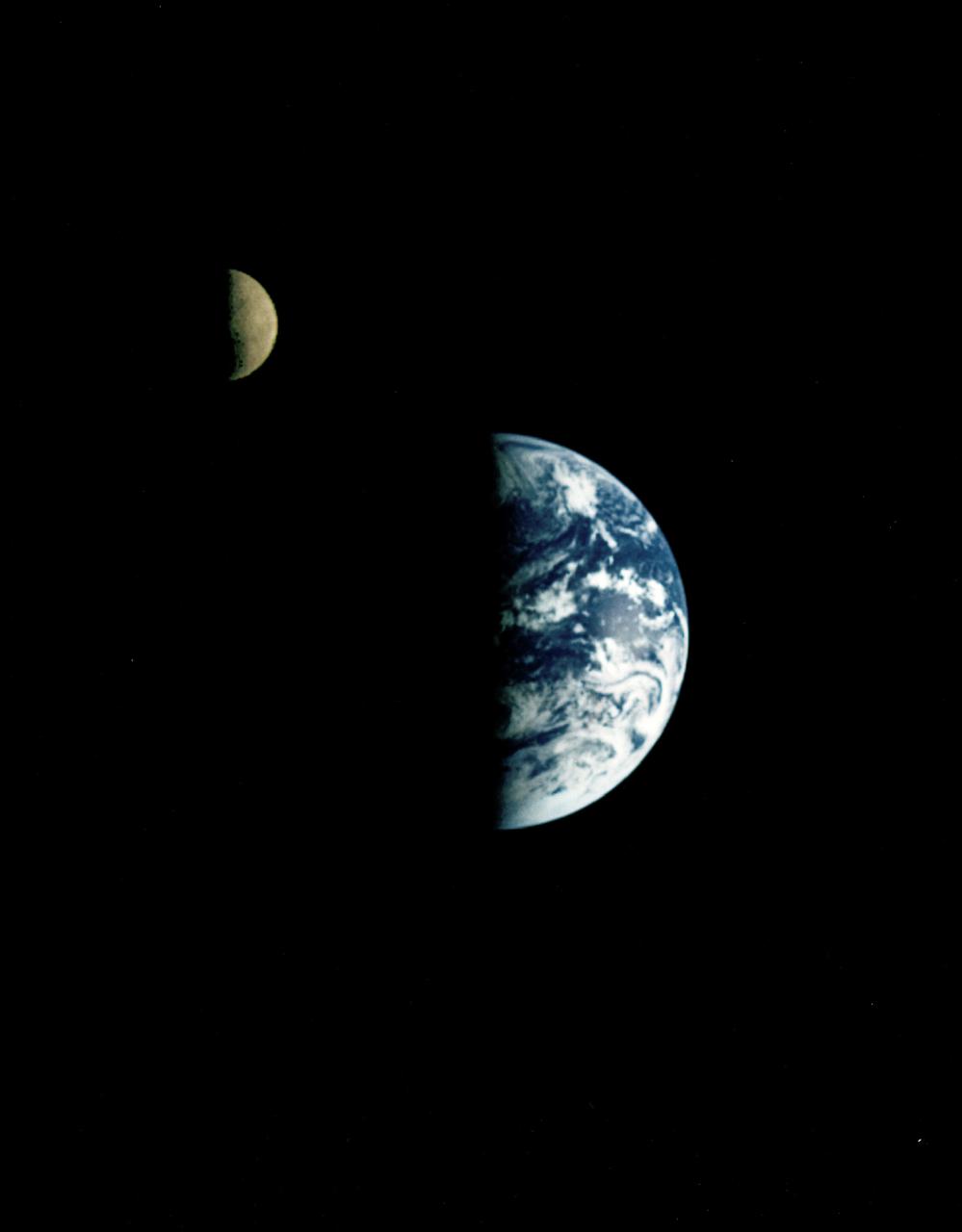
CAPE CANAVERAL, Fla. – Eight days after its encounter with the Earth, the Galileo spacecraft was able to look back and capture this remarkable view of the moon in orbit about the Earth, taken from a distance of about 6.2 million kilometers, or 3.9 million miles, on December 16. Photo credit: NASA
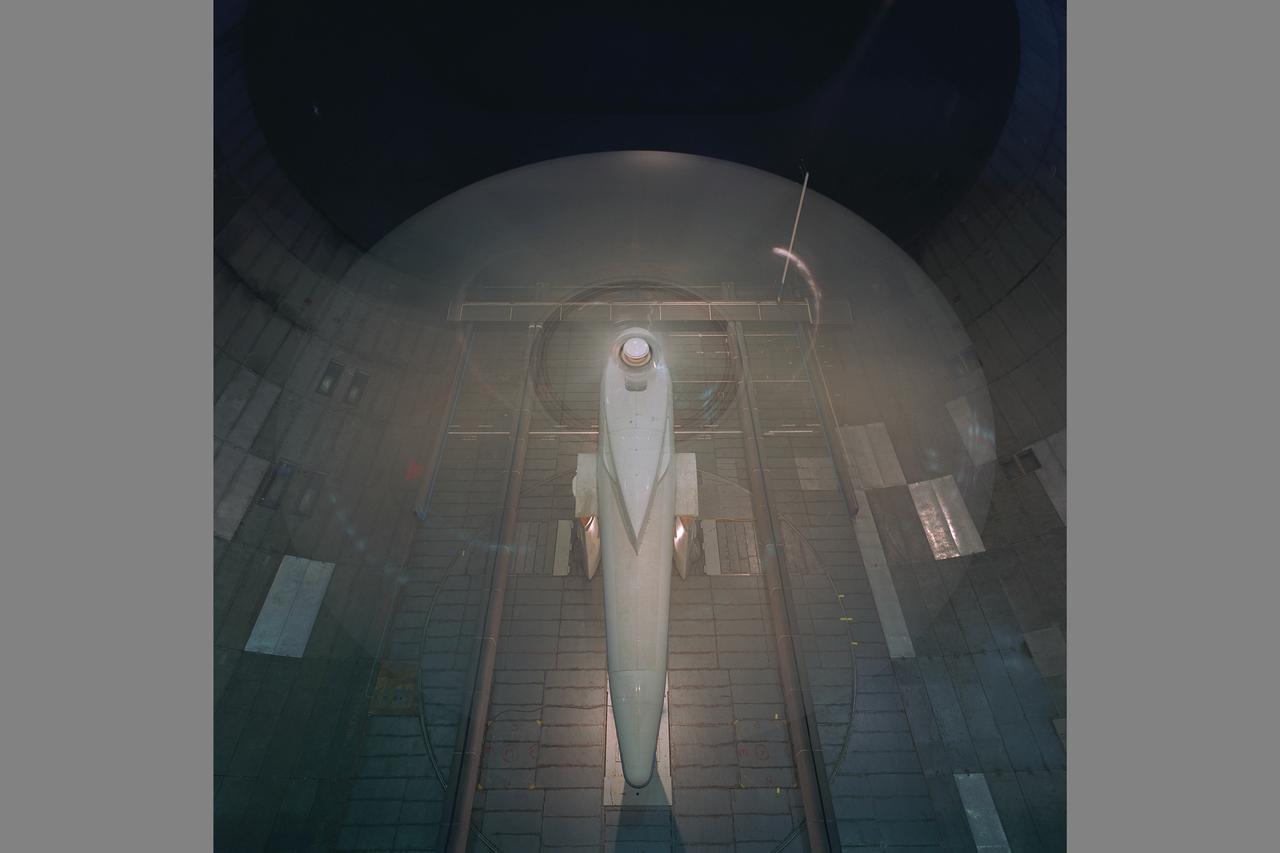
Sikorsky Bearingless Main rotor (SBMR) mounted on the Ames Rotor Test Apparatus (RTA) during testing in the NASA Ames 40x80ft Subsonic Wind Tunnel, test-584. Rotors in motion.

STS045-19-032 (24 March-2 April 1992) --- Astronaut Brian Duffy, STS-45 pilot, uses an inflatable globe to demonstrate Earth observations for an educational program to be distributed to classrooms following the mission.
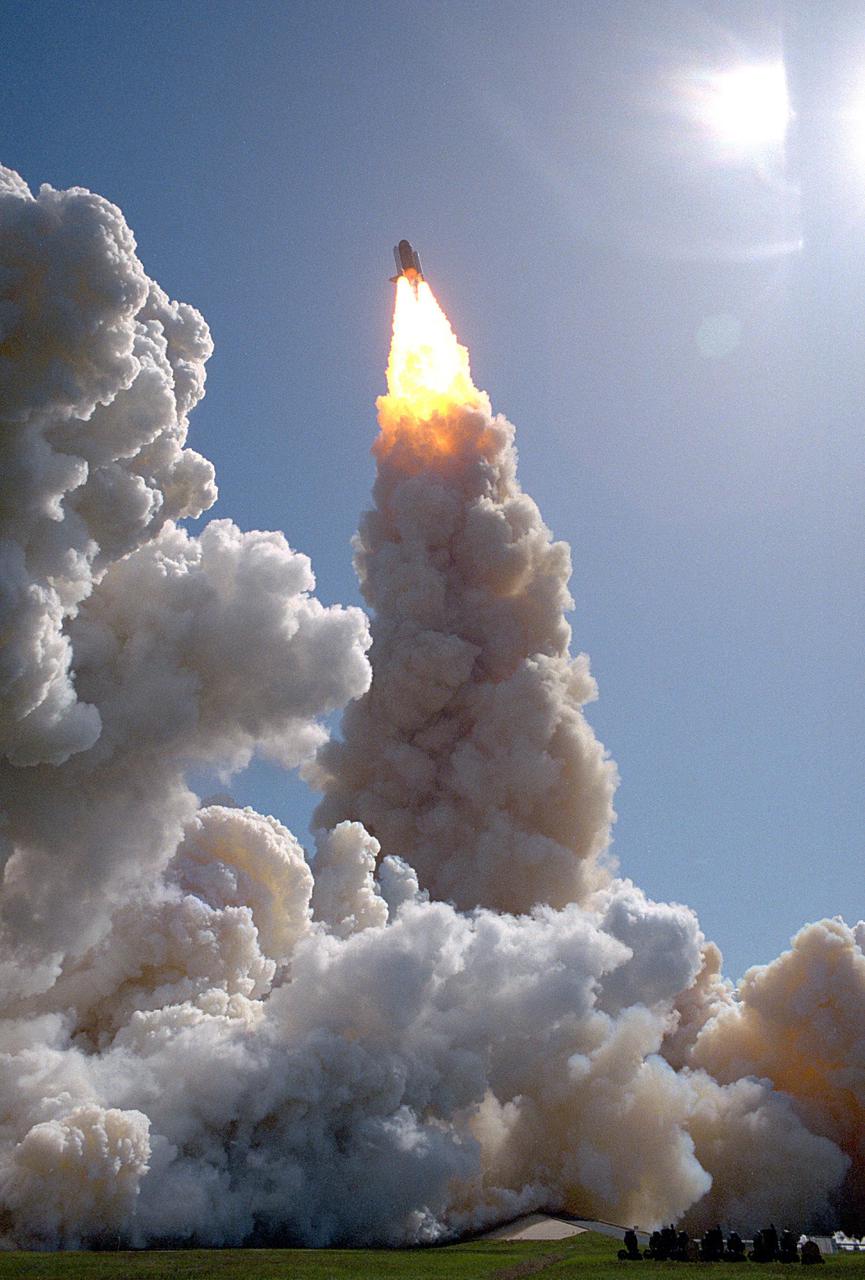
KENNEDY SPACE CENTER, FLA. -- STS-52: Columbia
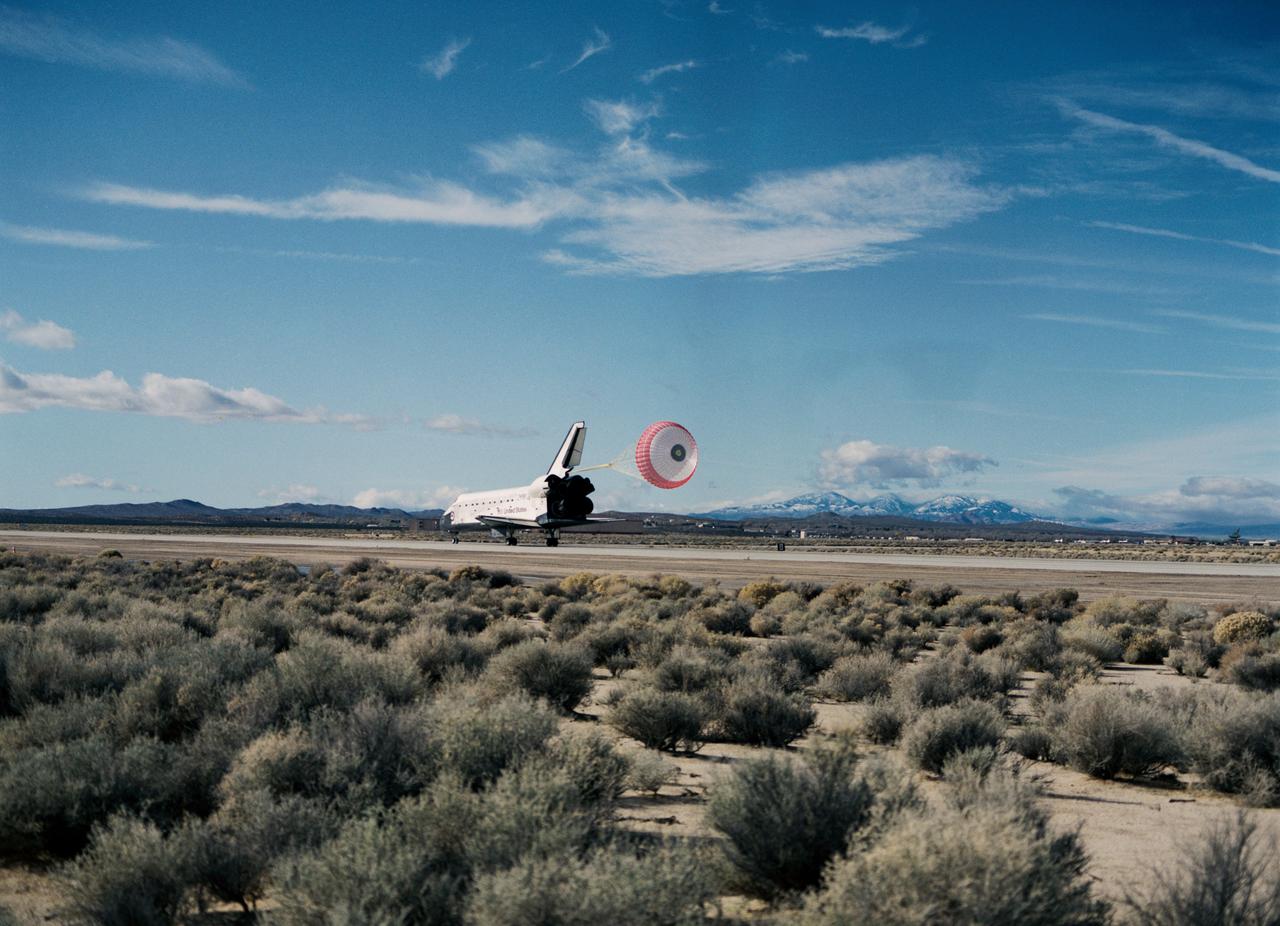
STS-53 Discovery, Orbiter Vehicle (OV) 103, is slowed by a red, white, and blue drag chute during its landing on concrete runway 22 at Edwards Air Force Base (EAFB), California. Main landing gear (MLG) touchdown occurred at 12:43:17 pm (Pacific Standard Time (PST)). This aft view of OV-103 shows the drag chute deployed from its compartment at the base of the vertical tail, the speedbrake/rudder flaps open, and the space shuttle main engines (SSMEs). Both MLG and nose landing gear (NLG) ride along the runway surface. Desert scrub brush appears in the foreground and mountains are seen in the background.
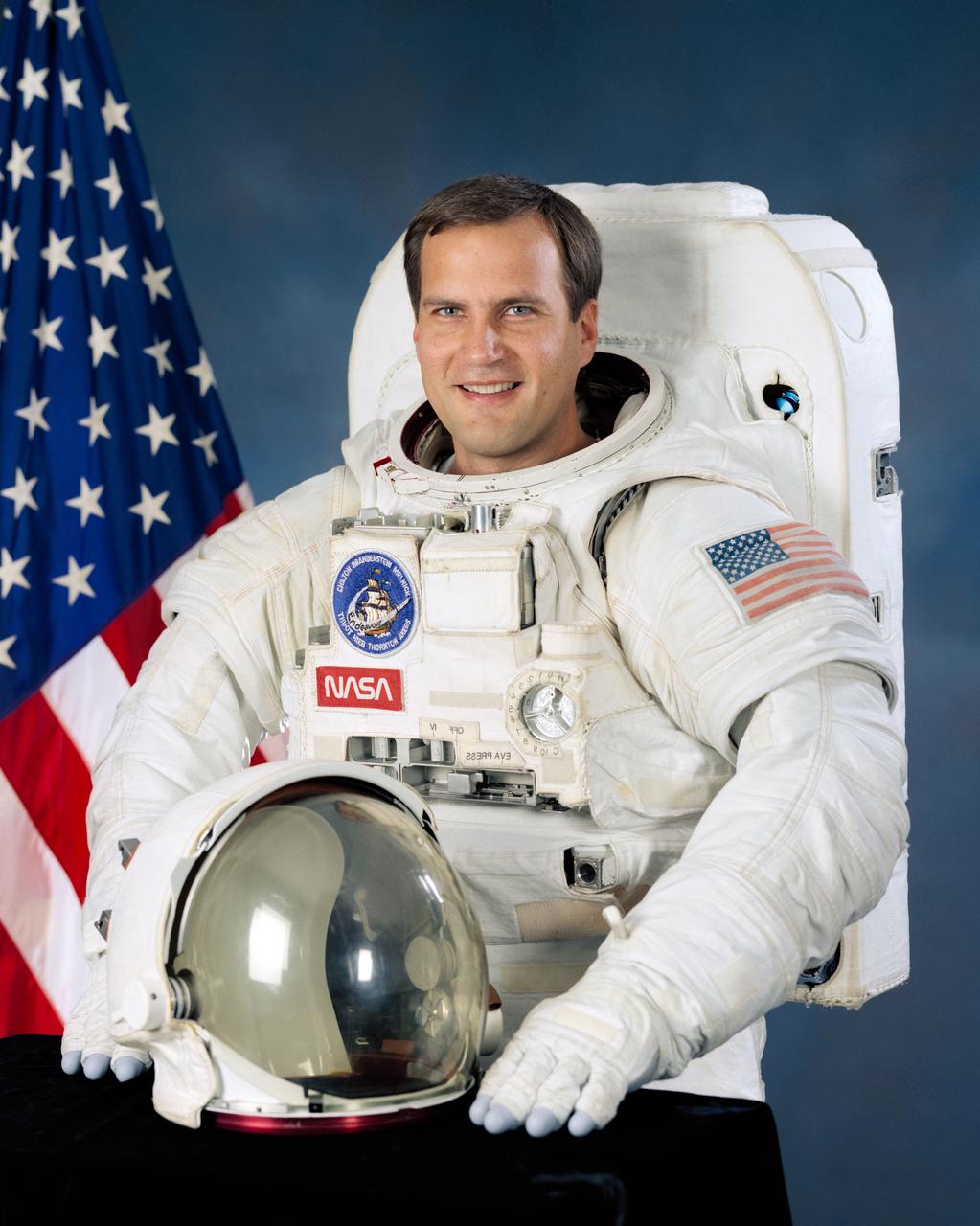
S92-41511 (1992) --- Astronaut Richard J. Hieb.

S92-40001 (1 June 1992) --- Payload specialist Steven G. Maclean is assisted by two SCUBA-equipped divers as he participates in emergency bailout training in the Johnson Space Center's (JSC) Weightless Environment Training Facility (WET-F). Maclean will join five NASA astronauts for the scheduled 10-day STS-52 mission.
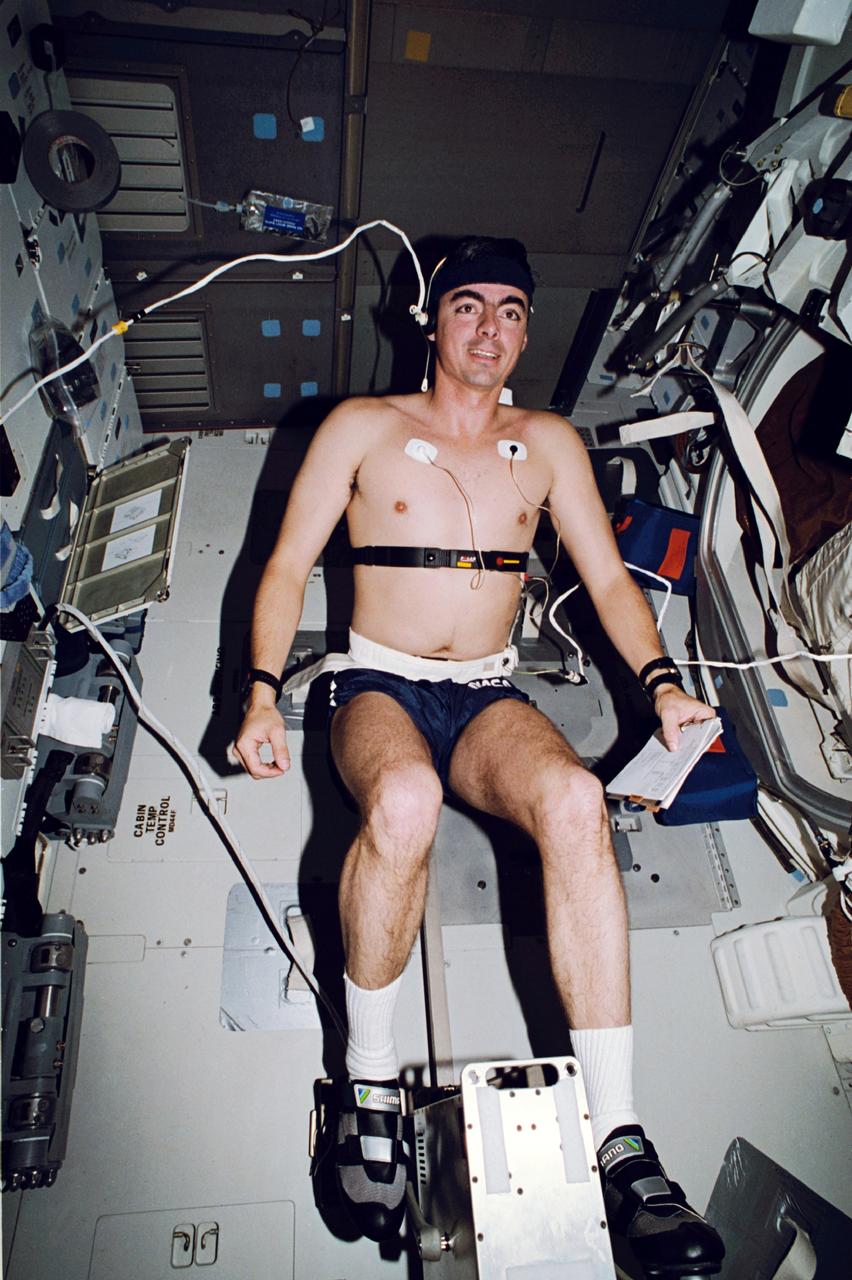
STS046-24-025 (31 July-8 Aug. 1992) --- Astronaut Andrew M. Allen, STS-46 pilot, exercises on the bicycle ergometer device on the flight deck of the Space Shuttle Atlantis as it makes one of its 127 total orbits for the eight-day mission. Allen, equipped with sensors for monitoring his biological systems during the run, was joined by four other NASA astronauts and two European scientists on the mission.
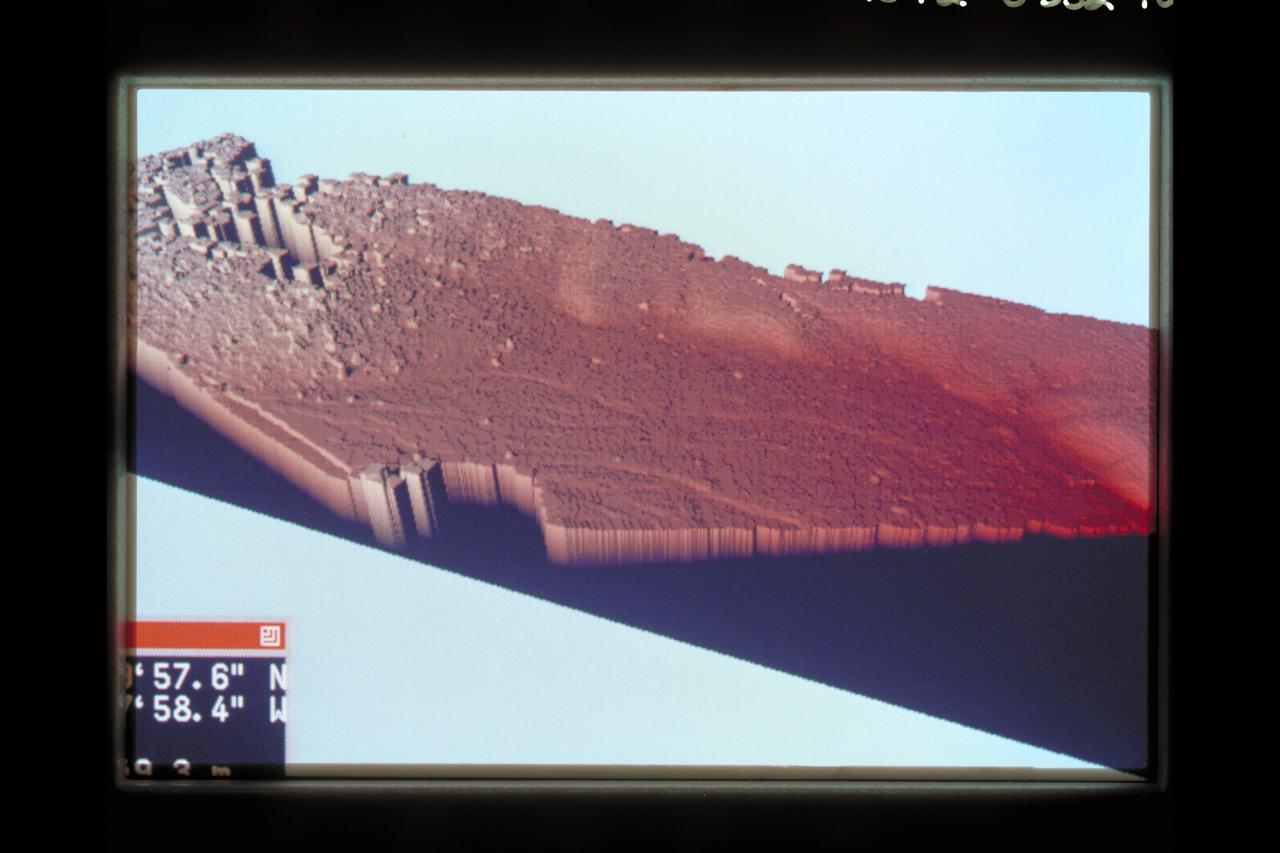
Telepresence Virtual Reality (Mars Surface)
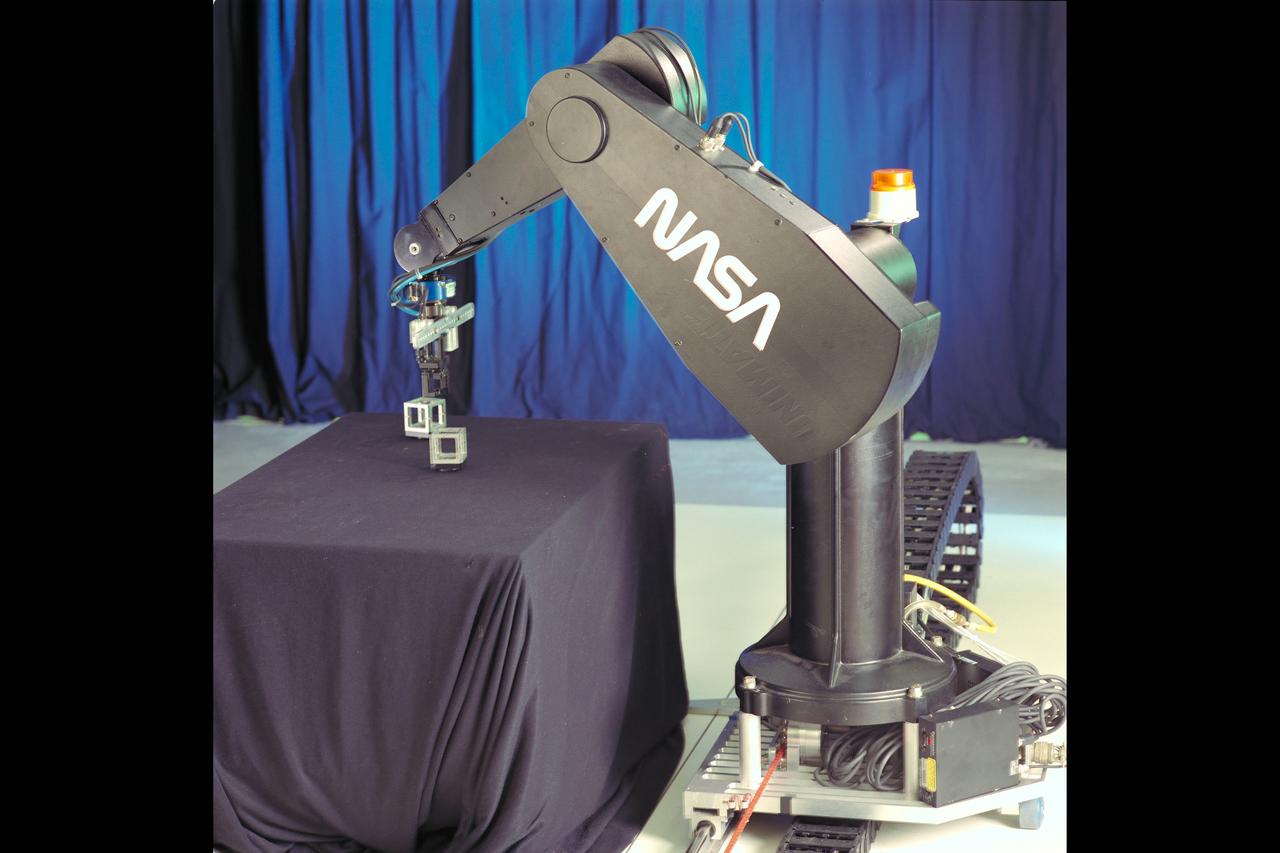
Robotics Laboratory: robot arm
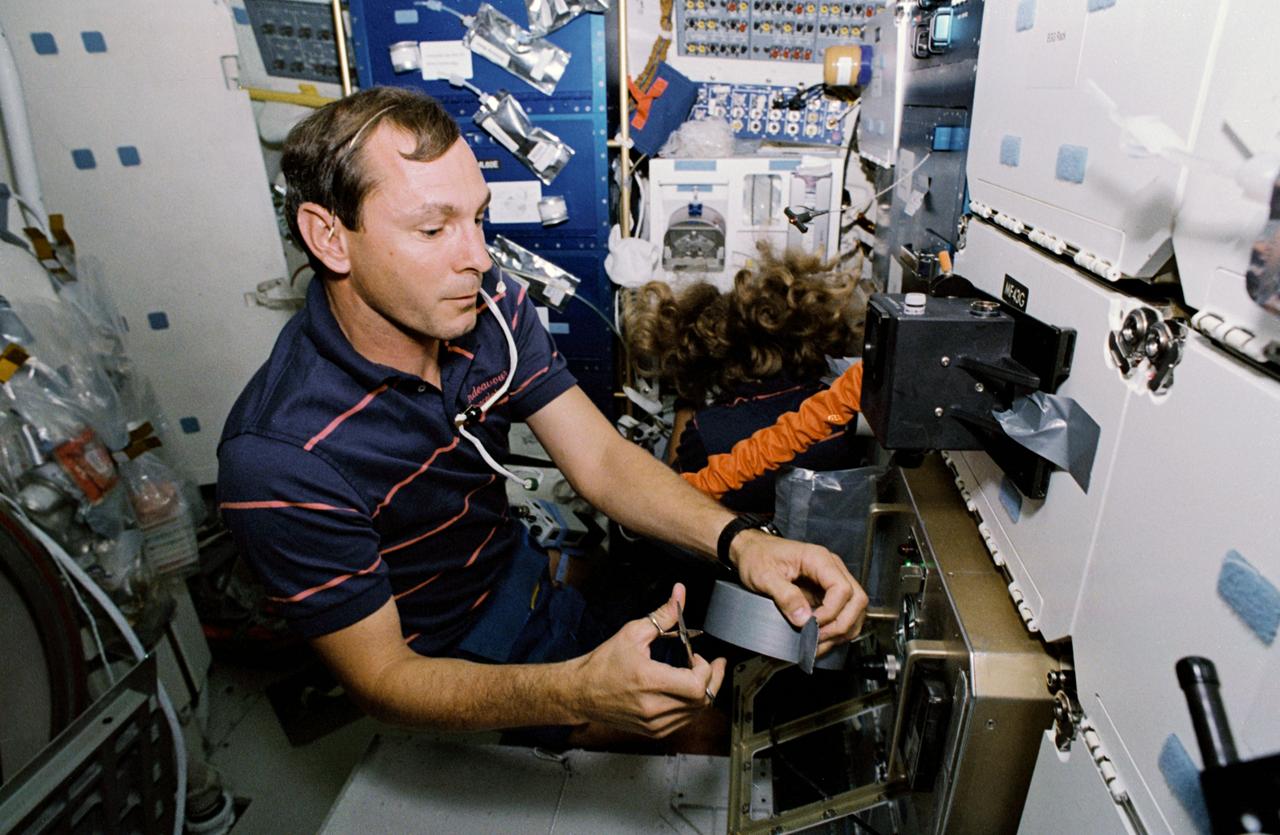
STS047-35-022 (12 - 20 Sept 1992) --- Astronauts Curtis L. Brown, Jr., pilot, and N. Jan Davis, mission specialist, team up to cure a high humidity problem in the hornet experiment in the Spacelab-J Science Module of the Earth-orbiting Space Shuttle Endeavour. Via a jury-rigged hose hook-up, the two were able to blow air from a spacesuit fan into the experiment, thus eliminating condensation that obscured the viewing of the Israeli hornet experiment. The experiment examined the effects of microgravity on the orientation, reproductive capability and social activity of 180 female Oriental Hornets.
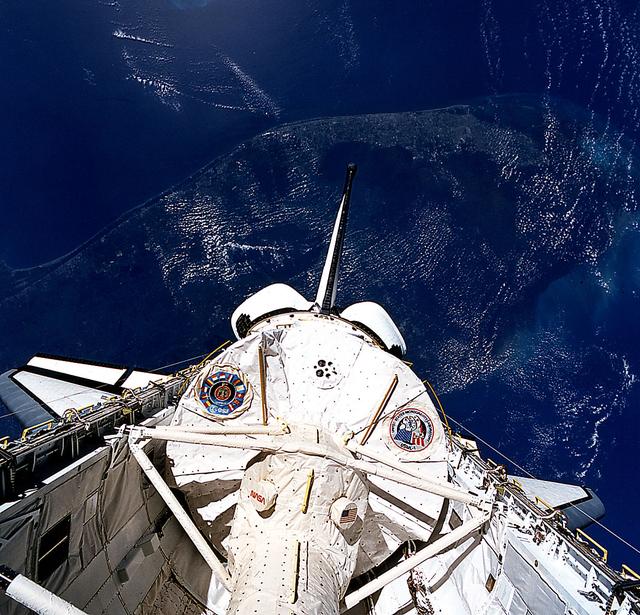
Space Shuttle Columbia (STS-50) onboard photo of the United States Microgravity Laboratory (USML-1) module in payload bay in this scene over the southern two-thirds of the Florida peninsula. Kennedy Space Center (KSC) can be seen just above Columbia's starboard wing.
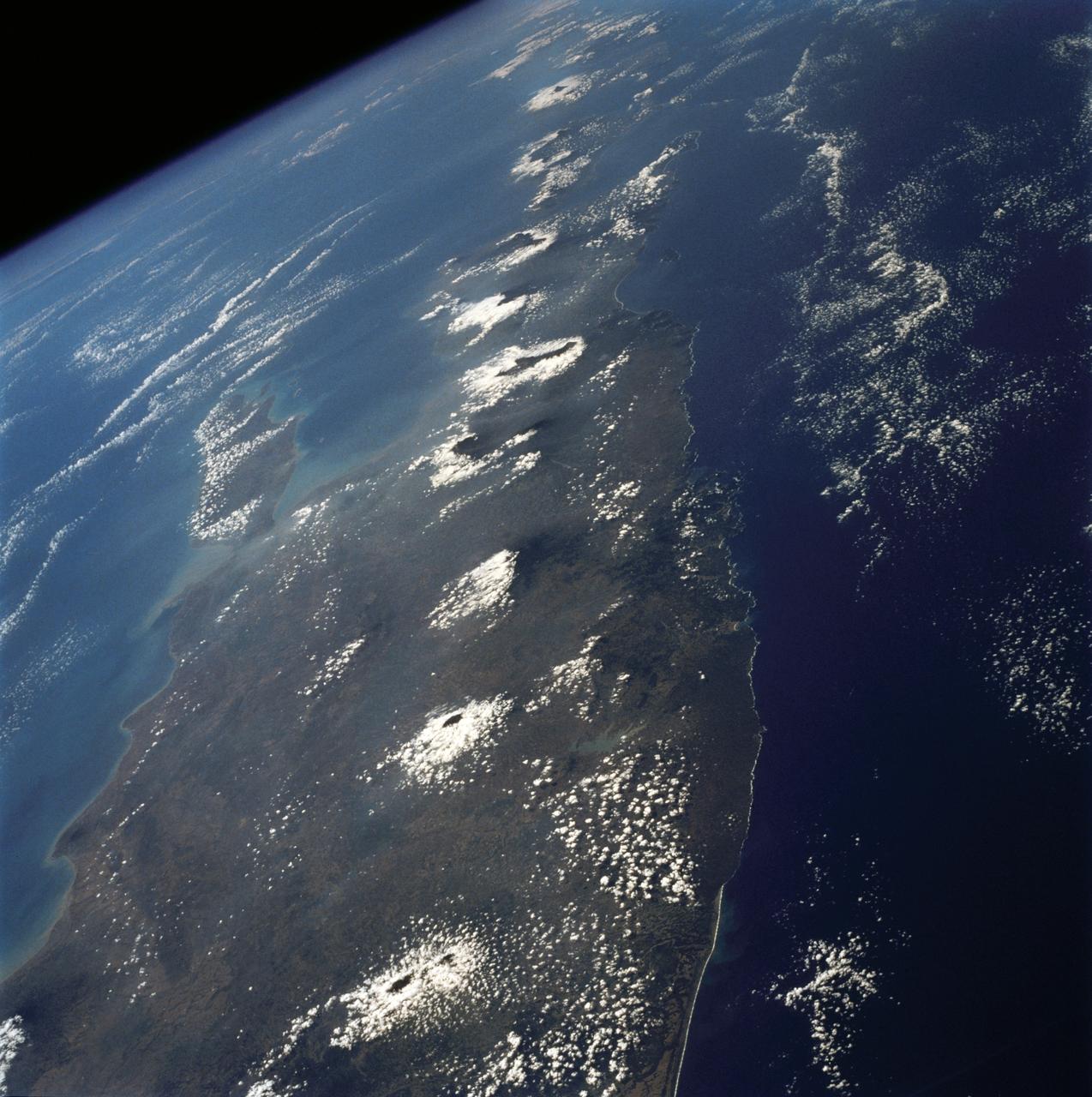
The island of Java (8.0S, 112.0E), perhaps better than any other, illustrates the volcanic origin of Pacific Island groups. Seen in this single view are at least a dozen once active volcano craters. Alignment of the craters even defines the linear fault line of Java as well as the other some 1500 islands of the Indonesian Archipelago. Deep blue water of the Indian Ocean to the south contrasts to the sediment laden waters of the Java Sea to the north.
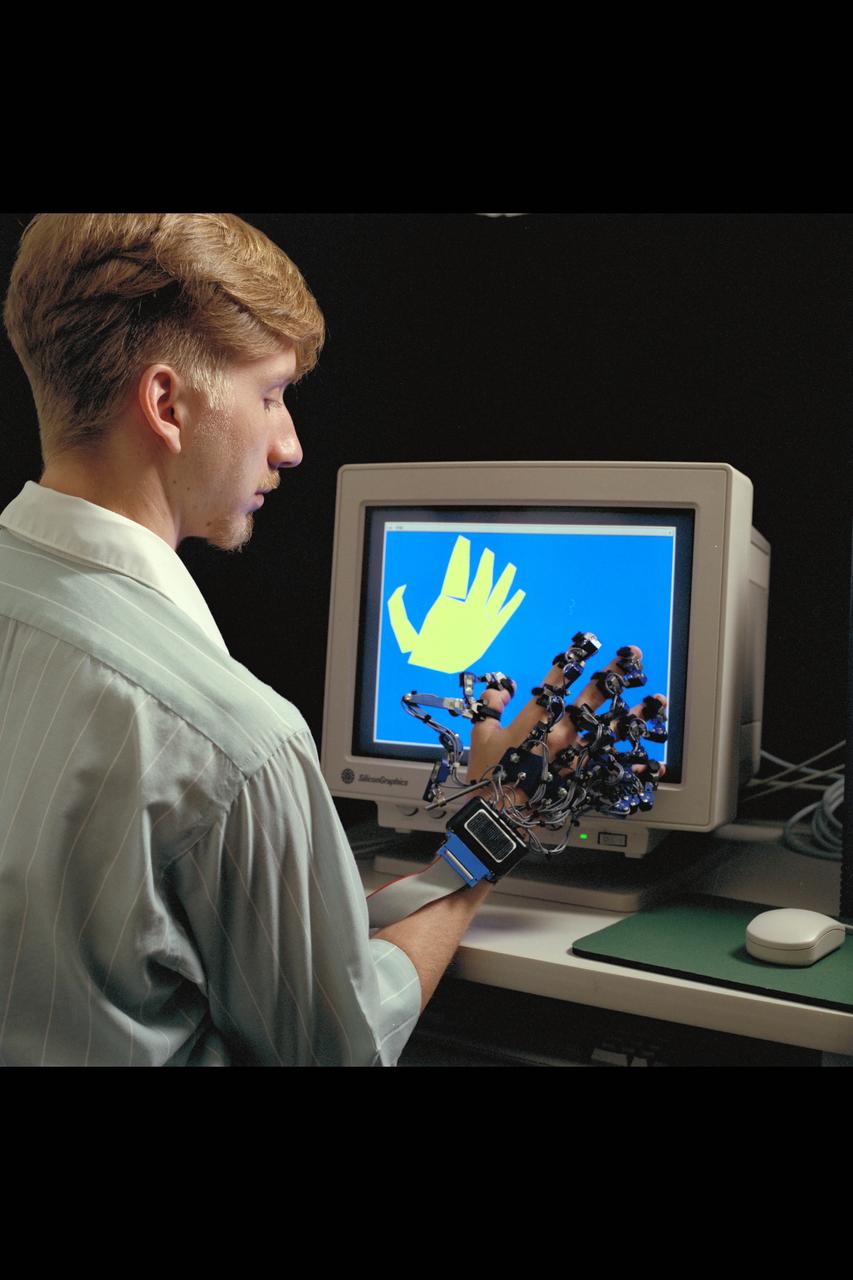
Virtual Environment Telepresence workstation, simulated Mars Exploration shows William Briggs with EXOS Dexterous interface (virtual hand)
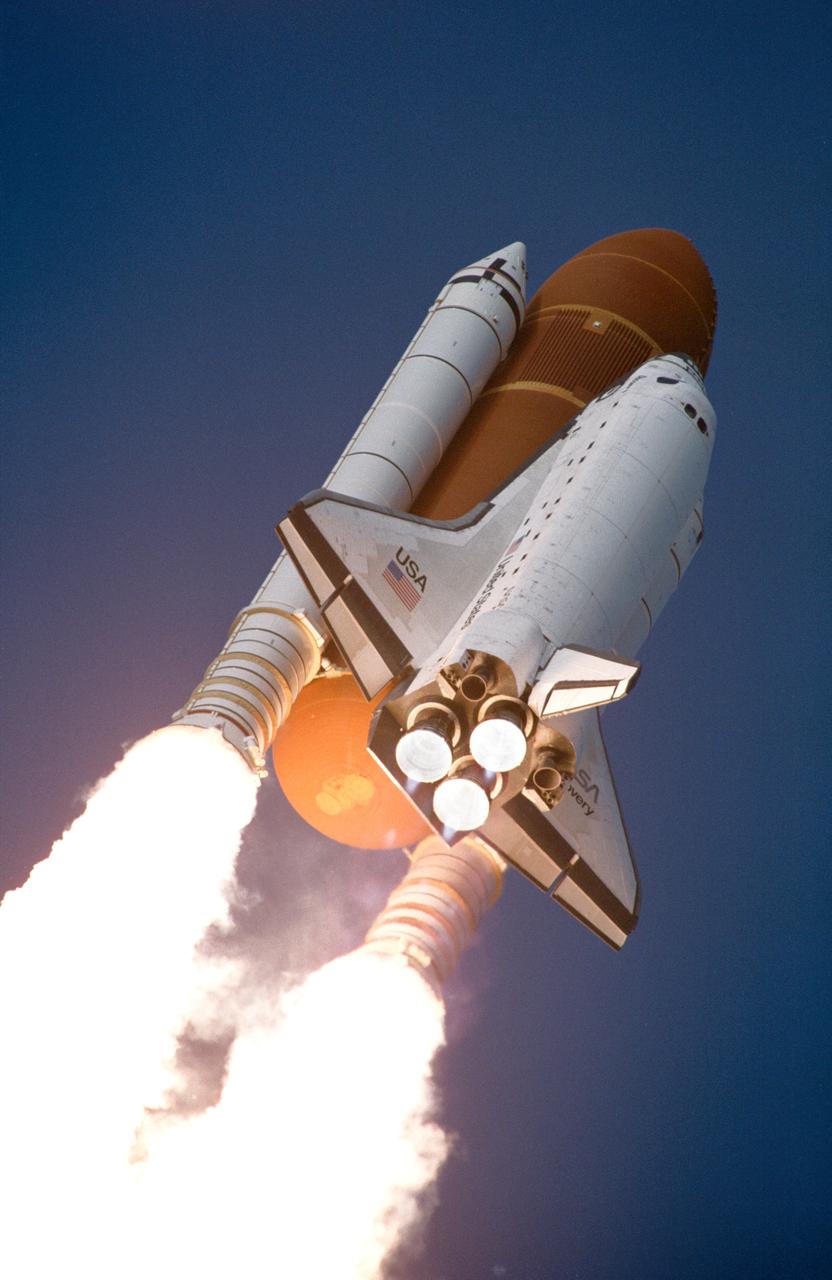
STS053-S-058 (2 Dec. 1992) --- The space shuttle Discovery, with a crew of five astronauts onboard, launches from Kennedy Space Center's (KSC) Pad 39A at 8:24:00 a.m. (EST), Dec. 2, 1992. The all military crew supporting the Department of Defense (DOD) flight included astronauts David M. Walker, Robert D. Cabana, Guion S. Bluford, Jr., James S. Voss and Michael R. U. (Rich) Clifford.
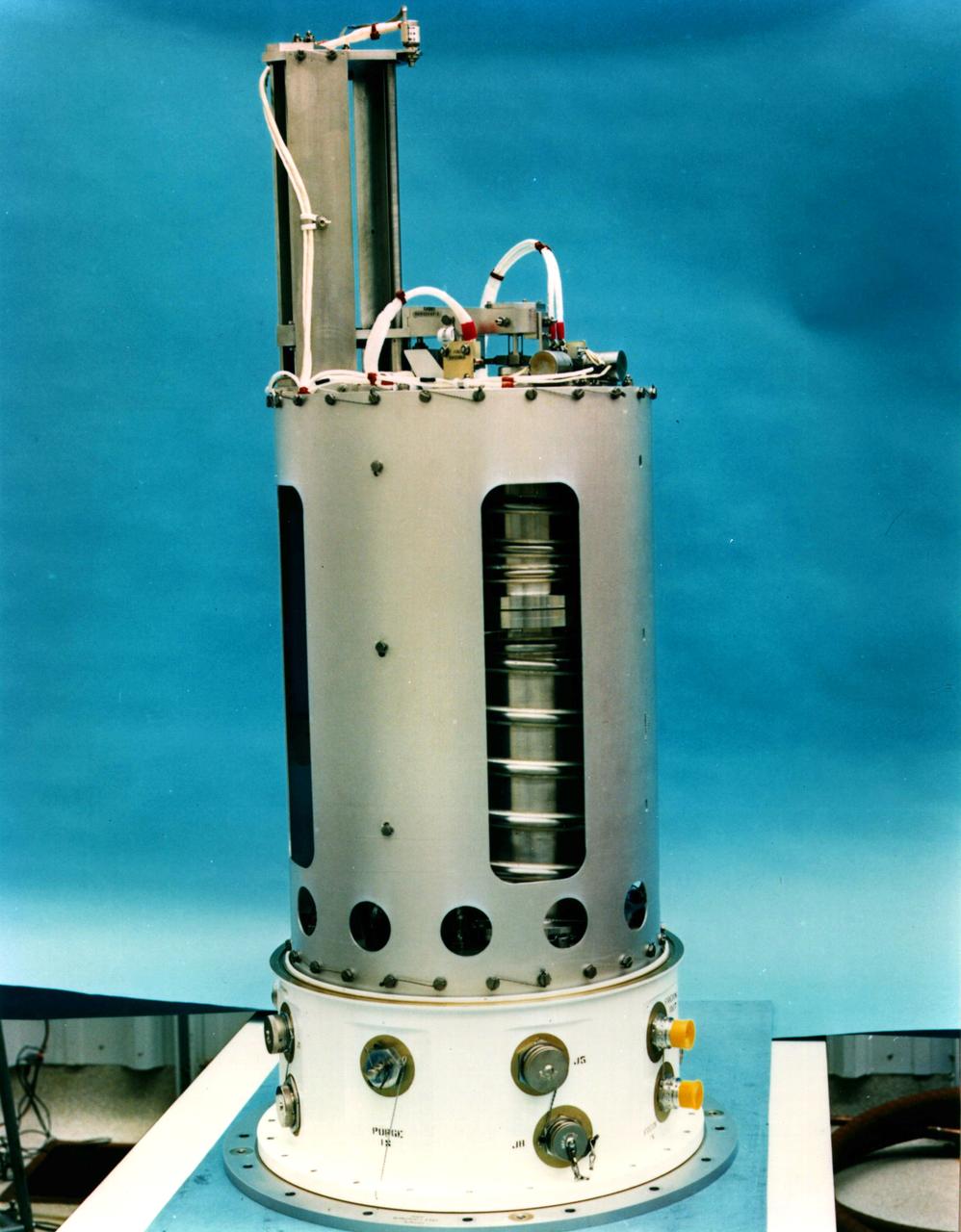
The Advanced Automated Directional Solidification Furnace (AADSF) with the Experimental Apparatus Container (EAC) removed flew during the USMP-2 mission. During USMP-2, the AADSF was used to study the growth of mercury cadmium telluride crystals in microgravity by directional solidification, a process commonly used on earth to process metals and grow crystals. The furnace is tubular and has three independently controlled temperature zones . The sample travels from the hot zone of the furnace (1600 degrees F) where the material solidifies as it cools. The solidification region, known as the solid/liquid interface, moves from one end of the sample to the other at a controlled rate, thus the term directional solidification.