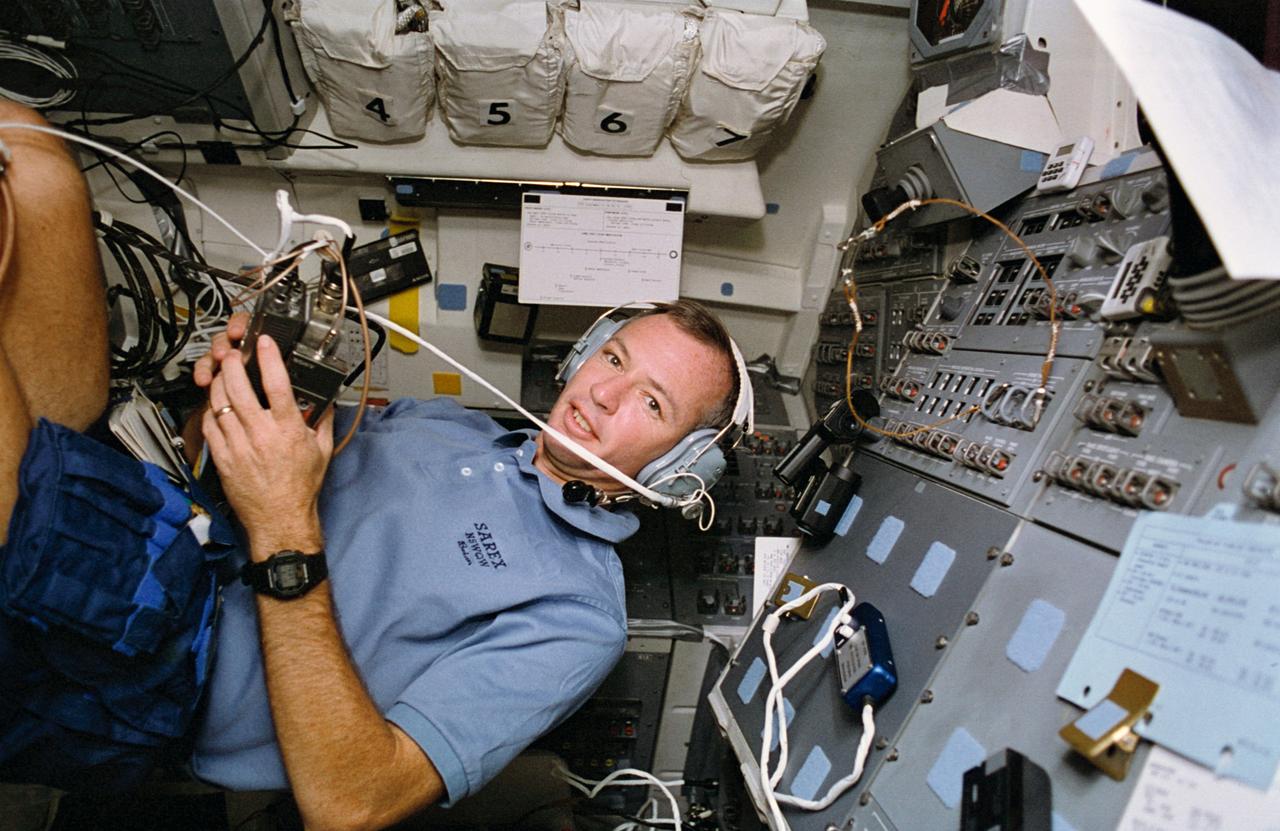
STS057-40-028 (21 June-1 July 1993) --- Astronaut Brian Duffy, pilot, talks to amateur radio operators on Earth from the flight deck of the Earth-orbiting Space Shuttle Endeavour. The space to Earth communications was part of the Shuttle amateur radio experiment (SAREX), which has been included on a number of Space Shuttle missions. Duffy, a licensed amateur radio operator using call letters N5WQW, was among crewmembers talking to students at various points on the ground.
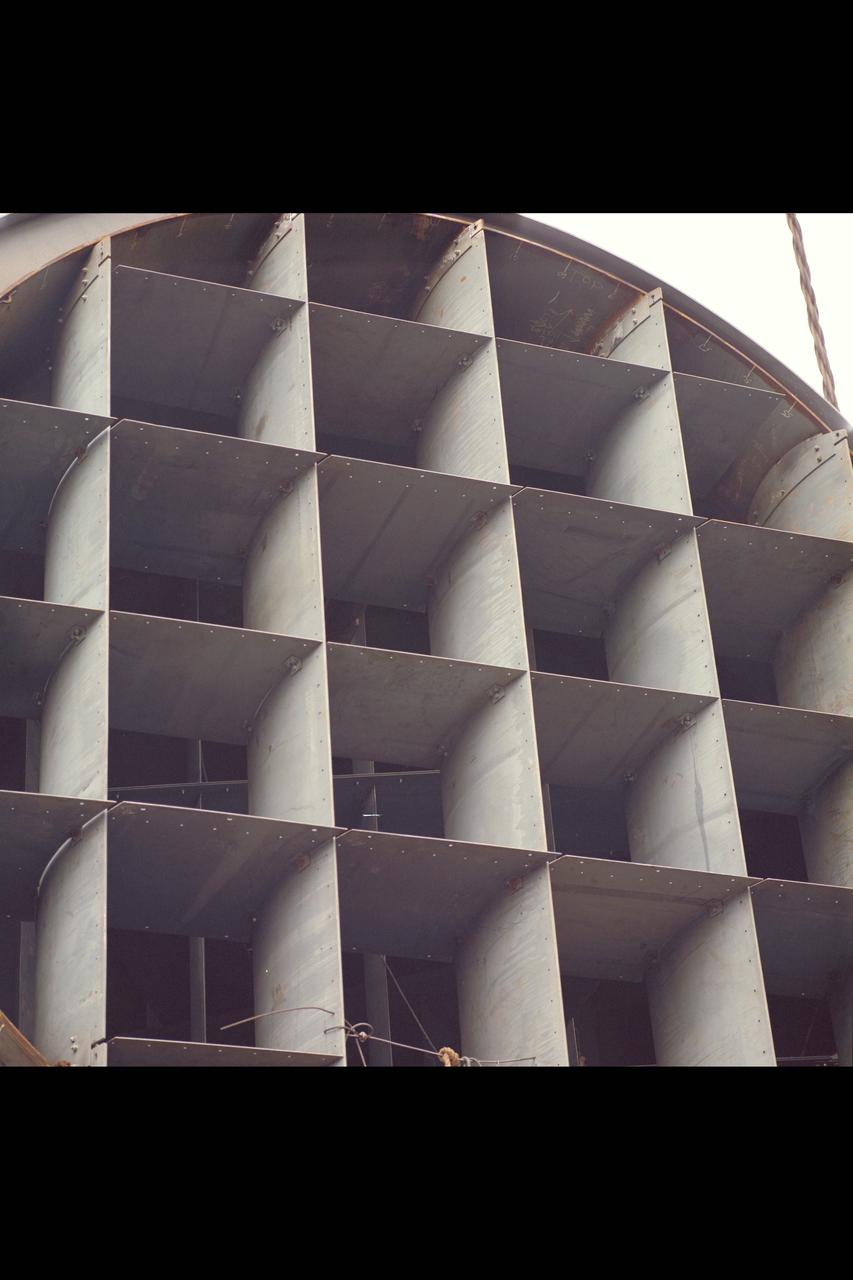
N-206 12ft. Pressure Wind Tunnel reconstruction - installation of vanes
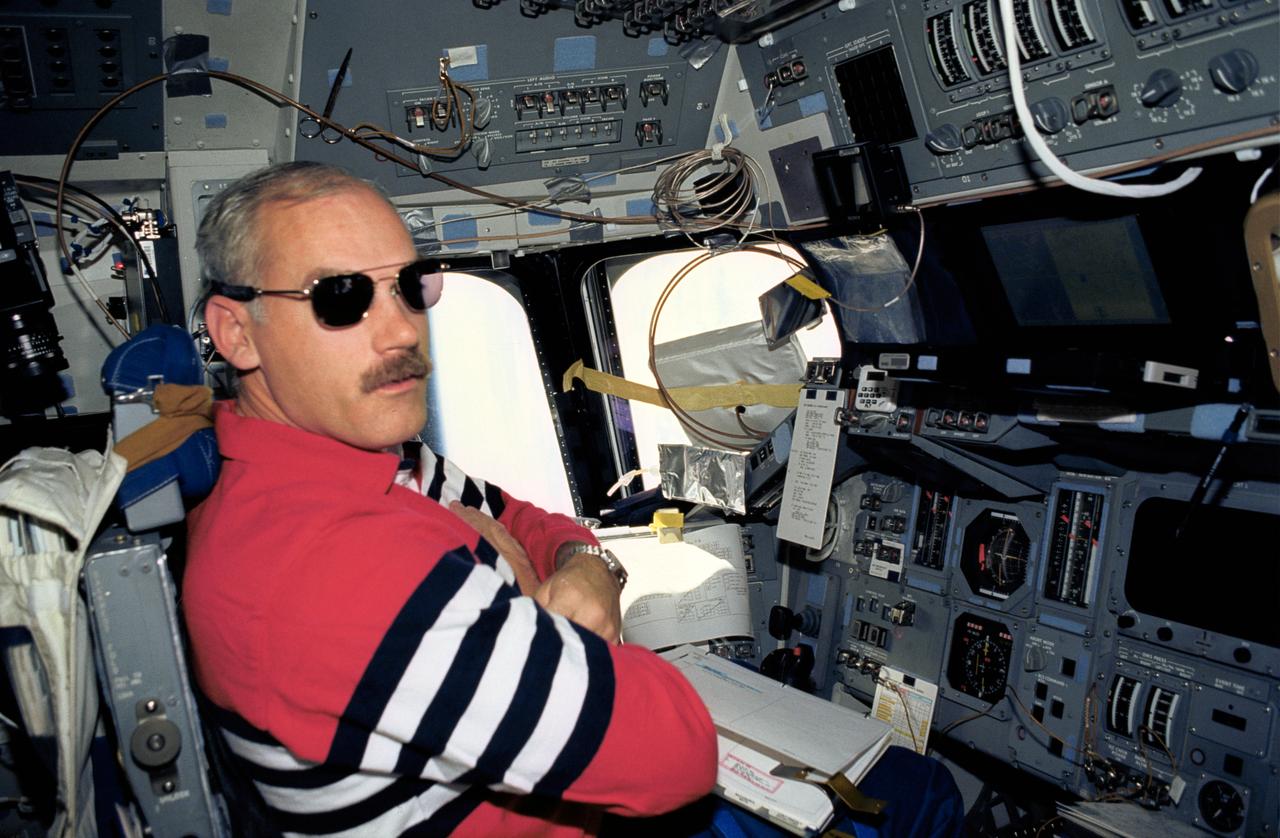
STS051-16-012 (12-22 Sept 1993) --- On Discovery's forward flight deck, astronaut William F. Readdy, pilot, wears shades to block out bright sunshine. Much of the sunshine that normally would be coming through forward windows is blocked by an array of portable computers. Readdy was joined by four other NASA astronauts for almost ten full days in space.
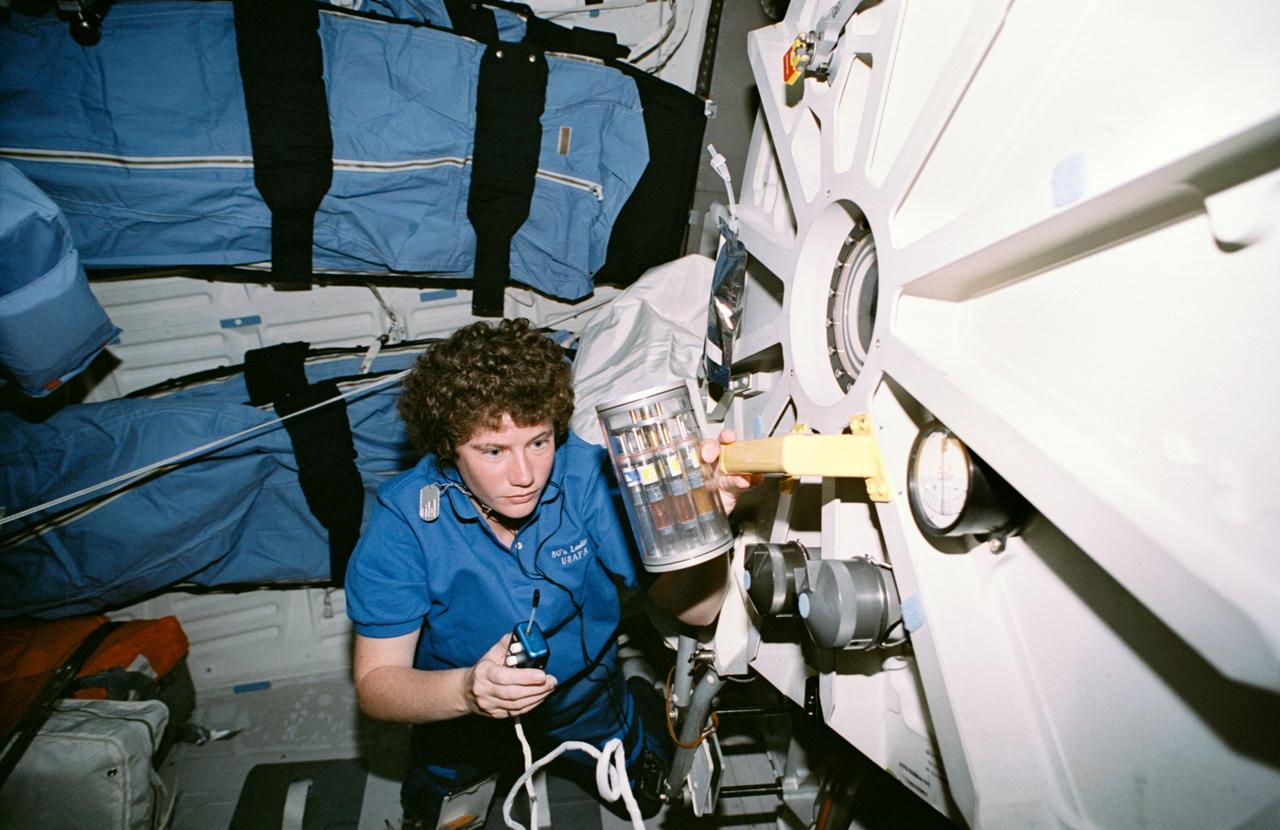
STS054-30-009 (13 Jan 1993) --- Astronaut Susan J. Helms communicates with ground controllers about the Commercial Generic Bioprocessing Apparatus (CGBA) on Endeavour's middeck. The mission specialist holds samples from the CGBA in her left hand. Sleep restraints can be seen in their temporary stow position in the left part of the frame, near the airlock hatch. Also onboard the spacecraft for the six-day mission were astronauts John H. Casper, Donald R. McMonagle, Gregory J. Harbaugh and Mario Runco Jr.
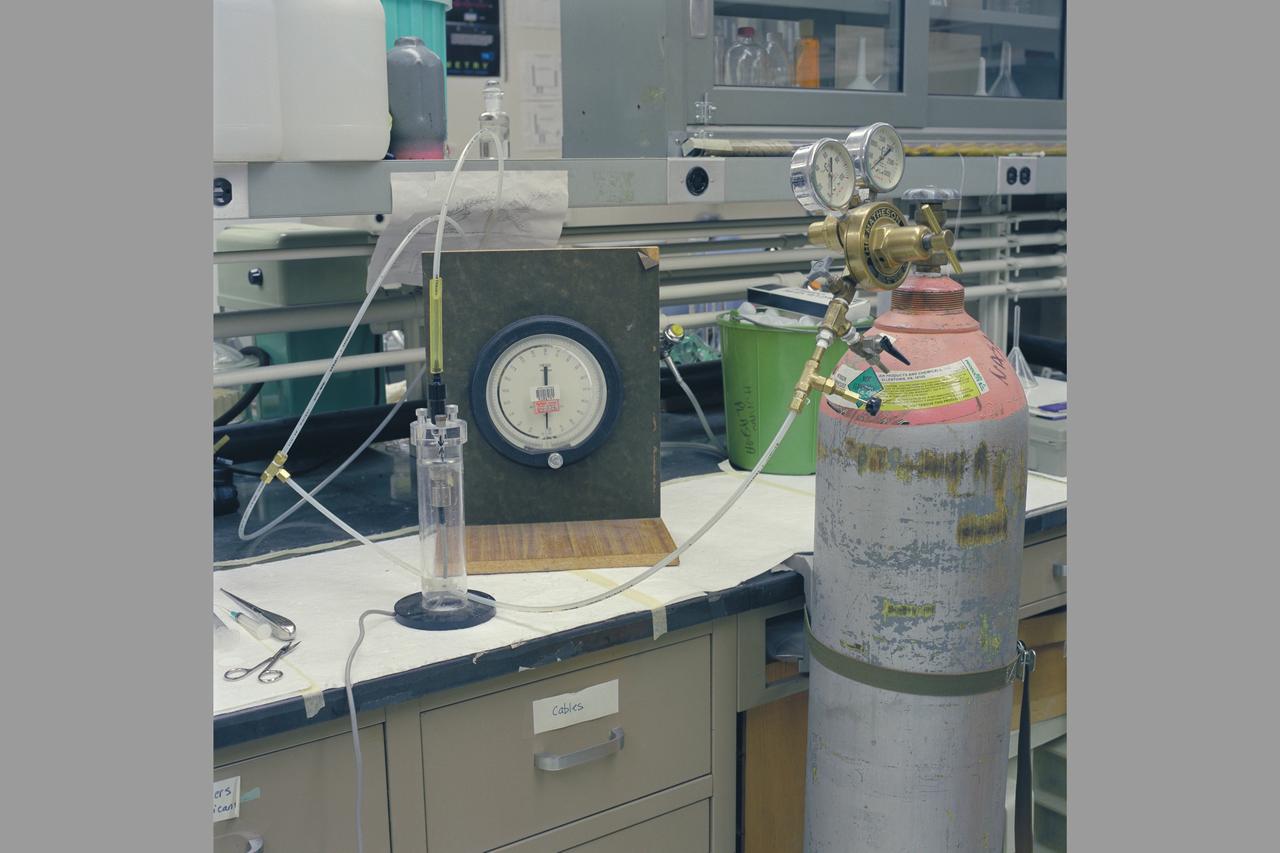
Life Sceince Division Facilities, Labs and Personnel (Code-SL)
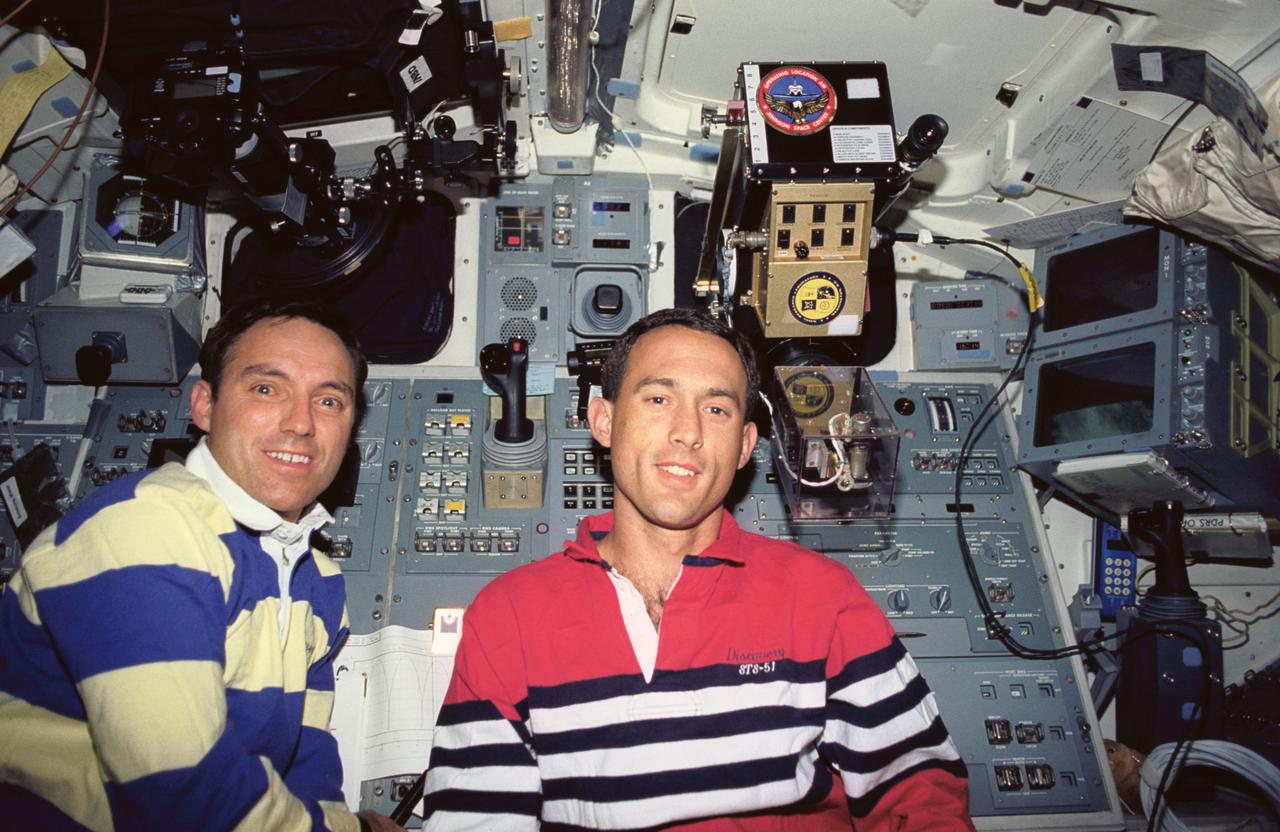
STS051-07-031 (12-22 Sept 1993) --- Astronauts Carl E. Walz, left, and James H. Newman are pictured on Discovery's aft flight deck near two experiments. Positioned in the window above Walz's head is the Auroral Photography Experiment (APE-B), while the High Resolution Shuttle Glow Spectroscopy (HRSGS-A) experiment is deployed in the other window.
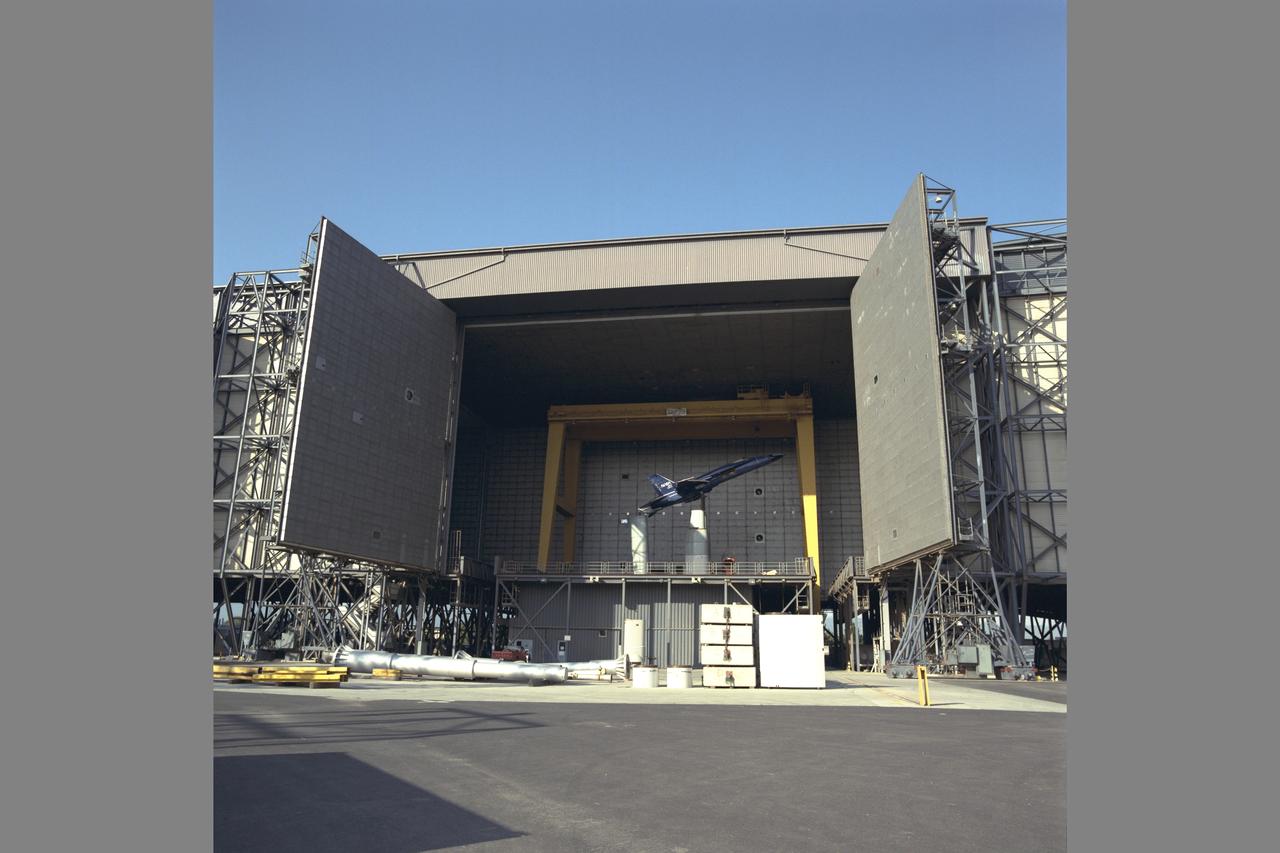
F-18 being installed in the NASA Ames Full-scale Aerodynamic Complex (NFAC) 80x120_foot wind tunnel test section for High Alpha Test-823 Phase II
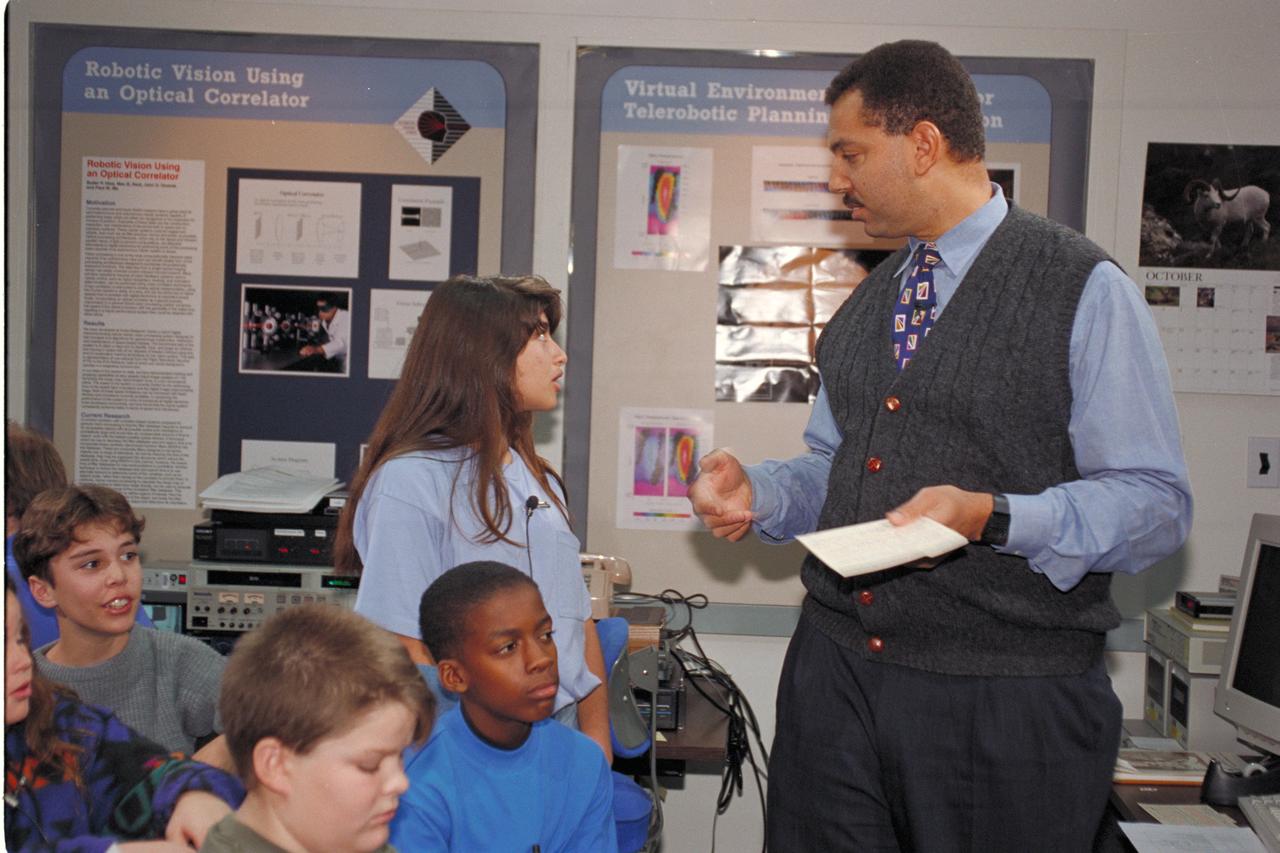
'Life from other Worlds' with McNair Middle School TROV robot explores under Antarctic ice - Donald James speaks to on site & virtual students
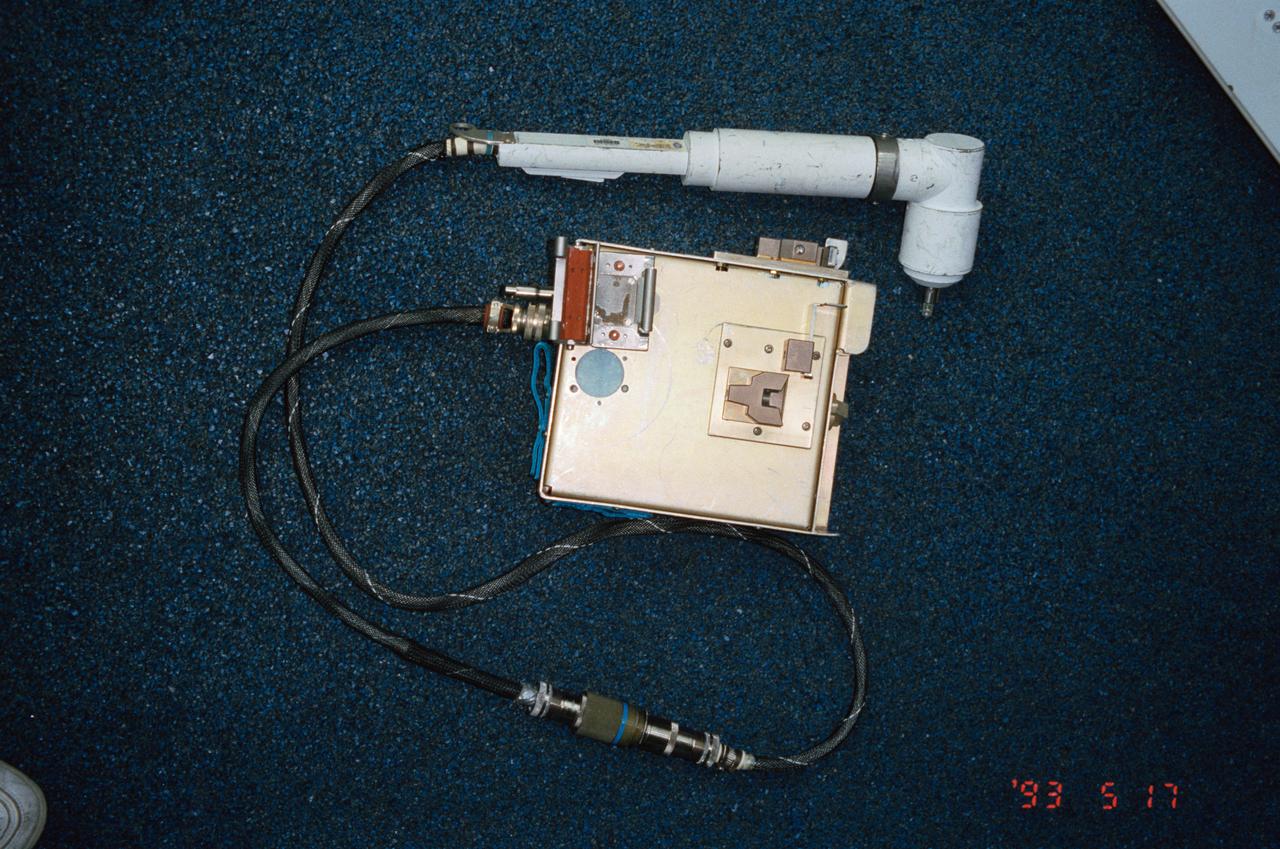
S93-35367 (Nov 1993) --- A close-up view of the special ratchet tool to be used by the STS-61 astronauts assigned to perform servicing of the Hubble Space Telescope (HST) in December of this year. Four astronauts will perform a total of five sessions of extravehicular activity (EVA) during the flight.
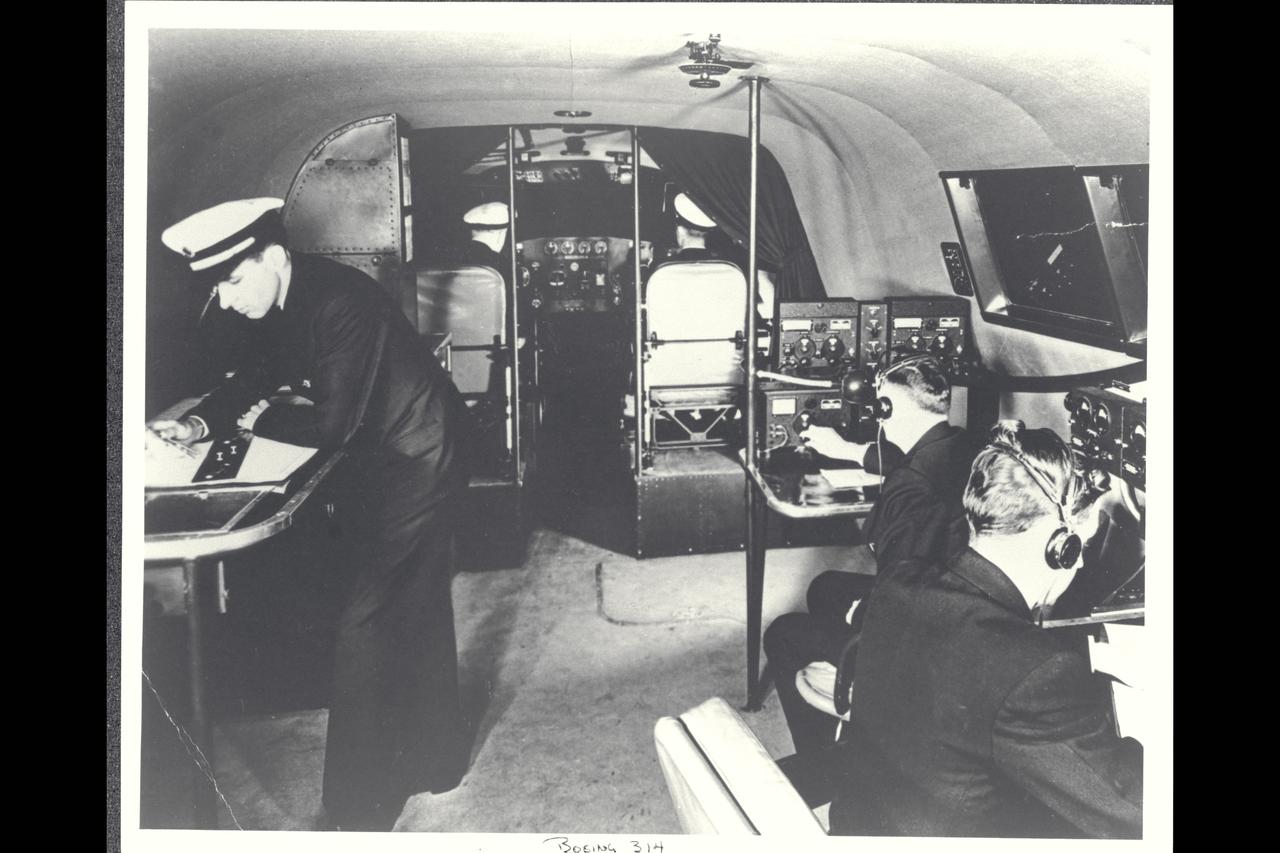
Boeing 314 'Yankee Clipper' Crew Station - Flying Boat
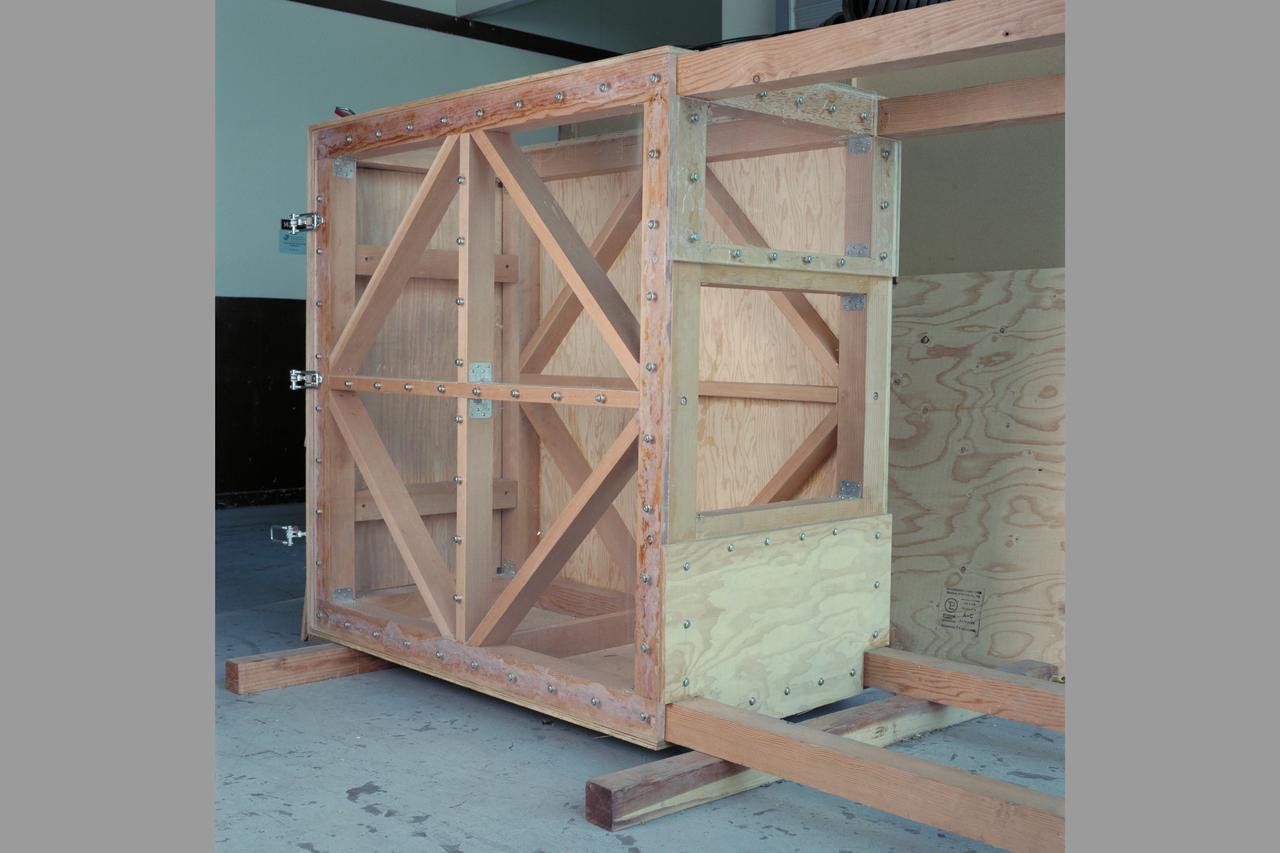
Life Sceince Division Facilities, Labs and Personnel (Code-SL)

'Life from other Worlds' with McNair Middle School TROV robot explores under Antarctic ice - image during demo with students
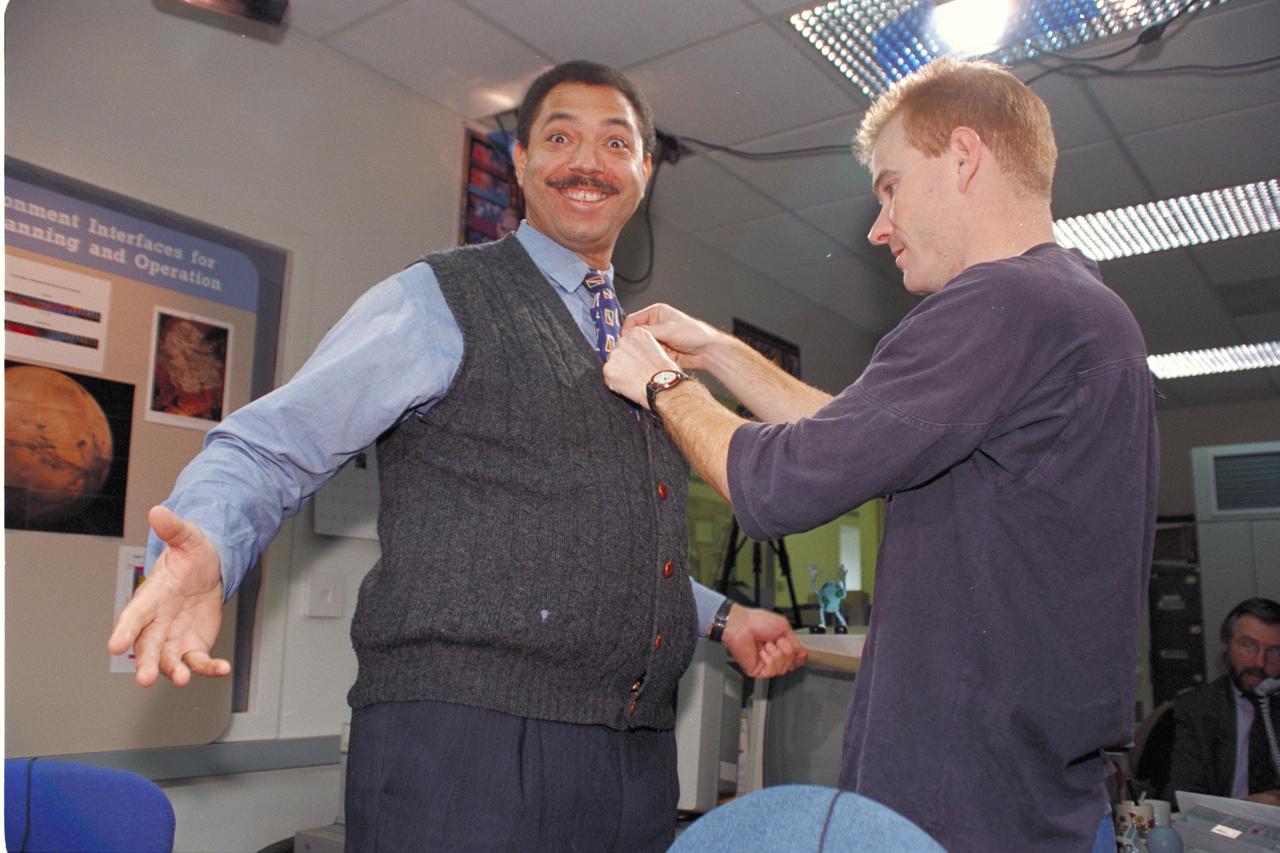
'Life from other Worlds' with McNair Middle School TROV robot explores under Antarctic ice - image of Don James and Jay Schiebe.
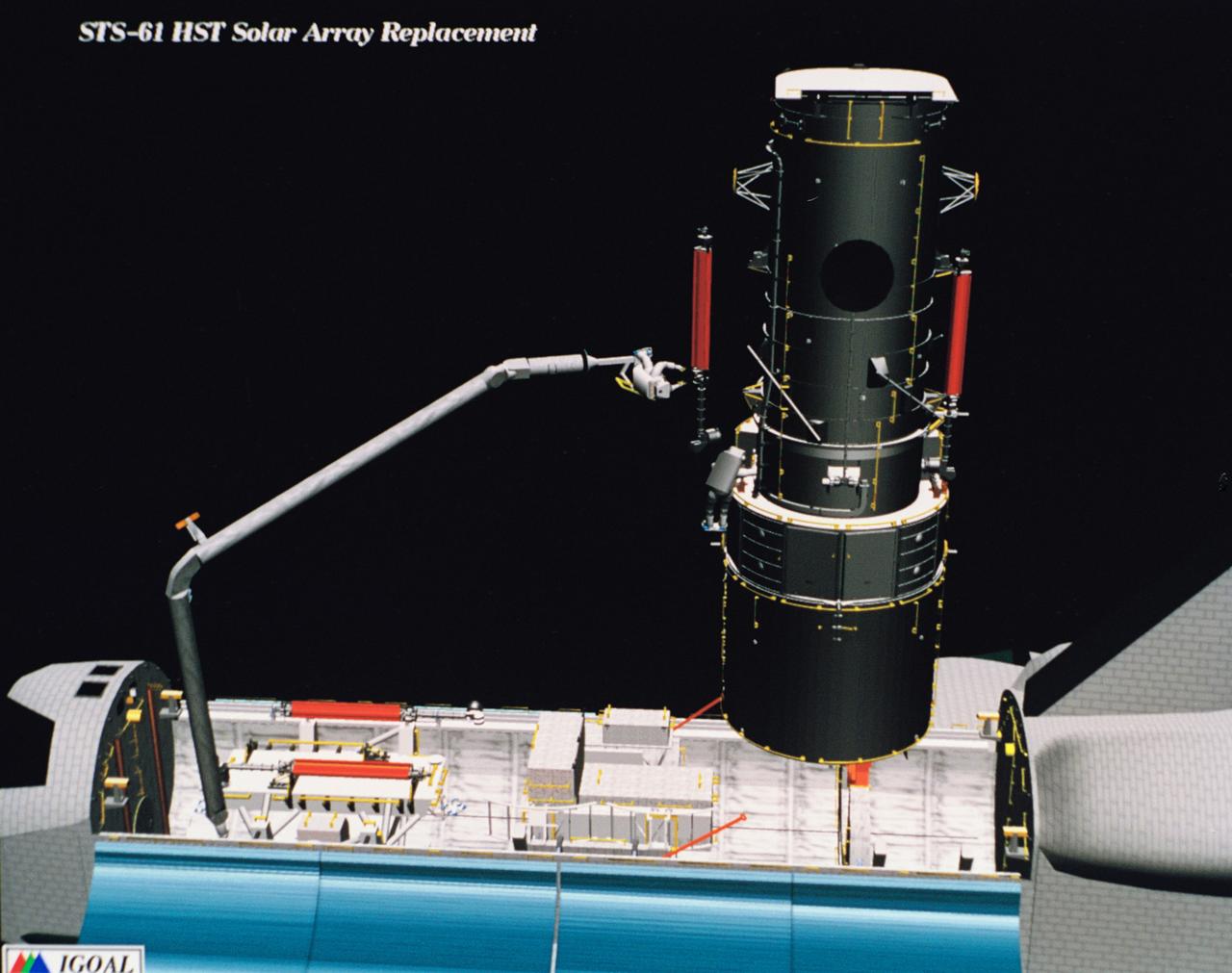
Computer generated scenes depicting the Hubble Space Telescope capture and a sequence of planned events on the planned extravehicular activity (EVA). Scenes include the Remote Manipulator System (RMS) arm assisting two astronauts changing out the Wide Field/Planetary Camera (WF/PC) (48699); RMS arm assisting in the temporary mating of the orbiting telescope to the flight support system in Endeavour's cargo bay (48700); Endeavour's RMS arm assisting in the "capture" of the orbiting telescope (48701); Two astronauts changing out the telescope's coprocessor (48702); RMS arm assistign two astronauts replacing one of the telescope's electronic control units (48703); RMS assisting two astronauts replacing the fuse plugs on the telescope's Power Distribution Unit (PDU) (48704); The telescope's High Resolution Spectrograph (HRS) kit is depicted in this scene (48705); Two astronauts during the removal of the high speed photometer and the installation of the COSTAR instrument (48706); Two astronauts, standing on the RMS, during installation of one of the Magnetic Sensing System (MSS) (48707); High angle view of the orbiting Space Shuttle Endeavour with its cargo bay doors open, revealing the bay's pre-capture configuration. Seen are, from the left, the Solar Array Carrier, the ORU Carrier and the flight support system (48708); Two astronauts performing the replacement of HST's Rate Sensor Units (RSU) (48709); The RMS arm assisting two astronauts with the replacement of the telescope's solar array panels (48710); Two astronauts replacing the telescope's Solar Array Drive Electronics (SADE) (48711).
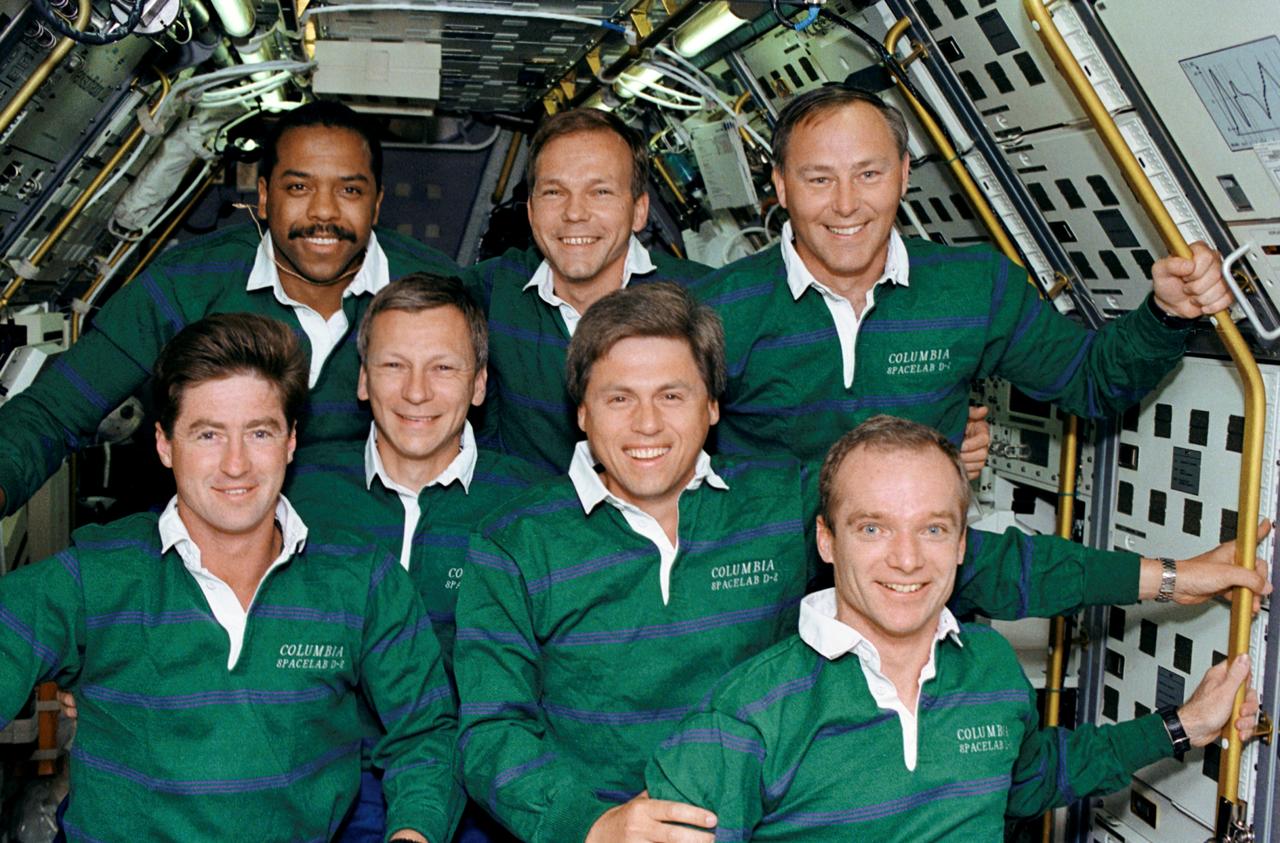
STS055-203-009 (26 April-6 May 1993) --- The seven crew members who spent 10 days aboard the space shuttle Columbia pose for the traditional in-flight portrait in the Spacelab D-2 Science Module. Front, left to right, are Terence T. (Tom) Henricks, Steven R. Nagel, Ulrich Walter and Charles J. Precourt. In the rear are (left to right) Bernard A. Harris Jr., Hans Schlegel and Jerry L. Ross. Nagel served as mission commander; Henricks was the pilot and Ross, the payload commander. Harris and Precourt were mission specialists and Schlegel and Walter were payload specialists representing the German Aerospace Research Establishment (DLR). Photo credit: NASA
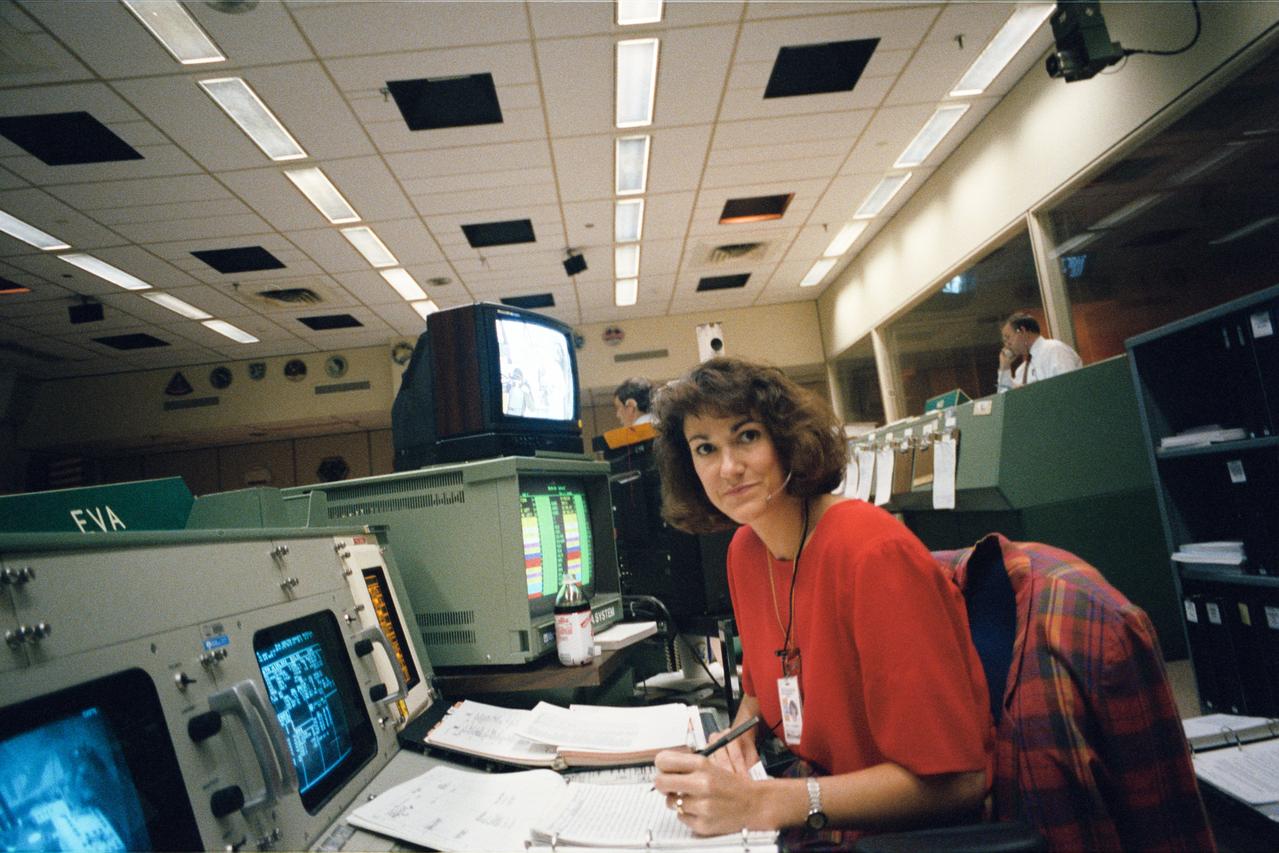
Susan P. Rainwater monitors an extravehicular activity (EVA) simulation from the EVA console at JSC's Mission Control Center (MCC) during joint integrated simulations for the STS-61 mission. Astronauts assigned to extravehicular activity (EVA) tasks with the Hubble Space Telescope (HST) were simultaneously rehearsing in a neutral buoyancy tank at the Marshall Space Flight Center (MSFC) in Alabama.
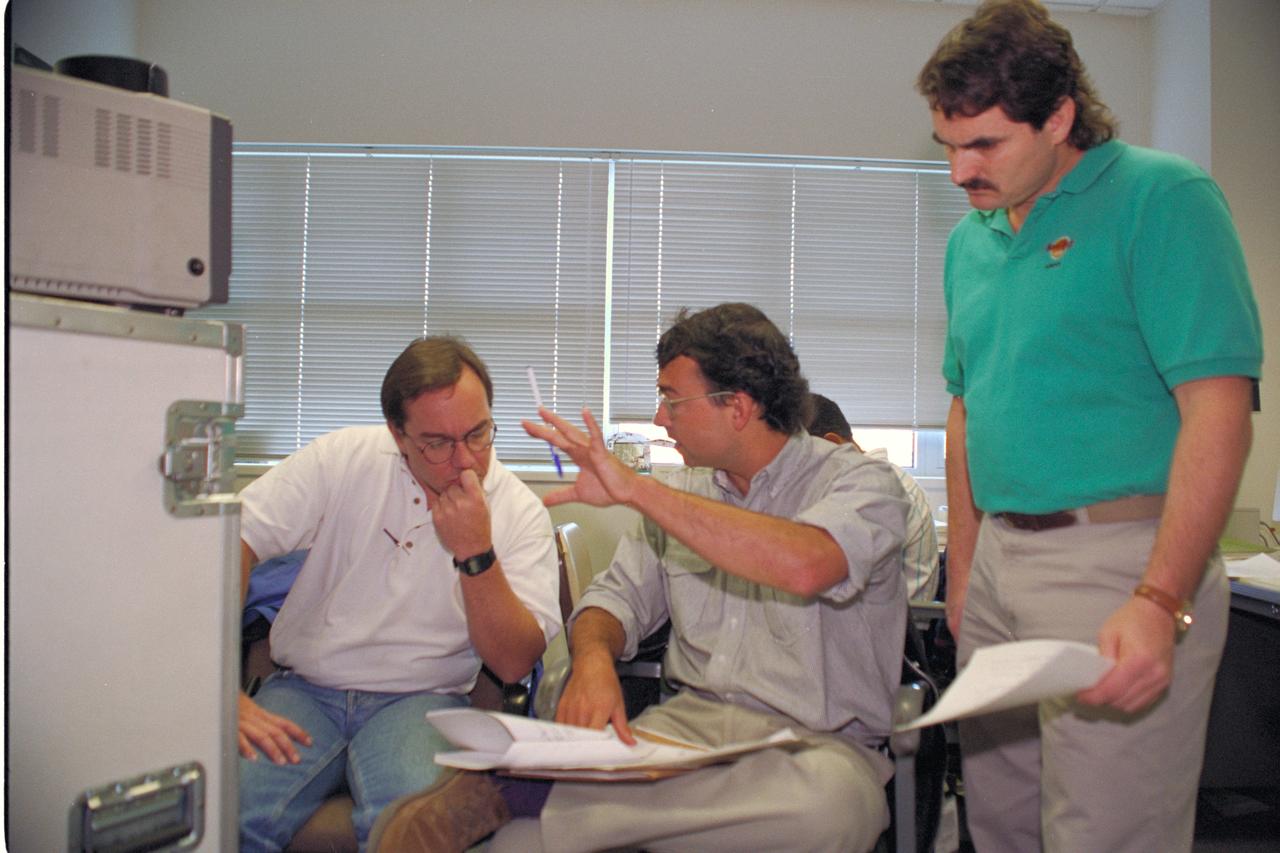
Life from other Worlds' with McNair Middle School TROV robot explores under Antarctic ice - image of Eric James, Ron Schutz, and Wade Sisler of the Photographic Technology Branch co-ordinating remote shots from Antarctic to Ames
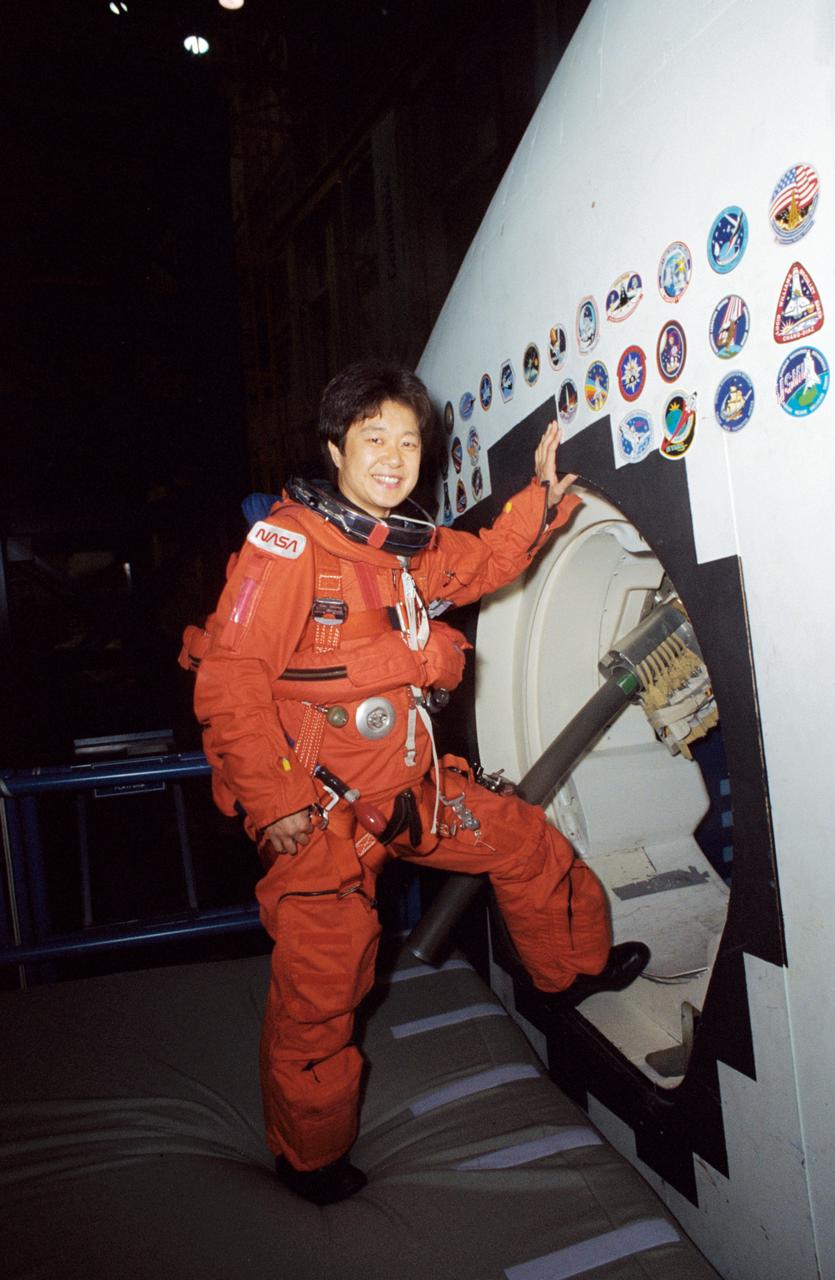
STS-65 Japanese Payload Specialist Chiaki Mukai takes a break from training at the Johnson Space Center (JSC). Wearing a training version of the orange launch and entry suit (LES), Mukai stands at the crew compartment trainer (CCT) side hatch in the Mockup and Integration Laboratory (MAIL) Bldg 9NE. Note the crew escape system (CES) pole device extending out the side hatch which would accommodate crewmembers in bailout from a troubled spacecraft. Mukai represents the National Space Development Agency (NASDA) of Japan and will serve as a payload specialist aboard Columbia, Orbiter Vehicle (OV) 102, during the STS-65 International Microgravity Laboratory 2 (IML-2) mission.
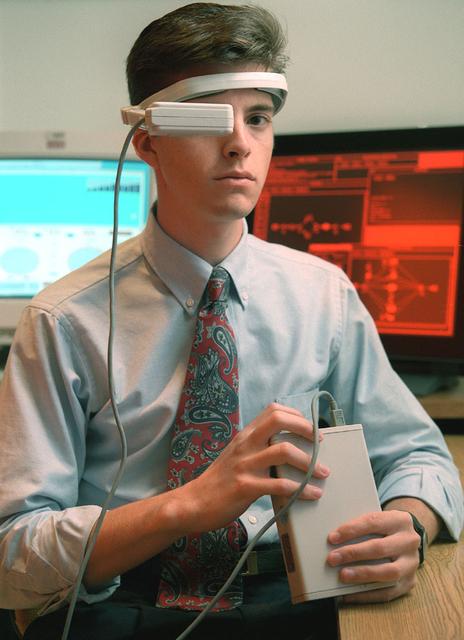
Virtual Reality (VR) can provide cost effective methods to design and evaluate components and systems for maintenance and refurbishment operations. Marshall SPace Flight Center (MSFC) is begirning to utilize VR for design analysis in the X-34 experimental reusable space vehicle. Analysts at MSFC's Computer Applications and Virtual Environments (CAVE) used Head Mounted Displays (HMD) (pictured), spatial trackers and gesture inputs as a means to animate or inhabit a properly sized virtual human model. These models are used in a VR scenario as a way to determine functionality of space and maintenance requirements for the virtual X-34. The primary functions of the virtual X-34 mockup is to support operations development and design analysis for engine removal, the engine compartment and the aft fuselage. This capability provides general visualization support to engineers and designers at MSFC and to the System Design Freeze Review at Orbital Sciences Corporation (OSC).
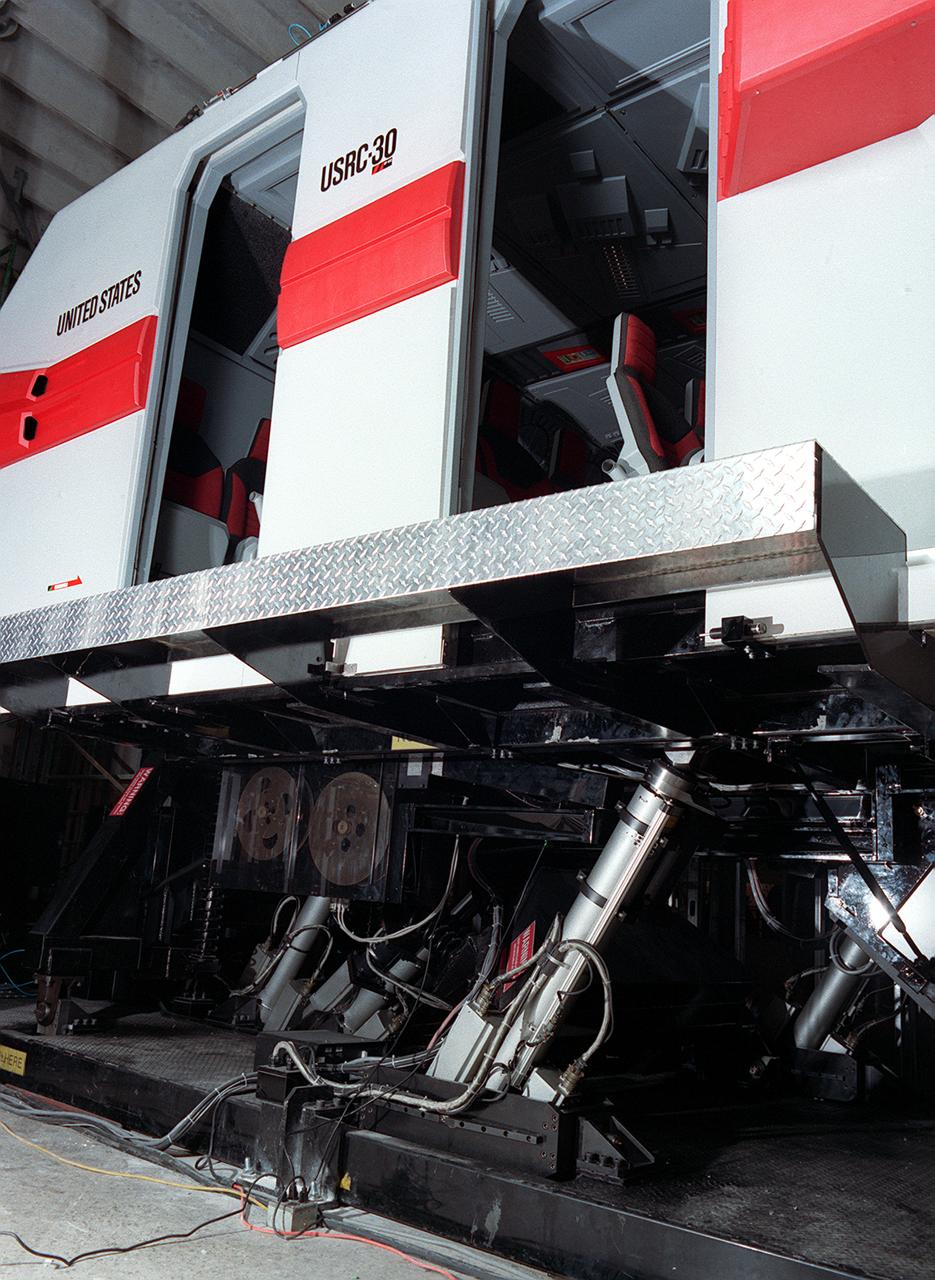
The development of the electric space actuator represents an unusual case of space technology transfer wherein the product was commercialized before it was used for the intended space purpose. MOOG, which supplies the thrust vector control hydraulic actuators for the Space Shuttle and brake actuators for the Space Orbiter, initiated development of electric actuators for aerospace and industrial use in the early 1980s. NASA used the technology to develop an electric replacement for the Space Shuttle main engine TVC actuator. An electric actuator is used to take passengers on a realistic flight to Jupiter at the US Space and Rocket Center, Huntsville, Alabama.
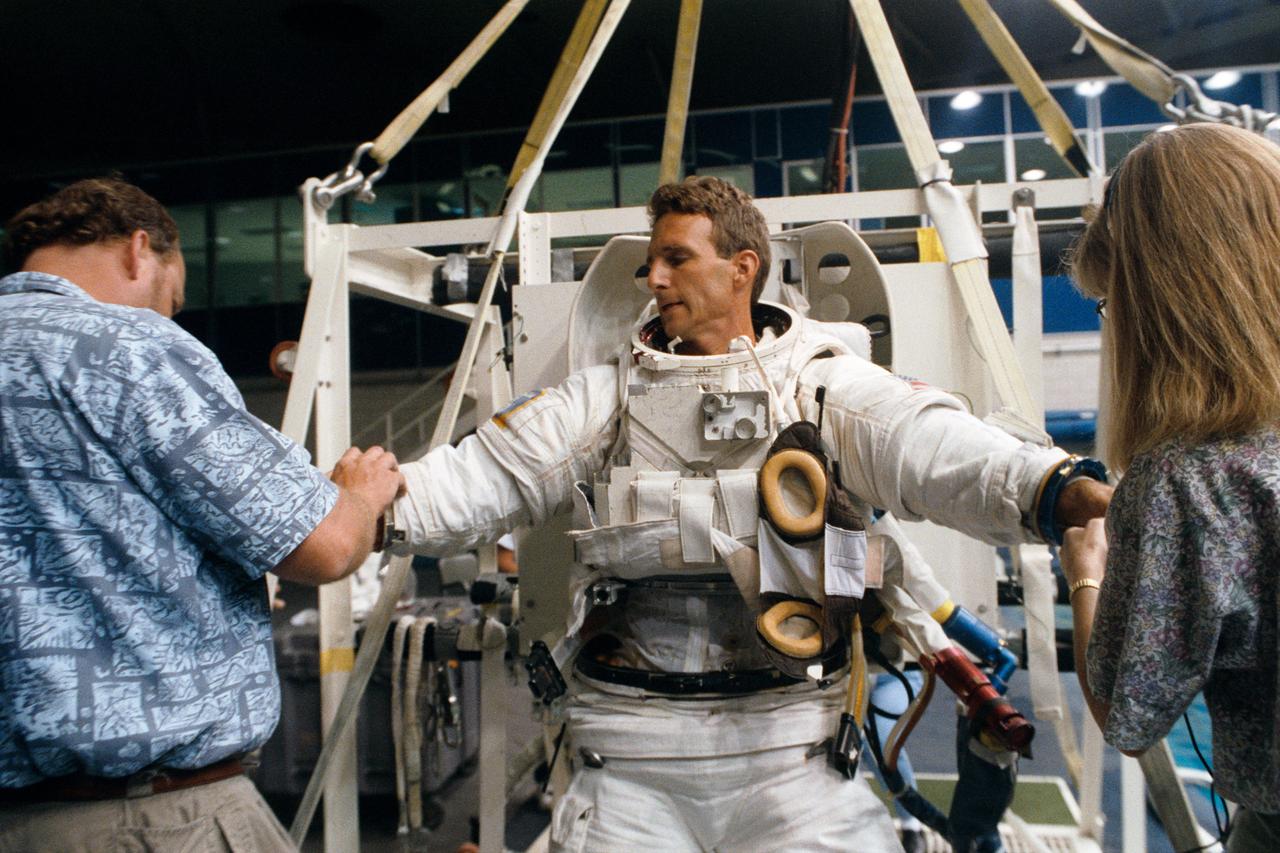
S93-37899 (October 1993) --- Astronaut Jerry M. Linenger, STS-64 mission specialist, is assisted by Steve Voyles and Kari Rueter of Boeing Aerospace prior to participating in a rehearsal for a contingency extravehicular activity (EVA). Minutes later, Linenger was submerged in the 25-feet-deep pool in the Johnson Space Center's (JSC) Weightless Environment Training Facility (WET-F). Photo credit: NASA or National Aeronautics and Space Administration
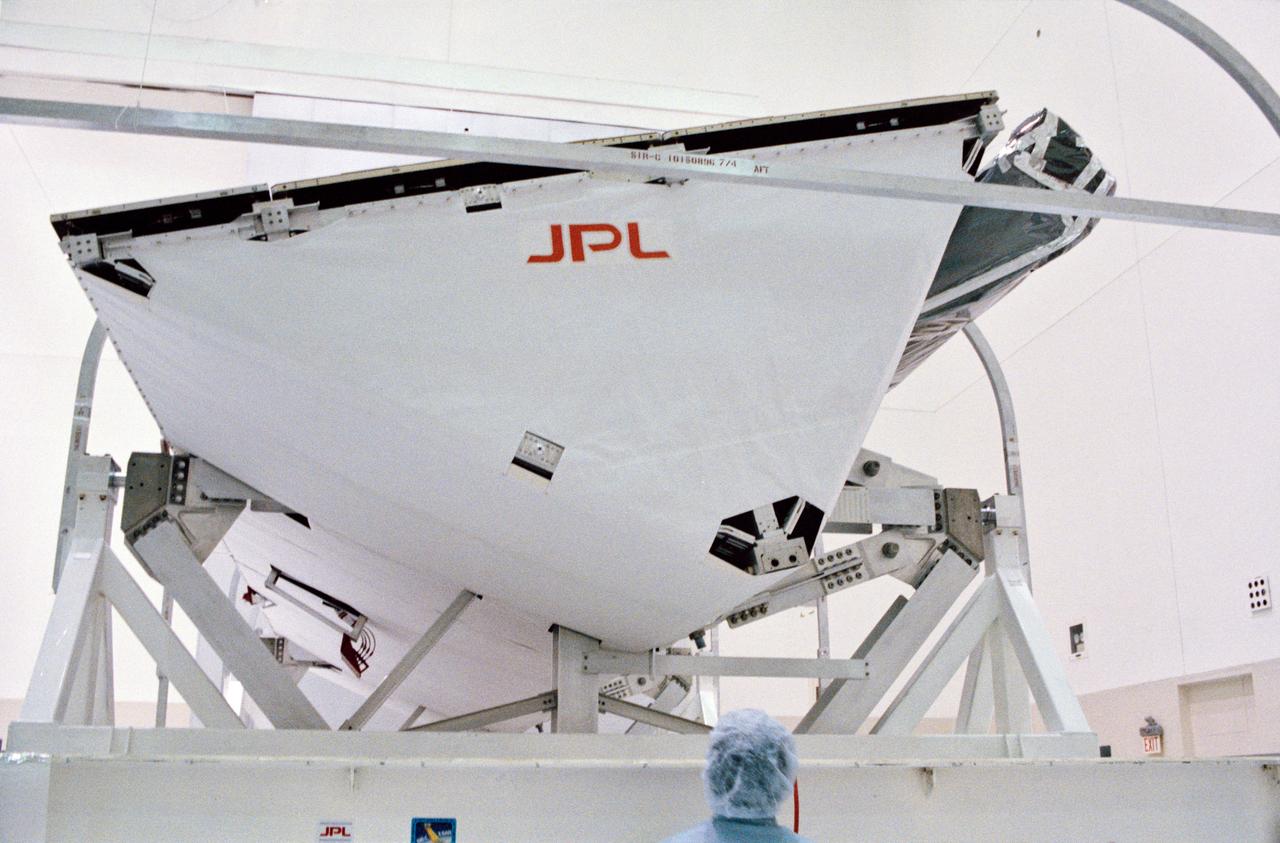
S93-48551 (October 1993) --- The Spaceborne Imaging Radar-C and X-Band Synthetic Aperture Radar (SIR-C/X-SAR) antenna, developed by the Jet Propulsion Laboratory (JPL) as part of NASA's Mission to Planet Earth (MTPE), will fly aboard the Space Shuttle Endeavour. The radar antenna uses microwave energy which gives it the ability to collect data over virtually any region at any time, regardless of weather or sunlight conditions. The radar waves can penetrate clouds, and under certain conditions the radar can also see through vegetation, ice and dry sand. In many cases, spaceborne radar is the only way scientists can explore large-scale and inaccessible regions of the Earth's surface. SIR-C/X-SAR uses three microwave wavelengths: L-Band (24 cm), C-Band (6 cm) and X-Ban (3 cm). The multi-frequency data will be used by the international scientific community to monitor global environmental processes with a focus on climate change. The MTPE spaceborne data, complemented by aircraft and ground studies, will give scientists clearer insights into those environmental changes which are caused by nature and those changes which are induced by human activity.
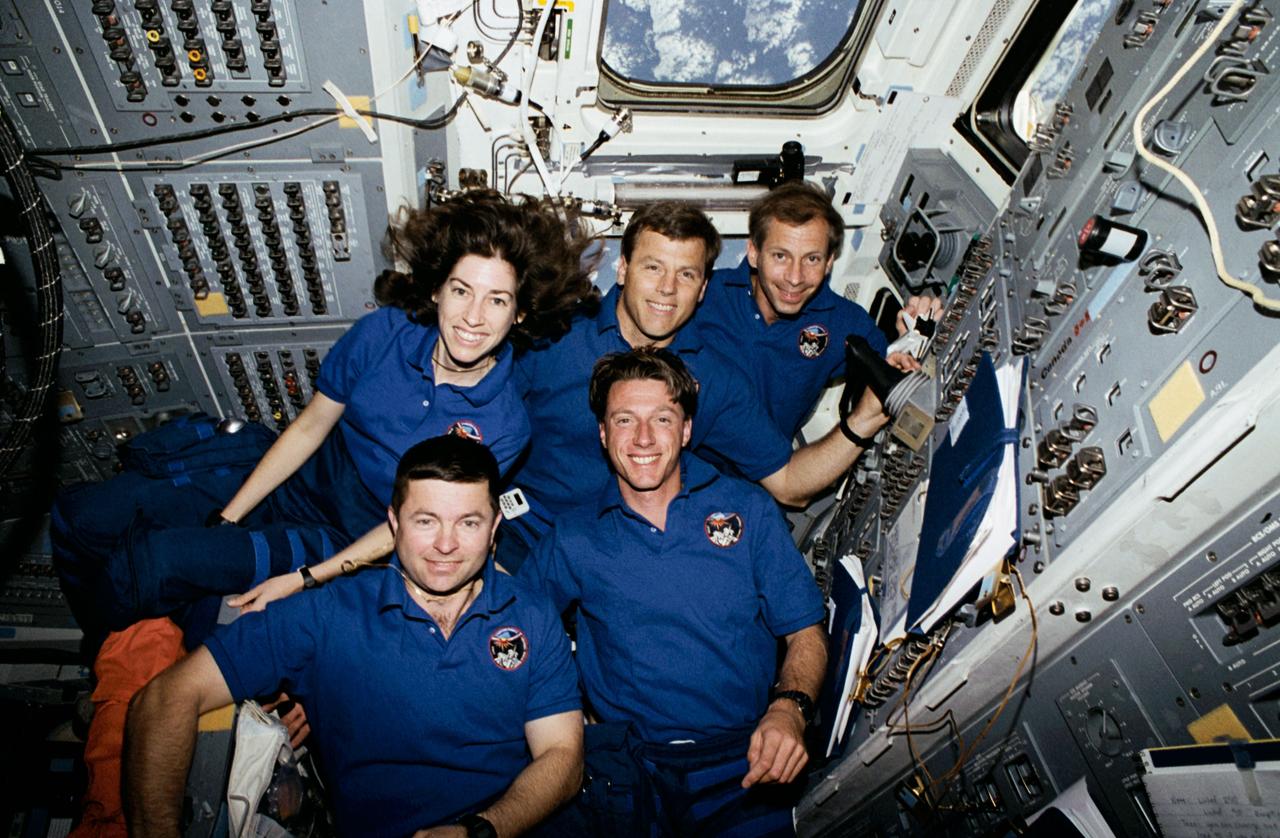
STS056-31-020 (8-17 April 1993) --- The five astronaut crew members assemble on the Space Shuttle Discovery's aft flight deck for the traditional inflight crew portrait. In front are astronauts Kenneth D. Cameron, mission commander; and C. Michael Foale, mission specialist. In back are (left to right) astronauts Ellen Ochoa, mission specialist; Stephen S. Oswald, pilot; and Kenneth D. Cockrell, mission specialist. The five went on to spend nine days in Earth-orbit in support of the Atlas-2 mission. A 35mm camera with a 20mm lens was used to expose this frame.
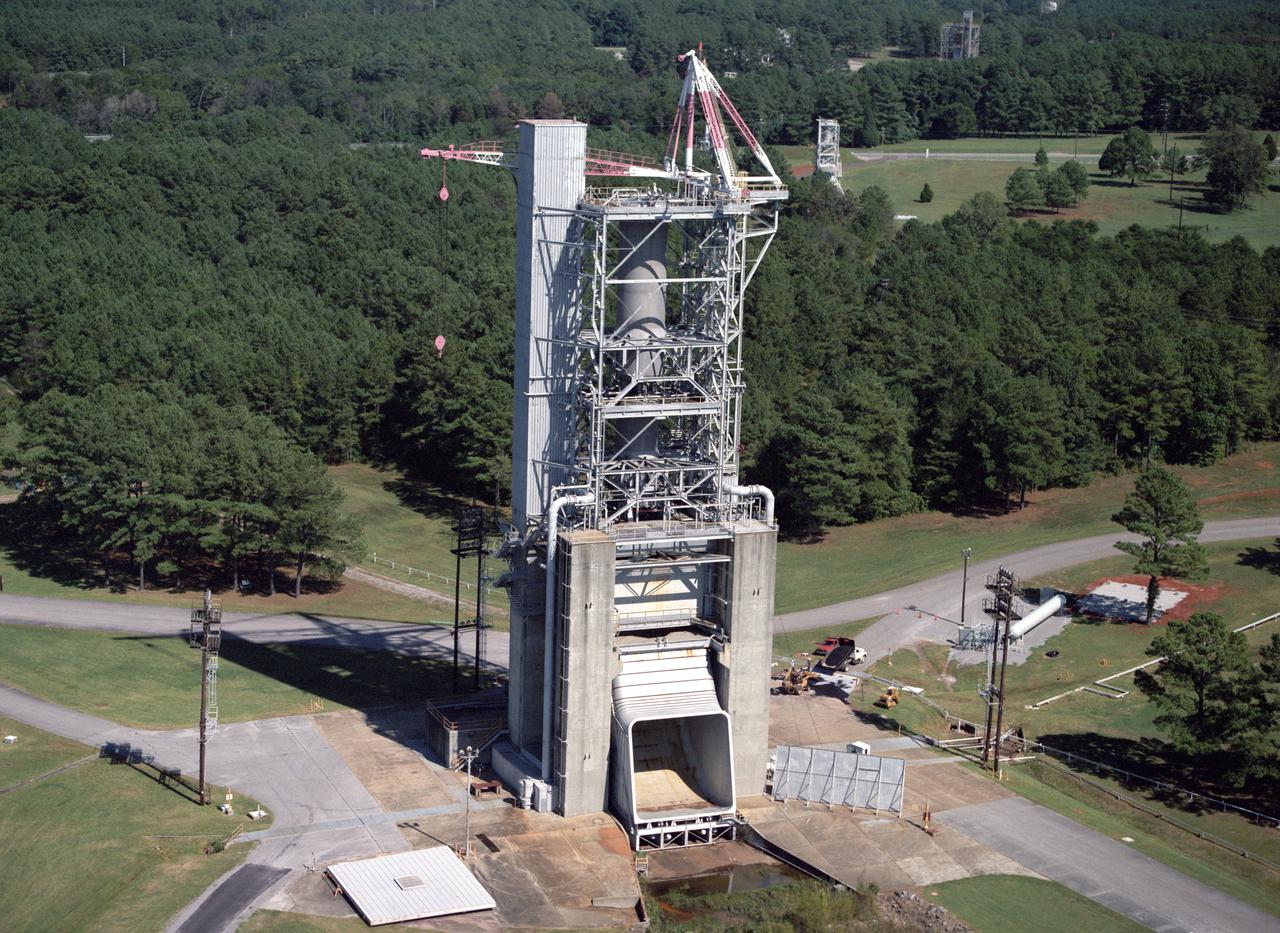
Marshall Space Flight Center's F-1 Engine Test Stand is shown in this picture. Constructed in 1963, the test stand is a vertical engine firing test stand, 239 feet in elevation and 4,600 square feet in area at the base, and was designed to assist in the development of the F-1 Engine. Capability is provided for static firing of 1.5 million pounds of thrust using liquid oxygen and kerosene. The foundation of the stand is keyed into the bedrock approximately 40 feet below grade.
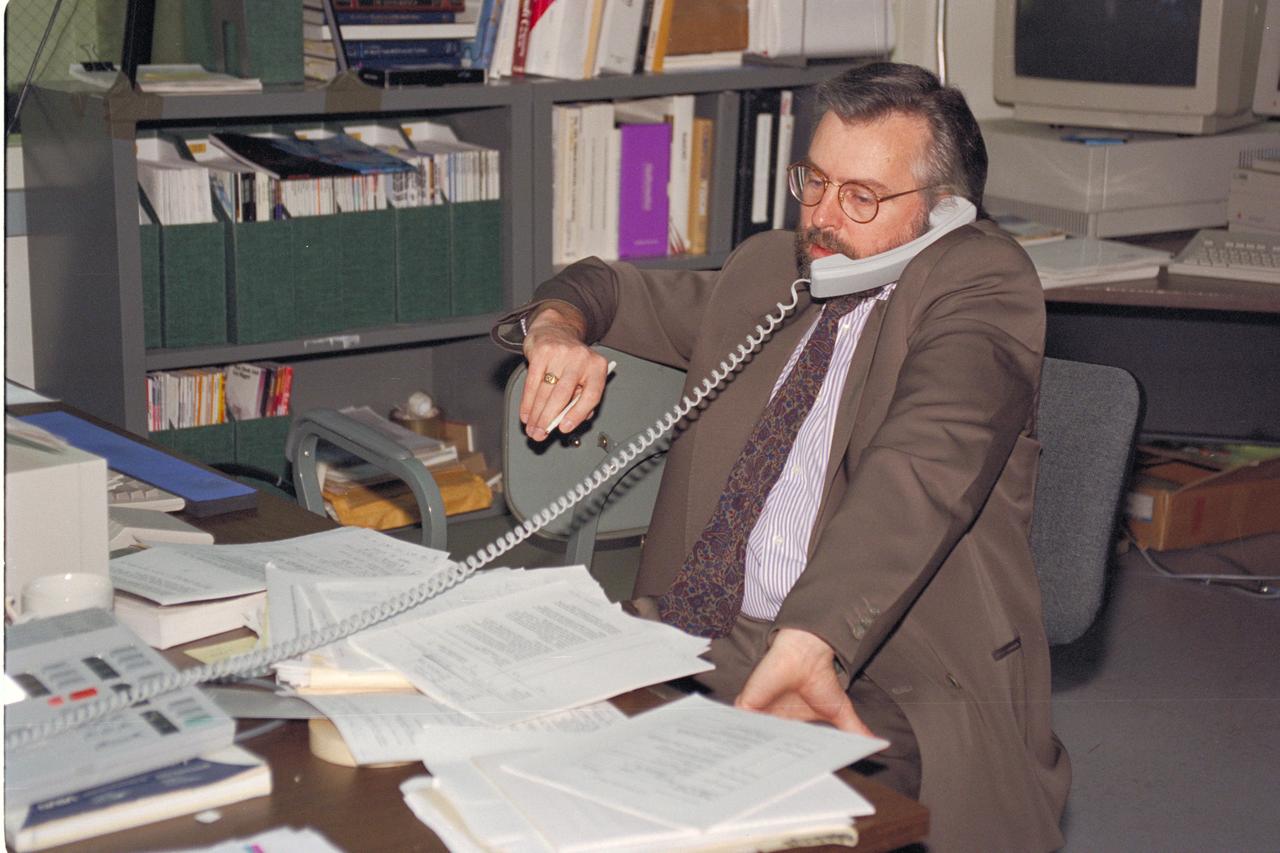
Life from other Worlds' with McNair Middle School TROV robot explores under Antarctic ice coordinator
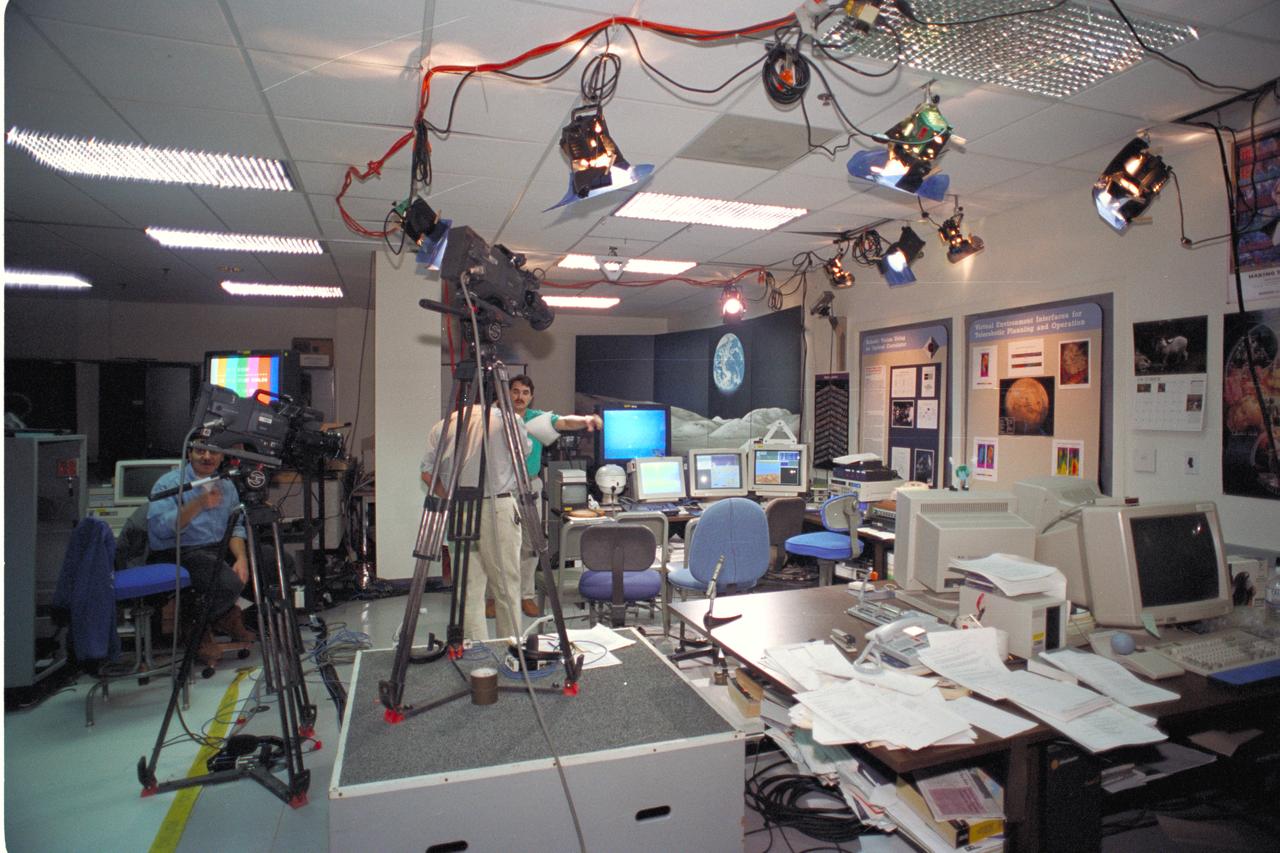
'Life from other Worlds' with McNair Middle School TROV robot explores under Antarctic ice - image of video
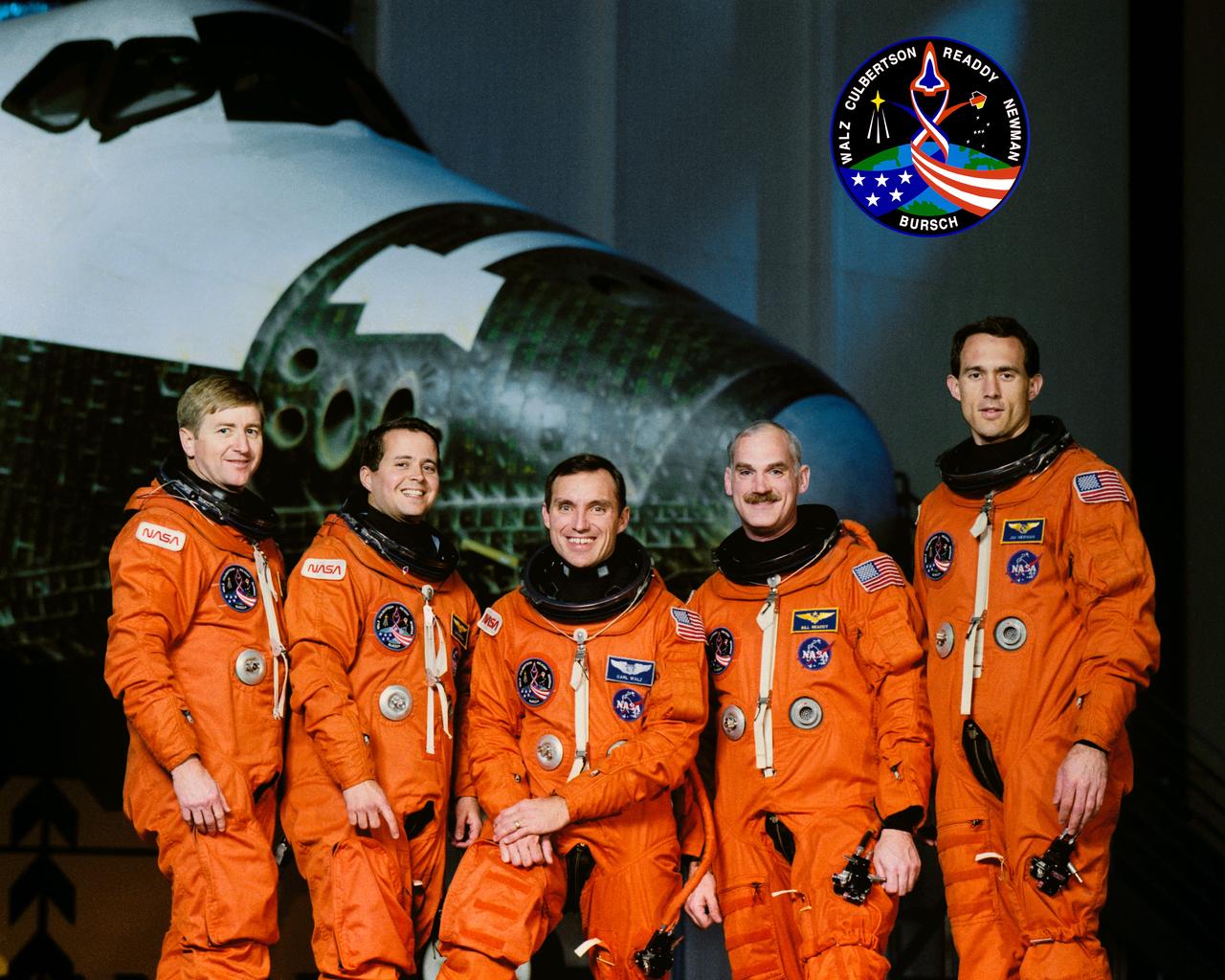
STS051-S-002 (June 1993) --- These five NASA astronauts have been assigned to fly aboard the Space Shuttle Discovery for the STS-51 mission, scheduled for July, 1993. Left to right are astronauts Frank L. Culbertson, Jr., mission commander; Daniel W. Bursch and Carl E. Walz, mission specialists; William F. Readdy, pilot; and James H. Newman, mission specialist.
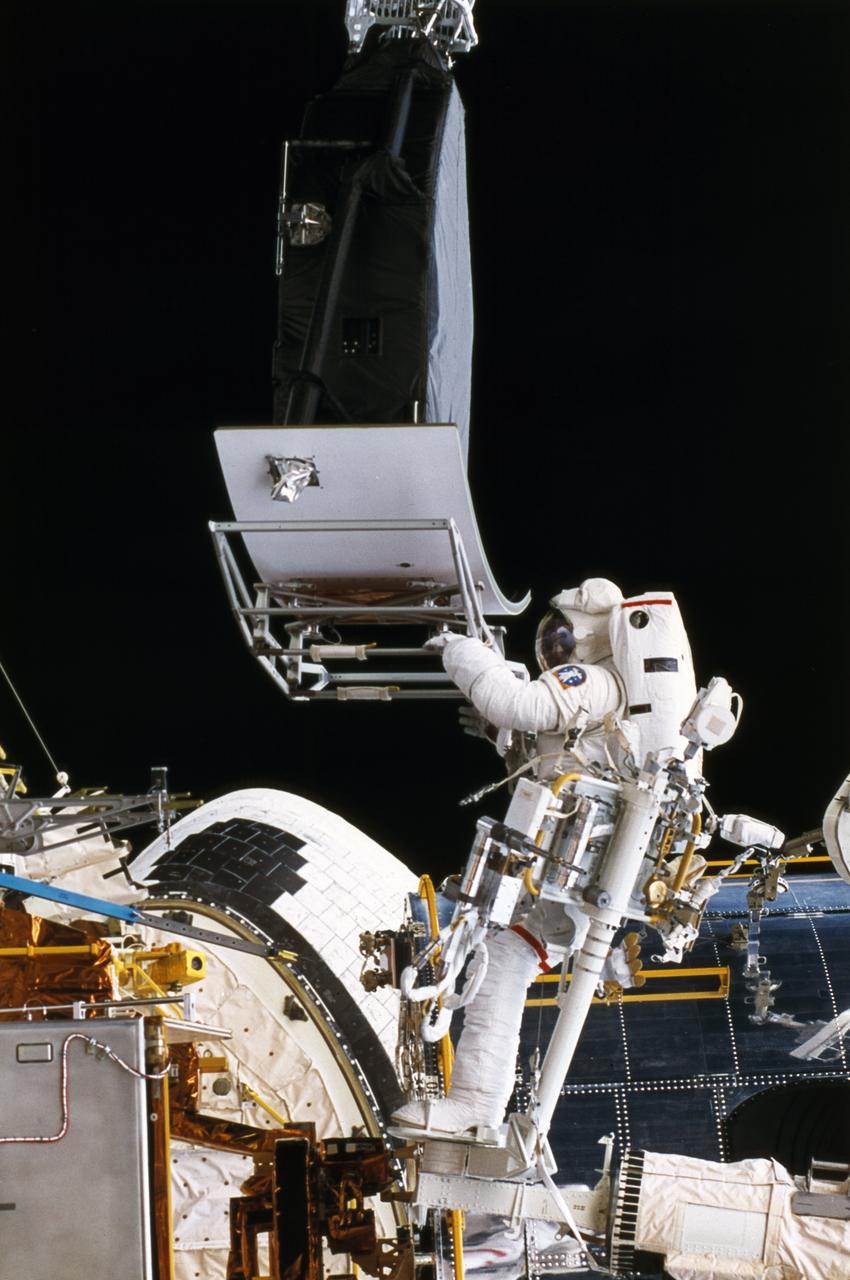
Astronaut Hoffman held the Hubble Space Telescope (HST) Wide Field/Planetary Camera-1 (WF/PC1) that was replaced by WF/PC2 in the cargo bay of the Space Shuttle orbiter Endeavour during Extravehicular Activity (EVA). The STS-61 mission was the first of the series of the HST servicing missions. Two months after its deployment in space, scientists detected a 2-micron spherical aberration in the primary mirror of the HST that affected the telescope's ability to focus faint light sources into a precise point. This imperfection was very slight, one-fiftieth of the width of a human hair. During four spacewalks, the STS-61 crew replaced the solar panel with its flexing problems; the WF/PC1 with WF/PC2, with built-in corrective optics; and the High-Speed Photometer with the Corrective Optics Space Telescope Axial Replacement (COSTAR) to correct the aberration for the remaining instruments. The purpose of the HST, the most complex and sensitive optical telescope ever made, is to study the cosmos from a low-Earth orbit for 15 years or more. The HST provides fine detail imaging, produces ultraviolet images and spectra, and detects very faint objects. The Marshall Space Flight Center had responsibility for design, development, and construction of the HST. The Perkin-Elmer Corporation, in Danbury, Cornecticut, developed the optical system and guidance sensors.
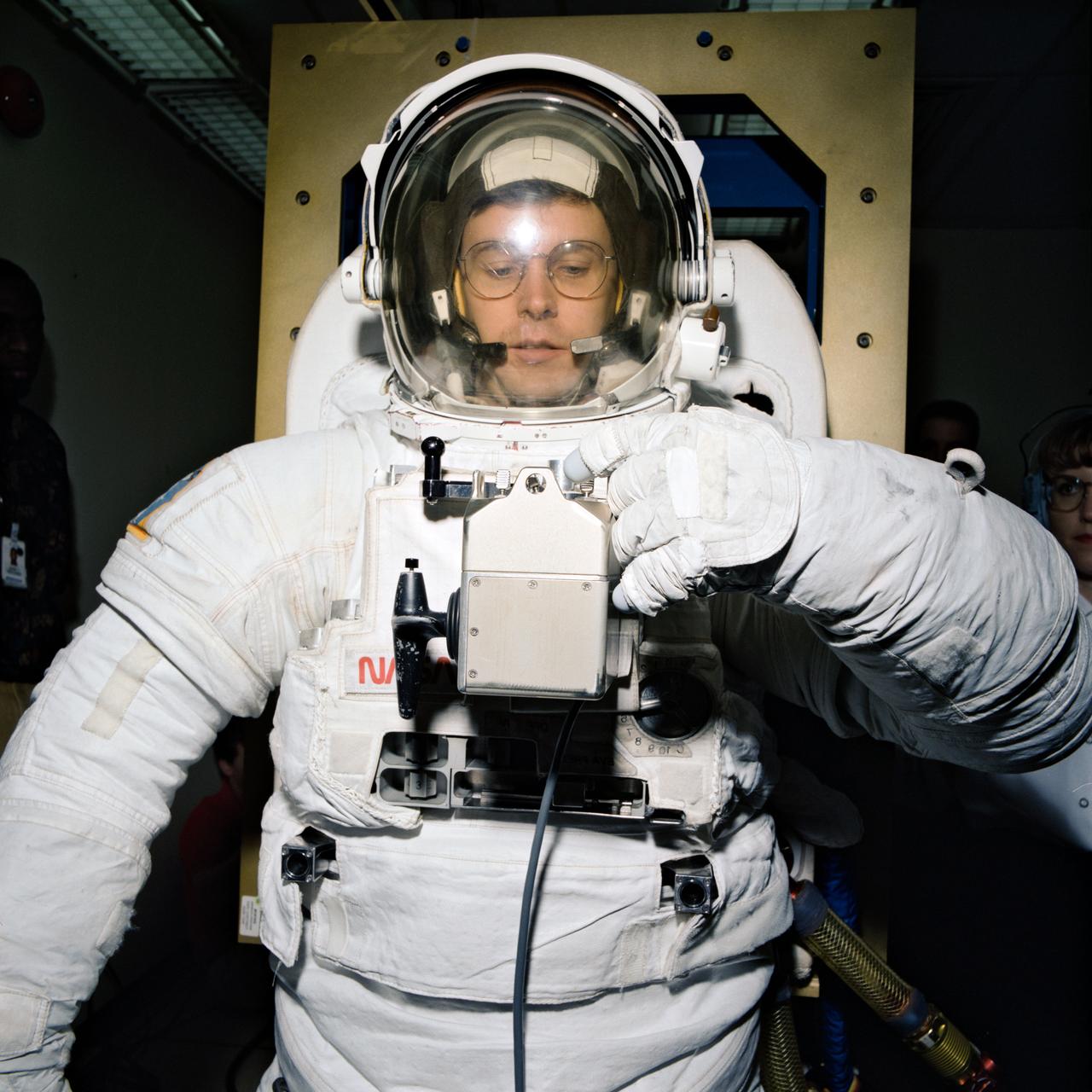
S93-26920 (8 Sept. 1994) --- Scott Bleisath, an extravehicular activity (EVA) engineer, demonstrates the hand control module for the Simplified Aid for EVA Rescue (SAFER) system making its first flight on the scheduled September STS-64 mission. Astronauts Mark C. Lee and Carl J. Meade are the spacewalkers assigned to test the system in space. Photo credit: NASA or National Aeronautics and Space Administration
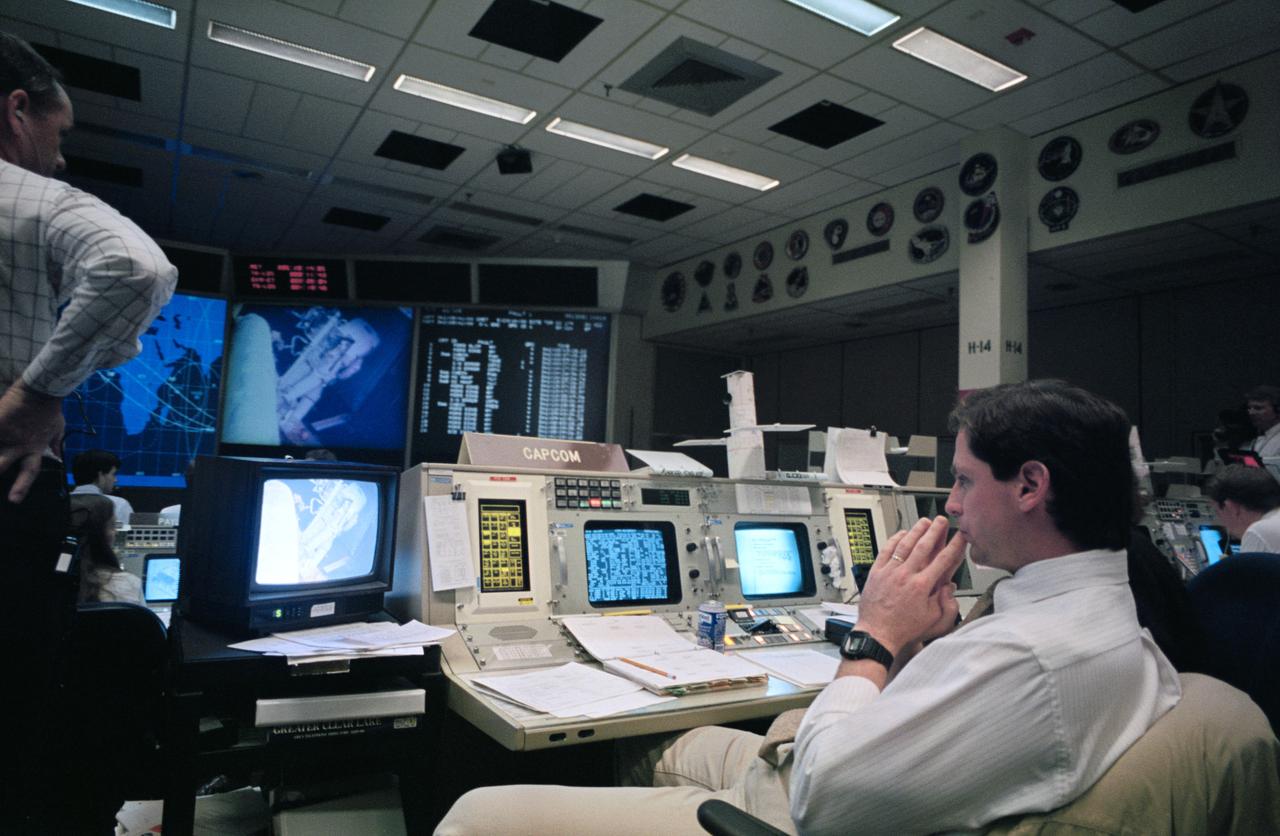
STS61-S-101 (8 Dec 1993) --- Astronaut Gregory J. Harbaugh, spacecraft communicator (CAPCOM), observes as two astronauts work through a lengthy period of extravehicular activity (EVA) in the cargo bay of the Earth-orbiting Space Shuttle Endeavour. Seen on the screen in the front of the flight control room, preparing to work with the Hubble Space Telescope's (HST) magnetometers, are astronauts F. Story Musgrave and Jeffrey A. Hoffman. Harbaugh stayed busy passing up flight controllers suggestions and directions during the record-breaking battery of in-space servicing sessions. Lead flight director Milt Heflin is partially visible at left edge of frame.
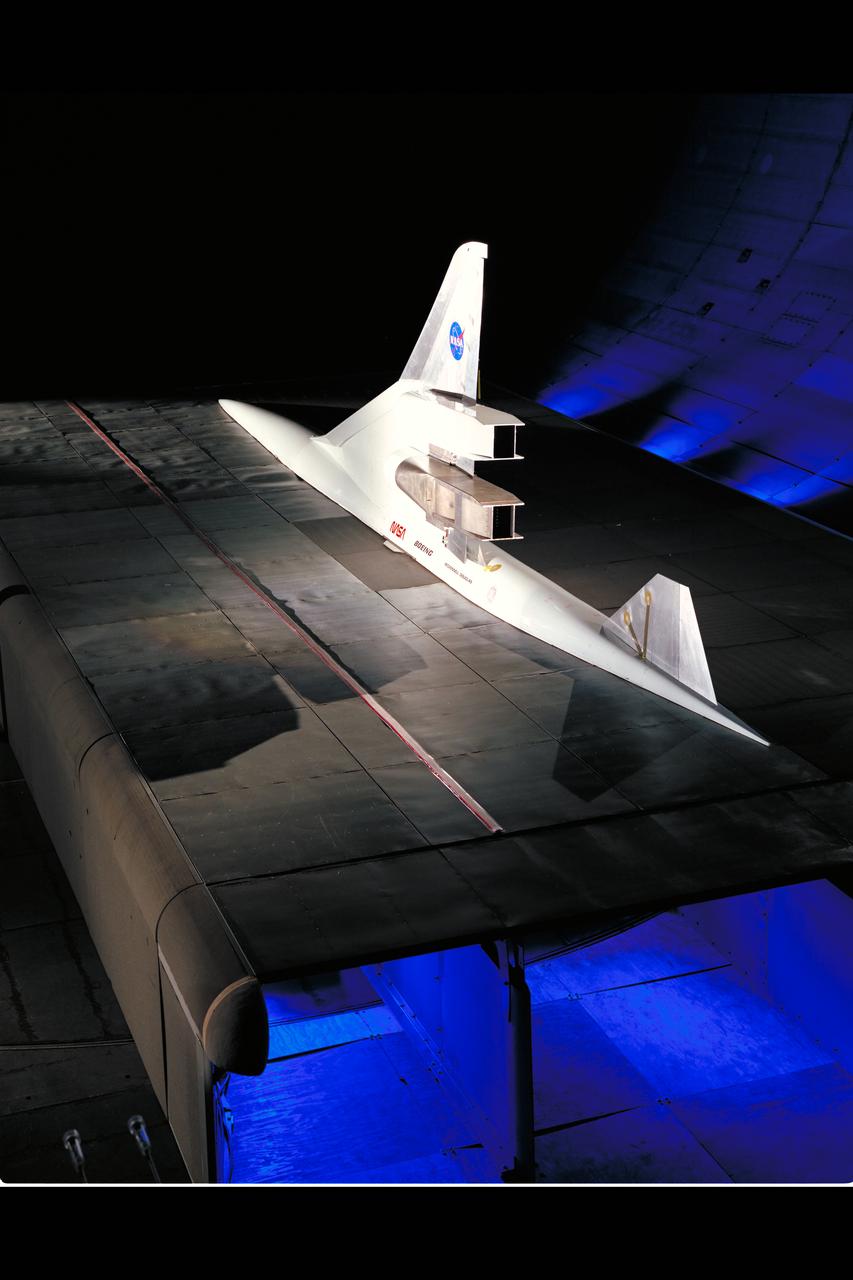
HEAT (High-Lift Engine Aeroacoustics Technology) Model test-596 in 40x80ft w.t.
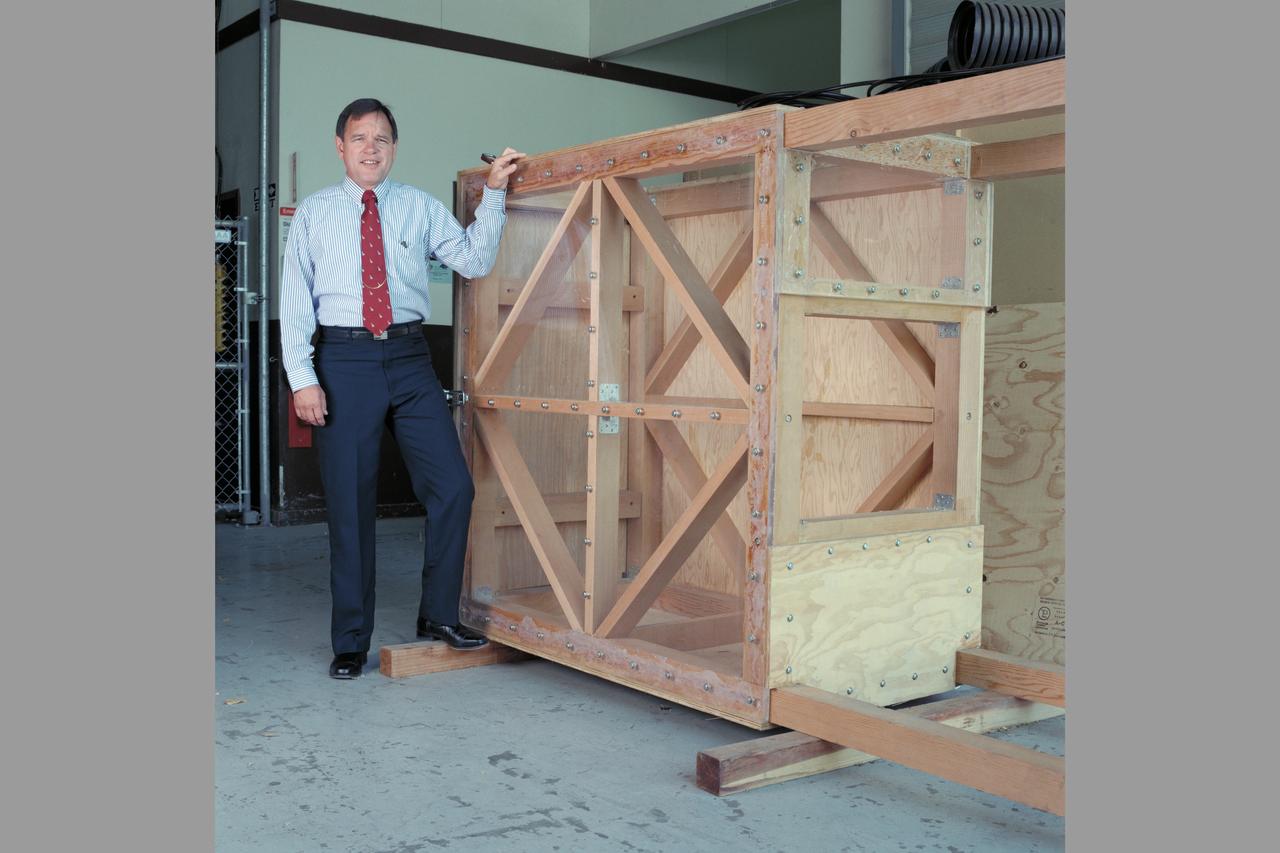
Life Sceince Division Facilities, Labs and Personnel (Code-SL) Alan Hargins
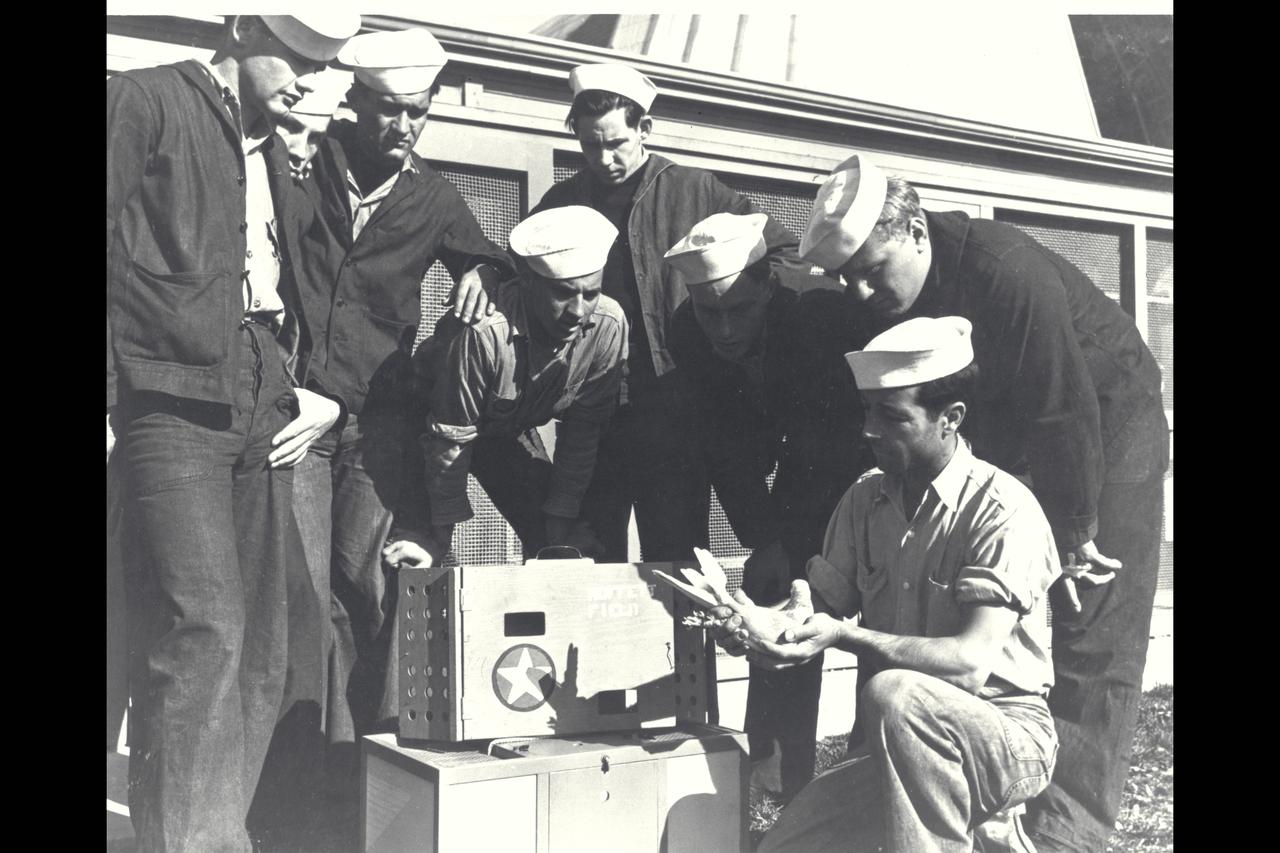
Moffett Field Pigeon with Navy personnel (@1935)
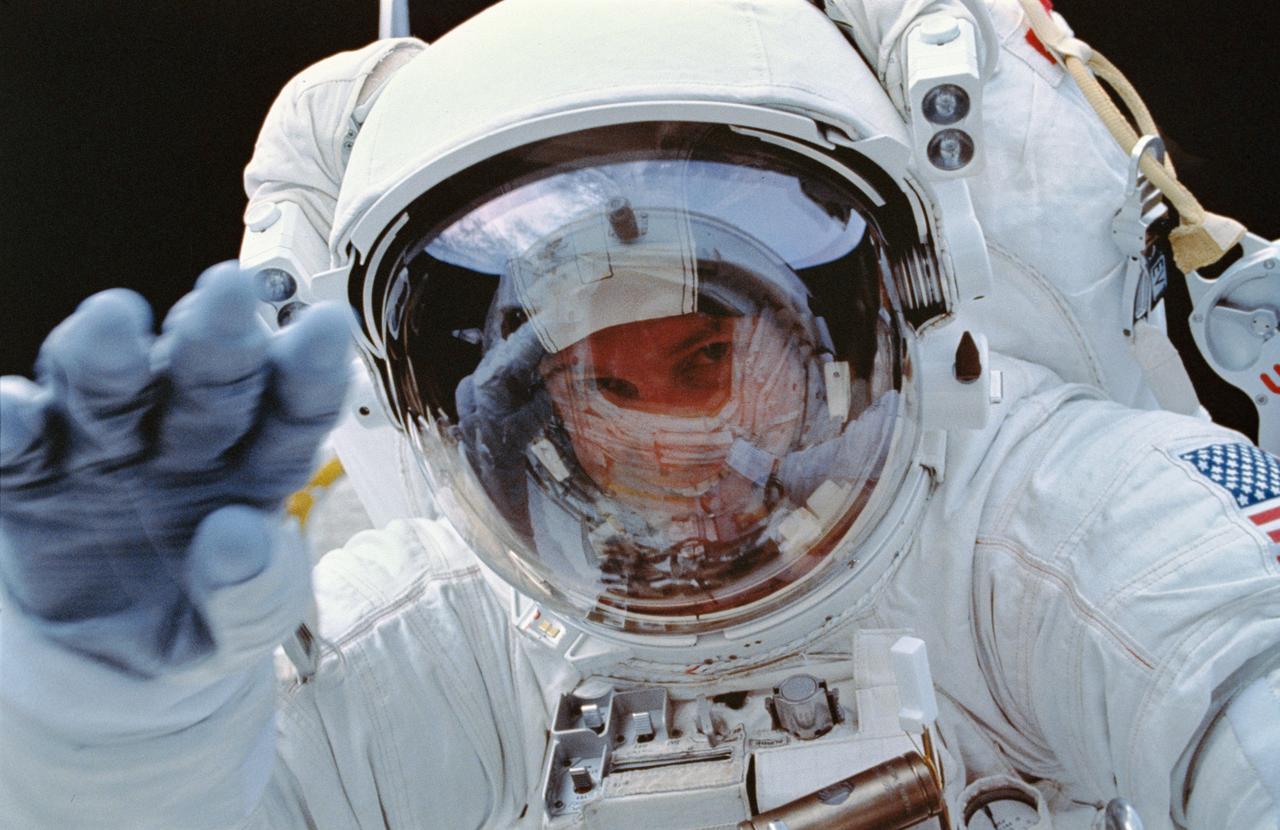
STS054-31-031 (17 Jan 1993) --- Astronaut Gregory J. Harbaugh, mission specialist, waves to fellow crew members on Endeavour's aft flight deck from the payload bay during the four-plus hours extravehicular activity (EVA). Harbaugh was joined on the EVA by astronaut Mario Runco Jr., mission specialist.
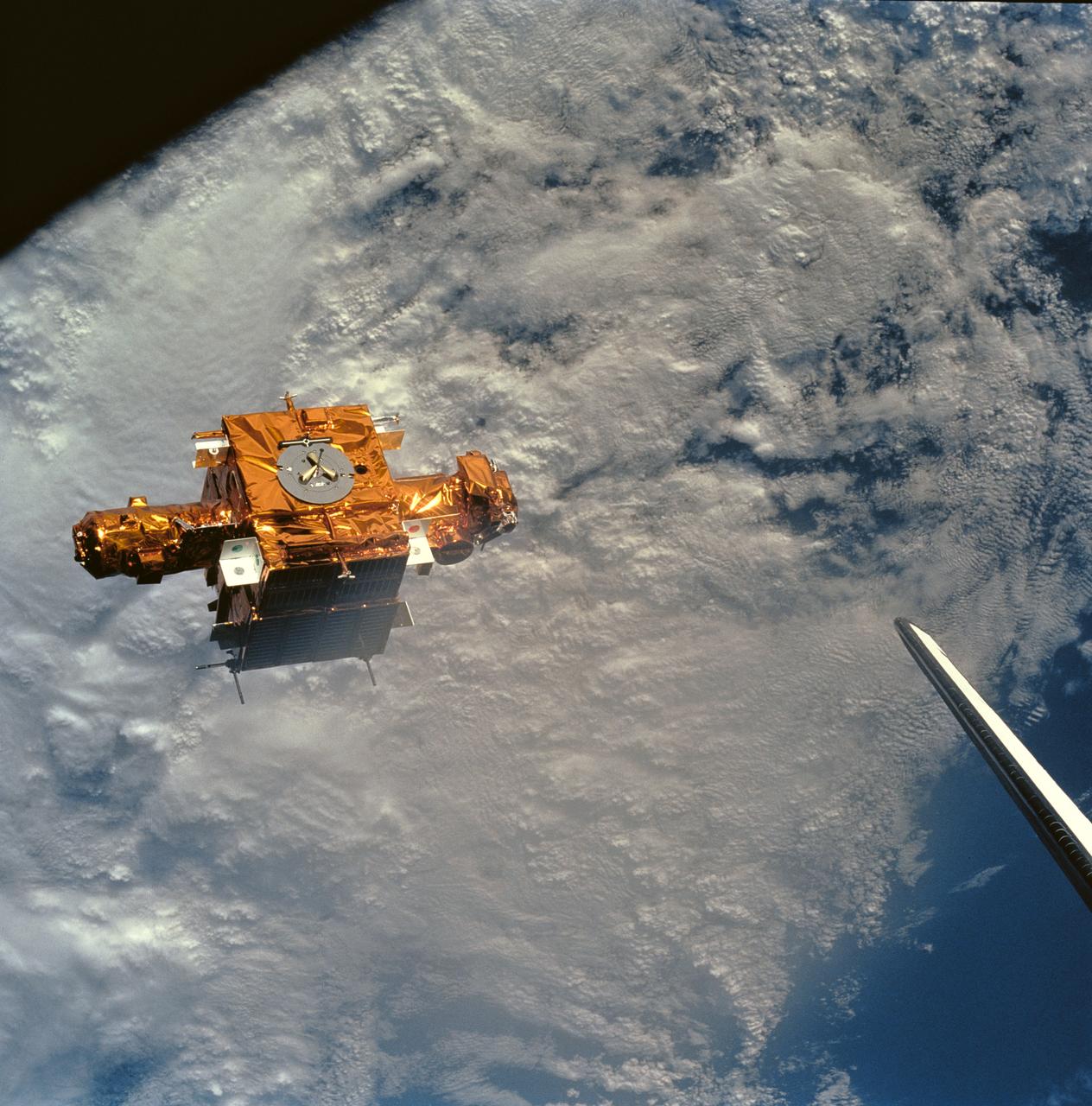
STS056-90-034 (8-17 April 1993) --- Backdropped against heavy cloud cover over the Mediterranean Sea, the SPARTAN-201 satellite was captured on 70mm by crewmembers aboard the Space Shuttle Discovery. SPARTAN is a free-flying payload designed to study the solar wind and part of the sun's corona. The project was conceived in the late 1970s to take advantage of the opportunity offered by the Space Shuttle to provide more observation time for the increasingly more sophisticated experiments than the five to ten minutes provided by sounding rocket flights. On the mission's third day, Astronaut Ellen Ochoa, Mission Specialist, used the remote manipulator system (RMS) to lift the satellite from its support structure on Discovery and release it in space. The reusable craft was later recaptured and returned to Earth with the crew. Note the tip of Discovery's vertical stabilizer at frame's edge.
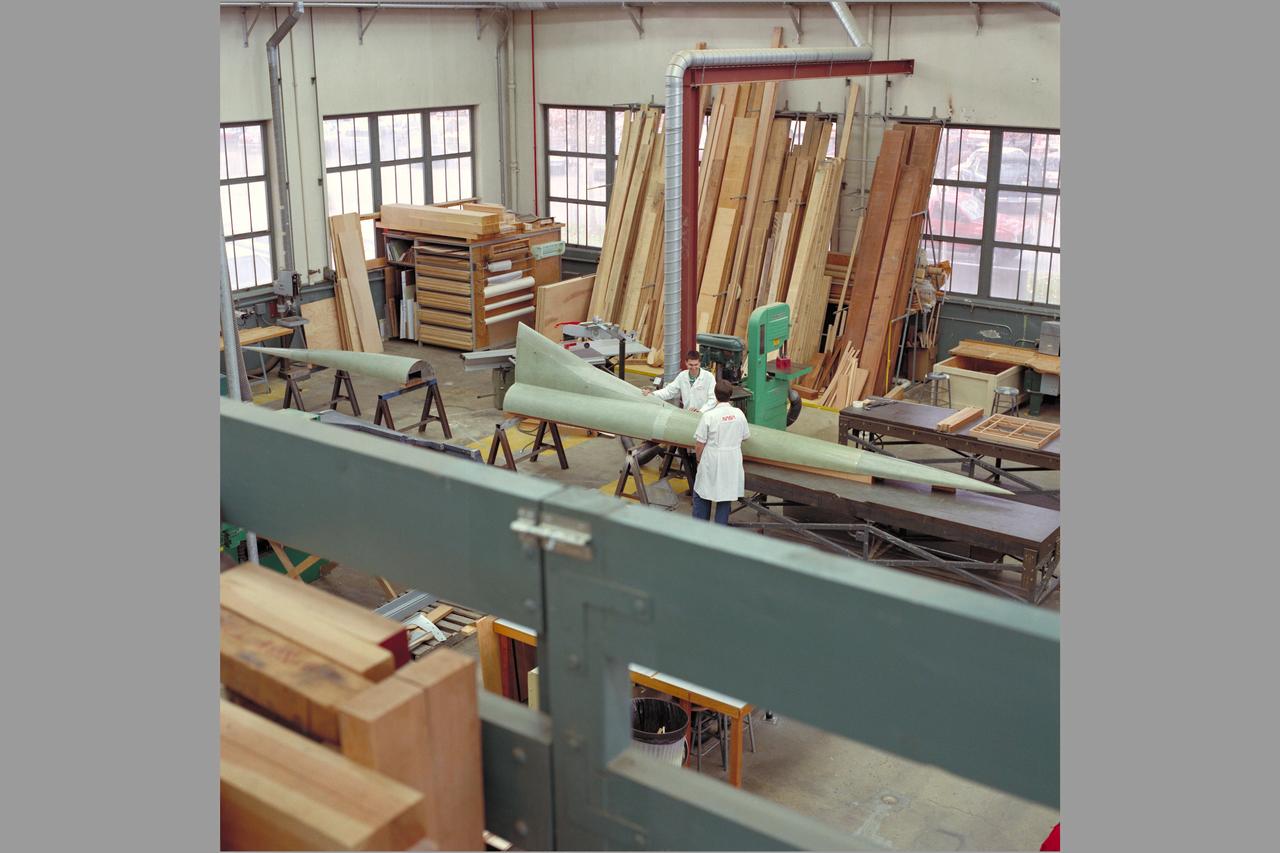
HEAT Project (High-Lift Engine Aeroacustics Technology) model assembly
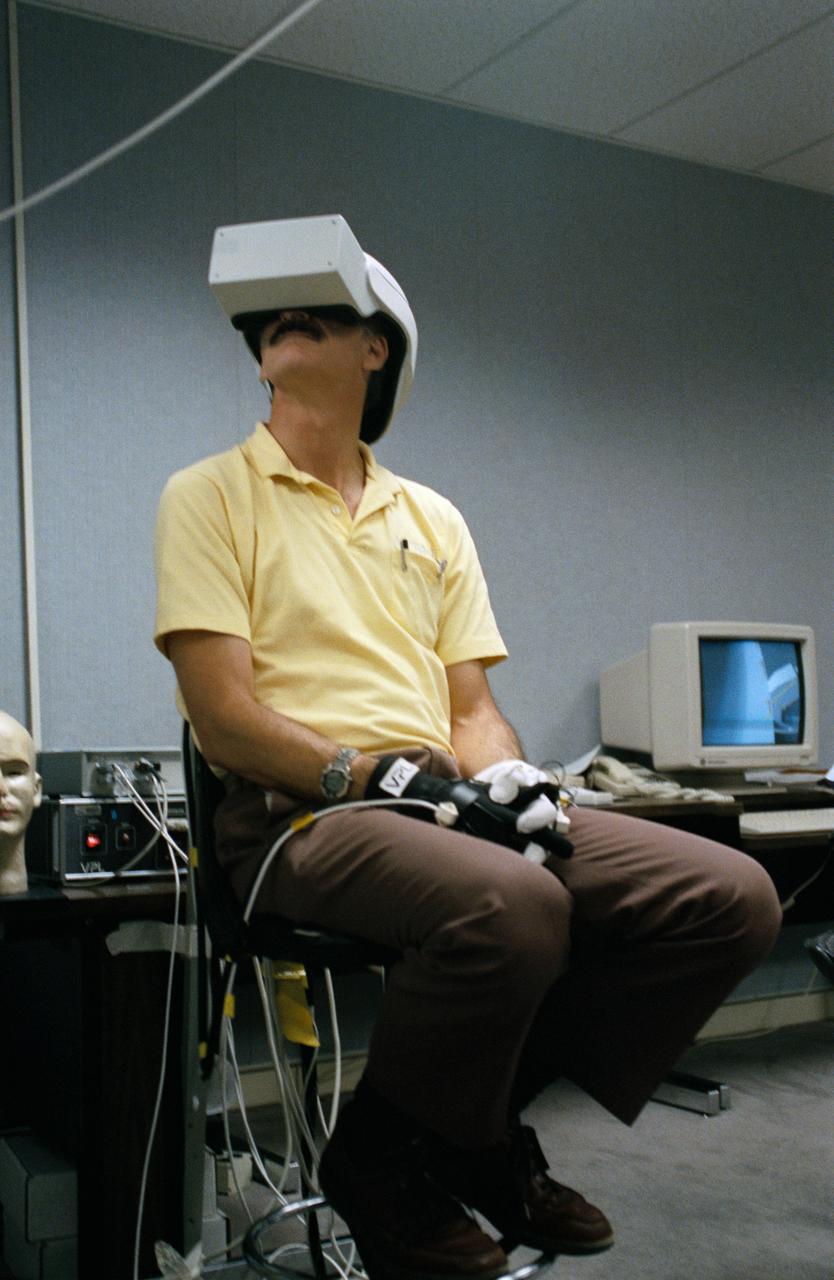
Astronaut Jeffrey A. Hoffman, one of four crewmembers for STS-61 that will conduct scheduled spacewalks during the flight, wears a special helmet and gloves designed to assist in proper positioning near the telescope while on the end of the robot arm. Crewmembers are utilizing a new virtual reality training aid which assists in refining positioning patterns for Space Shuttle Endeavour's Remote Manipulator System (RMS) (36890); Astronaut Claude Nicollier looks at a computer display of the Shuttle's robot arm movements as Thomas D. Akers and Kathryn C. Thornton, mission specialists look on. Nicollier will be responsible for maneuvering the astronauts while they stand in a foot restraint on the end of the RMS arm (36891,36894); Hoffman wears a special helmet and gloves designed to assist in proper positioning near the telescope while on the end of the robot arm (35892); Nicollier looks at a computer display of the Shuttle's robot arm movements as Akers looks on (36893); While (l-r) Astronauts Kenneth Bowersox, Kathryn Thornton, Richard O. Covey and Thomas D. Akers watch, Nicollier moves the Robot arm to desired locations in the Shuttle's payload bay using the Virtual Reality program (36895); Bowersox takes his turn maneuvering the RMS while mission specialist Hoffman, wearing the Virtual Reality helmet, follows his own progress on the end of the robot arm. Crewmembers participating during the training session are (l-r) Astronauts Akers, Hoffman, Bowersox, Nicollier, Covey, and Thornton. In the background, David Homan, an engineer in the JSC Engineering Directorate's Automation and Robotics Division, looks on (36896).
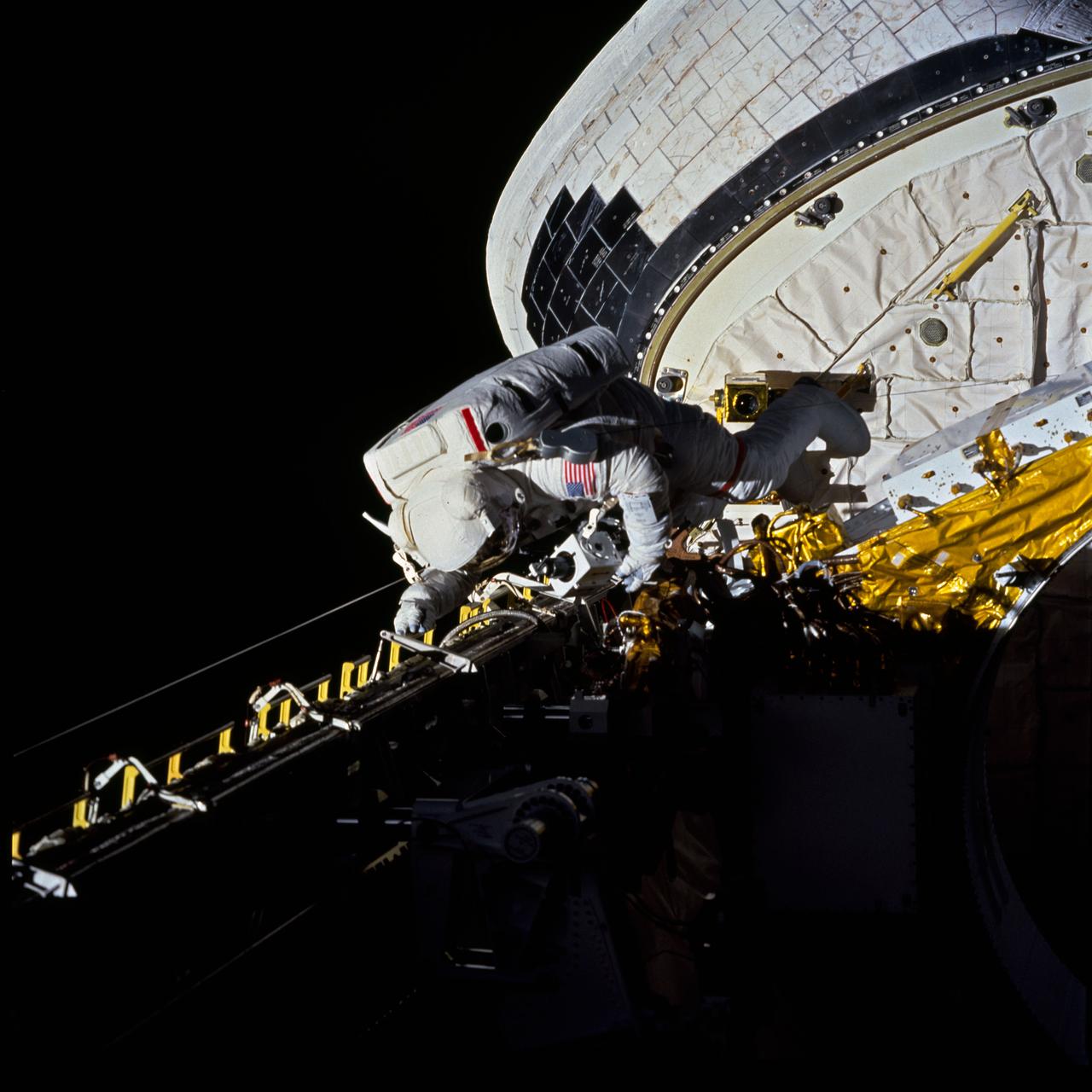
STS054-80-0N (17 Jan 1993) --- Astronaut Gregory J. Harbaugh moves along the starboard side of Endeavour's cargo bay during the four-plus hour long extravehicular activity (EVA) on January 17, 1993. The photograph was taken with a 70mm camera from inside Endeavour's cabin by a fellow crewmember. Three astronauts remained inside to support the spacewalk by astronauts Harbaugh and Mario Runco Jr. (out of frame).
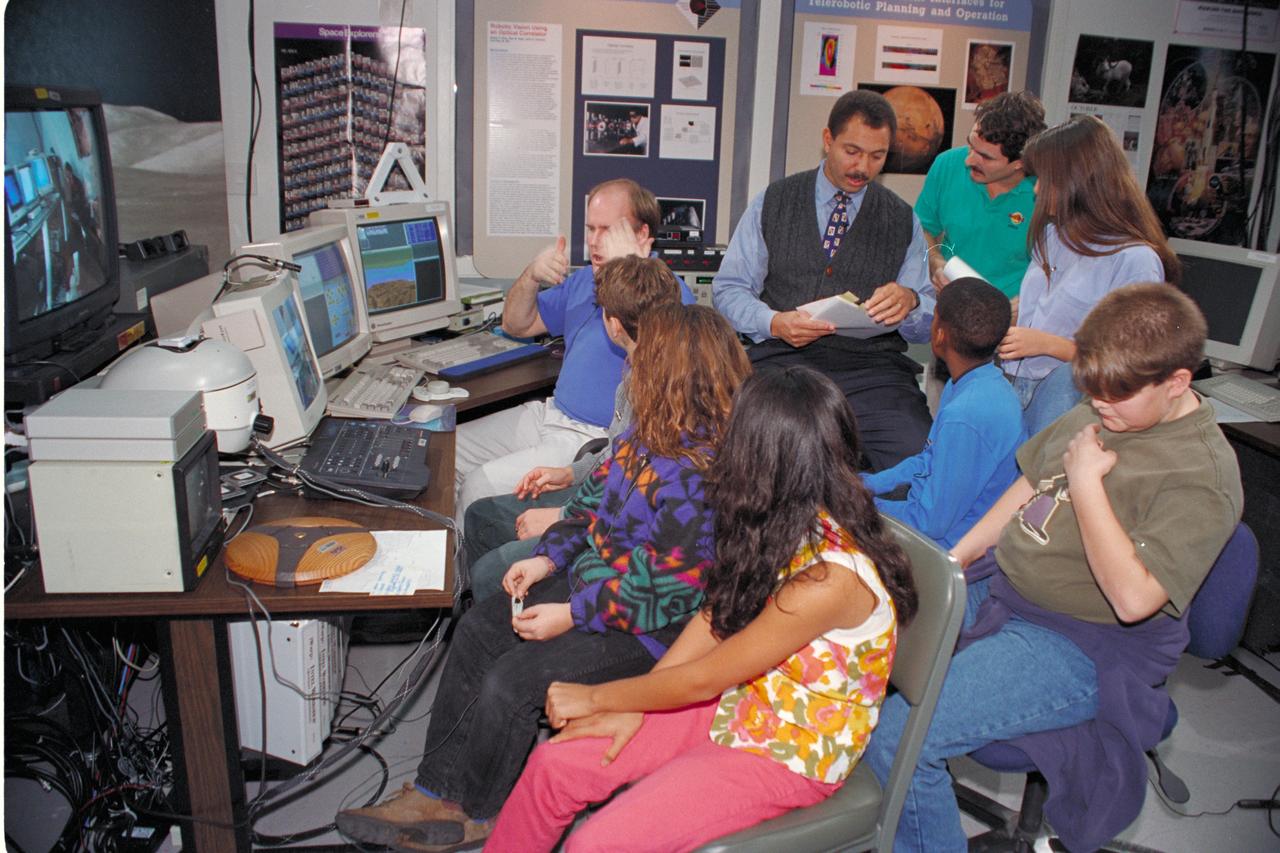
'Life from other Worlds' with McNair Middle School TROV robot explores under Antarctic ice - Donald James speaks to on site & virtual students

F-15B ACTIVE in flight
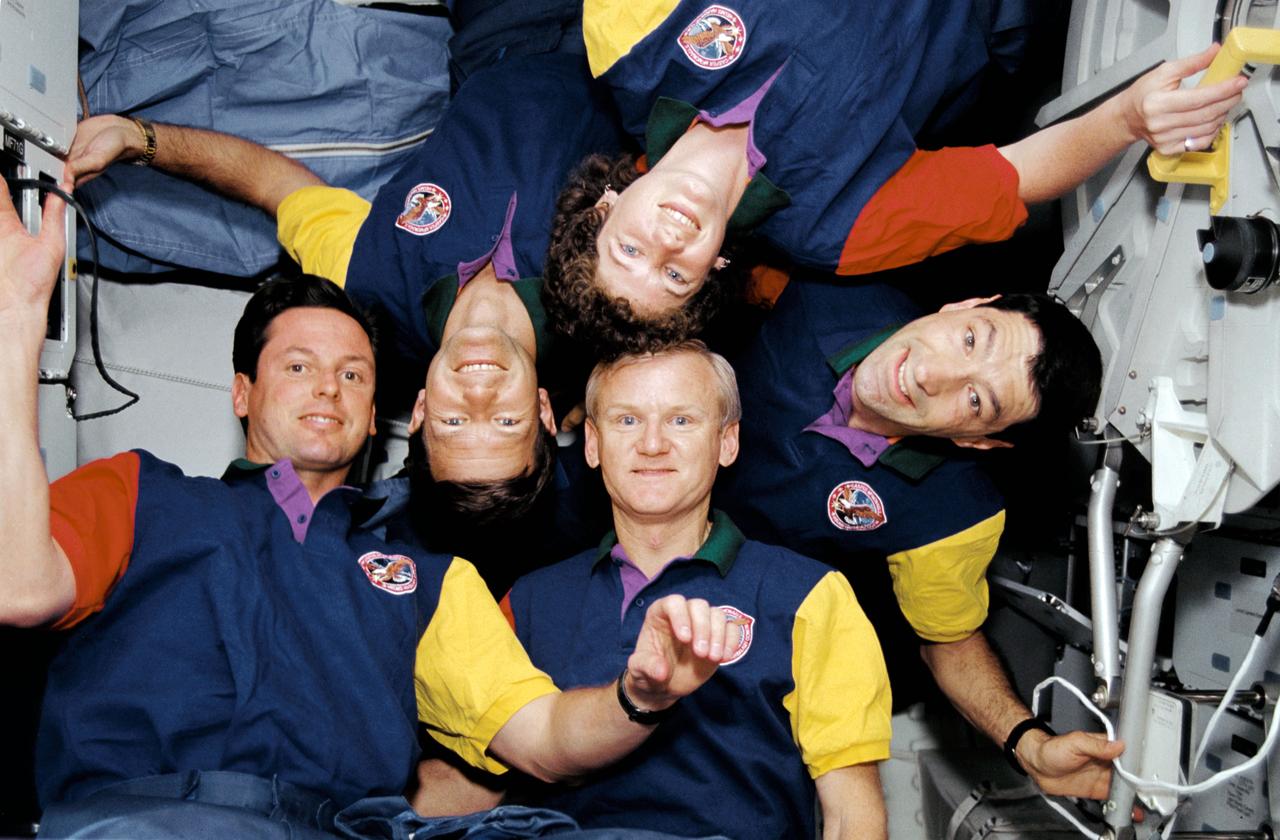
STS054-02-008 (13-19 Jan. 1993) --- The traditional inflight crew portrait has, (clockwise), Susan J. Helms, Mario Runco Jr., both mission specialists, John H. Casper, mission commander, Donald R. McMonagle, pilot, and Gregory J. Harbaugh, mission specialist. This frame was taken with a 35mm camera aboard the Earth-orbiting Space Shuttle Endeavour during the six-day mission.
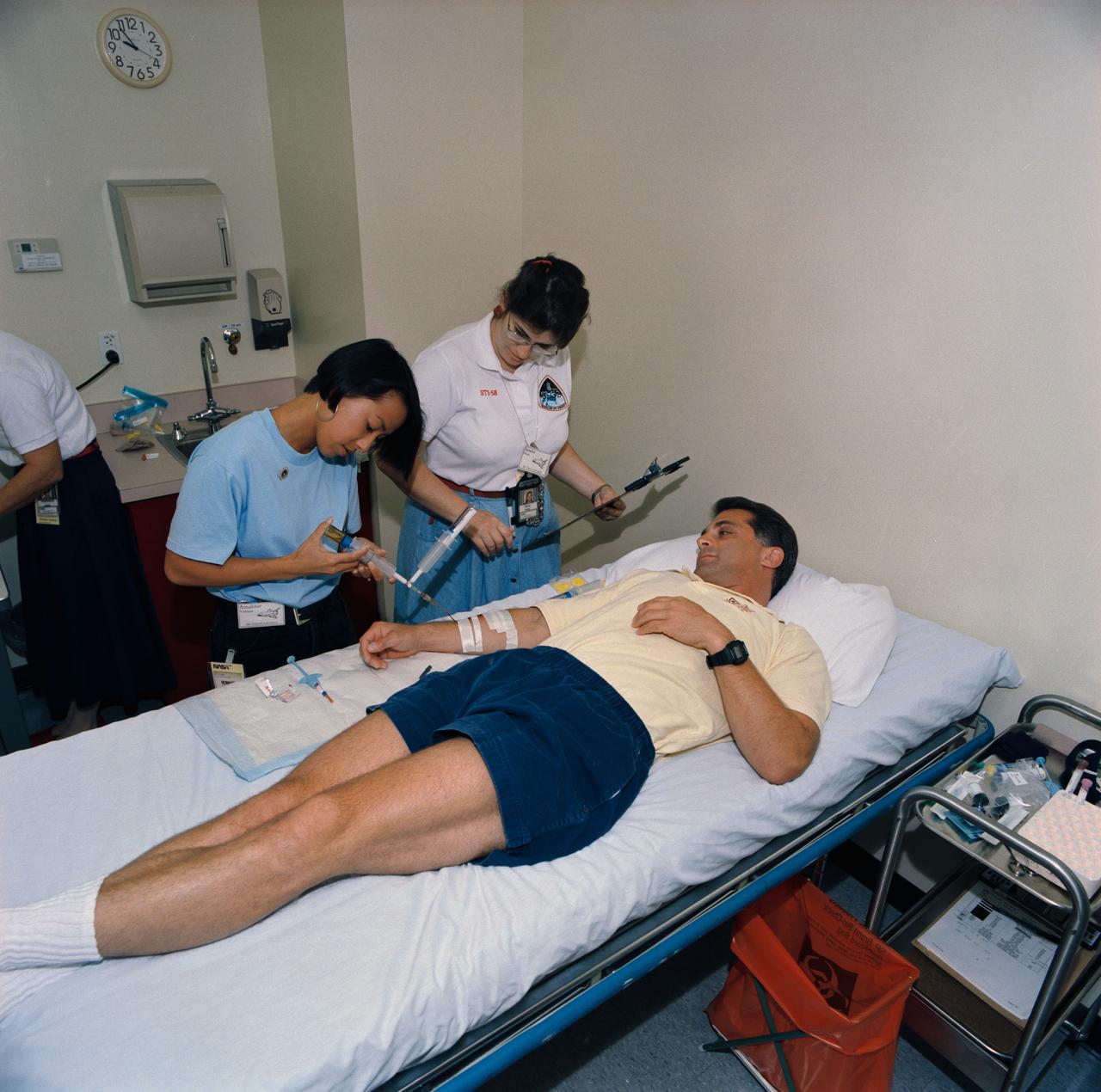
S93-45370 (29 Sept 1993) --- Blood samples from crew members are critical to several Spacelab Life Sciences (SLS-2) investigations. Amalour Veloso (left) and Sandra Prow draw blood from David A. Wolf, mission specialist. Wolf was participating with five other NASA astronauts and a payload specialist on data collection and training in preparation for the two week SLS-2 mission.
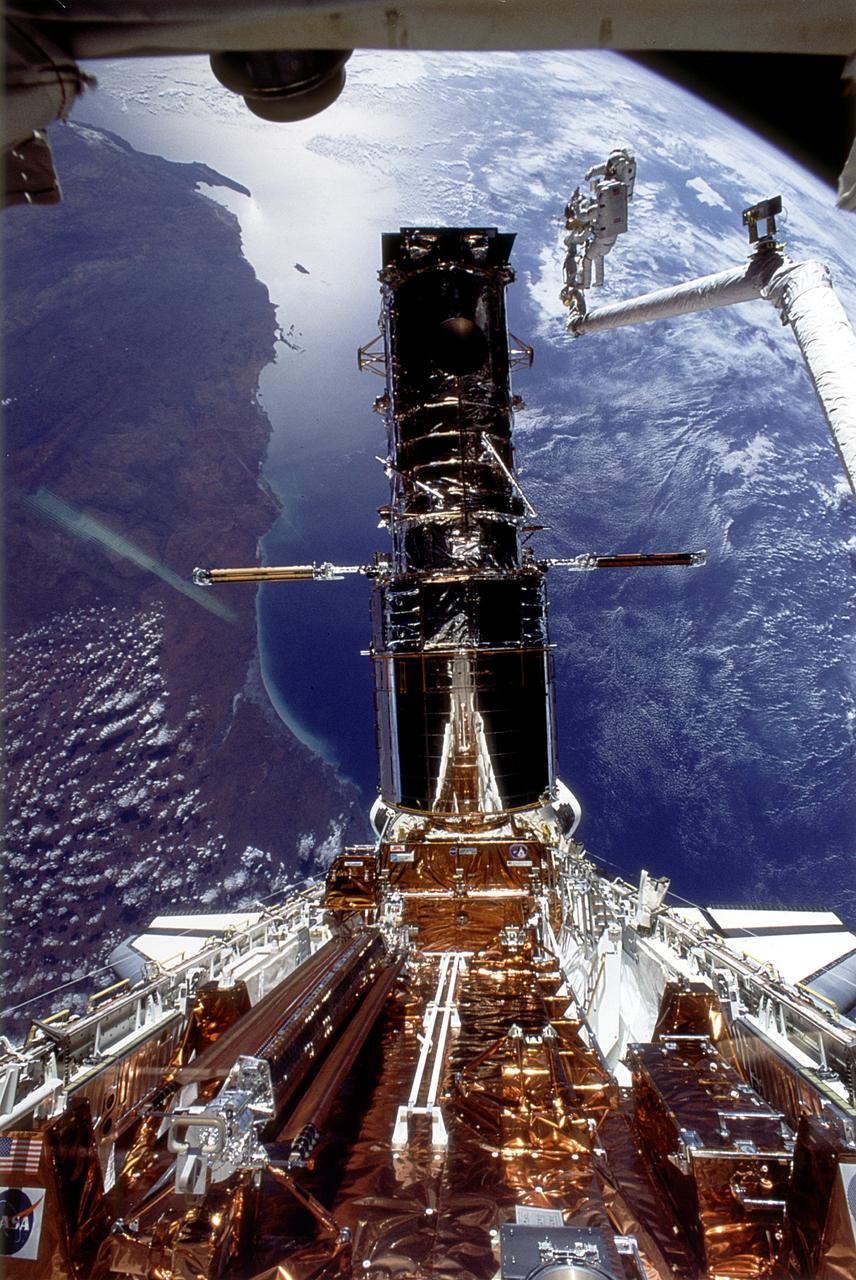
Repair of the Hubble Space Telescope (HST) - orbiting earth at an altitude of 325 nautical miles. Perched atop a foot restraint on shuttle Endeavour's remote manipulator system arm, astronauts Story Musgrave and Jeffrey Hoffman wrap up the final of five space walks.
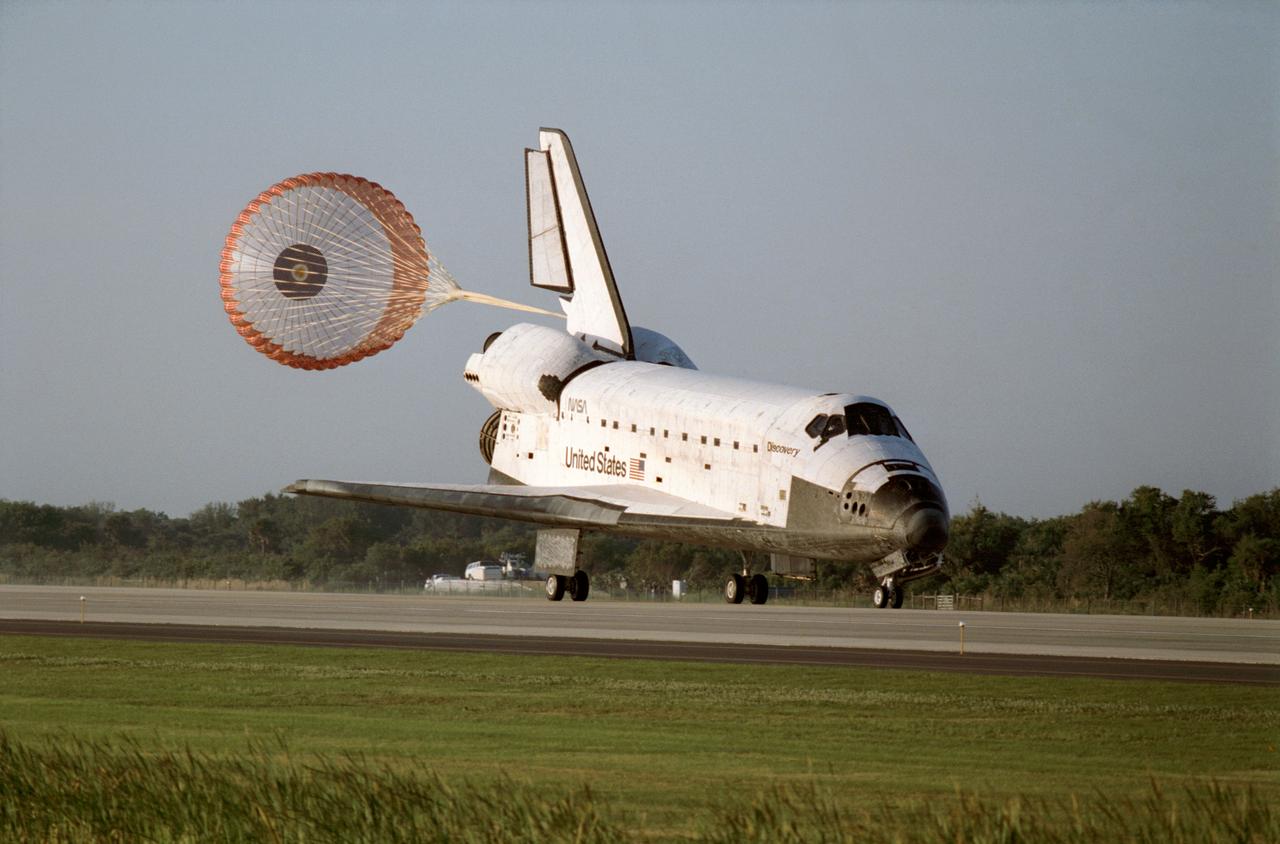
STS056-S-098 (17 April 1993) --- The drag chute is deployed following landing of the Space Shuttle Discovery on the Shuttle landing facility at the Kennedy Space Center to complete the STS-56\Atlas 2 mission. Touchdown occurred at 7:37 a.m. (EDT). Onboard the spacecraft were astronauts Kenneth D. Cameron, commander; Stephen S. Oswald, pilot; and C. Michael Foale, Ellen Ochoa and Kenneth D. Cockrell, mission specialists.
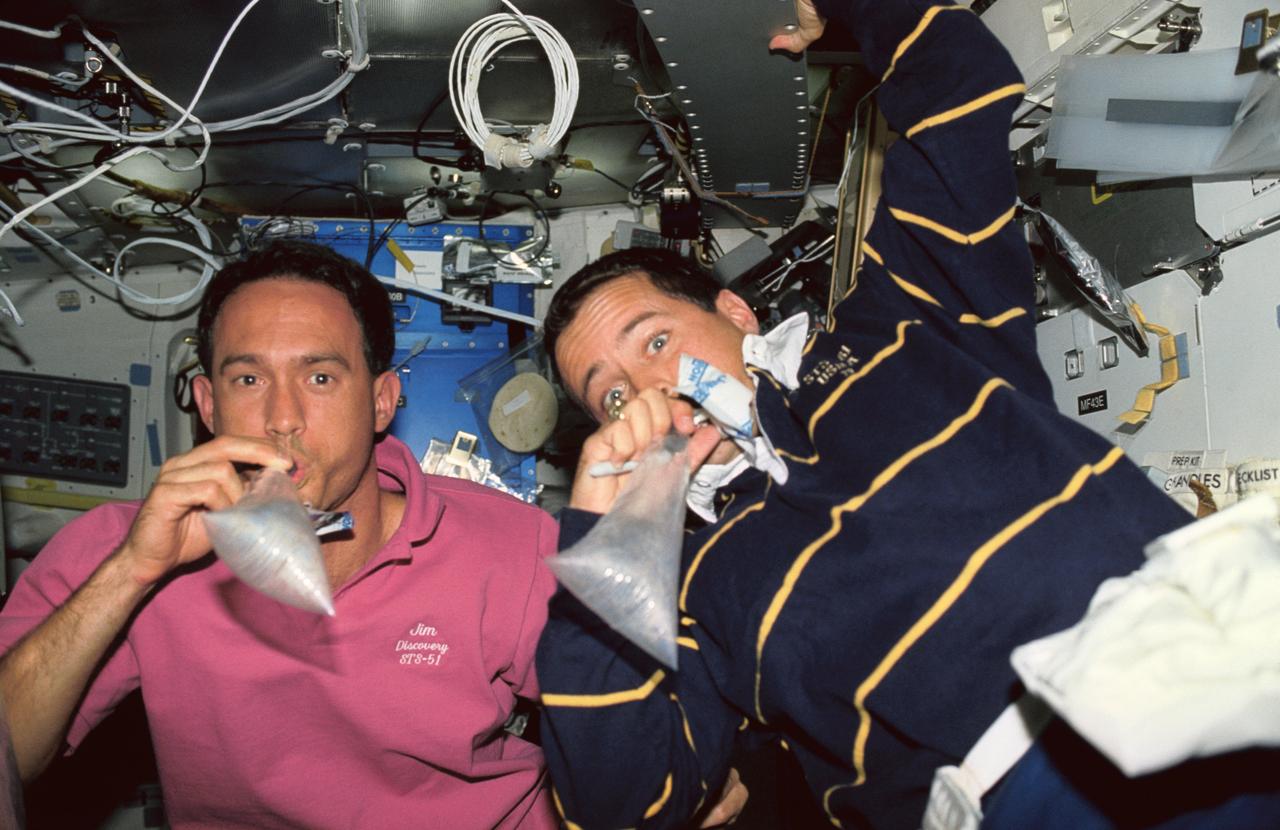
STS051-08-029 (12-22 Sept 1993) --- Astronauts James H. Newman, left, and Daniel W. Bursch, mission specialists, participate in a Detailed Supplementary Objective (DSO) dealing with the gastro-intestinal function during extended duration flight (DSO 622). The two are on Discovery's middeck. Bursch holds himself in position with his left hand grasping the emergency escape pole.
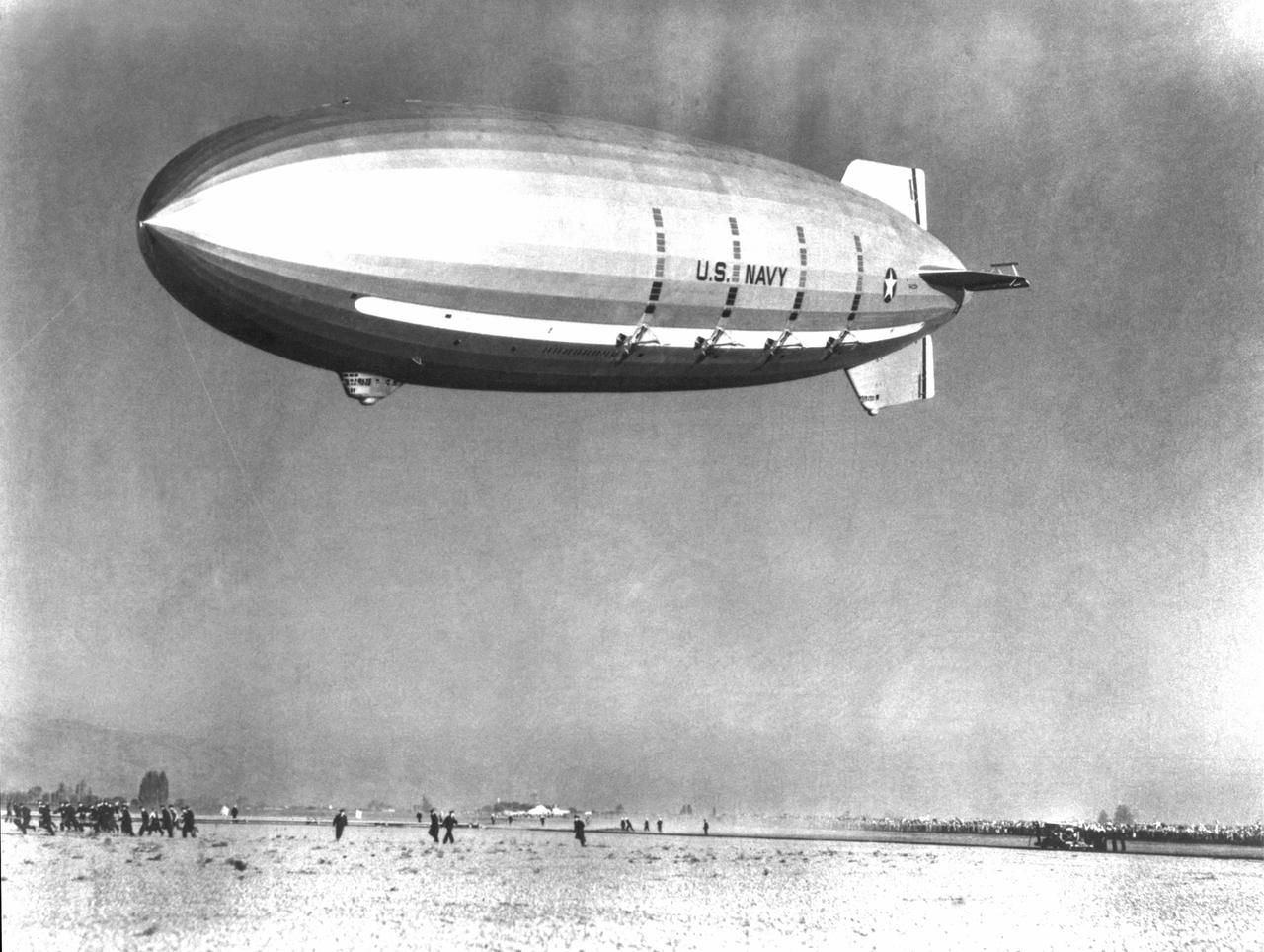
Dirigible returns to Moffett as people watch (1933)
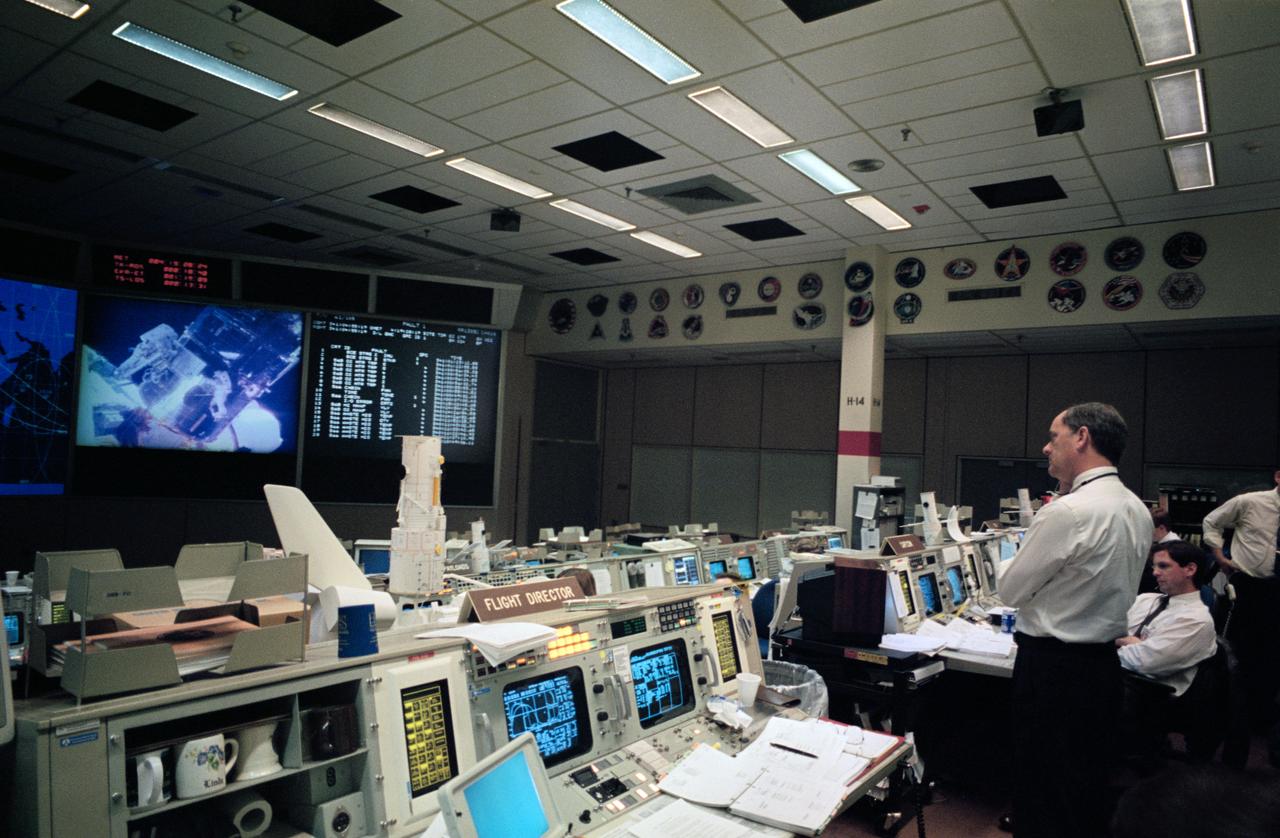
STS61-S-098 (6 DEC 1993) --- Flight director Milton Heflin monitors two space walkers as they change out the Wife Field/Planetary Camera (WFPC) on the Hubble Space Telescope (HST), temporarily berthed in the Space Shuttle Endeavour's cargo bay. Astronaut Gregory J. Harbaugh, spacecraft communicator (CAPCOM), is at right edge. Astronauts F. Story Musgrave and Jeffrey A. Hoffman can be seen with the large camera on the screen in the front of the flight control room.
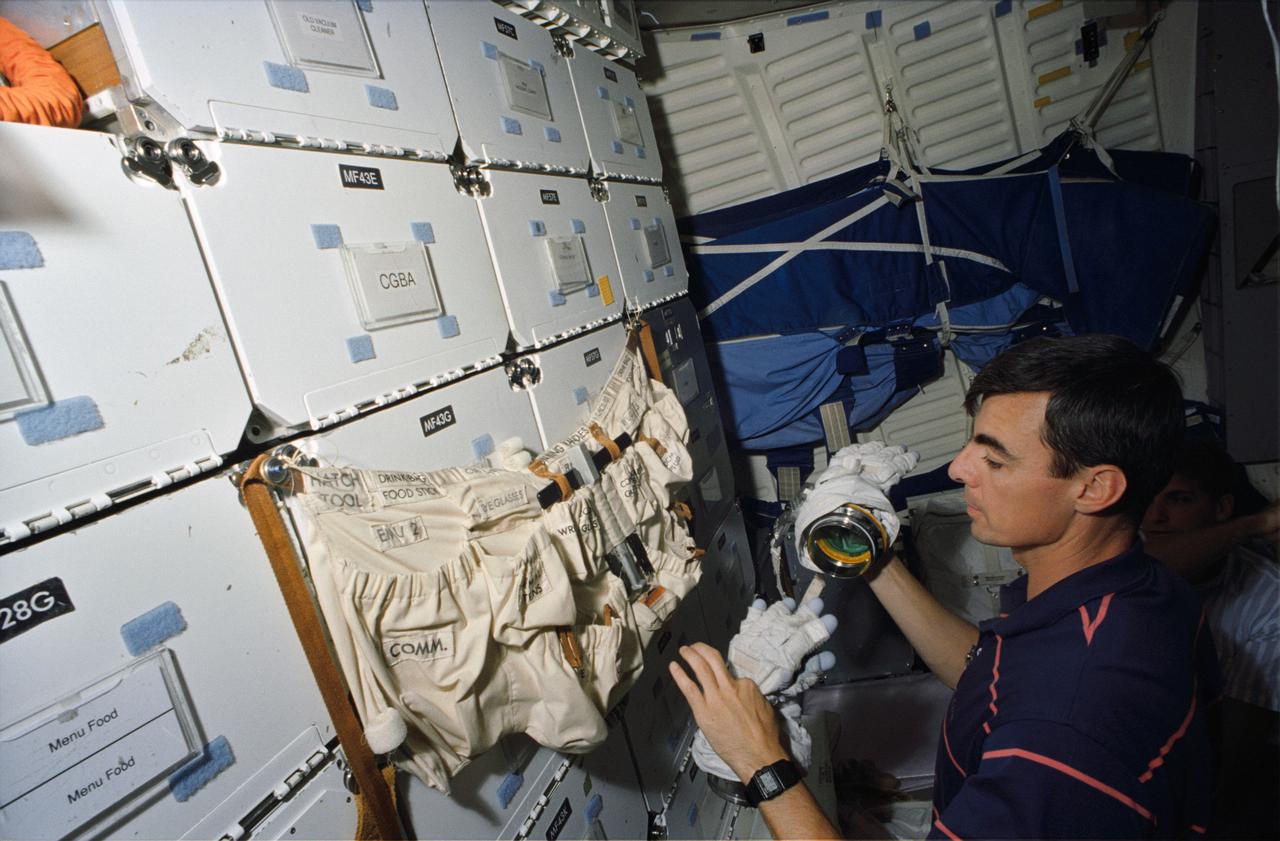
S93-46018 (13 October 1993) --- In the Johnson Space Center's (JSC) Shuttle mockup and integration laboratory, astronaut Andrew M. Allen retrieves gear to rehearse a suit donning exercise on the middeck. Thuot's very realistic environs are provided by the Shuttle crew compartment trainer. Thuot, mission specialist, and four other NASA astronauts will spend two weeks in space aboard the Columbia in March of next year. He and astronaut Pierre J. Thuot have been rehearsing contingency space walks. There is no scheduled extravehicular activity for the STS-62 flight.
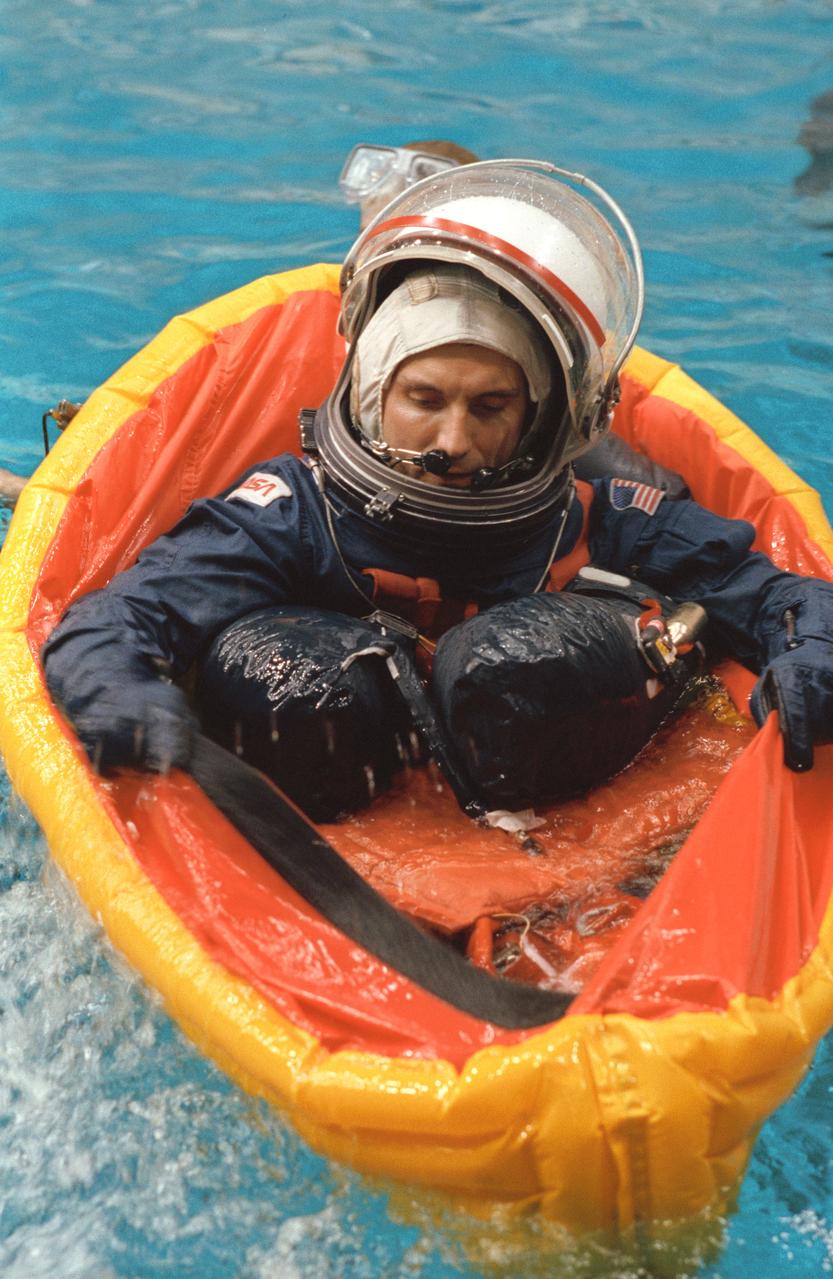
S93-31928 (24 March 1993) --- Astronaut Carl E. Walz, mission specialist, navigates a one-person life raft during emergency bailout training exercises at the Johnson Space Center's Weightless Environment Training Facility (WET-F). Walz was joined in the training session by the four other NASA astronauts assigned to the STS-51 flight.
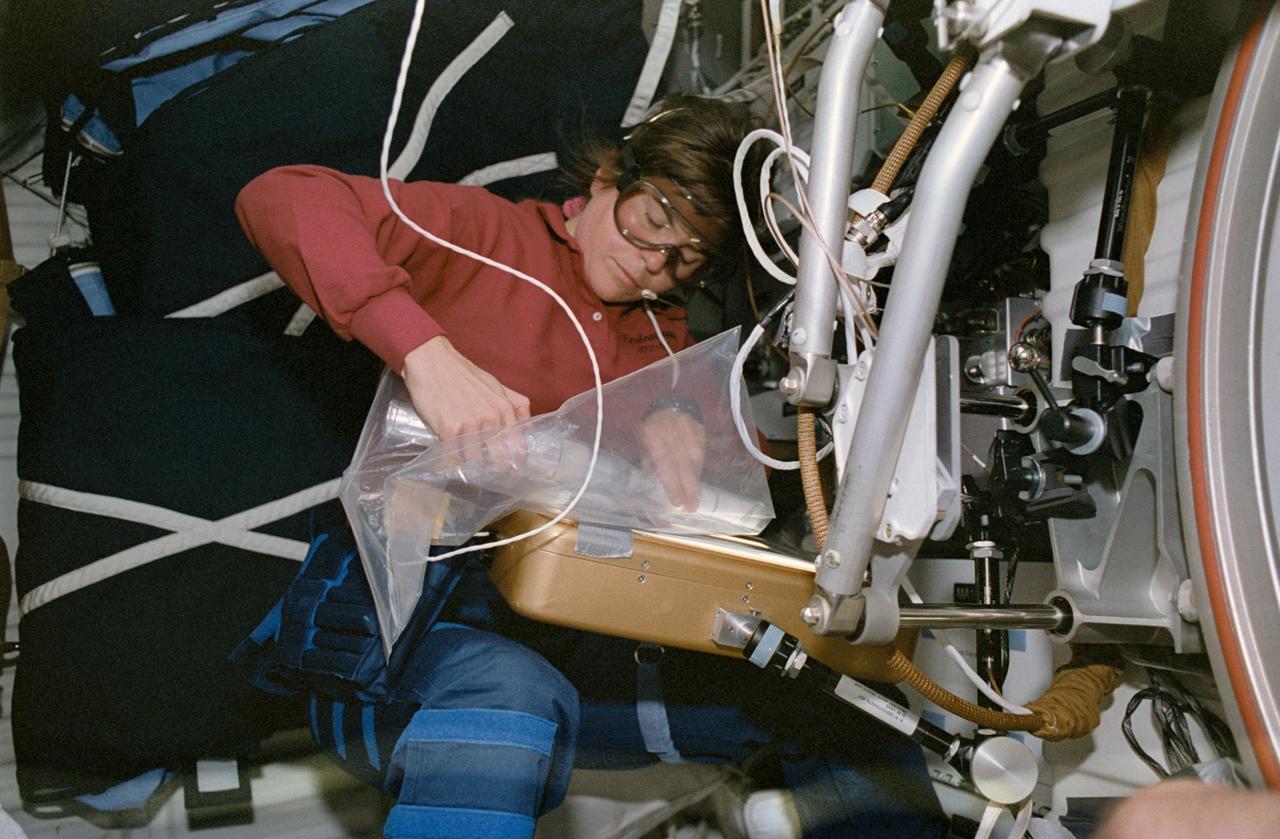
STS057-28-028 (21 June-1 July 1993) --- Astronaut Janice E. Voss works with the Support of Crystal Growth (SCG) experiment. Voss and five other NASA astronauts spent almost ten full days aboard the Space Shuttle Endeavour for the STS-57 mission.
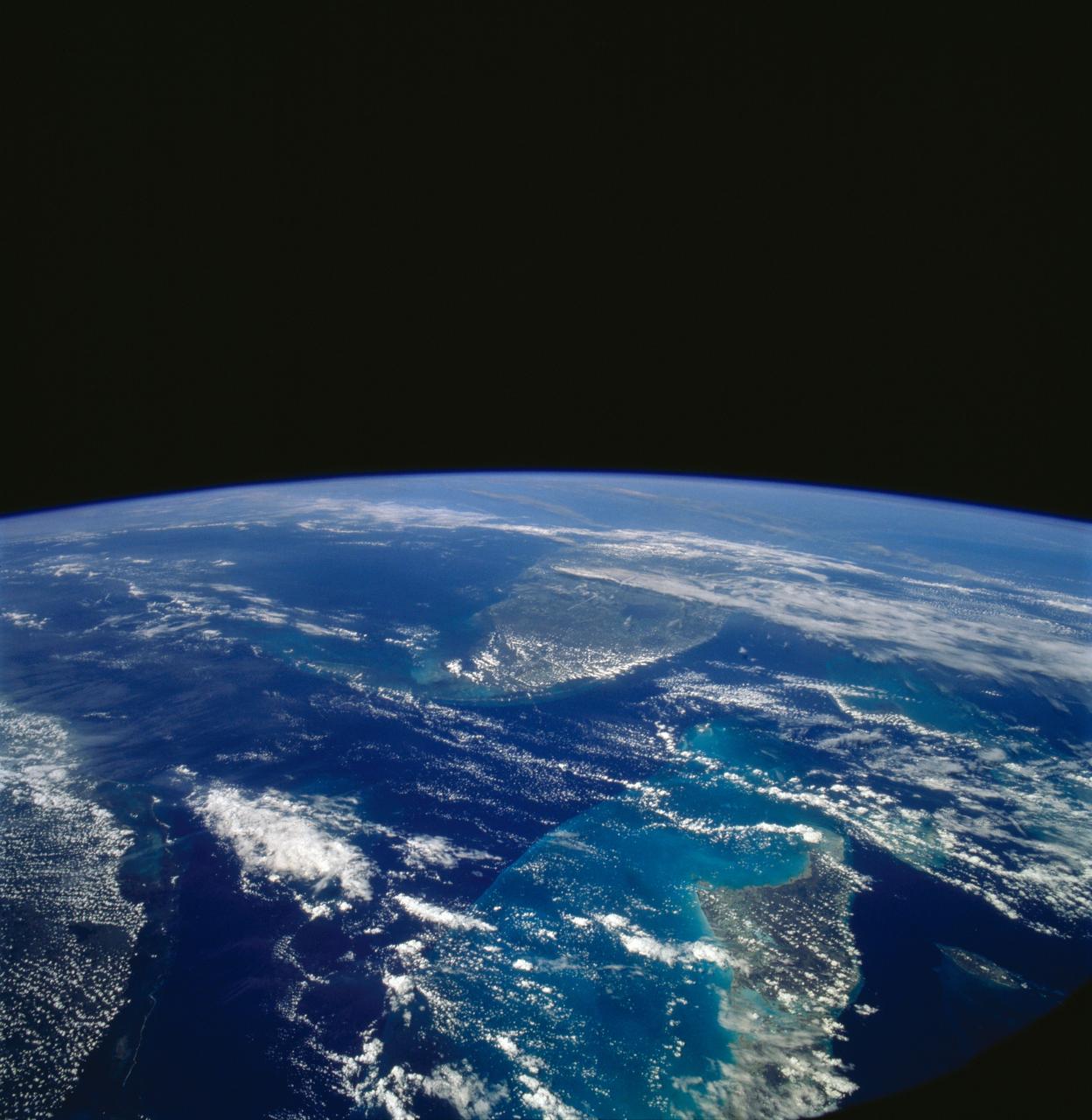
STS058-107-046 (18 Oct-1 Nov 1993) --- Clouds streak across central Florida in this striking photograph which includes the Florida Peninsula, Andros Island of the northern Bahamas and Cuba (lower left). The light blue, shallow bank of the Bahamas contrast with the deeper blue waters of the Florida strait. The city of Miami is obscured by clouds, but one can see the Florida Keys stretching off to the left. Much of the rest of the southeast coast is barely visible under haze.
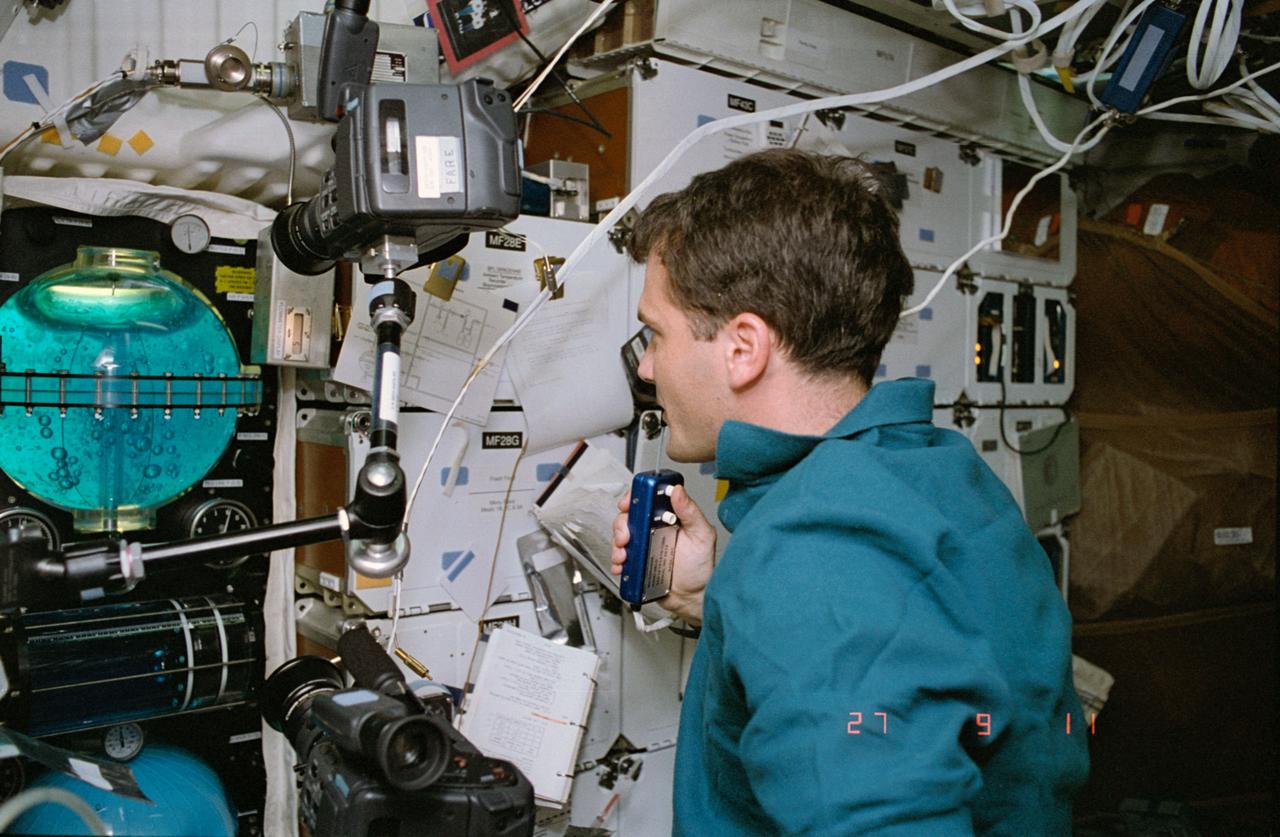
STS057-39-021 (21 June-1 July 1993) --- Astronaut Peter J. K. (Jeff) Wisoff, mission specialist, monitors the Fluid Acquisition and Resupply Experiment (FARE II), housed in four middeck lockers onboard the Space Shuttle Endeavour. The successor to FARE I (STS 53, 1992), FARE II was designed to demonstrate the effectiveness of a device to alleviate the problems associated with vapor-free liquid transfer.
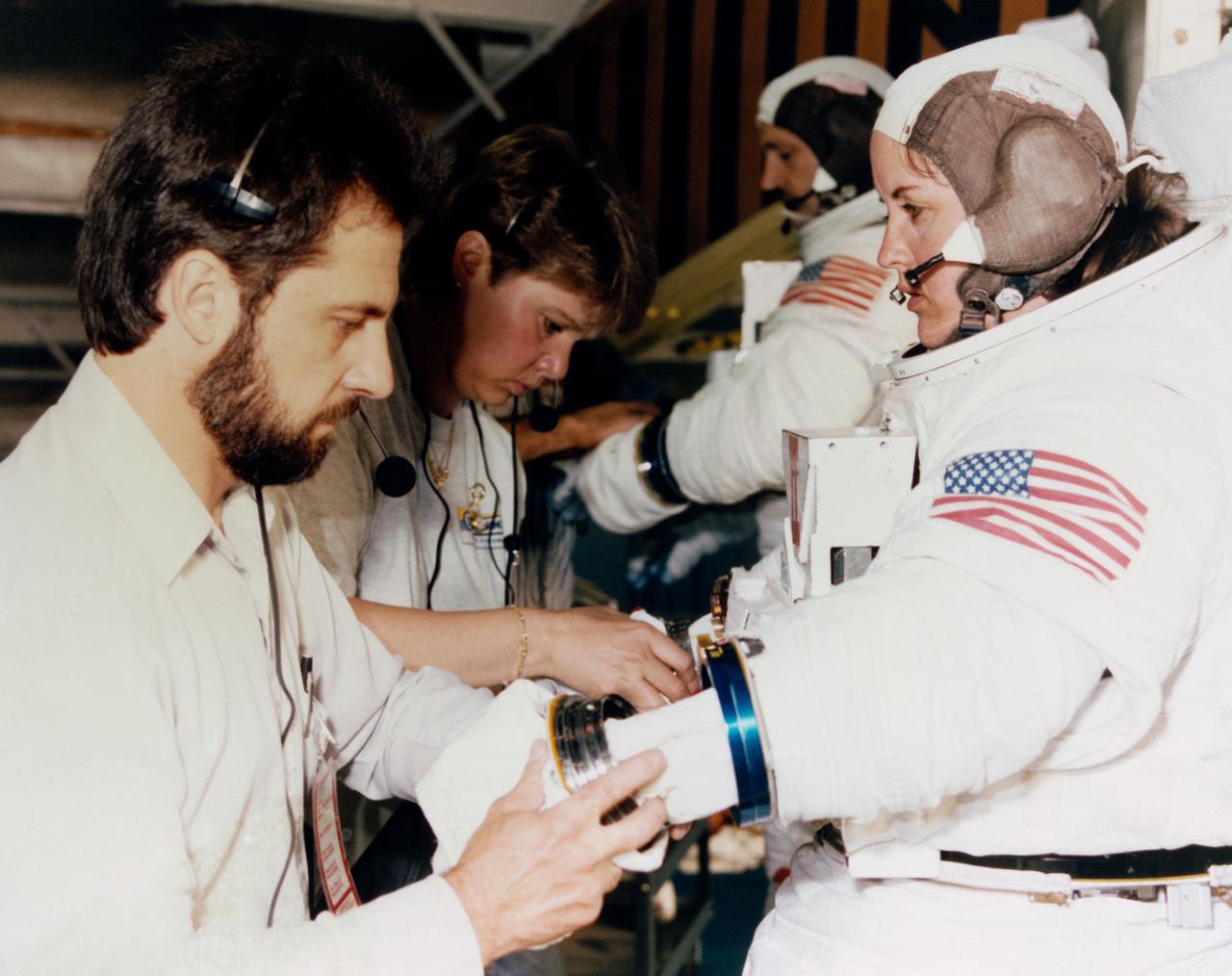
Astronaut Thomas D. Akers gets assistance in donning a training version of the Shuttle extravehicular mobility unit (EMU) space suit prior to a training session in the Neutral Buoyancy Simulator at Marshall Space Flight Center (MSFC) (39735); Astronaut Kathryn C. Thornton (foreground) and Thomas Akers, STS-61 mission specialists scheduled for extravehicular activity (EVA) duty, prepare for an underwater rehearsal session. Thornton recieves assistance from a technician in donning her EMU gloves (39736).
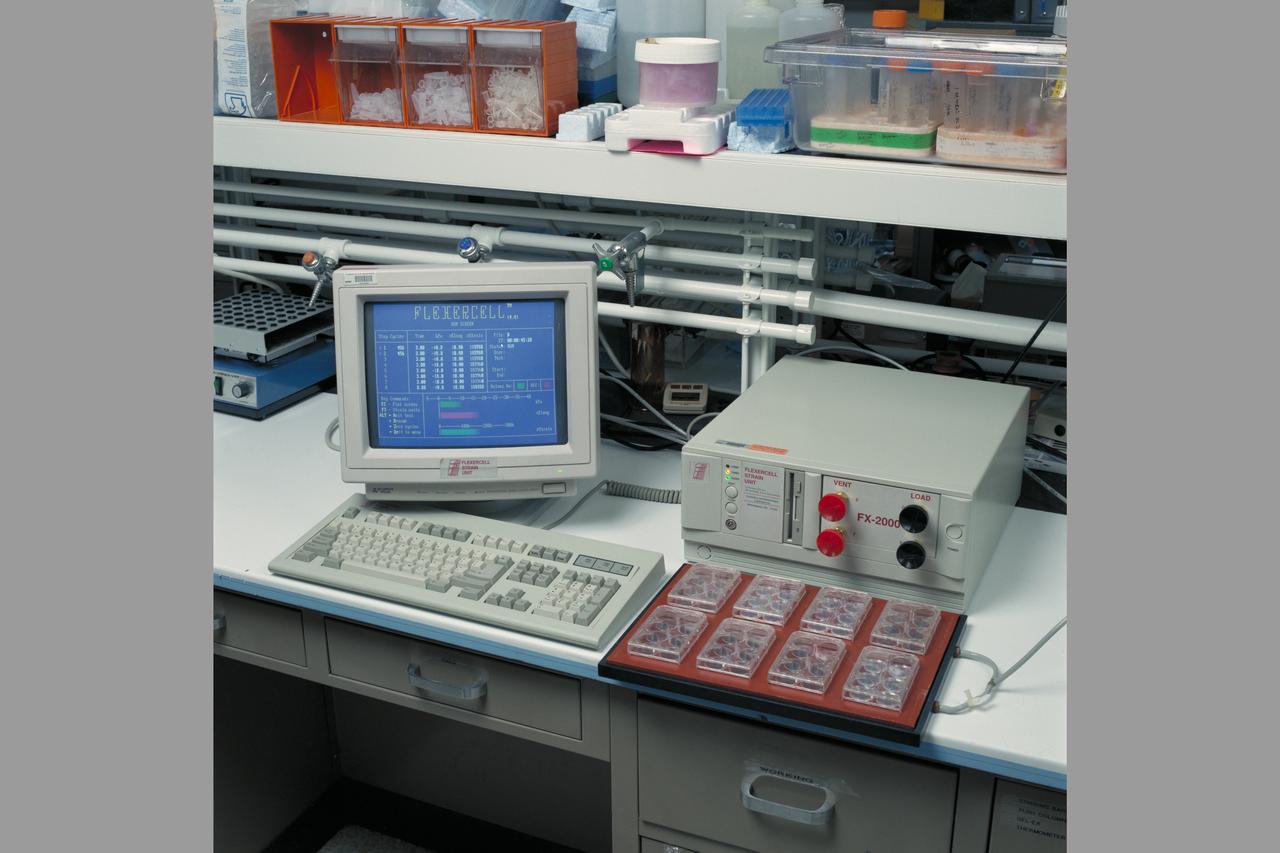
Life Sciences Division (code SL) laboratories and personnel:
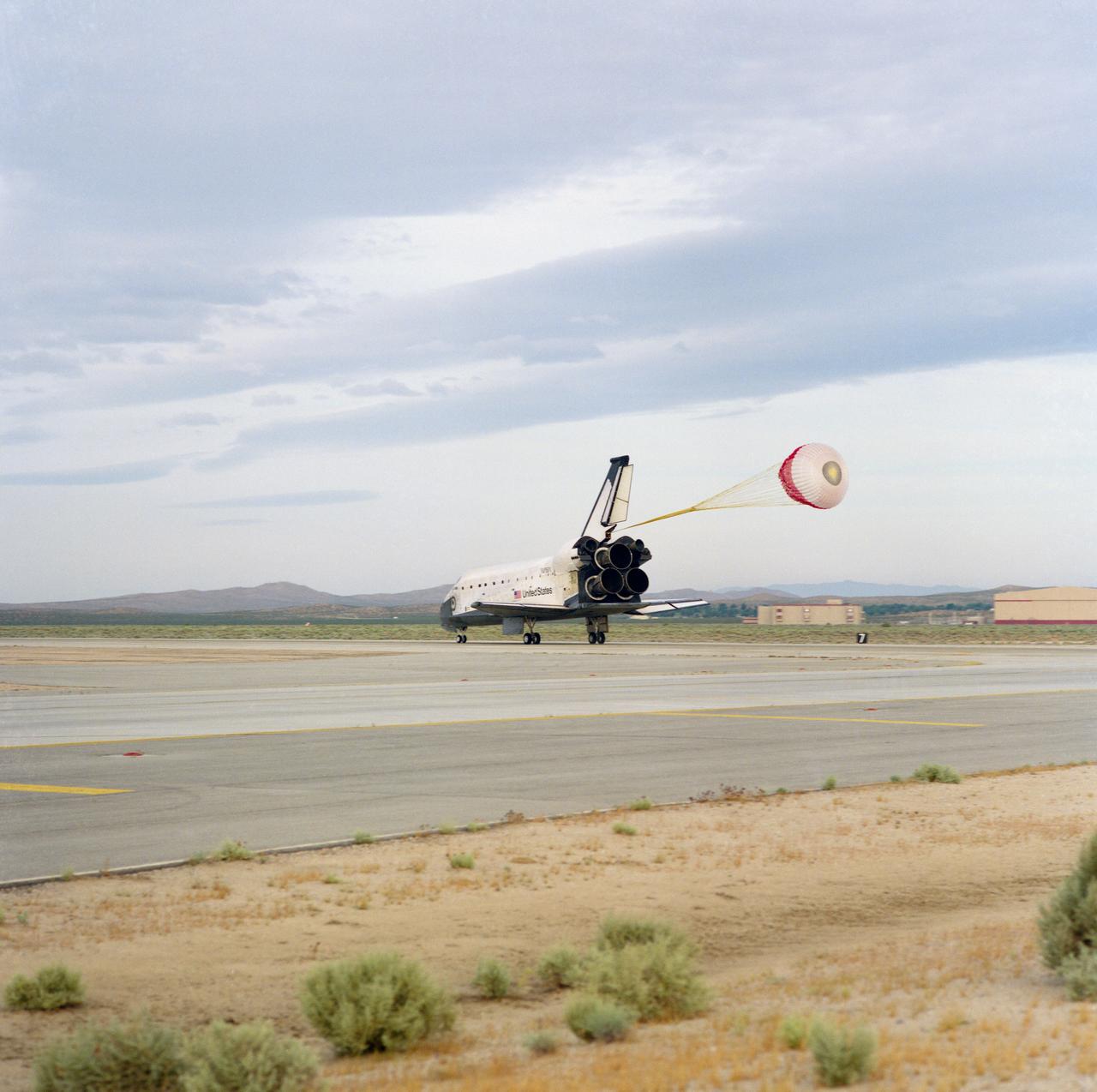
STS055-S-089 (6 May 1993) --- The main drag chute on the Space Shuttle Columbia is almost fully deployed in this three-quarter aft view of the vehicle's runway landing at Edwards Air Force Base in California. Landing occurred at 7:30 a.m. (PDT), May 6, 1993. Onboard the spacecraft were astronauts Steven R. Nagel, Terence T. (Tom) Henricks, Jerry L. Ross, Bernard Harris Jr. and Charles J. Precourt, along with German payload specialists Hans Schlegel and Ulrich Walter.
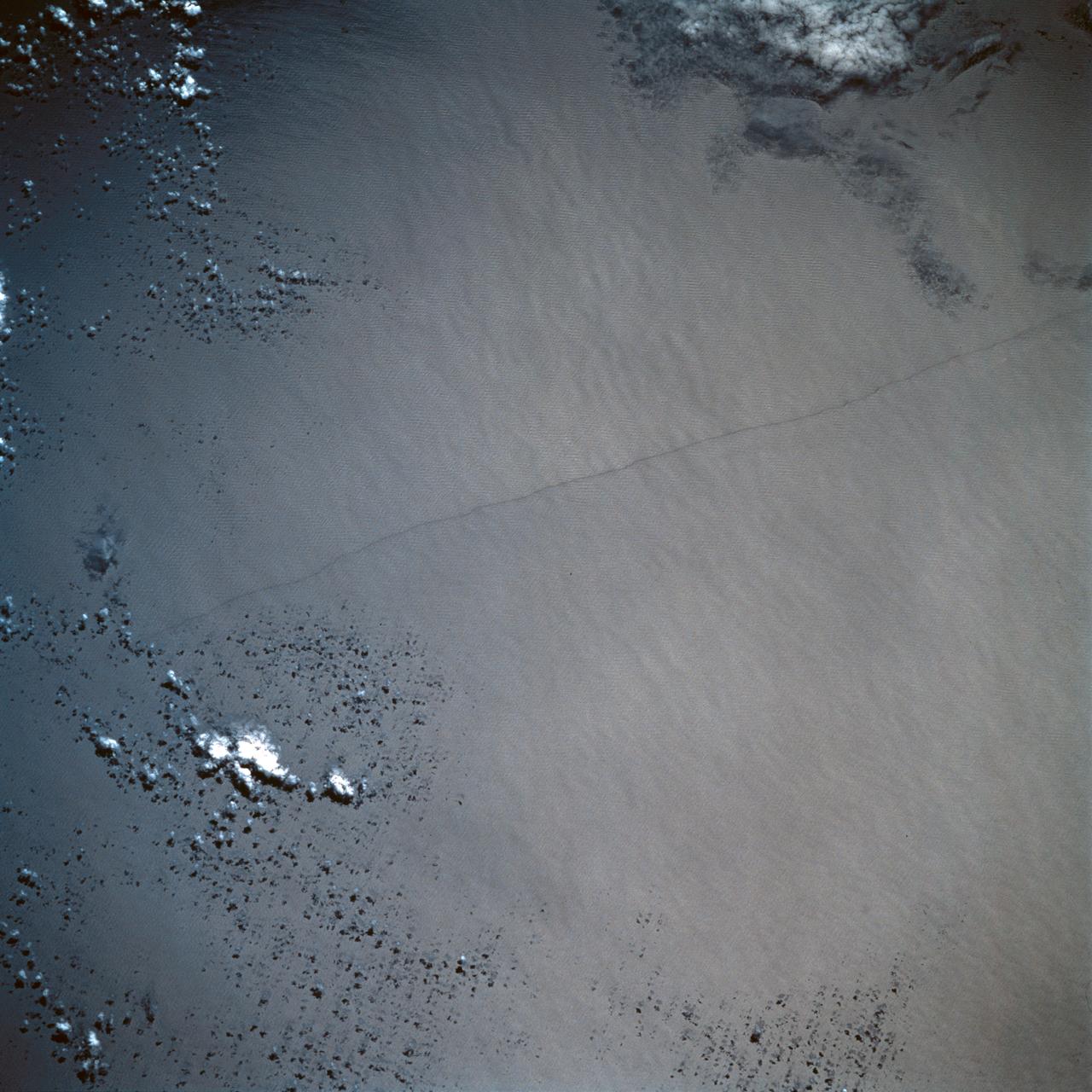
STS054-95-042 (13-19 Jan 1993) --- The Equatorial Pacific Ocean is represented in this 70mm view. The international oceanographic research community is presently conducting a program called Joint Global Ocean Flux Study (JGOFS) to study the global ocean carbon budget. A considerable amount of effort within this program is presently being focused on the Equatorial Pacific Ocean because of the high annual average biological productivity. The high productivity is the result of nearly constant easterly winds causing cool, nutrient-rich water to well up at the equator. In this view of the sun glint pattern was photographed at about 2 degrees north latitude, 103 degrees west longitude, as the Space Shuttle passed over the Equatorial Pacific. The long narrow line is the equatorial front, which defines the boundary between warm surface equatorial water and cool, recently upwelled water. Such features are of interest to the JGOFS researchers and it is anticipated that photographs such as this will benefit the JGOFS program.
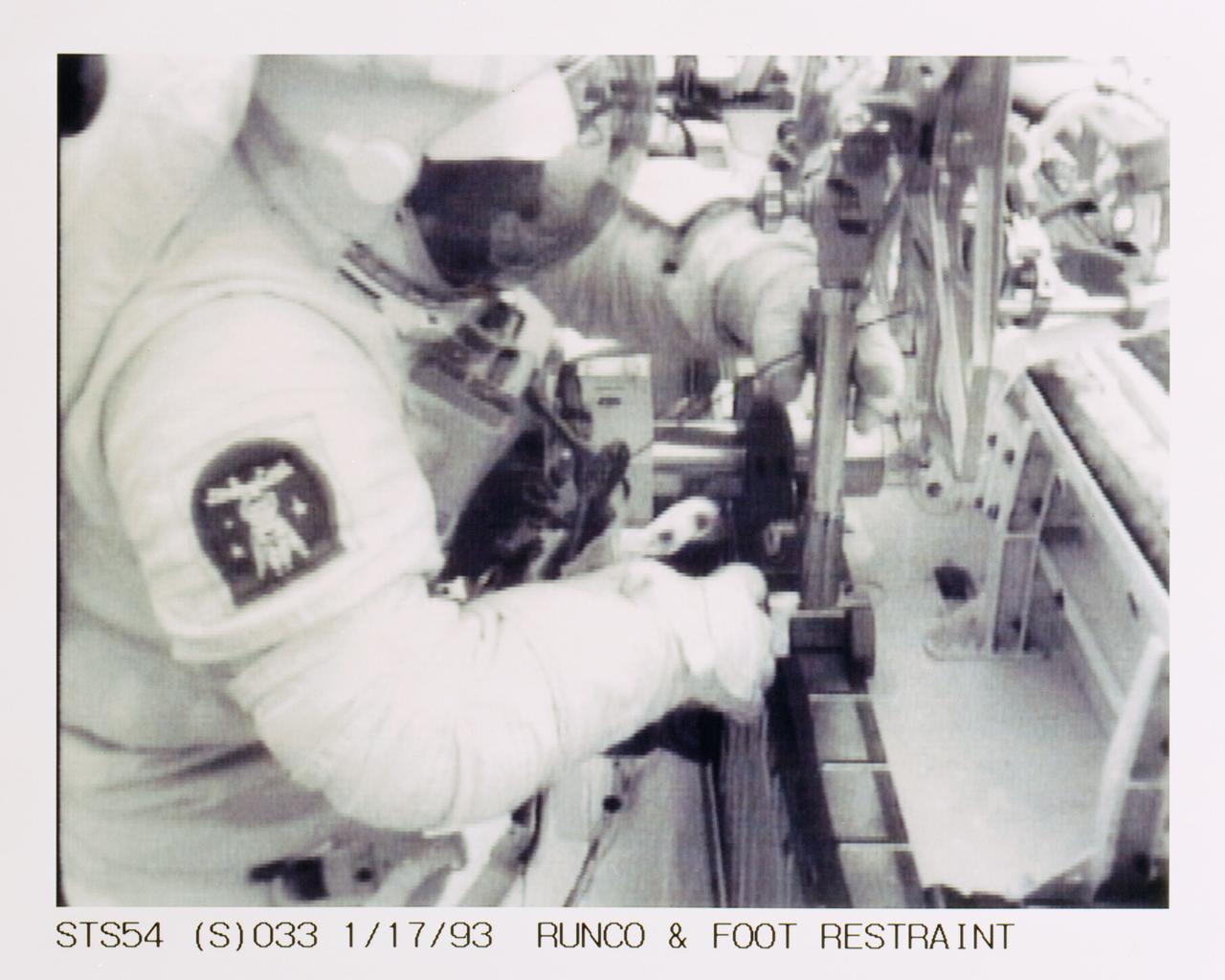
STS054-S-033 (17 Jan 1993) --- Runco works with a mobile foot restraint during extravehicular activity (EVA) in Endeavour's cargo bay. The scene was downlinked at 11:52:04:28 GMT, Jan. 17, 1993.

S61-E-012 (5 Dec 1993) --- This view of astronauts Kathryn C. Thornton (top) and Thomas D. Akers working on the Hubble Space Telescope (HST) was photographed with an Electronic Still Camera (ESC), and down linked to ground controllers soon afterward. Thornton, anchored to the end of the Remote Manipulator System (RMS) arm, is teaming with Akers to install the +V2 Solar Array Panel as a replacement for the original one removed earlier. Akers uses tethers and a foot restraint to remain in position for the task. Electronic still photography is a relatively new technology which provides the means for a handheld camera to electronically capture and digitize an image with resolution approaching film quality. The electronic still camera has flown as an experiment on several other shuttle missions.
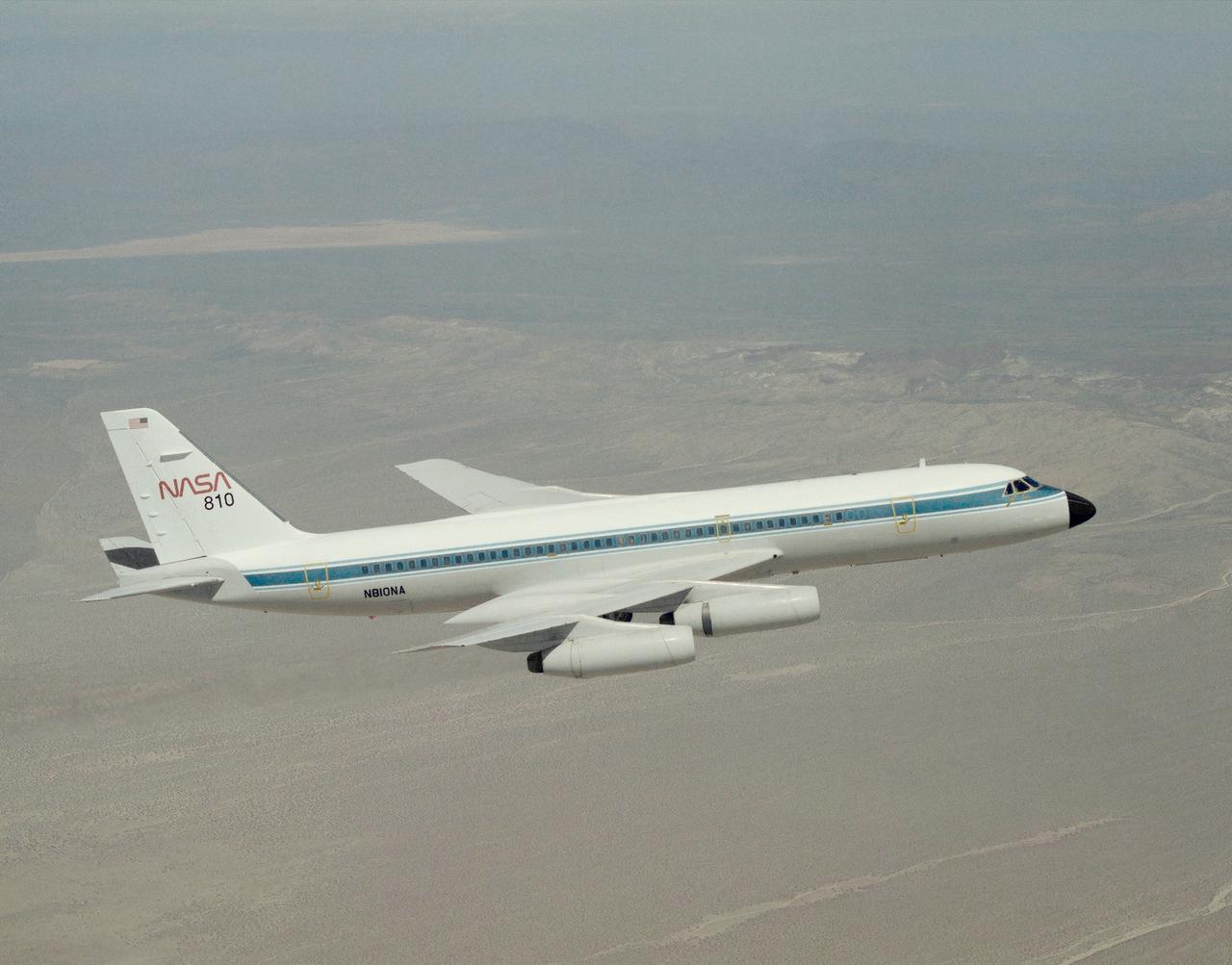
A NASA CV-990, modified as a Landing Systems Research Aircraft (LSRA), in flight over NASA's Dryden Flight Research Center, Edwards, California, for a test of the space shuttle landing gear system. The space shuttle landing gear test unit, operated by a high-pressure hydraulic system, allowed engineers to assess and document the performance of space shuttle main and nose landing gear systems, tires and wheel assemblies, plus braking and nose wheel steering performance. The series of 155 test missions for the space shuttle program provided extensive data about the life and endurance of the shuttle tire systems and helped raise the shuttle crosswind landing limits at Kennedy.
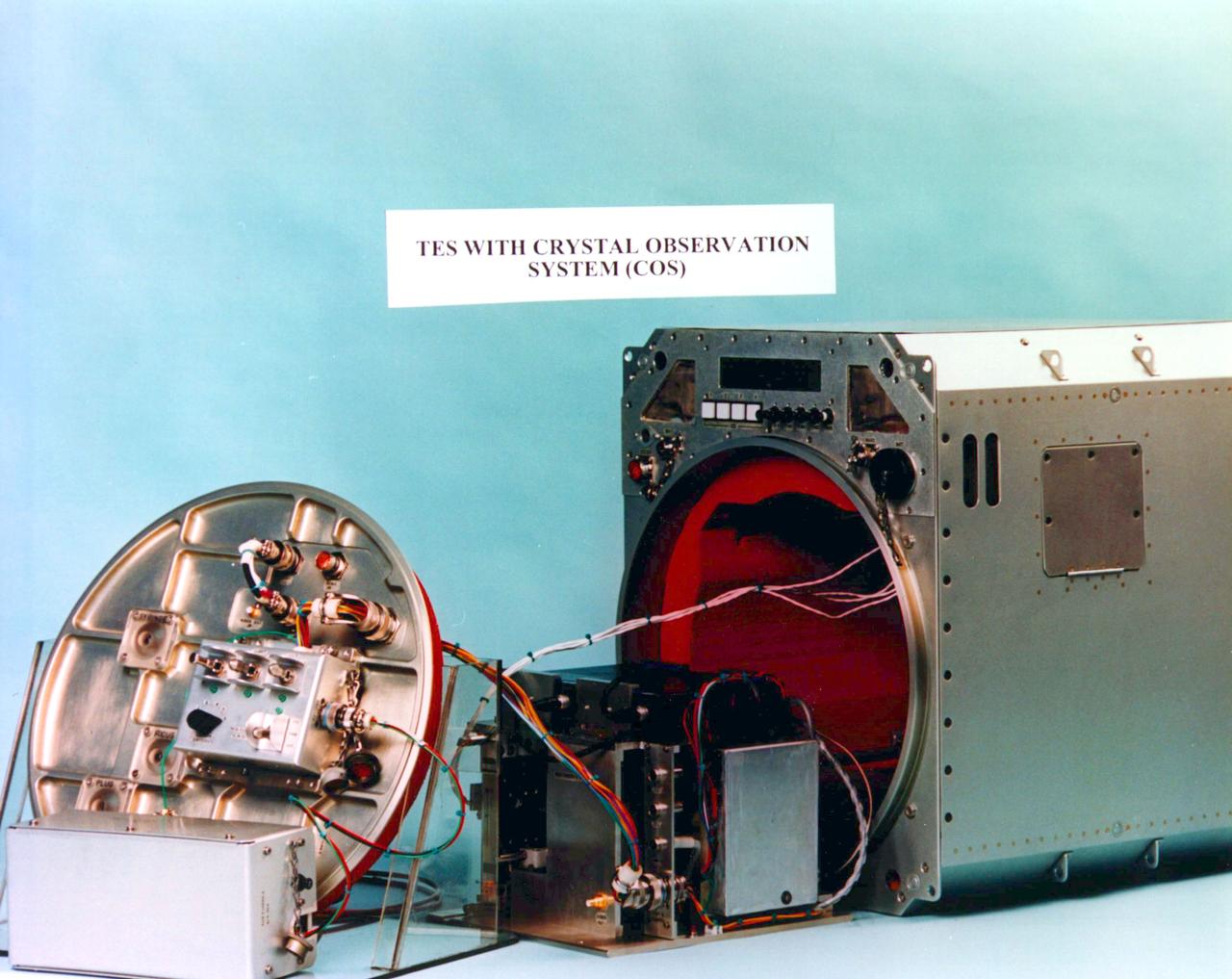
The COS consists of a specially designed (VDA) Vapor Diffusion Apparatus tray with 6 chambers, a video camera for each chamber, a lighting system, and associated hardware. By observing the crystal growth in each chamber, researchers can identify which conditions and concentrations of proteins and precipitants are best for promoting the crystal growth to a particular protein.
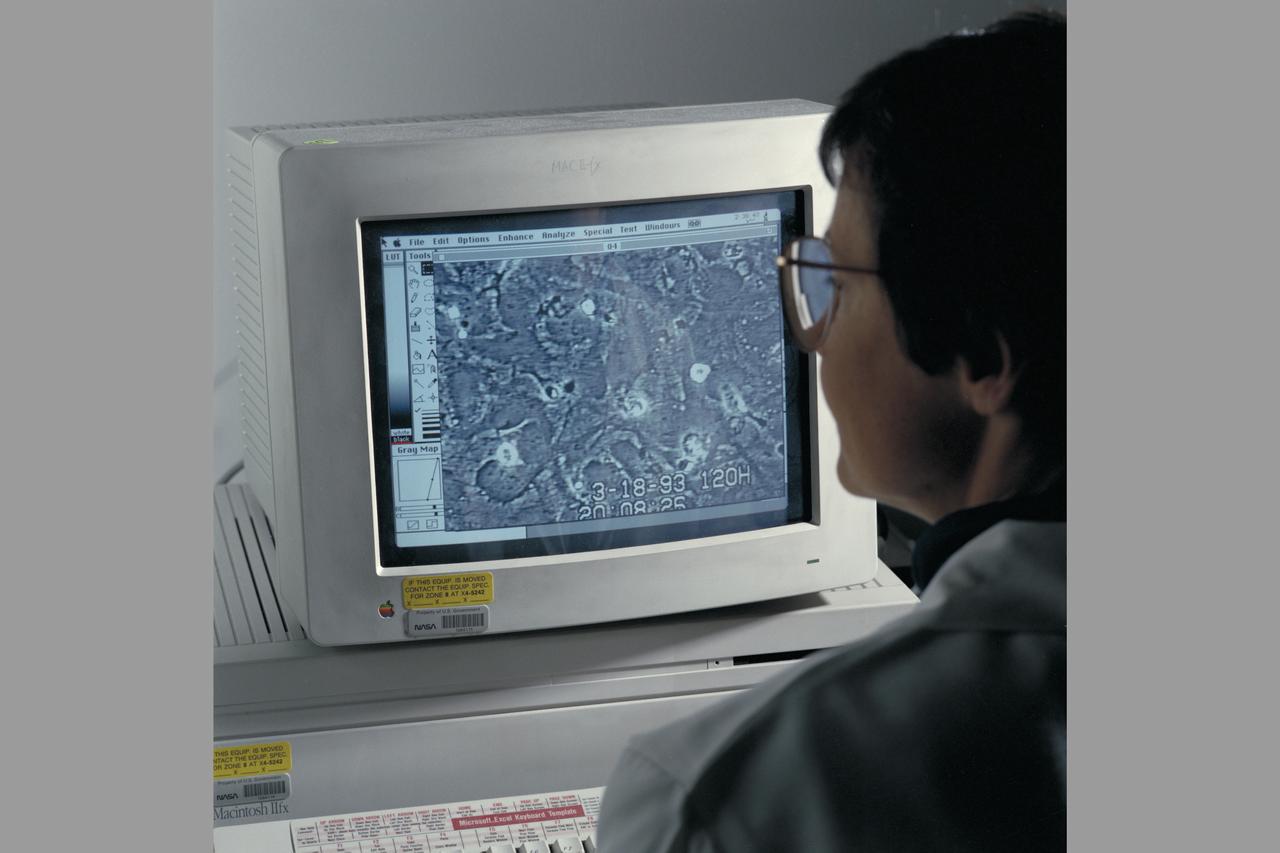
Life Sceince Division Facilities, Labs and Personnel (Code-SL) Nancy Dounton
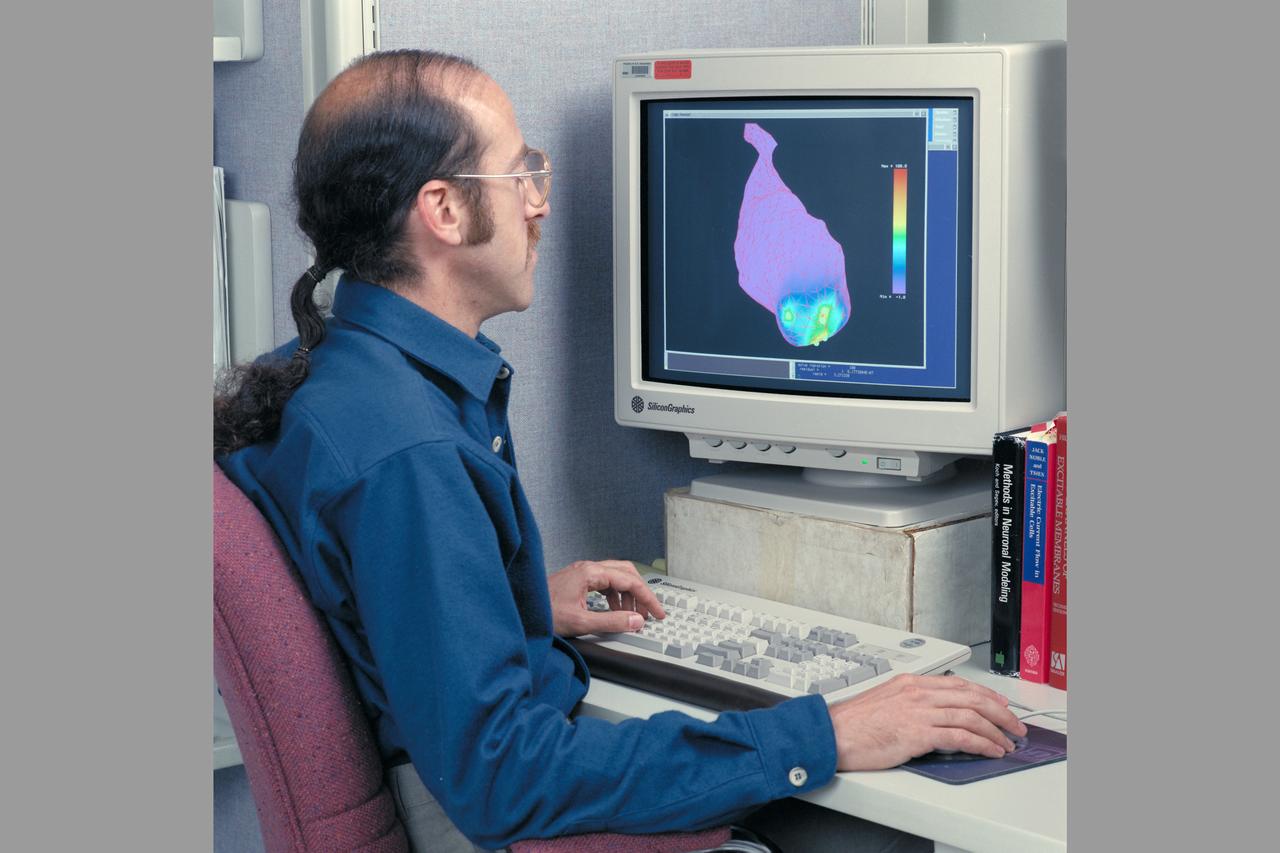
Life Sceince Division Facilities, Labs and Personnel (Code-SL) David Doshay
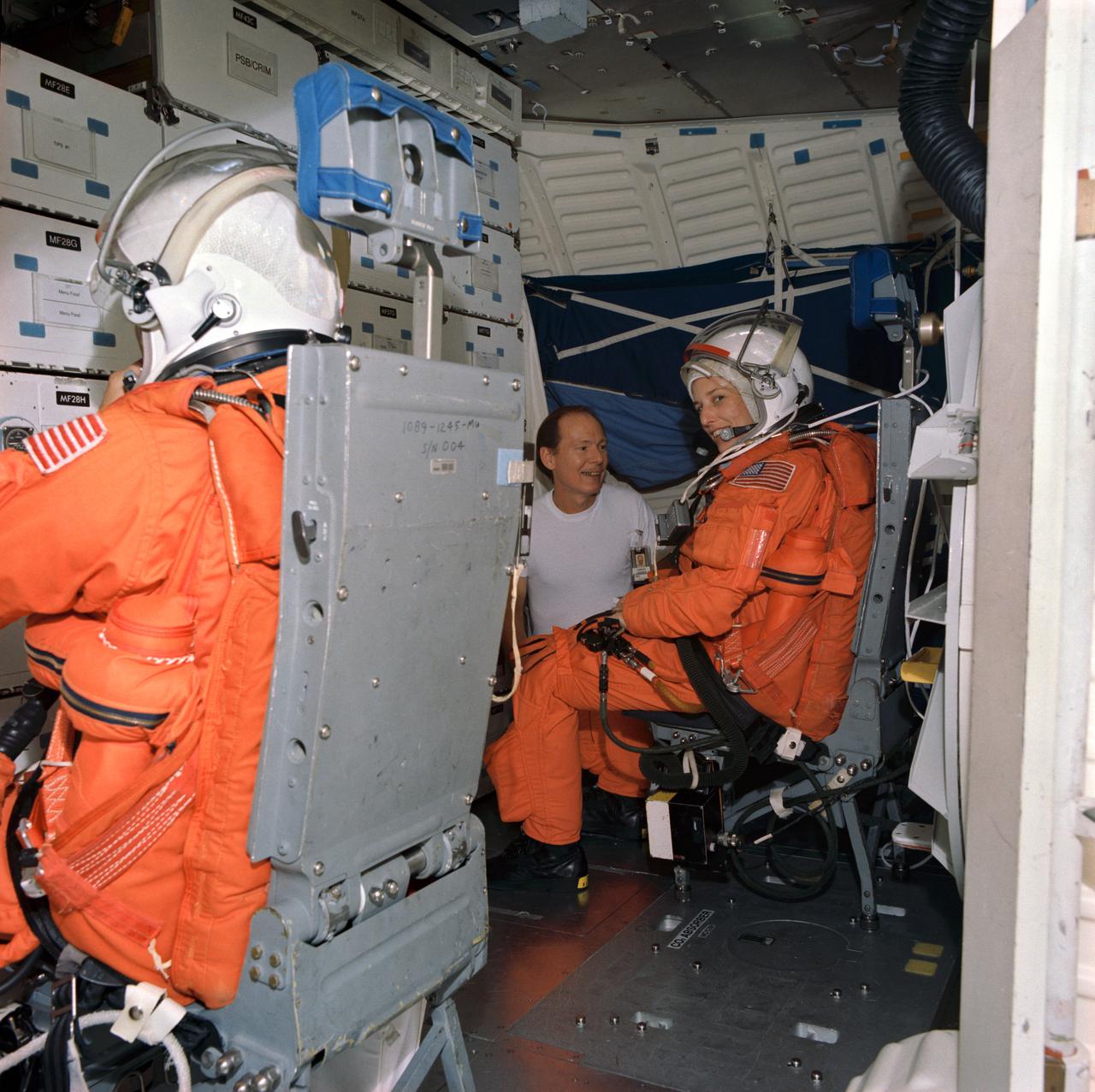
Astronauts Charles F. Bolden Jr. (left) and Kenneth S. Reightler, commander and pilot, respectively, for the STS-60 mission, rehearse some of their duties on the flight deck of the crew compartment trainer in JSC's Shuttle mockup and integration laboratory (50652); Astronaut N. Jan Davis, mission specialist for STS-60, gets assistance with her suit from Lockheed's Max Kandler during a training session at JSC's Shuttle mockup and integration laboratory. She is seated in the mission specialist station on the middeck mockup (50653).
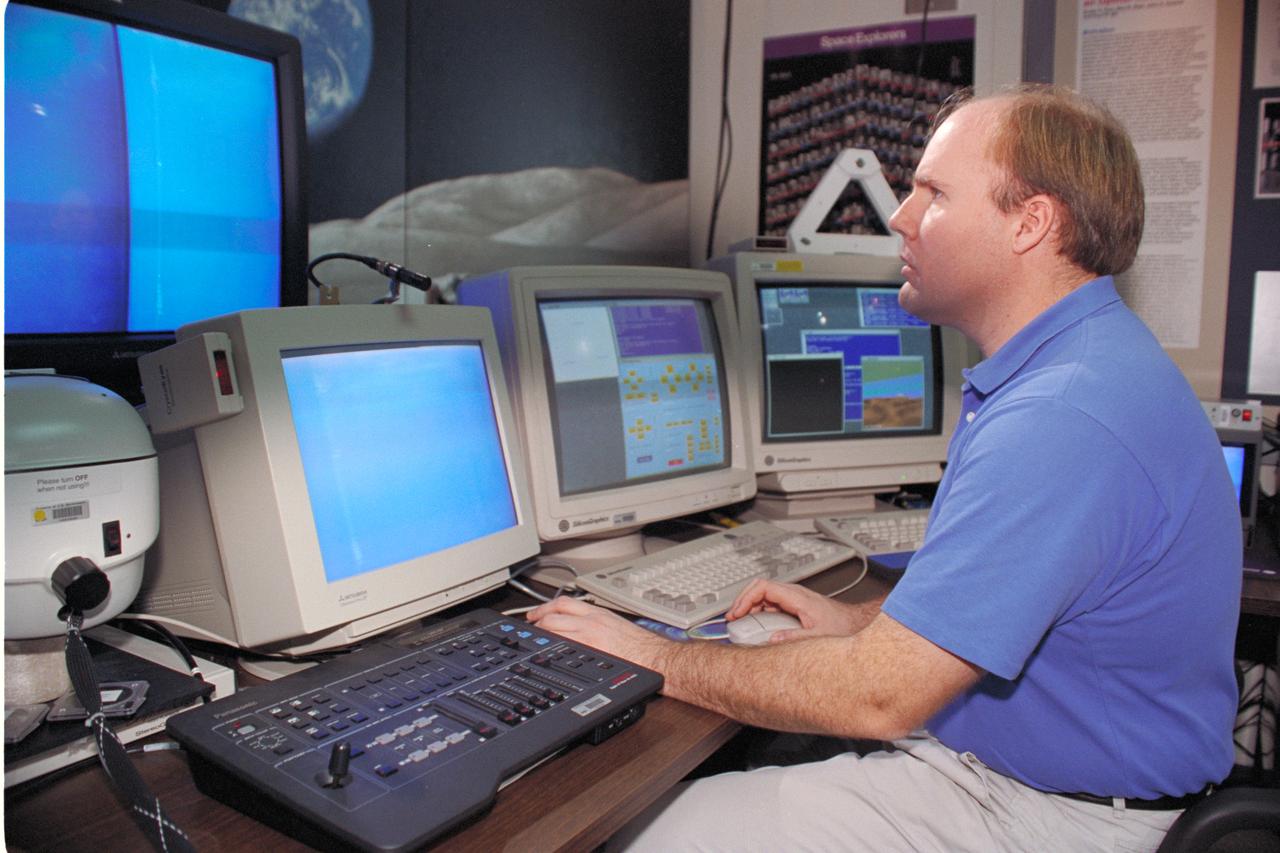
'Life from other Worlds' with McNair Middle School TROV robot explores under Antarctic ice - image of Bob Hines controlling the TROV
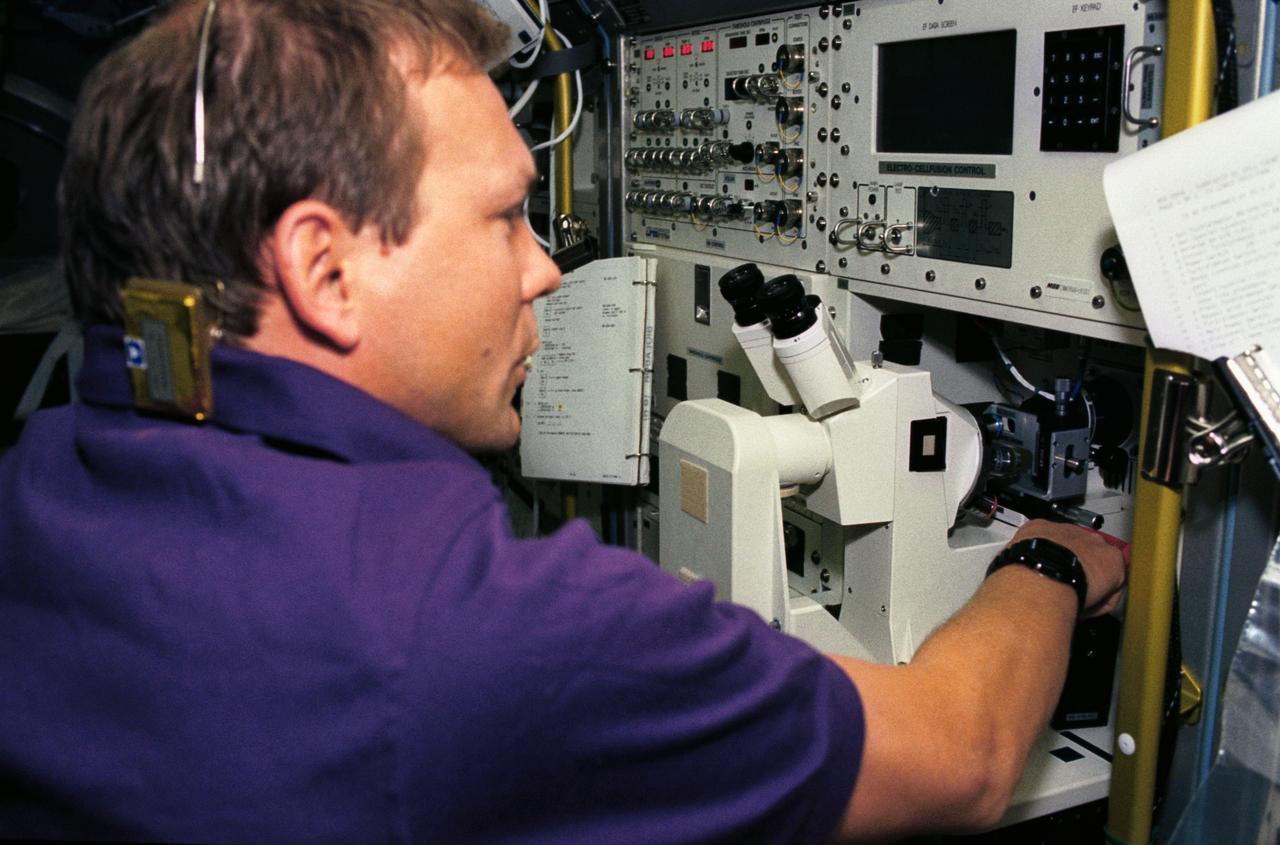
STS055-233-025 (26 April-6 May 1993) --- German payload specialist Hans Schlegel uses a microscope at the Biolabor workstation in the Spacelab D-2 science module. The Biolabor facility is a life sciences and biotechnology research device developed by Germany (MBB/ERNO) for use aboard Spacelab. Schlegel was joined by five NASA astronauts and a fellow German payload specialist for the 10-day mission aboard the Space Shuttle Columbia.
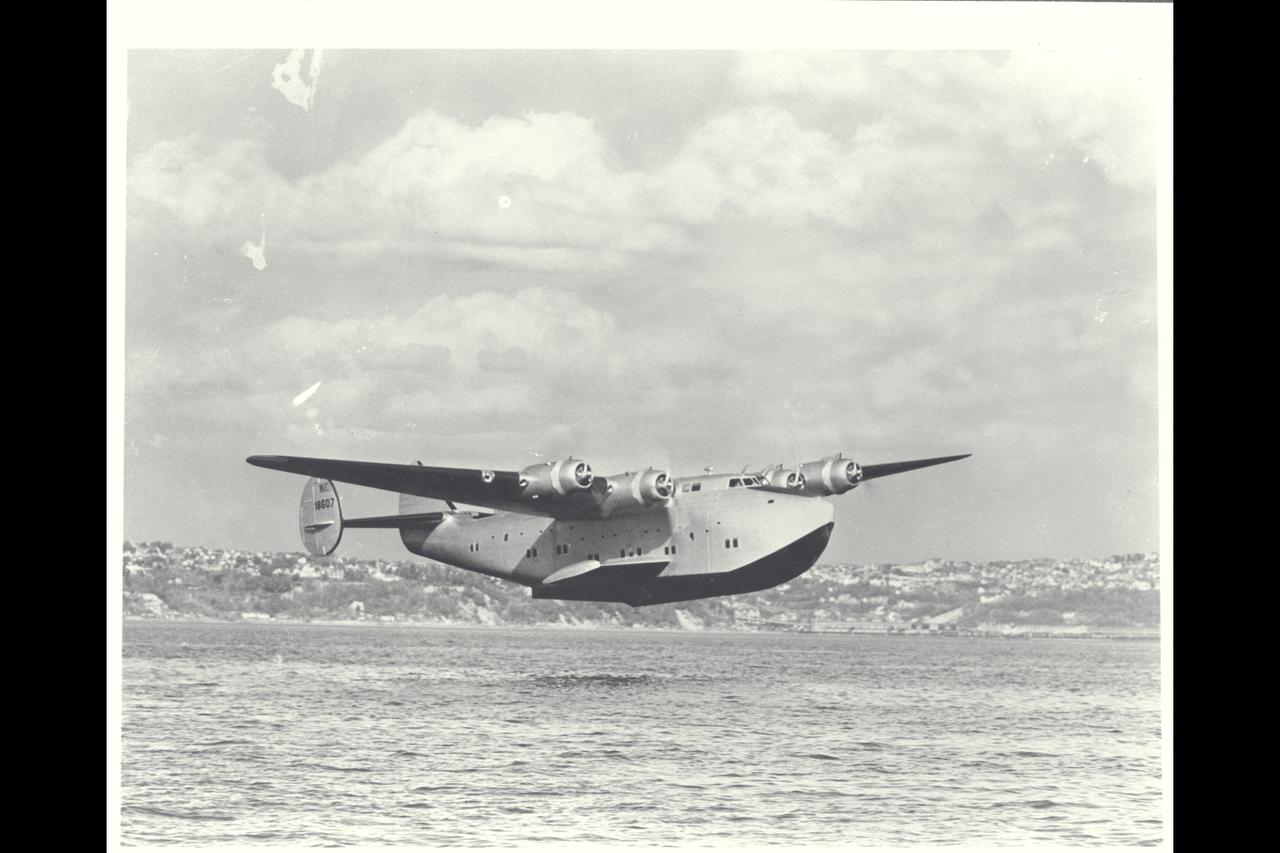
Boeing 314 Airplane
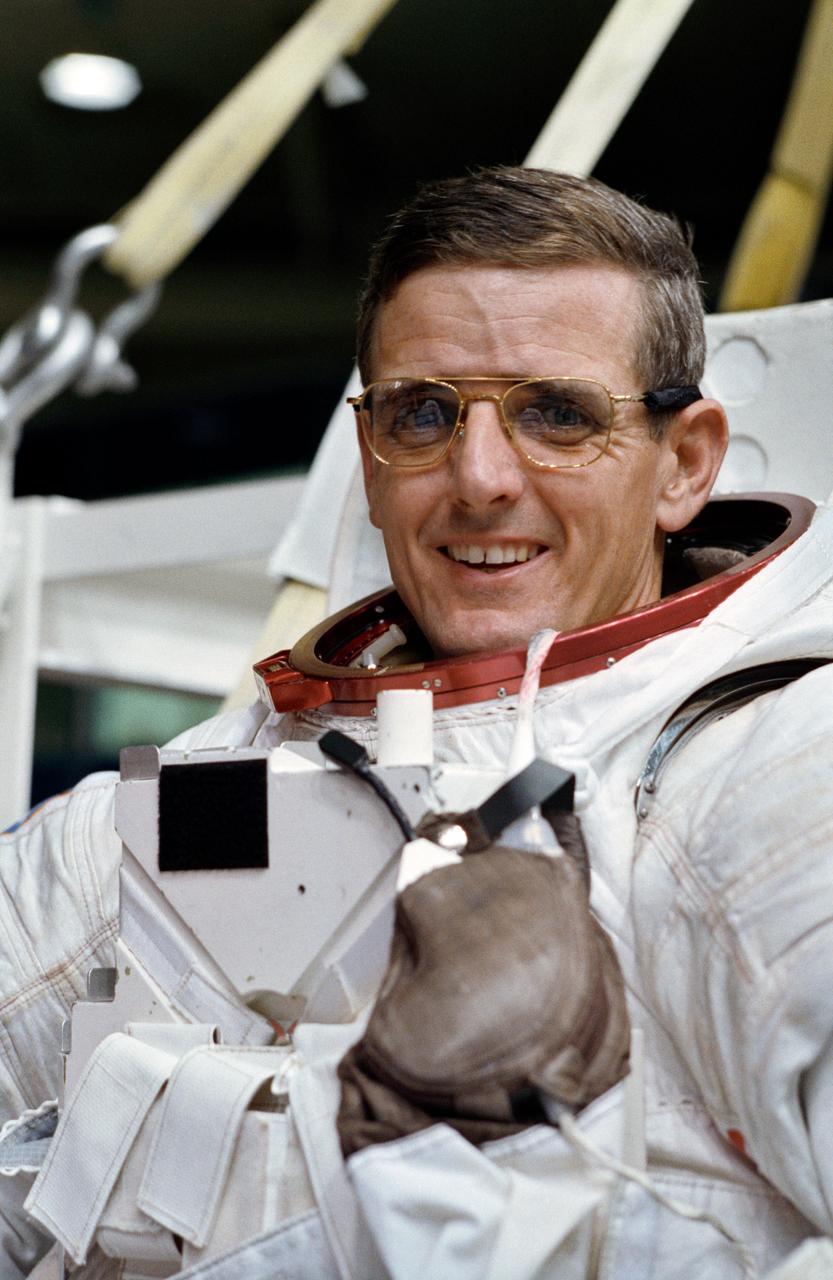
S93-43840 (6 Sept 1993) --- Astronaut William S. McArthur, mission specialist, participates in training for contingency Extravehicular Activity (EVA) for the STS-58 mission. For simulation purposes, McArthur was about to be submerged to a point of neutral buoyancy in the Johnson Space Center's (JSC) Weightless Environment Training Facility (WET-F). Though the Spacelab Life Sciences (SLS-2) mission does not include a planned EVA, all crews designate members to learn proper procedures to perform outside the spacecraft in the event of failure of remote means to accomplish those tasks.
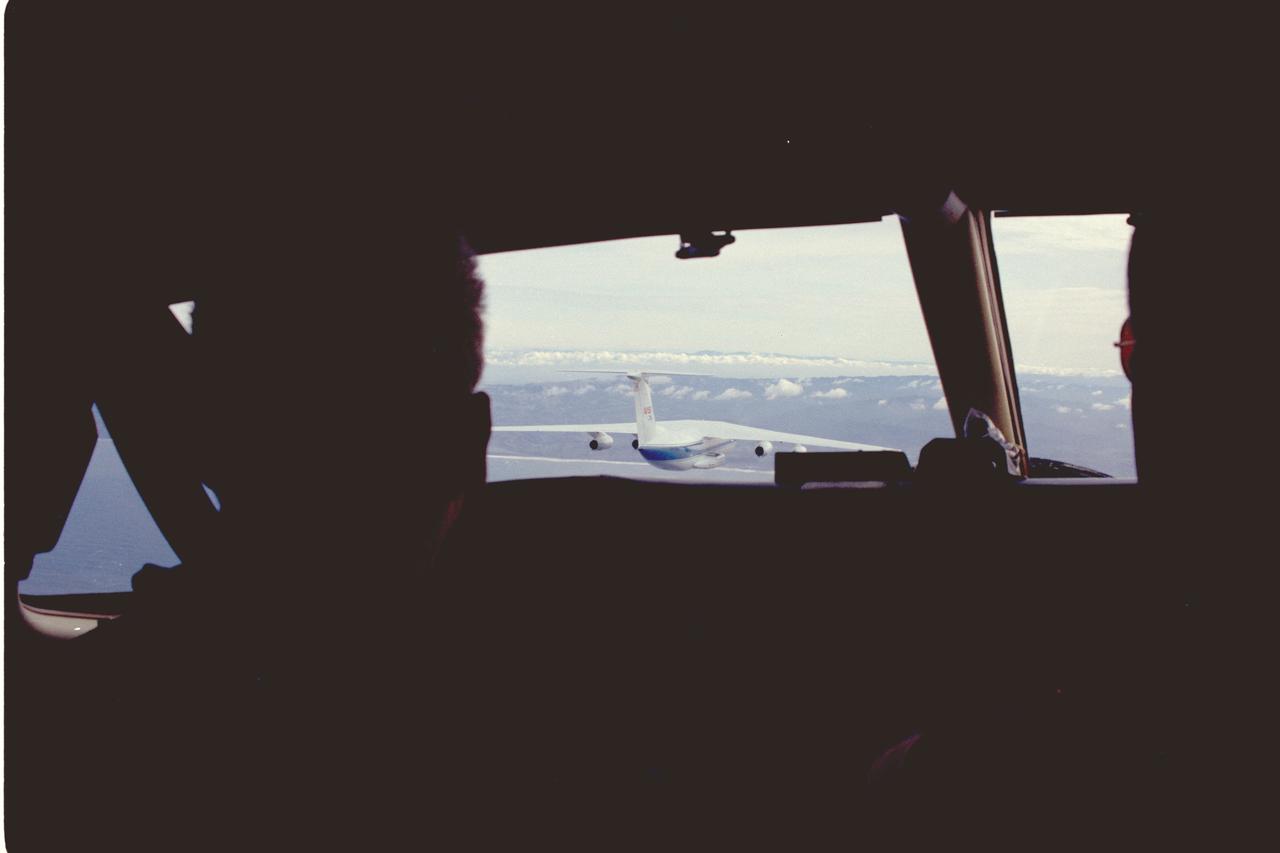
C-141 (NASA-714) in flight view from the cockpit.
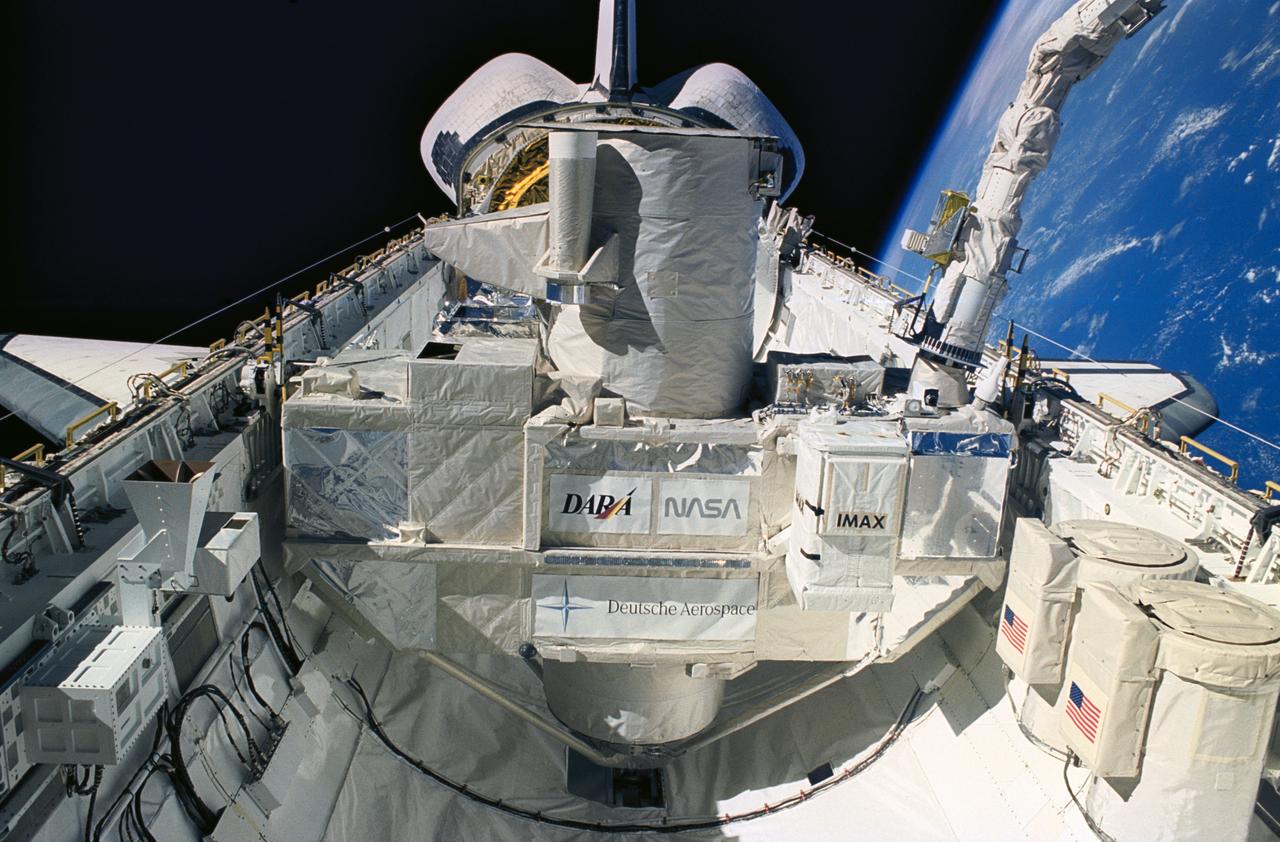
STS051-15-035 (19 Sept 1993) --- Backdropped against black space and the blue and white Earth, the Orbiting Retrievable Far and Extreme Ultraviolet Spectrometer (ORFEUS) and its Shuttle Pallet Satellite (SPAS) are pictured during berthing in Discovery's cargo bay. The free-flying craft had spent several days orbiting at a distance from Discovery with several experiments in operation. Here, the satellite is still in the grasp of the Canadian-built Remote Manipulator System (RMS), which was used also for the earlier deployment.
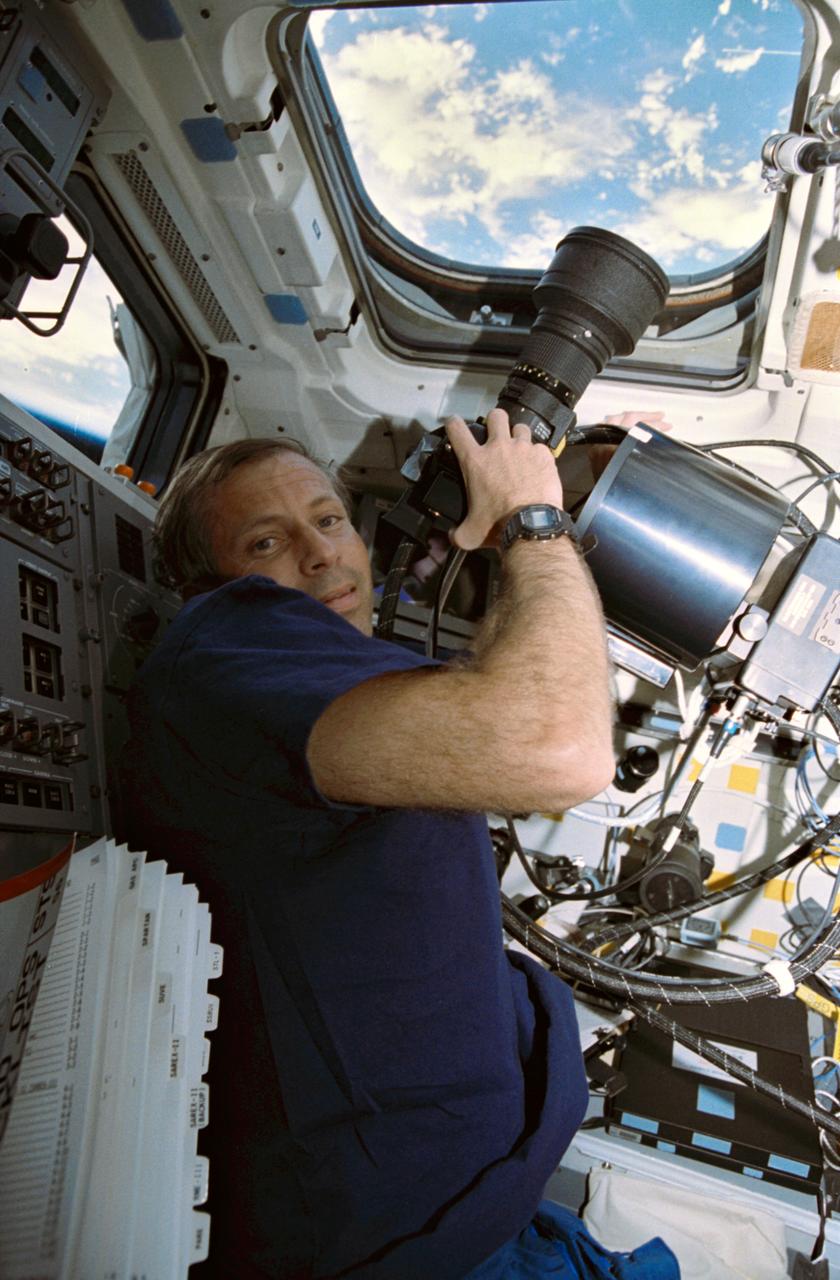
STS056-08-018 (8-17 April 1993) --- Aboard Discovery, astronaut Kenneth D. Cockrell, mission specialist, records Earth imagery with the Hand-Held, Earth-Oriented, Real-Time, Cooperative, User-Friendly, Location-Targeting and Environmental System (HERCULES). HERCULES is a device that makes it simple for Shuttle crew members to take pictures of Earth, as they merely point a modified 35mm camera and shoot any interesting feature, whose latitude and longitude are automatically determined in real-time. The powder-box shaped attachment is the Inertial Measurement Unit (IMU) for the system. The STS-56 crew downlinked a number of the still images during the flight, while others are likely to be stored on disc and returned to Earth with the crew.
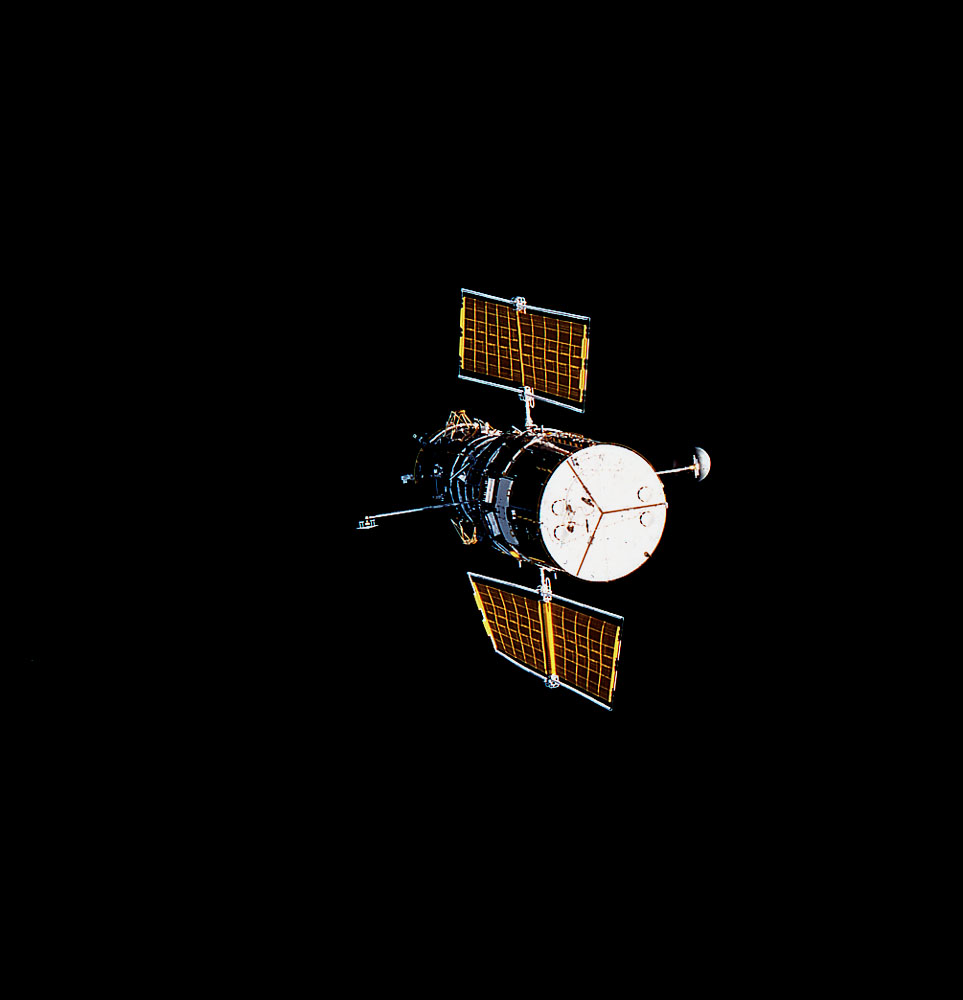
The Hubble Space Telescope (HST) begins its separation from the space shuttle Endeavour following a week and a half of repairs while in the space vehicle's cargo bay.
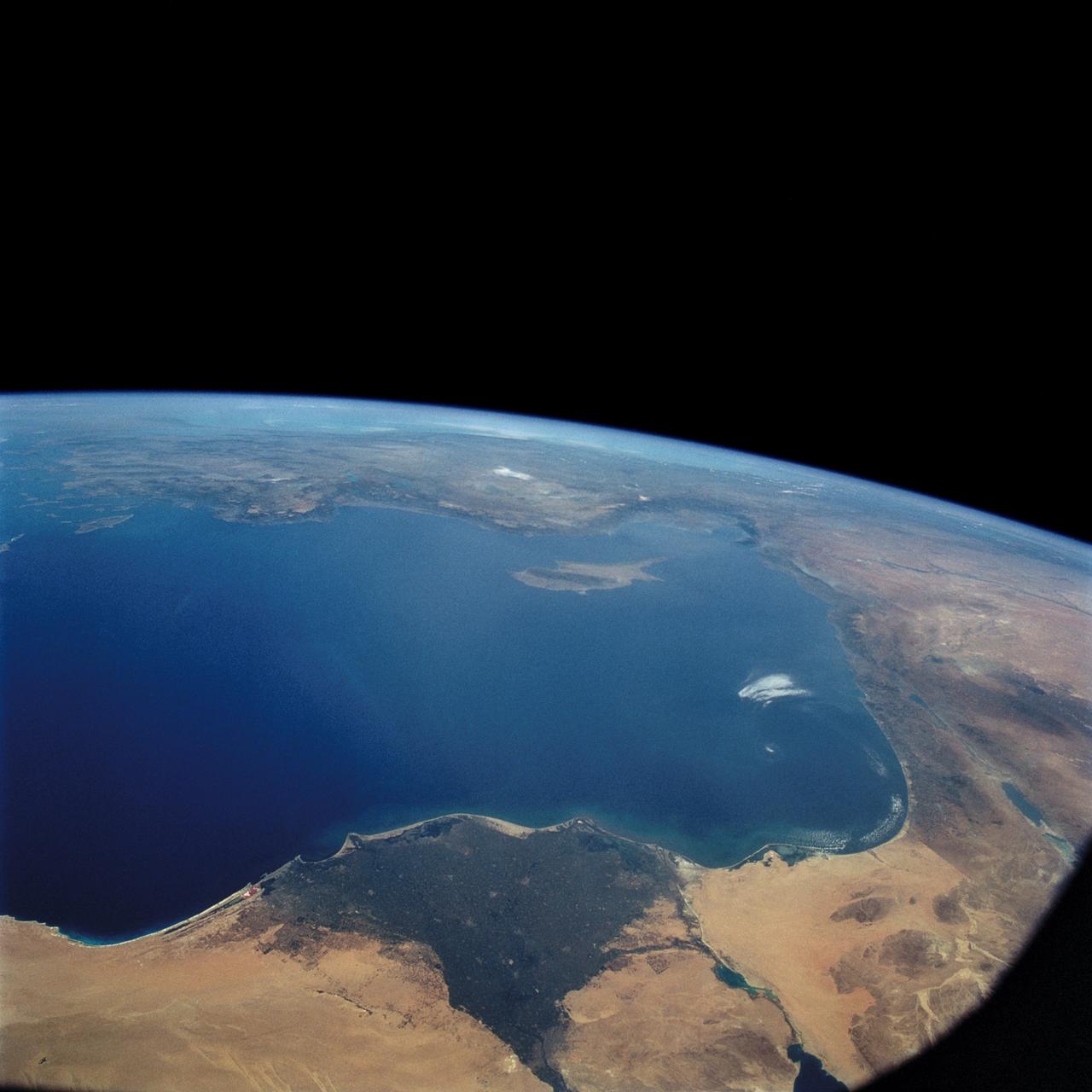
STS057-73-075 (21 June-1 July 1993) --- Eastern Mediterranean from an unusually high vantage point over the Nile River, this north-looking view shows not only the eastern Mediterranean but also the entire landmass of Asia Minor, with the Black Sea dimly visible at the horizon. Many of the Greek islands can be seen in the Aegean Sea (top left), off the coast of Asia Minor. Cyprus is visible under atmospheric dust in the northeast corner of the Mediterranean. The dust cloud covers the east end of the Mediterranean, its western edge demarcated by a line that cuts the center of the Nile Delta. This dust cloud originated far to the west, in Algeria, and moved northeast over Sicily, southern Italy, and Greece. Part of the cloud then moved on over the Black Sea, but another part swerved southward back towards Egypt. A gyre of clouds in the southeast corner of the Mediterranean indicates a complementary counterclockwise (cyclonic) circulation of air. The Euphrates River appears as a thin green line (upper right) in the yellow Syrian Desert just south of the blue-green mountains of Turkey. The Dead Sea (lower right) lies in a rift valley which extends north into Turkey and south thousands of miles down the Gulf of Aqaba, the Red Sea, and on through East Africa. The straight international boundary between Israel and Egypt (where the coastline angles) is particularly clear in this view, marked by the thicker vegetation on the Israeli side of the border. The green delta of the Nile River appears in the foreground, with the great conurbation of Cairo seen as a gray area at the apex of the triangle. Most of Egypt's 52 million inhabitants live in the delta. On the east side of the delta, the Suez Canal is visible. On the western corner of the delta lies the ancient city of Alexandria, beside the orange and white salt pans. The World War II battlesite El Alamein lies on the coast.
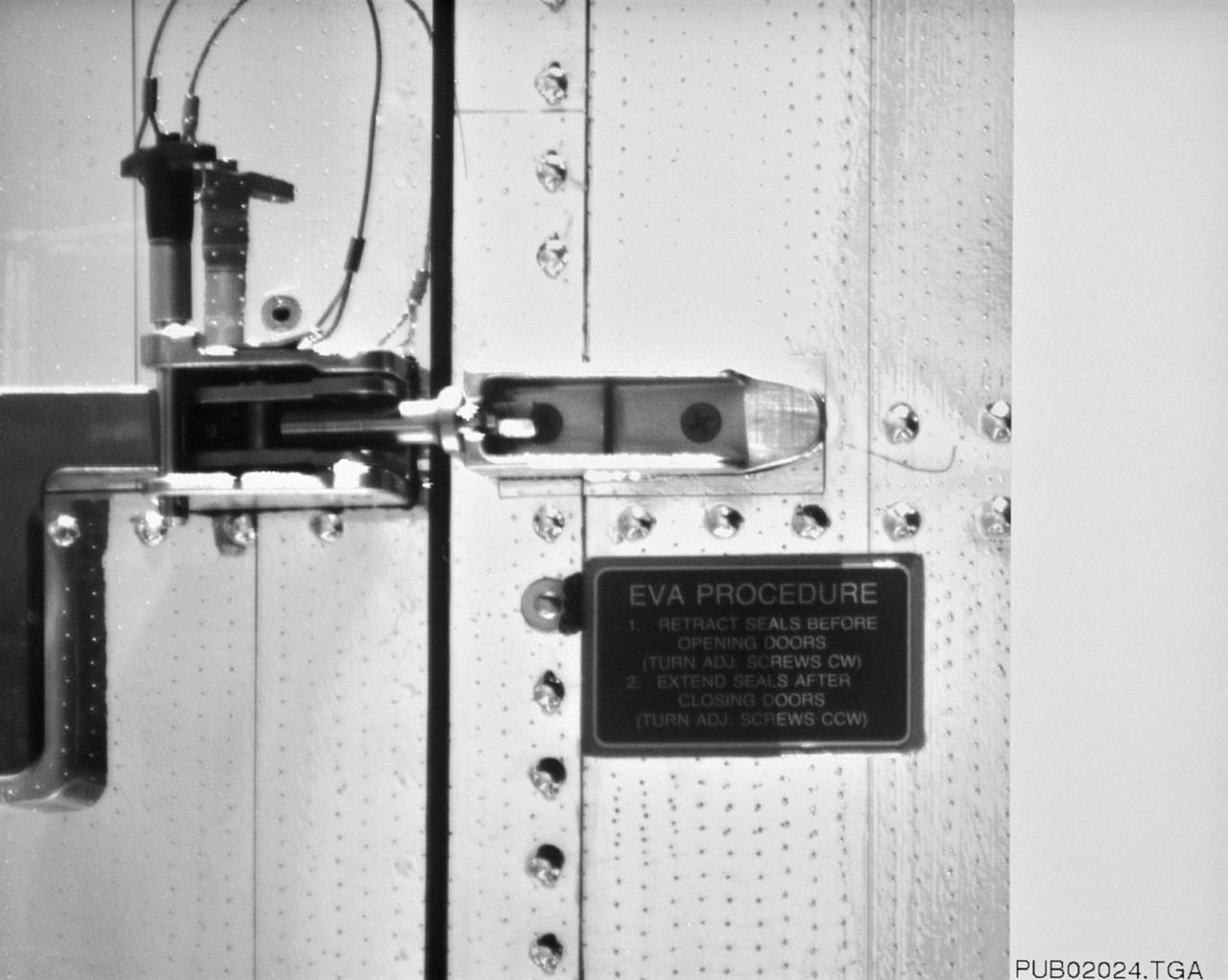
S61-E-010 (4 Dec 1993) --- This close-up view of a latch on the minus V3 aft shroud door of the Hubble Space Telescope (HST) was photographed with an Electronic Still Camera (ESC), and down linked to ground controllers soon afterward. Endeavour's crew captured the HST on December 4, 1993 in order to service the telescope over a period of five days. Four of the crew members will work in alternating pairs outside Endeavour's shirt sleeve environment to service the giant telescope. Electronic still photography is a relatively new technology which provides the means for a handheld camera to electronically capture and digitize an image with resolution approaching film quality. The electronic still camera has flown as an experiment on several other shuttle missions.
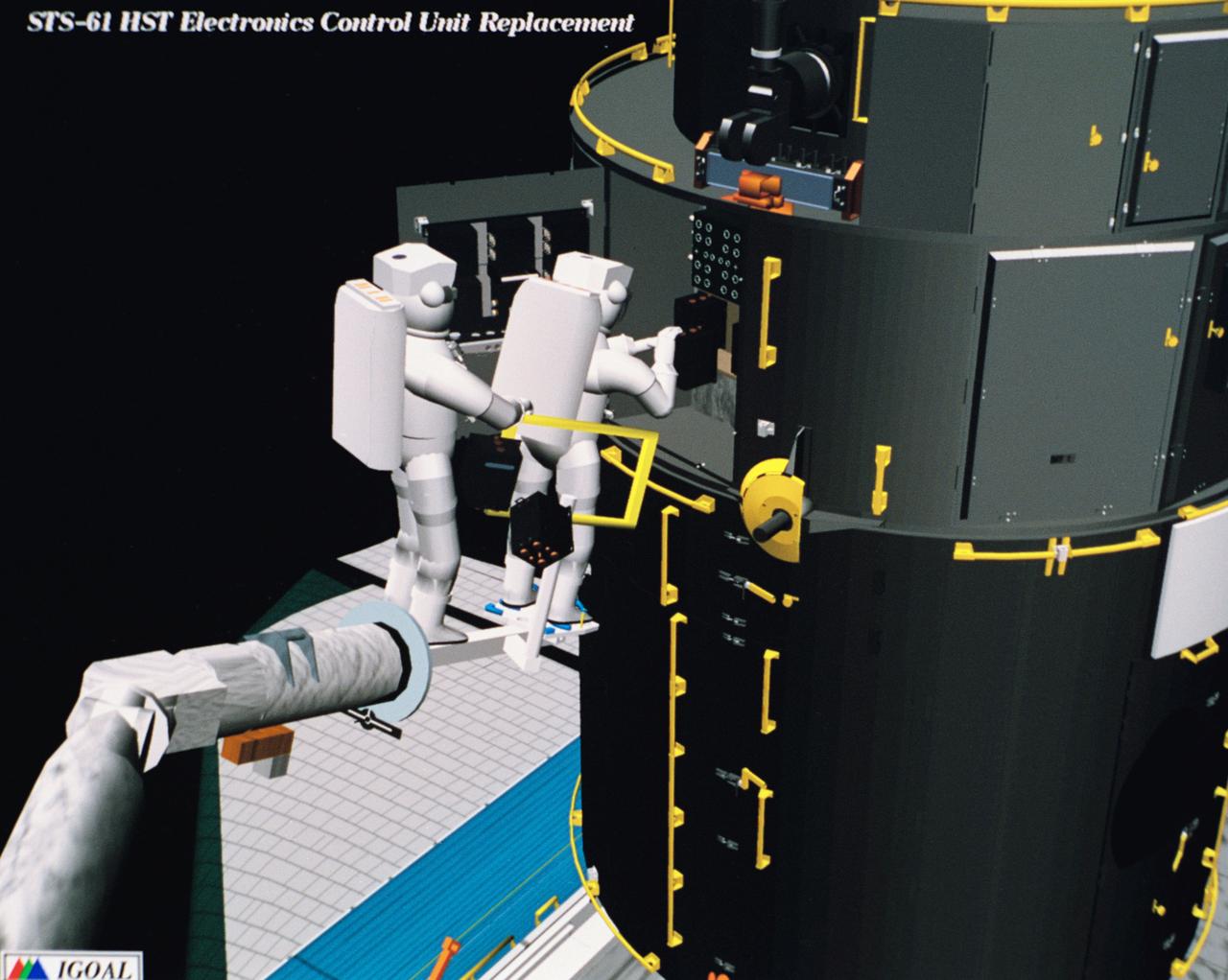
Computer generated scenes depicting the Hubble Space Telescope capture and a sequence of planned events on the planned extravehicular activity (EVA). Scenes include the Remote Manipulator System (RMS) arm assisting two astronauts changing out the Wide Field/Planetary Camera (WF/PC) (48699); RMS arm assisting in the temporary mating of the orbiting telescope to the flight support system in Endeavour's cargo bay (48700); Endeavour's RMS arm assisting in the "capture" of the orbiting telescope (48701); Two astronauts changing out the telescope's coprocessor (48702); RMS arm assistign two astronauts replacing one of the telescope's electronic control units (48703); RMS assisting two astronauts replacing the fuse plugs on the telescope's Power Distribution Unit (PDU) (48704); The telescope's High Resolution Spectrograph (HRS) kit is depicted in this scene (48705); Two astronauts during the removal of the high speed photometer and the installation of the COSTAR instrument (48706); Two astronauts, standing on the RMS, during installation of one of the Magnetic Sensing System (MSS) (48707); High angle view of the orbiting Space Shuttle Endeavour with its cargo bay doors open, revealing the bay's pre-capture configuration. Seen are, from the left, the Solar Array Carrier, the ORU Carrier and the flight support system (48708); Two astronauts performing the replacement of HST's Rate Sensor Units (RSU) (48709); The RMS arm assisting two astronauts with the replacement of the telescope's solar array panels (48710); Two astronauts replacing the telescope's Solar Array Drive Electronics (SADE) (48711).
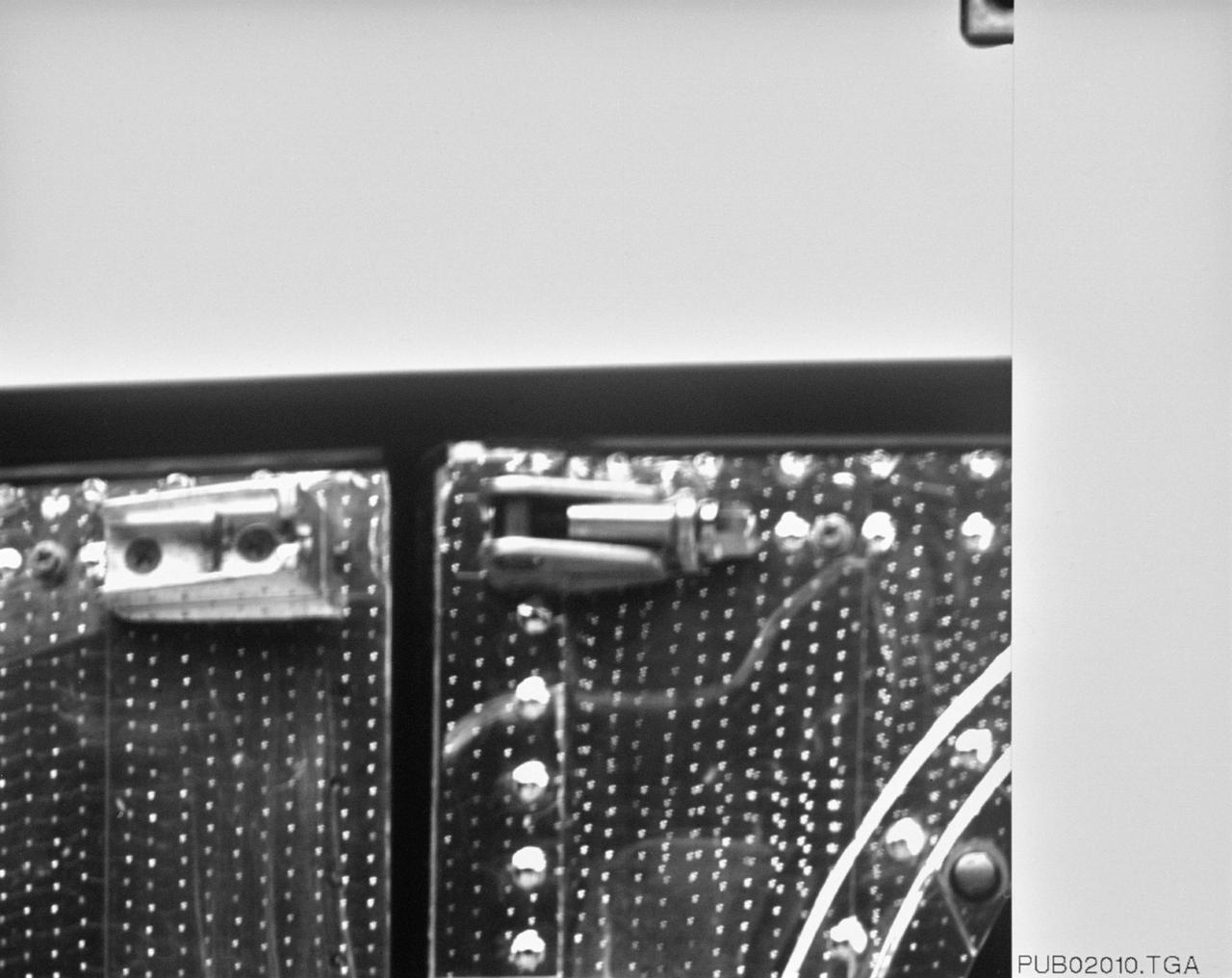
S61-E-005 (4 Dec 1993) --- This close-up view of a latch on the minus V3 aft shroud door of the Hubble Space Telescope (HST) was photographed with an Electronic Still Camera (ESC), and down linked to ground controllers soon afterward. Endeavour's crew captured the HST on December 4, 1993 in order to service the telescope. Over a period of five days, four of the seven crew members will work in alternating pairs outside Endeavour's shirt sleeve environment to service the giant telescope. Electronic still photography is a relatively new technology which provides the means for a handheld camera to electronically capture and digitize an image with resolution approaching film quality. The electronic still camera has flown as an experiment on several other shuttle missions.
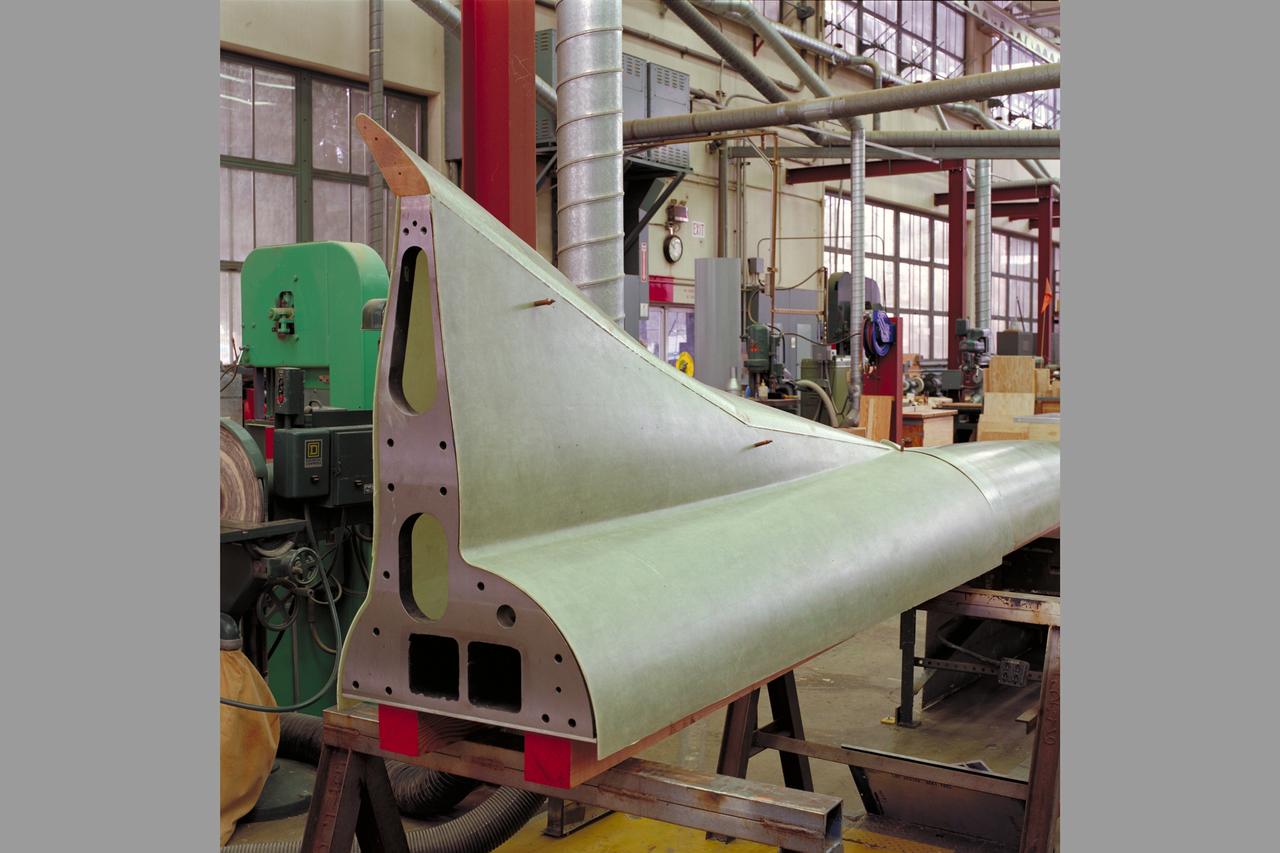
HEAT Project (High-Lift Engine Aeroacustics Technology) model assembly
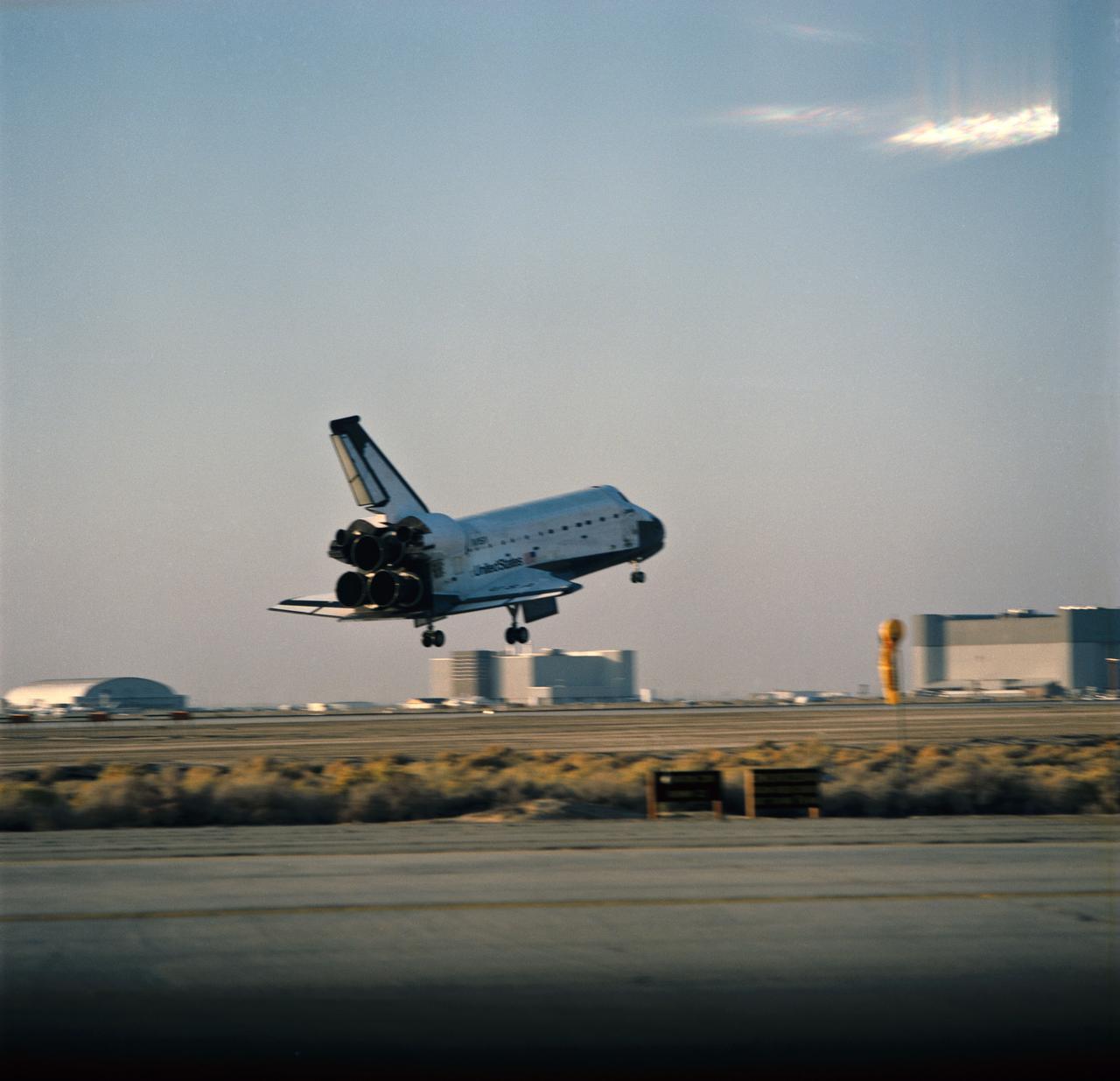
STS58-S-126 (1 Nov 1993) --- The Space Shuttle Columbia is about to touch down on the runway at Edwards Air Force Base (EAFB) in California. The landing, which occurred at 7:06 a.m. (PST), November 1, 1993, completed a two week mission in space devoted to medical research. Onboard the spacecraft were astronauts John E. Blaha, Richard A. Searfoss, Rhea Seddon, Shannon W. Lucid, David A. Wolf and William S. McArthur along with payload specialist Martin J. Fettman, DVM.
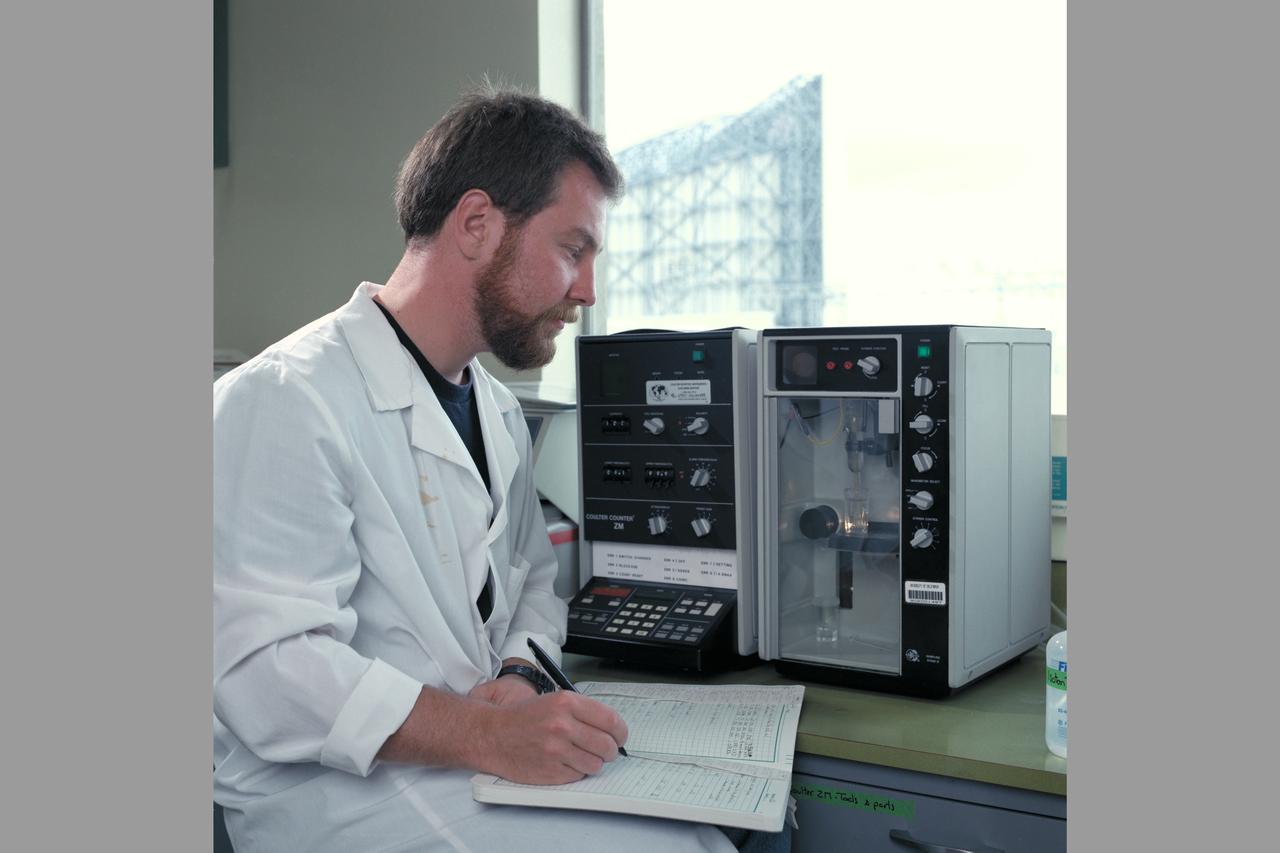
Life Sciences Division (code SL) laboratories and personnel: Alexandre Malourier

Life from other Worlds' with McNair Middle School TROV robot explores under Antarctic ice - image of Ron Schutz
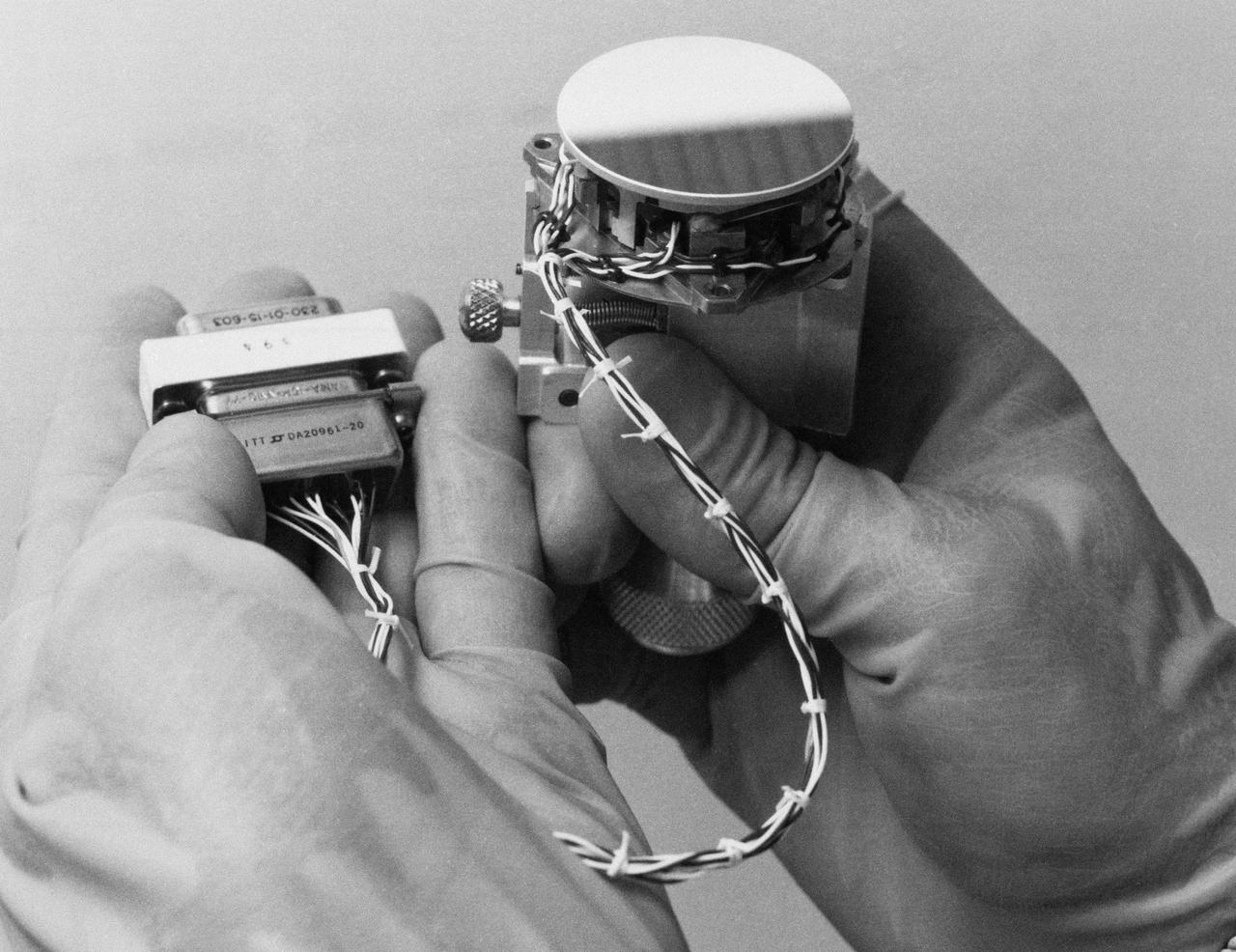
S93-33257 (15 Mar 1993) --- This close-up view features tiny articulating fold mirrors that will go into a replacement camera for the Wide Field\Planetary Camera (WF\PC-1) currently on the Hubble Space Telescope (HST). A team of NASA astronauts will pay a visit to the HST later this year, carrying with them the new WF/PC-2 to replace the one currently on the HST. The Jet Propulsion Laboratory (JPL) in Pasadena, California has been working on the replacement system for several months. See NASA photo S93-33258 for an optical schematic diagram of one of the four channels of the WF\PC-2 showing the path taken by beams from the HST before an image is formed at the camera's charge-coupled devices.
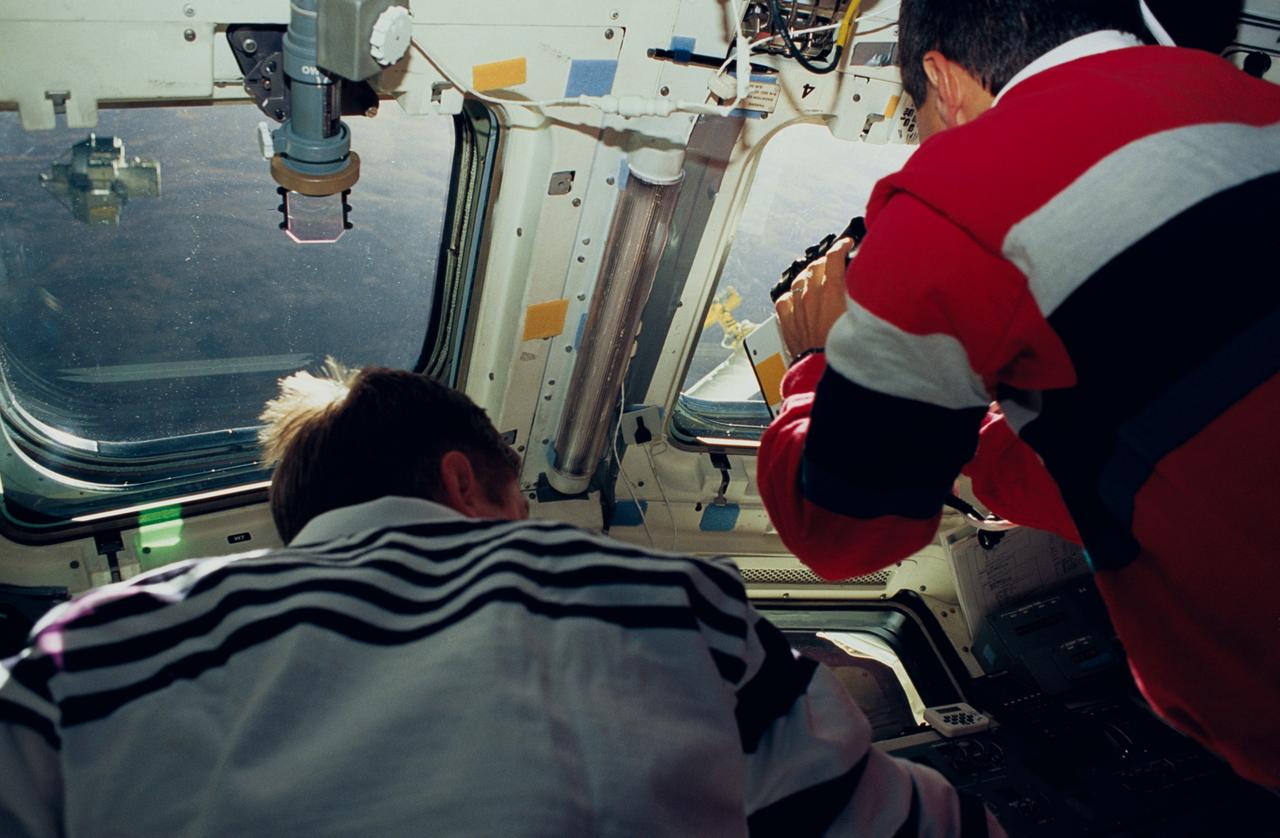
Astronauts Frank L. Culbertson Jr., STS-51 mission commander, and Daniel W. Bursch, mission specialist, are seen on Discovery's flight deck. The two were supporting operations free-flying Orbiting and Retrievable Far and Extreme Ultraviolet Spectrometer (ORFEUS) and its Shuttle Pallet Satellite (SPAS), pictured through the left window.
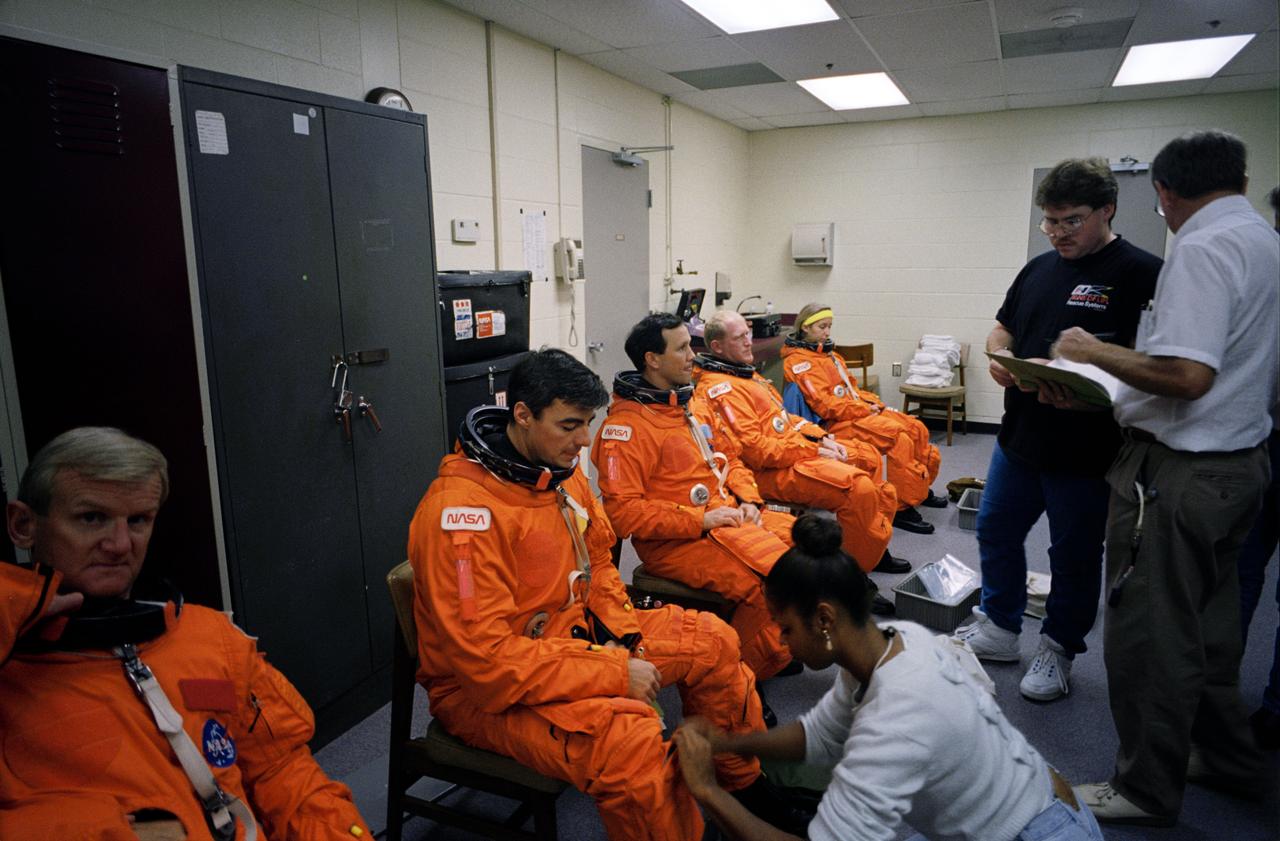
S93-48458 (5 Nov. 1993) --- In the Johnson Space Center's (JSC) Shuttle mockup and integration laboratory, the five crew members training for NASA's next mission are assisted in donning their partial pressure launch and entry suits. From left to right are astronaut John H. Casper, Andrew M. Allen, Pierre J. Thuot, Charles D. (Sam) Gemar and Marsha S. Ivins. Minutes later the crew was in the crew compartment trainer (CCT) rehearsing their scheduled March 1994 mission aboard the Space Shuttle Columbia. Launch, landing and emergency egress procedures were covered in the training session.
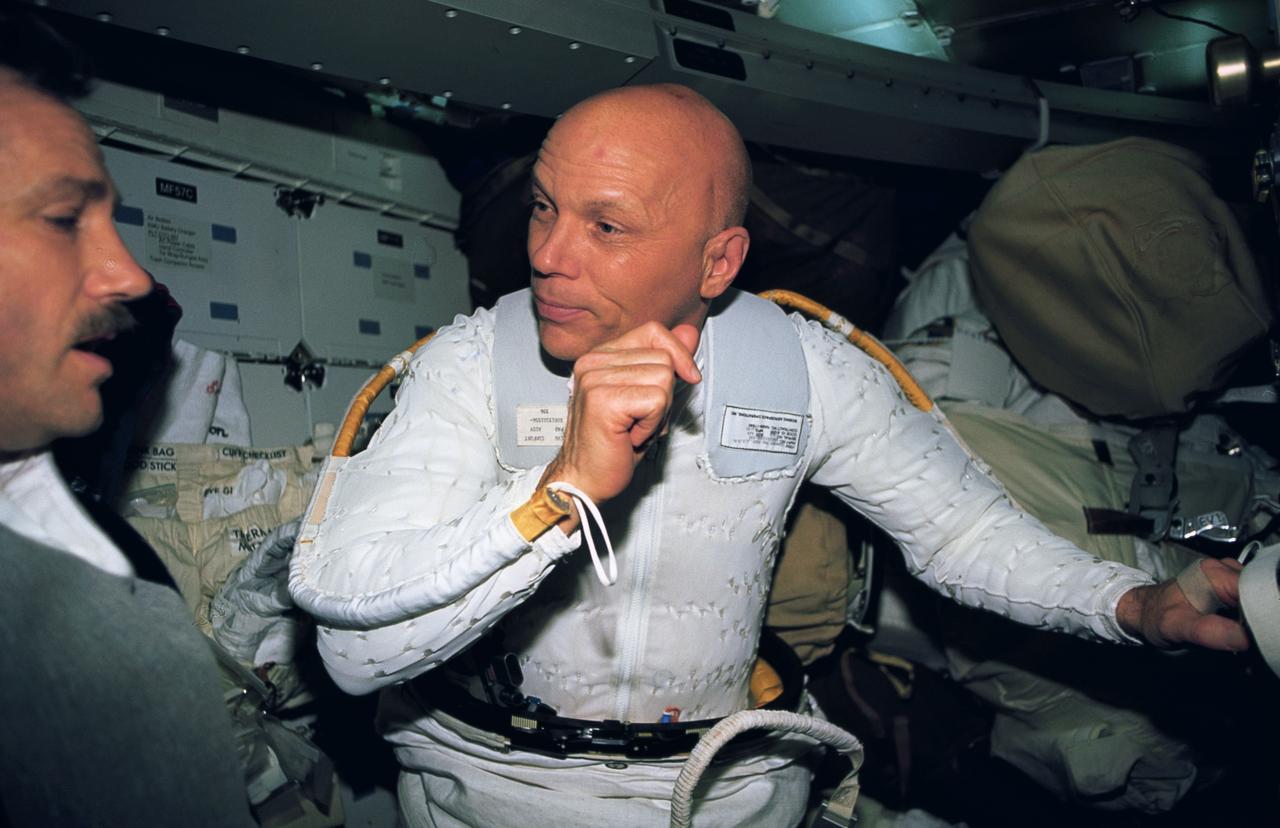
STS061-38-014 (9 Dec 1993) --- Astronaut F. Story Musgrave gets assistance from astronaut Thomas D. Akers while suiting up for the final space walk on the eleven-day, Hubble Space Telescope (HST) servicing mission. Musgrave joined astronaut Jeffrey A. Hoffman (out of frame) on three space walks, while Akers teamed with astronaut Kathryn D. Thornton for two.
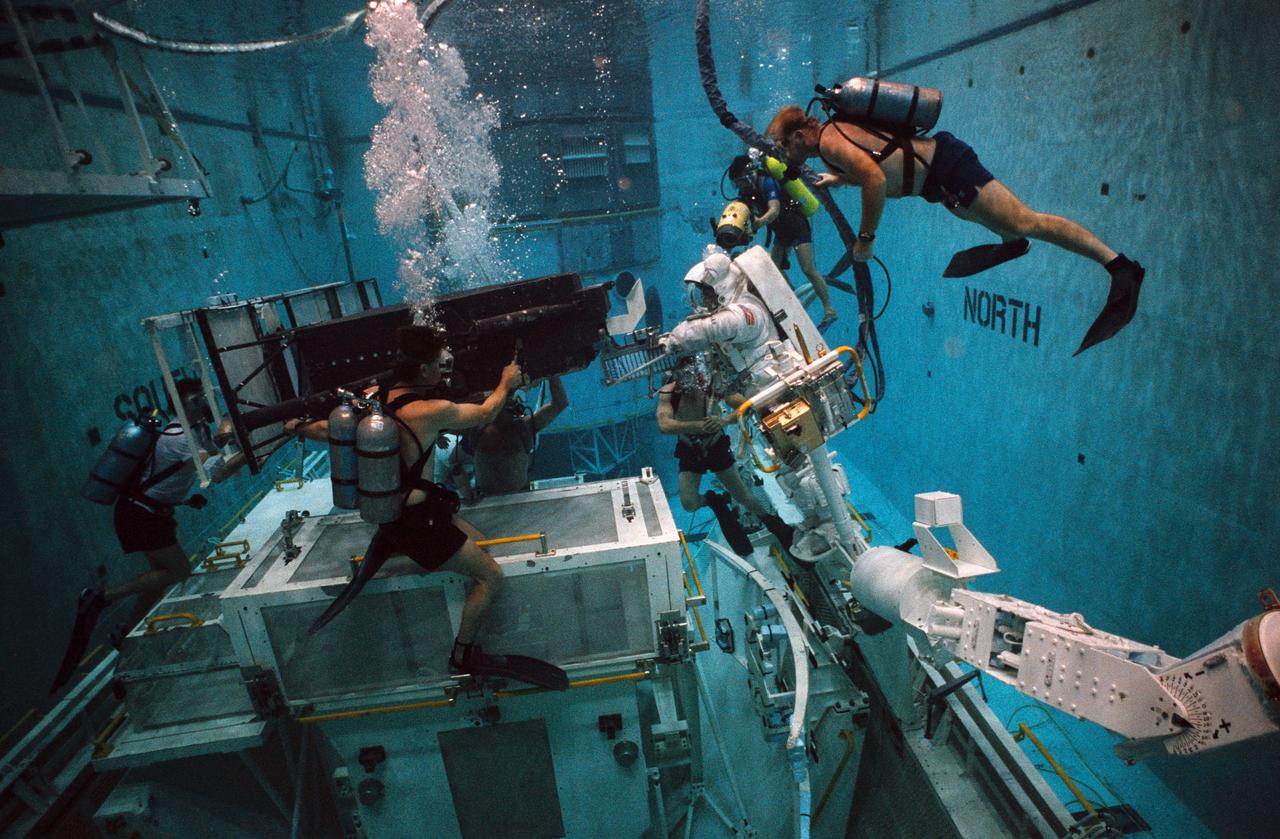
S93-33102 (5 Apr 1993) --- Wearing a training version of Space Shuttle Extravehicular Mobility Unit (EMU), astronaut Thomas D. Akers uses the giant pool of the Johnson Space Center's (JSC) Weightless Environment Training Facility (WET-F) to rehearse for the Hubble Space Telescope (HST) repair mission. Standing on a mobile foot restraint connected to the Shuttle's robot arm, Akers works with a full-scale training version of the Wide Field/Planetary Camera (WF/PC). The current WF/PC on the HST will be replaced with WF/PC-2. The giant box is a stowage area for both WF/PC facilities. Out of frame is astronaut Kathryn C. Thornton, who will join Akers in STS-61 EVA. Several SCUBA-equipped divers assist in the rehearsal. A total of five extravehicular activity (EVA) sessions will be conducted during the scheduled December mission of the Endeavour.
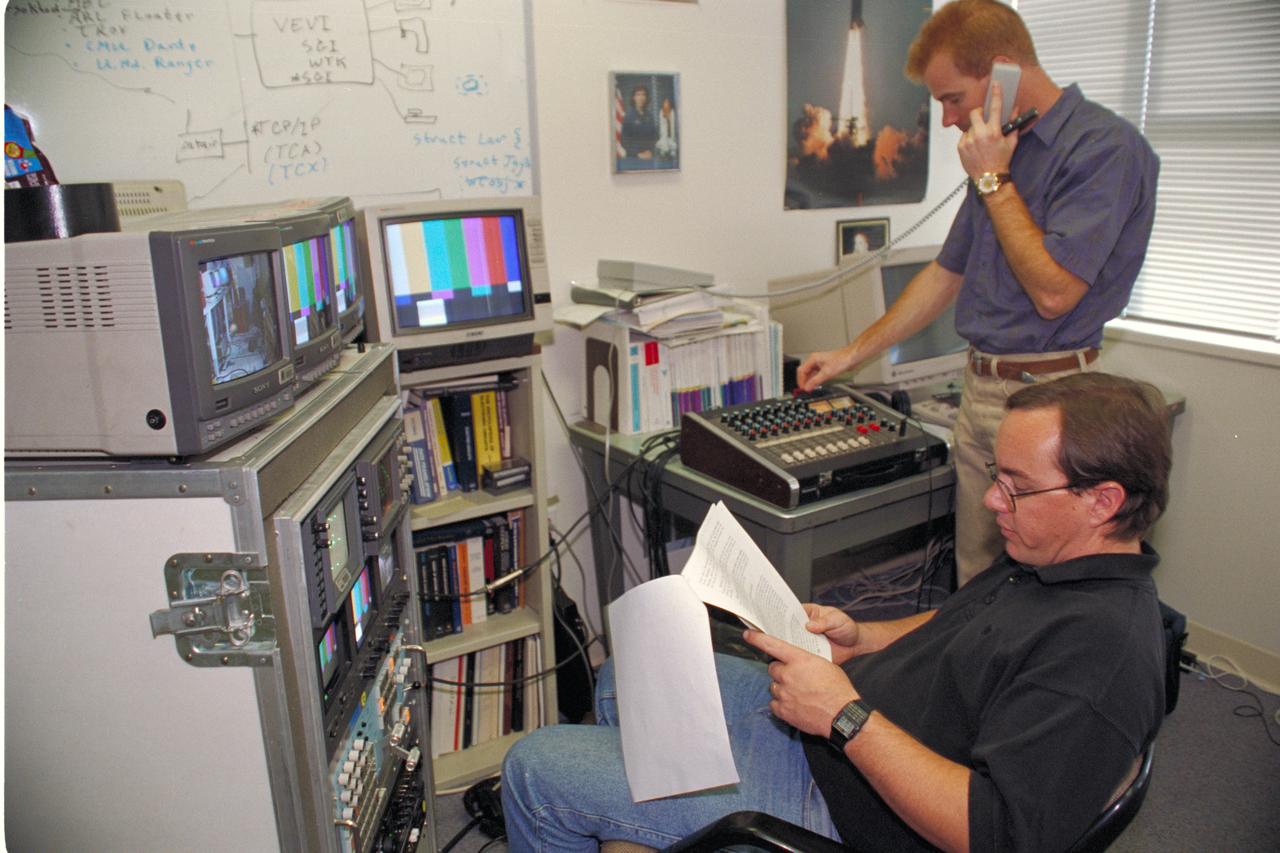
Life from other Worlds' with McNair Middle School TROV robot explores under Antarctic ice - image of down link set up
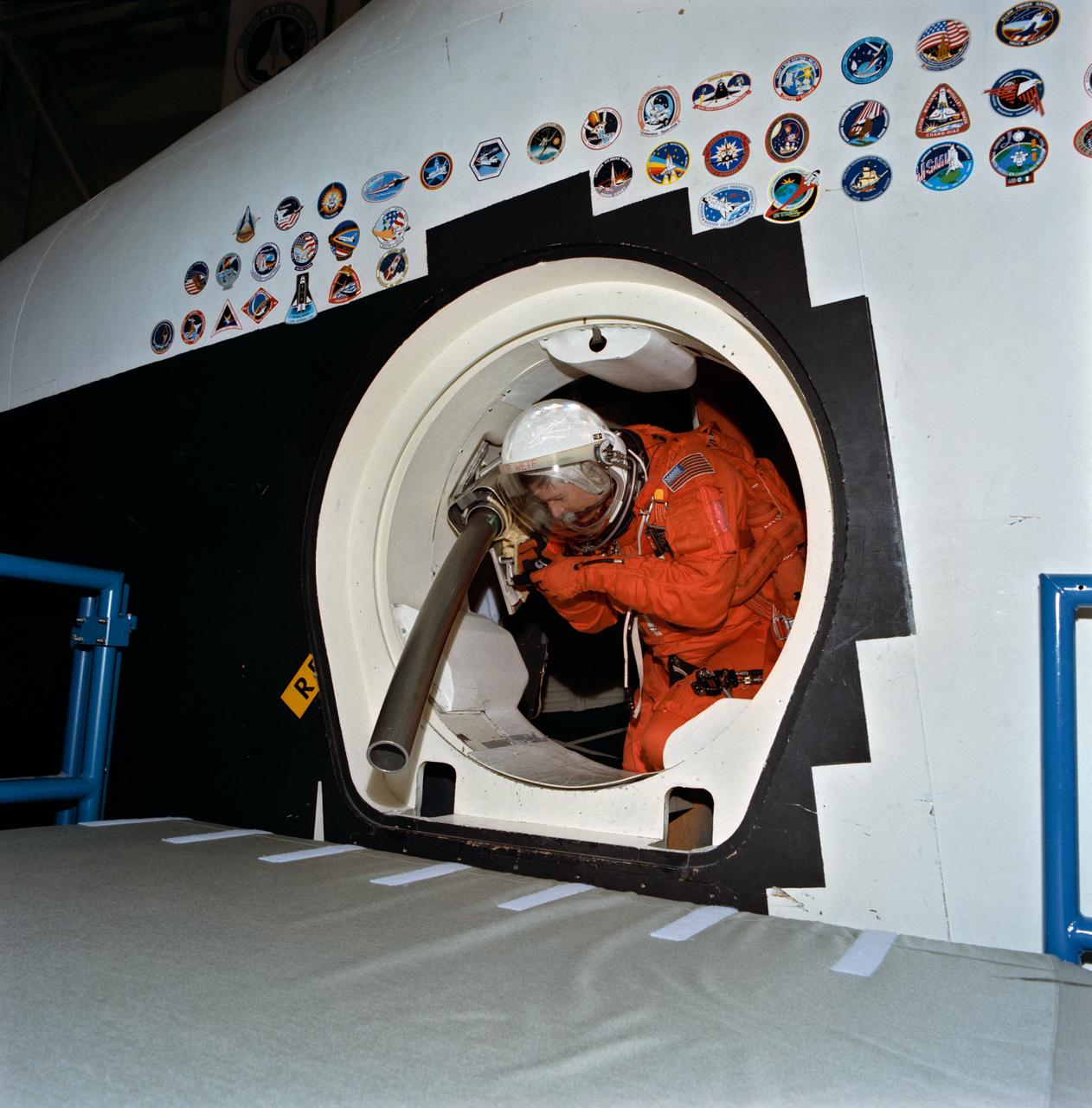
Astronaut Kenneth S. Reightler, pilot for the STS-60 mission, prepares to simulate egress from a troubled Space Shuttle using Crew Escape System (CES) pole. The action came during emergency egress training in JSC's Shuttle mockup and integration laboratory.
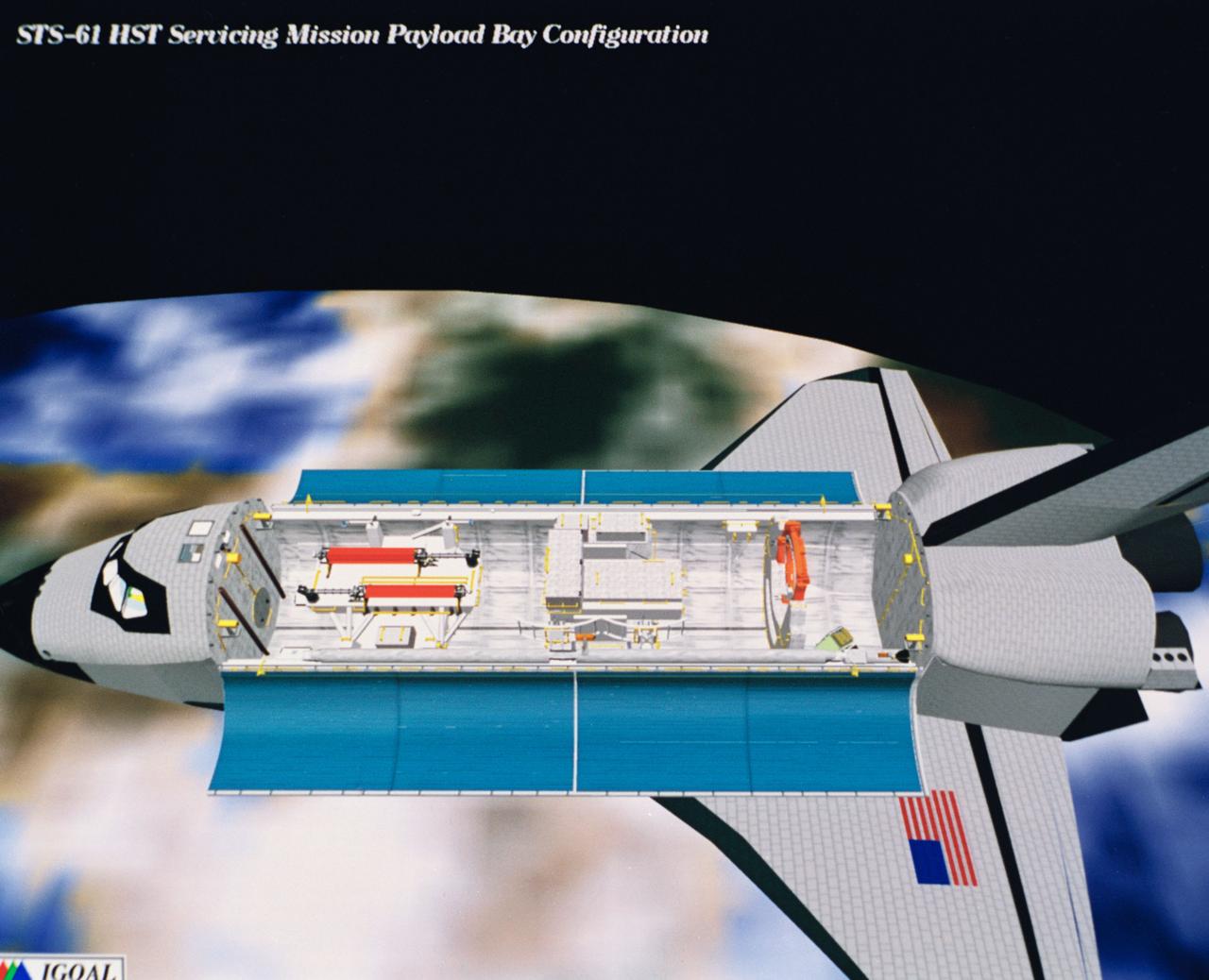
Computer generated scenes depicting the Hubble Space Telescope capture and a sequence of planned events on the planned extravehicular activity (EVA). Scenes include the Remote Manipulator System (RMS) arm assisting two astronauts changing out the Wide Field/Planetary Camera (WF/PC) (48699); RMS arm assisting in the temporary mating of the orbiting telescope to the flight support system in Endeavour's cargo bay (48700); Endeavour's RMS arm assisting in the "capture" of the orbiting telescope (48701); Two astronauts changing out the telescope's coprocessor (48702); RMS arm assistign two astronauts replacing one of the telescope's electronic control units (48703); RMS assisting two astronauts replacing the fuse plugs on the telescope's Power Distribution Unit (PDU) (48704); The telescope's High Resolution Spectrograph (HRS) kit is depicted in this scene (48705); Two astronauts during the removal of the high speed photometer and the installation of the COSTAR instrument (48706); Two astronauts, standing on the RMS, during installation of one of the Magnetic Sensing System (MSS) (48707); High angle view of the orbiting Space Shuttle Endeavour with its cargo bay doors open, revealing the bay's pre-capture configuration. Seen are, from the left, the Solar Array Carrier, the ORU Carrier and the flight support system (48708); Two astronauts performing the replacement of HST's Rate Sensor Units (RSU) (48709); The RMS arm assisting two astronauts with the replacement of the telescope's solar array panels (48710); Two astronauts replacing the telescope's Solar Array Drive Electronics (SADE) (48711).
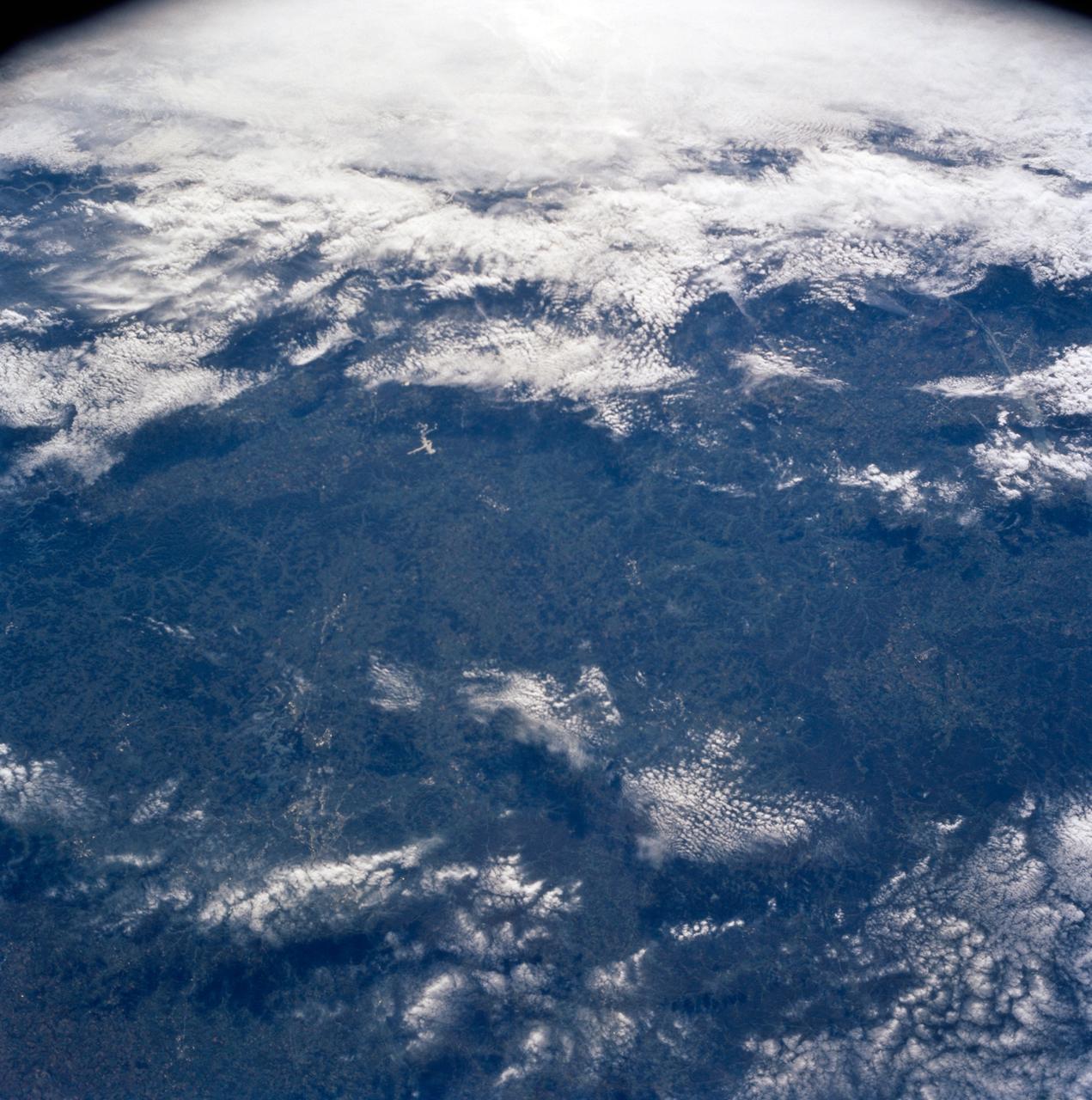
STS058-91-074 (18 Oct-1 Nov 1993) --- The largest cityscape in the view is Nashville (top left), part of which is obscured under a band of clouds (the Cumberland River, on which Nashville lies, can not be seen under the cloud band). Close to the main cloud mass on the opposite side of the view, lies a small lake (Normandy Lake in sunglint (right center) 70 miles southeast of Nashville. Between these two features, in the center of the Nashville Basin, lies the city of Murfreesboro. The city appears here as a spider like pattern one third the distance from Nashville towards Normandy Lake. The Tennessee River can be seen bottom right and top right through holes in the cloud.
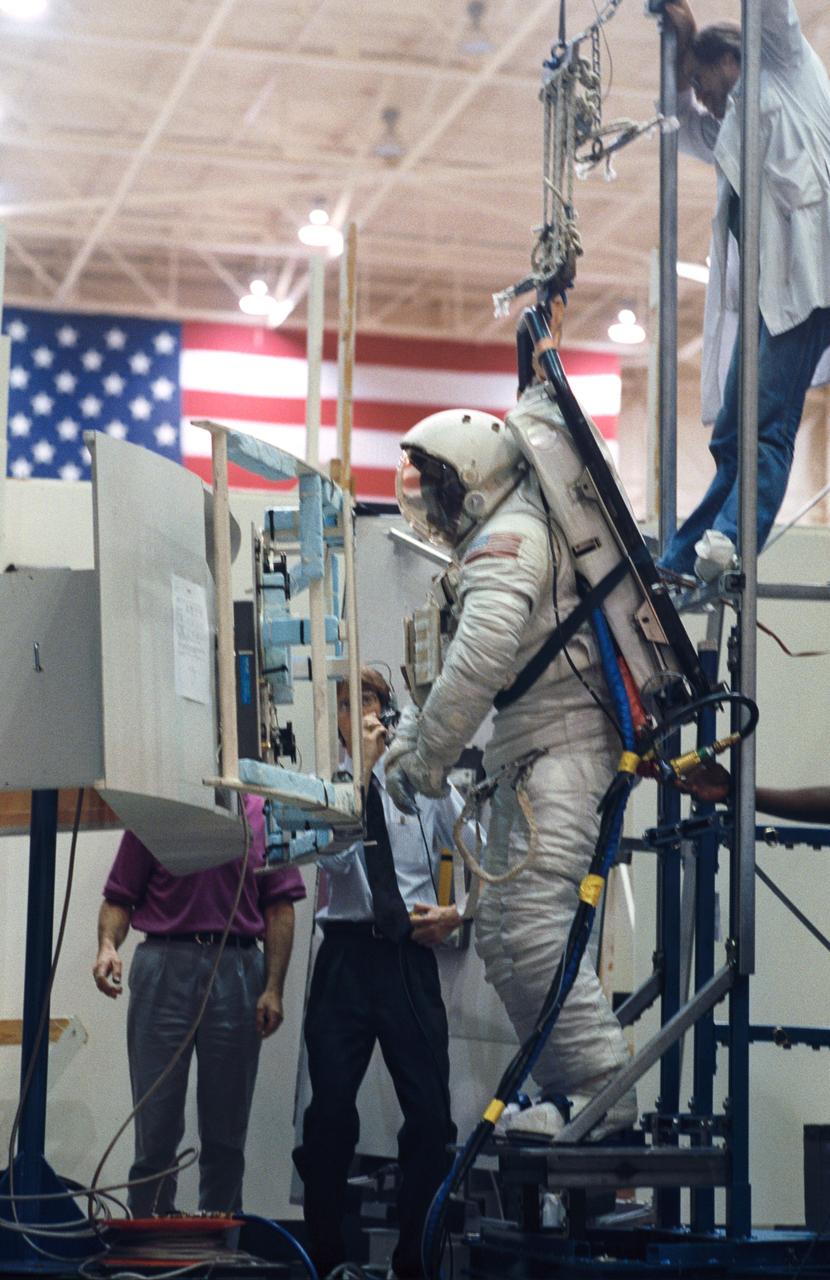
Making use of the air-bearing floor in JSC's Shuttle mockup and integration laboratory, Astronaut Jeffrey A. Hoffman practices working with the Hubble Space Telescope's Wide Field/Planetary Camera (WF/PC). Changing out the large camera is one of several jobs to be performed by STS-61.
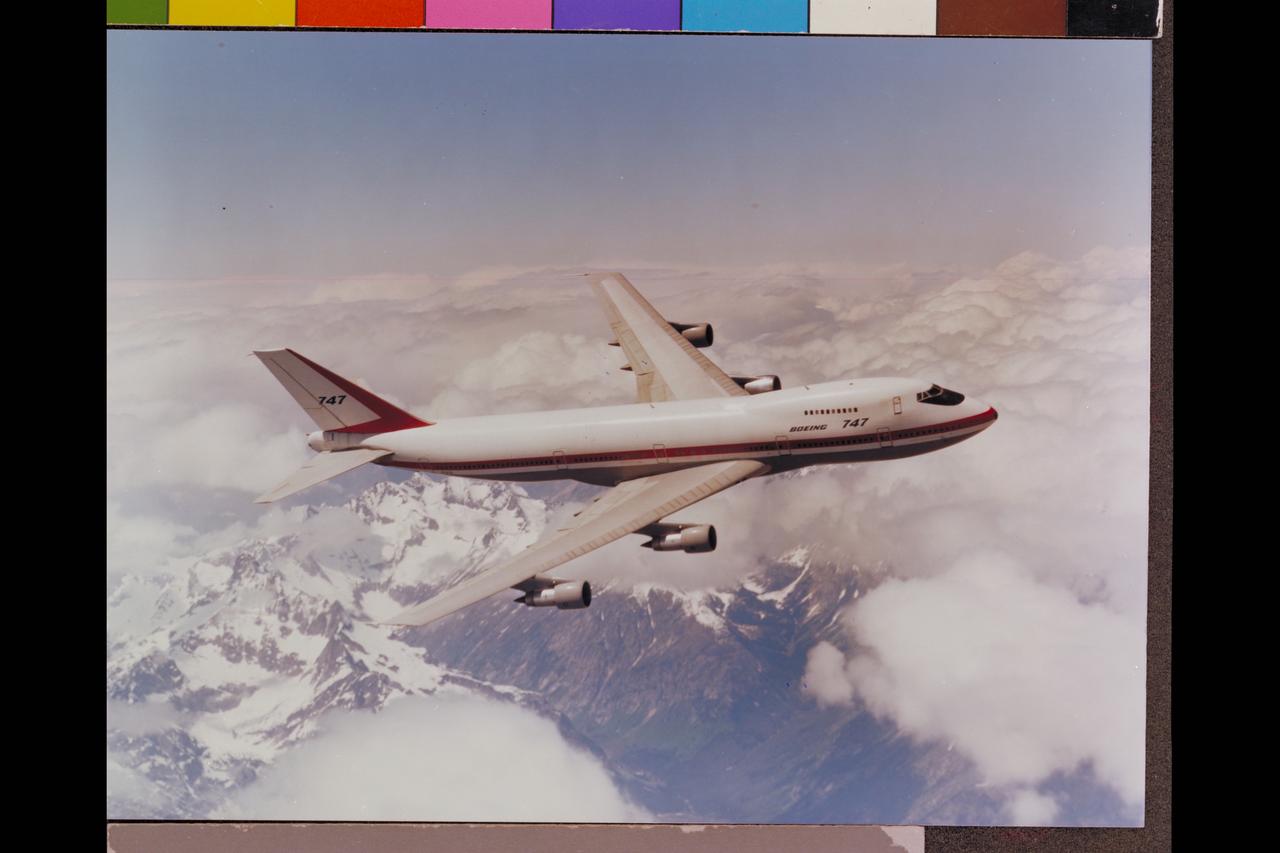
Boeing 747 in flight
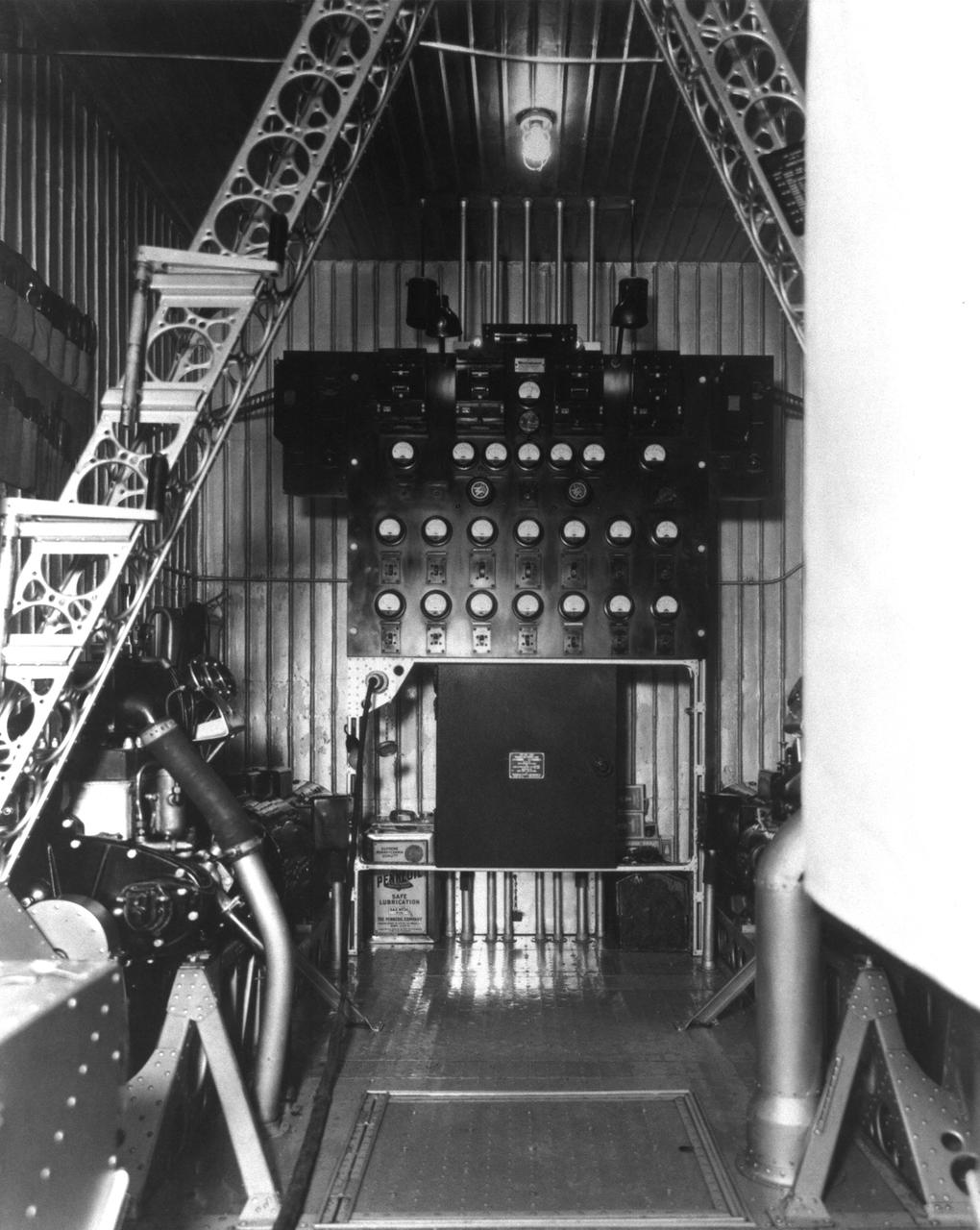
History of Cockpits - interior of control room showing pressure gages (@1935)
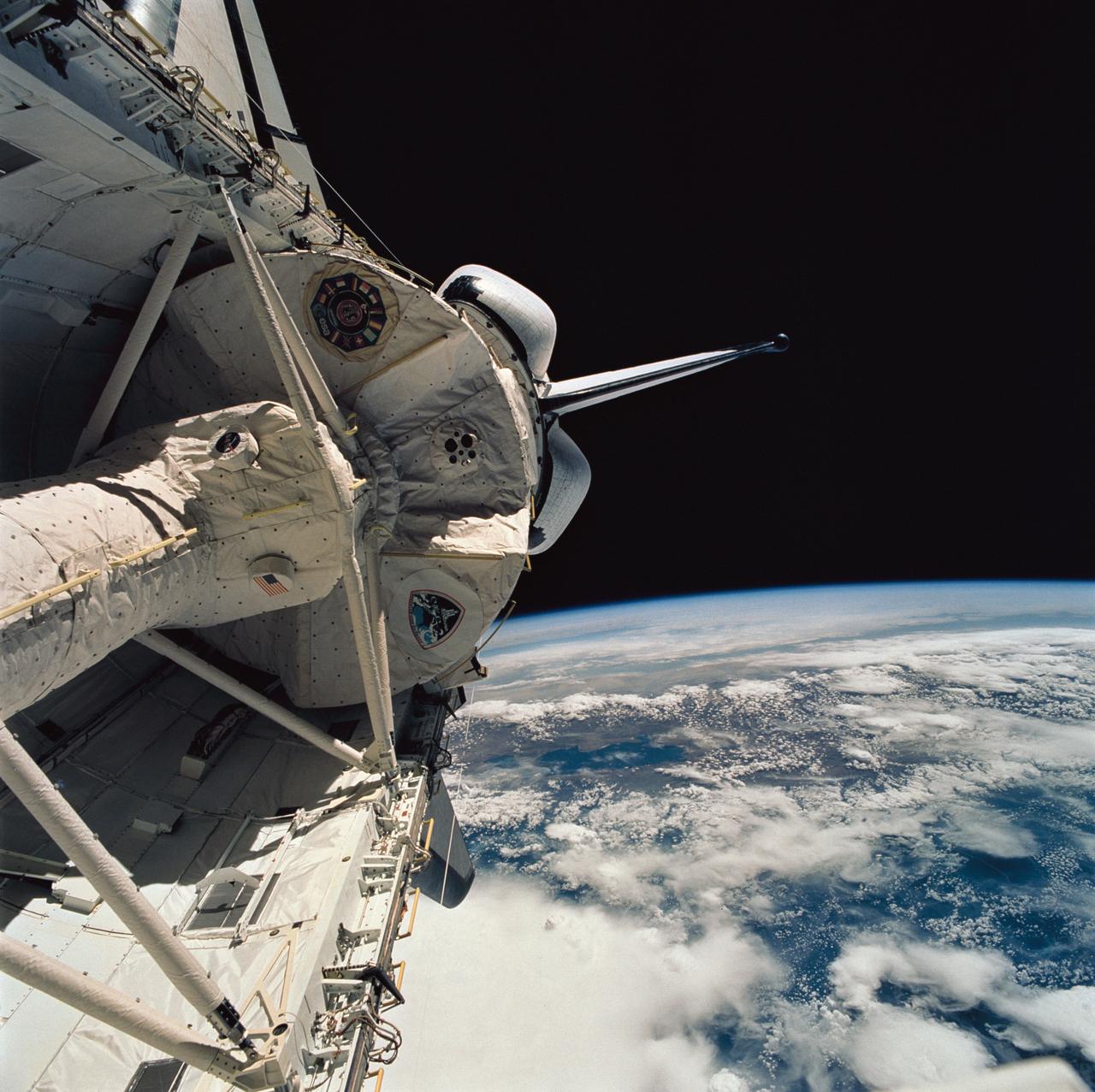
STS058-76-041 (18 Oct-1 Nov 1993) --- Backdropped against the Peru-Bolivia border and part of the Amazon basin, the Spacelab Life Sciences (SLS-2) laboratory module was captured with a 70mm camera, by one of the seven crew members inside the Space Shuttle Columbia's cabin. Part of the tunnel-like passageway is visible in the foreground. Six NASA astronauts and a veterinarian from the private sector spent two weeks devoted to medical research in Earth-orbit. Lake Titicaca, the largest high-altitude lake in the world lies in the Altiplano of Bolivia and Peru. Space Shuttle photography has been used to document fluctuations of several meters of the level of Lake Titicaca during the past decade, as well as to document the eutrophication of the north end of the lake, which is primarily due to increased population in the Peruvian shoreline areas. This view shows the effect of abnormally heavy precipitation of the region for the third successive year. Meteorologists feel this precipitation increase, which may portend another increase of the lake level, is due to the third successive El Nino - Southern Oscillation phenomenon in the 1993 - 94 southern hemisphere summertime. This global phenomenon is now resulting in major weather disturbances in Indonesia, California, Texas and elsewhere.
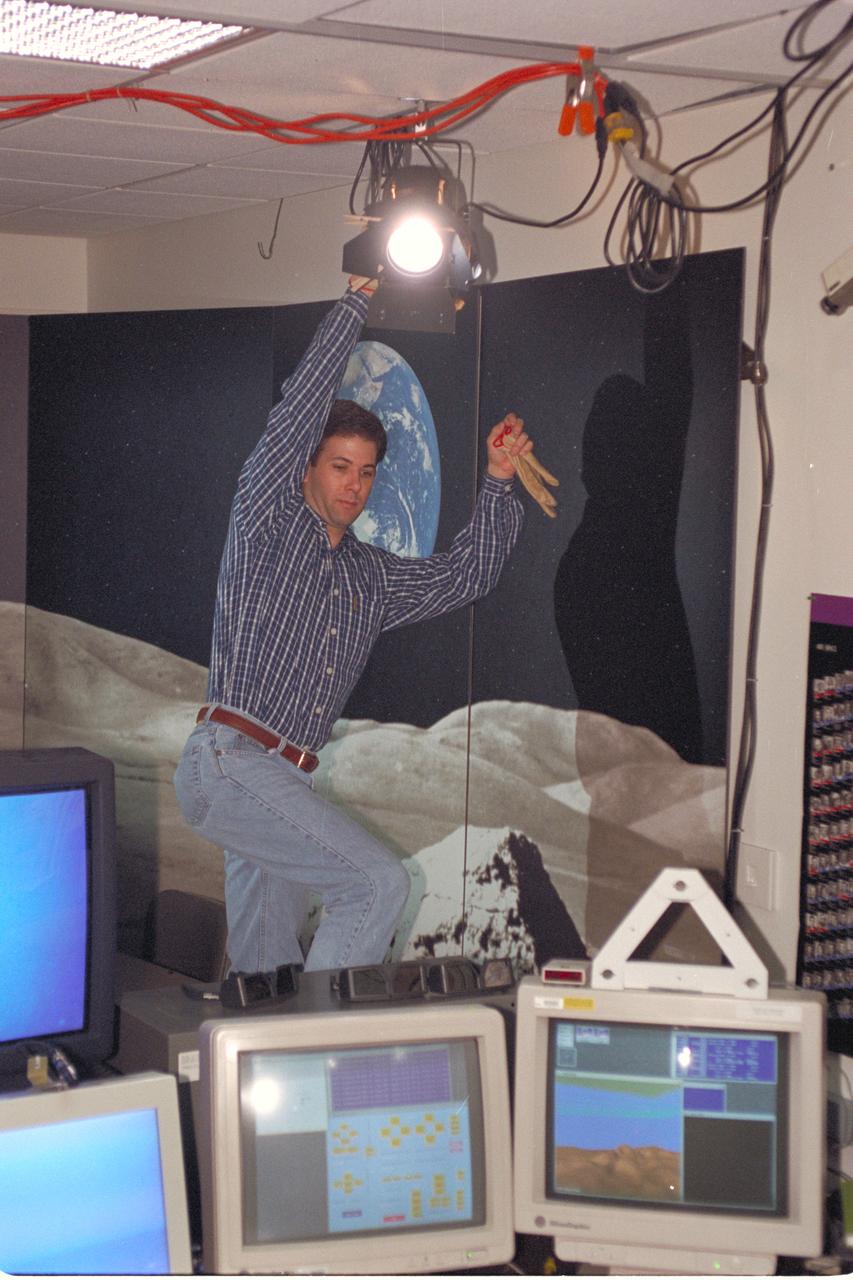
'Life from other Worlds' with McNair Middle School TROV robot explores under Antarctic ice - image of Dave Maurantonio
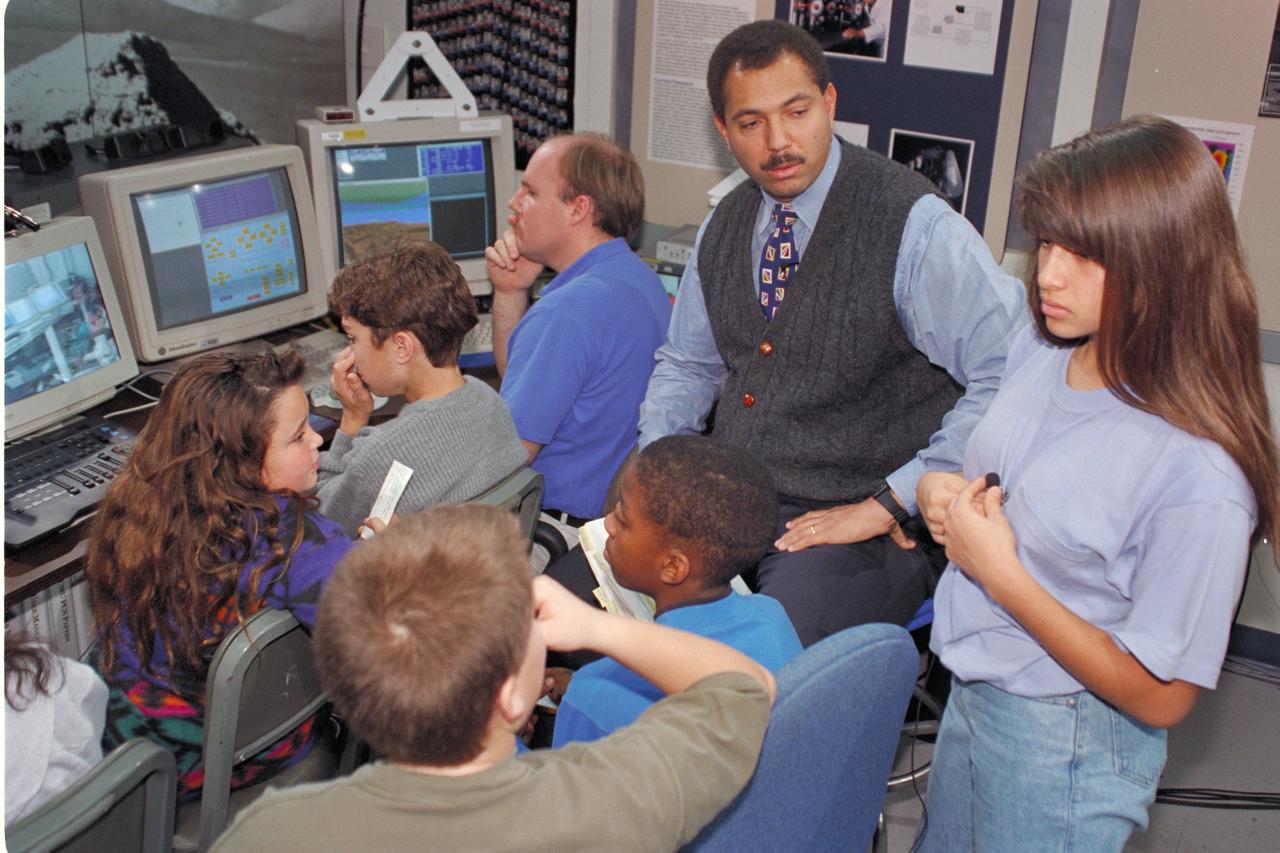
'Life from other Worlds' with McNair Middle School TROV robot explores under Antarctic ice - image during demo with students, Don James and Bob Hines.
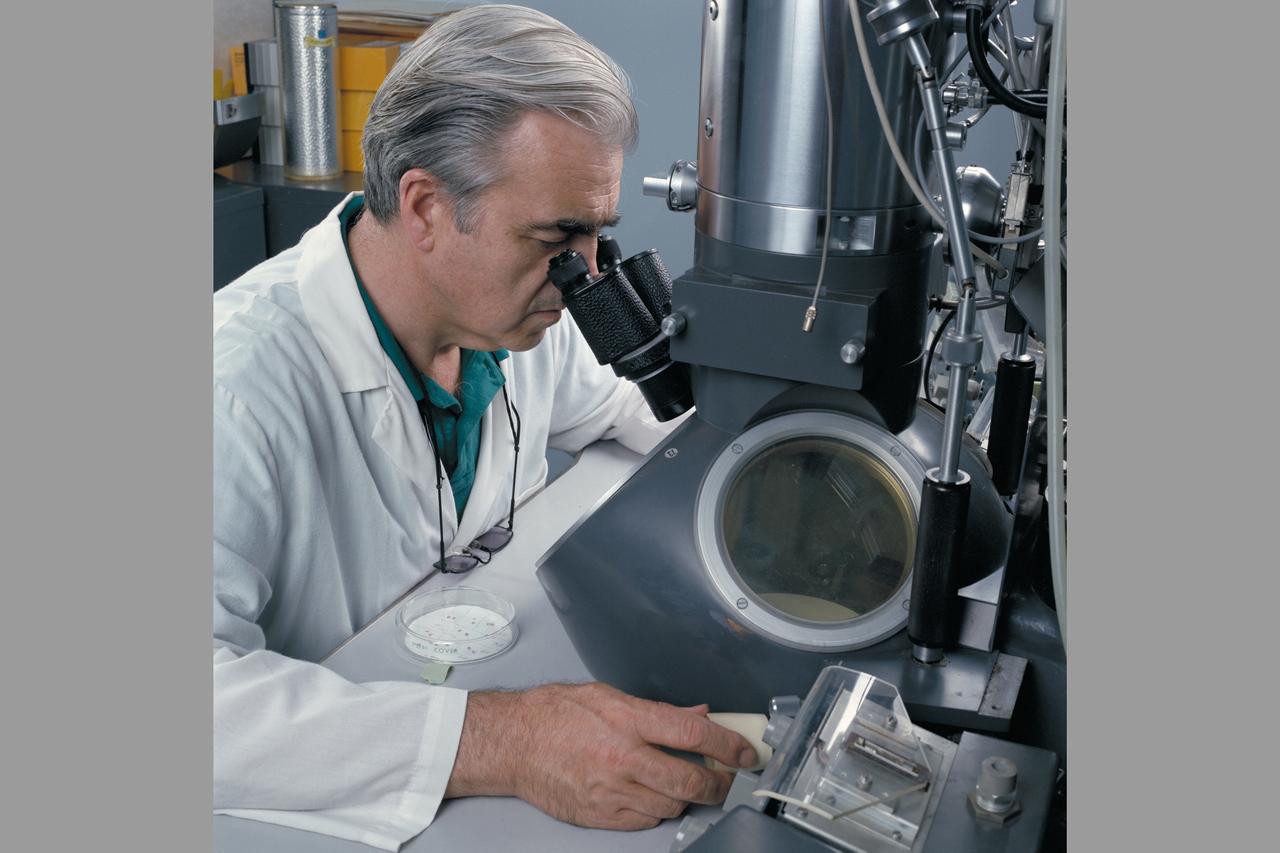
Life Sceince Division Facilities, Labs and Personnel (Code-SL) Fernando D'Amelio
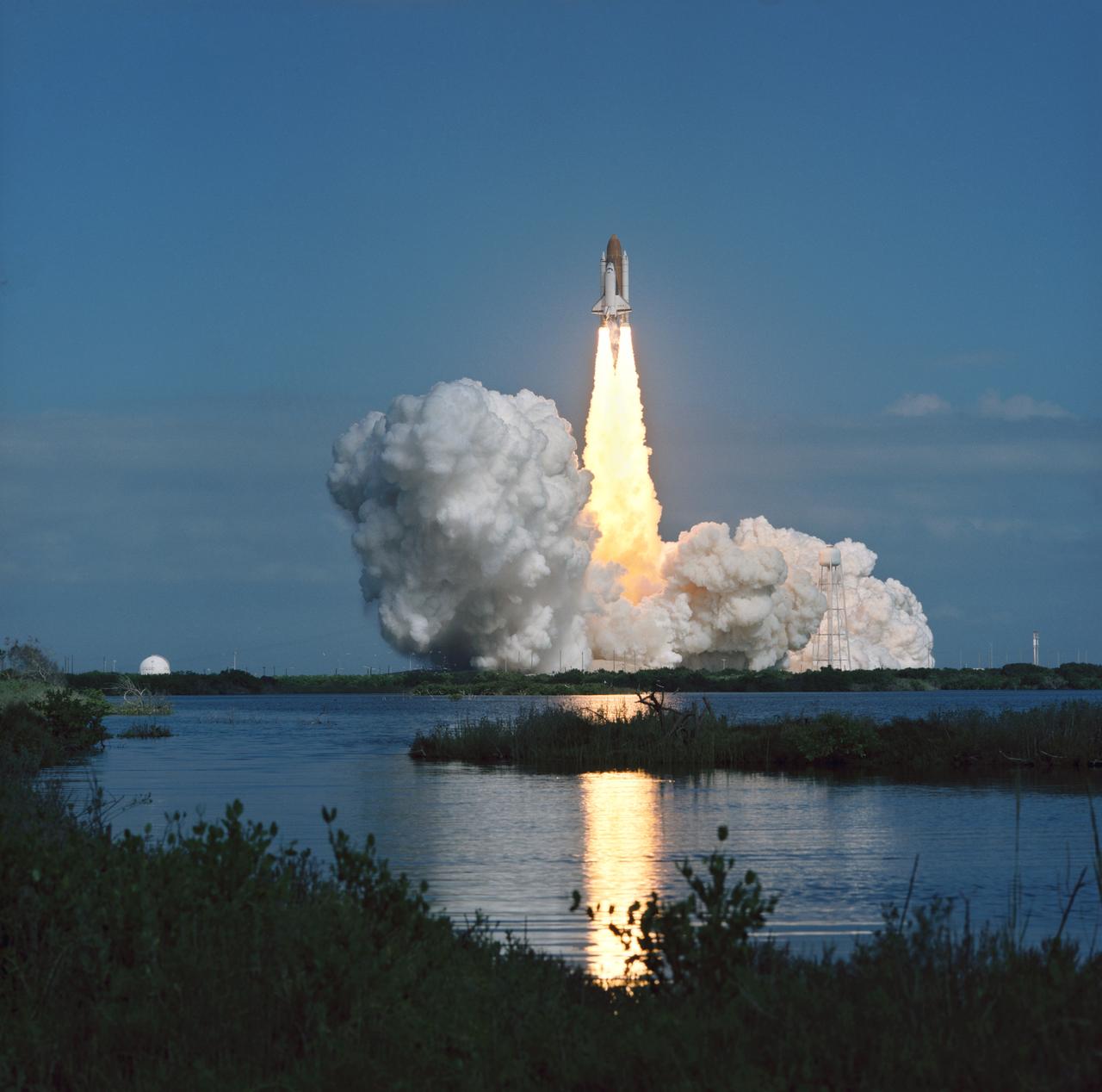
STS058-S-091 (18 Oct 1993) --- A distant shot shows the Space Shuttle Columbia, lifting off from Launch Complex 39 at Kennedy Space Center (KSC), reflecting its image in nearby marsh waters. Launch occurred at 10:53 a.m. (EDT), October 18, 1993. Along with six NASA astronauts and a veterinarian from the private sector, the Spacelab Life Sciences-2 (SLS-2) science module was aboard. Onboard were astronauts John E. Blaha, Richard A. Searfoss, Rhea Seddon, Shannon W. Lucid, David A. Wolf and William S. McArthur along with payload specialist Martin J. Fettman.
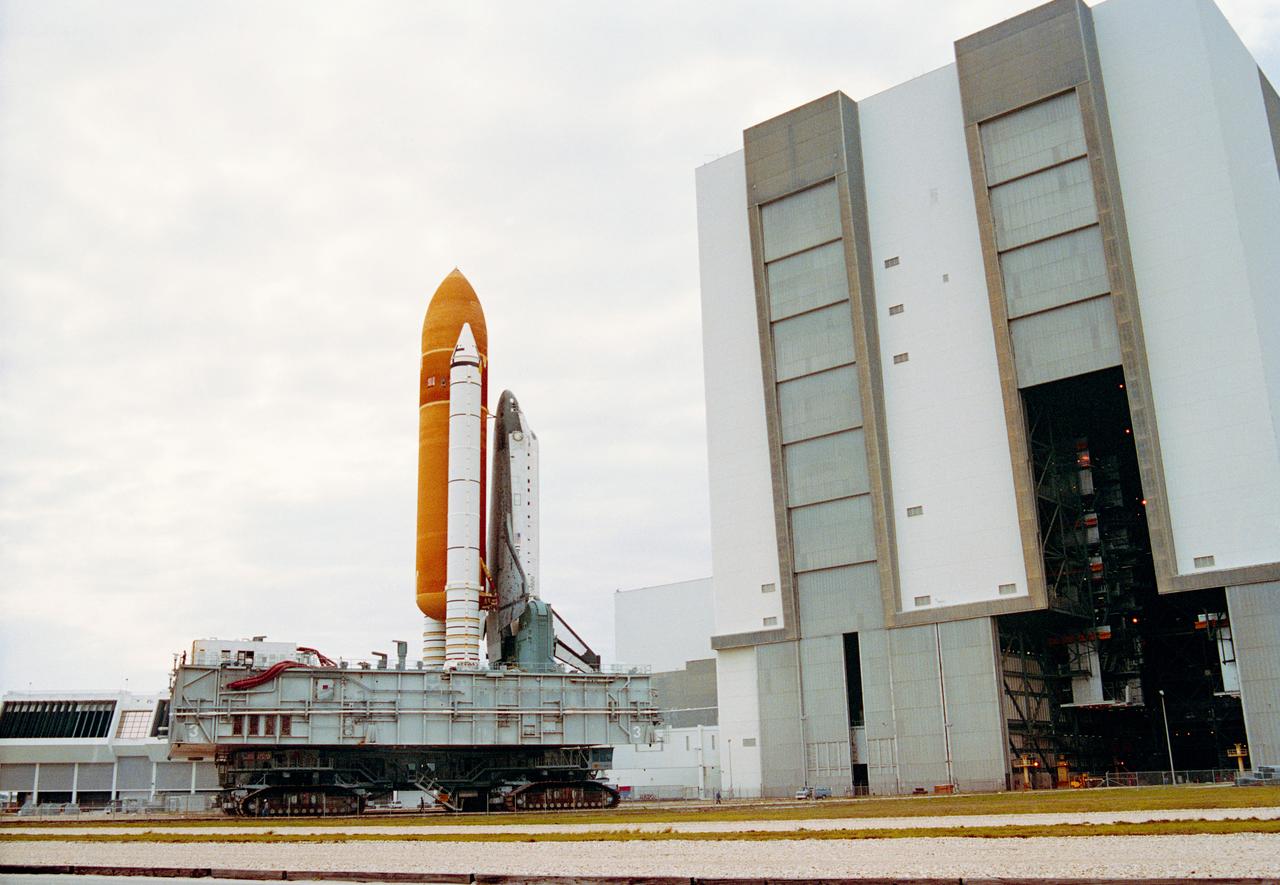
S93-29846 (2 Feb 1993) --- The orbiter Columbia is rolled out of the Vehicle Assembly Building (VAB). Having completed its assembly with the external tank and solid rocket boosters, the Space Shuttle will be rolled out to Launch Pad 39A, where it is targeted for liftoff on Space Shuttle Mission STS-55 in late February.
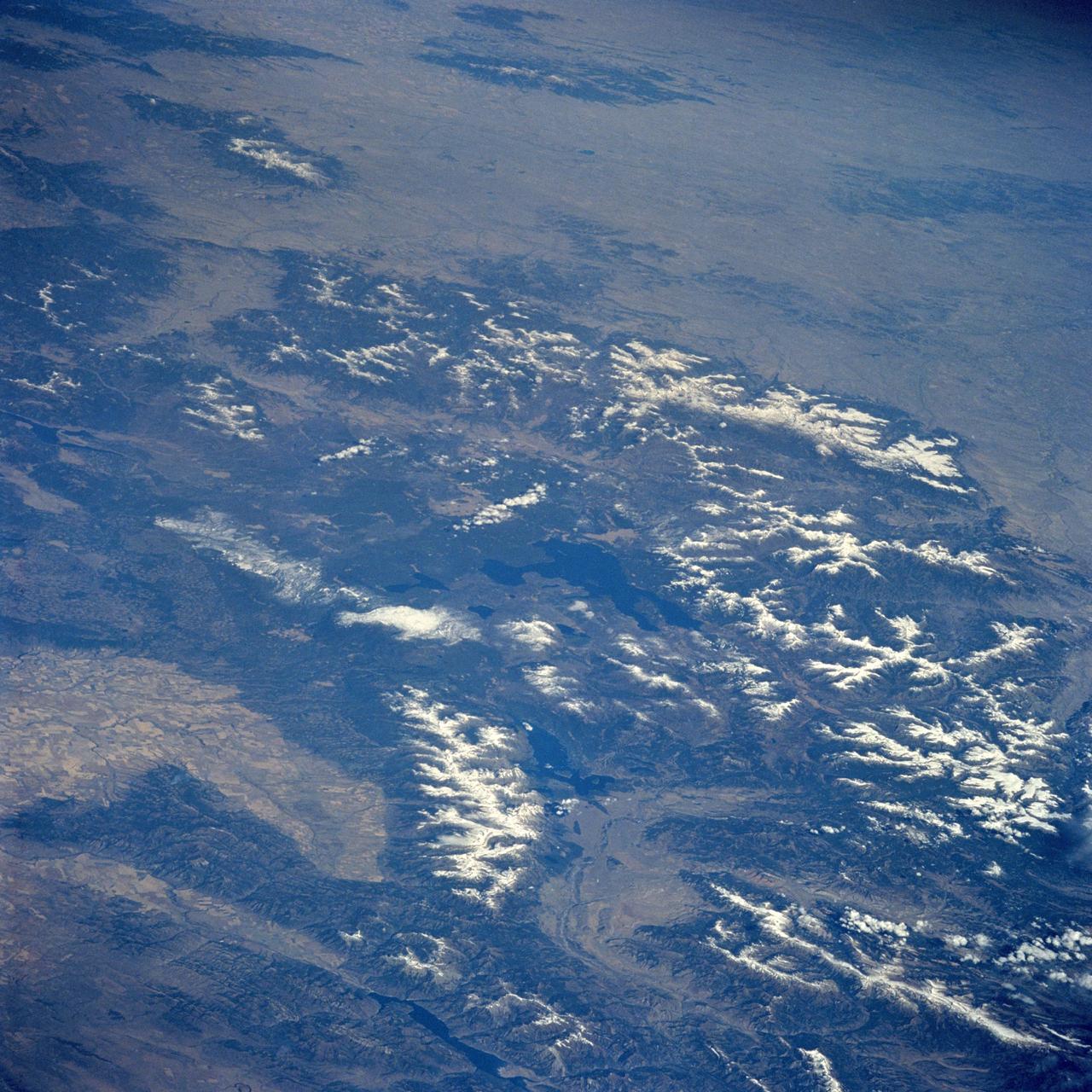
STS058-085-091 (18 Oct-1 Nov 1993) --- Yellowstone Lake and the surrounding Plateau are centered in this scene of northwestern Wyoming, and adjacent Idaho and Montana. The view extends across the Absaroka Range to Billings, on the Yellowstone River at the upper right edge of the photograph. Jackson Lake, Jackson Hole (valley) and the Grand Tetons extend from the Yellowstone Plateau toward the camera.
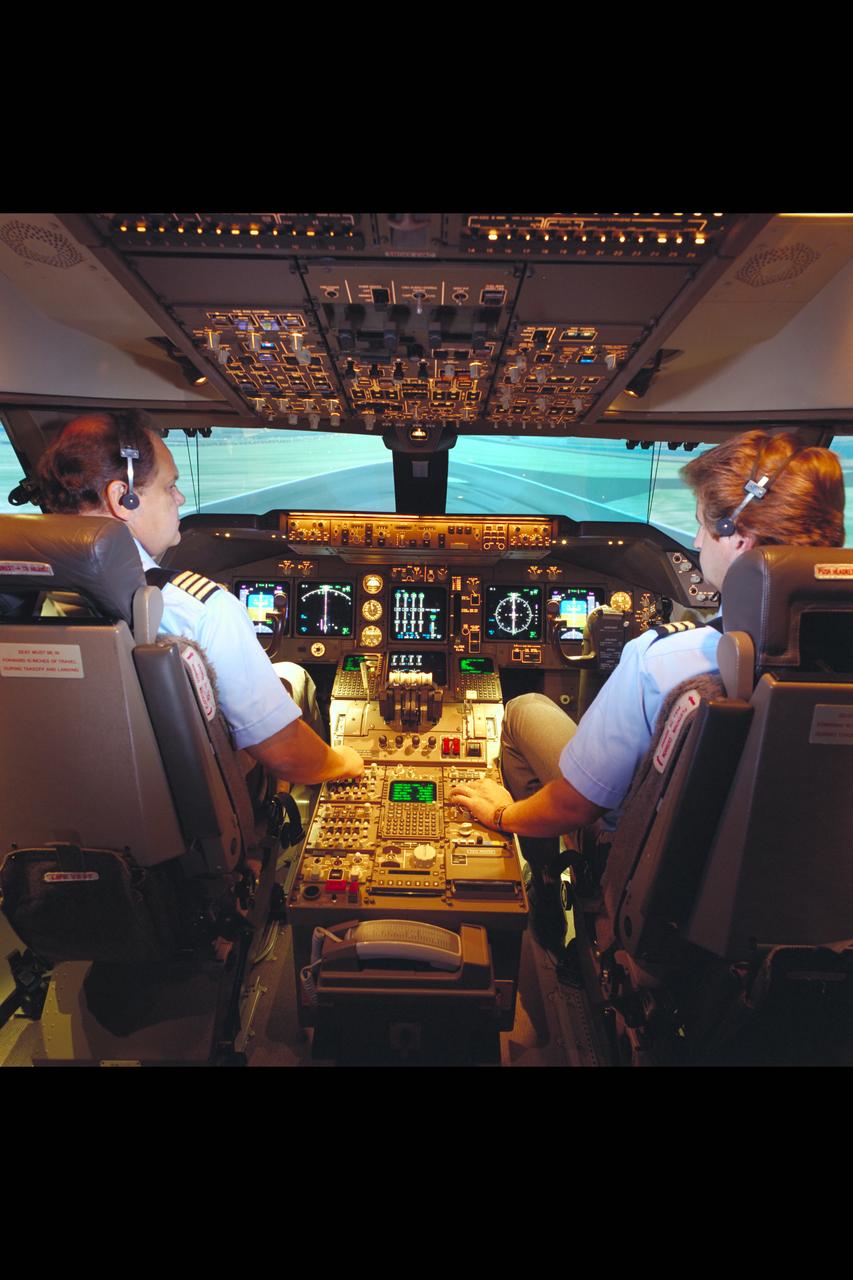
N-257 CVSRF Boeing 747-400 simulator cockpit with B Sullivan and R Shiner
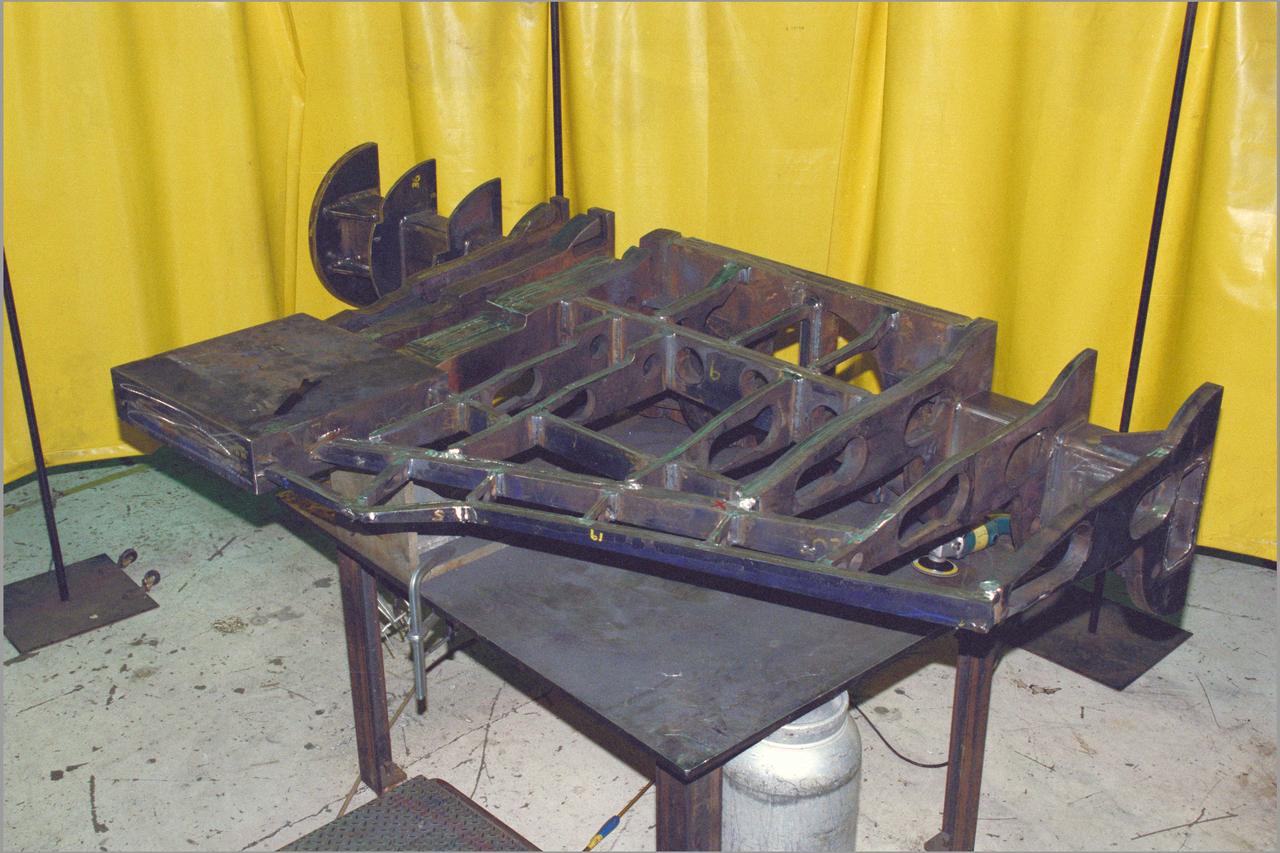
HEAT Project (High-Lift Engine Aeroacustics Technology) model assembly