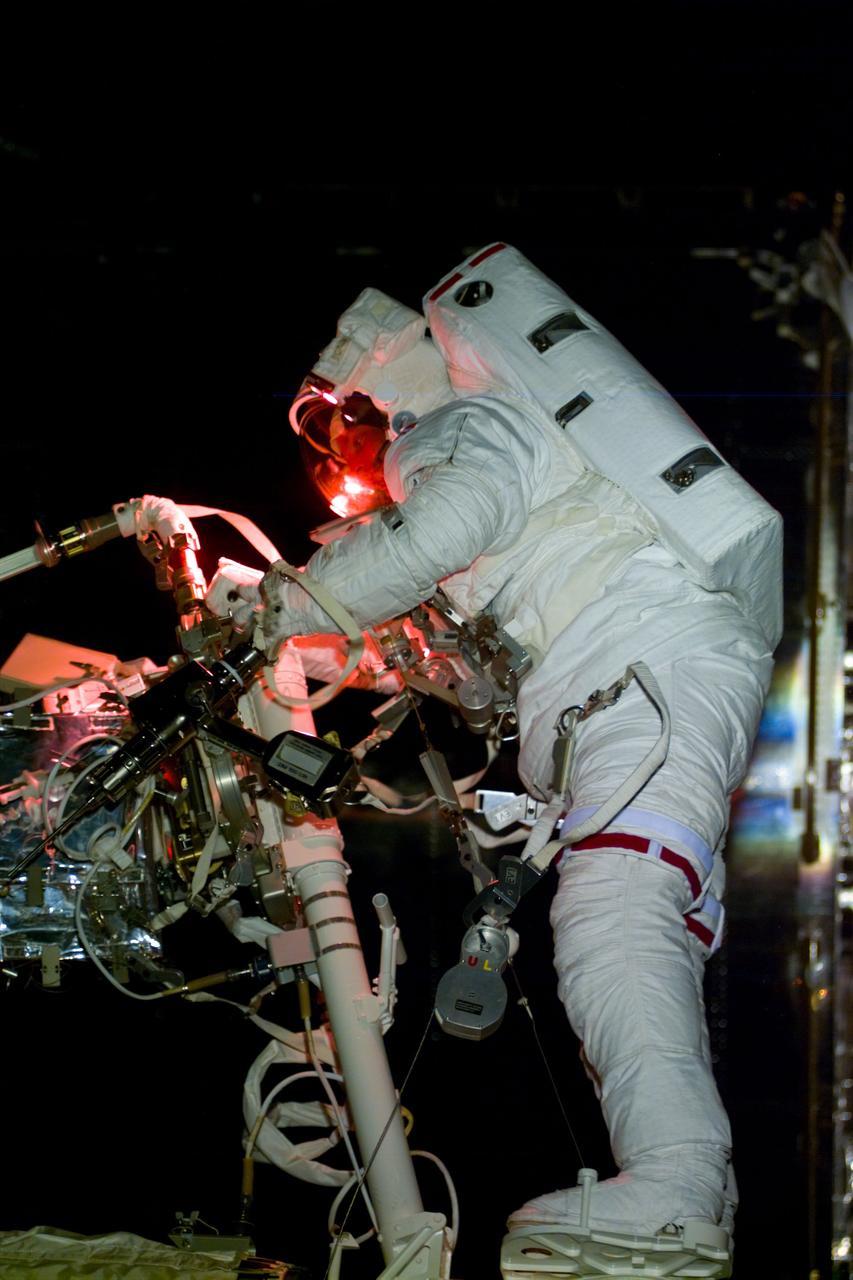
S82-E-5606 (17 Feb. 1997) --- Astronaut Gregory J. Harbaugh at work on Hubble Space Telescope (HST), with the assistance of astronaut Joseph R. Tanner (out of frame) on Remote Manipulator System (RMS). After replacing the HST's Solar Array Drive Electronics (SADE), Harbaugh and Tanner replaced the Magnetic Sensing System (MSS) protective lids with new, permanent covers; and they installed pre-cut insulation pieces to correct tears in the HST's protective covering caused by temperature changes in space. This view was taken with an Electronic Still Camera (ESC).
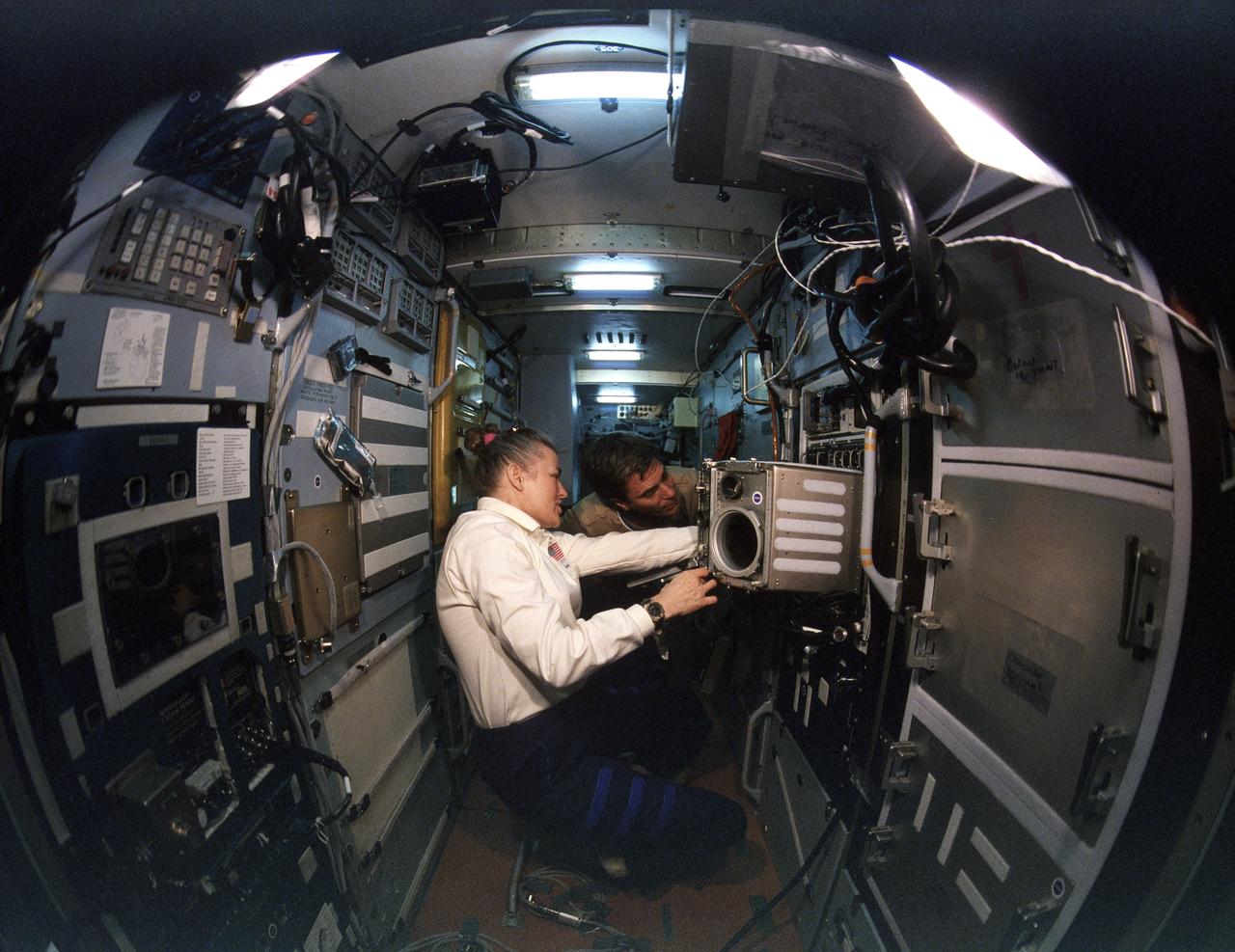
STS079-S-092 (16-26 Sept. 1996) --- Astronauts Shannon W. Lucid and John E. Blaha work at a microgravity glove box on the Priroda Module aboard Russia's Mir Space Station complex. Blaha, who flew into Earth-orbit with the STS-79 crew, and Lucid are the first participants in a series of ongoing exchanges of NASA astronauts serving time as cosmonaut guest researchers onboard Mir. Lucid went on to spend a total of 188 days in space before returning to Earth with the STS-79 crew. During the STS-79 mission, the crew used an IMAX camera to document activities aboard the Space Shuttle Atlantis and the various Mir modules, with the cooperation of the Russian Space Agency (RSA). A hand-held version of the 65mm camera system accompanied the STS-79 crew into space in Atlantis' crew cabin. NASA has flown IMAX camera systems on many Shuttle missions, including a special cargo bay camera's coverage of other recent Shuttle-Mir rendezvous and/or docking missions.
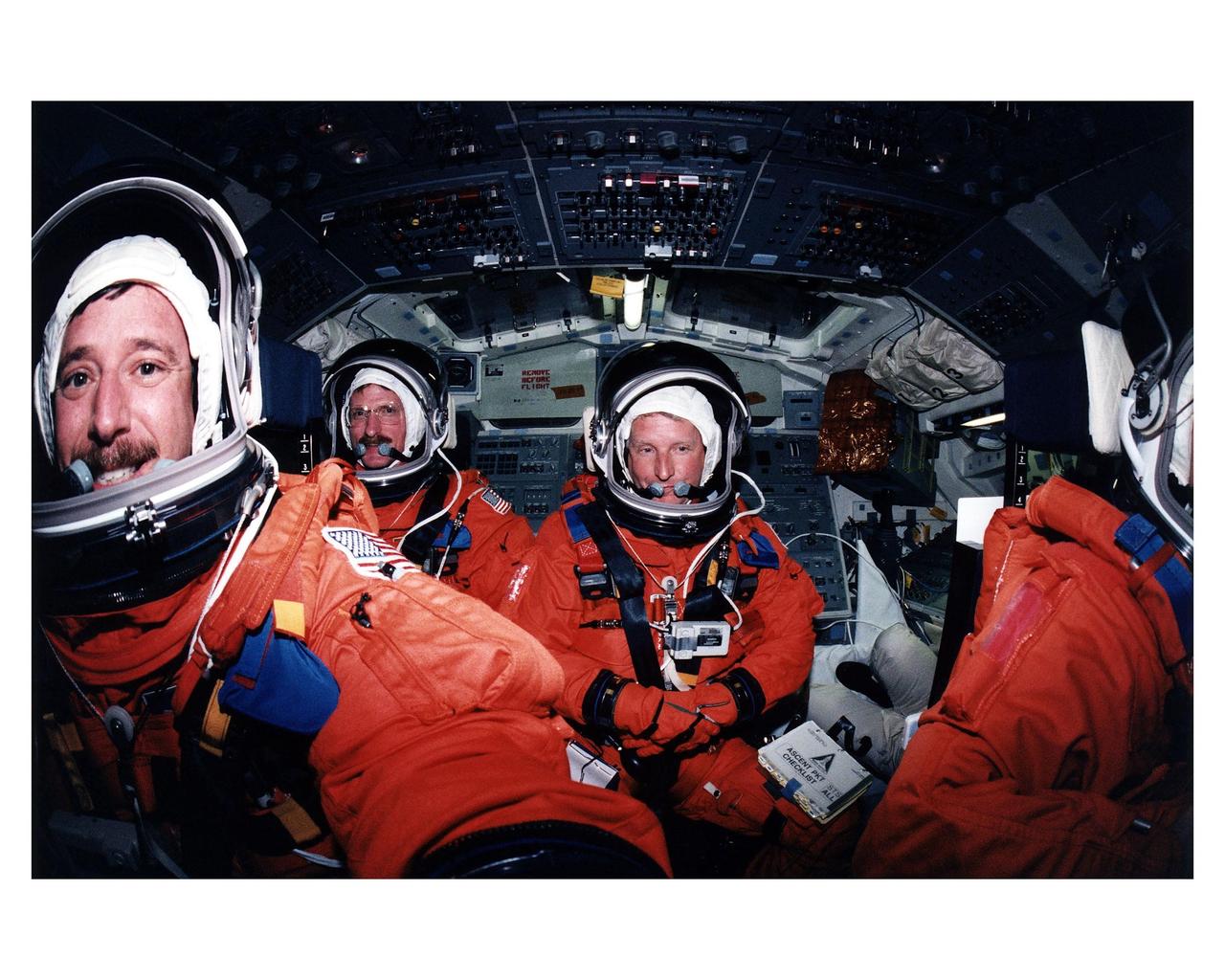
STS-82 crew members participate in a practice launch countdown inside the crew cabin of the Space Shuttle Discovery during Terminal Countdown Demonstration Test (TCDT) activities. Pilot Scott J. "Doc" Horowitz is in foreground at left. Seated across from him, with only an arm and part of his helmet showing, is Mission Commander Kenneth D. Bowersox. At rear, from left, are Mission Specialists Joseph R. "Joe" Tanner and Steven A. Hawley. STS-82 will be the second Hubble Space Telescope servicing mission. Liftoff is targeted for Feb. 11
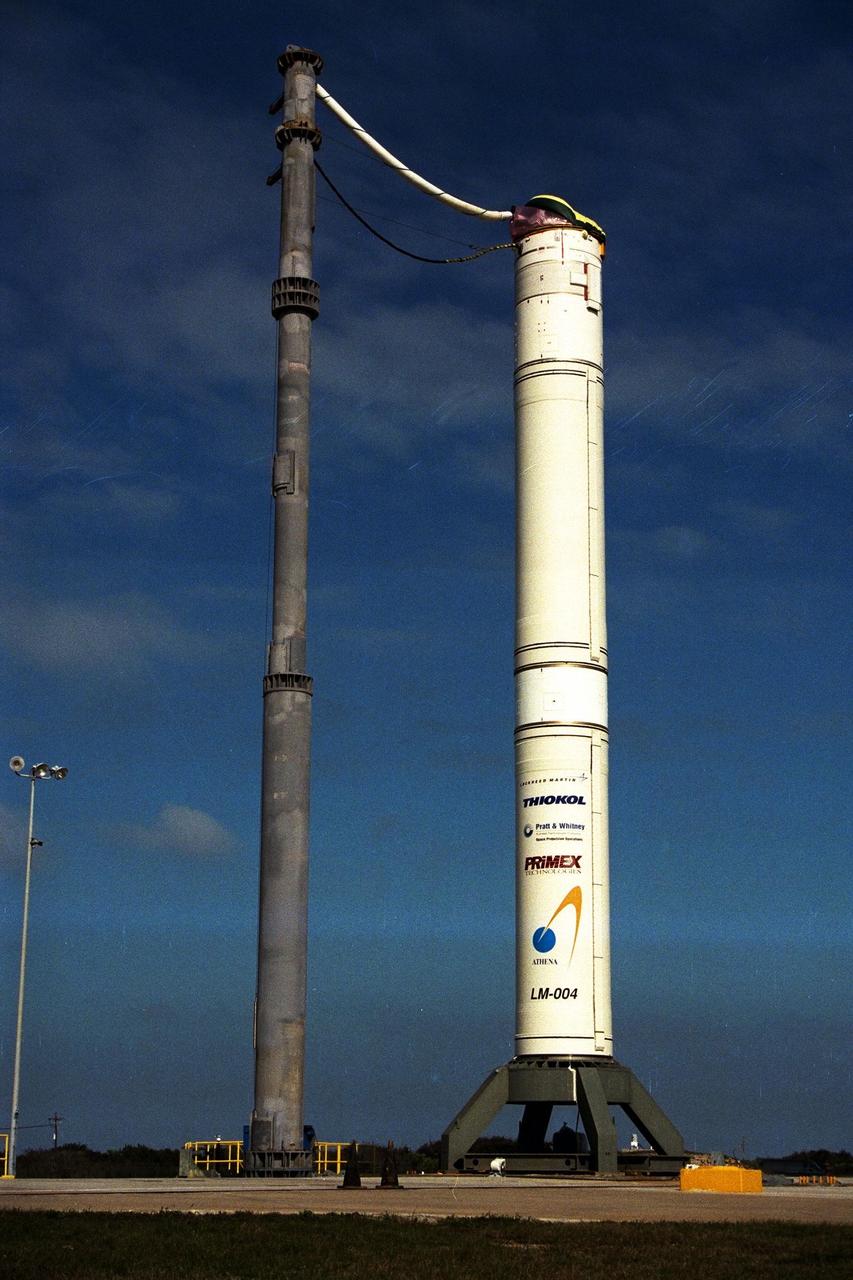
The access tower around the Athena II rocket for the Lunar Prospector spacecraft, to be launched for NASA by Lockheed Martin, was rolled back today at Launch Complex 46 at Cape Canaveral Air Station for final prelaunch preparations. The small robotic spacecraft is designed to provide the first global maps of the Moon's surface compositional elements and its gravitational and magnetic fields. The launch of Lunar Prospector is currently scheduled for Jan. 5, 1998 at 8:31 p.m
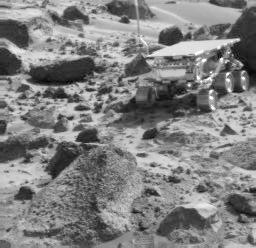
Sojourner, Wedge, & Shark
Phobos
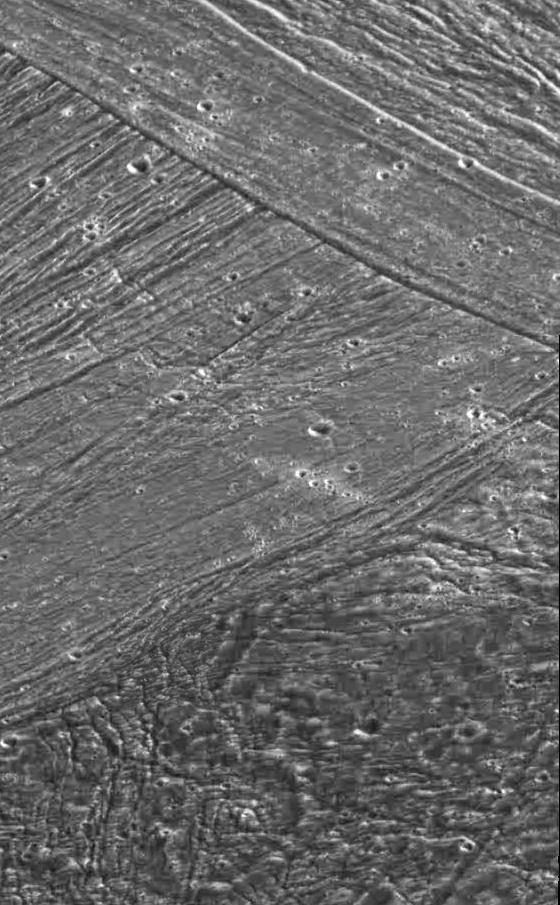
Ganymede Nippur Sulcus
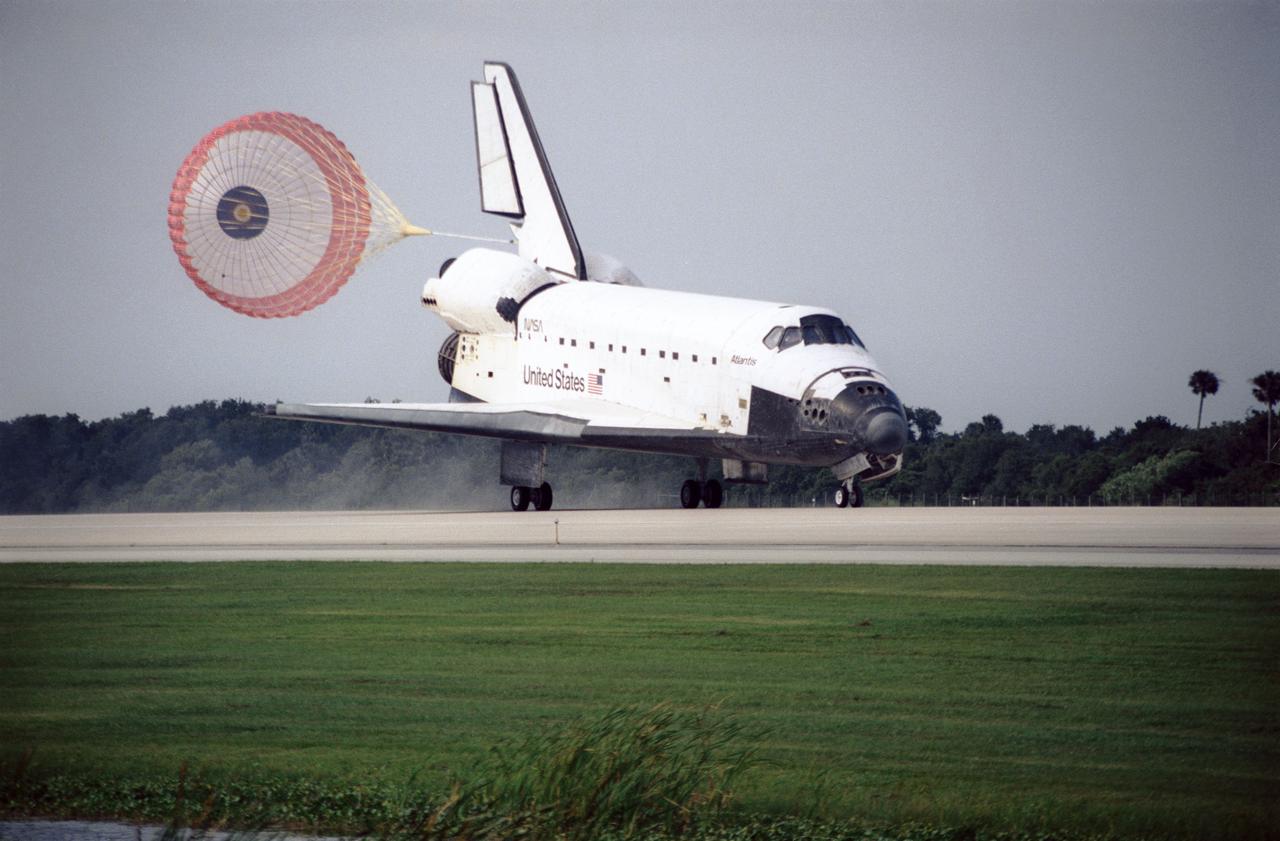
STS084-S-010 (24 May 1997) --- The drag chute on the Space Shuttle Atlantis is deployed as the Space Shuttle touches down on Runway 33 of the Kennedy Space Center (KSC) Shuttle Landing Facility (SLF). The landing, at 9:27:44 a.m. (EDT), May 24, 1997, brought to a completion the nine-day mission. This touchdown marked the 37th landing at KSC in the 16-year history of the Space Transportation System (STS) and it also marked the return of astronaut Jerry M. Linenger to Earth following almost four months aboard Russia's Mir Space Station. Onboard for the landing were astronauts Charles J. Precourt, Eileen M. Collins, Jean-Fran?ois Clervoy, Carlos I. Noriega, Edward T. Lu, Linenger and Elena V. Kondakova. Clervoy is with the European Space Agency (ESA) and Kondakova represents the Russian Space Agency (RSA).
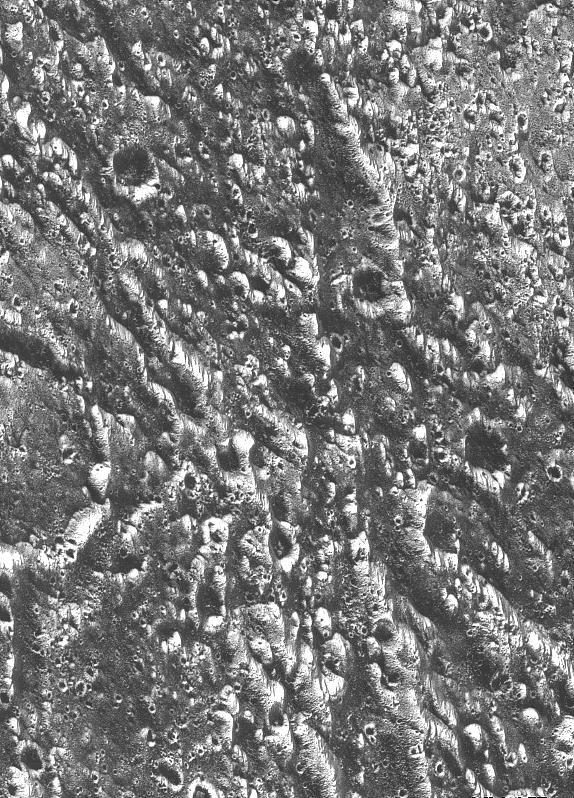
Ancient impact craters shown in this image of Jupiter moon Ganymede taken by NASA Galileo spacecraft testify to the great age of the terrain, dating back several billion years. http://photojournal.jpl.nasa.gov/catalog/PIA00279
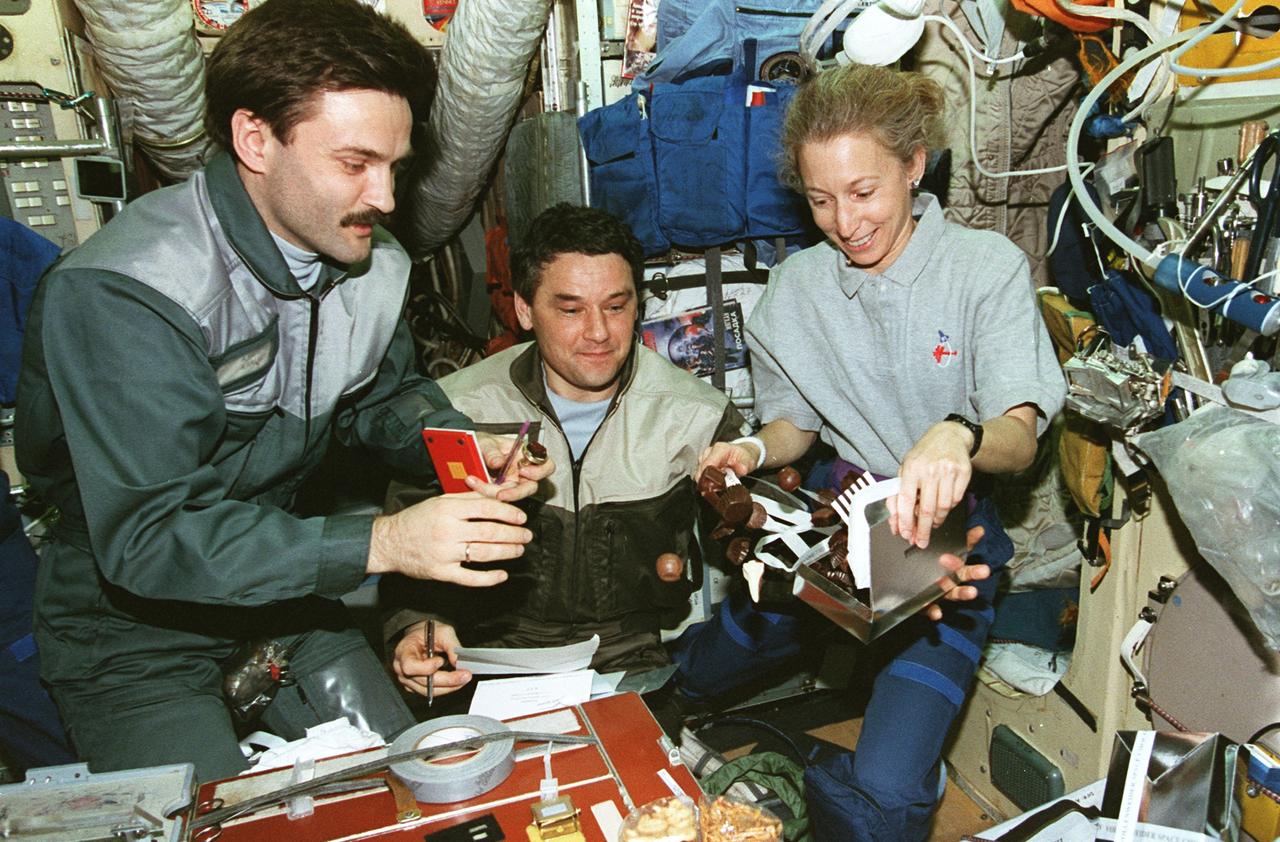
STS081-369-020 (12-22 Jan. 1997) --- Astronaut Marsha S. Ivins and two Mir-22 crewmembers stray from the conventional food fare as they open a box of chocolates on Russia's Mir Space Station's Base Block Module. Cosmonauts Aleksandr Y. Kaleri (left), flight engineer, and Valeri G. Korzun, share the treats.

Io Degassing from sub- and anti-Jupiter Regions
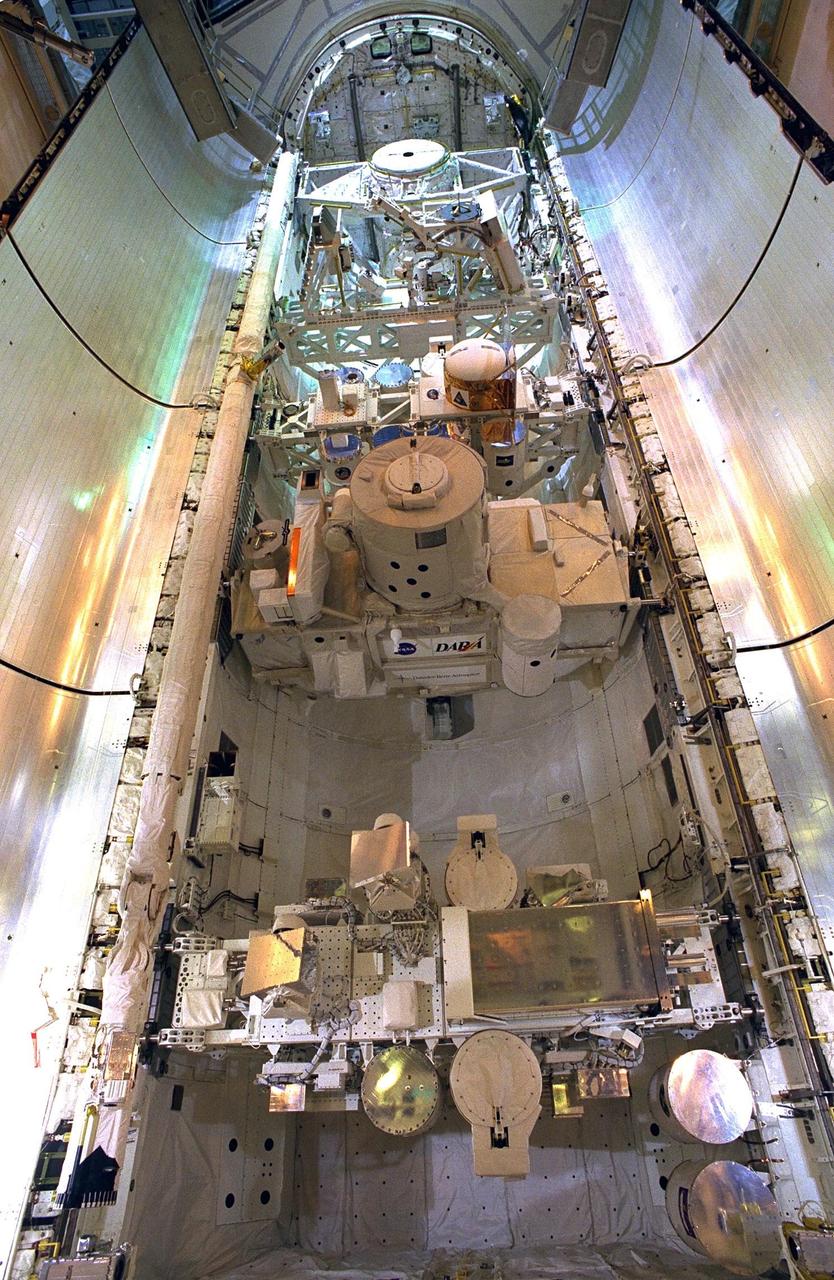
KENNEDY SPACE CENTER, FLA. -- The final tasks to prepare the Cryogenic Infrared Spectrometers and Telescopes for the Atmosphere-Shuttle Pallet Satellite-2 (CRISTA-SPAS-2) payload for the STS-85 mission are completed aboard Discovery at Launch Complex 39A. The CRISTA is a system of three telescopes and four spectrometers to measure infrared radiation emitted by the Earth’s middle atmosphere. During the 11-day mission, the CRISTA-SPAS-2 free-flying satellite will be deployed from Discovery and retrieved later in the flight. Also onboard the satellite will be the Middle Atmosphere High Resolution Spectrograph Investigation (MAHRSI) to measure ultraviolet radiation emitted and scattered by the Earth’s atmosphere.
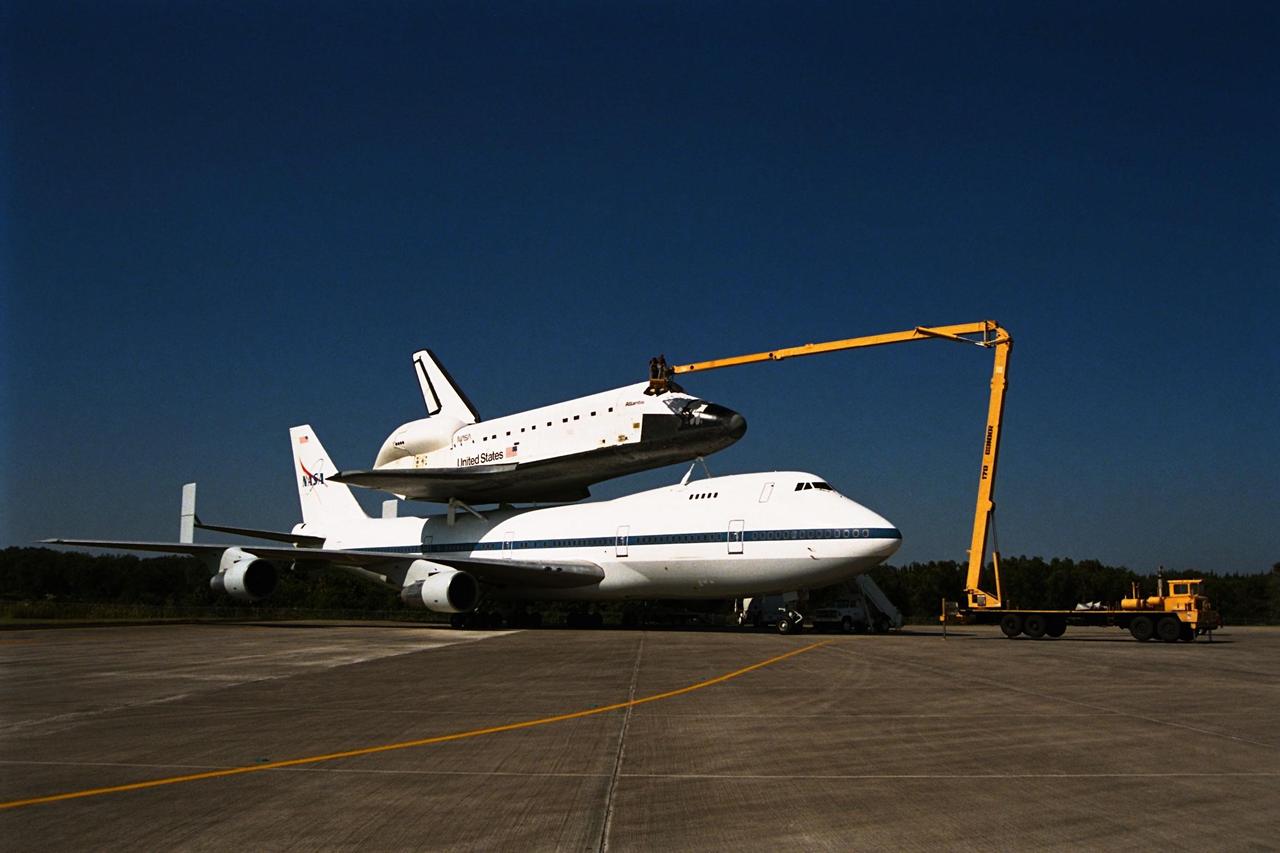
KENNEDY SPACE CENTER, FLA. -- The orbiter Atlantis sits atop the Shuttle Carrier Aircraft at Kennedy Space Center’s (KSC’s) Shuttle Landing Facility. Atlantis is being prepared for its ferry flight to Palmdale, Calif., for its Orbiter Maintenance Down Period at Palmdale’s Orbiter Assembly Facility, where it will remain until August 1998. There, modifications and structural inspections will be conducted in preparation for Atlantis’ future missions to support International Space Station assembly activities. Atlantis’ next flight into space is scheduled to be Space Shuttle mission STS-92, targeted for launch from KSC in January 1999
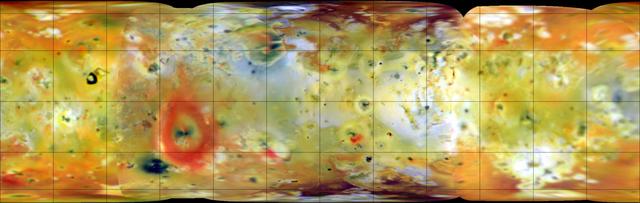
Color Global Mosaic of Io
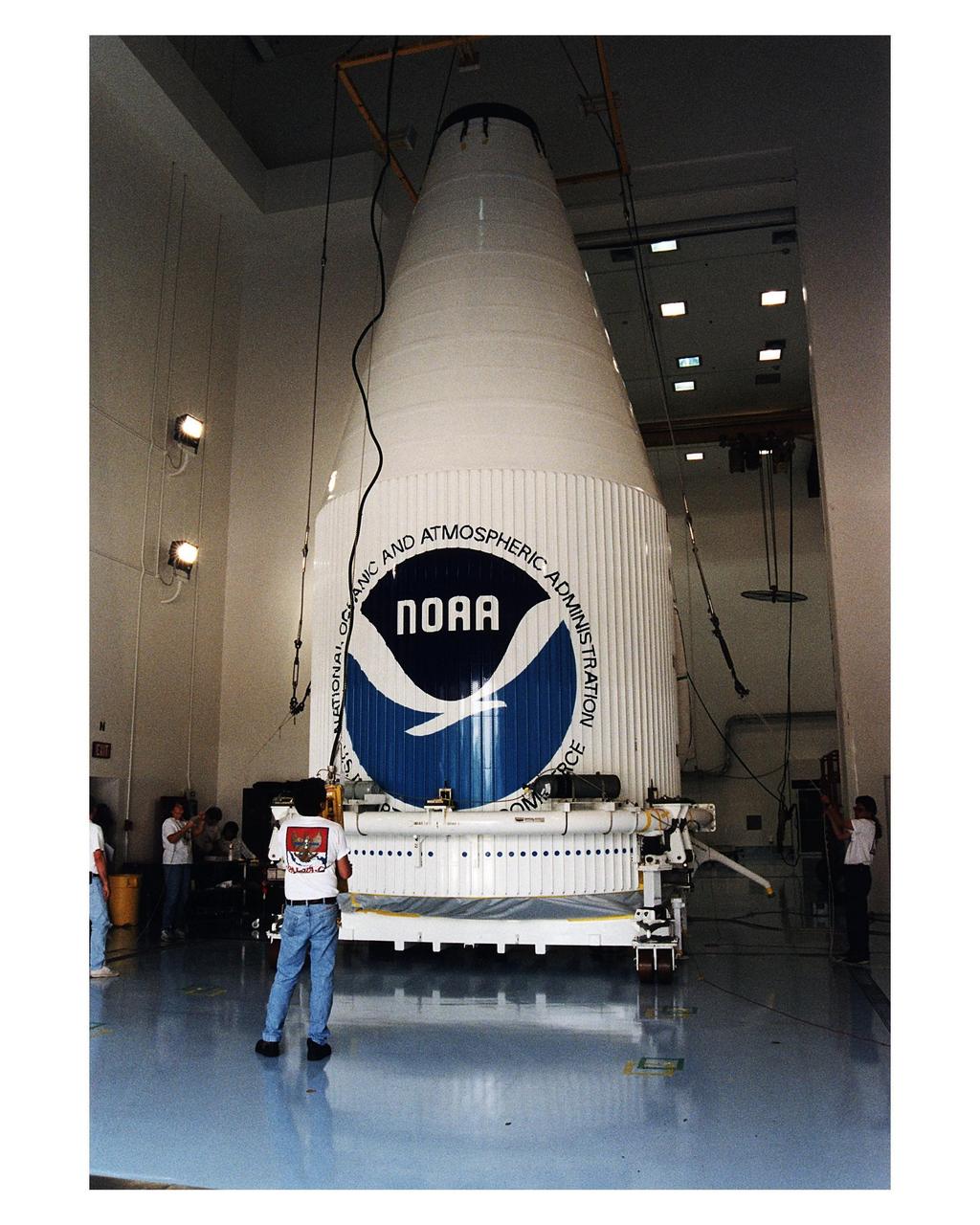
The GOES-K advanced weather satellite, already encapsulated in the Atlas 1 payload fairing, is carefully placed on the transporter at Astrotech Space Operations LP facility in Titusville. GOES-K will be the third spacecraft to be launched in the advanced series of Geostationary Operational Environmental Satellites (GOES). The GOES satellites are owned and operated by the National Oceanic and Atmospheric Administration (NOAA); NASA manages the design, development and launch of the spacecraft. GOES-K is targeted for an <a href="http://www-pao.ksc.nasa.gov/kscpao/release/1997/63-97.htm">April 24 launch</a> aboard a Lockheed Martin Atlas 1 expendable launch vehicle (AC-79) from Launch Complex 36, Pad B, Cape Canaveral Air Station. The launch window opens at 1:50 a.m. and extends to 3:09 a.m. EDT. Once in orbit, GOES-K will become GOES-10, joining GOES-8 and GOES-9 in space
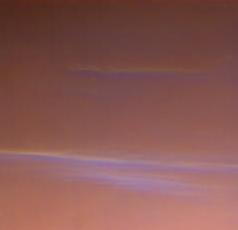
Wispy Blue Clouds Over Mars
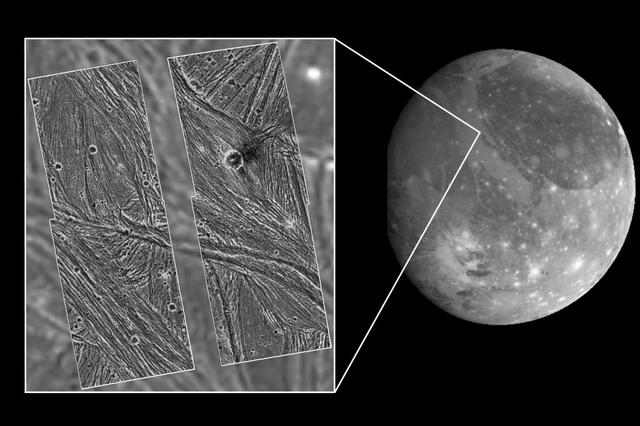
Ganymede Uruk Sulcus High Resolution Mosaic Shown in Context
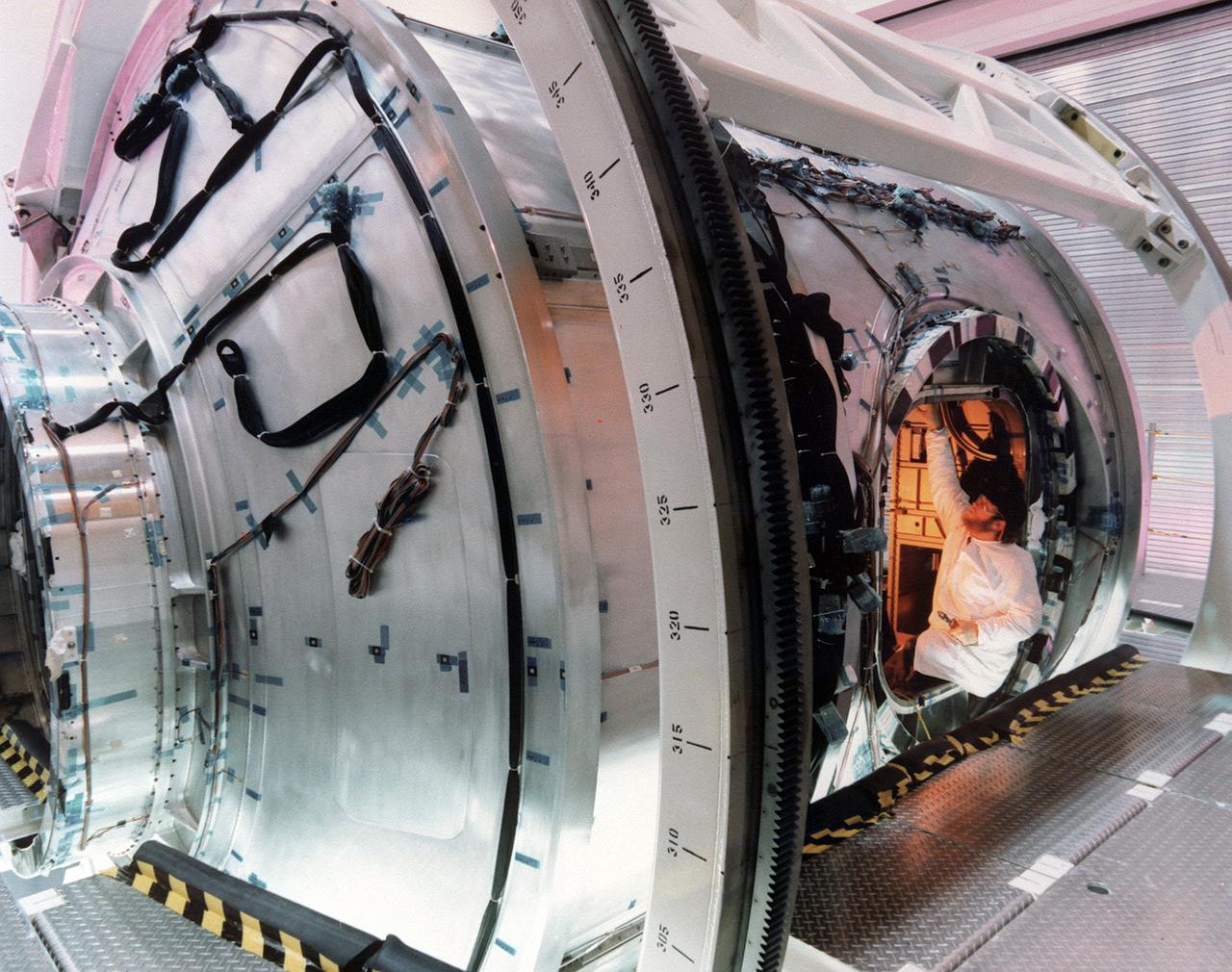
This photograph, taken by the Boeing Company,shows Boeing technicians preparing to install one of six hatches or doors to the Node 1 (also called Unity), the first U.S. Module for the International Space Station (ISS). The Node 1, or Unity, serves as a cornecting passageway to Space Station modules and was manufactured by the Boeing Company at the Marshall Space Flight Center from 1994 to 1997. The U.S. built Unity module was launched aboard the orbiter Endeavour (STS-88 mission) on December 4, 1998 and connected to the Zarya, the Russian-built Functional Energy Block (FGB). The Zarya was launched on a Russian proton rocket prior to the launch of the Unity. The ISS is a multidisciplinary laboratory, technology test bed, and observatory that will provide unprecedented undertakings in scientific, technological, and international experimentation.
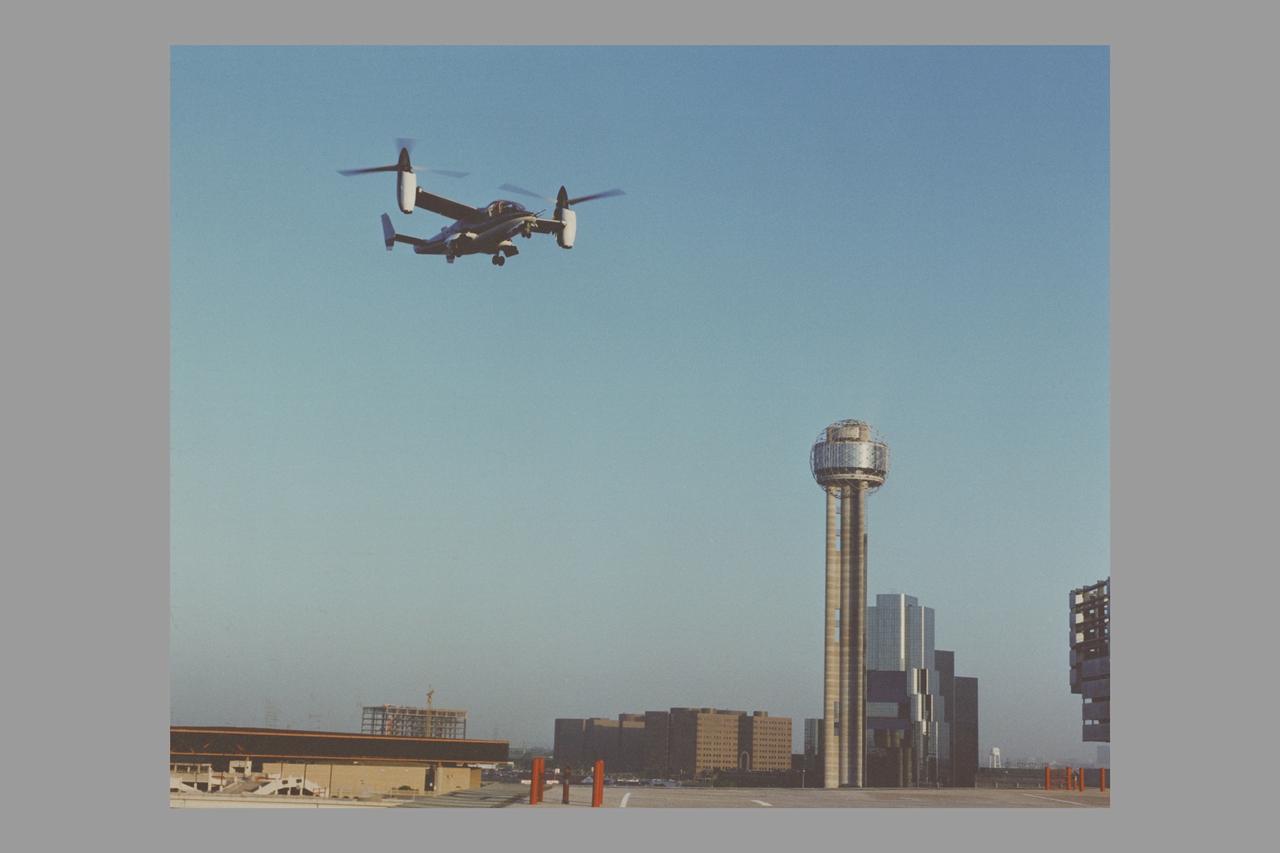
XV-15 Tiltrotor in hover helicopter flight at Bell Helicopter Co. Bell Photo number 043901 (credit and permission required from Bell Helicopter Company for any non-governmental reproductions)
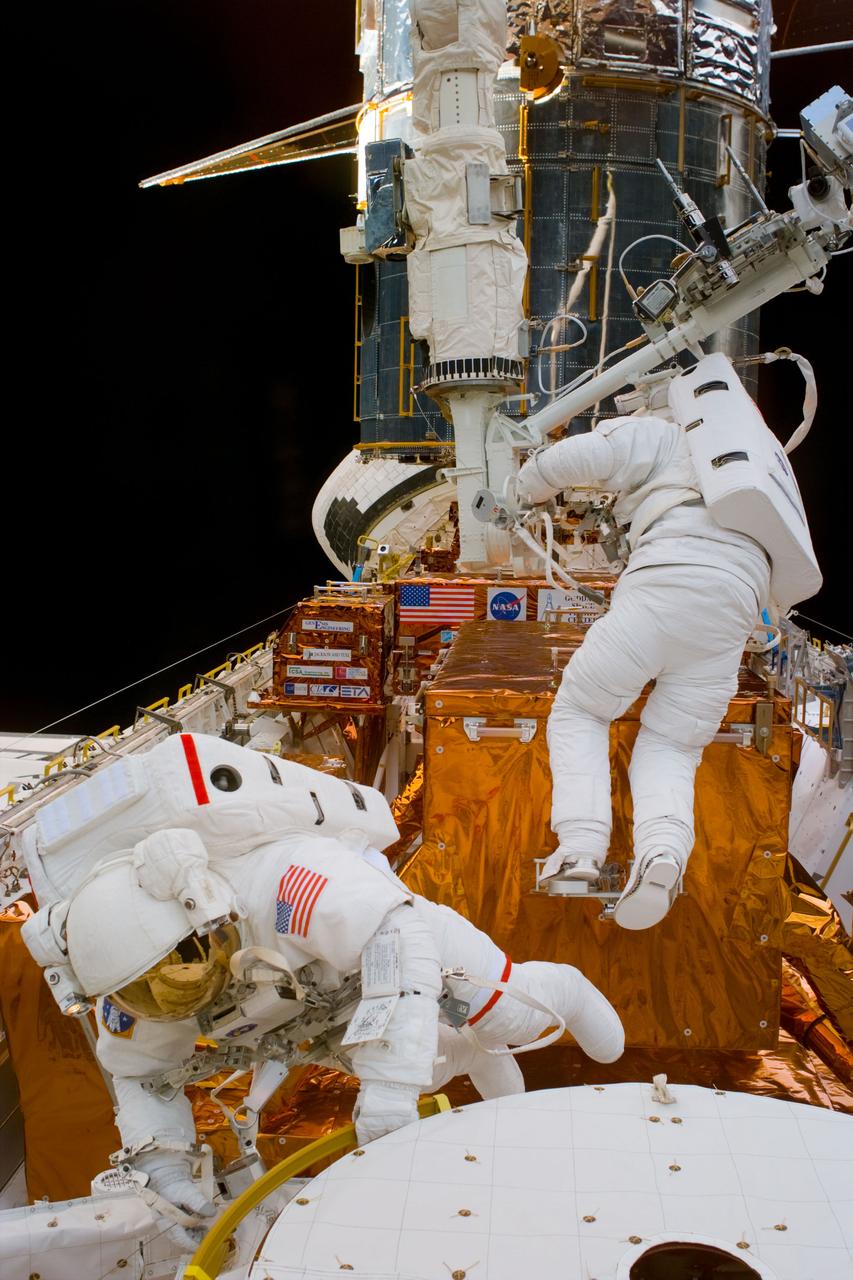
S82-E-5279 (14 Feb. 1997) --- Astronaut Mark C. Lee, STS-82 payload commander (in foreground) and Steven L. Smith during Extravehicular Activity (EVA) setup. This view was taken with an Electronic Still Camera (ESC).
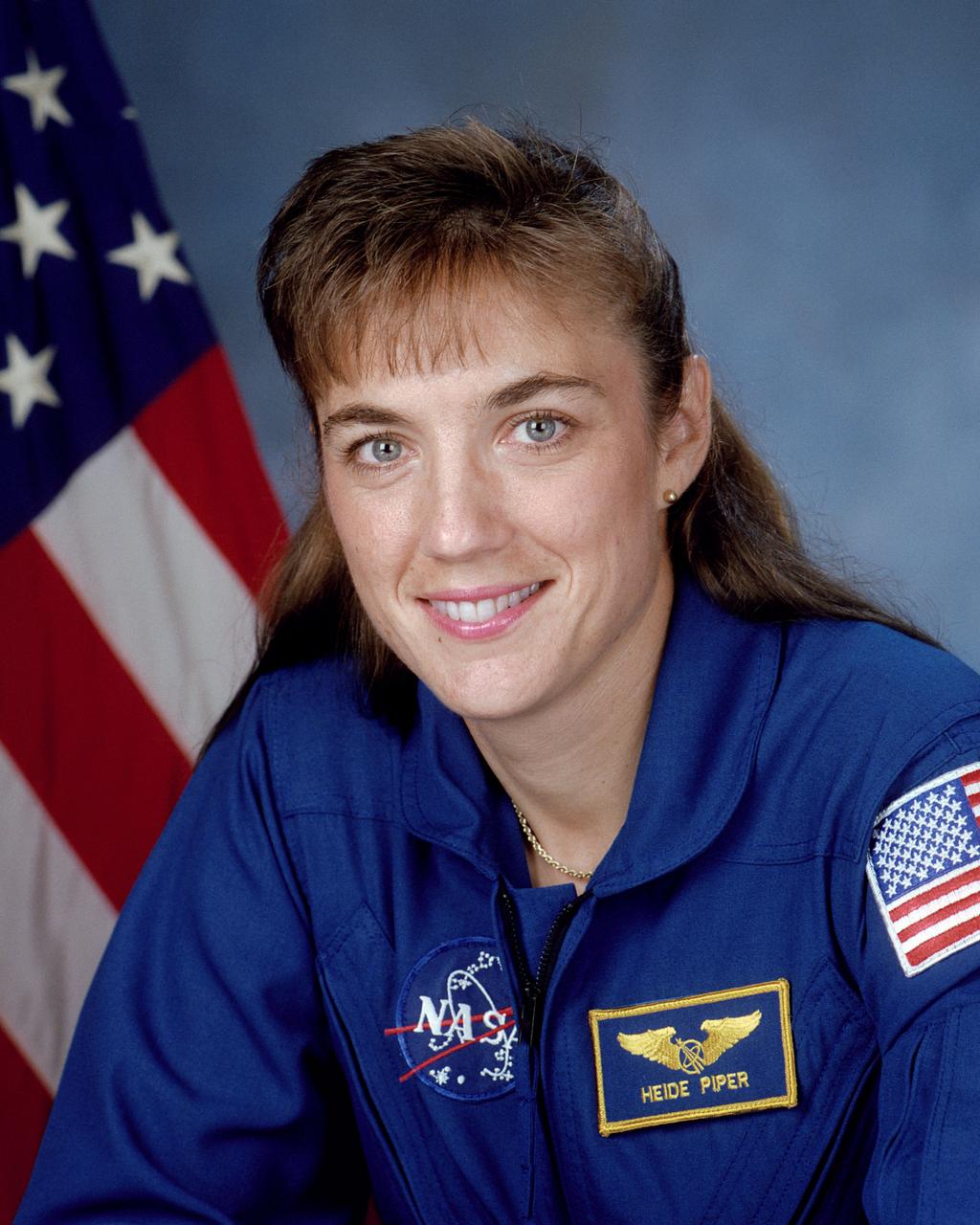
S97-06558 (22 Aug. 1997) --- Astronaut Heidemarie M. Stefanyshyn-Piper, mission specialist.
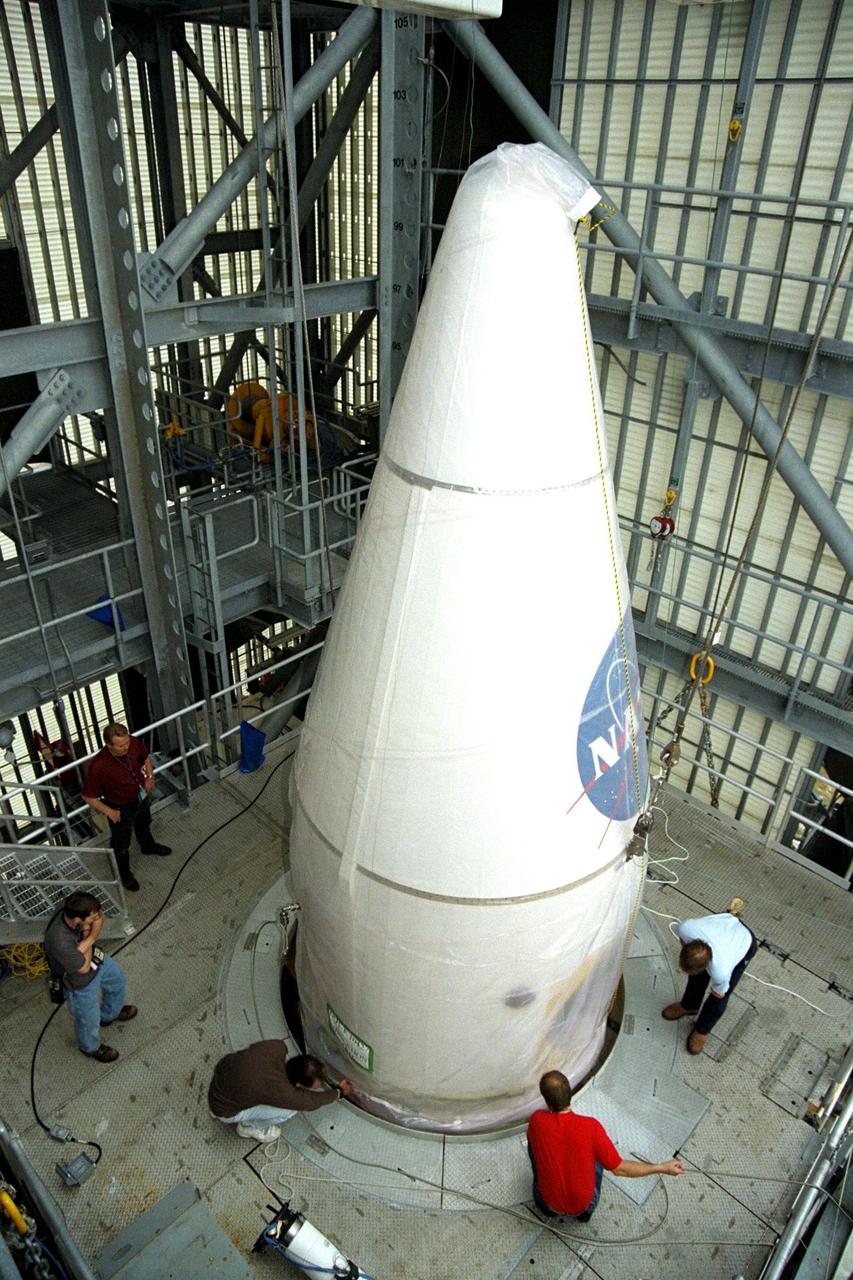
NASA’s Lunar Prospector is mated to a Lockheed Martin Athena II launch vehicle at Cape Canaveral Air Station’s Launch Complex 46. Lunar Prospector, built for the NASA Ames Research Center by Lockheed Martin, is a spin-stabilized spacecraft designed to provide NASA the first global maps of the Moon’s surface and its gravitational magnetic fields. It will orbit the Moon at an altitude of approximately 63 miles during a one-year mission. The launch of Lunar Prospector is scheduled for Jan. 5, 1998 at 8:31 p.m. EST
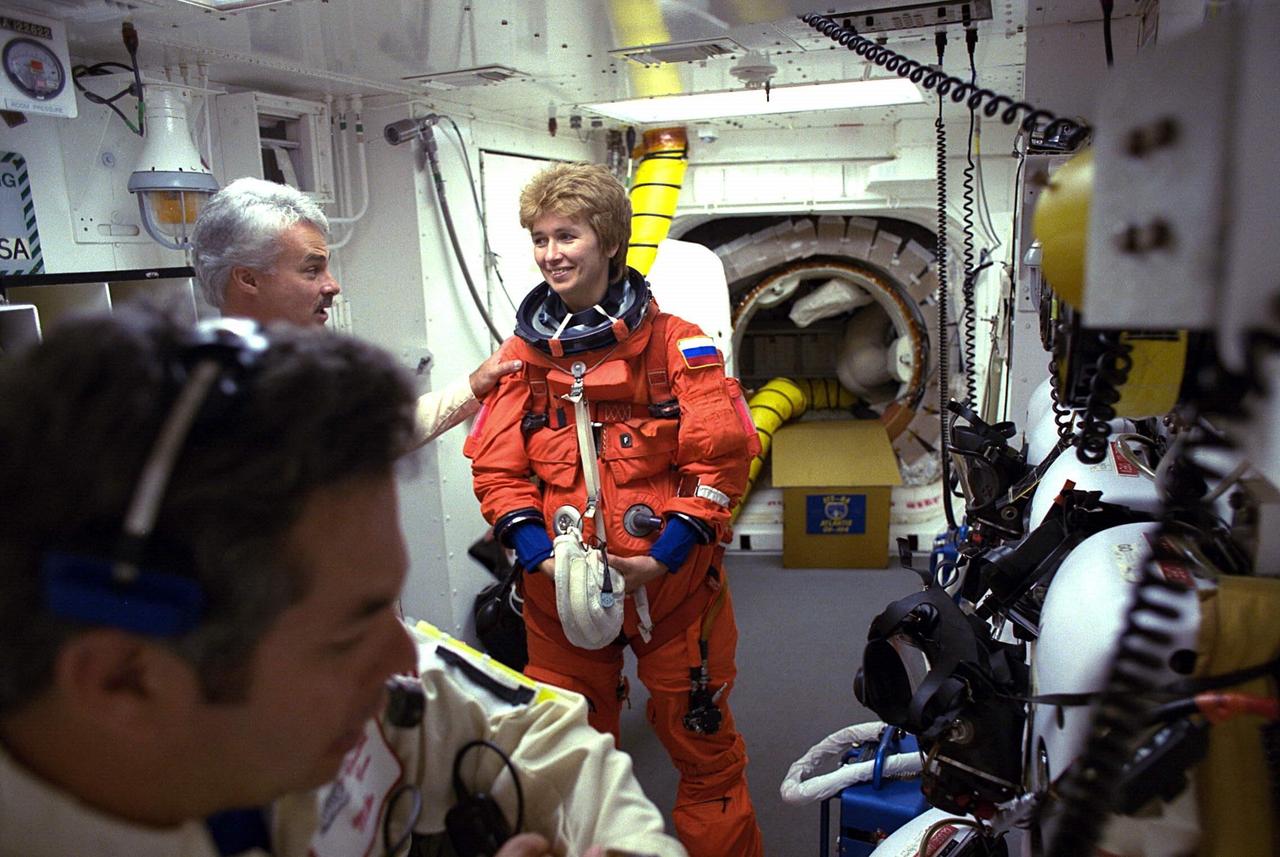
STS-84 Mission Specialist Elena V. Kondakova prepares to enter the Space Shuttle Atlantis at Launch Pad 39A with help from white room closeout crew members. The fourth Shuttle mission of 1997 will be the sixth docking of the Space Shuttle with the Russian Space Station Mir. The commander is Charles J. Precourt. The pilot is Eileen Marie Collins. The five mission specialists are C. Michael Foale, Carlos I. Noriega, Edward Tsang Lu, Jean-Francois Clervoy of the European Space Agency and Elena V. Kondakova of the Russian Space Agency. The planned nine-day mission will include the exchange of Foale for U.S. astronaut and Mir 23 crew member Jerry M. Linenger, who has been on Mir since Jan. 15. Linenger transferred to Mir during the last docking mission, STS-81; he will return to Earth on Atlantis. Foale is slated to remain on Mir for about four months until he is replaced in September by STS-86 Mission Specialist Wendy B. Lawrence. During the five days Atlantis is scheduled to be docked with the Mir, the STS-84 crew and the Mir 23 crew, including two Russian cosmonauts, Commander Vasily Tsibliev and Flight Engineer Alexander Lazutkin, will participate in joint experiments. The STS-84 mission also will involve the transfer of more than 7,300 pounds of water, logistics and science equipment to and from the Mir. Atlantis is carrying a nearly 300-pound oxygen generator to replace one of two Mir units which have experienced malfunctions. The oxygen it generates is used for breathing by the Mir crew
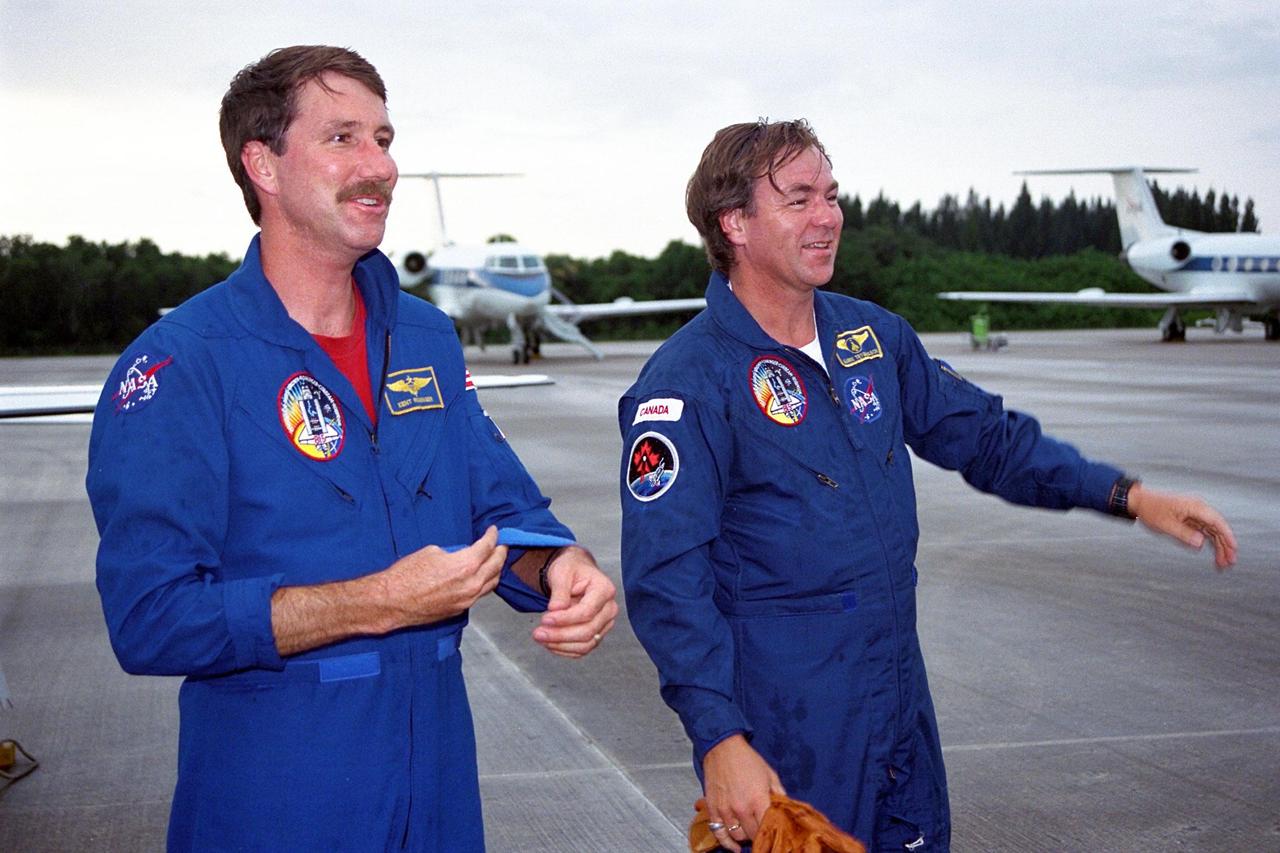
STS-85 Pilot Kent V. Rominger (left) and Payload Specialist Bjarni V. Tryggvason prepare to greet the rest of the flight crew at KSC’s Shuttle Landing Facility (SLF) after their arrival from NASA’s Johnson Space Center to begin final preparations for the STS-85 mission. The other crew members are Commander Curtis L. Brown, Jr., Payload Commander N. Jan Davis, Mission Specialist Robert L. Curbeam, Jr., and Mission Specialist Stephen K. Robinson. The primary payload aboard the Space Shuttle orbiter Discovery for the 11-day space flight is the Cryogenic Infrared Spectrometers and Telescopes for the Atmosphere-2 (CRISTA-SPAS2). Other STS-85 payloads include the Manipulator Flight Demonstration (MFD), and Technology Applications and Science-1 (TAS-1) and International Extreme Ultraviolet Hitchhiker-2 (IEH-2) experiments
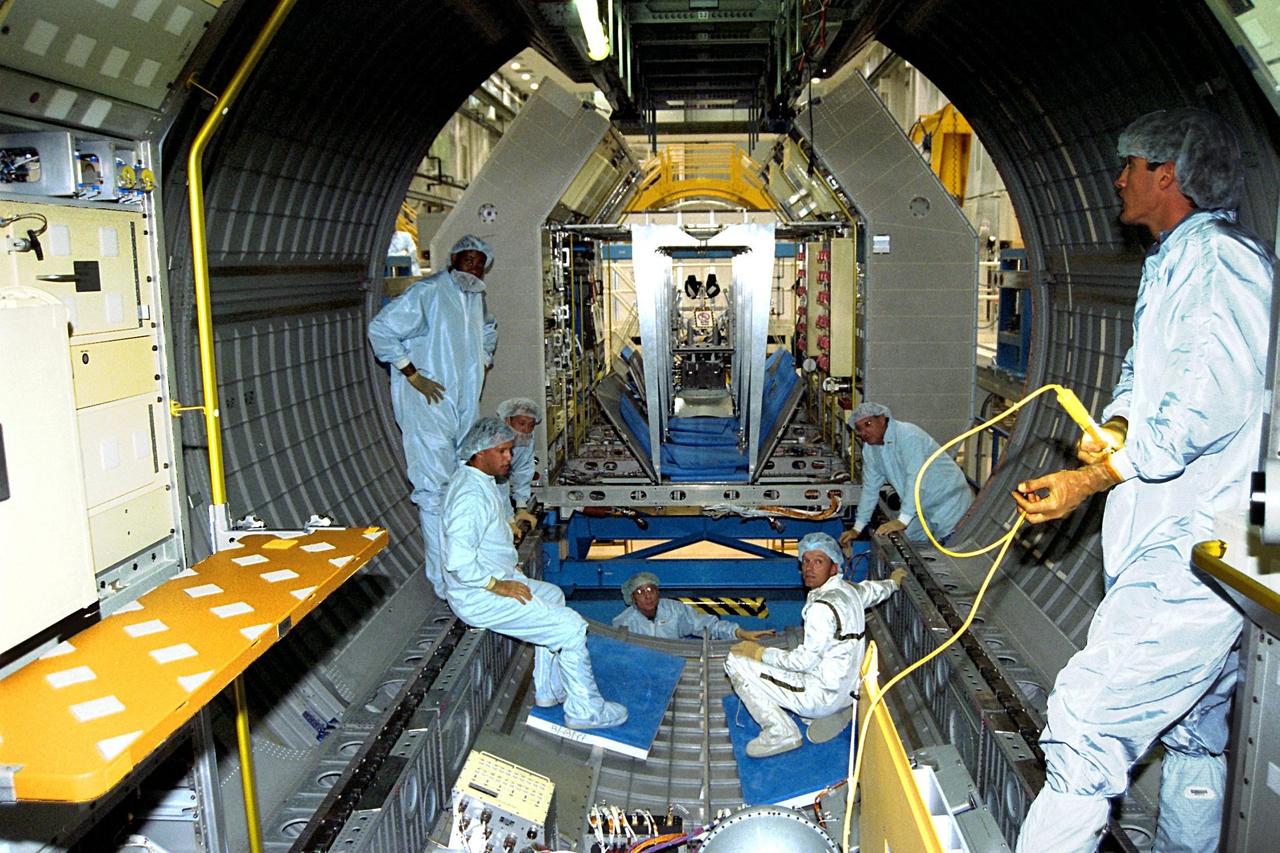
The Neurolab payload for STS-90, scheduled to launch aboard the Shuttle Columbia from Kennedy Space Center (KSC) on April 2, 1998, is installed in the Spacelab module by Boeing technicians in the Operations and Checkout Building at KSC. Investigations during the Neurolab mission will focus on the effects of microgravity on the nervous system. Specifically, experiments will study the adaptation of the vestibular system, the central nervous system, and the pathways that control the ability to sense location in the absence of gravity, as well as the effect of microgravity on a developing nervous system. The crew of STS-90 will include Commander Richard Searfoss, Pilot Scott Altman, Mission Specialists Richard Linnehan, Dafydd (Dave) Williams, M.D., and Kathryn (Kay) Hire, and Payload Specialists Jay Buckey, M.D., and James Pawelczyk, Ph.D
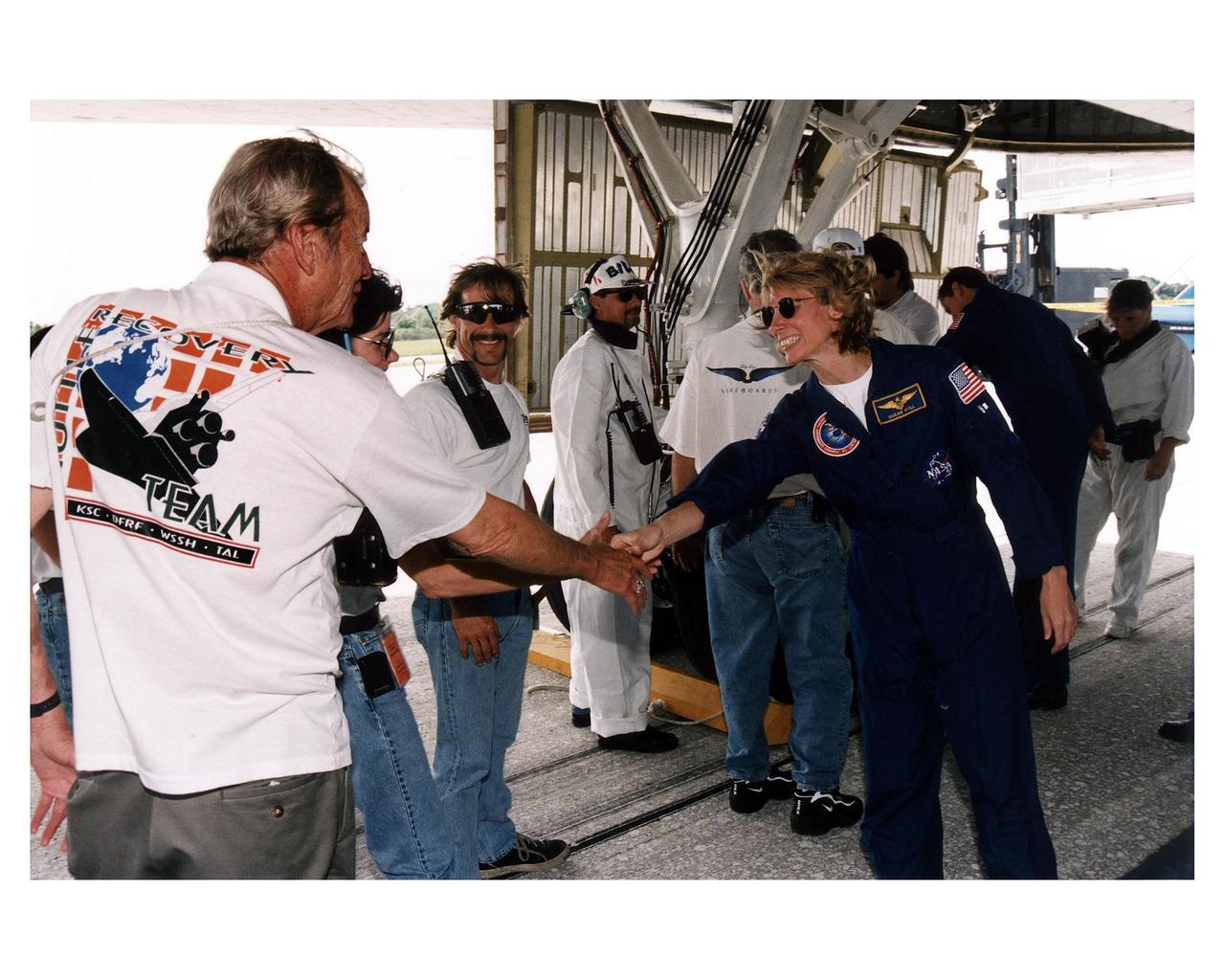
KENNEDY SPACE CENTER, FLA. -- STS-83 Pilot Susan L. Still greets KSC postlanding operations workers on Runway 33 at the Space Center’s Shuttle Landing Facility after the Space Shuttle Orbiter Columbia landed at 2:33:11 p. m. EDT, April 8, to conclude the Microgravity Science Laboratory-1 (MSL-1) mission. At main gear touchdown, the STS-83 mission duration was 3 days, 23 hours, 12 minutes. The planned 16-day mission was cut short by a faulty fuel cell. This is only the third time in Shuttle program history that an orbiter was brought home early due to mechanical problems. This was also the 36th KSC landing since the program began in 1981
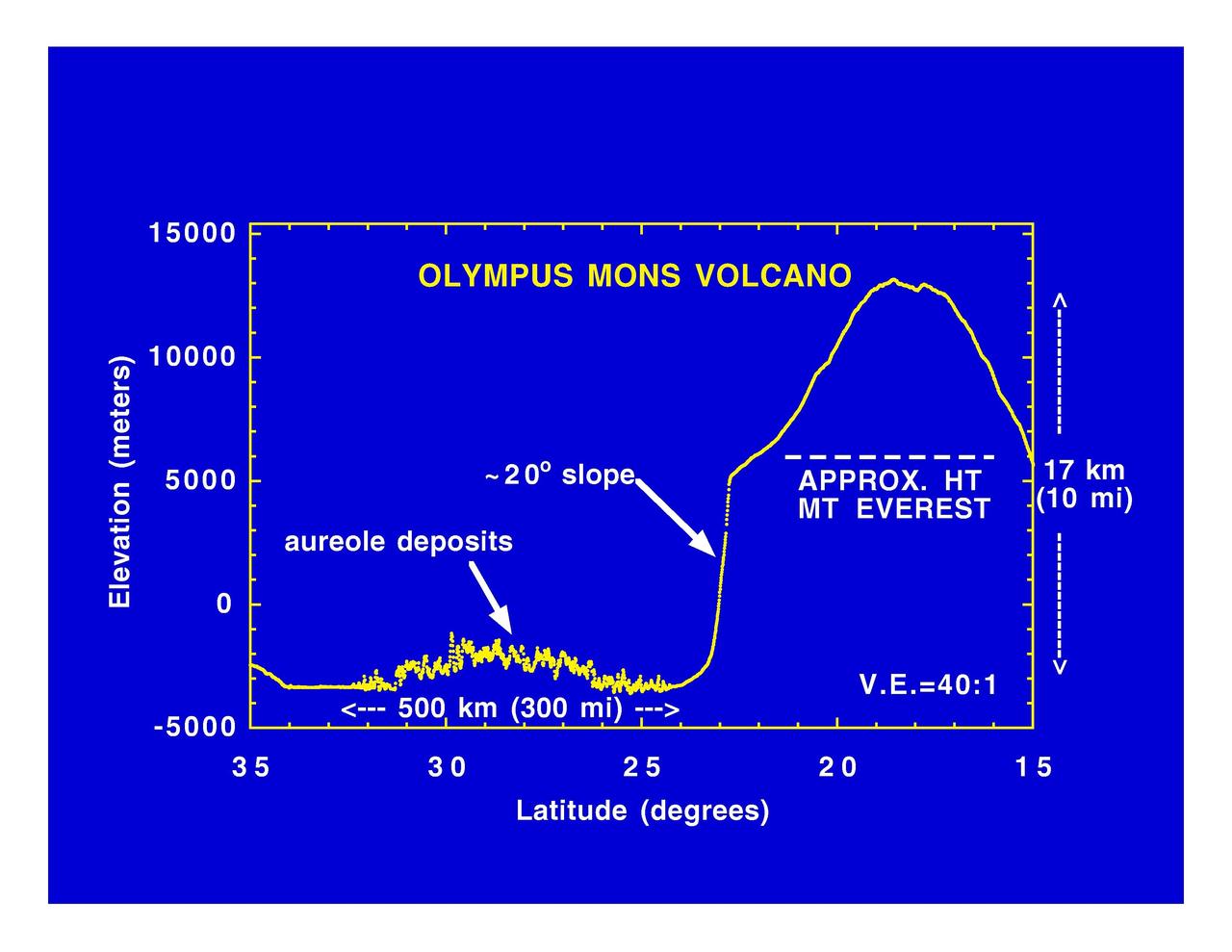
Olympus Mons Volcano

Winds Near Jupiter Belt-Zone Boundary

KENNEDY SPACE CENTER, FLA. -- STS-83 crew member in the white room at Launch Pad 39A prior to entering the crew compartment of Space Shuttle Columbia for launch.
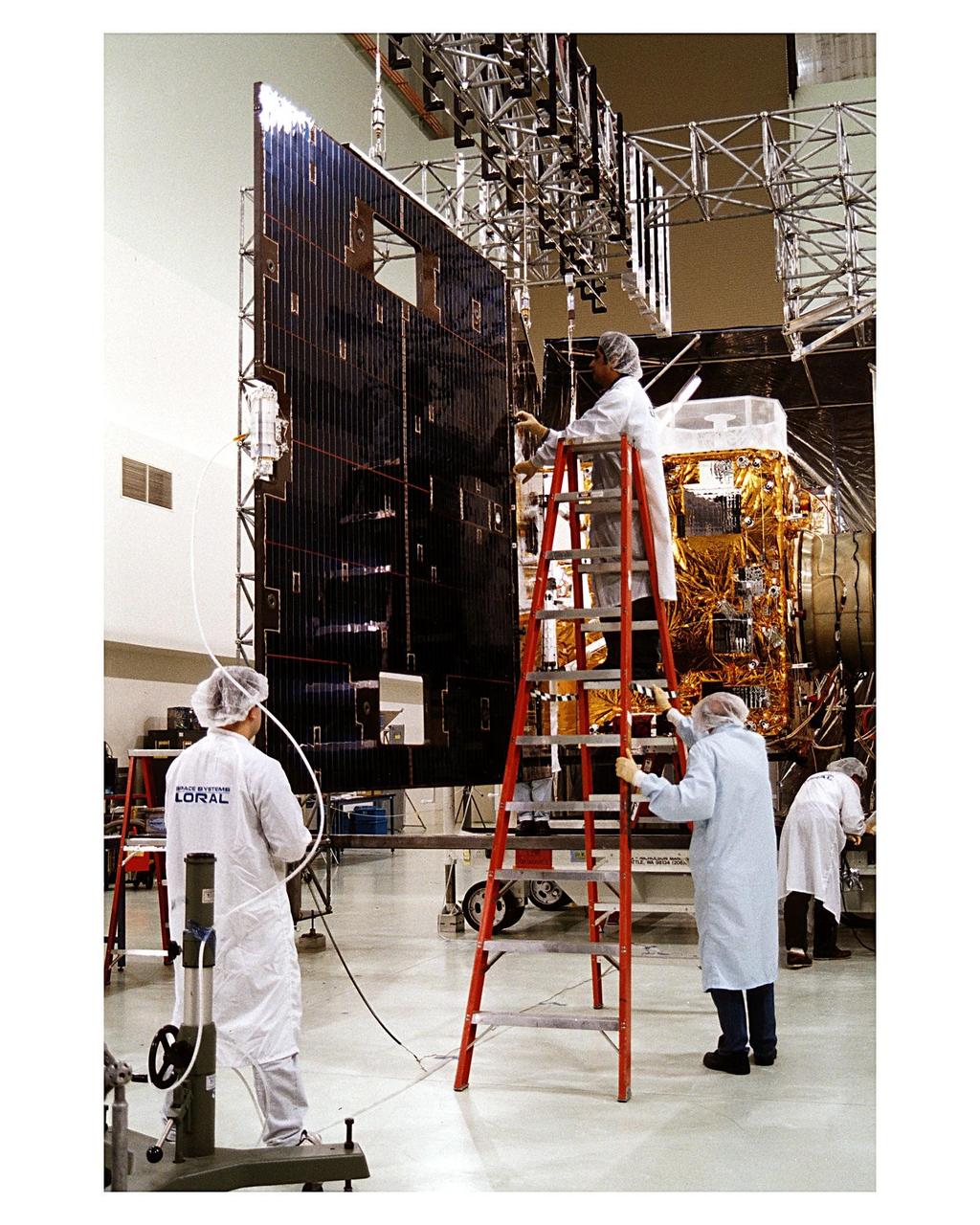
Space Systems/LORAL employees inspect solar panels for the GOES-K weather satellite in the Astrotech facility at Titusville, Fla., as they begin final testing of the imaging system, communications and power systems of the spacecraft. The GOES-K is the third spacecraft to be launched in the new advanced series of geostationary weather satellites for the National Oceanic and Atmospheric Administration (NOAA). The GOES-K is built for NASA and NOAA by Space Systems/LORAL of Palo Alto, Calif. The launch of the satellite from Launch Pad 36B at Cape Canaveral Air Station on an Atlas 1 rocket (AC-79) is currently planned for Apr. 24 at the opening of a launch window which extends from 1:56 to 3:19 a.m. EDT
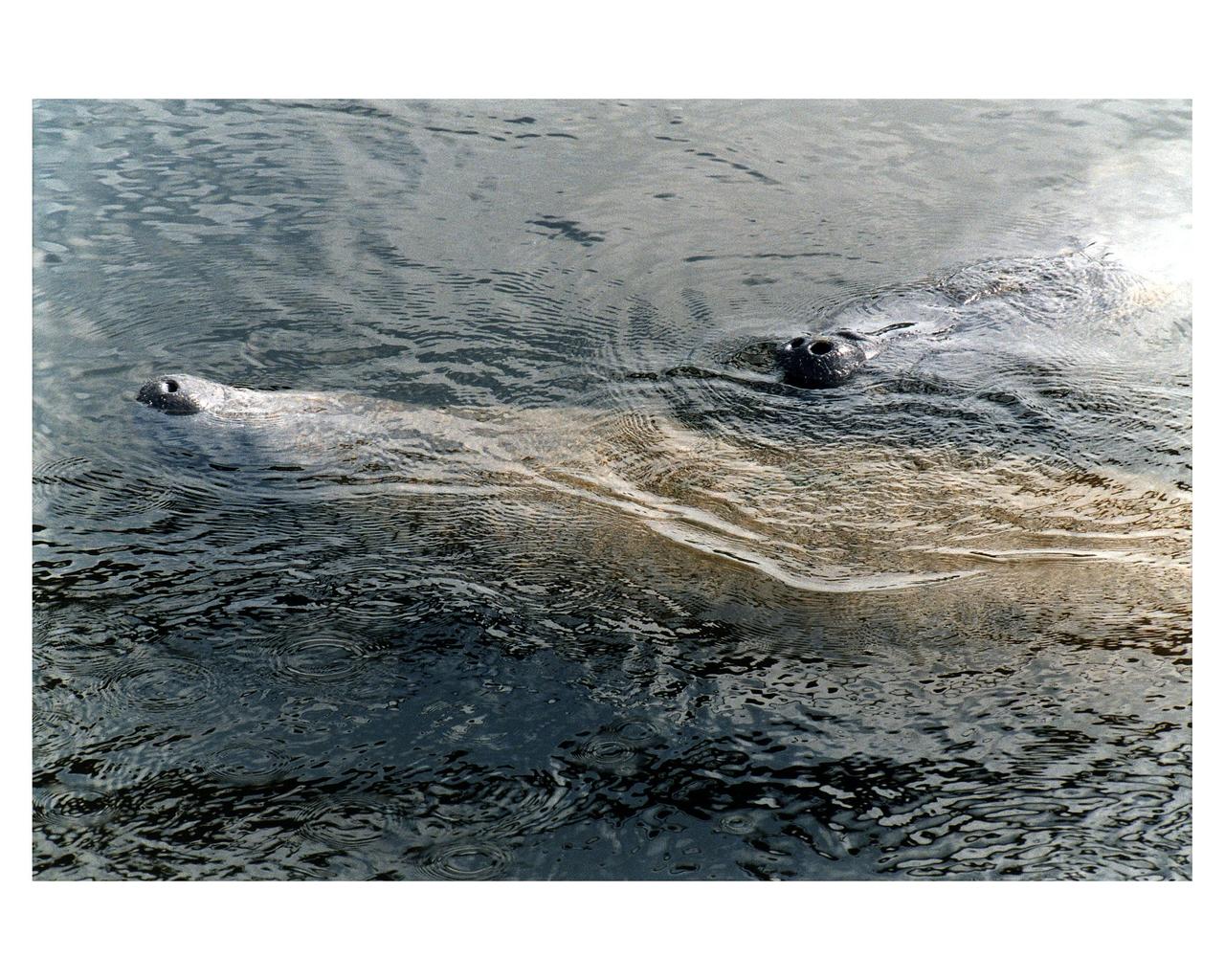
KENNEDY SPACE CENTER, FLA. -- Manatees in the Banana Creek
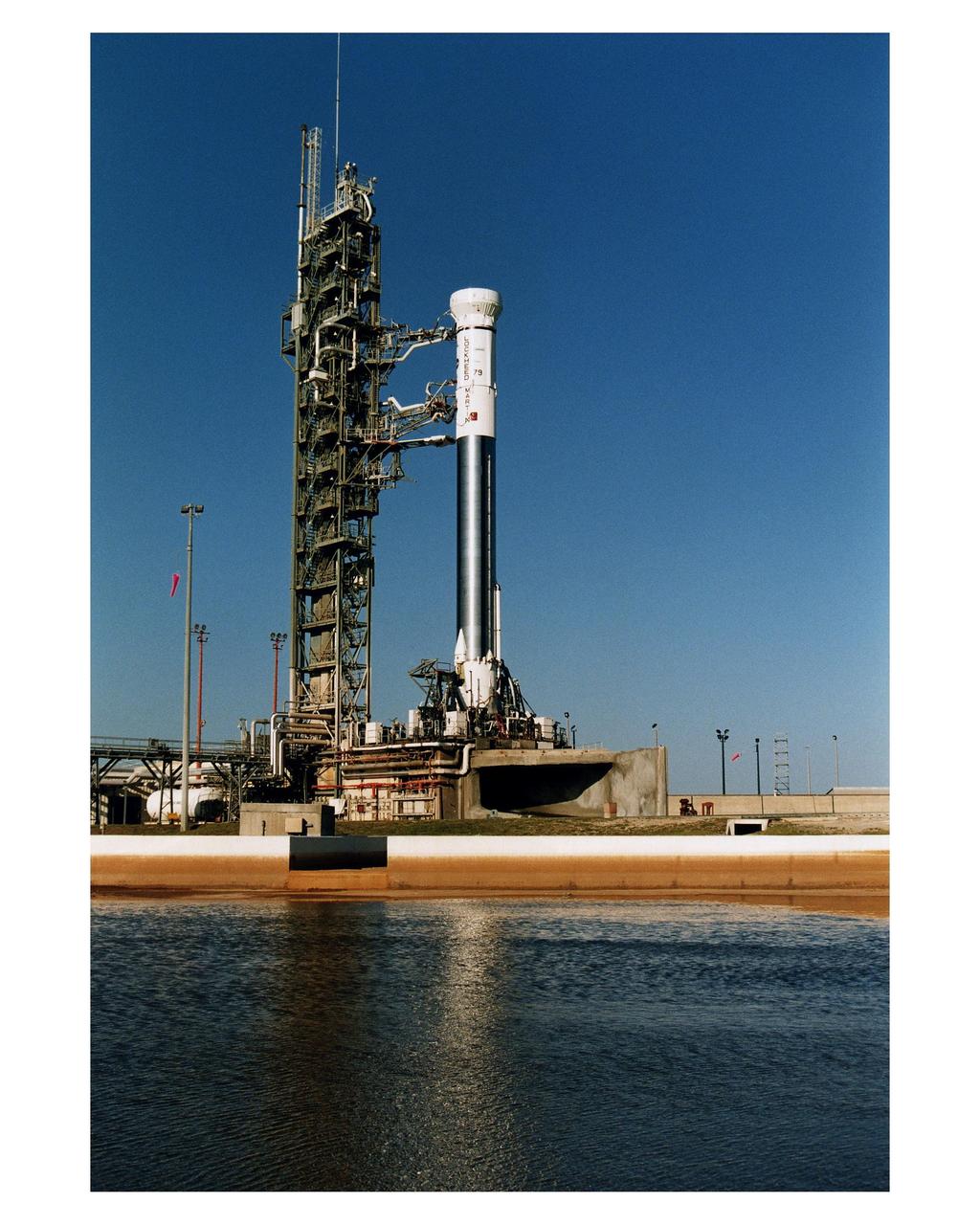
The Lockheed Martin Atlas 1 expendable launch vehicle (AC-79) which will carry the GOES-K advanced weather satellite undergoes a critical prelaunch test with its mobile service tower pulled back. The Wet Dress Rehearsal is a major prelaunch test designed to demonstrate, in part, the launch readiness of the vehicle and launch support equipment. AC-79 will be the final launch of an Atlas 1 rocket, a derivative of the original Atlas Centaur which had its first successful launch for NASA in 1963. Future launches of Geostationary Operational Environmental Satellites (GOES) in the current series will be on Atlas II vehicles. The GOES satellites are owned and operated by the National Oceanic and Atmospheric Administration (NOAA); NASA manages the design, development and launch of the spacecraft. The launch of AC-79 with the GOES-K is targeted for <a href="http://www-pao.ksc.nasa.gov/kscpao/release/1997/63-97.htm">April 24</a> during a launch window which extends from 1:50-3:09 a.m. EDT
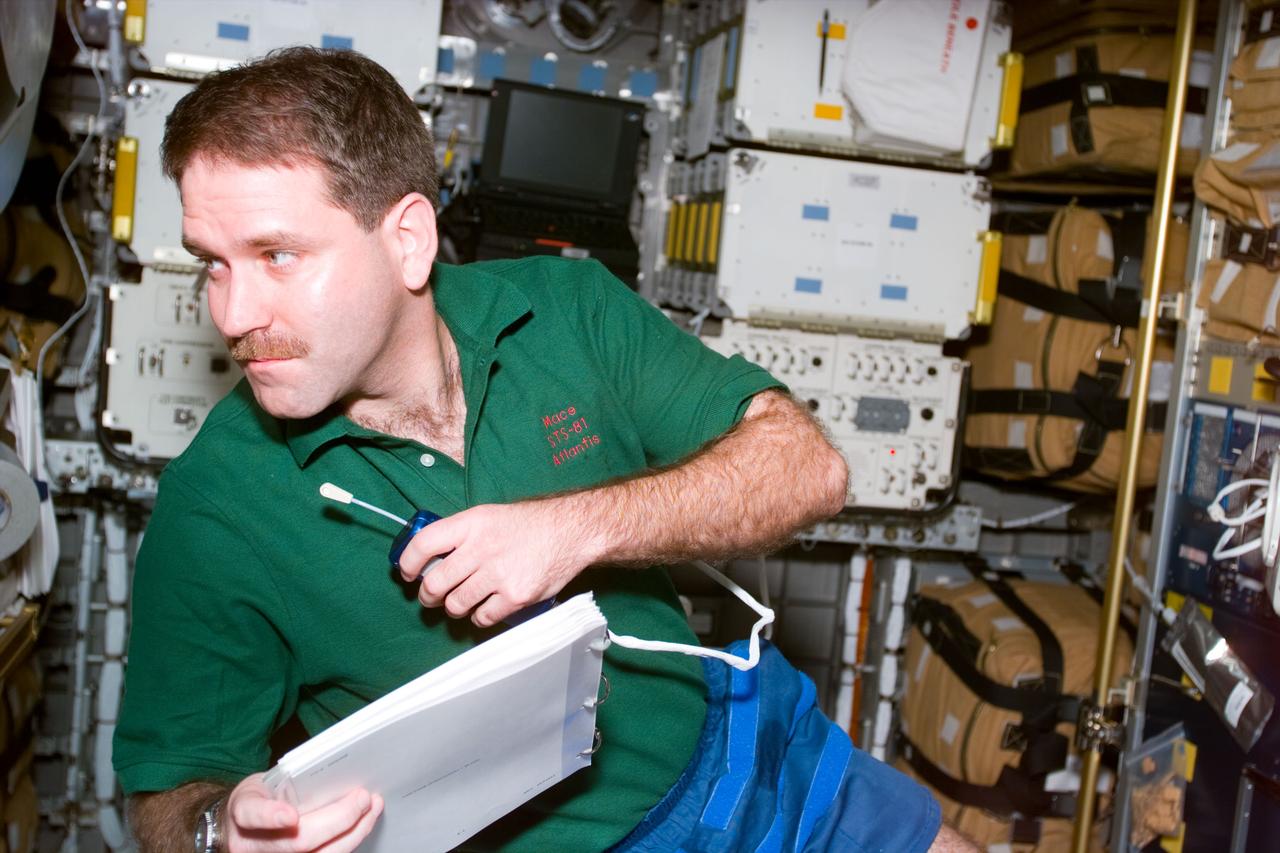
STS081-E-05144 (13 Jan. 1997) --- Making sure everything is in its place is no easy task as witnessed by the serious countenance of astronaut John M. Grunsfeld, mission specialist. Grunsfeld communicates with ground controllers as he checks progress of item transfers in the Spacehab Double Module (DM). This image was recorded with an Electronic Still Camera (ESC) and was later downlinked to flight controllers in Houston, Texas. Grunsfeld and five astronaut crew mates are preparing for a scheduled mid-week docking with Russia's Mir Space Station.
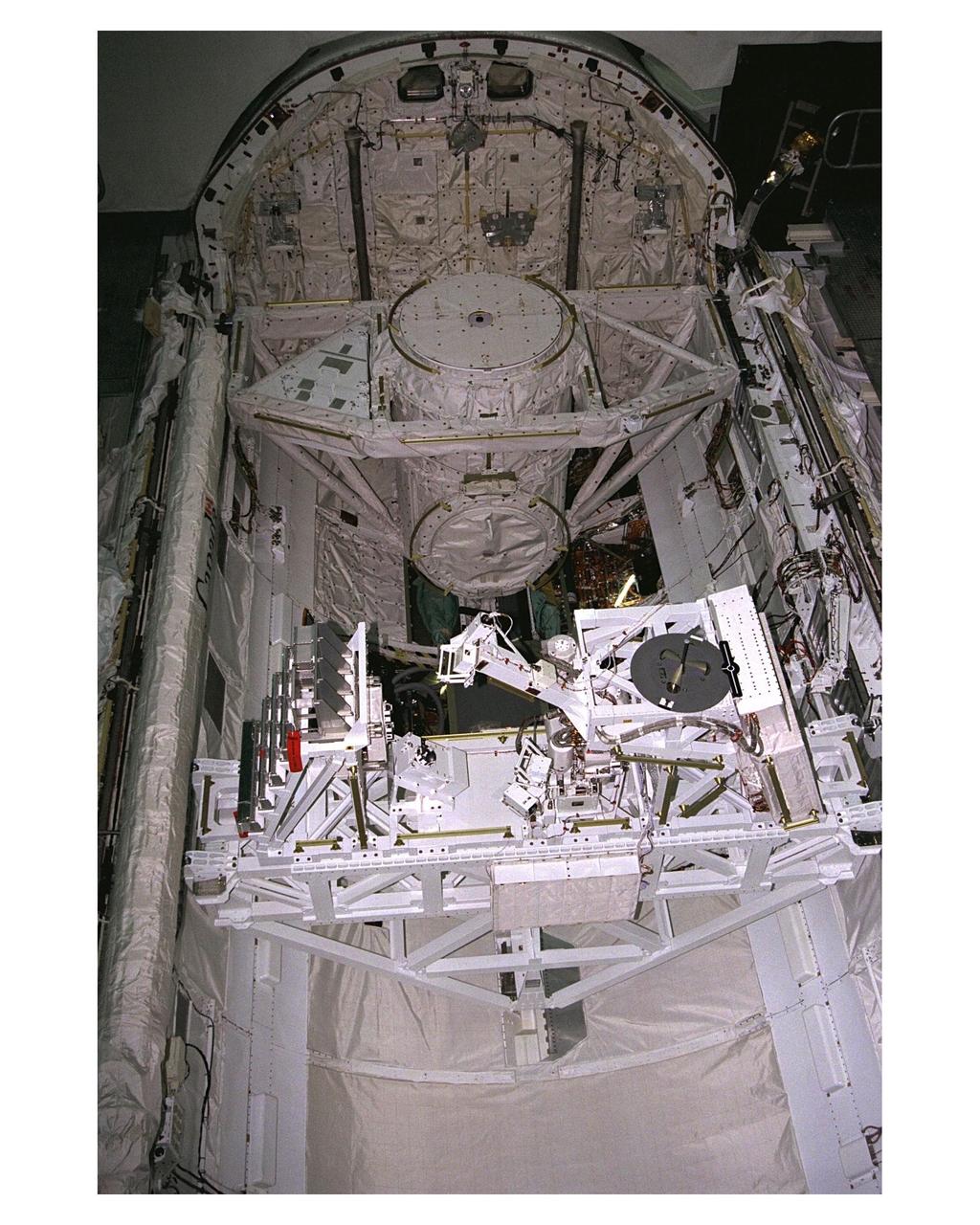
STS-85 Crew Equipment Interface Test (CEIT
Changes on Io between Voyager 1 and Galileo Second Orbit Around an Unnamed Vent North of Prometheus
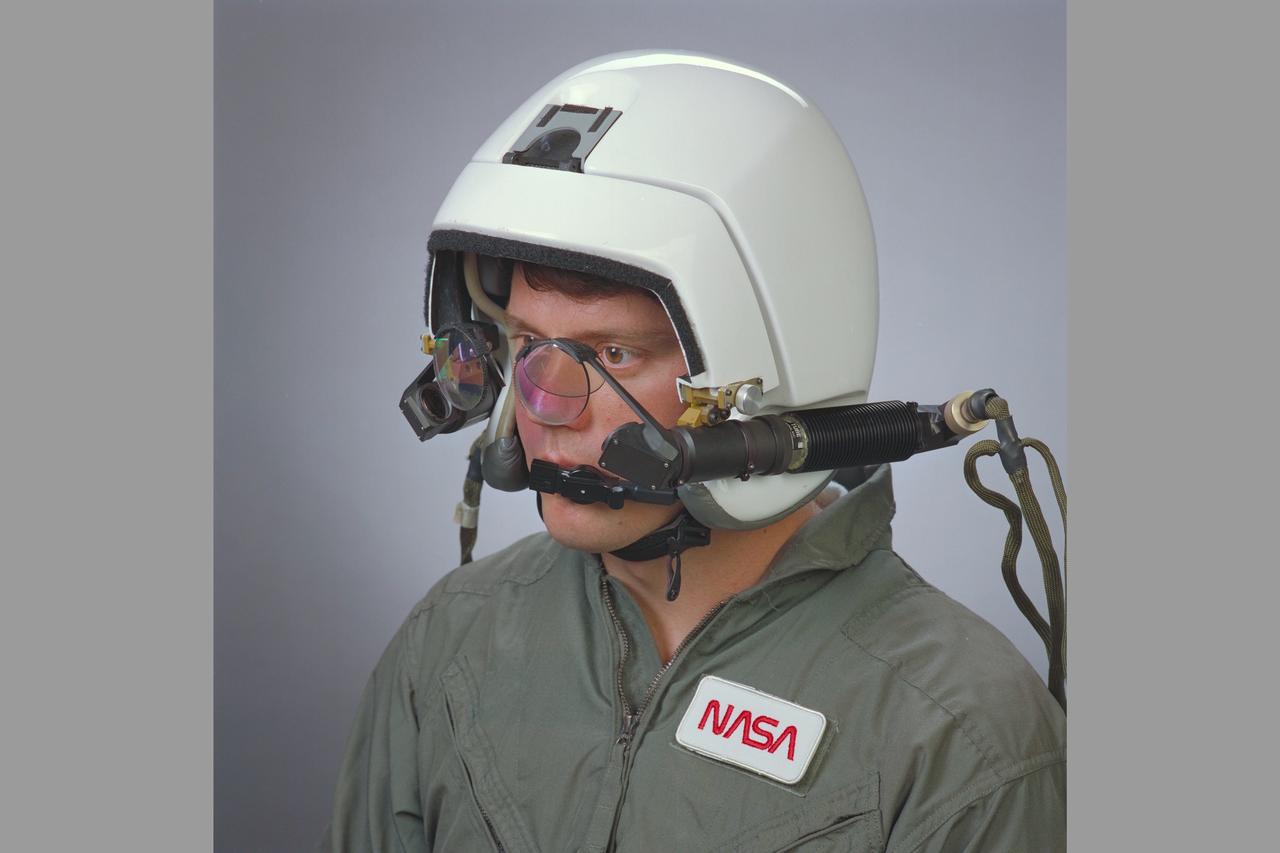
RASCAL color helmet mounted display with Oliver Field
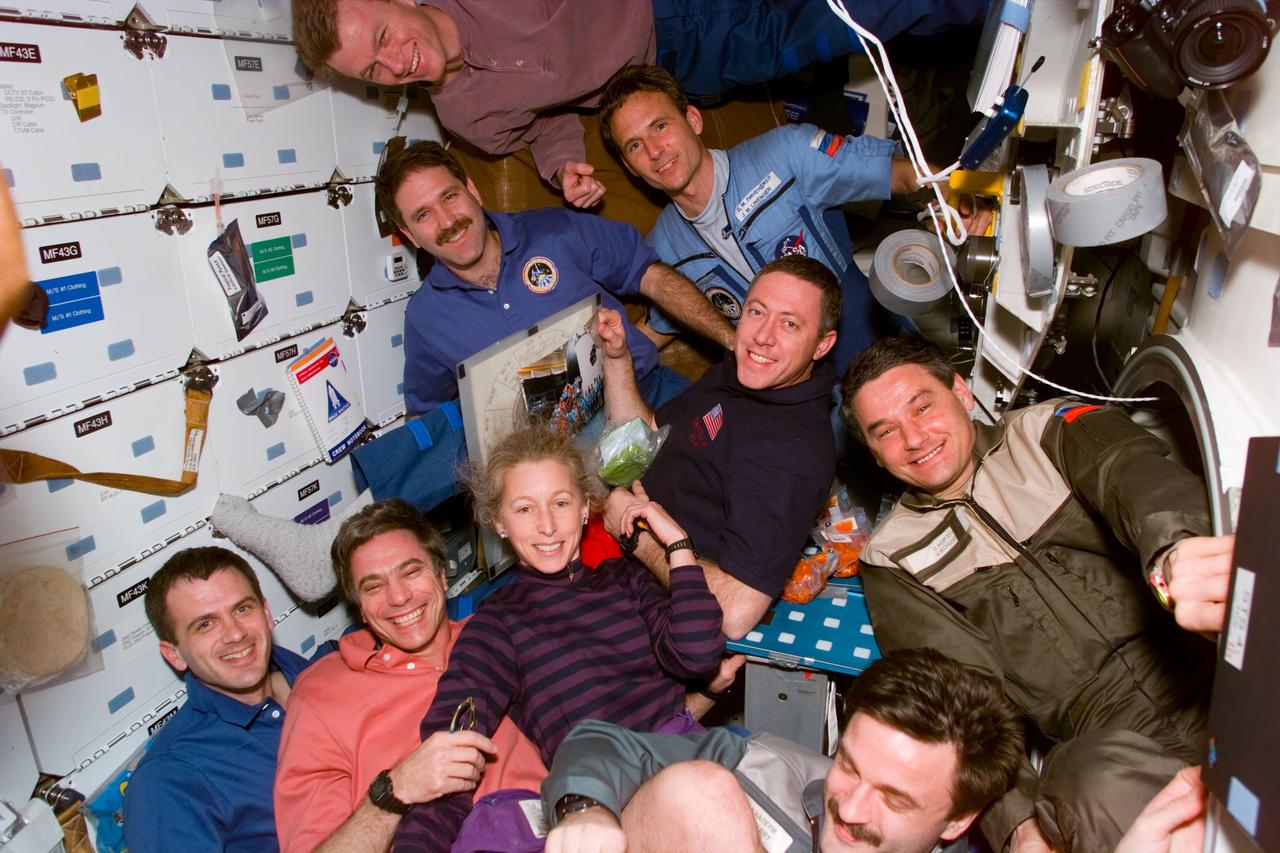
STS081-E-05535 (17 Jan. 1997) --- Seven NASA astronauts and two Russian cosmonauts take a break from busy supply-transfer duties on the space shuttle Atlantis' middeck halfway through the ten-day mission. Left to right at bottom of the frame are mission specialists Peter J. K. (Jeff) Wisoff, John E. Blaha, Marsha S. Ivins and cosmonaut Aleksandr Y. Kaleri, Mir-22 flight engineer. In the top half of the scene are, from the top left, Brent W. Jett, Jr., pilot; John M. Grunsfeld, mission specialist; Jerry M. Linenger, cosmonaut guest researcher; Michael A. Baker, commander; and cosmonaut Valeri G. Korzun, Mir-22 commander. The picture was recorded with a pre-set 35mm Electronic Still Camera (ESC).

N-234A: Exterior view of the VMS (Vertical Motion Simulator) T-cab
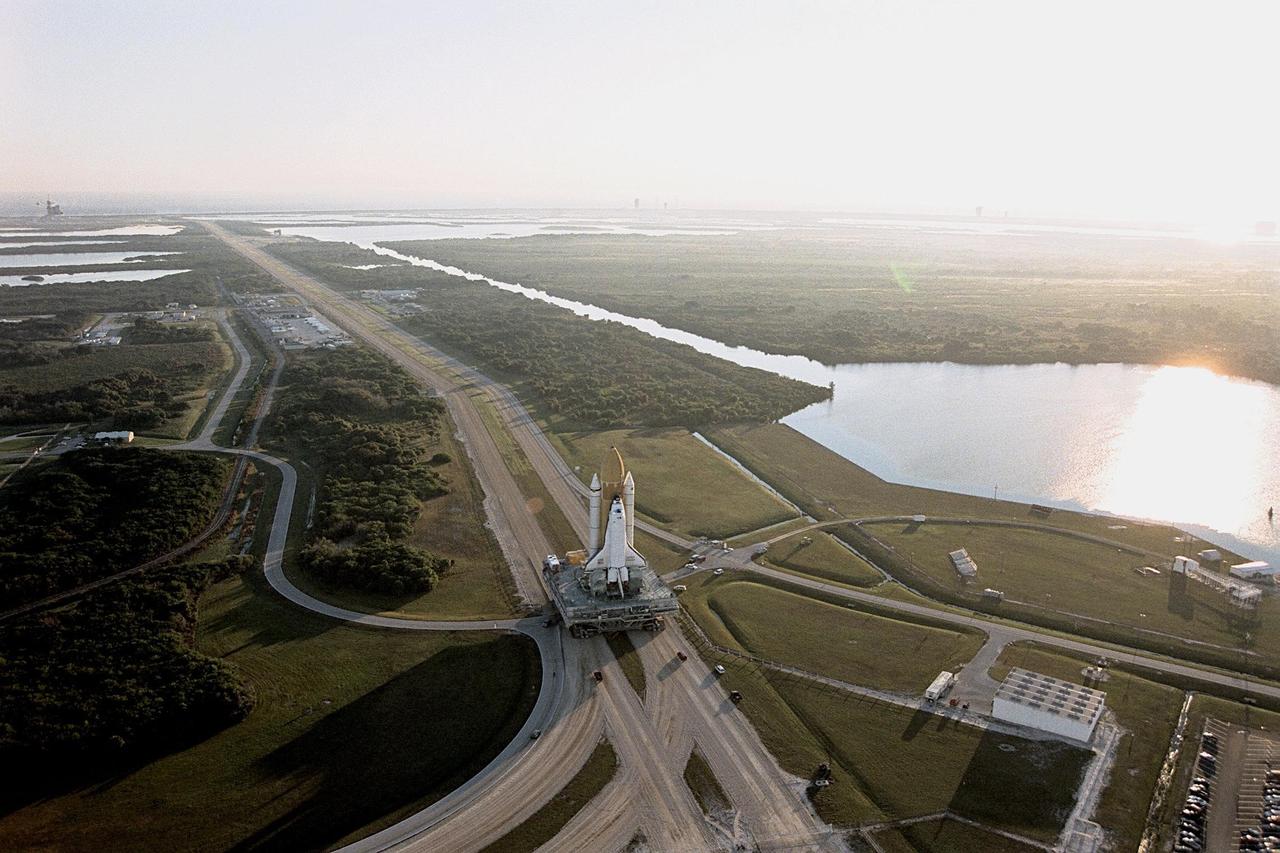
KENNEDY SPACE CENTER, Fla. -- The Space Shuttle Endeavour rolls out to Launch Pad 39A, the destination of its journey from the Vehicle Assembly Building, for final preparations for liftoff of the STS-89 mission. Endeavour and its crew of seven are targeted for a Jan. 22 launch. STS-89 will be the eighth Shuttle docking with the Russian Space Station Mir as part of Phase 1 of the International Space Station program. Mission Specialist Andy Thomas, Ph.D., will succeed Mission Specialist David Wolf, M.D., as the last NASA astronaut scheduled for a long-duration stay aboard Mir
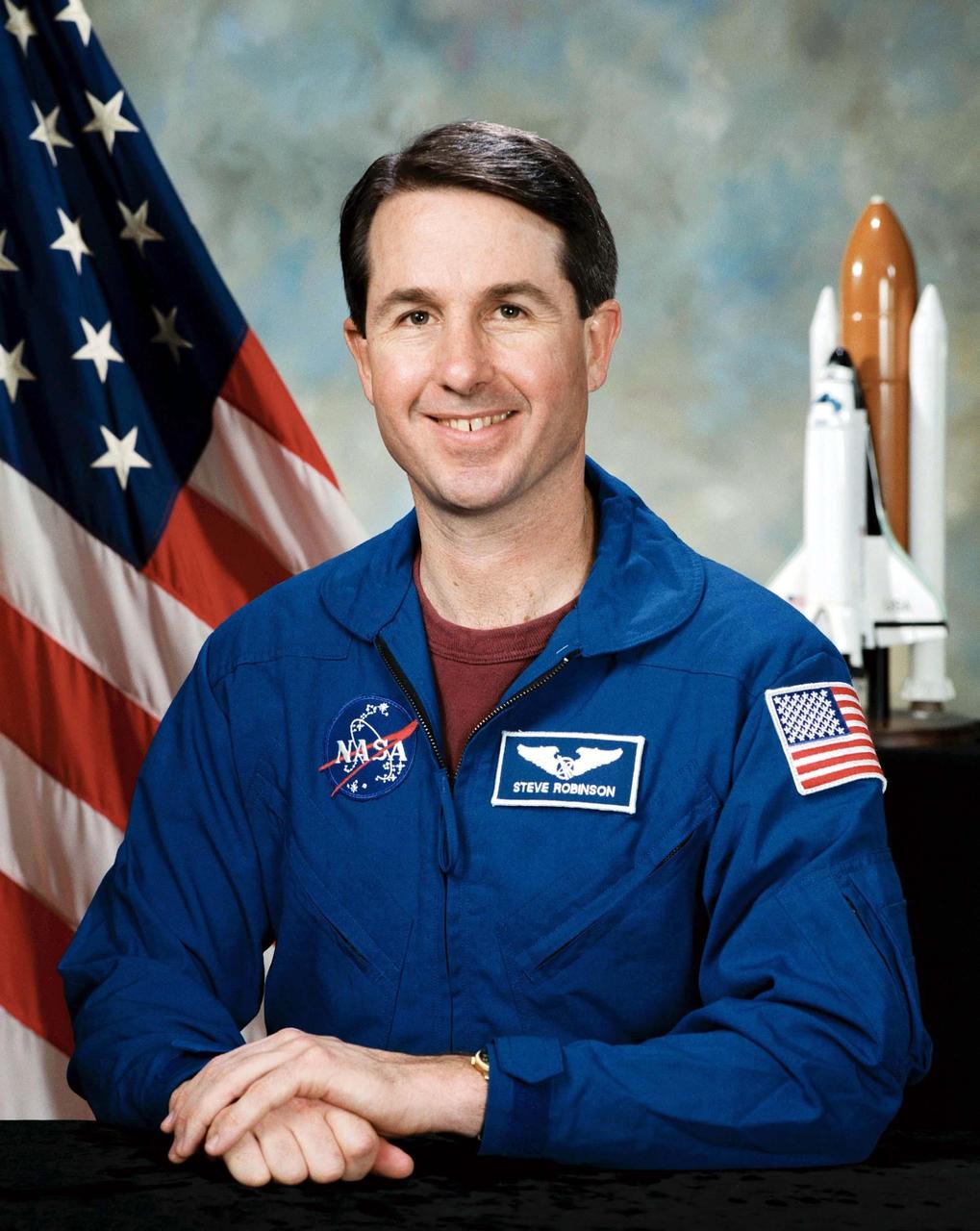
KENNEDY SPACE CENTER, FLA. - Official portrait of Stephen K. Robinson, mission specialist on STS-114.
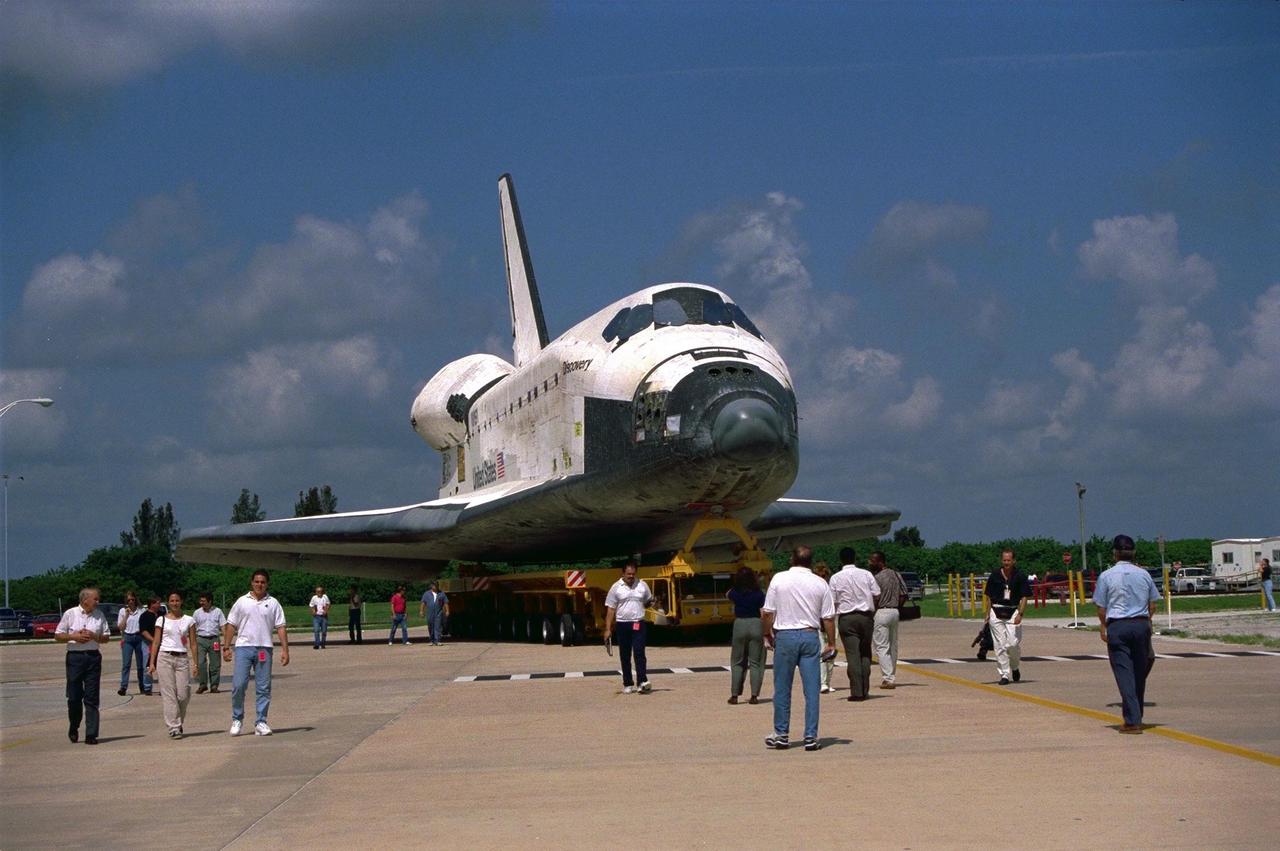
The Space Shuttle Orbiter Discovery rolls over from Orbiter Processing Facility 2 on top of the orbiter transporter to the Vehicle Assembly Building for mating with its external tank and solid rocket boosters in preparation for the STS-85 mission. Several payloads will be aboard Discovery during the 11-day mission, including the Manipulator Flight Demonstration (MFD) and the Cryogenic Infrared Spectrometers and Telescopes for the Atmosphere-Shuttle Pallet Satellite-2 (CRISTA-SPAS-2), as well as the Technology Applications and Science-1 (TAS-1) and International Extreme Ultraviolet Hitchhiker (IEH-2) experiments
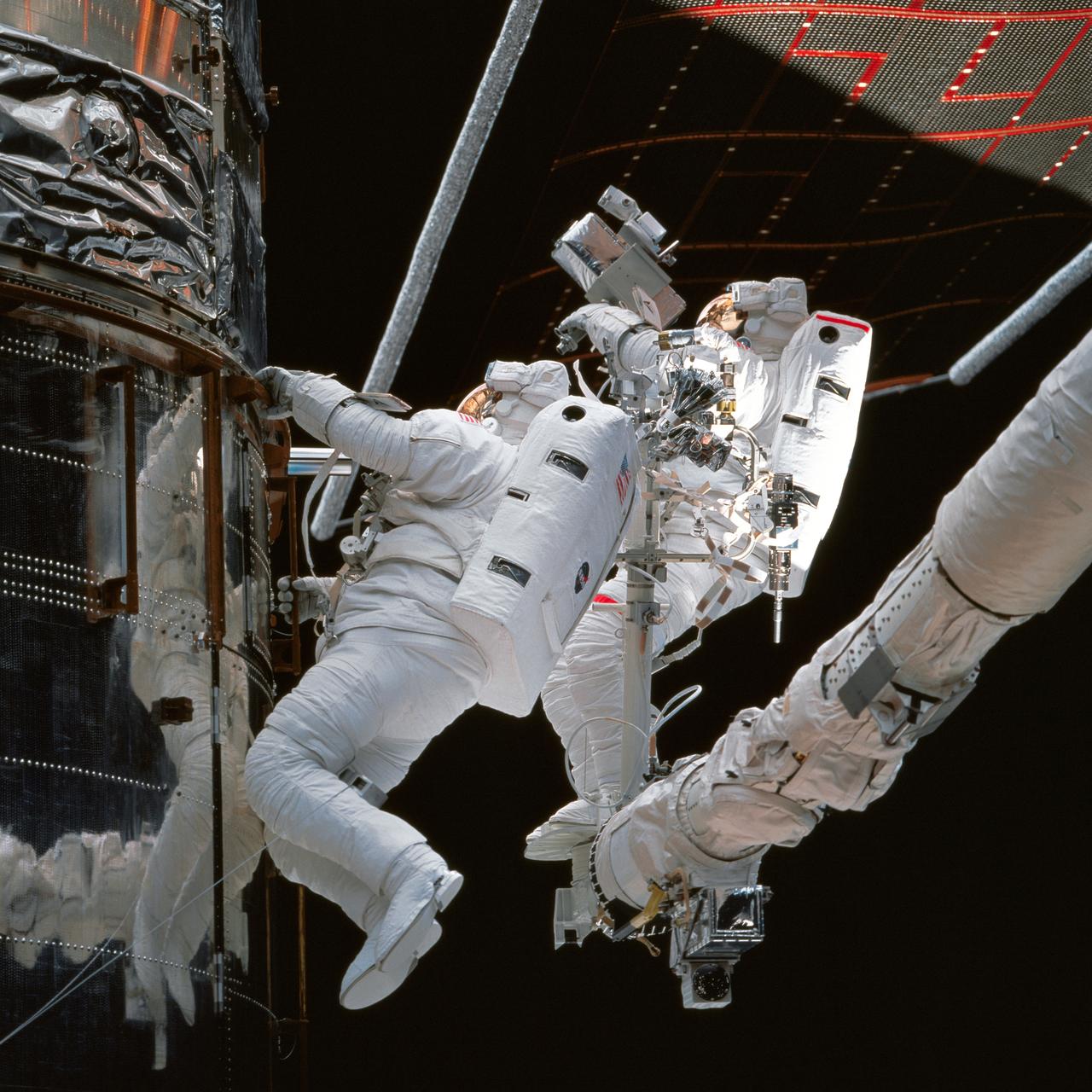
STS082-738-054 (11-21 Feb. 1997) --- As photographed from inside the Space Shuttle Discovery?s crew cabin, astronauts Steven L. Smith (left) and Mark C. Lee (red stripe) inspect insulation around Bay 10 of the Hubble Space Telescope (HST) during one of five days of extravehicular activities (EVA) designed to service the HST. Lee, payload commander, and Smith, performed three of the five EVA?s which eventually were carried out on the mission.
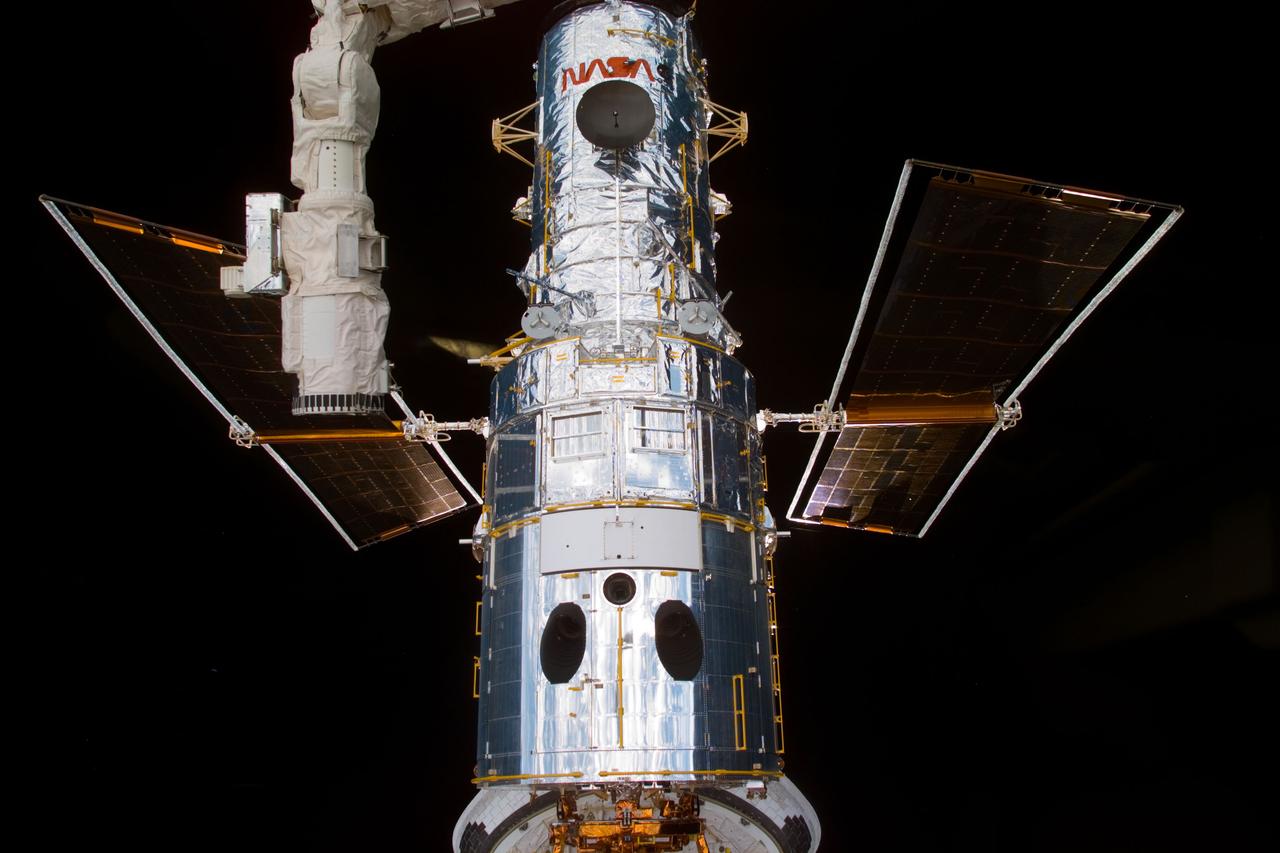
S82-E-5175 (13 Feb. 1997) --- Hubble Space Telescope (HST) after capture berthed on Flight Support system (FSS) in Space Shuttle Discovery's payload bay. This view was taken with an Electronic Still Camera (ESC).
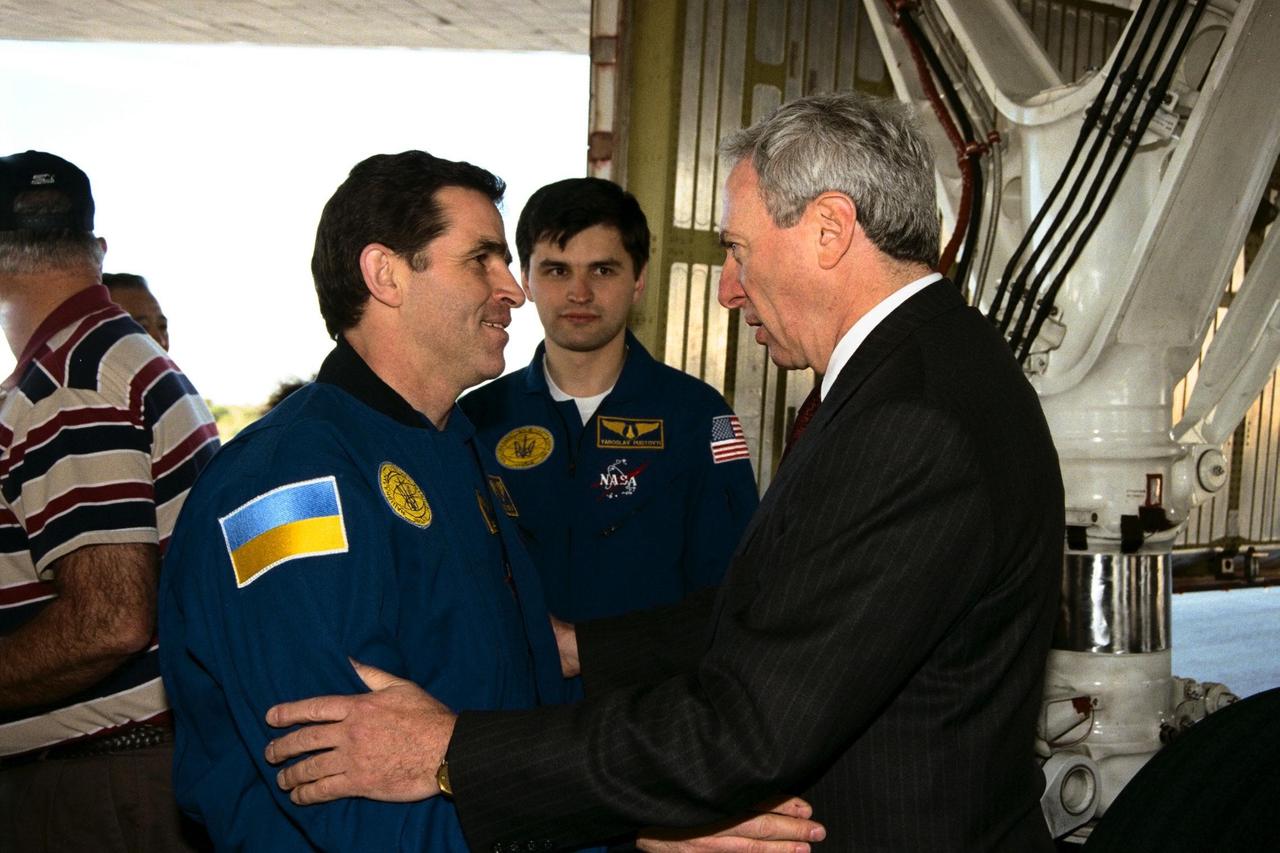
STS-87 Payload Specialist Leonid Kadenyuk of the National Space Agency of Ukraine (NSAU), at left, chats with NASA Administrator Daniel Goldin shortly after the landing of Columbia at Kennedy Space Center. Looking on is back-up Payload Specialist Yaroslav Pustovyi, also of NSAU. STS-87 concluded its mission with a main gear touchdown at 7:20:04 a.m. EST Dec. 5, at KSC's Shuttle Landing Facility Runway 33, drawing the 15-day, 16-hour and 34-minute-long mission of 6.5 million miles to a close. Also onboard the orbiter were Commander Kevin Kregel; Pilot Steven Lindsey; and Mission Specialists Winston Scott, Kalpana Chawla, Ph.D., and Takao Doi, Ph.D., of the National Space Development Agency of Japan. During the 88th Space Shuttle mission, the crew performed experiments on the United States Microgravity Payload-4 and pollinated plants as part of the Collaborative Ukrainian Experiment. This was the 12th landing for Columbia at KSC and the 41st KSC landing in the history of the Space Shuttle program
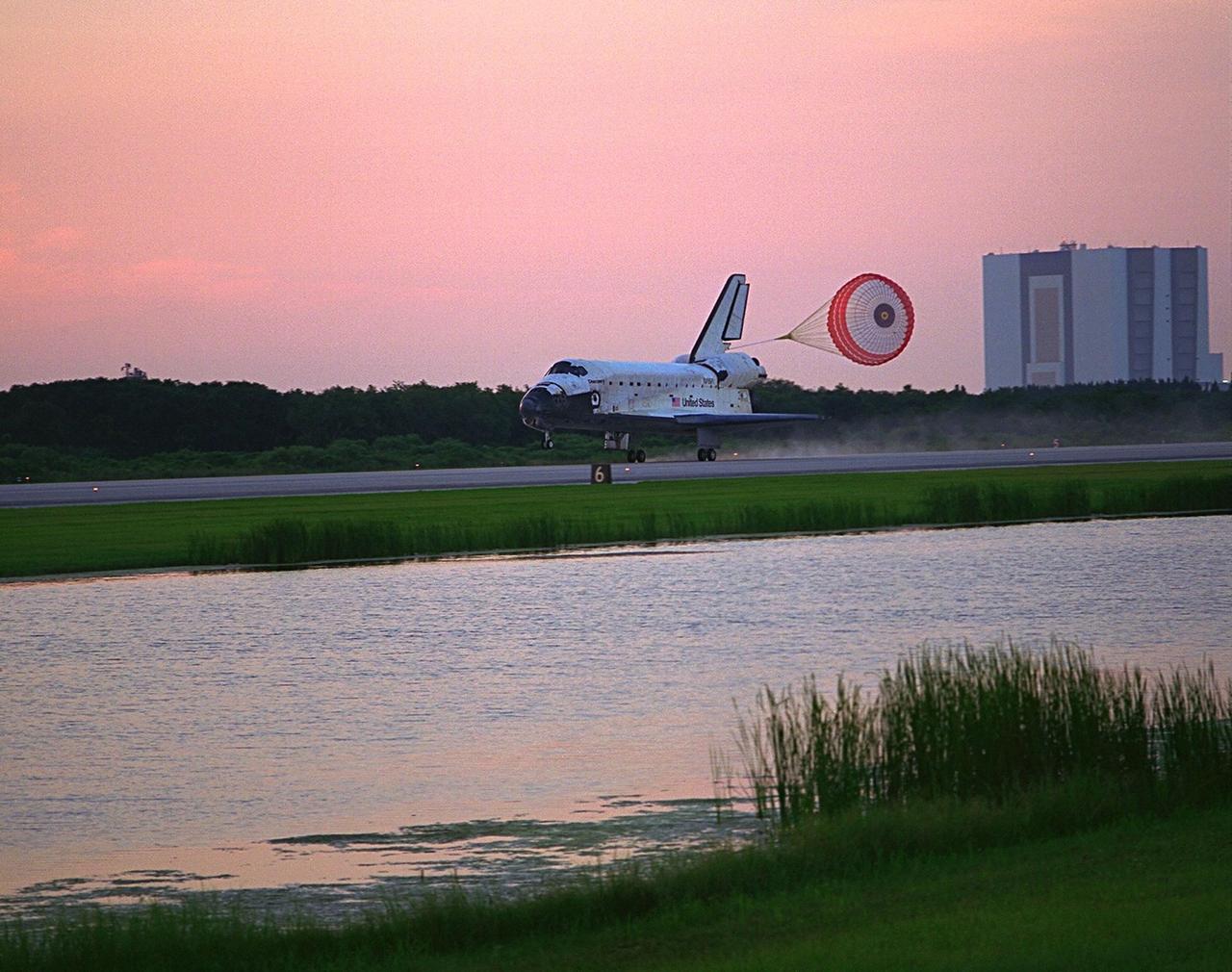
KENNEDY SPACE CENTER, FLA. -- With Commander Curtis L. Brown, Jr. and Pilot Kent V. Rominger at the controls and the Vehicle Assembly Building (VAB) in the background, the Space Shuttle orbiter Discovery touches down on Runway 33 at KSC’s Shuttle Landing Facility at 7:07:59 a.m. EDT Aug. 19 to complete the 11-day, 20-hour and 27-minute-long STS-85 mission. The first landing opportunity on Aug. 18 was waved off due to the potential for ground fog. Also onboard the orbiter are Payload Commander N. Jan Davis, Mission Specialist Robert L. Curbeam, Jr., Mission Specialist Stephen K. Robinson and Payload Specialist Bjarni V. Tryggvason. During the 86th Space Shuttle mission, the crew deployed the Cryogenic Infrared Spectrometers and Telescopes for the Atmosphere-Shuttle Pallet Satellite-2 (CRISTA-SPAS-2) free-flyer to conduct research on the Earth’s middle atmosphere, retrieving it on flight day 9. The crew also conducted investigations with the Manipulator Flight Demonstration (MFD), Technology Applications and Science-1 (TAS-1) and International Extreme Ultraviolet Hitchhiker-2 (IEH-2) experiments. Robinson also made observations of the comet HaleBopp with the Southwest Ultraviolet Imaging System (SWIS) while other members of the crew conducted biological experiments in the orbiter’s crew cabin. This was the 39th landing at KSC in the history of the Space Shuttle program and the 11th touchdown for Discovery at the space center
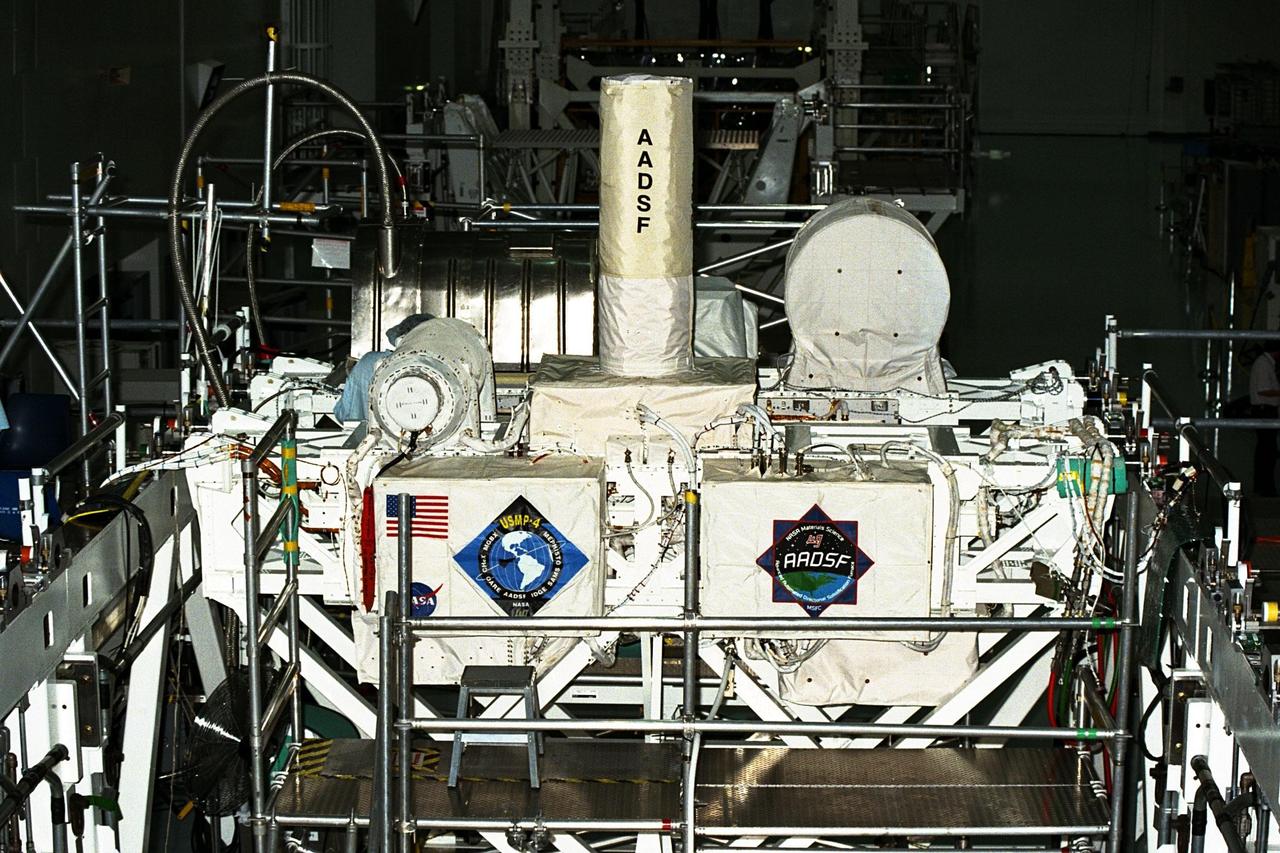
United States Microgravity Payload-4 (USMP-4) experiments are prepared to be flown on Space Shuttle mission STS-87 in the Space Station Processing Facility at Kennedy Space Center (KSC). Seen in the foreground at left is the USMP-4 logo with the acronyms of its experiments. Above the American flag at left is the MEPHISTO experiment, a cooperative American and French investigation of the fundamentals of crystal growth. The large white vertical cylinder in the center of the photo is the Advanced Automated Directional Solidification Furnace (AADSF), which is a sophisticated materials science facility used for studying a common method of processing semiconductor crystals called directional solidification. The white horizontal tube to the right is the Isothermal Dendritic Growth Experiment (IDGE), which will be used to study the dendritic solidification of molten materials in the microgravity environment. All USMP-4 experiments are scheduled for launch aboard STS-87 on Nov. 19 from KSC
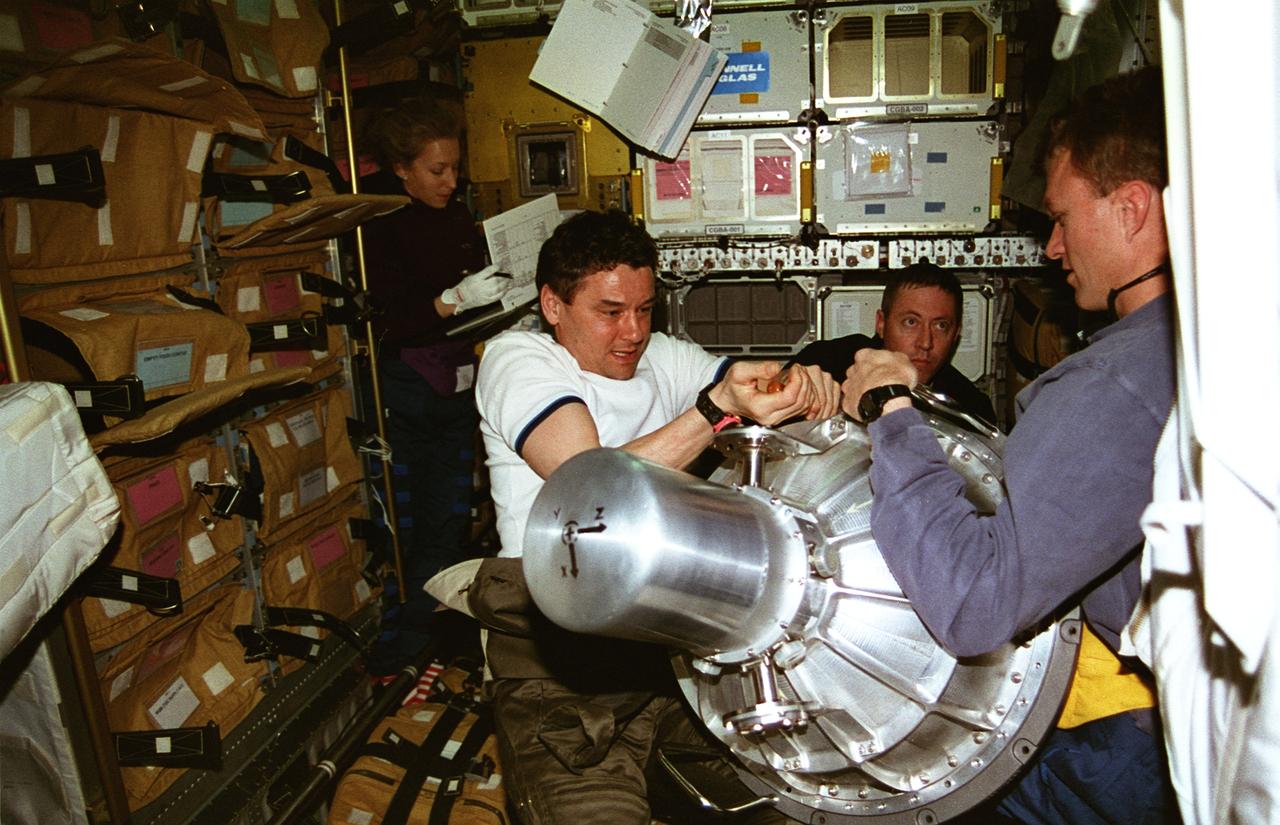
STS081-301-032 (12-22 Jan. 1997) --- Shortly after the docking of the Space Shuttle Atlantis and Russia's Mir Space Station, crewmembers from the respective spacecraft begin to transfer hardware from the Spacehab Double Module (DM) onto the Mir complex. In this scene, cosmonaut Valeri G. Korzun (second left) Mir-22 commander, along with astronauts Michael A. Baker (second right) commander, and Brent W. Jett, Jr., pilot, unstow a gyrodyne, a device used for attitude control, for transfer to Mir. Astronaut Marsha S. Ivins looks over a lengthy inventory of supplies to be transferred.
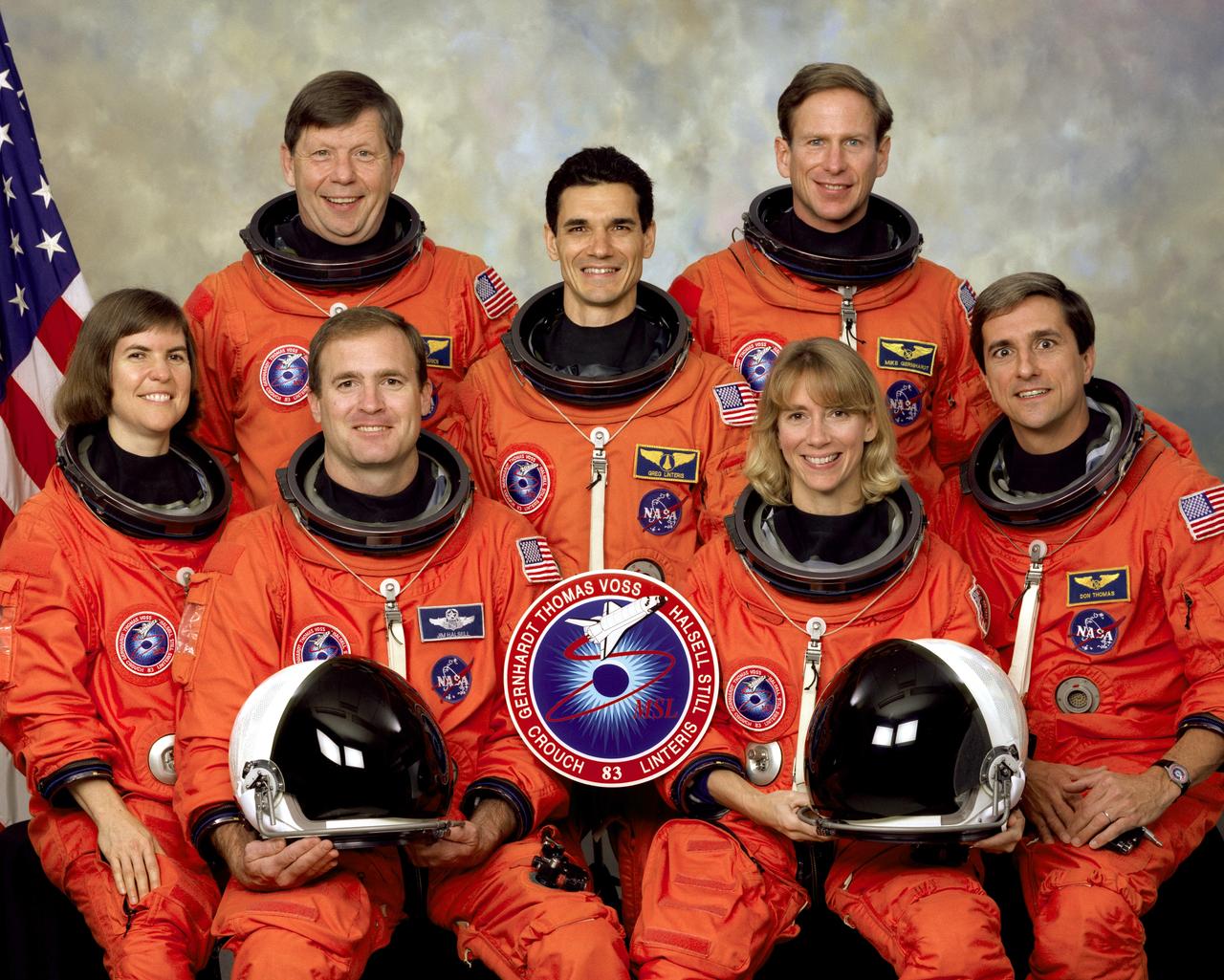
Five NASA astronauts and two scientists comprised the crew for the STS-83 mission in support of the first Microgravity Sciences Laboratory 1 (MSL-1). Pictured on the front row (left to right) are Janice E. Voss, payload commander; James D. Halsell, commander; Susan L. Still, pilot; and Donald A. Thomas, mission specialist. On the back row (left to right) are payload specialists Roger K. Crouch, and Gregory T. Linteris; and Michael L. Gernhardt, mission specialist. Dr. Crouch and Dr. Linteris are experts in several disciplines treated on MSL-1. STS-83 launched aboard the Space Shuttle Columbia on April 4, 1997. The five launched again in July 1997 for the STS-94 mission.
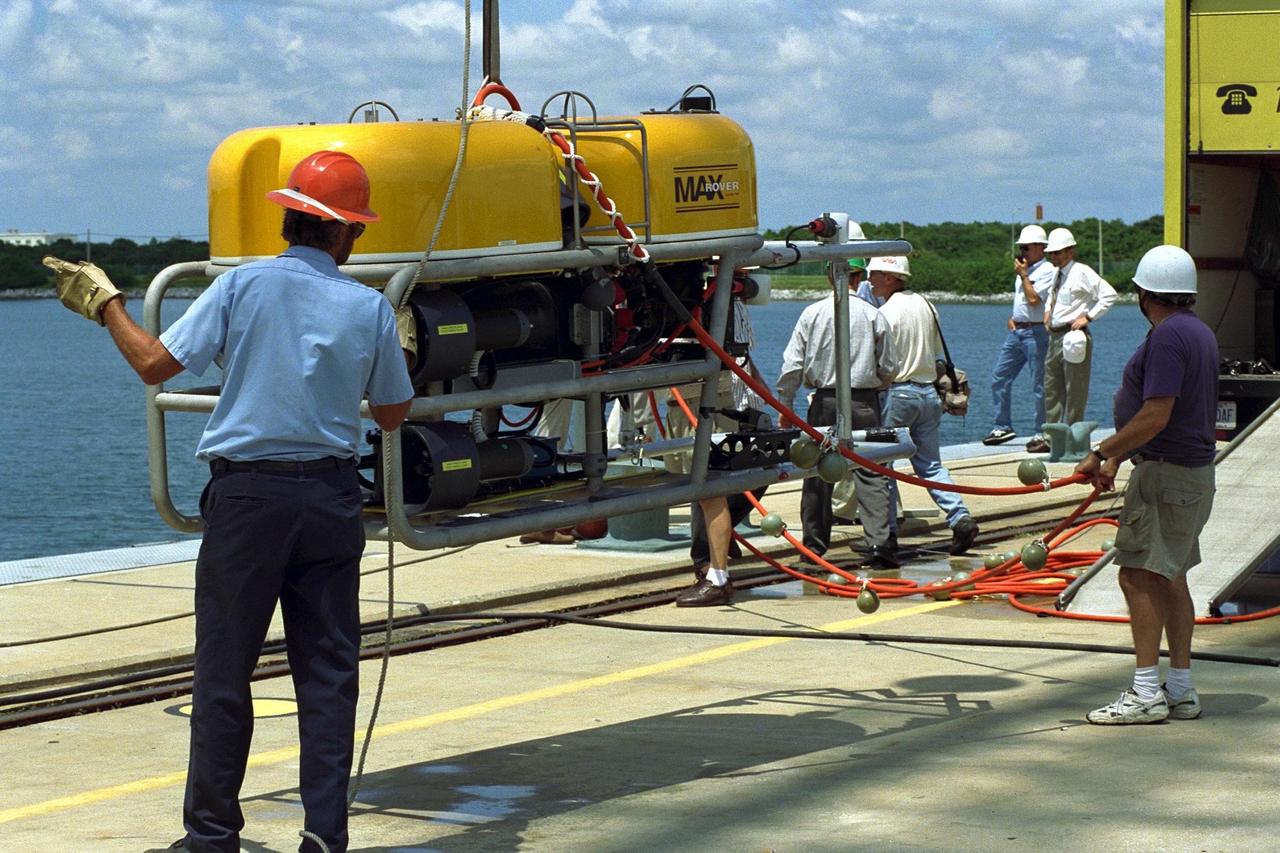
KENNEDY SPACE CENTER, FLA. -- Kennedy Space Center's Advanced Systems Development organization conducts a test of an unmanned robotic submersible to evaluate its ability to assist divers in the task of recovering spent solid rocket boosters (SRBs) in the Atlantic Ocean. NASA and contractor Deep Sea Systems of Falmouth, Mass., demonstrated the Max Rover submersible at Port Canaveral's Trident pier. The fact-finding tests are part of NASA's effort to make SRB recovery operations safer and less strenuous
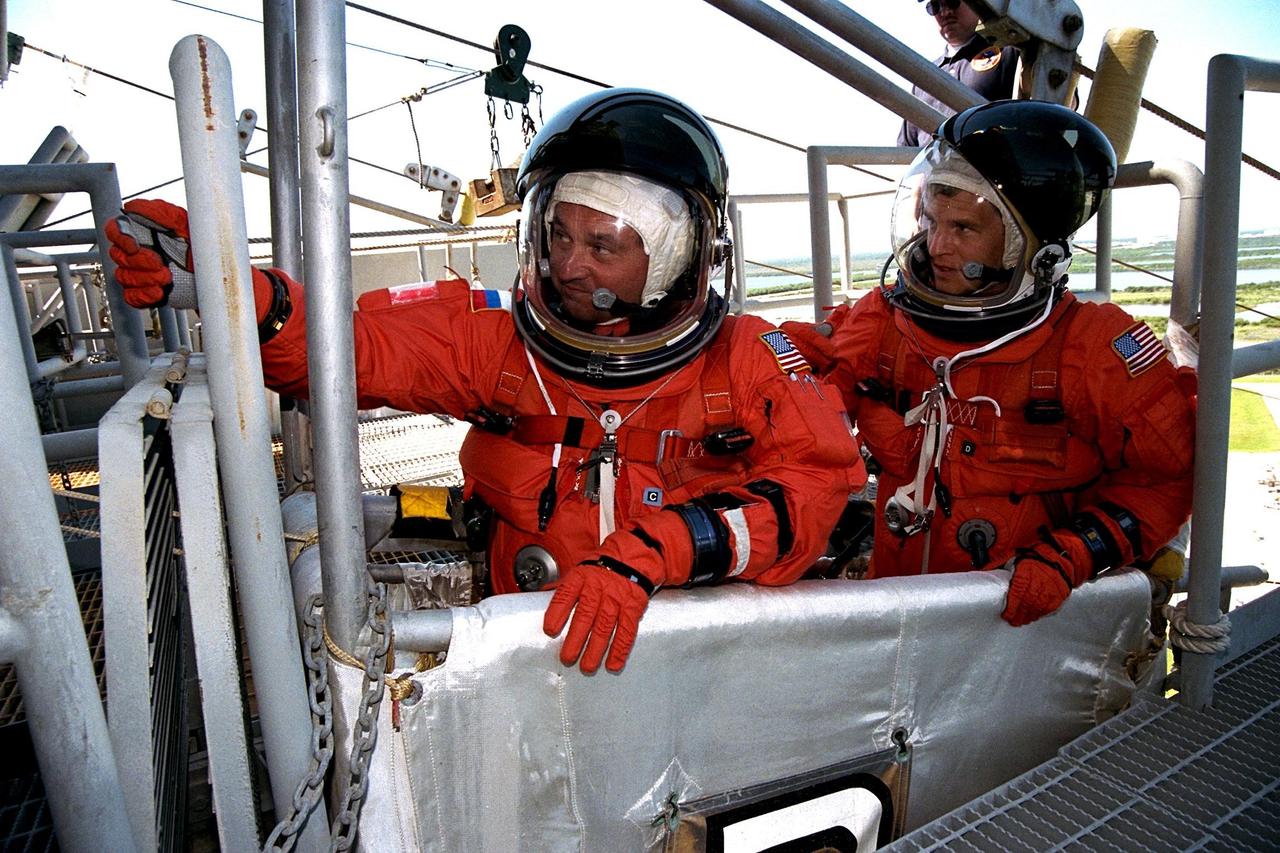
KENNEDY SPACE CENTER, Fla. -- STS-86 Mission Specialists Vladimir Georgievich Titov of the Russian Space Agency, at left, and Scott E. Parazynski practice emergency egress procedures in a slidewire basket as part of Terminal Countdown Demonstration Test (TCDT) activities at Launch Pad 39A. Titov and Parazynski are scheduled to perform a spacewalk during the STS-86 mission, which will be the seventh docking of the Space Shuttle with the Russian Space Station Mir. Liftoff of the Space Shuttle Atlantis on Mission STS-86 is targeted for Sept. 25
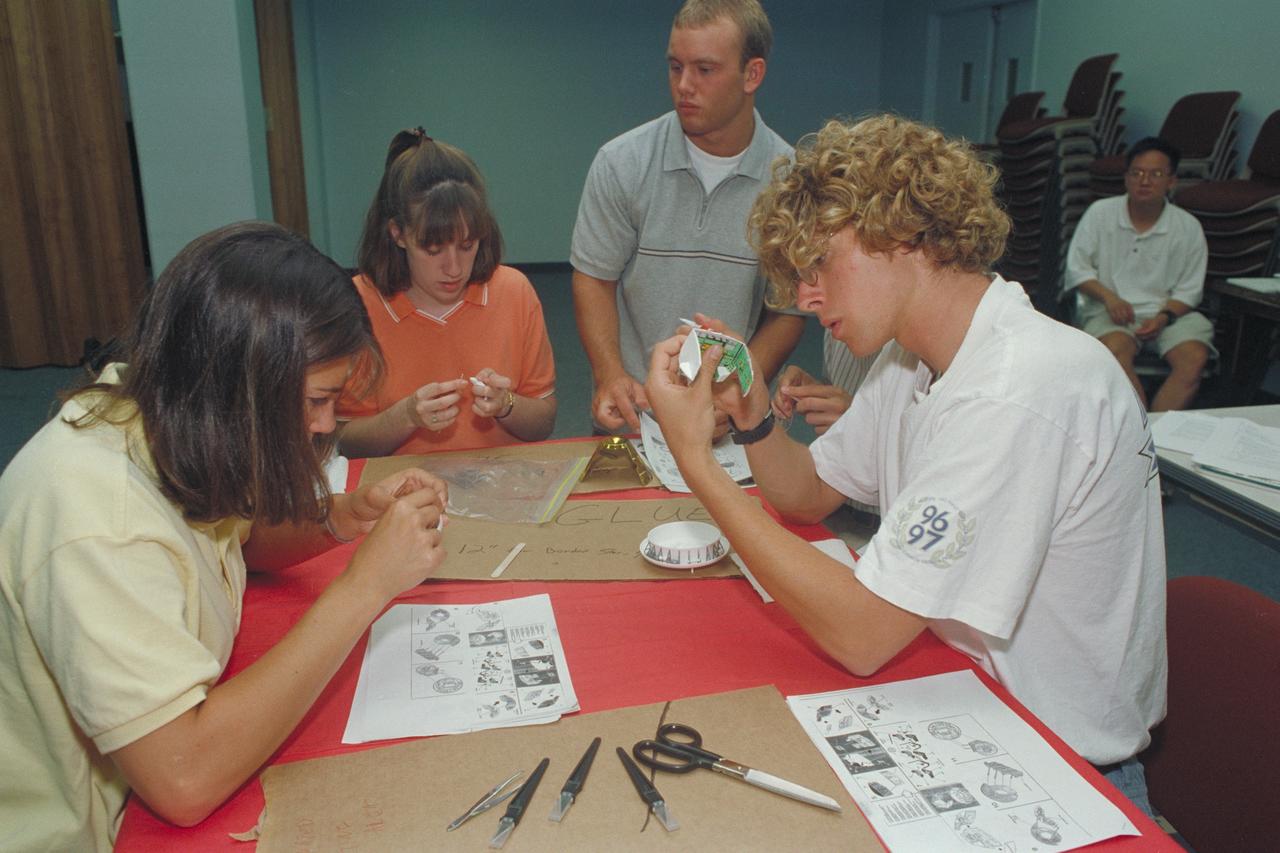
Ames First Astrobiology Academy as part of the summer NASA Academy call NASA project simulation
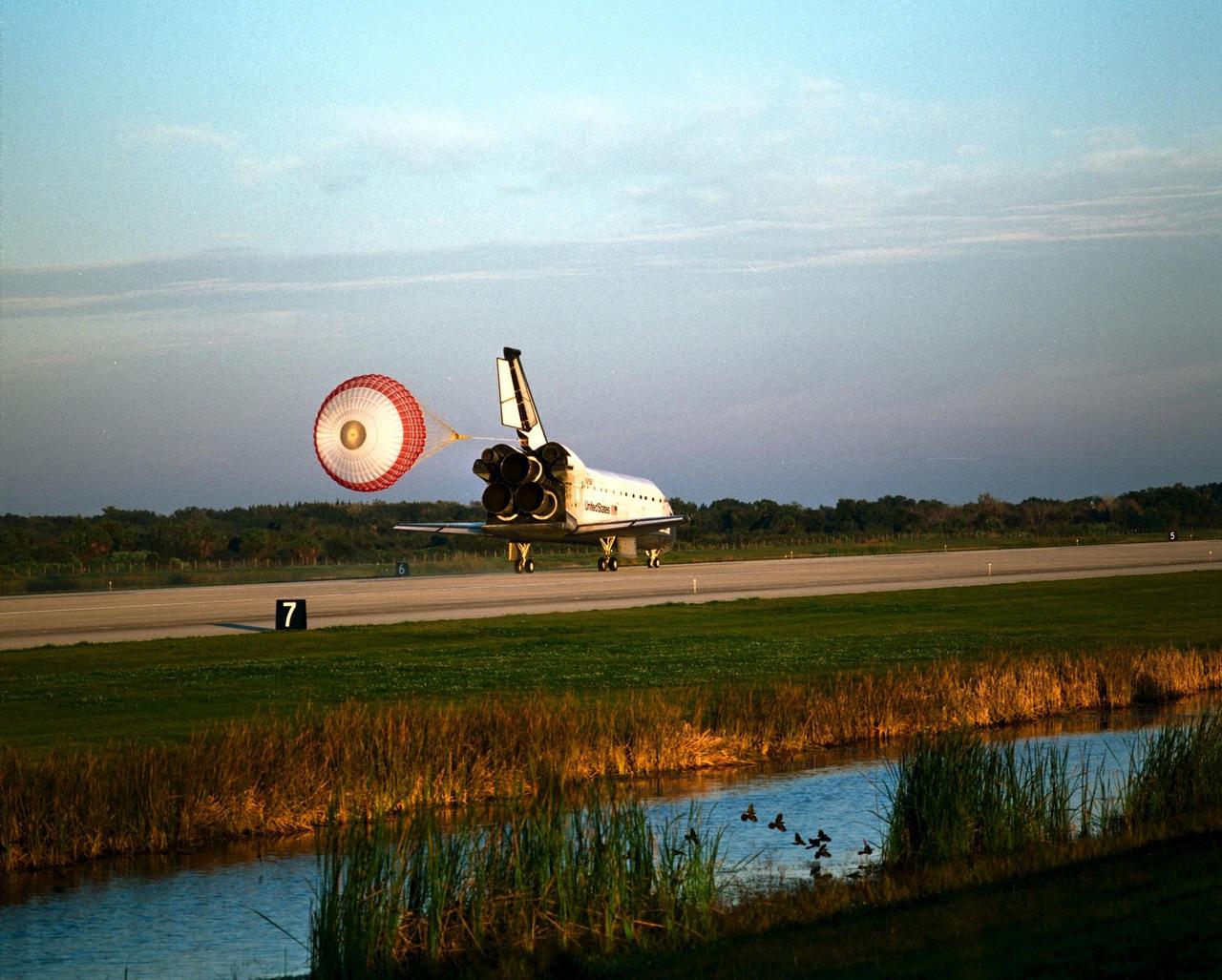
With Commander Kevin Kregel and Pilot Steven Lindsey at the controls, the orbiter Columbia, with its drag chute deployed, touches down on Runway 33 at KSC’s Shuttle Landing Facility at 7:20:04 a.m. EST Dec. 5 to complete the 15-day, 16-hour and 34-minute-long STS-87 mission of 6.5 million miles. Also onboard the orbiter are Mission Specialists Winston Scott; Kalpana Chawla, Ph.D.; and Takao Doi, Ph.D., of the National Space Development Agency of Japan; along with Payload Specialist Leonid Kadenyuk of the National Space Agency of Ukraine. During the 88th Space Shuttle mission, the crew performed experiments on the United States Microgravity Payload-4 and pollinated plants as part of the Collaborative Ukrainian Experiment. This was the 12th landing for Columbia at KSC and the 41st KSC landing in the history of the Space Shuttle program
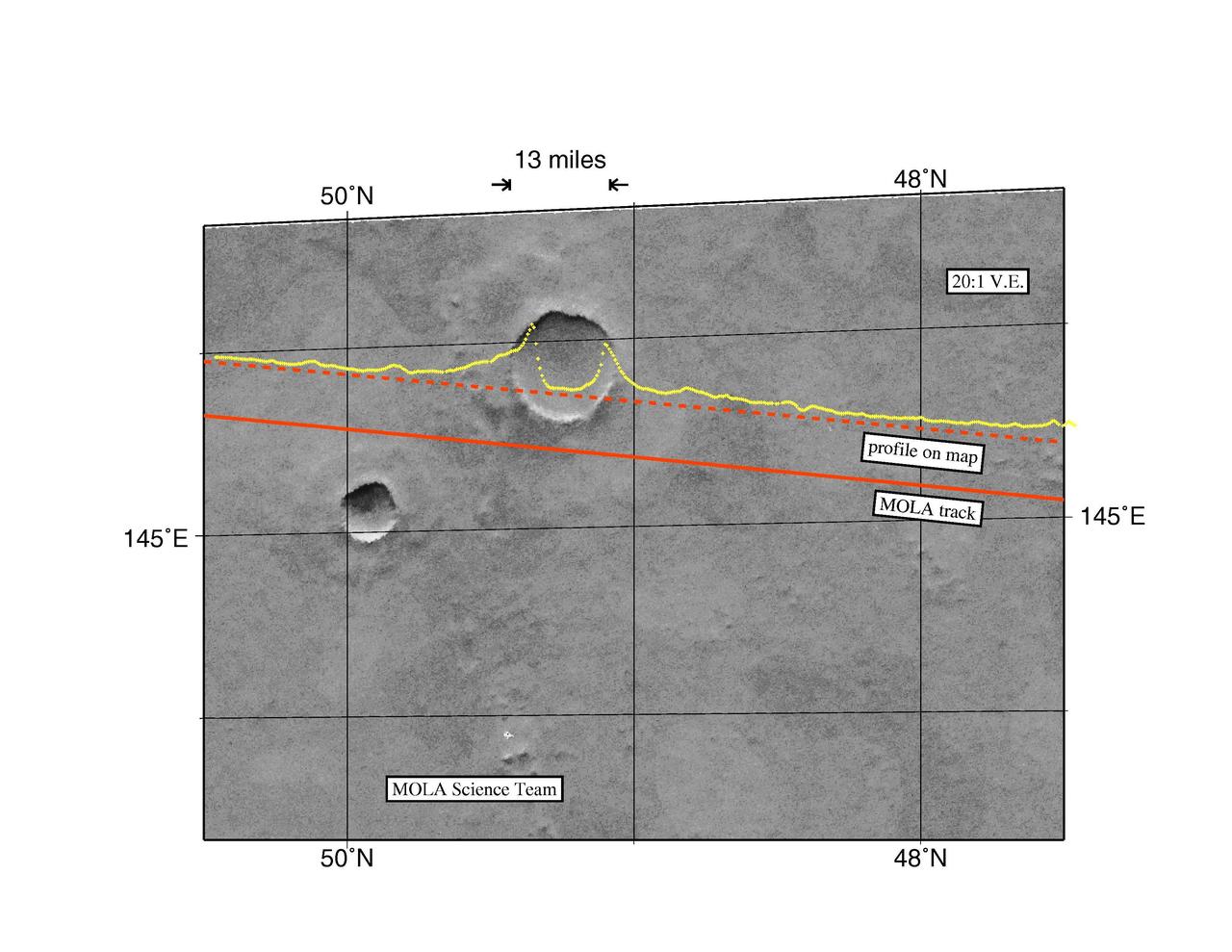
MGS Mars Orbiter Laser Altimeter Topographic Profile of Impact Crater
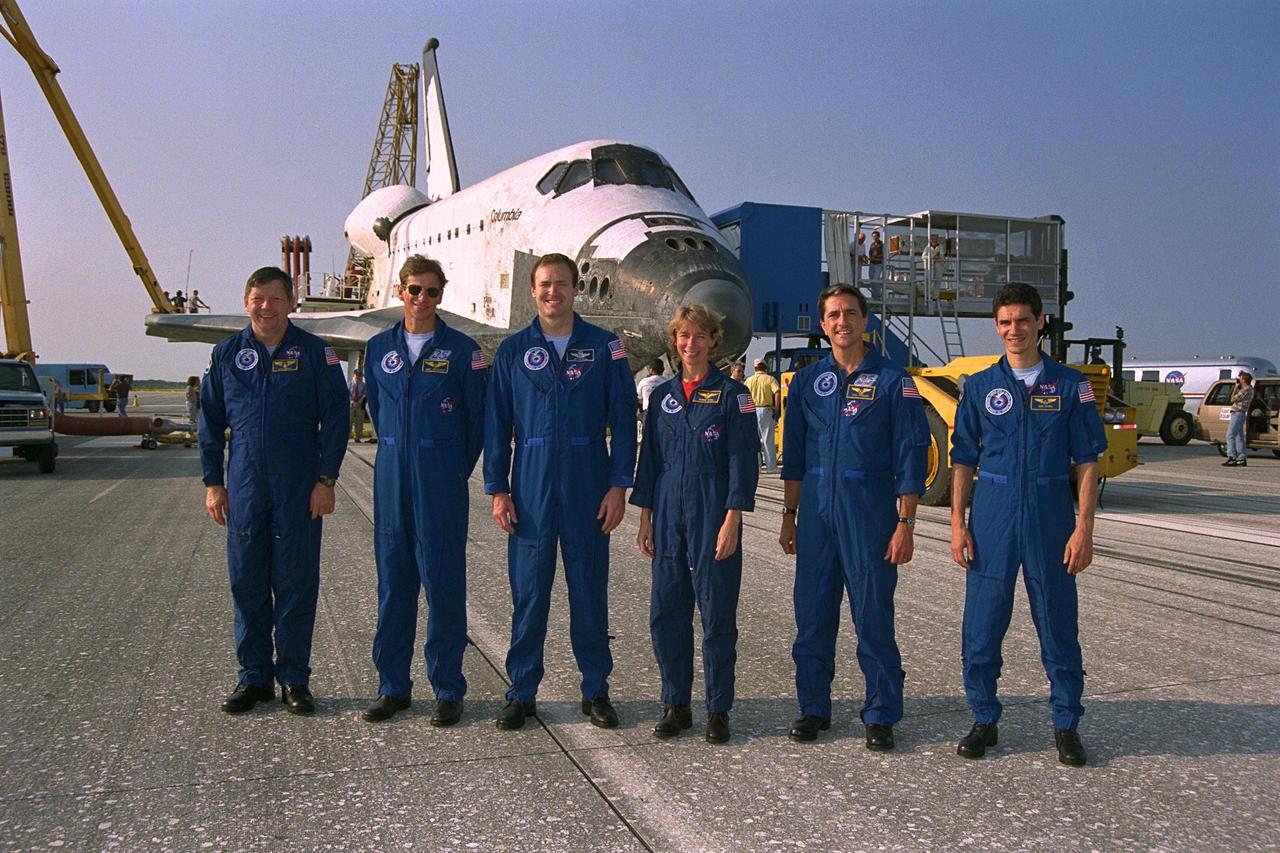
KENNEDY SPACE CENTER, FLA. -- The STS-94 flight crew poses in front of the Space Shuttle orbiter Columbia after an end-of-mission landing on Runway 33 at KSC’s Shuttle Landing Facility July 17 to complete the Microgravity Science Laboratory-1 (MSL-1) mission. They are (from left): Payload Specialist Roger K. Crouch; Mission Specialist Michael L. Gernhardt; Mission Commander James D. Halsell Jr.; Pilot Susan L. Still; Mission Specialist Donald A. Thomas; and Payload Specialist Gregory T. Linteris. Not shown is Payload Commander Janice Voss. During the 15-day, 16-hour spaceflight, the MSL-1 Spacelab module was used to test some of the hardware, facilities and procedures that are planned for use on the International Space Station; the flight crew also conducted combustion, protein crystal growth and materials processing experiments. This mission was a reflight of the STS-83 mission earlier this year that was cut short due to indications of a faulty fuel cell
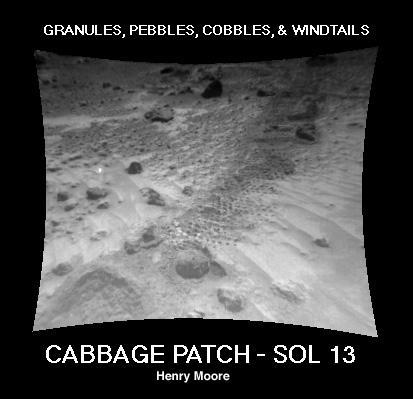
Cabbage
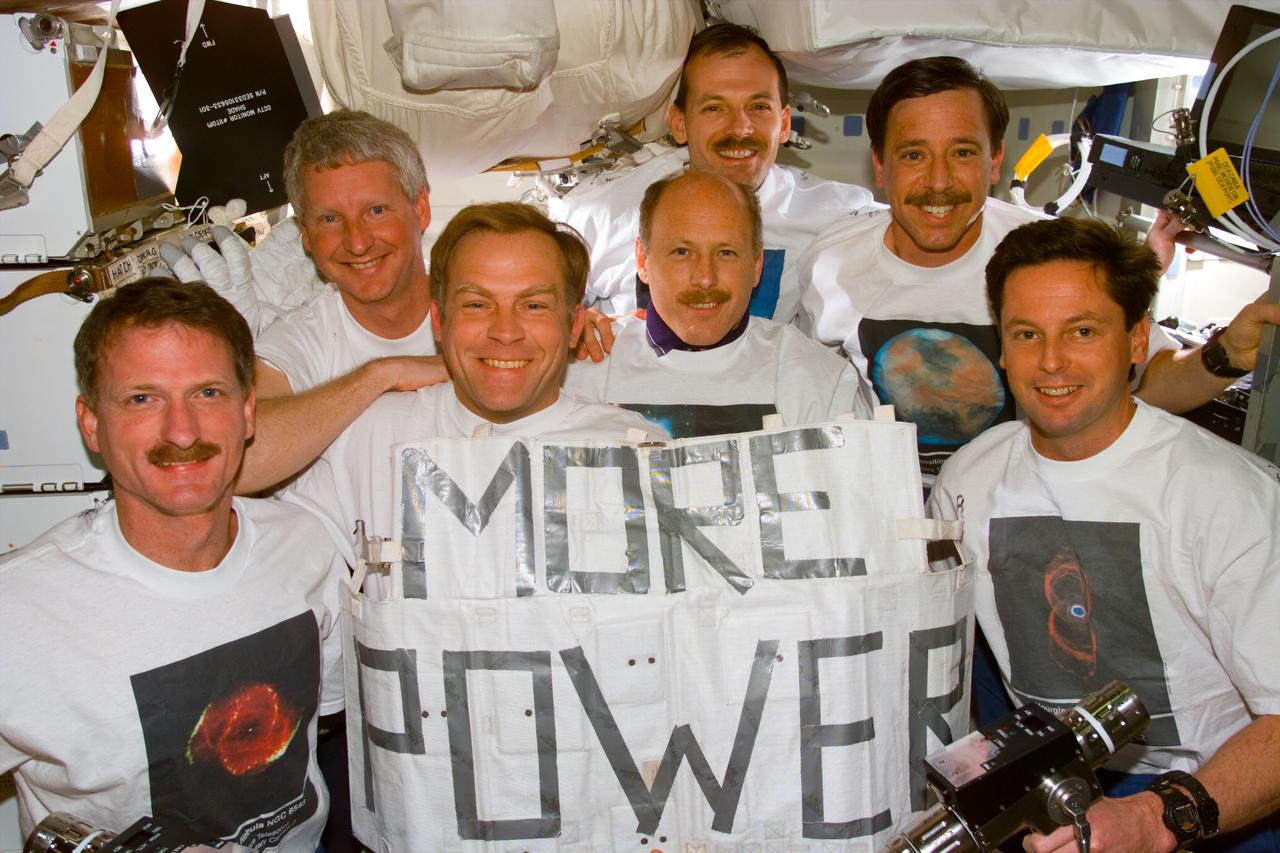
S82-E-5948 (11-21 Feb. 1997) --- The STS-82 crew poses for a traditional in-flight portrait following completion of five Extravehicular Activities (EVA) to service the Hubble Space Telescope (HST). Both the sign held by the crew and the assortment of apparel pay tribute to the HST and its team of ground supporters. In front, left to right, are astronauts Joseph R. Tanner, Mark C. Lee and Gregory J. Harbaugh. Behind them, left to right, are astronauts Steven A. Hawley, Kenneth D. Bowersox and Scott J. Horowitz. At the very back is astronaut Steven L. Smith. Each astronaut is wearing a shirt bearing an image of a planet or other celestial body photographed originally by the giant observatory.
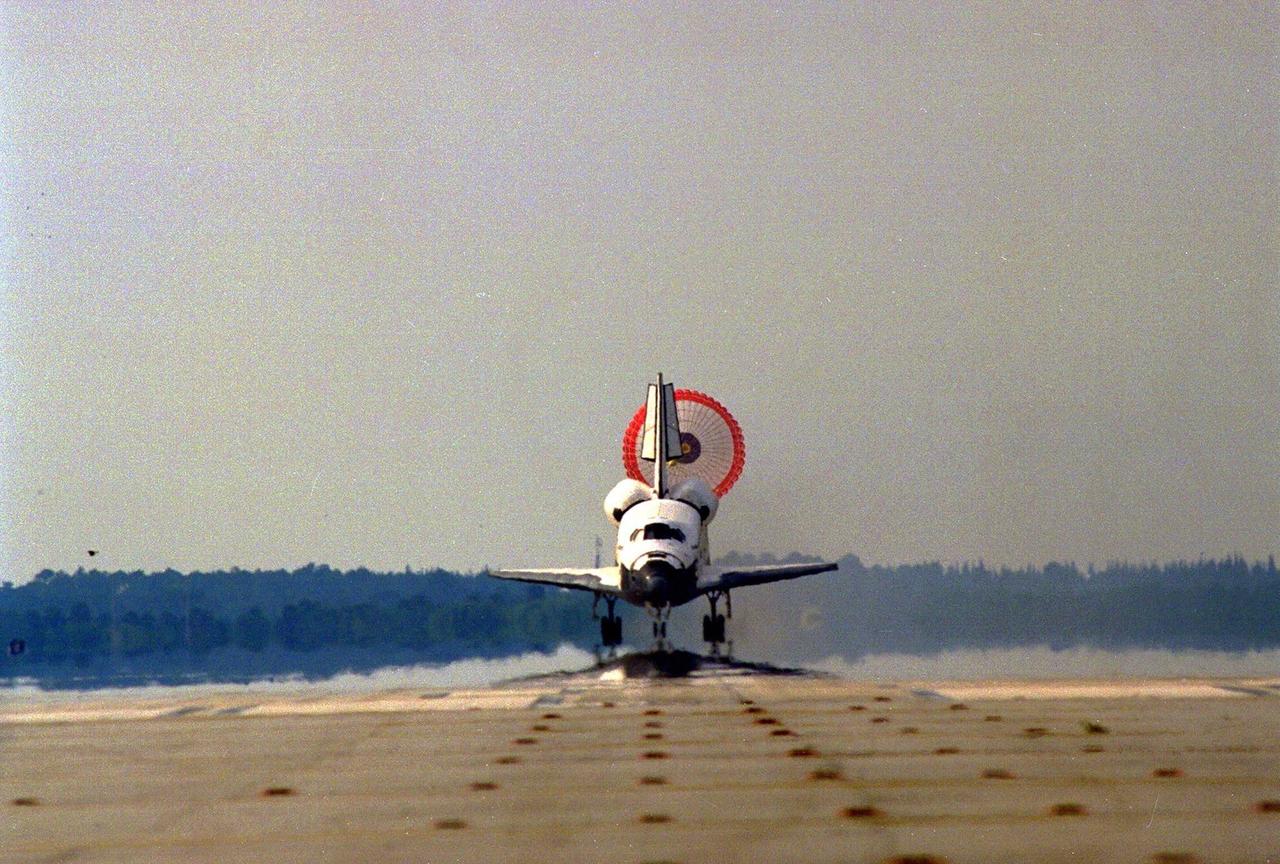
The orbiter drag chute deploys after Atlantis touches down on Runway 33 of KSC’s Shuttle Landing Facility at the conclusion of the nine-day STS-84 mission. Main gear touchdown was at 9:27:44 EDT on May 24, 1997. The first landing opportunity was waved off because of low cloud cover. It was the 37th landing at KSC since the Shuttle program began in 1981, and the eighth consecutive landing at KSC. STS-84 was the sixth of nine planned dockings of the Space Shuttle with the Russian Space Station Mir. Atlantis was docked with the Mir for five days. STS-84 Mission Specialist C. Michael Foale replaced astronaut and Mir 23 crew member Jerry M. Linenger, who has been on the Russian space station since Jan. 15. Linenger returned to Earth on Atlantis with the rest of the STS-84 crew, Mission Commander Charles J. Precourt, Pilot Eileen Marie Collins, and Mission Specialists Carlos I. Noriega, Edward Tsang Lu, Elena V. Kondakova of the Russian Space Agency and JeanFrancois Clervoy of the European Space Agency. Foale is scheduled to remain on the Mir for approximately four months, until he is replaced by STS-86 crew member Wendy B. Lawrence in September. Besides the docking and crew exchange, STS-84 included the transfer of more than 7,300 pounds of water, logistics and science experiments and hardware to and from the Mir. Scientific experiments conducted during the STS-84 mission, and scheduled for Foale’s stay on the Mir, are in the fields of advanced technology, Earth sciences, fundamental biology, human life sciences, International Space Station risk mitigation, microgravity sciences and space sciences
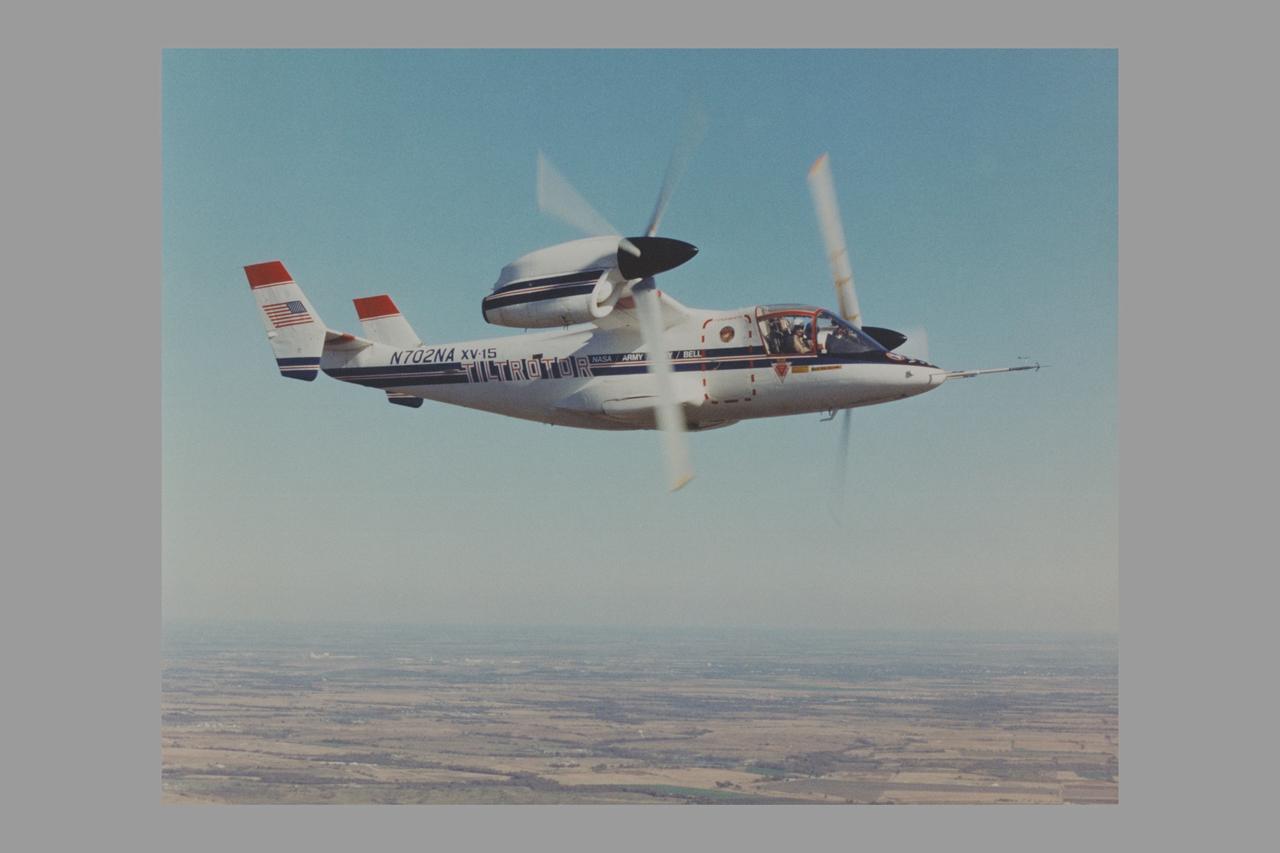
XV-15 (NASA 702) Tiltrotor in airplane flight at Bell Helicopter Co. Bell Photo number 029552
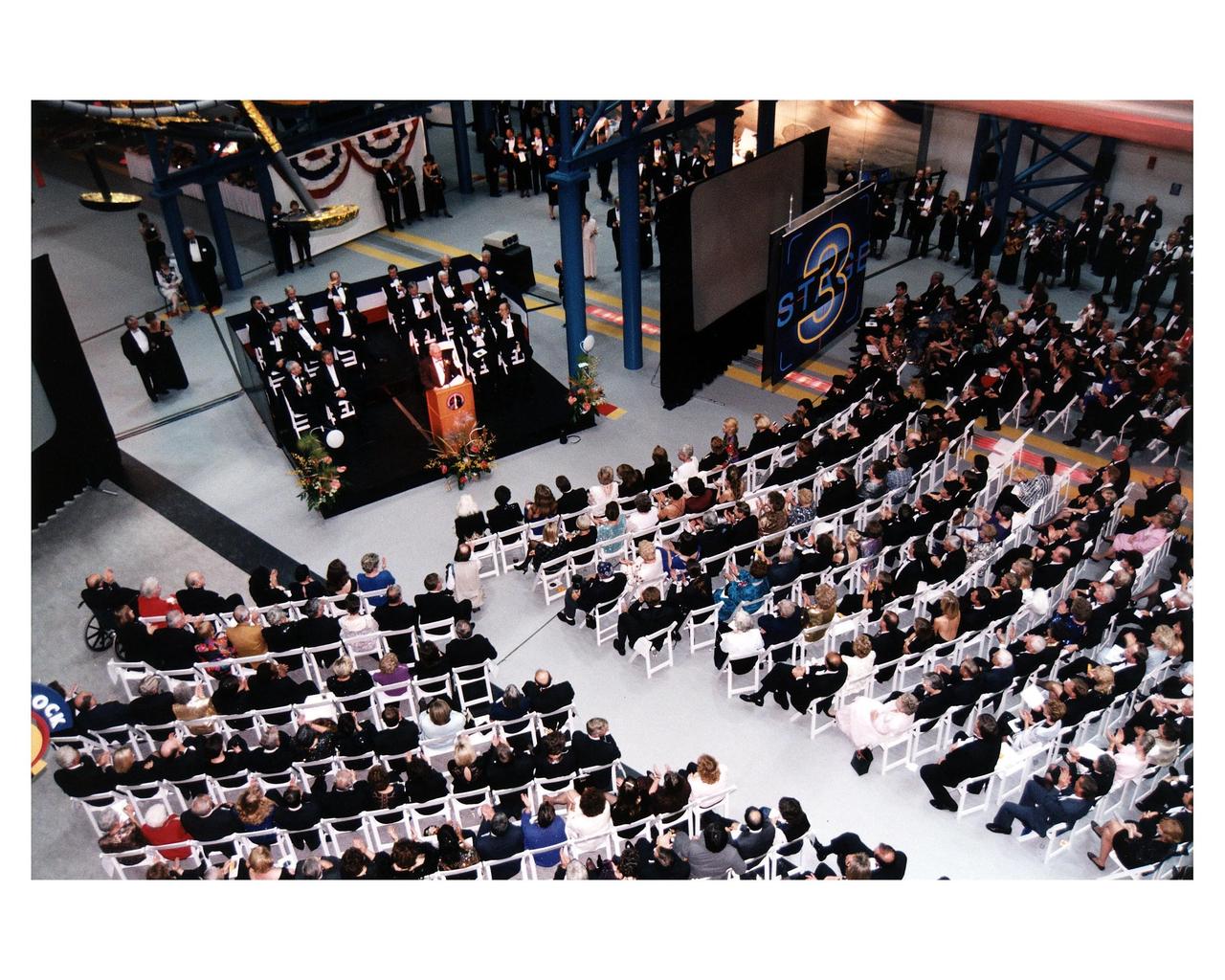
KENNEDY SPACE CENTER, FLA. -- Apollo/Saturn V Center Gala Grand Opening
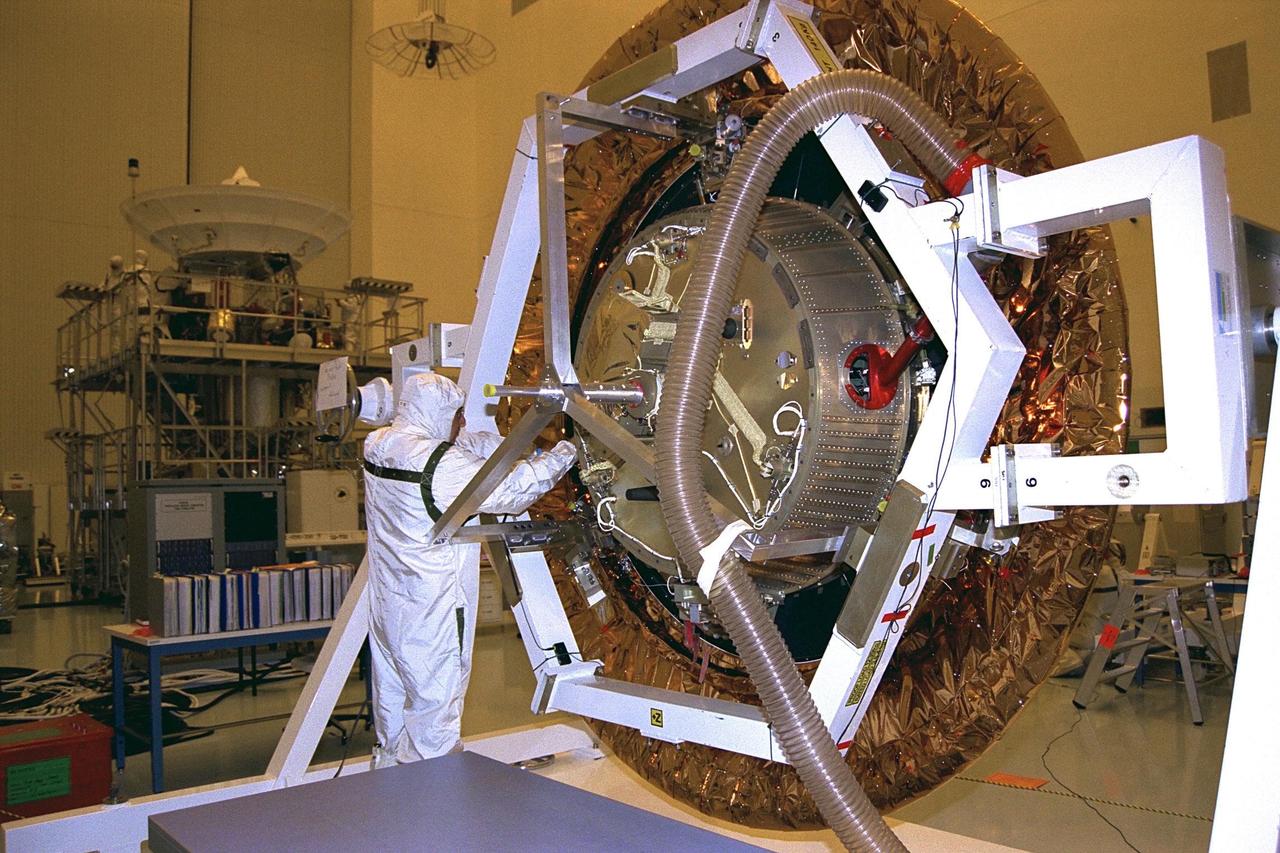
A Daimler-Benz Aerospace staff member inspects the heat shield of the Huygens probe after the shield was installed in the Payload Hazardous Servicing Facility at KSC in July. Instruments mounted on the probe, which is owned by the European Space Agency, will receive atmospheric and surface data on Saturn’s main moon, Titan, to send back to Earth as part of the Cassini mission. The back cover, yet to be attached to the Cassini orbiter, will protect the probe during descent onto Titan. A four-year, close-up study of the Saturnian system, the mission is scheduled for launch from Cape Canaveral Air Station in October 1997. It will take seven years for the spacecraft to reach Saturn. Aerospatiale is the prime contractor for ESA

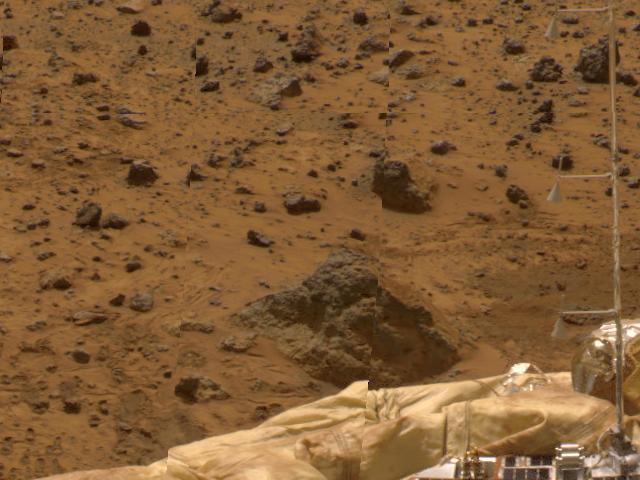
This area of terrain near the Sagan Memorial Station was taken by NASA Mars Pathfinder. The curved rock dubbed Couch. 3D glasses are necessary to identify surface detail.
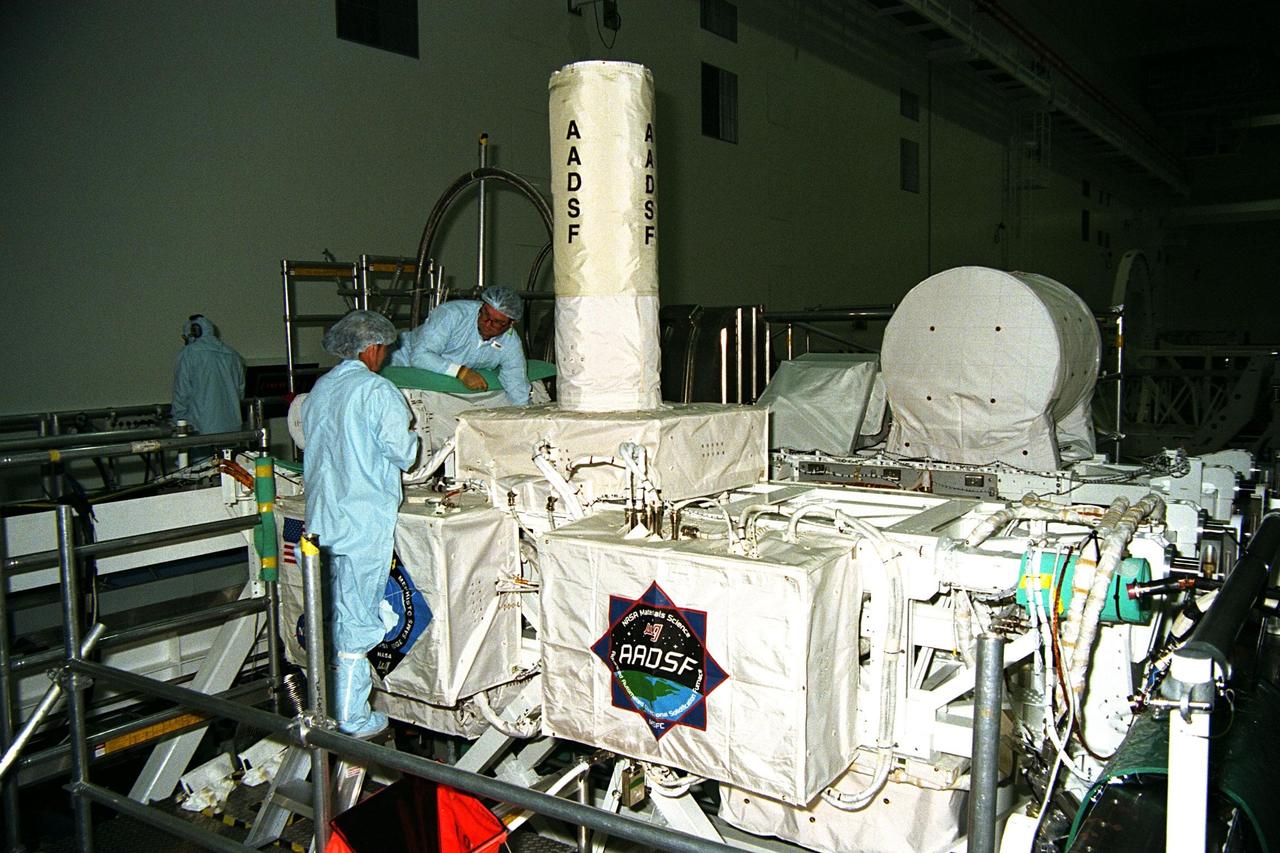
Technicians are monitoring experiments on the United States Microgravity Payload-4 (USMP-4) in preparation for its scheduled launch aboard STS-87 on Nov. 19 from Kennedy Space Center (KSC). USMP-4 experiments are prepared in the Space Station Processing Facility at KSC. The large white vertical cylinder in the center of the photo is the Advanced Automated Directional Solidification Furnace (AADSF), which is a sophisticated materials science facility used for studying a common method of processing semiconductor crystals called directional solidification. The white horizontal tube to the right is the Isothermal Dendritic Growth Experiment (IDGE), which will be used to study the dendritic solidification of molten materials in the microgravity environment
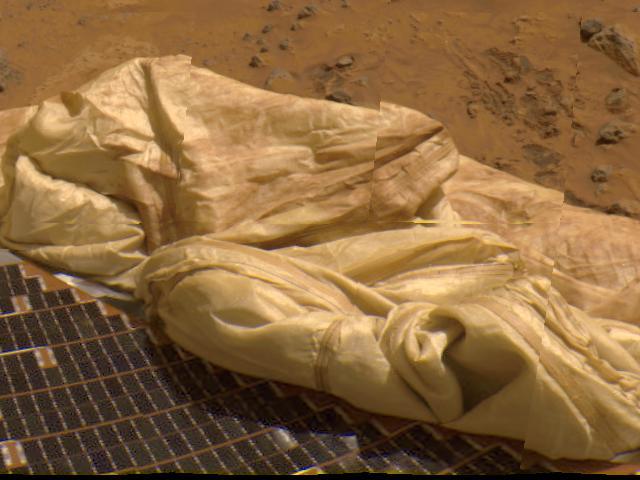
Close-up of Deflated Airbag
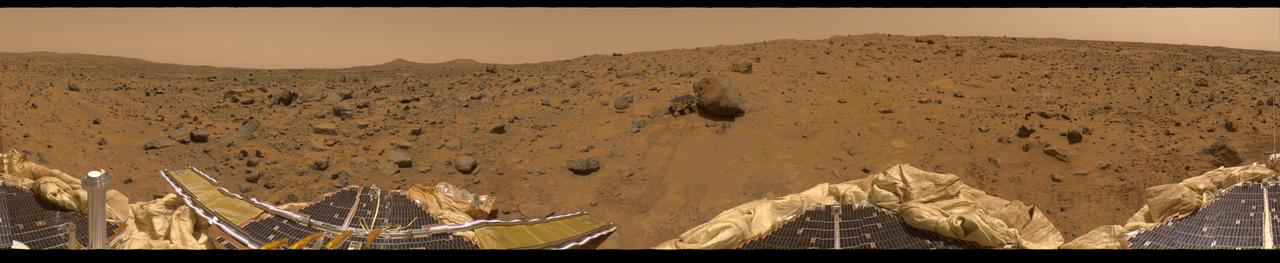
New 360-degree Color Gallery Panorama
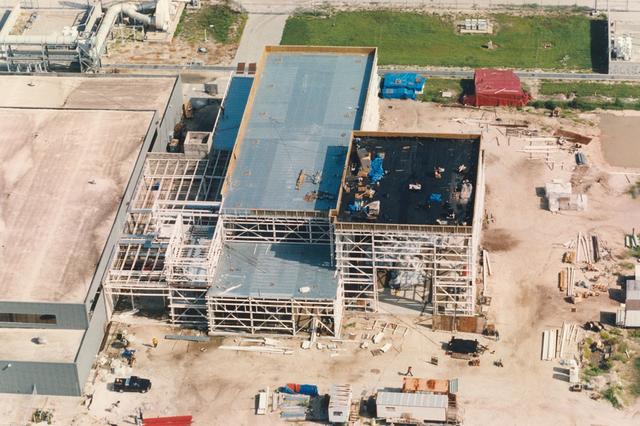
Aerial view of SSMEPF construction, August 11, 1997
ASI/MET Mast
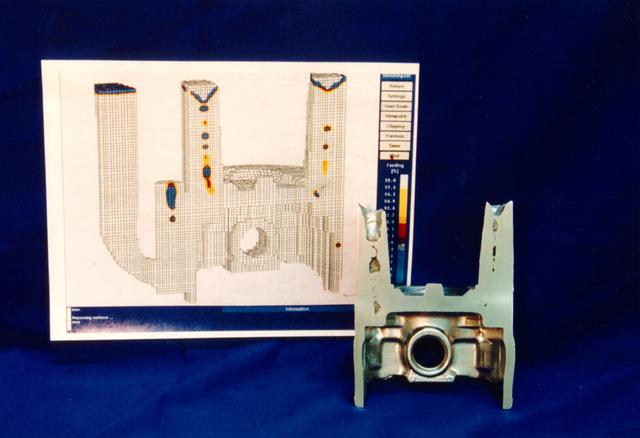
This is a computer generated model of a ground based casting. The objective of the therophysical properties program is to measure thermal physical properties of commercial casting alloys for use in computer programs that predict soldification behavior. This could reduce trial and error in casting design and promote less scrap, sounder castings, and less weight. In order for the computer models to reliably simulate the details of industrial alloy solidification, the input thermophysical property data must be absolutely reliable. Recently Auburn University and TPRL Inc. formed a teaming relationship to establish reliable measurement techniques for the most critical properties of commercially important alloys: transformation temperatures, thermal conductivity, electrical conductivity, specific heat, latent heat, density, solid fraction evolution, surface tension, and viscosity. A new initiative with the American Foundrymens Society has been started to measure the thermophysical properties of commercial ferrous and non-ferrous casting alloys and make the thermophysical property data widely available. Development of casting processes for the new gamma titanium aluminide alloys as well as existing titanium alloys will remain a trial-and-error procedure until accurate thermophysical properties can be obtained. These molten alloys react with their containers on earth and change their composition - invalidating the measurements even while the data are being acquired in terrestrial laboratories. However, measurements on the molten alloys can be accomplished in space using freely floating droplets which are completely untouched by any container. These data are expected to be exceptionally precise because of the absence of impurity contamination and buoyancy convection effects. Although long duration orbital experiments will be required for the large scale industrial alloy measurement program that results from this research, short duration experiments on NASA's KC-135 low-g aircraft are already providing preliminary data and experience.
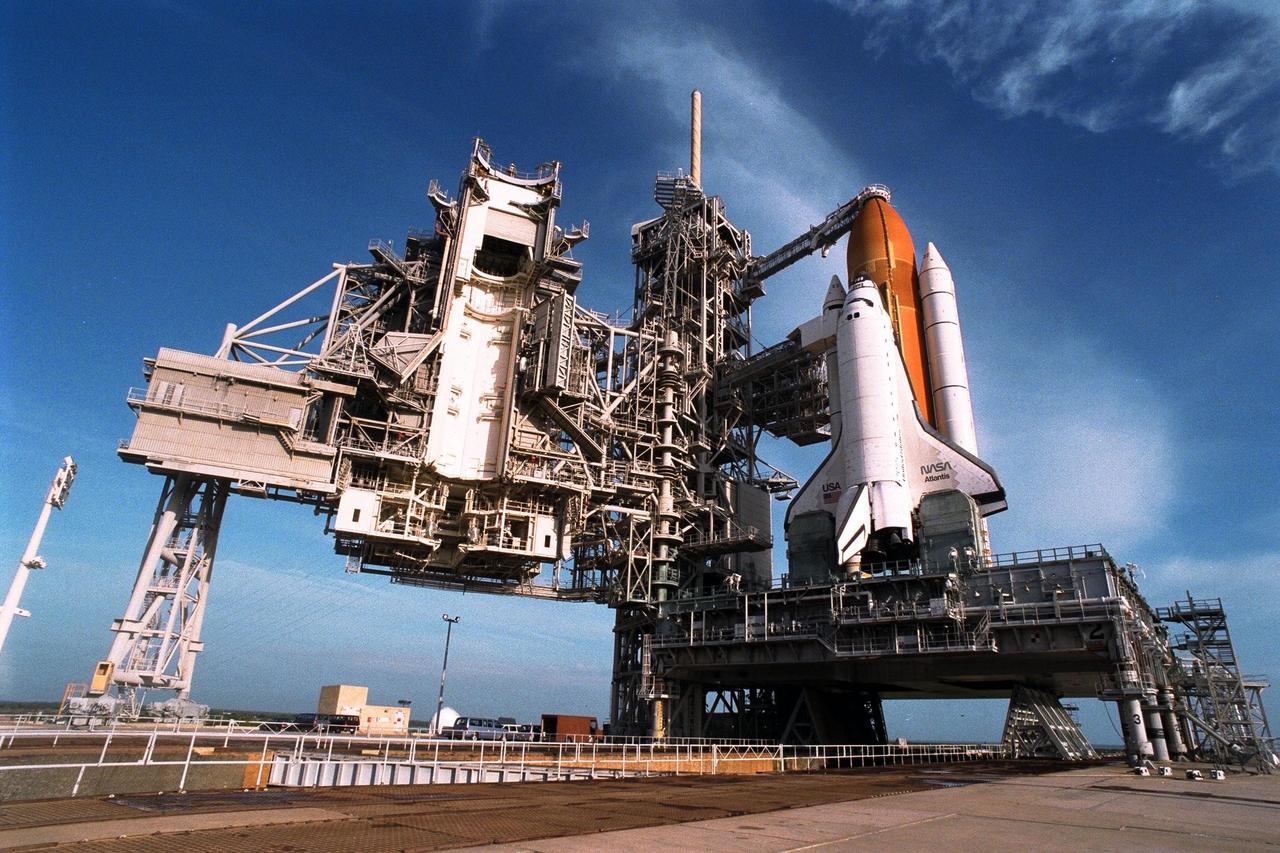
With the Rotating Service Structure rolled back, at left, the Space Shuttle Atlantis undergoes final prelaunch preparations at Launch Pad 39A for the STS-86 mission. One of the final steps will be to load the external tank with approximately 500,000 gallons of liquid hydrogen and liquid oxygen for fueling the orbiter’s three main engines. STS-86 is slated to be the seventh docking of the Space Shuttle with the Russian Space Station Mir. Liftoff is targeted for Sept. 25 at 10:34 p.m. EDT during a preferred launch window which lasts six minutes and 45 seconds. Seven crew members will lift off for the scheduled 10-day flight. One of those crew members, David A. Wolf, will transfer to the Mir for an approximate four-month stay. He will replace U.S. astronaut C. Michael Foale, who will return to Earth with the remainder of the STS86 crew. Foale has been on the Russian space station since mid-May
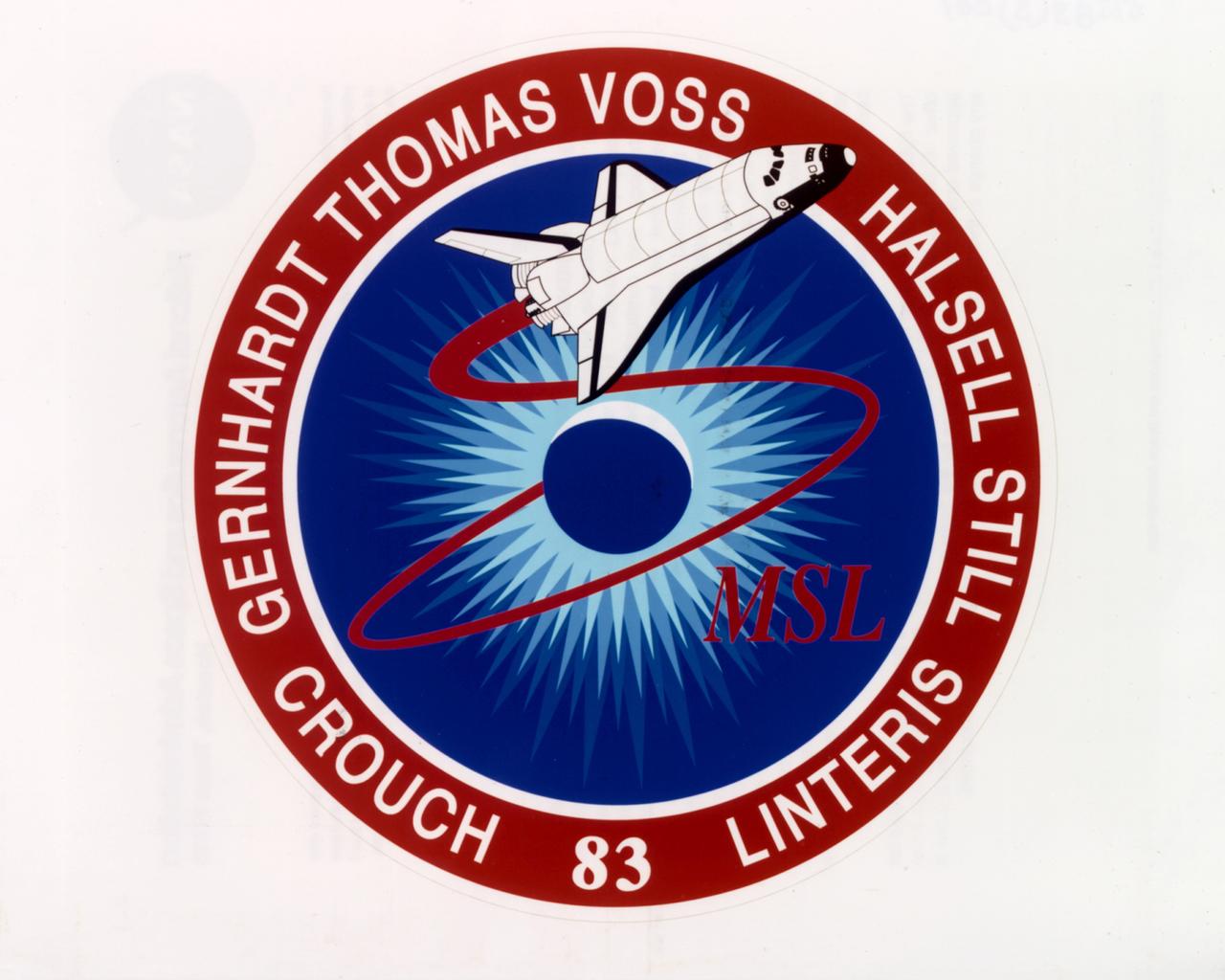
The crew patch for NASA's STS-83 mission depicts the Space Shuttle Columbia launching into space for the first Microgravity Sciences Laboratory 1 (MSL-1) mission. MSL-1 investigated materials science, fluid dynamics, biotechnology, and combustion science in the microgravity environment of space, experiments that were conducted in the Spacelab Module in the Space Shuttle Columbia's cargo bay. The center circle symbolizes a free liquid under microgravity conditions representing various fluid and materials science experiments. Symbolic of the combustion experiments is the surrounding starburst of a blue flame burning in space. The 3-lobed shape of the outermost starburst ring traces the dot pattern of a transmission Laue photograph typical of biotechnology experiments. The numerical designation for the mission is shown at bottom center. As a forerunner to missions involving International Space Station (ISS), STS-83 represented the hope that scientific results and knowledge gained during the flight will be applied to solving problems on Earth for the benefit and advancement of humankind.
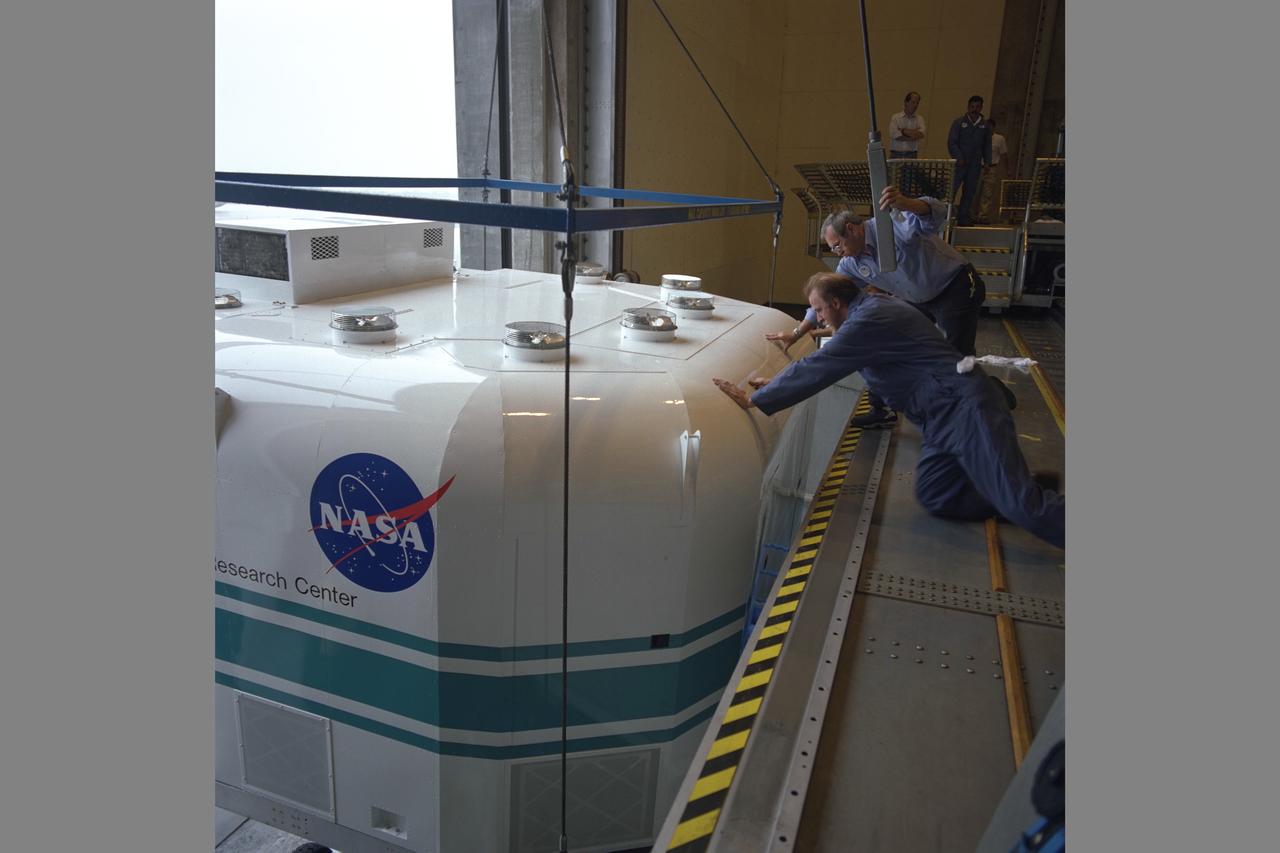
Tiltrotor Aircraft, Transport Aircraft T-Cab moving into NASA Ames Vertical Motion Simulaotor (VMS) from I-Cab Fixed Base Area in bldg. N-243 using trolly.
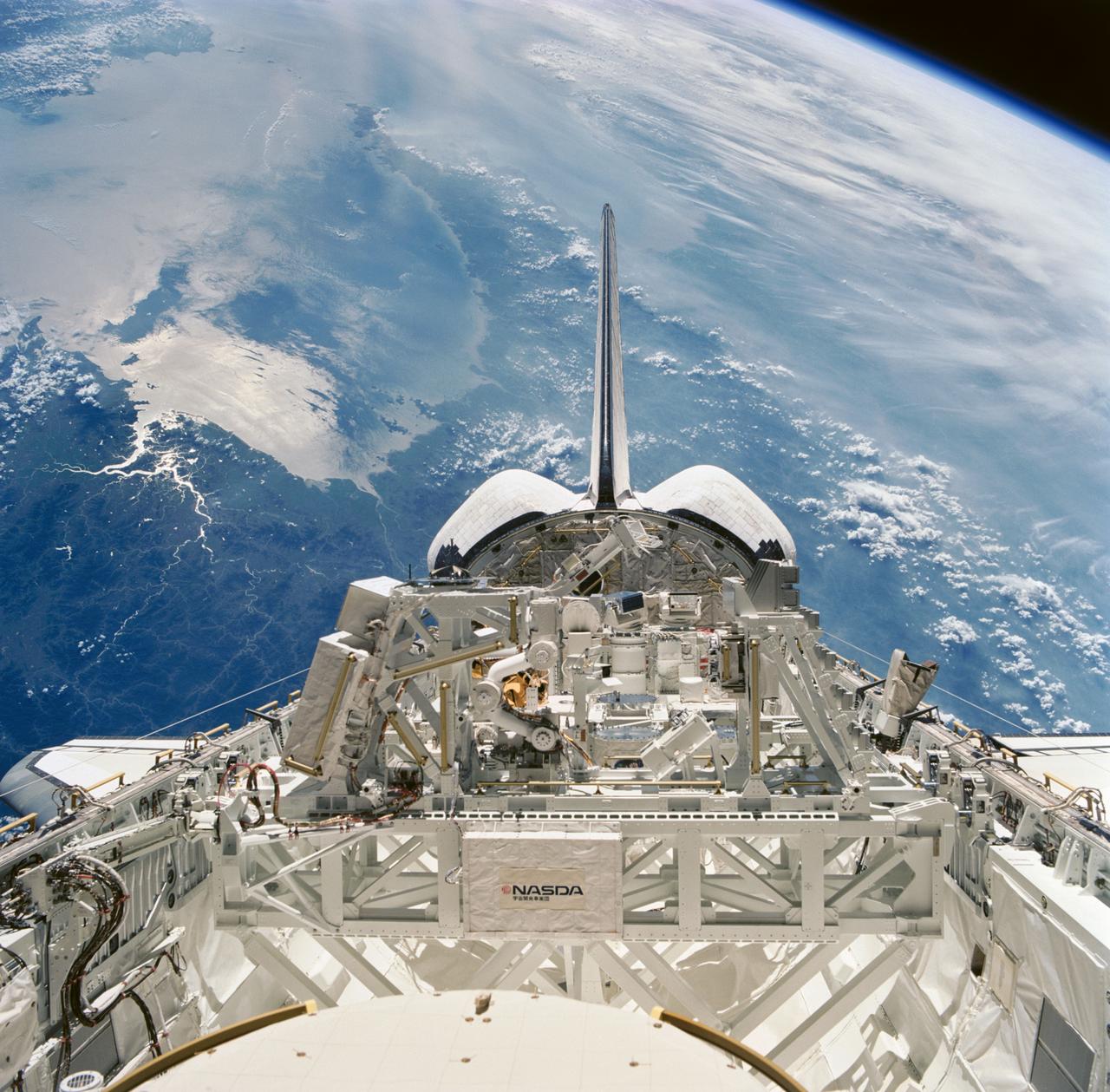
STS085-751-039 (7 - 19 August 1997) --- This 70mm frame, exposed through aft flight deck windows of the Space Shuttle Discovery, shows experiments in the cargo bay, as the spacecraft was flying over the Sea of Japan. In center foreground is the Manipulator Flight Demonstration (MFD). The MFD, sponsored by National Space Development Agency (NASDA), will evaluate the use of the Small Fine Arm (SFA) that is planned to be part of the future Japanese Experiment Module's (JEM) Remote Manipulator System (RMS) on the International Space Station (ISS).
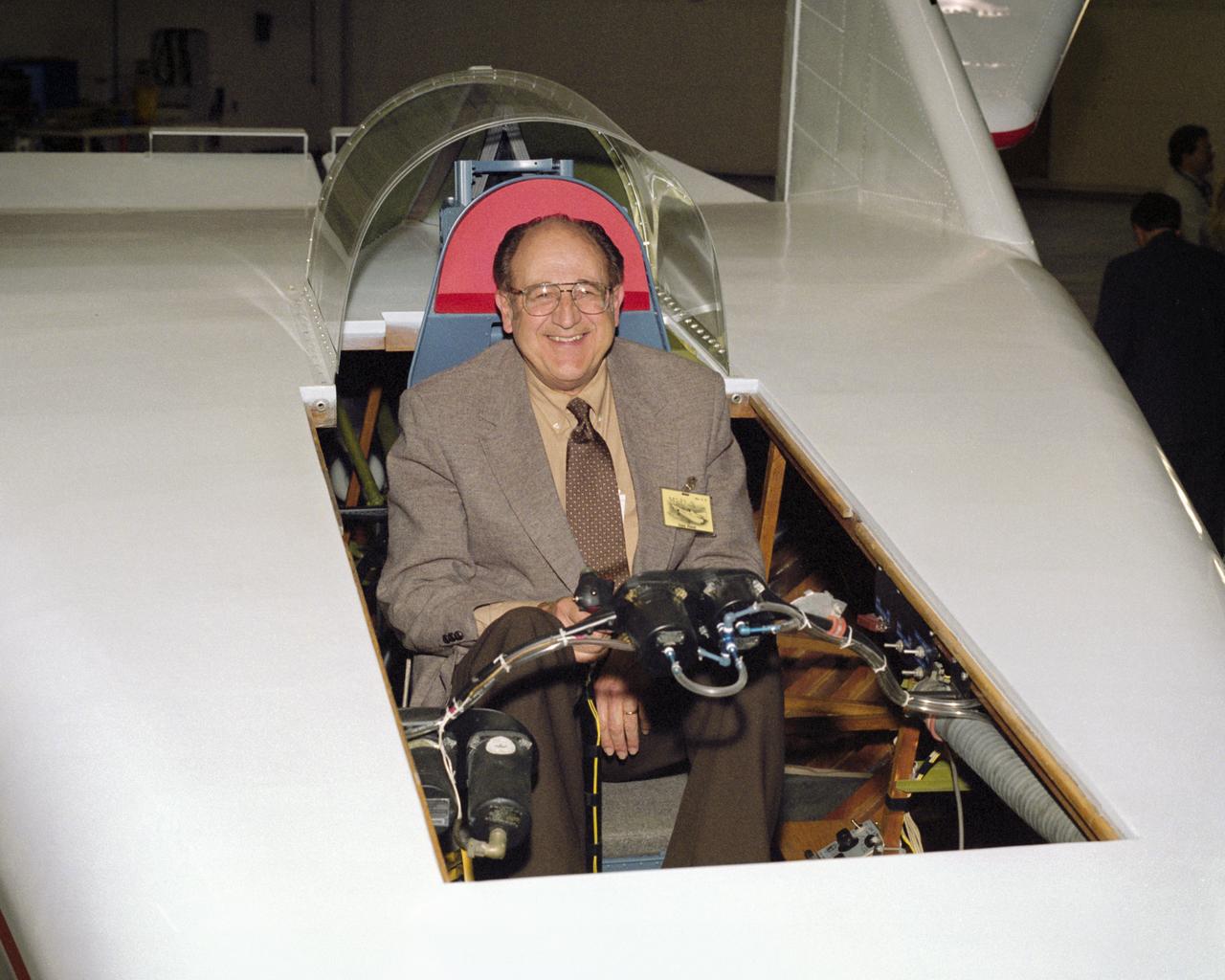
Often called the "Father of the Lifting Bodies," NASA aerospace engineer Dale Reed enjoys a moment in the cockpit of the restored wingless M2-F1 in 1997.
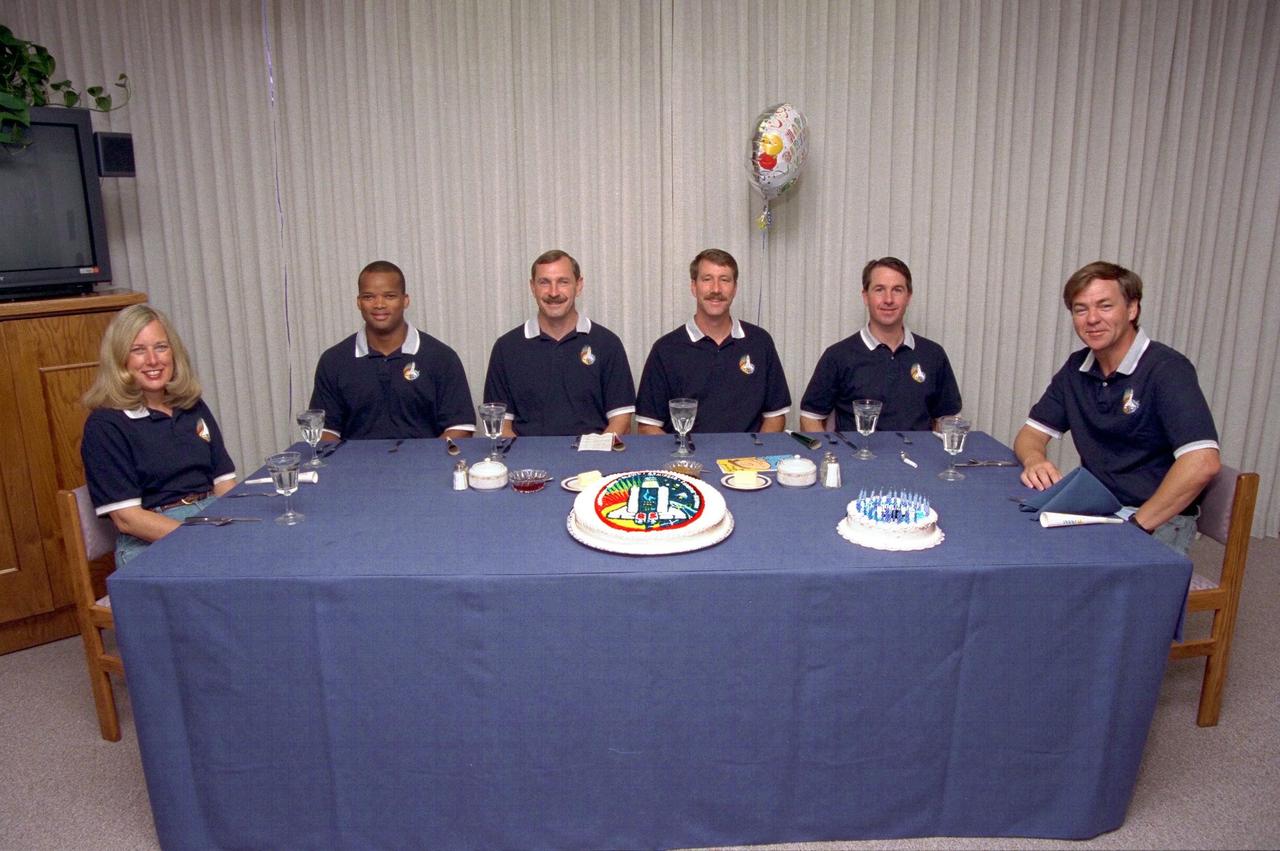
The STS-85 crew partakes in the traditional pre-liftoff breakfast in the Operations and Checkout (O&C) Building. They are (from left): Payload Commander N. Jan Davis; Mission Specialist Robert L. Curbeam, Jr.; Commander Curtis L. Brown, Jr.; Pilot Kent V. Rominger; Mission Specialist Stephen K. Robinson; Payload Specialist Bjarni V. Tryggvason; and The primary payload aboard the Space Shuttle orbiter Discovery is the Cryogenic Infrared Spectrometers and Telescopes for the Atmosphere-Shuttle Pallet Satellite-2 (CRISTA-SPAS-2). Other payloads on the 11-day mission include the Manipulator Flight Demonstration (MFD), and Technology Applications and Science-1 (TAS-1) and International Extreme Ultraviolet Hitchhiker-2 (IEH-2) experiments
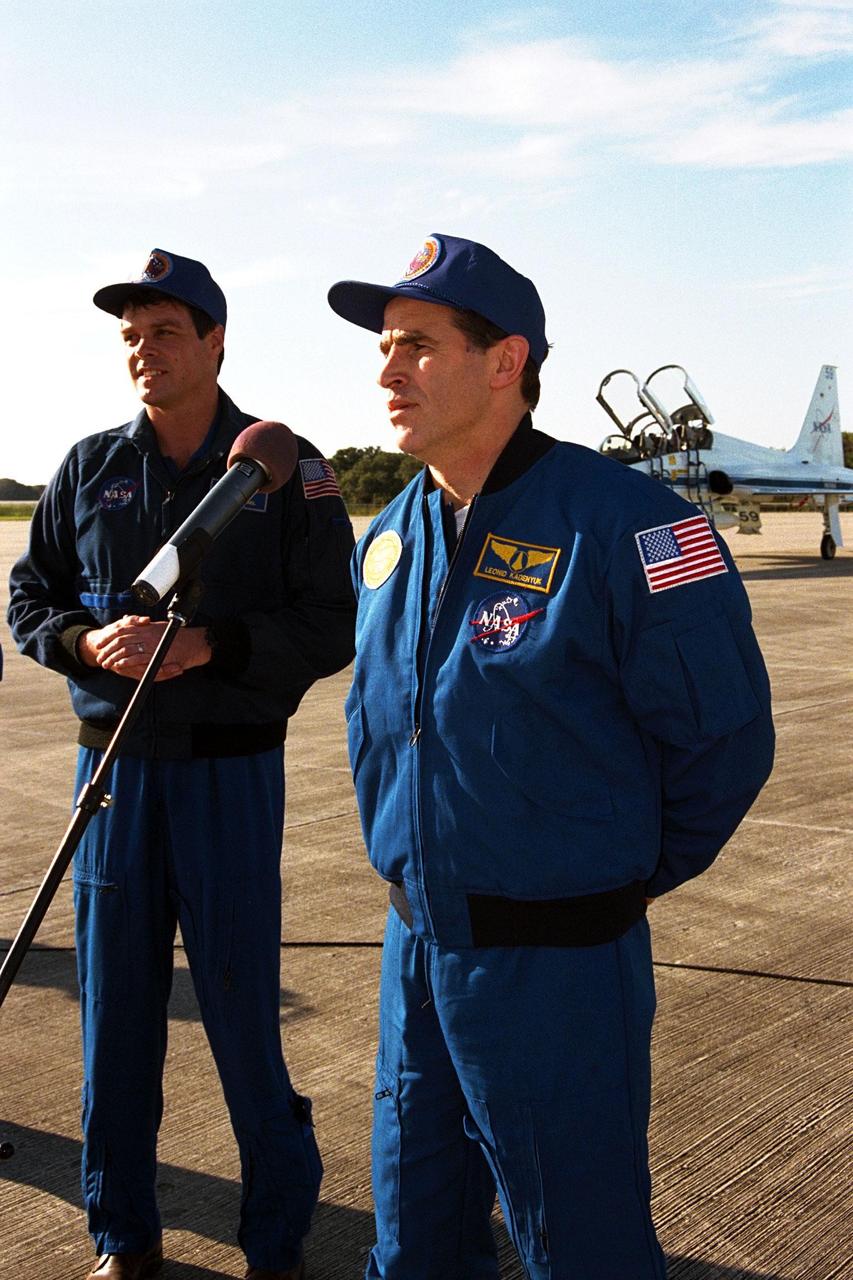
As STS-87 Commander Kevin Kregel looks on, Payload Specialist Leonid Kadenyuk of the National Space Agency of Ukraine addresses members of the press and media at Kennedy Space Center's Shuttle Landing Facility after arriving for the final prelaunch activities leading up to the scheduled Nov. 19 liftoff. Other STS-87 crew members not pictured are Pilot Steven Lindsey; and Mission Specialists Kalpana Chawla, Ph.D.; Takao Doi, Ph.D., of the National Space Development Agency of Japan; and Winston Scott. STS-87 will be the fourth flight of the United States Microgravity Payload and the Spartan-201 deployable satellite
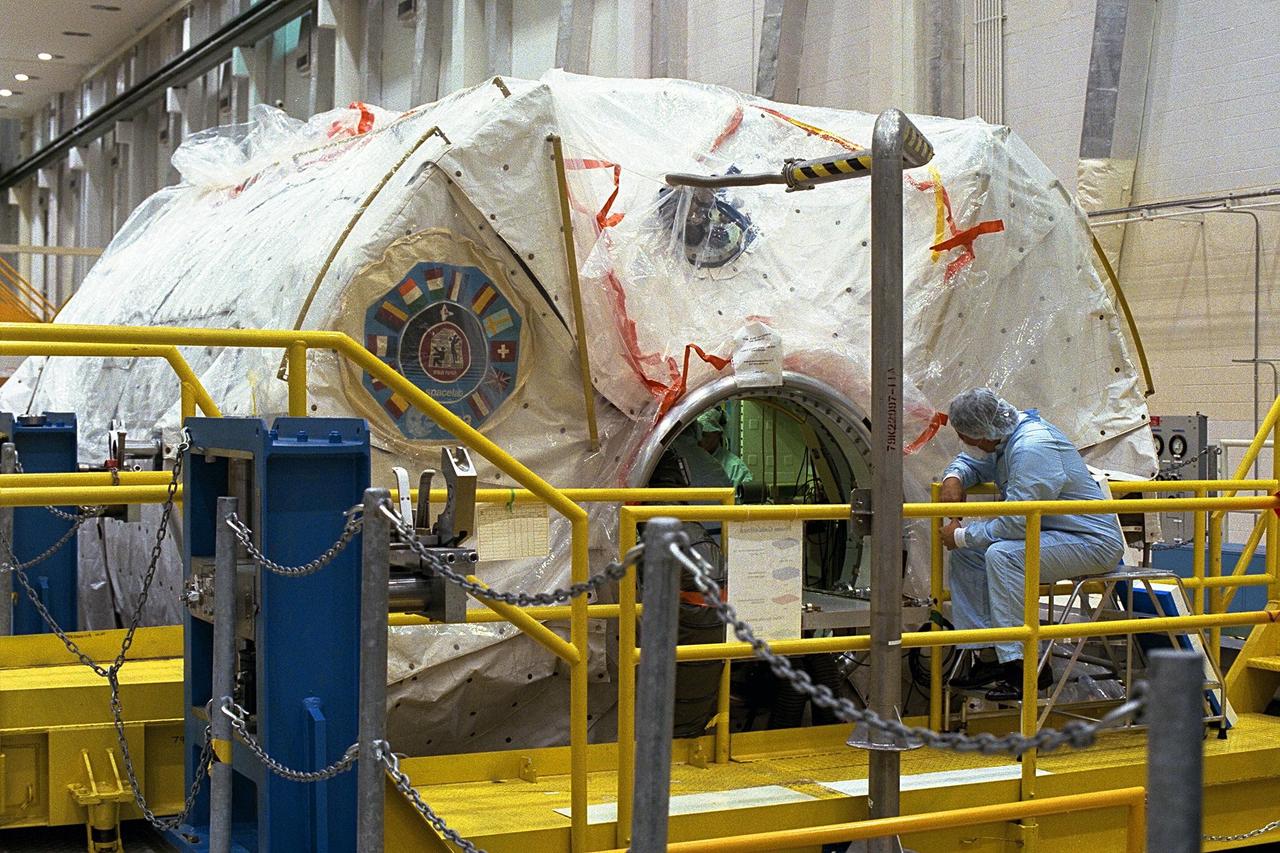
The Neurolab payload for STS-90, scheduled to launch aboard the Shuttle Columbia from Kennedy Space Center (KSC) on April 2, 1998, undergoes further processing in the Operations and Checkout Building at KSC. Investigations during the Neurolab mission will focus on the effects of microgravity on the nervous system. Specifically, experiments will study the adaptation of the vestibular system, the central nervous system, and the pathways that control the ability to sense location in the absence of gravity, as well as the effect of microgravity on a developing nervous system. The crew of STS-90 will include Commander Richard Searfoss, Pilot Scott Altman, Mission Specialists Richard Linnehan, Dafydd (Dave) Williams, M.D., and Kathryn (Kay) Hire, and Payload Specialists Jay Buckey, M.D., and James Pawelczyk, Ph.D
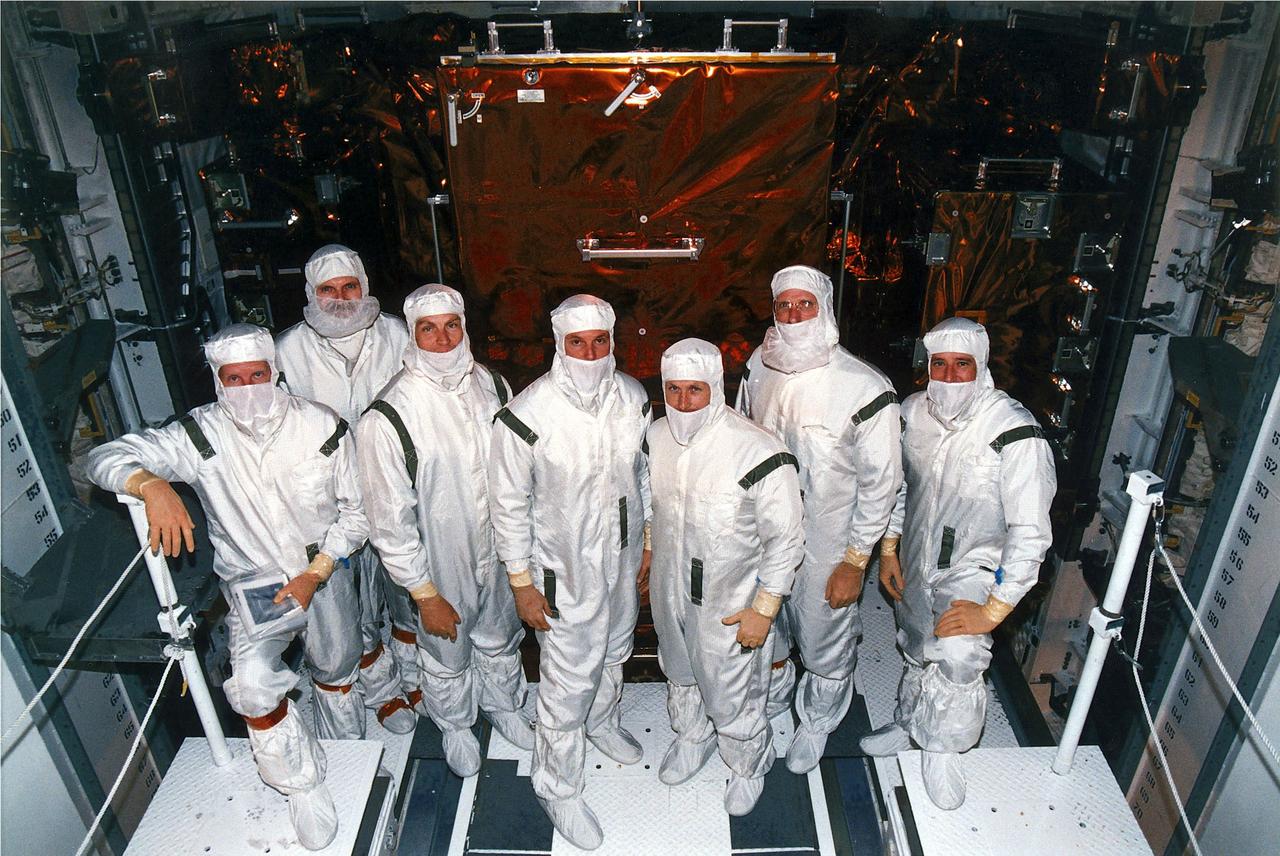
KENNEDY SPACE CENTER, FLA. - STS-82 crew members pose in their clean room suits at Launch Pad 39A where the Space Shuttle Discovery is undergoing final preparations for liftoff on the second Hubble Space Telescope (HST) servicing mission. They are making a final inspection of the payload before payload bay closure. From left are Mission Specialists Steven A. Hawley and Steven L. Smith, Payload Commander Mark C. Lee, Mission Specialist GregoryJ. Harbaugh, Mission Commander Kenneth D. Bowersox, Mission Specialist Joseph R. "Joe" Tanner and Pilot Scott J. "Doc" Horowitz. STS-82 is scheduled for liftoff on Feb. 11 during a 65-minute launch window that opens at 3:56 a.m. EST.
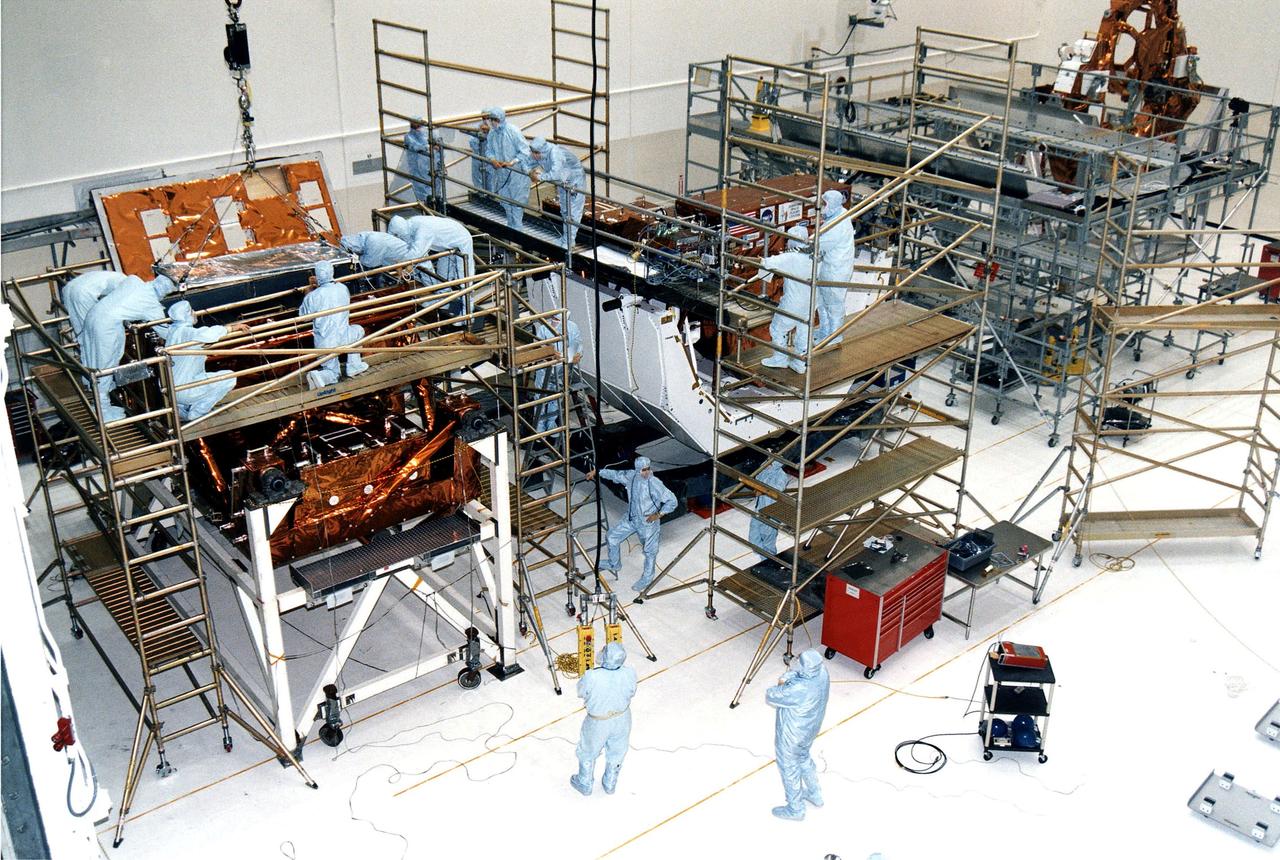
KENNEDY SPACE CENTER, FLA. - Workers in KSC's Vertical Processing Facility make final prelaunch prepartions to various payload elements that are part of the second Hubble Space Telescope (HST) servicing mission, STS-82. Liftoff is targeted Feb. 11 aboard Discovery with a crew of seven.
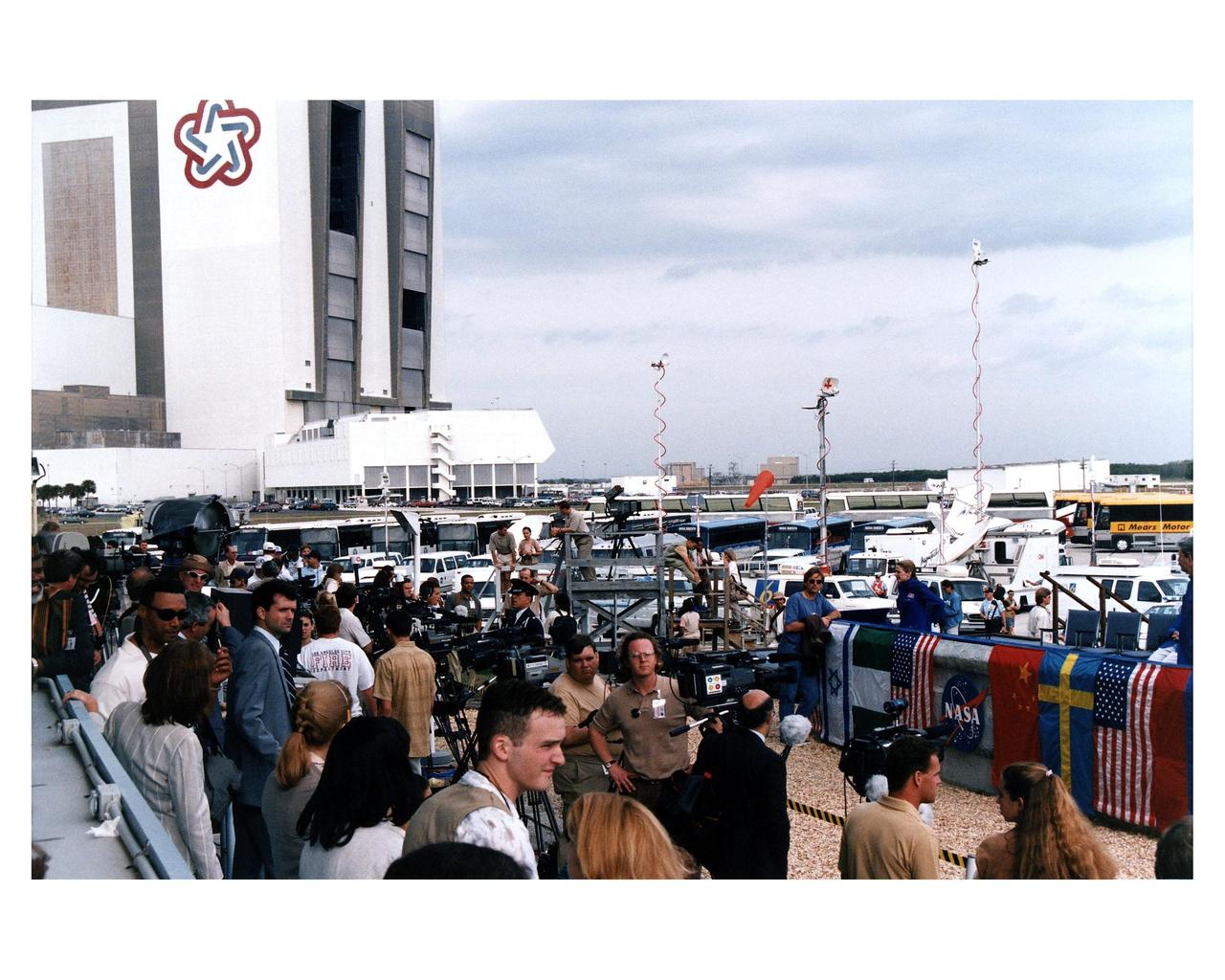
With the Vehicle Assembly Building looming in the background, Warner Bros.' cast and crew are filming scenes for the movie "Contact" at Kennedy Space Center's Launch Complex 39 Press Site on January 29. The screenplay for "Contact" is based on the best-selling novel by the late astronomer Carl Sagan. The cast includes Jodie Foster, Matthew McConaughey, John Hurt, James Woods, Tom Skerritt, David Morse, William Fichtner, Rob Lowe and Angela Bassett. Described by Warner Bros. as a science fiction drama, "Contact" will depict humankind's first encounter with evidence of extraterrestrial life

Multispectral Slice of APXS
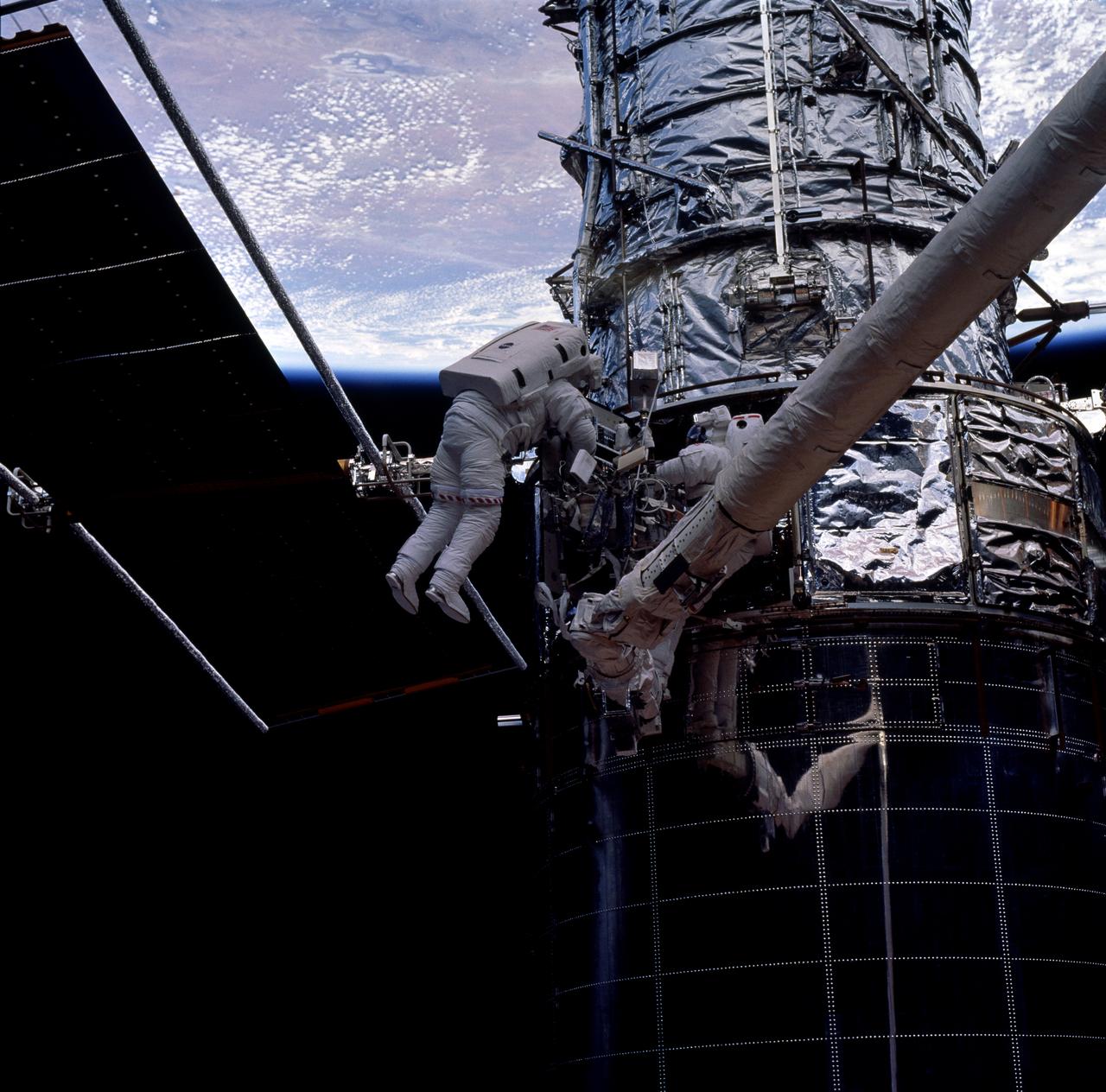
STS082-744-060 (11-21 Feb. 1997) --- Astronauts Joseph R. Tanner (left-with red and white stripes) and Gregory J. Harbaugh (partially obscured) team up to replace the Solar Drive Electronics (SADE) on the temporarily captured Hubble Space Telescope (HST) in the Space Shuttle Discovery's cargo bay. The Extravehicular Activity (EVA) took place on Flight Day 7, during the fourth of five total EVA's utilized to service HST.
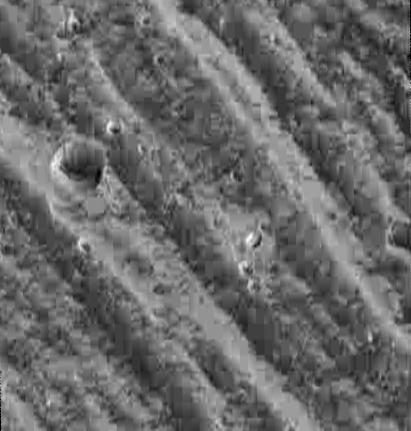
Bright and Dark Slopes on Ganymede
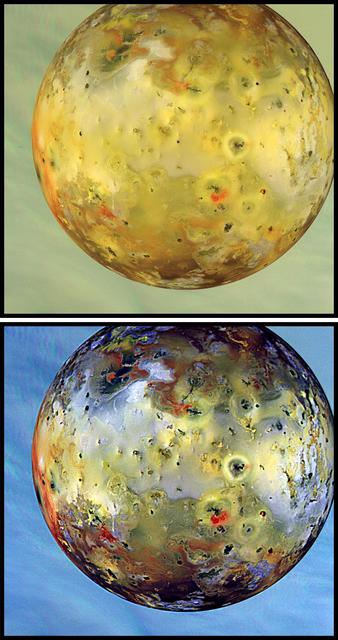
Global View of Io Natural and False/Enhanced Color
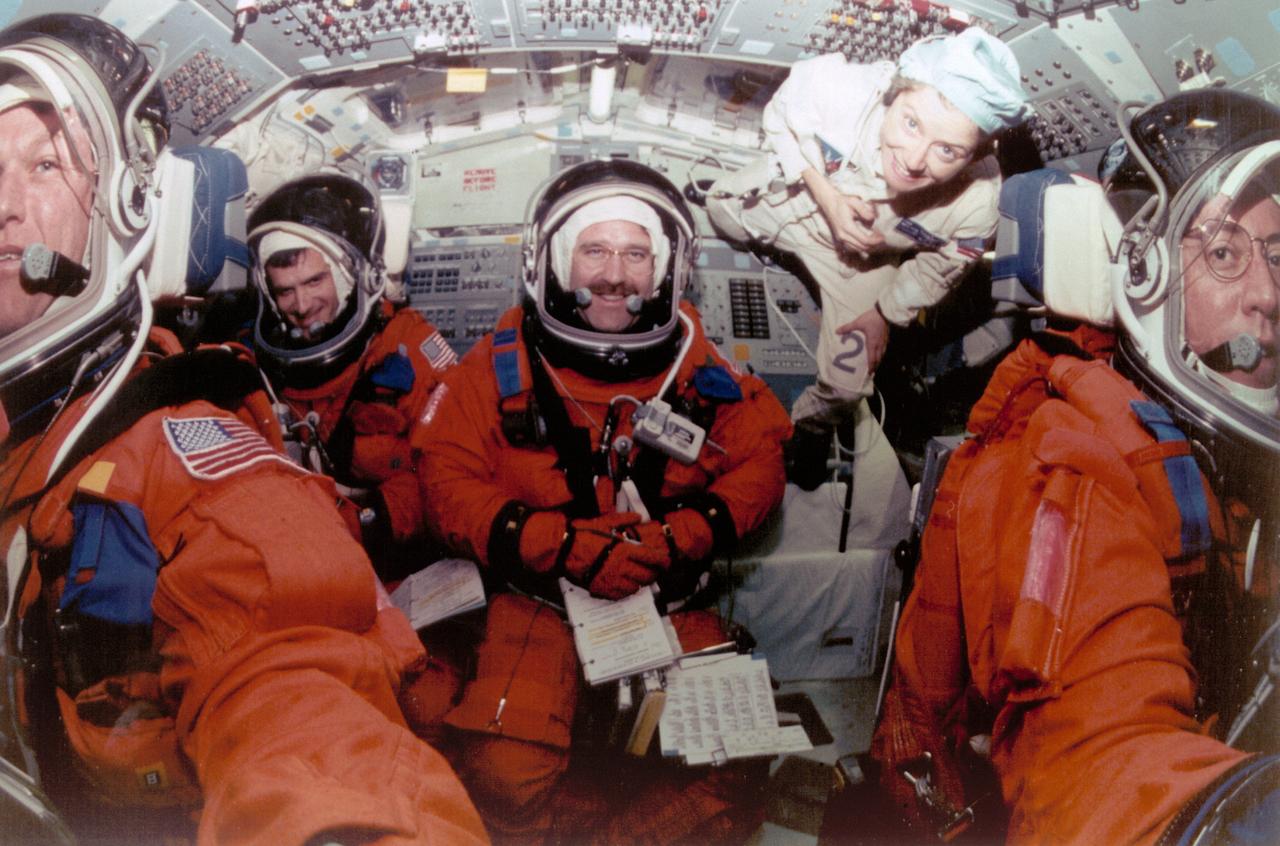
S97-00254 (17 Dec 1996) --- The STS-81 flight crew goes over pre-flight checklists on the flight deck of the Space Shuttle Atlantis during the final phase of the Terminal Countdown Demonstration Test (TCDT) exercises for the January 1997 mission. Crew members pictured, are (from the left) Brent W. Jett, Jr., pilot; Peter J. K. (Jeff) Wisoff and John M. Grunsfeld, mission specialists; along with Michael A. Baker, mission commander. The TCDT represents a simulated final countdown until just before main engine ignition. The astronauts are in their flight positions with the Orbiter in a vertical attitude at Launch Pad 39B, with the camera pointed down from the forward cabin. This angle creates the illusion that astronaut Pam Melroy (in lab suit), mission support assistant, is floating in space. On the mid-deck and out of frame are astronauts Marsha S. Ivins and Jerry M. Linenger. The six will visit Russia?s Mir Space Station, from which they will retrieve John M. Blaha who has been aboard the Mir since September of 1996. Linenger is to replace Blaha, as cosmonaut guest researcher.
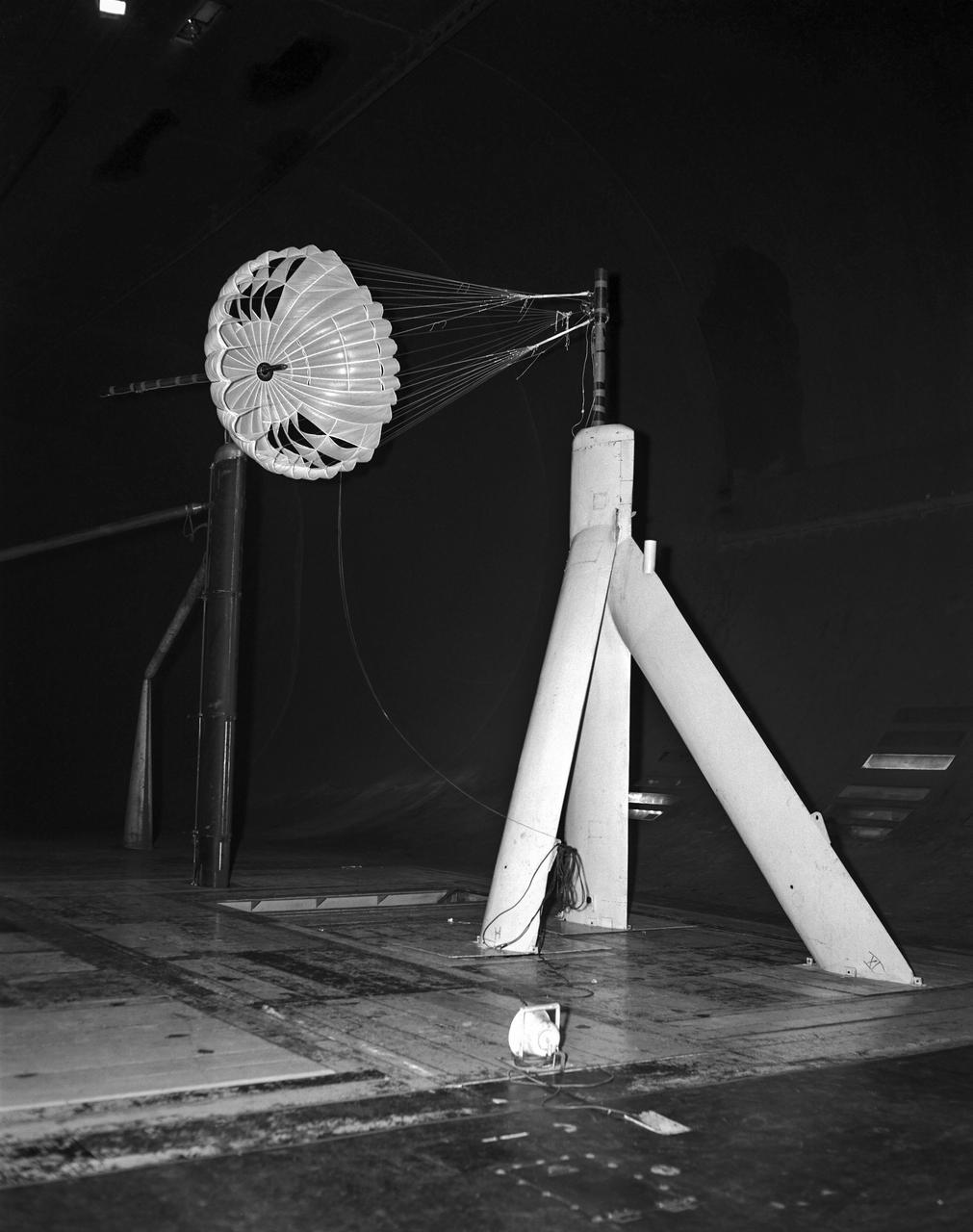
Gliding parachute test in 40x80 foot Wind Tunnel, mounted on main strut flying horizontally.
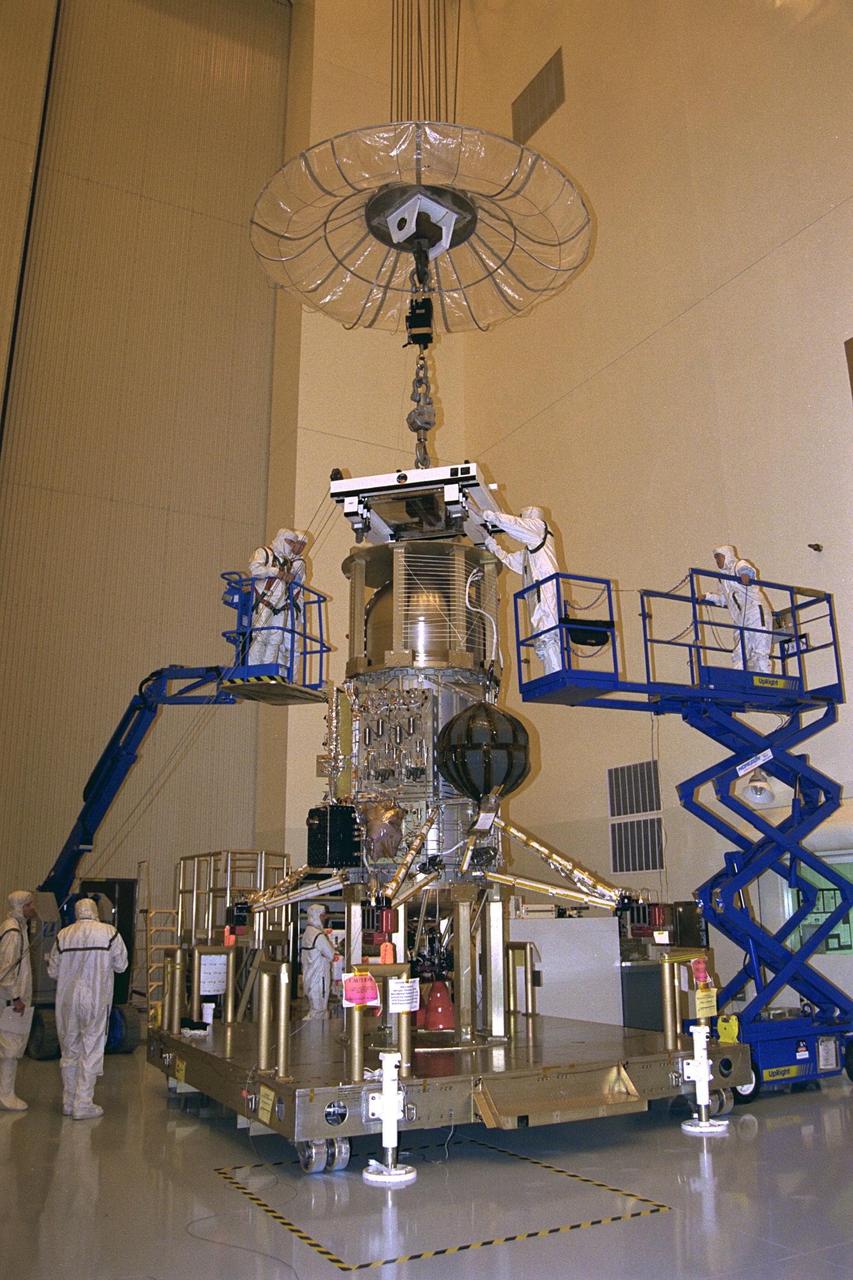
The propulsion system is mated to the Lower Equipment Module of the Cassini spacecraft in the Payload Hazardous Servicing Facility (PHSF). Cassini will explore the Saturnian system, including the planet’s rings and its moon, Titan. Launch of the Cassini mission to Saturn is scheduled for Oct. 6 from Launch Complex 40, Cape Canaveral Air Station, aboard a Titan IVB unmanned vehicle
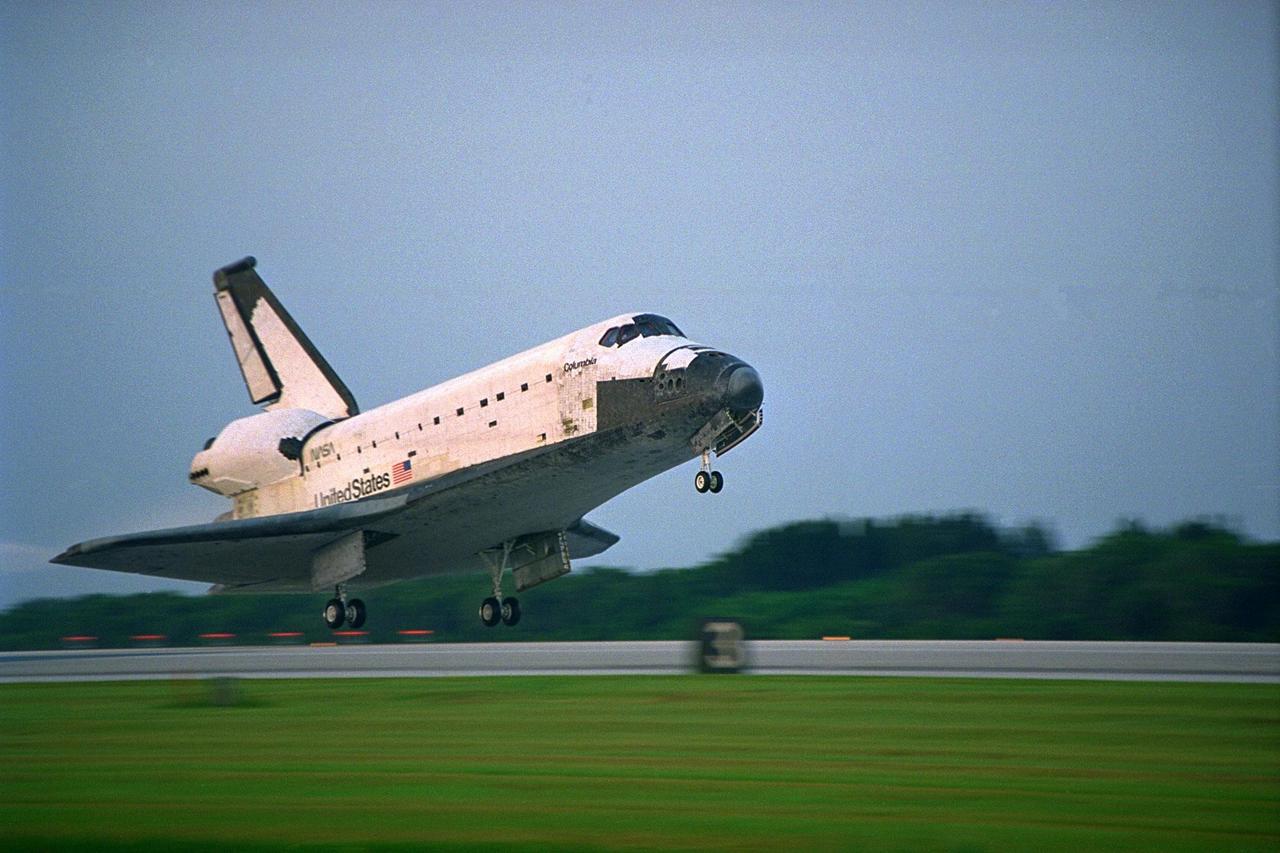
KENNEDY SPACE CENTER, FLA. -- The Space Shuttle orbiter Columbia touches down on Runway 33 at KSC’s Shuttle Landing Facility at 6:46:34 a.m. EDT with Mission Commander James D. Halsell Jr. and Pilot Susan L. Still at the controls to complete the STS-94 mission. Also on board are Mission Specialist Donald A. Thomas, Mission Specialist Michael L. Gernhardt, Payload Commander Janice Voss, and Payload Specialists Roger K. Crouch and Gregory T. Linteris. During the Microgravity Science Laboratory-1 (MSL-1) mission, the Spacelab module was used to test some of the hardware, facilities and procedures that are planned for use on the International Space Station while the flight crew conducted combustion, protein crystal growth and materials processing experiments. This mission was a reflight of the STS-83 mission that lifted off from KSC in April of this year. That space flight was cut short due to indications of a faulty fuel cell. This was Columbia’s 11th landing at KSC and the 38th landing at the space center in the history of the Shuttle program
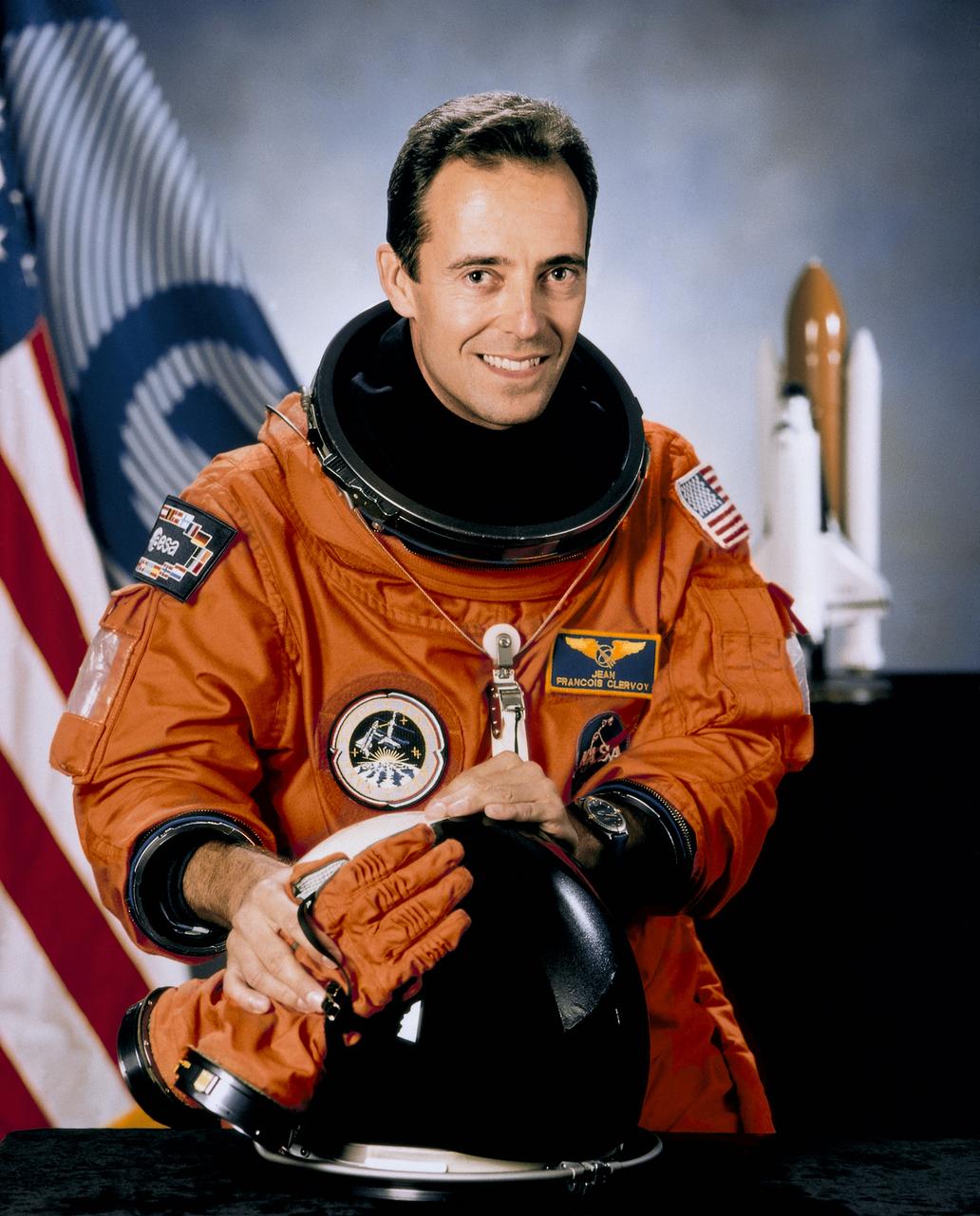
S97-02547 (February 1997) --- Astronaut Jean-Francois Clervoy, mission specialist.
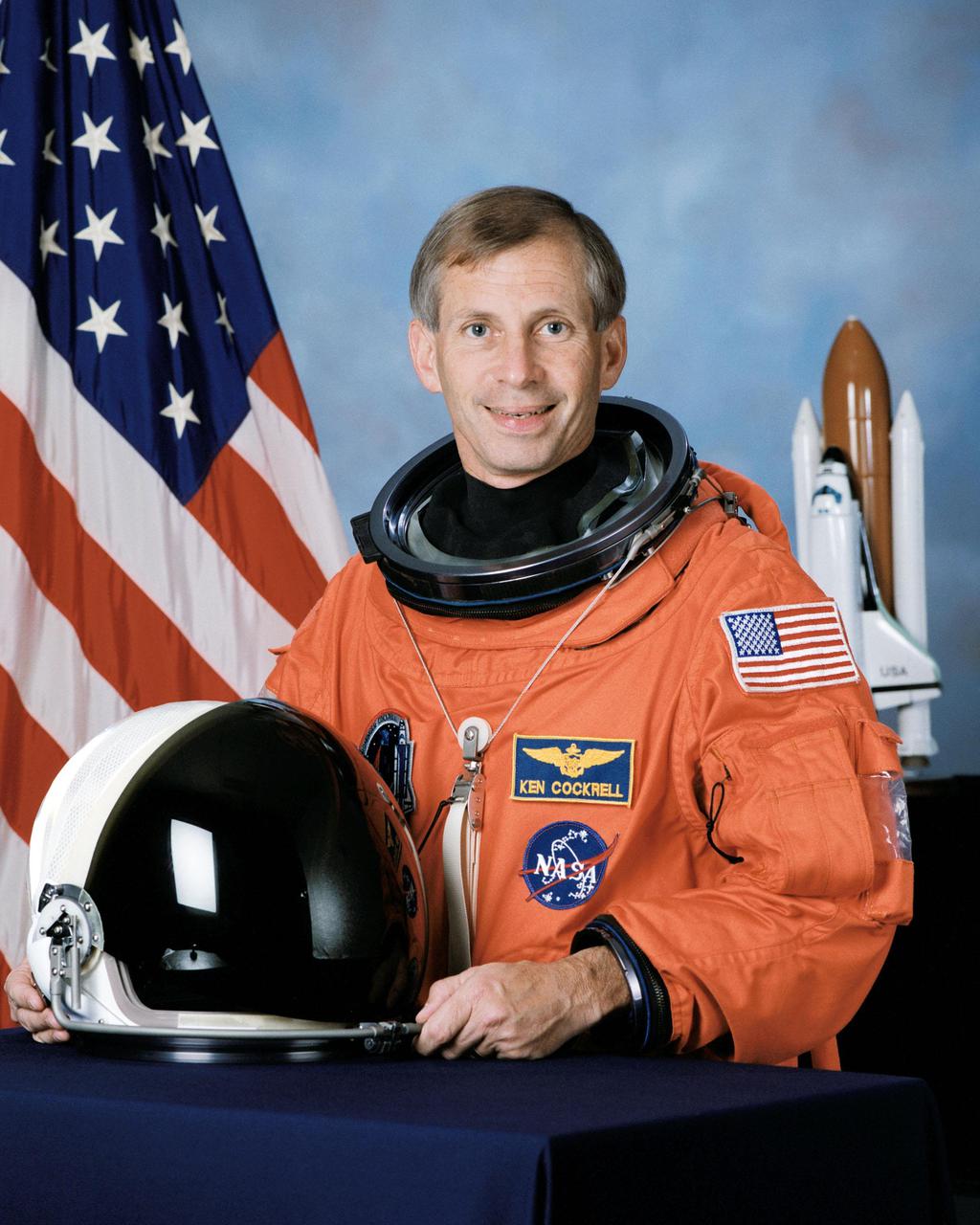
JOHNSON SPACE CENTER, HOUSTON, TX -- (JSC 597-06616) --Official Portrait of astronaut Kenneth D. Cockrell, STS-111 mission commander
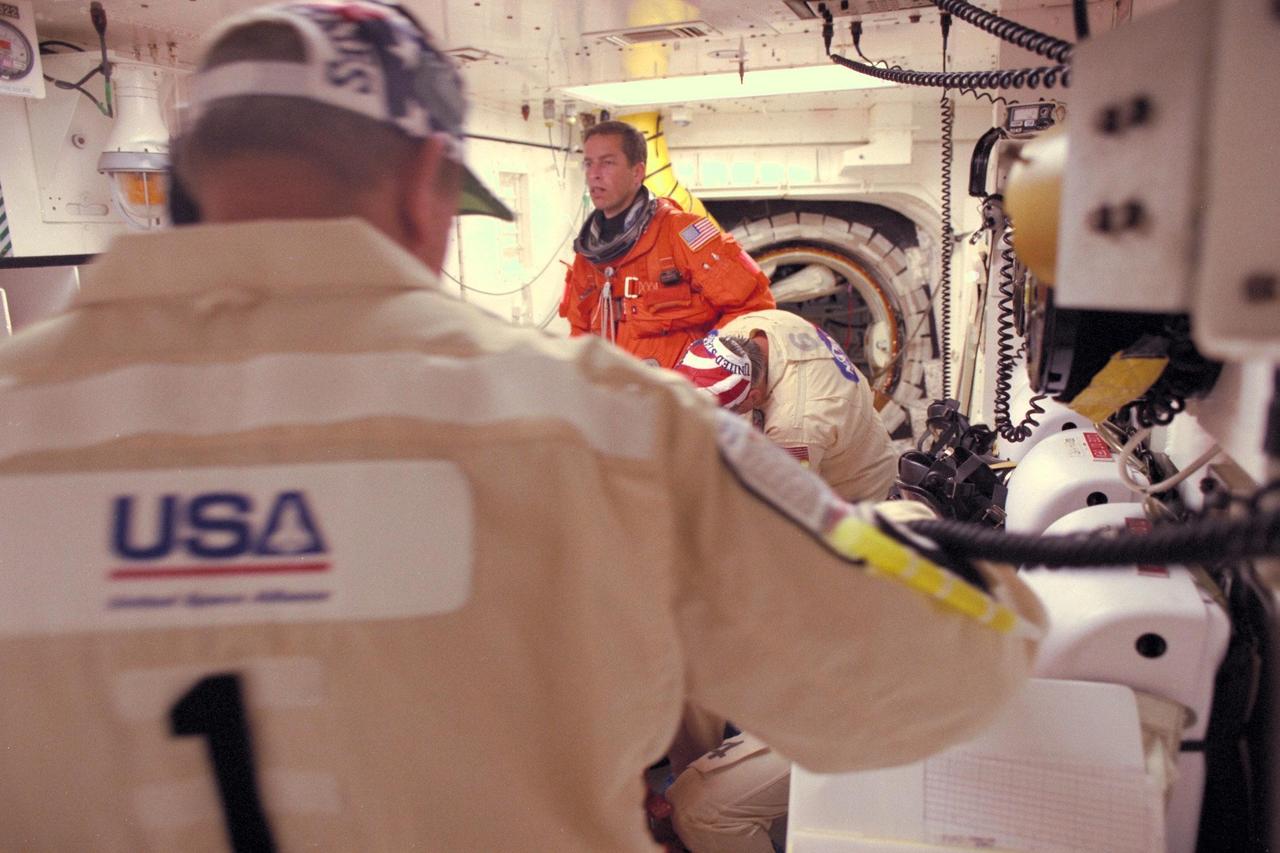
STS-86 Commander James D. Wetherbee prepares to enter the Space Shuttle Atlantis at Launch Pad 39A, with the assistance of white room closeout crew member Jim Davis, a NASA quality assurance specialist. Rick Welty, United Space Alliance orbiter vehicle closeout chief, is in foreground with back to camera

Workers in the Payload Hazardous Servicing Facility (PHSF) finish the removal of a protective cover from the Cassini spacecraft with its attached Huygens probe. Damage to thermal insulation was discovered inside Huygens from an abnormally high flow of conditioned air. Further internal inspection, insulation repair and a cleaning of the probe are now required. Mission managers are targeting a mid-October launch date after Cassini returns to the pad and is once again placed atop its Titan IVB expendable launch vehicle at Launch Pad 40 at Cape Canaveral Air Station. Cassini will explore the Saturnian system, including the planet’s rings, while the Huygens probe will explore the moon Titan
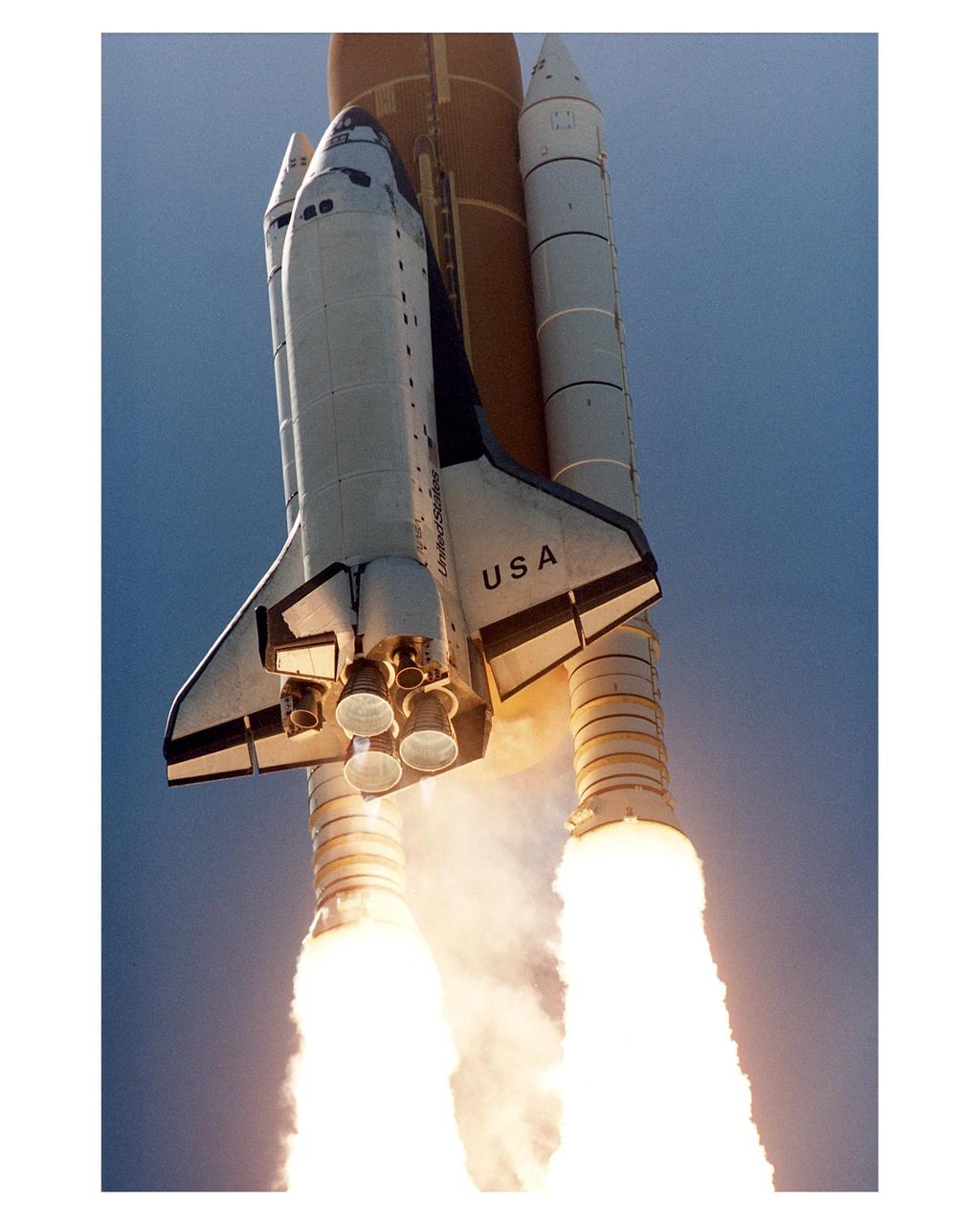
Like a rising sun lighting up the afternoon sky, the Space Shuttle Columbia soars from Launch Pad 39A at 2:20:32 p.m. EST, April 4, on the 16-day Microgravity Science Laboratory-1 (MSL-1) mission. The crew members are Mission Commander James D. Halsell, Jr.; Pilot Susan L. Still; Payload Commander Janice Voss; Mission Specialists Michael L. Gernhardt and Donald A. Thomas; and Payload Specialists Roger K. Crouch and Gregory T. Linteris. During the scheduled 16-day STS-83 mission, the MSL-1 will be used to test some of the hardware, facilities and procedures that are planned for use on the International Space Station as well as research in combustion, protein crystal growth and materials processing experiments
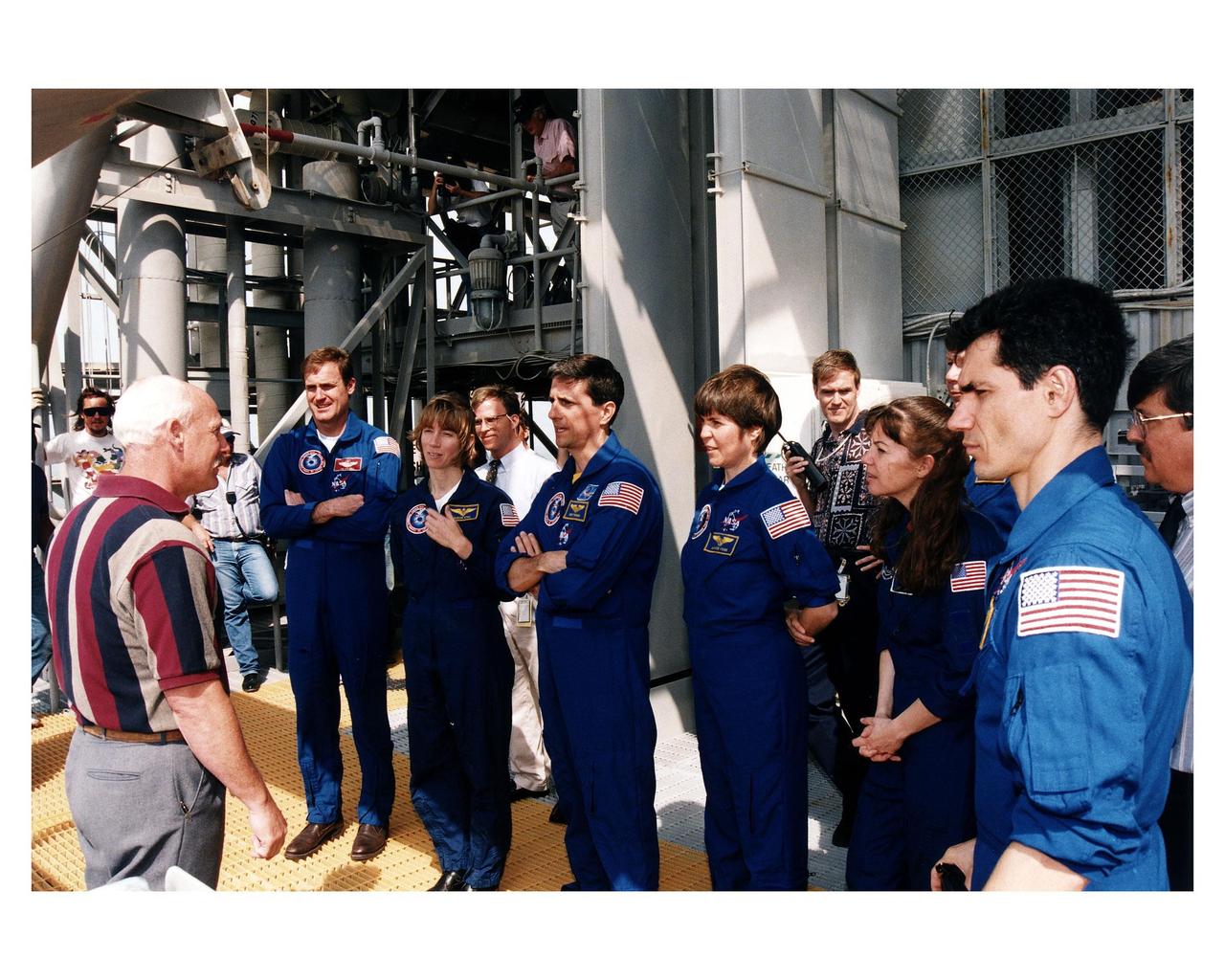
Members of the STS-83 crew receive instruction at Launch Complex 39A during the crew's <a href="http://www-pao.ksc.nasa.gov/kscpao/release/1997/40-97.htm">Terminal Countdown Demonstration Test (TCDT).</a
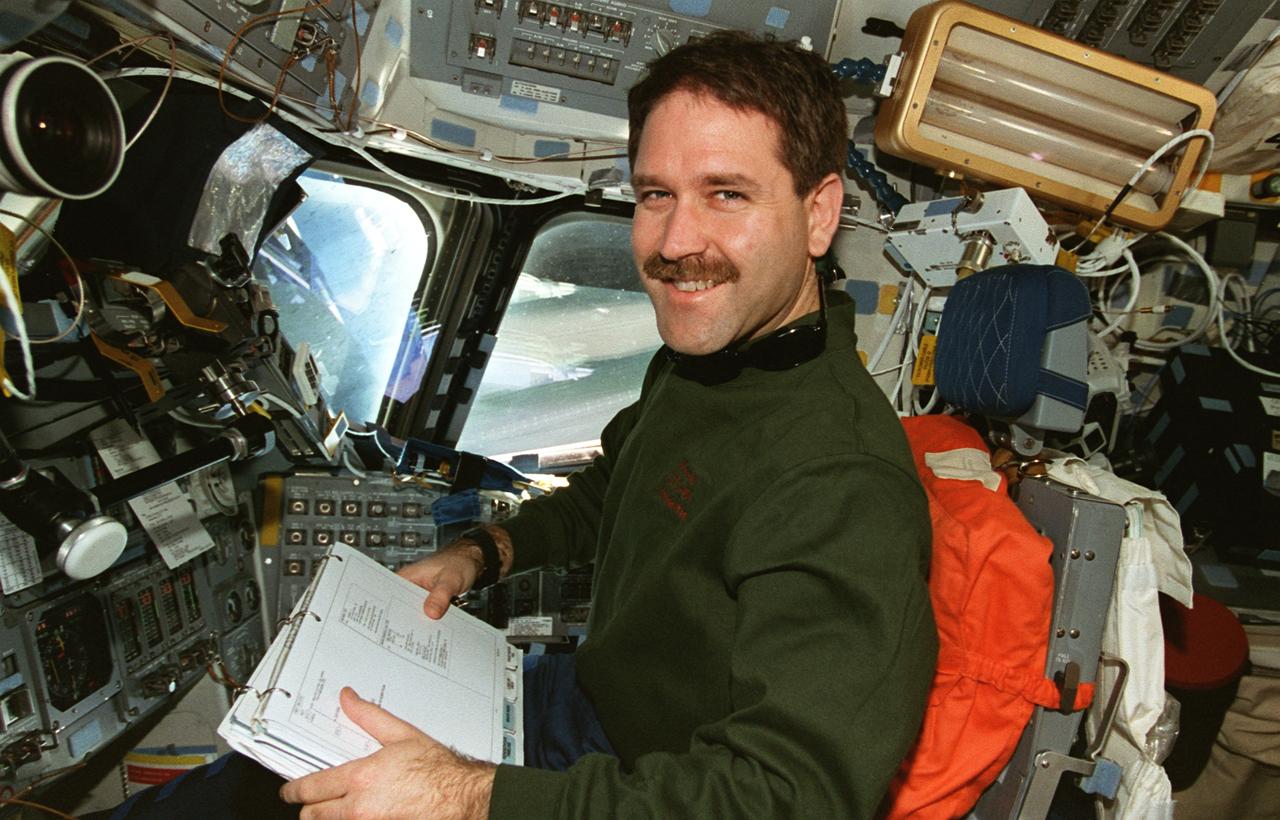
STS081-368-018 (12-22 Jan. 1997) --- Astronaut John M. Grunsfeld, STS-81 mission specialist, mans the pilot's station on the Space Shuttle Atlantis' flight deck during rendezvous operations with Russia's Mir Space Station.
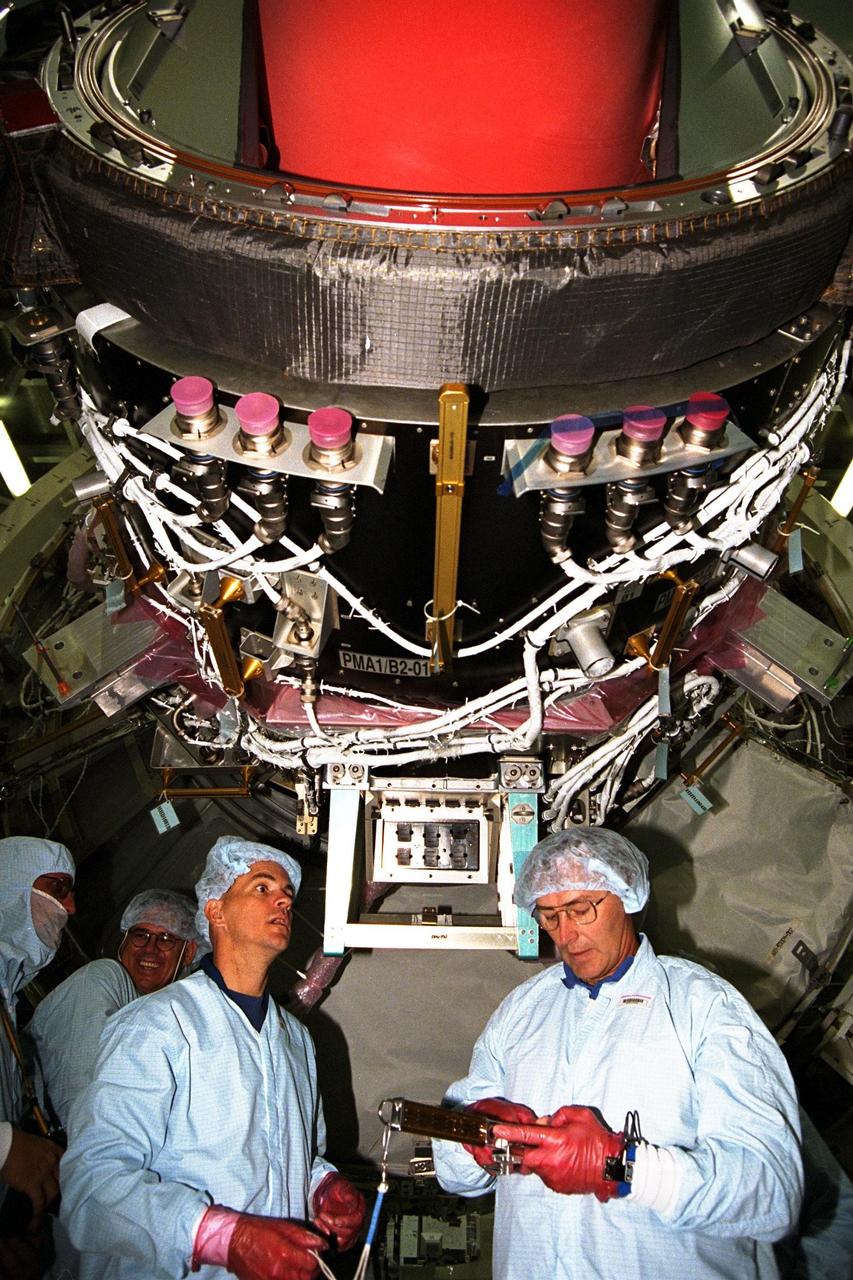
Pilot Rick Sturckow and Mission Specialist Jerry Ross, both members of the STS-88 crew, participate with technicians in the Crew Equipment Interface Test for that mission in KSC's Space Station Processing Facility. STS-88, the first International Space Station assembly flight, is targeted for launch in July 1998 aboard Space Shuttle Endeavour

STS-84 mission specialists and SPACEHAB workers participate in the Crew Equipment Integration Test (CEIT) inside the SPACEHAB Double Module, which will carry more than 6,000 pounds of scientific experiments and logistics to the Russian Space Station Mir. Standing at left is JeanFrancois Clervoy of the European Space Agency. Sitting on the floor, from left, are Edward Tsang Lu of NASA and Elena V. Kondakova of the Russian Space Agency. The test is being conducted at the SPACEHAB Payload Processing Facility in Cape Canaveral. STS-84 will be the sixth docking of the Space Shuttle with Mir. It also will be the third consecutive crew member exchange of U.S. astronauts aboard Mir. STS-84 Mission Specialist C. Michael Foale will replace astronaut Jerry M. Linenger on Mir. Linenger has been on Mir since the STS-81 mission in January. Foale is scheduled to remain on Mir about four months. STS-84 is targeted for a May 15 liftoff
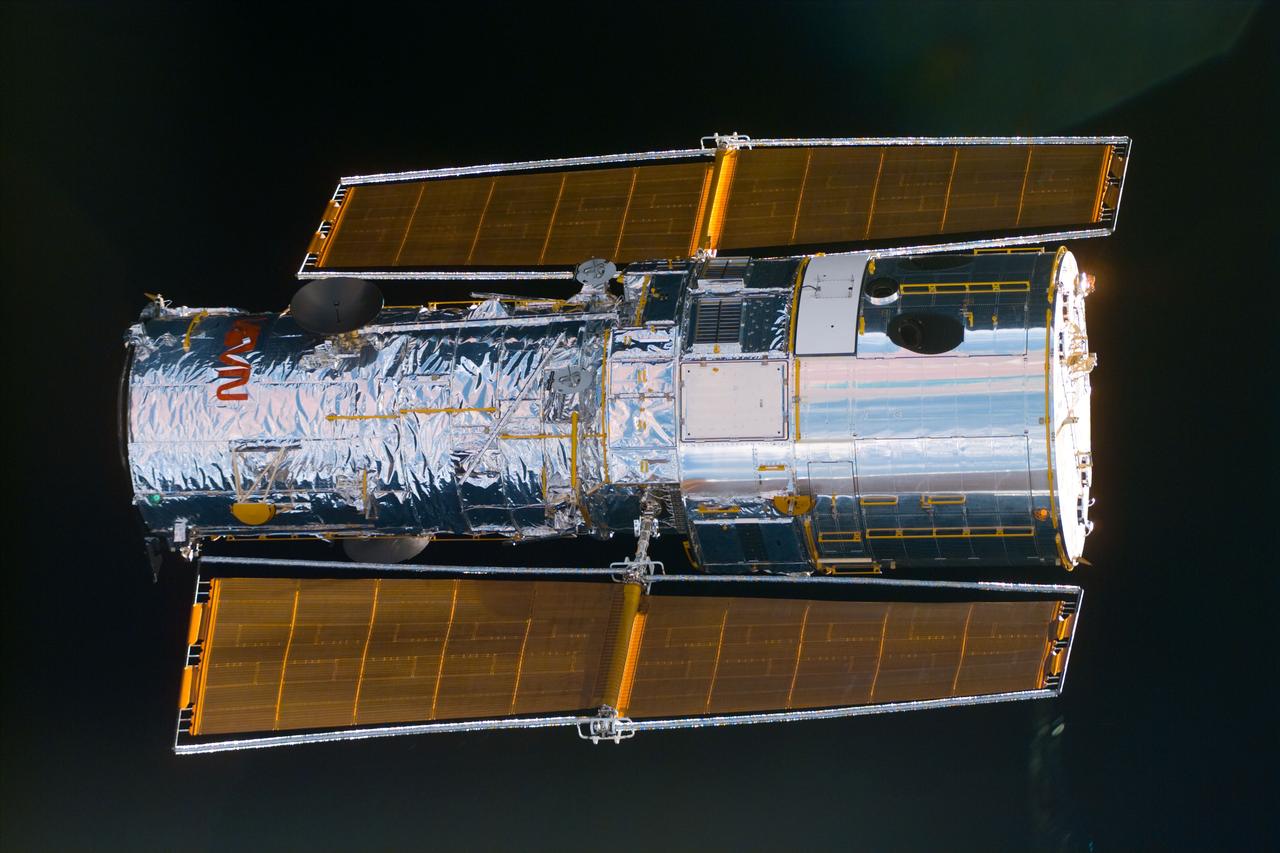
S82-E-5084 (13 Feb. 1997) --- The first close-up look at the Hubble Space Telescope (HST) since 1993 was provided by STS-82 Electronic Still Camera (ESC) during rendezvous with the giant telescope. This view was taken with an Electronic Still Camera (ESC).

Pits and Flutes on Stimpy
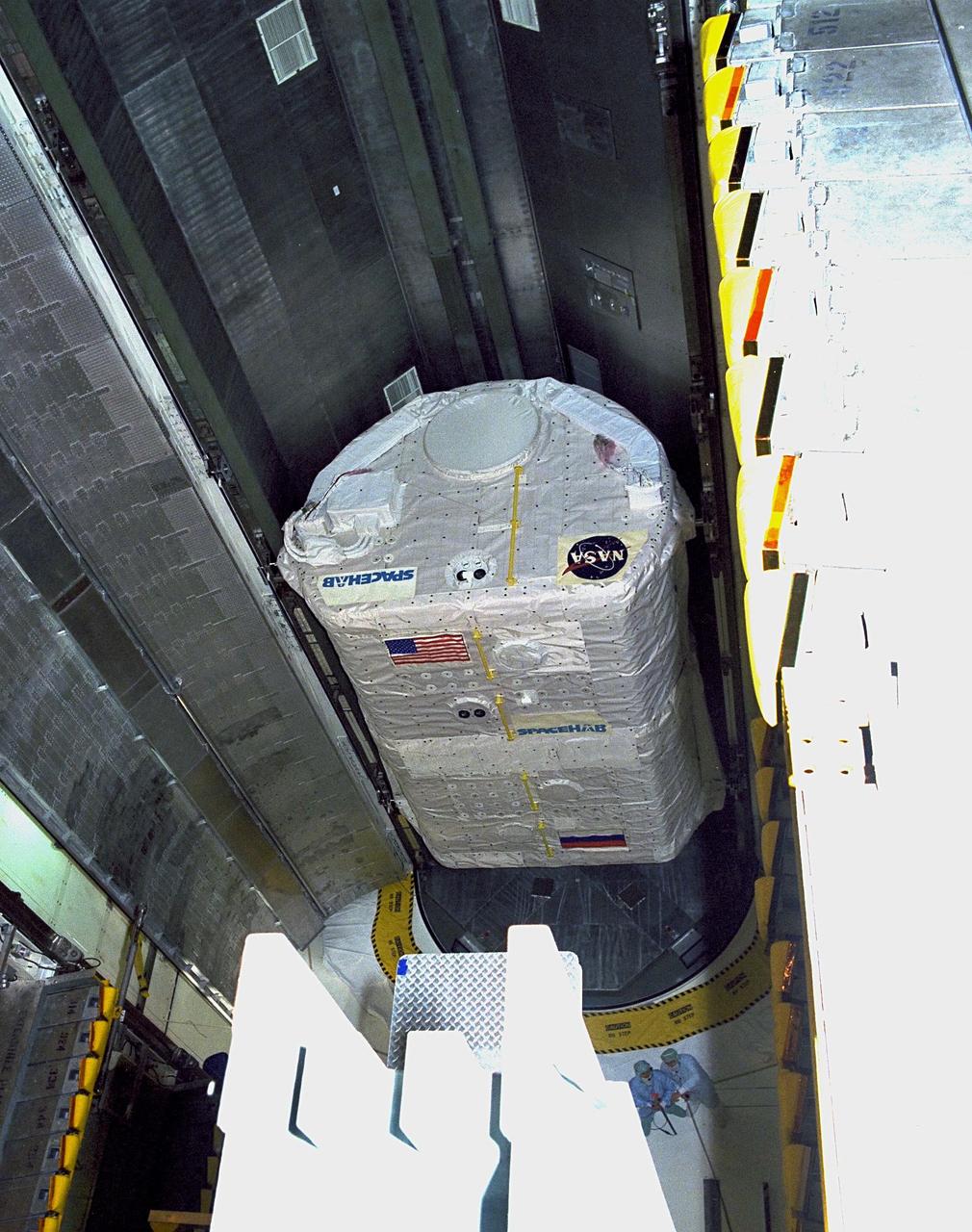
KENNEDY SPACE CENTER, FLA. -- The SPACEHAB payload arrived at Launch Pad 39A this morning and was installed in the Payload Changeout Room. Final preparations for liftoff of the STS-89 mission are under way. Endeavour and its crew of seven are targeted for a Jan. 22 launch. STS-89 will be the eighth Shuttle docking with the Russian Space Station Mir as part of Phase 1 of the International Space Station program. Mission Specialist Andy Thomas, Ph.D., will succeed Mission Specialist David Wolf, M.D., as the last NASA astronaut scheduled for a long-duration stay aboard Mir
Silver Snoopy Awards recipients and Astronaut visit, Tour
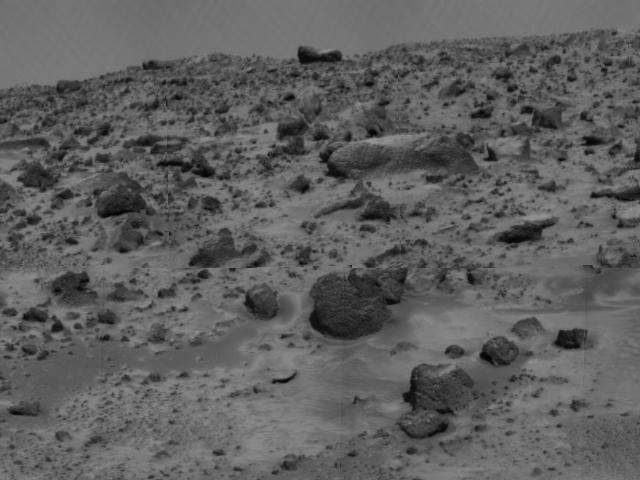
Terrain and Rock Couch