![KENNEDY SPACE CENTER, FLA. - Against a black moonless sky, Space Shuttle Endeavour lights up the night as it blazes into space after an ontime liftoff at 7:49:47 p.m. EST. The launch is the 19th for Endeavour, and the 112th flight in the Shuttle program. Mission STS-113 is the 16th assembly flight to the International Space Station, carrying another structure for the Station, the P1 integrated truss. Also onboard are the Expedition 6 crew, who will replace Expedition 5. Endeavour is scheduled to land at KSC after an 11-day journey. [Photo by Scott Andrews]](https://images-assets.nasa.gov/image/KSC-02pd1806/KSC-02pd1806~medium.jpg)
KENNEDY SPACE CENTER, FLA. - Against a black moonless sky, Space Shuttle Endeavour lights up the night as it blazes into space after an ontime liftoff at 7:49:47 p.m. EST. The launch is the 19th for Endeavour, and the 112th flight in the Shuttle program. Mission STS-113 is the 16th assembly flight to the International Space Station, carrying another structure for the Station, the P1 integrated truss. Also onboard are the Expedition 6 crew, who will replace Expedition 5. Endeavour is scheduled to land at KSC after an 11-day journey. [Photo by Scott Andrews]
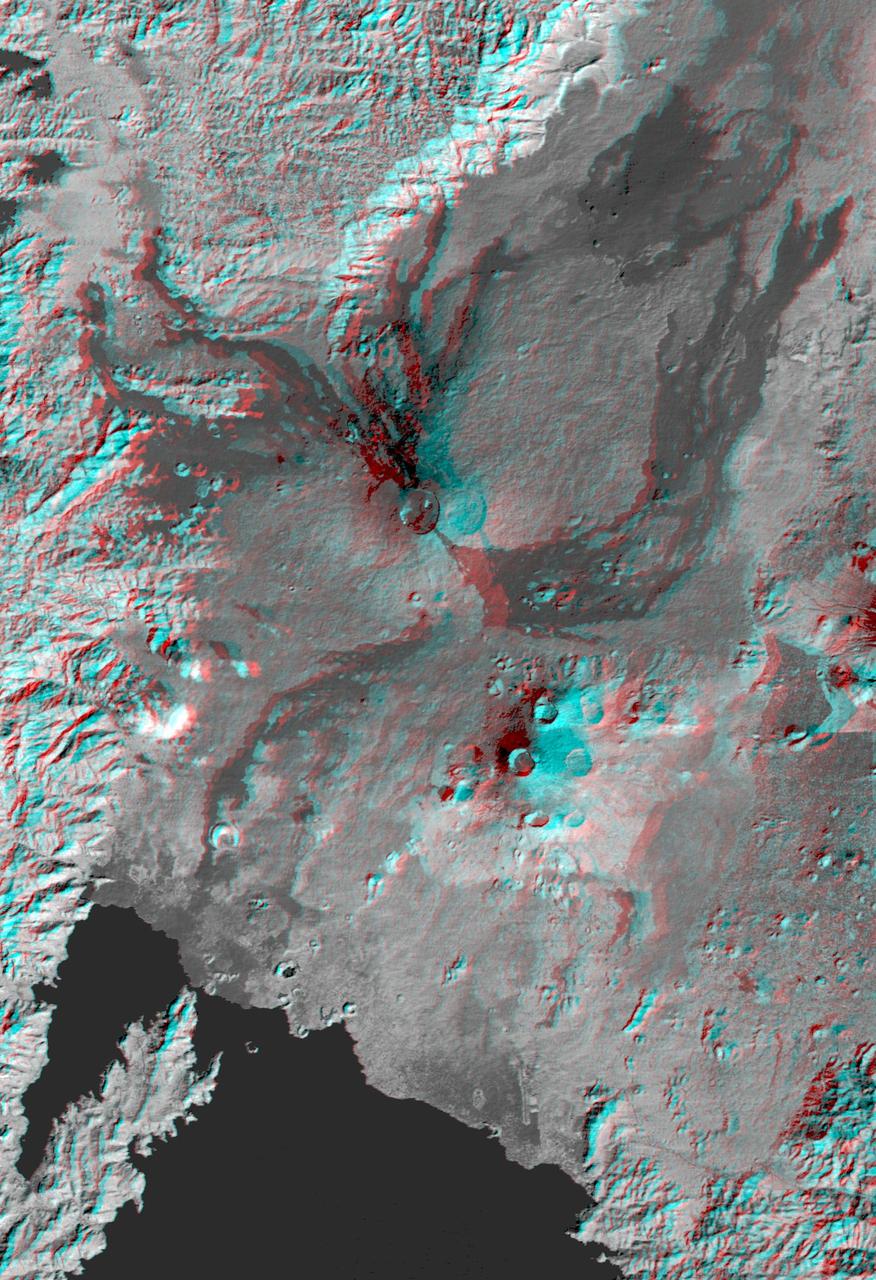
This anaglyph, from NASA Shuttle Radar Topography Mission, is of the Nyiragongo volcano in the Congo. 3D glasses are necessary to view this image.

KENNEDY SPACE CENTER, FLA. -- In the Space Station Processing Facility, as part of the Crew Equipment Interface Test, STS-112 Commander Jeffrey Ashby looks over the S1 Integrated Truss Structure, part of the payload for the mission to the International Space Station. The S1 truss is the first starboard (right-side) truss segment, whose main job is providing structural support for the orbiting research facility's radiator panels that cool the Space Station's complex power system. The S1 truss segment also will house communications systems, external experiment positions and other subsystems. The S1 truss will be attached to the S0 truss. Launch of STS-112 is scheduled for Aug. 22, 2002
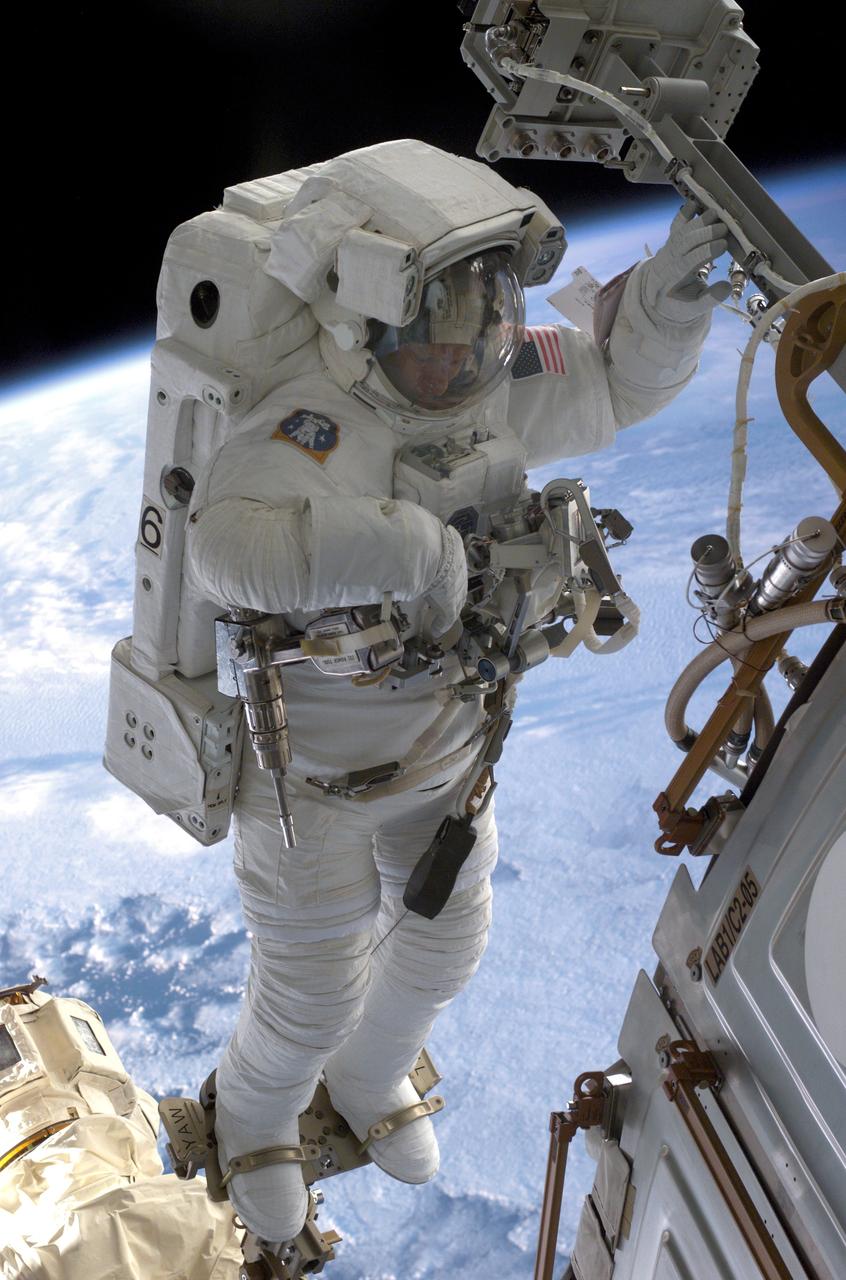
STS112-E-05311 (12 October 2002) --- Astronaut Piers J. Sellers uses both a handrail on the Destiny Laboratory and a foot restraint on the Space Station Remote Manipulator System or Canadarm2 to remain stationary while performing work at the end of the STS-112 mission's second spacewalk. A cloud-covered Earth provides the backdrop for the scene.
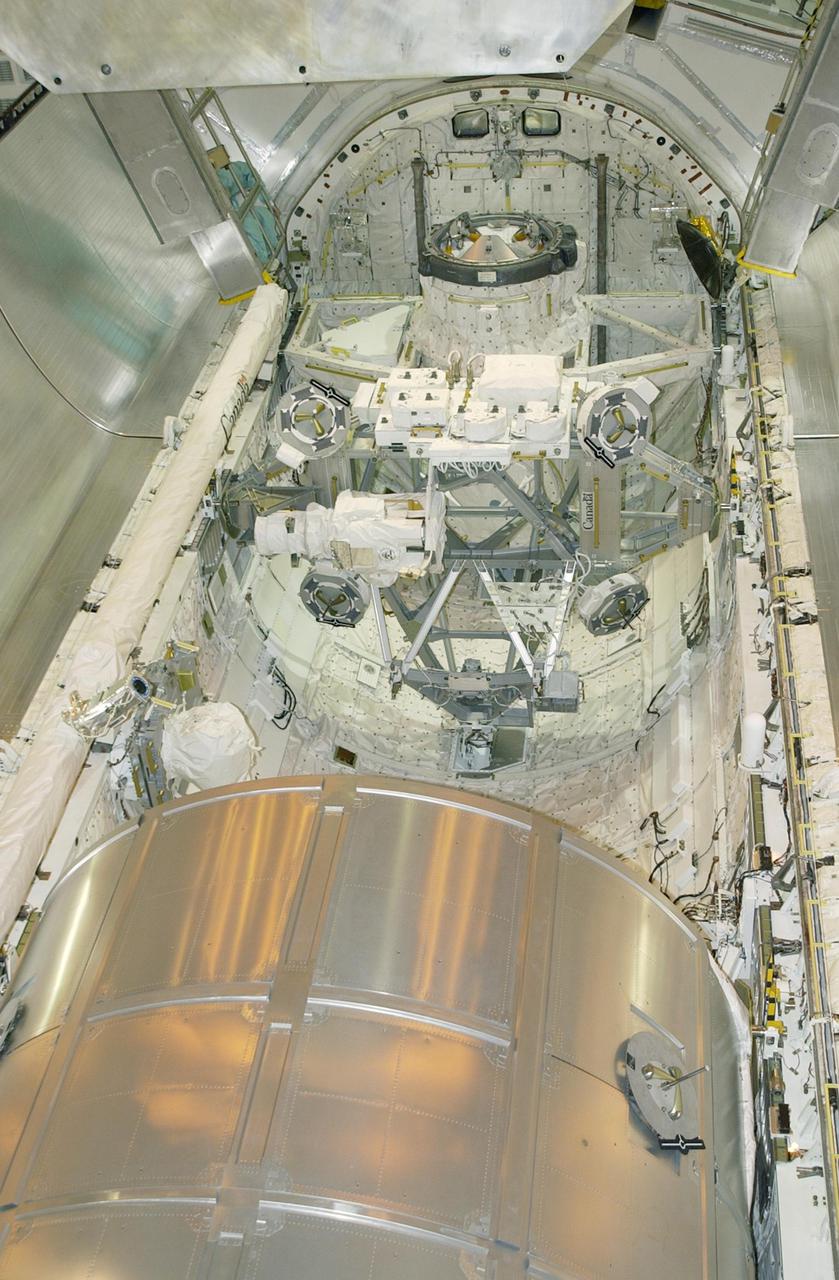
KENNEDY SPACE CENTER, FLA. -- The Multi-Purpose Logistics Module Leonardo (bottom of photo) is being installed in Endeavour's payload bay for mission STS-111. The mission, known as Utilization Flight 2, is carrying supplies and equipment to the International Space Station. The payload includes the Multi-Purpose Logistics Module Leonardo, the Mobile Base System, which will be installed on the Mobile Transporter to complete the Canadian Mobile Servicing System, and a replacement wrist_roll joint for Canadarm 2. Also part of the mission, Expedition 5 will travel to the Station as the replacement crew for Expedition 4, who will return to Earth aboard the orbiter. Launch is scheduled for May 30, 2002
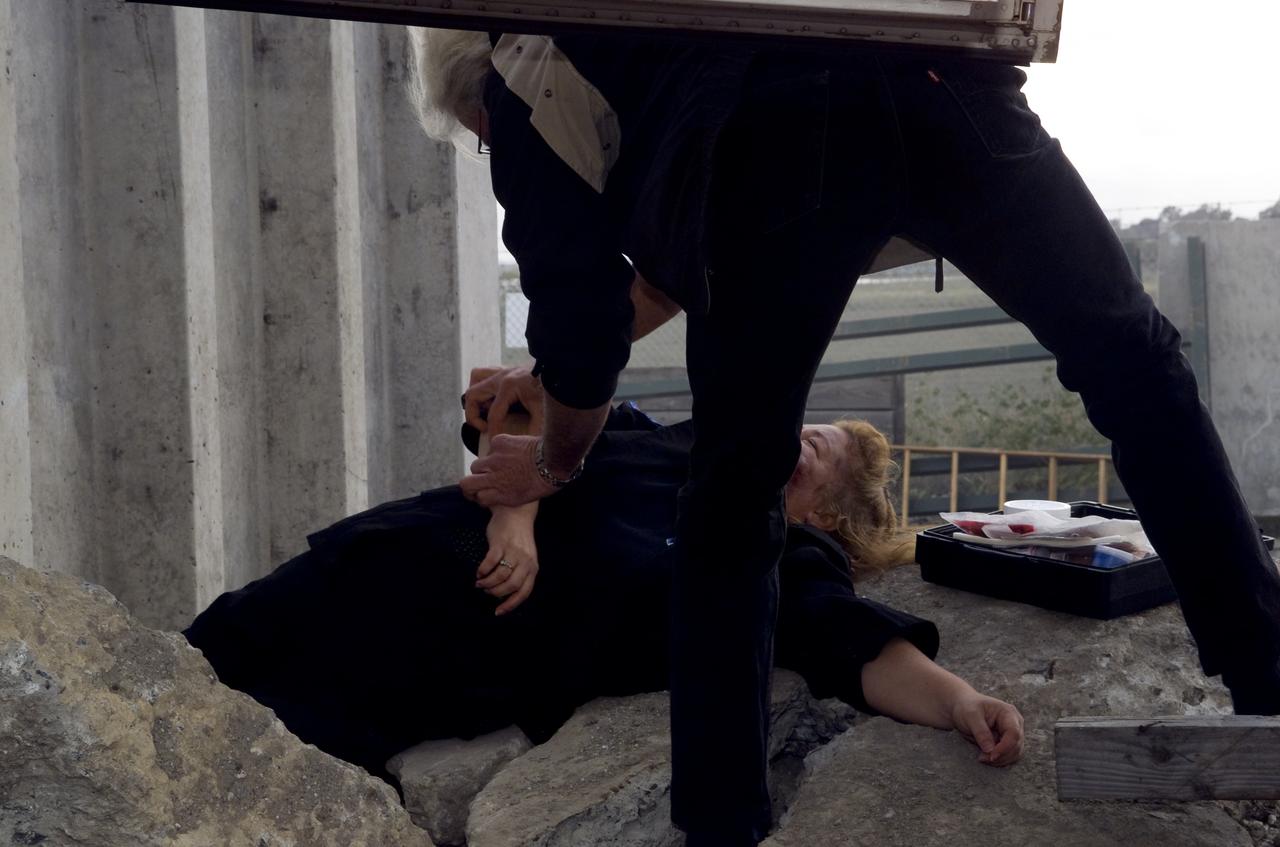
DART Exercise 2002 'Response to Terrorism'
Airshow hosted by Moffett Federal Airfield
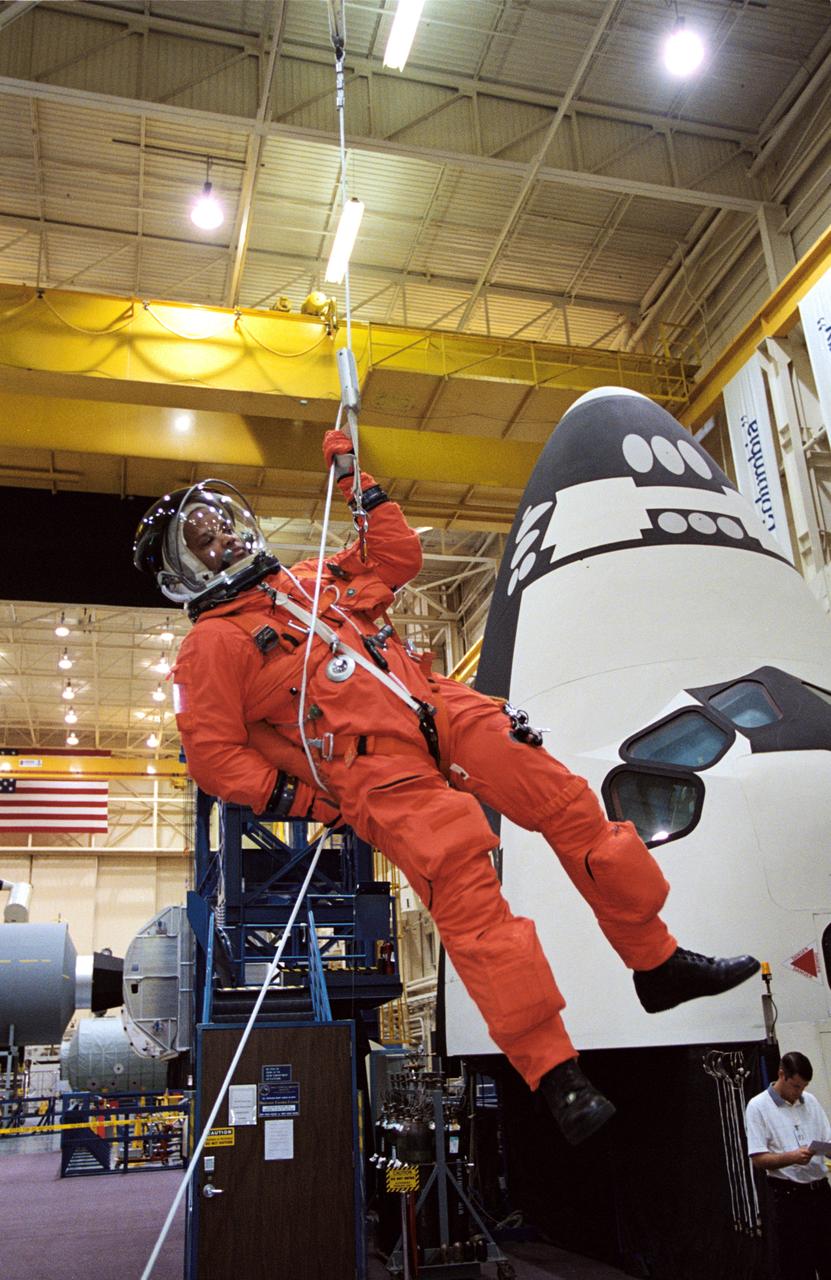
JSC2002-01563 (8 August 2002) --- Astronaut Robert L. Curbeam, Jr., STS-116 mission specialist, uses the Sky-genie to lower himself from a simulated trouble-plagued shuttle in a training session in the Space Vehicle Mockup Facility at the Johnson Space Center (JSC). Curbeam is wearing a training version of the shuttle launch and entry suit.
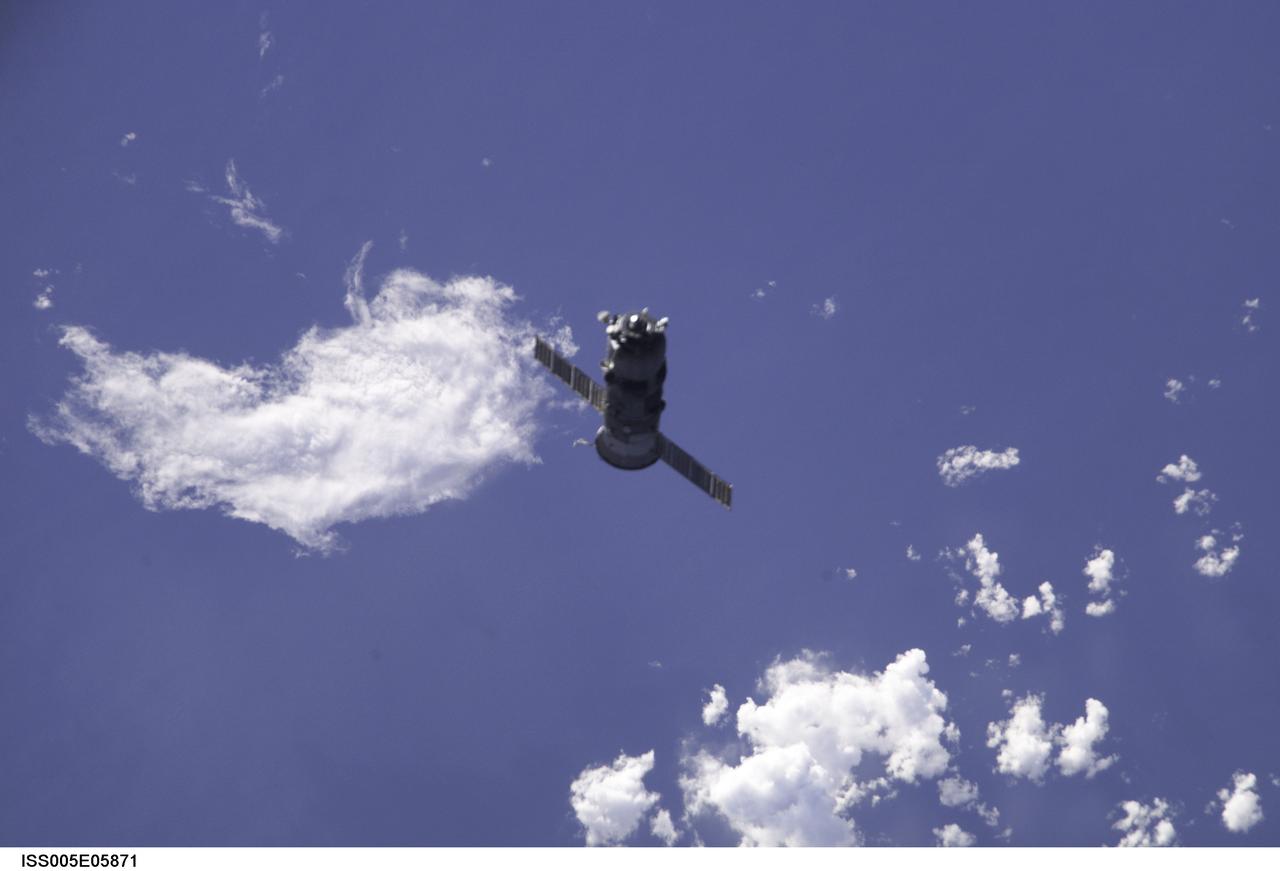
ISS005-E-05871 (25 June 2002) --- Backdropped by the blue and white Earth, an unpiloted Progress 7 supply vehicle departs from the Zvezda Service Module’s docking port on the International Space Station (ISS) carrying its load of trash and unneeded equipment to be deorbited and burned up in the atmosphere. The undocking clears the way for the arrival of a new Progress 8, filled with fresh supplies, which is planned to dock to the station at 1:25 a.m. (CDT) on June 29, 2002.
![KENNEDY SPACE CENTER, FLA. -- At the conclusion of Terminal Countdown Demonstration Test activities, the STS-107 crew returns to Houston. In the cockpit of the T-38 jet trainer is Pilot William "Willie" McCool. Reflected in his helmet is another T-38 with other crew members. The launch of mission STS-107 is planned for Jan. 16, 2003, between 10 a.m. and 2 p.m. EST aboard Space Shuttle Columbia. A mission devoted to research, STS-107 will include more than 80 experiments that will study Earth and space science, advanced technology development, and astronaut health and safety. [Photo by: astronaut Willie McCool]](https://images-assets.nasa.gov/image/KSC-02pd2066/KSC-02pd2066~medium.jpg)
KENNEDY SPACE CENTER, FLA. -- At the conclusion of Terminal Countdown Demonstration Test activities, the STS-107 crew returns to Houston. In the cockpit of the T-38 jet trainer is Pilot William "Willie" McCool. Reflected in his helmet is another T-38 with other crew members. The launch of mission STS-107 is planned for Jan. 16, 2003, between 10 a.m. and 2 p.m. EST aboard Space Shuttle Columbia. A mission devoted to research, STS-107 will include more than 80 experiments that will study Earth and space science, advanced technology development, and astronaut health and safety. [Photo by: astronaut Willie McCool]
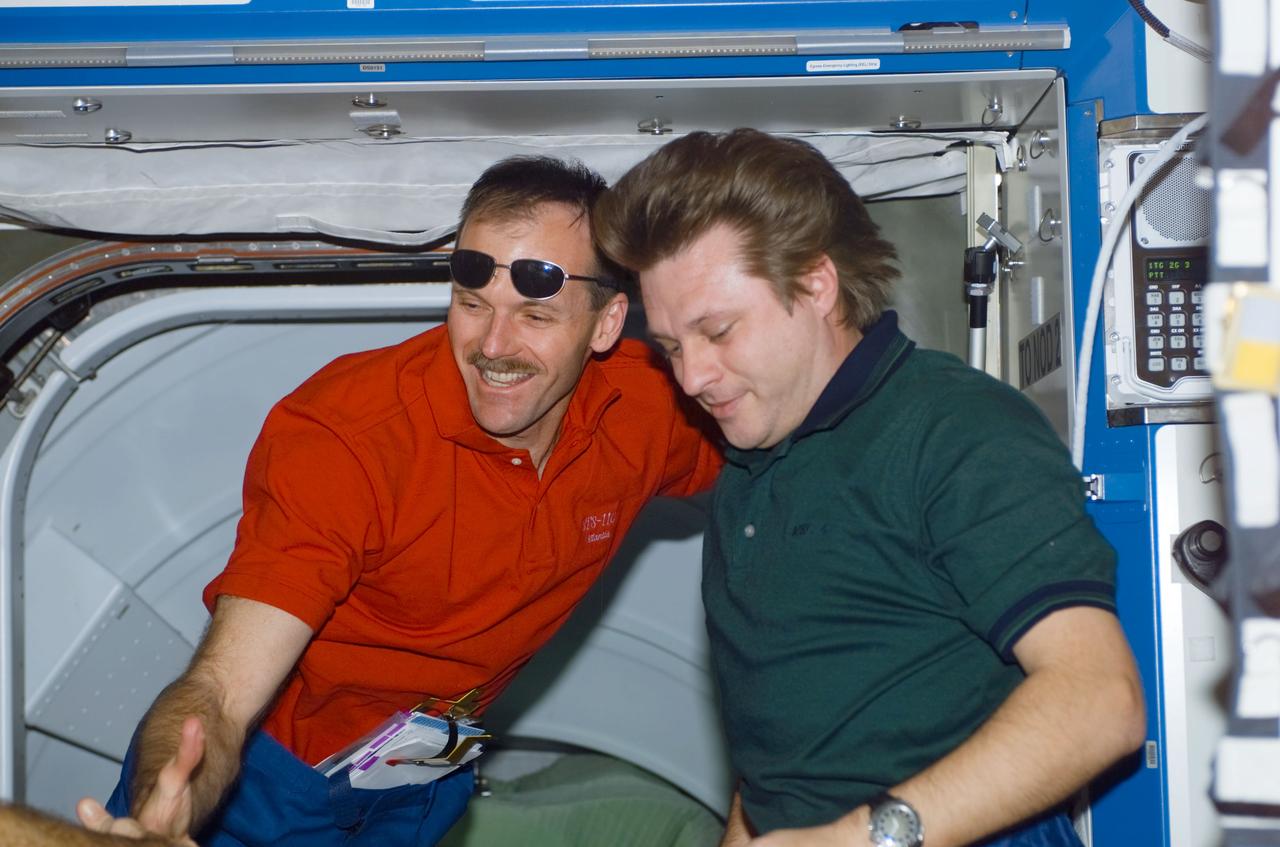
STS110-E-5097 (10 April 2002) --- Astronaut Steven L. Smith (left), STS-110 mission specialist, and cosmonaut Yury I. Onufrienko, Expedition Four mission commander, converse in the Destiny laboratory near the Pressurized Mating Adapter (PMA-2) on the International Space Station (ISS). The image was taken with a digital still camera.
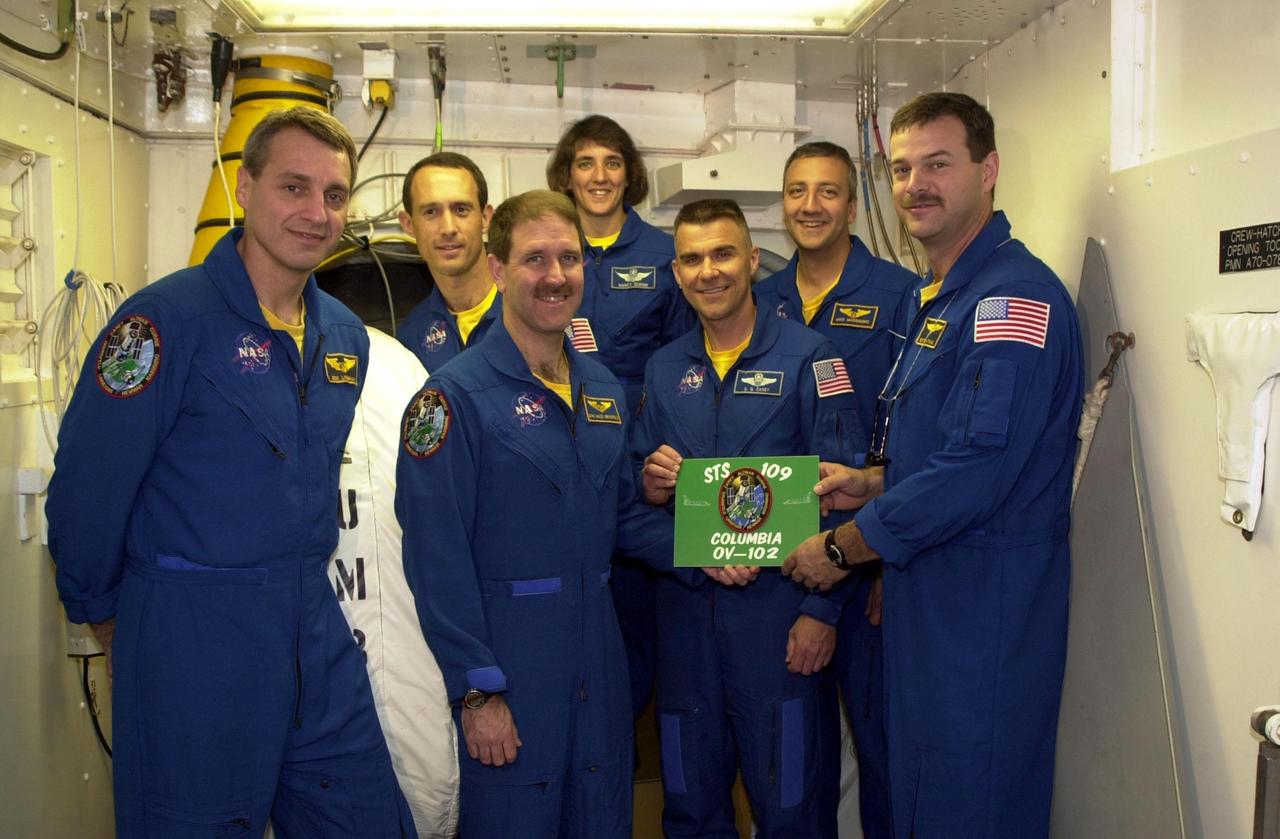
KENNEDY SPACE CENTER, FLA. -- At Launch Pad 39A, the STS-109 crew stands in the White Room, outside the entry into Space Shuttle Columbia, displaying the mission patch and placard. Standing, left to right, are Mission Specialists Richard Linnehan, James Newman, John Grunsfeld and Nancy Currie; Pilot Duane Carey; Mission Specialist Michael Massimino; and Commander Scott Altman. The White Room is an environmentally controlled structure at the end of the Orbiter Access Room that provides access to the orbiter. The crew is taking part in Terminal Countdown Demonstration Test activities that include emergency egress training and a simulated countdown at the pad. Columbia is scheduled to be launched Feb. 28 on mission STS-109, a Hubble Servicing Mission. The goal of the mission is to replace Solar Array 2 with Solar Array 3, replace the Power Control Unit, remove the Faint Object Camera and install the ACS, install the Near Infrared Camera and Multi-Object Spectrometer (NICMOS) Cooling System, and install New Outer Blanket Layer insulation. . The launch will be the first for Columbia after returning from California where it underwent extensive maintenance, inspections and enhancements. More than 100 upgrades make Columbia safer and more reliable than ever before
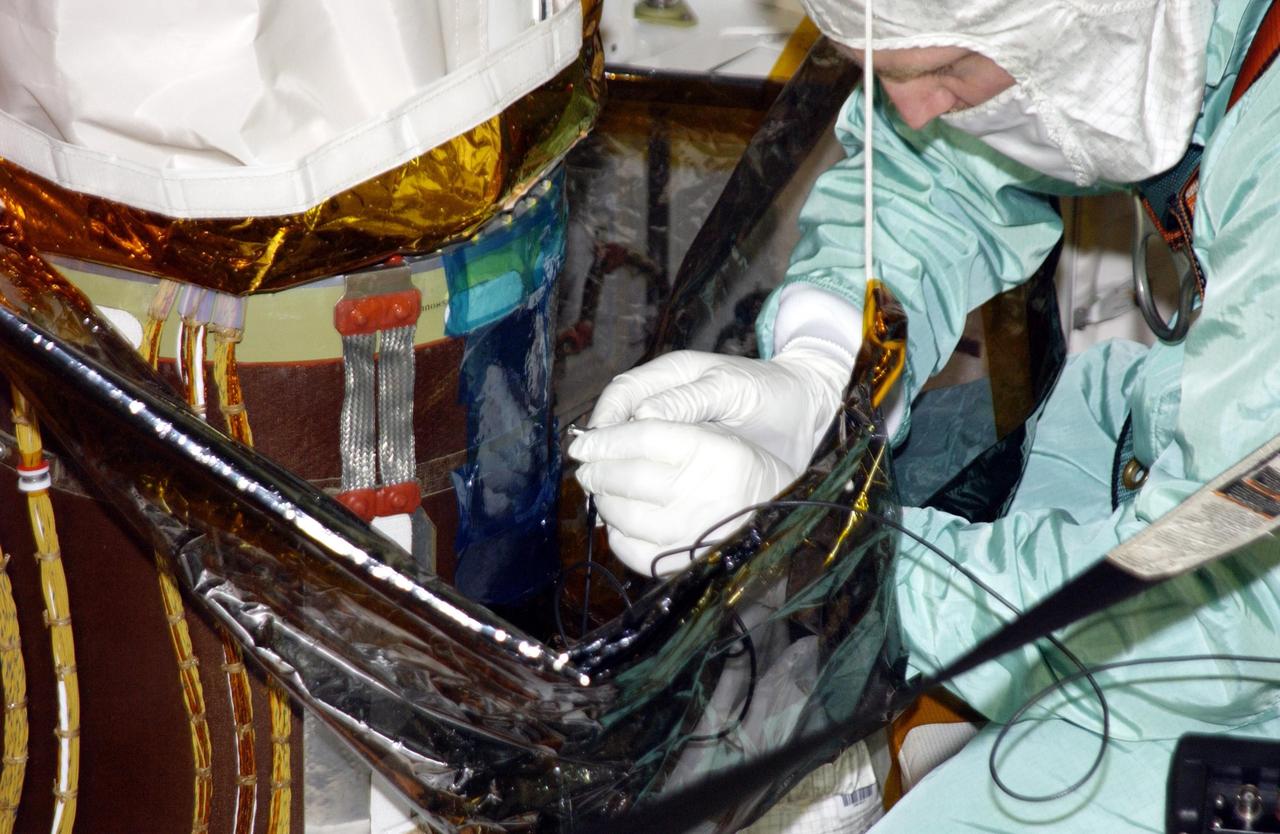
KENNEDY SPACE CENTER, FLA. -- Robotic arm experts get ready for ultrasound testing on Endeavour's robotic arm. A scrape of the honeycomb shell around the arm occurred while work platforms were being installed to gain access to repair the oxygen leak in the Shuttle's mid-body. Launch of Endeavour on mission STS-113 has been postponed until no earlier than Nov. 22.
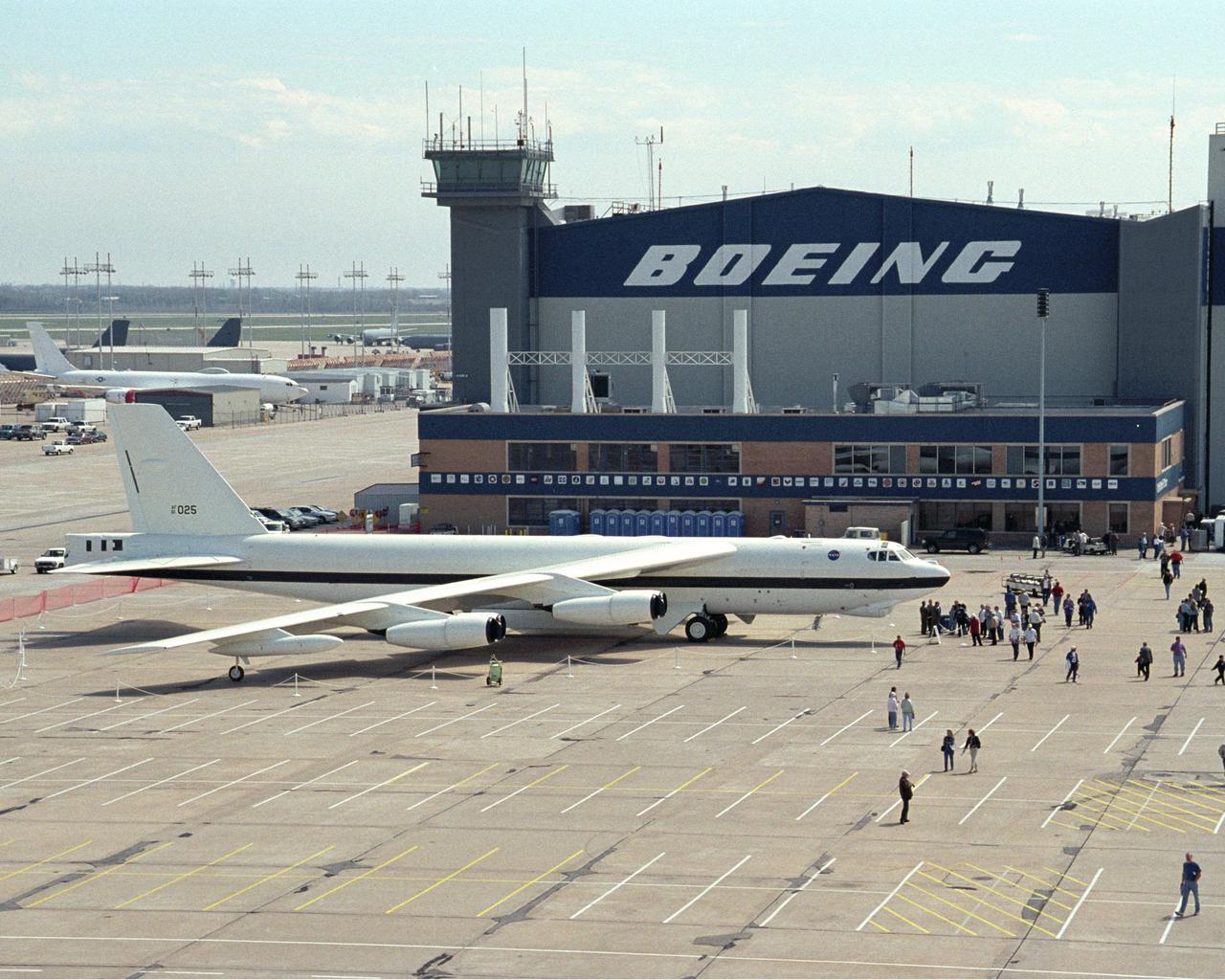
NASA's new white B-52H, destined to join a veteran B-52B mother ship at NASA's Dryden Flight Research Center, was exhibited at the Boeing plant in Wichita, Kansas, April 12, 2002 during the 50th anniversary commemoration of the B-52 series of aircraft.
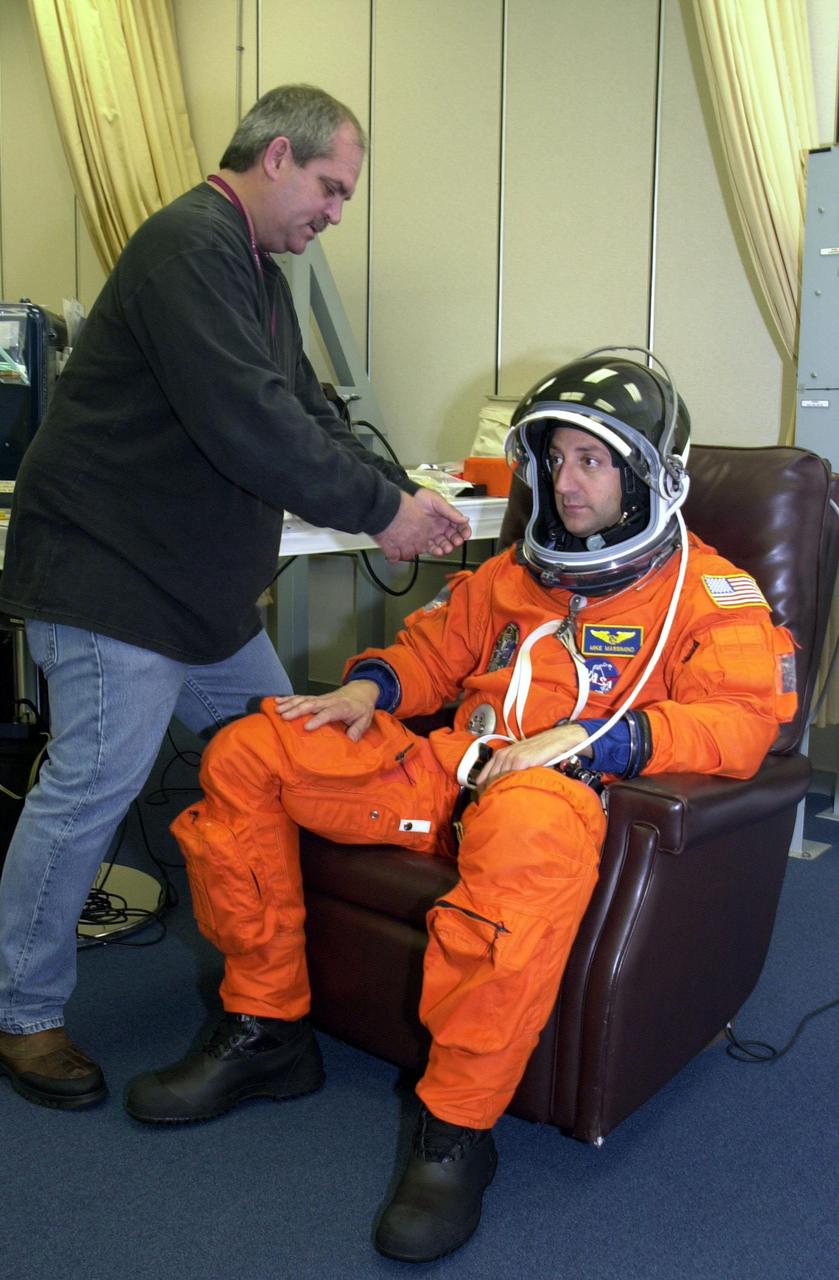
KENNEDY SPACE CENTER, Fla. - STS-109 Mission Specialist Michael J. Massimino gets a final fitting on his launch and entry suit two days before launch. On mission STS-109, the seven-member crew will capture the Hubble Space Telescope using the Shuttle's robotic arm and secure it on a workstand in Columbia's payload bay. Four mission specialists will perform five scheduled spacewalks to complete system upgrades to the telescope. More durable solar arrays, a large gyroscopic assembly to help point the telescope properly, a new telescope power control unit, and a cooling system to restore the use of a key infrared camera and spectrometer unit, which has been dormant since 1999, will all be installed. In addition, the telescope’s view of the Universe will be improved with the addition of the Advanced Camera for Surveys (ACS), which replaces the Faint Object Camera, the last of Hubble's original instruments. The STS-109 crew also includes Commander Scott D. Altman, Pilot Duane G. Carey, and Mission Specialists John M. Grunsfeld, James H. Newman, Nancy J. Currie and Richard M. Linnehan. Launch is scheduled for Feb. 28, 2002, at 6:48 a.m. EST (11:48 GMT)
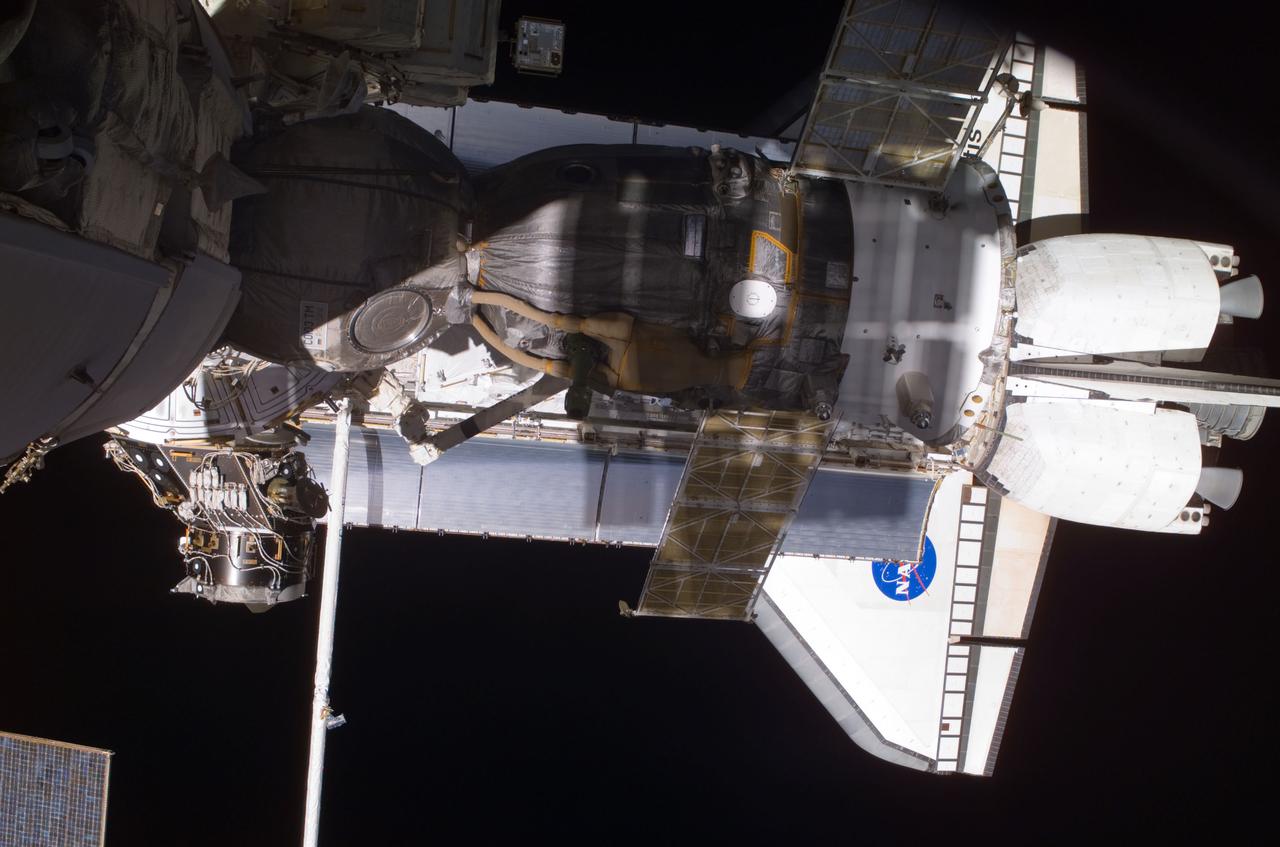
STS110-E-5149 (9 April 2002) --- Docked to the International Space Station (ISS), a Soyuz vehicle (foreground) and the Space Shuttle Atlantis were photographed by a crewmember with a digital still camera in the Pirs docking compartment on the orbital outpost.

Southern Hemisphere Polygonal Patterned Ground
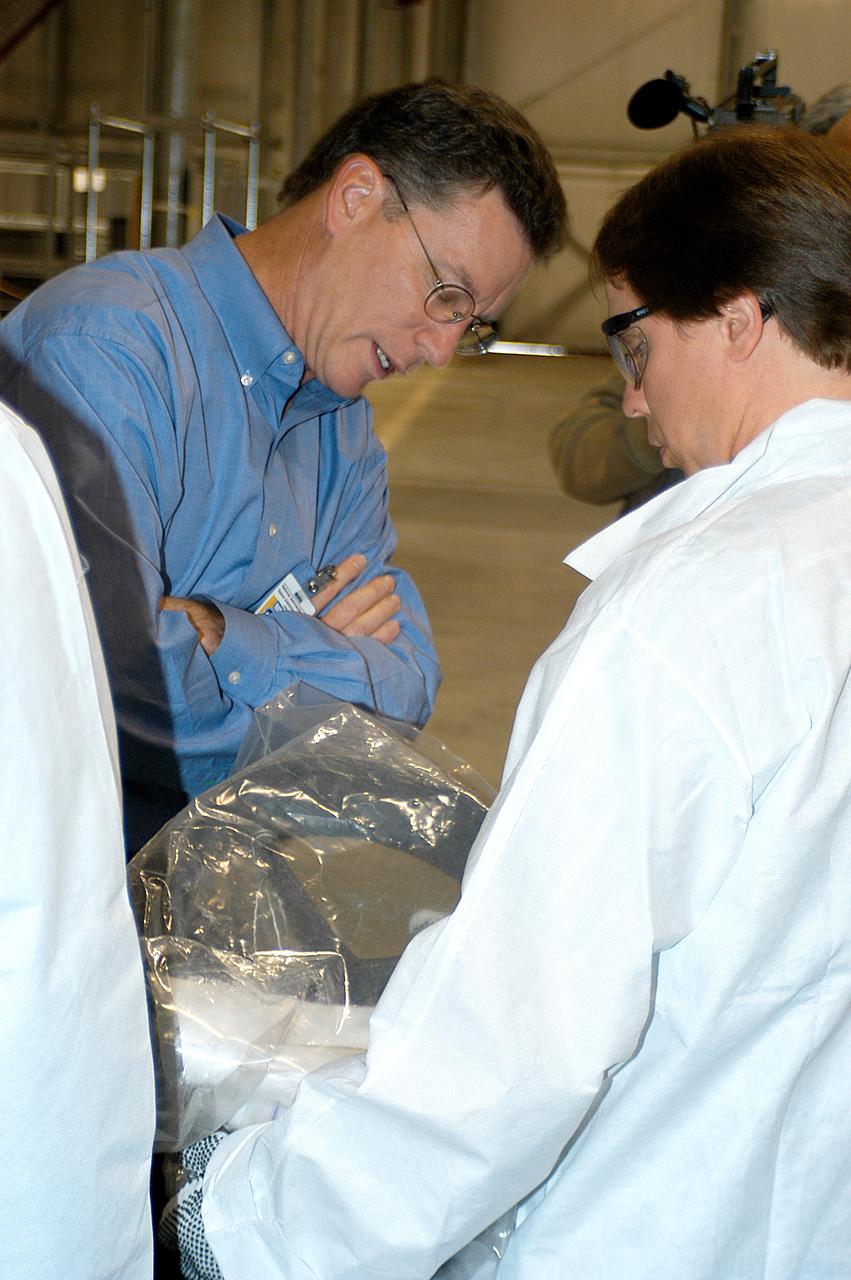
Astronauts Lee Archambault and Joan Higginbotham look at a piece of Columbia debris placed on the grid in the RLV Hangar. The debris was shipped from Barksdale Air Force Base, Shreveport, La. As part of the ongoing investigation into the tragic accident, workers will attempt to reconstruct the orbiter inside the RLV.
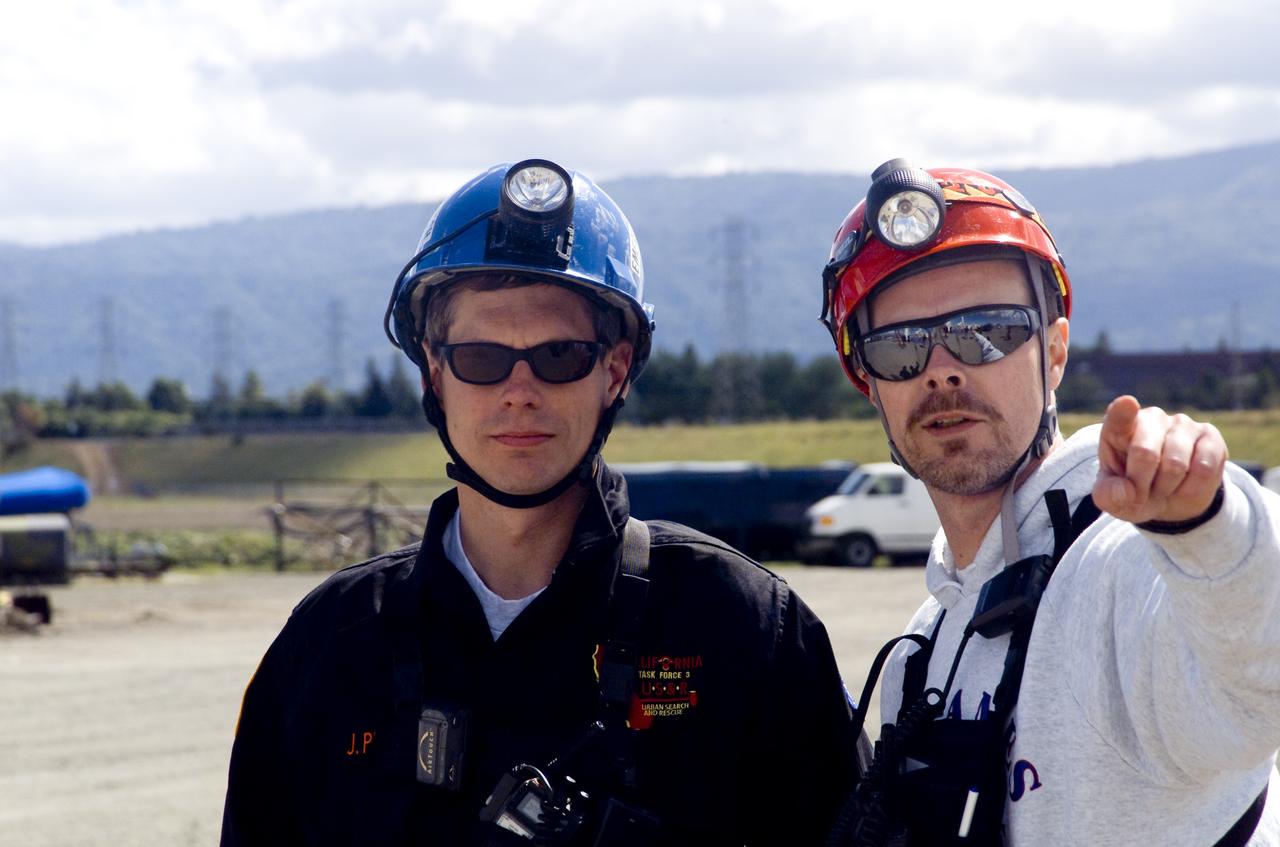
DART Exercise 2002 'Response to Terrorism'

STS111-E-5132 (9 June 2002) --- Astronaut Franklin R. Chang-Diaz, STS-111 mission specialist, anchored to the foot restraint at the end of the International Space Station’s (ISS) Canadarm2, participates in the first scheduled session of extravehicular activity (EVA) for the STS-111 mission. During the spacewalk, Chang-Diaz and Perrin attached a Power and Data Grapple Fixture onto the International Space Station’s (ISS) P6 Truss, setting the stage for the future relocation of the P6. The next major task was to remove Service Module Debris Panels from Space Shuttle Endeavour’s payload bay and attach them to their temporary location on Pressurized Mating Adapter 1 (PMA-1). The spacewalkers also removed thermal blankets to prepare the Mobile Base System (MBS) for installation onto the station’s Mobile Transporter (MT).
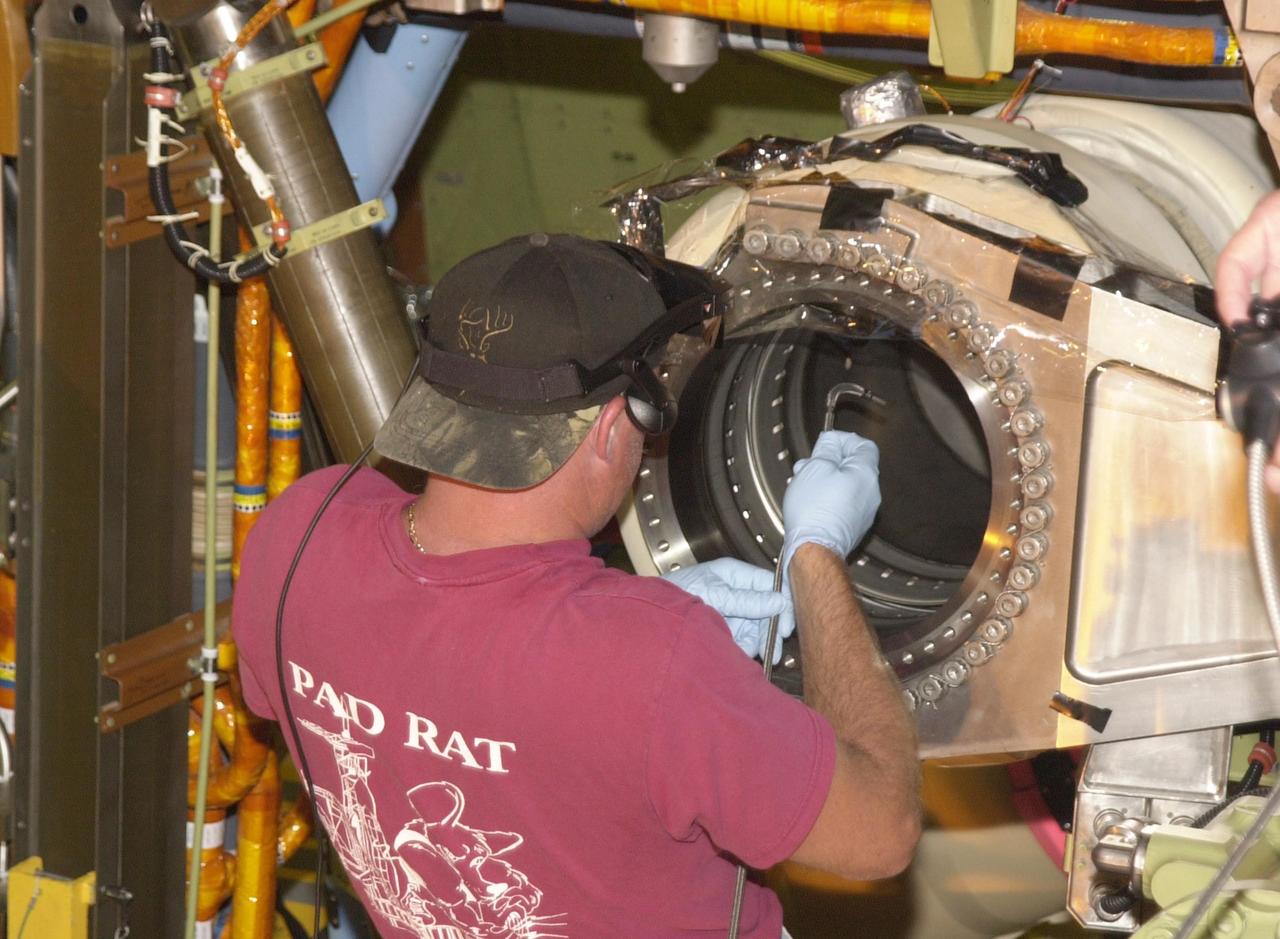
KENNEDY SPACE CENTER, FLA. -- Scott Minnick, with United Space Alliance, places a fiber-optic camera inside the flow line on Endeavour. Minnick wears a special viewing apparatus that sees where the camera is going. The inspection is the result of small cracks being discovered on the LH2 Main Propulsion System (MPS) flow liners in other orbiters. Endeavour is next scheduled to fly on mission STS-113.
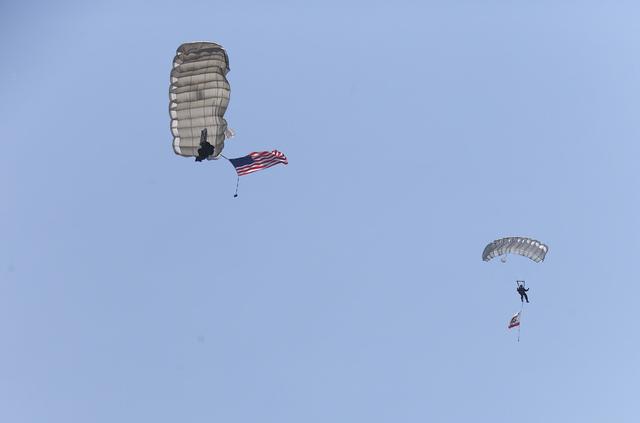
Airshow hosted by Moffett Federal Airfield

These images show dramatic change in the water at Dongting Lake in Hunan province, China. A flood crest surged down the Yangtze River in late August of this year, but the embankments made by residents there held. The left image was acquired on September 2, 2002 and shows the extent of the lake. The right image was obtained March 19, 2002 before the flooding began. These images were acquired on September 2, 2002 and March 19, 2002 by the Advanced Spaceborne Thermal Emission and Reflection Radiometer (ASTER) on NASA's Terra satellite. With its 14 spectral bands from the visible to the thermal infrared wavelength region, and its high spatial resolution of 15 to 90 meters (about 50 to 300 feet), ASTER will image Earth for the next 6 years to map and monitor the changing surface of our planet. http://photojournal.jpl.nasa.gov/catalog/PIA03858
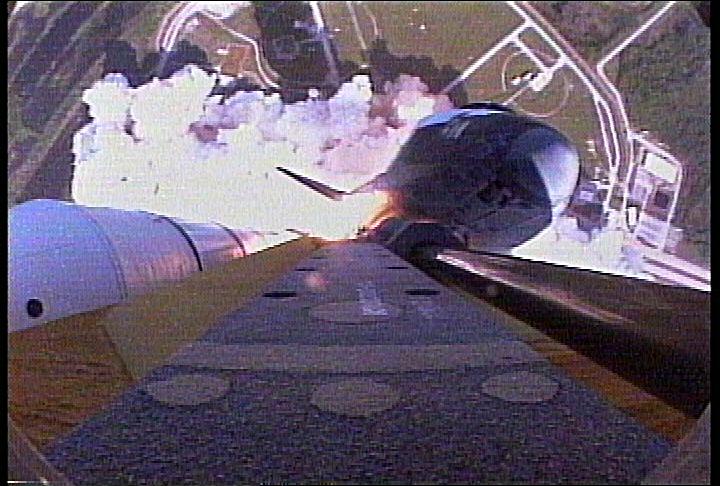
A color video camera mounted to the top of the External Tank (ET) provided this spectacular never-before-seen view of the STS-112 mission as the Space Shuttle Orbiter Atlantis lifted off in the afternoon of October 7, 2002, The camera provided views as the the orbiter began its ascent until it reached near-orbital speed, about 56 miles above the Earth, including a view of the front and belly of the orbiter, a portion of the Solid Rocket Booster, and ET. The video was downlinked during flight to several NASA data-receiving sites, offering the STS-112 team an opportunity to monitor the shuttle's performance from a new angle. Atlantis carried the S1 Integrated Truss Structure and the Crew and Equipment Translation Aid (CETA) Cart. The CETA is the first of two human-powered carts that will ride along the International Space Station's railway providing a mobile work platform for future extravehicular activities by astronauts. Landing on October 18, 2002, the Orbiter Atlantis ended its 11-day mission.
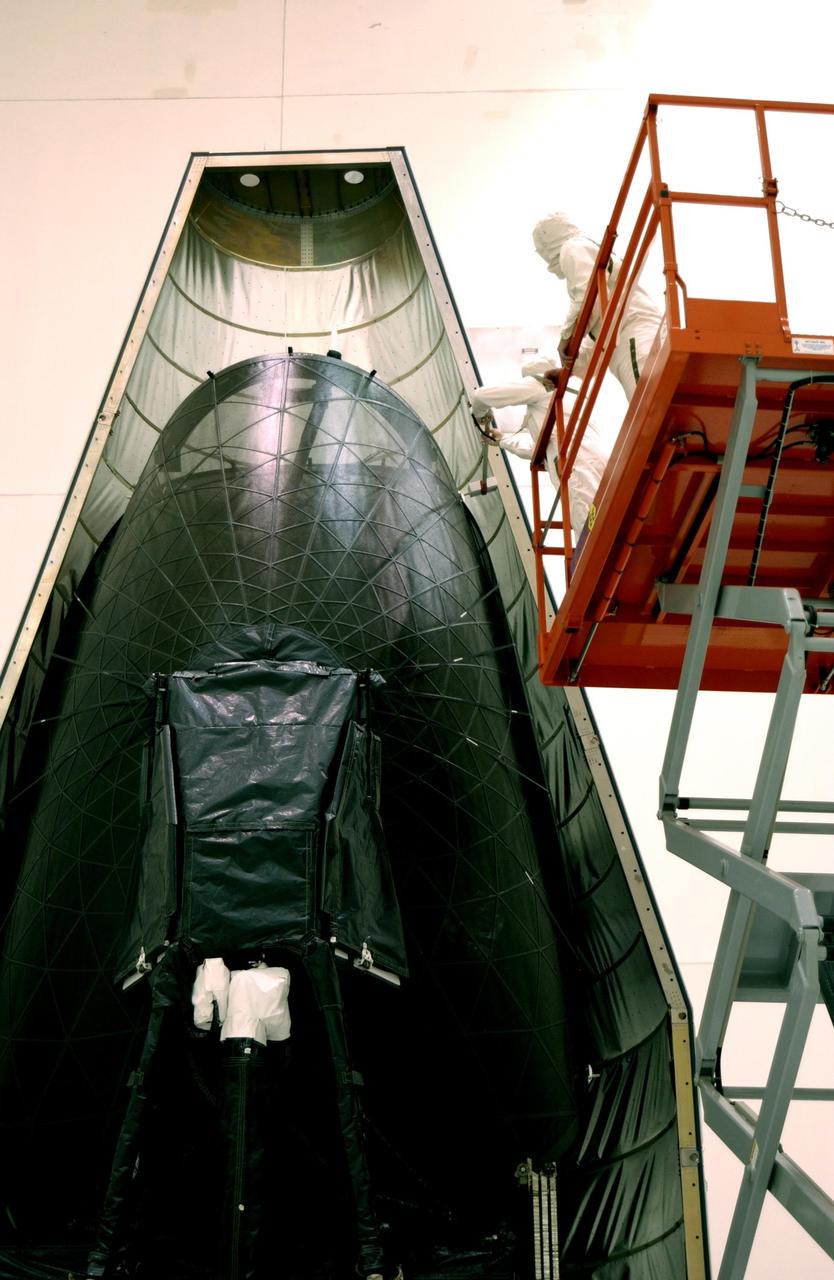
KENNEDY SPACE CENTER, FLA. -- The TDRS-J satellite rests inside the first half of the fairing during encapsulation. The satellite is scheduled to be launched aboard a Lockheed Martin Atlas IIA-Centaur rocket from Launch Complex 36-A, Cape Canaveral Air Force Station, Fla., on Dec. 4. The third in a series of telemetry satellites, TDRS-J will help replenish the current constellation of geosynchronous TDRS satellites. The TDRS System is the primary source of space-to-ground voice, data and telemetry for the Space Shuttle. It also provides communications with the International Space Station and scientific spacecraft in low-Earth orbit such as the Hubble Space Telescope. This new advanced series of satellites will extend the availability of TDRS communications services until about 2017.
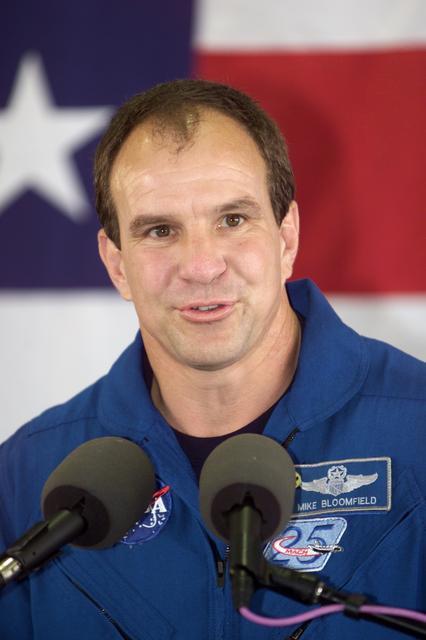
JSC2002-E-14067 (20 April 2002) --- Astronaut Michael J. Bloomfield, STS-110 mission commander, speaks from the lectern in Hangar 990 at Ellington Field during crew return ceremonies.
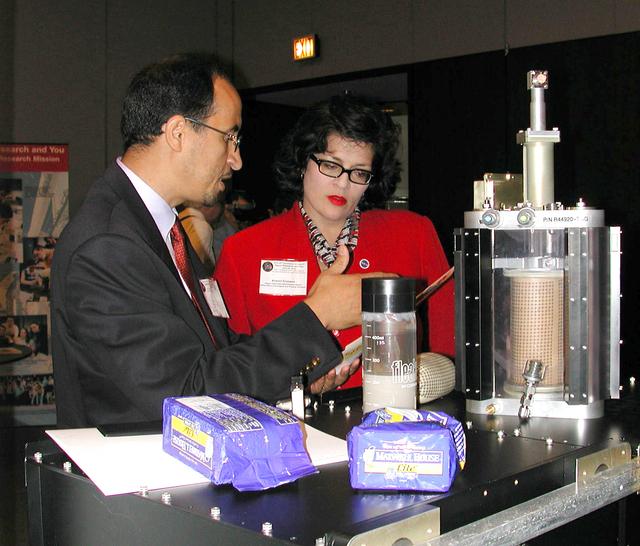
Khalid Alshibli of Louisiana State University, project scientist for the Mechanics of Granular Materials (MGM-III) experiment, explains the MGM experiment to Kristen Erickson, acting deputy associate administrator in NASA's Office of Biological and Physical Research. A training model of the test cell is at right. The activity was part of the Space Research and You education event held by NASA's Office of Biological and Physical Research on June 25, 2002, in Arlington, VA, to highlight the research that will be conducted on STS-107.
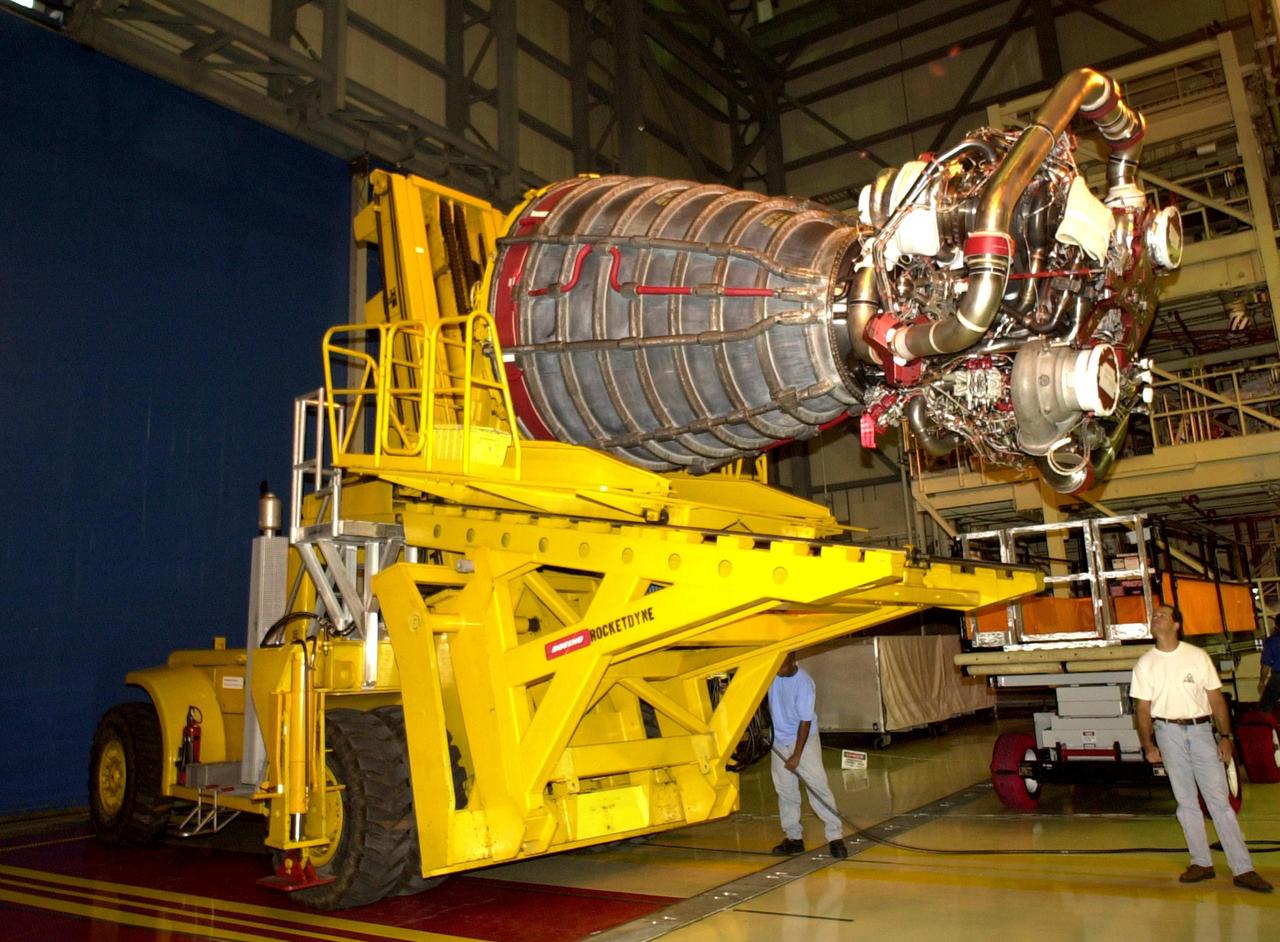
KENNEDY SPACE CENTER, FLA. -- Columbia's no. 2 engine, removed from the orbiter, is lowered toward the floor of the Orbiter Processing Facility. After small cracks were discovered on the LH2 Main Propulsion System (MPS) flow liners in two other orbiters, program managers decided to move forward with inspections on Columbia before clearing it for flight on STS-107. The heat shields were removed, and after removing the three main engines, inspections of the flow liners will follow. The July 19 launch of Columbia on STS-107 has been delayed a few weeks.
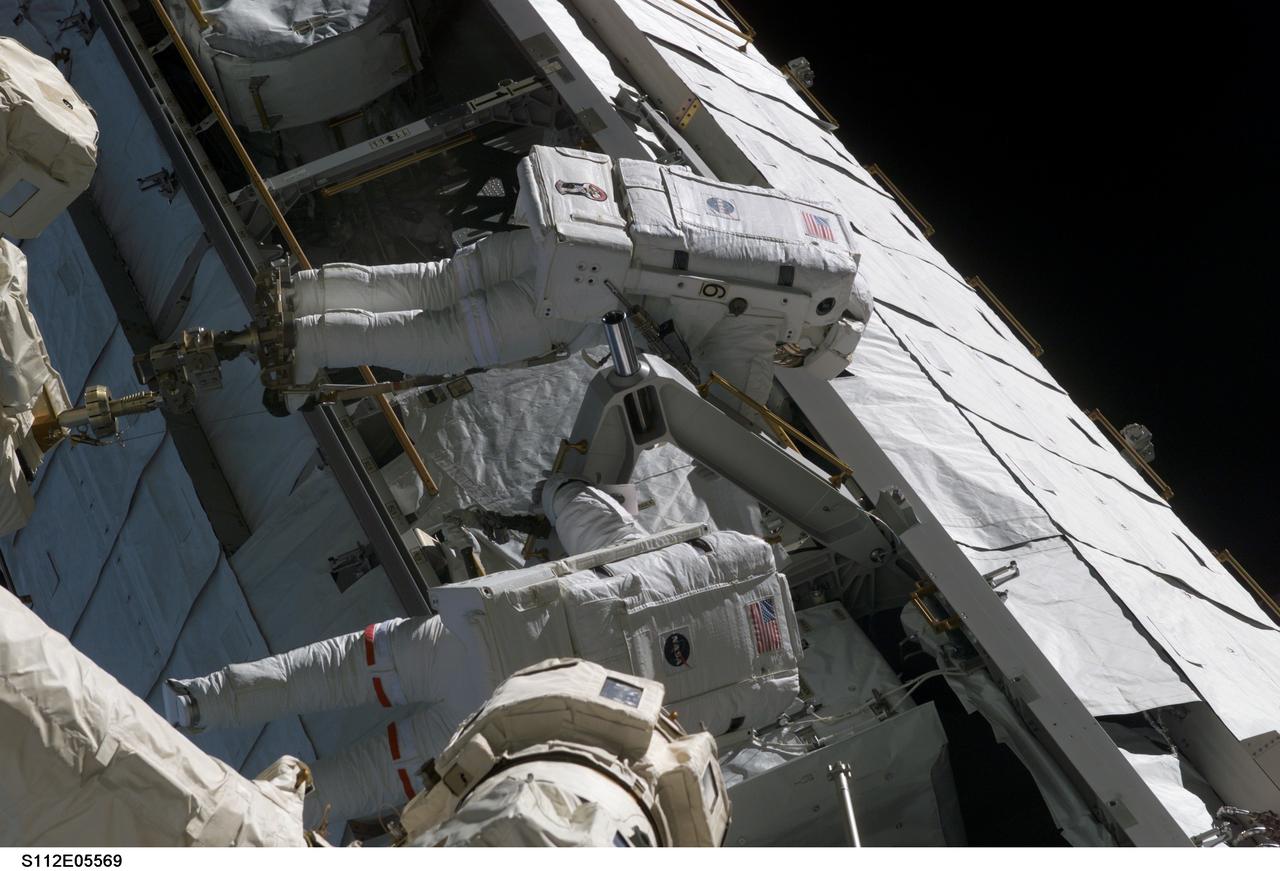
STS112-E-05569 (14 October 2002) --- Astronauts Piers J. Sellers (top) and David A. Wolf, STS-112 mission specialists, work on the newly installed Starboard One (S1) Truss during the third and final scheduled session of extravehicular activity (EVA) for the STS-112 mission. The spacewalk lasted 6 hours and 36 minutes.

KENNEDY SPACE CENTER, FLA. -- Processing for mission STS-107 continues in the Operations and Checkout Building as the tunnel that will connect Space Shuttle Columbia's crew compartment to the SPACEHAB module is moved into a transportation canister. A research mission, the primary payload of STS-107 is the SHI Research Double Module (SHI/RDM) or SPACEHAB, making its first flight. The experiments on board will range from material sciences to life sciences (many rats). STS-107 is scheduled to launch July 19, 2002
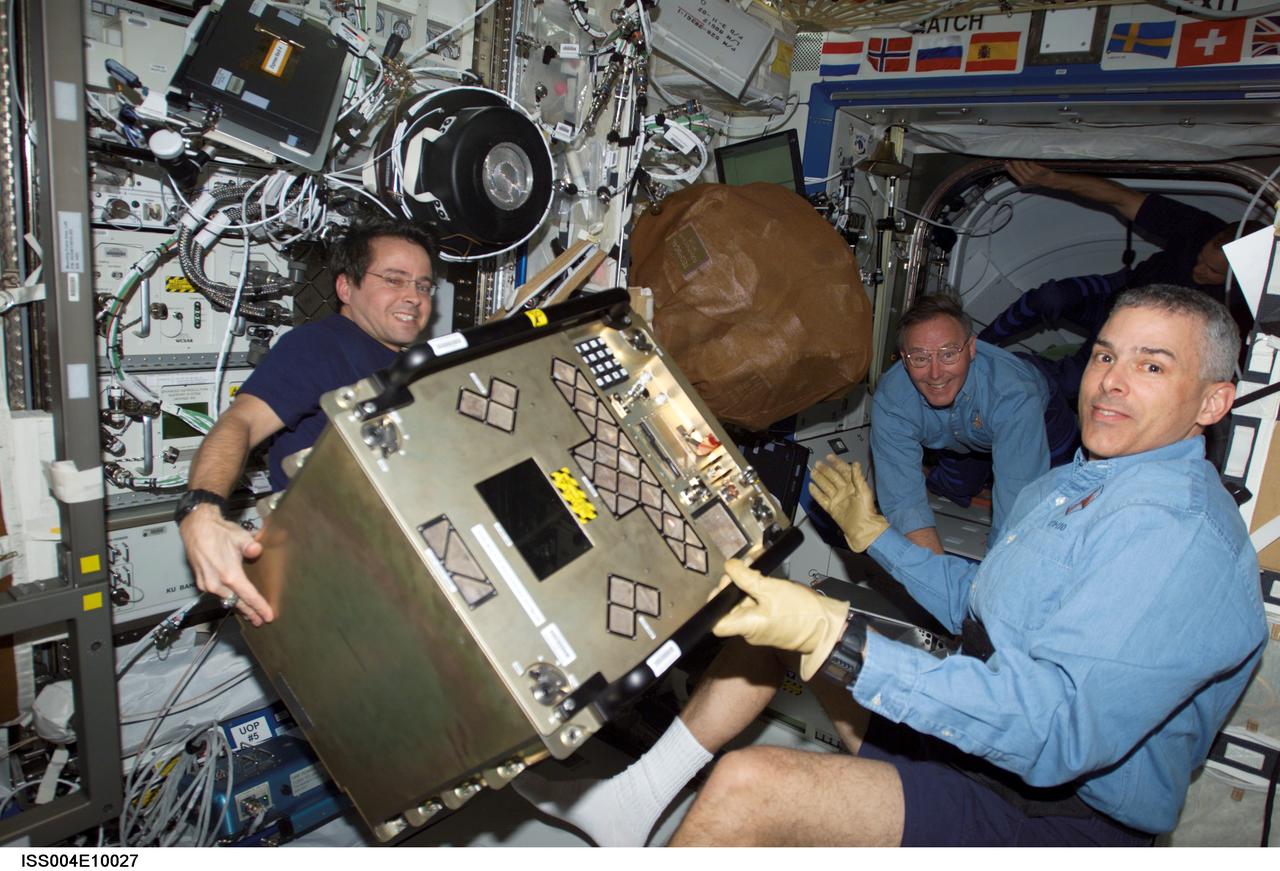
ISS004-E-10027 (12 April 2002) --- Astronauts Daniel W. Bursch (left), Expedition Four flight engineer, and Lee M. E. Morin, STS-110 mission specialist, move equipment in the Destiny laboratory on the International Space Station (ISS). Astronaut Jerry L. Ross, STS-110 mission specialist, is visible in the background.
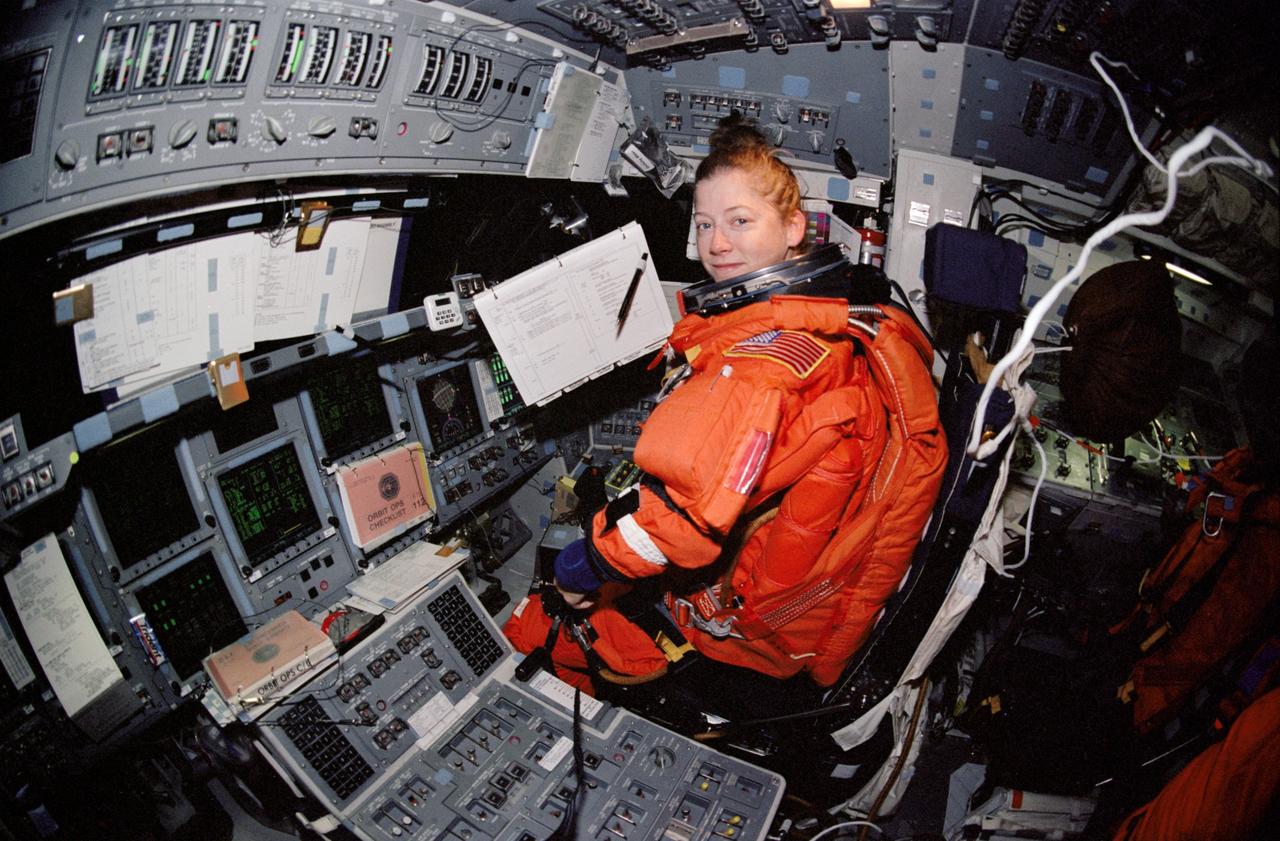
STS112-337-034 (18 October 2002) --- A “fish-eye” lens on a 35mm camera records astronaut Pamela A. Melroy, STS-112 pilot, at the pilot’s station on the forward flight deck of the Space Shuttle Atlantis. Melroy, attired in her shuttle launch and entry suit, looks over a checklist prior to the entry phase of the flight.
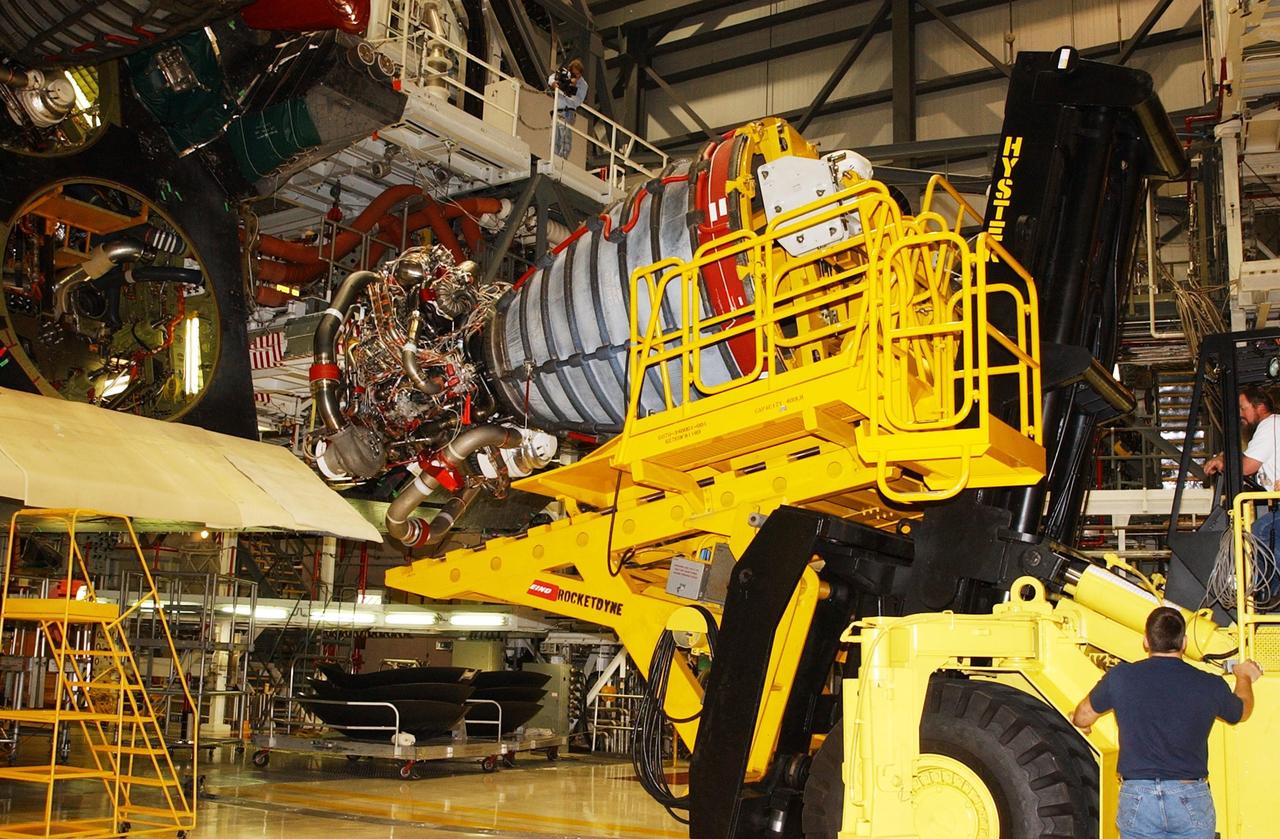
KENNEDY SPACE CENTER, FLA. -- In the Orbiter Processing Facility, an orbiter main engine is lifted by a new engine hyster, built by Rocketdyne, that is used to remove it from the orbiter. .
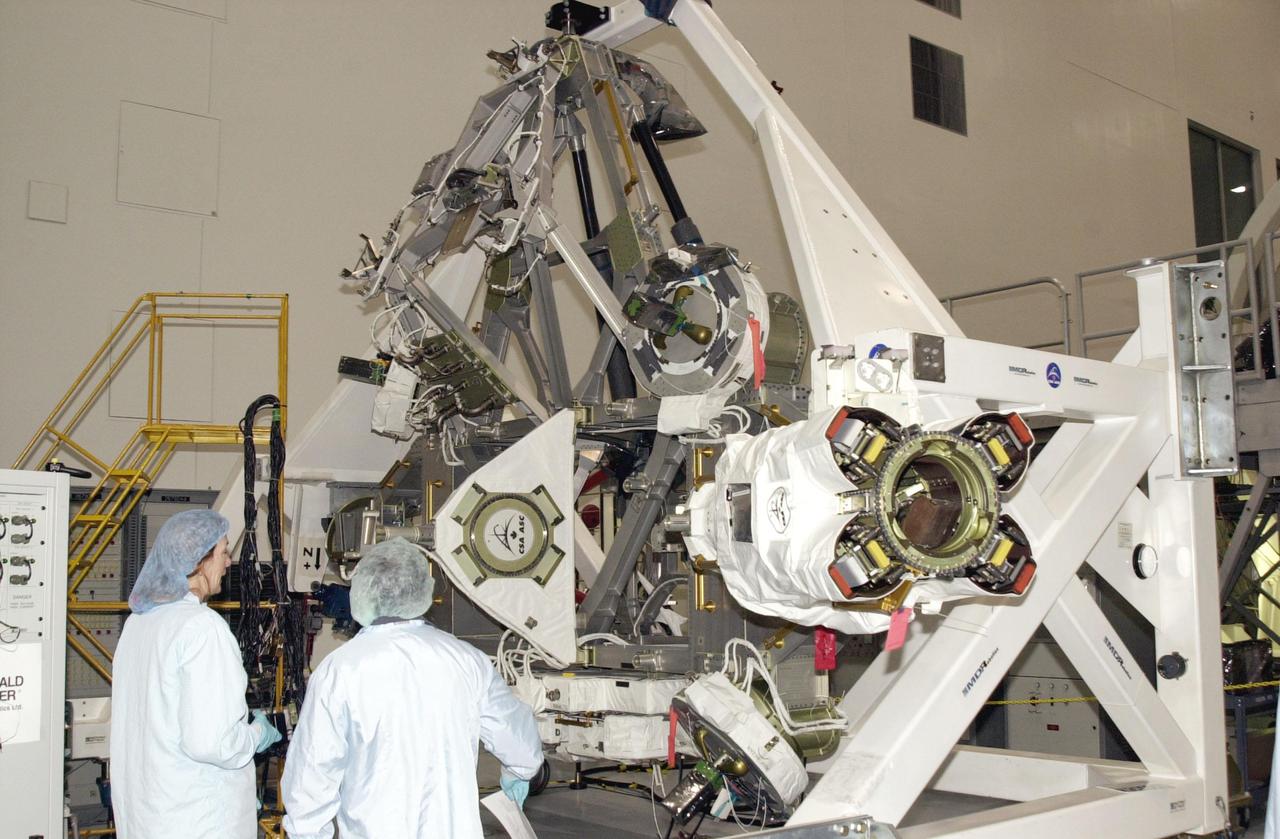
KENNEDY SPACE CENTER, FLA. -- Workers in the Space Station Processing Facility look over the Mobile Base System (MBS), part of the payload on mission STS-111 to the International Space Station. The MBS will be installed on the Mobile Transporter to complete the Canadian Mobile Servicing System, or MSS. The mechanical arm will then have the capability to 'inchworm' from the U.S. Lab Destiny to the MSS and travel along the truss to work sites. STS-111 is the second utilization flight (UF-2) to the Space Station and will also carry the Expedition 5 crew to replace Expedition 4. Launch is scheduled for May 2, 2002
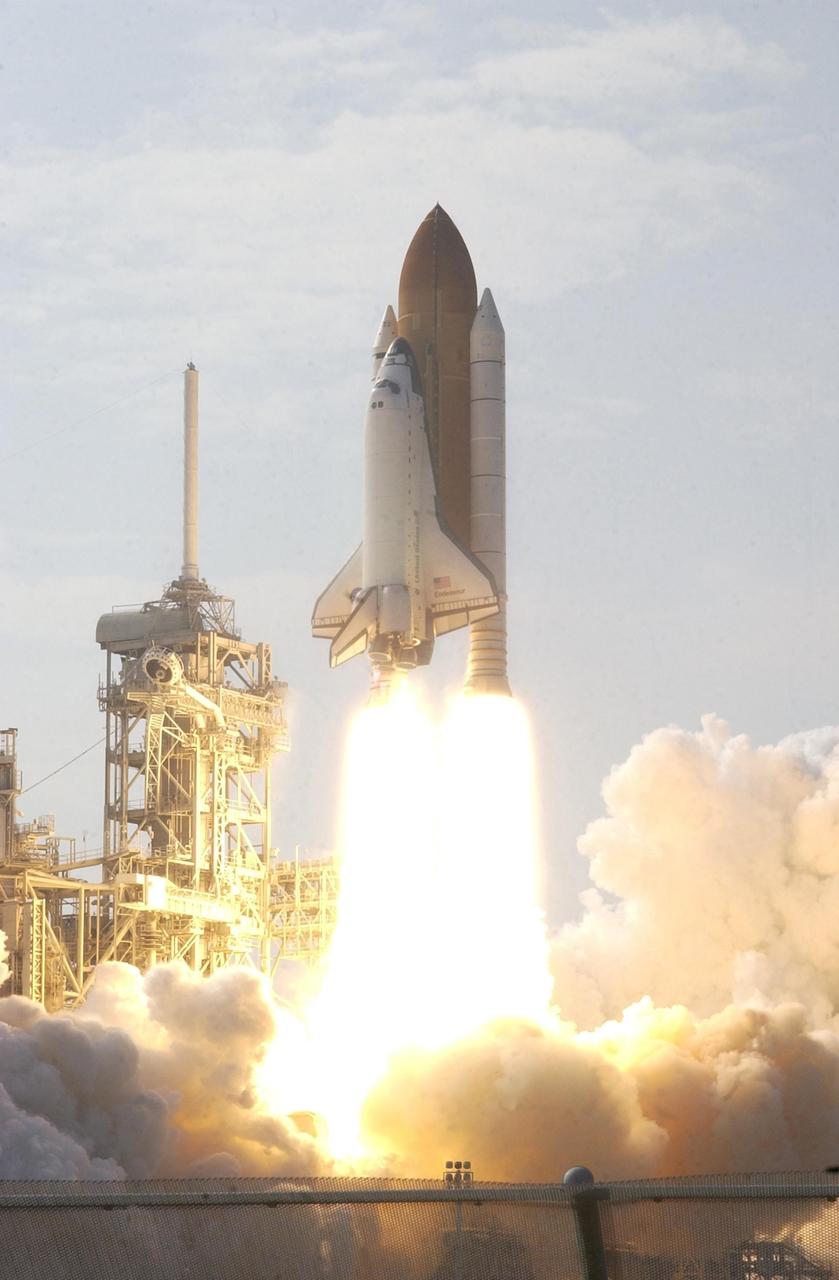
KENNEDY SPACE CENTER, FLA. - Space Shuttle Endeavour erupts from billows of smoke and steam as it hurtles into space on mission STS-111 to the International Space Station. Liftoff occurred at 5:22:49 p.m. EDT. The STS-111 crew includes Commander Kenneth Cockrell, Pilot Paul Lockhart, and Mission Specialists Franklin Chang-Diaz and Philippe Perrin (CNES), as well as the Expedition Five crew members Valeri Korzun, Peggy Whitson and Sergei Treschev. This mission marks the 14th Shuttle flight to the International Space Station and the third Shuttle mission this year. Mission STS-111 is the 18th flight of Endeavour and the 110th flight overall in NASA's Space Shuttle program
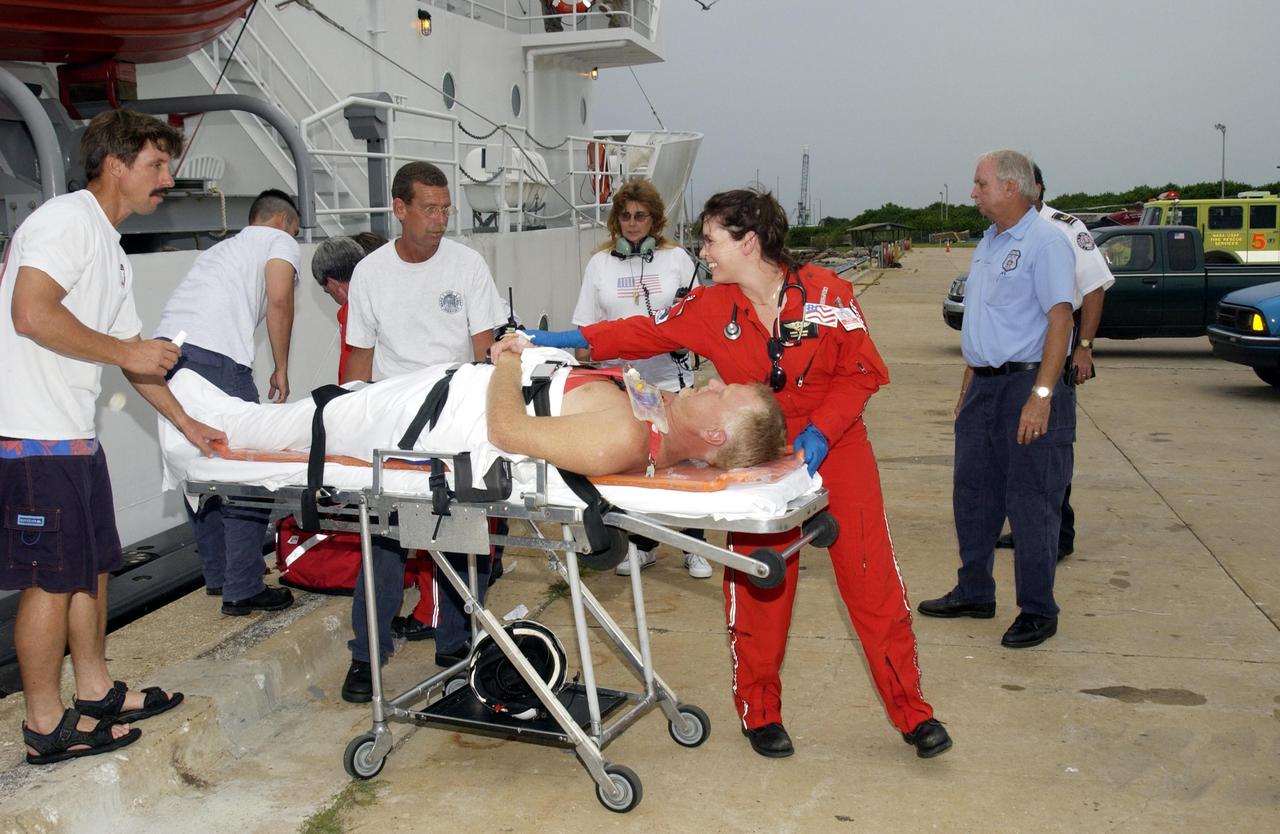
KENNEDY SPACE CENTER, FLA. - United Space Alliance workers on board the Freedom Star, one of the Shuttle Rocket Booster retrieval ships, release a distressed lobster diver to an Air Care Team from Orlando for transfer to a hospital. The ship and its dive team, including a diver medical technician, Andy Fish, were instrumental in rescuing the diver off Cape Canaveral Sept. 11. The ship was on a certification exercise and near the location of a lobster diving boat that radioed the U.S. Coast Guard for help when one of the divers experienced difficulty breathing on his return to the surface. Hearing the call for help, the captain of the Freedom Star offered to help. Fish stayed with the diver in the recompression chamber aboard the Freedom Star until the ship reached Port Canaveral where a KSC Occupational Health doctor waited. The diver was stabilized and then taken to Florida Hospital.
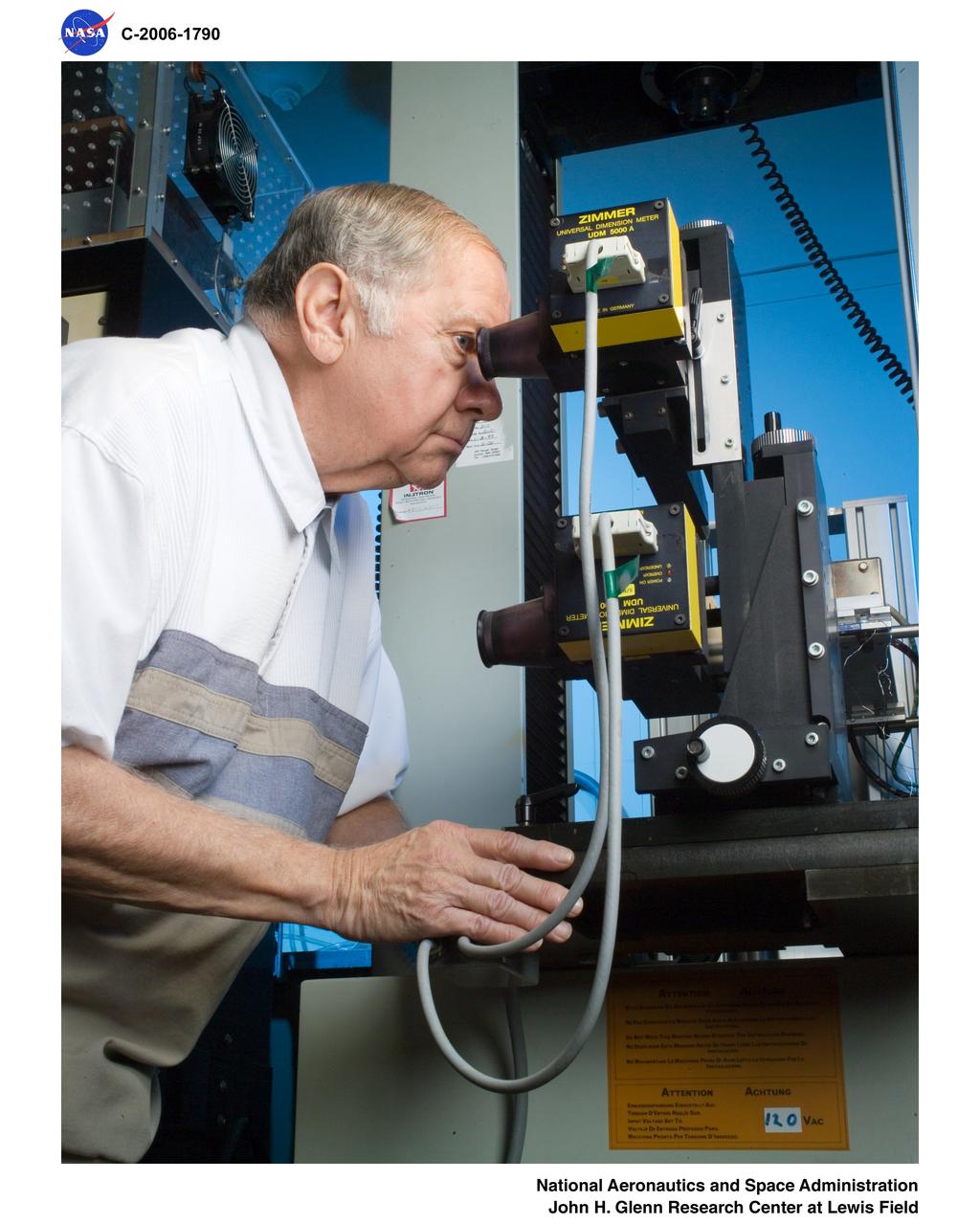
Instron Testing Machine studying the strength of Ceramic Matrix Composite (CMC) Material to develop and improve their mechanical properties
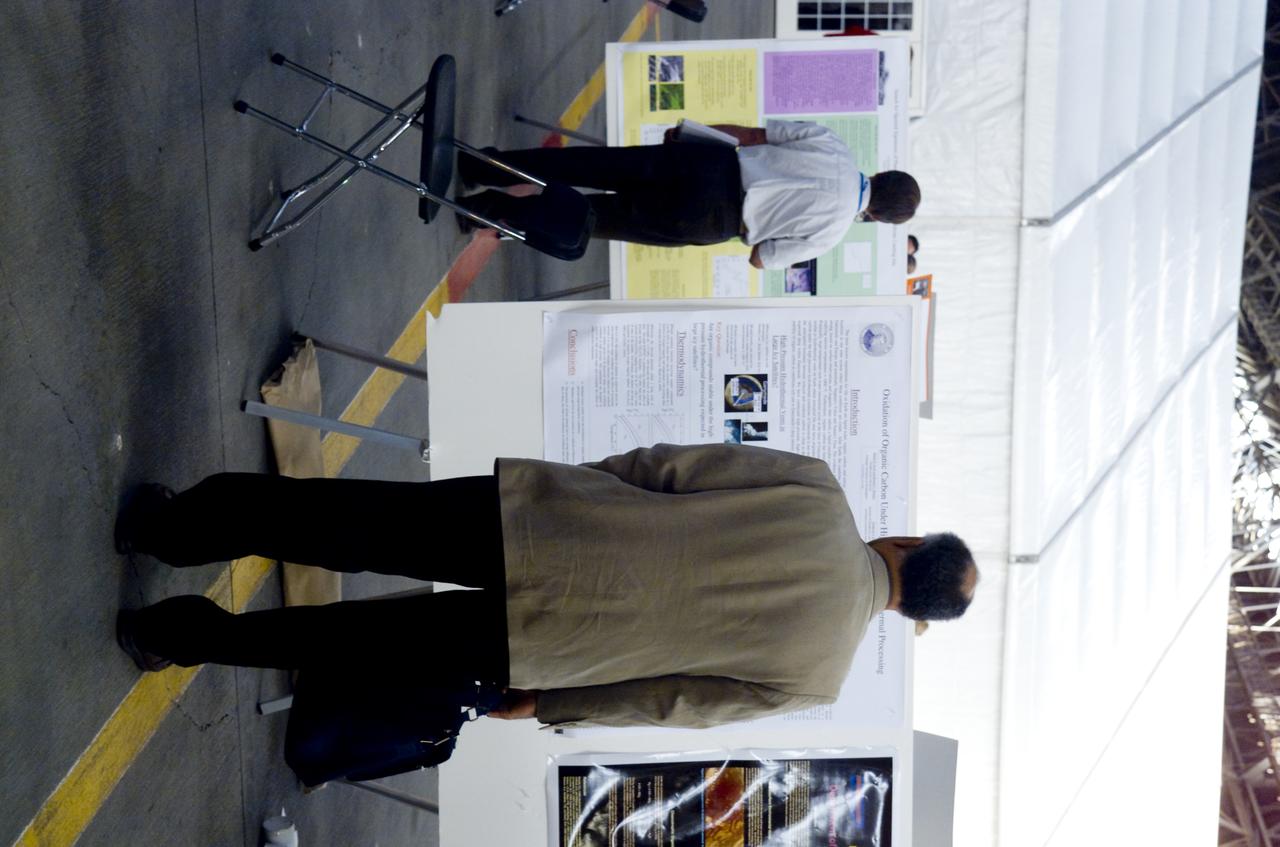
Astrobiology Conference 2002
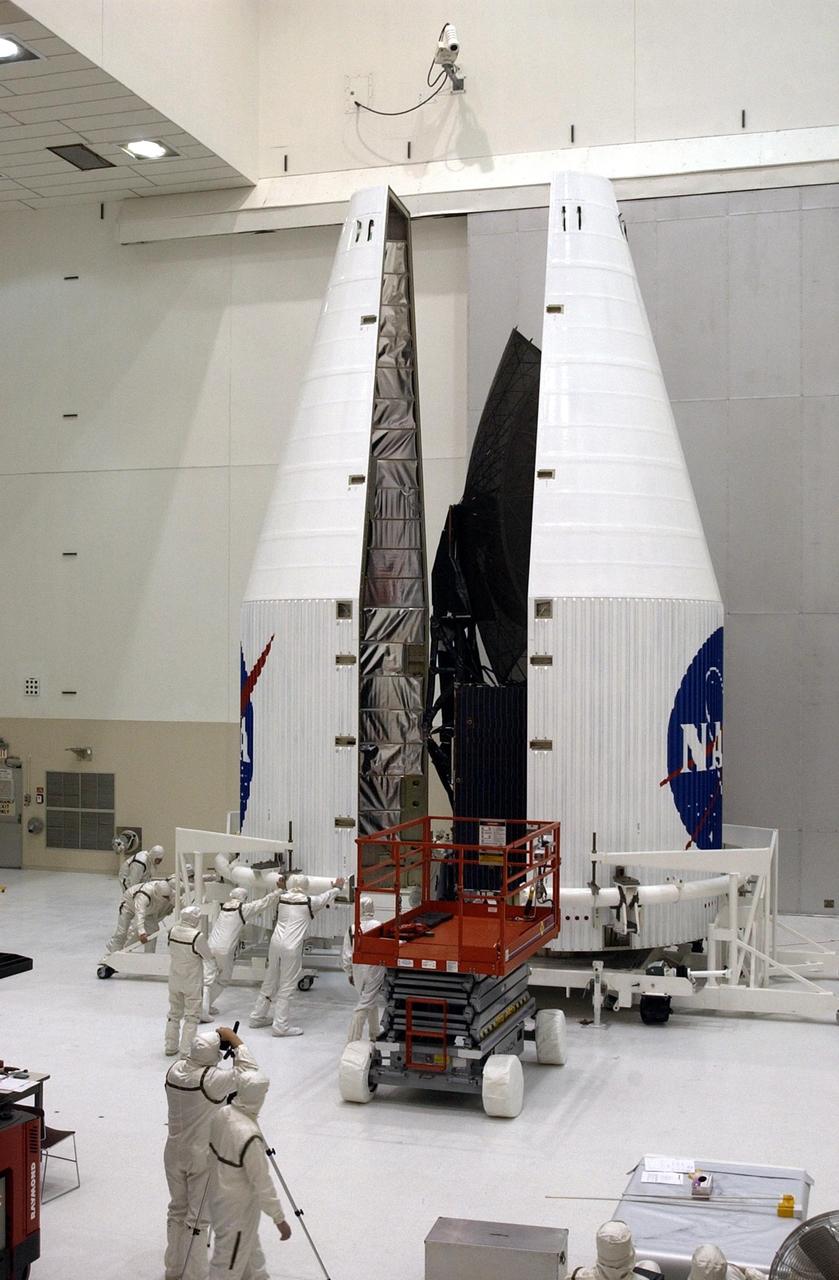
KENNEDY SPACE CENTER, FLA. -- Workers in the Spacecraft Assembly and Encapsulation Facility-2 (SAEF-2) push the second half of the nose fairing (left) toward the Tracking and Data Relay Satellite-I (TDRS-I) already enclosed by the first half. The second in a new series of telemetry satellites, TDRS-I replenishes the existing on-orbit fleet of six spacecraft. The TDRS System is the primary source of space-to-ground voice, data and telemetry for the Space Shuttle. It also provides communications with the International Space Station and scientific spacecraft in low-Earth orbit such as the Hubble Space Telescope. This new advanced series of satellites will extend the availability of TDRS communications services until about 2017. Launch of TDRS-I is scheduled for March 8 aboard a Lockheed Martin Atlas IIA rocket from Pad 36-A, Cape Canaveral Air Force Station

KENNEDY SPACE CENTER, FLA. -- The Comet Nucleus Tour (CONTOUR) spacecraft is on display for the media in the Spacecraft Assembly and Encapsulation Facility 2. CONTOUR will provide the first detailed look into the heart of a comet -- the nucleus. Flying as close as 60 miles (100 kilometers) to at least two comets, the spacecraft will take the sharpest pictures yet of a nucleus while analyzing the gas and dust that surround them. CONTOUR is scheduled for launch aboard a Delta II rocket July 1, 2002, from Launch Complex 17-A, Cape Canaveral Air Force Station
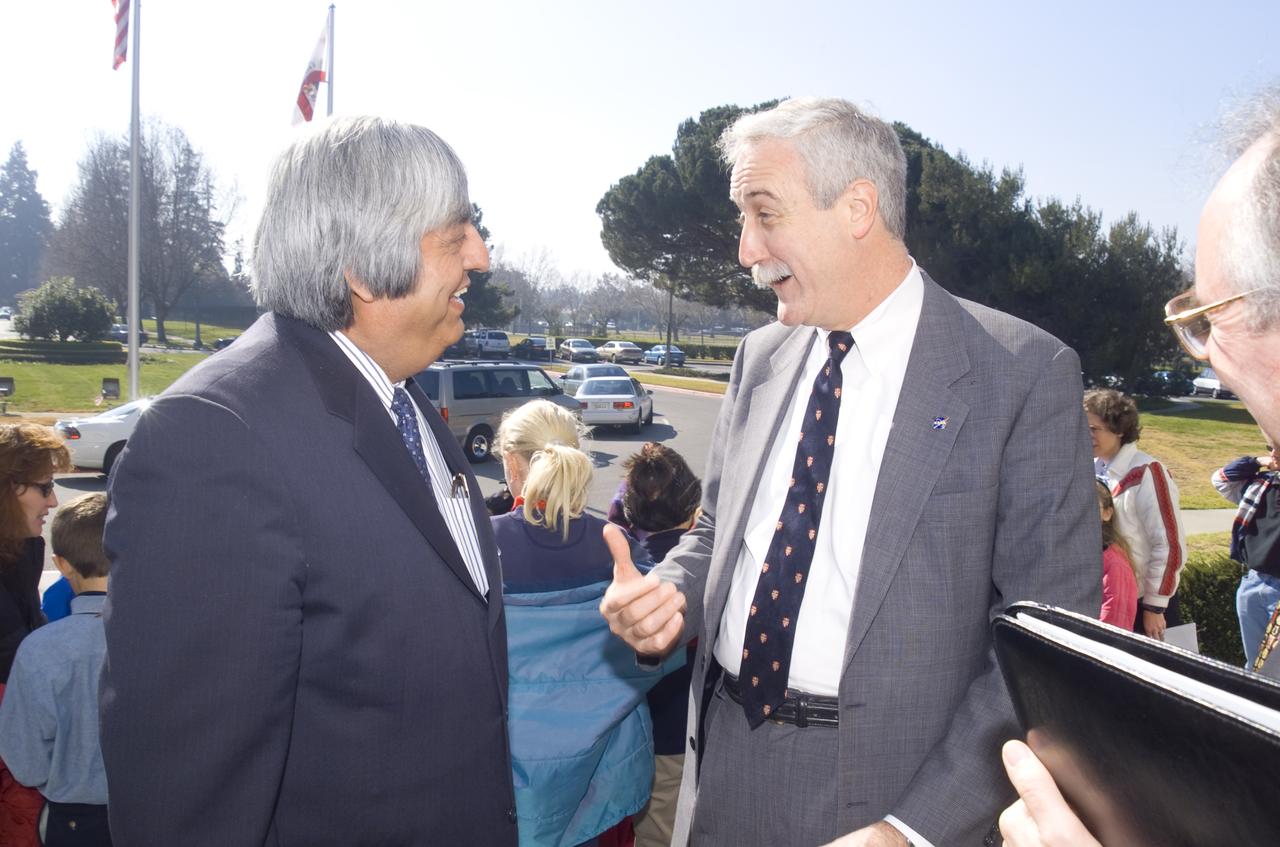
NASA Administrator Sean O'Keefe comes to Ames for employee briefing and tour. Meets with Roberto Cruz, National Hispanic University (left) at Amesto sign the educational MOU between NHU and Ames.
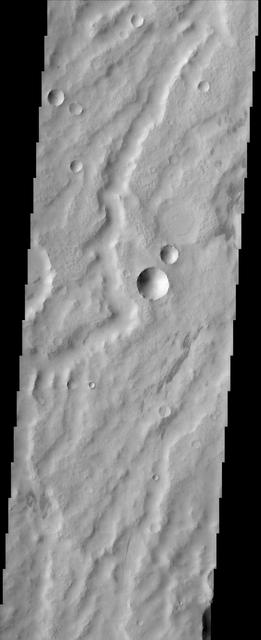
This scene from the dust covered plains of eastern Arabia Terra portrays a range of geological time. Three craters at the center of the image capture some of this range. Two have the classic bowl-shape of small, relatively recent craters while the one just to the north has seen much more history. Its rim has been scoured away by erosion and its floor has been filled in by material likely of a sedimentary nature. The channels that wind through the scene may be the oldest features present while the relatively dark streaks scattered about could have been produced in the past few years or even months as winds remove a layer of dust to reveal darker material below. http://photojournal.jpl.nasa.gov/catalog/PIA04033
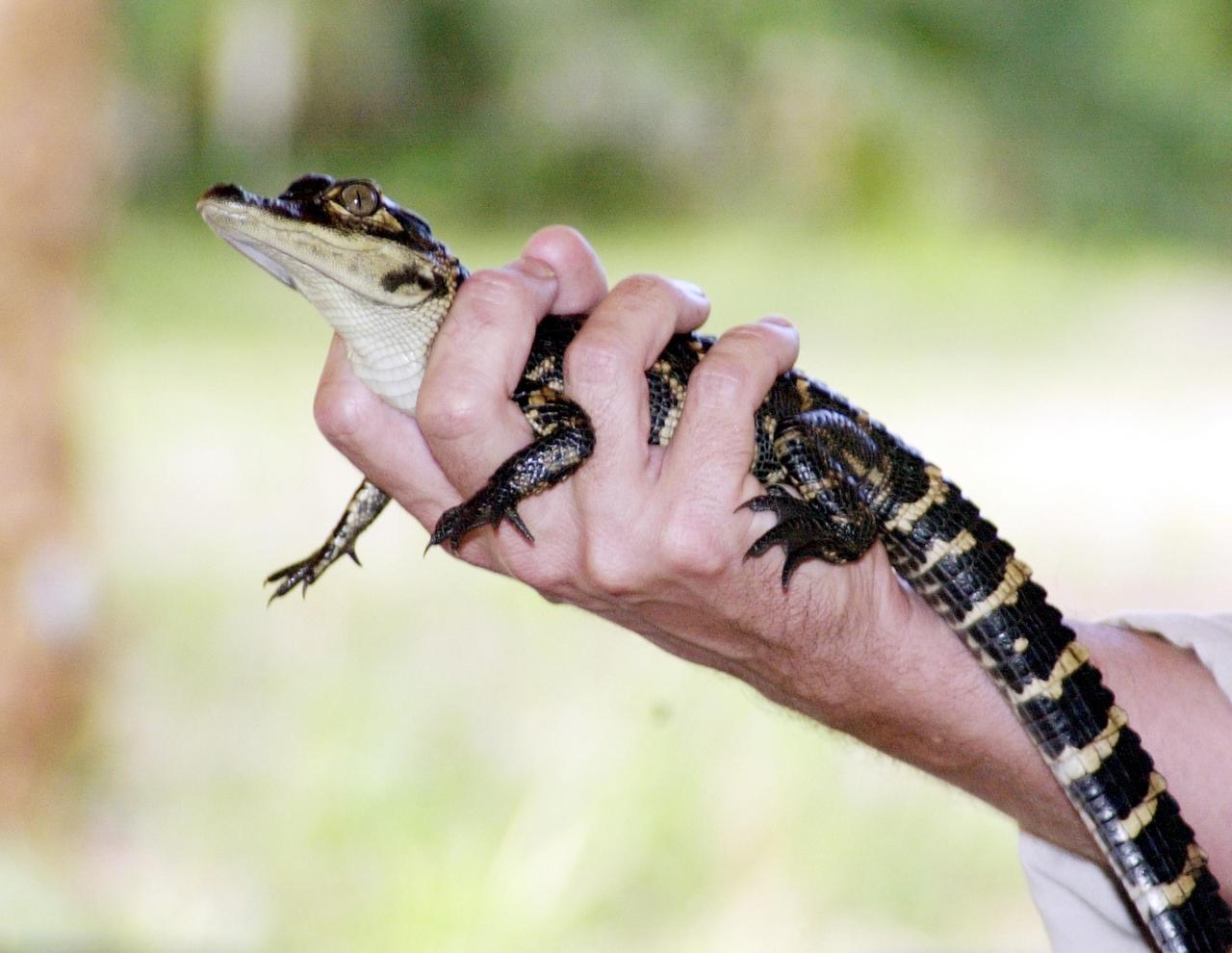
KENNEDY SPACE CENTER, FLA. - A baby alligator is displayed during the dedication of the Sendler Education Outpost, located at Dummit Cove on the Merritt Island National Wildlife Refuge (MINWR). The outpost is a resource for environmental educational students in the Central Florida area. It is named for Karl Sendler, a space pioneer and manager under Dr. Kurt Debus, KSC's first center director. Funding for the facility was provided by the Merritt Island Wildlife Association with assistance from MINWR and Kennedy Space Center.
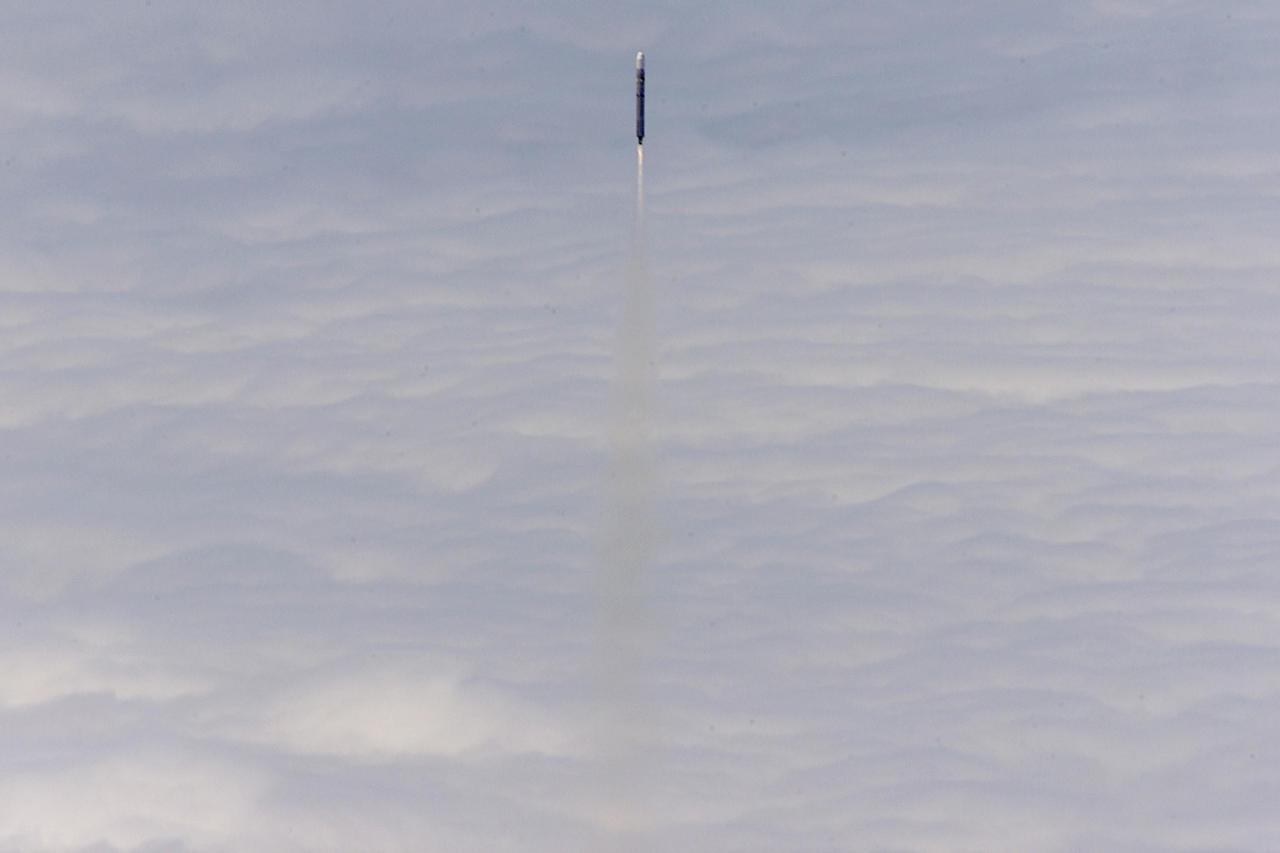
VANDENBERG AIR FORCE BASE, CALIF. -- The National Oceanic and Atmospheric Administration (NOAA) spacecraft (NOAA-M) streaks above a cloud layer after a successful launch at 2:23 p.m. EDT aboard a Titan II rocket from Vandenberg Air Force Base, Calif. NOAA-M is another in a series of polar-orbiting Earth environmental observation satellites that provide global data to NOAA's short- and long-range weather forecasting systems
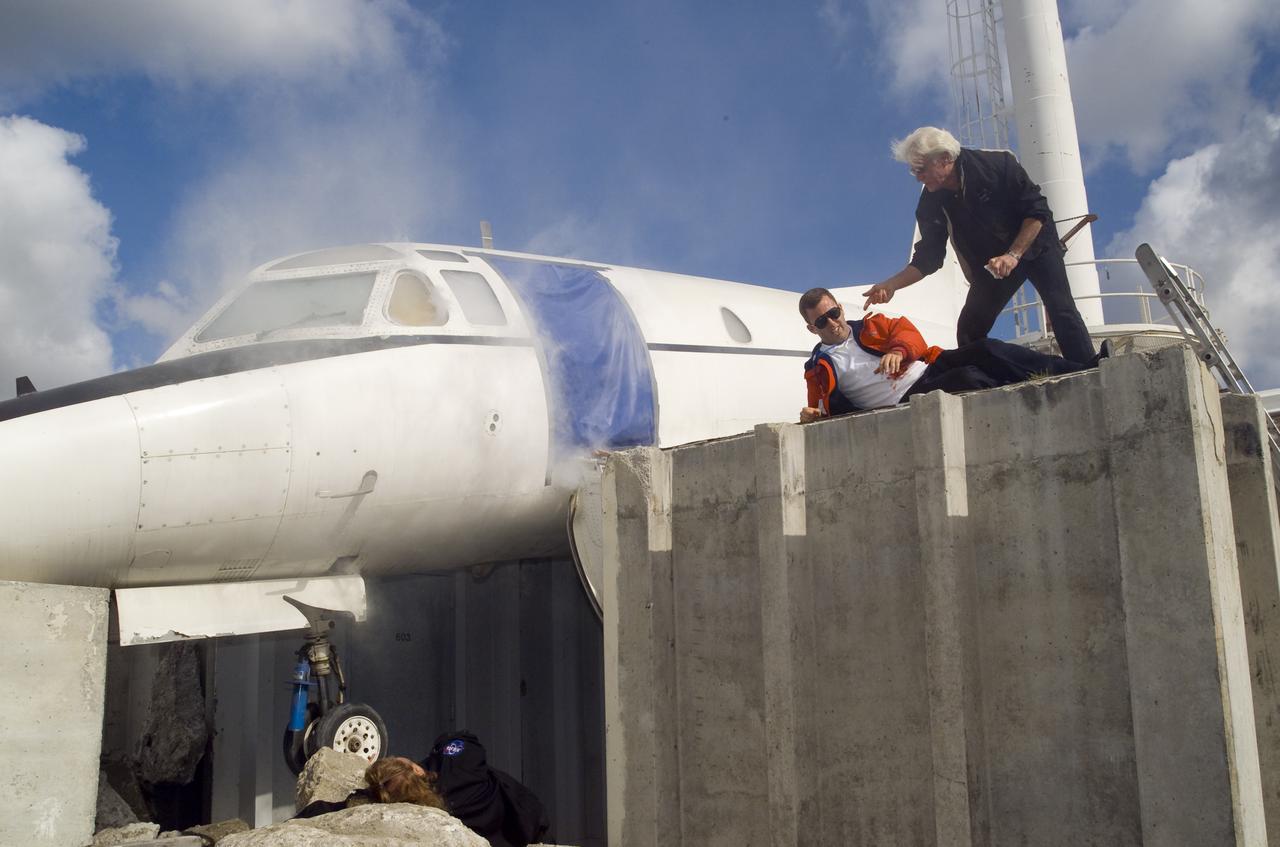
DART Exercise 2002 'Response to Terrorism'
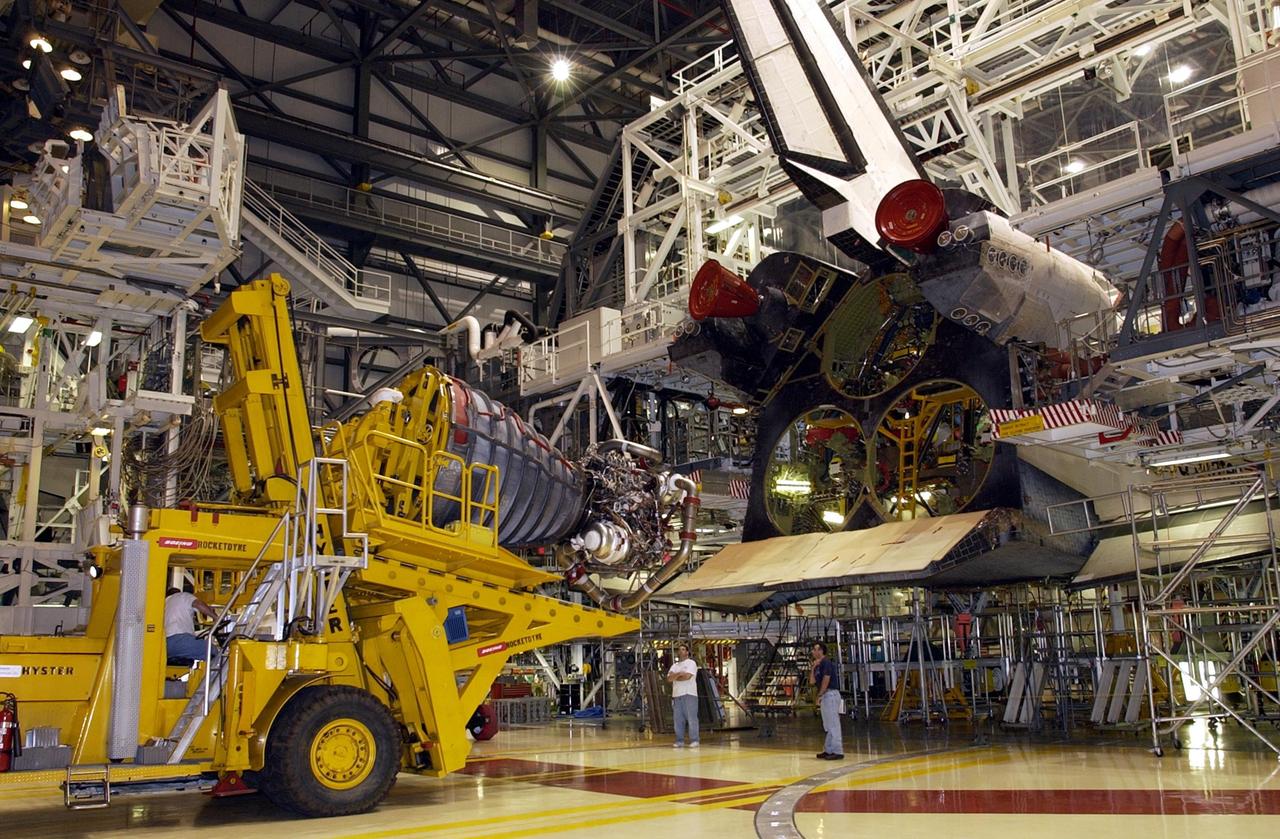
KENNEDY SPACE CENTER, FLA. -- The first Space Shuttle Main Engine (SSME) is installed on Space Shuttle Atlantis following the welding repair of the propulsion system flow liners as preparations to launch mission STS-112 continue. Mission STS-112 is an assembly flight to the International Space Station and is targeted for launch no earlier than Sept. 28, 2002. Members of the STS-112 crew are Commander Jeffrey Ashby; Pilot Pamela Melroy; and Mission Specialists David Wolf, Piers Sellers, Sandra Magnus, and Fyodor Yurchikhin of the Russian Space Agency.

HAPTIC Cueing Research Study (p.i.: Steve Ellis) Virtual environments: Shown is Heather Smith with headgear and controls
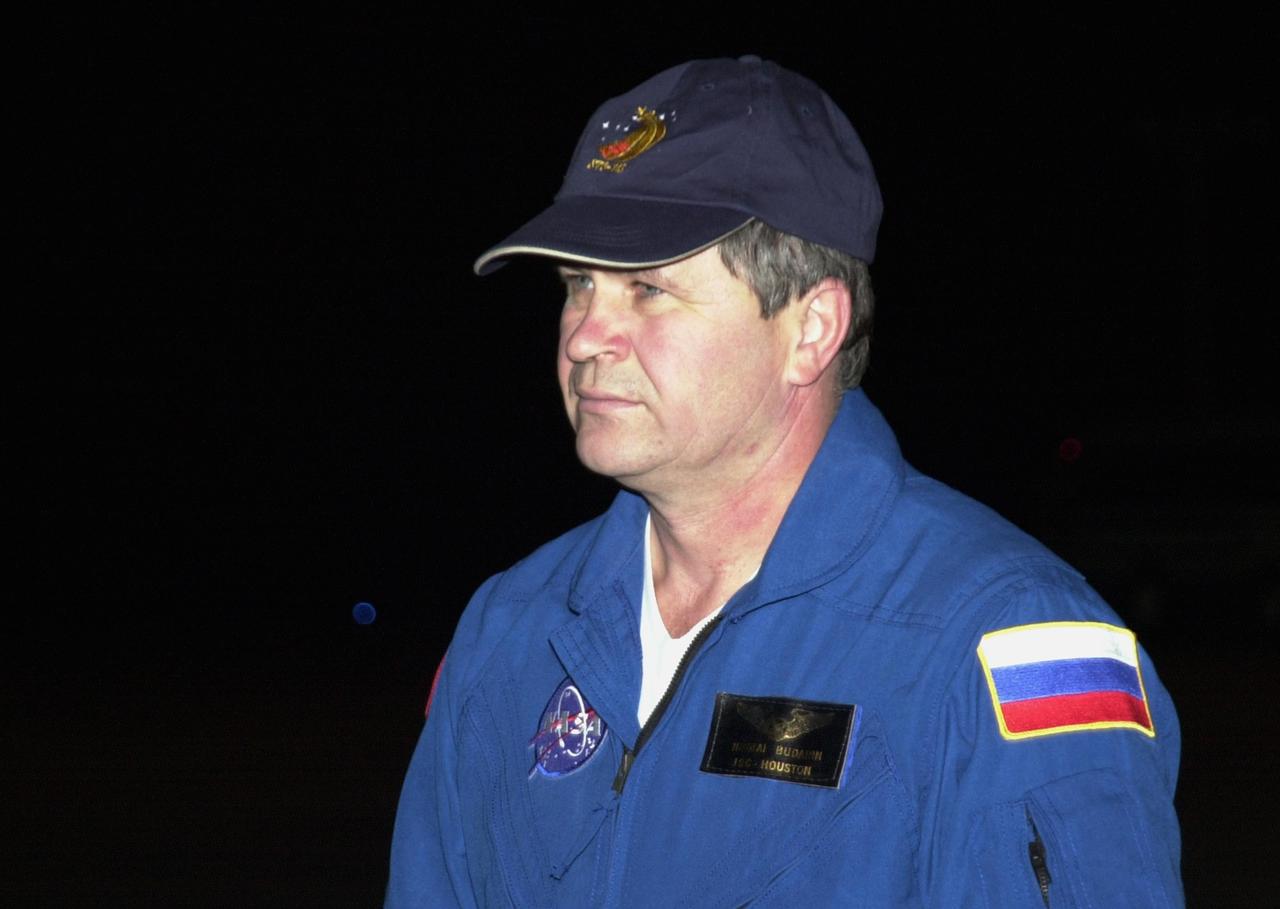
KENNEDY SPACE CENTER, FLA. - Expedition 6 Flight Engineer Nikolai Budarin, who represents the Russian Space Agency, arrives at KSC to prepare for launch. The primary mission of STS-113 is bringing the Expedition 6 crew to the Station and returning the Expedition 5 crew to Earth. In addition, the major objective of the mission is delivery of the Port 1 (P1) Integrated Truss Assembly, which will be attached to the port side of the S0 truss. Three spacewalks are planned to install and activate the truss and its associated equipment. Launch of Space Shuttle Endeavour on mission STS-113 is scheduled for Nov. 11 between midnight and 4 a.m. EST.

KENNEDY SPACE CENTER, FLA. -- Near the top, left, of the tower on Launch Complex 17-A, Cape Canaveral Air Force Station, is seen the second half of the fairing that will encapsulate the Comet Nucleus Tour (CONTOUR) spacecraft on a Delta II rocket. On the lower right is the rocket. CONTOUR will provide the first detailed look into the heart of a comet -- the nucleus. Flying as close as 60 miles (100 kilometers) to at least two comets, the spacecraft will take the sharpest pictures yet of a nucleus while analyzing the gas and dust that surround them. Launch of CONTOUR is scheduled for July 1, 2002
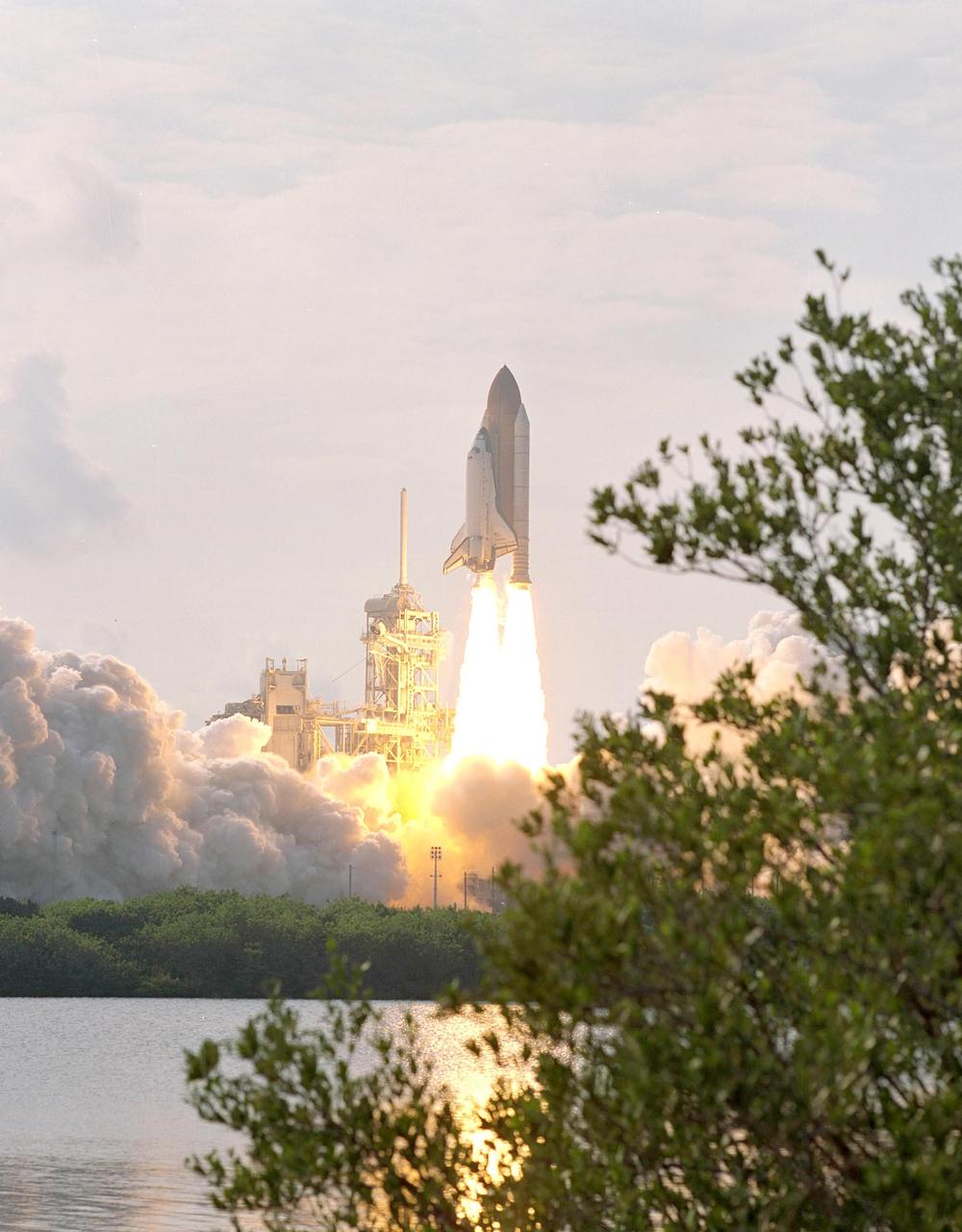
KENNEDY SPACE CENTER, FLA. - Viewed from across the nearby water, the launch of Space Shuttle Endeavour fills the horizon. Liftoff at 5:22:49 p.m. EDT sent Endeavour and its crew of four, plus the Expedition 5 crew, on its way to the International space Station on mission STS-111. This mission marks the 14th Shuttle flight to the International Space Station and the third Shuttle mission this year. Mission STS-111 is the 18th flight of Endeavour and the 110th flight overall in NASA's Space Shuttle program
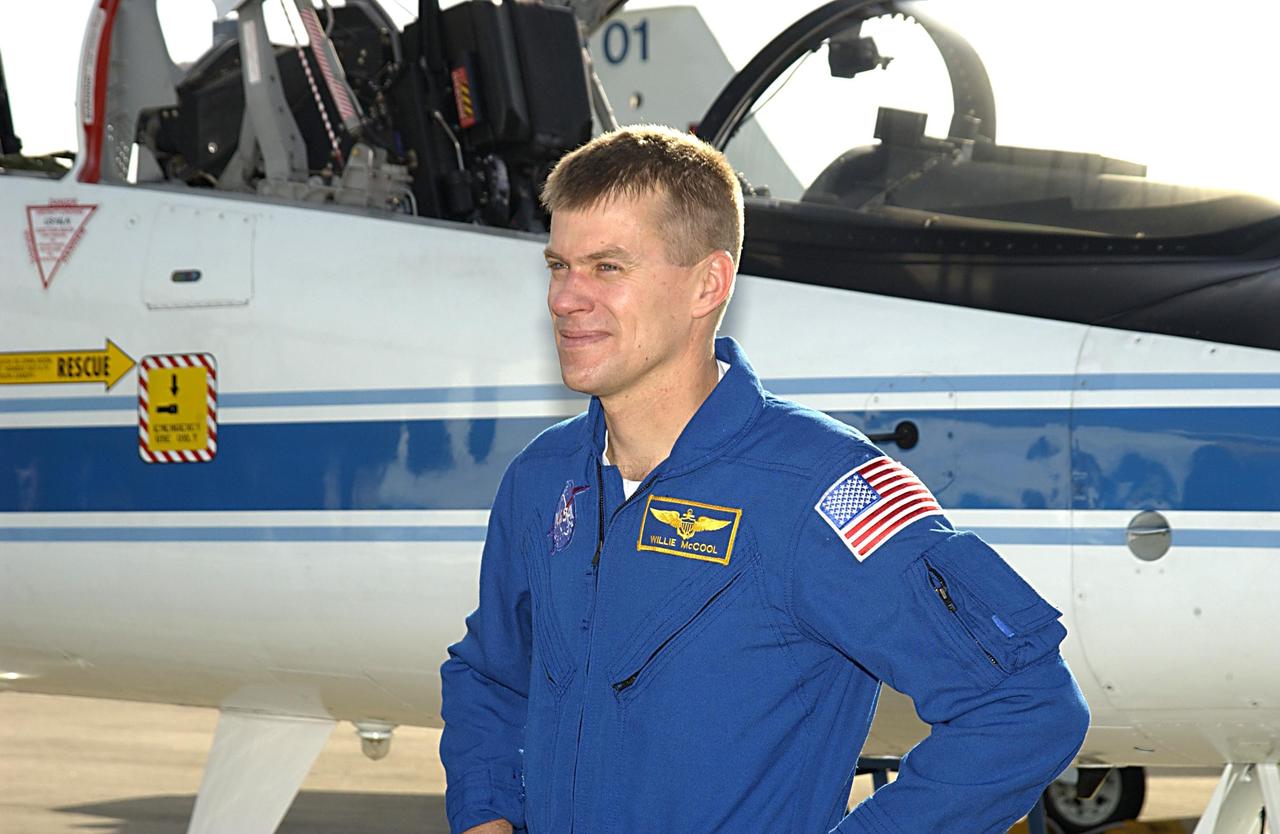
KENNEDY SPACE CENTER, FLA. - STS-107 Pilot William "Willie" McCool pauses next to the T-38 jet aircraft in which he flew to KSC. He and the crew are at KSC to take part in Terminal Countdown Demonstration Test activities, which include a simulated launch countdown. Other crew members are Commander Rick Husband, Payload Commander Michael Anderson, Mission Specialists Kalpana Chawla, David Brown and Laurel Clark, and Payload Specialist Ilan Ramon, the first Israeli astronaut. STS-107 is a mission devoted to research and will include more than 80 experiments that will study Earth and space science, advanced technology development, and astronaut health and safety. Launch is scheduled for Jan. 16, 2003.
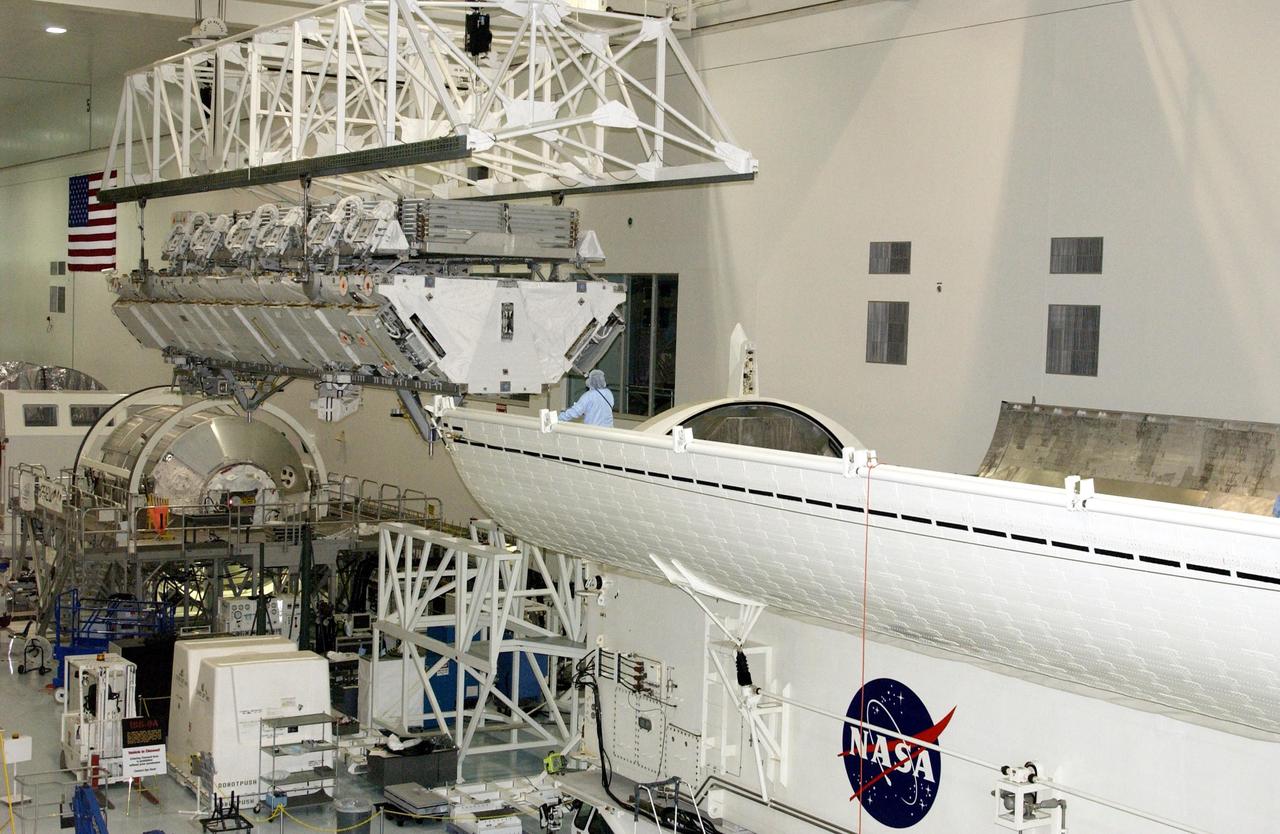
KENNEDY SPACE CENTER, FLA. -- An overhead crane moves the S1 Integrated Truss Structure toward the payload canister below, which will transport it to Atlantis. The first starboard truss segment, the S1 will be attached to the Central truss segment, the S0 Truss, on the International Space Station during mission STS-112. Atlantis is scheduled to launch no earlier than Oct. 2.
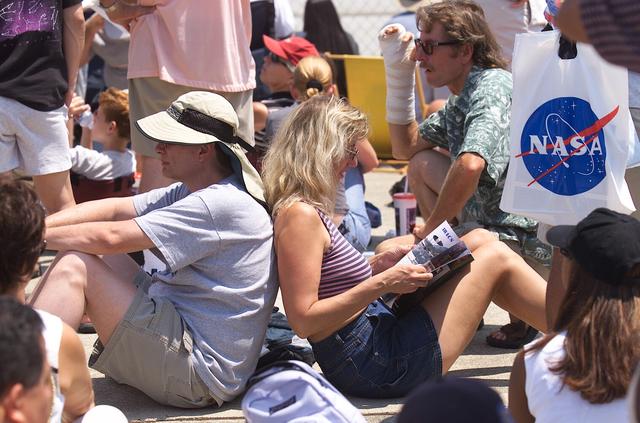
Airshow hosted by Moffett Federal Airfield
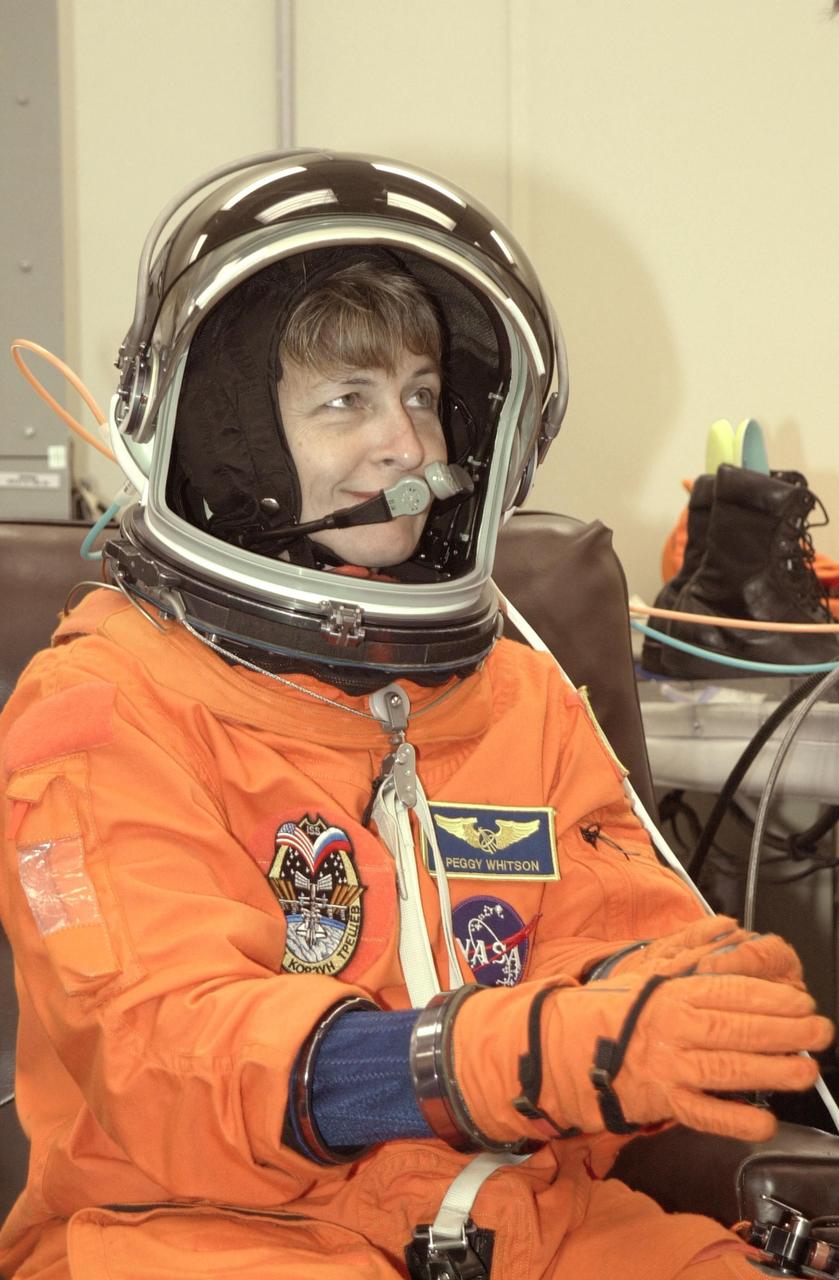
KENNEDY SPACE CENTER, FLA. - Expedition 5 crew member Peggy Whitson undergoes a suit check as part of Terminal Countdown Demonstration Test activities at KSC. The TCDT includes emergency egress training at the pad and a simulated launch countdown. Expedition 5 will travel to the International Space Station on mission STS-111 as the replacement crew for Expedition 4, who will return to Earth aboard Endeavour. Known as Utilization Flight -2, the mission includes attaching a Canadian-built mobile base system to the International Space Station that will enable the Canadarm2 robotic arm to move along a railway on the Station's truss to build and maintain the outpost. The crew will also replace a faulty wrist/roll joint on the Canadarm2 as well as unload almost three tons of experiments and supplies from the Italian-built Multi-Purpose Logistics Module Leonardo. Launch of Space Shuttle Endeavour on mission STS-111 is scheduled for May 30, 2002
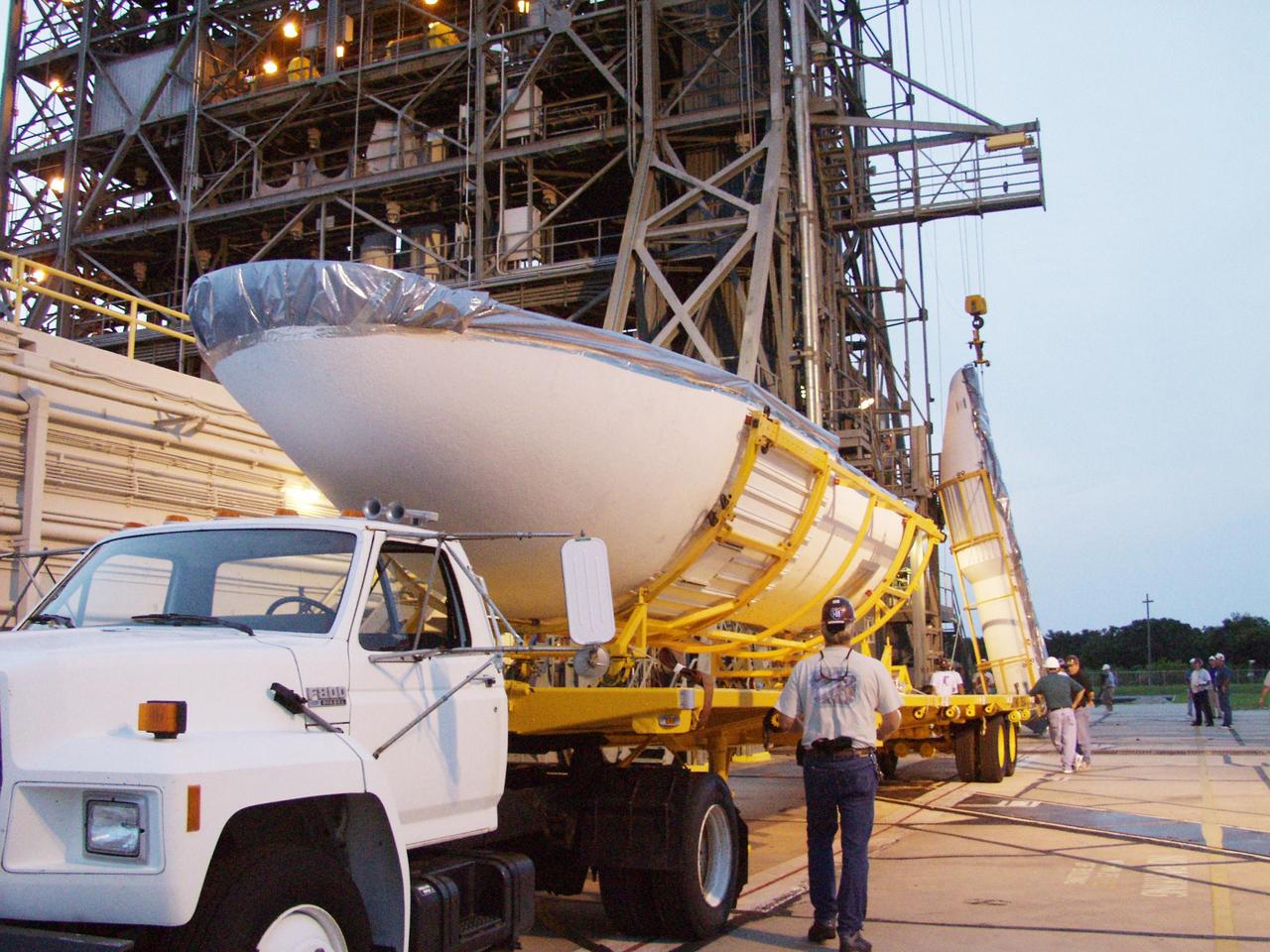
KENNEDY SPACE CENTER, FLA. -- At Launch Complex 17-A, Cape Canaveral Air Force Station, the fairing of the Delta II rocket arrives for encapsulation of the Comet Nucleus Tour (CONTOUR) spacecraft. CONTOUR will provide the first detailed look into the heart of a comet -- the nucleus. Flying as close as 60 miles (100 kilometers) to at least two comets, the spacecraft will take the sharpest pictures yet of a nucleus while analyzing the gas and dust that surround them. Launch of CONTOUR is scheduled for July 1, 2002
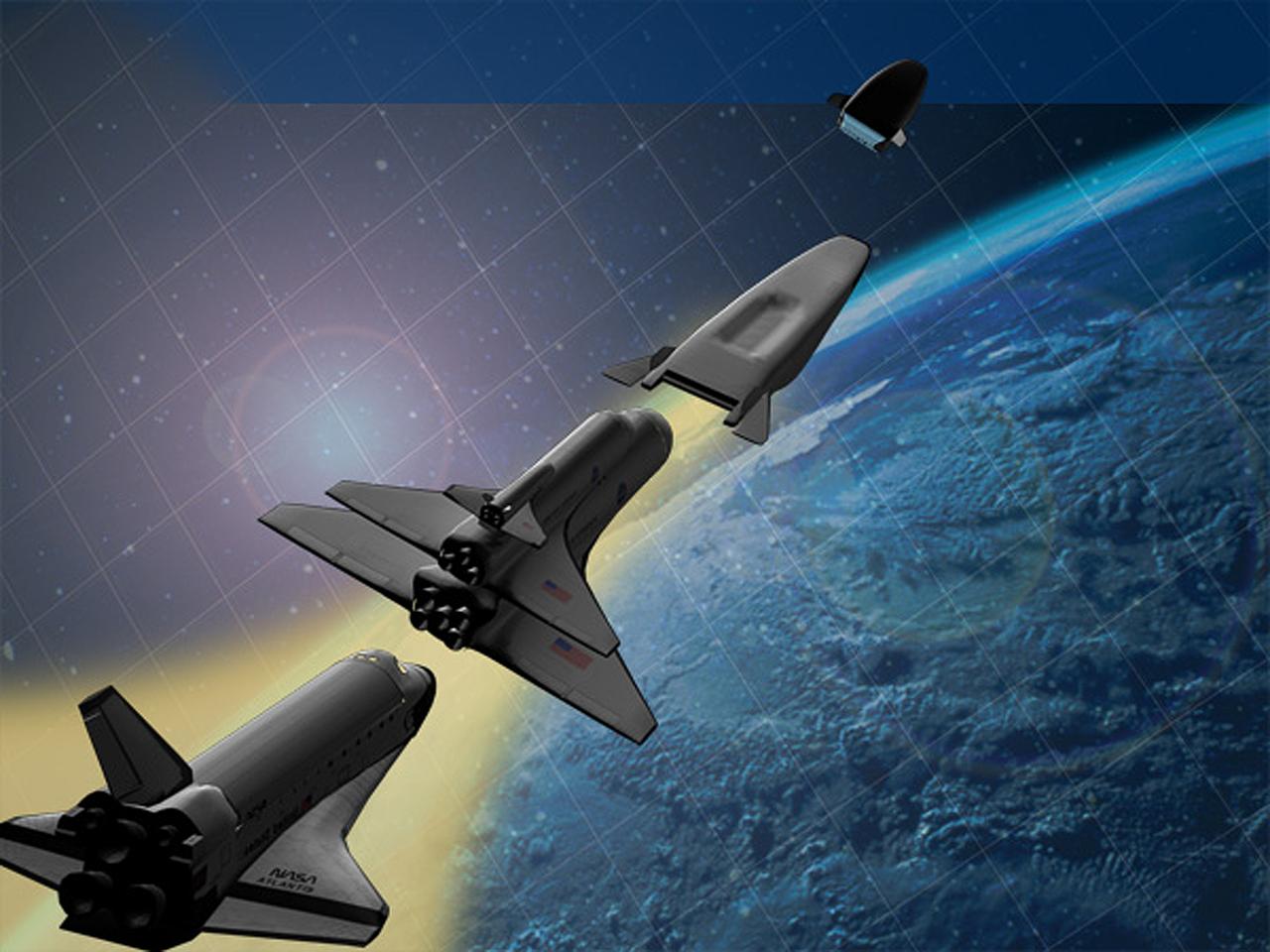
NASA's Marshall Space Flight Center in Huntsville, Alabama, manages the Space Launch Initiative (SLI), NASA's priority developmental program focused on empowering America's leadership in space. SLI includes commercial, higher education, and defense partnerships and contracts to offer widespread participation in both the risk and success of developing our nation's next-generation reusable launch vehicle. This photo depicts an artist's concept of a future second-generation launch vehicle. For the SLI, architecture definition includes all components of the next-generation reusable launch system: Earth-to-orbit vehicles (the Space Shuttle is the first generation earth-to-orbit vehicle), crew transfer vehicles, transfer stages, ground processing systems, flight operations systems, and development of business case strategies. Three contractor teams have each been funded to develop potential second- generation reusable launch system architectures: The Boeing Company of Seal Beach, California; Lockheed Martin Corporation of Denver, Colorado along with a team including Northrop Grumman of El Segundo, California; and Orbital Sciences Corporation of Dulles, Virginia.
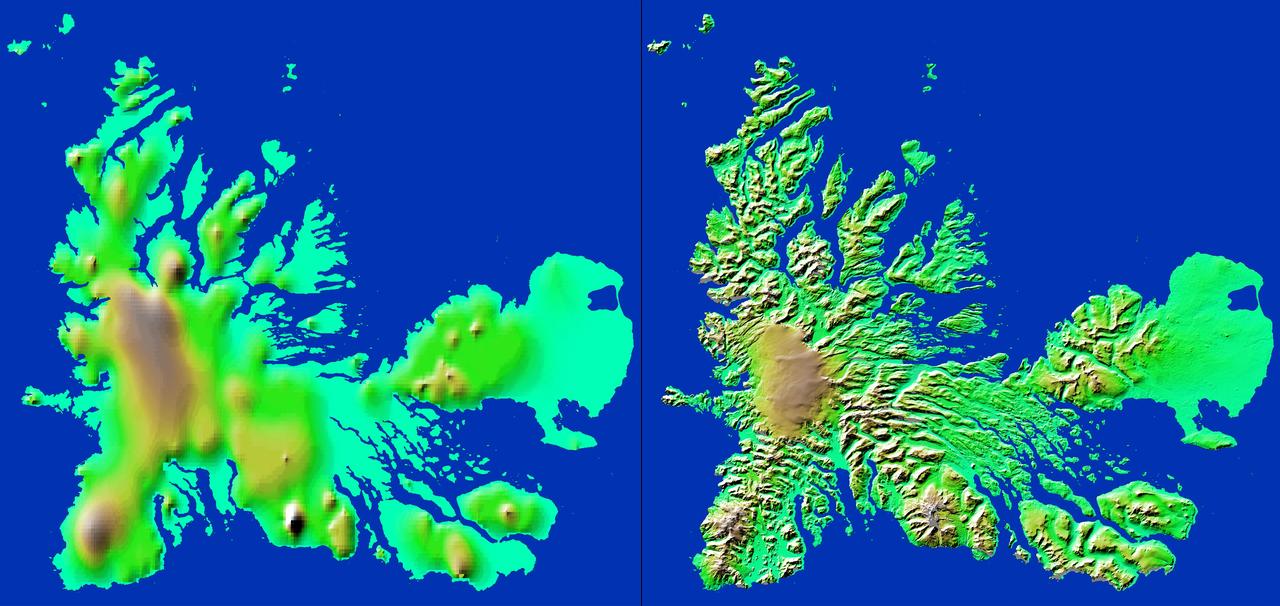
These two images show exactly the same area, Kerguelen Island in the southern Indian Ocean. The image on the left was created using the best global topographic data set previously available, the U.S. Geological Survey GTOPO30.
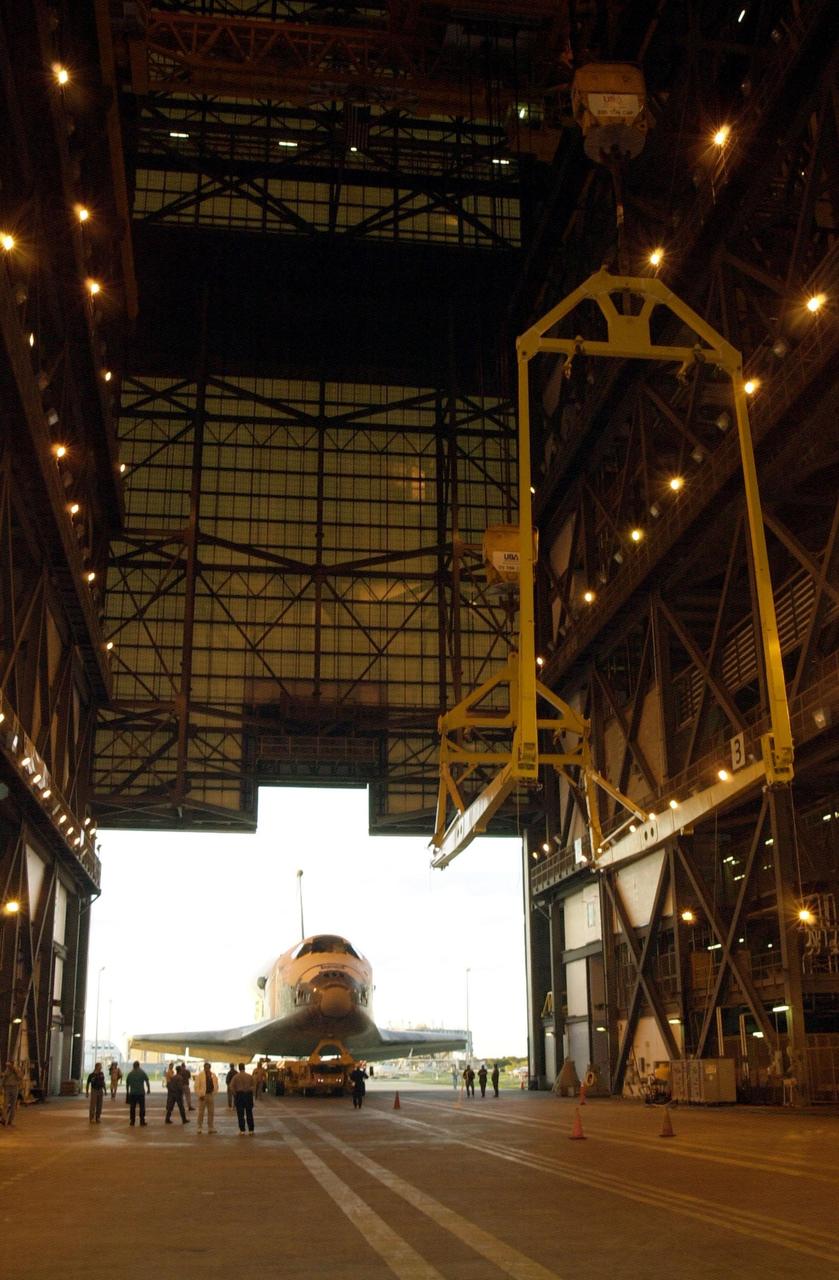
KENNEDY SPACE CENTER, FLA. -- The orbiter Columbia rolls into the transfer aisle of the Vehicle Assembly Building where it will be mated with the external tank-solid rocket booster stack. Columbia is scheduled to be launched Feb. 28 on mission STS-109, a Hubble Servicing Mission. The goal of the mission is to service the HST, replacing Solar Array 2 with Solar Array 3, replacing the Power Control Unit, removing the Faint Object Camera and installing the ACS, installing the Near Infrared Camera and Multi-Object Spectrometer (NICMOS) Cooling System, and installing New Outer Blanket Layer insulation
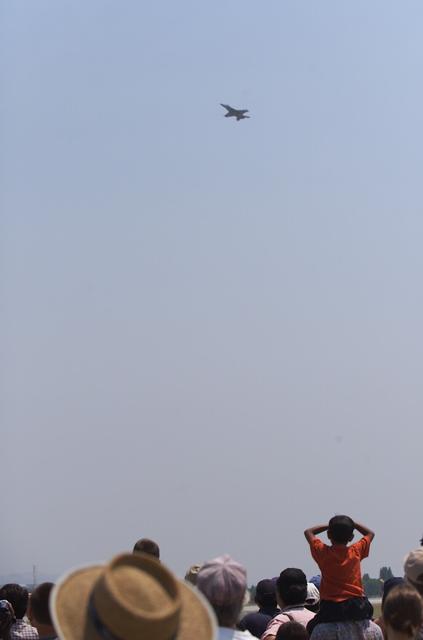
Airshow hosted by Moffett Federal Airfield
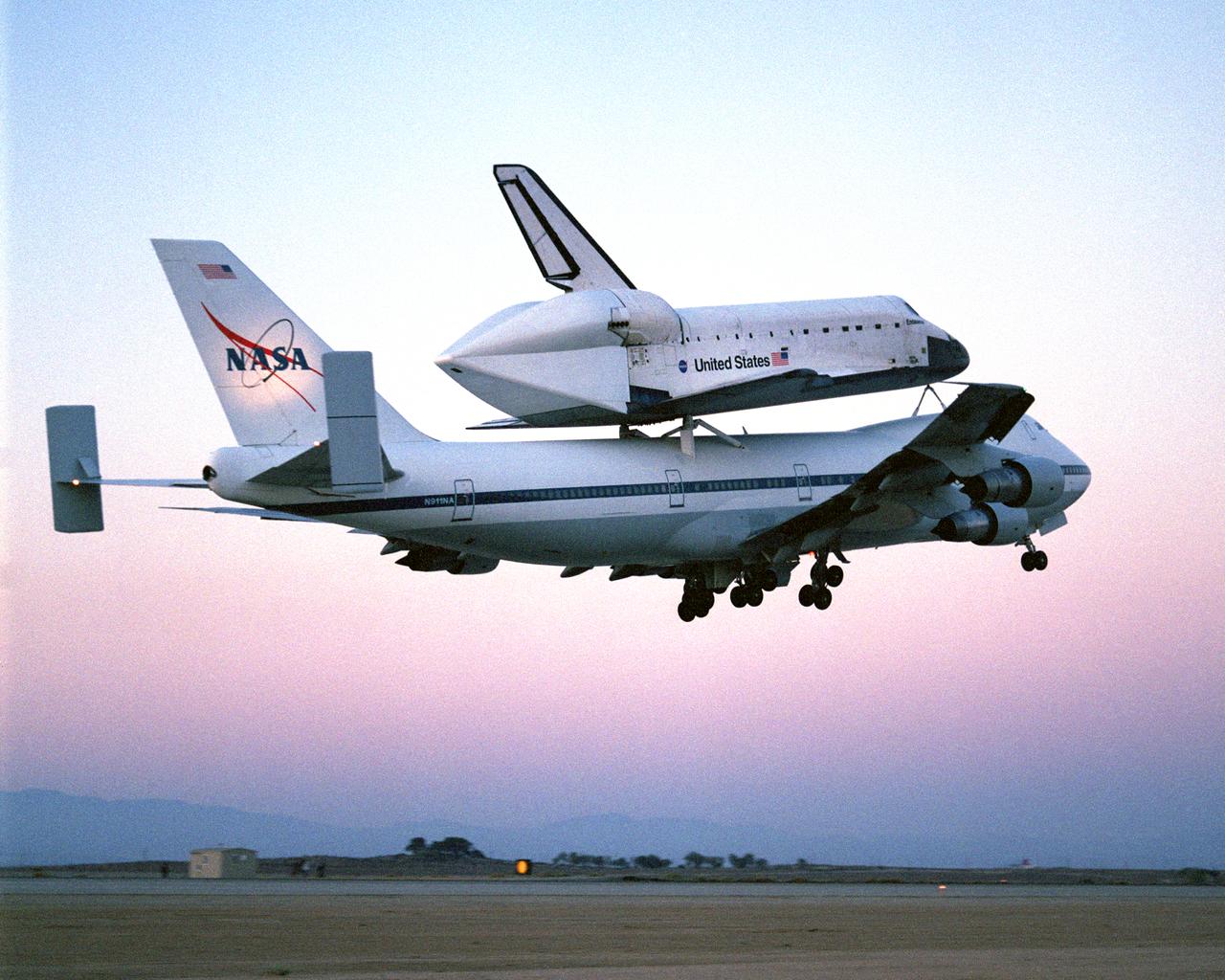
The Space Shuttle Endeavour, mounted securely atop one of NASA's modified Boeing 747 Shuttle Carrier Aircraft, left NASA's Dryden Flight Research Center at Edwards Air Force Base in Southern California at sunrise on Friday, June 28, nine days after concluding mission STS-111 to the International Space Station with a landing at Edwards.
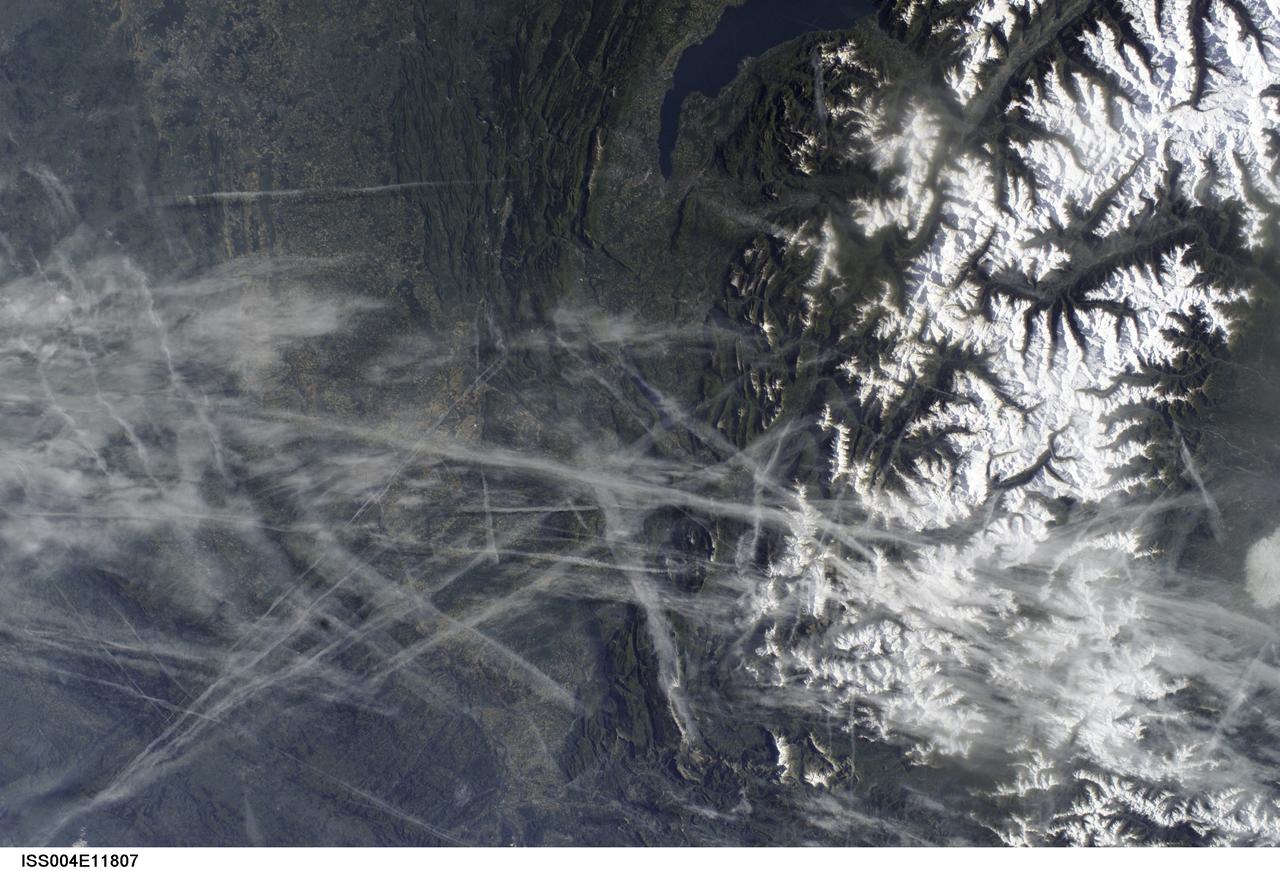
ISS004-E-11807 (15 May 2002) --- This digital photograph, taken through the windows of the International Space Station on May 15, 2002, shows condensation trails over the Rhône Valley in the region west of Lyon, France. Condensation trails-or contrails-are straight lines of ice crystals that form in the wake of jet liners where air temperatures are lower than about -40 degrees Centigrade. Scientists have observed that newer contrails are thin whereas older trails have widened with time as a result of light winds. Because of this tendency for thin contrails to cover greater areas with time, it is estimated that these “artificial clouds” cover 0.1 per cent of the planet’s surface. Percentages are far higher in some places, say the scientists, such as southern California, the Ohio River Valley and parts of Europe, as illustrated here. The climatic impact of such clouds is poorly understood, which is why scientists continue to study them using images such as this.
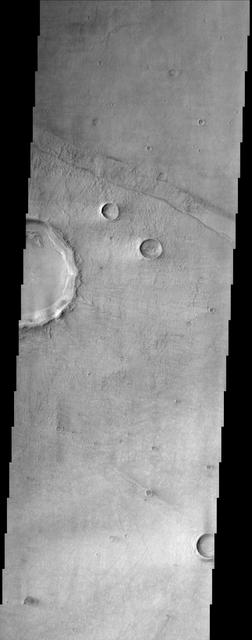
Bosporus Planum, seen in this image from NASA Mars Odyssey spacecraft, is located in a region of smooth plains that appear to have formed from lava flows.
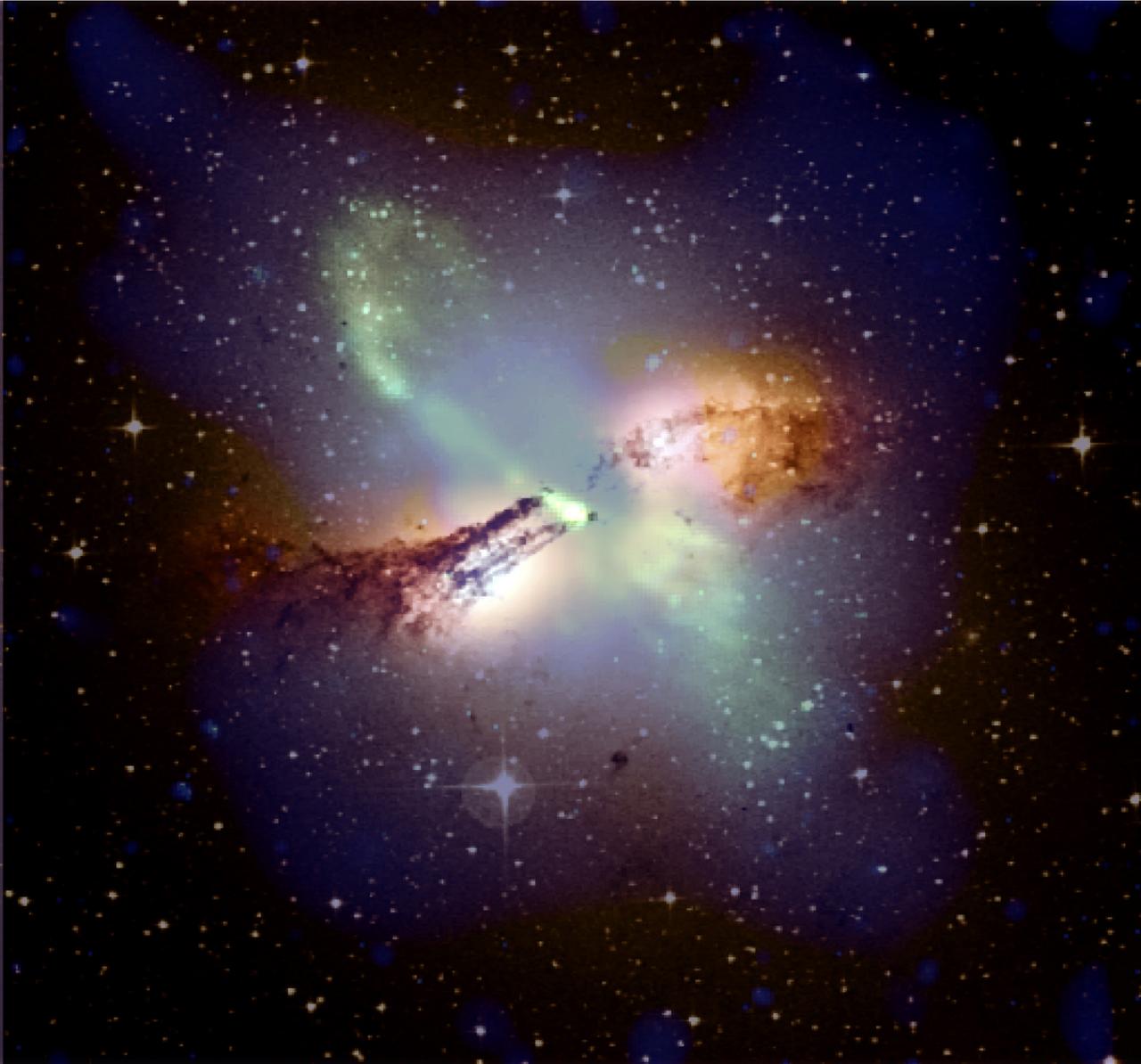
This is a photo taken by NASA's Chandra X-ray Observatory that reveals the remains of an explosion in the form of two enormous arcs of multimillion-degree gas in the galaxy Centaurus A that appear to be part of a ring 25,000 light years in diameter. The size and location of the ring suggest that it could have been an explosion that occurred about 10 million years ago. A composite image made with radio (red and green), optical (yellow-orange), and X-ray data (blue) presents a sturning tableau of a turbulent galaxy. A broad band of dust and cold gas is bisected at an angle by opposing jets of high-energy particles blasting away from the supermassive black hole in the nucleus. Lying in a plane perpendicular to the jets are the two large arcs of x-ray emitting multi-million degree gas. This discovery can help astronomers better understand the cause and effect of violent outbursts from the vicinity of supermassive black holes of active galaxies. The Chandra program is managed by the Marshall Space Flight Center in Huntsville, Alabama.
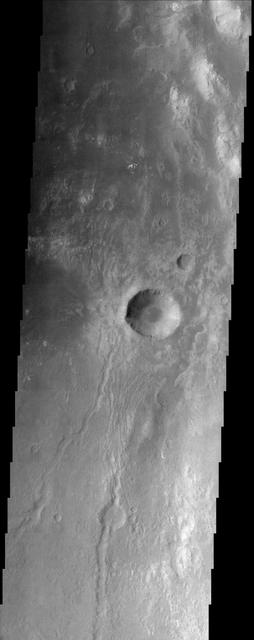
The eastern floor of Holden Crater, which is located in region of the southern hemisphere called Noachis Terra and is 154 km in diameter, is seen in this image from NASA Mars Odyssey spacecraft.
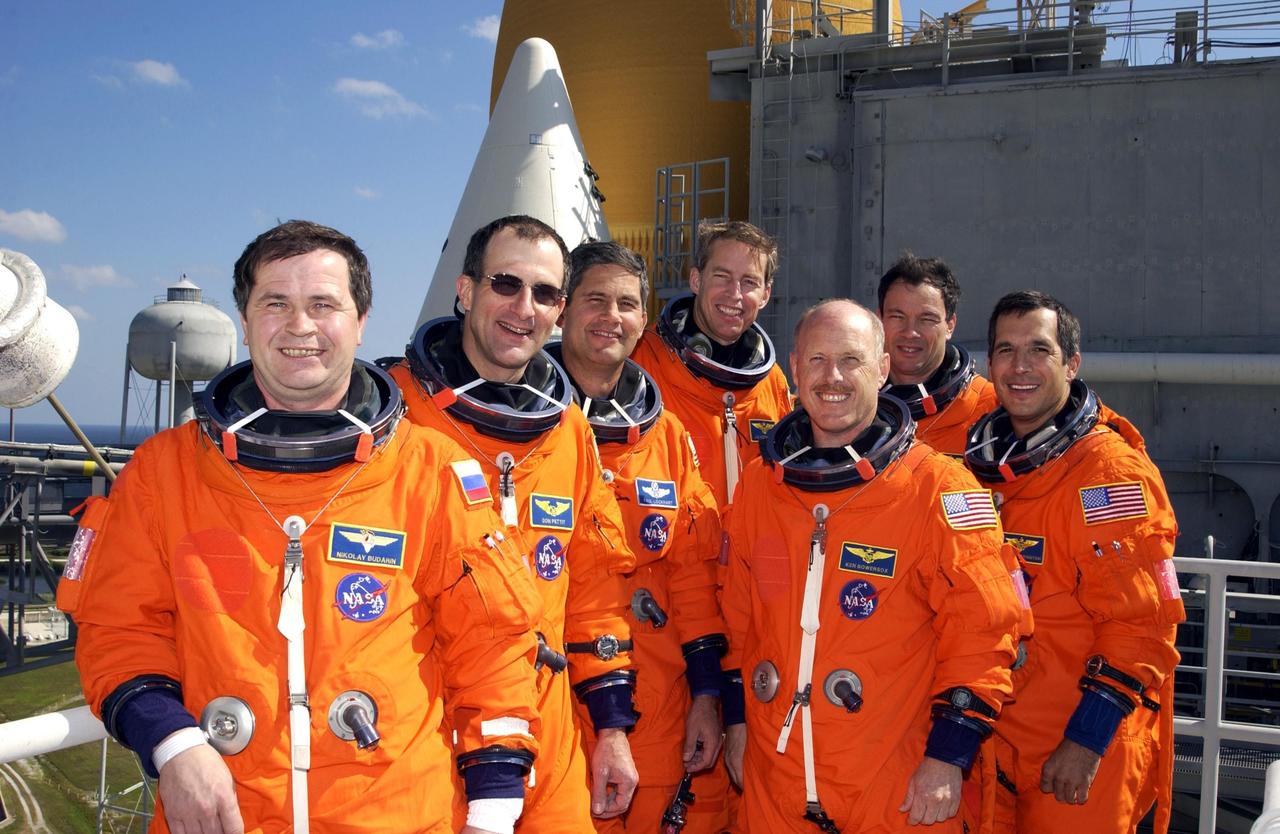
KENNEDY SPACE CENTER, FLA. -- The crews of Mission STS-113 gather for a group photograph on the 195-foot level of the Fixed Service Structure on Launch Pad 39A. From left are Expedition 6 cosmonaut Nikolai Budarin and astronaut Donald Pettit; STS-113 Pilot Paul Lockhart and Commander James Wetherbee; Expedition 6 Commander Ken Bowersox; STS-113 Mission Specialists Michael Lopez-Alegria and John Herrington. They have been participating in emergency egress training, part of Terminal Countdown Demonstration Test activities in preparation for their launch. The 16th assembly flight to the International Space Station, STS-113 will carry the Port 1 (P1) truss aboard Space Shuttle Endeavour, as well as Expedition 6, who will replace Expedition 5 on the Station. The mission is scheduled to launch Nov. 10, 2002.
![KENNEDY SPACE CENTER, FLA. -- Twin columns of white flames from the solid rocket boosters propel Space Shuttle Atlantis toward space after an on-time liftoff of 3:46 p.m. EDT on mission STS-112. Along with a crew of six, Atlantis carries the S1 Integrated Truss Structure and the Crew and Equipment Translation Aid (CETA) Cart A. The CETA is the first of two human-powered carts that will ride along the ISS railway, providing mobile work platforms for future spacewalking astronauts. On the 11-day mission, three spacewalks are planned to attach the S1 truss. [Photo courtesy of Scott Andrews]](https://images-assets.nasa.gov/image/KSC-02pd1463/KSC-02pd1463~medium.jpg)
KENNEDY SPACE CENTER, FLA. -- Twin columns of white flames from the solid rocket boosters propel Space Shuttle Atlantis toward space after an on-time liftoff of 3:46 p.m. EDT on mission STS-112. Along with a crew of six, Atlantis carries the S1 Integrated Truss Structure and the Crew and Equipment Translation Aid (CETA) Cart A. The CETA is the first of two human-powered carts that will ride along the ISS railway, providing mobile work platforms for future spacewalking astronauts. On the 11-day mission, three spacewalks are planned to attach the S1 truss. [Photo courtesy of Scott Andrews]
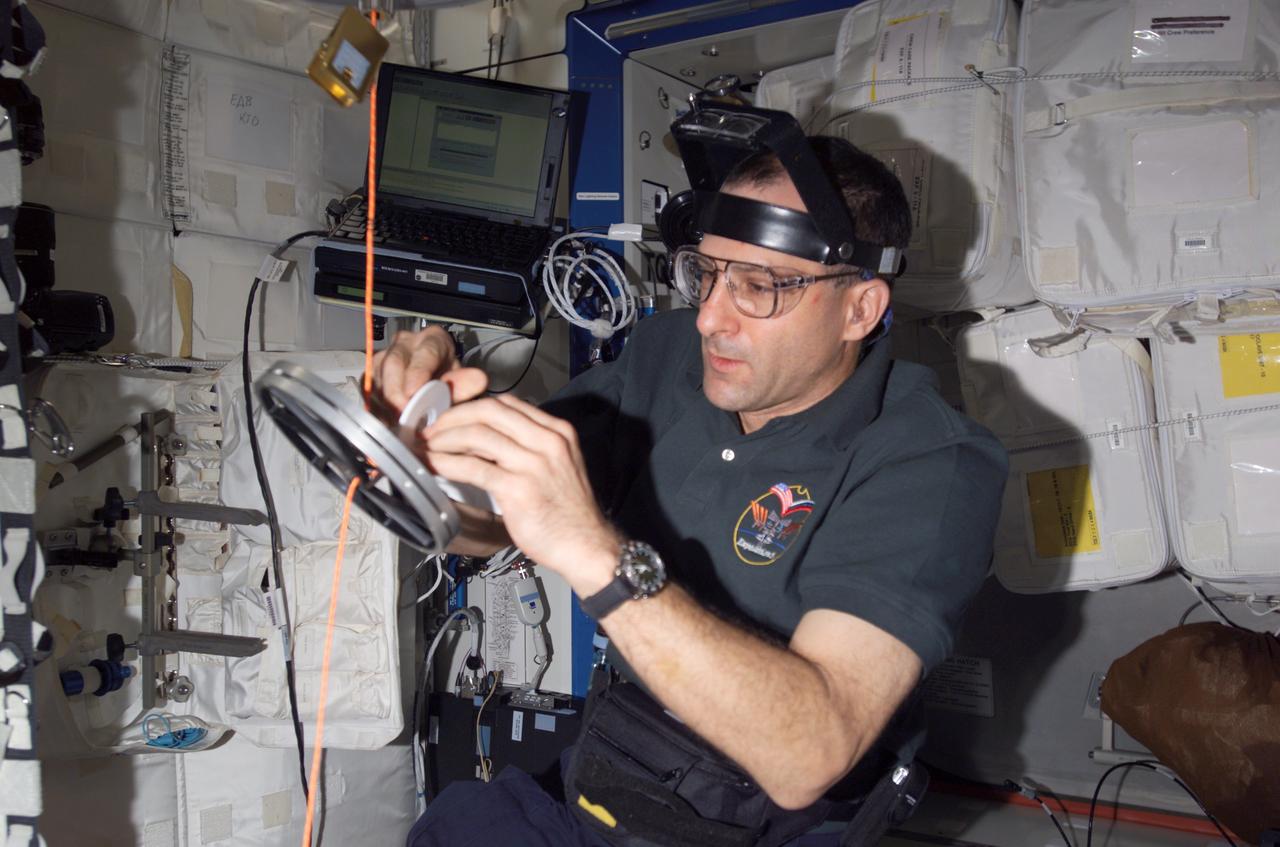
ISS006-E-08766 (13 December 2002) --- Astronaut Donald R. Pettit, Expedition 6 NASA ISS science officer, performs scheduled in-flight maintenance (IFM) in the Destiny laboratory on the International Space Station (ISS).

ISS005-E-17235 (13 October 2002) --- The Space Shuttle Atlantis’ payload bay and vertical stabilizer are backdropped against a blue and white Earth. Atlantis was docked with the International Space Station (ISS) at the time.
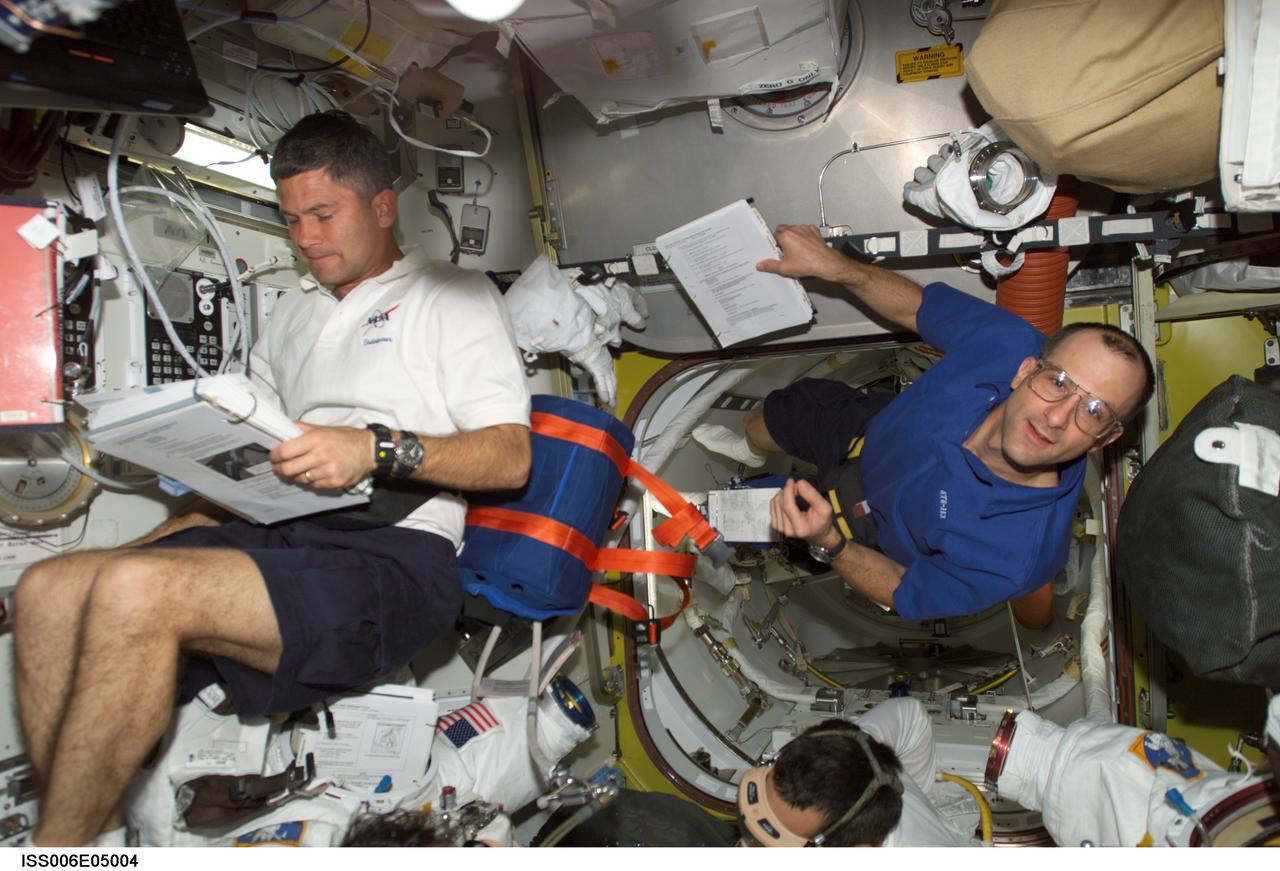
ISS006-E-05004 (28 November 2002) --- Astronaut Paul S. Lockhart (left), STS-113 pilot, looks over a procedures checklist as astronaut Donald R. Pettit, Expedition Six NASA ISS science officer, floats into the Quest Airlock on the International Space Station (ISS).
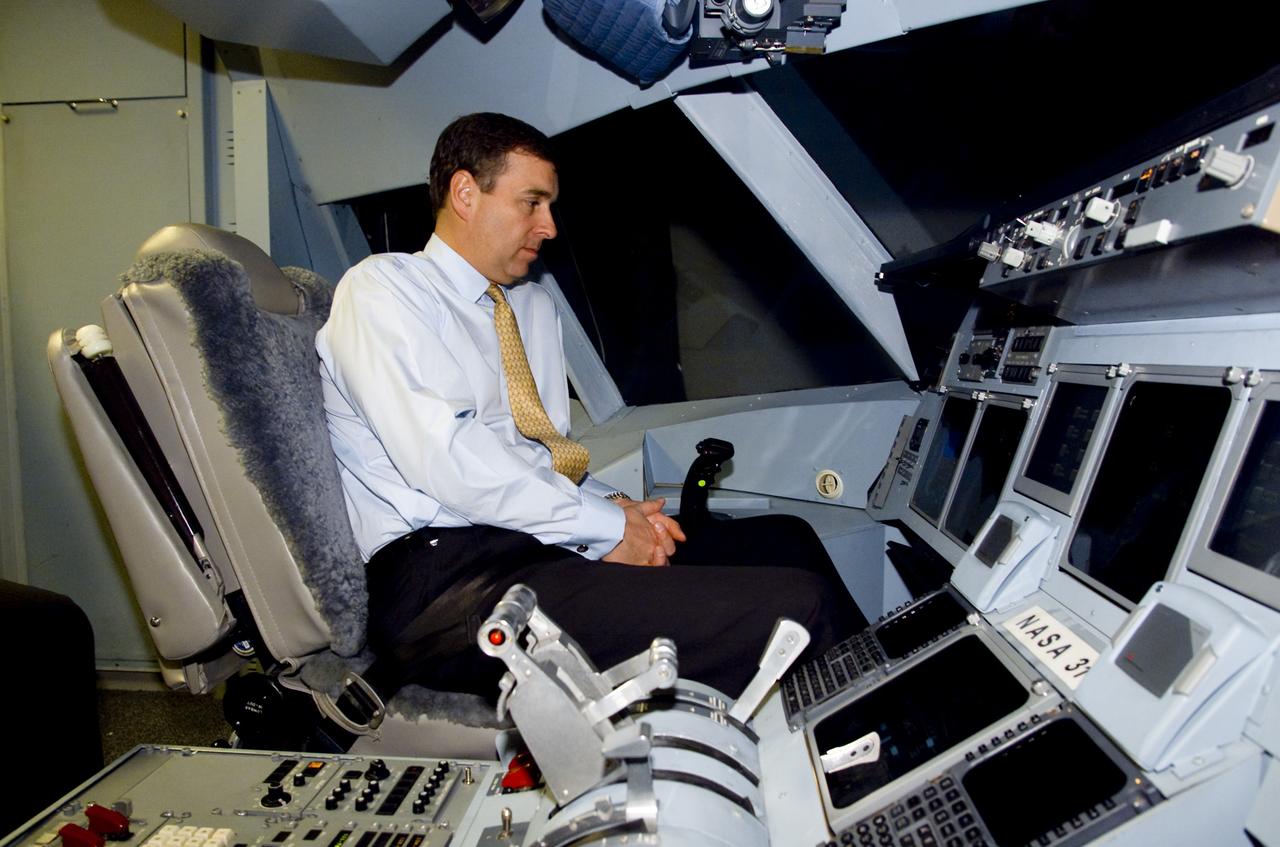
British royalty visits Ames; Prince Andrew, Duke of York on tour of CVSRF
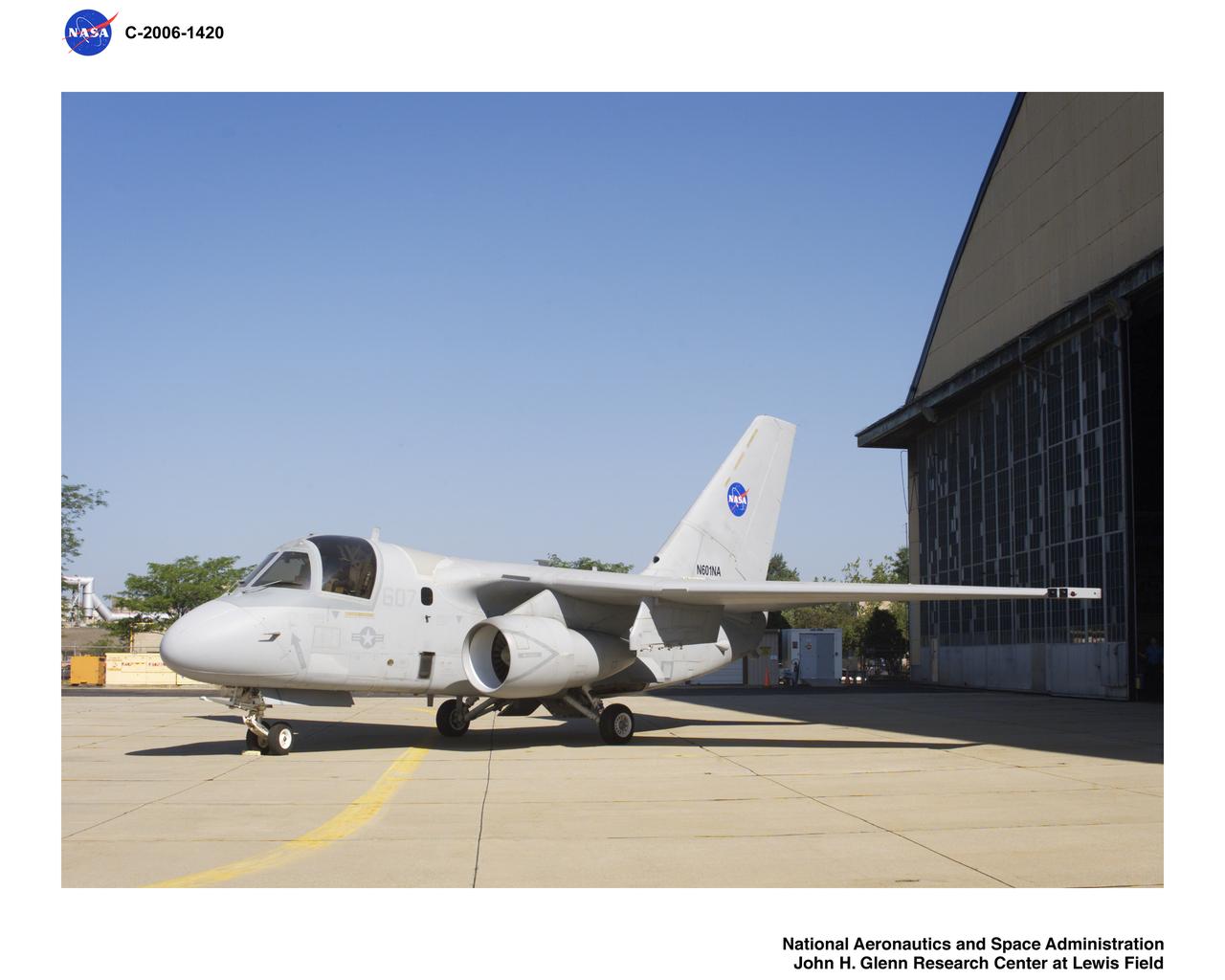
S-3 VIKING Aircraft
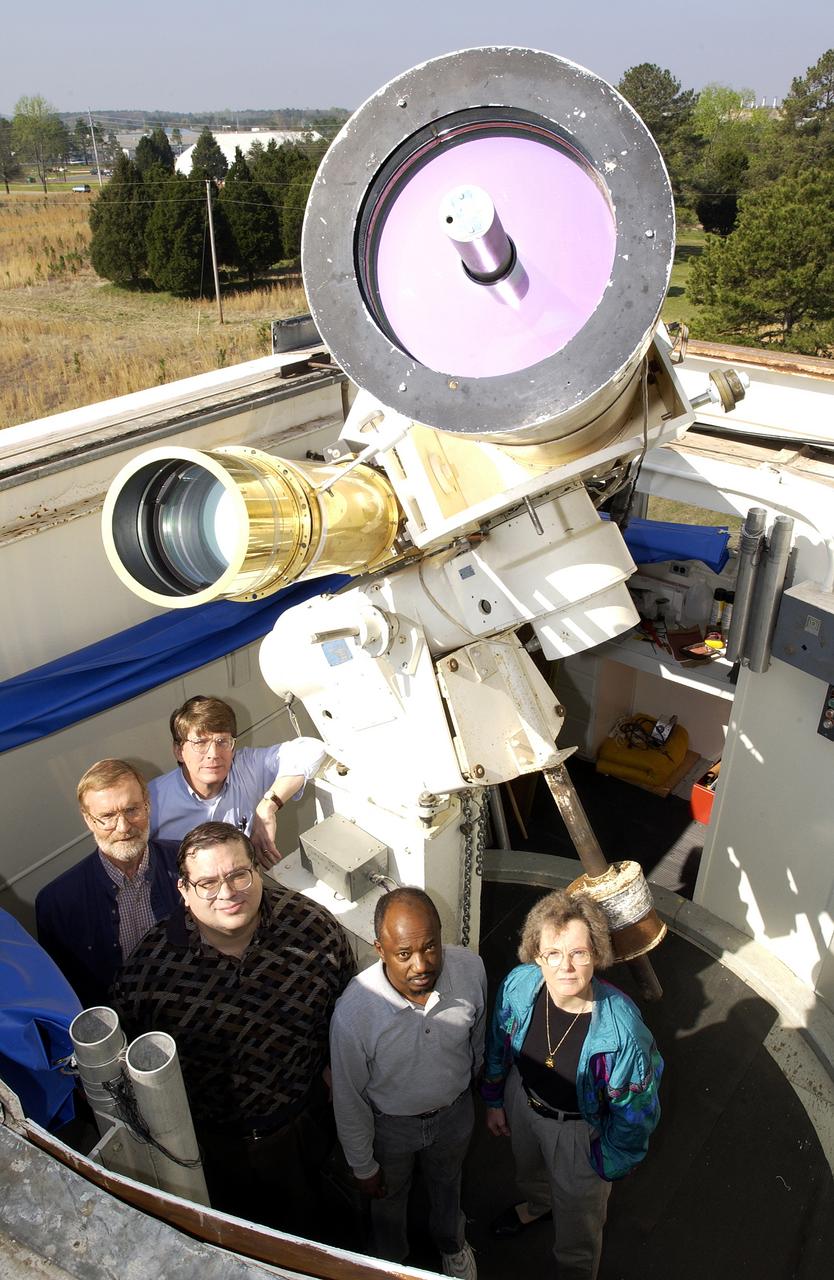
Using the Solar Vector Magnetograph, a solar observation facility at NASA's Marshall Space Flight Center (MSFC), scientists from the National Space Science and Technology Center (NSSTC) in Huntsville, Alabama, are monitoring the explosive potential of magnetic areas of the Sun. This effort could someday lead to better prediction of severe space weather, a phenomenon that occurs when blasts of particles and magnetic fields from the Sun impact the magnetosphere, the magnetic bubble around the Earth. When massive solar explosions, known as coronal mass ejections, blast through the Sun's outer atmosphere and plow toward Earth at speeds of thousands of miles per second, the resulting effects can be harmful to communication satellites and astronauts outside the Earth's magnetosphere. Like severe weather on Earth, severe space weather can be costly. On the ground, magnetic storms wrought by these solar particles can knock out electric power. Photographed are a group of contributing researchers in front of the Solar Vector Magnetograph at MSFC. The researchers are part of NSSTC's solar physics group, which develops instruments for measuring magnetic fields on the Sun. With these instruments, the group studies the origin, structure, and evolution of the solar magnetic fields and the impact they have on Earth's space environment.
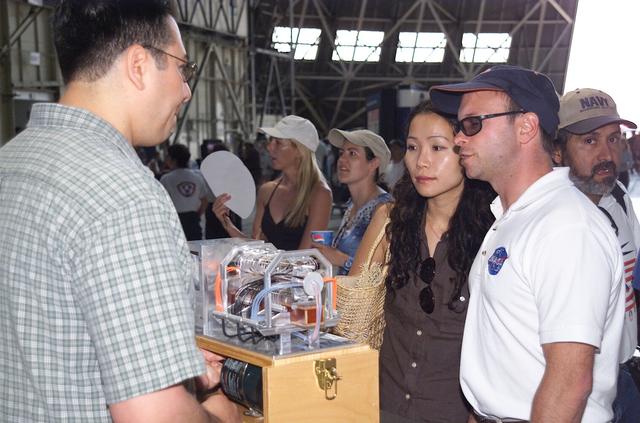
Airshow hosted by Moffett Federal Airfield
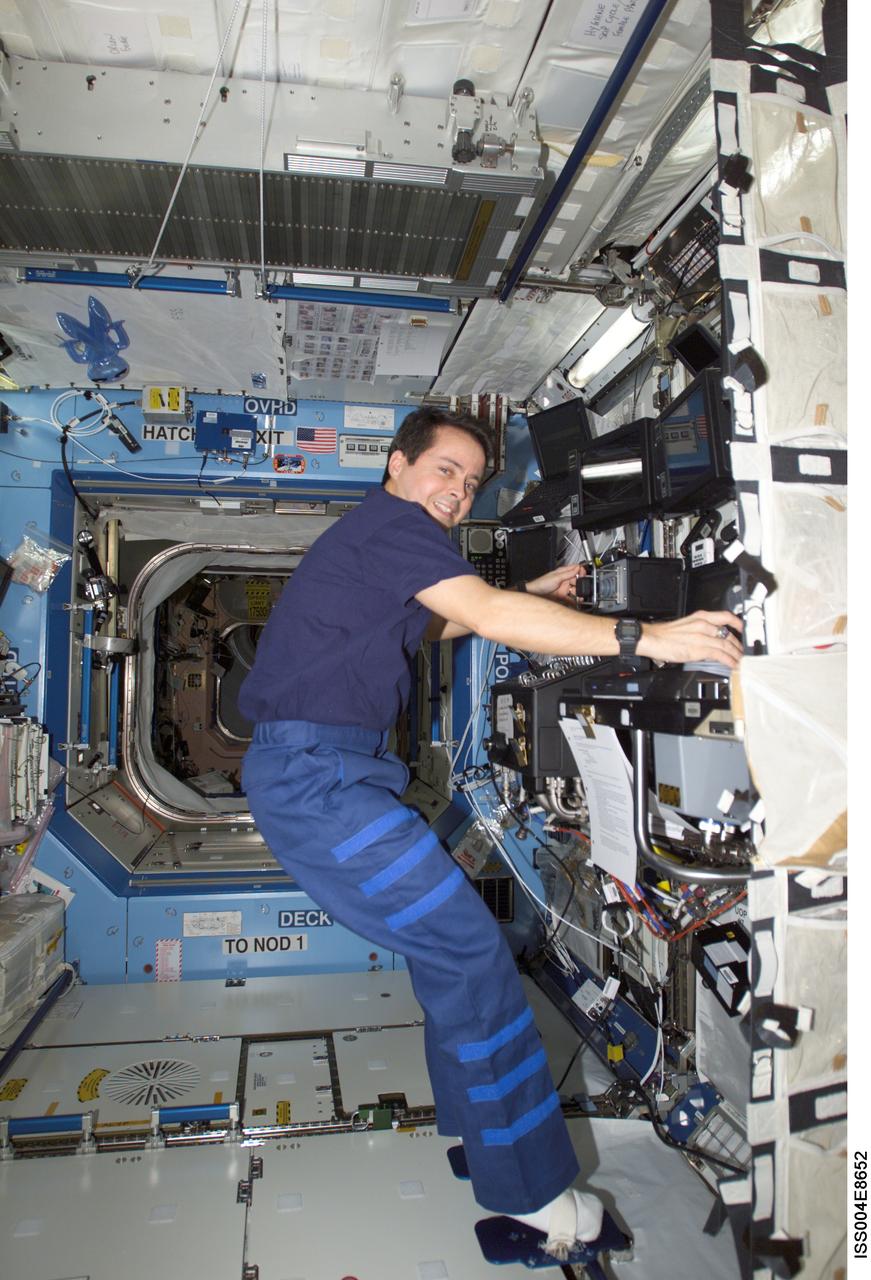
ISS004-E-8652 (14 March 2002) --- Astronaut Daniel W. Bursch, Expedition Four flight engineer, works the controls of the Canadarm2, or Space Station Remote Manipulator System (SSRMS) in the Destiny laboratory on the International Space Station (ISS). This image was taken with a digital still camera.
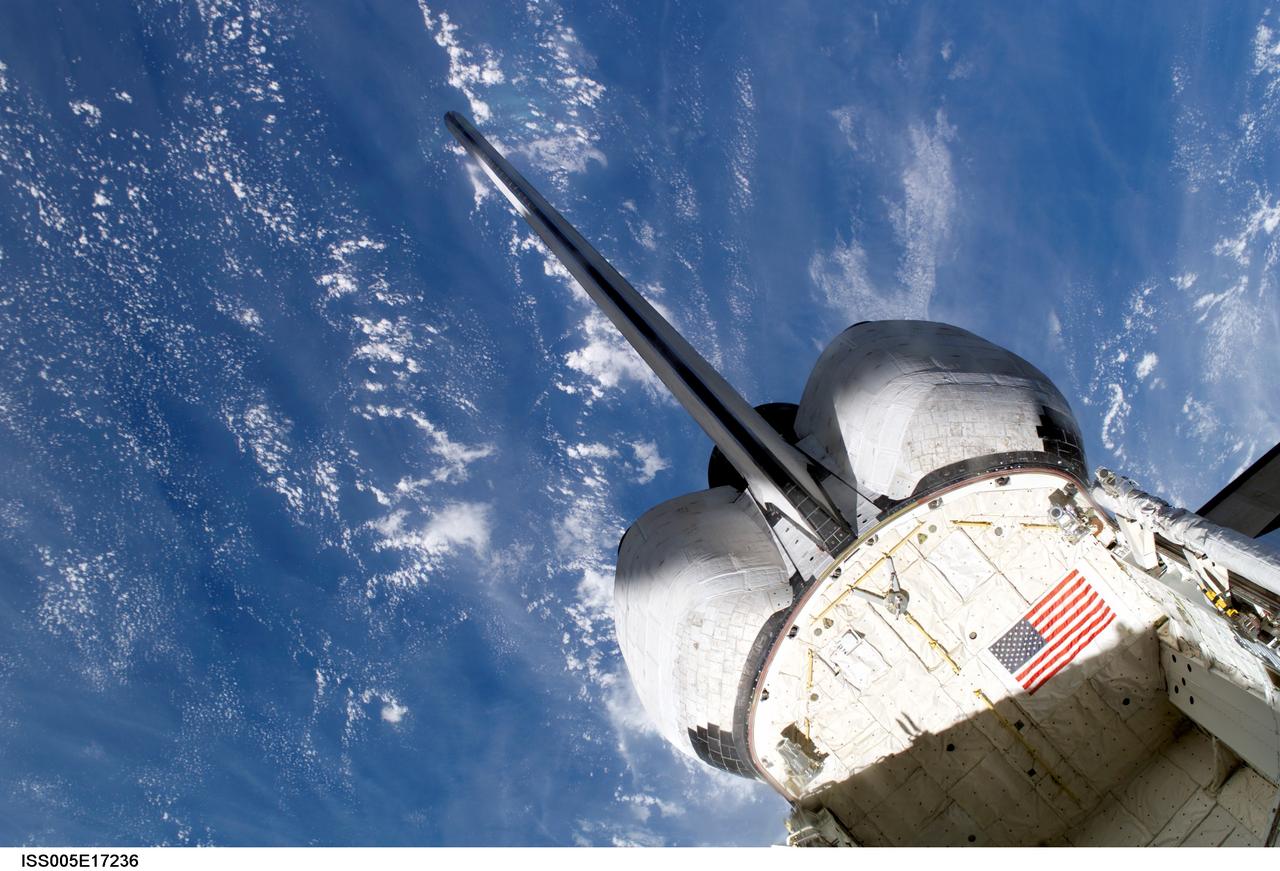
ISS005-E-17236 (13 October 2002) --- The Space Shuttle Atlantis’ payload bay and vertical stabilizer are backdropped against a blue and white Earth. Atlantis was docked with the International Space Station (ISS) at the time.
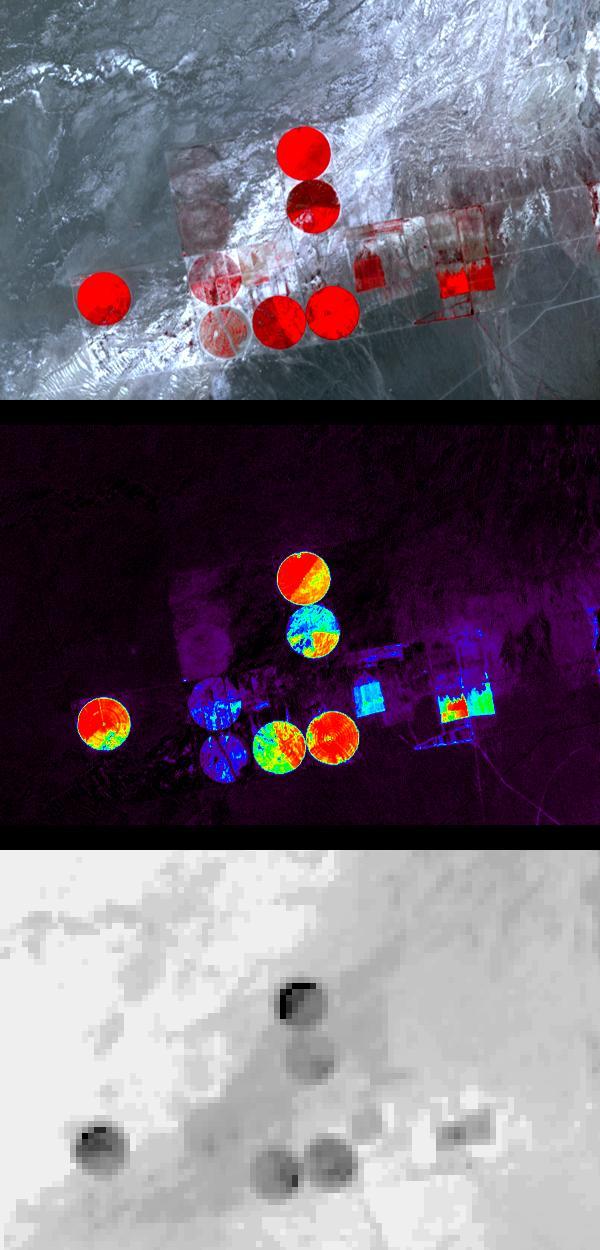
Information from images of Railroad Valley, Nevada captured on August 17, 2001 by the Advanced Spaceborne Thermal Emission and Reflection Radiometer (ASTER) may provide a powerful tool for monitoring crop health and maintenance procedures. These images cover an area of north central Nevada. The top image shows irrigated fields, with healthy vegetation in red. The middle image highlights the amount of vegetation. The color code shows highest vegetation content in red, orange, yellow, green, blue, and purple and the lowest in black. The final image is a thermal infrared channel, with warmer temperatures in white and colder in black. In the thermal image, the northernmost and westernmost fields are markedly colder on their northwest areas, even though no differences are seen in the visible image or the second, Vegetation Index image. This can be attributed to the presence of excess water, which can lead to crop damage. http://photojournal.jpl.nasa.gov/catalog/PIA03463

KENNEDY SPACE CENTER, FLA. --STS-112 Pilot Pamela Melroy prepares to taxi the Shuttle Training Aircraft to the runway at the Shuttle Landing Facility as part of landing exercises.

KENNEDY SPACE CENTER, FLA. -- STS-111 Mission Specialist Franklin Chang-Diaz (left) settles in the seat of the slidewire basket on Launch Pad 39A while Mission Specialist Philippe Perrin (right), who is with the French Space Agency, reaches for the release lever. They and the rest of the STS-111 crew and Expedition 5 crew are taking part in Terminal Countdown Demonstration Test activities, which include emergency egress training and a simulated launch countdown. Mission STS-111 is Utilization Flight 2, carrying equipment and supplies in the Multi-Purpose Logistics Module Leonardo to the International Space Station, plus the Mobile Base System (MBA) and an Orbital Replacement Unit. The MBS will be installed on the Mobile Transporter to complete the Canadian Mobile Servicing System, or MSS, enabling Canadarm 2 to "inchworm" from the U.S. Lab Destiny to the MSS and travel along the truss to work sites. The Expedition 5 crew is traveling on Endeavour to replace the Expedition 4 crew on the Station. Launch of Endeavour is scheduled for May 30, 2002
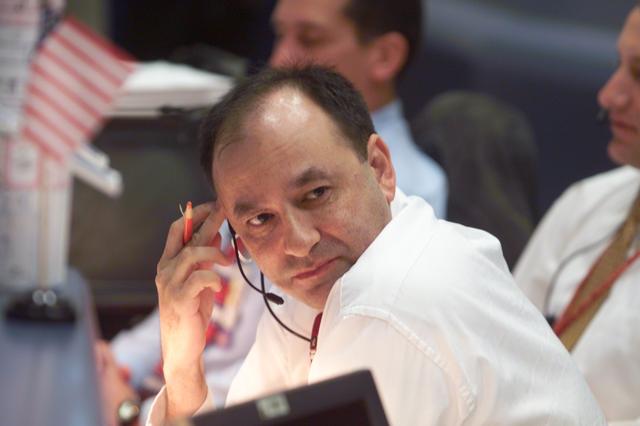
JSC2002-E-08148 (1 March 2002) --- Astronaut Mark L. Polansky, seated at the Spacecraft Communicator (CAPCOM) console in the Shuttle Flight Control Room of the Johnson Space Center's Mission Control Center, talks on the communications "loop" with launch controllers in Florida about the pre-launch situation for the Space Shuttle Columbia and NASA's STS-109 mission at the Kennedy Space Center (KSC). Astronaut Polansky is ascent CAPCOM for the STS-109 mission.

The left wing of NASA's Altair unmanned aerial vehicle (UAV) rests in a jig during construction at General Atomics Aeronautical Systems, Inc., (GA-ASI) facility at Adelanto, Calif.
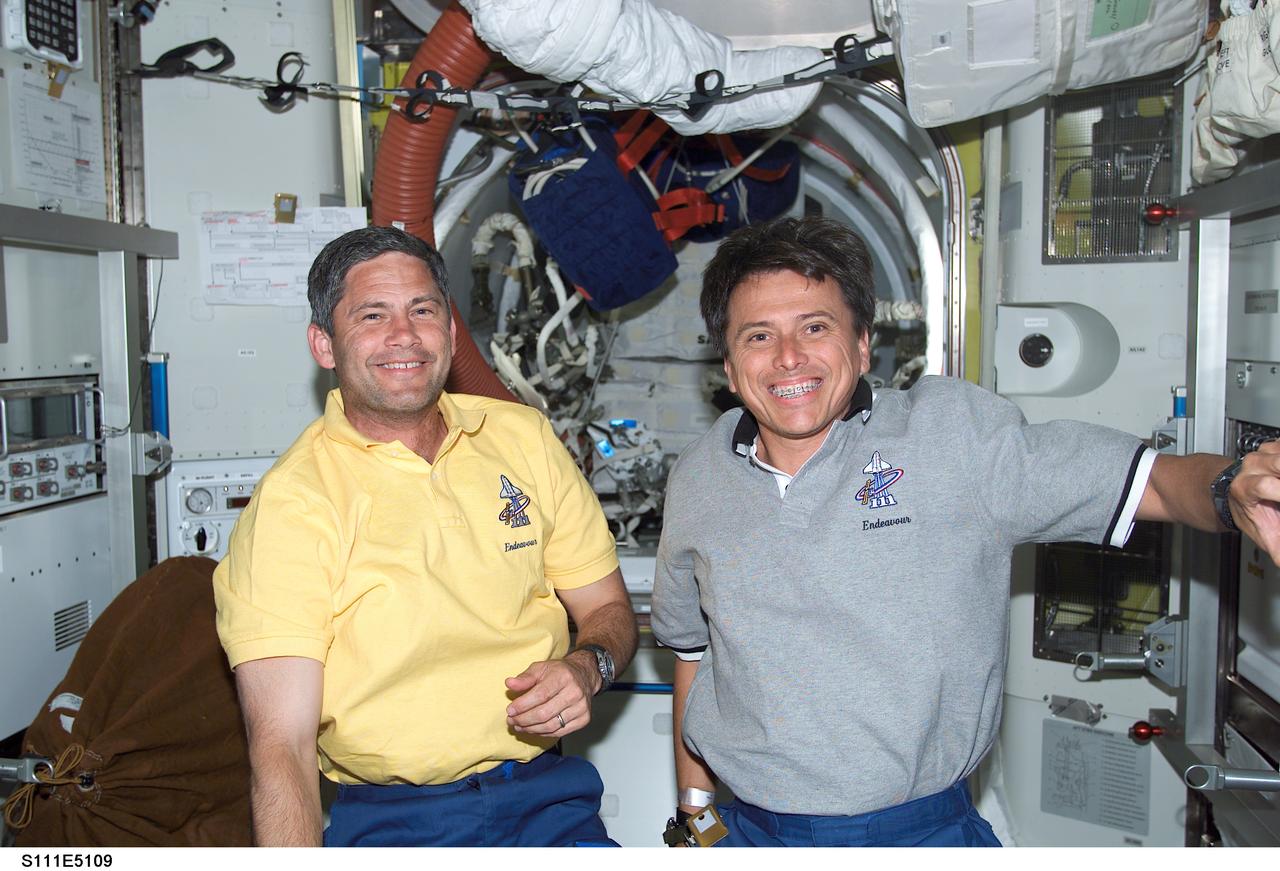
STS111-E-5109 (7 June 2002) --- Astronauts Paul S. Lockhart (left), STS-111 pilot, and Franklin R. Chang-Diaz, mission specialist, greet Expedition Four members (out of frame) with smiles during a brief reunion not long after hatch-opening on June 7, 2002.
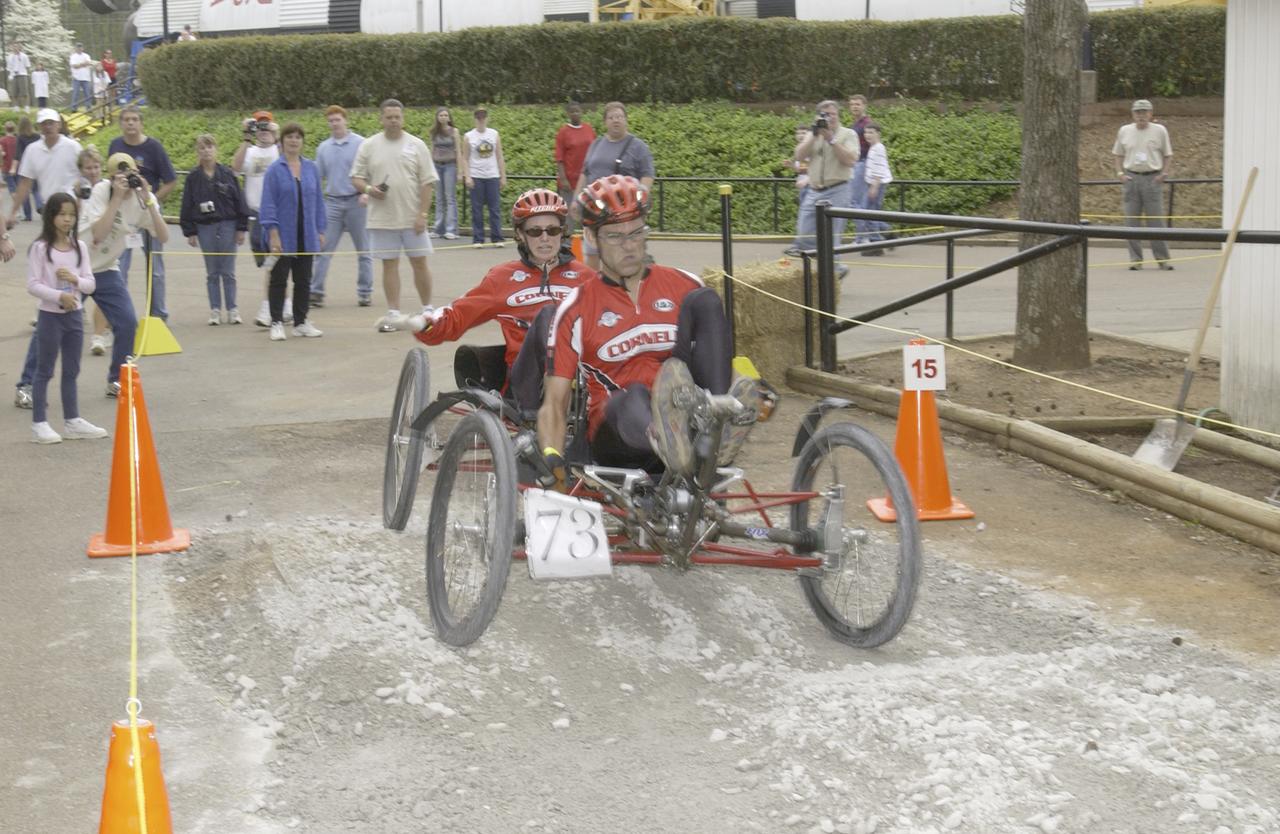
Students from across the United States and as far away as Puerto Rico and South America came to Huntsville, Alabama for the 9th annual Great Moonbuggy Race at the U.S. Space Rocket Center. Seventy-seven teams, representing high schools and colleges from 21 states, Puerto Rico, and Columbia, raced human powered vehicles over a lunar-like terrain. A team from Cornell University in Ithaca, New York, took the first place honor in the college division. This photograph shows the Cornell #2 team driving their vehicle through the course. The team finished the race in second place in the college division. Vehicles powered by two team members, one male and one female, raced one at a time over a half-mile obstacle course of simulated moonscape terrain. The competition is inspired by development, some 30 years ago, of the Lunar Roving Vehicle (LRV), a program managed by the Marshall Space Flight Center. The LRV team had to design a compact, lightweight, all-terrain vehicle, that could be transported to the Moon in the small Apollo spacecraft. The Great Moonbuggy Race challenges students to design and build a human powered vehicle so they will learn how to deal with real-world engineering problems, similar to those faced by the actual NASA LRV team.
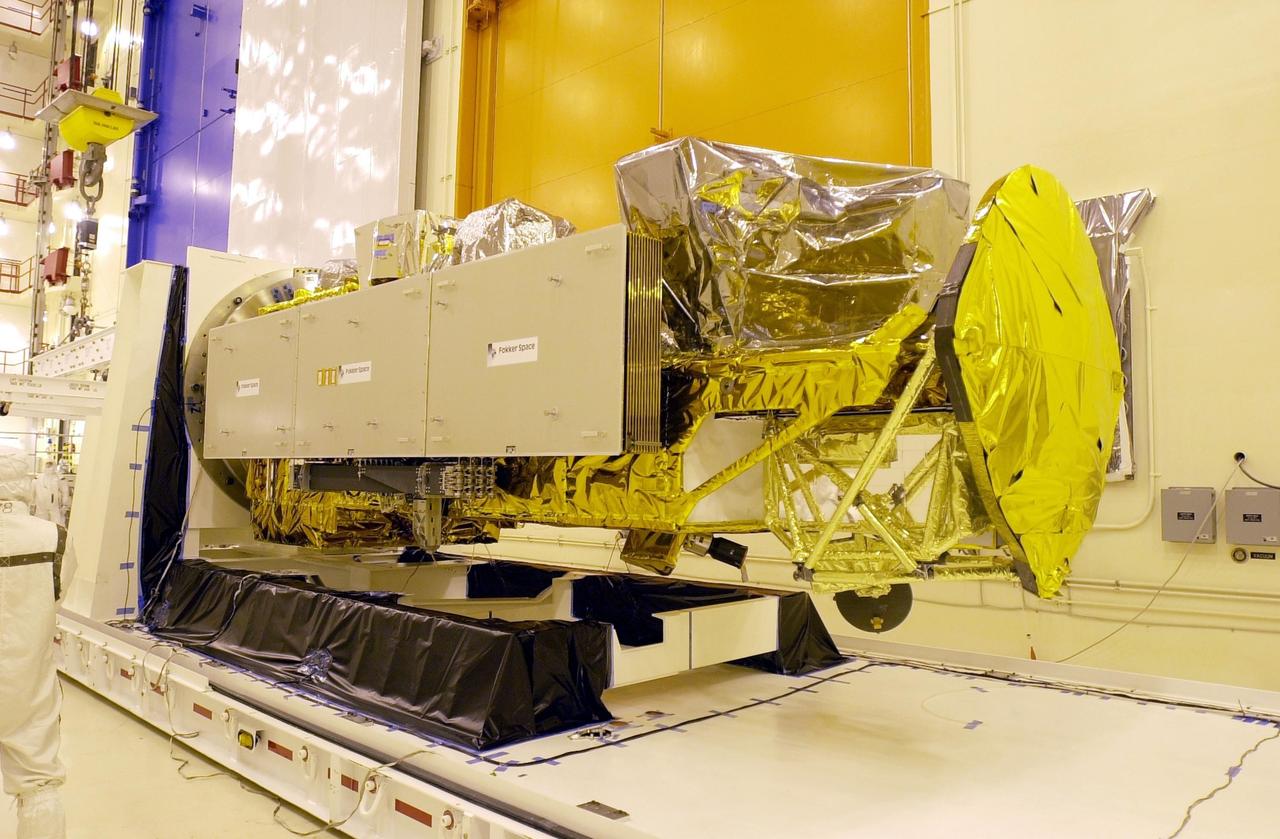
VANDENBERG AFB, CALIF. -- The Aqua-EOS satellite rests on a stand in the Spaceport Systems International (SSI) payload processing facility on South Vandenberg AFB. Aqua will provide a six year chronology of the planet and its processes. Comprehensive measurements taken by its onboard instruments will allow scientists to assess long-term change, identify its human and natural causes and advance the development of models for long-term forecasting. The Focus for the Aqua Project is the multi-disciplinary study of the Earth's Interrelated Processes (atmosphere, oceans, and land surface) and their relationship to earth system changes. The global change research emphasized with the Aqua instrument data sets include: atmospheric temperature and humidity profiles, clouds, precipitation and radiative balance; terrestrial snow and sea ice; sea surface temperature and ocean productivity; soil moisture; and the improvement of numerical weather prediction. Aqua-EOS is scheduled for launch aboard a Delta II 7920-10L vehicle on April 18, 2002
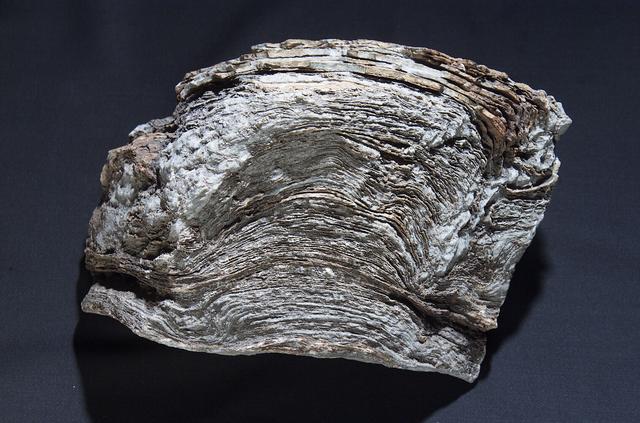
Microbial Mats; n-239 roof, Greenhouse one: stomatolite
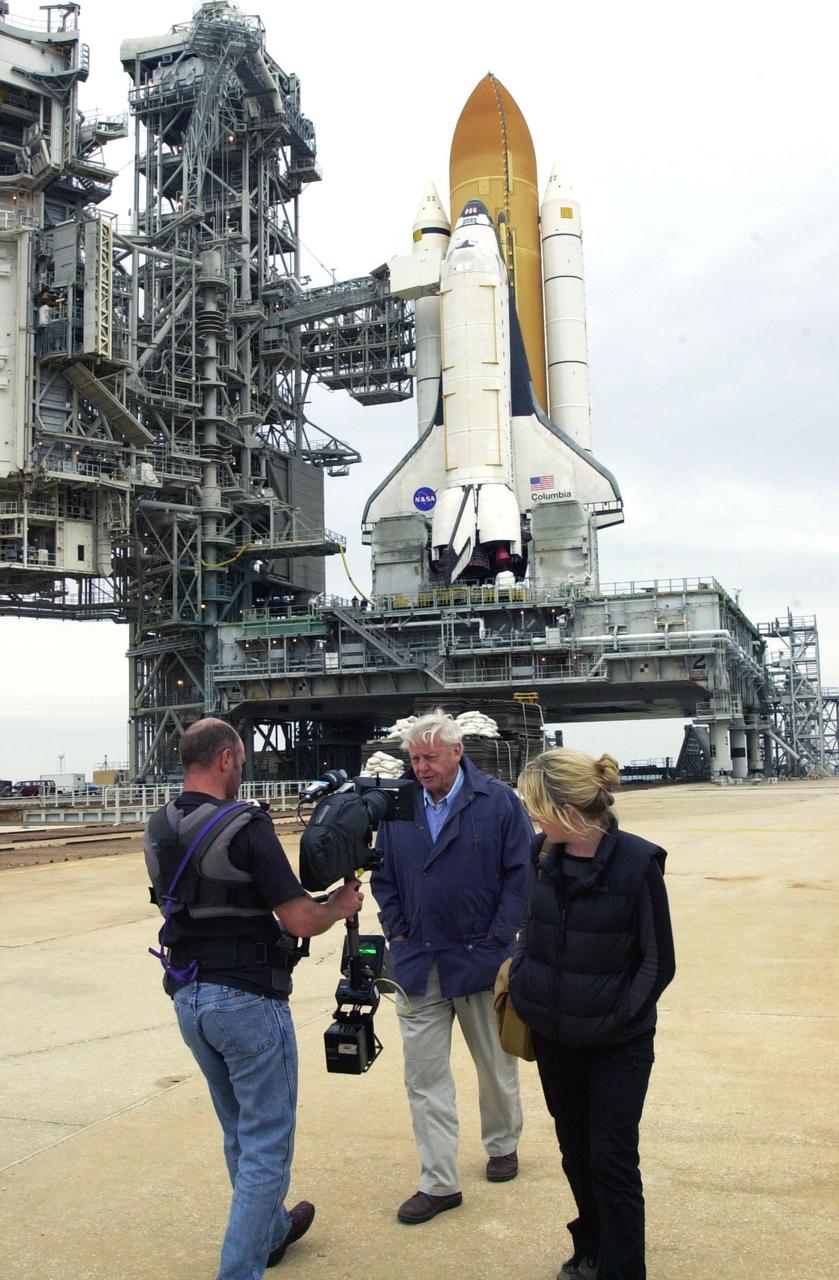
KENNEDY SPACE CENTER, FLA. - Sir David Attenborough (center) works with a film crew on Launch Pad 39A. Space Shuttle Columbia, atop the Mobile Launcher Platform, is seen in the background. At left are the Rotating Service Structure, which is open, and the Fixed Service Structure. Attenborough is filming commentary for a documentary
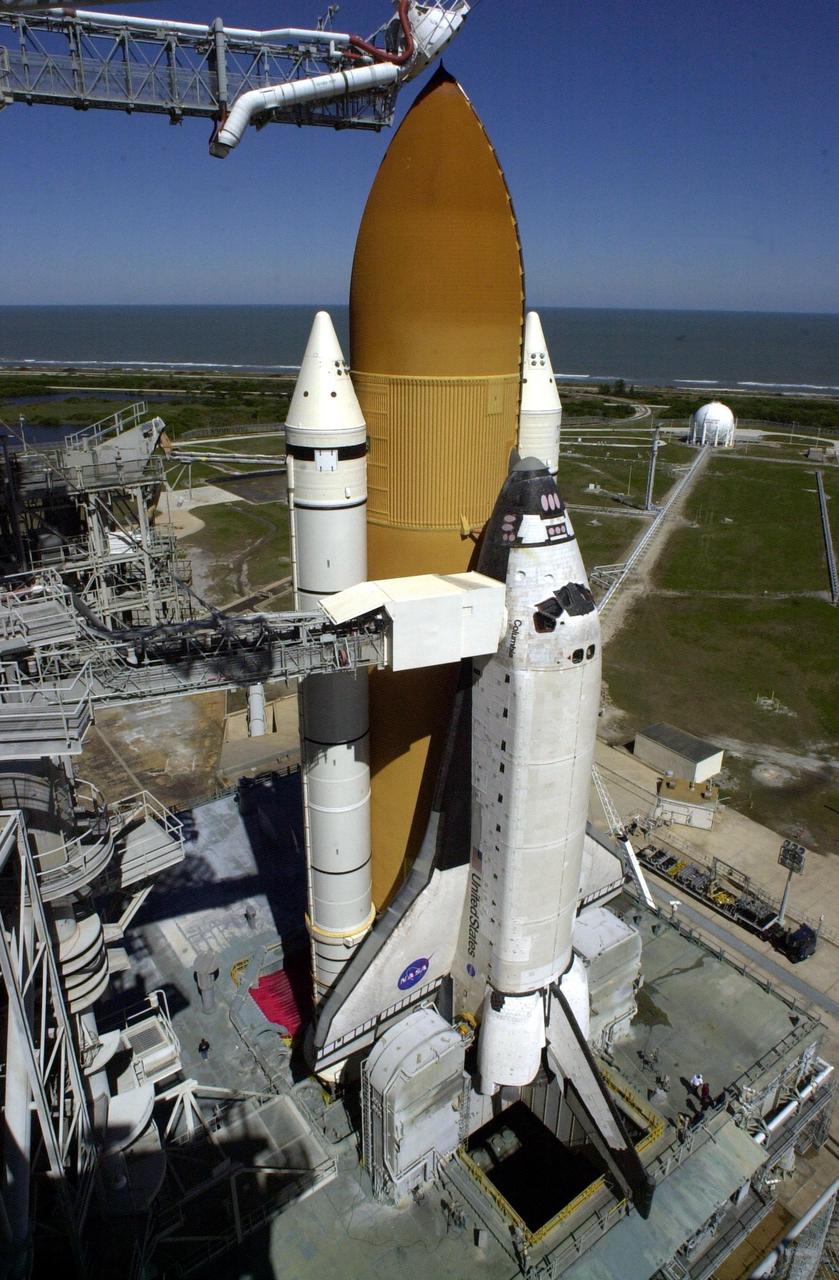
KENNEDY SPACE CENTER, FLA. - After rollback of the Rotating Service Structure, Space Shuttle Columbia is revealed waiting for launch Feb. 28, 2002, at 6:48 a.m. EST (11:48 GMT) on mission STS-109. In the photo is seen the Orbiter Access Arm stretched to Columbia's cockpit, plus the "beanie cap" above the external tank. The cap is a vent hood allowing release of gaseous oxygen. A Hubble Servicing Mission, the goal is to replace Solar Array 2 with Solar Array 3, replace the Power Control Unit, remove the Faint Object Camera and install the ACS, install the Near Infrared Camera and Multi-Object Spectrometer (NICMOS) Cooling System, and install New Outer Blanket Layer insulation.

KENNEDY SPACE CENTER, FLA. -- In the White Room, STS-109 Commander Scott D. Altman (center) is helped by the Closeout Crew for launch. At left is Danny Wyatt, NASA quality assurance specialist; at right is Tim Seymour, United Space Alliance mechanical technician. On the mission, Space Shuttle Columbia will rendezvous with the Hubble Space Telescope for the crew to replace and upgrade key telescope systems through five challenging spacewalks. After an extensive 2-1/2 year modification period during which many systems were replaced and enhanced, Columbia is making its 27th flight in the Shuttle program. After the 11-day mission, Columbia is expected to land at Kennedy Space Center March 12
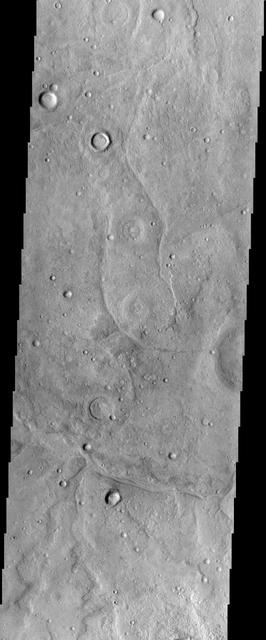
This image from NASA Mars Odyssey is of a region of Mars called Tempe Terra, which is located between the topographically high Tharsis Region and Acidalia Planitia, a large low albedo region of in the Martian northern hemisphere.
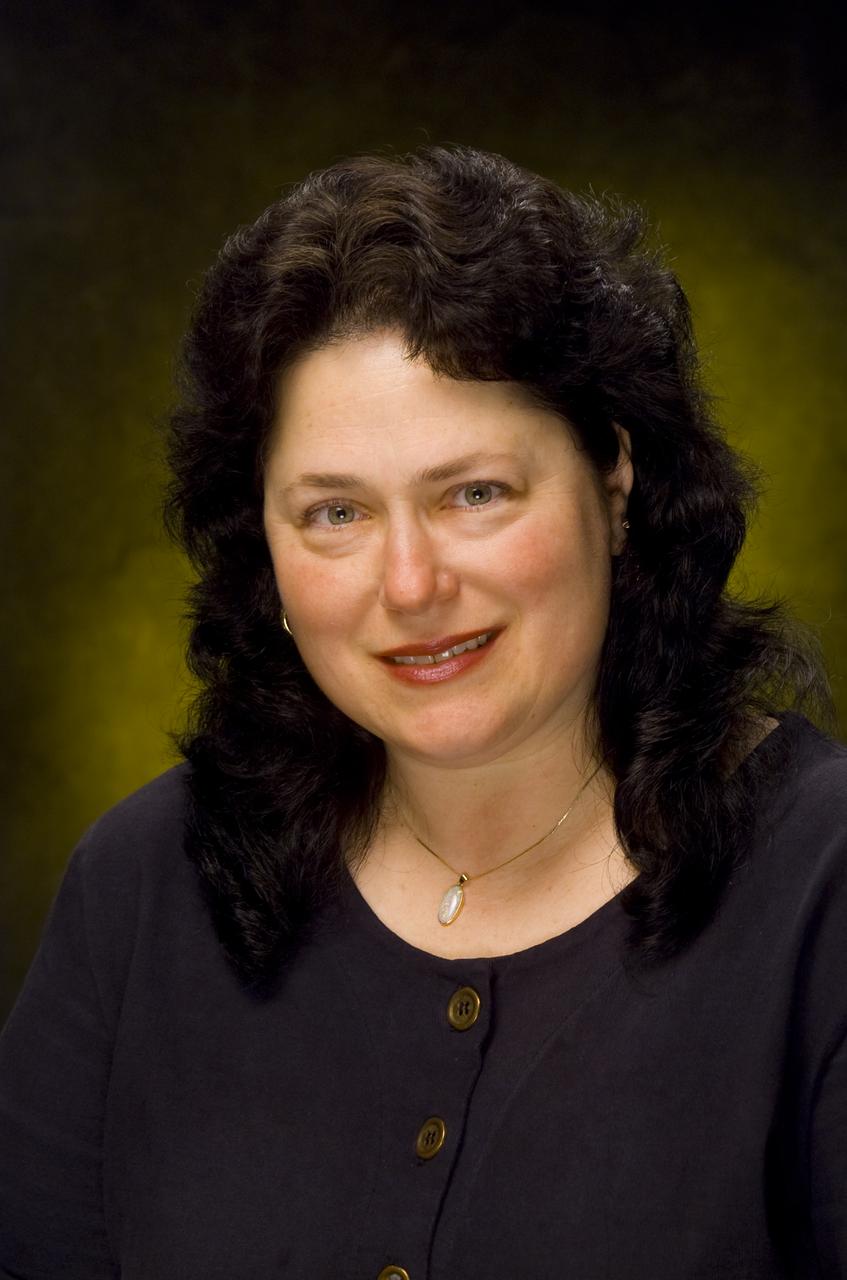
portrait: Miriam Glazer
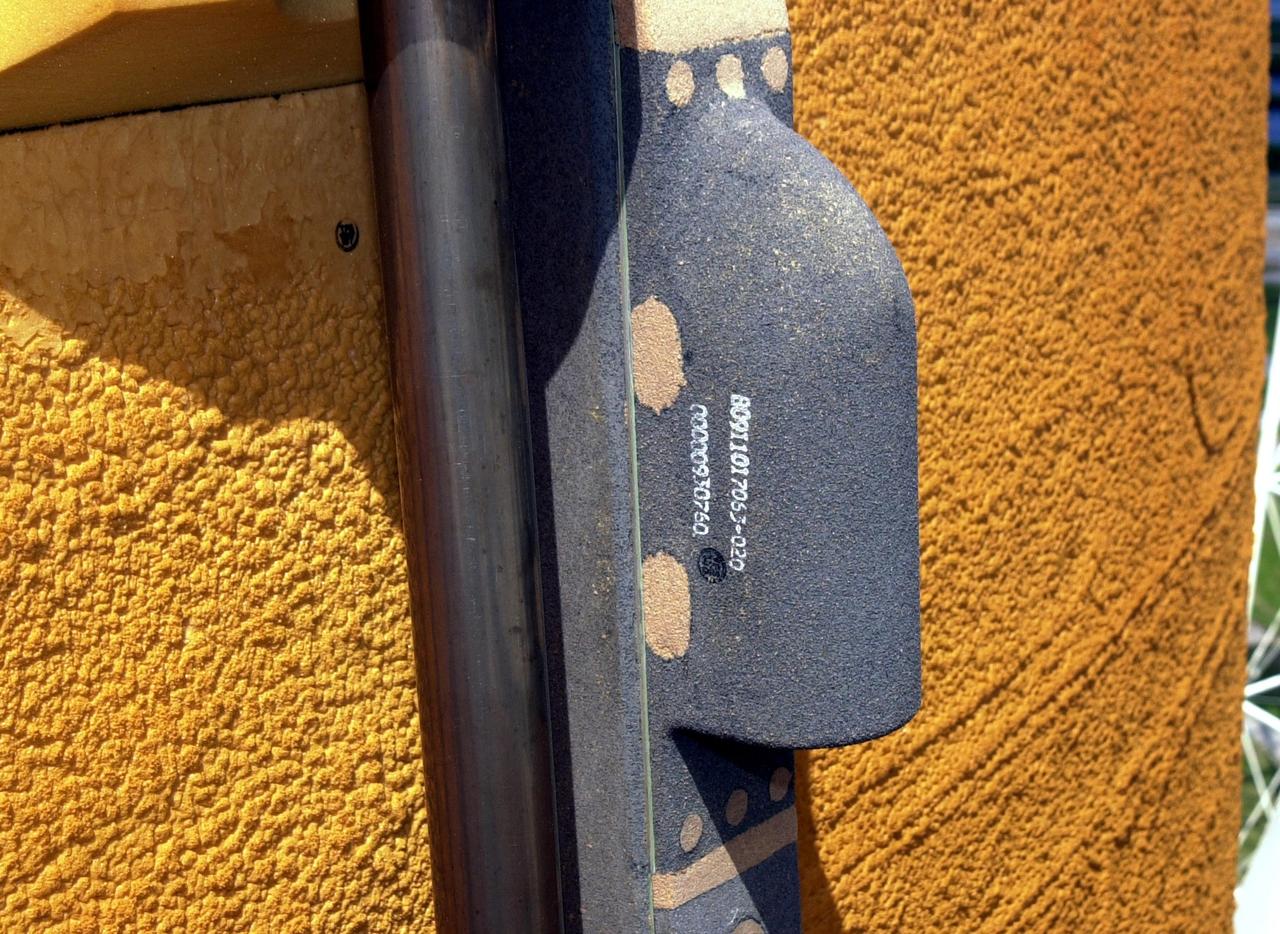
KENNEDY SPACE CENTER, FLA. - A closeup view of the camera mounted on the external tank of Space Shuttle Atlantis. The color video camera mounted to the top of Atlantis' external tank will provide a view of the front and belly of the orbiter and a portion of the solid rocket boosters (SRBs) and external tank during the launch of Atlantis on mission STS-112. It will offer the STS-112 team an opportunity to monitor the shuttle's performance from a new angle. The camera will be turned on fifteen minutes prior to launch and will show the orbiter and solid rocket boosters on the launch pad. The video will be downlinked from the external tank during flight to several NASA data-receiving sites and then relayed to the live television broadcast. The camera is expected to operate for about 15 minutes following liftoff. At liftoff, viewers will see the shuttle clearing the launch tower and, at two minutes after liftoff, see the right SRB separate from the external tank. When the external tank separates from Atlantis about eight minutes into the flight, the camera is expected to continue its live feed for about six more minutes although NASA may be unable to pick up the camera's signal because the tank may have moved out of range.
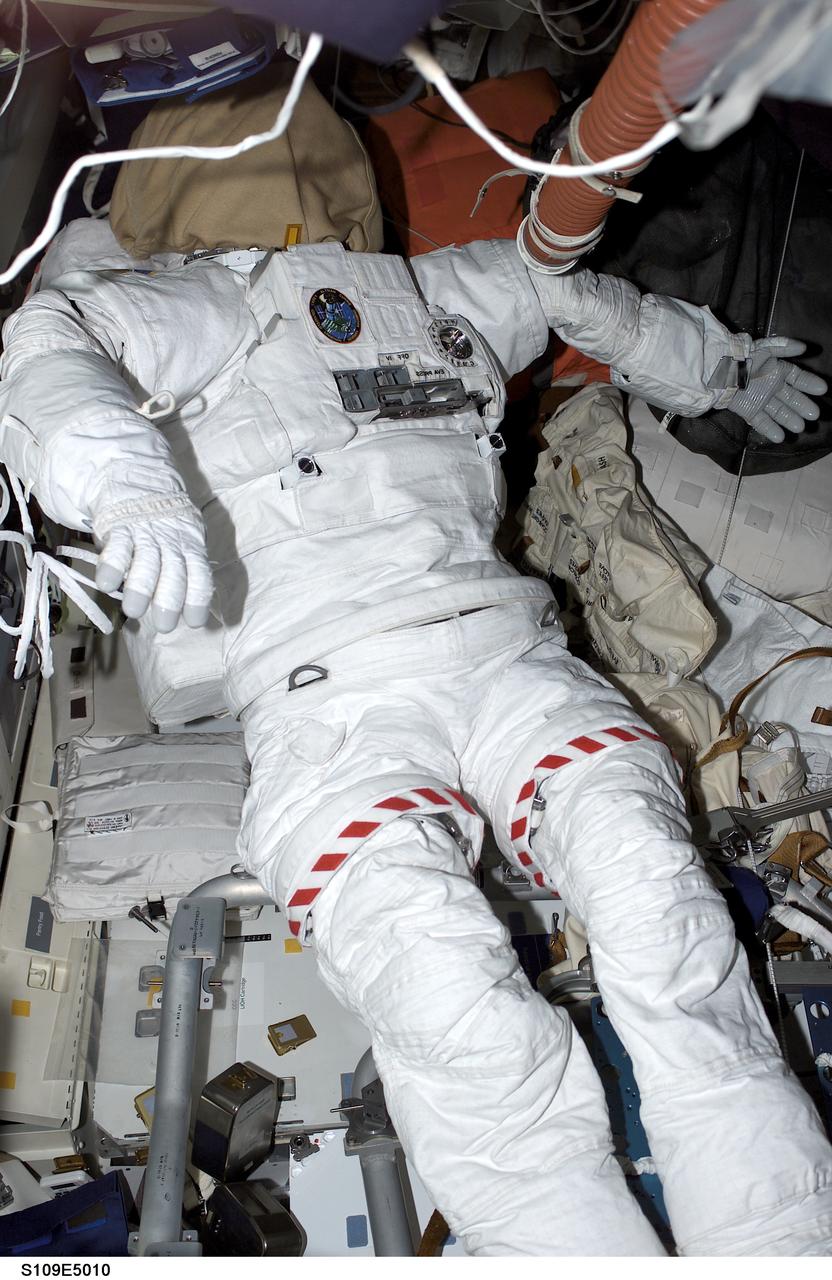
STS109-E-5010 (3 March 2002) --- On the mid deck of the Space Shuttle Columbia, the extravehicular mobility unit (EMU) space suit for astronaut Michael J. Massimino, mission specialist, appears ready for duty. The suit will be initially called on for support on the second day of extravehicular activity (EVA), as the second pair of STS-109 space walking astronauts gets into the act of working on the Hubble Space Telescope. The image was recorded with a digital still camera.
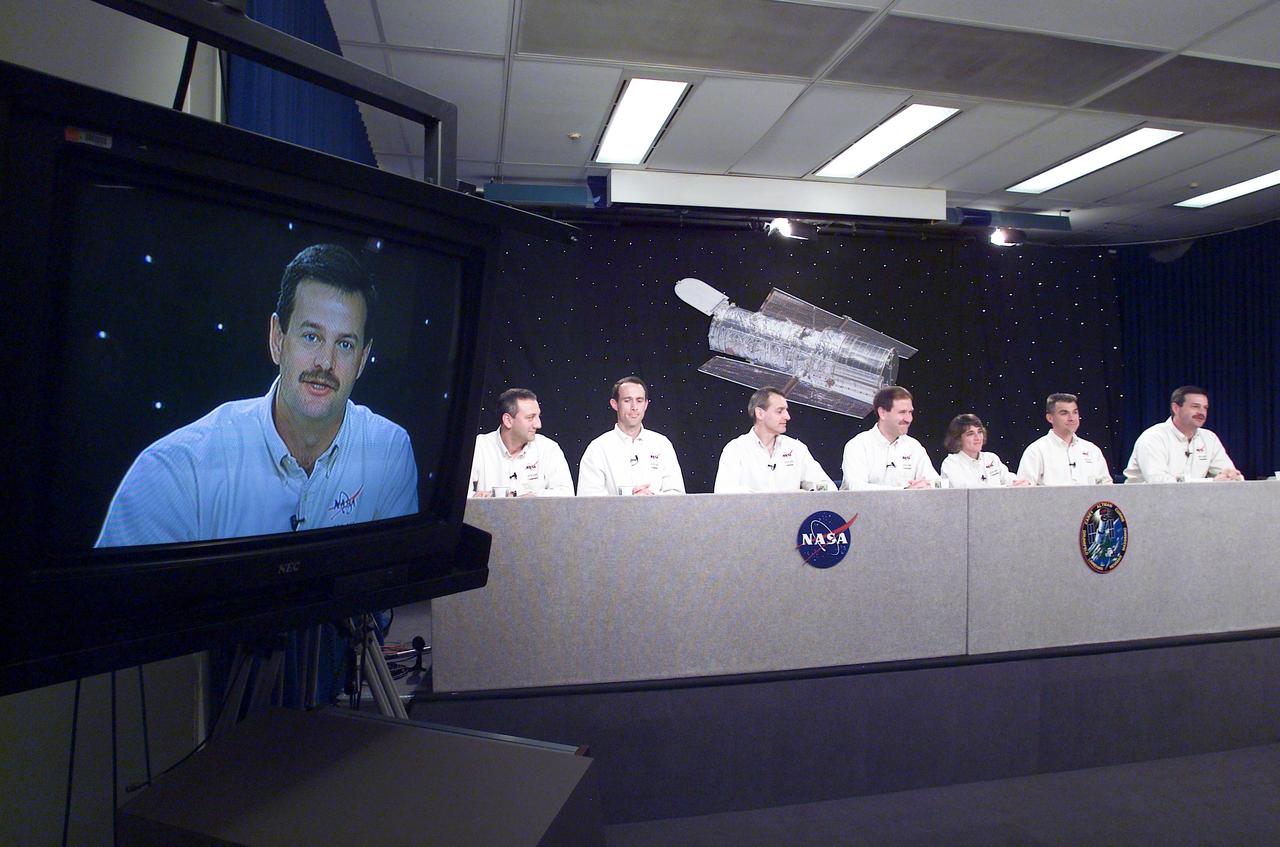
JSC2002-E-05106 (15 February 2002) --- A close-up image of astronaut Scott D. Altman, STS-109 mission commander, shows on a nearby television monitor during a pre-flight press conference at Johnson Space Center (JSC). The entire crew can be seen in the background.
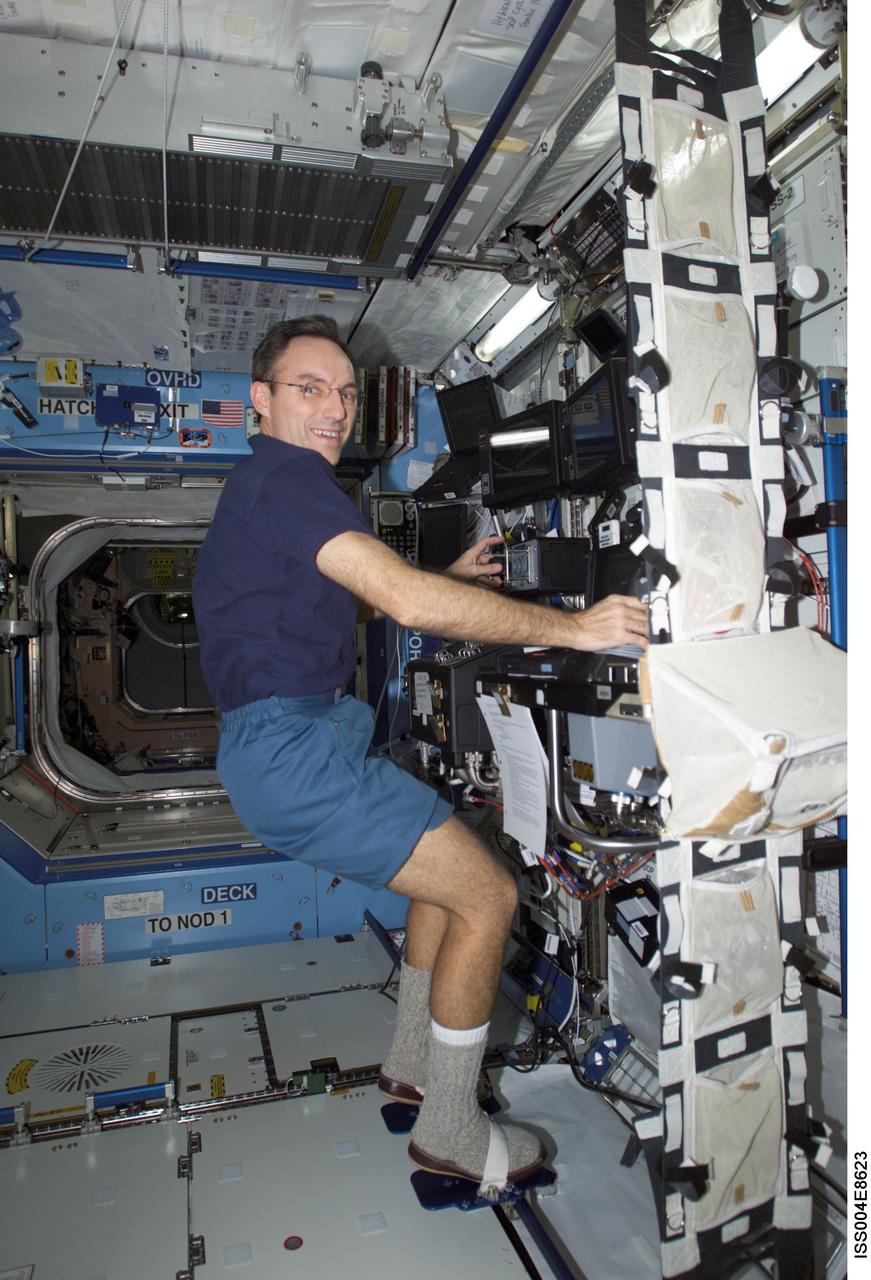
ISS004-E-8623 (14 March 2002) --- Astronaut Carl E. Walz, Expedition Four flight engineer, works the controls of the Canadarm2, or Space Station Remote Manipulator System (SSRMS) in the Destiny laboratory on the International Space Station (ISS). This image was taken with a digital still camera.

NASA Dryden F-18 #843 in flight
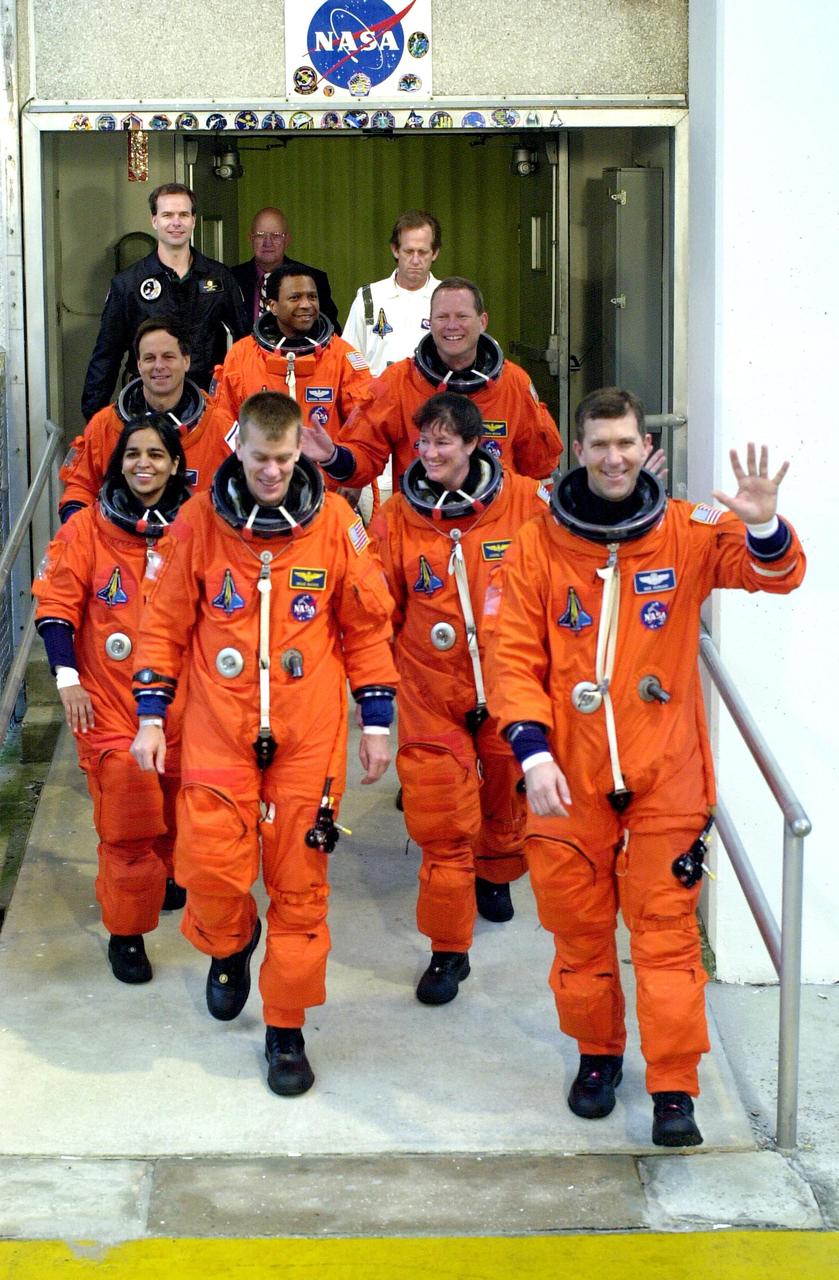
KENNEDY SPACE CENTER, FLA. -- The STS-107 crew exits the Operations and Checkout Building for a ride to Launch Pad 39A and a simulated launch countdown. From left are Payload Specialist Ilan Ramon, Mission Specialist Kalpana Chawla, Payload Commander Michael Anderson, Mission Specialist David Brown, Pilot William "Willie" McCool, Mission Specialist Laurel Clark and Commander Rick Husband. The countdown is part of Terminal Countdown Demonstration Test activities. STS-107 is a mission devoted to research and will include more than 80 experiments that will study Earth and space science, advanced technology development, and astronaut health and safety. Launch is planned for Jan. 16, 2003, between 10 a.m. and 2 p.m. EST aboard Space Shuttle Columbia. .
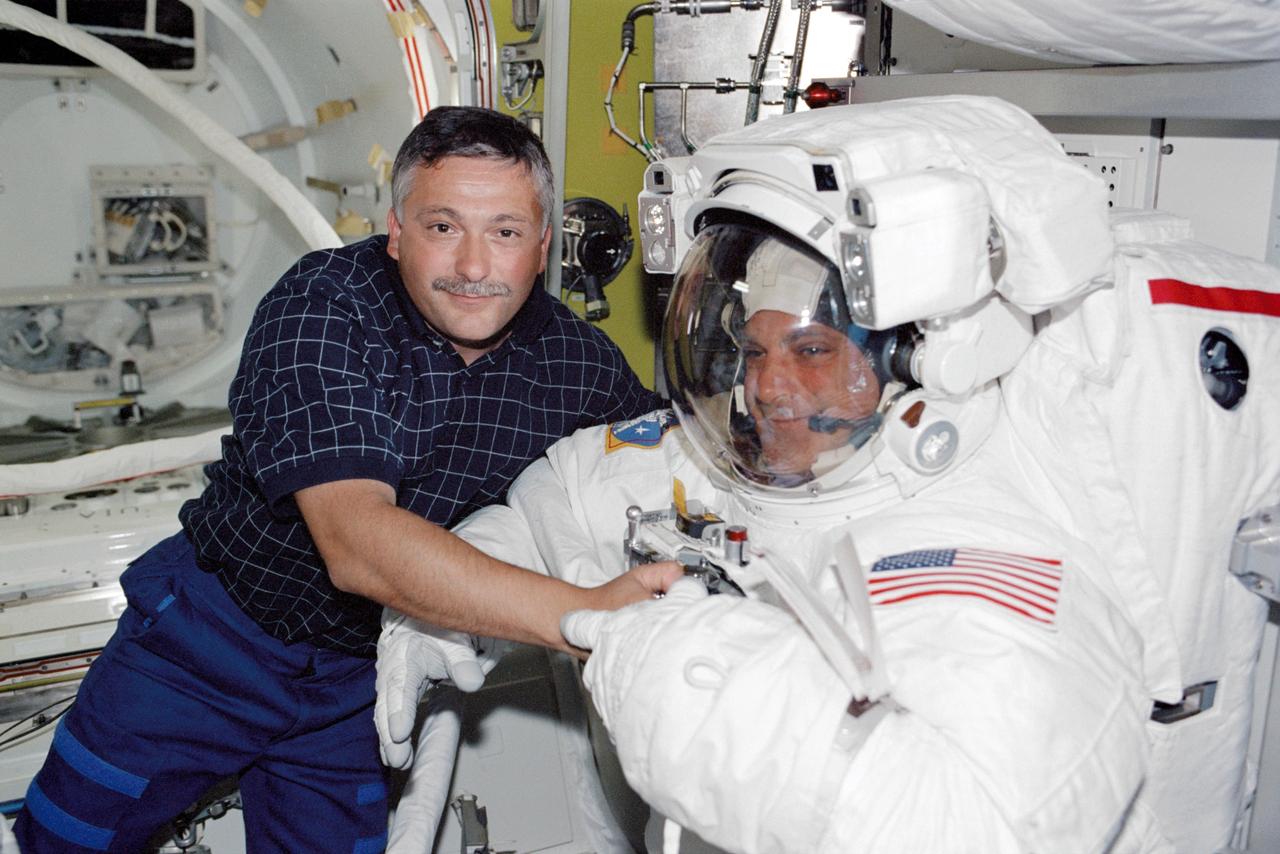
STS112-318-028 (14 October 2002) --- Cosmonaut Fyodor N. Yurchikhin (left), STS-112 mission specialist, assists astronaut David A. Wolf, mission specialist, with the final touches on his Extravehicular Mobility Unit (EMU) space suit in the Quest Airlock on the International Space Station (ISS). Yurchikhin represents Rosaviakosmos.

British royalty visits Ames; Prince Andrew, Duke of York on tour
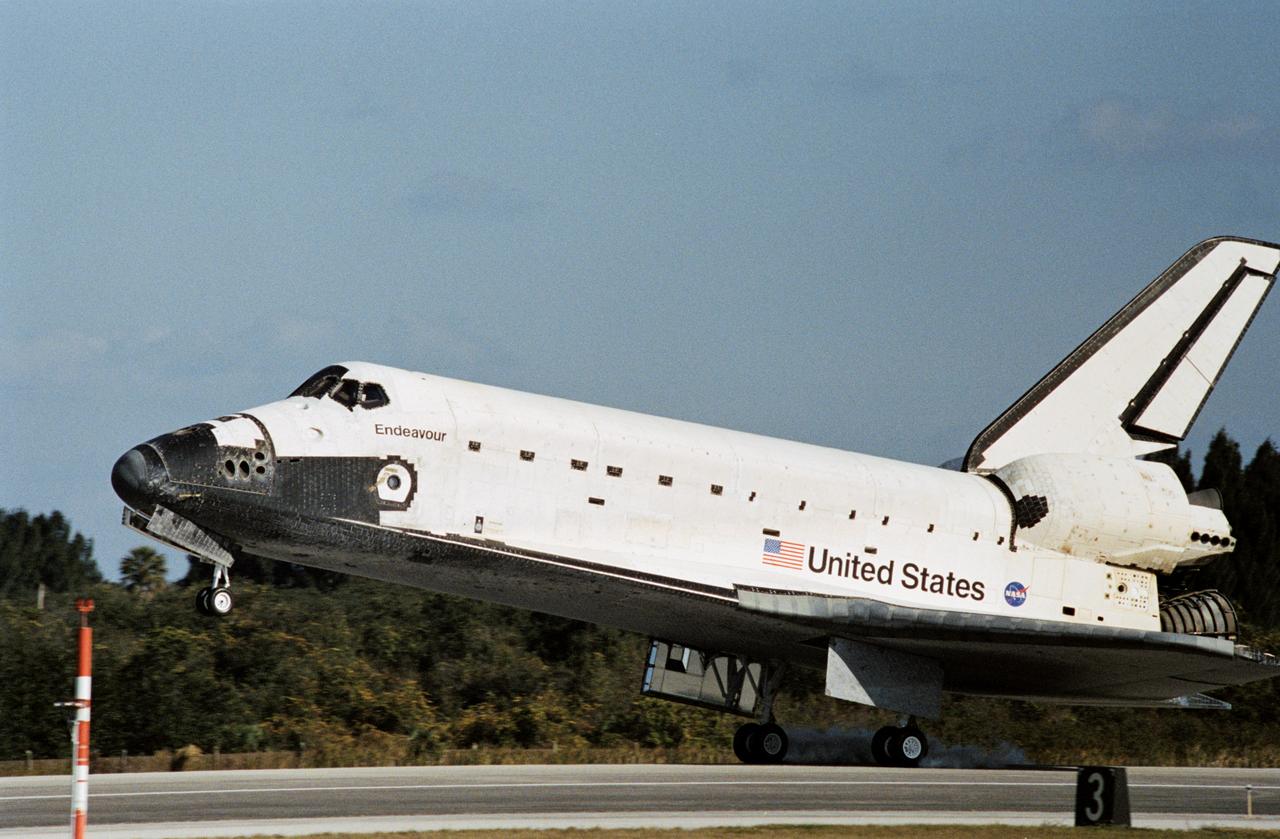
STS113-S-041 (7 December 2002) --- The main landing gear of Space Shuttle Endeavour touches down on runway 33 at the KSC landing facility, completing the nearly 14-day STS-113 mission to the International Space Station (ISS). Astronaut James D. Wetherbee, mission commander, eased Endeavour to a textbook landing on runway 33 at the Florida spaceport at 2:37 p.m. (EST) on December 7, 2002. The landing completed a 5.74-million mile mission that saw successful delivery and installation of the Port One (P1) truss on the orbital outpost.
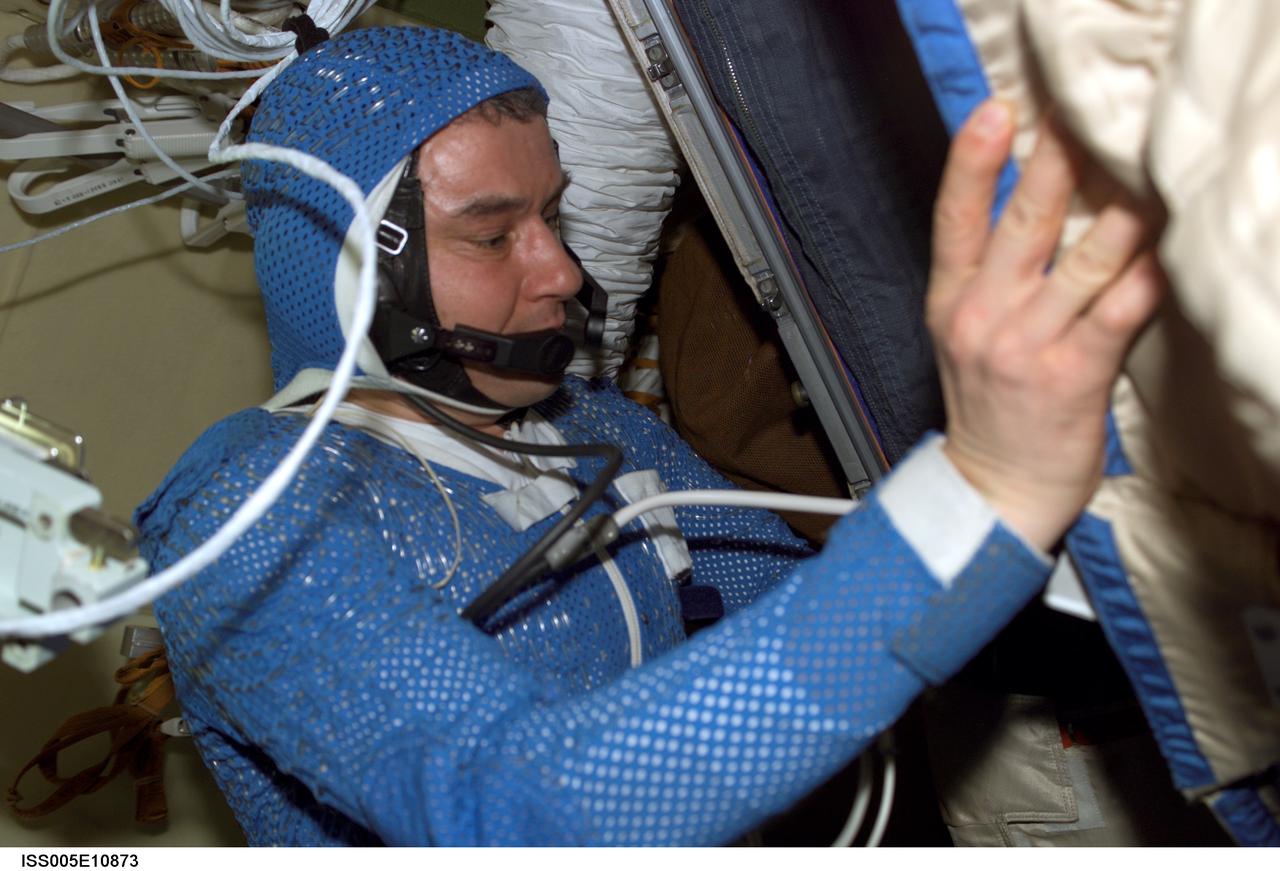
ISS005-E-10873 (24 August 2002) --- Cosmonaut Valery G. Korzun, Expedition Five mission commander, attired in his thermal undergarment prior to donning a Russian Orlan spacesuit, prepares for an upcoming session of extravehicular activity (EVA) scheduled for August 26, 2002. The EVA, from the Pirs docking compartment on the International Space Station (ISS), will be the 43rd spacewalk at the station and the 18th based out of the station. Korzun represents Rosaviakosmos.
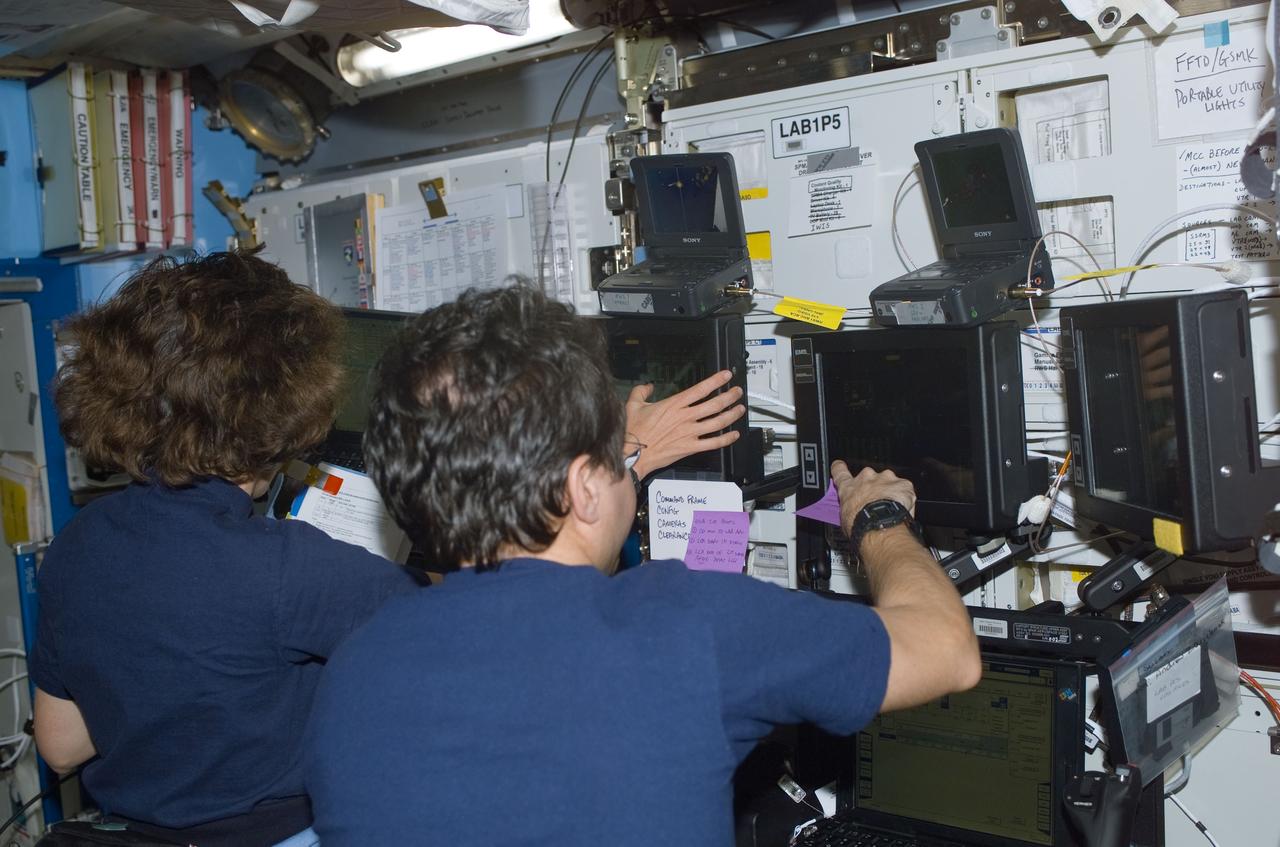
STS110-E-5182 (11 April 2002) --- Astronauts Ellen Ochoa (left), STS-110 mission specialist, and Daniel W. Bursch, Expedition Four flight engineer, work the controls of the Canadarm2 in the Destiny laboratory on the International Space Station (ISS). Ochoa and Bursch used the robotic arm to lift the S0 (S-Zero) Truss out of Space Shuttle Atlantis’ payload bay and installed it onto the temporary claw fixture on the Destiny laboratory. The image was taken with a digital still camera.