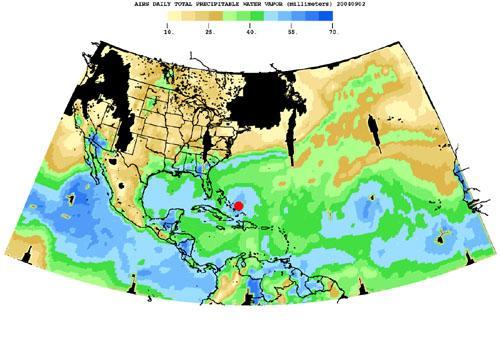
Born in the Atlantic, Hurricane Frances became a category 4 hurricane on August 31, 2004, as seen by the Atmospheric Infrared Sounding System AIRS on NASA Aqua. Expectations are the hurricane will hit the Space Coast of Florida in Brevard County early Sunday morning. This frame from a movie is a time-series of maps that show AIRS observations of the total amount of water vapor present in the atmospheric column above each point of the Earth's surface. If all the water vapor in the column were forced to fall as rain, the depth of the resulting puddle on the surface at that point is equal to the value shown on the map. Fifty millimeters (mm) is about 2 inches. The large band of maximum water vapor in the neighborhood of the equator is the Intertropical Convergence Zone (ITCZ), a region of strong convection and powerful thunderstorms. The movie (see PIA00433) shows the total precipitable water vapor from August 23 through September 2, 2004. You can see Hurricane Frances as it moves through the Caribbean toward Florida, and the changes in intensity are visible. The eye has been marked with a red spot. The water vapor encompassed by the hurricane is also the result of the very strong convection which is an integral part of the formation and intensification of tropical storms. If you look at the last frame of the movie in the lower right corner, you can see the emergence of a new tropical storm. Ivan makes its debut in the Atlantic. http://photojournal.jpl.nasa.gov/catalog/PIA00433
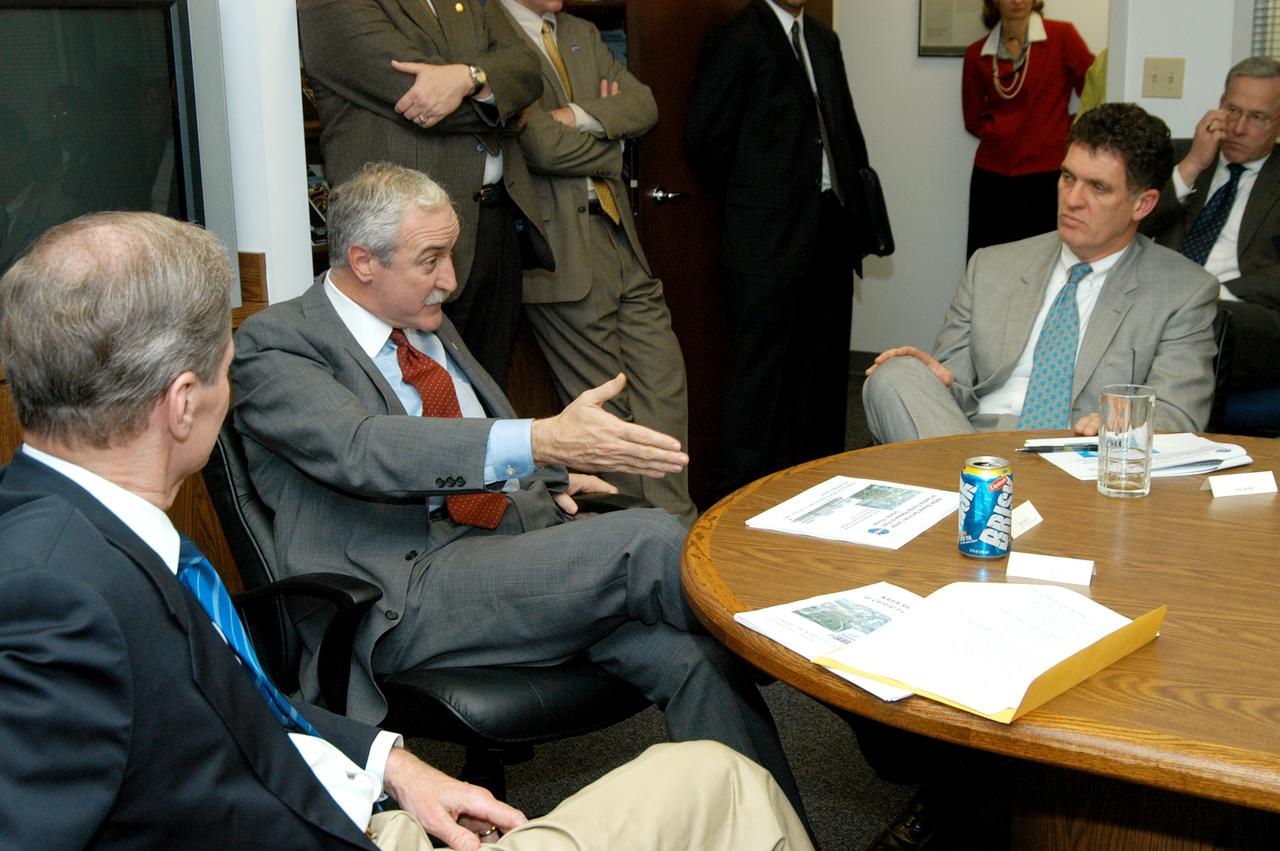
KENNEDY SPACE CENTER, FLA. - NASA Administrator Sean O’Keefe gestures during a discussion with Florida government leaders about the location for NASA’s new Shared Services Center. At left of O’Keefe is U.S. Senator Bill Nelson; at right is Congressman Dave Weldon. Six sites around the U.S. are under consideration for location of the Center, which would centralize NASA’s payroll, accounting, human resources, facilities and procurement offices that are now handled at each field center. The Florida location being proposed is of the Central Florida Research Park, near Orlando. Others attending the presentation included Congressman Tom Feeney, U.S. Representative Ric Keller, Center Director Jim Kennedy and Pamella J. Dana, Ph.D., director, Office of Tourism, Trade, and Economic Development in Florida.
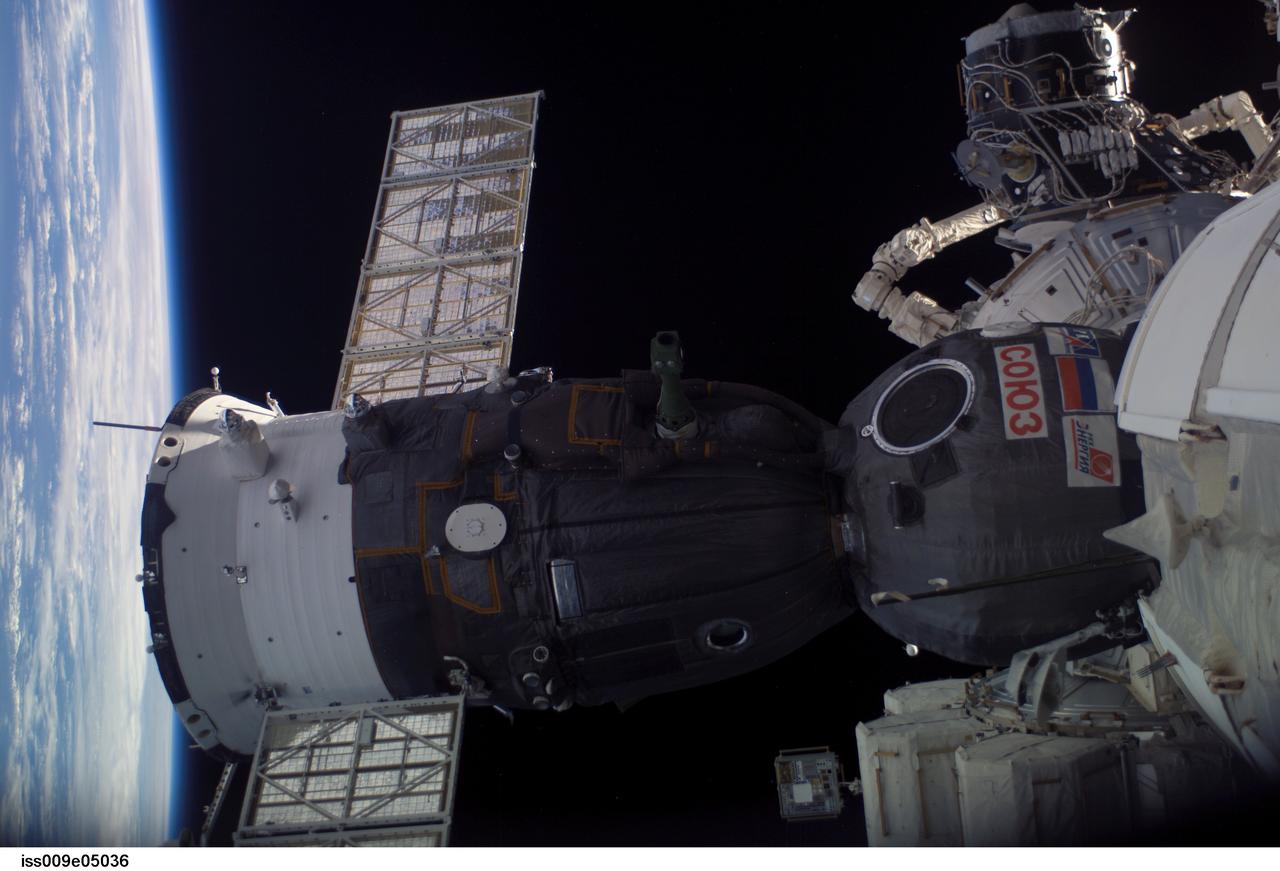
ISS009-E-05036 (29 April 2004) --- The blackness of space and Earth’s horizon provide the backdrop for this scene of the Soyuz TMA-4 spacecraft, docked to the Zarya functional cargo block (FGB) nadir port on the International Space Station (ISS). The scene was photographed by an Expedition 9 crewmember.
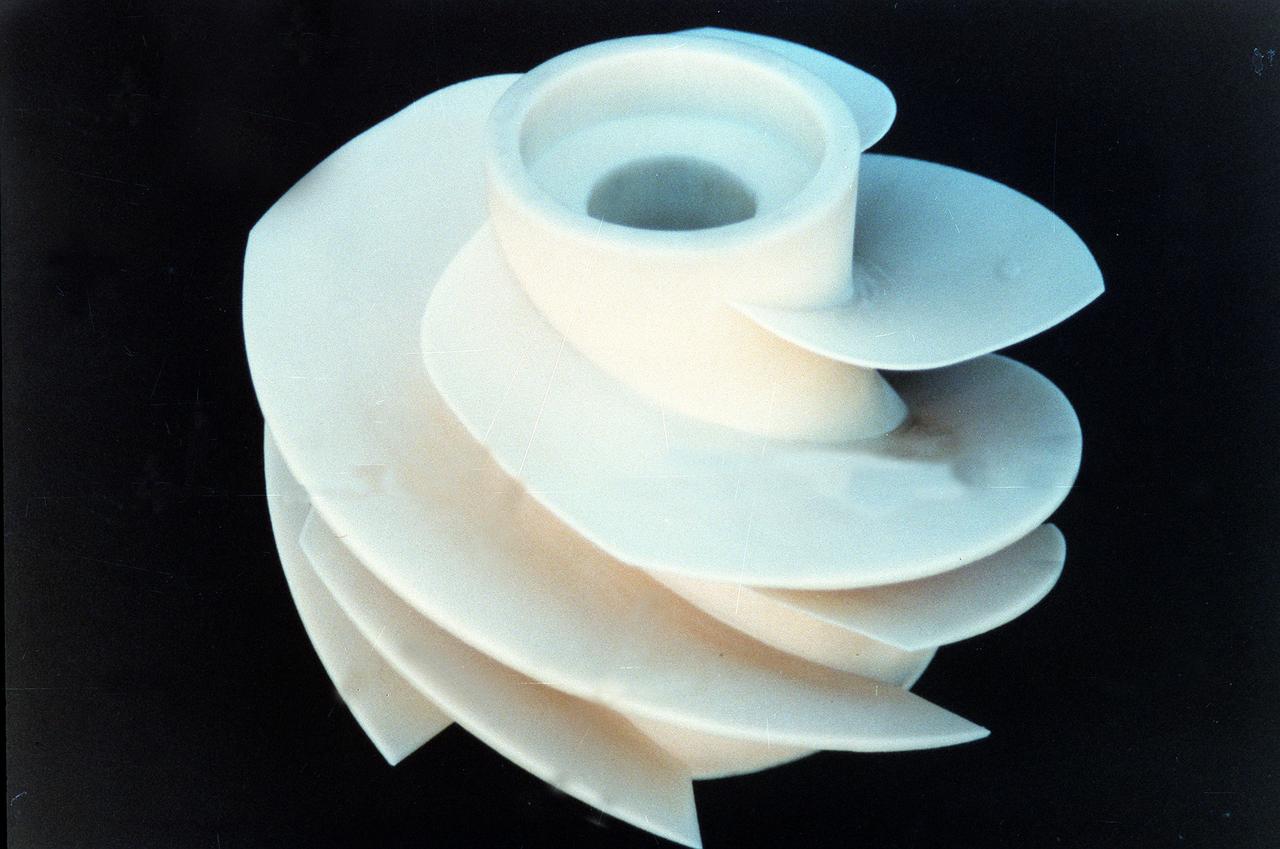
Marshall Space Flight Center engineers helped North American Marine Jet (NAMJ), Inc. improve the proposed design of a new impeller for jet propulsion system. With a three-dimensional computer model of the new marine jet engine blades, engineers were able to quickly create a solid ploycarbonate model of it. The rapid prototyping allowed the company to avoid many time-consuming and costly steps in creating the impeller.
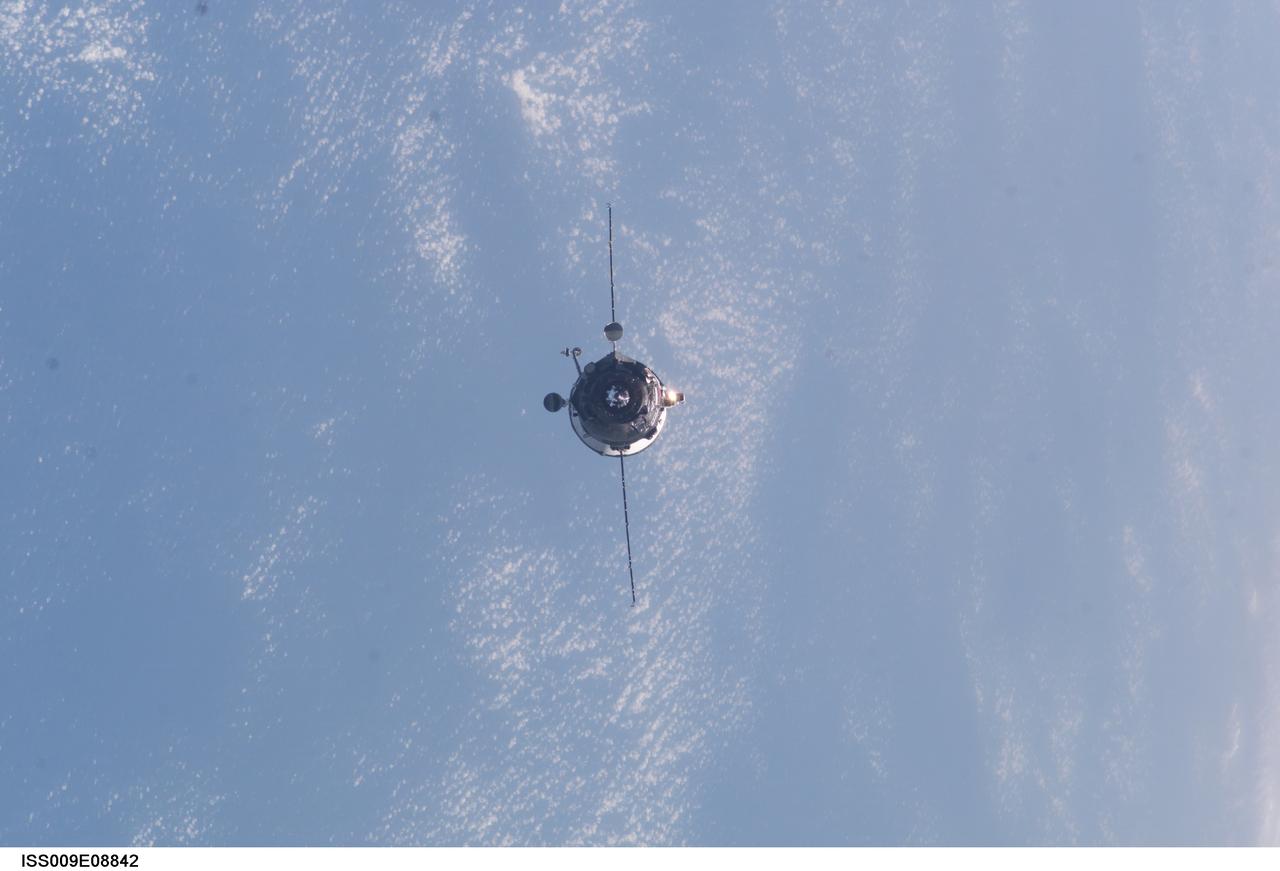
ISS009-E-08842 (27 May 2004) --- Backdropped by a blue and white Earth, an unpiloted Progress supply vehicle approaches the International Space Station (ISS). The Progress 14 resupply craft launched at 7:34 a.m. (CDT) on May 25, 2004 from the Baikonur Cosmodrome in Kazakhstan to deliver 2 ½ tons of food, water, fuel and supplies to the Expedition 9 crewmembers onboard the Station. Progress docked to the aft port of the Zvezda Service Module at 8:55 a.m. (CDT) on May 27 as the two craft flew 230 statute miles above Central Asia.
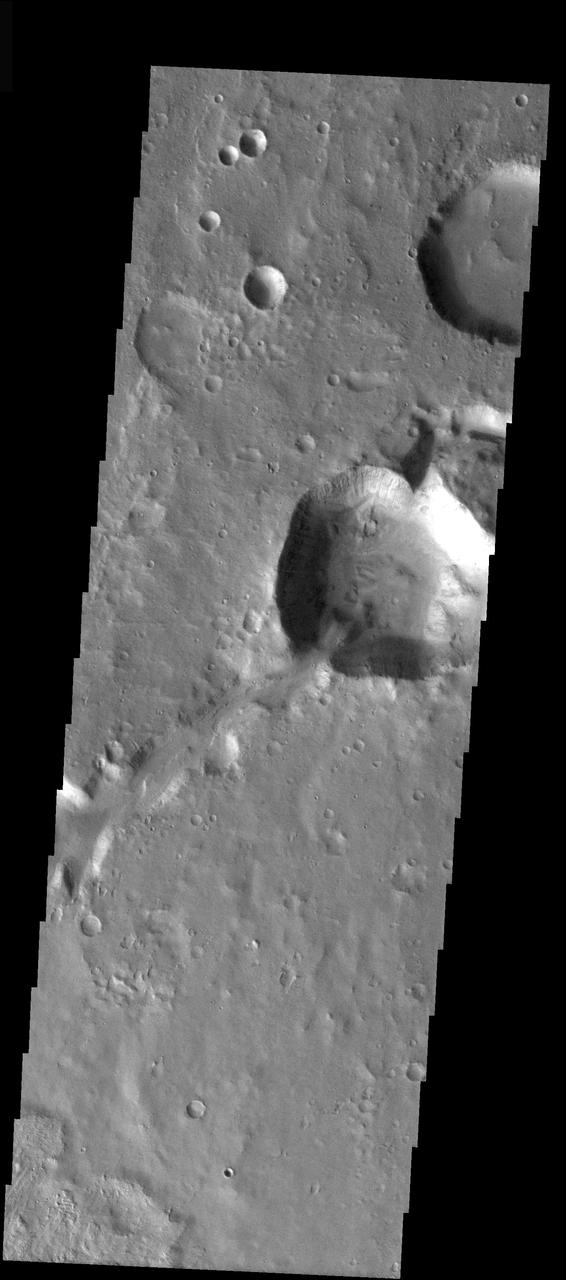
Channel/Crater Interaction
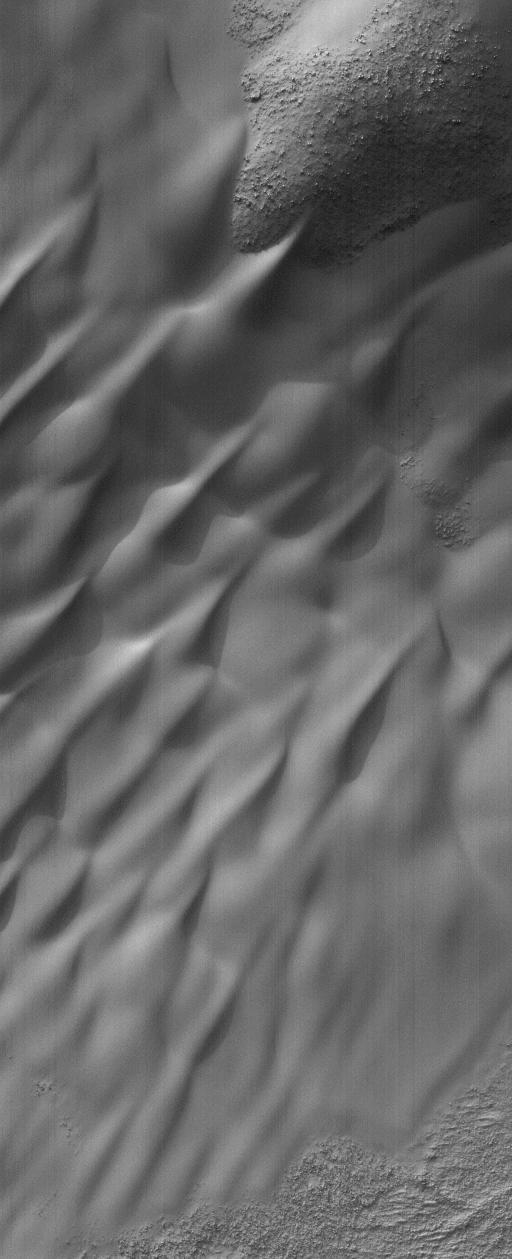
Lowell Dunes
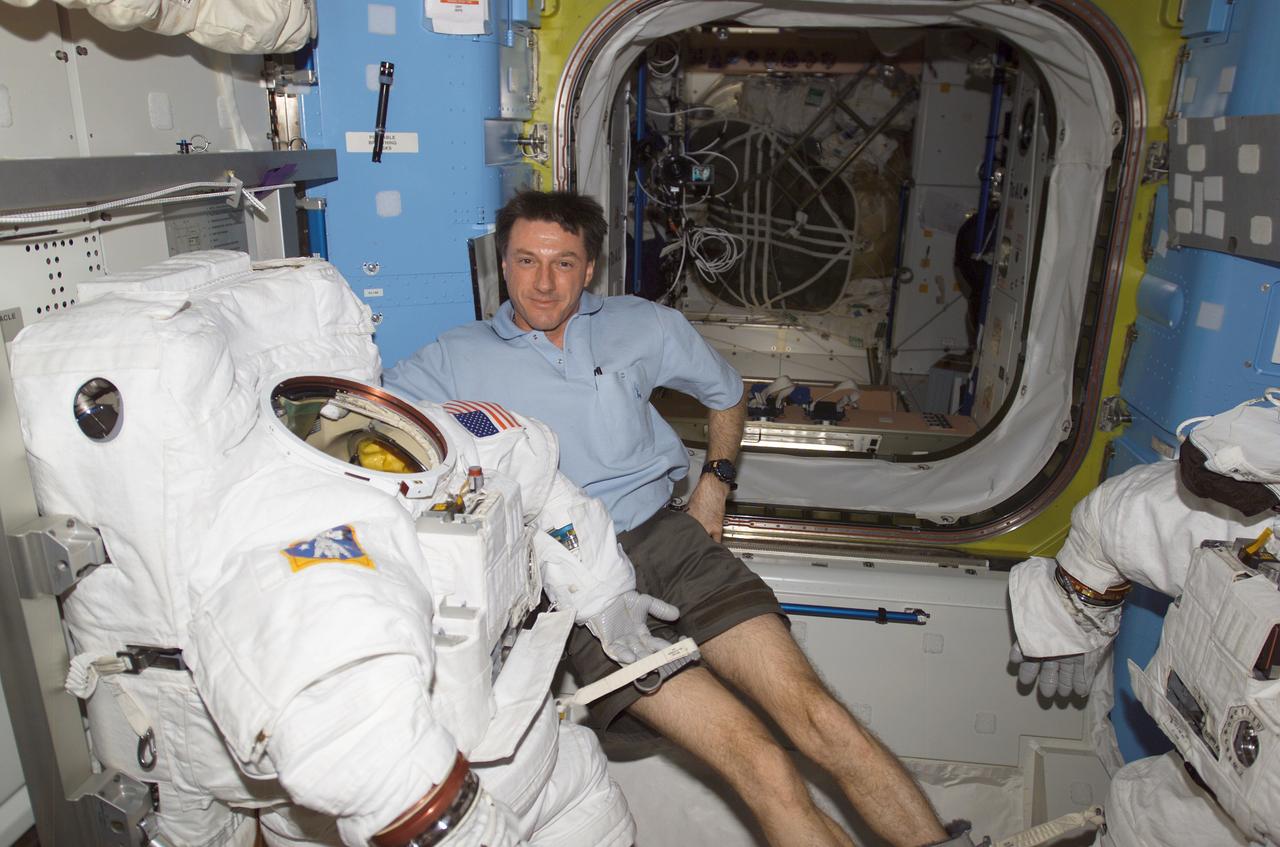
ISS008-E-22166 (25 April 2004) --- Astronaut C. Michael Foale, Expedition 8 commander and NASA ISS science officer, floats near a stowed Extravehicular Mobility Unit (EMU) spacesuit in the Equipment Lock of the Quest airlock on the International Space Station (ISS).

Alba Patera Valleys
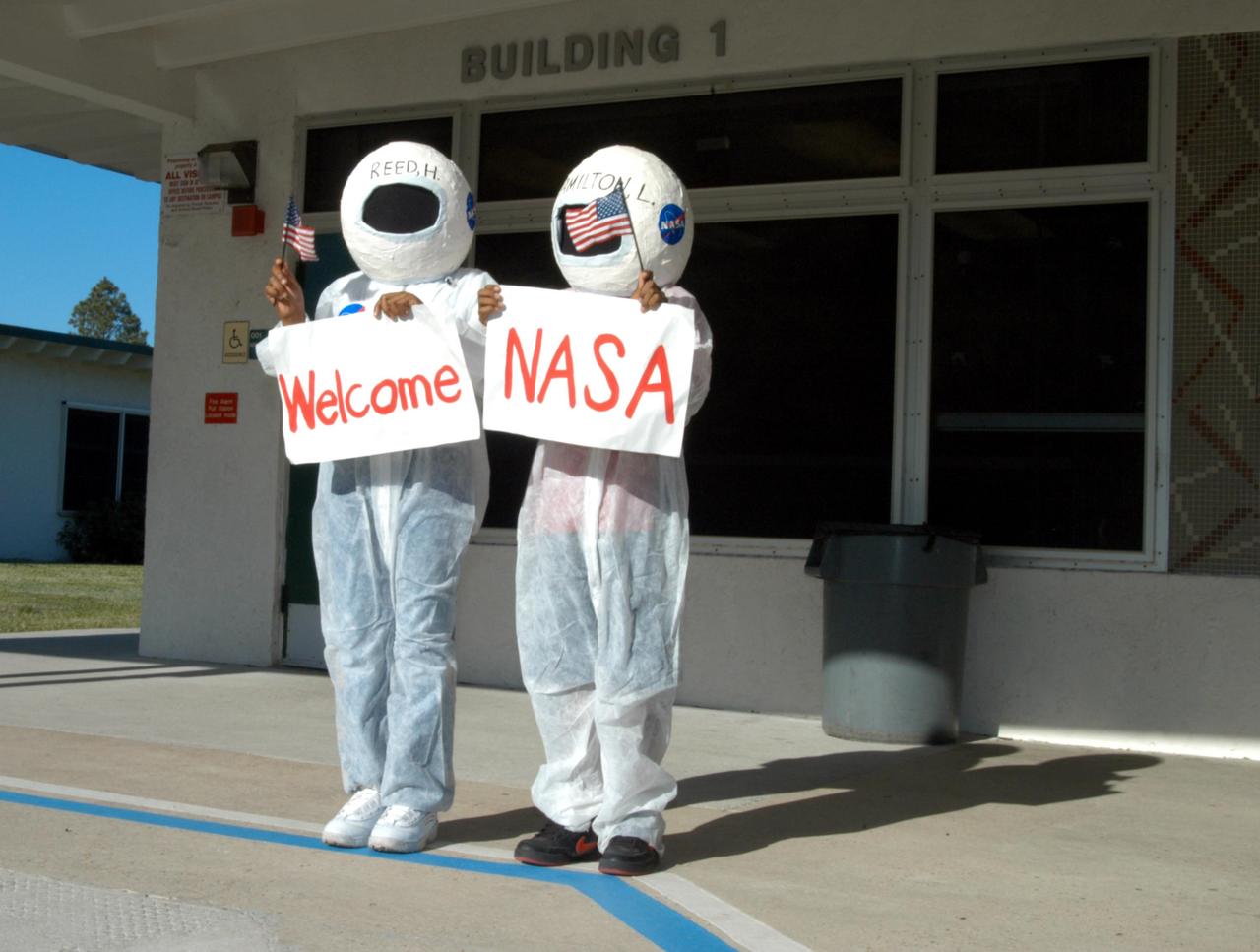
KENNEDY SPACE CENTER, FLA. -- Two student “astronauts” welcome special NASA guests to Oscar Patterson Elementary Magnet School in Panama City, Fla. Center Director Jim Kennedy made the trip with NASA astronaut Sam Durrance and other NASA-KSC representatives to share America’s new vision for space exploration with the next generation of explorers. Kennedy is talking with students about our destiny as explorers, NASA’s stepping stone approach to exploring Earth, the Moon, Mars and beyond, how space impacts our lives, and how people and machines rely on each other in space.
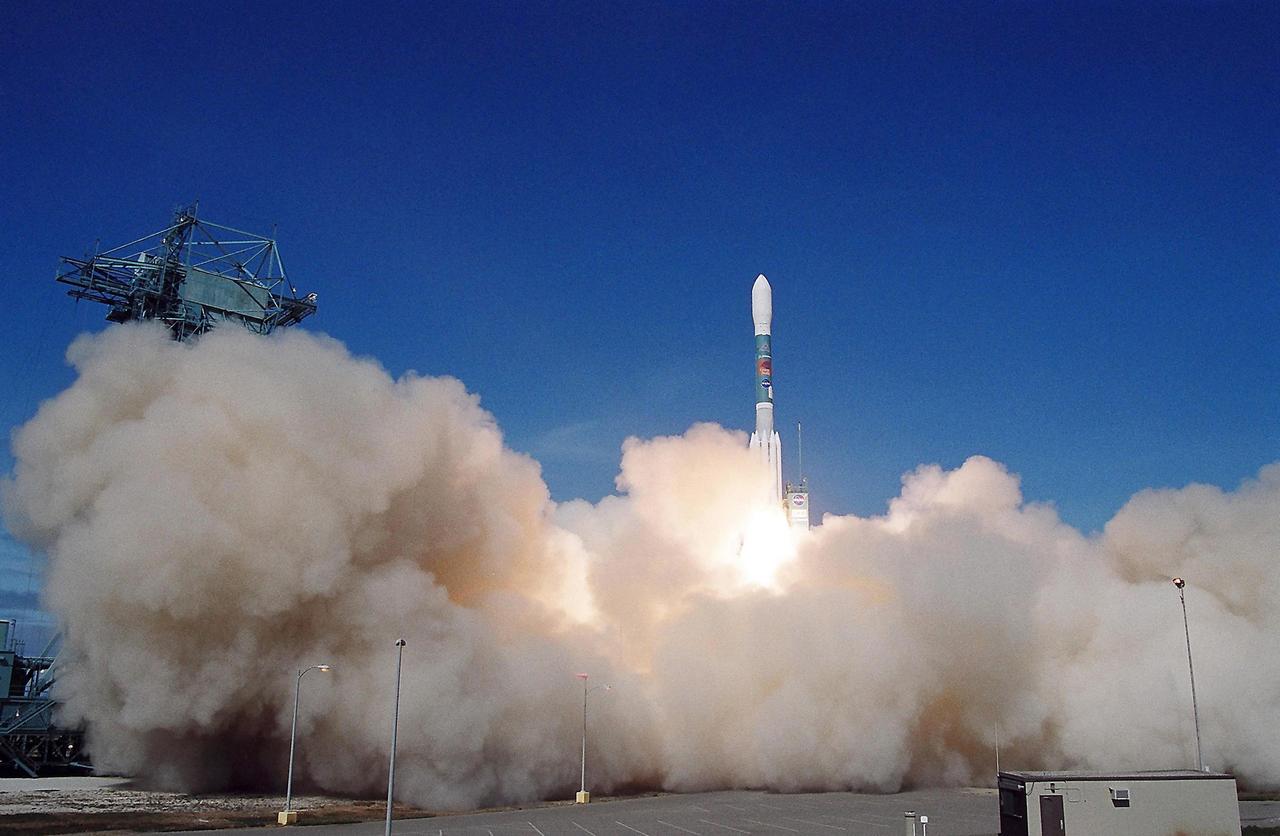
KENNEDY SPACE CENTER, FLA. -- A remote wide-angle camera captures liftoff of the Delta II rocket carrying the Gravity Probe B spacecraft from Space Launch Complex 2 on Vandenberg AFB, Calif., at 9:57:24 a.m. PDT.
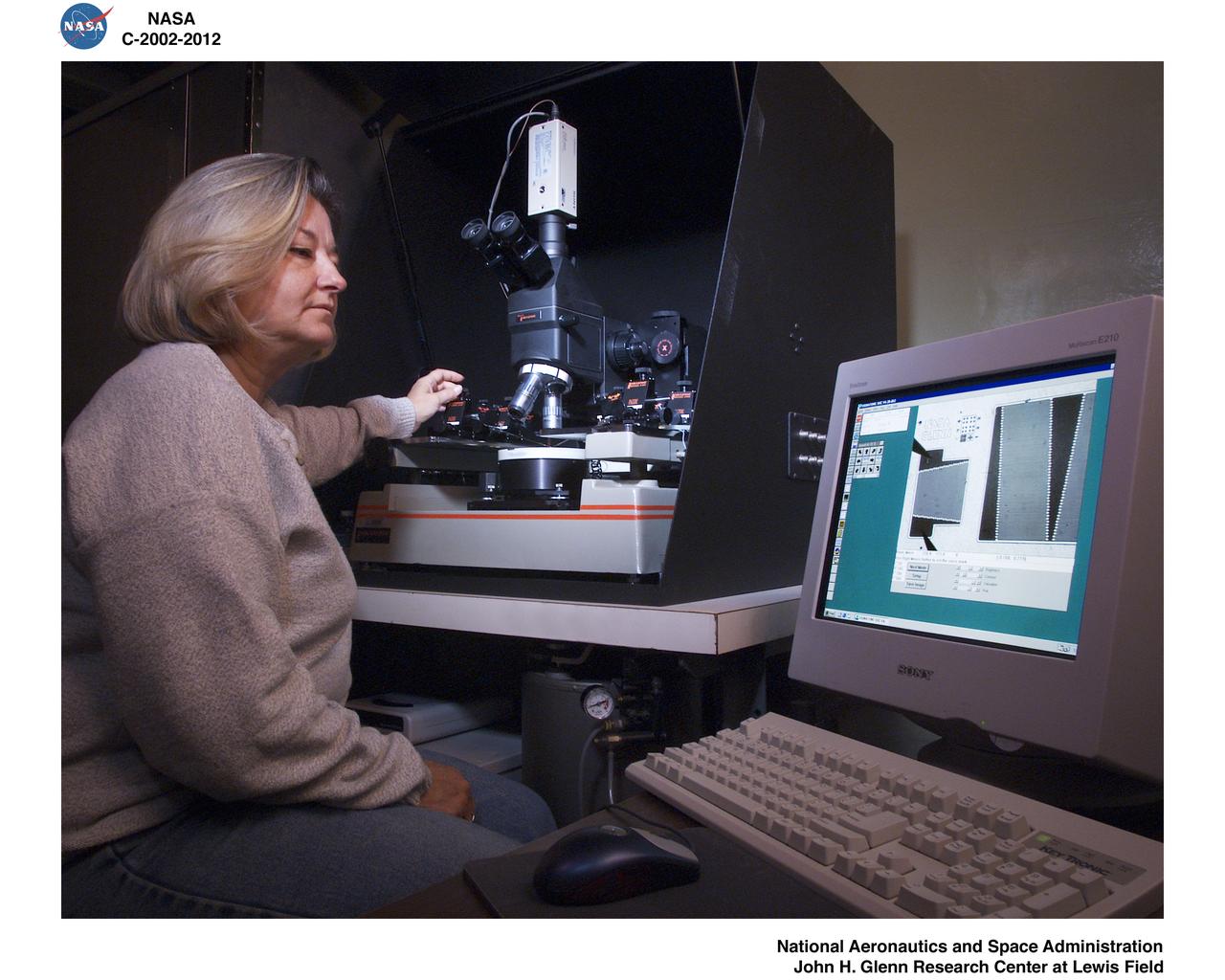
SIGNATONE HIGH-TEMPERATURE PROBE STATION
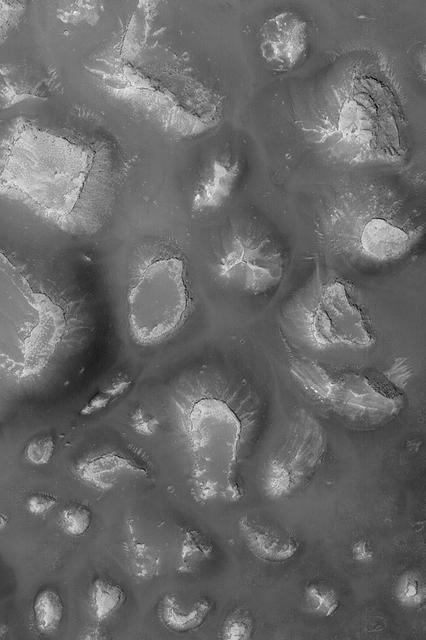
Mesas on Depression Floor
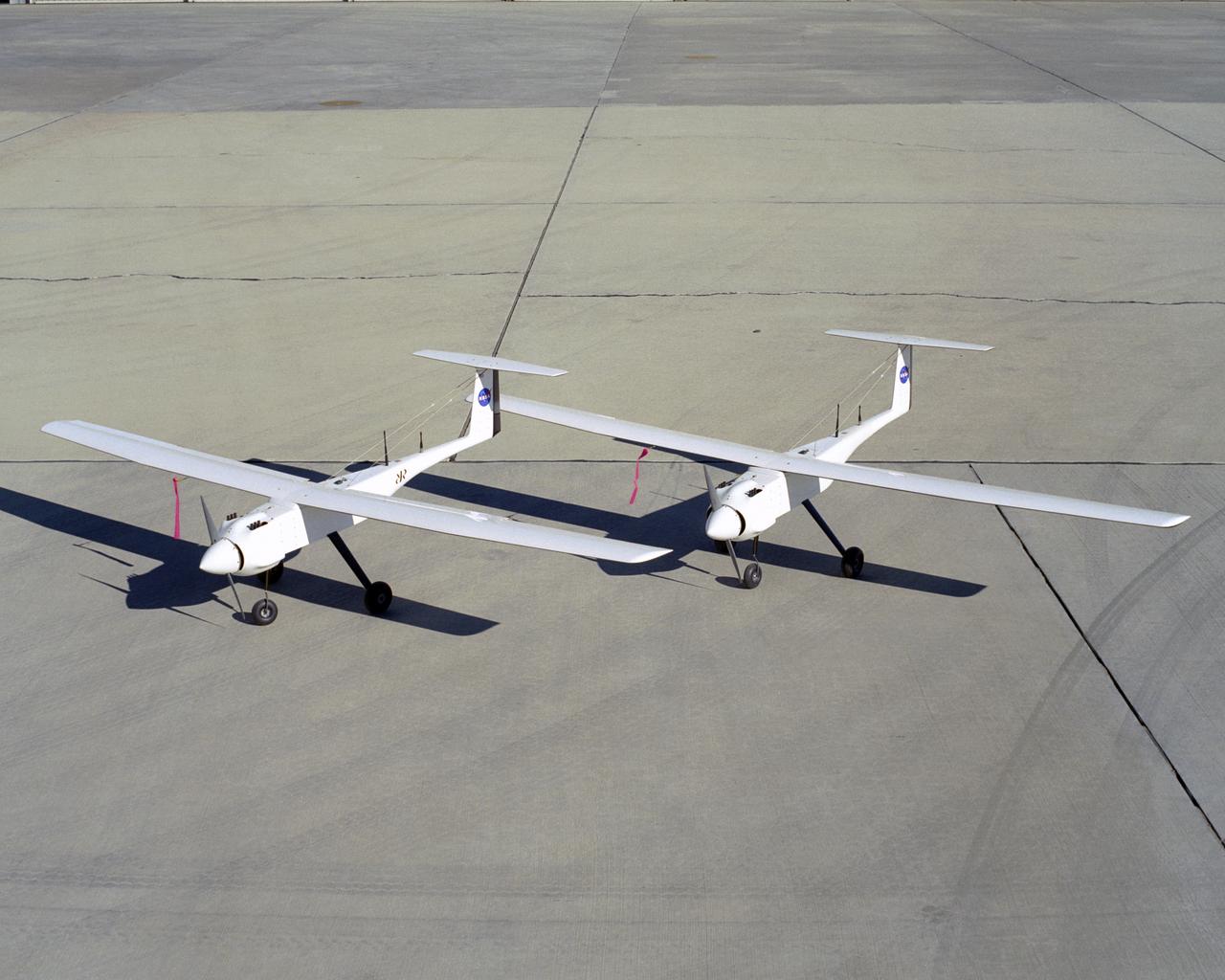
Two identical RnR Products APV-3 aircraft validated cooperative flight control software in the Networked UAV Teaming Experiment at NASA Dryden in early 2005.
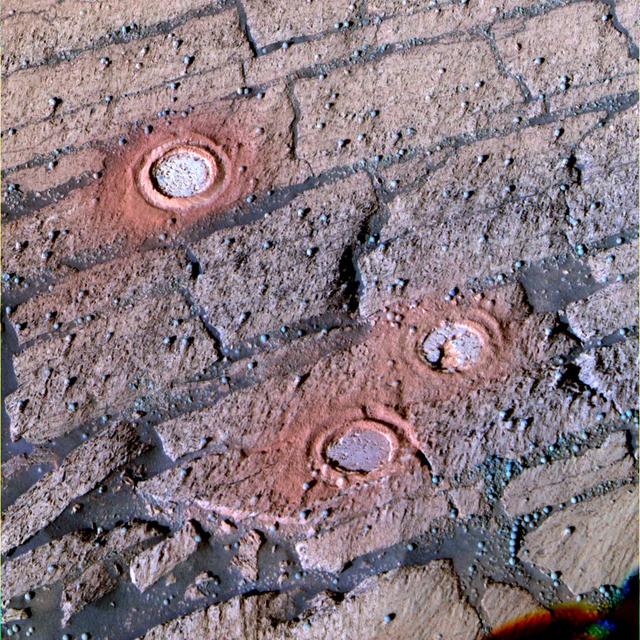
Three Fresh Exposures, Enhanced Color
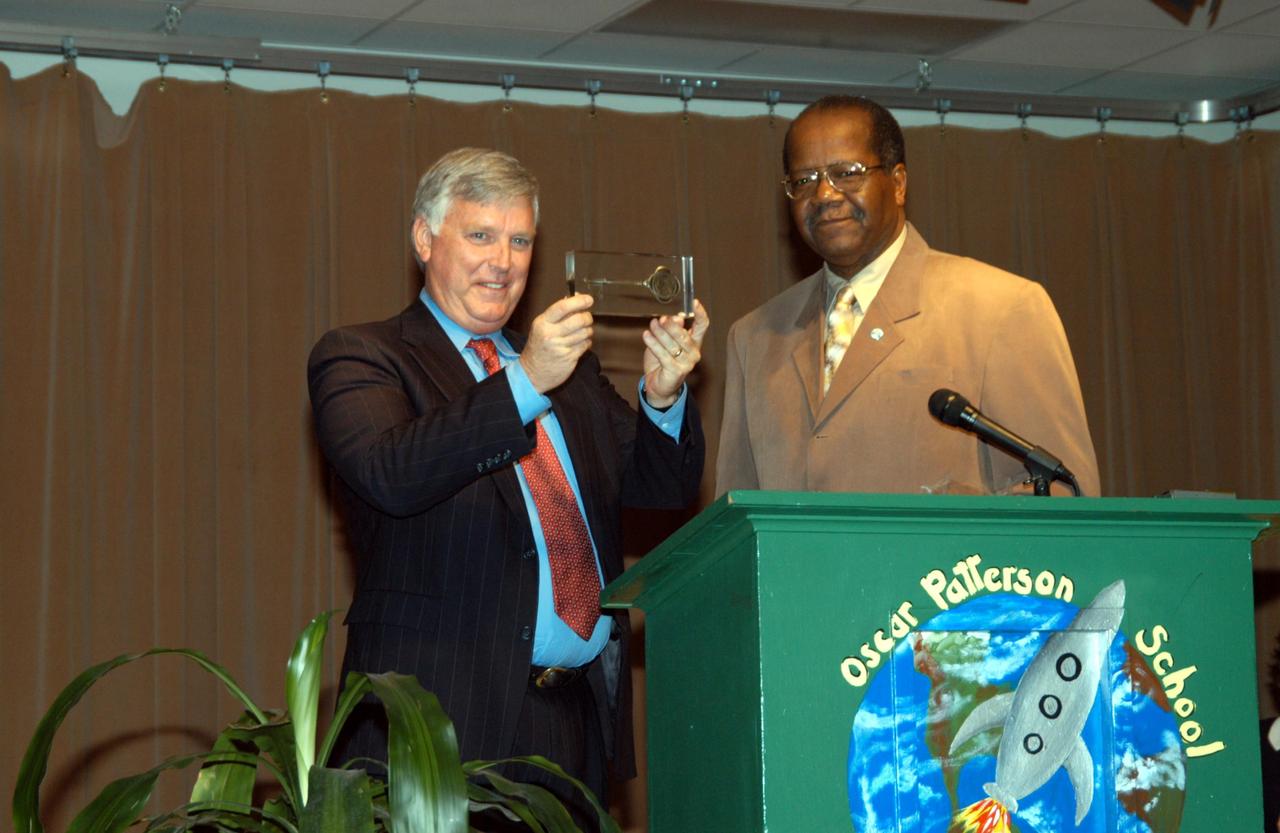
KENNEDY SPACE CENTER, FLA. -- Center Director Jim Kennedy (left) displays the key to the city presented by Johnathon Wilson (right), Panama City commissioner. Kennedy is visiting NASA Explorer Schools in Florida and Georgia to share America’s new vision for space exploration with the next generation of explorers. Kennedy is talking with students in NASA Explorer Schools in Florida and Georgia about our destiny as explorers, NASA’s stepping stone approach to exploring Earth, the Moon, Mars and beyond, how space impacts our lives, and how people and machines rely on each other in space.
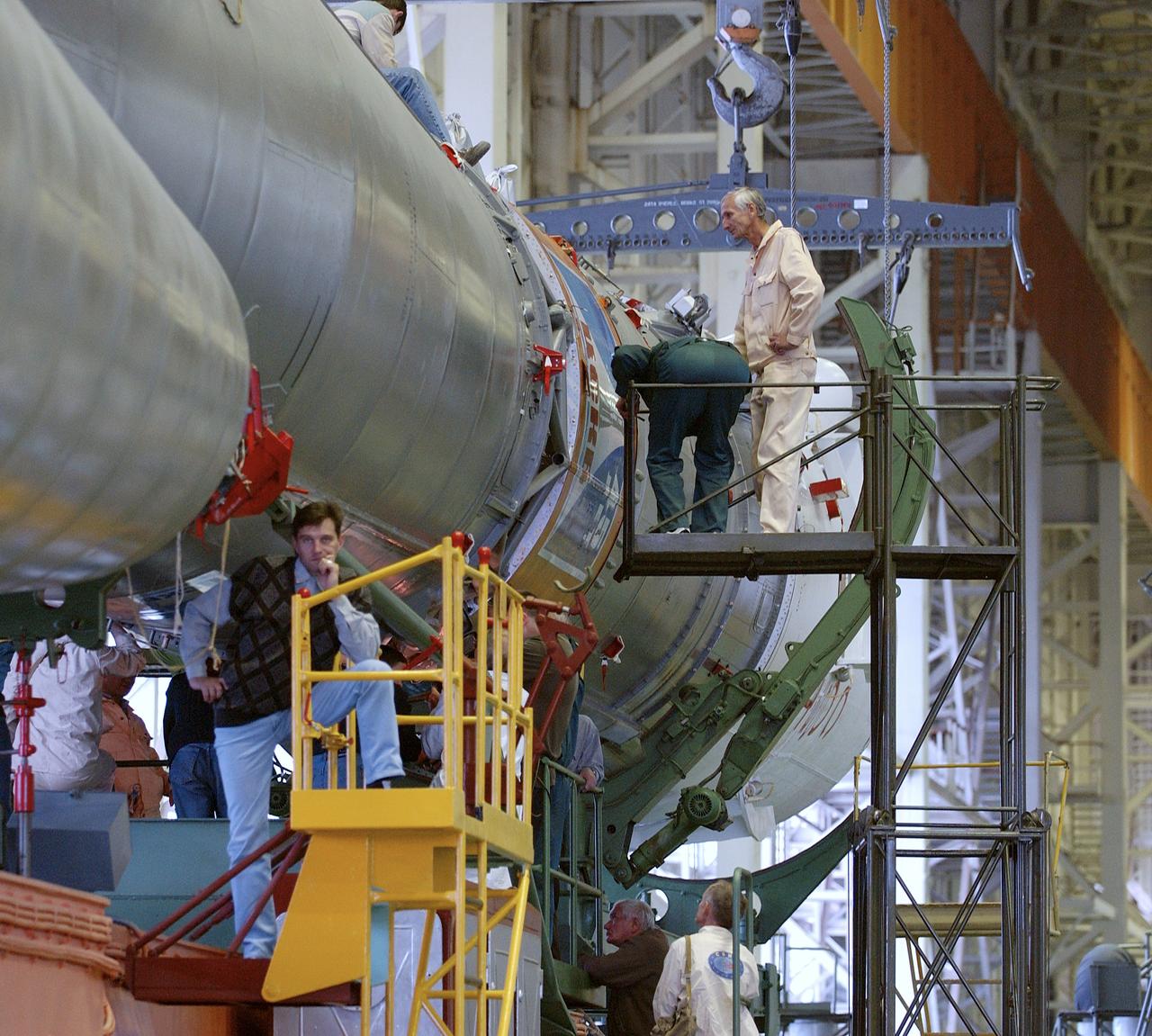
The Soyuz TMA-5 spacecraft is mated to its booster rocket in a processing hangar at the Baikonur Cosmodrome in Kazakhstan Monday, October 11, 2004, in preparation for its rollout to the launch pad October 12 and its liftoff October 14 to carry Expedition 10 Commander and NASA Science Officer Leroy Chiao, Flight Engineer and Soyuz Commander Salizhan Sharipov and Russian Space Forces cosmonaut Yuri Shargin to the International Space Station. Photo Credit: (NASA/Bill Ingalls)

Carbon Dioxide Mesas
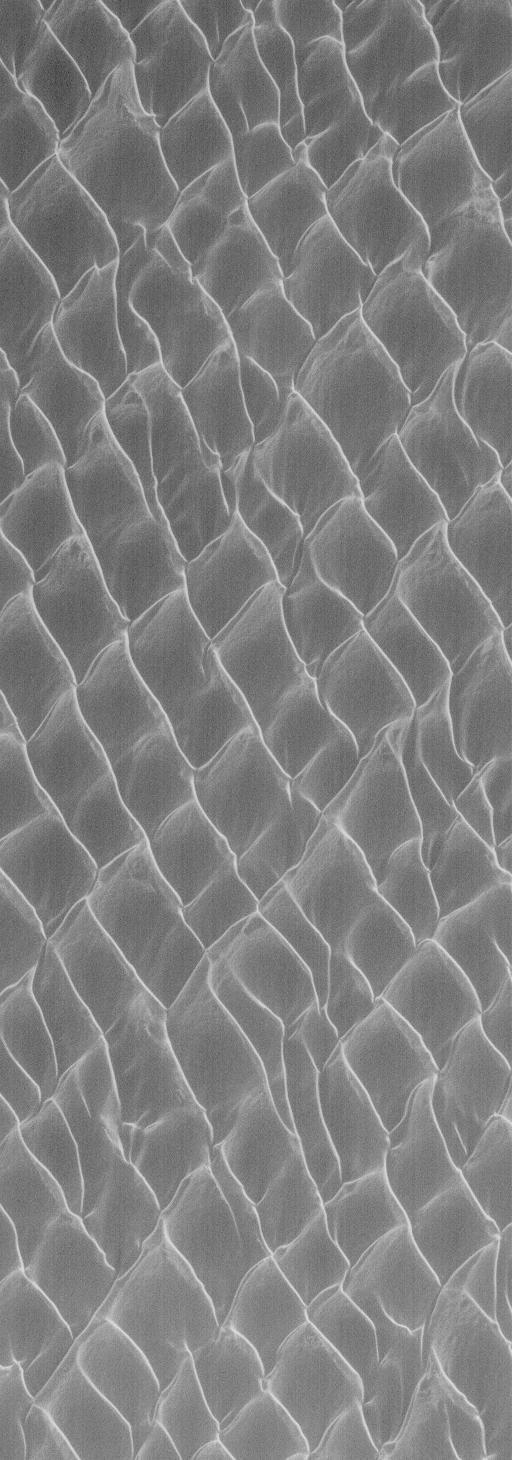
North Polar Dunes

Overlapping Flows
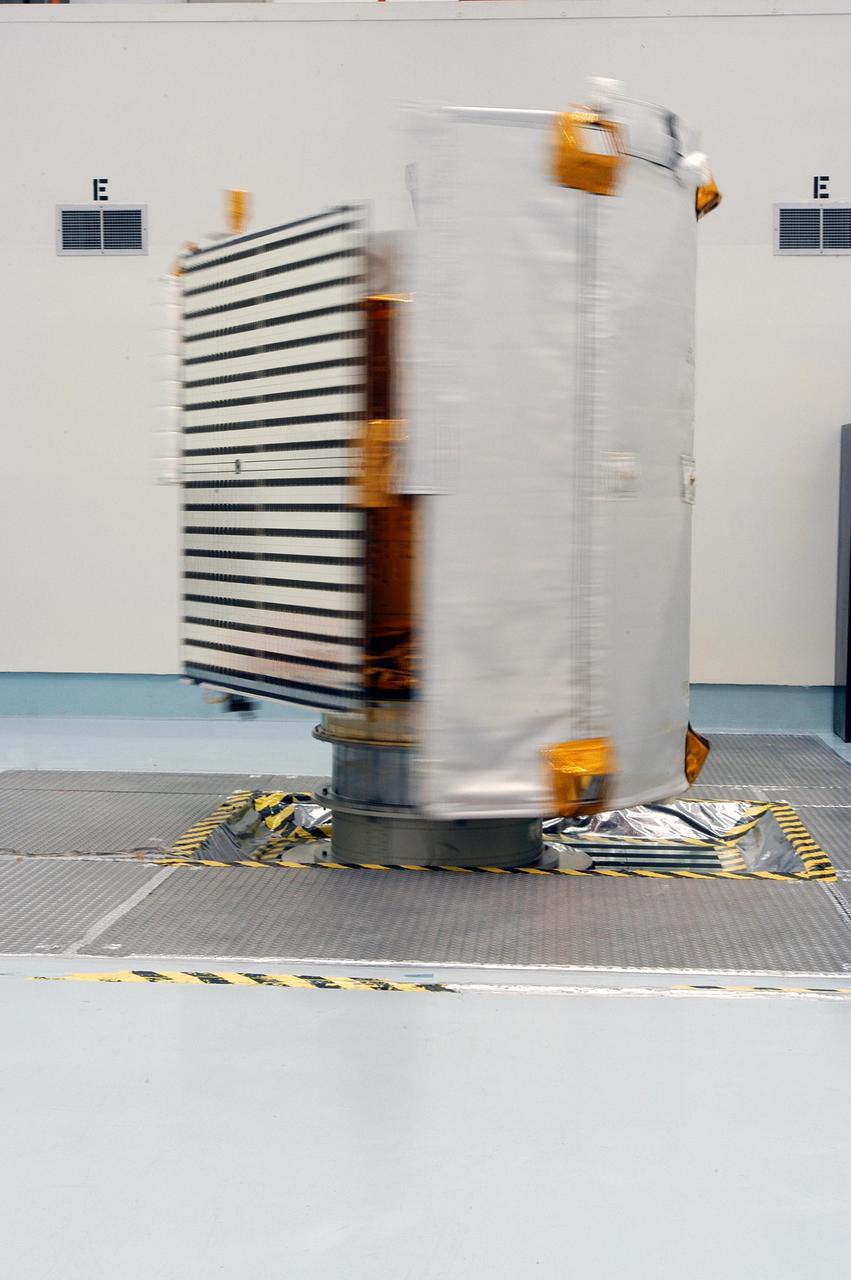
KENNEDY SPACE CENTER, FLA. - The MESSENGER (Mercury Surface, Space Environment, Geochemistry and Ranging) spacecraft spins during testing on the spin table at Astrotech Space Operations in Titusville, Fla. MESSENGER is scheduled to lift off Aug. 2 from Pad 17-B at Cape Canaveral Air Force Station. It is expected to reach orbit around Mercury in March 2011. MESSENGER was built for NASA by the Johns Hopkins University Applied Physics Laboratory in Laurel, Md.
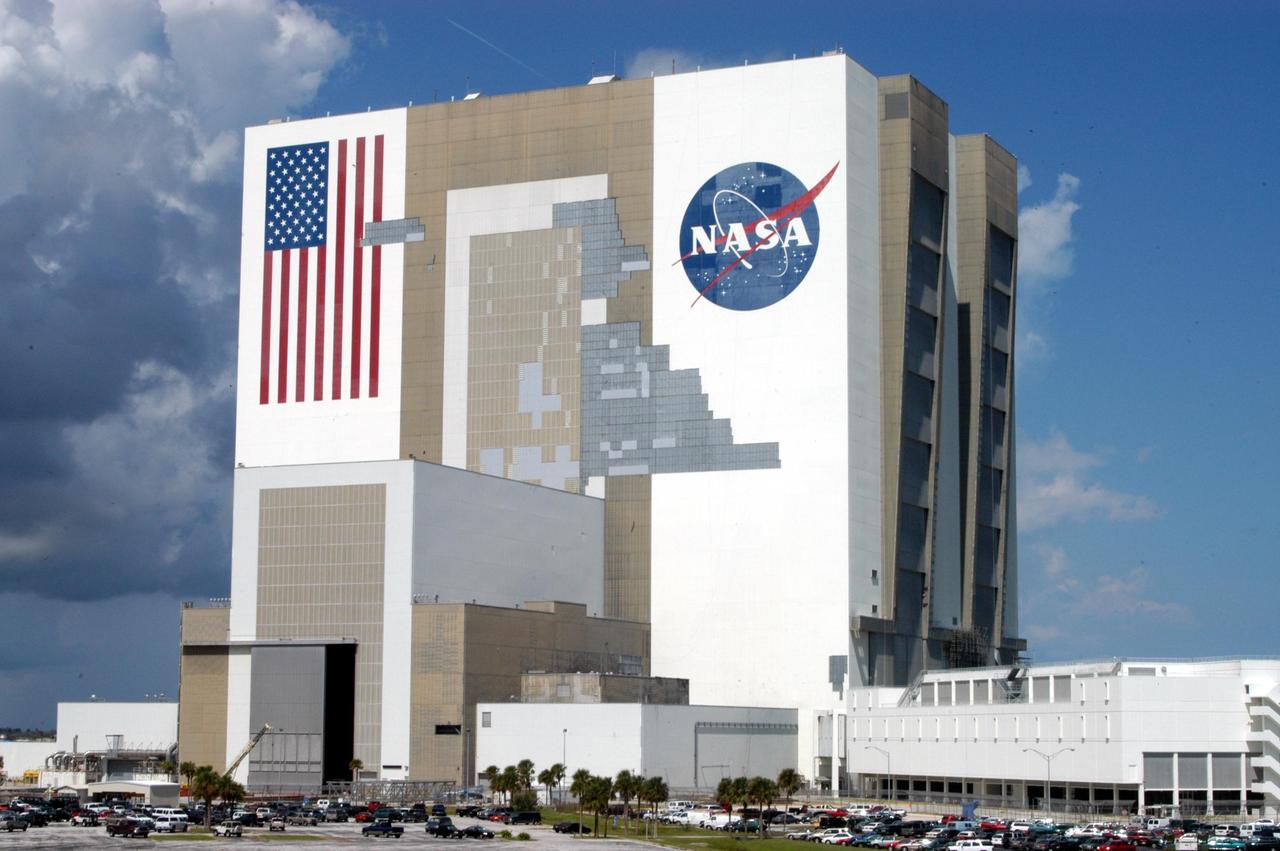
KENNEDY SPACE CENTER, FLA. - The Vehicle Assembly Building at KSC sports a patchwork façade after the holes created by recent hurricanes were covered with corrugated steel. The VAB lost 820 panels from the south wall during Hurricane Frances, and 25 additional panels pulled off the east wall by Hurricane Jeanne. Employees of Met-Con, a subcontractor in Cocoa, Fla., worked night and day on scaffolds hung from the 525-foot-high roof to close the holes and enable the facility to return to normal operations.
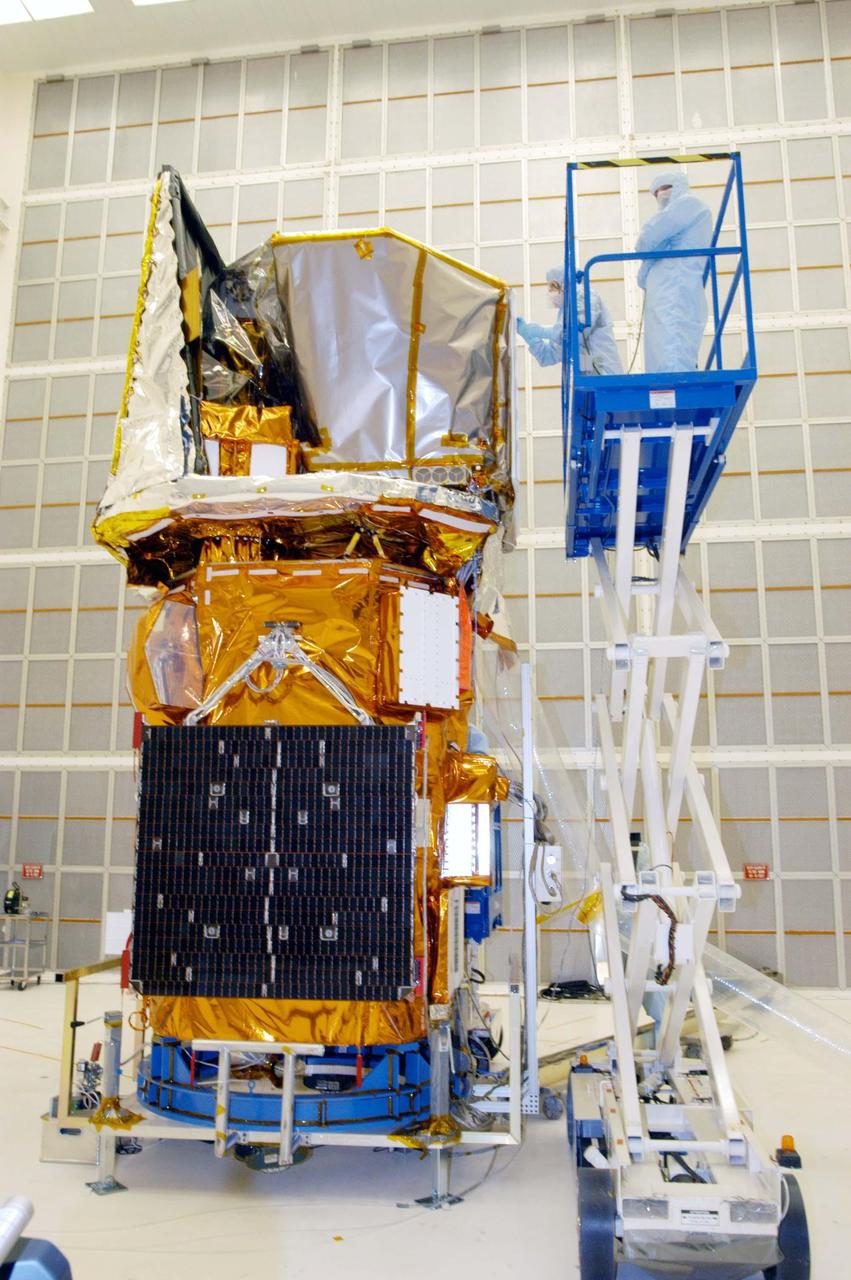
KENNEDY SPACE CENTER, FLA. - Technician Grace Miller-Swales (left) does touch-up work on the Swift spacecraft in Hangar AE at Cape Canaveral Air Force Station. John DiBatilito is at right. Swift is wrapped with blankets to provide thermal stability during the mission. Swift is a first-of-its-kind multi-wavelength observatory dedicated to the study of gamma-ray burst (GRB) science. Its three instruments will work together to observe GRBs and afterglows in the gamma-ray, X-ray, ultraviolet and optical wavebands. The most comprehensive study of GRB afterglows to date, Swift is expected to observe more than 200 gamma-ray bursts during its 2-year mission.

ISS009-E-14473 (10 July 2004) --- Astronaut Edward M. (Mike) Fincke, Expedition 9 NASA ISS science officer and flight engineer, works on the In-Space Soldering Investigation (ISSI) in the Destiny laboratory of the International Space Station (ISS).
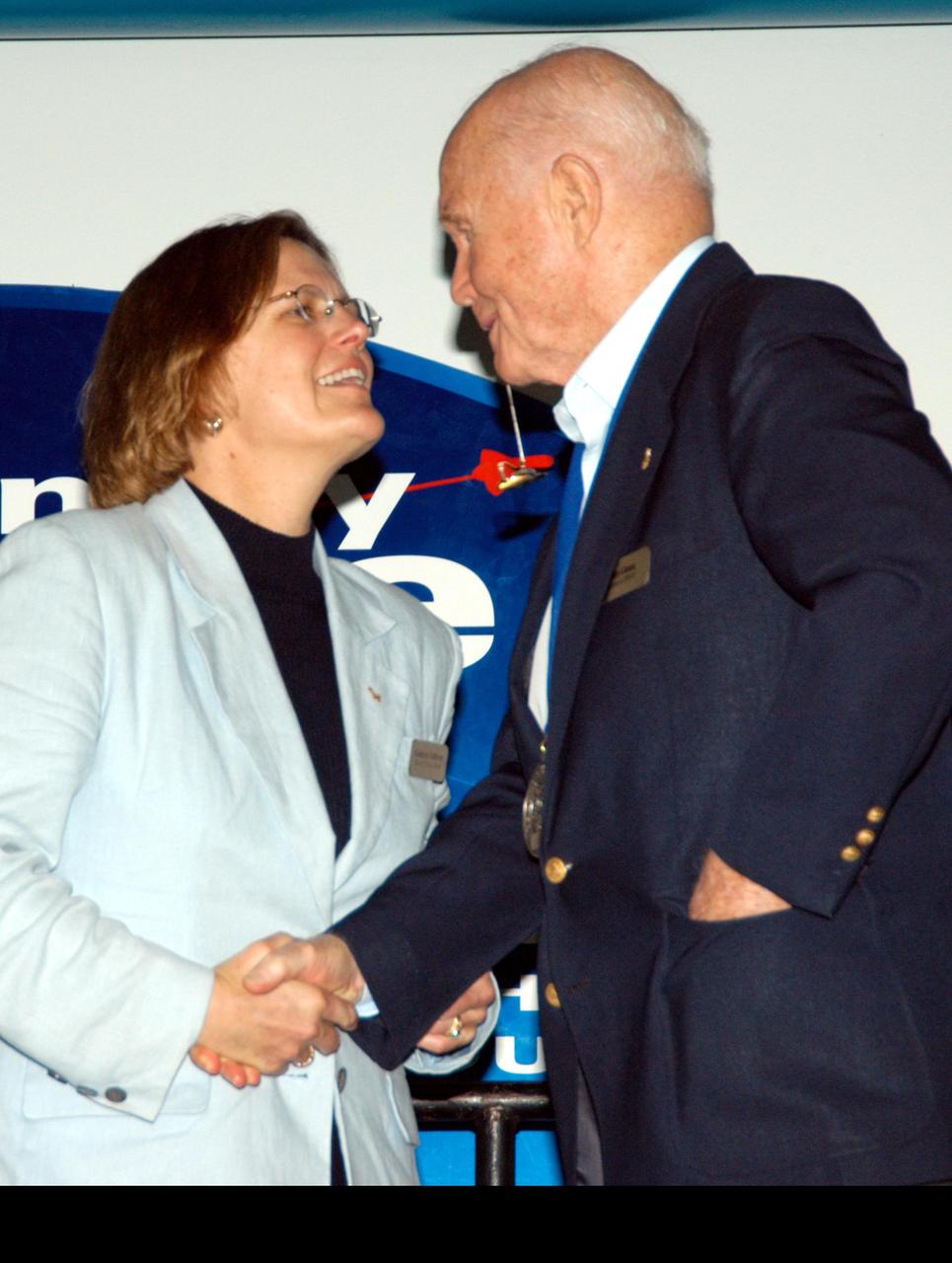
KENNEDY SPACE CENTER, FLA. -- At the Kennedy Space Center Visitor Complex, former NASA astronaut John H. Glenn Jr. (right) congratulates former NASA astronaut and fellow Ohioan Kathryn D. Sullivan on her induction into the U.S. Astronaut Hall of Fame. Sullivan was the first American woman to walk in space. Also chosen for this honor in 2004 are Richard O. Covey, commander of the Hubble Space Telescope repair mission; Frederick D. Gregory, the first African-American to command a space mission; Norman E. Thagard, the first American to occupy Russia's Mir space station; and the late Francis R. "Dick" Scobee, commander of the ill-fated 1986 Challenger mission. The U.S. Astronaut Hall of Fame opened in 1990 to provide a place where space travelers could be remembered for their participation and accomplishments in the U.S. space program. To be eligible for induction, an individual must have been a U.S. citizen, a NASA astronaut, and out of the active astronaut corps at least five years. The five inductees join 52 previously honored astronauts from the ranks of the Gemini, Apollo, Skylab, Apollo-Soyuz, and Space Shuttle programs.

KENNEDY SPACE CENTER, FLA. - Inside Hangar AE at Cape Canaveral Air Force Station (CCAFS), an overhead crane raises the Swift spacecraft, wrapped in a protective cover, to vertical before being placed on a work stand. Swift is a first-of-its-kind, multi-wavelength observatory dedicated to the study of gamma-ray burst (GRB) science. Its three instruments will work together to observe GRBs and afterglows in the gamma-ray, X-ray and optical wavebands. Swift is part of NASA’s medium explorer (MIDEX) program being developed by an international collaboration. It will be launched no earlier than Oct. 7 into a low-Earth orbit on a Boeing Delta 7320 rocket from pad 17-A at CCAFS. During its nominal 2-year mission, Swift is expected to observe more than 200 bursts, which will represent the most comprehensive study of GRB afterglow to date.
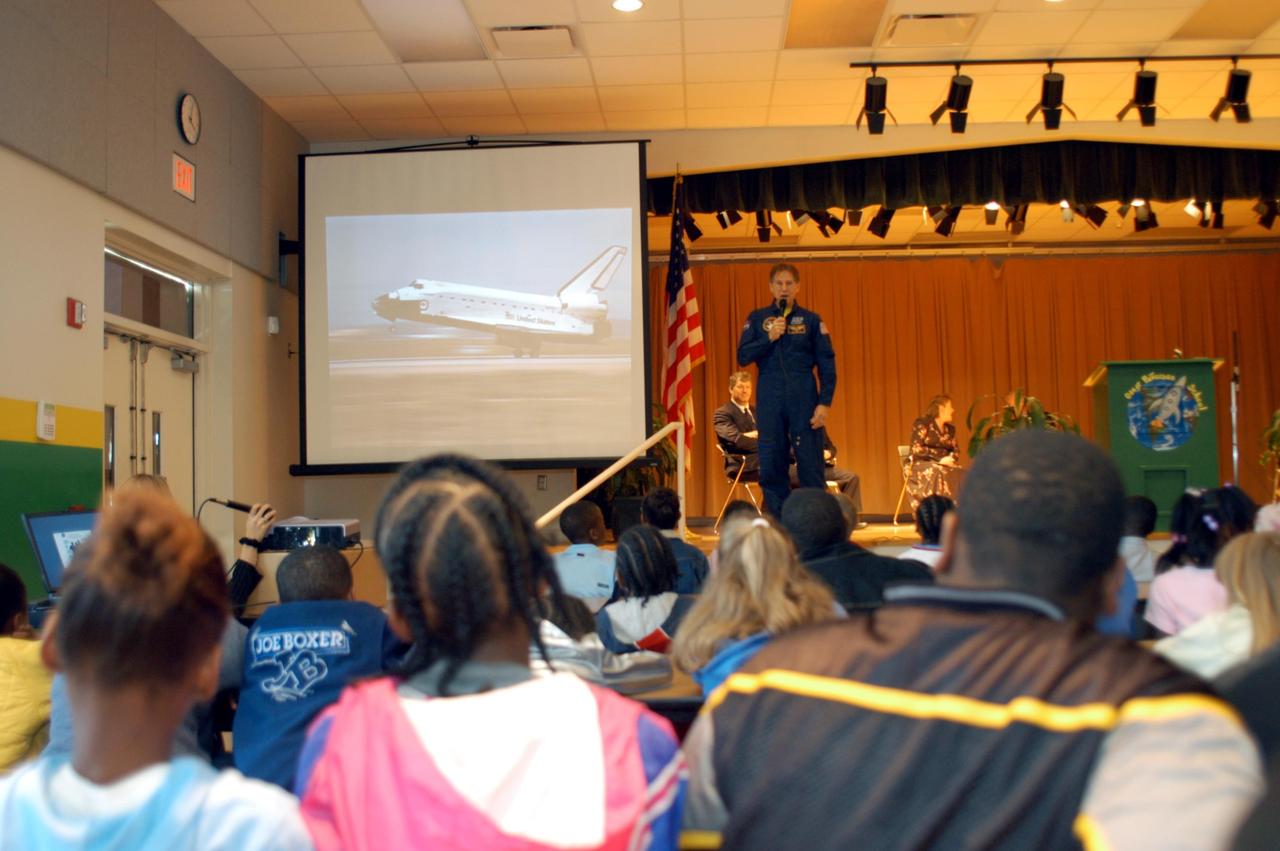
KENNEDY SPACE CENTER, FLA. -- Sam Durrance shares stories of his experiences as an astronaut with the students at Oscar Patterson Elementary Magnet School in Panama City, Fla. Durrance joined Center Director Jim Kennedy as he shares America’s new vision for space exploration with the next generation of explorers. Kennedy is talking with students in NASA Explorer Schools in Florida and Georgia about our destiny as explorers, NASA’s stepping stone approach to exploring Earth, the Moon, Mars and beyond, how space impacts our lives, and how people and machines rely on each other in space.
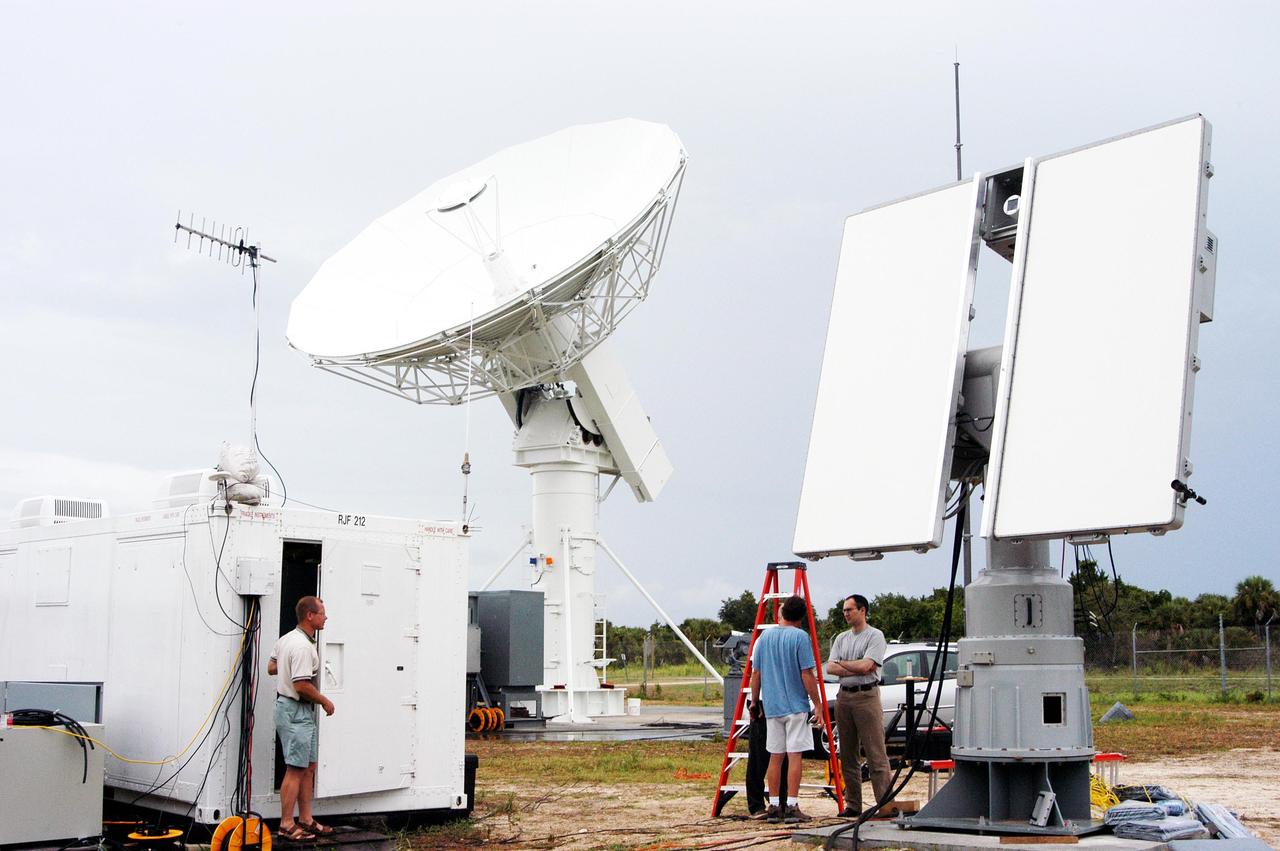
KENNEDY SPACE CENTER, FLA. - A C-band (left) and an X-band radar antenna are positioned to observe the MESSENGER (Mercury Surface, Space Environment, Geochemistry and Ranging) launch. The antennas are on loan to KSC from the USNS Pathfinder, a U.S. Navy instrumentation ship. They have been installed at site north of Haulover Canal where the National Center for Atmospheric Research previously had a radar for thunderstorm research. NASA is evaluating the pair of radars for their ability to observe possible debris coming from the Space Shuttle during launch, part of NASA’s initiative to return the Space Shuttle to flight.
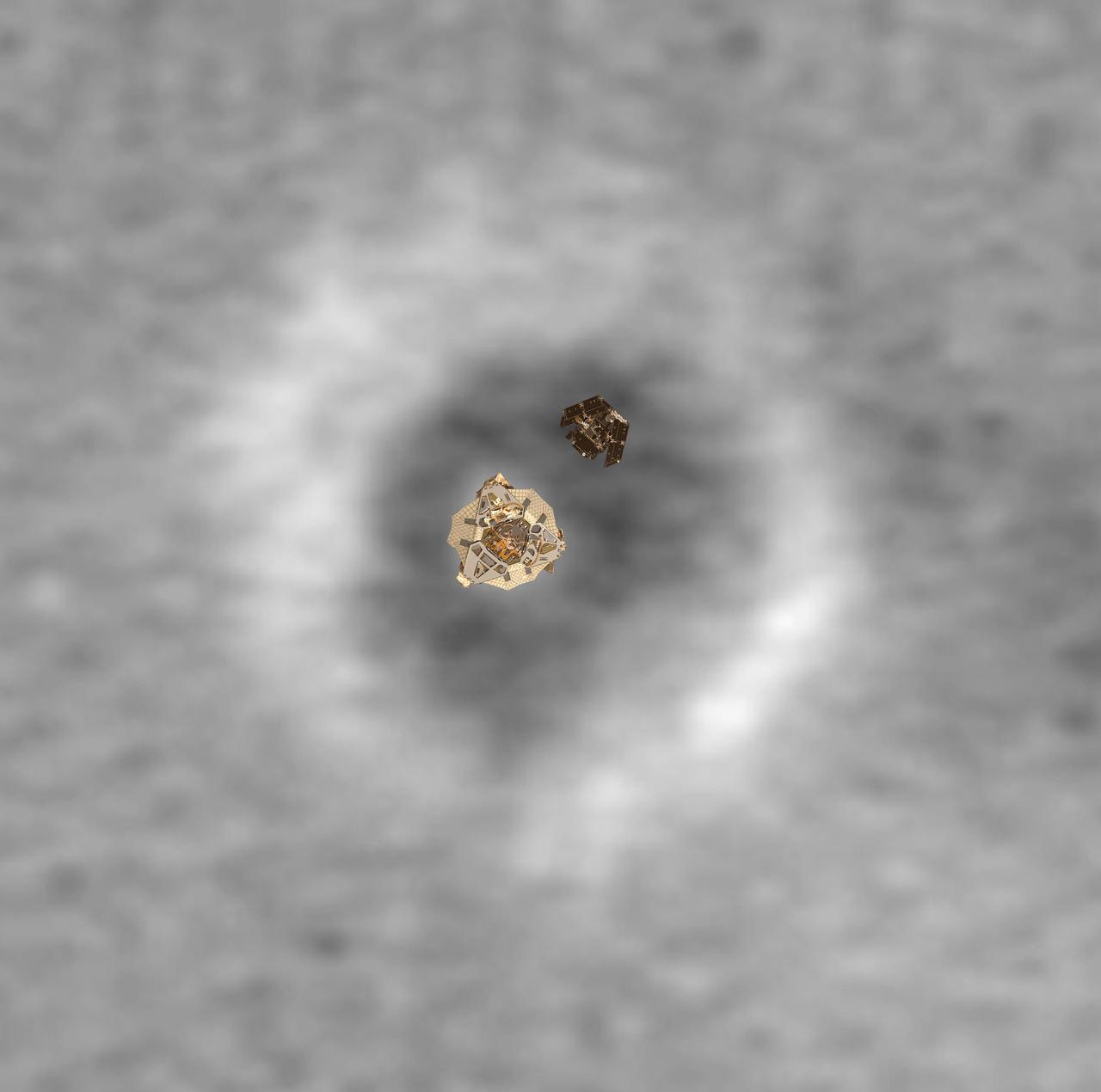
Top View of a Computer Graphic Model of the Opportunity Lander and Rover
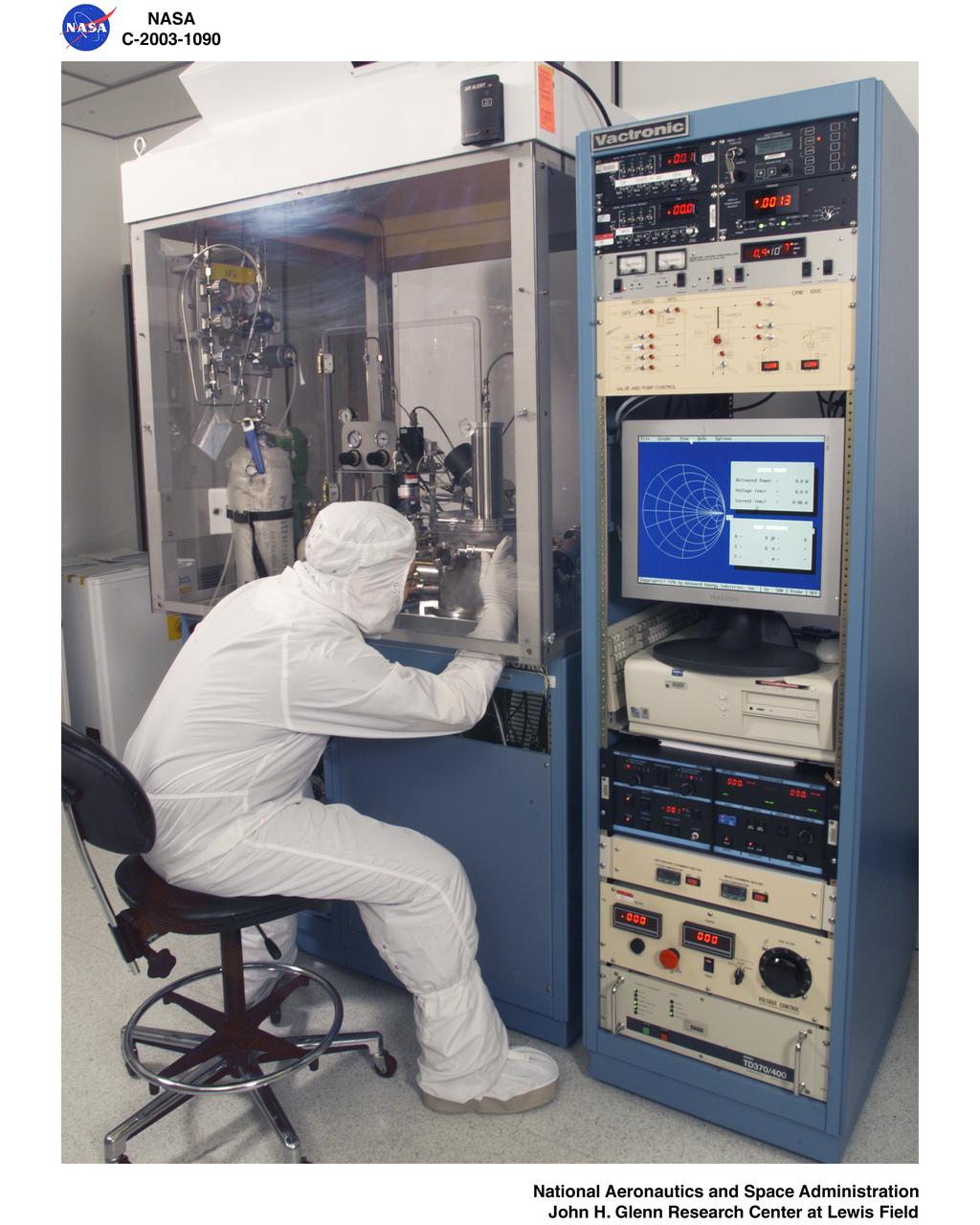
MICROSYSTEMS FABRICATION LABORATORY - REACTIVE ION ETCHER
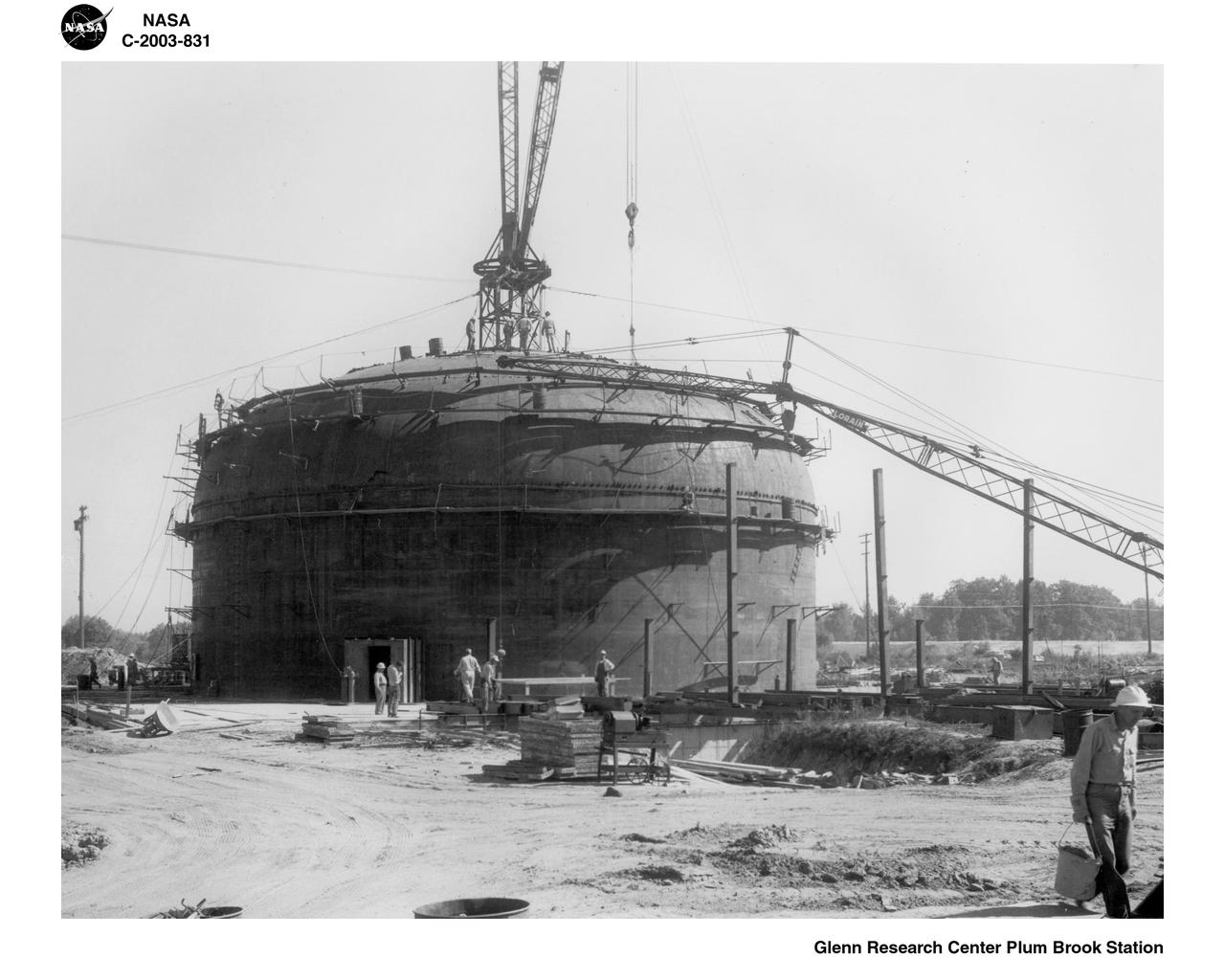
NASA PLUM BROOK REACTOR'S STEEL CONTAINMENT VESSEL BUILDING DOME - c1956-60
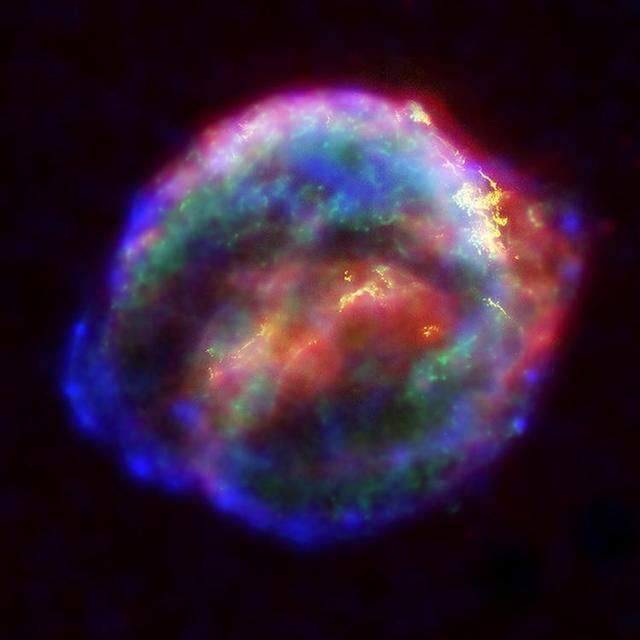
NASA's three Great Observatories -- the Hubble Space Telescope, the SpitzerSpace Telescope, and the Chandra X-ray Observatory -- joined forces to probe theexpanding remains of a supernova, called Kepler's supernova remnant, first seen 400 years ago by sky watchers, including astronomer Johannes Kepler. The combined image unveils a bubble-shaped shroud of gas and dust that is 14light-years wide and is expanding at 4 million miles per hour (2,000 kilometersper second). Observations from each telescope highlight distinct features of thesupernova remnant, a fast-moving shell of iron-rich material from the explodedstar, surrounded by an expanding shock wave that is sweeping up interstellar gasand dust. Each color in this image represents a different region of the electromagneticspectrum, from X-rays to infrared light. These diverse colors are shown in thepanel of photographs below the composite image. The X-ray and infrared datacannot be seen with the human eye. By color-coding those data and combining themwith Hubble's visible-light view, astronomers are presenting a more completepicture of the supernova remnant. Visible-light images from the Hubble telescope (colored yellow) reveal where the supernova shock wave is slamming into the densest regions of surrounding gas.The bright glowing knots are dense clumps from instabilities that form behindthe shock wave. The Hubble data also show thin filaments of gas that look likerippled sheets seen edge-on. These filaments reveal where the shock wave isencountering lower-density, more uniform interstellar material. The Spitzer telescope shows microscopic dust particles (colored red) that havebeen heated by the supernova shock wave. The dust re-radiates the shock wave'senergy as infrared light. The Spitzer data are brightest in the regionssurrounding those seen in detail by the Hubble telescope. The Chandra X-ray data show regions of very hot gas, and extremely high-energyparticles. The hottest gas (higher-energy X-rays, colored blue) is locatedprimarily in the regions directly behind the shock front. These regions alsoshow up in the Hubble observations, and also align with the faint rim of glowingmaterial seen in the Spitzer data. The X-rays from the region on the lower left(colored blue) may be dominated by extremely high-energy electrons that wereproduced by the shock wave and are radiating at radio through X-ray wavelengthsas they spiral in the intensified magnetic field behind the shock front. CoolerX-ray gas (lower-energy X-rays, colored green) resides in a thick interior shelland marks the location of heated material expelled from the exploded star. Kepler's supernova, the last such object seen to explode in our Milky Waygalaxy, resides about 13,000 light-years away in the constellation Ophiuchus. The Chandra observations were taken in June 2000, the Hubble in August 2003;and the Spitzer in August 2004. http://photojournal.jpl.nasa.gov/catalog/PIA06907
Lessons from Spirit Landing

Central Gusev
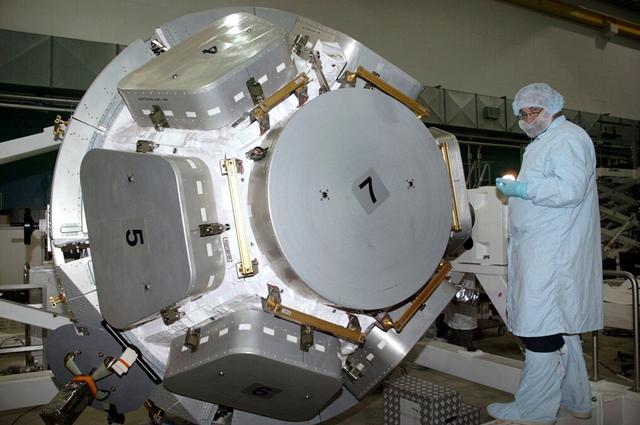
JSC2004-E-44648 (September 2004) --- A technician checks the International Space Station's Cupola in the Alenia Spazio clean room in Turin, Italy. Personnel are preparing the hardware for shipment to NASA's launch facility at Cape Kennedy, Florida. From inside the Cupola, a dome-shaped module with seven windows, astronauts have a panoramic view for observing operations on the outside of the orbiting complex. The Cupola module provides external observation capabilities during spacewalks, docking operations, hardware surveys and for Earth and celestial studies. It also serves as the primary location for executing robot arm operations of Canadarm2. Until the Cupola is installed, crews have been using a robotic control computer station located in the Destiny Laboratory to operate the arm. The Cupola’s windows enhance the robotic arm operator's situational awareness, supplementing camera and graphic views provided by the computer workstation. Photo Credit: Alenia Spazio
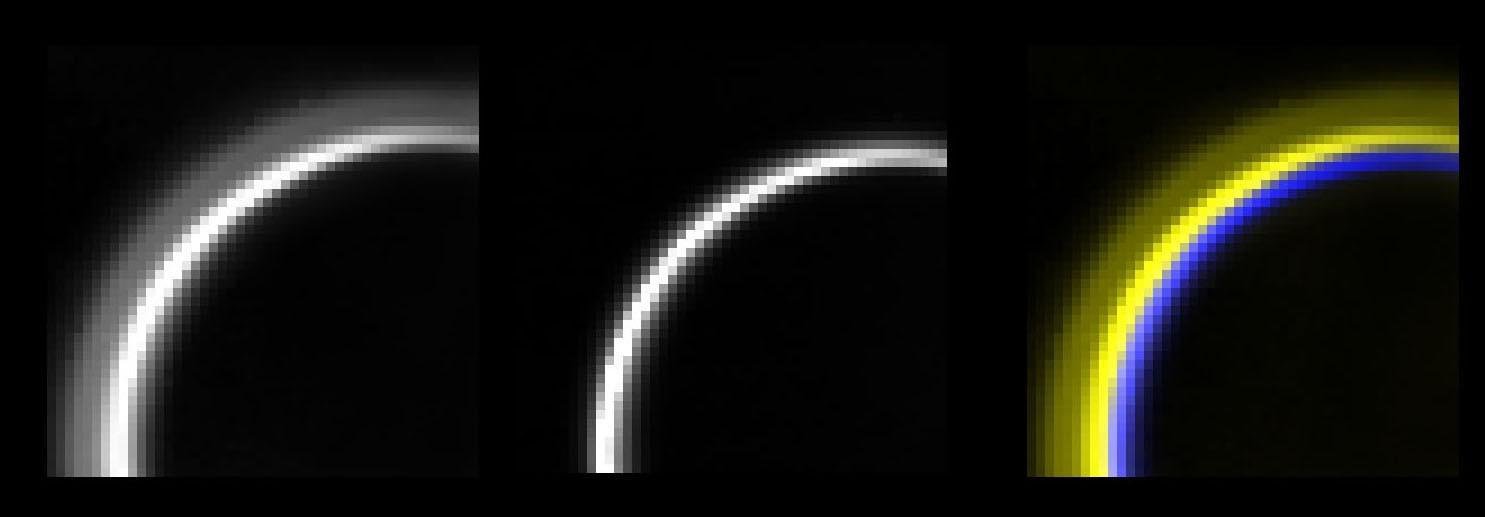
Haze Silhouettes Against Titan Glow
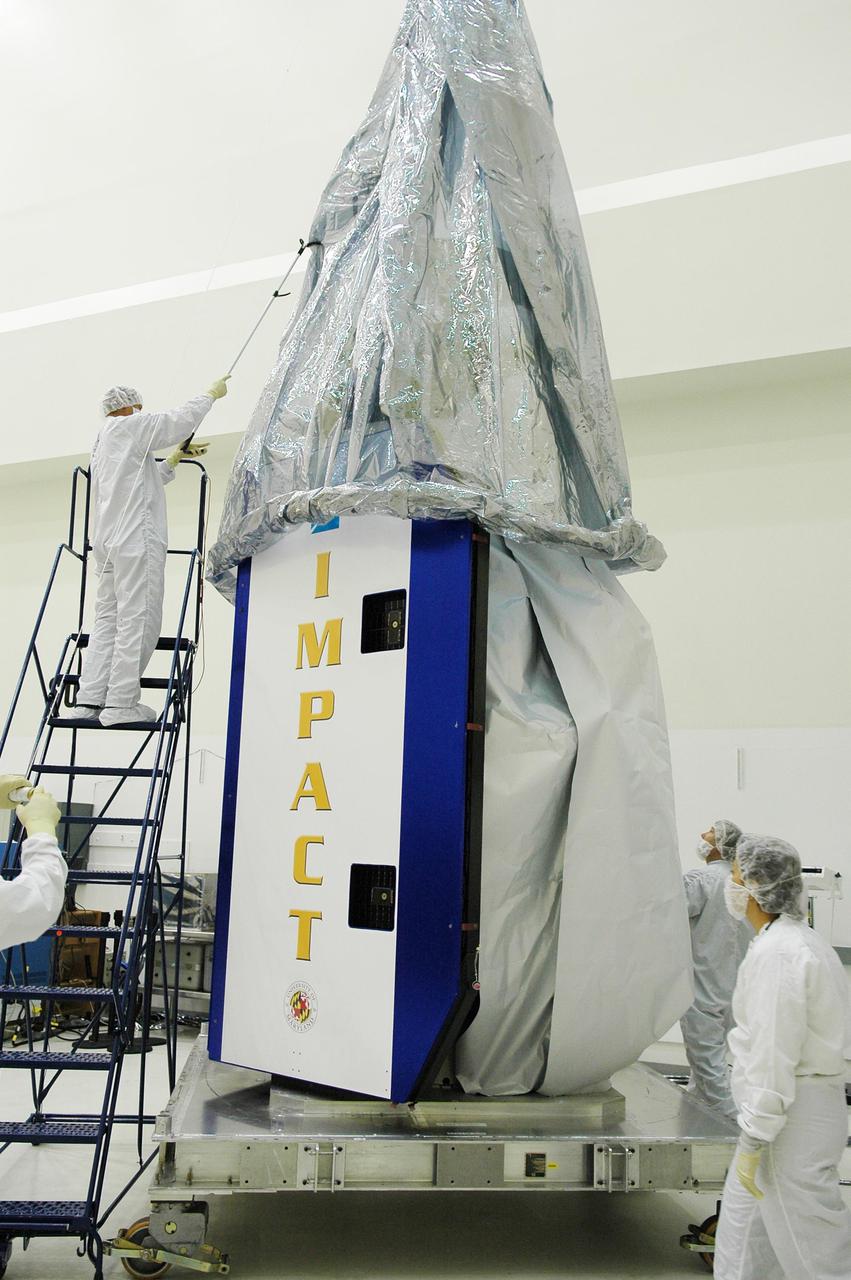
KENNEDY SPACE CENTER, FLA. - At Astrotech Space Operations in Titusville, Fla., workers help guide the protective cover into place over the Deep Impact spacecraft below. Deep Impact is being prepared for a move to the Hazardous Fuel Building and eventually shipment to Launch Pad 17-B, Cape Canaveral Air Force Station. Launch of Deep Impact is scheduled no earlier than Jan. 12. A NASA Discovery mission, Deep Impact will probe beneath the surface of Comet Tempel 1 on July 4, 2005, when the comet is 83 million miles from Earth, and reveal the secrets of its interior. After releasing a 3- by 3-foot projectile to crash onto the surface, Deep Impact’s flyby spacecraft will collect pictures and data of how the crater forms, measuring the crater’s depth and diameter, as well as the composition of the interior of the crater and any material thrown out, and determining the changes in natural outgassing produced by the impact. It will send the data back to Earth through the antennas of the Deep Space Network.

INTERIOR VIEW OF ONE HALF OF THE ATLAS V PAYLOAD FAIRING RESTING ON THE GROUND NASA PLUM BROOK STATION SPACE POWER FACILITY
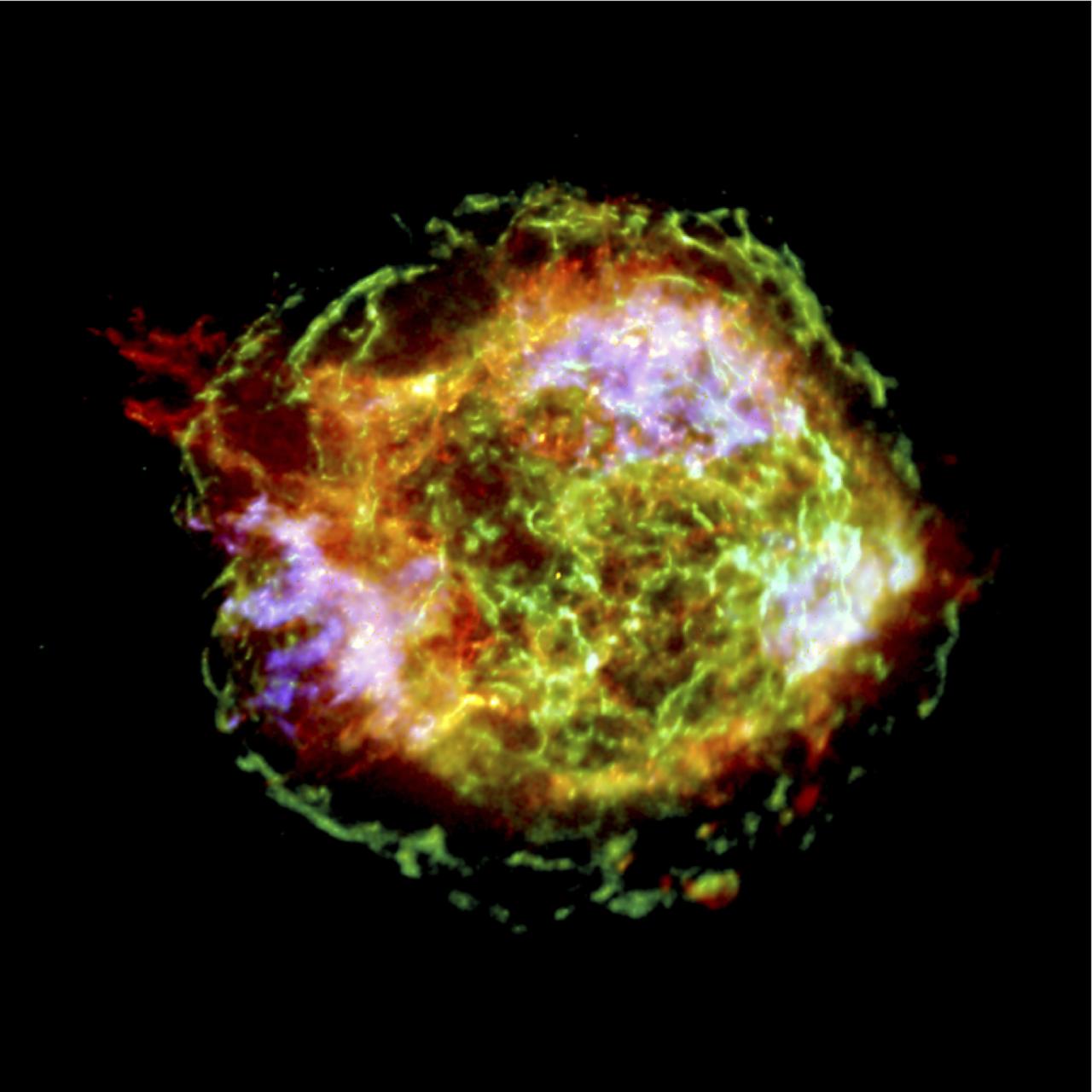
This spectacular Chandra X-Ray Observatory (CXO) image of the supernova remnant Cassiopeia A is the most detailed image ever made of the remains of an exploded star. The one-million-second image shows a bright outer ring (green) 10 light years in diameter that marks the location of a shock wave generated by the supernova explosion. In the upper left corner is a large jet-like structure that protrudes beyond the shock wave, and a counter-jet can be seen on the lower right. The x-ray spectra show that the jets are rich in silicon atoms, and relatively poor in iron atoms. This indicates that the jets formed soon after the initial explosion of the star, otherwise, the jets should have contained large quantities of iron from the star’s central regions. The bright blue areas are composed almost purely of iron gas, which was produced in the central, hottest regions of the star and somehow ejected in a direction almost perpendicular to the jets. The bright source at the center of the image is presumed to be a neutron star created during the supernova. Unlike most others, this neutron star is quiet, faint, and so far shows no evidence of pulsed radiation. A working hypothesis is that the explosion that created Cassiopeia A produced high speed jets similar to, but less energetic than, the hyper nova jets thought to produce gamma-ray bursts. During the explosion, the star may have developed an extremely strong magnetic filed that helped to accelerate the jets and later stifled any pulsar wind activity. CXO project management is the responsibility of NASA’s Marshall Space Flight Center in Huntsville, Alabama.
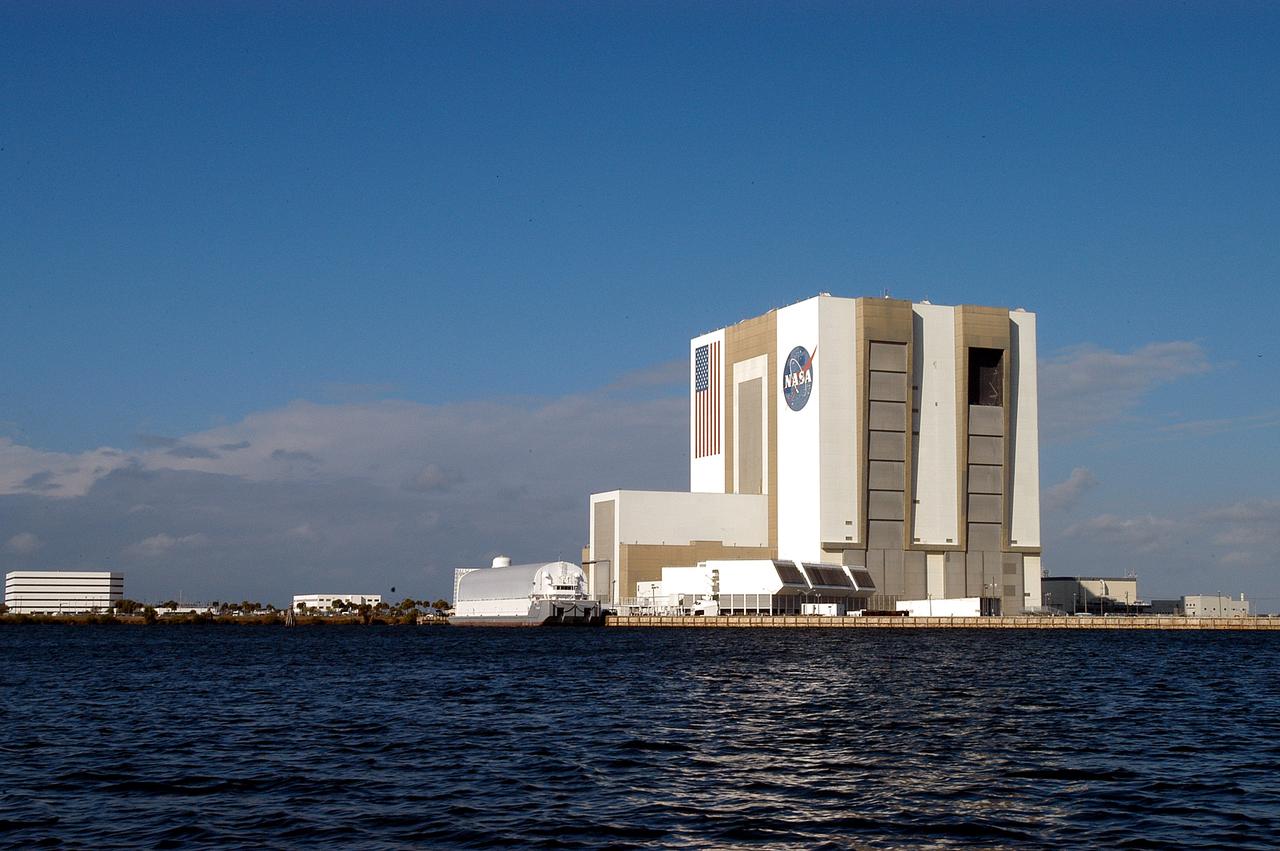
KENNEDY SPACE CENTER, FLA. - From a boat on the Banana River the Vehicle Assembly Building looms over the water. The boat holds Karen Holloway-Adkins, KSC wildlife specialist, who is studying the life history of sea turtles, especially what they eat, where they lay their eggs and what factors might harm their survival. On the boat trip she is also monitoring the growth of sea grasses and algae and the water quality of estuaries and lagoons used by sea turtles and other aquatic wildlife.
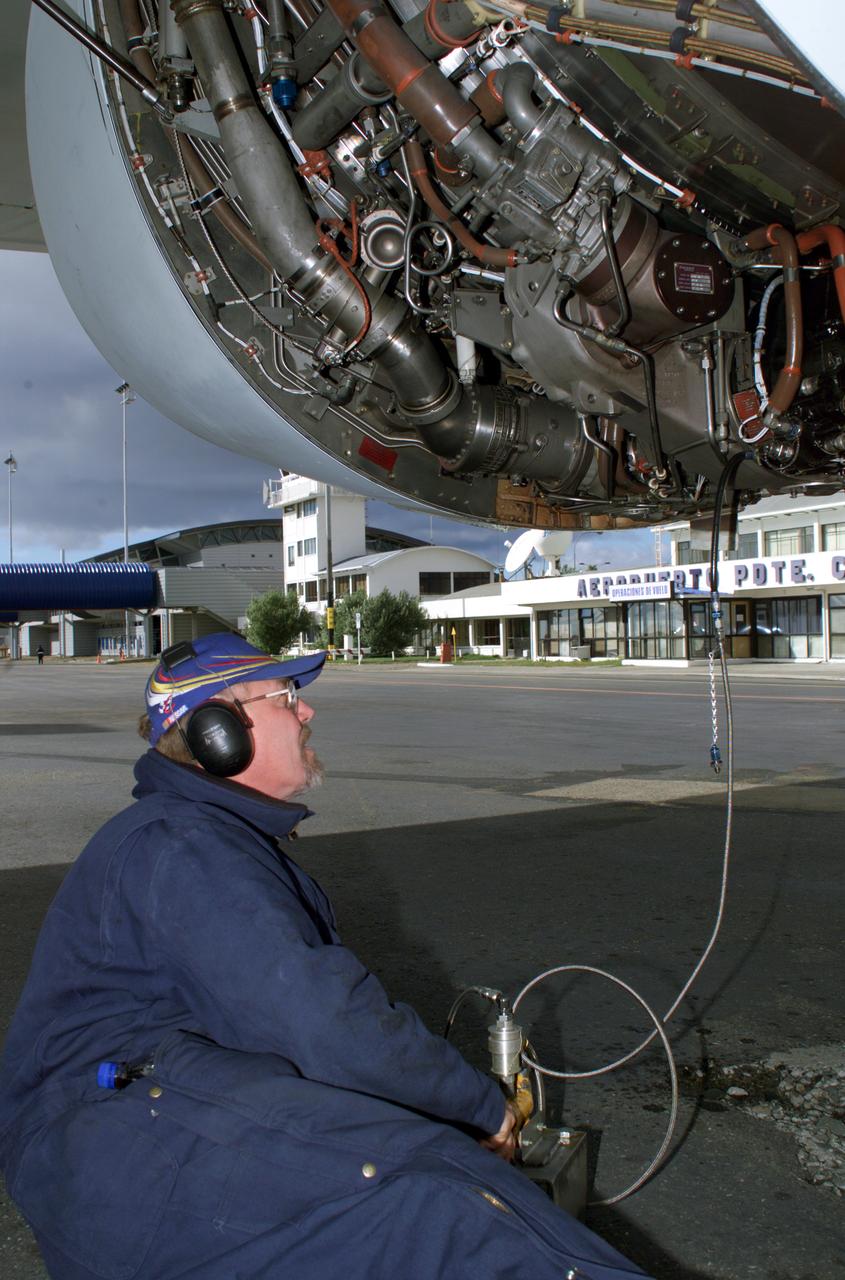
NASA DC-8 Ground Support Technician Joe Niquette performs routine maintenance on the DC-8 aircraft at Carlos Ibanez del Campo International Airport in Punta Arenas, Chile. AirSAR 2004 is a three-week expedition by an international team of scientists that is using an all-weather imaging tool, called the Airborne Synthetic Aperture Radar (AirSAR) which is located onboard NASA's DC-8 airborne laboratory. Scientists from many parts of the world including NASA's Jet Propulsion Laboratory are combining ground research done in several areas in Central and South America with NASA's AirSAR technology to improve and expand on the quality of research they are able to conduct. In South America and Antarctica, AirSAR will collect imagery and data to help determine the contribution of Southern Hemisphere glaciers to sea level rise due to climate change. In Patagonia, researchers found this contribution had more than doubled from 1995 to 2000, compared to the previous 25 years. AirSAR data will make it possible to determine whether that trend is decreasing, continuing or accelerating. AirSAR will also provide reliable information on ice shelf thickness to measure the contribution of the glaciers to sea level.
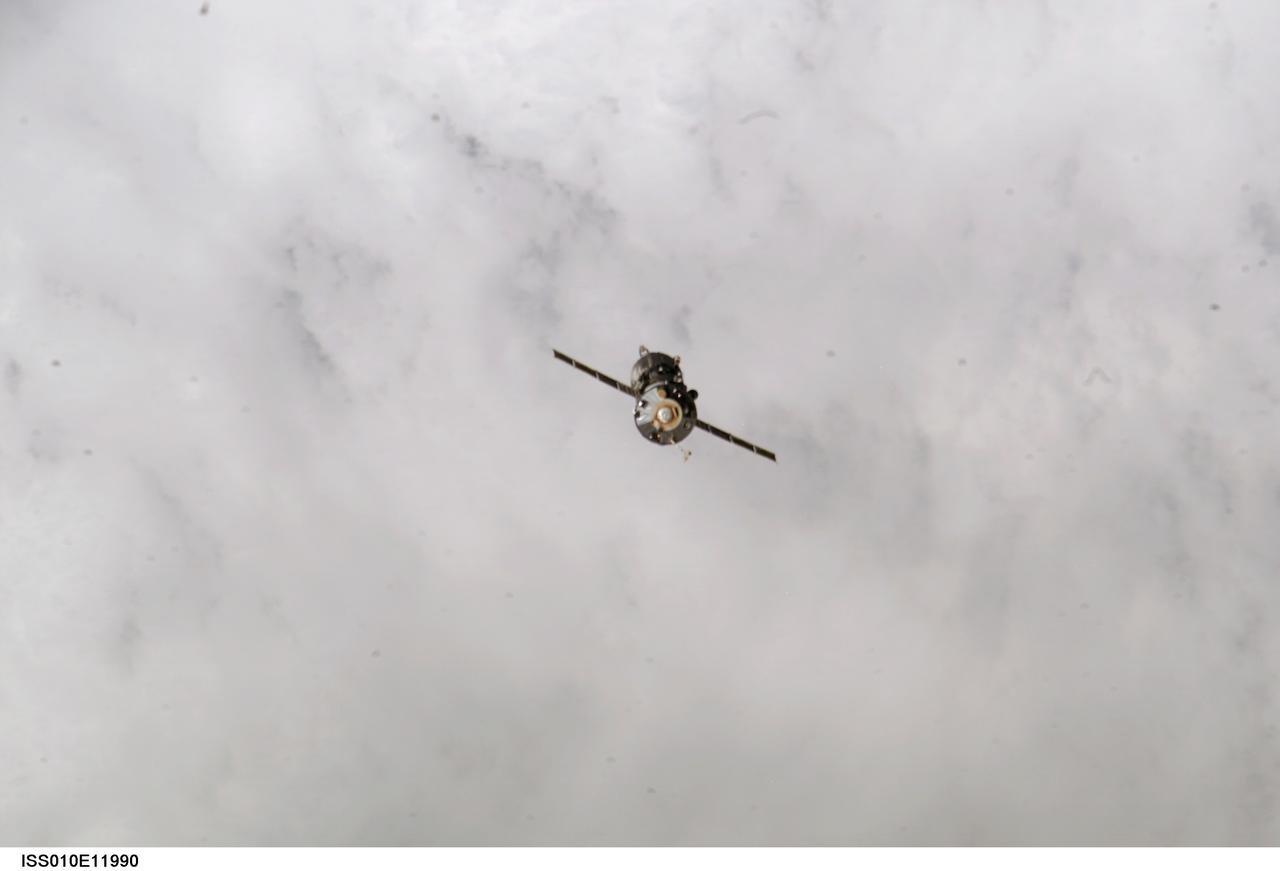
ISS010-E-11990 (22 December 2004) --- Backdropped by a blanket of clouds, an unpiloted Progress 15 supply vehicle departs from the International Space Station (ISS) at 1:37 pm (CST) on December 22, 2004, carrying its load of trash and unneeded equipment to be deorbited and burned up in Earth’s atmosphere. The undocking clears the way for the arrival of a new Progress 16, planned to launch December 23 and dock with the Station on December 25.
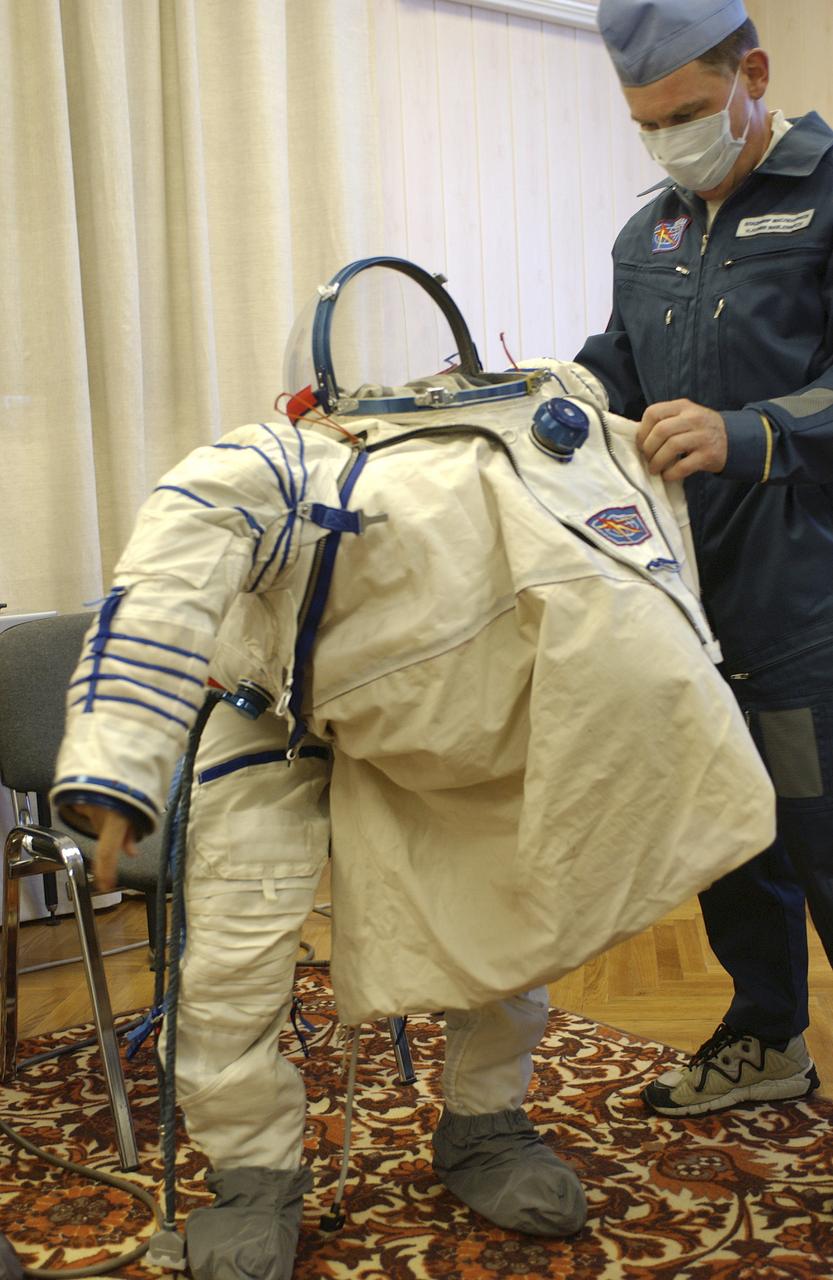
Expedition 10 Commander and NASA Science Officer Leroy Chiao donned his launch and entry suit and climbed aboard the Soyuz TMA-5 spacecraft Friday, October 5, 2004, at the Baikonur Cosmodrome in Kazakhstan for a dress rehearsal of launch day activities leading to their liftoff October 14 to the International Space Station. Chiao and Sharipov, the first crew of all-Asian extraction, will spend six months on the Station. Shargin will return to Earth October 24 with the Stations' current residents, Expedition 9 Commander Gennady Padalka and NASA Flight Engineer and Science Officer Mike Fincke. Photo Credit: (NASA/Bill Ingalls)
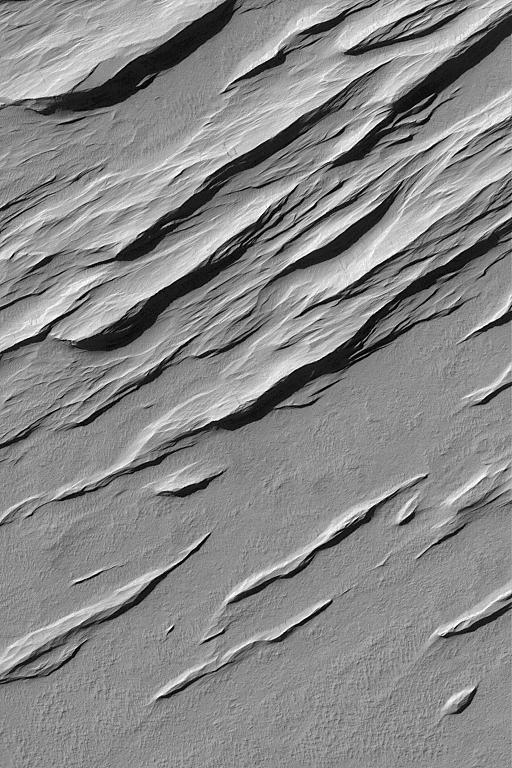
Memnonia Sulci Yardangs

ISS008-E-21942 (21 April 2004) --- Cosmonaut Alexander Y. Kaleri (foreground) representing Russia's Federal Space Agency and serving as Expedition 8 flight engineer, and astronaut C. Michael Foale (center), Expedition 8 commander and NASA ISS science officer, are about to interact with human beings for the first time in almost six months aboard the International Space Station. Cosmonaut Gennady Padalka of the Federal Space Agency, Expedition 9 commander, and part of the replacement team on ISS, greets the pair in the Zvezda Service Module.
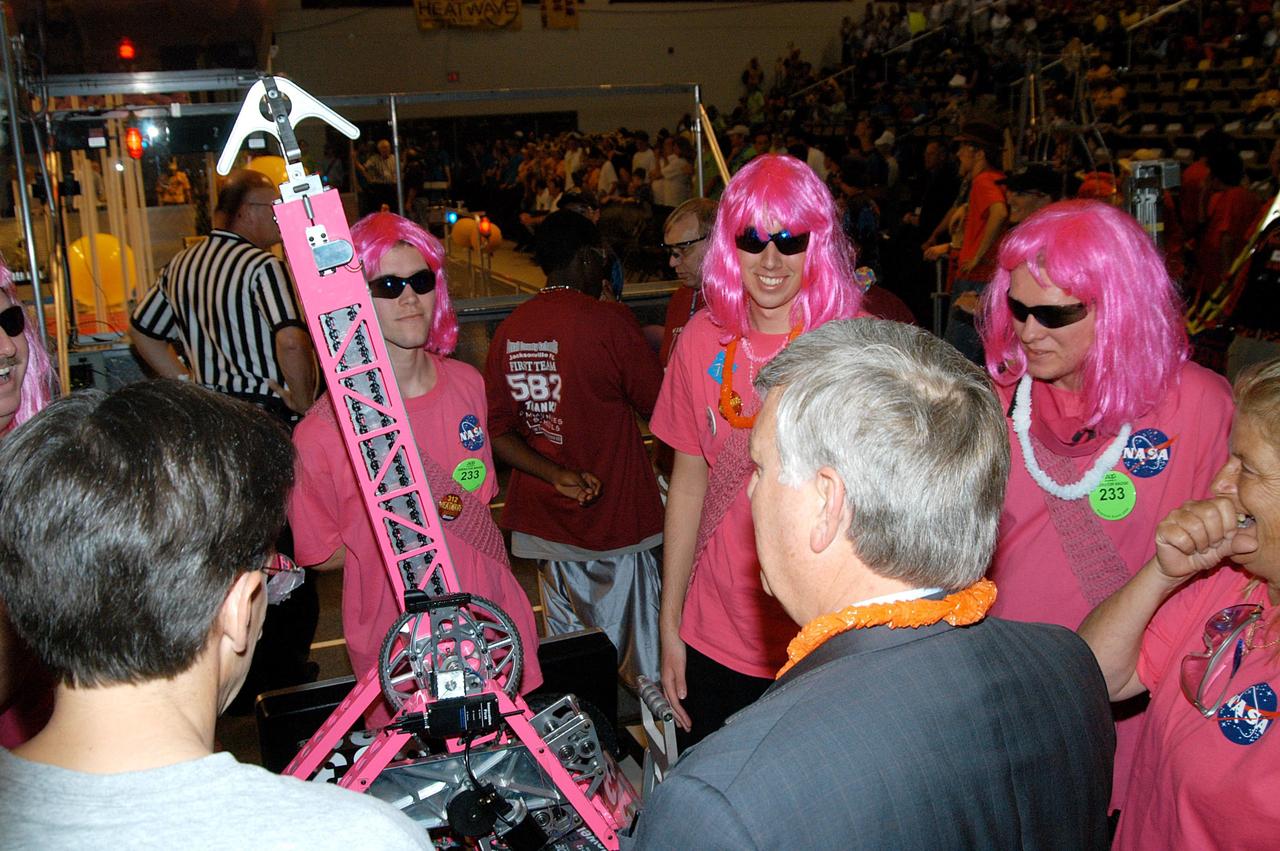
KENNEDY SPACE CENTER, FLA. - Center Director Jim Kennedy (right, back to camera) talks to members of the KSC-sponsored “Pink” team at the 2004 Florida Regional FIRST competition, held at the University of Central Florida. The annual event is hosting 41 teams from Canada, Brazil, Great Britain and the United States. FIRST is a nonprofit organization, For Inspiration and Recognition of Science and Technology, that sponsors the event pitting robots against each other in an athletic-style competition. The FIRST robotics competition is designed to provide students with a hands-on, inside look at engineering and other professional careers, pairing high school students with engineer mentors and corporations.

KENNEDY SPACE CENTER, FLA. - An alligator slides off a bank into the water on the west side of NASA’s Kennedy Space Center. Nearly 5,000 alligators can be found in canals, ponds and waterways throughout the Center and the surrounding Merritt Island National Wildlife Refuge. American alligators feed and rest in the water, and lay their eggs in dens they dig into the banks. The young alligators spend their first several weeks in these dens. The Wildlife Refuge encompasses 92,000 acres that are a habitat for more than 331 species of birds, 31 mammals, 117 fishes, and 65 amphibians and reptiles.

Gazing Down

Jet engine being set up for testing
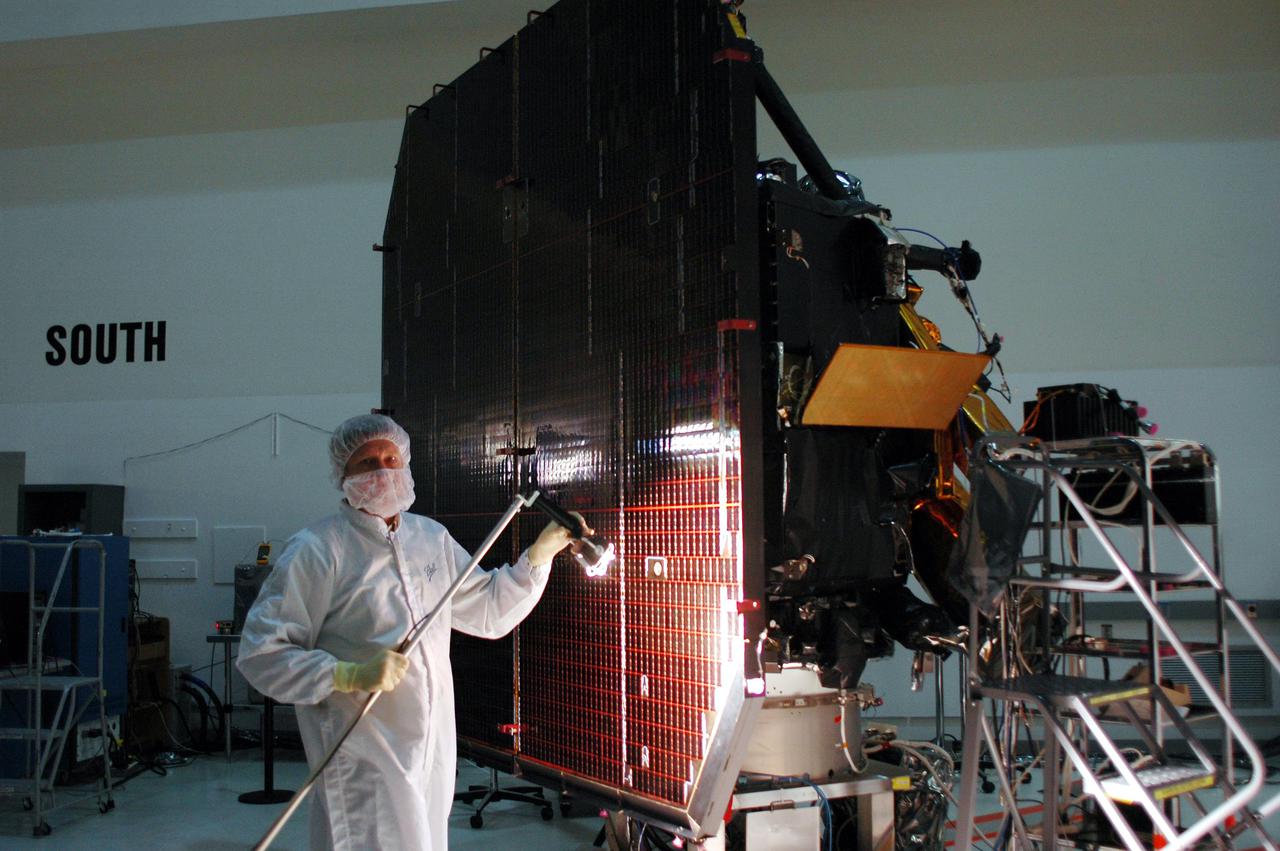
KENNEDY SPACE CENTER, FLA. - A technician at Astrotech in Titusville, Fla., conducts an illumination test on the Deep Impact spacecraft as a final check of performance. Launch aboard a Boeing Delta II rocket from Pad 17-B, Cape Canaveral Air Force Station, Fla., is scheduled for Jan. 8. The Deep Impact mission is the first to explore a comet's interior by using a spacecraft to create a crater, allowing us to look deep inside. Dramatic images from both the flyby spacecraft and the impactor will be sent back to distant Earth as data in near-realtime. These first-ever views deep beneath a comet’s surface, and additional scientific measurements will provide clues to the formation of the solar system. Amateur astronomers will combine efforts with astronomers at larger telescopes to offer the public an earth-based look at this incredible July 2005 encounter with a comet.

Nighttime Lava Flows

Bounce Exposed
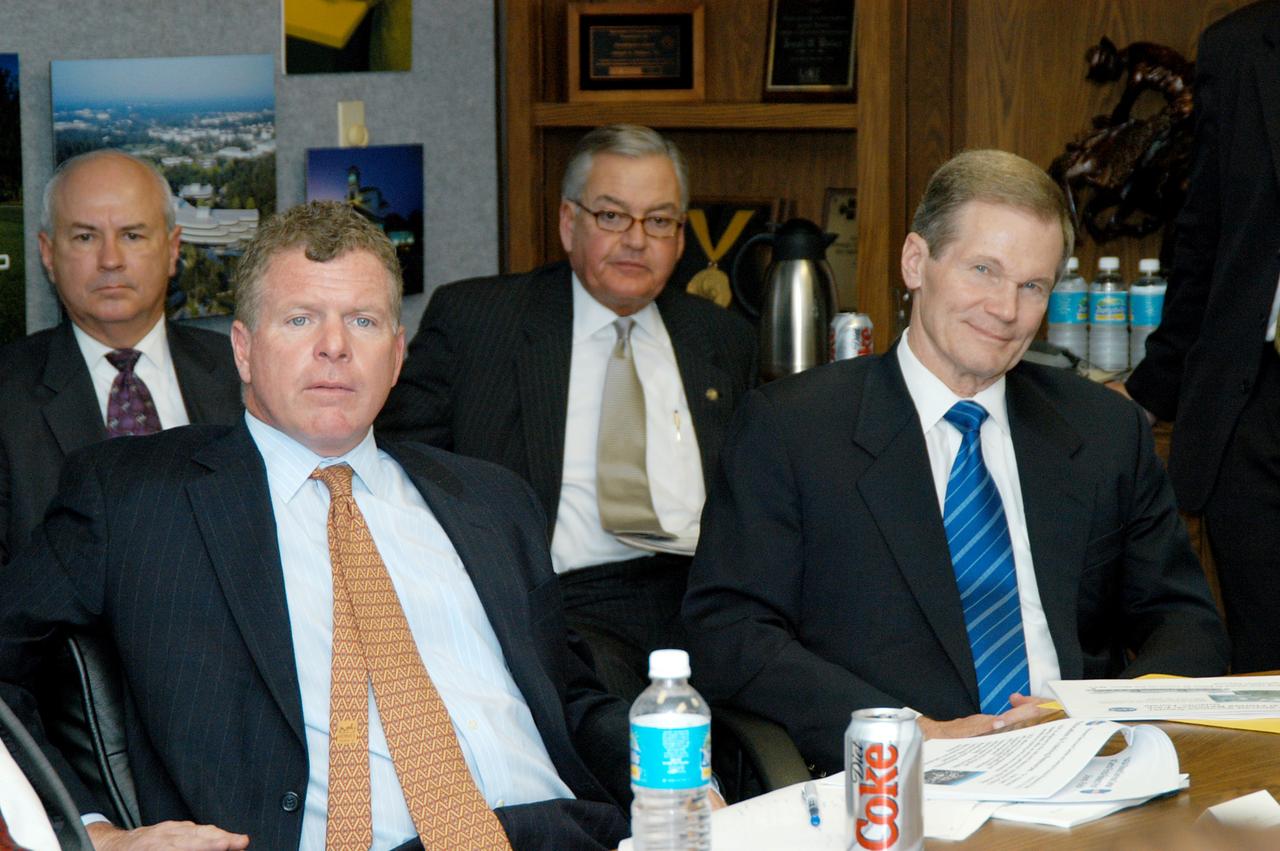
KENNEDY SPACE CENTER, FLA. - Florida Congressman Tom Feeney (left) and U.S. Senator Bill Nelson (right) listen to a presentation about the assets of the Central Florida Research Park, near Orlando, as the site of NASA’s new Shared Services Center. Six sites around the U.S. are under consideration for location of the Center, which would centralize NASA’s payroll, accounting, human resources, facilities and procurement offices that are now handled at each field center. The consolidation is part of the One NASA focus. Others attending the presentation included Congressman Dave Weldon, U.S. Representative Ric Keller, Center Director Jim Kennedy and Pamella J. Dana, Ph.D., director, Office of Tourism, Trade, and Economic Development in Florida.
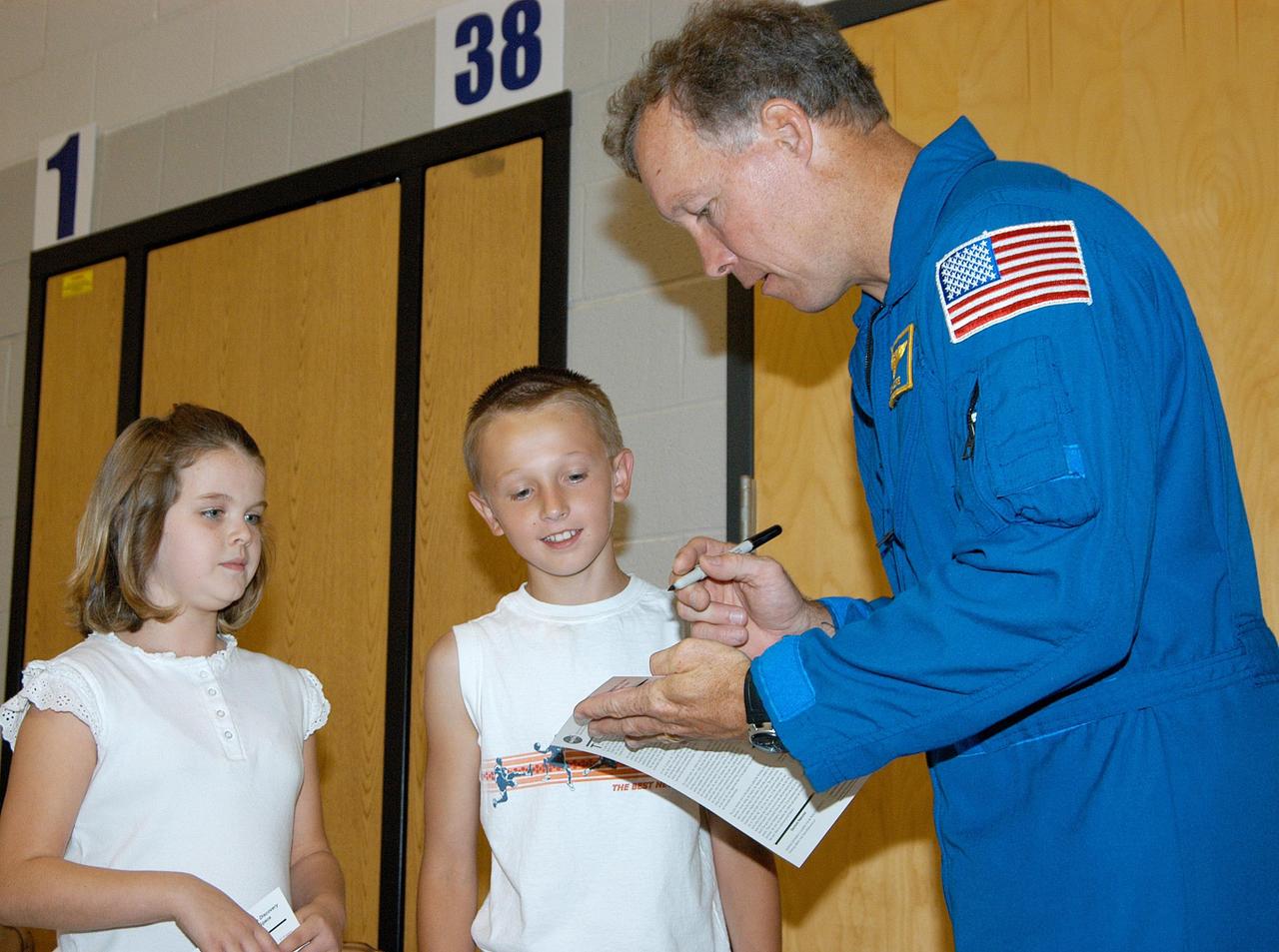
KENNEDY SPACE CENTER, FLA. -- Astronaut Dom Gorie signs autographs for students at Trojan Intermediate School in Potosi, Mo. Gorie accompanied KSC Deputy Director Dr. Woodrow Whitlow on a visit to the school to share America’s new vision for space exploration with the next generation of explorers. They are talking with students about our destiny as explorers, NASA’s stepping stone approach to exploring Earth, the Moon, Mars and beyond, how space impacts our lives, and how people and machines rely on each other in space. Students from three area schools — Potosi High School, John Evans Middle School and Trojan — are on a team taking part in NASA’s Explorer Schools program.
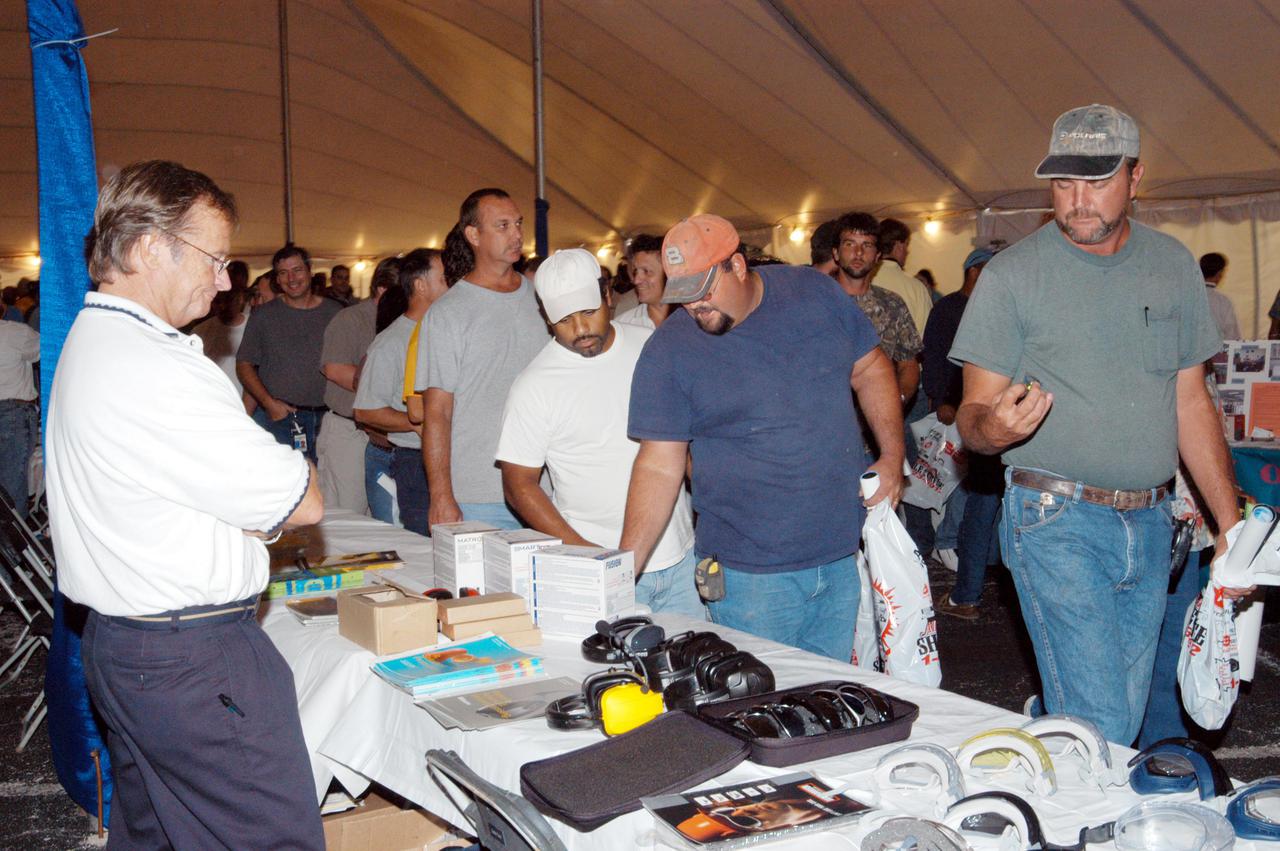
KENNEDY SPACE CENTER, FLA. - Inside a tent, employees look over an exhibit of safety equipment. The exhibits were part of Spaceport Super Safety and Health Day, which also featured presentations by guest speakers Dr. Pamela Peeke, Navy Com. Stephen E. Iwanowicz, NASA’s Dr. Kristine Calderon and Olympic-great Bruce Jenner. Vendors’ exhibits were set up in the parking areas outside the Vehicle Assembly Building and the OandC Building. The annual event was initiated at KSC in 1998 to increase awareness of the importance of safety and health among the government and contractor workforce. The theme for this year’s event was “Safety and Health: A Winning Combination.”
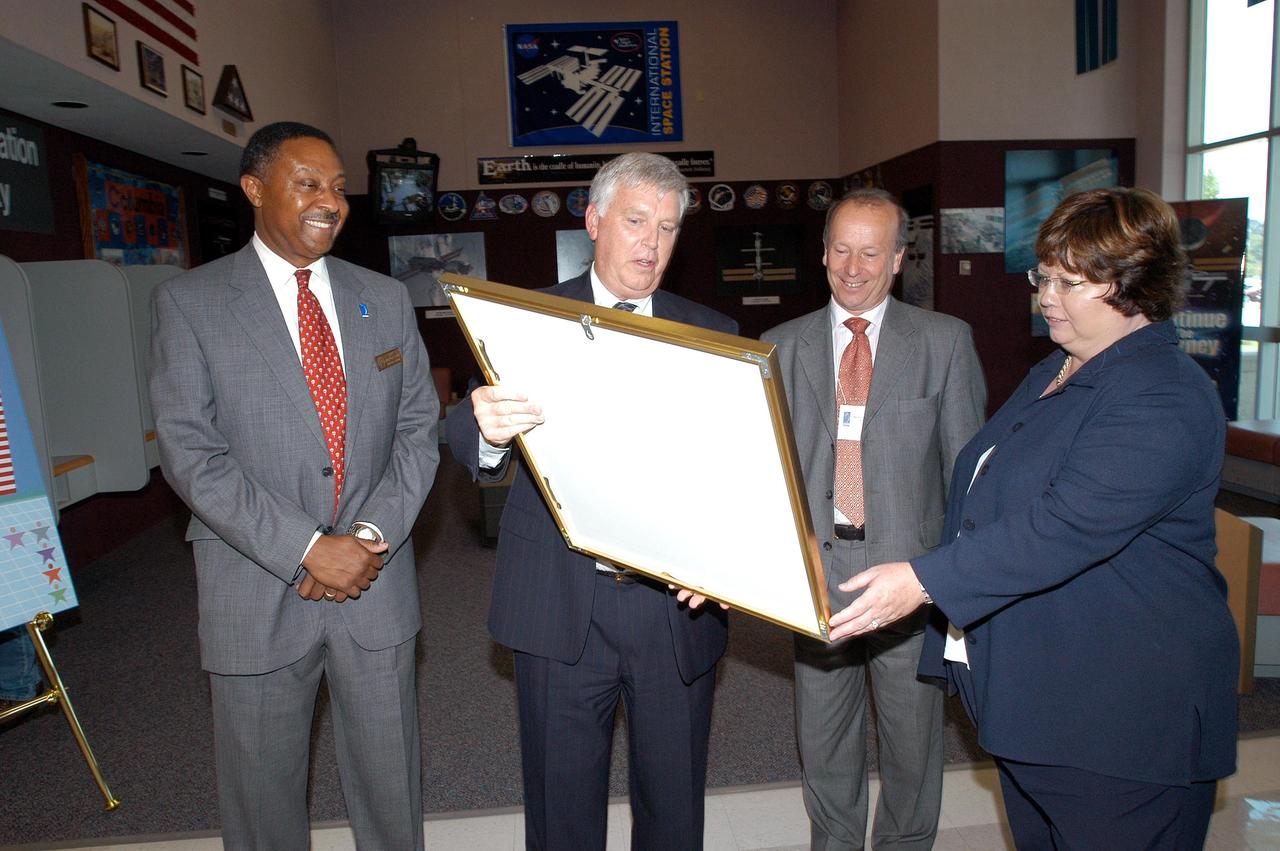
KENNEDY SPACE CENTER, FLA. - In the Space Station Processing Facility, Center Director Jim Kennedy (second from left) presents a framed photo to Mary Harney , Tanaiste (deputy prime minister) and Minister for Enterprise, Trade and Employment of Ireland. Harney is visiting KSC to support a Memorandum of Understanding between Florida Spaceport Authority and the Irish government’s training and employment authority (FAS). The joint initiative enables Irish students to work with science and engineering experts during a six-week program in Florida. At far left is FSA Director Capt. Winston Scott. Next to Harney is Paul Haran, secretary to the deputy prime minister.
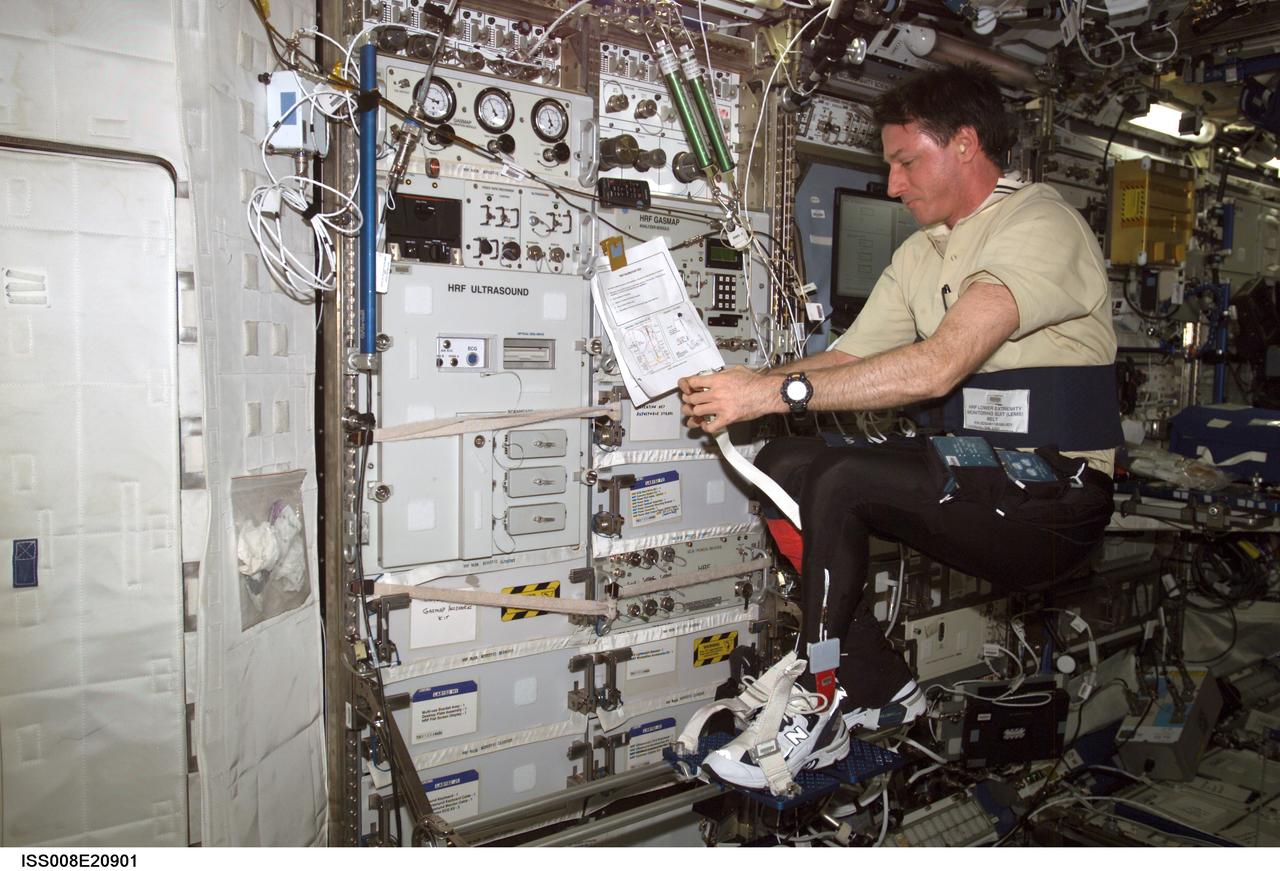
ISS008-E-20901 (7 April 2004) --- Astronaut C. Michael Foale, Expedition 8 commander and NASA ISS science officer, balances on the footplate of a special track attached to the Human Research Facility (HRF) rack in the Destiny laboratory on the International Space Station (ISS) to perform Foot/Ground Reaction Forces During Spaceflight (FOOT) / Electromyography (EMG) calibration operations. Foale is wearing the Lower Extremity Monitoring Suit (LEMS), the cycling tights outfitted with 20 sensors, which measures forces on joints and muscle activity.

Mars Rover Studies Soil on Mars
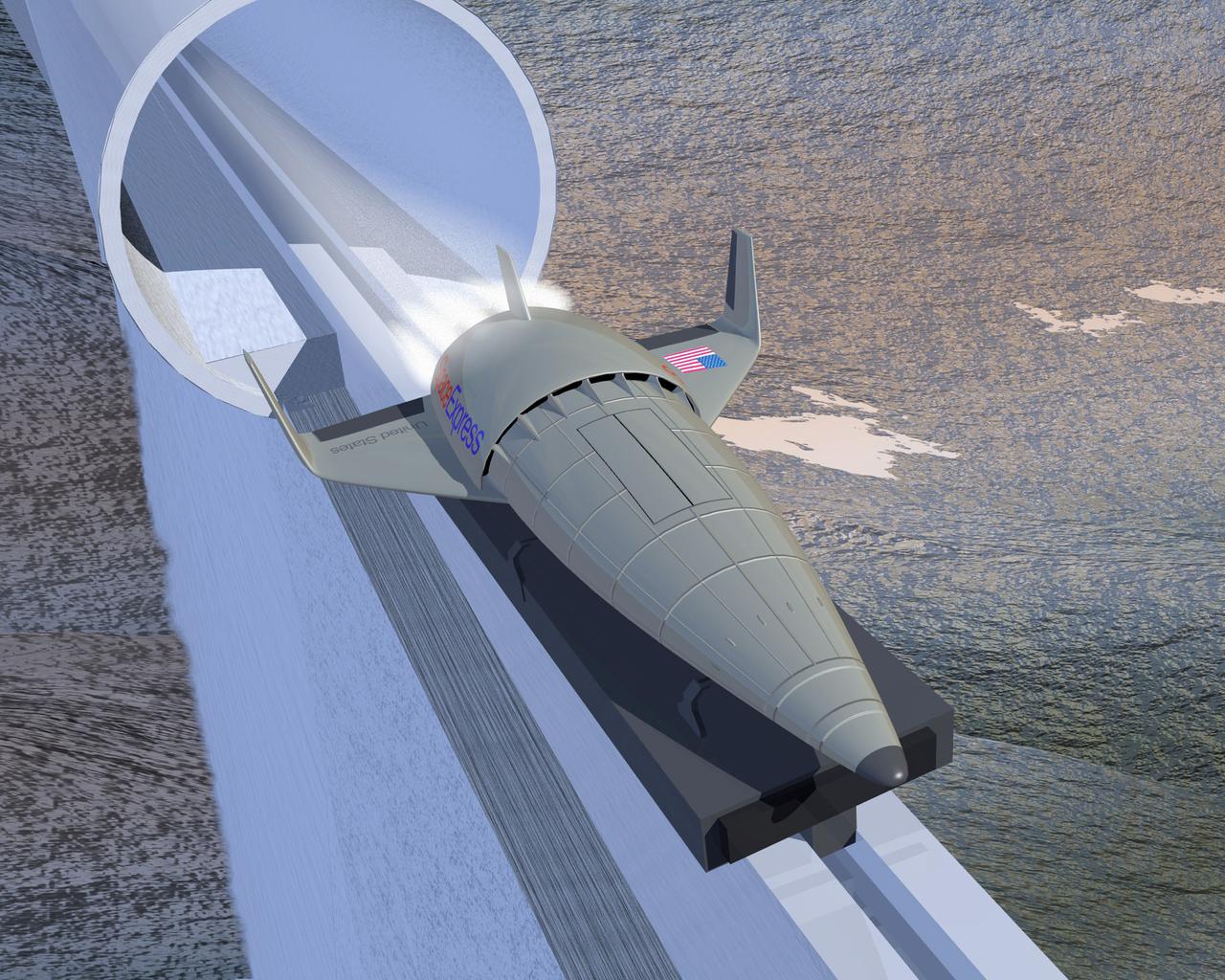
Pictured is an artist's concept of the Rocket Based Combined Cycle (RBCC) launch. The RBCC's overall objective is to provide a technology test bed to investigate critical technologies associated with opperational usage of these engines. The program will focus on near term technologies that can be leveraged to ultimately serve as the near term basis for Two Stage to Orbit (TSTO) air breathing propulsions systems and ultimately a Single Stage To Orbit (SSTO) air breathing propulsion system.
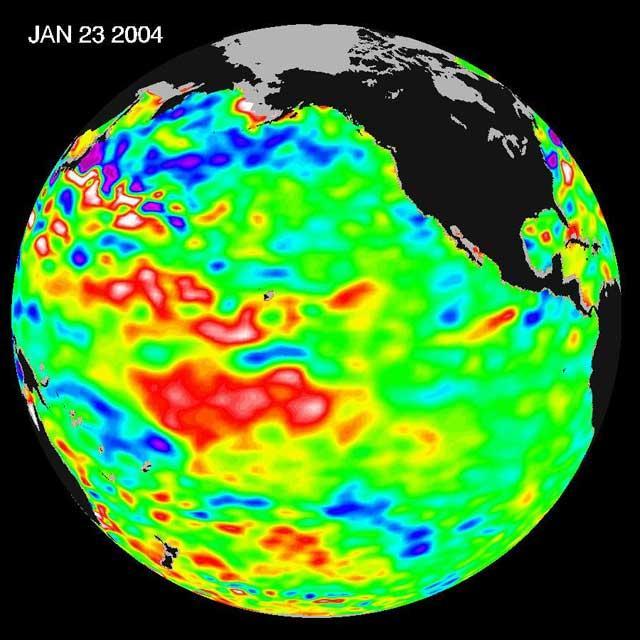
The latest remote sensing data from NASA's Jason satellite show that the equatorial Pacific sea surface levels are higher, indicating warmer sea surface temperatures in the central and west Pacific Ocean. This pattern has the appearance of La Niña rather than El Niño. This contrasts with the Bering Sea, Gulf of Alaska and U.S. West Coast where lower-than-normal sea surface levels and cool ocean temperatures continue (indicated by blue and purple areas). The image above is a global map of sea surface height, accurate to within 30 millimeters. The image represents data collected and composited over a 10-day period, ending on Jan 23, 2004. The height of the water relates to the temperature of the water. As the ocean warms, its level rises; and as it cools, its level falls. Yellow and red areas indicate where the waters are relatively warmer and have expanded above sea level, green indicates near normal sea level, and blue and purple areas show where the waters are relatively colder and the surface is lower than sea level. The blue areas are between 5 and 13 centimeters (2 and 5 inches) below normal, whereas the purple areas range from 14 to 18 centimeters (6 to 7 inches) below normal. http://photojournal.jpl.nasa.gov/catalog/PIA05071
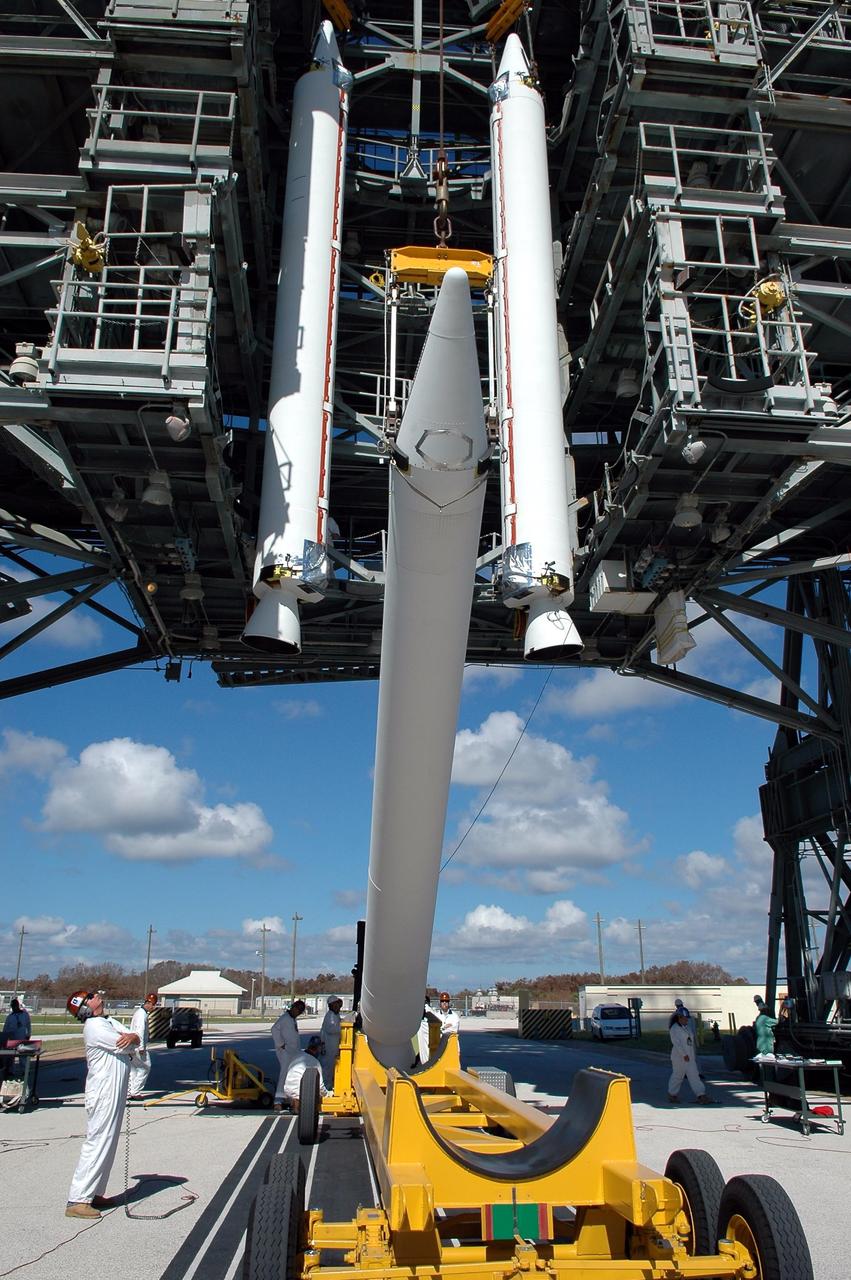
KENNEDY SPACE CENTER, FLA. - On Pad 17-A, Cape Canaveral Air Force Station, two Solid Rocket Boosters are ready in the mobile service tower and a third is lifted from its transporter. In all, three SRBs will be attached to the Boeing Delta launch vehicle for the Swift spacecraft and its Gamma-Ray Burst Mission. Swift is a medium-class Explorer mission managed by NASA’s Goddard Space Flight Center in Greenbelt, Md.
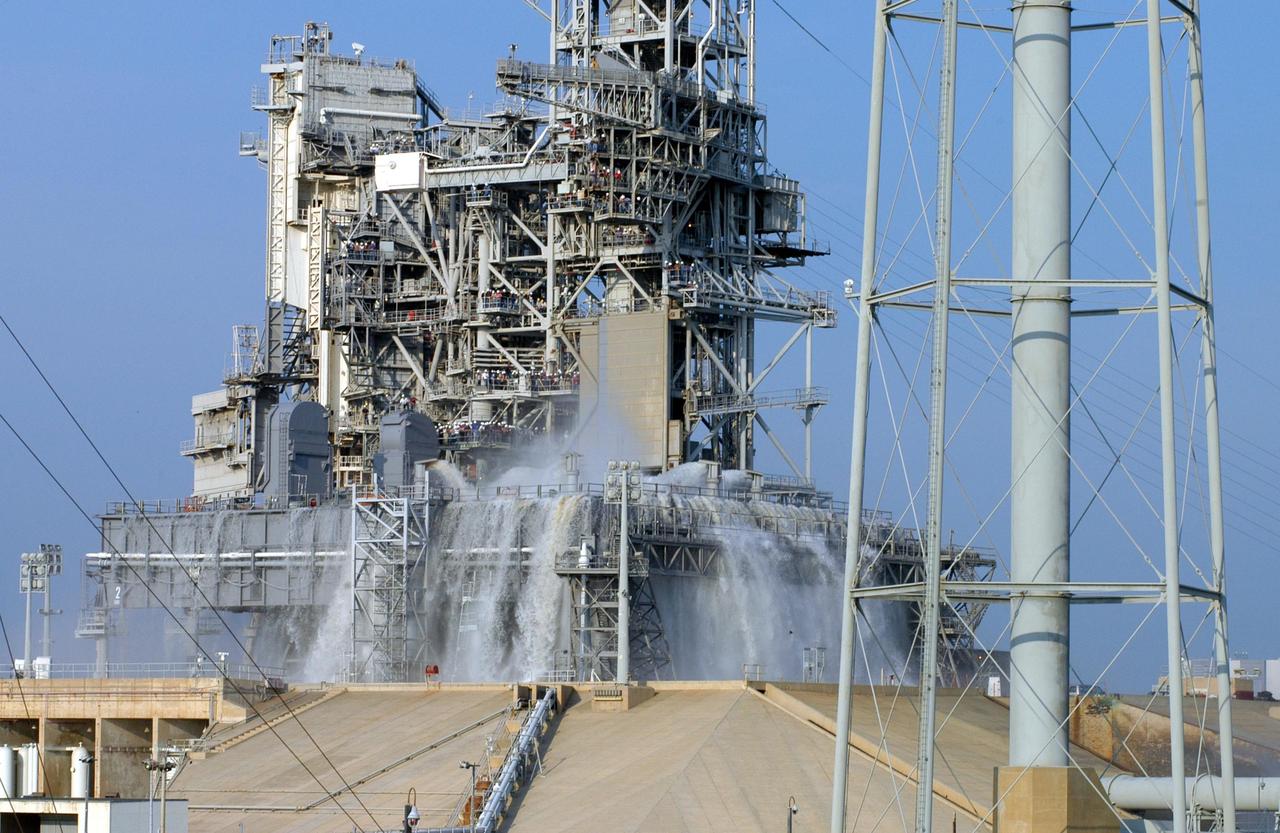
KENNEDY SPACE CENTER, FLA. -- For the fourth time in Space Shuttle Program history, 350,000 gallons of water are released on a Mobile Launcher Platform (MLP) at Launch Pad 39A during a water sound suppression test. This test is being conducted following the replacement of the six main system valves, which had been in place since the beginning of the Shuttle Program and had reached the end of their service life. Also, the hydraulic portion of the valve actuators has been redesigned and simplified to reduce maintenance costs. The sound suppression water system is installed on the launch pads to protect the orbiter and its payloads from damage by acoustical energy reflected from the MLP during launch. The system includes an elevated water tank with a capacity of 300,000 gallons. The tank is 290 feet high and stands on the northeast side of the Pad. The water is released just before the ignition of the orbiter's three main engines and twin solid rocket boosters, and flows through parallel 7-foot-diameter pipes to the Pad area.
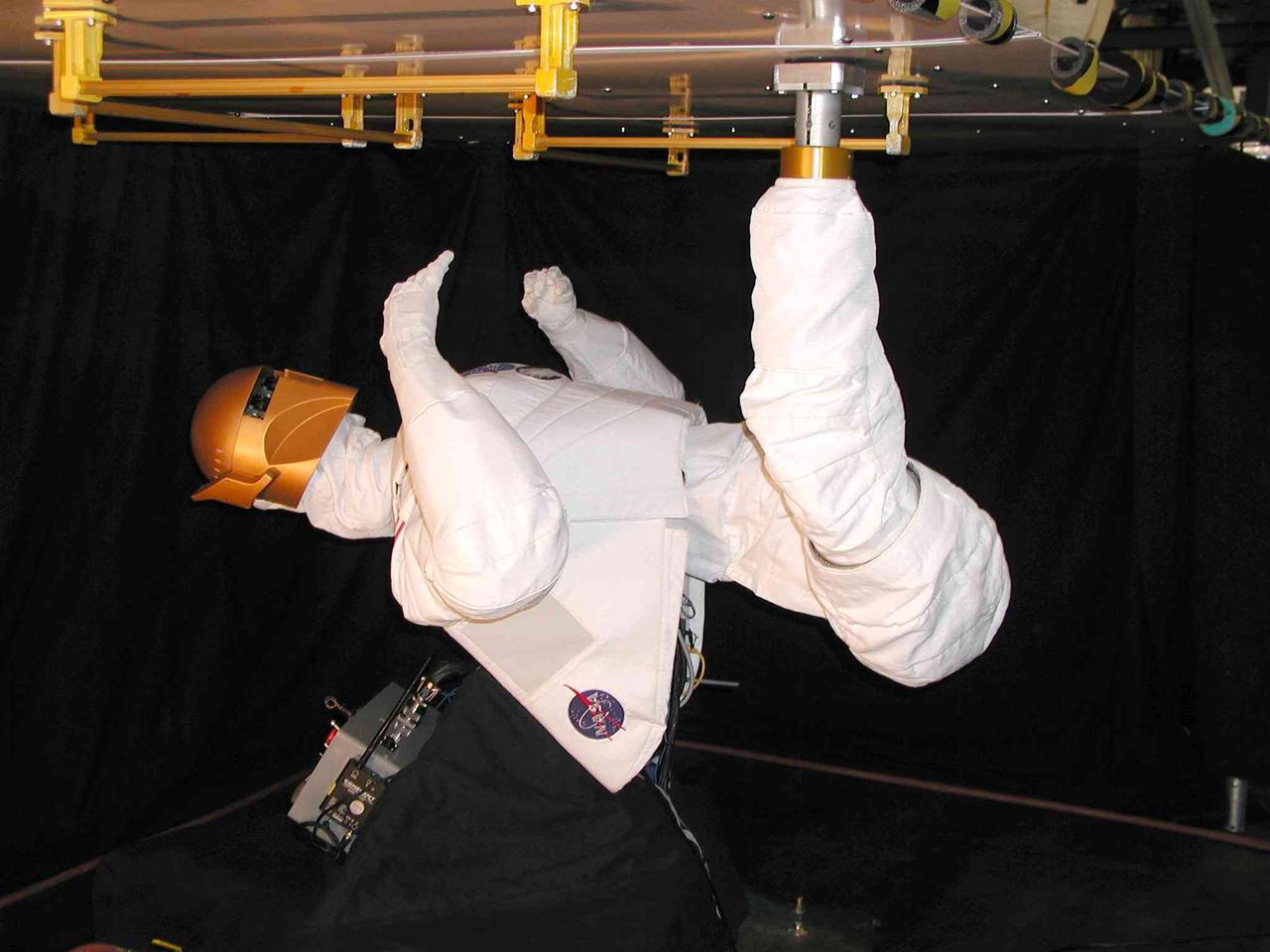
JSC2004-E-16339 (March 2004) --- Robonaut - which uses a head, torso, arms and dexterous hands to perform tasks using the same tools used by human spacewalkers – has both hands free once its leg is anchored in a standard Work Interface Facility (WIF) attached to the test panel. The Robonaut Project is a collaborative effort with the Defense Advanced Research Projects Agency (DARPA), and has been under development at Johnson Space Center (JSC) for several years.

KENNEDY SPACE CENTER, FLA. - In the Remote Manipulator System lab in the Vehicle Assembly Building (VAB), Kennedy workers remove the shipping container surrounding part of the new Orbiter Boom Sensor System (OBSS). Once the entire structure has arrived, the OBSS will be assembled and undergo final checkout and testing in the lab prior to being transferred to the Orbiter Processing Facility (OPF) for installation on Space Shuttle Discovery. The 50-foot-long OBSS will be attached to the Remote Manipulator System, or Shuttle arm, and is one of the new safety measures for Return to Flight, equipping the orbiter with cameras and laser systems to inspect the Shuttle's Thermal Protection System while in space. Discovery is slated to fly mission STS-114 once Space Shuttle launches resume. The launch planning window is May 12 to June 3, 2005.
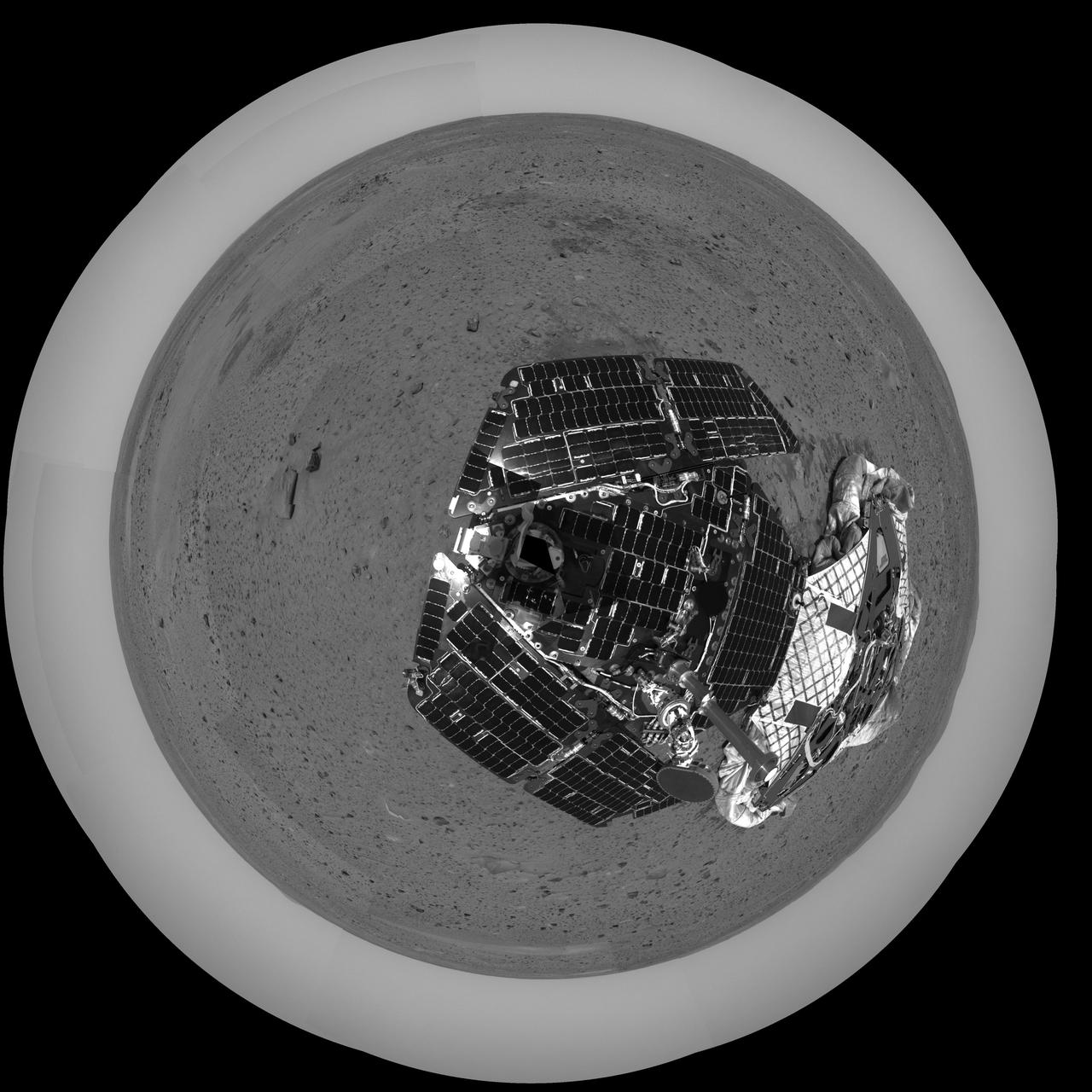
Spirit and Its Now-Empty Mother Ship
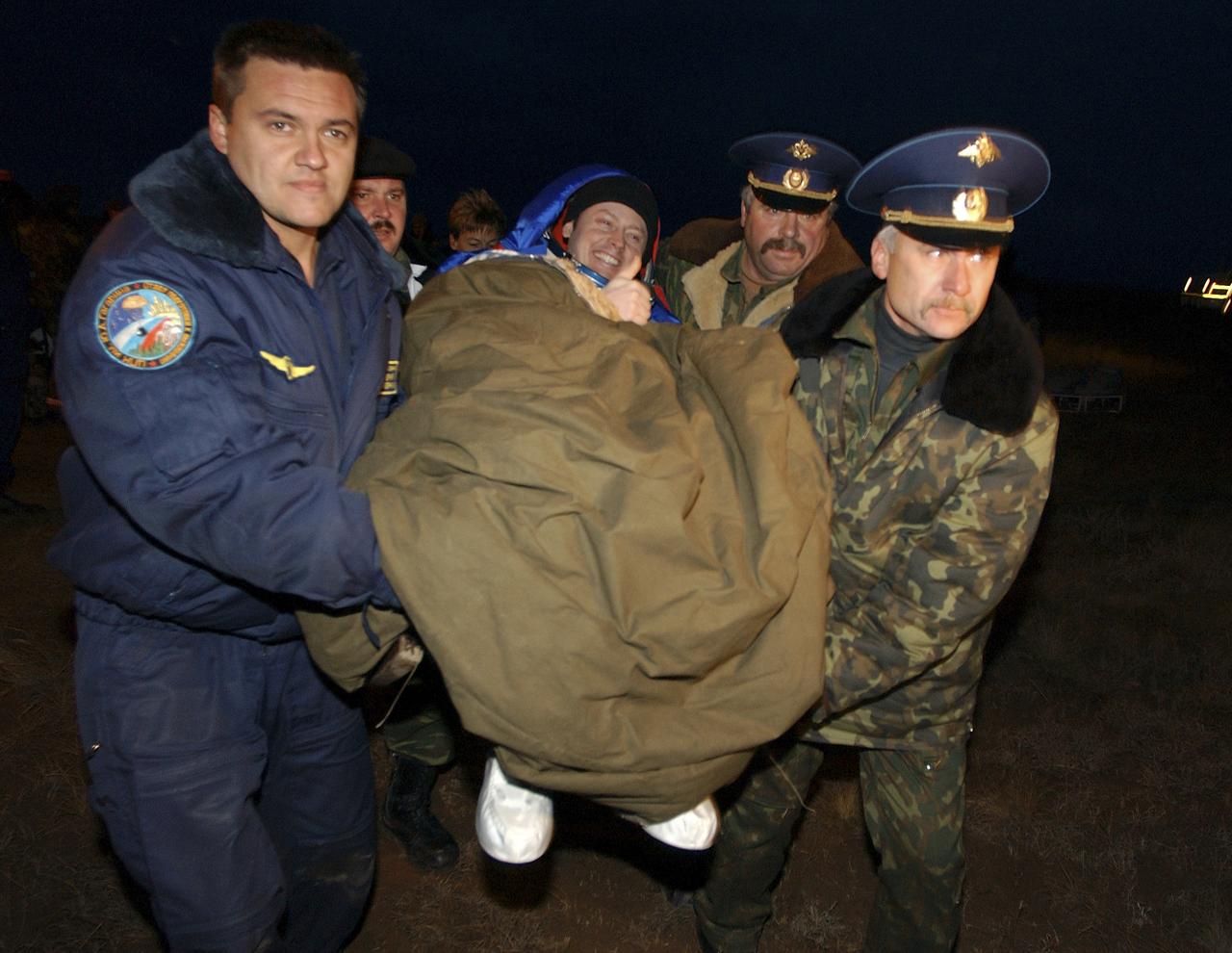
Expedition 9 Flight Engineer Michael Fincke is carried in a chair from the landing site to the medical tent in order to remove his sokol suit. Fincke landed in the Soyuz capsule along with Expedition 9 Commander Gennady Padalka and Russian Space Forces cosmonaut Yuri Shargin. The crew landed in their Soyuz capsule approximately 85 kilometers northeast of Arkalyk in northern Kazakhstan, Sunday, October 24, 2004. Photo Credit: (NASA/Bill Ingalls)
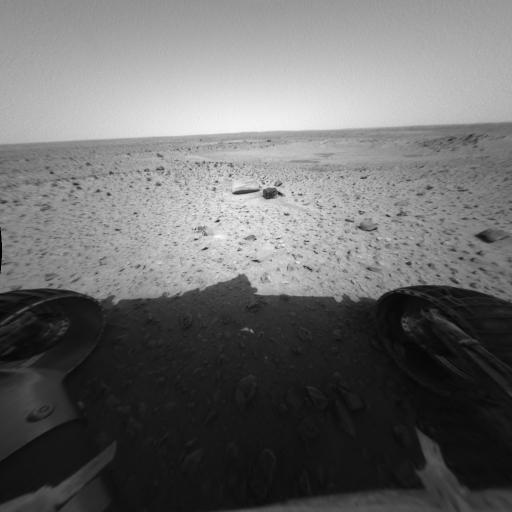
Ready to Rock and Roll
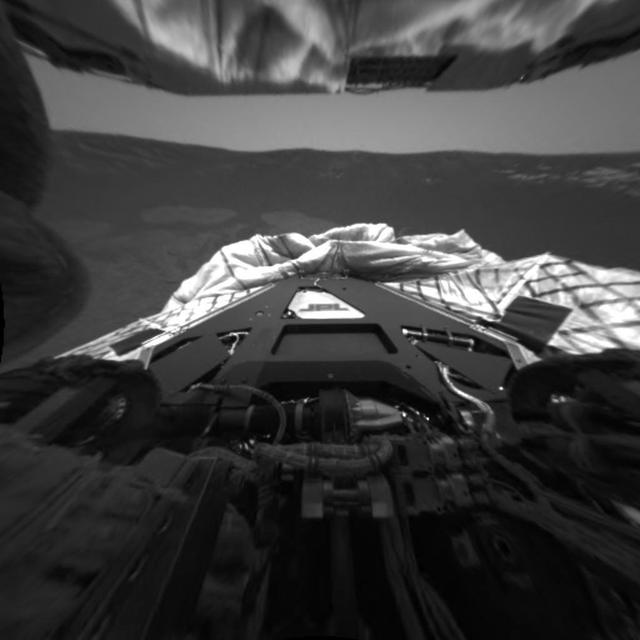
Opportunity Prepares for Egress
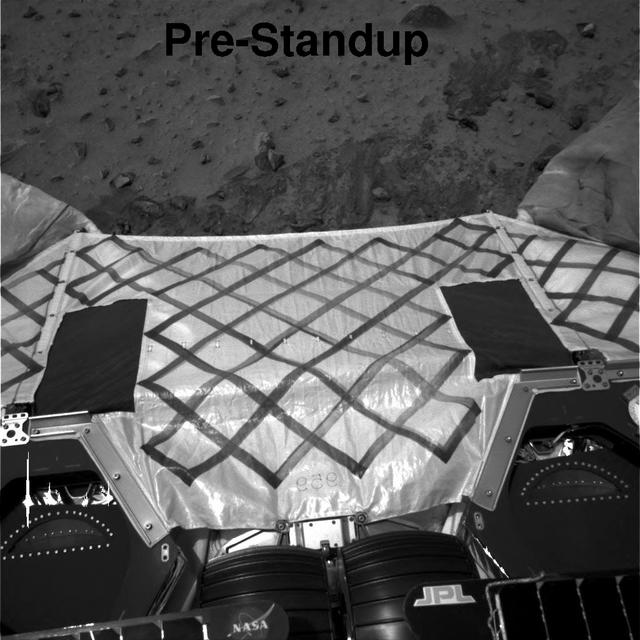
This frame from an animation shows the perspective from the navigation camera on the Mars Exploration Rover Spirit before its automated stand-up process. After standing up, the rover is approximately 12 inches higher off of the lander, resulting in a better view of the surrounding terrain. An animation is available at http://photojournal.jpl.nasa.gov/catalog/PIA05032
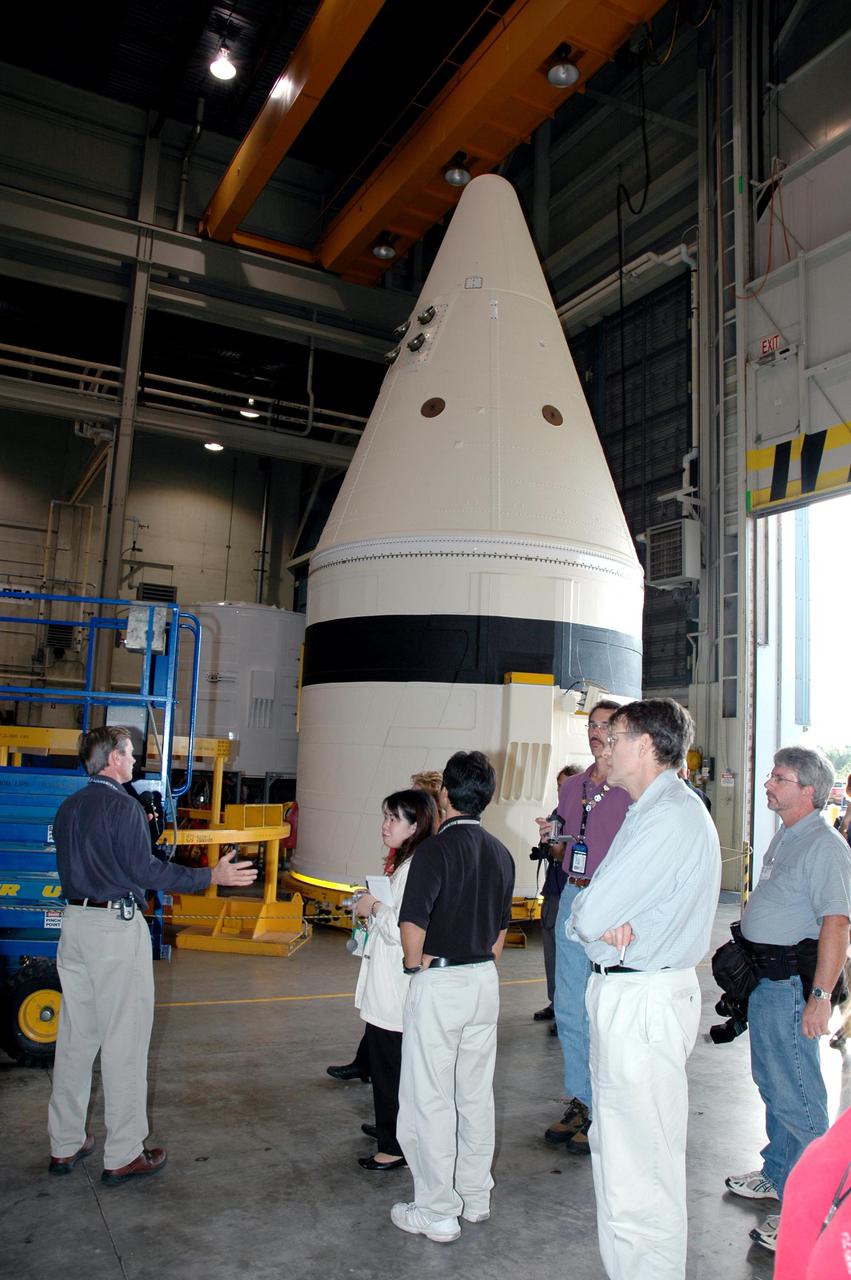
KENNEDY SPACE CENTER, FLA. - The media tour the Solid Rocket Booster (SRB) Assembly and Refurbishment Facility where SRB segments are refurbished. In the background can be seen the frustum and nose cap of an SRB. The media event featured the movement of the first SRB segments to the Vehicle Assembly Building for stacking for Return to Flight mission STS-114. Two SRBs support the liftoff of the Space Shuttle on a launch. The twin 149-foot tall, 12-foot diameter SRBs provide the main propulsion system during launch to place the orbiters in the proper orbit around the Earth. They operate parallel with the Space Shuttle main engines for the first two minutes of flight and jettison away from the orbiter, with help from the Booster Separation Motors, about 26.3 nautical miles above the Earth’s surface.
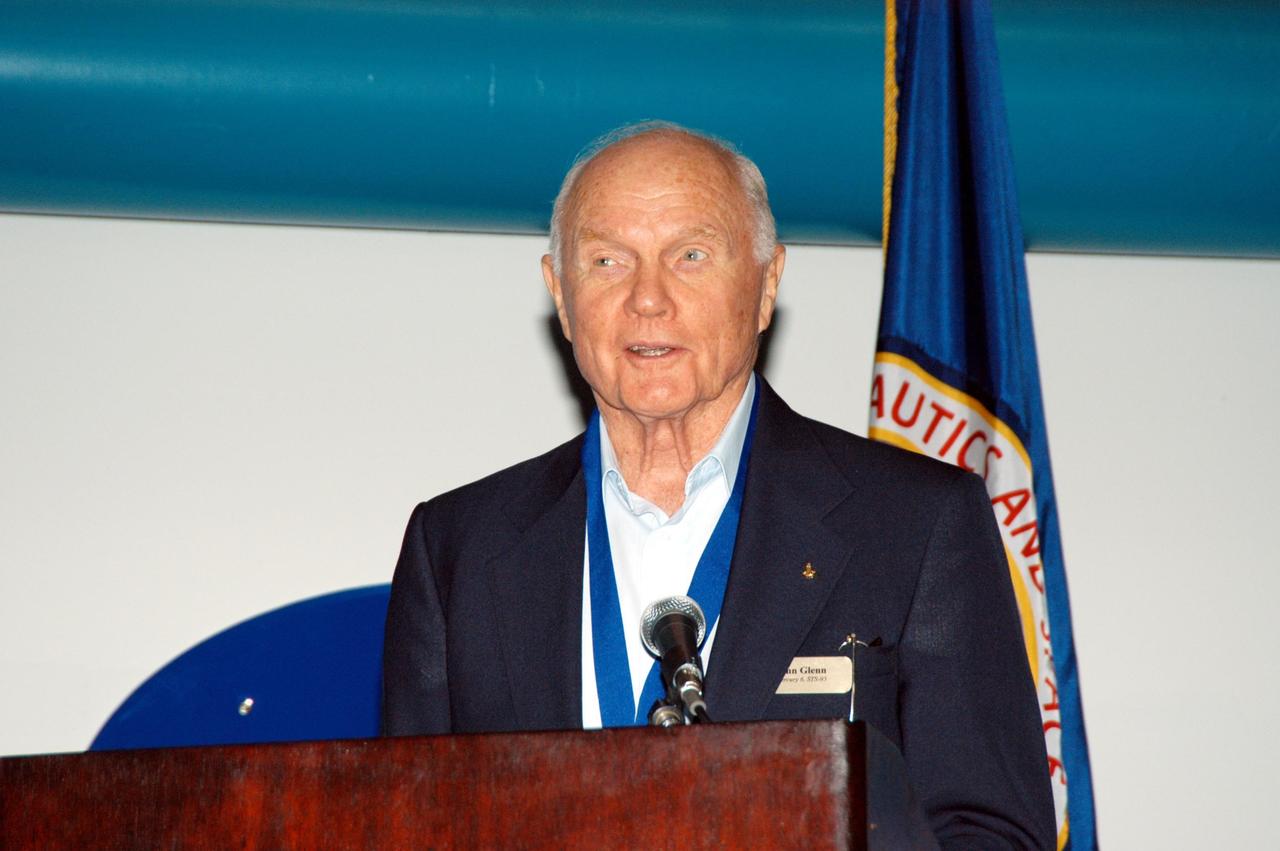
KENNEDY SPACE CENTER, FLA. -- At the Kennedy Space Center Visitor Complex, former NASA astronaut John H. Glenn Jr. participates in the 2004 U.S. Astronaut Hall of Fame induction ceremony. He is introducing inductee and fellow Ohioan Kathryn D. Sullivan, the first American woman to walk in space. Also chosen for this honor in 2004 are Richard O. Covey, commander of the Hubble Space Telescope repair mission; Frederick D. Gregory, the first African-American to command a space mission; Norman E. Thagard, the first American to occupy Russia's Mir space station; and the late Francis R. "Dick" Scobee, commander of the ill-fated 1986 Challenger mission. The U.S. Astronaut Hall of Fame opened in 1990 to provide a place where space travelers could be remembered for their participation and accomplishments in the U.S. space program. To be eligible for induction, an individual must have been a U.S. citizen, a NASA astronaut, and out of the active astronaut corps at least five years. The five inductees join 52 previously honored astronauts from the ranks of the Gemini, Apollo, Skylab, Apollo-Soyuz, and Space Shuttle programs.
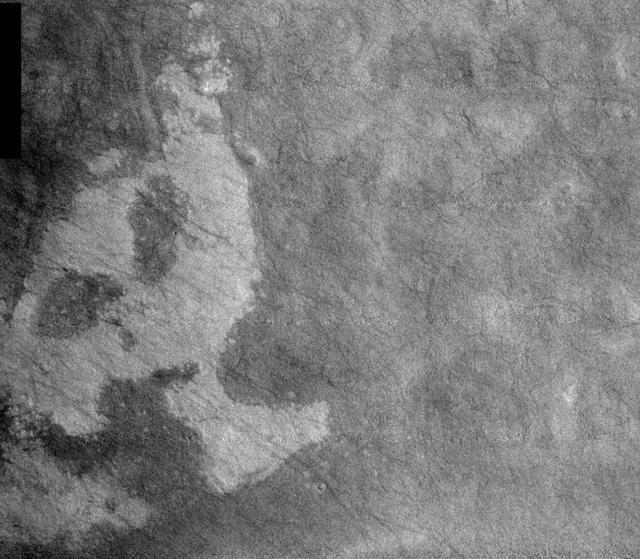
THEMIS Images as Art #16
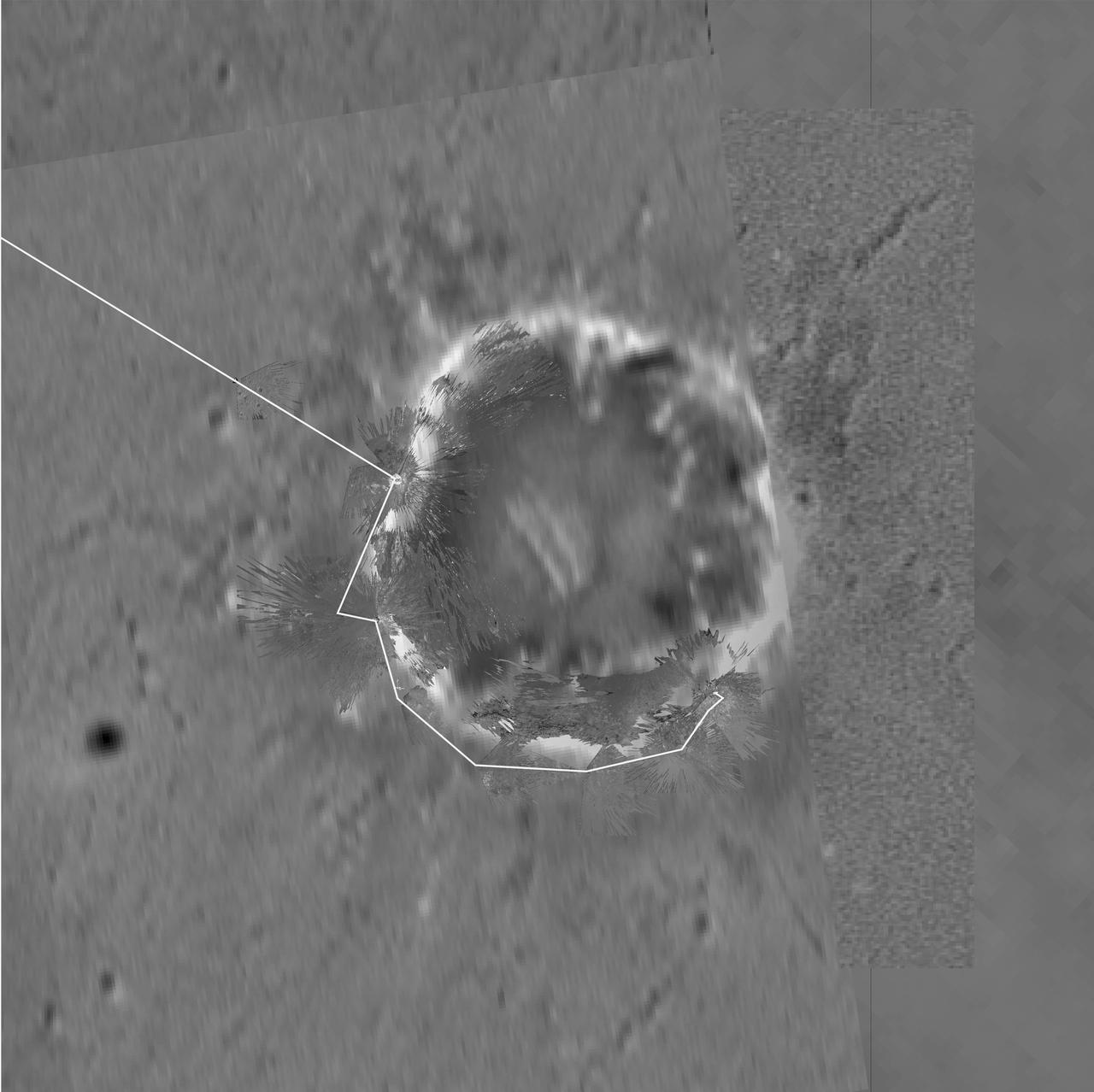
Endurance Road Map
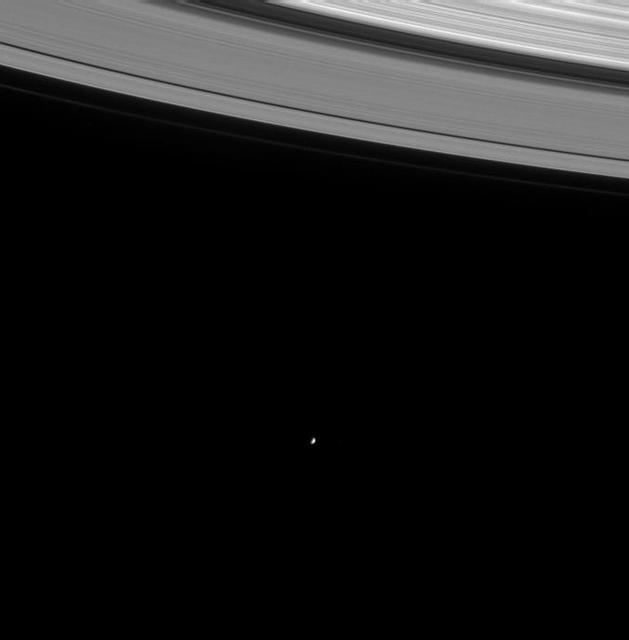
Gazing Upon Mimas
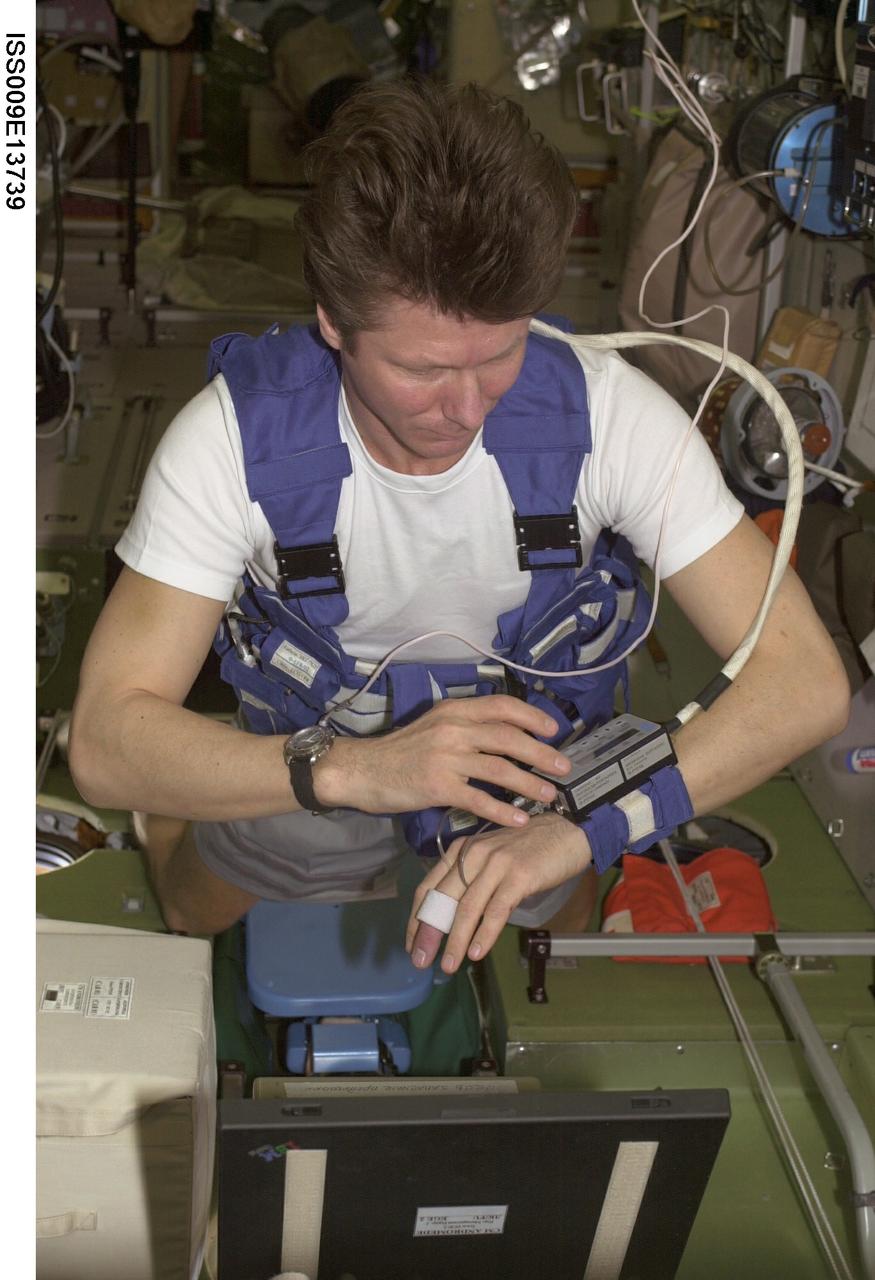
ISS009-E-13739 (5 July 2004) --- Cosmonaut Gennady I. Padalka, Expedition 9 commander representing Russia’s Federal Space Agency, works with the Cardiocog experiment in the Zvezda Service Module of the International Space Station (ISS). Originally part of Pedro Duque's VC5 "Cervantes" science program, Cardiocog studies changes in the human cardiovascular system in micro-G, expressed in the peripheral arteries, and the vegetative regulation of arterial blood pressure and heart rate.
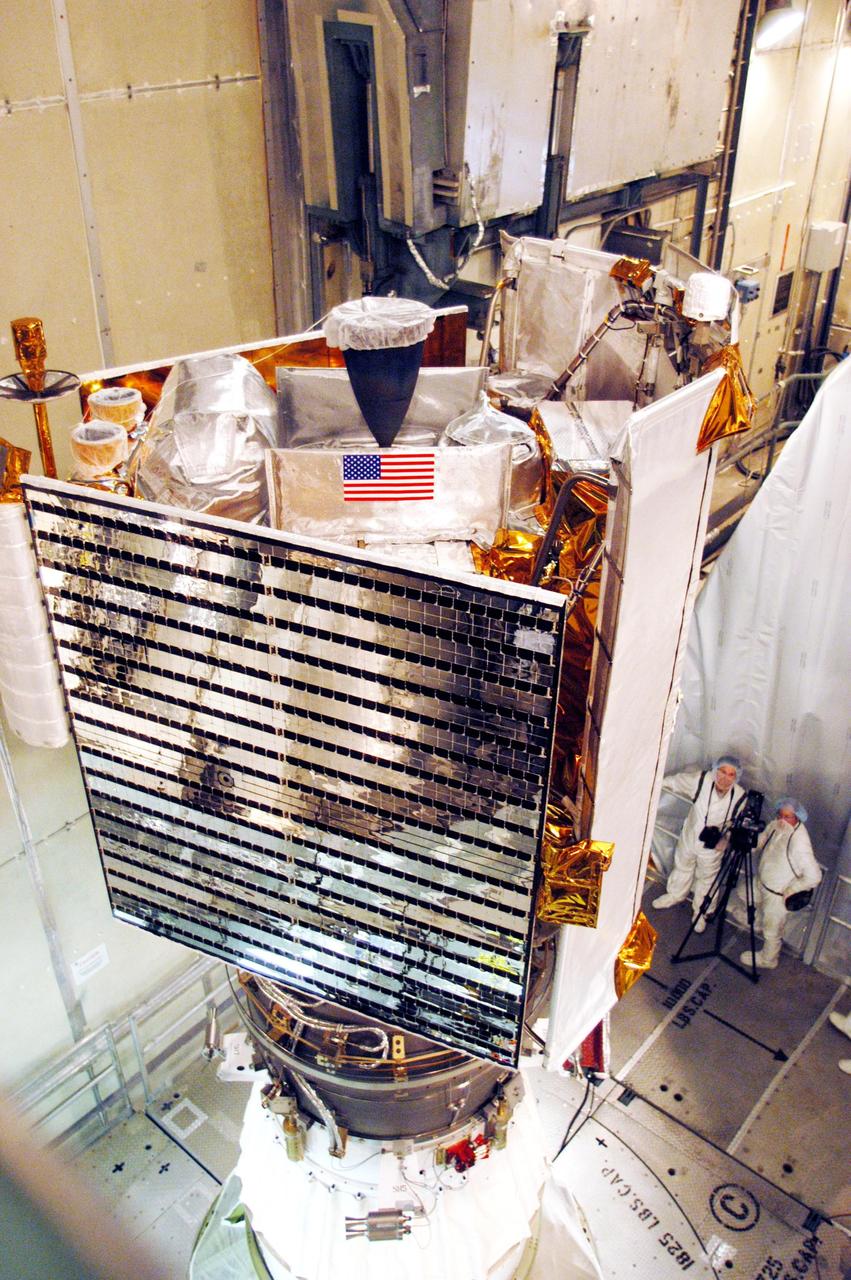
KENNEDY SPACE CENTER, FLA. - On Launch Pad 17-B at Cape Canaveral Air Force Station, the MESSENGER (Mercury Surface, Space Environment, Geochemistry and Ranging) spacecraft is ready for installation of the fairing, a molded structure that fits flush with the outside surface of the Delta II upper stage booster and forms an aerodynamically smooth joint, protecting the spacecraft during launch. Seen on the left is one of the solar panels on the spacecraft. On the right is part of the heat-resistant, ceramic-cloth sunshade that will protect the spacecraft’s instruments as MESSENGER orbits the Mercury where the surface reaches a high temperature near 840 degrees Fahrenheit and the solar intensity can be 11 times greater than on Earth. MESSENGER is scheduled to launch Aug. 2 aboard a Boeing Delta II rocket and is expected to enter Mercury orbit in March 2011. MESSENGER was built for NASA by the Johns Hopkins University Applied Physics Laboratory in Laurel, Md.

Candor Chasma

KENNEDY SPACE CENTER, FLA. - Workers at Astrotech Space Operations’ hazardous processing facility help guide the MESSENGER spacecraft onto a work stand. MESSENGER is being prepared for loading the spacecraft’s complement of hypergolic propellants. MESSENGER is scheduled to launch Aug. 2 aboard a Boeing Delta II rocket from Pad 17-B, Cape Canaveral Air Force Station, Fla., bound for Mercury. The spacecraft is expected to reach orbit around Mercury in March 2011. MESSENGER was built for NASA by the Johns Hopkins University Applied Physics Laboratory in Laurel, Md.
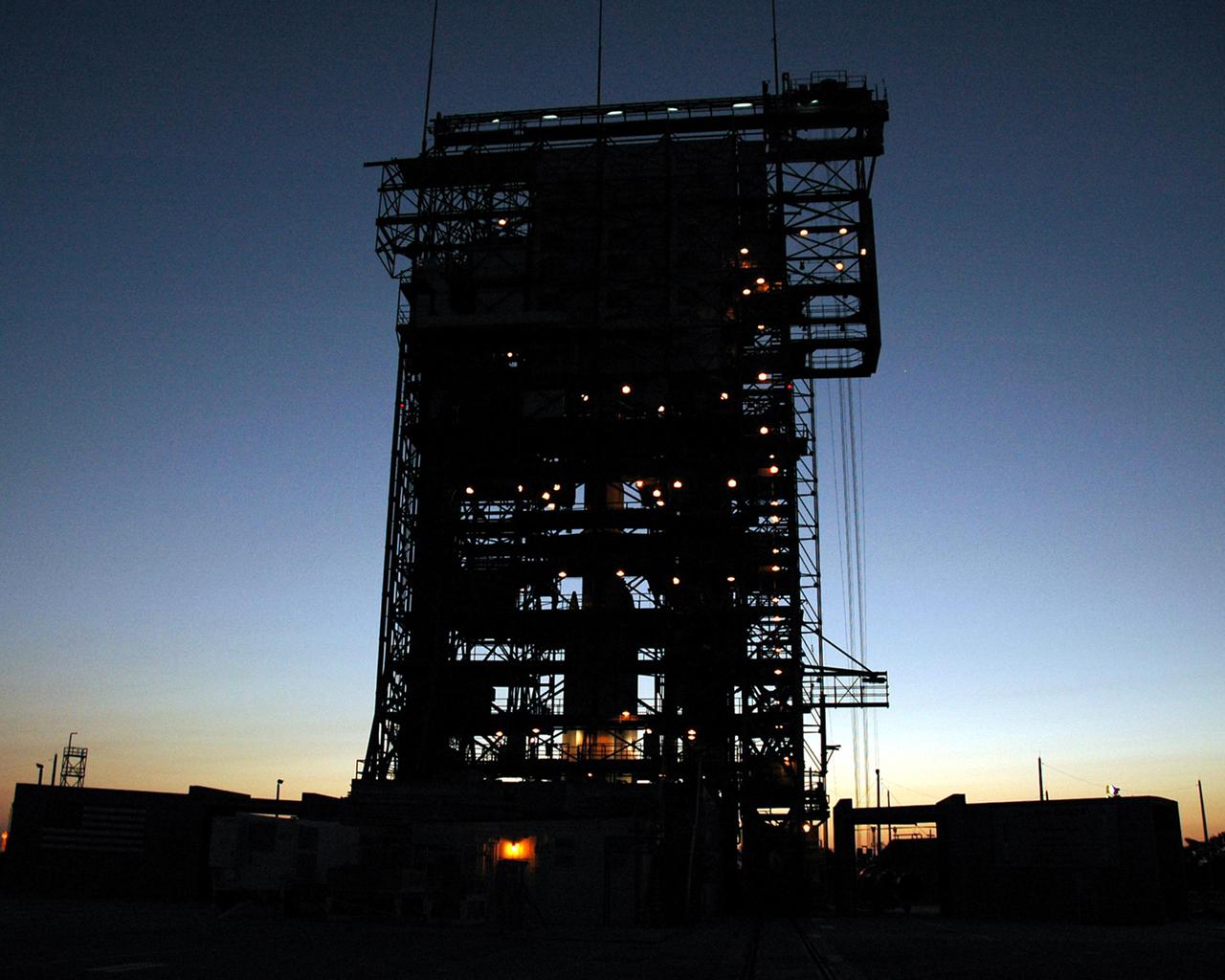
KENNEDY SPACE CENTER, FLA. - In the pre-dawn hours on Launch Pad 17-B at Cape Canaveral Air Force Station, the mobile service tower is silhouetted with the Boeing Delta II rocket that will launch NASA’s Deep Impact spacecraft. The Delta II waits for the arrival and mating of the second stage. A NASA Discovery mission, Deep Impact will probe beneath the surface of Comet Tempel 1 on July 4, 2005, when the comet is 83 million miles from Earth, and reveal the secrets of its interior. After releasing an impactor on a course to hit the comet’s sunlit side, Deep Impact’s flyby spacecraft will collect pictures and data of how the crater forms, measure the crater’s depth and diameter, as well as the composition of the interior of the crater and any material thrown out, and determine the changes in natural outgassing produced by the impact. It will send the data back to Earth through the antennas of the Deep Space Network.
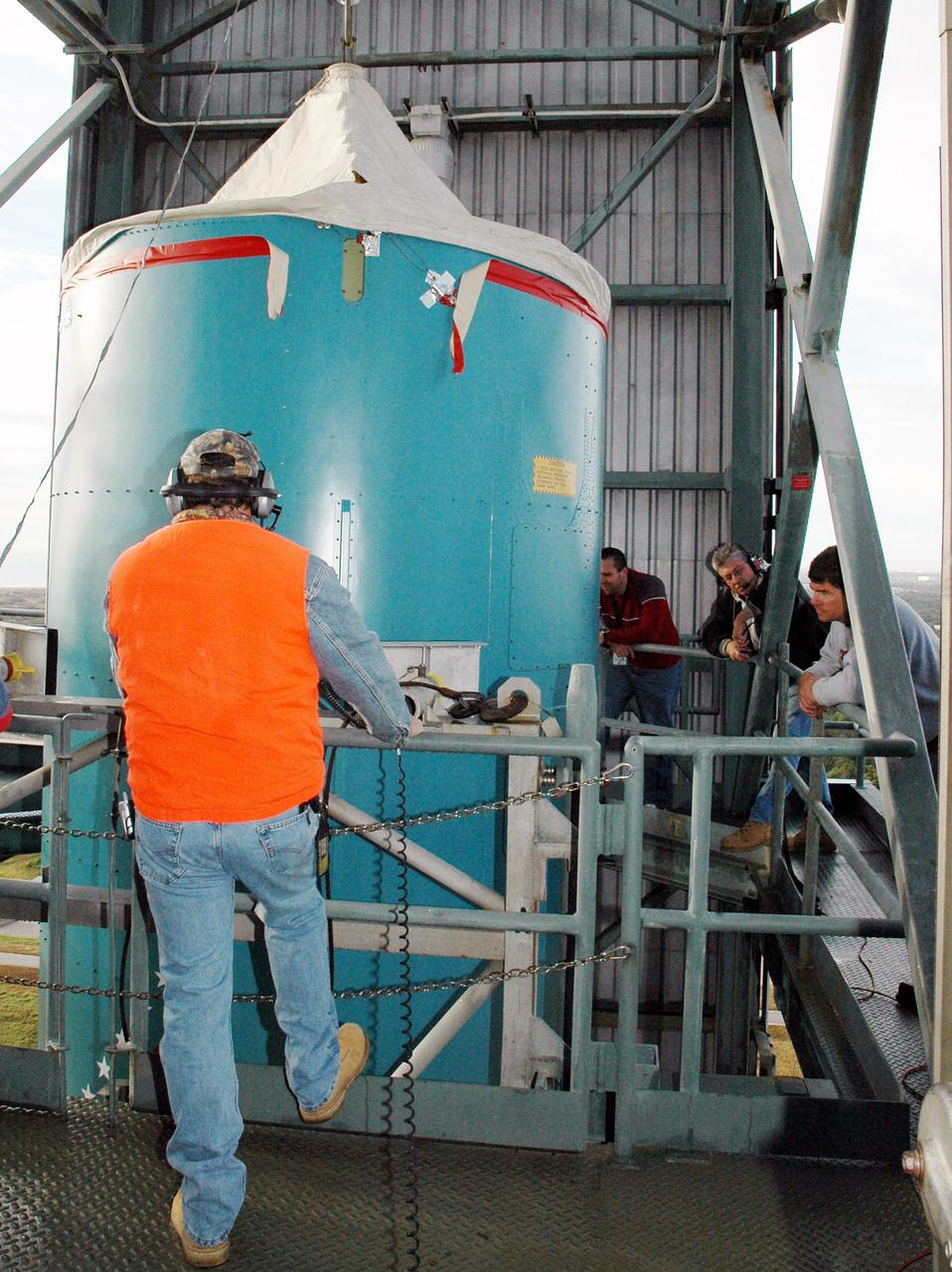
KENNEDY SPACE CENTER, FLA. - On the mobile service tower on Launch Pad 17-B, Cape Canaveral Air Force Station, Fla., Boeing workers stand by as the replacement interstage adapter for the Boeing Delta II is lowered. Boeing workers will attach the adapter to the rocket’s center body section. Later the second stage, which was removed to allow access to the previous adapter, will be reattached. The first adapter was removed after it was found to be faulty during a review of launch vehicle hardware. Launch of Deep Impact is now scheduled no earlier than Jan. 12.
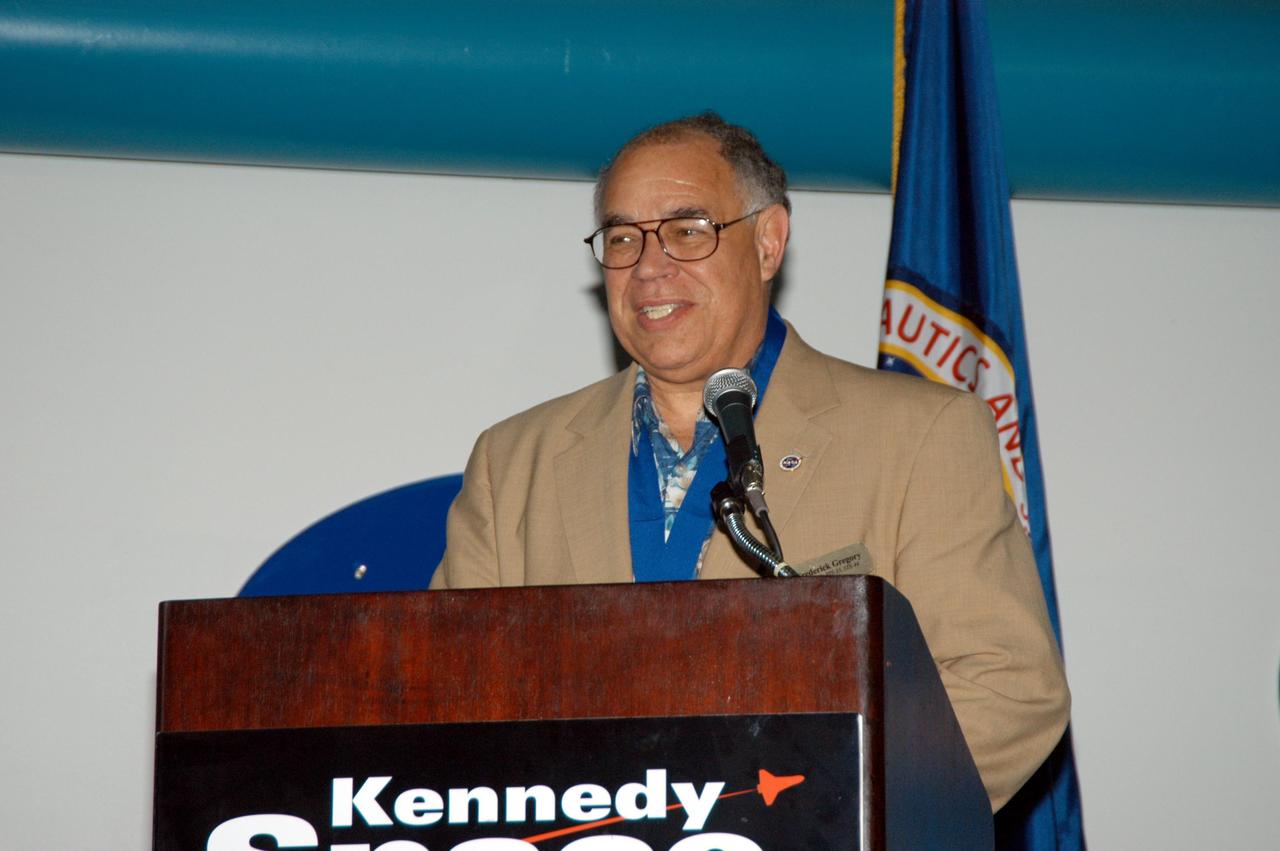
KENNEDY SPACE CENTER, FLA. -- At the Kennedy Space Center Visitor Complex, NASA Deputy Administrator Frederick D. Gregory is inducted into the U.S. Astronaut Hall of Fame. Gregory was the first African-American to command a space mission. Also chosen for this honor in 2004 are Kathryn D. Sullivan, the first American woman to walk in space; Richard O. Covey, commander of the Hubble Space Telescope repair mission; Norman E. Thagard, the first American to occupy Russia's Mir space station; and the late Francis R. "Dick" Scobee, commander of the ill-fated 1986 Challenger mission. The U.S. Astronaut Hall of Fame opened in 1990 to provide a place where space travelers could be remembered for their participation and accomplishments in the U.S. space program. To be eligible for induction, an individual must have been a U.S. citizen, a NASA astronaut, and out of the active astronaut corps at least five years. The five inductees join 52 previously honored astronauts from the ranks of the Gemini, Apollo, Skylab, Apollo-Soyuz, and Space Shuttle programs.
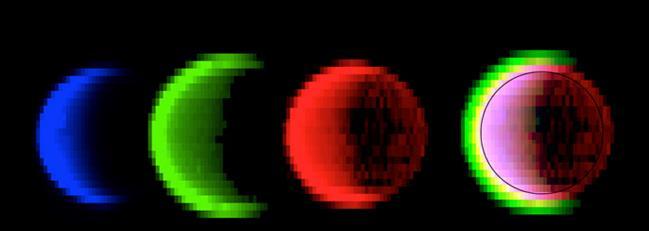
Glowing Titan
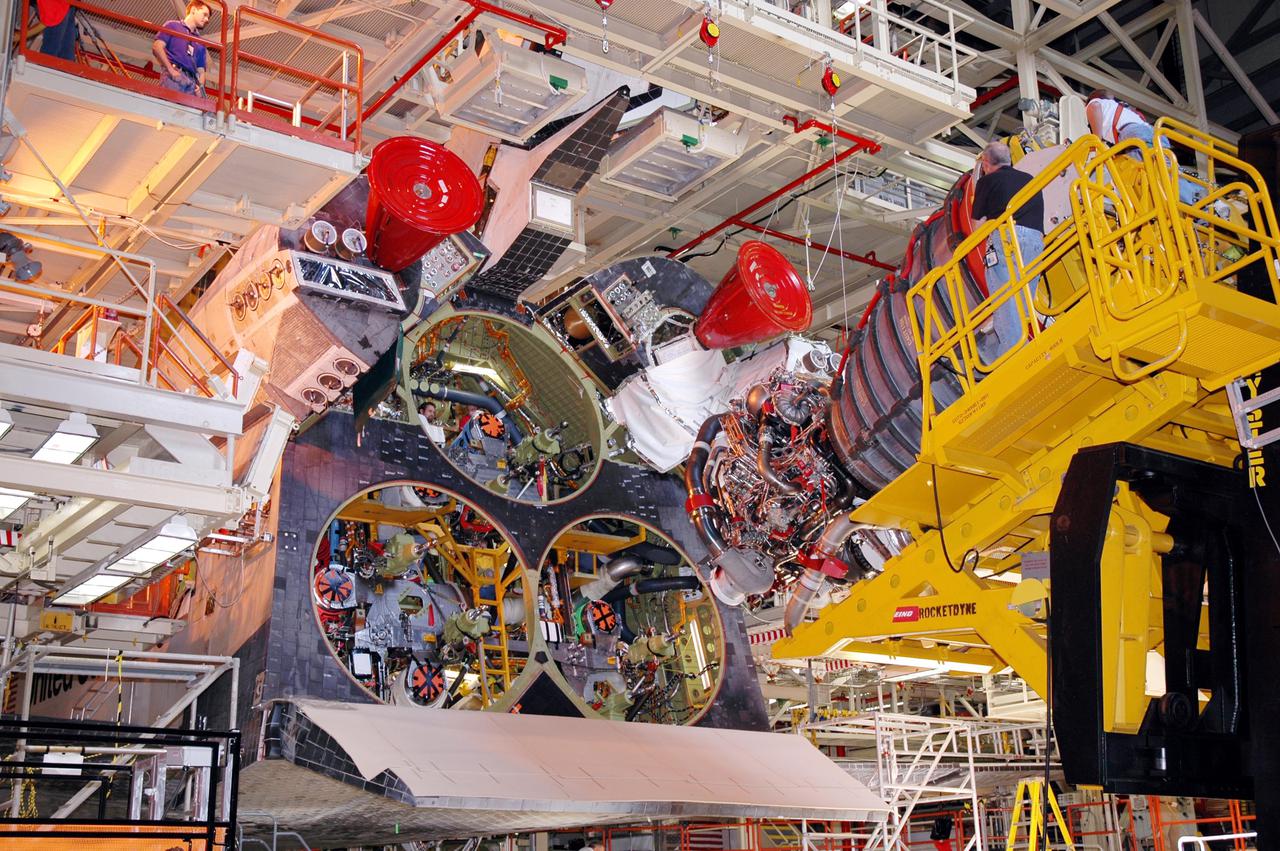
KENNEDY SPACE CENTER, FLA. - In the Orbiter Processing Facility, Discovery waits as the first of three Space Shuttle Main Engines (SSME) moves into position for installation on Discovery, the vehicle designated for the Return to Flight mission STS-114. Overall, an SSME weighs approximately 7,000 pounds. An SSME operates at greater temperature extremes than any mechanical system in common use today. The liquid hydrogen fuel is -423 degrees Fahrenheit, the second coldest liquid on Earth. When the hydrogen is burned with liquid oxygen, the temperature in the engine's combustion chamber reaches +6000 degrees Fahrenheit -- that's higher than the boiling point of Iron. The maximum equivalent horsepower developed by the three SSMEs is just over 37 million horsepower. The energy released by the three SSMEs is equivalent to the output of 23 Hoover Dams.
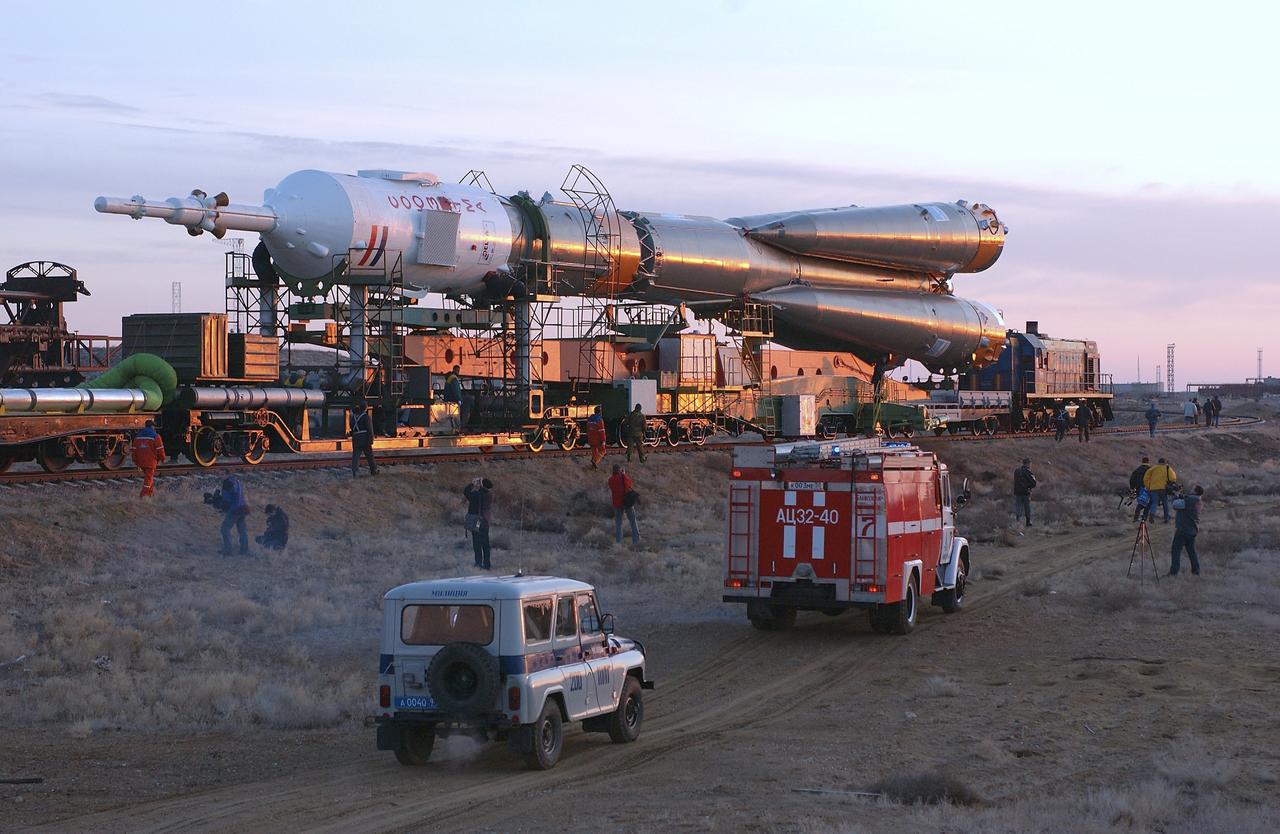
The Soyuz TMA-4 capsule and its booster rocket begin to roll to the launch pad at the Baikonur Cosmodrome on Saturday, April 17, 2004, in Baikonur, Kazakhstan in preparation for the launch of the Expedition 9 crew and a European researcher to the International Space Station on April 19. The Soyuz vehicle is transported to the launch pad horizontally on a railcar from its processing hangar in a process that takes about 2.5 hours to complete. Photo Credit: (NASA/Bill Ingalls)
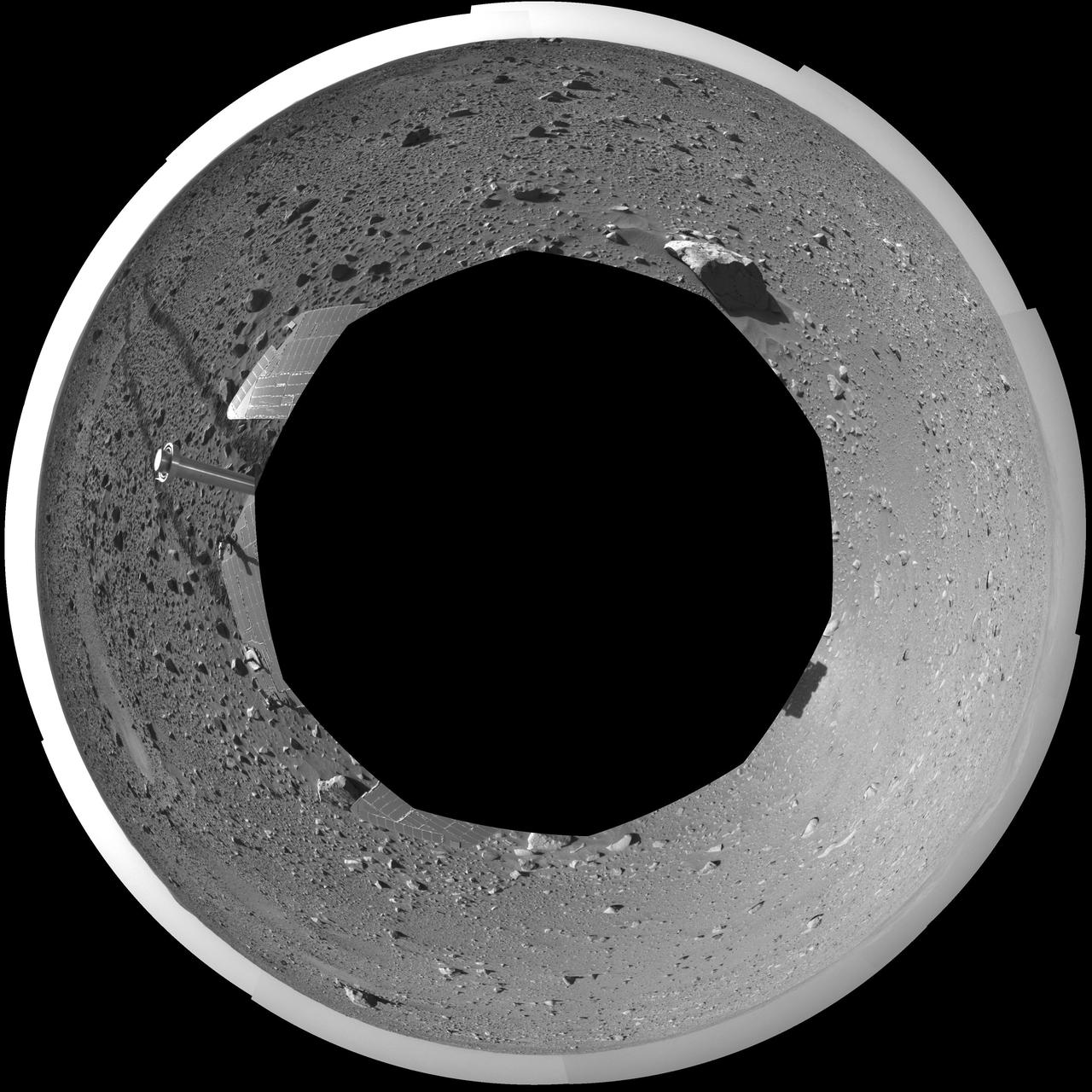
The Road Less Traveled polar

KENNEDY SPACE CENTER, FLA. - Ball Aerospace technicians prepare the Deep Impact flyby spacecraft for installation of the flight battery at Astrotech Space Operations in Titusville, Fla. About the size of a Ford Explorer, the flyby spacecraft is three-axis stabilized and uses a fixed solar array and a small NiH2 battery for its power system. A NASA Discovery mission, Deep Impact will probe beneath the surface of Comet Tempel 1 on July 4, 2005, when the comet is 83 million miles from Earth. During the encounter phase when the comet collides with the impactor projectile propelled into its path, the spacecraft’s high-gain antenna will transmit near-real-time images of the impact back to Earth. The spacecraft is scheduled to launch Jan. 8 aboard a Boeing Delta II rocket from Launch Complex 17-B at Cape Canaveral Air Force Station, Fla.
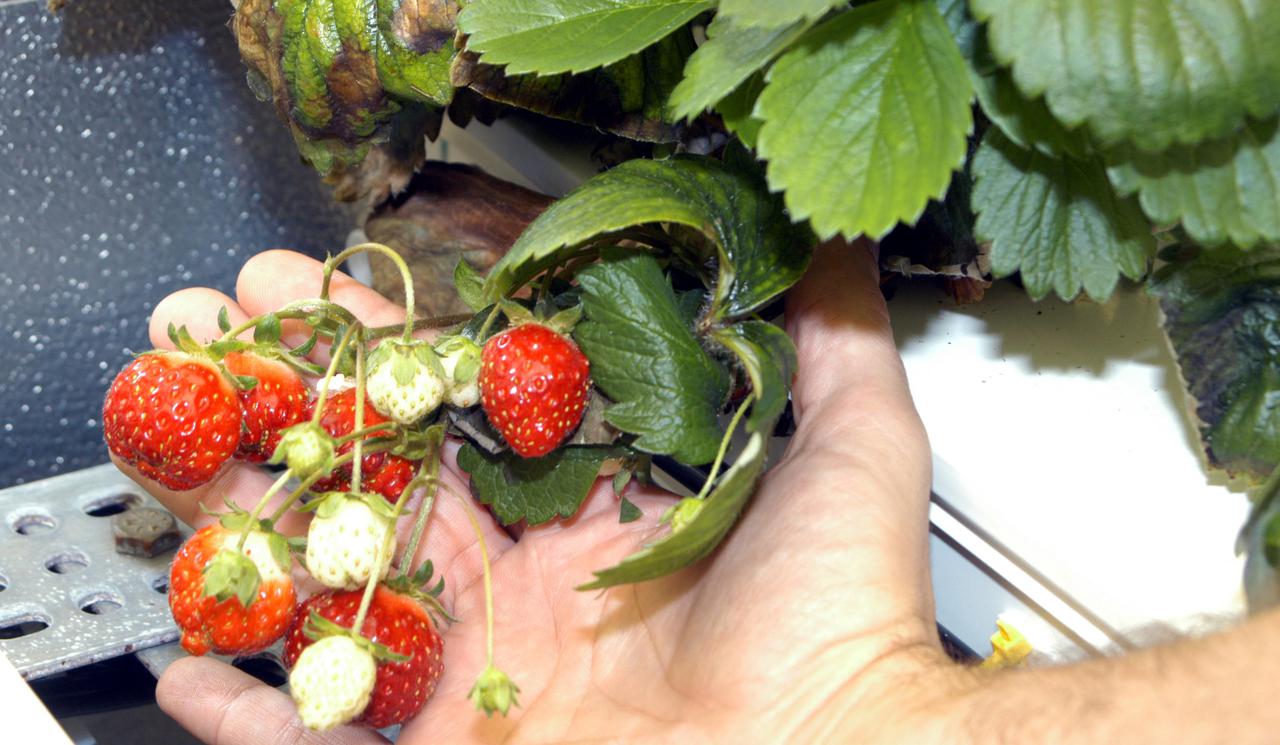
KENNEDY SPACE CENTER, FLA. - A crop of strawberries grown in a controlled environment chamber at the Space Life Sciences Lab is displayed during a tour of the facility for members of the news media. In missions to the International Space Station or early planetary outposts, plant production systems will likely be small and rely upon the spacecraft or habitat environment to regulate temperature, relative humidity, and carbon dioxide concentrations. Various crops are being grown in conditions that might be experienced in a spacecraft to evaluate the effects of different environmental conditions on plant growth, crop yield, and product quality.

Hecate Tholus

Soft Rock Yields Clues to Mars Past

KENNEDY SPACE CENTER, FLA. -- Florida Gov. Jeb Bush gives out free Florida quarters to children 18 years of age and under following an unveiling ceremony at the KSC Visitor Complex. The quarter celebrates Florida as the gateway to discovery -- a destination for explorers in the past, a launch site for space explorers of the future, and an inviting place for visitors today.

NASA's Hyper-x Program Manager, Vince Rausch talks about the upcoming launch of the X43A vehicle over the Pacific Ocean later this month from his office at NASA Langley Research Center in Hampton, VA. Hyper X is a high risk, high payoff program. The flight of the X43 A will demonstrated in flight for the first time, air breathing hypersonic propulsion technology. (Photo by Jeff Caplan)
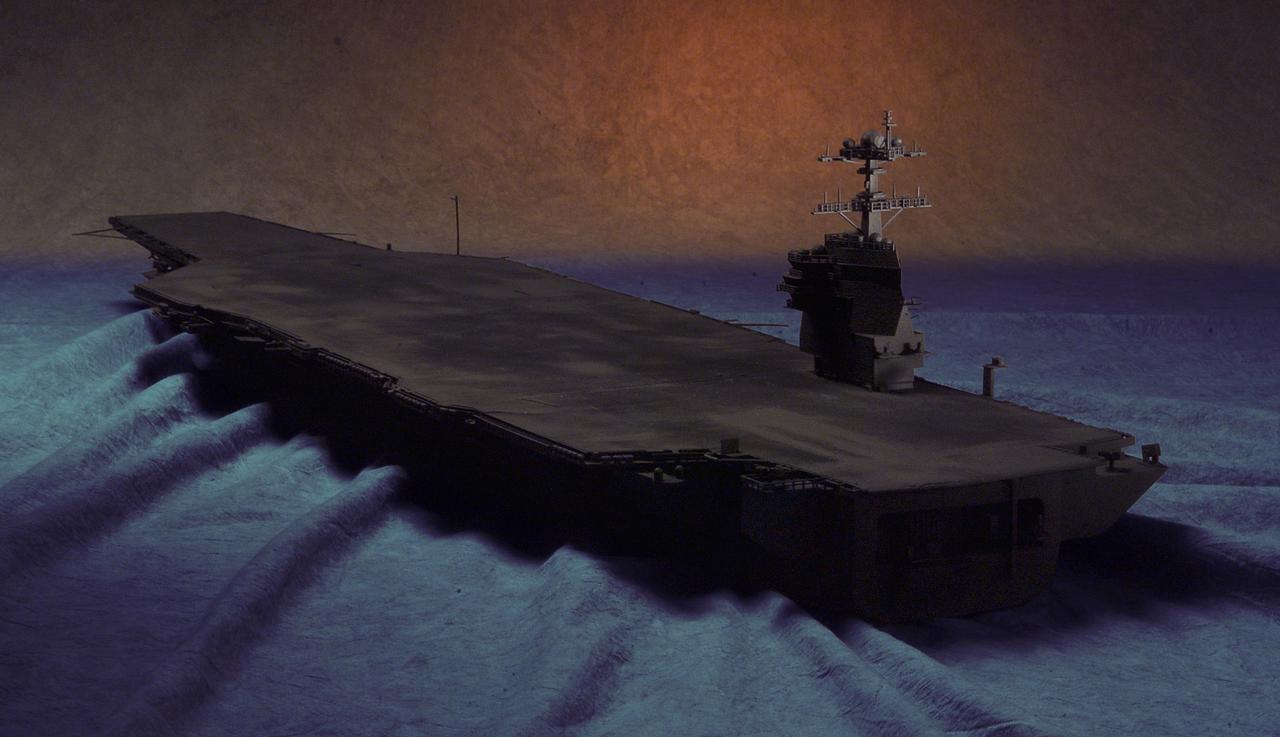
CVN78 CARRIER AIRFLOW STUDY IN FLUID MECHANICS LAB (CVN21)
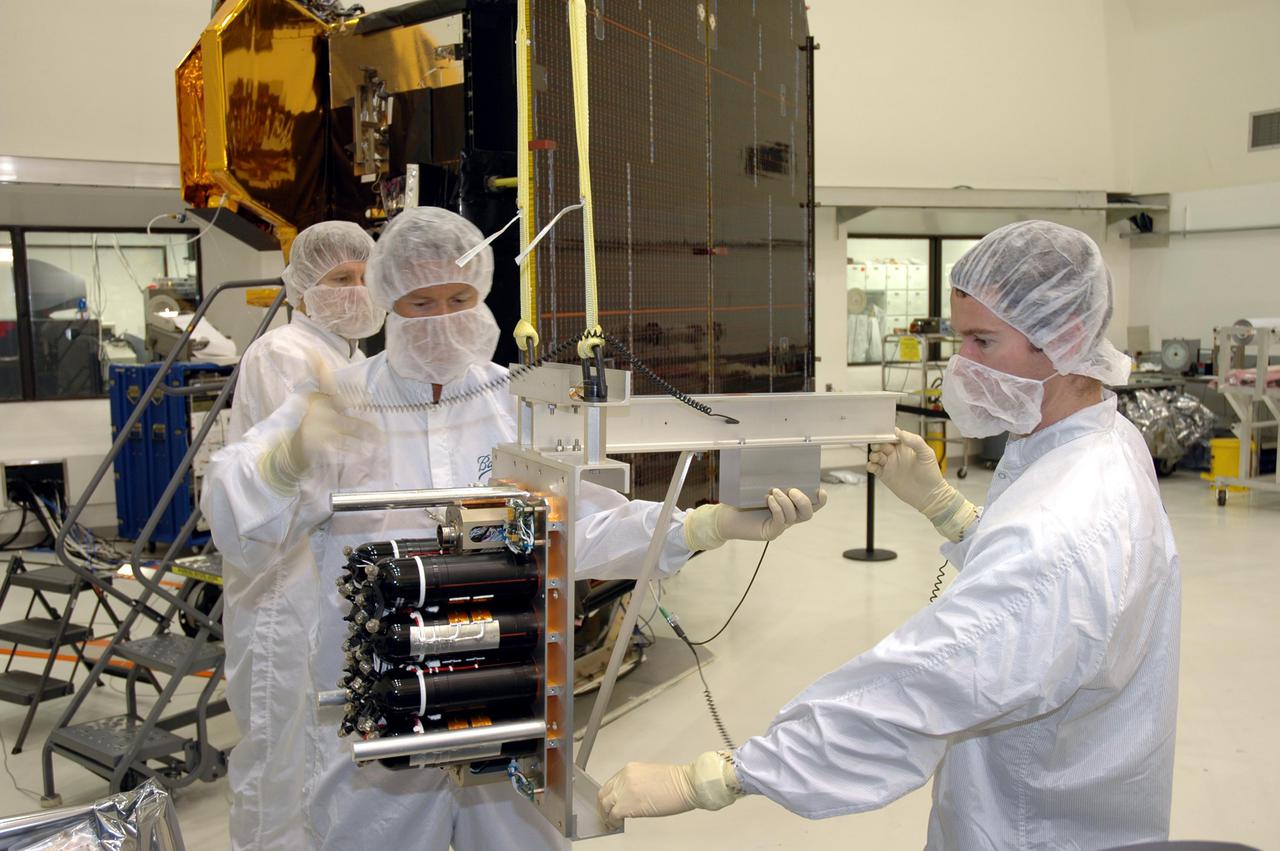
KENNEDY SPACE CENTER, FLA. - Ball Aerospace technicians at Astrotech Space Operations in Titusville, Fla., attach equipment to the flight battery to move it to the Deep Impact flyby spacecraft for installation. About the size of a Ford Explorer, the flyby spacecraft is three-axis stabilized and uses a fixed solar array and a small NiH2 battery for its power system. A NASA Discovery mission, Deep Impact will probe beneath the surface of Comet Tempel 1 on July 4, 2005, when the comet is 83 million miles from Earth. During the encounter phase when the comet collides with the impactor projectile propelled into its path, the spacecraft’s high-gain antenna will transmit near-real-time images of the impact back to Earth. The spacecraft is scheduled to launch Jan. 8 aboard a Boeing Delta II rocket from Launch Complex 17-B at Cape Canaveral Air Force Station, Fla.
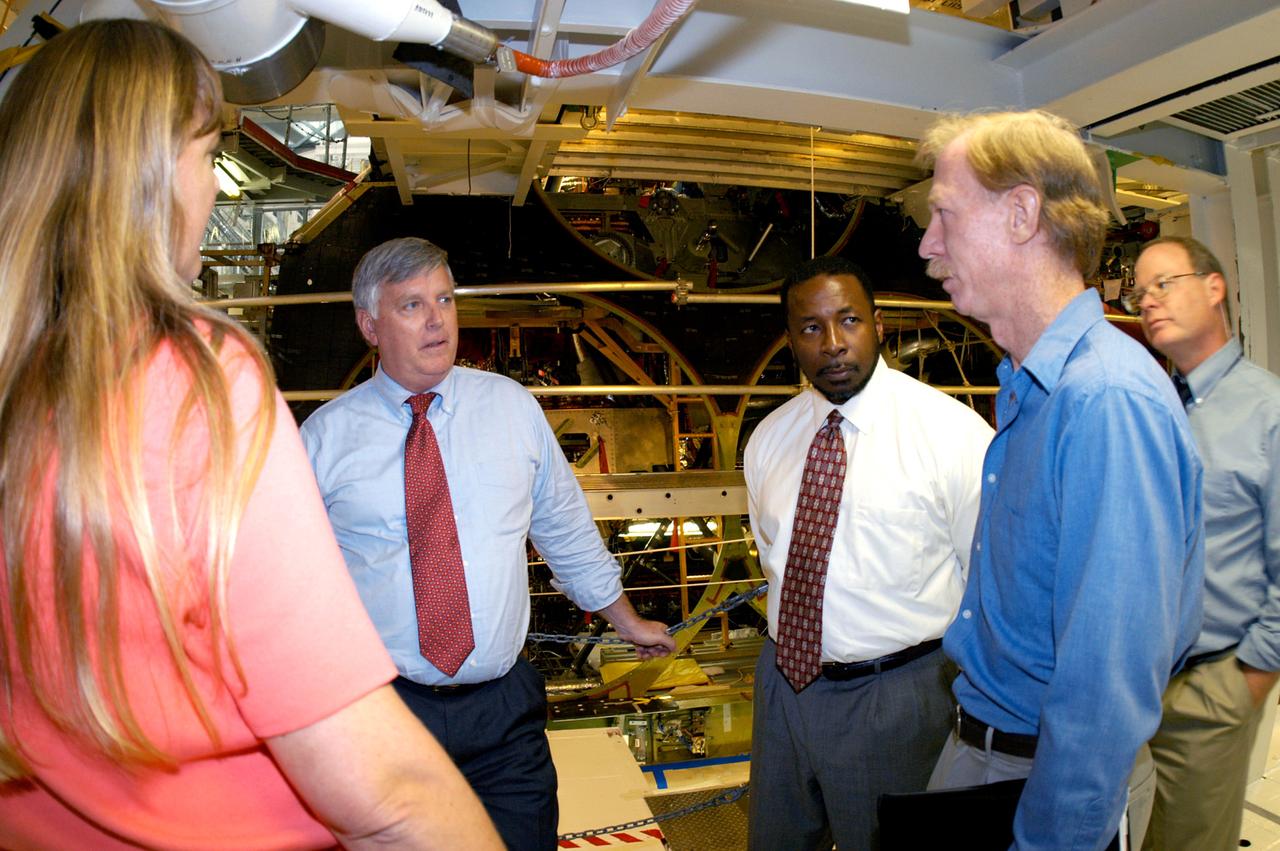
KENNEDY SPACE CENTER, FLA. - On a tour of the Orbiter Processing Facility, Center Director Jim Kennedy and Deputy Director Woodrow Whitlow Jr. (center, left and right) talk with Kathy Laufenberg, Orbiter Airframe Engineering ground area manager, and Tom Roberts, Airframe Enginering System specialist, both with United Space Alliance. At far right is Bruce Buckingham, assistant to Dr. Whitlow. They are standing in front of the aft base heatshield of Endeavour, which is in its Orbiter Major Modification period that began in December 2003.
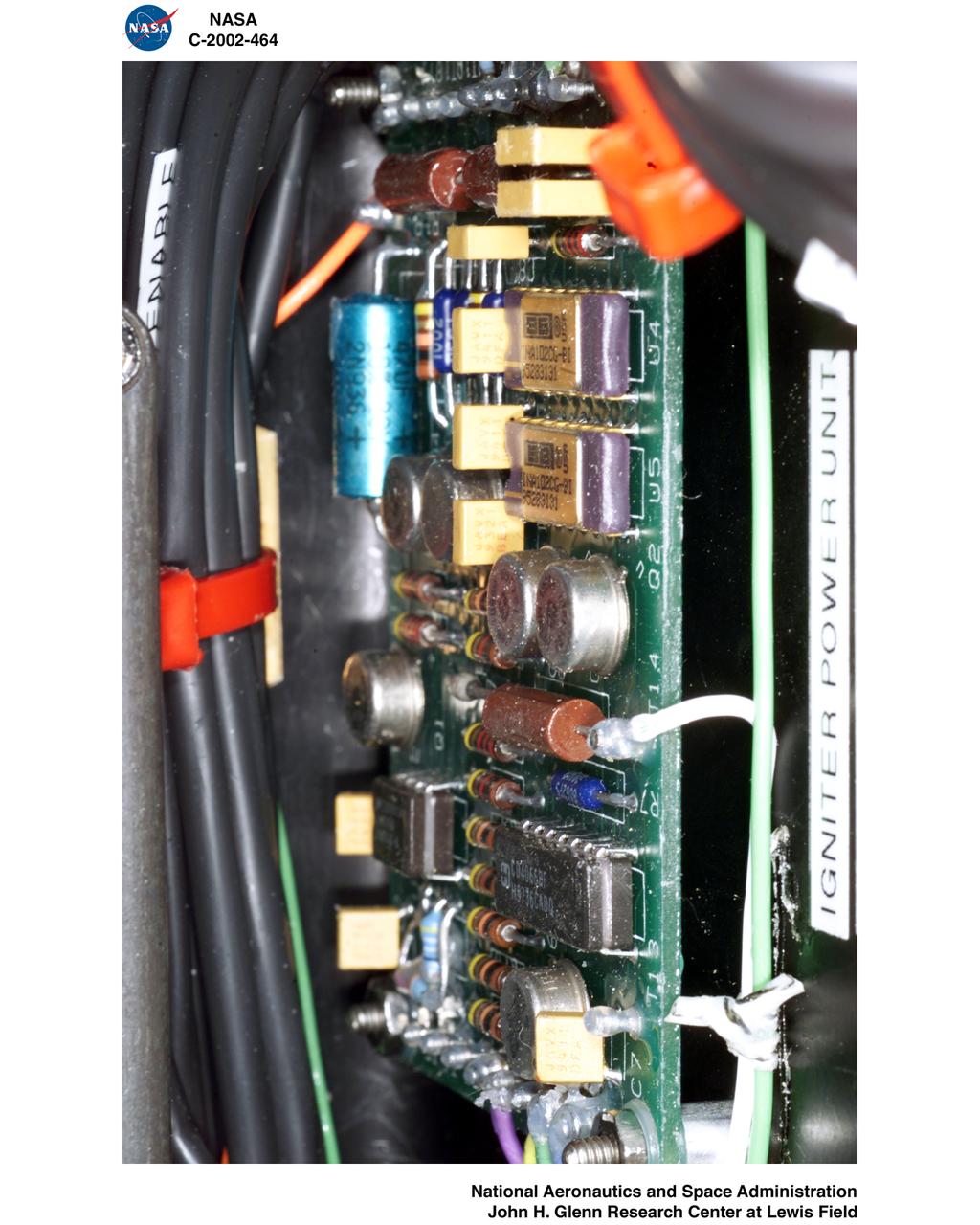
CANDLE FLAME IN MICROGRAVITY 2
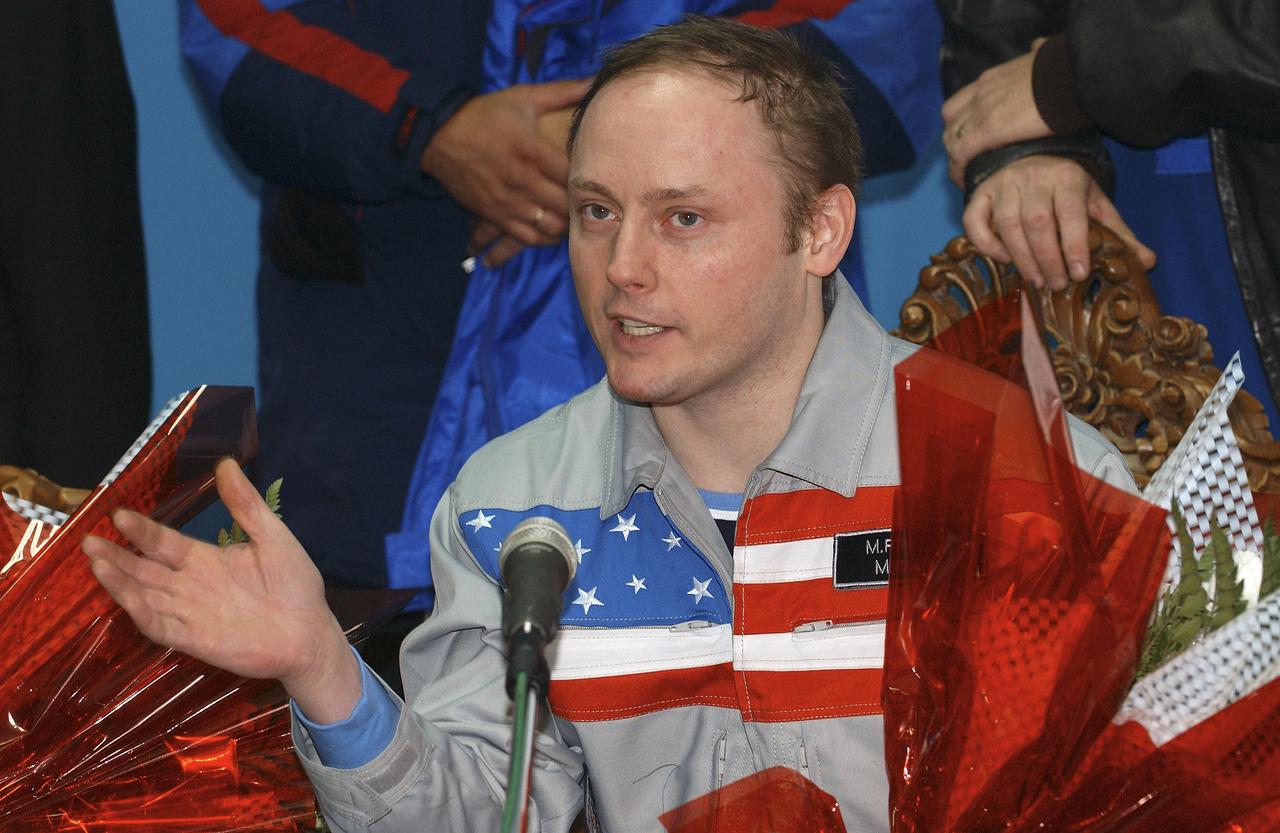
Expedition 9 Flight Engineer Michael Fincke talks during a press conference at the Kustanay, Kazakhstan airport after landing in the Soyuz capsule with Expedition 9 Commander Gennady Padalka and Russian Space Forces cosmonaut Yuri Shargin approximately 85 kilometers northeast of Arkalyk in northern Kazakhstan, Sunday, October 24, 2004. Photo Credit: (NASA/Bill Ingalls)
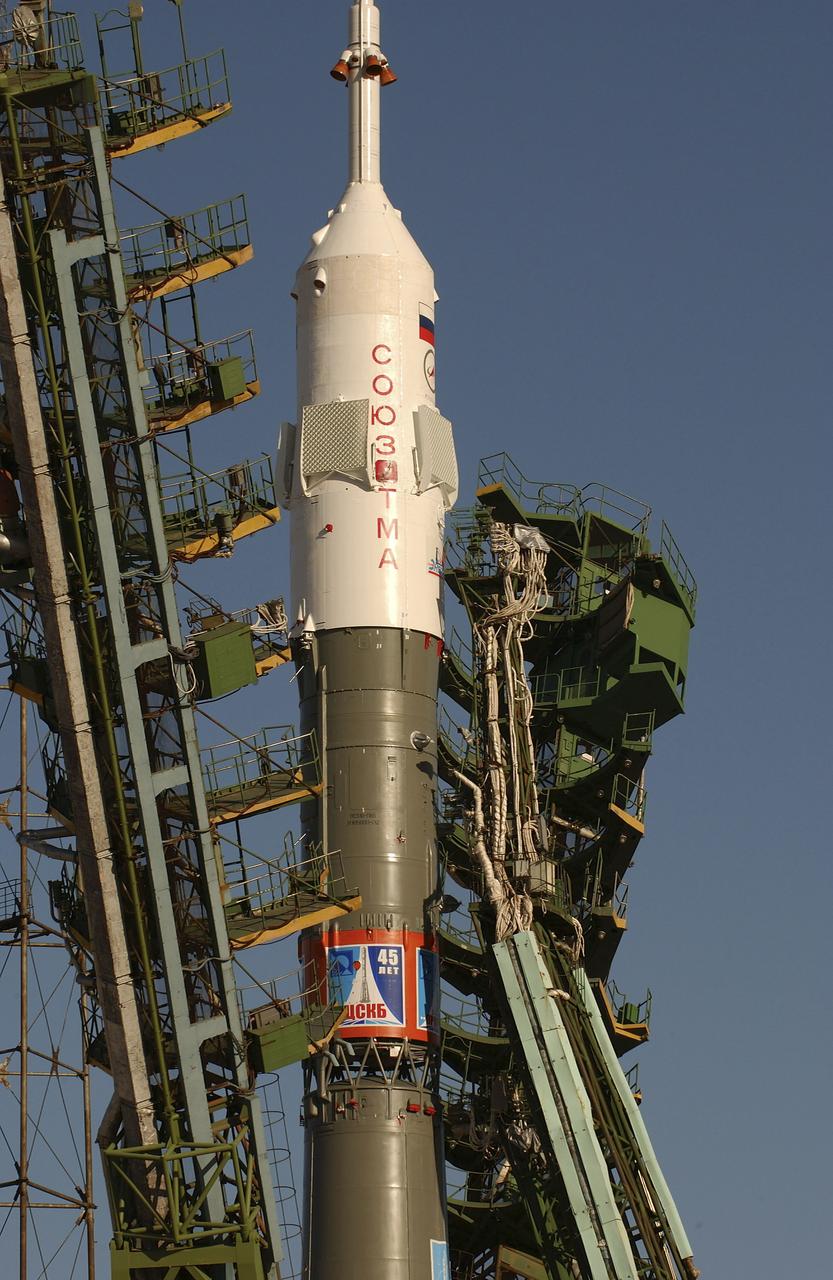
The Soyuz TMA-5 vehicle rolled to its launch pad at the Baikonur Cosmodrome in Kazakhstan, Tuesday, October 12, 2004, in preparation for its launch October 14 to send Expedition 10 Commander and NASA Science Officer Leroy Chiao, Flight Engineer and Soyuz Commander Salizhan Sharipov and Russian Space Forces cosmonaut Yuri Shargin to the International Space Station. Chiao and Sharipov will replace the Expedition 9 crew of Gennady Padalka and Mike Fincke, while Shargin will conduct eight days of scientific experiments. He will return to earth with the Expedition 9 crew October 24. Photo Credit: (NASA/Bill Ingalls)

Daisy Found on Route 66
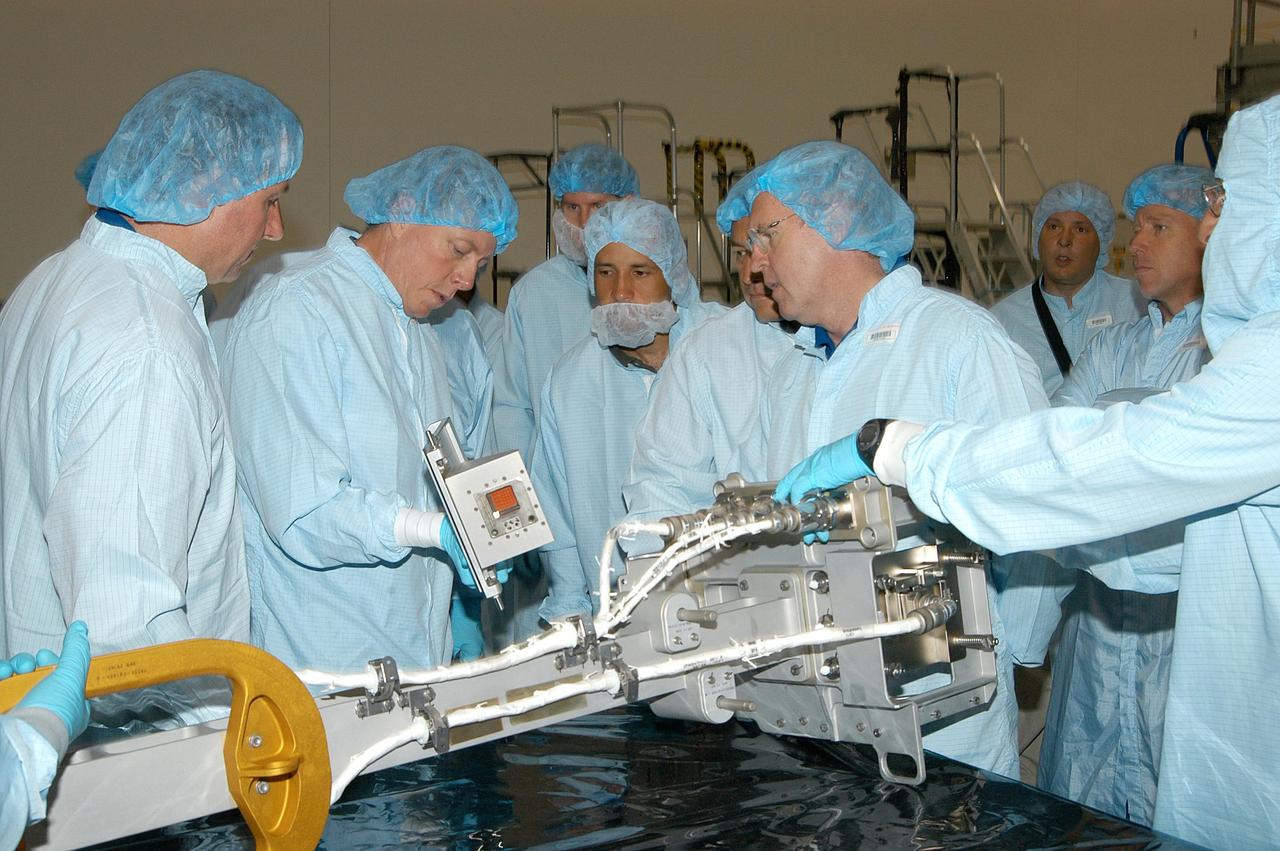
KENNEDY SPACE CENTER, FLA. - In the Space Station Processing Facility, members of several Space Shuttle mission crews get a close look at the Video Stanchion Support Assembly (VSSA) that will fly on STS-114 (Logistics Flight 1). On the left are STS-114 Mission Specialist Stephen Robinson and STS-116 Mission Specialist Christer Fuglesang (European Space Agency). Center right is STS-114 Mission Specialist Andrew Thomas. The crews are at KSC for equipment familiarization.
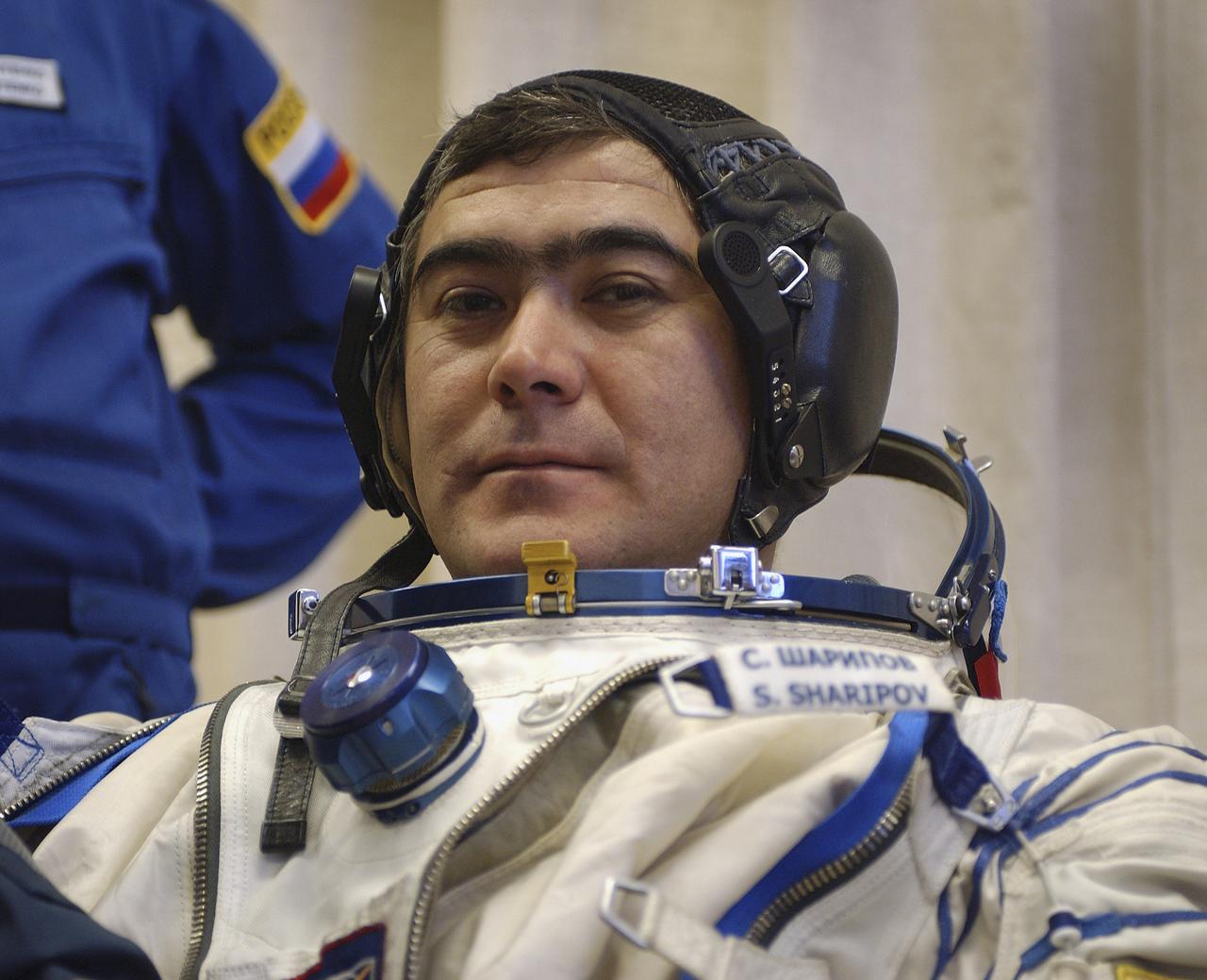
Expedition 10 Flight Engineer and Soyuz Commander Salizhan Sharipov donned his launch and entry suit and climbed aboard the Soyuz TMA-5 spacecraft Friday, October 5, 2004 at the Baikonur Cosmodrome in Kazakhstan for a dress rehearsal of launch day activities leading to their liftoff October 14 to the International Space Station. Chiao and Sharipov, the first crew of all-Asian extraction, will spend six months on the Station. Shargin will return to Earth October 24 with the Stations' current residents, Expedition 9 Commander Gennady Padalka and NASA Flight Engineer and Science Officer Mike Fincke. Photo Credit: (NASA/Bill Ingalls)