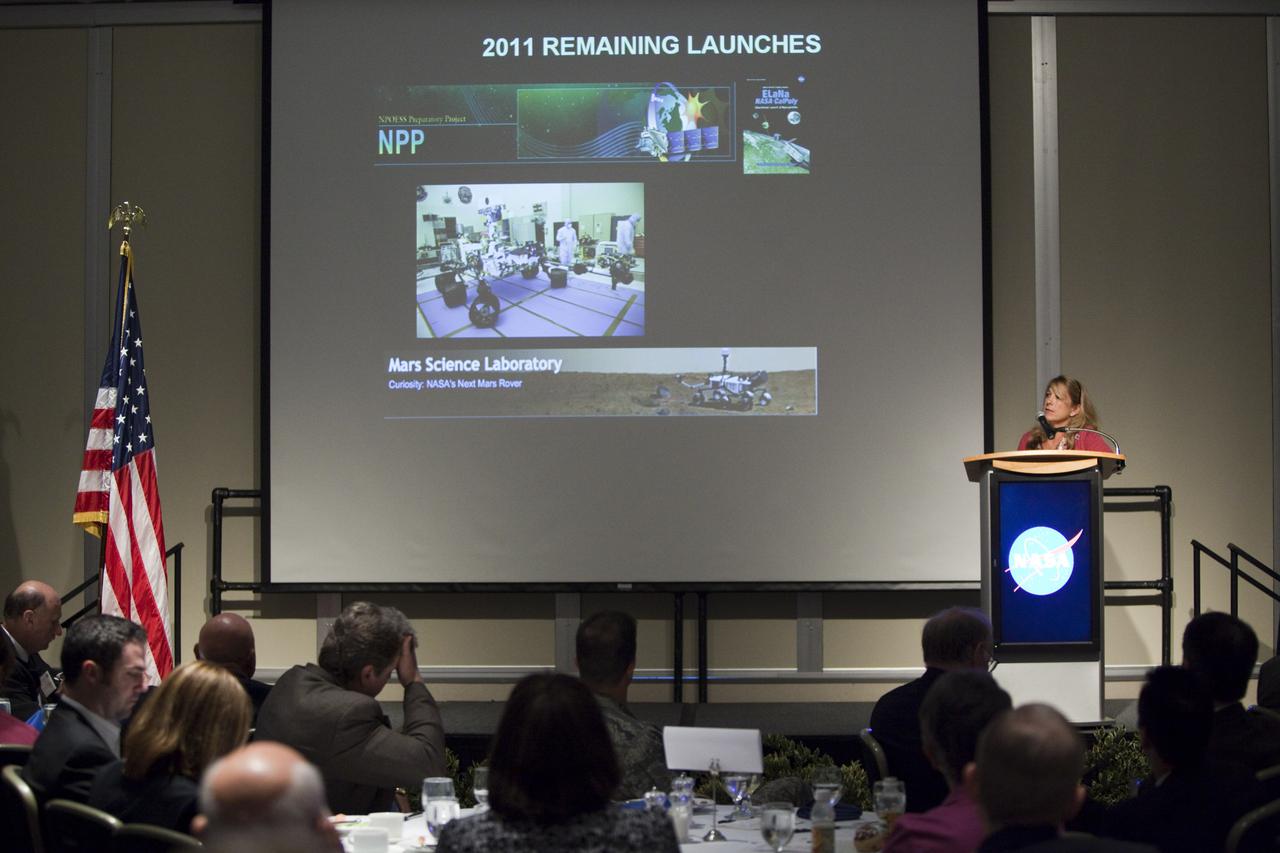
CAPE CANAVERAL, Fla. – Amanda Mitskevich, NASA’s Launch Services Program manager at Kennedy Space Center, addresses guests at the annual Community Leaders Breakfast held in the Debus Center at Kennedy's Visitor Complex in Florida. Community leaders, business executives, educators, community organizers and state and local government officials heard NASA Administrator Charlie Bolden, Kennedy Space Center Director Bob Cabana, and other senior Kennedy managers provide an overview of the future of the space center. Photo credit: NASA_Dimitri Gerondidakis
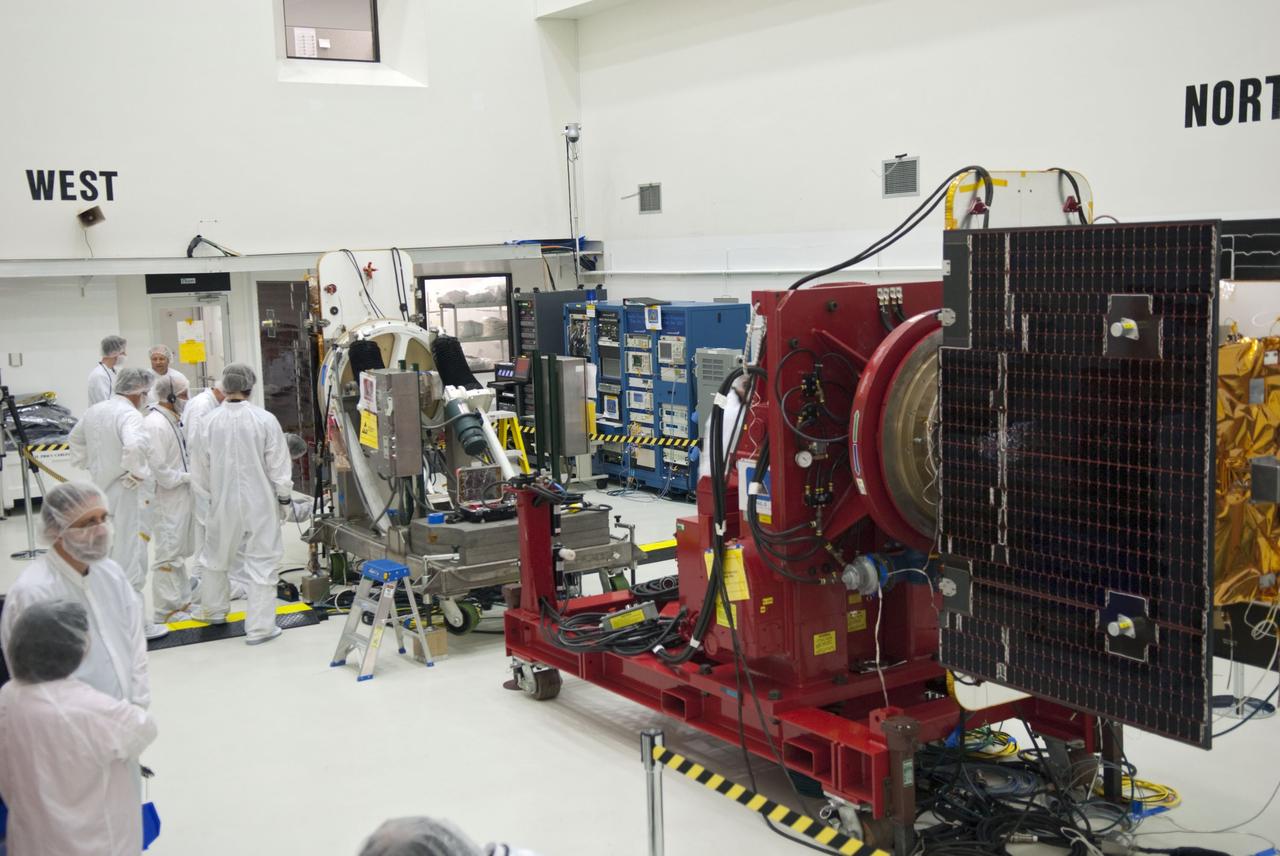
CAPE CANAVERAL, Fla. -- Technicians at Astrotech payload processing facility in Titusville, Fla., are conducting solar panel deployment tests on NASA's Gravity Recovery and Interior Laboratory, or GRAIL, twin spacecraft. The United Launch Alliance Delta II rocket that will carry GRAIL into lunar orbit already is fully stacked at NASA's Space Launch Complex 17B, and launch is scheduled for Sept. 8. The GRAIL mission is a part of NASA's Discovery Program. GRAIL will fly the twin spacecraft in tandem orbits around the moon for several months to measure its gravity field. The mission also will answer longstanding questions about Earth's moon and provide scientists a better understanding of how Earth and other rocky planets in the solar system formed. For more information, visit http://solarsystem.nasa.gov/grail/. Photo credit: NASA/Jim Grossmann
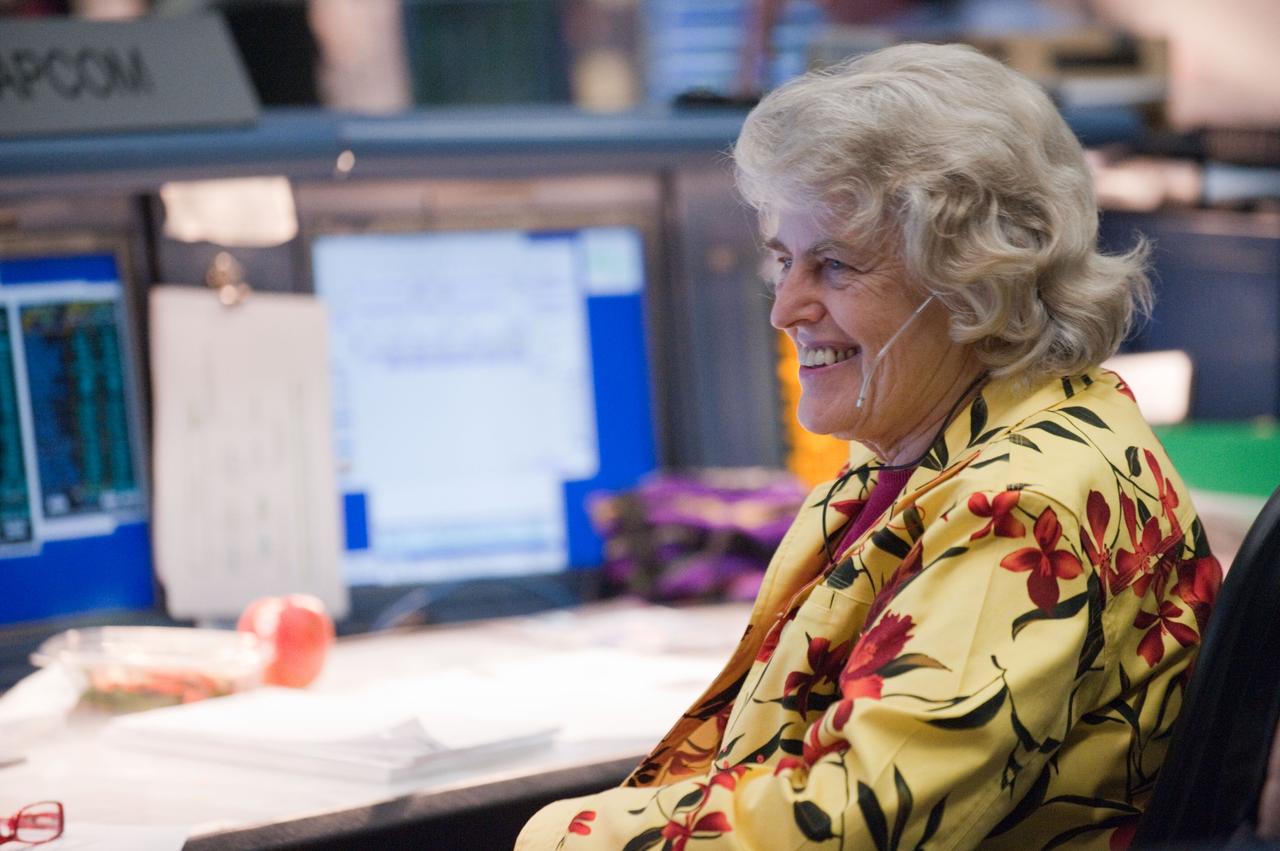
PHOTO DATE: 12 July 2011 LOCATION: Bldg. 30 - WFCR SUBJECT: STS-135 Orbit 3 Flight Controllers in WFCR. PHOTOGRAPHER: Mark Sowa
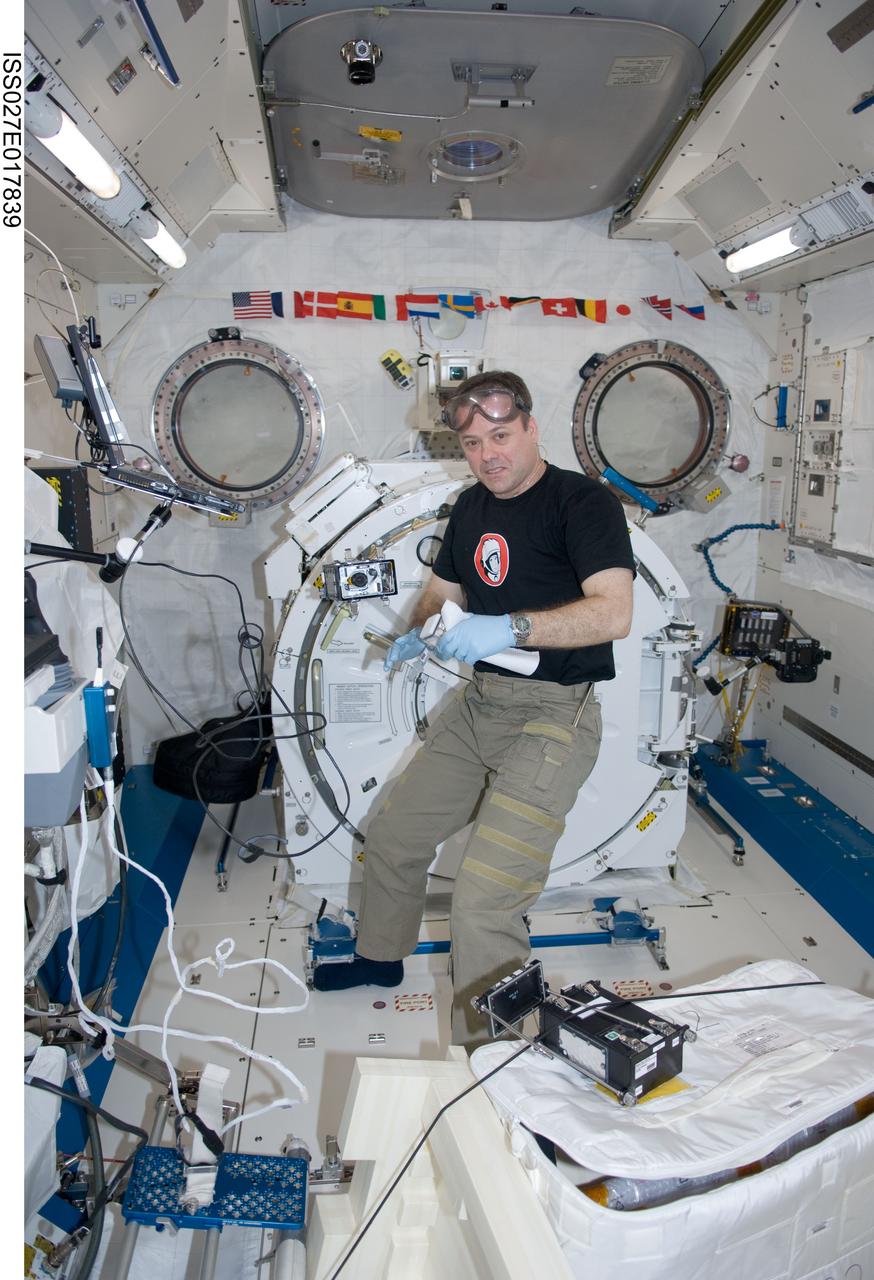
ISS027-E-017839 (28 April 2011) --- NASA astronaut Ron Garan, Expedition 27 flight engineer, supports the Dynamism of Auxin Efflux Facilitators responsible for Gravity-regulated Growth and Development in Cucumber (CsPINs) experiment in the Kibo laboratory of the International Space Station. CsPINs studies the phenomenon of tropism, i.e., the growth or turning movement of a biological organism, usually a plant, in response to an environmental stimulus. Specifically focusing on gravity, the new JAXA life science experiment investigates how plants sense gravity as an environmental signal and use it for governing their morphology and growth orientation.
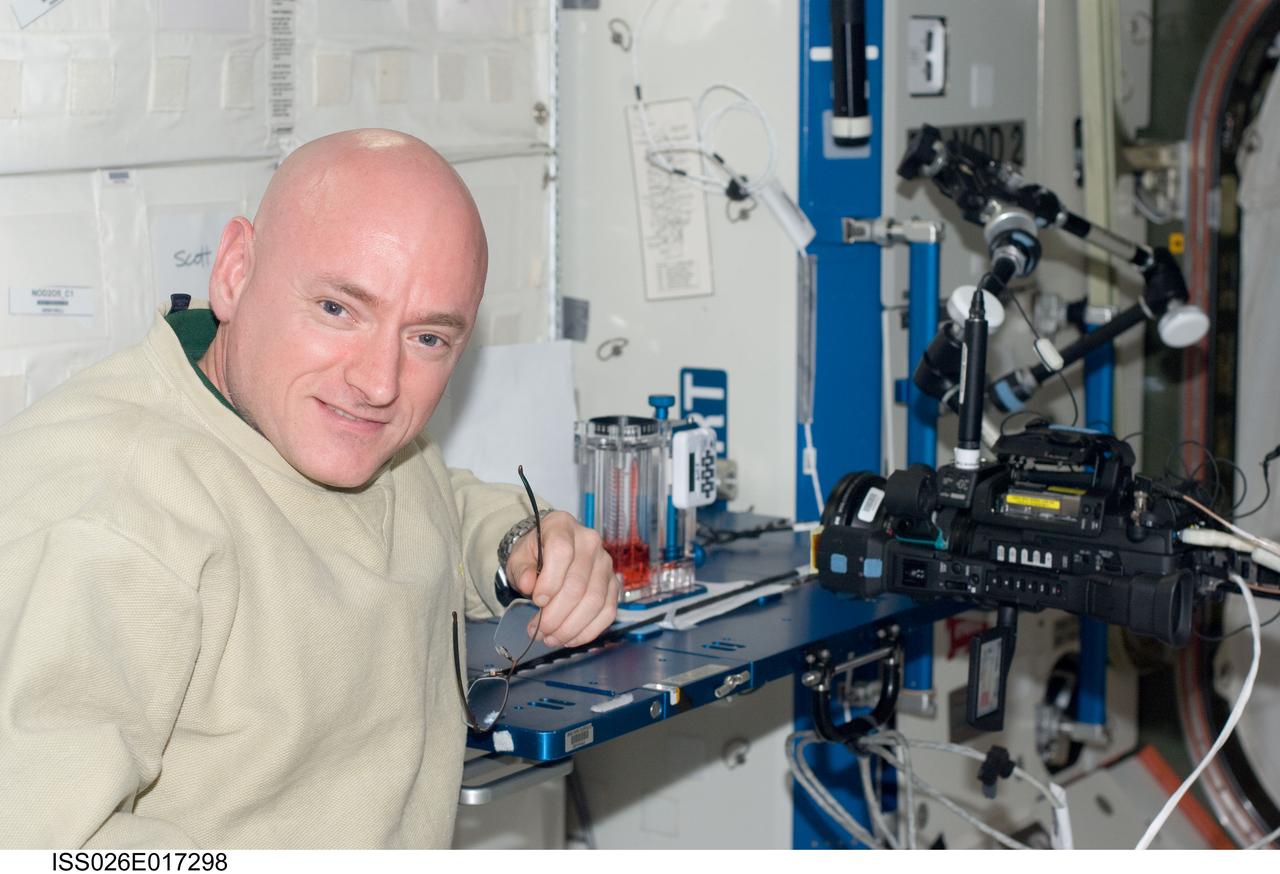
ISS026-E-017298 (11 Jan. 2011) --- NASA astronaut Scott Kelly, Expedition 26 commander, is pictured near a Capillary Flow Experiment (CFE) Vane Gap-1 experiment. The CFE is positioned on the Maintenance Work Area in the Destiny laboratory of the International Space Station. CFE observes the flow of fluid, in particular capillary phenomena, in microgravity.
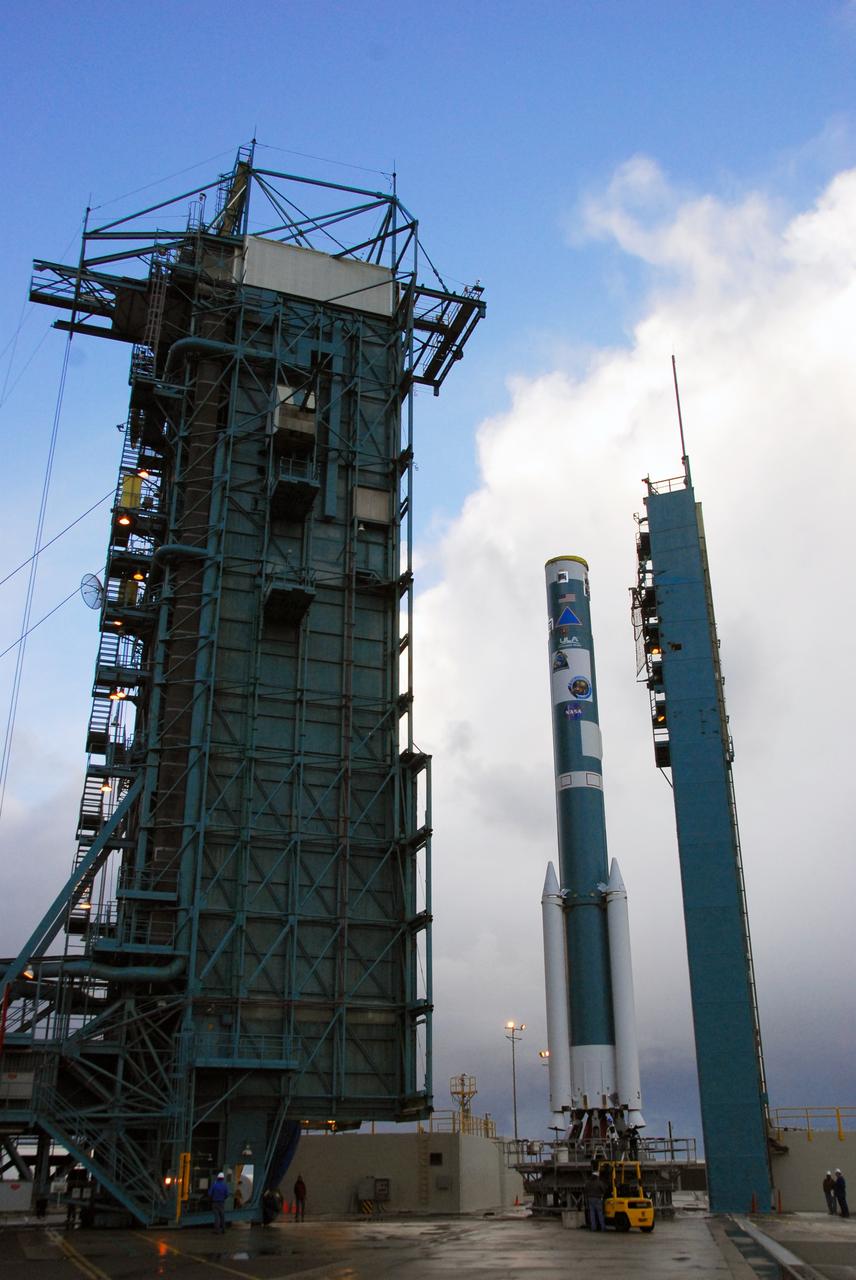
VANDENBERG AIR FORCE BASE, Calif. -- The Space Launch Complex-2 (SLC-2) service tower at Vandenberg Air Force Base in California is moved to allow United Launch Alliance technicians to hoist into position the second stage of the Delta II rocket that will carry NASA's Aquarius satellite into low Earth orbit. Scheduled to launch in June, Aquarius' mission will be to provide monthly maps of global changes in sea surface salinity. By measuring ocean salinity from space, Aquarius will provide new insights into how the massive natural exchange of freshwater between the ocean, atmosphere and sea ice influences ocean circulation, weather and climate. Also going up with the satellite are optical and thermal cameras, a microwave radiometer and the SAC-D spacecraft, which were developed with the help of institutions in Italy, France, Canada and Argentina. Photo credit: VAFB/30th Space Wing
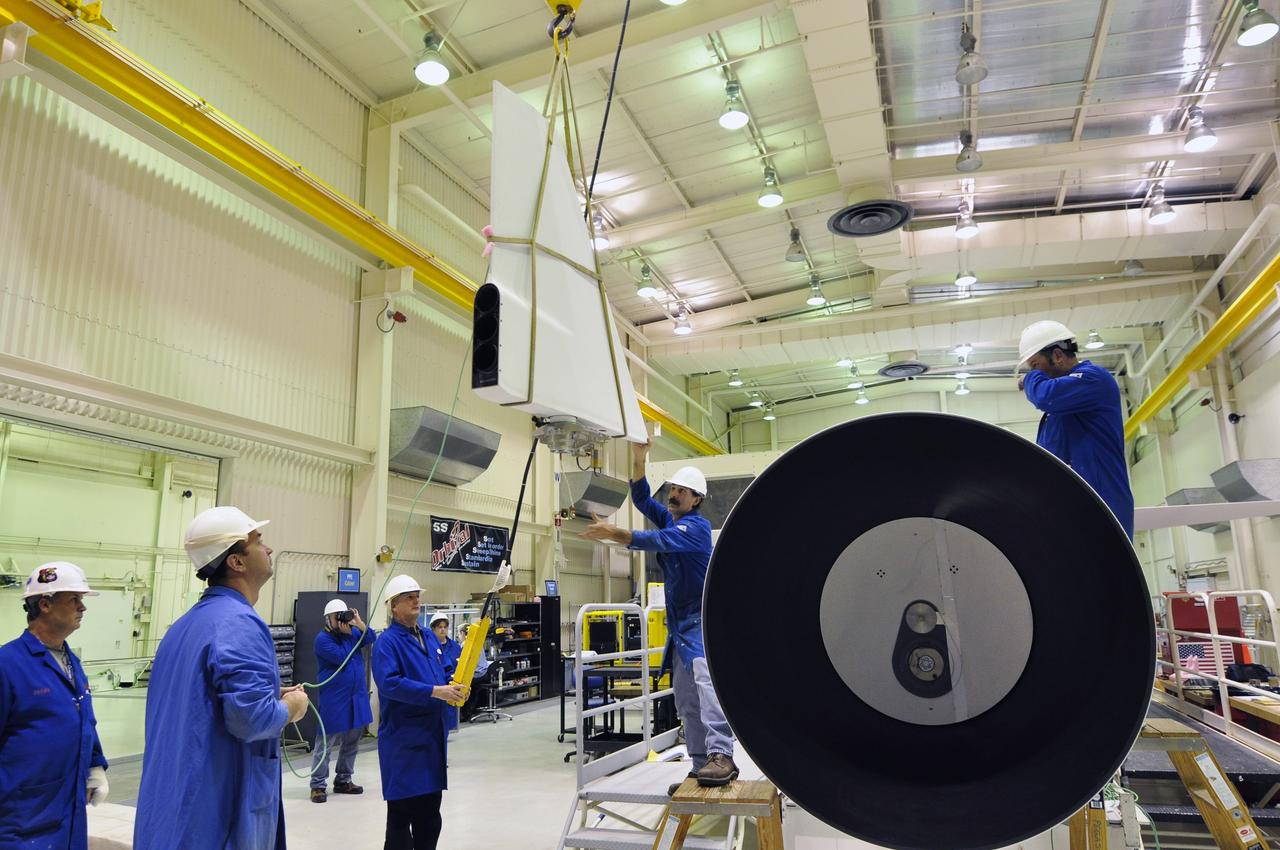
VANDENBERG AIR FORCE BASE, Calif. -- Inside a Pegasus booster processing facility at Vandenberg Air Force Base in California, an overhead crane lifts the first of the fins for the aft end of the Pegasus XL rocket's first stage as technicians guide it into place for installation. The Orbital Sciences Corp. Pegasus rocket will launch the Nuclear Spectroscopic Telescope Array (NuSTAR) into space. After the rocket and spacecraft are processed at Vandenberg, they will be flown on the Orbital Sciences’ L-1011 carrier aircraft to the Ronald Reagan Ballistic Missile Defense Test Site at the Pacific Ocean’s Kwajalein Atoll for launch. The high-energy x-ray telescope will conduct a census for black holes, map radioactive material in young supernovae remnants, and study the origins of cosmic rays and the extreme physics around collapsed stars. For more information, visit science.nasa.gov/missions/nustar/. Photo credit: NASA/Randy Beaudoin, VAFB

This artist concept illustrates a young, red dwarf star surrounded by three planets. NASA Galaxy Evolution Explorer is helping to identify young, red dwarf stars that are close to us by detecting their ultraviolet light.
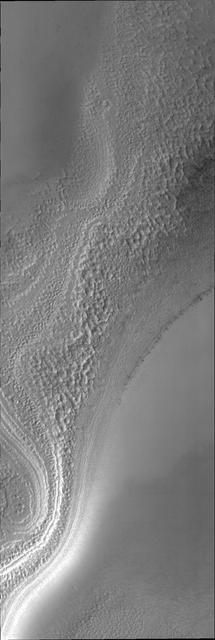
It is early springtime in the southern hemisphere of Mars in this image from NASA Mars Odyssey. The south polar cap is now illuminated by the sun and the surface can be studied as it changes with the passage of spring.
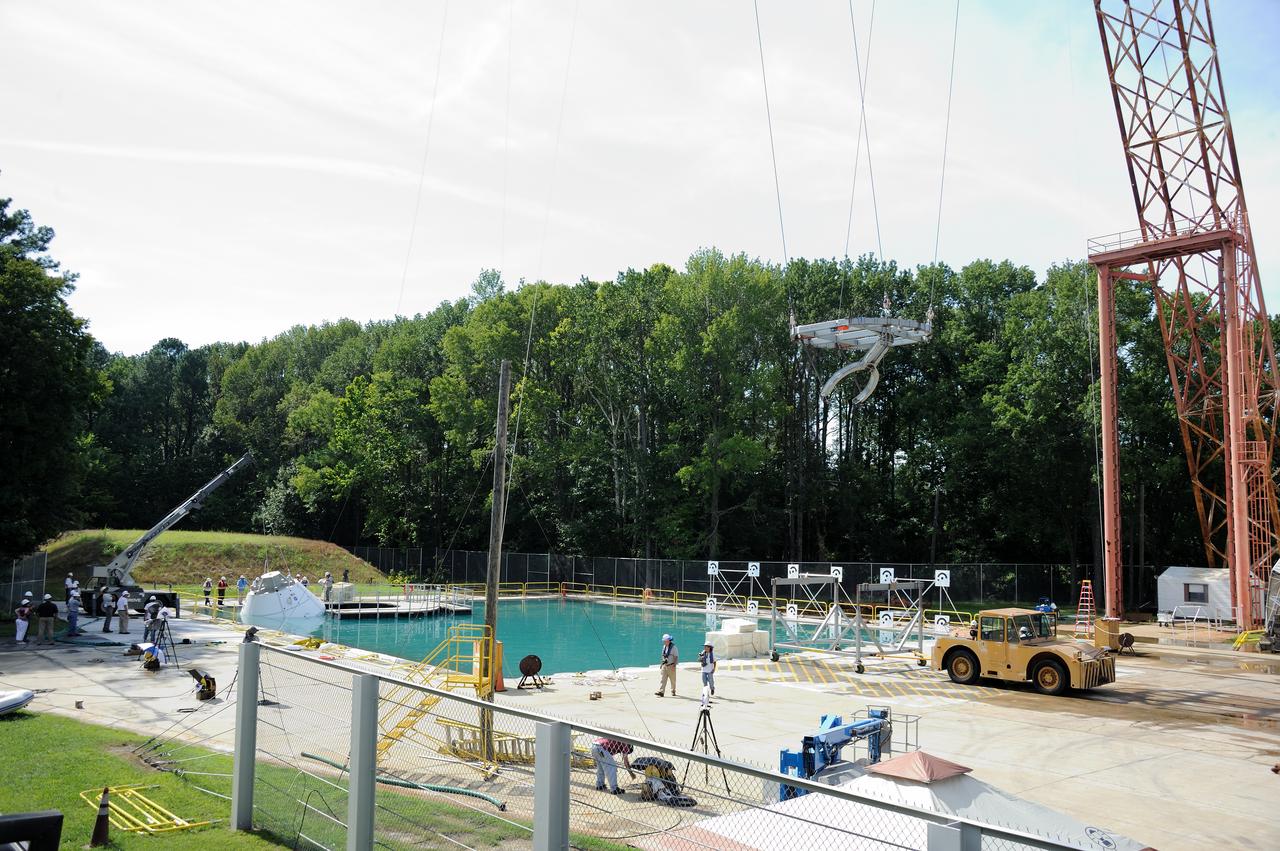
Orion Project SPLASH BTA Water Impact POT Boiler Plate Test Article (BTA) (SPLASH) Structural Passive Landing Attenuation for Survivability of Human Crew. (POT) Phase "0" Test Water Impact Test #3
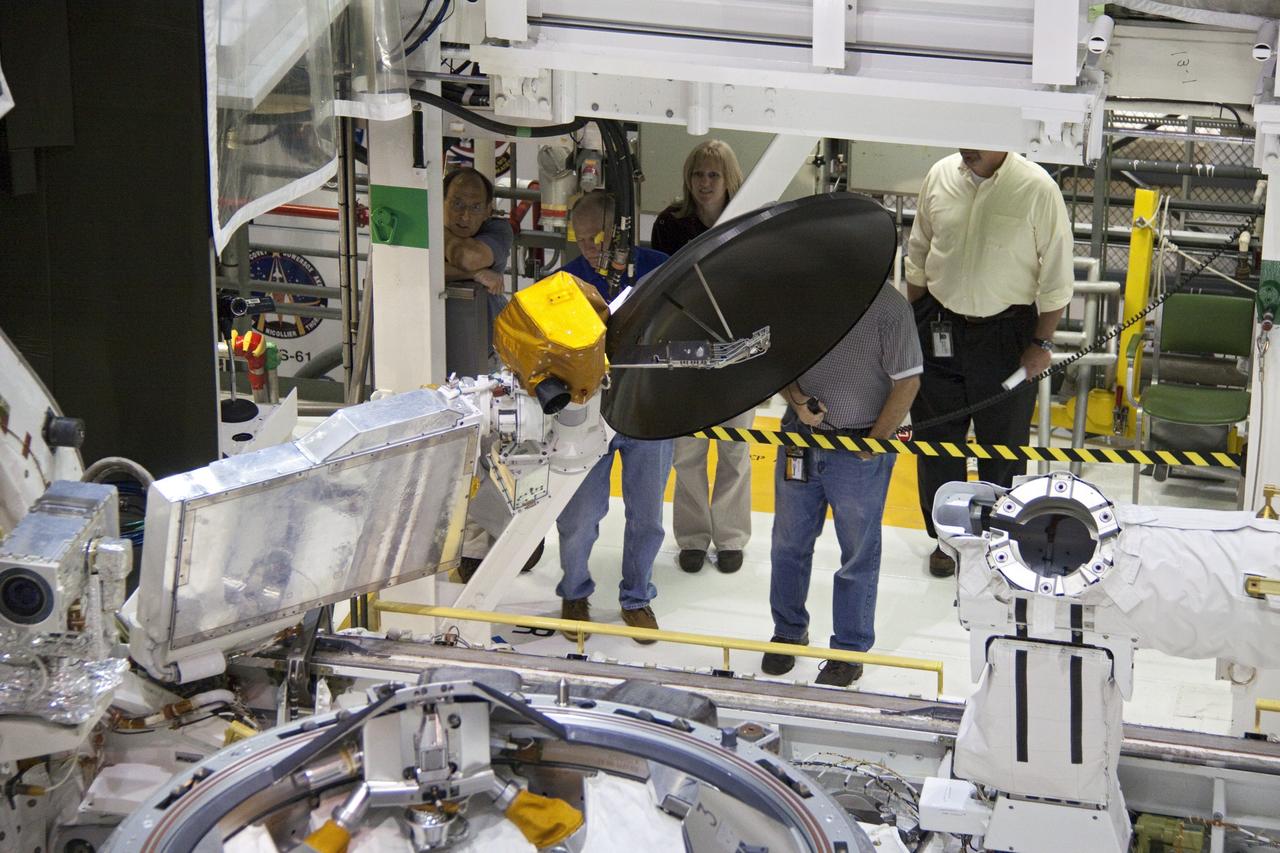
CAPE CANAVERAL, Fla. - In Orbiter Processing Facility-1 at NASA's Kennedy Space Center in Florida, the Ku-band antenna is being stowed in space shuttle Atlantis' payload bay. The antenna, which resembles a mini-satellite dish, transmits audio, video and data between Earth and the shuttle. Next, the clamshell doors of the payload bay will close completely in preparation for its move to the Vehicle Assembly Building. Atlantis is being prepared for the STS-135 mission, which will deliver the Raffaello multipurpose logistics module packed with supplies, logistics and spare parts to the International Space Station. STS-135 is targeted to launch June 28, and will be the last spaceflight for the Space Shuttle Program. Photo credit: NASA/Jack Pfaller
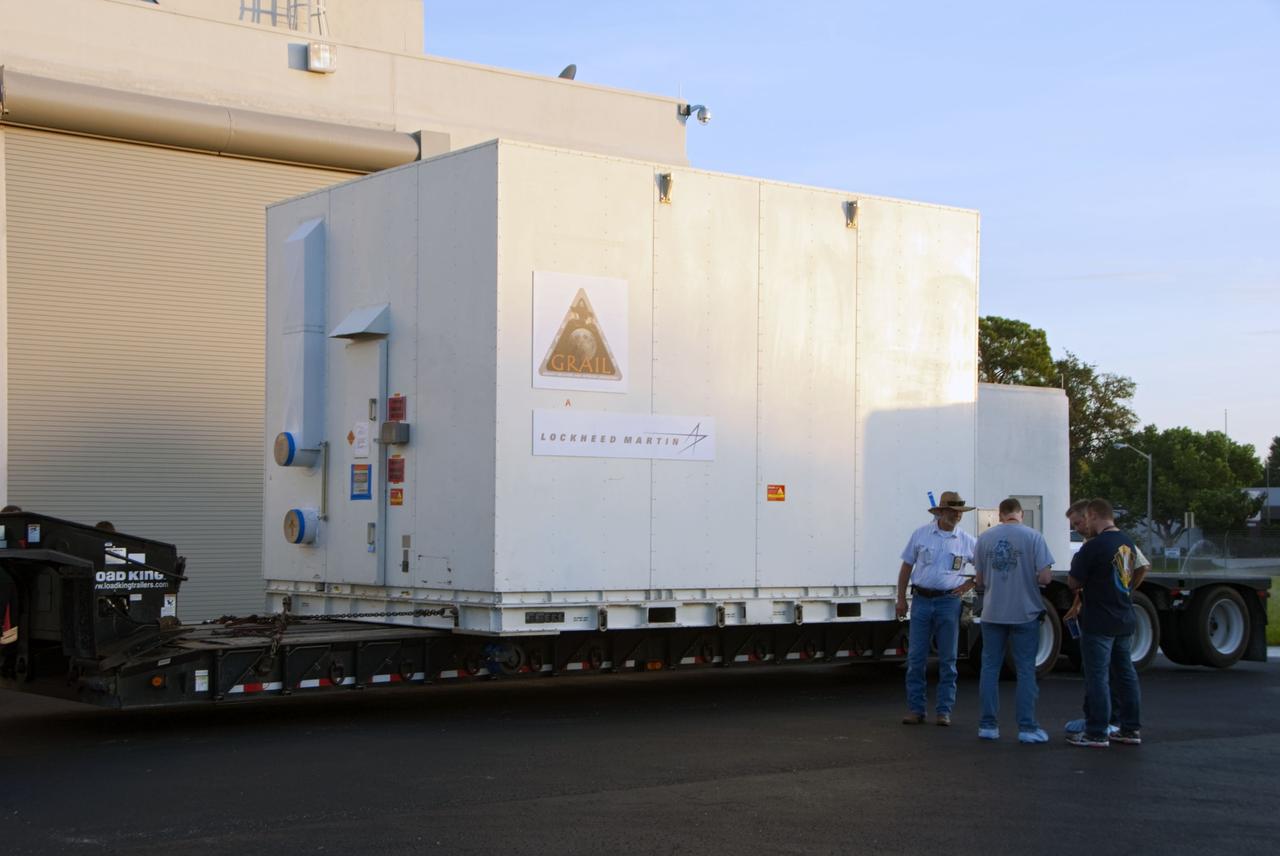
CAPE CANAVERAL, Fla. -- Preparations are under way to transport the protective canister housing NASA's twin Gravity Recovery and Interior Laboratory lunar spacecraft to the Hazardous Processing Facility (HPF) at Astrotech Space Operation's payload processing facility in Titusville, Fla. In the HPF, the spacecraft will undergo two days of fueling activities. GRAIL will fly in tandem orbits around the moon for several months to measure its gravity field. GRAIL's primary science objectives are to determine the structure of the lunar interior, from crust to core, and to advance understanding of the thermal evolution of the moon. Launch aboard a United Launch Alliance Delta II rocket from Space Launch Complex 17B on Cape Canaveral Air Force Station is scheduled for Sept. 8. For more information, visit http://www.nasa.gov/grail. Photo credit: NASA/Charisse Nahser
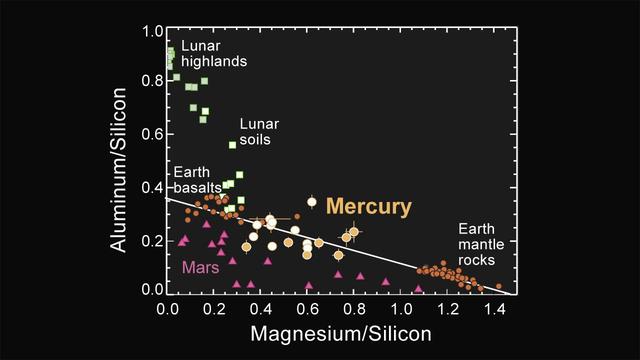
Major-element Composition of Mercury Surface Materials
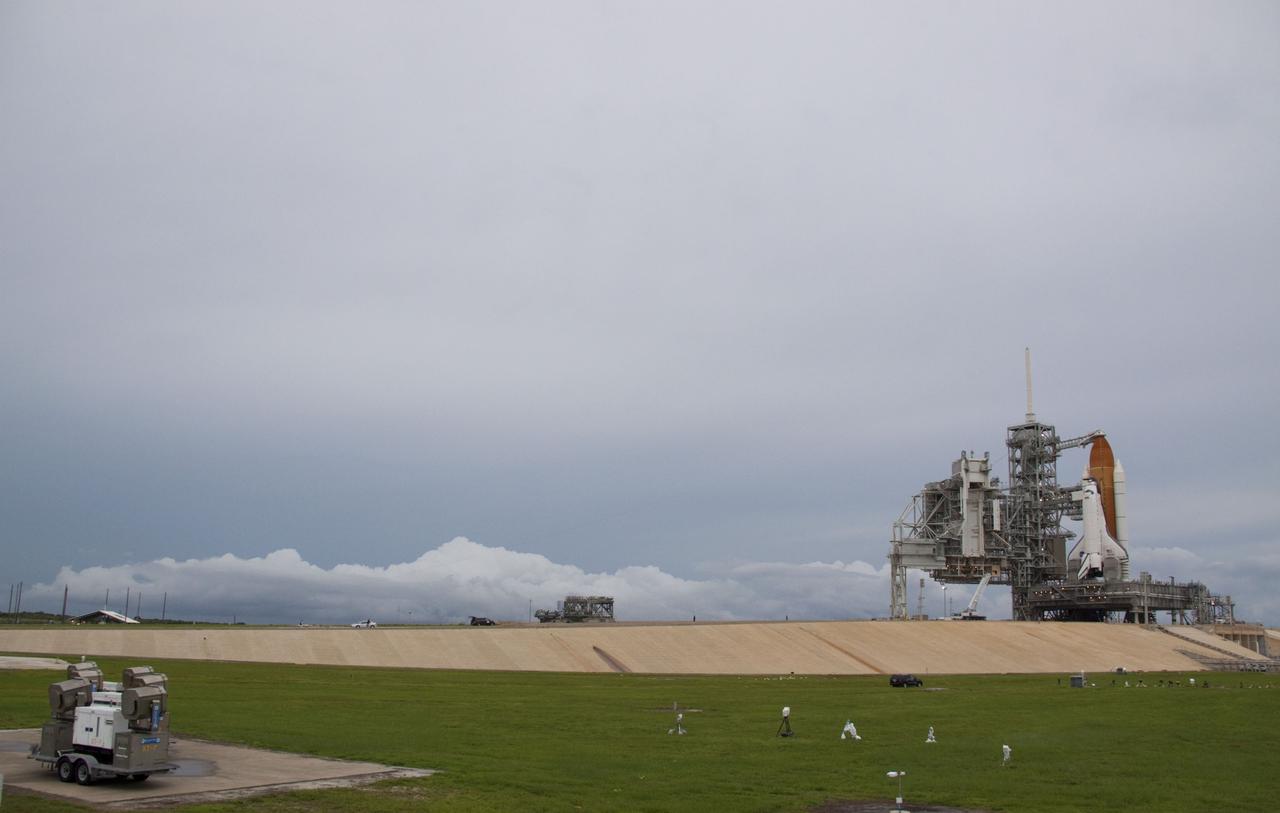
CAPE CANAVERAL, Fla. -- Space shuttle Atlantis is revealed on Launch Pad 39A at NASA's Kennedy Space Center in Florida following the move of the rotating service structure (RSS). The structure provides weather protection and access to the shuttle while it awaits liftoff on the pad. RSS "rollback" marks a major milestone in Atlantis' STS-135 mission countdown. Atlantis and its crew of four; Commander Chris Ferguson, Pilot Doug Hurley and Mission Specialists Sandy Magnus and Rex Walheim, are scheduled to lift off at 11:26 a.m. EDT on July 8 to deliver the Raffaello multi-purpose logistics module packed with supplies and spare parts to the International Space Station. Atlantis also will fly the Robotic Refueling Mission experiment that will investigate the potential for robotically refueling existing satellites in orbit. In addition, Atlantis will return with a failed ammonia pump module to help NASA better understand the failure mechanism and improve pump designs for future systems. STS-135 will be the 33rd flight of Atlantis, the 37th shuttle mission to the space station, and the 135th and final mission of NASA's Space Shuttle Program. For more information visit, www.nasa.gov/mission_pages/shuttle/shuttlemissions/sts135/index.html. Photo credit: NASA/Troy Cryder
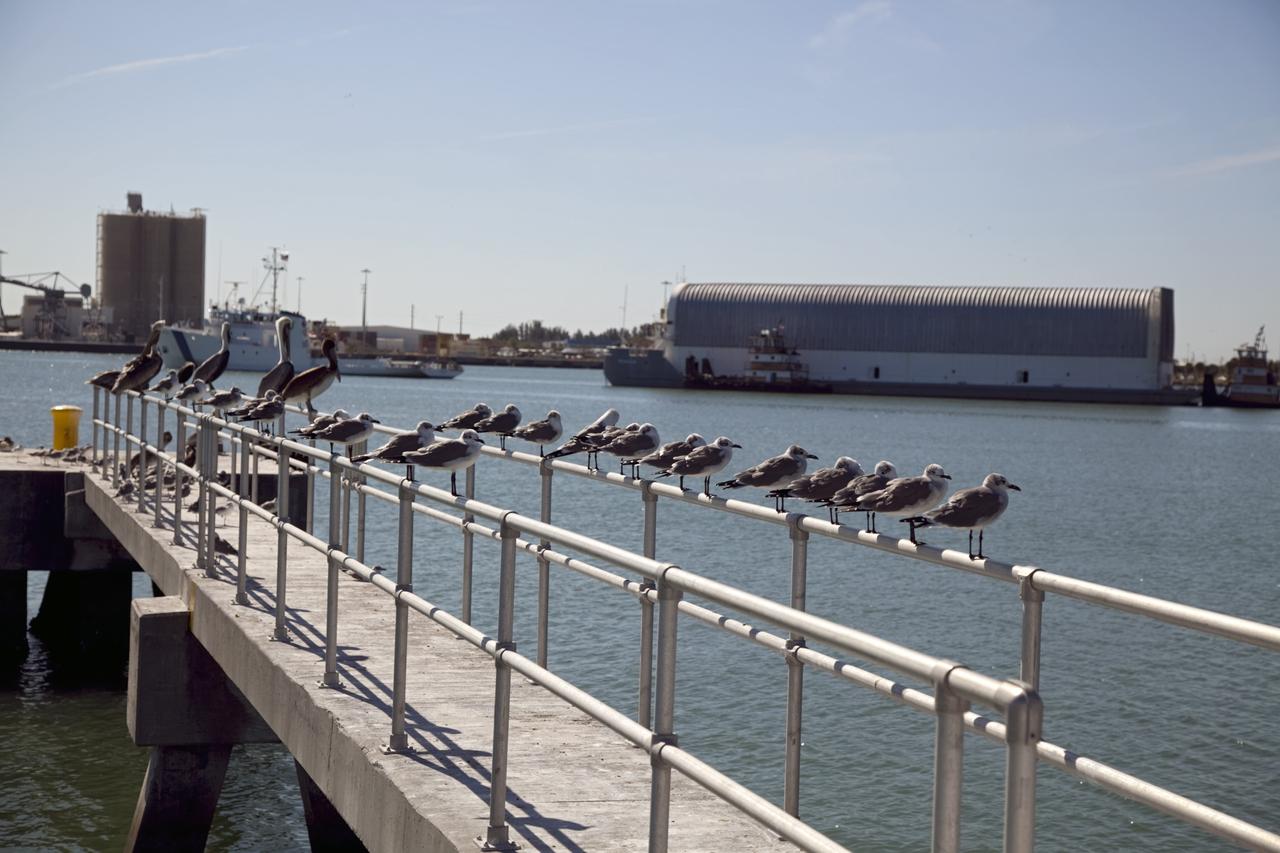
CAPE CANAVERAL, Fla. – NASA's Freedom Star ship tows the Pegasus Barge through Port Canaveral in Florida. Freedom Star is towing the 266-foot-long and 50-foot-wide barge to Stennis Space Center near Bay St. Louis, Miss. to deliver space shuttle main engine (SSME) ground support equipment. Since being delivered to NASA in 1999, Pegasus sailed 41 times and transported 31 shuttle external fuel tanks from Michoud Assembly Facility near New Orleans to Kennedy Space Center. The barge is leaving Kennedy, perhaps for the final time. Both the barge and shuttle equipment will remain in storage until their specific future uses are determined. The SSMEs themselves will be transported to Stennis separately for use with the agency's new heavy-lift rocket, the Space Launch System. The work is part of the Space Shuttle Program’s transition and retirement processing. For more information about Shuttle Transition and Retirement, visit http://www.nasa.gov/mission_pages/transition/home/index.html. Photo credit: NASA/Frankie Martin
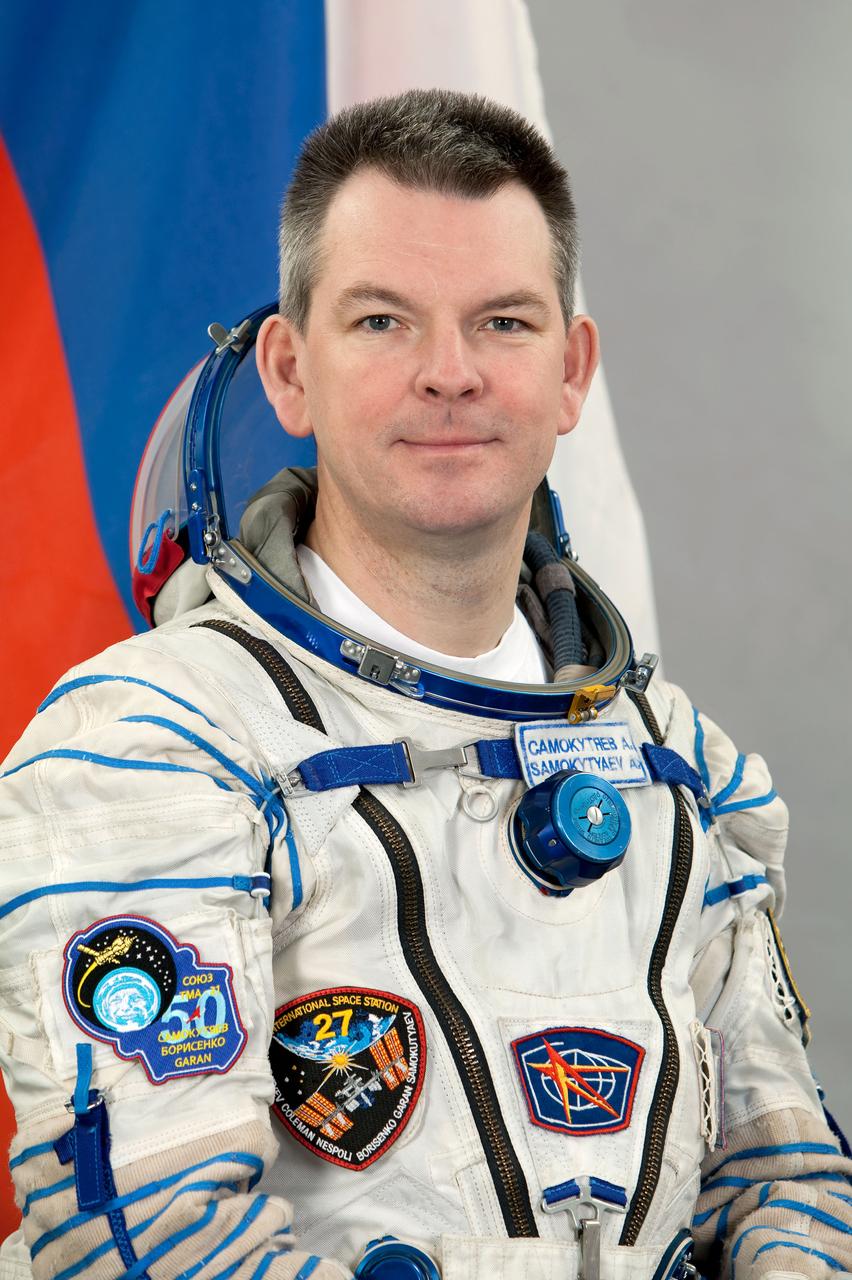
JSC2011-E-024231 (24 Feb. 2011) --- Russian cosmonaut Alexander Samokutyaev, Expedition 27/28 flight engineer, attired in a Russian Sokol launch and entry suit, takes a break from training in Star City, Russia to pose for a portrait. Photo credit: Gagarin Cosmonaut Training Center

At the Gagarin Cosmonaut Training Center in Star City, Russia, Expedition 29/30 Soyuz Commander Anton Shkaplerov says goodbye to his daughter October 31, 2011, as he departed for his launch site in Baikonur, Kazakhstan. Shkaplerov, Expedition 30 Commander Dan Burbank of NASA and Flight Engineer Anatoly Ivanishin will launch November 14 from Baikonur on their Soyuz TMA-22 spacecraft for the International Space Station. Credit: NASA
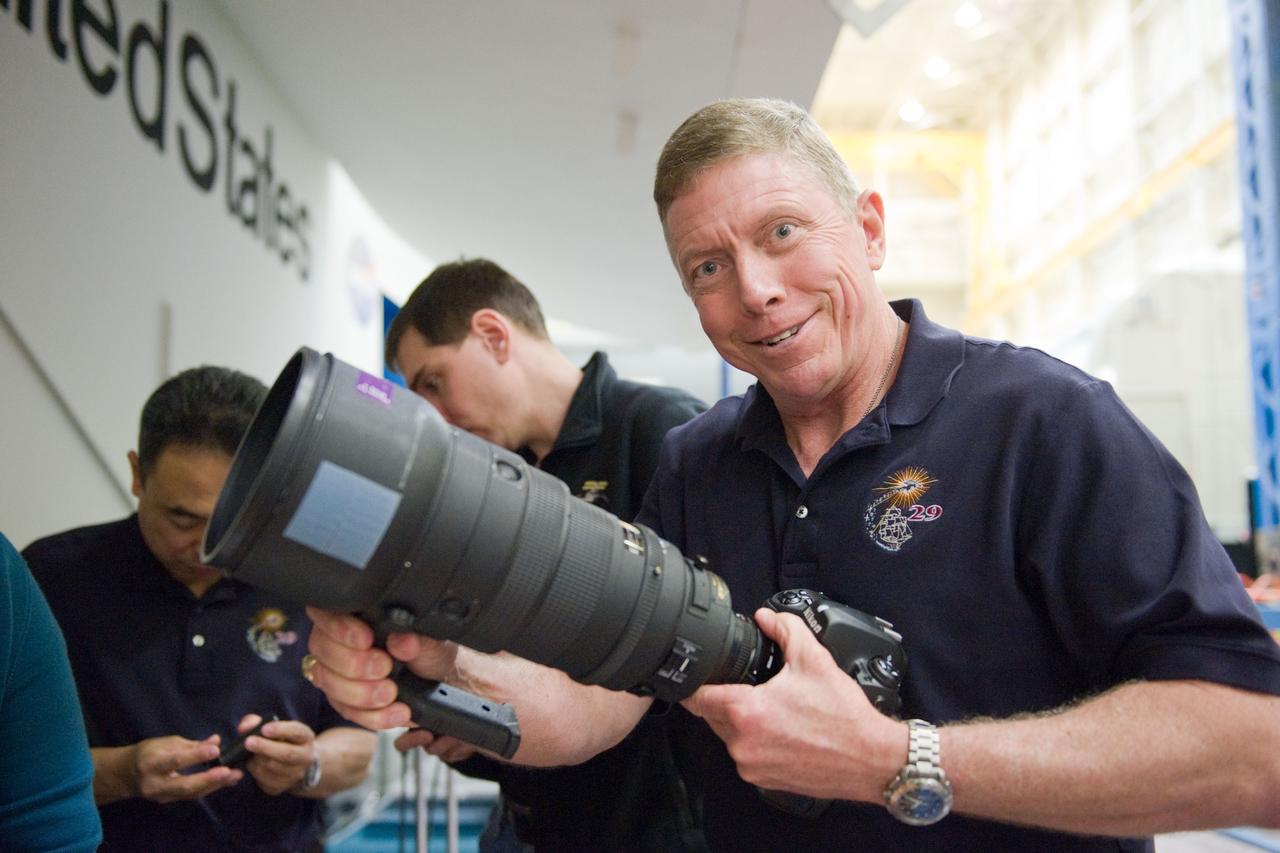
DATE: 3-15-11 LOCATION: Building 9 - ISS Mockup SUBJECT: Expedition 28/29 crew members during Docking Timeline Training. PHOTOGRAPHER: Lauren Harnett
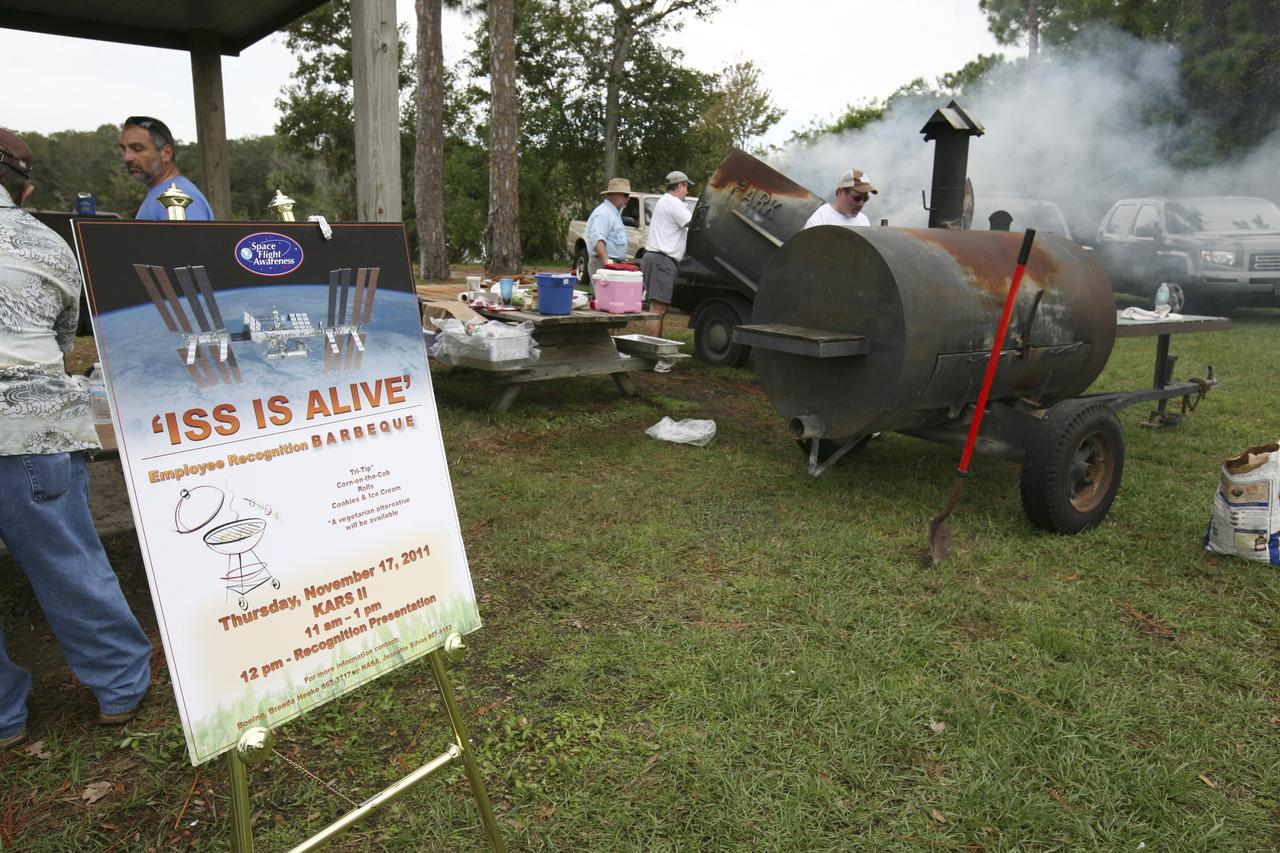
CAPE CANAVERAL, Fla. – International Space Station employees based at NASA's Kennedy Space Center in Florida participate in the "ISS Is Alive" employee recognition barbecue celebration at Kars Park II. NASA and The Boeing Co. hosted the celebration to thank the employees based at the Kennedy Space Center who were involved in building the largest, most complex international scientific project in history and the largest venture in space to date. The station has hosted human life, work and research in space for more than 10 years. Boeing is the prime contractor to NASA for the space station. In addition to designing and building all the major U.S. elements, Boeing also is responsible for ensuring the successful integration of new hardware and software -- including components from international partners -- as well as for providing sustaining engineering work. For more information on the International Space Station, visit http://www.nasa.gov/station. Photo credit: NASA/Amanda Diller
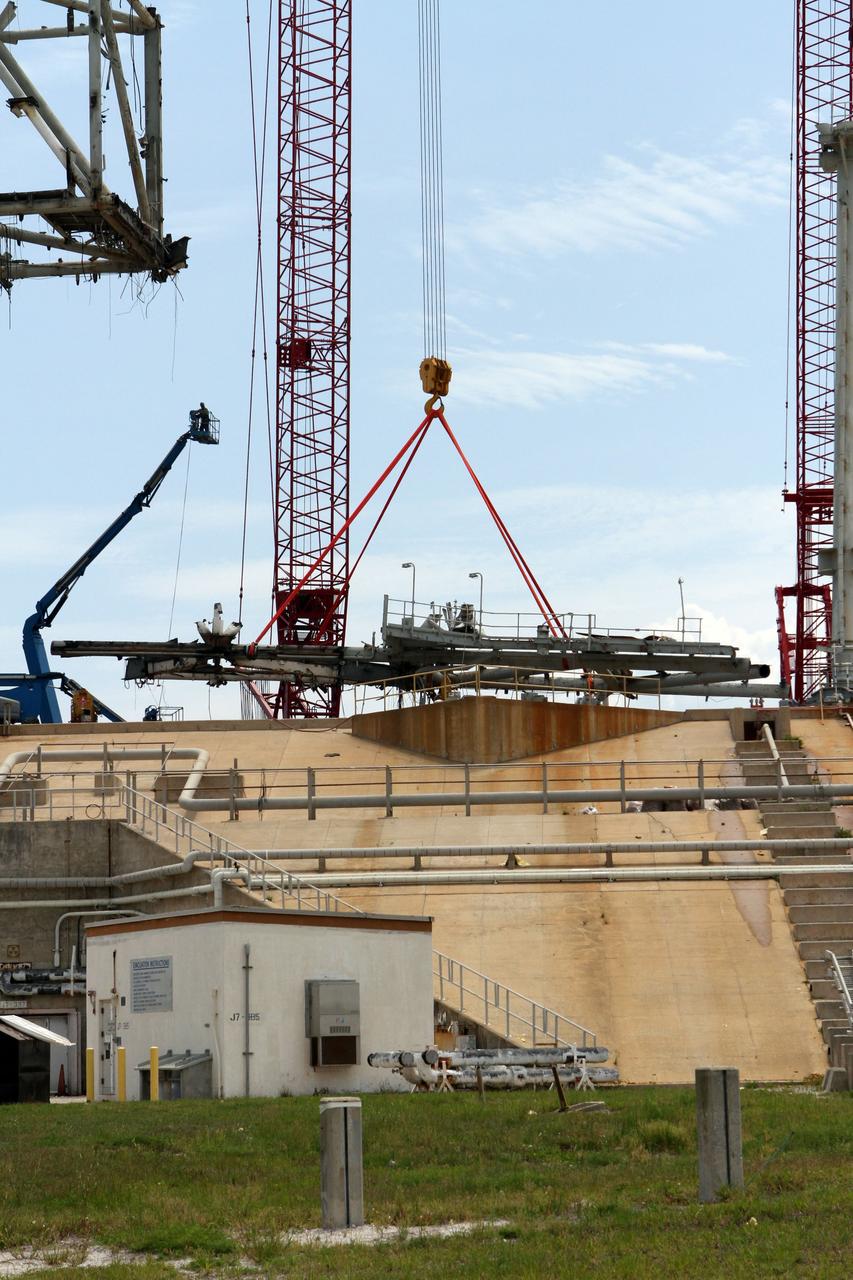
Cape Canaveral, Fla. -- Workers using a large crane remove the access arm section of the rotating service structure on Launch Pad 39B at NASA's Kennedy Space Center in Florida. In 2009, the pad was no longer needed for the shuttle program, so it is being restructured for future use. Its new design will feature a "clean pad" for rockets to come with their own launcher, making it more versatile for a number of vehicles. The new lightning protection system, which was in place for the October 2009 launch of Ares I-X, will remain. For information on NASA's future plans, visit www.nasa.gov. Photo credit: NASA/Cory Huston
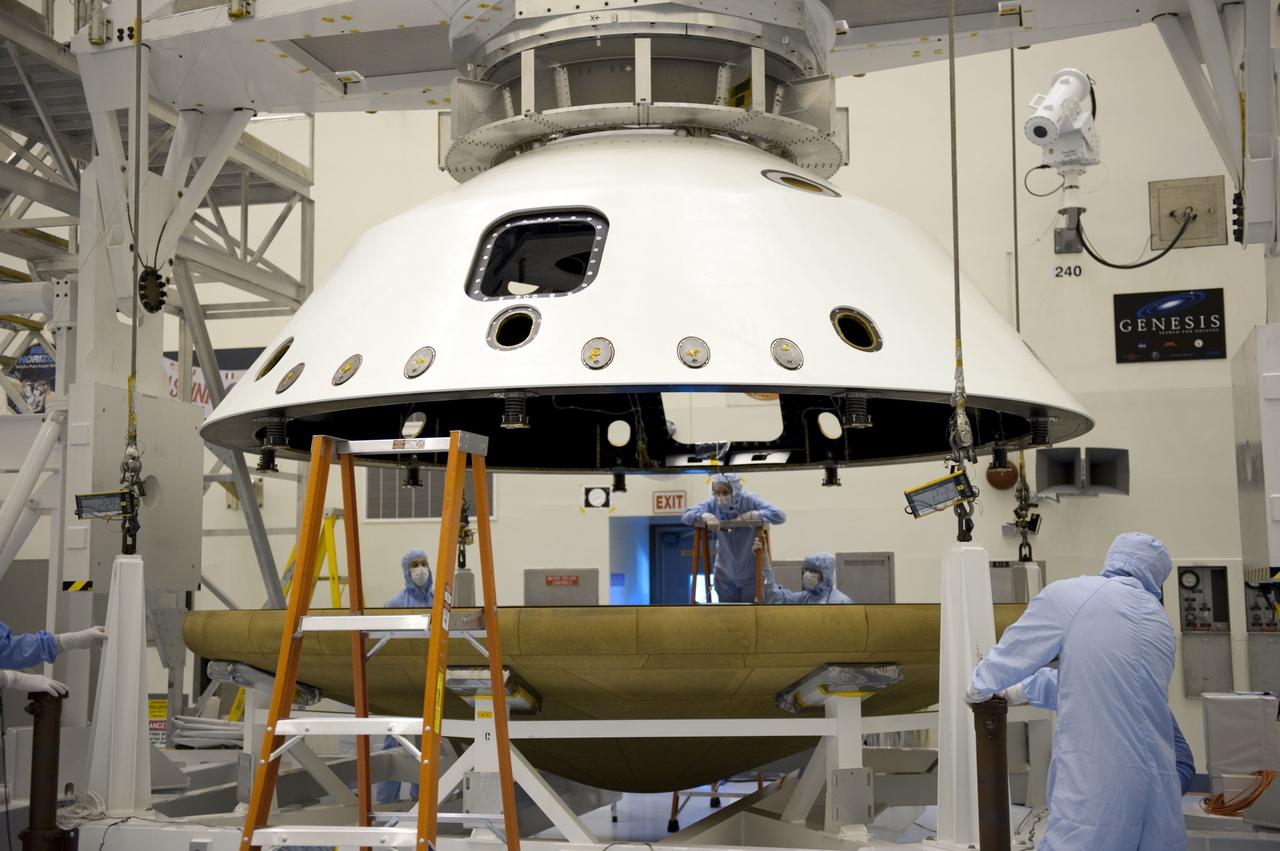
Cape Canaveral, Fla. -- At the Payload Hazardous Servicing Facility at NASA's Kennedy Space Center in Florida, technicians, using an overhead crane, separate the two components of the aeroshell, an element of NASA's Mars Science Laboratory (MSL), after testing. The aeroshell consists of the spacecraft's heat shield and the backshell which carries the parachute and several components used during later stages of entry, descent and landing. MSL's components include a compact car-sized rover, Curiosity, which has 10 science instruments designed to search for evidence on whether Mars has had environments favorable to microbial life, including chemical ingredients for life. The unique rover will use a laser to look inside rocks and release its gasses so that the rover’s spectrometer can analyze and send the data back to Earth. Launch of MSL aboard a United Launch Alliance Atlas V rocket is scheduled for Nov. 25 from Space Launch Complex 41 on Cape Canaveral Air Force Station in Florida. For more information, visit http://www.nasa.gov/msl. Photo credit: NASA/Kim Shiflett
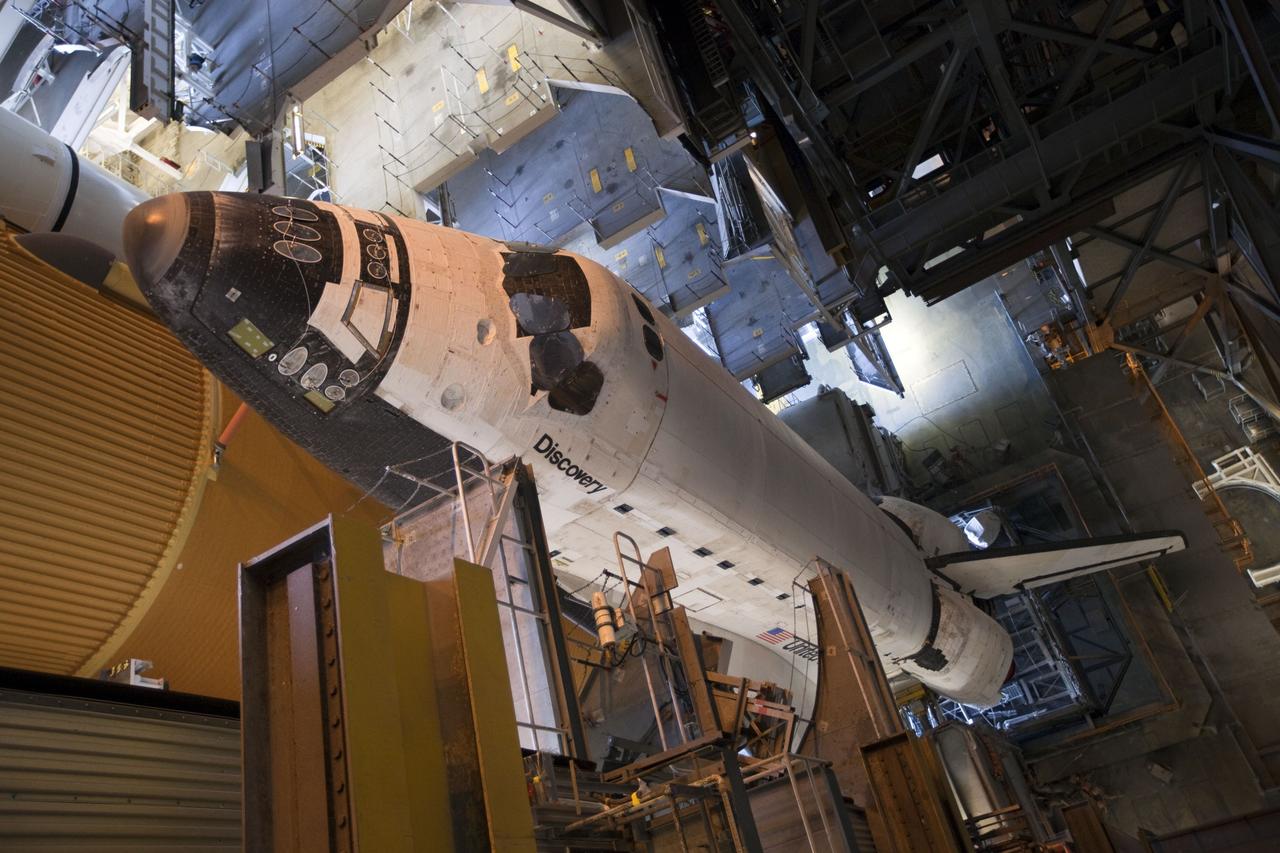
CAPE CANAVERAL, Fla. -- Viewed from inside the Vehicle Assembly Building at NASA's Kennedy Space Center in Florida, space shuttle Discovery, perched on a crawler-transporter in the doorway of the massive Vehicle Assembly Building, is ready for its 3.4-mile journey to Launch Pad 39A. It will take the shuttle, attached to its external fuel tank, twin solid rocket boosters and mobile launcher platform, about seven hours to complete the move. This is the second time Discovery has rolled out to the pad for the STS-133 mission, and comes after a thorough check and modifications to the shuttle's external tank. Targeted to liftoff Feb. 24, Discovery will take the Permanent Multipurpose Module (PMM) packed with supplies and critical spare parts, as well as Robonaut 2 (R2) to the International Space Station. For more information on STS-133, visit www.nasa.gov/mission_pages/shuttle/shuttlemissions/sts133/. Photo credit: NASA/Frank Michaux
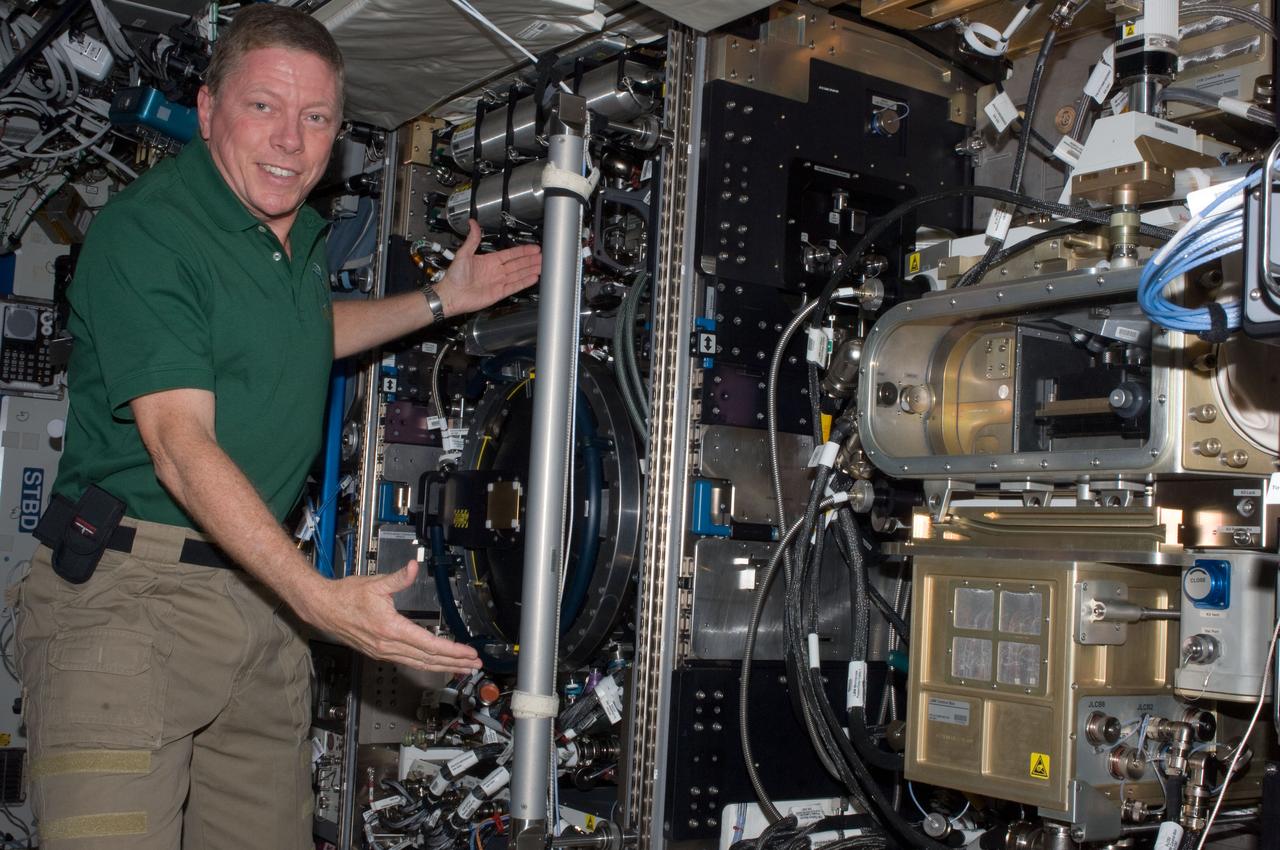
ISS028-E-009889 (26 June 2011) --- NASA astronaut Mike Fossum, Expedition 28 flight engineer, is pictured near the Combustion Integrated Rack (CIR) Multi-user Drop Combustion Apparatus (MDCA) in the Destiny laboratory of the International Space Station.
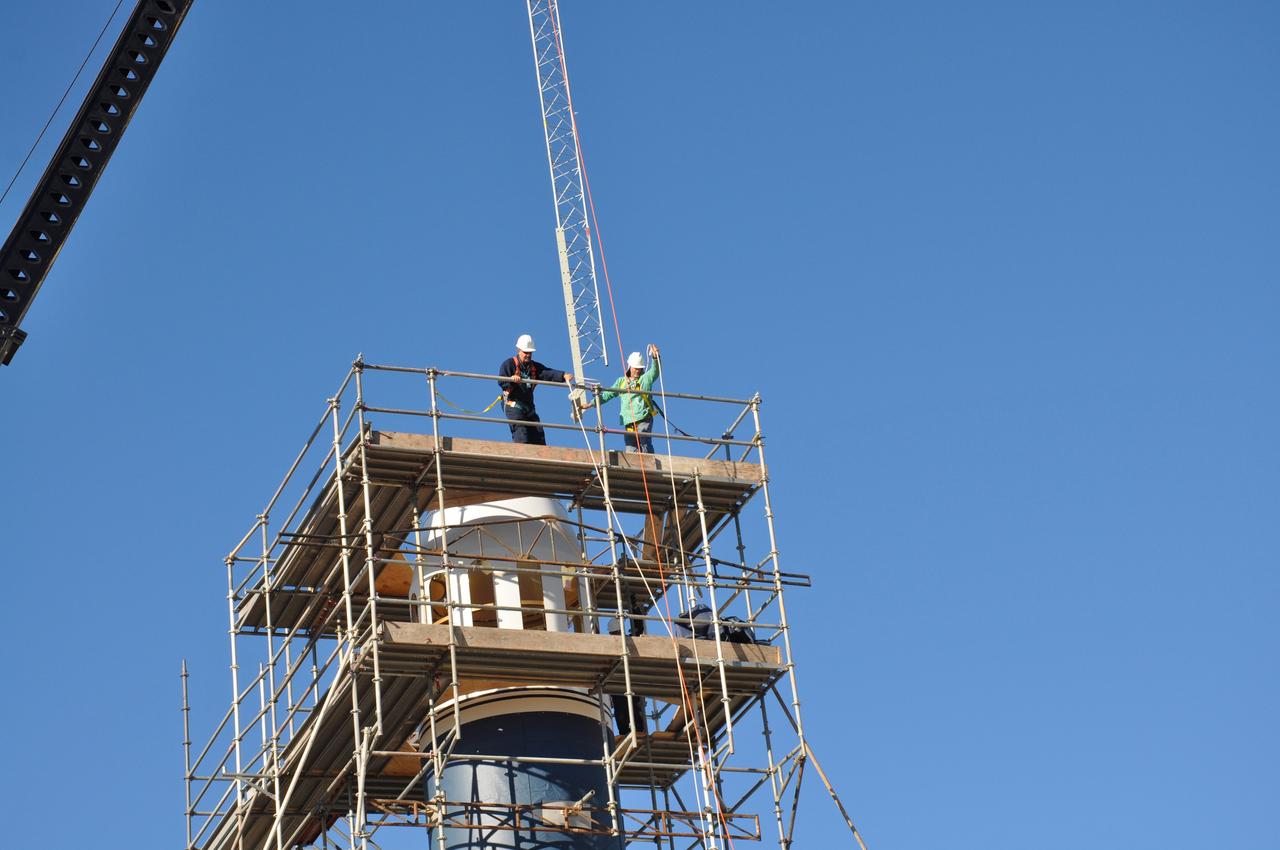
VANDENBERG AIR FORCE BASE, Calif. -- At Space Launch Complex 576-E at Vandenberg Air Force Base in California, workers unlatch the crane's guide wires from the Stage 0/1 interstage, part of the four-stage Taurus XL rocket that will carry NASA's Glory spacecraft into low Earth orbit, after it was lowered into launch position. Once Glory reaches orbit, it will collect data on the properties of aerosols and black carbon. It also will help scientists understand how the sun's irradiance affects Earth's climate. Launch is scheduled for 5:09 a.m. EST Feb. 23. For information, visit www.nasa.gov/glory. Photo credit: NASA/Randy Beaudoin, VAFB
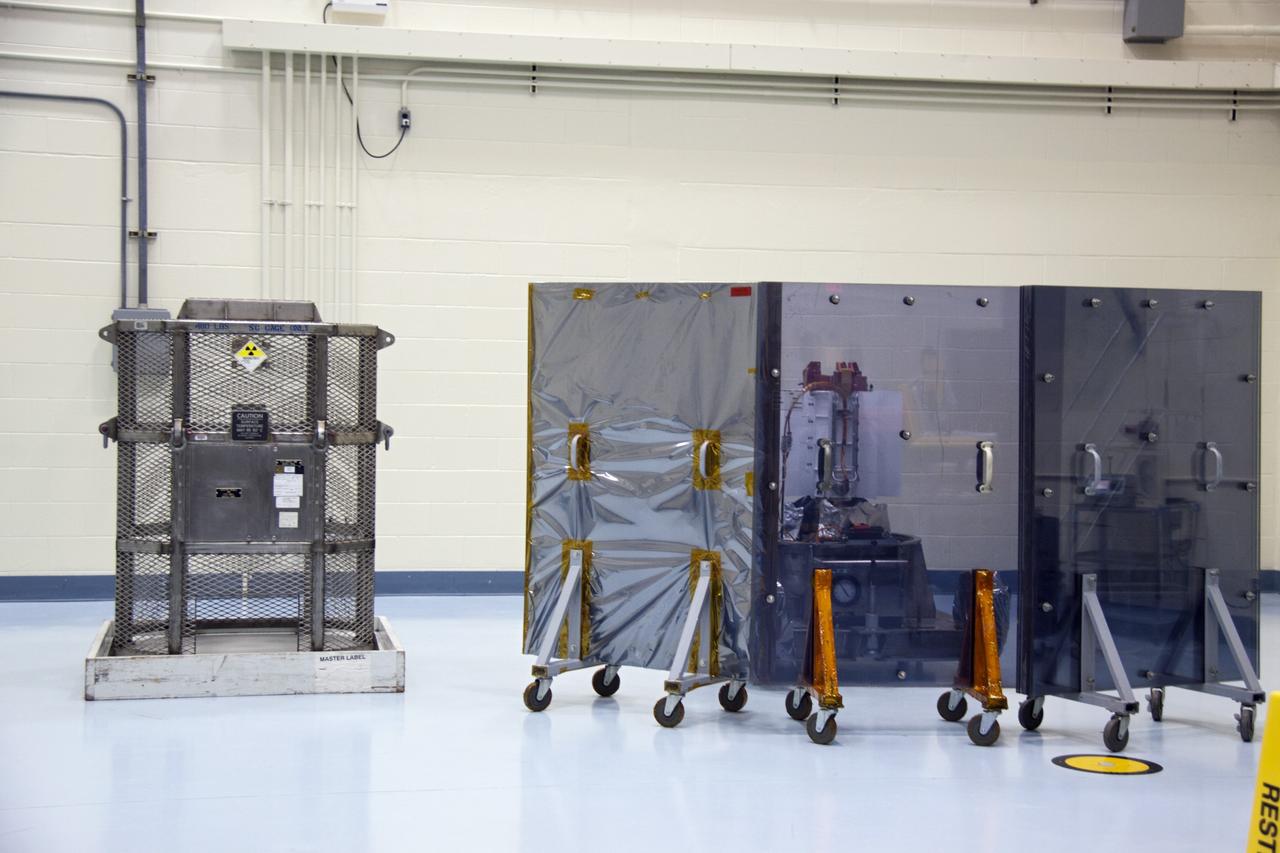
CAPE CANAVERAL, Fla. -- The multi-mission radioisotope thermoelectric generator (MMRTG) for NASA's Mars Science Laboratory (MSL) mission is position behind mobile plexiglass radiation shields in the high bay of the RTG storage facility (RTGF) at NASA's Kennedy Space Center in Florida. The MMRTG was returned to the RTGF following a fit check on MSL's Curiosity rover in the Payload Hazardous Servicing Facility (PHSF). The generator will remain in the RTGF until is moved to the pad for integration on the rover. The MMRTG will generate the power needed for the mission from the natural decay of plutonium-238, a non-weapons-grade form of the radioisotope. Heat given off by this natural decay will provide constant power through the day and night during all seasons. MSL's components include a compact car-sized rover, Curiosity, which has 10 science instruments designed to search for signs of life, including methane, and help determine if the gas is from a biological or geological source. Waste heat from the MMRTG will be circulated throughout the rover system to keep instruments, computers, mechanical devices and communications systems within their operating temperature ranges. Launch of MSL aboard a United Launch Alliance Atlas V rocket is targeted for Nov. 25 from Space Launch Complex 41 on Cape Canaveral Air Force Station. For more information, visit http://www.nasa.gov/msl. Photo credit: NASA/Troy Cryder
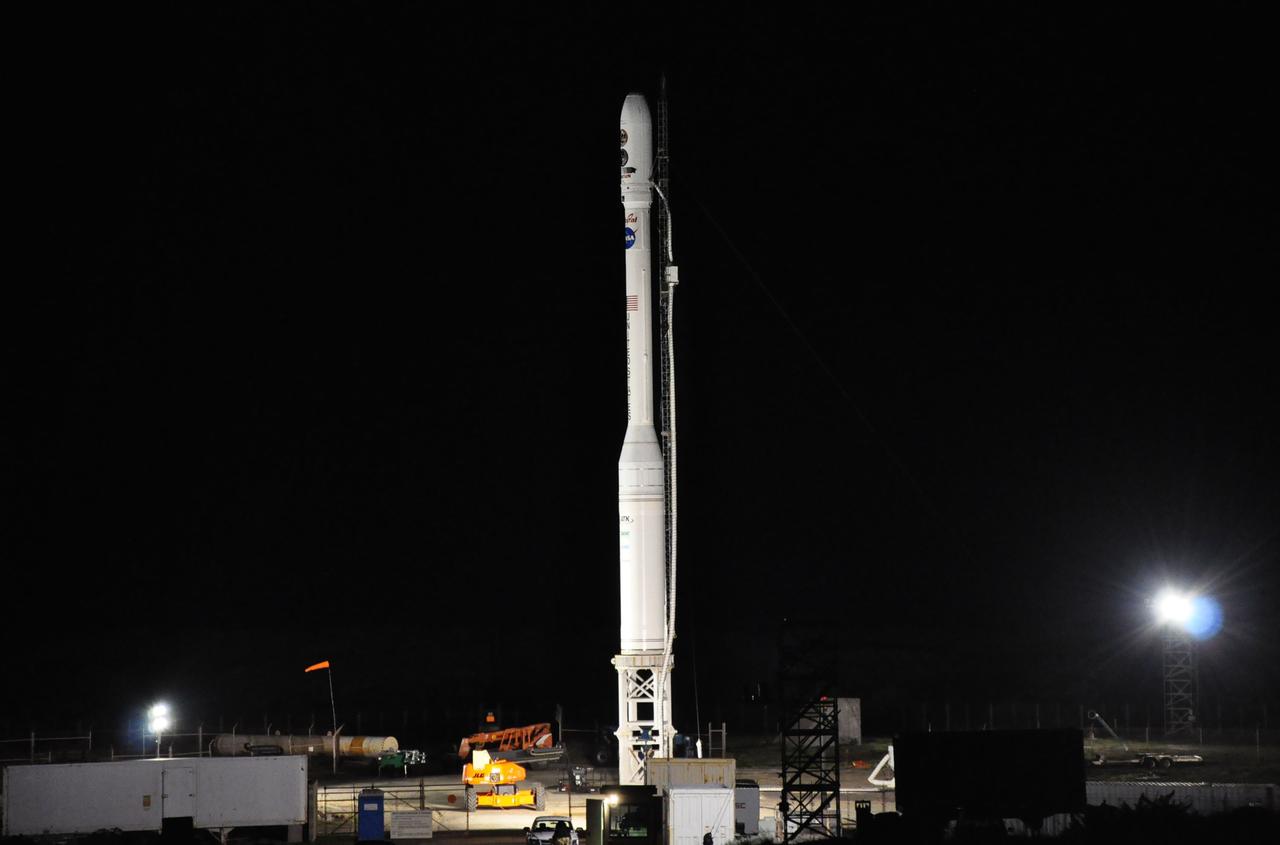
VANDENBERG AIR FORCE BASE, Calif. -- As nighttime descends on Vandenberg Air Force Base in California, the Orbital Sciences Taurus XL rocket and NASA's encapsulated Glory spacecraft await an early morning launch on the pad at Space Launch Complex 576-E. Liftoff originally was scheduled for 5:09 a.m. EST Feb. 23, but was scrubbed for at least 24 hours due to a technical issue that engineers are evaluating. Once Glory reaches orbit, it will collect data on the properties of aerosols and black carbon. It also will help scientists understand how the sun's irradiance affects Earth's climate. For information, visit www.nasa.gov/glory. Photo credit: NASA/Randy Beaudoin, VAFB
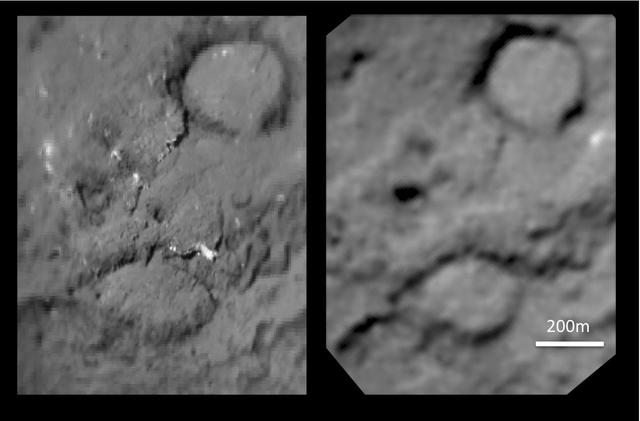
This pair of images shows the before-and-after comparison of the part of comet Tempel 1 that was hit by the impactor from NASA Deep Impact spacecraft.
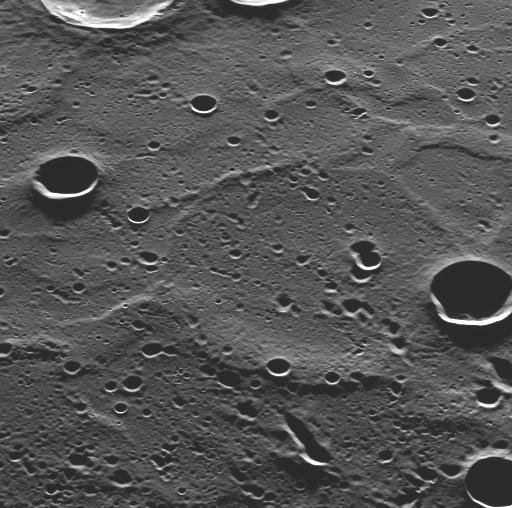
Smooth Plains in Mercury North

LOUISVILLE, Colo. – During NASA's Commercial Crew Development Round 2 CCDev2) activities for the Commercial Crew Program CCP, Sierra Nevada Corp. SNC built a Simulator and Avionics Laboratory to help engineers evaluate the Dream Chaser's characteristics during the piloted phases of flight. Located at Sierra Nevada’s Space Systems facility in Louisville, Colo., it consists of a physical cockpit and integrated simulation hardware and software. The simulator is linked to the Vehicle Avionics Integration Laboratory, or VAIL, which serves as a platform for Dream Chaser avionics development, engineering testing and integration. VAIL also will also be used for verification and validation of avionics and software. Sierra Nevada is one of seven companies NASA entered into Space Act Agreements SAAs with during CCDev2 to aid in the innovation and development of American-led commercial capabilities for crew transportation and rescue services to and from the International Space Station and other low Earth orbit destinations. For information about CCP, visit www.nasa.gov/commercialcrew. Photo credit: Sierra Nevada Corp.
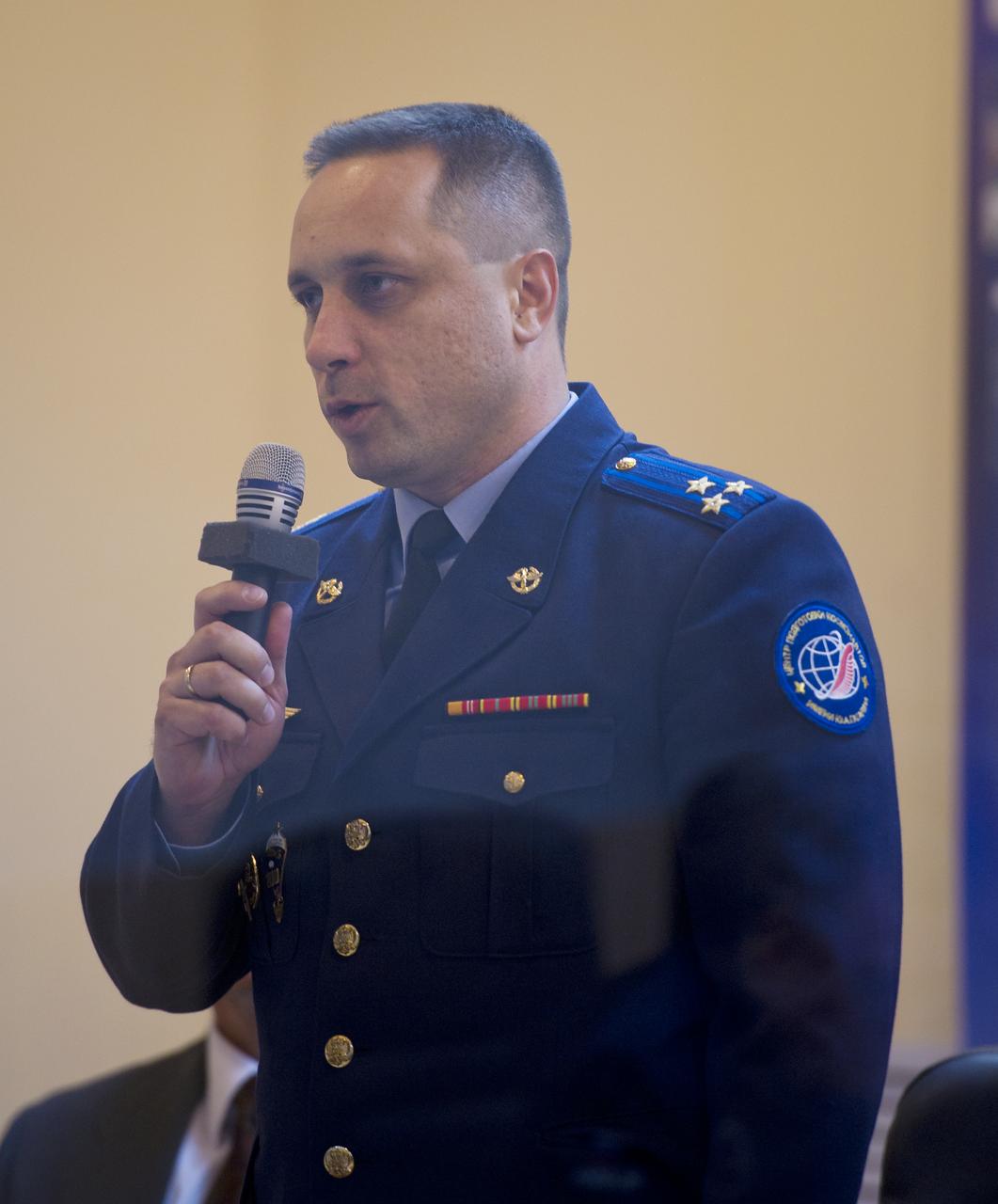
Expedition 29 Soyuz Commander Anton Shkaplerov speaks during the State Commission meeting to approve the Soyuz launch of Expedition 29 to the International Space Station, Saturday, Nov. 12, 2011 at the Cosmonaut Hotel in Baikonur, Kazakhstan. The mission is set to launch November 14 from the Baikonur Cosmodrome. Photo Credit: (NASA/Carla Cioffi)
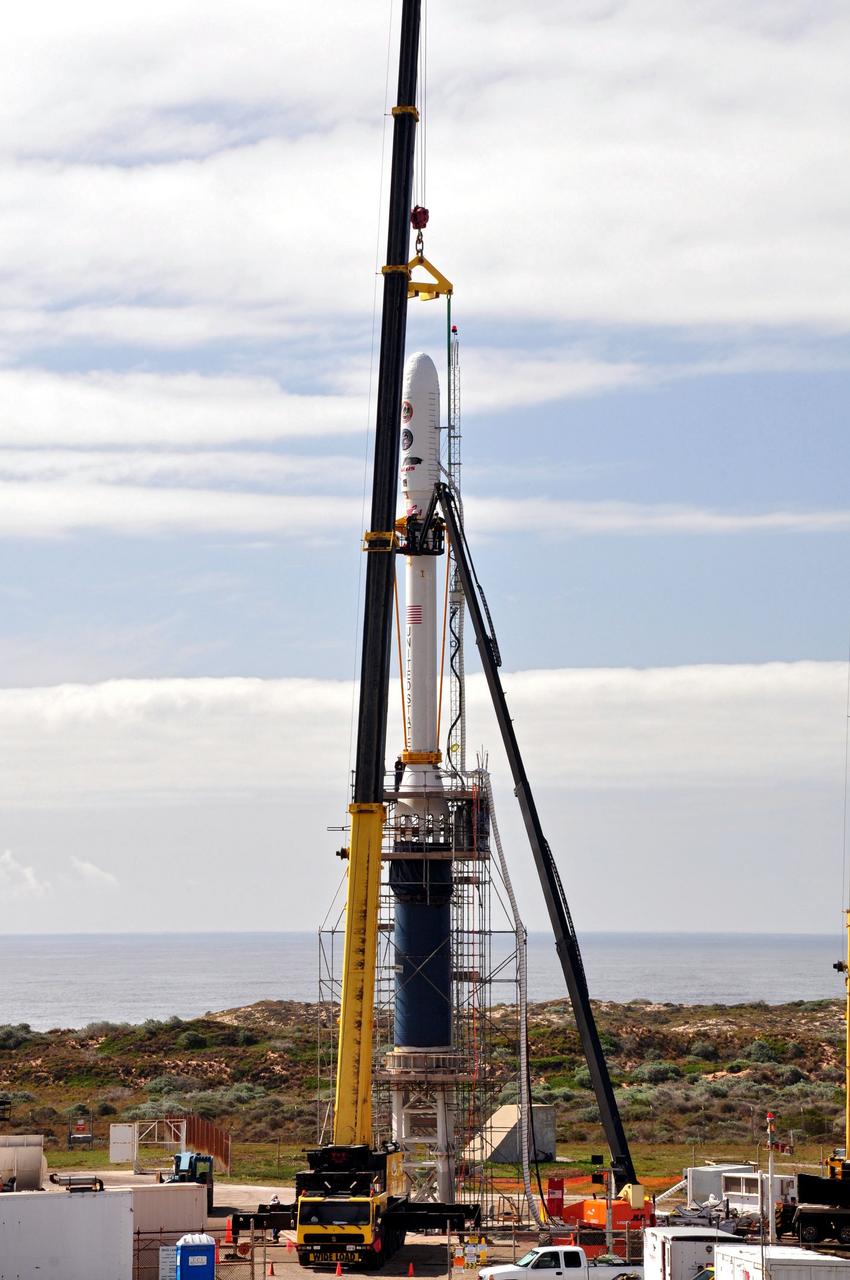
VANDENBERG AIR FORCE BASE, Calif. -- On Space Launch Complex 576-E at Vandenberg Air Force Base in California, workers in a bucket begin the process of removing the lifting fixture and sling from NASA's Glory upper stack after it was secured in place to the Taurus XL rocket's Stage 0. The upper stack consists of Stages 1, 2 and 3 of the Taurus as well as the encapsulated Glory spacecraft. The Orbital Sciences Taurus XL rocket will launch Glory into low Earth orbit. Once Glory reaches orbit, it will collect data on the properties of aerosols and black carbon. It also will help scientists understand how the sun's irradiance affects Earth's climate. Launch is scheduled for 5:09 a.m. EST Feb. 23. For information, visit www.nasa.gov/glory. Photo credit: NASA/Randy Beaudoin, VAFB
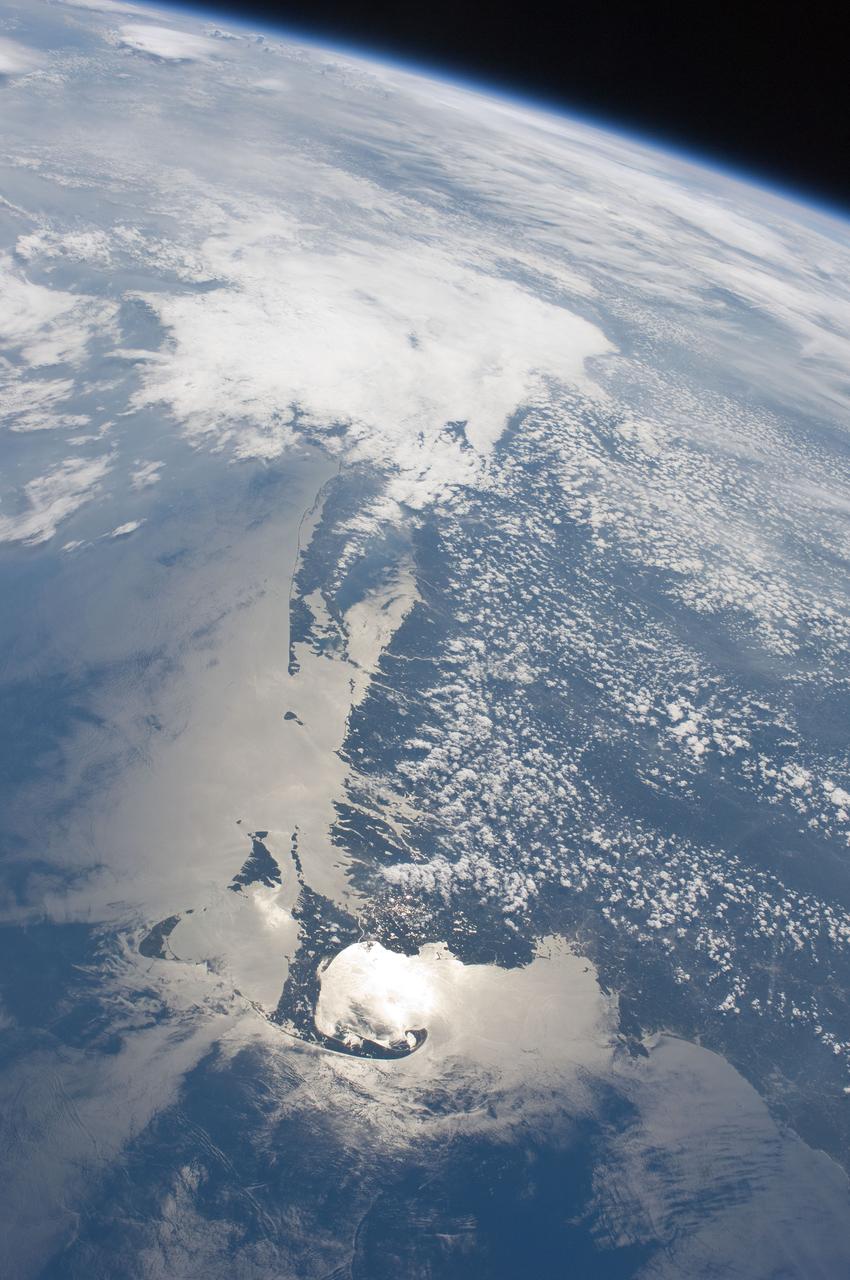
ISS028-E-009979 (27 June 2011) --- The Massachusetts coastline is featured in this image photographed by an Expedition 28 crew member on the International Space Station. The Crew Earth Observations team at NASA Johnson Space Center sends specific ground targets for photography up to the station crew on a daily basis, but sometimes the crew takes imagery on their own of striking displays visible from orbit. One such display, often visible to the ISS crew due to their ability to look outwards at angles between 0 and 90 degrees, is sunglint on the waters of Earth. Sunglint is caused by sunlight reflecting off of a water surface?much as light reflects from a mirror?directly towards the observer. Roughness variations of the water surface scatter the light, blurring the reflection and producing the typical silvery sheen of the sunglint area. The point of maximum sunglint is centered within Cape Cod Bay, the body of water partially enclosed by the ?hook? of Cape Cod in Massachusetts (bottom). Cape Cod was formally designated a National Seashore in 1966. Sunglint off the water provides sharp contrast with the coastline and the nearby islands of Martha?s Vineyard and Nantucket (lower left), both popular destinations for tourists and summer residents. To the north, rocky Cape Ann extends out into the Atlantic Ocean; the border with New Hampshire is located approximately 30 kilometers up the coast. Further to the west, the eastern half of Long Island, New York is visible emerging from extensive cloud cover over the mid-Atlantic and Midwestern States. Persistent storm tracks had been contributing to record flooding along rivers in the Midwest at the time this image was taken in late June 2011. Thin blue layers of the atmosphere, contrasted against the darkness of space, are visible extending along the Earth?s curvature at top.

American Geophysical Union 'AGU' Fall Meeting in San Francisco Moscone Center, California. NASA Ames Hyperwall exhibit booth demonstration.
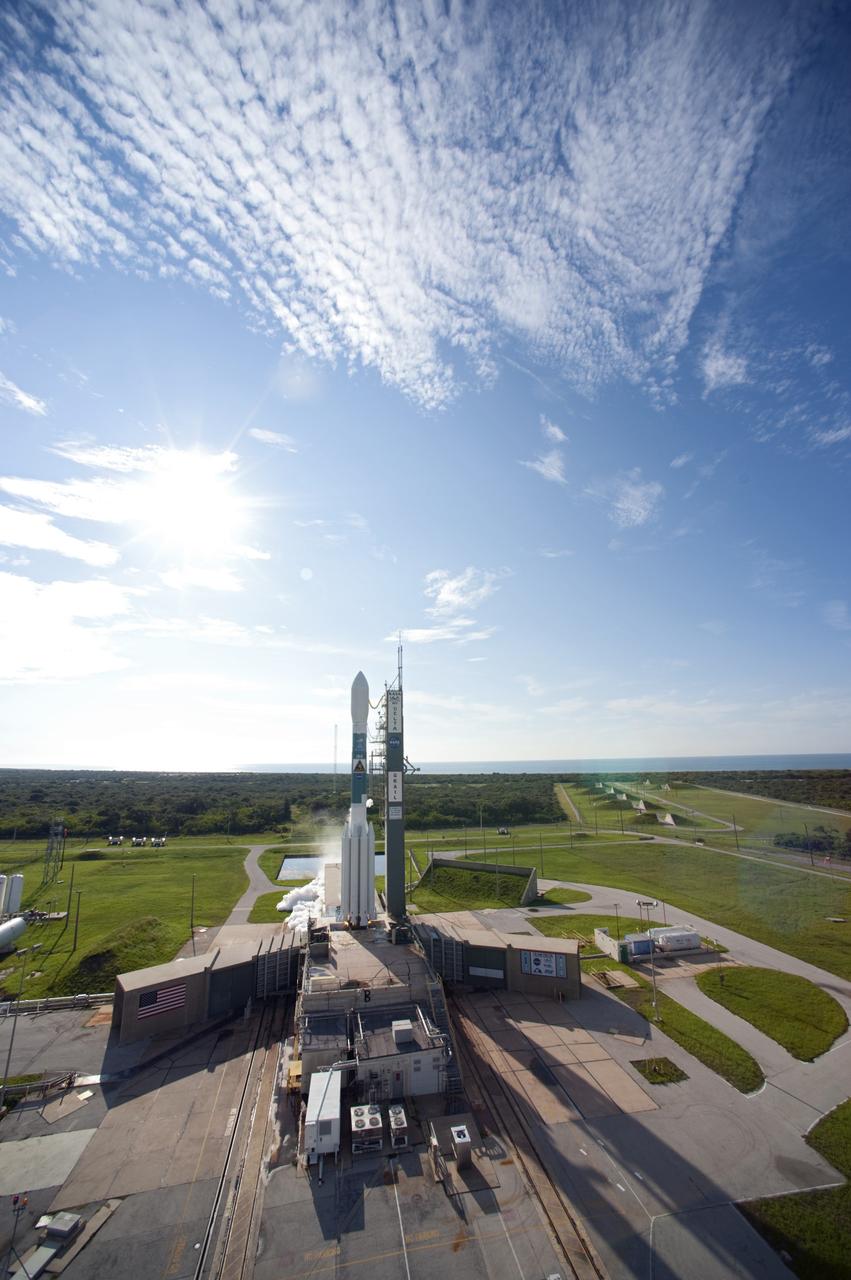
CAPE CANAVERAL, Fla. – Under a blue sky, engine ignition begins liftoff of the United Launch Alliance Delta II Heavy rocket carrying NASA’s twin Gravity Recovery and Interior Laboratory (GRAIL) mission off Space Launch Complex 17B on Cape Canaveral Air Force Station in Florida. The spacecraft launched at 9:08:52 a.m. EDT Sept. 10. GRAIL-A will separate from the second stage of the rocket at about one hour, 21 minutes after liftoff, followed by GRAIL-B at 90 minutes after launch. The spacecraft are embarking on a three-month journey to reach the moon. GRAIL will fly twin spacecraft in tandem around the moon to precisely measure and map variations in the moon's gravitational field. The mission will provide the most accurate global gravity field to date for any planet, including Earth. This detailed information will reveal differences in the density of the moon's crust and mantle and will help answer fundamental questions about the moon's internal structure, thermal evolution, and history of collisions with asteroids. The aim is to map the moon's gravity field so completely that future moon vehicles can safely navigate anywhere on the moon’s surface. For more information, visit http://www.nasa.gov/grail. Photo credit: NASA/Sandra Joseph and Don Kight
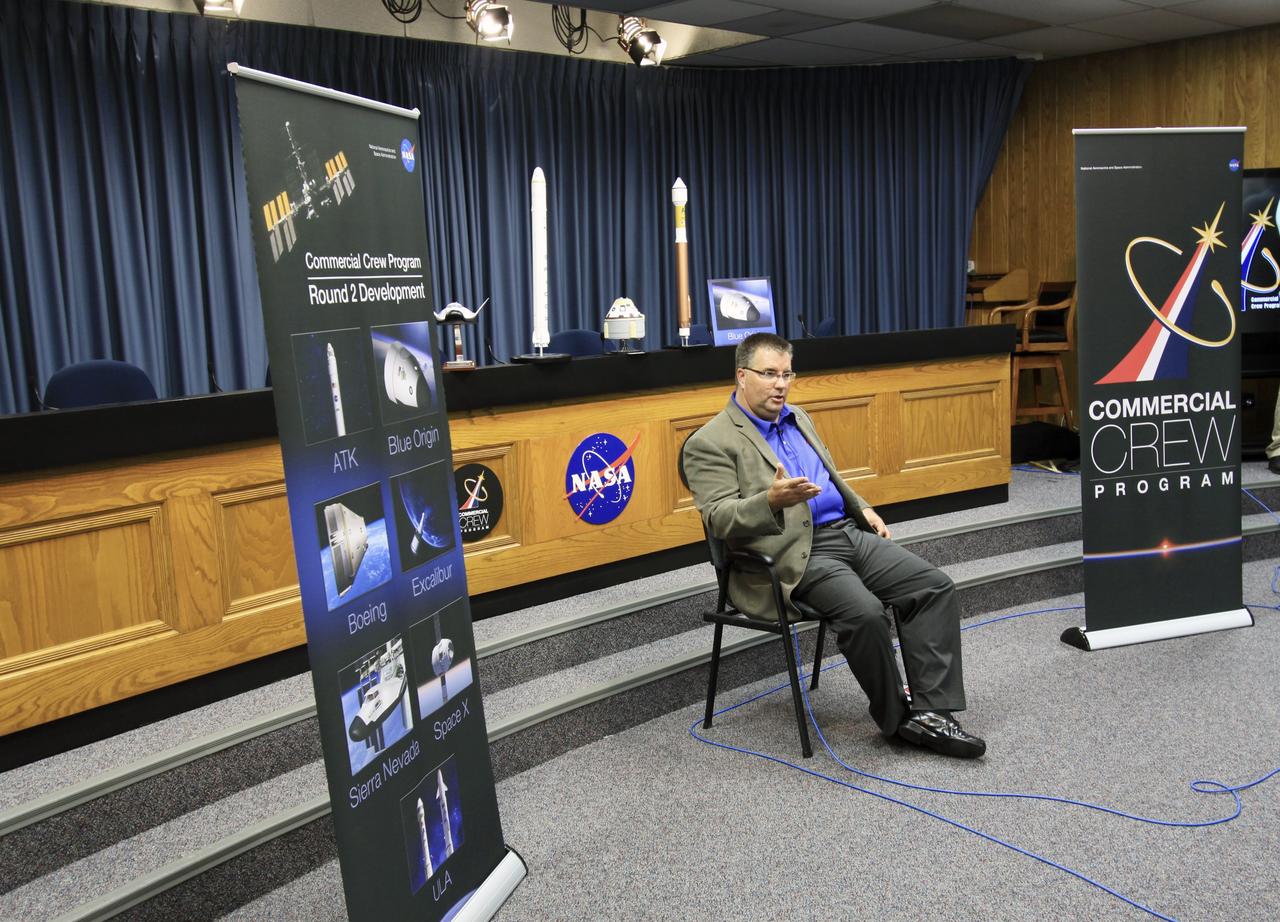
CAPE CANAVERAL, Fla. -- Ed Mango, program manager for NASA's Commercial Crew Program (CCP), updates media on the progress of Commercial Crew Development Round 2 (CCDev2) activities in which seven aerospace companies are maturing launch vehicle and spacecraft systems designed to take astronauts to the International Space Station. The goal of the program is to drive down the cost of space travel as well as open up space to more people than ever before by balancing industry’s own innovative capabilities with NASA's 50 years of human spaceflight experience. Seven aerospace companies are maturing launch vehicle and spacecraft designs under CCDev2, including Alliant Techsystems Inc. (ATK) of Promontory, Utah, Blue Origin of Kent, Wash., The Boeing Co., of Houston, Excalibur Almaz Inc. of Houston, Sierra Nevada Corp. of Louisville, Colo., Space Exploration Technologies (SpaceX) of Hawthorne, Calif., and United Launch Alliance (ULA) of Centennial, Colo. For more information, visit www.nasa.gov/exploration/commercial Photo credit: Jim Grossmann
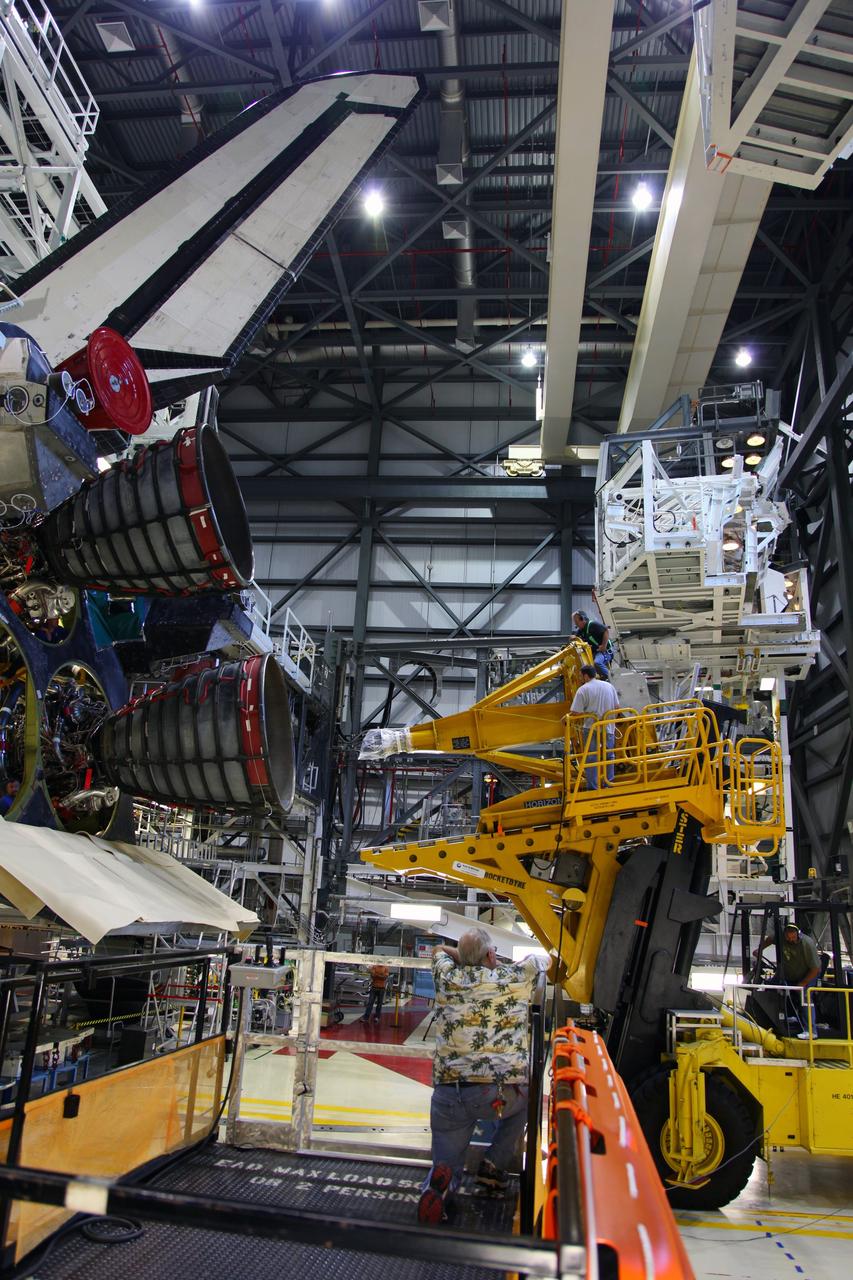
CAPE CANAVERAL, Fla. -- In Orbiter Processing Facility-2 at NASA’s Kennedy Space Center in Florida, a technician moves a Hyster forklift toward Engine #3 on space shuttle Atlantis. The forklift will be used to remove the engine and transport it to the Engine Shop for possible future use. Each of the three space shuttle main engines is 14 feet long and weighs 7,800 pounds. Removal of the space shuttle main engines is part of the Transition and Retirement work that is being performed in order to prepare Atlantis for eventual display at the Kennedy Space Center Visitor Complex in Florida. Photo credit: Frankie Martin
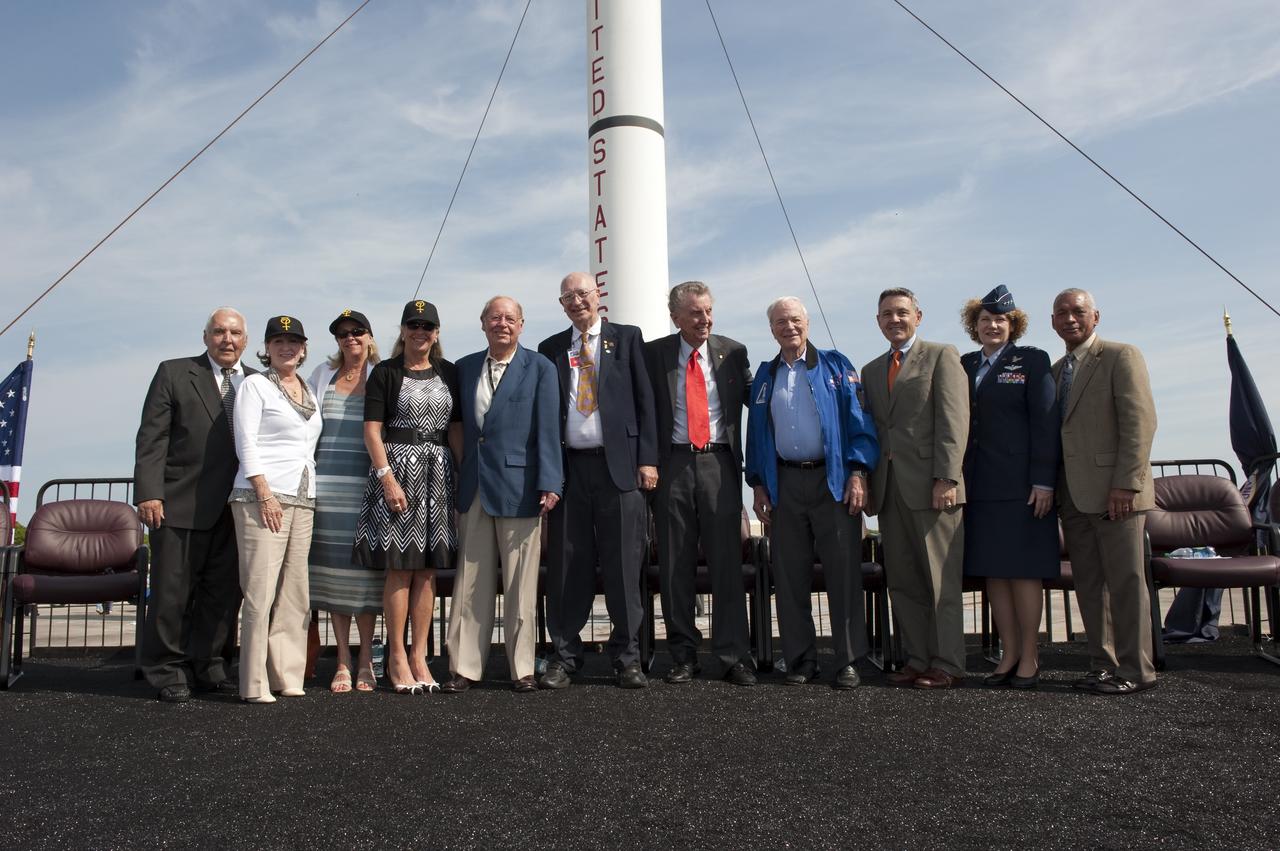
CAPE CANAVERAL, Fla. -- Program participants pose for a group photo in front of a replica of a Mercury-Redstone rocket during a celebration at Complex 5/6 on Cape Canaveral Air Force Station in Florida. From left are Hugh Harris, former director of Public Affairs at Kennedy Space Center; Alice Wackermann, Julie Jenkins and Laura Churchley, daughters of astronaut Alan Shepard; Jack King, former chief, Public Information Office, Marshall Space Flight Center; Bob Moser, former chief test conductor for the Mercury-Redstone launches; NBC reporter Jay Barbree; Mercury astronaut Scott Carpenter; Kennedy Space Center Director Bob Cabana; Lieutenant General Susan J. Helms, commander of the 14th Air Force and former astronaut; and NASA Administrator Charlie Bolden. The celebration was held at the launch site of the first U.S. manned spaceflight May 5, 1961, to mark the 50th anniversary of the flight. Fifty years ago, astronaut Alan Shepard lifted off inside the Mercury capsule, "Freedom 7," atop an 82-foot-tall Mercury-Redstone rocket at 9:34 a.m. EST, sending him on a remarkably successful, 15-minute suborbital flight. The event was attended by more than 200 workers from the original Mercury program and included a re-creation of Shepard's flight and recovery, as well as a tribute to his contributions as a moonwalker on the Apollo 14 lunar mission. For more information, visit www.nasa.gov/topics/history/milestones/index.html. Photo credit: NASA/Kim Shiflett
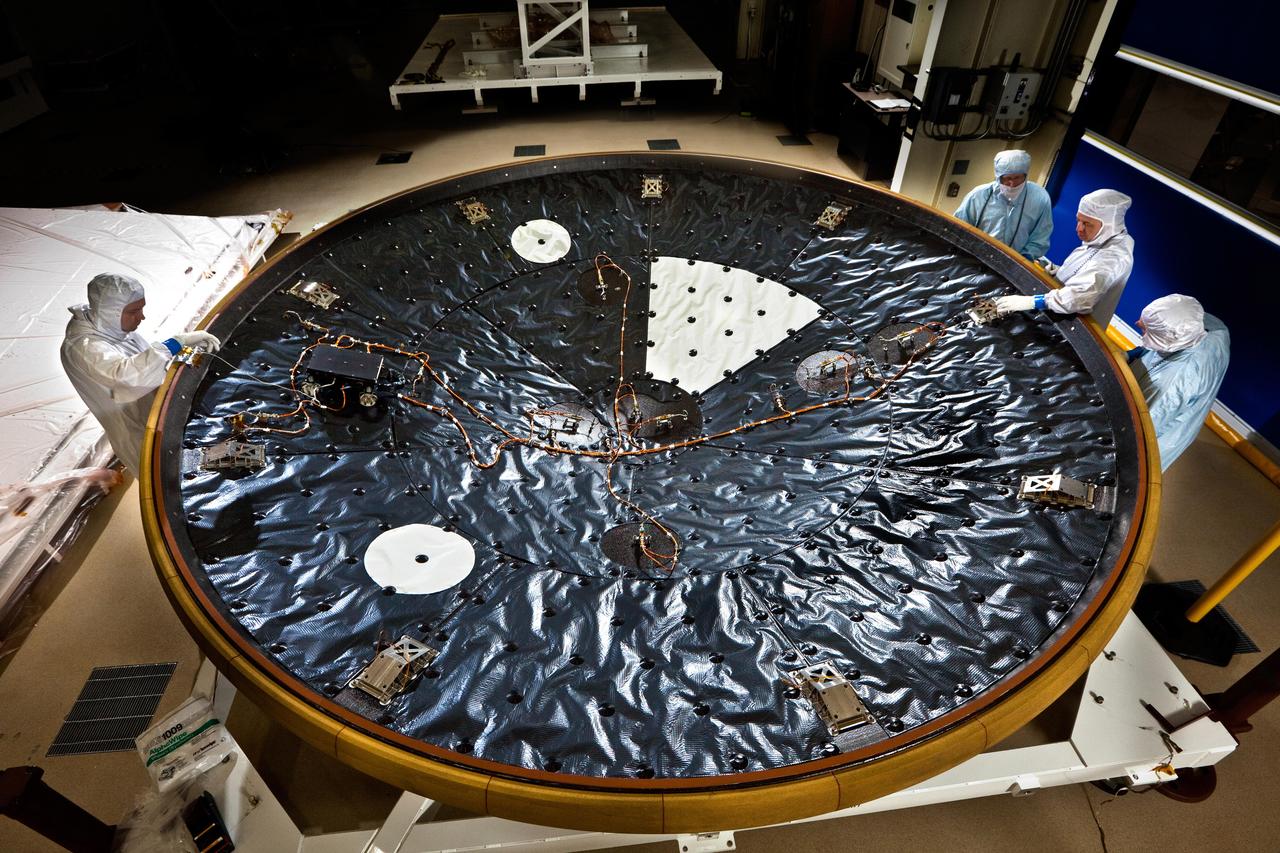
The heat shield for NASA Mars Science Laboratory is the largest ever built for a planetary mission. This image shows the heat shield being prepared at Lockheed Martin Space Systems, Denver, in April 2011.
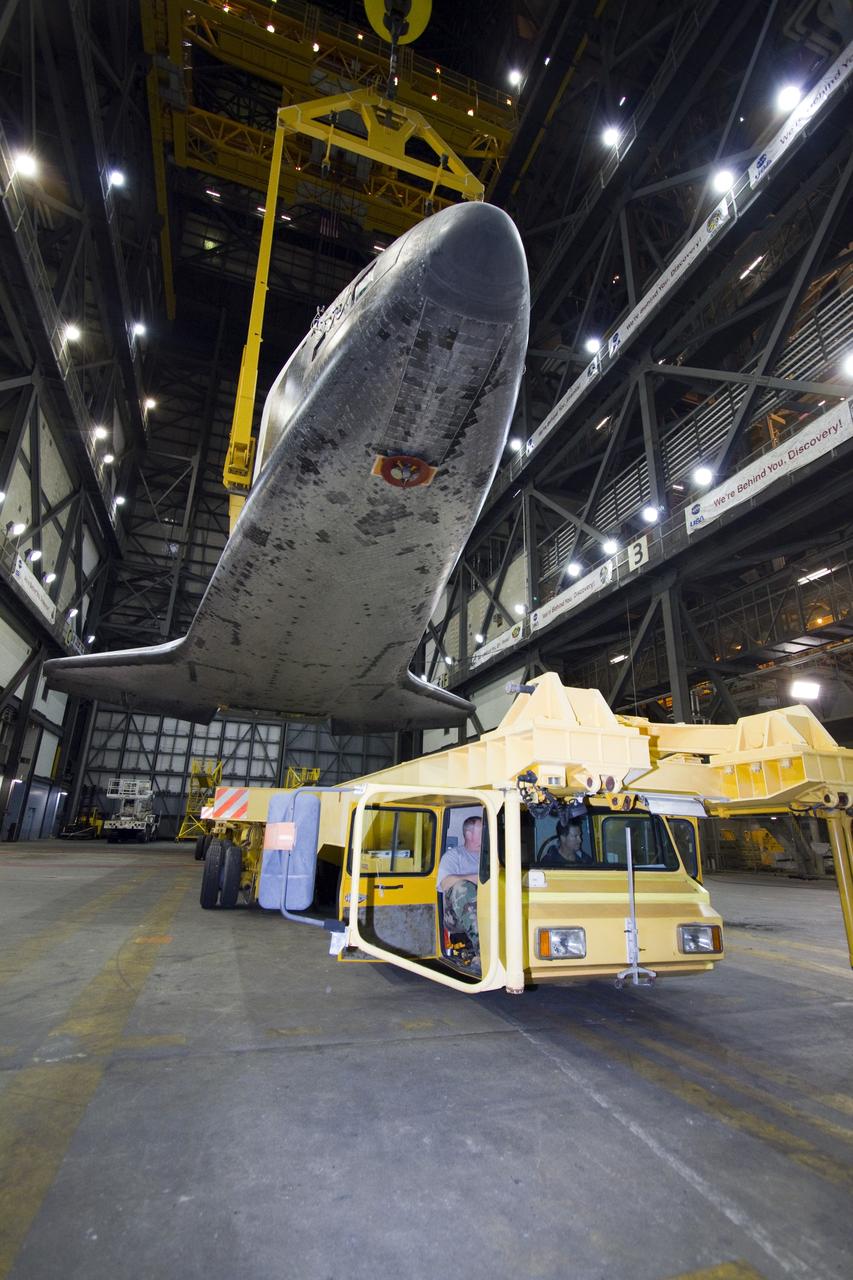
CAPE CANAVERAL, Fla. -- In Vehicle Assembly Building at NASA's Kennedy Space Center in Florida, shuttle Endeavour is suspended above the transfer aisle. The spacecraft will be lifted into a vertical position and moved into a high bay where it will be attached to the waiting external fuel tank and solid rocket boosters. Endeavour and its STS-134 crew will deliver the Express Logistics Carrier-3, Alpha Magnetic Spectrometer, a high-pressure gas tank, additional spare parts for Dextre and micrometeoroid debris shields to the International Space Station. Endeavour's final launch is targeted for April 19 at 7:48 p.m. EDT. For more information visit, http://www.nasa.gov/mission_pages/shuttle/shuttlemissions/sts134/index.html. Photo credit: NASA/Jack Pfaller
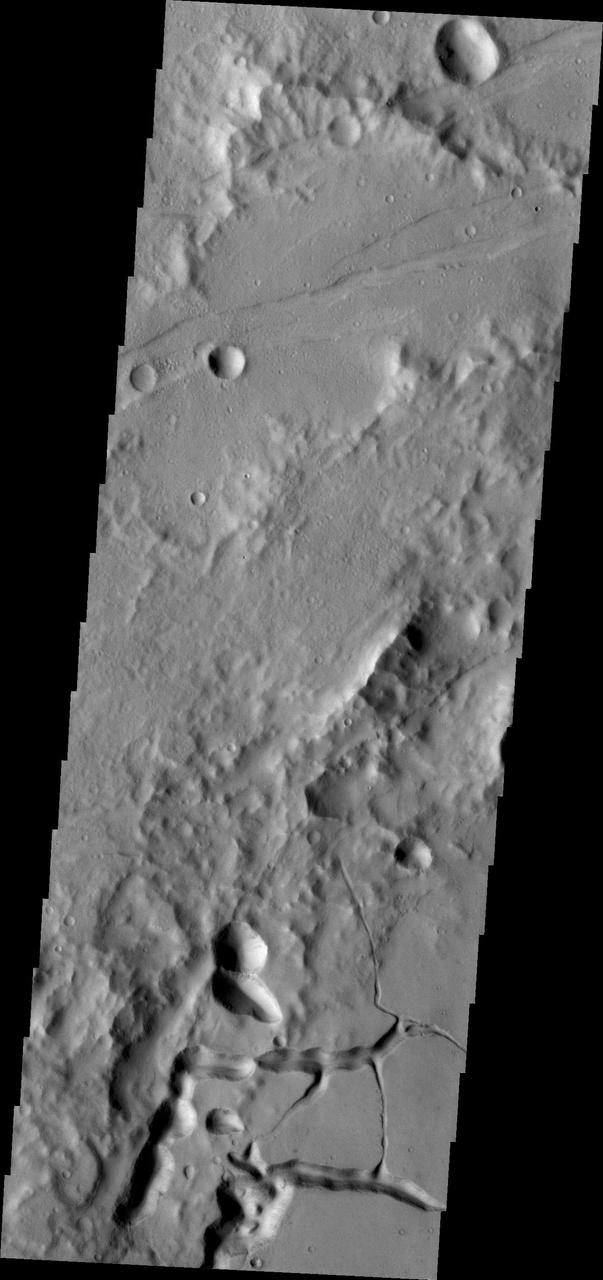
The collapse valleys in this portion of the floor of Bernard Crater were likely caused by the formation of Memnonia Fossae, a system of tectonic graben, that passes through the region. This image was captured by NASA Mars Odyssey.
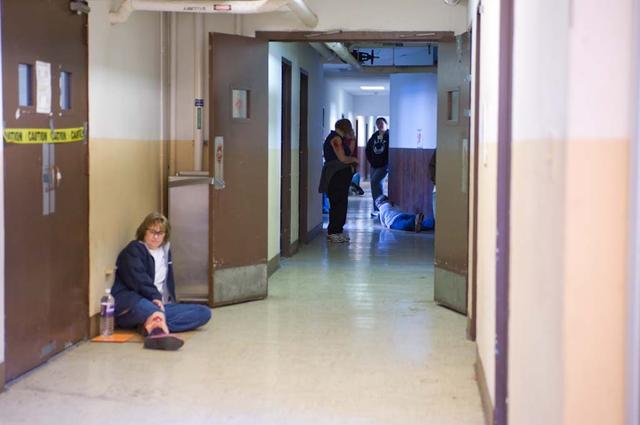
Joint Security, Law enforcement, fire and emergency services exercise
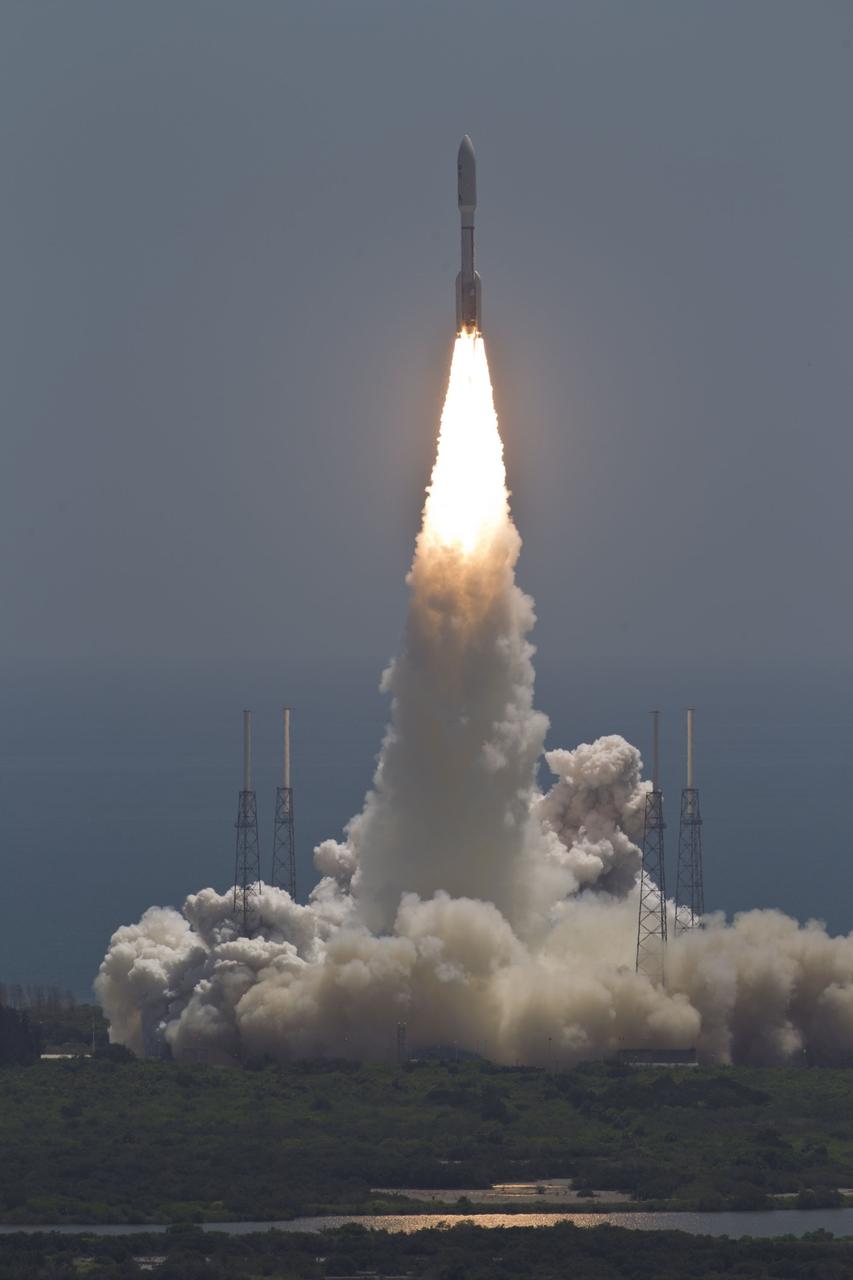
CAPE CANAVERAL, Fla. -- NASA's Juno planetary probe, enclosed in its payload fairing atop a United Launch Alliance Atlas V-551 launch vehicle, rushes above the towers of the lightning protection system at Space Launch Complex 41 on Cape Canaveral Air Force Station in Florida. Liftoff was at 12:25 p.m. EDT Aug. 5. The solar-powered spacecraft will orbit Jupiter's poles 33 times to find out more about the gas giant's origins, structure, atmosphere and magnetosphere and investigate the existence of a solid planetary core. NASA's Jet Propulsion Laboratory, Pasadena, Calif., manages the Juno mission for the principal investigator, Scott Bolton, of Southwest Research Institute in San Antonio. The Juno mission is part of the New Frontiers Program managed at NASA's Marshall Space Flight Center in Huntsville, Ala. Lockheed Martin Space Systems, Denver, built the spacecraft. Launch management for the mission is the responsibility of NASA's Launch Services Program at the Kennedy Space Center in Florida. For more information, visit www.nasa.gov/juno. Photo credit: Courtesy of Scott Andrews
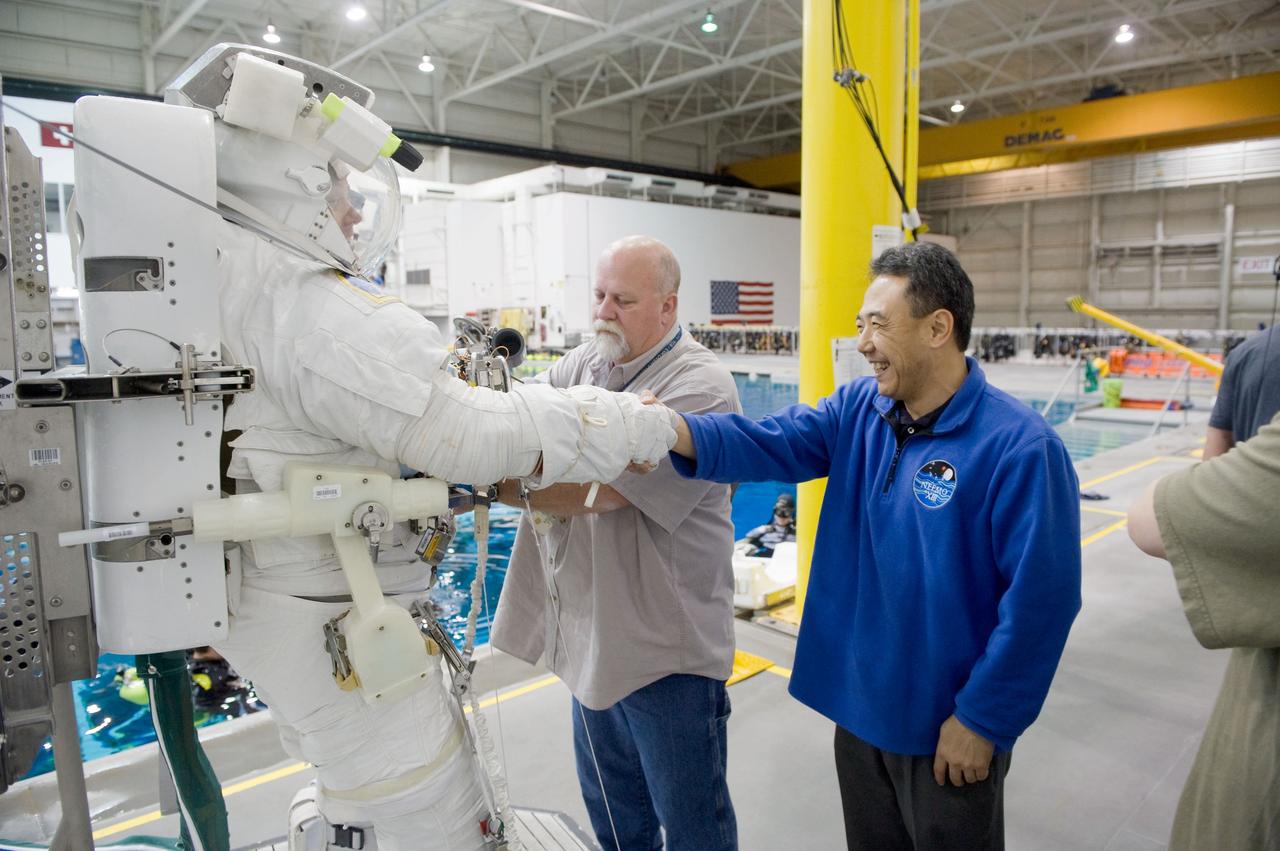
PHOTO DATE: 02-03-11 LOCATION: NBL - Pool Topside SUBJECT: Expedition 28/29 crew members Ron Garan and Mike Fossum during NBL EVA training WORK ORDER: 00281-BS__EXPNBL_02-03-11 PHOTOGRAPHER: BILL STAFFORD
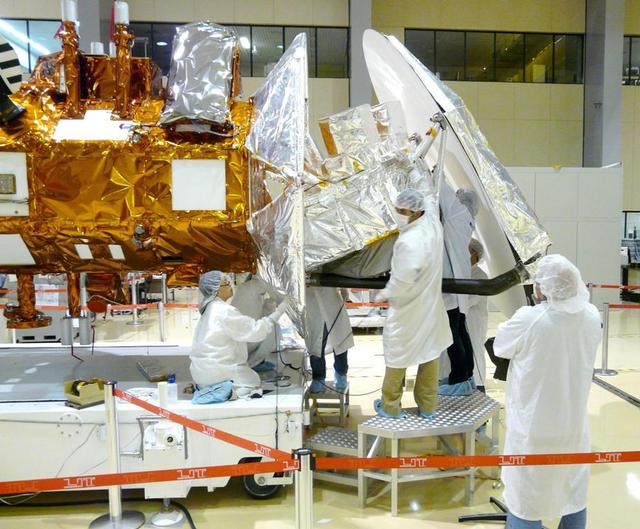
NASA Aquarius instrument thermal blanketing is completed and inspected. In addition, all external surfaces of the satellite are cleaned and inspected with white light to uncover any visible debris.
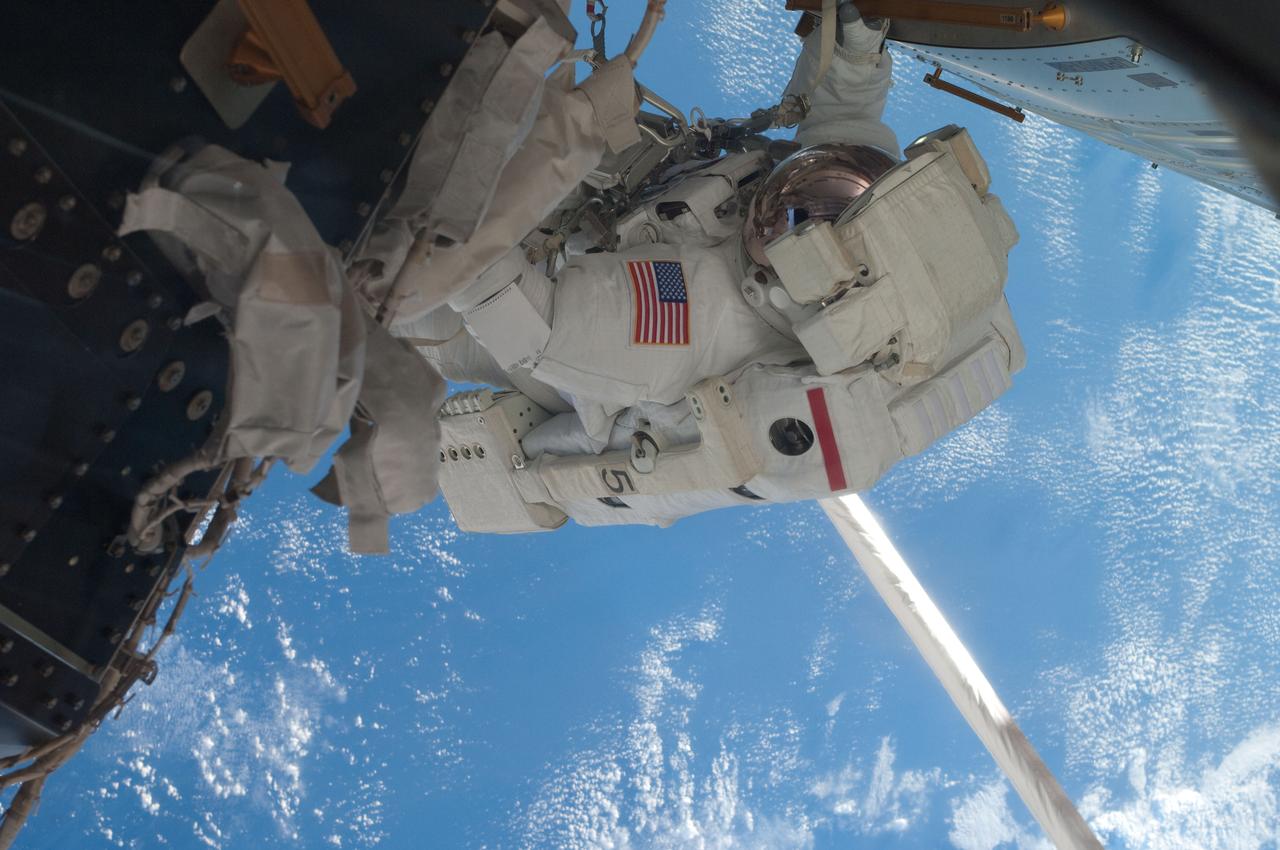
S135-E-007637 (12 July 2011) --- This is a medium close-up view of NASA astronaut Mike Fossum, Expedition 28 flight engineer, as he participates in the July 12 six and a half hour spacewalk on the International Space Station. Photo credit: NASA

The Palette of Praxiteles
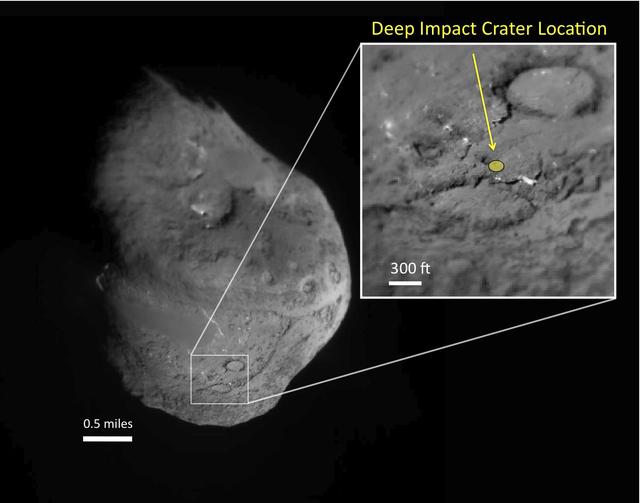
This pair of images shows the area affected by the impactor released by NASA Deep Impact spacecraft in July 2005.

ISS027-E-035707 (21 May 2011) --- Inside the Kibo lab onboard the International Space Station, the six astronauts and cosmonauts making up the Expedition 27 crew pose for a traditional group shot. From left to right (front row) are NASA astronaut Cady Coleman, Russian cosmonaut Dmitry Kondratyev and European Space Agency astronaut Paolo Nespoli; and (back row) NASA astronaut Ron Garan, along with cosmonauts Alexander Samokutyaev and Andrey Borisenko.
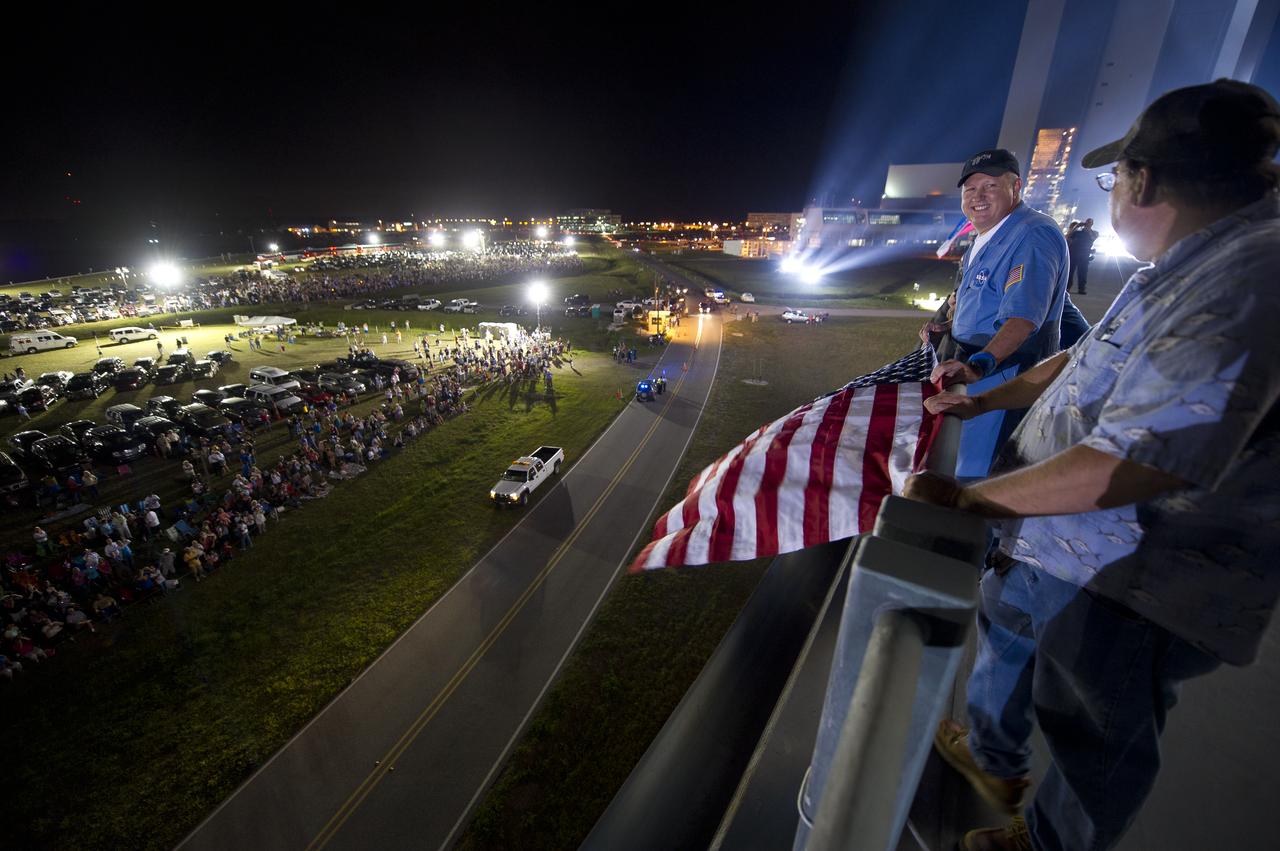
United Space Alliance Senior Space Shuttle Technician Mitchell Bromwell, left, and Randy Meyers of United Space Alliance display an American flag that has been flown all over the world by the U.S. military from atop the Mobile Launch Platform (MLP) as the space shuttle Atlantis begins its journey from High Bay 3 in the Vehicle Assembly Building to Launch Pad 39a for its final flight, Tuesday evening, May 31, 2011, at Kennedy Space Center in Cape Canaveral, Fla. The 3.4-mile trek, known as "rollout," will take about seven hours to complete. Atlantis will carry the Raffaello multipurpose logistics module to deliver supplies, logistics and spare parts to the International Space Station. The launch of STS-135 is targeted for July 8. Photo Credit: (NASA/Bill Ingalls)
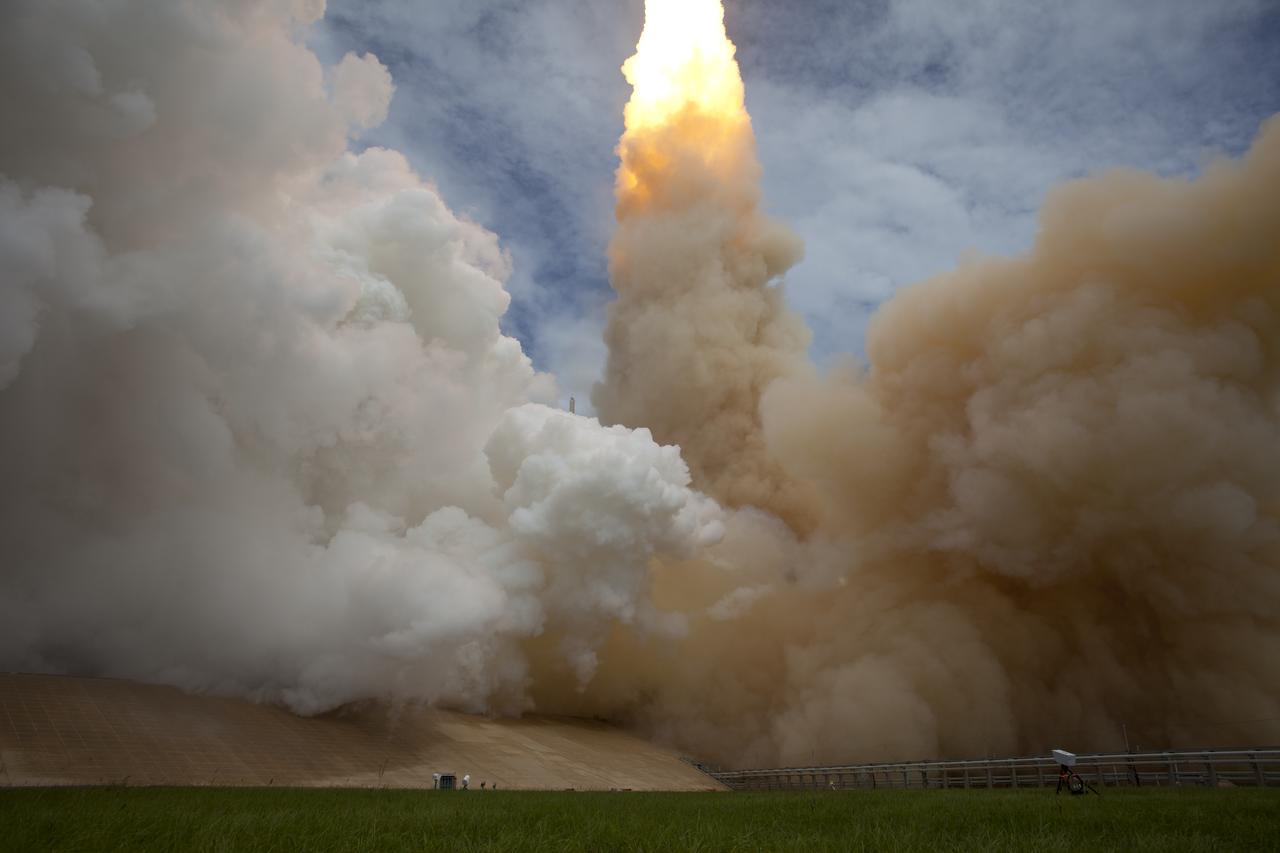
The exhaust plume from space shuttle Atlantis is seen as it launches from pad 39A on Friday, July 8, 2011, at NASA's Kennedy Space Center in Cape Canaveral, Fla. The launch of Atlantis, STS-135, is the final flight of the shuttle program, a 12-day mission to the International Space Station. Photo Credit: (NASA/Bill Ingalls)
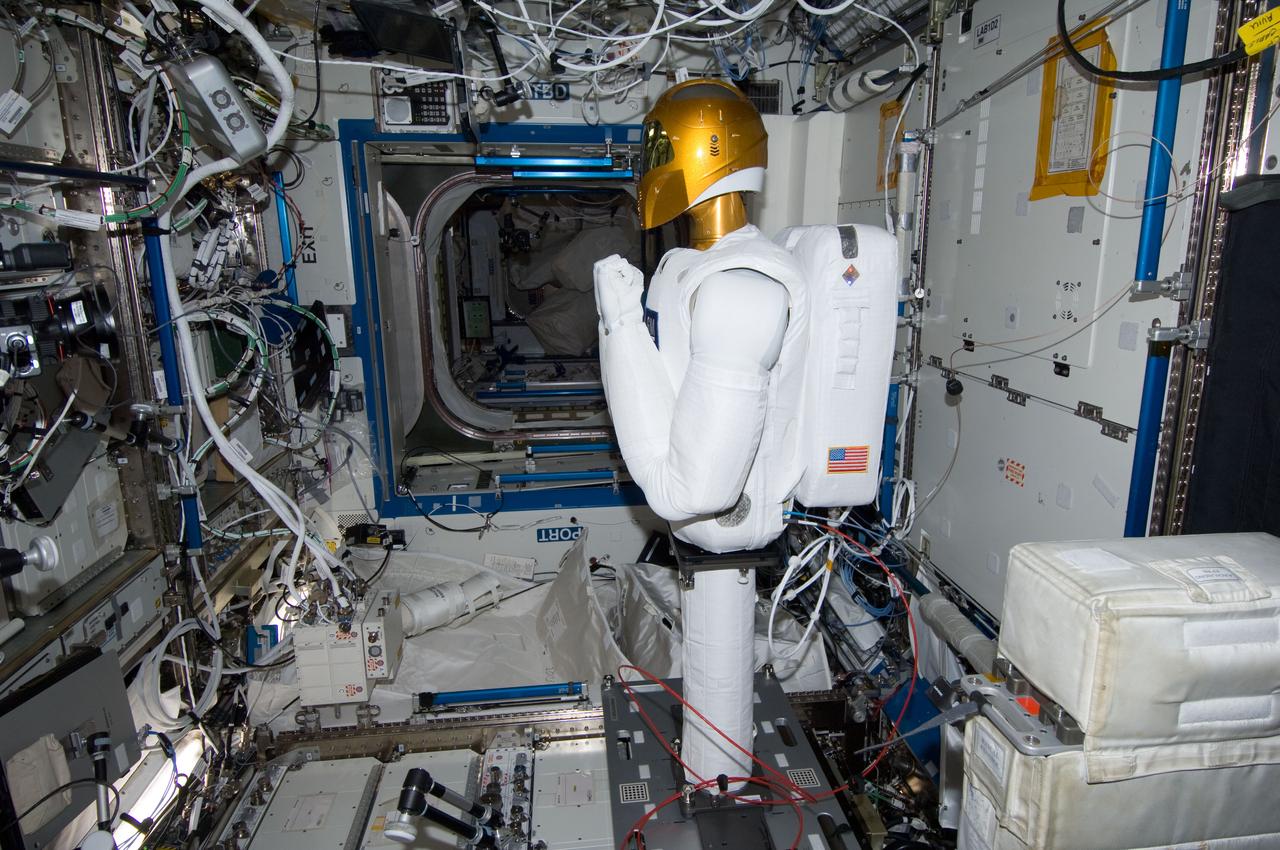
ISS029-E-025807 (13 Oct. 2011) --- Robonaut 2 -- the first dexterous humanoid robot in space – is pictured in the Destiny laboratory of the International Space Station. NASA astronaut Mike Fossum, Expedition 29 commander; and Japan Aerospace Exploration Agency astronaut Satoshi Furukawa, flight engineer, (both out of frame) joined forces to conduct the second onboard tests of R2, which was put in motion for the first time in orbit. After performing a coordinated power-up with the ground, the crew maneuvered each arm joint to determine the differences of the microgravity environment by setting control gains through repetitive motions. They also performed an initial vision checkout of the high-def cameras to verify they are working and in focus. The ground then commanded R2 to move to the stow-position while monitoring the motion.
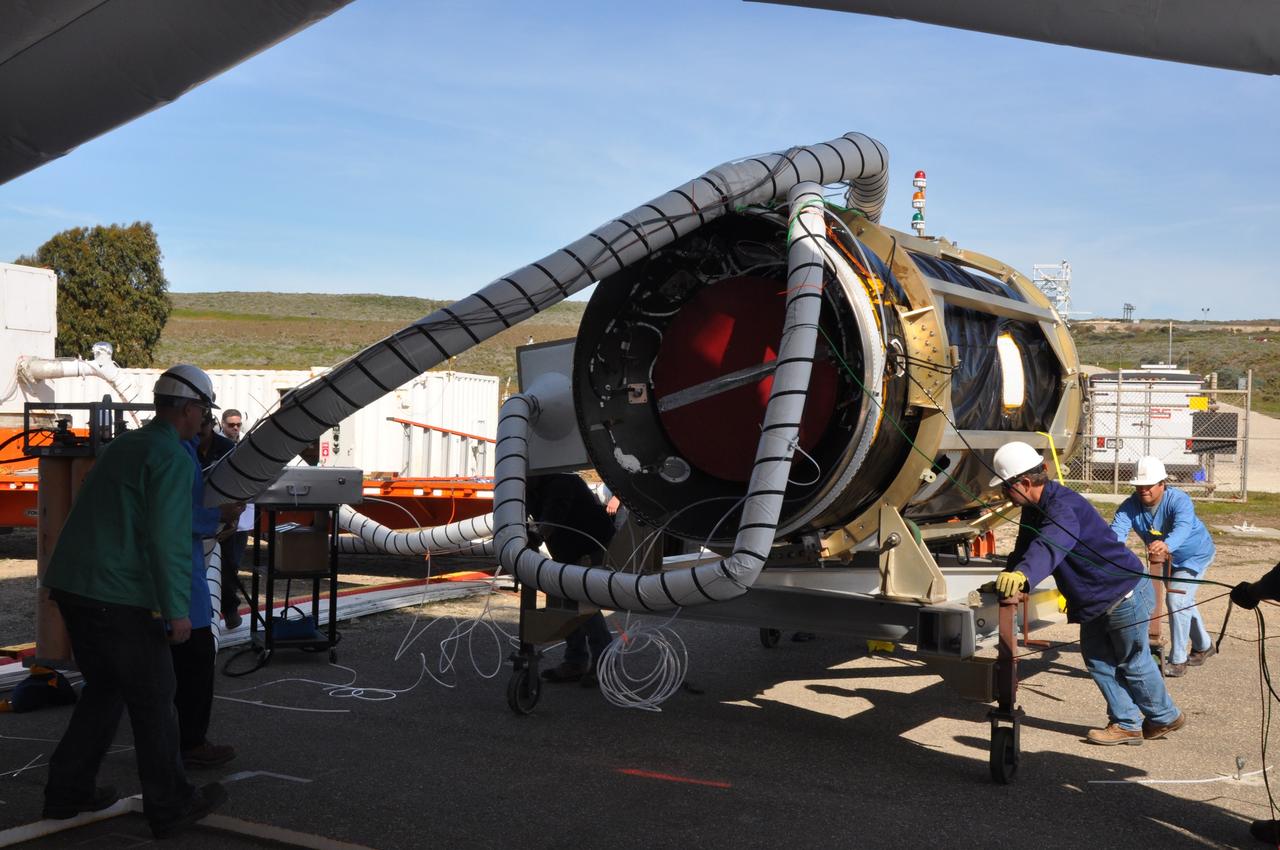
VANDENBERG AIR FORCE BASE, Calif. -- At Space Launch Complex 576-E at Vandenberg Air Force Base in California, workers move NASA's Glory spacecraft, secured on a stationary rail, into a temporary processing tent near the pad where it will be joined with the Taurus XL rocket's third stage. The Orbital Sciences Corp. Taurus XL rocket will carry Glory into low Earth orbit. Once Glory reaches orbit, it will collect data on the properties of aerosols and black carbon. It also will help scientists understand how the sun's irradiance affects Earth's climate. Launch is scheduled for 5:09 a.m. EST Feb. 23. For information, visit www.nasa.gov/glory. Photo credit: NASA/Randy Beaudoin, VAFB
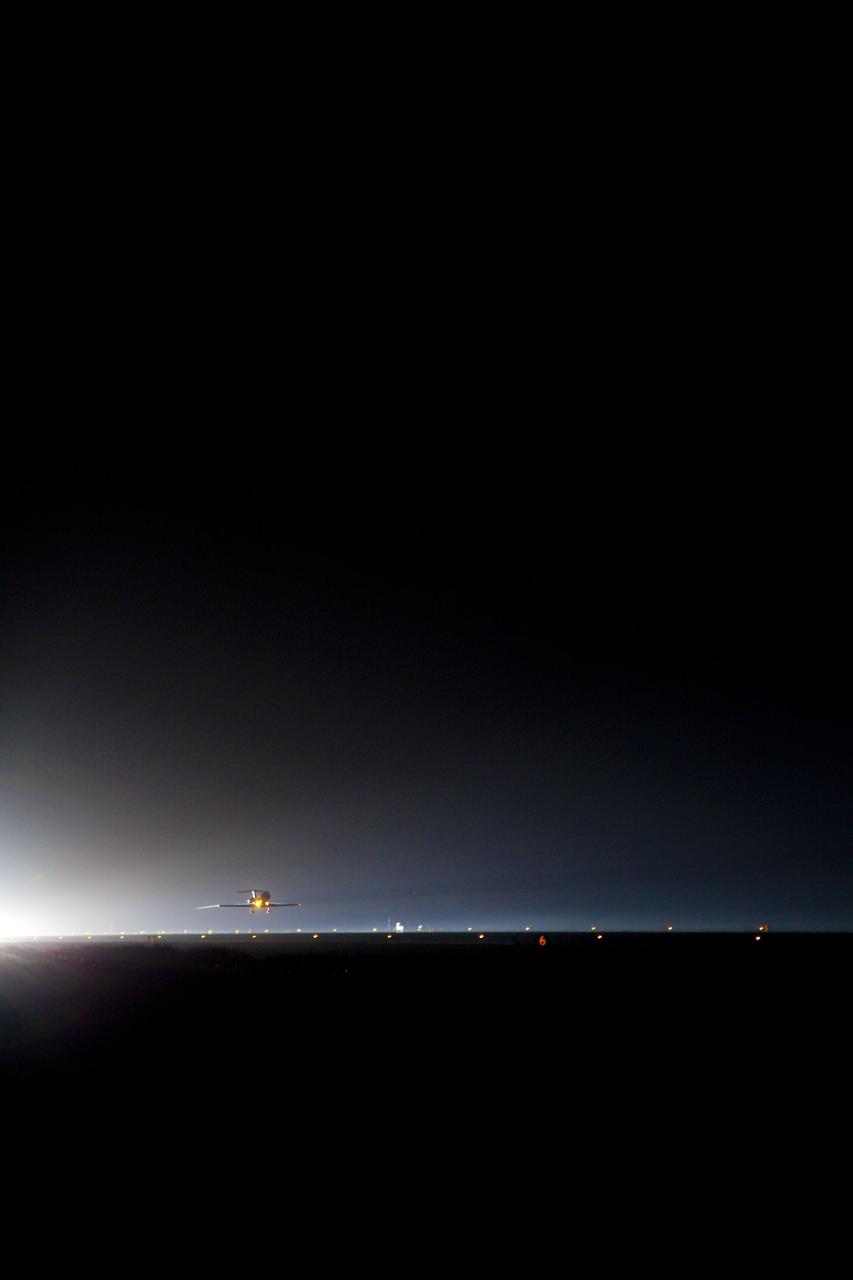
CAPE CANAVERAL, Fla. -- STS-135 Commander Chris Ferguson and Pilot Doug Hurley perform touch-and-go landings aboard a Shuttle Training Aircraft (STA) at the Shuttle Landing Facility at NASA's Kennedy Space Center in Florida. An STA is a Gulfstream II jet that is modified to mimic the shuttle's handling during the final phase of landing. Ferguson and Hurley practice landings as part of standard procedure before space shuttle Atlantis' launch to the International Space Station. Atlantis and its crew are scheduled to lift off at 11:26 a.m. EDT on July 8 to deliver the Raffaello multi-purpose logistics module packed with supplies and spare parts to the station. The STS-135 mission also will fly a system to investigate the potential for robotically refueling existing satellites and return a failed ammonia pump module to help NASA better understand the failure mechanism and improve pump designs for future systems. STS-135 will be the 33rd flight of Atlantis, the 37th shuttle mission to the space station, and the 135th and final mission of NASA's Space Shuttle Program. For more information visit, www.nasa.gov/mission_pages/shuttle/shuttlemissions/sts135/index.html. Photo credit: NASA/Cory Huston
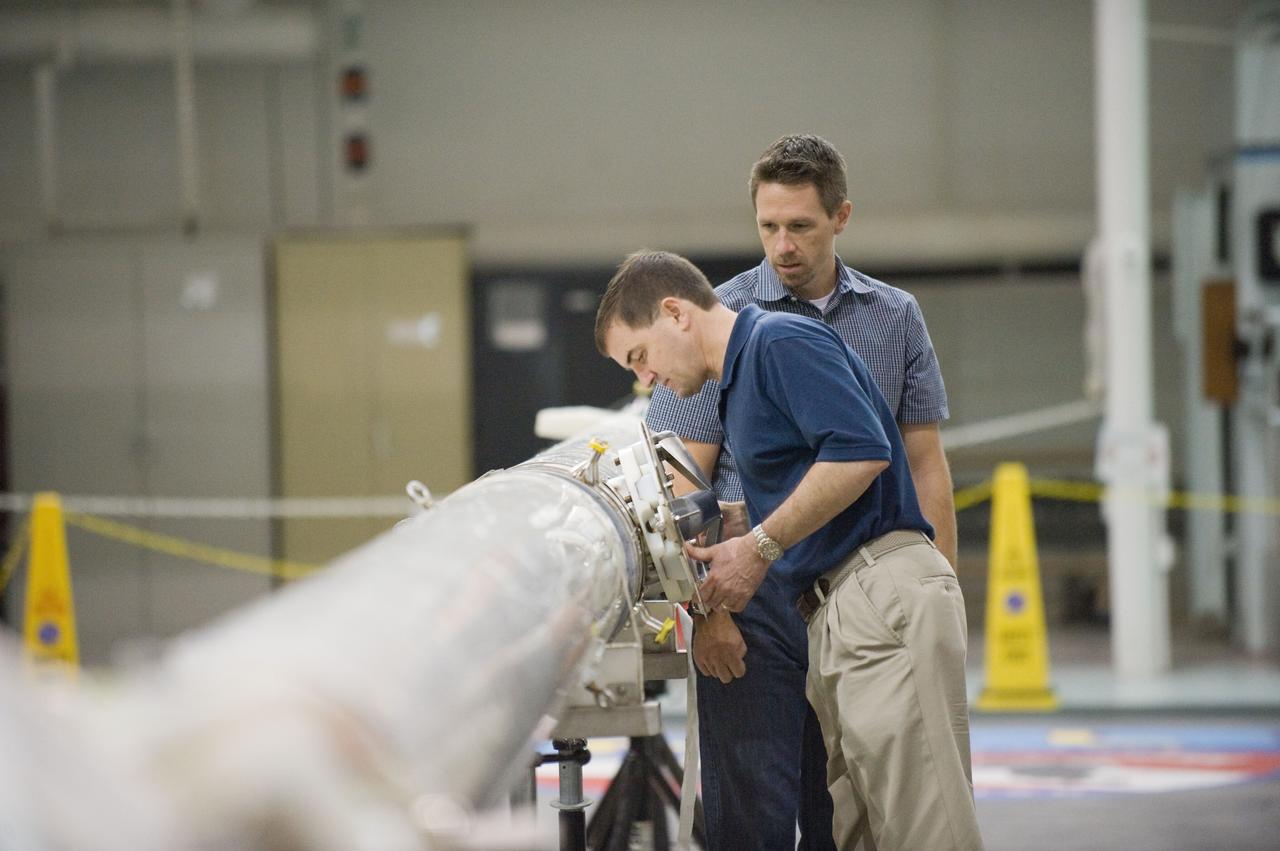
JSC2011-E-029049 (21 March 2011) --- NASA astronaut Rex Walheim (foreground), STS-135 mission specialist, participates in an extravehicular activity (EVA) hardware training session in the Neutral Buoyancy Laboratory (NBL) near NASA's Johnson Space Center. EVA instructor Art Thomason assisted Walheim. STS-135 is planned to be the final mission of the space shuttle program. Photo credit: NASA or National Aeronautics and Space Administration
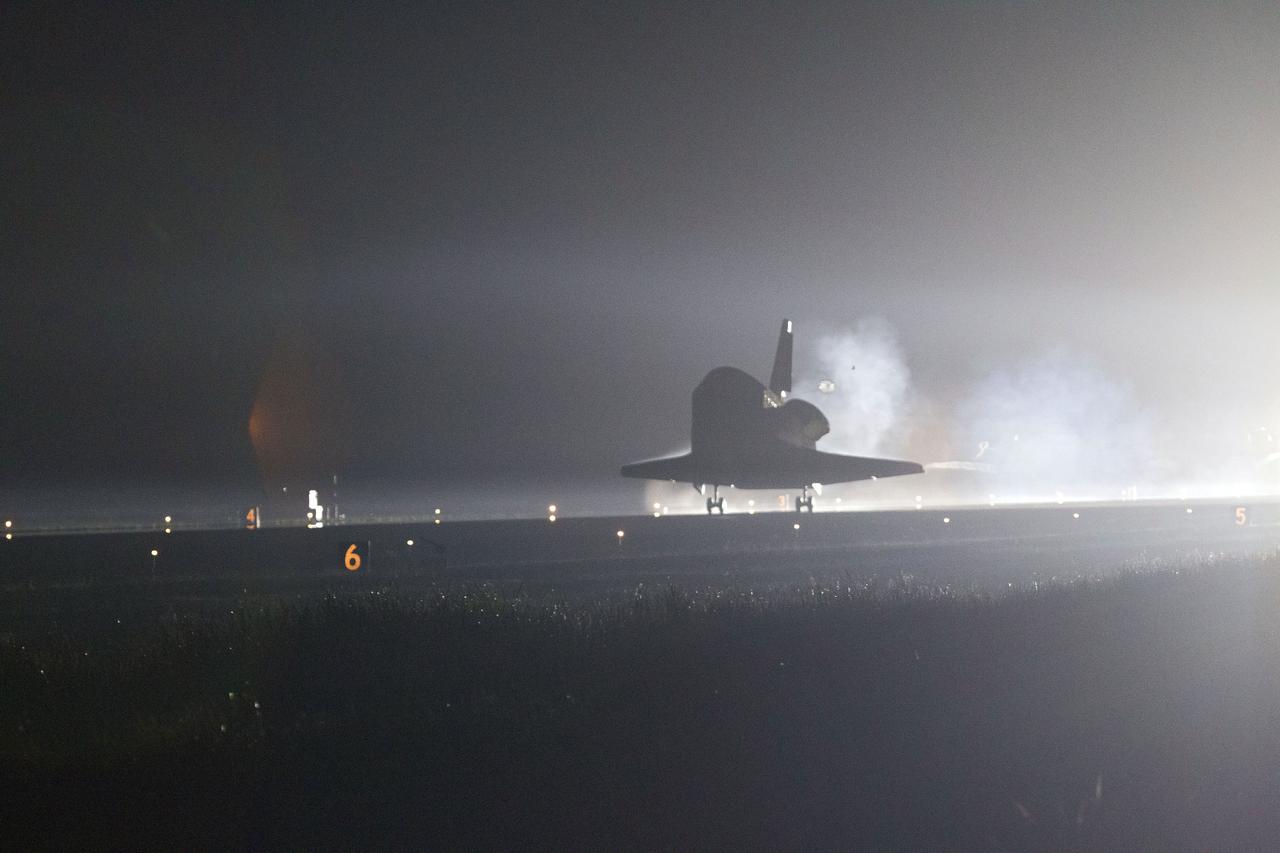
STS134-S-068 (1 June 2011) --- Space shuttle Endeavour lands on Runway 15 on the Shuttle Landing Facility at NASA's Kennedy Space Center in Florida for the final time. Main gear touchdown was at 2:34:51 a.m. (EDT) on June 1, 2011, followed by nose gear touchdown at 2:35:04 a.m., and wheelstop at 2:35:36 a.m. Onboard are NASA astronauts Mark Kelly, STS-134 commander; Greg H. Johnson, pilot; Michael Fincke, Andrew Feustel, Greg Chamitoff and European Space Agency astronaut Roberto Vittori, all mission specialists. STS-134 delivered the Alpha Magnetic Spectrometer-2 (AMS) and the Express Logistics Carrier-3 (ELC-3) to the International Space Station. AMS will help researchers understand the origin of the universe and search for evidence of dark matter, strange matter and antimatter from the station. ELC-3 carried spare parts that will sustain station operations once the shuttles are retired from service. STS-134 was the 25th and final flight for Endeavour, which has spent 299 days in space, orbited Earth 4,671 times and traveled 122,883,151 miles. Photo credit: NASA
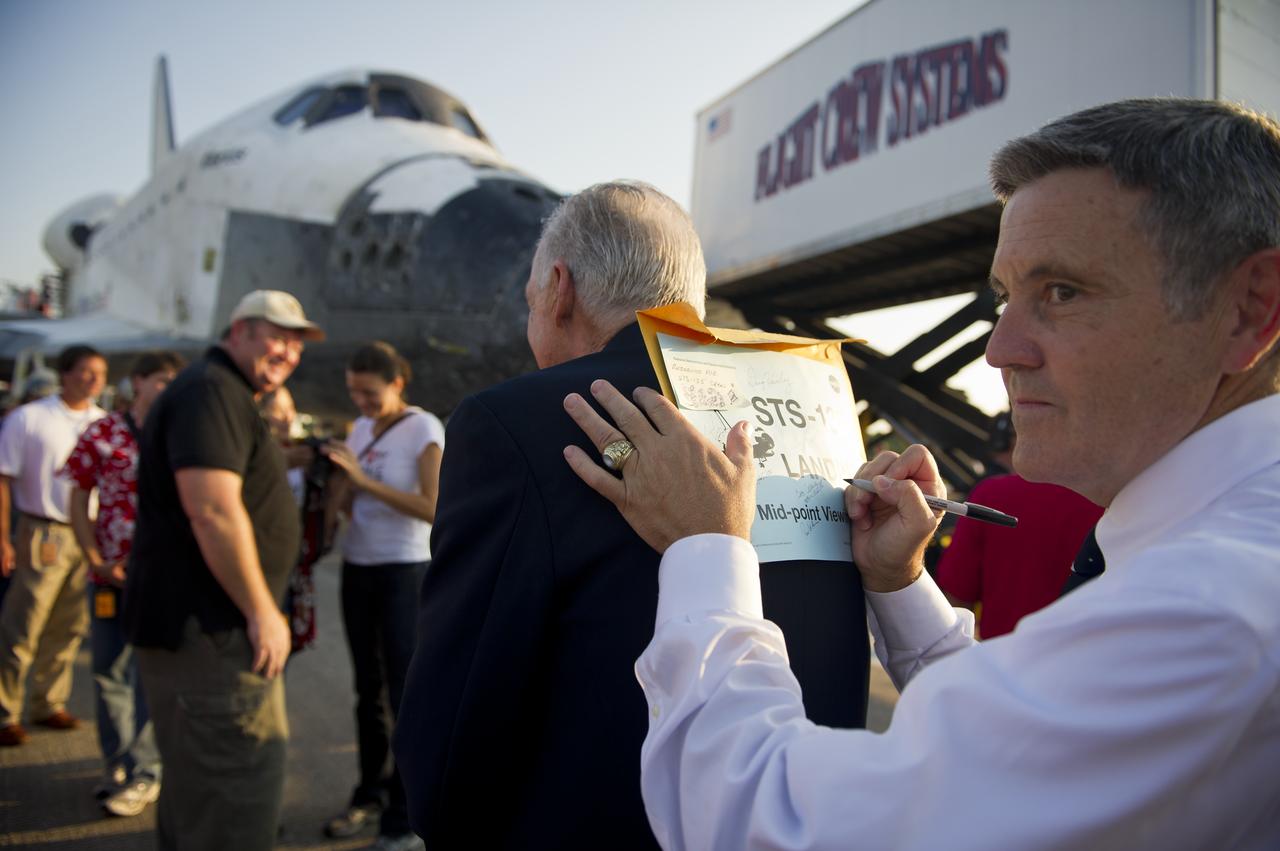
NASA Kennedy Space center Director Robert Cabana sings an STS-135 landing car placard at the Shuttle Landing Facility (SLF) runway at NASA Kennedy Space Center shortly after the space shuttle Atlantis (STS-135) landed, completing its 13-day mission to the International Space Station (ISS) and the final flight of the Space Shuttle Program, early Thursday morning, July 21, 2011, in Cape Canaveral, Fla. Overall, Atlantis spent 307 days in space and traveled nearly 126 million miles during its 33 flights. Atlantis, the fourth orbiter built, launched on its first mission on Oct. 3, 1985. Photo Credit: (NASA/Bill Ingalls)
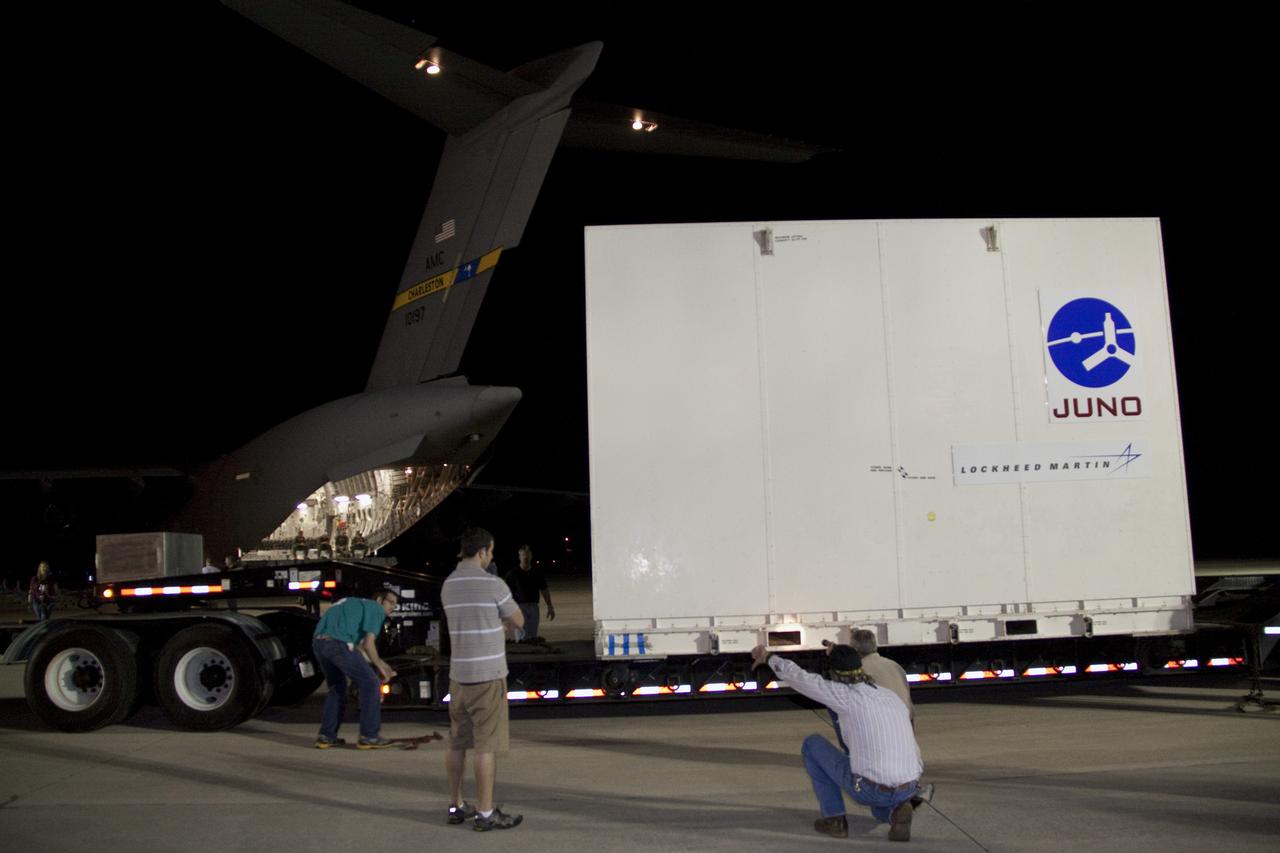
CAPE CANAVERAL, Fla. -- At the Shuttle Landing Facility at NASA's Kennedy Space Center in Florida, workers position the container holding NASA's Juno spacecraft on a truck that will transport it to Astrotech's payload processing facility in Titusville, Fla. to begin final preparations for launch. The solar-powered spacecraft will orbit Jupiter's poles 33 times to find out more about the gas giant's origins, structure, atmosphere and magnetosphere and investigate the existence of a solid planetary core. Juno is scheduled to launch aboard an Atlas V rocket from Cape Canaveral, Fla. Aug. 5. For more information visit, www.nasa.gov/juno. Photo credit: NASA/Jack Pfaller
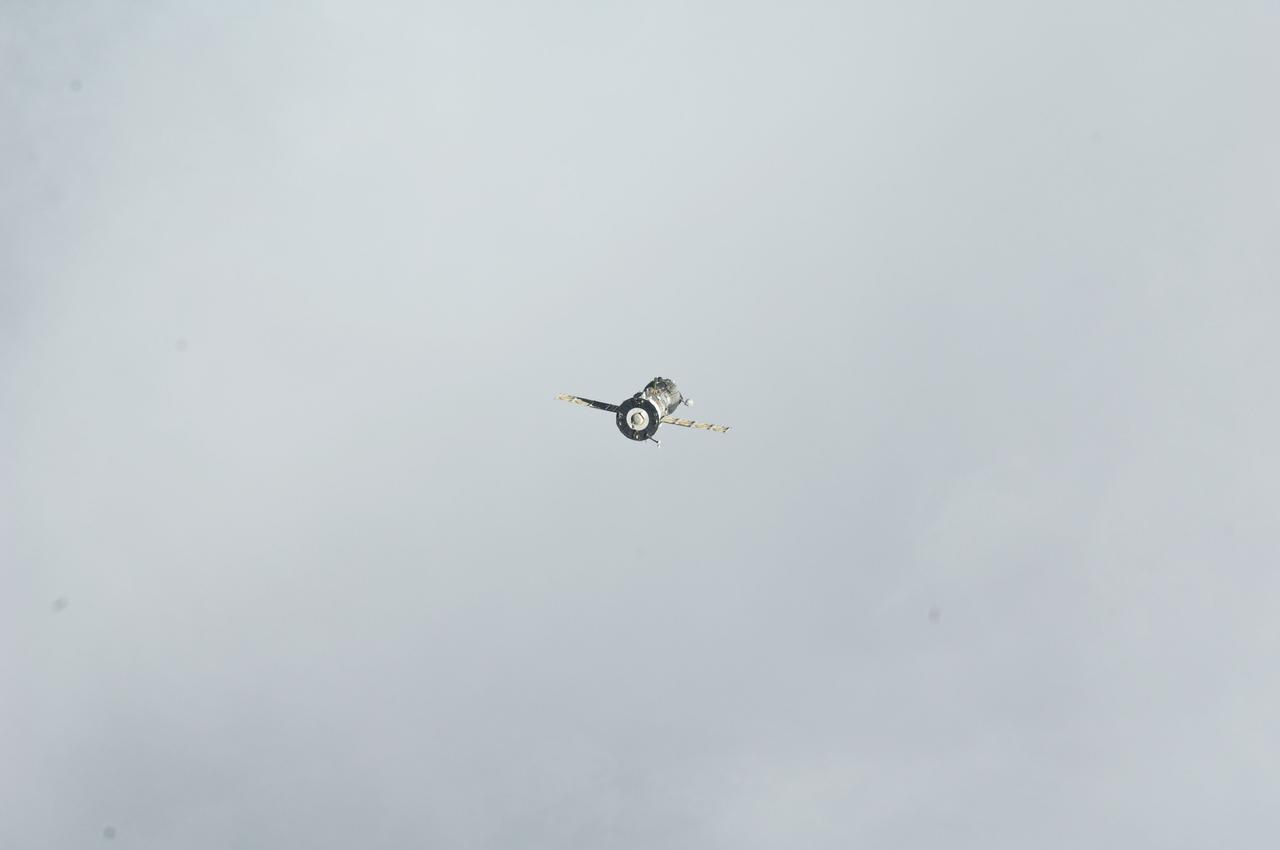
ISS029-E-005030 (16 Sept. 2011) --- Backdropped against a grayish sky, the Soyuz TMA-21 spacecraft departs from the International Space Station and heads toward a landing in a remote area outside the town of Zhezkazgan, Kazakhstan, on Sept. 16, 2011. NASA astronaut Ron Garan, flight engineer, along with Expedition 28 commander Andrey Borisenko and flight engineer Alexander Samokutyaev, both of the Russian Federal Space Agency, are returning from more than five months onboard the International Space Station where they served as members of the Expedition 27 and 28 crews.
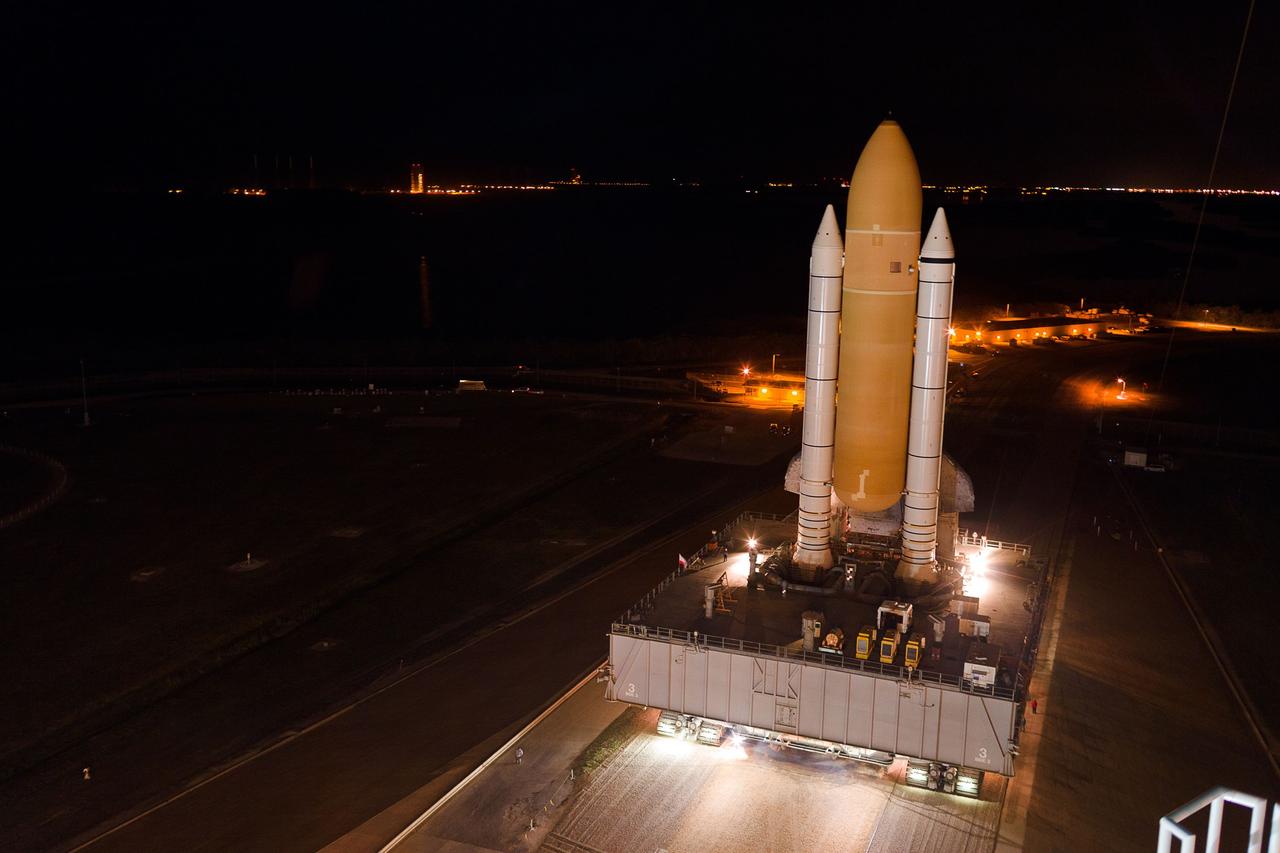
CAPE CANAVERAL, Fla. -- At a slow pace of about 1 mph, space shuttle Atlantis makes its final journey from the Vehicle Assembly Building to Launch Pad 39A at NASA's Kennedy Space Center in Florida. First motion was at 8:42 p.m. EDT. It will take the crawler-transporter about six hours to carry the shuttle, attached to its external fuel tank and solid rocket boosters, to the seaside launch pad. The milestone move, known as "rollout," paves the way for the launch of the STS-135 mission to the International Space Station, targeted for July 8. STS-135 will be the 33rd flight of Atlantis, the 37th shuttle mission to the space station, and the 135th and final mission of NASA's Space Shuttle Program. For more information visit: www.nasa.gov/mission_pages/shuttle/shuttlemissions/sts135/index.html. Photo credit: Courtesy of Scott Andrews/Canon
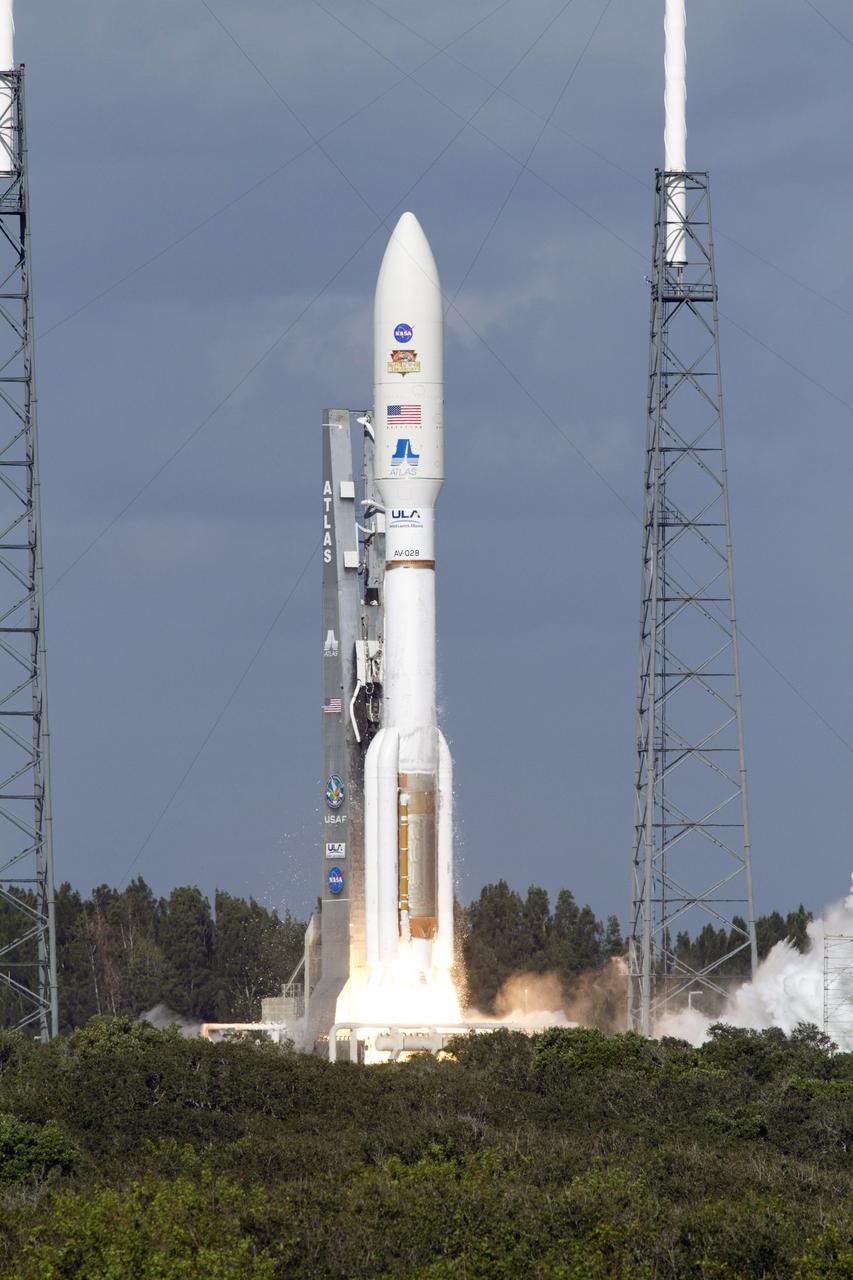
CAPE CANAVERAL, Fla. -- With NASA's Mars Science Laboratory (MSL) spacecraft sealed inside its payload fairing, the United Launch Alliance Atlas V rocket prepares to liftoff from Space Launch Complex-41 on Cape Canaveral Air Force Station in Florida at 10:02 a.m. EST Nov. 26. MSL's components include a car-sized rover, Curiosity, which has 10 science instruments designed to search for signs of life, including methane, and help determine if the gas is from a biological or geological source. For more information, visit http://www.nasa.gov/msl. Photo credit: NASA/George Roberts
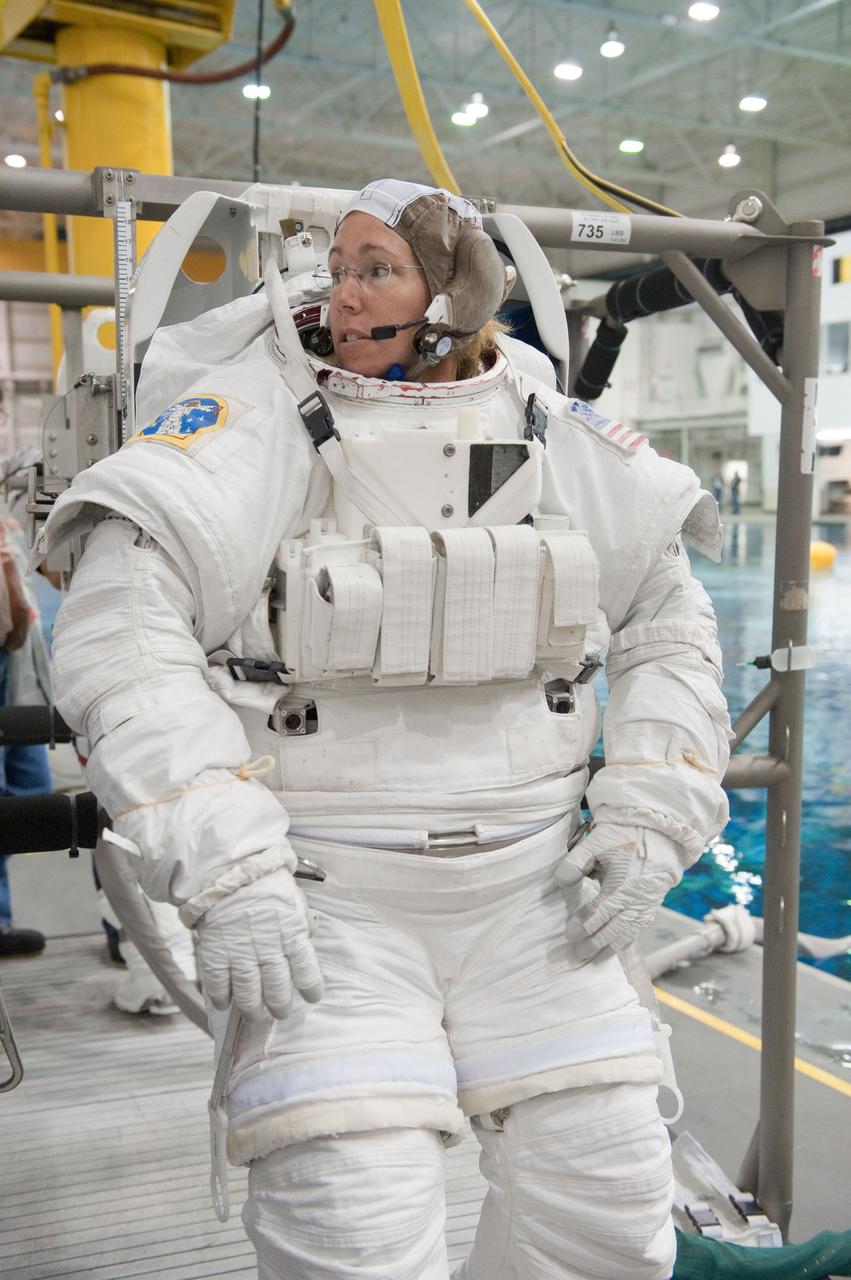
JSC2011-E-054048 (13 June 2011) --- NASA astronaut Sandy Magnus, STS-135 mission specialist, attired in a training version of her Extravehicular Mobility Unit (EMU) spacesuit, awaits the start of a spacewalk training session in the waters of the Neutral Buoyancy Laboratory (NBL) near NASA's Johnson Space Center. Photo credit: NASA
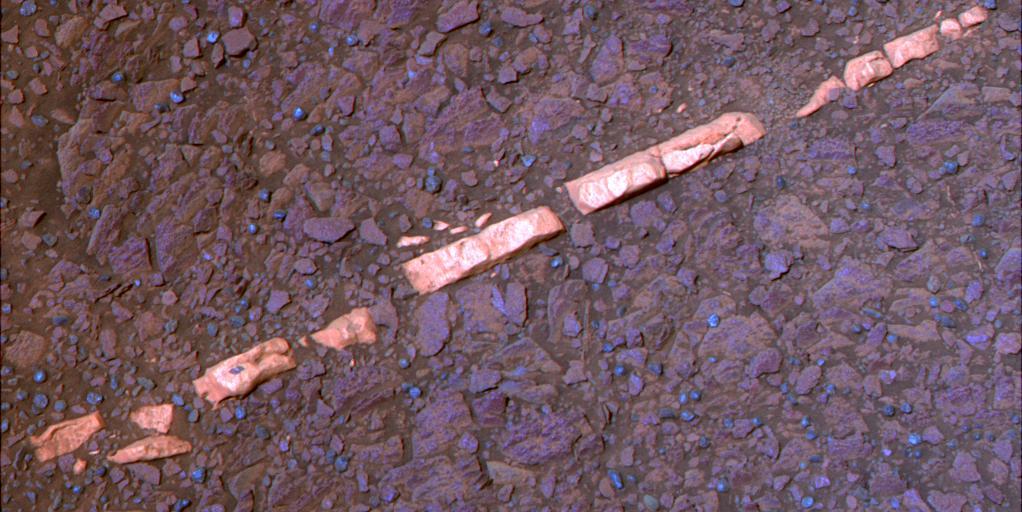
This false-color view of a mineral vein called Homestake comes from the panoramic camera Pancam on NASA Mars Exploration Rover Opportunity. The vein is about the width of a thumb and about 18 inches 45 centimeters long.
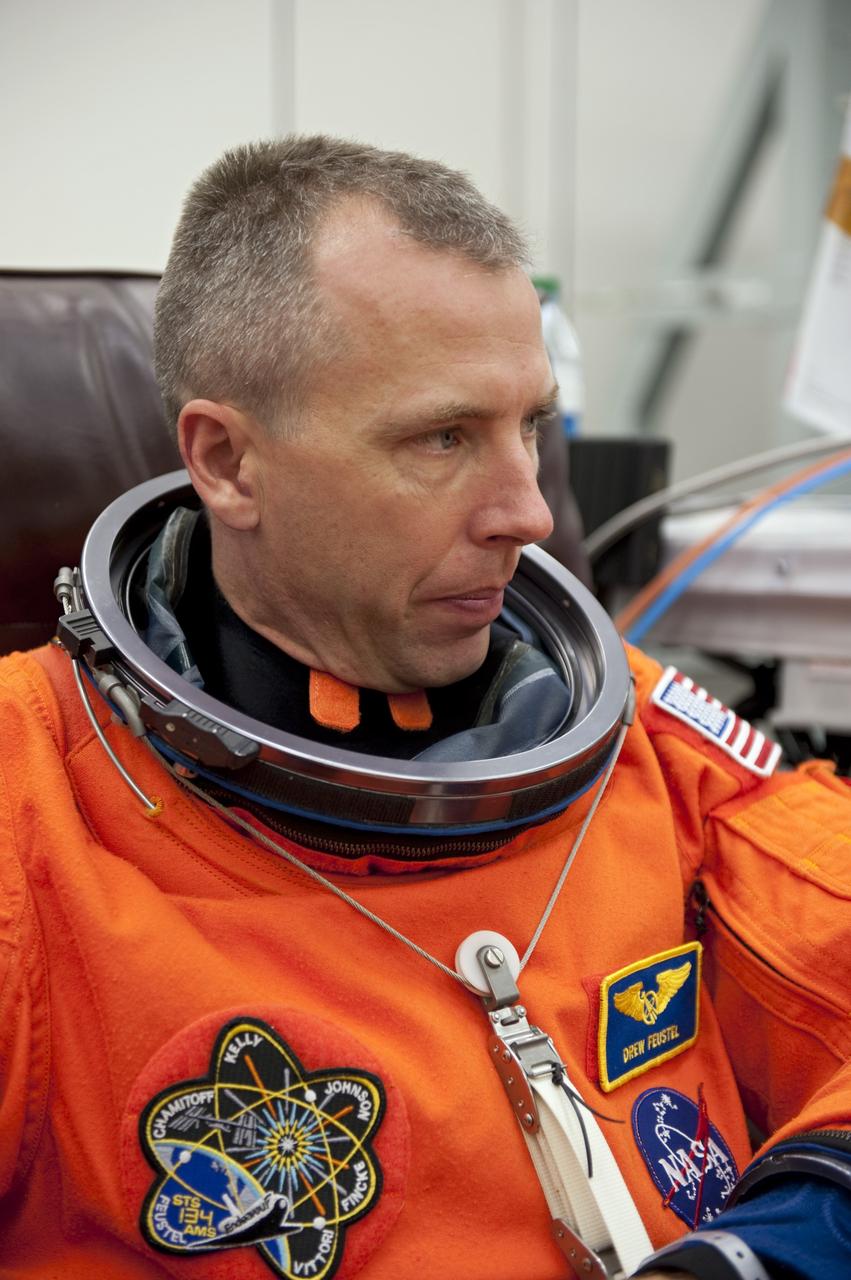
CAPE CANAVERAL, Fla. -- In the Operations and Checkout Building (O&C) at NASA's Kennedy Space Center in Florida, space shuttle Endeavour's STS-134 astronauts put on their launch-and-entry suits and check the fit of their helmets and gloves before heading to the Astrovan for the ride to Launch Pad 39A. Mission Specialist Andrew Feustel, seen here, last flew on a mission to NASA's Hubble Space Telescope in 2009. STS-134 will deliver the Alpha Magnetic Spectrometer-2 (AMS), Express Logistics Carrier-3, a high-pressure gas tank and additional spare parts for the Dextre robotic helper to the International Space Station. May 16 at 8:56 a.m. will be the second launch attempt for Endeavour. The first attempt on April 29 was scrubbed because of an issue associated with a faulty power distribution box called the aft load control assembly-2 (ALCA-2). STS-134 will be the final spaceflight for Endeavour. For more information visit, www.nasa.gov/mission_pages/shuttle/shuttlemissions/sts134/index.html. Photo credit: NASA/Kim Shiflett
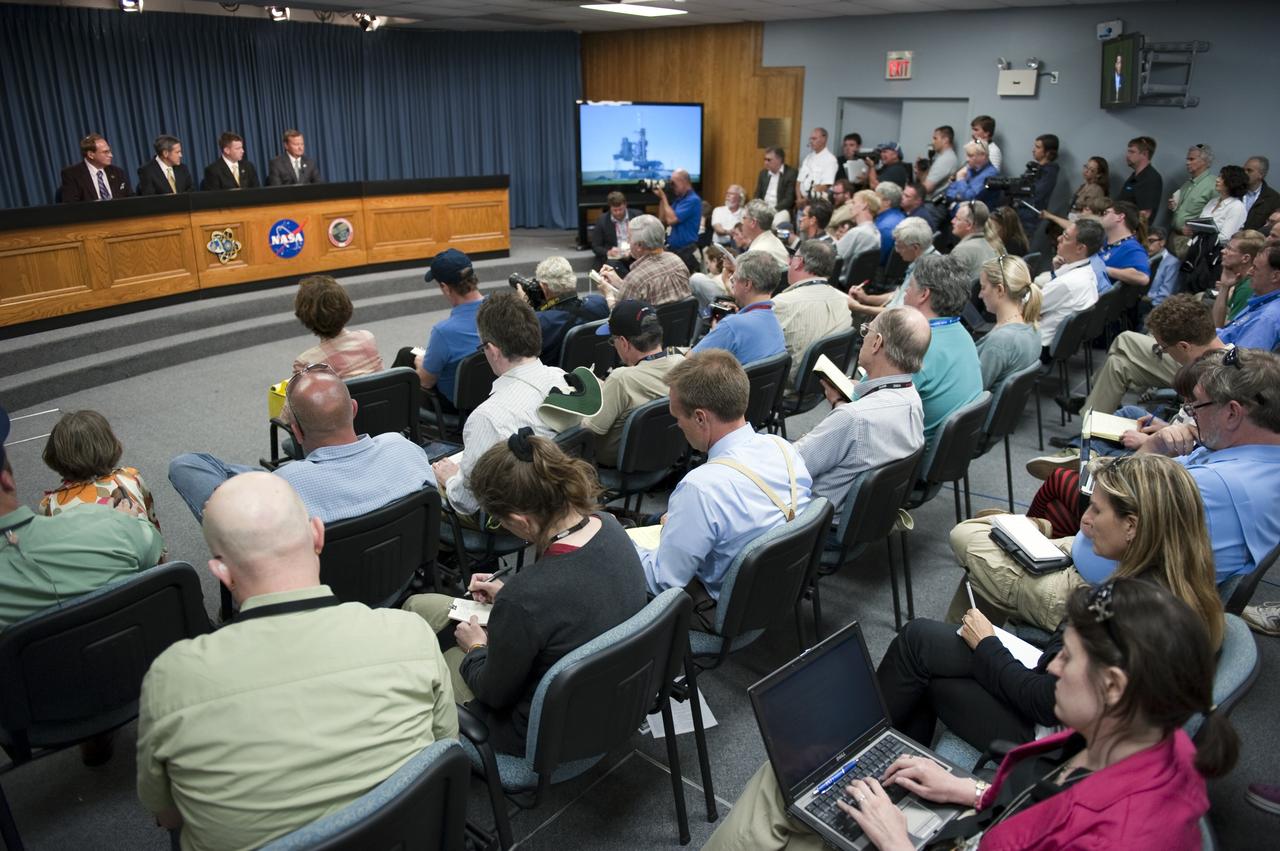
CAPE CANAVERAL, Fla. -- At NASA's Kennedy Space Center in Florida, Public Affairs Officer George Diller, Kennedy Director Bob Cabana, Space Shuttle Program Launch Integration Manager Mike Moses and Shuttle Launch Director Mike Leinbach participate in a news conference following the April 29 scrubbed launch attempt of space shuttle Endeavour. During the STS-134 countdown, fuel line heaters for Endeavour's auxiliary power unit-1 (APU-1) failed. Technicians later discovered that the Load Control Assembly-2 (LCA-2), which distributes power to nine shuttle systems, was the cause of the failure reading. The LCA-2 located in Endeavour's aft section will be replaced and systems will be retested before the launch is rescheduled. STS-134 will deliver the Express Logistics Carrier-3, Alpha Magnetic Spectrometer-2 (AMS), a high-pressure gas tank and additional spare parts for the Dextre robotic helper to the International Space Station. The mission also will be the final spaceflight for Endeavour. For more information, visit www.nasa.gov/mission_pages/shuttle/shuttlemissions/sts134/index.html. Photo credit: NASA/Kim Shiflett
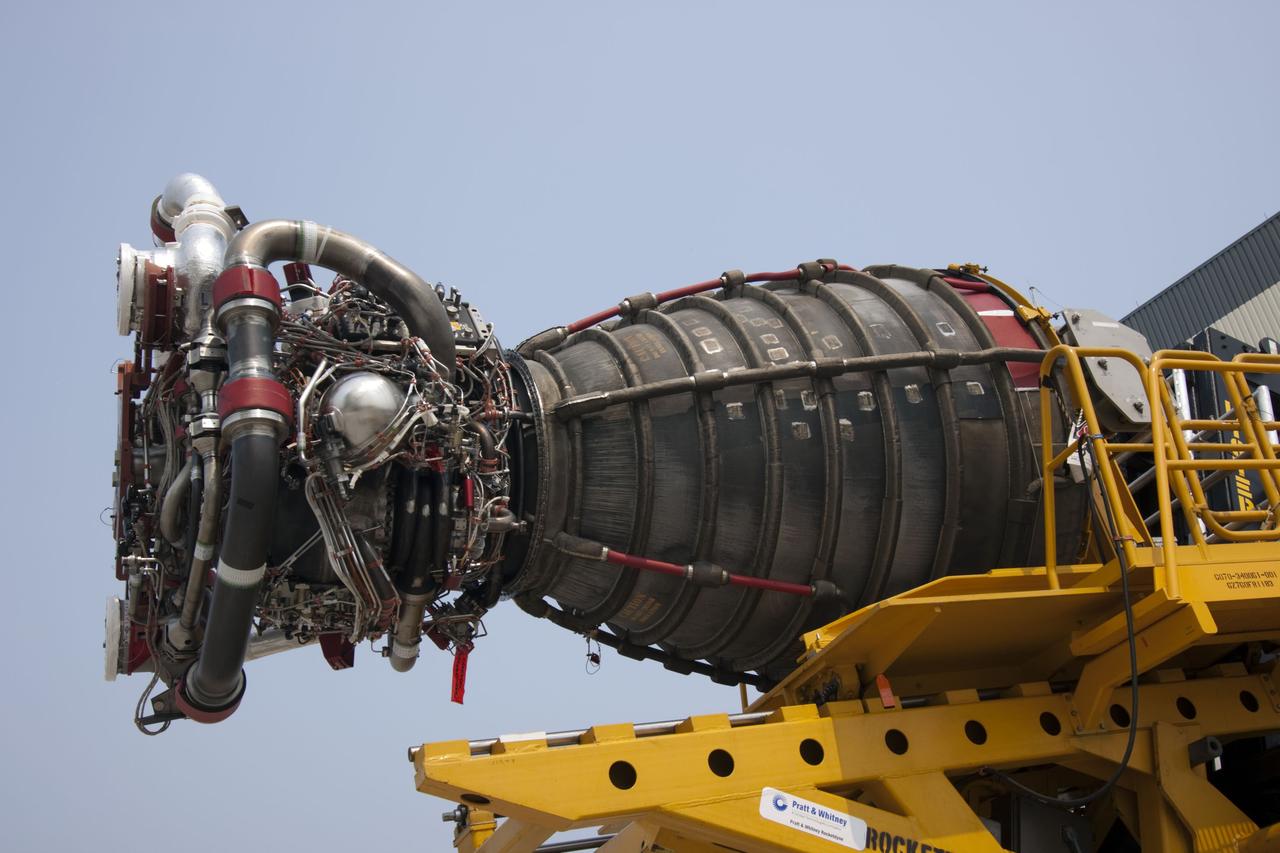
CAPE CANAVERAL, Fla. -- Engine No. 2, one of three space shuttle main engines, was removed from Endeavour and is being transported from Orbiter Processing Facility-1 to the Space Shuttle Main Engine Processing Facility at NASA's Kennedy Space Center in Florida. The removal is part of Endeavour's transition and retirement processing. Endeavour is being prepared for public display at the California Science Center in Los Angeles. Endeavour flew 25 missions, spent 299 days in space, orbited Earth 4,671 times and traveled 122,883,151 miles over the course of its 19-year career. Photo credit: NASA/Jim Grossmann
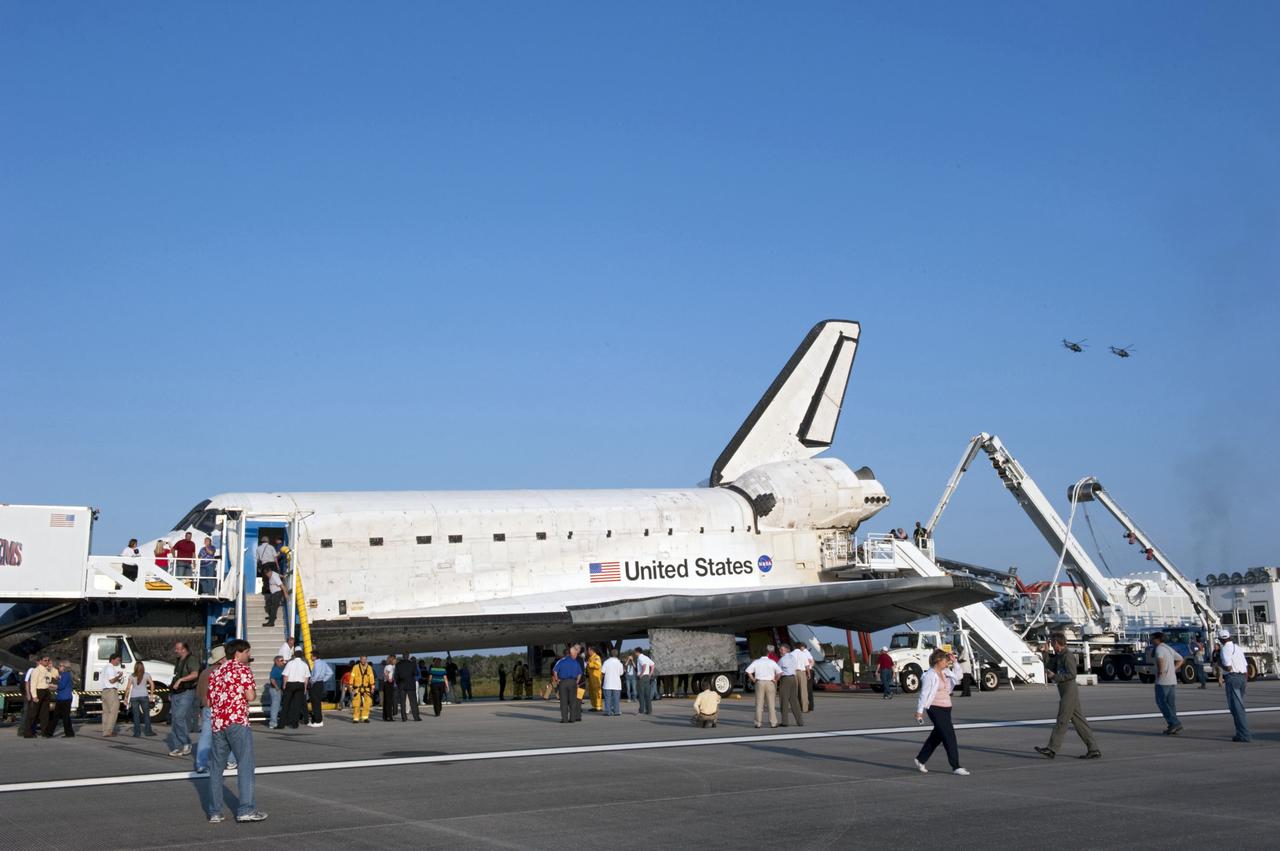
CAPE CANAVERAL, Fla. -- Employees admire space shuttle Atlantis as the landing convoy crew makes the vehicle safe for towing to its processing hangar at NASA's Kennedy Space Center in Florida. Atlantis' final return to Earth on the Shuttle Landing Facility's Runway 15 at NASA's Kennedy Space Center in Florida occurred at 5:57 a.m. EDT. Completing the 13-day, 5.2-million-mile STS-135 mission, Atlantis secured the space shuttle fleet's place in history and brought a close to NASA's Space Shuttle Program. STS-135 delivered spare parts, equipment and supplies in the Raffaello multi-purpose logistics module that will sustain station operations for the next year. STS-135 was the 33rd and final flight for Atlantis, which has spent 307 days in space, orbited Earth 4,848 times and traveled 125,935,769 miles. For more information visit, www.nasa.gov/mission_pages/shuttle/shuttlemissions/sts135/index.html. Photo credit: NASA/Kim Shiflett
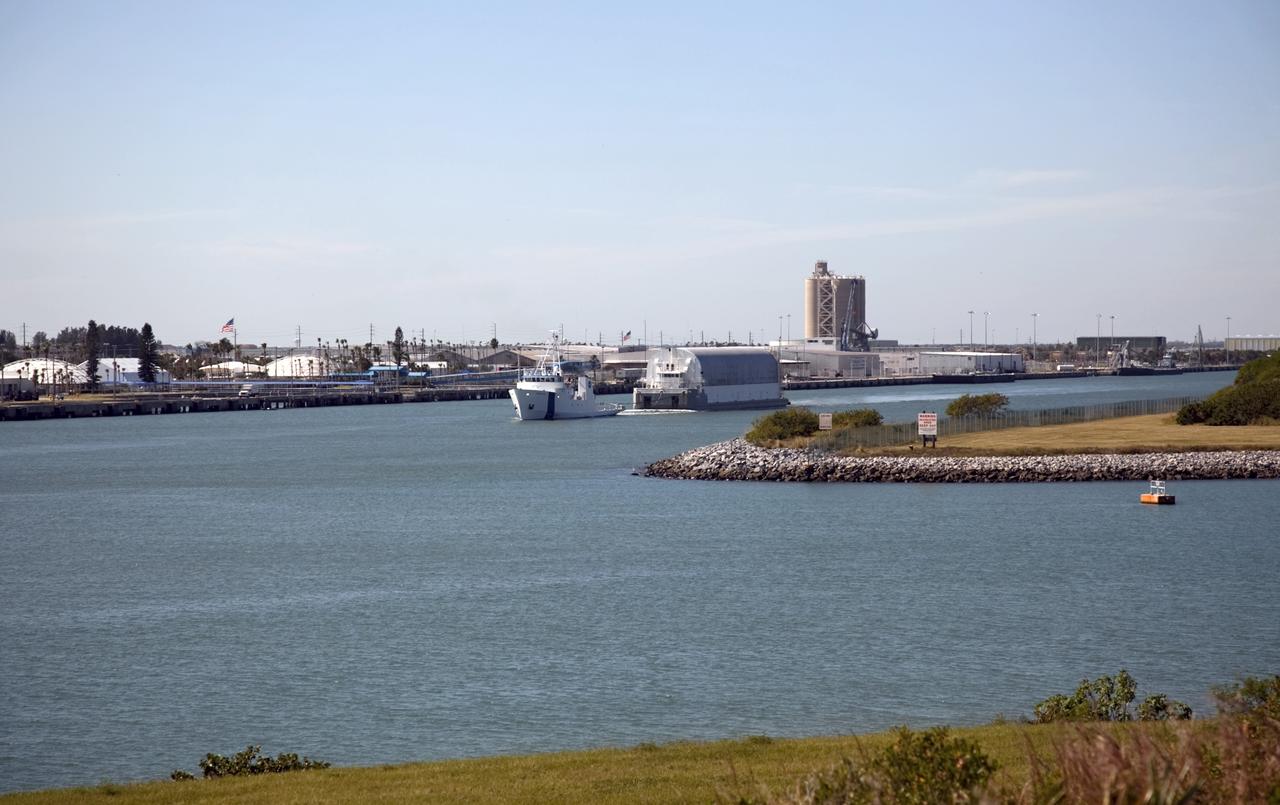
CAPE CANAVERAL, Fla. – NASA's Freedom Star ship tows the Pegasus Barge through Port Canaveral in Florida. Freedom Star is towing the 266-foot-long and 50-foot-wide barge to Stennis Space Center near Bay St. Louis, Miss. to deliver space shuttle main engine (SSME) ground support equipment. Since being delivered to NASA in 1999, Pegasus sailed 41 times and transported 31 shuttle external fuel tanks from Michoud Assembly Facility near New Orleans to Kennedy Space Center. The barge is leaving Kennedy, perhaps for the final time. Both the barge and shuttle equipment will remain in storage until their specific future uses are determined. The SSMEs themselves will be transported to Stennis separately for use with the agency's new heavy-lift rocket, the Space Launch System. The work is part of the Space Shuttle Program’s transition and retirement processing. For more information about Shuttle Transition and Retirement, visit http://www.nasa.gov/mission_pages/transition/home/index.html. Photo credit: NASA/Frankie Martin
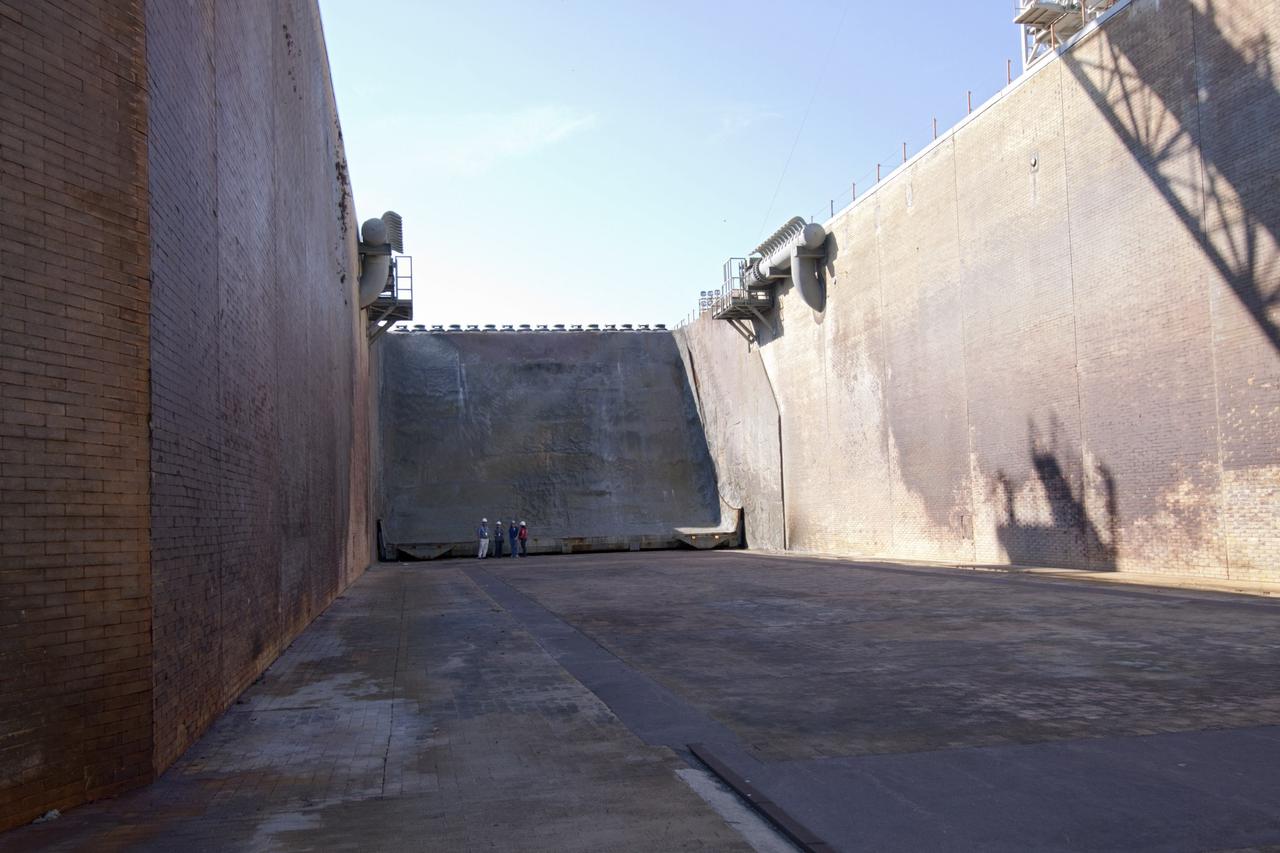
CAPE CANAVERAL, Fla. – The flame trench at Launch Pad 39B at NASA's Kennedy Space Center in Florida endured significant flames, vibrations and other stresses during the space shuttle era. Heading into the future, designers are looking for new, flame and vibration-resistant materials to line the trench. To help in the search, a team of mechanical engineering students at Louisiana State University are to build a scaled-down version of the flame trench that Kennedy's scientists can use to try out sample materials for the trench. If the samples work in the lab, they can be tried out in the real flame trenches at Launch Pad 39A and 39B. The launch pad has been refurbished extensively and work is continuing to modify the pad to support a variety of launch vehicles in the future. Photo credit: NASA/Jim Grossmann
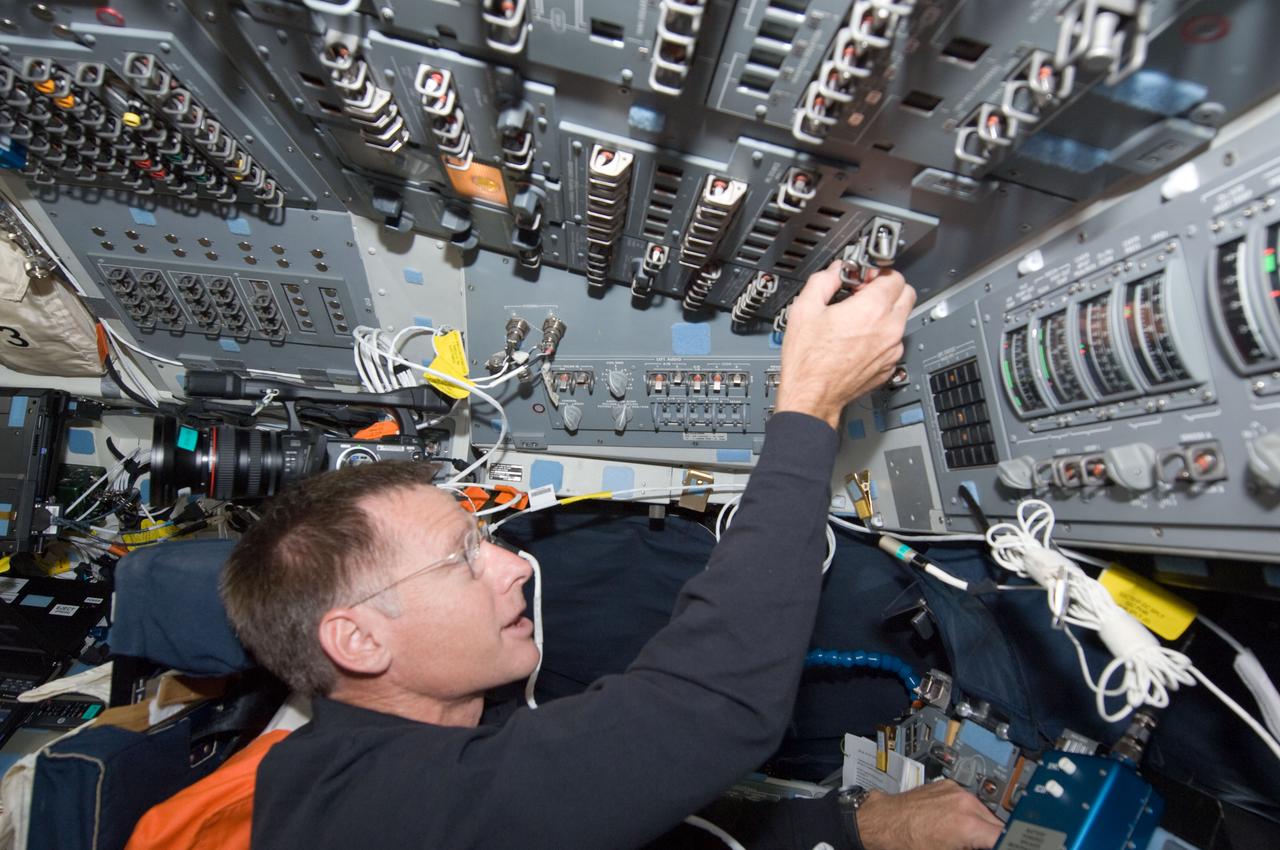
S135-E-007350 (11 July 2011) --- NASA astronaut Chris Ferguson, STS-135 mission commander, toggles switches on the overhead panel of the forward flight deck of the space shuttle Atlantis. The image was recorded during the mission's fourth day of activities in Earth orbit and second day while being docked with the International Space Station. Photo credit: NASA
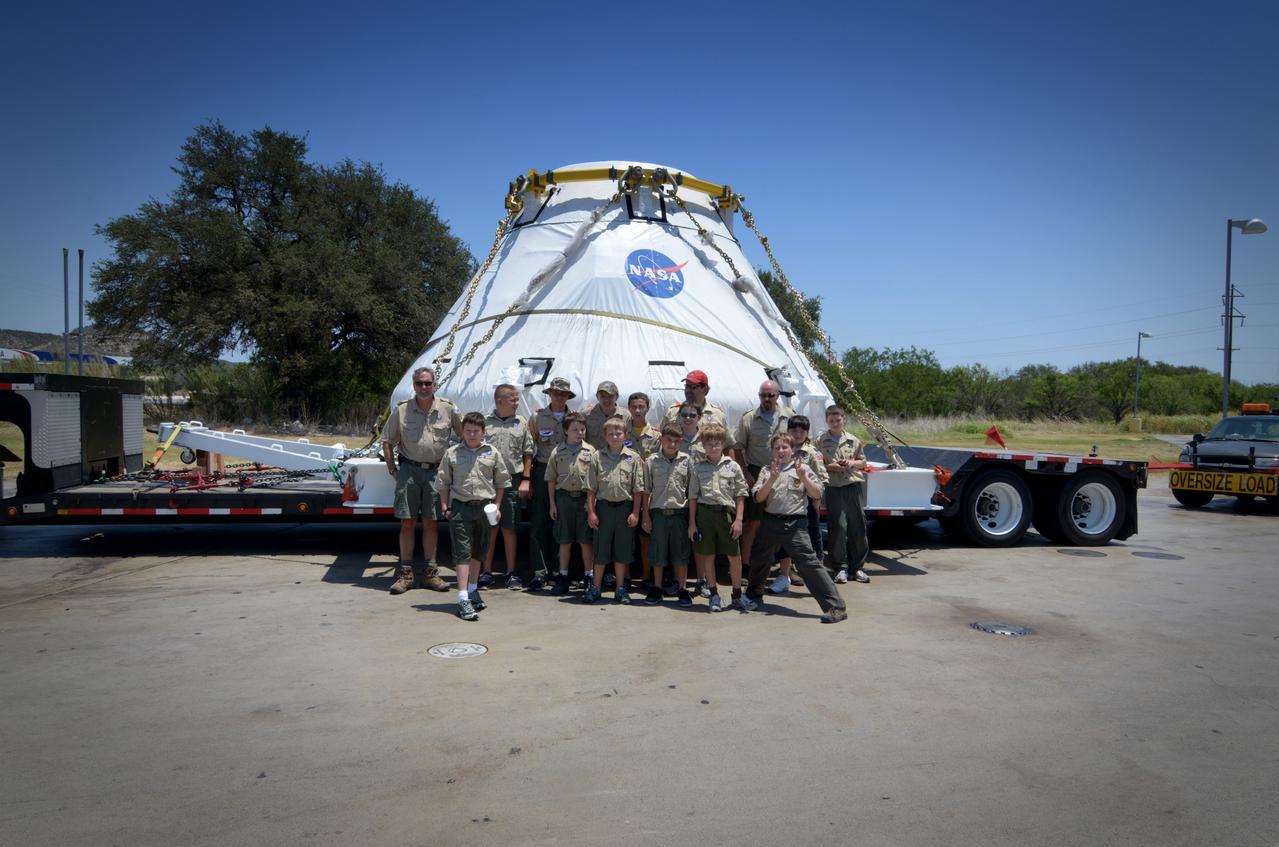
Travelers take a photo with the Orion crew module flown on NASA’s Pad Abort-1 (PA-1) flight test on the road on June 15, 2011. Part of Batch image transfer from Flickr.
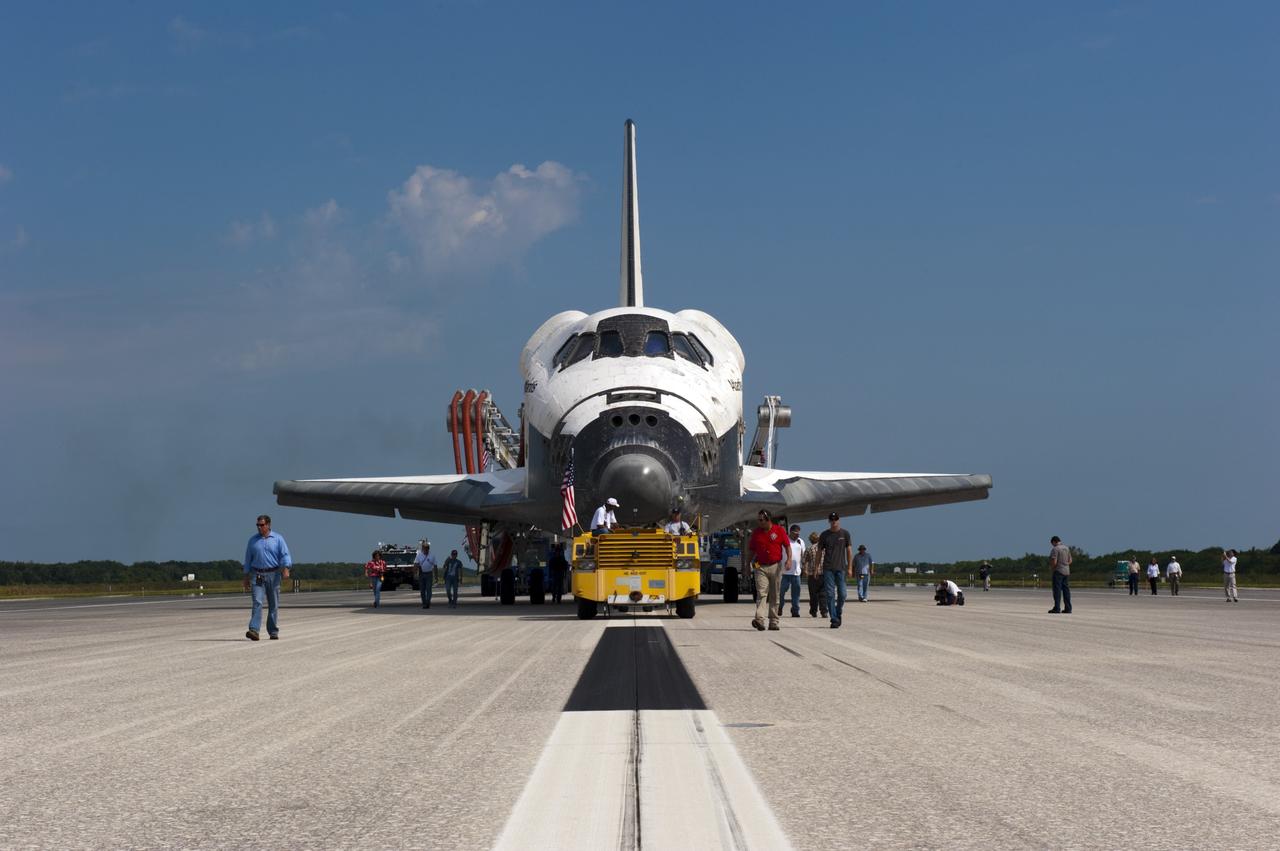
CAPE CANAVERAL, Fla. -- Workers accompany space shuttle Atlantis as it makes its slow trek from the Shuttle Landing Facility to Orbiter Processing Facility-2 for the last time. Atlantis' final return to Earth on Runway 15 at NASA's Kennedy Space Center in Florida occurred at 5:57 a.m. EDT July 21, 2011. Securing the space shuttle fleet's place in history, Atlantis marks the 26th nighttime landing of NASA's Space Shuttle Program and the 78th landing at Kennedy. Atlantis and its crew delivered to the International Space Station the Raffaello multi-purpose logistics module packed with more than 9,400 pounds of spare parts, equipment and supplies that will sustain station operations for the next year. STS-135 is the 33rd and final flight for Atlantis and the final mission of the Space Shuttle Program. For more information, visit www.nasa.gov/mission_pages/shuttle/shuttlemissions/sts135/index.html. Photo credit: NASA/Kim Shiflett
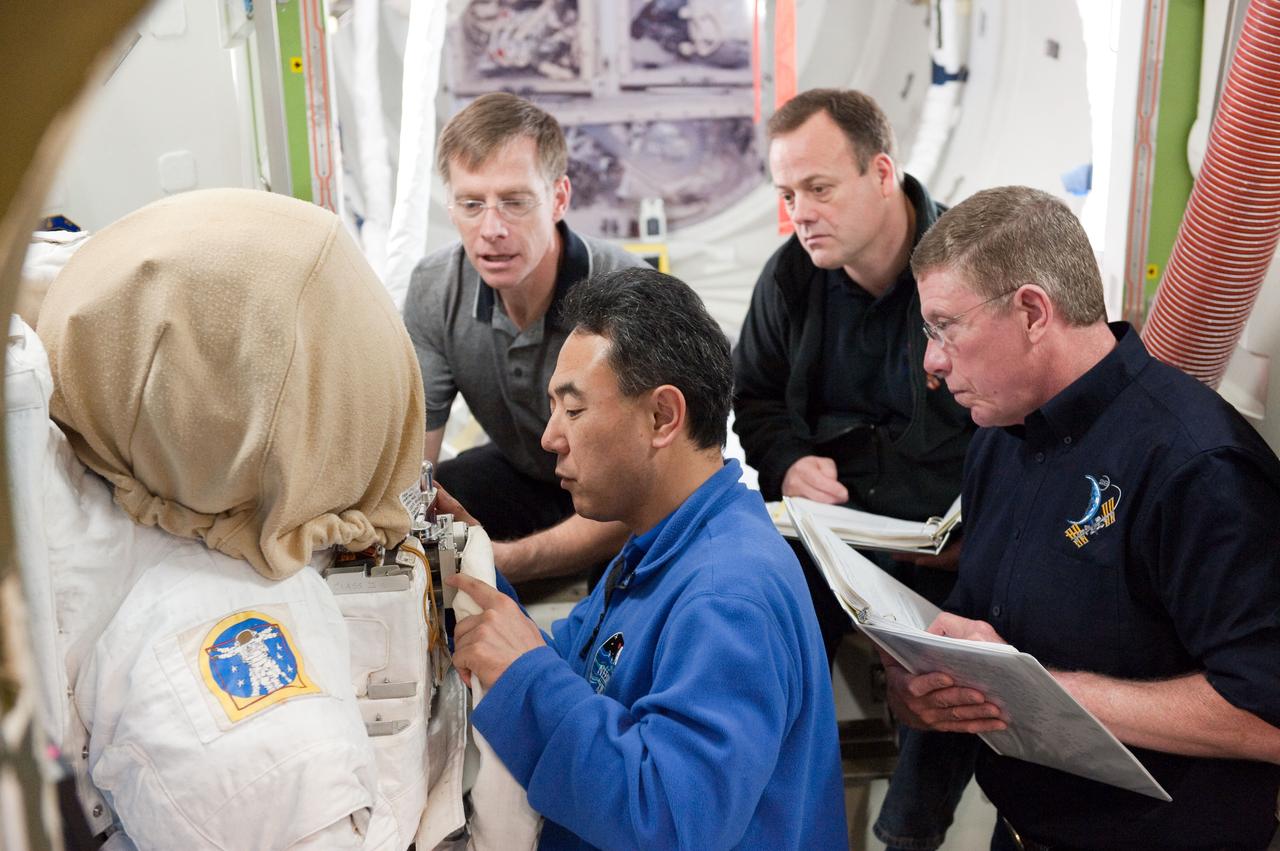
PHOTO DATE: 01-25-11 LOCATION: Bldg 9NW, ISS Mockups SUBJECT: Expedition 28 crew member and JAXA astronaut Satoshi Furukawa during ISS EVA P/P 33105 training with STS-135 crew members PHOTOGRAPHER: James Blair
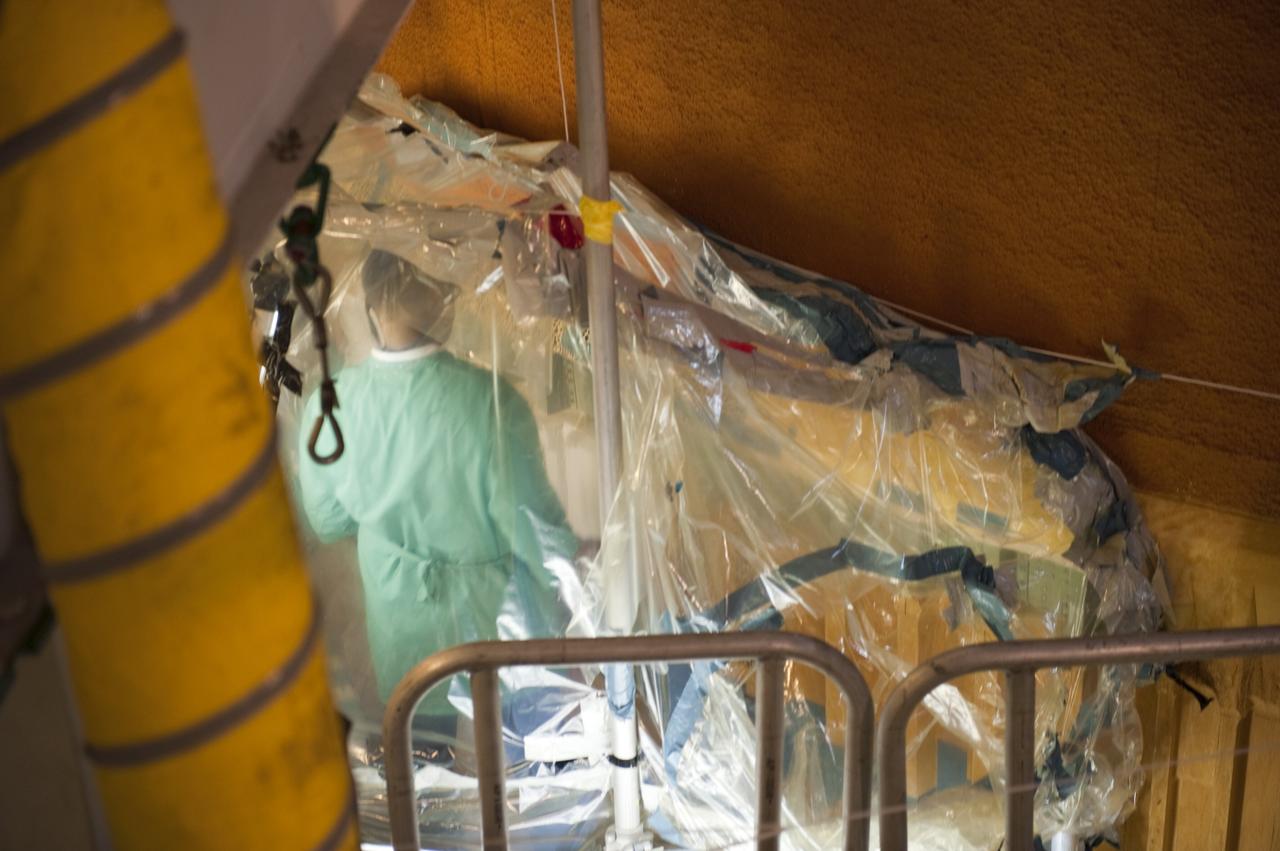
CAPE CANAVERAL, Fla. -- Repair work to space shuttle Discovery's external fuel tank begins to wrap up in the Vehicle Assembly Building at NASA's Kennedy Space Center in Florida. Technicians modified 94 support beams, called stringers, on the tank's intertank region by fitting pieces of metal, called radius blocks, over the stringers' edges. They also were re-applying foam to the modified areas of the tank. Attached to its fuel tank and two solid rocket boosters, Discovery is scheduled to roll out to Launch Pad 39A atop a giant crawler-transporter on Jan. 31. Discovery's next launch opportunity to the International Space Station on the STS-133 mission is targeted for Feb. 24. For more information on STS-133, visit www.nasa.gov/mission_pages/shuttle/shuttlemissions/sts133/. Photo credit: NASA/Kim Shiflett
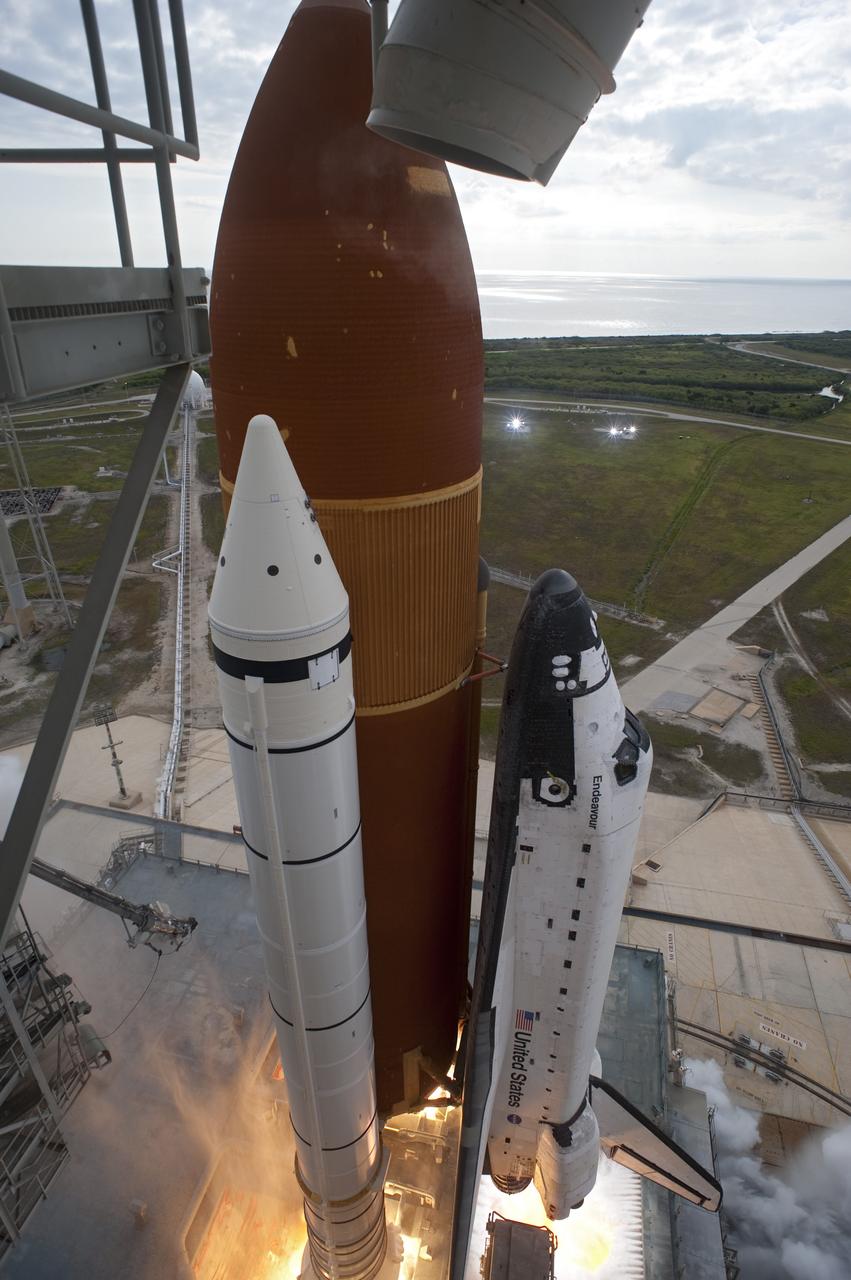
CAPE CANAVERAL, Fla. -- Space shuttle Endeavour's main engines and solid rocket boosters burst to life lifting the shuttle from Launch Pad 39A at NASA's Kennedy Space Center in Florida. Endeavour began its final flight, the STS-134 mission to the International Space Station, at 8:56 a.m. EDT on May 16. Endeavour and its six-member crew will deliver the Alpha Magnetic Spectrometer-2 (AMS), Express Logistics Carrier-3, a high-pressure gas tank and additional spare parts for the Dextre robotic helper to the space station. For more information visit, www.nasa.gov/mission_pages/shuttle/shuttlemissions/sts134/index.html. Photo credit: NASA/Tony Gray and Tom Farrar
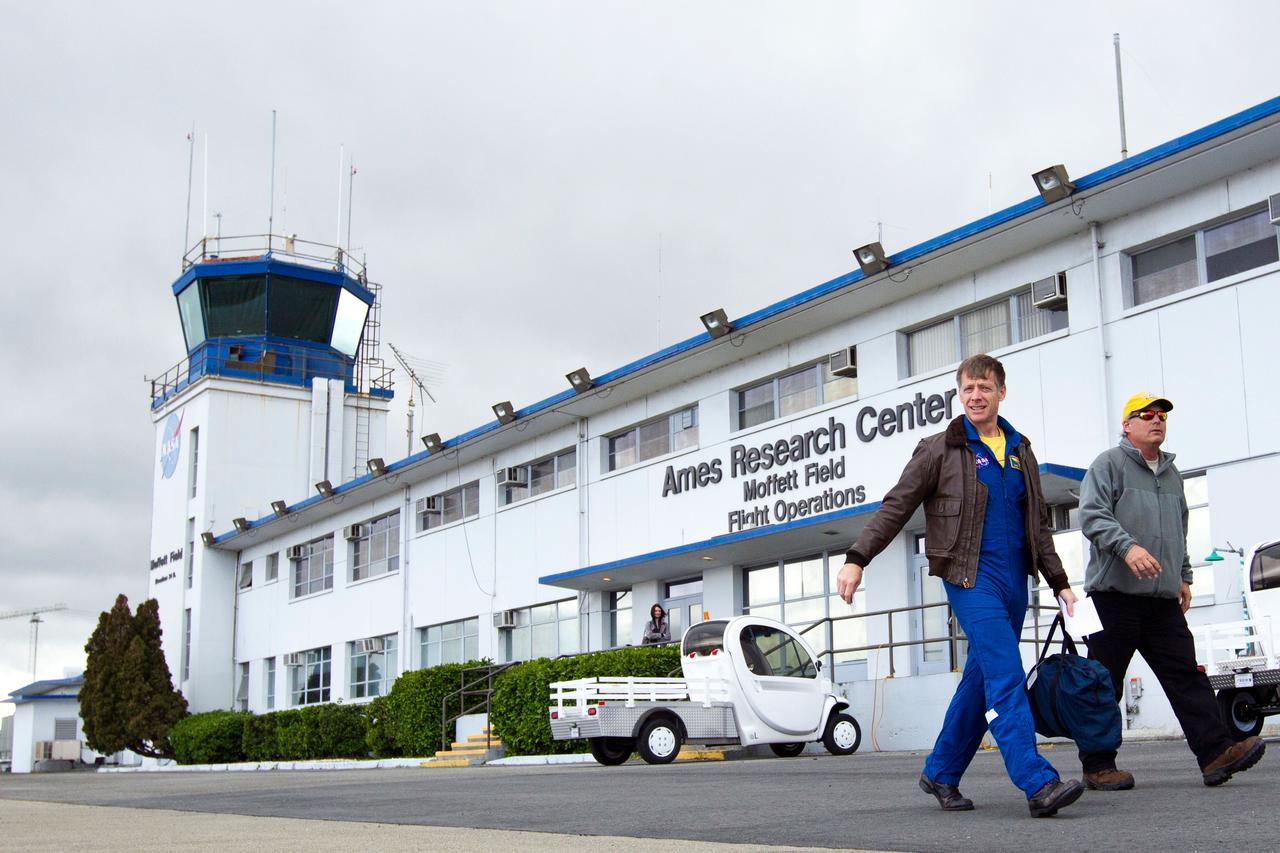
JSC2011-E-040202 (2 March 2011) --- NASA astronaut Chris Ferguson, STS-135 commander, departs from the Moffett Field (Calif.) flight operations center for his trip home to Houston after he and his crew trained in the Vertical Motion Simulator (VMS) at NASA's Ames Research Center in Mountain View, March 2, 2011. Photo credit: NASA Photo/Houston Chronicle, Smiley N. Pool
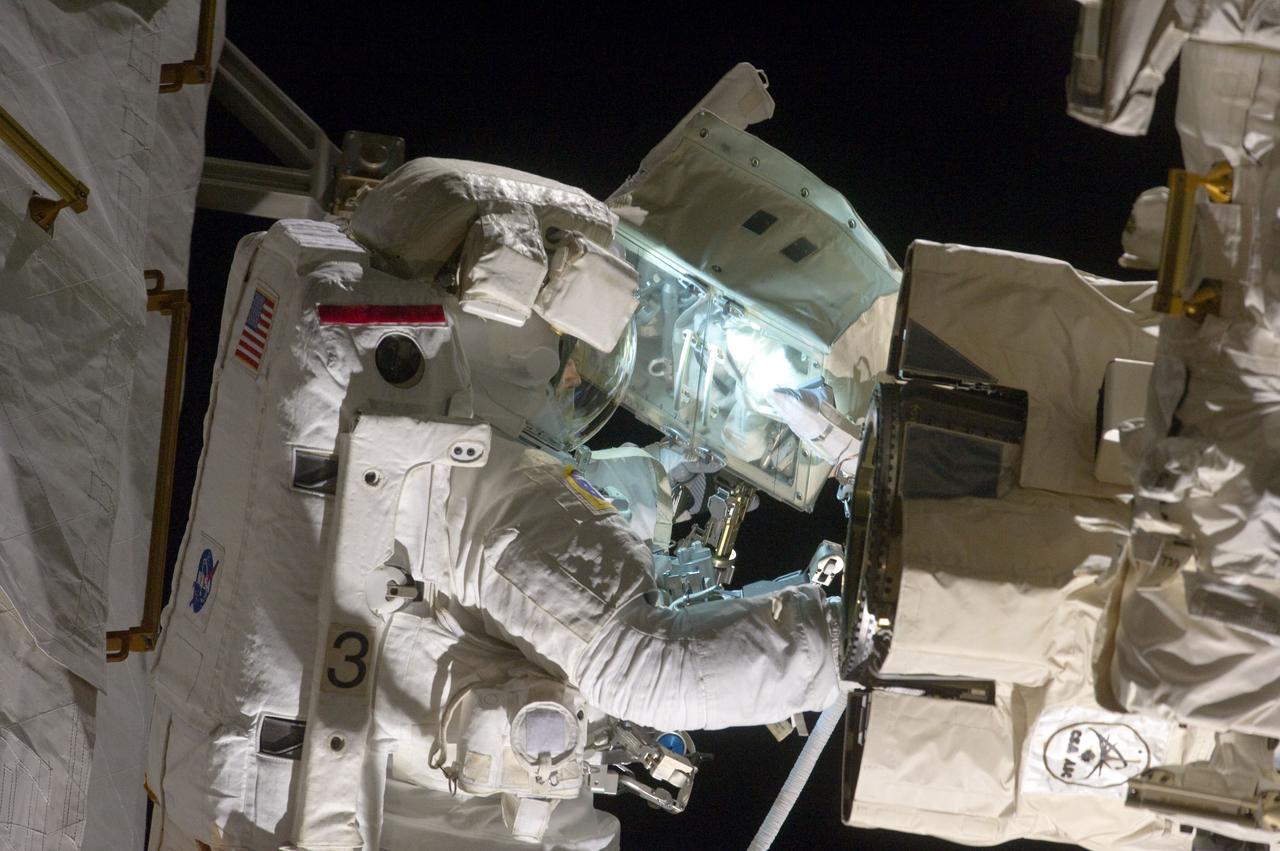
S134-E-008620 (22 May 2011) --- NASA astronaut Andrew Feustel, STS-134 mission specialist, participates in the mission's second session of extravehicular activity (EVA) as construction and maintenance continue on the International Space Station. During the eight-hour, seven-minute spacewalk, Feustel and astronaut Michael Fincke (out of frame), mission specialist, completed all planned tasks, including refilling one of the station?s cooling loops with ammonia and lubricating one of the station?s massive solar alpha rotary joints. Photo credit: NASA
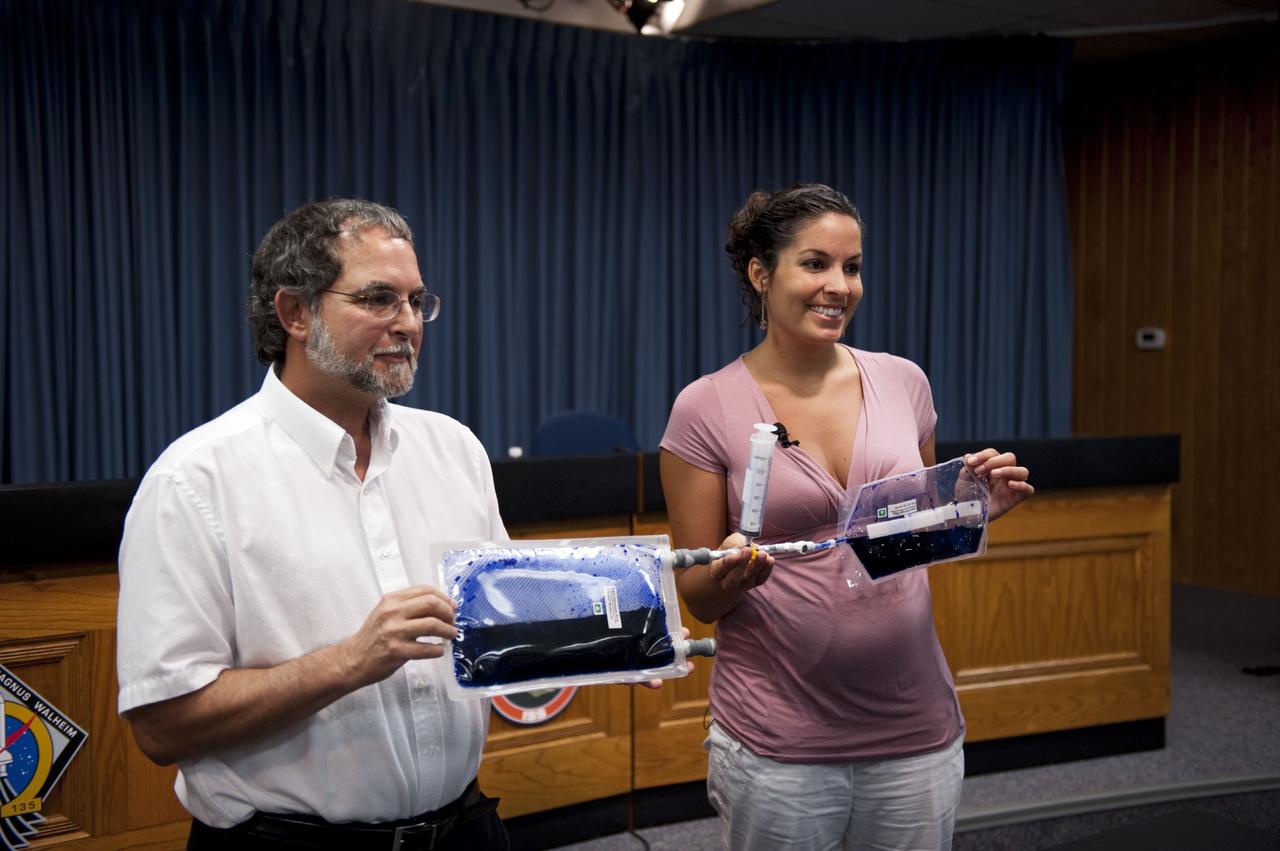
CAPE CANAVERAL, Fla. -- In the Press Site auditorium at NASA's Kennedy Space Center in Florida, NASA Project Scientist Dr. Howard Levine and Project Engineer Monica Soler with Qinetiq North America demonstrate to media a liquid purifying system called "forward osmosis." The idea is to make a fortified drink that provides hydration and nutrients from all sources available aboard a spacecraft, such as wastewater. A space-adapted version of the system will be aboard space shuttle Atlantis for testing during the STS-135 mission to the International Space Station. Atlantis and its crew of four are scheduled to lift off at 11:26 a.m. EDT on July 8 to deliver the Raffaello multi-purpose logistics module packed with supplies and spare parts to the station. The STS-135 mission also will fly a system to investigate the potential for robotically refueling existing satellites and return a failed ammonia pump module to help NASA better understand the failure mechanism and improve pump designs for future systems. STS-135 will be the 33rd flight of Atlantis, the 37th shuttle mission to the space station, and the 135th and final mission of NASA's Space Shuttle Program. For more information visit, www.nasa.gov/mission_pages/shuttle/shuttlemissions/sts135/index.html. Photo credit: NASA/Kim Shiflett
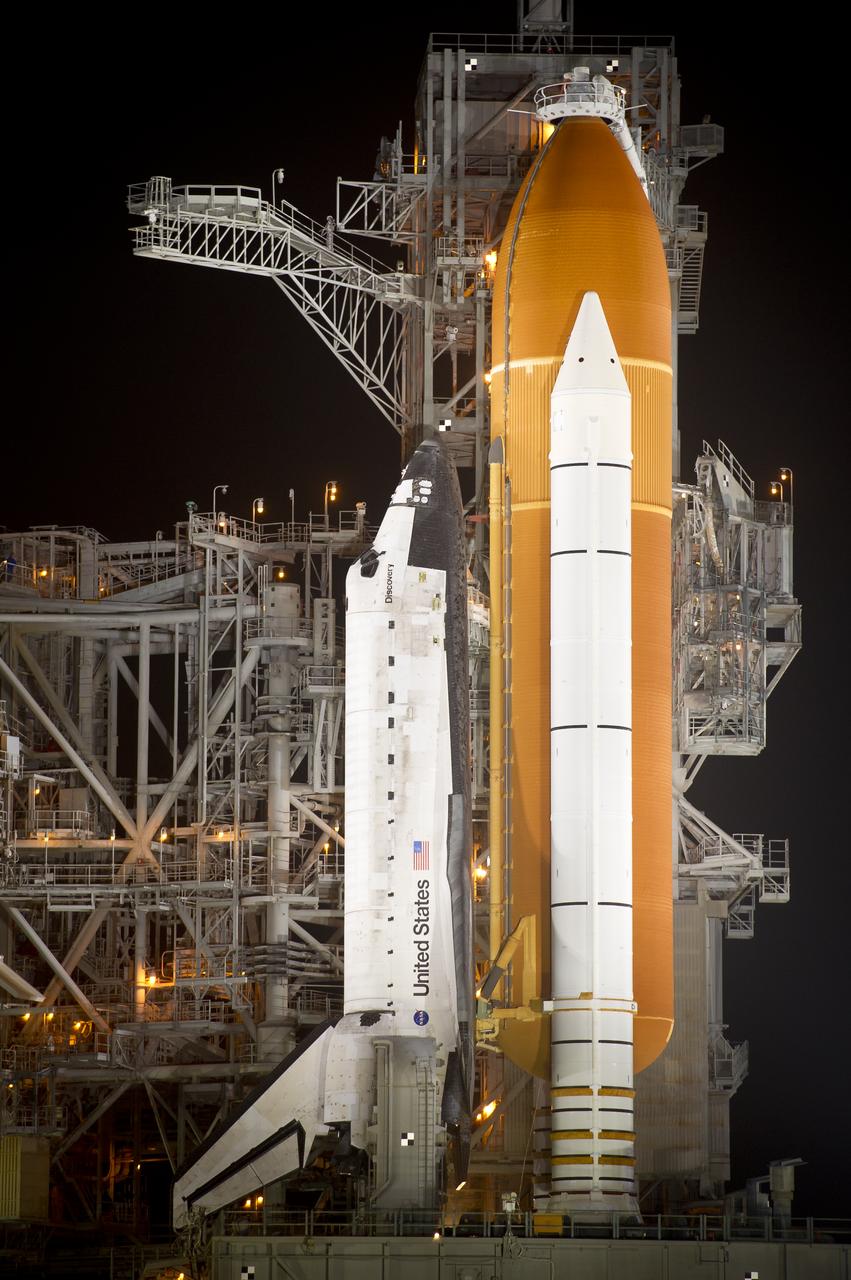
The space shuttle Discovery is seen shortly after the Rotating Service Structure was rolled back at launch pad 39A, at the Kennedy Space Center in Cape Canaveral, Florida, on Wednesday, Feb. 23, 2011. Discovery, on its 39th and final flight, will carry the Italian-built Permanent Multipurpose Module (PMM), Express Logistics Carrier 4 (ELC4) and Robonaut 2, the first humanoid robot in space to the International Space Station. Photo Credit: (NASA/Bill Ingalls)
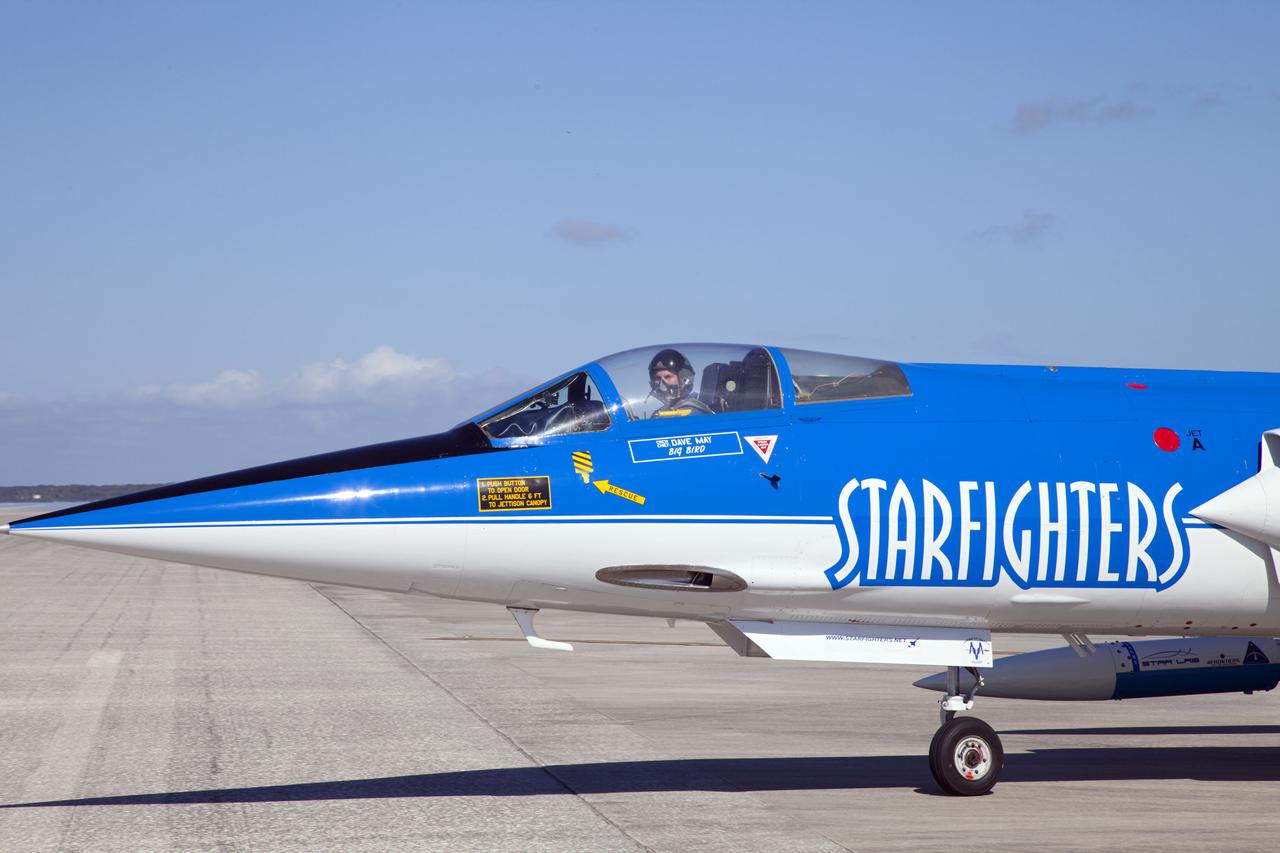
CAPE CANAVERAL, Fla. – Pilot Rick Svetkoff sits in the cockpit of a Starfighters, Inc. F-104 supersonic jet before conducting a high speed taxi test on the runway at the Shuttle Landing Facility (SLF) at NASA’s Kennedy Space Center in Florida. The Star Lab suborbital launch vehicle developed by 4Frontiers Corporation can be seen above the front wheel. 4Frontiers is testing the Star Lab suborbital launch vehicle which has the potential to carry payloads into low earth orbit. Tests are being conducted to verify the aeronautical conditions of the Star Lab suborbital launch vehicle. This is the first of eight tests the launch vehicle will undergo. 4Frontiers Corporation is aiming for testing to be completed by early 2012, with commercial flights starting mid-2012. Starfighters, Inc. has signed a Space Act Agreement with NASA for the use of the SLF facilities at Kennedy Space Center. Photo credit: NASA_Gianni M. Woods
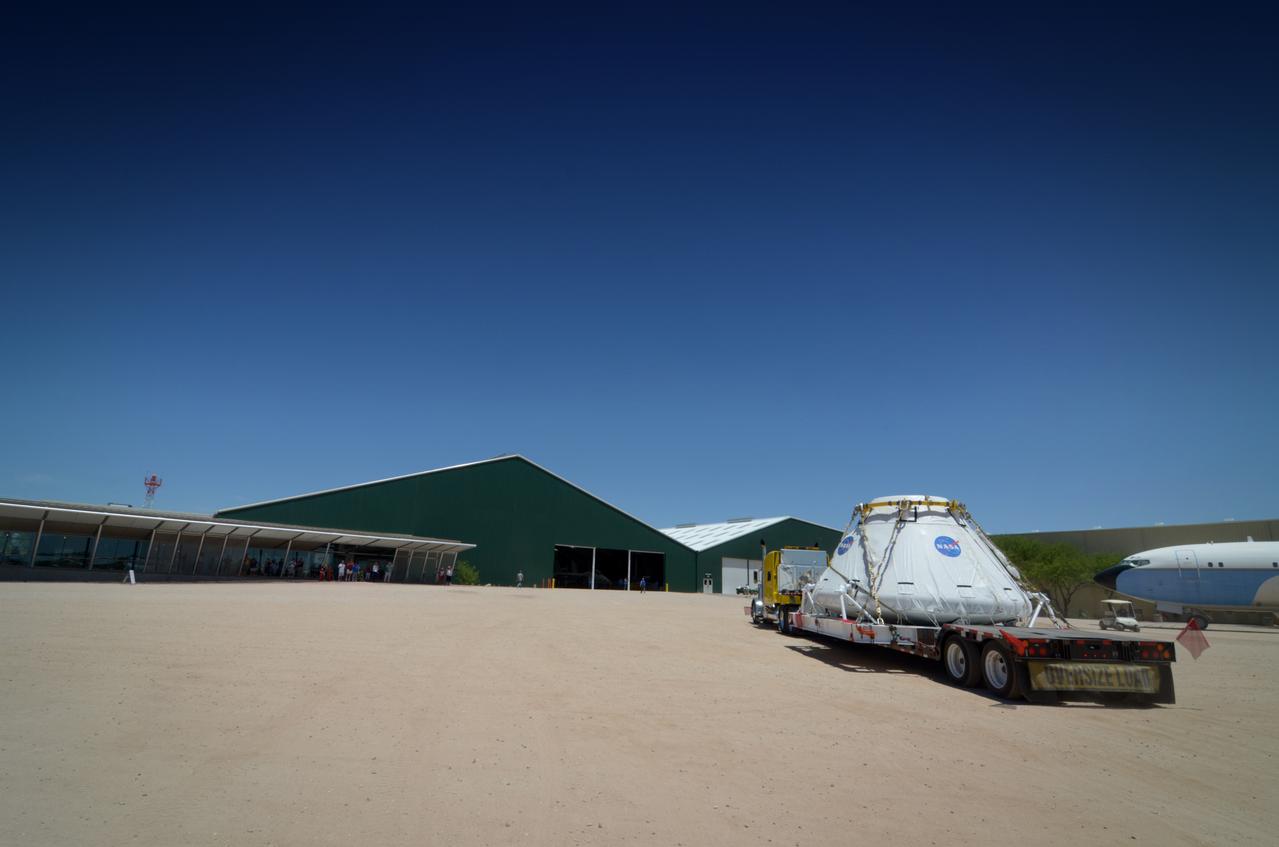
Travelers take a photo with the Orion crew module flown on NASA’s Pad Abort-1 (PA-1) flight test on the road on June 15, 2011. Part of Batch image transfer from Flickr.
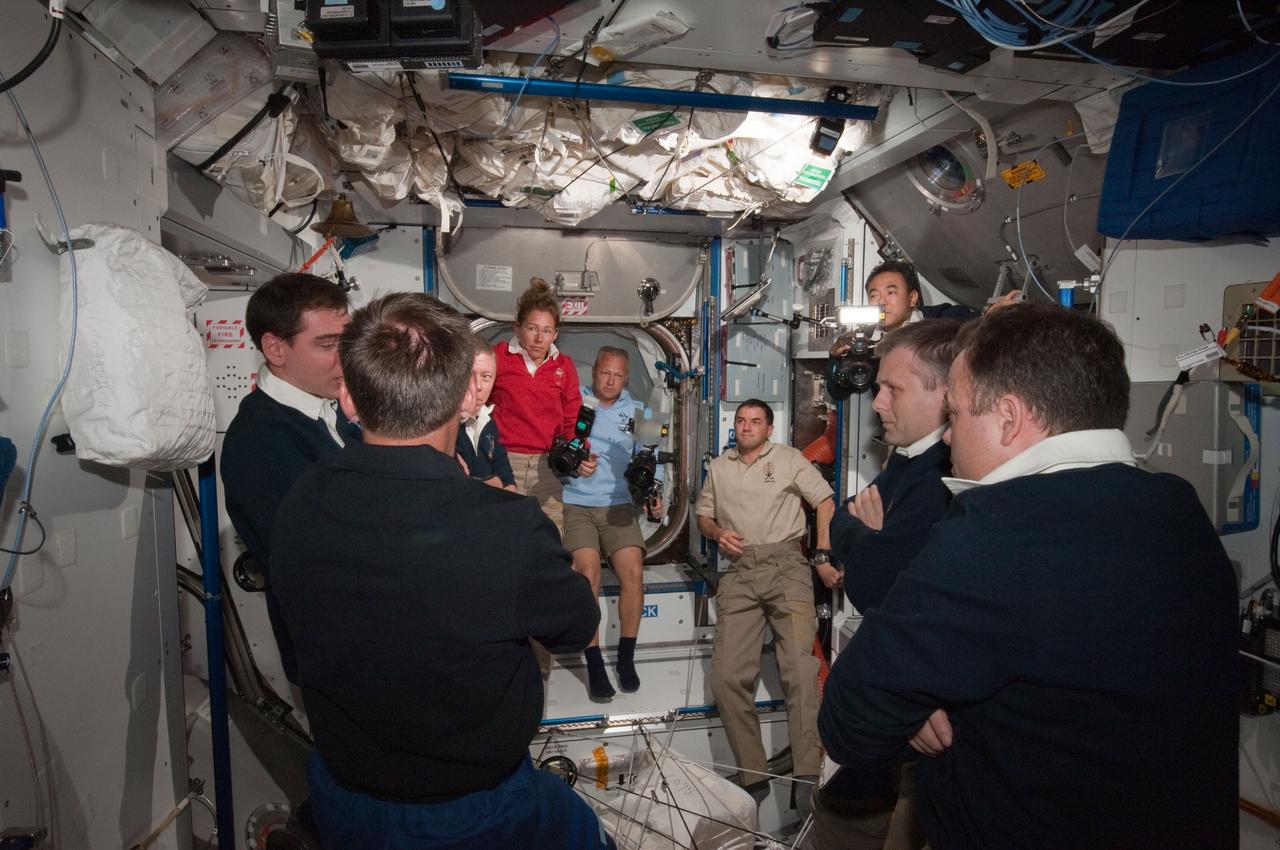
ISS028-E-015865 (10 July 2011) --- This view captures a reunion among six NASA astronauts, three Russian cosmonauts and a Japanese astronaut in the International Space Station's U.S. Node 2 or Harmony following a July 10 docking of the space shuttle Atlantis and the station. Clockwise from lower left corner are NASA astronaut Chris Ferguson, Russian cosmonaut Sergei Volkov, and NASA astronauts Mike Fossum, Sandy Magnus, Doug Hurley and Rex Walheim; Japan Aerospace Exploration Agency astronaut Satoshi Furukawa, Russian cosmonaut Andrey Borisenko and NASA astronaut Ron Garan. Not pictured is Russian cosmonaut Alexander Samokutyaev. Four of the ten space travelers are from STS-135 -- the final crew of the Space Shuttle Program -? and six are serving long terms on the station.
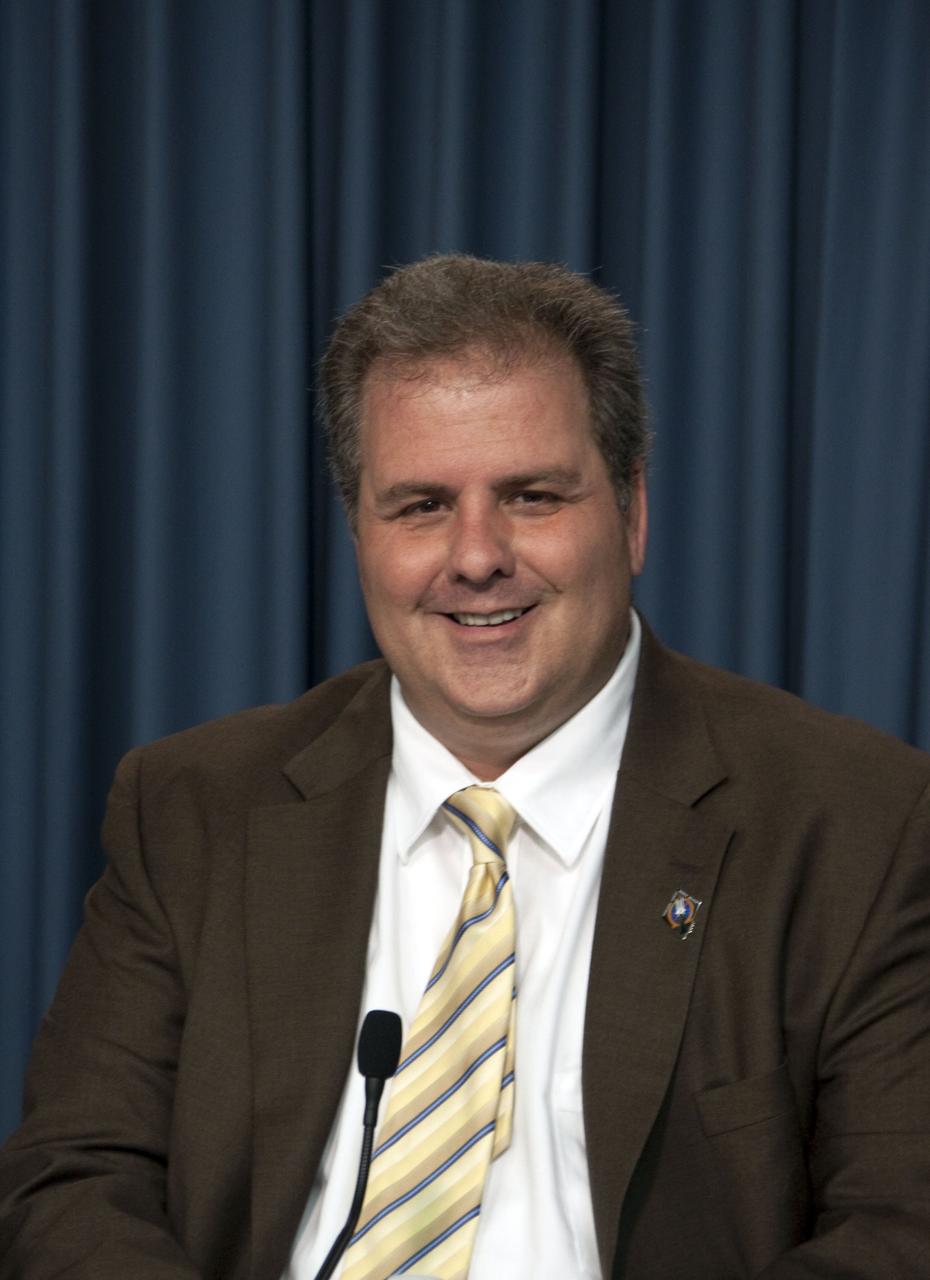
CAPE CANAVERAL, Fla. -- In the Press Site auditorium at NASA's Kennedy Space Center in Florida, NASA managers brief media about the payload and launch status of space shuttle Atlantis' STS-135 mission to the International Space Station. Seen here is Payload Mission Manager Joe Delai. Atlantis and its crew are scheduled to lift off at 11:26 a.m. EDT on July 8 to deliver the Raffaello multi-purpose logistics module packed with supplies and spare parts to the station. The STS-135 mission also will fly a system to investigate the potential for robotically refueling existing satellites and return a failed ammonia pump module to help NASA better understand the failure mechanism and improve pump designs for future systems. STS-135 will be the 33rd flight of Atlantis, the 37th shuttle mission to the space station, and the 135th and final mission of NASA's Space Shuttle Program. For more information visit, www.nasa.gov/mission_pages/shuttle/shuttlemissions/sts135/index.html. Photo credit: NASA/Jim Grossmann
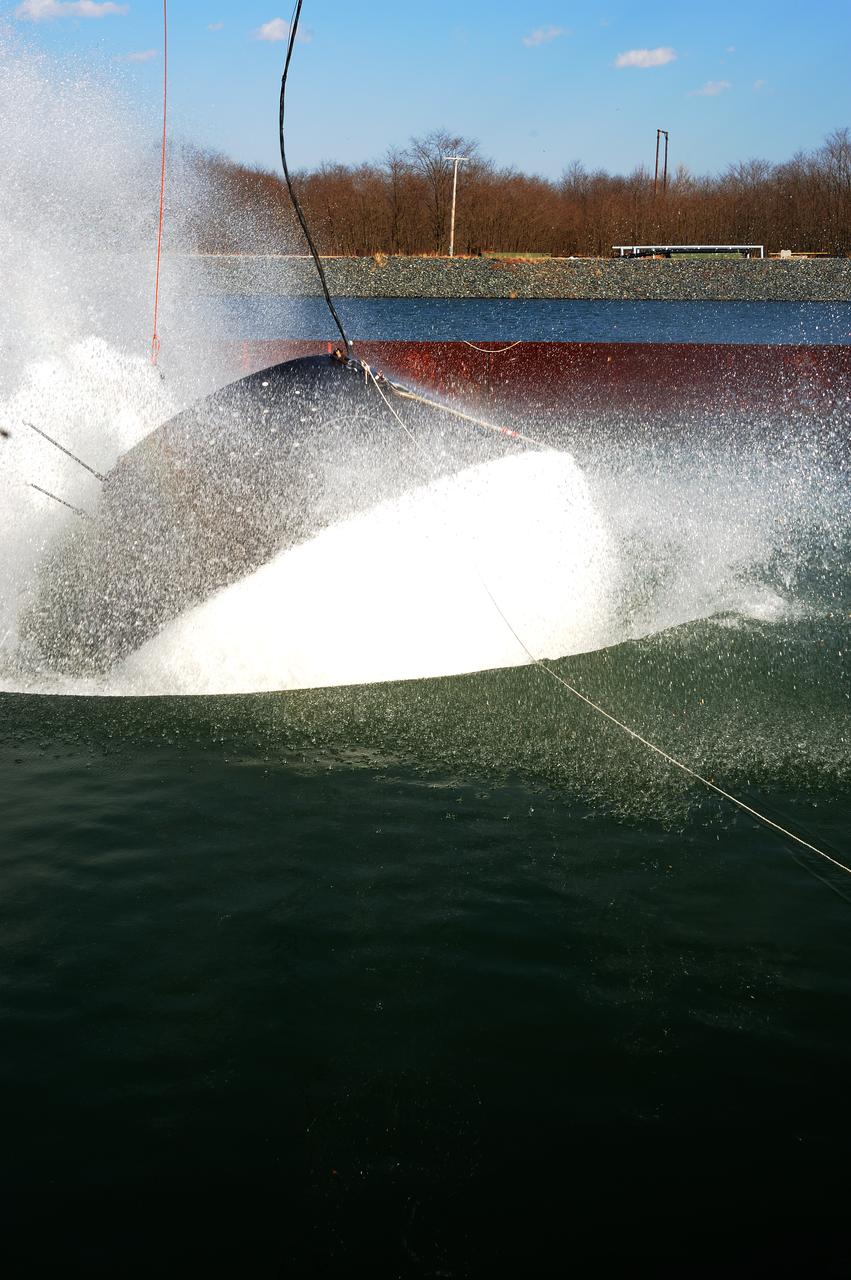
Crew Model Water Landing Module Assessment Photographs taken at Aberdeen Test Facility Aberdeen MD.
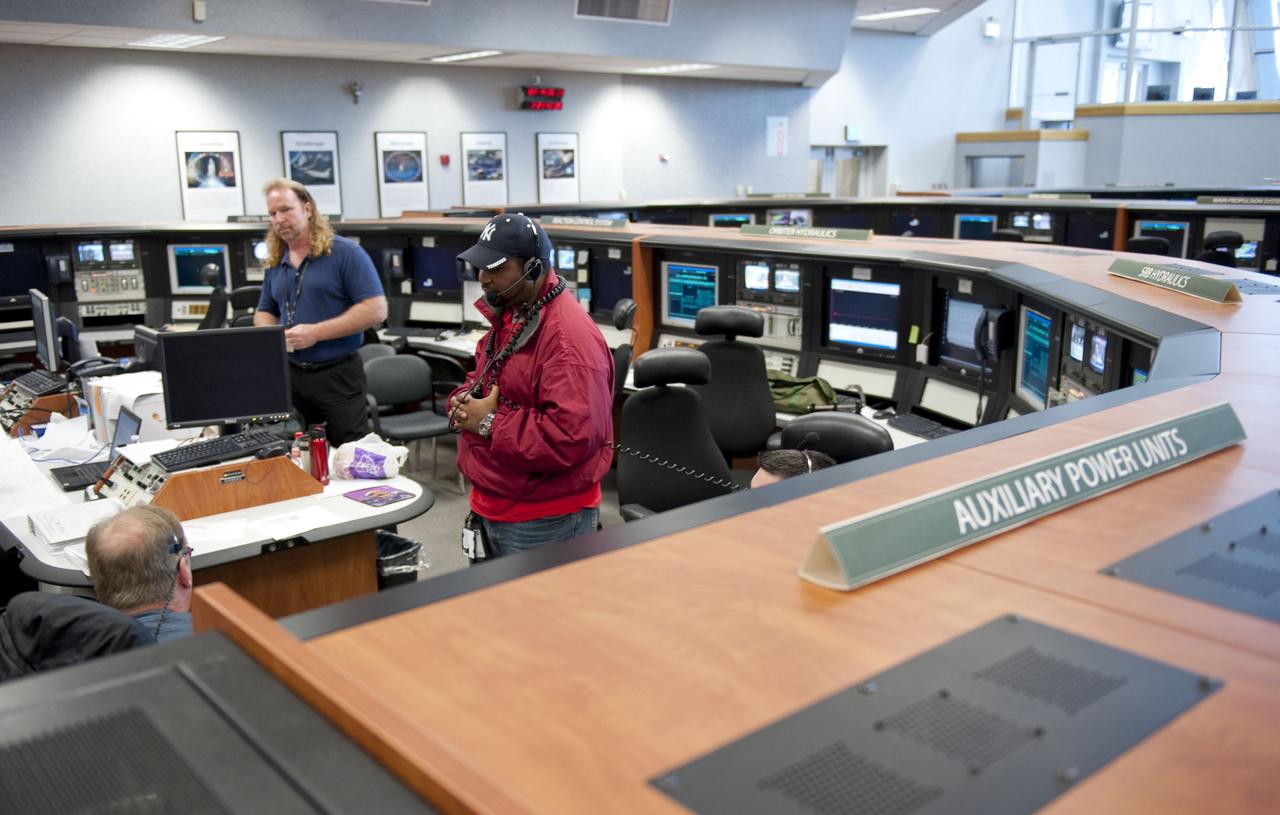
CAPE CANAVERAL, Fla. -- At NASA Kennedy Space Center's Launch Control Center, teams monitor the testing of the Load Control Assembly-2 (LCA-2) located in space shuttle Endeavour's aft section. Located in the orbiter's aft avionics bay 5, the LCA-2 assembly, which feeds power to the fuel line heaters, is believed to have caused the heaters for Endeavour's auxiliary power unit-1 (APU-1) to fail April 29 during the first launch attempt for the STS-134 mission. STS-134 will deliver the Express Logistics Carrier-3, Alpha Magnetic Spectrometer-2 (AMS), a high-pressure gas tank and additional spare parts for the Dextre robotic helper to the International Space Station. The mission also will be the final spaceflight for Endeavour. For more information, visit www.nasa.gov/mission_pages/shuttle/shuttlemissions/sts134/index.html. Photo credit: NASA/Kim Shiflett.
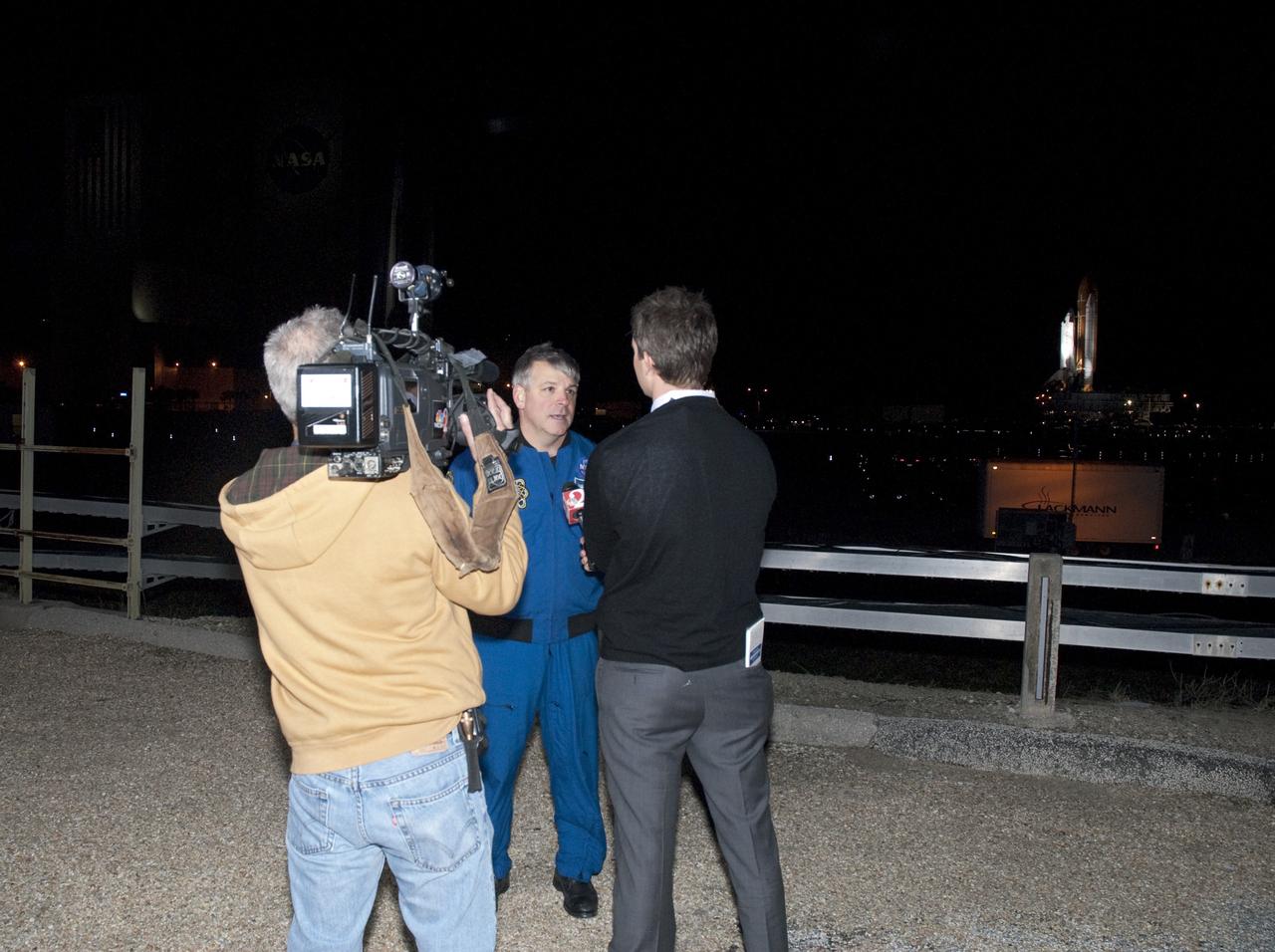
CAPE CANAVERAL, Fla. -- STS-134 Pilot Greg H. Johnson talks to media as the space shuttle that will take Johnson and his crewmates to the International Space Station slowly rolls past. Endeavour began its move from High Bay 3 in the Vehicle Assembly Building to Launch Pad 39A at NASA's Kennedy Space Center in Florida at 7:56 p.m. EST. The 3.4-mile trek, known as "rollout," will take about seven hours to complete. This is the final scheduled rollout for Endeavour, which is attached to its external fuel tank and solid rocket boosters atop a crawler-transporter. STS-134 crew members will deliver the Express Logistics Carrier-3, Alpha Magnetic Spectrometer-2 (AMS), a high-pressure gas tank, additional spare parts for the Dextre robotic helper and micrometeoroid debris shields to the orbiting outpost on the shuttle's final spaceflight. Launch is targeted for April 19 at 7:48 p.m. EDT. For more information visit, www.nasa.gov/mission_pages/shuttle/shuttlemissions/sts134/index.html. Photo credit: NASA/Debbie Odom
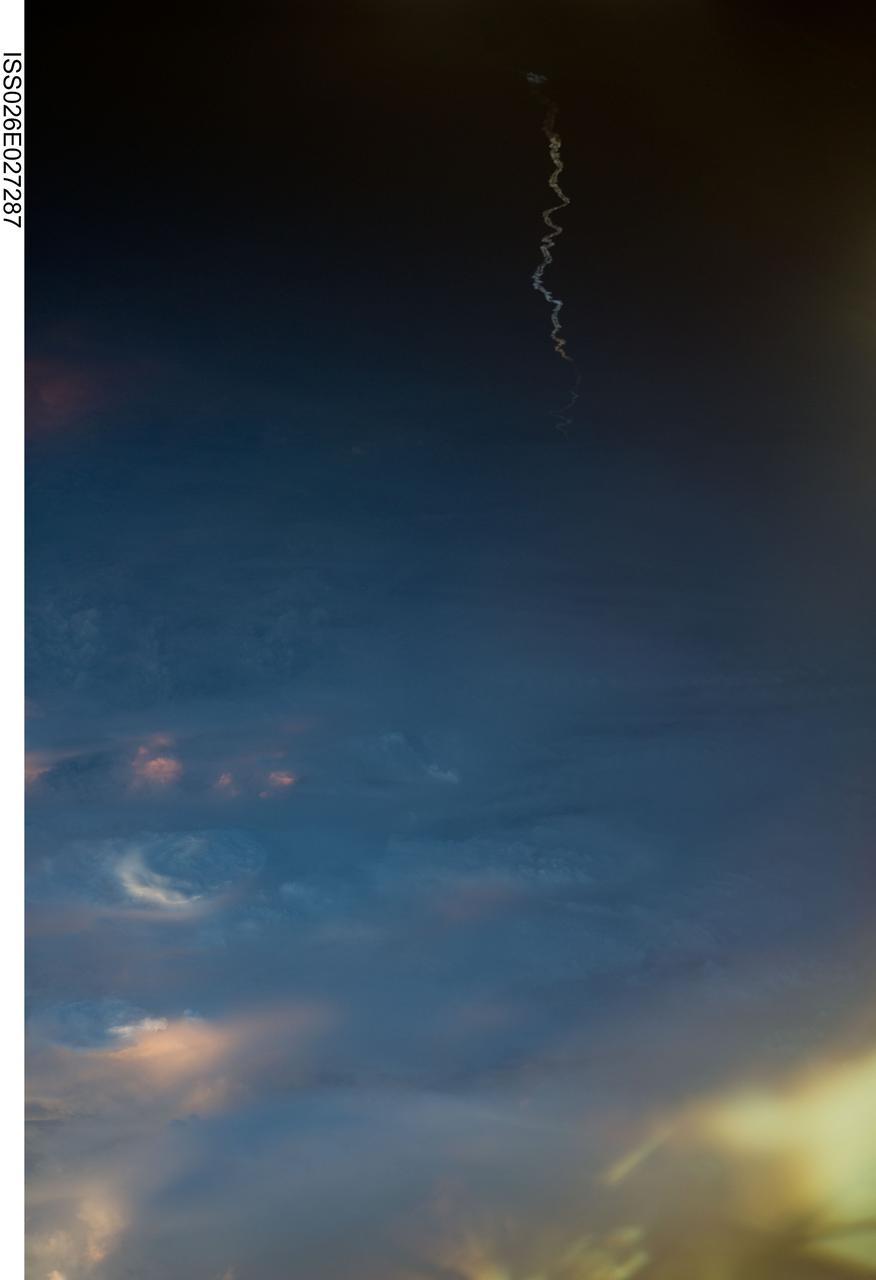
ISS026-E-027287 (16 Feb. 2011) --- The Expedition 26 crew member aboard the International Space Station who snapped this photograph of the Ariane 5 rocket (faint squiggly vertical form in the midst of darkness above the clouds), just after lift off from Europe’s Spaceport in Kourou, French Guiana, and the rest of the crew have a special interest in the occurrence. ESA’s second Automated Transfer Vehicle, Johannes Kepler, was just a short time earlier (21:50 GMT or 18:50 Kourou time on Feb. 16, 2011) launched toward its approaching low orbit destination and its eventual link-up with the ISS. The unmanned supply ship is planned to deliver critical supplies and reboost the space station during its almost four-month mission.

Behold Bartok
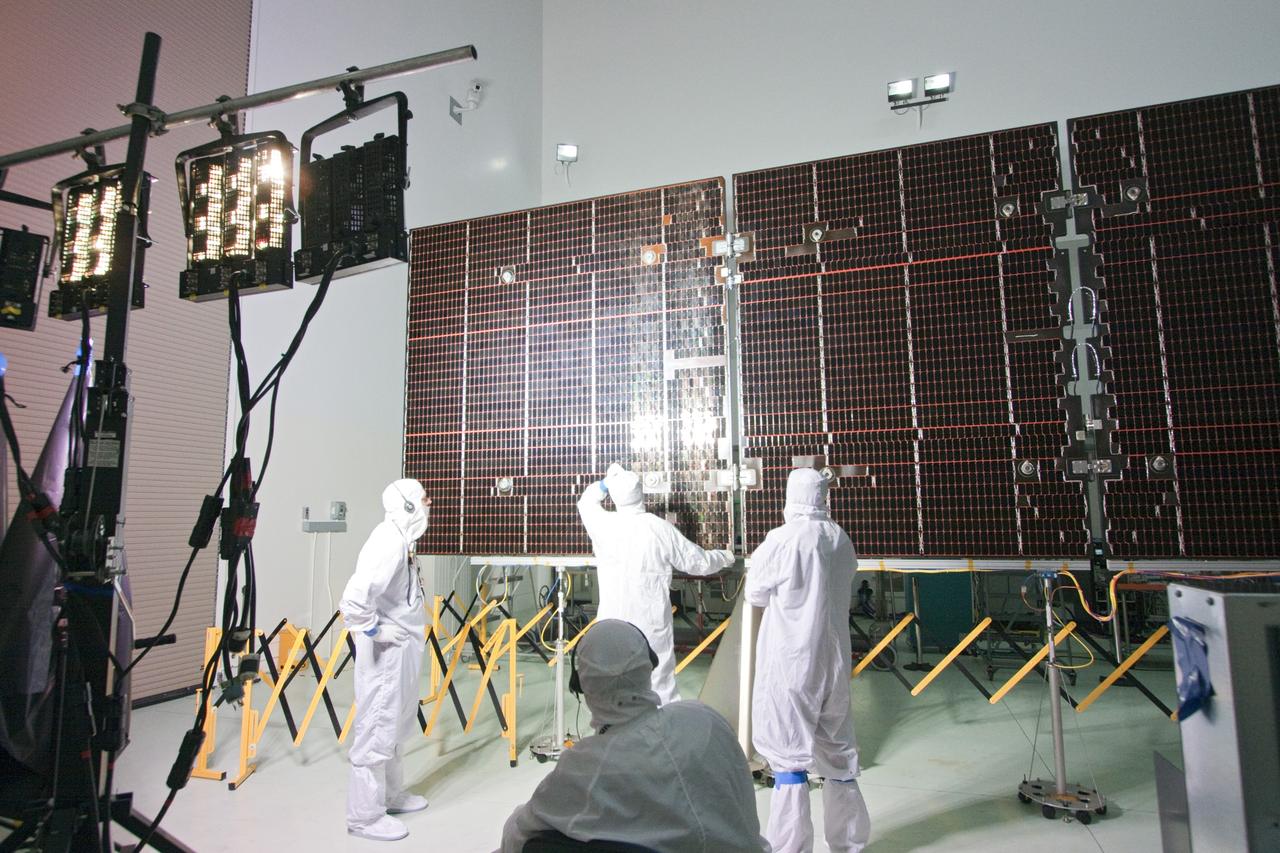
CAPE CANAVERAL, Fla. -- In a clean-room environment at Astrotech's payload processing facility in Titusville, Fla. technicians conduct an illumination test on the solar array panels for NASA's Juno spacecraft. Juno is scheduled to launch aboard a United Launch Alliance Atlas V rocket from Cape Canaveral, Fla. Aug. 5.The solar-powered spacecraft will orbit Jupiter's poles 33 times to find out more about the gas giant's origins, structure, atmosphere and magnetosphere and investigate the existence of a solid planetary core. For more information visit: www.nasa.gov/juno. Photo credit: NASA/Jack Pfaller

NASA Terra spacecraft acquired this image on April 30, 2011, showing flooding along the Mississippi River at its junction with the Des Moines River near Keokuk, Iowa.
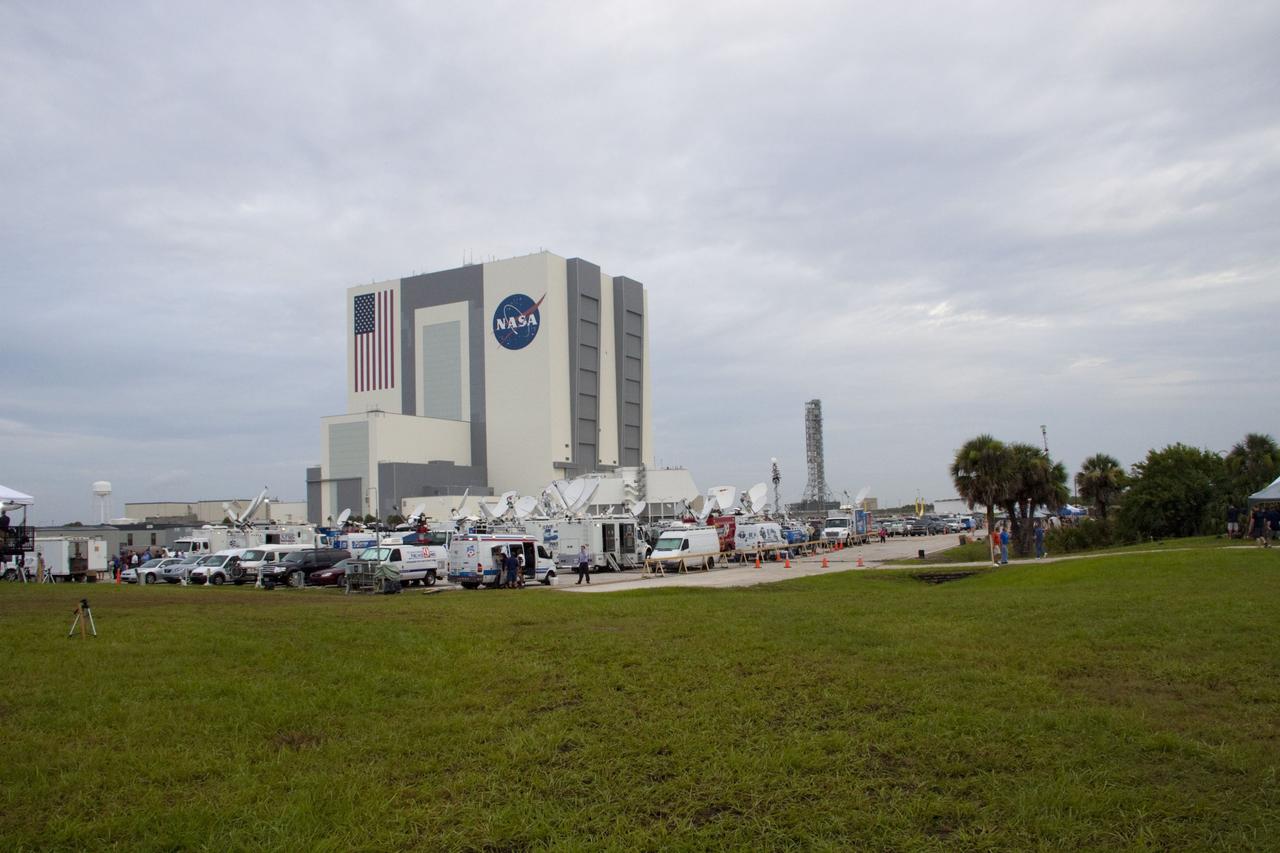
CAPE CANAVERAL, Fla. -- Media from around the globe gather on the grounds of the Press Site at NASA's Kennedy Space Center in Florida to photograph and cover the prelaunch activities and lift off of space shuttle Atlantis on its STS-135 mission to the International Space Station. Dozens of satellite news vehicles can be seen in the parking lot while the massive Vehicle Assembly Building towers above in the background. Atlantis began its final flight, with Commander Chris Ferguson, Pilot Doug Hurley and Mission Specialists Sandy Magnus and Rex Walheim on board, at 11:29 a.m. EDT July 8 to deliver the Raffaello multi-purpose logistics module packed with supplies and spare parts to the station. Also in Atlantis' payload bay is the Robotic Refueling Mission experiment that will investigate the potential for robotically refueling existing satellites in orbit. In addition, Atlantis will return with a failed ammonia pump module to help NASA better understand the failure mechanism and improve pump designs for future systems. STS-135 is the 33rd flight of Atlantis, the 37th shuttle mission to the space station, and the 135th and final mission of NASA's Space Shuttle Program. For more information, visit www.nasa.gov/mission_pages/shuttle/shuttlemissions/sts135/index.html. Photo credit: NASA/Jim Grossmann
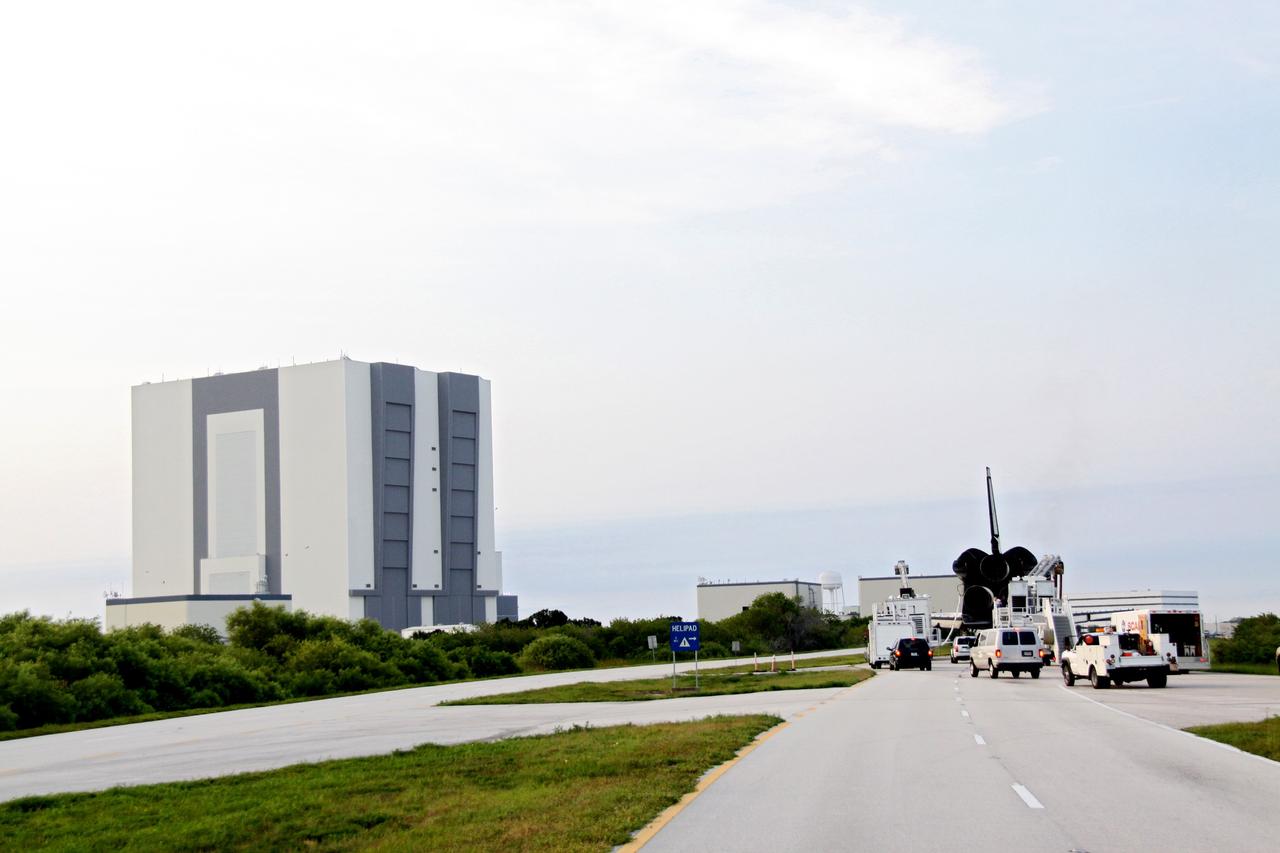
CAPE CANAVERAL, Fla. -- A "towback" vehicle slowly pulls shuttle Endeavour from the Shuttle Landing Facility to Orbiter Processing Facility-1 at NASA's Kennedy Space Center in Florida. A purge unit that pumps conditioned air into a shuttle after landing is connected to Endeavour's aft end. In the background is the massive Vehicle Assembly Building. Once inside the processing facility, Endeavour will be prepared for future public display. Endeavour's final return from space completed the 16-day, 6.5-million-mile STS-134 mission. Main gear touchdown was at 2:34:51 a.m. EDT, followed by nose gear touchdown at 2:35:04 a.m., and wheelstop at 2:35:36 a.m. Endeavour and its crew delivered the Alpha Magnetic Spectrometer-2 (AMS) and the Express Logistics Carrier-3 (ELC-3) to the International Space Station. AMS will help researchers understand the origin of the universe and search for evidence of dark matter, strange matter and antimatter from the station. ELC-3 carried spare parts that will sustain station operations once the shuttles are retired from service. STS-134 was the 25th and final flight for Endeavour, which spent 299 days in space, orbited Earth 4,671 times and traveled 122,883,151 miles. Photo credit: NASA/Jack Pfaller
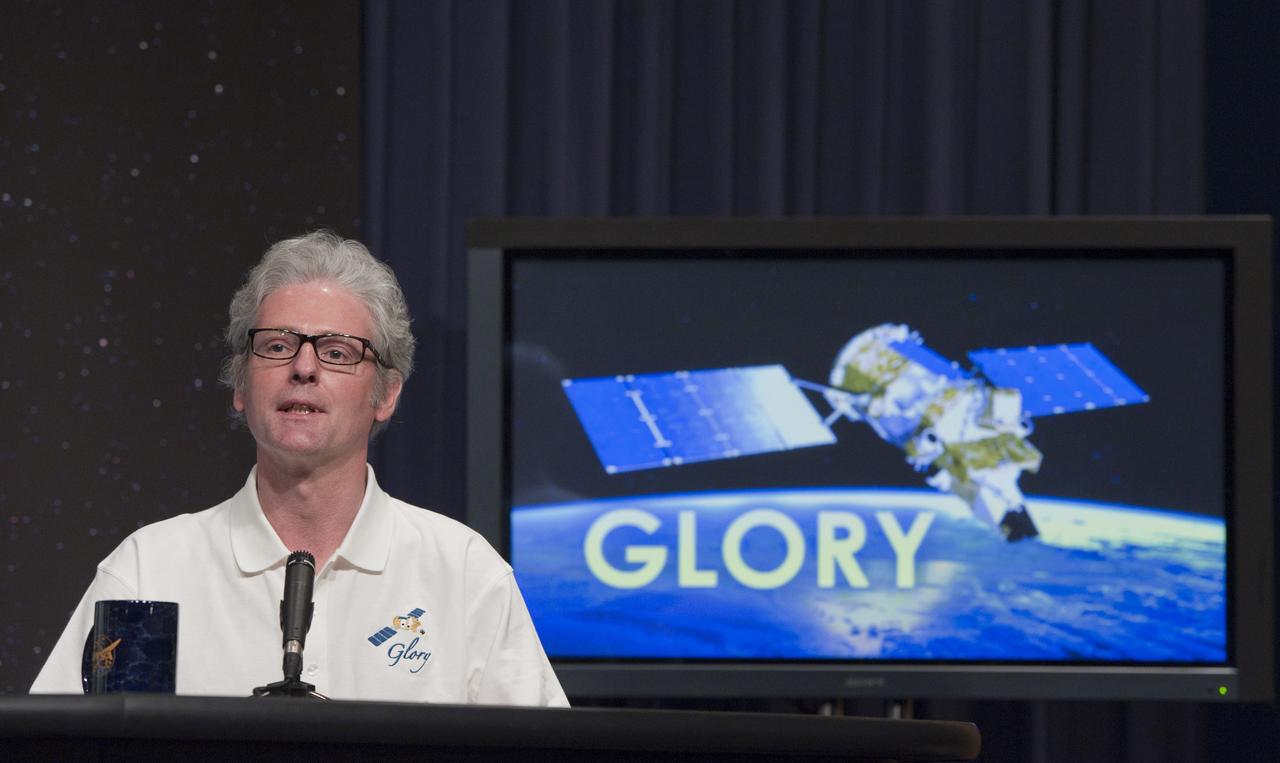
Brian Cairns, from NASA's Goddard Institute for Space Studies, talks about the launch of the GLORY mission during a news conference at NASA Headquarters, Thursday, Jan. 20, 2011, in Washington. NASA's newest Earth-observing research mission is scheduled for launch form Vandenburg Air Force Base in California on Feb. 23. The mission will improve our understanding of how the sun and tiny atmosppheric particles called aerosols affect Earth's climate. Photo Credit: (NASA/Paul E. Alers)
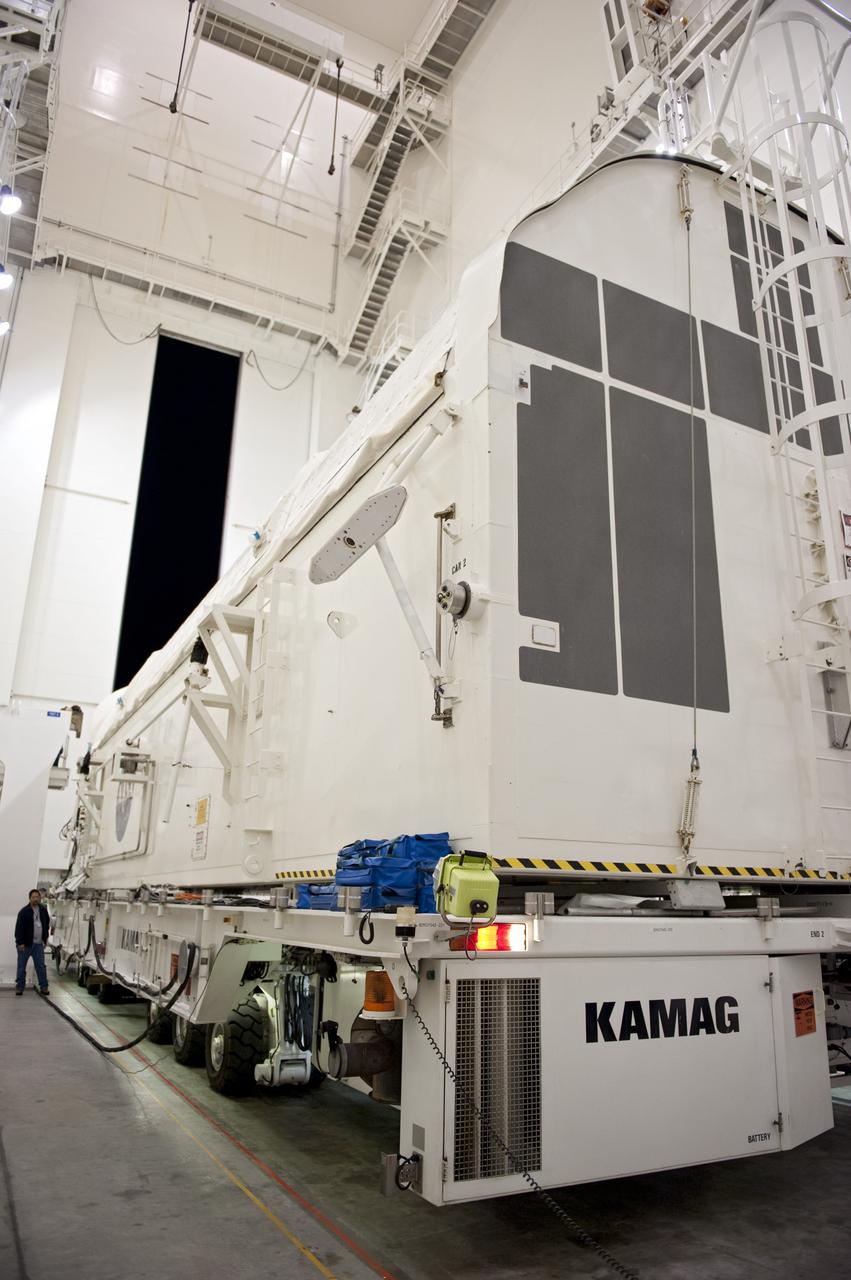
CAPE CANAVERAL, Fla. -- A canister, carrying the Alpha Magnetic Spectrometer-2 AMS and Express Logistics Carrier-3 for space shuttle Endeavour's STS-134 mission, enters the Canister Rotation Facility from the Space Station Processing Facility at NASA's Kennedy Space Center in Florida. There, the canister that protects the space-bound payload will be rotated from a horizontal to vertical position so that it can be installed into Endeavour's payload bay. AMS is a particle physics detector, designed to operate as an external experiment on the International Space Station. It will use the unique environment of space to study the universe and its origin by searching for dark matter. AMS-2 will fly to the station aboard Endeavour's STS-134 mission targeted to launch April 19 at 7:48 p.m. EDT. For more information visit, www.nasa.gov/mission_pages/shuttle/shuttlemissions/sts134/index.html. Photo credit: NASA/Kim Shiflett
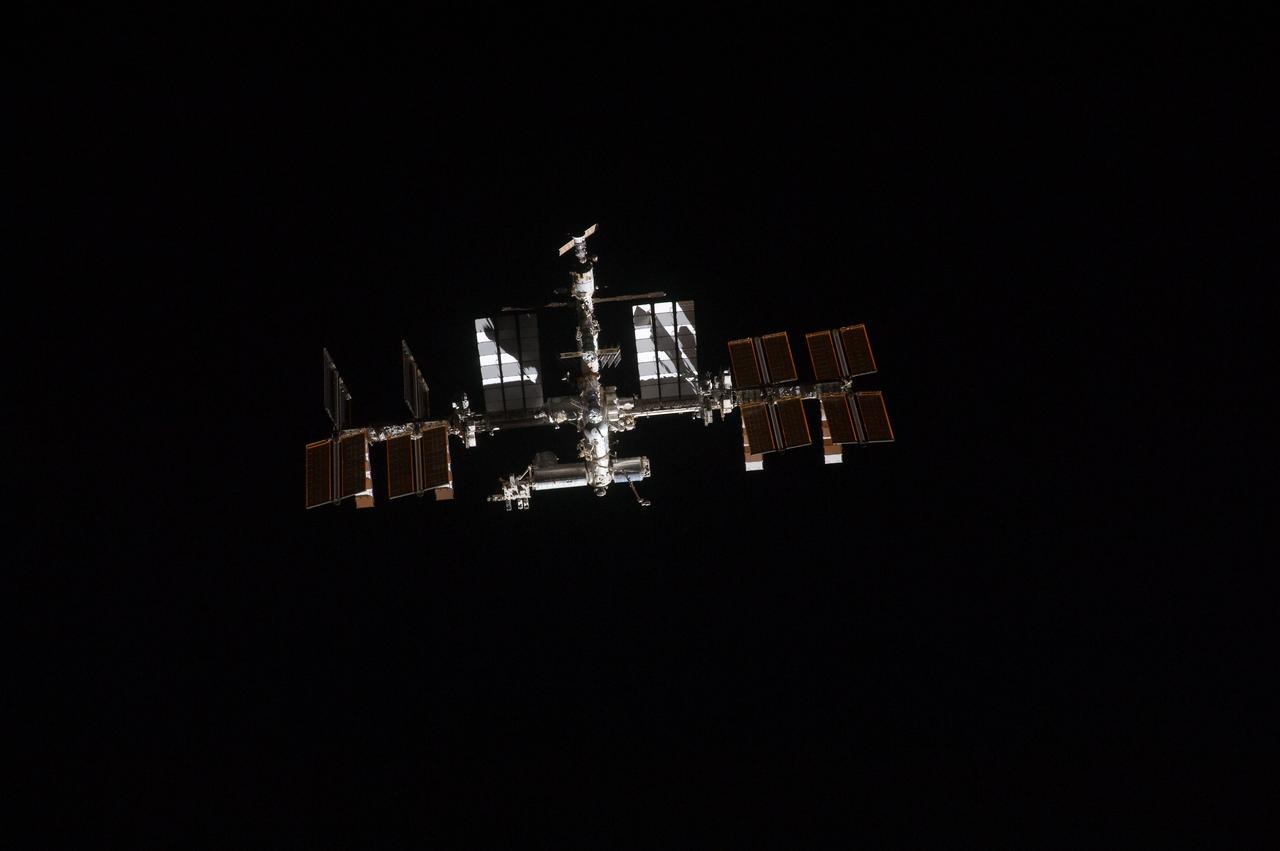
S135-E-006702 (10 July 2011) --- This is one of a series of images showing the International Space Station photographed by a crewmember onboard the space shuttle Atlantis as the two spacecraft performed rendezvous and docking operations on the STS-135 mission's third day in Earth orbit. Photo credit: NASA
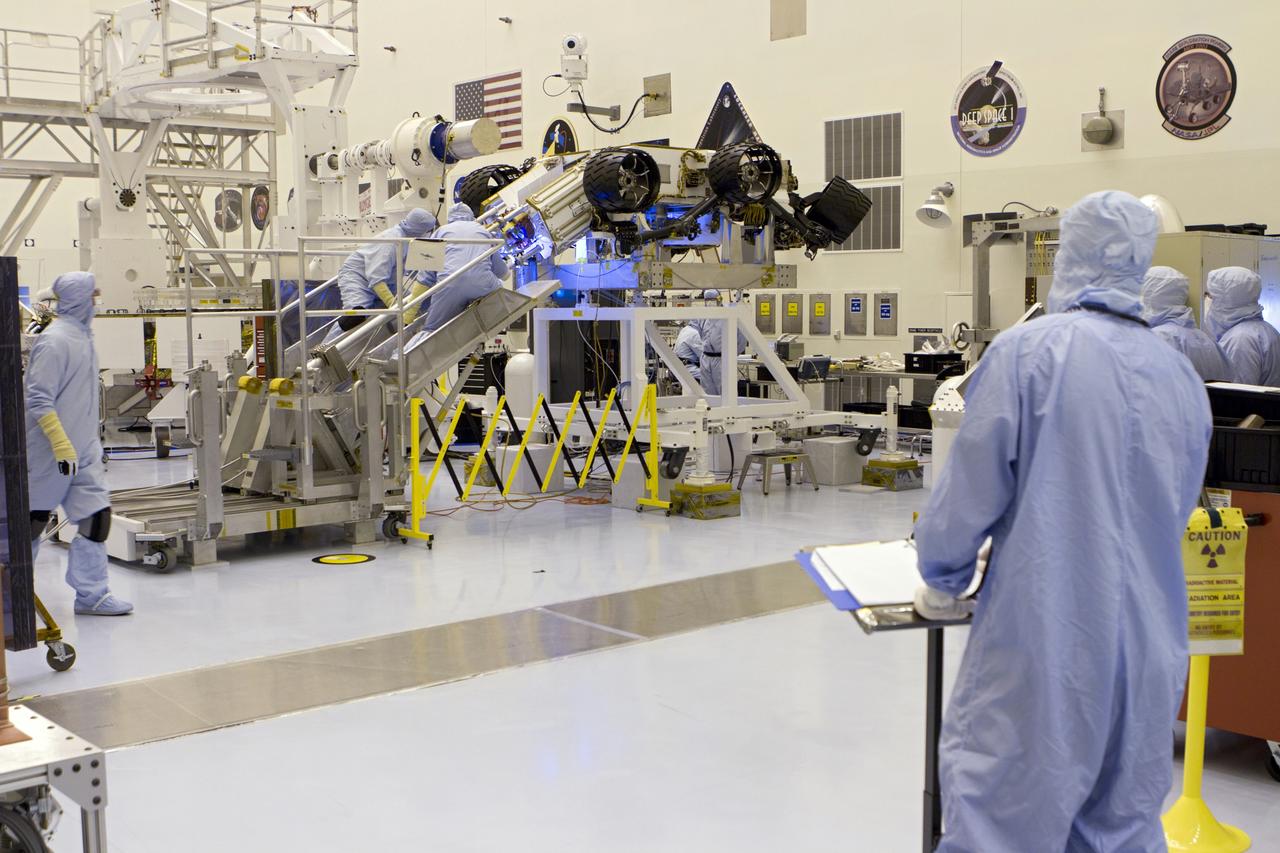
CAPE CANAVERAL, Fla. -- In the high bay of the Payload Hazardous Servicing Facility (PHSF) at NASA's Kennedy Space Center in Florida, spacecraft technicians from NASA's Jet Propulsion Laboratory transfer the multi-mission radioisotope thermoelectric generator (MMRTG) for NASA's Mars Science Laboratory (MSL) mission onto the aft of the Curiosity rover for a fit check with the aid of the MMRTG integration cart. The MMRTG then will be removed and installed on the rover for launch at the pad. The MMRTG will generate the power needed for the mission from the natural decay of plutonium-238, a non-weapons-grade form of the radioisotope. Heat given off by this natural decay will provide constant power through the day and night during all seasons. Curiosity, MSL's car-sized rover, has 10 science instruments designed to search for signs of life, including methane, and help determine if the gas is from a biological or geological source. Waste heat from the MMRTG will be circulated throughout the rover system to keep instruments, computers, mechanical devices and communications systems within their operating temperature ranges. Launch of MSL aboard a United Launch Alliance Atlas V rocket is planned for Nov. 25 from Space Launch Complex 41 on Cape Canaveral Air Force Station. For more information, visit http://www.nasa.gov/msl. Photo credit: NASA/Cory Huston
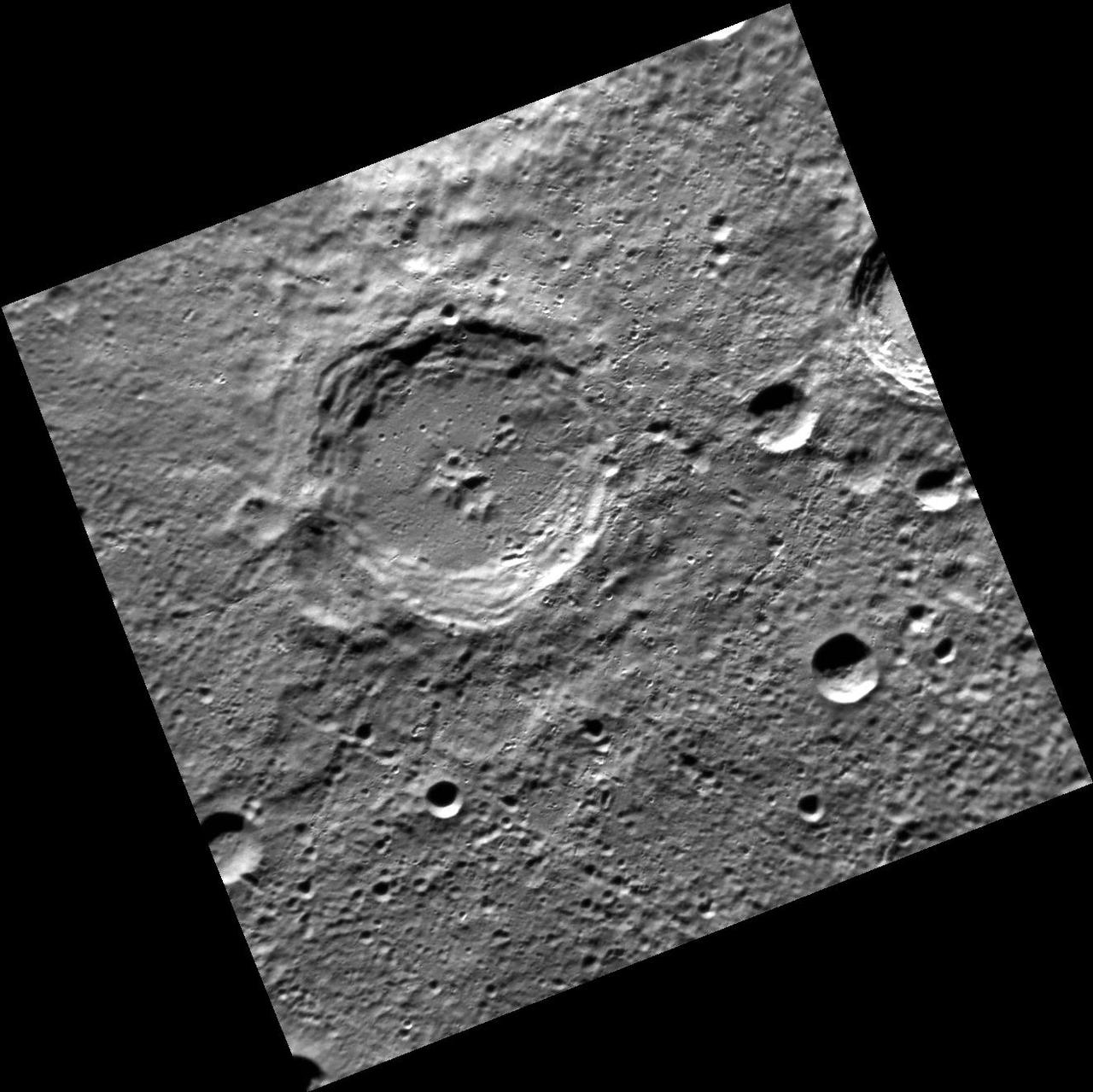
A Christmas Crater
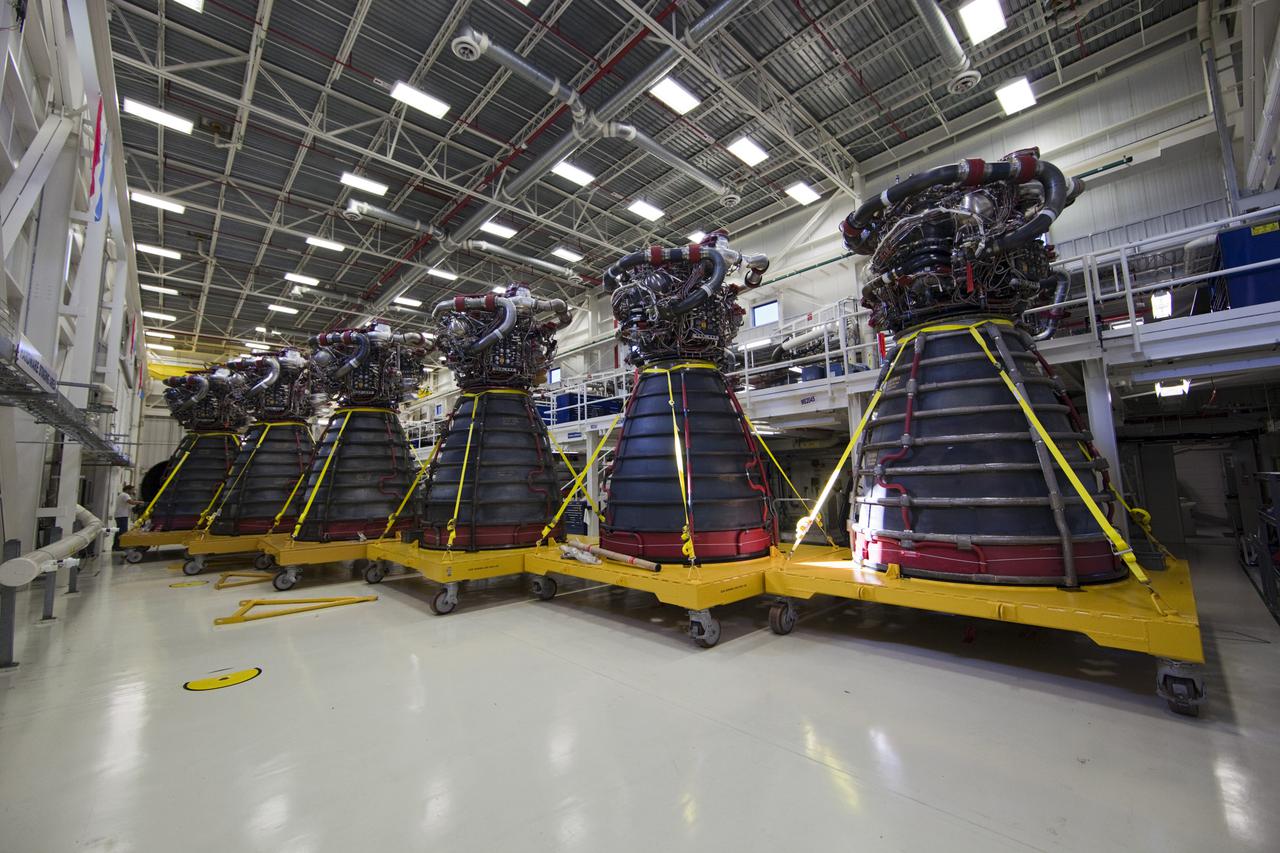
CAPE CANAVERAL, Fla. – Lined up in a row, six Pratt Whitney Rocketdyne space shuttle main engines (SSMEs) sit on stands inside the Engine Shop at NASA’s Kennedy Space Center in Florida. For the first time, all 15 main engines are in the Engine Shop at the same time. They are being prepared for shipment to NASA's Stennis Space Center in Mississippi for storage following the completion of the Space Shuttle Program. The engines are being repurposed for use on NASA’s Space Launch System heavy lift rocket. Photo credit: NASA_Dimitri Gerondidakis
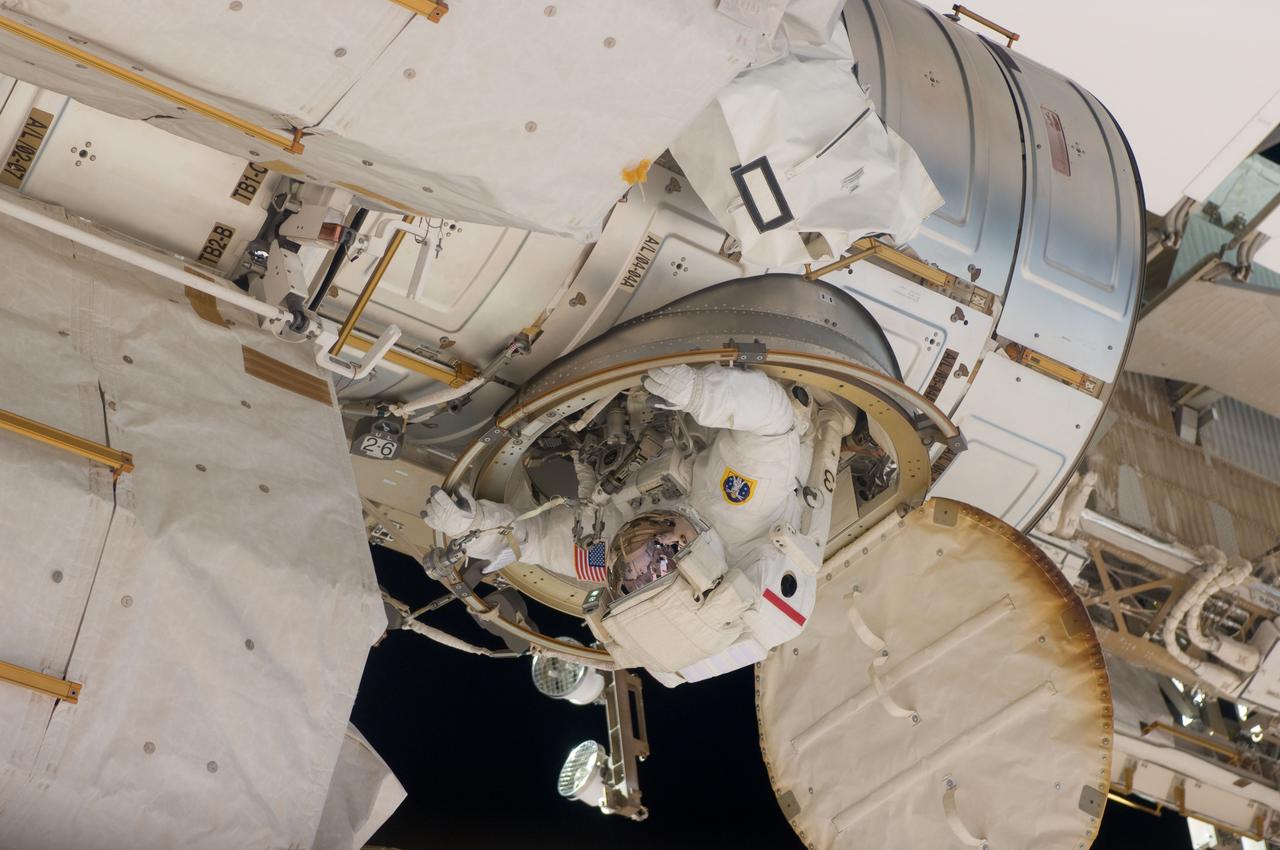
ISS027-E-035296(20 May 2011) --- NASA astronaut Andrew Feustel, mission specialist, ingresses the airlock hatch on the International Space Station (ISS) at the completion of the STS-134 mission's first of four space walks. Astronauts Feustel and Greg Chamitoff (out of frame), fellow mission specialist, accomplished several tasks on the ISS.
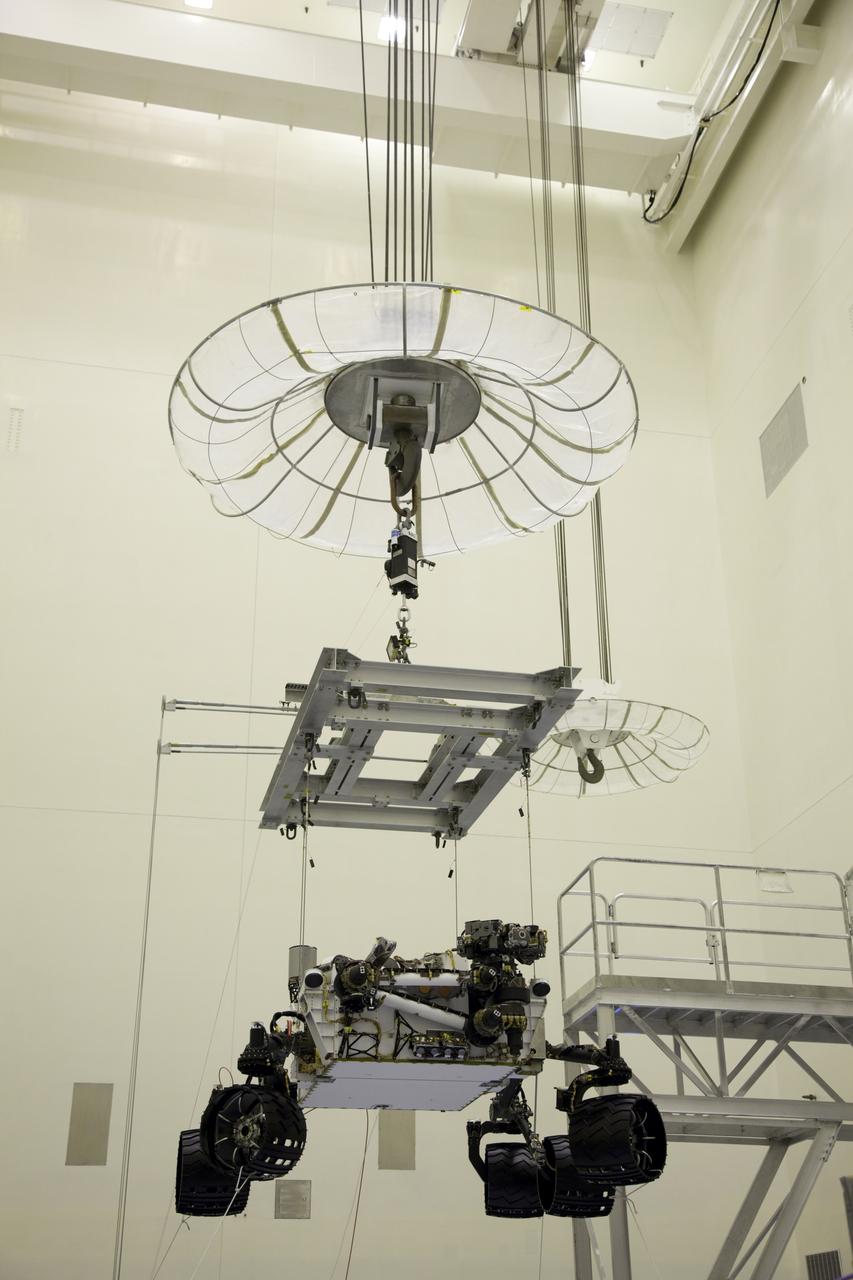
Cape Canaveral, Fla. -- Technicians, at the Payload Hazardous Servicing Facility at NASA's Kennedy Space Center in Florida, use an overhead crane to move NASA's Mars Science Laboratory (MSL) rover, known as Curiosity, to the high bay floor where the instrument mast and science boom will undergo deployment testing. A United Launch Alliance Atlas V-541 configuration will be used to loft MSL into space. Curiosity’s 10 science instruments are designed to search for evidence on whether Mars has had environments favorable to microbial life, including chemical ingredients for life. The unique rover will use a laser to look inside rocks and release its gasses so that the rover’s spectrometer can analyze and send the data back to Earth. MSL is scheduled to launch from Cape Canaveral Air Force Station in Florida Nov. 25 with a window extending to Dec. 18 and arrival at Mars Aug. 2012. For more information, visit http://www.nasa.gov/msl. Photo credit: NASA/Frankie Martin
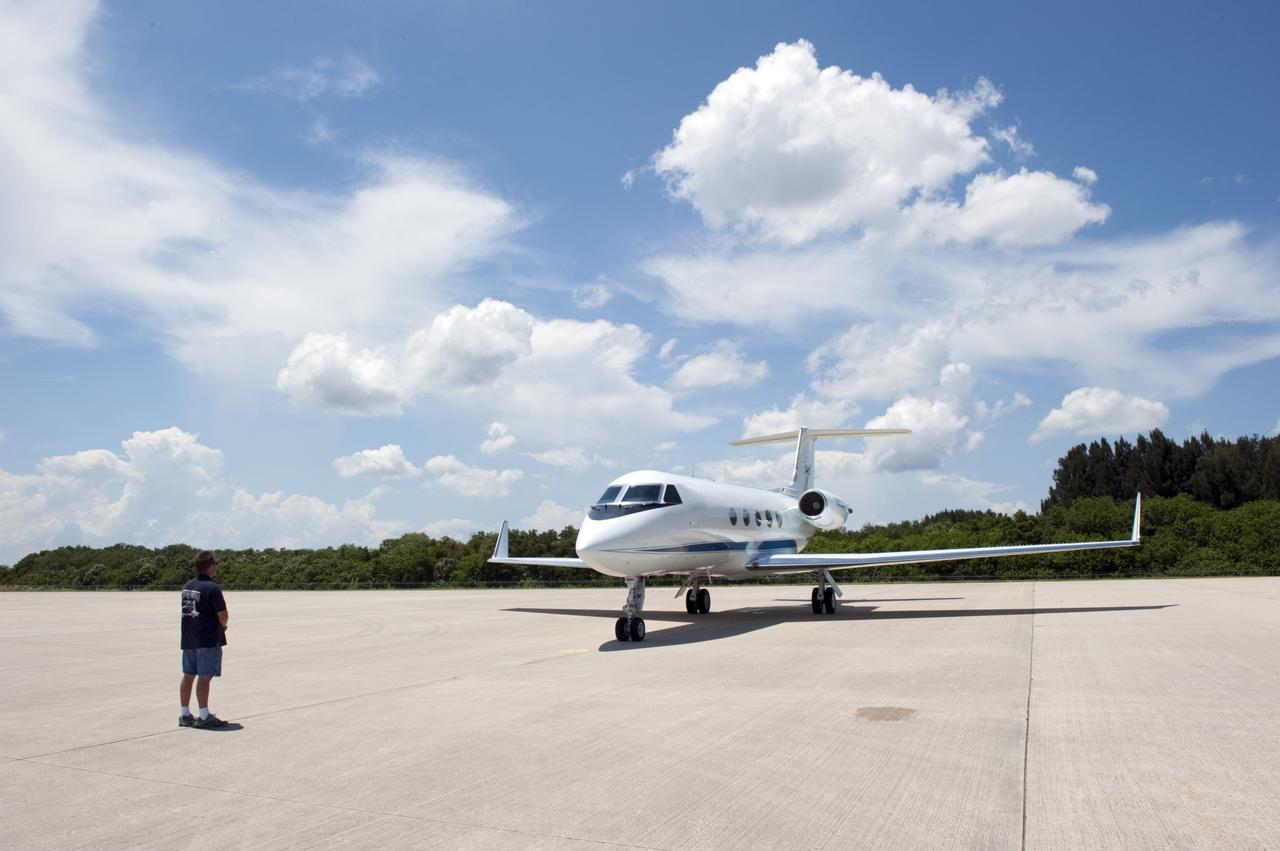
CAPE CANAVERAL, Fla. -- At NASA Kennedy Space Center's Shuttle Landing Facility, a Gulfstream III jet is preparing to take off with space shuttle Atlantis' four STS-135 astronauts and their families for the return trip home to NASA's Johnson Space Center in Houston. Space shuttle Atlantis and its crew touched down on Kennedy's Shuttle Landing Facility runway 5:57 a.m., July 21, 2011, bringing a close to 30 years of space shuttle missions. Securing the space shuttle fleet's place in history, Atlantis marked the 26th nighttime landing of the Space Shuttle Program and the 78th landing at Kennedy. Atlantis and its crew delivered to the International Space Station the Raffaello multi-purpose logistics module packed with more than 9,400 pounds of spare parts, equipment and supplies that will sustain station operations for the next year. STS-135 was the 33rd and final flight for Atlantis and the final mission of the Space Shuttle Program. For more information, visit www.nasa.gov/mission_pages/shuttle/shuttlemissions/sts135/index.html. Photo credit: NASA/Kim Shiflett