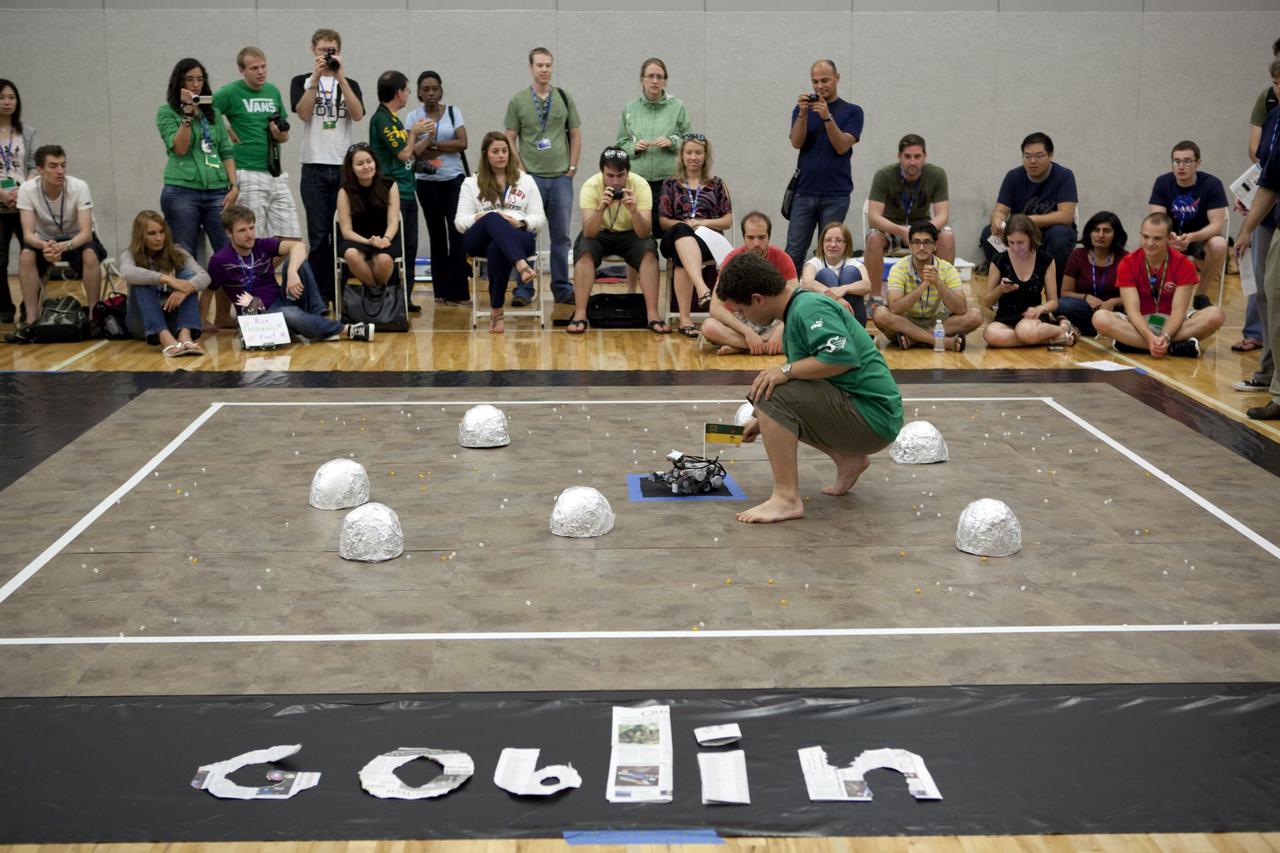
MELBOURNE, Fla. – Students and faculty watch as a robot takes part in a competition during the International Space University's Space Studies Program 2012 session inside a gymnasium at the Florida Institute of Technology in Melbourne, Fla. Photo credit: NASA/Dmitri Gerondidakis
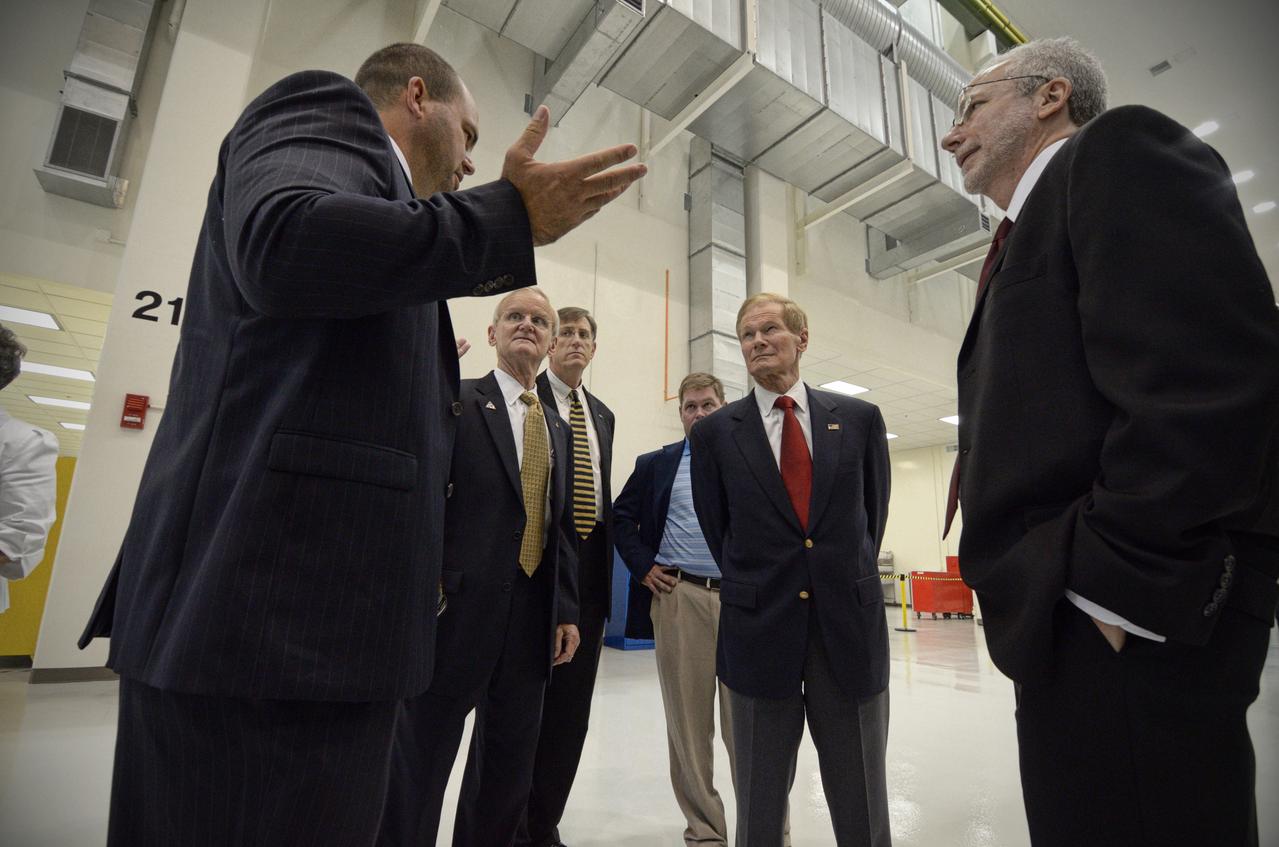
The Orion crew module pressure vessel for Exploration Flight Test-1 (EFT-1) is unveiled at a ceremony at the Operations and Checkout (O&C) Building at NASA’s Kennedy Space Center in Florida on July 2, 2012. Orion Program Manager Mark Geyer is visible talking to others. Part of Batch image transfer from Flickr.
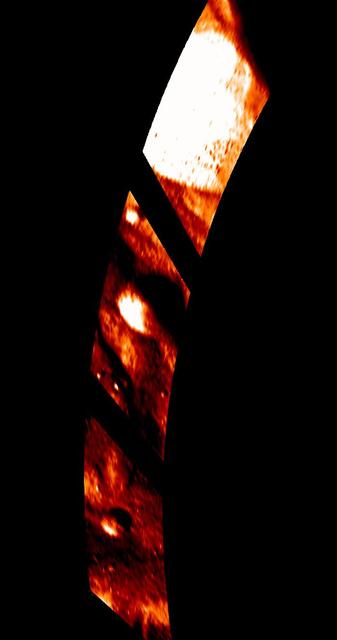
This colorized image from the visible and infrared mapping spectrometer onboard NASA Dawn spacecraft shows temperature variations at Tarpeia crater, near the south pole of the giant asteroid Vesta.
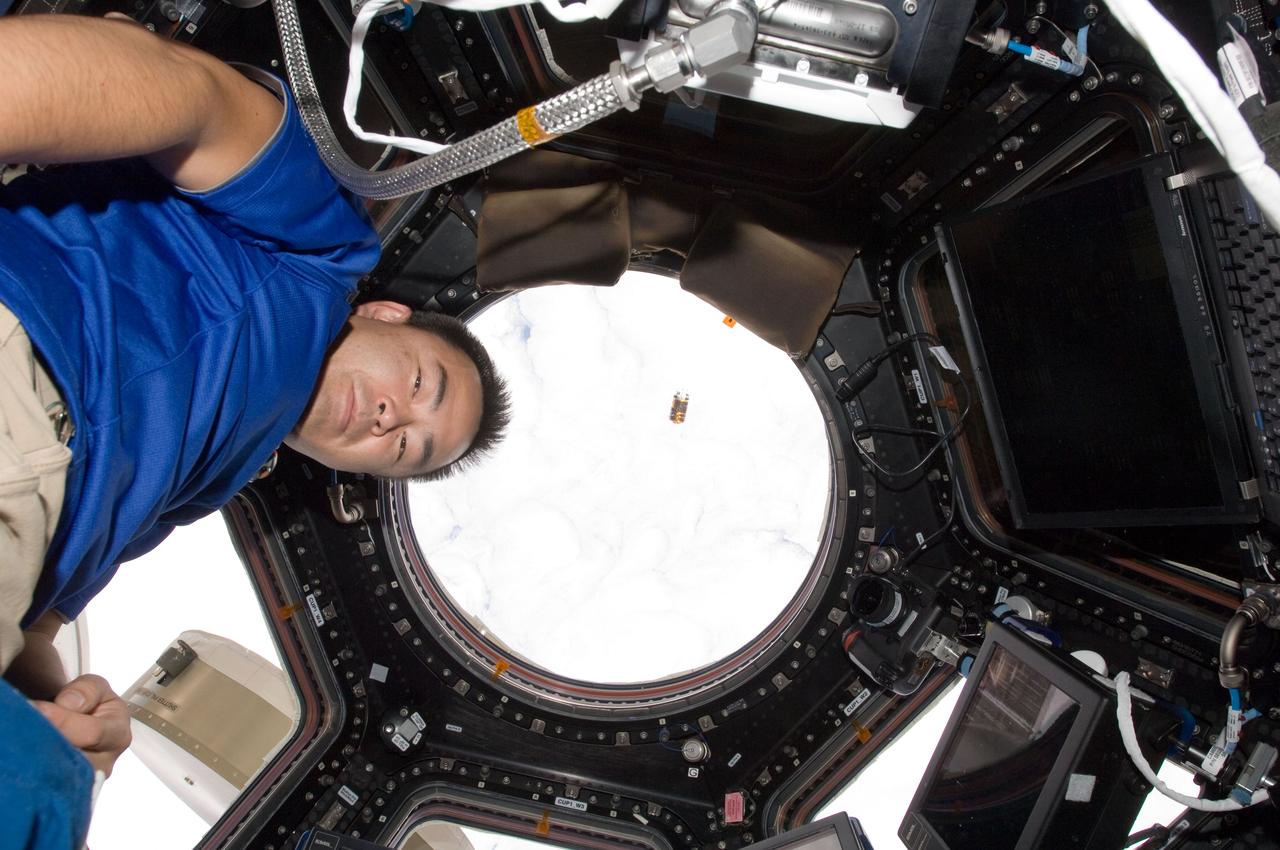
ISS032-E-010583 (27 July 2012) --- Japan Aerospace Exploration Agency astronaut Aki Hoshide is pictured near the windows in the International Space Station?s Cupola as the unpiloted Japan Aerospace Exploration Agency (JAXA) H-II Transfer Vehicle (HTV-3) approaches the station. Hoshide and NASA astronaut Joe Acaba (out of frame), both Expedition 32 flight engineers, used the station's Canadarm2 robotic arm to capture and berth the HTV-3 to the Earth-facing port of the station's Harmony node. The attachment was completed at 10:34 a.m. (EDT) on July 27, 2012.
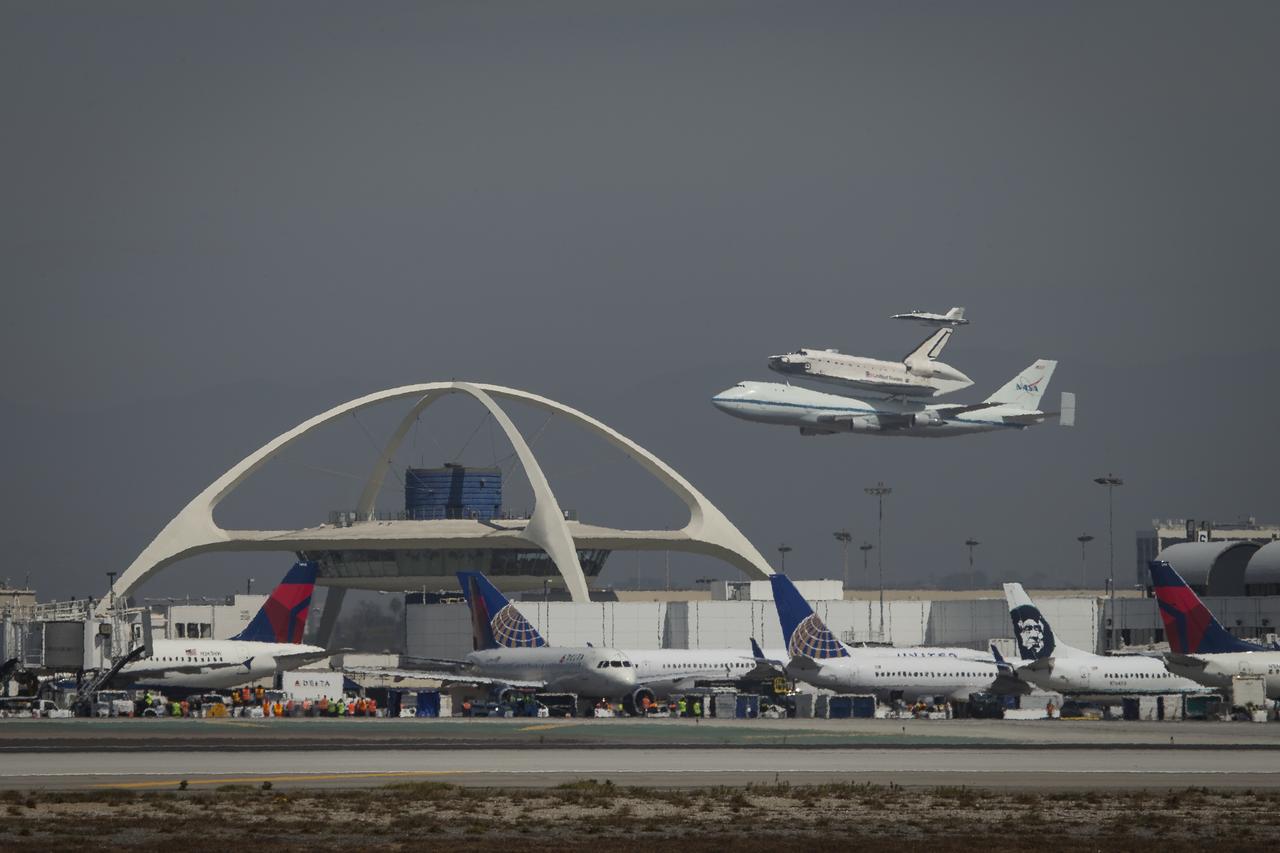
Space shuttle Endeavour, mounted atop a NASA 747 Shuttle Carrier Aircraft (SCA) performs a flyby of the Theme Building at Los Angeles International Airport, Friday, Sept. 21, 2012. Endeavour, built as a replacement for space shuttle Challenger, completed 25 missions, spent 299 days in orbit, and orbited Earth 4,671 times while traveling 122,883,151 miles. Beginning Oct. 30, the shuttle will be on display in the California Science center's Samuel Oschin Space Shuttle Endeavour Display Pavilion, embarking on its new mission to commemorate past achievements in space and educate and inspire future generations of explorers.Photo Credit: (NASA/Scott Andrews)
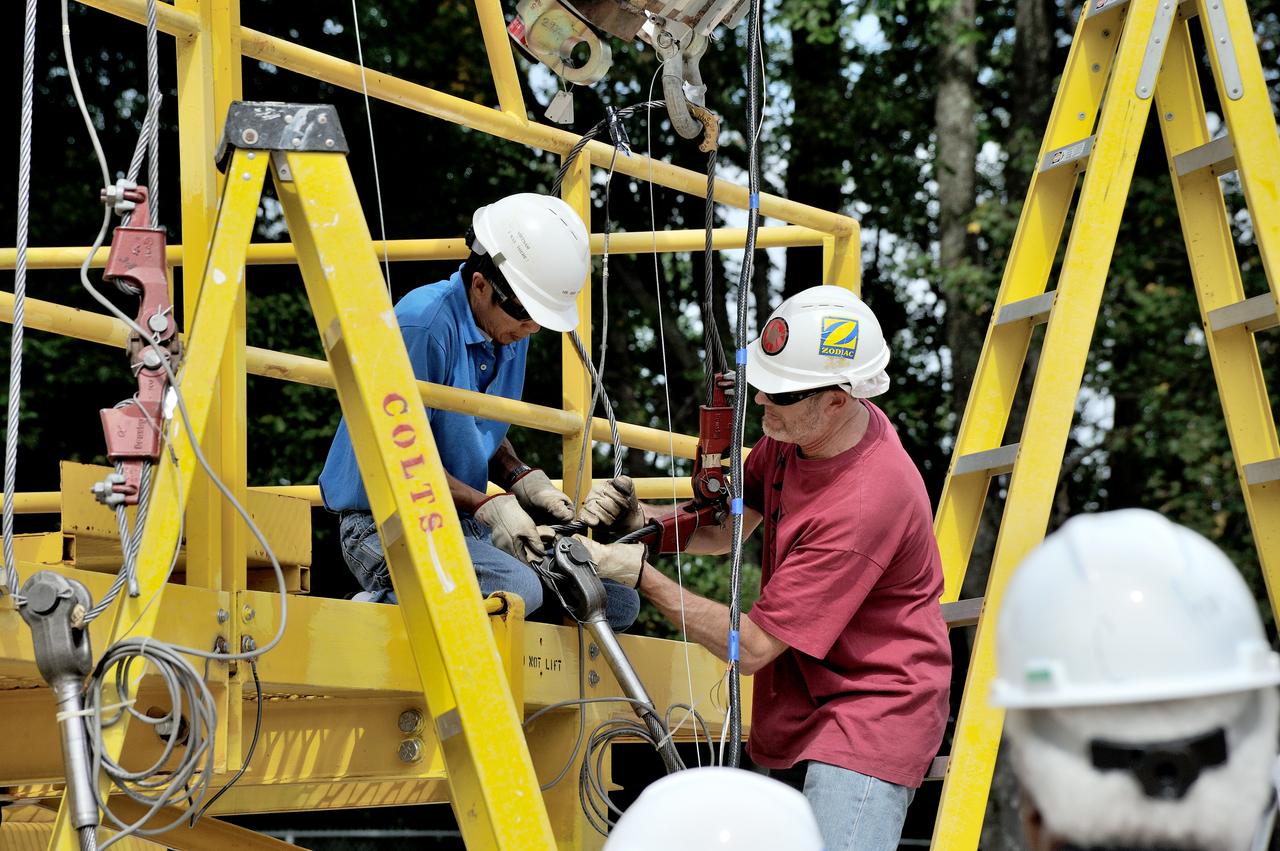
SPLASH P1 Test 7 Swing Test: Documentation of preparation, set up and results of full scale BTA (Boilerplate Test Article) vertical drop test series performed in 2012 at the LaRC Hydro Impact Basin (HIB)
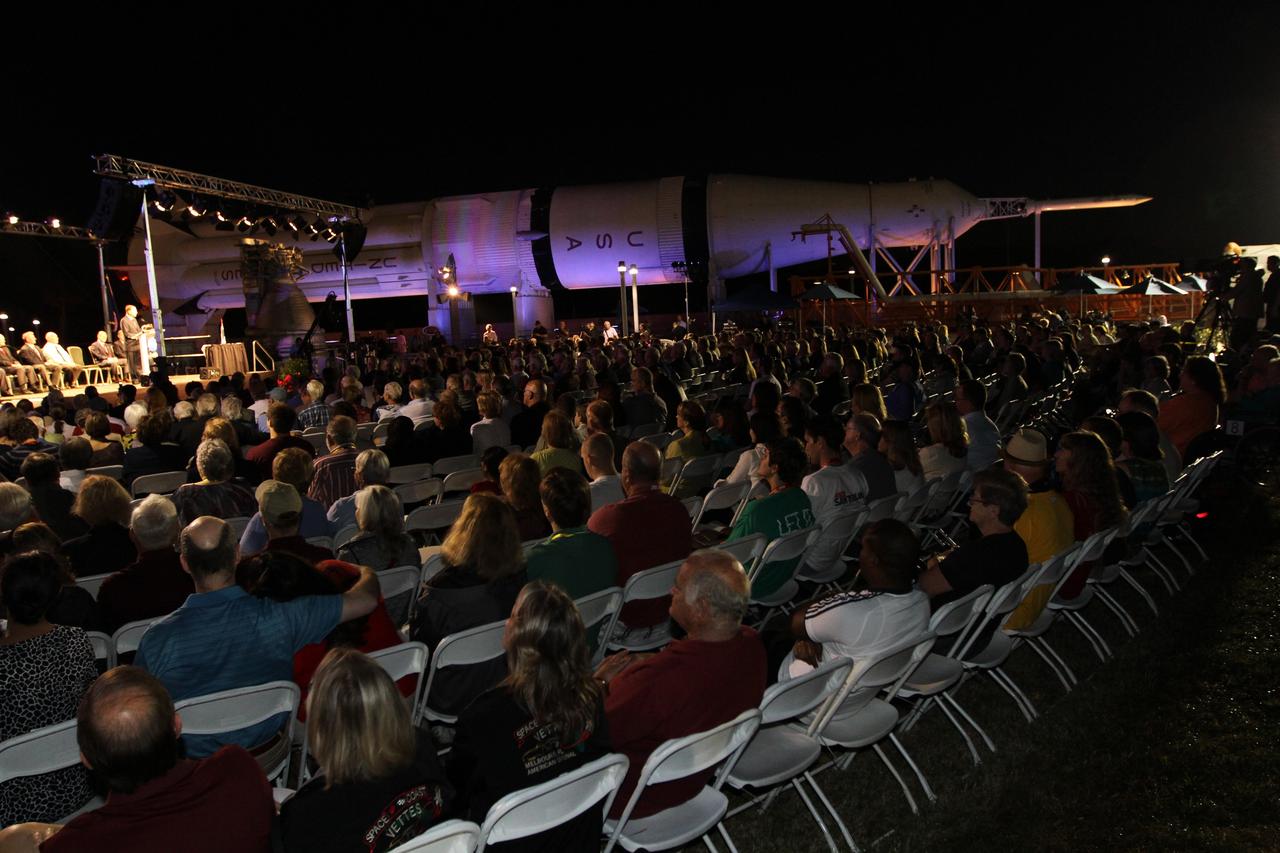
CAPE CANAVERAL, Fla. -- A crowd looks on during the "On Shoulders of Giants" program celebrating 50 years of Americans in orbit, an era which began with John Glenn's MA-6 mission on Feb. 20, 1962. The event was conducted in the Rocket Garden at the Kennedy Space Center Visitor Complex in Florida a few miles from the launch pad where Glenn and Scott Carpenter took flight in Mercury spacecraft. Glenn's launch aboard an Atlas rocket took with it the hopes of an entire nation and ushered in a new era of space travel that eventually led to Americans walking on the moon by the end of the 1960s. Glenn soon was followed into orbit by Scott Carpenter, Walter Schirra and Gordon Cooper. Their fellow Mercury astronauts Alan Shepard and Virgil "Gus" Grissom flew earlier suborbital flights. Deke Slayton, a member of NASA's original Mercury 7 astronauts, was grounded by a medical condition until the Apollo-Soyuz Test Project in 1975. Photo credit: Kim Shiflett
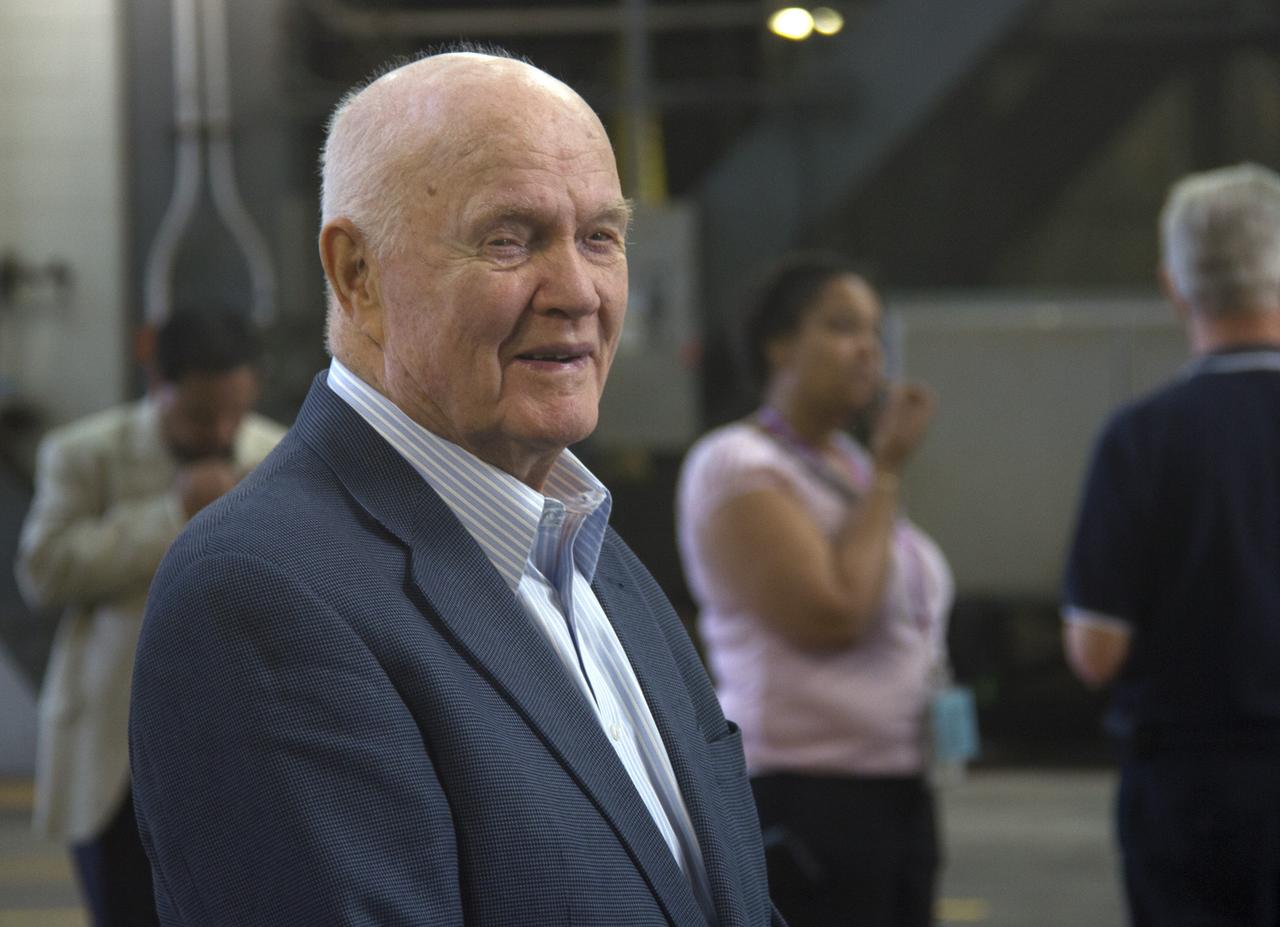
CAPE CANAVERAL, Fla. -- John Glenn tours the Vehicle Assembly Building at NASA's Kennedy Space Center in Florida. Glenn is at the space center to mark the 50th anniversary of being the first American astronaut to orbit the Earth inside the NASA Mercury Project's Friendship 7 capsule on Feb. 20, 1962. Glenn later returned to space in October 1998 as a payload specialist aboard space shuttle Discovery's STS-95 mission. Glenn's launch aboard an Atlas rocket took with it the hopes of an entire nation and ushered in a new era of space travel that eventually led to Americans walking on the moon by the end of the 1960s. Glenn soon was followed into orbit by Scott Carpenter, Walter Schirra and Gordon Cooper. Their fellow Mercury astronauts Alan Shepard and Virgil "Gus" Grissom flew earlier suborbital flights. Deke Slayton, a member of NASA's original Mercury 7 astronauts, was grounded by a medical condition until the Apollo-Soyuz Test Project in 1975. Photo credit: Cory Huston
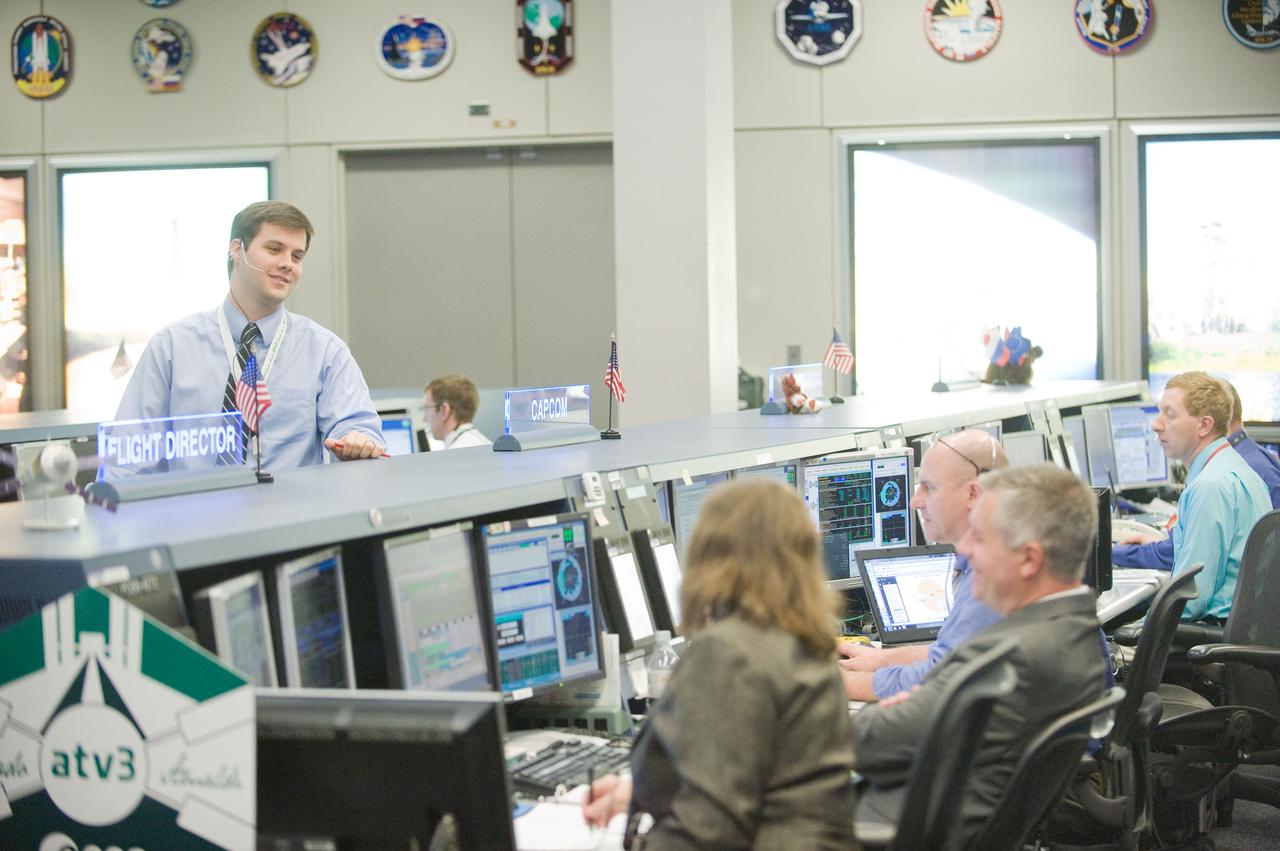
PHOTO DATE: 03-28-12 LOCATION: Bldg. 30 - FCR-1 (30M/231) SUBJECT: Expedition 30 flight control team during docking of ESA's ATV vehicle to ISS. PHOTOGRAPHER: BILL STAFFORD
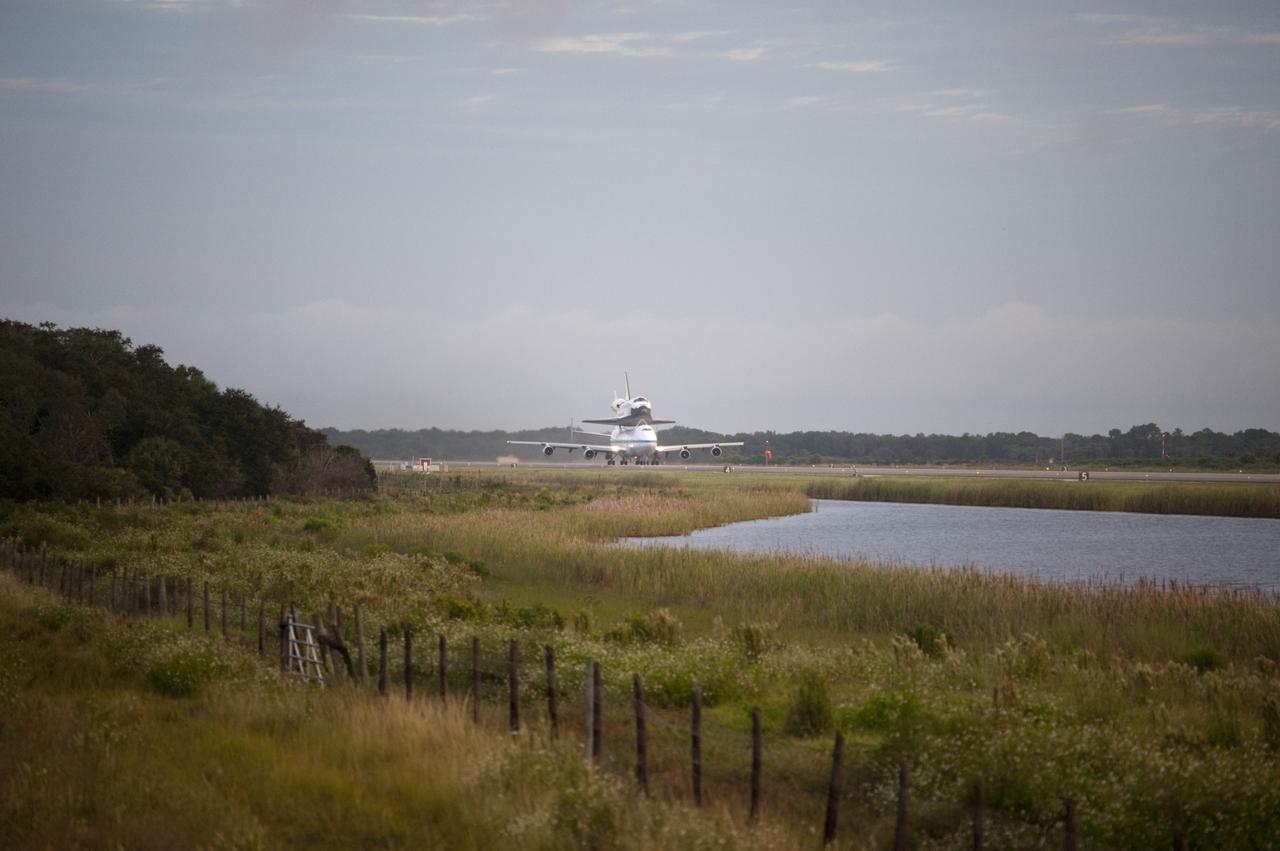
CAPE CANAVERAL, Fla. – Space shuttle Endeavour, mounted atop NASA's Shuttle Carrier Aircraft or SCA, taxis at the Shuttle Landing Facility at NASA's Kennedy Space Center in Florida. The SCA, a modified 747 jetliner, will fly Endeavour to Los Angeles where it will be placed on public display at the California Science Center. This is the final ferry flight scheduled in the Space Shuttle Program era. For more information on the shuttles' transition and retirement, visit http://www.nasa.gov/transition. Photo credit: NASA/Rick Wetherington
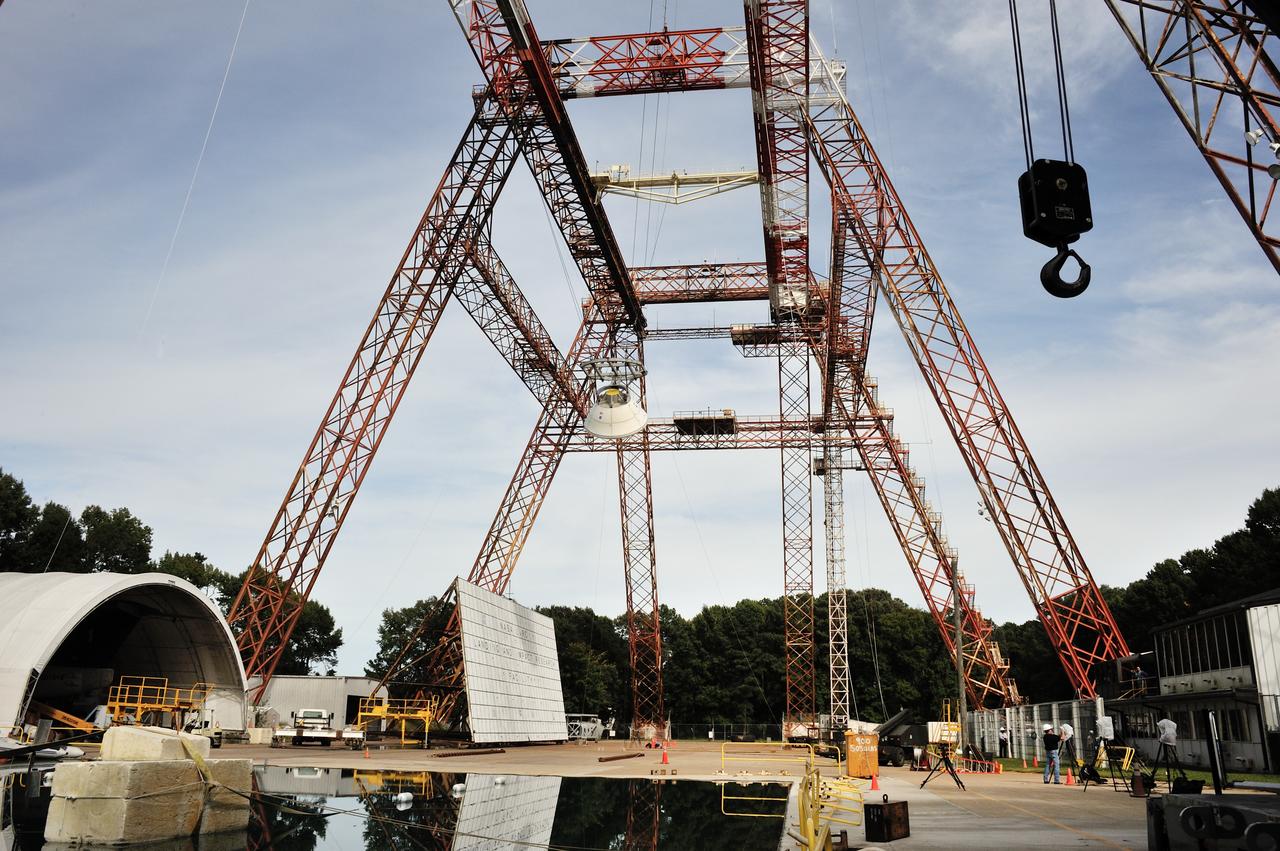
SPLASH P1 Test 7 Swing Test: Documentation of preparation, set up and results of full scale BTA (Boilerplate Test Article) vertical drop test series performed in 2012 at the LaRC Hydro Impact Basin (HIB)
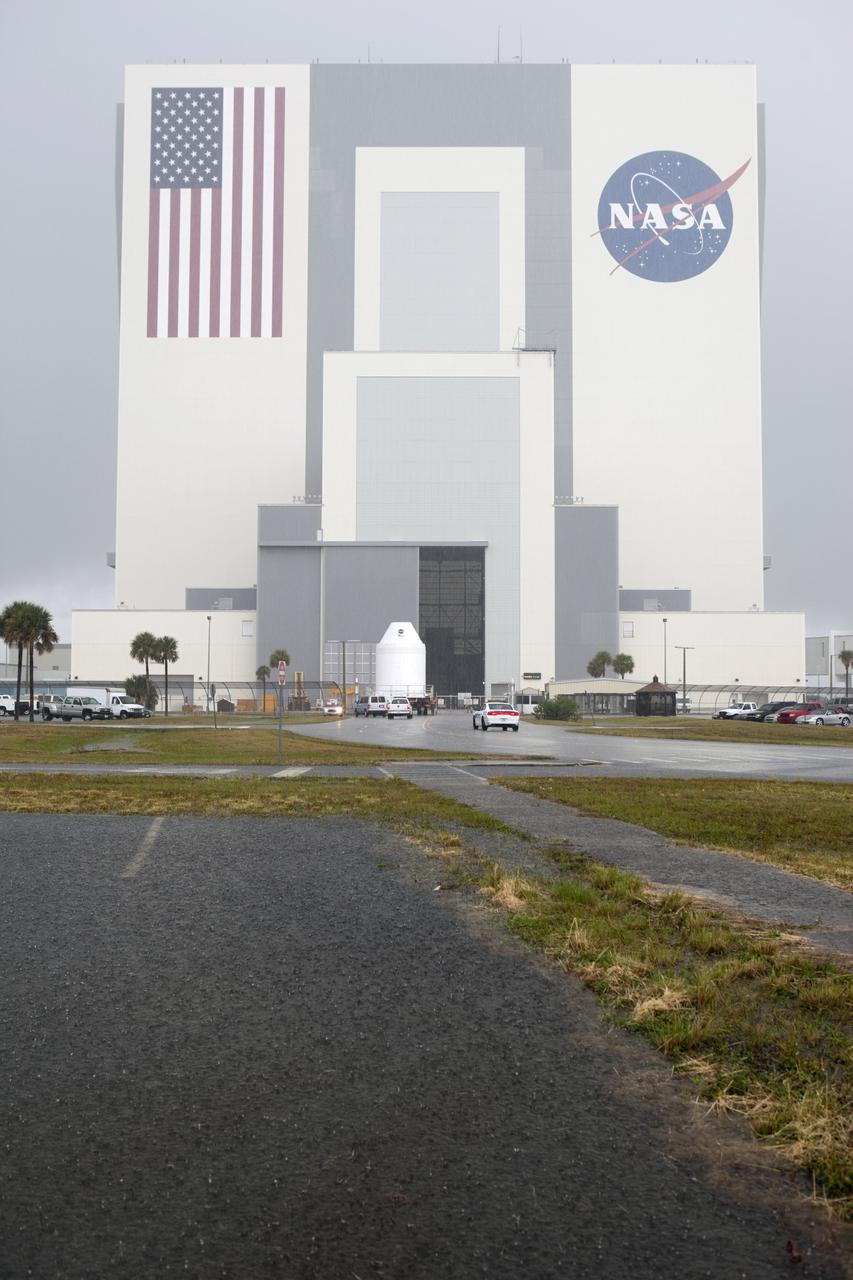
CAPE CANAVERAL, Fla. – A full-size test mock-up of the Orion spacecraft arrives at the Vehicle Assembly Building at NASA's Kennedy Space Center in Florida to test the path flight hardware will take during future launch processing. Orion is the exploration spacecraft designed to carry crews to space beyond low Earth orbit. It will provide emergency abort capability, sustain the crew during the space travel and provide safe re-entry from deep space return velocities. The first unpiloted test flight of the Orion is scheduled to launch in 2014 atop a Delta IV rocket and in 2017 on a Space Launch System rocket. For more information, visit http://www.nasa.gov/orion Photo credit: NASA/Dimitri Gerondidakis
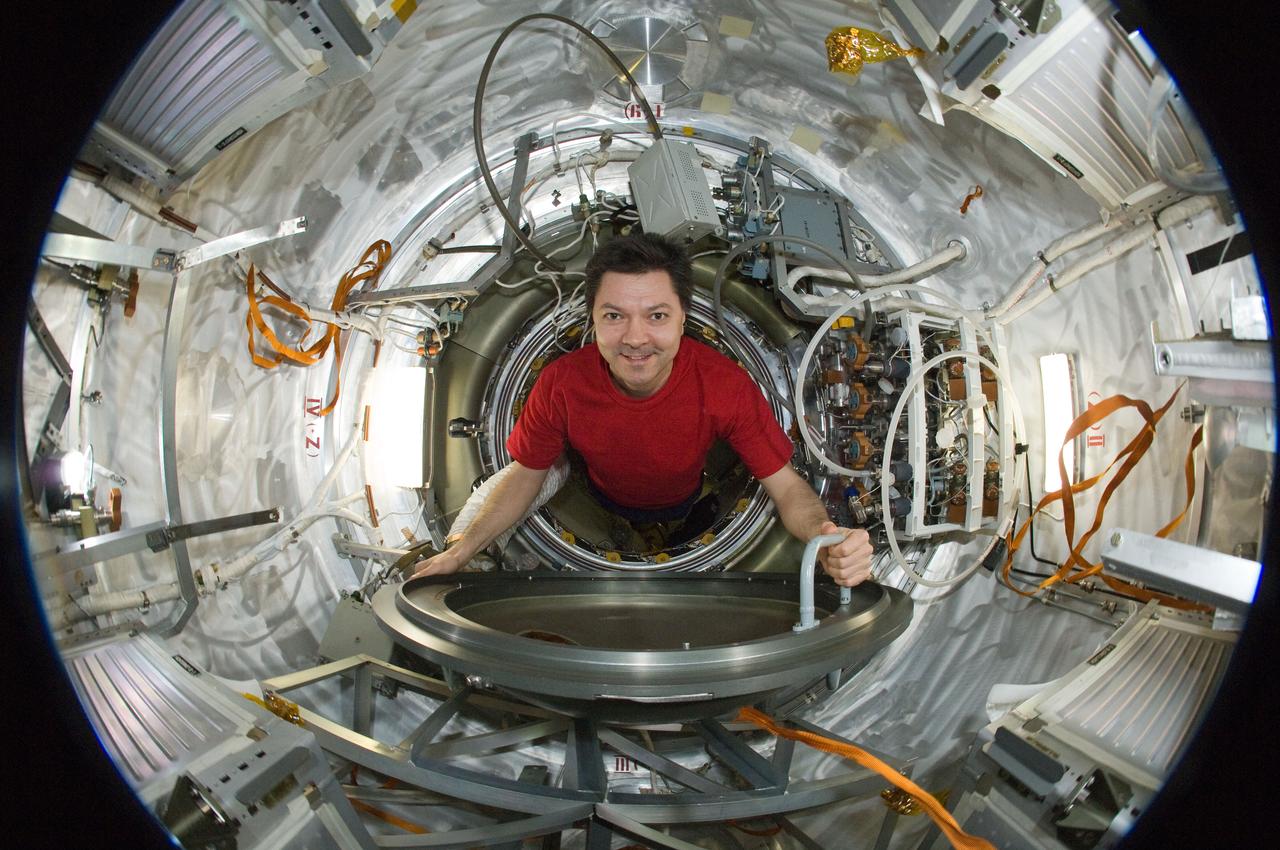
ISS031-E-035440 (15 May 2012) --- A fisheye lens attached to an electronic still camera was used to capture this image of Russian cosmonaut Oleg Kononenko, Expedition 31 commander, in the Progress 47 resupply vehicle docked to the International Space Station’s Pirs Docking Compartment.
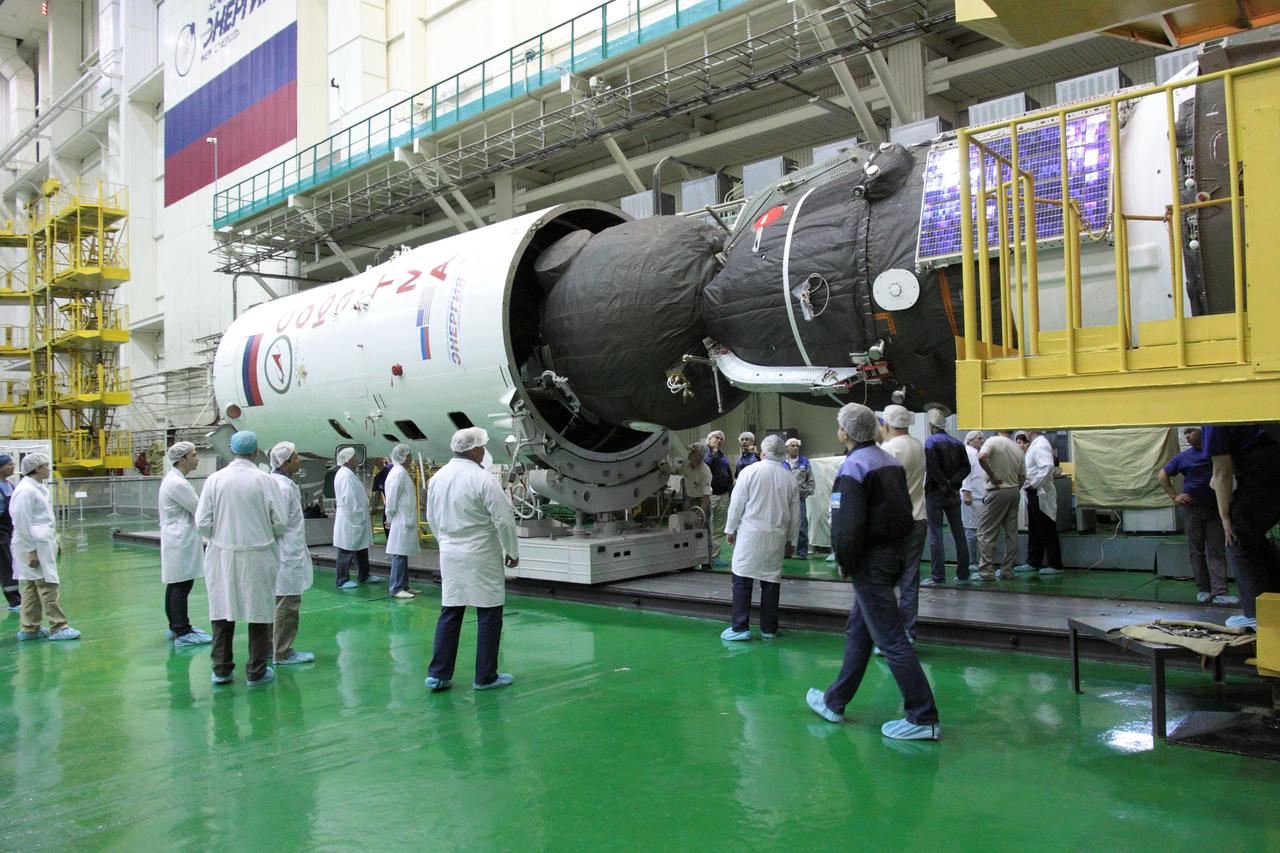
At the Baikonur Cosmodrome in Kazakhstan, technicians monitor the encapsulation of the Soyuz TMA-04M spacecraft into its Soyuz booster upper stage May 8, 2012 in advance of the launching of three new crewmembers to the International Space Station. The Soyuz will carry Soyuz Commander Gennady Padalka, NASA Flight Engineer Joe Acaba and Flight Engineer Sergei Revin to the orbital complex on May 15 for a four-month mission. The Soyuz will rollout to its launch pad in Baikonur on May 13. NASA/Victor Zelentsov
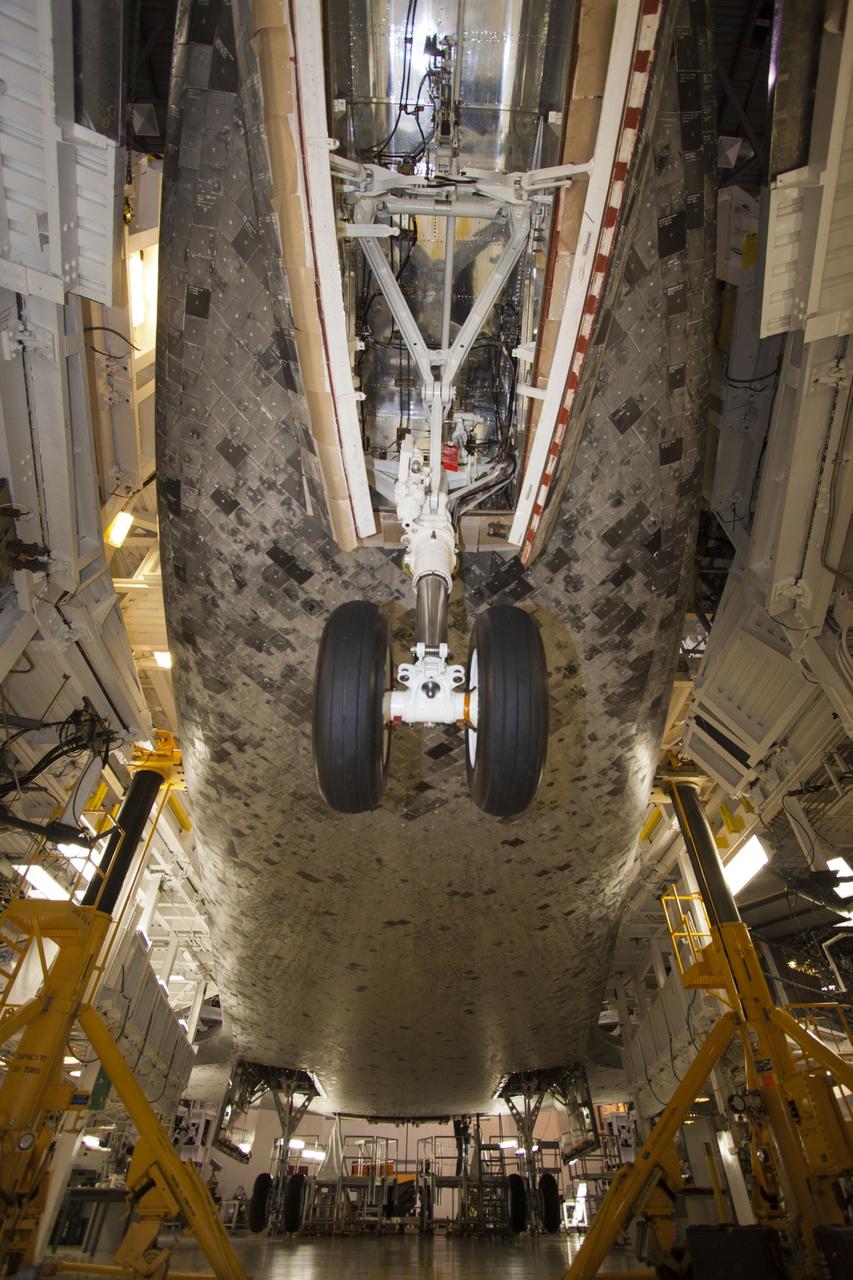
CAPE CANAVERAL, Fla. – Inside Orbiter Processing Facility-1 at NASA’s Kennedy Space Center in Florida, a long-angle view reveals the underside of space shuttle Discovery where the ferry flight doors are being installed. The work is part of the Space Shuttle Program’s transition and retirement processing of shuttle Discovery, which is being prepared for display at Smithsonian’s National Air and Space Museum, Steven F. Udvar-Hazy Center in Chantilly, Va. Discovery is scheduled to be transported atop a NASA Shuttle Carrier Aircraft modified 747 jet to Dulles International Airport in Virginia on April 17 and then moved to the Smithsonian for permanent public display on April 19. For more information, visit http://www.nasa.gov/shuttle. Photo credit: NASA/Jim Grossmann
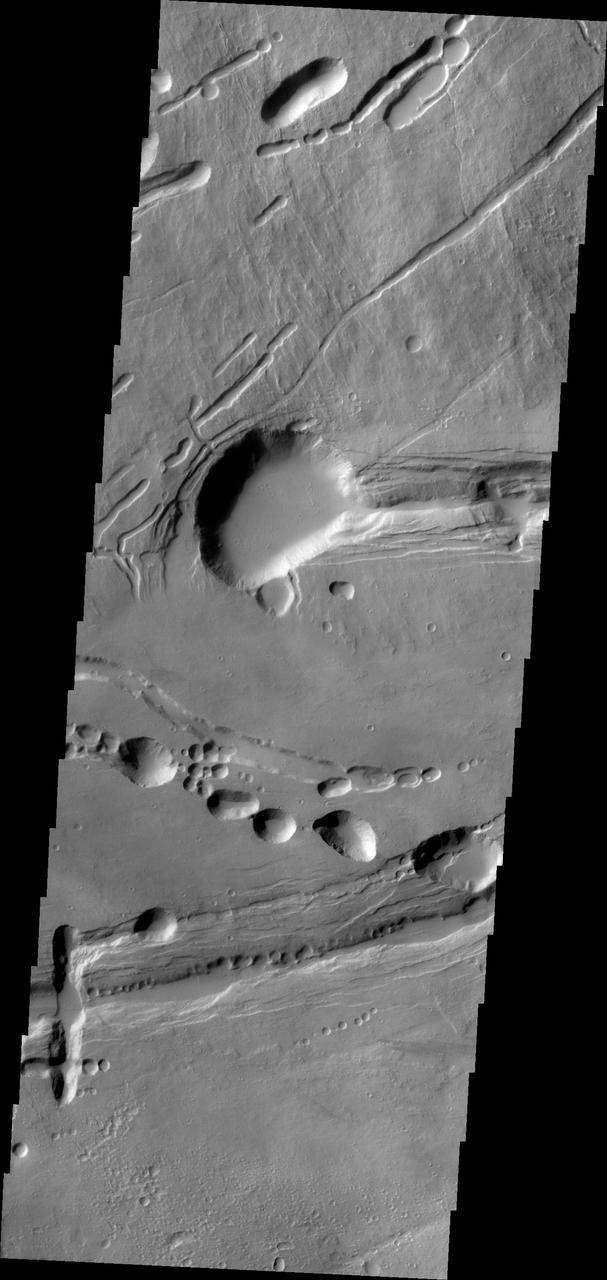
This image from NASA 2001 Mars Odyssey spacecraft shows the complex collapse features on the southern flank of Ascraeus Mons.
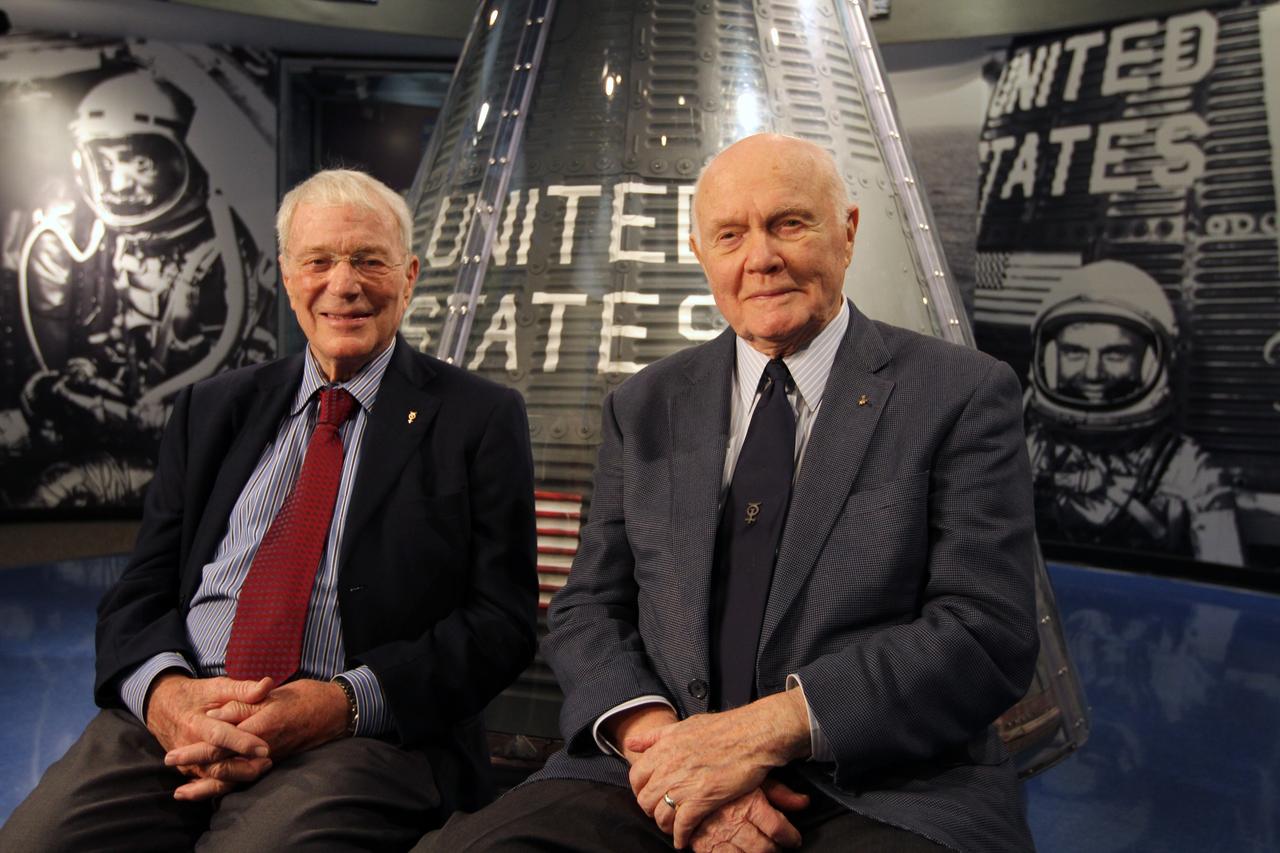
CAPE CANAVERAL, Fla. -- Mercury astronauts Scott Carpenter, left, and John Glenn sit in front of a capsule from the Mercury program on display at the Kennedy Space Center Visitor Complex in Florida. The two astronauts, part of the original class of seven astronauts chosen by NASA, were taking part in events celebrating 50 years of Americans in orbit, an era which began with Glenn's Mercury mission MA-6, on Feb. 20, 1962. Glenn's launch aboard an Atlas rocket took with it the hopes of an entire nation and ushered in a new era of space travel that eventually led to Americans walking on the moon by the end of the 1960s. Glenn soon was followed into orbit by Carpenter, Walter Schirra and Gordon Cooper. Their fellow Mercury astronauts Alan Shepard and Virgil "Gus" Grissom flew earlier suborbital flights. Deke Slayton was grounded by a medical condition until the Apollo-Soyuz Test Project in 1975. Photo credit: NASA/Kim Shiflett
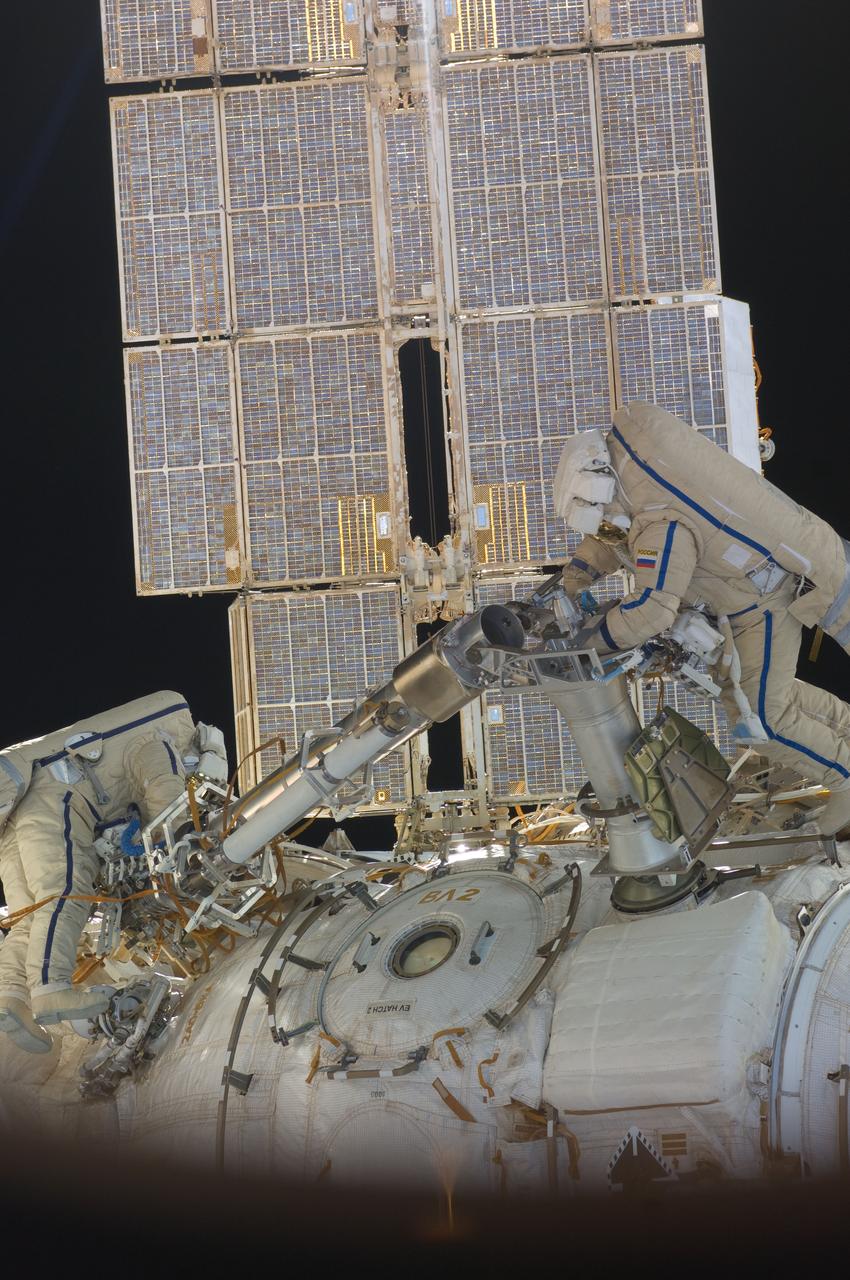
ISS030-E-078393 (16 Feb. 2012) --- Russian cosmonauts Oleg Kononenko and Anton Shkaplerov, both Expedition 30 flight engineers, participate in a session of extravehicular activity (EVA) to continue outfitting the International Space Station. During the six-hour, 15-minute spacewalk, Kononenko and Shkaplerov moved the Strela-1 crane from the Pirs Docking Compartment to begin preparing the Pirs for its replacement next year with a new laboratory and docking module. The duo used another boom, the Strela-2, to move the hand-operated crane to the Poisk module for future assembly and maintenance work. Both telescoping booms extend like fishing rods and are used to move massive components outside the station. On the exterior of the Poisk Mini-Research Module 2 (MRM2), they also installed the Vinoslivost Materials Sample Experiment, which will investigate the influence of space on the mechanical properties of the materials. The spacewalkers also collected a test sample from underneath the insulation on the Zvezda Service Module to search for any signs of living organisms. Both spacewalkers wore Russian Orlan spacesuits bearing blue stripes and equipped with NASA helmet cameras.
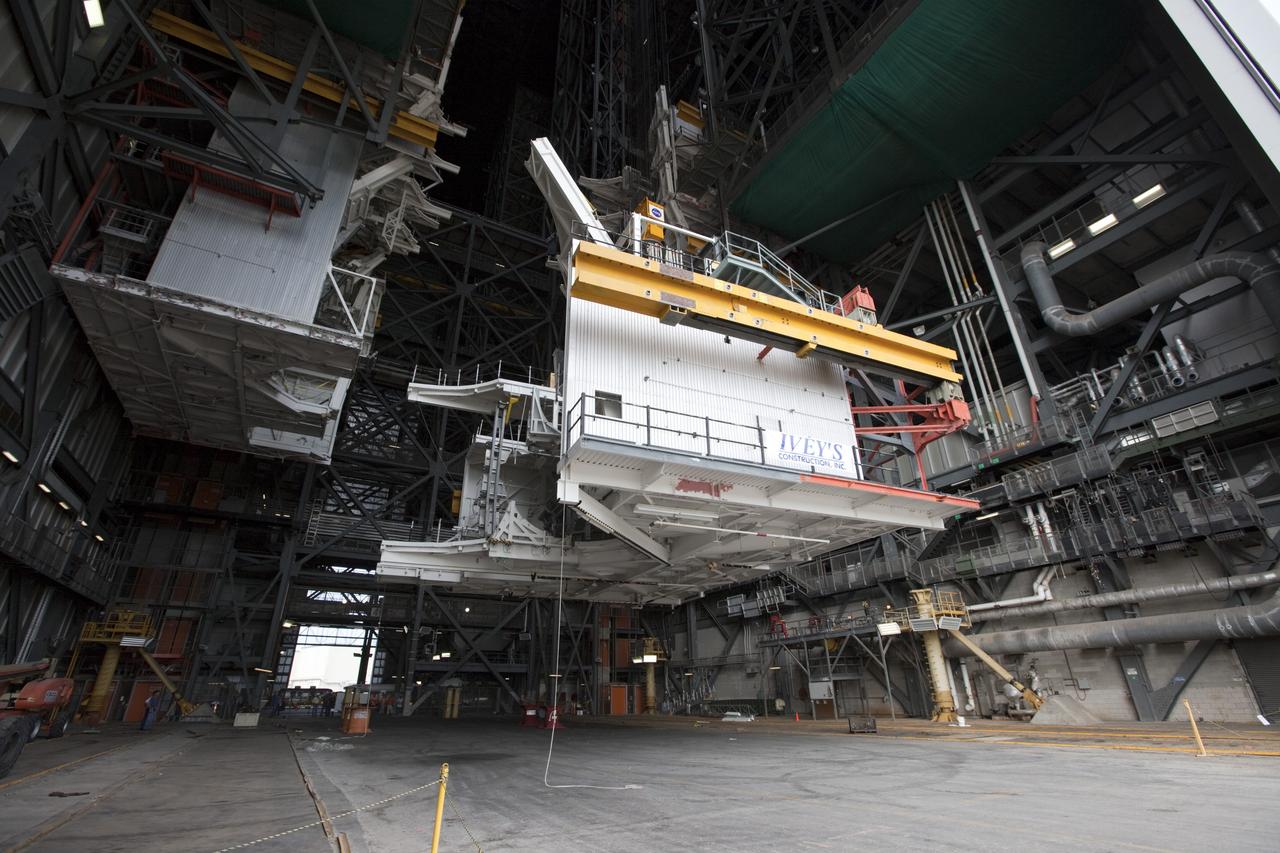
CAPE CANAVERAL, Fla. -- At NASA’s Kennedy Space Center in Florida, construction workers lower the large space shuttle-era Level E north work platform from high bay 3 inside the Vehicle Assembly Building, or VAB. The platform will be moved to the VAB north parking area for temporary storage. The work is part of a center-wide refurbishment initiative under the Ground Systems Development and Operations, or GSDO, Program. High bay 3 is being refurbished to accommodate NASA’s Space Launch System and a variety of other spacecraft. For more information, visit http://www.nasa.gov/exploration/systems/ground/index.html. Photo credit: NASA/Kim Shiflett
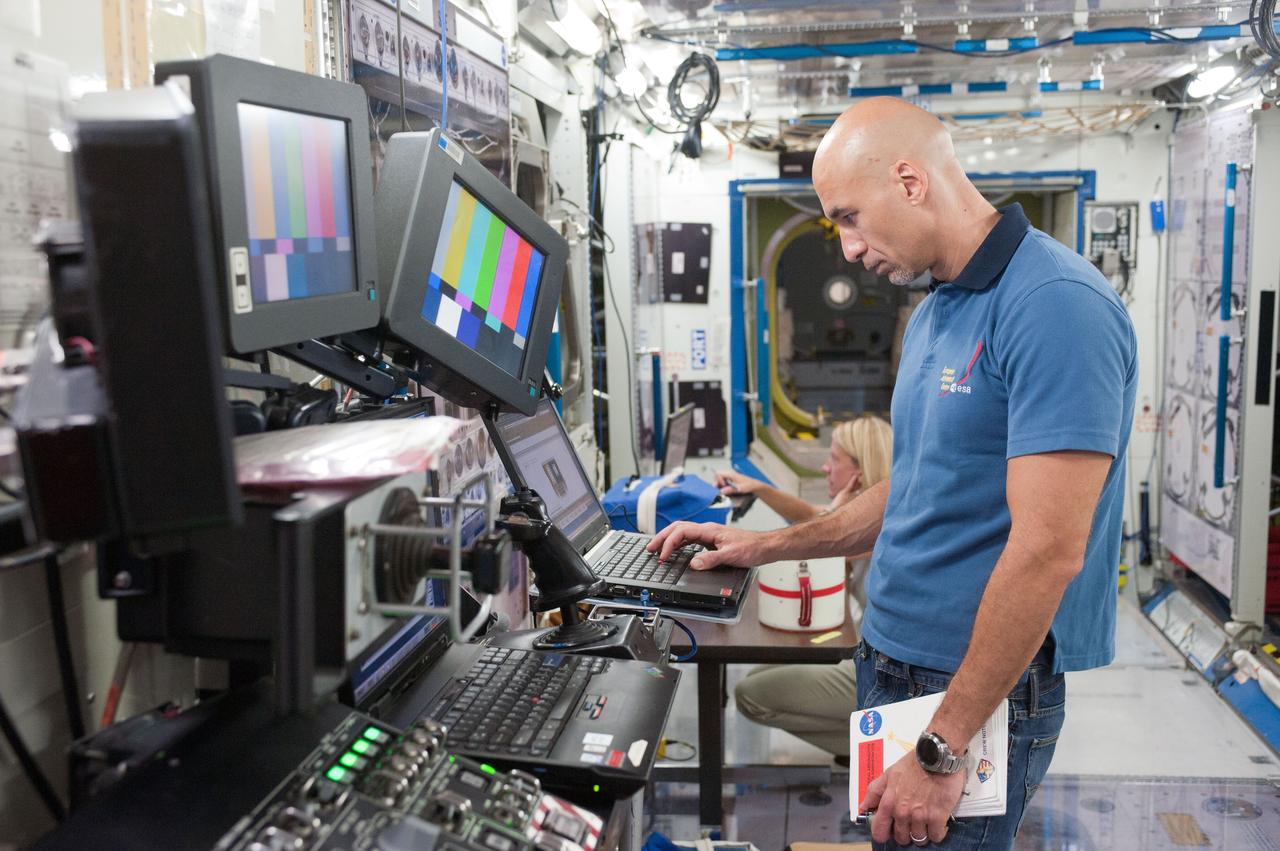
PHOTO DATE: 09-12-12 LOCATION: Bldg. 9NW - ISS Mockups SUBJECT: Expedition 36/37 Routine Ops training with crew members Yurchikhin, Nyberg & Parmitano. PHOTOGRAPHER: BILL STAFFORD
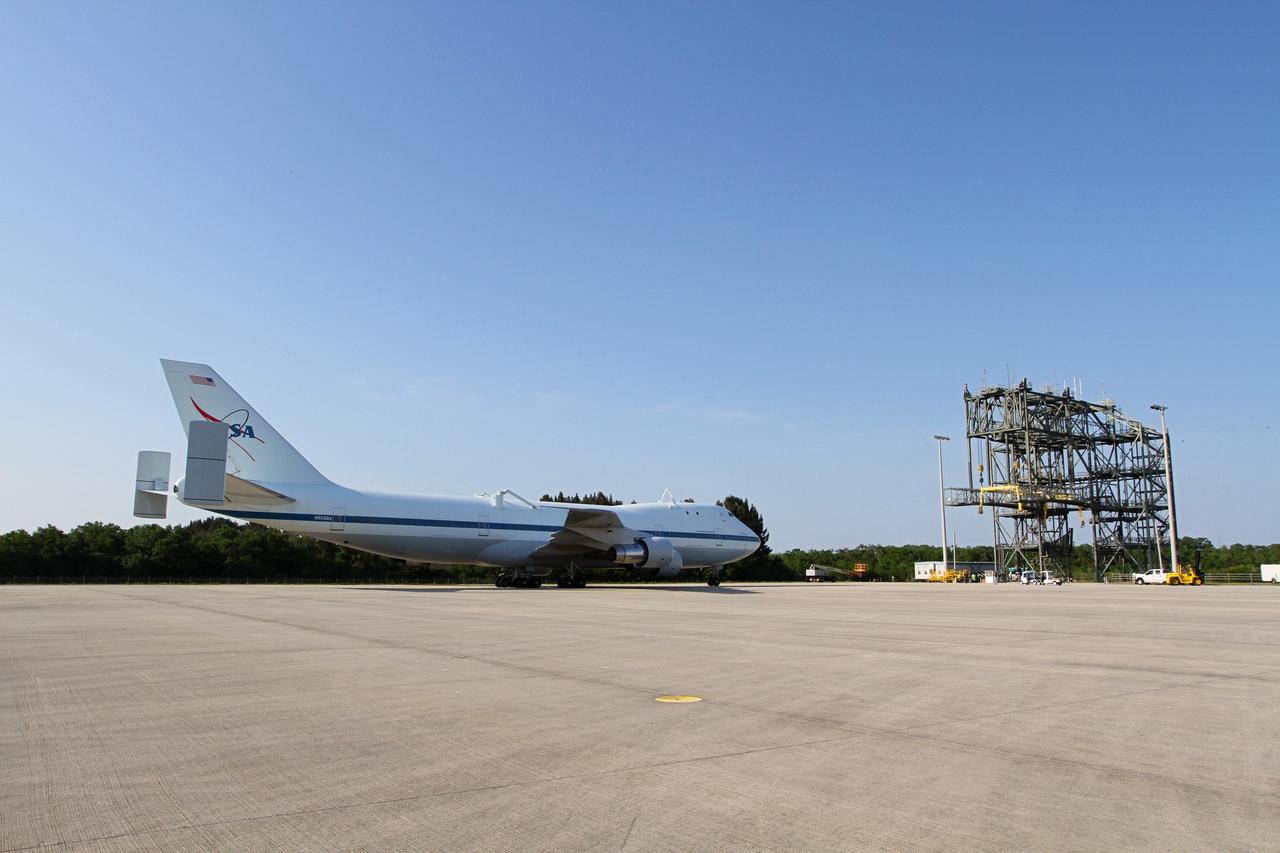
CAPE CANAVERAL, Fla. – The Shuttle Carrier Aircraft approaches the mate/demate device at the Shuttle Landing Facility at NASA’s Kennedy Space Center in Florida. The aircraft, known as an SCA, arrived at 5:35 p.m. EDT to prepare for shuttle Discovery’s ferry flight to the Washington Dulles International Airport in Sterling, Va., on April 17. This SCA, designated NASA 905, is a modified Boeing 747 jet airliner, originally manufactured for commercial use. One of two SCAs employed over the course of the Space Shuttle Program, NASA 905 is assigned to the remaining ferry missions, delivering the shuttles to their permanent public display sites. NASA 911 was decommissioned at the NASA Dryden Flight Research Center in California in February. Discovery will be placed on permanent public display in the Smithsonian's National Air and Space Museum Steven F. Udvar-Hazy Center in Chantilly, Va. For more information on the SCA, visit http://www.nasa.gov/centers/dryden/news/FactSheets/FS-013-DFRC.html. For more information on shuttle transition and retirement activities, visit http://www.nasa.gov/shuttle. Photo credit: NASA/Kim Shiflett
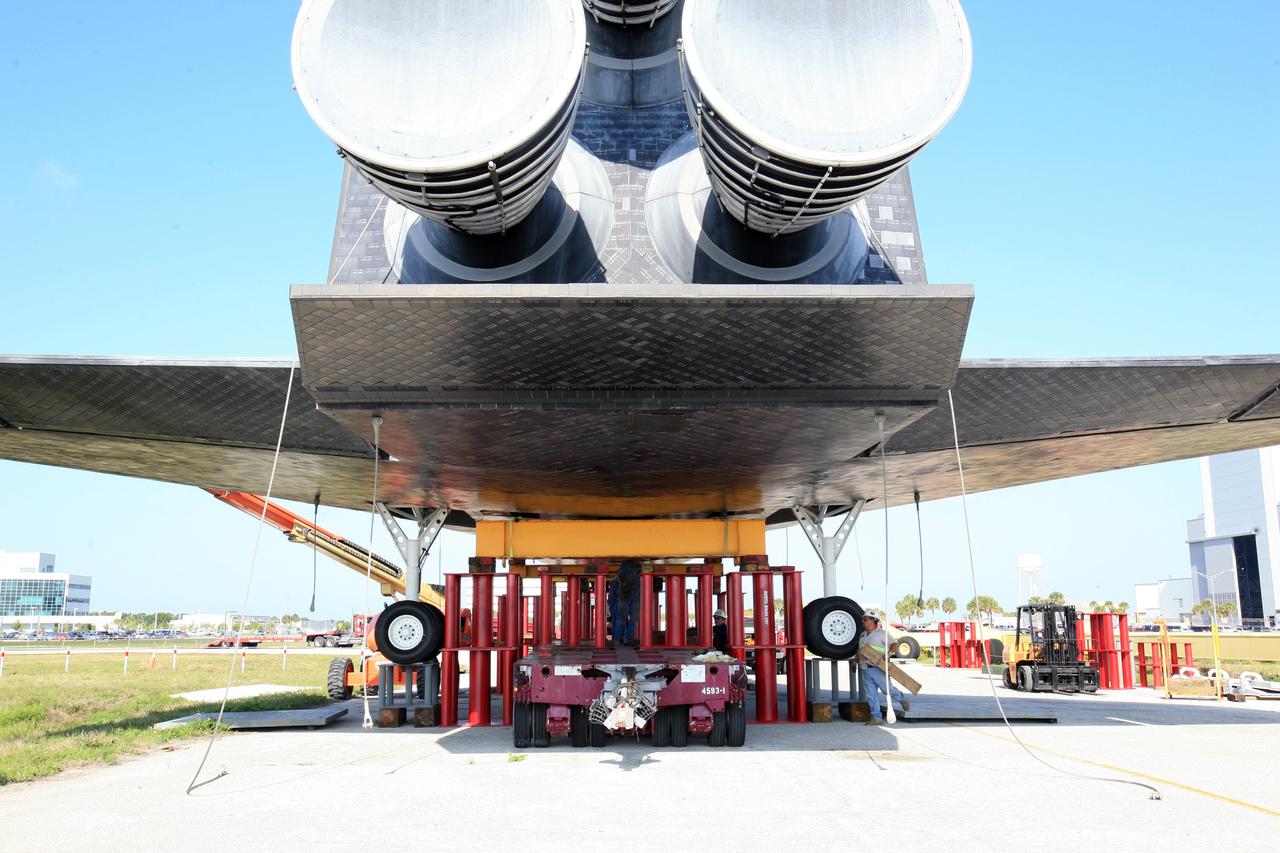
CAPE CANAVERAL, Fla. – Workers secure the high-fidelity space shuttle model to the structure that will cradle the model on its journey from NASA’s Kennedy Space Center in Florida to Johnson Space Center's visitor center in Houston atop a barge. The model was built in Apopka, Fla., by Guard-Lee and installed at Kennedy Space Center Visitor Complex in 1993.The model has been parked at the turn basin the past five months to allow the Kennedy Space Center Visitor Complex to begin building a new facility next year to display space shuttle Atlantis in 2013. For more information about Johnson’s visitor center, called Space Center Houston, visit http://www.spacecenter.org. Photo credit: NASA/Amanda Diller
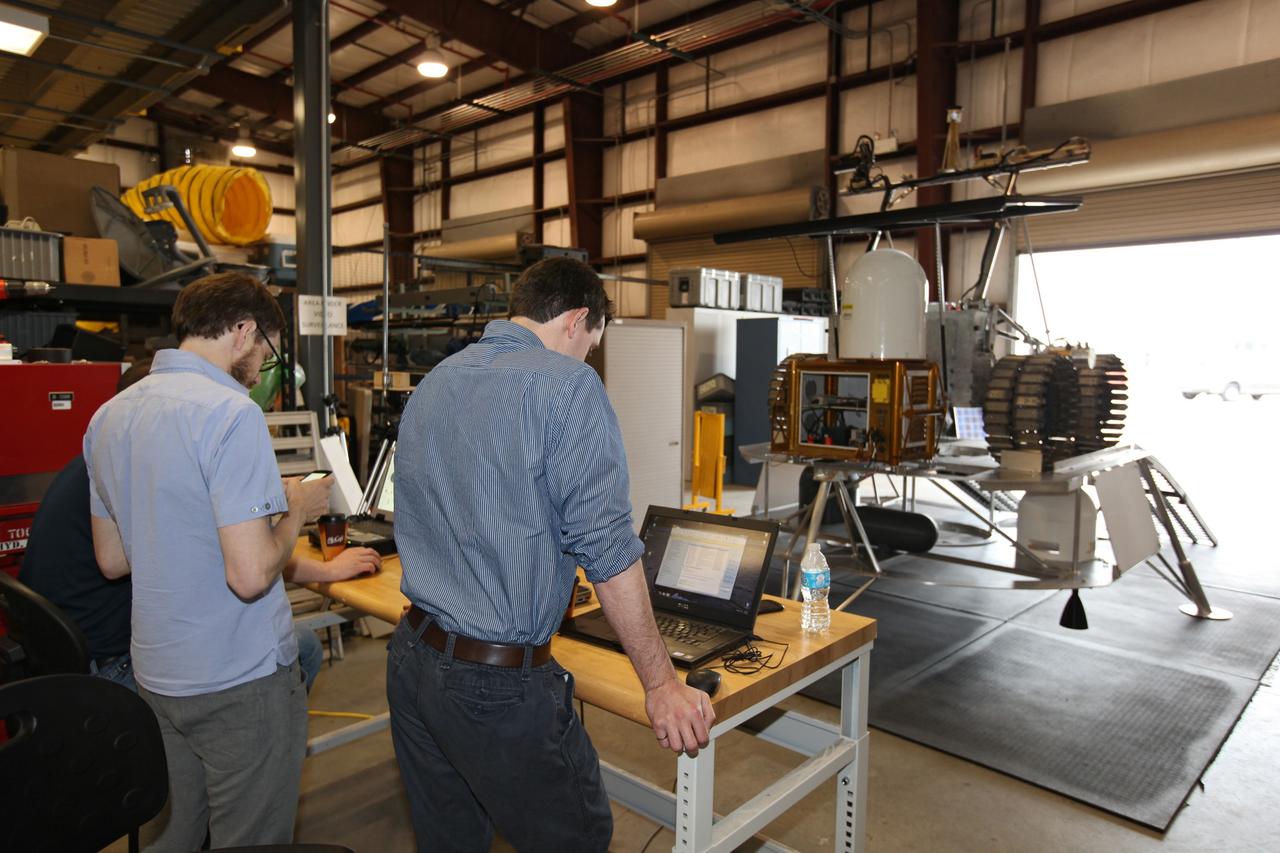
CAPE CANAVERAL, Fla. – Engineers with Neptec, a contractor to the Canadian Space Agency, prepare to conduct checkouts of the prototype rover Artemis Jr. for NASA’s Regolith and Environment Science and Oxygen and Lunar Volatile Extraction, or RESOLVE, project in a test facility behind the Operations and Checkout Building at NASA’s Kennedy Space Center in Florida. The rover is positioned atop RESOLVE’s prototype lander. RESOLVE consists of a rover and drill provided by the Canadian Space Agency to support a NASA payload that is designed to prospect for water, ice and other lunar resources. RESOLVE also will demonstrate how future explorers can take advantage of resources at potential landing sites by manufacturing oxygen from soil. NASA will conduct field tests in July outside of Hilo, Hawaii, with equipment and concept vehicles that demonstrate how explorers might prospect for resources and make their own oxygen for survival while on other planetary bodies. For more information, visit http://www.nasa.gov/exploration/analogs/index.html. Photo credit: NASA/Dimitri Gerondidakis
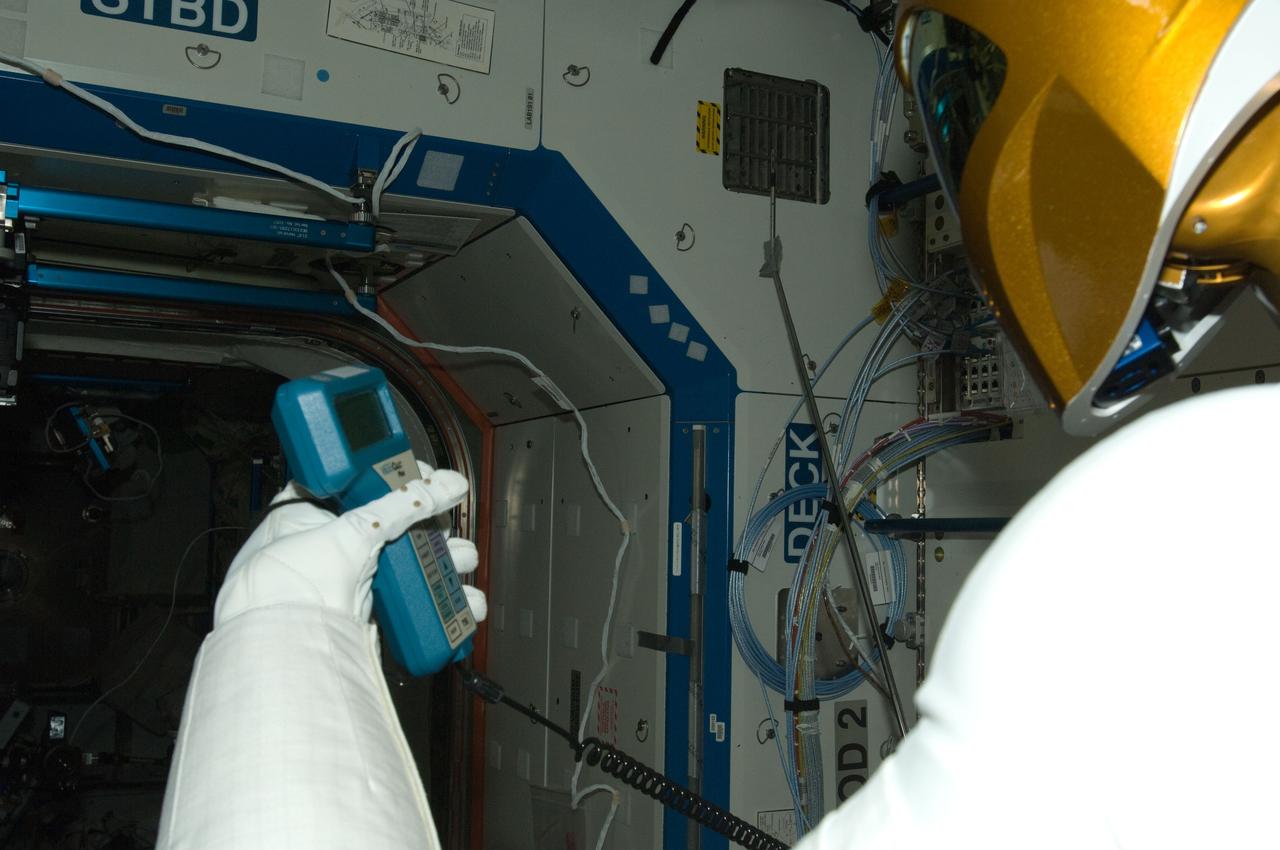
ISS030-E-142875 (14 March 2012) --- Controlled by teams on the ground, Robonaut 2 humanoid robot holds an instrument to measure air velocity during another system check out in the Destiny laboratory of the International Space Station.
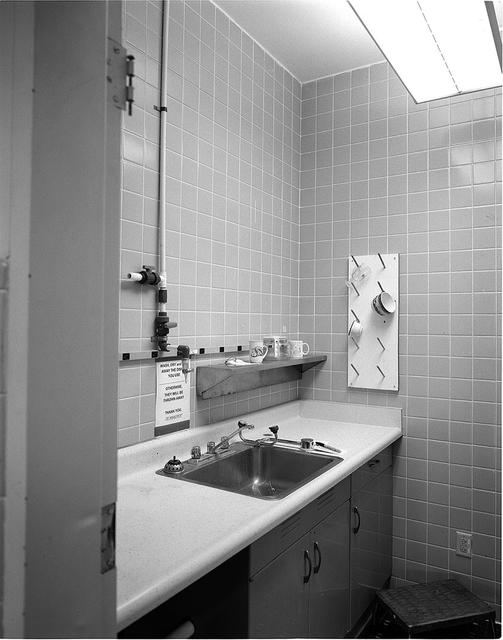
Interior View of BOSU
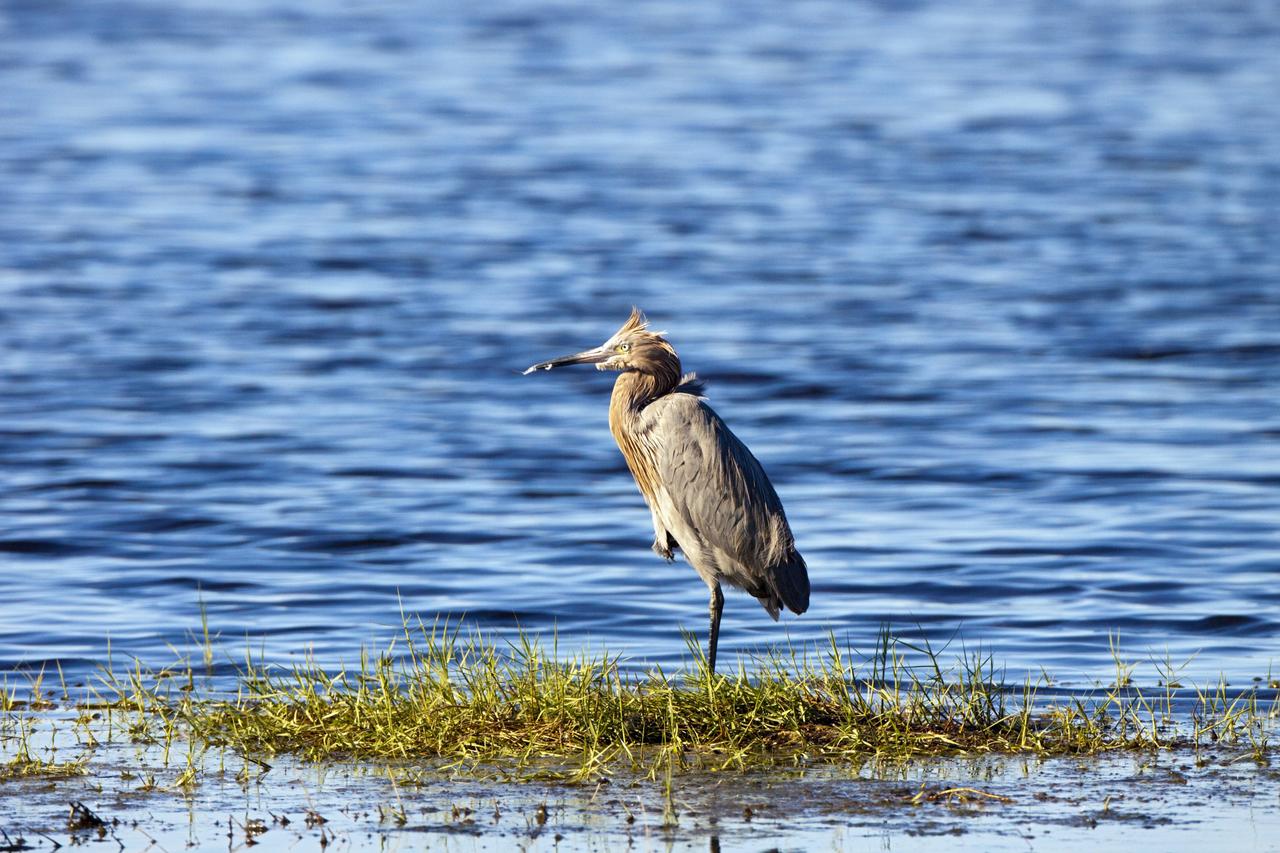
CAPE CANAVERAL, Fla. – A heron stands in the waters of the Blackpoint Wildlife Drive in the Merritt Island National Wildlife Refuge, northwest of NASA's Kennedy Space Center in Florida. Kennedy Space Center shares a boundary with the Merritt Island National Wildlife Refuge. The Refuge encompasses 92,000 acres that are a habitat for more than 331 species of birds, 31 mammals, 117 fishes, and 65 amphibians and reptiles. The marshes and open water of the refuge provide wintering areas for 23 species of migratory waterfowl, as well as a year-round home for great blue herons, great egrets, wood storks, cormorants, brown pelicans and other species of marsh and shore birds, as well as a variety of insects. For more information, visit: http://www.nasa.gov/centers/kennedy/shuttleoperations/alligators/kscovr.html Photo credit: NASA/Jim Grossmann
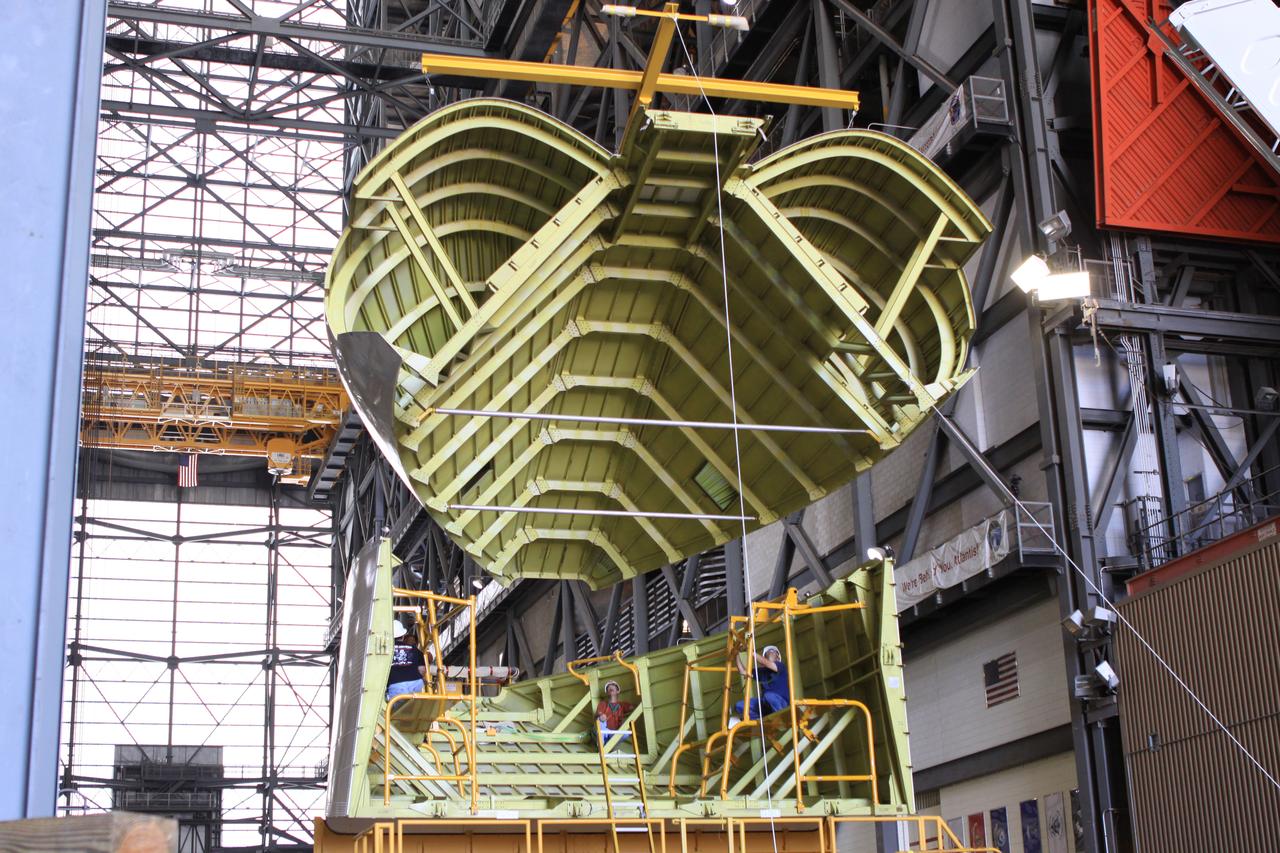
T&R Endeavour, Final Buildup of Tail Cover for Ferry Flight
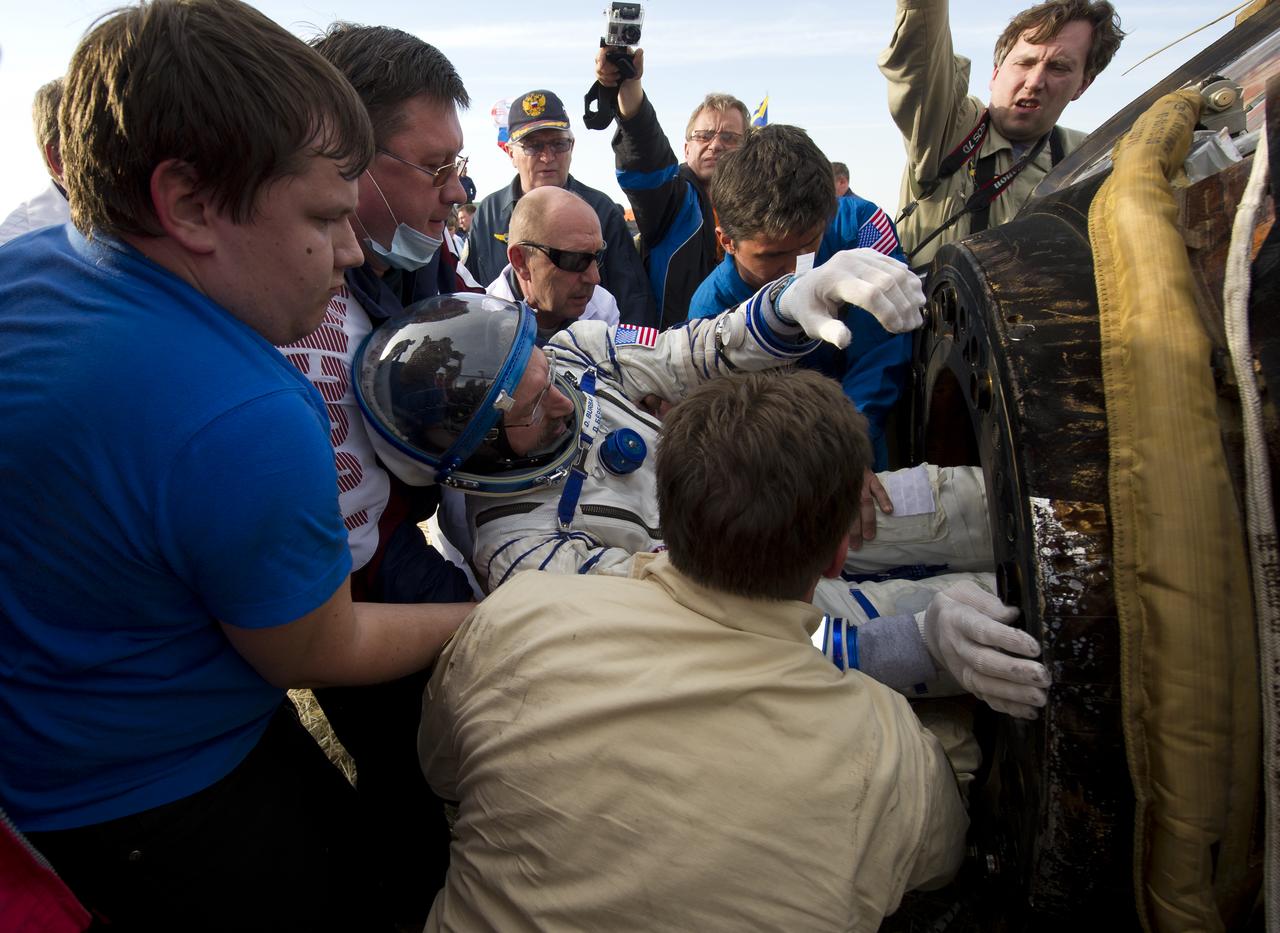
Expedition 30 Commander Dan Burbank is seen as he is extracted from the Soyuz TMA-22 spacecraft shortly after the capsule landed with Russian flight engineers Anton Shkaplerov and Anatoly Ivanishin in a remote area outside of the town of Arkalyk, Kazakhstan on Friday, April 27, 2012. Burbank, Ivanishin, and Shkaplerov are returning from more than five months onboard the International Space Station where they served as members of the Expedition 29 and 30 crews. Photo Credit: (NASA/Carla Cioffi)
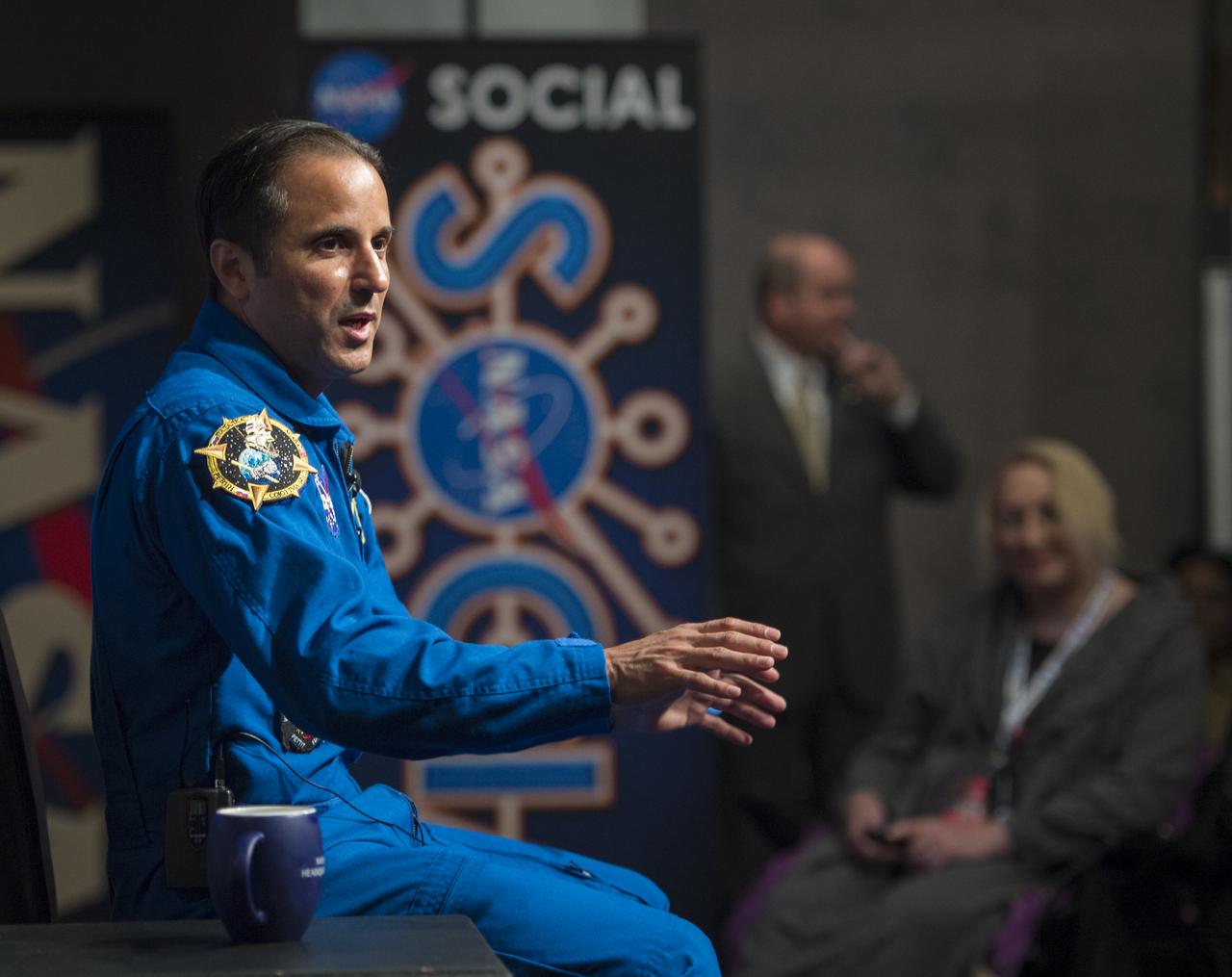
NASA astronaut Joe Acaba answers questions at a behind-the-scenes NASA Social at NASA Headquarters on Tuesday, Dec. 4, 2012 in Washington. Acaba launched to the International Space Station on a Russian Soyuz spacecraft May 15, 2012, spending 123 days aboard as a flight engineer of the Expedition 31 and 32 crews. He recently returned to Earth on Sept. 17 after four months in low earth orbit. Photo Credit: (NASA/Carla Cioffi)
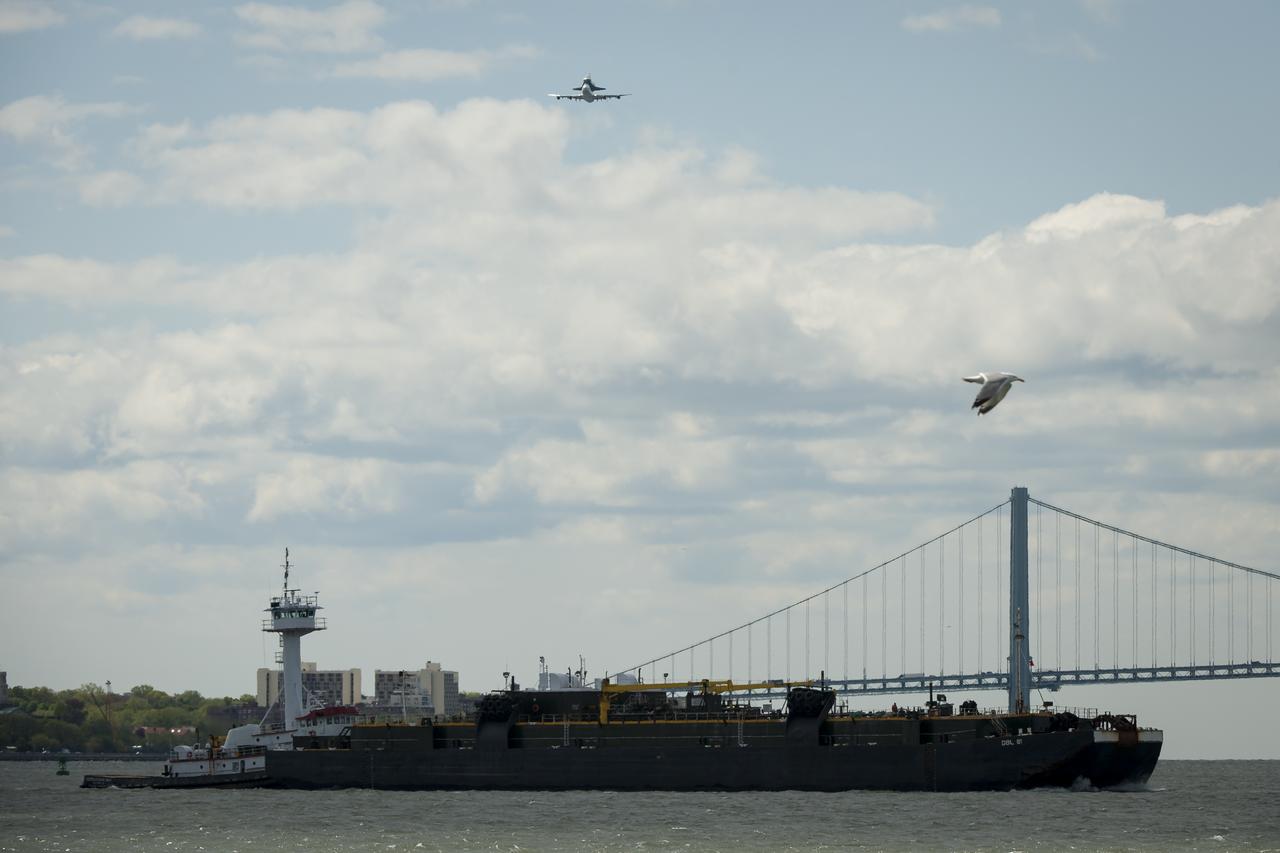
Space shuttle Enterprise, mounted atop a NASA 747 Shuttle Carrier Aircraft (SCA), is seen as it flies over the Verrazano Bridge, Friday, April 27, 2012, in New York. Enterprise was the first shuttle orbiter built for NASA performing test flights in the atmosphere and was incapable of spaceflight. Originally housed at the Smithsonian's Steven F. Udvar-Hazy Center, Enterprise will be demated from the SCA and placed on a barge that will eventually be moved by tugboat up the Hudson River to the Intrepid Sea, Air & Space Museum in June. Photo Credit: (NASA/Bill Ingalls)
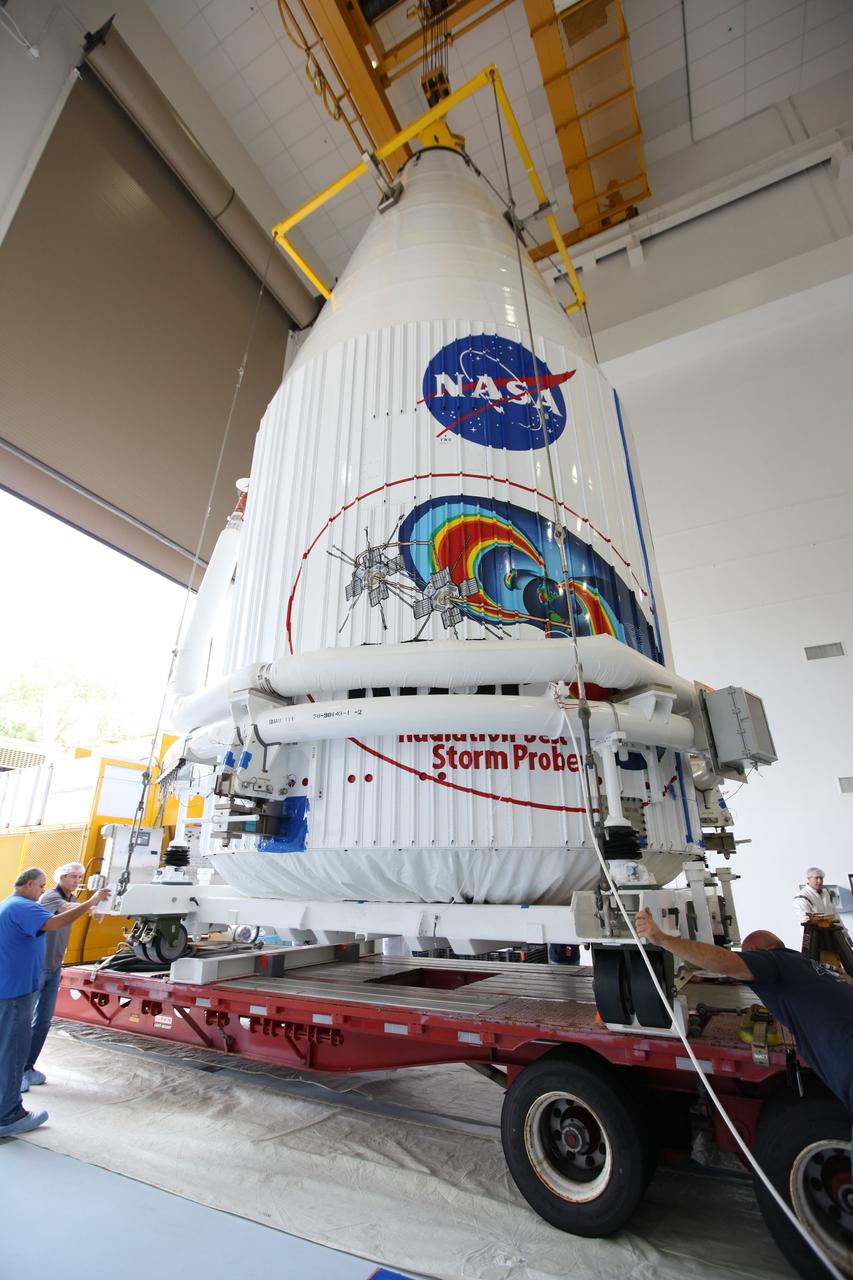
TITUSVILLE, Fla. - Inside the Astrotech payload processing facility in Titusville, Fla. near NASA’s Kennedy Space Center, technicians use a crane to lower the payload faring containing the two Radiation Belt Storm Probes, or RBSP, spacecraft on to a transporter to be moved to the launch complex. NASA’s RBSP mission will help us understand the sun’s influence on Earth and near-Earth space by studying the Earth’s radiation belts on various scales of space and time. RBSP will begin its mission of exploration of Earth’s Van Allen radiation belts and the extremes of space weather after its liftoff aboard a United Launch Alliance Atlas V rocket from Space Launch Complex 41 at Cape Canaveral Air Force Station, Fla. Liftoff is targeted for Aug. 23, 2012. For more information, visit http://www.nasa.gov/rbsp Photo credit: NASA/ Kim Shiflett
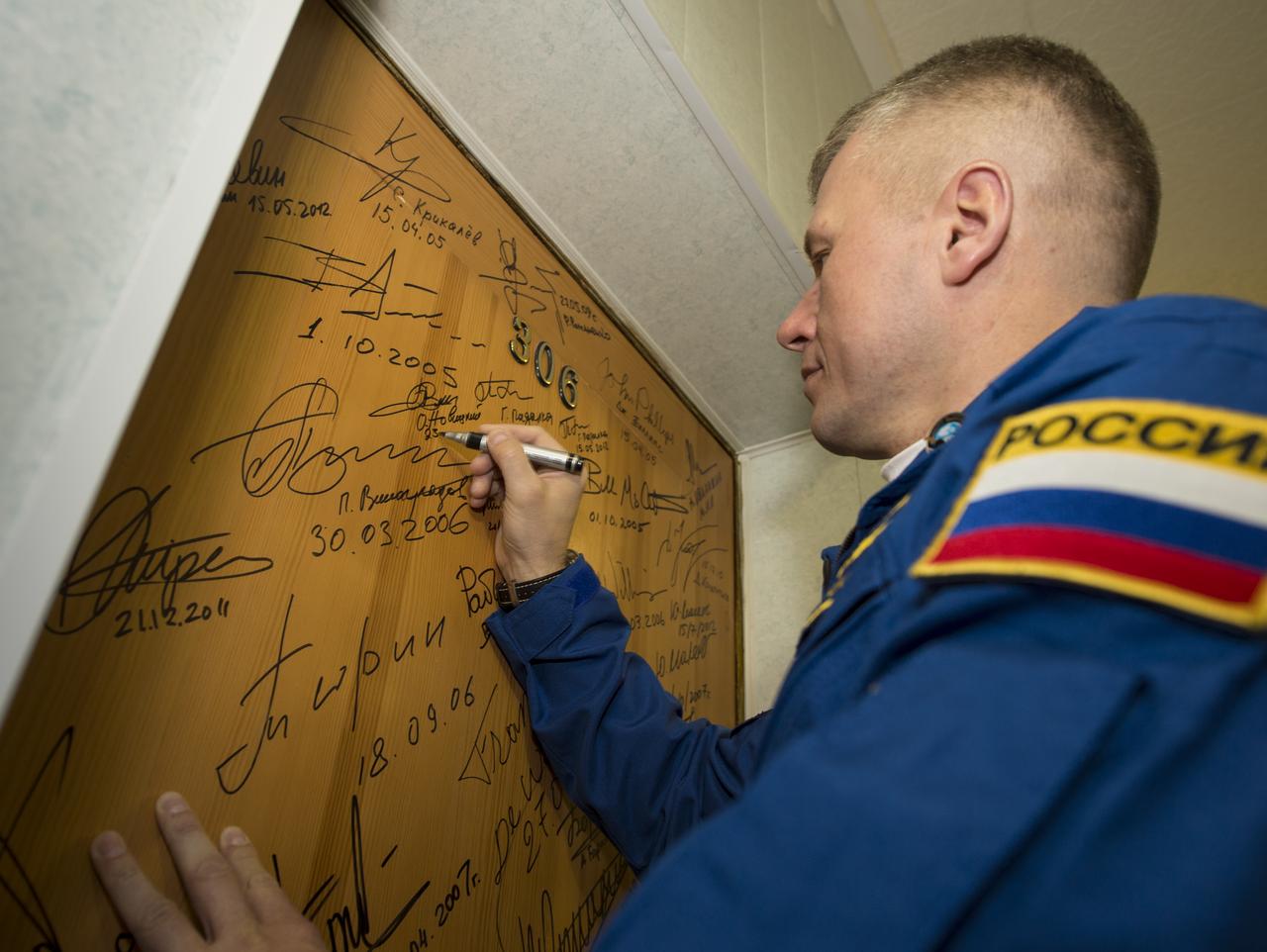
Expedition 33/34 Soyuz Commander Oleg Novitskiy performs the traditional door signing before he and fellow cremates, Flight Engineer Kevin Ford, and Flight Engineer Evgeny Tarelkin depart the Cosmonaut Hotel for their Soyuz launch to the International Space Station, on Tuesday, October 23, 2012, in Baikonur, Kazakhstan. Launch of the Soyuz rocket will send Ford, Novitskiy and Tarelkin on a five-month mission aboard the International Space Station. Photo Credit: (NASA/Bill Ingalls)
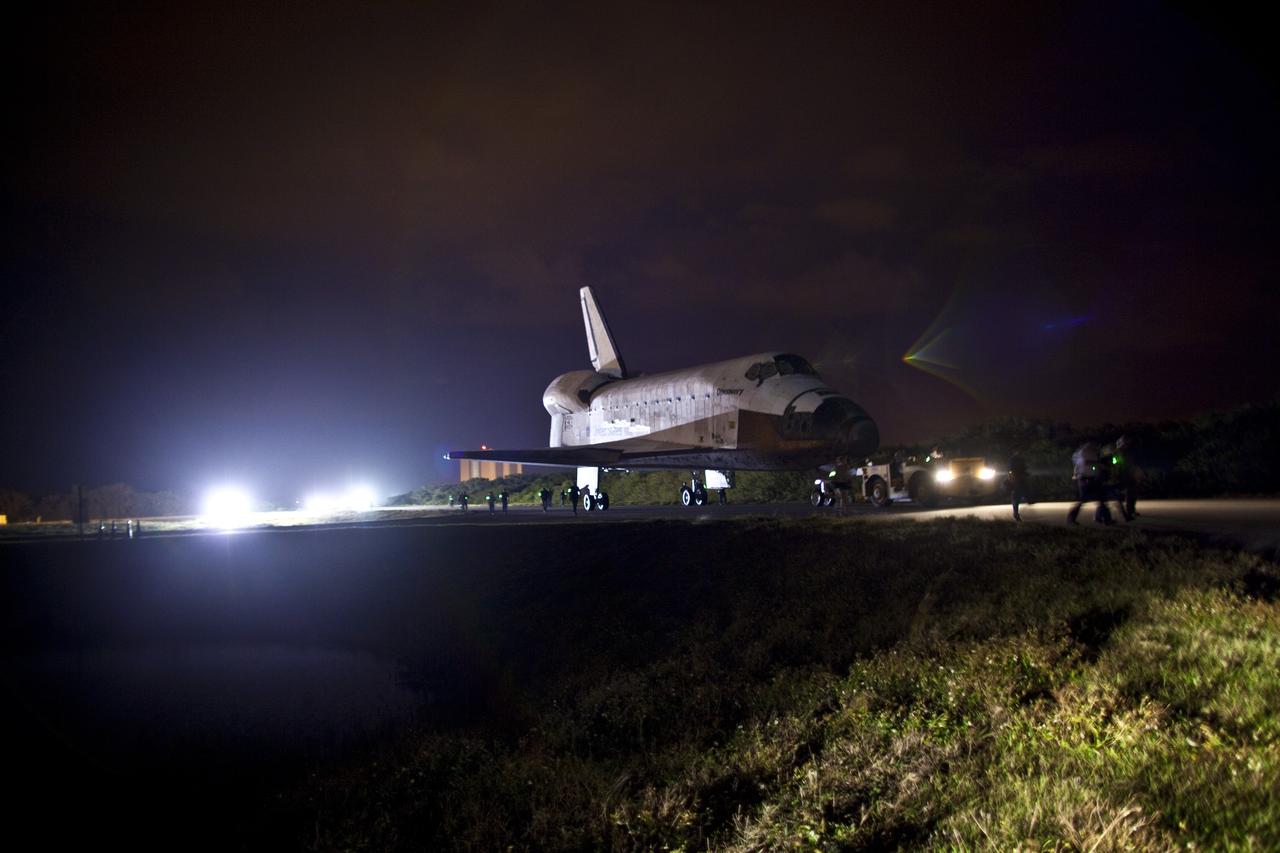
CAPE CANAVERAL, Fla. – Space shuttle Discovery is towed along the access road to the Shuttle Landing Facility, or SLF, before dawn at NASA’s Kennedy Space Center in Florida. Its move from the Vehicle Assembly Building got under way at 5 a.m. EDT. At the SLF, Discovery will be hoisted onto a Shuttle Carrier Aircraft, or SCA, with the aid of a mate-demate device. The SCA, a modified Boeing 747 jet airliner, is scheduled to ferry Discovery to the Washington Dulles International Airport in Virginia on April 17, after which the shuttle will be placed on permanent public display in the Smithsonian's National Air and Space Museum Steven F. Udvar-Hazy Center. For more information on shuttle transition and retirement activities, visit http://www.nasa.gov/transition. Photo credit: NASA/Dimitri Gerondidakis
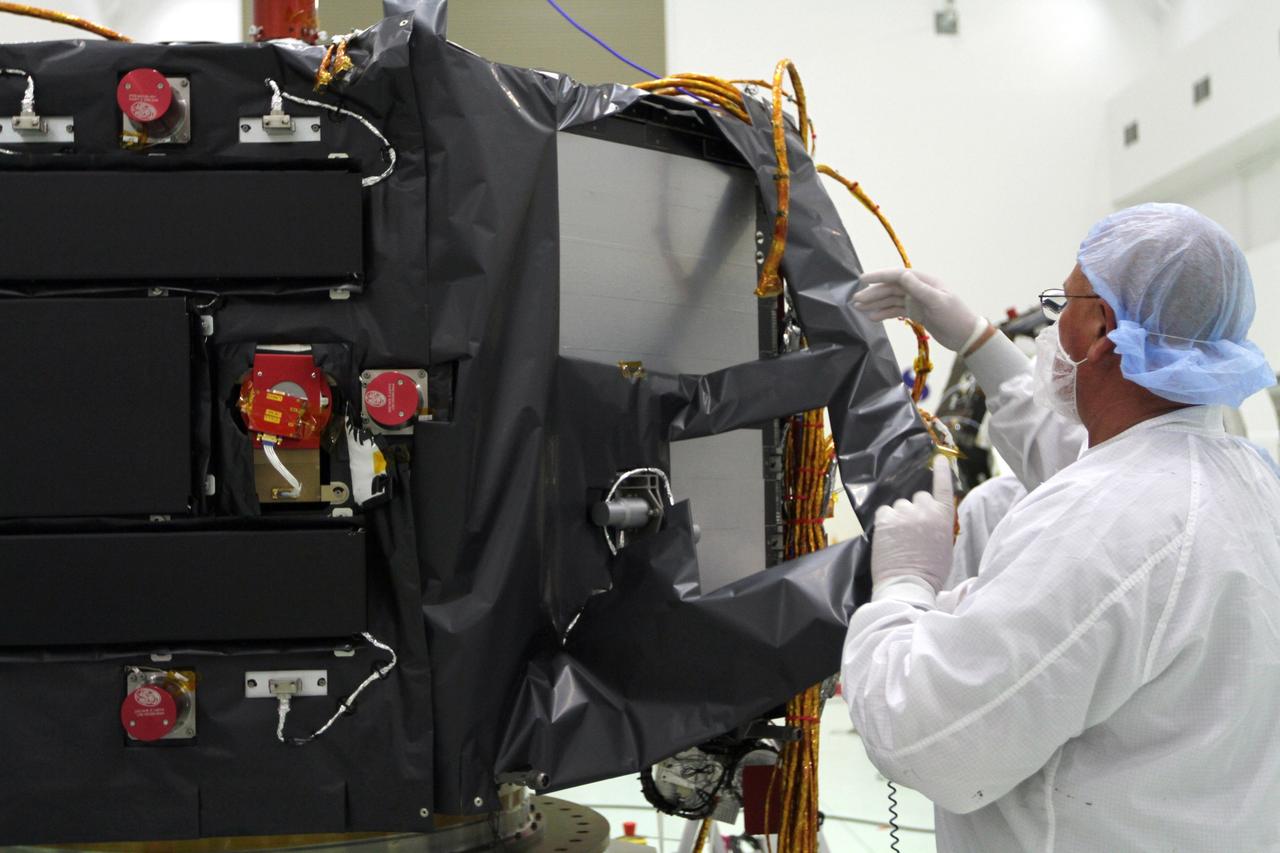
CAPE CANAVERAL, Fla. – Inside the Astrotech payload processing facility near NASA’s Kennedy Space Center in Florida, a technician installs protective thermal blankets around the Radiation Belt Storm Probes, or RBSP, spacecraft A. NASA’s RBSP mission will help us understand the sun’s influence on Earth and near-Earth space by studying the Earth’s radiation belts on various scales of space and time. RBSP will begin its mission of exploration of Earth’s Van Allen radiation belts and the extremes of space weather after its launch aboard a United Launch Alliance Atlas V rocket. Launch is targeted for Aug. 23. For more information, visit http://www.nasa.gov/rbsp. Photo credit: NASA/Kim Shiflett

Train Leaves with Helium Tanks for Space X in Texas

Acquired by NASA Terra spacecraft on in 2011, this image shows the Wadi As-Sirhan Basin in northwest Saudi Arabia, which has been steadily developing agricultural fields using center pivot irrigation by tapping into fossil ground water.
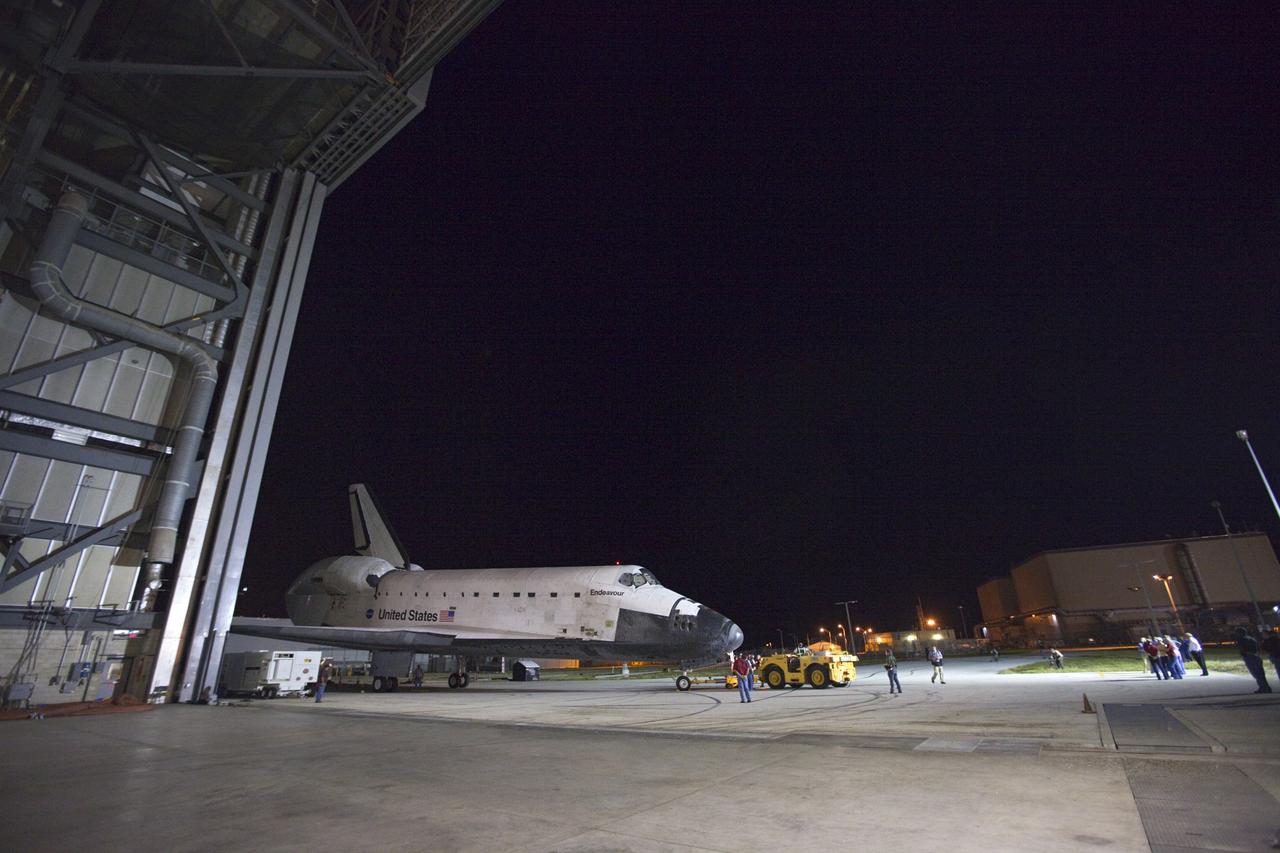
CAPE CANAVERAL, Fla. – Space shuttle Endeavour is backed out of the Vehicle Assembly Building on its way to the Mate-Demate Device, or MDD, at NASA's Kennedy Space Center in Florida. The MDD is located at the Shuttle Landing Facility at Kennedy. The shuttle will be lifted and connected to the top of NASA's Shuttle Carrier Aircraft SCA, a modified 747 jetliner. The shuttle has been fitted with an aerodynamic tailcone for its flight aboard the SCA to Los Angeles where it will be placed on public display. Photo credit: NASA/Kim Shiflett
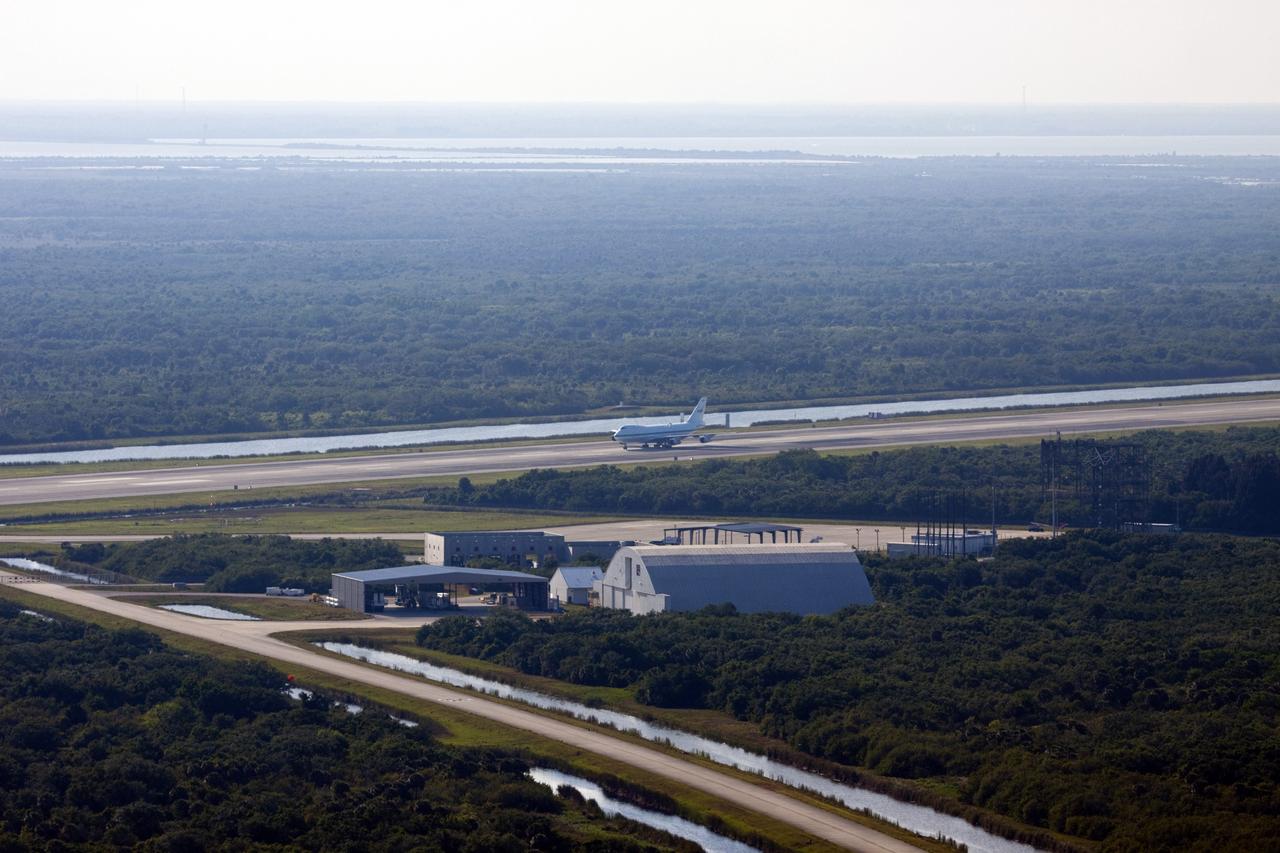
CAPE CANAVERAL, Fla. – NASA pilot Jeff Moultrie guides the Shuttle Carrier Aircraft along the runway at the Shuttle Landing Facility at NASA’s Kennedy Space Center in Florida. The aircraft, known as an SCA, arrived at 5:35 p.m. EDT to prepare for shuttle Discovery’s ferry flight to the Washington Dulles International Airport in Sterling, Va., on April 17. This SCA, designated NASA 905, is a modified Boeing 747 jet airliner, originally manufactured for commercial use. One of two SCAs employed over the course of the Space Shuttle Program, NASA 905 is assigned to the remaining ferry missions, delivering the shuttles to their permanent public display sites. NASA 911 was decommissioned at the NASA Dryden Flight Research Center in California in February. Discovery will be placed on permanent public display in the Smithsonian's National Air and Space Museum Steven F. Udvar-Hazy Center in Chantilly, Va. For more information on the SCA, visit http://www.nasa.gov/centers/dryden/news/FactSheets/FS-013-DFRC.html. For more information on shuttle transition and retirement activities, visit http://www.nasa.gov/shuttle. Photo credit: NASA/Jim Grossmann
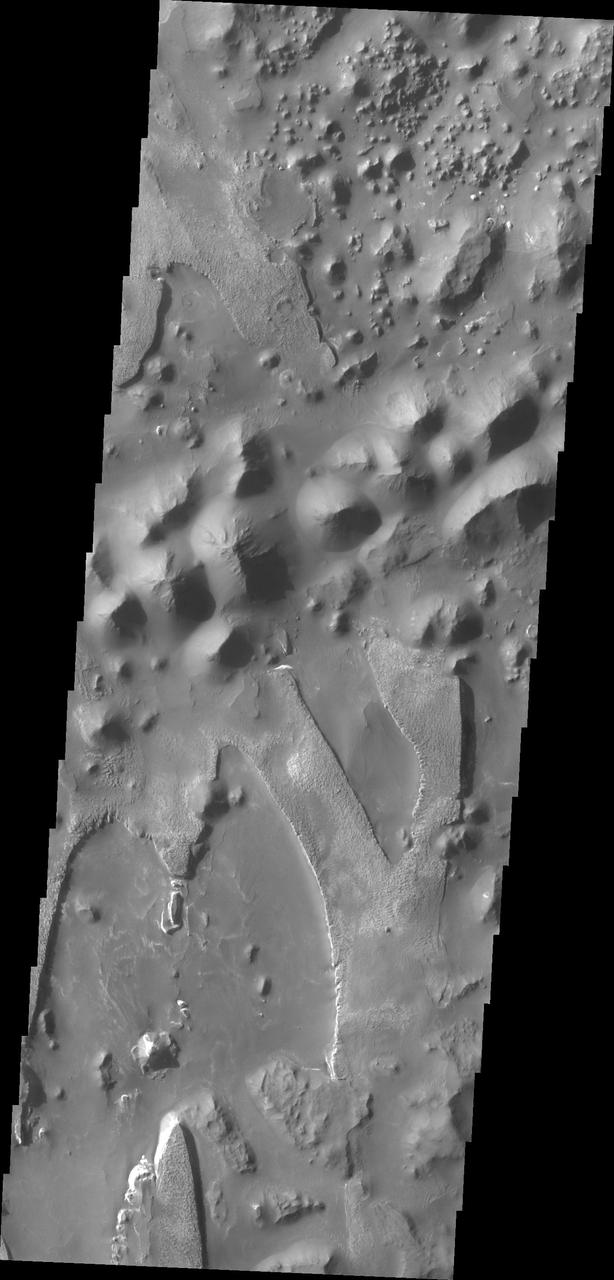
The unusual and apparently layered surface in this image from NASA 2001 Mars Odyssey spacecraft is located in Aureum Chaos.
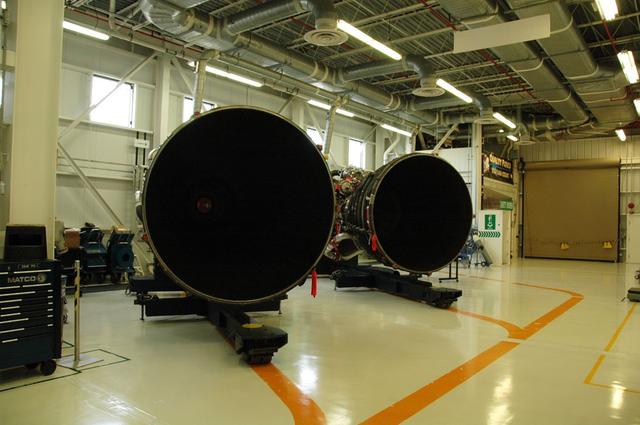
Interior View of Orbiter Processing Facility 3
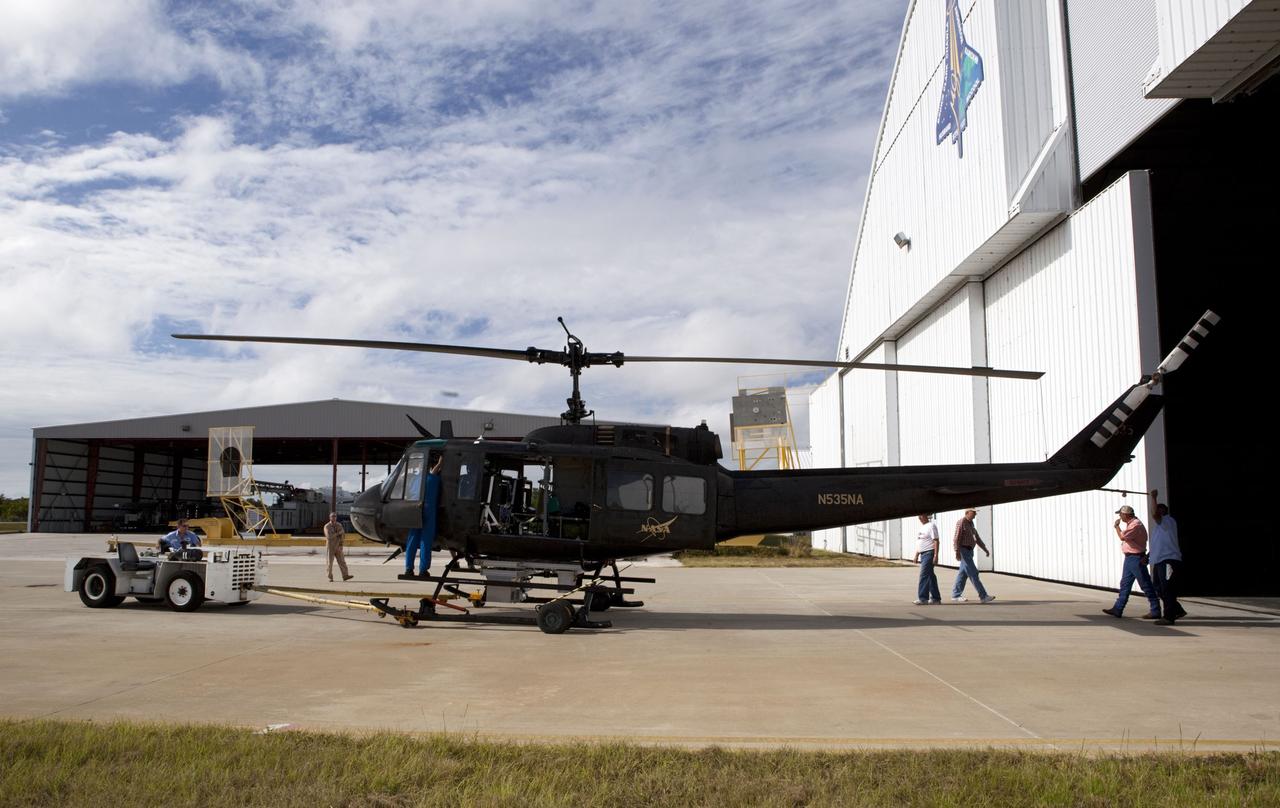
CAPE CANAVERAL, Fla. – Near the Shuttle Landing Facility at NASA's Kennedy Space Center in Florida, a space agency team installed and tested hazard avoidance instrumentation on a Huey helicopter. Led by the Johnson Space Center and supported by Jet Propulsion Laboratory and Langley Research Center, the Autonomous Landing Hazard Avoidance Technology, or ALHAT, laser system provides a planetary lander the ability to precisely land safely on a surface while detecting any dangerous obstacles such as rocks, holes and slopes. Just north of Kennedy's Shuttle Landing Facility runway, a rock- and crater-filled planetary scape has been built so engineers can test the ability to negotiate away from risks. Photo credit: NASA/Dmitri Gerondidakis
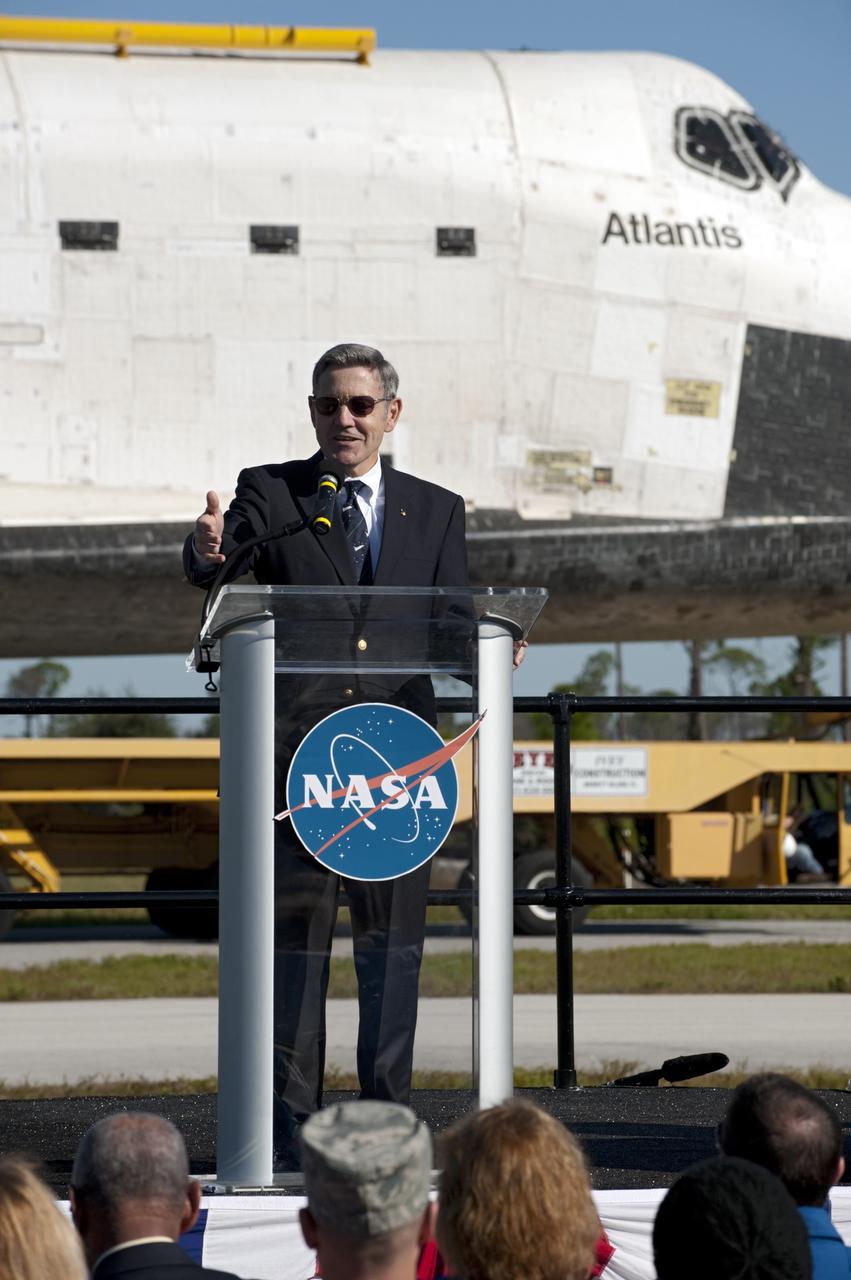
CAPE CANAVERAL, Fla. – At NASA's Kennedy Space Center in Florida, the space shuttle Atlantis pauses during its 10-mile journey to the Kennedy Visitor Complex for a ceremony to commemorate the transfer. Kennedy Director Bob Cabana spoke Kennedy employees and guests at the event. As part of transition and retirement of the Space Shuttle Program, Atlantis is to be displayed at Kennedy's Visitor Complex beginning in the summer of 2013. Over the course of its 26-year career, Atlantis traveled 125,935,769 miles during 307 days in space over 33 missions. For more information, visit http://www.nasa.gov/transition Photo credit: NASA/Tony Gray
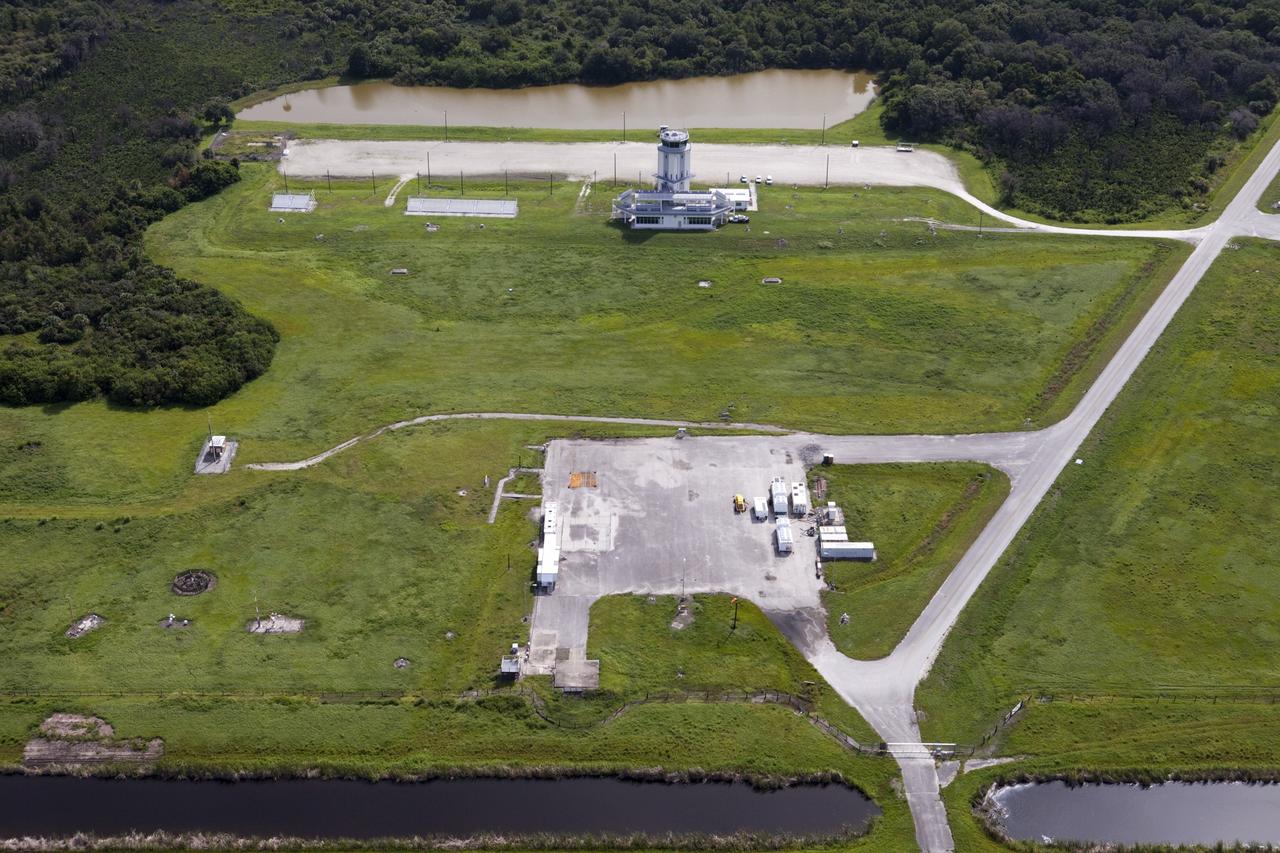
CAPE CANAVERAL, Fla. – This aerial view shows the Shuttle Landing Facility’s air traffic control tower at the Kennedy Space Center in Florida. Just below the tower is the mid-field park site used for runway support vehicles. At the north end of the runway, a rock and crater-filled planetary scape has been built so engineers can test the Autonomous Landing and Hazard Avoidance Technology, or ALHAT system on the Project Morpheus lander. Testing will demonstrate ALHAT’s ability to provide required navigation data negotiating the Morpheus lander away from risks during descent. Checkout of the prototype lander has been ongoing at NASA’s Johnson Space Center in Houston in preparation for its first free flight. The SLF site will provide the lander with the kind of field necessary for realistic testing. Project Morpheus is one of 20 small projects comprising the Advanced Exploration Systems, or AES, program in NASA’s Human Exploration and Operations Mission Directorate. AES projects pioneer new approaches for rapidly developing prototype systems, demonstrating key capabilities and validating operational concepts for future human missions beyond Earth orbit. For more information on Project Morpheus, visit http://www.nasa.gov/centers/johnson/exploration/morpheus/index.html Photo credit: NASA/Kim Shiflett
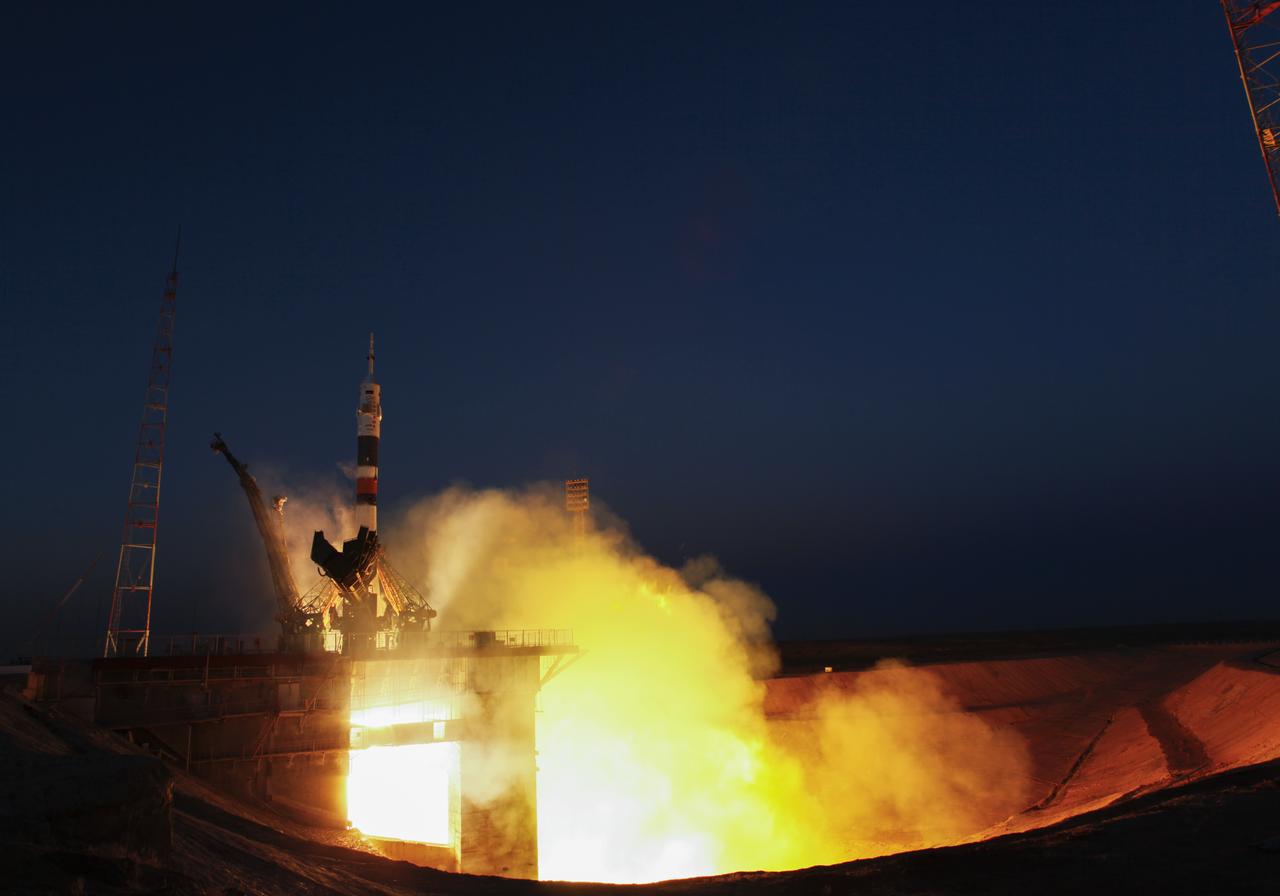
The Soyuz TMA-07M rocket launches from the Baikonur Cosmodrome in Kazakhstan on Wednesday, Dec. 19, 2012 carrying Expedition 34 NASA Flight Engineers Tom Marshburn, Soyuz Commander Roman Romanenko and Flight Engineer Chris Hadfield of the Canadian Space Agency (CSA) to the International Space Station. Their Soyuz TMA-07M rocket launched at 6:12 p.m. local time. Photo Credit: (NASA/Carla Cioffi)
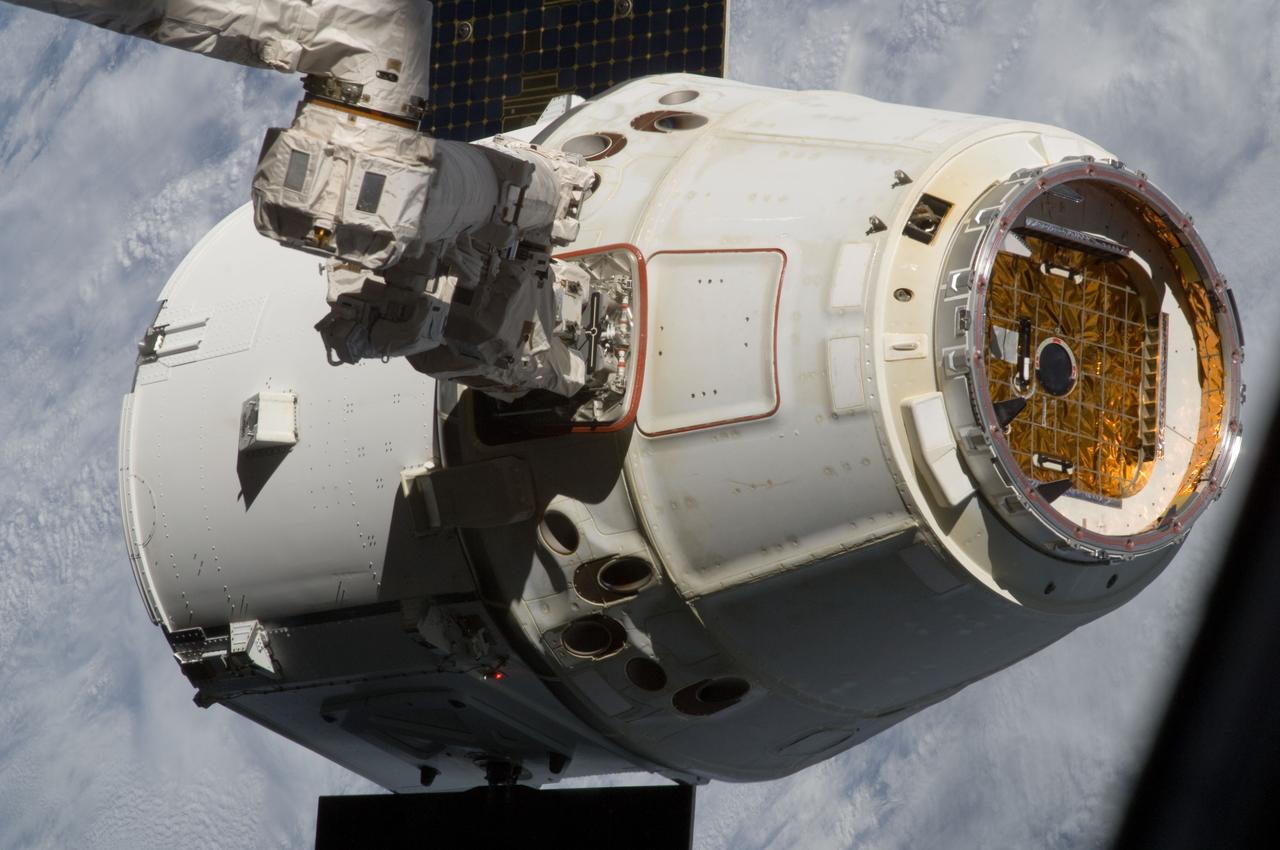
ISS033-E-016899 (28 Oct. 2012) --- The SpaceX Dragon commercial cargo craft is pictured just prior to being released by the International Space Station's Canadarm2 robotic arm on Oct. 28 to allow it to head toward a splashdown in the Pacific Ocean.
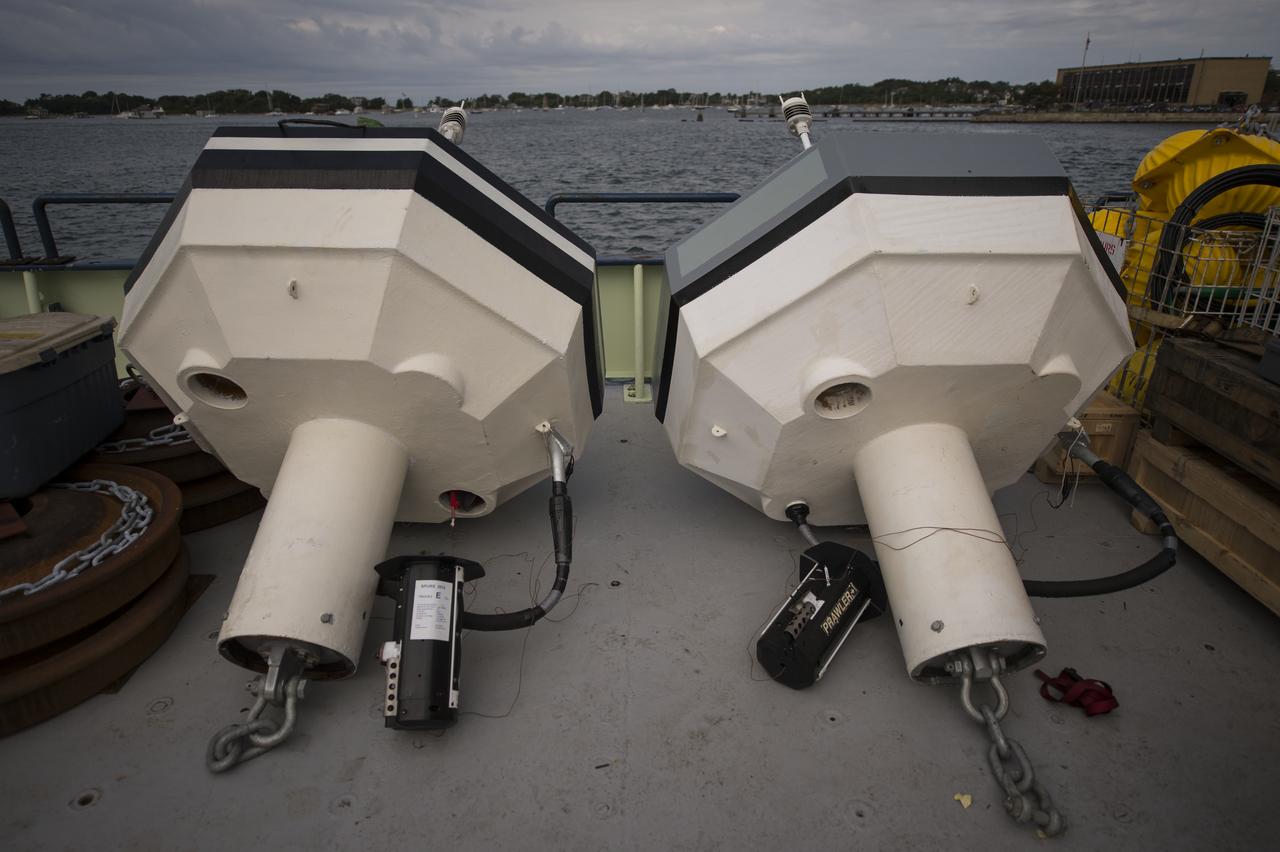
Two NOAA Pacific Marine Environmental Laboratory (PMEL) buoys are seen on the stern of the Woods Hole Oceanographic Institution's research vessel Knorr on Tuesday, Sept. 4, 2012, in Woods Hole, Mass. Knorr is scheduled to depart on Sept. 6 to take part in the Salinity Processes in the Upper Ocean Regional Study (SPURS). The NASA-sponsored expedition will sail to the North Atlantic's saltiest spot to get a detailed, 3-D picture of how salt content fluctuates in the ocean's upper layers and how these variations are related to shifts in rainfall patterns around the planet. Photo Credit: (NASA/Bill Ingalls)
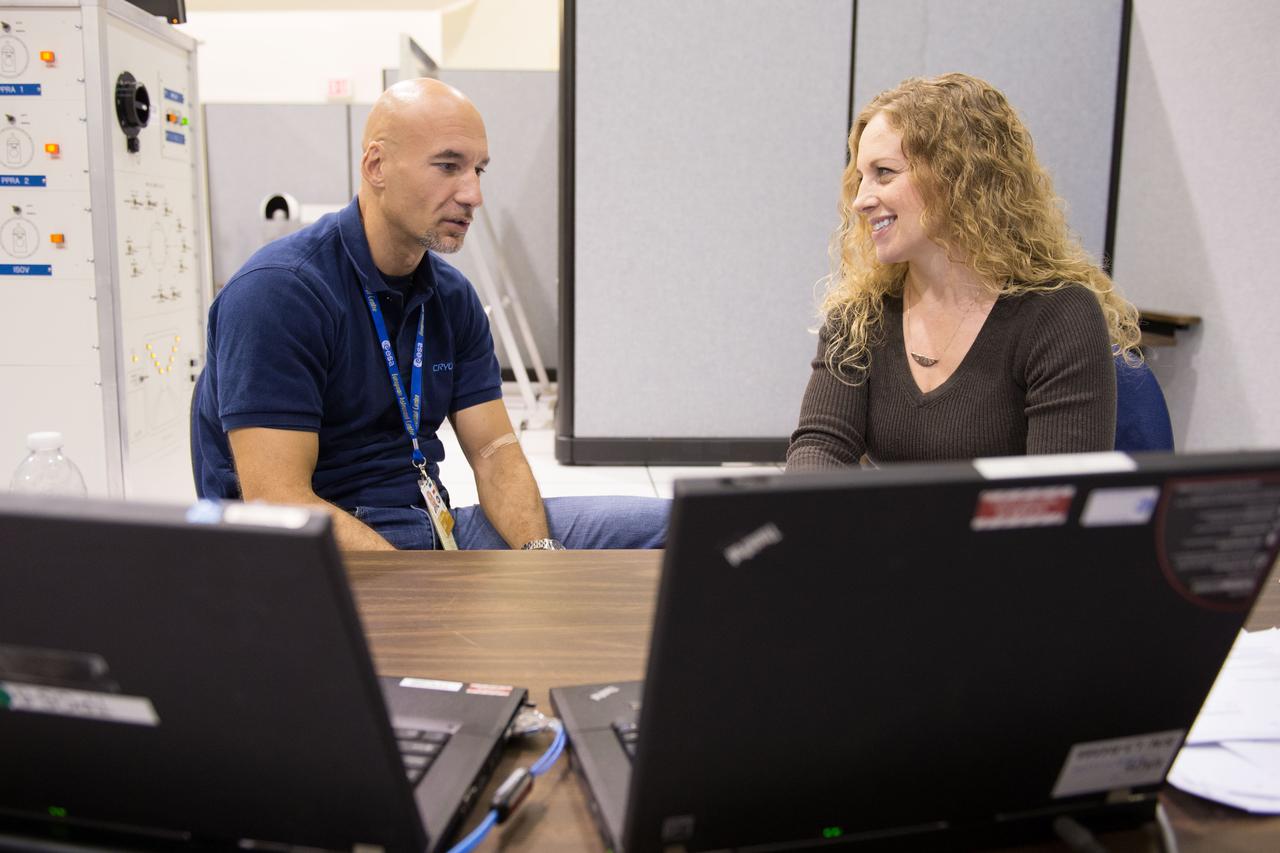
Date: 10-16-12 Location: Bldg 5, SSTF Subject: Expedition 37 (Soyuz 35) ESA astronaut Luca Parmitano during Columbus Reactivation training with instructor Michaela Benda in the crew station, Node-2 area sitting at a table and working on laptops Photographer: James Blair
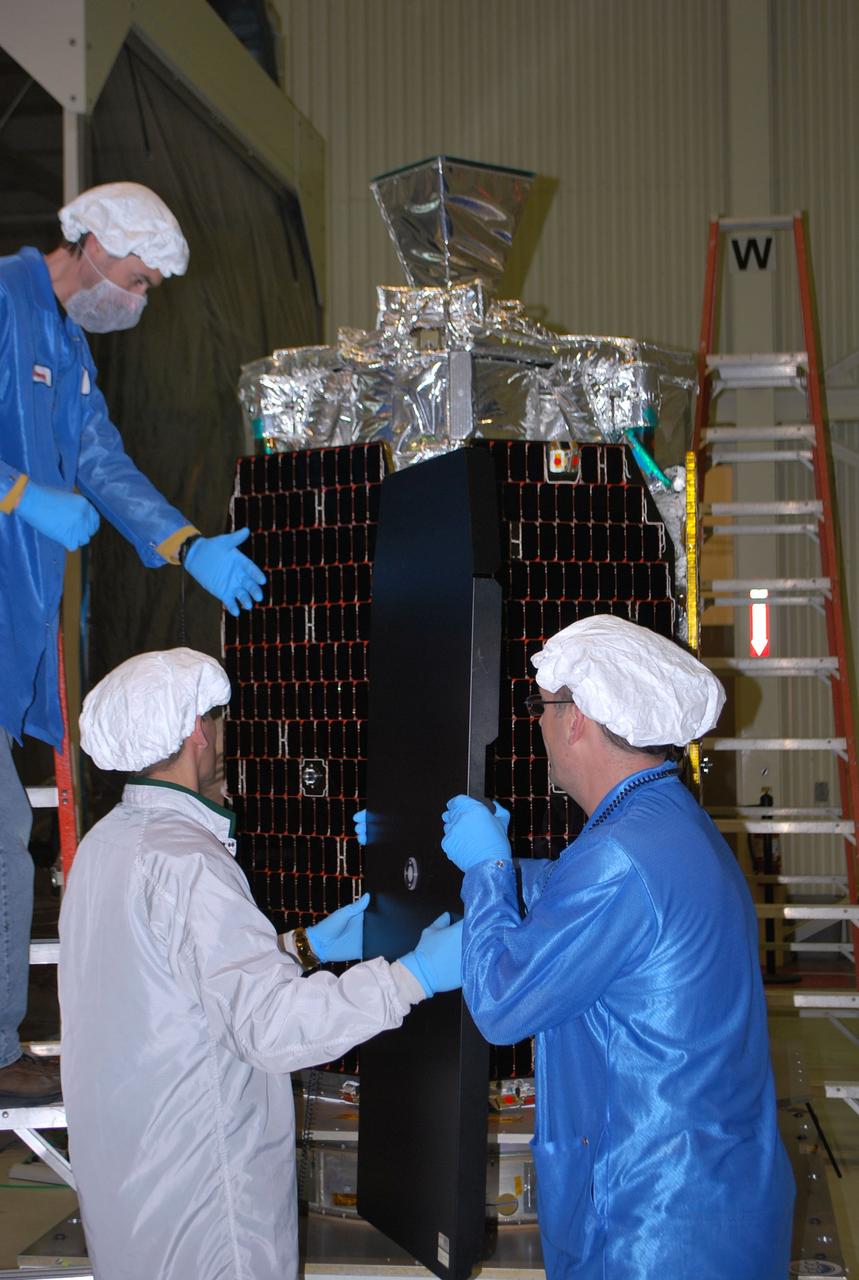
VANDENBERG AIR FORCE BASE, Calif. -- At Vandenberg Air Force Base's processing facility in California, technicians prepare NASA’s NuSTAR spacecraft to be lifted into a tilt-rotation fixture. The spacecraft will be rotated to horizontal for joining with the Pegasus XL rocket. The Orbital Sciences Pegasus will launch NASA's Nuclear Spectroscopic Telescope Array NuSTAR into space. After the rocket and spacecraft are processed at Vandenberg, they will be flown on Orbital's L-1011 carrier aircraft to the Ronald Reagan Ballistic Missile Defense Test Site at the Pacific Ocean’s Kwajalein Atoll for launch. The high-energy x-ray telescope will conduct a census for black holes, map radioactive material in young supernovae remnants, and study the origins of cosmic rays and the extreme physics around collapsed stars. For more information, visit science.nasa.gov/missions/nustar/. Photo credit: NASA/Randy Beaudoin, VAFB
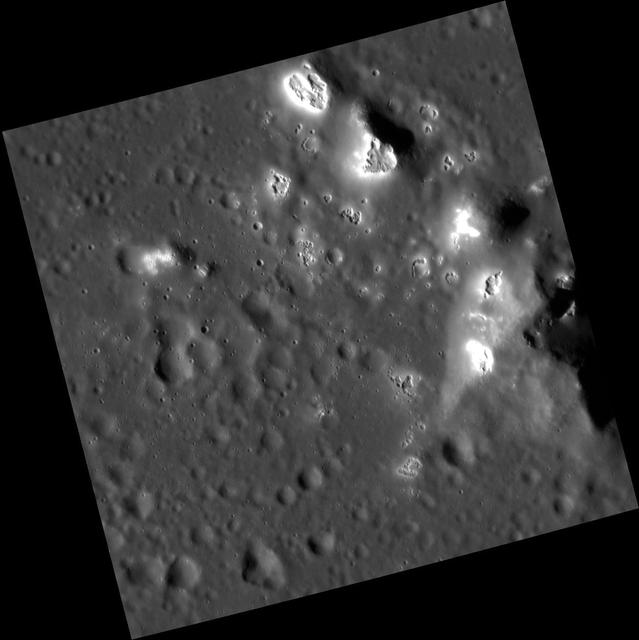
Hawaiian Hollows
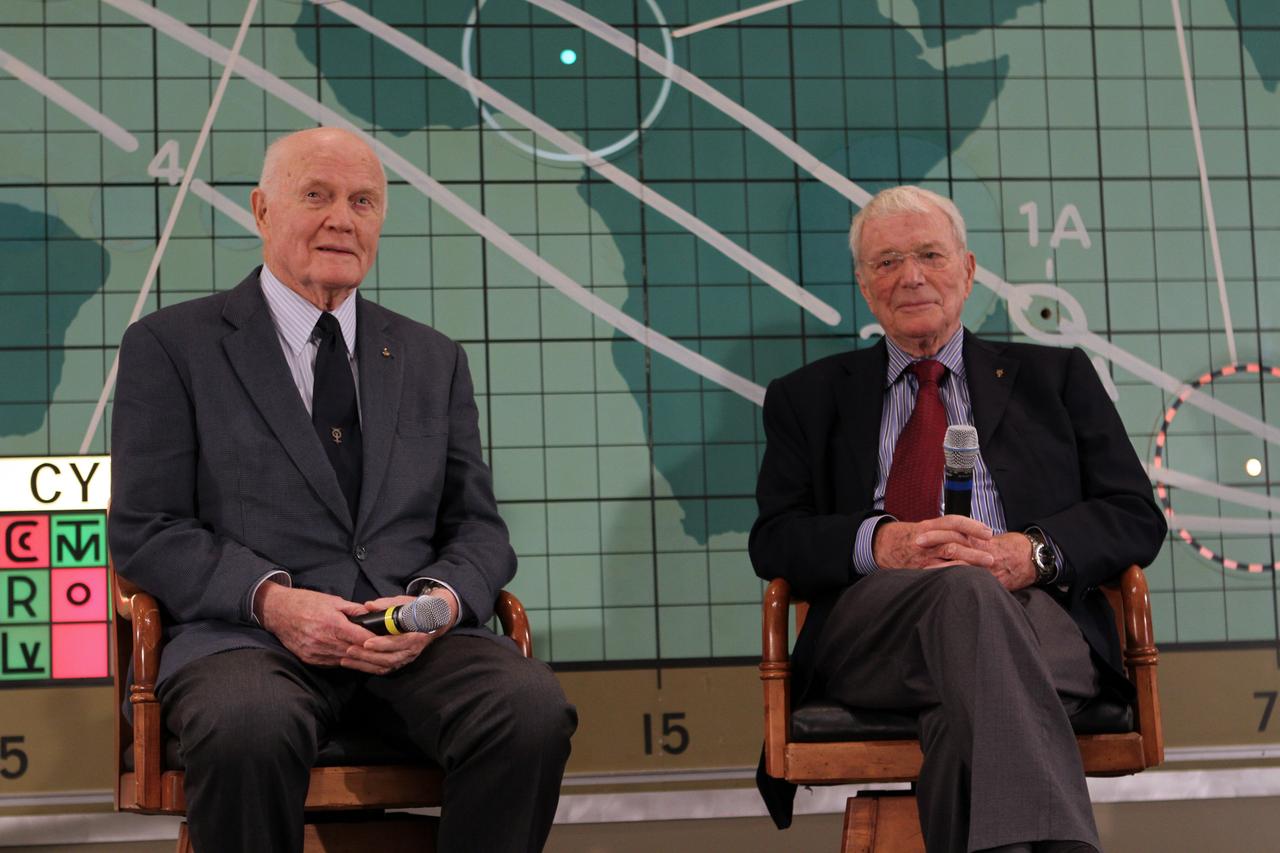
CAPE CANAVERAL, Fla. --Mercury astronauts John Glenn, left, and Scott Carpenter sit in front of the plot board from the Mercury control center on display at the Kennedy Space Center Visitor Complex in Florida. The astronaut, part of the original class of seven astronauts chosen by NASA, was taking part in a question-and-answer session with the media as part of events celebrating 50 years of Americans in orbit, an era which began with John Glenn's Mercury mission MA-6, on Feb. 20, 1962. Glenn's launch aboard an Atlas rocket took with it the hopes of an entire nation and ushered in a new era of space travel that eventually led to Americans walking on the moon by the end of the 1960s. Glenn soon was followed into orbit by Carpenter, Walter Schirra and Gordon Cooper. Their fellow Mercury astronauts Alan Shepard and Virgil "Gus" Grissom flew earlier suborbital flights. Deke Slayton was grounded by a medical condition until the Apollo-Soyuz Test Project in 1975. Photo credit: NASA/Kim Shiflett
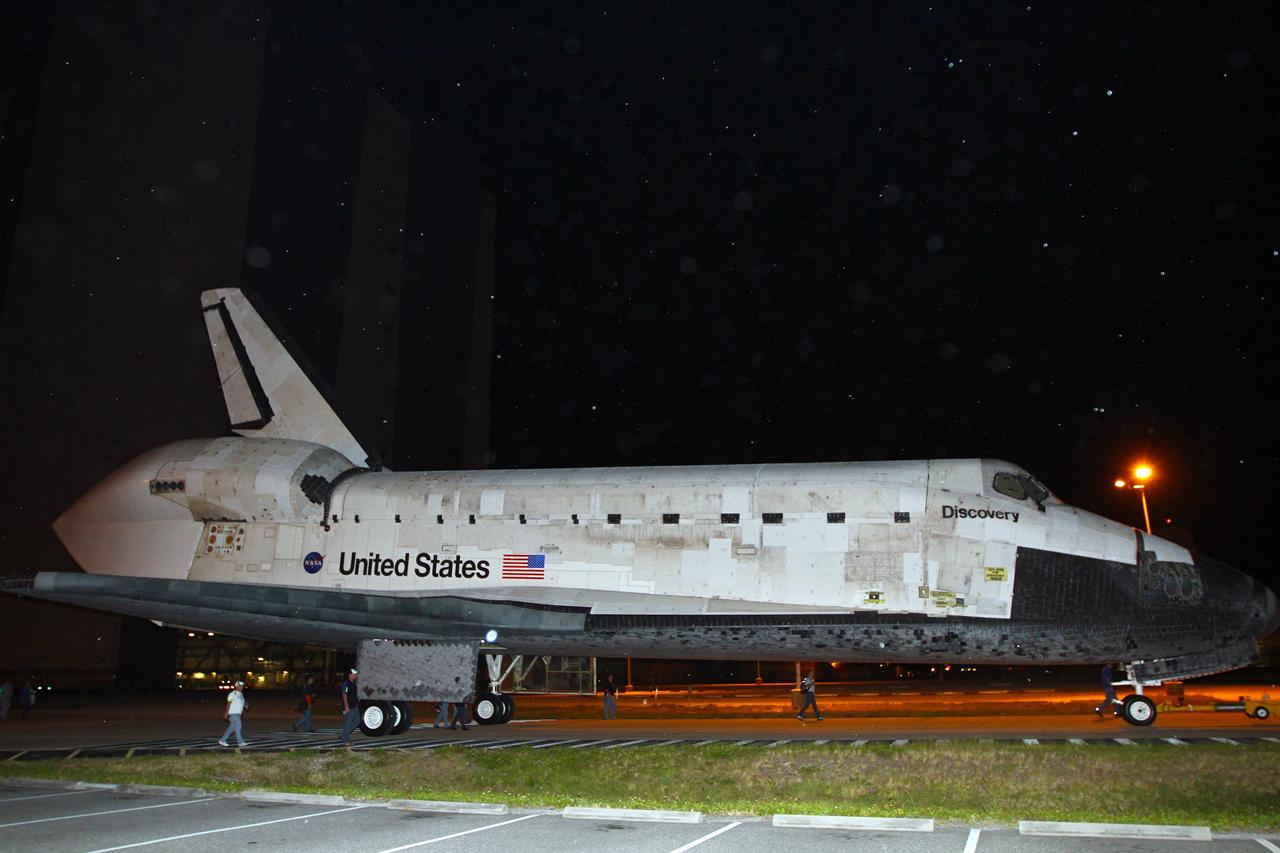
CAPE CANAVERAL, Fla. – Rain begins to fall on space shuttle Discovery as it says good-bye to NASA Kennedy Space Center’s Launch Complex 39 area for the final time. Discovery is on its way from the Vehicle Assembly Building’s high bay 4 to the Shuttle Landing Facility, or SLF. At the SLF, Discovery will be hoisted onto a Shuttle Carrier Aircraft, or SCA, with the aid of a mate-demate device. The SCA, a modified Boeing 747 jet airliner, is scheduled to ferry Discovery to the Washington Dulles International Airport in Virginia on April 17, after which the shuttle will be placed on permanent public display in the Smithsonian's National Air and Space Museum Steven F. Udvar-Hazy Center. For more information on shuttle transition and retirement activities, visit http://www.nasa.gov/transition. Photo credit: NASA/Kim Shiflett
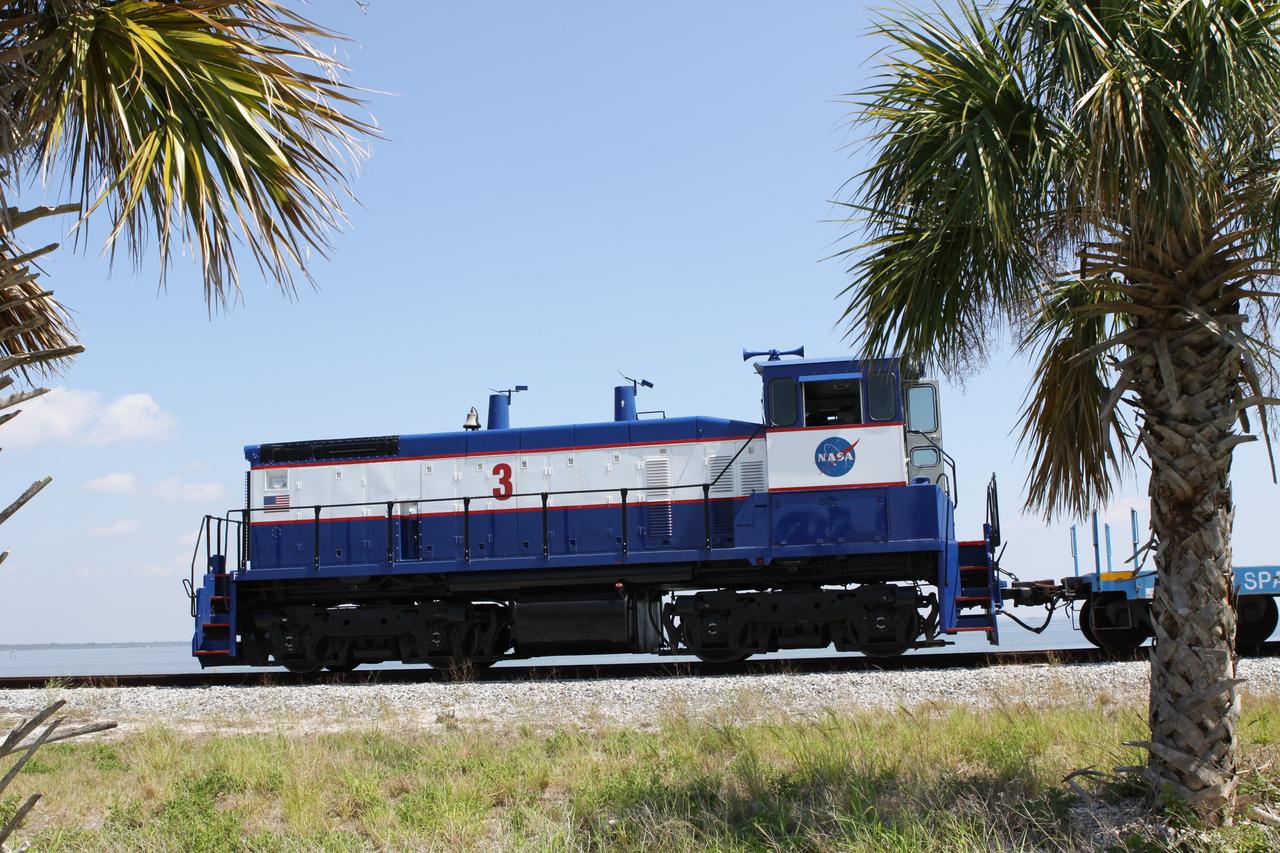
CAPE CANAVERAL, Fla. – NASA Railroad locomotive No. 3 delivers tank cars from NASA’s Kennedy Space Center in Florida to the Florida East Coast Railway interchange in Titusville, Fla. The locomotive is one of three NASA Railroad locomotives built for the Toledo, Peoria and Western, or TP&W, between 1968 and 1970. It is a GM Electromotive Division SW-1500 switcher. The locomotive was acquired by NASA from the TP&W in 1984 and painted in the NASA Railroad paint scheme. The power plant was completely overhauled in 2009. The locomotive will pull the train to the interchange in Titusville, where the train’s helium tank cars, a liquid oxygen tank car, and a liquid hydrogen dewar or tank car will be transferred for delivery to the SpaceX engine test complex outside McGregor, Texas. The railroad cars were needed in support of the Space Shuttle Program but currently are not in use by NASA following the completion of the program in 2011. Originally, the tankers belonged to the U.S. Bureau of Mines. At the peak of the shuttle program, there were approximately 30 cars in the fleet. About half the cars were returned to the bureau as launch activity diminished. Five tank cars are being loaned to SpaceX and repurposed to support their engine tests in Texas. Eight cars previously were shipped to California on loan to support the SpaceX Falcon 9 rocket launches from Space Launch Complex-4 on Vandenberg Air Force Base. SpaceX already has three helium tank cars previously used for the shuttle program at Space Launch Complex-40 on Cape Canaveral Air Force Station in Florida. For more information, visit http://www.nasa.gov/spacex. Photo credit: NASA/Jim Grossmann
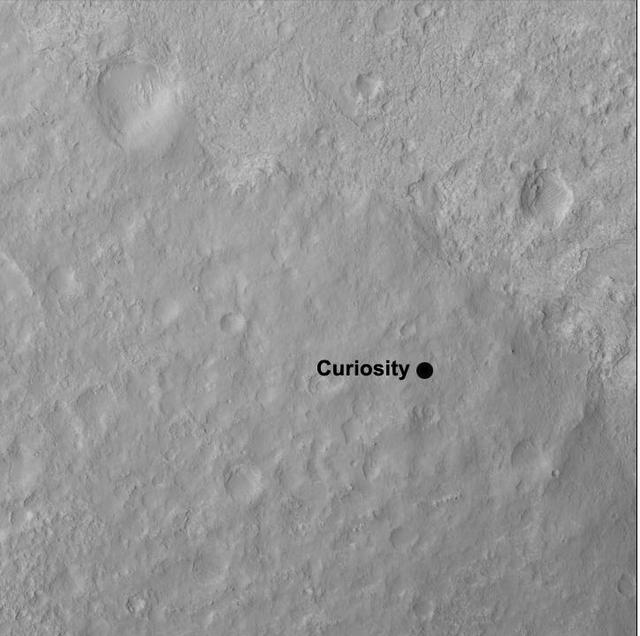
This image shows the quadrangle where NASA Curiosity rover landed, within the expansive Gale Crater. The mission science team has divided the landing region into several square quadrangles, or quads, of interest about 1-mile 1.3-kilometers wide.
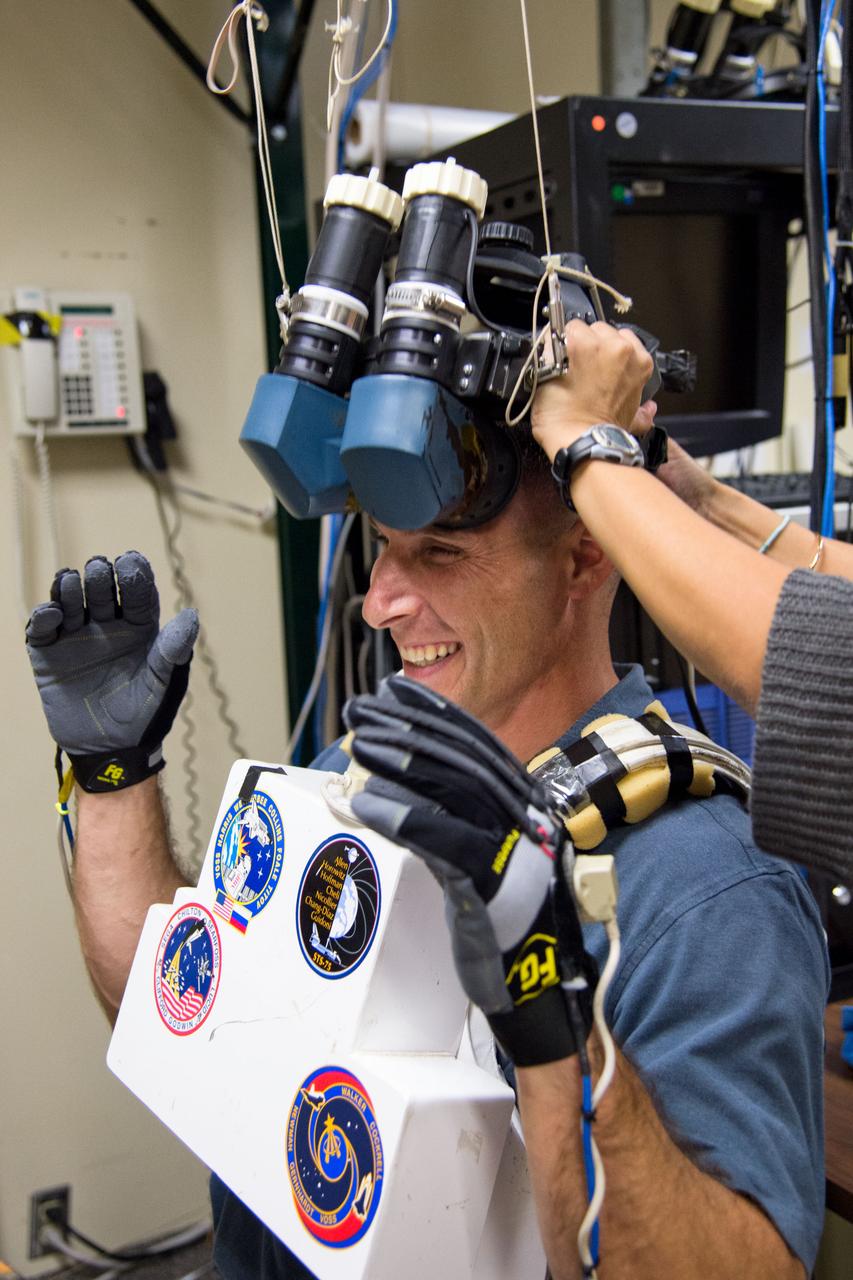
DATE: 11-5-12 LOCATION: Bldg. 9 - VR Lab SUBJECT: Expedition 38 crew members Mike Hopkins, Rick Mastracchio and Koichi Wakata during ROBO/EVA VR LAB training with instructors Jason A. Campbell and Alex Kanelakos. PHOTOGRAPHER: Lauren Harnett
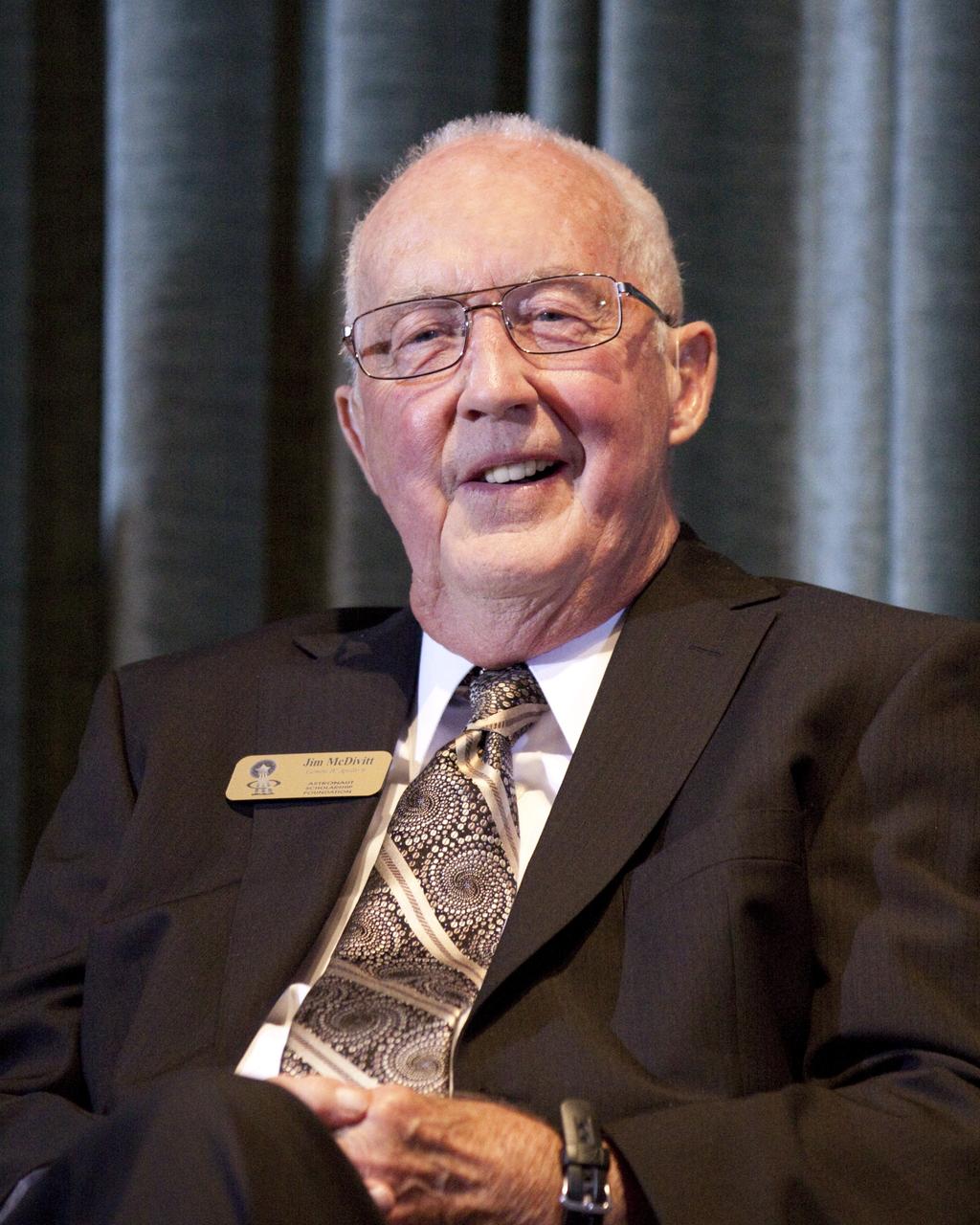
CAPE CANAVERAL, Fla. – Gemini 4 and Apollo 9 astronaut James McDivitt speaks to guests gathered for the Astronaut Scholarship Foundation's dinner at the Radisson Resort at the Port in Cape Canaveral celebrating the 40th anniversary of Apollo 17. The gala commemorating the anniversary of Apollo 17 included mission commander Eugene Cernan and other astronauts who flew Apollo missions. Launched Dec. 7, 1972, Cernan and lunar module pilot Harrison Schmitt landed in the moon's Taurus-Littrow highlands while command module pilot Ronald Evans remained in lunar orbit operating a scientific instrument module. For more information, visit http://www-pao.ksc.nasa.gov/history/apollo/apollo-17/apollo-17.htm Photo credit: NASA/Kim Shiflett
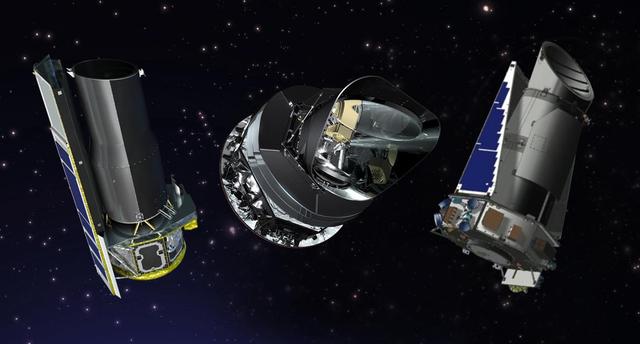
From left to right, artist concepts of the Spitzer, Planck and Kepler space telescopes. NASA extended Spitzer and Kepler for two additional years; and the U.S. portion of Planck, a European Space Agency mission, for one year.
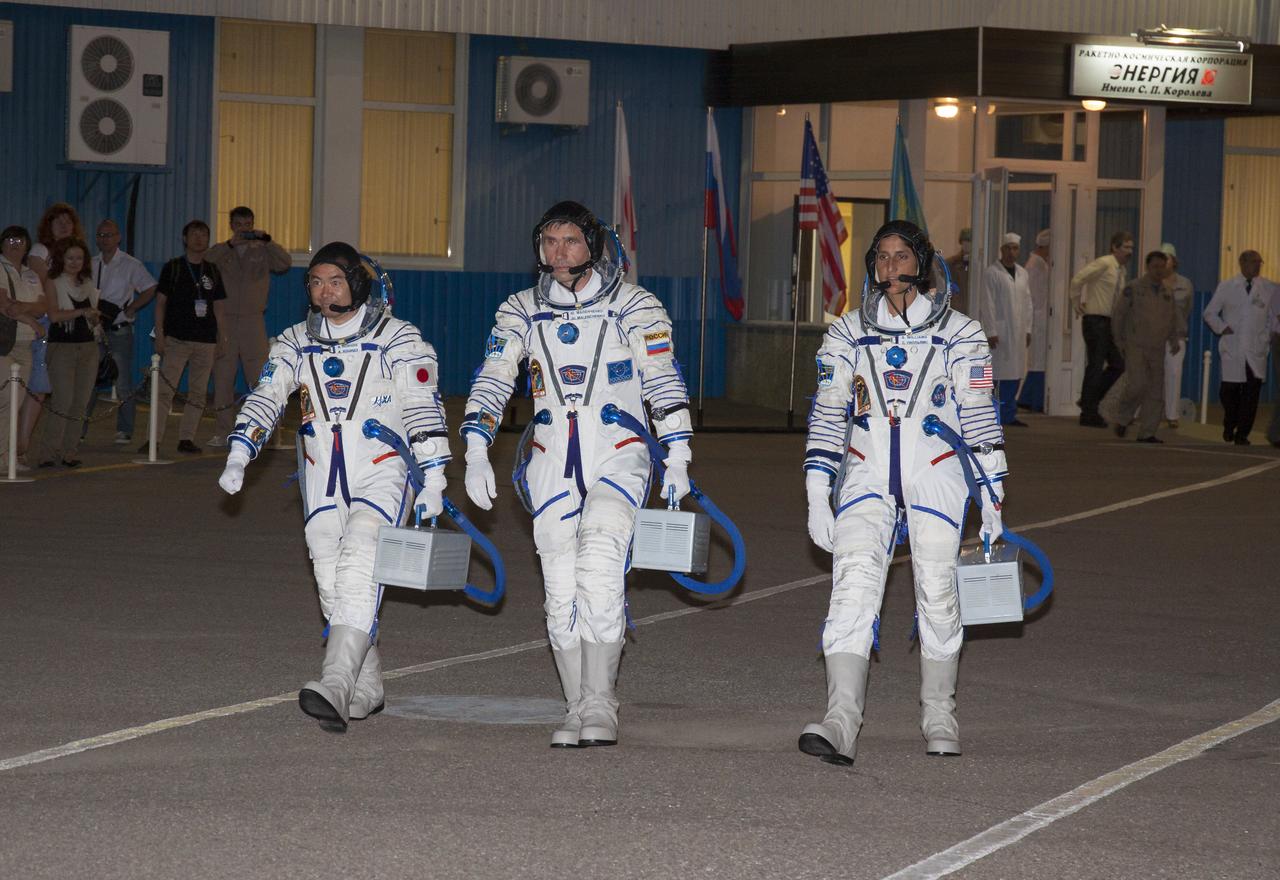
Expedition 32 Flight Engineer Sunita Williams, right, Soyuz Commander Yuri Malenchenko and JAXA Flight Engineer Akihiko Hoshide, left, leave building 254 following their suit up for launch Sunday, July 15, 2012 at the Baikonur Cosmodrome in Kazakhstan. The Soyuz spacecraft with Malenchenko, Williams and Hoshide onboard launched at 8:40 a.m. later that morning Kazakhstan time. Photo Credit: (NASA/Victor Zelentsov)
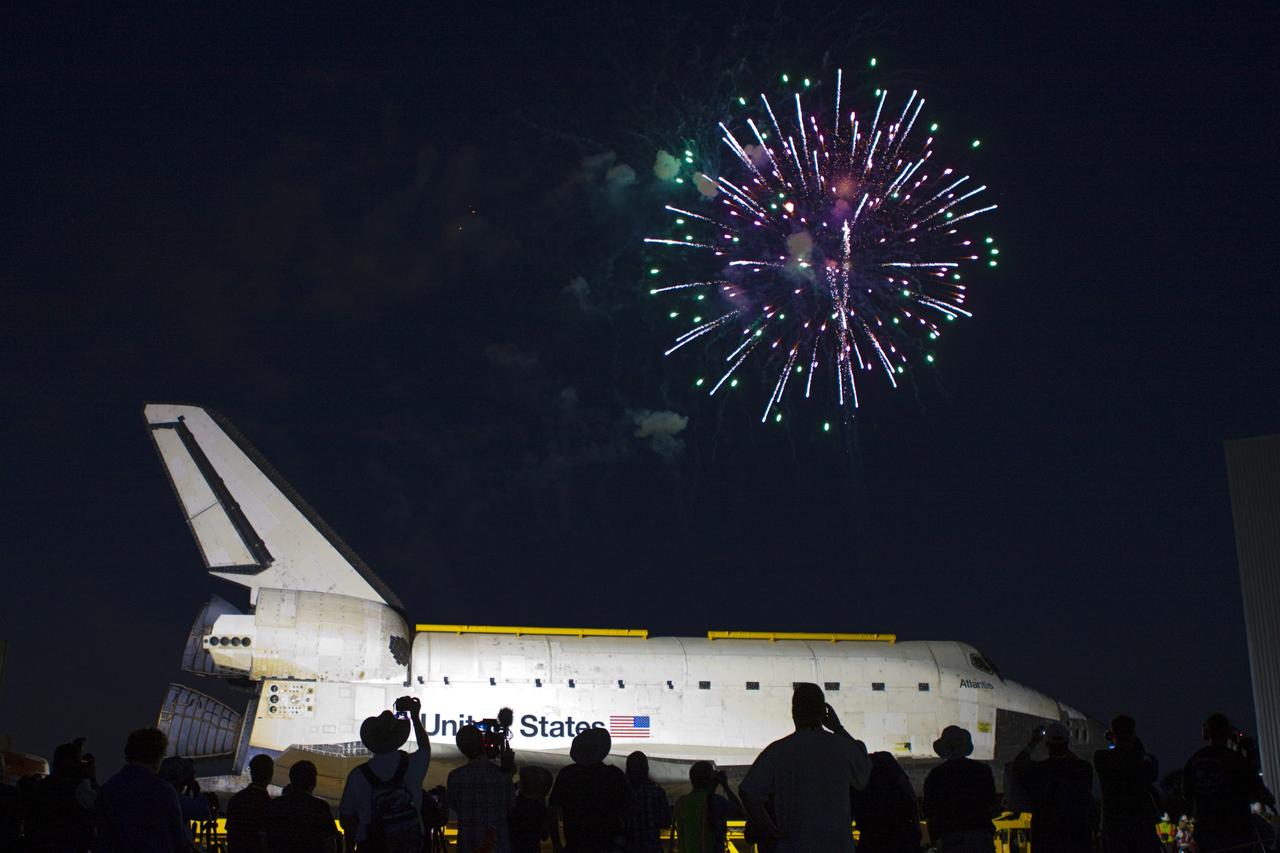
CAPE CANAVERAL, Fla. – Space shuttle Atlantis’ arrival at the Kennedy Space Center Visitor Complex in Florida is marked by celebration and fireworks. Atlantis made the 10-mile trip from Kennedy’s Vehicle Assembly Building to the visitor complex where it will be put on public display. As part of transition and retirement of the Space Shuttle Program, Atlantis will be displayed at Kennedy’s Visitor Complex beginning in the summer of 2013. Over the course of its 26-year career, Atlantis traveled 125,935,769 miles during 307 days in space over 33 missions. For more information, visit http://www.nasa.gov/transition. Photo credit: NASA/Jim Grossmann
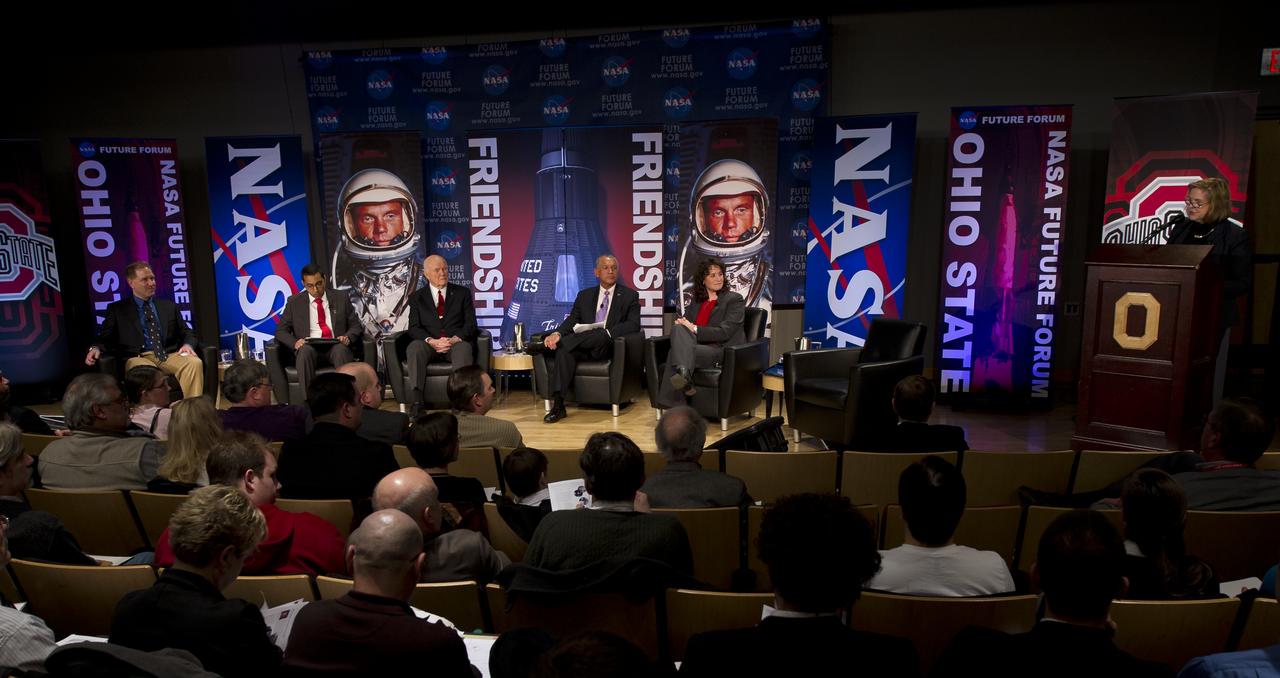
The Ohio State University Vice President for Research Dr. Caroline Whitacre, standing right, moderates the first panel discussion during NASA's Future Forum with NASA Associate Administrator for Science Mission Directorate John Grunsfeld, left, Ohio State University Graduate Research Associate Vijay Gadepally, Sen. John Glenn, NASA Administrator Charles Bolden, and NASA 2009 Astronaut Candidate and Flight Surgeon Serena Auñón, seated right, at The Ohio State University on Monday, Feb. 20, 2012, in Columbus, Ohio. Monday marked the 50th anniversary of Glenn's historic flight as the first American to orbit Earth. Photo Credit: (NASA/Bill Ingalls)
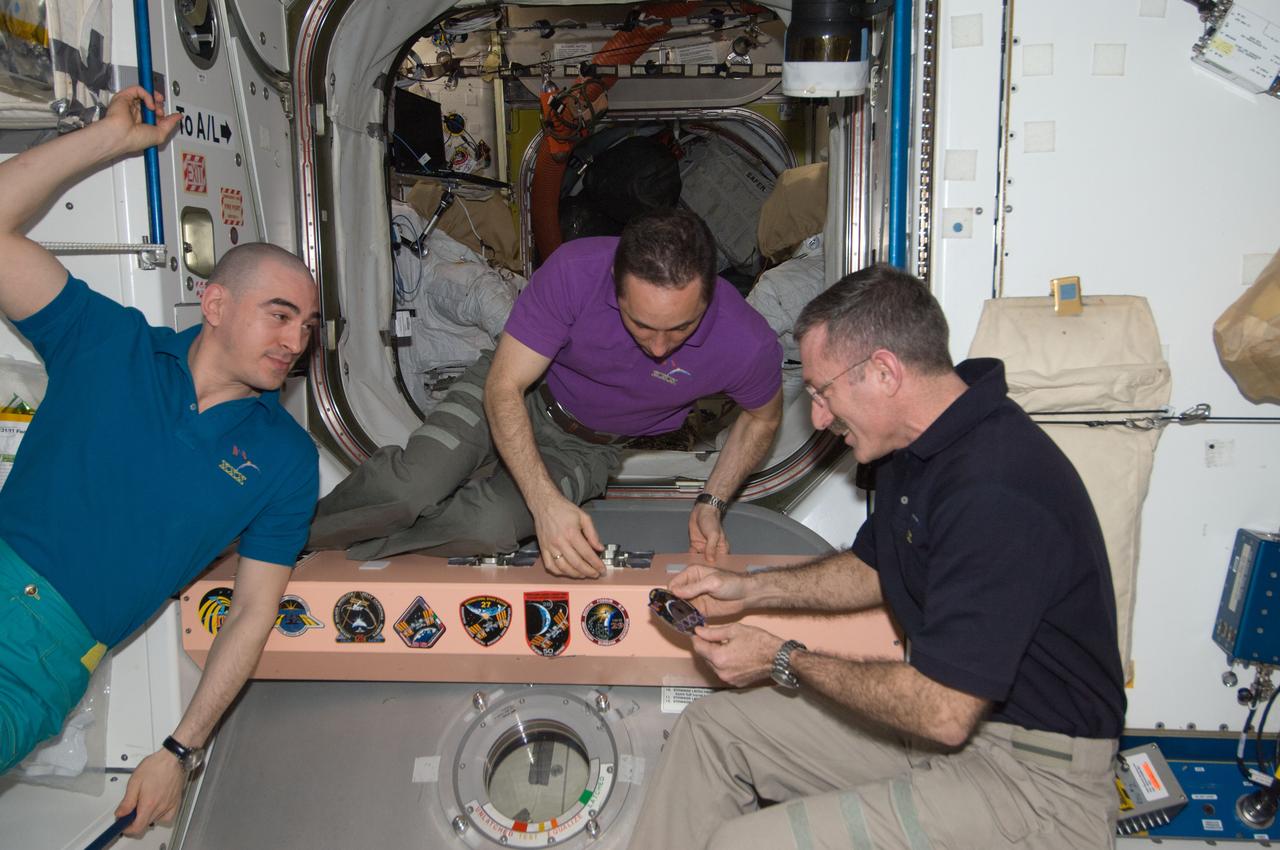
ISS030-E-241318 (21 April 2012) --- In the Unity node, NASA astronaut Dan Burbank (right), Expedition 30 commander; along with Russian cosmonauts Anton Shkaplerov (center) and Anatoly Ivanishin, both flight engineers, prepare to add the Expedition 30 patch to the growing collection of insignias representing crews who have worked on the International Space Station.
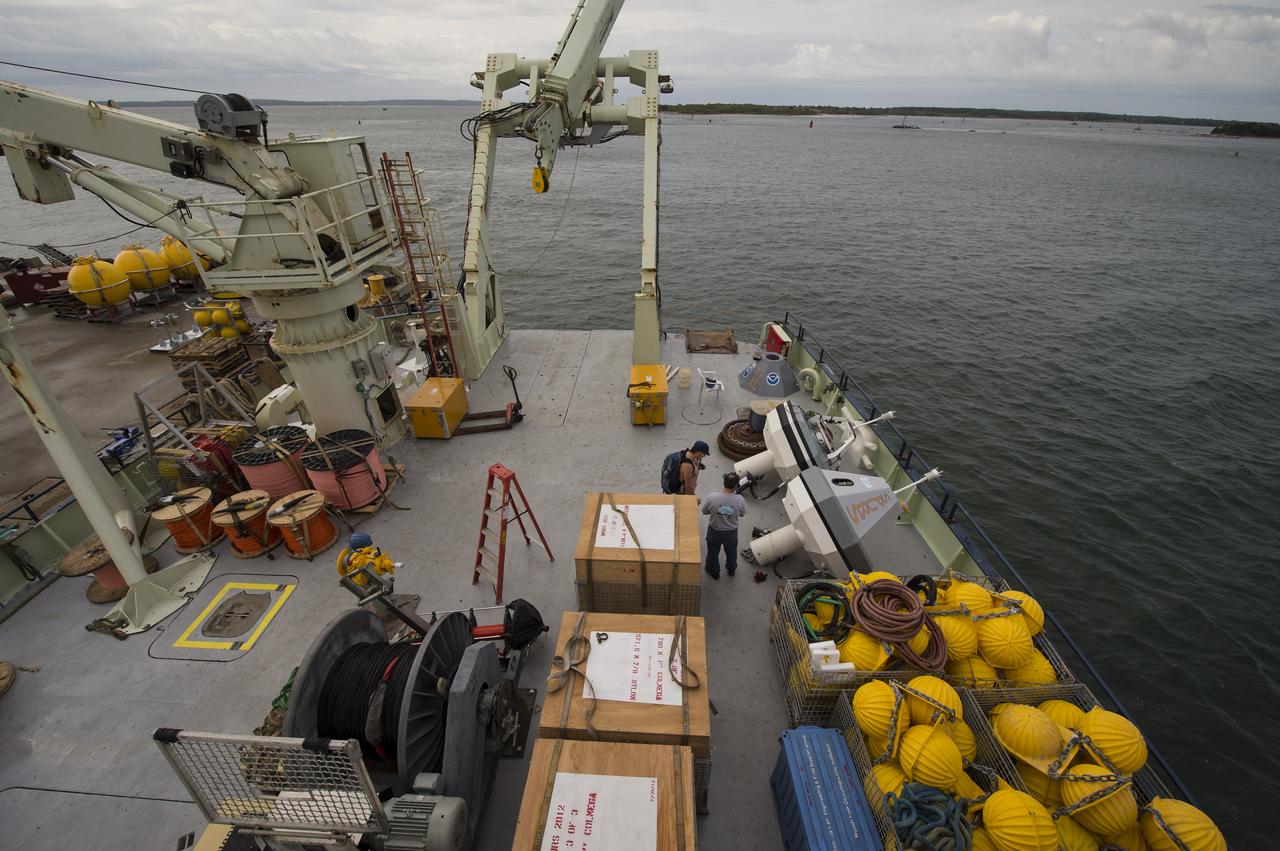
Scientific instruments, buoys, and shipping crates are seen on the stern of the Woods Hole Oceanographic Institution's research vessel Knorr on Tuesday, Sept. 4, 2012, in Woods Hole, Mass. Knorr is scheduled to depart on Sept. 6 to take part in the Salinity Processes in the Upper Ocean Regional Study (SPURS). The NASA-sponsored expedition will sail to the North Atlantic's saltiest spot to get a detailed, 3-D picture of how salt content fluctuates in the ocean's upper layers and how these variations are related to shifts in rainfall patterns around the planet. Photo Credit: (NASA/Bill Ingalls)
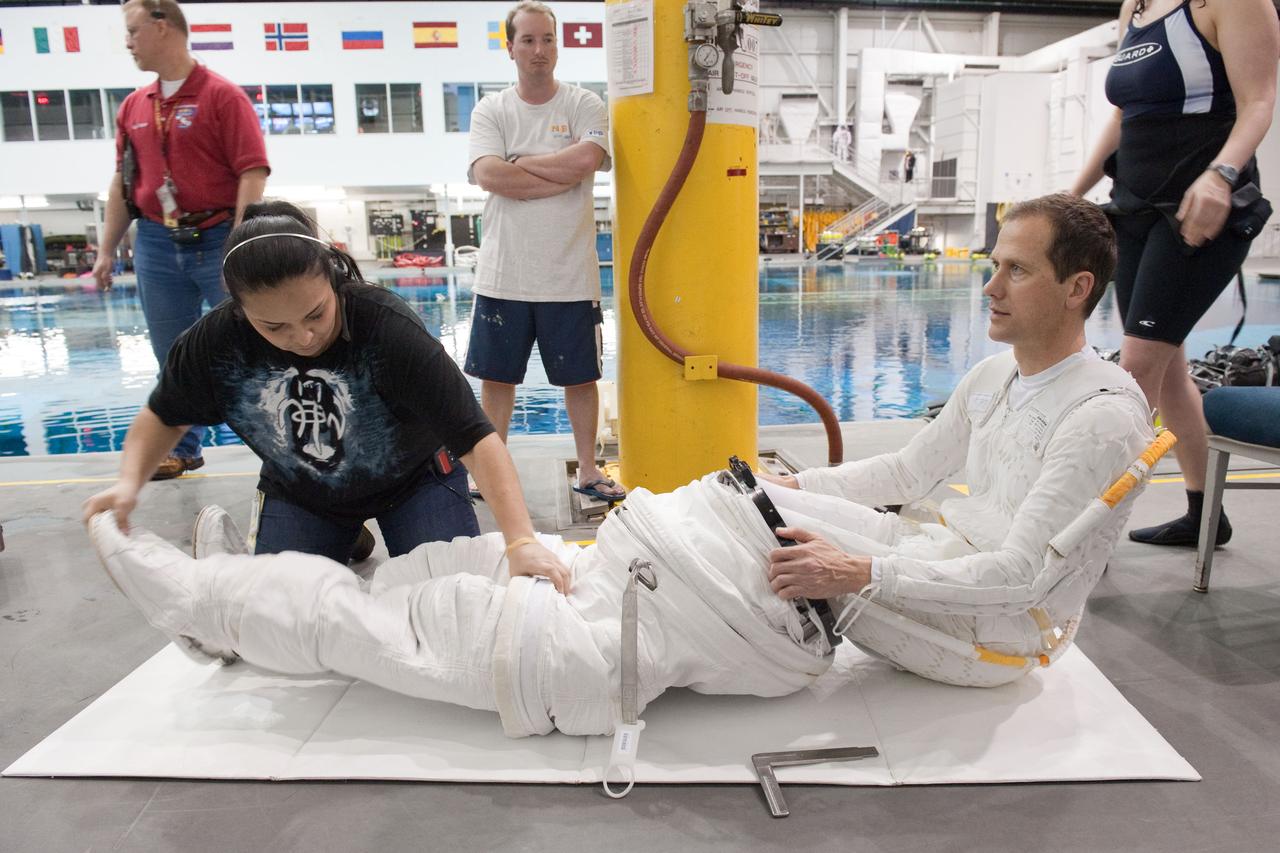
Date: 03-14-12 Location: NBL Subject: Expedition 35 (Soyuz 33S) crew members Tom Marshburn and Chris Hadfield during EVA training at the NBL. Photographer: James Blair
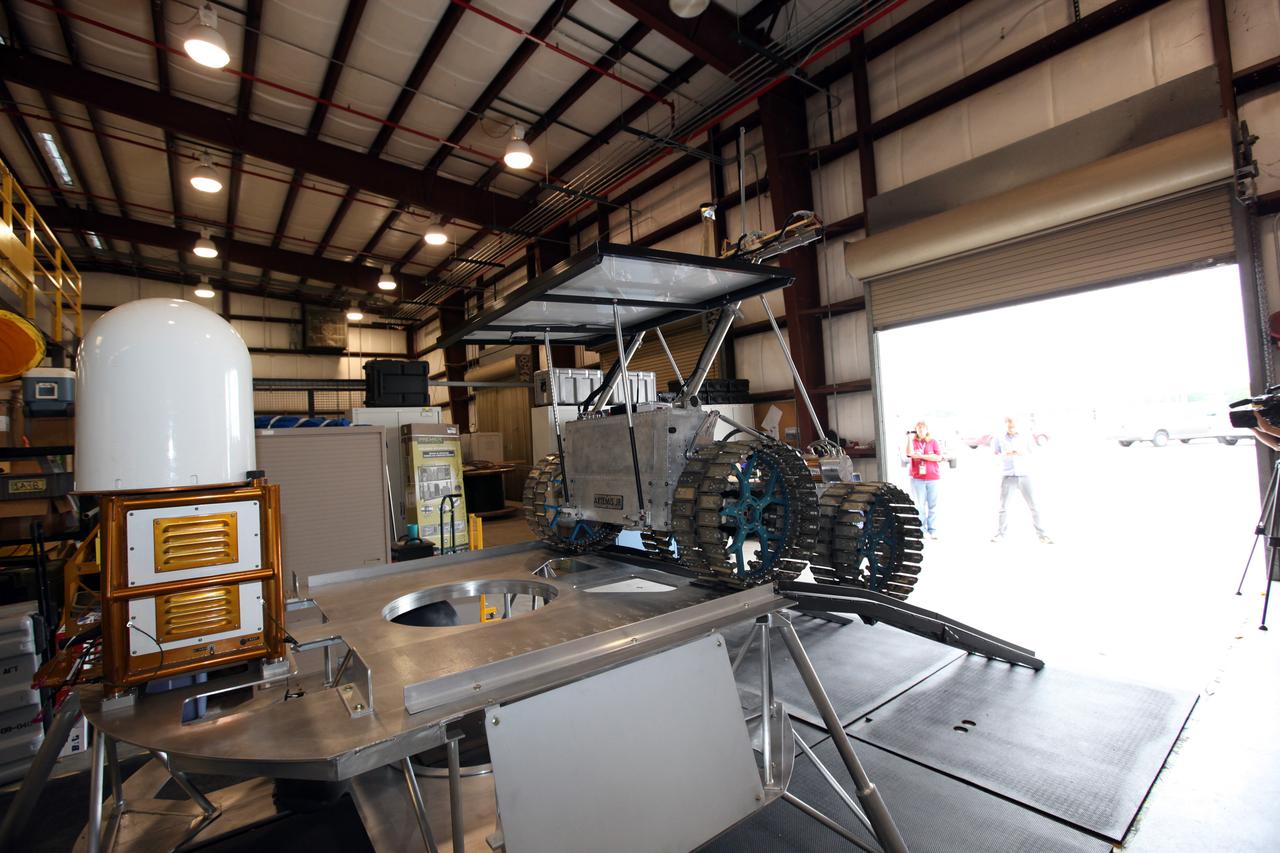
RESOLVE - Lunar Rover Mockup Tests
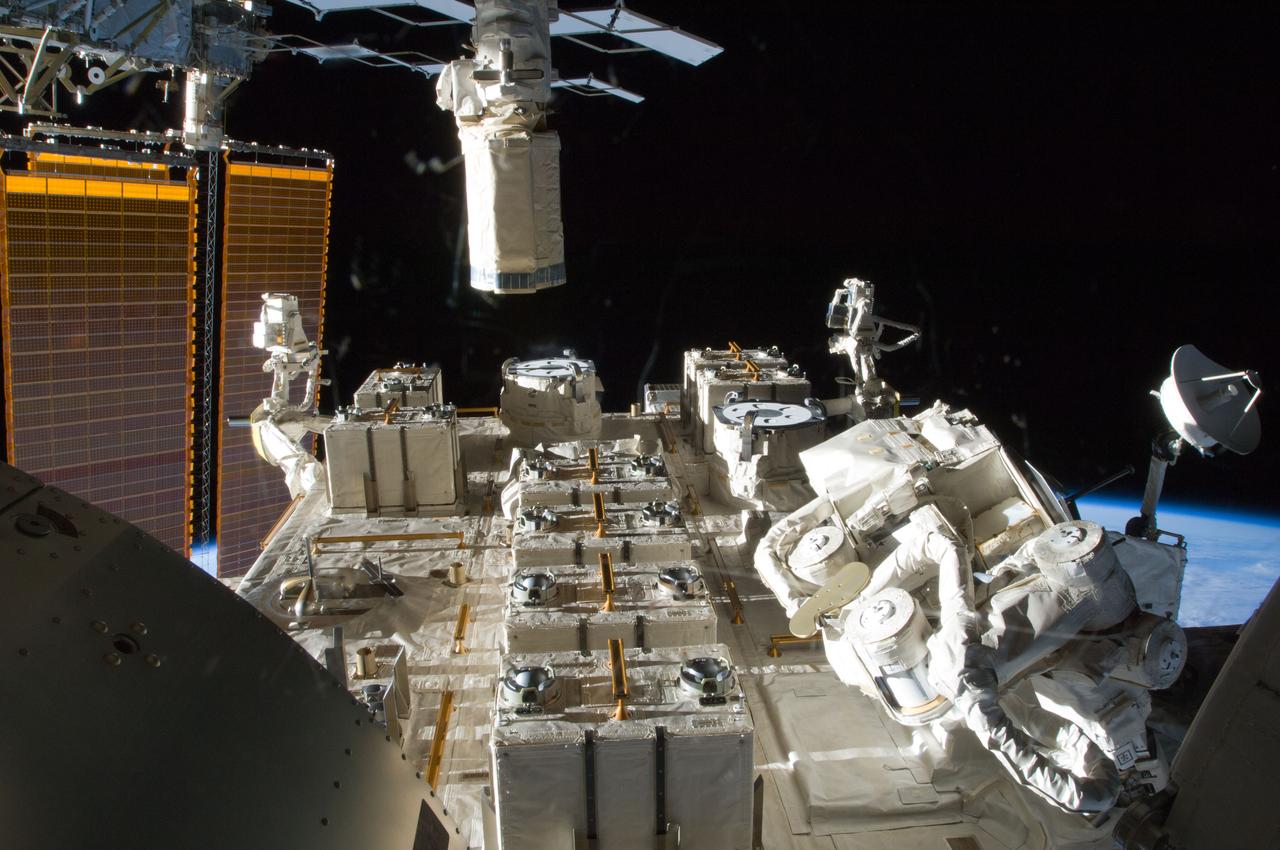
ISS032-E-008668 (19 July 2012) --- The Japanese Experiment Module - Exposed Facility (JEF) is featured in this image photographed by an Expedition 32 crew member through a window of the International Space Station?s Kibo laboratory.
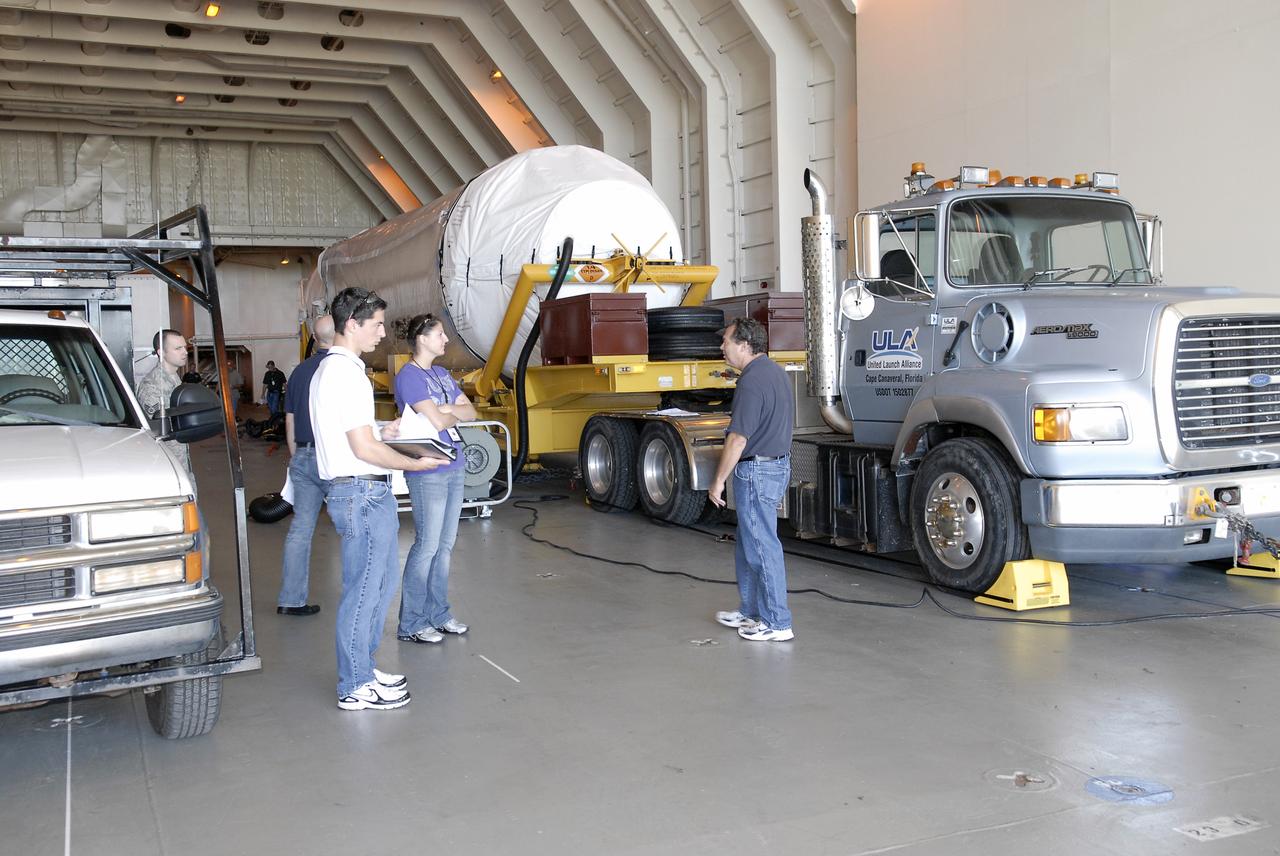
RBSP Centaur Stage is Unloaded at Port & Moved to ASOC
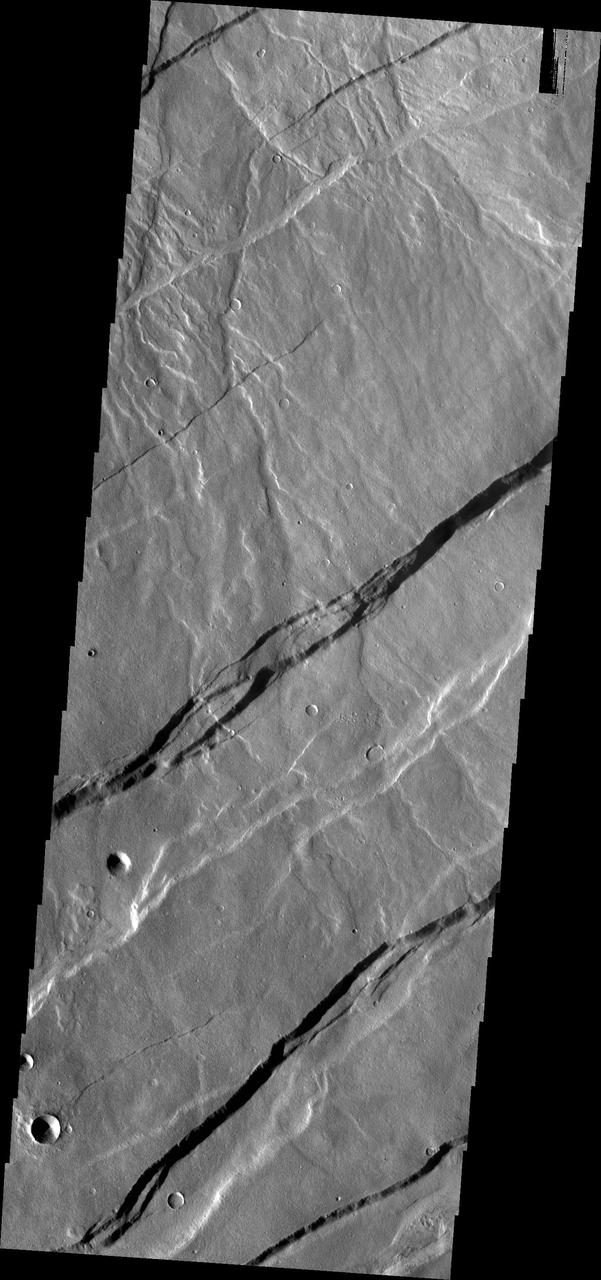
The fractures in this image are part of the large fracture system that surrounds Alba Mons as seen by NASA 2001 Mars Odyssey spacecraft.
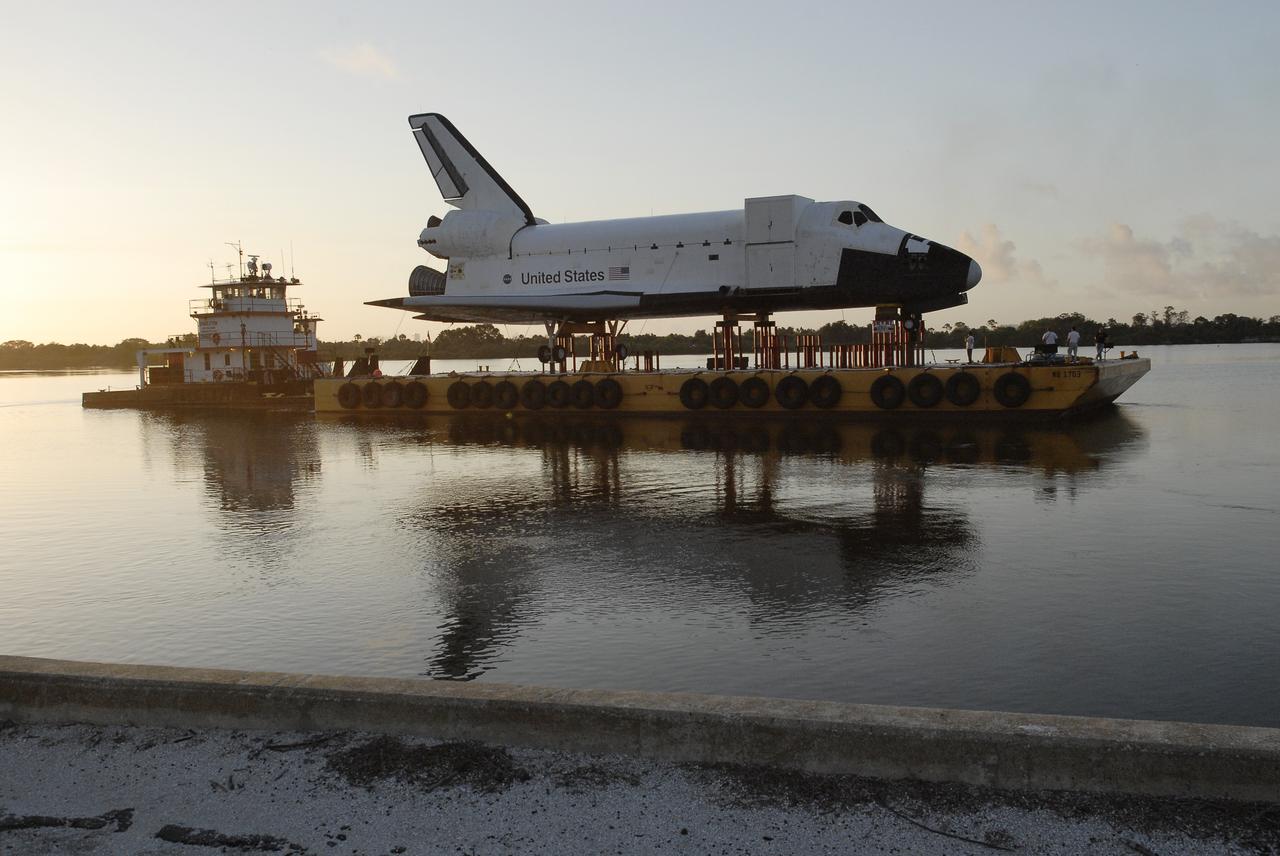
Shuttle Replica Preparations for Barge Departure
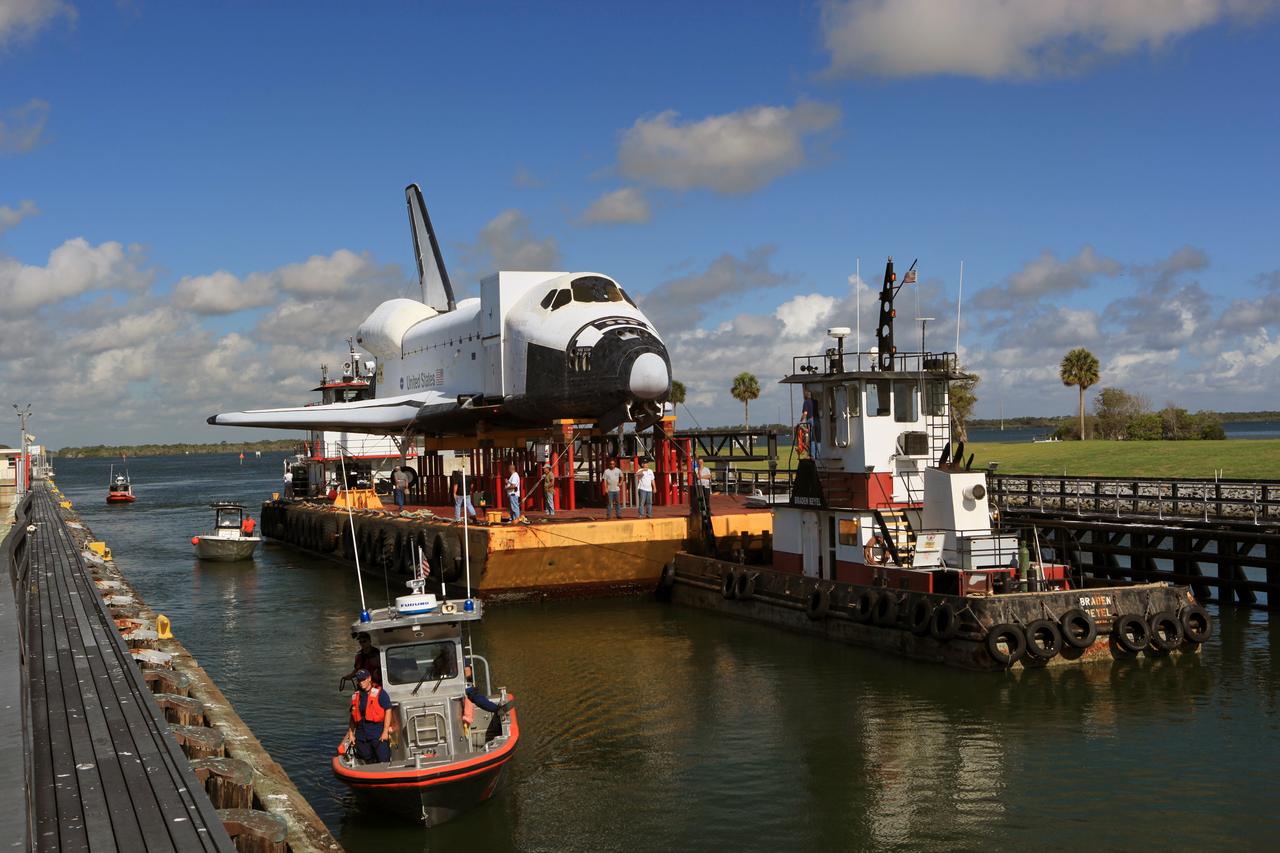
Shuttle Replica (High Fidelity) from Turn Basin thru Port going to Texas
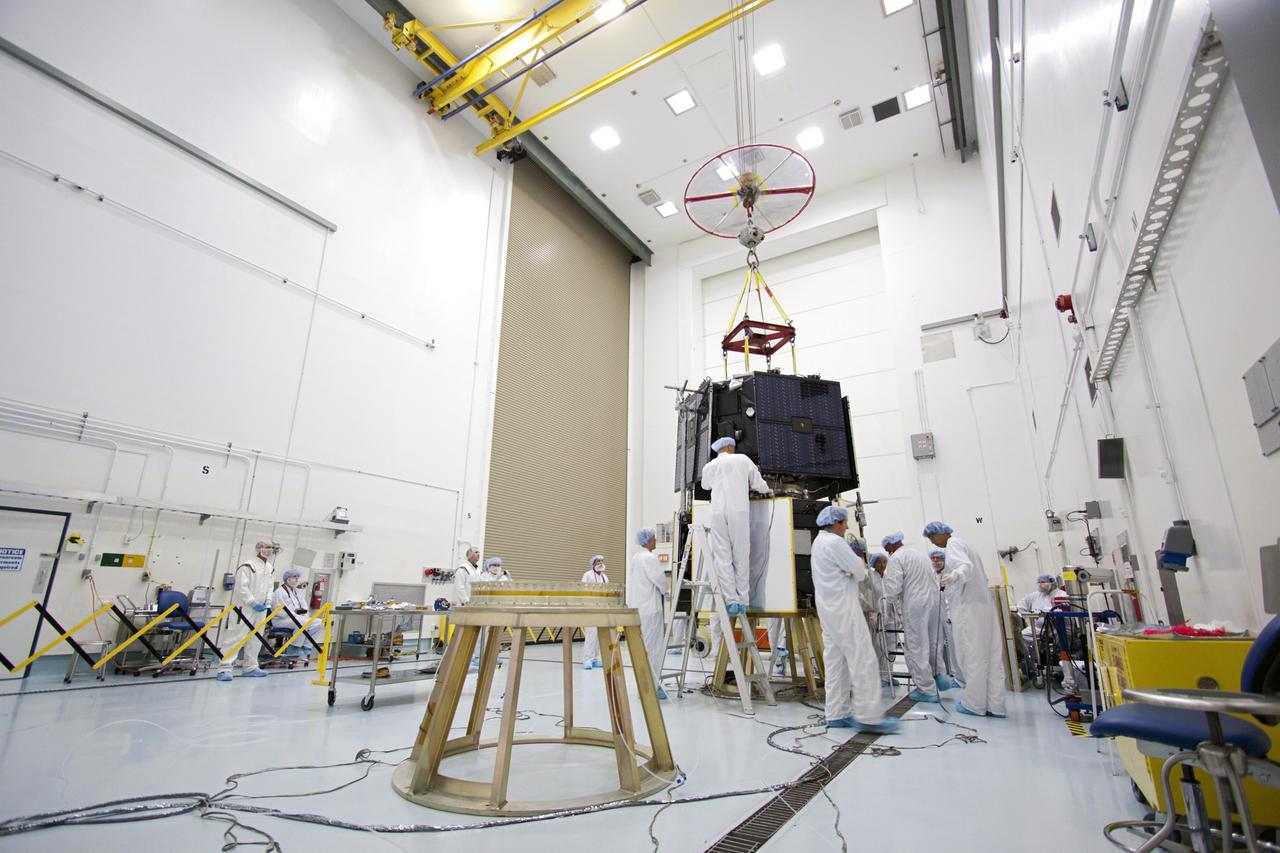
TITUSVILLE, Fla. - Inside the Astrotech payload processing facility in Titusville, Fla. near NASA’s Kennedy Space Center, technicians use a crane to position the Radiation Belt Storm Probes, or RBSP, spacecraft A atop RBSP B. NASA’s RBSP mission will help us understand the sun’s influence on Earth and near-Earth space by studying the Earth’s radiation belts on various scales of space and time. RBSP will begin its mission of exploration of Earth’s Van Allen radiation belts and the extremes of space weather after its liftoff aboard a United Launch Alliance Atlas V from Space Launch Complex 41 at Cape Canaveral Air Force Station, Fla. Liftoff is targeted for Aug. 23, 2012. For more information, visit http://www.nasa.gov/rbsp. Photo credit: NASA/Jim Grossmann
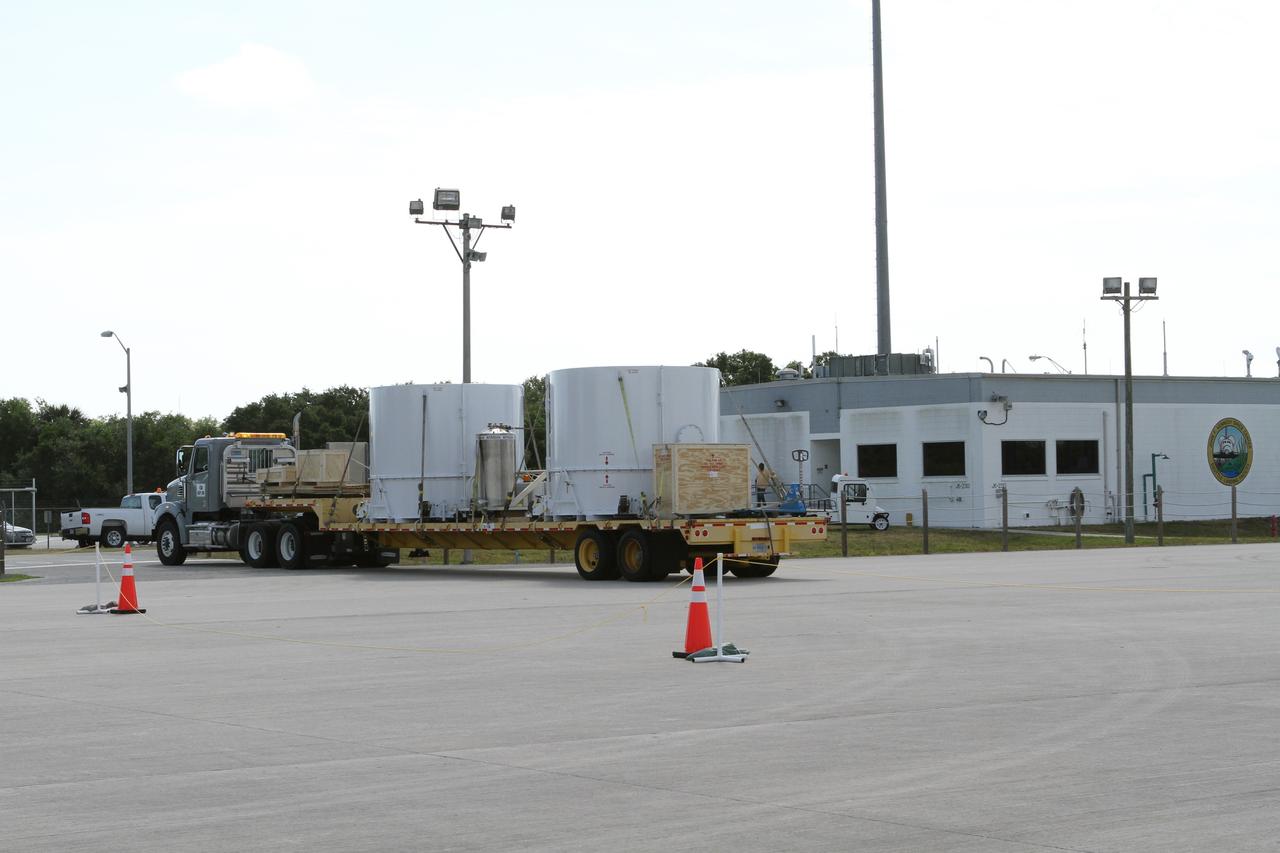
CAPE CANAVERAL, Fla. – NASA's twin Radiation Belt Storm Probes, enclosed in protective shipping containers, depart from the Shuttle Landing Facility at NASA’s Kennedy Space Center in Florida aboard a flatbed truck. The spacecraft were delivered in the cargo bay of a U.S. Air Force C-17 aircraft earlier in the day and are on their way to the Astrotech payload processing facility near Kennedy Space Center where Applied Physics Laboratory technicians will begin spacecraft testing and prelaunch preparations. The RBSP mission will help us understand the sun’s influence on Earth and near-Earth space by studying the Earth’s radiation belts on various scales of space and time. The RBSP instruments will provide the measurements needed to characterize and quantify the plasma processes that produce very energetic ions and relativistic electrons. The mission is part of NASA’s broader Living With a Star Program that was conceived to explore fundamental processes that operate throughout the solar system, and in particular those that generate hazardous space weather effects in the vicinity of Earth and phenomena that could impact solar system exploration. RBSP is scheduled to begin its mission of exploration of Earth's Van Allen Radiation Belts and the extremes of space weather after launch. Launch aboard a United Launch Alliance Atlas V rocket is scheduled for August 23. For more information, visit http://www.nasa.gov/rbsp. Photo credit: NASA/Kim Shiflett
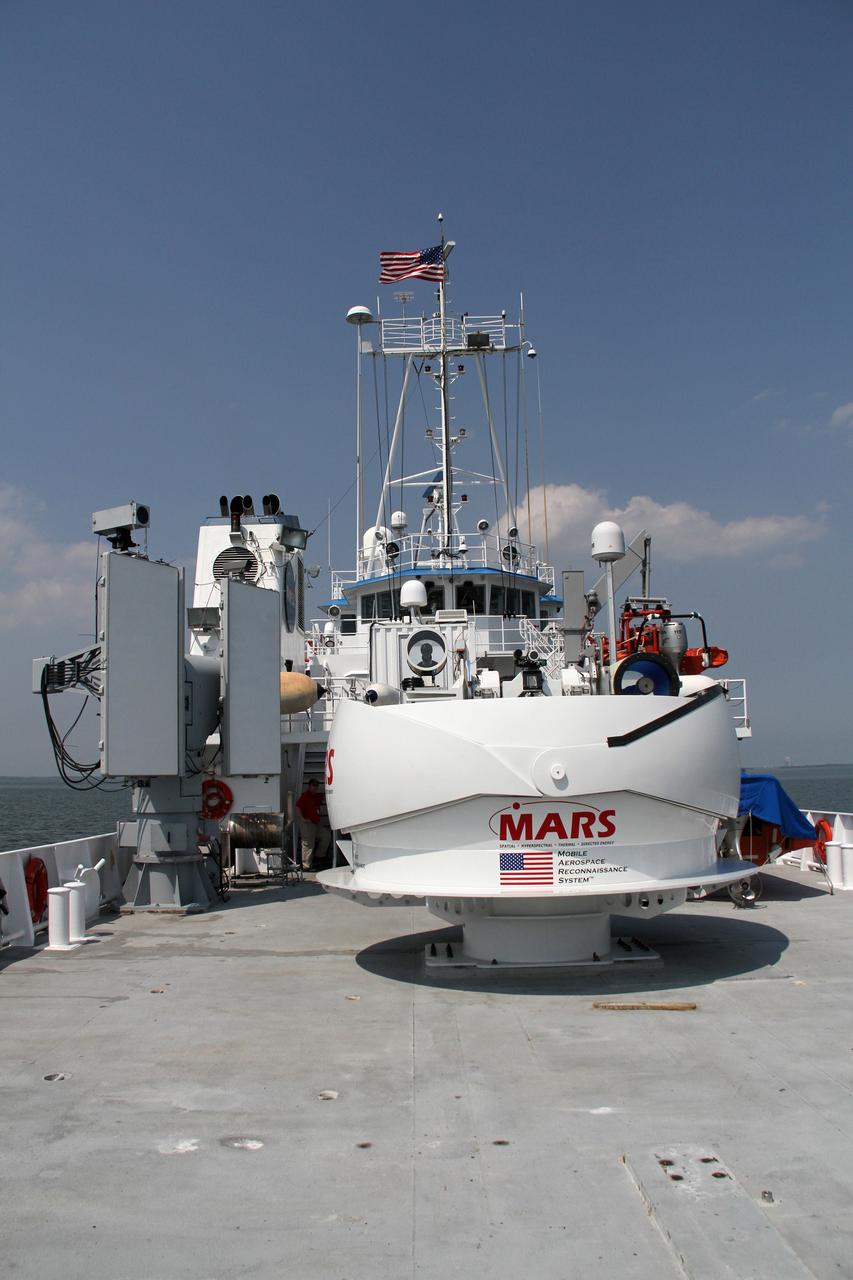
CAPE CANAVERAL, Fla. – Aboard NASA’s Freedom Star boat in the Atlantic Ocean off the coast of Port Canaveral in Florida, NASA’s Mobile Aerospace Reconnaissance System, or MARS, is being tested. MARS, run by NASA’s Langley Research Center in Hampton, Va., with its spatial, hyperspectral, thermal, and directed energy capabilities will be used for thermal imaging testing for the upcoming SpaceX Falcon 9 and Dragon capsule test flight to the International Space Station. During today’s test, the MARS X-band radar and kineto tracking mount KTM were tested to ensure that they were synchronized to receive a rocket launch feed. The radar was used to identify an object to see if the KTM could lock on to and track it. The MARS team performed maintenance on the system, confirmed communications links, and tested the design of the mounting system and environmental enclosure. Photo credit: NASA/Cory Huston
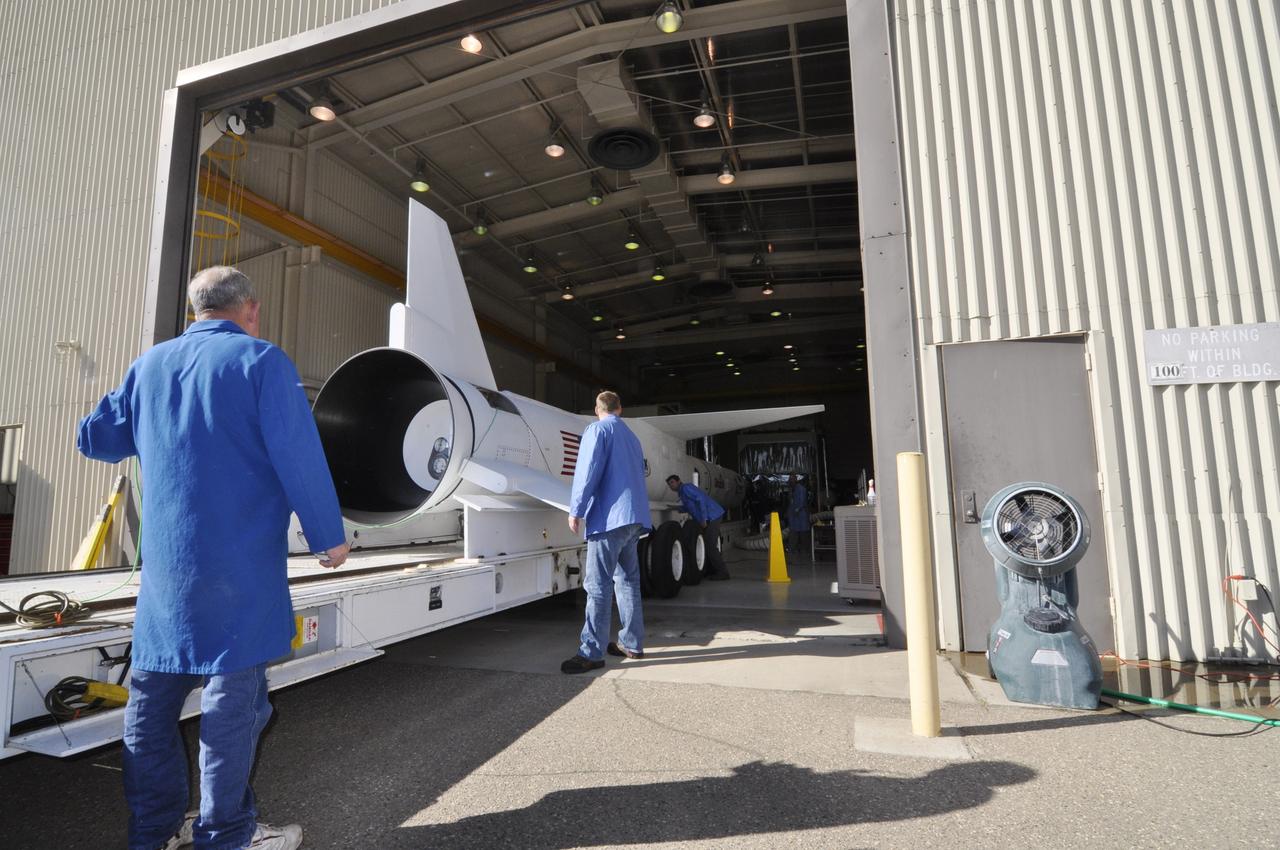
VANDENBERG AIR FORCE BASE, Calif. – At Vandenberg Air Force Base in California, technicians monitor the progress as a transporter is moved underneath the Orbital Science’s Pegasus XL inside Orbital’s hangar. The rocket is mated to NASA’s encapsulated Nuclear Spectroscopic Telescope Array, or NuSTAR, out of sight inside the hangar. The transporter will move them to the runway ramp where they will be attached to the underside of Orbital’s L-1011 carrier aircraft. The aircraft will fly the pair from Vandenberg to the Ronald Reagan Ballistic Missile Defense Test Site on the Pacific Ocean’s Kwajalein Atoll for launch. A revised launch date is expected to be set at the Flight Readiness Review. The high-energy X-ray telescope will conduct a census of black holes, map radioactive material in young supernovae remnants, and study the origins of cosmic rays and the extreme physics around collapsed stars. For more information, visit http://www.nasa.gov/nustar. Photo credit: NASA/Randy Beaudoin

CAPE CANAVERAL, Fla. – Space shuttle Atlantis is transported along Kennedy Parkway at NASA's Kennedy Space Center in Florida on its 10-mile journey to the Kennedy Visitor Complex where it will be put on public display. As part of transition and retirement of the Space Shuttle Program, Atlantis is to be displayed at Kennedy's Visitor Complex beginning in the summer of 2013. Over the course of its 26-year career, Atlantis traveled 125,935,769 miles during 307 days in space over 33 missions. For more information, visit http://www.nasa.gov/transition Photo credit: NASA/ Kim Shiflett
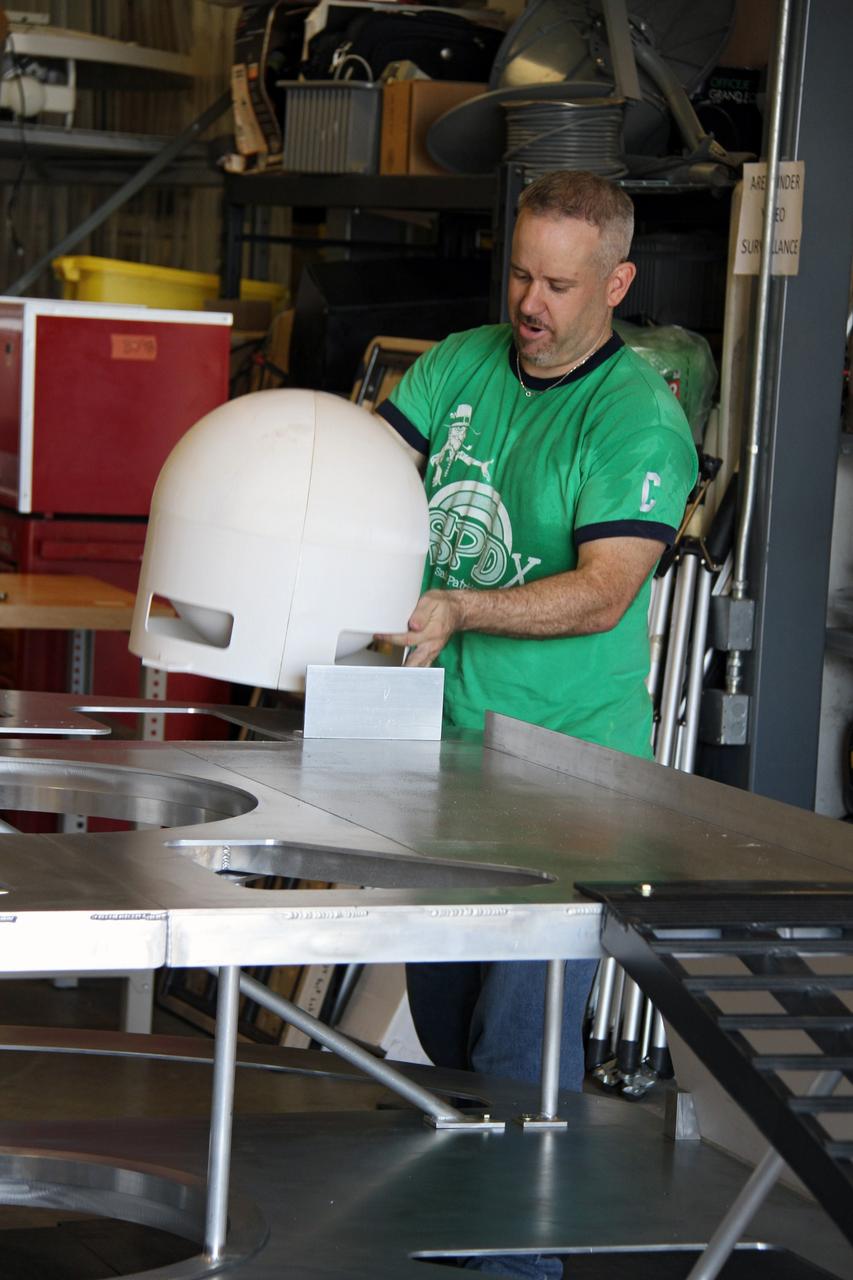
CAPE CANAVERAL, Fla. – NASA systems engineer Jim Smith assembles the prototype lander for NASA’s Regolith and Environment Science and Oxygen and Lunar Volatile Extraction, or RESOLVE, project in a test facility behind the Operations and Checkout Building at NASA’s Kennedy Space Center in Florida. RESOLVE consists of a rover and drill provided by the Canadian Space Agency to support a NASA payload that is designed to prospect for water, ice and other lunar resources. RESOLVE also will demonstrate how future explorers can take advantage of resources at potential landing sites by manufacturing oxygen from soil. NASA will be conducting field tests in July outside of Hilo, Hawaii, with equipment and concept vehicles that demonstrate how explorers might prospect for resources and make their own oxygen for survival while on other planetary bodies. For more information, visit http://www.nasa.gov/exploration/analogs/index.html. Photo credit: NASA/Ben Smegelsky
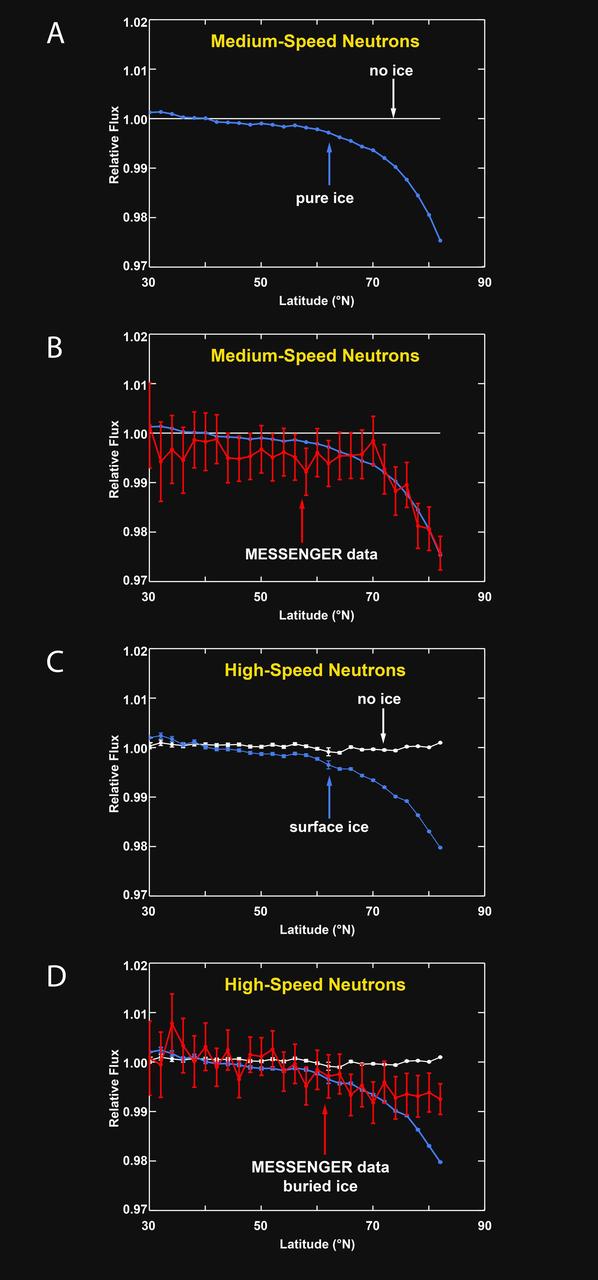
Neutron Spectrometer Measurements
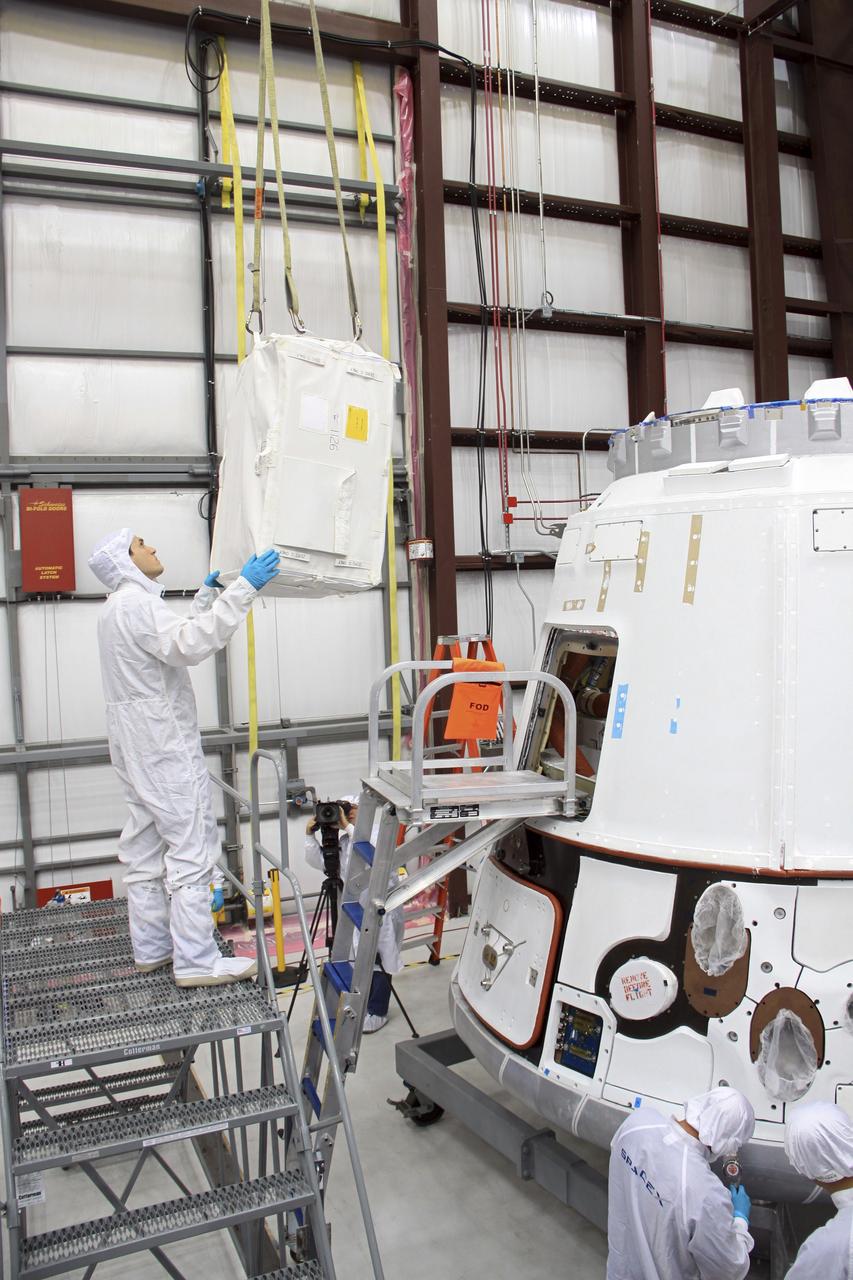
CAPE CANAVERAL, Fla. – In a processing hangar at Space Launch Complex-40 on Cape Canaveral Air Force Station in Florida, a cargo bag is lowered into the hands of a Space Exploration Technologies technician who will load it into the Dragon capsule in preparation for its scheduled April 30 liftoff aboard a Falcon 9 rocket. Known as SpaceX, the launch will be the company's second demonstration test flight for NASA's Commercial Orbital Transportation Services program, or COTS. During the flight, the capsule will conduct a series of checkout procedures to test and prove its systems, including rendezvous and berthing with the International Space Station. The cargo includes food and provisions for the station’s Expedition crews, such as clothing, batteries, and computer equipment. Under COTS, NASA has partnered with two private companies to launch cargo safely to the station. For more information, visit http://www.nasa.gov/spacex. Photo credit: NASA/Jim Grossmann
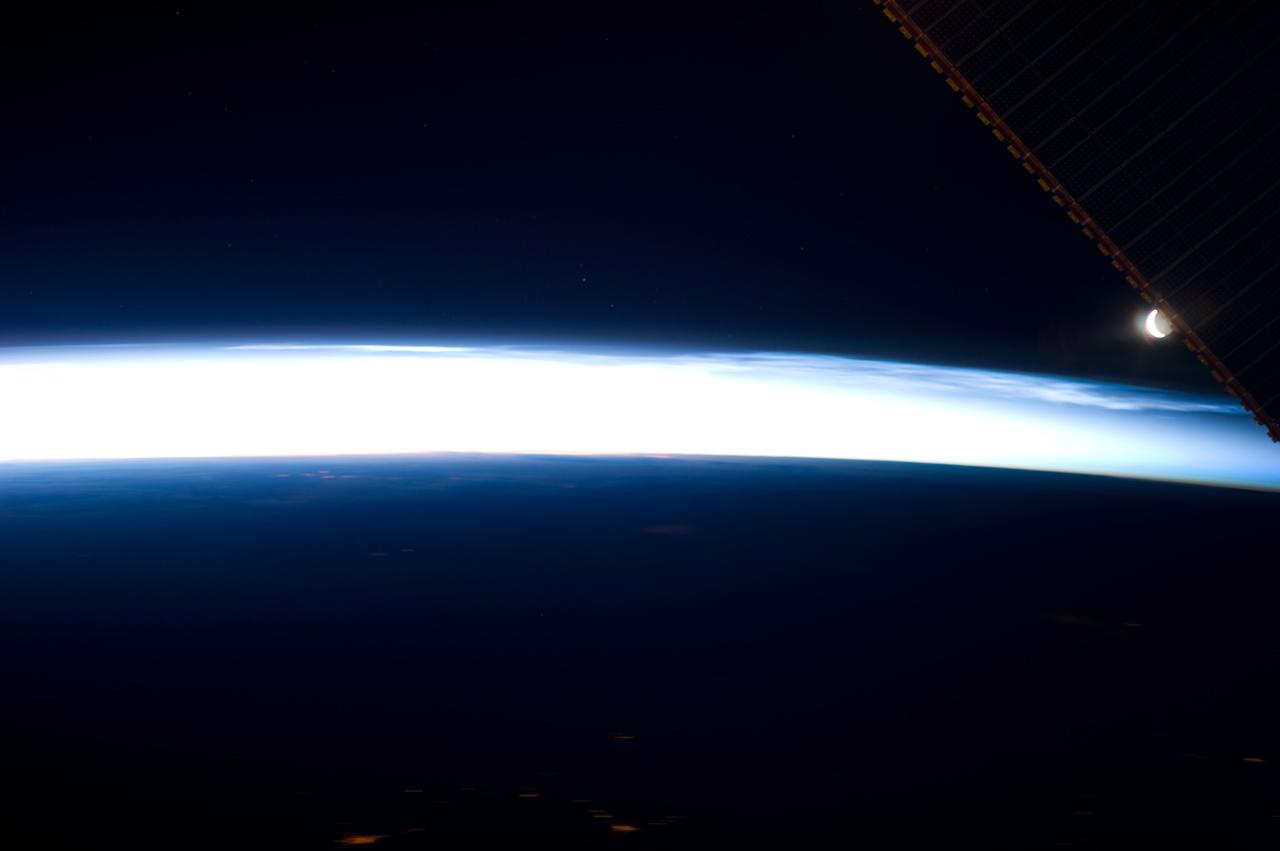
ISS031-E-126879 (15 June 2012) --- One of the Expedition 31 crew members aboard the Earth-orbiting International Space Station recorded this image of mesospheric clouds and the moon (near one of the space station's solar array panels at right) on June 15, 2012.
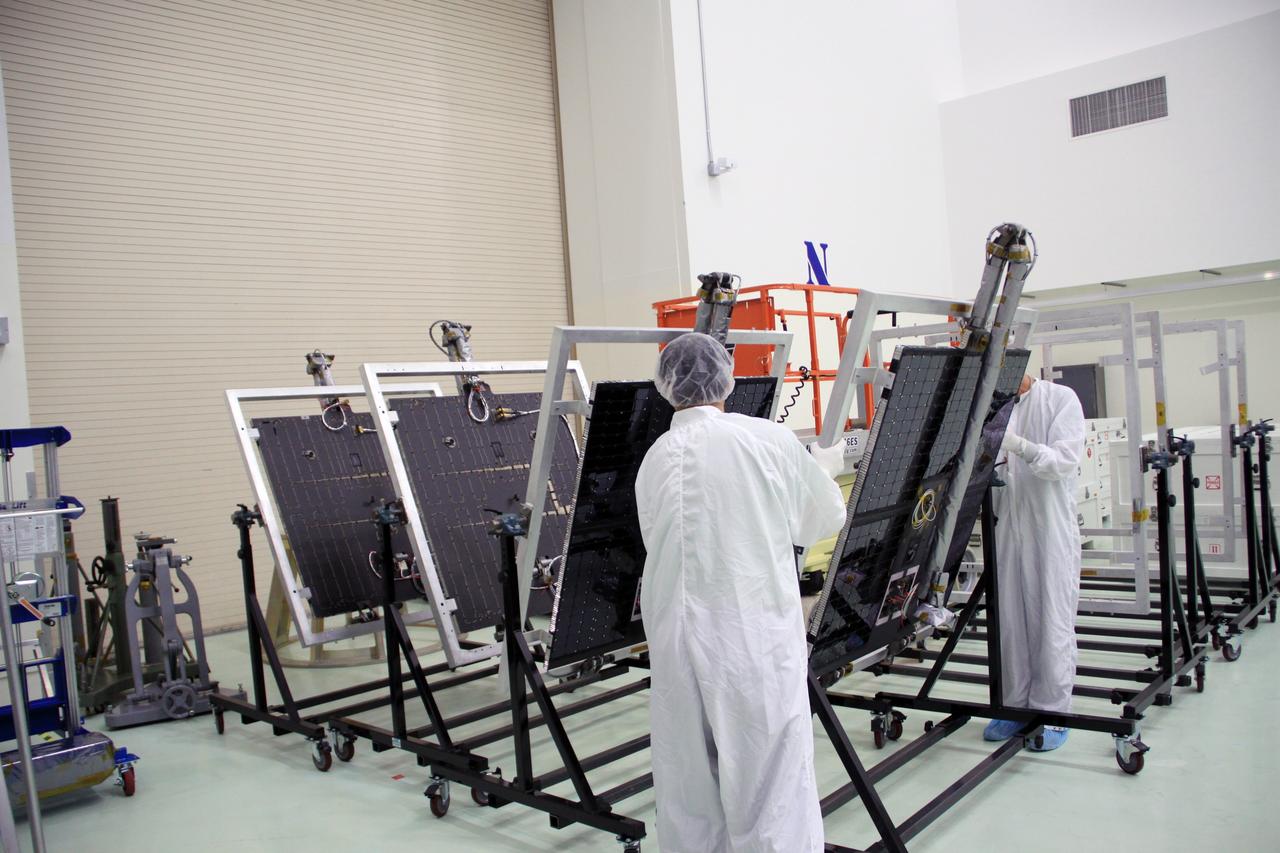
CAPE CANAVERAL, Fla. – In the clean room high bay at the Astrotech payload processing facility near NASA’s Kennedy Space Center in Florida, Applied Physics Laboratory technicians line up the holding fixtures containing the solar arrays for NASA's Radiation Belt Storm Probe A. The Radiation Belt Storm Probes, or RBSP, mission will help us understand the sun’s influence on Earth and near-Earth space by studying the Earth’s radiation belts on various scales of space and time. RBSP instruments will provide the measurements needed to characterize and quantify the plasma processes that produce very energetic ions and relativistic electrons. The mission is part of NASA’s broader Living With a Star Program that was conceived to explore fundamental processes that operate throughout the solar system, particularly those that generate hazardous space weather effects in the vicinity of Earth and phenomena that could impact solar system exploration. RBSP will begin its mission of exploration of Earth's Van Allen radiation belts and the extremes of space weather after launch. Launch aboard a United Launch Alliance Atlas V rocket is scheduled for August 23. For more information, visit http://www.nasa.gov/rbsp. Photo credit: NASA/Jim Grossmann

ISS030-E-155913 (16 Jan. 2012) --- NASA astronaut Dan Burbank, Expedition 30 commander, performs in-flight maintenance on the front stray light cover for the Microgravity Science Glovebox (MSG) in the Destiny laboratory of the International Space Station.
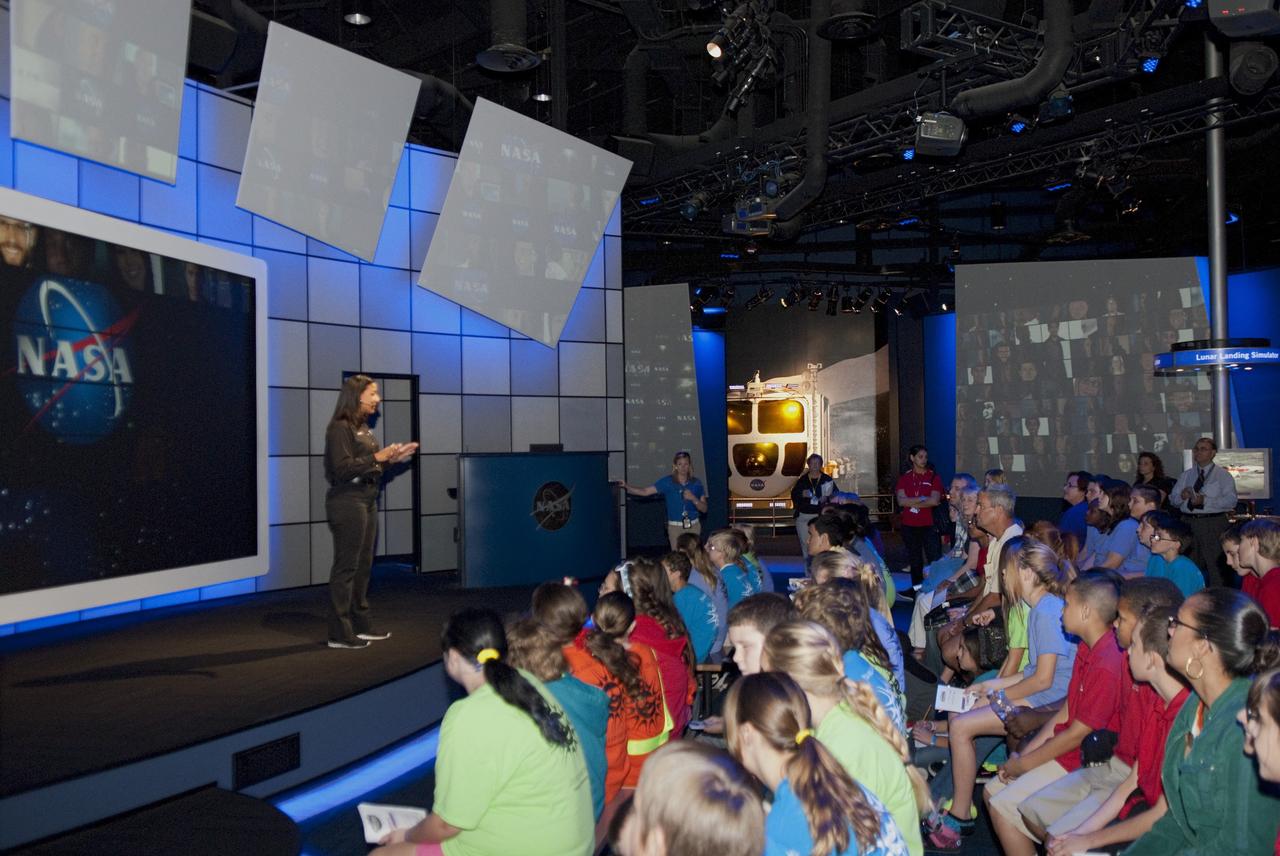
CAPE CANAVERAL, Fla. – At the Kennedy Space Center Visitor Complex in Florida sixth-grade students listen to a science presentation on NASA programs. Between Nov. 26 and Dec. 7, 2012, about 5,300 sixth-graders in Brevard County, Florida were bused to Kennedy's Visitor Complex for Brevard Space Week, an educational program designed to encourage interest in science, technology, engineering and mathematics STEM careers. Photo credit: NASA/Tim Jacobs
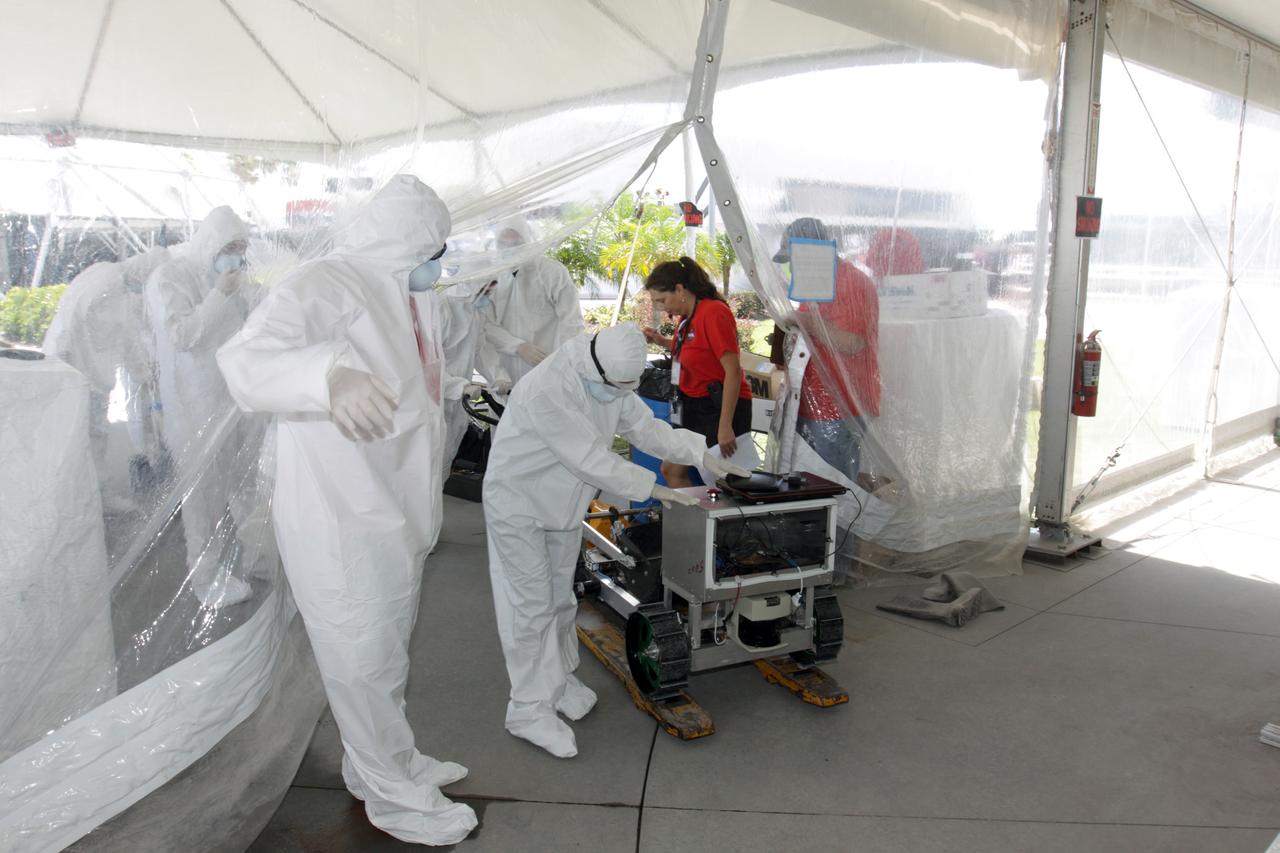
Lunabotics

Hello Again, Hodgkins!
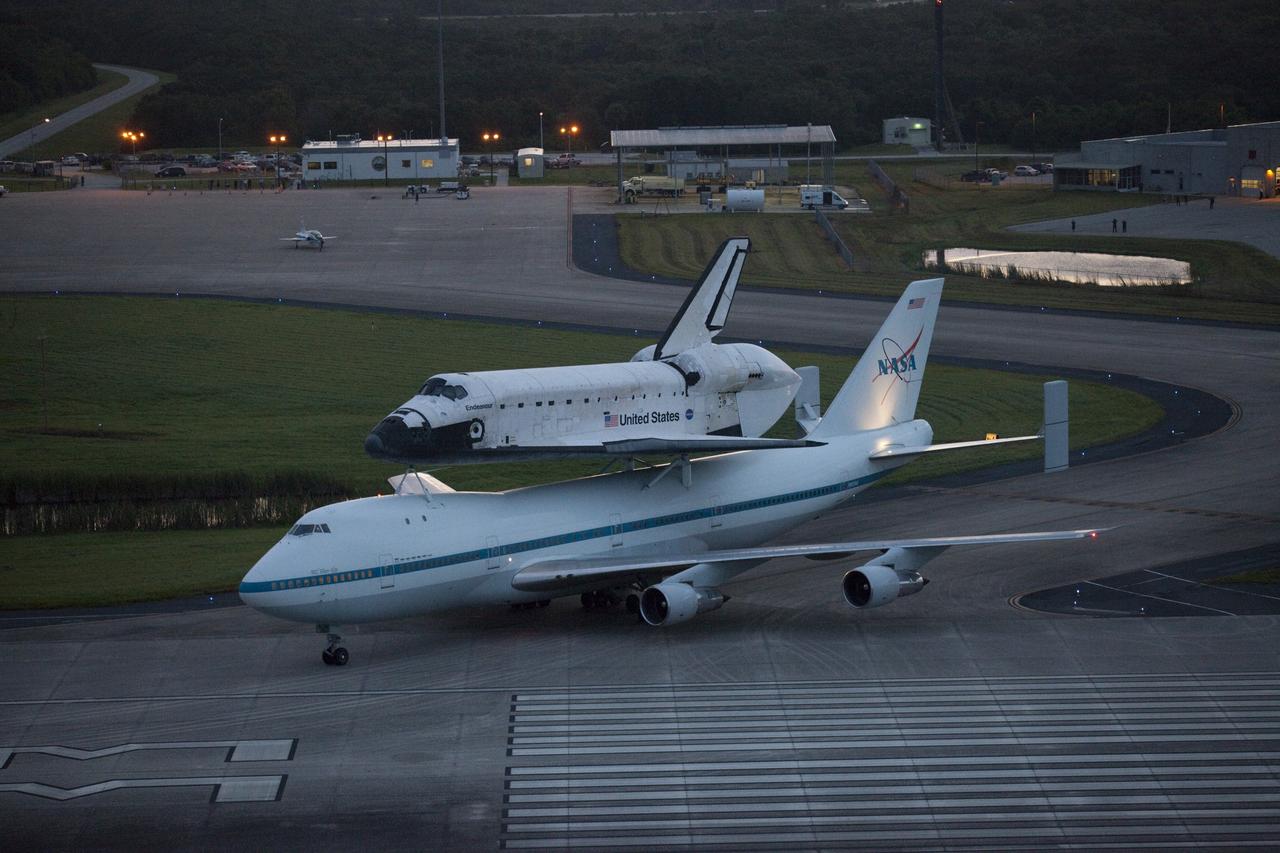
CAPE CANAVERAL, Fla. – At the Shuttle Landing Facility at NASA's Kennedy Space Center in Florida, NASA's Shuttle Carrier Aircraft, or SCA, with the space shuttle Endeavour mounted atop, taxis on to the runway for its ferry flight to California. The SCA, a modified 747 jetliner, will fly Endeavour to Los Angeles where it will be placed on public display at the California Science Center. This is the final ferry flight scheduled in the Space Shuttle Program era. For more information on the shuttles' transition and retirement, visit http://www.nasa.gov/transition. Photo credit: NASA/Kim Shiflett
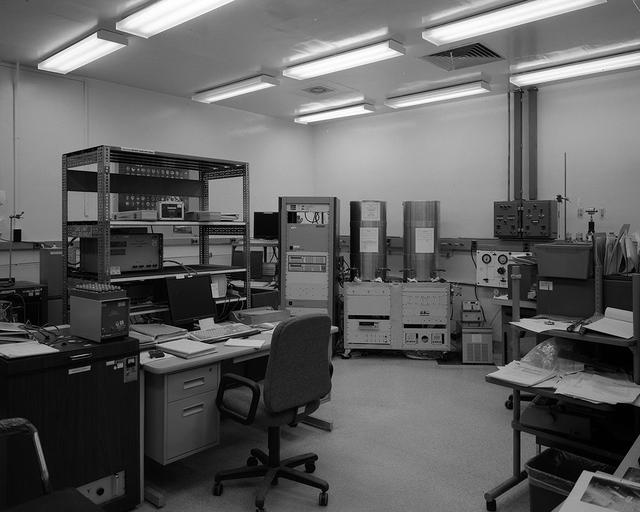
Interior View of CIF
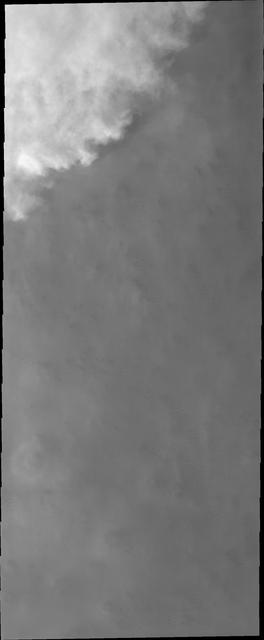
Spring time brings storms to the north polar region of Mars. This image captured by NASA 2001 Mars Odyssey spacecraft shows a storm front, as bright clouds shadow and obscure the surface.
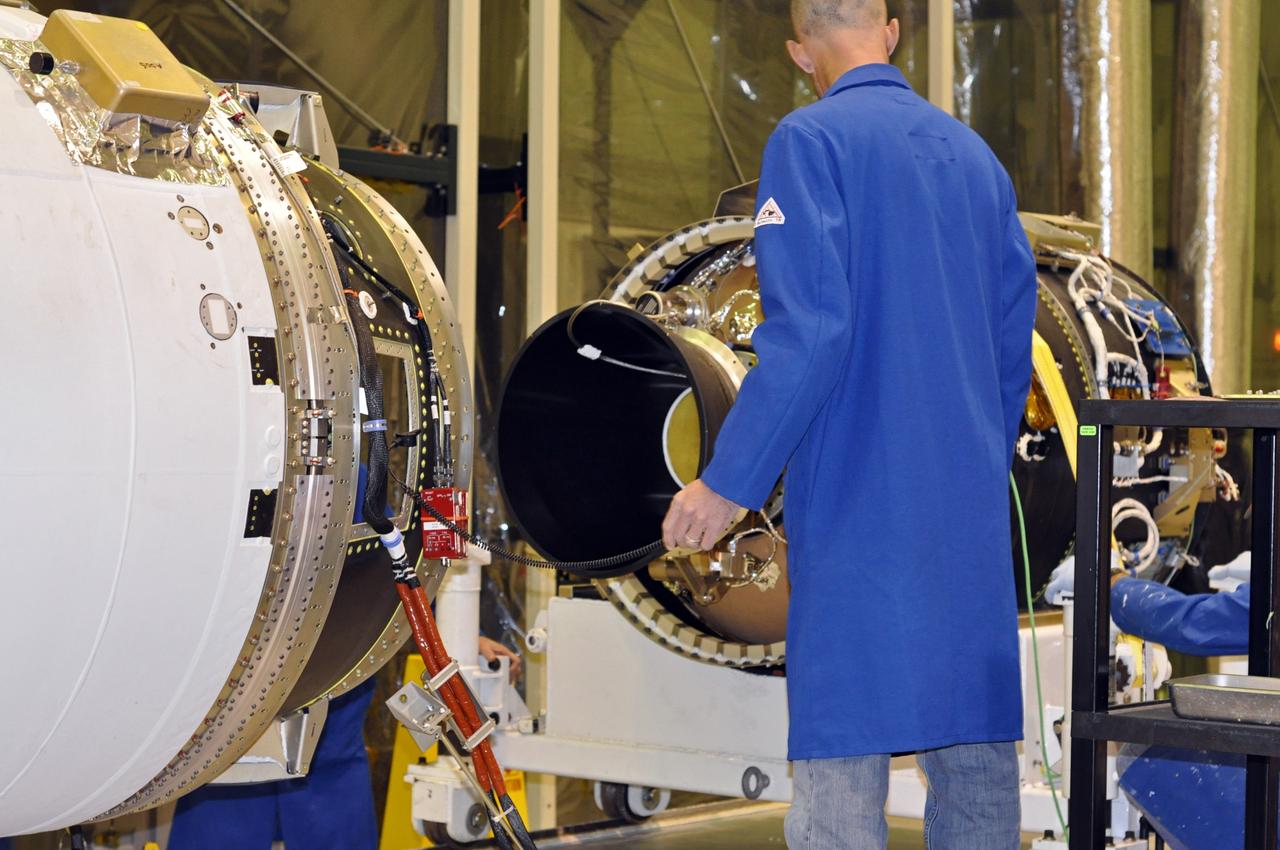
VANDENBERG AIR FORCE BASE, Calif. -- Stage 2 is separated from stage 3 of an Orbital Sciences Corp. Pegasus rocket in processing facility 1555 at Vandenberg Air Force Base (VAFB) in California to reinstall some RF cabling. The stages were remated after the installation was complete. The rocket is being prepared to launch NASA's Nuclear Spectroscopic Telescope Array (NuSTAR) into space. After the rocket and spacecraft are processed at Vandenberg, they will be flown on the Orbital Sciences' L-1011 carrier aircraft to the Ronald Reagan Ballistic Missile Defense Test Site at the Pacific Ocean's Kwajalein Atoll for launch, targeted for no earlier than March 14. The high-energy x-ray telescope will conduct a census for black holes, map radioactive material in young supernovae remnants, and study the origins of cosmic rays and the extreme physics around collapsed stars. For more information, visit http://www.nasa.gov/nustar. Photo credit: NASA/Randy Beaudoin, VAFB
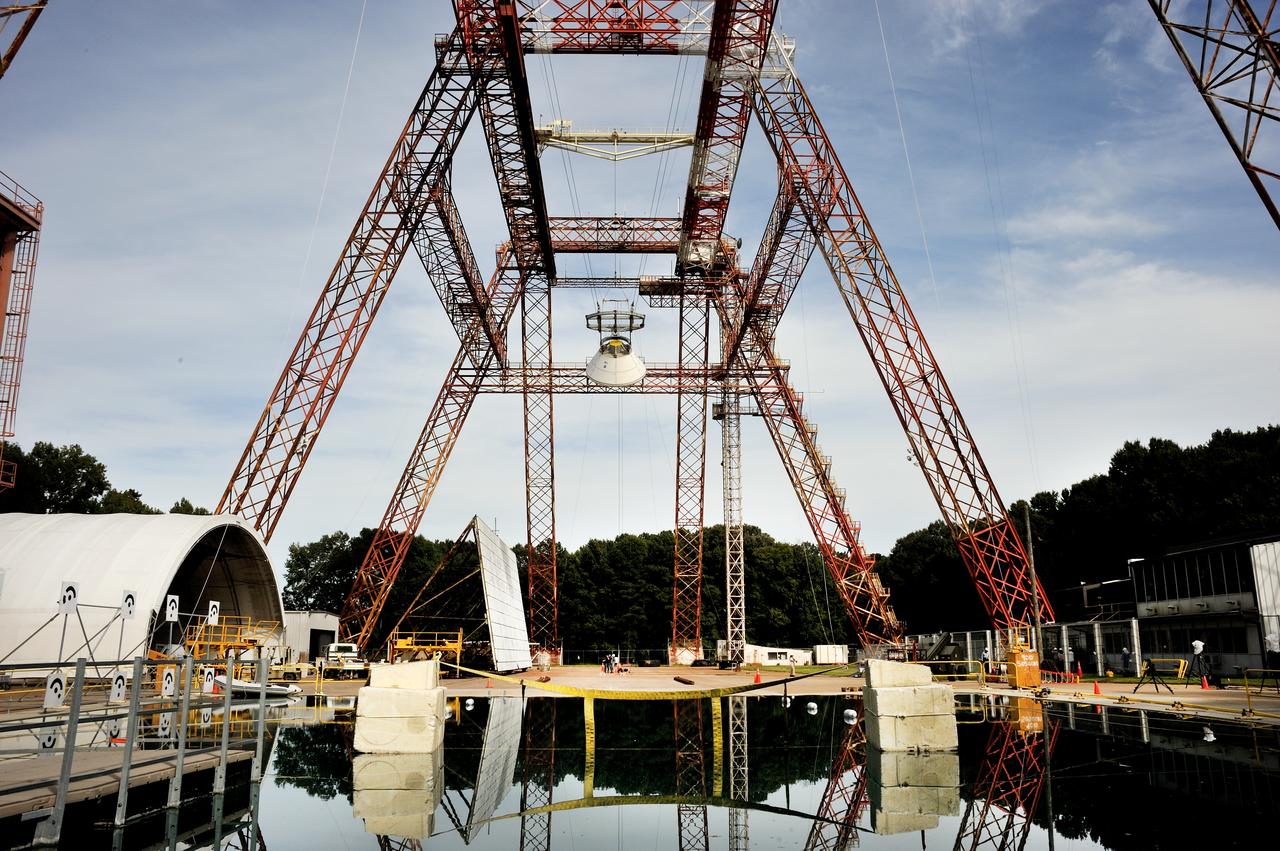
SPLASH P1 Test 7 Swing Test: Documentation of preparation, set up and results of full scale BTA (Boilerplate Test Article) vertical drop test series performed in 2012 at the LaRC Hydro Impact Basin (HIB)
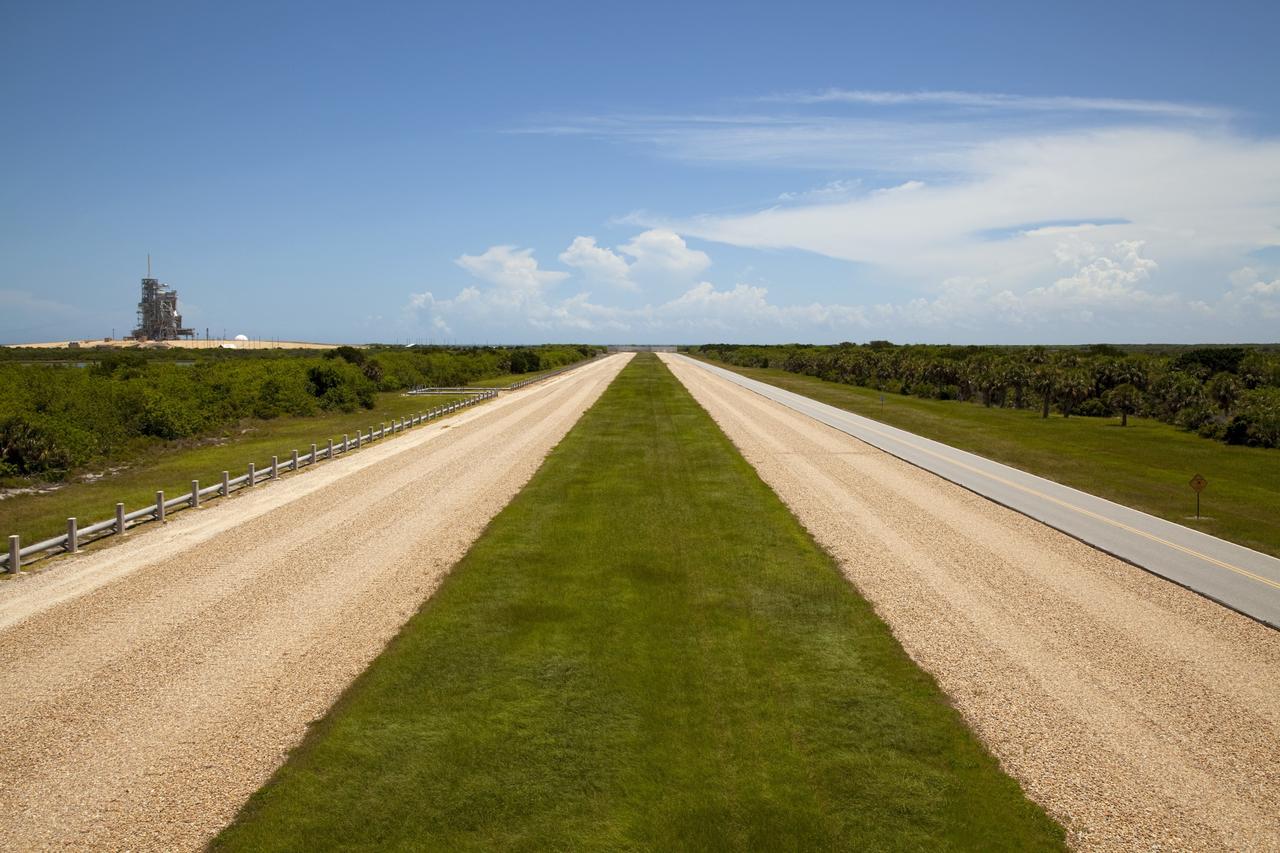
CAPE CANAVERAL, Fla. – The gravel crawlerway is seen as if from a crawler transporter approaching Launch Complex 39 pad A at the Kennedy Space Center in Florida. The crawlerways are 130 feet wide, about the size of an 8-lane freeway. The river rock paths have been used since 1966 to move launch vehicles from the Vehicle Assembly Building, or VAB, along the 3.4-mile path to pad A and 6.8 miles to pad B. The crawlerways were originally built to support transporting Apollo Saturn V rockets to the launch pads. The crawlerways were again used during the Space Shuttle Program moving the 4.5 million-pound shuttles mounted on an 8-million-pound mobile launcher platform atop a six-million-pound crawler transporter -- totaling an 18.5-million-pound vehicle lumbering along to the pad. The paths are specially constructed with four layers. The top is eight inches thick on curves and four inches on straightaway sections. Then there is a four-foot layer of graded, crushed stone. Beneath that is 2.5 feet of fill, followed by one foot of compact fill. Plans call for the crawlerways to be used in the future for transporting launch vehicles from the VAB to pads A and B. For more information, visit http://www.nasa.gov/transition Photo credit: NASA/Kim Shiflett
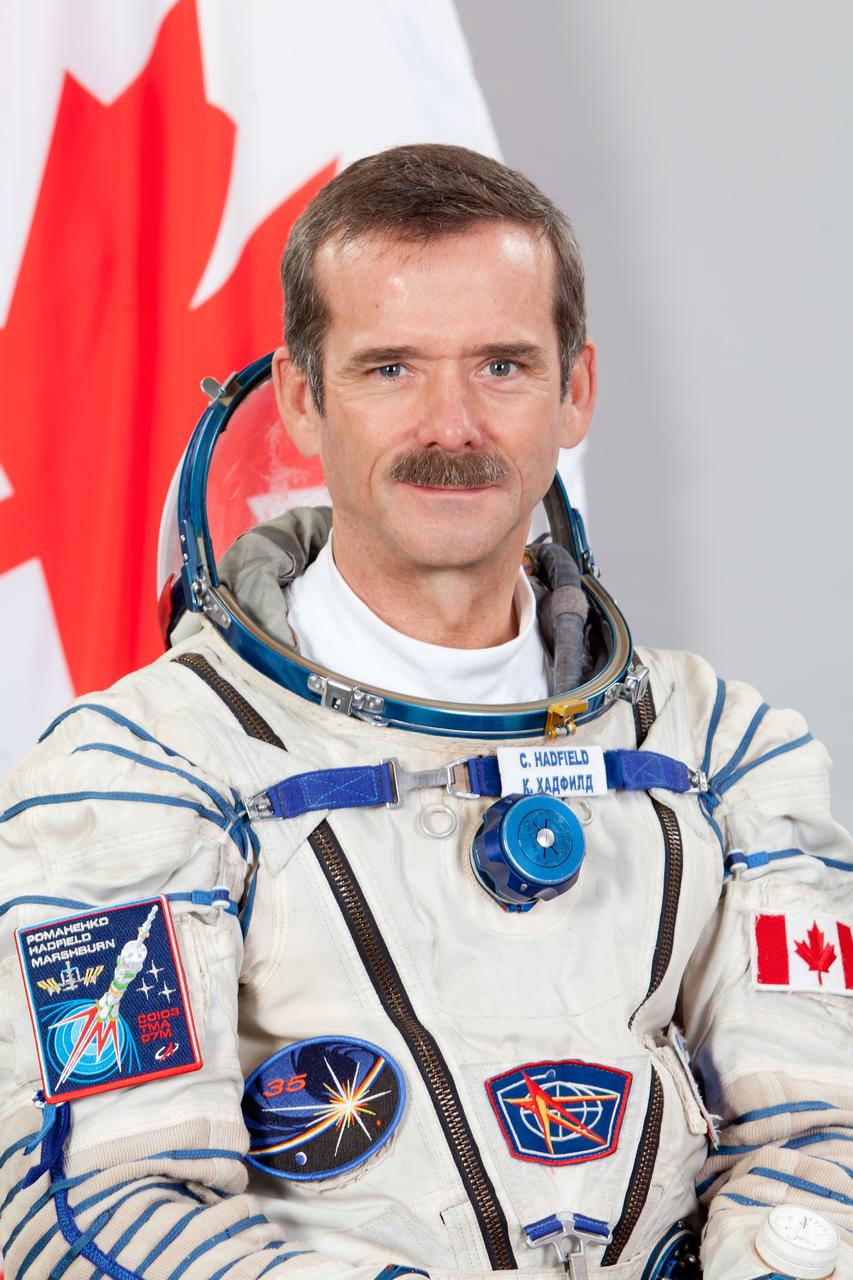
JSC2012-E-238482 (14 Nov. 2012) --- Canadian Space Agency astronaut Chris Hadfield, Expedition 34 flight engineer and Expedition 35 commander, attired in a Russian Sokol launch and entry suit, takes a break from training in Star City, Russia to pose for a portrait. Photo credit: Gagarin Cosmonaut Training Center
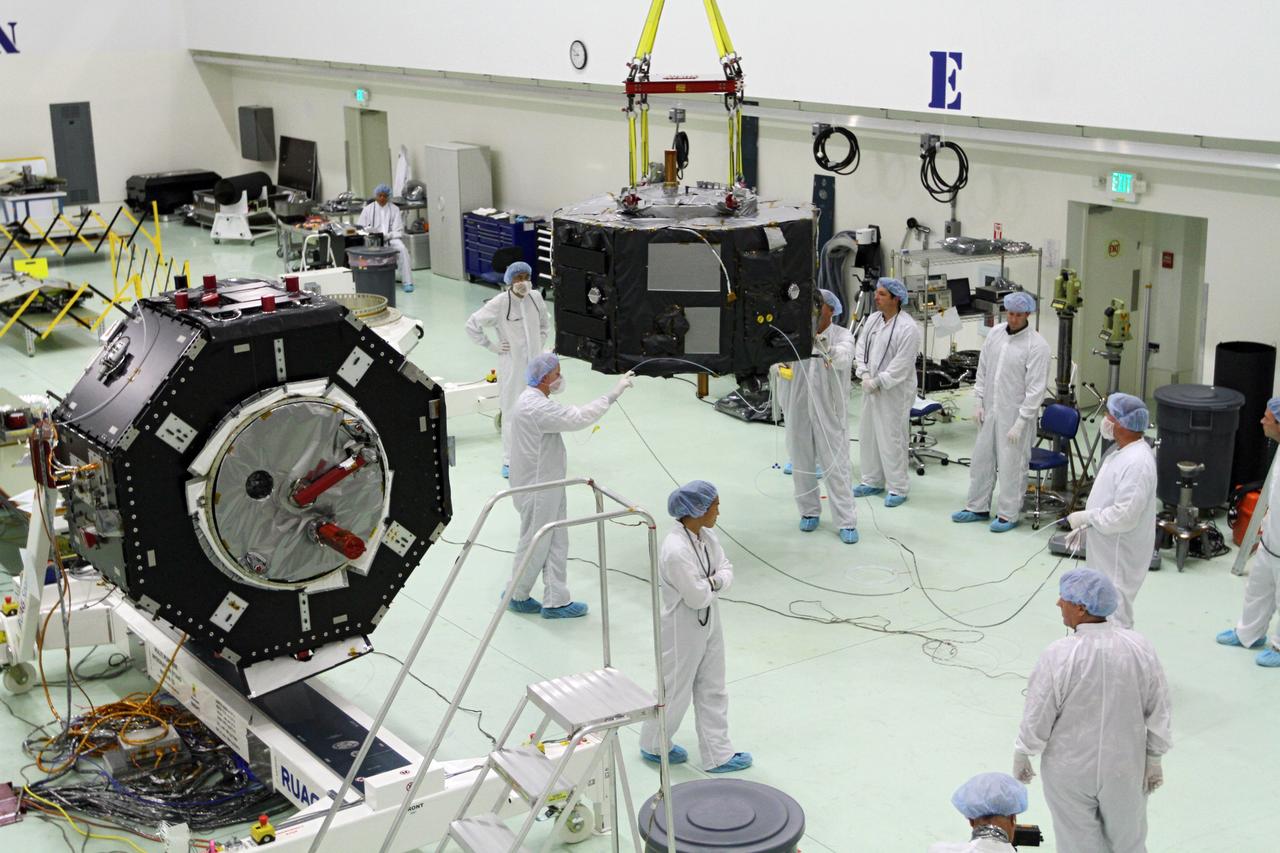
CAPE CANAVERAL, Fla. - Inside the Astrotech payload processing facility near NASA’s Kennedy Space Center in Florida, technicians prepare Radiation Belt Storm Probes, or RBSP, spacecraft A for a spin test. During the spin test, the spacecraft is turned at a rate of 55 rpm to ensure that it is properly balanced. NASA’s RBSP mission will help us understand the sun’s influence on Earth and near-Earth space by studying the Earth’s radiation belts on various scales of space and time. RBSP will begin its mission of exploration of Earth’s Van Allen radiation belts and the extremes of space weather after its launch aboard a United Launch Alliance Atlas V rocket. Launch is targeted for Aug. 23. For more information, visit http://www.nasa.gov/rbsp. Photo credit: NASA/Charisse Nahser
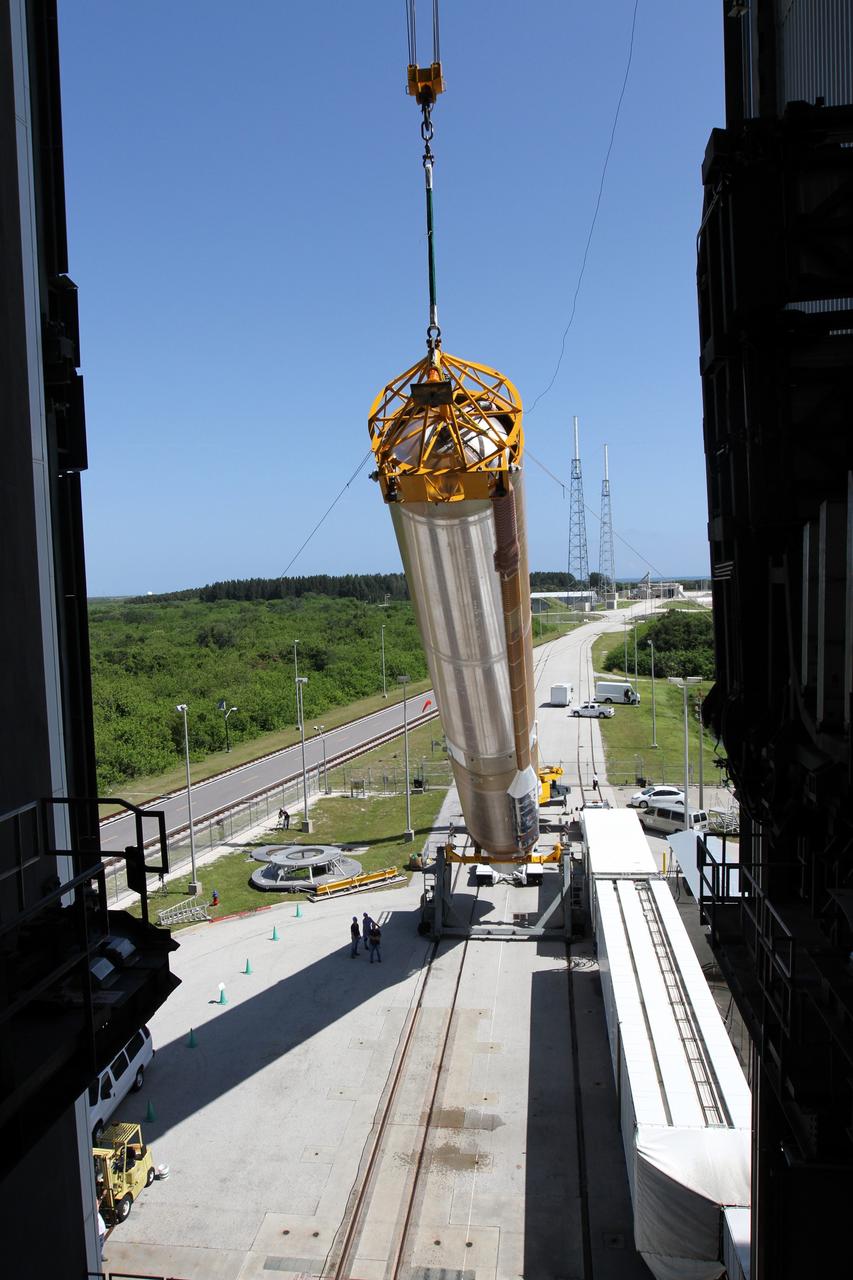
CAPE CANAVERAL, Fla. - At Launch Complex 41 at Cape Canaveral Air Force Station in Florida, a large crane lifts the first stage of the United Launch Alliance Atlas V rocket into the vertical position. The Atlas V is being prepared for the Radiation Belt Storm Probes, or RBSP, mission. NASA’s RBSP mission will help us understand the sun’s influence on Earth and near-Earth space by studying the Earth’s radiation belts on various scales of space and time. RBSP will begin its mission of exploration of Earth’s Van Allen radiation belts and the extremes of space weather after its launch aboard an Atlas V rocket. Launch is targeted for Aug. 23. For more information, visit http://www.nasa.gov/rbsp. Photo credit: NASA/Cory Huston
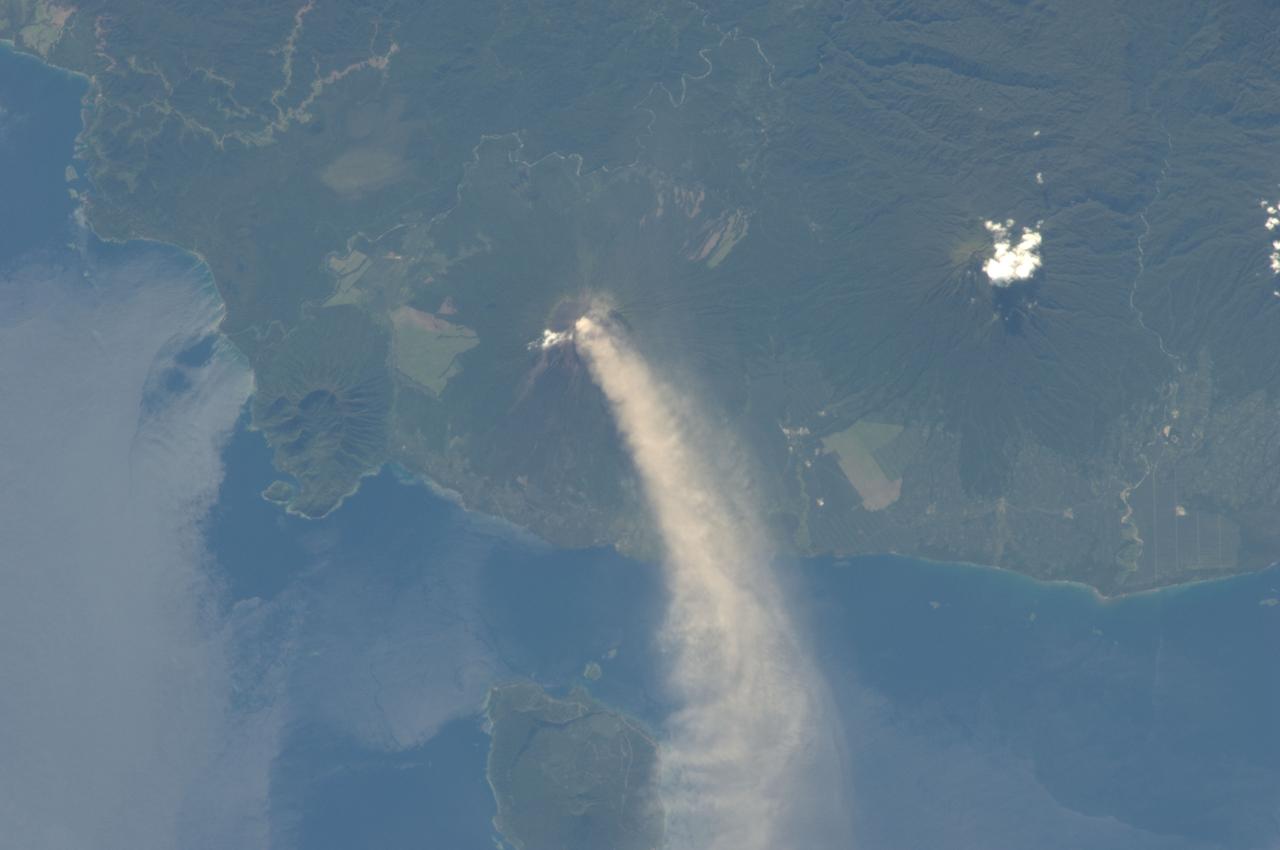
ISS034-E-005496 (30 Nov. 2012) --- An eruption at the Ulawun volcano, New Britain Island, Papua New Guinea is featured in this image photographed by an Expedition 34 crew member on the International Space Station. Numerous volcanoes contribute to the landmass of the island of New Britain, the largest in the Bismarck Archipelago of Papua New Guinea. One of the most active of these volcanoes, Ulawun, is also the highest with a summit elevation of 2,334 meters. This photograph was taken during the most recent phase of volcanic activity at Ulawun. A white steam and ash plume extends from the summit crater of the stratovolcano towards the northwest (center; note the image is oriented such that north is towards the lower left). The plume begins to broaden as it passes the southwestern coast of Lolobau Island approximately 23 kilometers downwind from its source. Ulawun volcano is also known as “the Father”, with the Bamus volcano to the southwest also known as “the South Son”. The summit of Bamus is obscured by white cumulus clouds (not of volcanic origin) in this image. While Ulawun has been active since at least 1700, the most recent eruptive activity at Bamus occurred in the late 19th century. A large region of ocean surface highlighted by sunglint – sunlight reflecting off the water surface, lending it a mirror-like appearance– is visible to the north-northeast of Ulawun (lower left).
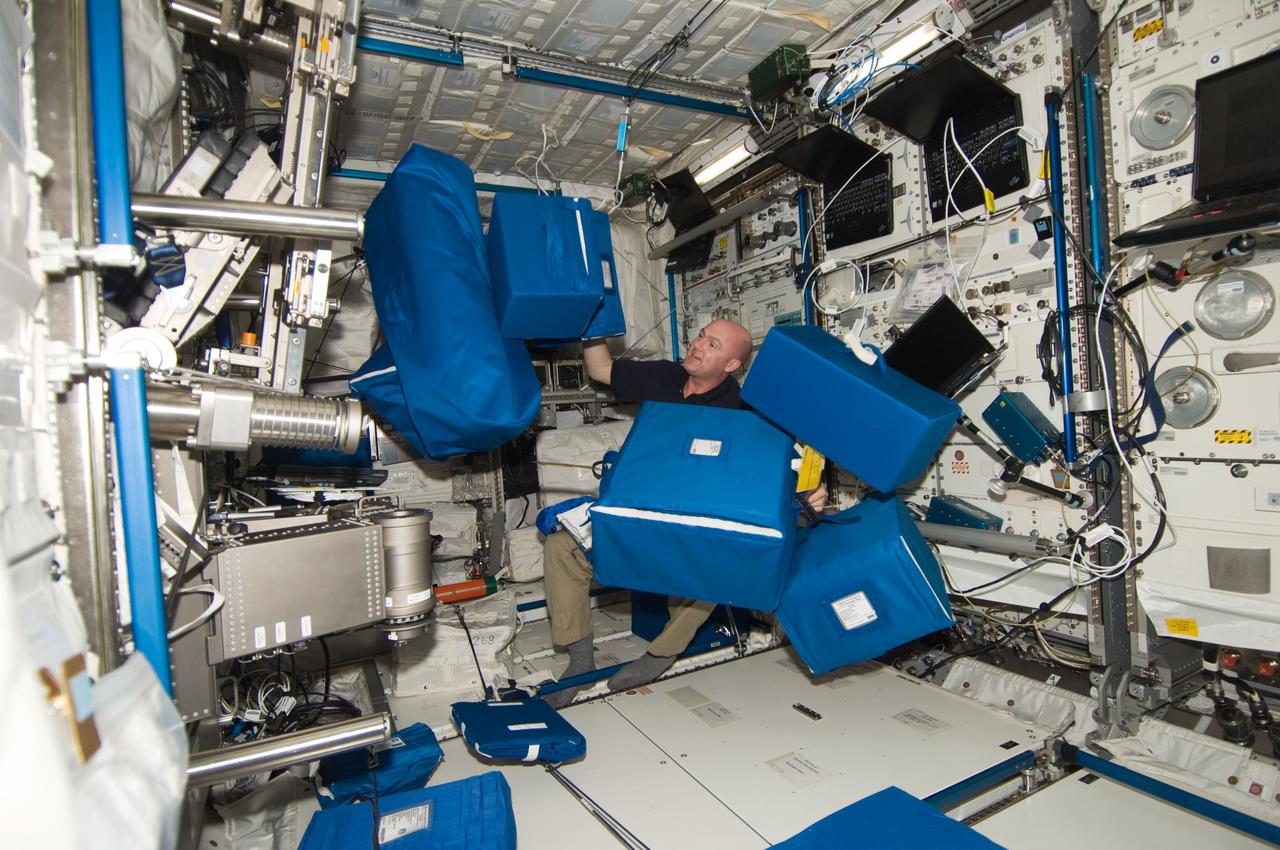
ISS030-E-155920 (16 Jan. 2012) --- European Space Agency astronaut Andre Kuipers, Expedition 30 flight engineer, works with various stowage containers in the Columbus laboratory of the International Space Station.

CAPE CANAVERAL, Fla. – At NASA’s Kennedy Space Center Visitor Complex in Florida, shuttle astronaut Kevin Chilton speaks after being inducted into the U.S. Astronaut Hall of Fame Class of 2012. Shuttle astronauts Franklin Chang Diaz and Charlie Precourt also were inducted into the Hall of Fame. The year’s inductees were selected by a committee of current Hall of Fame astronauts, former NASA officials, historians and journalists. The selection process is administered by the Astronaut Scholarship Foundation. Photo credit: NASA/Jim Grossmann

NASA Public Affairs Officer Lauren Worley kicks off the second day of the NASA Future Forum at The Ohio State University on Tuesday, Feb. 21, 2012 in Columbus, Ohio. The NASA Future Forum features panel discussions on the importance of education to our nation's future in space, the benefit of commercialized space technology to our economy and lives here on Earth, and the shifting roles for the public, commercial and international communities in space. Photo Credit: (NASA/Bill Ingalls)

ESA astronaut and first astronaut from the United Kingdom, Timothy Peake, with NASA astronaut Scott Tingle (unassigned) during EVA Skills training in the NBL. Photo Date: November 27, 2012. Location: NBL - Pool Topside. Photographer: Robert Markowitz
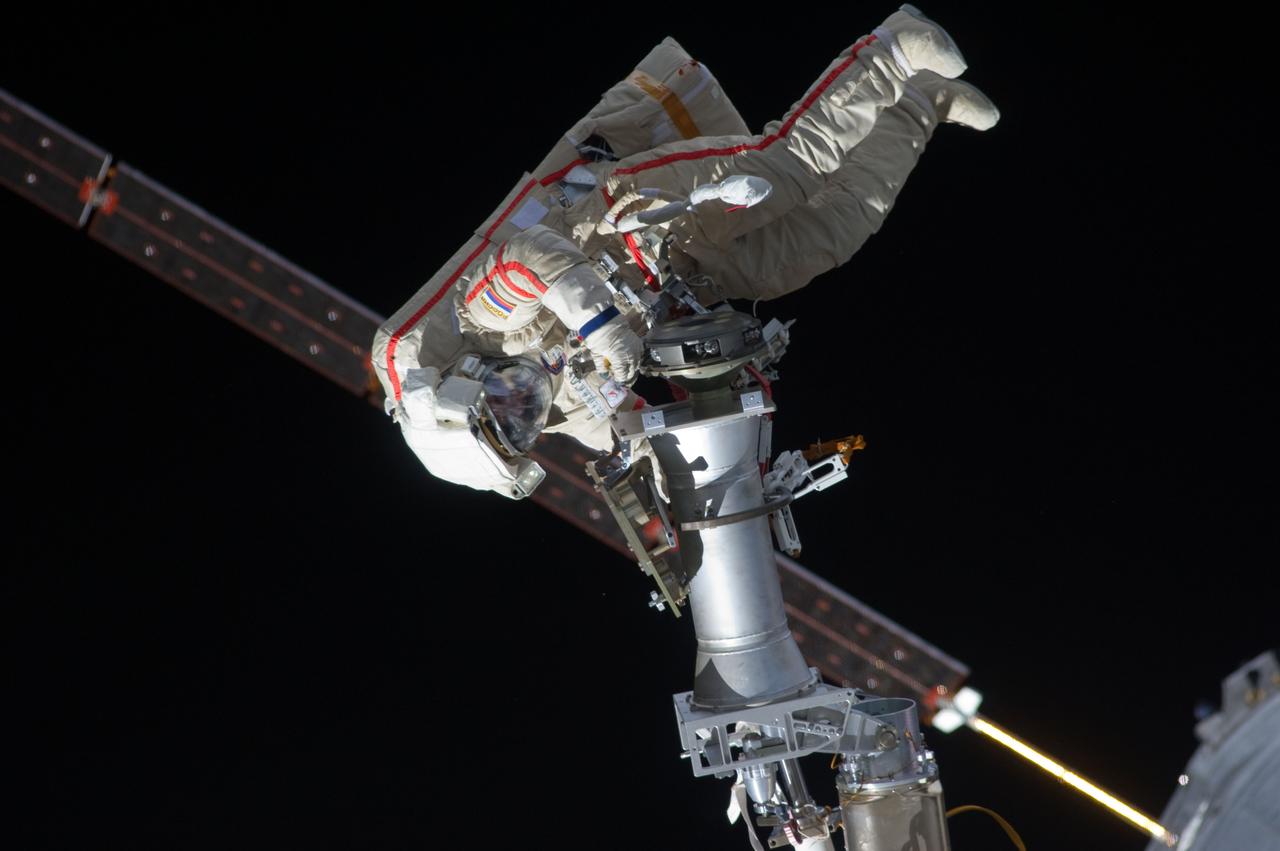
ISS032-E-021085 (20 Aug. 2012) --- Russian cosmonaut Gennady Padalka, Expedition 32 commander, participates in a session of extravehicular activity (EVA) to continue outfitting the International Space Station. During the five-hour, 51-minute spacewalk, Padalka and Russian cosmonaut Yuri Malenchenko (out of frame), flight engineer, moved the Strela-2 cargo boom from the Pirs docking compartment to the Zarya module to prepare Pirs for its eventual replacement with a new Russian multipurpose laboratory module. The two spacewalking cosmonauts also installed micrometeoroid debris shields on the exterior of the Zvezda service module and deployed a small science satellite.
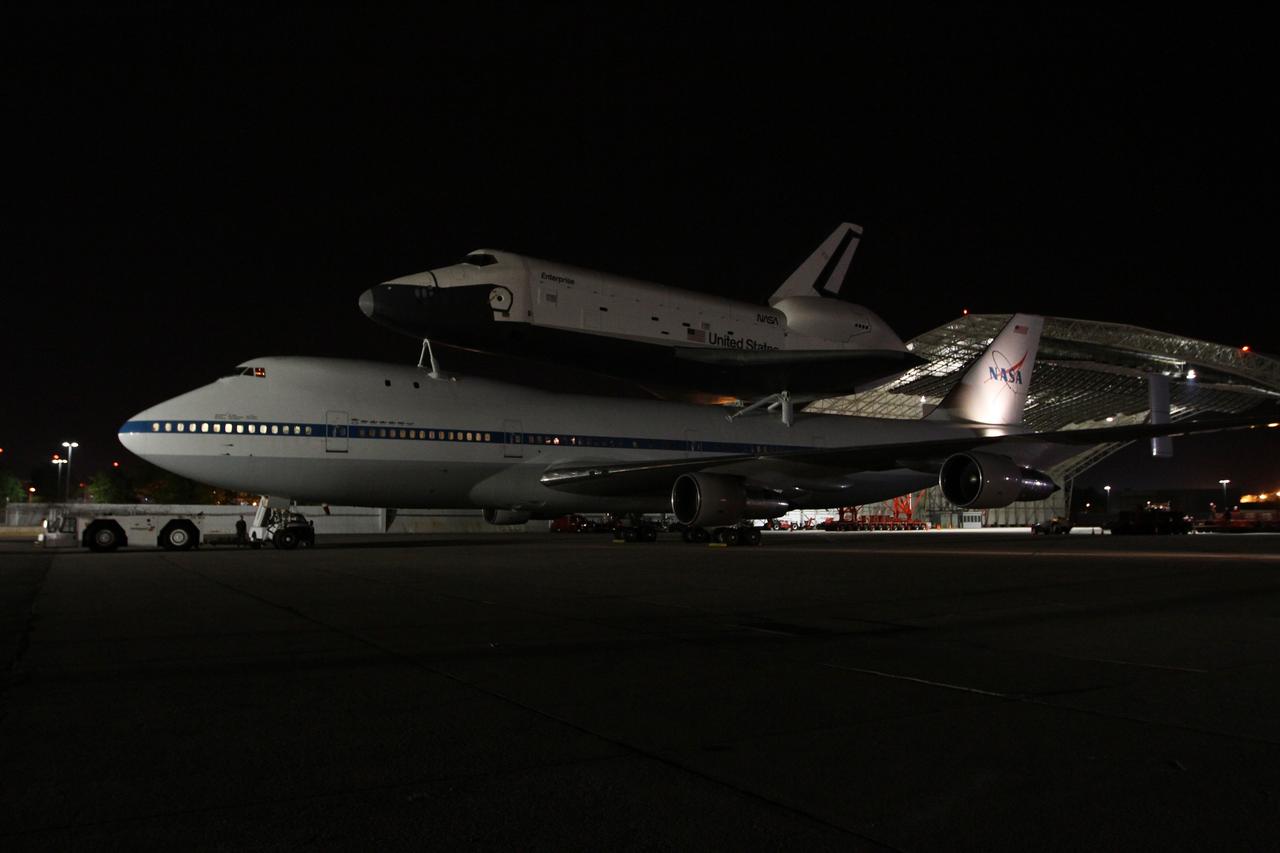
NEW YORK – NASA's shuttle carrier aircraft is moved into place so the space shuttle Enterprise can be removed. The work took place at John F. Kennedy International Airport in New York City. Enterprise, a prototype built to test aspects of the space shuttle design, will be displayed at the Intrepid Sea, Air and Space Museum in New York. Photo credit: NASA/Kim Shiflett
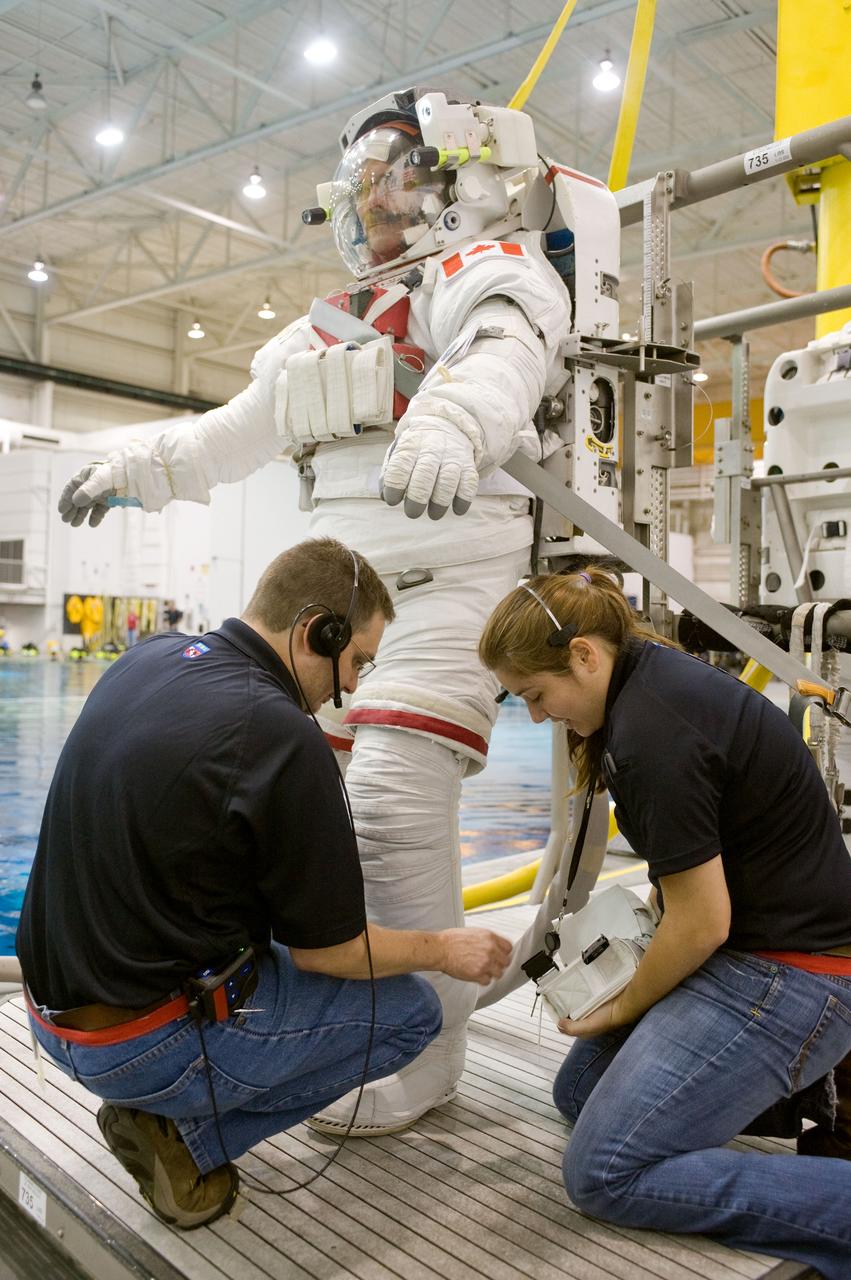
PHOTO DATE: 07-25-12 LOCATION: NBL - Pool Topside SUBJECT: Expedition 34 crew training during NBL operations. Photograph Kevin Ford and Chris Hadfield interacting, suiting up, being lowered into the water. PHOTOGRAPHER: BILL STAFFORD
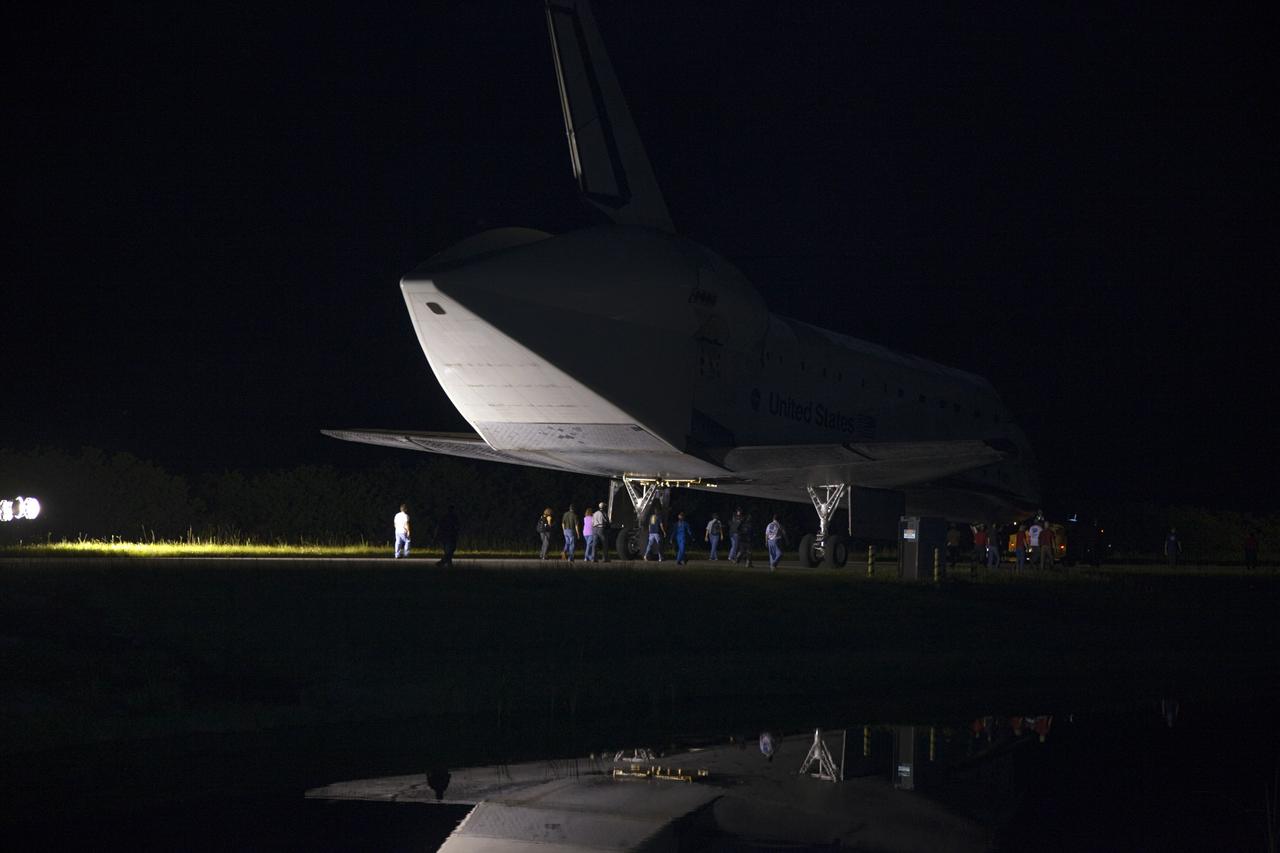
CAPE CANAVERAL, Fla. – Workers escort space shuttle Endeavour as it is towed to the Mate-Demate Device, or MDD, at NASA's Kennedy Space Center in Florida after being backed out of the Vehicle Assembly Building. The MDD is located at the Shuttle Landing Facility at Kennedy. The shuttle will be lifted and connected to the top of NASA's Shuttle Carrier Aircraft SCA, a modified 747 jetliner. The shuttle has been fitted with an aerodynamic tailcone for its flight aboard the SCA to Los Angeles where it will be placed on public display. Photo credit: NASA/ Frankie Martin