
Earth observation taken during a day pass by an Expedition 37 crew member on board the International Space Station (ISS).
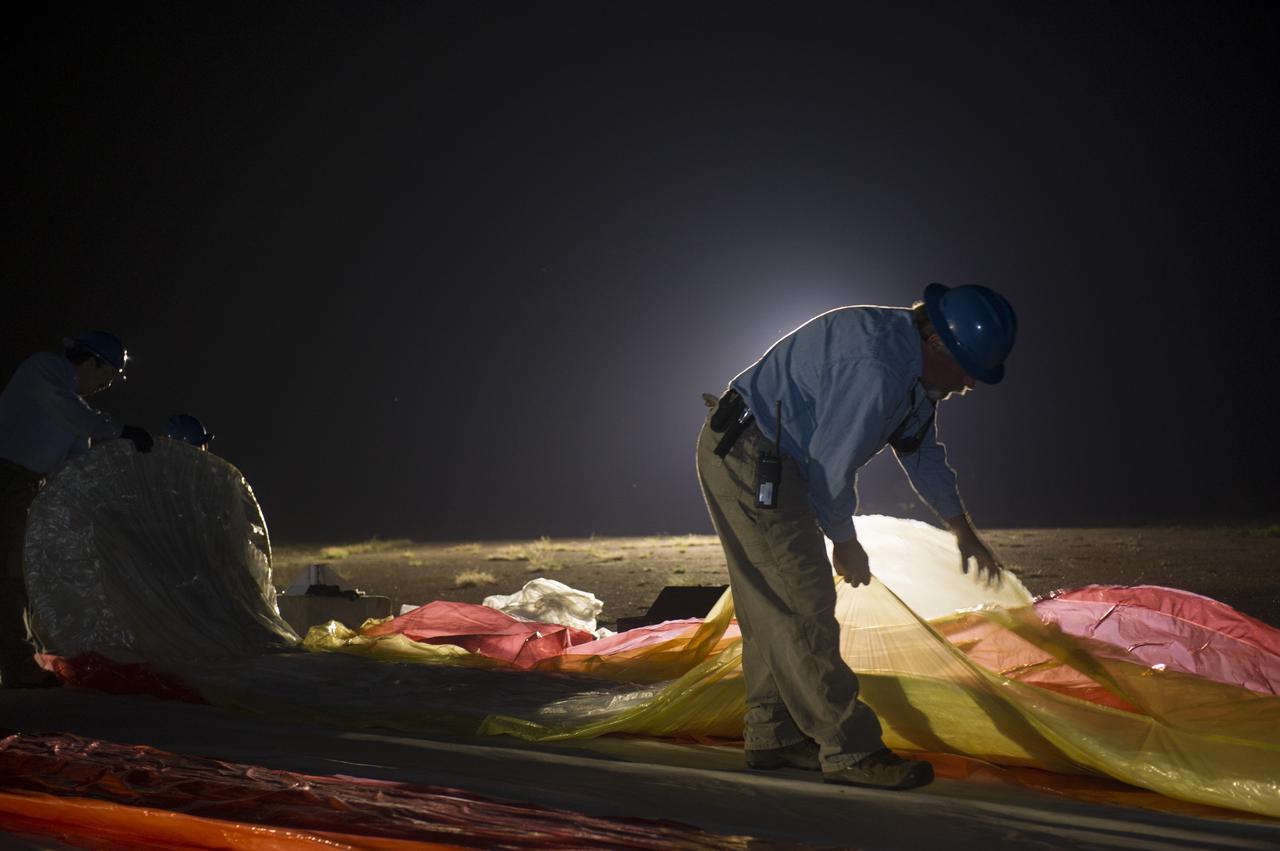
HEROES PAYLOAD AWAITS LAUNCH AS HELIUM BALLOON INFLATES IN BACKGROUND, FORT SUMNER, NEW MEXICO, SEPTEMBER 21, 2013
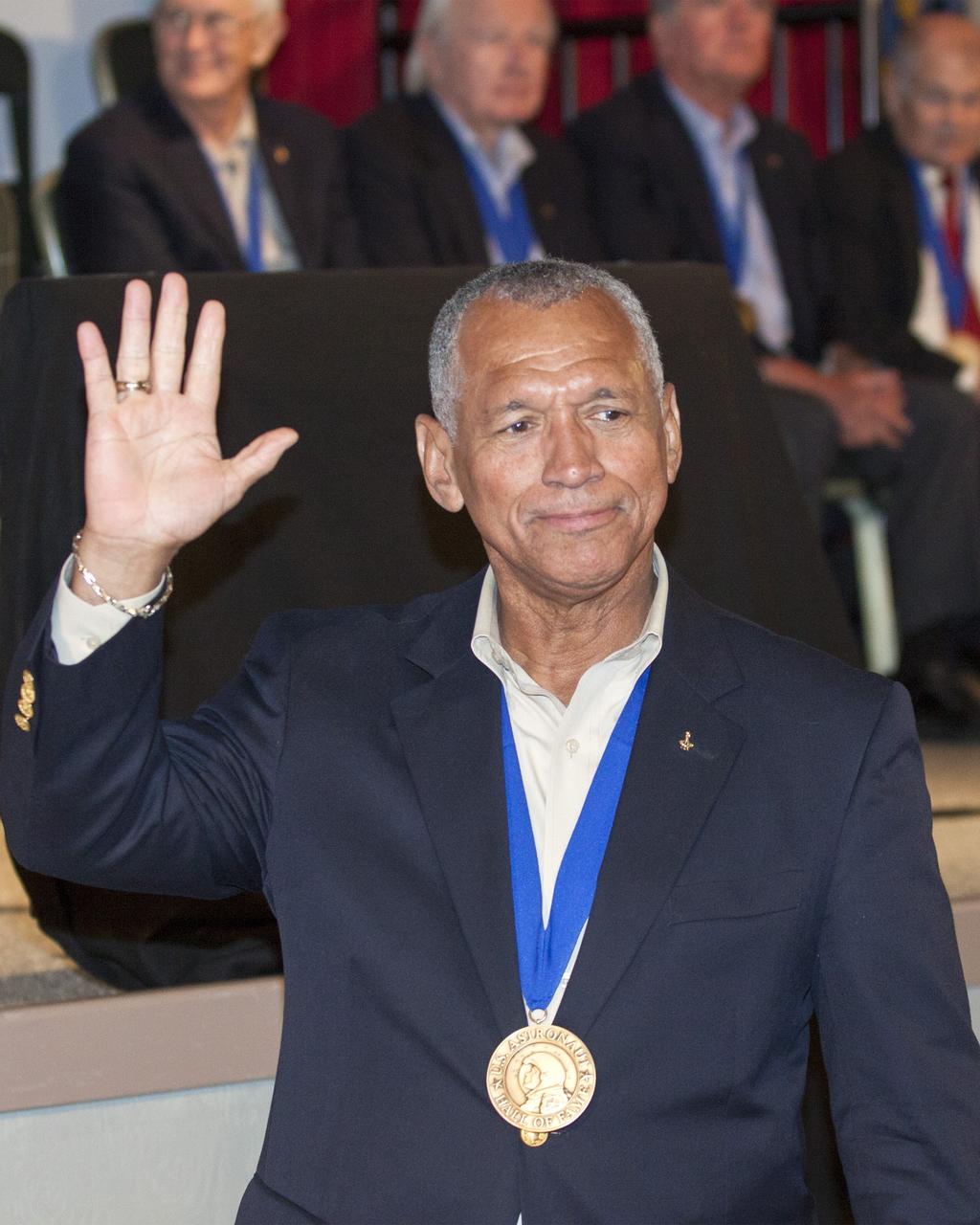
CAPE CANAVERAL, Fla. – U.S. Astronaut Hall of Fame member Charlie Bolden, who is also NASA administrator, is introduced at NASA’s Kennedy Space Center Visitor Complex in Florida, prior to the ceremony in which Bonnie Dunbar, Curt Brown and Eileen Collins will be inducted into the group of space pioneers. This induction is the twelfth group of space shuttle astronauts named to the AHOF, and the first time two women are inducted at the same time. The year’s inductees were selected by a committee of current Hall of Fame astronauts, former NASA officials, historians and journalists. The selection process is administered by the Astronaut Scholarship Foundation. For more on the U.S. Astronaut Hall of Fame, go to http://www.kennedyspacecenter.com/astronaut-hall-of-fame.aspx For more on the Astronaut Scholarship Foundation, go to http://astronautscholarship.org/ Photo credit: NASA/ Kim Shiflett
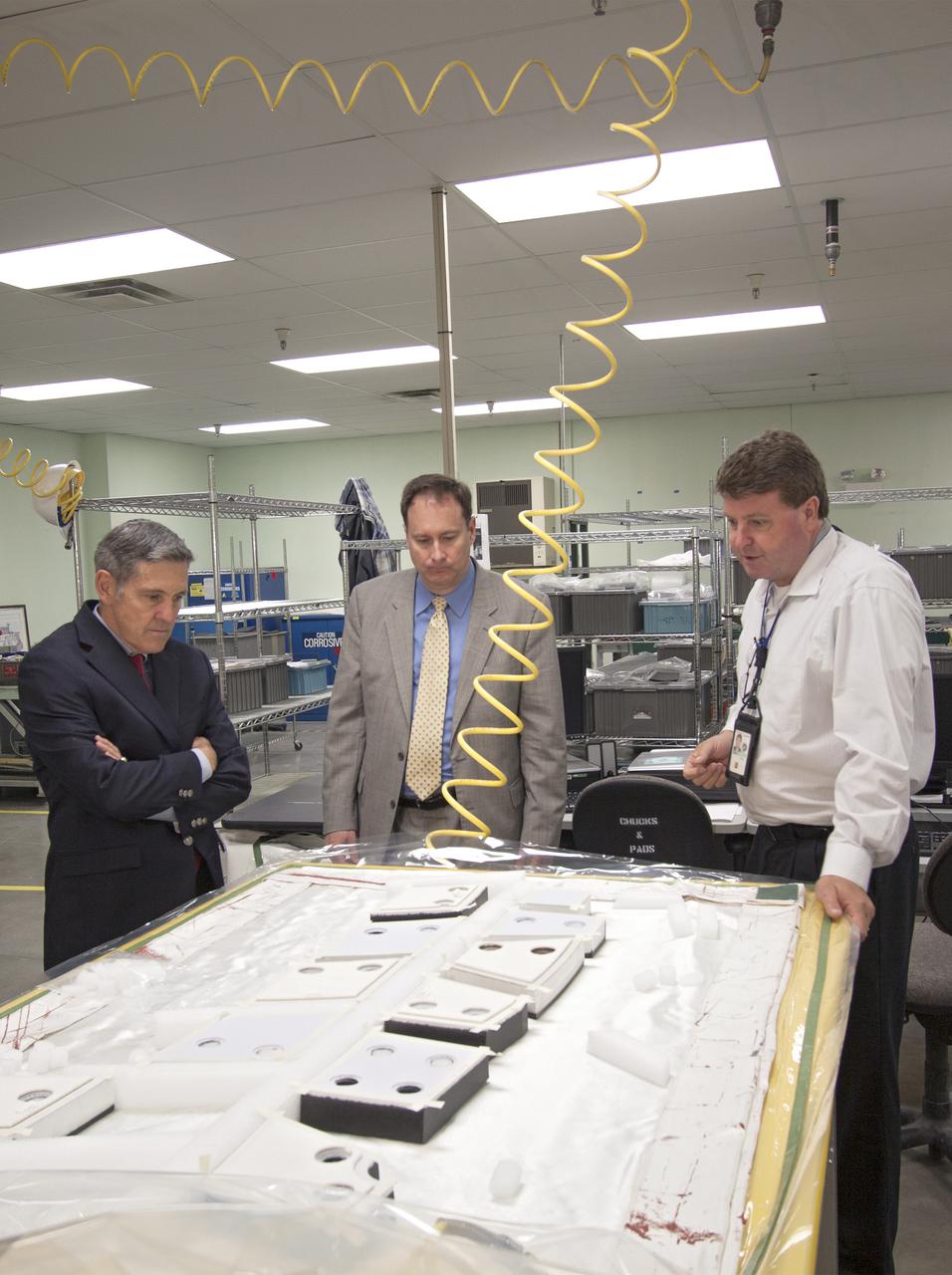
CAPE CANAVERAL, Fla. – NASA Associate Administrator Robert Lightfoot, center, tours the Thermal Protection System Facility, or TPSF, during a visit to NASA's Kennedy Space Center in Florida. From left are Kennedy Director Bob Cabana, Lightfoot, and Martin Boyd, TPSF manager with Jacobs Technologies, briefing his guests on the production of TPS tile for NASA's new Orion spacecraft. NASA's FY2014 budget proposal includes a plan to robotically capture a small near-Earth asteroid and redirect it safely to a stable orbit in the Earth-moon system where astronauts can visit and explore it. Performing these elements for the proposed asteroid initiative integrates the best of NASA's science, technology and human exploration capabilities and draws on the innovation of America's brightest scientists and engineers. It uses current and developing capabilities to find both large asteroids that pose a hazard to Earth and small asteroids that could be candidates for the initiative, accelerates our technology development activities in high-powered solar electric propulsion and takes advantage of our hard work on the Space Launch System rocket and Orion spacecraft, helping to keep NASA on target to reach the President's goal of sending humans to Mars in the 2030s. Photo credit: NASA_Jim Grossmann
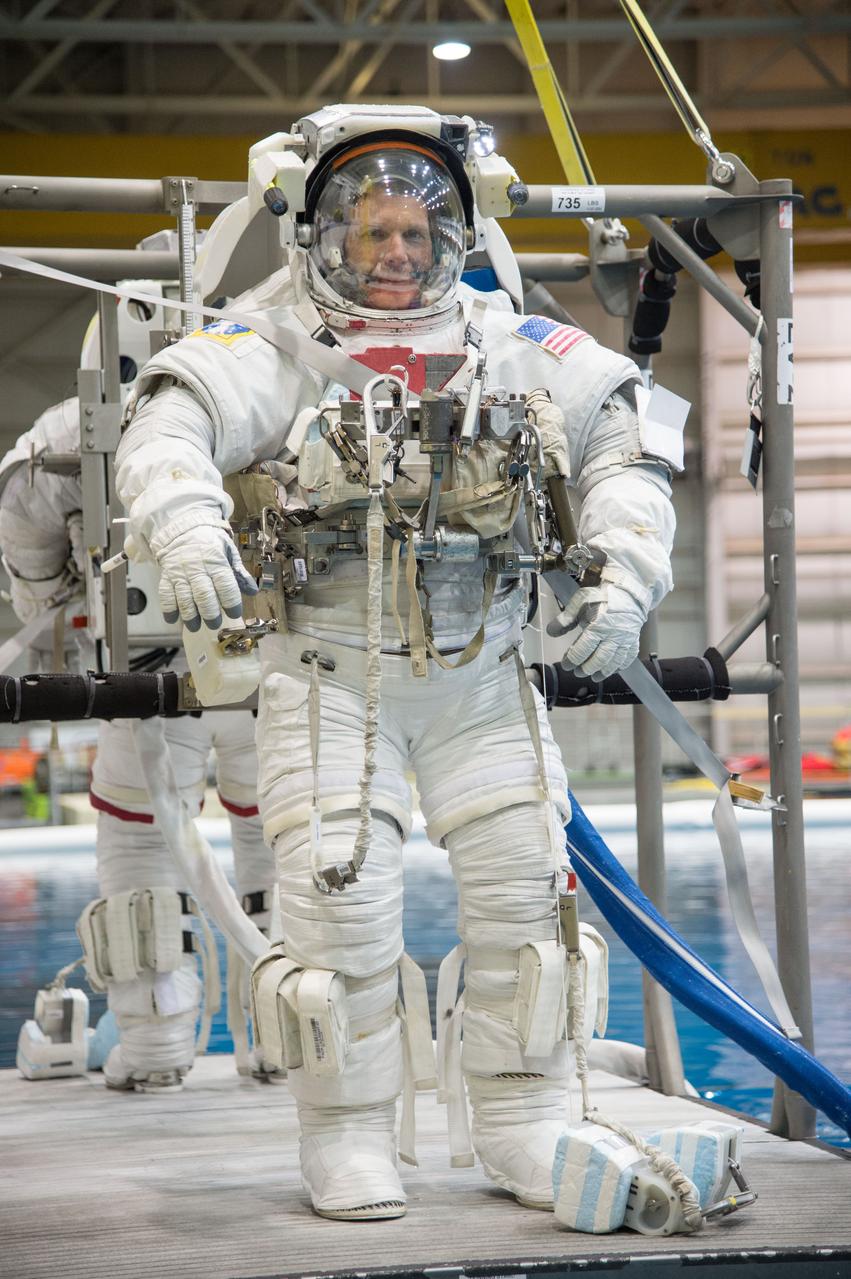
PHOTO DATE: 10-31-13 LOCATION: NBL - Pool Topside SUBJECT: Expedition 42/42 crew members Terry Virts and Barry Wilmore during ISS EVA Maintenance 7 training at the NBL. PHOTOGRAPHER: BILL STAFFORD
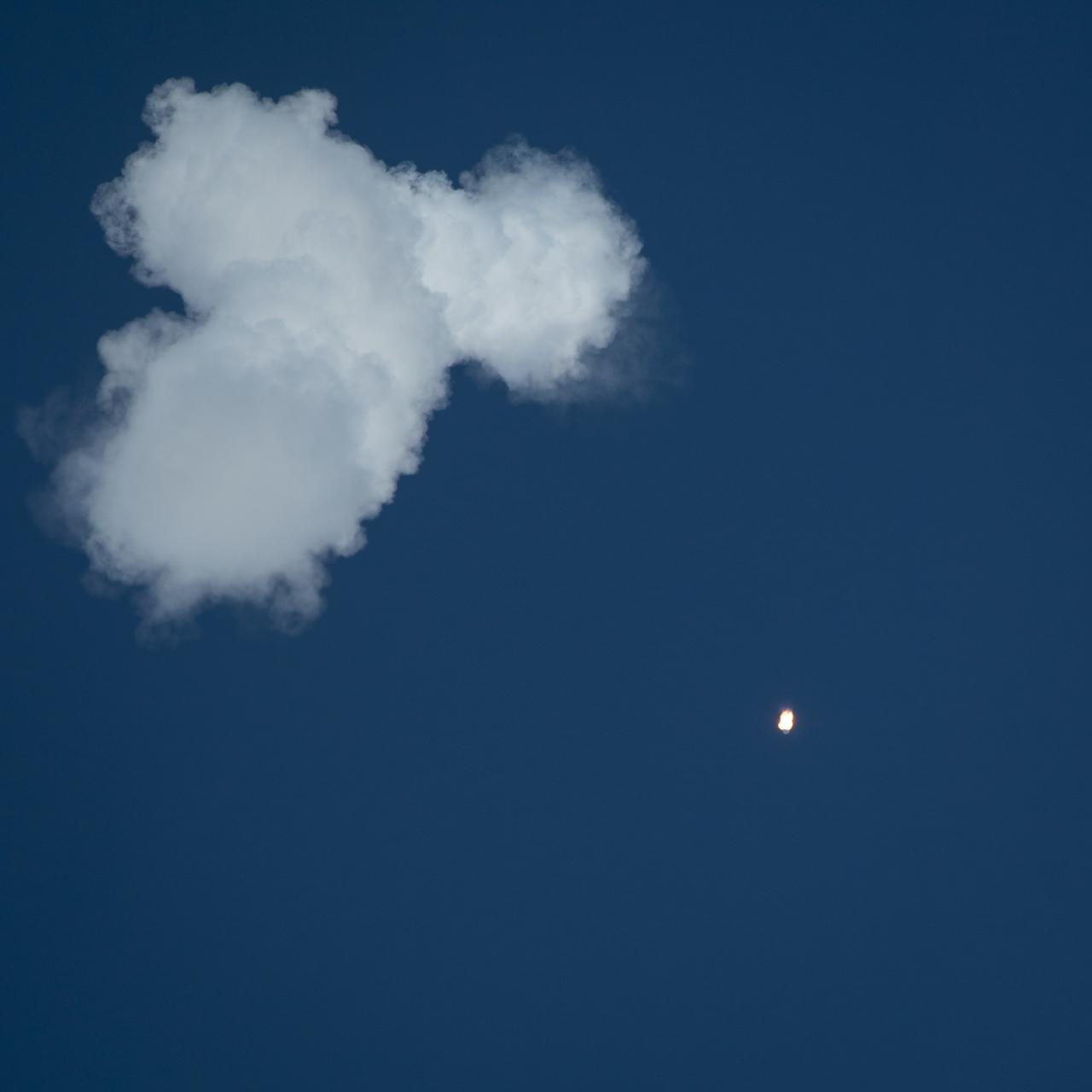
The Orbital Sciences Corporation Antares rocket is seen as it launches from Pad-0A of the Mid-Atlantic Regional Spaceport (MARS) at the NASA Wallops Flight Facility in Virginia, Sunday, April 21, 2013. The test launch marked the first flight of Antares and the first rocket launch from Pad-0A. The Antares rocket delivered the equivalent mass of a spacecraft, a so-called mass simulated payload, into Earth's orbit. Photo Credit: (NASA/Bill Ingalls)
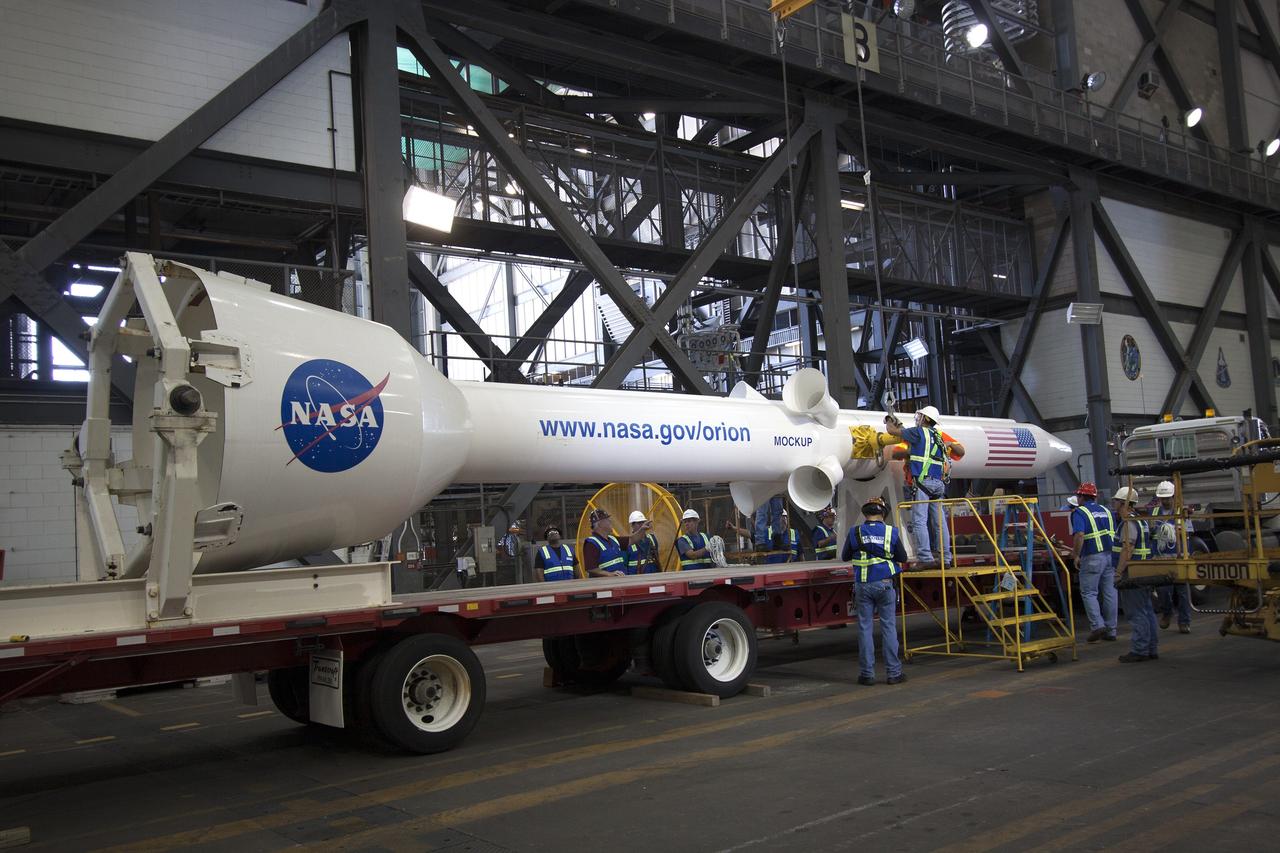
CAPE CANAVERAL, Fla. -- In the transfer aisle of the Vehicle Assembly Building at NASA’s Kennedy Space Center in Florida, a mock-up of the Orion launch abort system has been lowered onto a transporter. Crane operators and technicians practice de-stacking operations on a full-size mock-up of the Orion spacecraft and launch abort system in order to keep processing procedures and skills current. Orion is the exploration spacecraft designed to carry crews to space beyond low Earth orbit. It will provide emergency abort capability, sustain the crew during the space travel and provide safe re-entry from deep space return velocities. Orion’s first unpiloted test flight is scheduled to launch in 2014 atop a Delta IV rocket. A second uncrewed flight test is scheduled for 2017 on NASA’s Space Launch System rocket. For more information, visit http://www.nasa.gov/orion. Photo credit: NASA/Jim Grossmann
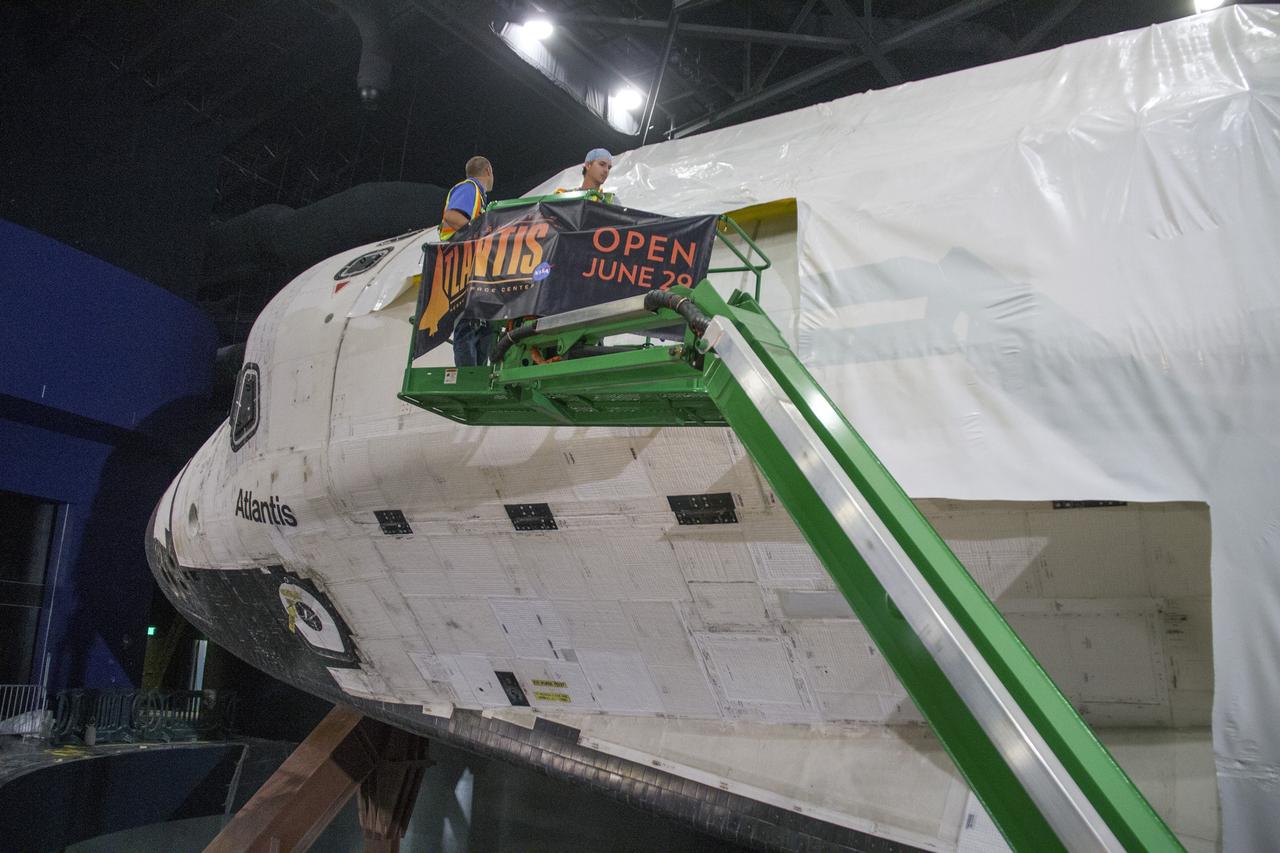
CAPE CANAVERAL, Fla. -- At the Kennedy Space Center Visitor Complex in Florida, construction crews are removing 16,000 square feet of plastic shrink-wrap from the space shuttle Atlantis. The spacecraft was enclosed in the plastic shrink-wrap since November of last year to protect the artifact from dust and debris during construction of the 90,000-square-foot facility. Last November, the space shuttle Atlantis made its historic final journey to its new home, traveling 10 miles from the Kennedy Space Center's Vehicle Assembly Building to the spaceport's visitor complex. The new $100 million "Space Shuttle Atlantis" facility will include interactive exhibits that tell the story of the 30-year Space Shuttle Program and highlights the future of space exploration. The "Space Shuttle Atlantis" exhibit scheduled to open June 29, 2013.Photo credit: NASA/Cory Huston
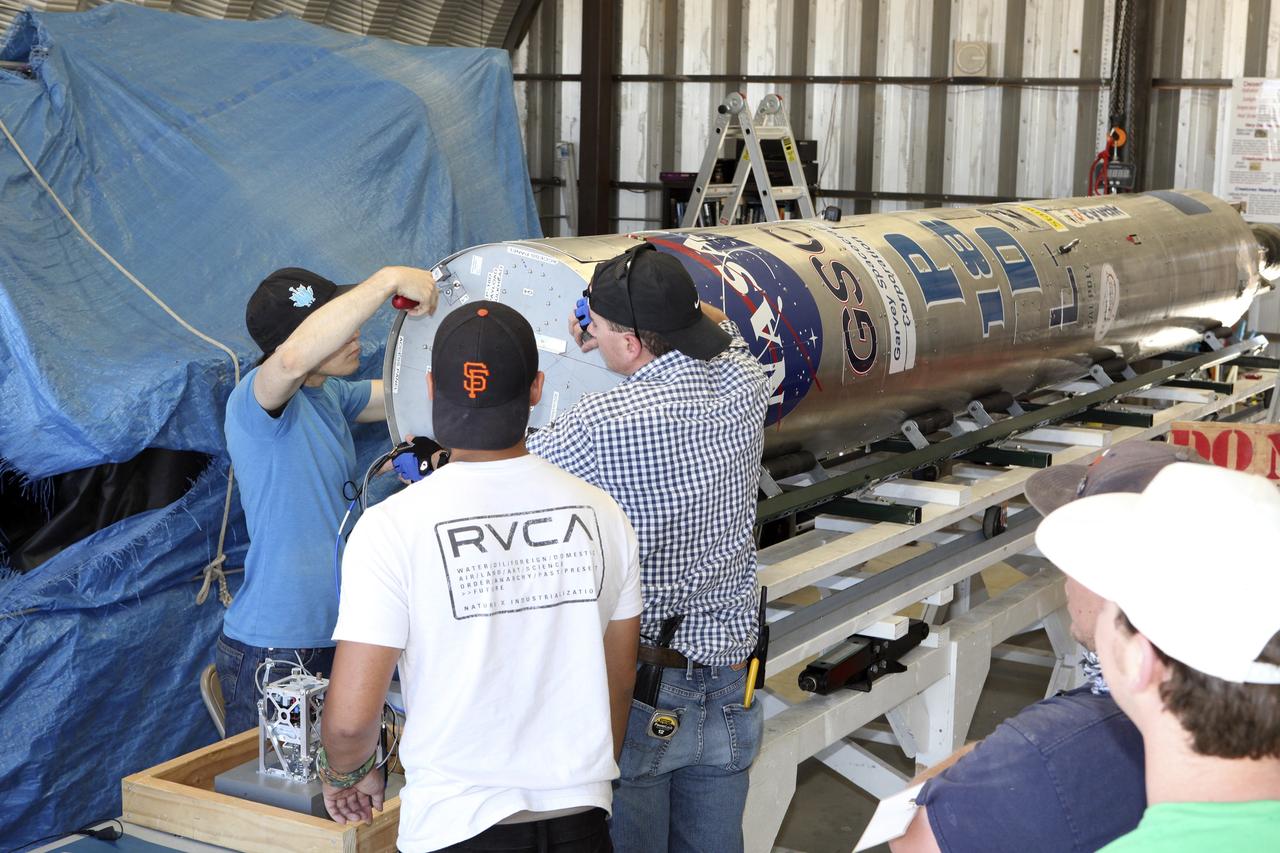
In the Mojave Desert in California, students and engineers checkout the Garvey Spacecraft Corporation's Prospector P-18D rocket engine. The rocket is scheduled for launch June 15 with the RUBICS-1 payload on a high-altitude, suborbital flight. The rocket will carry four satellites made from four-inch cube section. Collectively known as CubeSats, the satellites will record shock, vibrations and heat inside the rocket. They will not be released during the test flight, but the results will be used to prove or strengthen their designs before they are carried into orbit in 2014 on a much larger rocket. A new, lightweight carrier is also being tested for use on future missions to deploy the small spacecraft. The flight also is being watched closely as a model for trying out new or off-the-shelf technologies quickly before putting them in the pipeline for use on NASA's largest launchers. Built by several different organizations, including a university, a NASA field center and a high school, the spacecraft are four-inch cubes designed to fly on their own eventually, but will remain firmly attached to the rocket during the upcoming mission. For more information, visit http://www.nasa.gov/mission_pages/smallsats/elana/cubesatlaunchpreview.html Photo credit: NASA/Dimitri Gerondidakis
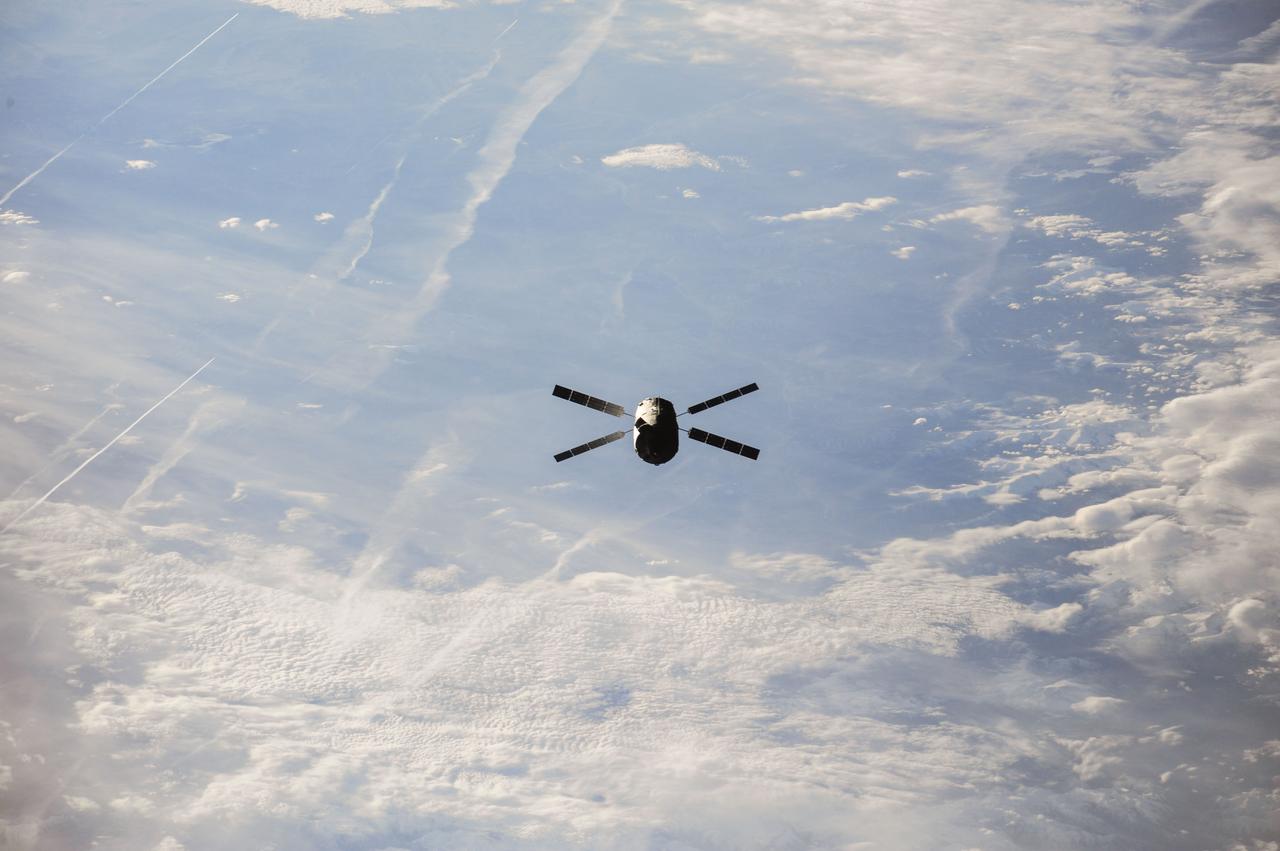
ISS037-E-021218 (28 Oct. 2013) --- The European Space Agency’s fourth Automated Transfer Vehicle (ATV-4), also known as the “Albert Einstein,” begins its relative separation from the International Space Station during the Expedition 37 mission. The ATV-4 undocked from the aft port of the Zvezda Service Module at 4:55 a.m. (EDT) Oct. 28, 2013. The ATV, filled with trash and unneeded items, is scheduled to be sent into Earth’s atmosphere for a planned destructive re-entry over an uninhabited area of the south Pacific Ocean on Nov. 2.

Earth Observations taken by Expedition 34 crewmember.
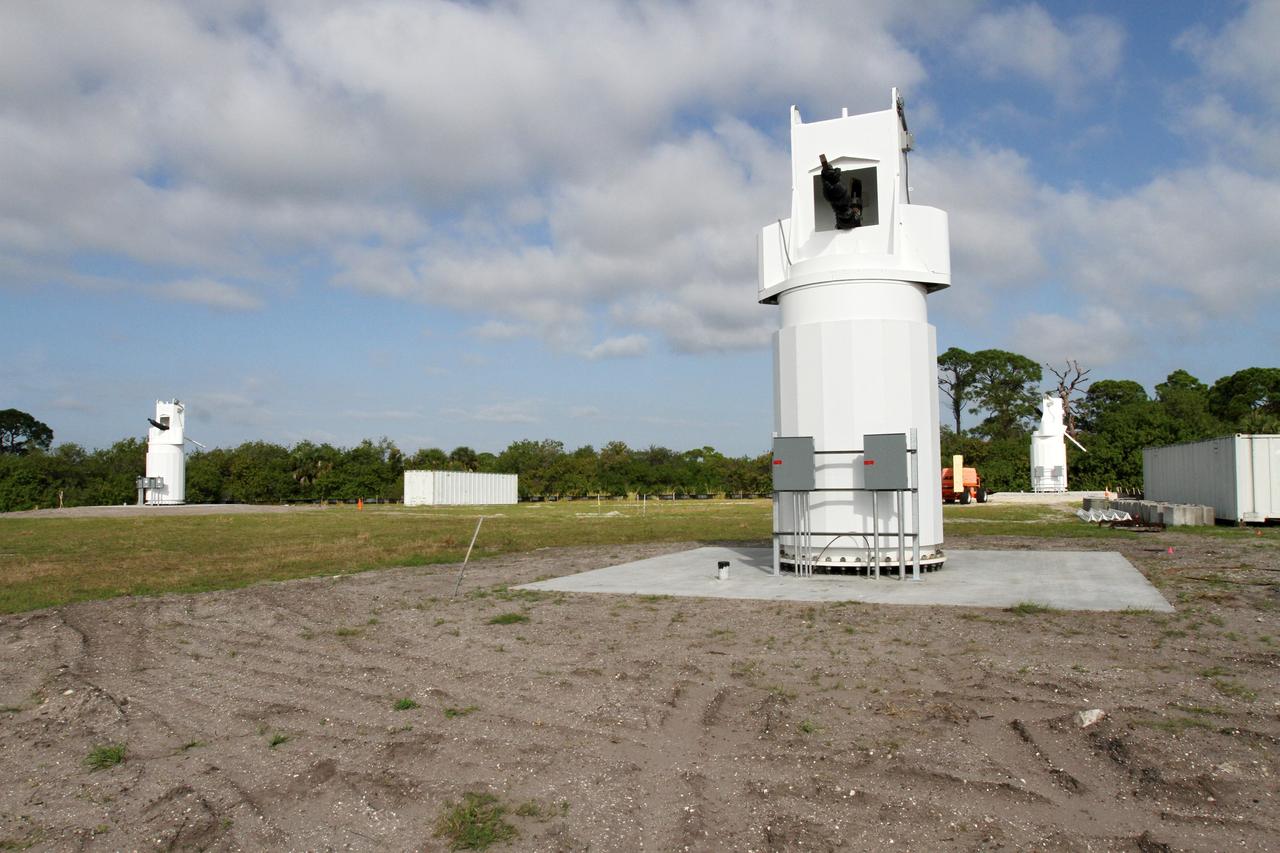
CAPE CANAVERAL, Fla. – At NASA’s Kennedy Space Center in Florida, new towers are being constructed for the Antenna Test Bed Array for the Ka-Band Objects Observation and Monitoring, or Ka-BOOM system. The construction site is near the former Vertical Processing Facility, which has been demolished. Workers soon will begin construction on the 40-foot-diameter dish antenna arrays and their associated utilities, and prepare the site for the operations command center facility. The Ka-BOOM project is one of the final steps in developing the techniques to build a high power, high resolution radar system capable of becoming a Near Earth Object Early Warning System. While also capable of space communication and radio science experiments, developing radar applications is the primary focus of the arrays. Photo credit: NASA/ Ben Smegelsky
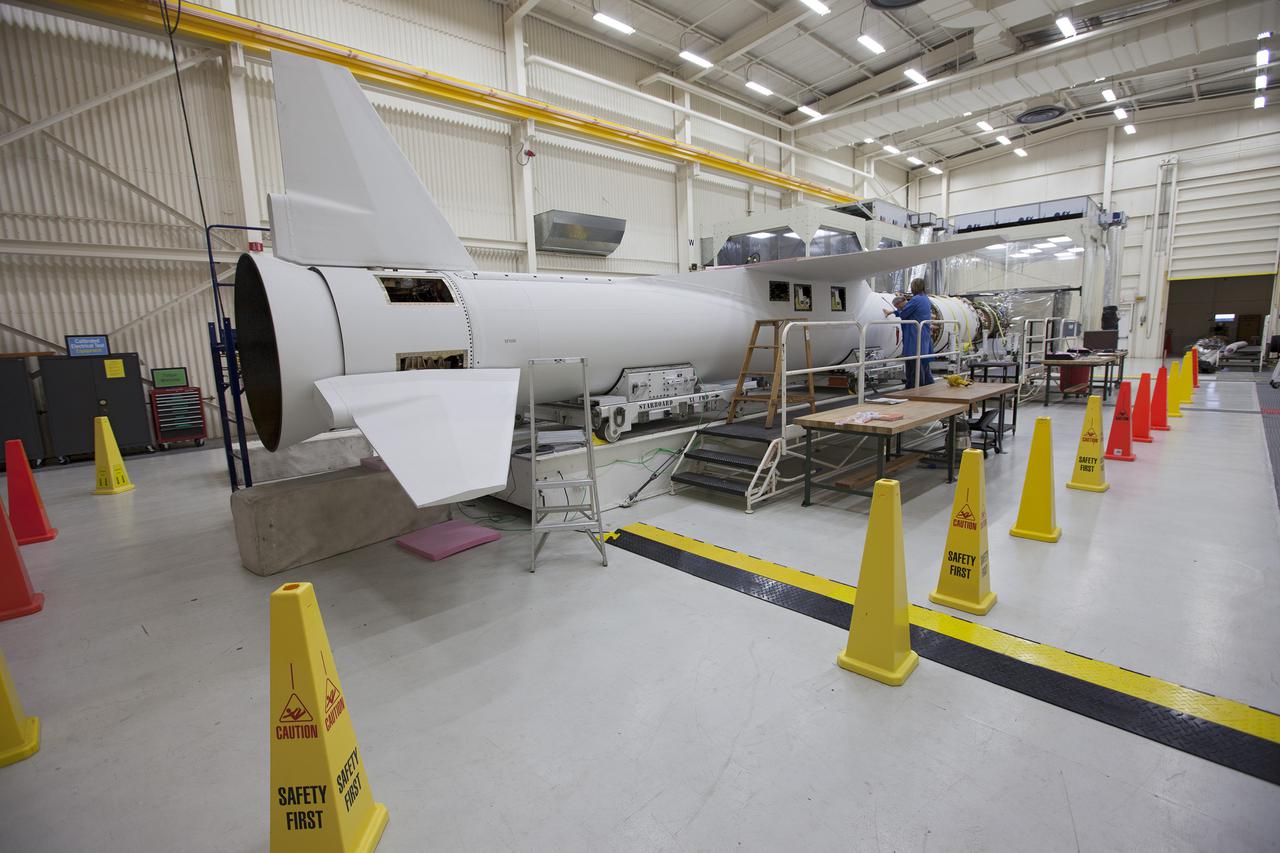
VANDENBERG AIR FORCE BASE, Calif. – At Vandenberg Air Force Base in California, technicians prepare the Orbital Sciences Corp. Pegasus XL rocket which will launch the Interface Region Imaging Spectrograph, or IRIS, spacecraft. IRIS will open a new window of discovery by tracing the flow of energy and plasma through the chromospheres and transition region into the sun’s corona using spectrometry and imaging. IRIS fills a crucial gap in our ability to advance studies of the sun-to-Earth connection by tracing the flow of energy and plasma through the foundation of the corona and the region around the sun known as the heliosphere. For more information, visit http:__iris.gsfc.nasa.gov. Photo credit: NASA_Cory Huston
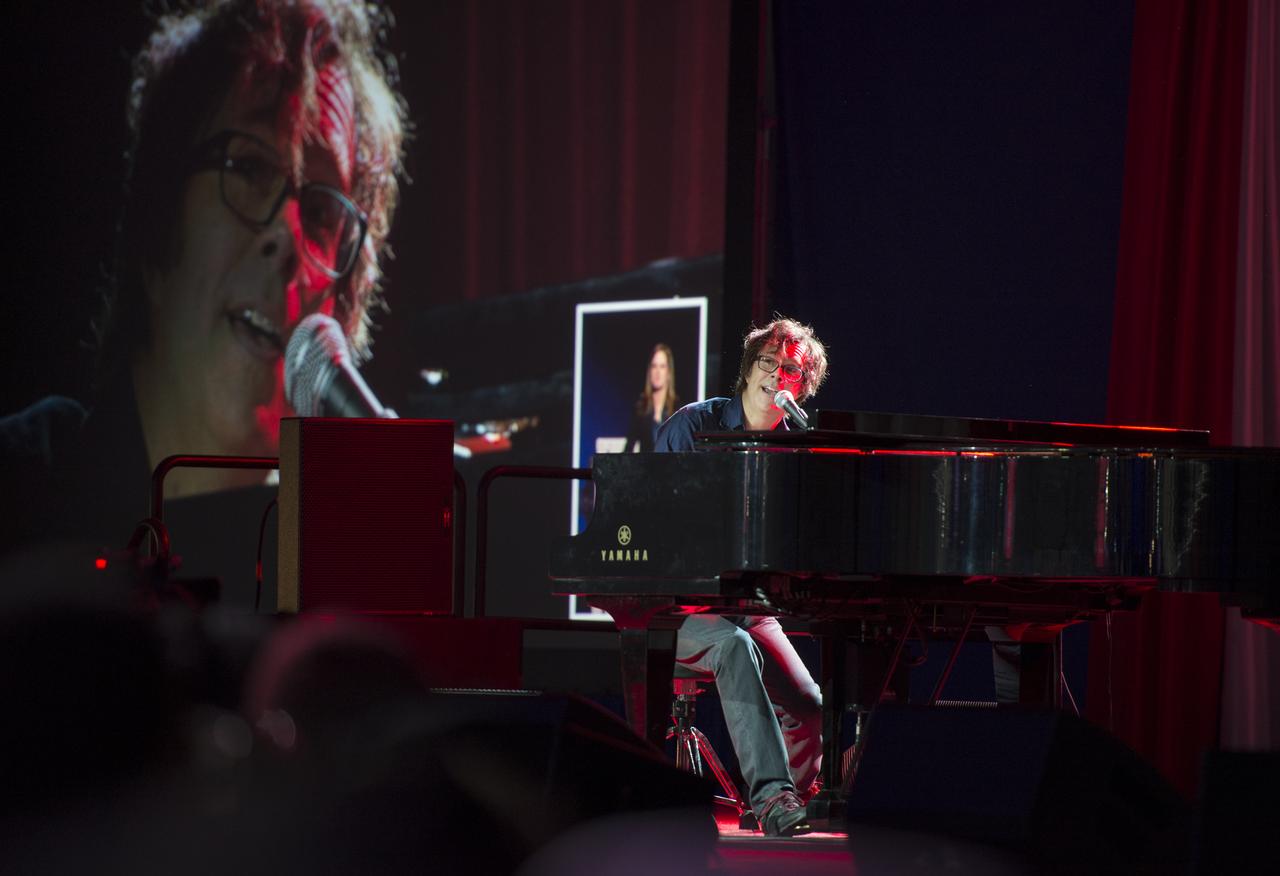
Musician Ben Folds performs at the the National Day of Service on the National Mall, Saturday, January 19, 2013, in Washington. NASA along with other federal agencies set up along the Mall as part of events surrounding the inauguration of President Barack Obama. Photo Credit: (NASA/Carla Cioffi)
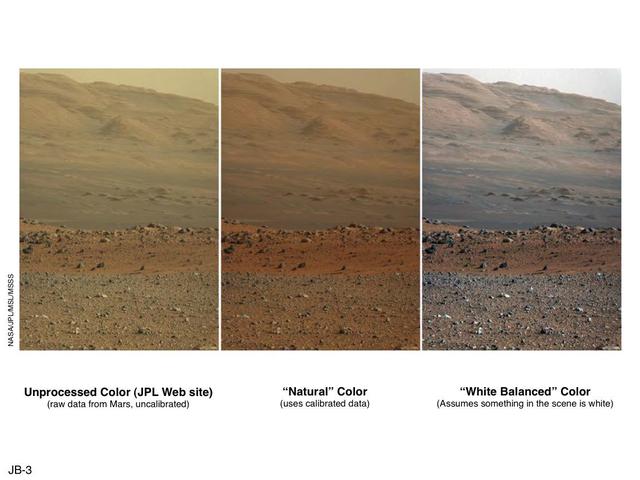
These three versions of the same image taken by the Mast Camera Mastcam on NASA Mars rover Curiosity illustrate different choices that scientists can make in presenting the colors recorded by the camera.
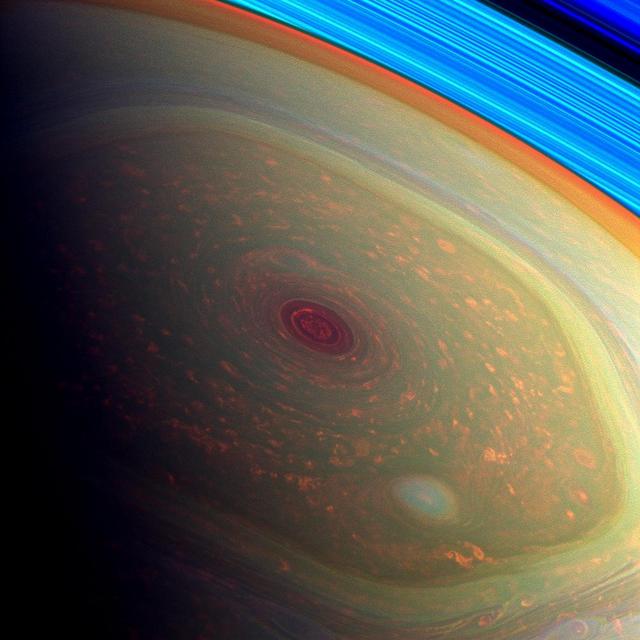
This spectacular, vertigo inducing, false-color image from NASA Cassini mission highlights the storms at Saturn north pole. The angry eye of a hurricane-like storm appears dark red.
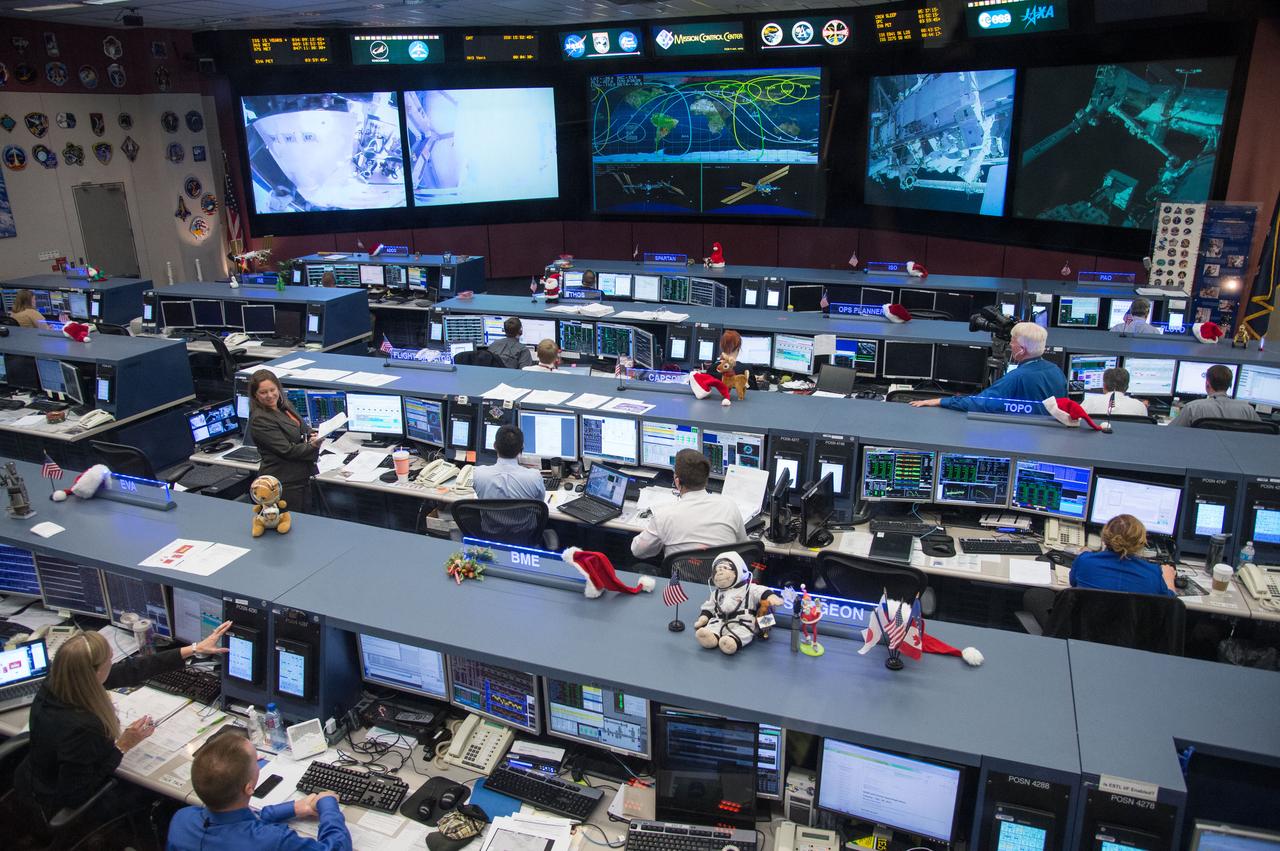
DATE: 12-24-13 LOCATION: Bldg. 30 - FCR-1 (30M/231) SUBJECT: ISS Flight Controllers during Expedition 38's 2nd Spacewalk to repair a faulty ISS Coolant pump with Astronauts Rick Mastracchio and Mike Hopkins. Flight Director: Dina Contella, Capcom's Doug Wheelock, Aki Hoshide, and Lead U.S. Spacewalk Officer Allison Bolinger. PHOTOGRAPHER: Lauren Harnett
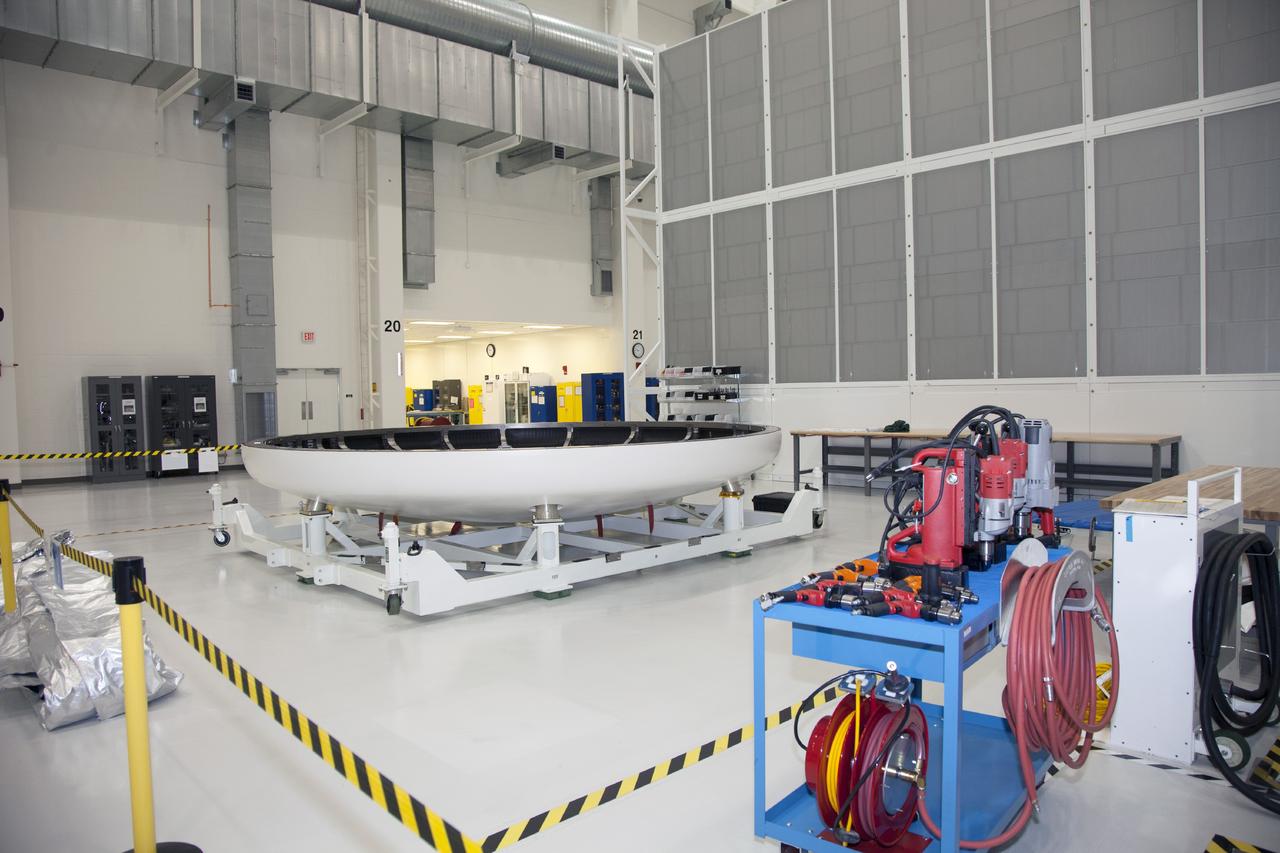
CAPE CANAVERAL, Fla. -- The heat shield for the Orion spacecraft has been placed on a work stand inside the Operations and Checkout Building high bay at NASA’s Kennedy Space Center in Florida. The heat shield arrived at Kennedy’s Shuttle Landing Facility on Dec. 5 on NASA’s Super Guppy aircraft. The largest of its kind ever built, the heat shield is planned for installation on the Orion crew module in March 2014. The Orion spacecraft is being prepared for its first unpiloted flight test, Exploration Flight Test-1, or EFT-1, scheduled for launch atop a Delta IV rocket in September 2014. The Orion spacecraft is designed to carry astronauts to destinations not yet explored by humans. It will have emergency abort capability, sustain the crew during space travel and provide safe re-entry from deep space return velocities. Orion is scheduled to launch atop NASA’s Space Launch System rocket in 2017. For more information, visit http://www.nasa.gov/orion. Photo credit: NASA/Mike Chambers
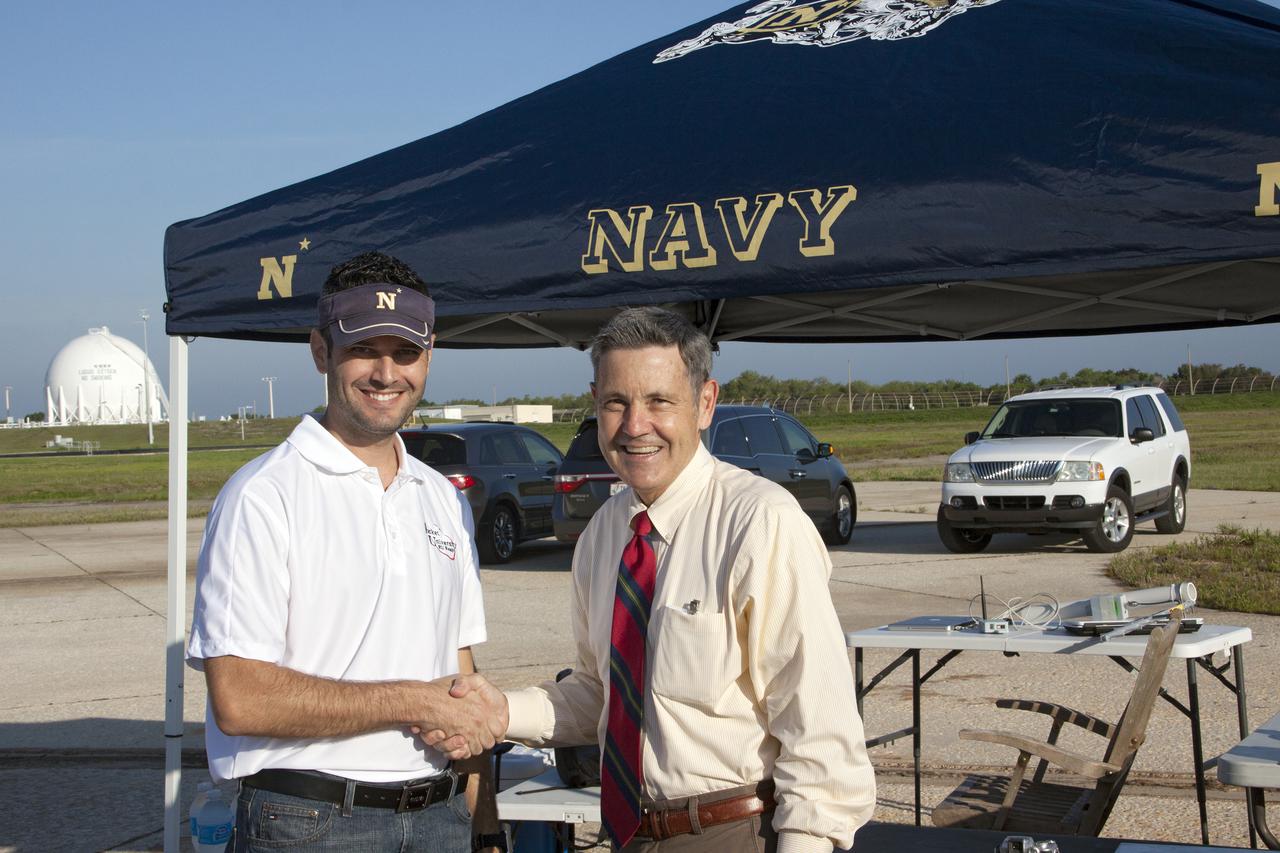
CAPE CANAVERAL, Fla. -- At NASA's Kennedy Space Center in Florida, center director Bob Cabana congratulates Leandro James of Systems Hardware Engineering after the successful launch of a small rocket at Launch Pad 39A as part of Rocket University. The goal was to test its systems and to verify that it performed as designed. As part of Rocket University, the engineers are given an opportunity to work a fast-track project to develop skills in developing spacecraft systems of the future. As NASA plans for future spaceflight programs to low-Earth orbit and beyond, teams of engineers at Kennedy are gaining experience in designing and flying launch vehicle systems on a small scale. Four teams of five to eight members from Kennedy are designing rockets complete with avionics and recovery systems. Launch operations require coordination with federal agencies, just as they would with rockets launched in support of a NASA mission. Photo credit: NASA_Jim Grossmann
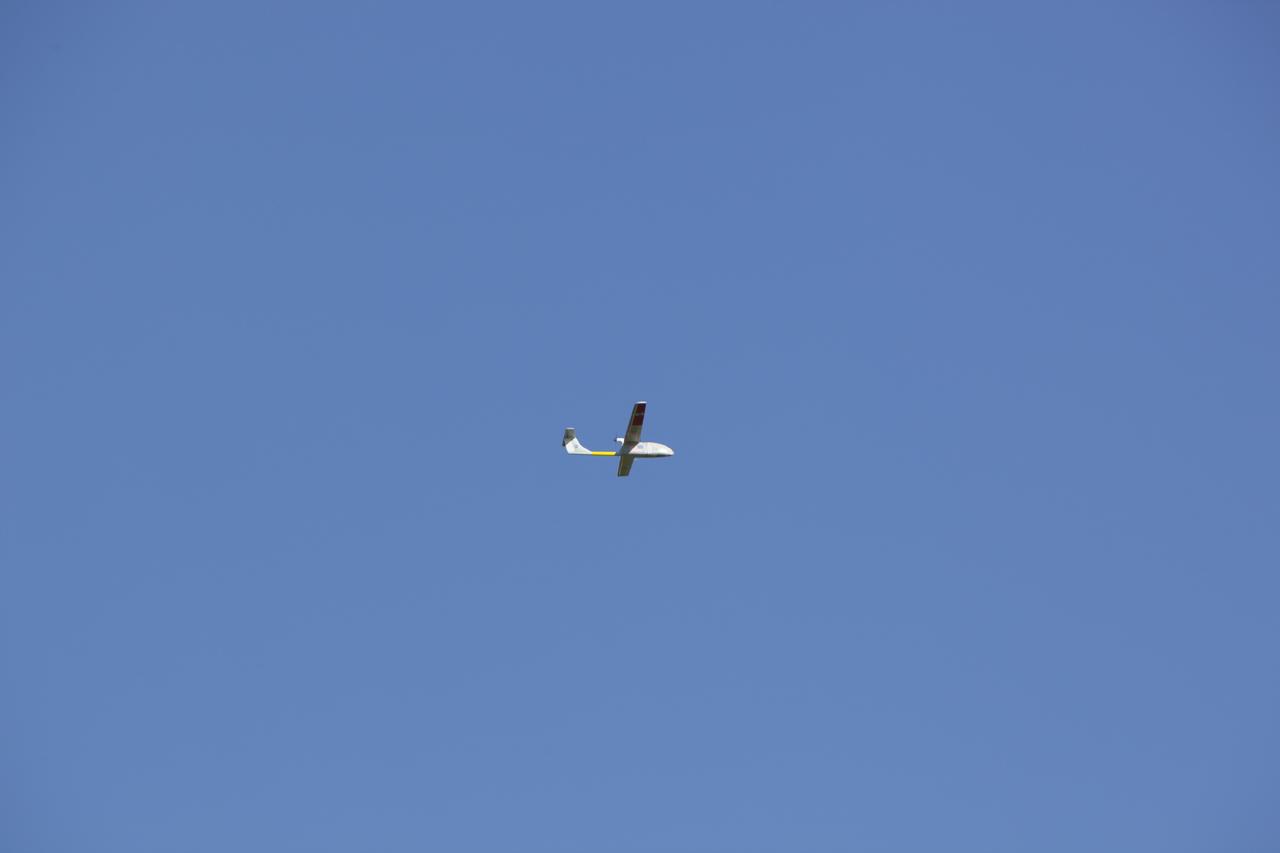
CAPE CANAVERAL, Fla. – A remote-controlled aircraft flies during a competition with a unique set of sensors and software to conduct a mock search-and-rescue operation. The aircraft was assembled by a team of engineers from NASA's Kennedy Space Center. Teams from Johnson Space Center, Kennedy and Marshall Space Flight Center competed in the unmanned aerial systems event to evaluate designs and work by engineers learning new specialties. The competition took place at the Shuttle Landing Facility at Kennedy. Photo credit: NASA/Dmitri Gerondidakis

Earth observation taken by the Expedition 35 crew aboard the ISS. Night view of city lights.
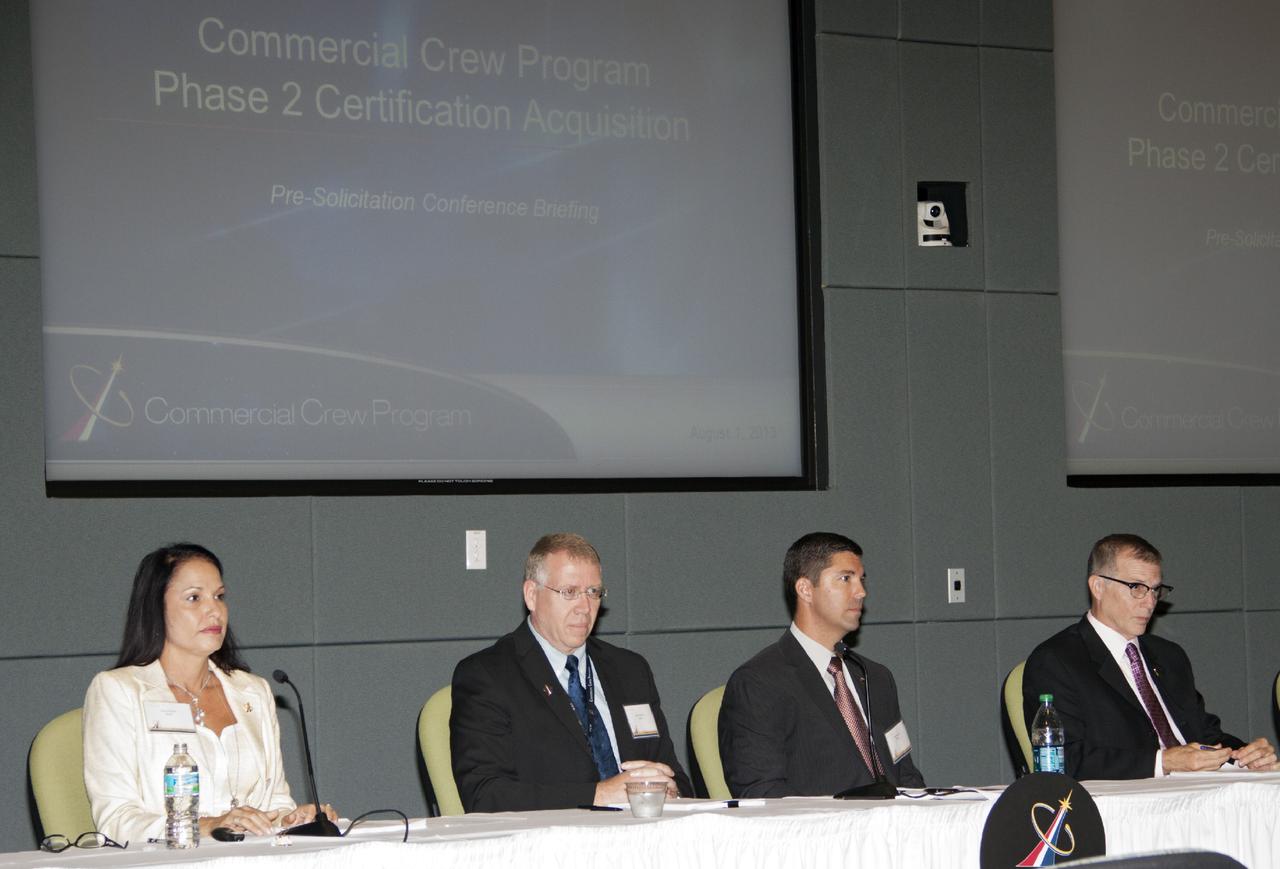
CAPE CANAVERAL, Fla. - Panelists of the Commercial Crew Transportation Capability, or CCtCap, Pre-Proposal Conference at Kennedy Space Center in Florida are, from left, Maria Collura, Brian Hinerth, Trip Healy and Lee Pagel. CCtCap will be the next phase of certification efforts for CCP mission to the International Space Station. The purpose of the conference was to involve aerospace industry representatives in the CCtCap draft Request for Proposal, or RFP, process and provide a greater understanding for both parties before the official RFP is released in the fall of 2013. To learn more about CCP, visit www.nasa.gov/commercialcrew. Photo credit: NASA/Jim Grossmann
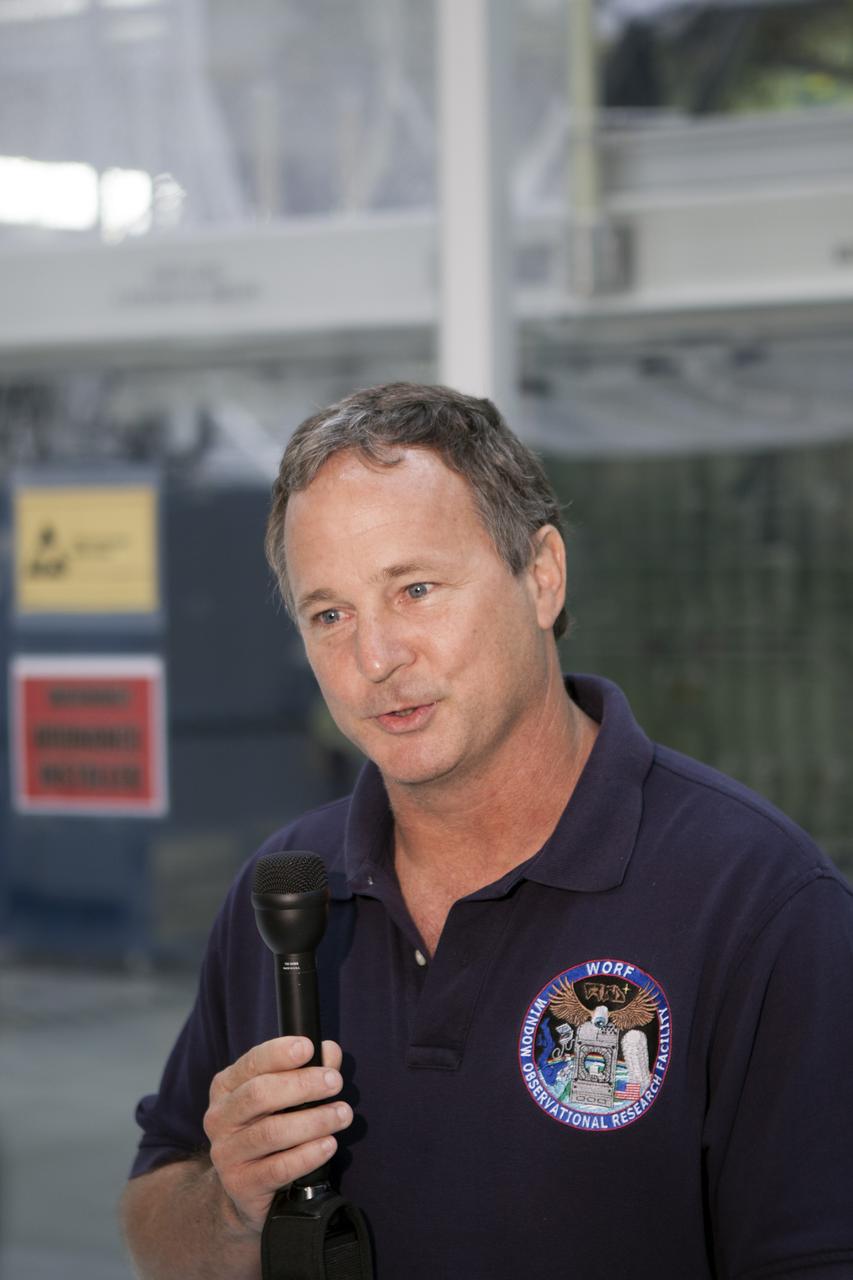
CAPE CANAVERAL, Fla. – Inside the Operations and Checkout Building high bay at NASA’s Kennedy Space Center in Florida, members of the media receive an on activities in NASA’s Ground Systems Development and Operations, or GSDO, Program, Space Launch System and Orion crew module for Exploration Test Flight 1. Speaking to the media is Tom Erdman, from Marshall Space Flight Center’s Kennedy resident office. Orion is the exploration spacecraft designed to carry crews to space beyond low Earth orbit. It will provide emergency abort capability, sustain the crew during the space travel and provide safe re-entry from deep space return velocities. Orion’s first unpiloted test flight is scheduled to launch in 2014 atop a Delta IV rocket. A second uncrewed flight test is scheduled for 2017 on NASA’s Space Launch System rocket. For more information, visit http://www.nasa.gov/orion. Photo credit: NASA/Jim Grossmann
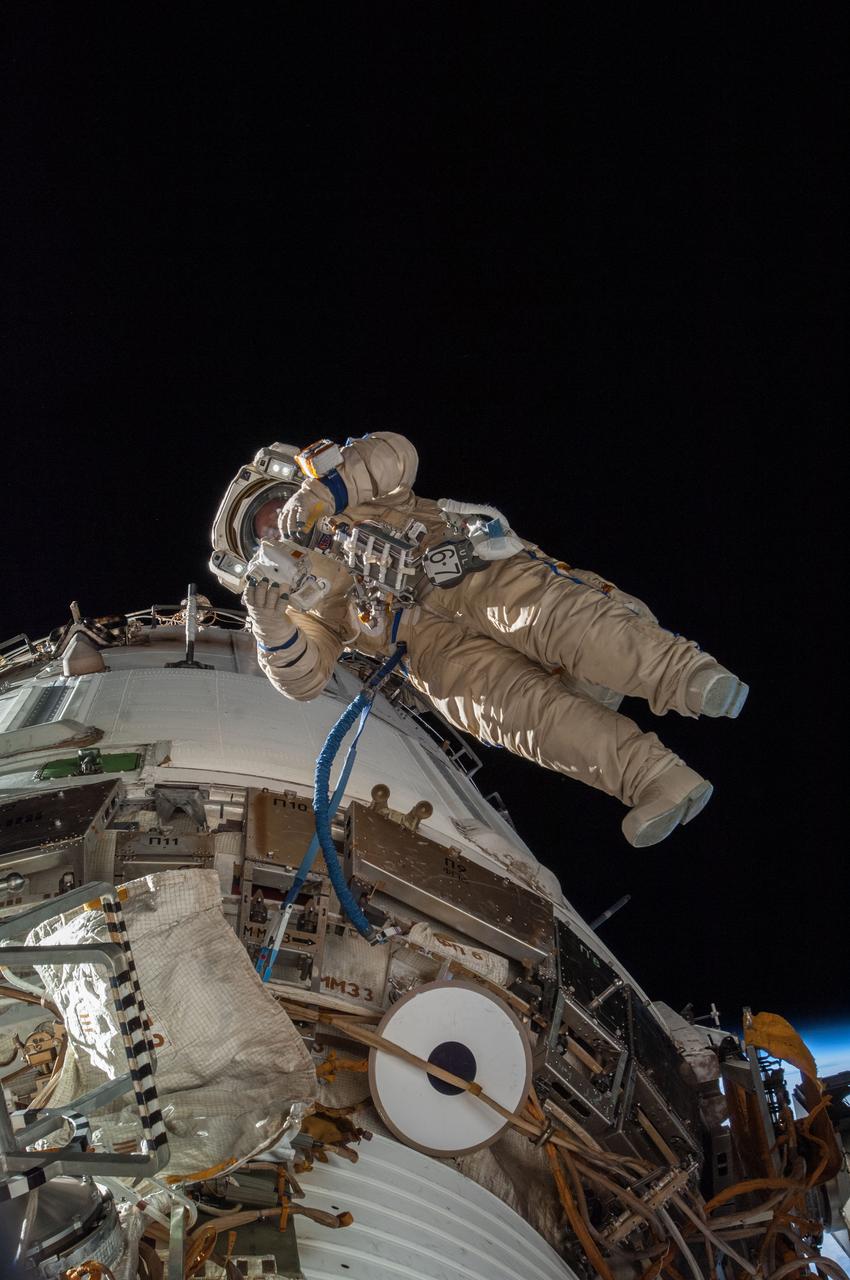
ISS038-E-022922 (27 Dec. 2013) --- Russian cosmonaut Sergey Ryazanskiy, Expedition 38 flight engineer, attired in a Russian Orlan spacesuit, participates in a session of extravehicular activity (EVA) in support of assembly and maintenance on the International Space Station. During the eight-hour, seven-minute spacewalk, Ryazanskiy and Russian cosmonaut Oleg Kotov (out of frame), commander, worked with two high-fidelity cameras, removed the Vsplesk experiment package and jettisoned it and replaced it with hardware for a more sophisticated earthquake-monitoring experiment, Seismoprognoz, which they attached to a Zvezda handrail.
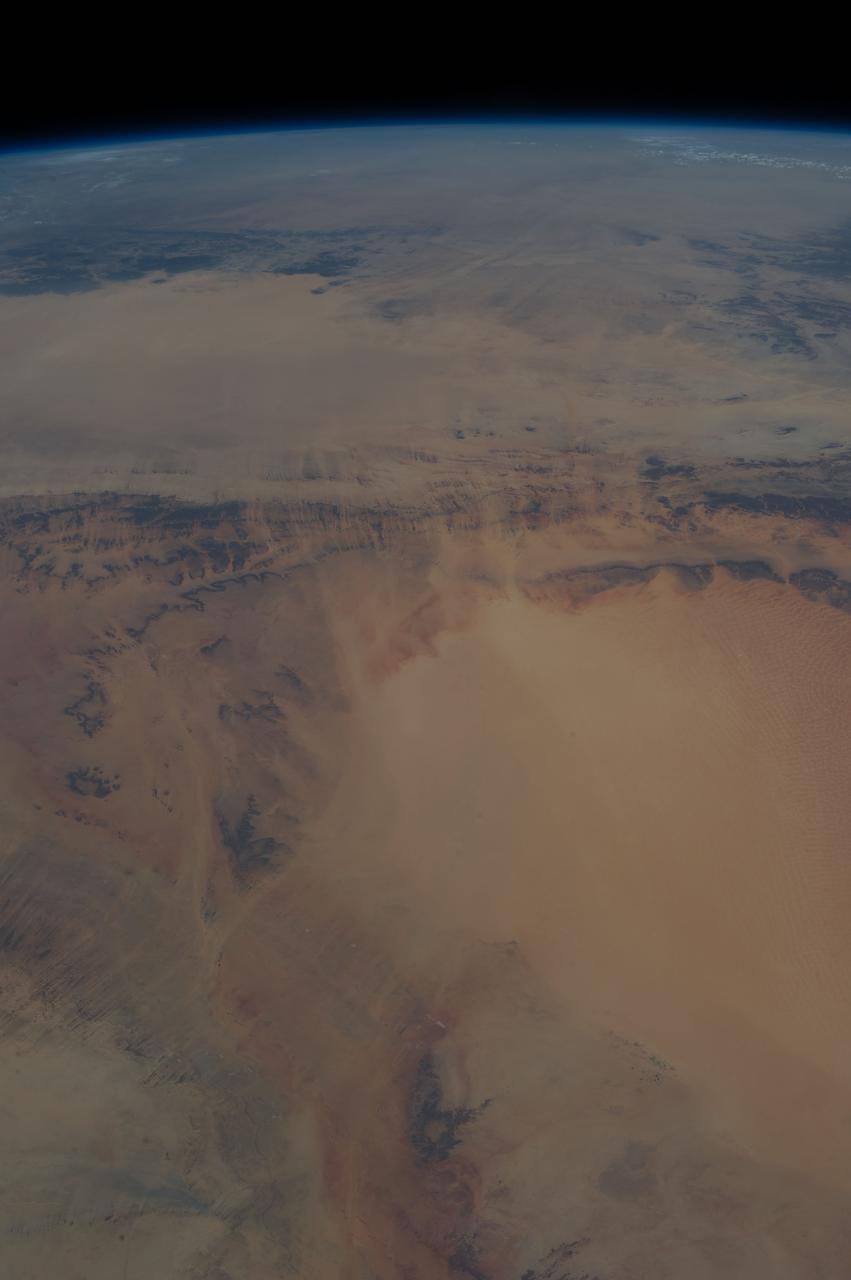
Earth observation taken during day pass by an Expedition 36 crew member on board the International Space Station (ISS). Per Twitter message: Looking southwest over northern Africa. Libya, Algeria, Niger.
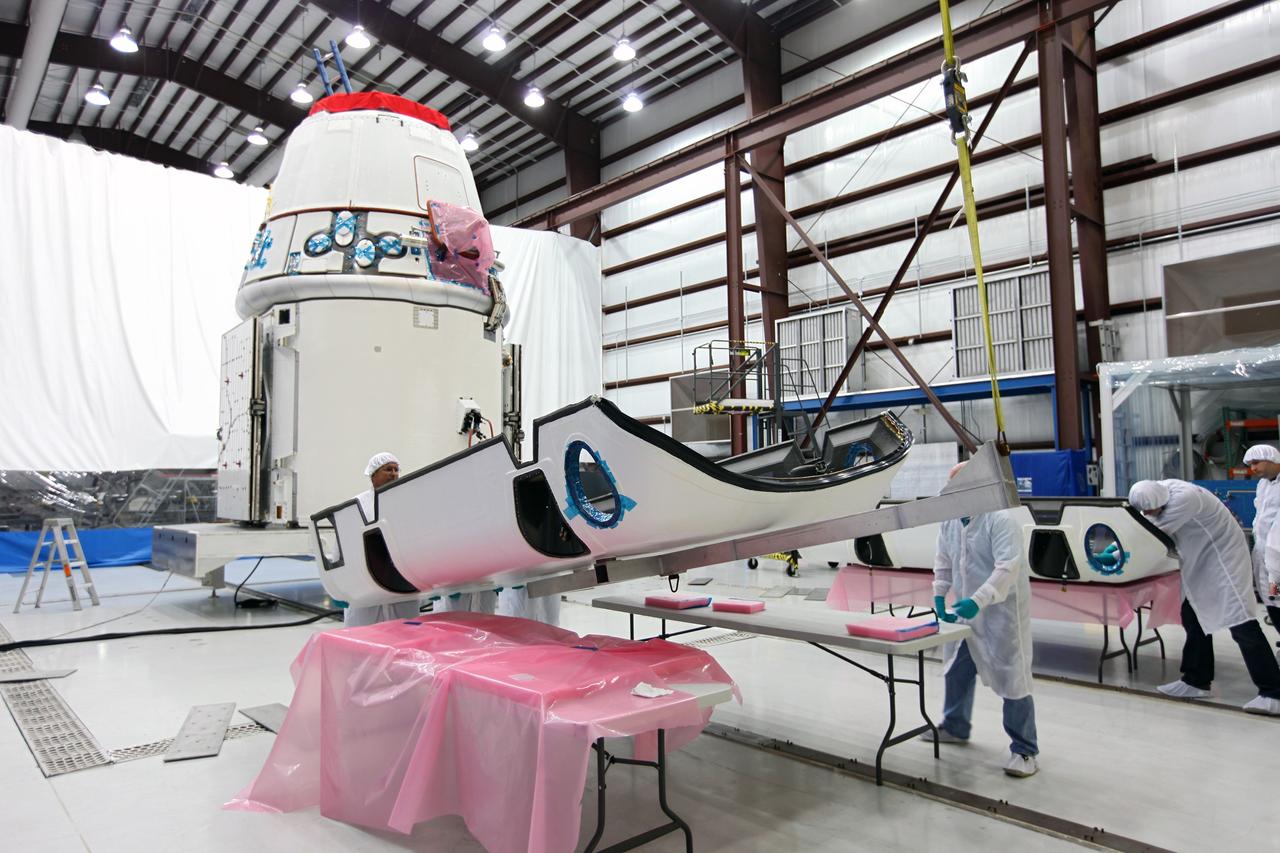
CAPE CANAVERAL, Fla. – Workers lift a solar array fairing at the processing hangar used by Space Exploration Technologies, or SpaceX, at Cape Canaveral Air Force Station, Fla. The fairing will be installed on the Dragon spacecraft undergoing launch preparations inside the hangar. The spacecraft will launch on the upcoming SpaceX CRS-2 mission. The flight will be the second commercial resupply mission to the International Space Station by SpaceX. NASA has contracted for a total of 12 commercial resupply flights from SpaceX and eight from the Orbital Sciences Corp. Photo credit: NASA/Kim Shiflett
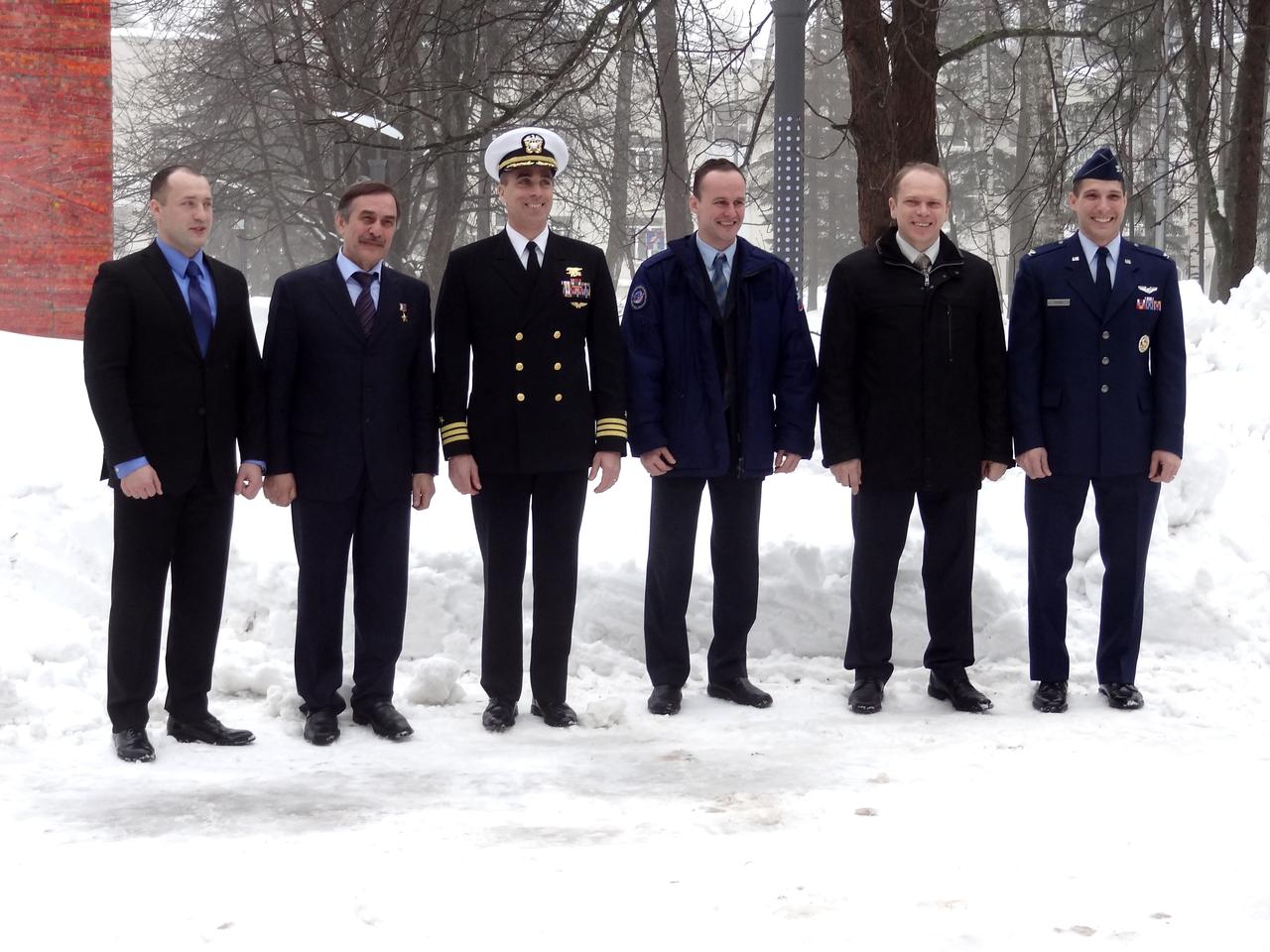
(16 March 2013) --- At the Gagarin Cosmonaut Training Center in Star City, Russia, the Expedition 35 prime and backup crew members pose for pictures March 16, 2013 before departing for their launch site at the Baikonur Cosmodrome in Kazakhstan for final training. From left to right are Flight Engineer Alexander Misurkin, Soyuz Commander Pavel Vinogradov, Flight Engineer Chris Cassidy of NASA, and backup crew members – cosmonauts Sergey Ryazanskiy and Oleg Kotov, and Michael Hopkins of NASA. Misurkin, Vinogradov and Cassidy are scheduled to launch from the Baikonur Cosmodrome on March 29, Kazakh time, on their Soyuz TMA-08M spacecraft to the International Space Station. Photo credit: NASA
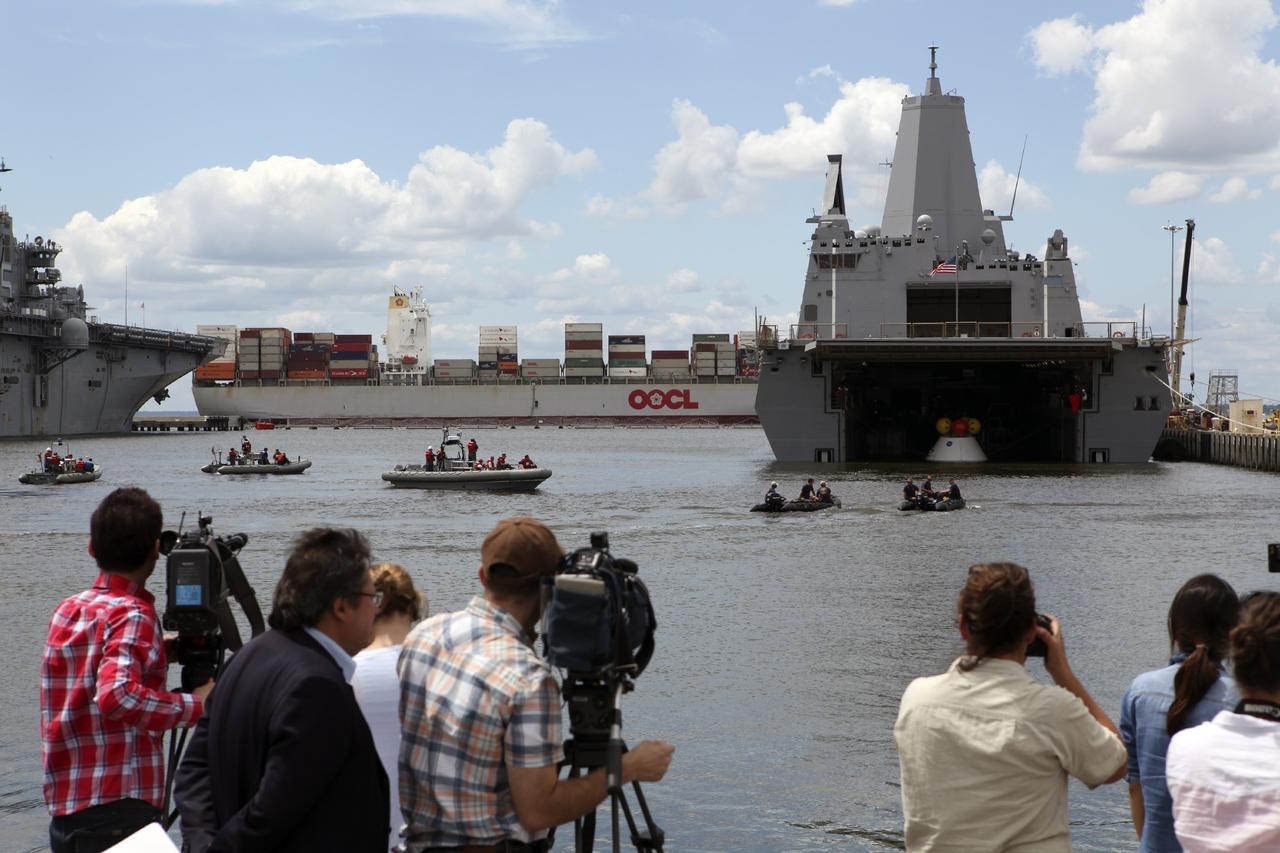
HAMPTON, Va. – At the Naval Station Norfolk near NASA’s Langley Research Center in Virginia, members of the news media observe the stationary recovery test being conducted on the Orion boilerplate test article in the water near a U.S. Navy ship. NASA and the U.S. Navy are conducting tests to prepare for recovery of the Orion crew module and forward bay cover on its return from a deep space mission. The stationary recovery test will allow the teams to demonstrate and evaluate the recovery processes, procedures, hardware and personnel in a controlled environment before conducting a second recovery test next year in open waters. Orion is the exploration spacecraft designed to carry astronauts to destinations not yet explored by humans, including an asteroid and Mars. It will have emergency abort capability, sustain the crew during space travel and provide safe re-entry from deep space return velocities. The first unpiloted test flight of the Orion is scheduled to launch in 2014 atop a Delta IV rocket and in 2017 on NASA’s Space Launch System rocket. For more information, visit http://www.nasa.gov/orion. Photo credit: NASA/Dimitri Gerondidakis

Earth observation taken by the Expedition 35 crew aboard the ISS. View of city lights at night.
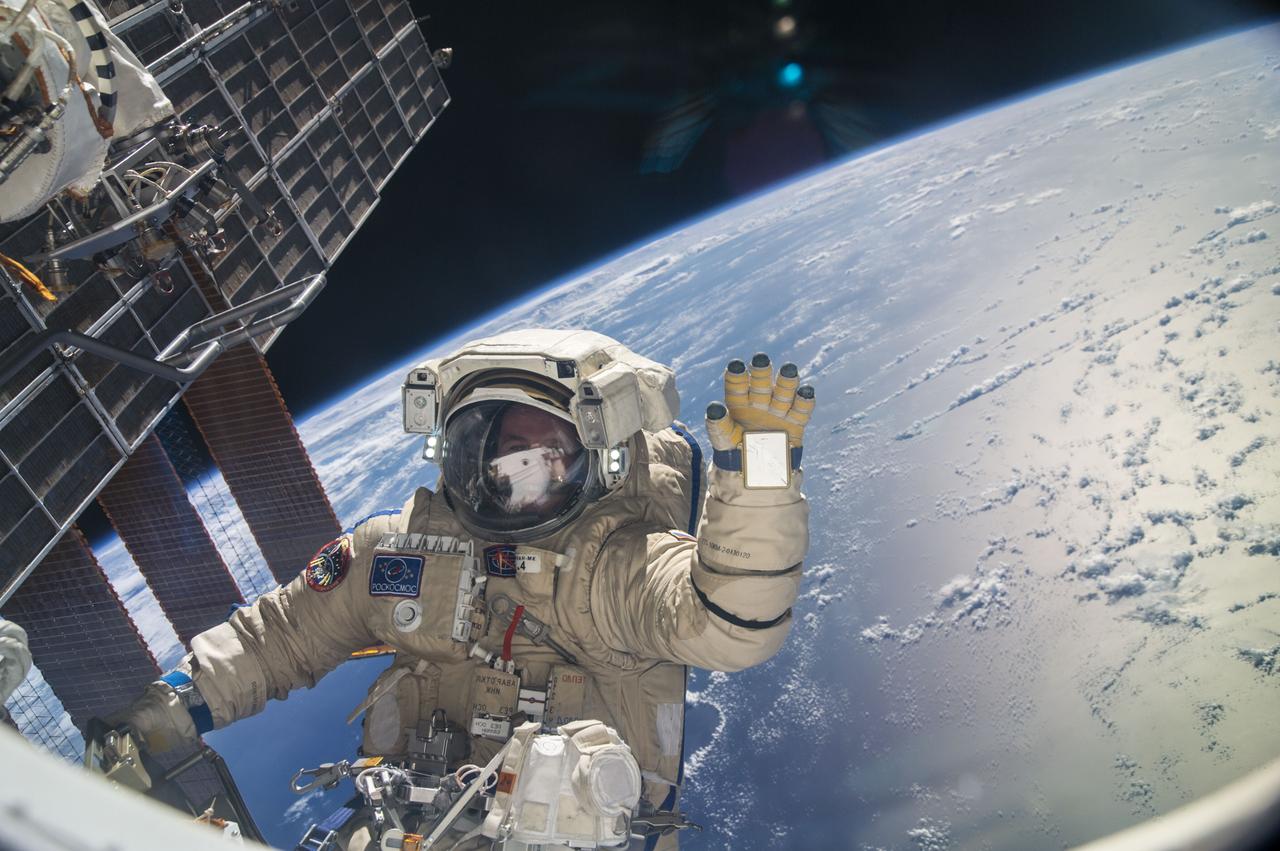
ISS037-E-028789 (9 Nov. 2013) --- Russian cosmonaut Sergey Ryazanskiy, Expedition 37 flight engineer, attired in a Russian Orlan spacesuit, is pictured during a session of extravehicular activity (EVA) in support of assembly and maintenance on the International Space Station. During the five-hour, 50-minute spacewalk, Ryazanskiy and Russian cosmonaut Oleg Kotov (out of frame) continued the setup of a combination EVA workstation and biaxial pointing platform that was installed during an Expedition 36 spacewalk on Aug. 22. Earth’s horizon and the blackness of space provide the backdrop for the scene.

CAPE CANAVERAL, Fla. – Workers begin de-stacking a mock Orion capsule and service module in the Vehicle Assembly Building at NASA's Kennedy Space Center in Florida. The stack has been used to evaluate potential techniques to be used in assembling the Orion and service module for operational flights in the future. Photo credit: NASA/Jim Grossmann
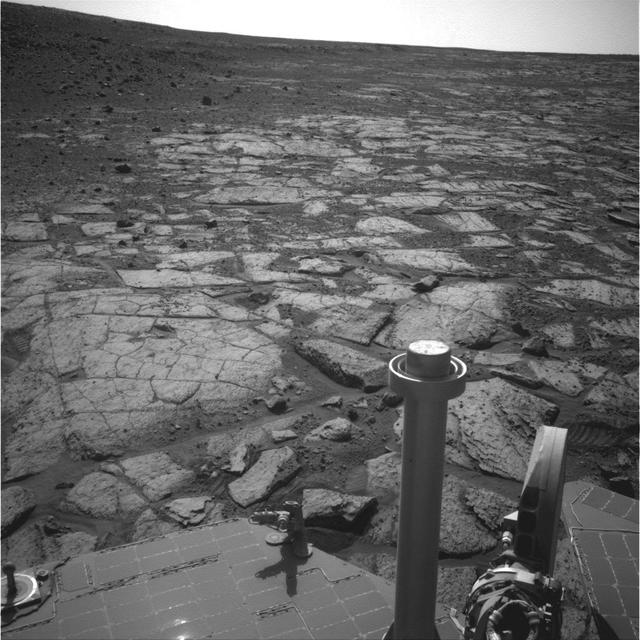
NASA Mars Exploration Rover Opportunity used its navigation camera Navcam to record this image of the northern end of Solander Point, a raised section of the western rim of Endeavour Crater.
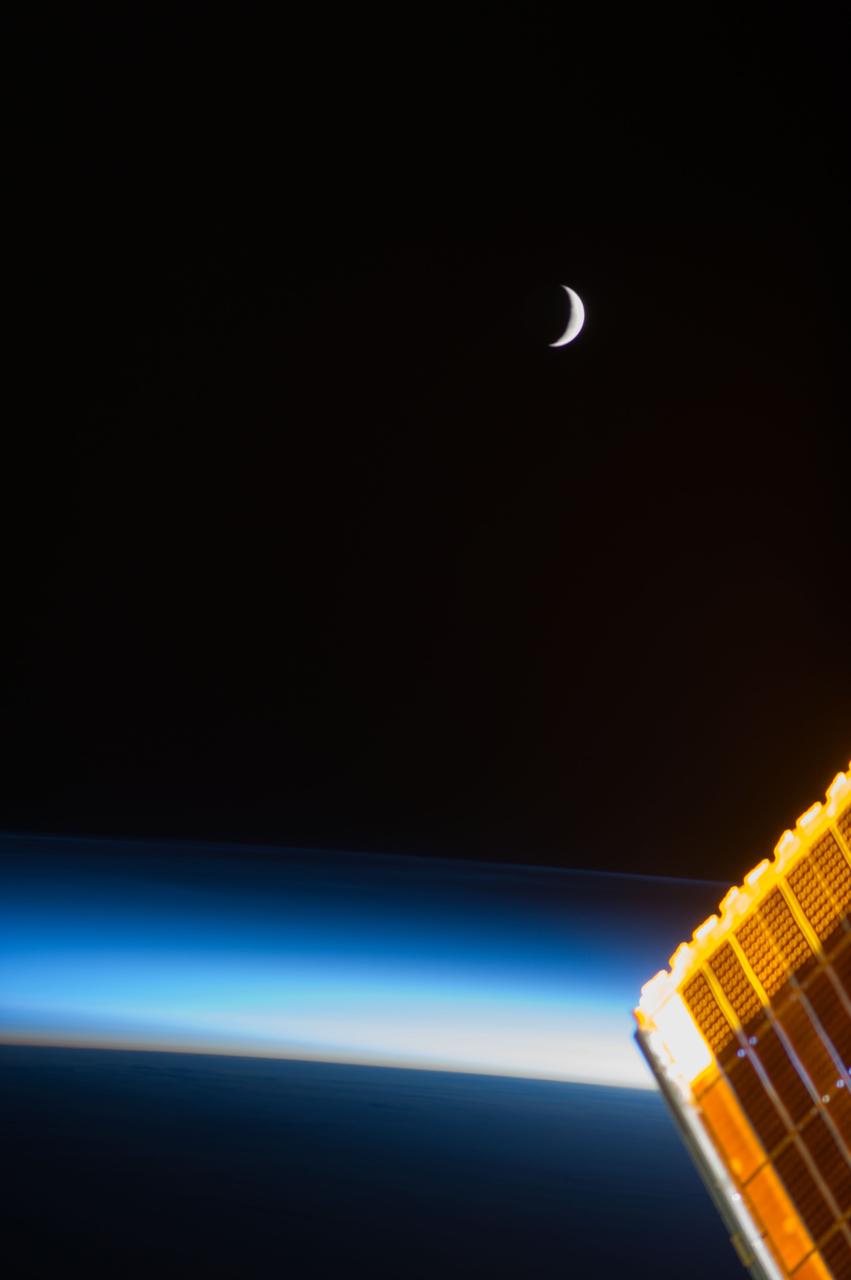
View of moon taken by Expedition 34 crewmember.
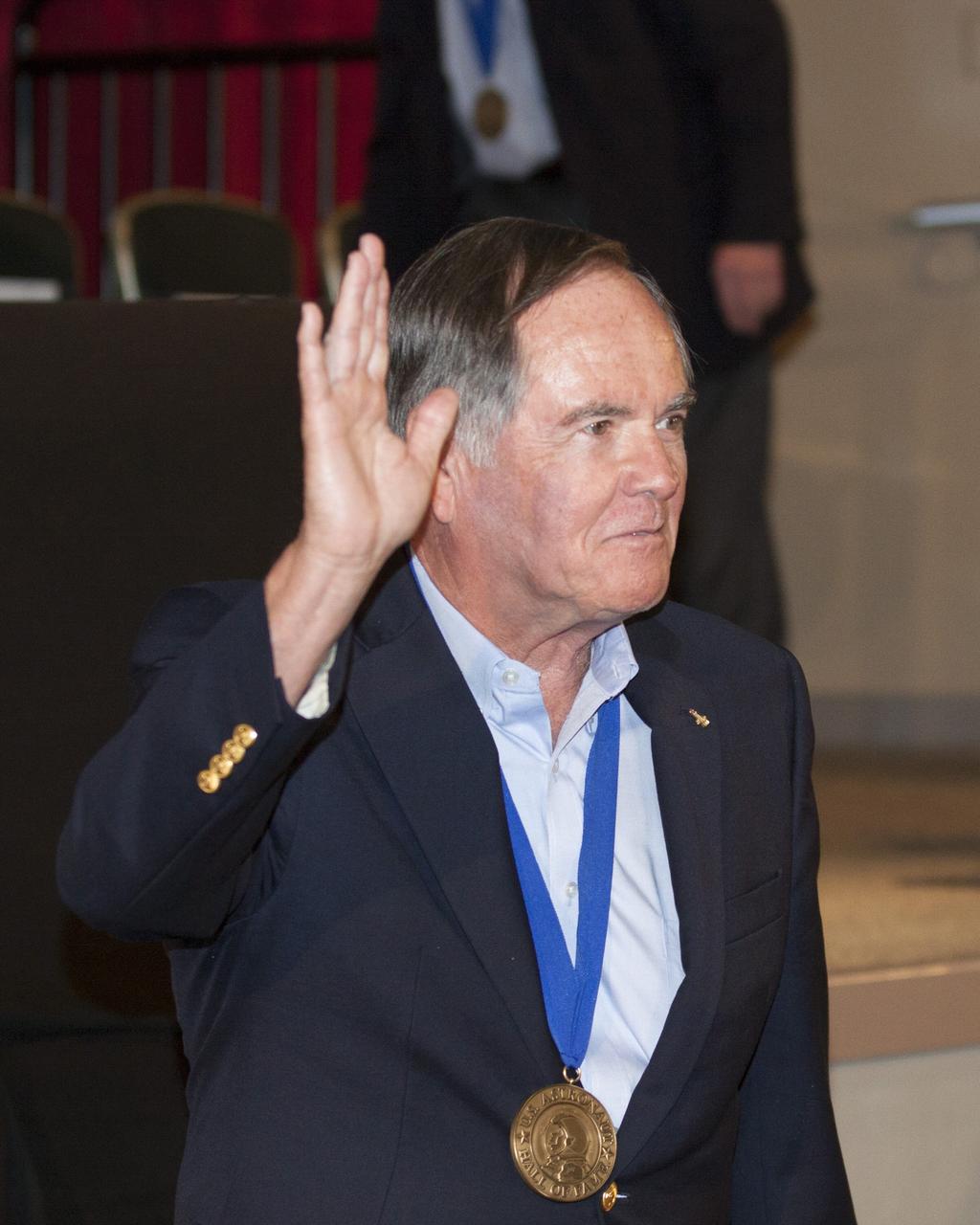
CAPE CANAVERAL, Fla. – U.S. Astronaut Hall of Fame member Bob Crippen is introduced at NASA’s Kennedy Space Center Visitor Complex in Florida, prior to the ceremony in which Bonnie Dunbar, Curt Brown and Eileen Collins will be inducted into the group of space pioneers. This induction is the twelfth group of space shuttle astronauts named to the AHOF, and the first time two women are inducted at the same time. The year’s inductees were selected by a committee of current Hall of Fame astronauts, former NASA officials, historians and journalists. The selection process is administered by the Astronaut Scholarship Foundation. For more on the U.S. Astronaut Hall of Fame, go to http://www.kennedyspacecenter.com/astronaut-hall-of-fame.aspx For more on the Astronaut Scholarship Foundation, go to http://astronautscholarship.org/ Photo credit: NASA/ Kim Shiflett
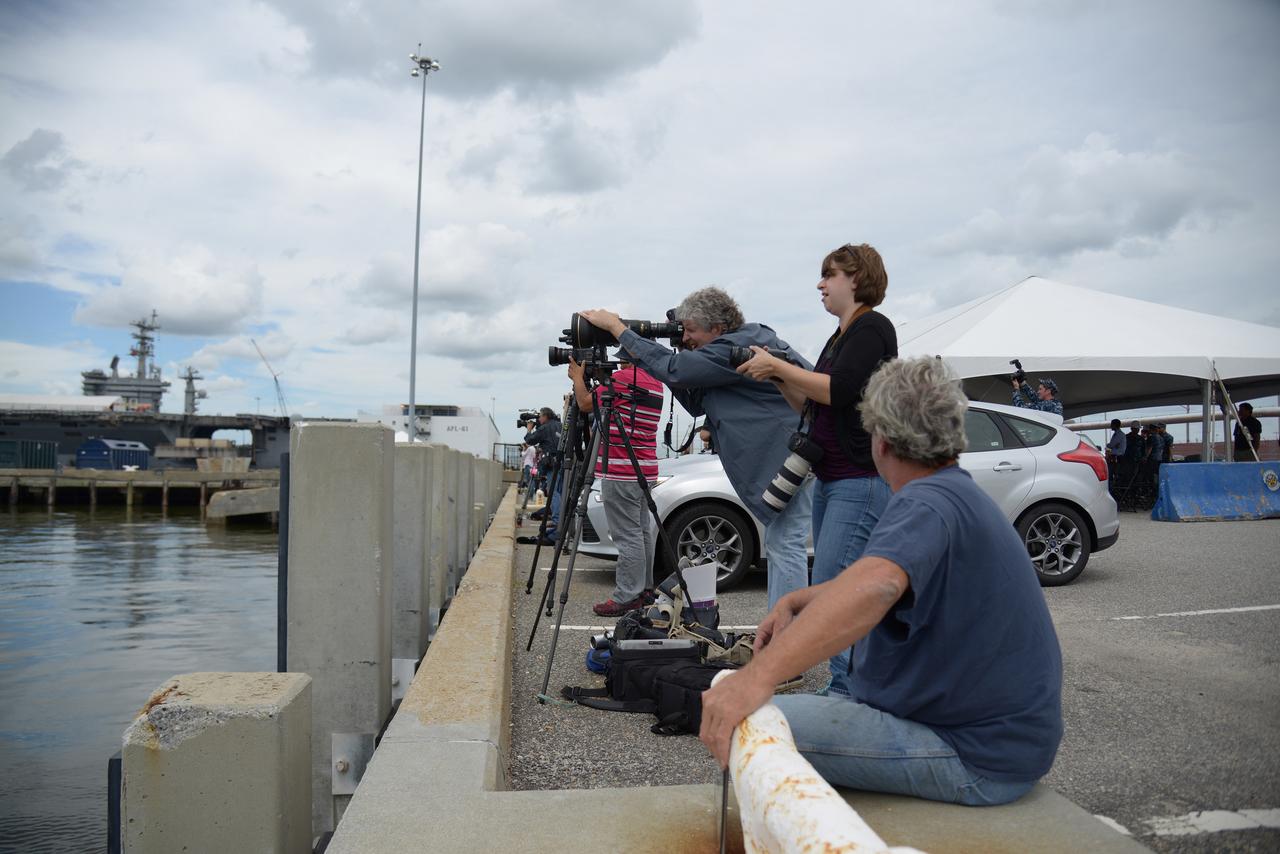
Media and NASA Social participants view Orion recovery operations and tour the USS Arlington at the Norfolk Naval base in Virginia on Aug. 15, 2013. Part of Batch image transfer from Flickr.
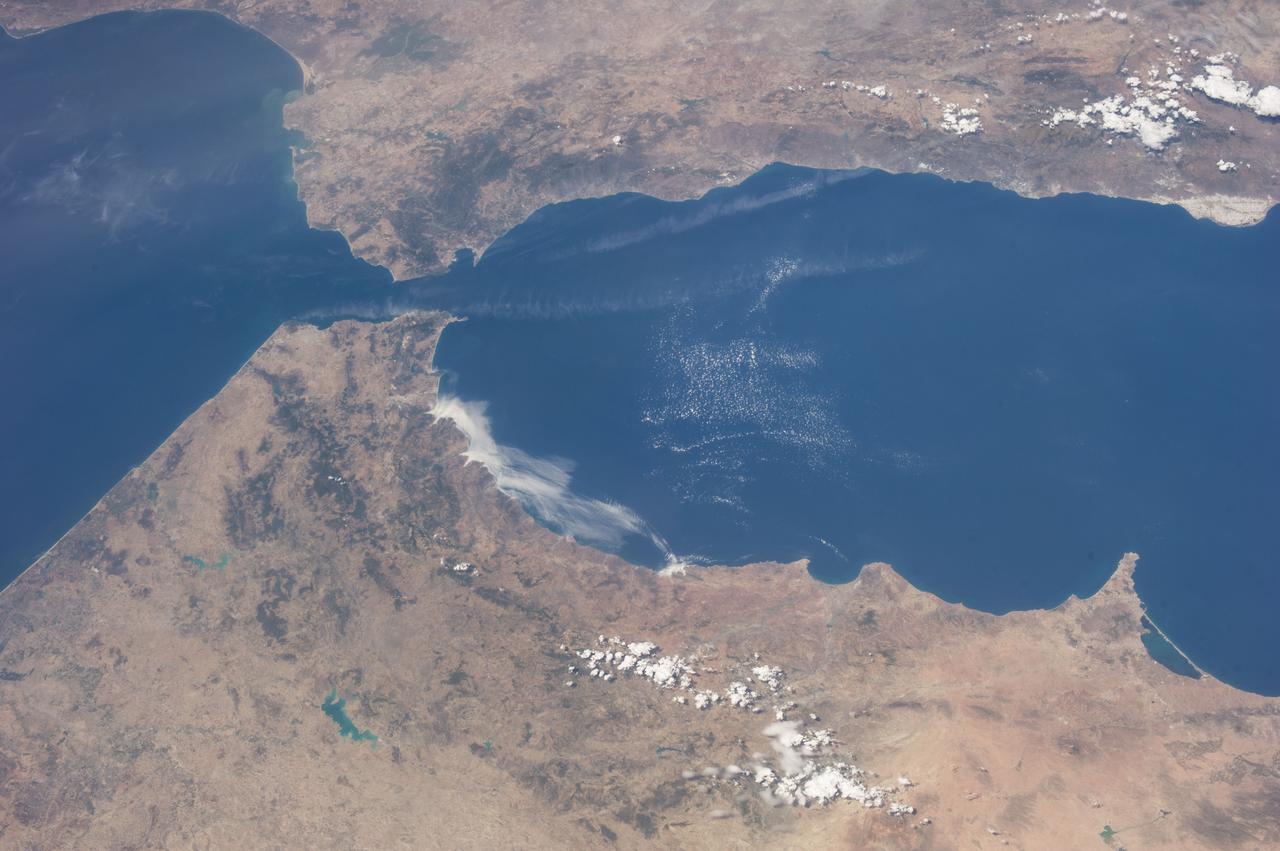
ISS036-E-036611 (23 Aug. 2013) --- One of the Expedition 36 crew members aboard the International Space Station on Aug. 23 exposed this image of the Strait of Gibraltar, where Europe and Africa meet and where the Atlantic Ocean waters flow through the strait into the Mediterranean Sea. A popular photographic target of astronauts has always been the Strait of Gibraltar, easily spotted at left center in this wide photograph, shot from the International Space Station. Spain is to the north (top) and Morocco to the south. The strait is 36 miles (58 kilometers) long and slims down to 8 miles (13 kilometers) at it?s most narrow point. The British colony of Gibraltar is north of the strait.
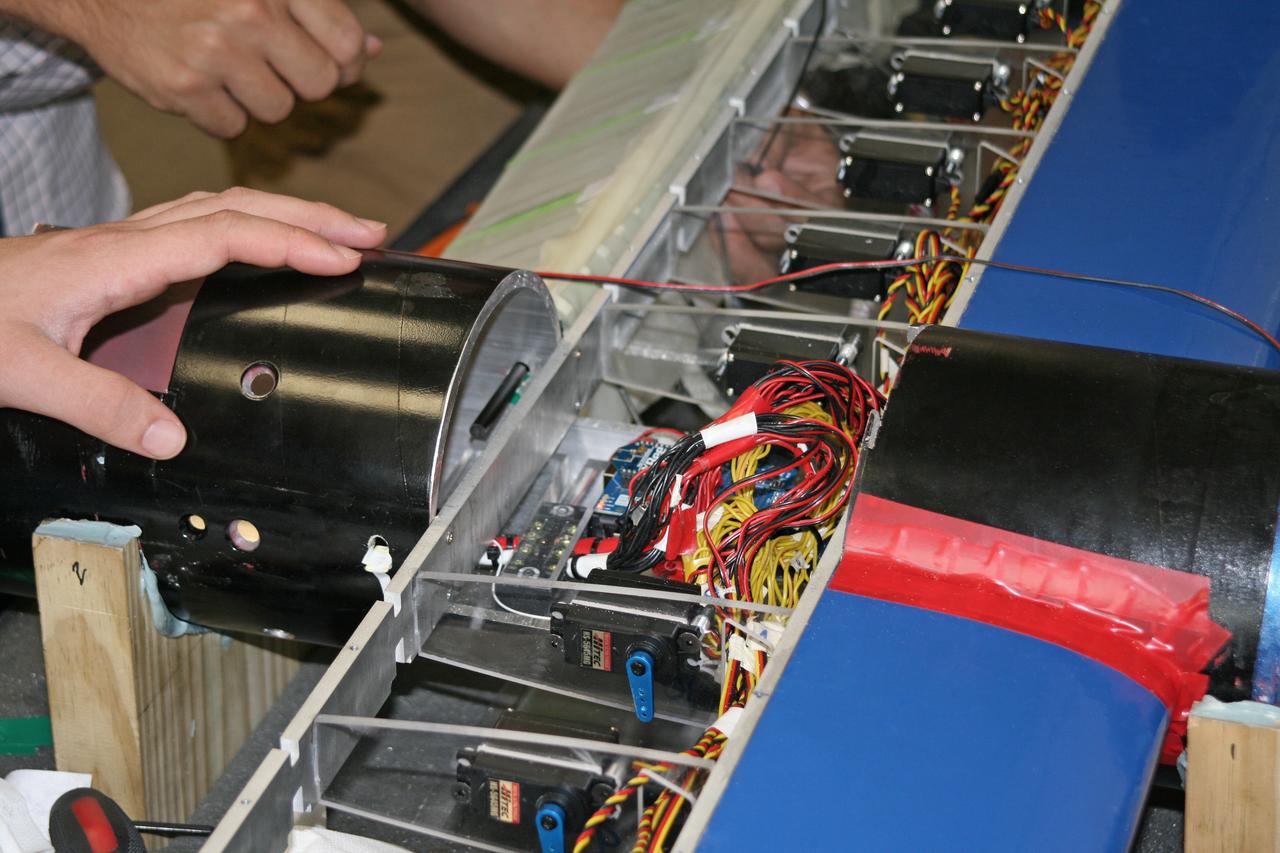
Aeronautic Academy Continuous Trailing Edge Flap

Earth Observations taken by Expedition 34 crewmember.
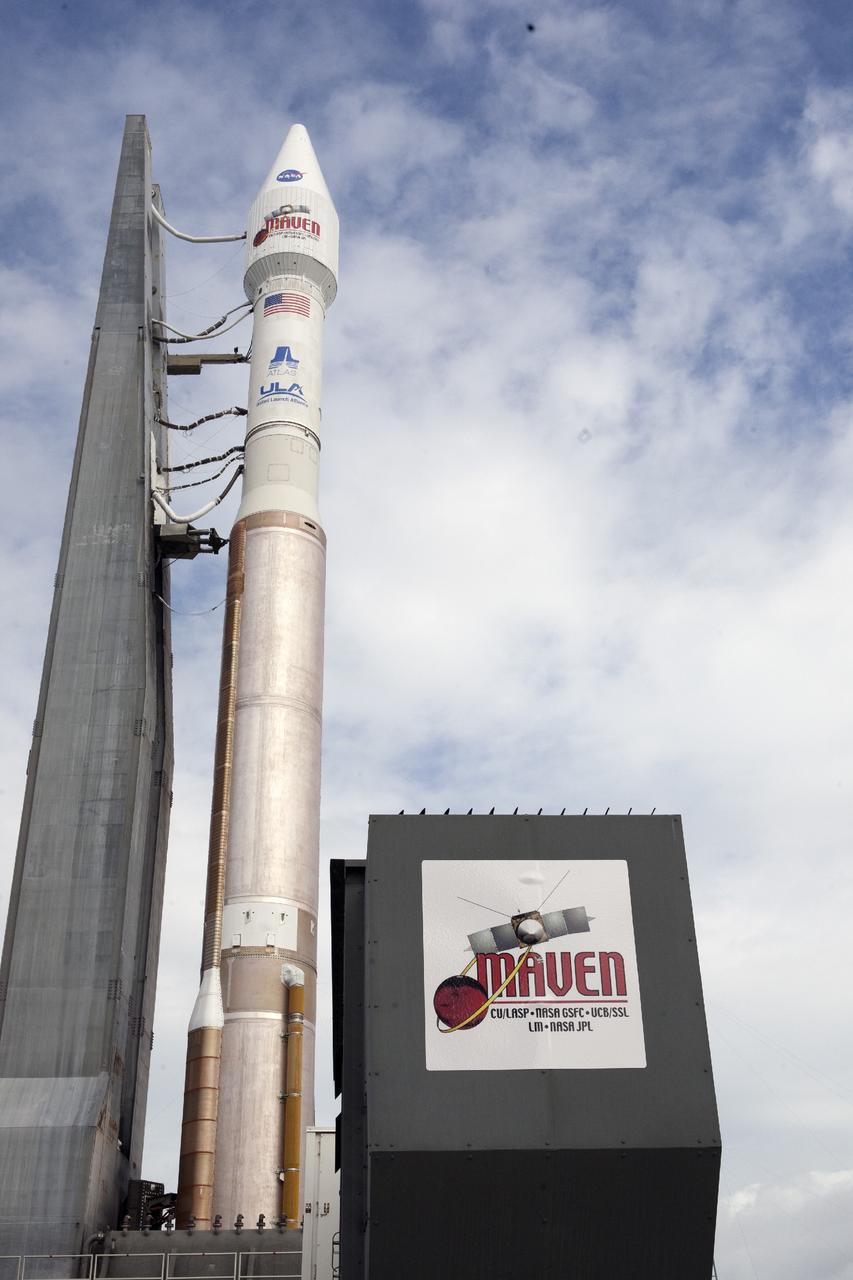
CAPE CANAVERAL, Fla. -- The United Launch Alliance Atlas V rocket carrying NASA’s Mars Atmosphere and Volatile EvolutioN, or MAVEN, spacecraft is transported along the roadway from the Vertical Integration Facility to the pad at Space Launch Complex 41 on Cape Canaveral Air Force Station in Florida. Rollout began on schedule with first motion at 9:57 a.m. Launch is scheduled for Nov. 18 during a window that extends from 1:28 to 3:28 p.m. Once positioned in orbit above the Red Planet, MAVEN will study its upper atmosphere in unprecedented detail. For more information, visit: http://www.nasa.gov/mission_pages/maven/main/index.html. Photo credit: NASA/Kim Shiflett
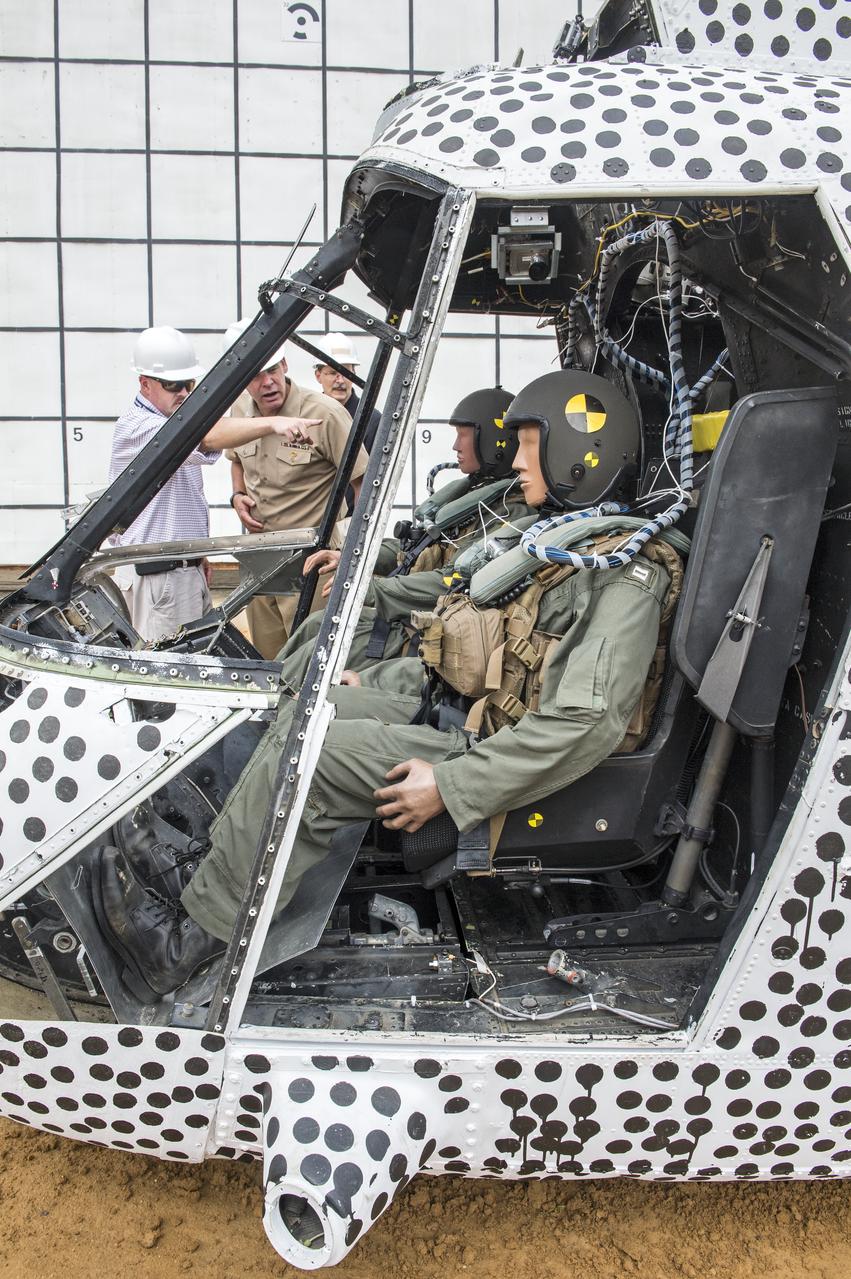
(TRACT) Transport Rotorcraft Aircraft Testbed: Helicopter airframe drop test at NASA Langley's Landing and Impact Research Facility (LandIR)
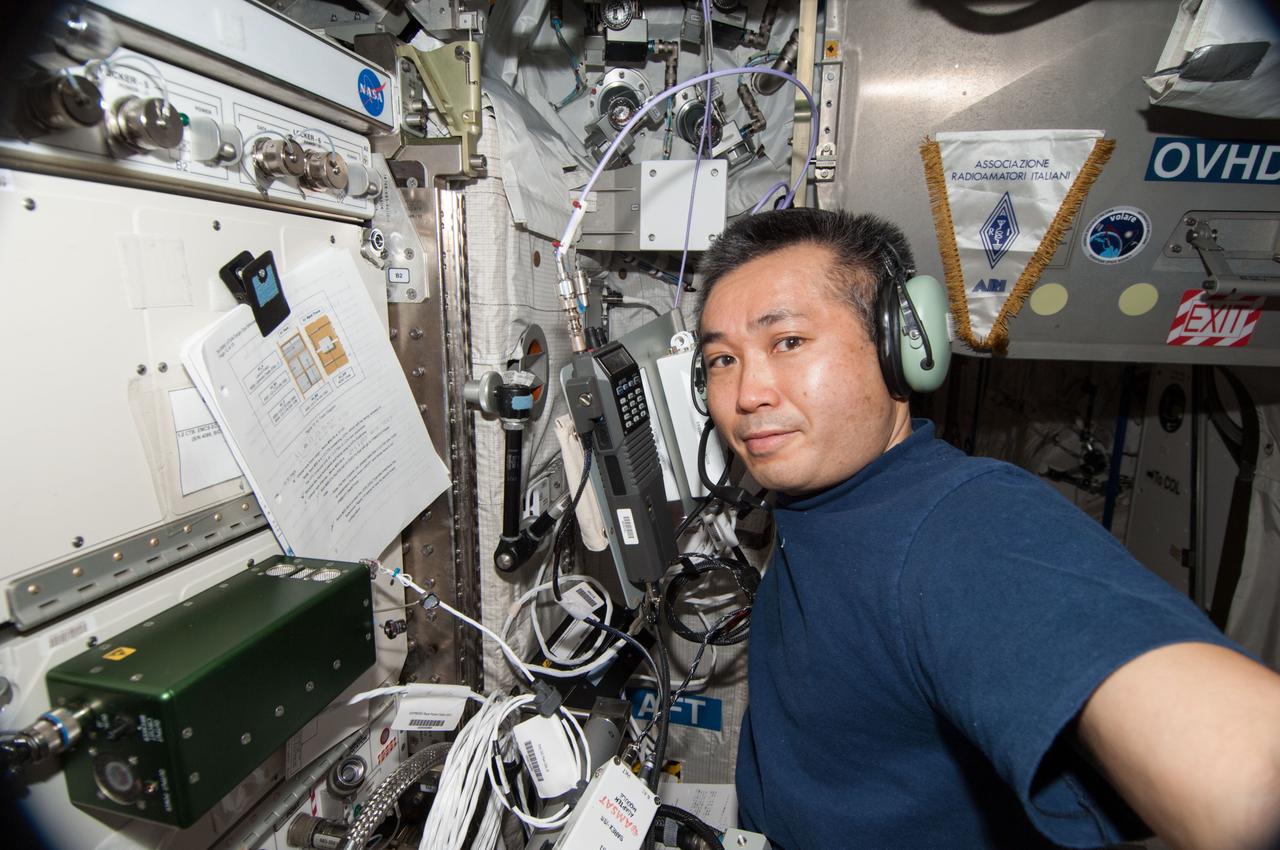
Image was released by astronaut on Twitter.
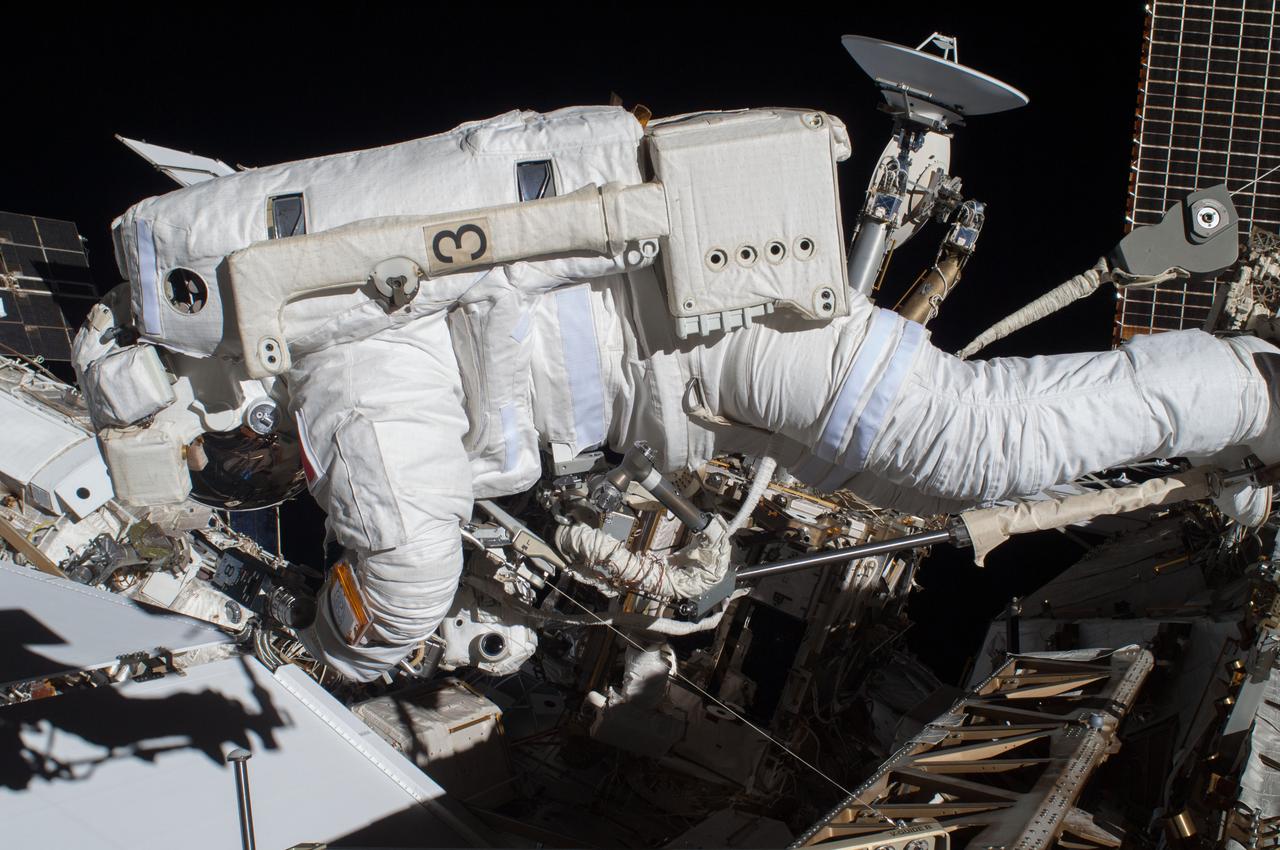
ISS036-E-016610 (9 July 2013) --- European Space Agency astronaut Luca Parmitano, Expedition 36 flight engineer, participates in a session of extravehicular activity (EVA) as work continues on the International Space Station. During the six-hour, seven-minute spacewalk, Parmitano and NASA astronaut Chris Cassidy (out of frame), flight engineer, prepared the space station for a new Russian module and performed additional installations on the station’s backbone.

Earth Observations taken by Expedition 34 crewmember.
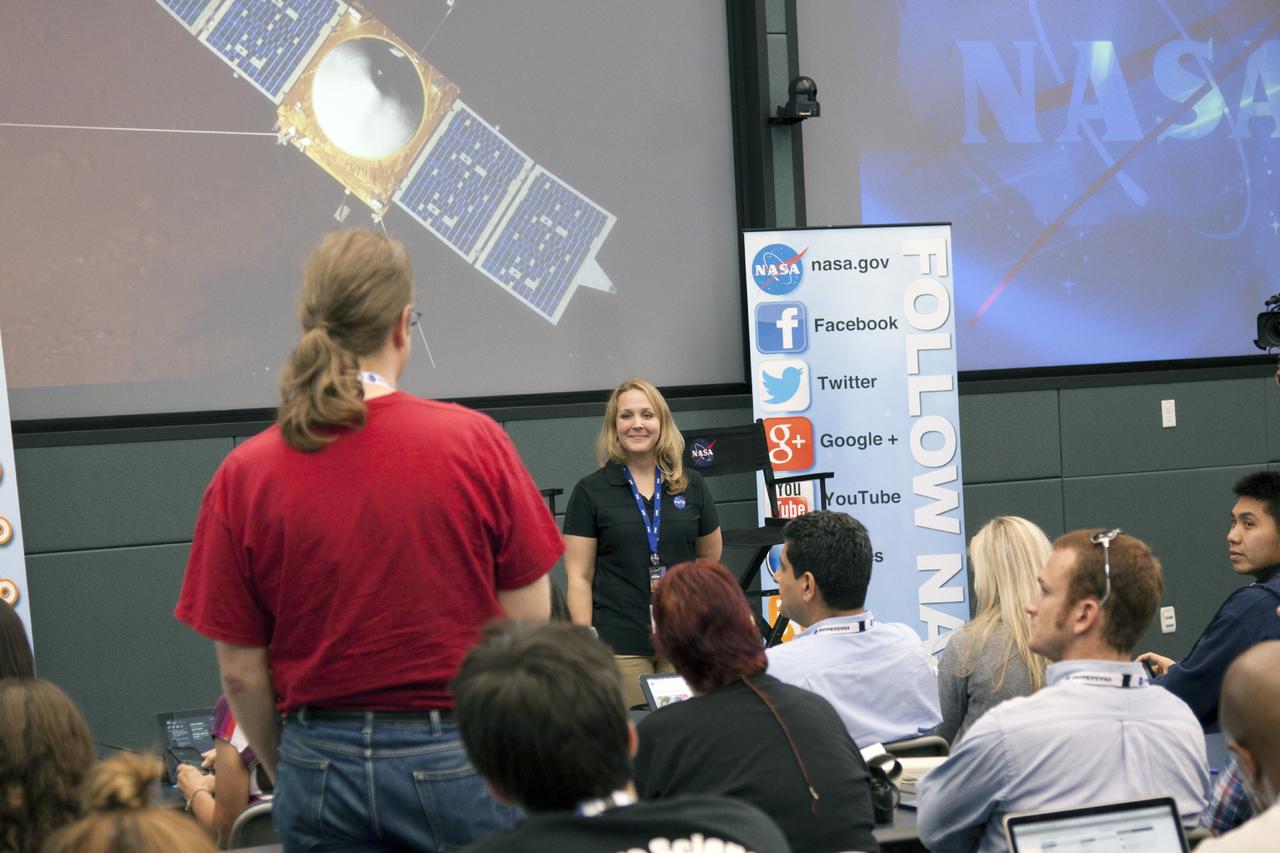
CAPE CANAVERAL, Fla. -- In the conference room of Operations Support Building II at NASA's Kennedy Space Center in Florida, social media participants listen to a briefing on agency programs by Lindsay Hays, an astrobiologist at NASA Headquarters. The social media participants gathered at the Florida spaceport for the launch of the Mars Atmosphere and Volatile Evolution, or MAVEN, spacecraft. Their visit included tours of key facilities and participating in presentations by key NASA leaders who updated the space agency's current efforts. Photo credit: NASA/Jim Grossman

ISS038-E-014012 (9 Dec. 2013) --- In the International Space Station's Kibo laboratory, NASA astronauts Rick Mastracchio (left) and Michael Hopkins, both Expedition 38 flight engineers, conduct a session with a pair of bowling-ball-sized free-flying satellites known as Synchronized Position Hold, Engage, Reorient, Experimental Satellites, or SPHERES.
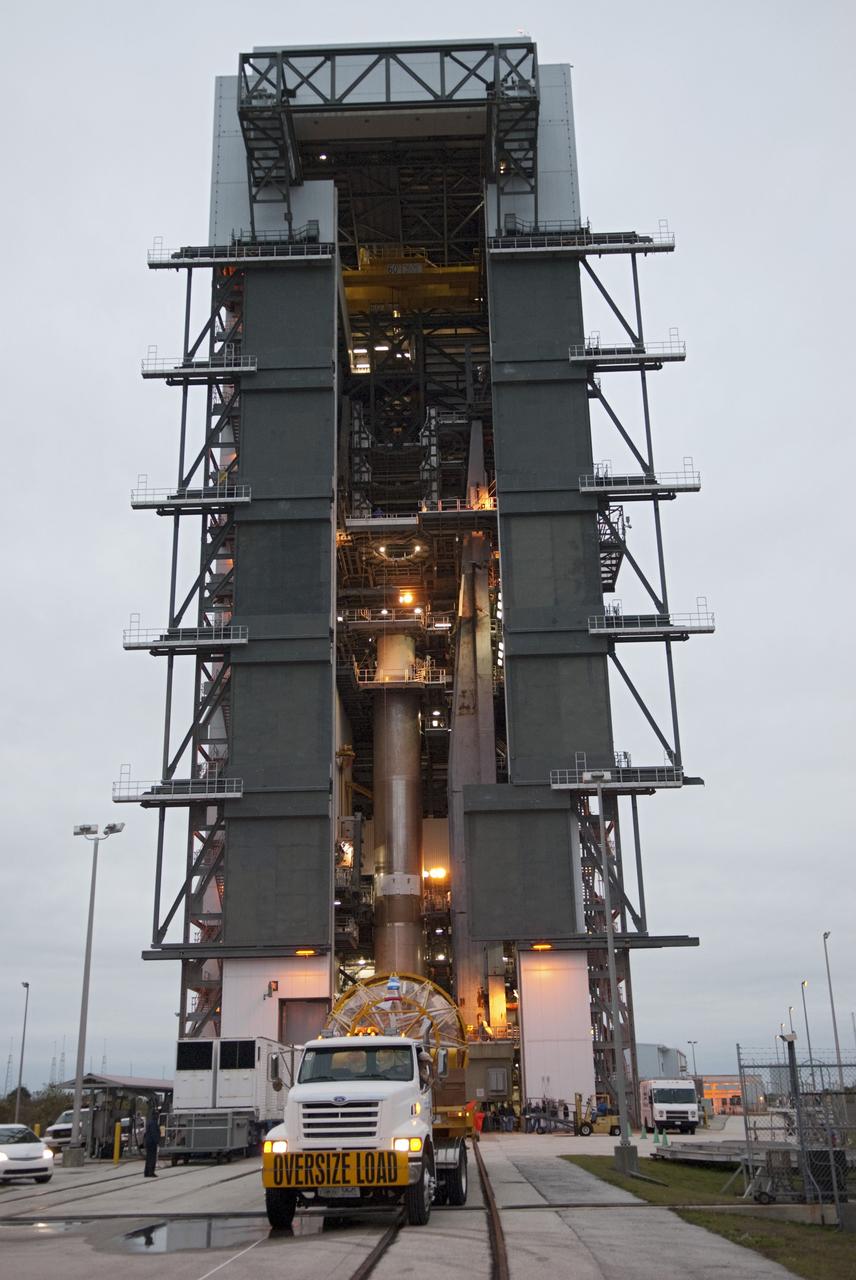
CAPE CANAVERAL, Fla. -- The Centaur stage which will help boost the Tracking and Data Relay Satellite, TDRS-K, into orbit arrives by transport truck at Cape Canaveral Air Force Station's Space Launch Complex 41 in Florida for mating to an Atlas V rocket. Launch of the TDRS-K on the Atlas V rocket is planned for January 29, 2013. The TDRS-K spacecraft is part of the next-generation series in the Tracking and Data Relay Satellite System, a constellation of space-based communication satellites providing tracking, telemetry, command and high-bandwidth data return services. For more information, visit http://www.nasa.gov/mission_pages/tdrs/index.html Photo credit: NASA/Charisse Nahser

NASA Lunar Atmosphere and Dust Environment Explorer (LADEE) Program Scientist Sarah Noble talks during a NASA Social about the LADEE mission at NASA Wallops Flight Facility, Thursday, Sept. 5, 2013 on Wallops Island, VA. Fifty of NASA's social media followers are attending a two-day event in support of the LADEE launch. Data from LADEE will provide unprecedented information about the environment around the moon and give scientists a better understanding of other planetary bodies in our solar system and beyond. LADEE is scheduled to launch at 11:27 p.m. Friday, Sept. 6, from NASA's Wallops Flight Facility. Photo Credit: (NASA/Carla Cioffi)
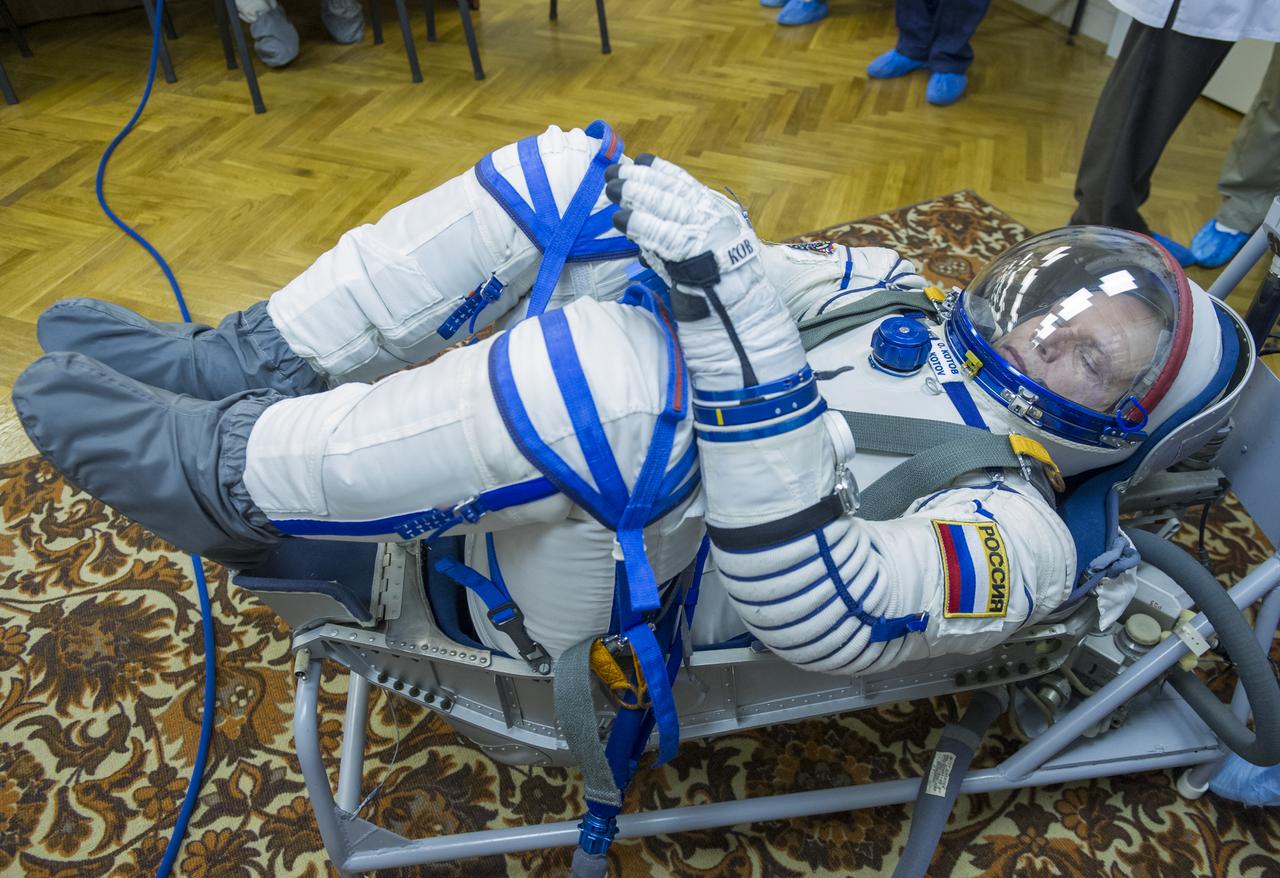
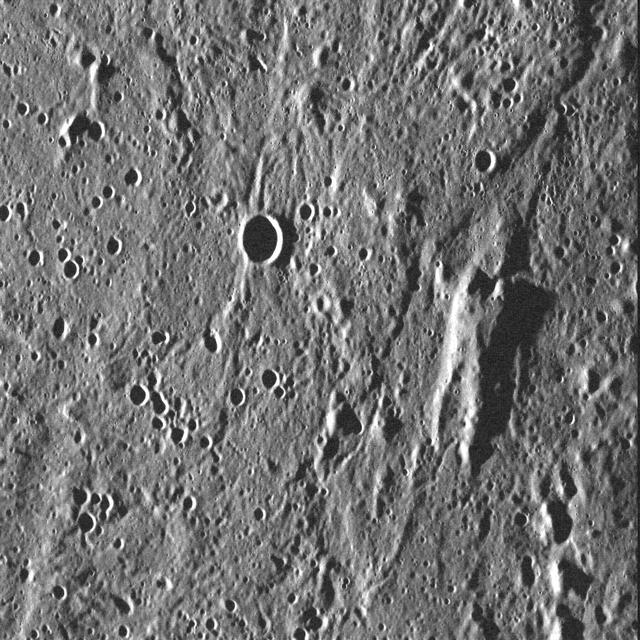
He Will Not Be Permanently Damaged
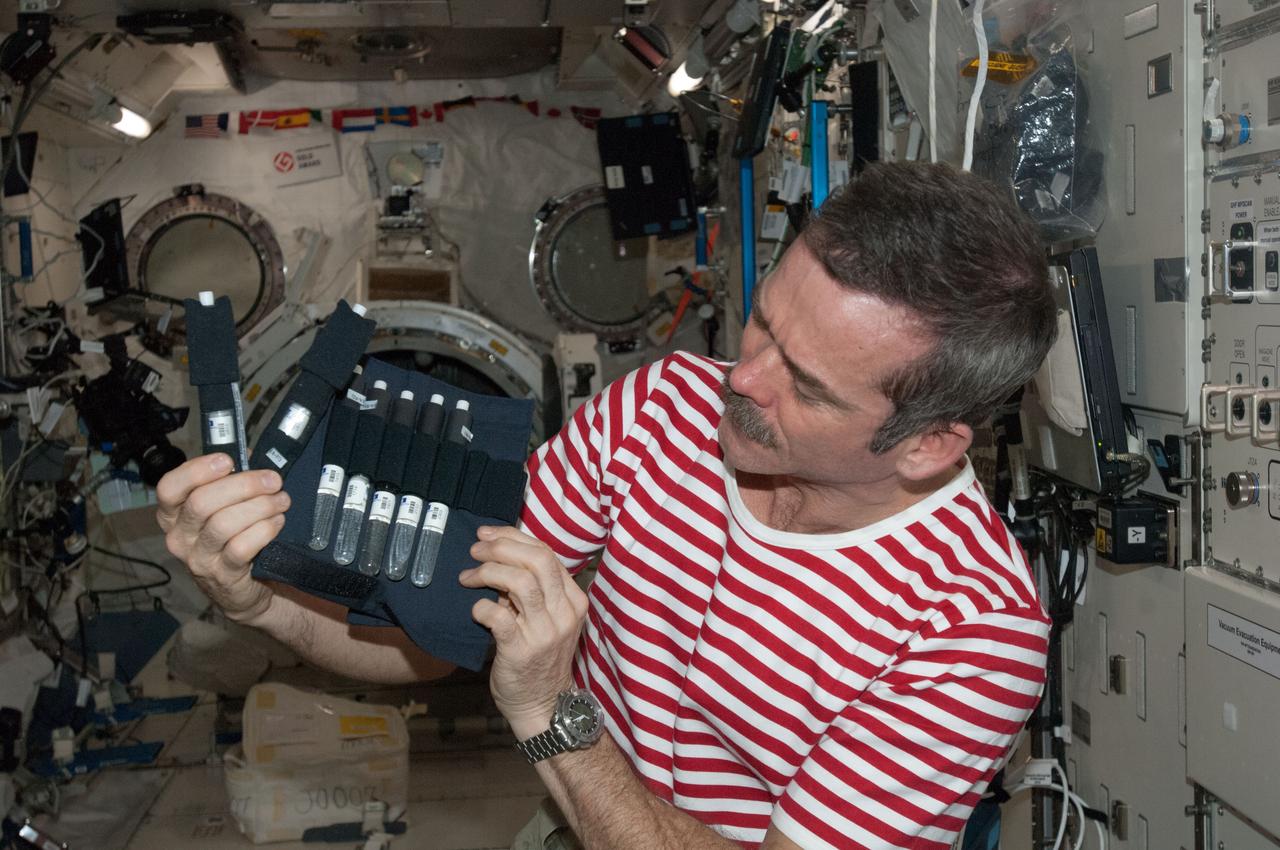
ISS034-E-034506 (25 Jan. 2013) --- Canadian Space Agency astronaut Chris Hadfield, Expedition 34 flight engineer, holds bubble detectors for the RaDI-N experiment in the International Space Station?s Kibo laboratory. RaDI-N measures neutron radiation levels onboard the space station. RaDI-N uses bubble detectors as neutron monitors which have been designed to only detect neutrons and ignore all other radiation.
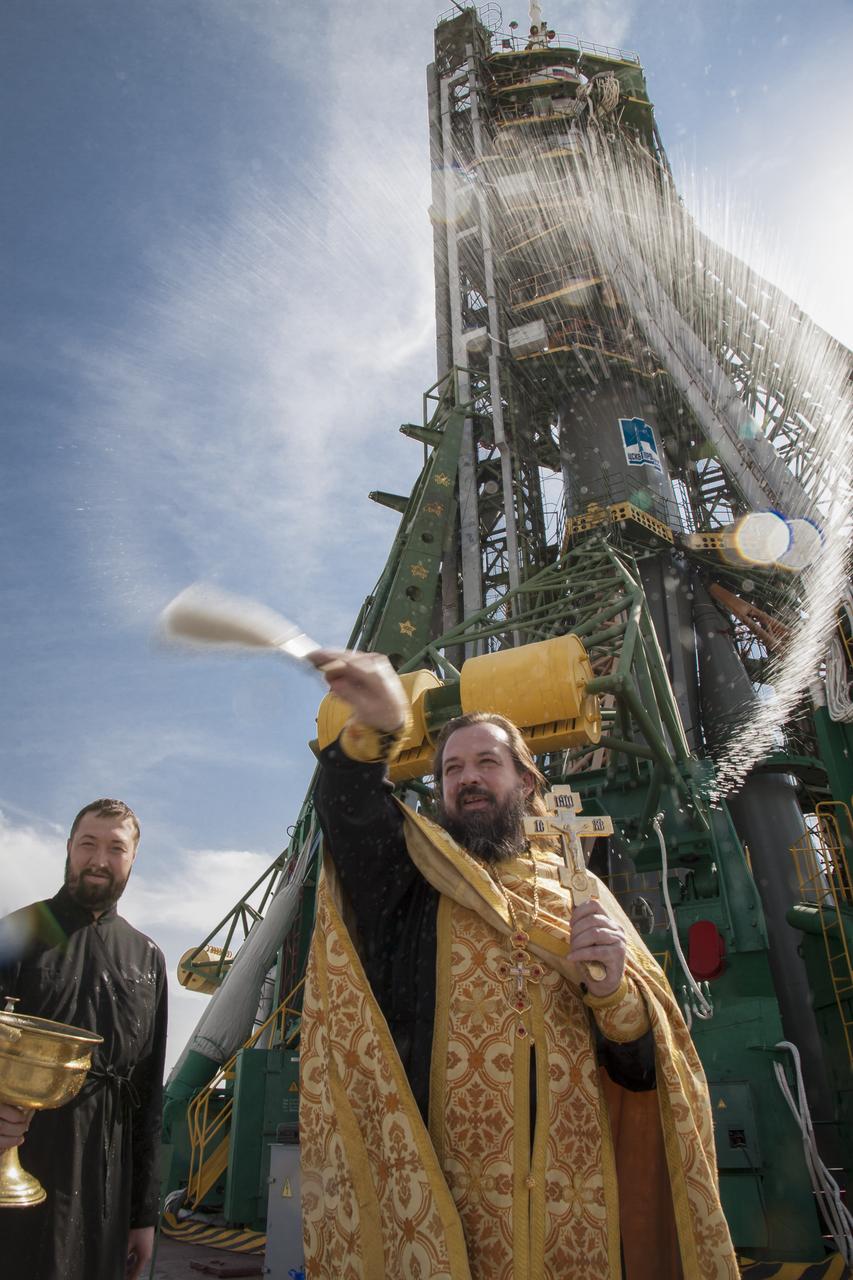
An Orthodox priest blesses members of the public at the the Baikonur Cosmodrome Soyuz launch pad on Tuesday, Sept. 24, 2013 in Baikonur, Kazakhstan. Launch of the Soyuz rocket is scheduled for September 26 and will send Expedition 37/38 Flight Engineer Michael Hopkins of NASA, Soyuz Commander Oleg Kotov and Flight Engineer and Russian Flight Engineer Sergei Ryazansky on a five-month mission aboard the International Space Station. Photo Credit: (NASA/Victor Zelentsov)
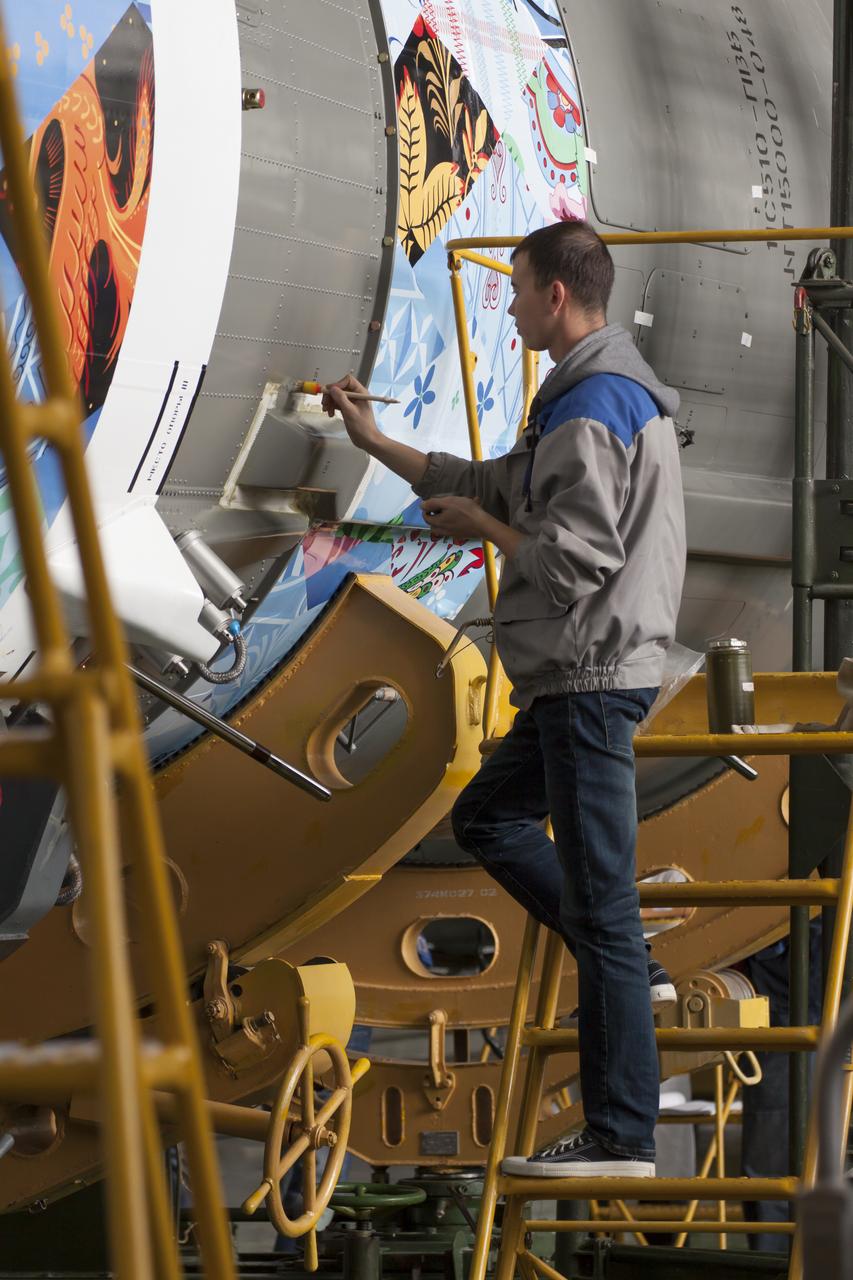
Workers make final preperations to a Soyuz TMA-11M spacecraft on Monday, Nov. 4, 2013, at the Baikonur Cosmodome in Baikonur, Kazakhstan. The rocket is adorned with the logo of the Sochi Olympic Organizing Committee and other related artwork to commemorate the launch of the Olympic torch with the crew for a four-day visit to the station. The torch will return to Earth with another trio of station residents on Nov. 11 and will be part of the torch relay that ends with the lighting of the flame at the Fisht Stadium in Sochi, Russia Feb. 7 to mark the opening of the 2014 Winter Olympics. Photo Credit: (NASA/Victor Zelentsov)
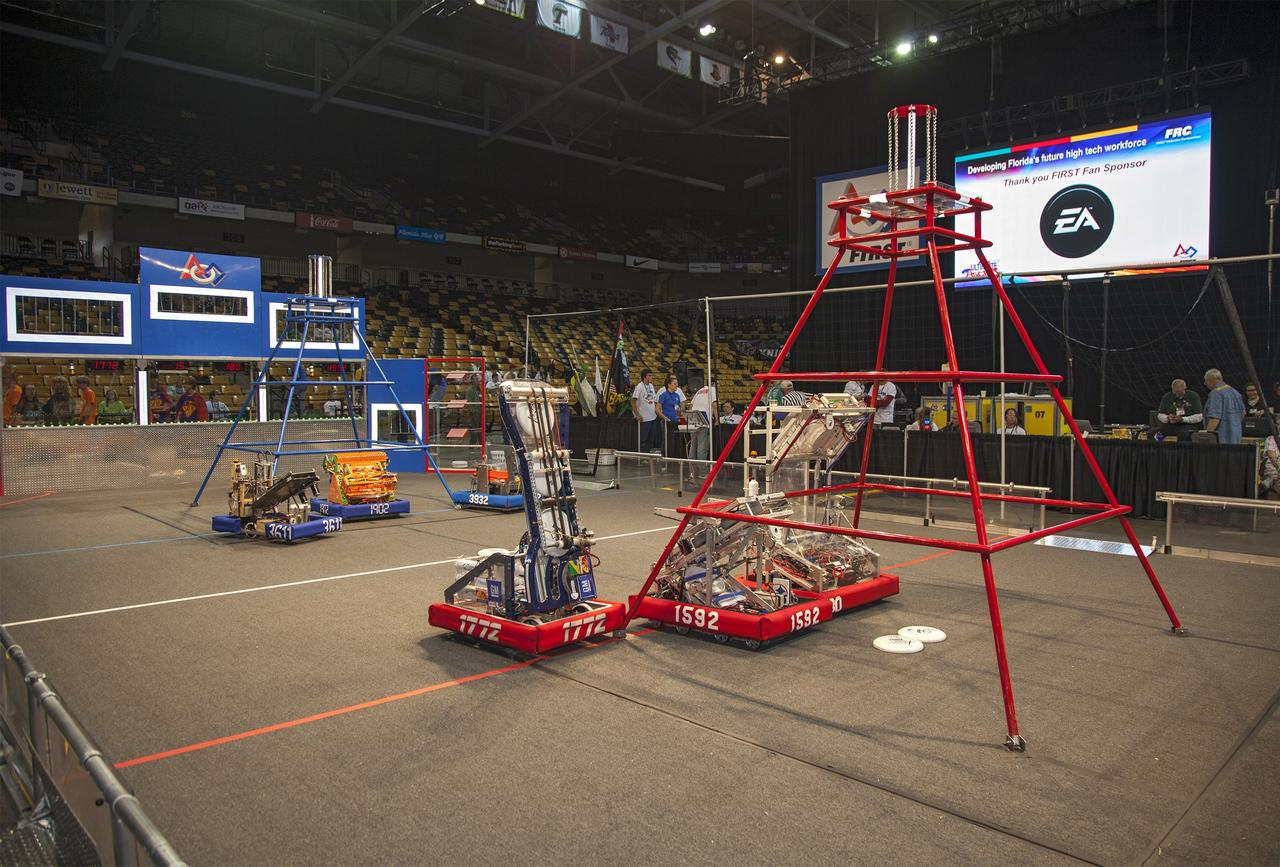
ORLANDO, Fla. – Robots built and operated by teams of high school students compete in the University of Central Florida Arena as part of the FIRST Robotics Competition's 2013 Orlando Regional. The robots were required to throw discs into boxes or make climbs to score points. Photo credit: NASA/Frankie Martin
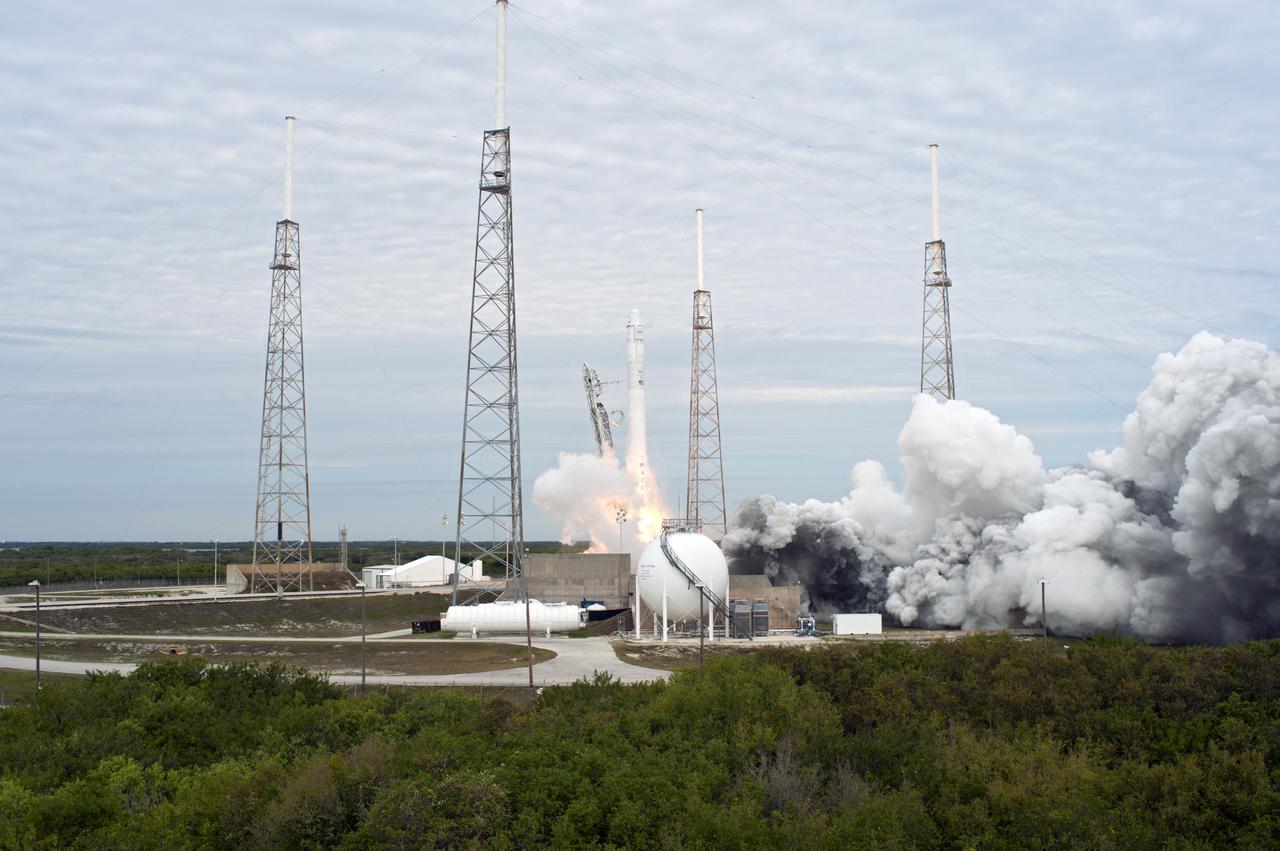
CAPE CANAVERAL, Fla. -- A Space Exploration Technologies, or SpaceX, Falcon 9 rocket lifts off Space Launch Complex 40 on Cape Canaveral Air Force Station in Florida at 10:10 a.m. EST, carrying a Dragon capsule filled with cargo. The SpaceX Dragon capsule is making its third trip to the International Space Station, following a demonstration flight in May 2012 and the first resupply mission in October 2012. The SpaceX-2 mission is the second of 12 SpaceX flights contracted by NASA to resupply the orbiting laboratory. For more information, visit http:__www.nasa.gov_mission_pages_station_structure_launch_spacex2-feature.html Photo credit: NASA_Tony Gray and Robert Murray

Earth Observations taken by Expedition 34 crewmember.
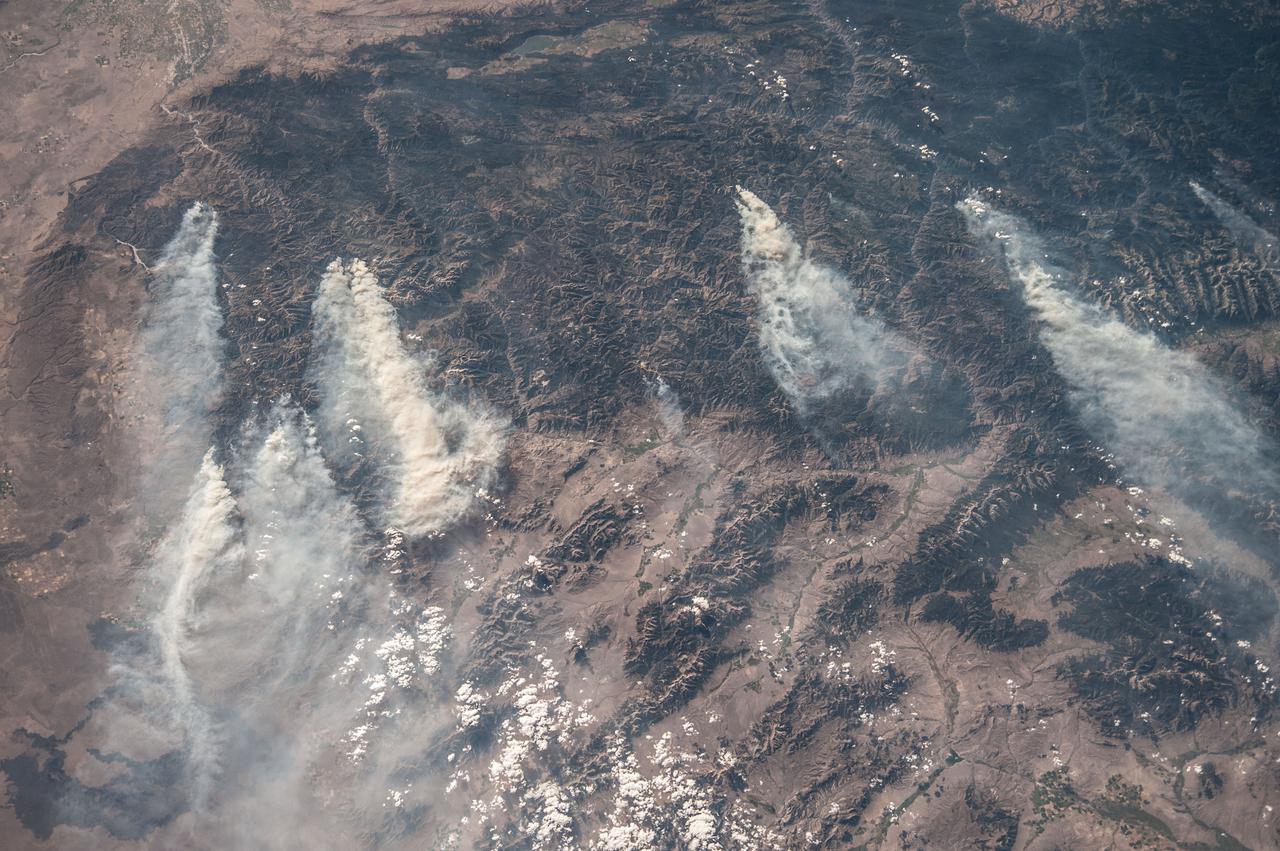
ISS036-E-032853 (18 Aug. 2013) --- Central Idaho wildfires are featured in this image photographed by an Expedition 36 crew member on the International Space Station. Taken with a short lens (50 mm), this west-looking image covers much of forested central Idaho?the dark areas are all wooded mountains. The image highlights part of the largest single wilderness area in the contiguous United States (the Frank Church-River of No Return Wilderness). Within this mountainous region, several fires can be seen producing extensive smoke plumes. Some fires had been named by Aug. 20, 2013, two days after the image was taken. The densest smoke on that day appears to be generated by a combination of the Little Queens and Leggit fires (left, within the Salmon River Mountains). The named fires were mostly set by lightning, and on Aug. 20 totaled 53,000 acres of burned forest south of the Salmon River, and many more if the unnamed fires are included. The Gold Pan fire north of the Salmon River had burned 27,000 acres. For a sense of scale in this oblique view, the Gold Pan fire lies about 125 miles north of the Little Queens fire. This image shows the common pattern of westerly winds transporting smoke in an easterly direction, as seen during the wildfire season of one year ago. Ten days before this image was taken, fires in central Idaho near Boise were aggravated by southerly winds. Some of the fires began to burn in July but were quelled and remain under observation for new flare-ups. Smoke from fires in the south partly obscures the black lava flows of the Craters of the Moon National Monument (lower left). The Beaverhead Mountains mark the eastern boundary of Idaho with Montana.
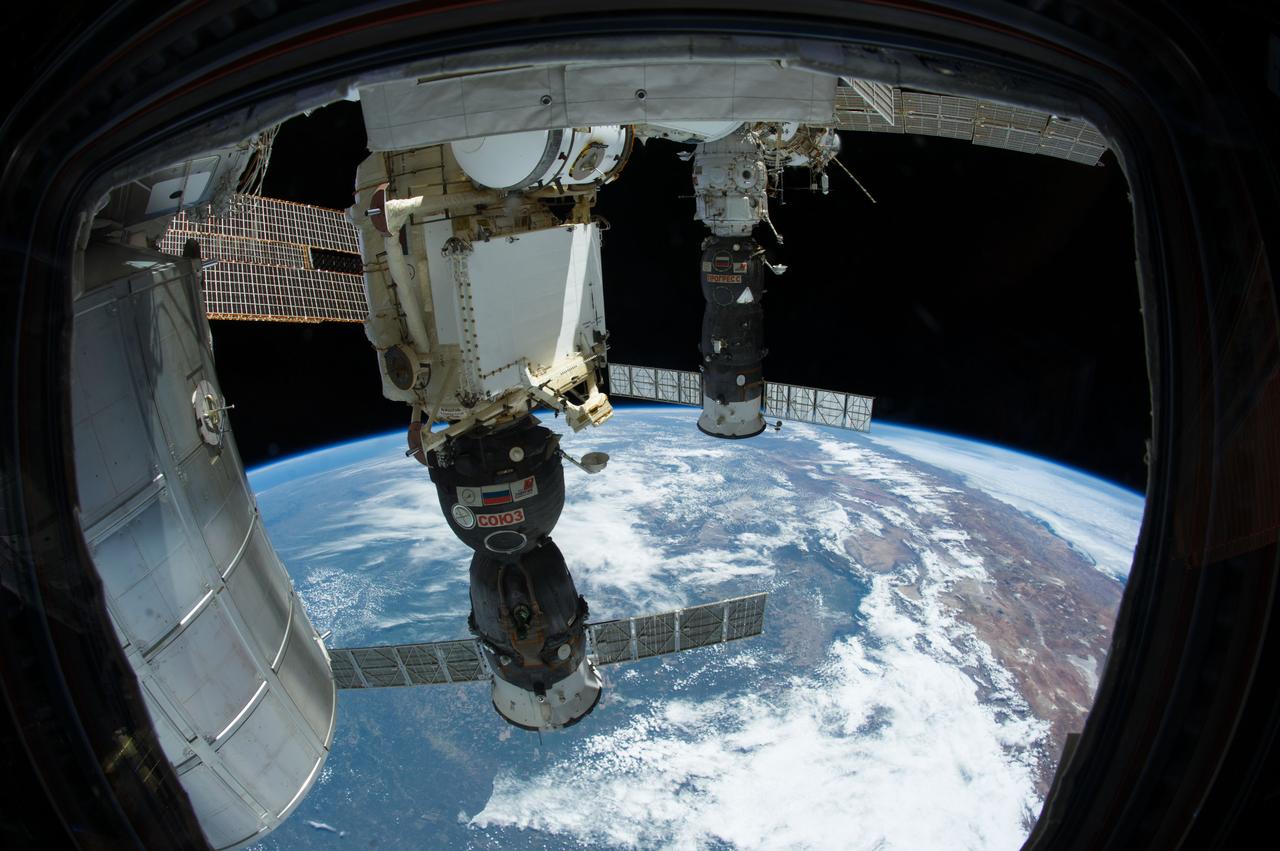
ISS038-E-015274 (12 Dec. 2013) --- The Permanent Multipurpose Module (PMM), the Soyuz 37 (TMA-11M) spacecraft (center) docked to the Rassvet Mini-Research Module 1 (MRM1) and the Progress 52 resupply vehicle (background) docked to the Pirs Docking Compartment are featured in this image photographed by an Expedition 38 crew member from a window in the Cupola of the International Space Station. A blue and white part of Earth provides the backdrop for the scene.
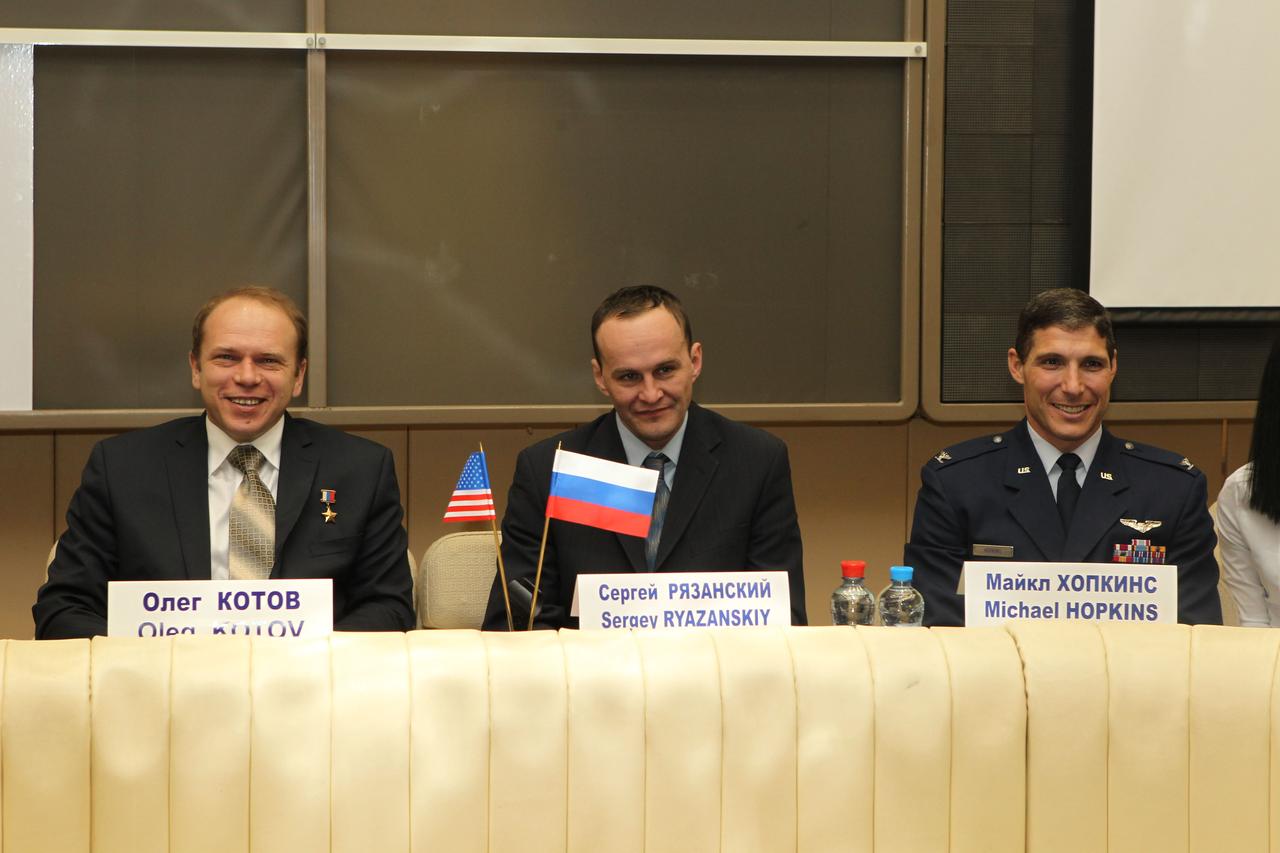
At the Gagarin Cosmonaut Training Center in Star City, Russia, Expedition 35-36 backup crewmembers Oleg Kotov (left), Sergey Ryazanskiy (center) and Michael Hopkins of NASA (right) pose for pictures during a pre-launch news conference March 7. The three crewmembers are in training as backups to Chris Cassidy of NASA, Alexander Misurkin and Pavel Vinogradov who are scheduled to launch to the International Space Station March 29, Kazakh time, in the Soyuz TMA-08M spacecraft from the Baikonur Cosmodrome in Kazakhstan. NASA / Stephanie Stoll
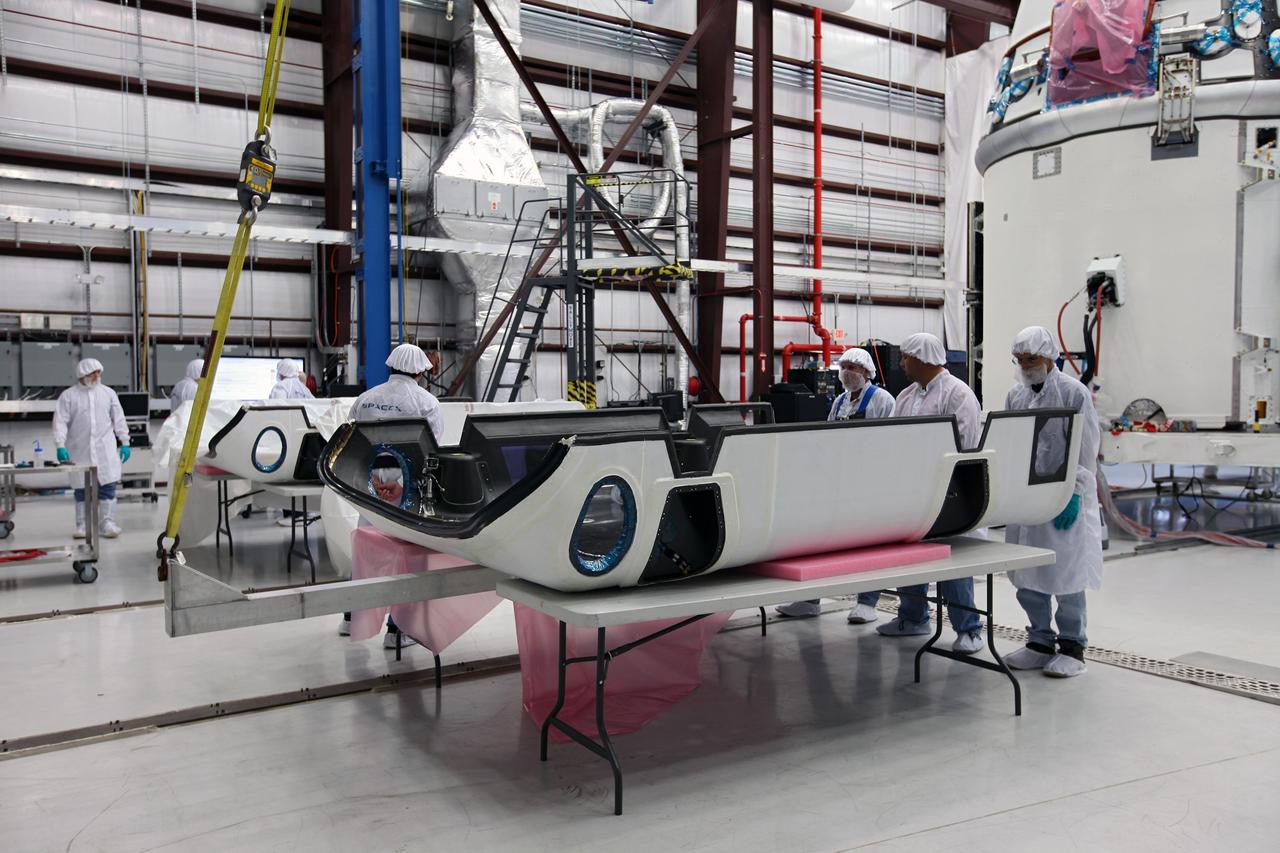
CAPE CANAVERAL, Fla. – Workers prepare to lift a solar array fairing at the processing hangar used by Space Exploration Technologies, or SpaceX, at Cape Canaveral Air Force Station, Fla. The fairing will be installed on the Dragon spacecraft undergoing launch preparations inside the hangar. The spacecraft will launch on the upcoming SpaceX CRS-2 mission. The flight will be the second commercial resupply mission to the International Space Station by SpaceX. NASA has contracted for a total of 12 commercial resupply flights from SpaceX and eight from the Orbital Sciences Corp. Photo credit: NASA/Kim Shiflett
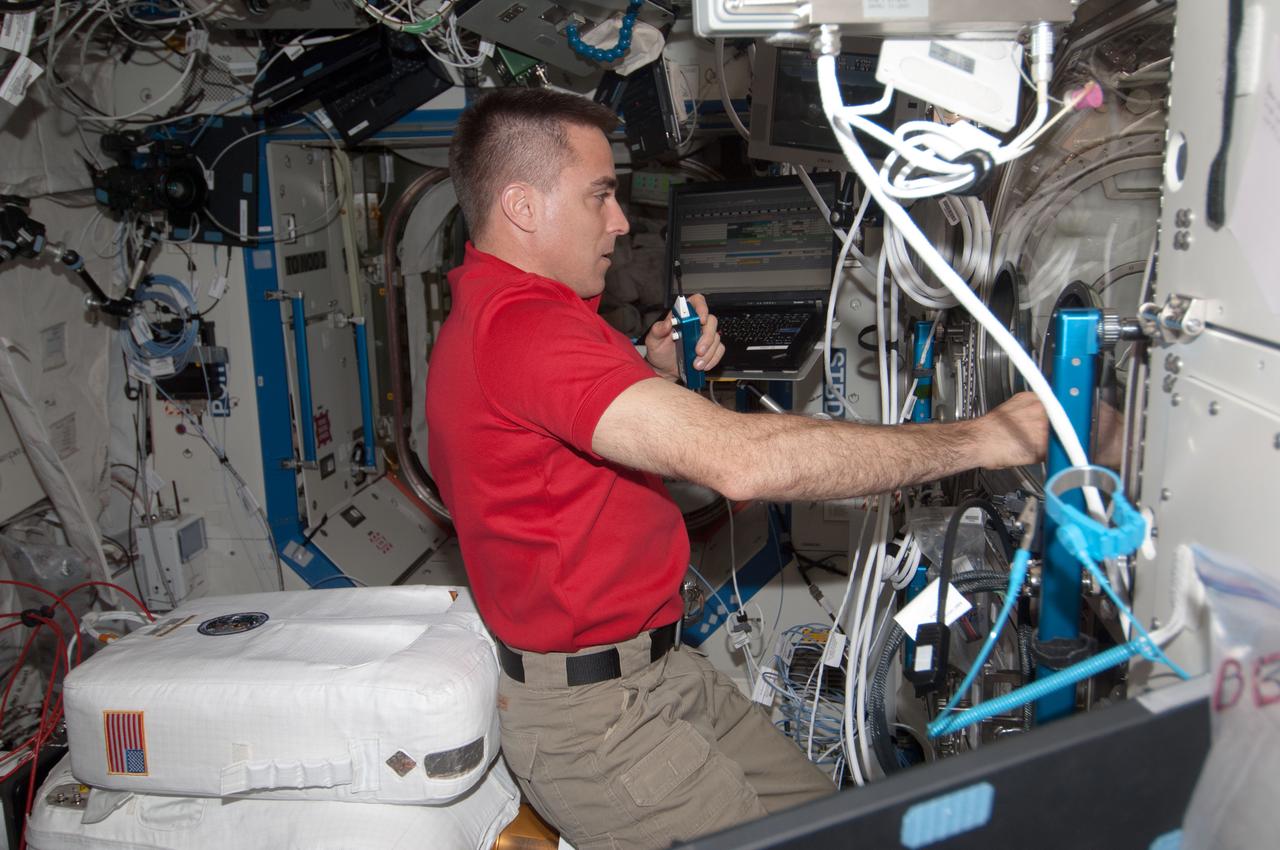
ISS035-E-16429 (9 April 2013) --- Astronaut Chris Cassidy, Expedition 35 flight engineer, conducts a session of the Burning and Suppression of Solids (BASS) experiment located in the U.S. lab Destiny onboard the Earth-orbiting International Space Station. Cassidy over a period of several days, has conducted several "runs" of the experiment, which examines the burning and extinction characteristics of a wide variety of fuel samples in microgravity and will guide strategies for extinguishing fires in microgravity. BASS results contribute to the combustion computational models used in the design of fire detection and suppression systems in microgravity and on Earth.
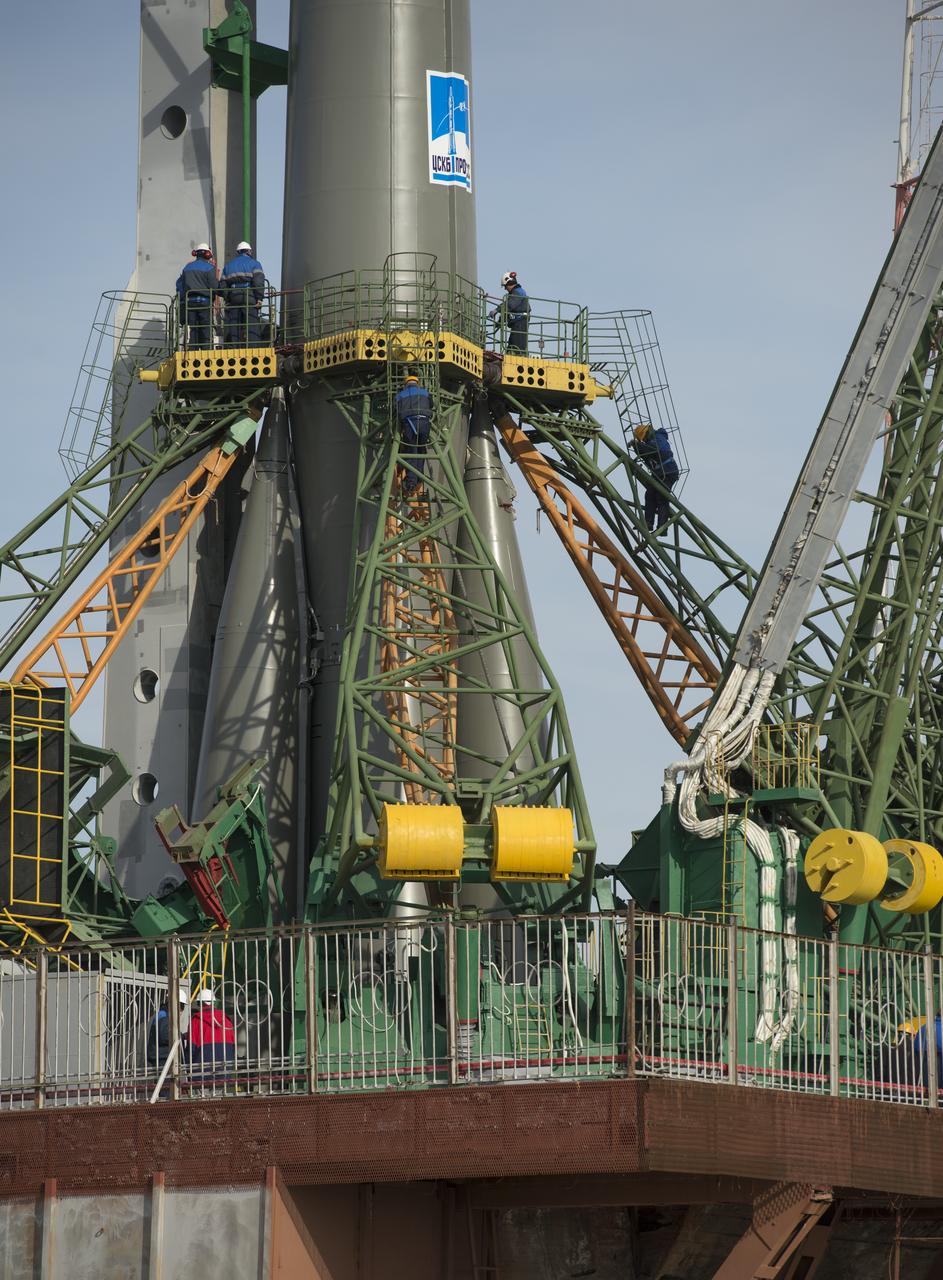
Launch pad engineers at the Baikonur Cosmodrome in Kazakhstan are dwarfed by the large gantry mechanisms at the base of the Soyuz TMA-08M rocket following its rollout to the pad on Tuesday, March 26, 2013. The rocket is being prepared for launch on March 29 to carry the crew of Expedition 35 to the International Space Station. Photo Credit: (NASA/Carla Cioffi)
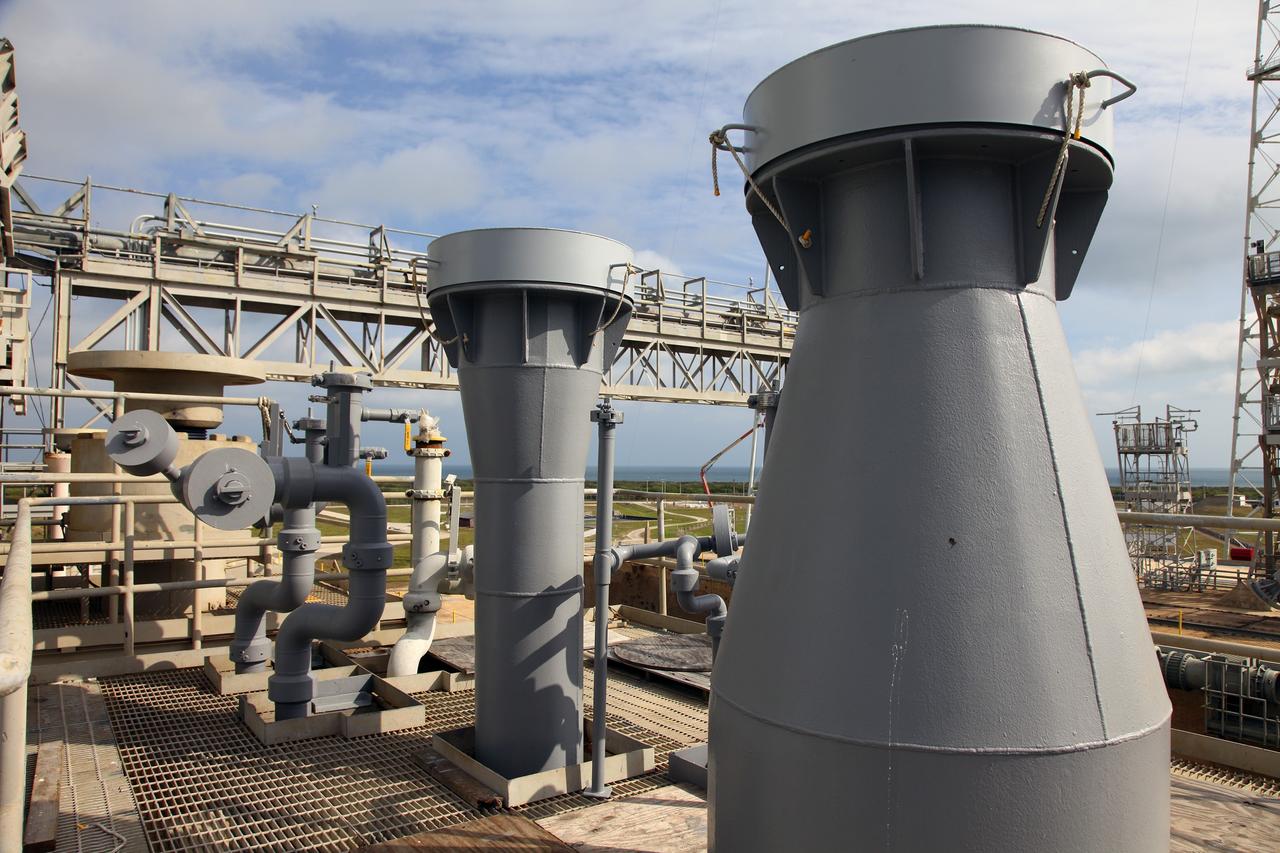
CAPE CANAVERAL, Fla. -- At NASA’s Kennedy Space Center in Florida, various fluid interface connections have been installed at Launch Pad 39B. New system connections include chilled water supply-and-return and conditioned air that will be used to provide the mobile launcher with the necessary commodities during launch operations. The Ground Systems Development and Operations Program office at Kennedy is overseeing upgrades and modifications to Pad B to support the launch of NASA’s Space Launch System heavy-lift rocket, which is under design, and new Orion spacecraft. The pads supported space shuttle launches for 30 years. Photo credit: NASA/Frankie Martin
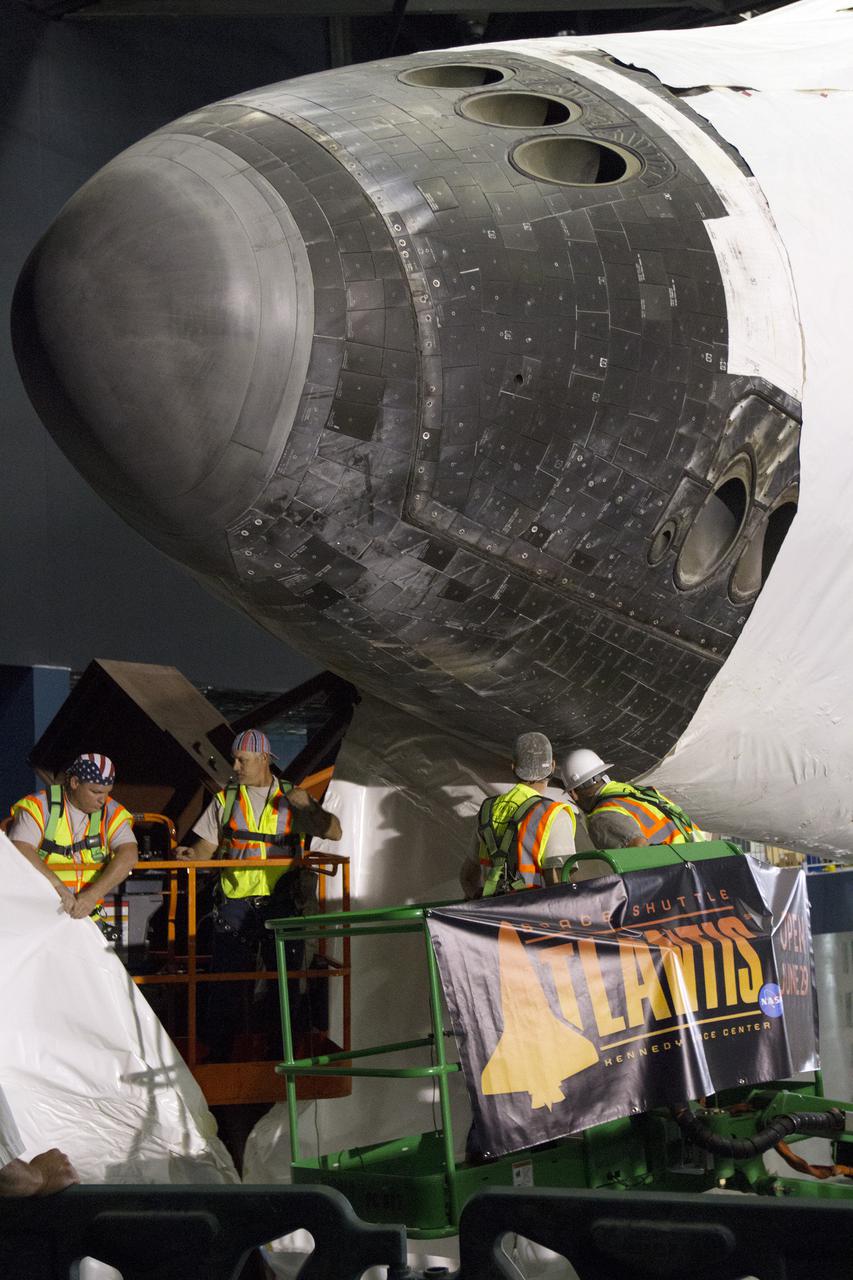
CAPE CANAVERAL, Fla. -- At the Kennedy Space Center Visitor Complex in Florida, the nose cap and part of the forward reaction control system is uncovered as construction crews begin removing 16,000 square feet of plastic shrink-wrap from the space shuttle Atlantis. The spacecraft was enclosed in the plastic shrink-wrap since November of last year to protect the artifact from dust and debris during construction of the 90,000-square-foot facility. Last November, the space shuttle Atlantis made its historic final journey to its new home, traveling 10 miles from the Kennedy Space Center's Vehicle Assembly Building to the spaceport's visitor complex. The new $100 million 'Space Shuttle Atlantis' facility will include interactive exhibits that tell the story of the 30-year Space Shuttle Program and highlights the future of space exploration. The 'Space Shuttle Atlantis' exhibit scheduled to open June 29, 2013.Photo credit: NASA_Cory Huston

This image, taken by NASA Cassini spacecraft, shows Dione twin craters Romulus and Remus just above-right of center, like their semi-divine namesakes, standing together. Also seen is Dido, the larger crater featuring a central peak.
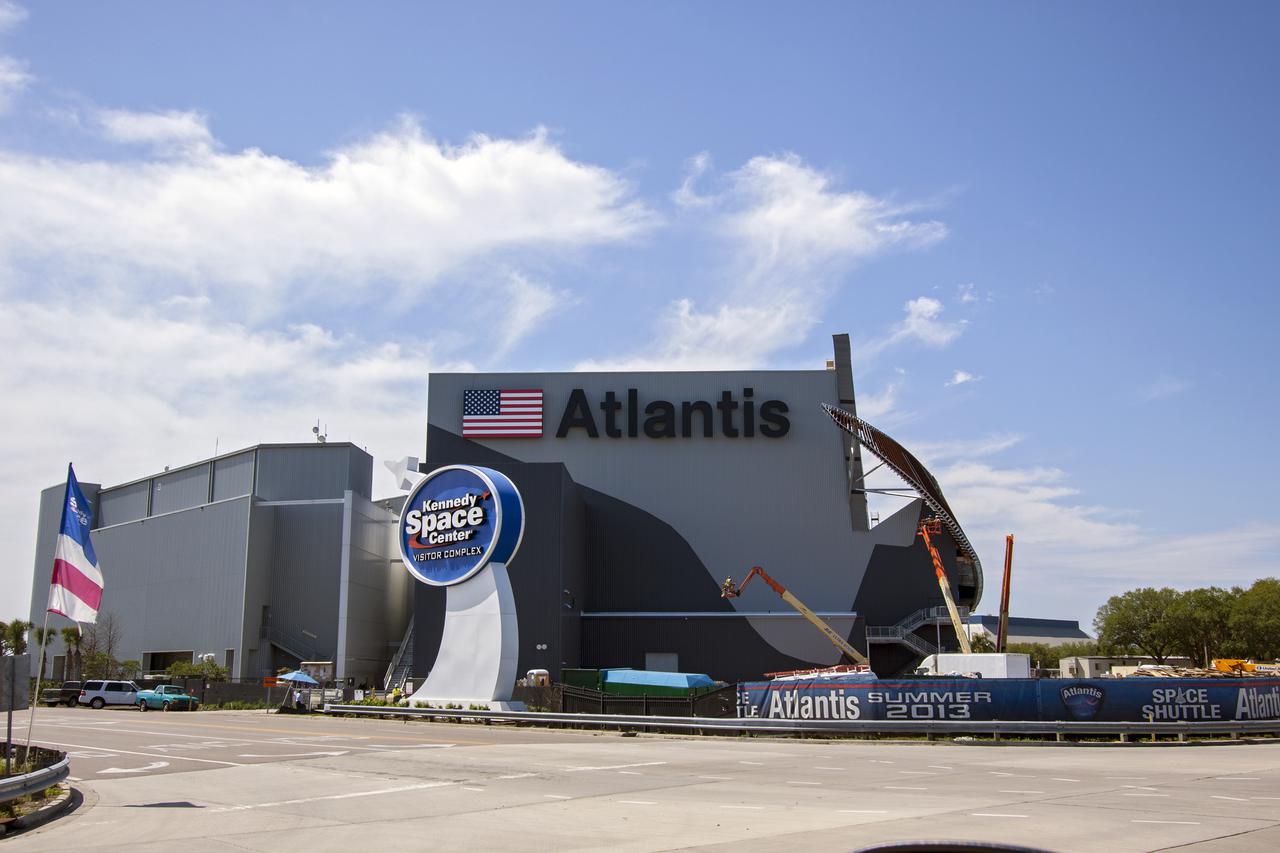
CAPE CANAVERAL, Fla. -- The Kennedy Space Center Visitor Complex has added the name 'Atlantis' and American flag to the exterior of the 'Space Shuttle Atlantis' exhibit scheduled to open June 29, 2013. Last November, the space shuttle Atlantis made its historic final journey to its new home, traveling 10 miles from the Kennedy Space Center's Vehicle Assembly Building to the spaceport's visitor complex. The new $100 million Atlantis facility will be a 90,000-square-foot, interactive exhibit that tells the story of the 30-year Space Shuttle Program and highlights the future of space exploration. Photo credit: NASA_Jim Grossmann
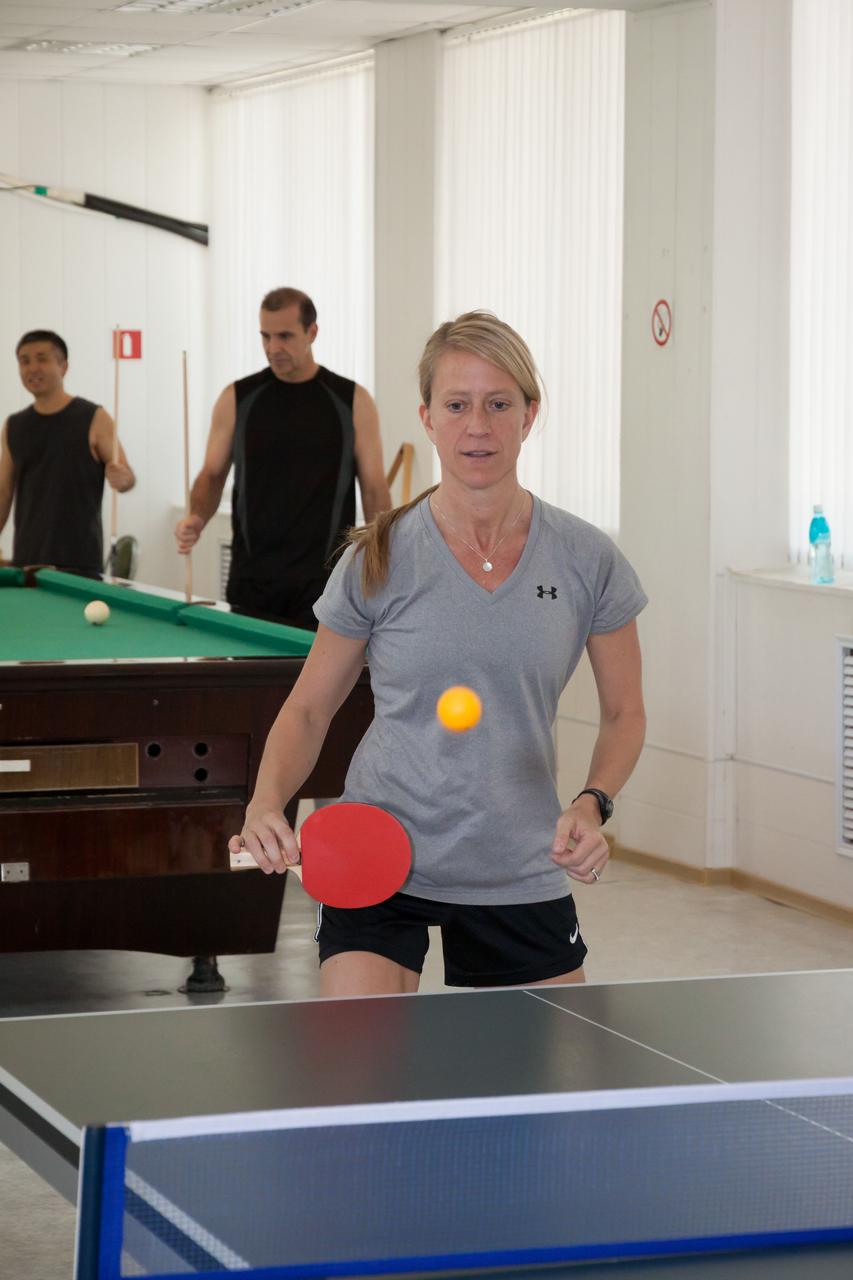
In the Cosmonaut Hotel crew quarters in Baikonur, Kazakhstan, Expedition 36/37 Flight Engineer Karen Nyberg of NASA gets in a round of Ping-Pong May 22 as she limbers up for launch May 29, Kazakh time, in the Soyuz TMA-09M spacecraft with Soyuz Commander Fyodor Yurchikhin and Flight Engineer Luca Parmitano of the European Space Agency to begin a 5 ½ month mission on the International Space Station. In the background at the billiards table are backup crewmembers Koichi Wakata of the Japan Aerospace Exploration Agency (left) and Rick Mastracchio of NASA (right). NASA/Victor Zelentsov

Tennis legend and champion for change Billie Jean King talks of inspiration role models during the National Tribute to Sally Ride at the John F. Kennedy Center for the Performing Arts, Monday, May 20, 2013 in Washington. Photo Credit: (NASA/Bill Ingalls)

CAPE CANAVERAL, Fla. -- The Patrick Air Force Base honor guard participates in the Day of Remembrance ceremony at the Kennedy Space Center Visitor Complex. Space center employees and guests gathered at the Space Mirror Memorial at the visitor complex for the annual event which took place on the 10th anniversary of the loss of the space shuttle Columbia and its crew. The ceremony also honored the astronauts of Apollo 1 and the shuttle Challenger. Dedicated in 1991, the names of fallen astronauts are emblazoned the Space Mirror Memorial's 4.5-foot-high-by-50-foot-wide polished black granite surface which reflects the sky and has been designated by Congress as a National Memorial. Image credit: NASA Television
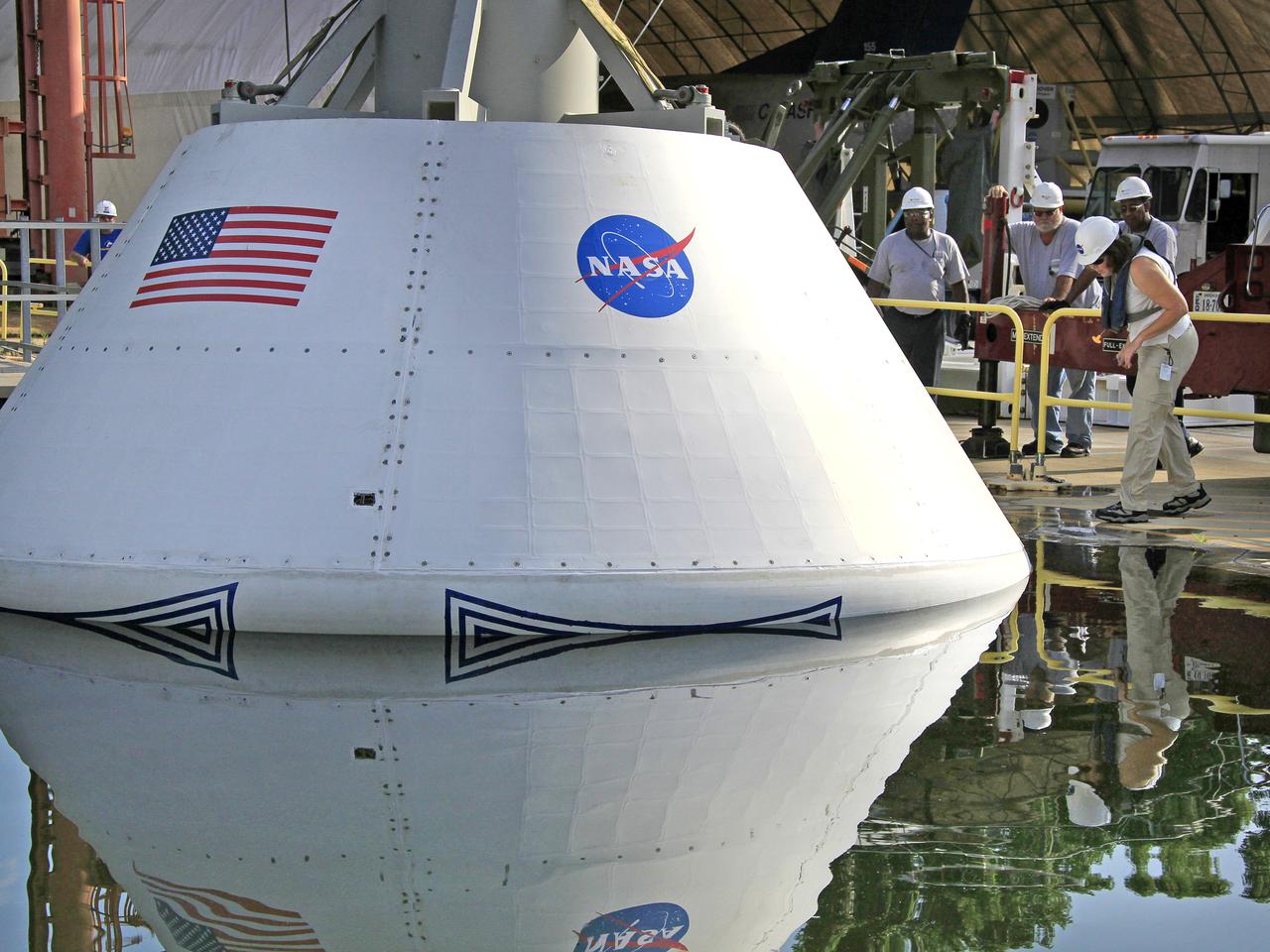
The Orion Test Capsule spent 4 hour in the water tank under NASA Langley's gantry to prove it is ready for the open water recovery test at Norfolk Naval Station.
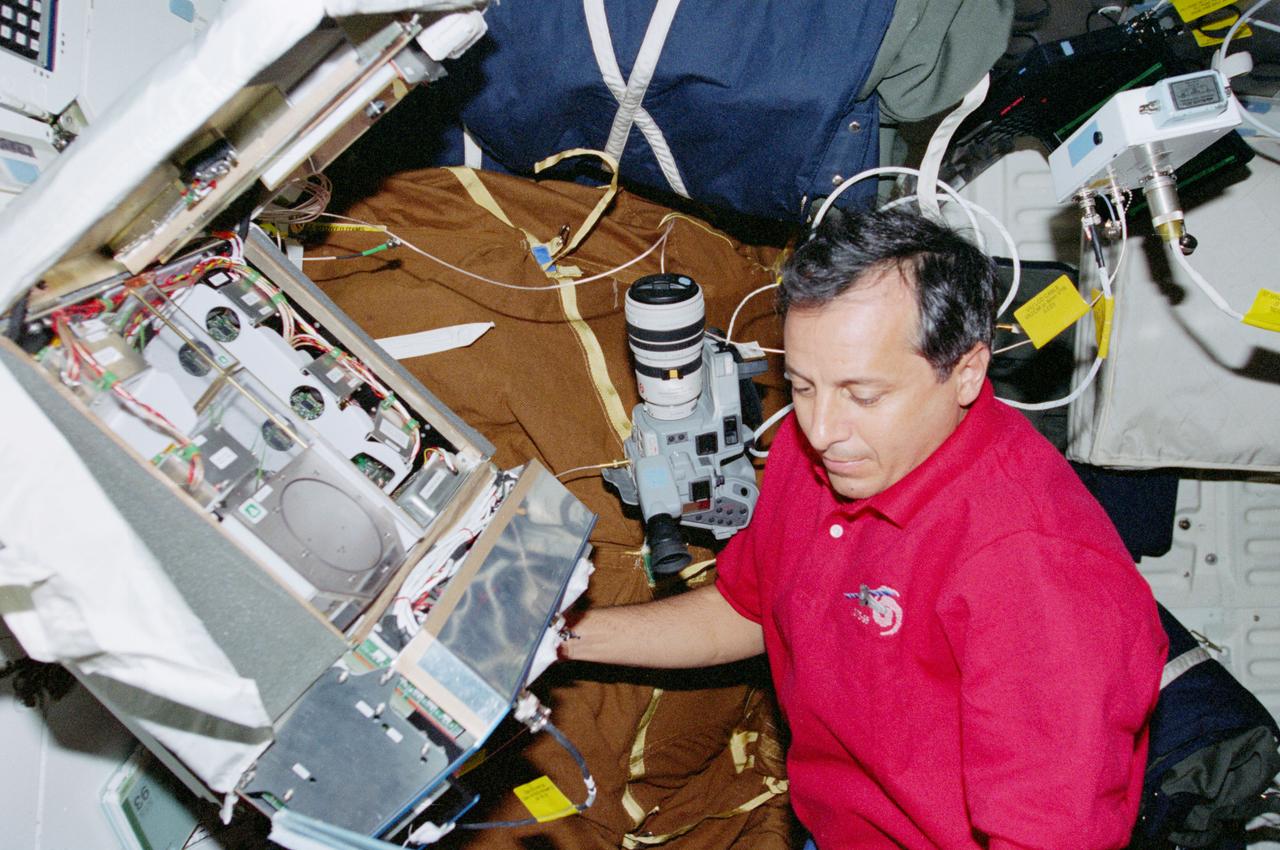
STS093-319-014 (22-27 July 1999) --- Astronaut Michel Tognini, mission specialist, works with the Commercial Generic Bioprocessing Apparatus (CGBA) on the mid deck of the Space Shuttle Columbia. Tognini represents France’s Centre National d’Etudes Spatiales (CNES).
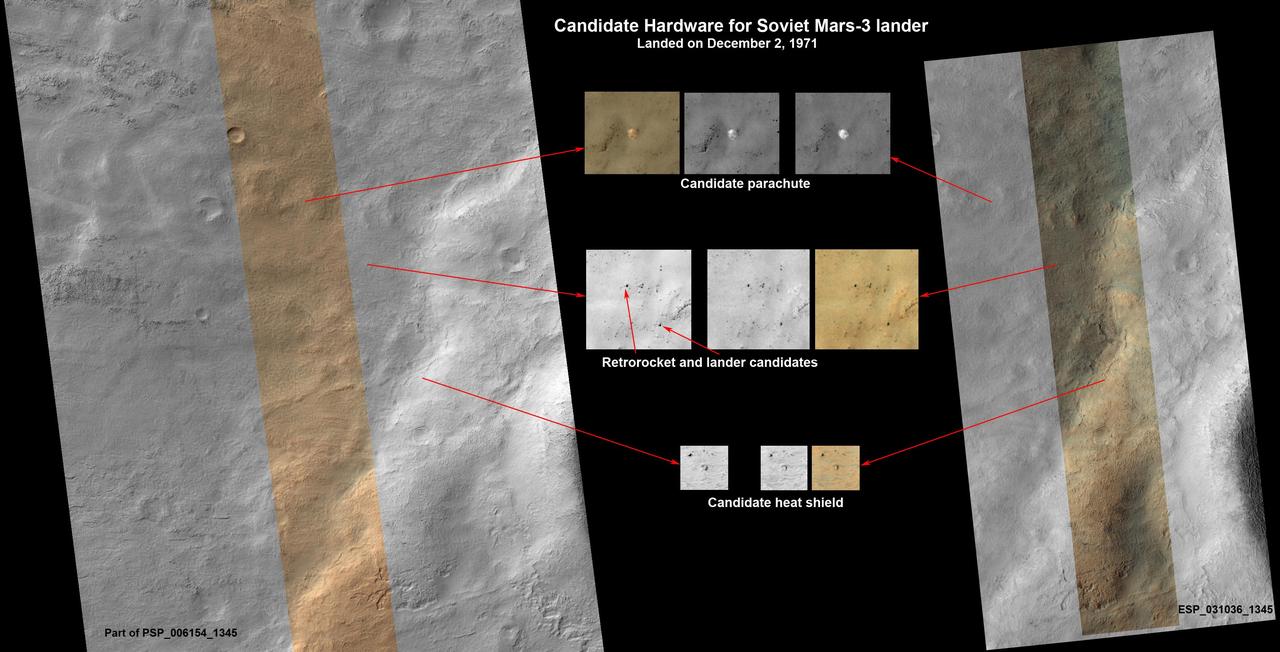
This set of images shows what might be hardware from the Soviet Union 1971 Mars 3 lander, seen in a pair of images from the High Resolution Imaging Science Experiment HiRISE camera on NASA Mars Reconnaissance Orbiter.
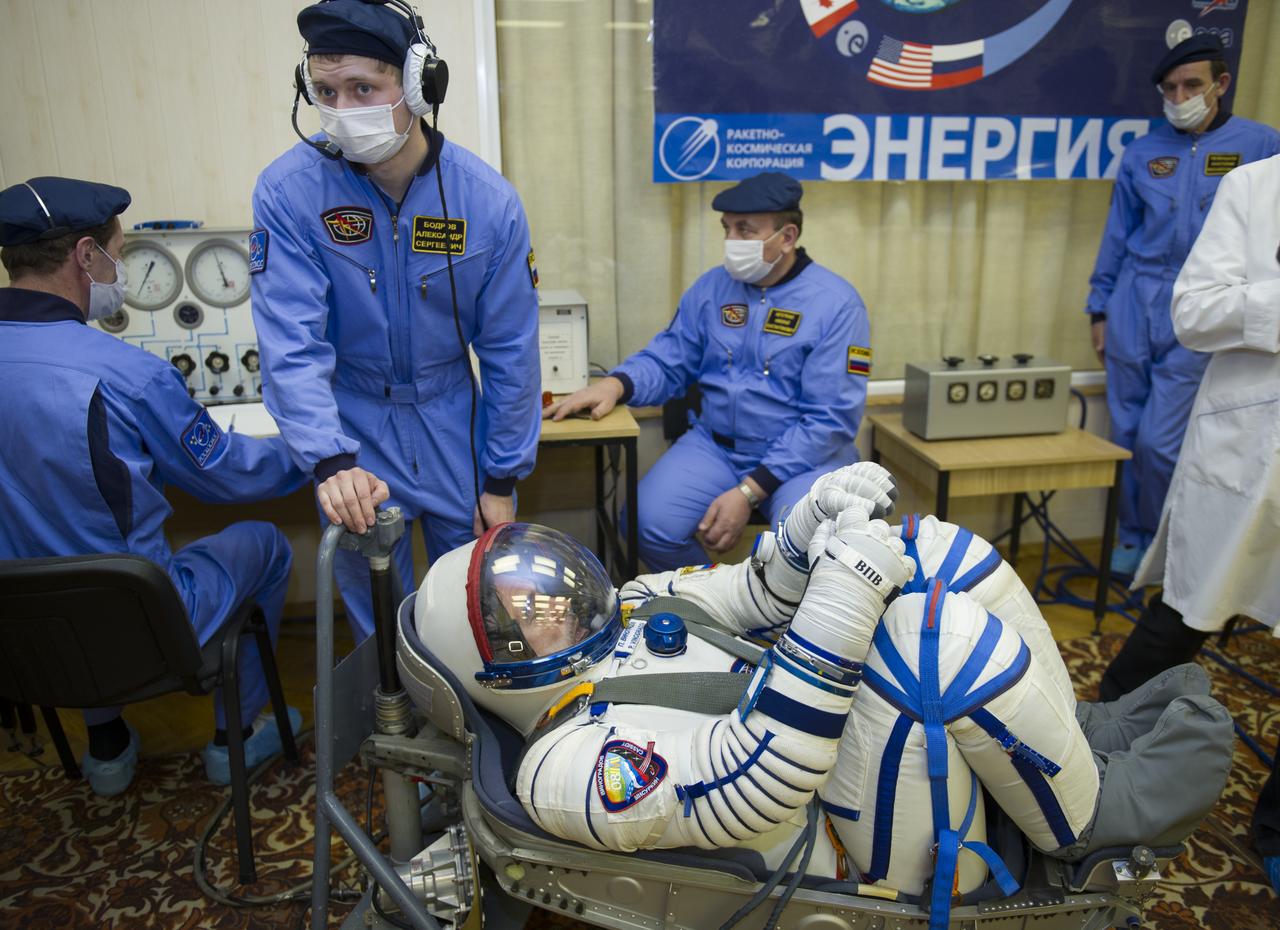
Expedition 35 NASA Soyuz Commander Pavel Vinogradov is has his Russian Sokol suit pressure checked ahead of his launch onboard a Soyuz TMA-08M spacecraft to the International Space Station, Thursday, March 28, 2013, at the Baikonur Cosmodrome in Kazakhstan. Launch of the Soyuz rocket will send Vinogradov, NASA Flight Engineer Chris Cassidy and Russian Flight Engineer Alexander Misurkin on a five and a half-month mission aboard the International Space Station. Photo Credit: (NASA/GCTC/Irina Peshkova)
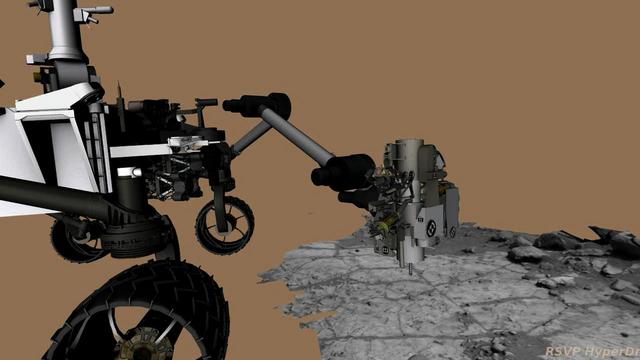
This frame from an animation of NASA Curiosity rover shows the complicated suite of operations involved in conducting the rover first rock sample drilling on Mars and transferring the sample to the rover scoop for inspection.
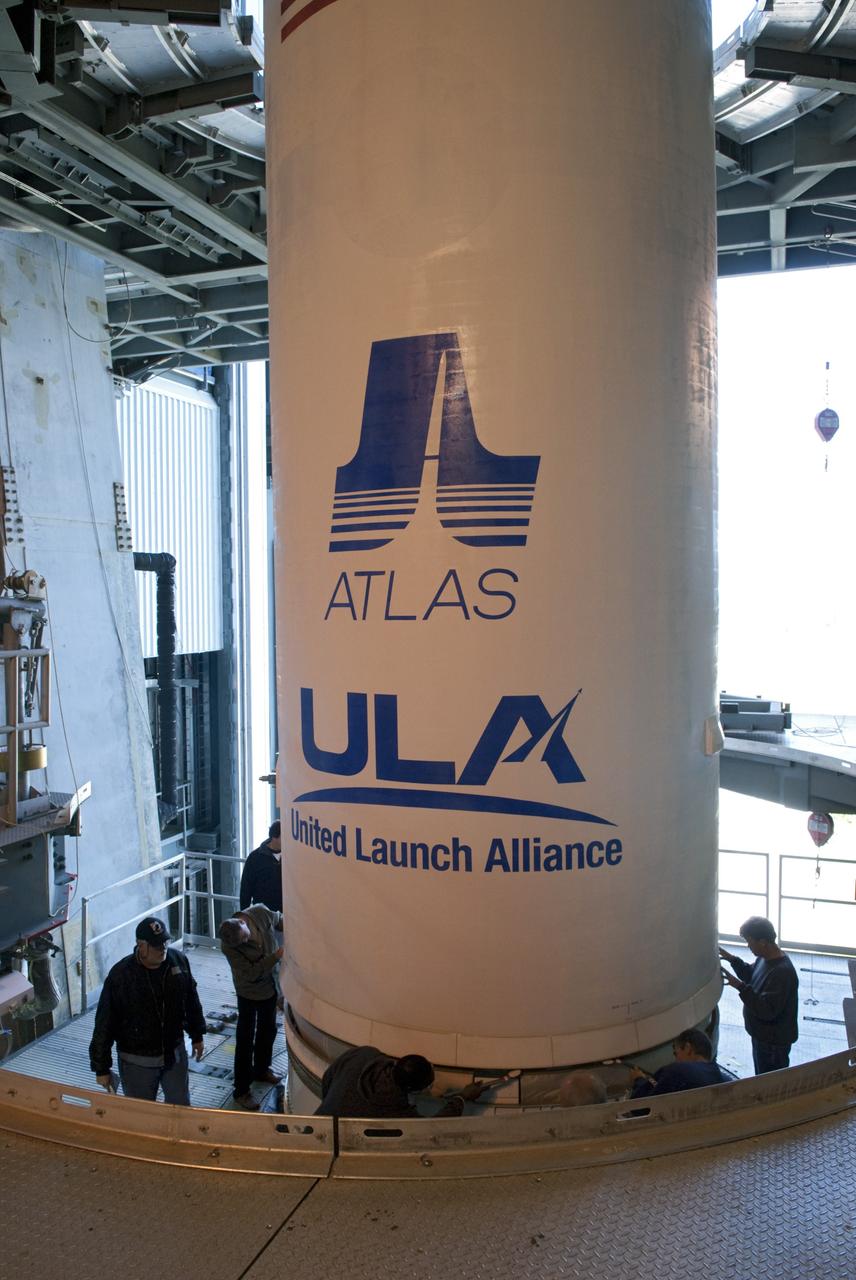
CAPE CANAVERAL, Fla. -- At Cape Canaveral Air Force Station's Space Launch Complex 41 in Florida, United Launch Alliance technicians support operations to mate the Centaur stage to the Atlas V rocket that will carry the Tracking and Data Relay Satellite, TDRS-K, into orbit. Launch of the TDRS-K on the Atlas V rocket is planned for January 29, 2013. The TDRS-K spacecraft is part of the next-generation series in the Tracking and Data Relay Satellite System, a constellation of space-based communication satellites providing tracking, telemetry, command and high-bandwidth data return services. For more information, visit http://www.nasa.gov/mission_pages/tdrs/index.html Photo credit: NASA/Charisse Nahser
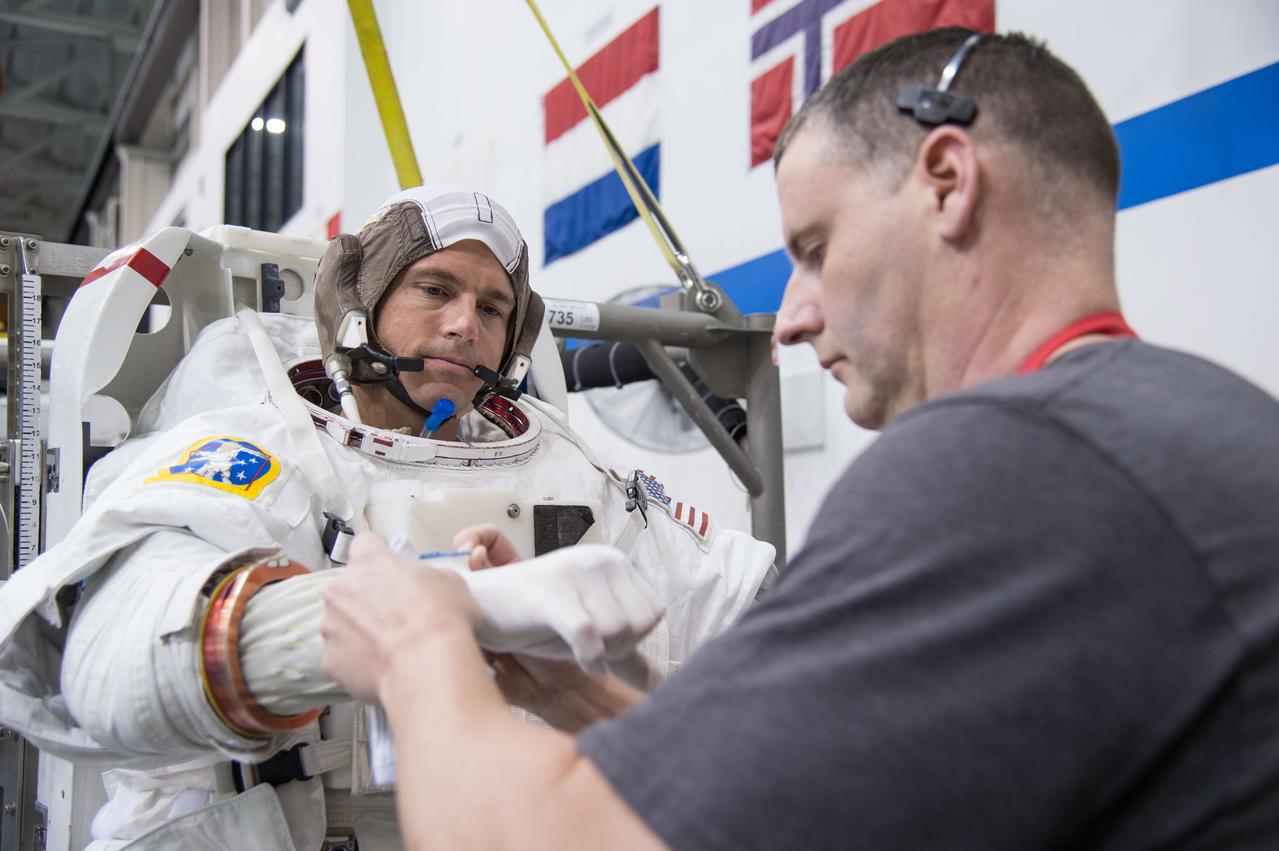
PHOTO DATE: 09-17-13 LOCATION: NBL - Pool Topside SUBJECT: Expedition 40/41 crew members Greg Wiseman and Alexander Gerst during pre-dive briefing, preparations and suitup, then lowering into the water. PHOTOGRAPHER: BILL STAFFORD

During a traditional tour of Red Square in Moscow March 7, Expedition 35-36 Soyuz Commander Pavel Vinogradov laid flowers at the Kremlin Wall where Russian space icons are interred. Vinogradov, NASA Flight Engineer Chris Cassidy and Flight Engineer Alexander Misurkin will launch to the International Space Station March 29, Kazakh time, in their Soyuz TMA-08M spacecraft from the Baikonur Cosmodrome in Kazakhstan. NASA / Stephanie Stoll

CAPE CANAVERAL, Fla. – At NASA’s Kennedy Space Center in Florida, technicians and engineers monitor the progress as the Project Morpheus prototype lander is attached to a tether and raised from a transportable launch platform positioned at the north end of the Shuttle Landing Facility. The lander will undergo a tethered test that includes lifting it 20 feet by crane, ascending another 10 feet, maneuvering backwards 10 feet, and then flying forward and descending to its original position, landing at the end of the tether. Testing of the prototype lander was performed at NASA’s Johnson Space Center in Houston in preparation for tethered and free flight testing at Kennedy. The landing facility will provide the lander with the kind of field necessary for realistic testing, complete with rocks, craters and hazards to avoid. Morpheus utilizes an autonomous landing and hazard avoidance technology, or ALHAT, payload that will allow it to navigate to clear landing sites amidst rocks, craters and other hazards during its descent. Project Morpheus is being managed under the Advanced Exploration Systems, or AES, Division in NASA’s Human Exploration and Operations Mission Directorate. The efforts in AES pioneer new approaches for rapidly developing prototype systems, demonstrating key capabilities and validating operational concepts for future human missions beyond Earth orbit. For more information on Project Morpheus, visit http://morpheuslander.jsc.nasa.gov. Photo credit: NASA/Daniel Casper
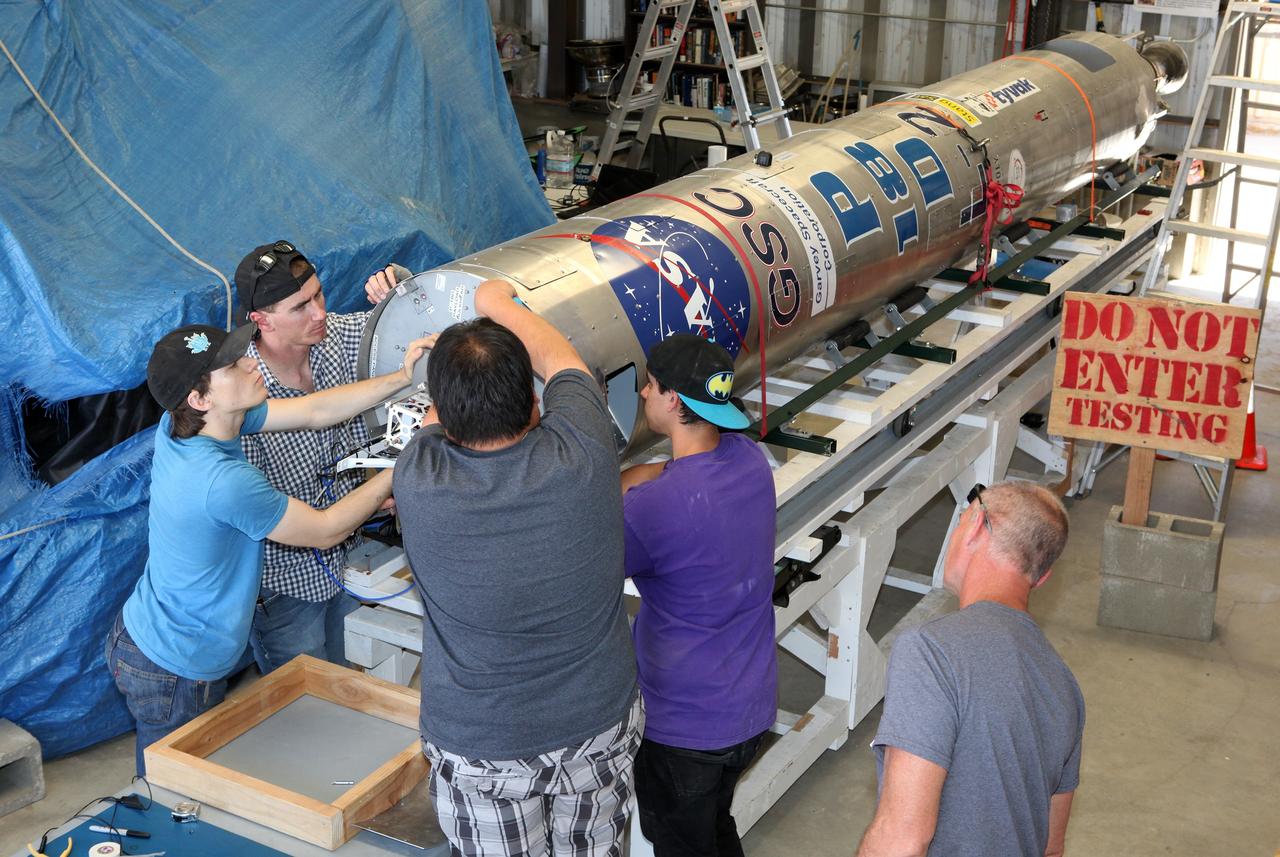
MOJAVE DESERT, Calif. – In the Mojave Desert in California, students and engineers checkout the Garvey Spacecraft Corporation's Prospector P-18D rocket. The rocket is scheduled for launch June 15 with the RUBICS-1 payload on a high-altitude, suborbital flight. The rocket will carry four satellites made from four-inch cube sections. Collectively known as CubeSats, the satellites will record shock, vibrations and heat inside the rocket. They will not be released during the test flight, but the results will be used to prove or strengthen their designs before they are carried into orbit in 2014 on a much larger rocket. A new, lightweight carrier is also being tested for use on future missions to deploy the small spacecraft. The flight also is being watched closely as a model for trying out new or off-the-shelf technologies quickly before putting them in the pipeline for use on NASA's largest launchers. Built by several different organizations, including a university, a NASA field center and a high school, the spacecraft are four-inch cubes designed to fly on their own eventually, but will remain firmly attached to the rocket during the upcoming mission. For more information, visit http://www.nasa.gov/mission_pages/smallsats/elana/cubesatlaunchpreview.html Photo credit: NASA/Dimitri Gerondidakis
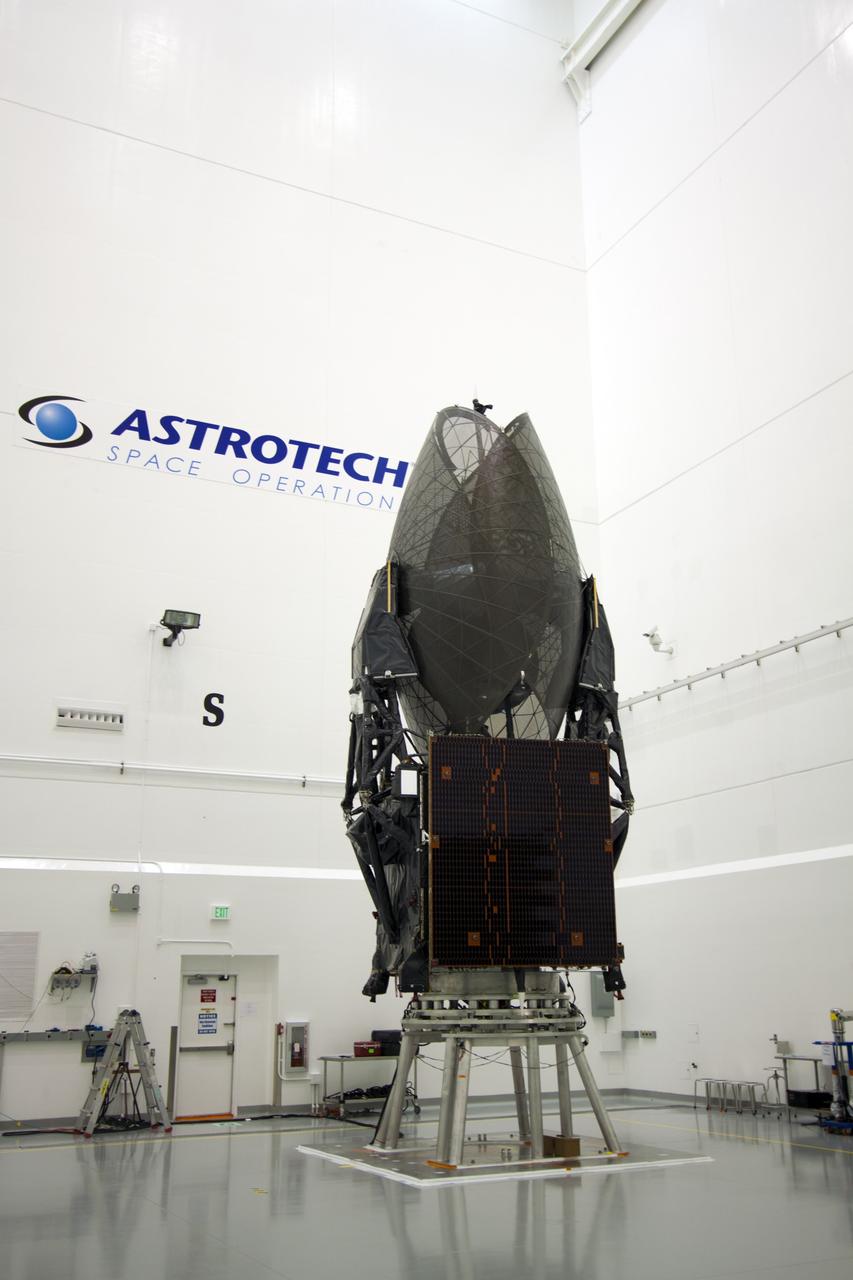
TITUSVILLE, Fla. - Inside the Astrotech payload processing facility in Titusville, Fla. near NASA’s Kennedy Space Center, the Tracking and Data Relay Satellite, TDRS-K, has been checked out and awaits the arrival of the TDRS-K. Launch of the TDRS-K on the Atlas V rocket is planned for January 29, 2013. The TDRS-K spacecraft is part of the next-generation series in the Tracking and Data Relay Satellite System, a constellation of space-based communication satellites providing tracking, telemetry, command and high-bandwidth data return services. For more information, visit http://www.nasa.gov/mission_pages/tdrs/index.html Photo credit: NASA/Jim Grossmann
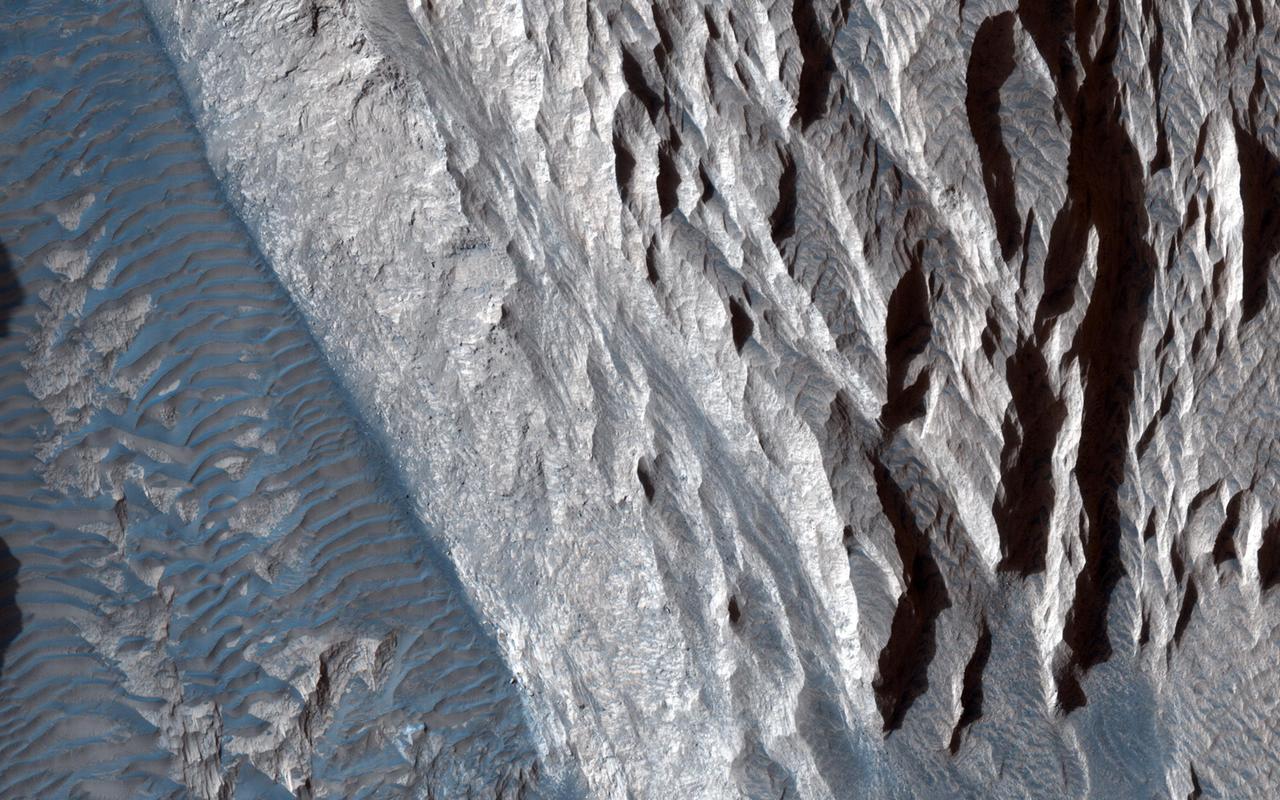
This observation from NASA Mars Reconnaissance Orbiter shows one of the first close HiRISE views of the enigmatic Valles Marineris interior layered deposits.
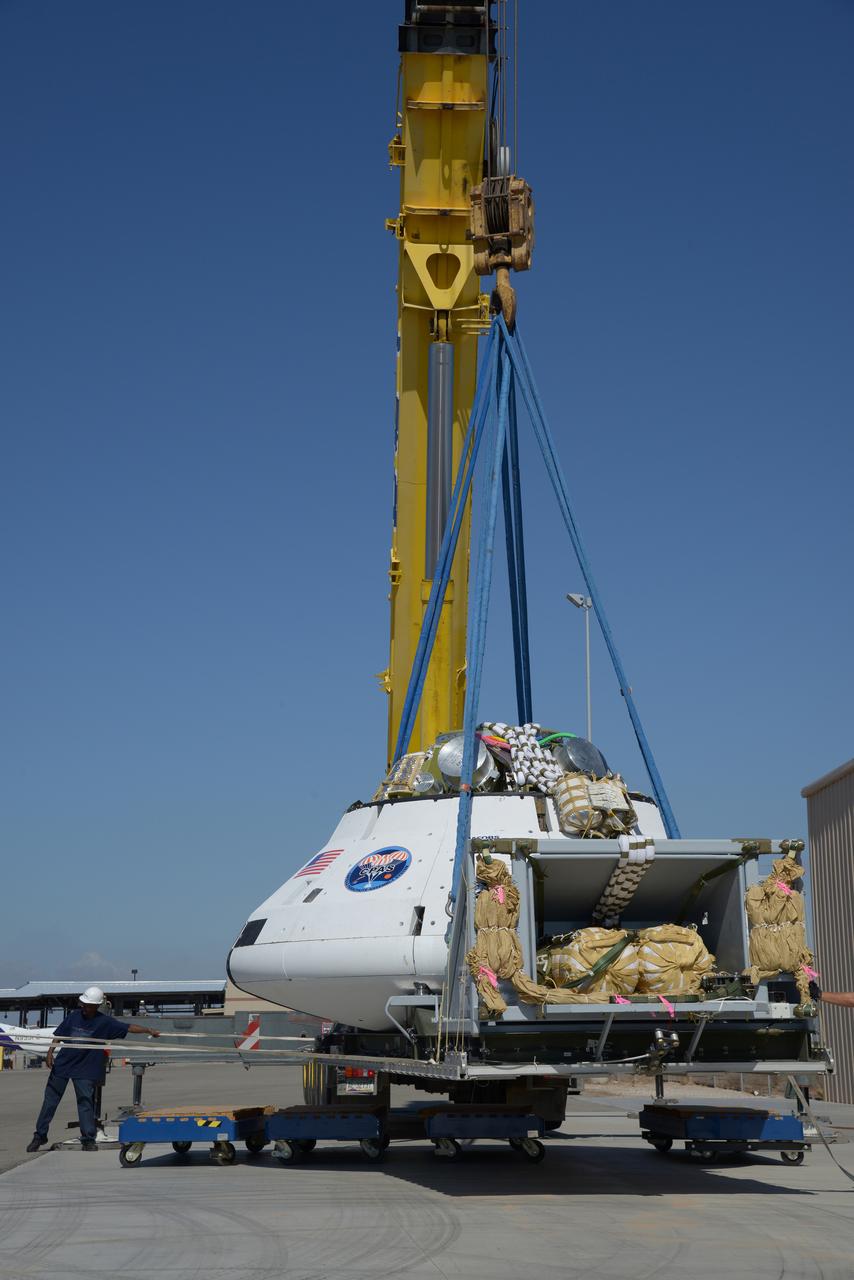
Teams peform Orion Parachute Test Vehicle (PTV) loading operations on July 22, 2013 in preparation for the July 24 parachute drop test at the U.S. Army Yuma Proving Ground in Arizona. Part of Batch image transfer from Flickr.
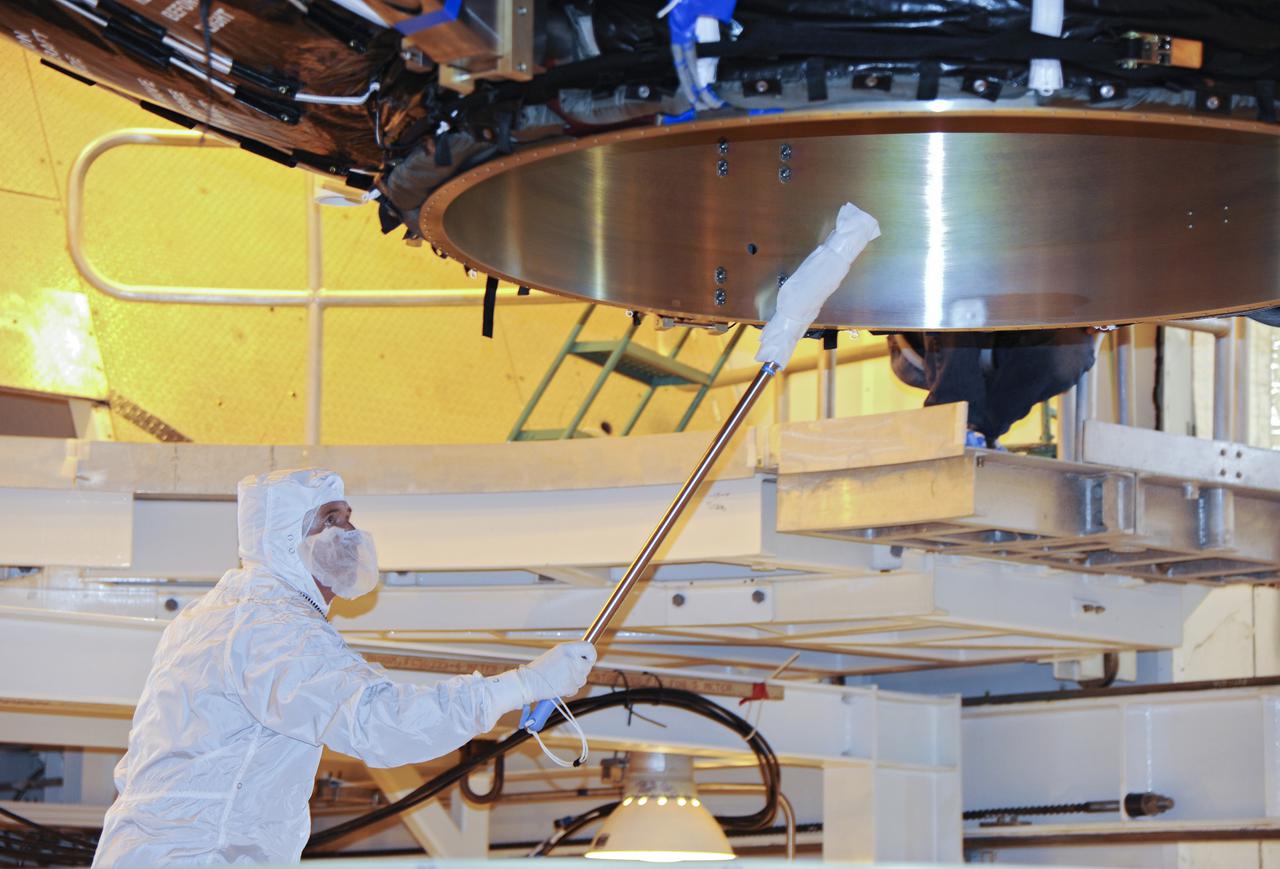
VANDENBERG AFB, Calif. -- A technician ensures no contaminants on the payload fairing or the Landsat Data Continuity Mission, or LDCM, spacecraft about to be mounted atop a United Launch Alliance Atlas V rocket at Space Launch Complex-3E at Vandenberg Air Force Base, Calif. The Landsat Data Continuity Mission LDCM is the future of Landsat satellites. It will continue to obtain valuable data and imagery to be used in agriculture, education, business, science, and government. The Landsat Program provides repetitive acquisition of high resolution multispectral data of the Earth's surface on a global basis. The data from the Landsat spacecraft constitute the longest record of the Earth's continental surfaces as seen from space. It is a record unmatched in quality, detail, coverage, and value. Liftoff is planned for Feb. 11, 2013 aboard a United Launch Alliance Atlas V rocket. For more information, visit: http:__www.nasa.gov_mission_pages_landsat_main_index.html Photo credit: NASA
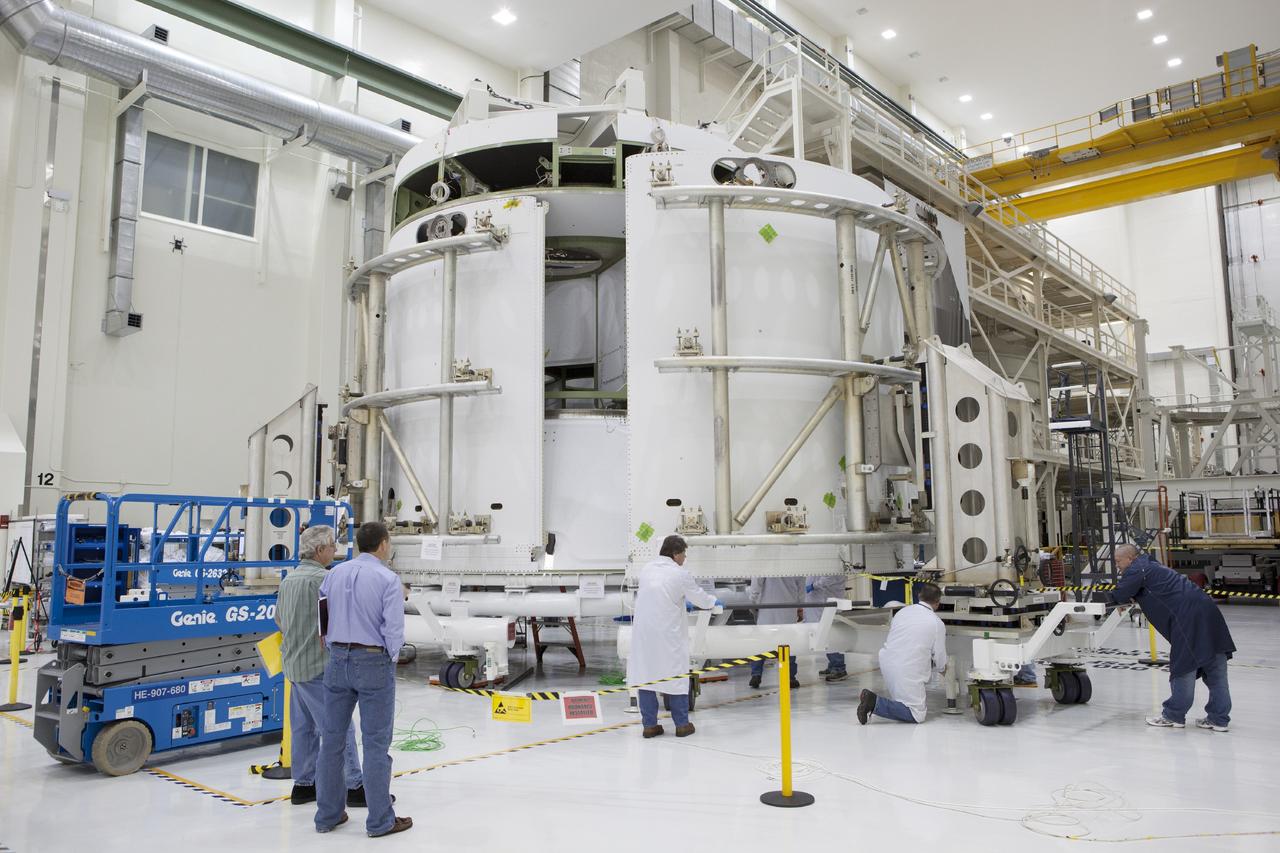
CAPE CANAVERAL, Fla. – Inside the Operations and Checkout Building high bay at NASA’s Kennedy Space Center in Florida, technicians use a special handling device to move the second of three fairings closer for installation on the service module for the Orion spacecraft. The Orion spacecraft is being prepared for its first unpiloted flight test, Exploration Flight Test-1, or EFT-1, scheduled for launch atop a Delta IV rocket in September 2014. The Orion spacecraft is designed to carry astronauts to destinations not yet explored by humans. It will have emergency abort capability, sustain the crew during space travel and provide safe re-entry from deep space return velocities. Orion is scheduled to launch atop NASA’s Space Launch System rocket in 2017. For more information, visit http://www.nasa.gov/orion. Photo credit: NASA/Dimitri Gerondidakis

Earth Observations taken by Expedition 34 crewmember.
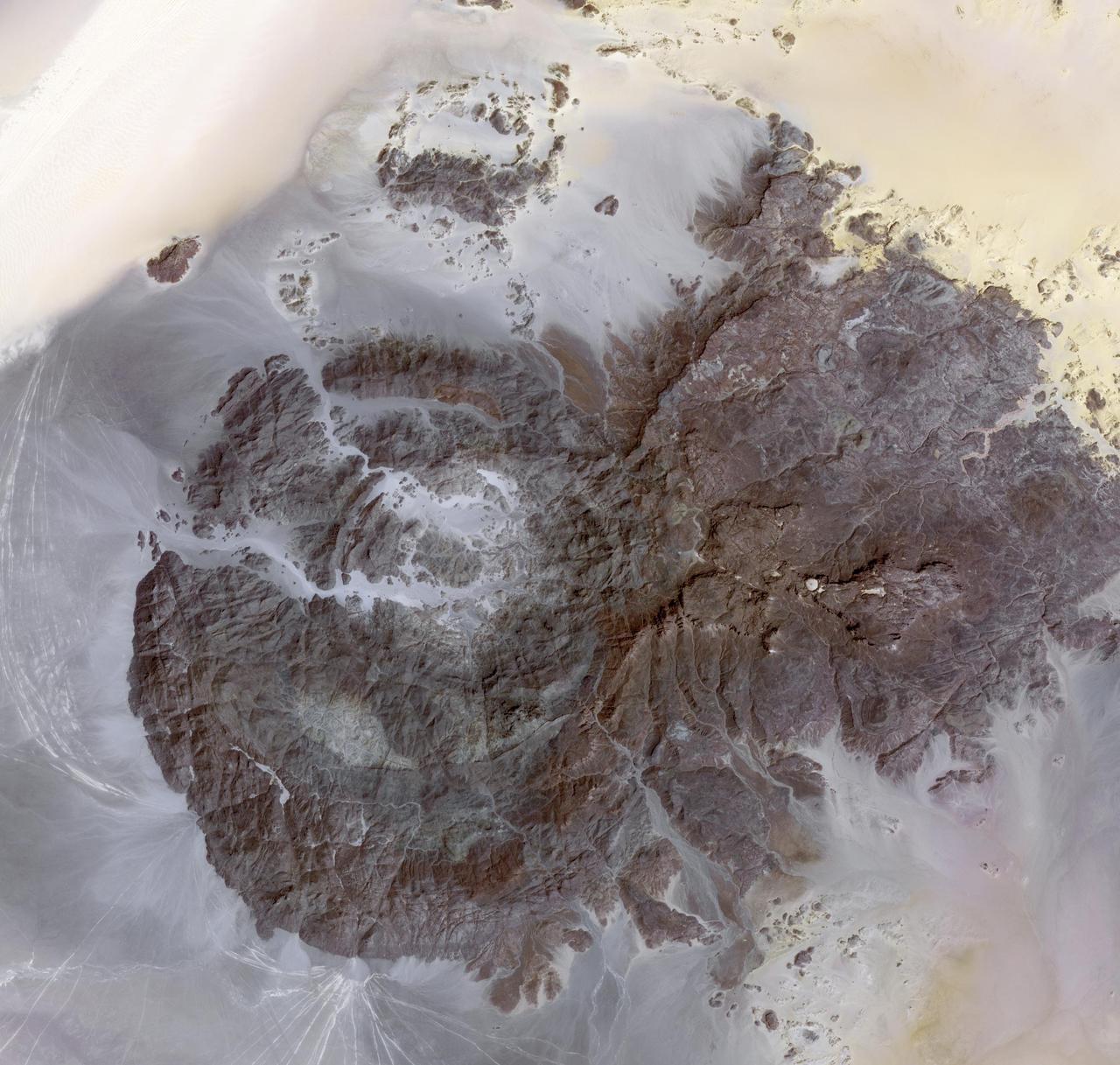
This image, acquired by NASA Terra spacecraft on Mar. 17, 2012, is of Jebel Uweinat, a mountain range in the area of the Egyptian-Sudanese-Libyan border. It is reportedly one of the driest places on earth.
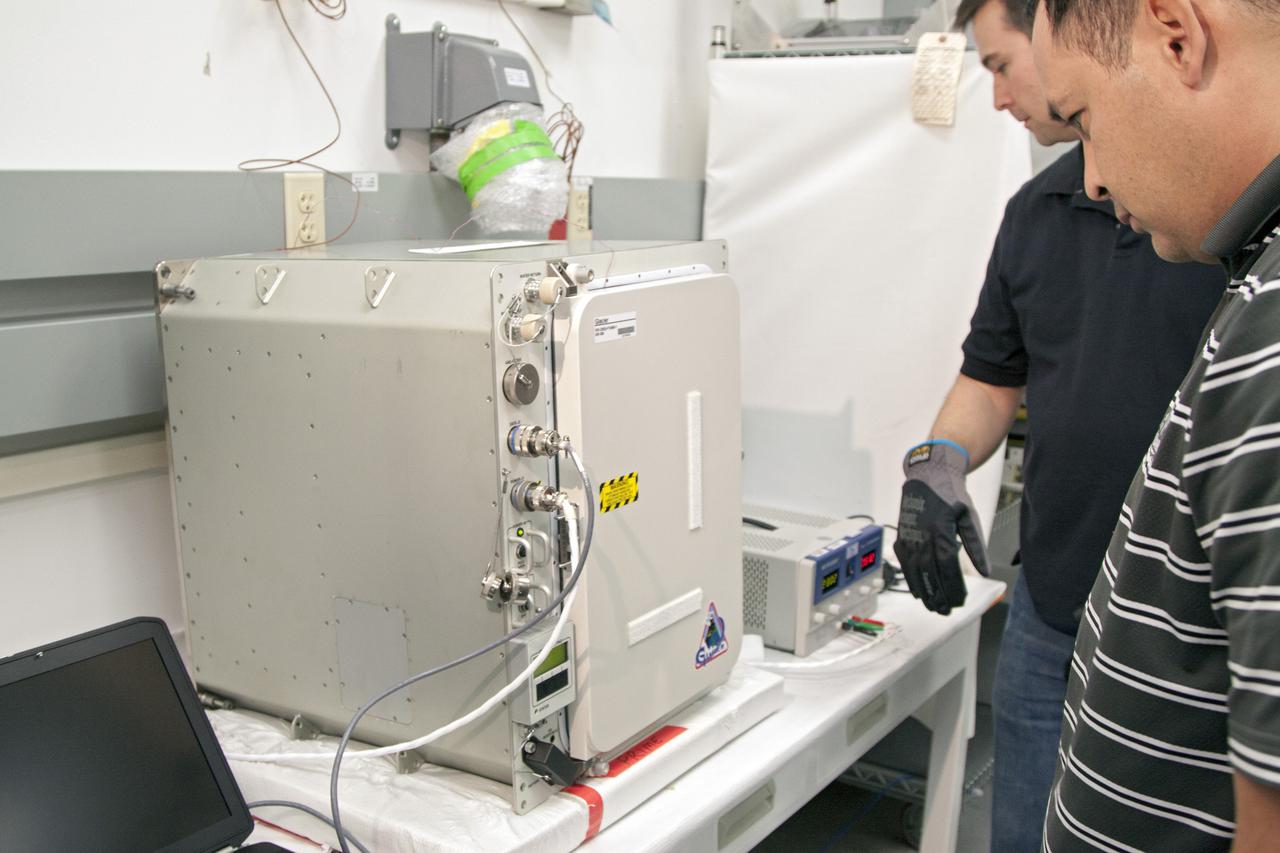
CAPE CANAVERAL, Fla. - In the Space Station Processing Facility at NASA's Kennedy Space Center in Florida, engineers load experiments requiring low temperatures into the General Laboratory Active Cryogenic International Space Station ISS Experiment Refrigerator, or GLACIER. The samples will then be transported to Space Launch Complex-40 on Cape Canaveral Air Force Station where the GLACIER will be loaded aboard the SpaceX Dragon capsule. Scheduled for launch on March 1 atop a Falcon 9 rocket, Dragon will be marking its third trip to the space station. The mission is the second of 12 SpaceX flights contracted by NASA to resupply the orbiting laboratory. For more information, visit http:__www.nasa.gov_mission_pages_station_structure_launch_spacex2-feature.html Photo credit: NASA_Kim Shiflett
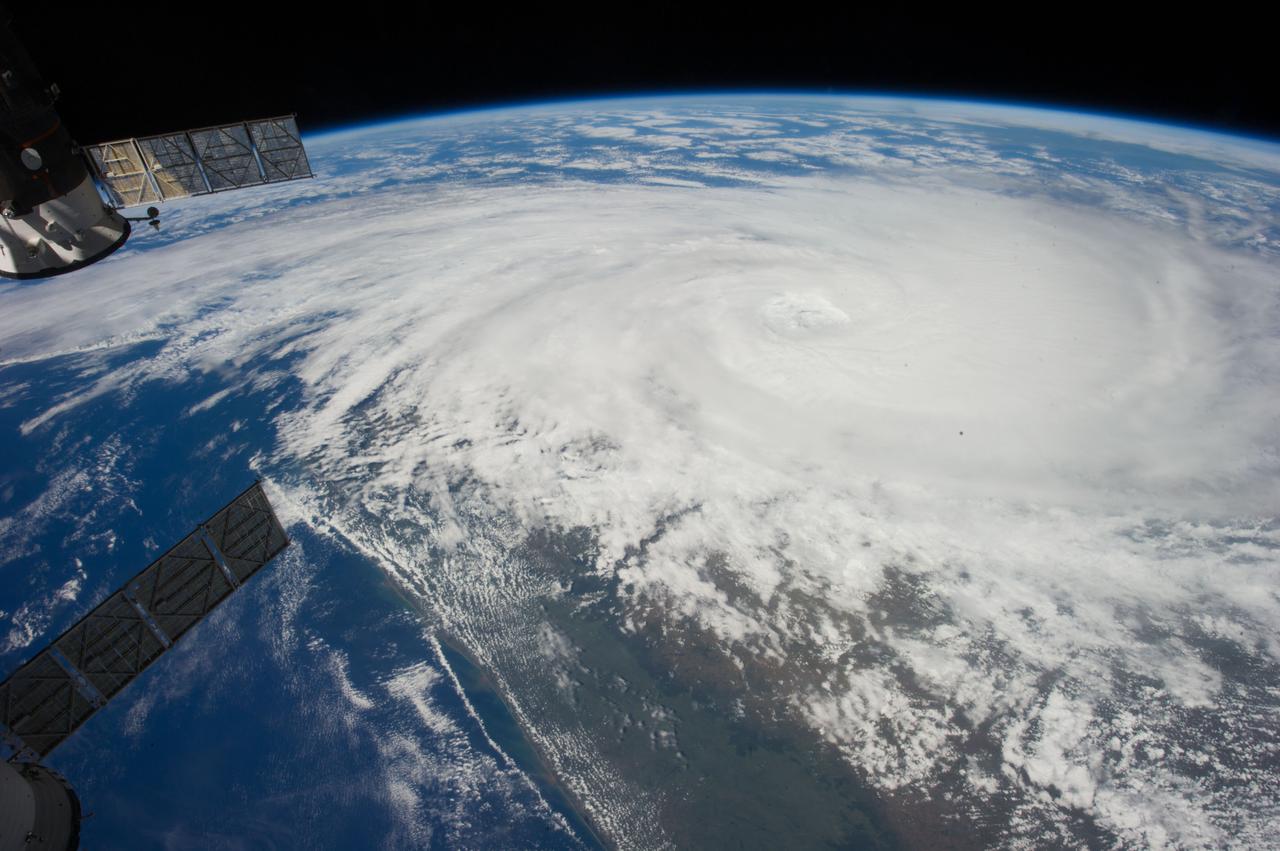
Earth Observations taken by Expedition 34 crewmember.
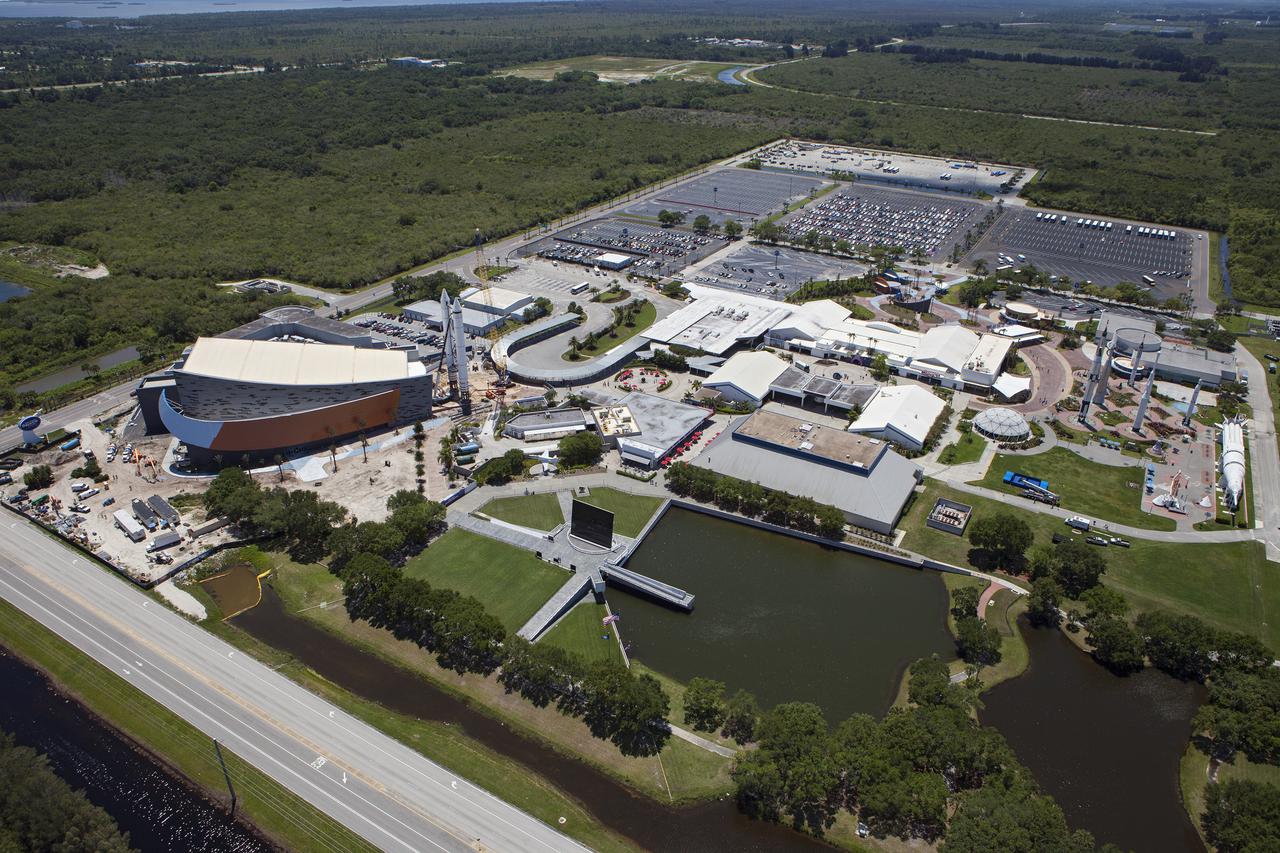
CAPE CANAVERAL, Fla. – An aerial view of the solid rocket booster replicas at the Kennedy Space Center Visitor Complex where the Space Shuttle Atlantis exhibit and attraction is under construction. Photo credit: NASA_Kim Shiflett
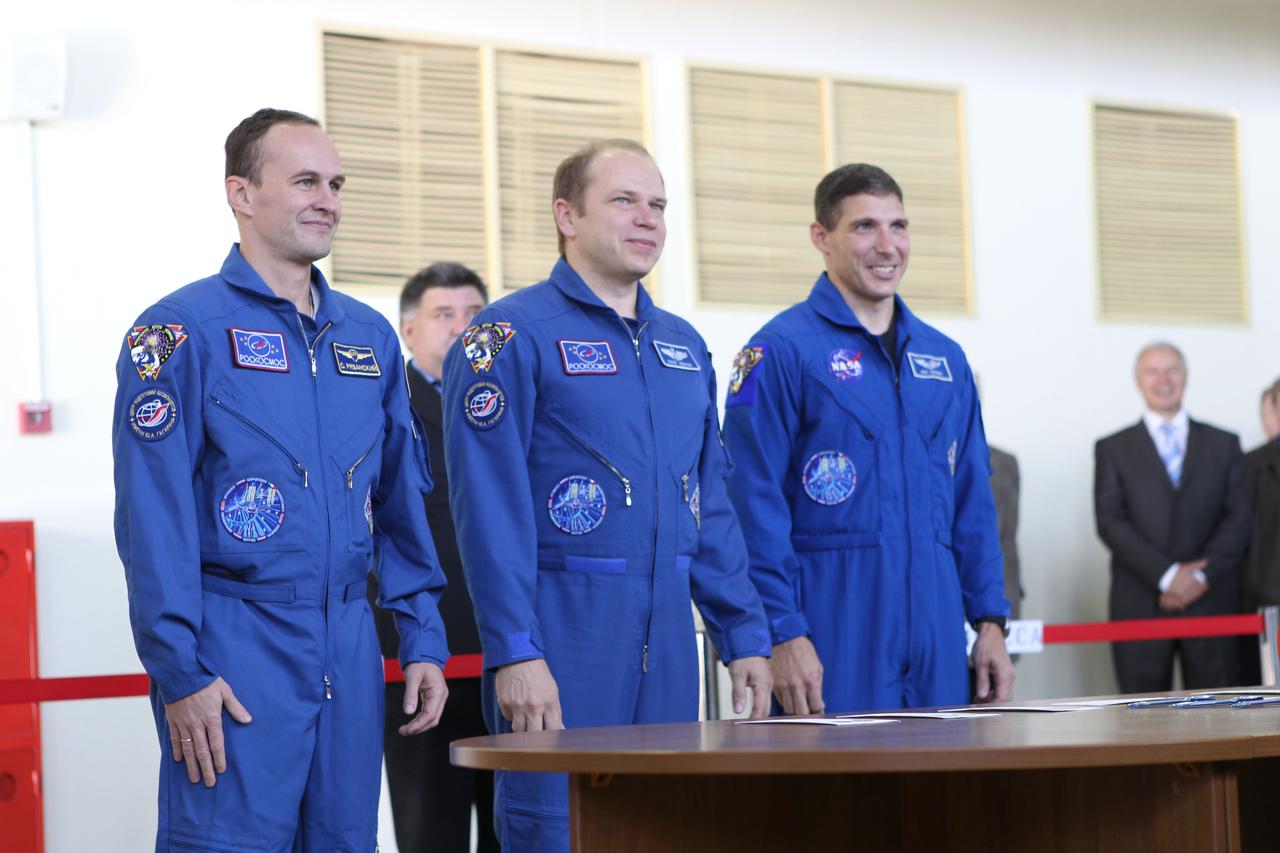
At the Gagarin Cosmonaut Training Center in Star City, Russia, the Expedition 37/38 prime crewmembers check in with Russian officials Sept. 3 prior to the start of a round of qualification exams for their launch to the International Space Station later this month. Flight Engineer Sergey Ryazanskiy (left), Soyuz Commander Oleg Kotov (center) and NASA Flight Engineer Michael Hopkins (right) are in the final weeks of training for their launch Sept. 26 from the Baikonur Cosmodrome in Kazakhstan in their Soyuz TMA-10M spacecraft. NASA/Stephanie Stoll

HAMPTON, Va. – At the Naval Station Norfolk near NASA’s Langley Research Center in Virginia, the Orion boilerplate test article is being prepared for a stationary recovery test aboard a U.S. Navy ship. NASA and the U.S. Navy are conducting tests to prepare for recovery of the Orion crew module and forward bay cover on its return from a deep space mission. The stationary recovery test will allow the teams to demonstrate and evaluate the recovery processes, procedures, hardware and personnel in a controlled environment before conducting a second recovery test next year in open waters. Orion is the exploration spacecraft designed to carry astronauts to destinations not yet explored by humans, including an asteroid and Mars. It will have emergency abort capability, sustain the crew during space travel and provide safe re-entry from deep space return velocities. The first unpiloted test flight of the Orion is scheduled to launch in 2014 atop a Delta IV rocket and in 2017 on NASA’s Space Launch System rocket. For more information, visit http://www.nasa.gov/orion. Photo credit: NASA/Dimitri Gerondidakis

ISS038-E-015162 (12 Dec. 2013) --- One of the Expedition 38 crew members took this brightly lit night picture featuring much of the Houston metropolitan area. The central business district is in the exact center of the photo, with the Galleria area and uptown being in the lower left with Sugar Land being closer to the lower left corner. The 610 Loop and Beltway 8 encircle the city. The southeast sections extend past Hobby Airport to the NASA/Clear Lake area.
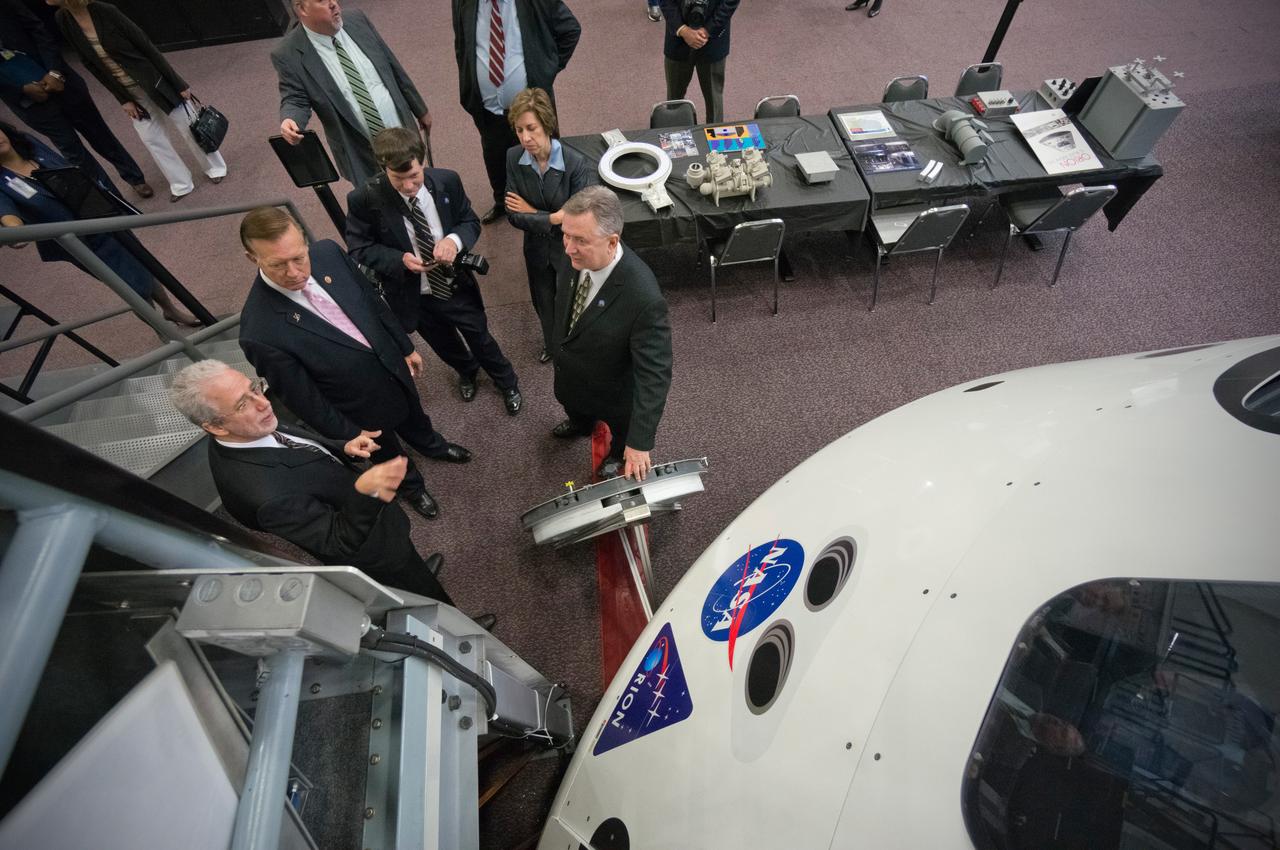
Congressman Steve Stockman, Texas 36th district, and Congressman Randy Weber, Texas 14th district, visit NASA’s Johnson Space Center in Houston on Feb. 20, 2013. Orion Program Manager Mark Geyer discussed the status and accomplishments of the Orion program. Part of Batch image transfer from Flickr.
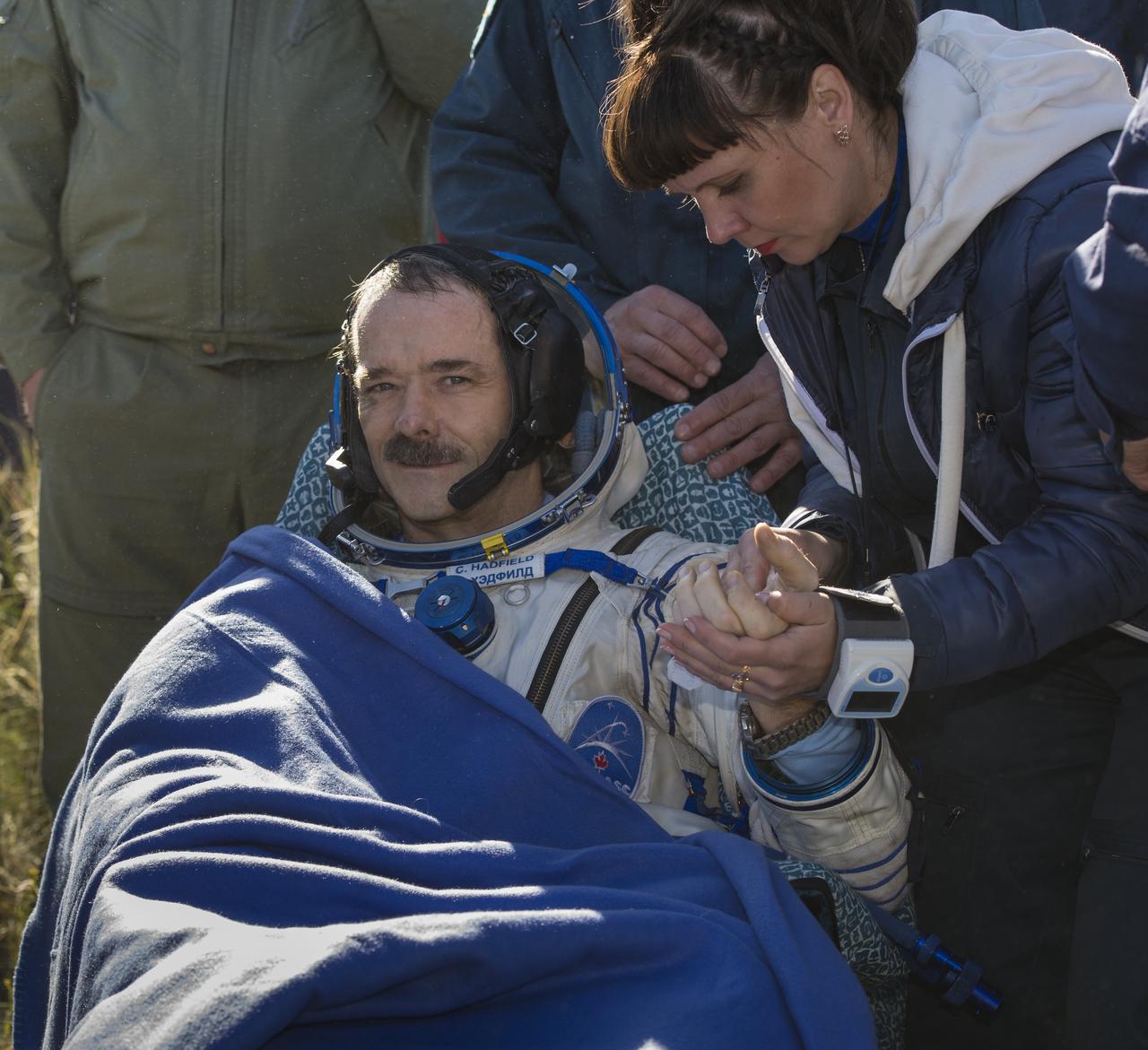
Expedition 35 Commander Chris Hadfield of the Canadian Space Agency (CSA) is attended to by his nurse following his landing in the Soyuz TMA-07M spacecraft in a remote area near the town of Zhezkazgan, Kazakhstan, Tuesday, May 14, 2013. Hadfield and crew mates NASA Flight Engineer Tom Marshburn and Russian Flight Engineer Roman Romanenko of the Russian Federal Space Agency (Roscosmos) returned to earth from more than five months onboard the International Space Station where they served as members of the Expedition 34 and 35 crews. Photo Credit: (NASA/Carla Cioffi)

Earth Observations taken by Expedition 34 crewmember.
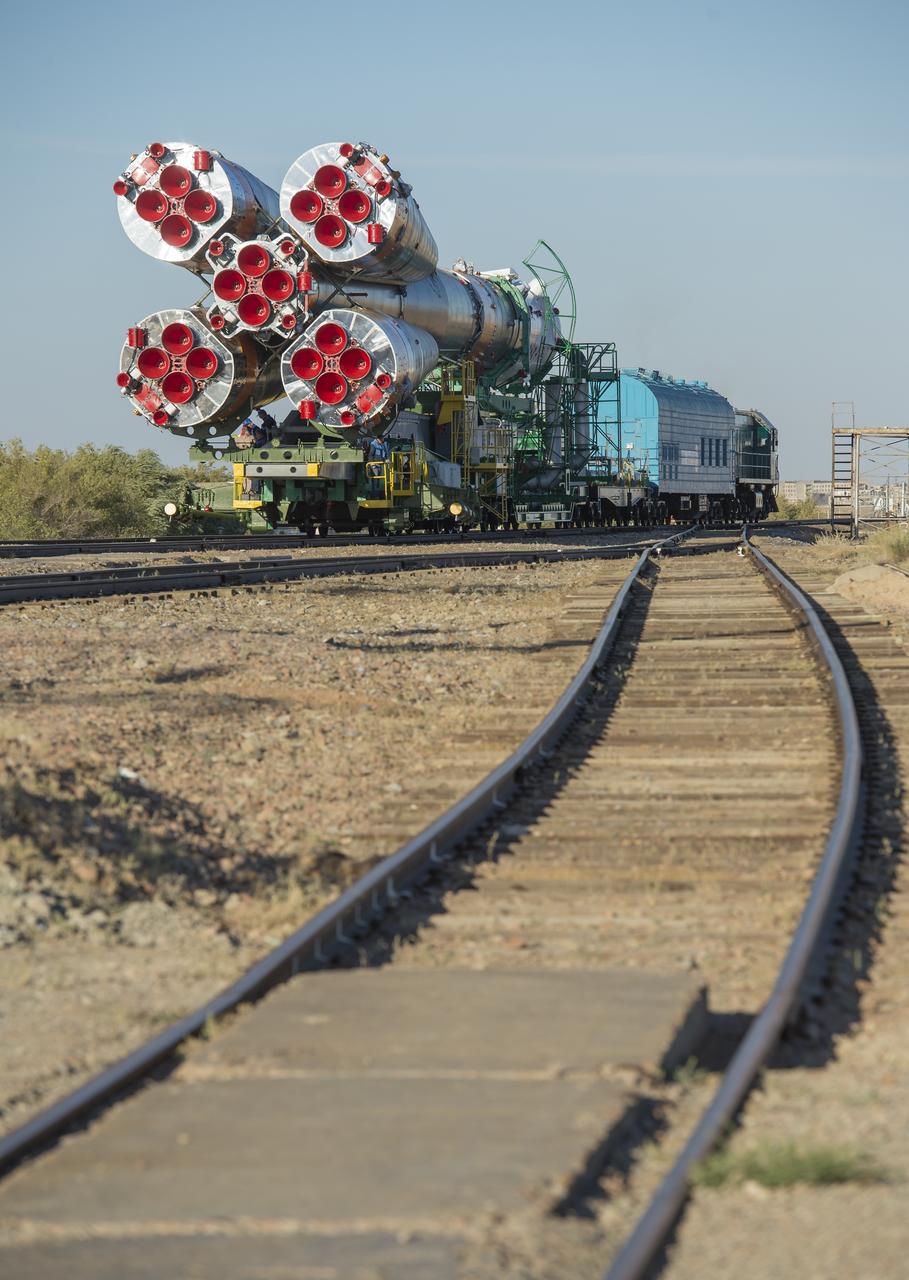
The Soyuz rocket is rolled out to the launch pad by train on Monday, Sept. 23, 2013, at the Baikonur Cosmodrome in Kazakhstan. Launch of the Soyuz rocket is scheduled for September 26 and will send Expedition 37 Soyuz Commander Oleg Kotov, NASA Flight Engineer Michael Hopkins and Russian Flight Engineer Sergei Ryazansky on a five and a half-month mission aboard the International Space Station. Photo Credit: (NASA/Carla Cioffi)
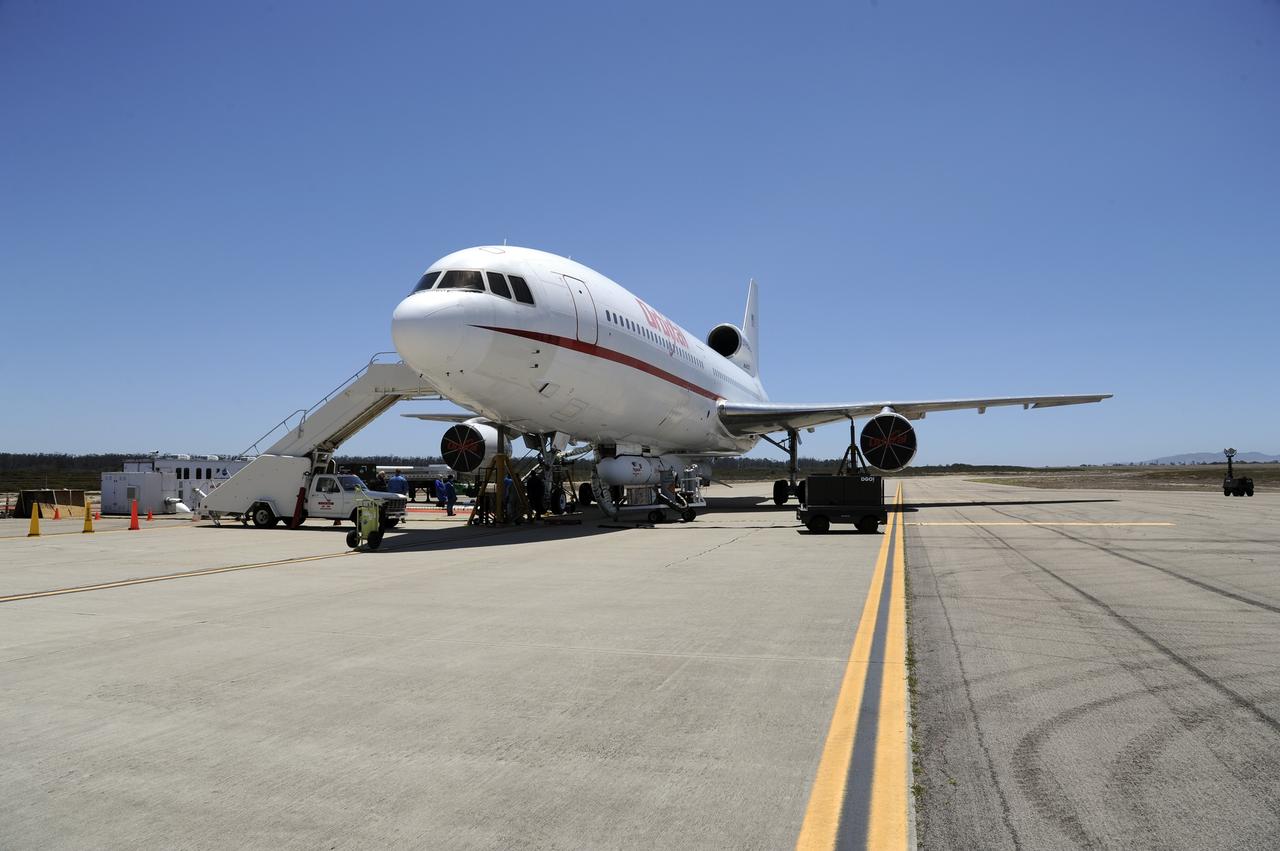
VANDENBERG AIR FORCE BASE, Calif. – At Vandenberg Air Force Base in California, the Pegasus XL rocket with the attached Interface Region Imaging Spectrograph IRIS solar observatory rolled out of the hangar on its transporter to the runway at Vandenberg. There, the rocket and spacecraft were mated with the Orbital Sciences L-1011 carrier aircraft. Scheduled for launch from Vandenberg on June 26, 2013, IRIS will open a new window of discovery by tracing the flow of energy and plasma through the chromospheres and transition region into the sun’s corona using spectrometry and imaging. The IRIS mission will observe how solar material moves, gathers energy and heats up as it travels through a largely unexplored region of the solar atmosphere. The interface region, located between the sun's visible surface and upper atmosphere, is where most of the sun's ultraviolet emission is generated. These emissions impact the near-Earth space environment and Earth's climate. For more information, visit http://www.nasa.gov/iris Photo credit: NASA/Randy Beaudoin
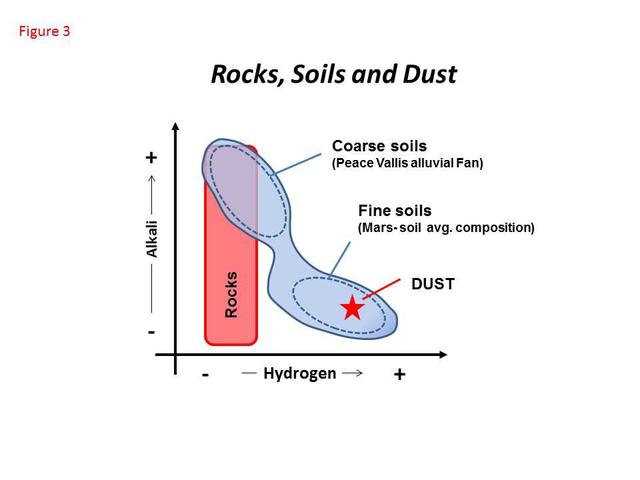
This diagram shows how materials analyzed by the ChemCam instrument on NASA Curiosity Mars rover during the first 100 Martian days of the mission differed with regard to hydrogen content horizontal axis and alkali vertical axis.
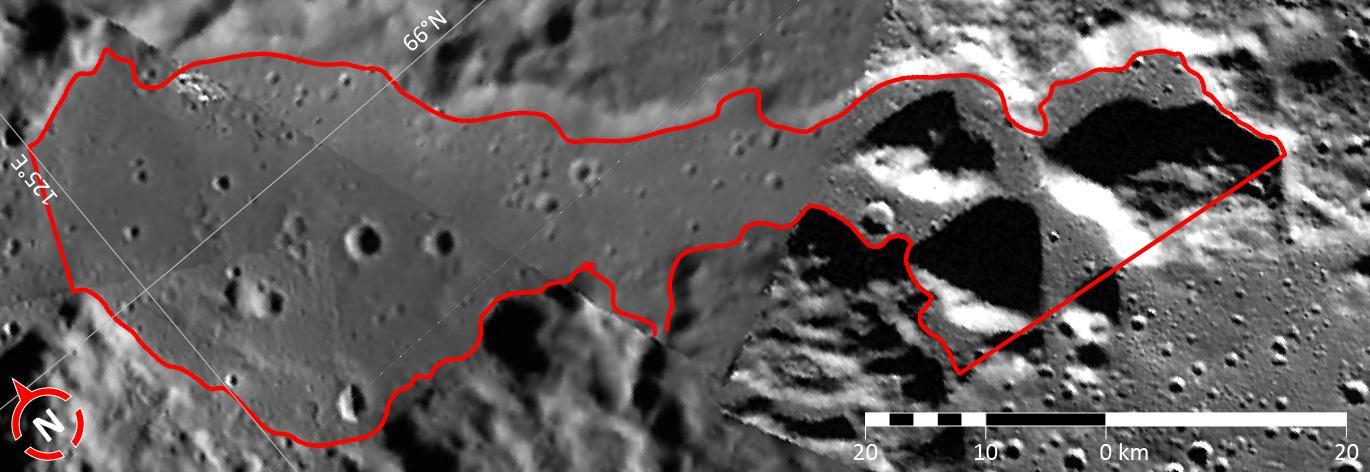
In Focus: Cahokia Vallis
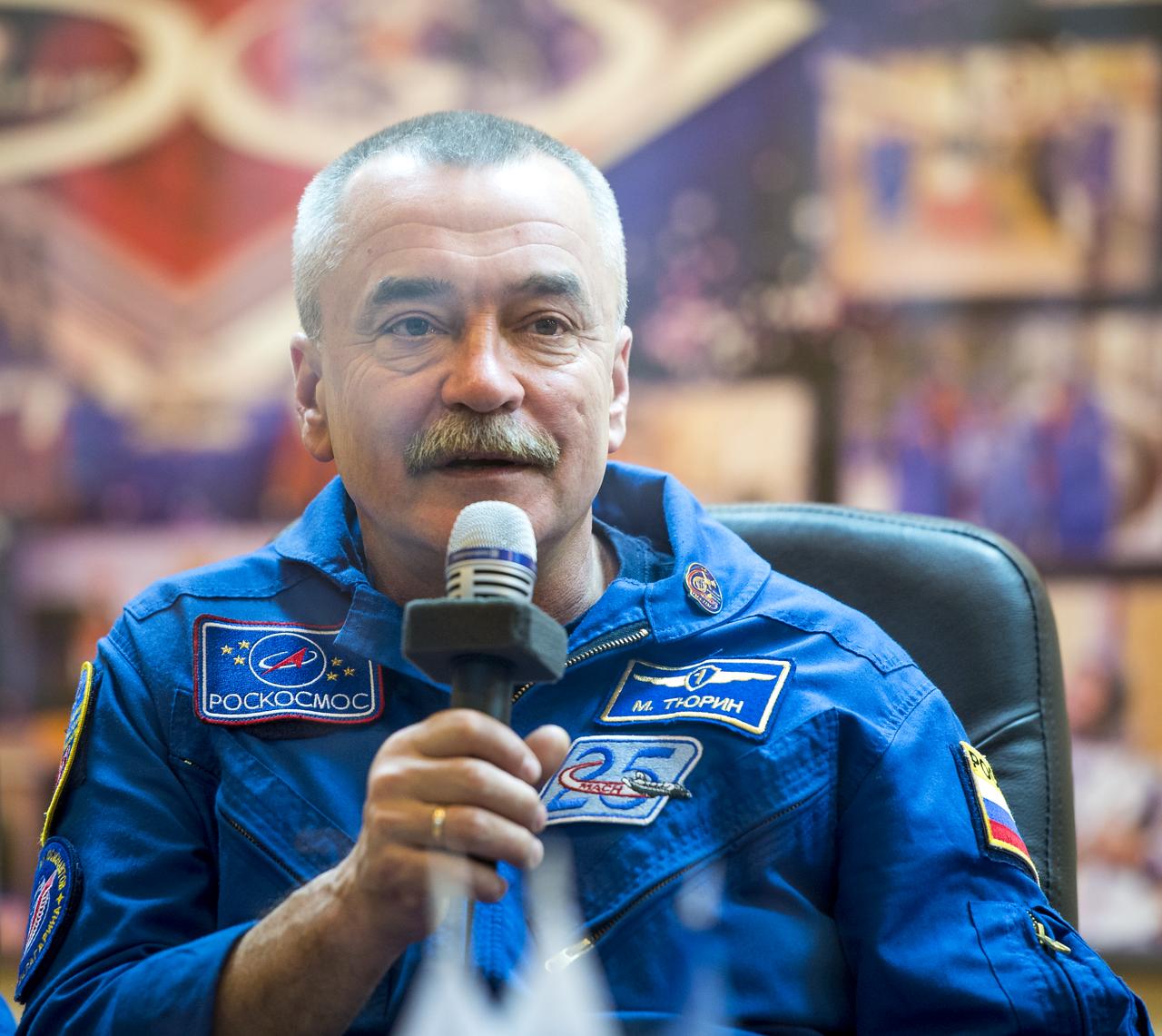
Expedition 38 Soyuz Commander Mikhail Tyurin of Roscosmos is seen in quarantine behind glass during the final press conference held a day ahead of his launch with fellow crew mates, Flight Engineer Koichi Wakata of the Japan Aerospace Exploration Agency, and, Flight Engineer Rick Mastracchio of NASA, to the International Space Station, Wednesday, Nov. 6, 2013 at the Cosmonaut Hotel in Baikonur, Kazakhstan. Photo Credit: (NASA/Bill Ingalls)
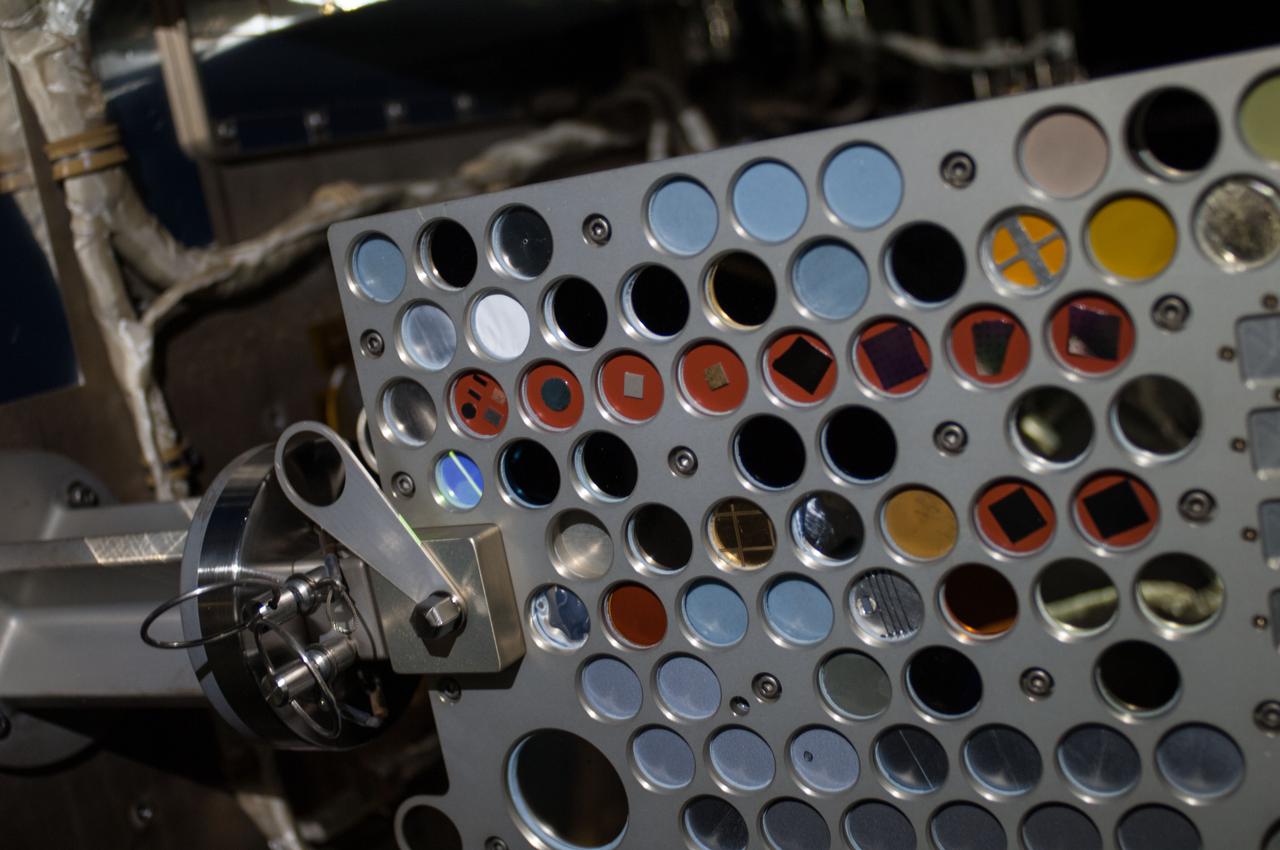
iss036e016736 (7/9/2013) --- Close-up view of the Optical Reflector Materials Experiment III Ram/Wake (ORMatE-III R/W) which is part of the Materials on International Space Station Experiment - 8 (MISSE-8) installed on the starboard truss. View was taken during a session of extravehicular activity (EVA) 22 as work continues on the International Space Station.